IV. Chapter Four: The Reformation
A. Two Movements
The High Renaissance in the south and the Reformation in the north must be viewed side by side.
They dealt with the same problems, but gave completely different solutions.
B. Forerunners
1. John Wycliffe (1320-84)
2. John Huss (1369-1415)
Huss further developed Wycliffe’s views on the priesthood of the believer. Huss was promised safe
conduct to speak at the Council of Constance, but was betrayed and burned at the stake on July 6,
1415.
a. The Bohemian Brethren
Founded in 1457 by followers of Huss. There ideas were spread by their emphasis on music and
hymns as well as their doctrines.
3. Savonarola
He drew large audiences in Florence between 1494-98. He has hanged and his body burned in the
square before the Florence Town Square.
B. Reformers
1. Martin Luther (1483-1546)
a. His 95 Theses (Oct. 31, 1517)
2. John Calvin (1509-64)
3. Zwingli (led Zurich to break with Rome in 1523
a. Henry VIII broke with Rome in 1534 – this was political but did open the
door for a Protestant England
C. Different Perspectives
The north was entrenched with Reformation thought while the south waslooking to man as the final
answer to life. The south was following Thomas Aquinas’ view that the mind of man was not fallen.
Humanists believed that man could think his way to solving all of life’s questions and problems. We
see this philosophy alive and well today.
1. This is Not to Say that the Reformation was Blind to all Progress
They learned from the Renaissance but filtered it through a theistic worldview. “At its core, the
Reformation was the removing of the humanistic disortions which had entered the church.” [page
122]
D. How Humanistic Thought Showed Itself
1. Authority of the Church Made Equal to the Bible
2. Human Work was Added to the Work of Christ
3. After T. Aquinas Biblical Teaching and Pagan Thought were Synthesized
E. Erasmian Humanism
Erasmus only wanted partial reform. Farel disassociated himself from Erasmus because of this.
F. The Reformers Didn’t Have a “Nature vs. Grace” Problem
In their worldview there was meaning in the particulars and no universals vs. particulars dilemma.
Science and art were “set free” to operate under this worldview. Humanism, which focuses on the
individual, ends up leaving the individual meaningless. Bible = man made in God’s image.
1. The Rood Screen
In pre-reformation churches the people were separated from the altar by a high grill of iron or wood.
When reform came those screens were often removed and a Bible put in their place. Symbolic of sola
scriptura and the priesthood of every believer.
G. The Reformers and Art
They were not against art, but differentiated between cult images and genuine works of art that
exalted God. Many of the cult images were destroyed by their very donors who had come to faith
in Christ!
1. Lucas Cranach (1472-1553) Painted Luther and his Wife Many Times
2. The Reformation and Music
The Geneva Psalter was so lively that it was referred to as “Geneva jigs.” Luther was a superb
musician who placed a high priority on music in worship.
a. Reformation Composers
(1) Bach (1685-1750)
If there had been no Luther there would have been no Bach. Bach was a reformed believer who on
his score tributes to God such as “With the help of Jesus,” and “To God alone be the glory.”
(2) Handel (c. 1750)
3. Albrecht Durer
He was in the Netherlands in 1521. He heard a false rumor that Luther had been taken captive. In
fact, Luther’s friends had hidden him. Durer kept a diary in which he prayed that God keep Luther
safe (cf. pages 130-31). He wrote a letter to Spalatin in 1520 recommending Luther to him and
asking for the opportunity to “etch him in copper.” He also said that Luther has written more clearly
than anyone else in the past 140 years. He was probably thinking of John Huss (1369-1415). Durer
did many beautiful woodcuts and paintings.
4. Rembrandt (1606-69)
In 1663 he painted the “Raising of the Christ” for Prince Frederick Henry of Orange. A man in a blue
painter’s beret raises Christ on the cross. That man is Rembrandt himself.
To say that the Reformation depreciated or demeaned art is pure nonesense!
H. Jacob Burckhardt’s “The Civilization of the Renaissance in Italy”
In his work (1860) he pointed out a crucial difference between the Reformation in the north and the
Renaissance in the south. Freedom was introduced in both locations. Yet, in the south it went to
license whereas in the north it did not. The reason being that the south’s Renaissance humanism left
man with no way to being for meaning to the particulars of life and no absolutes in morals. In the
north there was freedom restrained by the absolute values of Scripture.
This outline below is one that I have found very helpful. It is by Tony Bartolucci
V. Chapter Five: The Reformation, Continued
A. The Secondary Effects of the Reformation
We must recognize that the Reformation was not a “Golden Era” and that the reformers and the
church (and culture) they were influencing was far from perfect. There was a positive influence that
went beyond the church to the culture, including the arts and politics.
1. Gradual Political Freedom
a. There was Freedom w/o Chaos (something never-before seen)
b. Martin Bucer (1491-1551) and his Influence on Calvin
Bucer was a leader of the Reformation in Strasbourg. He had strong constitutionalist ideas that
influenced John Calvin greatly over in Geneva. Such was the Presbyterian model of church
government carried over into state government, recognizing such things as the need for an absolute
standard (the Bible) as well as limitations on powers in light of the sinfulness of men.
2. Later Political Ramifications
a. Samuel Rutherford (1600-61)
Rutherford was a Scot who wrote “Lex Rex: Law is King” (1644). This was an example of one of
many positive contributions Scotland made on England. In Lex Rex Rutherford contended that a
government must be based on immutable law (Bible) so that we could have freedom w/o chaos which
would result if decisions were made arbitrarily by sinful men. The exercise of rule by one man, or a
group of men, or by the 51% vote was doomed to failure as the whims of men are tainted by sin.
There must be a foundational absolute, biblical law, which forms the immutable foundation.
Therefore, one single individual could have a say and be right even if the majority disagree.
Rutherford’s work had great influence on the US Constitution. This was mediated through two
sources: 1) John Witherspoon, a Presbyterian and only pastor to sign the Constitution. 2) John
Locke. Rutherford emphasized the ideals of govt. by consent, separation of powers and the right
of revolution–all based on a biblical foundation. Locke didn’t have this foundation and based his
views on empiricism. But empiricismleaves no roomfor inalienable human rights which are universal
and not based on experience. Locke wished the results of biblical Christianity w/o having the
foundation of it. Thomas Jefferson picked up on this secularized form.
3. Places where the Christian Ideal Fell Short
a. A Perverted View of Race and the Misuse of Wealth
(1) Race / Slavery
Aristotle called a slave “a living tool.” Many Christians believed this lie and viewed certain people
as less than human because of their sin. Slavery was universal, however, and practiced by many
cultures. But this was no excuse for “Christian” nations. It must be kept in mind that many who
called themselves Christian were not in fact Christian and that God used genuine believers to
eradicate the slave trade, among them John Wesley – 1703-91 (who preached against slavery), John
Newton – 1725-1807 (who was a slave trader who jettisoned his occupation and spoke against it upon
coming to faith in Christ), Thomas Clarkson – 1760-1846 (the son of a Church ofEngland pastor who
spoke out against slavery and greatly influenced Wilberforce), and William Wilberforce – 1759-1833
(who fought against slavery in England and didn’t see the fruit of his labor until he was on his
deathbed in 1833 when a bill was passed in England abolishing slavery).
The USA failed in that it took longer to address this issue and do away with it once and for all.
However, groups such as the Reformed Presbyterian Church decreed as early as 1800 that no slave
holder be admitted to their fellowship.
(2) Wealth
The Industrial Revolution was a high point in this failure. There were many benefits of the growth
of technology and industry, but all-too-often those in England and America failed to remember the
Bible’s emphasis on caring for the less fortunate. The slums in London grew during this time and
children and women were exploited (cf. America’s early factories).
VI. Chapter Six: The Enlightenment
A. England’s Bloodless Revolution
England stands in contrast to France in this regard because England had a reformation base and
France did not. Voltaire was in exile in England (1726-29) and was impressed. France could not
reproduce what happened in England due to France’s humanistic, enlightenment base. The result in
France was a bloodbath that ended with the rule of Napoleon (1769-1821).
B. The Utopian Dream of the Enlightenment
This dream can be summed up with 5 words: reason, nature, happiness, progress and liberty. The
Renaissance humanism had blossomed into the Enlightenment.
1. The Reformation was Antithesis of the Enlightenment
They stood for 2 different things and that’s why they had two different results.
a. The Enlightenment in France
If these men had a religion it was Deism. Even during the “Reign of Terror” they held to their
utopian dream that men and society were perfectible. Voltaire sketched out four stages of history
with his being the apex! Voltaire was a skeptic who illogically complained of God’s lack of
intervention during the Lisbon earthquake of 1755.
In June 1789 the French Revolution was at its height. The members of the National Assembly based
their constitution on a humanistic theory of rights. On August 26 of that year they issued the
Declaration of the Rights of Man. For France, man became what for America was a Supreme Being
(the Creator that the USA based their Declaration upon 13 years prior). America had a Reformation
base, France a humanistic one. It took two years for France to draft a constitution (1789-91). It
failed within a year, the result being the Second French Revolution and a bloodbath.
b. Parallels
The American Revolution parallels that of the bloodless English, while the French Revolution
parallels that of the later Russian Revolution (with Napoleon and Lenin parallel to one another).
2. Communism’s Ideals
For communists, socialism is a step toward the ideal of utopian communism. However, this utopian
ideal always leads to repression.
3. Humanism and Absolutes
Humanism has no way to say that anything is right or wrong. For them, the final thing that exists,
the impersonal universe, is silent and neutral about right and wrong. For example, Marx’s Manifest
of the Communist Partycalled marriage a part of capitalism, or “private prostitution.” The family was
minimized. Later, the state decreed a code of family laws that were needed for the time. They were
an historical absolute for a limited time in history, utilitarian, not moral, in purpose.
HowShouldWeThenLive Episode 4
_
_
_
__
__
__
________
Featured artist is Tim Hawkinson
Tim Hawkinson
Tim Hawkinson is a master at conjuring both organic and inorganic materials into extraordinary objects that are uncannily like something entirely different. Kitchen scraps, wizened Christmas trees, detritus blown by storms into his backyard and his own hair are just some of the materials he transforms into intelligent and amusing sculptures and photo-works. Importantly, many of Hawkinson’s objects use his own body as source material. Thumbsucker (2015), for example, is a two-part hanging sculpture of a moon and astronaut entirely made of casts of the artist’s lips and fingers. Another work looks like a microscope, but the “lenses” were created by casting imprints of his skull or butt cheeks in resin.
Though Hawkinson’s work is playful and often humorous, he addresses some of the most serious issues of our time. A number of works refer to current threats to our environment: rising temperatures and sea levels, drought, and the carbon footprint of our most beloved consumer products. Hawkinson is a visionary, a modern-day alchemist and provocateur, who sees the role of the artist in society as the person who asks the questions without answers.
Hawkinson’s solo museum exhibitions include the Museum of Contemporary Art, Sydney; J. Paul Getty Museum, Los Angeles, Whitney Museum of American Art, New York, Los Angeles County Museum of Art, Hirshhorn Museum and Sculpture Garden, Washington DC, Power Plant Contemporary Art Gallery, Toronto, Massachusetts Museum of Contemporary Art, North Adams, and an exhibition organized by the Contemporary Arts Center, Cincinnati which traveled to five venues including the Yerba Buena Center for the Arts, San Francisco. He was a featured artist in the PBS Art21 series in 2003, and was awarded a Guggenheim fellowship in 2015. Hawkinson’s tidal-dependent kinetic sound piece, “Bosun’s Bass,” was commissioned by the Exploratorium in San Francisco last year. His monumental sculpture, constructed from the demolished remains of the original downtown transit terminal, will be installed at the main entrance of the new Transbay Transit Center in San Francisco when it opens in 2017.
Courtesy of Hosfelt Gallery
Tim Hawkinson: Family Resemblance | “Exclusive” | Art21
Published on Jan 10, 2014
Episode #195: Filmed in 2013, Tim Hawkinson gives a tour of his sculpture exhibition at Pace Gallery in New York City. He provides insight into each artwork and discusses the variety of materials he used, such as resin and bronze casts of his body, pieces of his daughter’s old bicycle, and pine cones and palm fronds from his garden. Hawkinson made some of the works over time with his daughter Clare, a Girl Scout Brownie. “She has kind of given me ideas,” he says. Hawkinson named each sculpture in the exhibition after a different Girl Scout cookie, alluding to Clare’s involvement in his creative process.
Tim Hawkinson is known for creating complex sculptural systems through surprisingly simple means. Inspiration for many of Hawkinson’s pieces has been the re-imagining of his own body and what it means to make a self-portrait of this new or fictionalized body. Sculptures are often re-purposed out of materials, which the artist then mechanizes through hand-crafted electrical circuitry.
CREDITS: Producer: Ian Forster. Consulting Producers: Wesley Miller & Nick Ravich. Interview: Ian Forster. Camera: Ian Forster & Morgan Riles. Sound: Morgan Riles. Editor: Morgan Riles. Artwork Courtesy: Tim Hawkinson & Pace Gallery. Theme Music: Peter Foley.
“Exclusive” is supported, in part, by by the New York City Department of Cultural Affairs in partnership with the City Council; 21c Museum Hotel, and by individual contributors.
Hawkinson′s work is mostly sculptural, ranging in scale from minute to huge. His themes include his own body (although some of his work could be called self portraiture), music, and the passing of time, as well as his artistic engagement with material, technique, and process. Some of his pieces are mechanized (the mechanism usually fully on view), or involve sound. His 2005 sculpture Bear is a part of the Stuart Collection of public art on the campus of the University of California, San Diego.
Hawkinson is renowned for creating complex sculptural systems through surprisingly simple means. His installation “Überorgan”—a stadium-size, fully automated bagpipe—was pieced together from bits of electrical hardware and several miles of inflated plastic sheeting. Hawkinson’s fascination with music and notation can also be seen in “Pentecost,” a work in which the artist tuned cardboard tubes and assembled them in the shape of a giant tree. On this tree the artist placed twelve life-size robotic replicas of himself, and programmed them to beat out hymns at humorously irregular intervals. The source of inspiration for many of Hawkinson’s pieces has been the re-imagining of his own body and what it means to make a self-portrait of this new or fictionalized body. In 1997 the artist created an exacting, two-inch tall skeleton of a bird from his own fingernail parings, and later made a feather and egg from his own hair. Believable even at a close distance, these works reveal Hawkinson’s attention to detail as well as his obsession with life, death, and the passage of time.
Hawkinson has participated in numerous exhibitions in the United States and abroad, including the Venice Biennale (1999), the Massachusetts Museum of Contemporary Art, (2000), the Power Plant in Toronto, Canada (2000), the Whitney Biennial (2002), and the 2003 Corcoran Biennial in Washington, D.C. Tim Hawkinson resides in Los Angeles with his wife.
A 2009 exhibition of new works included sculptures crafted from eggshells and a life-sized motorcycle constructed out of feathers. It was on view from May 8 through July 4, 2009 at The Pace Gallery, New York (32 East 57th Street). Hawkinson has been represented by The Pace Gallery since 2005.
Milton Friedman – Greed not in Communism? Communism catches the attention of the young at heart but it has always brought repression wherever it is tried (“Schaeffer Sundays” Part 1) Francis Schaeffer is a hero of mine and I want to honor him with a series of posts on Sundays called “Schaeffer Sundays” which will […]
Francis Schaeffer __ WOODSTOCK ’69 FRIDAY Part 1 Published on May 22, 2015 Beschreibung Woodstock ’69 FRIDAY Part 1 With A Little Help Of My Friends Joe Cocker Woodstock (film) From Wikipedia, the free encyclopedia This article needs additional or better citations for verification. Please help improve this article by adding citations to […]
_ CROSBY, STILLS, NASH Woodstock 1971 Francis Schaeffer Tuesday, August 25, 2009 Woodstock August 15-18, 2009 marked the 40th anniversary of the original Woodstock festival. The first Woodstock festival was held from August 15-18, at Bethel, New York. There have been namesake Woodstock festivals since that time. Woodstock was a music festival playing psychedelic rock […]
Jimi Hendrix The Star Spangled Banner American Anthem Live at Woodstock 1969 WOODSTOCK ’69 SATURDAY Part 2 The peak of the drug culture of the hippie movement was well symbolized by the movie Woodstock. Woodstock was a rock festival held in northeastern United States in the summer of 1969. The movie about that rock festival was released […]
______ The Beatles – Real Love _______ The Beatles are featured in this episode below and Schaeffer noted, ” Sergeant Pepper’s Lonely Hearts Club Band…for a time it became the rallying cry for young people throughout the world.” How Should We then Live Episode 7 The Beatles: Real Love (Beatles song) From Wikipedia, the free encyclopedia […]
The Rolling Stones – Gimme Shelter (Official Lyric Video) Published on May 16, 2016 Lyric video for “Gimme Shelter” by The Rolling Stones. Gimme Shelter Directed by: Hector Santizo Composers: Mick Jagger, Keith Richards Producers: Julian Klein, Robin Klein, Mick Gochanour, Hector Santizo (C) 2016 ABKCO Music & Records, Inc. Download or stream the […]
Jesse Jackson, Joan Baez, Ira Sandperl and Martin Luther King Jr. Francis Schaeffer pictured in his film WHATEVER HAPPENED TO THE HUMAN RACE? Francis Schaeffer “BASIS FOR HUMAN DIGNITY” Whatever…HTTHR The Devaluing of Life in America Former Surgeon General C. Everett Koop and Christian apologist Francis A. Schaeffer issue a stern warning […]
Francis Schaeffer pictured in his film WHATEVER HAPPENED TO THE HUMAN RACE? Francis Schaeffer “BASIS FOR HUMAN DIGNITY” Whatever…HTTHR The Devaluing of Life in America Former Surgeon General C. Everett Koop and Christian apologist Francis A. Schaeffer issue a stern warning concerning the devaluing of life in America. They quote Psychiatrist Leo Alexander, […]
__ Nat Hentoff like and Milton Friedman and John Hospers was a hero to Libertarians. Over the years I had the opportunity to correspond with some prominent Libertarians such as Friedman and Hospers. Friedman was very gracious, but Hospers was not. I sent a cassette tape of Adrian Rogers on Evolution to John Hospers in May […]
__ _________ Nat Hentoff, Journalist and Social Commentator, Dies at 91 By ROBERT D. McFADDENJAN. 7, 2017 Continue reading the main storyShare This Page Share Tweet Email More Save Photo Nat Hentoff in 2009. CreditMarilynn K. Yee/The New York Times Nat Hentoff, an author, journalist, jazz critic and civil libertarian who called himself a troublemaker […]
Episode Five: The Reformation
The Reformation was actually a mighty revival during which hundreds of thousands of people were ushered into the Kingdom by the power of the Holy Spirit. Nothing less than a mighty act of God could free half of Europe from its bondage to the dogmas, rituals and superstitions of popery.
The Revival (or Reformation) was a combination of the preaching of the Gospel and the power of the Spirit (I Thess. 1:5). The Reformers could put the Gospel into the ears of people but only God could plant it into the heart (I Cor. 3:6).
There are many exciting stories during this Revival. Entire cities and even nations were converted in a manner of days. People turned to the Scriptures and set up churches that preached the Gospel of free grace. It was a time of miracles, signs and wonders.
The Reformation focused on certain Gospel truths that have always accompanied true revivals of religion. One explanation why we do not see widespread revival today is that most people have forgotten these truths and are drifting back to Rome. What are these Truths?
I. Scripture alone should be our final authority in all matters of faith and practice.
II. Grace alone is the only basis of salvation.
III. Faith alone is the only means to receive and to keep salvation.
IV. Christ alone is the Way to the Father.
May God raise up mighty preachers today who shall preach the Word even though it is “out of season.”
HowShouldWeThenLive Episode 4
_
_
_
__
__
__
Featured artist is Richard Wilson
Turning the Place Over by Richard Wilson
Published on Nov 22, 2007
The most daring piece of public art ever commissioned in the UK, Turning the Place Over is artist Richard Wilson’s most radical intervention into architecture to date, turning a building in Liverpool’s city centre literally inside out. One of Wilson’s very rare temporary works, Turning the Place Over colonises Cross Keys House, Moorfields. It runs in daylight hours, triggered by a light sensor.
Turning the Place Over consists of an 8 metres diameter ovoid cut from the façade of a building in Liverpool city centre and made to oscillate in three dimensions. The revolving façade rests on a specially designed giant rotator, usually used in the shipping and nuclear industries, and acts as a huge opening and closing ‘window’, offering recurrent glimpses of the interior during its constant cycle during daylight hours.
Wilson’s first solo show was 11 Pieces, at the Coracle Press Gallery in London in 1976. Since then he has had at least 50 solo exhibitions around the world.
Wilson’s work is characterised by architectural concerns with volume, illusionary spaces and auditory perception. His most famous work 20:50, a room of specific proportions, part-filled with highly reflective used sump oil creating an illusion of the room turned upside down was first exhibited at Matt’s Gallery, London in 1987, became one of the signature pieces of the Saatchi Gallery. It is considered to be a defining work in the genre of site-specific installation art.[1] The same year the temporary (May–June) installation One Piece at a Time filled the south tower of the Tyne Bridge at Newcastle-upon-Tyne.
In the 1990s and 21st century, Wilson has continued to work on a large scale to fulfil his ambitions to “tweak or undo or change the interiors of space… in that way unsettle or break peoples preconceptions of space, what they think space might be”, including an installation near London’s Millennium Dome called A Slice of Reality in 2000. It consisted of a portion (15%) of a ship being sliced off from the rest and mounted on the river bed. In 2007, Wilson installed Turning the Place Over in a building in Liverpool’s city centre. Described by Liverpool Biennial organisers as his “most radical intervention into architecture to date”, Wilson cut an 8-metre diameter disc from the walls and windows of the building, and attached it to a motor which literally turned this section of the building inside out, in a cycle lasting just over two minutes. It was switched off in 2011. In 2009, Wilson’s architectural intervention, Square the Block, was installed on the northwest exterior of LSE’s New Academic Building at the corner of Kingsway and Sardinia Street. Commissioned by London School of Economics and curated by the Contemporary Art Society, Square the Block is a spectacular outdoor sculpture that both mimics and subtly subverts the existing façade of the building. In 2012 the installation Hang On A Minute Lads, I’ve Got a Great Idea recreated the closing scene of the film The Italian Job on the roof of the De La Warr Pavilion, Bexhill-on-Sea.
He is Visiting Research Professor at the University of East London‘s School of Architecture and the Visual Arts,.[3] In November 2010, he was awarded an Honorary Doctorate by the university.[4]
Notes
Jump up ^installation (2004) The Oxford Dictionary of Art. Ed. Ian Chilvers. Oxford University Press.
Milton Friedman – Greed not in Communism? Communism catches the attention of the young at heart but it has always brought repression wherever it is tried (“Schaeffer Sundays” Part 1) Francis Schaeffer is a hero of mine and I want to honor him with a series of posts on Sundays called “Schaeffer Sundays” which will […]
Francis Schaeffer __ WOODSTOCK ’69 FRIDAY Part 1 Published on May 22, 2015 Beschreibung Woodstock ’69 FRIDAY Part 1 With A Little Help Of My Friends Joe Cocker Woodstock (film) From Wikipedia, the free encyclopedia This article needs additional or better citations for verification. Please help improve this article by adding citations to […]
_ CROSBY, STILLS, NASH Woodstock 1971 Francis Schaeffer Tuesday, August 25, 2009 Woodstock August 15-18, 2009 marked the 40th anniversary of the original Woodstock festival. The first Woodstock festival was held from August 15-18, at Bethel, New York. There have been namesake Woodstock festivals since that time. Woodstock was a music festival playing psychedelic rock […]
Jimi Hendrix The Star Spangled Banner American Anthem Live at Woodstock 1969 WOODSTOCK ’69 SATURDAY Part 2 The peak of the drug culture of the hippie movement was well symbolized by the movie Woodstock. Woodstock was a rock festival held in northeastern United States in the summer of 1969. The movie about that rock festival was released […]
______ The Beatles – Real Love _______ The Beatles are featured in this episode below and Schaeffer noted, ” Sergeant Pepper’s Lonely Hearts Club Band…for a time it became the rallying cry for young people throughout the world.” How Should We then Live Episode 7 The Beatles: Real Love (Beatles song) From Wikipedia, the free encyclopedia […]
The Rolling Stones – Gimme Shelter (Official Lyric Video) Published on May 16, 2016 Lyric video for “Gimme Shelter” by The Rolling Stones. Gimme Shelter Directed by: Hector Santizo Composers: Mick Jagger, Keith Richards Producers: Julian Klein, Robin Klein, Mick Gochanour, Hector Santizo (C) 2016 ABKCO Music & Records, Inc. Download or stream the […]
Jesse Jackson, Joan Baez, Ira Sandperl and Martin Luther King Jr. Francis Schaeffer pictured in his film WHATEVER HAPPENED TO THE HUMAN RACE? Francis Schaeffer “BASIS FOR HUMAN DIGNITY” Whatever…HTTHR The Devaluing of Life in America Former Surgeon General C. Everett Koop and Christian apologist Francis A. Schaeffer issue a stern warning […]
Francis Schaeffer pictured in his film WHATEVER HAPPENED TO THE HUMAN RACE? Francis Schaeffer “BASIS FOR HUMAN DIGNITY” Whatever…HTTHR The Devaluing of Life in America Former Surgeon General C. Everett Koop and Christian apologist Francis A. Schaeffer issue a stern warning concerning the devaluing of life in America. They quote Psychiatrist Leo Alexander, […]
__ Nat Hentoff like and Milton Friedman and John Hospers was a hero to Libertarians. Over the years I had the opportunity to correspond with some prominent Libertarians such as Friedman and Hospers. Friedman was very gracious, but Hospers was not. I sent a cassette tape of Adrian Rogers on Evolution to John Hospers in May […]
__ _________ Nat Hentoff, Journalist and Social Commentator, Dies at 91 By ROBERT D. McFADDENJAN. 7, 2017 Continue reading the main storyShare This Page Share Tweet Email More Save Photo Nat Hentoff in 2009. CreditMarilynn K. Yee/The New York Times Nat Hentoff, an author, journalist, jazz critic and civil libertarian who called himself a troublemaker […]
“Cultural transformation” always begins with the thinkers (philosophers and theologians). They develop ideas which influence the artists who depict the new ideas. These ideas are then picked by the politicians, lawyers, doctors, and wealthy businessmen. It then passes on to the educators who influence the students. The students return home and influence the common people. Cultures are thus usually transformed from the top down. The only exception was the Reformation which in many situations went from the bottom (i.e. the common man) to the top.
“Syncretism” is the attempt to combine different worldviews into one system. Many have tried to combine Christianity with pagan worldviews in order to make Christianity “relevant” or “modern.”
Examples:
Parmenides + Heraclitus = Plato
Gnosticism + Christianity = Arianism and Modalism
Plato + Christianity = Augustine
Aristotle + Christianity = Aquinas
Leibnez + Hume = Kant
Kant + Christianity = Barth
Existentialism + Christianity = Kierkegarrd
Marxism + Christianity = Liberation Theology
Neo-Kantianism + Christianity = Dooyeweerdianism
Greek humanism + Christianity = Molinism
Process philosophy + Christianity = “Open View of God”
D. The flow of philosophic ideas has a certain pattern. This pattern can be traced in the
history of ideas.
He is credited with painting one of the first recognised purely abstract works.[1] Born in Moscow, Kandinsky spent his childhood in Odessa, where he graduated at Grekov Odessa Art school. He enrolled at the University of Moscow, studying law and economics. Successful in his profession—he was offered a professorship (chair of Roman Law) at the University of Dorpat—Kandinsky began painting studies (life-drawing, sketching and anatomy) at the age of 30.
In 1896, Kandinsky settled in Munich, studying first at Anton Ažbe‘s private school and then at the Academy of Fine Arts. He returned to Moscow in 1914, after the outbreak of World War I. Kandinsky was unsympathetic to the official theories on art in Communist Moscow, and returned to Germany in 1920. There, he taught at the Bauhaus school of art and architecture from 1922 until the Nazis closed it in 1933. He then moved to France, where he lived for the rest of his life, becoming a French citizen in 1939 and producing some of his most prominent art. He died at Neuilly-sur-Seine in 1944.
Kandinsky’s creation of abstract work followed a long period of development and maturation of intense thought based on his artistic experiences. He called this devotion to inner beauty, fervor of spirit, and spiritual desire inner necessity; it was a central aspect of his art.
Early-period work, Munich-Schwabing with the Church of St. Ursula (1908)
Kandinsky was born in Moscow, the son of Lidia Ticheeva and Vasily Silvestrovich Kandinsky, a tea merchant.[2][3] His family comprised German aristocrats, and from his maternal side he also had Tatar origins, to which he ascribed the “slight Mongolian trait in his features”.[4] Kandinsky learned from a variety of sources while in Moscow. He studied many fields while in school, including law and economics. Later in life, he would recall being fascinated and stimulated by colour as a child. His fascination with colour symbolism and psychology continued as he grew. In 1889, he was part of an ethnographic research group which travelled to the Vologda region north of Moscow. In Looks on the Past, he relates that the houses and churches were decorated with such shimmering colours that upon entering them, he felt that he was moving into a painting. This experience, and his study of the region’s folk art (particularly the use of bright colours on a dark background), was reflected in much of his early work. A few years later he first likened painting to composing music in the manner for which he would become noted, writing, “Colour is the keyboard, the eyes are the hammers, the soul is the piano with many strings. The artist is the hand which plays, touching one key or another, to cause vibrations in the soul”.[5] Kandinsky was also the uncle of Russian-French philosopher Alexandre Kojève (1902-1968).
In 1896, at the age of 30, Kandinsky gave up a promising career teaching law and economics to enroll in the Munich Academy where his teachers would eventually include Franz von Stuck.[6] He was not immediately granted admission, and began learning art on his own. That same year, before leaving Moscow, he saw an exhibit of paintings by Monet. He was particularly taken with the impressionistic style of Haystacks; this, to him, had a powerful sense of colour almost independent of the objects themselves. Later, he would write about this experience:
That it was a haystack the catalogue informed me. I could not recognize it. This non-recognition was painful to me. I considered that the painter had no right to paint indistinctly. I dully felt that the object of the painting was missing. And I noticed with surprise and confusion that the picture not only gripped me, but impressed itself ineradicably on my memory. Painting took on a fairy-tale power and splendour.[7]
— Wassily Kandinsky
Kandinsky was similarly influenced during this period by Richard Wagner‘s Lohengrin which, he felt, pushed the limits of music and melody beyond standard lyricism.[citation needed]He was also spiritually influenced by Madame Blavatsky (1831–1891), the best-known exponent of theosophy. Theosophical theory postulates that creation is a geometrical progression, beginning with a single point. The creative aspect of the form is expressed by a descending series of circles, triangles and squares. Kandinsky’s book Concerning the Spiritual In Art (1910) and Point and Line to Plane (1926) echoed this theosophical tenet. Illustrations by John Varley in Thought Forms (1901) influenced him visually.[8]
In the summer of 1902, Kandinsky invited Gabriele Münter to join him at his summer painting classes just south of Munich in the Alps. She accepted, and their relationship became more personal than professional. Art school, usually considered difficult, was easy for Kandinsky. It was during this time that he began to emerge as an art theorist as well as a painter. The number of his existing paintings increased in the beginning of the 20th century; much remains of the landscapes and towns he painted, using broad swaths of colour and recognizable forms. For the most part, however, Kandinsky’s paintings did not feature any human figures; an exception is Sunday, Old Russia (1904), in which Kandinsky recreates a highly colourful (and fanciful) view of peasants and nobles in front of the walls of a town. Riding Couple(1907) depicts a man on horseback, holding a woman with tenderness and care as they ride past a Russian town with luminous walls across a river. The horse is muted while the leaves in the trees, the town, and the reflections in the river glisten with spots of colour and brightness. This work demonstrates the influence of pointillism in the way the depth of field is collapsed into a flat, luminescent surface. Fauvism is also apparent in these early works. Colours are used to express Kandinsky’s experience of subject matter, not to describe objective nature.
Perhaps the most important of his paintings from the first decade of the 1900s was The Blue Rider (1903), which shows a small cloaked figure on a speeding horse rushing through a rocky meadow. The rider’s cloak is medium blue, which casts a darker-blue shadow. In the foreground are more amorphous blue shadows, the counterparts of the fall trees in the background. The blue rider in the painting is prominent (but not clearly defined), and the horse has an unnatural gait (which Kandinsky must have known). Some art historians believe[citation needed] that a second figure (perhaps a child) is being held by the rider, although this may be another shadow from the solitary rider. This intentional disjunction, allowing viewers to participate in the creation of the artwork, became an increasingly conscious technique used by Kandinsky in subsequent years; it culminated in the abstract works of the 1911–1914 period. In The Blue Rider, Kandinsky shows the rider more as a series of colours than in specific detail. This painting is not exceptional in that regard when compared with contemporary painters, but it shows the direction Kandinsky would take only a few years later.
From 1906 to 1908 Kandinsky spent a great deal of time travelling across Europe (he was an associate of the Blue Rose symbolist group of Moscow), until he settled in the small Bavarian town of Murnau. In 1908 he bought a copy of Thought-Forms by Annie Besant and Charles Webster Leadbeater. In 1909 he joined the Theosophical Society. The Blue Mountain (1908–1909) was painted at this time, demonstrating his trend toward abstraction. A mountain of blue is flanked by two broad trees, one yellow and one red. A procession, with three riders and several others, crosses at the bottom. The faces, clothing, and saddles of the riders are each a single color, and neither they nor the walking figures display any real detail. The flat planes and the contours also are indicative of Fauvist influence. The broad use of color in The Blue Mountain illustrates Kandinsky’s inclination toward an art in which color is presented independently of form, and which each color is given equal attention. The composition is more planar; the painting is divided into four sections: the sky, the red tree, the yellow tree and the blue mountain with the three riders.
Wassily Kandinsky, Improvisation 27 (Garden of Love II), 1912, oil on canvas, 47 3/8 x 55 1/4 in. (120.3 x 140.3 cm), The Metropolitan Museum of Art, New York. Exhibited at the 1913 Armory Show.
Kandinsky’s paintings from this period are large, expressive coloured masses evaluated independently from forms and lines; these serve no longer to delimit them, but overlap freely to form paintings of extraordinary force. Music was important to the birth of abstract art, since music is abstract by nature—it does not try to represent the exterior world, but expresses in an immediate way the inner feelings of the soul. Kandinsky sometimes used musical terms to identify his works; he called his most spontaneous paintings “improvisations” and described more elaborate works as “compositions.”
In addition to painting, Kandinsky was an art theorist; his influence on the history of Western art stems perhaps more from his theoretical works than from his paintings. He helped found the Neue Künstlervereinigung München (Munich New Artists’ Association), becoming its president in 1909. However, the group could not integrate the radical approach of Kandinsky (and others) with conventional artistic concepts and the group dissolved in late 1911. Kandinsky then formed a new group, the Blue Rider (Der Blaue Reiter) with like-minded artists such as August Macke, Franz Marc, Albert Bloch, and Gabriele Münter. The group released an almanac (The Blue Rider Almanac) and held two exhibits. More of each were planned, but the outbreak of World War I in 1914 ended these plans and sent Kandinsky back to Russia via Switzerland and Sweden.
His writing in The Blue Rider Almanac and the treatise “On the Spiritual In Art” (which was released in 1910) were both a defence and promotion of abstract art and an affirmation that all forms of art were equally capable of reaching a level of spirituality. He believed that colour could be used in a painting as something autonomous, apart from the visual description of an object or other form.
These ideas had an almost-immediate international impact, particularly in the English-speaking world.[9] As early as 1912, On the Spiritual In Art was reviewed by Michael Sadleir in the London-based Art News.[10] Interest in Kandinsky grew apace when Sadleir published an English translation of On the Spiritual In Art in 1914. Extracts from the book were published that year in Percy Wyndham Lewis‘s periodical Blast, and Alfred Orage‘s weekly cultural newspaper The New Age. Kandinsky had received some notice earlier in Britain, however; in 1910, he participated in the Allied Artists’ Exhibition (organised by Frank Rutter) at London’s Royal Albert Hall. This resulted in his work being singled out for praise in a review of that show by the artist Spencer Frederick Gore in The Art News.[11]
Sadleir’s interest in Kandinsky also led to Kandinsky’s first works entering a British art collection; Sadleir’s father, Michael Sadler, acquired several woodprints and the abstract painting Fragment for Composition VII in 1913 following a visit by father and son to meet Kandinsky in Munich that year. These works were displayed in Leeds, either in the University or the premises of the Leeds Arts Club, between 1913 and 1923.[12]
The sun melts all of Moscow down to a single spot that, like a mad tuba, starts all of the heart and all of the soul vibrating. But no, this uniformity of red is not the most beautiful hour. It is only the final chord of a symphony that takes every colour to the zenith of life that, like the fortissimo of a great orchestra, is both compelled and allowed by Moscow to ring out.
From 1918 to 1921, Kandinsky dealt with the cultural politics of Russia and collaborated in art education and museum reform. He painted little during this period, but devoted his time to artistic teaching, with a program based on form and colour analysis; he also helped organize the Institute of Artistic Culture in Moscow. In 1916 he met Nina Andreievskaya (she died in 1980), whom he married the following year. His spiritual, expressionistic view of art was ultimately rejected by the radical members of the Institute as too individualistic and bourgeois. In 1921, Kandinsky was invited to go to Germany to attend the Bauhaus of Weimar by its founder, architect Walter Gropius.
Kandinsky taught the basic design class for beginners and the course on advanced theory at the Bauhaus; he also conducted painting classes and a workshop in which he augmented his colour theory with new elements of form psychology. The development of his works on forms study, particularly on points and line forms, led to the publication of his second theoretical book (Point and Line to Plane) in 1926. His examinations of the effects of forces on straight lines, leading to the contrasting tones of curved and angled lines, coincided with the research of Gestalt psychologists, whose work was also discussed at the Bauhaus.[14] Geometrical elements took on increasing importance in both his teaching and painting—particularly the circle, half-circle, the angle, straight lines and curves. This period was intensely productive. This freedom is characterised in his works by the treatment of planes rich in colours and gradations—as in Yellow – red – blue (1925), where Kandinsky illustrates his distance from the constructivism and suprematism movements influential at the time.
The two-meter-wide Yellow – red – blue (1925) of several main forms: a vertical yellow rectangle, an inclined red cross and a large dark blue circle; a multitude of straight (or sinuous) black lines, circular arcs, monochromatic circles and scattered, coloured checkerboards contribute to its delicate complexity. This simple visual identification of forms and the main coloured masses present on the canvas is only a first approach to the inner reality of the work, whose appreciation necessitates deeper observation—not only of forms and colours involved in the painting but their relationship, their absolute and relative positions on the canvas and their harmony.
Kandinsky was one of Die Blaue Vier (Blue Four), formed in 1923 with Klee, Feininger and von Jawlensky, which lectured and exhibited in the United States in 1924. Due to right-wing hostility, the Bauhaus left Weimar and settled in Dessau in 1925. Following a Nazi smear campaign the Bauhaus left Dessau in 1932 for Berlin, until its dissolution in July 1933. Kandinsky then left Germany, settling in Paris.
Living in an apartment in Paris, Kandinsky created his work in a living-room studio. Biomorphic forms with supple, non-geometric outlines appear in his paintings—forms which suggest microscopic organisms but express the artist’s inner life. Kandinsky used original colour compositions, evoking Slavic popular art. He also occasionally mixed sand with paint to give a granular, rustic texture to his paintings.
This period corresponds to a synthesis of Kandinsky’s previous work in which he used all elements, enriching them. In 1936 and 1939 he painted his two last major compositions, the type of elaborate canvases he had not produced for many years. Composition IX has highly contrasted, powerful diagonals whose central form gives the impression of an embryo in the womb. Small squares of colours and coloured bands stand out against the black background of Composition X as star fragments (or filaments), while enigmatic hieroglyphs with pastel tones cover a large maroon mass which seems to float in the upper-left corner of the canvas. In Kandinsky’s work some characteristics are obvious, while certain touches are more discreet and veiled; they reveal themselves only progressively to those who deepen their connection with his work.[15] He intended his forms (which he subtly harmonized and placed) to resonate with the observer’s soul.
Composition VII—according to Kandinsky, the most complex piece he ever painted (1913)
Writing that “music is the ultimate teacher,”[16] Kandinsky embarked upon the first seven of his ten Compositions. The first three survive only in black-and-white photographs taken by fellow artist and friend Gabriele Münter. While studies, sketches, and improvisations exist (particularly of Composition II), a Nazi raid on the Bauhaus in the 1930s resulted in the confiscation of Kandinsky’s first three Compositions. They were displayed in the State-sponsored exhibit “Degenerate Art“, and then destroyed (along with works by Paul Klee, Franz Marc and other modern artists).
Fascinated by Christian eschatology and the perception of a coming New Age,[17] a common theme among Kandinsky’s first seven Compositions is the apocalypse (the end of the world as we know it). Writing of the “artist as prophet” in his book, Concerning the Spiritual In Art, Kandinsky created paintings in the years immediately preceding World War I showing a coming cataclysm which would alter individual and social reality. Having a fervent belief in Orthodox Christianity,[18] Kandinsky drew upon the biblical stories of Noah’s Ark, Jonah and the whale, Christ’s resurrection, the four horsemen of the Apocalypse in the book of Revelation, Russian folktales and the common mythological experiences of death and rebirth. Never attempting to picture any one of these stories as a narrative, he used their veiled imagery as symbols of the archetypes of death–rebirth and destruction–creation he felt were imminent in the pre-World War I world.
As he stated in Concerning the Spiritual In Art (see below), Kandinsky felt that an authentic artist creating art from “an internal necessity” inhabits the tip of an upward-moving pyramid. This progressing pyramid is penetrating and proceeding into the future. What was odd or inconceivable yesterday is commonplace today; what is avant garde today (and understood only by the few) is common knowledge tomorrow. The modern artist–prophet stands alone at the apex of the pyramid, making new discoveries and ushering in tomorrow’s reality. Kandinsky was aware of recent scientific developments and the advances of modern artists who had contributed to radically new ways of seeing and experiencing the world.
Composition IV and later paintings are primarily concerned with evoking a spiritual resonance in viewer and artist. As in his painting of the apocalypse by water (Composition VI), Kandinsky puts the viewer in the situation of experiencing these epic myths by translating them into contemporary terms (with a sense of desperation, flurry, urgency, and confusion). This spiritual communion of viewer-painting-artist/prophet may be described within the limits of words and images.
As the Der Blaue Reiter Almanac essays and theorizing with composer Arnold Schoenberg indicate, Kandinsky also expressed the communion between artist and viewer as being available to both the senses and the mind (synesthesia). Hearing tones and chords as he painted, Kandinsky theorized that (for example), yellow is the colour of middle C on a brassy trumpet; black is the colour of closure, and the end of things; and that combinations of colours produce vibrational frequencies, akin to chords played on a piano. Kandinsky also developed a theory of geometric figures and their relationships—claiming, for example, that the circle is the most peaceful shape and represents the human soul. These theories are explained in Point and Line to Plane (see below).
Kandinsky’s legendary stage design for a performance of Mussorgsky‘s “Pictures at an Exhibition” illustrates his synaesthetic concept of a universal correspondence of forms, colors and musical sounds.[19] In 1928 in the theater of Dessau Wassily Kandinsky realized the stage production of “Pictures at an Exhibition”. In 2015 the original designs of the stage elements were animated with modern video technology and synchronized with the music according to the preparatory notes of Kandinsky and the director’s script of Felix Klee.
During the studies Kandinsky made in preparation for Composition IV, he became exhausted while working on a painting and went for a walk. While he was out, Gabriele Münter tidied his studio and inadvertently turned his canvas on its side. Upon returning and seeing the canvas (but not yet recognizing it) Kandinsky fell to his knees and wept, saying it was the most beautiful painting he had ever seen. He had been liberated from attachment to an object. As when he first viewed Monet’s Haystacks, the experience would change his life.[citation needed]
In another episode with Münter during the Bavarian abstract expressionist years, Kandinsky was working on his Composition VI. From nearly six months of study and preparation, he had intended the work to evoke a flood, baptism, destruction, and rebirth simultaneously. After outlining the work on a mural-sized wood panel, he became blocked and could not go on. Münter told him that he was trapped in his intellect and not reaching the true subject of the picture. She suggested he simply repeat the word uberflut (“deluge” or “flood”) and focus on its sound rather than its meaning. Repeating this word like a mantra, Kandinsky painted and completed the monumental work in a three-day span.[citation needed]
Kandinsky’s analyses on forms and colours result not from simple, arbitrary idea-associations but from the painter’s inner experience. He spent years creating abstract, sensorially rich paintings, working with form and colour, tirelessly observing his own paintings and those of other artists, noting their effects on his sense of colour.[20] This subjective experience is something that anyone can do—not scientific, objective observations but inner, subjective ones, what French philosopher Michel Henry calls “absolute subjectivity” or the “absolute phenomenological life“.[21]
Published in 1912, Kandinsky’s text, Du Spirituel dans l’art, defines three types of painting; impressions, improvisations and compositions. While impressions are based on an external reality that serves as a starting point, improvisations and compositions depict images emergent from the unconscious, though composition is developed from a more formal point of view.[22] Kandinsky compares the spiritual life of humanity to a pyramid—the artist has a mission to lead others to the pinnacle with his work. The point of the pyramid is those few, great artists. It is a spiritual pyramid, advancing and ascending slowly even if it sometimes appears immobile. During decadent periods, the soul sinks to the bottom of the pyramid; humanity searches only for external success, ignoring spiritual forces.[23]
Colours on the painter’s palette evoke a double effect: a purely physical effect on the eye which is charmed by the beauty of colours, similar to the joyful impression when we eat a delicacy. This effect can be much deeper, however, causing a vibration of the soul or an “inner resonance”—a spiritual effect in which the colour touches the soul itself.[24]
“Inner necessity” is, for Kandinsky, the principle of art and the foundation of forms and the harmony of colours. He defines it as the principle of efficient contact of the form with the human soul.[25] Every form is the delimitation of a surface by another one; it possesses an inner content, the effect it produces on one who looks at it attentively.[26] This inner necessity is the right of the artist to unlimited freedom, but this freedom becomes licence if it is not founded on such a necessity.[27] Art is born from the inner necessity of the artist in an enigmatic, mystical way through which it acquires an autonomous life; it becomes an independent subject, animated by a spiritual breath.[28]
The obvious properties we can see when we look at an isolated colour and let it act alone, on one side is the warmth or coldness of the colour tone, and on the other side is the clarity or obscurity of that tone.[29]Warmth is a tendency towards yellow, and coldness a tendency towards blue; yellow and blue form the first great, dynamic contrast.[30] Yellow has an eccentric movement and blue a concentric movement; a yellow surface seems to move closer to us, while a blue surface seems to move away.[31] Yellow is a typically terrestrial colour, whose violence can be painful and aggressive.[32] Blue is a celestial colour, evoking a deep calm.[33] The combination of blue and yellow yields total immobility and calm, which is green.[34]
Clarity is a tendency towards white, and obscurity is a tendency towards black. White and black form the second great contrast, which is static.[31] White is a deep, absolute silence, full of possibility.[35] Black is nothingness without possibility, an eternal silence without hope, and corresponds with death. Any other colour resonates strongly on its neighbors.[36] The mixing of white with black leads to gray, which possesses no active force and whose tonality is near that of green. Gray corresponds to immobility without hope; it tends to despair when it becomes dark, regaining little hope when it lightens.[37]
Red is a warm colour, lively and agitated; it is forceful, a movement in itself.[37] Mixed with black it becomes brown, a hard colour.[38] Mixed with yellow, it gains in warmth and becomes orange, which imparts an irradiating movement on its surroundings.[39] When red is mixed with blue it moves away from man to become purple, which is a cool red.[40] Red and green form the third great contrast, and orange and purple the fourth.[41]
In his writings, Kandinsky analyzed the geometrical elements which make up every painting—the point and the line. He called the physical support and the material surface on which the artist draws or paints the basic plane, or BP.[42] He did not analyze them objectively, but from the point of view of their inner effect on the observer.[43]
A point is a small bit of colour put by the artist on the canvas. It is neither a geometric point nor a mathematical abstraction; it is extension, form and colour. This form can be a square, a triangle, a circle, a star or something more complex. The point is the most concise form but, according to its placement on the basic plane, it will take a different tonality. It can be isolated or resonate with other points or lines.[44]
A line is the product of a force which has been applied in a given direction: the force exerted on the pencil or paintbrush by the artist. The produced linear forms may be of several types: a straight line, which results from a unique force applied in a single direction; an angular line, resulting from the alternation of two forces in different directions, or a curved (or wave-like) line, produced by the effect of two forces acting simultaneously. A plane may be obtained by condensation (from a line rotated around one of its ends).[45]
The subjective effect produced by a line depends on its orientation: a horizontal line corresponds with the ground on which man rests and moves; it possesses a dark and cold affective tonality similar to black or blue. A vertical line corresponds with height, and offers no support; it possesses a luminous, warm tonality close to white and yellow. A diagonal possesses a more-or-less warm (or cold) tonality, according to its inclination toward the horizontal or the vertical.[46]
A force which deploys itself, without obstacle, as the one which produces a straight line corresponds with lyricism; several forces which confront (or annoy) each other form a drama.[47] The angle formed by the angular line also has an inner sonority which is warm and close to yellow for an acute angle (a triangle), cold and similar to blue for an obtuse angle (a circle), and similar to red for a right angle (a square).[48]
The basic plane is, in general, rectangular or square. therefore, it is composed of horizontal and vertical lines which delimit it and define it as an autonomous entity which supports the painting, communicating its affective tonality. This tonality is determined by the relative importance of horizontal and vertical lines: the horizontals giving a calm, cold tonality to the basic plane while the verticals impart a calm, warm tonality.[49] The artist intuits the inner effect of the canvas format and dimensions, which he chooses according to the tonality he wants to give to his work. Kandinsky considered the basic plane a living being, which the artist “fertilizes” and feels “breathing”.[50]
Each part of the basic plane possesses an affective colouration; this influences the tonality of the pictorial elements which will be drawn on it, and contributes to the richness of the composition resulting from their juxtaposition on the canvas. The above of the basic plane corresponds with looseness and to lightness, while the below evokes condensation and heaviness. The painter’s job is to listen and know these effects to produce paintings which are not just the effect of a random process, but the fruit of authentic work and the result of an effort towards inner beauty.[51]
This book contains many photographic examples and drawing from Kandinsky’s works which offer the demonstration of its theoretical observations, and which allow the reader to reproduce in him the inner obviousness provided that he takes the time to look at those pictures with care, that he let them acting on its own sensibility and that he let vibrating the sensible and spiritual strings of his soul.[52]
In 2012, Christie’s auctioned Kandinsky’s Studie für Improvisation 8 (Study for Improvisation 8), a 1909 view of a man wielding a broadsword in a rainbow-hued village, for $23 million. The painting had been on loan to the Kunstmuseum Winterthur, Switzerland, since 1960 and was sold to a European collector by the Volkart Foundation, the charitable arm of the Swiss commodities trading firm Volkart Brothers. Before this sale, the artist’s last record was set in 1990 when Sotheby’s sold his Fugue (1914) for $20.9 million.[53] On November 16, 2016 Christie’s auctioned Kandinsky’s Rigide et courbé (rigid and bent), a large 1935 abstract painting, for $23.3 million, a new record for Kandinsky.[54][55]Solomon R. Guggenheim originally purchased the painting directly from the artist in 1936, but it was not exhibited after 1949, and was then sold at auction to a private collector in 1964 by the Solomon R. Guggenheim Museum.[55]
The 1990 play Six Degrees of Separation refers to a “double-sided Kandinsky” painting.[56] No such painting is known to exist; in the 1993 film version of the play, the double-sided painting is portrayed as having Kandinsky’s 1913 painting Black Lines on one side and his 1926 painting Several Circles on the other side.[57]
The 1999 film Double Jeopardy makes numerous references to Kandinsky, and a piece of his, “Sketch”, figures prominently in the plotline. The protagonist, Elizabeth Parsons (Ashley Judd), utilizes the registry entry for the work to track down her husband under his new alias. Two variations of the almanac cover of “Blue Rider” are also featured in the film.[58]
A picture-book biography entitled The Noisy Paint Box: The Colors and Sounds of Kandinsky’s Abstract Art was published in 2014. Its illustrations by Mary GrandPre earned it a 2015 Caldecott Honor.
His grandson was musicology professor and writer Aleksey Ivanovich Kandinsky (1918–2000), whose career was both focused on and centered in Russia.[61][62]
Note: Several sections of this article have been translated from its French version: Theoretical writings on art, The Bauhaus and The great synthesis artistic periods. For complete detailed references in French, see the original version at fr:Vassily Kandinsky
Wassily Kandinsky, M. T. Sadler (Translator), Adrian Glew (Editor). Concerning the Spiritual in Art. (New York: MFA Publications and London: Tate Publishing, 2001). 192pp. ISBN0-87846-702-5
Wassily Kandinsky, M. T Sadler (Translator). Concerning the Spiritual in Art. Dover Publ. (Paperback). 80 pp. ISBN0-486-23411-8. or: Lightning Source Inc Publ. (Paperback). ISBN1-4191-1377-1
Wassily Kandinsky. Klänge. Verlag R. Piper & Co., Munich
Wassily Kandinsky. Point and Line to Plane. Dover Publications, New York. ISBN0-486-23808-3
Wassily Kandinsky. Kandinsky, Complete Writings on Art. Da Capo Press. ISBN0-306-80570-7
John E Bowlt and Rose-Carol Washton Long. The Life of Vasilii Kandinsky in Russian art: a study of “On the spiritual in art” by Wassily Kandinsky. (Newtonville, MA.: Oriental Research Partners, 1984). ISBN0-89250-131-6
Magdalena Dabrowski. Kandinsky Compositions. (New York: Museum of Modern Art, 2002). ISBN0-87070-405-2
Hajo Düchting. Wassily Kandinsky 1866–1944: A Revolution in Painting. (Taschen, 2000). ISBN3-8228-5982-6
Hajo Düchting and O’Neill. The Avant-Garde in Russia.
Will Grohmann. Wassily Kandinsky. Life and Work. (New York: Harry N Abrams Inc., 1958).
Thomas M. Messer. Vasily Kandinsky. (New York: Harry N Abrams Inc, 1997). (Illustrated). ISBN0-8109-1228-7.
Margarita Tupitsyn, Against Kandinsky (Munich: Museum Villa Stuck, 2006).
Francis Schaeffer in the episode, “The Age of Fragmentation,” Episode 8 of HOW SHOULD WE THEN LIVE? noted:
Monet, Renoir, Camille Pissarro, Sisley, Degas were following nature as it has been called in their painting they were impressionists.They painted only what their eyes brought them. But was there reality behind the light waves reaching their eyes? After 1885 Monet carried this to its conclusion and reality tended to become a dream. With impressionism the door was open for art to become the vehicle for modern thought. As reality became a dream, impressionism began to fall apart. These men Cezanne, Van Gogh, Gauguin, Seurat, all great post Impressionists felt the problem, felt the loss of meaning. They set out to solve the problem, to find the way back to reality, to the absolute behind the individual things, behind the particulars, ultimately they failed.
I am not saying that these painters were always consciously painting their philosophy of life, but rather in their work as a whole their worldview was often reflected. Cezanne reduced nature to what he considered its basic geometric forms. In this he was searching for an universal which would tie all kinds of individual things in nature together, but this gave a broken fragmented appearance to his pictures.
In his bathers there is much freshness, much vitality. An absolute wonder in the balance of the picture as a whole, but he portrayed not only nature but also man himself in fragmented form. I want to stress that I am not minimizing these men as men. To read van Gogh’s letters is to weep for the pain of this sensitive man. Nor do I minimize theirtalent as painters. Their work often has great beauty indeed. But their art did become the vehicle of modern man’s view of fractured truth and light. As philosophy had moved from unity to fragmentation so did painting. In 1912 Wassily Kandinsky
wrote an article saying that in so far as the old harmony, that is an unity of knowledge have been lost, that only two possibilities remained: extreme abstraction or extreme naturalism, both he said were equal.
With this painting modern art was born. Picasso painted it in 1907 and called it Les Demoiselles d’Avignon. It unites Cezzanne’s fragmentation with Gauguin’s concept of the noble savage using the form of the African mask which was popular with Parisian art circle of that time. In great art technique is united with worldview and the technique of fragmentation works well with the worldview of modern man. A view of a fragmented world and a fragmented man and a complete break with the art of the Renaissance which was founded on man’s humanist hopes.
Here man is made to be less than man. Humanity is lost. Speaking of a part of Picasso’s private collection of his own works David Douglas Duncan says “Of course, not one of these pictures was actually a portrait, but his prophecy of a ruined world.”
A list of the Best Painters of all-time in Western Painting, the 101 most important painters of the history of western painting, from 13th century to 21st century
by G. Fernández – theartwolf.com
Although this list stems from a deep study of the painters, their contribution to Western painting, and their influence on later artists; we are aware that objectivity does not exist in Art, so we understand that most readers will not agree 100% with this list. In any case, theartwolf.com assures that this list is only intended as a tribute to painting and the painters who have made it an unforgettable Art
1. PABLO PICASSO (1881-1973) – Picasso is to Art History a giant earthquake with eternal aftermaths. With the possible exception of Michelangelo (who focused his greatest efforts in sculpture and architecture), no other artist had such ambitions at the time of placing his oeuvre in the history of art. Picasso created the avant-garde. Picasso destroyed the avant-garde. He looked back at the masters and surpassed them all. He faced the whole history of art and single-handedly redefined the tortuous relationship between work and spectator
2. GIOTTO DI BONDONE (c.1267-1337) – It has been said that Giotto was the first real painter, like Adam was the first man. We agree with the first part. Giotto continued the Byzantine style of Cimabue and other predecessors, but he earned the right to be included in gold letters in the history of painting when he added a quality unknown to date: emotion
3. LEONARDO DA VINCI (1452-1519) – For better or for worse, Leonardo will be forever known as the author of the most famous painting of all time, the “Gioconda” or “Mona Lisa”. But he is more, much more. His humanist, almost scientific gaze, entered the art of the quattrocento and revoluted it with his sfumetto that nobody was ever able to imitate
4. PAUL CÉZANNE (1839-1906) – “Cezanne is the father of us all.” This famous quote has been attributed to both Picasso and Matisse, and certainly it does not matter who actually said it, because in either case would be appropriate. While he exhibited with the Impressionist painters, Cézanne left behind the whole group and developed a style of painting never seen so far, which opened the door for the arrival of Cubism and the rest of the vanguards of the twentieth century
5. REMBRANDT VAN RIJN (1606-1669) – The fascinating use of the light and shadows in Rembrandt’s works seem to reflect his own life, moving from fame to oblivion. Rembrandt is the great master of Dutch painting, and, along with Velázquez, the main figure of 17th century European Painting. He is, in addition, the great master of the self-portrait of all time, an artist who had never show mercy at the time of depicting himself
6. DIEGO VELÁZQUEZ (1599-1660) – Along with Rembrandt, one of the summits of Baroque painting. But unlike the Dutch artist, the Sevillan painter spent most of his life in the comfortable but rigid courtesan society. Nevertheless, Velázquez was an innovator, a “painter of atmospheres” two centuries before Turner and the Impressionists, which it is shown in his colossal ‘royal paintings’ (“Meninas”, “The Forge of Vulcan”), but also in his small and memorable sketches of the Villa Medici.
7. WASSILY KANDINSKY (1866-1944) – Although the title of “father of abstraction” has been assigned to several artists, from Picasso to Turner, few painters could claim it with as much justice as Kandinsky. Many artists have succeeded in painting emotion, but very few have changed the way we understand art. Wassily Kandinsky is one of them.
8. CLAUDE MONET (1840-1926) – The importance of Monet in the history of art is sometimes “underrated”, as Art lovers tend to see only the overwhelming beauty that emanates from his canvases, ignoring the complex technique and composition of the work (a “defect” somehow caused by Monet himself, when he declared that “I do not understand why everyone discusses my art and pretends to understand, as if it were necessary to understand, when it is simply necessary to love”). However, Monet’s experiments, including studies on the changes in an object caused by daylight at different times of the day; and the almost abstract quality of his “water lilies”, are clearly a prologue to the art of the twentieth century.
9. CARAVAGGIO (1571-1610) – The tough and violent Caravaggio is considered the father of Baroque painting, with his spectacular use of lights and shadows. Caravaggio’s chiaroscuro became so famous that many painters started to copy his paintings, creating the ‘Caravaggisti’ style.
10. JOSEPH MALLORD WILLIAM TURNER (1775-1851) – Turner is the best landscape painter of Western painting. Whereas he had been at his beginnings an academic painter, Turner was slowly but unstoppably evolving towards a free, atmospheric style, sometimes even outlining the abstraction, which was misunderstood and rejected by the same critics who had admired him for decades
11. JAN VAN EYCK (1390-1441) – Van Eyck is the colossal pillar on which rests the whole Flemish paintings from later centuries, the genius of accuracy, thoroughness and perspective, well above any other artist of his time, either Flemish or Italian.
12. ALBRECHT DÜRER (1471-1528) – The real Leonardo da Vinci of Northern European Rennaisance was Albrecht Dürer, a restless and innovative genious, master of drawing and color. He is one of the first artists to represent nature without artifice, either in his painted landscapes or in his drawings of plants and animals
13. JACKSON POLLOCK (1912-1956) – The major figure of American Abstract Expressionism, Pollock created his best works, his famous drips, between 1947 and 1950. After those fascinating years, comparable to Picasso’s blue period or van Gogh’s final months in Auvers, he abandoned the drip, and his latest works are often bold, unexciting works.
14. MICHELANGELO BUONARROTI (1475-1564) – Some readers will be quite surprised to see the man who is, along with Picasso, the greatest artistic genius of all time, out of the “top ten” of this list, but the fact is that even Michelangelo defined himself as “sculptor”, and even his painted masterpiece (the frescoes in the Sistine Chapel) are often defined as ‘painted sculptures’. Nevertheless, that unforgettable masterpiece is enough to guarantee him a place of honor in the history of painting
15. PAUL GAUGUIN (1848-1903) – One of the most fascinating figures in the history of painting, his works moved from Impressionism (soon abandoned) to a colorful and vigorous symbolism, as can be seen in his ‘Polynesian paintings’. Matisse and Fauvism could not be understood without the works of Paul Gauguin
16. FRANCISCO DE GOYA (1746-1828) – Goya is an enigma. In the whole History of Art few figures are as complex as the artist born in Fuendetodos, Spain. Enterprising and indefinable, a painter with no rival in all his life, Goya was the painter of the Court and the painter of the people. He was a religious painter and a mystical painter. He was the author of the beauty and eroticism of the ‘Maja desnuda’ and the creator of the explicit horror of ‘The Third of May, 1808’. He was an oil painter, a fresco painter, a sketcher and an engraver. And he never stopped his metamorphosis
17. VINCENT VAN GOGH (1853-1890) – Few names in the history of painting are now as famous as Van Gogh, despite the complete neglect he suffered in life. His works, strong and personal, are one of the greatest influences in the twentieth century painting, especially in German Expressionism
18. ÉDOUARD MANET (1832-1883) – Manet was the origin of Impressionism, a revolutionary in a time of great artistic revolutions. His (at the time) quite polemical “Olympia” or “Déjeuner sur l’Herbe” opened the way for the great figures of Impressionism
19. MARK ROTHKO (1903-1970) – The influence of Rothko in the history of painting is yet to be quantified, because the truth is that almost 40 years after his death the influence of Rothko’s large, dazzling and emotional masses of color continues to increase in many painters of the 21st century
20. HENRI MATISSE (1869-1954) – Art critics tend to regard Matisse as the greatest exponent of twentieth century painting, only surpassed by Picasso. This is an exaggeration, although the almost pure use of color in some of his works strongly influenced many of the following avant-gardes
21. RAPHAEL (1483-1520) – Equally loved and hated in different eras, no one can doubt that Raphael is one of the greatest geniuses of the Renaissance, with an excellent technique in terms of drawing and color
22. JEAN-MICHEL BASQUIAT (1960-1988) – Basquiat is undoubtedly the most important and famous member of the “graffiti movement” that appeared in the New York scene in the early’80s, an artistic movement whose enormous influence on later painting is still to be measured
23. EDVARD MUNCH (1863-1944) – Modernist in his context, Munch could be also considered the first expressionist painter in history. Works like “The Scream” are vital to understanding the twentieth century painting.
24. TITIAN (c.1476-1576) – After the premature death of Giorgione, Titian became the leading figure of Venetian painting of his time. His use of color and his taste for mythological themes defined the main features of 16th century Venetian Art. His influence on later artists -Rubens, Velázquez…- is extremely important
25. PIET MONDRIAN (1872 -1944) – Along with Kandinsky and Malevich, Mondrian is the leading figure of early abstract painting. After emigrating to New York, Mondrian filled his abstract paintings with a fascinating emotional quality, as we can se in his series of “boogie-woogies” created in the mid-40s
26. PIERO DELLA FRANCESCA (1416-1492) – Despite being one of the most important figures of the quattrocento, the Art of Piero della Francesca has been described as “cold”, “hieratic” or even “impersonal”. But with the apparition of Berenson and the great historians of his era, like Michel Hérubel -who defended the “metaphysical dimension” of the paintings by Piero-, his precise and detailed Art finally occupied the place that it deserves in the Art history
27. PETER PAUL RUBENS (1577-1640) – Rubens was one of the most prolific painters of all time, thanks in part to the collaboration of his study. Very famous in life, he traveled around Europe to meet orders from very wealthy and important clients. His female nudes are still amazing in our days
28. ANDY WARHOL (1928-1987) – Brilliant and controversial, Warhol is the leading figure of pop-art and one of the icons of contemporary art. His silkscreen series depicting icons of the mass-media (as a reinterpretation of Monet’s series of Water lilies or the Rouen Cathedral) are one of the milestones of contemporary Art, with a huge influence in the Art of our days
29. JOAN MIRÓ (1893-1983) – Like most geniuses, Miro is an unclassificable artist. His interest in the world of the unconscious, those hidden in the depths of the mind, link him with Surrealism, but with a personal style, sometimes closer to Fauvism and Expressionism. His most important works are those from the series of “Constellations”, created in the early 40s
30. TOMMASO MASACCIO (1401-1428) – Masaccio was one of the first old masters to use the laws of scientific perspective in his works . One of the greatest innovative painters of the Early Renaissance
31. MARC CHAGALL (1887-1985) – Artist of dreams and fantasies, Chagall was for all his life an immigrant fascinated by the lights and colors of the places he visited. Few names from the School of Paris of the early twentieth century have contributed so much -and with such variety of ideas- to change modern Art as this man “impressed by the light,” as he defined himself
31. GUSTAVE COURBET (1819-1877) – Leading figure of realism, and a clear precedent for the impressionists, Courbet was one of the greatest revolutionaries, both as an artist and as a social-activist, of the history of painting. Like Rembrandt and other predecessors, Courbet did not seek to create beauty, but believed that beauty is achieved when and artist represents the purest reality without artifice
33. NICOLAS POUSSIN (1594-1665) – The greatest among the great French Baroque painters, Poussin had a vital influence on French painting for many centuries. His use of color is unique among all the painters of his era
34. WILLEM DE KOONING (1904-1997) – After Pollock, the leading figure of abstract expressionism, though one of his greatest contributions was not to feel limited by the abstraction, often resorting to a heartbreaking figurative painting (his series of “Women” are the best example) with a major influence on later artists such as Francis Bacon or Lucian Freud
35. PAUL KLEE (1879-1940) – In a period of artistic revolutions and innovations, few artists were as crucial as Paul Klee. His studies of color, widely taught at the Bauhaus, are unique among all the artists of his time
36. FRANCIS BACON (1909-1992) – Maximum exponent, along with Lucian Freud, of the so-called “School of London”, Bacon’s style was totally against all canons of painting, not only in those terms related to beauty, but also against the dominance of the Abstract Expressionism of his time
37. GUSTAV KLIMT (1862-1918) – Half way between modernism and symbolism appears the figure of Gustav Klimt, who was also devoted to the industrial arts. His nearly abstract landscapes also make him a forerunner of geometric abstraction
38. EUGÈNE DELACROIX (1798-1863) – Eugène Delacroix is the French romanticism painter “par excellence” and one of the most important names in the European painting of the first half of the 19th century. His famous “Liberty leading the People”also demonstrates the capacity of Painting to become the symbol of an era.
39. PAOLO UCCELLO (1397-1475) – “Solitary, eccentric, melancholic and poor”. Giorgio Vasari described with these four words one of the most audacious geniuses of the early Florentine Renaissance, Paolo Uccello.
40. WILLIAM BLAKE (1757-1827) – Revolutionary and mystic, painter and poet, Blake is one of the most fascinating artists of any era. His watercolors, prints and temperas are filled with a wild imagination (almost crazyness), unique among the artists of his era
41. KAZIMIR MALEVICH (1878-1935) – Creator of Suprematism, Malevich will forever be one of the most controversial figures of the history of art among the general public, divided between those who consider him an essential renewal and those who consider that his works based on polygons of pure colors do not deserve to be considered Art
42. ANDREA MANTEGNA (1431-1506) – One of the greatest exponents of the Quattrocento, interested in the human figure, which he often represented under extreme perspectives (“The Dead Christ”)
43. JAN VERMEER (1632-1675) – Vermeer was the leading figure of the Delft School, and for sure one of the greatest landscape painters of all time. Works such as “View of the Delft” are considered almost “impressionist” due to the liveliness of his brushwork. He was also a skilled portraitist
44. EL GRECO (1541-1614) – One of the most original and fascinating artists of his era, with a very personal technique that was admired, three centuries later, by the impressionist painters
45. CASPAR DAVID FRIEDRICH (1774-1840) – Leading figure of German Romantic painting, Friedrich is still identified as the painter of landscapes of loneliness and distress, with human figures facing the terrible magnificence of nature.
46. WINSLOW HOMER (1836-1910) – The main figure of American painting of his era, Homer was a breath of fresh air for the American artistic scene, which was “stuck” in academic painting and the more romantic Hudson River School. Homer’s loose and lively brushstroke is almost impressionistic .
47. MARCEL DUCHAMP (1887-1968) – One of the major figures of Dadaism and a prototype of “total artist”, Duchamp is one of the most important and controversial figures of his era. His contribution to painting is just a small part of his huge contribution to the art world.
48. GIORGIONE (1478-1510) – Like so many other painters who died at young age, Giorgione (1477-1510) makes us wonder what place would his exquisite painting occupy in the history of Art if he had enjoyed a long existence, just like his direct artistic heir – Titian.
49. FRIDA KAHLO (1907-1954) – In recent years, Frida’s increasing fame seems to have obscured her importance in Latin American art. On September 17th, 1925, Kahlo was almost killed in a terrible bus accident. She did not died, but the violent crash had terrible sequels, breaking her spinal column, pelvis, and right leg.. After this accident, Kahlo’s self-portraits can be considered as quiet but terrible moans
50. HANS HOLBEIN THE YOUNGER (1497-1543) – After Dürer, Holbein is the greatest of the German painters of his time. The fascinating portrait of “The Ambassadors” is still considered one of the most enigmatic paintings of art history
51. EDGAR DEGAS (1834-1917) – Though Degas was not a “pure” impressionist painter, his works shared the ideals of that artistic movement. Degas paintings of young dancers or ballerinas are icons of late 19th century painting
52. FRA ANGELICO (1387-1455) – One of the great colorists from the early Renaissance. Initially trained as an illuminator, he is the author of masterpieces such as “The Annunciation” in the Prado Museum.
53. GEORGES SEURAT (1859-1891) – Georges Seurat is one of the most important post-impressionist painters, and he is considered the creator of the “pointillism”, a style of painting in which small distinct points of primary colors create the impression of a wide selection of secondary and intermediate colors.
54. JEAN-ANTOINE WATTEAU (1684-1721) – Watteau is today considered one of the pioneers of rococo. Unfortunately, he died at the height of his powers, as it is evidenced in the great portrait of “Gilles” painted in the year of his death
55. SALVADOR DALÍ (1904-1989) – “I am Surrealism!” shouted Dalí when he was expelled from the surrealist movement by André Breton. Although the quote sounds presumptuous (which was not unusual in Dalí), the fact is that Dalí’s paintings are now the most famous images of all the surrealist movement.
56. MAX ERNST (1891-1976) – Halfway between Surrealism and Dadaism appears Max Ernst, important in both movements. Ernst was a brave artistic explorer thanks in part to the support of his wife and patron, Peggy Guggenheim
57. TINTORETTO (1518-1594) – Tintoretto is the most flamboyant of all Venetian masters (not the best, such honour can only be reclaimed by Titian or Giorgione) and his remarkable oeuvre not only closed the Venetian splendour till the apparition of Canaletto and his contemporaries, but also makes him the last of the Cinquecento masters.
58. JASPER JOHNS (born 1930) – The last living legend of the early Pop Art, although he has never considered himself a “pop artist”. His most famous works are the series of “Flags” and “Targets“.
59. SANDRO BOTTICELLI (1445-1510) – “If Botticelli were alive now he would be working for Vogue”, said actor Peter Ustinov. As well as Raphael, Botticelli had been equally loved or hated in different eras, but his use of color is one of the most fascinating among all old masters.
60. DAVID HOCKNEY (born 1937) – David Hockney is one of the living myths of the Pop Art. Born in Great Britain, he moved to California, where he immediately felt identified with the light, the culture and the urban landscape of the ‘Golden State’
61. UMBERTO BOCCIONI (1882-1916) – The maximum figure of Italian Futurism, fascinated by the world of the machine, and the movement as a symbol of contemporary times.
62. JOACHIM PATINIR (1480-1524) – Much less technically gifted than other Flemish painters like Memling or van der Weyden, his contribution to the history of art is vital for the incorporation of landscape as a major element in the painting.
63. DUCCIO DA BUONINSEGNA (c.1255/60 – 1318/19) – While in Florence Giotto di Bondone was changing the history of painting, Duccio of Buoninsegna provided a breath of fresh air to the important Sienese School.
64. ROGER VAN DER WEYDEN (1399-1464) – After Van Eyck, the leading exponent of Flemish painting in the fifteenth century; a master of perspective and composition.
65. JOHN CONSTABLE (1776-1837) – John Constable (1776-1837) is, along with Turner, the great figure of English romanticism. But unlike his contemporary, he never left England, and he devoted all his time to represent the life and landscapes of his beloved England.
66. JACQUES-LOUIS DAVID (1748-1825) – David is the summit of neoclassicism, a grandiloquent artist whose compositions seem to reflect his own hectic and revolutionary life.
67. ARSHILLE GORKY (1905-1948) – Armenian-born American painter, Gorky was a surrealist painter and also one of the leaders of abstract expressionism. He was called “the Ingres of the unconscious”.
68. HIERONYMUS BOSCH (1450-1516) – An extremely religious man, all works by Bosch are basically moralizing, didactic. The artist sees in the society of his time the triumph of sin, the depravation, and all the things that have caused the fall of the human being from its angelical character; and he wants to warn his contemporaries about the terrible consequences of his impure acts.
69. PIETER BRUEGEL THE ELDER (1528-1569) – Many scholars and art critics claim to have found important similarities between the works by Hyeronimus Bosch and those by Brueghel, but the truth is that the differences between both of them are abysmal. Whereas Bosch’s fantasies are born of a deep deception and preoccupation for the human being, with a clearly moralizing message; works by Bruegel are full of irony, and even filled with a love for the rural life, which seems to anticipate the Dutch landscape paintings from the next century.
70. SIMONE MARTINI (1284-1344) – One of the great painters of the Trecento, he was a step further and helped to expand its progress, which culminated in the “International Style”.
71. Frederic Edwin Church (1826-1900) – Church represents the culmination of the Hudson River School: he had Cole’s love for the landscape, Asher Brown Durand’s romantic lyricism, and Albert Bierstadt’s grandiloquence, but he was braver and technically more gifted than anyone of them. Church is without any doubt one of the greatest landscape painters of all time, perhaps only surpassed by Turner and some impressionists and postimpressionists like Monet or Cézanne.
72. EDWARD HOPPER (1882-1967) – Hopper is widely known as the painter of urban loneliness. His most famous work, the fabulous “Nighthawks” (1942) has become the symbol of the solitude of the contemporary metropolis, and it is one of the icons of the 20th century Art.
73. LUCIO FONTANA (1899-1968) – Father of the “White Manifesto”, in which he stated that “Matter, colour and sound in motion are the phenomena whose simultaneous development makes up the new art”. His “Concepts Spatiales” are already icons of the art of the second half of the twentieth century.
74. FRANZ MARC (1880-1916) – After Kandinsky, the great figure of the Expressionist group “The Blue Rider” and one of the most important expressionist painters ever. He died at the height of his artistic powers, when his use of color was even anticipating the later abstraction.
75. PIERRE-AUGUSTE RENOIR (1841-1919) – One of the key figures of Impressionism, he soon left the movement to pursue a more personal, academic painting.
76. JAMES MCNEILL WHISTLER (1834-1903) – Along with Winslow Homer, the great figure of American painting of his time. Whistler was an excellent portraitist, which is shown in the fabulous portrait of his mother, considered one of the great masterpieces of American painting of all time.
77. THEODORE GÉRICAULT (1791-1824) – Key figure in romanticism, revolutionary in his life and works despite his bourgeois origins. In his masterpiece, “The raft of the Medusa”, Gericault creates a painting that we can define as “politically incorrect”, as it depicts the miseries of a large group of castaways abandoned after the shipwreck of a French naval frigate.
78. WILLIAM HOGARTH (1697-1764) – A list of the great portrait painters of all time should never miss the name of William Hogarth, whose studies and sketches could even qualify as “pre-impressionist”.
79. CAMILLE COROT (1796-1875) – One of the great figures of French realism in the 19th century and certainly one of the major influences for the impressionist painters like Monet or Renoir, thanks to his love for “plen-air” painting, emphasizing the use of light.
80. GEORGES BRAQUE (1882-1963) – Along with Picasso and Juan Gris, the main figure of Cubism, the most important of the avant-gardes of the 20th century Art.
81. HANS MEMLING (1435-1494) – Perhaps the most complete and “well-balanced” of all fifteenth century Flemish painters, although he was not as innovative as Van Eyck or van der Weyden.
82. GERHARD RICHTER (born 1932) – One of the most important artists of recent decades, Richter is known either for his fierce and colorful abstractions or his serene landscapes and scenes with candles.
83. AMEDEO MODIGLIANI (1884-1920) – One of the most original portraitists of the history of painting, considered as a “cursed” painter because of his wild life and early death.
84. GEORGES DE LA TOUR (1593-1652) – The influence of Caravaggio is evident in De la Tour, whose use of light and shadows is unique among the painters of the Baroque era.
85. GENTILESCHI, ARTEMISIA (1597-1654) – One of the most gifted artists of the early baroque era, she was the first female painter to become a member of the Accademia di Arte del Disegno in Florence.
86. JEAN FRANÇOIS MILLET (1814-1875) – One of the main figures of the Barbizon School, author of one of the most emotive paintings of the 19th century: The “Angelus“.
87. FRANCISCO DE ZURBARÁN (1598-1664) – The closest to Caravaggio of all Spanish Baroque painters, his latest works show a mastery of chiaroscuro without parallel among any other painter of his time.
88. CIMABUE (c.1240-1302) – Although in some of his works Cimabue already represented a visible evolution of the rigid Byzantine art, his greatest contribution to painting was to discover a young talented artist named Giotto (see number 2), who changed forever the Western painting.
89. JAMES ENSOR (1860-1949) – Violent painter whose strong, almost “unfinished” works make him a precursor of Expressionism
90. RENÉ MAGRITTE (1898-1967) – One of the leading figures of surrealism, his apparently simple works are the result of a complex reflection about reality and the world of dreams
91. EL LISSITZKY (1890-1941) – One of the main exponents of Russian avant-garde painting. Influenced by Malevich, he also excelled in graphic design.
92. EGON SCHIELE (1890-1918) – Another “died too young” artist, his strong and ruthless portraits influenced the works of later artists, like Lucian freud or Francis Bacon.
93. DANTE GABRIEL ROSSETTI (1828-1882) – Perhaps the key figure in the pre-Raphaelite movement, Rossetti left the poetry to focus on classic painting with a style that influenced the symbolism.
94. FRANS HALS (c.1580-1666) – One of the most important portraitists ever, his lively brushwork influenced early impressionism.
95. CLAUDE LORRAIN (1600-1682) – His works were a vital influence on many landscape painters for many centuries, both in Europe (Corot, Courbet) and in America (Hudson River School).
96. ROY LICHTENSTEIN (1923-1977) – Along with Andy Warhol, the most famous figure of the American Pop-Art. His works are often related to the style of the comics, though Lichtenstein rejected that idea.
97. GEORGIA O’KEEFE (1887-1986) – A leading figure in the 20th century American Art, O’Keefe single-handedly redefined the Western American painting.
98. GUSTAVE MOREAU (1826-1898) – One of the key figures of symbolism, introverted and mysterious in life, but very free and colorful in his works.
99. GIORGIO DE CHIRICO (1888-1978) – Considered the father of metaphysical painting and a major influence on the Surrealist movement.
100. FERNAND LÉGER (1881-1955) – At first a cubist, Leger was increasingly attracted to the world of machinery and movement, creating works such as “The Discs” (1918).
101. JEAN-AUGUSTE-DOMINIQUE INGRES (1780-1867) – Ingres was the most prominent disciple of the most famous neoclassicist painter, Jacques Louis David, so he should not be considered an innovator. He was, however, a master of classic portrait.
Milton Friedman – Greed not in Communism? Communism catches the attention of the young at heart but it has always brought repression wherever it is tried (“Schaeffer Sundays” Part 1) Francis Schaeffer is a hero of mine and I want to honor him with a series of posts on Sundays called “Schaeffer Sundays” which will […]
Francis Schaeffer __ WOODSTOCK ’69 FRIDAY Part 1 Published on May 22, 2015 Beschreibung Woodstock ’69 FRIDAY Part 1 With A Little Help Of My Friends Joe Cocker Woodstock (film) From Wikipedia, the free encyclopedia This article needs additional or better citations for verification. Please help improve this article by adding citations to […]
_ CROSBY, STILLS, NASH Woodstock 1971 Francis Schaeffer Tuesday, August 25, 2009 Woodstock August 15-18, 2009 marked the 40th anniversary of the original Woodstock festival. The first Woodstock festival was held from August 15-18, at Bethel, New York. There have been namesake Woodstock festivals since that time. Woodstock was a music festival playing psychedelic rock […]
Jimi Hendrix The Star Spangled Banner American Anthem Live at Woodstock 1969 WOODSTOCK ’69 SATURDAY Part 2 The peak of the drug culture of the hippie movement was well symbolized by the movie Woodstock. Woodstock was a rock festival held in northeastern United States in the summer of 1969. The movie about that rock festival was released […]
______ The Beatles – Real Love _______ The Beatles are featured in this episode below and Schaeffer noted, ” Sergeant Pepper’s Lonely Hearts Club Band…for a time it became the rallying cry for young people throughout the world.” How Should We then Live Episode 7 The Beatles: Real Love (Beatles song) From Wikipedia, the free encyclopedia […]
The Rolling Stones – Gimme Shelter (Official Lyric Video) Published on May 16, 2016 Lyric video for “Gimme Shelter” by The Rolling Stones. Gimme Shelter Directed by: Hector Santizo Composers: Mick Jagger, Keith Richards Producers: Julian Klein, Robin Klein, Mick Gochanour, Hector Santizo (C) 2016 ABKCO Music & Records, Inc. Download or stream the […]
Jesse Jackson, Joan Baez, Ira Sandperl and Martin Luther King Jr. Francis Schaeffer pictured in his film WHATEVER HAPPENED TO THE HUMAN RACE? Francis Schaeffer “BASIS FOR HUMAN DIGNITY” Whatever…HTTHR The Devaluing of Life in America Former Surgeon General C. Everett Koop and Christian apologist Francis A. Schaeffer issue a stern warning […]
Francis Schaeffer pictured in his film WHATEVER HAPPENED TO THE HUMAN RACE? Francis Schaeffer “BASIS FOR HUMAN DIGNITY” Whatever…HTTHR The Devaluing of Life in America Former Surgeon General C. Everett Koop and Christian apologist Francis A. Schaeffer issue a stern warning concerning the devaluing of life in America. They quote Psychiatrist Leo Alexander, […]
__ Nat Hentoff like and Milton Friedman and John Hospers was a hero to Libertarians. Over the years I had the opportunity to correspond with some prominent Libertarians such as Friedman and Hospers. Friedman was very gracious, but Hospers was not. I sent a cassette tape of Adrian Rogers on Evolution to John Hospers in May […]
__ _________ Nat Hentoff, Journalist and Social Commentator, Dies at 91 By ROBERT D. McFADDENJAN. 7, 2017 Continue reading the main storyShare This Page Share Tweet Email More Save Photo Nat Hentoff in 2009. CreditMarilynn K. Yee/The New York Times Nat Hentoff, an author, journalist, jazz critic and civil libertarian who called himself a troublemaker […]
and you will hear what far smarter people than I have to say on this matter. I agree with them.
Harry Kroto
Nick Gathergood, David-Birkett, Harry-Kroto
I have attempted to respond to all of Dr. Kroto’s friends arguments and I have posted my responses one per week for over a year now. Here are some of my earlier posts:
Bertrand Arthur William Russell, 3rd Earl Russell, OM, FRS[60] (/ˈrʌsəl/; 18 May 1872 – 2 February 1970) was a British philosopher, logician, mathematician, historian, writer, social critic, political activist and Nobel laureate.[61][62] At various points in his life, Russell considered himself a liberal, a socialist and a pacifist, but he also admitted that he had “never been any of these things, in any profound sense”.[63] Russell was born in Monmouthshire into one of the most prominent aristocratic families in the United Kingdom.[64]
In the first video below in the 14th clip in this series are his words and I will be responding to them in the next few weeks since Sir Bertrand Russell is probably the most quoted skeptic of our time, unless it was someone like Carl Sagan or Antony Flew.
50 Renowned Academics Speaking About God (Part 1)
Another 50 Renowned Academics Speaking About God (Part 2)
A Further 50 Renowned Academics Speaking About God (Part 3)
__
________
Quote from Bertrand Russell:
Q: Why are you not a Christian?
Russell: Because I see no evidence whatever for any of the Christian dogmas. I’ve examined all the stock arguments in favor of the existence of God, and none of them seem to me to be logically valid.
Q: Do you think there’s a practical reason for having a religious belief, for many people?
Russell: Well, there can’t be a practical reason for believing what isn’t true. That’s quite… at least, I rule it out as impossible. Either the thing is true, or it isn’t. If it is true, you should believe it, and if it isn’t, you shouldn’t. And if you can’t find out whether it’s true or whether it isn’t, you should suspend judgment. But you can’t… it seems to me a fundamental dishonesty and a fundamental treachery to intellectual integrity to hold a belief because you think it’s useful, and not because you think it’s true.
___
Francis Schaeffer noted in his book HOW SHOULD WE THEN LIVE? (p. 182 in Vol 5 of Complete Works) in the chapter The Breakdown in Philosophy and Science:
In his lecture at Acapulco, George Wald finished with only one final value. It was the same one with which English philosopher Bertrand Russell (1872-1970) was left. For Wald and Russell and for many other modern thinkers, the final value is the biological continuity of the human race. If this is the only final value, one is left wondering why this then has importance.
Now having traveled from the pride of man in the High Renaissance and the Enlightenment down to the present despair, we can understand where modern people are. They have no place for a personal God. But equally they have no place for man as man, or for love, or for freedom, or for significance. This brings a crucial problem. Beginning only from man himself, people affirm that man is only a machine. But those who hold this position cannot live like machines! If they could, there would have been no tensions in their intellectual position or in their lives. But even people who believe they are machines cannot live like machines, and thus they must “leap upstairs” against their reason and try to find something which gives meaning to life, even though to do so they have to deny their reason.
Francis Schaeffer in another place worded it like this:
The universe was created by an infinite personal God and He brought it into existence by spoken word and made man in His own image. When man tries to reduce [philosophically in a materialistic point of view] himself to less than this [less than being made in the image of God] he will always fail and he will always be willing to make these impossible leaps into the area of nonreason even though they don’t give an answer simply because that isn’t what he is. He himself testifies that this infinite personal God, the God of the Old and New Testament is there.
Instead of making a leap into the area of nonreason the better choice would be to investigate the claims that the Bible is a historically accurate book and that God created the universe and reached out to humankind with the Bible. Below is a piece of that evidence given by Francis Schaeffer concerning the accuracy of the Bible.
TRUTH AND HISTORY (chapter 5 of WHATEVER HAPPENED TO THE HUMAN RACE?)
In the previous chapter we saw that the Bible gives us the explanation for the existence of the universe and its form and for the mannishness of man. Or, to reverse this, we came to see that the universe and its form and the mannishness of man are a testimony to the truth of the Bible. In this chapter we will consider a third testimony: the Bible’s openness to verification by historical study.
Christianity involves history. To say only that is already to have said something remarkable, because it separates the Judeo-Christian world-view from almost all other religious thought. It is rooted in history.
The Bible tells us how God communicated with man in history. For example, God revealed Himself to Abraham at a point in time and at a particular geographical place. He did likewise with Moses, David, Isaiah, Daniel and so on. The implications of this are extremely important to us. Because the truth God communicated in the Bible is so tied up with the flow of human events, it is possible by historical study to confirm some of the historical details.
It is remarkable that this possibility exists. Compare the information we have from other continents of that period. We know comparatively little about what happened in Africa or South America or China or Russia or even Europe. We see beautiful remains of temples and burial places, cult figures, utensils, and so forth, but there is not much actual “history” that can be reconstructed, at least not much when compared to that which is possible in the Middle East.
When we look at the material which has been discovered from the Nile to the Euphrates that derives from the 2500-year span before Christ, we are in a completely different situation from that in regard to South America or Asia. The kings of Egypt and Assyria built thousands of monuments commemorating their victories and recounting their different exploits. Whole libraries have been discovered from places like Nuzu and Mari and most recently at Elba, which give hundreds of thousands of texts relating to the historical details of their time. It is within this geographical area that the Bible is set. So it is possible to find material which bears upon what the Bible tells us.
The Bible purports to give us information on history. Is the history accurate? The more we understand about the Middle East between 2500 B.C. and A.D. 100, the more confident we can be that the information in the Bible is reliable, even when it speaks about the simple things of time and place.
The site of the biblical city called Lachish is about thirty miles southwest of Jerusalem. This city is referred to on a number of occasions in the Old Testament. Imagine a busy city with high walls surrounding it, and a gate in front that is the only entrance to the city. We know so much about Lachish from archaeological studies that a reconstruction of the whole city has been made in detail. This can be seen at the British Museum in the Lachish Room in the Assyrian section.
There is also a picture made by artists in the eighth century before Christ, the Lachish Relief, which was discovered in the city of Nineveh in the ancient Assyria. In this picture we can see the Jewish inhabitants of Lachish surrendering to Sennacherib, the king of Assyria. The details in the picture and the Assyrian writing on it give the Assyrian side of what the Bible tells us in Second Kings:
2 Kings 18:13-16
New American Standard Bible (NASB)
13 Now in the fourteenth year of King Hezekiah, Sennacherib king of Assyria came up against all the fortified cities of Judah and seized them. 14 Then Hezekiah king of Judah sent to the king of Assyria at Lachish, saying, “I have done wrong. Withdraw from me; whatever you impose on me I will bear.” So the king of Assyria required of Hezekiah king of Judah three hundred talents of silver and thirty talents of gold. 15 Hezekiah gave him all the silver which was found in the house of the Lord, and in the treasuries of the king’s house. 16 At that time Hezekiah cut off the gold from the doors of the temple of the Lord, and from the doorposts which Hezekiah king of Judah had overlaid, and gave it to the king of Assyria.
________
We should notice two things about this. First, this is a real-life situation–a real siege of a real city with real people on both sides of the war–and it happened at a particular date in history, near the turn of the eighth century B.C. Second, the two accounts of this incident in 701 B.C. (the account from the Bible and the Assyrian account from Nineveh) do not contradict, but rather confirm each other. The history of Lachish itself is not so important for us, but some of its smaller historical details.
Today we look at the 3rd letter in the Kroto correspondence and his admiration of Bertrand Russell. (Below The Nobel chemistry laureates Harold Kroto, Robert Curl and Richard Smalley) It is with sadness that I write this post having learned of the death of Sir Harold Kroto on April 30, 2016 at the age of […]
On November 21, 2014 I received a letter from Nobel Laureate Harry Kroto and it said: …Please click on this URL http://vimeo.com/26991975 and you will hear what far smarter people than I have to say on this matter. I agree with them. Harry Kroto _________________ Below you have picture of Dr. Harry Kroto: Gareth Stedman […]
Top 10 Woody Allen Movies __________ John Piippo makes the case that Bertrand Russell would have loved Woody Allen because they both were atheists who don’t deny the ramifications of atheism!!! Monday, August 06, 2012 (More On) Woody Allen’s Atheism As I wrote in a previous post, I like Woody Allen. I have long admired his […]
______ Top 10 Woody Allen Movies PBS American Masters – Woody Allen A Documentary 01 PBS American Masters – Woody Allen A Documentary 02 __________ John Piippo makes the case that Bertrand Russell would have loved Woody Allen because they both were two atheists who don’t deny the ramifications of atheism!!! Monday, August 06, 2012 […]
THE MORAL ARGUMENT BERTRAND RUSSELL But aren’t you now saying in effect, I mean by God whatever is good or the sum total of what is good — the system of what is good, and, therefore, when a young man loves anything that is good he is loving God. Is that what you’re […]
Great debate Fr. Frederick C. Copleston vs Bertrand Russell – Part 1 Uploaded by riversonthemoon on Jul 15, 2009 BBC Radio Third Programme Recording January 28, 1948. BBC Recording number T7324W. This is an excerpt from the full broadcast from cassette tape A303/5 Open University Course, Problems of Philosophy Units 7-8. Older than 50 years, […]
Uploaded by riversonthemoon on Jul 15, 2009 BBC Radio Third Programme Recording January 28, 1948. BBC Recording number T7324W. This is an excerpt from the full broadcast from cassette tape A303/5 Open University Course, Problems of Philosophy Units 7-8. Older than 50 years, out of UK/BBC copyright. Pardon the hissy audio. It was recorded 51 […]
Fr. Frederick C. Copleston vs Bertrand Russell – Part 1 Uploaded by riversonthemoon on Jul 15, 2009 BBC Radio Third Programme Recording January 28, 1948. BBC Recording number T7324W. This is an excerpt from the full broadcast from cassette tape A303/5 Open University Course, Problems of Philosophy Units 7-8. Older than 50 years, out of […]
THE MORAL ARGUMENT BERTRAND RUSSELL But aren’t you now saying in effect, I mean by God whatever is good or the sum total of what is good — the system of what is good, and, therefore, when a young man loves anything that is good he is loving God. Is that what you’re […]
Fr. Frederick C. Copleston vs Bertrand Russell – Part 1 Uploaded by riversonthemoon on Jul 15, 2009 BBC Radio Third Programme Recording January 28, 1948. BBC Recording number T7324W. This is an excerpt from the full broadcast from cassette tape A303/5 Open University Course, Problems of Philosophy Units 7-8. Older than 50 years, out of […]
“Asceticism”: The view that matter is inherently evil and that by afflicting the body you will gain salvation. Under this idea the monks would inflict physical pain on their bodies to gain spiritual blessings. The idea did not come from the Bible but from Greek philosophers such as Plato.
“Usury”: Charging interest on loans made to others. It has been modified at times to mean the charging of unjust loans through high interest rates.
“Conciliar movement”: The attempt to place the authority of the council of the bishops under the authority of the popes.
“Infinite reference point”: In logic, you cannot have a universal in the conclusion unless you have one in the premise. In philosophy, only an infinite absolute can give meaning to the particulars of life.
“Christian art”: As Christianity became corrupted by the intrusion of pagan philosophy, the art reflected this change. It went from real people in real backgrounds to unreal people (symbols) in real backgrounds to unreal people in unreal backgrounds.
Christian music was also corrupted by pagan thought. The message of the music was emphasized over the medium. Then it slowly changed to the medium over the message. The Gregorian chants are an illustration of this process. The chants were in a language which the common man did not understand. But it did not matter as the music of the chants gave man a non-rational religious experience that did not center in truth but in the experience itself. It made you “feel” religious.
The Middle Ages produced some pre-reformers such as Huss and Wycliff who warned that the Roman Church had departed from the Gospel and that the common man with his Bible could decide religious truth. They taught that the Bible was the absolute authority in all matters of faith and practice- not the arbitrary rulings of the clergy.
This threatened the popes because their authority was arbitrary and not based on anything other than their own personal opinion. Not having any biblical support for such things as the Mass or such doctrines as purgatory, the popes then used the power of the state to kill those who disagreed with them.
Marlene Dumas (born 3 August 1953) is a South African born artist and painter who lives and works in Amsterdam, the Netherlands. In the past Dumas produced paintings, collages, drawings, prints and installations. She now works mainly with oil on canvas and ink and watercolor on paper.[1] Almost all of Marlene Dumas’s paintings can be traced back to a photographic source, either collected from the media or taken by the artist herself.[2]
Marlene Dumas was born on a wine farm in Kuilsrivier, a semi-rural area in the outskirts of Cape Town in South Africa. She attended Bloemhof Girls’ High in Stellenbosch after her father’s death in 1966. Among her schoolmates were Marlene van Niekerk and Sandra Kriel, who also is an artist. Dumas attended the University of Cape Town’s Michaelis School of Fine Art. The artist describes the impact art school had on her and her art: ” Art school in South Africa was very stimulating in a theoretical way, issues that only now are becoming important for some Europeans, like… what is political art? I learn a lot about ethics, philosophy and theory in South Africa, while in Holland I started to look at paintings for the first time. I started to appreciate the pictorial or visual intelligence of remarkable paintings. So, that’s important to my work, as well as being white in a black country influenced my philosophy in life. I was not the victim of the bad system. I was part of the wrong system. So I don’t make work about being victimized (although apartheid as a whole was very bad for the spirit of its people). I rather find everyone capable of terrible things and I fear my own weakness and blindness first”.[3] In the summer of 1976, Marlene Dumas moved to Europe.[4]
Dumas attended the University of Cape Town in Cape Town, South Africa from 1972-1975 and relocated to Amsterdam in 1976, where she attended the University of Amsterdam as a student of painting and psychology from 1979-1980. At this time, Dumas was aspiring to be an abstract painter and was influenced by artists such as Willem de Kooning and Gerhard Richter.[5] The works Dumas produced between 1975 and 1979 demonstrate the development in the artist’s characteristic style, where the subject matter; the apartheid in South Africa, is presented in abstract style in painting. As Cornelia Butler, the curator of Dumas’s retrospective exhibition “Measuring Your Own Grave” in Tate Modern asserts, “Dumas’s paintings are products of the contemporary image world – that is, they are drawn from directly from the events of our time, abstracted to resonate in content and form.”[6] In 1984, Dumas started painting heads and figures.[7] These head and figure drawings were usually ink-wash based. Between the years 1979 to 1984, Marlene Dumas took a break from painting, and she primarily produced works on paper. These works are often a collage of drawings in pencil, ink or crayon with a title or a quote, newspaper clippings and magazines and sometimes objects. The paper used would usually be cut from a large roll, scratched, stained and torn.[8] A series of paintings she executed in the mid-1980s, titled “The Eyes of the Night Creatures”, explores recurring themes in the artist’s oeuvre, including racial and ethical intolerance. Dumas also gained recognition on the European scene for her series of painting in “The Eyes of the Night Creatures.”[9]The White Disease(1985) is a painting of an ageing South African woman with pale blue eyes taken from a medical photograph. The painting projects the disease of apartheid and Dumas acknowledges it as one of her favourites. Christie’s auction lot notes observes that the painting recalls the influence of predecessors such as Egon Schiele and Leon Golub. Translucent white paint creates a ghostly shade, alluding to the subject’s illness, while water-saturated colors gives the portrait an unreal transparency, suggesting the fugitive nature of life. The shape of the nose is replaced by a simple blob of pink color, symbolising a loss of humanity and the subject’s indifference to her state.[10][11][12]
In the late 1980s and early 1990s, Dumas produced a series of works based around the subject of pregnancy and babies.[13] Dumas states: “To create an artwork (to make an image of) and to give birth have essentially nothing to do with one another. Yet this is no reason to stop loving metaphors or avoiding the unrelated. But the poetry that results from mixing different kinds of language, disappears into sloppy thinking, when we imagine that these differences can ever be solved harmoniously; or even worse, when we forget that these realities we are mixing are of a beautiful and often cruel indifference towards each other.” [14] In 1987, she gave birth to her daughter, Helena, and a great body of work followed. The most compelling is The First People, which is a series of four canvases devoted to newborn infants. Each painting is large (many times greater than life-size) and each is composed vertically. She does not idealize her images; instead the babies are unattractive, squirming little beings with gnarled fingers and toes, bloated bellies, and wrinkled skin. Depicting a similar, rather horrifying, large baby is Warhol’s Child, painted on a horizontal plane, during the same period. It is a homage to Alice Neel, specifically the portrait Andy Warhol (c.1970).[15]Alice Neel is among the many artists who influenced Marlene Dumas’s works.
In the 1990s, Dumas indirectly returned to the subject of apartheid.[16] Between 1998 through 2000, in collaboration with the photographer Anton Corbijn, she worked on a project called “Stripping Girls”, which took the strip clubs and peep shows of Amsterdam as their subject;[17] while Corbijn exhibited photographs in the show, Dumas took Polaroids which she then used as sources for her pictures.
Since she first began painting portraits in the 1980s, famous figures ranging from Osama Bin Laden to Naomi Campbell, various family members, friends and even unknown persons have been the subjects of her work. The haunting and distorted faces and bodies of her figures are a product of her use of thinned down paint, wiping the pigment away from the canvas to create the washed out, smudged figures that are characteristic of her work. At times dark and disturbing, always weighted in poignancy, and drawn on topical and contentious material, she repeatedly mixes the personal with the political.[18] She has said that her works are better appreciated as originals, to mirror the at times shocking, discomforting intimacy she captures with her works.
Dumas uses oil and water color in her paintings. Many of her works confront themes such as pornography and segregation. A large number of her symbolic paintings depict either erotic or disconcerting nude bodies in acts.[19][20]
In addition to being a visual artist, Dumas is also an active writer. Her exhibitions and their accompanying catalogues are populated by a number of Dumas’ essays, poems, and passages about her work. A collection of these writings entitled Sweet Nothings: Notes and Texts was published by Tate in 2015. When used in conjunction with her work, Dumas’ writing can be both helpful and confusing, contributing additional layers to the work’s content and interpretation. Dumas is certainly not the first to use text in her work, but the way she directly addresses the reader by using the pronoun ‘you’ is a significant departure from Barbara Kruger‘s plural statements (‘We won’t play nature to your culture’) and Jenny Holzer‘s objective truisms (‘Abuse of power comes as no surprise’).[23]
Dumas is committed to teaching. In a 2007 interview she said, “I see teaching as a very important thing, and not only because I teach [the students] things, but also because we have a dialogue, and you see what you really want. You find things out. I still believe in the Socratic dialogue. Art is really something that you learn from being around people”.[24] Marlene Dumas has also stated that she believes an artist defines and understand themselves only in relation to other artists, which is one of the reasons why she holds and attends lectures and discussions worldwide.[25]
Marlene Dumas, Narutowicz. the President 1922, 2012, Zachęta National Gallery, Warsaw
Marlene Dumas’s works have been exhibited in galleries across the US, Canada, Japan and Europe, including Netherlands, Germany, Switzerland, UK, Ireland, Sweden, France, Austria, Portugal, Iceland, Norway and Poland. While her first exhibition was in 1984, in the Centraal Museum in Netherlands, she was exhibited in her homeland only in 2008, pointing to her art’s reception in South Africa.[26] Dumas’s first all-painting show was held in 1985, at the Galerie Paul Andriesse in Amsterdam, and it brought together nine portraits. Three of the portraits were of women named Martha; Martha Freud, the artist’s grandmother, and a worker. The women depicted sharing the same name demonstrates the significance language holds for Marlene Dumas, who has repeatedly commented on her meticulous selection of the titles for her works.[7]
In 1992 Dumas participated in Documenta IX in Kassel, Germany. Her catalogue entry for the show, My Thoughts on Big Shows presents the artist’s perspective of group shows which she would attend many of throughout her career.
“It’s not possible to participate in – Big Shows – without feeling this urge – to bite – the hand that feeds you.
Give me a face instead of a place – I don’t understand Kassel (as a place) – it’s too grey, too cold and too – far away for me.
In 1995 Dumas represented the Netherlands in the 46th Venice Biennale (together with Marijke van Warmerdam and Maria Roosen).[28][1] Dumas’s first international solo museum exhibition, “Marlene Dumas: Name No Names,” opened at the New Museum in 2002.[29] A major American museum exhibition and midcareer retrospective entitled “Measuring Your Own Grave”, opened in June 2008 at the Museum of Contemporary Art, Los Angeles, and moved to the Museum of Modern Art in New York City and the Menil Collection in Houston.[7] Also in 2008, the South African National Gallery, Cape Town, and the Standard Bank Gallery, Johannesburg, presented two consecutive shows of the artist’s work, marking the first time Dumas had solo exhibitions in her homeland. The Haus der Kunst, Munich, showed “Marlene Dumas: Tronies” in 2011.[30] The Stedelijk Museum, the Tate Modern, and the Beyeler Foundation have organized a major retrospective of the artist called “Marlene Dumas: The Image as Burden”, which includes artworks from the 1970s until 2014, set to debut in Amsterdam in September 2014 and due at the Tate 5 February – 10 May 2015.[31]
In 2017, works of art by Marlene Dumas are on display as part of group exhibitions in the Het Atzewige Museum in Belgium; from April 20 until August 13, National Portrait Gallery in London; from March 27 until October 1, Galerie Gebr in Germany; from March 25 until April 29, and Rijksmuseum in the Netherlands; from February 17 until May 21.[32]
Marlene Dumas’s works will also be exhibited at the ABN AMRO Headquarters in Amsterdam; from January 19, 2017 until March 2018.[32]
Dumas is represented by the David Zwirner Gallery, Gallery Koyanagi, Frith Street Gallery, Zeno X Gallery and Galerie Paul Andriesse.
In 1998, Dumas received the Coutts Contemporary Art Foundation Award. In 2007, Dumas received the Dusseldorf Art Prize. In 2012, Dumas won the Johannes Vermeer Award.[35]
Dumas’s artworks were first auctioned in 1994 in the Netherlands, where three paintings and drawings were sold for between $790 and $3,100. In 1999, following her debut exhibition at the Museum Kunst Hedendaagse in Antwerp, her drawing Checkered Skirt was sold for $22.000 at Christie’s New York.[36] By 2002, the record for Dumas’s paintings, only a few of which had come to auction, stood at about $50,000. Jule, die Vrou (Jule, the Woman), a 1985 close-up of a transvestite’s face, was auctioned at Christie’s for $1.24 million in 2004. In 2005 at Christie’s in London, The Teacher (Sub a) (1987), a rendering of a posed class photograph, was sold for $3.34 million.[37] In 2008, The Visitor (1995) sold for £3.1 million at Sotheby’s in 2008, making Dumas the most expensive living female artist at the time.[38] In an interview conducted by a correspondent of Vogue, Dumas asserted that she is not at ease with being an artist whose works are being sold at such high prizes. She stated: “If you know the history of art, the people whose work fetched the highest prices have often been terrible artists”.[39] However, most of Dumas’s works are sold to well-established institutions. Her portrait of the late Amy Winehouse, Amy-Blue(2011), was acquired by London’s National Portrait Gallery for £95,000 ($150,000) in November 2012.[40]
Milton Friedman – Greed not in Communism? Communism catches the attention of the young at heart but it has always brought repression wherever it is tried (“Schaeffer Sundays” Part 1) Francis Schaeffer is a hero of mine and I want to honor him with a series of posts on Sundays called “Schaeffer Sundays” which will […]
Francis Schaeffer __ WOODSTOCK ’69 FRIDAY Part 1 Published on May 22, 2015 Beschreibung Woodstock ’69 FRIDAY Part 1 With A Little Help Of My Friends Joe Cocker Woodstock (film) From Wikipedia, the free encyclopedia This article needs additional or better citations for verification. Please help improve this article by adding citations to […]
_ CROSBY, STILLS, NASH Woodstock 1971 Francis Schaeffer Tuesday, August 25, 2009 Woodstock August 15-18, 2009 marked the 40th anniversary of the original Woodstock festival. The first Woodstock festival was held from August 15-18, at Bethel, New York. There have been namesake Woodstock festivals since that time. Woodstock was a music festival playing psychedelic rock […]
Jimi Hendrix The Star Spangled Banner American Anthem Live at Woodstock 1969 WOODSTOCK ’69 SATURDAY Part 2 The peak of the drug culture of the hippie movement was well symbolized by the movie Woodstock. Woodstock was a rock festival held in northeastern United States in the summer of 1969. The movie about that rock festival was released […]
______ The Beatles – Real Love _______ The Beatles are featured in this episode below and Schaeffer noted, ” Sergeant Pepper’s Lonely Hearts Club Band…for a time it became the rallying cry for young people throughout the world.” How Should We then Live Episode 7 The Beatles: Real Love (Beatles song) From Wikipedia, the free encyclopedia […]
The Rolling Stones – Gimme Shelter (Official Lyric Video) Published on May 16, 2016 Lyric video for “Gimme Shelter” by The Rolling Stones. Gimme Shelter Directed by: Hector Santizo Composers: Mick Jagger, Keith Richards Producers: Julian Klein, Robin Klein, Mick Gochanour, Hector Santizo (C) 2016 ABKCO Music & Records, Inc. Download or stream the […]
Jesse Jackson, Joan Baez, Ira Sandperl and Martin Luther King Jr. Francis Schaeffer pictured in his film WHATEVER HAPPENED TO THE HUMAN RACE? Francis Schaeffer “BASIS FOR HUMAN DIGNITY” Whatever…HTTHR The Devaluing of Life in America Former Surgeon General C. Everett Koop and Christian apologist Francis A. Schaeffer issue a stern warning […]
Francis Schaeffer pictured in his film WHATEVER HAPPENED TO THE HUMAN RACE? Francis Schaeffer “BASIS FOR HUMAN DIGNITY” Whatever…HTTHR The Devaluing of Life in America Former Surgeon General C. Everett Koop and Christian apologist Francis A. Schaeffer issue a stern warning concerning the devaluing of life in America. They quote Psychiatrist Leo Alexander, […]
__ Nat Hentoff like and Milton Friedman and John Hospers was a hero to Libertarians. Over the years I had the opportunity to correspond with some prominent Libertarians such as Friedman and Hospers. Friedman was very gracious, but Hospers was not. I sent a cassette tape of Adrian Rogers on Evolution to John Hospers in May […]
__ _________ Nat Hentoff, Journalist and Social Commentator, Dies at 91 By ROBERT D. McFADDENJAN. 7, 2017 Continue reading the main storyShare This Page Share Tweet Email More Save Photo Nat Hentoff in 2009. CreditMarilynn K. Yee/The New York Times Nat Hentoff, an author, journalist, jazz critic and civil libertarian who called himself a troublemaker […]
Episode One: The Roman Age Key Terms:
A. “Presupposition” Those foundational ideas or concepts that are:
assumed to be true or self-evident.
form the basis of one’s explanation of the world, man and God.
The “first” or “beginning” ideas or propositions that are the “Given.”
The glasses through which you interpret life.
B. “Human autonomy”
The foundational presupposition of all humanistic philosophy, religion, ethics, politics, etc.
It is the assumption that man starting from himself, by himself, with himself without any information from the Bible can come to a correct understanding of himself, the world around him, and God. Thus he can establish truth, justice, morals, meaning, significance, dignity and beauty. “Man is the measure of all things” is the motto of humanism.
C. “Absolutes” vs. “Relativism”
“Absolutes” are those standards by which we judge truth, justice, morals and beauty to distinguish truth from non-truth, justice from injustice, good from evil and beauty from ugliness.
Absolute standards are:
Eternal: always valid
Universal: everywhere valid
Objective: not subjective, i.e. not dependent on man’s existence of approval.
For all men: not for a particular group within humanity such as a nation.
Obligatory: nor optional
Necessary: not arbitrary
Absolutes are based on the law of antithesis: Within the universe that exists, “a” cannot be both “a” and “non-a” at the same time.
Being vs. non-being
True versus false
Right vs. wrong
Justice vs. injustice
Good vs. evil
Beauty vs. ugliness
For example, the moral law, “Do not murder” is an absolute in the sense that it is valid at all times everywhere for all men with no exceptions.
Civil law is nothing more than codified moral law – which is nothing more than someone’s theology. This is why civil laws change when a society changes it morals – because it changed its theology.
When we ask for the “basis” of truth, justice, morals and beauty, we asking for the justification and demonstration of the valid grounds of those things. On what basis do we say that something is wrong or false, etc.? Why is it is wrong?
The basis of truth, justice, morals and beauty is either rooted in absolutes or in relativism.
Relativism is the concept that there are no absolutes by which we can judge between truth and non-truth, justice and injustice, morality and immorality, and beauty and ugliness. Of course, this concept is self-refuting because it is says the absolutes are false. Thus it sets itself up as the absolute standard by which to judge the truth-values of absolutes.
A society exists only as long as it’s concepts of morality and civil laws are based upon ethical absolutes.
It is logically impossible to have ethical absolutes without utilizing the concept of the personal/infinite God of the Bible and the laws given in the Bible. He alone can be the infinite reference point that gives meaning to all the particulars.
Pagan societies such as Rome tried to base their civil laws on the relativism inherent in finite deities, totalitarianism, elitism, and arbitrary jurisprudence. They collapse in the end because these things cannot form a sufficient base for truth, justice, morals and beauty.
Western society produced such good things as capitalism, civil rights, and human rights because of its historic Christian presuppositions.
When the West turned away from Christianity, it lost its absolute basis for its civil laws. It has tried to base its laws on the arbitrary jurisprudence of judges. The primary example is the arbitrary jurisprudence practiced by the Supreme Court in which eight men arbitrary declared unborn children as non-citizens and thus not covered by the constitutional rights of life, liberty and the pursuit of happiness. The ruling ignored all legal precedents and brushed aside the Christian absolute of the sanctity of life. This has led to wholesale slaughter of millions of little babies. What is even more important is that the legal precedent has now been established that the judges may arbitrarily decide that any group of humans are non-citizens and strip them of their constitutional rights as well. In this way, Christians could be excluded from constitutional freedoms and be put to death without violating the law.
The West will fall just like Rome because it no longer has an infinite basis for its particular laws.
Katharina Grosse: Painting with Color | ART21 “Exclusive”
Published on Apr 17, 2015
Episode #218: Shown in her studio and at Johann König Gallery (both in Berlin), artist Katharina Grosse discusses her use of color when painting on three-dimensional and flat surfaces. “I like this anarchic potential of color,” says Grosse, who paints very rapidly with an industrial spray gun. Grosse explains that despite an early interest in language and reading, she was attracted to painting because of its non-linear qualities. She elaborates further saying that painting “compresses time, shortening the process of thinking and acting.” Among the works featured is an exhibition of the artist’s paintings on paper at Johann König Gallery in Berlin.
Katharina Grosse is a painter who often employs electrifying sprayed acrylic colors to create large-scale sculptural environments and smaller wall works. By uniting a fluid perception of landscape with the ordered hierarchy of painting, Grosse treats both architecture and the natural world as an armature for expressive compositions of dreamy abandon, humorous juxtaposition, and futuristic flair. By building up layers of color with an expressive immediacy, she enables her work to become a material record of its own making and, perhaps, an inscription of her thoughts.
CREDITS: Producer: Ian Forster. Consulting Producers: Wesley Miller & Nick Ravich. Interview: Susan Sollins. Camera: Claus Deubel & Mark Walley. Sound: Oliver Lumpe & Angela Walley. Editor: Morgan Riles. Artwork Courtesy: Katharina Grosse, Johann König Gallery and Nasher Sculpture Center. Archival Images Courtesy: Katharina Grosse. Theme Music: Peter Foley.
ART21 “Exclusive” is supported, in part, by 21c Museum Hotel and by individual contributors
Grosse was born in 1961 in Freiburg/Breisgau, Germany.
She studied at the art academies in Münster and Düsseldorf, taught at the Art Academy Berlin-Weissensee from 2000 to 2010, and has been a professor of painting at the Düsseldorf Art Academy since 2010.[1][self-published source]
Location, Location, Location. Contributions by Steffen Bodekker, Roman Kurzmeyer, Judy Millar, Retrograde Strategies Cooperative, Angela Schneider, Beat Wismer, Düsseldorf, 2002.
Katharina Grosse. Kunstverein Ruhr. Contribution by Peter Friese, Essen 2002.
Cool Puppen / Der weisse Saal trifft sich im Wald / Ich wüsste jetzt nichts. Ikon Gallery, Birmingham; Städtische Galerie im Lenbachhaus, München; Kunstmuseum St. Gallen, St. Gallen; Kunsthalle zu Kiel, Kiel. Contributions by Marion Ackermann, Beate Ermacora, Jonathan Watkins, Roland Wäspe, Wolfratshausen 2002.
Katharina Grosse. Fred Thieler Preis für Malerei 2003. Berlinische Galerie, Berlin. Contribution by Armin Zweite, Berlin 2003.
Infinite Logic Conference. Magasin 3 Stockholm Konsthall, Sweden. Contributions by Richard Julin, Lars Mikael Raattamaa, Stockholm 2004.
Double Floor Painting. Kunsthallen Brandts Klaedefabrik, Denmark. Contributions by Lene Burkard, Tor Nørretranders, Cecilie Bepler, Odense 2004.
Holey Residue. de Appel, Amsterdam. Contribution by Janneke Wesseling, Amsterdam 2006.
Picture Park. Queensland Art Gallery/Gallery of Modern Art. Contributions by Nicholas Chambers, Robert Leonard, Brisbane 2007.
The Poise of the Head und die anderen folgen. Kunstmuseum Bochum. Contributions by Hans Gunther Golinski and Katharina Grosse, Nuremberg 2007.
Atoms Outside Eggs. Museu de Arte Contemporânea (Fundação de Serralves), Porto. Contributions by Leonhard Emmerling, Ulrich Loock, Porto 2007.
Another Man Who Has Dropped his Paintbrush. Galleria Civica di Modena. Contributions by Arno Brandlhuber & Katharina Grosse, Milovan Farronato, Angela Vettese, Cologne 2008.
The Flowershow / SKROW NO REPAP. FRAC Auvergne, Clermont-Ferrand. Contribution by Jean-Charles Vergne, Cologne 2008.
Ich wünsche mir ein grosses Atelier im Zentrum der Stadt. Contributions by Georg Augustin, Laura Bieger, Andreas Denk, Ulrich Loock, Philip Ursprung, Baden, Switzerland 2009.
Shadowbox. Temporäre Kunsthalle Berlin. Contributions by Laura Bieger, Katja Blomberg, Uta Degner, Antje Dietze, Alexander Koch, Gerd G. Kopper, Cologne 2009.
Atoms Inside Balloons. The Renaissance Society at the University of Chicago, Chicago, ILL, USA. Contributions by David Hilbert, Nana Last and Hamza Walker, Chicago 2009.
Barbara und Katharina Grosse. Museum für Neue Kunst Freiburg. Contributions by Walter von Lucadou, Isabel Herda, Nuremberg 2010.
Transparent Eyeballs. Quadriennale 2010, Kunsthalle Düsseldorf. Contributions by Gregor Jansem, Annika Reich, Uwe Vetter, Düsseldorf 2011.
Eat child eat. Contribution by Ulrich Wilmes, Berlin, 2011.
One floor up more highly. MASS MoCA, MA, North Adams, USA. Contribution by Susan Cross, Massachusetts 2012.
Wunderblock, Nasher Sculpture Center, Dallas, TX, USA. Contributions by Jeremy Strick, Catherine Craft, Dallas 2013.
Katharina Grosse. Monograph. Contributions and published by Ulrich Loock, Annika Reich, Katharina Grosse, Cologne 2013.
Wer, ich? Wen, Du?. Kunsthaus Graz, Austria. Contributions by Peter Pakesch, Katrin Bucher Trantow, Adam Budak, Graz 2014.
Inside the Speaker. Museum Kunstpalast, Düsseldorf. Contributions by Dustin Breitenwischer, Philipp Kaiser, Ulrich Loock, Beat Wismer, Cologne 2014.
psychylustro. City of Philadelphia Mural Arts Program. Contributions by Douglas Ashford, Anthony Elms, Jane Golden, Daniel Marcus, Elizabeth Thomas, Cologne 2015.
Katharina Grosse: Seven Hours, Eight Voices, Three Trees. Museum Wiesbaden. Contributions by Ann Cotten, Dustin Breitenwischer, Jörg Daur, Alexander Klar, Sally McGrane, Teresa Präauer, Annika Reich, Monika Rinck, Cologne, 2015.
Katharina Grosse. Museum Frieder Burda. Contributions by Helmut Friedel and Katrin Dillkofer (both in German), Cologne, 2016.
Milton Friedman – Greed not in Communism? Communism catches the attention of the young at heart but it has always brought repression wherever it is tried (“Schaeffer Sundays” Part 1) Francis Schaeffer is a hero of mine and I want to honor him with a series of posts on Sundays called “Schaeffer Sundays” which will […]
Francis Schaeffer __ WOODSTOCK ’69 FRIDAY Part 1 Published on May 22, 2015 Beschreibung Woodstock ’69 FRIDAY Part 1 With A Little Help Of My Friends Joe Cocker Woodstock (film) From Wikipedia, the free encyclopedia This article needs additional or better citations for verification. Please help improve this article by adding citations to […]
_ CROSBY, STILLS, NASH Woodstock 1971 Francis Schaeffer Tuesday, August 25, 2009 Woodstock August 15-18, 2009 marked the 40th anniversary of the original Woodstock festival. The first Woodstock festival was held from August 15-18, at Bethel, New York. There have been namesake Woodstock festivals since that time. Woodstock was a music festival playing psychedelic rock […]
Jimi Hendrix The Star Spangled Banner American Anthem Live at Woodstock 1969 WOODSTOCK ’69 SATURDAY Part 2 The peak of the drug culture of the hippie movement was well symbolized by the movie Woodstock. Woodstock was a rock festival held in northeastern United States in the summer of 1969. The movie about that rock festival was released […]
______ The Beatles – Real Love _______ The Beatles are featured in this episode below and Schaeffer noted, ” Sergeant Pepper’s Lonely Hearts Club Band…for a time it became the rallying cry for young people throughout the world.” How Should We then Live Episode 7 The Beatles: Real Love (Beatles song) From Wikipedia, the free encyclopedia […]
The Rolling Stones – Gimme Shelter (Official Lyric Video) Published on May 16, 2016 Lyric video for “Gimme Shelter” by The Rolling Stones. Gimme Shelter Directed by: Hector Santizo Composers: Mick Jagger, Keith Richards Producers: Julian Klein, Robin Klein, Mick Gochanour, Hector Santizo (C) 2016 ABKCO Music & Records, Inc. Download or stream the […]
Jesse Jackson, Joan Baez, Ira Sandperl and Martin Luther King Jr. Francis Schaeffer pictured in his film WHATEVER HAPPENED TO THE HUMAN RACE? Francis Schaeffer “BASIS FOR HUMAN DIGNITY” Whatever…HTTHR The Devaluing of Life in America Former Surgeon General C. Everett Koop and Christian apologist Francis A. Schaeffer issue a stern warning […]
Francis Schaeffer pictured in his film WHATEVER HAPPENED TO THE HUMAN RACE? Francis Schaeffer “BASIS FOR HUMAN DIGNITY” Whatever…HTTHR The Devaluing of Life in America Former Surgeon General C. Everett Koop and Christian apologist Francis A. Schaeffer issue a stern warning concerning the devaluing of life in America. They quote Psychiatrist Leo Alexander, […]
__ Nat Hentoff like and Milton Friedman and John Hospers was a hero to Libertarians. Over the years I had the opportunity to correspond with some prominent Libertarians such as Friedman and Hospers. Friedman was very gracious, but Hospers was not. I sent a cassette tape of Adrian Rogers on Evolution to John Hospers in May […]
__ _________ Nat Hentoff, Journalist and Social Commentator, Dies at 91 By ROBERT D. McFADDENJAN. 7, 2017 Continue reading the main storyShare This Page Share Tweet Email More Save Photo Nat Hentoff in 2009. CreditMarilynn K. Yee/The New York Times Nat Hentoff, an author, journalist, jazz critic and civil libertarian who called himself a troublemaker […]
Dean of the School of Divinity at Cairn Univeristy, and Director of the Center for University Studies, Dr. Jonathan Master, sat down for a conversation with artist Makoto Fujimura to discuss his life and work, and his thoughts on the intersection of art, culture, and the Christian life.
Many modern artists, it seems to me, have forgotten the value that art has in itself. Much modern art is far too intellectual to be great art. Many modern artists seem not to see the distinction between man and non-man, and it is a part of the lostness of modern man that they no longer see value in the work of art as a work of art.I am afraid, however, that as evangelicals we have largely made the same mistake. Too often we think that a work of art has value only if we reduce it to a tract. This too is to view art solely as a message forthe intellect.”
In her new book, Saving Leonardo: A Call to Resist the Secular Assault on Mind, Morals, and Meaning (2010), Nancy Pearcey has produced the kind of text I want to write someday: deeply researched but accessibly composed, rooted in a vision of an integrated, wholistic Christian spirituality and aimed at helping the evangelical community – my theological community of origin – to see the “big picture” of cultural and spiritual orientations, and how these big pictures are expressed in the daily pictures of the academy, media, and the arts. She advances an understanding of the arts as rhetoric that deeply informs my own analysis and enjoyment of the arts:
The common stereotype is that art is merely a matter of personal expression. But the truth is that artists interact deeply with the thought of their day. They translate worldviews into stories and images, creating a picture language that people often absorb without even thinking about it. Leaning to “read” that language is a crucial skill for understanding the forces that are dramatically altering our world. [p. 4]
Pearcey openly acknowledges her indebtedness to the evangelical mover and shaker of the 70’s and 80’s, Francis Schaeffer. In many ways her book is a sequel and an up-dating of Schaeffer’s tome of 1976, How Should We Then Live: The Rise and Decline of Western Thought and Culture. This indebtedness is evident in many ways, from the reliance on worldview analysis, to the familiar split-level diagrams of Western humanism (grace over nature; fact over value), to the identification of the current ideological competitor of the Gospel. In Schaeffer’s case, it was secular humanism. In Pearcey’s, it’s global secularism. Pearcey’s book shares many of the same virtues that Schaeffer’s does, such as the bracing wake-up call from an overly private, spiritually enervating pietism towards a publicly relevant and prophetically discerning Christianity, and how worldviews find practical expression and application in daily life. Pearcey reflects Schaeffer’s critique of various forms of compartmentalization and dichotomization endemic in both secular and religious thought, and the philosophically insufficient answers such dichotomies lead toward.
Pearcey’s text suffers, however, from the same wince-producing generalizations and overly simplistic analyses that make and mar most of Schaeffer’s books. One is the overly rationalistic account of human experience and religious conversion. The greatest obstacles to God, according to this book, are “false ideas” (I vote heart-break and hormones). Another is the analysis and characterization of the Christian community itself. It’s either evangelical Calvinism or global secularism. And there’s little awareness that globalized secularism is in part a product of the very European Reformation to which she otherwise ascribes so much good.
Perhaps more disturbing and unhelpful are the dismissive ways in which non-Christian, or non evangelical thought and expressions are dealt with. Take her analysis of Mark Rothko’s work for example. She hearkens back to Schaeffer’s critique of liberal theology, of a religion of “nobody up there,” and applies it to Rothko. Yes, Rothko’s works are ambivalent and toward the end of his life increasingly dark. Yes, he committed suicide. But maybe there is a kind of Jewish mysticism and prophetic denunciation of commercialized representation that his work expresses. Presented in diametric contrast is the work of the contemporary Christian artist Makoto Fujimura, who (ironically) unambiguously acknowledges his indebtedness to Rothko’s work. But this relationship between the Jewish-American and Japanese-American is not explored or even acknowledged, or of the hybrid and syncretistic character of all worldviews (including evangelical Christian) to which their lives and art bear witness. It’s this kind of over simplistic, good-guy/bad-guy kind of analysis that has weakened evangelical cultural analysis over many years.
Nonetheless, given the general readership the book is aimed at, Pearcey advances a Christian analysis of culture that both critically and appreciatively acknowledges the role the arts play in translating the abstractions of “worldview” into concrete term. I remain a strong believer in and practitioner of “worldview analysis” and Pearcey presents a good case for it, enhanced with an informed, if generalizing, engagement with the realm of the arts. “Art is a visual language, and Christians have a responsibility to learn that language” (p. 208). The book is worth its price for that one line alone, and Pearcey provides a beginner’s handbook toward such “reading” of the arts. I might simply suggest that in addition to a responsibility to learn the language of the arts, Christians have an opportunity to enjoy them. The arts might actually enrich human existence, as well as provide material for a coherent and compelling worldview analysis.
James McCullough is a PhD student at the University of St Andrews. His research explores the relationship between works of visual art and spiritual formation. He lives on a farm near St Andrews with his wife and four children.
George Grosz (July 26, 1893 – July 6, 1959) was a German artist known especially for his caricatural drawings and paintings of Berlin life in the 1920s. He was a prominent member of the Berlin Dada and New Objectivity group during the Weimar Republic. He emigrated to the United States in 1933, and became a naturalized citizen in 1938. Abandoning the style and subject matter of his earlier work, he exhibited regularly and taught for many years at the Art Students League of New York. In 1956 he returned to Berlin where he died.
George Grosz was born Georg Ehrenfried Gross (German spelling Groß; German pronunciation: [ɡʀoːs]) in Berlin, Germany, the son of a pub owner. His parents were devoutly Lutheran.[1] Grosz grew up in the Pomeranian town of Stolp (now Słupsk, Poland),[2] where his mother became the keeper of the local Hussars Officers’ mess after his father died in 1901.[3][4] At the urging of his cousin, the young Grosz began attending a weekly drawing class taught by a local painter named Grot.[5] Grosz developed his skills further by drawing meticulous copies of the drinking scenes of Eduard von Grützner, and by drawing imaginary battle scenes.[6] From 1909 to 1911, he studied at the Dresden Academy of Fine Arts, where his teachers were Richard Müller, Robert Sterl, Raphael Wehle, and Osmar Schindler.[7] He subsequently studied at the Berlin College of Arts and Crafts under Emil Orlik.[7]
George Grosz, Daum marries her pedantic automaton George in May 1920, John Heartfield is very glad of it, Berlinische Galerie
In November 1914 Grosz volunteered for military service, in the hope that by thus preempting conscription he would avoid being sent to the front.[8] He was given a discharge after hospitalization for sinusitis in 1915.[8] In 1916 he changed the spelling of his name to “de-Germanise” and internationalise his name – thus Georg became “George” (an English spelling), while in his surname he replaced the German “ß” with its phonetic equivalent “sz”.[9] He did this as a protest against German nationalism[7] and out of a romantic enthusiasm for America[10] – a legacy of his early reading of the books of James Fenimore Cooper, Bret Harte and Karl May – that he retained for the rest of his life.[11] His artist friend and collaborator Helmut Herzfeld likewise changed his name to John Heartfield at the same time.
In January 1917 Grosz was drafted for service, but in May he was discharged as permanently unfit.[12]
George Grosz, Republican Automatons, 1920, watercolor on paper, Museum of Modern Art, New York
In the last months of 1918, Grosz joined the Spartacist League,[13] which was renamed the Communist Party of Germany (KPD) in December 1918. He was arrested during the Spartakus uprising in January 1919, but escaped using fake identification documents. In 1921 Grosz was accused of insulting the army, which resulted in a 300 German Mark fine and the destruction of the collection Gott mit uns (“God with us”), a satire on German society. In 1928 he was prosecuted for blasphemy after publishing anticlerical drawings, such as one depicting prisoners under assault from a minister who vomits grenades and weapons onto them, and another showing Christ coerced into military service. According to historian David Nash, Grosz “publicly stated that he was neither Christian nor pacifist, but was actively motivated by an inner need to create these pictures”, and was finally acquitted after two appeals.[14]By contrast, in 1942 Time magazine identified Grosz as a pacifist.[15]
In 1922 Grosz traveled to Russia with the writer Martin Andersen Nexø. Upon their arrival in Murmansk they were briefly arrested as spies; after their credentials were approved they were allowed to meet with Grigory Zinoviev, Anatoly Lunacharsky, and Vladimir Lenin.[16] Grosz’s six-month stay in the Soviet Union left him unimpressed by what he had seen.[17] He ended his membership in the KPD in 1923, although his political positions were little changed.[18]
Bitterly anti-Nazi, Grosz left Germany shortly before Hitler came to power. In June 1932, he accepted an invitation to teach the summer semester at the Art Students League of New York.[19] In October 1932, Grosz returned to Germany, but on January 12, 1933, he and his family emigrated to the United States.[20] Grosz became a naturalized citizen of the U.S. in 1938, and made his home in Bayside, New York. In the 1930s he taught at the Art Students League, where one of his students was Romare Bearden, who was influenced by his style of collage. He taught at the Art Students League intermittently until 1955.
Made in Germany (German: Den macht uns keiner nach), by George Grosz, drawn in pen 1919, photo-lithograph published 1920 in the portfolio God with us (German: Gott mit Uns). Sheet 48.3 x 39.1 cm. In the collection of the MoMA
In America, Grosz determined to make a clean break with his past, and changed his style and subject matter.[21] He continued to exhibit regularly, and in 1946 he published his autobiography, A Little Yes and a Big No. In the 1950s he opened a private art school at his home and also worked as Artist in Residence at the Des Moines Art Center. Grosz was elected into the National Academy of Design as an Associate Academician in 1950. In 1954 he was elected to the American Academy of Arts and Letters. Though he had U.S. citizenship, he resolved to return to Berlin, where he died on July 6, 1959, from the effects of falling down a flight of stairs after a night of drinking.[22]
Although Grosz made his first oil paintings in 1912 while still a student,[7] his earliest oils that can be identified today date from 1916.[23] By 1914, Grosz worked in a style influenced by Expressionism and Futurism, as well as by popular illustration, graffiti, and children’s drawings.[8] Sharply outlined forms are often treated as if transparent. The City (1916–17) was the first of his many paintings of the modern urban scene.[24] Other examples include the apocalyptic Explosion (1917), Metropolis (1917), and The Funeral, a 1918 painting depicting a mad funeral procession.
In his drawings, usually in pen and ink which he sometimes developed further with watercolor, Grosz did much to create the image most have of Berlin and the Weimar Republic in the 1920s. Corpulent businessmen, wounded soldiers, prostitutes, sex crimes and orgies were his great subjects (for example, see Fit for Active Service). His draftsmanship was excellent although the works for which he is best known adopt a deliberately crude form of caricature. His oeuvre includes a few absurdist works, such as Remember Uncle August the Unhappy Inventor which has buttons sewn on it,[25] and also includes a number of erotic artworks.[26]
After his emigration to the USA in 1933, Grosz “sharply rejected [his] previous work, and caricature in general.”[27] In place of his earlier corrosive vision of the city, he now painted conventional nudes and many landscape watercolors. More acerbic works, such as Cain, or Hitler in Hell (1944), were the exception. In his autobiography, he wrote: “A great deal that had become frozen within me in Germany melted here in America and I rediscovered my old yearning for painting. I carefully and deliberately destroyed a part of my past.”[28] Although a softening of his style had been apparent since the late 1920s, Grosz’s work assumed a more sentimental tone in America, a change generally seen as a decline.[29] His late work never achieved the critical success of his Berlin years.[30]
From 1947 to 1959, George Grosz lived in Huntington, New York, where he taught painting at the Huntington Township Art League.[31] It is said by locals that he used what was to become his most famous painting, Eclipse of the Sun, to pay for a car repair bill, in his relative penury. The painting was later acquired by house painter Tom Constantine[32] to settle a debt of $104.00. The Heckscher Museum of Art in Huntington purchased the painting in 1968 for $15,000.00, raising the money by public subscription. As Eclipse of the Sun portrays the warmongering of arms manufacturers, this painting became a destination of protesters of the Viet Nam War in Heckscher Park (where the museum is sited) in the late 1960s and early 70s.
In 2006, the Heckscher proposed selling Eclipse of the Sun at its then-current appraisal of approximately $19,000,000.00 to pay for repairs and renovations to the building. There was such public outcry that the museum decided not to sell, and announced plans to create a dedicated space for display of the painting in the renovated museum.[33]
The Grosz estate filed a lawsuit in 1995 against the Manhattan art dealer Serge Sabarsky, arguing that Sabarsky had deprived the estate of appropriate compensation for the sale of hundreds of Grosz works he had acquired. In the suit, filed in State Supreme Court in Manhattan, the Grosz estate claims that Sabarsky secretly acquired 440 Grosz works for himself, primarily drawings and watercolors produced in Germany in the 1910s and 20s.[30] The lawsuit was settled in summer in 2006.[36]
In 2003 the Grosz family initiated a legal battle against the Museum of Modern Art in New York City, asking that three paintings be returned. According to documents, the paintings were sold to the Nazis after Grosz fled the country in 1933. The museum never settled the claim, arguing that a three-year statute of limitations in bringing such a claim had expired. It is well documented that the Nazis stole thousands of paintings during World War II and many heirs of German painters continue to fight powerful museums to reclaim such works.[citation needed]
George Grosz’s younger son is jazz guitarist Marty Grosz.
My Drawings expressed my despair, hate and disillusionment, I drew drunkards; puking men; men with clenched fists cursing at the moon. … I drew a man, face filled with fright, washing blood from his hands … I drew lonely little men fleeing madly through empty streets. I drew a cross-section of tenement house: through one window could be seen a man attacking his wife; through another, two people making love; from a third hung a suicide with body covered by swarming flies. I drew soldiers without noses; war cripples with crustacean-like steel arms; two medical soldiers putting a violent infantryman into a strait-jacket made of a horse blanket … I drew a skeleton dressed as a recruit being examined for military duty. I also wrote poetry. — George Grosz [37]
Jump up^The letter “ß” is called in German a “scharfes S” or “Eszett”, the latter meaning simply “SZ”. It was common usage at that time when typing to transcribe the ß as “sz”, so his choice of transcription was essentially a neutral phonetic rendering.
Jump up^Sabarsky 1985, p. 26. According to Sabarsky, no records can be found to substantiate the version of events described by Grosz in his autobiography, i.e., that he was accused of desertion and narrowly avoided execution.
Grosz, George (1946). A Little Yes and a Big No. New York: The Dial Press.
Kranzfelder, Ivo (2005). George Grosz. Cologne: Benedikt Taschen. ISBN3-8228-0891-1
Michalski, Sergiusz (1994). New Objectivity. Cologne: Benedikt Taschen. ISBN3-8228-9650-0
Sabarsky, Serge, editor (1985). George Grosz: The Berlin Years. New York: Rizzoli. ISBN0-8478-0668-5
Schmied, Wieland (1978). Neue Sachlichkeit and German Realism of the Twenties. London: Arts Council of Great Britain. ISBN0-7287-0184-7
‘Peter M. Grosz,’ obituary of George Grosz’s son, New York Times, 7 October 2006.
Walker, B., Zieve, K., & Brooklyn Museum. (1988). Prints of the German expressionists and their circle: Collection of the Brooklyn Museum. New York: Brooklyn Museum. ISBN0872731154
In his weekly opinion piece, Andy Rooney shares his views on public art. I have really enjoyed this series on the characters referenced in the film “Midnight in Paris.” I can’t express how much I have learned during this series on the characters referenced in Woody Allen’s latest movie “Midnight in Paris.” Today I am looking […]
Pablo Picasso, ‘The acrobat,’ January 18, 1930 Picasso Dreamed About Limbs by DAVE SEGAL The Acrobat (1930) is a simple, surreal cartoon, almost comical in its minimalism. It’s practically a one-line drawing that was seemingly slapdashed off in a few minutes, offering a barely feasible depiction of the body’s pliability. With utmost economy (a black […]
(UPDATE: A reader that used the username “therealchirpy” notes, “Although any affair with Picasso may be fictional, isn’t the ‘Adriana’ referred to in Allen’s ‘Midnight in Paris’ based on Hemingway’s mistress Adriana Ivancich.” I have found some evidence for that. I read a review that draws that same conclusion although some have said that Hemingway […]
Woody Allen’s film “Crimes and Misdemeanors” makes the top 100 list!!! I have written about this movie over and over and over and I have even discussed this movie on the Arkansas Times Blog. Here is a list of the top 100 most Spiritually Significant films and Woody Allen’s movie “Crimes and Misdemeanors” made the […]
A fine review of a good Woody Allen movie. Another Woman An unfairly overlooked semi-classic that improves on Allen’s Bergmanesque dramas, thanks to a formidable cast that includes Gena Rowlands. 2011-09-12 Woody Allen Trevor Gilks 1988 Another Woman, like September, looks like an inessential Woody Allen film. It is yet another unpopular, moderately reviewed movie […]
I enjoyed this review from the 1970′s of Woody Allen movies from John Dart. Woody Allen, Theologian by John Dart Formerly religion religion writer for the Los Angeles Times, John Dart is news editor of the Christian Century magazine. This article appeared in the Christian Century June 22-29, 1977, p. 585. Copyright by the Christian […]
A review of the movie “Whatever Works” by an Evangelical. Woody Allen’s nihilist liberalism goes activist Echoing a remark by Malcolm Muggeridge, Mark Richardson at Oz Conservative writes that liberalism is the last surviving extreme ideology, and he gives several example of what he means by this extremism. I added to the thread my own […]
A very interesting review. Eileen A. Joy Southern Illinois University Edwardsville Dept. of English Language and Literature ejoy@siue.edu College of Arts & Sciences Spring Colloquium “Thinking About the University” 9 – 11 April, 2007 Session 2 (Friday, Apr. 11): Staring Back in the Mirror: Professors Consider Their Depiction in Literature and Film “You Must Change […]
I want to make two points today. First, Greg Koukl has rightly noted that the nudity of a ten year old girl in the art of Robert Mapplethorpe is not defensible, and it demonstrates where our culture is morally. It the same place morally where Rome was 2000 years ago as Francis Schaeffer has demonstrated […]
E P I S O D E 1 0 Dr. Francis Schaeffer – Episode X – Final Choices 27 min FINAL CHOICES I. Authoritarianism the Only Humanistic Social Option One man or an elite giving authoritative arbitrary absolutes. A. Society is sole absolute in absence of other absolutes. B. But society has to be […]
E P I S O D E 9 Dr. Francis Schaeffer – Episode IX – The Age of Personal Peace and Affluence 27 min T h e Age of Personal Peace and Afflunce I. By the Early 1960s People Were Bombarded From Every Side by Modern Man’s Humanistic Thought II. Modern Form of Humanistic Thought Leads […]
E P I S O D E 8 Dr. Francis Schaeffer – Episode VIII – The Age of Fragmentation 27 min I saw this film series in 1979 and it had a major impact on me. T h e Age of FRAGMENTATION I. Art As a Vehicle Of Modern Thought A. Impressionism (Monet, Renoir, Pissarro, Sisley, […]
E P I S O D E 7 Dr. Francis Schaeffer – Episode VII – The Age of Non Reason I am thrilled to get this film series with you. I saw it first in 1979 and it had such a big impact on me. Today’s episode is where we see modern humanist man act […]
E P I S O D E 6 How Should We Then Live 6#1 Uploaded by NoMirrorHDDHrorriMoN on Oct 3, 2011 How Should We Then Live? Episode 6 of 12 ________ I am sharing with you a film series that I saw in 1979. In this film Francis Schaeffer asserted that was a shift in […]
E P I S O D E 5 How Should We Then Live? Episode 5: The Revolutionary Age I was impacted by this film series by Francis Schaeffer back in the 1970′s and I wanted to share it with you. Francis Schaeffer noted, “Reformation Did Not Bring Perfection. But gradually on basis of biblical teaching there […]
Dr. Francis Schaeffer – Episode IV – The Reformation 27 min I was impacted by this film series by Francis Schaeffer back in the 1970′s and I wanted to share it with you. Schaeffer makes three key points concerning the Reformation: “1. Erasmian Christian humanism rejected by Farel. 2. Bible gives needed answers not only as to […]
Francis Schaeffer’s “How should we then live?” Video and outline of episode 3 “The Renaissance” Francis Schaeffer: “How Should We Then Live?” (Episode 3) THE RENAISSANCE I was impacted by this film series by Francis Schaeffer back in the 1970′s and I wanted to share it with you. Schaeffer really shows why we have so […]
Francis Schaeffer: “How Should We Then Live?” (Episode 2) THE MIDDLE AGES I was impacted by this film series by Francis Schaeffer back in the 1970′s and I wanted to share it with you. Schaeffer points out that during this time period unfortunately we have the “Church’s deviation from early church’s teaching in regard […]
Francis Schaeffer: “How Should We Then Live?” (Episode 1) THE ROMAN AGE Today I am starting a series that really had a big impact on my life back in the 1970′s when I first saw it. There are ten parts and today is the first. Francis Schaeffer takes a look at Rome and why […]
500 × 281Images may be subject to copyright.Learn More
__
Over and over I have read that Hugh Hefner was a modern day King Solomon and Hefner’s search for satisfaction was attempted by adding to the number of his sexual experiences, and you can see that said again in the article, “Godliness is Soul-Satisfying.”
In the next few weeks I will be posting some letters that I sent to Hugh Hefner that were based primarily on the sermon series BETTER THAN which is a study in the BOOK OF ECCLESIASTES done by our pastors at FELLOWSHIP BIBLE CHURCH in Little Rock in 2016. Our teaching pastors here are Mark Henry,
Ben Parkinson
and Brandon Barnard.
Today’s letter is based on a sermon by Ben Parkinson.
__
January 10, 2016
Dear Mr. Hefner,
I THOUGHT OF YOU TODAY HUGH WHEN OUR TEACHING PASTOR Ben Parkinson delivered his message on ECCLESIASTES on the subject of WISDOM at our church FELLOWSHIP BIBLE CHURCH.
HUGH, You are an intellectual person who graduated from the University of Illinois in 1949 with a degree in Psychology. I read on CNN’S website that you also attended the ART INSTITUTE OF CHICAGO in 1946. My niece is now in her third year at Columbia College in Chicago finishing up an art degree.
CNN also said:
The Playboy message appears in the 1953 premiere issue: “We like our apartment. We enjoy mixing up cocktails and an hors d’oeuvre or two, putting a little mood music on the phonograph and inviting in a female acquaintance for a quiet discussion on Picasso, Nietzsche, jazz, sex…”
You have always tried to emphasize the intellectual aspect of your life. In your discussion with William F. Buckley on FIRING LINE you demonstrated your intellectual abilities and I am glad that you do not shy away from doing so. Today I want to ask you to match your wit with King Solomon’s words from 3000 years ago. Here are some of the points that Ben made in his sermon this morning:
SEEING EARTHLY WISDOM AS THE ANSWER TO EVERYTHING ULTIMATELY LETS US DOWN.
Wisdom can’t give us eternal life.
Ecclesiastes 2:14-16
14 The wise person has his eyes in his head, but the fool walks in darkness. And yet I perceived that the same event happens to all of them.16 B How the wise dies just like the fool!
Ecclesiastes 9:1-6
Death Comes to All
9 But all this I laid to heart, examining it all, how the righteous and the wise and their deeds are in the hand of God. Whether it is love or hate, man does not know; both are before him.2 It is the same for all, since the same event happens to the righteous and the wicked, to the good and the evil,[a] to the clean and the unclean, to him who sacrifices and him who does not sacrifice. As the good one is, so is the sinner, and he who swears is as he who shuns an oath.3 This is an evil in all that is done under the sun, that the same event happens to all. Also, the hearts of the children of man are full of evil, andmadness is in their hearts while they live, and after that they go to the dead.4 But he who is joined with all the living has hope, for a living dog is better than a dead lion.5 For the living know that they will die, but the dead know nothing, and they have no more reward, for the memory of them is forgotten.6 Their love and their hate and their envy have already perished, and forever they have no more share in all that is done under the sun.
2. Wisdom can’t guarantee us a better life.
Ecclesiastes 2:15
15 Then I said in my heart, “What happens to the fool will happen to me also. Why then have I been so very wise?” And I said in my heart that this also is vanity.
Ecclesiastes 9:11-12
11 Again I saw that under the sun the race is not to the swift, nor the battle to the strong, nor bread to the wise, nor riches to the intelligent, nor favor to those with knowledge, but time and chance happen to them all.12 For mandoes not know his time. Like fish that are taken in an evil net, and like birds that are caught in a snare, so the children of man are snared at an evil time, when it suddenly falls upon them.
3. Wisdom can’t secure us a lasting legacy.
Ecclesiastes 2:16 A
16 For of the wise as of the fool there is no enduring remembrance, seeing that in the days to come all will have been long forgotten.
4. Wisdom can’t be mastered.
Ecclesiastes 12:11-12
11 The words of the wise are like goads, and like nails firmly fixed are the collected sayings; they are given by one Shepherd.12 My son, beware of anything beyond these. Of making many books there is no end, and much study is a weariness of the flesh.
SO WHAT DO WE DO?
Pursue wisdom and knowledge, because it’s better than living without it.
Submit your wisdom to God because heavenly wisdom is greater then earthly wisdom.
Ecclesiastes 12:11-12
11 The words of the wise are like goads, and like nails firmly fixed are the collected sayings; they are given by one Shepherd.12 My son, beware of anything beyond these. Of making many books there is no end, and much study is a weariness of the flesh.
Let wisdom point us to the ultimate wisdom….JESUS! (Solomon points to God and life ABOVE THE SUN in Ecclesiastes 12:13-14)
1 Corinthians 1:18-25
Christ the Wisdom and Power of God
18 For the word of the cross is folly to those who are perishing, but to us who are being saved it is the power of God.19 For it is written,
“I will destroy the wisdom of the wise, and the discernment of the discerning I will thwart.”
20 Where is the one who is wise? Where is the scribe? Where is the debater of this age? Has not God made foolish the wisdom of the world?21 For since, in the wisdom of God, the world did not know God through wisdom, it pleased God through the folly of what we preach[a] to save those who believe.22 For Jews demand signs and Greeks seek wisdom,23 but we preach Christ crucified, a stumbling block to Jews and folly to Gentiles,24 but to those who are called, both Jews and Greeks, Christ the power of God and the wisdom of God.25 For the foolishness of God is wiser than men, and the weakness of God is stronger than men.
1 Corinthians 2:6-9
Wisdom from the Spirit
6 Yet among the mature we do impart wisdom, although it is not a wisdom of this age or of the rulers of this age, who are doomed to pass away.7 But we impart a secret and hidden wisdom of God, which God decreed before the ages for our glory.8 None of the rulers of this age understood this, for if they had, they would not have crucified the Lord of glory.9 But, as it is written,
“What no eye has seen, nor ear heard, nor the heart of man imagined, what God has prepared for those who love him”—
_____
Francis Schaeffer noted that Solomon took a look at the meaning of life on the basis of human life standing alone between birth and death “under the sun.” This phrase UNDER THE SUN appears over and over in Ecclesiastes. The Christian Scholar Ravi Zacharias noted, “The key to understanding the Book of Ecclesiastes is the term UNDER THE SUN — What that literally means is you lock God out of a closed system and you are left with only this world of Time plus Chance plus matter.” THIS IS EXACTLY WHAT MODERN DAY EVOLUTIONISTS TELL US WHAT HAS DETERMINED THE PAST AND WILL DETERMINE THE FUTURE AND THAT IS “Time plus Chance plus Matter.”
As you know Solomon was searching for for meaning in life in what I call the 6 big L words in the Book of Ecclesiastes. He looked into LEARNING (1:12-18, 2:12-17), laughter, ladies, luxuries, and liquor (2:1-2, 8, 10, 11), and labor (2:4-6, 18-20).
Here is his final conclusion concerning LEARNING:
ECCLESIASTES 1:12-18, 2:12-17 LEARNING
12 I the Preacher have been king over Israel in Jerusalem.13And I applied my heart to seek and to search out by wisdom all that is done under heaven. It is an unhappy business that God has given to the children of man to be busy with.14 I have seen everything that is done UNDER THE SUN, and behold, all is vanity[g] and a striving after wind.[h]
15 What is crooked cannot be made straight, and what is lacking cannot be counted.
16 I said in my heart, “I have acquired great wisdom, surpassing all who were over Jerusalem before me, and my heart has had great experience of wisdom and knowledge.”17 And I applied my heart to know wisdom and to know madness and folly. I perceived that this also is but a striving after wind.
18For in much wisdom is much vexation, and he who increases knowledge increases sorrow.
12So I turned to consider wisdom and madness and folly. For what can the man do who comes after the king? Only what has already been done.13 Then I saw that there is more gain in wisdom than in folly, as there is more gain in light than in darkness.14 The wise person has his eyes in his head, but the fool walks in darkness. And yet I perceived that the same event happens to all of them.15 Then I said in my heart, “What happens to the fool will happen to me also. Why then have I been so very wise?” And I said in my heart that this also is vanity.16 For of the wise as of the fool there is no enduring remembrance, seeing that in the days to come all will have been long forgotten. How the wise dies just like the fool!17 So I hated life, because what is done UNDER THE SUN was grievous to me, for all is vanity and a striving after wind.
HUGH why not take a few minutes and just read the short chapter of Psalms 22 that was written hundreds of years before the Romans even invented the practice of Crucifixion. 1000 years BC the Jews had the practice of stoning people but we read in this chapter a graphic description of Christ dying on the cross. How do you explain that without looking ABOVE THE SUN to God. Ecclesiastes was written to those who wanted to examine life UNDER THE SUN without God in the picture and Solomon’s conclusion in the final chapter was found in Ecclesiastes 12 when he looked at life ABOVE THE SUN:
13 The end of the matter; all has been heard. Fear God and keep his commandments, for this is the whole duty of man.14 For God will bring every deed into judgment, with every secret thing, whether good or evil.
PS: This is the 13th letter I have written to you and again I have taken an aspect of your life and responded with what the Bible has to say on that subject. Your intellectual side is obviously very important to you and the sermon I heard today was on that subject so I thought I would pass it on to you. If you go to http://www.fellowshiponline.com you can click on resources and watch the actual sermon preached by Ben Parkinson on Ecclesiastes. Our pastors will be in this series on Ecclesiastes for several Sundays. Watching our church services may remind you of your childhood when you grew up in the church!!!
I started this series on my letters and postcards to Hugh Hefner back in September when I read of the passing of Mr. Hefner. There are many more to come. It is my view that he may have taken time to look at glance at one or two of them since these postcards were short and from one of Hef’s favorite […]
I started this series on my letters and postcards to Hugh Hefner back in September when I read of the passing of Mr. Hefner. There are many more to come. It is my view that he may have taken time to look at glance at one or two of them since these postcards were short and from one of Hef’s favorite […]
I started this series on my letters and postcards to Hugh Hefner back in September when I read of the passing of Mr. Hefner. There are many more to come. It is my view that he may have taken time to look at glance at one or two of them since these postcards were short and from one of Hef’s favorite […]
I started this series on my letters and postcards to Hugh Hefner back in September when I read of the passing of Mr. Hefner. There are many more to come. It is my view that he may have taken time to look at glance at one or two of them since these postcards were short and from one of Hef’s […]
_ I started this series on my letters and postcards to Hugh Hefner back in September when I read of the passing of Mr. Hefner. There are many more to come. It is my view that he may have taken time to look at glance at one or two of them since these postcards were short and from one of […]
_____ I started this series on my letters and postcards to Hugh Hefner back in September when I read of the passing of Mr. Hefner. There are many more to come. It is my view that he may have taken time to look at glance at one or two of them since these postcards were short and from one of Hef’s […]
_____ I started this series on my letters and postcards to Hugh Hefner back in September when I read of the passing of Mr. Hefner. There are many more to come. It is my view that he may have taken time to look at glance at one or two of them since these postcards were […]
_____ I started this series on my letters and postcards to Hugh Hefner back in September when I read of the passing of Mr. Hefner. There are many more to come. It is my view that he may have taken time to look at glance at one or two of them since these postcards were […]
|I saw this on the internet on June 20, 2017 _ Playboy’s Hugh Hefner on board a boat with Barbi Benton and friends sporting a striped navy shirt and a pipe in mouth and a real catch in hand during the 70s. ____________________________________ Below is the last letter I ever wrote to Hugh Hefner. […]
I learned yesterday that Hugh Hefner had passed away. Just last year I visited Chicago and drove by his Chicago Playboy Mansion pictured below. ___ Playboy after dark filmed in Chicago Playboy Mansion During the 1990′s I actually made it a practice to write famous atheists and scientists that were mentioned by Adrian […]
Francis Schaeffer in 1955 opened up L’Abri in Switzerland where he interact with students about what the Bible had to say about modern day culture and the arts. Nancy Pearcey was one of those unbelieving students who spent time there and later put her faith in Christ. She has written a book called Saving Leonardo: A Call to Resist the Secular Assault on Mind, Morals, and Meaning and it she quotes Schaeffer a great bit. Below are two episodes from Francis Schaeffer’s film series HOW SHOULD WE THEN LIVE? that are referenced in her book and then an interview with her about the book.
Nancy Pearcey is perhaps the most famous heir of Francis Schaeffer’s legacy. Her book Total Truthwas both a bestseller and award-winner, which can be a rare combination.
I was delighted to sit down with her to discuss her latest offering, Saving Leonardo, which is just as unique, thoughtful, and important as her last.
I wrote the book to be a survival guide to the varieties of secularism that are undercutting freedom and dignity within our culture today. The reference to Leonardo functions as a metaphor for the way the arts and popular culture channel worldviews deeply into people’s minds and emotions.
The substance of the book is an exploration of the two major “brands” of secularism today. It’s a little like Ford and Chevy. We often think of secularism as a single phenomenon, but there are really two strands: modernism and postmodernism.
Modernism still reigns in the natural sciences, in fields like biology, chemistry, physics, where the dominant worldview is scientific materialism, which treats humans as little more than biochemical machines. At the same time, postmodernism is rampant in literature, theology, the arts, and similar disciplines. It is just as dehumanizing because it tends to treat humans as simply the product of social forces, such as race, gender, and ethnic group. These two streams have created a pincer movement that is crushing human dignity and liberty.
Is there an intellectual connection between modernism and postmodernism, or is it simply historical?
Modernism has its roots in the Enlightenment, and worldviews that aspire to be scientific all cluster under that brand—empiricism, rationalism, logical positivism, analytic philosophy and so on. These all lead to forms of reductionism that suggest the only world that is real is the world we can see, touch, taste, or measure. These worldviews deny the spiritual, the moral, and even the emotional, which they reduce to chemical reactions in the brain.
This is where the subtitle of my book comes from. Modernism assaults “Mind, Morals, and Meaning” by reducing the mind to the brain, reducing morals to our personal preferences, and reducing the universe to a product of blind, material forces, which implies that it has no ultimate purpose or meaning,
This assault lead to a counter-reaction in the Romantic movement. The Romantics wanted to preserve a sense of the spiritual, but they moved away from orthodox Christianity and toward pantheism. This stream of thought has given rise to philosophies like existentialism, postmodernism, and deconstructionism. Saving Leonardo traces the trajectory of these two strands of modern thought.
Total Truth is about how truth itself was divided between facts and values. As I probed this, though, I realized that the division between facts and values was just the tip of the iceberg. The Enlightenment tradition focuses on the fact realm: what is empirically verifiable and rationally justifiable. The Romantic stream tended to care about the values realm: about morality, justice, and the human spirit. The fact-value dichotomy functions as a sort of hermeneutical key to nearly all of western thought since the Enlightenment.
A lot of people think that modernism came first and postmodernism came later—that the two are sequential. But in reality they are two types of thinking that exist side-by-side. People tend to be modernist in many realms of their lives, like in their finances or their business lives, or in dealing with doctors and their health. But they are postmodern in their theology, ethics, and the arts. So we’re really dealing with a split mind.
What makes Saving Leonard unique?
Saving Leonardo asks, Who’s writing the script to your life? Most people are not reading philosophy books; they’re picking up ideas about life from the books they read, the movies they watch, art, literature, and other cultural forms. That’s where we are most likely to pick up secular ideas—often without realizing it. So the second half of the book is filled with illustrations and pictures as a way of helping people understand how ideas are communicated through culture.
Let me give you an example. During the last presidential campaign, ABC news interviewed several teens at a Christian youth rally. Many of the teens held biblical convictions on current issues—for example most were pro-life. But the same teens also supported candidates who are in favor abortion. To the reporter, that sounded like a contradiction. So he asked the teens, doesn’t that bother you?
Well, one of them said, “it’s all a matter of personal preference.”
Where did they pick up such a relativistic concept of morality? These teens are channeling David Hume, the arch-empiricist who said that if all knowledge is a matter of sensation, then even moral truths are really just sensations—what feels good to you. Personal preference.
Plato said philosophers should rule the world, and they do—hundreds of years after they die. Eventually their ideas filter down into the culture, and a major conduit is the arts.
You’re pretty critical of the Enlightenment. Do you think there’s anything in the period that is worth holding on to?
Certainly. The best parts of the Enlightenment were rooted in a Christian worldview. The Enlightenment was based on the scientific revolution, but that came out of a Christian understanding of nature and the world. Historians of science have pointed out that no other culture, east or west, ancient or modern, ever talked about law in relation to nature. The Enlightenment understanding of the “laws of nature” came from the medieval notion that if God is both Creator and Lawgiver, then the creation must be lawful.
These were deeply Christian themes that the Enlightenment took and ran with. They wanted God’s good gifts, but didn’t want God. If you go back and read some of the founders of the scientific revolution, most were devout Christians.
Sociologist Rodney Stark did a wonderful study of the scientific revolution and identified the 52 most significant scientists who were not just theorists but did ground-breaking work at the origin of modern science—the “stars” of science. Then he examined their biographical information, and all but two were clearly Christians (and historians actually disagree about one of them). The only clear skeptic was Edmund Halley. Most of the founders of modern science held a Christian worldview, and it inspired their scientific work.
How should Christians respond to living in an increasingly post-Christian world?
In any culture, Christians have an obligation to live out a Biblical worldview in every area of life. This is not a Christian problem, it’s a human problem—because everyone aspires to live an integrated, consistent life. The universe as a whole is an integrated unity, and that means truth must also be an integrated unity, and should be expressed in everything we do.
How that is fleshed out politically is primarily in being faithful in your own sphere of influence. It’s like happiness—you don’t find happiness by pursuing it directly. You find happiness indirectly through building relationships, meeting your obligations, engaging in meaningful work, and so on. For Christians who aspire to have an impact on their society, the same principle holds. It’s often the byproduct of simply having a Christian mindset in whatever your calling is, living and acting consistently with your convictions.
There have been a lot of popular critiques of worldview-centered approaches to culture, most notably James Davison Hunter’s To Change the World. How would you respond?
I had written nearly all of Saving Leonardo before Hunter’s book came out, but in the first chapter I actually quote Hunter saying that the reason Christians have failed to have the social impact they hoped for was that they put all their eggs into the basket of politics. They overlooked the fact that America’s secular elites had already reached an intellectual consensus on contentious social issues like abortion long before any kind of legal or political measures were taken. In other words, Hunter himself notes that what came first was shift in worldview. Ideas are born, nurtured, and developed in the universities long before they step out onto the political stage.
The way I put it in Total Truthis thatpolitics is “downstream” from culture. And the implication is that it’s time to go “upstream” in order to get a handle on the forces that are shaping politics.
In Saving Leonardo I give the famous quote from Todd Gitlin, former president of the radical SDS. After the student unrest of the 1960s, he said, the Left “marched on the English department, while the Right took the White House.” Today we must ask: Which was the more effective strategy? The English department is now in the White House.
The implication is that the university is the main shaper of culture today. The intelligentsia holds the reins of power. This has not always been the case. America has historically had a reputation for being non-ideological and pragmatic. As Calvin Coolidge put it, “The business of America is business.” And what is America’s only home-grown philosophy? Philosophical pragmatism. But we are increasingly a knowledge-based society, and that means whoever is in a position to define what counts as “knowledge” will wield social and political power.
Nancy R. Pearcey is professor of worldview studies at Philadelphia Biblical University. Previously she was the Francis A. Schaeffer Scholar at the World Journal-ism Institute, where she taught a worldview course based on her book Total Truth, winner of the 2005 ECPA Gold Medallion Award for best book on Christianity and Society.
Early in his career, he drew inspiration from nature, making studies of insects, landscapes, and plants such as lichens, all of which he used as details in his artworks. He traveled in Italy and Spain, sketching buildings, townscapes, architecture and the tilings of the Alhambra and the Mezquita of Cordoba, and became steadily more interested in their mathematical structure.
Maurits Cornelis[a] Escher was born on 17 June 1898 in Leeuwarden, Friesland, the Netherlands, in a house that forms part of the Princessehof Ceramics Museum today. He was the youngest son of the civil engineerGeorge Arnold Escher and his second wife, Sara Gleichman. In 1903, the family moved to Arnhem, where he attended primary and secondary school until 1918.[2][3] Known to his friends and family as “Mauk”, he was a sickly child, and was placed in a special school at the age of seven; he failed the second grade.[4] Although he excelled at drawing, his grades were generally poor. He took carpentry and piano lessons until he was thirteen years old.[2][3]
Moorishtessellations at the Alhambra inspired Escher’s work with tilings of the plane. He made sketches of this and other Alhambra patterns in 1936.[6]
In 1922, an important year of his life, Escher traveled through Italy, visiting Florence, San Gimignano, Volterra, Siena, and Ravello. In the same year he traveled through Spain, visiting Madrid, Toledo, and Granada.[2] He was impressed by the Italian countryside, and in Granada by the Moorish architecture of the fourteenth-century Alhambra. The intricate decorative designs of the Alhambra, based on geometricalsymmetries featuring interlocking repetitive patterns in the coloured tiles or sculpted into the walls and ceilings, triggered his interest in the mathematics of tessellation, and became a powerful influence on his work.[7][8]
Escher’s painstaking[b][9] study of the same Moorish tiling in the Alhambra, 1936, demonstrates his growing interest in tessellation.
Escher returned to Italy, and lived in Rome from 1923 to 1935. While in Italy, Escher met Jetta Umiker – a Swiss woman, like himself attracted to Italy – whom he married in 1924. The couple settled in Rome where their first son, Giorgio (George) Arnaldo Escher, named after his grandfather, was born. Escher and Jetta later had two more sons: Arthur and Jan.[2][3]
He travelled frequently, visiting (among other places) Viterbo in 1926, the Abruzzi in 1927 and 1929, Corsica in 1928 and 1933, Calabria in 1930, the Amalfi coast in 1931 and 1934, Cargano and Sicily in 1932 and 1935. The townscapes and landscapes of these places feature prominently in his artworks. In May and June 1936, Escher travelled back to Spain, revisiting the Alhambra and spending days at a time making detailed drawings of its mosaic patterns. It was here that he became fascinated to the point of obsession with tessellation, explaining:[5][9]
It remains an extremely absorbing activity, a real mania to which I have become addicted, and from which I sometimes find it hard to tear myself away.[9]
The sketches he made in the Alhambra formed a major source for his work from that time on.[9] He also studied the architecture of the Mezquita, the Moorish mosque of Cordoba. This turned out to be the last of his long study journeys; after 1937, his artworks were created in his studio rather than in the field. His art correspondingly changed sharply from being mainly observational, with a strong emphasis on the realistic details of things seen in nature and architecture, to being the product of his geometric analysis and his visual imagination. All the same, even his early work already shows his interest in the nature of space, the unusual, perspective, and multiple points of view.[5][9]
Later life
In 1935, the political climate in Italy (under Mussolini) became unacceptable to Escher. He had no interest in politics, finding it impossible to involve himself with any ideals other than the expressions of his own concepts through his own particular medium, but he was averse to fanaticism and hypocrisy. When his eldest son, George, was forced at the age of nine to wear a Ballila uniform in school, the family left Italy and moved to Château-d’Œx, Switzerland, where they remained for two years.[10]
The Netherlands post office had Escher design a semi-postal stamp for the “Air Fund” in 1935[11] and again in 1949 he designed Netherlands stamps. These were for the 75th anniversary of the Universal Postal Union; a different design was used by Surinam and the Netherlands Antilles for the same commemoration.[12][13]
Escher, who had been very fond of and inspired by the landscapes in Italy, was decidedly unhappy in Switzerland. In 1937, the family moved again, to Uccle (Ukkel), a suburb of Brussels, Belgium.[2][3]World War II forced them to move in January 1941, this time to Baarn, Netherlands, where Escher lived until 1970.[2] Most of Escher’s best-known works date from this period. The sometimes cloudy, cold and wet weather of the Netherlands allowed him to focus intently on his work.[2] After 1953, Escher lectured widely. A planned series of lectures in North America in 1962 was cancelled after an illness, and he stopped creating artworks for a time,[2] but the illustrations and text for the lectures were later published as part of the book Escher on Escher.[14] He was awarded the Knighthood of the Order of Orange-Nassau in 1955.[2]
In July 1969 he finished his last work, a large woodcut with threefold rotational symmetry called Snakes, in which snakes wind through a pattern of linked rings. These shrink to infinity toward both the center and the edge of a circle. It was exceptionally elaborate, being printed using three blocks, each rotated three times about the center of the image and precisely aligned to avoid gaps and overlaps, for a total of nine print operations for each finished print. The image encapsulates Escher’s love of symmetry, of interlocking patterns, and at the end of his life, of his approach to infinity.[15][16][17] The care Escher took in creating and printing this woodcut can be seen in a video recording.[18]
Escher moved to the Rosa Spier Huis in Laren in 1970, an artists’ retirement home in which he had his own studio. He died there on 27 March 1972, aged 73.[2][3] He is buried at the New Cemetery in Baarn.[19][20]
Escher’s work is inescapably mathematical. This has caused a disconnect between his full-on popular fame and the lack of esteem with which he has been viewed in the art world. His originality and mastery of graphic techniques is respected, but his works have been thought too intellectual and insufficiently lyrical. Movements such as conceptual art have to a degree reversed the art world’s attitude to intellectuality and lyricism, but this did not rehabilitate Escher because traditional critics still disliked his narrative themes and his use of perspective. However, these same qualities made his work highly attractive to the public.[21] Escher is not the first artist to explore mathematical themes: Parmigianino (1503–1540) had explored spherical geometry and reflection in his 1524 Self-portrait in a Convex Mirror, depicting his own image in a curved mirror, while William Hogarth‘s 1754 Satire on False Perspective, foreshadows Escher’s playful exploration of errors in perspective.[22][23] Another early artistic forerunner is Giovanni Battista Piranesi (1720–1778), whose dark “fantastical”[24] prints such as The Drawbridge in his Carceri (“Prisons”) sequence depict perspectives into complex architecture with many stairs and ramps, peopled by walking figures.[24][25]Only with 20th century movements such as Cubism, De Stijl, Dadaism and Surrealism did mainstream art start to explore Escher-like ways of looking at the world with multiple simultaneous viewpoints.[21] However, while Escher had much in common with, for example, Magritte‘s surrealism, he did not make contact with any of these movements.[26]
In his early years, Escher sketched landscapes and nature. He also sketched insects such as ants, bees, grasshoppers and mantises,[27] which appeared frequently in his later work. His early love of Roman and Italian landscapes and of nature created an interest in tessellation, which he called Regular Division of the Plane; this became the title of his 1958 book, complete with reproductions of a series of woodcuts based on tessellations of the plane, in which he described the systematic buildup of mathematical designs in his artworks. He wrote “Mathematicians have opened the gate leading to an extensive domain.”[28]
Hexagonal tessellation with animals: Study of Regular Division of the Plane with Reptiles (1939). Escher reused the design in his 1943 lithograph Reptiles.
After his 1936 journey to the Alhambra and to La Mezquita, Cordoba, where he sketched the Moorish architecture and the tessellated mosaic decorations,[29] Escher began to explore the properties and possibilities of tessellation using geometric grids as the basis for his sketches. He then extended these to form complex interlocking designs, for example with animals such as birds, fish, and reptiles.[30] One of his first attempts at a tessellation was his pencil, India ink and watercolour Study of Regular Division of the Plane with Reptiles (1939), constructed on a hexagonal grid. The heads of the red, green and white reptiles meet at a vertex; the tails, legs and sides of the animals exactly interlock. It was used as the basis for his 1943 lithograph Reptiles.[31]
His first study of mathematics began with papers by George Pólya[32] and by the crystallographer Friedrich Haag[33] on plane symmetry groups, sent to him by his brother Berend, a geologist.[34] He carefully studied the 17 wallpaper groups, and created periodic tilings with 43 drawings of different types of symmetry.[c] From this point on he developed a mathematical approach to expressions of symmetry in his art works using his own notation. Starting in 1937, he created woodcuts based on the 17 groups. His Metamorphosis I (1937) began a series of designs that told a story through the use of pictures. In Metamorphosis I, he transformed convex polygons into regular patterns in a plane to form a human motif. He extended the approach in his piece Metamorphosis III, which is four metres long.[9][35]
In 1941 and 1942, Escher summarized his findings for his own artistic use in a sketchbook, which he labeled (following Haag) Regelmatige vlakverdeling in asymmetrische congruente veelhoeken (“Regular division of the plane with asymmetric congruent polygons”).[36] The mathematician Doris Schattschneider unequivocally described this notebook as recording “a methodical investigation that can only be termed mathematical research.”[34] She defined the research questions he was following as
(1) What are the possible shapes for a tile that can produce a regular division of the plane, that is, a tile that can fill the plane with its congruent images such that every tile is surrounded in the same manner?
(2) Moreover, in what ways are the edges of such a tile related to each other by isometries?[34]
Multiple viewpoints and impossible stairs: Relativity, 1953
Although Escher did not have mathematical training—his understanding of mathematics was largely visual and intuitive—his art had a strong mathematical component, and several of the worlds which he drew were built around impossible objects. After 1924, Escher turned to sketching landscapes in Italy and Corsica with irregular perspectives that are impossible in natural form. His first print of an impossible reality was Still Life and Street (1937); impossible stairs and multiple visual and gravitational perspectives feature in popular works such as Relativity (1953). House of Stairs (1951) attracted the interest of the mathematician Roger Penrose and his father the biologist Lionel Penrose. In 1956 they published a paper, “Impossible Objects: A Special Type of Visual Illusion” and later sent Escher a copy. Escher replied, admiring the Penroses’ continuously rising flights of steps, and enclosed a print of Ascending and Descending (1960). The paper also contained the tribar or Penrose triangle, which Escher used repeatedly in his lithograph of a building that appears to function as a perpetual motion machine, Waterfall (1961).[37][38][39][40]
Escher was interested enough in Hieronymus Bosch‘s 1500 triptych The Garden of Earthly Delights to recreate part of its right-hand panel, Hell, as a lithograph in 1935. He reused the figure of a Mediaeval woman in a two-pointed headdress and a long gown in his lithograph Belvedere in 1958; the image is, like many of his other “extraordinary invented places”,[41] peopled with “jesters, knaves and contemplators”.[41] Escher was thus not only interested in possible or impossible geometry, but was in his own words a “reality enthusiast”;[41] he combined “formal astonishment with a vivid and idiosyncratic vision.”[41]
Escher worked primarily in the media of lithographs and woodcuts, though the few mezzotints he made are considered to be masterpieces of the technique. In his graphic art, he portrayed mathematical relationships among shapes, figures and space. Integrated into his prints were mirror images of cones, spheres, cubes, rings and spirals.[42]
Escher was also fascinated by mathematical objects like the Möbius strip, which has only one surface. His wood engraving Möbius Strip II (1963) depicts a chain of ants marching for ever around over what at any one place are the two opposite faces of the object—which are seen on inspection to be parts of the strip’s single surface. In Escher’s own words[43]
An endless ring-shaped band usually has two distinct surfaces, one inside and one outside. Yet on this strip nine red ants crawl after each other and travel the front side as well as the reverse side. Therefore the strip has only one surface.[43]
The mathematical influence in his work became prominent after 1936, when, having boldly asked the Adria Shipping Company if he could sail with them as travelling artist in return for making drawings of their ships, they surprisingly agreed, and he sailed the Mediterranean, becoming interested in order and symmetry. Escher described this journey, including his repeat visit to the Alhambra, as “the richest source of inspiration I have ever tapped.”[9]
Escher’s interest in curvilinear perspective was encouraged by his friend and “kindred spirit”[44] the art historian and artist Albert Flocon, in another example of constructive mutual influence. Flocon identified Escher as a “thinking artist”[44] alongside Piero della Francesca, Leonardo da Vinci, Albrecht Dürer, Wenzel Jamnitzer, Abraham Bosse, Girard Desargues, and Père Nicon.[44] Flocon was delighted by Escher’s Grafiek en tekeningen (“Graphics in Drawing”), which he read in 1959. This stimulated Flocon and André Barre to correspond with Escher, and to write the book La Perspective curviligne (“Curvilinear perspective“).[45]
Escher often incorporated three-dimensional objects such as the Platonic solids such as spheres, tetrahedons and cubes into his works, as well as mathematical objects like cylinders and stellated polyhedra. In the print Reptiles, he combined two and three-dimensional images. In one of his papers, Escher emphasized the importance of dimensionality:[46]
The flat shape irritates me – I feel like telling my objects, you are too fictitious, lying there next to each other static and frozen: do something, come off the paper and show me what you are capable of! … So I make them come out of the plane. … My objects … may finally return to the plane and disappear into their place of origin.[46]
Escher’s artwork is especially well liked by mathematicians like Doris Schattschneider and scientists like Roger Penrose, who enjoy his use of polyhedra and geometric distortions.[34] For example, in Gravitation, animals climb around a stellateddodecahedron.[47]
The two towers of Waterfall‘s impossible building are topped with compound polyhedra, one a compound of three cubes, the other a stellated rhombic dodecahedron known as Escher’s solid. Escher had used this solid in his 1948 woodcut Stars, which also contains all five of the Platonic solids and various stellated solids, representing stars; the central solid is animated by chameleons climbing through the frame as it whirls in space. Escher possessed a 6 cm refracting telescope and was a keen enough amateur astronomer to have recorded observations of binary stars.[48][49][50]
Escher’s artistic expression was created from images in his mind, rather than directly from observations and travels to other countries. His interest in the multiple levels of reality in art is seen in works such as Drawing Hands (1948), where two hands are shown, each drawing the other. The critic Steven Poole commented that[41]
It is a neat depiction of one of Escher’s enduring fascinations: the contrast between the two-dimensional flatness of a sheet of paper and the illusion of three-dimensional volume that can be created with certain marks. In Drawing Hands, space and the flat plane coexist, each born from and returning to the other, the black magic of the artistic illusion made creepily manifest.[41]
In 1954, the International Congress of Mathematicians met in Amsterdam, and N. G. de Bruin organized a display of Escher’s work at the Stedelijk Museum for the participants. Both Roger Penrose and H. S. M. Coxeter were deeply impressed with Escher’s intuitive grasp of mathematics. Inspired by Relativity, Penrose devised his tribar, and his father, Lionel Penrose, devised an endless staircase. Roger Penrose sent sketches of both objects to Escher, and the cycle of invention was closed when Escher then created the perpetual motion machine of Waterfall and the endless march of the monk-figures of Ascending and Descending.[34] In 1957, Coxeter obtained Escher’s permission to use two of his drawings in his paper “Crystal symmetry and its generalizations”.[34][51] He sent Escher a copy of the paper; Escher recorded that Coxeter’s figure of a hyperbolic tessellation “gave me quite a shock”: the infinite regular repetition of the tiles in the hyperbolic plane, growing rapidly smaller towards the edge of the circle, was precisely what he wanted to allow him to represent infinity on a two-dimensional plane.[34][52]
Escher carefully studied Coxeter’s figure, marking it up to analyse the successively smaller circles[d] with which (he deduced) it had been constructed. He then constructed a diagram, which he sent to Coxeter, showing his analysis; Coxeter confirmed it was correct, but disappointed Escher with his highly technical reply. All the same, Escher persisted with hyperbolic tiling, which he called “Coxetering”.[34] Among the results were the series of wood engravings Circle Limit I–IV.[34] In 1959, Coxeter published his finding that these works were extraordinarily accurate: “Escher got it absolutely right to the millimeter.”[53]
Escher’s special way of thinking and rich graphics have had a continuous influence in mathematics and art, as well as in popular culture.
In art collections
The Escher intellectual property is controlled by the M.C. Escher Company. Exhibitions of his artworks are managed separately by the M.C. Escher Foundation.[e]
Despite wide popular interest, Escher was for long somewhat neglected in the art world; even in his native Netherlands, he was 70 before a retrospective exhibition was held.[41][g] In the twenty-first century, major exhibitions have been held in cities across the world.[62][63][64] An exhibition of his work in Rio de Janeiro however attracted more than 573,000 visitors in 2011;[62] its daily visitor count of 9,677 made it the most visited museum exhibition of the year, anywhere in the world.[65] No major exhibition of Escher’s work was held in Britain until 2015, when the Scottish National Gallery of Modern Art ran one in Edinburgh from June to September 2015,[63] moving in October 2015 to the Dulwich Picture Gallery, London.[60] The exhibition moved to Italy in 2015–2016, attracting over 500,000 visitors in Rome and Bologna, before moving to Treviso[64] and then Milan.[66]
Doris Schattschneider identifies 11 strands of mathematical and scientific research anticipated or directly inspired by Escher. These are the classification of regular tilings using the edge relationships of tiles: two-color and two-motif tilings (counterchange symmetry or antisymmetry); color symmetry (in crystallography); metamorphosis or topological change; covering surfaces with symmetric patterns; Escher’s algorithm (for generating patterns using decorated squares); creating tile shapes; local versus global definitions of regularity; symmetry of a tiling induced by the symmetry of a tile; orderliness not induced by symmetry groups; the filling of the central void in Escher’s lithograph Print Gallery by H. Lenstra and B. de Smit.[34]
Escher’s fame in popular culture grew when his work was featured by Martin Gardner in his April 1966 Mathematical Games column in Scientific American.[83] Escher’s works have appeared on many album covers including The Scaffold‘s 1969 L the P with Ascending and Descending; Mott the Hoople‘s eponymous 1969 record with Reptiles, Beaver & Krause‘s 1970 In A Wild Sanctuary with Three Worlds; and Mandrake Memorial‘s 1970 Puzzle with House of Stairs and (inside) Curl Up.[h] His works have similarly been used on many book covers, including some editions of Edwin Abbott‘s Flatland which used Three Spheres; E. H. Gombrich‘s Meditations on a Hobby Horse with Horseman; Pamela Hall’s Heads You Lose with Plane Filling 1; Patrick A. Horton’s Mastering the Power of Story with Drawing Hands; Erich Gamma et al.’s Design Patterns: Elements of Reusable Object-oriented software with Swans; and Arthur Markman’s Knowledge Representation with Reptiles.[i] The “World of Escher” markets posters, neckties, T-shirts, and jigsaw puzzles of Escher’s artworks.[86] Both Austria and the Netherlands have issued postage stamps commemorating the artist and his works.[13][87]
Selected works
Trees, ink (1920)
St. Bavo’s, Haarlem, ink (1920)
Flor de Pascua (The Easter Flower), woodcut/book illustrations (1921)
Eight Heads, woodcut (1922)
Dolphins also known as Dolphins in Phosphorescent Sea, woodcut (1923)
Jump up^“We named him Maurits Cornelis after S.’s [Sara’s] beloved uncle Van Hall, and called him ‘Mauk’ for short …”, Diary of Escher’s father, quoted in M. C. Escher: His Life and Complete Graphic Work, Abradale Press, 1981, p. 9.
Jump up^The circled cross at the top of the image may indicate that the drawing is inverted, as can be seen by comparison with the photograph; the neighbouring image has a circled cross at the bottom. Likely, Escher turned the drawing block as convenient while holding it in his hand in the Alhambra.
Jump up^Escher made it clear that he did not understand the abstract concept of a group, but he did grasp the nature of the 17 wallpaper groups in practice.[9]
Jump up^Schattschneider notes that Coxeter observed in March 1964 that the white arcs in Circle Limit III “were not, as he and others had assumed, badly rendered hyperbolic lines but rather were branches of equidistant curves.”[34]
Jump up^In 1969, Escher’s business advisor, Jan W. Vermeulen, author of a biography on the artist, established the M.C. Escher Foundation, and transferred into this entity virtually all of Escher’s unique work as well as hundreds of his original prints. These works were lent by the Foundation to the Hague Museum. Upon Escher’s death, his three sons dissolved the Foundation, and they became partners in the ownership of the art works. In 1980, this holding was sold to an American art dealer and the Hague Museum. The Museum obtained all of the documentation and the smaller portion of the art works. The copyrights remained the possession of Escher’s three sons – who later sold them to Cordon Art, a Dutch company. Control was subsequently transferred to The M.C. Escher Company B.V. of Baarn, Netherlands, which licenses use of the copyrights on all of Escher’s art and on his spoken and written text. A related entity, the M.C. Escher Foundation of Baarn, promotes Escher’s work by organizing exhibitions, publishing books and producing films about his life and work.[54][55]
Jump up^Steven Poole comments “The artist [Escher] who created some of the most memorable images of the 20th century was never fully embraced by the art world.”[41]
Jump up^These and further albums are listed by Coulthart.[84]
Jump up^These and further books are listed by Bailey.[85]
Further reading
Books
Ernst, Bruno; Escher, M. C. (1995). The Magic Mirror of M. C. Escher. Taschen America. ISBN1-886155-00-3.
Escher, M. C. (1971). The Graphic Work of M. C. Escher. Ballantine.
Schattschneider, Doris (2004). M. C. Escher : Visions of Symmetry. Abrams. ISBN0-8109-4308-5.
Schattschneider, Doris; Emmer, Michele, eds. (2003). M. C. Escher’s Legacy: a Centennial Celebration. Springer-Verlag. ISBN3-540-42458-X.
Veldhuysen, W. F. (2006). The Magic of M. C. Escher. Thames & Hudson. ISBN978-0-500-51289-0.
Media
Escher, M. C. The Fantastic World of M. C. Escher, Video collection of examples of the development of his art, and interviews, Director, Michele Emmer.
This audio file was created from a revision of the “M. C. Escher” article dated 2014-05-08, and does not reflect subsequent edits to the article. (Audio help)
I want to make two points today. First, Greg Koukl has rightly noted that the nudity of a ten year old girl in the art of Robert Mapplethorpe is not defensible, and it demonstrates where our culture is morally. It the same place morally where Rome was 2000 years ago as Francis Schaeffer has demonstrated […]
E P I S O D E 1 0 Dr. Francis Schaeffer – Episode X – Final Choices 27 min FINAL CHOICES I. Authoritarianism the Only Humanistic Social Option One man or an elite giving authoritative arbitrary absolutes. A. Society is sole absolute in absence of other absolutes. B. But society has to be […]
E P I S O D E 9 Dr. Francis Schaeffer – Episode IX – The Age of Personal Peace and Affluence 27 min T h e Age of Personal Peace and Afflunce I. By the Early 1960s People Were Bombarded From Every Side by Modern Man’s Humanistic Thought II. Modern Form of Humanistic Thought Leads […]
E P I S O D E 8 Dr. Francis Schaeffer – Episode VIII – The Age of Fragmentation 27 min I saw this film series in 1979 and it had a major impact on me. T h e Age of FRAGMENTATION I. Art As a Vehicle Of Modern Thought A. Impressionism (Monet, Renoir, Pissarro, Sisley, […]
E P I S O D E 7 Dr. Francis Schaeffer – Episode VII – The Age of Non Reason I am thrilled to get this film series with you. I saw it first in 1979 and it had such a big impact on me. Today’s episode is where we see modern humanist man act […]
E P I S O D E 6 How Should We Then Live 6#1 Uploaded by NoMirrorHDDHrorriMoN on Oct 3, 2011 How Should We Then Live? Episode 6 of 12 ________ I am sharing with you a film series that I saw in 1979. In this film Francis Schaeffer asserted that was a shift in […]
E P I S O D E 5 How Should We Then Live? Episode 5: The Revolutionary Age I was impacted by this film series by Francis Schaeffer back in the 1970′s and I wanted to share it with you. Francis Schaeffer noted, “Reformation Did Not Bring Perfection. But gradually on basis of biblical teaching there […]
Dr. Francis Schaeffer – Episode IV – The Reformation 27 min I was impacted by this film series by Francis Schaeffer back in the 1970′s and I wanted to share it with you. Schaeffer makes three key points concerning the Reformation: “1. Erasmian Christian humanism rejected by Farel. 2. Bible gives needed answers not only as to […]
Francis Schaeffer’s “How should we then live?” Video and outline of episode 3 “The Renaissance” Francis Schaeffer: “How Should We Then Live?” (Episode 3) THE RENAISSANCE I was impacted by this film series by Francis Schaeffer back in the 1970′s and I wanted to share it with you. Schaeffer really shows why we have so […]
Francis Schaeffer: “How Should We Then Live?” (Episode 2) THE MIDDLE AGES I was impacted by this film series by Francis Schaeffer back in the 1970′s and I wanted to share it with you. Schaeffer points out that during this time period unfortunately we have the “Church’s deviation from early church’s teaching in regard […]
Francis Schaeffer: “How Should We Then Live?” (Episode 1) THE ROMAN AGE Today I am starting a series that really had a big impact on my life back in the 1970′s when I first saw it. There are ten parts and today is the first. Francis Schaeffer takes a look at Rome and why […]
Francis Schaeffer in 1955 opened up L’Abri in Switzerland where he interact with students about what the Bible had to say about modern day culture and the arts. Nancy Pearcey was one of those unbelieving students who spent time there and later put her faith in Christ. She has written a book called Saving Leonardo: A Call to Resist the Secular Assault on Mind, Morals, and Meaning and it she quotes Schaeffer a great bit. Below are two episodes from Francis Schaeffer’s film series HOW SHOULD WE THEN LIVE? that are referenced in her book and then a review of her book.
A Review of Saving Leonardo: A Call to Resist the Secular Assault on Mind, Morals, and Meaning by Nancy Pearcey
Nancy Pearcey knows the captivating power of secular ideas because she used to hold them herself. As a teenager, she rejected the religion of her childhood and embraced a host of “ism’s” from moral relativism to scientific determinism to New Age spiritualism. But she persisted in her quest for truth only to find that the biblical worldview offers far better and more complete answers to the real world questions those philosophies attempted to address. For those of us who lack such intellectual stamina, her books serve like a museum tour of the long and winding journey by which she arrived at that conclusion.
The Soul of Science, coauthored with Charles Thaxton in 1994, defied the deeply embedded cultural myth which said that faith and science occupy mutually exclusive intellectual camps and showed how, quite to the contrary, scientific progress grew specifically out of Christian culture. How Now Shall We Live?, a joint effort with Charles Colson in 2004, fully developed the concept of worldview as an explanatory system that must fit all of reality. It must satisfactorily answer three foundational life questions: (1) Who am I and where did I come from? or the question of origins, (2) What’s wrong with the world? and (3) How can it be fixed? Pearcey and Colson argued persuasively that the biblical metanarrative of Creation/Fall/Redemption provides the most excellent answers to all three.Total Truth, Pearcey’s first solo, built upon the core insight of Francis Schaeffer, under whom she studied as a young adult. Shaeffer had observed that modernity has erected a “two-story” view of reality wherein objective “facts” occupy the lower story and subjective “values” occupy the upper. Total Truth showed how secularists use this fact/value split to banish biblical principles from public discourse, not by disproving them but by dismissing them out of hand.
In Saving Leonardo, Pearcey turns her attention to the arts and analyzes how this fact/value split has fragmented modern thought and therefore compromised modern art. Most people view art as simply personal expression, but Pearcey says this is not so. Art is much more than that. “Artists always select, arrange, and order their materials to offer an interpretation or perspective.” Art conveys ideas.
Saving Leonardo sets out to train us as consumers to thoughtfully “read” the art we take in, analyze it, and interpret it. Not to make us art critics, but to make us wise and effective change agents, equipped “to engage in discussion with real people seeking livable answers in a world that is falling apart.”
Secular Devolution
Part One examines the emerging global secularism and the toll is has exacted in human lives and dignity. Secularism is generally defined as the view that religious considerations and any beliefs based on the supernatural should be excluded from civil and public affairs. Today, secular ideologies control what our schools teach, how states govern, how economies are managed, and how (and what) news is reported. Secularism is sold on the premise that it provides a more enlightened ordering principle for social arrangements, but in reality it works to degrade, rather than advance, a society. It leads to:
Dehumanization. The idea that human rights are universal and inherent to individuals is a uniquely biblical concept. It rests on the understanding that human beings were created by God and bear his image. Without this foundation, grounded in transcendent reality, human rights and human dignity are demoted to just another competing interest. To illustrate how far out this precipice we already stand, Pearcey paraphrases pragmatist philosopher Richard Rorty, “Because of Darwin, we no longer accept creation. And therefore, we no longer need to maintain that everyone who is biologically human has equal value. We are free to revert to the pre-Christian attitude that only certain groups qualify for human rights.” What this translates into is a social order in which the strong can oppress, enslave, or exterminate the weak at will. This is how we got such twentieth century horrors as the Nazi Holocaust and the Soviet gulag.
Tyranny. Secularism preaches tolerance but practices tyranny. The biblical worldview unabashedly states that there is such a thing as an objective standard of right and wrong. The secular tenet of moral relativism is the direct converse of that principle. Simple logic says that both principles cannot be true, but secularizers try to have it both ways anyway. “If moral knowledge is impossible,” Pearcey points out, “then we are left with only political and legal measures to coerce people into compliance.”
In fact, secularism advances, not by good faith reason and persuasion, but by brute hubris. The relativistic approach to religion dictates a certain set of beliefs that are just as exclusive as the claims of any religion; it just isn’t “honest” about it. This setup enables secularizers to dismiss opposing views, not by marshalling sound arguments against them, but by baldly excluding them or recategorizing them as private values which are then declared irrelevant.
Double-mindedness. Secularism not only imposes a certain ideology, it effectively changes the definition of truth by dictating what kinds of information even qualify as truth. The fact/value split, Pearcey says, is “the key to unlocking the history of the Western mind.” It has fostered a kind of double-mindedness, both for individuals and among societies. It’s reflected in the comments of a 2008 Newsweek editor, “Reason defines one kind of reality (what we know); faith defines another (what we don’t know),” and in the words of Albert Einstein, “Science yields facts but not ‘value judgments’; religion expresses values but cannot ‘speak facts.’” It’s alive and well in the church too. Tim Sweetman, a teen blogger, noted that many of his peers seem like “double agents.” They “are Christians in church … but have a completely secular mind view. It’s as if they have a split personality.”
Logos: Truth In Toto
In the face of this pervasive, fragmented view of truth, Pearcey puts forward a game-changing alternative view. The nature of truth is holistic, comprehensive, and coherent. “Because all things were created by a single divine mind, all truth forms a single, coherent, mutually consistent system. Truth is unified and universal.” This is not new. It was the predominant view in Western culture for nearly two millennia. The ancient Greeks had a term for the underlying principle that unifies the world into an orderly cosmos, as opposed to randomness and chaos. They called it the Logos. And well into the 1900s, American universities were committed to the unity of truth. Even the word ‘university’ suggests the pursuit of whole, integrating truth. But the crack up has so fractured modern thought that ‘unity of truth’ presents a radically reoriented perspective.
This ‘whole truth’ perspective is what Pearcey urges us to bring to the arts.
Secularism: Truth Fragmented
Part Two begins with a crash course on how to discern worldview themes in a work of art. Using over one hundred reproductions and pictures to illustrate, Pearcey traces the intellectual currents that guided modern thought and shows how the two-story recasting of truth has manifested itself in the arts, from visual arts to music to literature to architecture. In the wake of the scientific revolution, philosophy – and therefore art – split into two opposing streams of thought.Occupying one camp was philosophical naturalism or the materialist stream, which accepted scientism’s exclusive claim to the realm of knowledge. In the other camp coalesced Romanticism, which rebelled against science and sought to protect everything else – theology, literature, ethics, philosophy, and the arts and humanities.
The materialistic view is reflected in such styles as Picasso’s intersecting lines, arcs, and geometric shapes and Jack London’s tooth and claw narratives of Darwinian survival of the fittest. Meanwhile, the Romantics produced such styles as Expressionism, the goal of which was pure expression of the artist’s “inner self,” indifferent to any outer reality. Consider Van Gogh’s dreamlike paintings. Or composer John Cage’s piano piece titled 4’33”, which is “performed” by playing absolutely nothing for four minutes and thirty-three seconds. Both streams deny the existence of any transcendent reality or truth beyond the artist or the work itself. If art is whatever you deem it to be, “nothing” qualifies.
But the definition of art as personal expression was a historical novelty. The traditional purpose of art, Pearcey stresses, was to convey “some deeper vision of the human condition.” Modern art has become disconnected from this purpose, and we must fill in the missing elements that can restore the vision of transcendent reality.
Can These Bones Live?
Booth and “Bones”
Doing that can take many forms. Here’s an example taken from Fox TV’s crime drama, “Bones.” Dr. Temperance Brennan, a forensic anthropologist, is the quintessential scientific rationalist. She’s called ‘Bones’ because she solves murders by examining human remains. Her colleague, FBI Special Agent Seeley Booth, possess all the social finesse she lacks, believes in God, and mistrusts science. As a father he values relationships, and as a former army sniper, he’s haunted by guilt – two emotions utterly foreign to a materialist.
The relationship between Bones and Booth dances along a perpetual impasse because the two characters operate from completely different – in fact mutually exclusive – philosophical and intellectual universes. They are an excellent example of the dichotomized understanding of human existence. Their ongoing worldview clashes make for good TV drama, but real humans do not fall into one category or the other. More important, we don’t have to choose one or the other. We are both. “The biblical worldview fulfills both the requirements of human reason and the yearnings of the human spirit,” Pearcey writes, supplying the truth that’s missing from the “Bones” depiction of humanity.
Vitruvian Man
In the modern era, ideological idols have led to death camps and dictatorships. Beliefs shape history, and worldview questions are a matter of life and death. Saving Leonardo challenges us to be prepared with worldview answers that preserve life and human dignity for all and restore art as a means of conveying truth.
Cheyenne Randall looks at a photograph of Marilyn Monroe or John Lennon or a young Barack Obama and doesn’t just see a celebrated figure of pop or politics. He sees that person covered in tattoos.
The 36-year-old Seattle artist, who has been practicing Native American artwork for years, brings a special brand of creativity to classic images by Photoshopping uniquely American tattoos onto whatever skin is visible on the subjects. A Tumblr page called Shopped Tattoos showcases the artwork, as does an Instagram feed that includes more of Randall’s work and photographs.
“I’ve always been interested in tattooing,” Randall told TODAY on Wednesday. “I started out by drawing tattoos on certain personalities in magazines and wanted to step it up. I taught myself Photoshop and thus began a slight obsession with seeing out of pure curiosity what some of my favorite iconic personalities would look like perhaps if they were in a parallel universe or took another path in life. Really I just let my imagination run wild.”
That imagination took a run at Prince William and Duchess Kate Middleton (with sleeved arms wrapped around baby George) and turned them into “hipster royalty.” Others include Muhammad Ali with a bee on his cheek; James Dean with “RIP” on his knuckles; and Carrie Fisher, as Princess Leia, with “Han” inside a heart.
“It’s a lot of fun piecing together and sometimes telling a story with the use of different isolated tattoos,” Randall said. He added that he tends to gravitate toward films and actors that have left a lasting impression upon him — Jack Nicholson, Bryan Cranston, James Gandolfini, Winona Ryder — or musicians that he prefers — Mick Jagger, Prince, Johnny Cash, Bob Marley.
Cheyenne Randall | Lakota Sioux Artist | Art Sampler
I want to make two points today. First, Greg Koukl has rightly noted that the nudity of a ten year old girl in the art of Robert Mapplethorpe is not defensible, and it demonstrates where our culture is morally. It the same place morally where Rome was 2000 years ago as Francis Schaeffer has demonstrated […]
E P I S O D E 1 0 Dr. Francis Schaeffer – Episode X – Final Choices 27 min FINAL CHOICES I. Authoritarianism the Only Humanistic Social Option One man or an elite giving authoritative arbitrary absolutes. A. Society is sole absolute in absence of other absolutes. B. But society has to be […]
E P I S O D E 9 Dr. Francis Schaeffer – Episode IX – The Age of Personal Peace and Affluence 27 min T h e Age of Personal Peace and Afflunce I. By the Early 1960s People Were Bombarded From Every Side by Modern Man’s Humanistic Thought II. Modern Form of Humanistic Thought Leads […]
E P I S O D E 8 Dr. Francis Schaeffer – Episode VIII – The Age of Fragmentation 27 min I saw this film series in 1979 and it had a major impact on me. T h e Age of FRAGMENTATION I. Art As a Vehicle Of Modern Thought A. Impressionism (Monet, Renoir, Pissarro, Sisley, […]
E P I S O D E 7 Dr. Francis Schaeffer – Episode VII – The Age of Non Reason I am thrilled to get this film series with you. I saw it first in 1979 and it had such a big impact on me. Today’s episode is where we see modern humanist man act […]
E P I S O D E 6 How Should We Then Live 6#1 Uploaded by NoMirrorHDDHrorriMoN on Oct 3, 2011 How Should We Then Live? Episode 6 of 12 ________ I am sharing with you a film series that I saw in 1979. In this film Francis Schaeffer asserted that was a shift in […]
E P I S O D E 5 How Should We Then Live? Episode 5: The Revolutionary Age I was impacted by this film series by Francis Schaeffer back in the 1970′s and I wanted to share it with you. Francis Schaeffer noted, “Reformation Did Not Bring Perfection. But gradually on basis of biblical teaching there […]
Dr. Francis Schaeffer – Episode IV – The Reformation 27 min I was impacted by this film series by Francis Schaeffer back in the 1970′s and I wanted to share it with you. Schaeffer makes three key points concerning the Reformation: “1. Erasmian Christian humanism rejected by Farel. 2. Bible gives needed answers not only as to […]
Francis Schaeffer’s “How should we then live?” Video and outline of episode 3 “The Renaissance” Francis Schaeffer: “How Should We Then Live?” (Episode 3) THE RENAISSANCE I was impacted by this film series by Francis Schaeffer back in the 1970′s and I wanted to share it with you. Schaeffer really shows why we have so […]
Francis Schaeffer: “How Should We Then Live?” (Episode 2) THE MIDDLE AGES I was impacted by this film series by Francis Schaeffer back in the 1970′s and I wanted to share it with you. Schaeffer points out that during this time period unfortunately we have the “Church’s deviation from early church’s teaching in regard […]
Francis Schaeffer: “How Should We Then Live?” (Episode 1) THE ROMAN AGE Today I am starting a series that really had a big impact on my life back in the 1970′s when I first saw it. There are ten parts and today is the first. Francis Schaeffer takes a look at Rome and why […]


,_oil_on_canvas,_52.1_x_54.6_cm,_Stiftung_Sammlung_E.G._B%C3%BChrle,_Zurich.jpg)


,_oil_on_canvas,_94_x_130_cm,_Museum_Boijmans_Van_Beuningen.jpg)



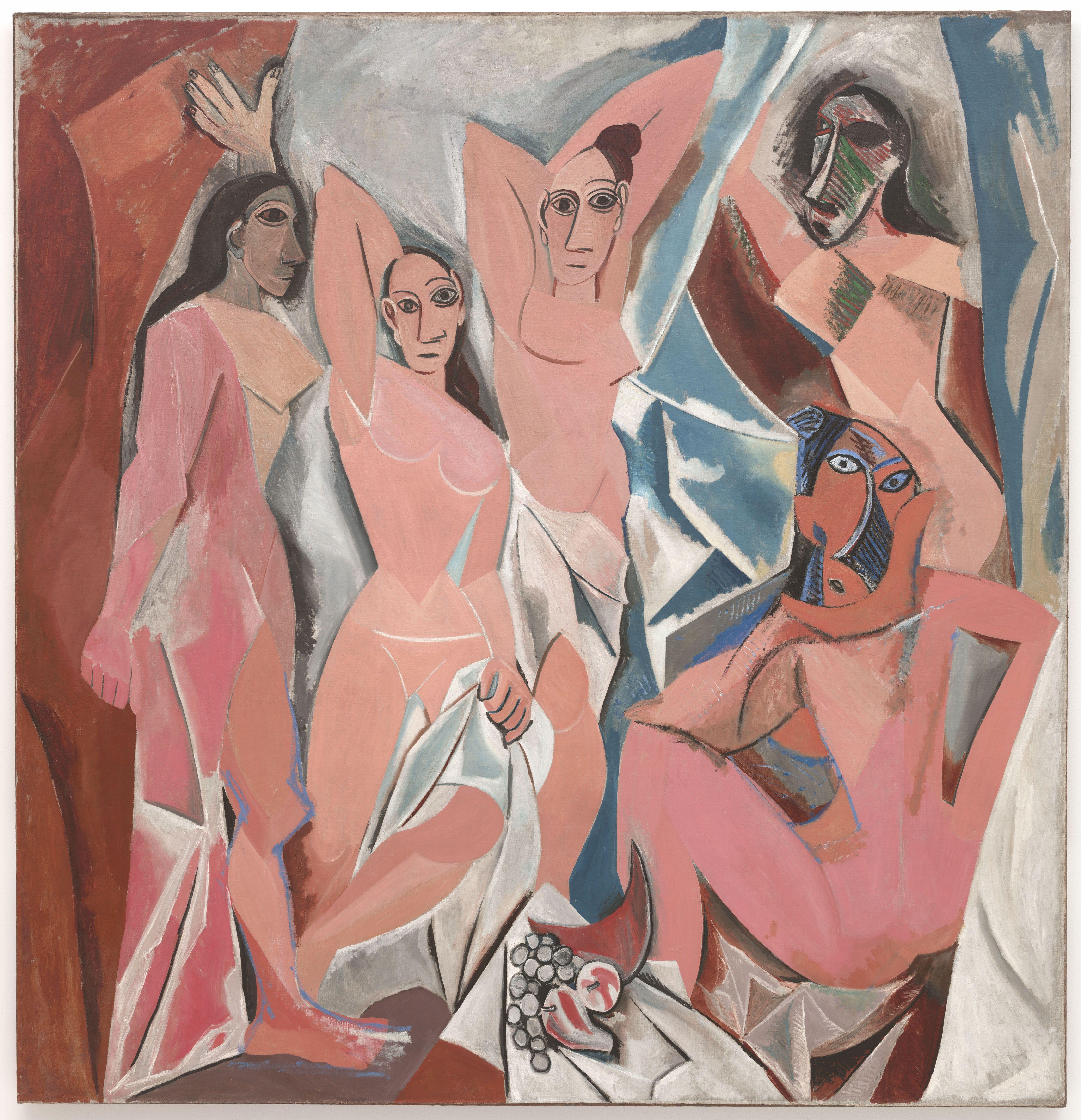




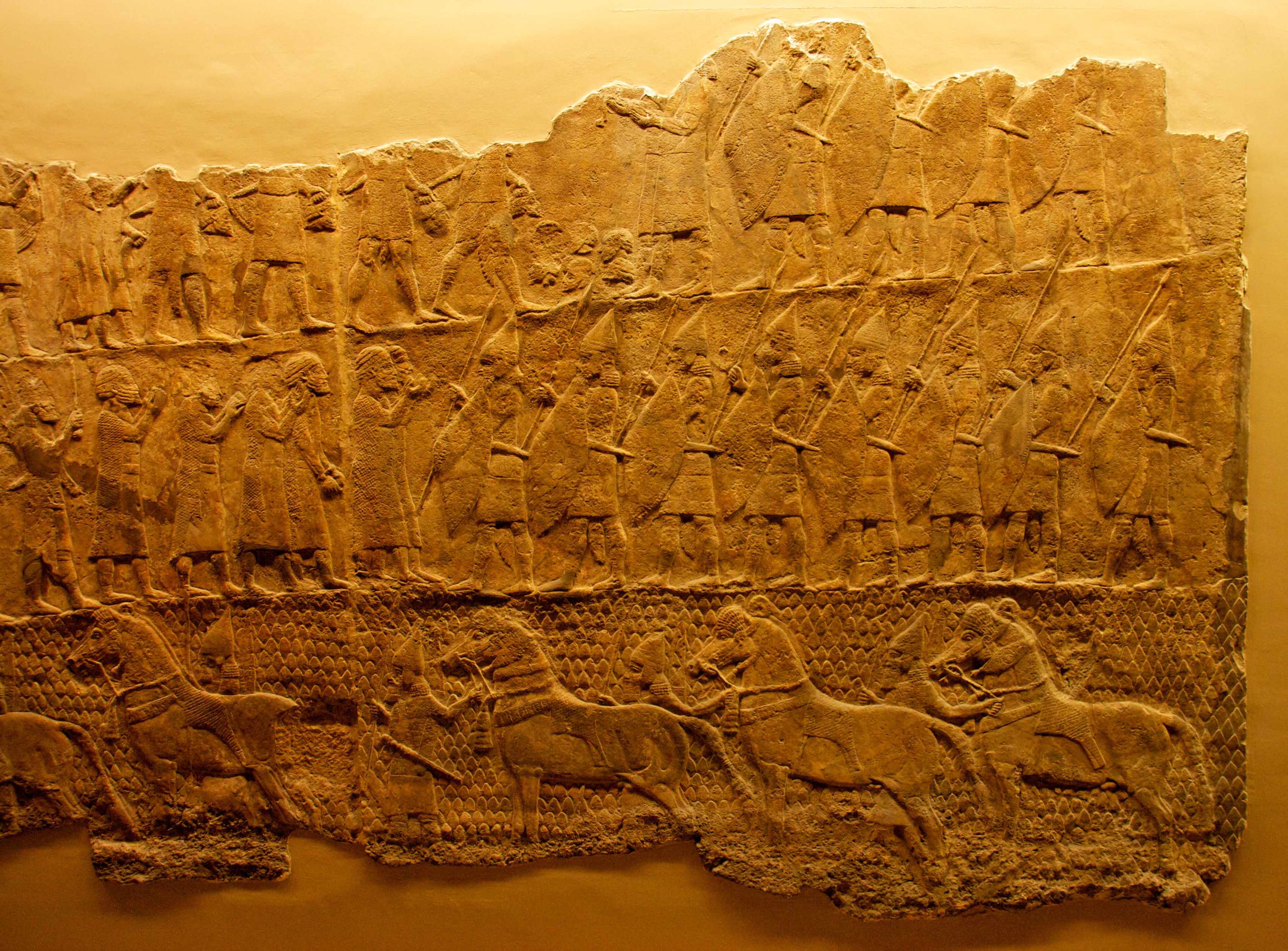









 The Daily Hatch


