Category Archives: Atheists Confronted

“Truth Tuesday” Taking on Ark Times Bloggers on the “Absurdity of Life without God!!” Part 4 (According to the Christian worldview, God does exist, and man’s life does not end at the grave)

Is the Bible historically accurate? Here are some of the posts I have done in the past on the subject: 1. The Babylonian Chronicleof Nebuchadnezzars Siege of Jerusalem2. Hezekiah’s Siloam Tunnel Inscription. 3. Taylor Prism (Sennacherib Hexagonal Prism)4. Biblical Cities Attested Archaeologically. 5. The Discovery of the Hittites6.Shishak Smiting His Captives7. Moabite Stone8Black Obelisk of Shalmaneser III9A Verification of places in Gospel of John and Book of Acts., 9B Discovery of Ebla Tablets10. Cyrus Cylinder11. Puru “The lot of Yahali” 9th Century B.C.E.12. The Uzziah Tablet Inscription13. The Pilate Inscription14. Caiaphas Ossuary14 B Pontius Pilate Part 214c. Three greatest American Archaeologists moved to accept Bible’s accuracy through archaeology.

The Bible and Archaeology – Is the Bible from God? (Kyle Butt 42 min)

Eastwooding Richard Dawkins’ Moral Argument Objections

Published on Oct 20, 2012

For more information and resources visit: http://www.reasonablefaith.org

On September 29th, 2012, William Lane Craig participated in the Contending with Christianity’s Critics Conference held at Watermark Community Church in Dallas, TX. In this short clip, Dr. Craig uses the technique of Eastwooding to deal with Richard Dawkins’ attempted refutations of the moral argument for God’s existence.

To view the entire video: http://youtu.be/_XZb8m7p8ng

The statements ascribed to Richard Dawkins in this presentation are statements actually made by Prof. Dawkins. The following is a list of the sources of such statements:

Dawkins, Richard. “Afterword.” In Lawrence Krauss, A Universe from Nothing. New York: Free Press, 2012.

_____. “Comment.” http://old.richarddawkins.net/comment….

_____. The God Delusion. New York: Houghton-Mifflin, 2006.

_____. River out of Eden: a Darwinian View of Life. New York: Basic Books, 1996.

_____. “The Ultraviolet Garden,” Lecture 4 of 7 Royal Institution Christmas Lectures (1992), http://physicshead.blogspot.com/2007/….

_____. “Why I Refuse to Debate William Lane Craig.” The Guardian 20 October 2011 http://old.richarddawkins.net/comment…

Citations of these statements with references may be found in:

“Richard Dawkins on Arguments for God.” In God Is Great, God Is Good, pp. 13-31. Ed. Wm. L Craig and Chad Meister. Downers Grove, Ill.: Inter-Varsity, 2009.

Citations in lecture format may be found at:

http://youtu.be/9HLmow850iE

We welcome your comments in the Reasonable Faith forums:
http://www.reasonablefaith.org/forums/

Be sure to also visit Reasonable Faith’s other channel: http://www.youtube.com/drcraigvideos

Follow Reasonable Faith On Twitter: http://twitter.com/rfupdates

Add Reasonable Faith On Facebook: http://www.facebook.com/reasonablefaith

Francis Schaeffer and  Gospel of Christ in the pages of the Bible

(The Bible is the key in understanding the universe in its form)

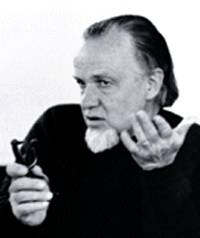
Francis and Edith Schaeffer pictured below:

_________________

Life without God in the picture is absurdity!!!. That was the view of King Solomon when he wrote the Book of Ecclesiastes 3000 years ago and it is the view of many of the modern philosophers today. Modern man has tried to come up with a lasting meaning for life without God in the picture (life under the sun), but it is not possible. Without the infinite-personal God of the Bible to reveal moral absolutes then man is left to embrace moral relativism. In a time plus chance universe man is reduced to a machine and can not find a place for values such as love. Both of Francis Schaeffer’s film series have tackled these subjects and he shows how this is reflected in the arts.

Here are some posts I have done on the series “HOW SHOULD WE THEN LIVE? : Francis Schaeffer’s “How should we then live?” Video and outline of episode 10 “Final Choices” episode 9 “The Age of Personal Peace and Affluence”episode 8 “The Age of Fragmentation”episode 7 “The Age of Non-Reason” episode 6 “The Scientific Age”  episode 5 “The Revolutionary Age” episode 4 “The Reformation” episode 3 “The Renaissance”episode 2 “The Middle Ages,”, and  episode 1 “The Roman Age,” .

In the film series “WHATEVER HAPPENED TO THE HUMAN RACE?” the arguments are presented  against abortion (Episode 1),  infanticide (Episode 2),   euthenasia (Episode 3), and then there is a discussion of the Christian versus Humanist worldview concerning the issue of “the basis for human dignity” in Episode 4 and then in the last episode a close look at the truth claims of the Bible.

I have discussed many subjects with my liberal friends over at the Ark Times Blog in the past and I have taken them on now on the subject of the absurdity of life without God in the picture. Most of my responses included quotes from William Lane Craig’s book THE ABSURDITY OF LIFE WITHOUT GOD.  Here is the result of one of those encounters from June of 2013:

Hackett wrote, “I’m quite content with the reality of life as it is and have no need of faith and belief in any invisible being. This despair you feel must also require faith & belief.”

_______________
I DO NOT FEEL ANY DESPAIR ABOUT MY FUTURE BECAUSE I KNOW WHERE I AM GOING. ATHEISM FAILS IN THIS REGARD THOUGH.

William Lane Craig wrote:

According to the Christian worldview, God does exist, and man’s life does not end at the grave. In the resurrection body man may enjoy eternal life and fellowship with God. Biblical Christianity therefore provides the two conditions necessary for a meaningful, valuable, and purposeful life for man: God and immortality. Because of this, we can live consistently and happily. Thus, biblical Christianity succeeds precisely where atheism breaks down.

Now I want to make it clear that I have not yet shown biblical Christianity to be true. But what I have done is clearly spell out the alternatives. If God does not exist, then life is futile. If the God of the Bible does exist, then life is meaningful. Only the second of these two alternatives enables us to live happily and consistently. Therefore, it seems to me that even if the evidence for these two options were absolutely equal, a rational person ought to choose biblical Christianity. It seems to me positively irrational to prefer death, futility, and destruction to life, meaningfulness, and happiness. As Pascal said, we have nothing to lose and infinity to gain.

Related posts:

Francis Schaeffer’s “How should we then live?” Video and outline of episode 10 “Final Choices” (Schaeffer Sundays)

E P I S O D E 1 0   Dr. Francis Schaeffer – Episode X – Final Choices 27 min FINAL CHOICES I. Authoritarianism the Only Humanistic Social Option One man or an elite giving authoritative arbitrary absolutes. A. Society is sole absolute in absence of other absolutes. B. But society has to be […]

Francis Schaeffer’s “How should we then live?” Video and outline of episode 9 “The Age of Personal Peace and Affluence” (Schaeffer Sundays)

E P I S O D E 9 Dr. Francis Schaeffer – Episode IX – The Age of Personal Peace and Affluence 27 min T h e Age of Personal Peace and Afflunce I. By the Early 1960s People Were Bombarded From Every Side by Modern Man’s Humanistic Thought II. Modern Form of Humanistic Thought Leads […]

Francis Schaeffer’s “How should we then live?” Video and outline of episode 8 “The Age of Fragmentation” (Schaeffer Sundays)

E P I S O D E 8 Dr. Francis Schaeffer – Episode VIII – The Age of Fragmentation 27 min I saw this film series in 1979 and it had a major impact on me. T h e Age of FRAGMENTATION I. Art As a Vehicle Of Modern Thought A. Impressionism (Monet, Renoir, Pissarro, Sisley, […]

Francis Schaeffer’s “How should we then live?” Video and outline of episode 7 “The Age of Non-Reason” (Schaeffer Sundays)

E P I S O D E 7 Dr. Francis Schaeffer – Episode VII – The Age of Non Reason I am thrilled to get this film series with you. I saw it first in 1979 and it had such a big impact on me. Today’s episode is where we see modern humanist man act […]

Francis Schaeffer’s “How should we then live?” Video and outline of episode 6 “The Scientific Age” (Schaeffer Sundays)

E P I S O D E 6 How Should We Then Live 6#1 Uploaded by NoMirrorHDDHrorriMoN on Oct 3, 2011 How Should We Then Live? Episode 6 of 12 ________ I am sharing with you a film series that I saw in 1979. In this film Francis Schaeffer asserted that was a shift in […]

Francis Schaeffer’s “How should we then live?” Video and outline of episode 5 “The Revolutionary Age” (Schaeffer Sundays)

E P I S O D E 5 How Should We Then Live? Episode 5: The Revolutionary Age I was impacted by this film series by Francis Schaeffer back in the 1970′s and I wanted to share it with you. Francis Schaeffer noted, “Reformation Did Not Bring Perfection. But gradually on basis of biblical teaching there […]

Francis Schaeffer’s “How should we then live?” Video and outline of episode 4 “The Reformation” (Schaeffer Sundays)

Dr. Francis Schaeffer – Episode IV – The Reformation 27 min I was impacted by this film series by Francis Schaeffer back in the 1970′s and I wanted to share it with you. Schaeffer makes three key points concerning the Reformation: “1. Erasmian Christian humanism rejected by Farel. 2. Bible gives needed answers not only as to […]

“Schaeffer Sundays” Francis Schaeffer’s “How should we then live?” Video and outline of episode 3 “The Renaissance”

Francis Schaeffer’s “How should we then live?” Video and outline of episode 3 “The Renaissance” Francis Schaeffer: “How Should We Then Live?” (Episode 3) THE RENAISSANCE I was impacted by this film series by Francis Schaeffer back in the 1970′s and I wanted to share it with you. Schaeffer really shows why we have so […]

Francis Schaeffer’s “How should we then live?” Video and outline of episode 2 “The Middle Ages” (Schaeffer Sundays)

  Francis Schaeffer: “How Should We Then Live?” (Episode 2) THE MIDDLE AGES I was impacted by this film series by Francis Schaeffer back in the 1970′s and I wanted to share it with you. Schaeffer points out that during this time period unfortunately we have the “Church’s deviation from early church’s teaching in regard […]

Francis Schaeffer’s “How should we then live?” Video and outline of episode 1 “The Roman Age” (Schaeffer Sundays)

Francis Schaeffer: “How Should We Then Live?” (Episode 1) THE ROMAN AGE   Today I am starting a series that really had a big impact on my life back in the 1970′s when I first saw it. There are ten parts and today is the first. Francis Schaeffer takes a look at Rome and why […]

Francis Schaeffer: “Whatever Happened to the Human Race” (Episode 5) TRUTH AND HISTORY

Francis Schaeffer: “Whatever Happened to the Human Race” (Episode 5) TRUTH AND HISTORY Published on Oct 7, 2012 by AdamMetropolis This crucial series is narrated by the late Dr. Francis Schaeffer and former Surgeon General Dr. C. Everett Koop. Today, choices are being made that undermine human rights at their most basic level. Practices once […]

Francis Schaeffer: “Whatever Happened to the Human Race” (Episode 4) THE BASIS FOR HUMAN DIGNITY

The opening song at the beginning of this episode is very insightful. Francis Schaeffer: “Whatever Happened to the Human Race” (Episode 4) THE BASIS FOR HUMAN DIGNITY Published on Oct 7, 2012 by AdamMetropolis This crucial series is narrated by the late Dr. Francis Schaeffer and former Surgeon General Dr. C. Everett Koop. Today, choices […]

Francis Schaeffer: “Whatever Happened to the Human Race” (Episode 3) DEATH BY SOMEONE’S CHOICE

Francis Schaeffer: “Whatever Happened to the Human Race” (Episode 3) DEATH BY SOMEONE’S CHOICE Published on Oct 6, 2012 by AdamMetropolis This crucial series is narrated by the late Dr. Francis Schaeffer and former Surgeon General Dr. C. Everett Koop. Today, choices are being made that undermine human rights at their most basic level. Practices […]

Francis Schaeffer: “Whatever Happened to the Human Race?” (Episode 2) SLAUGHTER OF THE INNOCENTS

Francis Schaeffer: “Whatever Happened to the Human Race?” (Episode 2) SLAUGHTER OF THE INNOCENTS Published on Oct 6, 2012 by AdamMetropolis This crucial series is narrated by the late Dr. Francis Schaeffer and former Surgeon General Dr. C. Everett Koop. Today, choices are being made that undermine human rights at their most basic level. Practices […]

Francis Schaeffer: “Whatever Happened to the Human Race” (Episode 1) ABORTION OF THE HUMAN RACE

It is not possible to know where the pro-life evangelicals are coming from unless you look at the work of the person who inspired them the most. That person was Francis Schaeffer.  I do care about economic issues but the pro-life issue is the most important to me. Several years ago Adrian Rogers (past president of […]

Ecclesiastes, Purpose, Meaning, and the Necessity of God by Suiwen Liang (Quotes Will Durant, Madalyn Murray O’Hair, Stephen Jay Gould,Richard Dawkins, Jean-Paul Sartre,Bertrand Russell, Leo Tolstoy, Loren Eiseley,Aldous Huxley, G.K. Chesterton, Ravi Zacharias, and C.S. Lewis.)

Ecclesiastes 2-3 Published on Sep 19, 2012 Calvary Chapel Spring Valley | Sunday Evening | September 16, 2012 | Derek Neider _____________________________ I have written on the Book of Ecclesiastes and the subject of the meaning of our lives on several occasions on this blog. In this series on Ecclesiastes I hope to show how secular […]

Robert Leroe on Ecclesiastes (Mentions Thomas Aquinas, Princess Diana, Mother Teresa, King Solomon, King Rehoboam, Eugene Peterson, Chuck Swindoll, and John Newton.)

Ecclesiastes 1 Published on Sep 4, 2012 Calvary Chapel Spring Valley | Sunday Evening | September 2, 2012 | Pastor Derek Neider _____________________ I have written on the Book of Ecclesiastes and the subject of the meaning of our lives on several occasions on this blog. In this series on Ecclesiastes I hope to show how […]

Super Bowl, Black Eyed Peas, and the Meaning of Life and Ecclesiastes

Ecclesiastes 8-10 | Still Searching After All These Years Published on Oct 9, 2012 Calvary Chapel Spring Valley | Sunday Evening | October 7, 2012 | Pastor Derek Neider _______________________ Ecclesiastes 11-12 | Solomon Finds His Way Published on Oct 30, 2012 Calvary Chapel Spring Valley | Sunday Evening | October 28, 2012 | Pastor Derek Neider […]

Brian LePort on Ecclesiastes

Ecclesiastes 6-8 | Solomon Turns Over a New Leaf Published on Oct 2, 2012 Calvary Chapel Spring Valley | Sunday Evening | September 30, 2012 | Pastor Derek Neider _____________________ I have written on the Book of Ecclesiastes and the subject of the meaning of our lives on several occasions on this blog. In this series […]

J.W. Wartick on Ecclesiastes

Ecclesiastes 4-6 | Solomon’s Dissatisfaction Published on Sep 24, 2012 Calvary Chapel Spring Valley | Sunday Evening | September 23, 2012 | Pastor Derek Neider ___________________ I have written on the Book of Ecclesiastes and the subject of the meaning of our lives on several occasions on this blog. In this series on Ecclesiastes I hope […]

Overview of the Book of Ecclesiastes

Overview of the Book of Ecclesiastes Overview of the Book of EcclesiastesAuthor: Solomon or an unknown sage in the royal courtPurpose: To demonstrate that life viewed merely from a realistic human perspective must result in pessimism, and to offer hope through humble obedience and faithfulness to God until the final judgment.Date: 930-586 B.C. Ecclesiastes 2-3 Published on Sep 19, […]

Doy Moyer on the Book of Ecclesiastes and Apologetics

Ecclesiastes 1 Published on Sep 4, 2012 Calvary Chapel Spring Valley | Sunday Evening | September 2, 2012 | Pastor Derek Neider _____________________ I have written on the Book of Ecclesiastes and the subject of the meaning of our lives on several occasions on this blog. In this series on Ecclesiastes I hope to show how […]

Solomon was the author of Ecclesiastes

Ecclesiastes 8-10 | Still Searching After All These Years Published on Oct 9, 2012 Calvary Chapel Spring Valley | Sunday Evening | October 7, 2012 | Pastor Derek Neider _______________________ Ecclesiastes 11-12 | Solomon Finds His Way Published on Oct 30, 2012 Calvary Chapel Spring Valley | Sunday Evening | October 28, 2012 | Pastor Derek Neider […]

By Everette Hatcher III | Posted in Current Events | Edit | Comments (0)

“Truth Tuesday” Taking on Ark Times Bloggers on the “Absurdity of Life without God!!” Part 3 (If there is no lasting meaning to our lives then isn’t life utterly without reason?)

_________________________________________________________

There Is A Difference Between Absolute and Objective Moral Values

Published on Dec 6, 2012

For more resources visit: http://www.reasonablefaith.org

The Bethinking National Apologetics Day Conference: “Countering the New Atheism” took place during the UK Reasonable Faith Tour in October 2011. Christian academics William Lane Craig, John Lennox, Peter J Williams and Gary Habermas lead 600 people in training on how to defend and proclaim the credibility of Christianity against the growing tide of secularism and New Atheist popular thought in western society.

In this session, William Lane Craig delivers his critique of Richard Dawkins’ objections to arguments for the existence of God, followed by questions and answers from the audience. In this clip, Dr Craig addresses a question about objective moral values and distinguishes them from absolute moral values.

Dr. Francis Schaeffer – The Biblical Flow of Truth & History (part 2)

Francis Schaeffer pictured below:

______________________________

_________________

Life without God in the picture is absurdity!!!. That was the view of King Solomon when he wrote the Book of Ecclesiastes 3000 years ago and it is the view of many of the modern philosophers today. Modern man has tried to come up with a lasting meaning for life without God in the picture (life under the sun), but it is not possible. Without the infinite-personal God of the Bible to reveal moral absolutes then man is left to embrace moral relativism. In a time plus chance universe man is reduced to a machine and can not find a place for values such as love. Both of Francis Schaeffer’s film series have tackled these subjects and he shows how this is reflected in the arts.

Here are some posts I have done on the series “HOW SHOULD WE THEN LIVE? : Francis Schaeffer’s “How should we then live?” Video and outline of episode 10 “Final Choices” episode 9 “The Age of Personal Peace and Affluence”episode 8 “The Age of Fragmentation”episode 7 “The Age of Non-Reason” episode 6 “The Scientific Age”  episode 5 “The Revolutionary Age” episode 4 “The Reformation” episode 3 “The Renaissance”episode 2 “The Middle Ages,”, and  episode 1 “The Roman Age,” .

In the film series “WHATEVER HAPPENED TO THE HUMAN RACE?” the arguments are presented  against abortion (Episode 1),  infanticide (Episode 2),   euthenasia (Episode 3), and then there is a discussion of the Christian versus Humanist worldview concerning the issue of “the basis for human dignity” in Episode 4 and then in the last episode a close look at the truth claims of the Bible.

I have discussed many subjects with my liberal friends over at the Ark Times Blog in the past and I have taken them on now on the subject of the absurdity of life without God in the picture. Most of my responses included quotes from William Lane Craig’s book THE ABSURDITY OF LIFE WITHOUT GOD.  Here is the result of one of those encounters from June of 2013:

I wrote:

Citzen1 wrote, “I am not troubled that I will not be known by distant generations. Being appreciated by current ones is enough for me.”

Citzen1, if there is no lasting meaning to our lives then isn’t life utterly without reason?

Zatharus wrote, “…knowledge of an afterlife is even less knowable than a before life.”

Zatharus, then if this life doesn’t count then Hitler is never going to be punished for what he did in this life!!!! We can know if there is an afterlife. The Bible is a testable document. There are fulfilled prophecies in it from the Old Testament that have been fulfilled in history.

The secular view is totally bankrupt when it comes to this issue of finding a lasting meaning to our lives.

William Lane Craig wrote:

If death stands with open arms at the end of life’s trail, then what is the goal of life? To what end has life been lived? Is it all for nothing? Is there no reason for life? And what of the universe? Is it utterly pointless? If its destiny is a cold grave in the recesses of outer space, the answer must be yes—it is pointless. There is no goal, no purpose, for the universe. The litter of a dead universe will just go on expanding and expanding—forever.

And what of man? Is there no purpose at all for the human race? Or will it simply peter out someday, lost in the oblivion of an indifferent universe? The English writer H. G. Wells foresaw such a prospect. In his novel The Time Machine Wells’s time traveler journeys far into the future to discover the destiny of man. All he finds is a dead earth, save for a few lichens and moss, orbiting a gigantic red sun. The only sounds are the rush of the wind and the gentle ripple of the sea. “Beyond these lifeless sounds,” writes Wells, “the world was silent. Silent? It would be hard to convey the stillness of it. All the sounds of man, the bleating of sheep, the cries of birds, the hum of insects, the stir that makes the background of our lives—all that was over.”11 And so Wells’s time traveler returned. But to what?—to merely an earlier point on the purposeless rush toward oblivion. When as a non-Christian I first read Wells’s book, I thought, “No, no! It can’t end that way!” But if there is no God, it will end that way, like it or not. This is reality in a universe without God: there is no hope; there is no purpose. It reminds me of T.S. Eliot’s haunting lines:

This is the way the world ends
Not with a bang but a whimper.12

What is true of mankind as a whole is true of each of us individually: we are here to no purpose. If there is no God, then our life is not fundamentally different from that of a dog. I know that’s harsh, but it’s true. As the ancient writer of Ecclesiastes put it: “The fate of the sons of men and the fate of beasts is the same. As one dies so dies the other; indeed, they all have the same breath and there is no advantage for man over beast, for all is vanity. All go to the same place. All come from the dust and all return to the dust” (Eccles. 3:19–20 AT). In this book, which reads more like a piece of modern existentialist literature than a book of the Bible, the writer shows the futility of pleasure, wealth, education, political fame, and honor in a life doomed to end in death. His verdict? “Vanity of vanities! All is vanity” (1:2 ESV). If life ends at the grave, then we have no ultimate purpose for living.

But more than that: even if it did not end in death, without God life would still be without purpose. For man and the universe would then be simple accidents of chance, thrust into existence for no reason. Without God the universe is the result of a cosmic accident, a chance explosion. There is no reason for which it exists. As for man, he is a freak of nature—a blind product of matter plus time plus chance. Man is just a lump of slime that evolved rationality. There is no more purpose in life for the human race than for a species of insect; for both are the result of the blind interaction of chance and necessity. As one philosopher has put it: “Human life is mounted upon a subhuman pedestal and must shift for itself alone in the heart of a silent and mindless universe.”13

What is true of the universe and of the human race is also true of us as individuals. Insofar as we are individual human beings, we are the result of certain combinations of heredity and environment. We are victims of a kind of genetic and environmental roulette. Biologists like Richard Dawkins regard man as an electro-chemical machine controlled by its mindless genes. If God does not exist, then you are just a miscarriage of nature, thrust into a purposeless universe to live a purposeless life.

So if God does not exist, that means that man and the universe exist to no purpose—since the end of everything is death—and that they came to be for no purpose, since they are only blind products of chance. In short, life is utterly without reason.

Related posts:

Francis Schaeffer’s “How should we then live?” Video and outline of episode 10 “Final Choices” (Schaeffer Sundays)

E P I S O D E 1 0   Dr. Francis Schaeffer – Episode X – Final Choices 27 min FINAL CHOICES I. Authoritarianism the Only Humanistic Social Option One man or an elite giving authoritative arbitrary absolutes. A. Society is sole absolute in absence of other absolutes. B. But society has to be […]

Francis Schaeffer’s “How should we then live?” Video and outline of episode 9 “The Age of Personal Peace and Affluence” (Schaeffer Sundays)

E P I S O D E 9 Dr. Francis Schaeffer – Episode IX – The Age of Personal Peace and Affluence 27 min T h e Age of Personal Peace and Afflunce I. By the Early 1960s People Were Bombarded From Every Side by Modern Man’s Humanistic Thought II. Modern Form of Humanistic Thought Leads […]

Francis Schaeffer’s “How should we then live?” Video and outline of episode 8 “The Age of Fragmentation” (Schaeffer Sundays)

E P I S O D E 8 Dr. Francis Schaeffer – Episode VIII – The Age of Fragmentation 27 min I saw this film series in 1979 and it had a major impact on me. T h e Age of FRAGMENTATION I. Art As a Vehicle Of Modern Thought A. Impressionism (Monet, Renoir, Pissarro, Sisley, […]

Francis Schaeffer’s “How should we then live?” Video and outline of episode 7 “The Age of Non-Reason” (Schaeffer Sundays)

E P I S O D E 7 Dr. Francis Schaeffer – Episode VII – The Age of Non Reason I am thrilled to get this film series with you. I saw it first in 1979 and it had such a big impact on me. Today’s episode is where we see modern humanist man act […]

Francis Schaeffer’s “How should we then live?” Video and outline of episode 6 “The Scientific Age” (Schaeffer Sundays)

E P I S O D E 6 How Should We Then Live 6#1 Uploaded by NoMirrorHDDHrorriMoN on Oct 3, 2011 How Should We Then Live? Episode 6 of 12 ________ I am sharing with you a film series that I saw in 1979. In this film Francis Schaeffer asserted that was a shift in […]

Francis Schaeffer’s “How should we then live?” Video and outline of episode 5 “The Revolutionary Age” (Schaeffer Sundays)

E P I S O D E 5 How Should We Then Live? Episode 5: The Revolutionary Age I was impacted by this film series by Francis Schaeffer back in the 1970′s and I wanted to share it with you. Francis Schaeffer noted, “Reformation Did Not Bring Perfection. But gradually on basis of biblical teaching there […]

Francis Schaeffer’s “How should we then live?” Video and outline of episode 4 “The Reformation” (Schaeffer Sundays)

Dr. Francis Schaeffer – Episode IV – The Reformation 27 min I was impacted by this film series by Francis Schaeffer back in the 1970′s and I wanted to share it with you. Schaeffer makes three key points concerning the Reformation: “1. Erasmian Christian humanism rejected by Farel. 2. Bible gives needed answers not only as to […]

“Schaeffer Sundays” Francis Schaeffer’s “How should we then live?” Video and outline of episode 3 “The Renaissance”

Francis Schaeffer’s “How should we then live?” Video and outline of episode 3 “The Renaissance” Francis Schaeffer: “How Should We Then Live?” (Episode 3) THE RENAISSANCE I was impacted by this film series by Francis Schaeffer back in the 1970′s and I wanted to share it with you. Schaeffer really shows why we have so […]

Francis Schaeffer’s “How should we then live?” Video and outline of episode 2 “The Middle Ages” (Schaeffer Sundays)

  Francis Schaeffer: “How Should We Then Live?” (Episode 2) THE MIDDLE AGES I was impacted by this film series by Francis Schaeffer back in the 1970′s and I wanted to share it with you. Schaeffer points out that during this time period unfortunately we have the “Church’s deviation from early church’s teaching in regard […]

Francis Schaeffer’s “How should we then live?” Video and outline of episode 1 “The Roman Age” (Schaeffer Sundays)

Francis Schaeffer: “How Should We Then Live?” (Episode 1) THE ROMAN AGE   Today I am starting a series that really had a big impact on my life back in the 1970′s when I first saw it. There are ten parts and today is the first. Francis Schaeffer takes a look at Rome and why […]

Francis Schaeffer: “Whatever Happened to the Human Race” (Episode 5) TRUTH AND HISTORY

Francis Schaeffer: “Whatever Happened to the Human Race” (Episode 5) TRUTH AND HISTORY Published on Oct 7, 2012 by AdamMetropolis This crucial series is narrated by the late Dr. Francis Schaeffer and former Surgeon General Dr. C. Everett Koop. Today, choices are being made that undermine human rights at their most basic level. Practices once […]

Francis Schaeffer: “Whatever Happened to the Human Race” (Episode 4) THE BASIS FOR HUMAN DIGNITY

The opening song at the beginning of this episode is very insightful. Francis Schaeffer: “Whatever Happened to the Human Race” (Episode 4) THE BASIS FOR HUMAN DIGNITY Published on Oct 7, 2012 by AdamMetropolis This crucial series is narrated by the late Dr. Francis Schaeffer and former Surgeon General Dr. C. Everett Koop. Today, choices […]

Francis Schaeffer: “Whatever Happened to the Human Race” (Episode 3) DEATH BY SOMEONE’S CHOICE

Francis Schaeffer: “Whatever Happened to the Human Race” (Episode 3) DEATH BY SOMEONE’S CHOICE Published on Oct 6, 2012 by AdamMetropolis This crucial series is narrated by the late Dr. Francis Schaeffer and former Surgeon General Dr. C. Everett Koop. Today, choices are being made that undermine human rights at their most basic level. Practices […]

Francis Schaeffer: “Whatever Happened to the Human Race?” (Episode 2) SLAUGHTER OF THE INNOCENTS

Francis Schaeffer: “Whatever Happened to the Human Race?” (Episode 2) SLAUGHTER OF THE INNOCENTS Published on Oct 6, 2012 by AdamMetropolis This crucial series is narrated by the late Dr. Francis Schaeffer and former Surgeon General Dr. C. Everett Koop. Today, choices are being made that undermine human rights at their most basic level. Practices […]

Francis Schaeffer: “Whatever Happened to the Human Race” (Episode 1) ABORTION OF THE HUMAN RACE

It is not possible to know where the pro-life evangelicals are coming from unless you look at the work of the person who inspired them the most. That person was Francis Schaeffer.  I do care about economic issues but the pro-life issue is the most important to me. Several years ago Adrian Rogers (past president of […]

Ecclesiastes, Purpose, Meaning, and the Necessity of God by Suiwen Liang (Quotes Will Durant, Madalyn Murray O’Hair, Stephen Jay Gould,Richard Dawkins, Jean-Paul Sartre,Bertrand Russell, Leo Tolstoy, Loren Eiseley,Aldous Huxley, G.K. Chesterton, Ravi Zacharias, and C.S. Lewis.)

Ecclesiastes 2-3 Published on Sep 19, 2012 Calvary Chapel Spring Valley | Sunday Evening | September 16, 2012 | Derek Neider _____________________________ I have written on the Book of Ecclesiastes and the subject of the meaning of our lives on several occasions on this blog. In this series on Ecclesiastes I hope to show how secular […]

Robert Leroe on Ecclesiastes (Mentions Thomas Aquinas, Princess Diana, Mother Teresa, King Solomon, King Rehoboam, Eugene Peterson, Chuck Swindoll, and John Newton.)

Ecclesiastes 1 Published on Sep 4, 2012 Calvary Chapel Spring Valley | Sunday Evening | September 2, 2012 | Pastor Derek Neider _____________________ I have written on the Book of Ecclesiastes and the subject of the meaning of our lives on several occasions on this blog. In this series on Ecclesiastes I hope to show how […]

Super Bowl, Black Eyed Peas, and the Meaning of Life and Ecclesiastes

Ecclesiastes 8-10 | Still Searching After All These Years Published on Oct 9, 2012 Calvary Chapel Spring Valley | Sunday Evening | October 7, 2012 | Pastor Derek Neider _______________________ Ecclesiastes 11-12 | Solomon Finds His Way Published on Oct 30, 2012 Calvary Chapel Spring Valley | Sunday Evening | October 28, 2012 | Pastor Derek Neider […]

Brian LePort on Ecclesiastes

Ecclesiastes 6-8 | Solomon Turns Over a New Leaf Published on Oct 2, 2012 Calvary Chapel Spring Valley | Sunday Evening | September 30, 2012 | Pastor Derek Neider _____________________ I have written on the Book of Ecclesiastes and the subject of the meaning of our lives on several occasions on this blog. In this series […]

J.W. Wartick on Ecclesiastes

Ecclesiastes 4-6 | Solomon’s Dissatisfaction Published on Sep 24, 2012 Calvary Chapel Spring Valley | Sunday Evening | September 23, 2012 | Pastor Derek Neider ___________________ I have written on the Book of Ecclesiastes and the subject of the meaning of our lives on several occasions on this blog. In this series on Ecclesiastes I hope […]

Overview of the Book of Ecclesiastes

Overview of the Book of Ecclesiastes Overview of the Book of EcclesiastesAuthor: Solomon or an unknown sage in the royal courtPurpose: To demonstrate that life viewed merely from a realistic human perspective must result in pessimism, and to offer hope through humble obedience and faithfulness to God until the final judgment.Date: 930-586 B.C. Ecclesiastes 2-3 Published on Sep 19, […]

Doy Moyer on the Book of Ecclesiastes and Apologetics

Ecclesiastes 1 Published on Sep 4, 2012 Calvary Chapel Spring Valley | Sunday Evening | September 2, 2012 | Pastor Derek Neider _____________________ I have written on the Book of Ecclesiastes and the subject of the meaning of our lives on several occasions on this blog. In this series on Ecclesiastes I hope to show how […]

Solomon was the author of Ecclesiastes

Ecclesiastes 8-10 | Still Searching After All These Years Published on Oct 9, 2012 Calvary Chapel Spring Valley | Sunday Evening | October 7, 2012 | Pastor Derek Neider _______________________ Ecclesiastes 11-12 | Solomon Finds His Way Published on Oct 30, 2012 Calvary Chapel Spring Valley | Sunday Evening | October 28, 2012 | Pastor Derek Neider […]

By Everette Hatcher III | Posted in Current Events | Edit | Comments (0)

“Truth Tuesday” Taking on Ark Times Bloggers on the “Absurdity of Life without God!!” Part 2 (NIETZSCHE predicted that someday people would realize the implications of their atheism)

Is the Bible historically accurate? Here are some of the posts I have done in the past on the subject: 1. The Babylonian Chronicleof Nebuchadnezzars Siege of Jerusalem2. Hezekiah’s Siloam Tunnel Inscription. 3. Taylor Prism (Sennacherib Hexagonal Prism)4. Biblical Cities Attested Archaeologically. 5. The Discovery of the Hittites6.Shishak Smiting His Captives7. Moabite Stone8Black Obelisk of Shalmaneser III9A Verification of places in Gospel of John and Book of Acts., 9B Discovery of Ebla Tablets10. Cyrus Cylinder11. Puru “The lot of Yahali” 9th Century B.C.E.12. The Uzziah Tablet Inscription13. The Pilate Inscription14. Caiaphas Ossuary14 B Pontius Pilate Part 214c. Three greatest American Archaeologists moved to accept Bible’s accuracy through archaeology.

The Bible and Archaeology – Is the Bible from God? (Kyle Butt 42 min)

Existentialism and the Meaningful Life [The Common Room]

Published on Jul 7, 2015

Torrey Common Room Discussion with Janelle Aijian, Matt Jenson, and Diane Vincent

How Can We Demonstrate that Objective Moral Values Exist to a Nihilist Who Holds

Published on Dec 17, 2012

For more resources visit: http://www.reasonablefaith.org

The Bethinking National Apologetics Day Conference: “Countering the New Atheism” took place during the UK Reasonable Faith Tour in October 2011. Christian academics William Lane Craig, John Lennox, Peter J Williams and Gary Habermas lead 600 people in training on how to defend and proclaim the credibility of Christianity against the growing tide of secularism and New Atheist popular thought in western society.

In this session, William Lane Craig delivers his critique of Richard Dawkins’ objections to arguments for the existence of God, followed by questions and answers from the audience. In this clip, Dr Craig addresses a question about how objective moral values can be demonstrated to a Nihilist, who hold that they are illusory.

Richard Dawkins Vs. William Lane Craig Debate

Uploaded on Oct 23, 2011

Richard Dawkins TIMES:
7:20
32:15
1:03:05
1:19:33
1:39:33

William Lane Craig TIMES:
13:39
46:27
1:14:04
1:36:08

__________________

Francis Schaeffer – The Biblical Flow of History & Truth (1)

Francis Schaeffer pictured below

File:Francis Schaeffer.jpg

_________________

Life without God in the picture is absurdity!!!. That was the view of King Solomon when he wrote the Book of Ecclesiastes 3000 years ago and it is the view of many of the modern philosophers today. Modern man has tried to come up with a lasting meaning for life without God in the picture (life under the sun), but it is not possible. Without the infinite-personal God of the Bible to reveal moral absolutes then man is left to embrace moral relativism. In a time plus chance universe man is reduced to a machine and can not find a place for values such as love. Both of Francis Schaeffer’s film series have tackled these subjects and he shows how this is reflected in the arts.

Here are some posts I have done on the series “HOW SHOULD WE THEN LIVE? : Francis Schaeffer’s “How should we then live?” Video and outline of episode 10 “Final Choices” episode 9 “The Age of Personal Peace and Affluence”episode 8 “The Age of Fragmentation”episode 7 “The Age of Non-Reason” episode 6 “The Scientific Age”  episode 5 “The Revolutionary Age” episode 4 “The Reformation” episode 3 “The Renaissance”episode 2 “The Middle Ages,”, and  episode 1 “The Roman Age,” .

In the film series “WHATEVER HAPPENED TO THE HUMAN RACE?” the arguments are presented  against abortion (Episode 1),  infanticide (Episode 2),   euthenasia (Episode 3), and then there is a discussion of the Christian versus Humanist worldview concerning the issue of “the basis for human dignity” in Episode 4 and then in the last episode a close look at the truth claims of the Bible.

I have discussed many subjects with my liberal friends over at the Ark Times Blog in the past and I have taken them on now on the subject of the absurdity of life without God in the picture. Most of my responses included quotes from William Lane Craig’s book THE ABSURDITY OF LIFE WITHOUT GOD.  Here is the result of one of those encounters from June of 2013:

I wrote:

Zatharus, let me show you the result of your atheism. You wrote, “You are here because your parents had sex; knowledge of an afterlife is even less knowable than a before life; other than that created by the person, 42. Can we now discuss the dichotomy of existentialism?”
Then you quoted, Friedrich Nietzsche, “To live is to suffer, to survive is to find some meaning in the suffering.”
________________
NIETZSCHE understood what a lot of people today fail to realize.

William Lane Craig writes:

Do you understand the gravity of the alternatives before us? For if God exists, then there is hope for man. But if God does not exist, then all we are left with is despair. Do you understand why the question of God’s existence is so vital to man? As Francis Schaeffer aptly put it, “If God is dead, then man is dead, too.”

Unfortunately, the mass of mankind do not realize this fact. They continue on as though nothing has changed. I’m reminded of NIETZSCHE’S story of the madman who in the early morning hours burst into the marketplace, lantern in hand, crying, “I seek God! I seek God!” Since many of those standing about did not believe in God, he provoked much laughter. “Did God get lost?” they taunted him. “Or is he hiding? Or maybe he has gone on a voyage or emigrated!” Thus they yelled and laughed. Then, writes Nietzsche, the madman turned in their midst and pierced them with his eyes.

“Whither is God?” he cried, “I shall tell you. We have killed him—you and I. All of us are his murderers. But how have we done this? How were we able to drink up the sea? Who gave us the sponge to wipe away the entire horizon? What did we do when we unchained this earth from its sun? Whither is it moving now? Away from all suns? Are we not plunging continually? Backward, sideward, forward, in all directions? Is there any up or down left? Are we not straying as through an infinite nothing? Do we not feel the breath of empty space? Has it not become colder? Is not night and more night coming on all the while? Must not lanterns be lit in the morning? Do we not hear anything yet of the noise of the gravediggers who are burying God? … God is dead…. And we have killed him. How shall we, the murderers of all murderers, comfort ourselves?”14

The crowd stared at the madman in silence and astonishment. At last he dashed his lantern to the ground. “I have come too early,” he said. “This tremendous event is still on its way—it has not yet reached the ears of man.” People did not yet truly comprehend the consequences of what they had done in killing God. But NIETZSCHE predicted that someday people would realize the implications of their atheism; and this realization would usher in an age of nihilism—the destruction of all meaning and value in life. The end of Christianity, wrote NIETZSCHE, means the advent of nihilism. This most gruesome of guests is standing already at the door. “Our whole European culture is moving for some time now,” wrote NIETZSCHE, “with a tortured tension that is growing from decade to decade, as toward a catastrophe: restlessly, violently, headlong, like a river that wants to reach the end, that no longer reflects, that is afraid to reflect.”15

MOST PEOPLE STILL DO NOT REFLECT ON THE CONSEQUENCES OF ATHEISM AND SO, LIKE THE CROWD IN THE MARKETPLACE, GO UNKNOWINGLY ON THEIR WAY. But when we realize, as did Nietzsche, what atheism implies, then his question presses hard upon us: how shall we, the murderers of all murderers, comfort ourselves?

Related posts:

Francis Schaeffer’s “How should we then live?” Video and outline of episode 10 “Final Choices” (Schaeffer Sundays)

E P I S O D E 1 0   Dr. Francis Schaeffer – Episode X – Final Choices 27 min FINAL CHOICES I. Authoritarianism the Only Humanistic Social Option One man or an elite giving authoritative arbitrary absolutes. A. Society is sole absolute in absence of other absolutes. B. But society has to be […]

Francis Schaeffer’s “How should we then live?” Video and outline of episode 9 “The Age of Personal Peace and Affluence” (Schaeffer Sundays)

E P I S O D E 9 Dr. Francis Schaeffer – Episode IX – The Age of Personal Peace and Affluence 27 min T h e Age of Personal Peace and Afflunce I. By the Early 1960s People Were Bombarded From Every Side by Modern Man’s Humanistic Thought II. Modern Form of Humanistic Thought Leads […]

Francis Schaeffer’s “How should we then live?” Video and outline of episode 8 “The Age of Fragmentation” (Schaeffer Sundays)

E P I S O D E 8 Dr. Francis Schaeffer – Episode VIII – The Age of Fragmentation 27 min I saw this film series in 1979 and it had a major impact on me. T h e Age of FRAGMENTATION I. Art As a Vehicle Of Modern Thought A. Impressionism (Monet, Renoir, Pissarro, Sisley, […]

Francis Schaeffer’s “How should we then live?” Video and outline of episode 7 “The Age of Non-Reason” (Schaeffer Sundays)

E P I S O D E 7 Dr. Francis Schaeffer – Episode VII – The Age of Non Reason I am thrilled to get this film series with you. I saw it first in 1979 and it had such a big impact on me. Today’s episode is where we see modern humanist man act […]

Francis Schaeffer’s “How should we then live?” Video and outline of episode 6 “The Scientific Age” (Schaeffer Sundays)

E P I S O D E 6 How Should We Then Live 6#1 Uploaded by NoMirrorHDDHrorriMoN on Oct 3, 2011 How Should We Then Live? Episode 6 of 12 ________ I am sharing with you a film series that I saw in 1979. In this film Francis Schaeffer asserted that was a shift in […]

Francis Schaeffer’s “How should we then live?” Video and outline of episode 5 “The Revolutionary Age” (Schaeffer Sundays)

E P I S O D E 5 How Should We Then Live? Episode 5: The Revolutionary Age I was impacted by this film series by Francis Schaeffer back in the 1970′s and I wanted to share it with you. Francis Schaeffer noted, “Reformation Did Not Bring Perfection. But gradually on basis of biblical teaching there […]

Francis Schaeffer’s “How should we then live?” Video and outline of episode 4 “The Reformation” (Schaeffer Sundays)

Dr. Francis Schaeffer – Episode IV – The Reformation 27 min I was impacted by this film series by Francis Schaeffer back in the 1970′s and I wanted to share it with you. Schaeffer makes three key points concerning the Reformation: “1. Erasmian Christian humanism rejected by Farel. 2. Bible gives needed answers not only as to […]

“Schaeffer Sundays” Francis Schaeffer’s “How should we then live?” Video and outline of episode 3 “The Renaissance”

Francis Schaeffer’s “How should we then live?” Video and outline of episode 3 “The Renaissance” Francis Schaeffer: “How Should We Then Live?” (Episode 3) THE RENAISSANCE I was impacted by this film series by Francis Schaeffer back in the 1970′s and I wanted to share it with you. Schaeffer really shows why we have so […]

Francis Schaeffer’s “How should we then live?” Video and outline of episode 2 “The Middle Ages” (Schaeffer Sundays)

  Francis Schaeffer: “How Should We Then Live?” (Episode 2) THE MIDDLE AGES I was impacted by this film series by Francis Schaeffer back in the 1970′s and I wanted to share it with you. Schaeffer points out that during this time period unfortunately we have the “Church’s deviation from early church’s teaching in regard […]

Francis Schaeffer’s “How should we then live?” Video and outline of episode 1 “The Roman Age” (Schaeffer Sundays)

Francis Schaeffer: “How Should We Then Live?” (Episode 1) THE ROMAN AGE   Today I am starting a series that really had a big impact on my life back in the 1970′s when I first saw it. There are ten parts and today is the first. Francis Schaeffer takes a look at Rome and why […]

Francis Schaeffer: “Whatever Happened to the Human Race” (Episode 5) TRUTH AND HISTORY

Francis Schaeffer: “Whatever Happened to the Human Race” (Episode 5) TRUTH AND HISTORY Published on Oct 7, 2012 by AdamMetropolis This crucial series is narrated by the late Dr. Francis Schaeffer and former Surgeon General Dr. C. Everett Koop. Today, choices are being made that undermine human rights at their most basic level. Practices once […]

Francis Schaeffer: “Whatever Happened to the Human Race” (Episode 4) THE BASIS FOR HUMAN DIGNITY

The opening song at the beginning of this episode is very insightful. Francis Schaeffer: “Whatever Happened to the Human Race” (Episode 4) THE BASIS FOR HUMAN DIGNITY Published on Oct 7, 2012 by AdamMetropolis This crucial series is narrated by the late Dr. Francis Schaeffer and former Surgeon General Dr. C. Everett Koop. Today, choices […]

Francis Schaeffer: “Whatever Happened to the Human Race” (Episode 3) DEATH BY SOMEONE’S CHOICE

Francis Schaeffer: “Whatever Happened to the Human Race” (Episode 3) DEATH BY SOMEONE’S CHOICE Published on Oct 6, 2012 by AdamMetropolis This crucial series is narrated by the late Dr. Francis Schaeffer and former Surgeon General Dr. C. Everett Koop. Today, choices are being made that undermine human rights at their most basic level. Practices […]

Francis Schaeffer: “Whatever Happened to the Human Race?” (Episode 2) SLAUGHTER OF THE INNOCENTS

Francis Schaeffer: “Whatever Happened to the Human Race?” (Episode 2) SLAUGHTER OF THE INNOCENTS Published on Oct 6, 2012 by AdamMetropolis This crucial series is narrated by the late Dr. Francis Schaeffer and former Surgeon General Dr. C. Everett Koop. Today, choices are being made that undermine human rights at their most basic level. Practices […]

Francis Schaeffer: “Whatever Happened to the Human Race” (Episode 1) ABORTION OF THE HUMAN RACE

It is not possible to know where the pro-life evangelicals are coming from unless you look at the work of the person who inspired them the most. That person was Francis Schaeffer.  I do care about economic issues but the pro-life issue is the most important to me. Several years ago Adrian Rogers (past president of […]

Ecclesiastes, Purpose, Meaning, and the Necessity of God by Suiwen Liang (Quotes Will Durant, Madalyn Murray O’Hair, Stephen Jay Gould,Richard Dawkins, Jean-Paul Sartre,Bertrand Russell, Leo Tolstoy, Loren Eiseley,Aldous Huxley, G.K. Chesterton, Ravi Zacharias, and C.S. Lewis.)

Ecclesiastes 2-3 Published on Sep 19, 2012 Calvary Chapel Spring Valley | Sunday Evening | September 16, 2012 | Derek Neider _____________________________ I have written on the Book of Ecclesiastes and the subject of the meaning of our lives on several occasions on this blog. In this series on Ecclesiastes I hope to show how secular […]

Robert Leroe on Ecclesiastes (Mentions Thomas Aquinas, Princess Diana, Mother Teresa, King Solomon, King Rehoboam, Eugene Peterson, Chuck Swindoll, and John Newton.)

Ecclesiastes 1 Published on Sep 4, 2012 Calvary Chapel Spring Valley | Sunday Evening | September 2, 2012 | Pastor Derek Neider _____________________ I have written on the Book of Ecclesiastes and the subject of the meaning of our lives on several occasions on this blog. In this series on Ecclesiastes I hope to show how […]

Super Bowl, Black Eyed Peas, and the Meaning of Life and Ecclesiastes

Ecclesiastes 8-10 | Still Searching After All These Years Published on Oct 9, 2012 Calvary Chapel Spring Valley | Sunday Evening | October 7, 2012 | Pastor Derek Neider _______________________ Ecclesiastes 11-12 | Solomon Finds His Way Published on Oct 30, 2012 Calvary Chapel Spring Valley | Sunday Evening | October 28, 2012 | Pastor Derek Neider […]

Brian LePort on Ecclesiastes

Ecclesiastes 6-8 | Solomon Turns Over a New Leaf Published on Oct 2, 2012 Calvary Chapel Spring Valley | Sunday Evening | September 30, 2012 | Pastor Derek Neider _____________________ I have written on the Book of Ecclesiastes and the subject of the meaning of our lives on several occasions on this blog. In this series […]

J.W. Wartick on Ecclesiastes

Ecclesiastes 4-6 | Solomon’s Dissatisfaction Published on Sep 24, 2012 Calvary Chapel Spring Valley | Sunday Evening | September 23, 2012 | Pastor Derek Neider ___________________ I have written on the Book of Ecclesiastes and the subject of the meaning of our lives on several occasions on this blog. In this series on Ecclesiastes I hope […]

Overview of the Book of Ecclesiastes

Overview of the Book of Ecclesiastes Overview of the Book of EcclesiastesAuthor: Solomon or an unknown sage in the royal courtPurpose: To demonstrate that life viewed merely from a realistic human perspective must result in pessimism, and to offer hope through humble obedience and faithfulness to God until the final judgment.Date: 930-586 B.C. Ecclesiastes 2-3 Published on Sep 19, […]

Doy Moyer on the Book of Ecclesiastes and Apologetics

Ecclesiastes 1 Published on Sep 4, 2012 Calvary Chapel Spring Valley | Sunday Evening | September 2, 2012 | Pastor Derek Neider _____________________ I have written on the Book of Ecclesiastes and the subject of the meaning of our lives on several occasions on this blog. In this series on Ecclesiastes I hope to show how […]

Solomon was the author of Ecclesiastes

Ecclesiastes 8-10 | Still Searching After All These Years Published on Oct 9, 2012 Calvary Chapel Spring Valley | Sunday Evening | October 7, 2012 | Pastor Derek Neider _______________________ Ecclesiastes 11-12 | Solomon Finds His Way Published on Oct 30, 2012 Calvary Chapel Spring Valley | Sunday Evening | October 28, 2012 | Pastor Derek Neider […]

By Everette Hatcher III | Posted in Current Events | Edit | Comments (0)

“Truth Tuesday” Taking on Ark Times Bloggers on the “Absurdity of Life without God!!” Part 1 (French physicist Blaise Pascal on the meaning of life)

The Bible and Science – Is the Bible from God? (Kyle Butt)

Atheists Trying to Have Their Cake and Eat It Too on Morality

Uploaded on Jul 27, 2011

http://reasonablefaith.org – Atheists Trying to Have Their Cake and Eat It Too on Morality. This video shows that when an atheist denies objective morality they also affirm moral good and evil without the thought of any contradiction or inconsistency on their part.

William Lane Craig and his arguments and evidence for God:

Moral Argument for God:

http://www.youtube.com/view_play_list…

Contingency Argument for God (the Leibnizian Argument):

http://www.youtube.com/view_play_list…

Kalam Cosmological Argument for God:

http://www.youtube.com/view_play_list…

Teleological Argument for God:

http://www.youtube.com/view_play_list…

Ontological Argument for God:

http://www.youtube.com/view_play_list…

Belief in God as Properly Basic:

http://www.youtube.com/playlist?p=PLE…

Link:

http://drcraigvideos.blogspot.com

_______________________________________

Dr. Francis Schaeffer – The Biblical flow of Truth & History (intro)

_______________________

Francis Schaeffer and his wife Edith pictured below.

—————————–

_________________

Life without God in the picture is absurdity!!!. That was the view of King Solomon when he wrote the Book of Ecclesiastes 3000 years ago and it is the view of many of the modern philosophers todayModern man has tried to come up with a lasting meaning for life without God in the picture (life under the sun), but it is not possible. Without the infinite-personal God of the Bible to reveal moral absolutes then man is left to embrace moral relativism. In a time plus chance universe man is reduced to a machine and can not find a place for values such as love. Both of Francis Schaeffer’s film series have tackled these subjects and he shows how this is reflected in the arts.

Here are some posts I have done on the series “HOW SHOULD WE THEN LIVE? : Francis Schaeffer’s “How should we then live?” Video and outline of episode 10 “Final Choices” episode 9 “The Age of Personal Peace and Affluence”episode 8 “The Age of Fragmentation”episode 7 “The Age of Non-Reason” episode 6 “The Scientific Age”  episode 5 “The Revolutionary Age” episode 4 “The Reformation” episode 3 “The Renaissance”episode 2 “The Middle Ages,”, and  episode 1 “The Roman Age,” .

In the film series “WHATEVER HAPPENED TO THE HUMAN RACE?” the arguments are presented  against abortion (Episode 1),  infanticide (Episode 2),   euthenasia (Episode 3), and then there is a discussion of the Christian versus Humanist worldview concerning the issue of “the basis for human dignity” in Episode 4 and then in the last episode a close look at the truth claims of the Bible.

I have discussed many subjects with my liberal friends over at the Ark Times Blog in the past and I have taken them on now on the subject of the absurdity of life without God in the picture. Most of my responses included quotes from William Lane Craig’s book THE ABSURDITY OF LIFE WITHOUT GOD.  Here is the result of one of those encounters from June of 2013:

I wrote:

Why do so many people never get around to the big questions in life? (Why am I here? Is there an afterlife? Is there a purpose and lasting meaning to our lives?)

At least many of the readers of the Ark Times have wrestled with these questions.

William Lane Craig in his book “The Absurdity of Life without God,” opens the book by giving noting that one of the earliest examples of a Christian apology appealing to the human predicament is the Pensées of the French mathematician and physicist Blaise Pascal (1623–1662). Having come to a personal faith in Christ in 1654, Pascal had planned to write a defense of the Christian faith entitled L’Apologie de la religion chrétienne, but he died of a debilitating disease at the age of only thirty-nine years, leaving behind hundreds of notes for the work, which were then published posthumously as the Pensées…Despite their predicament, however, most people, incredibly, refuse to seek an answer or even to think about their dilemma. Instead, they lose themselves in escapisms. Listen to Pascal’s description of the reasoning of such a person:

I know not who sent me into the world, nor what the world is, nor what I myself am. I am terribly ignorant of everything. I know not what my body is, nor my senses, nor my soul and that part of me which thinks what I say, which reflects upon itself as well as upon all external things, and has no more knowledge of itself than of them.
I see the terrifying immensity of the universe which surrounds me, and find myself limited to one corner of this vast expanse, without knowing why I am set down here rather than elsewhere, nor why the brief period appointed for my life is assigned to me at this moment rather than another in all the eternity that has gone before and will come after me. On all sides I behold nothing but infinity, in which I am a mere atom, a mere passing shadow that returns no more. All I know is that I must soon die, but what I understand least of all is this very death which I cannot escape.
As I know not whence I come, so I know not whither I go. I only know that on leaving this world I fall for ever into nothingness or into the hands of a wrathful God, without knowing to which of these two states I shall be everlastingly consigned. Such is my condition, full of weakness and uncertainty. From all this I conclude that I ought to spend every day of my life without seeking to know my fate. I might perhaps be able to find a solution to my doubts; but I cannot be bothered to do so, I will not take one step towards its discovery.3
_________________

Pascal can only regard such indifference as insane. Man’s condition ought to impel him to seek to discover whether there is a God and a solution to his predicament. But people occupy their time and their thoughts with trivialities and distractions, so as to avoid the despair, boredom, and anxiety that would inevitably result if those diversions were removed.

______

Zartharus responded:

You are here because your parents had sex; knowledge of an afterlife is even less knowable than a before life; other than that created by the person, 42. Can we now discuss the dichotomy of existentialism?

“To live is to suffer, to survive is to find some meaning in the suffering.”
Friedrich Nietzsche

__________________

Related posts:

Francis Schaeffer’s “How should we then live?” Video and outline of episode 10 “Final Choices” (Schaeffer Sundays)

E P I S O D E 1 0   Dr. Francis Schaeffer – Episode X – Final Choices 27 min FINAL CHOICES I. Authoritarianism the Only Humanistic Social Option One man or an elite giving authoritative arbitrary absolutes. A. Society is sole absolute in absence of other absolutes. B. But society has to be […]

Francis Schaeffer’s “How should we then live?” Video and outline of episode 9 “The Age of Personal Peace and Affluence” (Schaeffer Sundays)

E P I S O D E 9 Dr. Francis Schaeffer – Episode IX – The Age of Personal Peace and Affluence 27 min T h e Age of Personal Peace and Afflunce I. By the Early 1960s People Were Bombarded From Every Side by Modern Man’s Humanistic Thought II. Modern Form of Humanistic Thought Leads […]

Francis Schaeffer’s “How should we then live?” Video and outline of episode 8 “The Age of Fragmentation” (Schaeffer Sundays)

E P I S O D E 8 Dr. Francis Schaeffer – Episode VIII – The Age of Fragmentation 27 min I saw this film series in 1979 and it had a major impact on me. T h e Age of FRAGMENTATION I. Art As a Vehicle Of Modern Thought A. Impressionism (Monet, Renoir, Pissarro, Sisley, […]

Francis Schaeffer’s “How should we then live?” Video and outline of episode 7 “The Age of Non-Reason” (Schaeffer Sundays)

E P I S O D E 7 Dr. Francis Schaeffer – Episode VII – The Age of Non Reason I am thrilled to get this film series with you. I saw it first in 1979 and it had such a big impact on me. Today’s episode is where we see modern humanist man act […]

Francis Schaeffer’s “How should we then live?” Video and outline of episode 6 “The Scientific Age” (Schaeffer Sundays)

E P I S O D E 6 How Should We Then Live 6#1 Uploaded by NoMirrorHDDHrorriMoN on Oct 3, 2011 How Should We Then Live? Episode 6 of 12 ________ I am sharing with you a film series that I saw in 1979. In this film Francis Schaeffer asserted that was a shift in […]

Francis Schaeffer’s “How should we then live?” Video and outline of episode 5 “The Revolutionary Age” (Schaeffer Sundays)

E P I S O D E 5 How Should We Then Live? Episode 5: The Revolutionary Age I was impacted by this film series by Francis Schaeffer back in the 1970′s and I wanted to share it with you. Francis Schaeffer noted, “Reformation Did Not Bring Perfection. But gradually on basis of biblical teaching there […]

Francis Schaeffer’s “How should we then live?” Video and outline of episode 4 “The Reformation” (Schaeffer Sundays)

Dr. Francis Schaeffer – Episode IV – The Reformation 27 min I was impacted by this film series by Francis Schaeffer back in the 1970′s and I wanted to share it with you. Schaeffer makes three key points concerning the Reformation: “1. Erasmian Christian humanism rejected by Farel. 2. Bible gives needed answers not only as to […]

“Schaeffer Sundays” Francis Schaeffer’s “How should we then live?” Video and outline of episode 3 “The Renaissance”

Francis Schaeffer’s “How should we then live?” Video and outline of episode 3 “The Renaissance” Francis Schaeffer: “How Should We Then Live?” (Episode 3) THE RENAISSANCE I was impacted by this film series by Francis Schaeffer back in the 1970′s and I wanted to share it with you. Schaeffer really shows why we have so […]

Francis Schaeffer’s “How should we then live?” Video and outline of episode 2 “The Middle Ages” (Schaeffer Sundays)

  Francis Schaeffer: “How Should We Then Live?” (Episode 2) THE MIDDLE AGES I was impacted by this film series by Francis Schaeffer back in the 1970′s and I wanted to share it with you. Schaeffer points out that during this time period unfortunately we have the “Church’s deviation from early church’s teaching in regard […]

Francis Schaeffer’s “How should we then live?” Video and outline of episode 1 “The Roman Age” (Schaeffer Sundays)

Francis Schaeffer: “How Should We Then Live?” (Episode 1) THE ROMAN AGE   Today I am starting a series that really had a big impact on my life back in the 1970′s when I first saw it. There are ten parts and today is the first. Francis Schaeffer takes a look at Rome and why […]

Francis Schaeffer: “Whatever Happened to the Human Race” (Episode 5) TRUTH AND HISTORY

Francis Schaeffer: “Whatever Happened to the Human Race” (Episode 5) TRUTH AND HISTORY Published on Oct 7, 2012 by AdamMetropolis This crucial series is narrated by the late Dr. Francis Schaeffer and former Surgeon General Dr. C. Everett Koop. Today, choices are being made that undermine human rights at their most basic level. Practices once […]

Francis Schaeffer: “Whatever Happened to the Human Race” (Episode 4) THE BASIS FOR HUMAN DIGNITY

The opening song at the beginning of this episode is very insightful. Francis Schaeffer: “Whatever Happened to the Human Race” (Episode 4) THE BASIS FOR HUMAN DIGNITY Published on Oct 7, 2012 by AdamMetropolis This crucial series is narrated by the late Dr. Francis Schaeffer and former Surgeon General Dr. C. Everett Koop. Today, choices […]

Francis Schaeffer: “Whatever Happened to the Human Race” (Episode 3) DEATH BY SOMEONE’S CHOICE

Francis Schaeffer: “Whatever Happened to the Human Race” (Episode 3) DEATH BY SOMEONE’S CHOICE Published on Oct 6, 2012 by AdamMetropolis This crucial series is narrated by the late Dr. Francis Schaeffer and former Surgeon General Dr. C. Everett Koop. Today, choices are being made that undermine human rights at their most basic level. Practices […]

Francis Schaeffer: “Whatever Happened to the Human Race?” (Episode 2) SLAUGHTER OF THE INNOCENTS

Francis Schaeffer: “Whatever Happened to the Human Race?” (Episode 2) SLAUGHTER OF THE INNOCENTS Published on Oct 6, 2012 by AdamMetropolis This crucial series is narrated by the late Dr. Francis Schaeffer and former Surgeon General Dr. C. Everett Koop. Today, choices are being made that undermine human rights at their most basic level. Practices […]

Francis Schaeffer: “Whatever Happened to the Human Race” (Episode 1) ABORTION OF THE HUMAN RACE

It is not possible to know where the pro-life evangelicals are coming from unless you look at the work of the person who inspired them the most. That person was Francis Schaeffer.  I do care about economic issues but the pro-life issue is the most important to me. Several years ago Adrian Rogers (past president of […]

Ecclesiastes, Purpose, Meaning, and the Necessity of God by Suiwen Liang (Quotes Will Durant, Madalyn Murray O’Hair, Stephen Jay Gould,Richard Dawkins, Jean-Paul Sartre,Bertrand Russell, Leo Tolstoy, Loren Eiseley,Aldous Huxley, G.K. Chesterton, Ravi Zacharias, and C.S. Lewis.)

Ecclesiastes 2-3 Published on Sep 19, 2012 Calvary Chapel Spring Valley | Sunday Evening | September 16, 2012 | Derek Neider _____________________________ I have written on the Book of Ecclesiastes and the subject of the meaning of our lives on several occasions on this blog. In this series on Ecclesiastes I hope to show how secular […]

Robert Leroe on Ecclesiastes (Mentions Thomas Aquinas, Princess Diana, Mother Teresa, King Solomon, King Rehoboam, Eugene Peterson, Chuck Swindoll, and John Newton.)

Ecclesiastes 1 Published on Sep 4, 2012 Calvary Chapel Spring Valley | Sunday Evening | September 2, 2012 | Pastor Derek Neider _____________________ I have written on the Book of Ecclesiastes and the subject of the meaning of our lives on several occasions on this blog. In this series on Ecclesiastes I hope to show how […]

Super Bowl, Black Eyed Peas, and the Meaning of Life and Ecclesiastes

Ecclesiastes 8-10 | Still Searching After All These Years Published on Oct 9, 2012 Calvary Chapel Spring Valley | Sunday Evening | October 7, 2012 | Pastor Derek Neider _______________________ Ecclesiastes 11-12 | Solomon Finds His Way Published on Oct 30, 2012 Calvary Chapel Spring Valley | Sunday Evening | October 28, 2012 | Pastor Derek Neider […]

Brian LePort on Ecclesiastes

Ecclesiastes 6-8 | Solomon Turns Over a New Leaf Published on Oct 2, 2012 Calvary Chapel Spring Valley | Sunday Evening | September 30, 2012 | Pastor Derek Neider _____________________ I have written on the Book of Ecclesiastes and the subject of the meaning of our lives on several occasions on this blog. In this series […]

J.W. Wartick on Ecclesiastes

Ecclesiastes 4-6 | Solomon’s Dissatisfaction Published on Sep 24, 2012 Calvary Chapel Spring Valley | Sunday Evening | September 23, 2012 | Pastor Derek Neider ___________________ I have written on the Book of Ecclesiastes and the subject of the meaning of our lives on several occasions on this blog. In this series on Ecclesiastes I hope […]

Overview of the Book of Ecclesiastes

Overview of the Book of Ecclesiastes Overview of the Book of EcclesiastesAuthor: Solomon or an unknown sage in the royal courtPurpose: To demonstrate that life viewed merely from a realistic human perspective must result in pessimism, and to offer hope through humble obedience and faithfulness to God until the final judgment.Date: 930-586 B.C. Ecclesiastes 2-3 Published on Sep 19, […]

Doy Moyer on the Book of Ecclesiastes and Apologetics

Ecclesiastes 1 Published on Sep 4, 2012 Calvary Chapel Spring Valley | Sunday Evening | September 2, 2012 | Pastor Derek Neider _____________________ I have written on the Book of Ecclesiastes and the subject of the meaning of our lives on several occasions on this blog. In this series on Ecclesiastes I hope to show how […]

Solomon was the author of Ecclesiastes

Ecclesiastes 8-10 | Still Searching After All These Years Published on Oct 9, 2012 Calvary Chapel Spring Valley | Sunday Evening | October 7, 2012 | Pastor Derek Neider _______________________ Ecclesiastes 11-12 | Solomon Finds His Way Published on Oct 30, 2012 Calvary Chapel Spring Valley | Sunday Evening | October 28, 2012 | Pastor Derek Neider […]


Links to articles on Antony Flew’s conversion from Atheism to Theism from March and April 2014 on www.thedailyhatch.org !!!!

__________

___

Does God Exist?: William Lane Craig vs Antony Flew

Uploaded on Dec 16, 2010

http://drcraigvideos.blogspot.com – William Lane Craig and Antony Flew met in 1998 on the 50th anniversary of the famous Copleston/Russell debate to discuss the question of God’s existence in a public debate. Unlike Richard Dawkins, Flew was one of the most respected atheist thinkers of the 20th and early 21st century (his scholarly works on David Hume are still studied today, and his “presumption of atheism” argument is still used by atheists). He became a deist* shortly before he died in April, 2010 (although he was an atheist when he debated Craig). The debate was transcribed into a book: http://www.amazon.com/Does-God-Exist-…

* – Flew’s conversion has caused quite a scandal. Dr. Craig comments on it here: http://www.rfmedia.org/blog/index.php…

Antony Flew has comments on some of the controversies over his book and his conversion:
http://www.youtube.com/watch?v=CViBlN…
http://www.youtube.com/watch?v=qcdsRe…
http://www.youtube.com/watch?v=YUmZQh…

We welcome your comments in the Reasonable Faith forums:
http://www.reasonablefaith.org/forums/

Follow Reasonable Faith On Twitter: http://twitter.com/rfupdates

Add Reasonable Faith On Facebook: http://www.facebook.com/reasonablefai…

____________

David Brent on Guitar – Free Love Freeway – The Office – BBC


Discussion (3 of 3): Antony Flew, N.T. Wright, and Gary Habermas

The Kalam Cosmological Argument (Scientific Evidence) (Henry Schaefer, PhD)

Published on Jun 11, 2012

Scientist Dr. Henry “Fritz” Schaefer gives a lecture on the cosmological argument and shows how contemporary science backs it up.

______________

_____________

____

I have learned several things about atheists in the last 20 years while I have been corresponding with them. First, they know in their hearts that God exists and they can’t live as if God doesn’t exist, but they will still search in some way in their life for a greater meaning. Second, many atheists will take time out of their busy lives to examine the evidence that I present to them. Third, there is hope that they will change their views.

At the bottom of this post I have listed every post from March and April 2014 that is about Antony Flew, who was arguably the most famous atheist philosopher of the 20th century and his conversion from atheism to theism.

Let’s go over again a few points I made at the first of this post.  My first point is backed up by  Romans 1:18-19 (Amplified Bible) ” For God’s wrath and indignation are revealed from heaven against all ungodliness and unrighteousness of men, who in their wickedness REPRESS and HINDER the truth and make it inoperative. For that which is KNOWN about God is EVIDENT to them and MADE PLAIN IN THEIR INNER CONSCIOUSNESS, because God  has SHOWN IT TO THEM,”(emphasis mine). I have discussed this many times on my blog and even have interacted with many atheists from CSICOP in the past.

My second point is that many atheists will take the time to consider the evidence that I have presented to them and will respond. The late Adrian Rogers was my pastor at Bellevue Baptist when I grew up and I sent his sermon on evolution and another on the accuracy of the Bible to many atheists to listen to and many of them did. I also sent many of the arguments from Francis Schaeffer also.

______
Adrian Rogers and his wife Joyce pictured above with former President George Bush at Union University in Tennessee.
_______________
Many of these scholars have taken the time to respond back to me in the last 20 years and some of the names  included are  Ernest Mayr (1904-2005), George Wald (1906-1997), Carl Sagan (1934-1996),  Robert Shapiro (1935-2011), Nicolaas Bloembergen (1920-),  Brian Charlesworth (1945-),  Francisco J. Ayala (1934-) Elliott Sober (1948-), Kevin Padian (1951-), Matt Cartmill (1943-) , Milton Fingerman (1928-), John J. Shea (1969-), , Michael A. Crawford (1938-), (Paul Kurtz (1925-2012), Sol Gordon (1923-2008), Albert Ellis (1913-2007), Barbara Marie Tabler (1915-1996), Renate Vambery (1916-2005), Archie J. Bahm (1907-1996), Aron S “Gil” Martin ( 1910-1997), Matthew I. Spetter (1921-2012), H. J. Eysenck (1916-1997), Robert L. Erdmann (1929-2006), Mary Morain (1911-1999), Lloyd Morain (1917-2010),  Warren Allen Smith (1921-), Bette Chambers (1930-),  Gordon Stein (1941-1996) , Milton Friedman (1912-2006), John Hospers (1918-2011), and Michael Martin (1932-).
Third, there is hope that an atheist will reconsider his or her position after examining more evidence. Twenty years I had the opportunity to correspond with two individuals that were regarded as two of the most famous atheists of the 20th Century, Antony Flew and Carl Sagan.  I had read the books and seen the films of the Christian philosopher Francis Schaeffer and he had discussed the works of both of these men. I sent both of these gentlemen philosophical arguments from Schaeffer in these letters and in the first letter I sent a cassette tape of my pastor’s sermon IS THE BIBLE TRUE? You may have noticed in the news a few years that Antony Flew actually became a theist in 2004 and remained one until his death in 2010. Carl Sagan remained a skeptic until his dying day in 1996.Antony Flew wrote me back several times and in the  June 1, 1994 letter he  commented, “Thank you for sending me the IS THE BIBLE TRUE? tape to which I have just listened with great interest and, I trust, profit.” I later sent him Adrian Rogers’ sermon on evolution too. 
______________


The New Atheism, Norman Geisler

Uploaded on Nov 12, 2011

This video was produced by and downloaded from:http://www.youtube.com/user/rfvidz

________________

Tuesday, May 1, 2012

Dr. Norman Geisler on even Atheists long for God…


John Paul Sarte –

“I need God…I reached out for religion, I longed for it, it was the remedy. Had it been denied me, I would have invented it myself.” (words, 102, 97).

“Atheism is a cruel, long-term business: I believe that I have gone through it to the end.” – Jean-Paul Sartre.

Before Sartre’s death he is recorded as saying,

“I do not feel that I am the product of chance, a speck of dust in the universe, but someone who was expected, prepared, prefigured. In short, a being whom only a Creator could put here” (National Review, 11 June, 1982, p. 677).
Sigmund Freud speaking of God admitted that

“It would be very nice indeed if there was a God.” There is “a sense of man’s insignificance or impotence in the face of the universe.”

.

Friedrich Nietzsche –

“God is dead. God remains dead. And we have killed him. How shall we, the murderers, of all murderers, comfort ourselves?”

“I hold up before myself the images of Dante and Spinoza (believers), who were better at accepting the lot of solitude….My life now consists in the wish that it might be otherwise…And that somebody might make my ‘truths’ appear incredible to me…”

Thus Spake Zarathustra:

“Unknown one! Speak. What wilt thou, unknown-god?… Do come back With all thy tortures! To the last of all that are lonely, Oh, come back!…
“And the last flame of my heart Up it gloweth unto thee! Oh, come back, Mine unknown God, my pain! My last happiness!…”

David Hume—

“Most fortunately it happens, that since reason is incapable of dispelling these colds, nature herself suffices to that purpose, and cures me of this philosophical melancholy and delirium. I din, I play a game of backgammon, I converse, and am merry with my friends; and when after three or four hour’s amusement, I would return to these speculations, they appear so cold and strained and ridiculous, that I cannot find in my heart to enter into them any farther.”

Walter Kauffman, German American Philosopher,

“Religion is rooted in man’s aspirations to transcend himself…Whether he worships idols or strives to perfect himself, man is the god-intoxicated ape.”

Will Durant, an American writer, historian and philosopher was interviewed by the Chicago Sun-Times.

I survive morally because I was taught the moral code along with religion, while I have discarded the religion, which was Roman Catholicism. You and I are living on a shadow…because we are operating on the Christian ethical code which was given us, unfused with Christian faith…but what will happen with our children…? We are not giving them an ethics warmed up with Christian faith. They are living on the shadow of a shadow.”

Alber Camus

For anyone who is alone, without God and without a master, the weight of days is dreadful” (The Fall, 133).

“… Despite the fact that there is no God, at least the Church must be built” (The Rebel, 147).

Bertrand Russell

“Even when one feels nearest to other people, something in one seems obstinately to belong to God…–at least that is how I should express it if I thought there was a God. It is odd, isn’t it? I care passionately for this world and many things and people in it, and yet…what is it all?” There must be something more important one feels, though I don’t believe there is”

The British Humanist Magazine charged that Humanism is almost “clinically detached from life.” It recommends they develop a humanist Bible, a humanist hymnal, Ten Commandments for humanists, and even confessional practices! In addition,

“the use of hypnotic techniques–music and other psychological devices–during humanist services would give the audience that deep spiritual experience and they would emerge refreshed and inspired with their humanist faith…” (1964).

Jesus felt the sadness too:

“O Jerusalem, Jerusalem, you who kill the prophets and stone those sent to you, how often I have longed to gather your children together, as a hen gathers her chicks under her wings, but you were not willing.” (Matthew 23:37)

Thanks to Norman Geisler:

http://www.youtube.com/watch?v=_LVM3GQ41vk

thanks to:

Ken Probst

http://blogs.nazarene.org/kpprobst/tag/john-paul-sarte/

___________________


Links to articles on Antony Flew’s conversion from Atheism to Theism from March and April 2014 on http://www.thedailyhatch.org !!!!

Former atheist Antony Flew: “Although I was once sharply critical of the argument to design, I have since come to see that, when correctly formulated, this argument constitutes a persuasive case for the existence of God!”

Discussion (1 of 3): Antony Flew, N.T. Wright, and Gary Habermas Uploaded on Sep 22, 2010 A discussion with Antony Flew, N.T. Wright, and Gary Habermas. This was held at Westminster Chapel March, 2008 Debate – William Lane Craig vs Christopher Hitchens – Does God Exist? Uploaded on Jan 27, 2011 April 4, 2009 – Craig vs. […]

Former atheist Antony Flew said, “I was particularly impressed with Gerry Schroeder’s point-by-point refutation of what I call the MONKEY THEOREM!”

____________ Discussion (1 of 3): Antony Flew, N.T. Wright, and Gary Habermas Uploaded on Sep 22, 2010 A discussion with Antony Flew, N.T. Wright, and Gary Habermas. This was held at Westminster Chapel March, 2008 Is Goodness Without God is Good Enough? William Lane Craig vs. Paul Kurtz Published on Jul 29, 2013 Date: October 24, 2001 […]

The argument from design led former atheist Antony Flew to assert: “I must say again that the journey to my discovery of the Divine has thus far been a pilgrimage of reason, and it has led me to accept the existence of a self-existent, immutable, immaterial, omnipotent, and omniscient Being!”

  ____________ Jesus’ Resurrection: Atheist, Antony Flew, and Theist, Gary Habermas, Dialogue Published on Apr 7, 2012 http://www.veritas.org/talks – Did Jesus die, was he buried, and what happened afterward? Join legendary atheist Antony Flew and Christian historian and apologist Gary Habermas in a discussion about the facts surrounding the death and resurrection of Jesus Christ. Join […]

Former atheist Antony Flew pointed out that natural selection can’t explain the origin of first life and in every other case, information necessarily points to an intelligent source!

______________ Does God Exist? Thomas Warren vs. Antony Flew Published on Jan 2, 2014 Date: September 20-23, 1976 Location: North Texas State University Christian debater: Thomas B. Warren Atheist debater: Antony G.N. Flew For Thomas Warren: http://www.warrenapologeticscenter.org/ ______________________ Antony Flew and his conversion to theism Uploaded on Aug 12, 2011 Antony Flew, a well known spokesperson […]

Former Atheist Antony Flew noted that Evolutionists failed to show “Where did a living, self-reproducing organism come from in the first place?”

____   Does God Exist? Thomas Warren vs. Antony Flew Published on Jan 2, 2014 Date: September 20-23, 1976 Location: North Texas State University Christian debater: Thomas B. Warren Atheist debater: Antony G.N. Flew For Thomas Warren: http://www.warrenapologeticscenter.org/ ______________________ Antony Flew and his conversion to theism Uploaded on Aug 12, 2011 Antony Flew, a well known […]

(BP)–Antony Flew, a legendary British philosopher and atheist, has changed his mind about the existence of God in light of recent scientific evidence.Flew –

_____________ Famed atheist sees evidence for God, cites recent discoveries Antony Flew NASHVILLE, Tenn. (BP)–Antony Flew, a legendary British philosopher and atheist, has changed his mind about the existence of God in light of recent scientific evidence.Flew — a prolific author who has argued against the existence of God and the claims of Christianity for […]

Antony Flew in his book THERE IS A GOD talks about his “notoriety” as an atheist! ( also 7 News : Web Extra: Ricky Gervais on God)

  7News : Web Extra: Ricky Gervais on God Published on Mar 23, 2014 He’s not shy about sharing his opinion with 5 million social media followers so Ricky Gervais was happy to clear a few things up for us too. __________________________________ Discussion (2 of 3): Antony Flew, N.T. Wright, and Gary Habermas Atheist Lawrence Krauss loses debate […]

Was Antony Flew the most prominent atheist of the 20th century?

_________ Antony Flew on God and Atheism Published on Feb 11, 2013 Lee Strobel interviews philosopher and scholar Antony Flew on his conversion from atheism to deism. Much of it has to do with intelligent design. Flew was considered one of the most influential and important thinker for atheism during his time before his death […]

Why the world’s most famous atheist (Antony Flew) now believes in God by James A. Beverley

____________ Antony Flew on God and Atheism Published on Feb 11, 2013 Lee Strobel interviews philosopher and scholar Antony Flew on his conversion from atheism to deism. Much of it has to do with intelligent design. Flew was considered one of the most influential and important thinker for atheism during his time before his death […]

The Death of a (Former) Atheist — Antony Flew, 1923-2010 Antony Flew’s rejection of atheism is an encouragement, but his rejection of Christianity is a warning. Rejecting atheism is simply not enough, by Al Mohler

Discussion (1 of 3): Antony Flew, N.T. Wright, and Gary Habermas Uploaded on Sep 22, 2010 A discussion with Antony Flew, N.T. Wright, and Gary Habermas. This was held at Westminster Chapel March, 2008 ______________________ Making Sense of Faith and Science Uploaded on May 16, 2008 Dr. H. Fritz Schaefer confronts the assertion that one cannot believe […]

RESPONDING TO HARRY KROTO’S BRILLIANT RENOWNED ACADEMICS!! Part 26 ( Dr. Marcus du Sautoy, Professor of Mathematics, Oxford University, IS THERE EVIDENCE THAT SHOWS THE BIBLE IS ACCURATE or just a lot of talk of souls, and spirits and things? )

______

Harry Kroto pictured below:

_________________

On November 21, 2014 I received a letter from Nobel Laureate Harry Kroto and it said:

…Please click on this URL http://vimeo.com/26991975

and you will hear what far smarter people than I have to say on this matter. I agree with them.

Harry Kroto

__________________________

There are 3 videos in this series and they have statements by 150 academics and scientists and I hope to respond to all of them. Wikipedia notes Marcus Peter Francis du Sautoy, OBE (born 26 August 1965)[5] is the Simonyi Professor for the Public Understanding of Science and a Professor of Mathematics at the University of Oxford. Formerly a Fellow of All Souls College, and Wadham College, he is now a Fellow of New College. He is President of the Mathematical Association. He was previously an EPSRC Senior Media Fellow and a Royal Society University Research Fellow.

His academic work concerns mainly group theory and number theory. In October 2008, he was appointed to the Simonyi Professorship for the Public Understanding of Science, succeeding the inaugural holder Richard Dawkins.

His comments can be found on the 1st video and the 19th clip in this series. Below the videos you will find his words.

50 Renowned Academics Speaking About God (Part 1)

Another 50 Renowned Academics Speaking About God (Part 2)

A Further 50 Renowned Academics Speaking About God (Part 3)

_______________

I grew up at Bellevue Baptist Church under the leadership of our pastor Adrian Rogers and I read many books by the Evangelical Philosopher Francis Schaeffer and have had the opportunity to contact many of the evolutionists or humanistic academics that they have mentioned in their works. Many of these scholars have taken the time to respond back to me in the last 20 years and some of the names  included are  Ernest Mayr (1904-2005), George Wald (1906-1997), Carl Sagan (1934-1996),  Robert Shapiro (1935-2011), Nicolaas Bloembergen (1920-),  Brian Charlesworth (1945-),  Francisco J. Ayala (1934-) Elliott Sober (1948-), Kevin Padian (1951-), Matt Cartmill (1943-) , Milton Fingerman (1928-), John J. Shea (1969-), , Michael A. Crawford (1938-), Paul Kurtz (1925-2012), Sol Gordon (1923-2008), Albert Ellis (1913-2007), Barbara Marie Tabler (1915-1996), Renate Vambery (1916-2005), Archie J. Bahm (1907-1996), Aron S “Gil” Martin ( 1910-1997), Matthew I. Spetter (1921-2012), H. J. Eysenck (1916-1997), Robert L. Erdmann (1929-2006), Mary Morain (1911-1999), Lloyd Morain (1917-2010),  Warren Allen Smith (1921-), Bette Chambers (1930-),  Gordon Stein (1941-1996) , Milton Friedman (1912-2006), John Hospers (1918-2011), Michael Martin (1932-).Harry Kroto (1939-), Marty E. Martin (1928-), Richard Rubenstein (1924-), James Terry McCollum (1936-), Edward O. WIlson (1929-), Lewis Wolpert (1929), Gerald Holton (1922-),  and  Ray T. Cragun (1976-).

In the first portion of this article by David Klinghoffer we have a quote by Oxford University mathematician Marcus du Sautoy and it is in the bold print.

Berlinskicover-1.jpg

A video circulating on the Internet tries to show why atheism, compared to theism, is the smart opinion to adopt. The videographer presents his case by stringing together fifty distinguished scientists and philosophers in a series of interviews, all giving their assent to the view that the entirety of existence may be explained in reductive materialist terms. You’re supposed to be impressed not by the wisdom of anything that’s said — because no one says anything memorably wise — but by the prestige of the job descriptions, titles, awards and academic affiliations that appear in quick succession in a corner of the screen.

Typical is Oxford University mathematician Marcus du Sautoy, pictured walking briskly through a cemetery. He recalls how as a boy he sang in a church choir. “There was a lot of talk of souls, and spirits and things, and by the time I was 13 I realized the whole thing was pretty illogical. I mean” — he says this with a little “Well, duh!” sort of comical grimace — “I am just flesh and blood.”

In their grasp of what religious faiths claim, you don’t get the impression that any other of the fifty academicians in the video has got beyond what he thought he knew at age 13. They all seem united by a condition of callow spiritual adolescence to which even the briskness of du Sautoy’s stride bears subtle testimony.

_________________

Does it seem logical that God inspired men to write the Books in the Bible and that those books would be correct in what they say?  Why not consider the evidence?

____________

The Bible and Archaeology – Is the Bible from God? (Kyle Butt)

___________

Marcus Peter Francis du Sautoy pictured below:

Archaeology and the Old Testament

by Kyle Butt, M.A.

A man wearing a leather vest and a broad-rimmed hat wraps a ripped piece of cloth around an old bone, sets it on fire, and uses it as a torch to see his way through ancient tunnels filled with bones, rats, bugs, and buried treasure. Close behind him lurks the dastardly villain, ready to pounce on the treasure after the hero has done all the planning and dangerous work. We have seen this scenario, or others similar to it, time and again in movies like Indiana Jones or The Mummy. And although we understand that Hollywood exaggerates and dramatizes the situation, it still remains a fact that finding ancient artifacts excites both young and old alike. Finding things left by people of the past is exciting because a little window of their lives is opened to us. When we find an arrowhead, we are reminded that Indians used bows and arrows to hunt and fight. Discovering a piece of pottery tells us something about the lives of ancient cultures. Every tiny artifact gives the modern person a more complete view of life in the past.

Because of the intrinsic value of archaeology, many have turned to it in order to try to answer certain questions about the past. One of the questions most often asked is, “Did the things recorded in the Bible really happen?” Truth be told, archaeology cannot always answer that question. Nothing material remains from Elijah’s ascension into heaven, and no physical artifacts exist to show that Christ actually walked on water. Therefore, if we ask archaeology to “prove” that the entire Bible is true or false, we are faced with the fact that archaeology can neither prove nor disprove the Bible’s validity. However, even though it cannot conclusively prove the Bible’s veracity in every instance, archaeology can provide important pieces of the past that consistently verify the Bible’s historical and factual accuracy. This month’s Reason and Revelation article is designed to bring to light a small fraction of the significant archaeological finds that have been instrumental in corroborating the biblical text of the Old Testament.

HEZEKIAH AND SENNACHERIB

When Hezekiah assumed the throne of Judah, he did so under extremely distressing conditions. His father Ahaz had turned to the gods of Damascus, cut into pieces the articles within the house of Jehovah, and shut the doors of the temple of the Lord. In addition, he created high places “in every single city” where he sacrificed, and offered incense to other gods (2 Chronicles 28:22-27). The people of Judah followed Ahaz, and as a result, the Bible records that “the Lord brought Judah low because of Ahaz king of Israel, for he had encouraged moral decline in Judah and had been continually unfaithful to the Lord” (2 Chronicles 28:19).

Upon this troubled throne, King Hezekiah began to rule at the youthful age of just twenty-five. He reigned for twenty-nine years, and the inspired text declares that he “did what was right in the sight of the Lord, according to all that his father David had done” (2 Chronicles 29:2). Among other reforms, Hezekiah reopened the temple, reestablished the observance of the Passover, and appointed the priests to receive tithes and administer their proper duties in the temple. After completing these reforms, Scripture states that “Sennacherib, king of Assyria entered Judah; he encamped against the fortified cities, thinking to win them over to himself ” (2 Chronicles 32:1).

It is here that we turn to the secular record of history to discover that the powerful nation Assyria, under the reign of King Sargon II, had subdued many regions in and around Palestine. Upon Sargon’s death, revolt broke out within the Assyrian empire. Sennacherib, the new Assyrian king, was determined to maintain a firm grasp on his vassal states, which meant that he would be forced to invade the cities of Judah if Hezekiah continued to defy Assyria’s might (Hoerth, 1998, pp. 341-352). Knowing that Sennacherib would not sit by idly and watch his empire crumble, King Hezekiah began to make preparations for the upcoming invasion. One of the preparations he made was to stop the water from the springs that ran outside of Jerusalem, and to redirect the water into the city by way of a tunnel. Second Kings 20:20 records the construction of the tunnel with these words: “Now the rest of the acts of Hezekiah—all his might, and how he made a pool and a tunnel and brought water into the city—are they not written in the book of chronicles of the kings of Judah?”

Hezekiah's Tunnel
Inside view of Hezekiah’s tunnel, displaying the thick limestone through which workers had to dig. Credit: Todd Bolen (www.BiblePlaces.com).

The biblical text from 2 Chronicles 32:30 further substantiates the tunnel construction with this comment: “This same Hezekiah also stopped the water outlet of Upper Gihon, and brought the water by tunnel to the west side of the City of David.” The tunnel—known today as “Hezekiah’s tunnel”—stands as one of the paramount archaeological attestations to the biblical text. Carved through solid limestone, the tunnel meanders in an S-shape under the city of Jerusalem for a length of approximately 1,800 feet. In 1880, two boys swimming at the site discovered an inscription (about 20 feet from the exit) that provided exacting details regarding how the tunnel had been constructed:

…And this was the account of the breakthrough. While the laborers were still working with their picks, each toward the other, and while there were still three cubits to be broken through, the voice of each was heard calling to the other, because there was a crack (or split or overlap) in the rock from the south to the north. And at the moment of the breakthrough, the laborers struck each toward the other, pick against pick. Then water flowed from the spring to the pool for 1,200 cubits. And the height of the rock above the heads of the laborers was 100 cubits (Price, 1997, p. 267).

Of the inscription, John Laughlin wrote that it is “one of the most important, as well as famous, inscriptions ever found in Judah” (2000, p. 145). Incidentally, since the length of the tunnel was about 1,800 feet, and the inscription marked the tunnel at “1,200 cubits,” archaeologists have a good indication that the cubit was about one-and-a-half feet at the time of Hezekiah (Free and Vos, 1992, p. 182). Dug in order to keep a steady supply of water pumping into Jerusalem during Sennacherib’s anticipated siege, Hezekiah’s tunnel stands as a strong witness to the accuracy of the biblical historical record of 2 Kings and 2 Chronicles.

Siloam Insciption
The Siloam inscription commemorates the excavation of Hezekiah’s Tunnel. Archaeological Museum, Istanbul, Turkey. Credit: Erich Lessing/Art Resource, NY.

In addition to Hezekiah’s tunnel, other amazingly detailed archaeological evidence provides an outstanding record of some of the events as they unfolded between Hezekiah and Sennacherib. Much of the information we have comes from the well-known Taylor Prism. This fascinating, six-sided clay artifact stands about 15 inches tall, and was found in Nineveh in 1830 by British colonel R. Taylor. Thus, it is known as the “Taylor Prism” (Price, pp. 272-273). The prism contains six columns covered by over 500 lines of writing, and was purchased in the winter of 1919-1920 by J.H. Breasted for the Oriental Institute in Chicago (Hanson, 2002).

Part of the text on the Taylor Prism has Sennacherib’s account of what happened in his military tour of Judah.

As to Hezekiah, the Jew, he did not submit to my yoke, I laid siege to 46 of his strong cities, walled forts and to the countless small villages in their vicinity, and conquered (them) by means of well-stamped (earth)ramps, and battering-rams brought (thus) near (to the walls) (combined with) the attack by foot soldiers, (using) mines, breeches as well as sapper work. I drove out (of them) 200,150 people, young and old, male and female, horses, mules, donkeys, camels, big and small cattle beyond counting, and considered (them) booty. Himself I made a prisoner in Jerusalem, his royal residence, like a bird in a cage. I surrounded him with earthwork in order to molest those who were leaving his city’s gate (Pritchard, 1958a, p. 200).

At least two facts of monumental significance reside in Sennacherib’s statement. First, Sennacherib’s attack on the outlying cities of Judah finds a direct parallel in 2 Chronicles 32:1: “Sennacherib king of Assyria came and entered Judah; he encamped against the fortified cities….” The most noteworthy fortified city that the Assyrian despot besieged and captured was the city of Lachish. Second, Sennacherib never mentions that he captured Jerusalem.

Lachish Under Siege

Assyrians attacking the Jewish town of Lachish
Assyrians attack the Jewish fortified town of Lachish. Part of a relief from the palace of Sennacherib at Nineveh. British Museum, London. Credit: Erich Lessing/Art Resource, NY.

When we turn to the biblical account of Sennacherib’s Palestinian invasion in 2 Kings 18, we learn that he had advanced against “all the fortified cities of Judah” (vs. 14). At one of those cities, Lachish, King Hezekiah sent tribute money in an attempt to assuage the Assyrian’s wrath. The text states: “Then Hezekiah king of Judah sent to the king of Assyria at Lachish, saying, ‘I have done wrong; turn away from me; whatever you impose on me I will pay’ ” (vs. 14). Of Lachish, Sennacherib demanded 300 talents of silver and 30 talents of gold, which Hezekiah promptly paid. Not satisfied, however, the Assyrian ruler “sent the Tartan, the Rabsaris, and the Rabshakeh from Lachish, with a great army against Jerusalem, to King Hezekiah” (vs. 17) in an attempt to frighten the denizens of Jerusalem into surrender. The effort failed, “so the Rabshakeh returned and found the king of Assyria warring against Libnah, for he heard that he had departed from Lachish” (19:8). From the biblical record, then, we discover very scant information about the battle at Lachish—only that Sennacherib was there, laid siege to the city (2 Chronicles 32:9), and moved on to Libnah upon the completion of his siege.

From Sennacherib’s historical files, however, we get a much more complete account of the events surrounding Lachish. The Assyrian monarch considered his victory at Lachish of such import that he dedicated an entire wall (nearly seventy linear feet) of his palace in Nineveh to carved reliefs depicting the event (Hoerth, p. 350). In the mid-1840s, renowned English archaeologist Henry Layard began extensive excavations in the ruins of ancient Nineveh. He published his initial finds in an 1849 best-selling volume titled Nineveh and Its Remains, and in three subsequent volumes: The Monuments of Nineveh (1849), Inscriptions in the Cuneiform Characters (1851), and Discoveries in the Ruins of Nineveh (1853) [see Moorey, 1991, pp. 7-12 for more about Layard’s work]. Since Layard’s early discoveries, archaeologists have located and identified thousands of artifacts from at least three different palaces. The remains of ancient Nineveh are located in two mounds on opposite banks of the Hawsar River. One of the mounds, known as Kouyunjik Tepe, contained the remains of the palaces of Esarhaddon and Ashurbanipal. The other mound, Nebi Younis, held the relics of the palace of Sennacherib. These palaces were built on raised platforms about 75 feet high (Negev and Gibson, 2001, p. 369).

One of the most outstanding artifacts found among the ruins of Nineveh was the wall relief depicting Sennacherib’s defeat of the city of Lachish. Ephraim Stern offered an excellent description of the events pictured in the relief:

The main scene shows the attack on the gate wall of Lachish. The protruding city gate is presented in minute detail, with its crenellations and its special reinforcement by a superstructure of warriors’ shields. The battering rams were moved over specially constructed ramps covered with wooden logs. They were “prefabricated,” four-wheeled, turreted machines. The scene vividly shows frenzied fighting of both attacker and defender in the final stage of battle (2001, 2:5).

Assyrians impaling Jewish prisoners
Assyrian warriors shown impaling Jewish prisoners. Part of a relief from the palace of Sennacherib. British Museum, London. Credit: Erich Lessing/Art Resource, NY.

Stern also discussed the flaming firebrands that the defenders of Lachish launched at their attackers, the long-handled, ladle-like instruments used to dowse the front of the battering rams when they were set on fire, slingmen, archers, and assault troops with spears. One of the most striking features of the relief is the depiction of the tortures inflicted on the inhabitants of the Lachish. Several prisoners are pictured impaled on poles, while women and children from the city are led past the victims (Stern, 2:5-6). The epigraph that accompanied the relief read: “Sennacherib, king of the world, king of Assyria, sat upon a nimedu– throne and passed in review the booty (taken) from Lachish (La-ki-su)” [Pritchard, 1958a, p. 201, parenthetical item in orig.].

Of further interest is the fact that archaeological digs at the city of Lachish bear out the details of Sennacherib’s wall relief. Extensive archaeological digs at Lachish from 1935 to 1938 by the British, and again from 1973 to 1987 under Israeli archaeologist David Ussishkin and others, have revealed a treasure trove of artifacts, each of which fits the events depicted by Sennacherib. Concerning the Assyrian siege of Lachish, William Dever noted:

The evidence of it is all there: the enormous sloping siege ramp thrown up against the city walls south of the gate; the double line of defense walls, upslope and downslope; the iron-shod Assyrian battering rams that breached the city wall at its highest point; the massive destruction within the fallen city…. Virtually all the details of the Assyrian reliefs have been confirmed by archaeology…. Also brought to light by the excavators were the double city walls; the complex siege ramp, embedded with hundreds of iron arrowheads and stone ballistae; the counter-ramp inside the city; the destroyed gate, covered by up to 6 ft. of destruction debris; huge boulders from the city wall, burned almost to lime and fallen far down the slope… (2001, pp. 168-169).

The Assyrian monarch’s siege of Lachish is documented by the biblical text, and the destruction of the city is corroborated by the massive carving dedicated to the event in Sennacherib’s palace at Nineveh, as well as the actual artifacts found in stratum III at Lachish.

Jerusalem Stands Strong

Of special interest in Sennacherib’s description of his Palestinian conquest is the fact that he never mentioned seizing the city of Jerusalem. On the Taylor Prism, we find the writings about his conquest of 46 outlying cities, in addition to “walled forts” and “countless small villages.” In fact, we even read that Hezekiah was shut up in Jerusalem as a prisoner “like a bird in a cage.” It also is recorded that Hezekiah sent more tribute to Sennacherib at the end of the campaign (Pritchard, 1958a, pp. 200-201). What is not recorded, however, is any list of booty that was taken from the capital city of Judah. Nor is an inventory of prisoners given in the text of the Taylor Prism. Indeed, one would think that if the city of Lachish deserved so much attention from the Assyrian dictator, then the capital city of Judah would deserve even more.

What we find, however, is complete silence as to the capture of the city. What happened to the vast, conquering army to cause it to buckle at the very point of total victory? Hershel Shanks, author of Jerusalem: An Archaeological Biography, wrote: “…although we don’t know for sure what broke the siege, we do know that the Israelites managed to hold out” (1995, p. 84).

The biblical text, however, offers the answer to this historical enigma. Due to Hezekiah’s faithfulness to the Lord, Jehovah offered His divine assistance to the Judean King. In the book of Isaiah, the prophet was sent to Hezekiah with a message of hope. Isaiah informed Hezekiah that God would stop Sennacherib from entering the city, because Hezekiah prayed to the Lord for assistance. In Isaiah 37:36, the text states: “Then the angel of the Lord went out, and killed in the camp of the Assyrians one hundred and eighty-five thousand; and when people arose early in the morning, there were the corpses—all dead. So Sennacherib king of Assyria departed and went away, returned home, and remained at Nineveh.” Sennacherib could not boast of his victory over the city of Jerusalem—because there was no victory! The Lord had delivered the city out of his hand. In addition, as Dever observed: “Finally, Assyrian records note that Sennacherib did die subsequently at the hands of assassins, his own sons…” (2001, p. 171). Luckenbill records the actual inscription from Esarhaddon’s chronicles that describe the event:

In the month Nisanu, on a favorable day, complying with their exalted command, I made my joyful entrance into the royal palace, an awesome place, wherein abides the fate of kings. A firm determination fell upon my brothers. They forsook the gods and turned to their deeds of violence plotting evil. …To gain the kingship they slew Sennacherib, their father (Luckenbill, 1989, 2:200-201).

These events and artifacts surrounding Hezekiah, Sennacherib, Lachish, and Jerusalem give us an amazing glimpse into the tumultuous relationship between Judah and her neighbors. These facts also provide an excellent example of how archaeology substantiates the biblical account.

THE SIGNIFICANCE OF BULLAE

The ancient Israelites used several different media to record their information. Among the most popular were scrolls of papyrus and leather. When a scribe had completed writing his information on a scroll, he often would roll the papyrus or leather into a cylinder shape and tie it securely with a string. In order to seal the string even more securely, and to denote the author or sender of the scroll, a bead of soft clay (or soft wax or soft metal) was placed over the string of the scroll. With some type of stamping device, the clay was pressed firmly to the scroll, leaving an inscription in the clay (King and Stager, 2001, p. 307). These clay seals are known as bullae (the plural form of the word bulla). Over the many years of archaeological excavations, hundreds of these bullae have been discovered. TheArchaeological Encyclopedia of the Holy Land provides an extensive list of bullae that have been unearthed: 50 in Samaria during the 1930s; 17 at Lachish in 1966; 51 in Jerusalem in digs conducted by Yigal Shiloh; 128 in 1962 found in the Wadi ed-Daliyeh Cave and a large cache of 2,000 bullae found in 1998 at Tel Kadesh (Negev and Gibson, 2001, pp. 93-94).

Examples of Bullae
On the left, a bulla with Hebrew writing in a slightly oval impression. On the right, a stamp seal with the name of the owner or scribe. Credit: The Schøyen Collection MS 1912 and MS 5160/1.

Most of the bullae that have been discovered are small, oval, clay stamps that contain the name of the person responsible for the document that was sealed (and occasionally the father of that person), the title or office of the sealer, and/or a picture of an animal or some other artistic rendering. One of the most interesting things about the bullae that have been discovered is the fact that certain names found among the clay seals correspond with biblical references. For instance, from 1978 to 1985, Yigal Shiloh did extensive digging in the city of Jerusalem. In 1982, in a building in Area G of Jerusalem, he discovered a cache of 51 bullae. Because of these clay inscriptions, the building is known in archaeological circles as the “House of Bullae.” This building was burned during the Babylonian destruction of Jerusalem in 586 B.C.Unfortunately, the intense heat of the fires burned all the leather and papyrus scrolls. Yet, even though it destroyed the scrolls, the same fire baked the clay bullae hard and preserved them for posterity (King and Stager, p. 307).

One interesting bulla, and probably the most famous, is connected to the scribe of Jeremiah—Baruch. Hershel Shanks, the editor of Biblical Archaeology Review, gave a detailed account of a landmark cache of over 250 bullae. In October 1975, the first four bullae were purchased by an antiquities dealer in east Jerusalem. The dealer took these bullae to Nahman Avigad, a leading Israeli expert on ancient seals at Hebrew University. More and more bullae came across Avigad’s desk that fit with the others. On more than one occasion, a fragment from one collection would fit with a corresponding fragment from another dealer’s collection. Ultimately, Yoav Sasson, a Jerusalem collector, came to acquire about 200 of the bullae, and Reuben Hecht obtained 49 pieces (Shanks, 1987, pp. 58-65).

The names on two of these bullae have captivated the archaeological world for several decades now. On one of the bulla, the name “Berekhyahu son of Neriyahu the scribe,” is clearly impressed. Shanks wrote concerning this inscription: “The common suffix –yahu in ancient Hebrew names, especially in Judah, is a form of Yahweh. Baruch means “the blessed.” Berekhyahu means “blessed of Yahweh.” An equivalent form to –yahu is –yah, traditionally rendered as “-iah” in our English translations. Neriah is actually Neri-yah or Neriyahu. Eighty of the 132 names represented in the hoard (many names appear more than once on the 250 bullae) include the theophoric element –yahu (1987, p. 61). Shanks (along with the general consensus of archaeological scholars) concluded that the bulla belonged to Baruch, the scribe of Jeremiah. In Jeremiah 36:4, the text reads: “Then Jeremiah called Baruch the son of Neriah….” The name on the bulla corresponds well with the name in Jeremiah. Concerning the bulla, Hoerth wrote: “This lump of clay…used to close a papyrus document, was sealed by none other than ‘Baruch son of Neriah’ (Jer. 36:4). Baruch’s name here carries a suffix abbreviation for God, indicating that his full name meant ‘blessed of God’ ” (1998, p. 364).

To multiply the evidence that this inscription was indeed the Baruch of Jeremiah fame, another of the inscriptions from a bulla in the cache documented the title “Yerahme’el, son of the king.” This name corresponds to King Jehoiakim’s son “who was sent on the unsuccessful mission to arrest Baruch and Jeremiah” (Shanks, 1987, p. 61). Indeed, the biblical text so states: “And the king commanded Jerahmeel the king’s son…to seize Baruch the scribe and Jeremiah the prophet, but the Lord hid them” (Jeremiah 36:26). In commenting on the bulla, Amihai Mazar, who is among the most noted of archaeologists, stated in regard to Jerahmeel the king’s son: “We presume [he] was Jehoiakim’s son sent to arrest Jeremiah (Jeremiah 36:26)” [1992, pp. 519-520]. [As a side note, the Hebrew letter yod is represented by Y and J, which often are used interchangeably in the English transliteration of Hebrew names—a fact that can be seen easily in the Hebrew name for God, which is written variously as Yahweh or Jehovah.] Another bulla in the hoard contained the title “Elishama, servant of the king.” And in Jeremiah 36:12, the text mentioned a certain “Elishama the scribe.” While professor Avigad thinks it would be a dubious connection, since he believes the biblical text would not drop the title “servant of the king” (because of its prestige), Shanks commented: “I would not reject the identification so easily” (1987, p. 62).

One of the names inscribed on a bulla was the Hebrew name “Gemaryahu [Gemariah] the son of Shaphan.” Price noted: “This name, which appears a few times in the book of Jeremiah, was the name of the scribe who served in the court of King Jehoiakim” (1998, p. 235). Jeremiah 36:10 records that Jeremiah’s scribe, Baruch, read from the words of the prophet “in the chamber of Gemariah the son of Shaphan the scribe….” It also is interesting to note that Gemariah was a scribe, which would have put him in precisely the position to produce bullae. Also among the collection from the “House of Bullae” was a bulla that was sealed with the name “Azaryahu son of Hilqiyahu”—a name that easily corresponds with Azariah son of Hilkiah found in 1 Chronicles 9:10-11 (Laughlin, 2000, p. 153).

We have then, among this phenomenal cache of bullae (which dates to the time of the events in the book of Jeremiah), two names and titles that correspond almost identically to Baruch, the son of Neriah, plus Jerahmeel, the son of Jehoiakim, and a third, Elishama, whose name appears in Jeremiah 36. What, then, does this prove? While it is the case that several men in ancient Israel could be named Baruch or Jerahmeel, it becomes almost absurd to suggest that these bullae just happen “coincidentally” to correspond so well to the biblical text. Such evidence points overwhelming to the accuracy of the biblical text and its historical verifiability. At the very least, such finds demonstrate these biblical names to be authentic for the time period. [As an added note of interest on the Baruch bulla, Shanks wrote a follow-up article in Biblical Archaeological Review in 1996, in which he discussed another bulla with Baruch’s title on it that also contains a fingerprint—possibly of the scribe himself. This bulla is in the private collection of a well-known collector named Shlomo Maussaieff (Shanks, 1996, pp. 36-38).]

THE MOABITE STONE

Another important archaeological find verifying the historicity of the biblical account is known as the Moabite Stone. It is true that writing about a rock that was discovered almost 150 years ago certainly would not fit in a current “in the news” section. In fact, so much has been written about this stone since 1868 that very few new articles pertaining to it have come to light. But the real truth of the matter is that, even though it was discovered more than a century ago, many people do not even know it exists, and thus need to be reminded of its importance.

The Moabite StoneThe find is known as the Moabite Stone, or the Mesha Inscription, since it was written by Mesha, King of Moab. A missionary named F.A. Klein first discovered the stone in August of 1868 (Edersheim, n.d., p. 109). When he initially saw the black basalt stone, it measured approximately 3.5 feet high and 2 feet wide. Upon learning of Klein’s adventure, a French scholar by the name of Clermont-Ganneau located the antiquated piece of rock, and copied eight lines from the stone. He then had an impression (known as a “squeeze”) made of the writing on its surface. A squeeze is made by placing a soggy piece of paper over the inscription, which then retains the form of the inscription when it dries (Pritchard, 1958b, p. 105). From that point, the details surrounding the stone are not quite as clear. Apparently (for reasons unknown), the Arabs who were in possession of the stone decided to shatter it. [Some have suggested that they thought the stone was a religious talisman of some sort, or that they could get more money selling the stone in pieces. However, LeMaire claims that these reasons are “apocryphal,” and suggests that the Arabs broke it because they hated the Ottomans, who were attempting to purchase the stone (1994, p. 34).] By heating it in fire and then pouring cold water on it, they succeeded in breaking the stone into several pieces. The pieces ended up being scattered, but eventually about two-thirds of the original stone ended up being relocated, and currently reside at the Louvre in Paris (Jacobs and McCurdy, 2002).
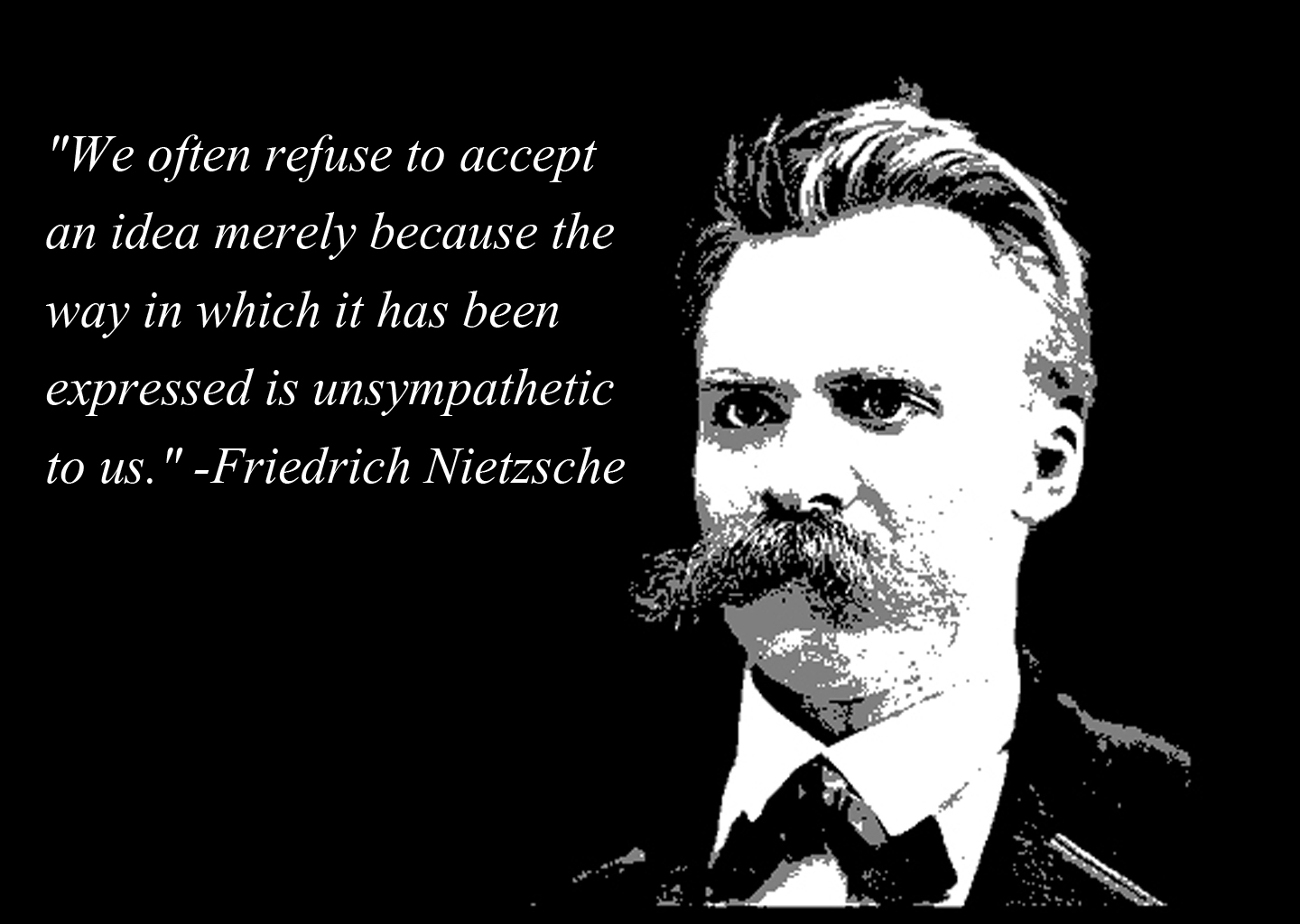
The written inscription on the stone provides a piece of outstanding evidence that verifies the Bible’s accuracy. Mesha, had the stone cut in c. 850 B.C. to relate his numerous conquests and his reacquisition of certain territories that were controlled by Israel. In the over 30-line text (composed of approximately 260 words), Mesha mentioned that Omri was the king of Israel who had oppressed Moab, but then Mesha says he “saw his desire upon” Omri’s son and upon “his house.” Mesha wrote:

I (am) Mesha, son of Chemosh-[…], king of Moab, the Dibonite—my father (had) reigned over Moab thirty years, and I reigned after my father,—(who) made this high place for Chemosh in Qarhoh […] because he saved me from all the kings and caused me to triumph over all my adversaries. As for Omri, king of Israel, he humbled Moab many years (lit., days), for Chemosh was angry at his land. And his son followed him and he also said, “I will humble Moab.” In my time he spoke (thus), but I have triumphed over him and over his house, while Israel hath perished forever (Pritchard, 1958a, p. 209).

The Mesha stele cites Omri as the king of Israel, just as 1 Kings 16:21-28 indicates. Furthermore, it mentions Ahab, Omri’s son, in close connection with the Moabites, as does 2 Kings 3:4-6. In addition, both the stele and 2 Kings 3:4-6 list Mesha as King of Moab. Later in the inscription, the stele further names the Israelite tribe of Gad, and the Israelite God, Yahweh. While the references to the Israelite kings are quite notable in and of themselves, Pritchard has pointed out that this reference to Yahweh is one of the few that have been found outside of Palestine proper (1958b, p. 106).

Another important feature of the Moabite stone is the fact that it “gave the solution to a question that had gone unanswered for centuries.” The biblical record chronicles the Moabite subjugation under King David and King Solomon, and how the Moabites broke free at the beginning of the divided kingdom. However, the Bible also mentions (2 Kings 3:4) that Ahab was receiving tribute from Moab. As Alfred Hoerth has remarked: “Nowhere does the Bible state how or when Moab was reclaimed, for Ahab to be receiving such tribute. The Moabite Stone provides that information, telling, as it does, of Omri’s conquest from the Moabite point of view” (1998, p. 310).

From the end of the quoted portion of the Mesha Inscription (“while Israel hath perished forever”), it is obvious that Mesha exaggerated the efficacy of his conquest—a common practice among ancient kings. Pritchard noted that historians agree that “the Moabite chroniclers tended generally, and quite understandably, to ignore their own losses and setbacks” (1958b, p. 106). Free and Vos document the works of John D. Davies and S.L. Caiger, which offer a harmonization of the Moabite text with the biblical record. Davies, formerly of the Princeton University Seminary, accurately observed: “Mesha is in no wise contradicting, but only unintentionally supplementing the Hebrew account” (as quoted in Free and Vos, 1992, p. 161).

As a further point of interest, French scholar André LeMaire, in an extensive article in Biblical Archaeology Review, “identified the reading of the name David in a formerly unreadable line, ‘House of D…,’ on the Mesha Stele (or Moabite Stone)” [Price, 1997, p. 171; see also LeMaire, 1994, pp. 30-37]. Whether or not this identification is accurate, has yet to be verified by scholarly consensus. Even liberal scholars Finkelstein and Silberman, however, acknowledged LaMaire’s identification, along with the Tel Dan inscription documenting the House of David, and concluded: “Thus, the house of David was known throughout the region; this clearly validates the biblical description of a figure named David becoming the founder of the dynasty of Judahite kings in Jerusalem” (2001, p. 129).

Taken as a whole, the Moabite stone remains one of the most impressive pieces of evidence verifying the historical accuracy of the Old Testament. And, although this find has been around almost 150 years, it “still speaks” to us today (Hebrews 11:4).

Cyrus Cylinder

THE CYRUS CYLINDER

Cyrus, King of the Medo-Persian Empire, is among the most important foreign rulers of the Israelite nation. In fact, many Old Testament prophecies revolve around this monarch. The prophet Isaiah documented that the Babylonian Empire would fall to the Medes and the Persians (Isaiah 13; 21:1-10). Not only did Isaiah detail the particular empire to which the Babylonians would fall, but he also called Cyrus by name (Isaiah 44:28; 45:1-5). Amazingly, Isaiah’s prophecy was made roughly 150 years before Cyrus was born(Isaiah prophesied in about 700 B.C.; Cyrus took the city of Babylon in 539 B.C.). To add to Cyrus’ significance, Isaiah predicted that Cyrus would act as the Lord’s “shepherd.” In fact, Isaiah recorded these words of the Lord concerning Cyrus: “And he shall perform all My pleasure, even saying to Jerusalem, ‘You shall be built,’ and to the temple, ‘Your foundation shall be laid’ ” (Isaiah 44:28).

In 1879, Hormoz Rasam found a small clay cylinder (about nine inches long, and now residing in the British Museum) in the ancient city of Babylon. Upon the clay cylinder, King Cyrus had inscribed, among other things, his victory over the city of Babylon and his policy toward the nations he had captured, as well as his policy toward their various gods and religions. Price recorded a translation of a segment of the cuneiform text found on the cylinder:

…I returned to [these] sacred cities on the other side of the Tigris, the sanctuaries of which have been in ruins for a long time, the images which [used] to live therein and established for them permanent sanctuaries. I [also] gathered all their [former] inhabitants and returned [to them] their habitations. Furthermore, I resettled upon the command of Marduk the great lord, all the gods of Sumer and Akkad whom Nabonidus has brought into Babylon to the anger of the lord of the gods, unharmed, in their [former] chapels, the places which made them happy. May all the gods who I have resettled in their sacred cities ask daily Bel and Nebo for long life for me and may they recommend me…to Marduk, my lord, may they say thus: Cyrus, the king who worships you and Cambyses, his son, […] all of them I settled in a peaceful place (pp. 251-252).

The policy, often hailed as Cyrus’ declaration of human rights, coincides with the biblical account of the ruler’s actions, in which Cyrus decreed that the temple in Jerusalem should be rebuilt, and that all the exiled Israelites who wished to join in the venture had his permission and blessing to do so (Ezra 1:1-11). The little nine-inch-long clay cylinder stands as impressive testimony—along with several other archaeological finds—to the historical accuracy of the biblical text.

CONCLUSION

The archaeological evidence presented in this article that confirms biblical history is, in truth, only a tiny fraction of the evidence that could be amassed along these lines. In fact, volumes of hundreds of pages each have been produced on such matters, and with every new find comes additional information that will fill archaeology texts for decades to come. The more we uncover the past, the more we discover the truth that the Bible is the most trustworthy, historically accurate document ever produced. As the poet John Greenleaf Whittier once wrote:

We search the world for truth; we cull the good, the pure, the beautiful, from all the old flower fields of the soul; and, weary seekers of the best, we come back laden from our quest, to find that all the sages said is in the Book our mothers read.

REFERENCES

Dever, William (2001), What did the Bible Writers Know and When did They Know It? (Grand Rapids, MI: Eerdmans).

Edersheim, Albert (no date), The Bible History—Old Testament, Book VI (Grand Rapids, MI: Eerdmans).

Finkelstein, Israel and Neil Silberman (2001), The Bible Unearthed (New York: Simon & Schuster).

Free, Joseph P. and Howard F. Vos (1992), Archaeology and Bible History (Grand Rapids, MI: Zondervan).

Hanson, K.C. (2002), Sennacherib Prism, [On-line], URL: http://www.kchanson.com/ANCDOCS/meso/sennprism1.html.

Hoerth, Alfred J. (1998), Archaeology and the Old Testament (Grand Rapids, MI: Baker).

Jacobs, Joseph and J. Frederick McCurdy (2002), “Moabite Stone,” Jewish Encyclopedia.com,[On-line], URL: http://www.jewishencyclopedia.com/view.jsp?artid=680&letter=M.

King, Philip J. and Lawrence E. Stager (2001), Life in Biblical Israel (in the Library of Ancient Israelseries), ed. Douglas A. Knight (Louisville, KY: Westminster/John Knox Press).

Laughlin, John C.H. (2000), Archaeology and the Bible (New York: Routledge).

LeMaire, André (1994), “House of David Restored in Moabite Inscription,” Biblical Archaeology Review, 20[3]:30-37, May/June.

Luckenbill, Daniel D. (1989), Ancient Records of Assyria and Babylon (London: Histories and Mysteries of Man Ltd.).

Mazar, Amihai (1992), Archaeology of the Land of the Bible (New York: Doubleday).

Moorey, P.R.S. (1991), A Century of Biblical Archaeology (Louisville, KY: Westminster/John Knox Press).

Negev, Avraham and Shimon Gibson (2001), Archaeological Encyclopedia of the Holy Land (New York: Continuum).

Price, Randall (1997), The Stones Cry Out (Eugene, OR: Harvest House).

Pritchard, James B., ed. (1958a), The Ancient Near East: An Anthology of Texts and Pictures(Princeton, NJ: Princeton University Press).

Pritchard, James B. (1958b), Archaeology and the Old Testament (Princeton, NJ: Princeton University Press).

Shanks, Hershel (1987), “Jeremiah’s Scribe and Confidant Speaks from a Hoard of Clay Bullae,” Biblical Archaeology Review, 13[5]:58-65, September/October.

Shanks, Hershel (1995), Jerusalem: An Archaeological Biography (New York: Random House).

Shanks, Hershel (1996), “Fingerprint of Jeremiah’s Scribe,” Biblical Archaeology Review, 22[2]:36-38, March/April.

Stern, Ephraim (2001), Archaeology and the Land of the Bible: The Assyrian, Babylonian, and Persian Periods (732-332 B.C.E.) (New York: Doubleday).

_____________

The answer to finding out more about God is found in putting your faith and trust in Jesus Christ. The Bible is true from cover to cover and can be trusted. Please consider taking time to read Isaiah chapter 53 and if you have any interest then watch the You Tube clip “The Biography of the King” by Adrian Rogers which discusses that chapter in depth.

Is the Bible historically accurate? Here are some of the posts I have done in the past on the subject: 1. The Babylonian Chronicleof Nebuchadnezzars Siege of Jerusalem2. Hezekiah’s Siloam Tunnel Inscription. 3. Taylor Prism (Sennacherib Hexagonal Prism)4. Biblical Cities Attested Archaeologically. 5. The Discovery of the Hittites6.Shishak Smiting His Captives7. Moabite Stone8Black Obelisk of Shalmaneser III9A Verification of places in Gospel of John and Book of Acts., 9B Discovery of Ebla Tablets10. Cyrus Cylinder11. Puru “The lot of Yahali” 9th Century B.C.E.12. The Uzziah Tablet Inscription13. The Pilate Inscription14. Caiaphas Ossuary14 B Pontius Pilate Part 214c. Three greatest American Archaeologists moved to accept Bible’s accuracy through archaeology.

Below is a piece of that evidence given by Francis Schaeffer concerning the accuracy of the Bible.

TRUTH AND HISTORY (chapter 5 of WHATEVER HAPPENED TO THE HUMAN RACE?)

In the previous chapter we saw that the Bible gives us the explanation for the existence of the universe and its form and for the mannishness of man. Or, to reverse this, we came to see that the universe and its form and the mannishness of man are a testimony to the truth of the Bible. In this chapter we will consider a third testimony: the Bible’s openness to verification by historical study.

Christianity involves history. To say only that is already to have said something remarkable, because it separates the Judeo-Christian world-view from almost all other religious thought. It is rooted in history.

The Bible tells us how God communicated with man in history. For example, God revealed Himself to Abraham at a point in time and at a particular geographical place. He did likewise with Moses, David, Isaiah, Daniel and so on. The implications of this are extremely important to us. Because the truth God communicated in the Bible is so tied up with the flow of human events, it is possible by historical study to confirm some of the historical details.

It is remarkable that this possibility exists. Compare the information we have from other continents of that period. We know comparatively little about what happened in Africa or South America or China or Russia or even Europe. We see beautiful remains of temples and burial places, cult figures, utensils, and so forth, but there is not much actual “history” that can be reconstructed, at least not much when compared to that which is possible in the Middle East.

When we look at the material which has been discovered from the Nile to the Euphrates that derives from the 2500-year span before Christ, we are in a completely different situation from that in regard to South America or Asia. The kings of Egypt and Assyria built thousands of monuments commemorating their victories and recounting their different exploits. Whole libraries have been discovered from places like Nuzu and Mari and most recently at Elba, which give hundreds of thousands of texts relating to the historical details of their time. It is within this geographical area that the Bible is set. So it is possible to find material which bears upon what the Bible tells us.

The Bible purports to give us information on history. Is the history accurate? The more we understand about the Middle East between 2500 B.C. and A.D. 100, the more confident we can be that the information in the Bible is reliable, even when it speaks about the simple things of time and place.

(This material below is under footnote #94)

The site of the biblical city called Lachish is about thirty miles southwest of Jerusalem. This city is referred to on a number of occasions in the Old Testament. Imagine a busy city with high walls surrounding it, and a gate in front that is the only entrance to the city. We know so much about Lachish from archaeological studies that a reconstruction of the whole city has been made in detail. This can be seen at the British Museum in the Lachish Room in the Assyrian section.

There is also a picture made by artists in the eighth century before Christ, the Lachish Relief, which was discovered in the city of Nineveh in the ancient Assyria. In this picture we can see the Jewish inhabitants of Lachish surrendering to Sennacherib, the king of Assyria. The details in the picture and the Assyrian writing on it give the Assyrian side of what the Bible tells us in Second Kings:

2 Kings 18:13-16

New American Standard Bible (NASB)

13 Now in the fourteenth year of King Hezekiah, Sennacherib king of Assyria came up against all the fortified cities of Judah and seized them. 14 Then Hezekiah king of Judah sent to the king of Assyria at Lachish, saying, “I have done wrong. Withdraw from me; whatever you impose on me I will bear.” So the king of Assyria required of Hezekiah king of Judah three hundred talents of silver and thirty talents of gold. 15 Hezekiah gave him all the silver which was found in the house of the Lord, and in the treasuries of the king’s house. 16 At that time Hezekiah cut off the gold from the doors of the temple of the Lord, and from the doorposts which Hezekiah king of Judah had overlaid, and gave it to the king of Assyria.

________

We should notice two things about this. First, this is a real-life situation–a real siege of a real city with real people on both sides of the war–and it happened at a particular date in history, near the turn of the eighth century B.C. Second, the two accounts of this incident in 701 B.C. (the account from the Bible and the Assyrian account from Nineveh) do not contradict, but rather confirm each other. The history of Lachish itself is not so important for us, but some of its smaller historical details.

_____________


Related posts:

FRANCIS SCHAEFFER ANALYZES ART AND CULTURE Part 41 Sarvepalli Radhakrishnan (Featured artist is Marina Abramović)

FRANCIS SCHAEFFER ANALYZES ART AND CULTURE Part 40 Timothy Leary (Featured artist is Margaret Keane)

FRANCIS SCHAEFFER ANALYZES ART AND CULTURE Part 39 Tom Wolfe (Featured artist is Richard Serra)

FRANCIS SCHAEFFER ANALYZES ART AND CULTURE Part 38 Woody Allen and Albert Camus “There is but one truly serious philosophical problem, and that is suicide” (Feature on artist Hamish Fulton Photographer )

FRANCIS SCHAEFFER ANALYZES ART AND CULTURE Part 37 Mahatma Gandhi and “Relieving the Tension in the East” (Feature on artist Luc Tuymans)

FRANCIS SCHAEFFER ANALYZES ART AND CULTURE Part 36 Julian Huxley:”God does not in fact exist, but act as if He does!” (Feature on artist Barry McGee)

FRANCIS SCHAEFFER ANALYZES ART AND CULTURE Part 35 Robert M. Pirsig (Feature on artist Kerry James Marshall)

FRANCIS SCHAEFFER ANALYZES ART AND CULTURE Part 34 Aleksandr Solzhenitsyn (Feature on artist Shahzia Sikander)

FRANCIS SCHAEFFER ANALYZES ART AND CULTURE Part 33 Aldous Huxley (Feature on artist Matthew Barney )

FRANCIS SCHAEFFER ANALYZES ART AND CULTURE Part 32 Steven Weinberg and Woody Allen and “The Meaningless of All Things” (Feature on photographer Martin Karplus )

FRANCIS SCHAEFFER ANALYZES ART AND CULTURE Part 31 David Hume and “How do we know we know?” (Feature on artist William Pope L. )

FRANCIS SCHAEFFER ANALYZES ART AND CULTURE Part 30 Rene Descartes and “How do we know we know?” (Feature on artist Olafur Eliasson)

FRANCIS SCHAEFFER ANALYZES ART AND CULTURE Part 29 W.H. Thorpe and “The Search for an Adequate World-View: A Question of Method” (Feature on artist Jeff Koons)

FRANCIS SCHAEFFER ANALYZES ART AND CULTURE Part 28 Woody Allen and “The Mannishness of Man” (Feature on artist Ryan Gander)

FRANCIS SCHAEFFER ANALYZES ART AND CULTURE Part 27 Jurgen Habermas (Featured artist is Hiroshi Sugimoto)

FRANCIS SCHAEFFER ANALYZES ART AND CULTURE Part 26 Bettina Aptheker (Featured artist is Krzysztof Wodiczko)

FRANCIS SCHAEFFER ANALYZES ART AND CULTURE Part 25 BOB DYLAN (Part C) Francis Schaeffer comments on Bob Dylan’s song “Ballad of a Thin Man” and the disconnect between the young generation of the 60’s and their parents’ generation (Feature on artist Fred Wilson)

FRANCIS SCHAEFFER ANALYZES ART AND CULTURE Part 24 BOB DYLAN (Part B) Francis Schaeffer comments on Bob Dylan’s words from HIGHWAY 61 REVISITED!! (Feature on artist Susan Rothenberg)

FRANCIS SCHAEFFER ANALYZES ART AND CULTURE Part 23 BOB DYLAN (Part A) (Feature on artist Josiah McElheny)Francis Schaeffer on the proper place of rebellion with comments by Bob Dylan and Samuel Rutherford

FRANCIS SCHAEFFER ANALYZES ART AND CULTURE Part 22 “The School of Athens by Raphael” (Feature on the artist Sally Mann)

FRANCIS SCHAEFFER ANALYZES ART AND CULTURE Part 21 William B. Provine (Feature on artist Andrea Zittel)

FRANCIS SCHAEFFER ANALYZES ART AND CULTURE Part 20 Woody Allen and Materialistic Humanism: The World-View of Our Era (Feature on artist Ida Applebroog)

FRANCIS SCHAEFFER ANALYZES ART AND CULTURE Part 19 Movie Director Luis Bunuel (Feature on artist Oliver Herring)

FRANCIS SCHAEFFER ANALYZES ART AND CULTURE Part 18 “Michelangelo’s DAVID is the statement of what humanistic man saw himself as being tomorrow” (Feature on artist Paul McCarthy)

FRANCIS SCHAEFFER ANALYZES ART AND CULTURE Part 17 Francis Schaeffer discusses quotes of Andy Warhol from “The Observer June 12, 1966″ Part C (Feature on artist David Hockney plus many pictures of Warhol with famous friends)

FRANCIS SCHAEFFER ANALYZES ART AND CULTURE Part 16 Francis Schaeffer discusses quotes of Andy Warhol from “The Observer June 12, 1966″ Part B (Feature on artist James Rosenquist plus many pictures of Warhol with famous friends)

FRANCIS SCHAEFFER ANALYZES ART AND CULTURE Part 15 Francis Schaeffer discusses quotes of Andy Warhol from “The Observer June 12, 1966″ Part A (Feature on artist Robert Indiana plus many pictures of Warhol with famous friends)

FRANCIS SCHAEFFER ANALYZES ART AND CULTURE Part 14 David Friedrich Strauss (Feature on artist Roni Horn )

FRANCIS SCHAEFFER ANALYZES ART AND CULTURE Part 13 Jacob Bronowski and Materialistic Humanism: The World-View of Our Era (Feature on artist Ellen Gallagher )

FRANCIS SCHAEFFER ANALYZES ART AND CULTURE Part 12 H.J.Blackham and Materialistic Humanism: The World-View of Our Era (Feature on artist Arturo Herrera)

FRANCIS SCHAEFFER ANALYZES ART AND CULTURE Part 11 Thomas Aquinas and his Effect on Art and HOW SHOULD WE THEN LIVE? Episode 2: THE MIDDLES AGES (Feature on artist Tony Oursler )

FRANCIS SCHAEFFER ANALYZES ART AND CULTURE Part 10 David Douglas Duncan (Feature on artist Georges Rouault )

FRANCIS SCHAEFFER ANALYZES ART AND CULTURE Part 9 Jasper Johns (Feature on artist Cai Guo-Qiang )

FRANCIS SCHAEFFER ANALYZES ART AND CULTURE Part 8 “The Last Year at Marienbad” by Alain Resnais (Feature on artist Richard Tuttle and his return to the faith of his youth)

FRANCIS SCHAEFFER ANALYZES ART AND CULTURE Part 7 Jean Paul Sartre (Feature on artist David Hooker )

FRANCIS SCHAEFFER ANALYZES ART AND CULTURE Part 6 The Adoration of the Lamb by Jan Van Eyck which was saved by MONUMENT MEN IN WW2 (Feature on artist Makoto Fujimura)

FRANCIS SCHAEFFER ANALYZES ART AND CULTURE Part 5 John Cage (Feature on artist Gerhard Richter)

FRANCIS SCHAEFFER ANALYZES ART AND CULTURE Part 4 ( Schaeffer and H.R. Rookmaaker worked together well!!! (Feature on artist Mike Kelley Part B )

FRANCIS SCHAEFFER ANALYZES ART AND CULTURE Part 3 PAUL GAUGUIN’S 3 QUESTIONS: “Where do we come from? What art we? Where are we going? and his conclusion was a suicide attempt” (Feature on artist Mike Kelley Part A)

FRANCIS SCHAEFFER ANALYZES ART AND CULTURE Part 2 “A look at how modern art was born by discussing Monet, Renoir, Pissaro, Sisley, Degas,Cezanne, Van Gogh, Gauguin, Seurat, and Picasso” (Feature on artist Peter Howson)

FRANCIS SCHAEFFER ANALYZES ART AND CULTURE Part 1 HOW SHOULD WE THEN LIVE? “The Roman Age” (Feature on artist Tracey Emin)

_________________

“Schaeffer Sunday” Antony Flew’s journey from Atheism to Theism

During the 1990′s I actually made it a practice to write famous atheists and scientists that were mentioned by Adrian Rogers and Francis Schaeffer and challenge them with the evidence for the Bible’s historicity and the claims of the gospel. Usually I would send them a cassette tape of Adrian Rogers’ messages “6 reasons I know the Bible is True,” “The Final Judgement,” “Who is Jesus?” and the message by Bill Elliff, “How to get a pure heart.” I would also send them printed material from the works of Francis Schaeffer and a personal apologetic letter from me addressing some of the issues in their work.

The famous atheist Antony Flew was actually took the time to listen to several of these messages and he wrote me back in the mid 1990′s several times.

Discussion (1 of 3): Antony Flew, N.T. Wright, and Gary Habermas

Uploaded on Sep 22, 2010

A discussion with Antony Flew, N.T. Wright, and Gary Habermas. This was held at Westminster Chapel March, 2008

______________________

Sunday, January 13, 2013

Atheism to Theism | Antony Flew

A Discussion between Antony Flew and Gary HabermasFrom the E.P.S.Antony Flew
Department of Philosophy
University of Reading
Reading, England

Gary Habermas
Department of Philosophy and Theology
Liberty University
Lynchburg, Virginia

Antony Flew and Gary Habermas met in February 1985 in Dallas, Texas. The occasion was a series of debates between atheists and theists, featuring many influential philosophers, scientists, and other scholars.1

A short time later, in May 1985, Flew and Habermas debated at Liberty University before a large audience. The topic that night was the resurrection of Jesus.2 Although Flew was arguably the world’s foremost philosophical atheist, he had intriguingly also earned the distinction of being one of the chief philosophical commentators on the topic of miracles.3 Habermas specialized on the subject of Jesus’ resurrection.4 Thus, the ensuing dialogue on the historical evidence for the central Christian claim was a natural outgrowth of their research.

Over the next 20 years, Flew and Habermas developed a friendship, writing dozens of letters, talking often, and dialoguing twice more on the resurrection. In April, 2000 they participated in a live debate on the Inspiration Television Network, moderated by John Ankerberg.5 In January, 2003 they again dialogued on the resurrection atCalifornia Polytechnic State University – San Luis Obispo.6

During a couple of telephone discussions shortly after their last dialogue, Flew explained to Habermas that he was considering becoming a theist. While Flew did not change his position at that time, he concluded that certain philosophical and scientific considerations were causing him to do some serious rethinking. He characterized his position as that of atheism standing in tension with several huge question marks.

Then, a year later, in January 2004, Flew informed Habermas that he had indeed become a theist. While still rejecting the concept of special revelation, whether Christian, Jewish or Islamic, nonetheless he had concluded that theism was true. In Flew’s words, he simply “had to go where the evidence leads.”7

The following interview took place in early 2004… This nontechnical discussion sought to engage Flew over the course of several topics that reflect his move from atheism to theism.8 The chief purpose was not to pursue the details of any particular issue, so we bypassed many avenues that would have presented a plethora of other intriguing questions and responses. These were often tantalizingly ignored, left to ripen for another discussion. Neither did we try to persuade each another of alternate positions.

Our singular purpose was simply to explore and report Flew’s new position, allowing him to explain various aspects of his pilgrimage. We thought that this in itself was a worthy goal. Along the way, an additional benefit emerged, as Flew reminisced about various moments from his childhood, graduate studies, and career.

Habermas: Tony, you recently told me that you have come to believe in the existence of God. Would you comment on that?

Flew: Well, I don’t believe in the God of any revelatory system, although I am open to that. But it seems to me that the case for an Aristotelian God who has the characteristics of power and also intelligence, is now much stronger than it ever was before. And it was from Aristotle that Aquinas drew the materials for producing his Five Ways of, hopefully, proving the existence of his God. Aquinas took them, reasonably enough, to prove, if they proved anything, the existence of the God of the Christian Revelation. But Aristotle himself never produced a definition of the word “God,” which is a curious fact. But this concept still led to the basic outline of the Five Ways. It seems to me, that from the existence of Aristotle’s God, you can’t infer anything about human behaviour. So what Aristotle had to say about justice (justice, of course, as conceived by the Founding Fathers of the American Republic as opposed to the “social” justice of John Rawls9) was very much a human idea, and he thought that this idea of justice was what ought to govern the behaviour of individual human beings in their relations with others.

Habermas: Once you mentioned to me that your view might be called Deism. Do you think that would be a fair designation?

Flew: Yes, absolutely right. What Deists, such as the Mr. Jefferson who drafted the American Declaration of Independence, believed was that, while Reason, mainly in the form of Arguments to Design, assures us that there is a God, there is no room either for any supernatural revelation of that God or for any transactions between that God and individual human beings.

Habermas: Then, would you comment on your “openness” to the notion of theistic revelation?

Flew: Yes. I am open to it, but not enthusiastic about potential revelation from God. On the positive side, for example, I am very much impressed with physicist Gerald Schroeder’s comments on Genesis 1.10 That this biblical account might be scientifically accurate raises the possibility that it is revelation.

Habermas: You very kindly noted that our debates and discussions had influenced your move in the direction of theism.11 You mentioned that this initial influence contributed in part to your comment that naturalistic efforts have never succeeded in producing “a plausible conjecture as to how any of these complex molecules might have evolved from simple entities.”12 Then in your recently rewritten introduction to the forthcoming edition of your classic volume God and Philosophy, you say that the original version of that book is now obsolete. You mention a number of trends in theistic argumentation that you find convincing, like Big Bang Cosmology, Fine Tuning, and Intelligent Design arguments. Which arguments for God’s existence did you find most persuasive?

Flew: I think that the most impressive arguments for God’s existence are those that are supported by recent scientific discoveries. I’ve never been much impressed by the Kalam cosmological argument, and I don’t think it has gotten any stronger recently. However, I think the argument to Intelligent Design is enormously stronger than it was when I first met it.

Habermas: So you like arguments such as those that proceed from Big Bang Cosmology and Fine Tuning Arguments?

Flew: Yes.

Discussion (2 of 3): Antony Flew, N.T. Wright, and Gary Habermas

Habermas: So, take C. S. Lewis’s argument for morality as presented in Mere Christianity.13 You didn’t find that to be very impressive?

Flew: No, I didn’t. Perhaps I should mention that, when I was in college, I attended fairly regularly the weekly meetings of C. S. Lewis’s Socratic Club. In all my time at Oxford these meetings were chaired by Lewis. I think he was by far the most powerful of Christian apologists for the sixty or more years following his founding of that club. As late as the 1970s, I used to find that, in the USA, in at least half of the campus bookstores of the universities and liberal art colleges which I visited, there was at least one long shelf devoted to his very various published works.

Habermas: Although you disagreed with him, did you find him to be a very reasonable sort of fellow?

Flew: Oh yes, very much so, an eminently reasonable man.

Habermas: So of the major theistic arguments, such as the Cosmological, Teleological, Moral, and Ontological, the only really impressive ones that you take to be decisive are the scientific forms of teleology?

Flew: Absolutely. It seems to me that Richard Dawkins constantly overlooks the fact that Darwin himself, in the fourteenth chapter of The Origin of Species, pointed out that his whole argument began with a being which already possessed reproductive powers. This is the creature the evolution of which a truly comprehensive theory of evolution must give some account. Darwin himself was well aware that he had not produced such an account. It now seems to me that the findings of more than fifty years of DNA research have provided materials for a new and enormously powerful argument to Design.

Habermas: As I recall, you also refer to this in the new introduction to your God and Philosophy.
Flew: Yes, I do; or, since the book has not yet been published, I will!

Habermas: Since you affirm Aristotle’s concept of God, do you think we can also affirm Aristotle’s implications that the First Cause hence knows all things?
Flew: I suppose we should say this. I’m not at all sure what one should think concerning some of these very fundamental issues. There does seem to be a reason for a First Cause, but I’m not at all sure how much we have to explain here. What idea of God is necessary to provide an explanation of the existence of the Universe and all which is in it?

Habermas: If God is the First Cause, what about omniscience, or omnipotence?

Flew: Well, the First Cause, if there was a First Cause, has very clearly produced everything that is going on. I suppose that does imply creation “in the beginning.”

Habermas: What role might your love for the writings of David Hume play in a discussion about the existence of God? Do you have any new insights on Hume, given your new belief in God?

Flew: No, not really.

Habermas: Do you think Hume ever answers the question of God?

Flew: I think of him as, shall we say, an unbeliever. But it’s interesting to note that he himself was perfectly willing to accept one of the conditions of his appointment, if he had been appointed to a chair of philosophy at the University of Edinburgh. That condition was, roughly speaking, to provide some sort of support and encouragement for people performing prayers and executing other acts of worship. I believe that Hume thought that the institution of religious belief could be, and in his day and place was, socially beneficial.16

I, too, having been brought up as a Methodist, have always been aware of this possible and in many times and places actual benefit of objective religious instruction. It is now several decades since I first tried to draw attention to the danger of relying on a modest amount of compulsory religious instruction in schools to meet the need for moral education, especially in a period of relentlessly declining religious belief. But all such warnings by individuals were, of course, ignored. So we now have in the UK a situation in which any mandatory requirements to instruct pupils in state funded schools in the teachings of the established or any other religion are widely ignored. The only official attempt to construct a secular substitute was vitiated by the inability of the moral philosopher on the relevant government committee to recognize the fundamental difference between justice without prefix or suffix and the “social” justice of John Rawls’s A Theory of Justice.

I must some time send you a copy of the final chapter of my latest and presumably last book, in which I offer a syllabus and a program for moral education in secular schools.17 This is relevant and important for both the US and the UK. To the US because the Supreme Court has utterly misinterpreted the clause in the Constitution about not establishing a religion: misunderstanding it as imposing a ban on all official reference to religion. In the UK any effective program of moral education has to be secular because unbelief is now very widespread.

Habermas: You’ve told me that you have a very high regard for John and Charles Wesley and their traditions. What accounts for your appreciation?

Flew: The greatest thing is their tremendous achievement of creating the Methodist movement mainly among the working class. Methodism made it impossible to build a really substantial Communist Party in Britain and provided the country with a generous supply of men and women of sterling moral character from mainly working class families. Its decline is a substantial part of the explosions both of unwanted motherhood and of crime in recent decades. There is also the tremendous determination shown by John Wesley in spending year after year riding for miles every day, preaching more than seven sermons a week and so on. I have only recently been told of John Wesley’s great controversy against predestination and in favor of the Arminian alternative. Certainly John Wesley was one of my country’s many great sons and daughters. One at least of the others was raised in a Methodist home with a father who was a local preacher.

Habermas: Don’t you attribute some of your appreciations for the Wesleys to your father’s ministry? Haven’t you said that your father was the first non-Anglican to get a doctorate in theology from Oxford University?

Flew: Yes to both questions. Of course it was because my family’s background was that of Methodism. Yes, my father was also President of the Methodist Conference for the usual single year term and he was the Methodist representative of one or two other organizations. He was also concerned for the World Council of Churches. Had my father lived to be active into the early 1970s he would have wanted at least to consider the question of whether the Methodist Church ought not to withdraw from the World Council of Churches. That had by that time apparently been captured by agents of the USSR.36

Habermas: What do you think that Bertrand Russell, J. L. Mackie, and A. J. Ayer would have thought about these theistic developments, had they still been alive today?

Flew: I think Russell certainly would have had to notice these things. I’m sure Mackie would have been interested, too. I never knew Ayer very well, beyond meeting him once or twice.

Habermas: Do you think any of them would have been impressed in the direction of theism? I’m thinking here, for instance, about Russell’s famous comments that God hasn’t produced sufficientevidence of his existence.37

Flew: Consistent with Russell’s comments that you mention, Russell would have regarded these developments as evidence. I think we can be sure that Russell would have been impressed too, precisely because of his comments to which you refer. This would have produced an interesting second dialogue between him and that distinguished Catholic philosopher, Frederick Copleston.

Habermas: In recent years you’ve been called the world’s most influential philosophical atheist. Do you think Russell, Mackie, or Ayer would have been bothered or even angered by your conversion to theism? Or do you think that they would have at least understood your reasons for changing your mind?

Flew: I’m not sure how much any of them knew about Aristotle. But I am almost certain that they never had in mind the idea of a God who was not the God of any revealed religion. But we can be sure that they would have examined these new scientific arguments.

Habermas: C. S. Lewis explained in his autobiography that he moved first from atheism to theism and only later from theism to Christianity. Given your great respect for Christianity, do you think that there is any chance that you might in the end move from theism to Christianity?

Flew: I think it’s very unlikely, due to the problem of evil. But, if it did happen, I think it would be in some eccentric fit and doubtfully orthodox form: regular religious practice perhaps but without belief. If I wanted any sort of future life I should become a Jehovah’s Witness. But some things I am completely confident about. I would never regard Islam with anything but horror and fear because it is fundamentally committed to conquering the world for Islam. It was because the whole of Palestine was part of the Land of Islam that Muslim Arab armies moved in to try to destroy Israel at birth, and why the struggle for the return of the still surviving refugees and their numerous descendents continue to this day.

Habermas: I ask this last question with a smile, Tony. But just think what would happen if one day you were pleasantly disposed toward Christianity and all of a sudden the resurrection of Jesus looked pretty good to you?

Flew: Well, one thing I’ll say in this comparison is that, for goodness sake, Jesus is an enormously attractive charismatic figure, which the Prophet of Islam most emphatically is not.

Discussion (3 of 3): Antony Flew, N.T. Wright, and Gary Habermas

RESPONDING TO HARRY KROTO’S BRILLIANT RENOWNED ACADEMICS!! Part 25 (Dr. Lewis Wolpert, Emeritus Professor of Biology, University College London, DOES SCIENCE GO AGAINST HIS PRO-CHOICE VIEW?)


 Is God a Delusion? – William Lane Craig vs Lewis Wolpert

Published on Apr 30, 2012

Professor Craig debated Professor Wolpert at Central Hall, Westminster, Feb. 28, 2007, with John Humphrys in the chair. Professor Wolpert is Professor of Biology as Applied to Medicine at University College, London and is well known for his atheistic beliefs.

We welcome your comments in the Reasonable Faith forums:
http://www.reasonablefaith.org/forums

http://www.reasonablefaith.org

_________

Dr. Lewis Wolpert pictured below:

 Prof Lewis Wolpert


_________________

On November 21, 2014 I received a letter from Nobel Laureate Harry Kroto and it said:

…Please click on this URL http://vimeo.com/26991975

and you will hear what far smarter people than I have to say on this matter. I agree with them.

Harry Kroto

__________________________

There are 3 videos in this series and they have statements by 150 academics and scientists and I hope to respond to all of them. Wikipedia notes Lewis Wolpert CBE FRS FRSL FMedSci (born 19 October 1929) is South African-born British developmental biologist, author, and broadcaster.

Wolpert was born into a South African Jewish family.[1] He was educated at the University of Witwatersrand (BSc), at Imperial College London, and at King’s College London (PhD). As of 2010 he holds the position of Emeritus Professor of Biology as applied to Medicine in the Department of Anatomy and developmental biology at University College London….In addition to his scientific and research publications, he has written about his own experience of clinical depression in Malignant Sadness: The Anatomy of Depression (1999). He presented three television programmes based on the book and entitled A Living Hell on BBC2. He was made a Fellow of the Royal Society in 1980 and awarded the CBE in 1990. He became a Fellow of the Royal Society of Literature in 1999 and one of the first Fellows of the Academy of Medical Sciences in 1998. He serves as a Vice-President of the British Humanist Association.

_____________________________

In  the second video below in the 64th clip in this series are his words and  my response is below them. 

50 Renowned Academics Speaking About God (Part 1)

Another 50 Renowned Academics Speaking About God (Part 2)

A Further 50 Renowned Academics Speaking About God (Part 3)

I grew up at Bellevue Baptist Church under the leadership of our pastor Adrian Rogers and I read many books by the Evangelical Philosopher Francis Schaeffer and have had the opportunity to contact many of the evolutionists or humanistic academics that they have mentioned in their works. Many of these scholars have taken the time to respond back to me in the last 20 years and some of the names  included are  Ernest Mayr (1904-2005), George Wald (1906-1997), Carl Sagan (1934-1996),  Robert Shapiro (1935-2011), Nicolaas Bloembergen (1920-),  Brian Charlesworth (1945-),  Francisco J. Ayala (1934-) Elliott Sober (1948-), Kevin Padian (1951-), Matt Cartmill (1943-) , Milton Fingerman (1928-), John J. Shea (1969-), , Michael A. Crawford (1938-), Paul Kurtz (1925-2012), Sol Gordon (1923-2008), Albert Ellis (1913-2007), Barbara Marie Tabler (1915-1996), Renate Vambery (1916-2005), Archie J. Bahm (1907-1996), Aron S “Gil” Martin ( 1910-1997), Matthew I. Spetter (1921-2012), H. J. Eysenck (1916-1997), Robert L. Erdmann (1929-2006), Mary Morain (1911-1999), Lloyd Morain (1917-2010),  Warren Allen Smith (1921-), Bette Chambers (1930-),  Gordon Stein (1941-1996) , Milton Friedman (1912-2006), John Hospers (1918-2011), Michael Martin (1932-).Harry Kroto (1939-), Marty E. Martin (1928-), Richard Rubenstein (1924-), James Terry McCollum (1936-), Edward O. WIlson (1929-), Lewis Wolpert (1929), Gerald Holton (1922-),  and  Ray T. Cragun (1976-).

_____________


Lewis Wolpert Quote:

I am not against people being religious. I think it helps you a great deal. I am against religion when it interferes in the lives of other people…If you believe for example that the fertilized egg is really a human being which some people in your religious organizations believe then I am very hostile to you because it is nonsense and this is one of my subjects developmental biology or if you are against contraception for religious reason  then therefore AIDS can become more common. So I am not against people having a belief in God. I do believe that believe is false. Whatever arguments I  give you I have no delusion that I will persuade you to change your minds. 

______________________

Let me give three examples and then I want to move on to what Dr. Wolpert’s real issue is. First, I will  give the example of a former abortionist and an atheist at the time who gave up his lucrative business because of the advance of medical technology. Second, I will tell the story of a personal friend of mine who is a pro-life atheist named Dr. Kevin Henke. Third, I will list the evidence from 4 non christians who are experts in the area of genetics.

Abortionist Bernard Nathanson said it was the technology of the ultra-sound that caused him to shut down his abortion clinics since he released that these unborn babies were feeling pain. At the time Dr. Nathanson was a confirmed atheist. In his book he noted, “I worked hard to make abortion legal, affordable, and available on demand. In 1968, I was one of the three founders of the National Abortion Rights Action League. I ran the largest abortion clinic …and oversaw tens of thousands of abortions. I have performed thousands myself.” p. 5.

(Former Abortionist Bernard Nathanson pictured above.)

The Hand of God-Selected Quotes from Bernard N. Nathanson, M.D.,

“Embryos are Dependent Creatures. So are fetuses. So are we all dependent; on the kindness or tolerance of others, and on various biological and medical devices…Surely, dependency is not a measure of moral standing…” p. 128. The Silent Scream. By 1984, however, I had begun to ask myself more questions about abortion: What actually goes on in an abortion? I had done many, but abortion is a blind procedure. The doctor does not see what he is doing. He puts an instrument into a uterus and he turns on a motor, and a suction machines goes on and something is vacuumed out; it ends up as a little pile of meat in a gauze bag, I wanted to know what happened, so in 1984 I said to a friend of mine, who was doing fifteen or maybe twenty abortions a day, “Look, do me a favor, Jay. Next Saturday, when you are doing all these abortions, put an ultrasound device on the mother and tape it for me.”He did, and when he looked at the tapes with me in an editing studio, he was so affected that he never did another abortion…The tapes were amazing…weren’t of very good quality… and began to show it pro-life gatherings… p. 141Nathanson then recounts Silent Scream, the movie:

I was speaking at pro-life meetings around the country on weekends, and the response to the tape was so intense and dramatic that finally I was approached by a man named Don Smith, who wanted to make my tape into a film. I agreed that it would be a good idea. That is how The Silent Scream, which generated so much furor, came to be made. We showed it for the first time in Fort Lauderdale, Florida, on January 3, 1985. The reaction was instantaneous. Everybody was up in arms because The Silent Scream represented an enormous threat to the abortion forces and because it escalated the war (it’s not really a debate–we don’t debate each other; we scream at one another). For the first time, we had the technology and they had nothing. p.141 Emphasis mine.

My good friend Dr. Kevin R. Henke is a scientist and also an atheistic evolutionist. I had a lot of discussions with Kevin over religious views. I remember going over John 7:17 with him one day. It says:

John 7:17 (Amplified Bible)

17If any man desires to do His will (God’s pleasure), he will know (have the needed illumination to recognize, and can tell for himself) whether the teaching is from God or whether I am speaking from Myself and of My own accord and on My own authority.

I challenged Kevin to read a chapter a day of the Book of John and pray to God and ask God, “Dear God, if you are there then reveal yourself to me, and I pledge to serve you the rest of my life.”

Kevin did that and he even wrote down the thoughts that came to his mind and sent it to me and these thoughts filled a notebook.

Kevin did not become a Christian, but I am still praying for him. I do respect Kevin because he is an honest man. Interestingly enough he  told me that he was pro-life because the unborn baby has all the genetic code at  the time of conception that they will have for the rest of their life. Below are some other comments by other scientists:

Dr. Hymie Gordon (Mayo Clinic): “By all criteria of modern molecular biology, life is present from the moment of conception.”

Dr. Micheline Matthews-Roth (Harvard University Medical School): “It is scientifically correct to say that an individual human life begins at conception.”

Dr. Alfred Bongioanni (University of Pennsylvania): “I have learned from my earliest medical education that human life begins at the time of conception.”

Dr. Jerome LeJeune, “the Father of Modern Genetics” (University of Descartes, Paris): “To accept the fact that after fertilization has taken place a new human has come into being is no longer a matter of taste or opinion . . . it is plain experimental evidence.”

Science Matters #2: Former supermodel Kathy Ireland tells Mike Huckabee about how she became pro-life after reading what the science books have to say.

Back on April 27, 2009 Fox News ran a story by Hollie McKay(Supermodel Kathy Ireland Lashes Out Against Pro Choice,”) on Jill Ireland.

It’s no secret that the majority of Hollywood stars are strong advocates for a woman’s right to choose whether or not she wants to terminate a pregnancy, however former “Sports Illustrated” supermodel-turned-entrepreneur-turned-author Kathy Ireland has gone against the grain of the glitterati and spoken out against abortion.

“My entire life I was pro-choice — who was I to tell another woman what she could or couldn’t do with her body? But when I was 18, I became a Christian and I dove into the medical books, I dove into science,” Ireland told Tarts while promoting her insightful new book “Real Solutions for Busy Mom: Your Guide to Success and Sanity.”

“What I read was astounding and I learned that at the moment of conception a new life comes into being. The complete genetic blueprint is there, the DNA is determined, the blood type is determined, the sex is determined, the unique set of fingerprints that nobody has had or ever will have is already there.”

However Ireland admitted that she did everything she could to avoid becoming a believer in pro-life.

“I called Planned Parenthood and begged them to give me their best argument and all they could come up with that it is really just a clump of cells and if you get it early enough it doesn’t even look like a baby. Well, we’re all clumps of cells and the unborn does not look like a baby the same way the baby does not look like a teenager, a teenager does not look like a senior citizen. That unborn baby looks exactly the way human beings are supposed to look at that stage of development. It doesn’t suddenly become a human being at a certain point in time,” Ireland argued. “I’ve also asked leading scientists across our country to please show me some shred of evidence that the unborn is not a human being. I didn’t want to be pro-life, but this is not a woman’s rights issue but a human rights issue.”

What is the real problem that Dr. Lewis Wolpert has? Unlike others who have examined the evidence he just outright dismisses it.

For instance, in an email dated 6-25-14 I sent him this information about the accuracy of the Bible:

Dr. Wolpert, you want some evidence that indicates that the Bible is true? Here is a good place to start and that is taking a closer look at the archaeology of the Old Testament times. Is the Bible historically accurate? Here are some of the posts I have done in the past on the subject: 1. The Babylonian Chronicleof Nebuchadnezzars Siege of Jerusalem2. Hezekiah’s Siloam Tunnel Inscription. 3. Taylor Prism (Sennacherib Hexagonal Prism)4. Biblical Cities Attested Archaeologically. 5. The Discovery of the Hittites6.Shishak Smiting His Captives7. Moabite Stone8Black Obelisk of Shalmaneser III9A Verification of places in Gospel of John and Book of Acts., 9B Discovery of Ebla Tablets10. Cyrus Cylinder11. Puru “The lot of Yahali” 9th Century B.C.E.12. The Uzziah Tablet Inscription13. The Pilate Inscription14. Caiaphas Ossuary14 B Pontius Pilate Part 214c. Three greatest American Archaeologists moved to accept Bible’s accuracy through archaeology.

I sent Dr. Wolpert a letter  that included many scriptures from the Old Testament that showed that the prophets predicted  the Jews would be brought back from all over the world to rebirth the country of Israel again.

Is this good evidence to show there is a God behind it all?

 First, isn’t it worth noting that the Old Testament predicted that the Jews would regather from all over the world and form a new reborn nation of Israel. Second, it was also predicted that the nation of Israel would become a stumbling block to the whole world. Third, it was predicted that the Hebrew language would be used again as the Jews first language even though we know in 1948 that Hebrew at that time was a dead language!!!Fourth, it was predicted that the Jews would never again be removed from their land.

HAVE THESE NOT IN FACT HAPPENED? Yet in the article below Dr. Wolpert insists, ” God doesn’t exist. He hasn’t done anything in the last 2,000 years.”

_________________


Impossible Things

Six Impossible Things Before Breakfast

Peter S. Williams

Cell biologist Lewis Wolpert has recently attained a measure of notoriety with the British public, primarily through the publication of his book Six Impossible Things Before Breakfast: The Evolutionary Origins of Belief (Faber, 2006). He also participated in a recent public debate on the existence of God with Christian philosopher William Lane Craig. The debate was hosted by the well-known journalist John Humphrys, and reported by him in a major article for the Daily Telegraph.1

Professor Wolpert, who is a vice president of the British Humanist Association, admits, ‘I stopped believing in God when I was fifteen or sixteen because he didn’t give me what I asked for’2 but he has subsequently and repeatedly justified his atheism by asserting that, ‘There is absolutely no evidence for the existence of God.’3

Lewis Wolpert’s Presumption of Atheism and the ‘Insufficient Evidence’ Objection to Belief in God

Problems with the presumption of atheism

Relying on the ‘Insufficient Evidence’ objection is a risky gambit for the atheist. As philosopher William Rowe observes, ‘To fail to provide any arguments for the non-existence of God is … to virtually concede the debate to the person who at least gives some arguments, however weak, in behalf of the position that God exists.’4Arguing for atheism on the basis that there is insufficient evidence for belief in God (and that, in the absence of such evidence, the benefit of the doubt should be given to atheism rather than theism or agnosticism) is always vulnerable to the possibility that new evidence – or a better formulation and appreciation of old evidence – might turn up. Such atheism cannot afford to be dogmatic, for ‘even if the theist could not muster good arguments for God’s existence, atheism still would not be shown to be true.’5 As atheist philosopher Kai Nielsen admits: ‘To show that an argument is invalid or unsound is not to show that the conclusion of the argument is false.… All the proofs of God’s existence may fail, but it still may be the case that God exists.’6

According to Robert A. Harris, ‘a common sense look at the world, with all its beauty, apparent design, meaning, and vibrancy, would seem to predispose a neutral observer to presume that God exists unless good evidence for his non-existence could be brought to bear … The fact that materialists often struggle with this issue, working to explain away the design of the creation, for example, would seem to back up this claim.’7 Nevertheless, British humanist Richard Norman asserts that, ‘the onus is on those who believe in a god to provide reasons for that belief. If they cannot come up with good reasons, then we should reject the belief.’8It was another British philosopher, Antony Flew (who recently became a theist9), who most famously urged that the ‘onus of proof must lie upon the theist’,10 and that unless compelling reasons for God’s existence could be given there should be a ‘presumption of atheism’. However, by ‘atheism’ Flew meant merely ‘non-theism’ – a non-standard definition of ‘atheism’ that includes agnosticism but excludes atheism as commonly understood. The presumption of atheism is, therefore, not particularly interesting unless (as with Richard Norman explicitly and Lewis Wolpert implicitly) it really is the presumption of atheism rather than the presumption of agnosticism. However, the former is far harder to defend than the latter. Paul Copan writes:

the ‘presumption of atheism’ demonstrates a rigging of the rules of philosophical debate in order to play into the hands of the atheist, who himself makes a truth claim. Alvin Plantinga correctly argues that the atheist does not treat the statements ‘God exists’ and ‘God does not exist’ in the same manner. The atheist assumes that if one has no evidence for God’s existence, then one is obligated to believe that God does not exist – whether or not one has evidence against God’s existence. What the atheist fails to see is that atheism is just as much a claim to know something (‘God does not exist’) as theism (‘God exists’). Therefore, the atheist’s denial of God’s existence needs just as much substantiation as does the theist’s claim; the atheist must give plausible reasons for rejecting God’s existence … in the absence of evidence for God’s existence, agnosticism, not atheism, is the logical presumption. Even if arguments for God’s existence do not persuade, atheism should not be presumed because atheism is not neutral; pure agnosticism is. Atheism is justified only if there is sufficient evidence against God’s existence.11

As Scott Shalkowski writes: ‘suffice it to say that if there were no evidence at all for belief in God, this would [at best] legitimize merely agnosticism unless there is evidence against the existence of God.’12 Steven Lovell similarly points out that, to avoid a double standard, the atheist cannot use the ‘Insufficient Evidence’ argument alone, but must combine it with one or more of the other objections to belief:

Time and again I’ve heard people say that they don’t believe in God because they think there is insufficient evidence for His existence. If the person saying this is an atheist (one who thinks that God doesn’t exist, that ‘God exists’ is a false statement), then they imply that they do have enough evidence for their atheism. Clearly, if we reject belief in God due to (alleged) insufficient evidence, then we would be irrational to accept atheism if the evidence for God’s non-existence were similarly insufficient. It would be a radical inconsistency. If theistic belief requires evidence, so must atheistic belief. If we have no evidence either way, then the logical conclusion would be agnosticism.13

There are, then, a number of serious problems with Wolpert’s use of the ‘Insufficient Evidence’ claim to justify a default ‘presumption of atheism’.

A popular objection to Theism

Despite these problems, the ‘Insufficient Evidence’ objection to theism is widely used by contemporary atheists. A 1998 survey of 1,700 American skeptics conducted by Skeptics Society director Michael Shermer and MIT social scientist Frank Sulloway showed that 37.9% of non-theistic skeptics said they didn’t believe in God because there is no proof. The 2005 Dare to Engage Questionnaire, which surveyed nearly five hundred fifteen-to-eighteen-year-old students, found that among self-designated atheists (20% of respondents) who took the opportunity to give an explanation of their disbelief, the third most popular response (given by 13% of those giving a reason for their atheism) was that there is a pervasive lack of evidence for God.

The ‘Insufficient Evidence’ objection can be traced back to Bertrand Russell. Asked what he would say if he found himself standing before God on the judgement day being asked, ‘Why didn’t you believe in me?,’ Russell replied: ‘I’d say, “Not enough evidence, God! Not enough evidence!”’ Richard Dawkins says that in the same situation: ‘I’d quote Bertrand Russell’.14 (There is an interesting difference inattitude on this point between Russell et al on the one hand, and H.L. Mencken on the other hand, who answered essentially the same question by saying: ‘If I do fetch up with the twelve apostles, I shall say, “Gentlemen, I was wrong.”’15 In this context we should not shy away from the fact that atheists may – and note that I say mayrather than will – fail to appreciate genuine evidence for theism due to non-rational factors. As Piers Benn acknowledges, ‘since some theistic religions teach that sin can impair our thinking, we risk begging the question against those religions if we assume that if we can see no good reason for believing them, then they are almost certainly false.’16)

According to Richard Dawkins’ latest book, The God Delusion,17 if one examines natural theology, ‘the arguments turn out to be spectacularly weak.’18 He actually goes so far as to say that: ‘there is no evidence in favour of the God Hypothesis.’19This is an astonishing claim for Dawkins to make, since he once defined biology as ‘the study of complicated things that give the appearance of having been designed for a purpose.’20 So, according to Dawkins himself, there is, at the very least, prima facie evidence for the God hypothesis. The Humanist Manifesto II, drafted by Paul Kurtz and Edwin H. Wilson, declares with more caution than Dawkins or Wolpert that: ‘We find insufficient evidence for belief in the existence of a supernatural … theism … is an unproven and outmoded faith.’21 (The term ‘outmoded’ here is a fine example of what C.S. Lewis called ‘chronological snobbery’.22) Taking a historical view on the same objection, Kai Nielsen states that:

Starting with the early Enlightenment figures, finding acute and more fully developed critiques in Hume and Kant, and carried through by their contemporary rational reconstructers (e.g., Mackie, and Martin), the various arguments for the existence of God have been so thoroughly refuted that few would try to defend them today and even those few who do, do so in increasingly attenuated forms.23

Professor Wolpert likewise praises David Hume’s scepticism, stating: ‘Hume is the only philosopher I take seriously.’24 However, such claims are surprisingly out of touch with the reality of contemporary practice in the philosophy of religion. What William Lane Craig calls ‘the obsolete, eighteenth century objections of Hume and Kant’25 have received substantial replies from contemporary philosophers.26 David Hume, in particular, is widely regarded as an over-rated thinker who inspires much unnecessary kow-towing.27 According to James F. Sennett and Douglas Groothuis: ‘Natural theology is alive and well in contemporary philosophy; the supposed Humean refutation of the enterprise is a myth whose exposure is long overdue.’28

Many contemporary philosophers give their endorsement to the project of natural theology, and while individual arguments for God may often be defended in more rigorously cautious terms than was the norm in medieval scholasticism, today’s natural theology can hardly be called ‘attenuated’ when philosophers like Robert C. Koons are prepared to say that, ‘the evidence for theism has never been so clear and so strong as it is now.’29

Questioning the demand for evidence

However, questioning the claim that there is insufficient evidence for God’s existence is not the only way of responding to Wolpert’s objection. Many philosophers question the assumption that it is necessarily irrational to believe in God in the absence of evidential justification. After all, there are plenty of other beliefs about reality that appear to be rational despite the complete absence of evidential justification (e.g. the belief that the world is not a computer simulation as in the film The Matrix). In addition, the demand for evidence can neither be fulfilledad infinitum (i.e. it is impossible to justify all our beliefs) nor can it be consistently applied to itself (what evidential justification is there for the belief that all beliefs must have evidential justification in order to be rational?).

Sam Harris is another prominent atheist who, like Wolpert, condemns theists for adhering to a belief without any evidential basis: ‘While believing strongly, without evidence, is considered a mark of madness or stupidity in any other area of our lives, faith in God still holds immense prestige in our society.’30 Harris makes two mistakes in the space of this sentence. On the one hand, few theists would concede Harris’s assumption that their belief in God is predicated upon an absence of evidence. On the other hand, evidence is not always necessary for rational belief. Contrary to Harris’s statement, believing strongly without evidence is, in fact, considered a mark of rationality and common sense in many areas of life. For example, seriously doubting that the universe is older than five minutes old would rightly be considered a mark of madness or stupidity by most people. But the belief that the universe is older than this, rather than having been created five minutes ago complete with every empirical appearance of greater age (a belief held by Harris), must by the very nature of the case be accepted without evidential support. Hence, ‘being rational’ and ‘having evidential support’ cannot be one and the same thing. It is all well and good to demand that people hold all their beliefs rationally (for example, we shouldn’t pick our beliefs at random and we shouldn’t hold them in the face of overwhelming counter-evidence), but there is little sense in demanding that people hold all their beliefs on the basis of evidence.

Harris writes that, ‘An atheist is simply a person who believes that [theists] should be obliged to present evidence for [God’s] existence.’31 But the demand for every belief to be justified with evidence is self-defeating (on the one hand, what is the evidence for this claim? On the other hand, how would one ever satisfy this demand?). This means that the basic ‘not enough evidence’ argument deployed by Dawkins, Harris, Wolpert and other atheists is unsound because it is built upon a false premise. As philosopher John O’Leary-Hawthorne points out, ‘The basic argument from no evidence relies on the idea that in order to rationally believe something we need evidence for it. But from the perspective of many philosophers, the latter claim represents a gross oversimplification.’32

For example, we often find ourselves with perceptual beliefs (e.g. ‘I see a tree’) not because we have argued our way to the belief in question, but simply because our cognitive faculties lead us to hold that belief. Then again, I simply rememberdrinking coffee with friends yesterday; I don’t argue my way to the conclusion that I had coffee with friends yesterday based upon the available evidence. Despite the fact that my memory has proven unreliable on some occasions (something I only know through memory), there is no need for me to obtain independent evidence as to whether or not I drank coffee with friends yesterday in order for my belief in this matter to be rational. The truthful nature of my memory in this matter is one of my ‘basic’ beliefs. Fundamental moral beliefs are likewise basic beliefs: ‘Somewhere in one’s moral reasoning one reaches a set of beliefs that are bearers of intrinsic value; they are not valued as a means to some other end or for some extrinsic reason. At this level one reaches one’s basic moral beliefs.’33 ‘A whole host of other kinds of beliefs are also typically basic. There are, for example, elementary truths of logic… There are certain mathematical beliefs. And there are certain framework or fundamental beliefs such as belief in an external world, belief in the self, etc. These are foundational beliefs that we typically reason from and not to’.34 Indeed, the existence of some basic beliefs in our web of beliefs is an epistemic necessity, for as Roy Clouser points out:

it is impossible that the only beliefs we have the right to be certain about are the ones that we have proven … First, if everything needed to be proven, then the premises of every proof would also need to be proven. But if you need to prove the premises of every proof, you would then need a proof for your proof, and a proof for the proof of your proof, and so on – forever. Thus it makes no sense to demand that everything be proven because an infinite regress of proofs is impossible. So when the premises of an argument are themselves in need of proof, the series of arguments needed to prove its premises must eventually end with an argument whose premises are all ‘basic’, that is, not in need of proof … not all beliefs need proof, and proving anything depends on having beliefs that don’t need it … A second reason why not every belief needs proof is that the rules for drawing inferences correctly, the truths of logic and mathematics, cannot themselves have proofs because they are the very rules we must use in order to prove anything. If we were to use them to construct proofs of themselves, the proofs would already be assuming the truth of the very rules we were trying to prove! So proofs need belief in unproven rules as well as premises that we can know without proof.35

Without rejecting the claim that there are good arguments for belief in God, it can be cogently argued that belief in God can be rational without being based upon arguments for his existence. As Alan G. Padgett writes, ‘belief in God can be and often is perfectly legitimate and proper without any philosophical arguments. In other words, Christian faith does not depend upon the practice of philosophy (specifically natural theology) but rather upon more direct, immediate, and spiritual sources of the knowledge of God.’36 Such ‘properly basic’ belief in God is not a matter of ‘blind faith’, since it is not the result of simply picking a belief out of the air and since it remains sensitive to the need to defend belief against evidential challenges.

William Lane Craig attempted to point out this defect in the ‘Insufficient Evidence’ argument to Professor Wolpert before their recent debate on the existence of God in London, but without success.

Craig versus Wolpert – a mini-debate from Radio 4

In a mini debate between William Lane Craig and Lewis Wolpert held on BBC Radio 4 prior to their lengthier public encounter on the subject of God’s existence, Wolpert simply failed to understand Craig’s philosophical points about the ‘Insufficient Evidence’ objection. Having said that he thinks there is evidence for God (Craig mentions the Kalam cosmological argument, the moral argument and the fine tuning design argument), Craig challenged Wolpert’s assumption that one must have evidence for God in order to rationally believe in God. Craig points to the existence of these ‘properly basic beliefs’ which are rational to hold but which are not justified on the basis of other beliefs. Despite Craig explaining, with the use of several analogies, that without properly basic beliefs humans could not rationally believe anything (because we would have to have an infinite regress of evidence for all our beliefs), Wolpert revealed that he just didn’t get the point by simply repeating the same ‘Insufficient Evidence’ objection.

Far from incidentally, the same point about infinite regress and explanation came into play when Craig answered Wolpert’s use of the ‘Who designed the designer?’ objection to the design argument (an objection beloved by Richard Dawkins in The God Delusion). Craig pointed out that for an explanation of some set of data to be rational, one need not have an explanation of the explanation. If one did need one, explanation would be impossible because to explain anything would invoke an infinite regress, in which case science would be impossible. Hence Wolpert’s use of the ‘explain that explanation’ demand is rather ironic!

Philosopher Tom Price has provided a concise summary of the public debate between Craig and Wolpert following their Radio 4 encounter, a debate which showed Wolpert failing to learn the lesson of his mini-debate with Craig:

Craig: God exists, here is the evidence.

Wolpert: God doesn’t exist, there is no evidence.

Craig: God exists, here is the evidence.

Wolpert: God doesn’t exist, who made God?

Craig: God does exist, he is an uncaused eternal being. Here is the evidence.

Wolpert: God doesn’t exist. He hasn’t done anything in the last 2,000 years.

Craig: That’s chronological snobbery. You don’t tell the time with an argument; you don’t tell if an argument is true or false, or if evidence is good or bad with a watch.

Wolpert: God doesn’t exist. We believe because we have a notion of cause and effect. This leads to toolmaking, and also to belief in God.

Craig: That’s the genetic fallacy. To confuse the origin of a belief with its truth or falsity. You need to deal with the arguments and evidence that I have presented.

Wolpert: God doesn’t exist. There is no evidence. Who made God?

Craig: Here is the evidence. God is an uncaused being. God does exist.

Wolpert: God doesn’t exist. There is no evidence.

Craig: God does exist. Here is the evidence.37

Or, as John Humphrys, who chaired the debate, reports:

You might assume that a debate between someone like Craig and someone like Wolpert – a Jew who lost his faith when he was 15 – would produce a riveting intellectual knockabout at least, and a profound discussion of whether God is delusion or reality at best. Sadly it didn’t work out like that. They might as well have been talking in different languages.

Here’s the essence of Craig’s case:

  • God created the universe. The proof lies in the premise that whatever begins to exist has a cause. The universe began to exist; therefore it has a cause. It was brought into existence by something which is greater than (and beyond) it. And that something was a ‘personal being’.
  • God ‘fine tunes’ the universe … There is no other logical explanation for the way things operate.
  • Without God there can be no set of [objective] moral values.
  • The ‘historical facts’ of the life of Jesus prove the basis for Christianity.
  • God can be known and experienced [in a properly basic manner].

And here’s the essence of Wolpert’s rebuttal: its all bunkum. Every bit of it.38

Wolpert’s defence of atheism consisted of a few irrelevant, invalid arguments against the rationality of belief in God’s existence on the one hand (instances of chronological snobbery and the genetic fallacy respectively) and a total failure to interact with the purported evidence for God on the other hand – apparently on the grounds ‘that there is no evidence’ with which to interact! Given Craig’s use of theKalam cosmological argument, it is interesting to note that Wolpert candidly admits he has no alternative explanation for the Big Bang: ‘And then, of course, there’s the whole problem of where the universe itself came from. And that is a great mystery. Big bang, big schmang! How did that all happen? I haven’t got a clue.’39 How can someone who makes such repeated use of the ‘Insufficient Evidence’ objection fail so totally to even ‘deal with the argument and evidence’ presented by Craig? The answer to this question recently became clear in an interview between Wolpert and another Christian philosopher.

Wolpert’s question-begging obscurantism

In the hands of Lewis Wolpert, the ‘Insufficient Evidence’ objection is not at all what it seems. Wolpert says that atheism is justified because: ‘There is absolutely no evidence for the existence of God.’40 However, this assertion amounts to a magician-worthy piece of misdirection, a philosophical sleight-of-hand. Professor Keith Ward of Oxford University had the following revealing exchange with Wolpert concerning his ‘Insufficient Evidence’ justification in the course of an interview for the March 2007 edition of Third Way magazine:

Ward: What sort of evidence would count for you? Would it have to be scientific evidence of some sort?

Wolpert: Well, no… I think I read somewhere: If he turned the pond on Hamstead Heath into good champagne, it would be quite impressive.

Ward: A miracle would be sufficient?

Wolpert: But then you have to remember what David Hume said, that you wouldn’t believe in a reported miracle unless ‘the falsehood of [the] testimony would be more miraculous than the event which [it] relates.’

Ward: It’s one of his worst arguments, in my view.

Wolpert: Hume is the only philosopher I take seriously. I’m big against philosophy.41

Wolpert justifies his atheism by complaining that there is no evidence for the existence of God. So what sort of evidence would he accept? Would he accept scientific evidence? On Humean grounds (grounds that are widely accepted by contemporary philosophers to be defunct), he would not. Later in the same interview Ward asked Wolpert whether (in principle) there could be evidence of providence in history? Wolpert replied that there ‘absolutely [could] not’42 be any such evidence. Wolpert seems to include the evidence of religious experience among purported scientific evidence for God, because having provided a standard explanation of such experience in terms of evolutionary psychology (and despite admitting ‘I don’t have a good explanation, to be quite honest’43 for why he himself has escaped the evolutionary pressure to believe), Wolpert feels that he can dismiss all such experiences as delusional (an unsurprising move for someone who is a self-confessed ‘reductionist and a materialist’44). If Wolpert rules out scientific evidence for theism, will he accept philosophical evidence? He will not, because he is ‘big against philosophy’ (although he will embrace a double standard in order to allow Hume into the fold, to shore it up against scientific evidence for deity).

Having excluded a priori the very possibility of there being any evidence for God, it is perhaps unsurprising that Wolpert can find none. Nor is it surprising that he would fail to engage with purported evidence for God offered to him by Professor Craig. What is surprising is that having excluded a priori the possibility of there being any evidence for God, Wolpert should shirk the task of showing why Craig’s evidence is insufficient (where exactly do Craig’s arguments for God go wrong? Do they have false premises? Do they have invalid logic? Wolpert does not say) whilst continuing to justify his atheism primarily by repeating that ‘the evidence for God is not very good from my point of view.’45

Wolpert’s complaint is ultimately not that there is insufficient evidence for theism. Rather it is that since the possibility of there being sound evidence for theism would require materialism to be false, and since materialism is true, there can’t possibly be any sound evidence for theism. In other words Wolpert doesn’t merely think that there isn’t any evidence for God, he thinks that there can’t be any evidence for God. These are significantly different claims, and so it is not a trivial matter when Wolpert substitutes one for the other. There would be nothing wrong with taking this approach if Wolpert provided arguments purporting to show that materialism is true (or at least that theism is false), if he was prepared to enter into philosophical debate concerning the soundness of those arguments, and if he was prepared to extend the same courtesy to the theistic arguments of academics like Craig or Ward. Unfortunately Wolpert does not appear to be interested in fulfilling any of these conditions. He simply repeats the mantra that there is no evidence for God. Like doubting Thomas, Lewis Wolpert says ‘I will not believe unless I see’ – but unlike Thomas he keeps his eyes resolutely shut.

Wolpert and the Origin of Life

For example, during his interview with Keith Ward, Wolpert commented that:

How the cell came about is just… Wow! It’s absolutely mind-blowing. It’s truly miraculous – almost in a religious sense. I think we understand quite a lot about evolution – although even in later evolution there are problems for which we don’t have good explanations – but the origin of life itself, the origin of the cell itself, that’s not solved at all.46

Having heard such an interesting admission of scientific ignorance, Ward asked Wolpert whether he was happy to be described as a neo-Darwinian, and the following revealing exchange followed:

Wolpert: I’m afraid I would have to say that, yes.

Ward: So, even though you find it ‘miraculous’, you think we must account for the emergence of life purely in terms of random mutation and natural selection?

Wolpert: That’s the line we must pursue, yes.

Ward: Why ‘must’?

Wolpert: Because there really is no other way. Otherwise, you can only invoke God.47

In other words, Wolpert believes that the inherent capacities of the natural world (putting aside the cosmological question of why there is a natural world in the first place) must account for – and therefore must be capable of accounting for – both the origin and diverse nature of life on Earth. And this conclusion is philosophically deduced (not scientifically inferred) from the assumption that God could not possibly feature in the true account of these matters – presumably because Wolpert believes that there is no God. Once again Wolpert closes his eyes to the possibility of evidence pointing towards God’s existence by simply assuming that God does not exist! Once again, Wolpert’s use of the ‘Insufficient Evidence’ objection to belief in God is exposed as a rhetorical facade hiding a circular argument.

Conclusion

‘I am going to confront you with evidence before the Lord’ (1 Samuel 12:7).

Atheists, agnostics and theists alike should avoid Lewis Wolpert’s narrow-minded approach to the question of God’s existence, an approach that amounts to saying, ‘My mind is made up, don’t confuse me with the evidence.’ We all have our own personal default position on the subject of God’s existence, but we owe it to each other and to ourselves (and perhaps we even owe it to God) to take the alternatives seriously enough to decry blind faith.

Book title: Six Impossible Things Before Breakfast
Author: Lewis Wolpert
Keywords: Atheism, theism, evidence, proof, belief, rationality, God
Publisher: Faber and Faber
Pub. date (h/b): 16 March 2006
Pub. date (p/b): 4 January 2007

Recommended Resources

Paul Copan, ‘The Presumptuousness of Atheism’

William Lane Craig, ‘The Existence of God and the Beginning of the Universe’

William Lane Craig, ‘The Teleological Argument and the Anthropic Principle’

William Lane Craig, ‘Review: The Design Inference’

William Lane Craig, ‘The Indispensability of Theological Meta-Ethical Foundations for Morality’

William Lane Craig, ‘Contemporary Scholarship and the Historical Evidence for the Resurrection of Jesus Christ’

John Gray, ‘Myths of Meaning: Breaking the Spell and Six Impossible Things Before Breakfast’, New Statesman, 20 March 2006

John Humphrys, ‘The Return of God?’. Here is another eye-witness report of the Craig-Wolpert debate (The Peter Williams who has a comment on this page is not Peter S. Williams, the author of this article!)

Duncan McMillan, ‘Origins of Belief [a review of Six Impossible Things Before Breakfast]’

Keith Ward and Lewis Wolpert, ‘The Hard Cell’, Third Way, March 2007

Peter S. Williams, ‘What do you believe is true even though you cannot prove it? – Comparing Dawkins’ faith with Flew’s evidence

Peter S. Williams, ‘A Change of Mind for Antony Flew’

Peter S. Williams, ‘Design and the Humean Touchstone’

Peter S. Williams, ‘An Introduction to Intelligent Design Theory’

R. Douglas Geivett and Gary R. Habermas (eds.), In Defence of Miracles, (Apollos, 1997)

James F. Sennett and Douglas Groothuis (eds.), In Defence of Natural Theology: A Post-Humean Assessment, (IVP, 2005)


References

[1] John Humphrys, ‘The Return of God?’.

[2] Lewis Wolpert, ‘The Hard Cell’, Third Way, March 2007, p. 16.

[3] Wolpert, ‘The Hard Cell’, p. 17.

[4] William Rowe ‘Reflections on the Craig-Flew Debate’ in Stan W. Wallace (ed.),Does God Exist? The Craig-Flew Debate, (London: Ashgate, 2003) pp. 70–71.

[5] Paul Copan, ‘The Presumptuousness of Atheism’.

[6] Kai Nielsen, Reason and Practice, (New York: Harper and Row, 1971) pp. 143–44.

[7] Robert A. Harris, The Integration of Faith and Learning: A Worldview Approach, (Eugene: Cascade, 2004) p. 83.

[8] Richard Norman, On Humanism, (Routledge, 2004) p. 16.

[9] cf. Peter S. Williams, ‘A Change of Mind for Antony Flew’.

[10] Antony Flew, The Presumption of Atheism, (London: Pemberton, 1976) p. 14.

[11] Copan, ‘The Presumptuousness of Atheism’.

[12] Scott A. Shalkowski, ‘Atheological Apologetics’ in R. Douglas Geivett and Brendan Sweetman (eds.), Contemporary Perspectives on Religious Epistemology, (Oxford, 1992) p. 63.

[13] Steven Lovell, ‘Evidence and Atheism’ (apparently no longer online).

[14] Richard Dawkins, ‘Richard Dawkins: You Ask The Questions Special’, The Independent, 5 December 2006.

[15] H.L. Mencken, quoted by Alistair Cooke.

[16] Piers Benn, ‘Is Atheism A Faith Position?’, Think, 13, summer 2006, p. 27.

[17] On The God Delusion, cf: Terry Eagleton, ‘Lunging, Flailing, Mispunching’,London Review of Books Vol. 28 No. 20, 19 October 2006; Jim Holt, ‘Beyond Belief’, New York Times 22 October 2006;
Alister E. McGrath, ‘The Dawkins Delusion’ and ‘Is God a Delusion? Atheism and the Meaning of Life’;
Thomas Nagel, ‘The Fear of Religion’, New Republic, 23 October 2006;  H. Allen Orr, ‘A Mission to Convert’, New York Review of Books; Alvin Plantinga, ‘The Dawkins Confusion’; Richard Swinburne, ‘Response to Richard Dawkins’s Criticisms in The God Delusion; Peter S. Williams, ‘The Big Bad Wolf, Theism and the Foundations of Intelligent Design: A Review of Richard Dawkins’ The God Delusion; ‘Who’s Afraid of the Big Bad Wolf? Dawkins’ Failed Rebuttal of Natural Theology’; ‘Peter S. Williams Discusses The God Delusion; The God DelusionDeconstructed – Southampton University’.

[18] Richard Dawkins, The God Delusion, (London: Bantam Press, 2006) p. 2.

[19] Dawkins, The God Delusion, p. 59.

[20] Richard Dawkins, The Blind Watchmaker, (Penguin, 1990) Preface, p. x.

[21] Paul Kurtz and Edwin H. Wilson, Humanist Manifesto II (1973) (my italics).

[22] cf. Art Lindsley, ‘C.S. Lewis on Chronological Snobbery’.

[23] Kai Nielsen, ‘Naturalistic explanations of theistic belief’, A Companion to the Philosophy of Religion, p. 403.

[24] Nielsen, ‘Naturalistic explanations of theistic belief’.

[25] William Lane Craig, ‘The Evidence for Christianity’.

[26] On Kant, see Norman L. Geisler, Christian Apologetics, (Baker, 1976).

[27] cf: R. Douglas Geivett and Gary R. Habermas (eds.), In Defence of Miracles, (Apollos, 1997); James F. Sennett and Douglas Groothuis (eds.), In Defence of Natural Theology: A Post-Humean Assessment, (Downers Grove: IVP, 2005); Richard Swinburne, ‘The Argument from Design’ in R. Douglas Geivett and Brendan Sweetman (eds.), Contemporary Perspectives on Religious Epistemology, (Oxford University Press, 1992); Charles Taliaferro and Anders Hendrickson, ‘Hume’s Racism and His Case Against the Miraculous’, Philosophia Christi, Volume 4, Number 2, 2002; Peter S. Williams, ‘Design and the Humean Touchstone’.

[28] James F. Sennett & Douglas Groothuis, editors of In Defence of Natural Theology: A Post-Humean Assessment, (IVP, 2005) p. 15.

[29] Robert C. Koons, ‘Science and Theism: Concord, not Conflict’, in Paul Copan & Paul K. Moser (eds.), The Rationality of Theism, (London: Routledge, 2003) p. 73.

[30] Sam Harris, Letter to a Christian Nation, (Bantam, 2007) p. 67.

[31] Harris, Letter to a Christian Nation, p. 51.

[32] John O’Leary-Hawthorne, ‘Arguments for Atheism’ in Michael J. Murray (ed.),Reason for the Hope Within, (Eerdmans, 1999) p. 124.

[33] Kelly James Clark, Return to Reason, (Eerdmans, 1998) p. 130.

[34] Clark, Return to Reason, p. 129.

[35] Roy Clouser, Knowing with the heart, (IVP, 1999) pp. 68–71.

[36] Alan G. Padgett, ‘The Relationship Between Theology and Philosophy’, James K. Beilby (ed.), For Faith and Clarity, (Baker, 2006) p. 39.

[37] Tom Price, ‘Craig vs. Wolpert’.

[38] John Humphrys, ‘The Return of God?’.

[39] Wolpert, ‘The Hard Cell’, p. 18.

[40] Wolpert, ‘The Hard Cell’, p. 17.

[41] Wolpert, ‘The Hard Cell’, p. 17.

[42] Wolpert, ‘The Hard Cell’, p. 17.

[43] Wolpert, ‘The Hard Cell’, p. 18.

[44] Wolpert, ‘The Hard Cell’, p. 17.

[45] Wolpert, ‘The Hard Cell’, p. 16.

[46] Wolpert, ‘The Hard Cell’, p. 18.

[47] Wolpert, ‘The Hard Cell’, p. 18.

© 2007 Peter Williams

_______

Unbelievable? Is Luke’s Description of Quirinius Historically Inaccurate?

243In my recent appearance on Unbelievable? with Justin Brierley (airing Saturday, August 24th2013), I had the opportunity to speak with a skeptic who cited Luke’s description of Quirinius (Luke 2:1–3) as a historical contradiction. Luke wrote that Joseph and Mary returned to Bethlehem for a census and “this was the first census taken while Quirinius was governor of Syria.” The Jewish historian, Josephus, confirmed the existence of this governor, but placed Quirinius’ ruling term from AD 5 to AD 6. This period of time is too late, however, as Matthew wrote that Jesus was born during the reign of Herod the Great (who according to Josephus, died nine years prior to the governorship of Quirinius). The authority of Josephus seems to be at odds with the accuracy of the Gospel writers, and like the account related to the execution of John the Baptist, we are left to decide which account is accurate (and which is not). Once again, it’s time to apply the overarching principles of witness reliability:

Principle One: Make Sure the Witnesses Were Present in the First Place
Both Luke and Josephus are historians relying on the observations and testimony of others (See Luke’s introduction in Luke 1:1-4), but Luke (writing in the late 50’s AD) has access to witnesses and sources far closer to the event than does Josephus (writing in the late 70’s AD and in the early 90’s AD). There is good reason to believe Luke is relying heavily on the testimony of Mark and Peter, and Mark’s Gospel is the earliest narrative of these events (written within 20 years of John’s execution); the case for the early dating of Luke’s text is cumulative and compelling. Luke’s account was, therefore, available to the early Christian and non-Christian observers of the life of Jesus. Interestingly, archaeological discoveries in the nineteenth century seem to confirm Quirinius (or someone with the same name) was also proconsul of Syria and Cilicia from 11 BC to the death of Herod. Quirinius’s name has been discovered on a coin from this period of time (as cited by John McRay in Archaeology and the New Testament), and on the base of a statue erected in Pisidian Antioch (as cited by Sir William Ramsay, The Bearing of Recent Discovery on the Trustworthiness of the New Testament). Quirinius may actually have ruled Syria during two separate periods and have taken two separate censuses. This is consistent with Luke’s account. In Luke 2:2, Luke refers to the “first census taken while Quirinius was governor of Syria” (describing Quirinius’ rule as the governor’s procurator), and in Acts 5:37, Luke describes a second census taken most likely between 6-7AD (as described by Josephus) when Quirinius was the formal governor of the region. Both Josephus and Luke link this second census to an uprising under Judas of Galilee. Only Luke’s sources were present during the actual events; as a result, Luke’s description of two separate censuses is reasonable.

Principle Two: Try to Find Some Corroboration for the Claims of the Witnesses
Historical accounts (like accounts from cold-case homicide witnesses) can be verified in a variety of ways. Sometimes we use physical evidence external to the account (like archaeological discoveries) and sometimes we use the testimony of other witnesses. While early skeptics of Luke’s account in the Book of Acts argued Luke to be unreliable (given he was the only ancient source for many of the events he described), archaeological discoveries quickly exonerated Luke as a historian. Luke accurately described a number of ancient people and locations (i.e. Lysanias, Pontius Pilate, Sergius Paulus, Gallio, Iconium and the Politarchs). In addition, Luke included a correct description of two ways to gain Roman citizenship (Acts 22:28), an accurate explanation of provincial penal procedure (Acts 24:1-9), a true depiction of invoking one’s roman citizenship, including the legal formula, de quibus cognoscere volebam (Acts 25:18), and an accurate account of being in Roman custody and the conditions of being imprisoned at one’s own expense (Acts 28:16 and Acts 28:30-31). Archaeologist and former Lukan skeptic, Sir William Ramsey investigated the archaeological discoveries relevant to Luke’s account and wrote, “(There are) reasons for placing the author of Acts among the historians of the first rank” (from St. Paul the Traveller and the Roman Citizen).

Principle Three: Examine the Consistency and Accuracy of the Witnesses
Accuracy and consistency are additional important aspects of eyewitness reliability. If we’re going to use Josephus’ record to discredit Luke, we need to at least be fair about assessing Josephus’ methodology and accuracy. For many years, the “post-enlightenment” academic consensus related to Luke and Josephus favored Josephus’ version of events, but recent scholarship, focusing solely on the textual criticism of Josephus, has challenged the consensus. Theodor Zahn, W. Lodder, Friedrich Spitta, W. Weber and more recently, D. R. Schwartz and John H. Rhoads have highlighted specific detrimental practices employed by Josephus. These scholars have noted Josephus’ susceptibility to “mistaken duplications” and to reporting simultaneous events from different sources “as if they happened at different times” (Rhoads). In addition, Josephus’ accounts are sometimes less focused on chronological beginnings or endings than they are on narrative “usefulness”. Josephus was not consistent nor completely accurate in his historical record. While many supporters of the Josephan account will at least admit Josephus was susceptible to numerical error and mistaken dating, they insist Josephus did not err with the date of Quirinius’ census. To make matters worse, the earliest copy of any of Josephus’ work is separated from the original authorship by 1100 years; we can’t even be sure we have an accurate version of what Josephus originally wrote.

Principle Four: Examine the Presence of Bias on the Part of the Witnesses
Skeptics often claim we can’t trust the gospel authors because they were Christians and presented Jesus in a unfairly favorable manner. I’ve written about this in Cold Case Christianity and demonstrated the difference between a presuppositional bias and a conviction based on observation, but even if Luke was biased in some way, what advantage does his dating of the census give his account? Luke’s version of events was written much earlier than that of Josephus; an inaccuracy in Luke’s birth narrative would not serve his purpose in providing Theophilus and accurate and “orderly account,” but would instead expose Luke as a liar. The birth narrative was clearly present in the earliest versions of Matthew and Luke’s gospels, as the birth and infancy details are referenced by the first students of the Apostles, including Ignatius, Polycarp and Clement. Scholars have observed that Josephus was not without bias of his own. As a patron of the emperor (Vespasian), Josephus often displays a pro-Roman partiality (even though he claims to be resisting such bias).

In trying to evaluate which ancient historical account (Luke or Josephus) is accurate, I once again apply the four dimensional template I’ve just described. I know better than to disqualify a witness simply because he or she might be wrong about a particular detail, but in this instance, I see no reason to favor Josephus’ account over that of Luke, particularly after evaluating the two accounts for historical proximity, corroboration, consistency, accuracy and bias. Once again, scholars don’t discredit the entire record of Josephus simply because they recognize was wrong in a number of places. We ought to afford the Biblical gospel authors the same benefit of the doubt.

J. Warner Wallace is a Cold-Case Detective, a Christian Case Maker, and the author of Cold-Case Christianity

– See more at: http://coldcasechristianity.com/2013/unbelievable-is-lukes-description-of-quirinius-historically-inaccurate/#sthash.5GrJ1VeF.dpuf

Related posts:

FRANCIS SCHAEFFER ANALYZES ART AND CULTURE Part 35 Robert M. Pirsig (Feature on artist Kerry James Marshall)

FRANCIS SCHAEFFER ANALYZES ART AND CULTURE Part 34 Aleksandr Solzhenitsyn (Feature on artist Shahzia Sikander)

FRANCIS SCHAEFFER ANALYZES ART AND CULTURE Part 33 Aldous Huxley (Feature on artist Matthew Barney )

FRANCIS SCHAEFFER ANALYZES ART AND CULTURE Part 32 Steven Weinberg and Woody Allen and “The Meaningless of All Things” (Feature on photographer Martin Karplus )

FRANCIS SCHAEFFER ANALYZES ART AND CULTURE Part 31 David Hume and “How do we know we know?” (Feature on artist William Pope L. )

FRANCIS SCHAEFFER ANALYZES ART AND CULTURE Part 30 Rene Descartes and “How do we know we know?” (Feature on artist Olafur Eliasson)

FRANCIS SCHAEFFER ANALYZES ART AND CULTURE Part 29 W.H. Thorpe and “The Search for an Adequate World-View: A Question of Method” (Feature on artist Jeff Koons)

FRANCIS SCHAEFFER ANALYZES ART AND CULTURE Part 28 Woody Allen and “The Mannishness of Man” (Feature on artist Ryan Gander)

FRANCIS SCHAEFFER ANALYZES ART AND CULTURE Part 27 Jurgen Habermas (Featured artist is Hiroshi Sugimoto)

FRANCIS SCHAEFFER ANALYZES ART AND CULTURE Part 26 Bettina Aptheker (Featured artist is Krzysztof Wodiczko)

FRANCIS SCHAEFFER ANALYZES ART AND CULTURE Part 25 BOB DYLAN (Part C) Francis Schaeffer comments on Bob Dylan’s song “Ballad of a Thin Man” and the disconnect between the young generation of the 60’s and their parents’ generation (Feature on artist Fred Wilson)

FRANCIS SCHAEFFER ANALYZES ART AND CULTURE Part 24 BOB DYLAN (Part B) Francis Schaeffer comments on Bob Dylan’s words from HIGHWAY 61 REVISITED!! (Feature on artist Susan Rothenberg)

FRANCIS SCHAEFFER ANALYZES ART AND CULTURE Part 23 BOB DYLAN (Part A) (Feature on artist Josiah McElheny)Francis Schaeffer on the proper place of rebellion with comments by Bob Dylan and Samuel Rutherford

FRANCIS SCHAEFFER ANALYZES ART AND CULTURE Part 22 “The School of Athens by Raphael” (Feature on the artist Sally Mann)

FRANCIS SCHAEFFER ANALYZES ART AND CULTURE Part 21 William B. Provine (Feature on artist Andrea Zittel)

FRANCIS SCHAEFFER ANALYZES ART AND CULTURE Part 20 Woody Allen and Materialistic Humanism: The World-View of Our Era (Feature on artist Ida Applebroog)

FRANCIS SCHAEFFER ANALYZES ART AND CULTURE Part 19 Movie Director Luis Bunuel (Feature on artist Oliver Herring)

FRANCIS SCHAEFFER ANALYZES ART AND CULTURE Part 18 “Michelangelo’s DAVID is the statement of what humanistic man saw himself as being tomorrow” (Feature on artist Paul McCarthy)

FRANCIS SCHAEFFER ANALYZES ART AND CULTURE Part 17 Francis Schaeffer discusses quotes of Andy Warhol from “The Observer June 12, 1966″ Part C (Feature on artist David Hockney plus many pictures of Warhol with famous friends)

FRANCIS SCHAEFFER ANALYZES ART AND CULTURE Part 16 Francis Schaeffer discusses quotes of Andy Warhol from “The Observer June 12, 1966″ Part B (Feature on artist James Rosenquist plus many pictures of Warhol with famous friends)

FRANCIS SCHAEFFER ANALYZES ART AND CULTURE Part 15 Francis Schaeffer discusses quotes of Andy Warhol from “The Observer June 12, 1966″ Part A (Feature on artist Robert Indiana plus many pictures of Warhol with famous friends)

FRANCIS SCHAEFFER ANALYZES ART AND CULTURE Part 14 David Friedrich Strauss (Feature on artist Roni Horn )

FRANCIS SCHAEFFER ANALYZES ART AND CULTURE Part 13 Jacob Bronowski and Materialistic Humanism: The World-View of Our Era (Feature on artist Ellen Gallagher )

FRANCIS SCHAEFFER ANALYZES ART AND CULTURE Part 12 H.J.Blackham and Materialistic Humanism: The World-View of Our Era (Feature on artist Arturo Herrera)

FRANCIS SCHAEFFER ANALYZES ART AND CULTURE Part 11 Thomas Aquinas and his Effect on Art and HOW SHOULD WE THEN LIVE? Episode 2: THE MIDDLES AGES (Feature on artist Tony Oursler )

FRANCIS SCHAEFFER ANALYZES ART AND CULTURE Part 10 David Douglas Duncan (Feature on artist Georges Rouault )

FRANCIS SCHAEFFER ANALYZES ART AND CULTURE Part 9 Jasper Johns (Feature on artist Cai Guo-Qiang )

FRANCIS SCHAEFFER ANALYZES ART AND CULTURE Part 8 “The Last Year at Marienbad” by Alain Resnais (Feature on artist Richard Tuttle and his return to the faith of his youth)

FRANCIS SCHAEFFER ANALYZES ART AND CULTURE Part 7 Jean Paul Sartre (Feature on artist David Hooker )

FRANCIS SCHAEFFER ANALYZES ART AND CULTURE Part 6 The Adoration of the Lamb by Jan Van Eyck which was saved by MONUMENT MEN IN WW2 (Feature on artist Makoto Fujimura)

FRANCIS SCHAEFFER ANALYZES ART AND CULTURE Part 5 John Cage (Feature on artist Gerhard Richter)

FRANCIS SCHAEFFER ANALYZES ART AND CULTURE Part 4 ( Schaeffer and H.R. Rookmaaker worked together well!!! (Feature on artist Mike Kelley Part B )

FRANCIS SCHAEFFER ANALYZES ART AND CULTURE Part 3 PAUL GAUGUIN’S 3 QUESTIONS: “Where do we come from? What art we? Where are we going? and his conclusion was a suicide attempt” (Feature on artist Mike Kelley Part A)

FRANCIS SCHAEFFER ANALYZES ART AND CULTURE Part 2 “A look at how modern art was born by discussing Monet, Renoir, Pissaro, Sisley, Degas,Cezanne, Van Gogh, Gauguin, Seurat, and Picasso” (Feature on artist Peter Howson)

FRANCIS SCHAEFFER ANALYZES ART AND CULTURE Part 1 HOW SHOULD WE THEN LIVE? “The Roman Age” (Feature on artist Tracey Emin)

_________________


xxxxxxxxxxxxxxxxxxxxxxx

RESPONDING TO HARRY KROTO’S BRILLIANT RENOWNED ACADEMICS!! Part 24 (Dr. Roy Glauber, Harvard University, an American theoretical physicist, FINE TUNING ARGUMENT)

אוכל למחשבה – רוי גלאובר (Roy j. Glauber)


Prof. Glauber


________________

On November 21, 2014 I received a letter from Nobel Laureate Harry Kroto and it said:

…Please click on this URL http://vimeo.com/26991975

and you will hear what far smarter people than I have to say on this matter. I agree with them.

Harry Kroto

__________________________

There are 3 videos in this series and they have statements by 150 academics and scientists and I hope to respond to all of them. Wikipedia notes Roy Jay Glauber (born September 1, 1925) is an American theoretical physicist. He is the Mallinckrodt Professor of Physics at Harvard University and Adjunct Professor of Optical Sciences at the University of Arizona. Born in New York City, he was awarded one half of the 2005 Nobel Prize in Physics “for his contribution to the quantum theory of optical coherence“, with the other half shared by John L. Hall and Theodor W. Hänsch. In this work, published in 1963, he created a model for photodetection and explained the fundamental characteristics of different types of light, such as laser light (see coherent state) and light from light bulbs (see blackbody). His theories are widely used in the field of quantum optics.

Glauber was born in 1925 in New York City. He was a member of the 1941 graduating class of the Bronx High School of Science, and went on to do his undergraduate work at Harvard University. After his sophomore year he was recruited to work on the Manhattan Project, where (at the age of 18) he was one of the youngest scientists at Los Alamos. His work involved calculating the critical mass for the atom bomb. After two years at Los Alamos, he returned to Harvard, receiving his bachelor’s degree in 1946 and his PhD in 1949.

Glauber has received many honors for his research, including the Albert A. Michelson Medal from the Franklin Institute in Philadelphia (1985),[1] the Max Born Award from the Optical Society of America (1985), the Dannie Heineman Prize for Mathematical Physics from the American Physical Society (1996), and the 2005 Nobel Prize in Physics. On 22 April 2008, Professor Glauber was awarded the ‘Medalla de Oro del CSIC‘ (‘CSIC’s Gold Medal’) in a ceremony held in Madrid, Spain.[2]

He currently lives in Arlington, Massachusetts, and is the Mallinckrodt Professor of Physics at Harvard University, where both past and present students enthusiastically praised his teaching to Harvard Crimson reporters. On April 15, 2010 police in Arlington caught a man they suspected of breaking into Glauber’s home; he was convicted of breaking and entering, and in the end it was only a replica of Glauber’s Nobel Prize that was stolen. Glauber has a son and a daughter, and five grandchildren.

The 63rd clip in the second video is of Dr. Glauber. Below the videos I give the transcript of his complete quote and then my reaction to it.

50 Renowned Academics Speaking About God (Part 1)

Another 50 Renowned Academics Speaking About God (Part 2)

A Further 50 Renowned Academics Speaking About God (Part 3)

_______________

I grew up at Bellevue Baptist Church under the leadership of our pastor Adrian Rogers and I read many books by the Evangelical Philosopher Francis Schaeffer and have had the opportunity to contact many of the evolutionists or humanistic academics that they have mentioned in their works. Many of these scholars have taken the time to respond back to me in the last 20 years and some of the names  included are  Ernest Mayr (1904-2005), George Wald (1906-1997), Carl Sagan (1934-1996),  Robert Shapiro (1935-2011), Nicolaas Bloembergen (1920-),  Brian Charlesworth (1945-),  Francisco J. Ayala (1934-) Elliott Sober (1948-), Kevin Padian (1951-), Matt Cartmill (1943-) , Milton Fingerman (1928-), John J. Shea (1969-), , Michael A. Crawford (1938-), (Paul Kurtz (1925-2012), Sol Gordon (1923-2008), Albert Ellis (1913-2007), Barbara Marie Tabler (1915-1996), Renate Vambery (1916-2005), Archie J. Bahm (1907-1996), Aron S “Gil” Martin ( 1910-1997), Matthew I. Spetter (1921-2012), H. J. Eysenck (1916-1997), Robert L. Erdmann (1929-2006), Mary Morain (1911-1999), Lloyd Morain (1917-2010),  Warren Allen Smith (1921-), Bette Chambers (1930-),  Gordon Stein (1941-1996) , Milton Friedman (1912-2006), John Hospers (1918-2011), Michael Martin (1932-).Harry Kroto (1939-), Marty E. Martin (1928-), Richard Rubenstein (1924-), James Terry McCollum (1936-), Edward O. WIlson (1929-), Lewis Wolpert (1929), and  Ray T. Cragun (1976-).

Quote from Roy J. Glauber:

I have never had any feeling toward the intelligent designer approach. The one thing that is clear is that it takes one great deal of intelligence to figure out what is going on and I think there are more than a few people having figured some of this out feel they are somehow getting down to the same processes that went on in creating it. That doesn’t mean a thing to me.

One blogger commented on what Dr. Glauber had to say on this subject:

Glauber says that he has no feelings towards the intelligent designer approach to science but he says that it takes a great deal of intelligence to figure the big questions out.  He says that we have only scratched the surface of knowledge in the world on evolution but that we have accomplished rather more in the world of physics than in the world of evolution.  We now have an explanation for everything that explains chemistry and chemistry underlies all living things.  We have it all, he says and we are simply going on to explore other worlds.  We have the basic tools without question.  It is true he says that it is becoming more and more difficult to explore sub-atomic particles for the reason that it is enormously expensive.  He says that what has been discovered is enormously interesting but it tells us nothing about intelligent design and certainly nothing at all about life.

____________________

I have more articles posted on my blog about the last few years of Antony Flew’s life than any other website in the world probably. The reason is very simple. I had the opportunity to correspond with Antony Flew back in the middle 90’s and he said that he had the opportunity to listen to several of the cassette tapes that I sent him with messages from Adrian Rogers and he also responded to several of the points I put in my letters that I got from Francis Schaeffer’s materials. The ironic thing was that I purchased the sermon IS THE BIBLE TRUE? originally from the Bellevue Baptist Church Bookstore in 1992 and in the same bookstore in 2008 I bought the book THERE IS A GOD by Antony Flew. Back in 1993 I decided to contact some of the top secular thinkers of our time and I got my initial list of individuals from those scholars that were mentioned in the works of both Francis Schaeffer and Adrian Rogers. Schaeffer had quoted Flew in his book ESCAPE FROM REASON. It was my opinion after reviewing the evidence that Antony Flew was the most influential atheistic philosopher of the 20th century.

__________

The Fine Tuning Argument for the Existence of God from Antony Flew!

Imagine entering a hotel room on your next vacation. The CD player on the bedside table is softly playing a track from your favorite recording. The framed print over the bed is identical to the image that hangs over the fireplace at home. The room is scented with your favorite fragrance…You step over to the minibar, open the door, and stare in wonder at the contents. Your favorite beverage. Your favorite cookies and candy. Even the brand of bottled water you prefer…You notice the book on the desk: it’s the latest volume by your favorite author…

Chances are, with each new discovery about your hospitable new environment, you would be less inclined to think it has all a mere coincidence, right? You might wonder how the hotel managers acquired such detailed information about you. You might marvel at their meticulous preparation. You might even double-check what all this is going to cost you. But you would certainly be inclined to believe that someone knew you were coming.      There Is A God  (2007)  p.113-4

______________________________________

Has Science Disproved God?

Peter May

In January 2005, two remarkable events occurred. The first was that Oxford atheist and Darwinian scientist, Richard Dawkins, was publicly asked what he believed to be true but could not prove. This was an interesting question because he is on record as saying that you should not believe anything without evidence. Now he concedes:

I believe, but I cannot prove, that all life, all intelligence, all creativity and all design anywhere in the universe is the direct or indirect product of Darwinian natural selection.

He continued, “Design cannot precede evolution and therefore cannot underlie the universe.”  In other words, he admits that much of what he believes, including his fundamental assumptions about the universe, are a blind leap of faith, unsupported by evidence.

The other extraordinary event was that the international doyen of philosophical atheism, Professor Anthony Flew, now aged 81, publicly announced that he has abandoned his atheism, and had done so on the basis of scientific arguments, which now persuade him that there is a God.

Two confessions

So two of the most prominent atheists in their fields have made startling confessions. The scientist admits that much of his belief cannot be supported by scientific evidence, while the philosopher abandons the very atheism that made him famous, precisely because of the scientific evidence. How much intellectual fun is that?

What Dawkins cannot verify concerns the creation of the universe. What persuades Flew that there is a God is the current scientific evidence about the origins of the universe.

The Cosmological Argument

So let us begin at the beginning! This is the Cosmological argument.

First premise is this: Whatever begins to exist has a cause.

Philosopher William Lane Craig says it is foolish to try to prove this statement because it is obvious. He quotes Aristotle who said you should never try to prove the obvious with arguments which are themselves less obvious. Does anyone want to deny this obvious premise? Speak now or forever hold your peace, for the logic is simple and compelling:

Whatever begins to exist has a cause
The universe began to exist
Therefore the universe has a cause.

The major scientific evidence that the universe began to exist first appeared in 1929 when the astronomer Hubble was studying distant galaxies and observed the Red Shift. This was a Doppler effect of light. Let me explain briefly the Doppler Effect. We are all familiar with the phenomenon of a car or plane coming in our direction emitting a sound at one pitch which then drops to a lower note as it passes. The reason for this is that the wavelength of the sound it emits appears higher than it is, because the vehicle moving towards us is effectively shortening the wavelength of the sound and increasing its frequency by its movement. Having passed us, it lengthens the wavelength and decreases the frequency by moving away. Longer wavelengths have lower frequencies and therefore lower notes, so the tone drops.

In the same way as different notes have different wavelengths of sound, so different colours have different wavelengths of light. By demonstrating a shift towards red instead of blue, Hubble was able to show that the light from distant galaxies showed they are moving away and not getting nearer, and the further the galaxy the faster it is moving away. Hence the conclusion that the universe is not static, as everyone including Einstein had previously thought, but is in fact expanding.(Stephen HawkingA Brief History of Time, p.39)

Further evidence was discovered in 1965. If the universe was static, as many scientists such as Fred Hoyle still believed at that time, there would be no background energy observable in the universe. The discovery of background radiation, existing in the same intensity in every direction, confirmed the view that energy released from an initial explosion causing the universe to expand, was still observable in the system.

On the basis of this evidence, few scientists today dispute the fact that the universe is expanding. By extrapolating backwards into the past, the universe is understood to have originated from an immensely dense ‘singularity’, some unimaginably small, compressed, dense speck which originally exploded to yield everything that there is in the universe.

If you have read Stephen Hawking’s famous book, A Brief History of Time (aBHoT), you will have had your brains teased, not only with black holes, but the fact that not only did all matter and energy originate from this singularity, but so did space and time itself. Hence the title of the book. So we cannot think of this singularity existing somewhere in space – because there was no space. Nor can we ask what happened before the Big Bang, because there was no previous time either.

In other words, it is today generally held amongst scientists that the universe and everything in it actually began to exist at a point of origin estimated now at 13.7 billion years ago and that all matter, energy, space and time originated out of nothing! The philosopher points out that what ever begins to exist has a cause. The scientist points out that the cause of the universe must exist outside of our space-time world and, of course, be unbelievably powerful.

The theological implications, as Charlie Brown might say, are staggering. Desperate  theories have been devised to avoid the obvious conclusions. These include for instance the theory that the universe is only expanding at this point in time, but this is just a moment in its history, where the universe oscillates from expansion to contraction to expansion indefinitely. Well, this is an interesting theory but it must be said, it has absolutely no evidence in physics or astrophysics to support it. There are a series of other models proposed, such as string theory with its 10 dimensions, branes and p-branes, which all suffer the same lack of data. The available data only suggests that the universe is expanding from an initial point at the beginning of time, some 13.7 billion yrs ago.

I was recently in debate with some Humanists. One of them made the point that either there had always been a God, or there had always been a universe, and that it was no more obvious to believe in the one than the other. That is no longer considered to be the case. The scientific evidence says the universe has not always existed. It began.

Can we therefore say that God has always existed?  Is it meaningful to ask how he came into existence? The answer to both questions is ‘No’, if by such questions we suppose that God has always existed in endless time.  We cannot speak about time before time existed. God, if he created the universe, must live outside of space and time. Neither is this a theologically novel idea. The New Testament seems to have alluded to it by saying that with the Lord one day is as a thousand years and a thousand years as a day. It was anyway put forward by Augustine in around AD 400. Questions therefore about God’s origin or location are outside our capacity for knowledge & comprehension. Similarly our understanding of eternity can only be grasped in metaphors, whether a banquet on the one hand or a smouldering rubbish dump on the other. This should stop us from imaging Heaven as a space-time world or crudely caricaturing hell as a place of torment in endless time.

The Fine Tuning of the Universe

The second line of argument that has persuaded Anthony Flew concerns the fine tuning of the Universe, known as the Anthropic Principle. The Anthropic Principle says that the universe has to be more or less as we see it, because if it were different, there wouldn’t be anyone here to observe it.

There are two issues here, which must not be confused.  The human observer should rightly regard it as probable that he will find the basic conditions of the universe are finely-tuned for his existence or he would not be there to observe it. However, he should not infer that it is therefore highly probable that such a finely tuned universe should exist. That is a separate matter entirely.

For the universe to exist as it does and allow us to live within it and reflect upon it, requires an astonishing series of coincidences to have occurred, which are quite sufficient in the mind of Anthony Flew to indicate the existence of an intelligent designer.

Stephen Hawking suggested (aBHoT p.123) that it is like a hoard of monkeys hammering away on typewriters and by pure chance eventually producing one of Shakespeare’s sonnets. Let’s face it, it just isn’t going to happen.

It is estimated that there are some 50 fundamental numbers or physical constants present at the moment of the Big Bang that must be precisely fine-tuned in the way they were for human life to become possible.

Hawking wrote: “It seems clear that there are relatively few ranges of values for the (fundamental) numbers that would allow the development of any form of intelligent life. Most sets of values would give rise to universes that, although they might be very beautiful, would contain no one able to wonder at their beauty.” (aBHoT p.125)

Physicist Paul Davies calculated that in order for planets to exist, the relevant initial conditions had to be fine tuned to a precision of one part in 10 followed by a thousand billion billion zeroes at least. For electromagnetism, he estimated a change of only one part in 10 to the power of 40 would have spelled disaster for stars, like our sun, thereby precluding the existence of planets.

Gravitational force must be what it is, for planets to have stable orbits around the sun. Otherwise if they had a greater force they would fall into the sun and burn up or if weaker, they would escape from their orbit into a very cold, outer darkness. It is estimated that a change in gravity by only one part in 10 to the power of 100 would have prevented a life permitting universe.

If the electric charge on an electron were only slightly different, stars would be unable to burn hydrogen and helium. and produce the chemical elements such as carbon and oxygen that make up our bodies. Similarly, the orbit of electrons in atoms would not be stable, so matter as we know it would not exist.

Stephen Hawking wrote, “If the rate of expansion one second after the big bang had been smaller by even one part in a hundred thousand million million, the universe would have re-collapsed before it ever reached its present size.” (aBHoT p.122)

Not only must each of these quantities be exquisitely fine tuned but their ratios to each other must be finely tuned. As William Craig writes: “Improbability is added to improbability until our minds are reeling in incomprehensible numbers.”

Now there are only four possibilities put forward for explaining the fine-tuning of the universe: Multiple Universes, Natural Law, Chance or Design.

The theory of Multiple Universes supposes there are a vast number of quite different universes, allowing the statistical chance that one of them would produce human life. Without a jot of evidence to support it, it is a desperate attempt to deny the existence of God. Ockam’s Razor states that the simpler assumption is always to be preferred.

Natural law implies a physical inevitability that the universe is the way it is;  that it would not be possible for the universe not to produce human life. Yet if the universe had expanded just a little more slowly, if entropy were slightly greater or any of these constants been just slightly different, life would not have occurred. As Paul Davies put it, “The physical universe does not have to be the way it is; it could have been otherwise.”

And the chances of the world being as it is, are incomprehensibly small. Which is why Anthony Flew concludes there must be a Designer.

The universe is of course vast. Our own galaxy, the Milky Way, is 100,000 light yrs in diameter and contains 100 billion stars. “Ours is one of about a million million galaxies in the observable universe” (aBHoT p.126). Well might the Psalmist have wondered, “When I look at your heavens, the work of your fingers, the moon and the stars, which you have set in place, what is man that you are mindful of him, or the son of man that you care for him?” (Psalm 8)  In such a universe, we seem terrifyingly minute and insignificant. But this view can be turned on its head.

As Barrow & Tipler argued, “for there to be enough time to construct the constituents of living beings, the Universe must be at least 10 billion years old and therefore as a consequence of its expansion, at least ten billion light years in extent.” In other words, in order for God to create mankind, the most complex creature and crowning glory of his creation, he had to make a universe as wonderful as ours. So when we look at the stars, we should not think how insignificant we are but consider how very seriously God takes us, how valuable we are in his sight  and what great lengths he went to, in order to make us.

Furthermore, this evidence itself suggests a special relationship between the Creator and human beings. There is not only a Mind behind the creation, but the rational creator has created rational beings, who can reflect upon and understand the mind of the creator. We are told in Genesis that we are made in his Image. As Kepler put it, we are capable of thinking God’s thoughts after him. No other living thing is capable of doing that. Let alone your aspidistra, try telling your cat about this. It is completely beyond his grasp.

Conclusion

I have unpacked just two arguments from science which seem to strongly support belief in a divine creator.

Firstly the evidence that the universe began and the logic that everything that begins has a cause. Secondly we have seen how astonishing it is that the Big Bang should have been so finely-tuned as to be capable of creating a universe supporting human life.

I have touched a third argument, that of Rationality itself. And if I had time, I would explain how mind and consciousness totally confounds modern science and remains the greatest mystery in the planet.

We have considered God’s power and intelligence. But none of this tells us much about the character of God. The Prologue of John’s Gospel concludes: “No-one has ever seen God. He who is at the Father’s side, he has made him known.” There is no other claim in the universe like that. No other religion offers anything like it – the sublime claim that the creator of the universe has entered his own creation. The universe tells us that God exists, but Jesus has made him known.

Peter May

Is God Real? The Argument for God’s Existence from the Appearance of Design in Biology

Is God Real - The Argument for God’s Existence from the Appearance of Design in BiologyThere are several lines of evidence related to the existence of God, but perhaps the most intuitive argument comes from our observations of biology.  As we examine the complexity and inter-connectivity of biological systems, we can’t help but come away with the impression these organisms and cellular micro-machines have been carefully crafted by a master artist. Even committed atheist, Richard Dawkins, (in his seminal work, The Blind Watchmaker), concedes the appearance of design: “Biology is the study of complicated things that give the appearance of having been designed for a purpose.”  Biologist Robert Dorit puts it this way: “…the apparent fit between organisms seems to suggest some higher intelligence at work, some supervisory gardener bringing harmony and color to the garden.” Is God real? The appearance of design in biology provides yet another piece of evidence.

The argument for God’s existence from the appearance of design is known as the “Teleological Argument” (the Greek word, “telos,” means “design”). The argument was first developed by William Paley (1743 – 1805), who argued the intricate, complex, detailed nature of a watch begs intuitively for the existence of a “watch maker”. If we see similar evidence of design in biological systems, doesn’t this also beg for the existence of a biological designer sufficient for the task? Here is one possible formation of the argument:

(1) Human artifacts (like watches) are products of intelligent design

(2) Biological systems and cellular micro-machines resemble human artifacts

(3) It is reasonable to conclude, therefore, biological systems and cellular micro-machines are the product of intelligent design

(4) But, biological systems and cellular micro-machines are vastly more complex and sophisticated than human artifacts

(5) It is reasonable to conclude, then, the designer responsible for such biological systems and cellular micro-machines must be vastly more intelligent and sophisticated than any human designer

(6) God is vastly more intelligent and sophisticated than any human designer

(7) God is, therefore, the most reasonable candidate for the Intelligent Designer responsible for biological systems and cellular micro-machines

It all comes down to this: can natural forces alone (i.e. the laws of physics and chemistry, unguided chance mutation, and the creative power of natural selection) account for the complexity and “appearance” of design cited by so many atheist biologists? The complexity we see in cellular organisms must be attributed to one of three mechanisms (or some combination thereof):

Unguided chance

Physical Law

Intelligent Agency

All of us, regardless of worldview, must account for the appearance of design from one of these three causal factors, and the “burden of explanation” is equally shared. As a theist, it’s not enough for me to point to the insufficiency of naturalism and then default to intelligent agency. I must demonstrate the deficiency of chance and natural law and the positive evidence for intelligent agency (one chapter of my next book is dedicated to this cumulative case for design). The atheist must, however, provide an account for the appearance of design from chance and natural law alone, and the burden of proof is as real for the naturalist as it is for the theist.

In future ColdCaseChristianity.com articles, we’ll examine a few common evidences for design in biological systems as we make the case for God’s existence known as the Teleological Argument. Is God real? Purposeful, intentional designs are always the creative product of purposeful intelligent designers. If we find such design features in biology, God is the most reasonable explanation.

J. Warner Wallace is a Cold-Case Detective, a Christian Case Maker, and the author of Cold-Case Christianity and ALIVE

Comment or Subscribe to J. Warner’s Daily Email

Jesus’ Resurrection: Atheist, Antony Flew, and Theist, Gary Habermas, Dialogue

Published on Apr 7, 2012

http://www.veritas.org/talks – Did Jesus die, was he buried, and what happened afterward? Join legendary atheist Antony Flew and Christian historian and apologist Gary Habermas in a discussion about the facts surrounding the death and resurrection of Jesus Christ. Join the third and final debate between Flew and Habermas, one that took place shortly before Flew admitted there might be a God, just before his death.

Over the past two decades, The Veritas Forum has been hosting vibrant discussions on life’s hardest questions and engaging the world’s leading colleges and universities with Christian perspectives and the relevance of Jesus. Learn more at http://www.veritas.org, with upcoming events and over 600 pieces of media on topics including science, philosophy, music, business, medicine, and more!

_________________

The God Debate II: Harris vs. Craig

Uploaded on Apr 12, 2011

The second annual God Debate features atheist neuroscientist Sam Harris and Evangelical Christian apologist William Lane Craig as they debate the topic: “Is Good From God?” The debate was sponsored in large part by the Notre Dame College of Arts and Letters: The Henkels Lecturer Series, The Center for Philosophy of Religion and the Institute for Scholarship in the Liberal Arts.

 Dr. Glauber strikes me as a brilliant man who just can’t bring himself to put faith in the scriptures. I understand that scientists like him want evidence for what they believe. My reaction is very simple: THERE IS GOOD AND SUFFICIENT EVIDENCE THAT SHOWS THE HISTORICAL ACCURACY OF THE BIBLE.  Then I look at the Old Testament prophecies and  I am amazed at the prophecies  that have been fulfilled in history, and also many of the historical details in the Bible have been confirmed by archaeology too. One of the most amazing is the prediction that the Jews would be brought back and settle in Jerusalem again. Another prophecy in Psalms 22 describes messiah dying on a cross  almost 1000 years before the Romans came up with this type of punishment.

I sent Dr. Glauber a letter  that included many scriptures from the Old Testament that showed that the prophets predicted  the Jews would be brought back from all over the world to rebirth the country of Israel again.

Is this good evidence to show there is a God behind it all?

 First, isn’t it worth noting that the Old Testament predicted that the Jews would regather from all over the world and form a new reborn nation of Israel. Second, it was also predicted that the nation of Israel would become a stumbling block to the whole world. Third, it was predicted that the Hebrew language would be used again as the Jews first language even though we know in 1948 that Hebrew at that time was a dead language!!!Fourth, it was predicted that the Jews would never again be removed from their land.

Is the Bible historically accurate? Here are some of the posts I have done in the past on the subject: 1. The Babylonian Chronicleof Nebuchadnezzars Siege of Jerusalem2. Hezekiah’s Siloam Tunnel Inscription. 3. Taylor Prism (Sennacherib Hexagonal Prism)4. Biblical Cities Attested Archaeologically. 5. The Discovery of the Hittites6.Shishak Smiting His Captives7. Moabite Stone8Black Obelisk of Shalmaneser III9A Verification of places in Gospel of John and Book of Acts., 9B Discovery of Ebla Tablets10. Cyrus Cylinder11. Puru “The lot of Yahali” 9th Century B.C.E.12. The Uzziah Tablet Inscription13. The Pilate Inscription14. Caiaphas Ossuary14 B Pontius Pilate Part 214c. Three greatest American Archaeologists moved to accept Bible’s accuracy through archaeology.

Related posts:

FRANCIS SCHAEFFER ANALYZES ART AND CULTURE Part 35 Robert M. Pirsig (Feature on artist Kerry James Marshall)

FRANCIS SCHAEFFER ANALYZES ART AND CULTURE Part 34 Aleksandr Solzhenitsyn (Feature on artist Shahzia Sikander)

FRANCIS SCHAEFFER ANALYZES ART AND CULTURE Part 33 Aldous Huxley (Feature on artist Matthew Barney )

FRANCIS SCHAEFFER ANALYZES ART AND CULTURE Part 32 Steven Weinberg and Woody Allen and “The Meaningless of All Things” (Feature on photographer Martin Karplus )

FRANCIS SCHAEFFER ANALYZES ART AND CULTURE Part 31 David Hume and “How do we know we know?” (Feature on artist William Pope L. )

FRANCIS SCHAEFFER ANALYZES ART AND CULTURE Part 30 Rene Descartes and “How do we know we know?” (Feature on artist Olafur Eliasson)

FRANCIS SCHAEFFER ANALYZES ART AND CULTURE Part 29 W.H. Thorpe and “The Search for an Adequate World-View: A Question of Method” (Feature on artist Jeff Koons)

FRANCIS SCHAEFFER ANALYZES ART AND CULTURE Part 28 Woody Allen and “The Mannishness of Man” (Feature on artist Ryan Gander)

FRANCIS SCHAEFFER ANALYZES ART AND CULTURE Part 27 Jurgen Habermas (Featured artist is Hiroshi Sugimoto)

FRANCIS SCHAEFFER ANALYZES ART AND CULTURE Part 26 Bettina Aptheker (Featured artist is Krzysztof Wodiczko)

FRANCIS SCHAEFFER ANALYZES ART AND CULTURE Part 25 BOB DYLAN (Part C) Francis Schaeffer comments on Bob Dylan’s song “Ballad of a Thin Man” and the disconnect between the young generation of the 60’s and their parents’ generation (Feature on artist Fred Wilson)

FRANCIS SCHAEFFER ANALYZES ART AND CULTURE Part 24 BOB DYLAN (Part B) Francis Schaeffer comments on Bob Dylan’s words from HIGHWAY 61 REVISITED!! (Feature on artist Susan Rothenberg)

FRANCIS SCHAEFFER ANALYZES ART AND CULTURE Part 23 BOB DYLAN (Part A) (Feature on artist Josiah McElheny)Francis Schaeffer on the proper place of rebellion with comments by Bob Dylan and Samuel Rutherford

FRANCIS SCHAEFFER ANALYZES ART AND CULTURE Part 22 “The School of Athens by Raphael” (Feature on the artist Sally Mann)

FRANCIS SCHAEFFER ANALYZES ART AND CULTURE Part 21 William B. Provine (Feature on artist Andrea Zittel)

FRANCIS SCHAEFFER ANALYZES ART AND CULTURE Part 20 Woody Allen and Materialistic Humanism: The World-View of Our Era (Feature on artist Ida Applebroog)

FRANCIS SCHAEFFER ANALYZES ART AND CULTURE Part 19 Movie Director Luis Bunuel (Feature on artist Oliver Herring)

FRANCIS SCHAEFFER ANALYZES ART AND CULTURE Part 18 “Michelangelo’s DAVID is the statement of what humanistic man saw himself as being tomorrow” (Feature on artist Paul McCarthy)

FRANCIS SCHAEFFER ANALYZES ART AND CULTURE Part 17 Francis Schaeffer discusses quotes of Andy Warhol from “The Observer June 12, 1966″ Part C (Feature on artist David Hockney plus many pictures of Warhol with famous friends)

FRANCIS SCHAEFFER ANALYZES ART AND CULTURE Part 16 Francis Schaeffer discusses quotes of Andy Warhol from “The Observer June 12, 1966″ Part B (Feature on artist James Rosenquist plus many pictures of Warhol with famous friends)

FRANCIS SCHAEFFER ANALYZES ART AND CULTURE Part 15 Francis Schaeffer discusses quotes of Andy Warhol from “The Observer June 12, 1966″ Part A (Feature on artist Robert Indiana plus many pictures of Warhol with famous friends)

FRANCIS SCHAEFFER ANALYZES ART AND CULTURE Part 14 David Friedrich Strauss (Feature on artist Roni Horn )

FRANCIS SCHAEFFER ANALYZES ART AND CULTURE Part 13 Jacob Bronowski and Materialistic Humanism: The World-View of Our Era (Feature on artist Ellen Gallagher )

FRANCIS SCHAEFFER ANALYZES ART AND CULTURE Part 12 H.J.Blackham and Materialistic Humanism: The World-View of Our Era (Feature on artist Arturo Herrera)

FRANCIS SCHAEFFER ANALYZES ART AND CULTURE Part 11 Thomas Aquinas and his Effect on Art and HOW SHOULD WE THEN LIVE? Episode 2: THE MIDDLES AGES (Feature on artist Tony Oursler )

FRANCIS SCHAEFFER ANALYZES ART AND CULTURE Part 10 David Douglas Duncan (Feature on artist Georges Rouault )

FRANCIS SCHAEFFER ANALYZES ART AND CULTURE Part 9 Jasper Johns (Feature on artist Cai Guo-Qiang )

FRANCIS SCHAEFFER ANALYZES ART AND CULTURE Part 8 “The Last Year at Marienbad” by Alain Resnais (Feature on artist Richard Tuttle and his return to the faith of his youth)

FRANCIS SCHAEFFER ANALYZES ART AND CULTURE Part 7 Jean Paul Sartre (Feature on artist David Hooker )

FRANCIS SCHAEFFER ANALYZES ART AND CULTURE Part 6 The Adoration of the Lamb by Jan Van Eyck which was saved by MONUMENT MEN IN WW2 (Feature on artist Makoto Fujimura)

FRANCIS SCHAEFFER ANALYZES ART AND CULTURE Part 5 John Cage (Feature on artist Gerhard Richter)

FRANCIS SCHAEFFER ANALYZES ART AND CULTURE Part 4 ( Schaeffer and H.R. Rookmaaker worked together well!!! (Feature on artist Mike Kelley Part B )

FRANCIS SCHAEFFER ANALYZES ART AND CULTURE Part 3 PAUL GAUGUIN’S 3 QUESTIONS: “Where do we come from? What art we? Where are we going? and his conclusion was a suicide attempt” (Feature on artist Mike Kelley Part A)

FRANCIS SCHAEFFER ANALYZES ART AND CULTURE Part 2 “A look at how modern art was born by discussing Monet, Renoir, Pissaro, Sisley, Degas,Cezanne, Van Gogh, Gauguin, Seurat, and Picasso” (Feature on artist Peter Howson)

FRANCIS SCHAEFFER ANALYZES ART AND CULTURE Part 1 HOW SHOULD WE THEN LIVE? “The Roman Age” (Feature on artist Tracey Emin)

_________________

RESPONDING TO HARRY KROTO’S BRILLIANT RENOWNED ACADEMICS!! Part 23 (Dr. Roald Hoffmann, Cornell University, American theoretical chemist who won the 1981 Nobel Prize in Chemistry, WHY DO PEOPLE HAVE A DESIRE FOR GOD?)

___________

Frank H. T. Rhodes Professor  of Humane Letters Emeritus

Image result for roald hoffmann.

_____________

On November 21, 2014 I received a letter from Nobel Laureate Harry Kroto and it said:

…Please click on this URL http://vimeo.com/26991975

and you will hear what far smarter people than I have to say on this matter. I agree with them.

Harry Kroto

Image result for harry kroto

__________________________

There are 3 videos in this series and they have statements by 150 academics and scientists and I hope to respond to all of them. Wikipedia notes Roald Hoffmann (born Roald Safran; July 18, 1937)[1] is an American theoretical chemist who won the 1981 Nobel Prize in Chemistry. He is the Frank H. T. Rhodes Professor of Humane Letters, Emeritus, at Cornell University, in Ithaca, New York.[2]

Hoffmann was born in Złoczów, Poland (now Ukraine), to a Jewish family, and was named in honor of the Norwegian explorer Roald Amundsen. His parents were Clara (Rosen), a teacher, and Hillel Safran, a civil engineer.[3] After Germany invaded Poland and occupied the town, his family was placed in a labor camp where his father, who was familiar with much of the local infrastructure, was a valued prisoner. As the situation grew more dangerous, with prisoners being transferred to liquidation camps, the family bribed guards to allow an escape and arranged with a Ukrainian neighbor named Mikola Dyuk for Hoffman, his mother, two uncles and an aunt to hide in the attic and a storeroom of the local schoolhouse, where they remained for eighteen months, from January 1943 to June 1944, while Hoffman was aged 5 to 7.

His father remained at the labor camp, but was able to occasionally visit, until he was tortured and killed by the Germans for his involvement in a plot to arm the camp prisoners. When she received the news, his mother attempted to contain her sorrow by writing down her feelings in a notebook her husband had been using to take notes on a relativity textbook he had been reading. While in hiding his mother kept Hoffman entertained by teaching him to read and having him memorize geography from textbooks stored in the attic, then quizzing him on it. He referred to the experience as having been enveloped in a cocoon of love.[4]

Most of the rest of the family perished in the Holocaust, though one grandmother and a few others survived.[5] They migrated to the United States in 1949.

Hoffman visited Zolochiv with his adult son (by then a parent of a five-year-old) in 2006 and found that the attic where he had hidden was still intact, but the storeroom had been incorporated, ironically enough, into a chemistry classroom. In 2009, a monument to Holocaust victims was built in Zolochiv on Hoffmann’s initiative.[6]

His comments can be found on the 3rd video and the 107th clip in this series. Below the videos you will find his words.

50 Renowned Academics Speaking About God (Part 1)

Another 50 Renowned Academics Speaking About God (Part 2)

A Further 50 Renowned Academics Speaking About God (Part 3)

_______________

I grew up at Bellevue Baptist Church under the leadership of our pastor Adrian Rogers and I read many books by the Evangelical Philosopher Francis Schaeffer and have had the opportunity to contact many of the evolutionists or humanistic academics that they have mentioned in their works. Many of these scholars have taken the time to respond back to me in the last 20 years and some of the names  included are  Ernest Mayr (1904-2005), George Wald (1906-1997), Carl Sagan (1934-1996), Antony Flew (1923-2010),  Robert Shapiro (1935-2011), Nicolaas Bloembergen (1920-),  Brian Charlesworth (1945-),  Francisco J. Ayala (1934-) Elliott Sober (1948-), Kevin Padian (1951-), Matt Cartmill (1943-) , Milton Fingerman (1928-), John J. Shea (1969-), , Michael A. Crawford (1938-), Paul Kurtz (1925-2012), Sol Gordon (1923-2008), Albert Ellis (1913-2007), Barbara Marie Tabler (1915-1996), Renate Vambery (1916-2005), Archie J. Bahm (1907-1996), Aron S “Gil” Martin ( 1910-1997), Matthew I. Spetter (1921-2012), H. J. Eysenck (1916-1997), Robert L. Erdmann (1929-2006), Mary Morain (1911-1999), Lloyd Morain (1917-2010),  Warren Allen Smith (1921-), Bette Chambers (1930-),  Gordon Stein (1941-1996) , Milton Friedman (1912-2006), John Hospers (1918-2011), Michael Martin (1932-), John R. Cole  (1942-),   Wolf Roder,  Susan Blackmore (1951-),  Christopher C. French (1956-)  Walter R. Rowe Thomas Gilovich (1954-), Paul QuinceyHarry Kroto (1939-), Marty E. Martin (1928-), Richard Rubenstein (1924-), James Terry McCollum (1936-), Edward O. WIlson (1929-), Lewis Wolpert (1929), Gerald Holton (1922-), Martin Rees (1942-), Alan Macfarlane (1941-),  Roald Hoffmann (1937-), Herbert Kroemer (1928-), Thomas H. Jukes (1906-1999), Glenn BranchGeoff Harcourt (1931-) Noam Chomsky (1928-), Dudley R. Herschbach (1932-), and  Ray T. Cragun (1976-).

QUOTE OF DR. HOFFMANN FROM THE VIDEO ABOVE:

I think this is a human creation because the other part of observing the variety religious experiences that has ever risen in this world out there is that they all take different formats and that convinces me there is no God.

______________________________

 IS DR. HOFFMANN RIGHT ABOUT THE VARIETY OF RELIGIONS INDICATING THERE IS NO GOD?
OR ROMANS CHAPTER ONE RIGHT WHEN IT SAYS THAT GOD PUT THAT CONSCIENCE IN EVERYONE’S HEART THAT BEARS WITNESS THAT HE CREATED THEM FOR A PURPOSE AND THAT IS WHY THE VAST MAJORITY OF PEOPLE IN THE WORLD ARE ATTEMPTING TO SEEK OUT GOD?
Solomon wisely noted in Ecclesiastes 3:11 “God has planted eternity in the heart of men…” (Living Bible). No wonder Bertrand Russell wrote in his autobiography, “It is odd, isn’t it? I feel passionately for this world and many things and people in it, and yet…what is it all? There must be something more important, one feels, though I don’t believe there is. I am haunted. Some ghosts, for some extra mundane regions, seem always trying to tell me something that I am to repeat to the world, but I cannot understand that message.”

CSICOP experts commented 15 years ago on a lie-detector’s ability to detect one’s repressed belief in God!!!!

In the book, THE DEMON-HAUNTED WORLD: Science as a Candle in the Dark by Carl Sagan.  Sagan writes:

The Committee for the Scientific Investigation of Claims of the Paranormal is an organization of scientists, academics, magicians, and others dedicated to skeptical scrutiny of emerging or full-blown pseudo-sciences. It was founded by the University of Buffalo philosopher Paul Kurtz in 1976. I’ve been affiliated with it since its beginning. Its acronym, CSICOP, is pronounced sci-cop C as if it’s an organization of scientists performing a police function  CSICOP publishes a bimonthly periodical called The Skeptical Inquirer. On the day it arrives, I take it home from the office and pore through its pages, wondering what new misunderstandings will be revealed (p. 299).

Back in the late 1990’s I corresponded with many scholars from CSICOP concerning the lie-detector’s ability to detect one’s repressed belief in God. I have a good friend Rev Sherwood Haisty Jr.  who is a street preacher who preaches on the Santa Monica Promenade in California and during the Q/A sessions he does have lots of atheists that enjoy their time at the mic. When this happens he  always quotes Romans 1:18-19 (Amplified Bible) ” For God’s wrath and indignation are revealed from heaven against all ungodliness and unrighteousness of men, who in their wickedness REPRESS and HINDER the truth and make it inoperative. For that which is KNOWN about God is EVIDENT to them and MADE PLAIN IN THEIR INNER CONSCIOUSNESS, because God  has SHOWN IT TO THEM,”(emphasis mine). Then he  tells the atheist that the atheist already knows that God exists but he has been suppressing that knowledge in unrighteousness. This usually infuriates the atheist.

Rev Haisty draws some large crowds at times and was thinking about setting up a lie detector test and see if atheists actually secretly believe in God. He discussed this project with me since he knew that I had done a lot of research on the idea about 20 years ago.

Nelson Price in THE EMMANUEL FACTOR (1987) tells the story about Brown Trucking Company in Georgia who used to give polygraph tests to their job applicants. However, in part of the test the operator asked, “Do you believe in God?” In every instance when a professing atheist answered “No,” the test showed the person to be lying. My pastor Adrian Rogers used to tell this same story to illustrate Romans 1:19 and it was his conclusion that “there is no such thing anywhere on earth as a true atheist. If a man says he doesn’t believe in God, then he is lying. God has put his moral consciousness into every man’s heart, and a man has to try to kick his conscience to death to say he doesn’t believe in God.”

It is true that polygraph tests for use in hiring were banned by Congress in 1988.  Mr and Mrs Claude Brown on Aug 25, 1994  wrote me a letter confirming that over 15,000 applicants previous to 1988 had taken the polygraph test and EVERY TIME SOMEONE SAID THEY DID NOT BELIEVE IN GOD, THE MACHINE SAID THEY WERE LYING.

It had been difficult to catch up to the Browns. I had heard about them from Dr. Rogers’ sermon but I did not have enough information to locate them. Dr. Rogers referred me to Dr. Nelson Price and Dr. Price’s office told me that Claude Brown lived in Atlanta. After writing letters to all 9 of the entries for Claude Brown in the Atlanta telephone book, I finally got in touch with the Browns.

Adrian Rogers also pointed out that the Bible does not recognize the theoretical atheist.  Psalms 14:1: The fool has said in his heart, “There is no God.”  Dr Rogers notes, “The fool is treating God like he would treat food he did not desire in a cafeteria line. ‘No broccoli for me!’ ” In other words, the fool just doesn’t want God in his life and is a practical atheist, but not a theoretical atheist. Charles Ryrie in the The Ryrie Study Bible came to the same conclusion on this verse.

Here are the conclusions of the experts I wrote in the secular world concerning the lie detector test and it’s ability to get at the truth:

Professor Frank Horvath of the School of Criminal Justice at Michigan State University has testified before Congress concerning the validity of the polygraph machine. He has stated on numerous occasions that “the evidence from those who have actually been affected by polygraph testing in the workplace is quite contrary to what has been expressed by critics. I give this evidence greater weight than I give to the most of the comments of critics” (letter to me dated October 6, 1994).

There was no better organization suited to investigate this claim concerning the lie detector test than the Committee for the Scientific Investigation of Claims of the Paranormal (CSICOP). This organization changed their name to the Committe for Skeptical Inquiry in 2006. This organization includes anyone who wants to help debunk the whole ever-expanding gamut of misleading, outlandish, and fraudulent claims made in the name of science.

I read The Skeptical Review(publication of CSICOP) for several years during the 90’s and I would write letters to these scientists about taking this project on and putting it to the test.  Below are some of  their responses (15 to 20 years old now):

1st Observation: Religious culture of USA could have influenced polygraph test results.
ANTONY FLEW  (formerly of Reading University in England, now deceased, in a letter to me dated 8-11-96) noted, “For all the evidence so far available seems to be of people from a culture in which people are either directly brought up to believe in the existence of God or at least are strongly even if only unconsciously influenced by those who do. Even if everyone from such a culture revealed unconscious belief, it would not really begin to show that — as Descartes maintained— the idea of God is so to speak the Creator’s trademark, stamped on human souls by their Creator at their creation.”

2nd Observation: Polygraph Machines do not work. JOHN R. COLE, anthropologist, editor, National Center for Science Education, Dr. WOLF RODER, professor of Geography, University of Cincinnati, Dr. SUSAN BLACKMORE,Dept of Psychology, University of the West of England, Dr. CHRISTOPHER C. FRENCH, Psychology Dept, Goldsmith’s College, University of London, Dr.WALTER F. ROWE, The George Washington University, Dept of Forensic Sciences, Graduate School of Arts and Sciences.

3rd Observation: The sample size probably was not large enough to apply statistical inference. (These gentlemen made the following assertion before I received the letter back from Claude Brown that revealed that the sample size was over 15,000.) JOHN GEOHEGAN, Chairman of New Mexicans for Science and Reason, Dr. WOLF RODER, and Dr WALTER F. ROWE (in a letter dated July 12, 1994) stated, “The polygraph operator for Brown Trucking Company has probably examined only a few hundred or a few thousand job applicants. I would surmise that only a very small number of these were actually atheists. It seems a statistically insignificant (and distinctly nonrandom) sampling of the 5 billion human beings currently inhabiting the earth. Dr. Nelson Price also seems to be impugning the integrity of anyone who claims to be an atheist in a rather underhanded fashion.”

4th Observation: The question (Do you believe in God?)  was out of place and it surprised the applicants. THOMAS GILOVICH, psychologist, Cornell Univ., Dr. ZEN FAULKES, professor of Biology, University of Victoria (Canada), ROBERT CRAIG, Head of Indiana Skeptics Organization, Dr. WALTER ROWE, 
 
5th Observation: Proof that everyone believes in God’s existence does not prove that God does in fact exist. PAUL QUINCEY, Nathional Physical Laboratory,(England), Dr. CLAUDIO BENSKI, Schneider Electric, CFEPP, (France),
6th Observation: Both the courts and Congress recognize that lie-detectors don’t work and that is why they were banned in 1988.  (Governments and the military still use them.)
Dr WALTER ROWE, KATHLEEN M. DILLION, professor of Psychology, Western New England College.
7th Observation:This information concerning Claude Brown’s claim has been passed on to us via a tv preacher and eveybody knows that they are untrustworthy– look at their history. WOLF RODER.
______________
Gene Emery, science writer for Providence Journal-Bulletin is a past winner of the CSICOP “Responsibility in Journalism Award” and he had the best suggestion of all when he suggested, “Actually, if you want to make a good case about whether Romans 1:19 is true, arrange to have a polygraph operator (preferably an atheist or agnostic) brought to the next CSICOP meeting. (I’m not a member of CSICOP, by the way, so I can’t give you an official invitation or anything.) If none of the folks at that meeting can convince the machine that they truly believe in God, maybe there is, in fact, an innate willingness to believe in God.”
_____________
____________
Let me share a story from a former atheist named Jamie Lash:

DOES GOD BELIEVE IN ATHEISTS?

I grew up as an atheist. I thought that the reason I didn’t believe was the lack of evidence that I could see or touch. I kept asking God to show me a sign if He was really there. He didn’t. Despite nine months of searching, I was just as alienated from God as I had ever been.

I remember the shock it was when God revealed to me that what I thought was the obstacle wasn’t the obstacle at all! The obstacle was pride and hardness of heart. It wasn’t a head problem; it was a heart problem. I had to come to the place where I was willing to let God be God over my life. Was I willing to confess (i.e. admit) that Jesus is Lord?

Years ago Adrian Rogers counseled with a NASA scientist and his severely depressed wife. The wife pointed to her husband and said, “My problem is him.” She went on to explain that her husband was a drinker, a liar, and an adulterer. Dr. Rogers asked the man if he were a Christian. “No!” the man laughed. “I’m an atheist.”

“Really?” Dr. Rogers replied. “That means you’re someone who knows that God does not exist.”

“That’s right,” said the man.

“Would it be fair to say that you don’t know all there is to know in the universe?”

“Of course.”

“Would it be generous to say you know half of all there is to know?”

“Yes.”

“Wouldn’t it be possible that God’s existence might be in the half you don’t know?”

“Okay, but I don’t think He exists.”

“Well then, you’re not an atheist; you’re an agnostic. You’re a doubter.”

“Yes, and I’m a big one.”

“It doesn’t matter what size you are. I want to know what kind you are.”

“What kinds are there?”

“There are honest doubters and dishonest doubters. An honest doubter is willing to search out the truth and live by the results; a dishonest doubter doesn’t want to know the truth. He can’t find God for the same reason a thief can’t find a policeman.”

“I want to know the truth.”

“Would you like to prove that God exists?”

“It can’t be done.”

“It can be done. You’ve just been in the wrong laboratory. Jesus said, ‘If any man’s will is to do His will, he will know whether my teaching is from God or whether I am speaking on my own authority’ (John 7:17). I suggest you read one chapter of the book of John each day, but before you do, pray something like this, ‘God, I don’t know if You’re there, I don’t know if the Bible is true, I don’t know if Jesus is Your Son. But if You show me that You are there, that the Bible is true, and that Jesus is Your Son, then I will follow You. My will is to do your will.”

The man agreed. About three weeks later he returned to Dr. Rogers’s office and invited Jesus Christ to be his Savior and Lord.

A man might be convinced that he’s being very sincere in his search for God, but until he humbles himself, he will never find Him.


— Jamie Lash  

 Dr. Hoffmann strikes me as a brilliant man who just can’t bring himself to put faith in the scriptures. I understand that scientists like him want evidence for what they believe. My reaction is very simple: THERE IS GOOD AND SUFFICIENT EVIDENCE THAT SHOWS THE HISTORICAL ACCURACY OF THE BIBLE.  Then I look at the Old Testament prophecies and  I am amazed at the prophecies  that have been fulfilled in history, and also many of the historical details in the Bible have been confirmed by archaeology too. One of the most amazing is the prediction that the Jews would be brought back and settle in Jerusalem again. Another prophecy in Psalms 22 describes messiah dying on a cross  almost 1000 years before the Romans came up with this type of punishment.

I sent Dr. Hoffmann a letter  that included many scriptures from the Old Testament that showed that the prophets predicted  the Jews would be brought back from all over the world to rebirth the country of Israel again.

Is this good evidence to show there is a God behind it all?

 First, isn’t it worth noting that the Old Testament predicted that the Jews would regather from all over the world and form a new reborn nation of Israel. Second, it was also predicted that the nation of Israel would become a stumbling block to the whole world. Third, it was predicted that the Hebrew language would be used again as the Jews first language even though we know in 1948 that Hebrew at that time was a dead language!!!Fourth, it was predicted that the Jews would never again be removed from their land.

Is the Bible historically accurate? Here are some of the posts I have done in the past on the subject: 1. The Babylonian Chronicleof Nebuchadnezzars Siege of Jerusalem2. Hezekiah’s Siloam Tunnel Inscription. 3. Taylor Prism (Sennacherib Hexagonal Prism)4. Biblical Cities Attested Archaeologically. 5. The Discovery of the Hittites6.Shishak Smiting His Captives7. Moabite Stone8Black Obelisk of Shalmaneser III9A Verification of places in Gospel of John and Book of Acts., 9B Discovery of Ebla Tablets10. Cyrus Cylinder11. Puru “The lot of Yahali” 9th Century B.C.E.12. The Uzziah Tablet Inscription13. The Pilate Inscription14. Caiaphas Ossuary14 B Pontius Pilate Part 214c. Three greatest American Archaeologists moved to accept Bible’s accuracy through archaeology.

Archaeology keeps on confirming the Bible’s accuracy over and over again!!!

The Bible and Archaeology – Is the Bible from God? (Kyle Butt)

Archaeology and the Bible

By: Eric Metaxas|Published: April 3, 2014 12:30 AM

Speaking of facts, in the LATEST ISSUE of BIBLICAL ARCHAEOLOGY REVIEW, Lawrence Mykytiuk of Purduedaily_commentary_04_03_14 asks and answers the question “HOW MANY PEOPLE IN THE HEBREW BIBLE HAVE BEEN CONFIRMED ARCHAEOLOGICALLY?’

The conservative answer is AT LEAST FIFTY.
The most famous of these is KING DAVID who, until relatively recently was believed by many scholars to either be a “shadowy, perhaps mythical ancestor” or a “literary creation of later biblical authors and editors.”

All of this changed, however, in 1993 when archaeologists found a stele dating from the ninth century B.C., commissioned by the king of Damascus with the inscription “House of David.” The issue of David’s historicity was laid to rest.

In addition to David, archeologists have been able to independently corroborate the existence of kings such as Hezekiah. The water tunnel he used during the Assyrian siege, described in both 2 Kings and 2 Chronicles, has been discovered in Jerusalem.
Confirmation isn’t limited to those described as doing what was right in the sight of the Lord. Eight of the northern kingdom’s kings—including the notorious Ahab and Jeroboam II, whose reign was denounced by Hosea and Amos—have been verified archaeologically.
Nor is independent corroboration limited to the kings of Judah and Israel. The existence of numerous pagan kings mentioned in the Bible has been verified by archeologists. Some of them, such as Nebuchadnezzar of Babylon and Cyrus the Great of Persia, are prominent figures in world history.
Others are not. Second Kings and Isaiah both mention Adrammelech, the son and murderer of Sennacherib, the king of Assyria. The Bible tells us he then fled and never took over as king. Cuneiform inscriptions confirm the biblical tale.
Even the Iron Age equivalents of middle-level bureaucrats mentioned in Scripture have been independently verified.
Make no bones about it: The Bible is easily the most verified book of antiquity—and not just its historical figures, but the copies of the manuscripts themselves. It’s not even close. For instance, the oldest surviving copies of works we have by Herodotus, Plato and even Homer only date back to the early middle ages—some 800 and 1,300 hundred years after they were written.
In contrast, as Frederick Kenyon of the British Museum put it, “the interval … between the dates of the original composition [of the New Testament] and the earliest extant evidence [is] so small as to be in fact negligible.”

The Bible and Science – Is the Bible from God? (Kyle Butt)

Volitional Resistance to Christianity Often Masquerades as Rational Opposition

265In a recent blog post I offered three reasons why people typically reject a truth claim. Sometimes folks simply have rational doubts based on the evidence, some people have doubts that are purely emotional, and others deny the truth for volitional reasons. Until the age of thirty-five, I rejected the claims of Christianity (and theism in general). As an atheist, I adamantly identified myself in the first category of skeptics: I was a rational objector. When asked about my resistance, I repeatedly told people it was based on the lack of convincing evidence for Christianity and an abundance of evidence supporting naturalistic processes (like evolution). After examining the evidence and changing my mind, I revisited my prior opposition and realized much of my resistance was simply a matter of volition. At some point I had to ask myself, “Am I rejecting this because there isn’t enough evidence, or because I don’t want there to be enough evidence?”

After writing the post related to rational, emotional and volitional objections, I received the following note from an atheist who comments occasionally:

“I would place myself firmly in your first category, Jim: I’m not convinced by Christianity because I don’t see evidence for it. But I would not say it’s because I lack information – it’s rather that I have too much information, especially information about how the real world works. Your placing yourself in the third category, that of volitionally rejecting God, is telling. Almost all the Christians I know who were once atheists place themselves either here or in the second category, rejecting God because they hate Him. And almost all the atheists I know fit into the first, rational category. I would almost be tempted to say that you were never a ‘true’ atheist. It seems also to be a widespread belief among Christians that most of us atheist are god-haters or self-lovers. I guess that fits in with numerous Scriptural verses, but it doesn’t reflect reality on the ground in my experience.”

I immediately recognized the words of this atheist reader. They are my words, spoken many years before I became a Christian. All the atheists I knew (virtually all my friends at the time) identified themselves in the first category as rational objectors. I’ll bet Antony Flew, the famous British philosopher and atheist, would also have identified himself in this camp prior to becoming a theist. I don’t knowanyone who was once an atheist who would ever have identified themselves as anything other than a rational objector. This really shouldn’t surprise us.

Looking back at my own life as a young man who spent nine years in the university (prior to returning for seven more), I now recognize a simple truth: The more I thought I knew, the less teachable I became. My educational self-confidence led to a form of self-reliance in many aspects of my life, including the foundational worldview I constructed along the way. My “rational” resistance to theism was deeply tainted by my desire to be the author of my own worldview (rather than the acceptor of someone else’s). I don’t think this is all that uncommon for people who think they know something. That’s why virtually every skeptic identifies himself as a rational resistor, and I think this is also why those who consider themselves educated often reject any theistic worldview that requires them to submit their authority.

Theistic claims are unlike virtually any other claim we might consider. Every day we weigh the evidence related to all kinds of important decisions. Which car would be the best for my family? What school should I attend? Which career path is best suited to my skill set? We evaluate the evidence and options without thinking much about the role volition and emotion are playing. But make no mistake about it, our wills and emotions are always at work, even when we would deny this is the case. Our decisions related to theistic claims are far more critical than other decisions we might make. As C.S. Lewis wrote in God in the Dock, “Christianity is a statement which, if false, is of no importance, and, if true, is of infinite importance. The one thing it cannot be is moderately important.” Even before we begin to examine the evidence related to Christianity, we understand the implications of any future decision. If we reject Christianity (or theism broadly), we get to continue living as the ruling authority of our own lives. If we accept, we must submit to a much greater authority. Our decision related to God’s existence has a deep impact on every other decision we make going forward. This decision related to theism is foundational in a way unlike any other. It’s foolish to think this plays no part in how we might consider the question in the first place.

Our wills and desires are often deeply connected to the rational resistance we offer prior to submitting to the truth of theism. I would never have admitted to any volitional resistance as an atheist, and it shouldn’t surprise us when other atheists also deny this to be the case. Volitional resistance to Christianity often masquerades as rational opposition.

J. Warner Wallace is a Cold-Case Detective, a Christian Case Maker, and the author of Cold-Case Christianity

Comment or Subscribe to J. Warner’s Daily Email

Related posts:

Carl Sagan’s search for the of meaning of life

________________ Kansas – Dust In The Wind “Live” HD Rolling Stones: “Satisfaction!” U2 Still Haven’t Found (with lyrics) Carl Sagan appears on CBC to discuss the importance of SETI [Carl Sagan Archives] __________________________________________________ On December 5, 1995, I got a letter back from Carl Sagan and I was very impressed that he took time to answer […]

Taking on Ark Times Bloggers on various issues Part F “Carl Sagan’s views on how God should try and contact us” includes film “The Basis for Human Dignity”

I have gone back and forth and back and forth with many liberals on the Arkansas Times Blog on many issues such as abortion, human rights, welfare, poverty, gun control  and issues dealing with popular culture. Here is another exchange I had with them a while back. My username at the Ark Times Blog is Saline […]

Carl Sagan v. Nancy Pearcey

On March 17, 2013 at our worship service at Fellowship Bible Church, Ben Parkinson who is one of our teaching pastors spoke on Genesis 1. He spoke about an issue that I was very interested in. Ben started the sermon by reading the following scripture: Genesis 1-2:3 English Standard Version (ESV) The Creation of the […]

Review of Carl Sagan book (Part 4 of series on Evolution)

Review of Carl Sagan book (Part 4 of series on Evolution) The Long War against God-Henry Morris, part 5 of 6 Uploaded by FLIPWORLDUPSIDEDOWN3 on Aug 30, 2010 http://www.icr.org/http://store.icr.org/prodinfo.asp?number=BLOWA2http://store.icr.org/prodinfo.asp?number=BLOWASGhttp://www.fliptheworldupsidedown.com/blog _______________________ I got this from a blogger in April of 2008 concerning candidate Obama’s view on evolution: Q: York County was recently in the news […]

Review of Carl Sagan book (Part 3 of series on Evolution)

Review of Carl Sagan book (Part 3 of series on Evolution) The Long War against God-Henry Morris, part 4 of 6 Uploaded by FLIPWORLDUPSIDEDOWN3 on Aug 30, 2010 http://www.icr.org/http://store.icr.org/prodinfo.asp?number=BLOWA2http://store.icr.org/prodinfo.asp?number=BLOWASGhttp://www.fliptheworldupsidedown.com/blog______________________________________ I got this from a blogger in April of 2008 concerning candidate Obama’s view on evolution: Q: York County was recently in the news […]

Carl Sagan versus RC Sproul

At the end of this post is a message by RC Sproul in which he discusses Sagan. Over the years I have confronted many atheists. Here is one story below: I really believe Hebrews 4:12 when it asserts: For the word of God is living and active and sharper than any two-edged sword, and piercing as far as the […]

Review of Carl Sagan book (Part 4 of series on Evolution)jh68

Review of Carl Sagan book (Part 4 of series on Evolution) The Long War against God-Henry Morris, part 5 of 6 Uploaded by FLIPWORLDUPSIDEDOWN3 on Aug 30, 2010 http://www.icr.org/http://store.icr.org/prodinfo.asp?number=BLOWA2http://store.icr.org/prodinfo.asp?number=BLOWASGhttp://www.fliptheworldupsidedown.com/blog _______________________ This is a review I did a few years ago. THE DEMON-HAUNTED WORLD: Science as a Candle in the Dark by Carl […]

Review of Carl Sagan book (Part 3 of series on Evolution)

Review of Carl Sagan book (Part 3 of series on Evolution) The Long War against God-Henry Morris, part 4 of 6 Uploaded by FLIPWORLDUPSIDEDOWN3 on Aug 30, 2010 http://www.icr.org/http://store.icr.org/prodinfo.asp?number=BLOWA2http://store.icr.org/prodinfo.asp?number=BLOWASGhttp://www.fliptheworldupsidedown.com/blog______________________________________ I was really enjoyed this review of Carl Sagan’s book “Pale Blue Dot.” Carl Sagan’s Pale Blue Dot by Larry Vardiman, Ph.D. […]

Atheists confronted: How I confronted Carl Sagan the year before he died jh47

In today’s news you will read about Kirk Cameron taking on the atheist Stephen Hawking over some recent assertions he made concerning the existence of heaven. Back in December of 1995 I had the opportunity to correspond with Carl Sagan about a year before his untimely death. Sarah Anne Hughes in her article,”Kirk Cameron criticizes […]

My correspondence with George Wald and Antony Flew!!!

FRANCIS SCHAEFFER ANALYZES ART AND CULTURE Part 41 Sarvepalli Radhakrishnan (Featured artist is Marina Abramović)

FRANCIS SCHAEFFER ANALYZES ART AND CULTURE Part 40 Timothy Leary (Featured artist is Margaret Keane)

FRANCIS SCHAEFFER ANALYZES ART AND CULTURE Part 39 Tom Wolfe (Featured artist is Richard Serra)

FRANCIS SCHAEFFER ANALYZES ART AND CULTURE Part 38 Woody Allen and Albert Camus “There is but one truly serious philosophical problem, and that is suicide” (Feature on artist Hamish Fulton Photographer )

FRANCIS SCHAEFFER ANALYZES ART AND CULTURE Part 37 Mahatma Gandhi and “Relieving the Tension in the East” (Feature on artist Luc Tuymans)

FRANCIS SCHAEFFER ANALYZES ART AND CULTURE Part 36 Julian Huxley:”God does not in fact exist, but act as if He does!” (Feature on artist Barry McGee)

FRANCIS SCHAEFFER ANALYZES ART AND CULTURE Part 35 Robert M. Pirsig (Feature on artist Kerry James Marshall)

FRANCIS SCHAEFFER ANALYZES ART AND CULTURE Part 34 Aleksandr Solzhenitsyn (Feature on artist Shahzia Sikander)

FRANCIS SCHAEFFER ANALYZES ART AND CULTURE Part 33 Aldous Huxley (Feature on artist Matthew Barney )

FRANCIS SCHAEFFER ANALYZES ART AND CULTURE Part 32 Steven Weinberg and Woody Allen and “The Meaningless of All Things” (Feature on photographer Martin Karplus )

FRANCIS SCHAEFFER ANALYZES ART AND CULTURE Part 31 David Hume and “How do we know we know?” (Feature on artist William Pope L. )

FRANCIS SCHAEFFER ANALYZES ART AND CULTURE Part 30 Rene Descartes and “How do we know we know?” (Feature on artist Olafur Eliasson)

FRANCIS SCHAEFFER ANALYZES ART AND CULTURE Part 29 W.H. Thorpe and “The Search for an Adequate World-View: A Question of Method” (Feature on artist Jeff Koons)

FRANCIS SCHAEFFER ANALYZES ART AND CULTURE Part 28 Woody Allen and “The Mannishness of Man” (Feature on artist Ryan Gander)

FRANCIS SCHAEFFER ANALYZES ART AND CULTURE Part 27 Jurgen Habermas (Featured artist is Hiroshi Sugimoto)

FRANCIS SCHAEFFER ANALYZES ART AND CULTURE Part 26 Bettina Aptheker (Featured artist is Krzysztof Wodiczko)

FRANCIS SCHAEFFER ANALYZES ART AND CULTURE Part 25 BOB DYLAN (Part C) Francis Schaeffer comments on Bob Dylan’s song “Ballad of a Thin Man” and the disconnect between the young generation of the 60’s and their parents’ generation (Feature on artist Fred Wilson)

FRANCIS SCHAEFFER ANALYZES ART AND CULTURE Part 24 BOB DYLAN (Part B) Francis Schaeffer comments on Bob Dylan’s words from HIGHWAY 61 REVISITED!! (Feature on artist Susan Rothenberg)

FRANCIS SCHAEFFER ANALYZES ART AND CULTURE Part 23 BOB DYLAN (Part A) (Feature on artist Josiah McElheny)Francis Schaeffer on the proper place of rebellion with comments by Bob Dylan and Samuel Rutherford

FRANCIS SCHAEFFER ANALYZES ART AND CULTURE Part 22 “The School of Athens by Raphael” (Feature on the artist Sally Mann)

FRANCIS SCHAEFFER ANALYZES ART AND CULTURE Part 21 William B. Provine (Feature on artist Andrea Zittel)

FRANCIS SCHAEFFER ANALYZES ART AND CULTURE Part 20 Woody Allen and Materialistic Humanism: The World-View of Our Era (Feature on artist Ida Applebroog)

FRANCIS SCHAEFFER ANALYZES ART AND CULTURE Part 19 Movie Director Luis Bunuel (Feature on artist Oliver Herring)

FRANCIS SCHAEFFER ANALYZES ART AND CULTURE Part 18 “Michelangelo’s DAVID is the statement of what humanistic man saw himself as being tomorrow” (Feature on artist Paul McCarthy)

FRANCIS SCHAEFFER ANALYZES ART AND CULTURE Part 17 Francis Schaeffer discusses quotes of Andy Warhol from “The Observer June 12, 1966″ Part C (Feature on artist David Hockney plus many pictures of Warhol with famous friends)

FRANCIS SCHAEFFER ANALYZES ART AND CULTURE Part 16 Francis Schaeffer discusses quotes of Andy Warhol from “The Observer June 12, 1966″ Part B (Feature on artist James Rosenquist plus many pictures of Warhol with famous friends)

FRANCIS SCHAEFFER ANALYZES ART AND CULTURE Part 15 Francis Schaeffer discusses quotes of Andy Warhol from “The Observer June 12, 1966″ Part A (Feature on artist Robert Indiana plus many pictures of Warhol with famous friends)

FRANCIS SCHAEFFER ANALYZES ART AND CULTURE Part 14 David Friedrich Strauss (Feature on artist Roni Horn )

FRANCIS SCHAEFFER ANALYZES ART AND CULTURE Part 13 Jacob Bronowski and Materialistic Humanism: The World-View of Our Era (Feature on artist Ellen Gallagher )

FRANCIS SCHAEFFER ANALYZES ART AND CULTURE Part 12 H.J.Blackham and Materialistic Humanism: The World-View of Our Era (Feature on artist Arturo Herrera)

FRANCIS SCHAEFFER ANALYZES ART AND CULTURE Part 11 Thomas Aquinas and his Effect on Art and HOW SHOULD WE THEN LIVE? Episode 2: THE MIDDLES AGES (Feature on artist Tony Oursler )

FRANCIS SCHAEFFER ANALYZES ART AND CULTURE Part 10 David Douglas Duncan (Feature on artist Georges Rouault )

FRANCIS SCHAEFFER ANALYZES ART AND CULTURE Part 9 Jasper Johns (Feature on artist Cai Guo-Qiang )

FRANCIS SCHAEFFER ANALYZES ART AND CULTURE Part 8 “The Last Year at Marienbad” by Alain Resnais (Feature on artist Richard Tuttle and his return to the faith of his youth)

FRANCIS SCHAEFFER ANALYZES ART AND CULTURE Part 7 Jean Paul Sartre (Feature on artist David Hooker )

FRANCIS SCHAEFFER ANALYZES ART AND CULTURE Part 6 The Adoration of the Lamb by Jan Van Eyck which was saved by MONUMENT MEN IN WW2 (Feature on artist Makoto Fujimura)

FRANCIS SCHAEFFER ANALYZES ART AND CULTURE Part 5 John Cage (Feature on artist Gerhard Richter)

FRANCIS SCHAEFFER ANALYZES ART AND CULTURE Part 4 ( Schaeffer and H.R. Rookmaaker worked together well!!! (Feature on artist Mike Kelley Part B )

FRANCIS SCHAEFFER ANALYZES ART AND CULTURE Part 3 PAUL GAUGUIN’S 3 QUESTIONS: “Where do we come from? What art we? Where are we going? and his conclusion was a suicide attempt” (Feature on artist Mike Kelley Part A)

FRANCIS SCHAEFFER ANALYZES ART AND CULTURE Part 2 “A look at how modern art was born by discussing Monet, Renoir, Pissaro, Sisley, Degas,Cezanne, Van Gogh, Gauguin, Seurat, and Picasso” (Feature on artist Peter Howson)

FRANCIS SCHAEFFER ANALYZES ART AND CULTURE Part 1 HOW SHOULD WE THEN LIVE? “The Roman Age” (Feature on artist Tracey Emin)

_________________