
___________
FRANCIS SCHAEFFER ANALYZES ART AND CULTURE Part 32 Carl Sagan Part G My 5-15-94 letter to Carl Sagan which was answered in Dec of 95 by Sagan himself (Feature on artists )
The Scientific Age
—-

Adrian Rogers is pictured below and Francis Schaeffer above.
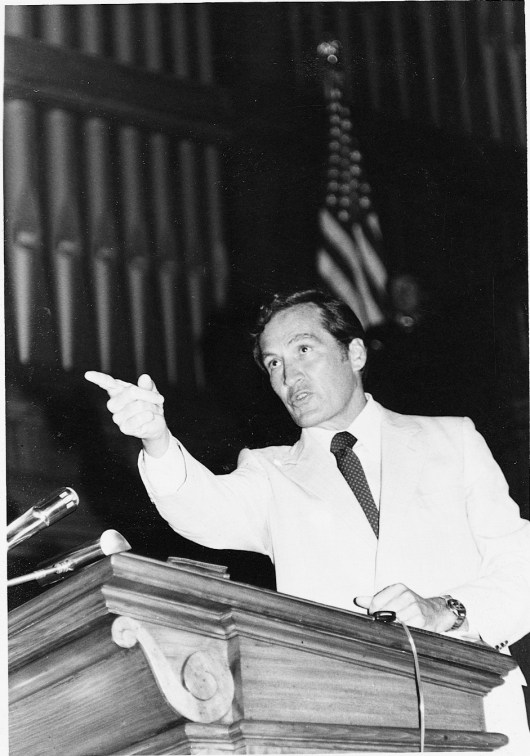
Watching the film HOW SHOULD WE THEN LIVE? in 1979 impacted my life greatly

Francis Schaeffer in the film WHATEVER HAPPENED TO THE HUMAN RACE?
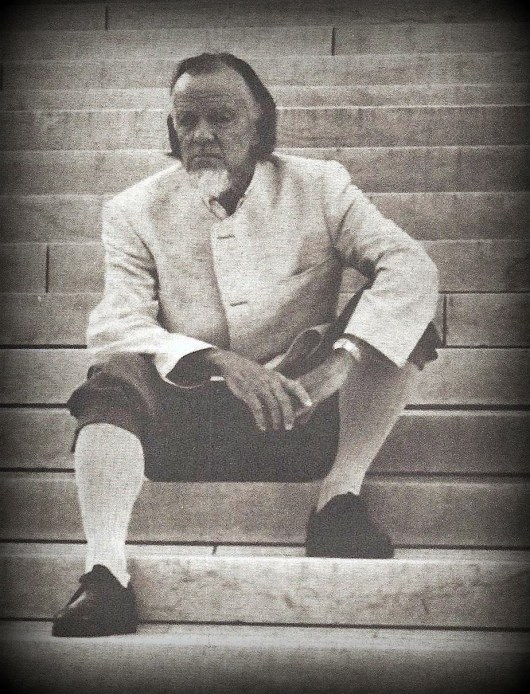
Francis and Edith Schaeffer

_______
On May 15, 1994 on the 10th anniversary of the passing of Francis Schaeffer I sent a letter to Carl Sagan and here is a portion of that letter below:
I have enclosed a cassette tape by Adrian Rogers and it includes a story about Charles Darwin‘s journey from the position of theistic evolution to agnosticism. Here are the four bridges that Adrian Rogers says evolutionists can’t cross in the CD “Four Bridges that the Evolutionist Cannot Cross.” 1. The Origin of Life and the law of biogenesis. 2. The Fixity of the Species. 3.The Second Law of Thermodynamics. 4. The Non-Physical Properties Found in Creation.
In the first 3 minutes of the cassette tape is the hit song “Dust in the Wind.” Below I have given you some key points Francis Schaeffer makes about the experiment that Solomon undertakes in the book of Ecclesiastes to find satisfaction by looking into learning (1:16-18), laughter, ladies, luxuries, and liquor (2:1-3, 8, 10, 11), and labor (2:4-6, 18-20).
Schaeffer noted that Solomon took a look at the meaning of life on the basis of human life standing alone between birth and death “under the sun.” This phrase UNDER THE SUN appears over and over in Ecclesiastes. The Christian Scholar Ravi Zacharias noted, “The key to understanding the Book of Ecclesiastes is the term UNDER THE SUN — What that literally means is you lock God out of a closed system and you are left with only this world of Time plus Chance plus matter.”
Here the first 7 verses of Ecclesiastes followed by Schaeffer’s commentary on it:
The words of the Preacher, the son of David, king in Jerusalem. Vanity of vanities, says the Preacher, vanity of vanities! All is vanity. What does man gain by all the toil at which he toils under the sun? A generation goes, and a generation comes, but the earth remains forever. The sun rises, and the sun goes down, and hastens to the place where it rises. The wind blows to the south and goes around to the north; around and around goes the wind, and on its circuits the wind returns. All streams run to the sea, but the sea is not full; to the place where the streams flow, there they flow again.
Solomon is showing a high degree of comprehension of evaporation and the results of it. Seeing also in reality nothing changes. There is change but always in a set framework and that is cycle. You can relate this to the concepts of modern man. Ecclesiastes is the only pessimistic book in the Bible and that is because of the place where Solomon limits himself. He limits himself to the question of human life, life under the sun between birth and death and the answers this would give.
Solomon doesn’t place man outside of the cycle. Man doesn’t escape the cycle. Man is in the cycle. Birth and death and youth and old age.
There is no doubt in my mind that Solomon had the same experience in his life that I had as a younger man (at the age of 18 in 1930). I remember standing by the sea and the moon arose and it was copper and beauty. Then the moon did not look like a flat dish but a globe or a sphere since it was close to the horizon. One could feel the global shape of the earth too. Then it occurred to me that I could contemplate the interplay of the spheres and I was exalted because I thought I can look upon them with all their power, might, and size, but they could contempt nothing. Then came upon me a horror of great darkness because it suddenly occurred to me that although I could contemplate them and they could contemplate nothing yet they would continue to turn in ongoing cycles when I saw no more forever and I was crushed.
Let me show you some inescapable conclusions if you choose to live without God in the picture. Schaeffer noted that Solomon came to these same conclusions when he looked at life “under the sun.”
- Death is the great equalizer (Eccl 3:20, “All go to the same place; all come from dust, and to dust all return.”)
- Chance and time have determined the past, and they will determine the future. (Ecclesiastes 9:11-13 “I have seen something else under the sun: The race is not to the swift
or the battle to the strong, nor does food come to the wise or wealth to the brilliant or favor to the learned; but time and chance happen to them all. Moreover, no one knows when their hour will come: As fish are caught in a cruel net, or birds are taken in a snare, so people are trapped by evil times that fall unexpectedly upon them.”) - Power reigns in this life, and the scales are not balanced(Eccl 4:1; “Again I looked and saw all the oppression that was taking place under the sun: I saw the tears of the oppressed—
and they have no comforter; power was on the side of their oppressors— and they have no comforter.” 7:15 “In this meaningless life of mine I have seen both of these: the righteous perishing in their righteousness, and the wicked living long in their wickedness. ). - Nothing in life gives true satisfaction without God including knowledge (1:16-18), ladies and liquor (2:1-3, 8, 10, 11), and great building projects (2:4-6, 18-20).
- There is no ultimate lasting meaning in life. (1:2)
By the way, the final chapter of Ecclesiastes finishes with Solomon emphasizing that serving God is the only proper response of man. Solomon looks above the sun and brings God back into the picture in the final chapter of the book in Ecclesiastes 12:13-14, “ Now all has been heard; here is the conclusion of the matter: Fear God and keep his commandments, for this is the whole duty of man. For God will bring every deed into judgment, including every hidden thing, whether it is good or evil.”
The answer to find meaning in life is found in putting your faith and trust in Jesus Christ. The Bible is true from cover to cover and can be trusted. In 1978 I heard the song “Dust in the Wind” by Kansas when it rose to #6 on the charts. That song told me that Kerry Livgren the writer of that song and a member of Kansas had come to the same conclusion that Solomon had and that “all was meaningless UNDER THE SUN,” and looking ABOVE THE SUN was the only option. I remember mentioning to my friends at church that we may soon see some members of Kansas become Christians because their search for the meaning of life had obviously come up empty even though they had risen from being an unknown band to the top of the music business and had all the wealth and fame that came with that.
Livgren wrote, “All we do, crumbles to the ground though we refuse to see, Dust in the Wind, All we are is dust in the wind, Don’t hang on, Nothing lasts forever but the Earth and Sky, It slips away, And all your money won’t another minute buy.”
Both Kerry Livgren and Dave Hope of Kansas became Christians eventually. Kerry Livgren first tried Eastern Religions and Dave Hope had to come out of a heavy drug addiction. I was shocked and elated to see their personal testimony on The 700 Club in 1981. Livgren lives in Topeka, Kansas today where he teaches “Diggers,” a Sunday school class at Topeka Bible Church. Hope is the head of Worship, Evangelism and Outreach at Immanuel Anglican Church in Destin, Florida.
__________
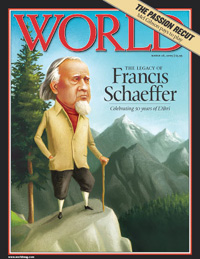
Francis Schaeffer below pictured on cover of World Magazine:
___________________
Francis Schaeffer pictured below:
_____
Francis Schaeffer has written extensively on art and culture spanning the last 2000years and here are some posts I have done on this subject before : Francis Schaeffer’s “How should we then live?” Video and outline of episode 10 “Final Choices” , episode 9 “The Age of Personal Peace and Affluence”, episode 8 “The Age of Fragmentation”, episode 7 “The Age of Non-Reason” , episode 6 “The Scientific Age” , episode 5 “The Revolutionary Age” , episode 4 “The Reformation”, episode 3 “The Renaissance”, episode 2 “The Middle Ages,”, and episode 1 “The Roman Age,” . My favorite episodes are number 7 and 8 since they deal with modern art and culture primarily.(Joe Carter rightly noted, “Schaeffer—who always claimed to be an evangelist and not aphilosopher—was often criticized for the way his work oversimplifiedintellectual history and philosophy.” To those critics I say take a chill pillbecause Schaeffer was introducing millions into the fields of art andculture!!!! !!! More people need to read his works and blog about thembecause they show how people’s worldviews affect their lives!
J.I.PACKER WROTE OF SCHAEFFER, “His communicative style was not that of acautious academic who labors for exhaustive coverage and dispassionate objectivity. It was rather that of an impassioned thinker who paints his vision of eternal truth in bold strokes and stark contrasts.Yet it is a fact that MANY YOUNG THINKERS AND ARTISTS…HAVE FOUND SCHAEFFER’S ANALYSES A LIFELINE TO SANITY WITHOUT WHICH THEY COULD NOT HAVE GONE ON LIVING.”
Francis Schaeffer’s works are the basis for a large portion of my blog posts andthey have stood the test of time. In fact, many people would say that many of the things he wrote in the 1960’s were right on in the sense he saw where ourwestern society was heading and he knew that abortion, infanticide and youthenthansia were moral boundaries we would be crossing in the coming decadesbecause of humanism and these are the discussions we are having now!)
There is evidence that points to the fact that the Bible is historically true asSchaeffer pointed out in episode 5 of WHATEVER HAPPENED TO THE HUMAN RACE? There is a basis then for faith in Christ alone for our eternal hope. This linkshows how to do that.
Francis Schaeffer in Art and the Bible noted, “Many modern artists, it seems to me, have forgotten the value that art has in itself. Much modern art is far too intellectual to be great art. Many modern artists seem not to see the distinction between man and non-man, and it is a part of the lostness of modern man that they no longer see value in the work of art as a work of art.”
Many modern artists are left in this point of desperation that Schaeffer points out and it reminds me of the despair that Solomon speaks of in Ecclesiastes. Christian scholar Ravi Zacharias has noted, “The key to understanding the Book of Ecclesiastes is the term ‘under the sun.’ What that literally means is you lock God out of a closed system, and you are left with only this world of time plus chance plus matter.” THIS IS EXACT POINT SCHAEFFER SAYS SECULAR ARTISTSARE PAINTING FROM TODAY BECAUSE THEY BELIEVED ARE A RESULTOF MINDLESS CHANCE.
____
___________________
_______________
I have written a lot in the past about Carl Sagan on my blog and over and over again these posts have been some of my most popular because I believe Carl Sagan did a great job of articulating the naturalistic view that the world is a result of nothing more than impersonal matter, time and chance. Christians like me have to challenge those who hold this view and that is why I took it upon myself to read many of Sagan’s books and to watch his film series Cosmos.
Francis Schaeffer in his book HE IS THERE AND HE IS NOT SILENT (Chapter 4) asserts:
Because men have lost the objective basis for certainty of knowledge in the areas in which they are working, more and more we are going to find them manipulating science according to their own sociological or political desires rather than standing upon concrete objectivity. We are going to find increasingly what I would call sociological science, where men manipulate the scientific facts. Carl Sagan (1934-1996), professor of astronomy and space science at Cornell University, demonstrates that the concept of a manipulated science is not far-fetched. He mixes science and science fiction constantly. He is a true follower of Edgar Rice Burroughs (1875-1950). The media gives him much TV prime time and much space in the press and magazine coverage, and the United State Government spent millions of dollars in the special equipment which was included in the equipment of the Mars probe–at his instigation, to give support to his obsessive certainty that life would be found on Mars, or that even large-sized life would be found there. With Carl Sagan the line concerning objective science is blurred, and the media spreads his mixture of science and science fiction out to the public as exciting fact.
Carl Sagan pictured below:
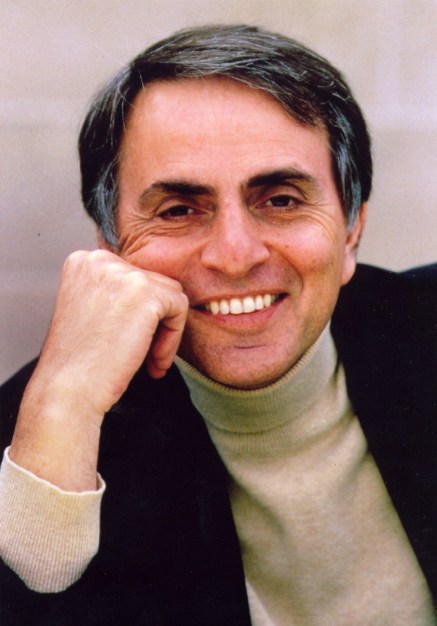
Carl Sagan pictured below:
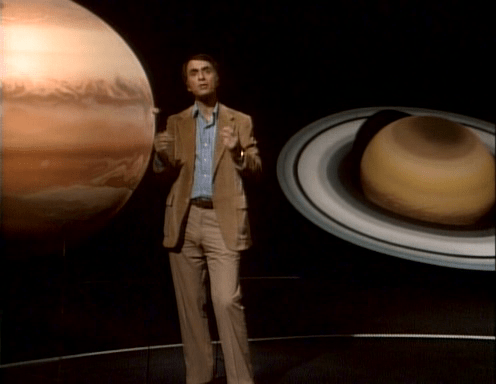
_________________________________
There is a tension in a person’s life that denies the existence of God but then he can’t live that way in the real world. Carl Sagan had this tension in his life. He denied that humans were special but he said we were precious in his movie CONTACT. He said that God didn’t exist but he did spend his whole life looking for life on other planets and if we had found it he said they would be able possibly to tell us what our purpose is in the universe. Note in the quote above that Schaeffer accuses Sagan of mixing science and science fiction. One side of his brain was ruling out that we have meaning and the other side was constanting searching for it.
In Sagan’s books and in his film series COSMOS he assumes that science is only naturalistic and materialistic and God is locked out. However, in the book THE DEMON-HAUNTED WORLD he does admit that he would be willing to consider evidence that pointed to God’s existence, but again in this review I attacked Sagan’s basis for his morality decisions and how it was insufficient on a materialistic base.
This is a review I did a few years ago.
PSCF 48 (December 1996): 263.
__________________________________________________
Carl Sagan pictured below:

Carl Sagan pictured below:
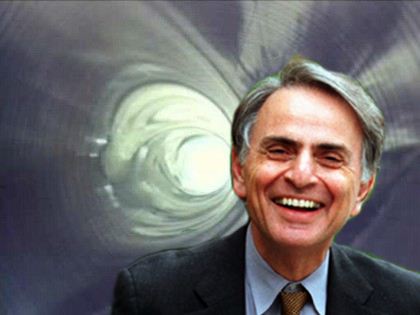
Carl Sagan pictured below:

I
Carl Sagan pictured below:

I
Carl Sagan pictured below:

______
Saying that Sagan tried to live by is below:

I agree with Sagan that we should embrace “the hard truth” but do the facts indicate that the Bible is filled with fables? If you want evidence lends support to the idea that the Bible is true then check out these next few videos by Francis Schaeffer and the material in the remaining part of this post:
Whatever Happened To The Human Race? | Episode 5 | Truth and History (20…
________________________________
“Total Truth” – Nancy Pearcey Book Talk 2006
Nancy, Richard Pearcey to lead Francis Schaeffer Center at HBU
December 21, 2012
Best-selling author Nancy Pearcey and writer-editor J. Richard Pearcey have teamed up to create the Francis Schaeffer Center for Worldview and Culture on the campus of Houston Baptist University.
The purpose of the Francis Schaeffer Center is to “promote foundational research and out-of-the-box creative thinking based on historic Christianity as a total way of life informed by verifiable truth concerning God, humanity, and the cosmos,” according to the FSC mission statement.
Nancy Pearcey serves as director of the Francis Schaeffer Center. Formerly an agnostic, Nancy is professor and scholar-in-residence at HBU. She is the author of seminal works such as Total Truth, The Soul of Science, and Saving Leonardo, and also serves as editor at large of The Pearcey Report. Nancy was heralded in The Economist as “America’s pre-eminent evangelical Protestant female intellectual.”
Courses created by FSC will give students a unique opportunity to work through Nancy’s award-winning books and other foundational resources on worldview and cultural engagement. “Our goal at FSC is to equip students in every major to be critical and creative thinkers,” Pearcey said. “Under the visionary leadership of President Robert Sloan, Houston Baptist University is moving forward strategically to implement a Christian worldview approach more intentionally and comprehensively across all the disciplines.”
The Center is named for noted author Francis A. Schaeffer, whose work with wife Edith at L’Abri Fellowship in Switzerland won international respect for giving an “honest answer to honest questions.” Time magazine hailed the Schaeffers’ work as a “Mission to Intellectuals.”
J. Richard Pearcey serves as associate director of the Center. Richard is scholar for worldview studies at HBU, as well as editor and publisher of The Pearcey Report. He is formerly managing editor of the Capitol Hill newspaper Human Events and associate editor of the “Evans-Novak Political Report.”
“If the Christian worldview is true to reality, and we think a rational case can be made that it is, it can be the key to a renaissance of humanity, freedom, and creativity,” Richard said. “Nancy and I met at L’Abri in Switzerland, so we are grateful for the opportunity to say ‘thank you’ to the Schaeffers and their work by inspiring students and others — teachers, activists, professionals — to apply Christian thought forms across the whole of life, from art to science to business and politics.”
HBU Provost John Mark Reynolds said, “When I was a young adult, the writings and films of Francis Schaeffer modeled a way of doing Christian apologetics that had an important impact on my life. It is my honor to see HBU set up a study center dedicated to the Schaeffer approach to worldview studies. There is no better time for Christians to impact the culture, few better models than Schaeffer for evangelicals, and no better team than Nancy and Richard Pearcey to set up the center.”
To arrange an interview with the Pearceys, please email Nancy at npearcey@hbu.edu or Richard at Pearcey@thepearceyreport.com.
_________
________
Featured artist is Jean Cocteau
Cocteau, Jean – by Jonathan Evens
Notre Dame de France, London: Jean Cocteau


http://commissionformission.blogspot.fr/2009/04/jonathan-evens.html


Other artists that I have profiled are Marina Abramovic, Ida Applebroog, Matthew Barney, Allora & Calzadilla, Olafur Eliasson, Tracey Emin, Jan Fabre, Makoto Fujimura, Hamish Fulton, Ellen Gallaugher, Ryan Gander, John Giorno, Cai Guo-Qiang, Arturo Herrera, Oliver Herring, David Hockney, David Hooker, Roni Horn, Peter Howson, Robert Indiana, Jasper Johns, Martin Karplus, Margaret Keane, Mike Kelley, Jeff Koons, Sally Mann, Kerry James Marshall, Trey McCarley, Paul McCarthy, Josiah McElheny, Barry McGee, Tony Oursler, William Pope L., Gerhard Richter, James Rosenquist, Susan Rothenberg, Georges Rouault, Richard Serra, Shahzia Sikander, Hiroshi Sugimoto, Richard Tuttle, Luc Tuymans, Banks Violett, Fred Wilson, Krzysztof Wodiczko, and Andrea Zittel,
Related posts:
Taking on Ark Times Bloggers on various issues Part F “Carl Sagan’s views on how God should try and contact us” includes film “The Basis for Human Dignity”
I have gone back and forth and back and forth with many liberals on the Arkansas Times Blog on many issues such as abortion, human rights, welfare, poverty, gun control and issues dealing with popular culture. Here is another exchange I had with them a while back. My username at the Ark Times Blog is Saline […]
Carl Sagan v. Nancy Pearcey
On March 17, 2013 at our worship service at Fellowship Bible Church, Ben Parkinson who is one of our teaching pastors spoke on Genesis 1. He spoke about an issue that I was very interested in. Ben started the sermon by reading the following scripture: Genesis 1-2:3 English Standard Version (ESV) The Creation of the […]
Review of Carl Sagan book (Part 4 of series on Evolution)
Review of Carl Sagan book (Part 4 of series on Evolution) The Long War against God-Henry Morris, part 5 of 6 Uploaded by FLIPWORLDUPSIDEDOWN3 on Aug 30, 2010 http://www.icr.org/ http://store.icr.org/prodinfo.asp?number=BLOWA2http://store.icr.org/prodinfo.asp?number=BLOWASGhttp://www.fliptheworldupsidedown.com/blog _______________________ I got this from a blogger in April of 2008 concerning candidate Obama’s view on evolution: Q: York County was recently in the news […]
Review of Carl Sagan book (Part 3 of series on Evolution)
Review of Carl Sagan book (Part 3 of series on Evolution) The Long War against God-Henry Morris, part 4 of 6 Uploaded by FLIPWORLDUPSIDEDOWN3 on Aug 30, 2010 http://www.icr.org/ http://store.icr.org/prodinfo.asp?number=BLOWA2http://store.icr.org/prodinfo.asp?number=BLOWASGhttp://www.fliptheworldupsidedown.com/blog______________________________________ I got this from a blogger in April of 2008 concerning candidate Obama’s view on evolution: Q: York County was recently in the news […]
Carl Sagan versus RC Sproul
At the end of this post is a message by RC Sproul in which he discusses Sagan. Over the years I have confronted many atheists. Here is one story below: I really believe Hebrews 4:12 when it asserts: For the word of God is living and active and sharper than any two-edged sword, and piercing as far as the […]
Review of Carl Sagan book (Part 4 of series on Evolution)jh68
Review of Carl Sagan book (Part 4 of series on Evolution) The Long War against God-Henry Morris, part 5 of 6 Uploaded by FLIPWORLDUPSIDEDOWN3 on Aug 30, 2010 http://www.icr.org/ http://store.icr.org/prodinfo.asp?number=BLOWA2http://store.icr.org/prodinfo.asp?number=BLOWASGhttp://www.fliptheworldupsidedown.com/blog _______________________ This is a review I did a few years ago. THE DEMON-HAUNTED WORLD: Science as a Candle in the Dark by Carl […]
Review of Carl Sagan book (Part 3 of series on Evolution)
Review of Carl Sagan book (Part 3 of series on Evolution) The Long War against God-Henry Morris, part 4 of 6 Uploaded by FLIPWORLDUPSIDEDOWN3 on Aug 30, 2010 http://www.icr.org/ http://store.icr.org/prodinfo.asp?number=BLOWA2http://store.icr.org/prodinfo.asp?number=BLOWASGhttp://www.fliptheworldupsidedown.com/blog______________________________________ I was really enjoyed this review of Carl Sagan’s book “Pale Blue Dot.” Carl Sagan’s Pale Blue Dot by Larry Vardiman, Ph.D. […]
Atheists confronted: How I confronted Carl Sagan the year before he died jh47
In today’s news you will read about Kirk Cameron taking on the atheist Stephen Hawking over some recent assertions he made concerning the existence of heaven. Back in December of 1995 I had the opportunity to correspond with Carl Sagan about a year before his untimely death. Sarah Anne Hughes in her article,”Kirk Cameron criticizes […]
Was Antony Flew the most prominent atheist of the 20th century?
_________ Antony Flew on God and Atheism Published on Feb 11, 2013 Lee Strobel interviews philosopher and scholar Antony Flew on his conversion from atheism to deism. Much of it has to do with intelligent design. Flew was considered one of the most influential and important thinker for atheism during his time before his death […]
____________


 The Daily Hatch

