Monthly Archives: September 2024

FRANCIS SCHAEFFER ANALYZES ART AND CULTURE Part 550 Carl Sagan  “If we do not oppose abortion at some stage of pregnancy, is there not a danger of dismissing an entire category of human beings as unworthy of our protection and respect?”(My 1995 correspondence with Sagan) FEATURED ARTIST IS SEURAT

_

Carl Sagan stated:

“If we do not oppose abortion at some stage of pregnancy, is there not a danger of dismissing an entire category of human beings as unworthy of our protection and respect?”

—-

Does Carl Sagan and other atheists do believe unborn children worthy enough to be protected?

Slim Jim Abortion:A Worldview Approach

John Janneyhttp://www.gracebfcreading.org/slow-down/

“In the flood of the loss of humanness in our age ― including the flow from abortion-on-demand to infanticide and on to euthanasia ― the only thing that can stem the tide is the certainty of the absolute uniqueness and value of people. And the only thing which gives us this is the knowledge that people are made in the image of God. We have no other final protection. And the only way we know that people are made in the image of God is through the Bible and the Incarnation of Christ, which we know from the Bible.

“If people are not made in the image of God, the pessimistic, realistic humanist is right: the human race is indeed an abnormal wart on the smooth face of a silent and meaningless universe. In this setting, abortion, infanticide, and euthanasia (including the killing of mentally deranged criminals, the severely handicapped, or the elderly who are an economic burden) are completely logical. Any person can be obliterated for what society at one moment thinks of as its own social or economic good. Without the Bible and without the revelation in Christ (which is only told to us in the Bible) there it nothing to stand between us and our children and the eventual acceptance of the monstrous inhumanities of the age.” [The Complete Works of Francis A. Schaeffer V, (Wheaton, IL: Crossway Books, 1982), p. 405-406]

—-https://youtu.be/VfqBN9iW0_Q
——https://youtu.be/1VWGBkmdPOE
—-

The Loss of Humanness in our Age 

In the flood of the loss of humanness in our age – including the flow from abortion-on-demand to infanticide and on to euthanasia – the only thing that can stem this tide is the certainty of the absolute uniqueness and value of people.  And the only thing which gives us that is the knowledge that people are made in the image of God.  We have no other final protection.  And the only way we know that people are made in the image of God is through the Bible and in the incarnation of Christ, which we know from the Bible. 

If people are not made in the image of God, the pessimistic, realistic humanist is right: the human race is an abnormal wart on the smooth face of a silent and meaningless universe. In this setting, abortion, infanticide, and euthanasia (including the killing of mentally deranged criminals, the severely handicapped, or the elderly who are an economic burden) are completely logical…  Without the Bible and without the revelation in Christ (which is only told to us in the Bible) there is nothing to stand between us and our children and the eventual acceptance of the monstrous inhumanities of the age.

Francis Schaeffer (with C Everett Koop), “Whatever Happened to the Human Race?”

Guest Post: Abortion – a Worldview Approach

Note: I just got back from overseas.  This is a guest post that somehow got stuck on our WordPress.  It is by Nate Sonner  who is co-founder of Christian Worldview Discipleship. He and his wife live in Dumaguete City, Philippines.
His website can be found here and his Twitter account here

baby

Abortion is arguably the religious and social issue of our day. Since it became legal in the United States, around 56 millionchildren have been killed. To ignore such an issue, as a Christian, would be unfaithful to God who made man in His image. We as believers must be equipped to discuss and offer a defense. Also, the devaluation of human beings in the womb is not a view held in isolation. Many fail to realize that the fundamental beliefs behind modern bioethics don’t merely affect the unborn, but human beings at all stages of life. If these basic assumptions continue on, unchallenged by Christians who stand unapologetically upon God’s Word, we will continue to see the devaluation of all people.

An Inadequate Approach

The Christian pro-life position recognizes that the unborn are human persons, and therefore have all the rights and protection that comes with being a person. A common argument against pro-abortion advocates is that if it is a human baby, then it shouldn’t be killed. However, if the fetus is just a mass of tissue, like a tumor, then we can do what we want with it. The assertion is that the pro-abortion community must defend that the fetus is not a human baby. Therefore, it’s our task to show that, scientifically, it is a human child, regardless of size and location and dependency, and that should settle the issue. The proposed dilemma is: either the fetus is matter, or a child; it’s either a mass of tissue, or a person. No third option available. That’s the choice, therefore the only defense against the Christian pro-life view is to assert that the fetus is just a blob of matter.1

The underlying assumption is that people in favor of abortion simply need information, an education. Ignorance is the problem! That’s all. That’s the reason why they abort, because they simply don’t know that it is a baby. These helpless women have been misled, and are blithely skipping along to the abortion mill, unaware of their child within them. Once scientific proof is given that the fetus is a human being, then abortion will be immediately recognized as murder, and abortion will be illegal.2 If they already knew the fetus is a baby, they wouldn’t kill it, because that would obviously be murder. Right? Only criminals would say it’s acceptable, even virtuous, to kill their child. Right?

How can we take this sentiment seriously? “If everyone just knew the facts, that the fetus is a human being, then abortion would be illegal immediately.” Really? Who exactly doesn’t know the facts?

Who exactly doesn’t know that there’s a human baby in the womb? If you take these kinds of common Christian objections to abortion seriously, you might start believing that nobody has ultrasound technology anymore. Or are extremely forgetful (we’ve been popping out human babies for thousands of years). Everyone who’s opinion matters knows that it’s a baby. The doctors know it’s a baby. Anyone who’s around the ultrasound machine knows it’s a baby. The baby has eyes and ears and fingerprints. The geneticists know it’s a baby (like you need to be one to know that). Everyone knows. You really think that the pregnant woman herself has any doubt about what’s growing inside her?

Like she wakes up one morning and seriously believes she has a tumor or something. Really? Like for the first time in thousands of years we are suddenly not sure about what goes on inside a pregnant woman. How many of you aren’t sure that you’re human? Because you came from the womb, and apparently a whole lot of people don’t know what goes on in there.

Nobody is confused about what pregnant women give birth to. Human beings reproduce human beings! Do we really think that’s the issue? Nobody is confused about that. The only confused people are the Christian pro-life advocates using these arguments! We’re the ones who are confused in this debate. Many of us actually believe that human beings don’t already know they reproduce human beings. How odd does that sound? Walk up to the person on the street and ask, “Did you know that when a man and a woman love each other very much, they make human babies?” You just might get slapped for asking such an obvious question. Do we really think anybody doesn’t know?

Yet, lo and behold, the baby killing business is as profitable as ever. There is a huge disjunction between these claims by Christians and the actual state of affairs. Why then, since the facts are known, is abortion still legal? Obviously, the common Christian approach to abortion are based on bad thinking. Evidently, the evidence and facts are not enough!

Wrong. Contrary to much opinion, there is a consensus in the medical community about when life begins. There is consensus that the fetus is biologically a human. No informed advocate of abortion is denying this. Nancy Pearcey affirms:

In the past, abortion supporters simply denied that the fetus is human: “It’s just a blob of tissue.” Today, however, due to advances in genetics and DNA, virtually no ethicist denies that the fetus is human — biologically, genetically, physiologically human. Even the arch-radical Peter Singer acknowledges that “the life of a human organism begins at conception.”3

Confused? It gets better (or worse). R.C. Sproul Jr. clarifies:

Now, I used to think, that people who secured abortions were misled, that they were lied to, that they didn’t know. And it’s certainly conceivable, though unlikely, but it’s conceivable that 40 years ago at the dawn of Roe v. Wade, that there were people who really did buy into this “mass of tissue” argument. But that argument friends has been dead, for 20 years. Everyone knows it’s a baby. It’s now being admitted that it’s a baby. Even by those who are pro-choice, publicly in print, admitted, “We know it’s a baby, but we still ought to be able to kill it.” That’s ironically some welcome honesty. But if you go to the mill and you talk to these women who are on their way in that door you didn’t have to wait for these articles where people are coming out, they knew, when you speak to them, they know what they’re doing, their response, even among those who profess to be Christians, is not “it’s just tissue,”  it’s not “it’s no big deal,” it’s “I can be forgiven, I have the right, I know I’m killing my baby.” We all know. They know. Which means that this misguided, poor, innocent, pregnant girl is a myth. This is a heartless woman, who may indeed find herself in a difficult bind, and who’s solution is to murder her baby.4

Case closed! That was supposed to do it. Abortion should be illegal now, since it’s finally admitted that the fetus is in fact a human life. Right? The only defense for abortion was supposed to be that it’s not a child. The case was that the pro-abortion advocate must not know it’s a baby. But, they actually do, since 20 years ago. And abortion is still on demand, during those last 20 years. There was only supposed to be two choices: baby, or matter. We all know it’s a baby. What is the difficulty, then? Evidently, the issue is a bit more complex than the “baby or matter” dilemma. What is the deeper issue?

The situation so far is that the pro-abortion powers-that-be admit it is a baby, and those acquiring abortions admit it, too. Both sides of the debate agree: the fetus is a living human child. Yet, they still insist on killing those babies. Abortion-on-demand is still policy. The implication is that simply being human does not automatically grant worth. Being a human life is not enough to warrant protection. As it turns out, there is a third option to add to the proposed dilemma. Here’s a crucial distinction made in modern bioethics: a human is not automatically a person. In his book Culture of Death, Wesley J. Smith reveals,

Cutting-edge bioethics now holds that there is nothing special per se in being human, and thus bioethicists have generally abandoned the sanctity-of-life ethic that proclaims the inherent moral worth of all people. The favored term for humans used by movement advocates is not “people” or even “individuals,” but “beings”—a term that includes nonhumans. According to the movement’s leading lights, a “being” may or may not be entitled to membership in the “moral community,” which is what truly matters. . . one earns this status by possessing certain “relevant characteristics”—usually a minimum level of cognitive functioning—that bioethicists consider essential for significant moral standing. Those with sufficient cognitive qualifications to achieve membership in the moral community are often called “persons,” who have moral rights. Those who fail this test, on the other hand, are denigrated as nonpersons, who have little or no moral worth.5

This fine distinction has become a refuge to many who are firmly pro-abortion, yet know full well that a living, human child lives in the womb. What else could be appealed to? To be a modernist with respect to abortion won’t work out: scientifically, it’s a human being. Oops. Time to “leap” to another level. Let’s be postmodern about this, and appeal to some nebulous area ruled by completely arbitrary criteria. Where science fails, it is conveniently abandoned in favor of an arbitrary distinction. Perhaps faithfulness to “science” wasn’t really the issue to begin with, then?

In the end, I have to agree that life begins at conception. So yes, abortion is ending that life. But perhaps the fact of life isn’t what is important. It’s whether that life has grown enough to take on human characteristics, to start becoming a person.

In its early stages, the foetus [sic] clearly hasn’t, so I have no problems with early abortions. . . But once an embryo has developed enough to feel pain, or begin a personality, then it has moved from cell life into the first stages of being a human. Then, for me, ending that life is wrong. . . Killing a person, a recognisable [sic] human being, is murder. That’s why late abortion will always be tricky. Who are we to say whether the life inside is a person, or not? 6

Take note of the blatant contradiction in the quotation above. Human characteristics, feeling pain, and personality are associated with the baby becoming a human person. To kill a human being is murder. Then she says, “Who are we to say whether the life inside is a person, or not?” Sounds to me like she just did! Human characteristics, feeling pain, personality. My questions is, why do those determine personhood? In principle, couldn’t the criteria be changed? Obviously, the basis is not being genetically human.

To put it bluntly, if a Christian objects to a pro-abortionist with the fact that the fetus is a baby, the pro-abortionist may very well say, “So what?” Today, that is not the issue.

The question is, how did such a fine distinction come about? In common vernacular, human and person are used interchangeably. Christian pro-lifers will say “it’s a person living in the womb!” (meaning “human child”). Then the pro-abortion advocate responds, “Not yet.” Huh?

An Inadequate Worldview

Francis Schaeffer recognized the real issue, back in 1979. I’ll quote him at length, several times:

Our society has put to death its own offspring, millions of them. Our society has justified taking their lives, even claiming it a virtue to do so. It has been said this is a new step in our progress toward a liberated humanity.

Such a situation has not come out of a vacuum. Each of us has an overall way of looking at the world, which influences what we do day by day. This is what we call a “world-view.” And all of us have a world-view, whether we realize it or not. We act in accordance with our world-view, and our world-view rests on what to us is the ultimate truth.

What has produced the inhumanity . . . is that society in the West has adopted a world-view which says that all reality is made up only of matter. This view is sometimes referred to as philosophic materialism, because it holds that only matter exists; sometimes it is called naturalism, because it says that no supernatural exists. Humanism which begins from man alone and makes man the measure of all things usually is materialistic in its philosophy. Whatever the label, this is the underlying world-view of our society today. In this view the universe did not get here because it was created by a “supernatural” God. . . its present form just happened as a result of chance events way back in time.7

Within this world-view there is no room for believing that a human being has any final distinct value above that of an animal or of nonliving matter. People are merely a different arrangement of molecules. . . this humanist world-view has also brought us to the present devaluation of human life.8

Materialistic humanism. That’s why. And this worldview is taken for granted and taught throughout every level of Western education, today. This is how people can recognize that the unborn is a child and still be pro-abortion. What is real? Matter. How did we get here? Chance, with lots of time.  Based on those premises, those fundamental beliefs, what is a human? Just more matter. No doubt a smarter, more complex, more productive arrangement of molecules; but purely matter, none the less. As the late Christopher Hitchens once said, we are “higher primates.” Humans are at the top of the ladder, but equally void of inherent value or worth.

What, then, of the worth of human life? Obviously there are many non-christians that value life. I’ve known several non-christians who were intensely pro-life! To infer that those who are assuming materialistic humanism do not make value claims would be incorrect. They do, for various reasons. The issue is whether they have a sufficient foundation for their value claims. They hold them and in practice they affirm values. But, if materialistic humanists hold that only matter exists, what is the consensus on something immaterial? Science (which is limited to the material) has verified that the unborn are humans. Yet, we see this distinction: it’s not necessarily a “person.” What decides that state of being a “person,” if not science? The criteria for gaining knowledge was supposed to be science! If the material is all that is real, yet people still hold to moral standards, then it follows that there has been a separation between what is material and immaterial, since those standards are not material. Since science can only confirm that a fetus is a human child, what decides that immaterial thing about being a “person”?

“With the rise of empiricism, however, religion was reduced to private feelings. Emotional comfort. The concept of truth as a unified, coherent worldview was shattered.

The division of truth is often referred to as the fact/value split . . . It is the assumption that objective knowledge is possible only in the realm of empirical facts, while morality and religion are merely values. The term literally means whatever I value. Whatever is important to me. My likes and preferences.” 9

It makes sense that if only the material is real, then empiricism (knowledge limited by sense experience) is the only way we can learn what is true. Therefore, truth cannot account for anything beyond the physical!  Morals and values cannot be weighed, measured, or examined empirically. So, it follows that religion and morality are not verifiable truths, just personal preferences and emotional expressions. Religion and morality have no connection to empirical facts.

In her excellent and highly recommended book, which I will quote often, Saving Leonardo: A Call to Resist the Secular Assault on Mind, Morals, and Meaning, Nancy Pearcey illustrates this dichotomy, crediting Francis Schaeffer:

Francis Schaeffer was among the first in the evangelical world to identify the problem. Although he did not use the terms facts versus values, clearly he was getting at the same idea. Using the metaphor of a building, he warned that truth had been split into two stories. The lower story consists of scientific facts, which are held to be empirically testable and universally valid. The upper story includes things like morality, theology, and aesthetics, which are now regarded as subjective and culturally relative. Essentially the upper story became a convenient dumping ground for anything that an empiricist worldview did not recognize as real. Schaeffer used a simple graphic, which we can adapt like this:

The two-story concept of truth

VALUES

Private, subjective, relative

_________________________________________

FACTS

Public, objective, universal10

This accounts for the current mentality of pro-abortion advocates. Body, biology (fact) is disconnected from personhood (value). Facts are what can be known empirically, and facts are “value-free” or neutral. They carry no meaning or ethical obligations with them. The lower story of facts is objective and universal, while the upper story of values is personal and subjective. Objectivism is the lower story, relativism is the upper story. Ever heard anyone say, “don’t force your scientific facts on me!” No. That defense is only brought up when it comes to morals and religion. Values, ethics, and religion are your thing. Don’t force your personal beliefs on me. In a sense, reality is still dominated by modernism while values are surrendered to postmodernism.

The fact/value split is the underlying presupposition (fundamental commitment) that results in “person” not following from “human”, anymore. What can be known through science is that the fetus is genetically human, and it’s alive since conception. But, is “personhood” material? Can that, or when it happens, be tested scientifically? Nope. Exactly. Here is the current tactic of the pro-abortion advocate illustrated by the fact/value split:

Personhood theory

PERSON

“Persons” have freedom and moral dignity

__________________________________________

BODY

“Humans” are disposable machines

A flaw in this theory is that once personhood is separated from biology, no one can agree how to define it. 11

Personhood is arbitrary, and therefore there’s no consensus. Since we can’t observe through our senses what or when “personhood” is, it’s left up to experts’ personal criteria (as a result of their anti-Christian presuppositions, which weren’t tested by science either!). Personhood has been completely detached from scientific fact, which means pro-abortionists (who claim to be “scientific”) are enforcing their personal criteria on the issue! Personhood is separated from reality as they see it (empirical fact), leaving it to be tossed to and fro by their personal and unscientific beliefs. How ironic.

According to British bioethicist John Harris, “Nine months of development leaves the human embryo far short of the emergence of anything that can be called a person.”

James Watson of DNA fame recommended giving a newborn baby three days of genetic testing before deciding whether the child should be allowed to live. Singer considers personhood a “gray” area even at three years of age. (After all, how much cognitive functioning does a toddler have?) 12

As we have seen, the real problem is not about mere scientific evidence. It is not about asking the pro-abortionist, “What is the unborn?” according to genetics and biology. That question has been answered (for the last 20 years). It’s a baby. The pro-abortion ethicists admit it’s a baby. The women making appointments at abortion mills know it’s their child. Presenting the evidence, then, is not what needs doing.

After all, aren’t both sides looking at the same evidence? If we all know it’s a baby, then why do many still argue that we are able to kill it? Why do children continue to be killed, knowingly?

We are all looking at the same evidence. Could it be that people do not “see” evidence the same way? What stands in between facts and people is interpretation. The objective is known subjectively. What is actually there is seen by an interpreter. There are no “brute facts” that exist independent of interpretation (including God’s interpretation). We all interpret the world, the facts around us, according to rock-bottom assumptions. It is naïve to merely present the evidence as if it can be interpreted in a neutral fashion, independent of biases. We all see the evidence, but we also interpret it.The evidence does not mean the same thing to everyone. The key is how evidence is interpreted. Even the fact that a baby is in the womb is not a “brute fact,” but is subject to interpretation according to fundamental criteria.

The question is, by what criteria? All of us have criteria. We have basic, fundamental beliefs about reality, knowledge, and conduct. These most basic beliefs, or presuppositions, form the network by which everything is interpreted: a worldview. They determine how we “see” the world. That human child in the womb is interpreted according to an individual’s worldview, along with what should or should not be done with that child.

Why doesn’t the unbelieving world “see” correctly, then? Why is their worldview not true to reality as it really is? The bottom line: sin. More specifically, the effects of sin on the mind, also called the “noetic effects of sin” (see Gen. 6:5; Rom. 1:18, 25; 8:6, 20; 12:2; 1 Cor. 1:21; Eph. 4:23, for example). When our first parents rebelled against God, not only were the will and emotions affected, but the mind as well. The whole person, intellect and affections, was turned against God. All of mankind fell in Adam, and now by default suppresses the knowledge of God in unrighteousness: “Their thinking became nonsense, and their senseless minds were darkened. Claiming to be wise, they became fools” (Romans 1:21b-22). Those who remain in Adam live according to “the futility of their thoughts. They are darkened in their understanding, excluded from the life of God, because of the ignorance that is in them and because of the hardness of their hearts” (Ephesians 4:17-18). Unbelievers reject God, the source of truth, and therefore cannot interpret anything truly! As Greg Bahnsen says, “By refusing to submit to the authority of Christ’s Word at the very beginning of his thinking the sinner’s mind is at enmity against God and he is epistemologically incapacitated altogether. . . Fallen man is incapacitated from seeing things as they really are.”13 Because they deny Him, they cannot use their minds correctly, nor know anything truly.

This is where the real issue lies. Merely asserting what the unborn is is superficial. That is attempting to kill a weed by cutting the branches and leaves. The only correct, effective way is to attack the roots. The roots of the pro-abortionist is their worldview, their presuppositions. That’s where the problem lies, and it is the worldview that must be dealt with.  The “debate” is at that level. The debate is not at the level of “either just matter or a person.” That’s merely the symptom. If Christians on the pro-life side are still engaging in debate with the “matter or person” false dilemma, it may betray their lack of understanding concerning worldviews in general, and particularly the fact/value split currently being assumed throughout Western culture. That is what needs to be addressed.

The Adequate Approach

We must accept the reality that we are not merely coming up against an isolated belief, but an entire network of interdependent convictions. It is not our mere pro-life commitment against their pro-abortion commitment. It is our entire Christian worldview against theirs. Since that is the case, our method must follow in kind. This demands a “Worldview Approach.”

We must expose the materialistic humanist worldview and fact/value split. Spoiler alert: the pro-abortionist may not be conscious of their worldview! It follows then that they will neither be conscious of their inevitable inconsistency. We must bring the pro-abortionist to an awareness, a consciousness, of their underlying fundamental commitment. Then, we must reveal how their anti-Christian worldview cannot sustain itself. This is known as “taking the roof off,” or driving their view to the logical conclusion.

The unbeliever cannot live out their worldview consistently because it doesn’t match reality. They have to, in a sense, irrationally “leap” in order to compensate for their inadequate presuppositions. They can deny reality, but they can’t stop being human or escape God’s world. They claim materialism in principle, but in practice they live as if there’s more. Indeed, many leap to the “value” level because they cannot live with only the physical. Empirical facts are claimed to be “value-free” and morally neutral. To claim that only the material is real, is to say that inherent value is not real. Therefore, their life has no inherent value. But, they cannot live that out, because they are in fact human and living in God’s world, which is not limited to the material. We must make this evident to them by internally critiquing their anti-Christian worldview. For the sake of argument, we assume their assumptions, and show how they lead to absurdity if applied consistently. One example of this (there are many possibilities) would be asking them why theyqualify as a “person,” what criteria decides that, where did it come from, and then show how it’s ultimately subjective and therefore not constant, but could in principle disqualify them. If they are consistent, they will have to admit their personhood and value is not guaranteed, based on their presuppositions. We must help them become self-conscious of their basic assumptions, and show their inadequacy in accounting for reality as God has made it. In this way, we begin to “demolish arguments” (2 Corinthians 10:4b)

Anyone who assumes the fact/value split has no right to make value claims, let alone truth claims. They have no right to make value claims, because they only grant materialism. They have no right to claim any truth whatsoever, because they deny God who is the source of truth.

The Adequate Worldview

After exposing the worldview of the pro-abortionist, and finding it lacking by way of internal critique, we then offer them to come and see reality from the Christian worldview, the point of view of Scripture. We show that the Christian Worldview provides the answer, not merely the best answer, but the only answer. Christianity is the only valid worldview. There is no possibility for it to be otherwise.

“So it is naïve and irresponsible to imagine that this world-view will reverse the direction in the future. A well-meaning commitment to “do what is right” will not be sufficient. Without a firm set of principles that flows out of a world-view that gives an adequate reason for a unique value to all human life, there cannot be and will not be any substantial resistance to the present evil brought on by the low view of human life we have been considering in previous chapters. It was the materialistic world-view that brought in the inhumanity; it must be a different world-view that drives it out.” 14

It is nonsensical to think that retaining their materialistic worldview will lead to change. It was the corrupt foundations that led to this situation, and it does not have the stability to fix it. Also, it disagrees with reality as God created it. Any anti-Christian worldview, by definition, denies Him altogether. Naturally then, it is neither right nor effective to share non-christian ground with the unbeliever in handling this issue. It is their worldview, their foundation, that results in their position. It would be foolish to think they will change while continuing to stand on it. Any change in conviction necessitates a change in their basic commitments. We cannot stand on their ground, we must remain firmly planted on the only correct worldview.

The Christian worldview accounts for all reality. There is no split. The Bible (and therefore, God) presents truth as a whole, there’s no splitting between facts and values; Biblical truth accounts for both. The Bible shows reality to not only be material, but also immaterial. God created all of reality. God gave us His Word, which correctly interprets reality. God is the source of both, and therefore the two correspond to each other. Scripture says reality is not only material, but also immaterial. Scripture presents a worldview that is unified and coherent.

If we set aside our Christian bias (which is the right bias), and basis, what exactly would we have by which to justify the inherent value of the unborn? God gave that value, which only makes sense within the entirety of His revelation in Scripture. God-given value of the human being does not make sense in a God-free worldview. What Scripture declares about people does not fit in a worldview that denies Scripture. If we set aside our Christian ground, we have nothing. We’ll be building on sand, with the unbeliever. Such would not be faithful, for all of life (including our way of thinking and methods) must submit to the Lordship of Christ. Even the tools God has given us, such as reason and logic, have no foundation apart from God’s revelation. To attempt to use these gifts, while setting aside the Giver, is wrong. Do we not share them in common with the unbeliever? Yes, because they know God (Romans 1:21), are made in God’s image, and live in His world, despite their denial of Him. But, they use them without basis, nor for God’s glory.  They attempt to use these gifts, while setting aside the Giver. They suppress their knowledge of God, and deny their being made in His image, and use His gives in rebellion. That is the mindset of unbelief, independent of God’s authority, which is autonomy. The tools we have are not a foundation unto themselves, but are upheld by God and dependent upon the total drama of Scripture. They only make sense from within the Christian worldview. They are not isolated, but interdependent within the larger framework.

“The infinite God has spoken. None of the many finite attempts to define truth, doomed to failure as we have seen, is necessary. God has communicated to man, the infinite to the finite. God has communicated, in addition, in words that are understandable to us. The One who made man capable of language in the first place has communicated truth about both spiritual reality and physical reality, about both the nature of God and the nature of man, about both events in past history and events in the future. Where all humanistic systems of thought are unable to give an adequate explanation of things, the Bible as God’s statement is adequate.” 15

Applied to abortion, we show that, according to the Christian worldview, man is made in the image of the personal God (Genesis 1:26-30, 2:7, 5:1-3, 9:5-6, James 3:9). This is the reason God gives for valuing man’s life. In fact, the whole medical enterprise is meaningless (!) apart from the Christian worldview. Any justification for medical practice will inevitably boil down to subjectivism. The whole man (person) is valuable. Notice: the whole man, body and soul (material and immaterial). Value is necessarily linked to being human. One automatically follows from the other. Man is qualitatively different than the rest of creation. No other created thing has God’s image. Mankind is unique. Only the Christian worldview can support a substantial “uniqueness” for man. Contrarily, materialism recognizes man as merely more complex, but not different from any other group of molecules around “it.”

“Unlike the evolutionary concept of an impersonal beginning plus time plus chance, the Bible gives an account of man’s origin as a finite person made in God’s image, that is, like God. We see then how man can have personality and dignity and value. Our uniqueness is guaranteed, something which is impossible in the materialistic system. If there is no qualitative distinction between man and other organic life (animals or plants), why should we feel greater concern over the death of a human being than over the death of a laboratory rat? Is man in the end any higher?

Though this is the logical end of the materialistic system, men and women still usually in practice assume that people have some real value.”16

Again, only the Christian worldview can provide the adequate basis for protecting the life of the unborn. Only from the Christian worldview as a whole can we approach this issue. The inherent worth of the human child is not an isolated belief. It is interdependent on fundamental criteria found in Scripture alone. The pro-abortionist’s denial of the child’s worth is not an isolated belief, but arises from their anti-Christian presuppositions. Because this is the case, we must oppose their entire worldview with the worldview provided by Scripture. We cannot argue for a Scriptural result from un-Scriptural grounds. We must remain committed to God’s revelation. In essence, we are combating their unbelief with the teaching of Scripture, itself. We are confronting their suppression of their knowledge of God and their own “createdness” in His image with the powerful, infallible, and effective Word of God. Their convictions will not align with Scripture if they remain standing on their unbelieving foundation. They must leave their anti-Christian commitments and unconditionally surrender to God’s authority.

“In the flood of the loss of humanness in our age—including the flow from abortion-on-demand to infanticide and on to euthanasia—the only thing that can stem this tide is the certainty of the absolute uniqueness and value of people. And the only thing which gives us this is the knowledge that people are made in the image of God. We have no other final protection. And the only way we know that people are made in the image of God is through the Bible and the Incarnation of Christ, which we know from the Bible.

If people are not made in the image of God, the pessimistic, realistic humanist is right: the human race is indeed an abnormal wart on the smooth face of a silent and meaningless universe. In this setting, abortion, infanticide, and euthanasia (including the killing of mentally deranged criminals, the severely handicapped, or the elderly who are an economic burden) are completely logical. Any person can be obliterated for what society at one moment thinks of as its own social or economic good. Without the Bible and without the revelation in Christ (which is only told to us in the Bible) there is nothing to stand between us and our children and the eventual acceptance of the monstrous inhumanities of the age.”17

To say “it’s a person, human, or alive” is meaningless to the materialistic humanist. The issue of value, human life value, what makes it different, is a worldview question. “It’s alive!” “Ok, so is the cockroach.” It is merely a different arrangement of matter. Any value given is ungrounded and detached from the “fact” level, and therefore variable without consensus. That’s where the “personhood” debate is. Because of the Fact/Value Split, personhood can’t be agreed upon, because it has no connection to fact—publicly verifiable truth (according to scientific method).

To say it’s alive and human is meaningless. Why should it be treated any differently? Why should there be something higher than my preference when deciding it’s value and what to do with it? Only the Christian worldview can answer. God’s Word says that reality, this universe, is not the result of impersonal matter in motion. The universe is created by the personal God, and is not just matter. God’s Word says that Mankind is not the same as the rest of Creation, but that Man is made in the image of God. Humans have value because God made humans in His image (Genesis 1:26-30, 2:7, 5:1-3, 9:5-6, James 3:9.), it is derived value. That is where “personhood” actually comes from (but not as a separate issue from biology). Biblically, to be human necessarily means to be a person. The personal God made Man (persons) in His Image. Hence, in the covenant with Noah, “Whoever sheds man’s blood, his blood will be shed by man, forGod made man in His image.” Genesis 9:6 [emphasis mine]. That is the firm foundation for valuing and protecting human life, including the unborn. No other criteria exists. Therefore, it is inadequate, and I think naïve, to simply prove that the unborn are alive and human. We must go deeper. It’s not the stems and leaves of weeds that we attack, but their roots. An attack at the worldview level is mandated. Hence, a Worldview Apologetic, or Presuppositional Apologetic. We stand firmly on the presupposition of God’s Word, as the only answer and basis, and we expose the opposing worldview, reducing it to absurdity by internal critique.

Only the Bible provides the answer: Are human beings always valuable persons, regardless of life-stage? Yes, because the personal God made Man in His image. Only based on that can there be protection for the unborn. And if the opposition denies it, we “take the roof off” of their assertions. We let reality cave in on them and, for the sake of argument, drive them to the logical, hopeless conclusion of their unbelieving worldview.

“But when we accept Christ as Savior, we must also acknowledge and then act upon the fact that if He is our Savior, He is also our Lord in all of life. He is Lord not just in religious things and not just in cultural things such as art and music, but in our intellectual lives and in business and our attitude toward the devaluation of people’s humanness in our culture. Acknowledging Christ’s Lordship and placing ourselves under what is taught in the whole Bible includes thinking and acting as citizens in relation to our government and its laws. We must know what those laws are and act responsibly to help to change them if they do not square with the Bible’s concepts of justice and humanness. The biblical answers have to be lived and not just thought.

We must live under the Lordship of Christ in all the areas of life—at great cost, if need be. . . Who is on the cutting edge here? The doctor who pays the price of having certain hospitals closed to him because he will not perform abortions. The businessman who knows he is forfeiting advancement in his company because he will not go along with some inhuman practice of his company. The professor of sociology who is willing to lose his post because he will not teach sociology on the basis of determinism. The pastor who loses his church rather than follow the dictates of a liberal theology or a “trashy Christianity.” Or the pastor who preaches the Bible, stressing that today’s people are called to sacrificial action, rather than keeping his congregation comfortable while death, spiritual and physical, is built up year after year for their children and grandchildren. Examples could be endlessly multiplied.”17

“Without the uniqueness and inherent dignity of each human being, no matter how old or young, sick or well, resting on the fact that each person is made in the image of God, there is no sufficient foundation to build on as we resist the loss of humanness in our generation. So we would say again to those of you who are Christians, do not allow your only base, your only hope to be able to stand—namely, the Bible—to be weakened by however subtle means.”18

Notes:

  1. Sherrard, Michael C., (Don’t Chase the Rabbit, 1/25/2013) adapted from Relational Apologetics: Defending the Christian Faith with Holiness, Respect, and Truth. CreateSpace Independent Publishing Platform (September 6, 2012) http://relationalapologetics.wordpress.com/2013/01/25/the-focused-apologist/

‘The abortion argument, unless I am mistaken, is about one thing: whether or not the fetus is a person or just matter. This really is the only question worth debating in abortion, and it is the only one that is relevant. For no one, except vile criminals, would argue that a woman has the right to choose to kill a child. . . Abortion advocates must defend that a fetus is not a person. However, most of them cannot. This is partly because there is no consensus in the medical field or scientific community on when “life” begins, when “the matter” becomes a person.’

  1. Sproul, R.C., Abortion: A Rational Look at An Emotional Issue (p. 7). Kindle Edition.

“I am convinced that if somehow it could be proven conclusively that the destruction of unborn babies is in fact the willful destruction of living human beings, the debate on abortion would be all but over, and the law of the land would as clearly prohibit abortion as it does all forms of homicide.”

  1. Pearcey, Nancy, “Why Pro-Abortion is Anti-Science,” (9/29/10) http://www.pearceyreport.com/archives/2010/08/post_91.php
  2. Sproul, R.C. Jr., “Babies Are Murdered Here” (Crown Rights Media, 1/22/2014)
  3. Smith, Wesley J. Culture of Death: The Assault on Medical Ethics in America xiii; Encounter Books (January 31, 2000)
  4. Sawyer, Miranda, “I knew where I stood on abortion. But I had to rethink,” The Observer, 8 April 2007. http://www.theguardian.com/uk/2007/apr/08/usa.world

Cited in Saving Leonardo by Nancy Pearcey, p. 49

  1. Schaeffer, Francis A., Whatever Happened to the Human Race? p. 353-354 (1979), in The Complete Works of Francis A. Schaeffer: A Christian Worldview, Volume Five, A Christian View of the West, copyright 1982.
  2. , p. 356
  3. Pearcey, Nancy (2010-09-01). Saving Leonardo: A Call to Resist the Secular Assault on Mind, Morals, and Meaning (p. 24). B&H Publishing. Kindle Edition.
  4. , p. 26
  5. , p. 53
  6. Pearcey, Nancy, “Why Pro-Abortion is Anti-Science,” (9/29/10) http://www.pearceyreport.com/archives/2010/08/post_91.php
  7. Greg Bahnsen. Presuppositional Apologetics (Kindle Locations 1370-1372, 1373-1374). American Vision.
  8. Schaeffer, Francis A., Whatever Happened to the Human Race? p. 356 (1979), in The Complete Works of Francis A. Schaeffer: A Christian Worldview, Volume Five, A Christian View of the West, copyright 1982.
  9. , p. 382
  10. , p. 383
  11. , p. 407
  12. , p. 408

Share thi

Image result for carl sagan

223 × 373Images may be subject to copyright. Learn More

Recently I have been revisiting my correspondence in 1995 with the famous astronomer Carl Sagan who I had the privilege to correspond with in 1994, 1995 and 1996. In 1996 I had a chance to respond to his December 5, 1995letter on January 10, 1996 and I never heard back from him again since his cancer returned and he passed away later in 1996. Below is what Carl Sagan wrote to me in his December 5, 1995 letter:

Thanks for your recent letter about evolution and abortion. The correlation is hardly one to one; there are evolutionists who are anti-abortion and anti-evolutionists who are pro-abortion.You argue that God exists because otherwise we could not understand the world in our consciousness. But if you think God is necessary to understand the world, then why do you not ask the next question of where God came from? And if you say “God was always here,” why not say that the universe was always here? On abortion, my views are contained in the enclosed article (Sagan, Carl and Ann Druyan {1990}, “The Question of Abortion,” Parade Magazine, April 22.)

I was introduced to when reading a book by Francis Schaeffer called HE IS THERE AND HE IS NOT SILENT written in 1968. 

Image result for francis schaeffer


Francis Schaeffer when he was a young pastor in St. Louis pictured above.
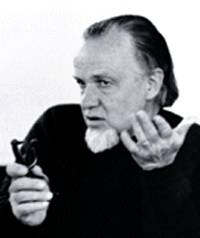
Image result for francis schaeffer

Francis Schaeffer and Adrian Rogers

Image result for adrian rogers

(both Adrian Rogers and Francis Schaeffer mentioned Carl Sagan in their books and that prompted me to write Sagan and expose him to their views.


Carl Sagan pictured below:

_________

Image result for francis schaeffer

Francis Schaeffer

I mentioned earlier that I was blessed with the opportunity to correspond with Dr. Sagan. In his December 5, 1995 letter Dr. Sagan went on to tell me that he was enclosing his article “The Question of Abortion: A Search for Answers”by Carl Sagan and Ann Druyan. I am going to respond to several points made in that article. Here is a portion of Sagan’s article (here is a link to the whole article):

Image result for carl sagan and ann druyan

Carl Sagan and Ann Druyan pictured above

 “The Question of Abortion: A Search for Answers”

by Carl Sagan and Ann Druyan

For the complete text, including illustrations, introductory quote, footnotes, and commentary on the reaction to the originally published article see Billions and Billions.

The issue had been decided years ago. The court had chosen the middle ground. You’d think the fight was over. Instead, there are mass rallies, bombings and intimidation, murders of workers at abortion clinics, arrests, intense lobbying, legislative drama, Congressional hearings, Supreme Court decisions, major political parties almost defining themselves on the issue, and clerics threatening politicians with perdition. Partisans fling accusations of hypocrisy and murder. The intent of the Constitution and the will of God are equally invoked. Doubtful arguments are trotted out as certitudes. The contending factions call on science to bolster their positions. Families are divided, husbands and wives agree not to discuss it, old friends are no longer speaking. Politicians check the latest polls to discover the dictates of their consciences. Amid all the shouting, it is hard for the adversaries to hear one another. Opinions are polarized. Minds are closed.


Is it wrong to abort a pregnancy? Always? Sometimes? Never? How do we decide? We wrote this article to understand better what the contending views are and to see if we ourselves could find a position that would satisfy us both. Is there no middle ground? We had to weigh the arguments of both sides for consistency and to pose test cases, some of which are purely hypothetical. If in some of these tests we seem to go too far, we ask the reader to be patient with us–we’re trying to stress the various positions to the breaking point to see their weaknesses and where they fail.

In contemplative moments, nearly everyone recognizes that the issue is not wholly one-sided. Many partisans of differing views, we find, feel some disquiet, some unease when confronting what’s behind the opposing arguments. (This is partly why such confrontations are avoided.) And the issue surely touches on deep questions: What are our responses to one another? Should we permit the state to intrude into the most intimate and personal aspects of our lives? Where are the boundaries of freedom? What does it mean to be human?

Of the many actual points of view, it is widely held–especially in the media, which rarely have the time or the inclination to make fine distinctions–that there are only two: “pro-choice” and “pro-life.” This is what the two principal warring camps like to call themselves, and that’s what we’ll call them here. In the simplest characterization, a pro-choicer would hold that the decision to abort a pregnancy is to be made only by the woman; the state has no right to interfere. And a pro-lifer would hold that, from the moment of conception, the embryo or fetus is alive; that this life imposes on us a moral obligation to preserve it; and that abortion is tantamount to murder. Both names–pro-choice and pro-life–were picked with an eye toward influencing those whose minds are not yet made up: Few people wish to be counted either as being against freedom of choice or as opposed to life. Indeed, freedom and life are two of our most cherished values, and here they seem to be in fundamental conflict.

Let’s consider these two absolutist positions in turn. A newborn baby is surely the same being it was just before birth. There ‘s good evidence that a late-term fetus responds to sound–including music, but especially its mother’s voice. It can suck its thumb or do a somersault. Occasionally, it generates adult brain-wave patterns. Some people claim to remember being born, or even the uterine environment. Perhaps there is thought in the womb. It’s hard to maintain that a transformation to full personhood happens abruptly at the moment of birth. Why, then, should it be murder to kill an infant the day after it was born but not the day before?

As a practical matter, this isn’t very important: Less than 1 percent of all tabulated abortions in the United States are listed in the last three months of pregnancy (and, on closer investigation, most such reports turn out to be due to miscarriage or miscalculation). But third-trimester abortions provide a test of the limits of the pro-choice point of view. Does a woman’s “innate right to control her own body” encompass the right to kill a near-term fetus who is, for all intents and purposes, identical to a newborn child?

We believe that many supporters of reproductive freedom are troubled at least occasionally by this question. But they are reluctant to raise it because it is the beginning of a slippery slope. If it is impermissible to abort a pregnancy in the ninth month, what about the eighth, seventh, sixth … ? Once we acknowledge that the state can interfere at any time in the pregnancy, doesn’t it follow that the state can interfere at all times?

Abortion and the slippery slope argument above

This conjures up the specter of predominantly male, predominantly affluent legislators telling poor women they must bear and raise alone children they cannot afford to bring up; forcing teenagers to bear children they are not emotionally prepared to deal with; saying to women who wish for a career that they must give up their dreams, stay home, and bring up babies; and, worst of all, condemning victims of rape and incest to carry and nurture the offspring of their assailants. Legislative prohibitions on abortion arouse the suspicion that their real intent is to control the independence and sexuality of women…

And yet, by consensus, all of us think it proper that there be prohibitions against, and penalties exacted for, murder. It would be a flimsy defense if the murderer pleads that this is just between him and his victim and none of the government’s business. If killing a fetus is truly killing a human being, is it not the duty of the state to prevent it? Indeed, one of the chief functions of government is to protect the weak from the strong.

If we do not oppose abortion at some stage of pregnancy, is there not a danger of dismissing an entire category of human beings as unworthy of our protection and respect? And isn’t that dismissal the hallmark of sexism, racism, nationalism, and religious fanaticism? Shouldn’t those dedicated to fighting such injustices be scrupulously careful not to embrace another?

Adrian Rogers’ sermon on animal rights refutes Sagan here

There is no right to life in any society on Earth today, nor has there been at any former time… : We raise farm animals for slaughter; destroy forests; pollute rivers and lakes until no fish can live there; kill deer and elk for sport, leopards for the pelts, and whales for fertilizer; entrap dolphins, gasping and writhing, in great tuna nets; club seal pups to death; and render a species extinct every day. All these beasts and vegetables are as alive as we. What is (allegedly) protected is not life, but human life.

Genesis 3 defines being human

And even with that protection, casual murder is an urban commonplace, and we wage “conventional” wars with tolls so terrible that we are, most of us, afraid to consider them very deeply… That protection, that right to life, eludes the 40,000 children under five who die on our planet each day from preventable starvation, dehydration, disease, and neglect.

Those who assert a “right to life” are for (at most) not just any kind of life, but for–particularly and uniquely—human life. So they too, like pro-choicers, must decide what distinguishes a human being from other animals and when, during gestation, the uniquely human qualities–whatever they are–emerge.

The Bible talks about the differences between humans and animals

Despite many claims to the contrary, life does not begin at conception: It is an unbroken chain that stretches back nearly to the origin of the Earth, 4.6 billion years ago. Nor does human life begin at conception: It is an unbroken chain dating back to the origin of our species, hundreds of thousands of years ago. Every human sperm and egg is, beyond the shadow of a doubt, alive. They are not human beings, of course. However, it could be argued that neither is a fertilized egg.

In some animals, an egg develops into a healthy adult without benefit of a sperm cell. But not, so far as we know, among humans. A sperm and an unfertilized egg jointly comprise the full genetic blueprint for a human being. Under certain circumstances, after fertilization, they can develop into a baby. But most fertilized eggs are spontaneously miscarried. Development into a baby is by no means guaranteed. Neither a sperm and egg separately, nor a fertilized egg, is more than a potential baby or a potential adult. So if a sperm and egg are as human as the fertilized egg produced by their union, and if it is murder to destroy a fertilized egg–despite the fact that it’s only potentially a baby–why isn’t it murder to destroy a sperm or an egg?

Hundreds of millions of sperm cells (top speed with tails lashing: five inches per hour) are produced in an average human ejaculation. A healthy young man can produce in a week or two enough spermatozoa to double the human population of the Earth. So is masturbation mass murder? How about nocturnal emissions or just plain sex? When the unfertilized egg is expelled each month, has someone died? Should we mourn all those spontaneous miscarriages? Many lower animals can be grown in a laboratory from a single body cell. Human cells can be cloned… In light of such cloning technology, would we be committing mass murder by destroying any potentially clonable cells? By shedding a drop of blood?


All human sperm and eggs are genetic halves of “potential” human beings. Should heroic efforts be made to save and preserve all of them, everywhere, because of this “potential”? Is failure to do so immoral or criminal? Of course, there’s a difference between taking a life and failing to save it. And there’s a big difference between the probability of survival of a sperm cell and that of a fertilized egg. But the absurdity of a corps of high-minded semen-preservers moves us to wonder whether a fertilized egg’s mere “potential” to become a baby really does make destroying it murder.

Opponents of abortion worry that, once abortion is permissible immediately after conception, no argument will restrict it at any later time in the pregnancy. Then, they fear, one day it will be permissible to murder a fetus that is unambiguously a human being. Both pro-choicers and pro-lifers (at least some of them) are pushed toward absolutist positions by parallel fears of the slippery slope.


Another slippery slope is reached by those pro-lifers who are willing to make an exception in the agonizing case of a pregnancy resulting from rape or incest. But why should the right to live depend on the circumstances of conception? If the same child were to result, can the state ordain life for the offspring of a lawful union but death for one conceived by force or coercion? How can this be just? And if exceptions are extended to such a fetus, why should they be withheld from any other fetus? This is part of the reason some pro-lifers adopt what many others consider the outrageous posture of opposing abortions under any and all circumstances–only excepting, perhaps, when the life of the mother is in danger.

By far the most common reason for abortion worldwide is birth control. So shouldn’t opponents of abortion be handing out contraceptives and teaching school children how to use them? That would be an effective way to reduce the number of abortions. Instead, the United States is far behind other nations in the development of safe and effective methods of birth control–and, in many cases, opposition to such research (and to sex education) has come from the same people who oppose abortions.continue on to Part 3

For the complete text, including illustrations, introductory quote, footnotes, and commentary on the reaction to the originally published article see Billions and Billions.

The attempt to find an ethically sound and unambiguous judgment on when, if ever, abortion is permissible has deep historical roots. Often, especially in Christian tradition, such attempts were connected with the question of when the soul enters the body–a matter not readily amenable to scientific investigation and an issue of controversy even among learned theologians. Ensoulment has been asserted to occur in the sperm before conception, at conception, at the time of “quickening” (when the mother is first able to feel the fetus stirring within her), and at birth. Or even later.

Different religions have different teachings. Among hunter-gatherers, there are usually no prohibitions against abortion, and it was common in ancient Greece and Rome. In contrast, the more severe Assyrians impaled women on stakes for attempting abortion. The Jewish Talmud teaches that the fetus is not a person and has no rights. The Old and New Testaments–rich in astonishingly detailed prohibitions on dress, diet, and permissible words–contain not a word specifically prohibiting abortion. The only passage that’s remotely relevant (Exodus 21:22) decrees that if there’s a fight and a woman bystander should accidentally be injured and made to miscarry, the assailant must pay a fine.

Neither St. Augustine nor St. Thomas Aquinas considered early-term abortion to be homicide (the latter on the grounds that the embryo doesn’t look human). This view was embraced by the Church in the Council of Vienne in 1312, and has never been repudiated. The Catholic Church’s first and long-standing collection of canon law (according to the leading historian of the Church’s teaching on abortion, John Connery, S.J.) held that abortion was homicide only after the fetus was already “formed”–roughly, the end of the first trimester.

But when sperm cells were examined in the seventeenth century by the first microscopes, they were thought to show a fully formed human being. An old idea of the homunculus was resuscitated–in which within each sperm cell was a fully formed tiny human, within whose testes were innumerable other homunculi, etc., ad infinitum. In part through this misinterpretation of scientific data, in 1869 abortion at any time for any reason became grounds for excommunication. It is surprising to most Catholics and others to discover that the date was not much earlier.

From colonial times to the nineteenth century, the choice in the United States was the woman’s until “quickening.” An abortion in the first or even second trimester was at worst a misdemeanor. Convictions were rarely sought and almost impossible to obtain, because they depended entirely on the woman’s own testimony of whether she had felt quickening, and because of the jury’s distaste for prosecuting a woman for exercising her right to choose. In 1800 there was not, so far as is known, a single statute in the United States concerning abortion. Advertisements for drugs to induce abortion could be found in virtually every newspaper and even in many church publications–although the language used was suitably euphemistic, if widely understood.

But by 1900, abortion had been banned at any time in pregnancy by every state in the Union, except when necessary to save the woman’s life. What happened to bring about so striking a reversal? Religion had little to do with it.Drastic economic and social conversions were turning this country from an agrarian to an urban-industrial society. America was in the process of changing from having one of the highest birthrates in the world to one of the lowest. Abortion certainly played a role and stimulated forces to suppress it.


One of the most significant of these forces was the medical profession. Up to the mid-nineteenth century, medicine was an uncertified, unsupervised business. Anyone could hang up a shingle and call himself (or herself) a doctor. With the rise of a new, university-educated medical elite, anxious to enhance the status and influence of physicians, the American Medical Association was formed. In its first decade, the AMA began lobbying against abortions performed by anyone except licensed physicians. New knowledge of embryology, the physicians said, had shown the fetus to be human even before quickening.

Their assault on abortion was motivated not by concern for the health of the woman but, they claimed, for the welfare of the fetus. You had to be a physician to know when abortion was morally justified, because the question depended on scientific and medical facts understood only by physicians. At the same time, women were effectively excluded from the medical schools, where such arcane knowledge could be acquired. So, as things worked out, women had almost nothing to say about terminating their own pregnancies. It was also up to the physician to decide if the pregnancy posed a threat to the woman, and it was entirely at his discretion to determine what was and was not a threat. For the rich woman, the threat might be a threat to her emotional tranquillity or even to her lifestyle. The poor woman was often forced to resort to the back alley or the coat hanger.

This was the law until the 1960s, when a coalition of individuals and organizations, the AMA now among them, sought to overturn it and to reinstate the more traditional values that were to be embodied in Roe v. Wade.continue on to Part 4

If you deliberately kill a human being, it’s called murder. If you deliberately kill a chimpanzee–biologically, our closest relative, sharing 99.6 percent of our active genes–whatever else it is, it’s not murder. To date, murder uniquely applies to killing human beings. Therefore, the question of when personhood (or, if we like, ensoulment) arises is key to the abortion debate. When does the fetus become human? When do distinct and characteristic human qualities emerge?

Section 8 Sperm journey to becoming Human 

We recognize that specifying a precise moment will overlook individual differences. Therefore, if we must draw a line, it ought to be drawn conservatively–that is, on the early side. There are people who object to having to set some numerical limit, and we share their disquiet; but if there is to be a law on this matter, and it is to effect some useful compromise between the two absolutist positions, it must specify, at least roughly, a time of transition to personhood.

Every one of us began from a dot. A fertilized egg is roughly the size of the period at the end of this sentence. The momentous meeting of sperm and egg generally occurs in one of the two fallopian tubes. One cell becomes two, two become four, and so on—an exponentiation of base-2 arithmetic. By the tenth day the fertilized egg has become a kind of hollow sphere wandering off to another realm: the womb. It destroys tissue in its path. It sucks blood from capillaries. It bathes itself in maternal blood, from which it extracts oxygen and nutrients. It establishes itself as a kind of parasite on the walls of the uterus.By the third week, around the time of the first missed menstrual period, the forming embryo is about 2 millimeters long and is developing various body parts. Only at this stage does it begin to be dependent on a rudimentary placenta. It looks a little like a segmented worm.By the end of the fourth week, it’s about 5 millimeters (about 1/5 inch) long. It’s recognizable now as a vertebrate, its tube-shaped heart is beginning to beat, something like the gill arches of a fish or an amphibian become conspicuous, and there is a pronounced tail. It looks rather like a newt or a tadpole. This is the end of the first month after conception.By the fifth week, the gross divisions of the brain can be distinguished. What will later develop into eyes are apparent, and little buds appear—on their way to becoming arms and legs.By the sixth week, the embryo is 13 millimeteres (about ½ inch) long. The eyes are still on the side of the head, as in most animals, and the reptilian face has connected slits where the mouth and nose eventually will be.By the end of the seventh week, the tail is almost gone, and sexual characteristics can be discerned (although both sexes look female). The face is mammalian but somewhat piglike.By the end of the eighth week, the face resembles that of a primate but is still not quite human. Most of the human body parts are present in their essentials. Some lower brain anatomy is well-developed. The fetus shows some reflex response to delicate stimulation.By the tenth week, the face has an unmistakably human cast. It is beginning to be possible to distinguish males from females. Nails and major bone structures are not apparent until the third month.By the fourth month, you can tell the face of one fetus from that of another. Quickening is most commonly felt in the fifth month. The bronchioles of the lungs do not begin developing until approximately the sixth month, the alveoli still later.

So, if only a person can be murdered, when does the fetus attain personhood? When its face becomes distinctly human, near the end of the first trimester? When the fetus becomes responsive to stimuli–again, at the end of the first trimester? When it becomes active enough to be felt as quickening, typically in the middle of the second trimester? When the lungs have reached a stage of development sufficient that the fetus might, just conceivably, be able to breathe on its own in the outside air?

The trouble with these particular developmental milestones is not just that they’re arbitrary. More troubling is the fact that none of them involves uniquely humancharacteristics–apart from the superficial matter of facial appearance. All animals respond to stimuli and move of their own volition. Large numbers are able to breathe. But that doesn’t stop us from slaughtering them by the billions. Reflexes and motion are not what make us human.

Sagan’s conclusion based on arbitrary choice of the presence of thought by unborn baby

Other animals have advantages over us–in speed, strength, endurance, climbing or burrowing skills, camouflage, sight or smell or hearing, mastery of the air or water. Our one great advantage, the secret of our success, is thought–characteristically human thought. We are able to think things through, imagine events yet to occur, figure things out. That’s how we invented agriculture and civilization. Thought is our blessing and our curse, and it makes us who we are.

Thinking occurs, of course, in the brain–principally in the top layers of the convoluted “gray matter” called the cerebral cortex. The roughly 100 billion neurons in the brain constitute the material basis of thought. The neurons are connected to each other, and their linkups play a major role in what we experience as thinking. But large-scale linking up of neurons doesn’t begin until the 24th to 27th week of pregnancy–the sixth month.

By placing harmless electrodes on a subject’s head, scientists can measure the electrical activity produced by the network of neurons inside the skull. Different kinds of mental activity show different kinds of brain waves. But brain waves with regular patterns typical of adult human brains do not appear in the fetus until about the 30th week of pregnancy–near the beginning of the third trimester. Fetuses younger than this–however alive and active they may be–lack the necessary brain architecture. They cannot yet think.

Acquiescing in the killing of any living creature, especially one that might later become a baby, is troublesome and painful. But we’ve rejected the extremes of “always” and “never,” and this puts us–like it or not–on the slippery slope. If we are forced to choose a developmental criterion, then this is where we draw the line: when the beginning of characteristically human thinking becomes barely possible.

It is, in fact, a very conservative definition: Regular brain waves are rarely found in fetuses. More research would help… If we wanted to make the criterion still more stringent, to allow for occasional precocious fetal brain development, we might draw the line at six months. This, it so happens, is where the Supreme Court drew it in 1973–although for completely different reasons.

Its decision in the case of Roe v. Wade changed American law on abortion. It permits abortion at the request of the woman without restriction in the first trimester and, with some restrictions intended to protect her health, in the second trimester. It allows states to forbid abortion in the third trimester, except when there’s a serious threat to the life or health of the woman. In the 1989 Webster decision, the Supreme Court declined explicitly to overturn Roe v. Wade but in effect invited the 50 state legislatures to decide for themselves.

What was the reasoning in Roe v. Wade? There was no legal weight given to what happens to the children once they are born, or to the family. Instead, a woman’s right to reproductive freedom is protected, the court ruled, by constitutional guarantees of privacy. But that right is not unqualified. The woman’s guarantee of privacy and the fetus’s right to life must be weighed–and when the court did the weighing’ priority was given to privacy in the first trimester and to life in the third. The transition was decided not from any of the considerations we have been dealing with so far…–not when “ensoulment” occurs, not when the fetus takes on sufficient human characteristics to be protected by laws against murder. Instead, the criterion adopted was whether the fetus could live outside the mother. This is called “viability” and depends in part on the ability to breathe. The lungs are simply not developed, and the fetus cannot breathe–no matter how advanced an artificial lung it might be placed in—until about the 24th week, near the start of the sixth month. This is why Roe v. Wade permits the states to prohibit abortions in the last trimester. It’s a very pragmatic criterion.

If the fetus at a certain stage of gestation would be viable outside the womb, the argument goes, then the right of the fetus to life overrides the right of the woman to privacy. But just what does “viable” mean? Even a full-term newborn is not viable without a great deal of care and love. There was a time before incubators, only a few decades ago, when babies in their seventh month were unlikely to be viable. Would aborting in the seventh month have been permissible then? After the invention of incubators, did aborting pregnancies in the seventh month suddenly become immoral? What happens if, in the future, a new technology develops so that an artificial womb can sustain a fetus even before the sixth month by delivering oxygen and nutrients through the blood–as the mother does through the placenta and into the fetal blood system? We grant that this technology is unlikely to be developed soon or become available to many. But if it were available, does it then become immoral to abort earlier than the sixth month, when previously it was moral? A morality that depends on, and changes with, technology is a fragile morality; for some, it is also an unacceptable morality.

And why, exactly, should breathing (or kidney function, or the ability to resist disease) justify legal protection? If a fetus can be shown to think and feel but not be able to breathe, would it be all right to kill it? Do we value breathing more than thinking and feeling? Viability arguments cannot, it seems to us, coherently determine when abortions are permissible. Some other criterion is needed. Again, we offer for consideration the earliest onset of human thinking as that criterion.

Since, on average, fetal thinking occurs even later than fetal lung development, we find Roe v. Wade to be a good and prudent decision addressing a complex and difficult issue. With prohibitions on abortion in the last trimester–except in cases of grave medical necessity–it strikes a fair balance between the conflicting claims of freedom and life.What do you think? What have others said about Carl Sagan’s thoughts on 

END OF SAGAN’S ARTICLE

Image result for carl sagan and ann druyan
Carl Sagan with his wife Ann in the 1990’s
Image result for adrian rogers francis schaeffer
I grew up in Memphis as a member of Bellevue Baptist Church under our pastor Adrian Rogers and attended ECS High School where the books and films of Francis Schaeffer were taught. Both men dealt with current issues in the culture such as the film series COSMOS by Carl Sagan. I personally read several of Sagan’s books.  (Francis and Edith Schaeffer pictured below in their home at L’ Abri in Switzerland where Francis  taught students for 3 decades.
Image result for francis schaeffer
630 × 414Images may be subject to copyright.

Xxxxxxxxxxxxx 

——

FEATURED ARTIST IS SEURAT

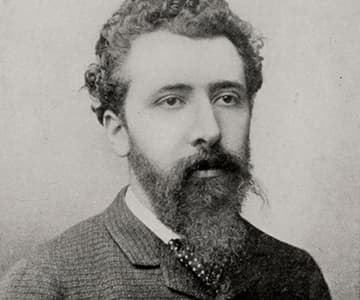
Georges Seurat - 1888

GEORGES SEURAT (1859-1891)

Georges Seurat is one of the most important post-impressionist painters, and he is considered the creator of the “pointillism”, a style of painting in which small distinct points of primary colors create the impression of a wide selection of secondary and intermediate colors.


.

Related posts:

Taking on Ark Times Bloggers on various issues Part F “Carl Sagan’s views on how God should try and contact us” includes film “The Basis for Human Dignity”

April 8, 2013 – 7:07 am

I have gone back and forth and back and forth with many liberals on the Arkansas Times Blog on many issues such as abortion, human rights, welfare, poverty, gun control  and issues dealing with popular culture. Here is another exchange I had with them a while back. My username at the Ark Times Blog is Saline […] By Everette Hatcher III | Posted in Francis SchaefferProlife | Edit | Comments (0)

Carl Sagan v. Nancy Pearcey

March 18, 2013 – 9:11 am

On March 17, 2013 at our worship service at Fellowship Bible Church, Ben Parkinson who is one of our teaching pastors spoke on Genesis 1. He spoke about an issue that I was very interested in. Ben started the sermon by reading the following scripture: Genesis 1-2:3 English Standard Version (ESV) The Creation of the […] By Everette Hatcher III | Posted in Adrian RogersAtheists ConfrontedCurrent Events | TaggedBen ParkinsonCarl Sagan | Edit | Comments (0)

Review of Carl Sagan book (Part 4 of series on Evolution)

May 24, 2012 – 1:47 am

Review of Carl Sagan book (Part 4 of series on Evolution) The Long War against God-Henry Morris, part 5 of 6 Uploaded by FLIPWORLDUPSIDEDOWN3 on Aug 30, 2010 http://www.icr.org/ http://store.icr.org/prodinfo.asp?number=BLOWA2http://store.icr.org/prodinfo.asp?number=BLOWASGhttp://www.fliptheworldupsidedown.com/blog _______________________ I got this from a blogger in April of 2008 concerning candidate Obama’s view on evolution: Q: York County was recently in the news […] By Everette Hatcher III | Posted in Atheists ConfrontedCurrent EventsPresident Obama | EditComments (0)

_

FRANCIS SCHAEFFER ANALYZES ART AND CULTURE Part 548 Carl Sagan My 5-15-94 letter to Carl Sagan which was answered in Dec of 95 by Sagan himself Featured artist is Jean Cocteau

___________

FRANCIS SCHAEFFER ANALYZES ART AND CULTURE Part 32 Carl Sagan Part G My 5-15-94 letter to Carl Sagan which was answered in Dec of 95 by Sagan himself (Feature on artists )

The Scientific Age

—-

Adrian Rogers is pictured below and Francis Schaeffer above.

Watching the film HOW SHOULD WE THEN LIVE? in 1979 impacted my life greatly

Francis Schaeffer in the film WHATEVER HAPPENED TO THE HUMAN RACE?

Francis and Edith Schaeffer


_______

On May 15, 1994 on the 10th anniversary of the passing of Francis Schaeffer I sent a letter to Carl Sagan and here is a portion of that letter below:

I have enclosed a cassette tape by Adrian Rogers and it includes  a story about  Charles Darwin‘s journey from  the position of theistic evolution to agnosticism. Here are the four bridges that Adrian Rogers says evolutionists can’t cross in the CD  “Four Bridges that the Evolutionist Cannot Cross.” 1. The Origin of Life and the law of biogenesis. 2. The Fixity of the Species. 3.The Second Law of Thermodynamics. 4. The Non-Physical Properties Found in Creation.  

In the first 3 minutes of the cassette tape is the hit song “Dust in the Wind.” Below I have given you some key points  Francis Schaeffer makes about the experiment that Solomon undertakes in the book of Ecclesiastes to find satisfaction by  looking into  learning (1:16-18), laughter, ladies, luxuries,  and liquor (2:1-3, 8, 10, 11), and labor (2:4-6, 18-20).

Schaeffer noted that Solomon took a look at the meaning of life on the basis of human life standing alone between birth and death “under the sun.” This phrase UNDER THE SUN appears over and over in Ecclesiastes. The Christian Scholar Ravi Zacharias noted, “The key to understanding the Book of Ecclesiastes is the term UNDER THE SUN — What that literally means is you lock God out of a closed system and you are left with only this world of Time plus Chance plus matter.”

Here the first 7 verses of Ecclesiastes followed by Schaeffer’s commentary on it:

The words of the Preacher, the son of David, king in Jerusalem. Vanity of vanities, says the Preacher, vanity of vanities! All is vanity. What does man gain by all the toil at which he toils under the sun? A generation goes, and a generation comes, but the earth remains forever. The sun rises, and the sun goes down, and hastens to the place where it rises. The wind blows to the south and goes around to the north; around and around goes the wind, and on its circuits the wind returns. All streams run to the sea, but the sea is not full; to the place where the streams flow, there they flow again.  

Solomon is showing a high degree of comprehension of evaporation and the results of it.  Seeing also in reality nothing changes. There is change but always in a set framework and that is cycle. You can relate this to the concepts of modern man. Ecclesiastes is the only pessimistic book in the Bible and that is because of the place where Solomon limits himself. He limits himself to the question of human life, life under the sun between birth and death and the answers this would give.

Solomon doesn’t place man outside of the cycle. Man doesn’t escape the cycle. Man is in the cycle. Birth and death and youth and old age.

There is no doubt in my mind that Solomon had the same experience in his life that I had as a younger man (at the age of 18 in 1930). I remember standing by the sea and the moon arose and it was copper and beauty. Then the moon did not look like a flat dish but a globe or a sphere since it was close to the horizon. One could feel the global shape of the earth too. Then it occurred to me that I could contemplate the interplay of the spheres and I was exalted because I thought I can look upon them with all their power, might, and size, but they could contempt nothing. Then came upon me a horror of great darkness because it suddenly occurred to me that although I could contemplate them and they could contemplate nothing yet they would continue to turn in ongoing cycles when I saw no more forever and I was crushed.

Let me show you some inescapable conclusions if you choose to live without God in the picture. Schaeffer noted that Solomon came to these same conclusions when he looked at life “under the sun.”

  1. Death is the great equalizer (Eccl 3:20, “All go to the same place; all come from dust, and to dust all return.”)
  2. Chance and time have determined the past, and they will determine the future.  (Ecclesiastes 9:11-13 “I have seen something else under the sun:  The race is not to the swift
    or the battle to the strong, nor does food come to the wise or wealth to the brilliant  or favor to the learned; but time and chance happen to them all.  Moreover, no one knows when their hour will come: As fish are caught in a cruel net, or birds are taken in a snare, so people are trapped by evil times  that fall unexpectedly upon them.”)
  3. Power reigns in this life, and the scales are not balanced(Eccl 4:1; “Again I looked and saw all the oppression that was taking place under the sun: I saw the tears of the oppressed—
    and they have no comforter; power was on the side of their oppressors—  and they have no comforter.” 7:15 “In this meaningless life of mine I have seen both of these: the righteous perishing in their righteousness,  and the wicked living long in their wickedness. ).
  4. Nothing in life gives true satisfaction without God including knowledge (1:16-18), ladies and liquor (2:1-3, 8, 10, 11), and great building projects (2:4-6, 18-20).
  5. There is no ultimate lasting meaning in life. (1:2)

By the way, the final chapter of Ecclesiastes finishes with Solomon emphasizing that serving God is the only proper response of man. Solomon looks above the sun and brings God back into the picture in the final chapter of the book in Ecclesiastes 12:13-14, “ Now all has been heard; here is the conclusion of the matter: Fear God and keep his commandments, for this is the whole duty of man.  For God will bring every deed into judgment, including every hidden thing, whether it is good or evil.”

The answer to find meaning in life is found in putting your faith and trust in Jesus Christ. The Bible is true from cover to cover and can be trusted. In 1978 I heard the song “Dust in the Wind” by Kansas when it rose to #6 on the charts. That song told me that Kerry Livgren the writer of that song and a member of Kansas had come to the same conclusion that Solomon had and that “all was meaningless UNDER THE SUN,” and looking ABOVE THE SUN was the only option.  I remember mentioning to my friends at church that we may soon see some members of Kansas become Christians because their search for the meaning of life had obviously come up empty even though they had risen from being an unknown band to the top of the music business and had all the wealth and fame that came with that.

Livgren wrote, “All we do, crumbles to the ground though we refuse to see, Dust in the Wind, All we are is dust in the wind, Don’t hang on, Nothing lasts forever but the Earth and Sky, It slips away, And all your money won’t another minute buy.”

Both Kerry Livgren and Dave Hope of Kansas became Christians eventually. Kerry Livgren first tried Eastern Religions and Dave Hope had to come out of a heavy drug addiction. I was shocked and elated to see their personal testimony on The 700 Club in 1981.  Livgren lives in Topeka, Kansas today where he teaches “Diggers,” a Sunday school class at Topeka Bible Church. Hope is the head of Worship, Evangelism and Outreach at Immanuel Anglican Church in Destin, Florida.

__________

Francis Schaeffer below pictured on cover of World Magazine:

___________________

Francis Schaeffer pictured below:

_____

Francis Schaeffer has written extensively on art and culture spanning the last 2000years and here are some posts I have done on this subject before : Francis Schaeffer’s “How should we then live?” Video and outline of episode 10 “Final Choices” episode 9 “The Age of Personal Peace and Affluence”episode 8 “The Age of Fragmentation”episode 7 “The Age of Non-Reason” episode 6 “The Scientific Age” , episode 5 “The Revolutionary Age” episode 4 “The Reformation” episode 3 “The Renaissance”episode 2 “The Middle Ages,”, and  episode 1 “The Roman Age,” . My favorite episodes are number 7 and 8 since they deal with modern art and culture primarily.(Joe Carter rightly noted,Schaefferwho always claimed to be an evangelist and not aphilosopher—was often criticized for the way his work oversimplifiedintellectual history and philosophy.” To those critics I say take a chill pillbecause Schaeffer was introducing millions into the fields of art andculture!!!! !!! More people need to read his works and blog about thembecause they show how people’s worldviews affect their lives!

J.I.PACKER WROTE OF SCHAEFFER, “His communicative style was not that of acautious academic who labors for exhaustive coverage and dispassionate objectivity. It was rather that of an impassioned thinker who paints his vision of eternal truth in bold strokes and stark contrasts.Yet it is a fact that MANY YOUNG THINKERS AND ARTISTS…HAVE FOUND SCHAEFFER’S ANALYSES A LIFELINE TO SANITY WITHOUT WHICH THEY COULD NOT HAVE GONE ON LIVING.”

Francis Schaeffer’s works  are the basis for a large portion of my blog posts andthey have stood the test of time. In fact, many people would say that many of the things he wrote in the 1960’s  were right on  in the sense he saw where ourwestern society was heading and he knew that abortion, infanticide and youthenthansia were  moral boundaries we would be crossing  in the coming decadesbecause of humanism and these are the discussions we are having now!)

There is evidence that points to the fact that the Bible is historically true asSchaeffer pointed out in episode 5 of WHATEVER HAPPENED TO THE HUMAN RACE? There is a basis then for faith in Christ alone for our eternal hope. This linkshows how to do that.

Francis Schaeffer in Art and the Bible noted, “Many modern artists, it seems to me, have forgotten the value that art has in itself. Much modern art is far too intellectual to be great art. Many modern artists seem not to see the distinction between man and non-man, and it is a part of the lostness of modern man that they no longer see value in the work of art as a work of art.” 

Many modern artists are left in this point of desperation that Schaeffer points out and it reminds me of the despair that Solomon speaks of in Ecclesiastes.  Christian scholar Ravi Zacharias has noted, “The key to understanding the Book of Ecclesiastes is the term ‘under the sun.’ What that literally means is you lock God out of a closed system, and you are left with only this world of time plus chance plus matter.” THIS IS EXACT POINT SCHAEFFER SAYS SECULAR ARTISTSARE PAINTING FROM TODAY BECAUSE THEY BELIEVED ARE A RESULTOF MINDLESS CHANCE.

____

___________________

_______________

Francis Schaeffer- How Should We Then Live? -6- The Scientific Age

have written a lot in the past about Carl Sagan on my blog and over and over again these posts have been some of my most popular because I believe Carl Sagan did a great job of articulating the naturalistic view that the world is a result of nothing more than impersonal matter, time and chance. Christians like me have to challenge those who hold this view and that is why I took it upon myself to read many of Sagan’s books and to watch his film series Cosmos.

Francis Schaeffer in his book HE IS THERE AND HE IS NOT SILENT (Chapter 4) asserts:

Because men have lost the objective basis for certainty of knowledge in the areas in which they are working, more and more we are going to find them manipulating science according to their own sociological or political desires rather than standing upon concrete objectivity. We are going to find increasingly what I would call sociological science, where men manipulate the scientific facts. Carl Sagan (1934-1996), professor of astronomy and space science at Cornell University, demonstrates that the concept of a manipulated science is not far-fetched. He mixes science and science fiction constantly. He is a true follower of Edgar Rice Burroughs (1875-1950). The media gives him much TV prime time and much space in the press and magazine coverage, and the United State Government spent millions of dollars in the special equipment which was included in the equipment of the Mars probe–at his instigation, to give support to his obsessive certainty that life would be found on Mars, or that even large-sized life would be found there. With Carl Sagan the line concerning objective science is blurred, and the media spreads his mixture of science and science fiction out to the public as exciting fact. 

Carl Sagan pictured below:

Carl Sagan pictured below:

_________________________________

There is a tension in a person’s life that denies the existence of God but then he can’t live that way in the real world. Carl Sagan had this tension in his life. He denied that humans were special but he said we were precious in his movie CONTACT. He said that God didn’t exist but he did spend his whole life looking for life on other planets and if we had found it he said they would be able possibly to tell us what our purpose is in the universe. Note in the quote above that Schaeffer accuses Sagan of mixing science and science fiction. One side of his brain was ruling out that we have meaning and the other side was constanting searching for it.

In Sagan’s books and in his film series COSMOS he assumes that science is only naturalistic and materialistic and God is locked out. However, in the book THE DEMON-HAUNTED WORLD he does admit that he would be willing to consider evidence that pointed to God’s existence, but again in this review I attacked Sagan’s basis for his morality decisions and how it was insufficient on a materialistic base.

This is a review I did a few years ago.

THE DEMON-HAUNTED WORLD: Science as a Candle in the Dark by Carl Sagan. New York: Random House, 1995. 457 pages, extensive references, index. Hardcover; $25.95.
PSCF 48 (December 1996): 263.
Sagan is the David Duncan Professor of Astronomy and Space Sciences at Cornell University. He is author of many best sellers, including Cosmos, which became the most widely read science book ever published in the English language.
In this book Sagan discusses the claims of the paranormal and fringe-science. For instance, he examines closely such issues as astrology (p. 303), crop circles (p. 75), channelers (pp. 203-206), UFO abductees (pp. 185-186), faith-healing fakes (p. 229), and witch-hunting (p. 119). Readers of The Skeptical Inquirer will notice that Sagan’s approach is very similar.
Sagan writes:
The Committee for the Scientific Investigation of Claims of the Paranormal is an organization of scientists, academics, magicians, and others dedicated to skeptical scrutiny of emerging or full-blown pseudo-sciences. It was founded by the University of Buffalo philosopher Paul Kurtz in 1976. I’ve been affiliated with it since its beginning. Its acronym, CSICOP, is pronounced Asci-cop C as if it’s an organization of scientists performing a police function Y CSICOP publishes a bimonthly periodical called AThe Skeptical Inquirer. On the day it arrives, I take it home from the office and pore through its pages, wondering what new misunderstandings will be revealed (p. 299).
Sagan points out that in 1991 two pranksters in England admitted that they had been making crop figures for 15 years. They flattened the wheat with a heavy steel bar. Later on they used planks and ropes, but the media paid brief attention to the confession of these hoaxers. Why? Sagan concludes, ’Demons sell; hoaxers are boring and in bad taste’ (p. 76).
Christians must admire Sagan’s commitment to critical thinking, logic, and freedom of thought. He takes on many subjects in this book, and the vast majority of his analysis is exceptional. However, his opinions on religious matters are affected by his devotion to scientism. Sagan believes only that which can be proved by science is true. He disputes psychologist Charles Tart’s assertion that scientism is ’dehumanizing, despiritualizing’ (p. 267). Sagan comments, ’There is very little doubt that, in the everyday world, matter (and energy) exist. The evidence is all around us. In contrast, as I’ve mentioned earlier the evidence for something non-material called `spirit’ or `soul’ is very much in doubt’ (p. 267).
Science can only prove things about the physical world, and it cannot prove anything about the spiritual world. Does that mean that the mind and soul don’t exist? Of course not! First, we must realize that science is not the only way to truth. Even Sagan must admit that he must justify values like ’be objective’ or ’report data honestly’. Where do those values come from? They came from outside science, but they must be in place for science to work.
Sagan gives an illustration that contrasts physics and metaphysics. He shows that the physicist’s idea will have to be discarded if tests fail in the laboratory. Therefore, the main difference between physics and metaphysics is that the metaphysicist has no laboratory. This is a cute story, but can science answer the basic questions that underline all knowledge? Metaphysics is necessary for science to take place. It is not true that science is superior to metaphysics like Sagan would have us believe. The presuppositions of science can only be validated by philosophy. J. P. Moreland has correctly said, ’The validation of science is a philosophical issue, not a scientific one, and any claim to the contrary will be a self-refuting philosophical claim’ (Scaling the Secular City, p. 197).
Second, the absence of scientific evidence for the soul does not mean the soul does not exist. Sagan himself states,’Absence of evidence is not evidence of absence’ (p. 213).
I was impressed with the way Sagan put his inner thoughts on the table. For instance, he comments, ’Plainly, there’s something within me that’s ready to believe in life after death…If some good evidence for life after death was announced, I’d be eager to examine it; but it would have to be real scientific data, not mere anecdote’ (pp. 203-204). What kind of evidence is Sagan looking for? It certainly is not vague prophecies. He states, ’Think of how many religions attempt to validate themselves with prophecy…Think of how many people rely on these prophecies, however vague, however unfulfilled, to support or prop up their beliefs…Yet has there ever been a religion with the prophetic accuracy and reliability of science? (p. 30). The answer to that question is yes. Christianity can point to very clear passages such as Isaiah 53 and Daniel 11 written hundreds of years before the events occurred.
While comparing science to religion, Sagan comments, ’Science is far from a perfect instrument of knowledge. It’s just the best we have (pp. 27-28). Here Sagan is only half right. Science is imperfect, but it is not better than the Bible.’
The Demon-Haunted World is a thought-provoking book that I thoroughly enjoyed. Some of Sagan’s anti-Christian views come through, but on the whole, this book uses critical thinking and logic and applies them to the claims of the paranormal and fringe-science of our day.
Reviewed by Everette Hatcher III, P.O. Box 23416, Little Rock, AR 72221.

__________________________________________________

Carl Sagan pictured below:

Carl Sagan pictured below:

Carl Sagan pictured below:

I

Carl Sagan pictured below:

I

Carl Sagan pictured below:

______

Saying that Sagan tried to live by is below:

I agree with Sagan that we should embrace “the hard truth” but do the facts indicate that the Bible is filled with fables? If you want evidence lends support to the idea that the Bible is true then check out these next few videos by Francis Schaeffer and the material in the remaining part of this post:

Whatever Happened To The Human Race? | Episode 5 | Truth and History (20…

Here are some of the posts I have done in the past on the subject of the historical accuracy of the Bible: 1. The Babylonian Chronicleof Nebuchadnezzars Siege of Jerusalem2. Hezekiah’s Siloam Tunnel Inscription. 3. Taylor Prism (Sennacherib Hexagonal Prism)4. Biblical Cities Attested Archaeologically. 5. The Discovery of the Hittites6.Shishak Smiting His Captives7. Moabite Stone8Black Obelisk of Shalmaneser III9A Verification of places in Gospel of John and Book of Acts., 9B Discovery of Ebla Tablets10. Cyrus Cylinder11. Puru “The lot of Yahali” 9th Century B.C.E.12. The Uzziah Tablet Inscription13. The Pilate Inscription14. Caiaphas Ossuary14 B Pontius Pilate Part 214c. Three greatest American Archaeologists moved to accept Bible’s accuracy through archaeology.

________________________________

“Total Truth” – Nancy Pearcey Book Talk 2006

Nancy, Richard Pearcey to lead Francis Schaeffer Center at HBU

December 21, 2012

Best-selling author Nancy Pearcey and writer-editor J. Richard Pearcey have teamed up to create the Francis Schaeffer Center for Worldview and Culture on the campus of Houston Baptist University.

The purpose of the Francis Schaeffer Center is to “promote foundational research and out-of-the-box creative thinking based on historic Christianity as a total way of life informed by verifiable truth concerning God, humanity, and the cosmos,” according to the FSC mission statement.

Nancy Pearcey serves as director of the Francis Schaeffer Center. Formerly an agnostic, Nancy is professor and scholar-in-residence at HBU. She is the author of seminal works such as Total Truth, The Soul of Science, and Saving Leonardo, and also serves as editor at large of The Pearcey Report.  Nancy was heralded in The Economist as “America’s pre-eminent evangelical Protestant female intellectual.”

Courses created by FSC will give students a unique opportunity to work through Nancy’s award-winning books and other foundational resources on worldview and cultural engagement.  “Our goal at FSC is to equip students in every major to be critical and creative thinkers,” Pearcey said. “Under the visionary leadership of President Robert Sloan, Houston Baptist University is moving forward strategically to implement a Christian worldview approach more intentionally and comprehensively across all the disciplines.”

The Center is named for noted author Francis A. Schaeffer, whose work with wife Edith at L’Abri Fellowship in Switzerland won international respect for giving an “honest answer to honest questions.” Time magazine hailed the Schaeffers’ work as a “Mission to Intellectuals.”

J. Richard Pearcey serves as associate director of the Center. Richard is scholar for worldview studies at HBU, as well as editor and publisher of The Pearcey Report. He is formerly managing editor of the Capitol Hill newspaper Human Events and associate editor of the “Evans-Novak Political Report.”

“If the Christian worldview is true to reality, and we think a rational case can be made that it is, it can be the key to a renaissance of humanity, freedom, and creativity,” Richard said. “Nancy and I met at L’Abri in Switzerland, so we are grateful for the opportunity to say ‘thank you’ to the Schaeffers and their work by inspiring students and others  — teachers, activists, professionals — to apply Christian thought forms across the whole of life, from art to science to business and politics.”

HBU Provost John Mark Reynolds said, “When I was a young adult, the writings and films of Francis Schaeffer modeled a way of doing Christian apologetics that had an important impact on my life. It is my honor to see HBU set up a study center dedicated to the Schaeffer approach to worldview studies. There is no better time for Christians to impact the culture, few better models than Schaeffer for evangelicals, and no better team than Nancy and Richard Pearcey to set up the center.”

To arrange an interview with the Pearceys, please email Nancy at npearcey@hbu.edu or Richard at Pearcey@thepearceyreport.com.

_________

________

Featured artist is Jean Cocteau

Cocteau, Jean – by Jonathan Evens

Notre Dame de France, London: Jean Cocteau

by Jonathan Evens
Notre Dame de France, the Roman Catholic Francophone Chaplaincy in London run by the Marist Fathers, is squeezed between buildings in Leicester Place, which in turn is squeezed between the colour and commerce of Leicester Square’s crowded cinemas and the sushi, Szechuan, satay and stir fry served in Chinatown’s 78 restaurants. It feels like a historic anomaly, with origins going back to 1861 when the area had a large French population and the Marist Fathers established the mission on the site. Yet it maintains a valid and vibrant ministry with ever-growing calls on its pastoral services as the number of French-speakers in London has grown.
Time and space seem suspended in the light, airy and open expanse of this circular church hidden behind the bluff brick façade on Leicester Place; the building looking like a town house with a narrow arched and carved porch added to it. The unusual circular interior derives from the buildings original manifestation as ‘Burford’s Panorama’, built as a tourist attraction with a rotunda 90ft in diameter decorated with a scenic cylindrical painting by the Irish artist Robert Barker in 1796. The original building, which had been transformed into a church by the French architect Louis Auguste Boileau, was bombed out in the 1940s and almost entirely rebuilt from 1953-55.
From the time of its rebuilding onwards, Cultural Attaché René Varin encouraged the creation of a sacred space, which would honour France by approaching eminent artists of the time such as Georges-Laurent Saupique(base relief carving of Our Lady of Mercy, 1953) and Boris Anrep (Mosaic of the Nativity, 1954). The most significant and perhaps controversial artist was Jean Cocteau.
 
On entry to the church, however, it is both the rotunda and, beneath it, the Aubusson tapestry by Dom Robertdepicting paradise on earth to which eyes are immediately drawn. In a rather sweet and slightly sentimental image, this tapestry depicts the new Eve walking towards us, surrounded by the vegetation, flowers and creatures of the natural world, as a pure new bride. A quotation from Proverbs refers to Wisdom at the side of God in creation ‘like a master craftsman, ever at play in his presence.’
Dom Robert was a friend of Jean Cocteau who, over the course of eight days in November 1959 (when he was in London promoting his film Le Testament d’Orphee), painted murals of the annunciation, crucifixion, and assumption in the Our Lady’s Chapel at Notre Dame de France. Cocteau had received a honorary doctorate from Oxford University with the support of René Varin and then asked if there was anything he could do in return. Varin suggested that he decorate the chapel at Notre Dame de France.
Such was Cocteau’s fame at the time that a screen was erected to hold back the public and press while he painted the murals. It is said that he arrived each morning at about 10am and always began by lighting a candle. While working on the drawings, he was heard talking to the Virgin Mary: ‘O you, most beautiful of women, loveliest of God’s creatures, you were the best loved. So I want you to be my best piece of work too … I am drawing you with light strokes … You are the yet unfinished work of Grace’(Les murs de Jean Cocteau, written by Carole Weissweiller, photographed by Suzanne Held, Hergé, 1998).
Once he had finished his task, Cocteau was sad to leave: ‘I am sorry to go, as if the wall of the chapel had drawn me into another world.’ He went on to comment: ‘I shall never forget that wide open heart of Notre Dame de France, and the place you allowed me to take within it.’
 Thea Lenarduzzi, in describing the murals, highlights the ambivalence many feel at Cocteau’s religious work:
‘Spanning three walls, the mural depicts a crucifixion scene, with shapely Roman soldiers, their nipples erect, who would not be out of place in an advert for Jean Paul Gaultier; swooning women, their eyes cast down, weeping blood, or with their heads thrown back, irises straining towards the heavens.
Of Christ, only his frail legs and feet are shown, dripping blood onto a red rose positioned at the base of the Cross. Slightly off-centre and below the line of vision is Cocteau himself, a self-portrait in which the artist’s ambivalence to Catholicism seems palpable: with his back to the Cross, his brow is furrowed and his left eyebrow raised. To his right, a game of dice plays on the odds. If his expression is one of scepticism, his lips are pursed and tightly sealed. These are light strokes on cool concrete from which no answers can issue, but there are echoes, nonetheless, of Cocteau’s epitaph in the Chapelle Saint-Blaise-des-Simples in Milly-la-Forêt where he is buried: “Je reste avec vous”.’
This sense of ambivalence also expresses itself in the belief that Cocteau inserted hidden esoteric or Masonic messages into his chapel murals. While being one of those who explores these hidden message theories, Corjan de Raaf helpfully notes that:
‘Like many artists, Cocteau struggled with conflicting desires and duties during his life. He combined a fight against a severe opium addiction with his homosexuality and strongly catholic belief. All these themes found their way back into his work.’
Gino Severini wrote that Cocteau was chief among the “somewhat atheist poets” that Jacques Maritaintransformed into Christian artists but noted too that this period “was all too brief.” Similarly, Rowan Williamsconsidered in Grace and Necessity that:
‘Maritain’s relations with Cocteau … constituted an important if inconclusive episode in the lives of both. Although Cocteau’s subsequent life seemed, from the perspective of Maritain, to be “going deeper into the caves of death” and to be dealing with the “powers of darkness”, the influence that Maritain and Catholicism had had on Cocteau was not altogether lost. Something of this can be sensed in the church decorations that Cocteau undertook.’
Jacques and Raïssa Maritain moved to Meudon in 1924, where Jacques started his famous Thomistic Study Circles. Peter A. Redpath writes, in a review of The Very Rich Hours of Jacques Maritain, that:
‘Their fifteen years there were tumultuous. Maritain attempted to rival the negative literary influence of André Gide in French culture and came into public conflict with Jean Cocteau. Among the things that [Ralph] McInerny tells us caused conflict among Gide, Cocteau, and Maritain was Gide’s celebration of homosexuality in the book Corydon, and Cocteau’s flamboyant lifestyle as a homosexual drug addict and his overall character as “an enfant terrible of artistic innovation”.’
One result of this period was Art and Faith, the book which Maritain published in 1926 as a treasury of insights on the broad and interrelated topics of art and faith revealed in the correspondence of letters between he and Cocteau. Maritain wrote, ‘We merely claim that these two can love each other and remain free.’ Cocteau went on much later in his life to decorate several churches and chapels, including the chapel of Saint-Blaise des Simples near his home in Milly-la-Fôret where he was buried amidst the murals he had prepared for this purpose himself. His self chosen epitaph was “Je reste avec vous” or “I remain with you”.
His chapel murals, including those at Notre Dame de France, are perhaps a late flowering of the French Catholic Revival within which Maritain had played such a key role. His murals, newly restored and protected behind a glass screen, are unique examples of the art of the French Catholic Revival within the UK.
*******
 
Jonathan Evens paints in a symbolic expressionist style and is a creative writer (meditations, poetry, short stories, and a blog). He has facilitated the involvement of churches in a range of public art projects. His arts journalism has featured in a range of publications. He is the Vicar of St John the Evangelist Seven Kings and Secretary of commission4mission.

http://commissionformission.blogspot.fr/2009/04/jonathan-evens.html

Other artists that I have profiled are Marina AbramovicIda Applebroog,  Matthew Barney,  Allora & Calzadilla,   Olafur EliassonTracey EminJan Fabre, Makoto Fujimura, Hamish Fulton, Ellen GallaugherRyan Gander, John Giorno,  Cai Guo-QiangArturo HerreraOliver HerringDavid Hockney, David HookerRoni HornPeter HowsonRobert Indiana, Jasper Johns, Martin KarplusMargaret KeaneMike KelleyJeff KoonsSally MannKerry James MarshallTrey McCarley,   Paul McCarthyJosiah McElhenyBarry McGeeTony OurslerWilliam Pope L.Gerhard RichterJames RosenquistSusan RothenbergGeorges Rouault, Richard SerraShahzia SikanderHiroshi SugimotoRichard TuttleLuc TuymansBanks ViolettFred WilsonKrzysztof Wodiczko, and Andrea Zittel,

Related posts:

Taking on Ark Times Bloggers on various issues Part F “Carl Sagan’s views on how God should try and contact us” includes film “The Basis for Human Dignity”

I have gone back and forth and back and forth with many liberals on the Arkansas Times Blog on many issues such as abortion, human rights, welfare, poverty, gun control  and issues dealing with popular culture. Here is another exchange I had with them a while back. My username at the Ark Times Blog is Saline […]

Carl Sagan v. Nancy Pearcey

On March 17, 2013 at our worship service at Fellowship Bible Church, Ben Parkinson who is one of our teaching pastors spoke on Genesis 1. He spoke about an issue that I was very interested in. Ben started the sermon by reading the following scripture: Genesis 1-2:3 English Standard Version (ESV) The Creation of the […]

Review of Carl Sagan book (Part 4 of series on Evolution)

Review of Carl Sagan book (Part 4 of series on Evolution) The Long War against God-Henry Morris, part 5 of 6 Uploaded by FLIPWORLDUPSIDEDOWN3 on Aug 30, 2010 http://www.icr.org/ http://store.icr.org/prodinfo.asp?number=BLOWA2http://store.icr.org/prodinfo.asp?number=BLOWASGhttp://www.fliptheworldupsidedown.com/blog _______________________ I got this from a blogger in April of 2008 concerning candidate Obama’s view on evolution: Q: York County was recently in the news […]

Review of Carl Sagan book (Part 3 of series on Evolution)

Review of Carl Sagan book (Part 3 of series on Evolution) The Long War against God-Henry Morris, part 4 of 6 Uploaded by FLIPWORLDUPSIDEDOWN3 on Aug 30, 2010 http://www.icr.org/ http://store.icr.org/prodinfo.asp?number=BLOWA2http://store.icr.org/prodinfo.asp?number=BLOWASGhttp://www.fliptheworldupsidedown.com/blog______________________________________ I got this from a blogger in April of 2008 concerning candidate Obama’s view on evolution: Q: York County was recently in the news […]

Carl Sagan versus RC Sproul

At the end of this post is a message by RC Sproul in which he discusses Sagan. Over the years I have confronted many atheists. Here is one story below: I really believe Hebrews 4:12 when it asserts: For the word of God is living and active and sharper than any two-edged sword, and piercing as far as the […]

Review of Carl Sagan book (Part 4 of series on Evolution)jh68

Review of Carl Sagan book (Part 4 of series on Evolution) The Long War against God-Henry Morris, part 5 of 6 Uploaded by FLIPWORLDUPSIDEDOWN3 on Aug 30, 2010 http://www.icr.org/ http://store.icr.org/prodinfo.asp?number=BLOWA2http://store.icr.org/prodinfo.asp?number=BLOWASGhttp://www.fliptheworldupsidedown.com/blog _______________________ This is a review I did a few years ago. THE DEMON-HAUNTED WORLD: Science as a Candle in the Dark by Carl […]

Review of Carl Sagan book (Part 3 of series on Evolution)

Review of Carl Sagan book (Part 3 of series on Evolution) The Long War against God-Henry Morris, part 4 of 6 Uploaded by FLIPWORLDUPSIDEDOWN3 on Aug 30, 2010 http://www.icr.org/ http://store.icr.org/prodinfo.asp?number=BLOWA2http://store.icr.org/prodinfo.asp?number=BLOWASGhttp://www.fliptheworldupsidedown.com/blog______________________________________ I was really enjoyed this review of Carl Sagan’s book “Pale Blue Dot.” Carl Sagan’s Pale Blue Dot by Larry Vardiman, Ph.D. […]

Atheists confronted: How I confronted Carl Sagan the year before he died jh47

In today’s news you will read about Kirk Cameron taking on the atheist Stephen Hawking over some recent assertions he made concerning the existence of heaven. Back in December of 1995 I had the opportunity to correspond with Carl Sagan about a year before his untimely death. Sarah Anne Hughes in her article,”Kirk Cameron criticizes […]

FRANCIS SCHAEFFER ANALYZES ART AND CULTURE Part 18 “Michelangelo’s DAVID is the statement of what humanistic man saw himself as being tomorrow” (Feature on artist Paul McCarthy)

In this post we are going to see that through the years  humanist thought has encouraged artists like Michelangelo to think that the future was extremely bright versus the place today where many artist who hold the humanist and secular worldview are very pessimistic.   In contrast to Michelangelo’s DAVID when humanist man thought he […]

Was Antony Flew the most prominent atheist of the 20th century?

_________ Antony Flew on God and Atheism Published on Feb 11, 2013 Lee Strobel interviews philosopher and scholar Antony Flew on his conversion from atheism to deism. Much of it has to do with intelligent design. Flew was considered one of the most influential and important thinker for atheism during his time before his death […]

____________

FRANCIS SCHAEFFER ANALYZES ART AND CULTURE Part 547 Carl Sagan   “Is it wrong to abort a pregnancy? What does it mean to be human?” (My 1995 correspondence with Sagan) FEATURED ARTIST IS FRA ANGÉLICO

_

 Carl Sagan asserted, “Is it wrong to abort a pregnancy? What does it mean to be human?” Sagan May not always have the correct conclusions but he did ask some very perceptive questions!

Mandatory Credit: Photo by Anonymous/AP/REX/Shutterstock (6543198a) Sagan Astronomer Carl Sagan is seen in 1986 Carl Sagan 1986, USA


The Shifting Focus in the Abortion Debate: Does The Humanity of the Unborn Matter Anymore?

Article ID: DA017

By: Francis J. Beckwith

This article first appeared in the Volume 17 / Number 3 Winter 1995 issue of the Christian Research Journal. For further information or to subscribe to the Christian Research Journal go to: http://www.equip.org

Pro-lifers in the United States have always assumed that if they could demonstrate beyond a reasonable doubt that the fetus is a human person, then it would be only a matter of time before the courts and legislatures would declare nontherapeutic abortion — the willful destruction of a living fetus — unjustified homicide. Thus the pro-life view would be vindicated and nontherapeutic abortion would once again be illegal.

Even pro-abortion Supreme Court Justice Harry Blackmun, who wrote the majority opinion in Roe v. Wade (1973), agrees with this assumption: “If the suggestion of personhood [of the unborn] is established, the appellant’s case, of course, collapses, for the fetus’ right to life is then guaranteed specifically by the [Fourteenth Amendment].”The scholarly and popular literature produced by evangelicals on the issue of abortion seems to make this assumption as well.3

In 1985, however, evangelical philosopher Robert Wennbergdefended a moderate pro-choice position employing an argument first presented in 1971 by M.I.T. philosopher Judith Jarvis Thomson. Thomson argued that even if the fetus is a human person, abortion — at least in the early months of pregnancy — is still morally justified.Unfortunately, nearly all the books published by evangelical opponents of abortion since the release of Wennberg’s6 — with the exception of recent works by John and Paul Feinberg,7 Keith J. Pavlischek,and this writer— have failed to address this important argument. This is so despite the fact that this argument — though nearly a quarter of a century old — is now being suggested by a number of legal scholars as a way to circumvent the problems of fetal personhood which they believe were mishandled in Roe v. Wade.

THOS PERSONHOOD DOES NOT MATTER

In her 1971 article, which by 1986 had become “the most widely reprinted essay in all of contemporary philosophy,”10 Professor Thomson argued that even if the fetus is fully a human person with a right to life, this does not mean a woman must be forced to use her bodily organs to sustain its life. It is much the same, we are told, as the case in which one does not have a right to use another’s kidney if one’s kidney has failed. Consequently, a pregnant woman’s removal of a fetus from her body, even though it will probably result in its death, is no more immoral than an ordinary person’s refusal to donate his or her kidney to another in need of one, even though this refusal will probably result in the death of the prospective recipient. Thomson illustrates her position with the following story:

You wake up in the morning and find yourself back to back in bed with an unconscious violinist. A famous unconscious violinist. He has been found to have a fatal kidney ailment, and the Society of Music Lovers has canvassed all the available medical records and found that you alone have the right blood type to help. They have therefore kidnapped you, and last night the violinist’s circulatory system was plugged into yours, so that your kidneys can be used to extract poisons from his blood as well as your own. The director of the hospital now tells you, “Look we’re sorry the Society of Music Lovers did this to you — we would never have permitted it if we had known. But still, they did it, and the violinist now is plugged into you. To unplug you would be to kill him. But never mind, it’s only for nine months. By then he will have recovered from his ailment, and can safely be unplugged from you.” Is it morally incumbent on you to accede to this situation? No doubt it would be very nice of you if you did, a great kindness. But do you have to accede to it? What if it were not nine months, but nine years? Or still longer? What if the director of the hospital says, “Tough luck, I agree, but you’ve now got to stay in bed, with the violinist plugged into you, for the rest of your life. Because remember this. All persons have a right to life, and violinists are persons. Granted you have a right to decide what happens in and to your body, but a person’s right to life outweighs your right to decide what happens in and to your body. So you cannot ever be unplugged from him.” I imagine that you would regard this as outrageous…(emphasis in original)11

Thomson’s argument makes some very important observations that have gone virtually unnoticed. She is asking, “What happens if, for the sake of argument, we allow the premise [that the unborn are fully human or persons]? How, precisely, are we supposed to get from there to the conclusion that abortion is morally impermissible?”12 That is to say, from the fact that a certain living organism is fully a human person, how does it logically follow that it is never permissible to kill that person?

Although a near unanimous number of ethicists maintain that it is prima facie wrong to kill an innocent human person, a vast majority agree that there may be some circumstances in which taking a human life or letting a human being die is justified, such as in the event of a just war, capital punishment, self-defense, or withdrawing medical treatment. Thomson’s argument, however, includes abortion as one of these justified circumstances. She maintains that, since pregnancy constitutes an infringement by the fetus on the pregnant woman’s personal bodily autonomy, the ordinary abortion — though it results in the death of an innocent human person — is not prima facie wrong.

One can immediately appreciate the appeal of this argument, especially in light of what is arguably the most quoted passage from Roe: “We need not resolve the difficult question of when life begins. When those trained in the respective disciplines of medicine, philosophy, and theology are unable to arrive at any consensus, the judiciary, at this point in the development of man’s knowledge, is not in a position to speculate.”13 The Court, however, did not choose to employ Thomson’s argument, though there is little doubt that it was brought to its attention. Consequently, the Roe Court assumed the major premise of the pro-life position: If the fetus is a person, then abortion in almost every case is unjustified homicide. This, according to a growing number of scholars, was a fatal mistake — a mistake that energized the right-to-life movement.

It appears that the first leading legal scholar to have recommended Thomson’s argument to the judiciary was Michigan Law School professor, Donald Regan, in a law review article that appeared in 1979.14 More recently, Professor Laurence Tribe of Harvard Law School, whose influence on the Court’s liberal wing is well-known, suggested in a 1990 book on abortion that the Court should have seriously considered Thomson’s argument. Tribe writes: “Perhaps the Supreme Court’s opinion in Roe, by gratuitously insisting that the fetus cannot be deemed a ‘person,’ needlessly insulted and alienated those for whom the view that the fetus is a person represents a fundamental article of faith or a bedrock personal commitment…The Court could instead have said: Even if the fetus is a person, our Constitution forbids compelling a woman to carry it for nine months and become a mother” (emphasis in original).15

In his highly acclaimed book, The Culture of Disbelief (1993), Stephen Carter of Yale Law School also recommended Thoinstead of an approach that denies that humanity under cover of the pretense that the definition is none of the state’s business. The conclusion of fetal humanity by no means ends the argument; it simply forces the striking of a balance….My point is that the only fair way around a successful legislative effort to define the fetus as human — the only option that does not deride religiously based moral judgments as inferior to secular ones — is to argue for a right to abortion despite it. And an argument of that kind does not require an attack on the religious motivations of any abortion opponents. (emphasis in original)16

In addition to what has already been mentioned, a subtle philosophical shift seems to have occurred on the Supreme Court as well as society at large, which would indicate an openness to Thomson’s argument. First, in a 1985 article Justice Ruth Bader Ginsburg, recent Clinton appointee to the Supreme Court, chided the Court for appealing to the right to privacy rather than the equal protection clause in its grounding of abortion rights. She argued that since women are unique in their ability to be burdened by pregnancy — giving men a distinct advantage in social and political advancement — women should have the right to abortion based on the constitutional principle that all people, regardless of gender, deserve equal protection under the law. Thus, Ginsburg argued, by permitting women to undergo abortions on the basis of the equal protection clause, the Court would have made a clear stand for gender equity on firm constitutional grounds rather than basing its decision on the controversial and constitutionally vague right to privacy.17

Second, consider the recent physician-assisted suicide cases in Washington state and Michigan, in which a judge in the first case and a jury in the latter acquitted physicians who had killed consenting patients by appealing to an almost absolute principle of personal autonomy. The judge in Washington claimed she could find this principle in the 14th Amendment, the same place Justice Blackmun found the right to privacy in order to constitutionally ground Roe.

Third, in the 1992 case that upheld Roe as precedent, Casey v. Planned Parenthood, the Court asserted the following about the meaning of the 14th Amendment:

Our law affords constitutional protection to personal decisions relating to marriage, procreation, family relationships, child rearing, and education….These matters, involving the most intimate and personal choices a person may make in a lifetime, choices central to personal dignity and autonomy, are central to the liberty protected by the Fourteenth Amendment. At the heart of liberty is the right to define one’s own concept of existence, of meaning, of the universe, and of the mystery of human life. Beliefs about these matters could not define the attributes of personhood were they formed under compulsion by the State.18

Evidently the Supreme Court has chosen to abandon a rigorous defense of philosophical argument in the free marketplace of ideas only to replace it with a New Age mantra (“define your own reality”) in the convenience store of slogans.

In any event, there is little doubt that a shift is occurring in the abortion debate. This shift should be addressed by those who oppose abortion as well as those who, regardless of their stand on abortion, see Thomson’s argument as a threat to the moral force of parental obligations. Let us, therefore, take a critical look at Professor Thomson’s argument.

WHY FETAL PERSONHOOD MATTERS

Although there are a number of problems with Thomson’s argument, the following five are sufficient for the judiciary to reject it from consideration.

(1) Thomson assumes that all moral obligations are voluntary. By using the violinist story as a paradigm for all relationships, Thompson implies that moral obligations must be voluntarily accepted in order to have moral force. Thus she mistakenly infers that all true moral obligations to one’s offspring are voluntary.

Consider the following story. Suppose a couple has a sexual encounter that is fully protected by several forms of birth control short of abortion (condom, the Pill, IUD, and so forth), but nevertheless results in conception. Instead of getting an abortion, the mother of the conceptus decides to bring it to term, although the father is unaware of this decision. After the birth of the child the mother pleads with the father for child support. Because he refuses, she seeks legal action and takes him to court. Although he took every precaution to avoid fatherhood — thus showing that he did not wish to accept such a status — according to nearly all child support laws in the United States he would still be obligated to pay support precisely because of his relationship to this child.19

As Michael Levin points out, “All child-support laws make the parental body an indirect resource for the child. If the father is a construction worker, the state will intervene unless some of his calories he extends lifting equipment go to providing food for his children.”20

For this reason, Keith Pavlischek argues that “given the logic of” Thomson’s argument, “the most reasonable course to follow would be to surrender the defense of paternal support laws for those children whose fathers would rather have had their children aborted.” This “will lend some credence not only to the pro-life insistence on the corollary — that an intimate connection exists between the way we collectively relate to the unborn and the way we relate to our children after birth — but also to the claim made by pro-life feminists that the abortion mentality simply reaffirms the worst historical failings, neglect, and chauvinism ofmales.”21

(2) A case can be made that the unborn does have a prima facie right to her mother’s body. Assuming there is such a thing as a special obligation to one’s children that does not have to be voluntarily accepted to have moral force, it is not obvious that the unborn entity in ordinary circumstances (that is, with the exception of significant life-endangerment to the mother) does not have a natural prima facie claim to her mother’s body. There are several reasons to suppose that the unborn entity does have such a natural claim.

First, unlike Thomson’s violinist, who is artificially attached to another person in order to save his life and is therefore not naturally dependent on any particular human being, the unborn entity is a human being who is by her very nature dependent on her mother. This is how human beings are at this stage of their development.

Second, this period of a human being’s natural development occurs in the womb. This is the journey we all must take and is a necessary condition for any human being’s post-uterine existence. And this fact alone brings out the most glaring disanalogy between the violinist and the unborn: the womb is the unborn’s natural environment whereas being artificially hooked-up to a stranger is not the natural environment for the violinist. It would seem, then, that the unborn has a prima facie natural claim upon its mother’s body.

Third, this same entity, when it becomes a newborn, has a natural claim upon her parents to care for her, regardless of whether her parents “wanted” her (see the above story of the irresponsible father). This is why we prosecute child abusers, people who throw their babies in trashcans, and parents who abandon their children.

Although it should not be ignored that pregnancy and childbirth entail certain emotional, physical, and financial sacrifices on the part of the pregnant woman, these sacrifices are also endemic of parenthood in general (which ordinarily lasts much longer than nine months). And these sacrifices do not justify the execution of troublesome infants and younger children whose existence entails a natural claim to certain financial and bodily goods that are under the ownership of their parents. If the unborn entity is fully human, as Thomson is willing to grant, why should the unborn’s natural prima facie claim to her parents’ goods differ before birth from what it will be after departing her mother’s womb?

Of course, a court will not force a parent to donate a kidney to her dying offspring. But, as in the case of the unconscious violinist, this sort of dependence on another’s body is highly unusual and is not part of the ordinary parental obligations associated with the natural process of human development.

Professor Stephen Schwarz points out that “the very thing that makes it plausible to say that the person in bed with the violinist has no duty to sustain him; namely, that he is a stranger unnaturally hooked up to him, is precisely what is absent in the case of the mother and her child.” That is to say, the mother “does have an obligation to take care of her child, to sustain her, to protect her, and especially, to let her live in the only place where she can now be protected, nourished, and allowed to grow, namely the womb.”22

It is evident that Thomson’s violinist illustration undermines the deep natural bond between mother and child by making it seem no different than two strangers artificially hooked-up to each other so that one can “steal” the service of the other’s kidneys. Rarely if ever has something so human, so natural, so beautiful, and so wonderfully demanding of our human creativity and love been reduced to such a brutal caricature.

This is not to say that the unborn entity has an absolute natural claim to her mother’s body, but simply that she has a prima facie natural claim. For one can easily imagine a situation in which this natural claim is outweighed by other important prima facie values, such as when a pregnancy significantly endangers the mother’s life.

(3) Thomson ignores the fact that abortion is indeed killing and not merely the withholding of treatment. Thomson makes an excellent point in her use of the violinist story; namely, there are times when withholding and/or withdrawing medical treatment is morally justified. For instance, one is not morally obligated to donate his kidney to Fred (one’s next-door neighbor) simply because Fred needs a kidney in order to live. In other words, one is not obligated to risk his life so that Fred may live a few years longer. Fred should not expect that. If, however, one donates a kidney to Fred, one will have acted above and beyond the call of duty, since he will have performed a supererogatory moral act. But this case is not analogous to pregnancy and abortion.

Levin argues that there is an essential disanalogy between abortion and the unplugging of the violinist. In the case of the violinist (as well as one’s relationship to Fred’s welfare), “the person who withdraws [or withholds] his assistance is not completely responsible for the dependency on him of the person who is about to die, while the mother is completely responsible for the dependency of her fetus on her. When one is completely responsible for dependence, refusal to continue to aid is indeed killing.”

For example, “if a woman brings a newborn home from the hospital, puts it in its crib and refuses to feed it until it has starved to death, it would be absurd to say that she simply refused to assist it and had done nothing for which she should be criminally liable.”23 Just as the withholding of food kills the child after birth, in the case of abortion it is the abortion that kills the child. In neither case is there any ailment from which the child suffers and for which highly invasive medical treatment (with the cooperation of another’s bodily organs) is necessary in order to cure this ailment and save the child’s life.

Or consider the case of a person who returns home after work to find a baby at his doorstep (as was the case in the film Three Men and a Baby, starring Tom Selleck, Ted Danson, and Steve Guttenberg). Suppose that no one else is able to care for the child, but this person only has to care for the child for nine months. (After that time a couple will adopt the child.) If we assume with Thomson that the fetus is as much a person as you or me, would “withholding treatment” (i.e., nourishment and protection) from this child and its subsequent death be justified on the basis that the homeowner was only “withholding treatment” from a child who could not benefit him, and for whom he did not ask? Is any person, born or unborn, obligated to sacrifice his life because his death would benefit another person?

Is it accurate to think of abortion as the withholding of support or treatment? Professors Schwarz and R. K. Tacelli make the important point that although “a woman who has an abortion is indeed ‘withholding support’ from her unborn child….abortion is far more than that. It is the active killing of a human person — by burning him, by crushing him, by dis­membering him.”24 Euphemistically calling abortion the “withholding of support or treatment” makes about as much sense as calling suffocating someone with a pillow the withdrawing of oxygen.

(4) Thomson’s argument ignores family law. Thomson’s argument is inconsistent with the body of well-established family law, which presupposes parental responsibility of a child’s welfare. And, of course, assuming as Thomson does that the unborn are fully human, this body of law would also apply to parents’ responsibility for their unborn children. According to legal scholars Dennis J. Horan and Burke J. Balche, “All 50 states, the District of Columbia, American Samoa, Guam, and the U.S. Virgin Islands have child abuse and neglect statutes which provide for the protection of a child who does not receive needed medical care.” They further state that “a review of cases makes it clear that these statutes are properly applied to secure emergency medical treatment and sustenance (food or water, whether given orally or through intravenous or nasogastic tube) for children when parents, with or without the acquiescence of physicians, refuse to provide it.”25 Evidently, “pulling the plug” on a perfectly healthy fetus, assuming that it is a human person, would clearly violate these statutes.

In a case in New York, for example, the court ruled that the parents’ actions constituted neglect when they failed to provide medical care to a child with leukemia: “The parent…may not deprive a child of lifesaving treatment, however well-intentioned. Even when the parents’ decision to decline necessary treatment is based on constitutional grounds, such as religious beliefs, it must yield to the State’s interests, as parens patriae, in protecting the health and welfare of the child.”26 The fact is that the “courts have uniformly held that a parent has the legal responsibility of furnishing his dependent child with adequate food and medical care.”27

It is evident, then, that child-protection laws reflect our deepest moral intuitions about parental and community responsibility and the utter helplessness of infants and small children. These moral scruples are undoubtedly undermined by “brave new notions” of a socially contracted “voluntaristic” family (Thomson’s view). Without such scruples the protection of children and the natural bonds and filial obligations that undergird family life (and, through it, society itself) will become a thing of the past. This seems too high a price to pay for “bodily autonomy.”

(5) Thomson’s argument implies a “macho” view of bodily control, which is inconsistent with true feminism. Some pro-life feminists have pointed out that Thomson’s argument and/or the reasoning behind it, which is supposed to be consistent with feminism, is actually quite anti-feminist.28 In response to a similar argument from a woman’s right to control her own body, one feminist publication asked the question, “What kind of control are we talking about? A control that allows for violence against another human being is a macho, oppressive kind of control. Women rightly object when others try to have that kind of control over them, and the movement for women’s rights asserts the moral right of women to be free from the control of others.” After all, “abortion involves violence against a small, weak and dependent child. It is macho control, the very kind the feminist movement most eloquently opposes in other contexts.”29

Professor Celia Wolf-Devine makes the observation that “abortion has something…in common with the behavior ecofeminists and pacifist feminists take to be characteristically masculine; it shows a willingness to use violence in order to take control. The fetus is destroyed by being pulled apart by suction, cut in pieces, or poisoned.” Wolf-Devine goes on to point out that in terms of social thought…it is the masculine models which are most frequently employed in thinking about abortion. If masculine thought is naturally hierarchical and oriented toward power and control, then the interests of the fetus (who has no power) would naturally be suppressed in favor of the interests of the mother. But to the extent that feminist social thought is egalitarian, the question must be raised of why the mother’s interests should prevail over the child’s….Feminist thought about abortion has…been deeply pervaded by the individualism which they so ardently criticize.30

Despite the recent suggestion in legal scholarship that fetal personhood ought not be the question that determines the morality of abortion, we have seen that if such a move is carried out by the courts the result would be morally and legally disastrous. For this reason, opponents of abortion ought to master the contents of this article and be prepared to engage this old philosophical, though new legal, challenge to human dignity.

Francis J. Beckwith, Ph.D. is Lecturer in Philosophy at the University of Nevada, Las Vegas, as well as Professor at Large, Simon Greenleaf University (Anaheim, CA) and Senior Research Fellow, Nevada Policy Research Institute. He is the author of Politically Correct Death: Answering the Arguments for Abortion Rights (Baker) and co-editor of The Abortion Controversy: A Reader (Jones & Bartlett). He is on the North American editorial board of the journal Ethics and Medicine.

NOTES

1This article, under a different title, was presented at the conference, “The Christian Stake in Bioethics” (May 19-21, 1994), at Trinity Evangelical Divinity School, Deerfield, Illinois. Another version of this article (titled “From Personhood to Bodily Autonomy: The Shifting Legal Focus in the Abortion Debate”) will be published in Bioethics and the Future of Medicine, ed. Nigel Cameron, David Schiedermayer, and John Kilner (Cumbria, UK: The Pasternoster Press, 1995).

2Justice Harry Blackmun, “The 1973 Supreme Court Decisions on State Abortion Laws: Excerpts from Opinion in Roe v. Wade,” in The Problem of Abortion, 2d ed., ed. Joel Feinberg (Belmont, CA: Wadsworth, 1984), 195.

3See, for example, Harold O.J. Brown, Death Before Birth(Nashville: Thomas Nelson, 1977); Francis A. Schaeffer and C. Everett Koop, Whatever Happened to the Human Race? (Old Tappan, NJ: Revell, 1979); and John Warwick Montgomery, Slaughter of the Innocents: Abortion, Birth Control, and Divorce in the Light of Science, Law, and Theology (Westchester, IL: Crossway Books, 1981).

4Robert Wennberg, Life in the Balance: Exploring the Abortion Controversy (Grand Rapids: Eerdmans, 1985).

5Judith Jarvis Thomson, “A Defense of Abortion,” in The Problem of Abortion, 173-87. This article was originally published in Philosophy and Public Affairs 1 (1971): 47-66. All references to Thomson’s article in this article are from the Feinberg book.

6See, for example, R.C. Sproul, Abortion: A Rational Look at an Emotional Issue (Colorado Springs: NavPress, 1990); Randy Alcorn, Pro Life Answers to Pro Choice Questions (Portland, OR: Multnomah, 1992); and F. LaGard Smith, When Choice Becomes God (Eugene, OR: Harvest House, 1990).

7John S. Feinberg and Paul D. Feinberg, Ethics in a Brave New World (Wheaton, IL: Crossway Books, 1993), 66-69.

8Keith J. Pavlischek, “Abortion Logic and Paternal Responsibilities: One More Look at Judith Thomson’s ‘A Defense of Abortion,’” Public Affairs Quarterly 7 (October 1993):341-61.

9Francis J. Beckwith, Politically Correct Death: Answering the Arguments for Abortion Rights (Grand Rapids: Baker Book House, 1993), chapter 7.

10According to her editor, William Parent, in Judith Jarvis Thomson, Rights, Restitution, and Risk (Cambridge: Harvard University Press, 1986), vii.

11Thomson, “A Defense of Abortion,” 174-75.

12Ibid., 174.

13Blackmun, 195.

14Donald Regan, “Rewriting Roe v. Wade,” Michigan Law Review 77 (1979).

15Laurence Tribe, Abortion: The Clash of Absolutes (New York: W. W. Norton, 1990), 135.

16Stephen L. Carter, The Culture of Disbelief: How American Law and Politics Trivialize Religious Devotion (New York: HarperCollins, 1993), 257-58.

17Ruth Bader Ginsburg, “Some Thoughts on Autonomy and Equality in Relation to Roe v. Wade,” University of North Carolina Law Review (1985).

18Justice O’Connor, Justice Kennedy, and Justice Souter in “Planned Parenthood v. Casey (1992),” in The Abortion Controversy: A Reader, eds. Louis P. Pojman and Francis J. Beckwith (Boston: Jones & Bartlett, 1994), 54.

19See In the Best Interest of the Child: A Guide to State Child Support and Paternity Laws, eds. Carolyn Royce Kastner and Lawrence R. Young (n.p.: Child Support Enforcement Beneficial Laws Project, National Conference of State Legislatures, 1981).

20Michael Levin, review of Life in the Balance by Robert Wennberg, Constitutional Commentary 3 (Summer 1986):511.

21Pavlischek, 343.

22Stephen D. Schwarz, The Moral Question of Abortion (Chicago: Loyola University Press, 1990), 118.

23Michael Levin, Feminism and Freedom (New Brunswick: Transaction Books, 1987), 288-89.

24Stephen D. Schwarz and R. K. Tacelli, “Abortion and Some Philosophers: A Critical Examination,” Public Affairs Quarterly 3 (April 1989), 85.

25Dennis J. Horan and Burke J. Balch, Infant Doe and Baby Jane Doe: Medical Treatment of the Handicapped Newborn, Studies in Law and Medicine Series (Chicago: Americans United for Life, 1985), 2.

26In re Storar, 53 N>Y> 2d 363, 380-81, 420 N.E. 2d 64, 73, 438 N.Y.S. 2d 266, 275 (1981), as quoted in ibid., 2-3.

27Horan and Balch, 3-4.

28Although not dealing exclusively with Thomson’s argument, Celia Wolf-Devine’s article is quite helpful. “Abortion and the ‘Feminine Voice,’” Public Affairs Quarterly 3 (July 1989). See also Sidney Callahan, “Abortion and the Sexual Agenda,” Commonweal 113 (25 April 1986); and Janet Smith “Abortion as a Feminist Concern,” in The Zero People, ed. Jeff Lane Hensley (Ann Arbor: Servant, 1983).

29N.a., Sound Advice for All Pro-life Activists and Candidates Who Wish to Include a Concern for Women’s Rights in Their Pro-life Advocacy: Feminists for Life Debate Handbook (Kansas City, MO: Feminists for Life, n.d.), 15-16.

30Wolf-Devine, 86-87.

Image result for carl sagan

223 × 373Images may be subject to copyright. Learn More

Recently I have been revisiting my correspondence in 1995 with the famous astronomer Carl Sagan who I had the privilege to correspond with in 1994, 1995 and 1996. In 1996 I had a chance to respond to his December 5, 1995letter on January 10, 1996 and I never heard back from him again since his cancer returned and he passed away later in 1996. Below is what Carl Sagan wrote to me in his December 5, 1995 letter:

Thanks for your recent letter about evolution and abortion. The correlation is hardly one to one; there are evolutionists who are anti-abortion and anti-evolutionists who are pro-abortion.You argue that God exists because otherwise we could not understand the world in our consciousness. But if you think God is necessary to understand the world, then why do you not ask the next question of where God came from? And if you say “God was always here,” why not say that the universe was always here? On abortion, my views are contained in the enclosed article (Sagan, Carl and Ann Druyan {1990}, “The Question of Abortion,” Parade Magazine, April 22.)

I was introduced to when reading a book by Francis Schaeffer called HE IS THERE AND HE IS NOT SILENT written in 1968. 

Image result for francis schaeffer


Francis Schaeffer when he was a young pastor in St. Louis pictured above.

Image result for francis schaeffer

Francis Schaeffer and Adrian Rogers

Image result for adrian rogers

(both Adrian Rogers and Francis Schaeffer mentioned Carl Sagan in their books and that prompted me to write Sagan and expose him to their views.


Carl Sagan pictured below:

_________

Image result for francis schaeffer

Francis Schaeffer

I mentioned earlier that I was blessed with the opportunity to correspond with Dr. Sagan. In his December 5, 1995 letter Dr. Sagan went on to tell me that he was enclosing his article “The Question of Abortion: A Search for Answers”by Carl Sagan and Ann Druyan. I am going to respond to several points made in that article. Here is a portion of Sagan’s article (here is a link to the whole article):

Image result for carl sagan and ann druyan

Carl Sagan and Ann Druyan pictured above

 “The Question of Abortion: A Search for Answers”

by Carl Sagan and Ann Druyan

For the complete text, including illustrations, introductory quote, footnotes, and commentary on the reaction to the originally published article see Billions and Billions.

The issue had been decided years ago. The court had chosen the middle ground. You’d think the fight was over. Instead, there are mass rallies, bombings and intimidation, murders of workers at abortion clinics, arrests, intense lobbying, legislative drama, Congressional hearings, Supreme Court decisions, major political parties almost defining themselves on the issue, and clerics threatening politicians with perdition. Partisans fling accusations of hypocrisy and murder. The intent of the Constitution and the will of God are equally invoked. Doubtful arguments are trotted out as certitudes. The contending factions call on science to bolster their positions. Families are divided, husbands and wives agree not to discuss it, old friends are no longer speaking. Politicians check the latest polls to discover the dictates of their consciences. Amid all the shouting, it is hard for the adversaries to hear one another. Opinions are polarized. Minds are closed.


Is it wrong to abort a pregnancy? Always? Sometimes? Never? How do we decide? We wrote this article to understand better what the contending views are and to see if we ourselves could find a position that would satisfy us both. Is there no middle ground? We had to weigh the arguments of both sides for consistency and to pose test cases, some of which are purely hypothetical. If in some of these tests we seem to go too far, we ask the reader to be patient with us–we’re trying to stress the various positions to the breaking point to see their weaknesses and where they fail.

In contemplative moments, nearly everyone recognizes that the issue is not wholly one-sided. Many partisans of differing views, we find, feel some disquiet, some unease when confronting what’s behind the opposing arguments. (This is partly why such confrontations are avoided.) And the issue surely touches on deep questions: What are our responses to one another? Should we permit the state to intrude into the most intimate and personal aspects of our lives? Where are the boundaries of freedom? What does it mean to be human?

Of the many actual points of view, it is widely held–especially in the media, which rarely have the time or the inclination to make fine distinctions–that there are only two: “pro-choice” and “pro-life.” This is what the two principal warring camps like to call themselves, and that’s what we’ll call them here. In the simplest characterization, a pro-choicer would hold that the decision to abort a pregnancy is to be made only by the woman; the state has no right to interfere. And a pro-lifer would hold that, from the moment of conception, the embryo or fetus is alive; that this life imposes on us a moral obligation to preserve it; and that abortion is tantamount to murder. Both names–pro-choice and pro-life–were picked with an eye toward influencing those whose minds are not yet made up: Few people wish to be counted either as being against freedom of choice or as opposed to life. Indeed, freedom and life are two of our most cherished values, and here they seem to be in fundamental conflict.

Let’s consider these two absolutist positions in turn. A newborn baby is surely the same being it was just before birth. There ‘s good evidence that a late-term fetus responds to sound–including music, but especially its mother’s voice. It can suck its thumb or do a somersault. Occasionally, it generates adult brain-wave patterns. Some people claim to remember being born, or even the uterine environment. Perhaps there is thought in the womb. It’s hard to maintain that a transformation to full personhood happens abruptly at the moment of birth. Why, then, should it be murder to kill an infant the day after it was born but not the day before?

As a practical matter, this isn’t very important: Less than 1 percent of all tabulated abortions in the United States are listed in the last three months of pregnancy (and, on closer investigation, most such reports turn out to be due to miscarriage or miscalculation). But third-trimester abortions provide a test of the limits of the pro-choice point of view. Does a woman’s “innate right to control her own body” encompass the right to kill a near-term fetus who is, for all intents and purposes, identical to a newborn child?

We believe that many supporters of reproductive freedom are troubled at least occasionally by this question. But they are reluctant to raise it because it is the beginning of a slippery slope. If it is impermissible to abort a pregnancy in the ninth month, what about the eighth, seventh, sixth … ? Once we acknowledge that the state can interfere at any time in the pregnancy, doesn’t it follow that the state can interfere at all times?

Abortion and the slippery slope argument above

This conjures up the specter of predominantly male, predominantly affluent legislators telling poor women they must bear and raise alone children they cannot afford to bring up; forcing teenagers to bear children they are not emotionally prepared to deal with; saying to women who wish for a career that they must give up their dreams, stay home, and bring up babies; and, worst of all, condemning victims of rape and incest to carry and nurture the offspring of their assailants. Legislative prohibitions on abortion arouse the suspicion that their real intent is to control the independence and sexuality of women…

And yet, by consensus, all of us think it proper that there be prohibitions against, and penalties exacted for, murder. It would be a flimsy defense if the murderer pleads that this is just between him and his victim and none of the government’s business. If killing a fetus is truly killing a human being, is it not the duty of the state to prevent it? Indeed, one of the chief functions of government is to protect the weak from the strong.

If we do not oppose abortion at some stage of pregnancy, is there not a danger of dismissing an entire category of human beings as unworthy of our protection and respect? And isn’t that dismissal the hallmark of sexism, racism, nationalism, and religious fanaticism? Shouldn’t those dedicated to fighting such injustices be scrupulously careful not to embrace another?

Adrian Rogers’ sermon on animal rights refutes Sagan here

There is no right to life in any society on Earth today, nor has there been at any former time… : We raise farm animals for slaughter; destroy forests; pollute rivers and lakes until no fish can live there; kill deer and elk for sport, leopards for the pelts, and whales for fertilizer; entrap dolphins, gasping and writhing, in great tuna nets; club seal pups to death; and render a species extinct every day. All these beasts and vegetables are as alive as we. What is (allegedly) protected is not life, but human life.

Genesis 3 defines being human

And even with that protection, casual murder is an urban commonplace, and we wage “conventional” wars with tolls so terrible that we are, most of us, afraid to consider them very deeply… That protection, that right to life, eludes the 40,000 children under five who die on our planet each day from preventable starvation, dehydration, disease, and neglect.

Those who assert a “right to life” are for (at most) not just any kind of life, but for–particularly and uniquely—human life. So they too, like pro-choicers, must decide what distinguishes a human being from other animals and when, during gestation, the uniquely human qualities–whatever they are–emerge.

The Bible talks about the differences between humans and animals

Despite many claims to the contrary, life does not begin at conception: It is an unbroken chain that stretches back nearly to the origin of the Earth, 4.6 billion years ago. Nor does human life begin at conception: It is an unbroken chain dating back to the origin of our species, hundreds of thousands of years ago. Every human sperm and egg is, beyond the shadow of a doubt, alive. They are not human beings, of course. However, it could be argued that neither is a fertilized egg.

In some animals, an egg develops into a healthy adult without benefit of a sperm cell. But not, so far as we know, among humans. A sperm and an unfertilized egg jointly comprise the full genetic blueprint for a human being. Under certain circumstances, after fertilization, they can develop into a baby. But most fertilized eggs are spontaneously miscarried. Development into a baby is by no means guaranteed. Neither a sperm and egg separately, nor a fertilized egg, is more than a potential baby or a potential adult. So if a sperm and egg are as human as the fertilized egg produced by their union, and if it is murder to destroy a fertilized egg–despite the fact that it’s only potentially a baby–why isn’t it murder to destroy a sperm or an egg?

Hundreds of millions of sperm cells (top speed with tails lashing: five inches per hour) are produced in an average human ejaculation. A healthy young man can produce in a week or two enough spermatozoa to double the human population of the Earth. So is masturbation mass murder? How about nocturnal emissions or just plain sex? When the unfertilized egg is expelled each month, has someone died? Should we mourn all those spontaneous miscarriages? Many lower animals can be grown in a laboratory from a single body cell. Human cells can be cloned… In light of such cloning technology, would we be committing mass murder by destroying any potentially clonable cells? By shedding a drop of blood?


All human sperm and eggs are genetic halves of “potential” human beings. Should heroic efforts be made to save and preserve all of them, everywhere, because of this “potential”? Is failure to do so immoral or criminal? Of course, there’s a difference between taking a life and failing to save it. And there’s a big difference between the probability of survival of a sperm cell and that of a fertilized egg. But the absurdity of a corps of high-minded semen-preservers moves us to wonder whether a fertilized egg’s mere “potential” to become a baby really does make destroying it murder.

Opponents of abortion worry that, once abortion is permissible immediately after conception, no argument will restrict it at any later time in the pregnancy. Then, they fear, one day it will be permissible to murder a fetus that is unambiguously a human being. Both pro-choicers and pro-lifers (at least some of them) are pushed toward absolutist positions by parallel fears of the slippery slope.


Another slippery slope is reached by those pro-lifers who are willing to make an exception in the agonizing case of a pregnancy resulting from rape or incest. But why should the right to live depend on the circumstances of conception? If the same child were to result, can the state ordain life for the offspring of a lawful union but death for one conceived by force or coercion? How can this be just? And if exceptions are extended to such a fetus, why should they be withheld from any other fetus? This is part of the reason some pro-lifers adopt what many others consider the outrageous posture of opposing abortions under any and all circumstances–only excepting, perhaps, when the life of the mother is in danger.

By far the most common reason for abortion worldwide is birth control. So shouldn’t opponents of abortion be handing out contraceptives and teaching school children how to use them? That would be an effective way to reduce the number of abortions. Instead, the United States is far behind other nations in the development of safe and effective methods of birth control–and, in many cases, opposition to such research (and to sex education) has come from the same people who oppose abortions.continue on to Part 3

For the complete text, including illustrations, introductory quote, footnotes, and commentary on the reaction to the originally published article see Billions and Billions.

The attempt to find an ethically sound and unambiguous judgment on when, if ever, abortion is permissible has deep historical roots. Often, especially in Christian tradition, such attempts were connected with the question of when the soul enters the body–a matter not readily amenable to scientific investigation and an issue of controversy even among learned theologians. Ensoulment has been asserted to occur in the sperm before conception, at conception, at the time of “quickening” (when the mother is first able to feel the fetus stirring within her), and at birth. Or even later.

Different religions have different teachings. Among hunter-gatherers, there are usually no prohibitions against abortion, and it was common in ancient Greece and Rome. In contrast, the more severe Assyrians impaled women on stakes for attempting abortion. The Jewish Talmud teaches that the fetus is not a person and has no rights. The Old and New Testaments–rich in astonishingly detailed prohibitions on dress, diet, and permissible words–contain not a word specifically prohibiting abortion. The only passage that’s remotely relevant (Exodus 21:22) decrees that if there’s a fight and a woman bystander should accidentally be injured and made to miscarry, the assailant must pay a fine.

Neither St. Augustine nor St. Thomas Aquinas considered early-term abortion to be homicide (the latter on the grounds that the embryo doesn’t look human). This view was embraced by the Church in the Council of Vienne in 1312, and has never been repudiated. The Catholic Church’s first and long-standing collection of canon law (according to the leading historian of the Church’s teaching on abortion, John Connery, S.J.) held that abortion was homicide only after the fetus was already “formed”–roughly, the end of the first trimester.

But when sperm cells were examined in the seventeenth century by the first microscopes, they were thought to show a fully formed human being. An old idea of the homunculus was resuscitated–in which within each sperm cell was a fully formed tiny human, within whose testes were innumerable other homunculi, etc., ad infinitum. In part through this misinterpretation of scientific data, in 1869 abortion at any time for any reason became grounds for excommunication. It is surprising to most Catholics and others to discover that the date was not much earlier.

From colonial times to the nineteenth century, the choice in the United States was the woman’s until “quickening.” An abortion in the first or even second trimester was at worst a misdemeanor. Convictions were rarely sought and almost impossible to obtain, because they depended entirely on the woman’s own testimony of whether she had felt quickening, and because of the jury’s distaste for prosecuting a woman for exercising her right to choose. In 1800 there was not, so far as is known, a single statute in the United States concerning abortion. Advertisements for drugs to induce abortion could be found in virtually every newspaper and even in many church publications–although the language used was suitably euphemistic, if widely understood.

But by 1900, abortion had been banned at any time in pregnancy by every state in the Union, except when necessary to save the woman’s life. What happened to bring about so striking a reversal? Religion had little to do with it.Drastic economic and social conversions were turning this country from an agrarian to an urban-industrial society. America was in the process of changing from having one of the highest birthrates in the world to one of the lowest. Abortion certainly played a role and stimulated forces to suppress it.


One of the most significant of these forces was the medical profession. Up to the mid-nineteenth century, medicine was an uncertified, unsupervised business. Anyone could hang up a shingle and call himself (or herself) a doctor. With the rise of a new, university-educated medical elite, anxious to enhance the status and influence of physicians, the American Medical Association was formed. In its first decade, the AMA began lobbying against abortions performed by anyone except licensed physicians. New knowledge of embryology, the physicians said, had shown the fetus to be human even before quickening.

Their assault on abortion was motivated not by concern for the health of the woman but, they claimed, for the welfare of the fetus. You had to be a physician to know when abortion was morally justified, because the question depended on scientific and medical facts understood only by physicians. At the same time, women were effectively excluded from the medical schools, where such arcane knowledge could be acquired. So, as things worked out, women had almost nothing to say about terminating their own pregnancies. It was also up to the physician to decide if the pregnancy posed a threat to the woman, and it was entirely at his discretion to determine what was and was not a threat. For the rich woman, the threat might be a threat to her emotional tranquillity or even to her lifestyle. The poor woman was often forced to resort to the back alley or the coat hanger.

This was the law until the 1960s, when a coalition of individuals and organizations, the AMA now among them, sought to overturn it and to reinstate the more traditional values that were to be embodied in Roe v. Wade.continue on to Part 4

If you deliberately kill a human being, it’s called murder. If you deliberately kill a chimpanzee–biologically, our closest relative, sharing 99.6 percent of our active genes–whatever else it is, it’s not murder. To date, murder uniquely applies to killing human beings. Therefore, the question of when personhood (or, if we like, ensoulment) arises is key to the abortion debate. When does the fetus become human? When do distinct and characteristic human qualities emerge?

Section 8 Sperm journey to becoming Human 

We recognize that specifying a precise moment will overlook individual differences. Therefore, if we must draw a line, it ought to be drawn conservatively–that is, on the early side. There are people who object to having to set some numerical limit, and we share their disquiet; but if there is to be a law on this matter, and it is to effect some useful compromise between the two absolutist positions, it must specify, at least roughly, a time of transition to personhood.

Every one of us began from a dot. A fertilized egg is roughly the size of the period at the end of this sentence. The momentous meeting of sperm and egg generally occurs in one of the two fallopian tubes. One cell becomes two, two become four, and so on—an exponentiation of base-2 arithmetic. By the tenth day the fertilized egg has become a kind of hollow sphere wandering off to another realm: the womb. It destroys tissue in its path. It sucks blood from capillaries. It bathes itself in maternal blood, from which it extracts oxygen and nutrients. It establishes itself as a kind of parasite on the walls of the uterus.By the third week, around the time of the first missed menstrual period, the forming embryo is about 2 millimeters long and is developing various body parts. Only at this stage does it begin to be dependent on a rudimentary placenta. It looks a little like a segmented worm.By the end of the fourth week, it’s about 5 millimeters (about 1/5 inch) long. It’s recognizable now as a vertebrate, its tube-shaped heart is beginning to beat, something like the gill arches of a fish or an amphibian become conspicuous, and there is a pronounced tail. It looks rather like a newt or a tadpole. This is the end of the first month after conception.By the fifth week, the gross divisions of the brain can be distinguished. What will later develop into eyes are apparent, and little buds appear—on their way to becoming arms and legs.By the sixth week, the embryo is 13 millimeteres (about ½ inch) long. The eyes are still on the side of the head, as in most animals, and the reptilian face has connected slits where the mouth and nose eventually will be.By the end of the seventh week, the tail is almost gone, and sexual characteristics can be discerned (although both sexes look female). The face is mammalian but somewhat piglike.By the end of the eighth week, the face resembles that of a primate but is still not quite human. Most of the human body parts are present in their essentials. Some lower brain anatomy is well-developed. The fetus shows some reflex response to delicate stimulation.By the tenth week, the face has an unmistakably human cast. It is beginning to be possible to distinguish males from females. Nails and major bone structures are not apparent until the third month.By the fourth month, you can tell the face of one fetus from that of another. Quickening is most commonly felt in the fifth month. The bronchioles of the lungs do not begin developing until approximately the sixth month, the alveoli still later.

So, if only a person can be murdered, when does the fetus attain personhood? When its face becomes distinctly human, near the end of the first trimester? When the fetus becomes responsive to stimuli–again, at the end of the first trimester? When it becomes active enough to be felt as quickening, typically in the middle of the second trimester? When the lungs have reached a stage of development sufficient that the fetus might, just conceivably, be able to breathe on its own in the outside air?

The trouble with these particular developmental milestones is not just that they’re arbitrary. More troubling is the fact that none of them involves uniquely humancharacteristics–apart from the superficial matter of facial appearance. All animals respond to stimuli and move of their own volition. Large numbers are able to breathe. But that doesn’t stop us from slaughtering them by the billions. Reflexes and motion are not what make us human.

Sagan’s conclusion based on arbitrary choice of the presence of thought by unborn baby

Other animals have advantages over us–in speed, strength, endurance, climbing or burrowing skills, camouflage, sight or smell or hearing, mastery of the air or water. Our one great advantage, the secret of our success, is thought–characteristically human thought. We are able to think things through, imagine events yet to occur, figure things out. That’s how we invented agriculture and civilization. Thought is our blessing and our curse, and it makes us who we are.

Thinking occurs, of course, in the brain–principally in the top layers of the convoluted “gray matter” called the cerebral cortex. The roughly 100 billion neurons in the brain constitute the material basis of thought. The neurons are connected to each other, and their linkups play a major role in what we experience as thinking. But large-scale linking up of neurons doesn’t begin until the 24th to 27th week of pregnancy–the sixth month.

By placing harmless electrodes on a subject’s head, scientists can measure the electrical activity produced by the network of neurons inside the skull. Different kinds of mental activity show different kinds of brain waves. But brain waves with regular patterns typical of adult human brains do not appear in the fetus until about the 30th week of pregnancy–near the beginning of the third trimester. Fetuses younger than this–however alive and active they may be–lack the necessary brain architecture. They cannot yet think.

Acquiescing in the killing of any living creature, especially one that might later become a baby, is troublesome and painful. But we’ve rejected the extremes of “always” and “never,” and this puts us–like it or not–on the slippery slope. If we are forced to choose a developmental criterion, then this is where we draw the line: when the beginning of characteristically human thinking becomes barely possible.

It is, in fact, a very conservative definition: Regular brain waves are rarely found in fetuses. More research would help… If we wanted to make the criterion still more stringent, to allow for occasional precocious fetal brain development, we might draw the line at six months. This, it so happens, is where the Supreme Court drew it in 1973–although for completely different reasons.

Its decision in the case of Roe v. Wade changed American law on abortion. It permits abortion at the request of the woman without restriction in the first trimester and, with some restrictions intended to protect her health, in the second trimester. It allows states to forbid abortion in the third trimester, except when there’s a serious threat to the life or health of the woman. In the 1989 Webster decision, the Supreme Court declined explicitly to overturn Roe v. Wade but in effect invited the 50 state legislatures to decide for themselves.

What was the reasoning in Roe v. Wade? There was no legal weight given to what happens to the children once they are born, or to the family. Instead, a woman’s right to reproductive freedom is protected, the court ruled, by constitutional guarantees of privacy. But that right is not unqualified. The woman’s guarantee of privacy and the fetus’s right to life must be weighed–and when the court did the weighing’ priority was given to privacy in the first trimester and to life in the third. The transition was decided not from any of the considerations we have been dealing with so far…–not when “ensoulment” occurs, not when the fetus takes on sufficient human characteristics to be protected by laws against murder. Instead, the criterion adopted was whether the fetus could live outside the mother. This is called “viability” and depends in part on the ability to breathe. The lungs are simply not developed, and the fetus cannot breathe–no matter how advanced an artificial lung it might be placed in—until about the 24th week, near the start of the sixth month. This is why Roe v. Wade permits the states to prohibit abortions in the last trimester. It’s a very pragmatic criterion.

If the fetus at a certain stage of gestation would be viable outside the womb, the argument goes, then the right of the fetus to life overrides the right of the woman to privacy. But just what does “viable” mean? Even a full-term newborn is not viable without a great deal of care and love. There was a time before incubators, only a few decades ago, when babies in their seventh month were unlikely to be viable. Would aborting in the seventh month have been permissible then? After the invention of incubators, did aborting pregnancies in the seventh month suddenly become immoral? What happens if, in the future, a new technology develops so that an artificial womb can sustain a fetus even before the sixth month by delivering oxygen and nutrients through the blood–as the mother does through the placenta and into the fetal blood system? We grant that this technology is unlikely to be developed soon or become available to many. But if it were available, does it then become immoral to abort earlier than the sixth month, when previously it was moral? A morality that depends on, and changes with, technology is a fragile morality; for some, it is also an unacceptable morality.

And why, exactly, should breathing (or kidney function, or the ability to resist disease) justify legal protection? If a fetus can be shown to think and feel but not be able to breathe, would it be all right to kill it? Do we value breathing more than thinking and feeling? Viability arguments cannot, it seems to us, coherently determine when abortions are permissible. Some other criterion is needed. Again, we offer for consideration the earliest onset of human thinking as that criterion.

Since, on average, fetal thinking occurs even later than fetal lung development, we find Roe v. Wade to be a good and prudent decision addressing a complex and difficult issue. With prohibitions on abortion in the last trimester–except in cases of grave medical necessity–it strikes a fair balance between the conflicting claims of freedom and life.What do you think? What have others said about Carl Sagan’s thoughts on 

END OF SAGAN’S ARTICLE

Image result for carl sagan and ann druyan
Carl Sagan with his wife Ann in the 1990’s
Image result for adrian rogers francis schaeffer
I grew up in Memphis as a member of Bellevue Baptist Church under our pastor Adrian Rogers and attended ECS High School where the books and films of Francis Schaeffer were taught. Both men dealt with current issues in the culture such as the film series COSMOS by Carl Sagan. I personally read several of Sagan’s books.  (Francis and Edith Schaeffer pictured below in their home at L’ Abri in Switzerland where Francis  taught students for 3 decades.
Image result for francis schaeffer
630 × 414Images may be subject to copyright.

Xxxxxxxxxxxxx 

https://youtu.be/3B-V_pG3HPQ

FEATURED ARTIST IS FRA ANGÉLICO

Fra Angelico - 1395-1455

FRA ANGELICO (1387-1455)

One of the great colorists from the early Renaissance. Initially trained as an illuminator, he is the author of masterpieces such as “The Annunciation” in the Prado Museum.

——


.

Related posts:

Taking on Ark Times Bloggers on various issues Part F “Carl Sagan’s views on how God should try and contact us” includes film “The Basis for Human Dignity”

April 8, 2013 – 7:07 am

I have gone back and forth and back and forth with many liberals on the Arkansas Times Blog on many issues such as abortion, human rights, welfare, poverty, gun control  and issues dealing with popular culture. Here is another exchange I had with them a while back. My username at the Ark Times Blog is Saline […] By Everette Hatcher III | Posted in Francis SchaefferProlife | Edit | Comments (0)

Carl Sagan v. Nancy Pearcey

March 18, 2013 – 9:11 am

On March 17, 2013 at our worship service at Fellowship Bible Church, Ben Parkinson who is one of our teaching pastors spoke on Genesis 1. He spoke about an issue that I was very interested in. Ben started the sermon by reading the following scripture: Genesis 1-2:3 English Standard Version (ESV) The Creation of the […] By Everette Hatcher III | Posted in Adrian RogersAtheists ConfrontedCurrent Events | TaggedBen ParkinsonCarl Sagan | Edit | Comments (0)

Review of Carl Sagan book (Part 4 of series on Evolution)

May 24, 2012 – 1:47 am

Review of Carl Sagan book (Part 4 of series on Evolution) The Long War against God-Henry Morris, part 5 of 6 Uploaded by FLIPWORLDUPSIDEDOWN3 on Aug 30, 2010 http://www.icr.org/ http://store.icr.org/prodinfo.asp?number=BLOWA2http://store.icr.org/prodinfo.asp?number=BLOWASGhttp://www.fliptheworldupsidedown.com/blog _______________________ I got this from a blogger in April of 2008 concerning candidate Obama’s view on evolution: Q: York County was recently in the news […] By Everette Hatcher III | Posted in Atheists ConfrontedCurrent EventsPresident Obama | EditComments (0)

_
“FRIEDMAN FRIDAY” DONALD TRUMP and BERNIE SANDERS STRONGLY AGREE THAT FREE TRADE IS HARMFUL but “As economist Milton Friedman says, protectionism discriminates against low prices!” 

Defending International Trade

As a fan of globalization – but not globalism, I endorse this new video from Reason, which punctures myths from protectionists such as Donald Trump and Bernie Sanders (and Joe Biden).

If you don’t have a spare seven minutes to watch the video, it addresses three specific points.

  1. Does cross-border trade destroy manufacturing jobs?
  2. Did liberalizing trade with China take American jobs?
  3. Does trade make us vulnerable because of supply chains?

Plenty of good material, but I also would have challenged protectionists to provide a successful example of protectionism. Today or in the past.

Did protectionism work for Herbert Hoover – or anyone else – in the 1930s?

Did protectionism work for Juan Peron in Argentina in the 1940s and 1950s?

Is protectionism working for India’s economy in the 21st century?

Did protectionism work for Donald Trump between 2017 and 2020?

The answer is no in every single case. So it is no surprise that scholarly research (see here, here, here, here, here, here, here, here, and here) shows that free trade is a better approach if a nation wants more jobs and higher income.

But protectionists make one accurate point. While free trade increases overall employment, that does not mean every worker in every industry benefits.

In his New York Times column, Peter Coy explores this topic.

The skepticism about free markets…has gotten only stronger…only 44 percent of Republican voters…viewed free trade mainly as an opportunity for growth through increased exports. …the standard Econ 101 argument for free trade… First, assert that trade increases prosperity by allowing each country to specialize in what it’s best at. …Second, acknowledge that not everyone wins from free trade… Third, state that this problem can be easily solved: Everyone in society can be made better off if the winners share some of their gains with the losers. …In reality, the winners from trade rarely share much of their gains with the losers. The losers remain losers, and they often vote for candidates who put up tariff walls. …the free traders have failed to deliver on their promises to make free trade and open markets work for all.

A reasonably fair article, but I don’t think “free traders have failed” for reasons I explained in one of my videos from earlier this year.

If you don’t want to spend three minutes watching the video, I explain that all trade destroys jobs. And that includes trade within a nation.

It’s part of “creative destruction,” which I’ve labeled as the best and worst part of capitalism.

Millions of jobs get destroyed every year, in part because new technology, new competitors, and new innovations.

That’s bad news for many people, but it’s also the process that creates even more new jobs.

And it’s the process that has made all of us so much richer than our ancestors. And that includes the ancestors of people who lost jobs because of domestic or international trade.

P.S. Click here, here, and here for some very sound observations from America’s best post-WWII president.


Larry Elder wrote in 2016: “As economist Milton Friedman says, protectionism discriminates against low prices!”

The pandemic has shocked every sector of the economy. Trade restrictions enacted by the Trump administration and maintained by President Biden have rippled through the U.S. economy but have particularly impacted U.S. ports. The pandemic highlighted that American ports have broader efficiency problems and could use some serious policy and management reforms.

On the west coast in particular, ship congestion has caused severe delays, wreaking havoc on the supply chain. While factories and ports in Asia are working 24/7 to supply American consumers with valuable goods, U.S. ports have been open for far fewer hours because labor union contractsdictate the hourly terms. However, after months of backlog, the ports of Los Angeles (LA) and Long Beach (LB) are finally switching to 24/7 shifts to move goods more quickly.

As a result of these union contracts, government offices are also not open 24/7. The ports of LA and LB account for almost half of all U.S. imports. The Customs and Border Protection (CBP) officials who must clear and admit goods do not work nights or weekends. These limits create additional pressure to have goods shipped to the United States during a prohibitive time frame, or leave ships idling around the ports until they can get in. The latter is the most common response. Recently, ships have been waiting an average of 12.5 days to enter the LA port. Ship idling has caused other problems too. Orange County, CA was affected by an oil spill that is suspected to have been caused by a pipeline hit with idling ship anchors. These differences in operating hours have caused huge ports efficiency losses that are felt across the country.

While it is positive that retailers, couriers, and the International Longshore and Warehouse Union (ILWU) are making changes to run ports more efficiently, permanent trade policy changes would help ease America’s coastal shipping problems.

The best policy would be to unilaterally remove tariffs by the United States. Simply eliminating tariffs would reduce an administrative burden both for traders and CBP officials. Duty‐​free trade would increase imports and exports but all other things equal, the freed‐​up CBP resources would help to move goods more swiftly through the ports.

However, a few smaller reforms could be implemented now that would considerably help the efficiency of U.S. ports. Removing Section 232 tariffs on steel and aluminum imports could temper the current domestic scarcity of some transportation‐​related goods, including chassis (the frame of a vehicle that holds containers). Thesematerials are vital inputs for such products and the Section 232 tariffs are affecting American manufacturers’ ability to meet domestic demand. Eliminating duties and tariffs on transportation‐​related goods, including the 221 percent antidumping and countervailing (AD/CVD) duties and 25 percent Section 301 tariffs on Chinese chassis, could help increase the U.S. supply of chassis. While some freighters are paying the higher prices for Chinese chassis, the supply of transportation is still constrained, which has resulted in higher sticker prices on consumer goods.

As LA and LB move to 24/7 shifts, CBP offices should also be open 24/7. Given the sheer volume of trade these two ports process, it would seem sensible to make staffing 24/7 a permanent change at these ports, and at others depending on trade volumes.

Reforming the Jones Act could also help. All freight moved between U.S. ports must useU.S.-built, -crewed, and -flagged ships. As a result, traders circumvent these regulations by using alternative modes like trucks and trains. It would be prudent to reform the Jones Act to allow ships not in compliance with the Jones Act to pick up shipments in one U.S. port and unload at another. This would reduce pressure on inland transit that is currently being impacted by the aforementioned tariffs.

These bottlenecks have provided insight into the problems that exist at U.S. ports and with coastal shipping more broadly. Improvements in trade policy have a role to play and policymakers would be remiss not to consider permanent changes that would be beneficial now and could preempt pressures during future economic shocks.

Milton Friedman – Free Trade vs. Protectionism

Free to Choose Part 2: The Tyranny of Control (Featuring Milton Friedman

Donald Trump: Clueless about free trade

Larry Elder rebuts candidate’s ‘they’re taking our jobs’ claim

Published: 02/03/2016 at 6:39 PM

One of Donald Trump’s talking points and biggest applause lines is how “they” – Japan, China and Mexico – are “beating us in trade” and are “taking our jobs.” He proposes tariffs, for example, on Chinese goods in retaliation for that country’s alleged “cheating.”

To someone who is out of work in an industry where foreign workers do what he or she once did, Trump-like protectionism sounds appealing. But Trump actually proposes punishing the American consumer. As economist Milton Friedman says, protectionism discriminates against low prices.

It is certainly true that many countries prop up or subsidize companies or even whole industries by providing capital or special privileges. This allows them to produce goods and services “below cost” – or at prices below what a competitor could charge and still make a profit. But doing so also means that taxes in that country, which could have gone to a more productive use, are squandered to keep a company in business that otherwise wouldn’t exist or would have gone out of business. This means consumers in other countries with which the “cheater” country trades can buy those imported goods at a cheaper price.

Trump proposes to retaliate by placing tariffs on those imported goods. But this prevents American consumers from benefiting from the “cheater” country’s folly of propping up companies that would not survive but for the taxes spent to keep it alive. Why compound the stupidity?

Another justification for this kind of protectionism is that a foreign country “exploits” America through the use of “slave labor” which, as to wages, causes a “race to the bottom.” Certainly forced labor, as when “blood diamonds” are mined by workers with guns pointed to their heads, is criminal and immoral. But free laborers offering to work for less money than others is how poor countries become wealthier – by allowing other countries to buy goods more cheaply.

NAFTA, the North American Free Trade Agreement, established in 1994, has become exhibit A on how “we lose” on trade. After all, many American jobs have been “outsourced” to Mexico. But that looks at but one side of the ledger. That an American pays less for certain things frees up capital to spend on something or on someone else. A machinist sees his job “shipped to Mexico,” but the planner or analyst hired by a company with the “savings” might not see the direct relationship between free trade and the fact that he or she has this new job. When NAFTA was debated, businessman and presidential candidate Ross Perot predicted “a giant sucking sound” as jobs and incomes would be lost to Mexico.

The American Enterprise Institute writes: “It is an article of faith among protectionists that NAFTA harmed American workers. … The justification may be that NAFTA went into force at the beginning of 1994 and the U.S. trade balance with Canada and Mexico, two of our top partners, then deteriorated.

“But the American job market improved as these trade deficits grew. Unemployment fell more than two points from the beginning of 1994 through the middle of 2000. Already high labor force participation edged higher to its all-time record by early 2000. Manufacturing employment rose until mid-1998 and was above its pre-NAFTA level until April 2001. Manufacturing wages rose. The strength in the American job market from 1994 to 1999 is not due primarily to NAFTA, but it is plain that the job market, including manufacturing, strengthened after NAFTA.”

Trump is also schizophrenic on this issue. On the one hand, he opposes illegal immigration, which most often is an economic decision where, for example, a poor, unskilled worker from Mexico sneaks into America to make money. On the other hand, Trump deems it unfair and a form of “cheating” if an American company relocates to or builds a factory in Mexico to take advantage of that unskilled Mexican worker’s willingness to work for less.

If Trump were talking about the excessive taxes or regulations that induce American companies to leave the U.S. or to put factories in foreign countries, that would be one thing. The U.S. general top marginal corporate income tax rate is the highest in the industrialized world – and, worldwide, is only exceeded by Chad and the United Arab Emirates. Unnecessary regulations also increase the cost of doing business stateside. But this is not Trump’s argument.

About free trade, the father of modern economics, Adam Smith, in 1776 wrote in “The Wealth of Nations”: “In every country it always is and must be in the interest of the great body of the people to buy whatever they want of those who sell it cheapest. The proposition is so very manifest that it seems ridiculous to take any pains to prove it; nor could it ever have been called in question had not the interested sophistry of merchants and manufacturers confounded the common sense of mankind. Their interest is, in this respect, directly opposite to that of the great body of the people.”

Trump means well. But so what?

Trump vs Friedman – Trade Policy Debate

Related posts:

FRIEDMAN FRIDAY Milton Friedman’s FREE TO CHOOSE “The Tyranny of Control” Transcript and Video (60 Minutes)

Milton Friedman’s FREE TO CHOOSE “The Tyranny of Control” Transcript and Video (60 Minutes) In 1980 I read the book FREE TO CHOOSE by Milton Friedman and it really enlightened me a tremendous amount.  I suggest checking out these episodes and transcripts of Milton Friedman’s film series FREE TO CHOOSE: “The Failure of Socialism” and […]

FRIEDMAN FRIDAY “The Tyranny of Control” in Milton Friedman’s FREE TO CHOOSE Part 7 of 7 (Transcript and Video) “I’m not pro business, I’m pro free enterprise, which is a very different thing, and the reason I’m pro free enterprise”

In 1980 I read the book FREE TO CHOOSE by Milton Friedman and it really enlightened me a tremendous amount.  I suggest checking out these episodes and transcripts of Milton Friedman’s film series FREE TO CHOOSE: “The Failure of Socialism” and “What is wrong with our schools?”  and “Created Equal”  and  From Cradle to Grave, […]

FRIEDMAN FRIDAY “The Tyranny of Control” in Milton Friedman’s FREE TO CHOOSE Part 6 of 7 (Transcript and Video) “We are the ones who promote freedom, and free enterprise, and individual initiative, And what do we do? We force puny little Hong Kong to impose limits, restrictions on its exports at tariffs, in order to protect our textile workers”

In 1980 I read the book FREE TO CHOOSE by Milton Friedman and it really enlightened me a tremendous amount.  I suggest checking out these episodes and transcripts of Milton Friedman’s film series FREE TO CHOOSE: “The Failure of Socialism” and “What is wrong with our schools?”  and “Created Equal”  and  From Cradle to Grave, […]

FRIEDMAN FRIDAY “The Tyranny of Control” in Milton Friedman’s FREE TO CHOOSE Part 5 of 7 (Transcript and Video) “There is no measure whatsoever that would do more to prevent private monopoly development than complete free trade”

In 1980 I read the book FREE TO CHOOSE by Milton Friedman and it really enlightened me a tremendous amount.  I suggest checking out these episodes and transcripts of Milton Friedman’s film series FREE TO CHOOSE: “The Failure of Socialism” and “What is wrong with our schools?”  and “Created Equal”  and  From Cradle to Grave, […]

FRIEDMAN FRIDAY “The Tyranny of Control” in Milton Friedman’s FREE TO CHOOSE Part 4 of 7 (Transcript and Video) ” What we need are constitutional restraints on the power of government to interfere with free markets in foreign exchange, in foreign trade, and in many other aspects of our lives.”

In 1980 I read the book FREE TO CHOOSE by Milton Friedman and it really enlightened me a tremendous amount.  I suggest checking out these episodes and transcripts of Milton Friedman’s film series FREE TO CHOOSE: “The Failure of Socialism” and “What is wrong with our schools?”  and “Created Equal”  and  From Cradle to Grave, […]

FRIEDMAN FRIDAY “The Tyranny of Control” in Milton Friedman’s FREE TO CHOOSE Part 3 of 7 (Transcript and Video) “When anyone complains about unfair competition, consumers beware, That is really a cry for special privilege always at the expense of the consumer”

In 1980 I read the book FREE TO CHOOSE by Milton Friedman and it really enlightened me a tremendous amount.  I suggest checking out these episodes and transcripts of Milton Friedman’s film series FREE TO CHOOSE: “The Failure of Socialism” and “What is wrong with our schools?”  and “Created Equal”  and  From Cradle to Grave, […]

FRIEDMAN FRIDAY “The Tyranny of Control” in Milton Friedman’s FREE TO CHOOSE Part 2 of 7 (Transcript and Video) “As always, economic freedom promotes human freedom”

In 1980 I read the book FREE TO CHOOSE by Milton Friedman and it really enlightened me a tremendous amount.  I suggest checking out these episodes and transcripts of Milton Friedman’s film series FREE TO CHOOSE: “The Failure of Socialism” and “What is wrong with our schools?”  and “Created Equal”  and  From Cradle to Grave, […]

FRIEDMAN FRIDAY “The Tyranny of Control” Milton Friedman’s FREE TO CHOOSE Part 1 of 7 (Transcript and Video) “Adam Smith’s… key idea was that self-interest could produce an orderly society benefiting everybody, It was as though there were an invisible hand at work”

In 1980 I read the book FREE TO CHOOSE by Milton Friedman and it really enlightened me a tremendous amount.  I suggest checking out these episodes and transcripts of Milton Friedman’s film series FREE TO CHOOSE: “The Failure of Socialism” and “What is wrong with our schools?”  and “Created Equal”  and  From Cradle to Grave, […]

Open letter to President Obama (Part 654) “The Tyranny of Control” in Milton Friedman’s FREE TO CHOOSE Part 7 of 7 (Transcript and Video) “I’m not pro business, I’m pro free enterprise, which is a very different thing, and the reason I’m pro free enterprise”

Open letter to President Obama (Part 654) (Emailed to White House on July 22, 2013) President Obama c/o The White House 1600 Pennsylvania Avenue NW Washington, DC 20500 Dear Mr. President, I know that you receive 20,000 letters a day and that you actually read 10 of them every day. I really do respect you […]

Open letter to President Obama (Part 650) “The Tyranny of Control” in Milton Friedman’s FREE TO CHOOSE Part 6 of 7 (Transcript and Video) “We are the ones who promote freedom, and free enterprise, and individual initiative, And what do we do? We force puny little Hong Kong to impose limits, restrictions on its exports at tariffs, in order to protect our textile workers”

Open letter to President Obama (Part 650) (Emailed to White House on July 22, 2013) President Obama c/o The White House 1600 Pennsylvania Avenue NW Washington, DC 20500 Dear Mr. President, I know that you receive 20,000 letters a day and that you actually read 10 of them every day. I really do respect you […]

__________

FRANCIS SCHAEFFER ANALYZES ART AND CULTURE Part 546 Carl Sagan noted, ”The information content of a simple cell has been established as around 1012 bits, comparable to about a hundred million pages of the Encyclopedia Britannica.” And yet he believes the code wrote itself, by purely random, natural processes, as non-living chemicals sprang to life! FEATURED ARTIST IS DUCHAMP

Best of Carl Sagan on Religion

How Carl Sagan Strengthened My Faith


Below are Francis Schaeffer and his son Franky:

In 1992 I began to write skeptics letters after reading their books and articles and watching their films and I was introduced to Carl Sagan’s name by a book published in 1968 by Francis Schaeffer.

Francis Schaeffer in his book HE IS THERE AND HE IS NOT SILENT (Chapter 4) asserts:

Because men have lost the objective basis for certainty of knowledge in the areas in which they are working, more and more we are going to find them manipulating science according to their own sociological or political desires rather than standing upon concrete objectivity. We are going to find increasingly what I would call sociological science, where men manipulate the scientific facts. Carl Sagan (1934-1996),professor of astronomy and space science at Cornell University, demonstrates that the concept of a manipulated science is not far-fetched. He mixes science and science fiction constantly. He is a true follower of Edgar Rice Burroughs (1875-1950). The media gives him much TV prime time and much space in the press and magazine coverage, and the United State Government spent millions of dollars in the special equipment which was included in the equipment of the Mars probe–at his instigation, to give support to his obsessive certainty that life would be found on Mars, or that even large-sized life would be found there. With Carl Sagan the line concerning objective science is blurred, and the media spreads his mixture of science and science fiction out to the public as exciting fact. 

Carl Sagan Planetary Society cropped.png

Sagan in 1980

Carl Sagan on the Existence of God

RC Sproul confronts Carl Sagan.

Sagan in Rahway High School‘s 1951 yearbook

Sagan discusses FAITH when there is no evodence

Carl Sagan on Religion

The Bible and Archaeology – Is the Bible from God? (Kyle Butt)


Biblical Archaeology is Silencing the critics
! Significantly, even liberal theologians, secular academics, and critics generally cannot deny that archaeology has confirmed thebiblical record at many points. Rationalistic detractors of the Bible can attack it all day long, but they cannot dispute archaeological facts.


“Natural” Selection versus “Supernatural” Design

BY JOHN D. MORRIS, PH.D.   | 

WEDNESDAY, JANUARY 01, 1992

Share Email Facebook Twitter Pinterest

Few Christians realize the extent to which the evolutionary world view conflicts with the Biblical world view. While many attempt to keep a foot in each camp, acknowledging Christ as Savior yet holding evolution to be a fact of history, Christianity and evolution cannot both be true. Evolution is, at its very essence, an atheistic explanation of the world around us. Not all adherents of evolution are atheists, but certainly the leading proponents of evolution recognize that the concept leaves no room for the workings of God in nature.

Consider the following oft-repeated quote from Sir Julian Huxley, who, until his recent death, was perhaps the world’s leading spokesperson for evolution and who, from his position as head of UNESCO at the United Nations, did much to unite the world under an evolutionary, humanistic banner.

Darwin pointed out that no supernatural designer was needed; since natural selection could account for any known form of life, there was no room for a supernatural agency in its evolution … we can dismiss entirely all ideas of a supernatural overriding mind being responsible for the evolutionary process.[1]

On the other hand, Scripture, in many places and in many ways, identifies God as Creator, and claims that His creation was an act of forethought, of planning, of design. Supernatural processes were used to accomplish this design, not just natural processes. “The heavens declare the glory of God, and the firmament showeth His handiwork” (Psalm 19:1). “Thou art worthy, O Lord, to receive glory and honor and power; for thou hast created all things, and for thy pleasure they are and were created” (Revelation 4:11).

These two concepts, supernatural design versus natural processes operating by chance, represent the two views of origins, and are opposite. They cannot both be true. Nobel Prize-winning zoologist Jacques Monod said it this way:

” … it necessarily follows that chance alone is at the source of every innovation…. Pure chance, absolutely free but blind, at the very root of the stupendous edifice of evolution.”[2]

The recent edition of the authoritative Encyclopaedia Britannica informs us that:

Darwin did two things: He showed that evolution was a fact contradicting literal interpretations of Scriptural legends of creation and that its cause, natural selection, was automatic with no room for divine guidance or design.[3]

Many Christians believe in evolution, but they must come to realize that the evolutionary way of thinking, conflicting as it does with the facts of science, is a logical necessity, if, and only if, there has been no supernatural input in nature.

Furthermore, if evolution is true, the entire Christian faith is a sham. Dr. William Provine, Professor of History and Biology at Cornell University and author of many anti-creation articles, wrote recently that Darwin recognized:

… if natural selection explained adaptations, and evolution by descent were true, then the argument from design was dead and all that went with it, namely: 1) the existence of a personal God, 2) free will, 3) life after death, 4) immutable moral laws, and 5) ultimate meaning in life.[4]

But evolution is not a fact! Evolution is not even in a category of things that could ever be a scientific fact! It is a world view about the past — an historical reconstruction. It is a way to interpret scientific data, such as rocks, fossils, and complex living systems which exist in the present. It is a potential answer to the question, “What happened in the unobserved past to make the present get to be this way?”

As we have seen, this answer encompasses far more than merely a scientific proposal. As currently understood by leading evolutionists, it embraces strict naturalism, an anti-God philosophy, and results in a denial of the major doctrines of Scripture.

Darwin, in his writings, letters, and memoirs, promoted natural selection as a means by which the incredible design obvious in every living system could be derived through purely mechanistic, naturalistic processes. He devoted great energy to refuting the writings of William Paley, in which Paley reasoned that one can infer from the functional complexity of a system that intelligence was necessary in its formation. Just as a complex watch necessarily implies a watchmaker, so living systems, much more complex than a watch, demand that a Creator was involved in their origin. His position was eminently logical, but necessarily implied a Creator-God.

And this helps explain why Darwin and his modern disciples combat the concept of design with such vigor. If such a Creator exists, He has the authority to set the rules for His creation, and the authority to set the rules for breaking His rules. Accountability for our actions to a holy, Creator-God is not easily accepted by the natural man.

Jesus told Nicodemus, “And this is the condemnation, that light is come into the world, and men loved darkness rather than light, because their deeds were evil” (John 3:19).

If no supernatural agency has been at work throughout history, then creation is dead. But if evolutionists even allow a spark of supernatural design in history, then evolution is dead, for evolution necessarily relies on solely natural processes.

But design in living things is obvious. Even the single-celled organism is complex beyond the ability of scientists to understand, let alone duplicate. All of life is governed by the marvelously complex genetic code, which contains not only design and order, but what is equivalent to written information. This DNA code must not only be written correctly, the rest of the cell must be able to read it and follow its instructions, if the cell is to metabolize its food, carry out the myriad of enzyme reactions, and, especially, to reproduce. This code had to be present at the origin of life. How could it have written itself? And how could all the various organelles learn how to read and obey it?

Carl Sagan, the modern-day evolutionary spokesperson has admitted:

The information content of a simple cell has been established as around 1012 bits, comparable to about a hundred million pages of the Encyclopaedia Britannica.[5]

And yet he believes the code wrote itself, by purely random, natural processes, as non-living chemicals sprang to life!

Is this view really credible? Is it really scientific to ascribe to natural processes functions and products which clearly are the result of intelligent design? The Bible tells us that even “the invisible things of Him from the creation of the world are clearly seen, being understood by the things that are made, even His eternal power and Godhead; so that they are without excuse” (Romans 1:20).

A favorite example of obvious design has always been the human eye. With its many functioning parts — the lens, cornea, iris, etc., the controlling muscles, the sensitive rods and cones which translate light energy into chemical signals, the optic nerve which speeds these signals to a decoding center in the brain — and on and on. The eye was unquestionably designed by an incredibly intelligent Designer who had a complete grasp of optical physics.

Darwin was frustrated by the eye’s complexity, even though he knew only a fraction of what scientists have now discovered about the eye. In his book, Origin of Species, he included a section entitled, “Organs of Extreme Perfection and Complication,” in which he declared:

To suppose that the eye, with all its inimitable contrivances for adjusting the focus to different amounts of light, and for the correction of spherical and chromatic aberration, could have been formed by natural selection, seems, I freely confess, absurd in the highest degree.[6]

Yet in the next several pages, he discussed how he thought it might have happened.

One may wonder why Darwin was forced to adopt and defend what he admitted was an absurd conclusion. His reasoning is made plain in the following quote. Keep in mind that Darwin was raised in a nominally religious home, but whose extended family had a well-established anti-Christian perspective. Darwin, himself, studied for the ministry, as was common in those days for individuals of a scholarly bent, but eventually rejected the Christian faith.

In a May 22, 1860 letter to Professor Asa Gray of Harvard, propagator of evolution on the American continent, Darwin wrote, evidently to answer Gray’s advocacy of “theistic” evolution:

I had no intention to write atheistically. But I own that I cannot see as plainly as others do, and as I should wish to do, evidence of design and beneficence (or goodness) on all sides of us. There seems to me to be too much misery in the world. I cannot persuade myself that a beneficent and omnipotent God would have designedly created the ichneumonidae (parasites) with the express intention of their feeding within the living bodies of caterpillars, or that a cat should play with mice. Not believing this, I see no necessity in the belief that the eye was expressly designed [parenthesis added].

Notice that Darwin was not looking at the eye and concluding an evolutionary origin. He looked at the pain, suffering, misery, and death in the world, and concluded that there must not be a God as revealed in the Bible. If there was such a God, He wouldn’t have created the world as we encounter it.

You see, Darwin had a theological problem. He had rejected the Biblical doctrine of the entrance of death into the world as the result of sin. Adam and Eve had rebelled against the Creator’s authority, resulting in the distortion of God’s original, deathless, “very good” creation. Darwin rejected the doctrine that the Creator had, Himself, died to pay sin’s penalty, and had conquered death by rising from the dead, one day to abolish pain and suffering and misery and death forever.

Having rejected the God of the Bible and the possibility of supernatural input into the universe, all Darwin had to work with were natural processes. These led to admittedly absurd conclusions, but if there is no God, there remains no other choice.

The existence of suffering and death has led many to abandon the concept of God. But to one who accepts the Bible’s teachings on these foundational issues, there is no need to embrace solely natural processes as creator.— References —

  1. 1] Julian Huxley, in Issues in Evolution, Sol Tax, ed. (University of Chicago Press, 1960) p. 45. 
  2. 2] Jacques Monod, Chance and Necessity (New York: Alfred A. Knopf, 1971), pp. 112-113. 
  3. [3] The New Encyclopaedia Britannica, 15th Edition, “The Theory of Evolution,” 1986, Vol. 18, p. 996. 
  4. [4] William Provine, in First Things, (“Responses to Phillip Johnson’s article, `Evolution as Dogma: The Establishment of Naturalism,'” October 1990), p. 23.  
  5. [5] Carl Sagan, The New Encyclopaedia Britannica, 15th Edition, “Life,” 1986, Vol. 22, p. 987. 
  6. [6] Charles Darwin, Origin of Species, 1859 (Sixth Edition, 1872) (New York, Mentor Books, 1958), p. 133.  
    * Dr. Morris is President of the Institute for Creation Research.

Carl Sagan

Carl Sagan

Richard Dawkins on Carl Sagan, Einstein and Religion | A How To Academy …

Francis Schaeffer.jpg

Francis Schaeffer the Founder of the L’Abri community

The Cosmos Is All That Is

Francis Schaeffer wrote in 1981 in CHRISTIAN MANIFESTO chapter 3 The Destruction of Faith and Freedom:

Then there was a shift into materialistic science based on a philosophic change to the materialistic concept of final reality. This shift was based on no addition to the facts known. It was a choice, in faith, to see things that way. No clearer expression of this could be given than Carl Sagan’s arrogant statement on public television–made without any scientific proof for the statement–to 140 million viewers: “The cosmos is all that is or ever was or ever was or ever will be.” He opened the series, COSMOS, with this essentially creedal declaration and went on to build every subsequent conclusion upon it. 

How Should We Then Live | Season 1 | Episode 6 | The Scientific Age


https://youtu.be/Wuf_GHmjxLM

FEATURED ARTIST IS DUCHAMP

Marcel Duchamp - 1887-1968 - Yale University Art Gallery

MARCEL DUCHAMP (1887-1968)

One of the major figures of Dadaism and a prototype of “total artist”, Duchamp is one of the most important and controversial figures of his era. His contribution to painting is just a small part of his huge contribution to the art world.


Related posts:

Taking on Ark Times Bloggers on various issues Part F “Carl Sagan’s views on how God should try and contact us” includes film “The Basis for Human Dignity”

April 8, 2013 – 7:07 am

I have gone back and forth and back and forth with many liberals on the Arkansas Times Blog on many issues such as abortion, human rights, welfare, poverty, gun control  and issues dealing with popular culture. Here is another exchange I had with them a while back. My username at the Ark Times Blog is Saline […]

By Everette Hatcher III|Posted in Francis SchaefferProlife|Edit|Comments (0)

Carl Sagan v. Nancy Pearcey

March 18, 2013 – 9:11 am

On March 17, 2013 at our worship service at Fellowship Bible Church, Ben Parkinson who is one of our teaching pastors spoke on Genesis 1. He spoke about an issue that I was very interested in. Ben started the sermon by reading the following scripture: Genesis 1-2:3 English Standard Version (ESV) The Creation of the […]

By Everette Hatcher III|Posted in Adrian RogersAtheists ConfrontedCurrent Events|TaggedBen ParkinsonCarl Sagan|Edit|Comments (0)

Review of Carl Sagan book (Part 4 of series on Evolution)

May 24, 2012 – 1:47 am

Review of Carl Sagan book (Part 4 of series on Evolution) The Long War against God-Henry Morris, part 5 of 6 Uploaded by FLIPWORLDUPSIDEDOWN3 on Aug 30, 2010 http://www.icr.org/ http://store.icr.org/prodinfo.asp?number=BLOWA2http://store.icr.org/prodinfo.asp?number=BLOWASGhttp://www.fliptheworldupsidedown.com/blog _______________________ I got this from a blogger in April of 2008 concerning candidate Obama’s view on evolution: Q: York County was recently in the news […]

By Everette Hatcher III|Posted in Atheists ConfrontedCurrent EventsPresident Obama|Edit|Comments (0)

Review of Carl Sagan book (Part 3 of series on Evolution)

May 23, 2012 – 1:43 am

Review of Carl Sagan book (Part 3 of series on Evolution) The Long War against God-Henry Morris, part 4 of 6 Uploaded by FLIPWORLDUPSIDEDOWN3 on Aug 30, 2010 http://www.icr.org/ http://store.icr.org/prodinfo.asp?number=BLOWA2http://store.icr.org/prodinfo.asp?number=BLOWASGhttp://www.fliptheworldupsidedown.com/blog______________________________________ I got this from a blogger in April of 2008 concerning candidate Obama’s view on evolution: Q: York County was recently in the news […]

By Everette Hatcher III|Posted in Atheists ConfrontedCurrent EventsPresident Obama|Edit|Comments (0)

Carl Sagan versus RC Sproul

January 9, 2012 – 2:44 pm

At the end of this post is a message by RC Sproul in which he discusses Sagan. Over the years I have confronted many atheists. Here is one story below: I really believe Hebrews 4:12 when it asserts: For the word of God is living and active and sharper than any two-edged sword, and piercing as far as the […]

By Everette Hatcher III|Posted in Adrian RogersAtheists ConfrontedCurrent EventsFrancis Schaeffer|Tagged Bill ElliffCarl SaganJodie FosterRC Sproul|Edit|Comments (0)

Review of Carl Sagan book (Part 4 of series on Evolution)jh68

November 8, 2011 – 12:01 am

Review of Carl Sagan book (Part 4 of series on Evolution) The Long War against God-Henry Morris, part 5 of 6 Uploaded by FLIPWORLDUPSIDEDOWN3 on Aug 30, 2010 http://www.icr.org/ http://store.icr.org/prodinfo.asp?number=BLOWA2http://store.icr.org/prodinfo.asp?number=BLOWASGhttp://www.fliptheworldupsidedown.com/blog _______________________ This is a review I did a few years ago. THE DEMON-HAUNTED WORLD: Science as a Candle in the Dark by Carl […]

By Everette Hatcher III|Posted in Atheists ConfrontedCurrent Events|Edit|Comments (0)

Review of Carl Sagan book (Part 3 of series on Evolution)

November 4, 2011 – 12:57 am

Review of Carl Sagan book (Part 3 of series on Evolution) The Long War against God-Henry Morris, part 4 of 6 Uploaded by FLIPWORLDUPSIDEDOWN3 on Aug 30, 2010 http://www.icr.org/ http://store.icr.org/prodinfo.asp?number=BLOWA2http://store.icr.org/prodinfo.asp?number=BLOWASGhttp://www.fliptheworldupsidedown.com/blog______________________________________ I was really enjoyed this review of Carl Sagan’s book “Pale Blue Dot.” Carl Sagan’s Pale Blue Dot by Larry Vardiman, Ph.D. […]

By Everette Hatcher III|Posted in Atheists ConfrontedCurrent Events|Edit|Comments (0)

Atheists confronted: How I confronted Carl Sagan the year before he died jh47

May 19, 2011 – 10:30 am

In today’s news you will read about Kirk Cameron taking on the atheist Stephen Hawking over some recent assertions he made concerning the existence of heaven. Back in December of 1995 I had the opportunity to correspond with Carl Sagan about a year before his untimely death. Sarah Anne Hughes in her article,”Kirk Cameron criticizes […]

By Everette Hatcher III|Posted in Atheists Confronted|Edit|Comments (2)

FRANCIS SCHAEFFER ANALYZES ART AND CULTURE Part 18 “Michelangelo’s DAVID is the statement of what humanistic man saw himself as being tomorrow” (Feature on artist Paul McCarthy)

April 25, 2014 – 8:26 am

In this post we are going to see that through the years  humanist thought has encouraged artists like Michelangelo to think that the future was extremely bright versus the place today where many artist who hold the humanist and secular worldview are very pessimistic.   In contrast to Michelangelo’s DAVID when humanist man thought he […]

By Everette Hatcher III|Posted in Francis Schaeffer|Tagged David LeedsJ.I.PACKERJoe CarterMassimiliano GioniMichelangeloMichelangelo’s DAVIDMichelangelo’s Florence PietàPaul McCarthyRenaissanceRick PearceyRush LimbaughTony Bartolucci|Edit|Comments (0)

Was Antony Flew the most prominent atheist of the 20th century?

April 25, 2014 – 1:59 am

_________ Antony Flew on God and Atheism Published on Feb 11, 2013 Lee Strobel interviews philosopher and scholar Antony Flew on his conversion from atheism to deism. Much of it has to do with intelligent design. Flew was considered one of the most influential and important thinker for atheism during his time before his death […]

By Everette Hatcher III|Posted in Current Events|Edit|Comments (0)