
—-
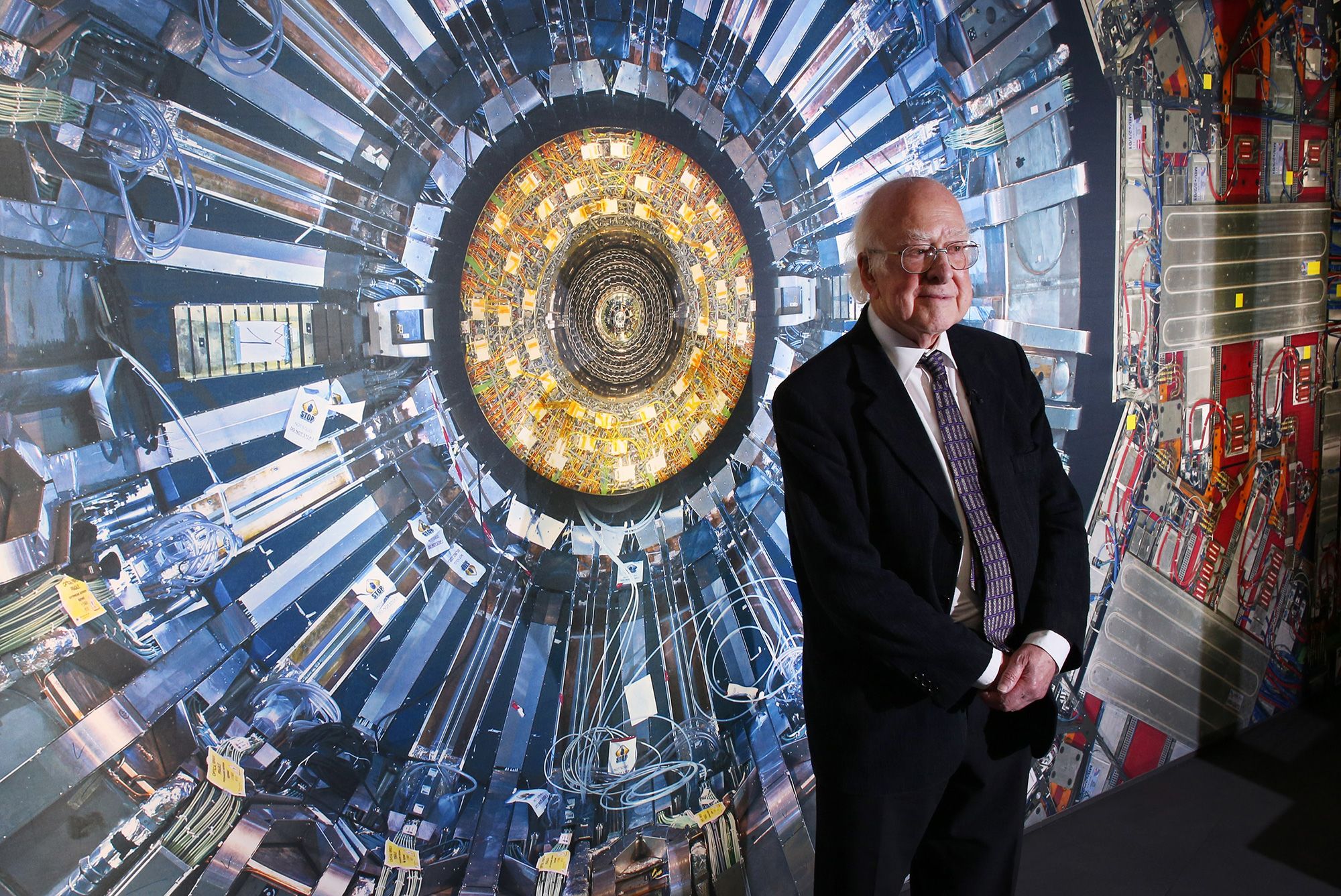
Physicist Peter Higgs, whose theory of an undetected particle in the universe changed science and was vindicated by a Nobel prize-winning discovery half a century later, has died aged 94, the University of Edinburgh said on Tuesday.
The discovery of the Higgs boson in 2012 at the CERN research centre near Geneva was widely hailed as the biggest advance in knowledge about the cosmos for over 30 years, and pointed physics towards ideas that were once science fiction.
“For me personally it is just the confirmation of something I did 48 years ago, and it is very satisfying to be proved right in some way,” the British scientist told Reuters at the time.
“At the beginning, I had no expectation that I would still be alive when it happened.”
Edinburgh University, where Higgs held a professorial chair for many years, said he had passed away peacefully on Monday at home following a short illness.
“Peter Higgs was a remarkable individual — a truly gifted scientist whose vision and imagination have enriched our knowledge of the world that surrounds us,” said Professor Sir Peter Mathieson, the university Principal and Vice-Chancellor.
Higgs described himself as “incompetent” in the physics laboratory at school and at first preferred maths and chemistry. But inspired by quantum physicist Paul Dirac, who had attended the same school, he went on to specialise in theoretical physics.
What came to be known as the Higgs boson would solve the riddle of where several fundamental particles get their mass from: by interacting with the invisible “Higgs field” that pervades space.
That interaction, known as the “Brout-Englert-Higgs” mechanism, won Higgs and Belgium’s Francois Englert the Nobel prize in physics in 2013. Englert’s collaborator Robert Brout died in 2011.
‘An incredible thing’
In 1964, Higgs’ first paper on the model was rejected by an academic physics journal at CERN as being “of no relevance to physics”. His revised paper, although published weeks after Englert and Brout’s, was the first to explicitly predict the existence of a new particle.
“Over a weekend … I gradually realised that I knew two things that had to be brought together,” he said. “I had to go back to my office on the Monday and check that I hadn’t made a mistake about this.”
The tantalising vision promised to fill a gap in the “Standard Model” — the basic theoretical framework of physics — if only the particle’s existence could be proven.
For nearly three decades, physicists at CERN and at Fermilab in Chicago replicated the “Big Bang” by smashing particles together, hoping to glimpse the Higgs boson in the resulting mini-explosions.
CERN’s massive Large Hadron Collider finally proved to be the sledgehammer needed to crack the nut, and in 2012 two experiments there independently found the Higgs boson.
Englert and Higgs were in the packed auditorium at CERN to hear the announcement of the discovery, while hundreds of thousands watched online.
“We have reached a milestone in our understanding of nature,” CERN Director General Rolf Heuer said, to a roar of applause.
Higgs, clearly overwhelmed, his eyes welling up, told his fellow researchers: “It is an incredible thing that it has happened in my lifetime.”
‘What award?’
The Higgs boson completed the Standard Model, but fully understanding it is a work in progress. Its discovery allowed theoreticians to turn their attention to the vast portion of the universe that remained unexplained, as well as esoteric ideas such as the possibility of parallel universes.
An atheist, Higgs loathed the nickname “the God particle,” which headline writers frequently bestowed on the boson that bore his name.
He had strong views on what was good and bad about science and resigned from a movement for nuclear disarmament when it began campaigning against the harnessing of nuclear energy.
In 1962 Higgs married Jody Williamson, an American linguist and nuclear disarmament campaigner, who died in 2008. They had two sons.
Higgs was modest about his achievements and shy of the media. In an interview on the Nobel prize website, he recounted how, on the morning that the 2013 Nobel announcement was due, he had anticipated media attention and taken steps to avoid it.
He left his house in Edinburgh, where he was emeritus professor at the university, and went for a walk around the harbour, and then to lunch and an art exhibition.
On his way home, a former neighbour congratulated him on his award.
“I said: ‘What award?’” he recalled, chuckling.
Reporting by Robert Evans and Tom Miles, additional reporting by Farouq Suleiman; editing by Pravin Char and Mark Heinrich
Scientists from Europe’s CERN research center presented evidence last week for a particle that is likely the Higgs boson,1the last remaining elementary particle predicted by the Standard Model of particle physics.
Although it has been nicknamed the “God particle,” it is widely agreed that the name is more for publicity than accuracy, and many physicists do not like it.2
In order to understand the importance of the Higgs boson, it is necessary to review some modern physics.
Quantum mechanics is a very successful theory that describes the behavior of atoms and subatomic particles, and quantum field theory is an extension of quantum mechanics. A field is a quantity that fills space and has a value at each point in space. A temperature field, for instance, might describe how the temperature in a room varies from point to point (this would be an example of what is known as a scalar field). The familiar electric field surrounding a charged object is an example of a vector field.
There is a tendency to intuitively think of particles as being like little round marbles. In modern physics, however, the reality is more complicated. Quantum field theory views the fields as being fundamental; particles may be thought of (with some caveats) as “ripples” in the fields.3
One of these fields is a scalar field called the Higgs field. The Higgs field is thought to give particles mass via their interaction with this field. Particles that interact strongly with the Higgs field have more mass, and vice versa. A Higgs particle can be thought of as the smallest possible “ripple” in the Higgs field.4
The Standard Model is the theory that describes the relationships between elementary particles and three of the four fundamental forces (it does not include gravity). Physicists had confirmed the existence for all the elementary particles of the Standard Model except one—the Higgs boson. Its discovery, if confirmed, would be a triumph for the Standard Model.
Given the pro-evolution bias of much of the media, it is not surprising that this discovery is being hyped as a blow to Christianity. The Higgs boson is “another nail in the coffin of religion,” said one University of Cambridge professor,5although it is interesting that well-known professing atheist and theoretical physicist Stephen Hawking lost one hundred dollars betting that the Higgs boson would not be found.6
Theoretical physicist and popular author Michio Kaku wrote an ambiguously-worded Wall Street Journal editorial that seemed to suggest that the Higgs boson was the cause of the Big Bang.7However, theoretical physicist and Big Bang evangelist Lawrence Krauss contradicted this, acknowledging that the discovery of the Higgs boson does notprovide an explanation for the cause of the Big Bang. Krauss went so far as to say that determining the cause of the supposed Big Bang may actually be beyond our present technological capabilities!8
Reuters ran an article stating that the Higgs field “attracted the flying debris of the big bang and turned it into stars, planets and galaxies.”9 This statement gives the erroneous impression that the Higgs field can explain star and galaxy formation within the evolutionary model.
In the Standard Model, particles have mass due to their interaction with the Higgs field, and evolutionists believe that gravitational interactions between massive particles ultimately led to star and galaxy formation. But their explanations as to how this could occur are unconvincing, and the (likely) discovery of the Higgs boson has in no way changed that.
References
- Wickham, C. 2012. “It’s a boson:” Higgs quest bears new particle. Reuters, July 4, 2012.
- Moskowitz, C. 2011. What should ‘God Particle’ Be Renamed? Physicists Weigh In. LiveScience. Posted on livescience.com December 14, 2011, accessed July 6, 2012.
- Strassler, M. Virtual Particles: What are they? Of Particular Significance Blog. Posted on profmattstrassler.com, accessed July 9, 2012.
- Strassler, M. The Higgs FAQ 1.0. Of Particular Significance Blog. Posted on profmattstrassler.com, accessed July 9, 2012.
- ‘The Higgs boson is another nail in the coffin of religion’. BBC News Online Video. Posted on bbc.co.uk July 4, 2012, accessed July 6, 2012.
- Stephen Hawking loses Higgs boson particle bet – video. The Guardian Online Video. Posted on guardian.co.uk July 5, 2012, accessed July 6, 2012.
- Kaku, M. 2012. The Spark That Caused the Big Bang. The Wall Street Journal. Posted on online.wsj.com July 5, 2012, accessed July 9, 2012.
- Krauss, L. 2011. What is the Higgs boson and why does it matter? NewScientist. Posted on newscientist.com December 13, 2011, accessed July 6, 2012.
- Evans, R. 2012. British theorist Peter Higgs lives to see his boson. Reuters, July 4, 2012.
* Dr. Hebert is Research Associate at the Institute for Creation Research.
Article posted on July 13, 2012.
On November 21, 2014 I received a letter from Nobel Laureate Harry Kroto and it said:
…Please click on this URL http://vimeo.com/26991975
and you will hear what far smarter people than I have to say on this matter. I agree with them.
Harry Kroto

I have attempted to respond to all of Dr. Kroto’s friends arguments and I have posted my responses one per week for over a year now. Here are some of my earlier posts:
Arif Ahmed, Sir David Attenborough, Mark Balaguer, Horace Barlow, Michael Bate, Patricia Churchland, Aaron Ciechanover, Noam Chomsky,Alan Dershowitz, Hubert Dreyfus, Bart Ehrman, Stephan Feuchtwang, David Friend, Riccardo Giacconi, Ivar Giaever , Roy Glauber, Rebecca Goldstein, David J. Gross, Brian Greene, Susan Greenfield, Stephen F Gudeman, Alan Guth, Jonathan Haidt, Theodor W. Hänsch, Brian Harrison, Hermann Hauser, Roald Hoffmann, Bruce Hood, Herbert Huppert, Gareth Stedman Jones, Steve Jones, Shelly Kagan, Michio Kaku, Stuart Kauffman, Lawrence Krauss, Harry Kroto, George Lakoff, Elizabeth Loftus, Alan Macfarlane, Peter Millican, Marvin Minsky, Leonard Mlodinow, Yujin Nagasawa, Alva Noe, Douglas Osheroff, Jonathan Parry, Saul Perlmutter, Herman Philipse, Carolyn Porco, Robert M. Price, Lisa Randall, Lord Martin Rees, Oliver Sacks, John Searle, Marcus du Sautoy, Simon Schaffer, J. L. Schellenberg, Lee Silver, Peter Singer, Walter Sinnott-Armstrong, Ronald de Sousa, Victor Stenger, Barry Supple, Leonard Susskind, Raymond Tallis, Neil deGrasse Tyson, .Alexander Vilenkin, Sir John Walker, Frank Wilczek, Steven Weinberg, and Lewis Wolpert,
In the third video below in the 150th clip in this series are his words and my response is below them.
50 Renowned Academics Speaking About God (Part 1)
Another 50 Renowned Academics Speaking About God (Part 2)
A Further 50 Renowned Academics Speaking About God (Part 3)
________
Below are two letters I wrote to Dr. Higgs and in the letter from September 2015 I respond to his quote:
_
Enjoy the pictures of an amazing life

Harry Kroto with his father above

Margaret with David and Stephen

leaving Liverpool for Canada 1964
Kroto and his wife, Margaret.
______________
June 11, 2016
Dear Dr. Higgs,
Since I wrote you last I was very sad on April 30th to learn of the passing of the great scientist Harry Kroto. Not only was Harry Kroto a Nobel Prize winning chemist but judging from comments of his close friends, Kroto was an even better man personally.
Tim Logan, chair of Chemistry and Biochemistry at Florida State: “What always brought out the best in Harry was his wife, Margaret. Margaret and Harry were always together, until the end of Harry’s life. She served as his business manager, scheduling his many speaking engagements around the world, organizing the travel, and supporting him in many, many ways. What I found so remarkable is that even after 57 years together, they were so obviously in love. Harry would include photos and sketches he made of her in his lectures, and he always acknowledged her as his moral compass.”
HAVE YOU EVER WONDERED WHY I WAS PROMPTED ORIGINALLY TO WRITE YOU? It was because Harry Kroto took the time in 2014 to correspond with me. After I wrote him in the spring and summer of 2014 he emailed me twice and then sent me a letter in November of 2014. In that letter he referred me to a film series Renowned Academics talk about God that featured your comments.
Furthermore, your full interview appears on the VEGA website which Kroto founded, and he was so proud of his videos from the VEGA website that he played some of them during his speech at a BEYOND BELIEF CONFERENCE (he actually spoke there in 2006, 2007 and 2008 and all those speeches are on You Tube). I have always been fascinated by brilliant individuals and recently I had the opportunity to come across a very interesting article by Michael Polanyi, LIFE TRANSCENDING PHYSICS AND CHEMISTRY, in the magazine CHEMICAL AND ENGINEERING NEWS, August 21, 1967, and I also got hold of a 1968 talk by Francis Schaeffer based on this article. ISN’T IT AMAZING THAT JUST LIKE KROTO’S FAMILY POLANYI HAD TO FLEE EUROPE BECAUSE OF HITLER’S INSANE GRUDGE AGAINST THE JEWS!!!!I know you don’t believe in God or the Devil but if anyone was demon-possessed it had to be Hitler.
Polanyi’s son John actually won the 1986 Nobel Prize for Chemistry. This article by Michael Polanyi concerns Francis Crick and James Watson and their discovery of DNA in 1953. Polanyi noted:
Mechanisms, whether man-made or morphological, are boundary conditions harnessing the laws of in
animate nature, being themselves irreducible to those laws. The pattern of organic bases in DNA which functions as a genetic code is a boundary condition irreducible to physics and chemistry. Further controlling principles of life may be represented as a hierarchy of boundary conditions extending, in the case of man, to consciousness and responsibility.
__

Francis Schaeffer (30 January 1912 – 15 May 1984[1]) and his wife Edith (November 3, 1914 – March 30, 2013)

James Watson (1928-) and Francis Crick (8 June 1916 – 28 July 2004)

Michael Polanyi, FRS[1] (11 March 1891 – 22 February 1976)

John Charles Polanyi, (born 23 January 1929)
___
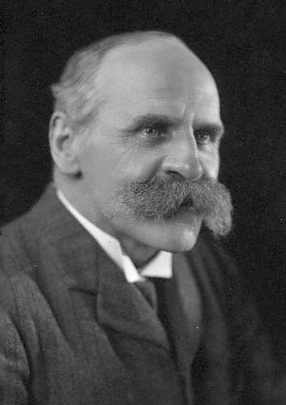
John Scott Haldane (2 May 1860 – 14/15 March 1936)
| J. B. S. Haldane | |
|---|---|

Haldane in 1914
|
(5 November 1892 – 1 December 1964)

Maurice Wilkins (15 December 1916 – 5 October 2004)

Erwin Schrödinger (12 August 1887 – 4 January 1961)
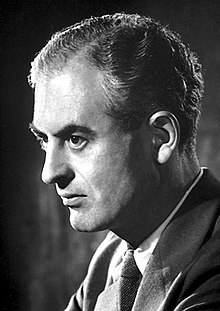
Sir Peter Medawar ( 28 February 1915 – 2 October 1987)

Barry Commoner (May 28, 1917 – September 30, 2012)
I am sending you this two CD’s of this talk because I thought you may find it very interesting. It includes references to not only James D. Watson, and Francis Crick but also Maurice Wilkins, Erwin Schrodinger, J.S. Haldane (his son was the famous J.B.S. Haldane), Peter Medawar, and Barry Commoner.
Thank you for your time. I know how busy you are and I want to thank you for taking the time to read this letter.
Sincerely,
Everette Hatcher,
P.O. Box 23416, Little Rock, AR 72221, United States, cell ph 501-920-5733, everettehatcher@gmail.com
September 21, 2015
Dear Dr. Higgs,
On You Tube I saw this quote from you:
I think you have to be rather more careful about the whole debate between science and religion than some people have been in the past. I certainly know a lot of scientists in my field who are believers and I accept that. I don’t happen to be one myself, but maybe that’s just more a matter of my family background than that there’s any fundamental difficulty about reconciling the two.
I like your attitude towards the subject of God. You seemed to keep an open mind.
Recently I had the opportunity to come across a very interesting article by Michael Polanyi,LIFE TRANSCENDING PHYSICS AND CHEMISTRY, in the magazine CHEMICAL AND ENGINEERING NEWS, August 21, 1967, and I also got hold of a 1968 talk by Francis Schaeffer based on this article. Polanyi’s son John actually won the 1986 Nobel Prize for Chemistry. This article by Michael Polanyi concerns Francis Crick and James Watson and their discovery of DNA in 1953. Polanyi noted:
Mechanisms, whether man-made or morphological, are boundary conditions harnessing the laws of in
animate nature, being themselves irreducible to those laws. The pattern of organic bases in DNA which functions as a genetic code is a boundary condition irreducible to physics and chemistry. Further controlling principles of life may be represented as a hierarchy of boundary conditions extending, in the case of man, to consciousness and responsibility.
I would like to send you a CD copy of this talk because I thought you may find it very interesting. It includes references to not only James D. Watson, and Francis Crick but also Maurice Wilkins, Erwin Schrodinger, J.S. Haldane (his son was the famous J.B.S. Haldane), Peter Medawar, and Barry Commoner. I WONDER IF YOU EVER HAD THE OPPORTUNITY TO RUN ACROSS THESE MEN OR ANY OF THEIR FORMER STUDENTS?
Below is a portion of the transcript from the CD and Michael Polanyi’s words are in italics while Francis Schaeffer’s words are not:
My account of the situation will seem to oscillate in several directions, and I shall set out, therefore, its stages in order.
I shall show that:
- Commoner’s criteria of irreducibility to physics and chemistry are incomplete; they are necessary but not sufficient conditions of it.
- Machines are irreducible to physics and chemistry.
- By virtue of the principle of boundary control, mechanistic structures of living beings appear to be likewise irreducible.
4. The structure of DNA, which according to Watson and Crick controls heredity, is not explicable by physics and chemistry.
5. Assuming that morphological differentiation reflects the information content of DNA, we can prove that the morphology of living beings forms a boundary condition which, as such, is not explicable by physics and chemistry (the suggestion arrived at in the third item).
…The relationship between the two controls–the devices of engineering and the laws of natural science--is not symmetrical. The machine is a machine by having been built and being then controlled according to the principles of engineering. The laws of physics and chemistry are indifferent to these principles; they would go on working in the fragments of the machine if it were smashed. But they serve the machine while it lasts; machines rely for their operations always on the laws of physics and chemistry.
You can think of it for example in an automobile. The man building the automobile must take in account the structural properties he uses. But when the automobile is junk and put into the automobile graveyard and smashed by the giant press into a small piece of metal it is still open to the same analysis and it has the same chemical and physical properties. The mere fact of these same chemical and physical properties existing does not mean we still have the automobile.
____________
Stephen C. Meyer, Senior Fellow, Discovery Institute; on October 7, 2008 wrote the article, “A Scientific History and Philosophical Defense of the Theory of Intelligent Design,” and here is a portion of it:
Just as the mathematicians at Wistar were casting doubt on the idea that chance (i.e., random mutations) could generate genetic information, another leading scientist was raising questions about the role of law-like necessity. In 1967 and 1968, the Hungarian chemist and philosopher of science Michael Polanyi published two articles suggesting that the information in
DNA was “irreducible” to the laws of physics and chemistry (Polanyi 1967: 21; Polanyi 1968: 1308-12). In these papers, Polanyi noted that the DNA conveys information in virtue of very specific arrangements of the nucleotide bases (that is, the chemicals that function as alphabetic or digital characters) in the genetic text. Yet, Polanyi also noted the laws of physics and chemistry allow for a vast number of other possible arrangements of these same chemical constituents. Since chemical laws allow a vast number of possible arrangements of nucleotide bases, Polanyi reasoned that no specific arrangement was dictated or determined by those laws. Indeed, the chemical properties of the nucleotide bases allow them to attach themselves interchangeably at any site on the (sugar-phosphate) backbone of the DNA molecule. (See Figure 1). Thus, as Polanyi (1968: 1309) noted, “As the arrangement of a printed page is extraneous to the chemistry of the printed page, so is the base sequence in a DNA molecule extraneous to the chemical forces at work in the DNA molecule.” Polanyi argued that it is precisely this chemical indeterminacy that allows DNA to store information and which also shows the irreducibility of that information to physical-chemical laws or forces. As he explained:
- Suppose that the actual structure of a DNA molecule were due to the fact that the bindings of its bases were much stronger than the bindings would be for any other distribution of bases, then such a DNA molecule would have no information content. Its code-like character would be effaced by an overwhelming redundancy. […] Whatever may be the origin of a DNA configuration, it can function as a code only if its order is not due to the forces of potential energy. It must be as physically indeterminate as the sequence of words is on a printed page (Polanyi 1968:1309).
________
Thank you for your time. I know how busy you are and I want to thank you for taking the time to read this letter.
Sincerely,
Everette Hatcher,
P.O. Box 23416, Little Rock, AR 72221, United States, cell ph 501-920-5733, everettehatcher@gmail.com
Related posts:
FRANCIS SCHAEFFER ANALYZES ART AND CULTURE Part 53 THE BEATLES (Part E, Stg. Pepper’s and John Lennon’s search in 1967 for truth was through drugs, money, laughter, etc & similar to King Solomon’s, LOTS OF PICTURES OF JOHN AND CYNTHIA) (Feature on artist Yoko Ono)
The John Lennon and the Beatles really were on a long search for meaning and fulfillment in their lives just like King Solomon did in the Book of Ecclesiastes. Solomon looked into learning (1:12-18, 2:12-17), laughter, ladies, luxuries, and liquor (2:1-2, 8, 10, 11), and labor (2:4-6, 18-20). He fount that without God in the picture all […]
FRANCIS SCHAEFFER ANALYZES ART AND CULTURE Part 52 THE BEATLES (Part D, There is evidence that the Beatles may have been exposed to Francis Schaeffer!!!) (Feature on artist Anna Margaret Rose Freeman )
______________ George Harrison Swears & Insults Paul and Yoko Lucy in the Sky with Diamonds- The Beatles The Beatles: I have dedicated several posts to this series on the Beatles and I don’t know when this series will end because Francis Schaeffer spent a lot of time listening to the Beatles and talking […]
FRANCIS SCHAEFFER ANALYZES ART AND CULTURE Part 51 THE BEATLES (Part C, List of those on cover of Stg.Pepper’s ) (Feature on artist Raqib Shaw )
The Beatles in a press conference after their Return from the USA Uploaded on Nov 29, 2010 The Beatles in a press conference after their Return from the USA. The Beatles: I have dedicated several posts to this series on the Beatles and I don’t know when this series will end because Francis […]
FRANCIS SCHAEFFER ANALYZES ART AND CULTURE Part 50 THE BEATLES (Part B, The Psychedelic Music of the Beatles) (Feature on artist Peter Blake )
__________________ Beatles 1966 Last interview I have dedicated several posts to this series on the Beatles and I don’t know when this series will end because Francis Schaeffer spent a lot of time listening to the Beatles and talking and writing about them and their impact on the culture of the 1960’s. In this […]
FRANCIS SCHAEFFER ANALYZES ART AND CULTURE Part 49 THE BEATLES (Part A, The Meaning of Stg. Pepper’s Cover) (Feature on artist Mika Tajima)
_______________ The Beatles documentary || A Long and Winding Road || Episode 5 (This video discusses Stg. Pepper’s creation I have dedicated several posts to this series on the Beatles and I don’t know when this series will end because Francis Schaeffer spent a lot of time listening to the Beatles and talking and writing about […]
FRANCIS SCHAEFFER ANALYZES ART AND CULTURE PART 48 “BLOW UP” by Michelangelo Antonioni makes Philosophic Statement (Feature on artist Nancy Holt)
_______________ Francis Schaeffer pictured below: _____________________ I have included the 27 minute episode THE AGE OF NONREASON by Francis Schaeffer. In that video Schaeffer noted, ” Sergeant Pepper’s Lonely Hearts Club Band…for a time it became the rallying cry for young people throughout the world. It expressed the essence of their lives, thoughts and their feelings.” How Should […]
FRANCIS SCHAEFFER ANALYZES ART AND CULTURE Part 47 Woody Allen and Professor Levy and the death of “Optimistic Humanism” from the movie CRIMES AND MISDEMEANORS Plus Charles Darwin’s comments too!!! (Feature on artist Rodney Graham)
Crimes and Misdemeanors: A Discussion: Part 1 ___________________________________ Today I will answer the simple question: IS IT POSSIBLE TO BE AN OPTIMISTIC SECULAR HUMANIST THAT DOES NOT BELIEVE IN GOD OR AN AFTERLIFE? This question has been around for a long time and you can go back to the 19th century and read this same […]
FRANCIS SCHAEFFER ANALYZES ART AND CULTURE PART 46 Friedrich Nietzsche (Featured artist is Thomas Schütte)
____________________________________ Francis Schaeffer pictured below: __________ Francis Schaeffer has written extensively on art and culture spanning the last 2000years and here are some posts I have done on this subject before : Francis Schaeffer’s “How should we then live?” Video and outline of episode 10 “Final Choices” , episode 9 “The Age of Personal Peace and Affluence”, episode 8 […]
FRANCIS SCHAEFFER ANALYZES ART AND CULTURE Part 45 Woody Allen “Reason is Dead” (Feature on artists Allora & Calzadilla )
Love and Death [Woody Allen] – What if there is no God? [PL] ___________ _______________ How Should We then Live Episode 7 small (Age of Nonreason) #02 How Should We Then Live? (Promo Clip) Dr. Francis Schaeffer 10 Worldview and Truth Two Minute Warning: How Then Should We Live?: Francis Schaeffer at 100 Francis Schaeffer […]
FRANCIS SCHAEFFER ANALYZES ART AND CULTURE Part 44 The Book of Genesis (Featured artist is Trey McCarley )
___________________________________ Francis Schaeffer pictured below: ____________________________ Francis Schaeffer “BASIS FOR HUMAN DIGNITY” Whatever…HTTHR Dr. Francis schaeffer – The flow of Materialism(from Part 4 of Whatever happened to human race?) Dr. Francis Schaeffer – The Biblical flow of Truth & History (intro) Francis Schaeffer – The Biblical Flow of History & Truth (1) Dr. Francis Schaeffer […]
___


 The Daily Hatch