By the way, that’s not necessarily a disparaging description. A Ponzi Scheme can work if there are always enough new people in the system to pay off the old people.
How serious? The Social Security Administration finally released the annual Trustees Report. This document has a wealth of data on the program’s financial condition, and Table VI.G9 is where the rubber meets the road.
As you can see from this chart, there will be an ever-increasing burden of Social Security taxes and spending over the next 75 years. And these numbers are adjusted for inflation!
The good news (relatively speaking) is that the economy also will be growing over the next 75 years, both in nominal terms and inflation-adjusted terms.
The bad news is that spending on Social Security will grow at a faster rate, so the program will consume a larger share of the economy’s output.
And because Social Security spending is growing faster than the economy (and also faster than tax revenue), this next chart shows there is going to be more and more red ink in the future. Once again, you’re looking at inflation-adjusted data.
As indicated by the chart’s title, the cumulative shortfall over the next 75 years is nearly $48 trillion. That’s a lot of money, even by Washington standards.
And with each passing year, the problem seems to worsen. The 75-year shortfall was $44.7 trillion according to the 2020 report and $42.1 trillion according to the 2019 report.
I’ll conclude by observing that today’s column focuses on the big-picture fiscal problems with Social Security.
But let’s not forget the program’s second crisis, which is the fact that Americans are deprived of the ability to enjoy much higher levels of retirement income.
P.P.S. I once made a $16 trillion dollar mistake on national TV when discussing Social Security’s shaky finances.
P.P.P.S. Much of the news coverage about the Trustees Report has focused on the year the Social Security Trust Fund supposedly runs out of money. But this is sloppy journalismsince the Trust Fund has nothing but IOUs (as illustrated by this joke).
And rather than hit the brakes, Biden wants to step on the gas with new giveaways, especially his plan to gut Bill Clinton’s welfare reform by creating new per-child handouts that would subsidize idleness and family dissolution.
But that doesn’t mean the problems can’t be fixed. We simply need to replace fiscal profligacy with spending restraint.
To set the stage for this discussion, here’s a look at what’s happened to the budget over the past several decades. You can see how the burden of federal spending has steadily increased, with noticeable one-time bumps in 2008-2009 (TARP and Obama’s so-called stimulus) and 2020-2021 (coronavirus).
The chart also includes projections between 2021 and 2031, based on new numbers from the Congressional Budget Office.
For today’s column, I want to focus on the next 10 years and show how the current fiscal mess can be averted with some modest spending restraint.
This second chart shows that spending actually drops over the next two years as coronavirus-related spending comes to an end. But once we get to 2023, the orange line shows that “baseline” spending (what happens to the budget if things are left on autopilot) climbs rapidly, more than twice the rate needed to keep pace with inflation.
But if there’s any sort of fiscal restraint (a freeze or some sort of spending cap), then the numbers look much better.
More specifically, a freeze or a 1-percent spending cap would actually produce a budget surplus by the year 2031.
But I’m not fixated on getting to a balanced budget. What’s more important is that the burden of government spending shrinks when the budget grows slower than the private sector.
In other words, we get good results when policy makers follow fiscal policy’s Golden Rule.
P.S. While it’s difficult to convince politicians to support spending restraint, it’s worth noting that the nation enjoyed a five-year spending freeze between 2009-2014.
I have written my Congressmen and Senators over and over about the debt ceiling increase requests by you and I have urged them to turn them down. This video below shows why I wanted them turned down.
Congress’s dance with the debt limit can be confusing and, frankly, the details can be a real snooze fest for many Americans. Sometimes a little humor clarifies the absurdities of Washington antics better than flow charts and talk of trillions.
The 31-second video and accompanying infographic “The Debt Ceiling Explained” by Bankrupting America offers the facts, leavened with a dose of levity. The conclusion is serious, however: The country’s debt threatens economic growth, and spending cuts are the answer.
_________________________
Senator John Boozman, 320 Hart Senate Office Building Washington, DC 20510 Phone: (202) 224-4843 Fax: (202) 228-1371
It is obvious to me that if President Obama gets his hands on more money then he will continue to spend away our children’s future. He has already taken the national debt from 11 trillion to 16 trillion in just 4 years. Over, and over, and over, and over, and over and over I have written Speaker Boehner and written every Republican that represents Arkansans in Arkansas before (Griffin, Womack, Crawford, and only Senator Boozman got a chance to respond) concerning this. I am hoping they will stand up against this reckless spending that our federal government has done and will continue to do if given the chance.
What would happen if the debt ceiling was not increased? Yes President Obama would probably cancel White House tours and he would try to stop mail service or something else to get on our nerves but that is what the Republicans need to do.
TRY BORROWING AT A BANK WITH A FINANCIAL CONDITION LIKE THE USA HAS:
The problem in Washington is not lack of revenue but our lack of spending restraint. This video below makes that point. WASHINGTON IS A SPENDING ADDICT!!!
Please take the time to read Mo Brooks’ words and respond to me and tell me if you will vote against the debt ceiling increase. It is the only leverage we have on President Obama. Others have responded to me in the past including you and for that I am very grateful.
Thank you so much for your time. I know how valuable it is. I also appreciate the fine family that you have and your commitment as a father and a husband.
Sincerely,
Everette Hatcher III, 13900 Cottontail Lane, Alexander, AR 72002, ph 501-920-5733, lowcostsqueegees@yahoo.com
Sixty Six who resisted “Sugar-coated Satan Sandwich” Debt Deal (Part 49) This post today is a part of a series I am doing on the 66 Republican Tea Party favorites that resisted eating the “Sugar-coated Satan Sandwich” Debt Deal. Actually that name did not originate from a representative who agrees with the Tea Party, but […]
Sixty Six who resisted “Sugar-coated Satan Sandwich” Debt Deal (Part 48) This post today is a part of a series I am doing on the 66 Republican Tea Party favorites that resisted eating the “Sugar-coated Satan Sandwich” Debt Deal. Actually that name did not originate from a representative who agrees with the Tea Party, but […]
Sixty Six who resisted “Sugar-coated Satan Sandwich” Debt Deal (Part 47) This post today is a part of a series I am doing on the 66 Republican Tea Party favorites that resisted eating the “Sugar-coated Satan Sandwich” Debt Deal. Actually that name did not originate from a representative who agrees with the Tea Party, but […]
Sixty Six who resisted “Sugar-coated Satan Sandwich” Debt Deal (Part 46) This post today is a part of a series I am doing on the 66 Republican Tea Party favorites that resisted eating the “Sugar-coated Satan Sandwich” Debt Deal. Actually that name did not originate from a representative who agrees with the Tea Party, […]
Sixty Six who resisted “Sugar-coated Satan Sandwich” Debt Deal (Part 45) This post today is a part of a series I am doing on the 66 Republican Tea Party favorites that resisted eating the “Sugar-coated Satan Sandwich” Debt Deal. Actually that name did not originate from a representative who agrees with the Tea Party, but […]
Sixty Six who resisted “Sugar-coated Satan Sandwich” Debt Deal (Part 44) This post today is a part of a series I am doing on the 66 Republican Tea Party favorites that resisted eating the “Sugar-coated Satan Sandwich” Debt Deal. Actually that name did not originate from a representative who agrees with the Tea Party, but […]
Sixty Six who resisted “Sugar-coated Satan Sandwich” Debt Deal (Part 43) This post today is a part of a series I am doing on the 66 Republican Tea Party favorites that resisted eating the “Sugar-coated Satan Sandwich” Debt Deal. Actually that name did not originate from a representative who agrees with the Tea Party, but […]
Sixty Six who resisted “Sugar-coated Satan Sandwich” Debt Deal (Part 42) This post today is a part of a series I am doing on the 66 Republican Tea Party favorites that resisted eating the “Sugar-coated Satan Sandwich” Debt Deal. Actually that name did not originate from a representative who agrees with the Tea Party, but […]
Sixty Six who resisted “Sugar-coated Satan Sandwich” Debt Deal (Part 41) This post today is a part of a series I am doing on the 66 Republican Tea Party favorites that resisted eating the “Sugar-coated Satan Sandwich” Debt Deal. Actually that name did not originate from a representative who agrees with the Tea Party, but […]
Sixty Six who resisted “Sugar-coated Satan Sandwich” Debt Deal (Part 40) This post today is a part of a series I am doing on the 66 Republican Tea Party favorites that resisted eating the “Sugar-coated Satan Sandwich” Debt Deal. Actually that name did not originate from a representative who agrees with the Tea Party, but […]
Sixty Six who resisted “Sugar-coated Satan Sandwich” Debt Deal (Part 39) This post today is a part of a series I am doing on the 66 Republican Tea Party favorites that resisted eating the “Sugar-coated Satan Sandwich” Debt Deal. Actually that name did not originate from a representative who agrees with the Tea Party, but […]
Sixty Six who resisted “Sugar-coated Satan Sandwich” Debt Deal (Part 38) This post today is a part of a series I am doing on the 66 Republican Tea Party favorites that resisted eating the “Sugar-coated Satan Sandwich” Debt Deal. Actually that name did not originate from a representative who agrees with the Tea Party, but […]
Sixty Six who resisted “Sugar-coated Satan Sandwich” Debt Deal (Part 37) This post today is a part of a series I am doing on the 66 Republican Tea Party favorites that resisted eating the “Sugar-coated Satan Sandwich” Debt Deal. Actually that name did not originate from a representative who agrees with the Tea Party, but […]
Sixty Six who resisted “Sugar-coated Satan Sandwich” Debt Deal (Part 36) This post today is a part of a series I am doing on the 66 Republican Tea Party favorites that resisted eating the “Sugar-coated Satan Sandwich” Debt Deal. Actually that name did not originate from a representative who agrees with the Tea Party, but […]
Sixty Six who resisted “Sugar-coated Satan Sandwich” Debt Deal (Part 35) This post today is a part of a series I am doing on the 66 Republican Tea Party favorites that resisted eating the “Sugar-coated Satan Sandwich” Debt Deal. Actually that name did not originate from a representative who agrees with the Tea Party, but […]
Sixty Six who resisted “Sugar-coated Satan Sandwich” Debt Deal (Part 34) This post today is a part of a series I am doing on the 66 Republican Tea Party favorites that resisted eating the “Sugar-coated Satan Sandwich” Debt Deal. Actually that name did not originate from a representative who agrees with the Tea Party, but […]
Sixty Six who resisted “Sugar-coated Satan Sandwich” Debt Deal (Part 33) This post today is a part of a series I am doing on the 66 Republican Tea Party favorites that resisted eating the “Sugar-coated Satan Sandwich” Debt Deal. Actually that name did not originate from a representative who agrees with the Tea Party, but […]
Sixty Six who resisted “Sugar-coated Satan Sandwich” Debt Deal (Part 32) This post today is a part of a series I am doing on the 66 Republican Tea Party favorites that resisted eating the “Sugar-coated Satan Sandwich” Debt Deal. Actually that name did not originate from a representative who agrees with the Tea Party, but […]
Congressmen Tim Huelskamp on the debt ceiling Sixty Six who resisted “Sugar-coated Satan Sandwich” Debt Deal (Part 31) This post today is a part of a series I am doing on the 66 Republican Tea Party favorites that resisted eating the “Sugar-coated Satan Sandwich” Debt Deal. Actually that name did not originate from a representative […]
Sixty Six who resisted “Sugar-coated Satan Sandwich” Debt Deal (Part 30) This post today is a part of a series I am doing on the 66 Republican Tea Party favorites that resisted eating the “Sugar-coated Satan Sandwich” Debt Deal. Actually that name did not originate from a representative who agrees with the Tea Party, but […]
Sixty Six who resisted “Sugar-coated Satan Sandwich” Debt Deal (Part 29) This post today is a part of a series I am doing on the 66 Republican Tea Party favorites that resisted eating the “Sugar-coated Satan Sandwich” Debt Deal. Actually that name did not originate from a representative who agrees with the Tea Party, but […]
The Sixty Six who resisted “Sugar-coated Satan Sandwich” Debt Deal (Part 28) This post today is a part of a series I am doing on the 66 Republican Tea Party favorites that resisted eating the “Sugar-coated Satan Sandwich” Debt Deal. Actually that name did not originate from a representative who agrees with the Tea Party, […]
The Sixty Six who resisted “Sugar-coated Satan Sandwich” Debt Deal (Part 27) This post today is a part of a series I am doing on the 66 Republican Tea Party favorites that resisted eating the “Sugar-coated Satan Sandwich” Debt Deal. Actually that name did not originate from a representative who agrees with the Tea Party, […]
The Sixty Six who resisted “Sugar-coated Satan Sandwich” Debt Deal (Part 26) This post today is a part of a series I am doing on the 66 Republican Tea Party favorites that resisted eating the “Sugar-coated Satan Sandwich” Debt Deal. Actually that name did not originate from a representative who agrees with the Tea Party, […]
Uploaded by RepJoeWalsh on Jun 14, 2011 Our country’s debt continues to grow — it’s eating away at the American Dream. We need to make real cuts now. We need Cut, Cap, and Balance. The Sixty Six who resisted “Sugar-coated Satan Sandwich” Debt Deal (Part 25) This post today is a part of a series […]
The Sixty Six who resisted “Sugar-coated Satan Sandwich” Debt Deal (Part 23) This post today is a part of a series I am doing on the 66 Republican Tea Party favorites that resisted eating the “Sugar-coated Satan Sandwich” Debt Deal. Actually that name did not originate from a representative who agrees with the Tea Party, […]
The Sixty Six who resisted “Sugar-coated Satan Sandwich” Debt Deal (Part 22) This post today is a part of a series I am doing on the 66 Republican Tea Party favorites that resisted eating the “Sugar-coated Satan Sandwich” Debt Deal. Actually that name did not originate from a representative who agrees with the Tea Party, […]
The Sixty Six who resisted “Sugar-coated Satan Sandwich” Debt Deal (Part 21) This post today is a part of a series I am doing on the 66 Republican Tea Party favorites that resisted eating the “Sugar-coated Satan Sandwich” Debt Deal. Actually that name did not originate from a representative who agrees with the Tea Party, […]
The Sixty Six who resisted “Sugar-coated Satan Sandwich” Debt Deal (Part 20) This post today is a part of a series I am doing on the 66 Republican Tea Party favorites that resisted eating the “Sugar-coated Satan Sandwich” Debt Deal. Actually that name did not originate from a representative who agrees with the Tea Party, […]
The Sixty Six who resisted “Sugar-coated Satan Sandwich” Debt Deal (Part 19) This post today is a part of a series I am doing on the 66 Republican Tea Party favorites that resisted eating the “Sugar-coated Satan Sandwich” Debt Deal. Actually that name did not originate from a representative who agrees with the Tea Party, […]
The Sixty Six who resisted “Sugar-coated Satan Sandwich” Debt Deal (Part 18) This post today is a part of a series I am doing on the 66 Republican Tea Party favorites that resisted eating the “Sugar-coated Satan Sandwich” Debt Deal. Actually that name did not originate from a representative who agrees with the Tea Party, […]
The Sixty Six who resisted “Sugar-coated Satan Sandwich” Debt Deal (Part 17) This post today is a part of a series I am doing on the 66 Republican Tea Party favorites that resisted eating the “Sugar-coated Satan Sandwich” Debt Deal. Actually that name did not originate from a representative who agrees with the Tea Party, […]
The Sixty Six who resisted “Sugar-coated Satan Sandwich” Debt Deal (Part 16) This post today is a part of a series I am doing on the 66 Republican Tea Party favorites that resisted eating the “Sugar-coated Satan Sandwich” Debt Deal. Actually that name did not originate from a representative who agrees with the Tea Party, […]
President Joe Biden walks into the State Dining Room on Tuesday before delivering remarks on the end of the war in Afghanistan. (Photo: Chip Somodevilla/Getty Images)
Throughout the withdrawal of U.S. troops from Afghanistan, which began in mid-August and wrapped up just before midnight Tuesday in that nation’s capital, President Joe Biden made many comments that later proved to be inaccurate.
After 20 years in Afghanistan, the last U.S. military personnel departed, leaving the Taliban to take over completely following Biden’s Aug. 31 deadline.
The Taliban is a political and military organization of Islamist extremists that gave shelter to Osama bin Laden and the al-Qaeda terrorist network as they planned the Sept. 11, 2001, terrorist attacks on America.
The Taliban still has links to other terrorist groups, including al-Qaeda and the Haqqani network. However, the Taliban is opposed to ISIS-K, or ISIS-Khorasan, which claimed credit for the terrorist attack Thursday outside the Kabul airport that killed 13 U.S. service members.
Here are nine of the key points on Afghanistan made by the president that turned out to be inaccurate.
1. Trump ‘Made a Deal’ With Taliban
Biden repeatedly said that he was bound by the February 2020 agreement between the Trump administration and the Taliban that the U.S. would exit Afghanistan. Many Republicans are among those who criticized the Trump deal with the Taliban.
Biden said again Tuesday that when he came into office, the Taliban was in the strongest position it had been in since 2001 because of a deal with the Trump administration specifying that the U.S. would pull out by May 1.
“The previous administration’s agreement said that if we stuck to the May 1 deadline that we had signed on to leave by, the Taliban wouldn’t attack any American forces, but if we stay, all bets were off,” Biden said during his national address from the State Dining Room of the White House, adding:
So, we were left with a simple decision, either follow through the commitment made by the last administration and leave Afghanistan or say we weren’t leaving and commit another tens of thousands more troops going back to war. That was the choice, the real choice.
During his brief press conference last Thursday after the terrorist attack at the Kabul airport, Biden, responding to Fox News reporter Peter Doocy, said he bears responsibility.
But he also blamed his predecessor, Donald Trump.
“You know as well as I do that the former president made a deal with the Taliban that he would get all of the American forces out of Afghanistan by May 1,” Biden said. “In return … he was given a commitment that the Taliban would continue to attack others, but would not attack any American forces. Remember that?”
Biden has said before that the Trump agreement bound him, with no choice either than to exit or to send in thousands of troops for a new round of combat.
“There was only the cold reality of either following through on the agreement to withdraw our forces or escalating the conflict and sending thousands more American troops back into combat in Afghanistan, lurching into the third decade of conflict,” the president said.
However, in an ABC News interview Aug. 18, Biden suggested that it didn’t matter what Trump had done.
ABC anchor George Stephanopoulos asked Biden: “So would you have withdrawn troops like this even if President Trump had not made that deal with the Taliban?”
Biden responded that he wanted out of Afghanistan.
“I would’ve tried to figure out how to withdraw those troops, yes, because look, George: There is no good time to leave Afghanistan. Fifteen years ago would’ve been a problem, 15 years from now. The basic choice is, am I going to send your sons and your daughters to war in Afghanistan in perpetuity?”
During his remarks Tuesday, Biden said his entire national security team was unanimous on how to pull out:
The decision to end the military lift operations at Kabul airport was based on a unanimous recommendation of my civilian and military advisers, the secretary of state, the secretary of defense, the chairman of the Joint Chiefs of Staff and all the service chiefs, and the commanders in the field. Their recommendation was that the safest way to secure the passage of the remaining Americans and others out of the country was not to continue 6,000 troops on the ground in harm’s way in Kabul, but rather to get them out through nonmilitary means.
However, The New York Times reported that Biden’s own military leadership, including Defense Secretary Lloyd Austin and Gen. Mark A. Milley, chairman of the Joint Chiefs of Staff, advised him that keeping a force of 3,000 to 4,500 troops—along with drones and close air support—could allow Afghan security forces to continue holding off the Taliban.
In the four-page deal that the Trump administration signed with the Taliban in February 2020, the United States agreed to withdraw all troops by May 1, 2021, and to lift sanctions. In return, the Taliban committed not to attack departing American troops or let terrorist groups use Afghanistan as a base to attack the U.S.
The Afghanistan Study Group, a bipartisan, congressionally chartered panel led by a former Joint Chiefs chairman, retired Marine Gen. Joseph F. Dunford, issued a final report this past February that suggested extending the May 1 exit and seeking better conditions before pulling out.
In 2014, the Obama-Biden administration had opted to declare the combat mission over as the U.S. military worked to train the Afghan army and played a counterterrorism role.
During the Trump administration, the U.S.-backed Afghan government “controlled most of the country’s territory,” James Carafano, vice president for foreign and defense policy studies at The Heritage Foundation, wrote in August.
The United States was spending less per year in Afghanistan than it previously spent in a week during peak combat periods, Carafano wrote, adding:
Trump was negotiating with the Taliban, but there was nothing wrong with that. The negotiations were conditions-based, and Trump made clear the Taliban would be held accountable for its actions.
Moreover, Trump’s team made sure that if, in the end, the Taliban proved untrustworthy, the remaining U.S. force had been sized and scoped to present a serious deterrent to the Taliban and be sufficient to protect U.S. interests.
2. ‘More Quickly Than We Had Anticipated’
The U.S. government didn’t see the chaos coming, Biden has said.
“The truth is: This did unfold more quickly than we had anticipated,” Biden said Aug. 16.
Pressed during the ABC News interview on why his administration didn’t have a more deliberate and strategic plan for the exit, even if the withdrawal was inevitable, Biden responded that the Taliban’s rapid pace of advance was unexpected.
Taliban control of Afghanistan was expected to be more likely by the end of the year, the president said.
No. 1, as you know, the intelligence community did not say back in June or July that, in fact, this was going to collapse like it did. No. 1,” Biden told Stephanopoulos in the ABC News interview.
Stephanopoulos then asked: “They thought the Taliban would take over, but not this quickly?”
Biden affirmed: “But not this quickly. Not even close.”
Various news accounts, however, suggest that this isn’t true.
U.S. intelligence agencies reportedly warned as early as April that the Taliban would take over Afghanistan quickly.
An urgent “confidential dissent channel” signed by 23 officials of the U.S. Embassy in Kabul warned July 13 that Afghanistan would fall quickly to the Taliban if the Biden administration followed through with the Aug. 31 troop withdrawal, The Wall Street Journal first reported.
The Journal separately reported that Biden’s top generals and diplomats all warned him of potential perils of the withdrawal, including that it could lead to a Taliban takeover and to attacks on American soldiers and diplomats.
House Intelligence Committee Chairman Adam Schiff, D-Calif., normally no critic of Biden, saidAug. 24 that this was not an intelligence failure but a military planning failure.
3. ‘90% of Americans … Able to Leave’
Since March, Biden said in his address to the nation Tuesday afternoon, his administration had reached out 19 times to Americans in Afghanistan to warn them to leave the country.
“Our Operation Allied Rescue ended up getting more than 5,500 Americans out,” Biden said.
He added: “Now we believe about 100 to 200 Americans remain in Afghanistan with some intention to leave.”
Biden noted that the administration also evacuated U.S. Embassy staff and their families, totaling about 2,500, along with thousands of Afghan translators, interpreters, and others who assisted the United States.
Biden said most Americans still in Afghanistan are dual citizens who at one point wanted to stay.
“The bottom line is 90% of Americans in Afghanistan who wanted to leave were able to leave,” Biden said. “For those remaining Americans, there is no deadline. We remain committed to getting them out if they want to come out.”
During the ABC News interview Aug. 18, Stephanopoulos asked Biden: “Are you committed to making sure that the troops stay until every American who wants to be out is out?”
He later added: “If there are American citizens left, we’re going to stay until we get them all out.”
In a press conference Aug. 20 at the White House, Biden said: “Let me be clear. Any American who wants to come home, we will get you home.”
However, he added: “I cannot promise what the final outcome will be.”
As of the completed evacuation Monday, Marine Gen. Kenneth McKenzie, head of U.S. Central Command, said that 6,000 Americans were flown out.
However, it has been widely reported that 10,000 to 15,000 Americans remained in the country as of mid-August, according to The Washington Post. A later analysis by the Post determined that the 15,000 number was “very rough,” and that 6,000 was more likely.
Secretary of State Antony Blinken said the State Department would work to identify any remaining Americans who want to return home.
During the evacuation, Biden asserted that Americans were not having trouble leaving Afghanistan.
“We know of no circumstance where American citizens are—carrying an American passport—are trying to get through to the airport,” Biden said. He added: “We’ve made an agreement with the Taliban. Thus far, they’ve allowed them to go through.”
According to a Reuters report, American citizens at one point had to be loaded onto three Chinook helicopters at the Baron Hotel, located near the airport, since they were unable to reach the airport gates.
During the evacuation, the U.S. Embassy in Kabul issued an alert stating: “The U.S. government cannot ensure safe passage to the airport due to large crowds and security concerns, gates may open or close without notice. Please use your best judgment and attempt to enter the airport at any gate that is open.”
One American in Afghanistan, David Fox, told ABC News that he and his wife and son were trapped in Kabul because they couldn’t get past the gates at the airport. Fox said that Marines told him it wasn’t safe.
4. ‘Afghan Forces Not Willing to Fight’
During his address to the nation Tuesday afternoon, Biden repeated that Afghanistan’s military and political leaders folded.
“We were ready when the Afghan security forces, after two decades of fighting for their country and losing thousands of their own, did not hold on as long as anyone expected,” Biden said. “We were ready when they, when the people of Afghanistan, watched their own government collapse and their own president flee amidst the corruption and malfeasance, handing over the country to their enemy, the Taliban.”
As he has before, the president asserted that the U.S.-trained Afghan army wouldn’t stand and fight against the Taliban.
“American troops cannot and should not be fighting in a war and dying in a war that Afghan forces are not willing to fight for themselves,” Biden said Aug. 16. He added: “We gave them every chance to determine their own future. What we could not provide them was the will to fight for that future. … It is wrong to order American troops to step up when Afghanistan’s own armed forces would not.”
However, since the fighting began, about 69,000 soldiers of the Afghan army have been killed, the BBC reported. The Afghan army stopped combat operations after the U.S. military pulled away air and logistics support in withdrawing 18,000 security contractors, The New York Times reported.
Military leaders reportedly advised Biden that keeping 2,500 U.S. troops would sustain the Afghan army.
“Afghanistan’s political leaders gave up and fled the country,” Biden said Aug. 16.
The president’s reference apparently was directed primarily at Afghan President Ashraf Ghani, a former U.S. academic in office since September 2014, who left the country before the Taliban entered the capital of Kabul.
However, as BBC reported, other Afghan political leaders stayed and made public statements. Former Afghan President Hamid Karzai, appearing in a video with family members, asked Afghan government forces and the Taliban to protect civilians.
Former Afghanistan Vice President Amrullah Saleh also remained, as did political leaders such as Ahmad Shah Massoud Jr., son of former anti-Soviet military leader and politician Ahmad Shah Massoud, who was assassinated two days before the 9/11 attacks.
The BBC also reported that Massoud and other political leaders are forming an anti-Taliban resistance coalition.
The British Parliament’s Foreign Affairs Committee chairman, Tom Tugendhat, himself a former British army officer in Afghanistan who fought with Afghan soldiers, criticized Biden’s dismissive view of the Afghan army.
“To see their commander in chief call into question the courage of men I fought with, to claim that they ran, is shameful,” Tugendhat said. “Those who have not fought for the colors they fly should be careful about criticizing those who have.”
5. ‘No Question of Our Credibility’
During an Aug. 20 press conference, Biden said: “I have seen no question of our credibility from our allies around the world. Matter of fact, the exact opposite I’ve got.”
But leaders from one of the most reliable U.S. allies have been outspoken.
“When the United States decides emphatically to withdraw in a way that they have, clearly we’re going to have to manage the consequences,” British Prime Minister Boris Johnson said.
Johnson’s was among the more diplomatic points as most of the related criticism has come from Britain.
Former British Prime Minister Theresa May asked what the hasty withdrawal does to America’s reputation on the world stage.
“What does it say about NATO if we are entirely dependent on a unilateral decision taken by the United States?” May asked, adding: “Did we feel we just had to follow the United States and hope that on a wing and a prayer it’d be all right on the night?”
In a mocking reference to a Biden slogan after becoming president, British Parliament Defense Committee Chairman Tobias Ellwood asked: “Whatever happened to ‘America is back’?”
The criticism spread in other parts of Europe.
Josep Borrell, vice president of the European Commission, called the situation in Afghanistan a “catastrophe” during a virtual session of the European Parliament Committee on Foreign Affairs.
Borrell reportedly warned Blinken beforehand that pulling U.S. troops out of Afghanistan at this stage risked putting the Taliban in charge, posing a direct threat to European security.
In Germany, Armin Laschet—the top candidate to succeed Chancellor Angela Merkel—said: “This is the greatest debacle that NATO has seen since its foundation, and it is an epochal change that we are facing.”
In June, Biden told allies that he would maintain enough of a security presence in Afghanistan to ensure that they could continue operating in Kabul, Bloomberg News reported.
6. ‘Al-Qaeda Gone’
Biden again said Tuesday that the original U.S. mission is finished, as he has in recent weeks.
“What interest do we have in Afghanistan at this point, with al-Qaeda gone?” Biden said Aug. 20.
But according to a United Nations Security Council report, al-Qaeda still has a base in at least 15 of 34 Afghan provinces, Reuters reported.
Defense Department spokesman John Kirby saidThursday that “we know that al-Qaeda is a presence—as well as ISIS—in Afghanistan, and we’ve talked about that for quite some time.”
“What we believe,” Kirby added, “is that there isn’t a presence that is significant enough to merit a threat to our homeland as there was back on 9/11, 20 years ago.”
7. ‘Bagram Not Much Value Added’
Biden blamed his military advisers for the decision to abandon Bagram Airfield, a strategically located military base many times larger than the Kabul airport to the south.
“They concluded—the military—that Bagram was not much value added, that it was much wiser to focus on Kabul [airport] and so, I followed that recommendation,” Biden told reporters Aug. 26.
However, a president generally determines the constraints under which the military draws up operational plans, The Wall Street Journal’s editorial board noted.
Bagram, a large, fortified military base, is about 40 miles from the small, one-runway airport in Kabul. The U.S. exited the base overnight in early July without informing the Afghan military and U.S. allies.
Army Gen. Mark Milley, chairman of the Joint Chiefs of Staff, said Aug. 18 that securing Bagram took “a significant level of military effort.” Milley added: “Our task given to us at that time, our task was to protect the embassy in order for the embassy personnel to continue to function.”
The Associated Press, in a report on the U.S. abandonment of the air base, quoted an Afghan soldier as saying of the Americans: “They lost all the goodwill of 20 years by leaving the way they did, in the night, without telling the Afghan soldiers who were outside patrolling the area.”
8. ‘Lose Thousands of Americans’
In making the case for pulling out completely, Biden asked about Afghanistan during the ABC News interview: “Are we going to continue to lose thousands of Americans to injury and death to try to unite that country?”
The last U.S. combat death had been in February 2020, just ahead of the Trump-Taliban agreement. Although the reason for that lack of casualties may have been because the agreement was in place, the number of combat deaths still was shrinking.
A total of 94 U.S. military deaths occurred in Afghanistan from 2015 up to the point of the evacuation in August, BBC reported. That compares with 1,897 U.S. military killed in action over the duration of the war. Another 415 soldiers died in nonhostile circumstances before the U.S. withdrawal began.
A total of about 20,000 soldiers were wounded in Afghanistan since the U.S. and NATO allies invaded in October 2001.
The terrorist attack last week by ISIS-K added another 13 deaths among U.S. service members under fire.
9. Evolution on ‘Nation Building’
Biden also tackled the concept of “nation building” in his remarks Tuesday afternoon at the White House.
“This decision about Afghanistan is not just about Afghanistan. It’s about ending an era of major military operations to remake other countries,” Biden said, adding:
Nation building, trying to create a democratic, cohesive, and united Afghanistan—something that has never been done over many centuries of Afghan’s history. Moving on from that mindset and large-scale troop deployments will make us stronger and more effective and safer at home.
In previous remarks, Biden said: “Our mission in Afghanistan was never supposed to have been nation building.”
The president said Aug. 16 that the U.S. goal in going into Afghanistan had “always been preventing a terrorist attack on [the] American homeland” and was “never supposed to be creating a unified, centralized democracy.”
Although nation building and the mission in Afghanistan may be a legitimate policy debate that divides Democrats and Republicans, Biden’s use of “always” doesn’t line up with his comments soon after the 9/11 terrorist attacks on America, or his comments in early 2003.
“Our hope is that we will see a relatively stable government in Afghanistan, one that does not harbor terrorists, is acceptable to the major players in the region, represents the ethnic makeup of the country and provides the foundation for future reconstruction of that country,” Sen. Joe Biden, then chairman of the Senate Foreign Relations Committee, said Oct. 22, 2001, as the U.S. invaded Afghanistan.
During a committee meeting in February 2003, the Delaware Democrat again directly defended nation building, asking what the alternative was.
“The alternative to nation building is chaos, a chaos that churns out bloodthirsty warlords, drug traffickers and terrorists,” Biden said.
Ken McIntyre contributed to this report.
Have an opinion about this article? To sound off, please email letters@DailySignal.com and we’ll consider publishing your edited remarks in our regular “We Hear You” feature. Remember to include the url or headline of the article plus your name and town and/or state.
An Israeli sapper checks a damaged apartment in the southern Israeli city of Ashkelon on May 11, 2021, after rockets were fired by the Hamas movement from the Gaza Strip toward Israel overnight. (Photo: Jack Guez/AFP/Getty Images)
If you’ve seen videos of recent attacks on Jews in New York City, Los Angeles, London, and elsewhere, you may have missed a very revealing aspect of those attacks. They were almost always—as they have been for decades—accompanied by curses such as, “F— the Jews.”
Now, given that the perpetrators are almost always Muslims—whether immigrants or children of immigrants from an Arab or other Muslim country—two questions present themselves:
Why attack American or French or British Jews? And why curse “the Jews”? In other words, given that the recent wars have been between Hamas and Israel, why aren’t these attacks outside of Israel on Israelis and Israeli institutions? And why level curses at “the Jews”?
The answer is this: The Muslims who seek Israel’s destruction do so because Israel is Jewish, not because Israel occupies the West Bank or Gaza.
Want to keep up with the 24/7 news cycle? Want to know the most important stories of the day for conservatives? Need news you can trust? Subscribe to The Daily Signal’s email newsletter. Learn more >>
First, the Muslim world sought Israel’s destruction from the day Israel was established in May 1948, before it occupied a centimeter of the West Bank or Gaza.
Second, Israel does not occupy Gaza. Israel withdrew completely from Gaza 16 years ago.
Third, the Palestinians rejected a state of their own five times:
Rejection No. 1: In 1937, the British Peel Commission offered the Arabs 80% of the geographical area known as Palestine. The Jews were offered 20%. The Arabs rejected it.
Rejection No. 2: In 1947, the Arabs rejected the United Nations partition plan.
Rejection No. 3: In 1967, in the course of defeating the attempt by Egypt, Syria, and Jordan to destroy Israel, Israel conquered the West Bank from Jordan, Gaza from Egypt, and the Golan Heights from Syria. Most Israelis had no interest in retaining Gaza or almost any part of the West Bank except for East Jerusalem, the Jewish city in which Jews have lived for 3,000 years, from 1,400 years before Muhammad was born. The Palestinians, as the Arabs of Palestine came to be known, and all the Arab states rejected partition and peace.
Rejection No. 4: In 2000, at Camp David, Israeli Prime Minister Ehud Barak offered Palestinian leader Yasser Arafat a Palestinian state in all of Gaza and 94% of the West Bank with East Jerusalem as its capital. But Arafat rejected the offer. In the words of U.S. President Bill Clinton, Arafat was “here 14 days and said no to everything.”
Rejection No. 5: In 2008, Israel tried again. Prime Minister Ehud Olmert went even further than Ehud Barak had, expanding the peace offer to include additional land to sweeten the deal. The Palestinians said no, again.
The reason for all these Palestinian/Arab rejections of a state of their own was that it meant a Jewish state in the Middle East still existed.
The Middle East dispute has never been about land. Israel is the size of New Jersey. It is slightly larger than El Salvador. If it were the size of Manhattan, the Palestinians and many Muslim states would still seek its destruction. There are 22 Arab states in the Middle East, but there is no room for one Jewish state. There is even a state with a Palestinian majority: Jordan. The issue is not land. The issue is religion.
Why is Iran wholly preoccupied with destroying Israel? It has nothing to do with Muslim solidarity; the Iranians don’t give a damn about Palestinians. It is entirely about hatred of Jews and the Jewish state.
If the Iranians cared about fellow Muslims, they would be targeting China, which is accused by the United States and other Western countries of committing genocide against the Uighurs—a predominately Muslim ethnic group that lives in China—a charge that includes forced sterilization of Uighur women.
Westerners want to believe it is about land—in part because they are secular and think in secular terms. And in part because they need to believe that the dispute is about land. Only then can they blame Israel. If it were about a Muslim desire to destroy the Jewish state, they could no longer blame Israel. Even worse: They would have to blame Islamist fanaticism.
In my December 22, 2014 letter to Elie Wiesel I made a few observations about Irving Kristol and Daniel Bell who I was very fascinated with because of some of their comments in the 1990′s. First, isn’t it worth noting that the Old Testament predicted that the Jews would regather from all over the world and form a new reborn nation of Israel.Second, it was also predicted that the nation of Israel would become a stumbling block to the whole world. Third, it was predicted that the Hebrew language would be used again as the Jews first language even though we know in 1948 that Hebrew at that time was a dead language!!!Fourth, it was predicted that the Jews would never again be removed from their land.
A God Who Remembers by Elie Wiesel
Uploaded on Mar 1, 2010
This is a short essay written and read by the author and Holocaust survivor, Elie Wiesel. “A God Who Remembers” was written for the NPR program “This I Believe” and aired April 7, 2008.
Along with writing, he was a professor of the humanities at Boston University, which created the Elie Wiesel Center for Jewish Studies in his honor. He was involved with Jewish causes, and helped establish the United States Holocaust Memorial Museum in Washington, D.C. In his political activities he also campaigned for victims of oppression in places like South Africa and Nicaragua and genocide in Sudan. He publicly condemned the 1915 Armenian genocide and remained a strong defender of human rights during his lifetime. He had been described as “the most important Jew in America” by the Los Angeles Times.[4]
Wiesel was awarded the Nobel Peace Prize in 1986, at which time the Norwegian Nobel Committee called him a “messenger to mankind,” stating that through his struggle to come to terms with “his own personal experience of total humiliation and of the utter contempt for humanity shown in Hitler‘s death camps”, as well as his “practical work in the cause of peace”, Wiesel had delivered a message “of peace, atonement and human dignity” to humanity.[5] He was a founding board member of the New York Human Rights Foundation and remained active throughout his life.[6][7]
Early life
The house in which Wiesel was born
Elie Wiesel was born in Sighet (now Sighetu Marmației), Maramureș in the Carpathian Mountains in Romania.[8] His parents were Sarah Feig and Shlomo Wiesel. At home, Wiesel’s family spoke Yiddish most of the time, but also German, Hungarian, and Romanian.[9][10] Wiesel’s mother, Sarah, was the daughter of Dodye Feig, a celebrated VizhnitzHasid and farmer from a nearby village. Dodye was active and trusted within the community.
Wiesel’s father, Shlomo, instilled a strong sense of humanism in his son, encouraging him to learn Hebrew and to read literature, whereas his mother encouraged him to study the Torah. Wiesel has said his father represented reason while his mother Sarah promoted faith.[11]
Wiesel had three siblings – older sisters Beatrice and Hilda, and younger sister Tzipora. Beatrice and Hilda survived the war and were reunited with Wiesel at a French orphanage. They eventually emigrated to North America, with Beatrice moving to Montreal, Quebec, Canada. Tzipora, Shlomo, and Sarah did not survive the Holocaust.
Imprisoned and orphaned during the Holocaust
Buchenwald concentration camp, photo taken April 16, 1945, five days after liberation of the camp. Wiesel is in the second row from the bottom, seventh from the left, next to the bunk post.[12]
In March 1944, Germany occupied Hungary which extended the Holocaust into that country.[a] Wiesel was 15, and he with his family, along with the rest of the town’s Jewish population, were placed in one of the two confinement ghettos set up in Máramarossziget (Sighet), the town where he had been born and raised. In May 1944, the Hungarian authorities, under German pressure, began to deport the Jewish community to the Auschwitz concentration camp, where up to 90% of the people were exterminated on arrival.[13]
After they were sent to Auschwitz, his mother and his younger sister were killed.[13] Wiesel and his father were later deported to the concentration camp at Buchenwald. Until that transfer, he admitted to Oprah Winfrey, his primary motivation for trying to survive Auschwitz was knowing that his father was still alive: “I knew that if I died, he would die.”[14] After they were taken to Buchenwald, however, his father only survived for eight months, dying just a few weeks before the camp was liberated.[13] In Night, Wiesel recalled the shame he felt when he heard his father being beaten and was unable to help.[13][15]
Wiesel was tattooed with inmate number “A-7713” on his left arm.[16][17] The camp was liberated by the U.S. Third Army on April 11, 1945.[18]
Elie Wiesel on What Happens When We Die | Super Soul Sunday | Oprah Winfrey Network
_____________________________
December 22, 2014
Professor Elie Wiesel, c/o Boston University Arts & Sciences Elie Wiesel Center for Judaic Studies,
Dear Dr Wiesel,
I have been to your fair town of Boston several times and on August 21, 2009 I got to see a Red Sox game against the Yankees. The Yankees had 23 hits and the Red Sox had 12 in a 20–11 Yankees victory where the total runs scored (31) is the most runs collected by both teams in the history of their rivalry.[288] I was pulling against the Yankees that day but there were two Yankee fans seated next to me and they were so loud that I thought some of the Red Sox fans were going to beer on their heads!!! THAT WAS THE ONLY PROFESSIONAL BASEBALL GAME I HAVE EVER ATTENDED AND IT TURNED OUT TO BE A HISTORICAL GAME!!!! I also got to attend the famous Park Street Church downtown and meet their wonderful pastor Gordon Hugenberger. The song “My Country, ‘Tis of Thee“, was first written and performed there in 1832!!!!
I have watched the movie GOD ON TRIAL over and over again and I found it very thought provoking.
On November 21, 2014 I received a letter from Nobel Laureate Harry Kroto who I have been corresponding with and it said:
and you will hear what far smarter people than I have to say on this matter. I agree with them.
Harry Kroto
__________________________
There are 3 videos in this series and they have statements by 150 academics and scientists and I saw that many of your friends were featured in this film series. I have been responding to some of the statements concerning God.
Today I am writing you for two reasons. First, I wanted to appeal to your Jewish Heritage and ask you to take a closer look at some Old Testament scriptures dealing with the land of Israel. Second, I wanted to point out some scientific evidence that caused Antony Flew to switch from an atheist (as you are now) to a theist. Twenty years I had the opportunity to correspond with two individuals that were regarded as two of the most famous atheists of the 20th Century, Antony Flew and Carl Sagan. (I have enclosed some of those letters between us.) I had read the books and seen the films of the Christian philosopher Francis Schaefferand he had discussed the works of both of these men. I sent both of these gentlemen philosophical arguments from Schaeffer in these letters and in the first letter I sent a cassette tape of my pastor’s sermon IS THE BIBLE TRUE? (CD is enclosed also.) You may have noticed in the news a few years that Antony Flew actually became a theist in 2004 and remained one until his death in 2010. Carl Sagan remained a skeptic until his dying day in 1996.
You will notice in the enclosed letter from June 1, 1994 that Dr. Flew commented, “Thank you for sending me the IS THE BIBLE TRUE? tape to which I have just listened with great interest and, I trust, profit.” It would be a great honor for me if you would take time and drop me a note and let me know what your reaction is to this same message.
Robert Lewis noted that many orthodox Jews believed through the centuries that God would honor the ancient prophecies that predicted that the Jews would be restored to the land of Israel, but then I notice the latest film series on the Jews done by an orthodox Jew seemed to ignore many of these scriptures. Recently I watched the 5 part PBS series Simon Schama’s THE STORY OF THE JEWS, and in the last episode Schama calls Israel “a miracle” but he is hoping that Israel can get along with the non-Jews in the area. Schama noted, “I’ve always thought that Israel is the consummation of some of the highest ethical values of Jewish traditional history, but creating a place of safety and defending it has sometimes challenged those same ethics and values”. There is an ancient book that sheds light on Israel’s plight today, and it is very clear about the struggles between the Jews and their cousins that surround them. It all comes down to what the Book of Genesis had to say concerning Abraham’s son by Hagar.
Genesis 16:11-12 (NIV)
11 The angel of the Lord also said to her:
“You are now pregnant and you will give birth to a son. You shall name him Ishmael, for the Lord has heard of your misery. 12 He will be a wild donkey of a man; his hand will be against everyone and everyone’s hand against him, and he will live in hostility toward all his brothers.”
The first 90 seconds of episode 5 opened though by allowing us all to experience the sirens and silence of that day in Spring, each year, when Israel halts to mark the Holocaust and I actually wept while I thought of those who had died. Schama noted, “”Today around half the Jews in the world live here in Israel. 6 million people. 6 million defeats for the Nazi program of total extermination.”
After World War II Schama tells about the events leading up to the re-birth of Israel. Here again Schama although a practicing Jewish believer did not bring in scripture to shed light on the issue. David O. Dykes who is pastor of Green Acres Baptist Church in Tyler, Texas has done just that:
The nation of Israel was destroyed in 70 A.D…Beginning in the early 20th century Jews started trickling back into Palestine at the risk of their lives. Then after World War II, the British government was given authority over Palestine and in 1948, Israel became a nation again through the action of the United Nations…This should not have come as a surprise to any Bible scholar, because this regathering of Israel is predicted many times in scripture. The prophet Amos wrote in Chapter 9:
14 And I will bring back the exiles of My people Israel, and they shall build the waste cities and inhabit them; and they shall plant vineyards and drink the wine from them; they shall also make gardens and eat the fruit of them.
15 And I will plant them upon their land, and they shall no more be torn up out of their land which I gave them, says the Lord your God.
Some people think the Amos prophecy was referring to the return of Israel after their Babylonian captitvity in 586 B.C. But the nation was uprooted in 70 A.D. And notice God said they would “NEVER AGAIN TO BE UPROOTED.”
Even the preservation of their language is a miracle. For centuries, Hebrew was a dead language spoken nowhere in the world. But within the last century, this dead language has been resurrected and now millions of Israelis speak Hebrew...Have you noticed how often Israel is in the news? They are only a small nation about the size of New Jersey.
I have checked out some of the details that David O. Dykes has provided and they check out. Philip Lieberman is a cognitive scientist at Brown University, and in a letter dated in 1995 he told me that only a few other languages besides Hebrew have ever been revived including some American Indian ones along with Celtic.
Also Zechariah 12:3 also verifies the newsworthiness of Israel now: And in that day I will make Jerusalem a burdensome stone for all peoples; all who lift it or burden themselves with it shall be sorely wounded. And all the nations of the earth shall come and gather together against it.
I do think that Isaiah also predicted the Jews would come from all over the earth back to their homeland Israel. Isaiah 11:11-12 states, “And in that day the Lord shall again lift up His hand a second time to recover (acquire and deliver) the remnant of His people which is left, from Assyria, from Lower Egypt, from Pathros, from Ethiopia, from Elam [in Persia], from Shinar [Babylonia], from Hamath [in Upper Syria], and from the countries ordering on the [Mediterranean] Sea. And He will raise up a signal for the nations and will assemble the outcasts of Israel and will gather together the dispersed of Judah from the four corners of the earth. (Amplified Bible)
I was reading THE BOOK OF DANIEL COMMENTARY (CambridgeUniversity Press, 1900) by the Bible critic SamuelRolles Driver, and on page 100 Dr. Driver commented that the country of Israel is obviously a thing of the past and has no place in prophecy in the future and the prophet Daniel was definitely wrong about that. I wonder what Dr. Driver would say if he lived to see the newspapers today?
In fact, my former pastor Robert Lewis at Fellowship Bible Church in his sermon “Let the Prophets Speak” on 1-31-99 noted that even the great Princeton Theologian Charles Hodge erred in 1871 when he stated:
The argument from the ancient prophecies is proved to be invalid because it would prove too much. If those prophecies foretell a literal restoration, they foretell that the temple is to be rebuilt, the priesthood restored, sacrifices again offered, and that the whole Mosaic ritual is to be observed in all its details, (Systematic Theology. [New York: Charles Scribner & Sons, 1871; reprint Grand Rapids, Michigan: Eerdman’s Publishing Co., 1949], 3:807).__
Robert Lewis went on to point out that the prophet Amos 2700 years ago predicted the destruction of Aram, Philistia, Tyre, Edom, Ammon, Moab and Israel, but at the end of the Book he said Israel would one day be returned to their land and never removed. We saw from Isaiah 11:11-12 that the Lord “will assemble the outcasts of Israel and will gather together the dispersed of Judah from the four corners of the earth.” And that certainly did happen after World War II. I corresponded with some secular Jewish Scholars on this back in the 1990’s such as Irving Kristol and Daniel Bell but they dismissed these type of Old Testament prophecies. In his letter of September 23, 1995, Daniel Bell wrote, “As to the survival of the Jewish people, I think of the remark of Samuel Johnson that there is nothing stronger than the knowledge that one may be hanged the next day to concentrate the mind–or the will.”
Daniel Bell and Irving Kristol
Daniel Bell
After looking at the accuracy of Old Testament, I want to turn my attention to the accuracy of the New Testament. Recently I was reading the book GOD’S NOT DEAD by Rick Broocks and in it he quotes Sir William Ramsay who was a scholar who originally went to Palestine to disprove the Book of Luke. Below is some background info on Ramsay followed by his story.
Sir William Mitchell Ramsay (15 March 1851, Glasgow –20 April 1939) was a Scottisharchaeologist and New Testament scholar. By his death in 1939 he had become the foremost authority of his day on the history of Asia Minor and a leading scholar in the study of the New Testament. From the post of Professor of Classical Art and Architecture at Oxford, he was appointed Regius Professor of Humanity (the Latin Professorship) at Aberdeen. Knighted in 1906 to mark his distinguished service to the world of scholarship, Ramsay also gained three honorary fellowships from Oxford colleges, nine honorary doctorates from British, Continental and North American universities and became an honorary member of almost every association devoted to archaeology and historical research. He was one of the original members of the British Academy, was awarded the Gold Medal of Pope Leo XIII in 1893 and the Victorian Medal of the Royal Geographical Society in 1906.
William Mitchell Ramsay was born on March 15, 1851 in Glasgow, Scotland. His father was a lawyer, but died when William was just six. Through the hard work of other family members, William attended the University of Aberdeen, achieving honors. Through means of a scholarship, he was then able to go to Oxford University and attend the college there named for St. John. His family resource also allowed him to study abroad, notably in Germany. It was under one of his professors that his love of history began. After receiving a new scholarship from another college at Oxford, he traveled to Asia Minor.
William, however, is most noted for beliefs pertaining to the Bible, not his early life. Originally, he labeled it as a ‘Book of Fables,’ having only third-hand knowledge. He neither read nor studied it, skeptically believing it to be of fiction and not historical fact. His interest in history would lead him on a search that would radically redefine his thoughts on that Ancient Book…
Some argue that Ramsay was originally just a product of his time. For example, the general consensus on the Acts of the Apostles (and its alleged writer Luke) was almost humouress:
“… [A]bout 1880 to 1890 the book of the Acts was regarded as the weakest part of the New Testament. No one that had any regard for his reputation as a scholar cared to say a word in its defence. The most conservative of theological scholars, as a rule, thought the wisest plan of defence for the New Testament as a whole was to say as little as possible about the Acts.”[1]
It was his dislike for Acts that launched him into a Mid-East adventure. With Bible-in-hand, he made a trip to the Holy Land. What William found, however, was not what he expected…
As it turns out, ‘ole Willy’ changed his mind. After his extensive study he concluded that Luke was one of the world’s greatest historians:
The more I have studied the narrative of the Acts, and the more I have learned year after year about Graeco-Roman society and thoughts and fashions, and organization in those provinces, the more I admire and the better I understand. I set out to look for truth on the borderland where Greece and Asia meet, and found it here [in the Book of Acts—KB]. You may press the words of Luke in a degree beyond any other historian’s, and they stand the keenest scrutiny and the hardest treatment, provided always that the critic knows the subject and does not go beyond the limits of science and of justice.[2]
Skeptics were strikingly shocked. In ‘Evidence that Demands a Verdict’ Josh Mcdowell writes,
“The book caused a furor of dismay among the skeptics of the world. Its attitude was utterly unexpected because it was contrary to the announced intention of the author years before…. for twenty years more, book after book from the same author came from the press, each filled with additional evidence of the exact, minute truthfulness of the whole New Testament as tested by the spade on the spot. The evidence was so overwhelming that many infidels announced their repudiation of their former unbelief and accepted Christianity. And these books have stood the test of time, not one having been refuted, nor have I found even any attempt to refute them.”[3]
The Bible has always stood the test of time. Renowned archaeologist Nelson Glueck put it like this:
“It may be stated categorically that no archaeological discovery has ever controverted a Biblical reference. Scores of archaeological findings have been made which conform in clear outline or exact detail historical statements in the Bible.”[4]
1) The Bearing of Recent Discovery on the Trustworthiness of the New Testament (1915) 2) Ibid 3) See page 366 4) See page 31 of: Rivers in the Desert: A History of the Negev (1959)
Thank you again for your time and I know how busy you are.
Gianfranco Gorgoni, Francesco Clemente and detail of General Animal (1984), Courtesy Thomas Ammann Fine Art AG, Zurich
The work of Italian contemporary artist Francesco Clemente is as diverse in style and influence as the life of its creator. Transcending traditional borders of culture, artistic movements, intellectual spheres and even medium, Clemente has developed a sense of decentered lexicality; his work standing as a testament to the synthesis of his personal travels and influences – among them, the artists he met and collaborated with in New York City in the 1980s. Portraits of the 1980s, currently on display in the Thomas Ammann Fine Art Gallery in Zurich until September 27, chronicles this engagement with New York’s intellectual and social community through a series of portraits, speaking to the friendships which both redefined Clemente’s own style and thrust him into the limelight of the international art scene.
Francesco Clemente, Name (1983), Courtesy Thomas Ammann Fine Art AG, Zurich
Born in Naples, Italy, in 1952, Clemente briefly studied architecture at the Università degli Studi di Roma, La Sapienza, before ultimately leaving the program to focus on art. His early works fluctuated between photography, drawing, watercolor, printmaking and painting, and he quickly gained attention during in the late 1970s early 1980s as part of the Neo-Expressionist movements (known as the “Transavanguardia” in Italy) of that time. Many have read Clemente’s work during this period as reacting against the conceptual and minimal art of the 1970s, and credit Clemente as being among one of the most recognized artists involved with revitalizing figurative painting, as well as reintroducing emotional heft to painting and drawing, particularly through his signature focus on the human form and special interest in identity and sexuality. Clemente himself has resisted specific labels, however, and his work seems to speak less to a conceptual rupture or defined statement, than to a potent fusion of a variety of influences.
Francesco Clemente, Everybody’s Child (1990), Courtesy Thomas Ammann Fine Art AG, Zurich
Often hailed as “nomadic”, Clemente spent many years of his career traveling and immersing himself in new cultures and experiences. In 1972, the artist traveled with Alighiero e Boetti to Afghanistan, and spent the next several years of his life making frequent visits to India – studying at Madras’s Theosophical Society in the late 1970s, and developing a strong interest in Hindu spirituality and Indian imagery – influences of which can be found in his forms and sensuous palette. During the 1980s, Clemente also traveled to Italy, the American Southwest, Jamaica, and a variety of other locations around the globe. Combining a unique enthusiasm for non-Western symbols and mythology, while steeping himself in studies of Romanticism and the Italian Renaissance, Clemente’s world is one of permeable boundaries – as vivid as it is dreamlike.
Gianfranco Gorgoni, Francesco and wife Alba (1983), Courtesy Thomas Ammann Fine Art AG, Zurich
When he moved with his family to a loft in New York City in 1981, Clemente began collaborative projects with a number of New York artists. Simultaneously developing a series of large oil paintings and working on several book projects, Clemente also worked closely with Andy Warholand Jean-Michel Basquiat during this time, and created images to accompany the works of many modern American poets, including Gregory Corso, Robert Creeley, as well as three unique pieces created with beat poet Allen Ginsberg. Clemente chronicled these collaborations, and documented the famous faces which visited his studio both in photographs and in portraiture. Bizarre shapes and distorted physicality combine in these portraits, with carefully chosen color schemes in oil on wood to articulate the characteristic sense of expanded consciousness many ascribe to Clemente’s work. Thirty of these works appear in the back room of Ammann’s gallery space, who, along with his sister Doris, has been among the most important collectors of Clemente over the years.
Gianfranco Gorgoni, Broadway Studio (1980s), Courtesy Thomas Ammann Fine Art AG, Zurich
Francesco Clemente (born in Naples March 23, 1952) is an Italian contemporary artist. Influenced by thinkers as diverse as Gregory Bateson, William Blake, Allen Ginsberg, and J Krishnamurti, the art of Francesco Clemente is inclusive and nomadic, crossing many borders, intellectual and geographical. Dividing his time between New York and Varanasi, in India, he has adopted for his paintings a vast variety of supports and mediums, exploring, discarding, and returning to oil paint, watercolor, pastel, and printmaking. His work develops in a non linear mode, expanding and contracting in a fragmentary way, not defined by a style, but rather by his recording of the fluctuations of the self, as he experiences it. The goal is to embrace an expanded consciousness, and to witness, playfully, the survival of the ecstatic experience in a materialistic society.
Clemente is a painter whose work spans four decades. His work is stylistically varied, inclusive, erotic and nomadic. It embraces diverse mediums and diverse cultures as well, aiming at finding wholeness through fragmentation and witnessing the survival of contemplation and pleasure in our mechanical age.
Clemente’s work is rooted in political utopia and expresses an anti materialistic stance. In the 1970s he moved from photography to drawing and anticipated the return to painting of the 1980s.
Clemente’s work is nomadic. In the 1980s he divided his time between India and New York. While briefly associated with Neo Expressionism he took an interest in collaborative works both with Indian craftsmen and with painters like Basquiat and Warhol, and poets like Creeley and Ginsberg in New York. In an interview with The Brooklyn Rail, Clemente commented “these poets had been looking at the East for inspiration and I was also anxious to evade the materialism of the West.”[1]
In the 1990s Clemente’s work explored intensely erotic imagery, inspired by the Tantric traditions both of India and Tibet, and turning contemporary preoccupations with identity and sexuality into an occasion to ask questions about the nature of the self.
In the 2000s Clemente’s work went through a darker and grotesque phase, returning in the last years to luminous images of repose and transformation.
Since the 1980s until today Clemente also chronicled New York intellectual and social life through a great number of portraits, contributing to the revival of a genre until then somehow discredited.
Clemente’s art has been presented in solo and group shows internationally.
Major retrospectives have been held in the 1990s at the Philadelphia Museum of Art, at The Royal Academy in London, at the Centre Pompidou, Paris and at the Sezon Museum of Art, Tokyo.
In 1999-2000 at the Solomon R Guggenheim Museum, New York and at the Guggenheim Museum, Bilbao.
In the 2000s at the Irish Museum of Modern Art in Dublin, at the Museo MADRE, Naples and at the Schirn Kunsthalle, Frankfurt.
An exhibition of selfportraits and of Clemente’s own version of the Tarot Cards was held at the Uffizi Gallery, Florence in 2011.
Francesco Clemente is a member of the American Academy of Arts and Letters. He lives and works in New York and Varanasi, India.
In the 2000s Clemente showed at the Irish Museum of Modern Art in Dublin, at the Museo MADRE in Naples, the Schirn Kunsthalle in Frankfurt, Uffizi Gallery in Florence and at Yale Museum of Art in 2013.
The artist is currently represented by Bruno Bischofberger in Switzerland and BlainSouthern in London and Mary Boone Gallery in New York.
Major retrospective 1999/2000, the Solomon R. Guggenheim Museum in New York and in Bilbao; Irish Museum of Modern Art, Dublin (2004); the Rose Art Museum, Massachusetts (2004); Museo Maxxi, Rome (2006), Museo Madre, Naples (2009), Schirn Kunsthalle, Frankfurt (2011), Uffizi Gallery, Florence (2011) and Yale University (2013).
Seidel, Max. Francesco Clemente: The Tarots. Hirmer Publishers. February 15, 2012. AmazonISBN 9783777445212
Clemente,Francesco; Hollein, Max and Walcott, Derek. Francesco Clemente: Palimpsest. Moderne Kunst Nürnberg. March 31, 2012. Barnes and NobleISBN 9783869842257
Clemente, Francesco. Francesco Clemte: Fifty One Days at Mount Abu. D’Offay, Anthony Gallery. April 2, 1999. Barnes and NobleISBN 9780947564773
Fischl, Eric; Ammann, Jean-Christophe; Young, Goeffrey; Clemente, Francesco. Eric Fischl: It’s Where I look…It’s How I See… Their World, My World, The World. Mary Boone Gallery/ Jablonka Gallery. February 1, 2009. Barnes and NobleISBN 9783931354329
Walcott, Derek. A Conversion.[4] Exhibition catalogue Deitch Projects, New York, Edizioni Charta, Milano 2009.
Rushdie, Salman. Being Francesco Clemente.[5] This essay was originally published as Salman Rushdie, “Being Francesco Clemente,” in Francesco Clemente: Self Portraits, exh. cat. (New York: Gagosian Gallery, 2006), pp. 5–10.
Kramrisch, Stella. The Twenty-Four Indian Miniatures.[6] This essay was originally published as Stella Kramrisch, “The Twenty-four Indian Miniatures,” in Francesco Clemente: Three Worlds, by Ann Percy and Raymond Foye, exh. cat (Philadelphia: Philadelphia Museum of Art, 1990), pp. 88–109.
Interviews
Kort, Pamela. Francesco Clemente in Conversation with Pamela Kort.[5] New York, March 26, 2011 (Published in Francesco Clemente, Palimpsest, exhibition catalogue Schirn Kunsthalle, Frankfurt, 2011)
Rose, Charlie. A conversation with artist Francesco Clemente.[7] New York, August 20, 2008
Why was Tony Curtis on the cover of SGT PEPPERS? I have no idea but if I had to hazard a guess I would say that probably it was because he was in the smash hit SOME LIKE IT HOT. Above from the movie SOME LIKE IT HOT __ __ Jojo was a man who […]
The Beatles were searching hard for meaning in life and one of their stops along the way was Eastern Religion. Here is a good review of the episode 016 HSWTL The Age of Non-Reason of HOW SHOULD WE THEN LIVE?, December 23, 2007: Together with the advent of the “drug Age” was the increased interest in the […]
George Harrison is the only member of the Beatles who stuck with Hinduism while the other three abandoned it shortly after their one trip to India. Francis Schaeffer noted, ” The younger people and the older ones tried drug taking but then turned to the eastern religions. Both drugs and the eastern religions seek truth inside […]
When I think of oppression in the history of the USA the institution of slavery comes to mind first, and also the Civil Rights fight of the 1960’s. During the 60’s the Beatles took on this subject with their song BLACKBIRD. Concerning OPPRESSION King Solomon many years ago in the Book of Ecclesiastes said that […]
_ The Beatles are featured in this episode below by Francis Schaeffer: The Beatles were looking for lasting satisfaction in their lives and their journey took them down many of the same paths that other young people of the 1960’s were taking INCLUDING THE PATH OF PSYCHEDELIC MUSIC AND FRAGMENTATION. No wonder in the video […]
__ ___ “Because” Aaaaaahhhhhh… Because the world is round it turns me on Because the world is round…aaaaaahhhhhhBecause the wind is high it blows my mind Because the wind is high…aaaaaaaahhhhLove is old, love is new Love is all, love is you Because the sky is blue, it makes me cry Because the sky […]
The Beatles spent the whole decade of the 1960’s searching for meaning in life and they tried several possible solutions but what areas did they probe in and what solutions if any did they come up with? Francis Schaeffer studied Beatles’ lives and music extensively and he weighs in on this. _ Francis Schaeffer […]
Although MAXWELL’S SILVER HAMMER was just a comical song about a person that was going around killing people with his hammer, it did bring up an interesting question that many in the 1960’s were starting to focus on: DOES MIGHT MAKE RIGHT? Science was being taken over by the SURVIVAL OF THE FITTEST mentality and […]
Above is John Lennon and Yoko Ono’s 1969 Christmas card to Karlheinz Stockhausen. Do you see the contrast between these 2 Beatles songs? One has the fragmented message brought to us by pessimistic modern man and the other an unified message filled with resolution. _ I know that John Lennon and Paul knew Karlheinz Stockhausen […]
_ Communication at the The Royal Society Featuring: Professor Sir Harry Kroto, Alexei Leonov, Dr Richard Dawkins, Dr Brian May, Professor Stephen Hawking, It is with sadness that I write this post having learned of the death of Sir Harold Kroto on April 30, 2016 at the age of 76. He was a scientist of […]
On November 21, 2014 I received a letter from Nobel Laureate Harry Kroto and it said: …Please click on this URL http://vimeo.com/26991975 and you will hear what far smarter people than I have to say on this matter. I agree with them. Harry Kroto Nick Gathergood, David-Birkett, Harry-Kroto I have attempted to respond to all of […]
On November 21, 2014 I received a letter from Nobel Laureate Harry Kroto and it said: …Please click on this URL http://vimeo.com/26991975 and you will hear what far smarter people than I have to say on this matter. I agree with them. Harry Kroto Nick Gathergood, David-Birkett, Harry-Kroto I have attempted to respond to all of […]
Basically Chuck Colson and Larry King discussed your film Crimes and Misdemeanors and Colson asked if life was just a Darwinian struggle where the ruthless come out on top. Colson continued, “When we do wrong, is that our only choice?
I have had the privilege of confronting several atheists and asking them several questions based on your film Crimes and Misdemeanors:
How could you have convinced Judah not to kill?
On what basis could you convince Judah it was wrong for him to murder?
One reviewer of Crimes and Misdemeanors tried to say that a weekend away with his mistress and then Judah could just Reason with her!! However, in the plot we see that she was so vindictive that she was going to blow the whistle on his past illegal activities which meant he would go to JAIL!!! There was no room to reason with this mistress!!!
So many secular intellectuals I have discussed this film with have tried to avoid the obvious conclusion that there is NO WAY to convince Judah not to kill this troublesome mistress on a secular basis.
Francis Schaeffer once wrote, “If there is no absolute beyond man’s ideas, then there is no final appeal to judge between individuals and groups whose moral judgments conflict. We are merely left with conflicting opinions.”__
Should we DO WANT WANT TO AS IF THERE IS FINAL JUDGE? That would lead to MIGHT MAKES RIGHT!!!!
Let me challenge those who doubt that logical conclusion to watch your film CRIMES AND MISDEMEANORS. But let me make an observation about the movie. It is your firm conviction that faith in God’s word, the Bible, is really blind faith with no facts to back it up.
Aunt May’s foil in the film is Ben (Sam Waterston), a pious rabbi who says that he couldn’t go on living “if I didn’t feel with all my heart a moral structure with real meaning and forgiveness and some kind of higher power. Otherwise there’s no basis to live…. Without the law, it’s all darkness.” Allen reveals his attitude toward the rabbi by subjecting him to a progressive loss of vision that ends in total blindness by the conclusion of the film — a blunt metaphor for the darkness induced by his own moral and religious faith.
We know that this was Allen’s intent because he’s said so. Ben, according to Allen, “doesn’t really understand the reality of life… and that’s why I wanted to make him blind. I feel that his faith is blind. It will work, but it requires closing your eyes to reality.” And what is reality? That “at best the universe is indifferent” to our lives and our various ways of construing right and wrong. This indifference is so awful that many of us feel driven to “create a fake world for ourselves, and we exist within that fake world.”
—-
Let me challenge you to take a closer look at the Bible and it’s accuracy.
Shishak’s Invasion of Judah. First Kings 14 and 2 Chronicles 12 tell of Pharaoh Shishak’s conquest of Judah in the fifth year of the reign of King Rehoboam, the brainless son of Solomon, and how Solomon’s temple in Jerusalem was robbed of its treasures on that occasion. This victory is also commemorated in hieroglyphic wall carvings on the Temple of Amon at Thebes.
The Moabite Stone. Second Kings 3 reports that Mesha, the king of Moab, rebelled against the king of Israel following the death of Ahab. A three-foot stone slab, also called the Mesha Stele, confirms the revolt by claiming triumph over Ahab’s family, c. 850 BC, and that Israel had “perished forever.”
Obelisk of Shalmaneser III. In 2 Kings 9–10, Jehu is mentioned as King of Israel (841–814 BC). That the growing power of Assyria was already encroaching on the northern kings prior to their ultimate conquest in 722 BC is demonstrated by a six-and-a-half-foot black obelisk discovered in the ruins of the palace at Nimrud in 1846. On it, Jehu is shown kneeling before Shalmaneser III and offering tribute to the Assyrian king, the only relief we have to date of a Hebrew monarch.
Not a believer. (Pascal Le Segretain/Getty Images)February 4, 2014
I don’t know what did or did not happen between Woody Allen and Dylan Farrow more than 20 years ago, and neither does Nicholas Kristof. What I do know is that Allen is a moral nihilist. This should not be taken as evidence that he sexually molested Mia Farrow’s adopted daughter when she was 7 years old, or taken as a sign that he’d condone such behavior. But it does mean he espouses a philosophical outlook that renders him powerless to condemn it.
Let me be clear about two things right off the bat. First, I’m a great admirer of Allen’s filmmaking — and like Andrew Sullivan and Rod Dreher, I think the artistry of his films can and should be judged apart from his (perhaps substantial) moral failings. Second, I consider nihilism to be a viable, albeit false and ultimately chilling, philosophical and existential position. In describing Allen as a nihilist, I am not issuing an indictment — simply describing an outlook that he has elaborated in several films and interviews over the years.
Allen’s most thorough cinematic treatment of nihilism and its moral implications can be found in what may be his greatest film, Crimes and Misdemeanors (1989). The movie tells the story of an ophthalmologist named Judah Rosenthal (played by Martin Landau) who decides to kill off his lover Dolores (Angelica Houston) when she threatens to divulge their affair to Judah’s wife. (Allen’s Match Point (2005), an inferior film in almost every way, explores many similar themes.)
At first wracked with guilt over the murder, Judah eventually gets over his moral qualms. (As another character quips in the film, “comedy is tragedy plus time.”) In a shocking subversion of Hollywood-style happy endings as well as Dostoevsky’s Crime and Punishment — in which the character Raskolnikov is driven by unremitting guilt to confess a pair of murders to the authorities — the film ends with Judah seemingly at complete peace with himself and thriving in every way: Happy, wealthy, successful, adored by a beautiful wife and daughter, with the latter soon to be married.
The viewer is left to conclude that Judah got away with his crime scot-free — and that such an outcome is possible for anyone courageous enough to violate accepted moral customs and lucky or clever enough to avoid getting caught by the legal authorities.
The theme and its broader implications are reinforced throughout the film. In one of its most powerful scenes, Judah observes and interacts with a memory from his youth in which members of his family debate morality, God, and the Holocaust. Espousing the view endorsed by the film, Judah’s atheist aunt May (whom Judah’s religiously observant father dubs a “nihilist”) remarks that if National Socialist Germany had won World War II, then Hitler’s actions would have ended up being “right.” After all, in such a nightmarish, counterfactual world, the Nazis would be empowered to set and enforce the reigning moral standard — and there simply is no higher moral authority to appeal to against such a standard. In a nihilistic universe, the overarching moral truth is that might makes right.
Aunt May’s foil in the film is Ben (Sam Waterston), a pious rabbi who says that he couldn’t go on living “if I didn’t feel with all my heart a moral structure with real meaning and forgiveness and some kind of higher power. Otherwise there’s no basis to live…. Without the law, it’s all darkness.” Allen reveals his attitude toward the rabbi by subjecting him to a progressive loss of vision that ends in total blindness by the conclusion of the film — a blunt metaphor for the darkness induced by his own moral and religious faith.
Allen, 1970. | (Evening Standard/Getty Images)
We know that this was Allen’s intent because he’s said so. Ben, according to Allen, “doesn’t really understand the reality of life… and that’s why I wanted to make him blind. I feel that his faith is blind. It will work, but it requires closing your eyes to reality.” And what is reality? That “at best the universe is indifferent” to our lives and our various ways of construing right and wrong. This indifference is so awful that many of us feel driven to “create a fake world for ourselves, and we exist within that fake world.”
On a lesser level you see it in sports. They create a world of football, for example. You get lost in that world and you care about meaningless things…. People by the thousands watch it, thinking it’s very important who wins. But, in fact, if you step back for a second, it’s utterly unimportant who wins. It means nothing. In the same way we create for ourselves a world that, in fact, means nothing at all, when you step back. It’s meaningless.
As Allen explained in a more recent interview in Commonweal magazine, it was the desire to explore this sense of existential meaninglessness that inspired him to make Crimes and Misdemeanors: “Some people distort [the meaninglessness of the world] with religious things. Some people distort it with sports, with money, with love, with art… but nothing makes it meaningful…. [E]veryone goes to his grave in a meaningless way…. [O]ne can commit a crime, do unspeakable things, and get away with it, and some of them are plagued with all sorts of guilt for the rest of their lives and others aren’t. There is no justice…”
There is no justice. From Plato’s sociopathicsophists to Friedrich Nietzsche’s ambition to “sail right over our morality,” this has been the conviction and the insight of the nihilist. These are Woody Allen’s philosophical compatriots.
I should note, once again, that this doesn’t mean he’s a sexual predator. Nothing in the outlook of a nihilist necessarily implies that he will engage in immoral actions.
All that nihilism implies is the absence of a compelling reason not to do so.
“Existential subjects to me are still the only subjects worth dealing with. I don’t think that one can aim more deeply than at the so-called existential themes, the spiritual themes.” WOODY ALLEN
Evangelical Chuck Colson has observed that it used to be true that most Americans knew the Bible. Evangelists could simply call on them to repent and return. But today, most people lack understanding of biblical terms or concepts. Colson recommends that we first attempt to find common ground to engage people’s attention. That then may open a door to discuss spiritual matters.
Woody Allen’s 1989 movie, CRIMES AND MISDEMEANORS , is an excellent icebreaker concerning the need of God while making decisions in the area of personal morality. In this film, Allen attacks his own atheistic view of morality. Martin Landau plays a Jewish eye doctor named Judah Rosenthal raised by a religious father who always told him, “The eyes of God are always upon you.” However, Judah later concludes that God doesn’t exist. He has his mistress (played in the film by Anjelica Huston) murdered because she continually threatened to blow the whistle on his past questionable, probably illegal, business activities. She also attempted to break up Judah ‘s respectable marriage by going public with their two-year affair. Judah struggles with his conscience throughout the remainder of the movie. He continues to be haunted by his father’s words: “The eyes of God are always upon you.” This is a very scary phrase to a young boy, Judah observes. He often wondered how penetrating God’s eyes are.
Later in the film, Judah reflects on the conversation his religious father had with Judah ‘s unbelieving Aunt May at the dinner table many years ago:
“Come on Sol, open your eyes. Six million Jews burned to death by the Nazis, and they got away with it because might makes right,” says aunt May
Sol replies, “May, how did they get away with it?”
Judah asks, “If a man kills, then what?”
Sol responds to his son, “Then in one way or another he will be punished.”
Aunt May comments, “I say if he can do it and get away with it and he chooses not to be bothered by the ethics, then he is home free.”
Judah ‘s final conclusion was that might did make right. He observed that one day, because of this conclusion, he woke up and the cloud of guilt was gone. He was, as his aunt said, “home free.”
Woody Allen has exposed a weakness in his own humanistic view that God is not necessary as a basis for good ethics. There must be an enforcement factor in order to convince Judah not to resort to murder. Otherwise, it is fully to Judah ‘s advantage to remove this troublesome woman from his life.
The Bible tells us, “{God} has also set eternity in the hearts of men…” (Ecclesiastes 3:11 NIV). The secularist calls this an illusion, but the Bible tells us that the idea that we will survive the grave was planted in everyone’s heart by God Himself. Romans 1:19-21 tells us that God has instilled a conscience in everyone that points each of them to Him and tells them what is right and wrong (also Romans 2:14 -15).
It’s no wonder, then, that one of Allen’s fellow humanists would comment, “Certain moral truths — such as do not kill, do not steal, and do not lie — do have a special status of being not just ‘mere opinion’ but bulwarks of humanitarian action. I have no intention of saying, ‘I think Hitler was wrong.’ Hitler WAS wrong.” (Gloria Leitner, “A Perspective on Belief,” THE HUMANIST, May/June 1997, pp. 38-39)
Here Leitner is reasoning from her God-given conscience and not from humanist philosophy. It wasn’t long before she received criticism. Humanist Abigail Ann Martin responded, “Neither am I an advocate of Hitler; however, by whose criteria is he evil?” (THE HUMANIST, September/October 1997, p. 2)
The secularist can only give incomplete answers to these questions: How could you have convinced Judah not to kill? On what basis could you convince Judah it was wrong for him to murder?
As Christians, we would agree with Judah ‘s father that “The eyes of God are always upon us.” Proverbs 5:21 asserts, “For the ways of man are before the eyes of the Lord, and He ponders all his paths.” Revelation 20:12 states, “…And the dead were judged (sentenced) by what they had done (their whole way of feeling and acting, their aims and endeavors) in accordance with what was recorded in the books” (Amplified Version). The Bible is revealed truth from God. It is the basis for our morality. Judah inherited the Jewish ethical values of the Ten Commandments from his father, but, through years of life as a skeptic, his standards had been lowered. Finally, we discover that Judah ‘s secular version of morality does not resemble his father’s biblically-based morality.
Woody Allen’s CRIMES AND MISDEMEANORS forces unbelievers to grapple with the logical conclusions of a purely secular morality. It opens a door for Christians to find common ground with those whom they attempt to share Christ; we all have to deal with personal morality issues. However, the secularist has no basis for asserting that Judah is wrong.
Larry King actually mentioned on his show, LARRY KING LIVE, that Chuck Colson had discussed the movie CRIMES AND MISDEMEANORS with him. Colson asked King if life was just a Darwinian struggle where the ruthless come out on top. Colson continued, “When we do wrong, is that our only choice? Either live tormented by guilt, or else kill our conscience and live like beasts?” (BREAKPOINT COMMENTARY, “Finding Common Ground,” September 14, 1993)
Later, Colson noted that discussing the movie CRIMES AND MISDEMEANORS with King presented the perfect opportunity to tell him about Christ’s atoning work on the cross. Colson believes the Lord is working on Larry King. How about your neighbors? Is there a way you can use a movie to find common ground with your lost friends and then talk to them about spiritual matters?(Caution: CRIMES AND MISDEMEANORS is rated PG-13. It does include some adult themes.)
The movie MIDNIGHT IN PARISoffers many of the same themes we see in Ecclesiastes. The second postlooked at the question: WAS THERE EVER A GOLDEN AGE AND DID THE MOST TALENTED UNIVERSAL MEN OF THAT TIME FIND TRUE SATISFACTION DURING IT?
In the third post in this series we discover in Ecclesiastes that man UNDER THE SUN finds himself caught in the never ending cycle of birth and death. The SURREALISTS make a leap into the area of nonreason in order to get out of this cycle and that is why the scene in MIDNIGHT IN PARIS with Salvador Dali, Man Ray, and Luis Bunuel works so well!!!! These surrealists look to the area of their dreams to find a meaning for their lives and their break with reality is only because they know that they can’t find a rational meaning in life without God in the picture.
The fourth post looks at the solution of WINE, WOMEN AND SONG and the fifthandsixth posts look at the solution T.S.Eliotfound in the Christian Faith and how he left his fragmented message of pessimism behind. In theseventh post the SURREALISTS say that time and chance is all we have but how can that explain love or art and the hunger for God? The eighth post looks at the subject of DEATH both in Ecclesiastes and MIDNIGHT IN PARIS. In the ninth post we look at the nihilistic worldview of Woody Allen and why he keeps putting suicides into his films.
In the tenth post I show how Woody Allen pokes fun at the brilliant thinkers of this world and how King Solomon did the same thing 3000 years ago. In theeleventh postI point out how many of Woody Allen’s liberal political views come a lack of understanding of the sinful nature of man and where it originated. In thetwelfth post I look at the mannishness of man and vacuum in his heart that can only be satisfied by a relationship with God.
In the thirteenth postwe look at the life of Ernest Hemingway as pictured in MIDNIGHT AND PARIS and relate it to the change of outlook he had on life as the years passed. In the fourteenth post we look at Hemingway’s idea of Paris being a movable feast. The fifteenth andsixteenth posts both compare Hemingway’s statement, “Happiness in intelligent people is the rarest thing I know…” with Ecclesiastes 2:18 “For in much wisdom is much vexation, and he who increases knowledge increases sorrow.” The seventeenth post looks at these words Woody Allen put into Hemingway’s mouth, “We fear death because we feel that we haven’t loved well enough or loved at all.”
In MIDNIGHT IN PARIS Hemingway and Gil Pender talk about their literary idol Mark Twain and the eighteenth post is summed up nicely by Kris Hemphill‘swords, “Both Twain and [King Solomon in the Book of Ecclesiastes] voice questions our souls long to have answered: Where does one find enduring meaning, life purpose, and sustainable joy, and why do so few seem to find it? The nineteenth postlooks at the tension felt both in the life of Gil Pender (written by Woody Allen) in the movie MIDNIGHT IN PARIS and in Mark Twain’s life and that is when an atheist says he wants to scoff at the idea THAT WE WERE PUT HERE FOR A PURPOSE but he must stay face the reality of Ecclesiastes 3:11 that says “God has planted eternity in the heart of men…” and THAT CHANGES EVERYTHING! Therefore, the secular view that there is no such thing as love or purpose looks implausible. The twentieth post examines how Mark Twain discovered just like King Solomon in the Book of Ecclesiastes that there is no explanation for the suffering and injustice that occurs in life UNDER THE SUN. Solomon actually brought God back into the picture in the last chapter and he looked ABOVE THE SUN for the books to be balanced and for the tears to be wiped away.
The twenty-first post looks at the words of King Solomon, Woody Allen and Mark Twain that without God in the picture our lives UNDER THE SUN will accomplish nothing that lasts. Thetwenty-second postlooks at King Solomon’s experiment 3000 years that proved that luxuries can’t bring satisfaction to one’s life but we have seen this proven over and over through the ages. Mark Twain lampooned the rich in his book “The Gilded Age” and he discussed get rich quick fever, but Sam Clemens loved money and the comfort and luxuries it could buy. Likewise Scott Fitzgerald was very successful in the 1920’s after his publication of THE GREAT GATSBY and lived a lavish lifestyle until his death in 1940 as a result of alcoholism.
In the twenty-third postwe look at Mark Twain’s statement that people should either commit suicide or stay drunk if they are “demonstrably wise” and want to “keep their reasoning faculties.” We actually see this play out in the film MIDNIGHT IN PARIS with the character Zelda Fitzgerald. In the twenty-fourth, twenty-fifth and twenty-sixth posts I look at Mark Twain and the issue of racism. In MIDNIGHT IN PARIS we see the difference between the attitudes concerning race in 1925 Paris and the rest of the world.
The twenty-seventh and twenty-eighth posts are summing up Mark Twain. In the 29th post we ask did MIDNIGHT IN PARIS accurately portray Hemingway’s personality and outlook on life? and in the 30th postthe life and views of Hemingway are summed up.
In the 31st post we will observe that just like Solomon Picasso slept with many women. Solomon actually slept with over 1000 women ( Eccl 2:8, I Kings 11:3), and both men ended their lives bitter against all women and in the 32nd post we look at what happened to these former lovers of Picasso. In the 33rd post we see that Picasso deliberately painted his secular worldview of fragmentation on his canvas but he could not live with the loss of humanness and he reverted back at crucial points and painted those he loved with all his genius and with all their humanness!!! In the 34th post we notice that both Solomon in Ecclesiastes and Picasso in his painting had an obsession with the issue of their impending death!!!
Woody Allen believes that we live in a cold, violent and meaningless universe and it seems that his main character (Gil Pender, played by Owen Wilson) in the movie MIDNIGHT IN PARIS shares that view. Pender’s meeting with the Surrealists is by far the best scene in the movie because they are ones who can […]
In the last post I pointed out how King Solomon in Ecclesiastes painted a dismal situation for modern man in life UNDER THE SUN and that Bertrand Russell, and T.S. Eliot and other modern writers had agreed with Solomon’s view. However, T.S. Eliot had found a solution to this problem and put his faith in […]
In MIDNIGHT IN PARIS Gil Pender ponders the advice he gets from his literary heroes from the 1920’s. King Solomon in Ecclesiastes painted a dismal situation for modern man in life UNDER THE SUN and many modern artists, poets, and philosophers have agreed. In the 1920’s T.S.Eliot and his house guest Bertrand Russell were two of […]
By the way, I should have included “Less Common Sense” as a seventh reason. That’s because the capital gains tax will backfire on Biden and his class-warfare friends.
To be more specific, investors can choose not to sell assets if they think the tax rate is excessive, and this “lock-in effect” is a big reason why higher rates almost surely won’t produce higher revenues.
In a column earlier this year for the Wall Street Journal, former Federal Reserve Governor Lawrence Lindsey explained this “Laffer Curve” effect.
…43.4% is well above the rate that would generate the most revenue for the government. Congress’s Joint Committee on Taxation, which does the official scoring and is no den of supply siders, puts the revenue-maximizing rate at 28%. My work several decades ago puts it about 10 points lower than that. That means President Biden is willing to accept lower revenue as the price of higher tax rates.The implications for his administration’s economic thinking are mind-boggling. Even the revenue-maximizing rate is higher than would be optimal. As tax rates rise, the activity being taxed declines. The loss to the private side of society increases at a geometric rate (proportional to the square of the tax rate) as rates rise. … The Biden administration is blowing up one of the key concepts that has united the economics profession: maximizing social welfare. It now believes in taxation purely as a form of punishment and is even willing to sacrifice revenue to carry it out.
Democrats used to be far more sensible on this issue. For instance, Bill Clinton signed into a law a cut in the tax rate on capital gains.
And, as noted in this Wall Street Journaleditorial on the topic, another Democratic president also had very sensible views.
Even in the economically irrational 1970s the top capital-gains rate never broke 40%… A neutral revenue code would tax all income only once. But the U.S. also taxes business profits when they are earned, and President Biden wants to raise that tax rate by a third (to 28% from 21%). When a business distributes after-tax income in dividends, or an investor sells the shares that have risen in value due to higher earnings, the income is taxed a second time.…The most important reason to tax capital investment at low rates is to encourage saving and investment. …Tax something more and you get less of it. Tax capital income more, and you get less investment, which means less investment to improve worker productivity and thus smaller income gains over time. As a former U.S. President once put it: “The tax on capital gains directly affects investment decisions, the mobility and flow of risk capital from static to more dynamic situations, the ease or difficulty experienced by new ventures in obtaining capital, and thereby the strength and potential for growth of the economy.” That wasn’t Ronald Reagan. It was John F. Kennedy.
Especially the current occupant of the White House. The bottom line is that Biden’s agenda is bad news for American prosperity and American competitiveness.
P.S. If you’re skeptical about my competitiveness assertion, check out this data.
Back in 2009 and 2010, when I had less gray hair, I narrated a four-part series on the economic burden of government spending.
Here’s Part II, which discusses the theoretical reasons why big government reduces prosperity.
I provide eight examples to illustrate how and why government spending can hinder economic growth.
The last item is what I called the “stagnation cost,” which is the tendency of politicians and bureaucrats to throw good money after badbecause there is no incentive to adapt.
When giving speeches, I usually refer to this as the “inertia cost.”
But, regardless of what I call it, I explain that every government program has a group of beneficiaries that are strongly motivated to keep their gravy train moving even if money is being wasted.
In an article for National Review, Sean-Michael Pigeon offers one very plausible explanation for why this happens.
He says politicians fall victim to the fallacy of sunk costs.
…we need an understanding of government inefficiency… One reason government spending is so needlessly costly is somewhat paradoxical: The state is wasteful precisely because people are so concerned about wasting money. …This is a classic sunk-cost fallacy: Costs that can’t be recovered are “sunk,” and therefore irrelevant for future decision-making.But while this fallacy is well known in economics, sunk costs are a big deal in the practical world of politics. Nobody wants to waste money, and politicians don’t want to cause waste directly. No member of Congress wants to be publicly responsible for a half-built bridge, especially when they have to tell taxpayers they still have to foot the bill for it. …Congress’s unwillingness to cut the funding of poorly run projects is a significant reason government projects always spend too much. …Politicians are nervous about cutting ongoing projects because they don’t want to leave taxpayers empty-handed, but stomaching sunk costs is worth it. Not only is it economically sound to stop government agencies from bleeding money, but it also sets the precedent that shoddy work will be held accountable. …to save money, sometimes you have to lose money.
In other words, it would be good to stop the bleeding.
But that’s not politically easy. Mr. Pigeon has examples in his column, but he should have included California’s (supposed) high-speed rail project.
That boondoggle has been draining money from state and federal coffers for about a decade. Cost estimates have exploded (something that almost always happens with government projects), yet construction has barely started.
And you won’t be surprised that a big argument from supporters is that we’ve already wasted billions and billions of dollars on the project, so therefore we should continue to waste even more money(sort of like hitting yourself on the head with a hammer because it feels good when you stop).
The big-picture bottom line is that the burden of federal spending should be reduced so that politicians have less ability to waste money.
Simply stated, modest-sized welfare states are sustainable if more and more new taxpayers enter the system to finance benefits for a burgeoning population of old people.
But that’s not happening any more. In most nations, traditional population pyramids are becoming population cylinders because of falling birthrates and increasing longevity.
That’s the bad news.
The good news is that there is growing awareness the demographic changes are happening. Indeed, Damien Cave, Emma Bubola and Choe Sang-Hun have a big article on population decline in the New York Times.
All over the world, countries are confronting population stagnation and a fertility bust, a dizzying reversal unmatched in recorded history that will make first-birthday parties a rarer sight than funerals, and empty homes a common eyesore. Maternity wards are already shutting down in Italy. Ghost cities are appearing in northeastern China. Universities in South Korea can’t find enough students, and in Germany, hundreds of thousands of properties have been razed, with the land turned into parks.…Demographers now predict that by the latter half of the century or possibly earlier, the global population will enter a sustained decline for the first time. …The strain of longer lives and low fertility, leading to fewer workers and more retirees, threatens to upend how societies are organized — around the notion that a surplus of young people will drive economies and help pay for the old. …The change may take decades, but once it starts, decline (just like growth) spirals exponentially. With fewer births, fewer girls grow up to have children, and if they have smaller families than their parents did — which is happening in dozens of countries — the drop starts to look like a rock thrown off a cliff. …according to projections by an international team of scientists published last year in The Lancet, 183 countries and territories — out of 195 — will have fertility rates below replacement level by 2100.
Plenty of interesting data, though remarkably little focus on the fiscal implications. Sort of like writing about 1943 France with almost no reference to World War II.
In any event, the article takes a closer look at the challenges in certain nations., including South Korea.
To goose the birthrate, the government has handed out baby bonuses. It increased child allowances and medical subsidies for fertility treatments and pregnancy. Health officials have showered newborns with gifts of beef, baby clothes and toys. The government is also building kindergartens and day care centers by the hundreds. In Seoul, every bus and subway car has pink seats reserved for pregnant women. But this month, Deputy Prime Minister Hong Nam-ki admitted that the government — which has spent more than $178 billion over the past 15 years encouraging women to have more babies — was not making enough progress.
I was struck by the statement from the Deputy Prime Minister that his nation “was not making enough progress”?
That’s a strange way of describing catastrophic decline in birthrates, as noted in the article.
South Korea’s fertility rate dropped to a record low of 0.92 in 2019 — less than one child per woman, the lowest rate in the developed world. Every month for the past 59 months, the total number of babies born in the country has dropped to a record depth.
Both Singapore and Hong Kong have extremely low birth rates, for instance, but they aren’t facing a huge fiscal crisis because they have very small welfare states and workers are obliged to save for their own retirement.
Other Asian jurisdictions, however, made the mistake of copying Western nations, meaning entitlement programs that become mathematically impossible when populations pyramids become population cylinders (or even upside-down pyramids!).
In addition to South Korea, Japan also faces a major challenge.
And the situation is very grim in Europe, even though birth rates haven’t fallen to the same degree (though the numbers is some Eastern European nations are staggeringly bad).
If you want a rigorous explanation of the issue, my colleague Jeff Miron has a must-read monograph on the topic. You should peruse the entire study, but here’s the key conclusion if you’re pressed for time.
…this paper projects fiscal imbalance as of every year between 1965 and 2014, using data-supported assumptions about gross domestic product (GDP) growth, revenue, and trends in mandatory spending on Social Security, Medicare, Medicaid, and other programs. The projections reveal that the United States has faced a growing fiscal imbalance since the early 1970s, largely as a consequence of continuous growth in mandatory spending. As of 2014, the fiscal imbalance stands at $117.9 trillion, with few signs of future improvement even if GDP growth accelerates or tax revenues increase relative to historic norms. Thus the only viable way to restore fiscal balance is to scale back mandatory spending policies, particularly on large health care programs such as Medicare, Medicaid, and the Affordable Care Act (ACA).
Jeff’s report is filled with sobering charts. I’ve picked out three that deserve special attention.
First, here’s a look back in history at the growing fiscal burden of entitlement programs.
Second, here’s a look forward at how the fiscal burden of entitlement programs will get even worse in coming decades.
Keep in mind, by the way, that the two above charts only show the fiscal burden of entitlement programs (sometimes referred to as “mandatory spending” since the laws “mandate” that money be given to anyone who is “entitled” based on various criteria).
Jeff adds everything together and shows, for each year between 1965 and 2014, the “present value” of the gap between what the government is promising to spend and how much revenue it is projected to collect.
These numbers are especially horrific because “present value” is a measure of how much money the government would have to somehow obtain and set aside in order to have a nest egg capable of offsetting future deficits.
Needless to say, the federal government did not have access to $118 trillion (yes, trillion with a “t”) in 2014. And if there were updated numbers for 2015 and 2016 (which would probably be even higher than $118 trillion), the federal government still wouldn’t have access to that amount of money either.
Especially since the total annual output of the American economy is about $18 trillion.
So now you can understand why international bureaucracies like the IMF, BIS, and OECD estimate that the fiscal challenge in the United States may be even bigger than the problems in decrepit welfare states such as France and Italy.
Let’s get another perspective on the issue. James Capretta of the Ethics and Public Policy Center warns about the scope of the problem.
Despite what presidential candidates Donald Trump and Hillary Clinton have been saying on the campaign trail, the need to reform the nation’s major entitlement programs cannot be wished away. The primary cause of the nation’s fiscal problems, now and in the future, is the rapid rise in entitlement spending. In 1970, spending on Social Security and the major health care entitlement programs was 3.6 percent of GDP. In 2015, spending on these programs was 10.3 percent of GDP. By 2040, CBO expects spending on these programs to reach 14.2 percent of GDP. …entitlement reform is needed to put the federal government’s finances on a more stable foundation.
He outlines his preferred reforms, some of which I heartily embrace and some of what I think are too timid, but the key point is that he succinctly explains the need to act soon to avoid a giant long-term problem.
…reforms are not intended to create budgetary balance in the short-run. Large-scale change cannot be implemented in the major programs without significant transition periods, which means the reforms need to be enacted soon to reduce costs in fifteen, twenty, and twenty-five years. Skeptics may say it’s pointless to worry about fiscal problems that are more than twenty years off. They’re wrong. …The result is a misallocation of resources that undermines long-term economic growth. …Entitlement reform is an absolute necessity, as will soon become evident to everyone, one way or another.
The recent testimony by Nicholas Eberstadt of the American Enterprise Institute also is must reading.
In just two generations, the government…has effectively become an entitlements machine. …transfers have become a major component in the family budget of the average American household-and our dependence on these government transfers continues to rise. …Fifty years into our great social experiment of massive expansion of entitlement programs, there is ample evidence to indicate that the unintended consequences of this reconfigutation of American political and economic life have been major and adverse.
You should read the entire testimony, which is a comprehensive explanation of how entitlements are eroding American exceptionalism.
All I can say for sure is that this combination never was, is not now, and never will be a recipe for national success.
Let’s conclude with some sage observations by George Melloan of theWall Street Journal. He summarizes the problem as being a combination of too much spending and too little political courage. Here’s the too-much-spending part.
…we seem richer than we actually are because we have borrowed so heavily from future generations. …the nation’s slow growth and rising debt are already reducing the opportunities for upward mobility. …Recent projections of the future cost of current government obligations certainly won’t relieve…people’s worries. Those promises have expanded far beyond any reasonable projection of the government’s ability to extract enough revenue to cover them. …The Congressional Budget Office projects a steady rise in “mandatory” (i.e., entitlement) costs as a share of GDP out into the distant future. …The upshot: Americans are deep in debt, mainly thanks to government excesses.
And here’s the too-little-political-courage part.
The only real answer is that the entitlement programs will have to be reformed, and sooner better than later, because the longer reform is postponed the greater the fiscal imbalance will become and the greater its drain will be… Donald Trump is out to lunch on this issue, as he is on most questions that require more than a fatuous sound-bite answer. As for Hillary…, forget about it.
Sigh, how depressing. It seems like America will be “Europeanized.”
For additional background on the issue of debt, unfunded liabilities, and present value, this video is a great tutorial.
The War on Work Testing Milton Friedman: Government Control – Full Video More Great Moments in Federal Government Incompetence April 2, 2016 by Dan Mitchell I used to think the Equal Employment Opportunity Commission was the worst federal bureaucracy. After all, these are the pinheads who are infamous for bone-headed initiatives, such as: The EEOC making […]
Dr. Walter Williams Highlights from – Testing Milton Friedman Milton Friedman PBS Free to Choose 1980 Vol 8 of 10 Who Protects the Worker The Left’s Inequality Fixation Is Economically Foolish and Politically Impotent April 22, 2015 by Dan Mitchell I don’t understand the left’s myopic fixation on income inequality. If they genuinely care about the […]
Dr. Walter Williams Highlights from – Testing Milton Friedman Milton Friedman PBS Free to Choose 1980 Vol 8 of 10 Who Protects the Worker Walter E Williams – A Discussion About Fairness & Redistribution Testing Milton Friedman: Equality of Opportunity – Full Video Walter Williams, Freedom Fighter March 23, 2011 by Dan Mitchell I’ve been fortunate […]
__ Milton Friedman – The Four Ways to Spend Money What establishments are you most unsatisfied with? Probably government organizations like Dept of Motor Vehicles or Public Schools because there is no profit motive and they are not careful in the way they spend our money. Three Cheers for Profits and Free Markets April 7, 2015 […]
Dan Mitchell on Milton Friedman and Adam Smith’s perspective on spending other people’s money!!! Milton Friedman, Adam Smith, and Other People’s Money May 8, 2016 by Dan Mitchell From an economic perspective, too much government spending is harmful to economic performance because politicians and bureaucrats don’t have very good incentives to spend money wisely. More specifically, […]
Milton Friedman – Free Trade vs. Protectionism If Milton Friedman was here he would attack Trump’s proposal for a 45 percent tax on Chinese products! Dissecting Trumponomics March 22, 2016 by Dan Mitchell At this stage, it’s quite likely that Donald Trump will be the Republican presidential nominee. Conventional wisdom suggests that this means Democrats […]
Milton Friedman – Free Trade vs. Protectionism Free to Choose Part 2: The Tyranny of Control (Featuring Milton Friedman Donald Trump: Clueless about free trade Larry Elder rebuts candidate’s ‘they’re taking our jobs’ claim Published: 02/03/2016 at 6:39 PM One of Donald Trump’s talking points and biggest applause lines is how “they” – Japan, […]
Milton Friedman – Free Trade vs. Protectionism Free to Choose Part 2: The Tyranny of Control (Featuring Milton Friedman Mark J. Perry@Mark_J_Perry March 5, 2016 9:26 pm | AEIdeas Some economic lessons about international trade for Donald Trump from Milton Friedman and Henry George Carpe Diem Trump vs Friedman – Trade Policy Debate In […]
Milton Friedman – Free Trade vs. Protectionism Free to Choose Part 2: The Tyranny of Control (Featuring Milton Friedman Eight Questions for Protectionists September 23, 2011 by Dan Mitchell When asked to pick my most frustrating issue, I could list things from my policy field such as class warfare or income redistribution. But based on […]
Milton Friedman – Free Trade vs. Protectionism Free to Choose Part 2: The Tyranny of Control (Featuring Milton Friedman Trump, Sanders, and the Snake-Oil Economics of Protectionism March 19, 2016 by Dan Mitchell John Cowperthwaite deserves a lot of credit for Hong Kong’s prosperity. As a British appointee, he took a hands-off policy and allowed […]

 But we’re not in that ideal world. We are forced to participate in a Ponzi Scheme known as Social Security.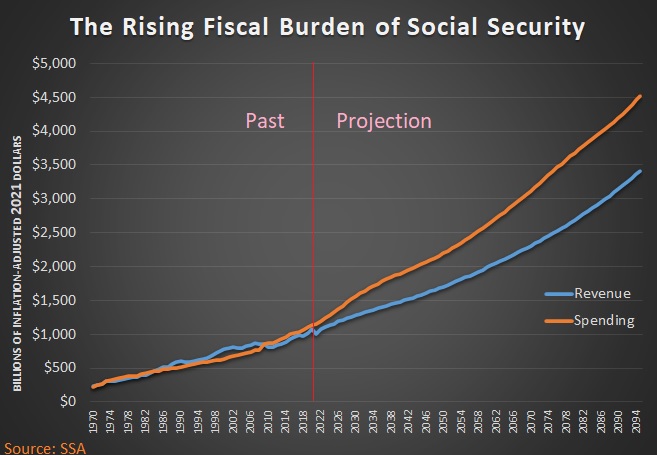
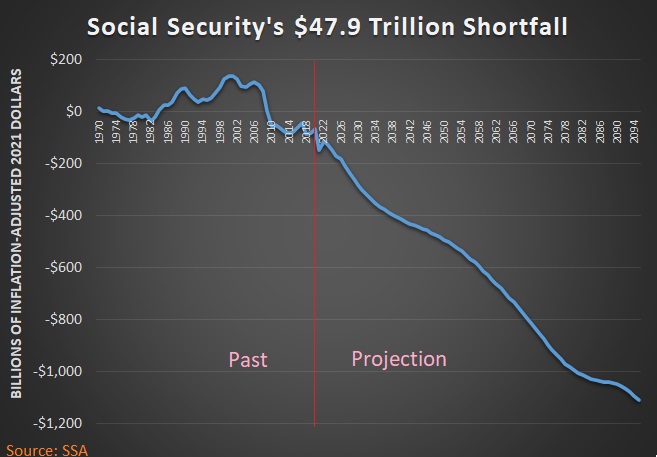
 I’ll conclude by observing that today’s column focuses on the big-picture fiscal problems with Social Security.
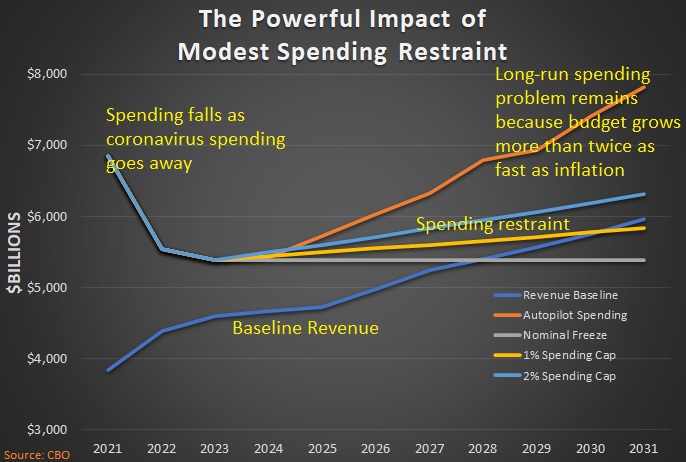












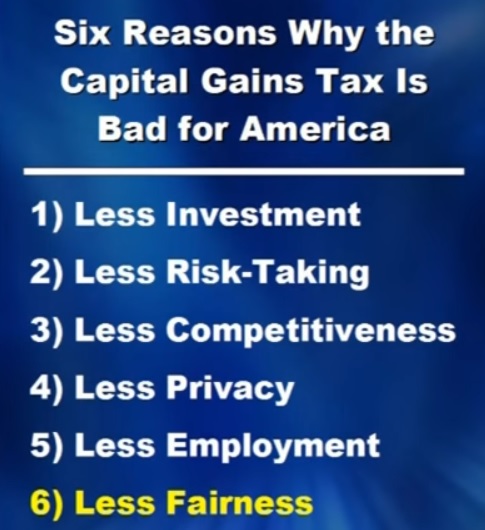

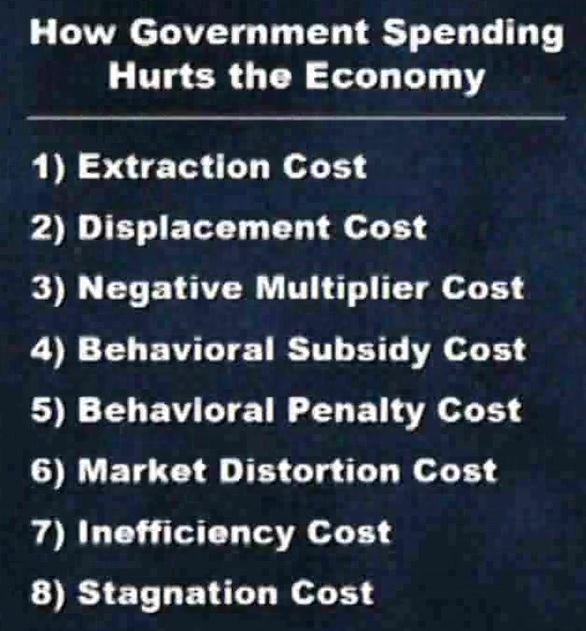


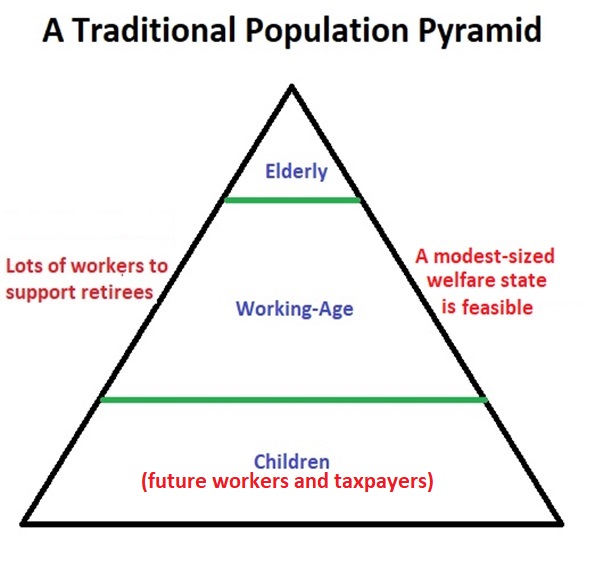


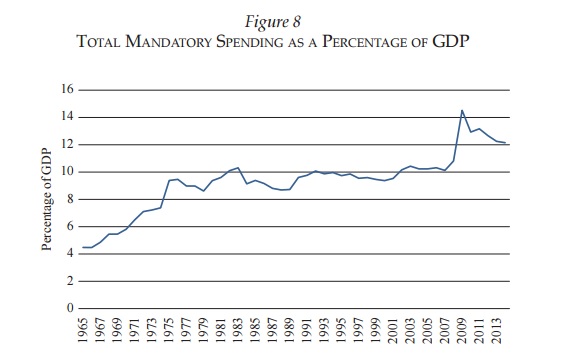
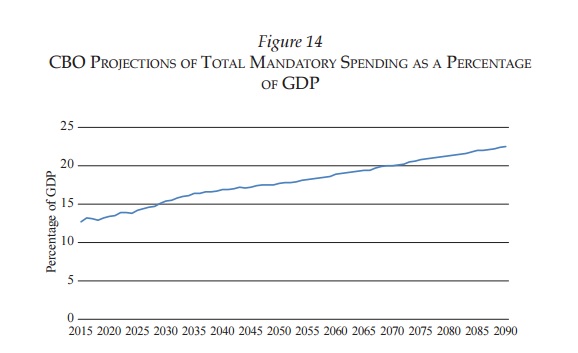
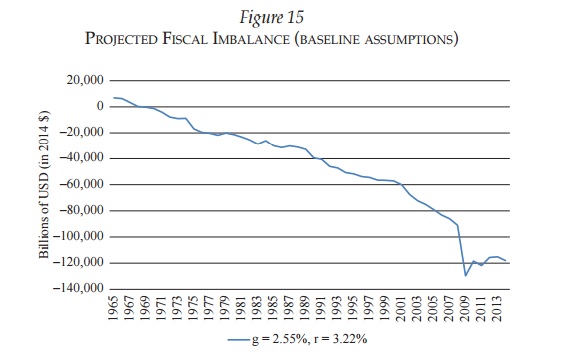


 The Daily Hatch