Daniel J. Mitchell on Obama’s Economic Stimulus Plan
Dan Mitchell discusses Ineffectiveness of Stimulus Spending
February 14, 2021
Office of Barack and Michelle Obama P.O. Box 91000 Washington, DC 20066
Dear President Obama,
I wrote you over 700 letters while you were President and I mailed them to the White House and also published them on my blog http://www.thedailyhatch.org .I received several letters back from your staff and I wanted to thank you for those letters.
There are several issues raised in your book that I would like to discuss with you such as the minimum wage law, the liberal press, the cause of 2007 financial meltdown, and especially your pro-choice (what I call pro-abortion) view which I strongly object to on both religious and scientific grounds, Two of the most impressive things in your book were your dedication to both the National Prayer Breakfast (which spoke at 8 times and your many visits to the sides of wounded warriors!!
I have been reading your autobiography A PROMISED LAND and I have been enjoying it.
Let me make a few comments on it, and here is the first quote of yours I want to comment on:
Page 244
We proposed that nearly $800 billion be divided into three buckets of roughly equal size. In bucket one, emergency payments like supplementary unemployment insurance and direct aid to states to slow further mass layoffs of teachers, police officers, and other public workers. In bucket two, tax cuts targeted at the middle class, as well as various business tax breaks that gave companies a big incentive to invest in new plants or equipment now instead of later. Both the emergency payments and the tax cuts had the advantage of being easy to administer; we could quickly get money out the door and into the pockets of consumers and businesses. Tax cuts also had the added benefit of potentially attracting Republican support. The third bucket, on the other hand, contained initiatives that were harder to design and would take longer to implement but might have a bigger long-term impact: not just traditional infrastructure spending like road construction and sewer repair but also high-speed rail, solar and wind power installation, broadband lines for underserved rural areas, and incentives for states to reform their education systems—all intended not only to put people to work but to make America more competitive. Considering how many unmet needs there were in communities all across the country, I was surprised by how much work it took for our team to find worthy projects of sufficient scale for the Recovery Act to fund. Some promising ideas we rejected because they would take too long to stand up or required a huge new bureaucracy to manage. Others missed the cut because they wouldn’t boost demand sufficiently. Mindful of accusations that I planned to use the economic crisis as an excuse for an orgy of wasteful liberal boondoggles (and because I in fact wanted to prevent Congress from engaging in wasteful boondoggles, liberal or otherwise), we put in place a series of good-government safeguards: a competitive application process for state and local governments seeking funding; strict audit and reporting requirements; and, in a move we knew would draw howls from Capitol Hill, a firm policy of no “earmarks”—to use the innocuous name for a time-honored practice in which members of Congress insert various pet projects (many dubious) into must-pass legislation.
PAGE 257
I stepped up to speak. It was my first time at a House Republicans gathering, and it was hard not to be struck by the room’s uniformity: row after row of mostly middle-aged white men, with a dozen or so women and maybe two or three Hispanics and Asians. Most sat stone-faced as I briefly made the case for stimulus—citing the latest data on the economy’s meltdown, the need for quick action, the fact that our package contained tax cuts Republicans had long promoted, and our commitment to long-term deficit reduction once the crisis had passed. The audience did perk up when I opened the floor for a series of questions (or, more accurately, talking points pretending to be questions), all of which I cheerfully responded to as if my answers mattered.
People often ask why I put so much political humor on this site. The easy answer is that I like a good joke.
But I also find that some cartoons and jokes do a very good job of helping people understand economics. I’ve always liked this cartoon, for instance, because it cleverly illustrates the impact of government handouts on the labor market. And looking at that cartoon is a lot quicker than taking a class about labor economics.
Well, you can also skip the class about public finance. Here’s a cartoon that shows the economic burden of government “stimulus” spending.
Very funny and very intellectually sound. Indeed, the only thing that would have made the cartoon even better would have been showing that the jockey became bloated by eating the horse’s food. But I reckon it’s not easy making multiple points with one picture.
Anyhow, I’m disappointed that I didn’t notice it at Reason.com a couple of years ago when the debate on the faux stimulus was taking place. It probably would have helped more people understand that you don’t boost economic performance by draining resources from the productive sector of the economy to finance a larger government.
President Obama c/o The White House 1600 Pennsylvania Avenue NW Washington, DC 20500 Dear Mr. President, I know that you receive 20,000 letters a day and that you actually read 10 of them every day. I really do respect you for trying to get a pulse on what is going on out here. There have […]By Everette Hatcher III | Posted in David Barton, Founding Fathers, President Obama | Edit |Comments (0)
There have been many articles written by evangelicals like me who fear that our founding fathers would not recognize our country today because secular humanism has rid our nation of spiritual roots. I am deeply troubled by the secular agenda of those who are at war with religion in our public life. Lillian Kwon quoted somebody […]By Everette Hatcher III | Posted in David Barton, Founding Fathers | Edit | Comments (0)
There have been many articles written by evangelicals like me who fear that our founding fathers would not recognize our country today because secular humanism has rid our nation of spiritual roots. I am deeply troubled by the secular agenda of those who are at war with religion in our public life. Lillian Kwon quoted somebody […]By Everette Hatcher III | Posted in David Barton, Founding Fathers | Edit | Comments (0)
There have been many articles written by evangelicals like me who fear that our founding fathers would not recognize our country today because secular humanism has rid our nation of spiritual roots. I am deeply troubled by the secular agenda of those who are at war with religion in our public life. Lillian Kwon quoted somebody […]By Everette Hatcher III | Posted in David Barton, Founding Fathers | Edit | Comments (0)
There have been many articles written by evangelicals like me who fear that our founding fathers would not recognize our country today because secular humanism has rid our nation of spiritual roots. I am deeply troubled by the secular agenda of those who are at war with religion in our public life. Lillian Kwon quoted somebody […]By Everette Hatcher III | Posted in David Barton, Founding Fathers | Edit | Comments (0)
There have been many articles written by evangelicals like me who fear that our founding fathers would not recognize our country today because secular humanism has rid our nation of spiritual roots. I am deeply troubled by the secular agenda of those who are at war with religion in our public life. Lillian Kwon quoted somebody […]By Everette Hatcher III | Posted in Founding Fathers | Edit | Comments (0)
President Obama Speaks at The Ohio State University Commencement Ceremony Published on May 5, 2013 President Obama delivers the commencement address at The Ohio State University. May 5, 2013. You can learn a lot about what President Obama thinks the founding fathers were all about from his recent speech at Ohio State. May 7, 2013, […]By Everette Hatcher III | Posted in Founding Fathers, President Obama | Edit | Comments (0)
Dr. C. Everett Koop with Bill Graham. Francis Schaeffer: “Whatever Happened to the Human Race” (Episode 4) THE BASIS FOR HUMAN DIGNITY Published on Oct 7, 2012 by AdamMetropolis The 45 minute video above is from the film series created from Francis Schaeffer’s book “Whatever Happened to the Human Race?” with Dr. C. Everett Koop. This […]By Everette Hatcher III | Posted in Founding Fathers, Francis Schaeffer, Prolife | Edit |Comments (1)
America’s Founding Fathers Deist or Christian? – David Barton 4/6 There have been many articles written by evangelicals like me who fear that our founding fathers would not recognize our country today because secular humanism has rid our nation of spiritual roots. I am deeply troubled by the secular agenda of those who are at […]By Everette Hatcher III | Posted in David Barton, Founding Fathers | Tagged governor of connecticut, john witherspoon, jonathan trumbull | Edit | Comments (1)
3 Of 5 / The Bible’s Influence In America / American Heritage Series / David Barton There were 55 gentlemen who put together the constitution and their church affliation is of public record. Greg Koukl notes: Members of the Constitutional Convention, the most influential group of men shaping the political foundations of our nation, were […]By Everette Hatcher III | Posted in Founding Fathers | Edit | Comments (0)
I do not think that John Quincy Adams was a founding father in the same sense that his father was. However, I do think he was involved in the early days of our government working with many of the founding fathers. Michele Bachmann got into another history-related tussle on ABC’s “Good Morning America” today, standing […]By Everette Hatcher III | Posted in David Barton, Founding Fathers | Edit | Comments (0)
I have gone back and forth and back and forth with many liberals on the Arkansas Times Blog on many issues such as abortion, human rights, welfare, poverty, gun control and issues dealing with popular culture. Here is another exchange I had with them a while back. My username at the Ark Times Blog is Saline […]By Everette Hatcher III | Posted in Arkansas Times, Francis Schaeffer, Prolife | Edit |Comments (0)
I truly believe that many of the problems we have today in the USA are due to the advancement of humanism in the last few decades in our society. Ronald Reagan appointed the evangelical Dr. C. Everett Koop to the position of Surgeon General in his administration. He partnered with Dr. Francis Schaeffer in making the […]By Everette Hatcher III | Posted in Adrian Rogers, Francis Schaeffer | Edit | Comments (0)
Francis Schaeffer: “Whatever Happened to the Human Race” (Episode 4) THE BASIS FOR HUMAN DIGNITY Published on Oct 7, 2012 by AdamMetropolis ____________ The 45 minute video above is from the film series created from Francis Schaeffer’s book “Whatever Happened to the Human Race?” with Dr. C. Everett Koop. This book really helped develop my political […]By Everette Hatcher III | Posted in Francis Schaeffer | Edit | Comments (0)
Who is Brian? A hoarder who wanted to appear in the Tambury Gazette and has now landed a job at the paper.
—
—
—
In the past I have done over 100 blog posts on the Netflix series AFTER LIFE written by Ricky Gervais and staring Ricky as Tony Johnson. I respect both Ricky and his character Tony for being people who demand evidence and they refuse to accept anything with a blind faith. That is part of the reason I started writing letters to Ricky several years ago with historical evidence from archaeology and ancient cultures on the Bible’s claims. I personally think his latest series AFTER LIFE is his best by far and it does a great job of examining Ricky’s humanistworldview and the natural conclusions that come from this time plus chance view of the world.
Just like Solomon in The Book of Ecclesiastes, Ricky in AFTER LIFE is examining life under the sun, which is life between birth and death without God in the picture. The key to understanding the Book of Ecclesiastes is the term UNDER THE SUN — What that literally means is you lock God out of a closed system and you are left with only this world of Time plus Chance plus matter. In fact, the phrase under the sun appears 29 times in Ecclesiastes.
Francis Schaefer indicated Ecclesiastes is truly the book of modern man because modern humanist man’s philosophy has brought him to the nihilistic conclusion that all is vanity and meaninglessness. This appears to be the place that the atheist Tony Johnson has landed and many of the characters around Tony have come to pessimistic conclusions about life too, though they have searched for satisfaction and meaning in life by pursuing ladies, luxuries, learning, labor, liquor, and laughter.
Brian Gittins claims to be a standup comedian but nothing he says is ever funny. His life has been a series of failures and there seems nothing to laugh about in the midst of all these tragedies in Brian’s seemingly meaningless life. Yet he attempts to indulge in humor and his thoughts on it remind me of these words of Solomon in Ecclesiastes: “I said of laughter, “It is foolishness;” and of mirth, “What does it accomplish?” (2:2). Then Solomon asserted the nihilistic statement in Ecclesiastes 2:17: “So I hated life, because the work that is done under the sun was grievous to me. All of it is meaningless, a chasing after the wind.”
In the third episode of AFTERLIFE Matt takes Tony to a comedy club with front row seats and this is what happens:
The comedian is getting huge laughs but Tony never laughs.
Comedian: You are a wonderful crowd. I am glad you are a wonderful crowd. I have had some bad news this week. Friend of mine actually committed suicide last week. He went upstairs and swallowed everything in the bathroom cabinet and choked on a tampon. (Crowd laughs heartily.) This guy in front row absolutely hated that joke. Cheer up mate! What is your name and what is your story?
Tony: My name is Tony. My wife died early this year with breast cancer and it broke me. Not a day goes by that I didn’t think of killing myself. I just don’t see any point in living.
Comedian: (Long pause of silence.) Umbrellas are weird aren’t they?…
Francis Schaeffer pictured below in 1971 at L Abri
_
Francis Schaeffer quoted Woody Allen in his book WHATEVER HAPPENED TO THE HUMAN RACE? (co-authored by Dr. C. Everett Koop):…One of the most striking developments in the last half-century is the growth of a profound pessimism among both the well-educated and less-educated people. The thinkers in our society have been admitting for a long time that they have no final answers at all. Take Woody Allen, for example. Most people know his as a comedian, but he has thought through where mankind stands after the “religious answers” have been abandoned. In an article in Esquire (May 1977), he says that man is left with: … alienation, loneliness [and] emptiness verging on madness…. The fundamental thing behind all motivation and all activity is the constant struggle against annihilation and against death. It’s absolutely stupefying in its terror, and it renders anyone’s accomplishments meaningless. Allen sums up his view in his film Annie Hall with these words: “Life is divided into the horrible and the miserable.” Many would like to dismiss this sort of statement as coming from one who is merely a pessimist by temperament, one who sees life without the benefit of a sense of humor. Woody Allen does not allow us that luxury. He speaks as a human being who has simply looked life in the face and has the courage to say what he sees. If there is no personal God, nothing beyond what our eyes can see and our hands can touch, then Woody Allen is right: life is both meaningless and terrifying.__Solomon’s experiment was a search for meaning to life “under the sun.” Then in last few words in the Book of Ecclesiastes he looks above the sun and brings God back into the picture: “The conclusion, when all has been heard, is: Fear God and keep His commandments, because this applies to every person. For God will bring every act to judgment, everything which is hidden, whether it is good or evil.”_____
In another episode in season 1 Brian Gittins brings Tony to his home and after showing Tony his pitiful stinking home Tony asks, “Why have you never considered suicide?” Brian responds, “I have.” Tony replies, “Then why haven’t you gone through with it?” Brian answers, “I thought it was too good for me? That is what you are dealing with here!”
Skeptics say that God doesn’t exist and there is no revelation, but have they examined the historical accuracy of the Bible? Adrian Rogers noted:
The Bible is affirmed through historical accuracy. Do you remember the story about the handwriting on the wall that is found in the fifth chapter of Daniel? Belshazzar hosted a feast with a thousand of his lords and ladies. Suddenly, a gruesome hand appeared out of nowhere and began to write on a wall. The king was disturbed and asked for someone to interpret the writing. Daniel was found and gave the interpretation. After the interpretation, “Then commanded Belshazzar, and they clothed Daniel with scarlet, and put a chain of gold about his neck, and made a proclamation concerning him, that he should be the third ruler in the kingdom.” (Daniel 5:29). Basing their opinion on Babylonian records, the historians claim this never happened. According to the records, the last king of Babylon was not Belshazzar, but a man named Nabonidas. And so, they said, the Bible is in error. There wasn’t a record of a king named Belshazzar. Well, the spades of archeologists continued to do their work. In 1853, an inscription was found on a cornerstone of a temple built by Nabonidas, to the god Ur, which read: “May I, Nabonidas, king of Babylon, not sin against thee. And may reverence for thee dwell in the heart of Belshazzar, my first-born favorite son.” From other inscriptions, it was learned that Belshazzar and Nabonidas were co-regents. Nabonidas traveled while Belshazzar stayed home to run the kingdom. Now that we know that Belshazzar and Nabonidas were co-regents, it makes sense that Belshazzar would say that Daniel would be the third ruler. What a marvelous nugget of truth tucked away in the Word of God!
I have gone back and forth and back and forth with many liberals on the Arkansas Times Blog on many issues such as abortion, human rights, welfare, poverty, gun control and issues dealing with popular culture. Here is another exchange I had with them a while back. My username at the Ark Times Blog is Saline […]By Everette Hatcher III | Posted in Biblical Archaeology, Francis Schaeffer, Prolife | Edit|Comments (0)
I have posted many of the sermons by John MacArthur. He is a great bible teacher and this sermon below is another great message. His series on the Book of Proverbs was outstanding too. I also have posted several of the visits MacArthur made to Larry King’s Show. One of two most popular posts I […]By Everette Hatcher III | Posted in Adrian Rogers, Current Events | Edit|Comments (0)
I have posted many of the sermons by John MacArthur. He is a great bible teacher and this sermon below is another great message. His series on the Book of Proverbs was outstanding too. I also have posted several of the visits MacArthur made to Larry King’s Show. One of two most popular posts I […]By Everette Hatcher III | Posted in Adrian Rogers, Current Events |Tagged Bible Prophecy, john macarthur | Edit|Comments (0)
Prophecy–The Biblical Prophesy About Tyre.mp4 Uploaded by TruthIsLife7 on Dec 5, 2010 A short summary of the prophecy about Tyre and it’s precise fulfillment. Go to this link and watch the whole series for the amazing fulfillment from secular sources. http://www.youtube.com/watch?v=qvt4mDZUefo________________ John MacArthur on the amazing fulfilled prophecy on Tyre and how it was fulfilled […]By Everette Hatcher III | Posted in Biblical Archaeology | Edit|Comments (1)
John MacArthur on the Bible and Science (Part 2) I have posted many of the sermons by John MacArthur. He is a great bible teacher and this sermon below is another great message. His series on the Book of Proverbs was outstanding too. I also have posted several of the visits MacArthur made to Larry […]By Everette Hatcher III | Posted in Current Events | Edit|Comments (0)
John MacArthur on the Bible and Science (Part 1) I have posted many of the sermons by John MacArthur. He is a great bible teacher and this sermon below is another great message. His series on the Book of Proverbs was outstanding too. I also have posted several of the visits MacArthur made to Larry […]By Everette Hatcher III | Posted in Current Events | Edit|Comments (0)
Adrian Rogers – How you can be certain the Bible is the word of God Great article by Adrian Rogers. What evidence is there that the Bible is in fact God’s Word? I want to give you five reasons to affirm the Bible is the Word of God. First, I believe the Bible is the […]By Everette Hatcher III | Posted in Adrian Rogers, Biblical Archaeology | Edit|Comments (0)
Is there any evidence the Bible is true? Articles By PleaseConvinceMe Apologetics Radio The Old Testament is Filled with Fulfilled Prophecy Jim Wallace A Simple Litmus Test There are many ways to verify the reliability of scripture from both internal evidences of transmission and agreement, to external confirmation through archeology and science. But perhaps the […]By Everette Hatcher III | Posted in Biblical Archaeology, Current Events | Edit|Comments (0)
I have gone back and forth and back and forth with many liberals on the Arkansas Times Blog on many issues such as abortion, human rights, welfare, poverty, gun control and issues dealing with popular culture. Here is another exchange I had with them a while back. My username at the Ark Times Blog is […]By Everette Hatcher III | Posted in Francis Schaeffer, Prolife | Edit|Comments (0)
Here is some very convincing evidence that points to the view that the Bible is historically accurate. Archaeological and External Evidence for the Bible Archeology consistently confirms the Bible! Archaeology and the Old Testament Ebla tablets—discovered in 1970s in Northern Syria. Documents written on clay tablets from around 2300 B.C. demonstrate that personal and place […]By Everette Hatcher III | Posted in Biblical Archaeology | E
I wanted to let you know what I think about the minimum wage increase you have proposed for the whole country and I wanted to quote Milton Friedman who you are familiar with and you made it clear in July that you didn’t care for his views!Let me challenge you to take a closer look at what he had to say!
report from JP Morgan Chase & Co. finds that the summer employment rate for teenagers is nearing a record low at 34 percent. The report surveyed 15 U.S. cities and found that despite an increase in summer positions available over a two year period, only 38 percent of teens and young adults found summer jobs.
This would be worrying by itself given the importance of work experience in entry-level career development, but it is also part of a long-term trend. Since 1995 the rate of seasonal teenage employment has declined by over a third from around 55 percent to 34 percent in 2015. The report does not attempt to examine why summer youth employment has fallen over the past two decades. If it had, it would probably find one answer in the minimum wage.
Most of the 15 cities studied in this report have minimum wage rates above the federal level, with cities such as Seattle having a rate more than double that. Recent data from the Bureau of Labor Statistics seen in the chart show exactly how a drastic rise in the minimum wage rate affects the rate of employment.
Seattle has experienced the largest 3 month job loss in its history last year, following the introduction of a $15 minimum wage. We can only imagine the impact such a change has had on the prospects of employment for the young and unskilled.
Raising the minimum wage reduces the number of jobs in the long-run. It is difficult to measure this long-run effect in terms of the numbers of never materializing jobs. However, the key mechanism behind the model—that more labor-intensive establishments are replaced by more capital-intensive ones—is supported by evidence. That is why recent research suggesting that minimum wages barely reduce the number of jobs in the short-run, should be taken with caution. Several years down the line, a higher real minimum wage can lead to much larger employment losses.
Several empirical studies have been conducted over the course of more than two decades, with all evidence pointing toward negative effects of minimum wage rises on employment levels among the young and unskilled. A study conducted by David Neumark and William Wascher in 1995 noted that “such increases raise the probability that more-skilled teenagers leave school and displace lower-skilled workers from their jobs. These findings are consistent with the predictions of a competitive labor market model that recognizes skill differences among workers. In addition, we find that the displaced lower-skilled workers are more likely to end up non-enrolled and non-employed.”
Policy makers who continuously raise the minimum wage simply assure that those young people, whose skills are not sufficient to justify that kind of wage, will instead remain unemployed. In an interview Milton Freidman famously asked “What do you call a person whose labor is worth less than the minimum wage? Permanently unemployed.”
The upshot: Raising the minimum wage at both federal and local levels denies youth the skills and experience they need to get their career going.
_____________
Thank you so much for your time. I know how valuable it is. I also appreciate the fine family that you have and your commitment as a father and a husband.
Sincerely,
Everette Hatcher III, 13900 Cottontail Lane, Alexander, AR 72002, ph 501-920-5733
Milton Friedman PBS Free to Choose 1980 Vol 4 of 10 From Cradle to Grave
Milton Friedman – Whats wrong with welfare? (Q&A)
Free To Choose – Milton Friedman on The Welfare System (1978) | Thomas S…
Milton Friedman Speaks: What is Wrong with the Welfare State? (B1229) – …
February 13, 2021
Office of Barack and Michelle Obama P.O. Box 91000 Washington, DC 20066
Dear President Obama,
I wrote you over 700 letters while you were President and I mailed them to the White House and also published them on my blog http://www.thedailyhatch.org .I received several letters back from your staff and I wanted to thank you for those letters.
There are several issues raised in your book that I would like to discuss with you such as the minimum wage law, the liberal press, the cause of 2007 financial meltdown, and especially your pro-choice (what I call pro-abortion) view which I strongly object to on both religious and scientific grounds, Two of the most impressive things in your book were your dedication to both the National Prayer Breakfast (which spoke at 8 times and your many visits to the sides of wounded warriors!!
I have been reading your autobiography A PROMISED LAND and I have been enjoying it.
Let me make a few comments on it, and here is the first quote of yours I want to comment on:
As our society grew more complex, more and more of the government’s function took the form of social insurance, with each of us chipping in through our tax dollars to protect ourselves collectively—for disaster relief if our house was destroyed in a hurricane; unemployment insurance if we lost a job; Social Security and Medicare to lessen the indignities of old age; reliable electricity and phone service for those who lived in rural areas where utility companies wouldn’t otherwise make a profit; public schools and universities to make education more egalitarian. It worked, more or less. In the span of a generation and for a majority of Americans, life got better, safer, more prosperous, and more just. A broad middle class flourished. The rich remained rich, if maybe not quite as rich as they would have liked, and the poor were fewer in number, and not as poor as they’d otherwise have been. And if we sometimes debated whether taxes were too high or certain regulations were discouraging innovation, whether the “nanny state” was sapping individual initiative or this or that program was wasteful, we generally understood the advantages of a society that at least tried to offer a fair shake to everyone and built a floor beneath which nobody could sink. Maintaining this social compact, though, required trust. It required that we see ourselves as bound together, if not as a family then at least as a community, each member worthy of concern and able to make claims on the whole. It required us to believe that whatever actions the government might take to help those in need were available to you and people like you; that nobody was gaming the system and that the misfortunes or stumbles or circumstances that caused others to suffer were ones to which you at some point in your life might fall prey.
Jeffrey Tucker of the Foundation for Economic Education explains that the government also has made showering a less pleasant experience. He starts by expressing envy about Brazilian showers.
…was shocked with delight at the shower in Brazil. …step into the shower and you have a glorious capitalist experience. Hot water, really hot, pours down on you like a mighty and unending waterfall… At least the socialists in Brazil knew better than to destroy such an essential of civilized life.
I know what he’s talking about.
I’m in a hotel (not in Brazil), and my shower this morning was a tedious experience because the water flow was so anemic.
Why would a hotel not want customers to have an enjoyable and quick shower?
The answer is government.
…here we’ve forgotten. We have long lived with regulated showers, plugged up with a stopper imposed by government controls imposed in 1992. There was no public announcement. It just happened gradually. After a few years, you couldn’t buy a decent shower head. They called it a flow restrictor and said it would increase efficiency. By efficiency, the government means “doesn’t work as well as it used to.” …You can see the evidence of the bureaucrat in your shower if you pull off the showerhead and look inside. It has all this complicated stuff inside, whereas it should just be an open hole, you know, so the water could get through. The flow stopper is mandated by the federal government.
The problem isn’t just the water coming out of the showerhead. It’s the water coming into your home.
It’s not just about the showerhead. The water pressure in our homes and apartments has been gradually getting worse for two decades, thanks to EPA mandates on state and local governments. This has meant that even with a good showerhead, the shower is not as good as it might be. It also means that less water is running through our pipes, causing lines to clog and homes to stink just slightly like the sewer. This problem is much more difficult to fix, especially because plumbers are forbidden by law from hacking your water pressure.
So why are politicians and bureaucrats imposing these rules?
Ostensibly for purposes of conservation.
…what about the need to conserve water? Well, the Department of the Interior says that domestic water use, which includes even the water you use on your lawn and flower beds, constitutes a mere 2% of the total, so this unrelenting misery spread by government regulations makes hardly a dent in the whole. In any case, what is the point of some vague sense of “conserving” when the whole purpose of modern appliances and indoor plumbing is to improve our lives and sanitation? (Free societies have a method for knowing how much of something to use or not use; it is called the signaling system of prices.)
Jeffrey is right. If there really is a water shortage (as there sometimes is in parts of the country and world), then prices are the best way of encouraging conservation.
Now let’s dig in the archives of the Wall Street Journal for a 2010 column on the showerhead issue.
Apparently bureaucrats are irked that builders and consumers used multiple showerheads to boost the quality of their daily showers.
Regulators are going after some of the luxury shower fixtures that took off in the housing boom. Many have multiple nozzles, cost thousands of dollars and emit as many as 12 gallons of water a minute. In May, the DOE stunned the plumbing-products industry when it said it would adopt a strict definition of the term “showerhead”… A 1992 federal law says a showerhead can deliver no more than 2.5 gallons per minute at a flowing water pressure of 80 pounds per square inch. For years, the term “showerhead” in federal regulations was understood by many manufacturers to mean a device that directs water onto a bather. Each nozzle in a shower was considered separate and in compliance if it delivered no more than the 2.5-gallon maximum. But in May, the DOE said a “showerhead” may incorporate “one or more sprays, nozzles or openings.” Under the new interpretation, all nozzles would count as a single showerhead and be deemed noncompliant if, taken together, they exceed the 2.5 gallons-a-minute maximum.
And here’s something that’s both amusing and depressing.
The regulations are so crazy that an entrepreneur didn’t think they were real.
Altmans Products, a U.S. unit of Grupo Helvex of Mexico City, says it got a letter from the DOE in January and has stopped selling several popular models, including the Shower Rose, which delivers 12 gallons of water a minute. Pedro Mier, the firm’s vice president, says his customers “just like to feel they’re getting a lot of water.” Until getting the DOE letter, his firm didn’t know U.S. law limited showerhead water usage, Mr. Mier says. “At first, I thought it was a scam.”
Unsurprisingly, California is “leading” the way. Here are some passages from an article in the L.A. Times from almost two years ago.
The flow of water from shower heads and bathroom faucets in California will be sharply reduced under strict new limits approved Wednesday by the state Energy Commission. Current rules, established in 1994 at the federal level, allow a maximum flow of 2.5 gallons per minute from a shower head. Effective next July, the limit will fall to 2.0 gallons per minute and will be reduced again in July 2018, to 1.8 gallons, giving California the toughest standard of any U.S. state.
Though “toughest standard” is the wrong way to describe what’s happening. It’s actually the “worst shower” of any state.
P.S. I forget the quality of shower I experienced in South Korea, but I was very impressed (see postscript) by the toilet.
Sincerely,
Everette Hatcher III, 13900 Cottontail Lane, Alexander, AR 72002, ph 501-920-5733 everettehatcher@gmail.com
President Obama c/o The White House 1600 Pennsylvania Avenue NW Washington, DC 20500 Dear Mr. President, I know that you receive 20,000 letters a day and that you actually read 10 of them every day. I really do respect you for trying to get a pulse on what is going on out here. There have […]By Everette Hatcher III | Posted in David Barton, Founding Fathers, President Obama | Edit |Comments (0)
There have been many articles written by evangelicals like me who fear that our founding fathers would not recognize our country today because secular humanism has rid our nation of spiritual roots. I am deeply troubled by the secular agenda of those who are at war with religion in our public life. Lillian Kwon quoted somebody […]By Everette Hatcher III | Posted in David Barton, Founding Fathers | Edit | Comments (0)
There have been many articles written by evangelicals like me who fear that our founding fathers would not recognize our country today because secular humanism has rid our nation of spiritual roots. I am deeply troubled by the secular agenda of those who are at war with religion in our public life. Lillian Kwon quoted somebody […]By Everette Hatcher III | Posted in David Barton, Founding Fathers | Edit | Comments (0)
There have been many articles written by evangelicals like me who fear that our founding fathers would not recognize our country today because secular humanism has rid our nation of spiritual roots. I am deeply troubled by the secular agenda of those who are at war with religion in our public life. Lillian Kwon quoted somebody […]By Everette Hatcher III | Posted in David Barton, Founding Fathers | Edit | Comments (0)
There have been many articles written by evangelicals like me who fear that our founding fathers would not recognize our country today because secular humanism has rid our nation of spiritual roots. I am deeply troubled by the secular agenda of those who are at war with religion in our public life. Lillian Kwon quoted somebody […]By Everette Hatcher III | Posted in David Barton, Founding Fathers | Edit | Comments (0)
There have been many articles written by evangelicals like me who fear that our founding fathers would not recognize our country today because secular humanism has rid our nation of spiritual roots. I am deeply troubled by the secular agenda of those who are at war with religion in our public life. Lillian Kwon quoted somebody […]By Everette Hatcher III | Posted in Founding Fathers | Edit | Comments (0)
President Obama Speaks at The Ohio State University Commencement Ceremony Published on May 5, 2013 President Obama delivers the commencement address at The Ohio State University. May 5, 2013. You can learn a lot about what President Obama thinks the founding fathers were all about from his recent speech at Ohio State. May 7, 2013, […]By Everette Hatcher III | Posted in Founding Fathers, President Obama | Edit | Comments (0)
Dr. C. Everett Koop with Bill Graham. Francis Schaeffer: “Whatever Happened to the Human Race” (Episode 4) THE BASIS FOR HUMAN DIGNITY Published on Oct 7, 2012 by AdamMetropolis The 45 minute video above is from the film series created from Francis Schaeffer’s book “Whatever Happened to the Human Race?” with Dr. C. Everett Koop. This […]By Everette Hatcher III | Posted in Founding Fathers, Francis Schaeffer, Prolife | Edit |Comments (1)
America’s Founding Fathers Deist or Christian? – David Barton 4/6 There have been many articles written by evangelicals like me who fear that our founding fathers would not recognize our country today because secular humanism has rid our nation of spiritual roots. I am deeply troubled by the secular agenda of those who are at […]By Everette Hatcher III | Posted in David Barton, Founding Fathers | Tagged governor of connecticut, john witherspoon, jonathan trumbull | Edit | Comments (1)
3 Of 5 / The Bible’s Influence In America / American Heritage Series / David Barton There were 55 gentlemen who put together the constitution and their church affliation is of public record. Greg Koukl notes: Members of the Constitutional Convention, the most influential group of men shaping the political foundations of our nation, were […]By Everette Hatcher III | Posted in Founding Fathers | Edit | Comments (0)
I do not think that John Quincy Adams was a founding father in the same sense that his father was. However, I do think he was involved in the early days of our government working with many of the founding fathers. Michele Bachmann got into another history-related tussle on ABC’s “Good Morning America” today, standing […]By Everette Hatcher III | Posted in David Barton, Founding Fathers | Edit | Comments (0)
I have gone back and forth and back and forth with many liberals on the Arkansas Times Blog on many issues such as abortion, human rights, welfare, poverty, gun control and issues dealing with popular culture. Here is another exchange I had with them a while back. My username at the Ark Times Blog is Saline […]By Everette Hatcher III | Posted in Arkansas Times, Francis Schaeffer, Prolife | Edit |Comments (0)
I truly believe that many of the problems we have today in the USA are due to the advancement of humanism in the last few decades in our society. Ronald Reagan appointed the evangelical Dr. C. Everett Koop to the position of Surgeon General in his administration. He partnered with Dr. Francis Schaeffer in making the […]By Everette Hatcher III | Posted in Adrian Rogers, Francis Schaeffer | Edit | Comments (0)
Francis Schaeffer: “Whatever Happened to the Human Race” (Episode 4) THE BASIS FOR HUMAN DIGNITY Published on Oct 7, 2012 by AdamMetropolis ____________ The 45 minute video above is from the film series created from Francis Schaeffer’s book “Whatever Happened to the Human Race?” with Dr. C. Everett Koop. This book really helped develop my political […]By Everette Hatcher III | Posted in Francis Schaeffer | Edit | Comments (0)
I want to encourage everyone to read this fine articles: Why Government is the Problem.* Essays in Public Policy, no. 39. Stanford, California: Hoover Institution Press, 1993.
. An enterprise started by a group of people in the private sphere may succeed or fail. Most new enterprises fail (if the enterprise were clearly destined for success, it would probably already exist). If the enterprise fails, it loses money. The people who own it have a clear bottom line. To keep it going, they have to dig into their own pockets. They are reluctant to do that, so they have a strong incentive either to make the enterprise work or to shut it down. Suppose the same group of people start the same enterprise in the government sector and the initial results are the same. It is a failure; it does not work. They have a very different bottom line. Nobody likes to admit that he has made a mistake, and they do not have to. They can argue that the enterprise initially failed only because it was not pursued on a large enough scale. More important, they have a much different and deeper pocket to draw on. With the best intentions in the world, they can try to persuade the people who hold the purse strings to finance the enterprise on a larger scale, to dig deeper into the pockets of the taxpayers to keep the enterprise going. That illustrates a general rule: If a private enterprise is a failure, it closes down—unless it can get a government subsidy to keep it going; if a government enterprise fails, it is expanded. I challenge you to find exceptions.
Now for the example that demonstrates his point in 2021:
Speaking to the press at a subway stop in New York City on Dec. 13, Sen. Chuck Schumer, D-N.Y., calls for including more federal money for the city’s Metropolitan Transportation Authority in the COVID-19 relief package. (Photo: Lev Radin/ Pacific Press/LightRocket/Getty Images)
David Ditch is a research associate specializing in budget and transportation policy in the Grover M. Hermann Center for the Federal Budget at The Heritage Foundation.
Congress is moving full steam ahead on ramming through a bloated, wasteful, and debt-exploding$1.9 trillion legislative package.
Although it’s supposedly justified by the COVID-19 pandemic, most of the spending is designed to appease progressive ideological causes and politically connected interest groups.
A prime example is the $57.5 billion currently earmarked for various parts of the transportation industry.
While transportation is often thought of as a nonpartisan issue, most of these taxpayer funds are being used to provide preferential treatment for labor unions, and most of the rest is of questionable value.
Want to keep up with the 24/7 news cycle? Want to know the most important stories of the day for conservatives? Need news you can trust? Subscribe to The Daily Signal’s email newsletter. Learn more >>
More than half of the amount, $30 billion, goes to mass transit. That is, frankly, absurd.
To begin with, transit covered only a small fraction of the nation’s transportation system even before the pandemic, with all forms of public transportation accounting for just 5% of commuter trips in 2019.
In addition, this $30 billion would represent roughly 60% of total yearly transit operating costs nationwide, on top of the more than $10 billion that transit agencies annually receive from the Highway Trust Fund.
Thus, the federal government will single-handedly provide nearly all of the funds for transit operations, even though the vast majority of transit use occurs in a small handful of metro areas.
That means taking money from people in Manhattan, Kansas, to pay for transit services in Manhattan, New York.
The same thing already happened last year: Congress provided $39 billion in transit funding across multiple relief bills in 2020.
Since so few people are using transit during the pandemic, what are taxpayers buying for the $30 billion? The answer is: outrageous compensation packages for unionized government workers.
For example, the largest transit organization—New York’s Metropolitan Transportation Authority—has labor costs of $151,693 per employee.
Rather than pressuring local transit agencies to examine their bloated payrolls and insane costs, continued subsidies allow them to keep doling out goodies (and help the labor unions provide generous support to urban political machines).
An additional $14 billion would subsidize airlines to freeze their payrolls in place despite the sharp decline in air travel. This is now the third round of handouts for airlines, which have already received $50 billion over the past year.
It would be one thing if we could reasonably expect airline traffic to snap back to 2019 levels once COVID-19 is under control. However, experts predict that it will take several years for that to occur, partially as a result of the widespread use of teleconferencing.
As such, trying to prevent a single airline layoff is an exercise in futility.
It should not surprise you to learn that airline employees are also heavily unionized.
The next-largest share of transportation funds, $8 billion, would go to airports. As with the other bailouts, that is intended to allow airports to ignore the steep drop in consumer demand and avoid finding ways to cut costs.
Airports already received a $10 billion COVID-19 bailout last year. The first bailout was an epic disaster, with a botched formula giving unintended jackpots that covered up to four years of expenses.
While we should expect the second bailout to avoid that specific foul-up, it’s worth remembering that taxpayers already provide airports with a multitude of subsidies, many of which are aimed at low-use airports to maximize political (rather than public) benefits.
While Congress should clearly put these subsidy plans in reverse, it should also recognize that there are ways for the federal government to help the transportation industry, including:
Getting rid of red tape and federal micromanagement that drive up the cost of construction projects and interfere with decision-making for state and local governments.
Setting up pre-purchase accounts with airlines to cover future flights for government employees, which would provide cash without being a pure handout.
Avoiding unnecessary travel restrictions.
Eliminating federal rules that interfere with airport self-funding, which would allow airports to recover more effectively as passengers return.
It has become all too easy for legislators to “solve” problems by whipping out the national credit card.
However, with the national debt at a staggering $27.9 trillion, they should think twice when considering new taxpayer-funded handouts—especially when those handouts are aimed at already favored groups, such as labor unions.
Ronald Reagan with Milton Friedman
It is my very great pleasure to present to you our speaker today, professor Milton Friedman .What I want to talk about is really an issue which is very much related to the whole problem of human freedom.It has to do with the question of whether capitalism is humane and what you mean by.I am sure many of you have heard the funny of the old story about the two poles who met one another, and one pole said to the other.Tell me: do you know the difference between capitalism and socialism, and the other pole said?No, I don’t know the difference, and the first pole said: well, you know under capitalism, man exploits man.00:56The other fellow shook his head.Well under socialism.He said it’s vice-versa.Well, now that, as a matter of fact in the present intellectual atmosphere of the world is a relatively favorable evaluation of capitalism, the interesting thing to me about this is that the all of the arguments, the issues in this debate, which has been going on for so Long about the form of government have changed the argument used to be about strictly the form of economic organization.Should we have government control of production and distribution, or should we have a market control and the argument used to be made in terms of the supposedly greater efficiency of centralized government and have centralized control?01:50Nobody makes that argument anymore.There is hardly a person in the world who will claim the nationalized industries or socialism as a method of economic organization, is an efficient way to organize things.The examples of Great Britain, the examples of Russia, the examples of some of the other states around the world that have adopted these measures, plus the domestic grown examples of the post office in its fellows, have put an end to that kind of talk.But the interesting thing is that, nonetheless, there is widespread opposition for cat to capitalism as a system of organization, and there is widespread sewer support for some vague system, labeled socialism.The most dramatic example of the change in the character, the argument and the paradox that I’m really bringing out is Germany here was Germany, which experienced all the horrors of the Nazi totalitarian state in the 1930s.Here is Germany, which, after the war under the Erhard policy of socio, marked fear, shaft social market economy had an economic miracle, with an enormous rise in total income, enormous rise in the well-being of the German people of the ordinary people, and yet in German.Despite the demonstration of the horrors on the one side of a totalitarian state and on the other of the benefits of a relatively free market here in Germany, you will find a very large fraction of all.Intellectuals remain, and not only remain, have become even more strongly anti-capitalist have become proponents of collectivism of one form or another.Only a small number have gone into the more extreme versions that you’ve been reading about in the paper of the of the terrorists, but a very large fraction of the intellectuals.Those who write for the newspapers, those who are on television and so on, are fundamentally anti-capitalist in their mentality, and the question is why what is it that has produced this shift?04:11Now, one of the most enough is shift.What is it that produces this consistent attitude of anti capitalism on the one hand, and pro something called collectivism on the other among intellectuals?One of the most interesting analyses of these problems, I know, is by a Russian dissident mathematician named Schaffer ravitch, his essay, which has never been published needless to say in Russia, but it appears in English translation in a book called under the rubble, which has been edited By Alexander Solzhenitsyn and I strongly recommend that particular paper to you in it he discusses the appeal of socialism over the ages.He goes back a thousand or two thousand years, and he comes out with the conclusion that, just as Freud pointed to the death wish in individuals as a fundamental psychological propensity, the appeal of capitalism, he argued, I’m sorry, the appeal of socialism.The opposition to capitalism is really a fundamental sign of a death wish for society on the part of intellectuals.It’S a very strange and at first sight, highly improbable kind of an interpretation.Yet I urge you all to read that essay, because you will find that it is very disturbing by having a great deal more sense to it than you would suppose.05:45Such a position could possibly have I’m not going to take that line.Maybe he’s right, but I think, there’s a very much simpler analysis, a simpler reason for this, and that simpler reason is a combination of a supposed emphasis on moral values and ignorance and misunderstanding about the relationship between moral values and economic systems.I may say the emphasis on moral values is almost always on the part of people who do not have economic problems, it’s not on the part of the masses, but the problem with this approach, the problem of trying to interpret and analyze a system either pro or Con in terms of such concepts as a morality of the system or the humanity of the system, whether capitalism is humane or socialism is humane or moral or immoral.The problem with that is in moral values are individual, they are not collective.Moral values have to do with what each of us separately believes in holds true.What our own individual values are: capitalism, socialism, central planning our means, not ends they in and of themselves.They need a more alluring world, humane or humility in human.07:12We have to ask what are their results?We have to look at what are the consequences of adopting one or another system of organization, and from that point of view, the crucial thing is to look beneath the surface.Don’T look at what the proponents of one system or another say, are their intentions, but look at what the actual results are.Socialism, which means government ownership and operation of means of production, has appealed to high-minded fine people to people of idealistic views because of the supposed objectives of socialism, especially because of the supposed objectives and equality of equality and social justice.Now those are fine objectives and it’s a tribute to the people of good will that those objectives should appeal to them.But you have to ask the question: does a system, no matter what its proponents say, produce those results and once you look at the results, it’s crystal clear that they do not wear our social injustice is greatest social injustice, Azhar, clearly greatest, where you have central control.The degree of social injustice and torture in a place like in incarceration in a place like Russia is of a different order of magnitude than it is in those Western countries where most of us have grown up and in which we have been accustomed to.08:49Regarding freedom.As our natural heritage, social injustice in a country like Yugoslavia, which is a much more benign communist state than Russia, and yet you asked Jesus who languishes in prison for having written a book, you asked the people at the University of Belgrade who have been sent to Prison or many others who have been ejected from the country, social injustice in China, where you have had thousands of people murdered because of their opposition to the government.Again, you look at the question of inequality of equality.Where do you have the greatest degree of inequality in the socialist states of the world?I remember about 15 years ago my wife and I were in Russia for a couple of weeks.We were in Moscow and we were, we were going with.Our interest died and happened to see, I happen to see some of the fancy Russian limousines up there, the Zips they were sort of a take-off on the 1938 American Packers, and I asked our interest guide out of amusement.How much did those sell for all?10:04She said those aren’t for sale.Those are only for the members of the Politburo you have in a country like Soviet Union.Enormous inequality in the immediate literal sense that there is a small select group that has all of the services and amenities of life and very large masses that are in a very, very low standard of living.Indeed, in a more direct way, if you take the wage rate of foremen versus the wage rate of ordinary workers in the Soviet Union, the ratio is much greater than it is in the United States.I am reminded again of another if I seem somehow to be referring to Poland, but on this same trip that we took to Russia, we stopped in Poland in Warsaw for a while, and we met there, a marvelous man, a man by the name of Edward Lipinski, Who was in this country a year ago at the age of eighty, three or four, I believe was arrested when he got back to Poland, because he had been one of those who had signed an author to Declaration against the suppression of freedom of thought and speech.In Poland, but at the time we met Edward Lipinski, he would seem to be fairly afraid.He is a militant man who had been a socialist all his life, and this was really very hard for he was now in his 70s.I may say when we saw him, he was retired, very hard thing for a man to go back on all of his lifelong beliefs, and so he said as follows to us.He said you know.He said I used to believe in socialism.I still do, but socialism is an ideal.We can’t have it in the real world.He said until we’re rich enough to be able to afford it, and he said socialism will be practical when every man in Poland has a house and two servants, and I said to him, including the servants, and he said yes now.12:02Capitalism, on the other hand, is a system of organization that relies on private property and voluntary exchange.It has repelled people, it’s driven them away from supporting it because they have thought it emphasized self-interest in a narrow way, because they were repelled by the idea of people pursuing their own interests rather than some broader interest.Yet if you look at the results, it’s clear that the results go, the other way around there isn’t it’s in the capitalist societies of the world, where only where capitalism has prevailed over long periods.If you had both freedom and prosperity, the greatest measures of freedom, if you look at the Western countries where freedom prevails, it doesn’t prevail perfectly.We all have our defects, but by an eye on buying on the large few would deny that in the United States in Great Britain and France in Germany, in the Western Europe, we have a greater degree of freedom on an individual and personal level than you do.In most other places around the world in Australia, Japan to a considerable extent today, though, not two hundred years ago, if you look, you will find that freedom has prevailed where you’ve had capitalism and that simultaneously so has a well-being and the prosperity of the ordinary man.There’S been more social justice and less inequality now the question is that you have to ask and you have to ask the proponents of these two system.13:36Has socialism failed because it’s good qualities were perverted by evil men who got in charge?Was it simply because Stalin took over from Lanen that communism went the way it did?Has capitalism succeeded despite the immoral values that pervade it?13:56I think the answer to both questions is in the negative.The results have arisen because each system has been true to its own values, or rather a system doesn’t have values.I don’t mean that has been true to the values it encourages, supports and develops in the people who live under that system.What we’re concerned with in discussing moral values here are those that have to do with the relations between people.It’S important to distinguish between two sets of moral considerations, the morality that is relevant to each of us in our private life.How we, each individually conduct ourselves, behave and then what’s relevant to systems of government and organization, are the relations between people and in judging relations among between people.I do not believe that the fundamental value is to do good to others, whether they want you to or not.The fundamental value is not to do good to others, as you see their good, it’s not to force them to do good.As I see it, the fundamental value in relations to Hmong people is to respect the dignity and the individuality of fellow men to treat your fellow man not as an object to be manipulated for your purpose, but the treat him as a person with his own values.In his own rights, a person to be persuaded not coerced, not forced, not bulldozed, not brainwashed.That seems to me to be a fundamental value from in social relations in all systems, whether you call them socialism, capitalism or anything else.15:51People act from self-interest.The citizens of Russia act from self-interest in the same way as the citizens in the United States.Do.16:00The difference between the two countries is in what determines self-interest?The man in the United States who is serving as a foreman in a factory.16:12His self-interest leads him to worry about not getting fired.The man in Russia who is acting as Foreman in a factory.His self-interest leads him to worry about not being fired, both are pursuing their own self-interest, but the sanctions, the effects, what makes it in their self-interest is different in the one case and in the other, but self-interest should not be interpreted as narrow selfishness.I quote a man who speaks much more eloquently than I can.This is Thoreau, and I quote him from here’s what, though the Thoreau said about unselfishness as a moral virtue, he said there is no odor, so bad as that which arises from goodness tainted it.If I knew for a certainty that a man was coming to my house with the conscious design of doing me good, I should run for my life.Philanthropy is almost the only virtue which is sufficiently appreciated by mankind.Nay, it is greatly overrated and it as to our it is our selfishness which over rates it if anything, L a man so that he does not perform his functions if he have a pain in his bowels.Even for that, as a seat of sympathy, he forthwith sets about reforming the world being a microcosm himself.He discovers and it is a true discovery, and he is the man to make it that the world has been eating green apples to his eyes.In fact, the globe itself is a great green apple, which there is danger awful to think of that the children of men will nibble before it is ripe and straight away.His drastic philanthropy seeks out the Eskimo and the Patagonian and embraces the populous, Indian and Chinese villages.That’S the row on unselfishness as a moral value, more important and more fundamentally, whenever we depart from voluntary cooperation and try to do good by using force the bad moral value of force triumphs over good intentions.You realize this is highly relevant to what I’m saying, because the essential notion of a capitalist society which I’ll come back to is voluntary cooperation.18:47Voluntary exchange.The essential notion of a socialist society is fundamentally force if the government is the master if society is to be run from the central center.What do you do?What are you doing?You automatically have to order people what to do?19:07What is your ultimate sanction?Go back a ways: take it on a milder level.Whenever you try to do good with somebody else’s money, you are committed to using force.How can you do good with somebody else’s money unless you first take it away from them?The only way you can take it away from them is by the threat of force.You have a policeman, a tax collector who comes and takes it from them.This is carrying much farther if you really have a socialist society, if you have an organization from the centre, if you have supposed government bureaucrats running things that can only ultimately rest on force, but whenever you resort to force even to try to do good, you must Not questions people’s motives, maybe they’re evil sometime, but look at the results of what they do give them the benefit of the doubt assume their motives are good.You know, there’s an old saying about the road to Hell being paved with good intentions.You have to look at the LT and whenever you use force the bad moral value of force triumphs over good intentions.The reason is not only that famous aphorism of Lord Acton, you all know it you’ve all heard absolute power corrupts absolutely I’m sorry.20:28Power corrupts absolute power corrupts absolutely that’s a whole aphorism.That’S one reason why trying to do good with methods that involve force lead to bad results because of people who set out with good intentions are themselves corrupted, and I may add, if they’re not corrupted, they’re replaced by people with bad intentions, who are more efficient at Getting control of the use of force, but also the fundamental reason, is more profound.The most harm of all is done when power is in the hands of people who are absolutely persuaded of the purity of their instincts of their and of the purity of their intentions.That Thoreau says that philanthropy is a much overrated virtue.Sincerity is also a much overrated virtue.Heaven preserve us from the sincere reformer who knows what’s good for you and bye-bye heaven is going to make you do it, whether you like it or not.That’S when you get the greatest harm done.I have no reason to doubt that Lenin was a man whose intentions were good, maybe they weren’t, but he was completely persuaded that he was right and he was willing to use any methods at all for the ultimate good.21:53Again, it’s interesting to contrast.The experience of Hitler versus Mussolini Mussolini was much less of a danger to human right because he was a hypocrite because he didn’t really believe what he was saying.He was just in there for the game.He started out as a socialist.He turned to a fascist, he was willing to be bribed by whoever would bribe him the most.As a result, there were at least some protections against his arbitrary rule, but Hitler was a sincere fanatic.He believed in what he was doing and he did far greater harm or, if I may take you on to a minor key in which you may not join me.I realize Ralph Nader is a modern example of the same thing.I have no doubt that Ralph is sincere.I have no doubt that he means what he says, but that’s.Why he’s so dangerous a man who is threatening our freedom in the past in the past few decades?In the past few decades there has been a great decline in the moral climate.There are a few people who doubt the decline in the moral climate.We see evidences of it here, the lack of civility and discussions among people the resort to chance.Instead of arguments, these are all evidences on one level of a decline in moral climate, but we see it also in the rising crime statistics, in the lack of respect for property in the kind of rioting that broke out in New York after the blackout.In the problems of maintaining discipline in elementary schools, why why have we had such a decline in moral climate?I submit to you that a major factor has because it been because of a change in the philosophies which had been prominent in society, from a belief in individual responsibility, to a supposed belief in social responsibility, from a tendency to get away from the individual from his Responsibility for his own life in his own behavior, if he doesn’t behave properly, that’s his responsibility needs to be charged connected to a belief that, after all, it’s society that is responsible.24:19If you adopt the view that everything belongs to society, then it belongs to nobody.Why should I have any respect for property if it belongs to everybody, if you adopt the view that no man is responsible for his own behavior, because somehow or other society is responsible well, then why should he seek to make his behavior good?Now?Of course, don’t misunderstand me on a scientific level, it’s true that what we are is affected a great deal by the society in which we live and grow up.Of course, all of us are different than we would have been if we had grown up in a different society, so it’s not denying in the slightest the effect on all of us of the social institutions within which we operate both on our values and our opportunity.On our opportunities, but I am only saying that a set of social institutions which stresses individual responsibility, which stresses a responsibility for the of the individual, given the kind of person he is.The kind of society in which he operates to be responsible for himself is a kind of a society which is likely to have a much higher and more responsible moral climate than the kind of a society in which you stress the lack of responsibilities.25:42The individual.For what happens to him, let me note the schizophrenia in the talk about social responsibility.There’S always a tendency to excuse the people who are harmed by what happens or the people who are regarded as a victims, there’s always a tendency to excuse them from any responsibility.They didn’t riot in Harlem because they had no control over their emotions because they were bad people or because they were irresponsible people.No, they rioted because of what society did to him.That’S the argument, but nobody ever turns it around and argues the other way.If the people who rioted our innocent of guilt, because society who did it to it, then aren’t the people who are singled out as the oppressors, also free of guilt?26:36Do you hear these scenes saying people say?Oh no, we mustn’t blame those bad people who trampled the poor under their feet because they’re not doing it out of their own individual will society is making them forcing them to do it.If you’re going to use the doctrine of social responsibility, you ought to be even-handed both ways.It excuses both the victim and the person who is responsible, because that would be inconsistent in the person who is alleged to be responsible for the victimization.27:10And similarly, you must be even-handed on the signs.We must all of us be individually responsible for what we do to our fellow man, whether that be harm or good, there’s, an additional reason why you’ve had a decline in the moral climate.You’Ll.Pardon me for returning to my my discipline of economics, but there’s a fundamental economic law which has never been contradicted to the best of my knowledge, and that is, if you paste more for something there will tend to be more of that something available.If the amount you’re willing to pay for anything goes up somehow or other somebody will supply more of that thing, we have made immoral behavior far more profitable.We have, in the course of the changes in our society, been establishing greater and greater incentives on people to behave in ways that most of us regard as immoral on each of us separately.We’Ve all been doing it.One of the examples that has always appealed to me along these lines is the example of Great Britain, not now, but in the 19th century and 18th century.You know.In the 18th century, Britain was regarded as a nation of smugglers of law of avoiders of people who broke the law in the 19th and early 20th century.Britain got the reputation for being the most a law beating country in the world, an incorruptible civil service.Everybody knew about the fact that you couldn’t bribe a civil servant in Britain away.You could want to say Italy or New York.29:00How did that come about?How did a nation of smugglers with no respect for the law, get converted into a nation of people?Obedience of the law, very simply by Allah by the less a fair policy adopted in the 19th century, which eliminated laws to break.If you had complete free trade, if you had complete free trade, as you did after the abolition of the Corn Laws, there was no more smuggling.29:30It was a meaningless term.You were free to bring anything into the country you wanted.29:33You couldn’t be a smuggler who’s impossible.If you didn’t need a license to establish a business, you didn’t need a license to open up a factory.What was there to bribe a civil servant for the civil servants became incorruptible because there was nothing to bribe them for now.Of course, these patterns there’s a cultural lag, as you have all learned in your anthropology courses and these patterns, once they develop, lasts for a while.But what has been happening in Britain in the last 30 and 40 years as Britain has been moving away from?Essentially, let’s say fair and toward a much more controlled and centralized economy.30:09This reputation for law obedience is disappearing.You’Ve had repeated scandals about ministers of the government about members of parliament about civil servants who have been brought about the rise in gang warfare and the rest.Why?Because you’re establishing an incentive you’ve got more laws to break now, it’s much more fundamental, when the only laws are those laws which everybody regards is right and valence.They have great moral force when you make laws that people separately do not regard as right invalid.30:45They lose their moral force.Is there anybody in here who has a moral compunction to speeding?I’M not saying you may not have a Prudential objection to speeding, you may be afraid you’ll get caught, but does it seem to you Lee immoral to speed?Maybe if so you’re a small minority, I have never yet found anybody who regarded it immoral as immoral to violate the foreign exchange.Regulations of a foreign country here are people who would never dream for a moment of stealing a nickel from their neighbor who have no hesitancy on manipulating their income tax returns so as to reduce their taxes by thousands.Why?Because the one set of laws have a moral value that people recognize independent of the law of the government having passed these laws, the other cent do not appeal to people’s moral instincts, so I believe well, let me give you some more examples from the United States.Prohibition of liquor, which was attempted, as you know, had disastrous effects on the climate of law, obedience and more relevant, something which had been legal to buy and drink.Some alcoholic beverages became illegal and you converted, law-abiding citizens into bootleggers.I heard over the 60 minutes on the program last Sunday night, a great story on butt legging.This has to do with the fact that the New York state tax on cigarettes is very much higher than the tax on cigarettes in the state of South Carolina.So you have people going down to South Carolina and buying the South Carolina low, taxed cigarettes and smuggling it into New York State and forging New York state tax stamps on it and then selling it to publicly a large fraction of all cigarettes sold in New York.32:38State are but light now there you’ve provided an incentive for people to break the law, so they break the law.It’S like prohibition in a different form.The obvious answer is for New York State to lower its taxes, and you will eliminate, but legging overnight and them and be able to take whatever may be.The number of policemen who are devoted to enforcing that kind of thing.You will be able to take them and turn them to useful work.I go back, however, to the essence of capitalism and its relevance to the question of humanity.As I say, the essence of a capitalist system in its pure form is that it is a system of cooperation without compulsion, a voluntary exchange of free enterprise.Now, I hasten to add, no actual system conforms to that notion in the actual world.You’Re always dealing with with more or less in the actual world.You always have impediments and interferences to voluntary exchange, but the essential character of a capitalist system is that it relies on voluntary exchange on you’re agreeing with me that you will buy something from me.If I will pay you a certain amount for it, the essential notion is that both parties to the exchange must benefit.This was a great vision of Adam Smith in his Wealth of Nations that individuals, each separately pursuing their own could promote the social interest because you could get exchanged between people on the basis of mutual benefit.Now I want to emphasize to you here for this purpose that this notion extends far beyond economic matters, narrowly conceived.That’S really the main point I want to get across here, and I want to give you some very different kinds of examples.34:35Consider the development of language, the English language.There was never any central government that dictated the English language that set up some rules for it.There was no Planning Board that determined what word should be nouns in what words vowels, and I mean what words adjectives.Language grew through the free market through voluntary cooperation.I used a word.You used a word if was mutually advantageous to us to keep on using that word.35:05We keep on using language grows.It develops, it expands it contracts through the free market.Consider the body of common law, not legislative law, which is a very different thing, but the body of common law people voluntarily chose to go to a court and allow the court to adjudicate their dispute in the process.35:27There arose and developed the body of common law.Again, no central plan, no central coordination.You are here in an academic institution.How did scientific knowledge and understanding arise?How do we get the development of science?Is there somehow or other a government agency that decides what are the most important problems to be studied?35:48That prevents cooperation.Unfortunately, there are developing such agencies, but in the history of science that isn’t the way science developed science developed out of free-market exchange, it developed on occasion with a patronage of an authority but voluntary cooperation among the scientists.I read voluntarily the work that is done by economists and other lands.They read my work, they take the parts of it.They like they discard the parts they don’t in the process.You build a more and more complicated system through voluntary, free, voluntary exchange based on the principle of mutual benefit.36:26Similarly, to a free market and ideas.Again, that is a free market of exactly the same kind as the economic market and no Durman, and the two are very closely interrelated.Is it a violation of the free market in goods or the free market in ideas?If a country as Great Britain did immediately after the war has exchanged control under which no citizen of Britain may buy a foreign book, unless he got authorization from the Bank of England to acquire the foreign currency, is that any restriction on human and economic freedom, or Is it a restriction on ideas on the free market and ideas?I want to give you a final example which goes back to the fundamental question: we’ve been raising and that’s voluntary charitable activity.I want you to ask you a question: go back to the 19th century in the United States it was a period when you had about the closest approximation to a capitalist society.You can imagine in which the federal government, who is spending roughly an amount equal to roughly 3 percent of the national income almost entirely on the Army and Navy state and local governments, were spending about 6 or 7 percent of the national income, mostly on schooling.Very little of what has come to be regarded as welfare, yet the 19th century was a period of the greatest burst of voluntary charitable activity that we have seen in this country or any other country at any other time.When was Cornell established how it was established by the voluntary benefaction of the man who gave you your name sometime?What was it 1860 something that period of the 19th century saw the emergence of a host of private colleges, universities throughout the country?My own University of Chicago was established in 1890 and voluntary by voluntary eleemosynary activity.It was also the period which saw the growth and development of the nonprofit charitable Hospital.It saw the establishment of foreign missions of the Society for the Prevention of Cruelty to Animals of the Boy Scouts.You name it.38:43There is hardly a voluntary activity carnegie libraries, the free public libraries.Why was it that voluntary activity flourished because, again, the free market, voluntary cooperation among people cooperating to pursue their common interests, is a far more effective and efficient way of producing charitable results than any other known to man?I ask you: what is a common element in all of these cases?I’Ve mentioned language, common law, scientific knowledge, ideas, charitable activity, the development of an elaborate and complex structure without any central planning and without coercion, no central planning and language, common law and scientific knowledge, and I did in voluntary activity.And yet you develop complex mechanisms, complex structures with order with structures which, after the event, you can analyze in logical terms, without coercion.39:49You have progress through harmony rather than the attempt to impose progress.Through course, capitalism is often reproached as being materialistic.It’S often repro she’s erecting money as the chief motives, but yet again look at the facts.I may say you know: money is not a very noble motive, but it’s cleaner than most, but look at the facts who has produced the great achievements of mankind.40:22Can you name me a great play that has been written by a government committee?Can you name me an invention that was produced by a government Bureau, the great works that are the great achievements of mankind of all been the achievements of individuals of a Shakespeare or a George Bernard Shaw.George Bernard Shaw is a beautiful example because of course, as you know, he wrote the book the famous book, the Intelligent Woman’s Guide to socialism.He regarded himself as a socialist, but his career and his performance is a striking demonstration of the virtues of a capitalist system.He opposed again in science, it’s Einstein Copernicus Galileo, who are the great contributors of scientific ideas, not through government central organization, but mostly in spite of it in Galileo’s cases.You know, despite persecution, by the centralized authorities of his time again in the areas of charity.Florence Nightingale was not a government civil servant, she was a private individual, human being who was seeking to achieve the objective she held dear.41:43She was pursuing her self-interest.The plain fact is that in any society, whatever may be its form of organization, the people who are not interested in material values are a small minority.There are no societies in the world today that are more materialistic than the collectivist societies.It’S the Russian societies.It’S the Chinese societies, it’s the Yugoslavs ayahs that put all their stress on materialism on achieving economic goals and five-year plans that the non-materialistic achievements of mankind.Why?Because they are in a possession of position to suppress minorities.What we want for a society that is at once, humane and gives opportunity for great human achievements, is in a society in which that small minority, a minority of people who do not have materialistic objectives who are interested in some of these other achievements, have the greatest Degree of freedom and the only society that anybody has ever invented than anybody has ever discovered that comes close to doing.42:55That is a capitalist society.When you hear people objecting to the market or to capitalist, and you examine their objections, you will find that most of those objections are objections to freedom itself.What most people are objecting to is that the market gives people what the people want.43:15Instead of what the person talking thinks the people oughta want.This is true whether you are talking of the objections of a Galbraith to the market, whether you are talking of the objections of a Nader to the market, whether you were talking of the objections of a Marx or an angles or a Lenin to the market.The problem is that in a market society in a society in which people are free to do their own thing in which people make voluntary deals, it’s hard to do good.You’Ve got to persuade people and there’s nothing in this world harder.But the important thing is that in that kind of society it’s also hard to do harm.It’S true that if you had a concentrated power in the hands of an angel, he might be able to do a lot of good as he viewed it.But one man’s good is another man’s then, and the great virtue of a market capitalist society is that it be by preventing a concentration of power.It prevents people from doing the kind of harm which really concentrated power can do so that I conclude that capitalism per se is not humane or inhumane.Socialism per se is not humane or anyway, but capitalism tends to give the give free rein, much free rein to the more humane values of human beings.It tends to develop a climate which is more favorable to the development, on the one hand, of a higher moral atmosphere of responsibility and, on the other, to greater achievements in every realm of human understanding.Thank
I am currently going through his film series “Free to Choose” which is one the most powerful film series I have ever seen. TEMIN: We don’t think the big capital arose before the government did? VON HOFFMAN: Listen, what are we doing here? I mean __ defending big government is like defending death and taxes. […]By Everette Hatcher III | Edit | Comments (0)
I am currently going through his film series “Free to Choose” which is one the most powerful film series I have ever seen worked pretty well for a whole generation. Now anything that works well for a whole generation isn’t entirely bad. From the fact __ from that fact, and the undeniable fact that things […]By Everette Hatcher III | Edit | Comments (0)
I am currently going through his film series “Free to Choose” which is one the most powerful film series I have ever seen. PART 5 of 7 MCKENZIE: Ah, well, that’s not on our agenda actually. (Laughter) VOICE OFF SCREEN: Why not? MCKENZIE: I boldly repeat the question, though, the expectation having been __ having […]By Everette Hatcher III | Edit | Comments (0)
I am currently going through his film series “Free to Choose” which is one the most powerful film series I have ever seen. PART 4 of 7 The massive growth of central government that started after the depression has continued ever since. If anything, it has even speeded up in recent years. Each year there […]
I am currently going through his film series “Free to Choose” which is one the most powerful film series I have ever seen. PART 3 OF 7 Worse still, America’s depression was to become worldwide because of what lies behind these doors. This is the vault of the Federal Reserve Bank of New York. Inside […]
I am currently going through his film series “Free to Choose” which is one the most powerful film series I have ever seen. For the past 7 years Maureen Ramsey has had to buy food and clothes for her family out of a government handout. For the whole of that time, her husband, Steve, hasn’t […]By Everette Hatcher III | Edit | Comments (0)
Friedman Friday:(“Free to Choose” episode 4 – From Cradle to Grave, Part 1 of 7) Volume 4 – From Cradle to Grave Abstract: Since the Depression years of the 1930s, there has been almost continuous expansion of governmental efforts to provide for people’s welfare. First, there was a tremendous expansion of public works. The Social Security Act […]
Michael Harrington: If you don’t have the expertise, the knowledge technology today, you’re out of the debate. And I think that we have to democratize information and government as well as the economy and society. FRIEDMAN: I am sorry to say Michael Harrington’s solution is not a solution to it. He wants minority rule, I […] By Everette Hatcher III | Posted in Current Events, Milton Friedman | Edit | Comments (0)
PETERSON: Well, let me ask you how you would cope with this problem, Dr. Friedman. The people decided that they wanted cool air, and there was tremendous need, and so we built a huge industry, the air conditioning industry, hundreds of thousands of jobs, tremendous earnings opportunities and nearly all of us now have air […] By Everette Hatcher III | Posted in Current Events, Milton Friedman | Edit | Comments (0)
Part 5 Milton Friedman: I do not believe it’s proper to put the situation in terms of industrialist versus government. On the contrary, one of the reasons why I am in favor of less government is because when you have more government industrialists take it over, and the two together form a coalition against the ordinary […] By Everette Hatcher III | Posted in Current Events, Milton Friedman | Edit | Comments (0)
The fundamental principal of the free society is voluntary cooperation. The economic market, buying and selling, is one example. But it’s only one example. Voluntary cooperation is far broader than that. To take an example that at first sight seems about as far away as you can get __ the language we speak; the words […] By Everette Hatcher III | Posted in Current Events, Milton Friedman | Edit | Comments (0)
_________________________ Pt3 Nowadays there’s a considerable amount of traffic at this border. People cross a little more freely than they use to. Many people from Hong Kong trade in China and the market has helped bring the two countries closer together, but the barriers between them are still very real. On this side […] By Everette Hatcher III | Posted in Current Events, Milton Friedman | Edit | Comments (0)
Aside from its harbor, the only other important resource of Hong Kong is people __ over 4_ million of them. Like America a century ago, Hong Kong in the past few decades has been a haven for people who sought the freedom to make the most of their own abilities. Many of them are […] By Everette Hatcher III | Posted in Current Events, Milton Friedman | Edit | Comments (0)
“FREE TO CHOOSE” 1: The Power of the Market (Milton Friedman) Free to Choose ^ | 1980 | Milton Friedman Posted on Monday, July 17, 2006 4:20:46 PM by Choose Ye This Day FREE TO CHOOSE: The Power of the Market Friedman: Once all of this was a swamp, covered with forest. The Canarce Indians […]
Milton Friedman – A Conversation On Minimum Wage FREE TO CHOOSE
February 12, 2021
Office of Barack and Michelle Obama P.O. Box 91000 Washington, DC 20066
Dear President Obama,
I wrote you over 700 letters while you were President and I mailed them to the White House and also published them on my blog http://www.thedailyhatch.org .I received several letters back from your staff and I wanted to thank you for those letters.
There are several issues raised in your book that I would like to discuss with you such as the minimum wage law, the liberal press, the cause of 2007 financial meltdown, and especially your pro-choice (what I call pro-abortion) view which I strongly object to on both religious and scientific grounds, Two of the most impressive things in your book were your dedication to both the National Prayer Breakfast (which spoke at 8 times and your many visits to the sides of wounded warriors!!
I have been reading your autobiography A PROMISED LAND and I have been enjoying it.
Let me make a few comments on it, and here is the first quote of yours I want to comment on:
I was campaigning to push the country in the opposite direction. I didn’t think America could roll back automation or sever the global supply chain (though I did think we could negotiate stronger labor and environmental provisions in our trade agreements). But I was certain we could adapt our laws and institutions, just as we’d done in the past, to make sure that folks willing to work could get a fair shake. At every stop I made, in every city and small town, my message was the same. I promised to raise taxes on high-income Americans to pay for vital investments in education, research, and infrastructure. I promised to strengthen unions and raise the minimum wage as well as to deliver universal healthcare and make college more affordable. I wanted people to understand that there was a precedent for bold government action. FDR had saved capitalism from itself, laying the foundation for a post–World War II boom.
A closer look at the unemployment data, though , suggests that minimum wage laws also deserve a big share of the blame. In this Center for Freedom and Prosperity video, a former intern of mine (continuing a great tradition) explains that politicians destroyed jobs when they increased the minimum wage by more than 40 percent over a three-year period.
Mr. Divounguy is correct when he says businesses are not charities and that they only create jobs when they think a worker will generate net revenue. Higher minimum wages, needless to say, are especially destructive for people with poor work skills and limited work experience. This is why young people and minorities tend to suffer most – which is exactly what we see in the government data, with the teenage unemployment rates now at an astounding (and depressing) 26 percent level and blacks suffering from a joblessness rate of more than 15 percent.
In a free society, there should be no minimum wage law. From a philosophical perspective, such requirements interfere with the freedom of contract. In the imperfect world of politics, thought, the best we can hope for is that politicians occasionally do the right thing. Sadly, the recent minimum wage increases that have done so much damage were signed into law by President Bush. It’s worth noting that President Obama’s hands also are dirty on this issue, since he supported the job-killing measure when it passed the Senate in 2007. When the stupid party and the evil party both agree on a certain policy, that’s known as bipartisanship. In the real world, however, it’s called unemployment.Daniel J. Mitchell • June 15, 2010 @ 2:30 pm
Sincerely,
Everette Hatcher III, 13900 Cottontail Lane, Alexander, AR 72002, ph 501-920-5733 everettehatcher@gmail.com
President Obama c/o The White House 1600 Pennsylvania Avenue NW Washington, DC 20500 Dear Mr. President, I know that you receive 20,000 letters a day and that you actually read 10 of them every day. I really do respect you for trying to get a pulse on what is going on out here. There have […]By Everette Hatcher III | Posted in David Barton, Founding Fathers, President Obama | Edit |Comments (0)
There have been many articles written by evangelicals like me who fear that our founding fathers would not recognize our country today because secular humanism has rid our nation of spiritual roots. I am deeply troubled by the secular agenda of those who are at war with religion in our public life. Lillian Kwon quoted somebody […]By Everette Hatcher III | Posted in David Barton, Founding Fathers | Edit | Comments (0)
There have been many articles written by evangelicals like me who fear that our founding fathers would not recognize our country today because secular humanism has rid our nation of spiritual roots. I am deeply troubled by the secular agenda of those who are at war with religion in our public life. Lillian Kwon quoted somebody […]By Everette Hatcher III | Posted in David Barton, Founding Fathers | Edit | Comments (0)
There have been many articles written by evangelicals like me who fear that our founding fathers would not recognize our country today because secular humanism has rid our nation of spiritual roots. I am deeply troubled by the secular agenda of those who are at war with religion in our public life. Lillian Kwon quoted somebody […]By Everette Hatcher III | Posted in David Barton, Founding Fathers | Edit | Comments (0)
There have been many articles written by evangelicals like me who fear that our founding fathers would not recognize our country today because secular humanism has rid our nation of spiritual roots. I am deeply troubled by the secular agenda of those who are at war with religion in our public life. Lillian Kwon quoted somebody […]By Everette Hatcher III | Posted in David Barton, Founding Fathers | Edit | Comments (0)
There have been many articles written by evangelicals like me who fear that our founding fathers would not recognize our country today because secular humanism has rid our nation of spiritual roots. I am deeply troubled by the secular agenda of those who are at war with religion in our public life. Lillian Kwon quoted somebody […]By Everette Hatcher III | Posted in Founding Fathers | Edit | Comments (0)
President Obama Speaks at The Ohio State University Commencement Ceremony Published on May 5, 2013 President Obama delivers the commencement address at The Ohio State University. May 5, 2013. You can learn a lot about what President Obama thinks the founding fathers were all about from his recent speech at Ohio State. May 7, 2013, […]By Everette Hatcher III | Posted in Founding Fathers, President Obama | Edit | Comments (0)
Dr. C. Everett Koop with Bill Graham. Francis Schaeffer: “Whatever Happened to the Human Race” (Episode 4) THE BASIS FOR HUMAN DIGNITY Published on Oct 7, 2012 by AdamMetropolis The 45 minute video above is from the film series created from Francis Schaeffer’s book “Whatever Happened to the Human Race?” with Dr. C. Everett Koop. This […]By Everette Hatcher III | Posted in Founding Fathers, Francis Schaeffer, Prolife | Edit |Comments (1)
America’s Founding Fathers Deist or Christian? – David Barton 4/6 There have been many articles written by evangelicals like me who fear that our founding fathers would not recognize our country today because secular humanism has rid our nation of spiritual roots. I am deeply troubled by the secular agenda of those who are at […]By Everette Hatcher III | Posted in David Barton, Founding Fathers | Tagged governor of connecticut, john witherspoon, jonathan trumbull | Edit | Comments (1)
3 Of 5 / The Bible’s Influence In America / American Heritage Series / David Barton There were 55 gentlemen who put together the constitution and their church affliation is of public record. Greg Koukl notes: Members of the Constitutional Convention, the most influential group of men shaping the political foundations of our nation, were […]By Everette Hatcher III | Posted in Founding Fathers | Edit | Comments (0)
I do not think that John Quincy Adams was a founding father in the same sense that his father was. However, I do think he was involved in the early days of our government working with many of the founding fathers. Michele Bachmann got into another history-related tussle on ABC’s “Good Morning America” today, standing […]By Everette Hatcher III | Posted in David Barton, Founding Fathers | Edit | Comments (0)
I have gone back and forth and back and forth with many liberals on the Arkansas Times Blog on many issues such as abortion, human rights, welfare, poverty, gun control and issues dealing with popular culture. Here is another exchange I had with them a while back. My username at the Ark Times Blog is Saline […]By Everette Hatcher III | Posted in Arkansas Times, Francis Schaeffer, Prolife | Edit |Comments (0)
I truly believe that many of the problems we have today in the USA are due to the advancement of humanism in the last few decades in our society. Ronald Reagan appointed the evangelical Dr. C. Everett Koop to the position of Surgeon General in his administration. He partnered with Dr. Francis Schaeffer in making the […]By Everette Hatcher III | Posted in Adrian Rogers, Francis Schaeffer | Edit | Comments (0)
Francis Schaeffer: “Whatever Happened to the Human Race” (Episode 4) THE BASIS FOR HUMAN DIGNITY Published on Oct 7, 2012 by AdamMetropolis ____________ The 45 minute video above is from the film series created from Francis Schaeffer’s book “Whatever Happened to the Human Race?” with Dr. C. Everett Koop. This book really helped develop my political […]By Everette Hatcher III | Posted in Francis Schaeffer | Edit | Comments (0)
Look at the beginning paragraph of this song and you will see that the Sex Pistols had no answers to offer in what they see as a nihilist situation in life!!!!
There’s no point in asking You’ll get no reply Oh just remember a don’t decide I got no reason it’s all too much You’ll always find us Out to lunchOh we’re so pretty Oh so pretty We’re vacant Oh we’re so pretty Oh so pretty A-vacantDon’t ask us to attend Cause we’re not all there Oh don’t pretend ’cause I don’t care I don’t believe illusions ’cause too much is real So stop your cheap comment Cause we know what we feelOh we’re so pretty Oh so pretty We’re vacant Oh we’re so pretty Oh so pretty A-vacantOh we’re so pretty Oh so pretty Ah but now And we don’t careThere’s no point Oh we’re so pretty Oh so pretty We’re vacantOh we’re so pretty Oh so pretty A-vacantOh we’re so pretty Oh so pretty Ah but now And we don’t careWe’re pretty a-pretty vacant We don’t careSource: LyricFindSongwriters: Glen Matlock / Paul Spencer Cook / Steve Jones / John Lydon
The Sex Pistolswere formed in 1975 by Malcolm McLaren, who ran an “anti-fashion” boutique in London called Sex with his then-girlfriend, Vivienne Westwood. McLaren and Westwood’s clothes, deliberately ripped and provocative, helped establish the aesthetic of the punk movement—as did his band.
Headed by singer Johnny Rotten (John Lydon), the Sex Pistols featured a loud, fast-paced, and raw sound with angry, iconoclastic lyrics, a confrontational public presence, and a nihilistic worldview. The Sex Pistols, along with other early punk artists like the New York City-based Ramones, rejected the peace-and-love idealism they saw in 1960s hippie music and the bourgeois self-involvement of 1970s mainstream culture.
The Sex Pistols first made waves with the debut of their 1976 single Anarchy in the UK, which helped land them a notorious and profanity-laden interview on an English news program. Just in time for the Queen Elizabeth II’s Silver Jubilee in 1977, the Pistols (as the band name is sometimes shortened) released a song called “God Save the Queen,” which features some of their most defining, and defiant, lyrics:
God save the queen, the fascist regime
They made you a moron, potential H-bomb
God save the queen, she ain’t no human being
There is no future in England’s dreaming
Don’t be told what you want, don’t be told what you need
There’s no future, no future, no future for you
Though the song was banned from the BBC and other airwaves, it still reached number two on the official British charts, which famously left the spot blank rather than acknowledge the track title—and the band’s success.
Later in 1977 the Sex Pistols released their only proper album, Never Mind the Bollocks, Here’s The Sex Pistols. A week after its debut, it was on top of the UK’s Official Albums Charts, despite objections to the word bollocks, British slang for “testicles.” The album, since rated as one of the greatest rock albums of all time, also marked the debut of another punk celebrity, Sid Vicious (John Simon Ritchie).
The band’s outward turbulence also hit closer to home: the Sex Pistols split up in 1978. Nevertheless, they influenced countless bands after them and did reunite over the following decades for some well-received tours. Their punk attitude was still in full force, however, when they refused to show up for their 2006 induction into the Rock and Roll Hall of Fame, calling the institution, among other insults, “a piss stain.” Sex Pistols frontman John Lydon also turned some heads in 2017 when he expressed support for Brexit, Donald Trump, and the Queen, whose very derision of first shot him into the public spotlight
—-
Francis Schaeffer taught young people at L Abri in Switzerland in the 1950’s till the 1980’s (pictured below)
Francis Schaeffer noted:
They have gone to the end of this logically and they are not living in a romantic setting. They can’t find any meaning to life. It’s the meaning to the black poetry. It’s the meaning of the black plays. It’s the meaning of all this. It’s the meaning of the words “punk rock.”
Francis Schaeffer pictured
—-
—
“They are the natural outcome of a change from a Christian World View to a Humanistic one… The result is a relativistic value system. A lack of a final meaning to life — that’s first. Why does human life have any value at all, if that is all that reality is? Not only are you going to die individually, but the whole human race is going to die, someday. It may not take the falling of the atom bombs, but someday the world will grow too hot, too cold. That’s what we are told on this other final reality, and someday all you people not only will be individually dead, but the whole conscious life on this world will be dead, and nobody will see the birds fly. And there’s no meaning to life.
As you know, I don’t speak academically, shut off in some scholastic cubicle, as it were. I have lots of young people and older ones come to us from the ends of the earth. And as they come to us, they have gone to the end of this logically and they are not living in a romantic setting. They realize what the situation is. They can’t find any meaning to life. It’s the meaning to the black poetry. It’s the meaning of the black plays. It’s the meaning of all this. It’s the meaning of the words “punk rock.” And I must say, that on the basis of what they are being taught in school, that the final reality is only this material thing, they are not wrong. They’re right! On this other basis there is no meaning to life and not only is there no meaning to life, but there is no value system that is fixed, and we find that the law is based then only on a relativistic basis and that law becomes purely arbitrary.
—-
Francis Schaeffer also observed:
The peak of the drug culture of the hippie movement was well symbolized by the movie Woodstock.Woodstock was a rock festival held in northeastern United States in the summer of 1969. The movie about that rock festival was released in the spring of 1970. Many young people thought that Woodstock was the beginning of a newand wonderful age.
Jimi Hendrix (1942–1970) himself was soon to become a symbol of the end. Black, extremely talented, inhumanly exploited, he overdosed in September 1970 and drowned in his own vomit, soon after the claim that the culture of which he was a symbol was a new beginning. In the late sixties the ideological hopes based on drug-taking died.
After Woodstock two events “ended the age of innocence,” to use the expression of Rolling Stone magazine. The first occurred at Altamont, California, where the Rolling Stones put on a festival and hired the Hell’s Angels (for several barrels of beer) to police the grounds. Instead, the Hell’s Angels killed people without any cause, and it was a bad scene indeed. But people thought maybe this was a fluke, maybe it was just California! It took a second event to be convincing. On the Isle of Wight, 450,000 people assembled, and it was totally ugly. A number of people from L’Abri were there, and I know a man closely associated with the rock world who knows the organizer of this festival. Everyone agrees that the situation was just plain hideous.
In his book HOW SHOULD WE THEN LIVE? Francis Schaeffer noted:
This emphasis on hallucinogenic drugs brought with it many rock groups–for example, Cream, Jefferson Airplane, Grateful Dead, Incredible String Band, Pink Floyd, and Jimi Hendrix. Most of their work was from 1965-1958. The Beatles’Sergeant Pepper’s Lonely Hearts Club Band (1967) also fits here. This disc is a total unity, not just an isolated series of individual songs, and for a time it became the rallying cry for young people throughout the world. As a whole, this music was the vehicle to carry the drug culture and the mentality which went with it across frontiers which were almost impassible by other means of communication.
Together with the advent of the “drug Age” was the increased interest in the West in the religious experience of Hinduism and Buddhism. Schaeffer tells us that: “This grasping for a nonrational meaning to life and values is the central reason that these Eastern religions are so popular in the West today.” Drugs and Eastern religions came like a flood into the Western world. They became the way that people chose to find meaning and values in life. By themselves or together, drugs and Eastern religion became the way that people searched inside themselves for ultimate truth.
Along with drugs and Eastern religions there has been a remarkable increase “of the occult appearing as an upper-story hope.” As modern man searches for answers it “many moderns would rather have demons than be left with the idea that everything in the universe is only one big machine.” For many people having the “occult in the upper story of nonreason in the hope of having meaning” is better than leaving the upper story of nonreason empty. For them horror or the macabre are more acceptable than the idea that they are just a machine.
Francis Schaeffer has correctly argued:
The universe was created by an infinite personal God and He brought it into existence by spoken word and made man in His own image. When man tries to reduce [philosophically in a materialistic point of view] himself to less than this [less than being made in the image of God] he will always fail and he will always be willing to make these impossible leaps into the area of nonreason even though they don’t give an answer simply because that isn’t what he is. He himself testifies that this infinite personal God, the God of the Old and New Testament is there.
Instead of making a leap into the area of nonreason the better choice would be to investigate the claims that the Bible is a historically accurate book and that God created the universe and reached out to humankind with the Bible. Below is a piece of that evidence given by Francis Schaeffer concerning the accuracy of the Bible.
TRUTH AND HISTORY (chapter 5 of WHATEVER HAPPENED TO THE HUMAN RACE?, under footnotes #97 and #98)
A common assumption among liberal scholars is that because the Gospels are theologically motivated writings–which they are–they cannot also be historically accurate. In other words, because Luke, say (when he wrote the Book of Luke and the Book of Acts), was convinced of the deity of Christ, this influenced his work to the point where it ceased to be reliable as a historical account. The assumption that a writing cannot be both historical and theological is false.
The experience of the famous classical archaeologist Sir William Ramsay illustrates this well. When he began his pioneer work of exploration in Asia Minor, he accepted the view then current among the Tubingen scholars of his day that the Book of Acts was written long after the events in Paul’s life and was therefore historically inaccurate. However, his travels and discoveries increasingly forced upon his mind a totally different picture, and he became convinced that Acts was minutely accurate in many details which could be checked.
What is even more interesting is the way “liberal” modern scholars today deal with Ramsay’s discoveries and others like them. In the NEW TESTAMENT : THE HISTORY OF THE INVESTIGATION OF ITS PROBLEMS, the German scholar Werner G. Kummel made no reference at all to Ramsay. This provoked a protest from British and American scholars, whereupon in a subsequent edition Kummel responded. His response was revealing. He made it clear that it was his deliberate intention to leave Ramsay out of his work, since “Ramsay’s apologetic analysis of archaeology [in other words, relating it to the New Testament in a positive way] signified no methodologically essential advance for New Testament research.” This is a quite amazing assertion. Statements like these reveal the philosophic assumptions involved in much liberal scholarship.
A modern classical scholar, A.N.Sherwin-White, says about the Book of Acts: “For Acts the confirmation of historicity is overwhelming…Any attempt to reject its basic historicity, even in matters of detail, must not appear absurd. Roman historians have long taken this for granted.”
When we consider the pages of the New Testament, therefore, we must remember what it is we are looking at. The New Testament writers themselves make abundantly clear that they are giving an account of objectively true events.
(Under footnote #98)
Acts is a fairly full account of Paul’s journeys, starting in Pisidian Antioch and ending in Rome itself. The record is quite evidently that of an eyewitness of the events, in part at least. Throughout, however, it is the report of a meticulous historian. The narrative in the Book of Acts takes us back behind the missionary journeys to Paul’s famous conversion on the Damascus Road, and back further through the Day of Pentecost to the time when Jesus finally left His disciples and ascended to be with the Father.
But we must understand that the story begins earlier still, for Acts is quite explicitly the second part of a continuous narrative by the same author, Luke, which reaches back to the birth of Jesus.
Luke 2:1-7 New American Standard Bible (NASB)
2 Now in those days a decree went out from Caesar Augustus, that a census be taken of all [a]the inhabited earth. 2 [b]This was the first census taken while[c]Quirinius was governor of Syria. 3 And everyone was on his way to register for the census, each to his own city. 4 Joseph also went up from Galilee, from the city of Nazareth, to Judea, to the city of David which is called Bethlehem, because he was of the house and family of David, 5 in order to register along with Mary, who was engaged to him, and was with child. 6 While they were there, the days were completed for her to give birth. 7 And she gave birth to her firstborn son; and she wrapped Him in cloths, and laid Him in a [d]manger, because there was no room for them in the inn.
In the opening sentences of his Gospel, Luke states his reason for writing:
Luke 1:1-4 New American Standard Bible (NASB)
1 Inasmuch as many have undertaken to compile an account of the things[a]accomplished among us, 2 just as they were handed down to us by those whofrom the beginning [b]were eyewitnesses and [c]servants of the [d]word, 3 it seemed fitting for me as well, having [e]investigated everything carefully from the beginning, to write it out for you in consecutive order, most excellentTheophilus; 4 so that you may know the exact truth about the things you have been[f]taught.
In Luke and Acts, therefore, we have something which purports to be an adequate history, something which Theophilus (or anyone) can rely on as its pages are read. This is not the language of “myths and fables,” and archaeological discoveries serve only to confirm this.
For example, it is now known that Luke’s references to the titles of officials encountered along the way are uniformly accurate. This was no mean achievement in those days, for they varied from place to place and from time to time in the same place. They were proconsuls in Corinth and Cyprus, asiarchs at Ephesus, politarchesat Thessalonica, and protosor “first man” in Malta. Back in Palestine, Luke was careful to give Herod Antipas the correct title of tetrarch of Galilee. And so one. The details are precise.
The mention of Pontius Pilate as Roman governor of Judea has been confirmed recently by an inscription discovered at Caesarea, which was the Roman capital of that part of the Roman Empire. Although Pilate’s existence has been well known for the past 2000 years by those who have read the Bible, now his governorship has been clearly attested outside the Bible.
I wanted to let you know what I think about the minimum wage increase you have proposed for the whole country and I wanted to quote Milton Friedman who you are familiar with and you made it clear in July that you didn’t care for his views!Let me challenge you to take a closer look at what he had to say!
In another display of selfless masochism, I watched the Trump–Biden debate last night.
The candidates behaved better, for whatever that’s worth, but I was disappointed that there so little time (and even less substance) devoted to economic issues.
One of the few exceptions was the brief tussle regarding the minimum wage. Trump waffled on the issue, so I don’t give him any points, but Biden fully embraced the Bernie Sanders policyof basically doubling the minimum wage to $15 per hour.
The economic of this issue are very simple. If a worker generates, say, $9 of revenue per hour, and politicians say that worker can’t be employed for less than $15 per hour, that’s a recipe for unemployment.
Earlier this month, Professor Steven Landsburg on the University of Rochester opined for the Wall Street Journal on Biden’s minimum-wage policy.
It isn’t only that I think Mr. Biden is frequently wrong. It’s that he tends to be wrong in ways that suggest he never cared about being right. He makes no attempt to defend many of his policies with logic or evidence, and he deals with objections by ignoring or misrepresenting them. …Take Mr. Biden’s stance on the federal minimum wage, which he wants to increase to $15 an hour from $7.25. …So why does Mr. Biden want to raise the minimum wage…? He hasn’t said, so I have two guesses, neither of which reflects well on him. Guess No. 1: He’s dissembling about the cost. …The minimum wage…comes directly from employers but indirectly (after firms shrink and prices rise) from consumers. A minimum wage is a stealth tax on eating at McDonald’s or shopping at Walmart. …Mr. Biden should acknowledge the cost of wage hikes and argue for accepting it. Instead he’s silent about the cost, hoping he can foist it on people who won’t realize they’re footing this bill. Guess No. 2: He’s rewarding his friends and punishing his enemies. New York is going to vote for Mr. Biden. The state also has a high cost of living and high wages—so New Yorkers would be largely unaffected by the minimum-wage hike. Alabama is going to vote against Mr. Biden. Alabama has a low cost of living and relatively low wages—so under the Biden plan Alabama firms would shrink, to the benefit of competitors in New York. Alabama workers and consumers would pay a greater price than New Yorkers.
And Mark Perry of the American Enterprise Institute recently highlighted some of the adverse effects for unskilled workers.
It’s an economic reality that workers compete against other workers, not against employers, for jobs, and higher wages in the labor market. And it’s also true that lower-skilled, limited-experience, less-educated workers compete against higher-skilled, more experienced, more educated workers for jobs. …If the minimum wage is increased…, that will…take away from unskilled workers the one advantage they currently have to compete against skilled workers – the ability to offer to work for a significantly lower wage than what skilled workers can command. …Result of a minimum wage hike to $15 an hour? Demand for skilled workers goes up, demand for unskilled workers goes down, and employment opportunities for unskilled workers are reduced.
Since I recently shared videos with Milton Friedman’s wisdom on both taxes and spending, here’s what he said about the minimum wage.
Let’s share one last bit of evidence. Mark Perry’s article referenced some new research by Jeffrey Clemens, Lisa Kahn, and Jonathan Meer.
Here’s what those scholars found in a study published by the National Bureau of Economic Research.
We investigate whether changes in firms’ skill requirements are channels through which labor markets respond to minimum wage increases. …Data from the American Community Survey show that recent minimum wage changes resulted in increases in the average age and education of the individuals employed in low-wage jobs. Data on job vacancy postings show that the prevalence of a high school diploma requirement increases at the same time. The shift in skill requirements begins within the first quarter of a minimum wage hike. Further, it results from both within-firm shifts in postings and across-firms shifts towards firms that sought more-skilled workers at baseline. Given the poor labor market outcomes of individuals without high school diplomas, these findings have substantial policy relevance. This possibility was recognized well over a century ago by Smith (1907), who noted that the “enactment of a minimum wage involves the possibility of creating a class prevented by the State from obtaining employment.” Further, negative effects may be exacerbated for minority groups in the presence of labor market discrimination.
So why do politicians push for higher minimum wages, when all the evidence suggests that vulnerable workers bear the heaviest cost?
Part of the answer is that they don’t understand economics and don’t care about evidence.
But there’s also a more reprehensible answer, which is that they do understand, but they want to curry favor with union bosses, and those union bosses push for higher minimum wages as a way of reducing competition from lower-skilled workers.
P.S. Here’s my CNBC debate with Joe Biden’s top economic advisor on this issue.
P.P.P.S. But if you’re pressed for time, don’t listen to me pontificate. Instead, watch this video.
_____________
Thank you so much for your time. I know how valuable it is. I also appreciate the fine family that you have and your commitment as a father and a husband.
Sincerely,
Everette Hatcher III, 13900 Cottontail Lane, Alexander, AR 72002, ph 501-920-5733
DEBT LIMIT – A GUIDE TO AMERICAN FEDERAL DEBT MADE EASY.
President Clinton Signing the Balanced Budget Bill (1997)
Newt Gingich Explains How He Balanced the Budget as Speaker of the House
Ronald Reagan Talks About Balancing the Budget on Johnny Carson’s Tonigh…
President Reagan’s Remarks on Balanced Budget Amendment on July 12, 1982
—-
—
February 11, 2021
Office of Barack and Michelle Obama P.O. Box 91000 Washington, DC 20066
Dear President Obama,
I wrote you over 700 letters while you were President and I mailed them to the White House and also published them on my blog http://www.thedailyhatch.org .I received several letters back from your staff and I wanted to thank you for those letters.
I have been reading your autobiography A PROMISED LAND and I have been enjoying it.
Let me make a few comments on it, and here is the first quote of yours I want to comment on:
The realignment Johnson foresaw ended up taking longer than he had expected. But steadily, year by year—through Vietnam, riots… and Nixon’s southern strategy; through busing, Roe v. Wade, urban crime, and white flight; through affirmative action, the Moral Majority, union busting, and Robert Bork; through assault weapons bans and the rise of NEWT GINGRICH …and the Clinton impeachment—America’s voters and their representatives became more and more polarized.
Page 607
As it so happened, the same mid-December week we announced the deal with McConnell, Bill Clinton joined me in the Oval Office dining room for a visit. Whatever tensions had existed between us during the campaign had largely dissipated by then, and I found it useful to hear the lessons he’d learned after suffering a similar midterm shellacking at the hands of Newt Gingrich in 1994. At some point, we got into the nitty-gritty of the tax agreement I’d just made, and Clinton couldn’t have been more enthusiastic. “You need to tell that to some of our friends,” I said, noting the blowback we were getting from certain Democratic circles. “If I have the chance, I will,” Clinton said. That gave me an idea. “How about you get the chance right now?” Before he could answer, I walked over to Katie’s desk and asked her to have the press team rustle up any correspondents who were in the building. Fifteen minutes later, Bill Clinton and I stepped into the White House briefing room. Explaining to the startled reporters that they might like to get some perspective on our tax deal from the person who’d overseen just about the best U.S. economy we’d experienced in recent history, I turned the podium over to Clinton. It didn’t take long for the former president to own the room, mustering all of his raspy-voiced, lip-biting Arkansas charm to make the case for our deal with McConnell. In fact, shortly after the impromptu press conference began, I realized I had another commitment to get to, but Clinton was clearly enjoying himself so much that I didn’t want to cut him off. Instead, I leaned into the microphone to say that I had to leave but that President Clinton could stick around. Later, I asked Gibbs how the whole thing had played. “The coverage was great,” Gibbs said. “Though a few of the talking heads said that you diminished yourself by giving Clinton the platform.” I wasn’t too worried about that. I knew that Clinton’s poll numbers were a whole lot higher than mine at the time, partly because the conservative press that had once vilified him now found it useful to offer him up as a contrast to me, the kind of reasonable, centrist Democrat, they said, that Republicans could work with. His endorsement would help us sell the deal to the broader public and tamp down any potential rebellion among congressional Democrats. It was an irony that I—like many modern leaders—eventually learned to live with: You never looked as smart as the ex-president did on the sidelines.
There are two main things that Newt Gingrich and Bill Clinton teamed up on and accomplished and they were a balanced budget and welfare reform!
Kevin Williamson rightly noted:
“Reagan deficits” and “Clinton surpluses.” Presidents do not write the national budget, balanced or otherwise, nor do they create deficits or surpluses. Congress does that, by passing tax bills and appropriations bills. There were no Reagan deficits, nor were there Clinton surpluses: There were Tip O’Neill deficits and Newt Gingrich surpluses.
In the United States, our political discourse is extraordinarily democratic, and therefore extraordinarily stupid, and the immortality of certain myths — the Social Security “trust fund,” the impact of foreign-aid spending on the federal budget — makes it nearly impossible to discuss the fundamental facts of American government. Here are two phrases that should be struck from our political lexicon, their use designated an occasion for corporal punishment: “Reagan deficits” and “Clinton surpluses.” Presidents do not write the national budget, balanced or otherwise, nor do they create deficits or surpluses. Congress does that, by passing tax bills and appropriations bills. There were no Reagan deficits, nor were there Clinton surpluses: There were Tip O’Neill deficits and Newt Gingrich surpluses.
The governors in the Republican presidential field all can boast of having worked with legislatures to achieve balanced budgets. Rick Perry and Jon Huntsman can boast of having done so in situations that replicate in miniature the national fiscal picture — locked-in spending outpacing tax revenues reduced by recession and subsequent slow growth — but with an important difference: Unlike the federal government, states and cities do not really have much choice but to balance their budgets. It is a lucky thing that this is so, and one that bears further consideration: Most of our states and cities operate under legal prohibitions against operating deficits, but the federal example suggests that restraints on borrowing are easily set aside, and many of our states and cities have excellent credit ratings that would enable them to borrow at attractive rates. The real constraint here seems to be an informal norm against states’ and cities’ borrowing to finance regular operating deficits, even though they do borrow large sums for capital projects.
No such norm prevails at the federal level, where balanced budgets or surpluses require a combination of sober fiscal realism and delicate bipartisan diplomacy. Newt Gingrich has many fine qualities, but he is not the most obvious man for the job when the job calls for realism and delicate bipartisan diplomacy, virtues with which the former Speaker is associated by no sentient political being. But the facts are not to be denied: Under a fiscal course set by Newt Gingrich and his Republican congressional allies, the United States reported a budget surplus of $69.3 billion in 1998 and of $125.6 billion in 1999. Gingrich resigned from the House that year, but it was the continuation of Gingrich’s policies that produced the subsequent surpluses of $236.2 billion in 2000 and $128.2 billion in 2001. But this is not a conservative success story, conventionally understood: Gingrich balanced the budget in no small part by knuckling under to Democratic demands, including relatively high taxes, and by helping to entrench the myth that our entitlement liabilities are only a kind of fiscal hypothesis, something that can be made to vanish into the fiduciary ether with a flourish of the magical wand of government accounting practices. While Speaker Gingrich does deserve some credit for the millennial budget surpluses, President Gingrich would be crucified for attempting to revisit the policies that produced them — and conservatives would drive in the nails.
The foremost contributor to the Gingrich surpluses was taxes, and the main contributor on that front was the payroll tax, receipts from which far exceeded payouts to Social Security and Medicare. Because such excess payroll-tax receipts are by law automatically spent on federal securities, they camouflage the true extent of federal indebtedness. Thus the fiscal paradox of the Gingrich surpluses: Even though the federal government reported hundreds of billions of dollars in budget surpluses, the total national debt continued to climb, by $113 billion in the surplus year of 1998, by $130 billion in 1999, by $18 billion in 2000, and by $133 billion in 2001. What happened was in fact a redistribution of federal liabilities from publicly held debt to intragovernmental debt in the form of securities held by the so-called trust funds that support the major entitlements according to the epic fiction that is the federal ledger. The debt held by the public in the form of Treasury bonds and notes went down, but intragovernmental debt went up by an amount that exceeded that reduction. This of course makes those Gingrich surpluses look less attractive in retrospect. More important, it points to the major fiscal challenge in the coming years, when the entitlement programs will be the major driver of federal deficits. Social Security already is in a permanent deficit, and, with some $100 trillion in unfunded liabilities, Social Security and Medicare will prove impossible to sustain, especially with an aging population. If deficit hawks can take heart from anything, it is that the major Republican presidential contenders have credible plans for reforming Social Security and that most of them — the notable exception is Gingrich — have credible plans for reforming Medicare.
But the Gingrich surpluses were not accounting gimmickry only. There were real reforms, too — reforms that were enacted by and large over Republican objections, Gingrich’s in particular. Again, a very large role was played by taxes, specifically by the tax increases in the 1990 budget deal between Pres. George H. W. Bush and congressional Democrats, and the tax increase in the 1993 budget. The former so enraged Gingrich, who was at the time the minority whip, that he hung up on chief of staff John Sununu when Sununu called with the news. The latter helped to bring Republicans to the majority — every Republican had voted against it — and Gingrich to the speakership.
It also increased federal revenue substantially by steeply increasing the top tax rate (from 31 percent to 39.6 percent), inflicting new taxes on the middle class (raising the gasoline tax, for instance), raising the corporate-income tax, lifting the income cap on Medicare taxes, and increasing taxes on Social Security benefits, among other things. Conservatives, in thrall to something called Hauser’s Law — which is a law of economics in the same sense that Lady Gaga is a lady — argue that federal revenues always stay roughly the same regardless of tax rates, but this is demonstrably untrue. Federal tax receipts neared 21 percent of GDP in 2000, about one-sixth higher than their post-war average of 17.7 percent. The difference between 18 percent and 20 percent may not seem like very much, but when you are talking about a share of an economy equal to a quarter of the world’s economic output, the numbers are very large indeed. In fact, with the exception of World War II, there was not a year in American history in which federal spending broke 21 percent until 1975, when there began a long run of very high spending that ended with the Gingrich ascendancy in 1994. When Republicans won their landslide in 1994, federal spending was 21 percent of GDP; by 2000, it was down to 18.2 percent — a real reduction in federal spending relative to the size of the economy, if not in absolute terms. You may not remember 1994–2000 as a time of savage austerity measures: We had welfare reform, a reduction in military spending, and generally sensible restraint that endured until the peculiar economic ideas of Pres. George W. Bush and Rep. Tom DeLay went into effect, with the goal of reducing the putative budget surplus — to “return the surplus to the American people,” as DeLay put it — as though such surpluses were a permanent victory, and as though the real debt were not mounting in spite of them. If tax receipts today were comparable to the millennial levels, then the 2013 deficit would run about $418 billion; if we are collecting taxes at the current level, that deficit will be $1.4 trillion.
Conservatives are justified in balking at the idea that one in five dollars should be consumed by the parasitic class in Washington. But the lowest level of federal spending that Republicans have brought us in recent decades was 18.2 percent in 2001. Until such a time as there is evidence to the contrary, it probably is safe to think of 18.2 percent as a practical floor on federal spending, regardless of which party is in power. Perhaps some future Republican majority will do a better job of containing costs, but there is scant reason to think that likely: The most effective statutory constraint on federal spending, the so-called Pay-As-You-Go (PAYGO) rules, were undermined by Republicans, who chafed under the rules’ constraints when they desired to cut taxes without cutting spending.
This is a case, then, of picking our poison. Tax increases are undesirable for any number of reasons, some of them moral — if you go to bed with the devil, expect to wake up with a burning sensation — and some economic: Higher taxes may retard growth and certainly will cause massive amounts of capital to be reallocated from productive purposes to unproductive ones. Tax increases are a drag on growth, but so are endless substantial deficits. The best method of balancing the budget would be spending cuts, but there is no constituency in Congress, or in the country, for cuts of the requisite depth — and, in any case, those cuts would have real economic effects, too, though effects that probably would be less undesirable in the long run than entrenching the federal state at its current bloated level. The 2013 deficit will probably run right around $1 trillion; if Republicans are not prepared to cut $1 trillion in spending, then they should make their peace with tax increases — or make their peace with endless deficits, until such a time as the weight of them produces an avalanche that will destroy the economy of this country and seriously disrupt that of the rest of the world. Those are the choices.
Incidentally, except where noted, none of the deficit numbers above includes the mounting liabilities for Social Security and Medicare, which are the most significant fiscal threats as we move forward. Put simply, no balanced-budget program that fails to incorporate robust entitlement reform will prevent the eventual insolvency of the United States. But no entitlement-reform deal that neglects the rest of the deficit will prevent that outcome, either. The trick is to do both, and Newt Gingrich’s experience suggests that higher taxes — and let’s not use the euphemism “revenues” — probably will need to be a part of that picture.
Like higher taxes, bipartisanship is not a good on its own; given the perverse character of the contemporary Democratic party, it would be better to describe bipartisanship as a necessary evil. Faced with the master politician Bill Clinton, Gingrich had little choice but to cut relatively liberal deals, and contemporary Republicans will have little choice about doing so, either, regardless of what happens in 2012: A long-term solution, one that will stick, will require buy-in from both parties, and to proceed as though this were not the case is deeply unconservative, to the extent that wishful thinking is unconservative. The essential thing for Republicans to do is to identify and encourage the best deficit-reduction impulses that the Democrats harbor. (This may require the use of an advanced microscope.) The PAYGO rules, for example, were hated by congressional Republicans, because Democrats used them against unfunded, irresponsible tax cuts of the sort in which congressional Republicans specialize, and PAYGO finally was abandoned in 2002. Subsequently, the deficit more than doubled, from 1.5 percent of GDP in 2002 to 3.2 percent in 2008, then leaping to 10 percent of GDP in 2009. PAYGO was not perfect, but it is preferable to trillion-dollar deficits. Bipartisan compromise is not perfect, either, but it beats default and national impoverishment.
We are well past the point at which it is sufficient to achieve moral victories, ideological victories, or mere political victories. Political victories are a necessary but not a sufficient condition for achieving the business at hand, which is, to put it baldly, a matter of national survival. That fact already is beginning to sink in among Republican budget hawks: “Broad-based tax reform” is a Republican euphemism for tax increases, though it is not only a euphemism: It is important that our tax code be reformed along the most growth-oriented lines, those that minimize the distortion of economic decision-making, rather than along the class-warfare lines preferred by Pres. Barack Obama and his congressional allies. Phasing out the deductions for mortgage interest, state and local taxes, charitable giving, and the like would go a long way toward closing future deficits while removing destructive distortions from the tax code. It is even more critical that we enact similar reforms in the handout-ridden corporate tax code. A general policy of flattening and simplifying the tax regime — a model that has partisans in both parties — is greatly preferable to further politicizing the code with more brackets and more exemptions that encourage rent-seeking on a massive scale.
If Republicans find themselves in control of both chambers of Congress and the White House after 2012 — which seems to me the most likely outcome at this point — they will need to act quickly and decisively to pass a legislative program that reforms the major entitlements and brings spending and taxing into some kind of sensible alignment. But in order to balance the budget, a President Gingrich would almost certainly be obliged to accept policies that Speaker Gingrich opposed, and that most Republicans will continue to oppose — until, once again, they have no choice.
I have posted articles on my blog (www.thedailyhatch.org) about the balanced budget efforts of very prudent people like Milton Friedman and Ronald Reagan.
Sincerely,
Everette Hatcher III, 13900 Cottontail Lane, Alexander, AR 72002, ph 501-920-5733 everettehatcher@gmail.com
—
President Reagan’s Remarks on a Constitutional Amendment for a Balanced …
—
PAY IT BACKWARDS: The Federal Budget Surplus with Milton Friedman
How to Reduce Debt and Grow the Economy: Milton Friedman on Budget Recon… ——
Sixty Six who resisted “Sugar-coated Satan Sandwich” Debt Deal (Part 48) This post today is a part of a series I am doing on the 66 Republican Tea Party favorites that resisted eating the “Sugar-coated Satan Sandwich” Debt Deal. Actually that name did not originate from a representative who agrees with the Tea Party, but […]By Everette Hatcher III | Posted in spending out of control | Edit | Comments (0)
Sixty Six who resisted “Sugar-coated Satan Sandwich” Debt Deal (Part 47) This post today is a part of a series I am doing on the 66 Republican Tea Party favorites that resisted eating the “Sugar-coated Satan Sandwich” Debt Deal. Actually that name did not originate from a representative who agrees with the Tea Party, but […]By Everette Hatcher III | Posted in spending out of control | Edit | Comments (0)
Sixty Six who resisted “Sugar-coated Satan Sandwich” Debt Deal (Part 46) This post today is a part of a series I am doing on the 66 Republican Tea Party favorites that resisted eating the “Sugar-coated Satan Sandwich” Debt Deal. Actually that name did not originate from a representative who agrees with the Tea Party, […]By Everette Hatcher III | Posted in spending out of control | Edit | Comments (0)
Ronald Reagan with Milton Friedman Milton Friedman The Power of the Market 2-5
I am currently going through his film series “Free to Choose” which is one the most powerful film series I have ever seen. TEMIN: We don’t think the big capital arose before the government did? VON HOFFMAN: Listen, what are we doing here? I mean __ defending big government is like defending death and taxes. […]By Everette Hatcher III | Edit | Comments (0)
I am currently going through his film series “Free to Choose” which is one the most powerful film series I have ever seen worked pretty well for a whole generation. Now anything that works well for a whole generation isn’t entirely bad. From the fact __ from that fact, and the undeniable fact that things […]By Everette Hatcher III | Edit | Comments (0)
I am currently going through his film series “Free to Choose” which is one the most powerful film series I have ever seen. PART 5 of 7 MCKENZIE: Ah, well, that’s not on our agenda actually. (Laughter) VOICE OFF SCREEN: Why not? MCKENZIE: I boldly repeat the question, though, the expectation having been __ having […]By Everette Hatcher III | Edit | Comments (0)
I am currently going through his film series “Free to Choose” which is one the most powerful film series I have ever seen. PART 4 of 7 The massive growth of central government that started after the depression has continued ever since. If anything, it has even speeded up in recent years. Each year there […]
I am currently going through his film series “Free to Choose” which is one the most powerful film series I have ever seen. PART 3 OF 7 Worse still, America’s depression was to become worldwide because of what lies behind these doors. This is the vault of the Federal Reserve Bank of New York. Inside […]
I am currently going through his film series “Free to Choose” which is one the most powerful film series I have ever seen. For the past 7 years Maureen Ramsey has had to buy food and clothes for her family out of a government handout. For the whole of that time, her husband, Steve, hasn’t […]By Everette Hatcher III | Edit | Comments (0)
Friedman Friday:(“Free to Choose” episode 4 – From Cradle to Grave, Part 1 of 7) Volume 4 – From Cradle to Grave Abstract: Since the Depression years of the 1930s, there has been almost continuous expansion of governmental efforts to provide for people’s welfare. First, there was a tremendous expansion of public works. The Social Security Act […]
Michael Harrington: If you don’t have the expertise, the knowledge technology today, you’re out of the debate. And I think that we have to democratize information and government as well as the economy and society. FRIEDMAN: I am sorry to say Michael Harrington’s solution is not a solution to it. He wants minority rule, I […]By Everette Hatcher III | Posted in Current Events, Milton Friedman | Edit | Comments (0)
PETERSON: Well, let me ask you how you would cope with this problem, Dr. Friedman. The people decided that they wanted cool air, and there was tremendous need, and so we built a huge industry, the air conditioning industry, hundreds of thousands of jobs, tremendous earnings opportunities and nearly all of us now have air […]By Everette Hatcher III | Posted in Current Events, Milton Friedman | Edit | Comments (0)
Part 5 Milton Friedman: I do not believe it’s proper to put the situation in terms of industrialist versus government. On the contrary, one of the reasons why I am in favor of less government is because when you have more government industrialists take it over, and the two together form a coalition against the ordinary […]By Everette Hatcher III | Posted in Current Events, Milton Friedman | Edit | Comments (0)
The fundamental principal of the free society is voluntary cooperation. The economic market, buying and selling, is one example. But it’s only one example. Voluntary cooperation is far broader than that. To take an example that at first sight seems about as far away as you can get __ the language we speak; the words […]By Everette Hatcher III | Posted in Current Events, Milton Friedman | Edit | Comments (0)
_________________________ Pt3 Nowadays there’s a considerable amount of traffic at this border. People cross a little more freely than they use to. Many people from Hong Kong trade in China and the market has helped bring the two countries closer together, but the barriers between them are still very real. On this side […]By Everette Hatcher III | Posted in Current Events, Milton Friedman | Edit | Comments (0)
Aside from its harbor, the only other important resource of Hong Kong is people __ over 4_ million of them. Like America a century ago, Hong Kong in the past few decades has been a haven for people who sought the freedom to make the most of their own abilities. Many of them are […]By Everette Hatcher III | Posted in Current Events, Milton Friedman | Edit | Comments (0)
“FREE TO CHOOSE” 1: The Power of the Market (Milton Friedman) Free to Choose ^ | 1980 | Milton Friedman Posted on Monday, July 17, 2006 4:20:46 PM by Choose Ye This Day FREE TO CHOOSE: The Power of the Market Friedman: Once all of this was a swamp, covered with forest. The Canarce Indians […]
If you would like to see the first three episodes on inflation in Milton Friedman’s film series “Free to Choose” then go to a previous post I did. Ep. 9 – How to Cure Inflation [4/7]. Milton Friedman’s Free to Choose (1980) Uploaded by investbligurucom on Jun 16, 2010 While many people have a fairly […]
Charlie Rose interview of Milton Friedman My favorite economist: Milton Friedman : A Great Champion of Liberty by V. Sundaram Milton Friedman, the Nobel Prize-winning economist who advocated an unfettered free market and had the ear of three US Presidents – Nixon, Ford and Reagan – died last Thursday (16 November, 2006 ) in San Francisco […]By Everette Hatcher III | Posted in Milton Friedman | Edit | Comments (0)
Stearns Speaks on House Floor in Support of Balanced Budget Amendment Uploaded by RepCliffStearns on Nov 18, 2011 Speaking on House floor in support of Balanced Budget Resolution, 11/18/2011 ___________ Below are some of the main proposals of Milton Friedman. I highly respected his work. David J. Theroux said this about Milton Friedman’s view concerning […]By Everette Hatcher III | Posted in Milton Friedman | Edit | Comments (0)
Milton Friedman: Free To Choose – The Failure Of Socialism With Ronald Reagan (Full) Published on Mar 19, 2012 by NoNationalityNeeded Milton Friedman’s writings affected me greatly when I first discovered them and I wanted to share with you. We must not head down the path of socialism like Greece has done. Abstract: Ronald Reagan […]By Everette Hatcher III | Posted in Milton Friedman, President Obama | Edit | Comments (1)
What a great defense of Milton Friedman!!!! Defaming Milton Friedman by Johan Norberg This article appeared in Reason Online on September 26, 2008 PRINT PAGE CITE THIS Sans Serif Serif Share with your friends: ShareThis In the future, if you tell a student or a journalist that you favor free markets and limited government, there is […]
President Obama c/o The White House 1600 Pennsylvania Avenue NW Washington, DC 20500 Dear Mr. President, I know that you receive 20,000 letters a day and that you actually read 10 of them every day. I really do respect you for trying to get a pulse on what is going on out here. There have […]By Everette Hatcher III | Posted in David Barton, Founding Fathers, President Obama | Edit |Comments (0)
There have been many articles written by evangelicals like me who fear that our founding fathers would not recognize our country today because secular humanism has rid our nation of spiritual roots. I am deeply troubled by the secular agenda of those who are at war with religion in our public life. Lillian Kwon quoted somebody […]By Everette Hatcher III | Posted in David Barton, Founding Fathers | Edit | Comments (0)
There have been many articles written by evangelicals like me who fear that our founding fathers would not recognize our country today because secular humanism has rid our nation of spiritual roots. I am deeply troubled by the secular agenda of those who are at war with religion in our public life. Lillian Kwon quoted somebody […]By Everette Hatcher III | Posted in David Barton, Founding Fathers | Edit | Comments (0)
There have been many articles written by evangelicals like me who fear that our founding fathers would not recognize our country today because secular humanism has rid our nation of spiritual roots. I am deeply troubled by the secular agenda of those who are at war with religion in our public life. Lillian Kwon quoted somebody […]By Everette Hatcher III | Posted in David Barton, Founding Fathers | Edit | Comments (0)
There have been many articles written by evangelicals like me who fear that our founding fathers would not recognize our country today because secular humanism has rid our nation of spiritual roots. I am deeply troubled by the secular agenda of those who are at war with religion in our public life. Lillian Kwon quoted somebody […]By Everette Hatcher III | Posted in David Barton, Founding Fathers | Edit | Comments (0)
There have been many articles written by evangelicals like me who fear that our founding fathers would not recognize our country today because secular humanism has rid our nation of spiritual roots. I am deeply troubled by the secular agenda of those who are at war with religion in our public life. Lillian Kwon quoted somebody […]By Everette Hatcher III | Posted in Founding Fathers | Edit | Comments (0)
President Obama Speaks at The Ohio State University Commencement Ceremony Published on May 5, 2013 President Obama delivers the commencement address at The Ohio State University. May 5, 2013. You can learn a lot about what President Obama thinks the founding fathers were all about from his recent speech at Ohio State. May 7, 2013, […]By Everette Hatcher III | Posted in Founding Fathers, President Obama | Edit | Comments (0)
Dr. C. Everett Koop with Bill Graham. Francis Schaeffer: “Whatever Happened to the Human Race” (Episode 4) THE BASIS FOR HUMAN DIGNITY Published on Oct 7, 2012 by AdamMetropolis The 45 minute video above is from the film series created from Francis Schaeffer’s book “Whatever Happened to the Human Race?” with Dr. C. Everett Koop. This […]By Everette Hatcher III | Posted in Founding Fathers, Francis Schaeffer, Prolife | Edit |Comments (1)
America’s Founding Fathers Deist or Christian? – David Barton 4/6 There have been many articles written by evangelicals like me who fear that our founding fathers would not recognize our country today because secular humanism has rid our nation of spiritual roots. I am deeply troubled by the secular agenda of those who are at […]By Everette Hatcher III | Posted in David Barton, Founding Fathers | Tagged governor of connecticut, john witherspoon, jonathan trumbull | Edit | Comments (1)
3 Of 5 / The Bible’s Influence In America / American Heritage Series / David Barton There were 55 gentlemen who put together the constitution and their church affliation is of public record. Greg Koukl notes: Members of the Constitutional Convention, the most influential group of men shaping the political foundations of our nation, were […]By Everette Hatcher III | Posted in Founding Fathers | Edit | Comments (0)
I do not think that John Quincy Adams was a founding father in the same sense that his father was. However, I do think he was involved in the early days of our government working with many of the founding fathers. Michele Bachmann got into another history-related tussle on ABC’s “Good Morning America” today, standing […]By Everette Hatcher III | Posted in David Barton, Founding Fathers | Edit | Comments (0)
I have gone back and forth and back and forth with many liberals on the Arkansas Times Blog on many issues such as abortion, human rights, welfare, poverty, gun control and issues dealing with popular culture. Here is another exchange I had with them a while back. My username at the Ark Times Blog is Saline […]By Everette Hatcher III | Posted in Arkansas Times, Francis Schaeffer, Prolife | Edit |Comments (0)
I truly believe that many of the problems we have today in the USA are due to the advancement of humanism in the last few decades in our society. Ronald Reagan appointed the evangelical Dr. C. Everett Koop to the position of Surgeon General in his administration. He partnered with Dr. Francis Schaeffer in making the […]By Everette Hatcher III | Posted in Adrian Rogers, Francis Schaeffer | Edit | Comments (0)
Francis Schaeffer: “Whatever Happened to the Human Race” (Episode 4) THE BASIS FOR HUMAN DIGNITY Published on Oct 7, 2012 by AdamMetropolis ____________ The 45 minute video above is from the film series created from Francis Schaeffer’s book “Whatever Happened to the Human Race?” with Dr. C. Everett Koop. This book really helped develop my political […]By Everette Hatcher III | Posted in Francis Schaeffer | Edit | Comments (0)
The only known photograph of William Faulkner (right) with his eldest brother, John, was taken in 1949. Like his brother, John Faulkner was also a writer, though their writing styles differed considerably.
My grandfather, John Murphey, (born 1910) grew up in Oxford, Mississippi and knew both Johncy and “Bill” Faulkner. He told me that Bill was a very bashful shy man. Johncy was outgoing and would be very friendly and would love to stop and visit.
My grandfather was in the moving business and he had moved Johncy several times, but Johncy still had several outstanding bills. Then one day Johncy told my grandfather to take the bills to his brother and he would pay them in full. I don’t know the exact date, but my grandfather was told that Faulkner had got his first big check from a publisher and I am guessing that it was in the early 1930’s.
MSNBC anchor Andrea Mitchell was brutally mocked on Twitter Wednesday for her botched attempt to fact check Sen. Ted Cruz, R-Texas, over a Shakespeare quote.
During his Wednesday appearance on “America’s Newsoom,” Cruz invoked The Bard to summarize the second impeachment trial of former President Donald Trump.
“It’s reminiscent of Shakespeare [in] that it is full of sound and fury, and yet signifying nothing,” said Cruz, referencing part of a well-known soliloquy from “Macbeth.”
However, that reference was apparently lost on Mitchell.
“@SenTedCruz says #ImpeachmentTrial is like Shakespeare full of sound and fury signifying nothing. No, that’s Faulkner,” Mitchell tweeted.
Mitchell was quickly backed up by Washington Post columnist Jennifer Rubin, who wrote, “and it says volumes about his lack of soul. That’s Any Thinking Person.”
The NBC News chief Washington correspondent’s error led to a tsunami of fact-checking from critics, who pointed out that the title of William Faulkner’s 1929 novel “The Sound and the Fury” came from Shakespeare’s words.
“Oh dear Andrea, this tweet is a Scottish tragedy,” Washington Post correspondent Annie Gowen reacted.
“Faulkner wrote the book ‘The Sound and the Fury.’ But the phrase comes from Shakespeare’s Macbeth: ‘It is a tale, told by an idiot, full of sound and fury, signifying nothing.’ The whole passage is beautiful,” New York Times columnist Nicholas Kristof gently corrected Mitchell.
“Um, Andrea. You know how ‘Out, damn spot!’ might SOUND like it’s from a Tide commercial, but it’s REALLY from Macbeth? Well…” Bloomberg Opinion writer Robert George wrote.
“Unless Faulkner predates #MacBeth, @tedcruz wins this round,” Daily Caller editor Virginia Kruta declared.
“It pains me to say this but Ted Cruz wins this round,” The Nation correspondent Jeet Heer similarly admitted.
Cruz also had some fun at the expense of Mitchell and Rubin.
“Methinks she doth protest too much,” the senator reacted, adding, “One would think NBC would know the Bard. Andrea, take a look at Macbeth act 5, scene 5: ‘[Life] struts & frets his hour upon the stage, And then is heard no more. It is a tale Told by an idiot, full of sound & fury, Signifying nothing.'”
Cruz added, “Between NBC & the Washington Post, you’d think somebody would have read Macbeth.”
Mitchell eventually admitted her error and apolozied to the senator.
“I clearly studied too much American literature and not enough Macbeth. My apologies to Sen. Cruz,” the MSNBC anchor tweeted.
I just got finished watching Woody Allen’s latest movie “Midnight in Paris” and I loved it. In that movie there are several famous writers and artists that appear in the film. I am doing a series of posts that takes a look at this great writers and artists.
By the way, I know that some of you are wondering how many posts I will have before I am finished. Right now I have plans to look at Cole Porter, Fitzgerald, Heminingway, Juan Belmonte,Gertrude Stein, Gauguin, Lautrec, Geores Brague, Dali, Rodin,Coco Chanel, Modigliani, Matisse, Luis Bunuel, Josephine Baker, Van Gogh, Picasso, Man Ray, T.S. Elliot and several more.
Midnight in Paris is not only Woody Allen’s best movie in decades, it is also one of the most joyous, warm-hearted and magical movies of his entire career. A sumptuous love letter to both the city of Paris and its rich history, Allen’s romantic fantasy is also a touching ode to art and the artist that has (or had) created it. Above all that, though, the film is a look at the perils of trying to escape from an imperfect present into a mythically “perfect” era of the past.
Self-described hack Hollywood screenwriter Gil (Owen Wilson) has come to Paris with his fiance Inez (Rachel McAdams) to both help plan their upcoming wedding and to finish his first attempt at a literary novel. While Gil adores Paris and its history, Inez is contemptuous of both the city and Gil’s love for it. Inez’s mother (Mimi Kennedy) and father (Kurt Fuller) are even less supportive. The already stressed relationship between Gil and Inez cracks all the more when the couple meets the pedantic Paul (Michael Sheen), a former flame of Inez’s, and Carol (Nina Arianda).
While Inez spends more and more time with Paul, Gil just wanders Paris at night. For when the clock strikes midnight, that is when the true magic of the City of Light is revealed.
Ah, to be in 1920s Paris and to be able to rub shoulders with the likes of Ernest Hemingway (a hilarious Corey Stoll), Zelda and F. Scott Fitzgerald (Allison Pill and Tom Hiddleston, respectively), and Salvador Dali (an even more hilarious Adrien Brody). How cool would it be able to have Gertrude Stein (Kathy Bates) herself critique your first novel? Being a reader of Hemingway and Fitzgerald and a huge fan of William Faulkner (who is only mentioned in the film and not seen) I so wanted to be able to experience Owen Wilson’s lost-in-his-own-generation character’s time hoping adventure for myself. My first words to my wife after the movie ended were, “Now I want to go to Paris!”
In my review of Woody Allen’s 1987 drama September, I made note of his penchant for cynicism and pessimism, especially in his dramas. That penchant made Allen’s supposed “light” drama from last year, You Will Meet a Tall Dark Stranger, an almost soul crushing viewing experience for me. That film not only left me feeling depressed and unfulfilled, but it also had me questioning whether or not my recent career change had been the right one to make. I am guessing that, since I was struggling with a writing project of my own, I projected far too much of myself onto Josh Brolin’s washed up writer character. I wanted him to succeed in his own writing project because I wanted to succeed in my own writing project. When he did not and, in a Secret Window, Secret Garden styled plot development, the man stole another writer’s work and claimed it as his own, I was devastated.
Owen Wilson’s struggling writer character, however, is far more sympathetic and, even more important, a more honest character than Brolin’s scheming loser had been. I was rooting for him to find his way to happiness and fulfillment, which are things that Allen routinely denies his more sympathetic characters. Remembering the fate of the struggling writer in You Will Meet a Tall Dark Stranger, I spent most of the running of Midnight in Paris dreading Gil’s eventual fate. What bitter truth and/or horrible disappointment would come down on him and threaten to crush his hopes and dreams?
I will not answer that question in this review, but I will say that I left the move theater with a smile on my face and a glow in my heart.
Four stars out of four and one of the year’s best films.
After he wrote his first novel, Soldiers’ Pay, Faulkner traveled to Europe in the manner of many other young writers of the day. While in France, he adopted the look and air of a Bohemian poet by growing a beard and absorbing the art and culture of Paris’ Left Bank. One of his favorite places was in the Luxembourg Gardens, where he was photographed by William C. Odiorne. He wrote a long description of the Gardens, which he would later revise and incorporate into his novel Sanctuary.
Jimmy heard many family stories growing up and he too loved to tell stories. One of Jimmy Faulkner’s favorite stories was about how his famous uncle went to see the film Gone With The Wind seven times when it came out in 1939. “Brother Will (Faulkner was Jimmy’s uncle, but Jimmy called him Brother Will), never saw the ending,” Jimmy Faulkner said. “He always walked out the first time a Yankee came on the screen.” Jimmy also takes great pride in the often quoted description of Jimmy as “the only person who likes me (William Faulkner) for who I am.”
Jimmy Faulkner describes his taking Brother Will to the hospital the night before he died in the new introduction to his father’s book My Brother Bill . He writes, “I checked him in, and stayed with him until about 10 that night. When I was ready to leave, I went to his bedside, reached down and took his hand. I told him, ‘Brother Will, when you’re ready to come home, let me know and I’ll come get you. He said “Yes, Jim, I will.’” He never got home alive. He died around 2 in the morning on July 6, 1962.
___________________________
From left, Murry “Jack” Falkner, age eight; Sallie Murry Wilkins, age eight, the boys’ first cousin; William Faulkner, age ten; seated, John “Johncy” Falkner, age six. The picture was taken in September 1907.
1925: Faulkner travels to New Orleans. His goal is to book a freighter to Europe, hoping the expatriate experience will boost his career as it has those of writers such as Ernest Hemingway and Robert Frost. The New Orleans French Quarter is so congenial that he remains there six months, becoming friends with the writer Sherwood Anderson and launching his own career in fiction. Faulkner’s first novel, Soldiers’ Pay, receives Anderson’s blessing and is accepted by Anderson’s New York publisher, Boni and Liveright. Faulkner and his New Orleans roommate, the artist William Spratling, sail for Genoa in July, and Faulkner makes his way to Paris, his base for three months. He writes portions of two novels and several sketches, but he runs out of money and returns to Oxford, Mississippi, by Christmas.
My Great-Grandfather Murry was a kind and gentle man, to us children anyway. That is, although he was a Scot, he was (to us) neither especially pious nor stern either: he was simply a man of inflexible principles. One of them was everybody, children on up through all adults present, had to have a verse from the Bible ready and glib at tongue-tip when we gathered at the table for breakfast each morning; if you didn’t have your scripture verse ready, you didn’t have any breakfast; you would be excused long enough to leave the room and swot one up (there was a maiden aunt, a kind of sergeant-major for this duty, who retired with the culprit and gave him a brisk breezing which carried him over the jump next time).
It had to be an authentic, correct verse. While we were little, it could be the same one, once you had it down good, morning after morning, until you got a little older and bigger, when one morning (by this time you would be pretty glib at it, galloping through without even listening to yourself since you were already five or ten minutes ahead, already among the ham and steak and fried chicken and grits and sweet potatoes and two or three kinds of hot bread) you would suddenly find his eyes on you—very blue, very kind and gentle, and even now not stern so much as inflexible—and next morning you had a new verse. In a way, that was when you discovered that your childhood was over; you had outgrown it and entered the world.
An article from Biography.com below. I am currently going through all the personalities mentioned in Woody Allen’s movie “Midnight in Paris.” Today I am spending time on Coco Chanel. Coco Chanel Biography popular name of Gabrielle Chanel ( 1883 – 1971 ) Fashion designer. Born on August 19, 1883, in Saumur, France. With […]
Artists and bohemians inspired Woody Allen for ‘Midnight in Paris I love the movie “Midnight in Paris” by Woody Allen and I am going through the whole list of famous writers and artists that he included in the movie. Today we will look at Salvador Dali. In this clip below you will see when Picasso […]
2011 Roger Arpajou / Sony Pictures Classics Lea Seydoux as Gabrielle in “Midnight in Paris.” Adriana and Gil are seen above walking together in the movie “Midnight in Paris.” Adriana was a fictional character who was Picasso’s mistress in the film. Earlier she had been Georges Braque’s mistress before moving on to Picasso according to […]
How Should We Then Live 7#3 2011 Roger Arpajou / Sony Pictures Classics Owen Wilson as Gil in “Midnight in Paris.” Paul Gauguin and Henri Toulouse Lautrec were the greatest painters of the post-impressionists. They are pictured together in 1890 in Paris in Woody Allen’s new movie “Midnight in Paris.” My favorite philosopher Francis Schaeffer […]
How Should We Then Live 7#1 Dr. Francis Schaeffer examines the Age of Non-Reason and he mentions the work of Paul Gauguin. 2011 Roger Arpajou / Sony Pictures Classics Kurt Fuller as John and Mimi Kennedy as Helen in “Midnight in Paris.” I love the movie “Midnight in Paris” by Woody Allen and I am […]
Midnight In Paris – SPOILER Discussion by What The Flick?! Associated Press Gertrude Stein and Alice B. Toklas in 1934 This video clip below discusses Gertrude Stein’s friendship with Pablo Picasso: I love the movie “Midnight in Paris” by Woody Allen and I am going through the whole list of famous writers and artists that […]
2011 Roger Arpajou / Sony Pictures Classics Gad Elmaleh as Detective Tisserant in “Midnight in Paris.” I love the movie “Midnight in Paris” by Woody Allen and I am going through the whole list of famous writers and artists that he included in the movie. Juan Belmonte was the most famous bullfighter of the time […]
Woody Allen explores fantasy world with “Midnight in Paris” 2011 Roger Arpajou / Sony Pictures Classics Corey Stoll as Ernest Hemingway in “Midnight in Paris.” The New York Times Ernest Hemingway, around 1937 I love the movie “Midnight in Paris” by Woody Allen and I am going through the whole list of famous writers […]
What The Flick?!: Midnight In Paris – Review by What The Flick?! 2011 Roger Arpajou / Sony Pictures Classics Alison Pill as Zelda Fitzgerald and Tom Hiddleston as F. Scott Fitzgerald in “Midnight in Paris.” 2011 Roger Arpajou / Sony Pictures Classics Owen Wilson as Gil in “Midnight in Paris.” 2011 Roger Arpajou / Sony […]
The song used in “Midnight in Paris” I am going through the famous characters that Woody Allen presents in his excellent movie “Midnight in Paris.” This series may be a long one since there are so many great characters. De-Lovely – Movie Trailer De-Lovely – So in Love – Kevin Kline, Ashley Judd & Others […]
Photo by Phill Mullen The only known photograph of William Faulkner (right) with his eldest brother, John, was taken in 1949. Like his brother, John Faulkner was also a writer, though their writing styles differed considerably. My grandfather, John Murphey, (born 1910) grew up in Oxford, Mississippi and knew both Johncy and “Bill” Faulkner. He […]
I love the movie “Midnight in Paris” was so good that I will be doing a series on it. My favorite Woody Allen movie is Crimes and Misdemeanors and I will provide links to my earlier posts on that great movie. Movie Guide the Christian website had the following review: MIDNIGHT IN PARIS is the […]
The Associated Press reported today: The signature under the typewritten words on yellowing sheets of nearly century-old paper is unmistakable: Adolf Hitler, with the last few scribbled letters drooping downward. The date is 1919 and, decades before the Holocaust, the 30-year-old German soldier — born in Austria — penned what are believed to be […]
Here is an article I wrote a couple of years ago: Solomon, Woody Allen, Coldplay and Kansas What does King Solomon, the movie director Woody Allen and the modern rock bands Coldplay and Kansas have in common? All four took on the issues surrounding death, the meaning of life and a possible afterlife, although they all came up with their own conclusions on […]
Coldplay seeks to corner the market on earnest and expressive rock music that currently appeals to wide audiences Here is an article I wrote a couple of years ago about Chris Martin’s view of hell. He says he does not believe in it but for some reason he writes a song that teaches that it […]

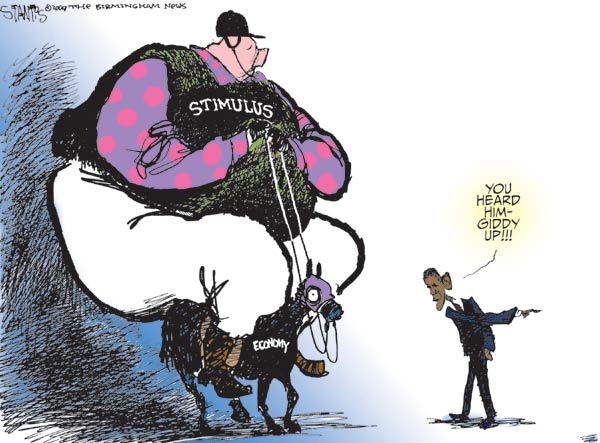


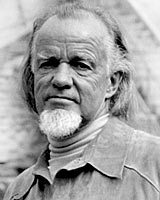


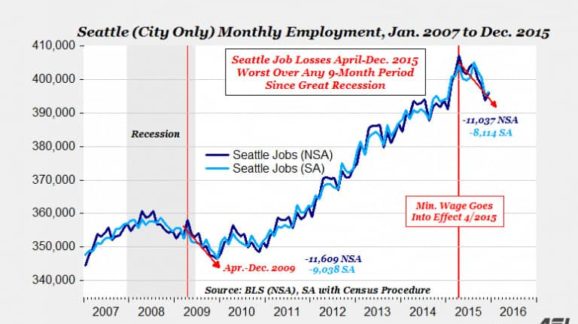
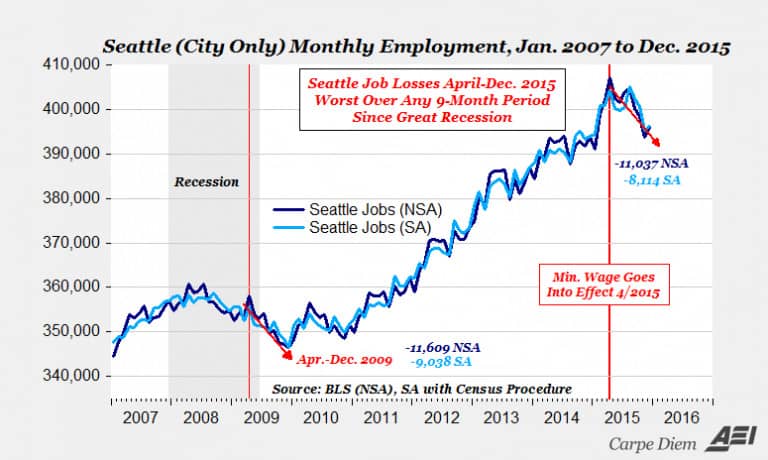
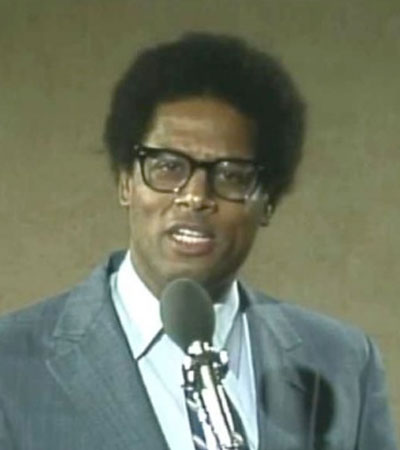











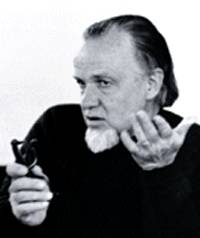

 , I made note of his penchant for cynicism and pessimism, especially in his dramas. That penchant made Allen’s supposed “light” drama from last year,
  , an almost soul crushing viewing experience for me. That film not only left me feeling depressed and unfulfilled, but it also had me questioning whether or not my recent career change had been the right one to make. I am guessing that, since I was struggling with a writing project of my own, I projected far too much of myself onto Josh Brolin’s washed up writer character. I wanted him to succeed in his own writing project because I wanted to succeed in my own writing project. When he did not and, in a
  styled plot development, the man stole another writer’s work and claimed it as his own, I was devastated.


 The Daily Hatch