Monthly Archives: July 2020

Open Letter #96 to Ricky Gervais on comparison of the Tony of AFTER LIFE to the Solomon of ECCLESIASTES, William Lane Craig: As Dostoyevsky put it: “If there is no immortality then all things are permitted.” On this basis, a writer like Ayn Rand is absolutely correct to praise the virtues of selfishness

—-

After Life #1 Trailer

—-

After Life 2 Trailer

—-

On Saturday April 18, 2020 at 6pm in London and noon in Arkansas, I had a chance to ask Ricky Gervais a question on his Twitter Live broadcast which was  “Is Tony a Nihilist?” At the 20:51 mark Ricky answers my question. Below is the video:

—-

—-

If Death is the end then what is the point Kath asks below:

——

Kath: You are an atheist?

—-

Adrian Rogers on Evolution

—-

(Above) Tony and Anne on the bench at the graveyard where their spouses are buried.

July 22, 2020 
Ricky Gervais 


Dear Ricky,  

This is the 96th day in a row that I have written another open letter to you to comment on some of your episodes of AFTER LIFE, and then I wanted to pass along some evidence that indicates the Bible is historically accurate from Francis Schaeffer and Dr. C. Everett Koop Book WHATEVER HAPPENED TO THE HUMAN RACE?
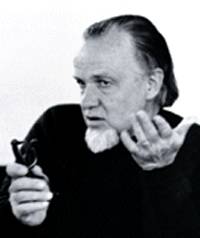
In the second season of AFTERLIFE Anne tells Tony that it is each person’s duty to leave the world a better place than they found it, but on in a Godless Darwinian universe doesn’t the survival of the fittest principle apply? William Lane Craig notes,“If life ends at the grave, then it makes no difference whether one has lived as a Stalin or as a saint. Since one’s destiny is ultimately unrelated to one’s behavior, you may as well just live as you please.”

Let me share a portion of an article by William Lane Craig with you.

The Absurdity of Life without God

William Lane Craig

SUMMARY

Why on atheism life has no ultimate meaning, value, or purpose, and why this view is unlivable.

No Ultimate Value Without Immortality and God

If life ends at the grave, then it makes no difference whether one has lived as a Stalin or as a saint. Since one’s destiny is ultimately unrelated to one’s behavior, you may as well just live as you please. As Dostoyevsky put it: “If there is no immortality then all things are permitted.” On this basis, a writer like Ayn Rand is absolutely correct to praise the virtues of selfishness. Live totally for self; no one holds you accountable! Indeed, it would be foolish to do anything else, for life is too short to jeopardize it by acting out of anything but pure self-interest. Sacrifice for another person would be stupid. Kai Nielsen, an atheist philosopher who attempts to defend the viability of ethics without God, in the end admits,

We have not been able to show that reason requires the moral point of view, or that all really rational persons, unhoodwinked by myth or ideology, need not be individual egoists or classical amoralists. Reason doesn’t decide here. The picture I have painted for you is not a pleasant one. Reflection on it depresses me . . . . Pure practical reason, even with a good knowledge of the facts, will not take you to morality. [1]

But the problem becomes even worse. For, regardless of immortality, if there is no God, then there can be no objective standards of right and wrong. All we are confronted with is, in Jean-Paul Sartre’s words, the bare, valueless fact of existence. Moral values are either just expressions of personal taste or the by-products of socio-biological evolution and conditioning. In a world without God, who is to say which values are right and which are wrong? Who is to judge that the values of Adolf Hitler are inferior to those of a saint? The concept of morality loses all meaning in a universe without God. As one contemporary atheistic ethicist points out, “to say that something is wrong because . . . it is forbidden by God, is . . . perfectly understandable to anyone who believes in a law-giving God. But to say that something is wrong . . . even though no God exists to forbid it, is not understandable. . . .” “The concept of moral obligation [is] unintelligible apart from the idea of God. The words remain but their meaning is gone.” [2] In a world without God, there can be no objective right and wrong, only our culturally and personally relative, subjective judgments. This means that it is impossible to condemn war, oppression, or crime as evil. Nor can one praise brotherhood, equality, and love as good. For in a universe without God, good and evil do not exist—there is only the bare valueless fact of existence, and there is no one to say you are right and I am wrong.

The Success of Biblical Christianity

But if atheism fails in this regard, what about biblical Christianity? According to the Christian world view, God does exist, and man’s life does not end at the grave. In the resurrection body man may enjoy eternal life and fellowship with God. Biblical Christianity therefore provides the two conditions necessary for a meaningful, valuable, and purposeful life for man: God and immortality. Because of this, we can live consistently and happily. Thus, biblical Christianity succeeds precisely where atheism breaks down.

Conclusion

Now I want to make it clear that I have not yet shown biblical Christianity to be true. But what I have done is clearly spell out the alternatives. If God does not exist, then life is futile. If the God of the Bible does exist, then life is meaningful. Only the second of these two alternatives enables us to live happily and consistently. Therefore, it seems to me that even if the evidence for these two options were absolutely equal, a rational person ought to choose biblical Christianity. It seems to me positively irrational to prefer death, futility, and destruction to life, meaningfulness, and happiness. As Pascal said, we have nothing to lose and infinity to gain.

—-

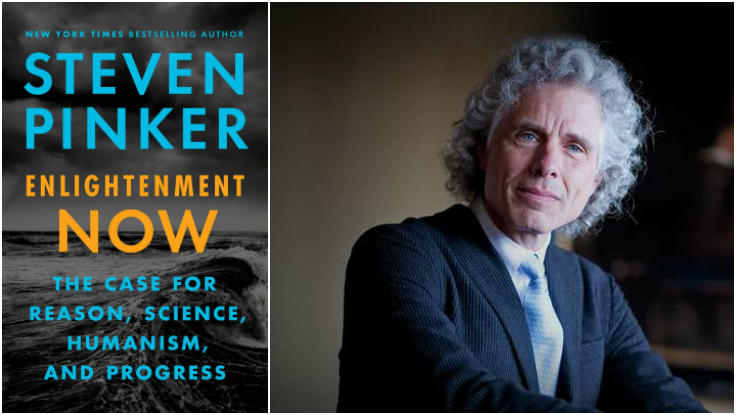
Steven Pinker comments:

Spinoza’s dictum is one of a family of principles that have sought a secular foundation for morality in impartiality… Impartiality underlies many attempts to construct morality on rational grounds: Spinoza’s viewpoint of eternity, Hobbes’s social contract, Kant’s categorial imperative, Rawls’s veil of ignorance, Nagel’s view from nowhere, Locke and Jefferson’s self-evident truth that all people are created equal, and of course the Golden Rule and its precious-metallic variants, rediscovered in hundreds of moral traditions. (The Silver Rule is “Don’t do to others what you don’t want done to yourself”; the Platinum Rule, “Do to others what they would have you do to them.” They are designed to anticipate masochists, suicide bombers, differences in taste, and other sticking points for the Golden Rule.) To be sure, the argument from impartiality is incomplete. (Page 412 of ENLIGHTENMENT NOW: THE CASE FOR REASON, SCIENCE, HUMANISM, AND PROGRESS).

We are “created” equal by God!!! Of course Dr. Steven Pinker does not believe in God so he finds himself in the same philosophic dilemma that Judah finds himself in because without God in the picture then there is no way to convince Judah not to eliminate his troublesome mistress. I know that Dr. Pinker would never do such a horrible thing but philosophically could he convince Judah to take the punishment of jail time and lose his marriage and medical practice just because it is the right thing to do since he committed an earlier crime if he knows his hitman brother is there ready to eliminate the troublesome mistress?

(Humanist Professor Levy details his secular philosophy of life through out the film CRIMES AND MISDEMEANORS and it is contained in this short 3 min clip below but ultimately he commits suicide!!)


Ricky since you have chosen to be identified as a humanist, I wanted to quote from the Humanist Manifesto 2 and 3 and ask you a question about humanistic situational ethics.

Humanist Manifesto 2 (written in 1973) states:

SECOND: Promises of immortal salvation or fear of eternal damnation are both illusory and harmful.

Humanist Manifesto 2 asserts that our moral choices should not be based on a fear of hell, and Humanist Manifesto 3 (written in 2003) states that our moral choices should be instead based on situational ethics

Ethical values are derived from human need and interest as tested by experience.Humanists ground values in human welfare shaped by human circumstances, interests, and concerns and extended to the global ecosystem and beyond. 

Humanist Manifesto 2 further states

THIRD: We affirm that moral values derive their source from human experience. Ethics is autonomous and situational needing no theological or ideological sanction.

As a Christian I believe the Bible is the inerrant word of God and as such it gives us an absolute authority to follow. However, lets take a look at your situation ethics approach for a moment as it plays out in CRIMES AND MISDEMEANORS.

The clip above is a three minute summary of what the Humanist philosophy brings to the table by Professor Levy in the film CRIMES AND MISDEMEANORS.

After Levy committed suicide, Cliff reviewed a clip from the documentary footage in which Levy states: “But we must always remember that when we are born we need a great deal of love to persuade us to stay in life. Once we get that love, it usually lasts us. But the universe is a pretty cold place. It’s we who invest it with our feelings. And under certain conditions, we feel that the thing isn’t worth it anymore.”

Hearing the news of Levy’s death, Halley says, “No matter how elaborate a philosophical system you work out, in the end it’s got to be incomplete.” The professor Levy was a Holocaust survivor but in the end he committed suicide because he didn’t think it was worth living anymore in a cold pitiless world. (This is what Tony Johnson in Afterlife is dealing with too!) Now take a few minutes and examine below how Woody Allen has exposed the weakness of the humanistic situational ethics.
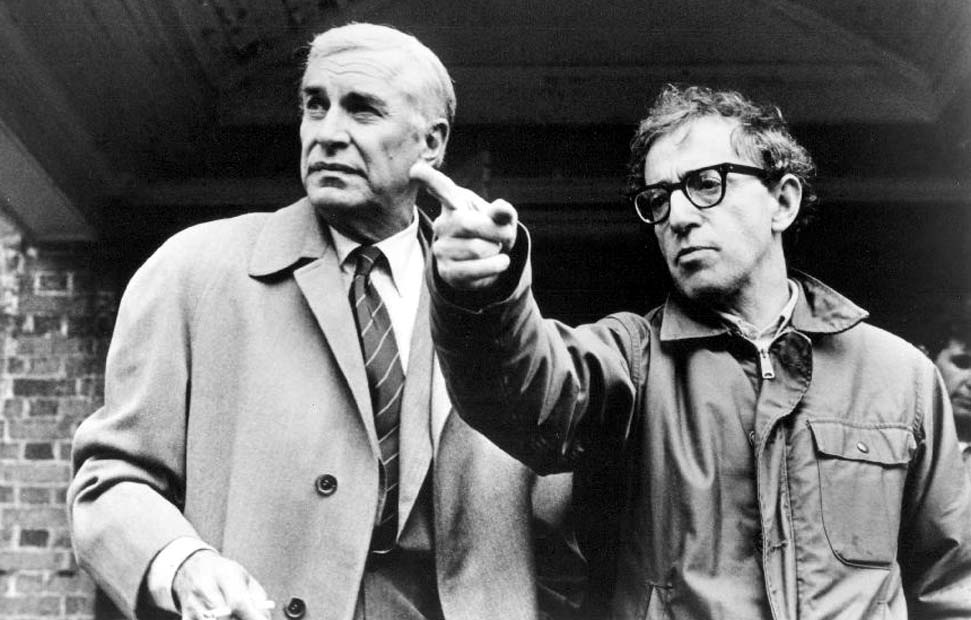


DISCUSSING FILMS AND SPIRITUAL MATTERS

By Everette Hatcher III

“Existential subjects to me are still the only subjects worth dealing with. I don’t think that one can aim more deeply than at the so-called existential themes, the spiritual themes.” WOODY ALLEN
Evangelical Chuck Colson has observed that it used to be true that most Americans knew the Bible. Evangelists could simply call on them to repent and return. But today, most people lack understanding of biblical terms or concepts. Colson recommends that we first attempt to find common ground to engage people’s attention. That then may open a door to discuss spiritual matters.

Woody Allen’s 1989 movie, CRIMES AND MISDEMEANORS , is an excellent icebreaker concerning the need of God while making decisions in the area of personal morality. In this film, Allen attacks his own atheistic view of morality. Martin Landau plays a Jewish eye doctor named Judah Rosenthal raised by a religious father who always told him, “The eyes of God are always upon you.” However, Judah later concludes that God doesn’t exist. He has his mistress (played in the film by Anjelica Huston) murdered because she continually threatened to blow the whistle on his past questionable, probably illegal, business activities. She also attempted to break up Judah ‘s respectable marriage by going public with their two-year affair. Judah struggles with his conscience throughout the remainder of the movie. He continues to be haunted by his father’s words: “The eyes of God are always upon you.” This is a very scary phrase to a young boy, Judah observes. He often wondered how penetrating God’s eyes are.

Later in the film, Judah reflects on the conversation his religious father had with Judah ‘s unbelieving Aunt May at the dinner table many years ago:

“Come on Sol, open your eyes. Six million Jews burned to death by the Nazis, and they got away with it because might makes right,” says aunt May

Sol replies, “May, how did they get away with it?”

Judah asks, “If a man kills, then what?”

Sol responds to his son, “Then in one way or another he will be punished.”

Aunt May comments, “I say if he can do it and get away with it and he chooses not to be bothered by the ethics, then he is home free.”

Judah ‘s final conclusion was that might did make right. He observed that one day, because of this conclusion, he woke up and the cloud of guilt was gone. He was, as his aunt said, “home free.”

Woody Allen has exposed a weakness in his own humanistic view that God is not necessary as a basis for good ethics. There must be an enforcement factor in order to convince Judah not to resort to murder. Otherwise, it is fully to Judah ‘s advantage to remove this troublesome woman from his life.

The Bible tells us, “{God} has also set eternity in the hearts of men…” (Ecclesiastes 3:11 NIV). The secularist calls this an illusion, but the Bible tells us that the idea that we will survive the grave was planted in everyone’s heart by God Himself. Romans 1:19-21 tells us that God has instilled a conscience in everyone that points each of them to Him and tells them what is right and wrong (also Romans 2:14 -15).

It’s no wonder, then, that one of Allen’s fellow humanists would comment, “Certain moral truths — such as do not kill, do not steal, and do not lie — do have a special status of being not just ‘mere opinion’ but bulwarks of humanitarian action. I have no intention of saying, ‘I think Hitler was wrong.’ Hitler WAS wrong.” (Gloria Leitner, “A Perspective on Belief,” THE HUMANIST, May/June 1997, pp. 38-39)

Here Leitner is reasoning from her God-given conscience and not from humanist philosophy. It wasn’t long before she received criticism. Humanist Abigail Ann Martin responded, “Neither am I an advocate of Hitler; however, by whose criteria is he evil?” (THE HUMANIST, September/October 1997, p. 2)

The secularist can only give incomplete answers to these questions: How could you have convinced Judah not to kill? On what basis could you convince Judah it was wrong for him to murder?

As Christians, we would agree with Judah ‘s father that “The eyes of God are always upon us.” Proverbs 5:21 asserts, “For the ways of man are before the eyes of the Lord, and He ponders all his paths.” Revelation 20:12 states, “…And the dead were judged (sentenced) by what they had done (their whole way of feeling and acting, their aims and endeavors) in accordance with what was recorded in the books” (Amplified Version). The Bible is revealed truth from God. It is the basis for our morality. Judah inherited the Jewish ethical values of the Ten Commandments from his father, but, through years of life as a skeptic, his standards had been lowered. Finally, we discover that Judah ‘s secular version of morality does not resemble his father’s biblically-based morality.

Woody Allen’s CRIMES AND MISDEMEANORS forces unbelievers to grapple with the logical conclusions of a purely secular morality. It opens a door for Christians to find common ground with those whom they attempt to share Christ; we all have to deal with personal morality issues. However, the secularist has no basis for asserting that Judah is wrong.

Larry King actually mentioned on his show, LARRY KING LIVE, that Chuck Colson had discussed the movie CRIMES AND MISDEMEANORS with him. Colson asked King if life was just a Darwinian struggle where the ruthless come out on top. Colson continued, “When we do wrong, is that our only choice? Either live tormented by guilt, or else kill our conscience and live like beasts?” (BREAKPOINT COMMENTARY, “Finding Common Ground,” September 14, 1993)

Later, Colson noted that discussing the movie CRIMES AND MISDEMEANORS with King presented the perfect opportunity to tell him about Christ’s atoning work on the cross. Colson believes the Lord is working on Larry King. How about your neighbors? Is there a way you can use a movie to find common ground with your lost friends and then talk to them about spiritual matters?(Caution: CRIMES AND MISDEMEANORS is rated PG-13. It does include some adult themes.)

Access this on the web at www.excelstillmore.com/html/beinformed/article1.shtml .(Originally published in December 2003 edition of Excel Magazine)
—-

In ECCLESIASTES we see the same principle. Remember Colson asked King if life was just a Darwinian struggle where the ruthless come out on top. Colson continued, “When we do wrong, is that our only choice?” Take a look at what Solomon says below.

Francis Schaeffer comments on ECCLESIASTES: 

 Oppressed have no comforter And Might Makes Right!

Ecclesiastes 4:1

 Then I looked again at all the acts of oppression which were being done under the sun. And behold I saw the tears of the oppressed and that they had no one to comfort them; and on the side of their oppressors was power, but they had no one to comfort them.

Between birth and death power rules. Solomon looked over his kingdom and also around the world and proclaimed that right does not rule but power rules.

Francis Schaeffer has correctly argued:

The universe was created by an infinite personal God and He brought it into existence by spoken word and made man in His own image. When man tries to reduce [philosophically in a materialistic point of view] himself to less than this [less than being made in the image of God] he will always fail and he will always be willing to make these impossible leaps into the area of nonreason even though they don’t give an answer simply because that isn’t what he is. He himself testifies that this infinite personal God, the God of the Old and New Testament is there. 

Instead of making a leap into the area of nonreason the better choice would be to investigate the claims that the Bible is a historically accurate book and that God created the universe and reached out to humankind with the Bible. Below is a piece of that evidence given by Francis Schaeffer concerning the accuracy of the Bible.

TRUTH AND HISTORY (chapter 5 of WHATEVER HAPPENED TO THE HUMAN RACE?)

We now take a jump back in time to the middle of the ninth century before Christ, that is, about 850 B.C. Most people have heard of Jezebel. She was the wife of Ahab, the king of the northern kingdom of Israel. Her wickedness has become so proverbial that we talk about someone as a “Jezebel.” She urged her husband to have Naboth killed, simply because Ahab had expressed his liking for a piece of land owned by Naboth, who would not sell it. The Bible tells us also that she introduced into Israel the worship of her homeland, the Baal worship of Tyre. This led to the opposition of Elijah the Prophet and to the famous conflict on Mount Carmel between Elijah and the priests of Baal.

Here again one finds archaeological confirmations of what the Bible says. Take for example: “As for the other events of Ahab’s reign, including all he did, the palace he built and inlaid with ivory, and the cities he fortified, are they not written in the book of the annals of the kings of Israel?” (I Kings 22:39).

This is a very brief reference in the Bible to events which must have taken a long time: building projects which probably spanned decades. Archaeological excavations at the site of Samaria, the capital, reveal something of the former splendor of the royal citadel. Remnants of the “ivory house” were found and attracted special attention (Palestinian Archaeological Museum, Jerusalem). This appears to have been a treasure pavilion in which the walls and furnishings had been adorned with colored ivory work set with inlays giving a brilliant too, with the denunciations revealed by the prophet Amos:

“I will tear down the winter house along with the summer house; the houses adorned with ivory will be destroyed and the mansions will be demolished,” declares the Lord. (Amos 3:15)

Other archaeological confirmation exists for the time of Ahab. Excavations at Hazor and Megiddo have given evidence of the the extent of fortifications carried out by Ahab. At Megiddo, in particular, Ahab’s works were very extensive including a large series of stables formerly assigned to Solomon’s time.

On the political front, Ahab had to contend with danger from the Aramacaus king of Syria who besieged Samaria, Ahab’s capital. Ben-hadad’s existence is attested by a stela (a column with writing on it) which has been discovered with his name written on it (Melquart Stela, Aleppo Museum, Syria). Again, a detail of history given in the Bible is shown to be correct.


The answer to find meaning in life is found in putting your faith and trust in Jesus Christ. The Bible is true from cover to cover and can be trusted.

Thank you again for your time and I know how busy you are.

Sincerely,

Everette Hatcher, everettehatcher@gmail.comhttp://www.thedailyhatch.org, cell ph 501-920-5733, 13900 Cottontail Lane, Alexander, AR 72002

PS: What is the meaning of life? Find it in the end of the open letter I wrote to you on April 23, 2020. 

Below is the workforce of THE TAMBURY GAZETTE 

Seen below is the third episode of AFTERLIFE (season 1) when Matt takes Tony to a comedy club with front row seats to cheer him up but it turns into disaster!!!

——

—-

Part 1 “Why have integrity in Godless Darwinian Universe where Might makes Right?”

Part 2 “My April 14, 2016 Letter to Ricky mentioned Book of Ecclesiastes and the Meaninglessness of Life”

Part 3 Letter about Brandon Burlsworth concerning suffering and pain and evil in the world.  “Why didn’t Jesus save her [from cancer]?” (Tony’s 10 year old nephew George in episode 2)

Part 4 Letter on Solomon on Death Tony in episode one, “It should be everyone’s moral duty to kill themselves.”

Part 5 Letter on subject of Learning in Ecclesiastes “I don’t read books of fiction but mainly science and philosophy”

Part 6 Letter on Luxuries in Ecclesiastes Part 6, The Music of AFTERLIFE (Part A)

Part 7 Letter on Labor in Ecclesiastes My Letter to Ricky on Easter in 2017 concerning Book of Ecclesiastes and the legacy of a person’s life work

Part 8 Letter on Liquor in Ecclesiastes Tony’s late wife Lisa told him, “Don’t get drunk all the time alright? It will only make you feel worse in the log run!”

Part 9 Letter on Laughter in Ecclesiastes , I said of laughter, “It is foolishness;” and of mirth, “What does it accomplish?” Ecclesiastes 2:2

Part 10 Final letter to Ricky on Ladies in Ecclesiastes “I gathered a chorus of singers to entertain me with song, and—most exquisite of all pleasures— voluptuous maidens for my bed…behold, all was vanity and a striving after wind, and there was nothing to be gained under the sun” Ecclesiastes 2:8-11.

Part 11 Letter about Daniel Stanhope and optimistic humanism  “If man has been kicked up out of that which is only impersonal by chance , then those things that make him man-hope of purpose and significance, love, motions of morality and rationality, beauty and verbal communication-are ultimately unfulfillable and thus meaningless.” (Francis Schaeffer)

Part 12 Letter on how pursuit of God is only way to get Satisfaction Dan Jarrell “[In Ecclesiastes] if one seeks satisfaction they will never find it. In fact, every pleasure will be fleeting and can not be sustained, BUT IF ONE SEEKS GOD THEN ONE FINDS SATISFACTION”

Part 13 Letter to Stephen Hawking on Solomon realizing he will die just as a dog will die “For men and animals both breathe the same air, and both die. So mankind has no real advantage over the beasts; what an absurdity!” Ecclesiastes

Part 14 Letter to Stephen Hawking on 3 conclusions of humanism and Bertrand Russell destruction of optimistic humanism. “That Man is the product of causes which had no prevision of the end they were achieving; that his origin, his growth, his hopes and fears, his loves and his beliefs, are but the outcome of accidental collocations of atoms—no philosophy which rejects them can hope to stand. Only within the scaffolding of these truths, only on the firm foundation of unyielding despair, can the soul’s habitation henceforth be safely built.”(Bertrand Russell, Free Man’s Worship)

Part 15 Letter to Stephen Hawking on Leonardo da Vinci and Solomon and Meaningless of life “I hate life. As far as I can see, what happens on earth is a bad business. It’s smoke—and spitting into the wind” Ecclesiastes Book of Ecclesiastes Part 15 “I hate life. As far as I can see, what happens on earth is a bad business. It’s smoke—and spitting into the wind” Ecclesiastes 2:17

Part 16 Letter to Stephen Hawking on Solomon’s longing for death but still fear of death and 5 conclusions of humanism on life UNDER THE SUN. Francis Schaeffer “Life is just a series of continual and unending cycles and man is stuck in the middle of the cycle. Youth, old age, Death. Does Solomon at this point embrace nihilism? Yes!!! He exclaims that the hates life (Ecclesiastes 2:17), he longs for death (4:2-3) Yet he stills has a fear of death (2:14-16)”

Mandeep Dhillon as Sandy on her first assignment in ‘After Life’. (Twitter)

A still from ‘After Life’ that captures the vibe of the Tambury Gazette. (Twitter)

Michael Scott of THE OFFICE (USA) with Ricky Gervais 

After Life on Netflix

After Life on Netflix stars Ricky Gervais as a bereaved husband (Image: Netflix)

—-

Psychiatrist played by Paul Kaye seen below.

The sandy beach walk

Tony Johnson with his dog Brandi seen below:

—-

Related posts:

Taking on Ark Times Bloggers on various issues Part I “Old Testament Bible Prophecy” includes the film TRUTH AND HISTORY and article ” Jane Roe became pro-life”

April 12, 2013 – 5:45 am

I have gone back and forth and back and forth with many liberals on the Arkansas Times Blog on many issues such as abortion, human rights, welfare, poverty, gun control  and issues dealing with popular culture. Here is another exchange I had with them a while back. My username at the Ark Times Blog is Saline […]By Everette Hatcher III | Posted in Biblical ArchaeologyFrancis SchaefferProlife | Edit|Comments (0)

John MacArthur on fulfilled prophecy from the Bible Part 2

August 8, 2013 – 1:28 am

I have posted many of the sermons by John MacArthur. He is a great bible teacher and this sermon below is another great message. His series on the Book of Proverbs was outstanding too.  I also have posted several of the visits MacArthur made to Larry King’s Show. One of two most popular posts I […]By Everette Hatcher III | Posted in Adrian RogersCurrent Events | Edit|Comments (0)

John MacArthur on fulfilled prophecy from the Bible Part 1

August 6, 2013 – 1:24 am

I have posted many of the sermons by John MacArthur. He is a great bible teacher and this sermon below is another great message. His series on the Book of Proverbs was outstanding too.  I also have posted several of the visits MacArthur made to Larry King’s Show. One of two most popular posts I […]By Everette Hatcher III | Posted in Adrian RogersCurrent Events |Tagged Bible Prophecyjohn macarthur | Edit|Comments (0)

John MacArthur: Fulfilled prophecy in the Bible? (Ezekiel 26-28 and the story of Tyre, video clips)

April 5, 2012 – 10:39 am

Prophecy–The Biblical Prophesy About Tyre.mp4 Uploaded by TruthIsLife7 on Dec 5, 2010 A short summary of the prophecy about Tyre and it’s precise fulfillment. Go to this link and watch the whole series for the amazing fulfillment from secular sources. http://www.youtube.com/watch?v=qvt4mDZUefo________________ John MacArthur on the amazing fulfilled prophecy on Tyre and how it was fulfilled […]By Everette Hatcher III | Posted in Biblical Archaeology | Edit|Comments (1)

John MacArthur on the Bible and Science (Part 2)

August 1, 2013 – 12:10 am

John MacArthur on the Bible and Science (Part 2) I have posted many of the sermons by John MacArthur. He is a great bible teacher and this sermon below is another great message. His series on the Book of Proverbs was outstanding too.  I also have posted several of the visits MacArthur made to Larry […]By Everette Hatcher III | Posted in Current Events | Edit|Comments (0)

John MacArthur on the Bible and Science (Part 1)

July 30, 2013 – 1:32 am

John MacArthur on the Bible and Science (Part 1) I have posted many of the sermons by John MacArthur. He is a great bible teacher and this sermon below is another great message. His series on the Book of Proverbs was outstanding too.  I also have posted several of the visits MacArthur made to Larry […]By Everette Hatcher III | Posted in Current Events | Edit|Comments (0)

Adrian Rogers: “Why I believe the Bible is true”

July 9, 2013 – 8:38 am

Adrian Rogers – How you can be certain the Bible is the word of God Great article by Adrian Rogers. What evidence is there that the Bible is in fact God’s Word? I want to give you five reasons to affirm the Bible is the Word of God. First, I believe the Bible is the […]By Everette Hatcher III | Posted in Adrian RogersBiblical Archaeology | Edit|Comments (0)

The Old Testament is Filled with Fulfilled Prophecy by Jim Wallace

June 24, 2013 – 9:47 am

Is there any evidence the Bible is true? Articles By PleaseConvinceMe Apologetics Radio The Old Testament is Filled with Fulfilled Prophecy Jim Wallace A Simple Litmus Test There are many ways to verify the reliability of scripture from both internal evidences of transmission and agreement, to external confirmation through archeology and science. But perhaps the […]By Everette Hatcher III | Posted in Biblical ArchaeologyCurrent Events | Edit|Comments (0)

Taking on Ark Times Bloggers on various issues Part M “Old Testament prophecy fulfilled?”Part 3(includes film DEATH BY SOMEONE’S CHOICE)

April 19, 2013 – 1:52 am

  I have gone back and forth and back and forth with many liberals on the Arkansas Times Blog on many issues such as abortion, human rights, welfare, poverty, gun control  and issues dealing with popular culture. Here is another exchange I had with them a while back. My username at the Ark Times Blog is […]By Everette Hatcher III | Posted in Francis SchaefferProlife | Edit|Comments (0)

Evidence for the Bible

March 27, 2013 – 9:43 pm

Here is some very convincing evidence that points to the view that the Bible is historically accurate. Archaeological and External Evidence for the Bible Archeology consistently confirms the Bible! Archaeology and the Old Testament Ebla tablets—discovered in 1970s in Northern Syria. Documents written on clay tablets from around 2300 B.C. demonstrate that personal and place […]By Everette Hatcher III | Posted in Biblical Archaeology | E

——

Charles Darwin Autobiography

Francis Schaeffer “The Age of NONREASON”

——-

—-

—-

—-

Open Letter #95 to Ricky Gervais on comparison of the Tony of AFTER LIFE to the Solomon of ECCLESIASTES, Wallace Stevens: “But in contentment I still feel the need for an imperishable bliss.”

—-

After Life #1 Trailer

—-

After Life 2 Trailer

—-

On Saturday April 18, 2020 at 6pm in London and noon in Arkansas, I had a chance to ask Ricky Gervais a question on his Twitter Live broadcast which was  “Is Tony a Nihilist?” At the 20:51 mark Ricky answers my question. Below is the video:

—-

—-

If Death is the end then what is the point Kath asks below:

——

Kath: You are an atheist?

—-

(Above) Tony and Anne on the bench at the graveyard where their spouses are buried.

July 21, 2020 
Ricky Gervais 


Dear Ricky,  

This is the 95th day in a row that I have written another open letter to you to comment on some of your episodes of AFTER LIFE. Over and over again Tony is searching for satisfaction in his life and for the meaning of it all! However, when you wrote the AFTER LIFE script Ricky you excluded spiritual answers!! Check out the answers provided by Kerry Livgren and Dave Hope of KANSAS at the end of this letter!!!

Ricky Gervais plays bereaved husband Tony Johnson in AFTER LIFE

Matt takes it upon himself to help his bereaved brother-in-law Tony out by trying to help find satisfaction in his life by looking in 5 areas of life. I don’t know if Matt took time to read about Solomon’s efforts in Ecclesiastes but he did look in the same 5 areas for satisfaction [learning(1:16-18),laughter, ladies,   and liquor (2:1-3, 8, 10, 11), and labor (2:4-6, 18-20)]. He first suggests that Tony throw himself into his work, and Tony blows off that suggestion. Next Matt sets him up on a blind date and that turns out to not work at all. Matt next turns to inviting Tony to a comedy club and the comedian tells a joke about suicide and Tony ruins the whole evening for everybody.

In season two Matt invites Tony to a meditation class which includes some philosophy that he knows appeals to Tony and he tells Tony he may learn something. Unfortunately Tony has a horrible time. Finally Matt invites Tony to the pub for a drink and to visit some women with the goal of “banging some beaver”and that is a disaster too. 

psychiatrist played by Paul Kaye seen below.

The sandy beach walk

Chapter four of the book by Tim Keller MAKING SENSE OF GOD:  (Tim Keller below)

Making Sense of God, by Timothy Keller
Chapter Four: “A Satisfaction That Is Not Based on Circumstances”

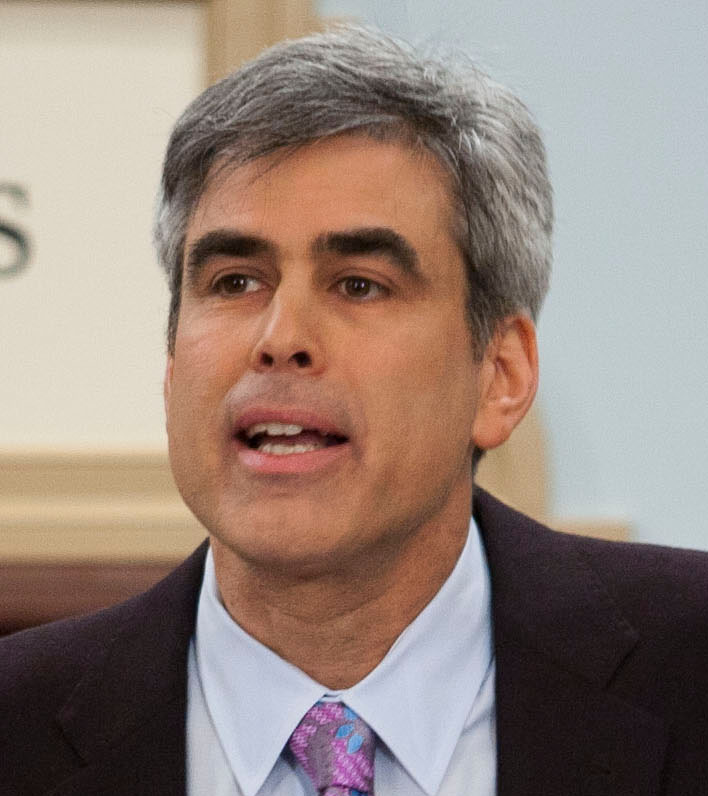
Psychologist Jonathan Haidt’s book The Happiness Hypothesis provides a historical survey of thinking about happiness. 1

(Jonathan Haidt pictured below)

He begins his chapter with a book of the Bible we have just looked at, Ecclesiastes. The author writes: “A person can do nothing better than to . . . find satisfaction in their own toil” (Ecclesiastes 2: 24), but that is exactly what eludes him. He describes a life of accomplishment that very few achieve.
I undertook great projects: I built houses for myself and planted vineyards. . . . I amassed silver and gold for myself, and the treasure of kings and provinces. I acquired male and female singers, and a harem as well— the delights of a man’s heart. . . . I denied myself nothing my eyes desired; I refused my heart no pleasure.” 
(Ecclesiastes 2: 4,8,10)
Nevertheless, he says, “I hated life. . . . My heart began to despair over all my toilsome labor under the sun.” (Ecclesiastes 2: 17,20) Haidt summarizes, “The author of Ecclesiastes wasn’t just battling the fear of meaninglessness; he was battling the disappointment of success. . . . Nothing brought satisfaction.” 2 This is an abiding human problem, and there is plenty of modern empirical research that backs it up. Studies find a very weak correlation between wealth and contentment, and the more prosperous a society grows,
the more common is depression. 3 The things that human beings think will bring fulfillment and contentment don’t. What should we do, then, to be happy?
Haidt says that the answer— of the Buddha and Chinese sages like Lao Tzu in the East and the Greek Stoic philosophers in the West— constituted the “early happiness hypothesis” of ancient times. The principle was this: We are unhappy even in success because we seek happiness from success. Wealth, power, achievement, family, material comfort, and security— the external goods of the world— can lead only to a momentary satisfaction, which fades away, leaving you more empty than if you had never tasted the joy. To achieve satisfaction you should not seek to change the world but rather to change your attitude toward the world. Epictetus, a Stoic philosopher, wrote, “Do not seek to have events happen as you want them to, but instead want them to happen as they do happen, and your life will go well.” 4 If we do that, the Buddha taught, “when pleasure or pain comes to them, the wise feel above pleasure and pain.” 5 In short, don’t try to fulfill your desires; rather, control and manage them. To avoid having our inner contentment overthrown by the inevitable loss of things, do not become too emotionally attached to anything.6


However, many people have found this approach to satisfaction not very satisfying. Haidt, for example, believes that Buddha and the Greeks “took things too far.” 7
He argues that modern research shows some external circumstances do correlate with increased satisfaction. In particular, love relationships are important, and therefore the advice of emotional detachment may actually undermine happiness. 8 Philosopher Alain de Botton agrees that loving relationships are fundamental to happiness. Indeed, he thinks our quest for the external goods of status and money
4 is really just another quest for love. 9 Another obvious problem with the ancient happiness hypothesis was that it undermined any motivation for seeking major social change. Rather than change the world as it is, we were to resign ourselves to it.

(Philosopher Alain de Botton pictured below)


Haidt takes a very modern attitude toward our ancestors. He says we can agree with any wisdom from the past that is backed by empirical research. The ancients warn us about the disappointment of overacquisitiveness, and the social science confirms that, he says. But what Haidt describes as modern culture’s operational “happiness hypothesis” is only a slightly chastened version of what the author of Ecclesiastes was trying to do. While warning against overdoing it, modern culture encourages its members to find satisfaction through active efforts to change our lives, not to just accept life as it is. 10


Back Where We Started page 79


If we stand back to ask what we have learned about happiness over the centuries, it is striking to see our lack of progress. Think of how we have surpassed our ancestors in our ability to travel and communicate, in our accomplishments in medicine and science. Think of how much less brutal and unjust to minorities many societies are today compared with even one hundred years ago. In so many ways human life has been transformed, and yet though we are unimaginably wealthier and more comfortable than our ancestors, no one is arguing that we are significantly happier than they were. We are struggling and seeking happiness in essentially the same ways our
forebears did and doing a worse job of it, if we use the rise of depression and suicide as an indicator.
The author of Ecclesiastes deserves the final word here. “Whatever is has already been, and what will be has been before.” (Ecclesiastes 3: 15) Despite all our modern efforts, with regard to happiness we are essentially back where we started.
(Julian Baggini pictured below)


One response is to ask, “So what?” and insist that there is little real problem here. Julian Baggini thinks that there is no genuine problem, that no one is perfectly happy or needs to be. Most people get by fine without it, so we shouldn’t worry about how happy we are but instead should simply do things that matter. 11 Thomas Nagel observes that, according to empirical studies, most people are pretty happy most of the time. 12

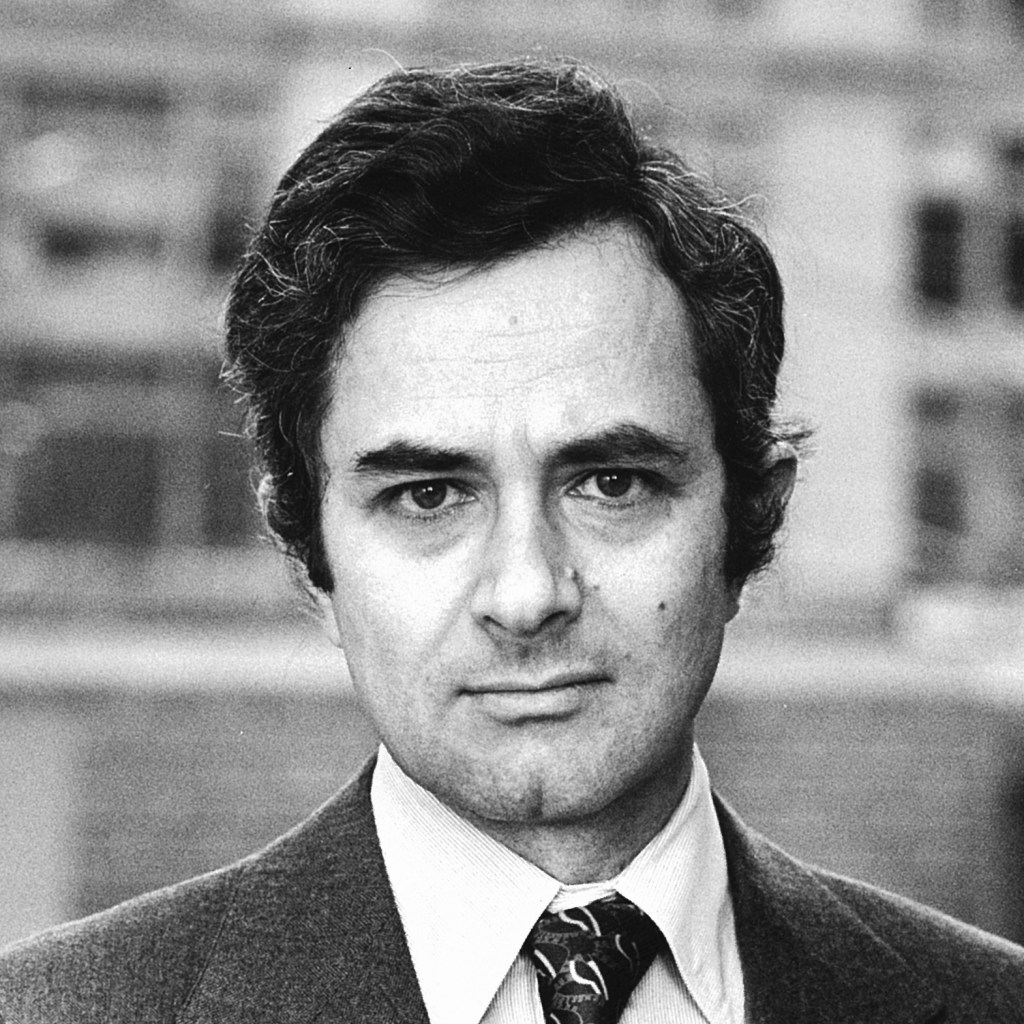
(Thomas Nagel pictured below)

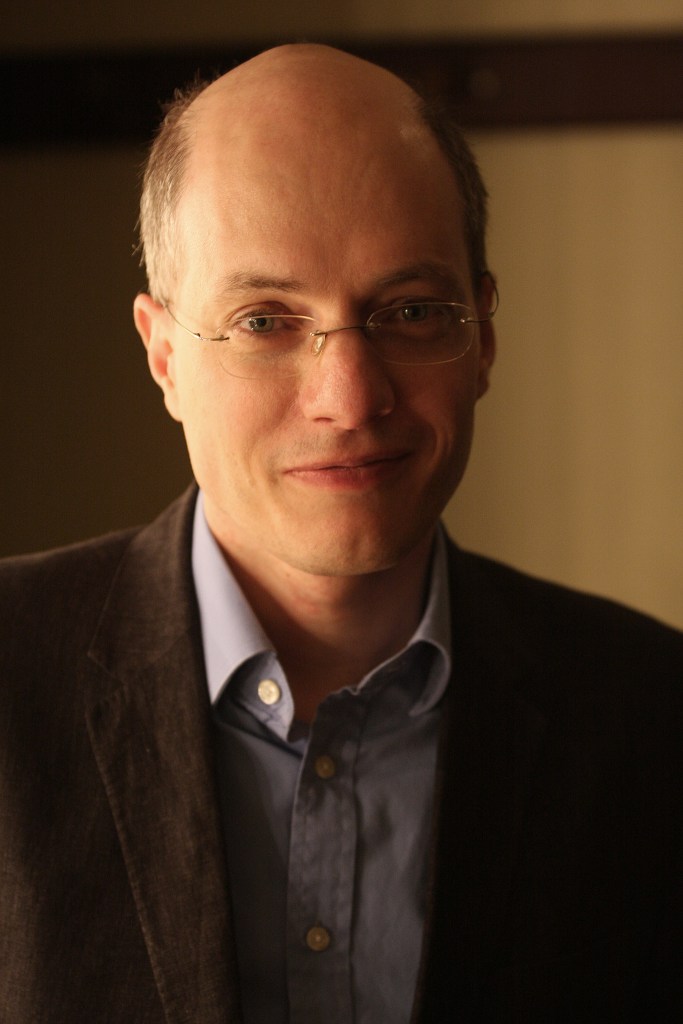
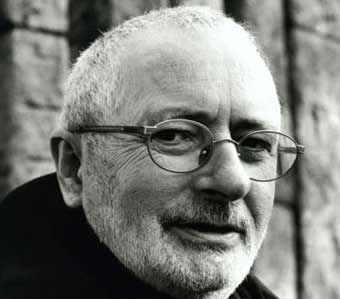
(Terry Eagleton pictured below)

Terry Eagleton, however, responds that the problem is masked rather than revealed by the term “happiness.” The very word is a “feeble, holiday-camp sort of word, evocative of manic grins and cavorting about.” 13 For most people— including those who answer researchers’ survey questions— the term does not have much depth to it. It refers to a range of conditions from simply “being okay” to “having fun.” To be okay is not too hard to achieve. When asked by either friends or social psychologists, “How are you today?” we instinctively say, “Fine, thanks.” But conflicts and anger flare up so quickly, and the statistics on depression and suicide always startle, and all this indicates things are not as good as we say they are.
To get at our condition more accurately, we should ask about joy, fulfillment, and satisfaction in life. Are we achieving those things? The thesis of this chapter is that we have much thinner life satisfaction than we want to admit to researchers or even to ourselves. On the whole, we are in
5 denial about the depth and magnitude of our discontent. 
The artists and thinkers who talk about it most poignantly are seen as morbid outliers, but actually they are prophetic voices. It usually takes years to break through and dispel the denial in order to see the magnitude and dimension of our dissatisfaction in life.


The Dimensions of Our Discontent
 page 80 (2:50:00)

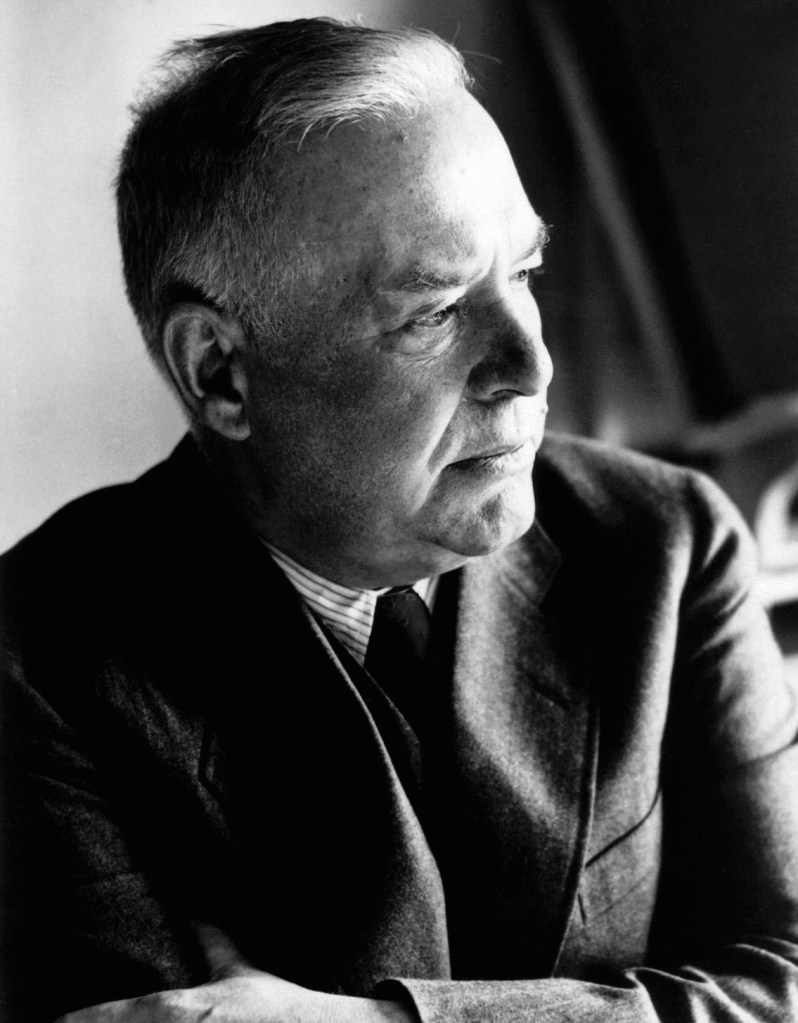
(Wallace Stevens pictured below)


Roman poet Horace asked, “How comes it to pass . . . that no one lives content with his condition . . . ?” He concludes that “all . . . think their own condition the hardest.” 14 Why is no one content with his or her life?
One reason can be seen in a line from the poem “Sunday Morning” by Wallace Stevens. “But in contentment I still feel the need for an imperishable bliss.” 15 As we have seen, travel, material goods, sensual gratification, success, and status give quick spikes of pleasure and then fade. Stevens’s line helps us understand why. Even as we taste a moment of contentment, we sense how fleeting it is, that it will soon be wrenched from our grasp. It begins to fade away even as we try to embrace it or even to savor it. The ephemeral nature of all satisfaction makes us long for something we can keep, but we look in vain. However, this is not the whole problem. We do not only want a satisfaction that lasts longer but also one that goes much deeper.


In 1969 the singer Peggy Lee recorded the song “Is That All There Is?” written by Jerry Leiber and Mike Stoller and based on an 1896 Thomas Mann novella called Disillusionment. 16 The woman speaking in the song tells about being taken as a twelve-year-old to the circus that was called “The Greatest Show on Earth,” but as she watched she
“had the feeling that something was missing
. I don’t know what, but when it was over I said to myself, ‘Is that all there is to a circus?’” Later she says that she fell “so very much in love” with the “most wonderful boy in the world.” And then one day he left her, and she thought she’d die. “But I didn’t. And when I didn’t, I said to myself, ‘Is that all there is to love?’” At every turn everything that should have delighted and satisfied her did not— nothing was big enough to fill her expectations or desires. There was always something missing, though she never knew what it was. Everything
left her asking, “Is that it?”
So every stanza of her life, like a song, went back to
the same refrain:
Is that all there is?
If that’s all there is my friends,
Then let’s keep dancing.
Let’s break out the booze and have a ball
, if that’s all—
there is.

The lack of any deep or lasting satisfaction drives her to joyless partying. As we gradually discover that everything we thought would be fulfilling is not, we become less able to look forward to life, more numb, jaded, and cynical, or worse. The woman speaking in the song realizes that her listeners might wonder why she doesn’t commit suicide. But she predicts that the experience of dying will be every bit as disappointing as life has been, so there is no reason to hurry it.
6

I know what you must be saying to yourselves.
“If that’s the way she feels about it why doesn’t she just end it all?”
Oh, no, not me.
I’m in no hurry for that final disappointment.
’Cause I know just as well as I’m standing here talking to you,

That when that final moment comes and I’m breathing my last breath
I’ll be saying to myself—
Is that all there is?
(The late Cynthia Heimel pictured below)


The Leiber-Stoller song echoes the experience of Village Voice columnist Cynthia Heimel, who saw friends go from anonymity to Hollywood stardom only to find, to their horror, they were no more fulfilled and happy than before, and the experience actually deepened their emptiness, turning them “howling and insufferable.” She surmises that “if God really wants to play a rotten practical joke on us, he grants our deepest wish and then giggles merrily as we begin to realize we want to kill ourselves.” 17

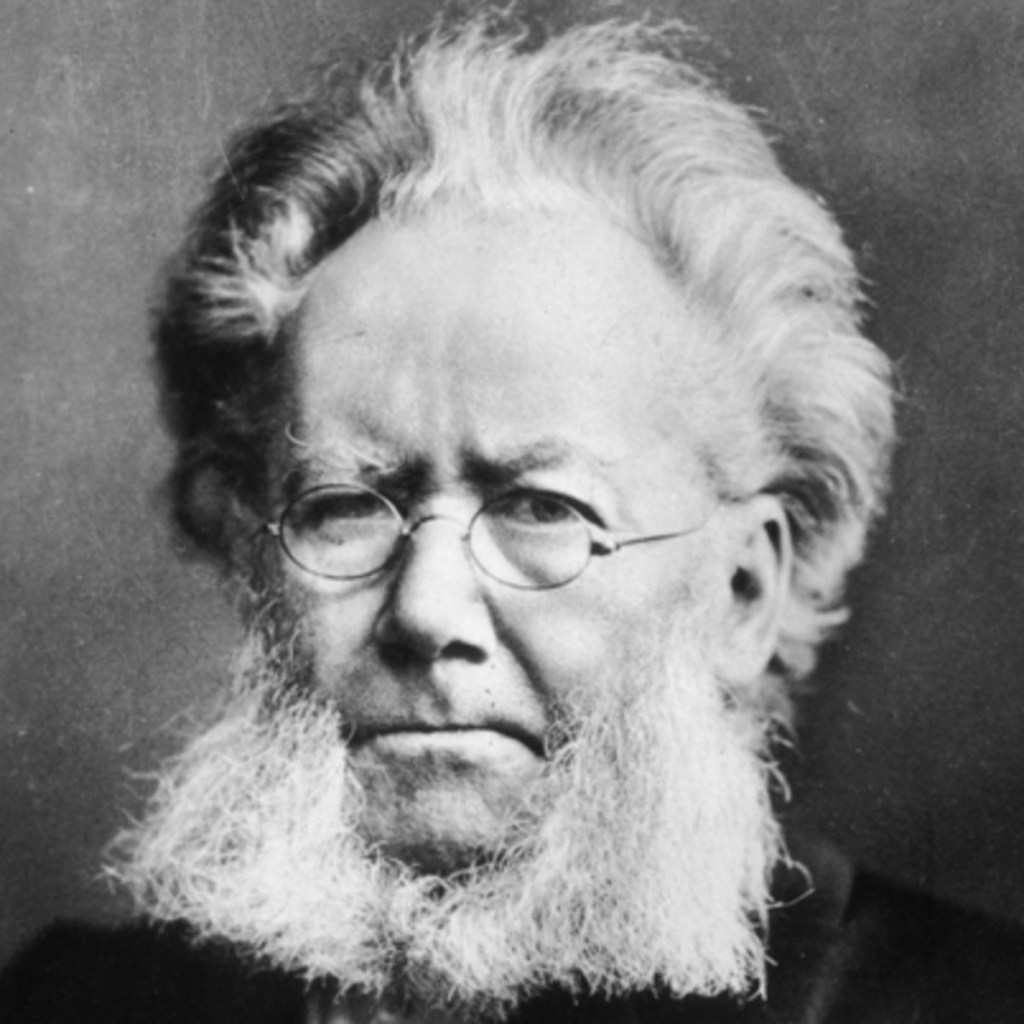
(Henrik Ibsen pictured below)

, Henrik Ibsen the Norwegian playwright, helps us understand what happened to Heimel’s friends. “If you take away the life- illusion from an average man, you take away his happiness as well.” 18 Within Ibsen’s play The Wild Duck, a life illusion is the belief that some object or condition will finally bring you the satisfaction for which you long. But this is an illusion. At some point reality will destroy it, and nothing destroys it like actually achieving your dreams.
If you are younger, it is natural to say to yourself, “I have heard about these disillusioned celebrities and wealthy people who say their life isn’t happy. But if I get anything like what I’m hoping for, I’ll be different.” No you won’t.
Though there is a spectrum of experience, nobody in the end has ever been different. That’s what the wisdom of the ancients and all the anecdotal evidence in the world will tell you. C. S. Lewis put it in perhaps the classic way in his wartime BBC radio talk on hope.


Most people, if they really learn how to look into their own hearts, would know that they do want, and want acutely, something that cannot be had in this world. There are all sorts of things in this world that offer to give it to you, but they never keep their promise. The longings which arise in us when we first fall in love, or first think of some foreign country, or first take up some subject that excites us, are longings which no marriage, no travel, no learning can really satisfy. I am not speaking of what would ordinarily be called unsuccessful marriages or trips and so on; I am speaking of the best possible ones. There is always something we grasped at, in that first moment of longing, that just fades away in the reality. The spouse may be a good spouse, the scenery has been excellent, it has turned out to be a good job, but “It” has evaded us. 19


The Strategies of Our Discontent
 page 83 (2:56:00)


So what do we do when we discover that we lack “it”— the “something missing but we don’t know what”? There are at least seven strategies that people take toward their discontent. There are two broad approaches— you can either live life assuming that satisfaction in life is quite possible, that “it” is still out there, or you can live in the
7

conviction that satisfaction is not possible, that there is no “it.” But within these two categories we can discern four strategies in the first and three strategies in the second.


“IT” IS STILL OUT THERE


The young. The normal way people start adult life is to travel hopefully in anticipation of a joyful arrival. We think, “If I get the right love partner, if I get the right spouse, if I get the right career and make some money— then I will have life satisfaction.”James Wood refers to the pursuit of “jobs, family, sex, and so on— the usual distractions” by which we hide from ourselves the emptiness of our lives. 20 Actually we may be quite discontent, but we don’t recognize it because we are so busy in the process of getting ready to be happy. “Of course I am restless. I haven’t gotten to do all the things I am going to do.” We think we just have to get over this hill or get around that bend and then things will be great. This strategy, of course, is only effective temporarily.


The resentful. However, as time goes on, we begin to realize we are not getting “it.” One of the main reactions is to blame the obstacles that have kept us from achieving the things we think will satisfy us. We may be the victim of prejudice or discrimination, or we may find ourselves in a community that is not open to many of the things we want to be and do. Rather than social structures, we may identify individuals who blocked our progress or who have wronged us. And so we blame them, saying “I would be quite happy if it wasn’t for (fill in the blank).” Now, this might in the short run lead to some good— we might channel our anger constructively into becoming social activists. Even less
constructive anger, such as complaining and venting, can in the short run be a kind of relief— but it is only in the short run. And if our efforts actually break the barriers and get us to the next level of accomplishment, we will find that “it” is still not there to be found. That means we will need the third strategy.


The driven. By definition, a secular culture puts the most emphasis on the here-and-now. We think that accruing possessions and accomplishments will bring satisfaction. What happens if, unlike the young and resentful, we find we actually reach many of our material goals? We will, as
the ancients did, still find something significant missing. What do we do? Many people begin to blame the things we have. We assume that if we got a better spouse, a better job, a better income, or a better home, then we would feel much better too. If we take this path, we may become among society’s most productive members— and also the most driven. We go through houses and spouses and jobs and the constant reinvention of our lives, assuring ourselves that at the next level “it” is going to finally be there. But psychologists call this merely speeding up the “hedonic treadmill.” 21 On an exercise treadmill a change of speed does not translate into a change of location; we only work harder to maintain our position and eventually become too weary to keep on going. So too the enjoyment that attainment initially brings wears off, so that we need more and more of the same kinds of attainment just to maintain the same pleasure. Eventually, as on a physical treadmill, we will find ourselves too exhausted to continue.


The despairing. What if we don’t find “it,” even after removing obstacles and achieving more and more, but we
8

(Francis Spufford pictured below)

nonetheless continue to assume it exists? In some cases, rather than blaming other things, we may blame ourselves. That means saying, “There is something wrong with me—
I haven’t done well enough. I haven’t gone far enough up the career ladder. I haven’t attracted the best romantic partners. I’m a failure.” 
If we take an honest look at ourselves, it is never too hard to see some ways we have contributed to our own frustration. British author Francis Spufford writes that for a time we can live in denial of our active tendency to “break stuff—‘ stuff’ here including promises, relationships we care about, our own well-being, and other people’s.” But the day comes when “you’re lying in the bath and you notice you are thirty-nine and that the way you’re living bears scarcely any resemblance to what you thought you always wanted, and yet, you realize you got there by a long series of choices.” 22 So we hate ourselves.


“IT” DOESN’T EXIST page 85 (3:01:00)


All of these strategies are based on the assumption that human beings can and ought to live a life of satisfaction and fulfillment. However, many people question that very premise. They conclude that it is our expectations of life that are out of line. We may start out life naively in pursuit of “it,” but eventually we see that it does not exist, and we
should get used to life as it is. 
This has affinities with the ancient “happiness hypothesis.” There are at least three ways to live based on this outlook, and all three of them seem to be an improvement over the naïveté, resentment, anxiety, and despair we have been looking at. But on closer look, each one of these strategies is extremely problematic as well.


Altruism. Often people who have devoted the earlier part of their lives to personal advancement turn away from it toward social causes, philanthropy, and improving the lives of others. Sometimes their story goes like this. “I thought I would find satisfaction in acquisition, but now I realize that it is only through giving and serving that I can have a fulfilling life.” Of course, this is to be fully encouraged. One writer in the New York Times, typical of this approach, relates how in earlier years he thought that satisfaction and self-esteem could be found. He sought to fill his “sense of deficit”— his inner emptiness and need for satisfaction— through success and wealth. But then he learned a better way: “We feel best about ourselves when we stop focusing obsessively on filling our own sense of deficit. Making others feel valued makes us feel more valued.” 23 Instead of trying to better ourselves, we get far more satisfaction from trying to better others.
But many have pointed out the problems that result when people turn to benevolence and social activism as a way to find more fulfillment for themselves. This approach is ultimately, and ironically, extremely selfish. Your supposed generosity is really just building yourself up. The most famous of the critics is Nietzsche, who argued that modern people help the needy out of a sense of moral superiority. 24 They feel superior to their former, unenlightened selves, as well as to earlier times and societies which were not committed to equality as they are. In short, they are not serving others as much as serving themselves. They are using the needy and poor to achieve the self-worth they need. This not only can lead to paternalism but can also turn to disdain and contempt if their altruistic efforts are not met with respect and gratitude. Helping others in response to your own discontent will not work in the long run, either for others or for you.

Cynicism. By the time many sophisticated and urbane people in our culture reach middle age, they come to a position that could be expressed something like this: “Yes, when I was younger I thought fulfillment was out there. I thought sex and love and career success would be much more satisfying. But now, of course, I have grown up.
I realize nobody is ever content and satisfied, but there’s no need to obsess about this. I have stopped chasing rainbows; I have stopped crying after the moon. I have lowered my expectations of life and learned to enjoy what I have, and I’m getting by fine.” 
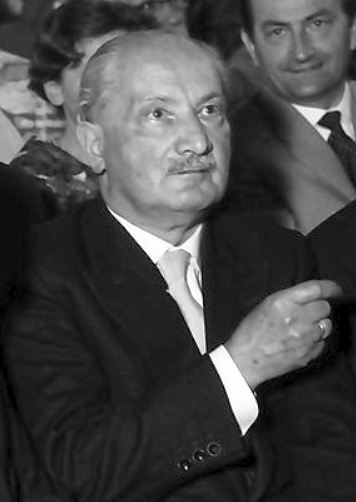
As sensible as this sounds, it is problematic in at least two ways. One is that this stance almost always creates a certain amount of condescension toward anyone who is not as sophisticated and as ironic as you. This can make you as bigoted and self-righteous in your own way as the legalistic religionists you despise. But there is a more serious effect. As we heard from Martin Heidegger, what makes you a human being and not an animal is that you want joy, meaning, and fulfillment. If you decide that fulfillment, joy, and happiness are not there, and you harden your heart against hope, you can dehumanize yourself.

(Martin Heidegger pictured below)

Detachment

. We might ask why we don’t revert to a purer form of the older “happiness hypothesis” of the Buddha and the Greek Stoics. Their counsel was not to love anything or hope for anything too much. Epictetus wrote, “What harm is there while you are kissing your child to murmur softly, ‘Tomorrow you will die’?” 25 But here I must side with the modern research, which supports a deep human intuition, namely, that diminishing your love
for others does not increase satisfaction but only undermines it. Even though ancient stoic detachment has a better philosophical pedigree than the jaded Western cynicism that sneers at everything, it ultimately also hardens your heart and dehumanizes you.


Understanding Our Discontent
 page 87 (3:6:56)


We want something that nothing in this life can give us. If we keep pursuing it in this world, it can make us driven, resentful, or self-hating. If we try to harden our hearts so that it doesn’t bother us, we harm our humanity and those around us. If, however, we don’t harden ourselves, and fully feel the grief of desire’s lost hope, we may find self- destructive ways of drowning it, as did the woman in Peggy Lee’s song. All of these approaches look like dead ends.

(Peggy Lee pictured below)

(Jonathan Haidt pictured below)


What is the cause of this seemingly inescapable condition, of this enduring discontent?
One modern theory is summarized by Haidt as the “Progress Principle.”People find more pleasure in working toward a goal than they experience when they actually attain it. Evolutionary psychologists opine that this is an adaptive mechanism. That is, they conjecture that our forebears who experienced post-attainment disappointment were more likely to work harder to achieve higher goals. These people were then more likely to live longer and so, having more children, they passed down their genes to us. Therefore, the discontent— the feeling that nothing in the world fulfills our deepest longings— is actually a chemical response in the brain that helped our ancestors survive. The sense we have that “something is missing” is therefore an illusion, a trick played on us by our genes to get us to be more industrious.

 Haidt even briefly uses this evolutionary theory to explain the Peggy Lee song “Is That All There Is?”26
(Peggy Lee pictured below)


But the woman’s life depicted in Peggy Lee’s song undermines the theory. She finds the repeated disappointments of life not a motivation to work harder but rather a disincentive for doing anything but getting high at parties. And surely this is realistic. Though disappointment may, in the short term, drive some people to more attainment, it can just as likely undermine initiative and drive. And over time it usually will. Therefore, the feeling does not necessarily or even normally lead to survival behavior. The evolutionary explanation of our
constant discontent doesn’t seem to hold up.

A more time-tested explanation comes from the great
Christian philosopher Augustine.
As a nineteen-year-old, Augustine read Cicero’s
dialogue Hortensius. 
This work considered the paradox that every person “sets out to be happy [but] the majority are thoroughly wretched.” 27 Cicero concluded that the extreme scarcity of human contentment might be a judgment of divine providence for our sins. He counseled his readers not to seek happiness in the pursuit of material comfort, sex, or prosperity but rather to find it in philosophical contemplation. The book was electrifying to the young Augustine. 28 One of his lifelong projects became to discover why most people are so discontent and bereft of joy. He concluded that our discontent has both a functional cause and an ultimate source.
The functional cause of our discontent is that our loves are “out of order.”

Augustine taught that we are most fundamentally shaped not as much by what we believe, or think, or even do,
but by what we love. “For when we ask whether somebody is a good person, we are not asking what he believes or hopes for, but what he loves.” 29 For Augustine, what we call human virtues are nothing more than forms of love. Courage is loving your neighbor’s well-being more than your own safety. Honestyis loving your neighbor’s interests more than your own, even when the truth will put you at a disadvantage. And because Jesus himself said that all God’s law comes down to loving God and your neighbor (Matthew 22: 36– 40), Augustine believed all sin was ultimately a lack of love. 30 Look at injustice. You may say that you believe in social equality and justice and think that you do, but if you make business decisions that exploit others, it is because at the heart level you love your own prosperity more than your neighbor’s. In short, what you love most at the moment is what controls your action at that moment. “A body by its weight tends to move toward its proper place. . . . My weight is my love: wherever I am carried, my love is carrying me.” 31 You are what you love.


Augustine did not see our problems as stemming only from a lack of love. He also observed that the heart’s loves have an order to them, and that we often love less important things more and the more important things less. Therefore, the unhappiness and disorder of our lives are caused by the disorder of our loves. A just and good person “is also a person who has [rightly] ordered his love, so that he does not love what it is wrong to love, or fail to love what should be loved, or love too much what should be loved less (or love too little what should be loved more).” 32 

How does this work? There is nothing wrong with loving your work, but if you love it more than your family, then your loves are out of order and you may ruin your familyOr if you love making money more than you love justice, then you will (11exploit your employees, again, because your loves are disordered

—-

(Francis Schaeffer pictured below)

Francis Schaeffer comments on ECCLESIASTES below: 

Ecclesiastes 1:11

11 There is no remembrance of earlier things; And also of the later things which will occur, There will be for them no remembrance among those who will come later still.

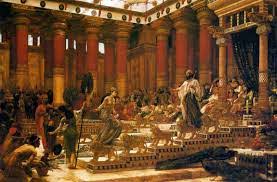
The Visit the Queen Sheba to King Solomon by English painter Sir Edward John Poynter 1st Baronet (20 March 1836 – 26 July 1919)

Ecclesiastes 2:16

16 For there is no lasting remembrance of the wise man as with the fool, inasmuch as in the coming days all will be forgotten. And how the wise man and the fool alike die!

You bring together here the factor of the beginning and you can’t know what immediately follows after your death and of course you can’t know the final ends. What do you do and the answer is to get drunk and this was not thought of in the RUBAIYAT OF OMAR KAHAYYAM:

Ecclesiastes 2:1-3

I said to myself, “Come now, I will test you with pleasure. So enjoy yourself.” And behold, it too was futility. I said of laughter, “It is madness,” and of pleasure, “What does it accomplish?” I explored with my mind how to stimulate my body with winewhile my mind was guiding me wisely, and how to take hold of folly, until I could see what good there is for the sons of men to do under heaven the few years of their lives.

The Daughter of the Vine:

You know, my Friends, with what a brave Carouse
I made a Second Marriage in my house;
Divorced old barren Reason from my Bed,
And took the Daughter of the Vine to Spouse.

from the Rubaiyat of Omar Khayyam (Translation by Edward Fitzgerald)

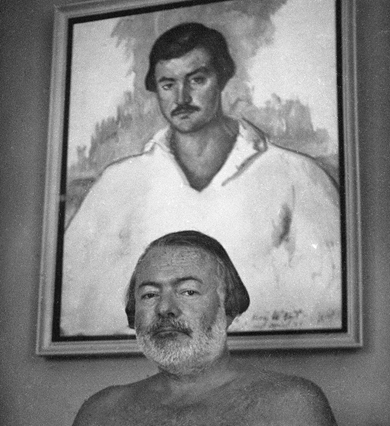
(Hemingway in Paris)

A perfectly good philosophy coming out of Islam, but Solomon is not the first man that thought of it nor the last. In light of what has been presented by Solomon is the solution just to get intoxicated and black the think out? So many people have taken to alcohol and the dope which so often follows in our day. This approach is incomplete, temporary and immature. Papa Hemingway can find the champagne of Paris sufficient for a time, but one he left his youth he never found it sufficient again. He had a lifetime spent looking back to Paris and that champagne and never finding it enough. It is no solution and Solomon says so too.

(Hemingway “quite deliberately” shot himself with his favorite shotgun in the early morning hours of July 2, 1961.)

EH 4907P Ernest Hemingway in his home in Cuba, not dated, circa 1952. Photograph in the Ernest Hemingway Collection, John F. Kennedy Presidential Library and Museum, Boston.

Ecclesiastes 2:4-11

I enlarged my works: I built houses for myself, I planted vineyards for myself; I made gardens and parks for myself and I planted in them all kinds of fruit trees; I made ponds of water for myself from which to irrigate a forest of growing treesI bought male and female slaves and I had homeborn slaves. Also I possessed flocks and herds larger than all who preceded me in Jerusalem. Also, I collected for myself silver and gold and the treasure of kings and provinces. I provided for myself MALE AND  FEMALE SINGERS AND THE PLEASURES OF MEN–MANY CONCUBINES.

Then I became great and increased more than all who preceded me in Jerusalem. My wisdom also stood by me. 10 All that my eyes desired I did not refuse them. I did not withhold my heart from any pleasure, for my heart was pleased because of all my labor and this was my reward for all my labor.11 Thus I considered all my activities which my hands had done and the labor which I had exerted, and behold all was vanity and striving after wind and there was no profit under the sun.

He doesn’t mean there is no temporary profit but there is no real profit. Nothing that lasts. The walls crumble if they are as old as the Pyramids. You only see a shell of the Pyramids and not the glory that they were. This is what Solomon is saying. Look upon Solomon’s wonder and consider the Cedars of Lebanon which were not in his domain but at his disposal.

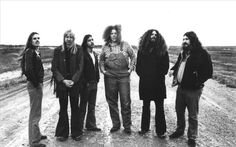
(Rock band KANSAS below)

In 1978 I heard the song “Dust in the Wind” by Kansas when it rose to #6 on the charts. That song told me that Kerry Livgren the writer of that song and a member of Kansas had come to the same conclusion that Solomon had. I remember mentioning to my friends at church that we may soon see some members of Kansas become Christians because their search for the meaning of life had obviously come up empty even though they had risen from being an unknown band to the top of the music business and had all the wealth and fame that came with that. Furthermore, like Solomon and Coldplay, they realized death comes to everyone and “there must be something more.”

(Kerry Livgren below)

Livgren wrote:

“All we do, crumbles to the ground though we refuse to see, Dust in the Wind, All we are is dust in the wind, Don’t hang on, Nothing lasts forever but the Earth and Sky, It slips away, And all your money won’t another minute buy.”

Both Kerry Livgren and Dave Hope of Kansas became Christians eventually. Kerry Livgren first tried Eastern Religions and Dave Hope had to come out of a heavy drug addiction. I was shocked and elated to see their personal testimony on The 700 Club in 1981 and that same  interview can be seen on youtube today. Livgren lives in Topeka, Kansas today where he teaches “Diggers,” a Sunday school class at Topeka Bible Church. Hope is the head of Worship, Evangelism and Outreach at Immanuel Anglican Church in Destin, Florida.

The movie maker Woody Allen has embraced the nihilistic message of the song “Dust in the Wind” by Kansas. David Segal in his article, “Things are Looking Up for the Director Woody Allen. No?” (Washington Post, July 26, 2006), wrote, “Allen is evangelically passionate about a few subjects. None more so than the chilling emptiness of life…The 70-year-old writer and director has been musing about life, sex, work, death and his generally futile search for hope…the world according to Woody is so bereft of meaning, so godless and absurd, that the only proper response is to curl up on a sofa and howl for your mommy.”

The song “Dust in the Wind” recommends, “Don’t hang on.” Allen himself says, “It’s just an awful thing and in that context you’ve got to find an answer to the question: ‘Why go on?’ ”  It is ironic that Chris Martin the leader of Coldplay regards Woody Allen as his favorite director.

Lets sum up the final conclusions of these gentlemen:  Coldplay is still searching for that “something more.” Woody Allen has concluded the search is futile. Livgren and Hope of Kansas have become Christians and are involved in fulltime ministry. Solomon’s experiment was a search for meaning to life “under the sun.” Then in last few words in the Book of Ecclesiastes he looks above the sun and brings God back into the picture: “The conclusion, when all has been heard, is: Fear God and keep His commandments, because this applies to every person. For God will bring every act to judgment, everything which is hidden, whether it is good or evil.”

You can hear Kerry Livgren’s story from this youtube link:

—-


The answer to find meaning in life is found in putting your faith and trust in Jesus Christ. The Bible is true from cover to cover and can be trusted.

Thank you again for your time and I know how busy you are.

Sincerely,

Everette Hatcher, everettehatcher@gmail.comhttp://www.thedailyhatch.org, cell ph 501-920-5733, 13900 Cottontail Lane, Alexander, AR 72002

PS: What is the meaning of life? Find it in the end of the open letter I wrote to you on April 23, 2020. 

Below is the workforce of THE TAMBURY GAZETTE 

Seen below is the third episode of AFTERLIFE (season 1) when Matt takes Tony to a comedy club with front row seats to cheer him up but it turns into disaster!!!

——

—-

Part 1 “Why have integrity in Godless Darwinian Universe where Might makes Right?”

Part 2 “My April 14, 2016 Letter to Ricky mentioned Book of Ecclesiastes and the Meaninglessness of Life”

Part 3 Letter about Brandon Burlsworth concerning suffering and pain and evil in the world.  “Why didn’t Jesus save her [from cancer]?” (Tony’s 10 year old nephew George in episode 2)

Part 4 Letter on Solomon on Death Tony in episode one, “It should be everyone’s moral duty to kill themselves.”

Part 5 Letter on subject of Learning in Ecclesiastes “I don’t read books of fiction but mainly science and philosophy”

Part 6 Letter on Luxuries in Ecclesiastes Part 6, The Music of AFTERLIFE (Part A)

Part 7 Letter on Labor in Ecclesiastes My Letter to Ricky on Easter in 2017 concerning Book of Ecclesiastes and the legacy of a person’s life work

Part 8 Letter on Liquor in Ecclesiastes Tony’s late wife Lisa told him, “Don’t get drunk all the time alright? It will only make you feel worse in the log run!”

Part 9 Letter on Laughter in Ecclesiastes , I said of laughter, “It is foolishness;” and of mirth, “What does it accomplish?” Ecclesiastes 2:2

Part 10 Final letter to Ricky on Ladies in Ecclesiastes “I gathered a chorus of singers to entertain me with song, and—most exquisite of all pleasures— voluptuous maidens for my bed…behold, all was vanity and a striving after wind, and there was nothing to be gained under the sun” Ecclesiastes 2:8-11.

Part 11 Letter about Daniel Stanhope and optimistic humanism  “If man has been kicked up out of that which is only impersonal by chance , then those things that make him man-hope of purpose and significance, love, motions of morality and rationality, beauty and verbal communication-are ultimately unfulfillable and thus meaningless.” (Francis Schaeffer)

Part 12 Letter on how pursuit of God is only way to get Satisfaction Dan Jarrell “[In Ecclesiastes] if one seeks satisfaction they will never find it. In fact, every pleasure will be fleeting and can not be sustained, BUT IF ONE SEEKS GOD THEN ONE FINDS SATISFACTION”

Part 13 Letter to Stephen Hawking on Solomon realizing he will die just as a dog will die “For men and animals both breathe the same air, and both die. So mankind has no real advantage over the beasts; what an absurdity!” Ecclesiastes

Part 14 Letter to Stephen Hawking on 3 conclusions of humanism and Bertrand Russell destruction of optimistic humanism. “That Man is the product of causes which had no prevision of the end they were achieving; that his origin, his growth, his hopes and fears, his loves and his beliefs, are but the outcome of accidental collocations of atoms—no philosophy which rejects them can hope to stand. Only within the scaffolding of these truths, only on the firm foundation of unyielding despair, can the soul’s habitation henceforth be safely built.”(Bertrand Russell, Free Man’s Worship)

Part 15 Letter to Stephen Hawking on Leonardo da Vinci and Solomon and Meaningless of life “I hate life. As far as I can see, what happens on earth is a bad business. It’s smoke—and spitting into the wind” Ecclesiastes Book of Ecclesiastes Part 15 “I hate life. As far as I can see, what happens on earth is a bad business. It’s smoke—and spitting into the wind” Ecclesiastes 2:17

Part 16 Letter to Stephen Hawking on Solomon’s longing for death but still fear of death and 5 conclusions of humanism on life UNDER THE SUN. Francis Schaeffer “Life is just a series of continual and unending cycles and man is stuck in the middle of the cycle. Youth, old age, Death. Does Solomon at this point embrace nihilism? Yes!!! He exclaims that the hates life (Ecclesiastes 2:17), he longs for death (4:2-3) Yet he stills has a fear of death (2:14-16)”

Francis Schaeffer THE AGE of FRAGMENTATION

——-

—-

—-

—-

Open Letter #94 to Ricky Gervais on comparison of the Tony of AFTER LIFE to the Solomon of ECCLESIASTES, Kath: “Do you believe in [evolution]?” Tony: “What? The proven fact that there is evolution? Yeah!” (The tweet announcing this post was liked on 3/3/21 by Ricky Gervais!)

—-

—-


After Life #1 Trailer

—-

I listened to this question and answer session at Harvard in 1992 on cassette tapes and was captivated with Ravi Zacharias. His responses were so much better than Kath’s responses to Tony in AFTER LIFE. I have referenced work by Ravi many times in the past and Especially moving was Ravi’s own spiritual search which started in a hospital bed after a failed suicide attempt. I also want you to check out his talk at Princeton and the question and answer time afterwards which are both on YOU TUBEat these two links: Link for talk, Link for Q/A.

After Life 2 Trailer

—-

On Saturday April 18, 2020 at 6pm in London and noon in Arkansas, I had a chance to ask Ricky Gervais a question on his Twitter Live broadcast which was  “Is Tony a Nihilist?” At the 20:51 mark Ricky answers my question. Below is the video:

—-

—-

If Death is the end then what is the point Kath asks below:

——

Francis Schaeffer passed away on May 15, 1984 and on the 10th anniversary of that date I wrote many skeptics such as Carl Sagan and corresponded with them on the big questions covered by the Book of Ecclesiastes.

Kath: You are an atheist?

—-

Adrian Rogers on Evolution

—-


Ravi Zacharias  (March 26, 1946 – May 19, 2020) 

Francis Schaeffer (January 30, 1912 – May 15, 1984[1]

Francis Schaeffer.jpg


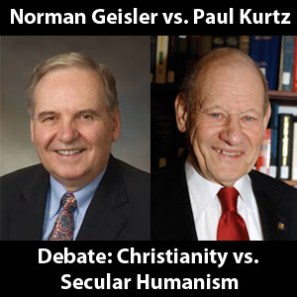
I grew up at Bellevue Baptist Church under the leadership of our pastor Adrian Rogers and I read many books by the Evangelical Philosopher Francis Schaeffer and in 1992 I heard cassette tapes of Ravi Zacharias in all his brilliance in his sessions at Harvard and have had the opportunity to contact many of the evolutionists or humanistic academics that they have mentioned in their works. Many of these scholars have taken the time to respond back to me in the last 20 years and some of the names  included are  Ernest Mayr (1904-2005), George Wald (1906-1997), Carl Sagan (1934-1996),  Robert Shapiro (1935-2011), Nicolaas Bloembergen (1920-),  Brian Charlesworth (1945-),  Francisco J. Ayala (1934-) Elliott Sober (1948-), Kevin Padian (1951-), Matt Cartmill (1943-) , Milton Fingerman (1928-), John J. Shea (1969-), , Michael A. Crawford (1938-), Paul Kurtz (1925-2012), Sol Gordon (1923-2008), Albert Ellis (1913-2007), Barbara Marie Tabler (1915-1996), Renate Vambery (1916-2005), Archie J. Bahm (1907-1996), Aron S “Gil” Martin ( 1910-1997), Matthew I. Spetter (1921-2012), H. J. Eysenck (1916-1997), Robert L. Erdmann (1929-2006), Mary Morain (1911-1999), Lloyd Morain (1917-2010),  Warren Allen Smith (1921-), Bette Chambers (1930-),  Gordon Stein (1941-1996) , Milton Friedman (1912-2006), John Hospers (1918-2011), Michael Martin (1932-).Harry Kroto (1939-), Marty E. Martin (1928-), Richard Rubenstein (1924-), James Terry McCollum (1936-), Edward O. WIlson (1929-), Lewis Wolpert (1929), Gerald Holton(1922-), Martin Rees (1942-), Alan Macfarlane (1941-),  Roald Hoffmann (1937-), Herbert Kroemer (1928-), Thomas H. Jukes(1906-1999) and  Ray T. Cragun (1976-).

 Adrian Rogers (September 12, 1931 – November 15, 2005) 

Adrian Rogers.jpg

—-

Charles Darwin Autobiography

(Above) Tony and Anne on the bench at the graveyard where their spouses are buried.

July 20, 2020 
Ricky Gervais 


Dear Ricky,  

This is the 94th day in a row that I have written another open letter to you to comment on some of your episodes of AFTER LIFE, and then I wanted to challenge you to read chapter 22 of Psalms which is an amazing prophecy!

(Tony Johnson with his dog Brandi seen below:)

In episode 2 of the second season of AFTER LIFE is the following discussion: 
Tony: I drink in times of trouble. I can’t help it the world is filled with trouble. It is a horrible place. Everyone is screwed up in someway. Everyone has worries like money or health or famine, war. We are chimps with brains the size of planets. No wonder we get drunk and try to kill each other. It is mental.

Matt: Always good to talk.

Tony: I was just explaining my new plan is to drink myself to death till I eventually implode in on my own evolution. 
Kath: Do you believe in all that? 
Tony: What? The proven fact that there is evolution? Yeah


As you know I am writing you a series of letters on Solomon’s efforts to find a meaning and purpose to life. Solomon tried to find a meaning and purpose to life UNDER THE SUN in the Book of Ecclesiastes in all of the 6 “L” words and looked into  learning(1:16-18),laughter, ladies, luxuries,  and liquor (2:1-3, 8, 10, 11), and labor (2:4-6, 18-20). 

The Christian Scholar Ravi Zacharias noted, “The key to understanding the Book of Ecclesiastes is the term UNDER THE SUN — What that literally means is you lock God out of a closed system and you are left with only this world of Time plus Chance plus matter.” 

Just like you Ricky I assume Tony Johnson holds to the view “Humans are an integral part of nature, the result of unguided evolutionary change.” Tony said that he believes in the proven fact of evolution. Also in another episode Tony states that it was by chance that he met the perfect spouse in Lisa! Did you know that Darwin himself had doubts concerning this world coming about by chance? I will quote Darwin later in this post about that.

Ricky Gervais

Comedian and Patron of Humanists UK

“You don’t need whatever religion gives you. Just be kind.”

Ricky Gervais is best known for his television comedies The Office and Extras, and for stand-up comedy, but he has also been a musician and worked in radio.

He is a philosophy graduate (London University), and after graduation worked at the University as entertainment manager for the Students Union, where he began developing the character of “Seedy Boss”, later to become David Brent in The Office.

His comedy is often controversial, and he has managed to offend a wide range of people, including the disabled, religious believers, and celebrities and film stars in his hosting of the Golden Globe Awards – but he has also managed to coax self-deprecating and very funny performances from stars who can take a joke against themselves such as Kate Winslet (in Extras) and Johnny Depp and Helena Bonham-Carter (in Small People).

He told Kirsty Young that he is an atheist during his 2007 interview for BBC Radio 4’s Desert Island Discs (you can listen to his interview here), and later said that he had lost his faith at the age of eight. He has also said that he and his long-term partner chose not to marry because “there’s no point in us having an actual ceremony before the eyes of God because there is no God”, and has defended his atheism in the Wall Street JournalInterviewed by Elizabeth Day in The Observer in February 2013, he said:

“…I don’t believe there is a God but there’s nothing wrong with spirituality if that makes you a happier, nicer person. But religion is something else, it’s a way of controlling people. It’s no coincidence that the people in charge of religion aren’t the kindest or most forgiving. My point is that… you don’t need whatever religion gives you. Just be kind.”

Humanist Brian Cox comments below:

In the You Tube video “A Further 50 Renowned Academics Speaking About God (Part 3),” Dr. Cox asserted: 

“I’m comfortable with the unknown — that’s the point of science. There are places out there, billions of places out there, that we know nothing about. And the fact that we know nothing about them excites me, and I want to go out and find out about them.  And that’s what science is. So I think if you’re not comfortable with the unknown, then it’s difficult to be a scientist… I don’t need an answer. I don’t need answers to everything. I want to have answers to find.”


Since you are a Humanist, I wanted to ask you about this idea of Evolution by Chance.

  • Manifesto I: Humanism believes that man is a part of nature and that he has emerged as a result of a continuous process.
  • Manifesto II: Rather, science affirms that the human species is an emergence from natural evolutionary forces.
  • Manifesto III: Humans are an integral part of nature, the result of unguided evolutionary change.

Did you know that Charles Darwin himself struggled until his his dying day with this idea of evolution by chance. (I am not referring to the now debunked deathbed confession spread by his wife.)

The Genius of Charles Darwin (A film that Richard Dawkinswrote and narrated.) Part 1 (37th min):

(Richard Dawkins) I’ve come to meet Randal Keynes, Darwin’s great-great-grandson to try to understand Darwin’s frame of mind as he finished his book.

(Randal Keynes) This is a book about geology by Mr Greenough. It has this wonderful inscription – “Charles Darwin, Buenos Aires,
October 1832.” So he’s on the Beagle, really getting into his stride as a geologist. This is a scrapbook,
a children’s scrapbook that belonged to Darwin’s daughter Annie.

Anne Elizabeth “Annie” Darwin (2 March 1841 – 23 April 1851) was the second child and eldest daughter of Charles and Emma Darwin.

(Richard Dawkins) Darwin was no aggressive polemicist. He didn’t take to the stage
to publicise his work, but sought to influence leading thinkers behind the scenes, by sending them proof copies of the book with apologetic letters attached.’ He would write things like,
“This vile rag of a theory of mine.” Was that genuine modesty or was there an element of false modesty about it?

(Randal Keynes below)

(Randal Keynes) It was entirely real, um, and this is a very strange point about him. Through the years when he was steeling himself for publication, um, he was, at different times, enormously confident in it, and at other times, he was utterly uncertain. He had a deep fear, I think, that one species would be discovered that had some element of its make-up that could only have been designed. 

(Richard Dawkins) Doubts may have lingered in Darwin’s mind, but finally, 150 years ago, he set out his ideas on evolution and how it worked in The Origin Of Species. The book sold out its first run of 1,250 copies within two days. has never been out of print since. The Origin turned our world upside down…..

The case is clear that Darwin did turn the world upside down, but is also true that he had deep doubts about his theory throughout his whole life.

Francis Schaeffer seen above

In 1968, Francis Schaeffer (January 30, 1912 – May 15, 1984[1]got a hold of an unabridged autobiography of Darwin that Nora Barlow has edited. Wikipedia noted concerning Barlow:

Her first book as editor was a new edition of The Voyage of the Beagle (1933).

She published an unexpurgated version of The Autobiography of Charles Darwin, which had previously had personal and religious material removed by his son, Francis.

Here are Schaeffer’s comments on the autobiography:

Darwin in his autobiography  Darwin, Francis ed. 1892. Charles Darwin: his life told in an autobiographical chapter, and in a selected series of his published letters [abridged edition]. London: John Murray, and in his letters showed that all through his life he NEVER really came to a QUIETNESS concerning the possibility that chance really explained the situation of the biological world. You will find there is much material on this [from Darwin] extended over many many years that constantly he was wrestling with this problem. Darwin never came to a place of satisfaction. You have philosophically ONLY TWO possible beginnings. The first would be a PERSONAL beginning and the other would be an IMPERSONEL beginning plus time plus CHANCE. There is no other possible alternative except the alternative that everything comes out of nothing and that has to be a total nothing and that has to be a total nothing without mass, energy or motion existing. No one holds this last view because it is unthinkable. Darwin understood this and therefore until his death he was uncomfortable with the idea of CHANCE producing the biological variation. 

Darwin, C. R. to Graham, William 3 July 1881:

Nevertheless you have EXPRESSED MY INWARD CONVICTION, though far more vividly and clearly than I could have done, that the Universe is NOT THE RESULT OF CHANCE.* But THEN with me the HORRID DOUBT ALWAYS ARISES whether the convictions of man’s mind, which has been developed from the mind of the lower animals, are of any value or at all trustworthy. Would any one trust in the convictions of a monkey’s mind, if there are any convictions in such a mind?

Francis Schaeffer comments:

Can you feel this man? He is in real agony. You can feel the whole of modern man in this tension with Darwin. My mind can’t accept that ultimate of chance, that the universe is a result of chance. He has said 3 or 4 times now that he can’t accept that it all happened by chance and then he will write someone else and say something different. How does he say this (about the mind of a monkey) and then put forth this grand theory? Wrong theory I feel but great just the same. Grand in the same way as when I look at many of the paintings today and I differ with their message but you must say the mark of the mannishness of man are one those paintings titanic-ally even though the message is wrong and this is the same with Darwin.  But how can he say you can’t think, you come from a monkey’s mind, and you can’t trust a monkey’s mind, and you can’t trust a monkey’s conviction, so how can you trust me? Trust me here, but not there is what Darwin is saying. In other words it is very selective. 

Do you think Darwin was right to spend so much time exploring his doubts on this issue of Evolution by Chance? 

Forbidden Fruit by Paul Kurtz image

Salomons dom.jpg

The Judgment of Solomon, 1617 by Peter Paul Rubens(1577–1640)

Paul Kurtz

Paul Kurtz pictured above

I have had the privilege of corresponding with the humanist psychologist Steven Pinker of Harvard and I have enjoyed reading several of his books and the last one I read was ENLIGHTENMENT NOW: THE CASE FOR REASON, SCIENCE, HUMANISM, AND PROGRESS. In my view it is the best book written from a humanist point of view that discusses morality. Earlier I would given that recognition to Paul Kurtz and his book FORBIDDEN FRUIT: THE ETHICS OF SECULARISM. 

Dr. Pinker asserted:

The case for Enlightenment Now is not just a matter of debunking fallacies or disseminating data. It may be cast as a stirring narrative, and I hope that people with more artistic flair and rhetorical power than I can tell it better and spread it farther.The story of human progress is truly heroic. It is glorious. It is uplifting. It is even, I daresay, spiritual. It goes something like this.

We are born into a pitiless universe, facing steep odds against life-enabling order and in constant jeopardy of falling apart. We were shaped by a force that is ruthlessly competitive. We are made from crooked timber, vulnerable to illusions, self-centeredness, and at times astounding stupidity.

Yet human nature has also been blessed with resources that open a space for a kind of redemption. We are endowed with the power to combine ideas recursively, to have thoughts about our thoughts. We have an instinct for language, allowing us to share the fruits of our experience and ingenuity. We are deepened with the capacity for sympathy—for pity, imagination, compassion, commiseration.

These endowments have found ways to magnify their own power. The scope of language has been augmented by the written, printed, and electronic word. Our circle of sympathy has been expanded by history, journalism, and the narrative arts. And our puny rational faculties have been multiplied by the norms and institutions of reason: intellectual curiosity, open debate, skepticism of authority and dogma, and the burden of proof to verify ideas by confronting them against reality.

As the spiral of recursive improvement gathers momentum, we eke out victories against the forces that grind us down, not least the darker parts of our own nature. We penetrate the mysteries of the cosmos, including life and mind. We live longer, suffer less, learn more, get smarter, and enjoy more small pleasures and rich experiences. Fewer of us are killed, assaulted, enslaved, oppressed, or exploited by the others. From a few oases, the territories with peace and prosperity are growing, and could someday encompass the globe. Much suffering remains, and tremendous peril. But ideas on how to reduce them have been voiced, and an infinite number of others are yet to be conceived.

We will never have a perfect world, and it would be dangerous to seek one. But there is no limit to the betterments we can attain if we continue to apply knowledge to enhance human flourishing.

This heroic story is not just another myth. Myths are fictions, but this one is true—true to the best of our knowledge, which is the only truth we can have. We believe it because we have reasons to believe it. As we learn more, we can show which parts of the story continue to be true, and which ones false—as any of them might be, and any could become.

And the story belongs not to any tribe but to all of humanity—to any sentient creature with the power of reason and the urge to persist in its being. For it requires only the convictions that life is better than death, health is better than sickness, abundance is better than want, freedom is better than coercion, happiness is better than suffering, and knowledge is better than superstition and ignorance.

Sounds like Dr. Pinker like Darwin was an OPTIMISTIC HUMANIST!!!

I read the book by Craig Venter called LIFE AT THE SPEED OF LIGHT: FROM THE DOUBLE HELIX TO THE DAWN OF DIGITAL LIFE and in that book  on page 146 Venter wrote, “The future of biological research will be based to a great extent on the combination of computer science and synthetic biology.  We can get a fascinating view of this future from a series of contests that culminate in a remarkable event that takes place each year in Cambridge, Massachusetts–A gathering of brilliant young minds that gives me great hope for the future.  The International Genetically Engineered Machine (iGEM) competition invites high school and college students and entrepreneurs to shuffle a standard set of DNA subroutines into something new in a competition for a trophy…”

This statement of Dr. Venter assumes that EDUCATION IS THE ANSWER!!!

A man who has never gone to school may steal from a freight car; but if he has a university education, he may steal the whole railroad. Theodore Roosevelt

Humanity’s problem  is  not a lack of education but a moral problem.

Adrian Rogers:

Did you know that all atheists are not atheists because of intellectual problems? They’re atheists because of moral problems. You say, “But I know some brilliant people who are atheists.” Well, that may be so, but I know some brilliant people who are not. You say, “I know some foolish people who believe in God.” Well, I know everyone who doesn’t believe in God is foolish.

Dr. Venter is wrong about just education being our sole problem and it certainly isn’t embracing OPTIMISTIC HUMANISM.


Ricky since you are a member of the BRITISH HUMANIST ASSOCIATION I wanted you to read a statement from H.J. Blackham who is the founder of that organization.   Blackham asserted:

On humanist assumptions, life leads to nothing, and every pretense that it does not is a deceit. If there is a bridge over a gorge which spans only half the distance and ends in mid-air, and if the bridge is crowded with human beings pressing on, one after the other they fall into the abyss. The bridge leads nowhere, and those who are pressing forward to cross it are going nowhere….It does not matter where they think they are going, what preparations for the journey they may have made, how much they may be enjoying it all. The objection merely points out objectively that such a situation is a model of futility“( H. J. Blackham, et al., Objections to Humanism (Riverside, Connecticut: Greenwood Press, 1967).

Harold J. Blackham (1903-2009) pictured above

Mark Elvin comments below (Elvin’s father was founding member of British Humanist Association and friend of Harold J. Blackham)


This quote from that excellent in-depth interview with Alan Macfarlane :

I was puzzled by the fact that I was told nonsense, not just something I might not agree with, but nonsense. This was nonsense, and the contrast fascinated me and I was already about age eleven and in some way you could say someone who took as his guide Bertrand Russell’s work that was accessible to me beginning with his popular essays. 

On John Ankerberg’s show in 1986 there was a debate between  Dr. Paul Kurtz, and Dr. Norman Geisler and when part of the above quote was read, Dr. Kurtz responded:

I think you may be quoting Blackham out of context because I’ve heard Blackham speak, and read much of what he said, but Blackham has argued continuously that life is full of meaning;

I read THE MEANING OF HUMAN EXISTENCE by Edward O. Wilson, and I really enjoyed it. I marked up it with my yellow highlighter and wrote down many notes too. Instead of going through all those notes I just wanted to pick out what I thought was probably the most important passage and comment on that.

On page 173 you made 4 points:

(1) We were created not by a supernatural intelligence but by chance and necessity as one species out of millions of species in Earth’s biosphere.

(2) Hope and wish for otherwise as we will, there is no evidence of an external grace shinning down upon us, no demonstrable destiny or purpose assigned us, no second life vouchsafed us for the end of the present one.

(3) We are, it seems, completely alone. And that is my opinion is a very good thing. It means we are completely free….

(4) They empower us to address with more confidence the greatest goal of all time, the unity of the human race.

___________

Let me respond to #2 first. Is “there is no evidence of an external grace shinning down upon us, no demonstrable destiny?”  If I could demonstrate through historical evidence that the Bible is true then that would qualify as evidence that is demonstrable.

Taking a closer look at the archaeology of the Old Testament times is a good place to start! Here are some of the posts I have done in the past on the subject and you can google these subjects or click on the links: 1. The Babylonian Chronicleof Nebuchadnezzars Siege of Jerusalem, 2. Hezekiah’s Siloam Tunnel Inscription. 3. Taylor Prism (Sennacherib Hexagonal Prism), 4. Biblical Cities Attested Archaeologically. 5. The Discovery of the Hittites, 6.Shishak Smiting His Captives, 7. Moabite Stone, 8. Black Obelisk of Shalmaneser III9A Verification of places in Gospel of John and Book of Acts., 9B Discovery of Ebla Tablets10. Cyrus Cylinder11. Puru “The lot of Yahali” 9th Century B.C.E.12. The Uzziah Tablet Inscription13. The Pilate Inscription14. Caiaphas Ossuary14 B Pontius Pilate Part 214c. Three greatest American Archaeologists moved to accept Bible’s accuracy through archaeology.,

CAN EVOLUTION BE PROVED WITH “LOGICALLY COHERENT EVIDENCE” LIKE THAT?

Dr. Wilson’s point #3 is that since we are alone that “is a very good thing. It means we are completely free.” Is Dr. Wilson saying that he finds the idea of being created by the personal God of the Bible unacceptable merely on philosophical grounds and he does prefer to think of not being responsible to a creator God?  In the article, WHY ACADEMICS EMBRACE EVOLUTION,” on 2-12-09 Marylou Barry assembled these quotes from evolutionists:

… Not because it can be proved by LOGICALLY COHERENT EVIDENCE to be true but because the only alternative, special creation, is clearly incredible,” wrote the late D.M.S. Watson, chair of evolution at the University of London.

“… Materialism is an absolute, for we cannot allow a Divine Foot in the door,” wrote Richard Lewontin, former professor of genetics at Harvard University.

“We objected to the morality because it interfered with our sexual freedom,” the late author Aldous Huxley.

“I want atheism to be true,” New York University philosophy professor Thomas Nagel elaborated, “and am made uneasy by the fact that some of the most intelligent and well-informed people I know are religious believers. It isn’t just that I don’t believe in God and, naturally, hope that I’m right in my belief. It’s that I hope there is no God! I don’t want there to be a God; I don’t want the universe to be like that.”

________

Dr. Wilson’s point #4 is that “our greatest goal of all time, (should be) the unity of the human race.” WHY DOES THE UNITY OF THE HUMAN RACE EVEN MATTER ULTIMATELY? If Dr. Wilson’s assumptions about the meaningless of the universe are true then let me respond first with the words of Woody Allenfollowed by Bertrand Russell:

  • With no God, our true situation is hopeless. Why? Because “nothing does last.” “The sun will burn out.” “The universe is falling apart.” “At some point there won’t be anything at all.”
  • Your stuff, your little creations, are not going to last.
  • When you die, not only will there be no “you,” but no one or nothing is going to care (relatively speaking, in a massive sense).

Bertrand Russell is one of your heroes Ricky and here is what he wrote about mankind being the result of evolution:

That Man is the product of causes which had no prevision of the end they were achieving; that his origin, his growth, his hopes and fears, his loves and his beliefs, are but the outcome of accidental collocations of atoms; …that all the labors of the ages, all the devotion, all the inspiration, all the noonday brightness of human genius, are destined to extinction in the vast death of the solar system, and that the whole temple of Man’s achievement must inevitably be buried beneath the debris of a universe in ruins—all these things, if not quite beyond dispute, are yet so nearly certain, that no philosophy which rejects them can hope to stand. Bertrand Russell

 Jacques Monod – “Pure chance, absolutely free but blind, is at the root of the stupendous edifice of evolution.” 

Image result for manod jac nobel prize

Is there any positive way to spin the fact that there is no hope for a world if we only have this life only UNDER THE SUN? Some hang onto the idea that the human race may get better like Dr. Pinker! Charles Darwin wrote, “Believing as I do that man in the distant future will be a far more perfect creature than he now is…” 

(Julian Huxley in 1922)

Francis Schaeffer commented in 1968:

Now you have now the birth of Julian Huxley’s evolutionary optimistic humanism already stated by Darwin. Darwin now has a theory that man is going to be better. If you had lived at 1860 or 1890 and you said to Darwin, “By 1970 will man be better?” He certainly would have the hope that man would be better as Julian Huxley does today. Of course, I wonder what he would say if he lived in our day and saw what has been made of his own views in the direction of (the mass murder) Richard Speck (and deterministic thinking of today’s philosophers). I wonder what he would say. So you have the factor, already the dilemma in Darwin that I pointed out in Julian Huxley and that is evolutionary optimistic humanism rests always on tomorrow. You never have an argument from the present or the past for evolutionary optimistic humanism.

You can have evolutionary nihilism on the basis of the present and the past. Every time you have someone bringing in evolutionary optimistic humanism it is always based on what is going to be produced tomorrow. When is it coming? The years pass and is it coming? Arthur Koestler doesn’t think it is coming. He sees lots of problems here and puts forth for another solution.

Darwin wrote, “…it is an intolerable thought that he and all other sentient beings are doomed to complete annihilation after such long-continued slow progress. To those who fully admit the immortality of the human soul, the destruction of our world will not appear so dreadful…”

Marcel Proust seen above

Francis Schaeffer commented:

Here you feel Marcel Proust and the dust of death is on everything today because the dust of death is on everything tomorrow. Here you have the dilemma of Nevil Shute’s ON THE BEACH. If it is true that all we have left is biological continuity and biological complexity, which is all we have left in Darwinism here, or in many of the modern philosophies, then you can’t stand Shute’s ON THE BEACH. Maybe tomorrow at noon human life may be wiped out. Darwin already feels the tension, because if human life is going to be wiped out tomorrow, what is it worth today? Darwin can’t stand the thought of death of all men. Charlie Chaplin when he heard there was no life on Mars said, “I’m lonely.”


I can not think of a better illustration of this in action than the movie ON THE BEACH by Nevil Shute. On May 4, 1994 I watched the movie for the first time and again I thought of the humanist who believes that history is not heading somewhere with a purpose but is guided by pure chance, absolutely free but blind. I thought of the passage Ecclesiastes 9:10-12 Whatsoever thy hand findeth to do, do it with thy might; for there is no work, nor device, nor knowledge, nor wisdom, in the grave, whither thou goest.11 I returned, and saw under the sun, that the race is not to the swift, nor the battle to the strong, neither yet bread to the wise, nor yet riches to men of understanding, nor yet favour to men of skill; but time and chance happeneth to them all.12 For man also knoweth not his time: as the fishes that are taken in an evil net, and as the birds that are caught in the snare; so are the sons of men snared in an evil time, when it falleth suddenly upon them.
Francis Schaeffer noted: 

You think of the Swedish Opera (ANIARA) that is pictured inside a spaceship. There was a group of men and women going into outer space and they had come to another planet and the singing inside the spaceship was normal opera music. Suddenly there was a big explosion and the world had blown up and these were the last people left, the only conscious people left, and the last scene is the spaceship is off course and it will never land, but will just sail out into outer space.

—-

Lawrence Krauss

A while back I wrote a letter to Dr. Krauss with these words:

When I wrote you last I mentioned that I had just finished your book A UNIVERSE FROM NOTHING, and after the sermon I heard today at church I wanted to write you again because of some often quoted words of yours which I saw on a video for Big Think titled Is Xenophobia Inherent in Organized Religion?:

Religion is a negative force for humanity because … it implies things about the real world that are just not true.

I wish Dr. Krauss and other skeptics would take time to examine the Bible closely. The Bible is true from cover to cover and can be trusted. The world is not a result of blind chance, but we all were put here for a purpose by God. If you want to investigate the evidence concerning the accuracy of the Bible then I suggest you read Psalms 22 which was written about a thousand years before the crucifixion events it described. Furthermore, when King David wrote those words the practice of stoning was the primary way of executing someone in Israel. 

The answer to find meaning in life is found in putting your faith and trust in Jesus Christ.

Thank you again for your time and I know how busy you are.

Sincerely,

Everette Hatcher, everettehatcher@gmail.comhttp://www.thedailyhatch.org, cell ph 501-920-5733, 13900 Cottontail Lane, Alexander, AR 72002

PS: What is the meaning of life? Find it in the end of the open letter I wrote to you on April 23, 2020. 

Below is the workforce of THE TAMBURY GAZETTE 

Seen below is the third episode of AFTERLIFE (season 1) when Matt takes Tony to a comedy club with front row seats to cheer him up but it turns into disaster!!!

——

—-

Part 1 “Why have integrity in Godless Darwinian Universe where Might makes Right?”

Part 2 “My April 14, 2016 Letter to Ricky mentioned Book of Ecclesiastes and the Meaninglessness of Life”

Part 3 Letter about Brandon Burlsworth concerning suffering and pain and evil in the world.  “Why didn’t Jesus save her [from cancer]?” (Tony’s 10 year old nephew George in episode 2)

Part 4 Letter on Solomon on Death Tony in episode one, “It should be everyone’s moral duty to kill themselves.”

Part 5 Letter on subject of Learning in Ecclesiastes “I don’t read books of fiction but mainly science and philosophy”

Part 6 Letter on Luxuries in Ecclesiastes Part 6, The Music of AFTERLIFE (Part A)

Part 7 Letter on Labor in Ecclesiastes My Letter to Ricky on Easter in 2017 concerning Book of Ecclesiastes and the legacy of a person’s life work

Part 8 Letter on Liquor in Ecclesiastes Tony’s late wife Lisa told him, “Don’t get drunk all the time alright? It will only make you feel worse in the log run!”

Part 9 Letter on Laughter in Ecclesiastes , I said of laughter, “It is foolishness;” and of mirth, “What does it accomplish?” Ecclesiastes 2:2

Part 10 Final letter to Ricky on Ladies in Ecclesiastes “I gathered a chorus of singers to entertain me with song, and—most exquisite of all pleasures— voluptuous maidens for my bed…behold, all was vanity and a striving after wind, and there was nothing to be gained under the sun” Ecclesiastes 2:8-11.

Part 11 Letter about Daniel Stanhope and optimistic humanism  “If man has been kicked up out of that which is only impersonal by chance , then those things that make him man-hope of purpose and significance, love, motions of morality and rationality, beauty and verbal communication-are ultimately unfulfillable and thus meaningless.” (Francis Schaeffer)

Part 12 Letter on how pursuit of God is only way to get Satisfaction Dan Jarrell “[In Ecclesiastes] if one seeks satisfaction they will never find it. In fact, every pleasure will be fleeting and can not be sustained, BUT IF ONE SEEKS GOD THEN ONE FINDS SATISFACTION”

Part 13 Letter to Stephen Hawking on Solomon realizing he will die just as a dog will die “For men and animals both breathe the same air, and both die. So mankind has no real advantage over the beasts; what an absurdity!” Ecclesiastes

Part 14 Letter to Stephen Hawking on 3 conclusions of humanism and Bertrand Russell destruction of optimistic humanism. “That Man is the product of causes which had no prevision of the end they were achieving; that his origin, his growth, his hopes and fears, his loves and his beliefs, are but the outcome of accidental collocations of atoms—no philosophy which rejects them can hope to stand. Only within the scaffolding of these truths, only on the firm foundation of unyielding despair, can the soul’s habitation henceforth be safely built.”(Bertrand Russell, Free Man’s Worship)

Part 15 Letter to Stephen Hawking on Leonardo da Vinci and Solomon and Meaningless of life “I hate life. As far as I can see, what happens on earth is a bad business. It’s smoke—and spitting into the wind” Ecclesiastes Book of Ecclesiastes Part 15 “I hate life. As far as I can see, what happens on earth is a bad business. It’s smoke—and spitting into the wind” Ecclesiastes 2:17

Part 16 Letter to Stephen Hawking on Solomon’s longing for death but still fear of death and 5 conclusions of humanism on life UNDER THE SUN. Francis Schaeffer “Life is just a series of continual and unending cycles and man is stuck in the middle of the cycle. Youth, old age, Death. Does Solomon at this point embrace nihilism? Yes!!! He exclaims that the hates life (Ecclesiastes 2:17), he longs for death (4:2-3) Yet he stills has a fear of death (2:14-16)”

Mandeep Dhillon as Sandy on her first assignment in ‘After Life’. (Twitter)

A still from ‘After Life’ that captures the vibe of the Tambury Gazette. (Twitter)

Michael Scott of THE OFFICE (USA) with Ricky Gervais 

After Life on Netflix

After Life on Netflix stars Ricky Gervais as a bereaved husband (Image: Netflix)

—-

Psychiatrist played by Paul Kaye seen below.

The sandy beach walk

Tony Johnson with his dog Brandi seen below:

—-

Related posts:

Taking on Ark Times Bloggers on various issues Part I “Old Testament Bible Prophecy” includes the film TRUTH AND HISTORY and article ” Jane Roe became pro-life”

April 12, 2013 – 5:45 am

I have gone back and forth and back and forth with many liberals on the Arkansas Times Blog on many issues such as abortion, human rights, welfare, poverty, gun control  and issues dealing with popular culture. Here is another exchange I had with them a while back. My username at the Ark Times Blog is Saline […]By Everette Hatcher III | Posted in Biblical ArchaeologyFrancis SchaefferProlife | Edit|Comments (0)

John MacArthur on fulfilled prophecy from the Bible Part 2

August 8, 2013 – 1:28 am

I have posted many of the sermons by John MacArthur. He is a great bible teacher and this sermon below is another great message. His series on the Book of Proverbs was outstanding too.  I also have posted several of the visits MacArthur made to Larry King’s Show. One of two most popular posts I […]By Everette Hatcher III | Posted in Adrian RogersCurrent Events | Edit|Comments (0)

John MacArthur on fulfilled prophecy from the Bible Part 1

August 6, 2013 – 1:24 am

I have posted many of the sermons by John MacArthur. He is a great bible teacher and this sermon below is another great message. His series on the Book of Proverbs was outstanding too.  I also have posted several of the visits MacArthur made to Larry King’s Show. One of two most popular posts I […]By Everette Hatcher III | Posted in Adrian RogersCurrent Events |Tagged Bible Prophecyjohn macarthur | Edit|Comments (0)

John MacArthur: Fulfilled prophecy in the Bible? (Ezekiel 26-28 and the story of Tyre, video clips)

April 5, 2012 – 10:39 am

Prophecy–The Biblical Prophesy About Tyre.mp4 Uploaded by TruthIsLife7 on Dec 5, 2010 A short summary of the prophecy about Tyre and it’s precise fulfillment. Go to this link and watch the whole series for the amazing fulfillment from secular sources. http://www.youtube.com/watch?v=qvt4mDZUefo________________ John MacArthur on the amazing fulfilled prophecy on Tyre and how it was fulfilled […]By Everette Hatcher III | Posted in Biblical Archaeology | Edit|Comments (1)

John MacArthur on the Bible and Science (Part 2)

August 1, 2013 – 12:10 am

John MacArthur on the Bible and Science (Part 2) I have posted many of the sermons by John MacArthur. He is a great bible teacher and this sermon below is another great message. His series on the Book of Proverbs was outstanding too.  I also have posted several of the visits MacArthur made to Larry […]By Everette Hatcher III | Posted in Current Events | Edit|Comments (0)

John MacArthur on the Bible and Science (Part 1)

July 30, 2013 – 1:32 am

John MacArthur on the Bible and Science (Part 1) I have posted many of the sermons by John MacArthur. He is a great bible teacher and this sermon below is another great message. His series on the Book of Proverbs was outstanding too.  I also have posted several of the visits MacArthur made to Larry […]By Everette Hatcher III | Posted in Current Events | Edit|Comments (0)

Adrian Rogers: “Why I believe the Bible is true”

July 9, 2013 – 8:38 am

Adrian Rogers – How you can be certain the Bible is the word of God Great article by Adrian Rogers. What evidence is there that the Bible is in fact God’s Word? I want to give you five reasons to affirm the Bible is the Word of God. First, I believe the Bible is the […]By Everette Hatcher III | Posted in Adrian RogersBiblical Archaeology | Edit|Comments (0)

The Old Testament is Filled with Fulfilled Prophecy by Jim Wallace

June 24, 2013 – 9:47 am

Is there any evidence the Bible is true? Articles By PleaseConvinceMe Apologetics Radio The Old Testament is Filled with Fulfilled Prophecy Jim Wallace A Simple Litmus Test There are many ways to verify the reliability of scripture from both internal evidences of transmission and agreement, to external confirmation through archeology and science. But perhaps the […]By Everette Hatcher III | Posted in Biblical ArchaeologyCurrent Events | Edit|Comments (0)

Taking on Ark Times Bloggers on various issues Part M “Old Testament prophecy fulfilled?”Part 3(includes film DEATH BY SOMEONE’S CHOICE)

April 19, 2013 – 1:52 am

  I have gone back and forth and back and forth with many liberals on the Arkansas Times Blog on many issues such as abortion, human rights, welfare, poverty, gun control  and issues dealing with popular culture. Here is another exchange I had with them a while back. My username at the Ark Times Blog is […]By Everette Hatcher III | Posted in Francis SchaefferProlife | Edit|Comments (0)

Evidence for the Bible

March 27, 2013 – 9:43 pm

Here is some very convincing evidence that points to the view that the Bible is historically accurate. Archaeological and External Evidence for the Bible Archeology consistently confirms the Bible! Archaeology and the Old Testament Ebla tablets—discovered in 1970s in Northern Syria. Documents written on clay tablets from around 2300 B.C. demonstrate that personal and place […]By Everette Hatcher III | Posted in Biblical Archaeology | E


Francis Schaeffer “The Age of NONREASON”

——-

—-


—-

—-

—-


—-

—-

—-


—-

“Music Monday” THE BEATLES (Breaking down the song “Penny Lane”Part B) Featured artist is Clive Barker

In the book THE GOD WHO IS THERE, Francis Schaeffer noted:

In this flow there was also the period of psychedelic rock, an attempt to find this experience without drugs, by the use of a certain type of music. This was the period of the Beatles’ Revolver (1966) and Strawberry Fields Forever (1967). In the same period and in the same direction was Blonde on Blond (1966) by Bob Dylan….No great illustration could be found of the way these concepts were carried to the masses than “pop” music and especially the work of the BEATLES. The Beatles moved through several stages, including the concept of the drug and psychedelic approach. The psychedelic began with their records REVOLVER, STRAWBERRY FIELDS FOREVER, AND PENNY LANE. This was developed with great expertness in their record SERGEANT PEPPER’S LONELY HEARTS CLUB BAND in which psychedelic music, with open statements concerning drug-taking, was knowingly presented as a religious answer. The religious form was the same vague pantheism which predominates much of the new mystical thought today. One indeed does not have to understand in a clear way the modern monolithic thought in order to be infiltrated by it. SERGEANT PEPPER’S LONELY HEARTS CLUB BAND was an ideal example of the manipulating power of the new forms of “total art.” This concept of total art increases the infiltrating power of the message involved.

https://www.youtube.com/watch?v=ygzh713TQn8

I love the music of the Beatles, but I realize that they did not have a Christian Worldview and they did very often pointed their audiences to the empty answers the world usually gives. I would hope that both Ringo and Paul would turn to Christ like both Kerry Livgren and Dave Hope of the rock group KANSAS did. The answer to find meaning in life is found in putting your faith and trust in Jesus Christ. The Bible is true from cover to cover and can be trusted.  

______________

__________________

The Beatles Penny Lane


___________

Great Album


Paul McCartney- Penny Lane (Live)

https://www.youtube.com/watch?v=PfNjwfbyOLM

Here is an excerpt of a fine article about Schaeffer’s take on the Beatles’ album:

Soli Deo Gloria

Wednesday, January 8, 2014

Music and The General Culture’s Shift Away From Absolute Truth

By

Pastor Stephen Feinstein

Two days ago, I wrote about artists plunging below the line of despair soon after the philosophers. By way of reminder, the line of despair, according Francis Schaeffer, is when people abandon the idea of absolutes and instead see reality as being relative to each individual. Relativity makes sense in a godless, accidental universe. Since many philosophers and artists bought into the philosophy of atheism, they gave up absolute truth with it. The end result is everyone can make up their own truth since ultimately everyone is wrong anyway.

Well, after the artists went below the line of despair, music went next, and then the general culture was soon to follow. Thus, today I will talk about the plunge of music and general culture below the line. As I have said before, the things that Schaffer points out are even more relevant for our day than his.

Just as Hegel was the doorway for philosophy and Impressionism was the doorway for art, Debussy (1862-1918) was the doorway for music to drop below the line of despair. He abandoned traditional musical Musique Concrete. Sound was seriously and deliberately distorted. They would take real sounds, but break them up, rearrange the parts, and throw them back together in any chaotic way they chose. Their message was loud and clear. Everything is relative, all things are in change, and nothing (not even sound) is absolute. This seems to be the uniform message of postmodern man. They see us as arising by chance and chaos, and eventually all will return to that state. So in the meantime, they say we must reject all meaning since there is no purpose or plan that unifies all of the particulars in the universe. For those who are interested, Schaffer gives some very interesting examples on page 36 of The God Who is There, of real samples from these types of composers, scales, eschewed tone in unnatural ways, and utilized chromaticism to alter music’s basic diatonic organization. In other words, our ears naturally make sense out of patterned scales and predictable tones, but he decided to jumble these around allowing for nonsensical sounds. This opened the door for music composers to deliberately go below the line of despair, as seen by the first large movement to do so. That movement was, well, it did not stop with music. This progression below the line moved onto a fourth step—general culture. Schaeffer covers the different elements of general culture in this chapter to make his point. He begins with literature and claims that Henry Miller (1891-1980) started to move the general culture below the line. His writings were certainly pornographic, but his purpose was more philosophical than perverse. His goal was to smash everything, including sex. He rejected that there is any meaning, so his goal was to smash all traditional thoughts of meaning, and he even sought to show that sex is meaningless. Without meaning or standards, he can write about whatever he wants, no matter how perverse…

Next Schaeffer moves onto drama and focuses in on John Osborne (1929-1980). As brilliant as a playwright as this man was, he too was part of this movement towards absurdity. In his famous play Martin Luther, he deliberately distorts history to promote his view of truth. Luther was a man that was absolutely committed to truth and he was convinced that he was right in his doctrinal stances against the Roman Catholic Church. Well, in Osborne’s play, the story ends with one of Luther’s old Catholic mentors asking, “Martin, do you know you are right?” And contrary to all history, Osborne has Luther answer, “Let’s hope so.” The curtain rolls, and the audience is left with the mood that nothing is certain. What a moving way to end a play! If someone missed the point in a philosophy textbook, they certainly would have gotten it from the emotional pit in their stomach after watching the play. This is how drama works. It has the unique power, like music, to bypass the intellect and go straight for the emotions.

Poetry also fell below the line. Dylan Thomas (1914-1953) wrote a poem called Elegy, which is a depressing verbal expression of total meaningless. They are the words of a tortured soul. He put to poetic form the musings of the philosophers, and in so doing he capture the emotional torment caused by such a worldview. Once again, his poetic form could speak to more people than the philosophers could ever hope to.

Modern Cinema is no different. Good movies are not labeled as good because they are morally right, but instead because they are technically good with good camera shots, artistic flavor, and a philosophical message. It is much the same today. Often the movies that win the awards are the movies that the general public did not care for. The general public often likes to see a good guy overcome a bad guy amidst a two hour roller coaster of action and suspense. But in the opinion of the cultural elites, this is nothing more than bad writing and bad filming meant to appease the masses with romantic illusions of escape. The elites want none of that!  Instead, the films that are dubbed as “good” are almost always created by people who agree with the postmodern view of man. Their films have plots that ultimately blur morality, certainty, and truth. They are at their core existentialist.

If you were to explain the drift of modern thought to the average person, they probably would not understand what you are talking about, but as Schaeffer points out, it does not mean they are not influenced by the things they see and hear in movies and on TV, and what they sing along to in pop music. In fact, it is from these areas that the masses have probably been most influenced. It is in these areas that the average “Joe” fell below the line of despair, whether he realized it or not.

For example, the psychedelic music of the Beatles were a deliberate attempt to destroy antithesis, promote relativism, undermined the truths of Christianity, and promote New Age Spirituality and drug use. The musicians that followed them simply brought more of the wickedness. Since the message was set to catchy tunes and directed toward drug-battered minds, an entire generation bought into the counterculture movement of the 1960s, and we are still living in the ramifications of it today. Music has only become more relative and meaningless. It has only promoted more drug use, violence, and sexual promiscuity…

This all stems from the fact that fallen man rejects absolute truth because they reject the God of the Bible. In the past, they clung to idolatry so that they could appeal to some authority other than God in order to account for their absolute standards. But when the chief thinkers rejected any purpose or meaning to things, and instead insisted upon an atheistic existence, absolute standards were rejected. The philosophers wrote and articulated it, the artists painted it on canvas, the musicians promoted it with their new styles, and the general culture (literature, poetry, drama, cinema, TV, and pop music) unwittingly accepted it. Now this is the default mode of thinking for the people of Western Civilization. People reject absolutes even if they don’t know why. Most people would not call themselves atheists, but their entire view of truth and reality stems from an atheist worldview. It is amazing how the absurd ideas of a few philosophers were able to change the way of thought for the entire modern world.

So Christian, what is your view on truth? In a world where antithesis is rejected, we need to push the antithesis again and again until the culture understands they cannot escape it. There are ways to do this, and perhaps they will be shared in later posts. We know that it is impossible to live without absolutes. We know the universe does have meaning. Therefore we are not hypocritical or inconsistent when we live as such. But the culture is hypocritical and inconsistent when it rejects God’s absolutes and yet forms its own, while with the same breath claiming such absolutes do not really exist. We need to confront them with God’s absolute truth, which is the only absolute truth that exists.

Penny Lane

From Wikipedia, the free encyclopedia
For other uses, see Penny Lane (disambiguation).

Coordinates: 53°23′13″N 2°55′10″W

“Penny Lane”

US picture sleeve
Single by The Beatles
A-side Strawberry Fields Forever
Released 13 February 1967 (US)
17 February 1967 (UK)
Format 7″
Recorded 29 November 1966 –
17 January 1967
EMI Studios, London
Genre
Length 3:03
Label Parlophone (UK)
Capitol (US)
Writer(s) Lennon–McCartney
Producer(s) George Martin
Certification Gold (RIAA)[4]
The Beatles singles chronology
Yellow Submarine” / “Eleanor Rigby
(1966)
Strawberry Fields Forever” / “Penny Lane
(1967)
All You Need Is Love
(1967)
Music sample
MENU
0:00
Magical Mystery Tour track listing

Penny Lane” is a song by The Beatles.[5] It was written by Paul McCartney but credited to the Lennon–McCartney songwriting partnership. The song was created in response to John Lennon’s “Strawberry Fields Forever“, and its lyrics refer to a real street in Liverpool, England.

Recorded during the Sgt. Pepper sessions, “Penny Lane” was released in February 1967 as one side of a double A-sided single, along with “Strawberry Fields Forever”. The single was the result of the record company wanting a new release after several months of no new Beatles releases. Although the song did not top the charts in Britain, it was still a top ten hit across Europe. The song was later included on the band’s US album, Magical Mystery Tour, despite not appearing on the British double EP of the same name.

In 2004, Rolling Stone ranked “Penny Lane” at number 456 on its list of the 500 Greatest Songs of All Time.[6]

Background[edit]

‘Penny Lane’ was kind of nostalgic, but it was really a place that John and I knew; it was actually a bus terminus. I’d get a bus to his house and I’d have to change at Penny Lane, or the same with him to me, so we often hung out at that terminus, like a roundabout. It was a place that we both knew, and so we both knew the things that turned up in the story.[7]

– Paul McCartney, discussing “Penny Lane” in a 2009 interview with Clashmagazine

The song’s title is derived from the name of a street near Lennon’s childhood home for his first five years (9 Newcastle Road, just off Church Road), in the band’s hometown, Liverpool, England. McCartney and Lennon would meet at Penny Lane junction to catch a bus into the centre of the city. During the 1960s, this was a significant bus terminus for several routes, and buses with “Penny Lane” displayed were common throughout Liverpool. The name Penny Lane is also used for the area that surrounds its junction withSmithdown Road, Smithdown Place (where the terminus was located) and Allerton Road, including a busy shopping area. Penny Lane is believed to be named after James Penny, an 18th-century slave trader.[8]

The street is an important landmark, sought out by many Beatles fans touring Liverpool. In the past, street signs saying “Penny Lane” were constant targets of tourist theft and had to be continually replaced. Eventually, city officials gave up and simply began painting the street name on the sides of buildings. This practice was stopped in 2007 and more theft-resistant “Penny Lane” street signs have since been installed, although some are still stolen.[9]

Recording[edit]

Production began in Studio 2 at Abbey Road on 29 December 1966 with piano as the main instrument.[10] On 17 January 1967, trumpet player David Mason recorded the piccolo trumpet solo.[11] The solo, inspired by a performance of Johann Sebastian Bach‘s second Brandenburg Concerto,[12] is in a mock-Baroque style for which the piccolo trumpet (a small instrument built about one octave higher than the standard instrument) is particularly suited, having a clean and clear sound which penetrates well through thicker midrange textures.[13] According to lead sound engineer Geoff Emerick, David Mason “nailed it” at some point during the recording; Paul McCartney tried to get him to do another take but producer George Martin insisted it wasn’t necessary, sensing Mason’s fatigue. This is known[by whom?] as one of the few times the producer’s decision overruled that of the already superstar Beatles. Emerick also notes in his book that prior to this recording, the high “E” was considered unobtainable by trumpet players and has been expected of them since said performance on the record. Mason was paid 27 pounds and 10 shillings for his performance on the recording. “Penny Lane”‘s production effects include percussion effects and piano through a Vox guitar amplifier with added reverb.[14]

The original US promo single mix of “Penny Lane” had an additional flourish of piccolo trumpet notes at the end of the song. This mix was quickly superseded by one without the last trumpet passage, but not before a handful of copies had been pressed and sent to radio stations. These recordings are among the rarest and most valuable Beatles collectibles. A stereo mix of the song with the additional trumpet added back in was included on the USRarities compilation and the UK album: The Beatles Box in 1980, and is included on an alternate take of the song released on Anthology 2 in 1996.

Composition[edit]

The song has a double tonic structure of B major verse (in I-vi-ii-V cycles) and A major chorus connected by formal pivoting dominant chords.[15] In the opening bars in B major, after singing “In Penny Lane” (in an F#-B-C#-D# melody note ascent) McCartney sings the major third of the first chord in the progression (on “Lane”) and major 7th (on “barber”) then switches to a Bm chord, singing the flattened 3rd notes (on “know” with a i7 [Bm7] chord) and flattened 7th notes (on “come and go” [with a ♭VImaj7 [Gmaj7] chord] and “say hello” [with a V7sus4 [F#7sus4] chord]).[16] This has been described as a profound and surprising innovation involving abandoning mid-cycle what initially appears to be a standard I-vi-ii-V Doo Wop pop chord cycle.[17] To get from the verse “In the pouring rain – very strange” McCartney uses an E chord as a pivot, (it is a IV chord in the preceding B key and a V in the looming A key) to take listeners back into the chorus (“Penny Lane is in my ears …”). Likewise to get back from the chorus of “There beneath the blue suburban skies I sit, and meanwhile back … , McCartney uses an F#7 pivot chord (which is a VI in the old A key and a V in the new B key). The lyrics “very strange” and “meanwhile back” can be viewed as hinting at these complex tonal changes.[18]

A feature of the song was the piccolo trumpet solo played by Mason. This is thought to be the first use of this instrument (a distinctive, speciality instrument, pitched an octave higher than the standard B-flat trumpet) in pop music. Martin later wrote, “The result was unique, something which had never been done in rock music before.”[19] McCartney was dissatisfied with the initial attempts at the song’s instrumental fill (one of which, featuring cors anglais, was released on Anthology 2), and was inspired to use the instrument after seeing Mason’s performance on a BBC television broadcast of the second Brandenburg Concerto by Johann Sebastian Bach.[20][21]

The song features contrasting verse-chorus form.[22] Lyrically there are several ambiguous and surreal images. The song is seemingly narrated on a fine summer day (“beneath the blue suburban skies”), yet at the same time it is raining (“the fireman rushes in from the pouring rain”) and approaching winter (“selling poppies from a tray” implies Remembrance Day, 11 November). Ian MacDonald has stated: “Seemingly naturalistic, the lyric scene is actually kaleidoscopic. As well as raining and shining at the same time, it is simultaneously summer and winter.”.[23] Macdonald suggests an LSD influence, and that the lyrical imagery points to McCartney first taking LSD in late 1966. However, he also cites a different story, which dates McCartney’s first LSD trip to 21 March 1967. Macdonald finishes with the comment: “Despite its seeming innocence, there are few more LSD-redolent phrases in the Beatles’ output than the line … in which the Nurse ‘feels as if she’s in a play’ … and ‘is anyway’.”

Context[edit]

A Liverpool Penny Lane street sign

The “shelter in the middle of the roundabout” refers to the old bus shelter, later developed into a cafe/restaurant with a Beatles theme, but now derelict and abandoned, despite its popularity as a tourist attraction. This is also Penny Lane Bus Terminus, where the numbers 46 (Penny Lane to Walton) and 99 (Penny Lane to Old Swan) buses terminated and is officially on Smithdown Place.

The mysterious lyrics “Four of fish and finger pies” are British slang. “A four of fish” refers to fourpennyworth of fish and chips, while “finger pie” is sexual slang of the time, apparently referring to intimate fondlings between teenagers in the shelter, which was a familiar meeting place. The combination of “fish and finger” also puns on fish fingers.[24] The lyrics as printed on the compilation album The Beatles: 1967–1970, however, are “Full of fish and finger pies” which are incorrect[citation needed]. In the remastered version, the lyrics read as “For a fish and finger pies”, which is also incorrect[citation needed].

Release[edit]

When a new Beatles single was requested for by manager Brian Epstein, producer George Martin told him that the band had recorded “Penny Lane” and “Strawberry Fields Forever”, which Martin considered to be the band’s best songs up to that point.[25] At the suggestion of Epstein, the two songs were released as a double A-side single, in a fashion identical to that of their previous single, “Yellow Submarine” / “Eleanor Rigby“. Released in the US on 13 February 1967 and in the United Kingdom on 17 February 1967, the single failed to top the British charts, making it the first time since “Love Me Do” in 1962 for a Beatles single to peak lower than number one. The song stalled at number two, one place below Engelbert Humperdinck‘s “Release Me“.[26] On the national chart compiled by Melody Maker magazine, however, the combination topped the singles list for three weeks.[27] In the United States, the song became the band’s 13th single to reach number 1 on the Billboard Hot 100, doing so for a week before being knocked off by the Turtles‘ song “Happy Together“.

Since the Beatles usually did not include songs released as singles on their British albums, both songs were left off the Sgt. Pepper’s Lonely Hearts Club Band album, a decision Martin later regretted.[28] Both songs were later included on the US Magical Mystery Tour album in November 1967.

This was also the first single by the Beatles to be sold with a picture sleeve in the UK, a practice rarely used there at that time but common in the US and various other countries (such as Japan).

Penny Lane today[edit]

A view down Penny Lane at the opposite end from the roundabout, approaching the junction with Greenbank Road near to Sefton Park.

Tony Slavin (the white building on the corner) now occupies the location of the original Bioletti’s barbershop mentioned in the song as “barber showing photographs / of every head he’s had the pleasure to know”.

Prior to securing international fame, Penny Lane’s chief renown was as the terminus for the No 46 and No 99 bus routes to Walton, Old Swan and the city centre. The terminus included a purpose-built bus shelter, with waiting room and toilets for waiting passengers. The shelter is located on its own “island” which is the mentioned “shelter on the roundabout” in the Beatles song. In the 1980s, the shelter was bought privately and converted to the Sergeant Pepper’s Bistro, though it has since closed and now stands in the middle of its roundabout looking in a very sorry state. The shelter is actually situated in Smithdown Place, though the terminus was named Penny Lane because of its proximity to Penny Lane.

Towards the end of the 1970s, businesses in Penny Lane included Penny Lane Records and a wine bar known in the early years as Harper’s Bizarre, now called Penny Lane Wine Bar (this was actually a doctors’ surgery, previously Drs Walton, Endbinder and Partners); the practice moved to Smithdown Place in the 1980s. Following privatisation, the Merseyside Passenger Transport Executive bus depot, slightly up the hill past Bioletti’s, was demolished and replaced with a shopping precinct complete with a supermarket and a public house.

Since then, the general Penny Lane area has acquired a distinct trendiness and desirability.[citation needed] The “alternative” businesses (wholefood outlets, charity shops), the now expanded array of cafés, bars, bistros, and takeaway food emporiums, as well as handily located traditional businesses (WHSmiths and Clarke’s cake shop), make the neighbourhood the most sought-after among Liverpool’s large student population.[citation needed] Though the song refers to Penny Lane junction on Smithdown Road, the street itself also leads down at the other end to the University of Liverpool‘s student halls of residence, near Sefton Park.

In July 2006, a Liverpool Councillor proposed renaming certain streets because their names were linked to the slave trade. It was soon discovered that Penny Lane, named after James Penny, a wealthy 18th-century slave ship owner and strong opponent of abolitionism, was one of these streets. Ultimately, city officials decided to forgo the name change and re-evaluate the entire renaming process. On 10 July 2006, it was revealed that Liverpool officials said they would modify the proposal to exclude Penny Lane.[29]

According to Barry Miles, the fireman and fire engine referred to in the lyrics are based upon the fire station at Mather Avenue, which is “about half a mile down the road” from Penny Lane.[30] The station is still in use today.

Promotional film[edit]

This is the “shelter in the middle of the roundabout.” As of March 2008, it is in a state of disrepair.

The promotional film for “Penny Lane” was, together with the video for “Strawberry Fields Forever“, one of the first examples of what later became known as a music video.[31] The music video for the song was not filmed at Penny Lane, as the Beatles were reluctant to travel to Liverpool. Street scenes were filmed in and around Angel Lane in London’s East End. The broken sequence of Lennon walking alone was filmed on the King’s Road (at Markham Square) in Chelsea. The outdoor scenes were filmed at Knole Park in Sevenoaks on 30 January 1967. The promotional film for “Strawberry Fields Forever” was also shot at the same location, during the same visit.[32] Both films – directed by the Swede Peter Goldmann – were selected by New York‘s MoMA to be among the most influential promotional music films of the late 1960s. Film of “Penny Lane” was included – with some scenes of green Liverpool buses and a brief overhead view of the bus shelter – but none of the Beatles attended.

Song ownership[edit]

Northern Songs, the publishing company that owned all but four of the Beatles songs, was acquired by ATV – a media company owned by Lew Grade in 1969. By 1985 the company was being run by serial Australian entrepreneur Robert Holmes à Court, who decided to sell the catalogue to Michael Jackson.

Before the sale, he offered his 16-year-old daughter Catherine the chance to keep any song “in her name” from the catalogue. She chose “Penny Lane” as it was her favourite – despite her father’s urging to choose “Yesterday”, which was by far the biggest royalty-earning song on the books (and is in the top four global royalty earning songs of all time).

Catherine Holmes à Court-Mather is still the owner of “Penny Lane”‘s copyright today, one of only five Beatles songs not owned by Sony/ATV Music Publishing.[33]

  • ______

_

Image result for beatles

The Beatles – In my Life

https://www.youtube.com/watch?v=-eCh3y5VROM

Published on Feb 25, 2011

Image result for beatles

Here Comes The Sun – The Beatles Tribute

https://www.youtube.com/watch?v=bgiQD56eWDk

Not sung by George but good nonetheless!!

Francis Schaeffer’s favorite album was SGT. PEPPER”S and he said of the album “Sergeant Pepper’s Lonely Hearts Club Band…for a time it became the rallying cry for young people throughout the world. It expressed the essence of their lives, thoughts and their feelings.”  (at the 14 minute point in episode 7 of HOW SHOULD WE THEN LIVE? ) 

Image result for francis schaeffer how should we then live

How Should We Then Live – Episode Seven – 07 – Portuguese Subtitles

Francis Schaeffer

Image result for francis schaeffer

_

_

Image result for beatles

The Beatles – Revolution

Published on Oct 20, 2015

Image result for beatles
_

CLIVE BAKER IS FEATURED ARTIST TODAY!!!

Continue reading

Open Letter #93 to Ricky Gervais on comparison of the Tony of AFTER LIFE to the Solomon of ECCLESIASTES, Tony Johnson and the idiots who dressed up their baby to look like Hitler!

—-

After Life #1 Trailer

—-

After Life 2 Trailer

—-

On Saturday April 18, 2020 at 6pm in London and noon in Arkansas, I had a chance to ask Ricky Gervais a question on his Twitter Live broadcast which was  “Is Tony a Nihilist?” At the 20:51 mark Ricky answers my question. Below is the video:

—-

—-

If Death is the end then what is the point Kath asks below:

——

Kath: You are an atheist?

—-

(Above) Tony and Anne on the bench at the graveyard where their spouses are buried.

July 19, 2020 
Ricky Gervais 


Dear Ricky,  

This is the 93th day in a row that I have written another open letter to you to comment on some of your episodes of AFTER LIFE, and then I wanted to pass along some evidence that indicates the Bible is historically accurate.

Eine Szene aus der Serie „After Life“ von und mit Komiker Ricky Gervais: Die Eltern haben den Sohn als Mini-Hitler verkleidet, nicht er sich selbst. Foto: NETFLIX/All rights reserved

Before we get to the Hitler look alike baby let’s take a look at a very brilliant man by the name of Solomon. Below are the comments of Francis Schaeffer on the universal man Solomon: 

File:Francis Schaeffer.jpg

We have here the declaration of Solomon’s universality:

1 Kings 4:30-34

English Standard Version (ESV)

30 so that Solomon’s wisdom surpassed the wisdom of all the people of the east and all the wisdom of Egypt. 31 For he was wiser than all other men, wiser than Ethan the Ezrahite, and Heman, Calcol, and Darda, the sons of Mahol, and his fame was in all the surrounding nations. 32 He also spoke 3,000 proverbs, and his songs were 1,005. 33 He spoke of trees, from the cedar that is in Lebanon to the hyssop that grows out of the wall. He spoke also of beasts, and of birds, and of reptiles, and of fish.34 And people of all nations came to hear the wisdom of Solomon, and from all the kings of the earth, who had heard of his wisdom.

_________________________

Here is the universal man and his genius. Solomon is the universal man with a empire at his disposal. Solomon had it all.

Ecclesiastes 1:3

English Standard Version (ESV)

What does man gain by all the toil
    at which he toils under the sun?

Schaeffer noted that Solomon took a look at the meaning of life on the basis of human life standing alone between birth and death “under the sun.” This phrase UNDER THE SUN appears over and over in Ecclesiastes.

Pursuing Learning

Now let us look down the details of his searching.

In Ecclesiastes 1: 13a we have the details of the universal man’s procedure. “And I set my mind to seek and explore by wisdomconcerning all that has been done under heaven.”

So like any sensible man the instrument that is used is INTELLECT, and RAITIONALITY, and LOGIC. It is to be noted that even men who despise these in their theories begin and use them or they could not speak. There is no other way to begin except in the way they which man is and that is rational and intellectual with movements of that is logical within him. As a Christian I must say gently in passing that is the way God made him.

So we find first of all Solomon turned to WISDOM and logic. Wisdom is not to be confused with knowledge. A man may have great knowledge and no wisdom. Wisdom is the use of rationality and logic. A man can be very wise and have limited knowledge. Here he turns to wisdom in all that implies and the total rationality of man.

Works of Men done Under the Sun

After wisdom Solomon comes to the great WORKS of men. Ecclesiastes 1:14,  “I have seen all the works which have been doneunder the sun, and behold, all is [p]vanity and striving after wind.” Solomon is the man with an empire at this disposal that speaks. This is the man who has the copper refineries in Ezion-geber. This is the man who made the stables across his empire. This is the man who built the temple in Jerusalem. This is the man who stands on the world trade routes. He is not a provincial. He knew what was happening on the Phonetician coast and he knew what was happening in Egypt. There is no doubt he already knew something of building. This is Solomon and he pursues the greatness of his own construction and his conclusion is VANITY AND VEXATION OF SPIRIT.

Ecclesiastes 2:18-20

18 Thus I hated all the fruit of my labor for which I had labored under the sun, for I must leave it to the man who will come after me. 19 And who knows whether he will be a wise man or a fool? Yet he will have control over all the fruit of my labor for which I have labored by acting wisely under the sun. This too is vanity. 20 Therefore I completely despaired of all the fruit of my labor for which I had labored under the sun.

He looked at the works of his hands, great and multiplied by his wealth and his position and he shrugged his shoulders.

Ecclesiastes 2:22-23

22 For what does a man get in all his labor and in his striving with which he labors under the sun23 Because all his days his task is painful and grievous; even at night his mind does not rest. This too is vanity.

Now if a brilliant man like Solomon could not find the meaning to life UNDER THE SUN, is there any hope for you and me? The surprising answer is that it is not about how brilliant or arrogant we are but in where we are looking. The Christian Scholar Ravi Zacharias noted, “The key to understanding the Book of Ecclesiastes is the term UNDER THE SUN — What that literally means is you lock God out of a closed system and you are left with only this world of Time plus Chance plus matter.” You are not going to find it UNDER THE SUN but only above the sun, and it will not be a result of how brilliant you are. 

Ricky Gervais plays bereaved husband Tony Johnson in AFTER LIFE

In AFTER LIFE in season two there is a scene when Tony and Lenny interview parents of a baby who looks like Hitler with his hair combed forward and a mustache painted on with eyeliner. Tony objects to this contrived situation saying it is not newsworthy and the parents even agree that they could have done “Chinese baby that looked like Kim Jong-un and Tony replies “Or even a Korean one even.”

Here you have Ricky surrounding Tony with idiots in AFTER LIFE like Lenny and Kath to create great situations for comedy. Likewise in life Ricky you are quite arrogant on twitter in your criticisms of Christianity when there are times you haven’t studied up on the situations. For instance, we see this attitude from your friend Richard Dawkins. Your recent visit with Richard included you asking him, “Can we bring back the Mammoth?” Richard gave a convoluted answer and you retorted, “If you don’t know Richard then just say so!”


Adrian Rogers: Pictured above and his quote below:

Did you know that all atheists are not atheists because of intellectual problems? They’re atheists because of moral problems. You say, “But I know some brilliant people who are atheists.” Well, that may be so, but I know some brilliant people who are not. You say, “I know some foolish people who believe in God.” Well, I know everyone who doesn’t believe in God is foolish.

In other words there are brilliant and stupid people on both sides of the fence and it is not an intellectual issue but a moral one.

Brian Harrison who is both an agnostic and a historian comments:

I have always remained an agnostic and not an atheist. I am not militant about it. I have never seen any evidence for it, and if anything, being a historian has turned me the other way.

I have enjoyed reading the book OUTGROWING GOD by your friend Richard Dawkins, but sometimes he talks beyond his field of scientific knowledge and he gets burned. For instance, on page 53 he states: 

Genesis says Abraham owned camels, but archaeological evidence shows that the camel was not domesticated until many centuries after Abraham 

Did Camels Exist in Biblical Times?

5 reasons why domesticated camels likely existedMegan Sauter November 12, 2018  16 Comments 2730 views  Share

Did camels exist in Biblical times?

Some Biblical texts, such as Genesis 12 and 24, claim that Abraham owned camels. Yet archaeological researchshows that camels were not domesticated in the land of Canaan until the 10th century B.C.E.—about a thousand years after the time of Abraham. This seems to suggest that camels in these Biblical stories are anachronistic.

The Caravan of Abram

Abraham’s Camels. Did camels exist in Biblical times? Camels appear with Abraham in some Biblical texts—and depictions thereof, such as The Caravan of Abram by James Tissot, based on Genesis 12. When were camels first domesticated? Although camel domestication had not taken place by the time of Abraham in the land of Canaan, it had in Mesopotamia. Photo: PD-1923.Mark W. Chavalas explores the history of camel domestication in his Biblical Views column “Did Abraham Ride a Camel?”published in the November/December 2018 issue of Biblical Archaeology Review. Although he agrees that camel domestication likely did not take place in Canaan until the 10th century B.C.E., he notes that Abraham’s place of origin was not Canaan—but Mesopotamia. Thus, to ascertain whether Abraham’s camels are anachronistic, we need to ask: When were camels first domesticated in Mesopotamia?

Chavalas explains that the events in the Biblical accounts of the Patriarchs and Matriarchs (Abraham and Sarah, Isaac and Rebekah, and Israel and Rachel) have been traditionally dated to c. 2000–1600 B.C.E. (during the Middle Bronze Age). Camels appear in Mesopotamian sources in the third millennium B.C.E.—before this period. However, the mere presence of camels in sources does not necessarily mean that camels were domesticated.

The question remains: When were camels domesticated in Mesopotamia?

In his examination of camel domestication history, Chavalas looks at a variety of textual, artistic, and archaeological sources from Mesopotamia dating to the third and second millennia. We will examine five of these sources here:

1. One of the first pieces of evidence for camel domestication comes from the site of Eshnunna in modern Iraq: A plaque from the mid-third millennium shows a camel being ridden by a human.

2. Another source is a 21st-century B.C.E. text from Puzrish-Dagan in modern Iraq that may record camel deliveries.

3. Third, an 18th-century B.C.E. text (quoting from an earlier third millennium text) from Nippur in modern Iraq says, “the milk of the camel is sweet.” Chavalas explains why he thinks this likely refers to a domesticated camel:

Having walked in many surveys through camel herds in Syria along the Middle Euphrates River, I believe that this text is describing a domesticated camel; who would want to milk a “wild camel”? At the very least, the Bactrian camel was being used for dairy needs at this time.

4. Next, an 18th-century B.C.E. cylinder seal depicts a two-humped camel with riders. Although this seal’s exact place of origin is unknown, it reputedly comes from Syria, and it resembles other seals from Alalakh (a site in modern Turkey near Turkey’s southern border with Syria).

5. Finally, a 17th-century text from Alalakh includes camels in a list of domesticated animals that required food.

syria-camel-seal

Camel Domestication. When were camels first domesticated? This impression of an 18th-century B.C.E. cylinder seal from Syria depicts a two-humped camel with riders. The seal and other archaeological discoveries shed light on camel domestication history, suggesting that camel domestication had occurred in Mesopotamia by the second millennium B.C.E. Photo: ©The Walters Art Museum, Baltimore.

Although domesticated camels may not have been widespread in Mesopotamia in the second millennium, these pieces of evidence show that by the second millennium, there were at least some domesticated camels. Thus, camel domestication had taken place in Mesopotamia by the time of Abraham. Accordingly, Chavalas argues that the camels in the stories of Abraham in Genesis are not anachronistic.

Learn more about the history of camel domestication in Mark W. Chavalas’s Biblical Views column “Did Abraham Ride a Camel?” published in the November/December 2018 issue of Biblical Archaeology Review.——————

Subscribers: Read the full Biblical Views column “Did Abraham Ride a Camel?” by Mark W. Chavalas in the November/December 2018 issue of Biblical Archaeology Review.

Stephan Feuchtwang comments:

I think I was always an atheist; I had to ask myself what is God all the time; however, I am deeply respectful, as well as utterly sceptical, of what people say they have as their spiritual experience including what they say about God or gods; I have a preference for polytheism. I come from a psycho-analytically inclined family culture; my mother was psycho-analysed and did graphology, and I am married to a psycho-analytic therapist; what Freud calls an oceanic experience, the emotion of religiosity that goes with a belief in God, I think I can detect in myself; I have never had an epiphany but have had oceanic experiences, the sense of wonder, as the arch-atheist, Richard Dawkins.

—-

Francis Schaeffer noted concerning Charles Darwin’s loss of faith:

This is very sad. He lies on his bunk and the Beagle tosses and turns and he makes daydreams, and his dreams and hopes are that someone would find in Pompeii or some place like this, an old manuscript by a distinguished Roman that would put his stamp of authority on it, which would be able to show that Christ existed. This is undoubtedly what he is talking about. Darwin gave up this hope with great difficulty.

Ricky you have an advantage of 150 years over your hero Charles Darwin and the archaeologist’s spade has continued to dig. Take a look at this piece of evidence from the book WHATEVER HAPPENED TO THE HUMAN RACE? by Francis Schaeffer and C. Everett Koop:

TRUTH AND HISTORY (chapter 5 of WHATEVER HAPPENED TO THE HUMAN RACE?)

In the previous chapter we saw that the Bible gives us the explanation for the existence of the universe and its form and for the mannishness of man. Or, to reverse this, we came to see that the universe and its form and the mannishness of man are a testimony to the truth of the Bible. In this chapter we will consider a third testimony: the Bible’s openness to verification by historical study.

Christianity involves history. To say only that is already to have said something remarkable, because it separates the Judeo-Christian world-view from almost all other religious thought. It is rooted in history.

The Bible tells us how God communicated with man in history. For example, God revealed Himself to Abraham at a point in time and at a particular geographical place. He did likewise with Moses, David, Isaiah, Daniel and so on. The implications of this are extremely important to us. Because the truth God communicated in the Bible is so tied up with the flow of human events, it is possible by historical study to confirm some of the historical details.

It is remarkable that this possibility exists. Compare the information we have from other continents of that period. We know comparatively little about what happened in Africa or South America or China or Russia or even Europe. We see beautiful remains of temples and burial places, cult figures, utensils, and so forth, but there is not much actual “history” that can be reconstructed, at least not much when compared to that which is possible in the Middle East.

When we look at the material which has been discovered from the Nile to the Euphrates that derives from the 2500-year span before Christ, we are in a completely different situation from that in regard to South America or Asia. The kings of Egypt and Assyria built thousands of monuments commemorating their victories and recounting their different exploits. Whole libraries have been discovered from places like Nuzu and Mari and most recently at Elba, which give hundreds of thousands of texts relating to the historical details of their time. It is within this geographical area that the Bible is set. So it is possible to find material which bears upon what the Bible tells us.

The Bible purports to give us information on history. Is the history accurate? The more we understand about the Middle East between 2500 B.C. and A.D. 100, the more confident we can be that the information in the Bible is reliable, even when it speaks about the simple things of time and place.

TRUTH AND HISTORY (chapter 5 of WHATEVER HAPPENED TO THE HUMAN RACE?, under footnote #94)

So the story goes on. We have stopped at only a few incidents in the sweep back to the year 1000 B.C. What we hope has emerged from this is a sense of the historical reliability of the Bible’s text. When the Bible refers to historical incidents, it is speaking about the same sort of “history” that historians examine elsewhere in other cultures and periods. This borne out by the fact that some of the incidents, some of the individuals, and some of the places have been confirmed by archaeological discoveries in the past hundred years has swept away the possibility of a naive skepticism about the Bible’s history. And what is particularly striking is that the tide has built up concerning the time before the year 1000 B.C. Our knowledge about the years 2500 B.C. to 1000 B.C. has vastly increased through discoveries sometimes of whole libraries and even of hitherto unknown people and languages.

There was a time, for example, when the Hittite people, referred to in the early parts of the Bible, were treated as fictitious by critical scholars. Then came the discoveries after 1906 at Boghaz Koi (Boghaz-koy) which not only gave us the certainty of their existence but stacks of details from their own archives!

—-


The answer to find meaning in life is found in putting your faith and trust in Jesus Christ. The Bible is true from cover to cover and can be trusted.

Thank you again for your time and I know how busy you are.

Sincerely,

Everette Hatcher, everettehatcher@gmail.comhttp://www.thedailyhatch.org, cell ph 501-920-5733, 13900 Cottontail Lane, Alexander, AR 72002

PS: What is the meaning of life? Find it in the end of the open letter I wrote to you on April 23, 2020. 

Below is the workforce of THE TAMBURY GAZETTE 

Seen below is the third episode of AFTERLIFE (season 1) when Matt takes Tony to a comedy club with front row seats to cheer him up but it turns into disaster!!!

——

—-

Part 1 “Why have integrity in Godless Darwinian Universe where Might makes Right?”

Part 2 “My April 14, 2016 Letter to Ricky mentioned Book of Ecclesiastes and the Meaninglessness of Life”

Part 3 Letter about Brandon Burlsworth concerning suffering and pain and evil in the world.  “Why didn’t Jesus save her [from cancer]?” (Tony’s 10 year old nephew George in episode 2)

Part 4 Letter on Solomon on Death Tony in episode one, “It should be everyone’s moral duty to kill themselves.”

Part 5 Letter on subject of Learning in Ecclesiastes “I don’t read books of fiction but mainly science and philosophy”

Part 6 Letter on Luxuries in Ecclesiastes Part 6, The Music of AFTERLIFE (Part A)

Part 7 Letter on Labor in Ecclesiastes My Letter to Ricky on Easter in 2017 concerning Book of Ecclesiastes and the legacy of a person’s life work

Part 8 Letter on Liquor in Ecclesiastes Tony’s late wife Lisa told him, “Don’t get drunk all the time alright? It will only make you feel worse in the log run!”

Part 9 Letter on Laughter in Ecclesiastes , I said of laughter, “It is foolishness;” and of mirth, “What does it accomplish?” Ecclesiastes 2:2

Part 10 Final letter to Ricky on Ladies in Ecclesiastes “I gathered a chorus of singers to entertain me with song, and—most exquisite of all pleasures— voluptuous maidens for my bed…behold, all was vanity and a striving after wind, and there was nothing to be gained under the sun” Ecclesiastes 2:8-11.

Part 11 Letter about Daniel Stanhope and optimistic humanism  “If man has been kicked up out of that which is only impersonal by chance , then those things that make him man-hope of purpose and significance, love, motions of morality and rationality, beauty and verbal communication-are ultimately unfulfillable and thus meaningless.” (Francis Schaeffer)

Part 12 Letter on how pursuit of God is only way to get Satisfaction Dan Jarrell “[In Ecclesiastes] if one seeks satisfaction they will never find it. In fact, every pleasure will be fleeting and can not be sustained, BUT IF ONE SEEKS GOD THEN ONE FINDS SATISFACTION”

Part 13 Letter to Stephen Hawking on Solomon realizing he will die just as a dog will die “For men and animals both breathe the same air, and both die. So mankind has no real advantage over the beasts; what an absurdity!” Ecclesiastes

Part 14 Letter to Stephen Hawking on 3 conclusions of humanism and Bertrand Russell destruction of optimistic humanism. “That Man is the product of causes which had no prevision of the end they were achieving; that his origin, his growth, his hopes and fears, his loves and his beliefs, are but the outcome of accidental collocations of atoms—no philosophy which rejects them can hope to stand. Only within the scaffolding of these truths, only on the firm foundation of unyielding despair, can the soul’s habitation henceforth be safely built.”(Bertrand Russell, Free Man’s Worship)

Part 15 Letter to Stephen Hawking on Leonardo da Vinci and Solomon and Meaningless of life “I hate life. As far as I can see, what happens on earth is a bad business. It’s smoke—and spitting into the wind” Ecclesiastes Book of Ecclesiastes Part 15 “I hate life. As far as I can see, what happens on earth is a bad business. It’s smoke—and spitting into the wind” Ecclesiastes 2:17

Part 16 Letter to Stephen Hawking on Solomon’s longing for death but still fear of death and 5 conclusions of humanism on life UNDER THE SUN. Francis Schaeffer “Life is just a series of continual and unending cycles and man is stuck in the middle of the cycle. Youth, old age, Death. Does Solomon at this point embrace nihilism? Yes!!! He exclaims that the hates life (Ecclesiastes 2:17), he longs for death (4:2-3) Yet he stills has a fear of death (2:14-16)”

Mandeep Dhillon as Sandy on her first assignment in ‘After Life’. (Twitter)

A still from ‘After Life’ that captures the vibe of the Tambury Gazette. (Twitter)

Michael Scott of THE OFFICE (USA) with Ricky Gervais 

After Life on Netflix

After Life on Netflix stars Ricky Gervais as a bereaved husband (Image: Netflix)

—-

Psychiatrist played by Paul Kaye seen below.

The sandy beach walk

Tony Johnson with his dog Brandi seen below:

—-

Related posts:

Taking on Ark Times Bloggers on various issues Part I “Old Testament Bible Prophecy” includes the film TRUTH AND HISTORY and article ” Jane Roe became pro-life”

April 12, 2013 – 5:45 am

I have gone back and forth and back and forth with many liberals on the Arkansas Times Blog on many issues such as abortion, human rights, welfare, poverty, gun control  and issues dealing with popular culture. Here is another exchange I had with them a while back. My username at the Ark Times Blog is Saline […]By Everette Hatcher III | Posted in Biblical ArchaeologyFrancis SchaefferProlife | Edit|Comments (0)

John MacArthur on fulfilled prophecy from the Bible Part 2

August 8, 2013 – 1:28 am

I have posted many of the sermons by John MacArthur. He is a great bible teacher and this sermon below is another great message. His series on the Book of Proverbs was outstanding too.  I also have posted several of the visits MacArthur made to Larry King’s Show. One of two most popular posts I […]By Everette Hatcher III | Posted in Adrian RogersCurrent Events | Edit|Comments (0)

John MacArthur on fulfilled prophecy from the Bible Part 1

August 6, 2013 – 1:24 am

I have posted many of the sermons by John MacArthur. He is a great bible teacher and this sermon below is another great message. His series on the Book of Proverbs was outstanding too.  I also have posted several of the visits MacArthur made to Larry King’s Show. One of two most popular posts I […]By Everette Hatcher III | Posted in Adrian RogersCurrent Events |Tagged Bible Prophecyjohn macarthur | Edit|Comments (0)

John MacArthur: Fulfilled prophecy in the Bible? (Ezekiel 26-28 and the story of Tyre, video clips)

April 5, 2012 – 10:39 am

Prophecy–The Biblical Prophesy About Tyre.mp4 Uploaded by TruthIsLife7 on Dec 5, 2010 A short summary of the prophecy about Tyre and it’s precise fulfillment. Go to this link and watch the whole series for the amazing fulfillment from secular sources. http://www.youtube.com/watch?v=qvt4mDZUefo________________ John MacArthur on the amazing fulfilled prophecy on Tyre and how it was fulfilled […]By Everette Hatcher III | Posted in Biblical Archaeology | Edit|Comments (1)

John MacArthur on the Bible and Science (Part 2)

August 1, 2013 – 12:10 am

John MacArthur on the Bible and Science (Part 2) I have posted many of the sermons by John MacArthur. He is a great bible teacher and this sermon below is another great message. His series on the Book of Proverbs was outstanding too.  I also have posted several of the visits MacArthur made to Larry […]By Everette Hatcher III | Posted in Current Events | Edit|Comments (0)

John MacArthur on the Bible and Science (Part 1)

July 30, 2013 – 1:32 am

John MacArthur on the Bible and Science (Part 1) I have posted many of the sermons by John MacArthur. He is a great bible teacher and this sermon below is another great message. His series on the Book of Proverbs was outstanding too.  I also have posted several of the visits MacArthur made to Larry […]By Everette Hatcher III | Posted in Current Events | Edit|Comments (0)

Adrian Rogers: “Why I believe the Bible is true”

July 9, 2013 – 8:38 am

Adrian Rogers – How you can be certain the Bible is the word of God Great article by Adrian Rogers. What evidence is there that the Bible is in fact God’s Word? I want to give you five reasons to affirm the Bible is the Word of God. First, I believe the Bible is the […]By Everette Hatcher III | Posted in Adrian RogersBiblical Archaeology | Edit|Comments (0)

The Old Testament is Filled with Fulfilled Prophecy by Jim Wallace

June 24, 2013 – 9:47 am

Is there any evidence the Bible is true? Articles By PleaseConvinceMe Apologetics Radio The Old Testament is Filled with Fulfilled Prophecy Jim Wallace A Simple Litmus Test There are many ways to verify the reliability of scripture from both internal evidences of transmission and agreement, to external confirmation through archeology and science. But perhaps the […]By Everette Hatcher III | Posted in Biblical ArchaeologyCurrent Events | Edit|Comments (0)

Taking on Ark Times Bloggers on various issues Part M “Old Testament prophecy fulfilled?”Part 3(includes film DEATH BY SOMEONE’S CHOICE)

April 19, 2013 – 1:52 am

  I have gone back and forth and back and forth with many liberals on the Arkansas Times Blog on many issues such as abortion, human rights, welfare, poverty, gun control  and issues dealing with popular culture. Here is another exchange I had with them a while back. My username at the Ark Times Blog is […]By Everette Hatcher III | Posted in Francis SchaefferProlife | Edit|Comments (0)

Evidence for the Bible

March 27, 2013 – 9:43 pm

Here is some very convincing evidence that points to the view that the Bible is historically accurate. Archaeological and External Evidence for the Bible Archeology consistently confirms the Bible! Archaeology and the Old Testament Ebla tablets—discovered in 1970s in Northern Syria. Documents written on clay tablets from around 2300 B.C. demonstrate that personal and place […]By Everette Hatcher III | Posted in Biblical Archaeology | E

——

Francis Schaeffer THE AGE of FRAGMENTATION

——-

—-

—-

—-

Open Letter #92 to Ricky Gervais on comparison of the Tony of AFTER LIFE to the Solomon of ECCLESIASTES, C. S. Lewis wrote: They say of some temporal suffering, “No future bliss can make up for it,” not knowing that Heaven, once attained, will.

—-

After Life #1 Trailer

—-

After Life 2 Trailer

—-

On Saturday April 18, 2020 at 6pm in London and noon in Arkansas, I had a chance to ask Ricky Gervais a question on his Twitter Live broadcast which was  “Is Tony a Nihilist?” At the 20:51 mark Ricky answers my question. Below is the video:

—-

—-

If Death is the end then what is the point Kath asks below:

——

Kath: You are an atheist?

(Above) Tony and Anne on the bench at the graveyard where their spouses are buried.

July 18, 2020 
Ricky Gervais 


Dear Ricky,  

This is the 92nd day in a row that I have written another open letter to you to comment on some of your episodes of AFTER LIFE.

After Life on Netflix

After Life on Netflix stars Ricky Gervais as a bereaved husband (Image: Netflix)

Daphne who is a good friend of Tony asserted,  Bad things happen to good people, good things happen to bad people… sometimes it’s just no one’s fault.

Episode # 2 of AFTERLIFE:

Below is a discussion between Tony and his ten year old nephew George concerning the passing of Tony’s wife Lisa.

George: Daddy says you are sad since  Aunt Lisa died.

Tony: Yep.

George: I am sad too. I dream about her sometime.

Tony: Me too.

George: Why didn’t the doctors make her better?

Tony: They tried.

George: Why didn’t Jesus save her?

Tony: Because Jesus is a &@$@$&! Don’t tell your Mum and Dad I said that.

George: I won’t.

A still from ‘After Life’ that captures the vibe of the Tambury Gazette. (Twitter)

On Twitter on May 23, 2013 Ricky Gervais wrote:

God doesn’t prevent terrible things because: A) He can’t B) He doesn’t want to C) He causes them D) He doesn’t exist PLEASE VOTE NOW.

Ricky Gervais plays bereaved husband Tony Johnson in AFTER LIFE

Quote from Dershowitz in debate with Alan Keyes: 


I think the problem with the theodicy  is a very serious one. How does one explain the disasters in the world? I remember when Elian Gonzalez was rescued. So many religious people said, “See, see, God is wonderful. He saved Elian Gonzalez with porpoises.” Yeah, but what about those people who died? Was God not responsible for their death? “Oh, God works in mysterious ways.” If you are willing as human beings to abdicate your intelligence to a being who you don’t understand or know, what will that lead you to? It will lead you to being Abraham in the Bible. God comes down and says to Abraham, “Kill your son.” And Abraham says, “Sure.” And he’s prepared to kill his son. And there have been many Abrahams in the past.


3,000 years ago Solomon looked at the issue of the existence of pain and suffering in his Book of Ecclesiastes.

Ecclesiastes 4:1

 Then I looked again at all the acts of oppression which were being done under the sun. And behold I saw the tears of the oppressed and that they had no one to comfort them; and on the side of their oppressors was power, but they had no one to comfort them.

Francis Schaeffer: Between birth and death power rules. Solomon looked over his kingdom and also around the world and proclaimed that right does not rule but power rules.

Ecclesiastes 7:14-15

14 In the day of prosperity be happy, but in the day of adversity consider—God has made the one as well as the other so that man will not discover anything that will be after him.

15 I have seen everything during my lifetime of futility; there is a righteous man who perishes in his righteousness and there is a wicked man who prolongs his life in his wickedness.

Ecclesiastes 8:14

14 There is futility which is done on the earth, that is, there are righteous men to whom it happens according to the deeds of the wicked. On the other hand, there are evil men to whom it happens according to the deeds of the righteous. I say that this too is futility.

Francis Schaeffer: We could say it in 20th century language, “The books are not balanced in this life.”

Francis Schaeffer: There is only one reason that viewing life UNDER THE SUN from birth to death causes despair and that is because we live in an abnormal world [since the fall in Genesis 3 when sin entered the world because of rebellion]. It is a legitimate despair if viewed only in the context of UNDER THE SUN,but it is an abnormal despair if it is seen in its proper setting.

Tim Keller in his book REASON FOR GOD tackles this question of the existence of evil and suffering:


HOW COULD A GOOD GOD ALLOW SUFFERING?
“I just don’t believe the God of Christianity exists,” said Hillary, an undergrad English major. “God allows terrible suffering in the world. So he might be either all-powerful but not good enough to end evil and suffering, or else he might be all-good but not powerful enough to end evil and suffering. Either way the all-good, all-powerful God of the Bible couldn’t exist.”1
“This isn’t a philosophical issue to me,” added Rob, Hillary’s boyfriend. “This is personal. I won’t believe in a God who allows suffering, even if he, she, or it exists. Maybe God exists. Maybe not. But if he does, he can’t be trusted.”
FOR many people it is not the exclusivity of Christianity that poses the biggest problem, it is the presence of evil and
suffering in the world. Some find unjust suffering to be a philosophical problem, calling into question the very existence of God. For others it is an intensely personal issue. They don’t care about the abstract question of whether God exists or not —they refuse to trust or believe in any God who allows history and life to proceed as it has.

In December 2004, a massive tsunami killed more than 250,000 people around the rim of the Indian Ocean. Over the following weeks, newspapers and magazines were full of letters and articles asking “Where was God?” One reporter wrote: “If God is God, he’s not good. If God is good, he’s not God. You can’t have it both ways, especially after the Indian Ocean catastrophe.”2 Despite the confident assertion of the columnist, the effort to demonstrate that evil disproves the existence of God “is now acknowledged on (almost) all sides to be completely bankrupt.”3 Why?


Evil and Suffering Isn’t Evidence Against God Page 23


Philosopher J. L. Mackie makes this case against God in his book The Miracle of Theism (Oxford, 1982). He states it this way: If a good and powerful God exists, he would not allow pointless evil, but because there is much unjustifiable, pointless evil in the world, the traditional good and powerful God could not exist. Some other god or no god may exist, but
notthetraditionalGod. Manyotherphilosophershave identified a major flaw in this reasoning. Tucked away within the assertion that the world is filled with pointless evil is a hidden premise, namely, that if evil appears pointless to me, then it must be pointless.
This reasoning is, of course, fallacious
. Just because you can’t see or imagine a good reason why God might allow something to happen doesn’t mean there can’t be one. Again we see lurking within supposedly hard-nosed skepticism an enormous faith in one’s own cognitive faculties. If our minds can’t plumb the depths of the universe for good answers to suffering, well, then, there can’t be any! This is blind faith of a high order.
The fallacy at the heart of this argument has been illustrated by the “no-see-ums” illustration of Alvin Plantinga. If you look into your pup tent for a St. Bernard, and you don’t see one, it is reasonable to assume that there is no St. Bernard in your tent. But if you look into your pup tent for a “no-see-um” (an extremely small insect with a bite out of all proportion to its size) and you don’t see any, it is not reasonable to assume they aren’t there. Because, after all, no one can see ’em. Many assume that if there were good reasons for the existence of evil, they would be accessible to our minds, more like St. Bernards than like no-see-ums, but why should that be the case?5
This argument against God doesn’t hold up, not only to logic but also to experience. As a pastor, I’ve often preached on the story of Joseph in Genesis. Joseph was an arrogant young man who was hated by his brothers. In their anger at him, they imprisoned him in a pit and then sold him into a life of slavery and misery in Egypt. Doubtless Joseph prayed to God to help him escape, but no help was forthcoming, and into slavery he went. Though he experienced years of bondage and misery, Joseph’s character was refined and strengthened by his trials. Eventually he rose up to become a prime minister of Egypt who saved thousands of lives and even his own family from starvation. If God had not allowed Joseph’s years of suffering, he never would have been such a powerful agent for social justice and spiritual healing.
Whenever I preach on this text, I hear from many people who identify with that narrative. Many people have to admit that most of what they really needed for success in life came to them through their most difficult and painful experiences. Some look back on an illness and recognize that it was an irreplaceable season of personal and spiritual growth for them. I have survived a bout with cancer and my wife has suffered with Crohn’s disease for years, and we would both attest to this.
I knew a man in my first parish who had lost most of his eyesight after he was shot in the face during a drug deal gone bad. He told me that he had been an extremely selfish and cruel person, but he had always blamed his constant legal and relational problems on others. The loss of his sight had devastated him, but it had also profoundly humbled him. “As my physical eyes were closed, my spiritual eyes were opened, as it were. I finally saw how I’d been treating people. I changed, and now for the first time in my life I have friends, real friends. It was a terrible price to pay, and yet I must say it was worth it. I finally have what makes life worthwhile.”
Though none of these people are grateful for the tragedies themselves, they would not trade the insight, character, and strength they had gotten from them for anything. With time and perspective most of us can see good reasons for at least some of the tragedy and pain that occurs in life. Why couldn’t it be possible that, from God’s vantage point, there are good reasons for all of them?
If you have a God great and transcendent enough to be mad at because he hasn’t stopped evil and suffering in the world, then you have (at the same moment) a God great and transcendent enough to have good reasons for allowing it to continue that you can’t know. Indeed, you can’t have it both ways.


Evil and Suffering May Be (If Anything) Evidence for God Page 25


Horrendous, inexplicable suffering, though it cannot disprove God, is nonetheless a problem for the believer in the Bible. However, it is perhaps an even greater problem for nonbelievers.C. S. Lewis described how he had originally rejected the idea of God because of the cruelty of life. Then he came to realize that evil was even more problematic for his new atheism. In the end, he realized that suffering provided a better argument for God’s existence than one against it.


My argument against God was that the universe seemed so cruel and unjust. But how had I got this idea of “just” and unjust”?…What was I comparing this universe with when I called it unjust?…Of course I could have given up my idea of justice by saying it was nothing but a private idea of my own. But if I did that, then my argument against God collapsed too —for the argument depended on saying that the world was

really unjust, not simply that it did not happen to please my private fancies…. Consequently atheism turns out to be too.
Lewis recognized that modern objections to God 
are based on a sense of fair play and justice. People, we believe, ought not to suffer, be excluded, die of hunger or oppression. But the evolutionary mechanism of natural selection depends on death, destruction, and violence of the strong against the weak— these things are all perfectly natural. On what basis, then, does the atheist judge the natural world to be horribly wrong, unfair, and unjust? The nonbeliever in God doesn’t have a good basis for being outraged at injustice, which, as Lewis points out, was the reason for objecting to God in the first place. If you are sure that this natural world is unjust and filled with evil, you are assuming the reality of some extra-natural (or supernatural) standard by which to make your judgment. 

The philosopher Alvin Plantinga said it like this:
Could there really be any such thing as horrifying wickedness [if there were no God and we just evolved]? I don’t see how. There can be such a thing only if there is a way that rational creatures are supposed to live, obliged to live…. A [secular] way of looking at the world has no place for genuine moral obligation of any sort…and thus no way to say there is such a thing as genuine and appalling wickedness. Accordingly, if you think there really is such a thing as horrifying
wickedness (…and not just an illusion of some sort), then you
 have a powerful…argument for the reality of God].

In short, the problem of tragedy, suffering, and injustice is a problem for everyone. It is at least as big a problem for nonbelief in God as for belief. It is therefore a mistake, though an understandable one, to think that if you abandon belief in God it somehow makes the problem of evil easier to handle.
A WOMAN IN MY CHURCH once confronted me 
about sermon illustrations in which evil events turned out for the good. She had lost a husband in an act of violence during a robbery. She also had several children with severe mental and emotional problems. She insisted that for every one story in which evil turns out for good there are one hundred in which there is no conceivable silver lining. In the same way, much of the discussion so far in this chapter may sound cold and irrelevant to a real-life sufferer. “So what if suffering and evil doesn’t logically disprove God?” such a person might say. “I’m still angry. All this philosophizing does not get the Christian God ‘off the hook’ for the world’s evil and suffering!” In response the philosopher Peter Kreeft points out that the Christian God came to earth to deliberately put himself on the hook of human suffering. In Jesus Christ, God experienced the greatest depths of pain. Therefore, though Christianity does not provide the reason for each experience of pain, it provides deep resources for actually facing suffering with hope and courage rather than bitterness and despair.


Comparing Jesus to the Martyrs page 28

The gospel narratives all show that Jesus did not face his approaching death with anything like the aplomb and fearlessness that was widely expected in a spiritual hero. The well-known Maccabean martyrs, who suffered under the Syrian rule of Antiochus Epiphanes, were the paradigms for spiritual courage in the face of persecution. They were famous for speaking defiantly and confidently of God even as they were having limbs cut off. Contrast that with the demeanor of Jesus, who is depicted as profoundly shaken by his impending doom. “…He began to be deeply distressed and troubled” saying, “My soul is overwhelmed with sorrow to the point of death” (Mark 14:33-34). Luke describes Jesus before his death as being in “agony” and describes a man with all the signs of being in physical shock (Luke 22:44). Matthew, Mark, and Luke all show Jesus trying to avoid death, asking the Father if there isn’t some way out of it (“If it be your will…take this cup from me”—Mark 14:36; Luke 22:42). Finally, on the cross itself, Jesus does not, as the Maccabean martyrs, confidently call onlookers to be faithful to God. Rather, he cries out that God has forsaken him (Matthew 27:46).
On the cross, Jesus suffered a three-hour-long death by slow suffocation and blood loss. As terribly painful as that was, there have been far more excruciating and horrible deaths that martyrs have faced with far greater confidence and calmness. Two famous examples are Hugh Latimer and Nicholas Ridley, who were burned at the stake at Oxford in 1555 for their Protestant convictions. As the flames leapt up, Latimer was heard to say calmly, “Be of good comfort, Mr.Ridley, and play the man! We shall this day light such a candle by God’s grace, in England, as I trust never shall be put out.”
Why was Jesus so much more overwhelmed by his death than others have been, even more than his own followers?


The Suffering of God page 29


To understand Jesus’s suffering at the end of the gospels, we must remember how he is introduced at their beginning. The gospel writer John, in his first chapter, introduces us to the mysterious but crucial concept of God as tri-personal. The Son of God was not created but took part in creation and has lived throughout all eternity “in the bosom of the Father” (John 1:18) —that is, in a relationship of absolute intimacy and love. But at the end of his life he was cut off from the Father.
There may be no greater inner agony than the loss of a relationship we desperately want. If a mild acquaintance turns on you, condemns and criticizes you, and says she never wants to see you again, it is painful. If someone you’re dating does the same thing, it is qualitatively more painful. But if your spouse does this to you, or if one of your parents does this to you when you’re still a child, the psychological damage is infinitely worse.
We cannot fathom, however, what it would be like to lose not just spousal love or parental love that has lasted several years, but the infinite love of the Father that Jesus had from all eternity. Jesus’s sufferings would have been eternally unbearable. Christian theology has always recognized that Jesus bore, as the substitute in our place, the endless exclusion from God that the human race has merited. In the Garden of Gethsemane, even the beginning and foretaste of this experience began to put Jesus into a state of shock. New Testament scholar Bill Lane writes: “Jesus came to be with the Father for an interlude before his betrayal, but found hell rather than heaven opened before him, and he staggered.”8 On the cross, Jesus’s cry of dereliction—“My God, my God, why have you forsaken me?”—is a deeply relational statement. Lane writes: “The cry has a ruthless authenticity…Jesus did not die renouncing God. Even in the inferno of abandonment he did not surrender his faith in God but expressed his anguished prayer in a cry of affirmation, ‘My God, my God.’”9 Jesus still uses the language of intimacy—“my God”—even as he experiences infinite separation fromthe Father.


Redemption and Suffering Page 30


The death of Jesus was qualitatively different from any other death. The physical pain was nothing compared to the spiritual 
experience of cosmic abandonment.
the world religions claims that God became uniquely and fully human in Jesus Christ and therefore knows firsthand despair, rejection, loneliness, poverty, bereavement, torture, and imprisonment. On the cross he went beyond even the worst human suffering and experienced cosmic rejection and pain
Christianity alone among that exceeds ours as infinitely as his knowledge and power exceeds ours. In his death, God suffers in love, identifying with 
had to pay for our sins so that someday he can end evil and suffering without ending us.
Let’s see where this has brought us. If we again ask the question: “Why does God allow evil and suffering to continue?” and we look at the cross of Jesus, we still do not know what the answer is. However, we now know what the answer isn’t. It can’t be that he doesn’t love us. It can’t be that he is indifferent or detached from our condition. God takes our misery and suffering so seriously that he was willing to take it on himself. Albert Camus understood this when he wrote:


[Christ] the god-man suffers too, with patience. Evil and death can no longer be entirely imputed to him since he suffers and dies. The night on Golgotha is so important in the history of man only because, in its shadows, the divinity ostensibly abandoned its traditional privilege, and lived through to the end, despair included, the agony of death. Thus is explained the “Lama sabachthani” and the frightful
12


So, if we embrace the Christian teaching that Jesus is God and that he went to the Cross, then we have deep consolation and strength to face the brutal realities of life on earth. We can know that God is truly Immanuel—God with us—even in our
Why did he do it? The Bible says that Jesus came on a rescue mission for creation. He
the abandoned and godforsaken.
doubt of Christ in agony.


Resurrection and Suffering Page 31


I think we need something more than knowing God is with us in our difficulties. We also need hope that our suffering is “not in vain.” Have you ever noticed how desperate the families of lost loved ones are to say that? They work to reform laws or change social conditions that led to the death. They need to believe that the death of their loved ones has led to new life, that the injustice has led to greater justice.
For the one who suffers, the Christian faith provides as a resource not just its teaching on the Cross but also the fact of the resurrection. The Bible teaches that the future is not an immaterial “paradise” but a new heaven and a new earth. In Revelation 21, we do not see human beings being taken out of this world into heaven, but rather heaven coming down and cleansing, renewing, and perfecting this material world. The secular view of things, of course, sees no future restoration after death or history. And Eastern religions believe we lose our individuality and return to the great All-soul, so our material lives in this world are gone forever. Even religions that believe in a heavenly paradise consider it a consolation for the losses and pain of this life and all the joys that might have been.
The Biblical view of things is resurrection—not a future that is just a consolation for the life we never had but a restoration

of the life you always wanted. This means that every horrible thing that ever happened will not only be undone and repaired but will in some way make the eventual glory and joy even greater.
A few years ago I had a horrible nightmare in which I dreamed that everyone in my family had died. When I awoke my relief was enormous—but there was much more than just relief. My delight in each member of my family was tremendously enriched. I looked at each one and realized how grateful I was for them, how deeply I loved them. Why? My joy had been greatly magnified by the nightmare. My delight upon awaking took the terror up into itself, as it were, so that in the end my love for them was only greater for my having lost them and found them again. This same dynamic is at work when you lose some possession you take for granted. When you find it again (having thought it was gone forever) you cherish and appreciate it in a far deeper way.

(1:12:12)
In Greek (specifically Stoic) philosophy there was a belief that history was an endless cycle. Every so often the universe would wind down and burn up in a great conflagration called a palengenesia, after which history, having been purified, started over. But in Matthew 19:28 Jesus spoke of his return to earth as the palingenesis. “I tell you the truth, at the renewal of all things (Greek palingenesis), the Son of Man will sit on his glorious throne.” This was a radically new concept. Jesus insisted that his return will be with such power that the very material world and universe will be purged of all decay and brokenness. All will be healed and all might-have-beens will be.
Just after the climaxof the trilogy The Lord of the Rings, Sam Gamgee discovers that his friend Gandalf was not dead (as he thought) but alive. He cries, “I thought you were dead! But then I thought I was dead myself! Is everything sad going to come untrue?”13 The answer of Christianity to that question is —yes. Everything sad is going to come untrue and it will somehow be greater for having once been broken and lost.

Embracing the Christian doctrines of the incarnation and Cross brings profound consolation in the face of suffering. The doctrine of the resurrection can instill us with a powerful hope. It promises that we will get the life we most longed for, but it will be an infinitely more glorious world than if there had never
14
I believe like a child that suffering will be healed and made up for, that all the humiliating absurdity of human contradictions will vanish like a pitiful mirage, like the despicable fabrication of the impotent and infinitely small Euclidean mind of man, that in the world’s finale, at the moment of eternal harmony, something so precious will come to pass that it will suffice for all hearts, for the comforting of all resentments, for the atonement of all the crimes of humanity, of all the blood that they’ve shed; that it will make it not only possible to forgive but to justify all that has
been the need for bravery, endurance, sacrifice, or salvation. Dostoevsky
 put it perfectly when he wrote:
happened.

C. S. Lewis wrote:
They say of some temporal suffering, “No future bliss can make up for it,” not knowing that Heaven, once attained, will
.
This is the ultimate defeat of evil and suffering. It will not only be ended but so radically vanquished that what has happened will only serve to make our future life and joy infinitely greater.

—-


The answer to find meaning in life is found in putting your faith and trust in Jesus Christ. The Bible is true from cover to cover and can be trusted.

Thank you again for your time and I know how busy you are.

Sincerely,

Everette Hatcher, everettehatcher@gmail.comhttp://www.thedailyhatch.org, cell ph 501-920-5733, 13900 Cottontail Lane, Alexander, AR 72002

PS: What is the meaning of life? Find it in the end of the open letter I wrote to you on April 23, 2020. 

Below is the workforce of THE TAMBURY GAZETTE 

Seen below is the third episode of AFTERLIFE (season 1) when Matt takes Tony to a comedy club with front row seats to cheer him up but it turns into disaster!!!

——

—-

Part 1 “Why have integrity in Godless Darwinian Universe where Might makes Right?”

Part 2 “My April 14, 2016 Letter to Ricky mentioned Book of Ecclesiastes and the Meaninglessness of Life”

Part 3 Letter about Brandon Burlsworth concerning suffering and pain and evil in the world.  “Why didn’t Jesus save her [from cancer]?” (Tony’s 10 year old nephew George in episode 2)

Part 4 Letter on Solomon on Death Tony in episode one, “It should be everyone’s moral duty to kill themselves.”

Part 5 Letter on subject of Learning in Ecclesiastes “I don’t read books of fiction but mainly science and philosophy”

Part 6 Letter on Luxuries in Ecclesiastes Part 6, The Music of AFTERLIFE (Part A)

Part 7 Letter on Labor in Ecclesiastes My Letter to Ricky on Easter in 2017 concerning Book of Ecclesiastes and the legacy of a person’s life work

Part 8 Letter on Liquor in Ecclesiastes Tony’s late wife Lisa told him, “Don’t get drunk all the time alright? It will only make you feel worse in the log run!”

Part 9 Letter on Laughter in Ecclesiastes , I said of laughter, “It is foolishness;” and of mirth, “What does it accomplish?” Ecclesiastes 2:2

Part 10 Final letter to Ricky on Ladies in Ecclesiastes “I gathered a chorus of singers to entertain me with song, and—most exquisite of all pleasures— voluptuous maidens for my bed…behold, all was vanity and a striving after wind, and there was nothing to be gained under the sun” Ecclesiastes 2:8-11.

Part 11 Letter about Daniel Stanhope and optimistic humanism  “If man has been kicked up out of that which is only impersonal by chance , then those things that make him man-hope of purpose and significance, love, motions of morality and rationality, beauty and verbal communication-are ultimately unfulfillable and thus meaningless.” (Francis Schaeffer)

Part 12 Letter on how pursuit of God is only way to get Satisfaction Dan Jarrell “[In Ecclesiastes] if one seeks satisfaction they will never find it. In fact, every pleasure will be fleeting and can not be sustained, BUT IF ONE SEEKS GOD THEN ONE FINDS SATISFACTION”

Part 13 Letter to Stephen Hawking on Solomon realizing he will die just as a dog will die “For men and animals both breathe the same air, and both die. So mankind has no real advantage over the beasts; what an absurdity!” Ecclesiastes

Part 14 Letter to Stephen Hawking on 3 conclusions of humanism and Bertrand Russell destruction of optimistic humanism. “That Man is the product of causes which had no prevision of the end they were achieving; that his origin, his growth, his hopes and fears, his loves and his beliefs, are but the outcome of accidental collocations of atoms—no philosophy which rejects them can hope to stand. Only within the scaffolding of these truths, only on the firm foundation of unyielding despair, can the soul’s habitation henceforth be safely built.”(Bertrand Russell, Free Man’s Worship)

Part 15 Letter to Stephen Hawking on Leonardo da Vinci and Solomon and Meaningless of life “I hate life. As far as I can see, what happens on earth is a bad business. It’s smoke—and spitting into the wind” Ecclesiastes Book of Ecclesiastes Part 15 “I hate life. As far as I can see, what happens on earth is a bad business. It’s smoke—and spitting into the wind” Ecclesiastes 2:17

Part 16 Letter to Stephen Hawking on Solomon’s longing for death but still fear of death and 5 conclusions of humanism on life UNDER THE SUN. Francis Schaeffer “Life is just a series of continual and unending cycles and man is stuck in the middle of the cycle. Youth, old age, Death. Does Solomon at this point embrace nihilism? Yes!!! He exclaims that the hates life (Ecclesiastes 2:17), he longs for death (4:2-3) Yet he stills has a fear of death (2:14-16)”

—-

Francis Schaeffer THE AGE of FRAGMENTATION

Related posts:

Taking on Ark Times Bloggers on various issues Part I “Old Testament Bible Prophecy” includes the film TRUTH AND HISTORY and article ” Jane Roe became pro-life”

April 12, 2013 – 5:45 am

I have gone back and forth and back and forth with many liberals on the Arkansas Times Blog on many issues such as abortion, human rights, welfare, poverty, gun control  and issues dealing with popular culture. Here is another exchange I had with them a while back. My username at the Ark Times Blog is Saline […]By Everette Hatcher III | Posted in Biblical ArchaeologyFrancis SchaefferProlife | Edit|Comments (0)

John MacArthur on fulfilled prophecy from the Bible Part 2

August 8, 2013 – 1:28 am

I have posted many of the sermons by John MacArthur. He is a great bible teacher and this sermon below is another great message. His series on the Book of Proverbs was outstanding too.  I also have posted several of the visits MacArthur made to Larry King’s Show. One of two most popular posts I […]By Everette Hatcher III | Posted in Adrian RogersCurrent Events | Edit|Comments (0)

John MacArthur on fulfilled prophecy from the Bible Part 1

August 6, 2013 – 1:24 am

I have posted many of the sermons by John MacArthur. He is a great bible teacher and this sermon below is another great message. His series on the Book of Proverbs was outstanding too.  I also have posted several of the visits MacArthur made to Larry King’s Show. One of two most popular posts I […]By Everette Hatcher III | Posted in Adrian RogersCurrent Events |Tagged Bible Prophecyjohn macarthur | Edit|Comments (0)

John MacArthur: Fulfilled prophecy in the Bible? (Ezekiel 26-28 and the story of Tyre, video clips)

April 5, 2012 – 10:39 am

Prophecy–The Biblical Prophesy About Tyre.mp4 Uploaded by TruthIsLife7 on Dec 5, 2010 A short summary of the prophecy about Tyre and it’s precise fulfillment. Go to this link and watch the whole series for the amazing fulfillment from secular sources. http://www.youtube.com/watch?v=qvt4mDZUefo________________ John MacArthur on the amazing fulfilled prophecy on Tyre and how it was fulfilled […]By Everette Hatcher III | Posted in Biblical Archaeology | Edit|Comments (1)

John MacArthur on the Bible and Science (Part 2)

August 1, 2013 – 12:10 am

John MacArthur on the Bible and Science (Part 2) I have posted many of the sermons by John MacArthur. He is a great bible teacher and this sermon below is another great message. His series on the Book of Proverbs was outstanding too.  I also have posted several of the visits MacArthur made to Larry […]By Everette Hatcher III | Posted in Current Events | Edit|Comments (0)

John MacArthur on the Bible and Science (Part 1)

July 30, 2013 – 1:32 am

John MacArthur on the Bible and Science (Part 1) I have posted many of the sermons by John MacArthur. He is a great bible teacher and this sermon below is another great message. His series on the Book of Proverbs was outstanding too.  I also have posted several of the visits MacArthur made to Larry […]By Everette Hatcher III | Posted in Current Events | Edit|Comments (0)

Adrian Rogers: “Why I believe the Bible is true”

July 9, 2013 – 8:38 am

Adrian Rogers – How you can be certain the Bible is the word of God Great article by Adrian Rogers. What evidence is there that the Bible is in fact God’s Word? I want to give you five reasons to affirm the Bible is the Word of God. First, I believe the Bible is the […]By Everette Hatcher III | Posted in Adrian RogersBiblical Archaeology | Edit|Comments (0)

The Old Testament is Filled with Fulfilled Prophecy by Jim Wallace

June 24, 2013 – 9:47 am

Is there any evidence the Bible is true? Articles By PleaseConvinceMe Apologetics Radio The Old Testament is Filled with Fulfilled Prophecy Jim Wallace A Simple Litmus Test There are many ways to verify the reliability of scripture from both internal evidences of transmission and agreement, to external confirmation through archeology and science. But perhaps the […]By Everette Hatcher III | Posted in Biblical ArchaeologyCurrent Events | Edit|Comments (0)

Taking on Ark Times Bloggers on various issues Part M “Old Testament prophecy fulfilled?”Part 3(includes film DEATH BY SOMEONE’S CHOICE)

April 19, 2013 – 1:52 am

  I have gone back and forth and back and forth with many liberals on the Arkansas Times Blog on many issues such as abortion, human rights, welfare, poverty, gun control  and issues dealing with popular culture. Here is another exchange I had with them a while back. My username at the Ark Times Blog is […]By Everette Hatcher III | Posted in Francis SchaefferProlife | Edit|Comments (0)

Evidence for the Bible

March 27, 2013 – 9:43 pm

Here is some very convincing evidence that points to the view that the Bible is historically accurate. Archaeological and External Evidence for the Bible Archeology consistently confirms the Bible! Archaeology and the Old Testament Ebla tablets—discovered in 1970s in Northern Syria. Documents written on clay tablets from around 2300 B.C. demonstrate that personal and place […]By Everette Hatcher III | Posted in Biblical Archaeology | E

——-

—-

—-

—-

Open Letter #91 to Ricky Gervais on comparison of the Tony of AFTER LIFE to the Solomon of ECCLESIASTES, The 5 areas that both Tony and Solomon investigated in order to find the meaning of life!!

—-

After Life #1 Trailer

—-

After Life 2 Trailer

—-

On Saturday April 18, 2020 at 6pm in London and noon in Arkansas, I had a chance to ask Ricky Gervais a question on his Twitter Live broadcast which was  “Is Tony a Nihilist?” At the 20:51 mark Ricky answers my question. Below is the video:

—-

—-

If Death is the end then what is the point Kath asks below:

——

Kath: You are an atheist?

—-

Adrian Rogers on Evolution

—-

Charles Darwin Autobiography

Francis Schaeffer “The Age of NONREASON”

(Above) Tony and Anne on the bench at the graveyard where their spouses are buried.

July 17, 2020 
Ricky Gervais 


Dear Ricky,  

This is the 91st day in a row that I have written another open letter to you to comment on some of your episodes of AFTER LIFE.

Ricky Gervais plays bereaved husband Tony Johnson in AFTER LIFE

AFTER LIFE starts in episode 1 and we learn that Matt’s sister Lisa died of cancer six months earlier and he has taken it upon himself to try and drag his brother-in-law Tony Johnson out of Tony’s nihilism and help him to see that there is a reason to live. Some people may wonder where Matt should start.

I don’t know if Matt took time to read Ecclesiastes but he did look in the same areas. He first suggests that Tony throw himself into his work, and Tony blows off that suggestion. Next Matt sets him up on a blind date and that turns out to not work at all. Matt next turns to inviting Tony to a comedy club and the comedian tells a joke about suicide and Tony ruins the whole evening for everybody.

In season two Matt invites Tony to a meditation class which includes some philosophy that he knows appeals to Tony and he tells Tony he may learn something. Unfortunately Tony has a horrible time. Finally Matt invites Tony to the pub for a drink and to visit some women with the goal of “banging some beaver” and that is a disaster too. 

Tony and his wife Lisa who died 6 months ago of cancer

In the Book of Ecclesiastes basically Solomon looked into the same 5 areas of learning(1:16-18),laughter, ladies,and liquor (2:1-3, 8, 10, 11), and labor (2:4-6, 18-20).  The area Solomon would add is luxuries which is really just a byproduct of a person’s labor usually. Now you can see why Solomon and Tony are really on the same pursuit. 

Ecclesiastes is about the meaningless of LIFE UNDER THE SUN. 

The Christian Scholar Ravi Zacharias noted, “The key to understanding the Book of Ecclesiastes is the term UNDER THE SUN — What that literally means is you lock God out of a closed system and you are left with only this world of Time plus Chance plus matter.” 

Timothy Keller noted in Encounters with Jesus: Unexpected Answers to Life’s Biggest Questions:

Everybody has got to live for something, but Jesus is arguing that, if he is not that thing, it will fail you. First, it will enslave you. Whatever that thing is, you will tell yourself that you have to have it or there is no tomorrow. That means that if anything threatens it, you will become inordinately scared; if anyone blocks it, you will become inordinately angry; and if you fail to achieve it, you will never be able to forgive yourself. But second,if you do achieve it, it will fail to deliver the fulfillment you expected. Let me give you an eloquent contemporary expression of what Jesus is saying. Nobody put this better than the American writer David Foster Wallace. He got to the top of his profession. He was an award-winning, bestselling postmodern novelist known around the world for his boundary-pushing storytelling. He once wrote a sentence that was more than a thousand words long. A few years before the end of his life, he gave a now-famous commencement speech at Kenyon College. He said to the graduating class, Everybody worships. The only choice we get is what to worship. And the compelling reason for maybe choosing some sort of god . . . to worship . . . is that pretty much anything else you worship will eat you alive. If you worship money and things, if they are where you tap real meaning in life, then you will never have enough, never feel you have enough. It’s the truth. Worship your own body and beauty and sexual allure, and you will always feel ugly. And when time and age start showing, you will die a million deaths before [your loved ones] finally plant you. . . . Worship power, and you will end up feeling weak and afraid, and you will need ever more power over others to numb you to your own fear. Worship your intellect, being seen as smart, you will end up feeling stupid, a fraud, always on the verge of being found out. Look, the insidious thing about these forms of worship is not that they are evil or sinful; it is that they’re unconscious. They are default settings.4 Wallace was by no means a religious person, but he understood that everyone worships, everyone trusts in something for their salvation, everyone bases their lives on something that requires faith. A couple of years after giving that speech, Wallace killed himself. And this nonreligious man’s parting words to us are pretty terrifying: “Something will eat you alive.” Because even though you might never call it worship, you can be absolutely sure you are worshipping and you are seeking. And Jesus says, “Unless you’re worshipping me, unless I’m the center of your life, unless you’re trying to get your spiritual thirst quenched through me and not through these other things, unless you see that the solution must come inside rather than just pass by outside, then whatever you worship will abandon you in the end.

Francis Schaeffer: The Man and His Message
Jerram Barrs 

Professor of Christian Studies and Contemporary Culture and
Resident Scholar of the Francis A. Schaeffer Institute 

Introduction 

Francis Schaeffer never presented himself as an academic apologist, as a philosopher, as a theologian, or as a scholar. Instead, he spoke of himself as an evangelist and a pastor, and this truly is how he thought about the ministry that God had graciously given him. I felt it might be useful to begin with a somewhat personal account of factors that contributed to his theological development.

Conversion 

Francis Schaeffer was converted at the age of 17 in 1930 while he was a junior in high school. I heard him tell the story on several occasions, but here I will use his wife Edith’s account from The Tapestry, her autobiographical account of their life together. Edith recounts how, by “accident,”

Fran was sent home from a bookstore with a book on Greek philosophy, when he had in fact entered the shop to buy a beginner’s English reading book to help him teach English to a Russian. In God’s providence reading this book on Greek philosophy set his mind on fire—but he soon discovered that the philosophers asked many questions, yet seemed to have no answers to the basic problems of the human condition. Reflecting on this he recognized that the preaching he heard on Sundays in the liberal church he attended was just as devoid of answers. “I wonder,” he mused to himself, “whether I should stop calling myself a Christian, and discard the Bible?” Then he reconsidered, and faced the fact that he had never read the Bible in his life. Since at this time he was reading Ovid, he decided that before discarding the Bible, he’d read some of Ovid and some of the Bible night by night. Gradually he put aside Ovid altogether and spent all the time he had on reading the Bible.

How did he read it? Who helped him to understand? No one gave him any suggestions. He wouldn’t have known who to ask, and in any case, he had no idea that there was any way to read it other than to read it in the same way as any other book. He started at the beginning of Genesis and read to the end. If you want to know why Fran has such high regard for the Bible and feels it is adequate in answering the questions of life, the answer is right here. As a seventeen-year-old boy with a thirst for the answers to life’s questions, he began to discover for himself the existence of adequate and complete answers right in the Bible. . . .

Sometime in the next six months Francis Schaeffer became a Christian. He believed and bowed before God, accepting Christ as his Savior, having come to an understanding directly from the Word of God itself. He thought he had discovered something no one else knew about. He thought what he had found was unique, and that he alone had found it. If what he had discovered was being a Christian, then he thought he was the only one. But—he didn’t call himself that. It was a transforming reality that changed his whole outlook; it began to change his marks at school and the way he looked at the world. But, for a time, he did not know that there was anyone else who shared this truth he felt he had discovered. You see, he thought that Christianity was what he heard preached by an old-fashioned liberal who gave ethical talks and who did not preach Biblical truth. At that time Fran was totally ignorant of the fact that there was any other kind of preaching.

This beginning to his Christian life was, as Edith says, and as he would say himself repeatedly, foundational to his approach to the Bible. He discovered that in following what he was later to call “the flow of biblical history,” the answers to the most fundamental questions and problems of human existence were to be found. In the unfolding biblical account of creation, fall, and redemption God answered his questions through his Word. Long before he had ever heard of such a term, Schaeffer was beginning to develop what theologians today would call a biblical theology, and what many Christians would describe as a biblical world and life view.

Creation in God’s Image 

Scaheffer saw our creation as God’s image-bearers as foundational to everything else that Scripture reveals about human persons. Where many Christians today want to begin with the sin and the fallenness of people around us in our secular society, Schaeffer insisted that the fall did not “stop anyone from being human.”9 The same point is made repeatedly in his study on Genesis, Genesis in Space and Time. See, for example, his account of the creation of human persons in chapter 2: “For twentieth-century man this phrase, the image of God, is as important as anything in Scripture, because men today can no longer answer that crucial question, ‘Who am I?’”10 Or again: “That which differentiates man from the machine is that his basic relationship is upward rather than downward or horizontal. He is created to relate to God in a way that none of the other created beings are. . . . This differentiation makes genuine love possible. . . . Furthermore, if we are made in the image of God, we are not confused as to the possibility of communication; and we are not confused as to the possibility of revelation, for God can reveal propositional truth to me as I am made in his image.”11

This recognition of human uniqueness at the heart of all that Scripture reveals about who we are also marked Schaeffer’s approach to the Christian life and true spirituality. He believed that Christian growth is restoration to the image of God, that is, to true humanness. It was his lead in this area, and his personal encouragement that stands behind the book Ranald Macaulay and I wrote together: Being Human: The Nature of Spiritual Experience.12

Human Life 

This approach of always going back to biblical foundations enabled Schaeffer to have the freedom to think about subjects that were not normally matters of discussion or concern among evangelical Christians. This is true with regard to human life issues. He began to address the problems of abortion, infanticide, and euthanasia long before most other evangelicals. The reason for this was his deep sense that human persons are made in the image of God and are therefore to be treasured by us.

Just two years before his death, Schaeffer said in a lecture entitled “Priorities”: “We must understand that human life stands at a unique place. Human life stands at a crucial place because there is an unbreakable link between the existence of the infinite personal God and the unique dignity, intrinsic dignity of people. If God does not exist and he has not made people in his own image, there is no basis for an intrinsic, unique dignity of human life.”13 For Schaeffer, his conviction that Scripture teaches that we are God’s image-bearers continually fed his passion to help alienated young people see that they had dignity and value, and also challenged him to speak up for the unborn, for the newborn, for the handicapped, and for the elderly.

8 See Reclaiming the World, a video series and accompanying handbook in which Schaeffer sets out his apologetic methodology. Richard B. Sherman, Reclaiming the World: Comprehensive Leader’s Guide (Los Gatos, CA: Schaeffer V Productions, 1982), contains a transcript of the text of the videos.

9 Francis A. Schaeffer, The Finished Work of Christ: The Truth of Romans 1–8 (Wheaton, IL: Crossway, 1998), 32. 10 Schaeffer, Genesis in Space and Time, 46. 11 Ibid., 47.

10 Schaeffer, Genesis in Space and Time, 46.

11 Ibid., 47.

12 Ranald Macaulay and Jerram Barrs, Being Human: The Nature of Spiritual Experience (Downers Grove, IL: Inter-Varsity Press, 1978).

13 See also Francis A. Schaeffer, The Great Evangelical Disaster (Westchester, IL: Crossway, 1984), chapter 4, in which he quotes Peter Singer, the Australian ethicist now at Princeton. Singer recognizes that once the tie between the personal God of the Bible and human persons has been cut, then there is no basis for protecting the life of the unborn, newborn, or elderly and infirm. One of Singer’s more recent books is, consequently, entitled Unsanctifying Human Life. I was once scheduled to debate with Singer on Australian television, but when he learned of my connection to Schaeffer, he withdrew, saying there was no point in our meeting to discuss on the same panel as we would have nothing in common. I must confess that I was relieved by his withdrawal because of his evident brilliance, but also saddened to lose the opportunity to try to appeal to his humanity.)

Peter Singer below.

—-


The answer to find meaning in life is found in putting your faith and trust in Jesus Christ. The Bible is true from cover to cover and can be trusted.

Thank you again for your time and I know how busy you are.

Sincerely,

Everette Hatcher, everettehatcher@gmail.comhttp://www.thedailyhatch.org, cell ph 501-920-5733, 13900 Cottontail Lane, Alexander, AR 72002

PS: What is the meaning of life? Find it in the end of the open letter I wrote to you on April 23, 2020. 

Below is the workforce of THE TAMBURY GAZETTE 

Seen below is the third episode of AFTERLIFE (season 1) when Matt takes Tony to a comedy club with front row seats to cheer him up but it turns into disaster!!!

——

—-

Part 1 “Why have integrity in Godless Darwinian Universe where Might makes Right?”

Part 2 “My April 14, 2016 Letter to Ricky mentioned Book of Ecclesiastes and the Meaninglessness of Life”

Part 3 Letter about Brandon Burlsworth concerning suffering and pain and evil in the world.  “Why didn’t Jesus save her [from cancer]?” (Tony’s 10 year old nephew George in episode 2)

Part 4 Letter on Solomon on Death Tony in episode one, “It should be everyone’s moral duty to kill themselves.”

Part 5 Letter on subject of Learning in Ecclesiastes “I don’t read books of fiction but mainly science and philosophy”

Part 6 Letter on Luxuries in Ecclesiastes Part 6, The Music of AFTERLIFE (Part A)

Part 7 Letter on Labor in Ecclesiastes My Letter to Ricky on Easter in 2017 concerning Book of Ecclesiastes and the legacy of a person’s life work

Part 8 Letter on Liquor in Ecclesiastes Tony’s late wife Lisa told him, “Don’t get drunk all the time alright? It will only make you feel worse in the log run!”

Part 9 Letter on Laughter in Ecclesiastes , I said of laughter, “It is foolishness;” and of mirth, “What does it accomplish?” Ecclesiastes 2:2

Part 10 Final letter to Ricky on Ladies in Ecclesiastes “I gathered a chorus of singers to entertain me with song, and—most exquisite of all pleasures— voluptuous maidens for my bed…behold, all was vanity and a striving after wind, and there was nothing to be gained under the sun” Ecclesiastes 2:8-11.

Part 11 Letter about Daniel Stanhope and optimistic humanism  “If man has been kicked up out of that which is only impersonal by chance , then those things that make him man-hope of purpose and significance, love, motions of morality and rationality, beauty and verbal communication-are ultimately unfulfillable and thus meaningless.” (Francis Schaeffer)

Part 12 Letter on how pursuit of God is only way to get Satisfaction Dan Jarrell “[In Ecclesiastes] if one seeks satisfaction they will never find it. In fact, every pleasure will be fleeting and can not be sustained, BUT IF ONE SEEKS GOD THEN ONE FINDS SATISFACTION”

Part 13 Letter to Stephen Hawking on Solomon realizing he will die just as a dog will die “For men and animals both breathe the same air, and both die. So mankind has no real advantage over the beasts; what an absurdity!” Ecclesiastes

Part 14 Letter to Stephen Hawking on 3 conclusions of humanism and Bertrand Russell destruction of optimistic humanism. “That Man is the product of causes which had no prevision of the end they were achieving; that his origin, his growth, his hopes and fears, his loves and his beliefs, are but the outcome of accidental collocations of atoms—no philosophy which rejects them can hope to stand. Only within the scaffolding of these truths, only on the firm foundation of unyielding despair, can the soul’s habitation henceforth be safely built.”(Bertrand Russell, Free Man’s Worship)

Part 15 Letter to Stephen Hawking on Leonardo da Vinci and Solomon and Meaningless of life “I hate life. As far as I can see, what happens on earth is a bad business. It’s smoke—and spitting into the wind” Ecclesiastes Book of Ecclesiastes Part 15 “I hate life. As far as I can see, what happens on earth is a bad business. It’s smoke—and spitting into the wind” Ecclesiastes 2:17

Part 16 Letter to Stephen Hawking on Solomon’s longing for death but still fear of death and 5 conclusions of humanism on life UNDER THE SUN. Francis Schaeffer “Life is just a series of continual and unending cycles and man is stuck in the middle of the cycle. Youth, old age, Death. Does Solomon at this point embrace nihilism? Yes!!! He exclaims that the hates life (Ecclesiastes 2:17), he longs for death (4:2-3) Yet he stills has a fear of death (2:14-16)”

Mandeep Dhillon as Sandy on her first assignment in ‘After Life’. (Twitter)

A still from ‘After Life’ that captures the vibe of the Tambury Gazette. (Twitter)

Michael Scott of THE OFFICE (USA) with Ricky Gervais 

After Life on Netflix

After Life on Netflix stars Ricky Gervais as a bereaved husband (Image: Netflix)

—-

Psychiatrist played by Paul Kaye seen below.

The sandy beach walk

Tony Johnson with his dog Brandi seen below:

—-

Related posts:

Taking on Ark Times Bloggers on various issues Part I “Old Testament Bible Prophecy” includes the film TRUTH AND HISTORY and article ” Jane Roe became pro-life”

April 12, 2013 – 5:45 am

I have gone back and forth and back and forth with many liberals on the Arkansas Times Blog on many issues such as abortion, human rights, welfare, poverty, gun control  and issues dealing with popular culture. Here is another exchange I had with them a while back. My username at the Ark Times Blog is Saline […]By Everette Hatcher III | Posted in Biblical ArchaeologyFrancis SchaefferProlife | Edit|Comments (0)

John MacArthur on fulfilled prophecy from the Bible Part 2

August 8, 2013 – 1:28 am

I have posted many of the sermons by John MacArthur. He is a great bible teacher and this sermon below is another great message. His series on the Book of Proverbs was outstanding too.  I also have posted several of the visits MacArthur made to Larry King’s Show. One of two most popular posts I […]By Everette Hatcher III | Posted in Adrian RogersCurrent Events | Edit|Comments (0)

John MacArthur on fulfilled prophecy from the Bible Part 1

August 6, 2013 – 1:24 am

I have posted many of the sermons by John MacArthur. He is a great bible teacher and this sermon below is another great message. His series on the Book of Proverbs was outstanding too.  I also have posted several of the visits MacArthur made to Larry King’s Show. One of two most popular posts I […]By Everette Hatcher III | Posted in Adrian RogersCurrent Events |Tagged Bible Prophecyjohn macarthur | Edit|Comments (0)

John MacArthur: Fulfilled prophecy in the Bible? (Ezekiel 26-28 and the story of Tyre, video clips)

April 5, 2012 – 10:39 am

Prophecy–The Biblical Prophesy About Tyre.mp4 Uploaded by TruthIsLife7 on Dec 5, 2010 A short summary of the prophecy about Tyre and it’s precise fulfillment. Go to this link and watch the whole series for the amazing fulfillment from secular sources. http://www.youtube.com/watch?v=qvt4mDZUefo________________ John MacArthur on the amazing fulfilled prophecy on Tyre and how it was fulfilled […]By Everette Hatcher III | Posted in Biblical Archaeology | Edit|Comments (1)

John MacArthur on the Bible and Science (Part 2)

August 1, 2013 – 12:10 am

John MacArthur on the Bible and Science (Part 2) I have posted many of the sermons by John MacArthur. He is a great bible teacher and this sermon below is another great message. His series on the Book of Proverbs was outstanding too.  I also have posted several of the visits MacArthur made to Larry […]By Everette Hatcher III | Posted in Current Events | Edit|Comments (0)

John MacArthur on the Bible and Science (Part 1)

July 30, 2013 – 1:32 am

John MacArthur on the Bible and Science (Part 1) I have posted many of the sermons by John MacArthur. He is a great bible teacher and this sermon below is another great message. His series on the Book of Proverbs was outstanding too.  I also have posted several of the visits MacArthur made to Larry […]By Everette Hatcher III | Posted in Current Events | Edit|Comments (0)

Adrian Rogers: “Why I believe the Bible is true”

July 9, 2013 – 8:38 am

Adrian Rogers – How you can be certain the Bible is the word of God Great article by Adrian Rogers. What evidence is there that the Bible is in fact God’s Word? I want to give you five reasons to affirm the Bible is the Word of God. First, I believe the Bible is the […]By Everette Hatcher III | Posted in Adrian RogersBiblical Archaeology | Edit|Comments (0)

The Old Testament is Filled with Fulfilled Prophecy by Jim Wallace

June 24, 2013 – 9:47 am

Is there any evidence the Bible is true? Articles By PleaseConvinceMe Apologetics Radio The Old Testament is Filled with Fulfilled Prophecy Jim Wallace A Simple Litmus Test There are many ways to verify the reliability of scripture from both internal evidences of transmission and agreement, to external confirmation through archeology and science. But perhaps the […]By Everette Hatcher III | Posted in Biblical ArchaeologyCurrent Events | Edit|Comments (0)

Taking on Ark Times Bloggers on various issues Part M “Old Testament prophecy fulfilled?”Part 3(includes film DEATH BY SOMEONE’S CHOICE)

April 19, 2013 – 1:52 am

  I have gone back and forth and back and forth with many liberals on the Arkansas Times Blog on many issues such as abortion, human rights, welfare, poverty, gun control  and issues dealing with popular culture. Here is another exchange I had with them a while back. My username at the Ark Times Blog is […]By Everette Hatcher III | Posted in Francis SchaefferProlife | Edit|Comments (0)

Evidence for the Bible

March 27, 2013 – 9:43 pm

Here is some very convincing evidence that points to the view that the Bible is historically accurate. Archaeological and External Evidence for the Bible Archeology consistently confirms the Bible! Archaeology and the Old Testament Ebla tablets—discovered in 1970s in Northern Syria. Documents written on clay tablets from around 2300 B.C. demonstrate that personal and place […]By Everette Hatcher III | Posted in Biblical Archaeology | E

——-

—-

—-

—-

Open Letter #90 to Ricky Gervais on comparison of the Tony of AFTER LIFE to the Solomon of ECCLESIASTES, Matt, “It couldn’t hurt shacking up a girl could it?” Solomon answers that in Proverbs 5

—-

After Life #1 Trailer

—-

After Life 2 Trailer

—-

On Saturday April 18, 2020 at 6pm in London and noon in Arkansas, I had a chance to ask Ricky Gervais a question on his Twitter Live broadcast which was  “Is Tony a Nihilist?” At the 20:51 mark Ricky answers my question. Below is the video:

—-

Tony and his wife Lisa who died 6 months ago of cancer

(Above) Tony and Anne on the bench at the graveyard where their spouses are buried.

July 16, 2020 
Ricky Gervais 


Dear Ricky,  

This is the 90th day in a row that I have written another open letter to you to comment on some of your episodes of AFTER LIFE, and then I wanted to pass along some Old Testament prophecies that have already been fulfilled in history!! 

As you know I am writing you a series of letters on Solomon’s efforts to find a meaning and purpose to life. Solomon tried to find a meaning and purpose to life UNDER THE SUN in the Book of Ecclesiastes in all of the 6 “L” words and looked into  learning(1:16-18),laughter, ladies, luxuries,  and liquor (2:1-3, 8, 10, 11), and labor (2:4-6, 18-20). 


In season 2 of AFTERLIFE in episode 3 Matt invites Tony to the pub and asks Tony, “It couldn’t hurt shacking up a girl could it?” Solomon answers that question below:

Proverbs 5 The Message (MSG)

Nothing but Sin and Bones

1-2 Dear friend, pay close attention to this, my wisdom;
    listen very closely to the way I see it.
Then you’ll acquire a taste for good sense;
    what I tell you will keep you out of trouble.

3-6 The lips of a seductive woman are oh so sweet,
    her soft words are oh so smooth.
But it won’t be long before she’s gravel in your mouth,
    a pain in your gut, a wound in your heart.
She’s dancing down the primrose path to Death;
    she’s headed straight for Hell and taking you with her.
She hasn’t a clue about Real Life,
    about who she is or where she’s going.

7-14 So, my friend, listen closely;
    don’t treat my words casually.
Keep your distance from such a woman;
    absolutely stay out of her neighborhood.
You don’t want to squander your wonderful life,
    to waste your precious life among the hardhearted.
Why should you allow strangers to take advantage of you?
    Why be exploited by those who care nothing for you?
You don’t want to end your life full of regrets,
    nothing but sin and bones,

Saying, “Oh, why didn’t I do what they told me?
    Why did I reject a disciplined life?
Why didn’t I listen to my mentors,
    or take my teachers seriously?
My life is ruined!
    I haven’t one blessed thing to show for my life!”

Never Take Love for Granted

15-16 Do you know the saying, “Drink from your own rain barrel,
    draw water from your own spring-fed well”?
It’s true. Otherwise, you may one day come home
    and find your barrel empty and your well polluted.

17-20 Your spring water is for you and you only,
    not to be passed around among strangers.
Bless your fresh-flowing fountain!
    Enjoy the wife you married as a young man!
Lovely as an angel, beautiful as a rose—
    don’t ever quit taking delight in her body.
    Never take her love for granted!
Why would you trade enduring intimacies for cheap thrills with a whore?

    for dalliance with a promiscuous stranger?

21-23 Mark well that God doesn’t miss a move you make;
    he’s aware of every step you take.

The shadow of your sin will overtake you;
    you’ll find yourself stumbling all over yourself in the dark.
Death is the reward of an undisciplined life;
    your foolish decisions trap you in a dead end
.

Francis Schaeffer discusses ECCLESIASTES below:

Pursuing Ladies

If one would flee to alcohol, then surely one may choose sexual pursuits to flee to. Solomon looks in this area too.

Ecclesiastes 2:4-11

I enlarged my works: I built houses for myself, I planted vineyards for myself; I made gardens and parks for myself and I planted in them all kinds of fruit trees; I made ponds of water for myself from which to irrigate a forest of growing treesI bought male and female slaves and I had homeborn slaves. Also I possessed flocks and herds larger than all who preceded me in Jerusalem.Also, I collected for myself silver and gold and the treasure of kings and provinces. I provided for myself MALE AND  FEMALE SINGERS AND THE PLEASURES OF MEN–MANY CONCUBINES.

Then I became great and increased more than all who preceded me in Jerusalem. My wisdom also stood by me. 10 All that my eyes desired I did not refuse them. I did not withhold my heart from any pleasure, for my heart was pleased because of all my labor and this was my reward for all my labor.11 Thus I considered all my activities which my hands had done and the labor which I had exerted, and behold all was vanity and striving after wind and there was no profit under the sun.

Ecclesiastes 7:25-28

25 I directed my mind to know, to investigate and to seek wisdom and an explanation, and to know the evil of folly and the foolishness of madness. 26 And I discovered more bitter than death the woman whose heart is snares and nets, whose hands are chains. One who is pleasing to God will escape from her, but the sinner will be captured by her.

27 “Behold, I have discovered this,” says the Preacher, “adding one thing to another to find an explanation, 28 I have looked for other answers but have found none. I found one man in a thousand that I could respect, but not one woman. (Good News Translation on verse 28)

One can understand both Solomon’s expertness in this field and his bitterness.

I Kings 11:1-3 (New American Standard Bible) 

11 Now King Solomon loved many foreign women along with the daughter of Pharaoh: Moabite, Ammonite, Edomite, Sidonian, and Hittite women, from the nations concerning which the Lord had said to the sons of Israel, “You shall not associate with them, nor shall they associate with you, for they will surely turn your heart away after their gods.” Solomon held fast to these in love. He had seven hundred wives, princesses, and three hundred concubines, and his wives turned his heart away.

An expert but also the reason for his bitterness. Certainly there have been many men over the centuries who have daydreamed of Solomon’s wealth in this area [of women], but at the end it was sorry, not only sorry but nothing and less than nothing. The simple fact is that one can not know woman in the real sense by pursuing 1000 women. It is not possible. Woman is not found this way. All that is left in this setting if one were to pursue the meaning of life in this direction is this most bitter word found in Ecclesiastes 7:28, “I have looked for other answers but have found none. I found one man in a thousand that I could respect, but not one woman.” (Good News Translation on verse 28) He was searching in the wrong way. He was searching for the answer to life in the limited circle of that which is beautiful in itself but not an answer finally in sexual life. More than that he finally tried to find it in variety and he didn’t even touch one woman at the end

—-

Herman Philipse Comments:

It was very clear there was a fierce battle between science and religion and that scientific advances showed that all so called sources of religious knowledge were not valid sources of religious knowledge at all.

Want to see some Old Testament prophecies that have been fulfilled and maybe they are valid sources!!!

Fulfilled Prophecy as Evidence for the Bible’s Divine Origin

  • 2,000 prophecies including some 300 prophecies and implications about the life, death, and resurrection of Jesus.
  • There are no prophetic failures.
  • While there are both obvious and subtle prophecies, most are very detailed and specific.
  • No other religion has specific, repeated, and unfailing fulfillment of predictions many years in advance of contingent events over which the predictor had no control.
  • Studies of psychics show only around 8% of their predictions come true and virtually all of these can be attributed to chance and a general knowledge of circumstances.
  • Mathematicians have calculated the odds of Jesus fulfilling only 8 of the Messianic prophecies as 1 out of 1017 (a 1 followed by 17 zeros). This is equivalent to covering the entire state of Texas with silver dollars 2 feet deep, marking one of them, mixing them all up and having a blind-folded person select the marked one at random the first time. For more on this, see What Are The Odds?
  • Fulfilled prophecy is powerful evidence that the Bible is divine rather than human in origin.
  • Objection: Jesus manipulated events to fulfill prophecy. Answer: (a) Many prophecies were out of his control (ancestry, place of birth, time of death). (b) His miracles confirmed Jesus to be the Messiah. (c) There is no evidence that Jesus was a deceiver. (d) In order to manipulate all the people (including his enemies) and even his disciples to make it appear that he was the Messiah, Jesus would have needed supernatural powers. If he had such powers, he must have been the Messiah he claimed to be.

Examples of Non-Messianic Prophecies

  • The Succession of Great World Kingdoms (Daniel 2:37-42). Even negative critics agree that Daniel foretold the governments in order of Babylon, Medo-Persia, Greece, and Rome.
  • Cyrus King of Persia (Isaiah 44:28-45:1). Since Isaiah lived between about 740 and 690 BC and Cyrus did not make his proclamation for Israel to return from exile until about 536 (Ezra 1), there would have been no human way for him to know what Cyrus would be named or what Cyrus would do.
  • Israel to Be Returned to Its Land A Second Time (Isaiah 11:11-12). The first time God reclaimed a people was from Egypt through the Exodus; the second time is from the Babylonian Exile (Isaiah 51:9-11).
  • The Closing of the Golden Gate (Ezekiel 44:2-3). The Golden Gate is the eastern gate of Jerusalem, through which Christ made his triumphal entry on Palm Sunday before the crucifixion (Matthew 21). Ezekiel predicted its closing and in 1543 Sultan Suleiman the Magnificent closed the gate and walled it up, not knowing he was fulfilling prophecy. It remains sealed to this day exactly as the Bible predicted.
  • The Destruction of Tyre (Ezekiel 26:3-14). The prophecy was partly fulfilled when Nebuchadnezzar destroyed the city and left it in ruins. Alexander the Great later attacked the seemingly impregnable Island of Tyre by taking the stones, dust, and timber from the ruined mainland city to build a causeway to the Island. This prophecy is comparable to saying that Chicago will be destroyed and never rebuilt.
  • The Doom of Edom (Petra) (Jeremiah 49:15-17). Given the virtually impregnable nature of the ancient city carved out of rock and protected by a narrow passageway, this was an incredible prediction. Yet, in 636 AD it was conquered by Muslims and today stands deserted but for tourists.
  • Flourishing of the Desert in Palestine (Ezekiel 36:33-35). Since before the turn of the twentieth century, Israel has been renovated and Israel’s agriculture is flourishing.
  • Destruction of Jerusalem (Mark 13:1-2). Fulfilled literally when the Romans completely destroyed Jerusalem and the temple buildings. According to historian and eyewitness Josephus, some of the stones were 37 feet long, 12 feet high and 18 feet wide. Stones were even pried apart to collect the gold leaf that melted from the roof when the temple was set on fire.

Examples of Messianic Prophecies

TOPICOLD TESTAMENTNEW TESTAMENT
Messiah to be the seed of the WomanGenesis 3:15Luke 2:5-7
Galatians 4:4
Messiah to be the seed of AbrahamGenesis 12:2-3, 18:18Matthew 1:1-2
Luke 3:34
Acts 3:25
Galatians 3:16
Messiah to be of the tribe of JudahGenesis 49:10Matthew 1:1-2
Messiah to be of the seed of David2 Samuel 7:16
Psalm 132:11
Jeremiah 23:5, 33:15
Matthew 1:6, 22:42-45
Luke 1:31-33
Acts 2:29-30
Romans 1:3
Messiah to be born of a virginIsaiah 7:14Matthew 1:18-25
Luke 1:26-38
Messiah to be born in BethlehemMicah 5:2Matthew 2:1-6
Luke 2:4-6
Tribute paid to Messiah by great kingsPsalm 72:10-11Matthew 2:1-11
Messiah to be heralded by a messengerIsaiah 40:3
Malachi 3:1
Matthew 3:1-3
Messiah to be the Son of GodPsalm 2:2,7Matthew 3:17
Luke 1:32-33
Messiah to be anointed by the Holy SpiritIsaiah 11:2Matthew 3:16-17
Galilee to be the first area of Messiah’s ministryIsaiah 9:1-7Matthew 4:12-16
Messiah to be meek and mildIsaiah 40:11, 42:2-3, 53:7Matthew 12:18-20, 26:62-68
Messiah to minister to the GentilesIsaiah 42:1, 49:6-8Matthew 12:21
Luke 2:28-32
Messiah will perform miraclesIsaiah 35:5-6Matthew 9:35, 11:3-6
John 9:6-7
Messiah to be a prophet like MosesDeuteronomy 18:15-19Matthew 21:11, 24:1-35
John 1:45, 6:14
Acts 3:20-23
Messiah to enter the temple with authorityMalachi 3:1-2Matthew 21:12
Messiah will enter Jerusalem on a donkeyZechariah 9:9-10Matthew 21:1-11
Messiah to be betrayed by a friendPsalm 41:9John 13:18-21
Messiah to be forsaken by his disciplesZechariah 13:7Matthew 26:31, 56
Messiah will be smittenIsaiah 50:6Matthew 26:67, 27:26,30
Messiah to experience crucifixion (long before crucifixion was invented)Psalm 22:15-17Matthew 27:34-50
John 19:28-30
Messiah will be piercedZechariah 12:10John 19:34-37
Details of Messiah’s suffering and death and resulting salvation (hundreds of years before Christ!)Psalm 69:21
Isaiah 53:2-12,
Matthew 26-27
Mark 15-16
Luke 22-23
John 18-19
Messiah to die in 33 ADDaniel 9:24-2633 AD is the widely accepted historical date of the crucifixion
Casting of lots for His garmentsPsalm 22:18John 19:23-24
Messiah to be raised from the deadPsalm 16:10Acts 2:25-31, 13:32-37, 17:2-3
Messiah’s resurrectionJob 19:25
Psalm 16:10
Acts 2:30-31, 13:32-35, 17:2-3
1 Corinthians 15:20-22
Messiah to ascend to heavenPsalm 68:18Luke 24:51
Acts 1:9
Ephesians 4:8-13
Messiah to be at the right hand of GodPsalm 110:1Matthew 26:64
Mark 14:62
Romans 8:34
Hebrews 1:3
Messiah, the stone which the builders rejected, to become the head cornerstonePsalm 118:22-23
Isaiah 8:14-15, 28:16
Matthew 21:42-43
Acts 4:11
Romans 9:32-33
Ephesians 2:20
1 Peter 2:6-8


The answer to find meaning in life is found in putting your faith and trust in Jesus Christ. The Bible is true from cover to cover and can be trusted.

Thank you again for your time and I know how busy you are.

Sincerely,

Everette Hatcher, everettehatcher@gmail.comhttp://www.thedailyhatch.org, cell ph 501-920-5733, 13900 Cottontail Lane, Alexander, AR 72002

PS: What is the meaning of life? Find it in the end of the open letter I wrote to you on April 23, 2020. 

Below is the workforce of THE TAMBURY GAZETTE 

Seen below is the third episode of AFTERLIFE (season 1) when Matt takes Tony to a comedy club with front row seats to cheer him up but it turns into disaster!!!

——

—-

—-

If Death is the end then what is the point Kath asks below:

——

Kath: You are an atheist?

—-

Adrian Rogers on Evolution

—-

Charles Darwin Autobiography

Francis Schaeffer “The Age of NONREASON”

——-

—-

—-

—-
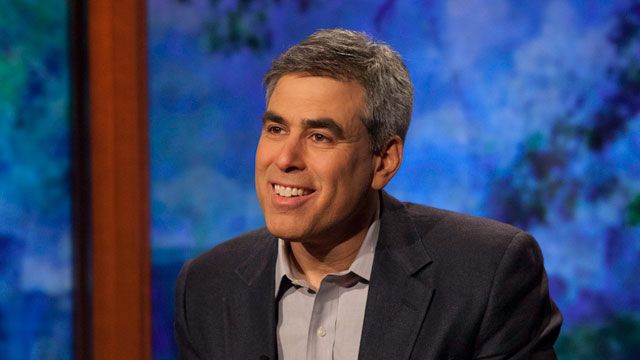
FRANCIS SCHAEFFER ANALYZES ART AND CULTURE PART 328 (The Replacements) Comparing song “Unsatisfied” to Stones’ song “Satisfaction” SCHAEFFER TAKES LOOK AT ECCLESIASTES AND SOLOMON’S LEARNING, LABOR AND LUXURIES Featured artist is Abraham Cruzvillegas

__

—-

The Replacements were an American rock band formed in Minneapolis, Minnesota in 1979. Initially a punk rock band, they are considered one of the pioneers of alternative rock. The band was composed of the guitarist and vocalist Paul Westerberg, guitarist Bob Stinson, bass guitarist Tommy Stinson and drummer Chris Mars for most of its career. Following several acclaimed albums, including Let It Be and Tim, Bob Stinson left the band in 1986, and Slim Dunlap joined as lead guitarist. Steve Foley replaced Mars in 1990. Towards the end of the band’s career, Westerberg exerted more control over the creative output. The group disbanded in 1991, with the members eventually pursuing various projects. A reunion was announced on October 3, 2012.[4] The band is referred to by their nickname “The ‘Mats” by fans, which originated as a truncation of “The Placemats,” a mispronunciation of their name.[5]

The Replacements
The Replacements (band).jpg

The Replacements performing in Toronto, 2013
Background information
Origin Minneapolis, Minnesota, U.S.
Genres
Years active
  • 1979–1991
  • 2006
  • 2012–2015
Labels
Associated acts
Website thereplacementsofficial.com
Past members

The Replacements’ music was influenced by rockartists such as the Rolling Stones, Faces, Big Star, Slade, Badfinger, Lou Reed and the Beatles as well as punk rock bands such as the Ramones, the New York Dolls, Dead Boys and the Clash. Unlike many of their underground contemporaries, the Replacements played “heart-on-the-sleeve”[6] rock songs that combined Westerberg’s “raw-throated adolescent howl”[7] with self-deprecating lyrics. The Replacements were a notoriously wayward live act, often performing under the influence of alcohol and playing fragments of covers instead of their own material.

Take a look at these lyrics from “Unsatisfied” from the Punk Rock group Television:

Look me in the eye
Then, tell me that I’m satisfied
Was you satisfied?
Look me in the eye
Then, tell me that I’m satisfied
Hey, are you satisfied?
And it goes so slowly on
Everything I’ve ever wanted
Tell me what’s wrong
Look me in the eye
And tell me that I’m satisfied
Were you satisfied?
Look me in the eye
Then, tell me that I’m satisfied
And now are you satisfied?
Everything goes
Well, anything goes all of the time
Everything you dream of
Is right in front of you
And everything is a lie
Look me in the eye
And…
Source: LyricFind

The Rolling Stones “Satisfaction” Live 1965 (Reelin’ In The Years Archives)

The Rolling Stones – (I Can’t Get No) Satisfaction @ Glastonbury [HQ]

The Rolling Stones – Satisfaction (LIVE) HD

I thought of this song “Unsatisfied” recently when I listened to a cassette tape of a sermon by Dan Jarrell of FELLOWSHIP BIBLE CHURCH in Little Rock entitled THE PLEASURE IS MINE on ECCLESIASTES 2:1-26 (4-21-96). It was hard for me to obtain a cassette tape player but I searched through my attic and found one hidden away.

As you know the Book of Ecclesiastes was written by King Solomon at the end of his life and he was discussing LIFE UNDER THE SUN. I think it is easy to compare your life to Solomon since you both are pursuing satisfaction in this life UNDER THE SUN without God in the picture. 

Francis Schaeffer noted that Solomon took a look at the meaning of life on the basis of human life standing alone between birth and death “under the sun.” This phrase UNDER THE SUN appears over and over in Ecclesiastes. The Christian Scholar Ravi Zacharias noted, “The key to understanding the Book of Ecclesiastes is the term UNDER THE SUN — What that literally means is you lock God out of a closed system and you are left with only this world of Time plus Chance plus matter.”

Here is a portion of the sermon by Dan Jarrell below:

You and I grew up with Mick Jagger singing “I CAN’T GET NO SATISFACTION.” You think of the lyrics of that song and what Jagger and the ROLLING STONES did. They summarized this philosophy that no matter how hard I tried, no matter how hard I seek it, no matter what I attempt to do, no matter which avenue I go down, there is no personal satisfaction in it for me. Personal satisfaction eludes me because I try and I try and I try but I can’t get no, no, no, no, hey, hey , hey. I just can’t get no satisfaction.

That is the idea  Mick Jagger and the rest of the ROLLING STONES and an entire generation that cut it’s teeth on rock and roll never got past the frustration of that song. We tried, and we tried and we tried. We tried DRUGS, and ALCOHOL. We tried SEX in a permissive moral society. We tried EDUCATION. We tried CORPORATE ACHIEVEMENT. We tried MATERIAL DECADENCE. We tried EMPIRE BUILDING. We have even tried HUMANISTIC SPIRITUALITY. We tried anything that would move us toward satisfaction, but the result of it all is no lasting satisfaction. Even our greatest pleasures lose their luster. Life is a vapor!!!! GONE WITH THE WIND!!!

I suppose the wisdom of ECCLESIASTES could have been the inspiration for the ROLLING STONES song that marked our generation if it were not for one significant detail. You see Solomon tried and he tried and he tried but the conclusion of his song was I FOUND THE KEY TO SATISFACTION. All the things he tried didn’t get him there but those experiences led him full circle to a conclusion that he began his reign with and apparently he ended with as well.

I really believe if MICK JAGGER or if any of us for that matter would listen to Solomon’s wisdom he will teach us a different song to sing, a new chorus that will mark a new generation.  Solomon will show us the key to satisfaction and he warns us of counterfeits. This is the way to go but beware of this that the vapors of life are there and pursue that and you will be CHASING THE WIND.

WHAT WAS SOLOMON’S ANSWER?  Ecclesiastes chapter 2 gives us that answer. This chapter is a discussion of life’s frustrations. Let me start with the conclusion of chapter 2 and then we will go back and look at life’s frustrating moves toward that conclusion. 

Ecclesiastes 2:24-25 New American Standard Bible (NASB)

24 There is nothing better for a man than to eat and drink and tell himself that his labor is good. This also I have seen that it is from the hand of God. 25 For who can eat and who can have enjoyment without Him?

There is some disagreement on the translation of this particular phrase “There is nothing better for a man” The NEW AMERICAN STANDARD BIBLE translates it as a comparison. The idea is if you think of all the good things that a man could enjoy there is nothing better for a man or a woman than to eat or to drink and tell themselves their labor is good. In other words, it is good for us. 

The Hebrew seems to indicate we may want to translate it this way. “There is nothing in a man to eat and drink and tell himself his labor is good.” In other words, IT IS IMPOSSIBLE FOR US, FOR THAT IS FROM THE HAND OF GOD. In other words, it is either a comparison or a simple statement. Either way this is the sense of the passage. 

Either way you translate it, it says nothing is so good for us other than a satisfied life but nothing is as impossible for us because it is not in us to be satisfied for who can eat and enjoy life without him?  The answer is NOBODY CAN!!!! So you come down to the idea that if one seeks satisfaction they will never find it. In fact, every pleasure will be fleeting and can not be sustained, BUT IF ONE SEEKS GOD THEN ONE FINDS SATISFACTION. That is my sermon in a nutshell. That is the conclusion. 

__

Just like Dan Jarrell I also loved the song I CAN’T GET NO SATISFACTION by the Rolling Stones.  Then in  1978 I heard the song “Dust in the Wind” by Kansas when it rose to #6 on the charts. That song told me that Kerry Livgren the writer of that song and a member of Kansas had come to the same conclusion that both Solomon and the ROLLING STONES had. I remember mentioning to my friends at church that we may soon see some members of Kansas become Christians because their search for the meaning of life had obviously come up empty even though they had risen from being an unknown band to the top of the music business and had all the wealth and fame that came with that. Furthermore, Solomon realized death comes to everyone and there must be something more.

Livgren wrote:

All we do, crumbles to the ground though we refuse to see, Dust in the Wind, All we are is dust in the wind, Don’t hang on, Nothing lasts forever but the Earth and Sky, It slips away, And all your money won’t another minute buy.”

Take a minute and compare Kerry Livgren’s words to that of the late British humanist H.J. Blackham:

On humanist assumptions, life leads to nothing, and every pretense that it does not is a deceit. If there is a bridge over a gorge which spans only half the distance and ends in mid-air, and if the bridge is crowded with human beings pressing on, one after the other they fall into the abyss. The bridge leads nowhere, and those who are pressing forward to cross it are going nowhere….It does not matter where they think they are going, what preparations for the journey they may have made, how much they may be enjoying it all. The objection merely points out objectively that such a situation is a model of futility“( H. J. Blackham, et al., Objections to Humanism (Riverside, Connecticut: Greenwood Press, 1967).

_______

Both Kerry Livgren and the bass player DAVE HOPE of Kansas became Christians eventually. Kerry Livgren first tried Eastern Religions and DAVE HOPE had to come out of a heavy drug addiction. I was shocked and elated to see their personal testimony on The 700 Club in 1981 and that same  interview can be seen on youtube today. Livgren lives in Topeka, Kansas today where he teaches “Diggers,” a Sunday school class at Topeka Bible Church. DAVE HOPE is the head of Worship, Evangelism and Outreach at Immanuel Anglican Church in Destin, Florida.

Those who reject God must accept three realities of their life UNDER THE SUN according to Solomon.  FIRST, death is the end and SECOND, chance and time are the only guiding forces in this life.  FINALLY, power reigns in this life and the scales are never balanced. In contrast, Dave Hope and Kerry Livgren believe death is not the end and the Christian can  face death and also confront the world knowing that it is not determined by chance and time alone and finally there is a judge who will balance the scales.

Solomon’s experiment was a search for meaning to life “UNDER THE SUN.” Then in last few words in the Book of Ecclesiastes he looks above the sun and brings God back into the picture: “The conclusion, when all has been heard, is: Fear God and keep His commandments, because this applies to every person. For God will bring every act to judgment, everything which is hidden, whether it is good or evil.”

Actually the answer to find meaning in life is found in putting your faith and trust in Jesus Christ. The Bible is true from cover to cover and can be trusted.

Francis Schaeffer noted:

I have lots of young people and older ones come to us from the ends of the earth. And as they come to us, they have gone to the end of this logically and they are not living in a romantic setting. They realize what the situation is. They can’t find any meaning to life. It’s the meaning to the black poetry. It’s the meaning of the black plays. It’s the meaning of all this. It’s the meaning of the words “punk rock.”

“They are the natural outcome of a change from a Christian World View to a Humanistic one…
The result is a relativistic value system. A lack of a final meaning to life — that’s first. Why does human life have any value at all, if that is all that reality is? Not only are you going to die individually, but the whole human race is going to die, someday. It may not take the falling of the atom bombs, but someday the world will grow too hot, too cold. That’s what we are told on this other final reality, and someday all you people not only will be individually dead, but the whole conscious life on this world will be dead, and nobody will see the birds fly. And there’s no meaning to life.

As you know, I don’t speak academically, shut off in some scholastic cubicle, as it were. I have lots of young people and older ones come to us from the ends of the earth. And as they come to us, they have gone to the end of this logically and they are not living in a romantic setting. They realize what the situation is. They can’t find any meaning to life. It’s the meaning to the black poetry. It’s the meaning of the black plays. It’s the meaning of all this. It’s the meaning of the words “punk rock.” And I must say, that on the basis of what they are being taught in school, that the final reality is only this material thing, they are not wrong. They’re right! On this other basis there is no meaning to life and not only is there no meaning to life, but there is no value system that is fixed, and we find that the law is based then only on a relativistic basis and that law becomes purely arbitrary.

OUTLINE OF ECCLESIATES BY SCHAEFFER

_______

William Lane Craig on Man’s predicament if God doesn’t exist

Read Waiting for Godot by Samuel Beckett. During this entire play two men carry on trivial conversation while waiting for a third man to arrive, who never does. Our lives are like that, Beckett is saying; we just kill time waiting—for what, we don’t know.

Thus, if there is no God, then life itself becomes meaningless. Man and the universe are without ultimate significance.

Francis Schaeffer looks at Nihilism of Solomon and the causes of it!!!

Notes on Ecclesiastes by Francis Schaeffer

Solomon is the author of Ecclesiastes and he is truly an universal man like Leonardo da Vinci.

Two men of the Renaissance stand above all others – Michelangelo and Leonardo da Vinci and it is in them that one can perhaps grasp a view of the ultimate conclusion of humanism for man. Michelangelo was unequaled as a sculptor in the Renaissance and arguably no one has ever matched his talents.

The other giant of the Renaissance period was Leonardo da Vinci – the perfect Renaissance Man, the man who could do almost anything and does it better than most anyone else. As an inventor, an engineer, an anatomist, an architect, an artist, a chemist, a mathematician, he was almost without equal. It was perhaps his mathematics that lead da Vinci to come to his understanding of the ultimate meaning of Humanism. Leonardo is generally accepted as the first modern mathematician. He not only knew mathematics abstractly but applied it in his Notebooks to all manner of engineering problems. He was one of the unique geniuses of history, and in his brilliance he perceived that beginning humanistically with mathematics one only had particulars. He understood that man beginning from himself would never be able to come to meaning on the basis of mathematics. And he knew that having only individual things, particulars, one never could come to universals or meaning and thus one only ends with mechanics. In this he saw ahead to where our generation has come: everything, including man, is the machine.

Leonardo da Vinci compares well to Solomon and they  both were universal men searching for the meaning in life. Solomon was searching for a meaning in the midst of the details of life. His struggle was to find the meaning of life. Not just plans in life. Anybody can find plans in life. A child can fill up his time with plans of building tomorrow’s sand castle when today’s has been washed away. There is  a difference between finding plans in life and purpose in life. Humanism since the Renaissance and onward has never found it and it has never found it since. Modern man has not found it and it has always got worse and darker in a very real way.

We have here the declaration of Solomon’s universality:

1 Kings 4:30-34

English Standard Version (ESV)

30 so that Solomon’s wisdom surpassed the wisdom of all the people of the east and all the wisdom of Egypt. 31 For he was wiser than all other men, wiser than Ethan the Ezrahite, and Heman, Calcol, and Darda, the sons of Mahol, and his fame was in all the surrounding nations. 32 He also spoke 3,000 proverbs, and his songs were 1,005. 33 He spoke of trees, from the cedar that is in Lebanon to the hyssop that grows out of the wall. He spoke also of beasts, and of birds, and of reptiles, and of fish. 34 And people of all nations came to hear the wisdom of Solomon, and from all the kings of the earth, who had heard of his wisdom.

_________________________

Here is the universal man and his genius. Solomon is the universal man with a empire at his disposal. Solomon had it all.

Ecclesiastes 1:3

English Standard Version (ESV)

What does man gain by all the toil
    at which he toils under the sun?

Schaeffer noted that Solomon took a look at the meaning of life on the basis of human life standing alone between birth and death “under the sun.” This phrase UNDER THE SUN appears over and over in Ecclesiastes.

(Added by me:The Christian Scholar Ravi Zacharias noted, “The key to understanding the Book of Ecclesiastes is the term UNDER THE SUN — What that literally means is you lock God out of a closed system and you are left with only this world of Time plus Chance plus matter.” )

Man is caught in the cycle

Ecclesiastes 1:1-7

English Standard Version (ESV)

All Is Vanity

The words of the Preacher, the son of David, king in Jerusalem.

Vanity of vanities, says the Preacher,
    vanity of vanities! All is vanity.
What does man gain by all the toil
    at which he toils under the sun?
A generation goes, and a generation comes,
    but the earth remains forever.
The sun rises, and the sun goes down,
    and hastens to the place where it rises.
The wind blows to the south
    and goes around to the north;
around and around goes the wind,
    and on its circuits the wind returns.
All streams run to the sea,
    but the sea is not full;
to the place where the streams flow,
    there they flow again.

All things are full of weariness;
    a man cannot utter it;
the eye is not satisfied with seeing,
    nor the ear filled with hearing.
What has been is what will be,
    and what has been done is what will be done,
    and there is nothing new under the sun.
10 Is there a thing of which it is said,
    “See, this is new”?
It has been already
    in the ages before us.

_____________

Solomon is showing a high degree of comprehension of evaporation and the results of it. Seeing also in reality nothing changes. There is change but always in a set framework and that is cycle. You can relate this to the concepts of modern man. Ecclesiastes is the only pessimistic book in the Bible and that is because of the place where Solomon limits himself. He limits himself to the question of human life, life under the sun between birth and death and the answers this would give.

Ecclesiastes 1:4

English Standard Version (ESV)

A generation goes, and a generation comes,
    but the earth remains forever.

___________________

Ecclesiastes 4:16

English Standard Version (ESV)

16 There was no end of all the people, all of whom he led. Yet those who come later will not rejoice in him. Surely this also is vanity and a striving after wind.

__________________________

In verses 1:4 and 4:16 Solomon places man in the cycle. He doesn’t place man outside of the cycle. Man doesn’t escape the cycle. Man is only cycle. Birth and death and youth and old age. With this in mind Solomon makes this statement.

Ecclesiastes 6:12

12 For who knows what is good for a man during his lifetime, during the few years of his futile life? He will spend them like a shadow. For who can tell a man what will be after him under the sun?

____________________

There is no doubt in my mind that Solomon had the same experience in his life that I had as a younger man. I remember standing by the sea and the moon arose and it was copper and beauty. Then the moon did not look like a flat dish but a globe or a sphere since it was close to the horizon. One could feel the global shape of the earth too. Then it occurred to me that I could contemplate the interplay of the spheres and I was exalted because I thought I can look upon them with all their power, might, and size, but they could contempt nothing and I felt as man as God. Then came upon me a horror of great darkness because it suddenly occurred to me that although I could contemplate them and they could contemplate nothing yet they would continue to turn in ongoing cycles when I saw no more forever and I was crushed.

THIS IS SOLOMON’S FEELING TOO. The universal man, Solomon, beyond our intelligence with an empire at his disposal with the opportunity of observation so he could recite these words here in Ecclesiastes 6:12, “For who knows what is good for a man during his lifetime, during the few years of his futile life? He will spend them like a shadow. For who can tell a man what will be after him under the sun?”

Lack of Satisfaction in life

In Ecclesiastes 1:8 he drives this home when he states, “All things are wearisome; Man is not able to tell itThe eye is not satisfied with seeing, Nor is the ear filled with hearing.” Solomon is stating here the fact that there is no final satisfaction because you don’t get to the end of the thing. THERE IS NO FINAL SATISFACTION. This is related to Leonardo da Vinci’s similar search for universals and then meaning in life. 

In Ecclesiastes 5:11 Solomon again pursues this theme, When good things increase, those who consume them increase. So what is the advantage to their owners except to look on?”  Doesn’t that sound modern? It is as modern as this evening. Solomon here is stating the fact there is no reaching completion in anything and this is the reason there is no final satisfaction. There is simply no place to stop. It is impossible when laying up wealth for oneself when to stop. It is impossible to have the satisfaction of completion. 

Pursuing Learning

Now let us look down the details of his searching.

In Ecclesiastes 1: 13a we have the details of the universal man’s procedure. “And I set my mind to seek and explore by wisdom concerning all that has been done under heaven.”

So like any sensible man the instrument that is used is INTELLECT, and RAITIONALITY, and LOGIC. It is to be noted that even men who despise these in their theories begin and use them or they could not speak. There is no other way to begin except in the way they which man is and that is rational and intellectual with movements of that is logical within him. As a Christian I must say gently in passing that is the way God made him.

So we find first of all Solomon turned to WISDOM and logic. Wisdom is not to be confused with knowledge. A man may have great knowledge and no wisdom. Wisdom is the use of rationality and logic. A man can be very wise and have limited knowledge. Here he turns to wisdom in all that implies and the total rationality of man.

Works of Men done Under the Sun. A look at Solomon’s labor and his luxuries

After wisdom Solomon comes to the great WORKS of men. Ecclesiastes 1:14,  “I have seen all the works which have been done under the sun, and behold, all is [p]vanity and striving after wind.” Solomon is the man with an empire at this disposal that speaks. This is the man who has the copper refineries in Ezion-geber. This is the man who made the stables across his empire. This is the man who built the temple in Jerusalem. This is the man who stands on the world trade routes. He is not a provincial. He knew what was happening on the Phonetician coast and he knew what was happening in Egypt. There is no doubt he already knew something of building. This is Solomon and he pursues the greatness of his own construction and his conclusion is VANITY AND VEXATION OF SPIRIT.

Ecclesiastes 2:18-20

18 Thus I hated all the fruit of my labor for which I had labored under the sun, for I must leave it to the man who will come after me. 19 And who knows whether he will be a wise man or a fool? Yet he will have control over all the fruit of my labor for which I have labored by acting wisely under the sun. This too is vanity. 20 Therefore I completely despaired of all the fruit of my labor for which I had labored under the sun.

He looked at the works of his hands, great and multiplied by his wealth and his position and he shrugged his shoulders.

Ecclesiastes 2:22-23

22 For what does a man get in all his labor and in his striving with which he labors under the sun? 23 Because all his days his task is painful and grievous; even at night his mind does not rest. This too is vanity.

Man can not rest and yet he is never done and yet the things which he builds will out live him. If one wants an ironical three phrases these are they. There is a Dutch saying, “The tailor makes many suits but one day he will make a suit that will outlast the tailor.”

God has put eternity in our hearts but we can not know the beginning or the end of the thing from a vantage point of UNDER THE SUN

Ecclesiastes 1:16-18

16 I said to myself, “Behold, I have magnified and increased wisdom more than all who were over Jerusalem before me; and my mind has observed a wealth of wisdom and knowledge.” 17 And I set my mind to know wisdom and to know madness and folly; I realized that this also is striving after wind.18 Because in much wisdom there is much grief, and increasing knowledge results in increasing pain.

Solomon points out that you can not know the beginnings or what follows:

Ecclesiastes 3:11

11 He has made everything  appropriate in its time. He has also set eternity in their heart, yet so that man will not find out the work which God has done from the beginning even to the end.

Ecclesiastes 1:11

11 There is no remembrance of earlier things; And also of the later things which will occur, There will be for them no remembrance among those who will come later still.

Ecclesiastes 2:16

16 For there is no lasting remembrance of the wise man as with the fool, inasmuch as in the coming days all will be forgotten. And how the wise man and the fool alike die!

You bring together here the factor of the beginning and you can’t know what immediately follows after your death and of course you can’t know the final ends. What do you do and the answer is to get drunk and this was not thought of in the RUBAIYAT OF OMAR KAHAYYAM:

Ecclesiastes 2:1-3

I said to myself, “Come now, I will test you with pleasure. So enjoy yourself.” And behold, it too was futility. I said of laughter, “It is madness,” and of pleasure, “What does it accomplish?” I explored with my mind how to stimulate my body with wine while my mind was guiding me wisely, and how to take hold of folly, until I could see what good there is for the sons of men to do under heaven the few years of their lives.

The Daughter of the Vine:

You know, my Friends, with what a brave Carouse
I made a Second Marriage in my house;
Divorced old barren Reason from my Bed,
And took the Daughter of the Vine to Spouse.

from the Rubaiyat of Omar Khayyam (Translation by Edward Fitzgerald)

A perfectly good philosophy coming out of Islam, but Solomon is not the first man that thought of it nor the last. In light of what has been presented by Solomon is the solution just to get intoxicated and black the think out? So many people have taken to alcohol and the dope which so often follows in our day. This approach is incomplete, temporary and immature. Papa Hemingway can find the champagne of Paris sufficient for a time, but one he left his youth he never found it sufficient again. He had a lifetime spent looking back to Paris and that champagne and never finding it enough. It is no solution and Solomon says so too.

——————

In 1978 I heard the song “Dust in the Wind” by Kansas when it rose to #6 on the charts. That song told me thatKerry Livgren the writer of that song and a member of Kansas had come to the same conclusion that Solomon had. I remember mentioning to my friends at church that we may soon see some members of Kansas become Christians because their search for the meaning of life had obviously come up empty even though they had risen from being an unknown band to the top of the music business and had all the wealth and fame that came with that. Furthermore, like Solomon and Coldplay, they realized death comes to everyone and “there must be something more.”

Livgren wrote:

“All we do, crumbles to the ground though we refuse to see, Dust in the Wind, All we are is dust in the wind, Don’t hang on, Nothing lasts forever but the Earth and Sky, It slips away, And all your money won’t another minute buy.”

Both Kerry Livgren and Dave Hope of Kansas became Christians eventually. Kerry Livgren first tried Eastern Religions and Dave Hope had to come out of a heavy drug addiction. I was shocked and elated to see their personal testimony on The 700 Club in 1981 and that same  interview can be seen on youtube today. Livgren lives in Topeka, Kansas today where he teaches “Diggers,” a Sunday school class at Topeka Bible Church. Hope is the head of Worship, Evangelism and Outreach at Immanuel Anglican Church in Destin, Florida.

The movie maker Woody Allen has embraced the nihilistic message of the song “Dust in the Wind” by Kansas. David Segal in his article, “Things are Looking Up for the Director Woody Allen. No?” (Washington Post, July 26, 2006), wrote, “Allen is evangelically passionate about a few subjects. None more so than the chilling emptiness of life…The 70-year-old writer and director has been musing about life, sex, work, death and his generally futile search for hope…the world according to Woody is so bereft of meaning, so godless and absurd, that the only proper response is to curl up on a sofa and howl for your mommy.”

The song “Dust in the Wind” recommends, “Don’t hang on.” Allen himself says, “It’s just an awful thing and in that context you’ve got to find an answer to the question: ‘Why go on?’ ”  It is ironic that Chris Martin the leader of Coldplay regards Woody Allen as his favorite director.

Lets sum up the final conclusions of these gentlemen:  Coldplay is still searching for that “something more.” Woody Allen has concluded the search is futile. Livgren and Hope of Kansas have become Christians and are involved in fulltime ministry. Solomon’s experiment was a search for meaning to life “under the sun.” Then in last few words in the Book of Ecclesiastes he looks above the sun and brings God back into the picture: “The conclusion, when all has been heard, is: Fear God and keep His commandments, because this applies to every person. For God will bring every act to judgment, everything which is hidden, whether it is good or evil.”

You can hear Kerry Livgren’s story from this youtube link:

(part 1 ten minutes)

(part 2 ten minutes)

Kansas – Dust In The Wind

Ecclesiastes 1

Published on Sep 4, 2012

Calvary Chapel Spring Valley | Sunday Evening | September 2, 2012 | Pastor Derek Neider

Featured artist is Abraham Cruzvillegas

_____________________

Related posts

_________

__

Open Letter #89 to Ricky Gervais on comparison of the Tony of AFTER LIFE to the Solomon of ECCLESIASTES, Kath: Do you believe in all that [evolution]. Tony: What? The proven fact that there is evolution? Yeah

—-

After Life #1 Trailer

—-

After Life 2 Trailer

—-

On Saturday April 18, 2020 at 6pm in London and noon in Arkansas, I had a chance to ask Ricky Gervais a question on his Twitter Live broadcast which was  “Is Tony a Nihilist?” At the 20:51 mark Ricky answers my question. Below is the video:

—-

(Above) Tony and Anne on the bench at the graveyard where their spouses are buried.

July 15, 2020 
Ricky Gervais 


Dear Ricky,  

This is the 89th day in a row that I have written another open letter to you to comment on some of your episodes of AFTER LIFE, and then evidence is given for the historical accuracy of the Bible!


In episode 2 of the second season of AFTER LIFE is the following discussion: 
Tony: We are chimps with brains the size of planets.No wonder we get drunk and try to kill each other. It is mental.

Matt: Always good to talk.

Tony: I was just explaining my new plan is to drink myself to death till I eventually implode in on my own evolution
Kath: Do you believe in all that [evolution].
Tony: What? The proven fact that there is evolution? Yeah.

P.Z. Myers comments:

In the popular You Tube video “Renowned Academics Speaking About God” Myers made the following statement:

Until somebody defines what they mean by “God” and what they mean by “exist” then the question “Does God exist?” is nonsensical. It gets you nowhere but I have to also agree with T.J.on the absence of evidence question. If you have something that is invisible, then it is indistinguishable from something that is nonexistent. Why should we accept that? In addition to being able to do experiments and observe and measure another thing a good scientist has to do is clearly state where he got his information from and if you are just daydreaming it out into existence that doesn’t count. That is not a good reason to believe in something. Maybe wishful thinking is a reason to believe in it but it is not a good or skeptical reason.

I WILL BE VERY CLEAR WHERE THE EVIDENCE I AM ABOUT TO PRESENT COMES FROM AND IT COMES FROM THE HISTORICAL RECORDS OF OUR ANCIENT MIDDLE EASTERN COUNTRIES AND THEY CONFIRM THAT THE BIBLE CAN BE TRUSTED TO BE ACCURATE. Let me further respond with the words of Francis Schaeffer from his book HE IS THERE AND HE IS NOT SILENT (the chapter is entitled, “Is Propositional Revelation Nonsense?”Of course, if the infinite uncreated Personal communicated to the finite created personal, he would not exhaust himself in his communication; but two things are clear here:1. Even communication between once created person and another is not exhaustive, but that does not mean that for that reason it is not true. 2. If the uncreated Personal really cared for the created personal, it could not be thought unexpected for him to tell the created personal things of a propositional nature; otherwise as a finite being the created personal would have numerous things he could not know if he just began with himself as a limited, finite reference point. In such a case, there is no intrinsic reason why the uncreated Personal could communicate some vaguely true things, but could not communicate propositional truth concerning the world surroundingthe created personal – for fun, let’s call that science. Or why he could not communicate propositional truth to the created personal concerning the sequence that followed the uncreated Personal making everything he made – let’s call that history. There is no reason we could think of why he could not tell these two types of propositional things truly. They would not be exhaustive; but could we think of any reason why they would not be true? The above is, of course, what the Bible claims for itself in regard to propositional revelation.DOES THE BIBLE ERR IN THE AREA OF SCIENCE AND HISTORY?The Bible is true from cover to cover and can be trusted. Charles Darwin himself longed for evidence to come forward from the area of  Biblical Archaeology  but so much has  advanced  since Darwin wrote these words in the 19th century! Here are some of the posts I have done in the past on the subject and if you like you could just google these subjects: 1. The Babylonian Chronicleof Nebuchadnezzars Siege of Jerusalem, 2. Hezekiah’s Siloam Tunnel Inscription.13. The Pilate Inscription14. Caiaphas Ossuary14 B Pontius Pilate Part 214c. Three greatest American Archaeologists moved to accept Bible’s accuracy through archaeology.

Ecclesiastes is a book that is truly a picture of how modern secular man looks at the world. The Christian Scholar Ravi Zacharias noted, “The key to understanding the Book of Ecclesiastes is the term UNDER THE SUN — What that literally means is you lock God out of a closed system and you are left with only this world of Time plus Chance plus matter.”

Francis Schaeffer comments on ECCLESIASTES: 


Ecclesiastes 9:11

11 Again I saw that under the sun the race is not to the swift, nor the battle to the strong, nor bread to the wise, nor riches to the intelligent, nor favor to those with knowledge, but time and chance happen to them all.

Chance rules. If a man starts out only from himself and works outward it must eventually if he is consistent seem so that only chance rules. Evolution is Chance plus matter plus time. 

Have you ever wondered why modern art looks so fragmented compared to the art from before Darwin’s theory of evolution became popular? Let’s take a look at Darwin’s own words and then look at Picasso’s most well known painting. (With this painting,  Les Demoiselles d’Avignonmodern art was born. Picasso painted it in 1907.)

CHARLES DARWIN’S AUTOBIOGRAPHY. Addendum. Written May 1st, 1881 [the year before his death].

I have said that in one respect my mind has changed during the last twenty or thirty years. Up to the age of thirty, or beyond it, poetry of many kinds…gave me great pleasure, and even as a schoolboy I took intense delight in Shakespeare, especially in the historical plays. I have also said that formerly pictures gave me considerable, and music very great delight. But now for many years I cannot endure to read a line of poetry: I have tried lately to read Shakespeare, and found it so intolerably dullthat it nauseated me. I have also almost lost my taste for pictures or music…This curious and lamentable loss of the higher æsthetic tastes is all the odder, as books on history, biographies, and travels (independently of any scientific facts which they may contain), and essays on all sorts of subjects interest me as much as ever they did. My mind seems to have become a kind of machine for grinding general laws out of large collections of facts, but why this should have caused the atrophy of that part of the brain alone, on which the higher tastes depend, I cannot conceive… The loss of these tastes is a loss of happiness…


A letter to Sir J. D. Hooker, June 17, 1868,
 which repeats to some extent what is given in the Autobiography:—

“I am glad you were at the Messiah, it is the one thing that I should like to hear again, but I dare say I should find my soul too dried up to appreciate it as in old days; and then I should feel very flat, for it is a horrid bore to feel as I constantly do, that I am a withered leaf for every subject except Science. It sometimes makes me hate Science…

Francis Schaeffer summarized:

So he is glad for science because his stomach bothers him, but on the other hand when I think of what it costs me I almost hate science. You can almost hear young Jean-Jacques Rousseau speaking here, he sees what the machine is going to do and he hates the machine and Darwin is constructing the machine and it leads as we have seen to his own loss of human values in the area of aesthetics, the area of art and also in the area of nature. This is what it has cost him. His theory has led him to this place. When you come to this then it seems to me that you understand man’s dilemma very, very well, to think of the origin of the theory of mechanical evolution bringing  Darwin himself to the place of this titanic tension.


Darwin, C. R.
 to Doedes, N. D., 2 Apr 1873

“It is impossible to answer your question briefly; and I am not sure that I could do so, even if I wrote at some length. But I may say that the impossibility of conceiving that this grand and wondrous universe, with our conscious selves, arose through chance, seems to me the chief argument for the existence of God; but whether this is an argument of real value, I have never been able to decide.”

Francis Schaeffer observed:

So he sees here exactly the same that I would labor and what Paul gives in Romans chapter one, and that is first this tremendous universe [and it’s form] and the second thing, the mannishness of man and the concept of this arising from chance is very difficult for him to come to accept and he is forced to leap into this, his own kind of Kierkegaardian leap, but he is forced to leap into this because of his presuppositions but when in reality the real world troubles him. He sees there is no third alternative. If you do not have the existence of God then you only have chance. In my own lectures I am constantly pointing out there are only two possibilities, either a personal God or this concept of the impersonal plus time plus chance and Darwin understood this . You will notice that he divides it into the same exact two points that Paul does in Romans chapter one into and that Carl Gustav Jung (1875-1961) will in the problem of existence, the external universe, and man and his consciousness. Paul points out there are these two steps that man is confronted with, what I would call two things in the real world. The universe and it’s form and I usually quote Jean Paul Sartre here, and Sartre says the basic philosophic problem is that something is there rather than nothing is there and I then I add at the point the very thing that Darwin feels and that is it isn’t a bare universe that is out there, it is an universe in a specific form. I always bring in Einstein and the uniformity of the form of the universe and that it is constructed as a well formulated word puzzle or you have Carl Gustav Jung who says two things cut across a man’s will that he can not truly be autonomous, the external world and what Carl Gustav Jung would call his “collected unconsciousness.” It is the thing that churns up out of man, the mannishness of man. Darwin understood way back here this is a real problem. So he says “the impossibility of conceiving that this grand and wondrous  universe,” part one, the real world, the external universe, and part two “with our conscious selves arose through chance” and then he goes on and says this is not “an argument of real value.” The only thing he has to put in its place is his faith in his own theory.

______________

Here below is the Romans passage that Schaeffer is referring to and verse 19 refers to what Schaeffer calls “the mannishness of man” and verse 20 refers to Schaeffer’s other point which is  “the universe and it’s form.”Romans 1:18-22Amplified Bible (AMP) 18 For God’s [holy] wrath and indignation are revealed from heaven against all ungodliness and unrighteousness of men, who in their wickedness repress and hinder the truth andmake it inoperative. 19 For that which is known about God is evident to them and made plain in their inner consciousness,because God [Himself] has shown it to them. 20 For ever since the creation of the world His invisible nature and attributes, that is, His eternal power and divinity, have been made intelligible and clearly discernible in and through the things that have been made (His handiworks). So [men] are without excuse [altogether without any defense or justification], 21 Because when they knew and recognized Him as God, they did not honor andglorify Him as God or give Him thanks. But instead they became futile andgodless in their thinking [with vain imaginings, foolish reasoning, and stupid speculations] and their senseless minds were darkened. 22 Claiming to be wise, they became fools [professing to be smart, they made simpletons of themselves].

—-

Please take a look at Francis Schaeffer’s 26 minute film How Should We Then Live – Episode 8 – The Age of Fragmentation that has been posted recently by Eduardo Miller This film starts with the impressionists and goes through the modern day artists of the 1960’s (the film was made in 1976). I would love to hear your reaction to it.Francis Schaeffer in Art and the Bible noted, “Many modern artists, it seems to me, have forgotten the value that art has in itself. Much modern art is far too intellectual to be great art. Many modern artists seem not to see the distinction between man and non-man, and it is a part of the lostness of modern man that they no longer see value in the work of art as a work of art.” 

Many modern artists are left in this point of desperation that Schaeffer points out and it reminds me of the despair that Solomon speaks of in Ecclesiastes.  Christian scholar Ravi Zacharias has noted, “The key to understanding the Book of Ecclesiastes is the term ‘under the sun.’ What that literally means is you lock God out of a closed system, and you are left with only this world of time plus chance plus matter.” THIS IS EXACT POINT SCHAEFFER SAYS SECULAR ARTISTS ARE PAINTING FROM TODAY BECAUSE THEY BELIEVED ARE A RESULT OF MINDLESS CHANCE.

File:Monet Poplars on the River Epte.jpg

Francis Schaeffer in the episode, “The Age of Fragmentation,” Episode 8 of HOW SHOULD WE THEN  LIVE? noted:MonetRenoirCamille PissarroSisleyDegas were following nature as it has been called in their painting they were impressionists.They painted only what their eyes brought them. But was there reality behind the light waves reaching their eyes? After 1885 Monet carried this to its conclusion and reality tended to become a dream. With impressionism the door was open for art to become the vehicle for modern thought. As reality became a dream, impressionism began to fall apart. These men Cezanne, Van Gogh, Gauguin, Seurat, all great post Impressionists felt the problem, felt the loss of meaning. They set out to solve the problem, to find the way back to reality, to the absolute behind the individual things, behind the particulars, ultimately they failed.I am not saying that these painters were always consciously painting their philosophy of life, but rather in their work as a whole their worldview was often reflected. Cezanne reduced nature to what he considered its basic geometric forms. In this he was searching for an universal which would tie all kinds of individual things in nature together, but this gave a broken fragmented appearance to his pictures.

In his bathers there is much freshness, much vitality. An absolute wonder in the balance of the picture as a whole, but he portrayed not only nature but also man himself in fragmented form. 
I want to stress that I am not minimizing these men as men. To read van Gogh’s letters is to weep for the pain of this sensitive man. Nor do I minimize their talent as painters. Their work often has great beauty indeed. But their art did become the vehicle of modern man’s view of fractured truth and light. As philosophy had moved from unity to fragmentation so did painting. In 1912Kaczynski wrote an article saying that in so far as the old harmony, that is an unity of knowledge have been lost, that only two possibilities remained: extreme abstraction or extreme naturalism, both he said were equal.

File:Les Demoiselles d'Avignon.jpg

With this painting modern art was born. Picasso painted it in 1907 and called it Les Demoiselles d’AvignonIt unites Cezzanne’s fragmentation with Gauguin’s concept of the noble savage using the form of the African mask which was popular with Parisian art circle of that time. In great art technique is united with worldview and the technique of fragmentation works well with the worldview of modern man. A view of a fragmented world and a fragmented man and a complete break with the art of the Renaissance which was founded on man’s humanist hopes.Here man is made to be less than man. Humanity is lost. Speaking of a part of Picasso’s private collection of his own works David Douglas Duncan says “Of course, not one of these pictures  was actually a portrait, but his prophecy of a ruined world.”But Picasso himself could not  live  with this loss of the human. When he was in love with Olga and later Jacqueline he did not consistently paint them in a fragmented way. At crucial  points of their relationship he painted them as they really were with all his genius, with all their humanity. When he was painting his own young children he did not use fragmented techniques and presentation. Picasso had many mistresses, but these were the two women he married. It is interesting that Jacqueline kept one of these paintings in her private sitting room. Duncan says of this lovely picture, “Hanging precariously on an old nail driven high on one of La Californie’s (Picasso and Jacqueline’s home) second floor sitting room walls, a portrait of Jacqueline Picasso reigns supreme. The room is her  domain…Painted in oil with charcoal, the picture has been at her side since shortly after she and the maestro met…She loves it and wants in nearby.” I want you to understand that I am not saying that gentleness and humanness is not present in modern art, but as the techniques of modern art advanced, humanity was increasingly fragmented–as we shall see, for example, with Marcel Duchamp….The opposite of fragmentation would be unity, and the old philosophic thinkers thought they could bring forth this unity from  the humanist base and then they gave this up.The modern thinking has accepted fragmentation as a defeat really, a defeat that human mentality beginning from itself can’t bring forth an unity of thought and of life. By unity what we mean is that which would include all of thought and all of life. It can achieved if indeed God has spoken and has not been silent,and in giving us the facts that man could not find for himself, there is an unity inside of which all that marvelous diversity then man can study, has an unified place whether it is knowledge, or in values, and in life._______________

Picasso and Olga Khokhlova

Their son Paulo (Paul) was born in 1921 (and died in 1975), influencing Picasso’s imagery to turn to mother and child themes.  Paul’s three children are Pablito (1949-1973), Marina (born in 1951), and Bernard (1959).  Some of the Picassos in this Saper Galleries exhibition are from Marina and Bernard’s  personal Picasso collection.

Pablo Picasso. Portrait of Paul Picasso as a Child.

Portrait of Paul Picasso as a Child. 1923. Oil on canvas.
Collection of Paul Picasso, Paris, France.

In 1917 ballerina Olga Khokhlova (1891-1955) met Picasso while the artist was designing the ballet “Parade” in Rome, to be performed by the Ballet Russe.  They married in the Russian Orthodox church in Paris in 1918 and lived a life of conflict.  She was of high society and enjoyed formal events while Picasso was more bohemian in his interests and pursuits.  Their son Paulo (Paul) was born in 1921 (and died in 1975), influencing Picasso’s imagery to turn to mother and child themes.  Paul’s three children are Pablito (1949-1973), Marina (born in 1951), and Bernard (1959).  Some of the Picassos in this Saper Galleries exhibition are from Marina and Bernard’s  personal Picasso collection.

https://i0.wp.com/www.sapergalleries.com/PicassoOlga.jpg
https://i0.wp.com/www.sapergalleries.com/PicassoOlgaPhoto.jpg

__________

A charming Picasso family portrait:

Picasso’s drawing, Portrait of Francoise, from 1946:

PICASSO COULD NOT LIVE WITH THE LOSS OF HUMANNESS AND HE REVERTED BACK ON OCCASION TO  PAINT THOSE HE LOVED WITH ALL HIS GENIUS AND WITH ALL THEIR HUMANNESS!!!! The answer to find meaning in life is found in putting your faith and trust in Jesus Christ. The Bible is true from cover to cover and can be trustedGOD HAS SPOKEN AND HAS NOT BEEN SILENT, BUT YOU CAN’T JUST CONTINUE TO LOOK FOR ANSWERS JUST “UNDER THE SUN.” 

Thank you again for your time and I know how busy you are.

Sincerely,

Everette Hatcher, everettehatcher@gmail.comhttp://www.thedailyhatch.org, cell ph 501-920-5733, 13900 Cottontail Lane, Alexander, AR 72002

PS: What is the meaning of life? Find it in the end of the open letter I wrote to you on April 23, 2020. 

Below is the workforce of THE TAMBURY GAZETTE 

Seen below is the third episode of AFTERLIFE (season 1) when Matt takes Tony to a comedy club with front row seats to cheer him up but it turns into disaster!!!

——

—-

Part 1 “Why have integrity in Godless Darwinian Universe where Might makes Right?”

Part 2 “My April 14, 2016 Letter to Ricky mentioned Book of Ecclesiastes and the Meaninglessness of Life”

Part 3 Letter about Brandon Burlsworth concerning suffering and pain and evil in the world.  “Why didn’t Jesus save her [from cancer]?” (Tony’s 10 year old nephew George in episode 2)

Part 4 Letter on Solomon on Death Tony in episode one, “It should be everyone’s moral duty to kill themselves.”

Part 5 Letter on subject of Learning in Ecclesiastes “I don’t read books of fiction but mainly science and philosophy”

Part 6 Letter on Luxuries in Ecclesiastes Part 6, The Music of AFTERLIFE (Part A)

Part 7 Letter on Labor in Ecclesiastes My Letter to Ricky on Easter in 2017 concerning Book of Ecclesiastes and the legacy of a person’s life work

Part 8 Letter on Liquor in Ecclesiastes Tony’s late wife Lisa told him, “Don’t get drunk all the time alright? It will only make you feel worse in the log run!”

Part 9 Letter on Laughter in Ecclesiastes , I said of laughter, “It is foolishness;” and of mirth, “What does it accomplish?” Ecclesiastes 2:2

Part 10 Final letter to Ricky on Ladies in Ecclesiastes “I gathered a chorus of singers to entertain me with song, and—most exquisite of all pleasures— voluptuous maidens for my bed…behold, all was vanity and a striving after wind, and there was nothing to be gained under the sun” Ecclesiastes 2:8-11.

Part 11 Letter about Daniel Stanhope and optimistic humanism  “If man has been kicked up out of that which is only impersonal by chance , then those things that make him man-hope of purpose and significance, love, motions of morality and rationality, beauty and verbal communication-are ultimately unfulfillable and thus meaningless.” (Francis Schaeffer)

Part 12 Letter on how pursuit of God is only way to get Satisfaction Dan Jarrell “[In Ecclesiastes] if one seeks satisfaction they will never find it. In fact, every pleasure will be fleeting and can not be sustained, BUT IF ONE SEEKS GOD THEN ONE FINDS SATISFACTION”

Part 13 Letter to Stephen Hawking on Solomon realizing he will die just as a dog will die “For men and animals both breathe the same air, and both die. So mankind has no real advantage over the beasts; what an absurdity!” Ecclesiastes

Part 14 Letter to Stephen Hawking on 3 conclusions of humanism and Bertrand Russell destruction of optimistic humanism. “That Man is the product of causes which had no prevision of the end they were achieving; that his origin, his growth, his hopes and fears, his loves and his beliefs, are but the outcome of accidental collocations of atoms—no philosophy which rejects them can hope to stand. Only within the scaffolding of these truths, only on the firm foundation of unyielding despair, can the soul’s habitation henceforth be safely built.”(Bertrand Russell, Free Man’s Worship)

Part 15 Letter to Stephen Hawking on Leonardo da Vinci and Solomon and Meaningless of life “I hate life. As far as I can see, what happens on earth is a bad business. It’s smoke—and spitting into the wind” Ecclesiastes Book of Ecclesiastes Part 15 “I hate life. As far as I can see, what happens on earth is a bad business. It’s smoke—and spitting into the wind” Ecclesiastes 2:17

Part 16 Letter to Stephen Hawking on Solomon’s longing for death but still fear of death and 5 conclusions of humanism on life UNDER THE SUN. Francis Schaeffer “Life is just a series of continual and unending cycles and man is stuck in the middle of the cycle. Youth, old age, Death. Does Solomon at this point embrace nihilism? Yes!!! He exclaims that the hates life (Ecclesiastes 2:17), he longs for death (4:2-3) Yet he stills has a fear of death (2:14-16)”

Mandeep Dhillon as Sandy on her first assignment in ‘After Life’. (Twitter)

A still from ‘After Life’ that captures the vibe of the Tambury Gazette. (Twitter)

Michael Scott of THE OFFICE (USA) with Ricky Gervais 

After Life on Netflix

After Life on Netflix stars Ricky Gervais as a bereaved husband (Image: Netflix)

—-

Psychiatrist played by Paul Kaye seen below.

The sandy beach walk

Tony Johnson with his dog Brandi seen below:

—-

Related posts:

Taking on Ark Times Bloggers on various issues Part I “Old Testament Bible Prophecy” includes the film TRUTH AND HISTORY and article ” Jane Roe became pro-life”

April 12, 2013 – 5:45 am

I have gone back and forth and back and forth with many liberals on the Arkansas Times Blog on many issues such as abortion, human rights, welfare, poverty, gun control  and issues dealing with popular culture. Here is another exchange I had with them a while back. My username at the Ark Times Blog is Saline […]By Everette Hatcher III | Posted in Biblical ArchaeologyFrancis SchaefferProlife | Edit|Comments (0)

John MacArthur on fulfilled prophecy from the Bible Part 2

August 8, 2013 – 1:28 am

I have posted many of the sermons by John MacArthur. He is a great bible teacher and this sermon below is another great message. His series on the Book of Proverbs was outstanding too.  I also have posted several of the visits MacArthur made to Larry King’s Show. One of two most popular posts I […]By Everette Hatcher III | Posted in Adrian RogersCurrent Events | Edit|Comments (0)

John MacArthur on fulfilled prophecy from the Bible Part 1

August 6, 2013 – 1:24 am

I have posted many of the sermons by John MacArthur. He is a great bible teacher and this sermon below is another great message. His series on the Book of Proverbs was outstanding too.  I also have posted several of the visits MacArthur made to Larry King’s Show. One of two most popular posts I […]By Everette Hatcher III | Posted in Adrian RogersCurrent Events |Tagged Bible Prophecyjohn macarthur | Edit|Comments (0)

John MacArthur: Fulfilled prophecy in the Bible? (Ezekiel 26-28 and the story of Tyre, video clips)

April 5, 2012 – 10:39 am

Prophecy–The Biblical Prophesy About Tyre.mp4 Uploaded by TruthIsLife7 on Dec 5, 2010 A short summary of the prophecy about Tyre and it’s precise fulfillment. Go to this link and watch the whole series for the amazing fulfillment from secular sources. http://www.youtube.com/watch?v=qvt4mDZUefo________________ John MacArthur on the amazing fulfilled prophecy on Tyre and how it was fulfilled […]By Everette Hatcher III | Posted in Biblical Archaeology | Edit|Comments (1)

John MacArthur on the Bible and Science (Part 2)

August 1, 2013 – 12:10 am

John MacArthur on the Bible and Science (Part 2) I have posted many of the sermons by John MacArthur. He is a great bible teacher and this sermon below is another great message. His series on the Book of Proverbs was outstanding too.  I also have posted several of the visits MacArthur made to Larry […]By Everette Hatcher III | Posted in Current Events | Edit|Comments (0)

John MacArthur on the Bible and Science (Part 1)

July 30, 2013 – 1:32 am

John MacArthur on the Bible and Science (Part 1) I have posted many of the sermons by John MacArthur. He is a great bible teacher and this sermon below is another great message. His series on the Book of Proverbs was outstanding too.  I also have posted several of the visits MacArthur made to Larry […]By Everette Hatcher III | Posted in Current Events | Edit|Comments (0)

Adrian Rogers: “Why I believe the Bible is true”

July 9, 2013 – 8:38 am

Adrian Rogers – How you can be certain the Bible is the word of God Great article by Adrian Rogers. What evidence is there that the Bible is in fact God’s Word? I want to give you five reasons to affirm the Bible is the Word of God. First, I believe the Bible is the […]By Everette Hatcher III | Posted in Adrian RogersBiblical Archaeology | Edit|Comments (0)

The Old Testament is Filled with Fulfilled Prophecy by Jim Wallace

June 24, 2013 – 9:47 am

Is there any evidence the Bible is true? Articles By PleaseConvinceMe Apologetics Radio The Old Testament is Filled with Fulfilled Prophecy Jim Wallace A Simple Litmus Test There are many ways to verify the reliability of scripture from both internal evidences of transmission and agreement, to external confirmation through archeology and science. But perhaps the […]By Everette Hatcher III | Posted in Biblical ArchaeologyCurrent Events | Edit|Comments (0)

Taking on Ark Times Bloggers on various issues Part M “Old Testament prophecy fulfilled?”Part 3(includes film DEATH BY SOMEONE’S CHOICE)

April 19, 2013 – 1:52 am

  I have gone back and forth and back and forth with many liberals on the Arkansas Times Blog on many issues such as abortion, human rights, welfare, poverty, gun control  and issues dealing with popular culture. Here is another exchange I had with them a while back. My username at the Ark Times Blog is […]By Everette Hatcher III | Posted in Francis SchaefferProlife | Edit|Comments (0)

Evidence for the Bible

March 27, 2013 – 9:43 pm

Here is some very convincing evidence that points to the view that the Bible is historically accurate. Archaeological and External Evidence for the Bible Archeology consistently confirms the Bible! Archaeology and the Old Testament Ebla tablets—discovered in 1970s in Northern Syria. Documents written on clay tablets from around 2300 B.C. demonstrate that personal and place […]By Everette Hatcher III | Posted in Biblical Archaeology | E

—-

If Death is the end then what is the point Kath asks below:

——

Kath: You are an atheist?

—-

Francis Schaeffer THE AGE of FRAGMENTATION

——-

—-

—-
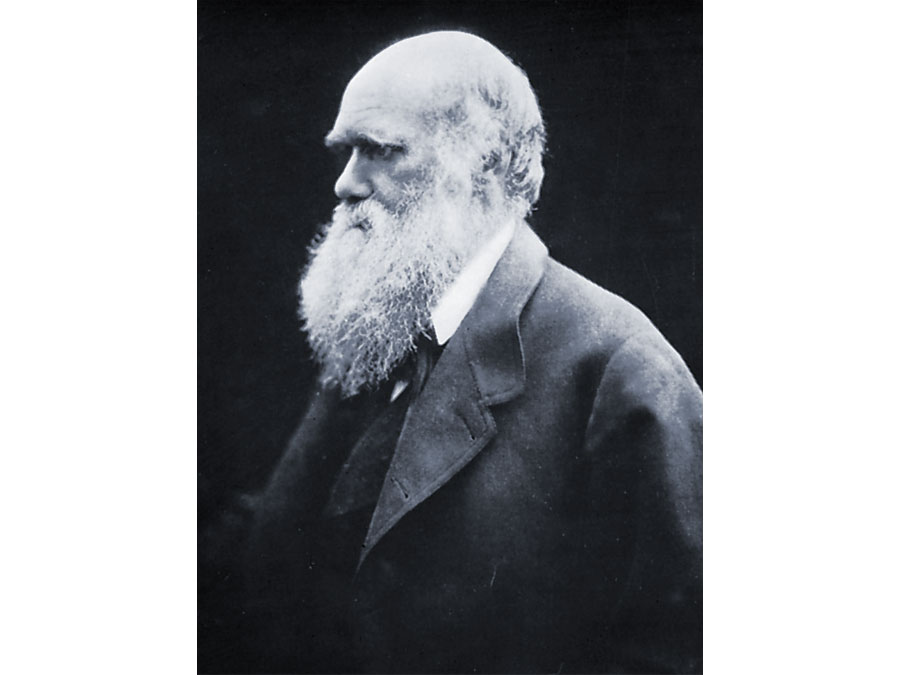
—-