icon The Daily Hatch

www.TheDailyHatch.org with Everette Hatcher

Monthly Archives: November 2018

Newer posts »

FRANCIS SCHAEFFER ANALYZES ART AND CULTURE “Two speeches from the Apostle Paul that apply to our society today!” Part 240 (Feature on artist Marc Quinn)

November 8, 2018 – 2:01 am

__

Paul, Apostle of Christ: Official Trailer | Now Playing

AFFIRM Films

Published on Jan 30, 2018

SUBSCRIBE 15K
Paul, Apostle of Christ: Official Trailer In Theaters March 23 http://www.paulmovie.com Facebook: facebook.com/PaulMovie/ Twitter: twitter.com/paulmovie Instagram: instagram.com/paulmovie For Group Sales Visit: http://paulmovie.com/groups Paul, Apostle of Christ is the story of two men. Luke, as a friend and physician, risks his life every time he ventures into the city of Rome to visit Paul, who is held captive in Nero’s darkest, bleakest prison cell. Before Paul’s death sentence can be enacted, Luke resolves to write another book, one that details the beginnings of “The Way” and the birth of what will come to be known as the church. But Nero is determined to rid Rome of Christians, and does not flinch from executing them in the grisliest ways possible. Bound in chains, Paul’s struggle is internal. He has survived so much—floggings, shipwreck, starvation, stoning, hunger and thirst, cold and exposure—yet as he waits for his appointment with death, he is haunted by the shadows of his past misdeeds. Alone in the dark, he wonders if he has been forgotten . . . and if he has the strength to finish well. Two men struggle against a determined emperor and the frailties of the human spirit in order to bequeath the Gospel of Jesus Christ to the world.
Image result for apostle paul movie 2018
1200 × 628Images may be subject to copyright

____

Image result for apostle paul

_______

Image result for francis schaeffer

In the 3rd video below the words of Paul are quoted from First Corinthians Chapter 15:1-24

1 Corinthians 15:1-24New American Standard Bible (NASB)

The Fact of Christ’s Resurrection

15 Now I make known to you, brethren, the gospel which I preached to you, which also you received, in which also you stand, 2 by which also you are saved, if you hold fast [a]the word which I preached to you, unless you believed in vain.

3 For I delivered to you [b]as of first importance what I also received, that Christ died for our sins according to the Scriptures, 4 and that He was buried, and that He was raised on the third day according to the Scriptures, 5 and that He appeared to Cephas, then to the twelve. 6 After that He appeared to more than five hundred brethren at one time, most of whom remain until now, but somehave fallen asleep; 7 then He appeared to [c]James, then to all the apostles;8 and last of all, as [d]to one untimely born, He appeared to me also. 9 For I amthe least of the apostles, [e]and not fit to be called an apostle, because Ipersecuted the church of God. 10 But by the grace of God I am what I am, and His grace toward me did not prove vain; but I labored even more than all of them, yet not I, but the grace of God with me. 11 Whether then it was I or they, so we preach and so you believed.

12 Now if Christ is preached, that He has been raised from the dead, how do some among you say that there is no resurrection of the dead? 13 But if there is no resurrection of the dead, not even Christ has been raised; 14 and if Christ has not been raised, then our preaching is vain, your faith also is vain.15 Moreover we are even found to be false witnesses of God, because we testified [f]against God that He raised [g]Christ, whom He did not raise, if in fact the dead are not raised. 16 For if the dead are not raised, not even Christ has been raised; 17 and if Christ has not been raised, your faith is worthless; you are still in your sins. 18 Then those also who have fallen asleep in Christ have perished. 19 If we have hoped in Christ in this life only, we are of all men most to be pitied.

The Order of Resurrection

20 But now Christ has been raised from the dead, the first fruits of those whoare asleep. 21 For since by a man came death, by a man also came the resurrection of the dead. 22 For as in Adam all die, so also in [h]Christ all will be made alive. 23 But each in his own order: Christ the first fruits, after that those who are Christ’s at His coming, 24 then comes the end, when He hands over the kingdom to the God and Father, when He has abolished all rule and all authority and power.

Dr. Francis Schaeffer – The Biblical flow of Truth & History (intro)

Francis Schaeffer – The Biblical Flow of History & Truth (1)

Dr. Francis Schaeffer – The Biblical Flow of Truth & History (part 2)

Uploaded on Oct 3, 2010

No description available.

_____________

Francis Schaeffer in his book HOW SHOULD WE THEN LIVE? noted:

The biblical message is truth and it demands a commitment to truth. It means that everything is not the result of the impersonal plus time plus chance, but that there is an infinite-personal God who is the Creator of the universe, the space-time continuum. We should not forget that this was what the founders of modern science built upon. It means the acceptance of Christ as Savior and Lord, and it means living under God’s revelation. Here there are morals, values, and meaning, including meaning for people, which are not just a result of statistical averages. This is neither a utilitarianism, nor a leap away from reason; it is the truth that gives a unity to all of knowledge and all of life. This second alternative means that individuals come to the place where they have this base, and they influence the consensus. Such Christians do not need to be a majority in order for this influence on society to occur.”

Dr. Francis Schaeffer – Episode 10 – Final Choices


At the 22:56 mark in the above video Francis Schaeffer said:

In about A.D. 60, a Jew who was a Christian and who also knew the Greek and Roman thinking of his day wrote a letter to those who lived in Rome. Previously, he had said the same things to Greek thinkers while speaking on Mars Hill in Athens. He had spoken with the Acropolis above him and the ancient marketplace below him, in the place wherethe thinkers of Athens met for discussion. A plaque marks that spot today and gives his talk in the common Greek spoken in his day. He was interrupted in his talk in Athens, but his Letter to the Romans gives us without interruption what he had to say to the thinking people of that period.

He said that the integration points of the Greek and Roman world view were not enough to answer the questions posed either by the existence of the universe and its form, or by the uniqueness of man. He said that they deserved judgment because they knew that they did not have an adequate answer to the questions raised by the universe or by the existence of man, and yet they refused, they suppressed, that which is the answer. To quote his letter:

The retribution of God is revealed from heaven against all ungodliness and unrighteousness of men, who suppress the truth in unrighteousness. Because that which is known of God is evident within them [that is, the uniqueness of man in contrast to non-man], for God made it evident to them. For the invisible things of him since the creation of the world are clearly seen, being perceived by the things that are made [that is, the existence of the universe and its form], even his eternal power and divinity; so that they are without excuse. [Roman 1:18ff.]

Here he is saying that the universe and its form and the mannishness of man speak the same truth that the Bible gives in greater detail. That this God exists and that he has not been silent but has spoken to people in the Bible and through Christ was the basis for the return to a more fully biblical Christianity in the days of the Reformers. It was a message of the possibility that people could return to God on the basis of the death of Christ alone. But with it came many other realities, including form and freedom in the culture and society built on that more biblical Christianity. The freedom brought forth was titanic, and yet, with the forms given in the Scripture, the freedoms did not lead to chaos. And it is this which can give us hope for the future. It is either this or an imposed order.

As I have said in the first chapter, people function on the basis of their world view more consistently than even they themselves may realize. The problem is not outward things. The problem is having, and then acting upon, the right world view — the world view which gives men and women the truth of what is.

__

The Bible and Archaeology – Is the Bible from God? (Kyle Butt 42 min)

You want some evidence that indicates that the Bible is true? Here is a good place to start and that is taking a closer look at the archaeology of the Old Testament times. Is the Bible historically accurate? Here are some of the posts I have done in the past on the subject: 1. The Babylonian Chronicle, of Nebuchadnezzars Siege of Jerusalem, 2. Hezekiah’s Siloam Tunnel Inscription. 3. Taylor Prism (Sennacherib Hexagonal Prism), 4. Biblical Cities Attested Archaeologically. 5. The Discovery of the Hittites, 6.Shishak Smiting His Captives, 7. Moabite Stone, 8. Black Obelisk of Shalmaneser III, 9A Verification of places in Gospel of John and Book of Acts., 9B Discovery of Ebla Tablets. 10. Cyrus Cylinder, 11. Puru “The lot of Yahali” 9th Century B.C.E., 12. The Uzziah Tablet Inscription, 13. The Pilate Inscription, 14. Caiaphas Ossuary, 14 B Pontius Pilate Part 2, 14c. Three greatest American Archaeologists moved to accept Bible’s accuracy through archaeology., 

_

Featured artist is Marc Quinn

Marc Quinn freezes his own blood in a self portrait with a difference

Karen Hardy
By Karen Hardy

Updated23 November 2017 — 3:42pmfirst published at12:40pm

  • Share on Facebook
  • Share on Twitter
  • Send via Email
Normal text sizeLarger text sizeVery large text size

Artist Marc Quinn, whose frozen head of blood is part of the National Gallery of Australia’s HyperReal exhibition, has shared video footage about how the head is made.

“It’s like artwork on life support,” he says, as technicians pour 5.6 litres of blood inside the silicon mould of Quinn’s own head.

Play Video
Marc Quinn's frozen head of blood

Play Video

03:23

Marc Quinn’s frozen head of blood

Playing in 4 …Don’t Play

The National Gallery of Australia presents Marc Quinn’s self portrait as part of the ‘Hyper Real’ exhibition.

Once frozen, the mould is removed and the sculpture is carefully placed inside “a sophisticated deep freeze”.

“If you unplugged it the head would turn into a pool of blood.”

British artist Marc Quinn is one of 32 artists featured in HyperReal.
British artist Marc Quinn is one of 32 artists featured in HyperReal.Photo: Jamila Toderas

Titled Self the work appears in the National Gallery’s exhibition that charts the evolution of hyperrealism from its inception in the early 1970s. The jawdropping display includes artworks that speak to hyperrealism’s focus on ultra-realistic representations of the human form, while simultaneously challenging the perceived boundaries of the genre through video and digital art, virtual reality, and – significantly – Quinn’s extraordinary brand of bio-art.

Since 1991, Quinn has made these self portraits, there are five of them, working with plaster and fibreglass and finally the silicone to get the hollow sculpture which he fills with his blood, extracted over the course of a year, a pint every six weeks. They are frozen and encased in a purpose built glass case, it’s own little refrigeration unit like some bizarre cryogenic experiment.

Quinn said the idea for the Self series came about through a frustration with the idea that, at the time, art was about art, trapped in a “formalist eddy”.

“I was interested in making art that was about real life … and I thought I would start with myself,” he said.

Marc Quinn Self 2011
Marc Quinn Self 2011Photo: Prudence Cuming Associates

“You explore the world from yourself outwards, that’s the arc of all my work.”

At Cambridge University he studied Rembrandt’s self portraits during his art history course and “thought it would be quite interesting to make a contemporary version of that”.

“I was thinking how can I make something that is more real than something made of metal or steel and I was thinking of freezing stuff and it just kind of came to me one morning.”

Jaklyn Babington, NGA senior curator of contemporary art, said Quinn’s Self exists simultaneously within the past, present and future.

“Quinn’s material of choice is blood, and by sculpting with biological matter, he contributes to our understanding of hyperrealism in a unique way.

CANBERRA LIFE

Hyper Real at the National Gallery of Australia: the review is in

Add to shortlist

“The sculpture sits in a limbo – simultaneously alive and dead, real and simulated. It is one of the most uncanny works of recent contemporary practice.”

Marc QuinnMarc Quinn

From Wikipedia, the free encyclopedia

Jump to navigationJump to search

For the American baseball player, see Mark Quinn.
Marc Quinn
Born Marc Quinn
8 January 1964 (age 54)
London, England
Nationality British
Education Robinson College, Cambridge
Known for Contemporary Art, Young British Artists
Awards 2004 – 4th Plinth Commission for Trafalgar Square, London

Marc Quinn (born 8 January 1964) is a British contemporary visual artist whose work includes sculpture, installation and painting. Quinn explores ‘what it is to be human in the world today’ through subjects including the body, genetics, identity, environment and the media. His work has used materials that vary widely, from blood, bread and flowers, to marble and stainless steel. Quinn has been the subject of solo exhibitions at Sir John Soane’s Museum, Tate, National Portrait Gallery, Fondation Beyeler, Fondazione Prada and South London Gallery.[1] The artist was a notable member of the Young British Artists movement, which included Sarah Lucas and Damien Hirst.

Quinn is internationally celebrated and was awarded the commission for the first edition of the Fourth Plinth in Trafalgar Square in 2004, for which he exhibited Alison Lapper Pregnant.[2] Quinn’s notorious frozen self-portrait series made of his own blood, Self (1991-present) was subject to a retrospective at Fondation Beyelerin 2009. [3]

Quinn lives and works in London.

Contents

 [hide] 

  • 1Life and career
  • 2Art practice
  • 3Works
    • 3.1“Self” (ongoing project)
    • 3.2Garden (2000)
    • 3.3Portrait of John E. Sulston (2001)
    • 3.4Alison Lapper, The Fourth Plinth (2005–2007)
    • 3.5Siren (2008)
    • 3.6The Toxic Sublime (2015)
  • 4Recent work
  • 5Collections
  • 6References
  • 7External links

Life and career[edit]

‘Planet’ by Marc Quinn in Singapore

Quinn was born in London in 1964 to a French mother and a British father.[4] He studied history and history of art at Robinson College, Cambridge. He spent his early years in Paris, where his father was a physicist working at the BIPM (Bureau International des Poids et Mesures). Quinn recalls an early fascination with the scientific instruments in his father’s laboratory, in particular atomic clocks.[5] He studied history and history of art at Robinson College, Cambridge.[6]

In the early 1990s, Quinn was the first artist to be represented by gallerist Jay Jopling. The artist had his first exhibition with Jopling in 1991, exhibiting Self (1991), a frozen self-portrait made out of nine pints of the artist’s blood.[7] In 1993 Jay Jopling founded White Cube at 44 Duke Street London. As well as Quinn, White Cube exhibited Lucian Freud, Gilbert & George, Antony Gormley, Mona Hatoum, Damien Hirst, Gary Hume, Runa Islam, Jake & Dinos Chapman, Tracey Emin, Harland Miller, Sam Taylor-Wood, Gavin Turk and Cerith Wyn Evans.[8]

During the 1990s, Quinn and several peers were identified for their radical approach to the making and experiencing of art. In 1992, the loosely affiliated group was called the ‘Young British Artists‘ by writer Michael Corris in Artforum, and included Cornelia Parker, Sarah Lucas, Damien Hirst, Rachel Whitereadand Tracey Emin.[9]

In 1995, Quinn was given a solo exhibition at Tate Britain where new sculptures were shown as part of the Art Now series.[10] In 1997 Quinn’s work Self(1991), was exhibited at the Royal Academy, London for the exhibition Sensation. Quinn’s Self, along with works by Sarah Lucas and Damien Hirst, were already distinguished amongst the British public. The exhibition received widespread media attention and had a record number of visitors for a contemporary art exhibition.[11] The exhibition then travelled to the Hamburger Bahnhof, Berlin, and to the Brooklyn Museum, New York.[12]

Quinn has exhibited exhibitions including Sonsbeek ’93, Arnhem (1993), Give and Take, Victoria and Albert Museum, London (2001), Statements 7, 50th Venice Biennale (2003) and Gwangju Biennale (2004).

Solo exhibitions include Tate Gallery, London (1995),[13] Kunstverein Hannover (1999), Fondazione Prada, Milan (2000),[14] Tate Liverpool (2002), Irish Museum of Modern Art, Dublin (2004), Groninger Museum, Groningen (2006) and MACRO, Rome (2006), DHC/ART Fondation pour l’art contemporain, Montréal (2007) and Fondation Beyeler, Basel (2009).

Art practice[edit]

Quinn’s sculpture, paintings and drawings often deal with the distanced relationship we have with our bodies, highlighting how the conflict between the “natural” and “cultural” has a grip on the contemporary psyche. In 1999, Quinn began a series of marble sculptures of amputees as a way of re-reading the aspirations of Greek and Roman statuary and their depictions of an idealised whole.

Works[edit]

“Self” (ongoing project)[edit]

“Self” is a frozen sculpture of the artist’s head made from 5 litres of his own blood, taken from his body over a period of five months, the first of which was made in 1991. Described by Quinn as a “frozen moment on lifesupport”, the work is carefully maintained in a refrigeration unit, reminding the viewer of the fragility of existence. Quinn makes a new version of Self every five years, each of which documents Quinn’s own aging and physical deterioration.

It was purchased by Charles Saatchi in 1991 for £13,000, who displayed it in the “Sensation” exhibit at the Royal Academy of Arts in 1997. There were rumors that the piece had melted, but Saatchi dispelled those rumors when he exhibited it at his new gallery in London in 2003.[15]

In April 2005 he sold it to Steven A. Cohen, the American hedge-fund manager of Point72 Asset Management (formerly S.A.C.), for $2.8 million.[16] Cohen displayed it at his hedge fund’s headquarters in Stamford, Connecticut.[17] The National Portrait Gallery in London acquired Self 2006, purchased through The Art Fund, the Henry Moore Foundation, Terry and Jean de Gunzburg.

Garden (2000)[edit]

‘Eternal Spring – Sunflowers II’, sunflowers kept chilled in liquid silicone oil

His next important piece in terms of his public profile was the frozen garden he made for Miuccia Prada in 2000, installed at Fondazione Prada in Milan, Italy. A whole garden full of plants which could never grow together kept in cryogenic suspension. In interview, Quinn explained how this worked, “When working with the frozen material, it’s like doing an experiment—different things come out of it. When you freeze something, it normally dries up. To avoid that, you have to stop the air from getting to the object. You can do this by casing it in silicone“.

Portrait of John E. Sulston (2001)[edit]

His portrait of John E. Sulston, who won the Nobel prize in 2002 for sequencing the human genome on the Human Genome Project,[18] is in the National Portrait Gallery. It consists of bacteria containing Sulston’s DNA in agar jelly. “The portrait was made by our standard methods for DNA cloning”, writes Sulston. “My DNA was broken randomly into segments, and treated so that they could be replicated in bacteria. The bacteria containing the DNA segments were spread out on agar jelly in the plate you see in the portrait.”[19]

Alison Lapper, The Fourth Plinth (2005–2007)[edit]

“Alison Lapper” Trafalgar Square, 2005-2007

Quinn has made a series of marble sculptures of people either born with limbs missing or who have had them amputated. This culminated in his 15-ton marble statue of Alison Lapper, a fellow artist born with no arms and severely shortened legs, which was displayed on the fourth plinth in Trafalgar Square, London from September 2005 until October 2007.[20](The Fourth Plinth is used for rotating displays of sculpture.) In Disability Studies Quarterly, Ann Millett writes, “The work has been highly criticized for capitalizing on the shock value of disability, as well as lauded for its progressive social values. Alison Lapper Pregnant and the controversy surrounding it showcase disability issues at the forefront of current debates in contemporary art”.[21]

A large reproduction of the sculpture was used as a central element of the 2012 Summer Paralympics opening ceremony.[22][23]

Siren (2008)[edit]

‘Myth (Sphinx)’, Chatsworth House

Since 2006, Marc Quinn has made numerous studies of the supermodel Kate Moss. In April 2006, Sphinx, a sculpture of Kate Moss by Quinn was revealed.[24] The sculpture shows Moss in a yoga position with her ankles and arms wrapped behind her ears. This body of work culminated in an exhibition at the Mary Boone Gallery in New York in May 2007. The sculpture is on permanent display in Folketeatret in Oslo, Norway.[25][26]

In August 2008, Quinn unveiled another sculpture of Kate Moss in solid 18-carat gold called Siren, which was exhibited at the British Museum in London. The life-size sculpture was promoted as “the largest gold statue since ancient Egypt“.

The Toxic Sublime (2015)[edit]

In 2015 Marc Quinn opened an exhibition of new work at White Cube Bermondsey, entitled The Toxic Sublime. It featured new bodies of work that explore the ecological impact of man on nature. ‘The Toxic Sublimes’ are distorted, three dimensional seascapes. Alongside these paintings, a new series of sculptures, cast in stainless steel, including one measuring over 7.5 meters long, form part of a body of work titled ‘Frozen Waves’. The sculptures originate from the core of shells, eroded by the endless action of waves.

Recent work[edit]

An orchid sculpture by Marc Quinn on the Seilersee in Iserlohn

In May 2010, Quinn revealed a series of new sculptures at London’s White Cube gallery including The Ecstatic Autogenesis of Pamela based on film actress Pamela Anderson and Chelsea Charms based on pornography model Chelsea Charms.[27]

Quinn’s new models include “Catman” (Dennis Avner (who has been tattooed to look like a cat) and transsexualpeople such as Thomas Beatie, Buck Angel, and Allanah Starr. Quinn’s portrait sculpture “Buck & Allanah” depicts the two nude, standing hand in hand, in a pose reminiscent of Adam and Eve. The sculpture of Thomas Beatie depicts him at full-term pregnancy, bowing his head and cradling his abdomen with two hands.

The exhibition also included a new series of flower paintings executed in reversed colour and two large-scale orchidsculptures in white painted bronze, installed in Hoxton Square, opposite the gallery.

In July 2015 Quinn opened a show titled The Toxic Sublime in the White Cube in Bermondsey, London.[28]

Collections[edit]

Quinn is represented in several museums across the world, including Tate Modern, in London, National Portrait Gallery, in London, Musée National d’Art Moderne, in Paris, Stedelijk Museum, in Amsterdam, Astrup Fearnley Museum of Modern Art, in Oslo, Berardo Collection Museum, in Lisbon, Musée d’art contemporain de Montréal, Museum of Modern Art, in New York, and Metropolitan Museum of Art, in New York.[29][30]

References[edit]

  1. Jump up^ “Solo Exhibitions”. Marc Quinn studio official website.
  2. Jump up^ “Two sculptures take fourth plinth”. BBC.
  3. Jump up^ “08. JUN 2009 – 19. JUL 2009, MARC QUINN, «SELFS» 1991–2006”. Fondation Beyeler.
  4. Jump up^ Saphora, Smith (13 August 2015). “Marc Quinn: Evolving as an Artist and Social Chronicler”. The New York Times.
  5. Jump up^ Elizabeth, Fullerton (5 December 2014). “Young British Artist Hits Middle Age: Catching up with Marc Quinn”. ARTNews.
  6. Jump up^ “Marc Quinn (1964-)”. British Council.
  7. Jump up^ “Marc Quinn, born 1964”. Tate.
  8. Jump up^ “Exhibitions”. White Cube.
  9. Jump up^ “Young British Artists (YBAS)”. Tate.
  10. Jump up^ “Marc Quinn, born 1964”. Tate.
  11. Jump up^ Vanessa, Thorpe (14 December 2008). “Record crowds for China art show”. The Guardian.
  12. Jump up^ “Sensation”. Damien Hirst official website.
  13. Jump up^ Tate. “Art Now: Marc Quinn: Emotional Detox – Exhibition at Tate Britain | Tate”. Tate. Retrieved 4 July 2017.
  14. Jump up^ “prada Foundation Marc Quinn Project”. 2000. Retrieved 5 July 2017.
  15. Jump up^ “Blood Sculpture ‘Melted'”. BBC News. Retrieved 25 June 2012.
  16. Jump up^ Colin, Gleadell (10 May 2005). “Saatchi Sells Another Key Work in His Collection”. ArtNews.
  17. Jump up^ Patrick, Radden Keefe (13 October 2014). “The Empire of Edge”. The New Yorker.
  18. Jump up^ Wellcome Trust Sanger Institute website (7 October 2002). Retrieved 2 January 2010.
  19. Jump up^ Jones, Jonathan. (22 September 2001). John Sulston, Marc Quinn (2001), The Guardian. Retrieved 2 January 2010.
  20. Jump up^ BBC report on Alison Lapper Pregnant
  21. Jump up^ Millett, Ann. (2008).“Sculpting Body Ideals: Alison Lapper Pregnant and the Public Display of Disability”, Disability Studies Quarterly, 28(3). Retrieved 2 January 2010.
  22. Jump up^ Gordon Rayner (29 August 2012). “Paralympics 2012: a stirring journey to enlightenment”. Daily Telegraph. Retrieved 1 September 2012.
  23. Jump up^ “Marc Quinn Alison Lapper Sculpture Thrills Paralympic Spectators”. ArtLyst. 30 August 2012. Retrieved 1 September 2012.
  24. Jump up^ BBC News. (13 April 2006). ‘Model Moss cast in bronze statue’. Retrieved 16 January 2010.
  25. Jump up^ “Theartnewspaper”
  26. Jump up^ http://theartnewspaper.com/articles/Collector-plans-sculpture-park-to-celebrate-women“%20/20923[permanent dead link]
  27. Jump up^ “Marc Quinn: Just Don’t Call It a Freak Show“. The Guardian, 10 May 2010.
  28. Jump up^ Marc Quinn review – He sells sea shells, Article by Jonathan Jones, The Guardian, 13 July 2015
  29. Jump up^ Marc Quinn at Artcyclopedia
  30. Jump up^ Marc Quinn at ArtFacts.net

External links[edit]

Wikimedia Commons has media related to Marc Quinn.
  • Official Marc Quinn website
show

  • v
  • t
  • e
Young British Artists
show

  • v
  • t
  • e
Disability art
Authority control
  • WorldCat Identities
  • BNF: cb13509298q (data)
  • GND: 121488608
  • ISNI: 0000 0000 8168 4125
  • LCCN: no98128088
  • RKD: 131660
  • SUDOC: 07586732X
  • ULAN: 500057409
  • VIAF: 96063389

Categories:

  • 1964 births
  • Living people
  • 20th-century British sculptors
  • British male sculptors
  • 21st-century sculptors
  • BioArtists
  • Alumni of Robinson College, Cambridge
  • English contemporary artists


_

_

Related posts:

FRANCIS SCHAEFFER ANALYZES ART AND CULTURE Part 53 THE BEATLES (Part E, Stg. Pepper’s and John Lennon’s search in 1967 for truth was through drugs, money, laughter, etc & similar to King Solomon’s, LOTS OF PICTURES OF JOHN AND CYNTHIA) (Feature on artist Yoko Ono)

April 2, 2015 – 7:05 am

The John Lennon and the Beatles really were on a long search for meaning and fulfillment in their lives  just like King Solomon did in the Book of Ecclesiastes. Solomon looked into learning (1:12-18, 2:12-17), laughter, ladies, luxuries, and liquor (2:1-2, 8, 10, 11), and labor (2:4-6, 18-20). He fount that without God in the picture all […]

By Everette Hatcher III | Posted in Current Events, Francis Schaeffer | Edit | Comments (0)

FRANCIS SCHAEFFER ANALYZES ART AND CULTURE Part 52 THE BEATLES (Part D, There is evidence that the Beatles may have been exposed to Francis Schaeffer!!!) (Feature on artist Anna Margaret Rose Freeman )

March 22, 2015 – 12:30 am

______________   George Harrison Swears & Insults Paul and Yoko Lucy in the Sky with Diamonds- The Beatles The Beatles:   I have dedicated several posts to this series on the Beatles and I don’t know when this series will end because Francis Schaeffer spent a lot of time listening to the Beatles and talking […]

By Everette Hatcher III | Posted in Francis Schaeffer | Tagged Anna Margaret Rose Freeman, George Harrison, John Lennon, Paul MacCartney, Ringo Starr, Stg. Pepper’s Lonely Hearts Club Band | Edit| Comments (0)

FRANCIS SCHAEFFER ANALYZES ART AND CULTURE Part 51 THE BEATLES (Part C, List of those on cover of Stg.Pepper’s ) (Feature on artist Raqib Shaw )

March 19, 2015 – 12:21 am

  The Beatles in a press conference after their Return from the USA Uploaded on Nov 29, 2010 The Beatles in a press conference after their Return from the USA. The Beatles:   I have dedicated several posts to this series on the Beatles and I don’t know when this series will end because Francis […]

By Everette Hatcher III | Posted in Francis Schaeffer | Tagged George Harrison, John Lennon, Paul MacCartney, Raqib Shaw, Ringo Starr | Edit | Comments (0)

FRANCIS SCHAEFFER ANALYZES ART AND CULTURE Part 50 THE BEATLES (Part B, The Psychedelic Music of the Beatles) (Feature on artist Peter Blake )

March 12, 2015 – 12:16 am

__________________   Beatles 1966 Last interview I have dedicated several posts to this series on the Beatles and I don’t know when this series will end because Francis Schaeffer spent a lot of time listening to the Beatles and talking and writing about them and their impact on the culture of the 1960’s. In this […]

By Everette Hatcher III | Posted in Francis Schaeffer | Tagged George Harrison, John Lennon, Paul MacCartney, Peter Blake, Ringo Starr | Edit | Comments (1)

FRANCIS SCHAEFFER ANALYZES ART AND CULTURE Part 49 THE BEATLES (Part A, The Meaning of Stg. Pepper’s Cover) (Feature on artist Mika Tajima)

March 5, 2015 – 4:47 am

_______________ The Beatles documentary || A Long and Winding Road || Episode 5 (This video discusses Stg. Pepper’s creation I have dedicated several posts to this series on the Beatles and I don’t know when this series will end because Francis Schaeffer spent a lot of time listening to the Beatles and talking and writing about […]

By Everette Hatcher III | Posted in Francis Schaeffer | Tagged Beatles, Mika Tajima | Edit|Comments (0)

FRANCIS SCHAEFFER ANALYZES ART AND CULTURE PART 48 “BLOW UP” by Michelangelo Antonioni makes Philosophic Statement (Feature on artist Nancy Holt)

February 26, 2015 – 4:57 am

_______________ Francis Schaeffer pictured below: _____________________ I have included the 27 minute  episode THE AGE OF NONREASON by Francis Schaeffer. In that video Schaeffer noted,  ” Sergeant Pepper’s Lonely Hearts Club Band…for a time it became the rallying cry for young people throughout the world. It expressed the essence of their lives, thoughts and their feelings.” How Should […]

By Everette Hatcher III | Posted in Francis Schaeffer | Tagged Blow Up, David Hemmings,Michelangelo Antonioni, Nancy Holt, Sarah Miles., Vanessa Redgrave | Edit |Comments (0)

FRANCIS SCHAEFFER ANALYZES ART AND CULTURE Part 47 Woody Allen and Professor Levy and the death of “Optimistic Humanism” from the movie CRIMES AND MISDEMEANORS Plus Charles Darwin’s comments too!!! (Feature on artist Rodney Graham)

February 19, 2015 – 5:33 am

Crimes and Misdemeanors: A Discussion: Part 1 ___________________________________ Today I will answer the simple question: IS IT POSSIBLE TO BE AN OPTIMISTIC SECULAR HUMANIST THAT DOES NOT BELIEVE IN GOD OR AN AFTERLIFE? This question has been around for a long time and you can go back to the 19th century and read this same […]

By Everette Hatcher III | Posted in Francis Schaeffer, Woody Allen | Tagged alan alda, Anjelica Huston, mia farrow, Sam Waterston | Edit | Comments (0)

FRANCIS SCHAEFFER ANALYZES ART AND CULTURE PART 46 Friedrich Nietzsche (Featured artist is Thomas Schütte)

February 12, 2015 – 5:00 am

____________________________________ Francis Schaeffer pictured below: __________ Francis Schaeffer has written extensively on art and culture spanning the last 2000years and here are some posts I have done on this subject before : Francis Schaeffer’s “How should we then live?” Video and outline of episode 10 “Final Choices” , episode 9 “The Age of Personal Peace and Affluence”, episode 8 […]

By Everette Hatcher III | Posted in Francis Schaeffer | Tagged Bertrand Russell, Friedrich Nietzsche,H.G. Wells, jean paul sartre, Kai Nielsen, Richard Taylor, Richard Wurmbrand, Thomas Schütte | Edit| Comments (0)

FRANCIS SCHAEFFER ANALYZES ART AND CULTURE Part 45 Woody Allen “Reason is Dead” (Feature on artists Allora & Calzadilla )

February 5, 2015 – 4:31 am

Love and Death [Woody Allen] – What if there is no God? [PL] ___________ _______________ How Should We then Live Episode 7 small (Age of Nonreason) #02 How Should We Then Live? (Promo Clip) Dr. Francis Schaeffer 10 Worldview and Truth Two Minute Warning: How Then Should We Live?: Francis Schaeffer at 100 Francis Schaeffer […]

By Everette Hatcher III | Posted in Francis Schaeffer, Woody Allen | Tagged Allora & Calzadilla |Edit| Comments (0)

FRANCIS SCHAEFFER ANALYZES ART AND CULTURE Part 44 The Book of Genesis (Featured artist is Trey McCarley )

January 29, 2015 – 5:01 am

___________________________________ Francis Schaeffer pictured below: ____________________________ Francis Schaeffer “BASIS FOR HUMAN DIGNITY” Whatever…HTTHR Dr. Francis schaeffer – The flow of Materialism(from Part 4 of Whatever happened to human race?) Dr. Francis Schaeffer – The Biblical flow of Truth & History (intro) Francis Schaeffer – The Biblical Flow of History & Truth (1) Dr. Francis Schaeffer […]

By Everette Hatcher III | Posted in Francis Schaeffer | Tagged Trey McCarley | Edit | Comments (0)


_

___

By Everette Hatcher III | Posted in Francis Schaeffer | Comments (0)

WOODY WEDNESDAY Fr. Robert Barron on Woody Allen’s Bleak Vision  AUGUST 29, 2014 BY MARK SHEA

November 7, 2018 – 2:20 am

__

Fr. Robert Barron on Woody Allen’s Bleak Vision

 AUGUST 29, 2014 BY MARK SHEA

 8 COMMENTS

16

            I was chagrined, but not entirely surprised, when I read Woody Allen’s recent ruminations on ultimate things.  To state it bluntly, Woody could not be any bleaker in regard to the issue of meaning in the universe.  We live, he said, in a godless and purposeless world.  The earth came into existence through mere chance and one day it, along with every work of art and cultural accomplishment, will be incinerated.  The universe as a whole will expand and cool until there is nothing left but the void.  Every hundred years or so, he continued, a coterie of human beings will be “flushed away” and another will replace it until it is similarly eliminated.  So why does he bother making films—roughly one every year?  Well, he explained, in order to distract us from the awful truth about the meaninglessness of everything, we need diversions, and this is the service that artists provide.  In some ways, low level entertainers are probably more socially useful than high-brow artistes, since the former manage to distract more people than the latter.  After delivering himself of this sunny appraisal, he quipped, “I hope everyone has a nice afternoon!”

Woody Allen’s perspective represents a limit-case of what philosopher Charles Taylor calls “the buffered self,” which is to say, an identity totally cut off from any connection to the transcendent.  On this reading, this world is all we’ve got, and any window to another more permanent mode of existence remains tightly shut.  Prior to the modern period, Taylor observes, the contrary idea of the “porous self” was in the ascendency.  This means a self that is, in various ways and under various circumstances, open to a dimension of existence that goes beyond ordinary experience.  If you consult the philosophers of antiquity and the Middle Ages, you would find a very frank acknowledgement that what Woody Allen observed about the physical world is largely true.  Plato, Aristotle, and Thomas Aquinas all knew that material objects come and go, that human beings inevitably pass away, that all of our great works of art will eventually cease to exist.  But those great thinkers wouldn’t have succumbed to Allen’s desperate nihilism.  Why?  Because they also believed that there were real links to a higher world available within ordinary experience, that certain clues within the world tip us off to the truth that there is more to reality than meets the eye.

One of these routes of access to the transcendent is beauty.  In Plato’s Symposium, we can read an exquisite speech by a woman named Diotima.  She describes the experience of seeing something truly beautiful—an object, a work of art, a lovely person, etc.—and she remarks that this experience carries with it a kind of aura, for it lifts the observer to a consideration of the Beautiful itself, the source of all particular beauty.  If you want to see a more modern version of Diotima’s speech, take a look at the evocative section of James Joyce’s Portrait of the Artist as a Young Man, wherein the narrator relates his encounter with a beautiful girl standing in the surf off the Dublin strand and concludes with the exclamation, “Oh heavenly God.”  John Paul II was standing in this same tradition when, in his wonderful letter to artists, he spoke of the artist’s vocation as mediating God through beauty.  To characterize artistic beauty as a mere distraction from the psychological oppression of nihilism is a tragic reductionism.

http://tpc.googlesyndication.com/safeframe/1-0-23/html/container.html

A second classical avenue to transcendence is morality, more precisely, the unconditioned demand of the good.  On purely nihilist grounds, it is exceptionally difficult to say why anyone should be morally upright.  If there are starving children in Africa, if there are people dying of AIDS in this country, if Christians are being systematically persecuted around the world…well who cares?  Every hundred years or so, a coterie of human beings is flushed away and the cold universe looks on with utter indifference.  So why not just eat, drink, and be merry and dull our sensitivities to innocent suffering and injustice as best we can?  In point of fact, the press of moral obligation itself links us to the transcendent, for it places us in the presence of a properly eternal value.  The violation of one person cries out, quite literally, to heaven for vengeance; and the performance of one truly noble moral act is a participation in the Good itself, the source of all particular goodness.  Indeed, even some of those who claim to be atheists and nihilists implicitly acknowledge this truth by the very passion of their moral commitments, a very clear case in point being Christopher Hitchens.  One can find a disturbing verification of Woody Allen’s rejection of this principle in two of his better films, Crimes and Misdemeanors from the 1980’s and Match Point from the 2000’s.  In both movies, men commit horrendous crimes, but after a relatively brief period of regret, they move on with their pampered lives.  No judgment comes, and all returns to normal.  So it goes in a flattened out world in which the moral link to transcendence has been severed.Perhaps this conviction is born of my affection for many of Woody Allen’s films, but I’m convinced that the great auteur doesn’t finally believe his own philosophy.  There are simply too many hints of beauty, truth, and goodness in his movies, and protest all he wants, these will speak of a reality that transcends this fleeting world.

DISCUSSING FILMS AND SPIRITUAL MATTERS
By Everette Hatcher III

“Existential subjects to me are still the only subjects worth dealing with. I don’t think that one can aim more deeply than at the so-called existential themes, the spiritual themes.” WOODY ALLEN

Evangelical Chuck Colson has observed that it used to be true that most Americans knew the Bible. Evangelists could simply call on them to repent and return. But today, most people lack understanding of biblical terms or concepts. Colson recommends that we first attempt to find common ground to engage people’s attention. That then may open a door to discuss spiritual matters.

Woody Allen’s 1989 movie, CRIMES AND MISDEMEANORS , is an excellent icebreaker concerning the need of God while making decisions in the area of personal morality. In this film, Allen attacks his own atheistic view of morality. Martin Landau plays a Jewish eye doctor named Judah Rosenthal raised by a religious father who always told him, “The eyes of God are always upon you.” However, Judah later concludes that God doesn’t exist. He has his mistress (played in the film by Anjelica Huston) murdered because she continually threatened to blow the whistle on his past questionable, probably illegal, business activities. She also attempted to break up Judah ‘s respectable marriage by going public with their two-year affair. Judah struggles with his conscience throughout the remainder of the movie. He continues to be haunted by his father’s words: “The eyes of God are always upon you.” This is a very scary phrase to a young boy, Judah observes. He often wondered how penetrating God’s eyes are.

Later in the film, Judah reflects on the conversation his religious father had with Judah ‘s unbelieving Aunt May at the dinner table many years ago:

“Come on Sol, open your eyes. Six million Jews burned to death by the Nazis, and they got away with it because might makes right,” says aunt May

Sol replies, “May, how did they get away with it?”

Judah asks, “If a man kills, then what?”

Sol responds to his son, “Then in one way or another he will be punished.”

Aunt May comments, “I say if he can do it and get away with it and he chooses not to be bothered by the ethics, then he is home free.”

Judah ‘s final conclusion was that might did make right. He observed that one day, because of this conclusion, he woke up and the cloud of guilt was gone. He was, as his aunt said, “home free.”

Woody Allen has exposed a weakness in his own humanistic view that God is not necessary as a basis for good ethics. There must be an enforcement factor in order to convince Judah not to resort to murder. Otherwise, it is fully to Judah ‘s advantage to remove this troublesome woman from his life.

The Bible tells us, “{God} has also set eternity in the hearts of men…” (Ecclesiastes 3:11 NIV). The secularist calls this an illusion, but the Bible tells us that the idea that we will survive the grave was planted in everyone’s heart by God Himself. Romans 1:19-21 tells us that God has instilled a conscience in everyone that points each of them to Him and tells them what is right and wrong (also Romans 2:14 -15).

It’s no wonder, then, that one of Allen’s fellow humanists would comment, “Certain moral truths — such as do not kill, do not steal, and do not lie — do have a special status of being not just ‘mere opinion’ but bulwarks of humanitarian action. I have no intention of saying, ‘I think Hitler was wrong.’ Hitler WAS wrong.” (Gloria Leitner, “A Perspective on Belief,” THE HUMANIST, May/June 1997, pp. 38-39)

Here Leitner is reasoning from her God-given conscience and not from humanist philosophy. It wasn’t long before she received criticism. Humanist Abigail Ann Martin responded, “Neither am I an advocate of Hitler; however, by whose criteria is he evil?” (THE HUMANIST, September/October 1997, p. 2)

The secularist can only give incomplete answers to these questions: How could you have convinced Judah not to kill? On what basis could you convince Judah it was wrong for him to murder?

As Christians, we would agree with Judah ‘s father that “The eyes of God are always upon us.” Proverbs 5:21 asserts, “For the ways of man are before the eyes of the Lord, and He ponders all his paths.” Revelation 20:12 states, “…And the dead were judged (sentenced) by what they had done (their whole way of feeling and acting, their aims and endeavors) in accordance with what was recorded in the books” (Amplified Version). The Bible is revealed truth from God. It is the basis for our morality. Judah inherited the Jewish ethical values of the Ten Commandments from his father, but, through years of life as a skeptic, his standards had been lowered. Finally, we discover that Judah ‘s secular version of morality does not resemble his father’s biblically-based morality.

Woody Allen’s CRIMES AND MISDEMEANORS forces unbelievers to grapple with the logical conclusions of a purely secular morality. It opens a door for Christians to find common ground with those whom they attempt to share Christ; we all have to deal with personal morality issues. However, the secularist has no basis for asserting that Judah is wrong.

Larry King actually mentioned on his show, LARRY KING LIVE, that Chuck Colson had discussed the movie CRIMES AND MISDEMEANORS with him. Colson asked King if life was just a Darwinian struggle where the ruthless come out on top. Colson continued, “When we do wrong, is that our only choice? Either live tormented by guilt, or else kill our conscience and live like beasts?” (BREAKPOINT COMMENTARY, “Finding Common Ground,” September 14, 1993)

Later, Colson noted that discussing the movie CRIMES AND MISDEMEANORS with King presented the perfect opportunity to tell him about Christ’s atoning work on the cross. Colson believes the Lord is working on Larry King. How about your neighbors? Is there a way you can use a movie to find common ground with your lost friends and then talk to them about spiritual matters?

(Caution: CRIMES AND MISDEMEANORS is rated PG-13. It does include some adult themes.)

Access this on the web at www.excelstillmore.com/html/beinformed/article1.shtml .(Originally published in December 2003 edition of Excel Magazine)


I have spent alot of time talking about Woody Allen films on this blog and looking at his worldview. He has a hopeless, meaningless, nihilistic worldview that believes we are going to turn to dust and there is no afterlife. Even though he has this view he has taken the opportunity to look at the weaknesses of his own secular view. I salute him for doing that. That is why I have returned to his work over and over and presented my own Christian worldview as an alternative.

My interest in Woody Allen is so great that I have a “Woody Wednesday” on my blog www.thedailyhatch.org every week. Also I have done over 30 posts on the historical characters mentioned in his film “Midnight in Paris.” (Salvador Dali, Ernest Hemingway,T.S.Elliot,  Cole Porter,Paul Gauguin,  Luis Bunuel, and Pablo Picasso were just a few of the characters.)

During the last 30 days here are the posts that have got the most hits on my blog on this subject of the “Meaning of Life”:

Francis Bacon: Humanist artist who believed life “is meaningless” (Part 1)

The movie “Les Miserables” and Francis Schaeffer
Danny Woodhead has found satisfaction in his Christian faith, Brady still looking for satisfaction despite 3 Super Bowl rings (Part 2)
2008 article on Woody Allen on the meaning of life

Nihilism can be seen in Woody Allen’s latest film “Midnight in Paris”

Dave Hope and Kerry Livgren of Kansas: Their story of deliverance from drugs jh16c

According to Woody Allen Life is meaningless (Woody Wednesday)

“Is God Enough?” Fellowship Bible sermon outline by Mark Henry July 8, 2012

Here are some posts on the movie “Midnight in Paris”:
The Characters referenced in Woody Allen’s “Midnight in Paris” (Part 15, Luis Bunuel)
The Characters referenced in Woody Allen’s “Midnight in Paris” (Part 9, Georges Braque)
The Characters referenced in Woody Allen’s “Midnight in Paris” (Part 5 Juan Belmonte)
The characters referenced in Woody Allen’s movie “Midnight in Paris” (Part 23,Adriana, fictional mistress of Picasso)
The characters referenced in Woody Allen’s “Midnight in Paris” (Part 11, Rodin)The Characters referenced in Woody Allen’s “Midnight in Paris” (Part 29, Pablo Picasso)

The Characters referenced in Woody Allen’s “Midnight in Paris” (Part 13, Amedeo Modigliani)

The Characters referenced in Woody Allen’s “Midnight in Paris” (Part 14, Henri Matisse)
Characters referenced in Woody Allen’s movie “Midnight in Paris” (Part 35, Recap of historical figures, Notre Dame Cathedral and Cult of Reason)

The Characters referenced in Woody Allen’s “Midnight in Paris” (Part 3 Scott and Zelda Fitzgerald)
The Characters referenced in Woody Allen’s “Midnight in Paris” (Part 10 Salvador Dali)

The characters referenced in Woody Allen’s “Midnight in Paris” (Part 12, Gabrielle “Coco” Chanel)

Related posts:

I love the movie “Midnight in Paris” by Woody Allen and I have done over 30 posts on the historical characters mentioned in the film. Take a look below:

All my posts on Woody Allen’s movie “Midnight in Paris” (Part 40), July 19, 2011 – 8:51 am

“Midnight in Paris” one of Woody Allen’s biggest movie hits in recent years, July 18, 2011 – 6:00 am

Woody Allen’s movie “Midnight in Paris” explores “golden age fallacy” (Part 39) July 17, 2011 – 5:59 am
(Part 38,Alcoholism and great writers and artists) July 16, 2011 – 5:47 am

Woody Allen’s search for God in the movie “Midnight in Paris”(Part 37) July 15, 2011 – 5:44 am

(Part 36, Alice B. Toklas, Woody Allen on the meaning of life) July 14, 2011 – 5:16 am

  (Part 35, Recap of historical figures, Notre Dame Cathedral and Cult of Reason)July 13, 2011 – 5:42 am

(Part 34, Simone de Beauvoir) July 12, 2011 – 6:03 am
(Part 33,Cezanne) July 11, 2011 – 6:15 am

(Part 32, Jean-Paul Sartre)July 10, 2011 – 5:53 am

(Part 31, Jean Cocteau) July 9, 2011 – 6:15 am
(Part 30, Albert Camus) July 8, 2011 – 5:48 am

 (Part 29, Pablo Picasso) July 7, 2011 – 4:33 am

(Part 28,Van Gogh) July 6, 2011 – 4:03 am

(Part 27, Man Ray) July 5, 2011 – 4:49 am

(Part 26,James Joyce) July 4, 2011 – 5:55 am

(Part 25, T.S.Elliot) July 3, 2011 – 4:46 am

(Part 24, Djuna Barnes) July 2, 2011 – 7:28 am

(Part 23,Adriana, fictional mistress of Picasso) July 1, 2011 – 12:28 am

(Part 22, Silvia Beach and the Shakespeare and Company Bookstore) June 30, 2011 – 12:58 am

(Part 21,Versailles and the French Revolution) June 29, 2011 – 5:34 am

(Part 20, King Louis XVI of France) June 28, 2011 – 5:44 am

(Part 19,Marie Antoinette) June 27, 2011 – 12:16 am

(Part 18, Claude Monet) June 26, 2011 – 5:41 am

(Part 17, J. M. W. Turner) June 25, 2011 – 5:44 am

(Part 16, Josephine Baker) June 24, 2011 – 5:18 am

(Part 15, Luis Bunuel) June 23, 2011 – 5:37 am

(Part 14, Henri Matisse) June 22, 2011 – 5:54 am

(Part 13, Amedeo Modigliani) June 21, 2011 – 5:29 am

(Part 12, Gabrielle “Coco” Chanel) June 20, 2011 – 5:58 am

(Part 11, Rodin)  June 19, 2011 – 9:50 am

(Part 10 Salvador Dali) June 18, 2011 – 2:57 pm

(Part 9, Georges Braque) June 18, 2011 – 2:55 pm

(Part 8, Henri Toulouse Lautrec) June 18, 2011 – 2:45 pm

(Part 7 Paul Gauguin) June 18, 2011 – 11:20 am

(Part 6 Gertrude Stein) June 16, 2011 – 11:01 am

(Part 5 Juan Belmonte) June 16, 2011 – 10:59 am

(Part 4 Ernest Heminingway) June 16, 2011 – 9:08 am

(Part 3 Scott and Zelda Fitzgerald) June 16, 2011 – 3:46 am

(Part 2 Cole Porter) June 15, 2011 – 7:40 am

(Part 1 William Faulkner) June 13, 2011 – 3:19 pm

I love Woody Allen’s latest movie “Midnight in Paris”, June 12, 2011 – 11:52 pm

“Woody Wednesday” A 2010 review of Woody Allen’s Annie Hall

February 27, 2013 – 7:34 am

I have spent alot of time talking about Woody Allen films on this blog and looking at his worldview. He has a hopeless, meaningless, nihilistic worldview that believes we are going to turn to dust and there is no afterlife. Even though he has this view he has taken the opportunity to look at the weaknesses of […]

By Everette Hatcher III | Posted in Current Events | Edit | Comments (0)

“Woody Wednesday” In 2009 interview Woody Allen talks about the lack of meaning of life and the allure of younger women

February 20, 2013 – 1:58 am

I have spent alot of time talking about Woody Allen films on this blog and looking at his worldview. He has a hopeless, meaningless, nihilistic worldview that believes we are going to turn to dust and there is no afterlife. Even though he has this view he has taken the opportunity to look at the weaknesses of […]

By Everette Hatcher III | Posted in Current Events | Edit | Comments (0)

Woody Allen video interview in France talk about making movies in Paris vs NY and other subjects like God, etc

February 20, 2013 – 12:49 am

Woody Allen video interview in France Related posts: “Woody Wednesdays” Woody Allen on God and Death June 6, 2012 – 6:00 am Good website on Woody Allen How can I believe in God when just last week I got my tongue caught in the roller of an electric typewriter? If Jesus Christ came back today and […]

By Everette Hatcher III | Posted in Current Events | Edit | Comments (0)

“Woody Wednesday” Woody Allen on the Emptiness of Life by Toby Simmons

February 13, 2013 – 7:48 am

I have spent alot of time talking about Woody Allen films on this blog and looking at his worldview. He has a hopeless, meaningless, nihilistic worldview that believes we are going to turn to dust and there is no afterlife. Even though he has this view he has taken the opportunity to look at the weaknesses of […]

By Everette Hatcher III | Posted in Current Events | Edit | Comments (0)

Woody Allen interviews Billy Graham (Woody Wednesday)

February 6, 2013 – 1:49 am

A surprisingly civil discussion between evangelical Billy Graham and agnostic comedian Woody Allen. Skip to 2:00 in the video to hear Graham discuss premarital sex, to 4:30 to hear him respond to Allen’s question about the worst sin and to 7:55 for the comparison between accepting Christ and taking LSD. ___________________ The Christian Post > […]

By Everette Hatcher III | Posted in Current Events | Edit | Comments (0)

“Woody Allen Wednesdays” can be seen on the www.thedailyhatch.org

February 4, 2013 – 4:54 am

Crimes and Misdemeanors: A Discussion: Part 1 If you like Woody Allen films as much as I do then join me every Wednesday for another look the man and his movies. Below are some of the posts from the past: “Woody Wednesday” How Allen’s film “Crimes and Misdemeanors makes the point that hell is necessary […]

By Everette Hatcher III | Posted in Current Events | Edit | Comments (0)

“Woody Wednesday” Great Documentary on Woody Allen

January 30, 2013 – 7:35 am

I really enjoyed this documentary on Woody Allen from PBS. Woody Allen: A Documentary, Part 1 Published on Mar 26, 2012 by NewVideoDigital Beginning with Allen’s childhood and his first professional gigs as a teen – furnishing jokes for comics and publicists – WOODY ALLEN: A DOCUMENTARY chronicles the trajectory and longevity of Allen’s career: […]

By Everette Hatcher III | Posted in Current Events | Edit | Comments (0)

“Woody Wednesday” Discussion of Woody Allen’s 1989 movie “Crimes and Misdemeanors” (Part 6)

January 23, 2013 – 12:36 am

Crimes and Misdemeanors: A Discussion: Part 3 Uploaded by camdiscussion on Sep 23, 2007 Part 3 of 3: ‘Is Woody Allen A Romantic Or A Realist?’ A discussion of Woody Allen’s 1989 movie, Crimes and Misdemeanors, perhaps his finest. By Anton Scamvougeras. http://camdiscussion.blogspot.com/ antons@mail.ubc.ca ______________ One of my favorite Woody Allen movies and I reviewed […]

By Everette Hatcher III | Posted in Uncategorized | Edit | Comments (0)

“Woody Wednesday” Discussion of Woody Allen’s 1989 movie “Crimes and Misdemeanors” (Part 5)

January 16, 2013 – 12:35 am

Crimes and Misdemeanors: A Discussion: Part 2 Uploaded by camdiscussion on Sep 23, 2007 Part 2 of 3: ‘What Does The Movie Tell Us About Ourselves?’ A discussion of Woody Allen’s 1989 movie, perhaps his finest. By Anton Scamvougeras. http://camdiscussion.blogspot.com/ antons@mail.ubc.ca _________________- One of my favorite Woody Allen movies and I reviewed it earlier but […]

By Everette Hatcher III | Posted in Current Events | Edit | Comments (0)

In 2009 interview Woody Allen talks about the lack of meaning of life and the allure of younger women

January 14, 2013 – 6:52 am

I have spent alot of time talking about Woody Allen films on this blog and looking at his worldview. He has a hopeless, meaningless, nihilistic worldview that believes we are going to turn to dust and there is no afterlife. Even though he has this view he has taken the opportunity to look at the weaknesses of […]

By Everette Hatcher III | Posted in Current Events | Edit | Comments (0)

“Woody Allen Wednesdays” can be seen on the www.thedailyhatch.org

January 13, 2013 – 4:55 am

Crimes and Misdemeanors: A Discussion: Part 1 If you like Woody Allen films as much as I do then join me every Wednesday for another look the man and his movies. Below are some of the posts from the past: “Woody Wednesday” How Allen’s film “Crimes and Misdemeanors makes the point that hell is necessary […]

By Everette Hatcher III | Posted in Current Events | Edit | Comments (0)

Woody Allen on the Emptiness of Life by Toby Simmons

January 10, 2013 – 2:48 pm

I have spent alot of time talking about Woody Allen films on this blog and looking at his worldview. He has a hopeless, meaningless, nihilistic worldview that believes we are going to turn to dust and there is no afterlife. Even though he has this view he has taken the opportunity to look at the weaknesses of […]

By Everette Hatcher III | Posted in Current Events | Edit | Comments (0)

“Woody Wednesday” Discussion of Woody Allen’s 1989 movie “Crimes and Misdemeanors” (Part 4)

January 9, 2013 – 12:32 am

Crimes and Misdemeanors: A Discussion: Part 1 Uploaded by camdiscussion on Sep 23, 2007 Part 1 of 3: ‘What Does Judah Believe?’ A discussion of Woody Allen’s 1989 movie, perhaps his finest. By Anton Scamvougeras. http://camdiscussion.blogspot.com/ antons@mail.ubc.ca _____________ One of my favorite films is this gem by Woody Allen “Crimes and Misdemeanors”: Film Review By […]

By Everette Hatcher III | Posted in Uncategorized | Edit | Comments (0)

“Woody Wednesday” Discussion of Woody Allen’s 1989 movie “Crimes and Misdemeanors” (Part 3)

January 2, 2013 – 12:30 am

Crimes and Misdemeanors: A Discussion: Part 3 Uploaded by camdiscussion on Sep 23, 2007 Part 3 of 3: ‘Is Woody Allen A Romantic Or A Realist?’ A discussion of Woody Allen’s 1989 movie, Crimes and Misdemeanors, perhaps his finest. By Anton Scamvougeras. http://camdiscussion.blogspot.com/ antons@mail.ubc.ca ______________ One of my favorite Woody Allen movies and I reviewed […]

By Everette Hatcher III | Posted in Current Events | Edit | Comments (0)

“Woody Wednesday” Discussion of Woody Allen’s 1989 movie “Crimes and Misdemeanors” (Part 2)

December 26, 2012 – 12:27 am

Crimes and Misdemeanors: A Discussion: Part 2 Uploaded by camdiscussion on Sep 23, 2007 Part 2 of 3: ‘What Does The Movie Tell Us About Ourselves?’ A discussion of Woody Allen’s 1989 movie, perhaps his finest. By Anton Scamvougeras. http://camdiscussion.blogspot.com/ antons@mail.ubc.ca _________________- One of my favorite Woody Allen movies and I reviewed it earlier but […]

By Everette Hatcher III | Posted in Current Events | Edit | Comments (0)

“Woody Wednesday” Discussion of Woody Allen’s 1989 movie “Crimes and Misdemeanors” (Part 1)

December 19, 2012 – 7:05 am

Crimes and Misdemeanors: A Discussion: Part 1 Uploaded by camdiscussion on Sep 23, 2007 Part 1 of 3: ‘What Does Judah Believe?’ A discussion of Woody Allen’s 1989 movie, perhaps his finest. By Anton Scamvougeras. http://camdiscussion.blogspot.com/ antons@mail.ubc.ca _____________ Today I am starting a discusssion of the movie “Crimes and Misdemeanors” by Woody Allen. This 1989 […]

By Everette Hatcher III | Posted in Current Events | Edit | Comments (0)


_

By Everette Hatcher III | Posted in Woody Allen | Comments (0)

RESPONDING TO HARRY KROTO’S BRILLIANT RENOWNED ACADEMICS!! Part 149 XX Bertrand Russell: Playboy Interview March 1963 on the possibility of nuclear war

November 6, 2018 – 1:07 am


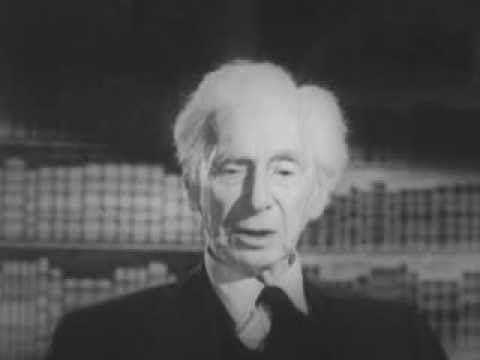
Sir Bertrand Russell

Image result for bertrand russell
644 × 362Images may be subject to copyright

On November 21, 2014 I received a letter from Nobel Laureate Harry Kroto and it said:

…Please click on this URL http://vimeo.com/26991975

and you will hear what far smarter people than I have to say on this matter. I agree with them.

Harry Kroto

__


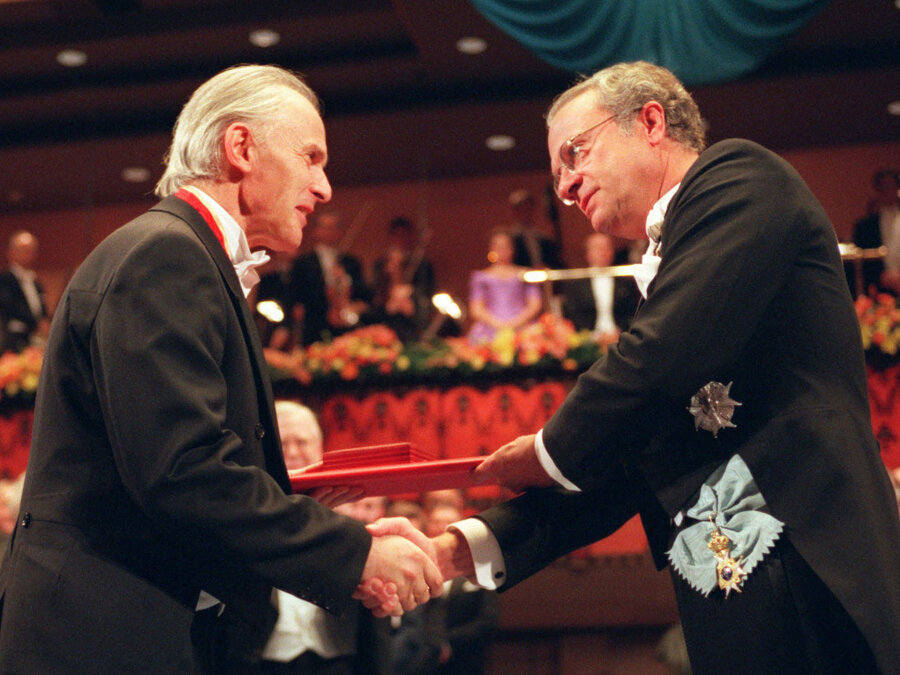
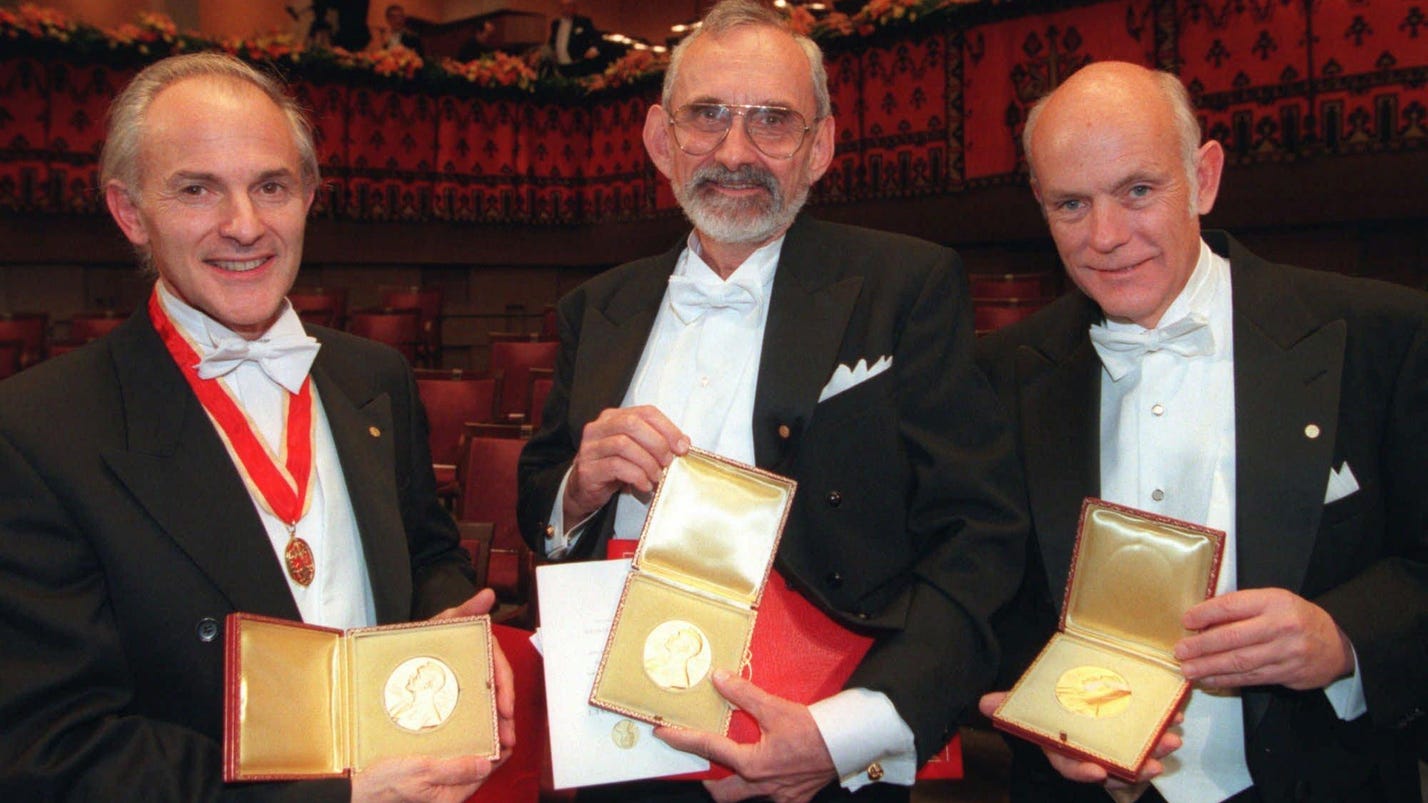
Harold W. Kroto (left) receives the Nobel Prize in chemistry from Swedish King Carl XVI Gustaf in Stockholm, in 1996.

Soren Andersson/AP

Image result for harry kroto nobel prize


__

Image result for harry kroto

I have attempted to respond to all of Dr. Kroto’s friends arguments and I have posted my responses one per week for over a year now. Here are some of my earlier posts:

Arif Ahmed, Sir David Attenborough, Mark Balaguer, Horace Barlow, Michael Bate, Patricia Churchland, Aaron Ciechanover, Noam Chomsky,Alan Dershowitz, Hubert Dreyfus, Bart Ehrman, Stephan Feuchtwang, David Friend,  Riccardo Giacconi, Ivar Giaever , Roy Glauber, Rebecca Goldstein, David J. Gross,  Brian Greene, Susan Greenfield, Stephen F Gudeman,  Alan Guth, Jonathan Haidt, Theodor W. Hänsch, Brian Harrison,  Hermann Hauser, Roald Hoffmann,  Bruce Hood, Herbert Huppert,  Gareth Stedman Jones, Steve Jones, Shelly Kagan, Michio Kaku,  Stuart Kauffman,  Lawrence Krauss, Harry Kroto, George Lakoff, Elizabeth Loftus,  Alan Macfarlane, Peter Millican, Marvin Minsky, Leonard Mlodinow,  Yujin Nagasawa, Alva Noe, Douglas Osheroff,  Jonathan Parry,  Saul Perlmutter, Herman Philipse,  Carolyn Porco, Robert M. Price, Lisa Randall, Lord Martin Rees,  Oliver Sacks, John Searle, Marcus du Sautoy, Simon Schaffer, J. L. Schellenberg,   Lee Silver,  Peter Singer,  Walter Sinnott-Armstrong, Ronald de Sousa, Victor Stenger, Barry Supple,   Leonard Susskind, Raymond Tallis, Neil deGrasse Tyson,  .Alexander Vilenkin, Sir John Walker, Frank Wilczek, Steven Weinberg, and  Lewis Wolpert,

_


In  the first video below in the 14th clip in this series are his words and I will be responding to them in the next few weeks since Sir Bertrand Russell is probably the most quoted skeptic of our time, unless it was someone like Carl Sagan or Antony Flew.  

50 Renowned Academics Speaking About God (Part 1)

Another 50 Renowned Academics Speaking About God (Part 2)

A Further 50 Renowned Academics Speaking About God (Part 3)

__

Quote from Bertrand Russell:

Q: Why are you not a Christian?

Russell: Because I see no evidence whatever for any of the Christian dogmas. I’ve examined all the stock arguments in favor of the existence of God, and none of them seem to me to be logically valid.

Q: Do you think there’s a practical reason for having a religious belief, for many people?

Russell: Well, there can’t be a practical reason for believing what isn’t true. That’s quite… at least, I rule it out as impossible. Either the thing is true, or it isn’t. If it is true, you should believe it, and if it isn’t, you shouldn’t. And if you can’t find out whether it’s true or whether it isn’t, you should suspend judgment. But you can’t… it seems to me a fundamental dishonesty and a fundamental treachery to intellectual integrity to hold a belief because you think it’s useful, and not because you think it’s true._


Image result for bertrand russell

_

Francis Schaeffer noted that Bertrand Russell was obsessed with the possibility that nuclear war may destroy the human race and for Russell that is the only value left that was worth anything. You can see from this extensive interview further below from 1965 that subject keeps coming up.

Schaeffer noted:

In his lecture at Acapulco, George Wald finished with only one final value. It was the same one with which English philosopher Bertrand Russell (1872-1970) was left. For Wald and Russell and for many other modern thinkers, the final value is the biological continuity of the human race. If this is the only final value, one is left wondering why this then has importance. 

Image result for bertrand russell
510 × 308Images may be subject to copyright


05-09-2009, 08:02 AM

Bertrand Russell: Playboy Interview

March 1963

If the long and stormy life of Bertrand Arthur William Russell can be said to possess any unifying thread, it is an enduring attitude of passionate skepticism, a lifelong refusal to accept any truth as immutable, any law as infallible or any faith as sacred. During the nine decades of his dedication to dissent, the erudite Earl Russell, a member of the House of Lords, has been awarded the Nobel Prize for literature in recognition of his pioneering research in mathematical philosophy and symbolic logic and honored with Britain’s distinguished Order of Merit for service to his country. But he has also been reviled as an enemy of religion and the flag; jailed for his ring-leadership of passively nonviolent demonstrations against nuclear armament; and variously extolled and execrated for his contentious convictions on free love, women’s suffrage, sex education, pacifism and preventive war.

As the London Times wrote last May on the occasion of Lord Russell’s 90th birthday, “For everyone who grasps even the outline of his contribution to mathematical logic, 10,000 wear the little button that he wears.” The button is the badge of the Campaign for Nuclear Disarmament, a militantly antimilitary movement of which he is the combative champion. As spiritual leader of the famed Committee of 100, a ban-the-bomb group that commands widespread popular support in Britain, he has also earned international eminence—and a brief prison term for civil disobedience—as the most articulate agitator for the controversial cause of unilateral disarmament. In October 1957, he published an open appeal to the great powers for a cessation of nuclear testing which won worldwide headlines when both Nikita Khrushchev and John Foster Dulles responded with public reassurance. Russell unexpectedly became an active intermediary between East and West at a critical moment during the recent Cuban crisis when Premier Khrushchev, in a personal reply to a cabled appeal from Russell, gave the first public indication of his intention to avoid rash action in responding to the American arms blockade.

After a conversation with Russell four decades before this momentous intervention, T.S. Eliot described how “his dry and passionate talk devoured the afternoon.” And so it did early this winter in a three-hour interview with Playboy at his secluded home in the mountains of North Wales. The venerable philosopher discussed his fears and hopes for the world with the luminous lucidity that inspired one reporter to write, “He is all flame and no ash. He has a brain that burns when you come near it.” Puffing determinedly on a blackened briar, cleaving the air with energetic gestures and pounding his chair arm periodically with an emphatic fist—his deeply creased, hawklike visage animated with intense conviction beneath the familiar shock of unruly white hair—he spoke with ominous eloquence and a final ray of hope of the nightmare of atomic annihilation that has haunted his waking thoughts and commandeered his considerable energies since the explosion of the first hydrogen bomb at Eniwetok. In October 1961—after a decade of mounting personal outcry against the unabating arms race—Russell warned his uneasy listeners at a ban-the-bomb rally in London’s Trafalgar Square that they would be lucky if any of them were alive in a year’s time. That year has passed, and nuclear holocaust has not yet overtaken us. We began our interview by reminding Lord Russell of this prophetic miscalculation.

PLAYBOY: Inasmuch as the world has successfully survived the year since your Trafalgar Square address, Lord Russell, would you care to revise your estimate of the likelihood of an atomic war? 
RUSSELL: I said at Trafalgar Square that we would need luck as things were, and we have been extremely lucky so far. But I don’t see any reason to be optimistic. I still feel that the human race may well become extinct before the end of the present century. Speaking as a mathematician, I should say that the odds are about three to one against survival. The risk of war by accident—an unintended war triggered by an explosive situation such as that in Cuba—remains and indeed grows greater all the time. For every day we continue to live, remain able to act, we must be profoundly grateful.

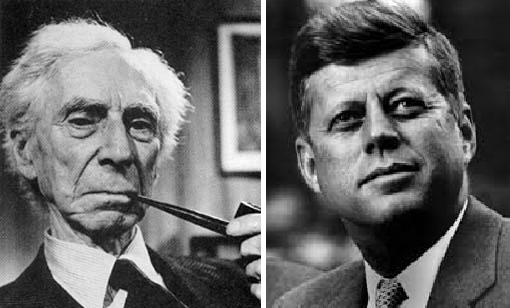
PLAYBOY: In a scathing reference to President Kennedy, Premier Khrushchev and Prime Minister Macmillan, you said in 1961 that “they are the wickedest people who have ever lived in the history of man, and it is our duty to do what we can against them.” Did you actually mean to say that Kennedy, Khrushchev and Macmillan are the worst of a gallery of villains which includes Hitler and Attila? 
RUSSELL: That was an arithmetical statement. Just as it is a wicked thing for one man to murder another, it is ten times as wicked to murder ten others, and 1,000,000 times more wicked to be responsible for the death of 1,000,000 men. No man in history has ever had the chance to murder on such a scale. In the past there have been long and bitter wars that caused appalling destruction, but at the end there were still people who could build again. Today we face the prospect of total obliteration in a single day. If mankind is to survive at all, intelligent people must learn to think and act in a less provocative manner than in former times.

PLAYBOY: Did not the avoidance of nuclear war over Cuba last October reassure you about the prudence and restraint of both Kennedy and Khrushchev? 
RUSSELL: There are signs that the politicians are beginning to realize the implications of the power they wield. But they have not fully assimilated them. So much seems to depend on very personal factors with politicians—even on what they have had for breakfast and whether they have indigestion when they have to make some important decision. What I am saying is this: When two great powers disagree about anything—it doesn’t matter what—they must find a way to settle it somehow by arbitration or by negotiation, not by war or threat of war. We know only too well that if you threaten someone with war and he doesn’t give way, then you may find yourself committed either to war or to backing down—and that choice has almost always been resolved by war. The Berlin crisis is a case in point. Here the Russians have been somewhat aggressive. They are trying to secure a change in the status of West Berlin by what amounts to threats of war. In the case of the Cuban crisis, on the other hand, Khrushchev has shown himself to be less belligerent than Kennedy, and in effect, at a crucial moment last October, was responsible for avoiding a war of nuclear devastation. Full credit must be given to him for this. He acted with great restraint in a crisis of the first magnitude. I hope it may presage similar responses should the Berlin question reach a comparable peak of crisis. The essential thing to understand is that no conceivable solution to any problem is worse than a nuclear war. It is necessary to realize before it is too late that any act—whatever its motive or rationale—is to be considered wicked if the consequence is an atomic holocaust.

PLAYBOY: What do you believe was the effect of your own personal intervention with Khrushchev—via your much publicized cable appealing for Russian prudence in responding to the American blockade of Cuba? 
RUSSELL: He carried out the promise he made in the letter replying to my cable — the promise to do nothing rash that would risk conflict. Within hours of my communication, 12 Soviet ships had turned back from their Cuban destination and Khrushchev had stopped further shipment. This left Cuba illegally blockaded in violation of international law. I believe that if a blockade is defensible when applied to Cuba, then the precedent can be applied also to Berlin and even to Britain, which is an advanced American nuclear base. America should remember the War of 1812 when the United States would not tolerate a British blockade. This is the very heart of what I have been saying for years: If nuclear bases are intolerable in Cuba, then they are intolerable anywhere in the world. Nuclear bases threaten the survival of mankind and the Cuban crisis has shown us how very close we are to annihilation.

PLAYBOY: Do you think the Russian position on Berlin may bring us closer still? 
RUSSELL: I can’t tell. There are all these different possibilities. There is intended war, resorted to when one side really thinks it can win. That is the least likely cause in this case. Then there is escalation—a little war growing into a big one. There is also threat and counterthreat, where each side hopes the other will give way—a course inevitably bringing such dangerous factors as prestige and national pride into play. But what is most likely in Berlin or elsewhere is simply war by misinterpretation. You may get a meteor or something like that showing up on a radar screen, and someone will press the button. There is no time to consider. It could so easily happen, in a day, in a moment….

PLAYBOY: Can you make any estimate of the destructive consequences of such a disastrous “misinterpretation”? 
RUSSELL: This is a question for experts, though all experts are biased. For an uninformed person such as me, it is very difficult to make any precise forecast. But I could give you a minimum estimate. I believe you must generally estimate that, at the very least, the price of nuclear war would be that half the population of both America and Russia, plus the whole of the population of Western Europe and Britain, would be wiped out.

PLAYBOY: You are the outspoken advocate of unilateral disarmament for Britain. Is this cause, as some critics have asserted, simply a means whereby Britain can escape the destruction of nuclear war through neutrality? 
RUSSELL: By no means. I regard it as a means to rid Britain of a very awkward commitment. Authorities feel that Britain adds absolutely nothing to the military strength of America, that America would be better off without us. I agree. It would not weaken NATO one atom. What I want to see is a concerted attempt by the neutral nations to achieve an accommodation between East and West. The influence of the neutrals would be immensely strengthened if Britain were one of them. We have a very long political experience. With the exception of the Scandinavian countries, we are perhaps more sensible politically than others. We could play a very great part. But I don’t see much chance that we shall. In any case, I do not advocate unilateralism solely for Britain; I see it as a step toward wider disarmament. Fear is very much a part of the incentive for armaments. If the fear were removed, each side would be more reasonable. I think that if the West were to voluntarily divest itself of nuclear weapons as a token of its peaceful intentions, this would greatly impress the Russians. They would then feel that they had nothing to fear and that they could enormously reduce their own expenditure on armaments. They would spend their money on consumer goods instead.

PLAYBOY: Does your disarmament plan involve also the abandonment of conventional weapons? 
RUSSELL: We should not interfere with conventional weapons unless there is general nuclear disarmament. We would then discard all but a very small number of conventional weapons.

PLAYBOY: It has been said by some political observers that this eventuality will remain entirely academic as long as the U.S. continues to insist on inspection without disarmament, and the U.S.S.R. on disarmament without inspection. Would you agree or disagree with this appraisal? 
RUSSELL: It does rather look that way. One side says that America is to blame for the stalemate and the other says Russia is responsible. You get the same sort of explanation in both countries. That, roughly speaking, has been the excuse for not reaching agreement. But I think the true explanation lies deeper than that. Neither side wants agreement, and they have to have something plausible to disagree about. You must realize that in both countries there are political and military factions—lobbies, if you like—which exert powerful pressure for extremist policies. On both sides they consist of people with interests in armaments and all the apparatus of preparation for war. There are military commanders in power on both sides, and their vested interest is in exercising that power. In fact, military people carry much more weight in the making of policy than does public opinion.

PLAYBOY: Would you say, then, considering this climate of opinion within, as well as between Russia and America, that there is any realistic hope of drafting a global disarmament plan which would be acceptable to both sides? 
RUSSELL: No, not at present. There is no possibility of attaining or sustaining general disarmament until East-West tension has lessened.

PLAYBOY: In 1957 you wrote in The New Statesman, the liberal British journal, an appeal to Premier Khrushchev and then-President Eisenhower for just such a lessening of world tension, to which both the Russian leader and John Foster Dulles responded with public reassurances. Six years have elapsed since then without a noticeable decline in global strife and division. At this critical moment in the cold war, would you care to make another such appeal—perhaps suggesting specific ways in which relations can be improved—to Khrushchev and President Kennedy? 
RUSSELL: If I were to make another such appeal, I would have to begin by repeating what I said in 1957. I should say simply to both men: “You seem anxious to destroy the world, to create vast misery and total destruction. All this preparation for war is childish—and suicidal. If you could only begin to tolerate each other, you would be perfectly happy.” I would go on to suggest that the overridingly urgent necessity is to come to an agreement. This is far more important than the precise form the agreement takes. Last summer, I sent a message to Moscow in which I expressed the wish that in all negotiations between East and West, the negotiator for the Communists should begin by saying that the universal victory of capitalism would be less disastrous than nuclear war. At the same time, the Western spokesman should start by admitting that the universal victory of communism would be preferable to the destruction of mankind. In a speech last July, Khrushchev singled out this suggestion and said that he entirely agreed. I was rather pleased. I would suggest further that the likelihood of war could be lessened immeasurably if both sides would place a great deal more emphasis on the ghastly destructiveness of war. At present, the major organs of publicity in both East and West are inclined to make the public believe that nuclear war wouldn’t really be so terrible after all. That is why I am opposed to Civil Defense preparations. They are diabolical inventions calculated to tell lies and to deceive. Everyone who knows anything knows that. People may think themselves safe in their deep shelters—but they will roast. Governments must be made to give up the habit of lying in order to persuade people to die quietly. Thirdly, I would strongly recommend an agreement on both sides not to teach that the other side is wicked. For Americans, communism is the Devil; for the Russians, capitalism is the Devil. The truth is that neither is wickeder than the other. They are both wicked.

PLAYBOY: Do you see no difference between the moral positions of America and Russia?
RUSSELL: No. They both have abominable systems. I am inclined to prefer the American system, but only because it is more allied with what I am used to. If I had been born a Russian, probably I should prefer the Russian system.


PLAYBOY: Have your views changed since you returned from a trip to Russia in 1920 to write one of the earliest and sharpest criticisms of the Soviet regime? 
RUSSELL: I still take exactly the same view. Up to the time of Stalin’s death, it was really quite horrible. Since then, I think, things have not been quite so bad—though I still don’t care for the Soviet system at all. I just don’t happen to like the American system either. The Americans tell you they stand for freedom: What they mean is that you must be quite willing to perish in order to be free in hell. In Russia, they punish you if you espouse capitalism. In America, they punish you if you espouse communism. What is the difference? But it is not worthwhile for us to go into the question of whether Russia or America has the better system. There are merits and demerits on both sides. The only important matter is to find some way of compromise between them, which will avoid war. At present, each has an entirely melodramatic conception of the other, and I think that the Russian government, in particular, encourages this view by not allowing Russian tourists to visit other countries except in small, organized groups. The same applies to Western visitors in Russia. This is a great pity. But there also seems to be some kind of fear in the West that if you get to know Communists, you will begin to admire them and finally be won over by them. Not a bit of it. There is simply no other way to achieve on each side an understanding of the real nature of the other. I would suggest—finally, in my appeal—that both Kennedy and Khrushchev consider the merits of a plan whereby the neutral nations would appoint a small, permanent body, well-informed on world affairs, which would investigate every dispute—such as Berlin, India or Cuba—and give an objective opinion on how it should be settled without favoritism to either side. Each settlement proposed, of course, would have to be, as far as possible, one that will be acceptable to the public in the countries concerned. Perhaps it could then develop into a permanent organization composed of three different groups: East, West and neutral. It seems to me that whichever side was more reasonable would win the support of the neutrals. Something of this sort has got to develop if we hope to reduce the deadly danger of war. Such a three-pronged body could be a step toward truly effective world government. But of course, that won’t be for a long time. At first, it would be merely advisory. After a century of advice, it might begin to acquire a measure of authority.

PLAYBOY: Do you consider it possible to strive for these same aims without waiting a century—by relying on the UN? 
RUSSELL: It can’t be done through the UN as it is now, because the UN does not embrace China. Its exclusion is a colossal stupidity. The veto also is an absurdity. Some nations, moreover, are very much more powerful and more populous than others—and you cannot invest a little nation with the same weight as a big nation. What you will have to do is divide the world into regions. You might, for example, have North America as one group, Europe as another, Russia as a third, China as a fourth and so on. You would have to work it out with a view to making it more or less equally balanced in population. And the various regions ought to be so constituted that their internal relations would be foremost in importance, and their relations to the outer world secondary in importance. I would leave each region complete autonomy for its own affairs. The world government would become involved only when there were contests or disputes with other regions. We shall not long survive without some such system.

PLAYBOY: On a personal level, why have you chosen to adopt a policy of civil disobedience as a means of promoting the cause of peace? 
RUSSELL: Purely to get attention. All the major organs of publicity are against us. It was extremely difficult to get any attention at all until we resorted to it. I have no views in principle, either for or against civil disobedience. It has always been practiced at different times and places. With me, it is purely a practical question of whether to do it or not, a method of propaganda.

PLAYBOY: Do you feel that the authorities have the moral right to prosecute and imprison those involved in such non-violent demonstrations for peace—as they have done to you? 
RUSSELL: I have no right to complain about being punished for breaking the law. I complain only if I am not permitted to break it. I recognize that if you go outside the law you cannot complain if it is made a little awkward for you, but it ought to be possible to do so. If I suddenly took it into my head that I wanted to assassinate the Queen, then I should expect to be punished. You do that sort of thing with full foreknowledge of the consequences.

PLAYBOY: You were recently threatened with expulsion from the Labor Party for urging Western representatives to attend a Moscow “peace” conference and state their views. Aren’t such occasions always turned to their own advantage by the Communists? 
RUSSELL: On the contrary. Members of the Committee of 100 went to Moscow last summer and presented their point of view very effectively indeed. They got publicity both inside and outside of Russia. Many Americans have asked me why I don’t preach my ideas to the Russians as well as to the West, and the answer is that I do. Certainly the Russians disagree with much of what I say, but I have found it just as easy—or as difficult—to get publicity for my views in the Soviet press as in the English press. The question I wondered about was whether they had bowdlerized what I said. I have taken the trouble to get translations of what they printed and found that they have been completely faithful. They have not altered a scrap.

PLAYBOY: In addition to disseminating your views personally on both sides of the Iron Curtain, you were the initiator of a series of peace conferences, of which the first was held in Pugwash, Nova Scotia, between groups of scientists from East and West. What positive results do you feel have emerged from these symposia? 
RUSSELL: They have made a contribution toward informed opinion. For one thing, as a result, the test-ban negotiations came closer to success than they would otherwise have done. But the Pugwash meetings have not accomplished as much as one might have hoped. There was a lack of effective publicity. The public won’t listen to informed opinion. They want uninformed opinion.

PLAYBOY: In 1916, you were fined £100 by the Lord Mayor of London for circulating a pacifistic leaflet, which the law deemed “likely to prejudice the recruiting and discipline of His Majesty’s Forces.” Your intention, you said then, “was to procure, if possible, a change in the law, or failing that, to secure a change in administration.” Does the same intention motivate your current antiwar activities? 
RUSSELL: Yes. Then, of course, I was defending the rights of conscientious objectors in World War I. I do not wholly share their views, but I felt, and still feel, that one should respect their convictions. They believe what I do not believe—that it is wicked to take part in any war, however righteous the cause. I supported the war against Hitler, and have become a pacifist today largely because of the destructiveness of nuclear warfare.

PLAYBOY: Speaking of this destructiveness in psychological terms, you have said that Kennedy, Khrushchev, Macmillan and other world leaders “are driven irrationally into policies which may effectively end human life on this planet.” If their judgment is so irrational, Lord Russell, what is the point of your attempts to dissuade them on rational grounds from precipitating war? 
RUSSELL: Even less is to be gained, I think, by the West’s continuing campaign to remake the East in its own image, and by the East’s unrelenting efforts to do the same with the West. The change—an attitude of mutual concession in an atmosphere of mutual understanding—has got to come from within each country, from within each individual. It is to this end that I persist in my appeal. When I made such an appeal to Khrushchev last October, the Cuban situation had changed the world situation very much for the worse, and I felt it necessary to make a last effort. His response was more than I could have hoped for. He showed himself willing to act cautiously in very difficult circumstances. I will continue to maintain communication with him for the purpose of facilitating a settlement.

PLAYBOY: Even if a nuclear conflict is avoided, either through disarmament or a continuing balance of power, Khrushchev has made it clear that future “peaceful coexistence” will entail a continuing nonviolent struggle on the ideological front and an intensified campaign of economic competition, which he predicts will eventually “bury” us. What posture do you feel the West should adopt in combating this threat? 
RUSSELL: Neither of these conflicting interests will be arbitrated equitably and amicably until we have a truly representative and authoritative world government. In the absence of one, it will be a tug-of-war, a question of who is stronger. A continued program of economic and educational aid to underdeveloped countries, meanwhile, would be a significant means of strengthening the Western position. It would be better, of course, if such aid were given cooperatively by both sides, but I don’t think that this is practical politics at the moment. In either case, it should be given not on cold war grounds, but simply because these people need help.

PLAYBOY: Do you share the apprehension of leading sociologists and economists concerning the implications of unchecked population growth in such overcrowded and underproductive areas as Africa, China, India and parts of Latin America? 
RUSSELL: The population problem has, in my opinion, been rather exaggerated. It can be solved by adequate birth control, and I don’t think that Catholic objections will prevent the increasingly widespread use and acceptance of contraceptives. After all, Roman Catholics represent only a small segment of the world’s population. India and China are the really big problem areas, and both are inclined to favor birth control.

PLAYBOY: Do you agree with many historians and social scientists who foresee that the next century will witness “an inexorable economic and societal evolution,” as one commentator has expressed it, “from the tradition of individual enterprise to the psychology of mass man?” 
RUSSELL: Societies comprised of small farmers, merchants and artisans will soon be anachronistic. Almost everybody is already part of something big. If we are to preserve individual liberty in this new world of huge firms and institutions, we must begin thinking in different terms from the tenets of classical liberalism. We will be able to deal with the “curse of bigness,” as Justice Brandeis called it, only by democratizing industry. I would like, for example, to see rules providing for the popular election of directors and managers in each industry. The important thing is to ensure the limitation and equitable division of power. At present economic power is too much concentrated in the hands of a few big men who control the lives of others to an undesirable degree. The Russians—in fact, socialists of all countries—make the cardinal error of believing that if you have a democratic state running industry, then it automatically follows that the industries themselves will be democratic. But to put state officials in place of capitalist officials changes nothing; they are still men, still wielding the same power. Unless state officials are made responsible to all us underlings, nothing will ever be achieved by nationalization.

PLAYBOY: So far we have been talking mainly of the issues which have preoccupied you during the last half-dozen years. But your life’s work has encompassed a multitude of causes. Which of them has mattered most to you? 
RUSSELL: Though they have mattered differently at different times, the question of international peace certainly transcends any I have ever been concerned with or any issue that previously excited me. But I have derived great satisfaction from many of my interests—matters of the mind more than anything else. Mathematical logic has been the source of perhaps my deepest intellectual gratification. It has given me very great pleasure to feel, in an important field of human knowledge, that I may have made some lasting contribution to man’s understanding of things that were once beyond his grasp, but which can now be comprehended and manipulated. I am also pleased with the aftermath of my campaign for women’s suffrage and my efforts to secure a more enlightened sexual morality and behavior. They have gone almost as well as I would have liked them to go. When I was young, one talked to a woman in a different language than when talking to a man. There was a cultivated unreality in intercourse between men and women, which I thought was very bad indeed. Today things are utterly different. Young people don’t realize how much change there has been. But we still need much more freedom and frankness in sexual instruction. Another matter to which I have always attached great importance in education is that schools ought not to teach nationalism. Every school, with hardly any exception, has as one of its objects the deception of children. They teach them patriotism, to salute the flag. But the flag is a murder symbol, and the state is a pirate ship, a gang of murderers who have come together. When they salute the flag, they salute the symbol of bloody murder. All this is perfectly clear, valid psychology.

PLAYBOY: On the occasion of your 90th birthday, Lord Russell, you said, “In old age, one becomes aware of what has, and of what has not been achieved.” Did you mean this observation to apply to the fruits of your own efforts in behalf of the various causes you’ve espoused? 
RUSSELL: Let me reply this way. Contrary to the customary pattern, I have gradually become more and more of a rebel as I have grown older. Since boyhood, my life has been devoted to two different objectives, which for a long time remained separate. It’s only in comparatively recent years that they have come together. One has been to discover whether anything could actually be known; this was a matter of philosophical inquiry. The other has been to do whatever I could to help create a happier world. I cannot claim that what I have written, said and done about social and political problems has had any great importance. It is easy to have an immense effect if you dogmatically preach a precise gospel such as communism. But I do not believe that mankind needs anything dogmatic. I think it essential to teach a certain hesitancy about dogma. Whatever you believe, you must have reservations. You must envisage the possibility that you may be wrong. I want to see individuals retain the kind of personal flexibility and initiative that they ought to have. This means that they cannot, and must not, be forced into a rigid mold. In my lifetime, freedom—which once seemed to be gaining ground—has come to be regarded as weakness. When I was young, I thought the battle for tolerance had been won. But more recently we have reverted back to the intolerance of the great religious wars. And when I was young, I set out with the belief that love—free and courageous love—could conquer the world. I perhaps thought that the road to a free and happy world would be shorter than it has turned out to be.

PLAYBOY: Do you feel now that this dream of a free and happy world was perhaps little more than the kind of utopian vision which has always inspired man in youth—and so often disenchanted him in maturity? 
RUSSELL: It is something more. There is not anything to stop it from coming to pass except our own silliness—a silliness forced upon us by an education that teaches us that our country is vastly better than any other, and that in all respects it is always in the right. It would not be difficult to build a peaceful world if people really wanted it. It is certainly worthwhile to live and act and do what one can to bring it about. I haven’t changed my earlier views in that respect. I still believe exactly what I said when I was 80, when people were asking me much the same question. I have lived in the pursuit of a vision, both personal and social. Personal, to care for what is noble, for what is beautiful, for what is gentle, to allow moments of insight to impart wisdom in mundane times. Social, to envision in imagination, an attainable society in which the individual can grow freely, in which hate and greed and envy will die because there is nothing to nourish them. These things I still believe. So you can see that the world, for all its horrors, has left me unshaken.

Bertrand Russell pictured above and Francis Schaeffer below:

Image result for francis schaeffer

Francis Schaeffer noted in his book HOW SHOULD WE THEN LIVE? (p. 182 in Vol 5 of Complete Works) in the chapter The Breakdown in Philosophy and Science:

In his lecture at Acapulco, George Wald finished with only one final value. It was the same one with which English philosopher Bertrand Russell (1872-1970) was left. For Wald and Russell and for many other modern thinkers, the final value is the biological continuity of the human race. If this is the only final value, one is left wondering why this then has importance. 

Now having traveled from the pride of man in the High Renaissance and the Enlightenment down to the present despair, we can understand where modern people are. They have no place for a personal God. But equally they have no place for man as man, or for love, or for freedom, or for significance. This brings a crucial problem. Beginning only from man himself, people affirm that man is only a machine. But those who hold this position cannot live like machines! If they could, there would have been no tensions in their intellectual position or in their lives. But even people who believe they are machines cannot live like machines, and thus they must “leap upstairs” against their reason and try to find something which gives meaning to life, even though to do so they have to deny their reason. 

Francis Schaeffer in another place worded it like this:

The universe was created by an infinite personal God and He brought it into existence by spoken word and made man in His own image. When man tries to reduce [philosophically in a materialistic point of view] himself to less than this [less than being made in the image of God] he will always fail and he will always be willing to make these impossible leaps into the area of nonreason even though they don’t give an answer simply because that isn’t what he is. He himself testifies that this infinite personal God, the God of the Old and New Testament is there. 

We all know deep down that God exists and even atheists have to grapple with that knowledge.

Solomon wisely noted in Ecclesiastes 3:11 “God has planted eternity in the heart of men…” (Living Bible). No wonder Bertrand Russell wrote in his autobiography, “It is odd, isn’t it? I feel passionately for this world and many things and people in it, and yet…what is it all? There must be something more important, one feels, though I don’t believe there is. I am haunted. Some ghosts, for some extra mundane regions, seem always trying to tell me something that I am to repeat to the world, but I cannot understand that message.”

Take a look at this 7th episode from Schaeffer’s series “HOW SHOULD WE THEN LIVE? The Age of Nonreason”:

How Should We Then Live – Episode Seven – 07 – Portuguese Subtitles

_

Instead of making a leap into the area of nonreason the better choice would be to investigate the claims that the Bible is a historically accurate book and that God created the universe and reached out to humankind with the Bible.

Schaeffer then points to the historical accuracy of the Bible in Chapter 5 of the book WHATEVER HAPPENED TO THE HUMAN RACE?

The Bible and Archaeology – Is the Bible from God? (Kyle Butt 42 min)

You want some evidence that indicates that the Bible is true? Here is a good place to start and that is taking a closer look at the archaeology of the Old Testament times. Is the Bible historically accurate? Here are some of the posts I have done in the past on the subject: 1. The Babylonian Chronicle, of Nebuchadnezzars Siege of Jerusalem, 2. Hezekiah’s Siloam Tunnel Inscription. 3. Taylor Prism (Sennacherib Hexagonal Prism), 4. Biblical Cities Attested Archaeologically. 5. The Discovery of the Hittites, 6.Shishak Smiting His Captives, 7. Moabite Stone, 8. Black Obelisk of Shalmaneser III, 9A Verification of places in Gospel of John and Book of Acts., 9B Discovery of Ebla Tablets. 10. Cyrus Cylinder, 11. Puru “The lot of Yahali” 9th Century B.C.E., 12. The Uzziah Tablet Inscription, 13. The Pilate Inscription, 14. Caiaphas Ossuary, 14 B Pontius Pilate Part 2, 14c. Three greatest American Archaeologists moved to accept Bible’s accuracy through archaeology., 

____


Related posts:


RESPONDING TO HARRY KROTO’S BRILLIANT RENOWNED ACADEMICS!! Pausing to take a look at the life of HARRY KROTO Part C (Kroto’s admiration of Bertrand Russell examined)

June 21, 2016 – 1:12 am

Today we look at the 3rd letter in the Kroto correspondence and his admiration of Bertrand Russell. (Below The Nobel chemistry laureates Harold Kroto, Robert Curl and Richard Smalley) It is with sadness that I write this post having learned of the death of Sir Harold Kroto on April 30, 2016 at the age of […]

By Everette Hatcher III | Posted in Atheists Confronted | Tagged .Alexander Vilenkin, Aaron Ciechanover, Alan Dershowitz, Alan Guth, Alan Macfarlane, Alison Richard, Alva Noe, Arif Ahmed, Barry Supple, Bart Ehrman, Brian Greene, Brian Harrison, Bruce Hood, C.J. van Rijsbergen, Carolyn Porco, David Friend, David J. Gross, Douglas Osheroff, Elizabeth Loftus, Frank Wilczek, Gareth Stedman Jones, George Lakoff, Haroon Ahmed, Harry Kroto, Herbert Huppert, Herman Philipse, Hermann Hauser, Horace Barlow, Hubert Dreyfus, Ivar Giaever, J. L. Schellenberg, John Searle, John Sulston, Jonathan Haidt, Jonathan Parry, Lawrence Krauss, Lee Silver, Leonard Mlodinow, Leonard Susskind, Lewis Wolpert, Lisa Randall, Lord Martin Rees, Marcus du Sautoy, Mark Balaguer, Marvin Minsky, Michael Bate, Michio Kaku, Neil deGrasse Tyson, Noam Chomsky, Oliver Sacks, Patricia Churchland, Peter Millican, Peter Singer, Raymond Tallis, Rebecca Goldstein, Riccardo Giacconi, Roald Hoffmann, Robert M. Price, Ronald de Sousa, Roy Glauber, Saul Perlmutter, Shelly Kagan, Simon Schaffer, Sir David Attenborough, Sir John Walker, Sir Patrick Bateson, Stephan Feuchtwang, Stephen F Gudeman, Steve Jones, Steven Weinberg, Stuart Kauffman, Susan Greenfield, Theodor W. Hänsch, Victor Stenger, Walter Sinnott-Armstrong, Yujin Nagasawa | Edit | Comments (0)

RESPONDING TO HARRY KROTO’S BRILLIANT RENOWNED ACADEMICS!! Part 52 The views of Hegel and Bertrand Russell influenced Gareth Stedman Jones of Cambridge!!

November 17, 2015 – 5:37 am

On November 21, 2014 I received a letter from Nobel Laureate Harry Kroto and it said: …Please click on this URL http://vimeo.com/26991975 and you will hear what far smarter people than I have to say on this matter. I agree with them. Harry Kroto _________________ Below you have picture of Dr. Harry Kroto:   Gareth Stedman […]

By Everette Hatcher III | Posted in Atheists Confronted | Tagged (Paul Kurtz (1925-2012), Alan Macfarlane (1941-), Albert Ellis (1913-2007), Archie J. Bahm (1907-1996), Aron S “Gil” Martin ( 1910-1997), Barbara Marie Tabler (1915-1996), Bette Chambers (1930-), Brian Charlesworth (1945-), Carl Sagan (1934-1996), Christopher C. French (1956-) Walter R. Rowe, Edward O. WIlson (1929-), Ernest Mayr (1904-2005), Francisco J. Ayala (1934-) Elliott Sober (1948-), Geoff Harcourt (1931-), George Wald (1906-1997), Gerald Holton (1922-), Glenn Branch, Gordon Stein (1941-1996), H. J. Eysenck (1916-1997), Harry Kroto (1939-), Herbert Kroemer (1928-), James Terry McCollum (1936-), John Hospers (1918-2011), John J. Shea (1969-), John R. Cole (1942-), Kevin Padian (1951-), Lewis Wolpert (1929), Lloyd Morain (1917-2010), Martin Rees (1942-), Marty E. Martin (1928-), Mary Morain (1911-1999), Matt Cartmill (1943-), Matthew I. Spetter (1921-2012), Michael A. Crawford (1938-), Michael Martin (1932-)., Milton Fingerman (1928-), Milton Friedman (1912-2006), Nicolaas Bloembergen (1920-), Paul Quincey, Ray T. Cragun (1976-)., Renate Vambery (1916-2005), Richard Rubenstein (1924-), Roald Hoffmann (1937-), Robert L. Erdmann (1929-2006), Robert Shapiro (1935-2011), Sol Gordon (1923-2008), Susan Blackmore (1951-), Thomas Gilovich (1954-), Thomas H. Jukes (1906-1999), Warren Allen Smith (1921-), Wolf Roder |Edit | Comments (0)

WOODY WEDNESDAY John Piippo makes the case that Bertrand Russell would have loved Woody Allen because they both were atheists who don’t deny the ramifications of atheism!!!

October 28, 2015 – 12:00 am

Top 10 Woody Allen Movies __________ John Piippo makes the case that Bertrand Russell would have loved Woody Allen because they both were  atheists who don’t deny the ramifications of atheism!!! Monday, August 06, 2012 (More On) Woody Allen’s Atheism As I wrote in a previous post, I like Woody Allen. I have long admired his […]

By Everette Hatcher III | Posted in Atheists Confronted, Woody Allen | Edit | Comments (0)

John Piippo makes the case that Bertrand Russell would have loved Woody Allen because they both were two atheists who don’t deny the ramifications of atheism!!!

September 24, 2015 – 12:55 am

______ Top 10 Woody Allen Movies PBS American Masters – Woody Allen A Documentary 01 PBS American Masters – Woody Allen A Documentary 02 __________ John Piippo makes the case that Bertrand Russell would have loved Woody Allen because they both were two atheists who don’t deny the ramifications of atheism!!! Monday, August 06, 2012 […]

By Everette Hatcher III | Posted in Woody Allen | Edit | Comments (0)

Bertrand Russell v. Frederick Copleston debate transcript (Part 4)

January 7, 2013 – 4:55 am

THE MORAL ARGUMENT     BERTRAND RUSSELL But aren’t you now saying in effect, I mean by God whatever is good or the sum total of what is good — the system of what is good, and, therefore, when a young man loves anything that is good he is loving God. Is that what you’re […]

By Everette Hatcher III | Posted in Current Events | Edit | Comments (0)

Bertrand Russell v. Frederick Copleston debate transcript (Part 3)

January 5, 2013 – 4:52 am

Great debate Fr. Frederick C. Copleston vs Bertrand Russell – Part 1 Uploaded by riversonthemoon on Jul 15, 2009 BBC Radio Third Programme Recording January 28, 1948. BBC Recording number T7324W. This is an excerpt from the full broadcast from cassette tape A303/5 Open University Course, Problems of Philosophy Units 7-8. Older than 50 years, […]

By Everette Hatcher III | Posted in Atheists Confronted, Current Events | Edit | Comments (0)

Bertrand Russell v. Frederick Copleston debate transcript and audio (Part 2)

January 3, 2013 – 4:48 am

Uploaded by riversonthemoon on Jul 15, 2009 BBC Radio Third Programme Recording January 28, 1948. BBC Recording number T7324W. This is an excerpt from the full broadcast from cassette tape A303/5 Open University Course, Problems of Philosophy Units 7-8. Older than 50 years, out of UK/BBC copyright. Pardon the hissy audio. It was recorded 51 […]

By Everette Hatcher III | Posted in Atheists Confronted, Current Events | Edit | Comments (0)

Bertrand Russell v. Frederick Copleston debate transcript and audio (Part 1)

January 1, 2013 – 4:43 am

Fr. Frederick C. Copleston vs Bertrand Russell – Part 1 Uploaded by riversonthemoon on Jul 15, 2009 BBC Radio Third Programme Recording January 28, 1948. BBC Recording number T7324W. This is an excerpt from the full broadcast from cassette tape A303/5 Open University Course, Problems of Philosophy Units 7-8. Older than 50 years, out of […]

By Everette Hatcher III | Posted in Atheists Confronted, Current Events | Edit | Comments (0)

Bertrand Russell v. Frederick Copleston debate transcript (Part 4)

June 21, 2012 – 7:12 am

THE MORAL ARGUMENT     BERTRAND RUSSELL But aren’t you now saying in effect, I mean by God whatever is good or the sum total of what is good — the system of what is good, and, therefore, when a young man loves anything that is good he is loving God. Is that what you’re […]

By Everette Hatcher III | Posted in Atheists Confronted, Current Events | Edit | Comments (0)

Bertrand Russell v. Frederick Copleston debate transcript (Part 3)

June 20, 2012 – 6:48 am

Fr. Frederick C. Copleston vs Bertrand Russell – Part 1 Uploaded by riversonthemoon on Jul 15, 2009 BBC Radio Third Programme Recording January 28, 1948. BBC Recording number T7324W. This is an excerpt from the full broadcast from cassette tape A303/5 Open University Course, Problems of Philosophy Units 7-8. Older than 50 years, out of […]

By Everette Hatcher III | Posted in Atheists Confronted, Current Events | Edit | Comments (0)
By Everette Hatcher III | Posted in Atheists Confronted | Tagged .Alexander Vilenkin, Aaron Ciechanover, Alan Dershowitz, Alan Guth, Alan Macfarlane, Alva Noe, Arif Ahmed, Barry Supple, Bart Ehrman, Brian Greene, Brian Harrison, Bruce Hood, Carolyn Porco, David Friend, David J. Gross, Douglas Osheroff, Elizabeth Loftus, Frank Wilczek, Gareth Stedman Jones, George Lakoff, Harry Kroto, Herbert Huppert, Herman Philipse, Hermann Hauser, Horace Barlow, Hubert Dreyfus, Ivar Giaever, J. L. Schellenberg, John Searle, Jonathan Haidt, Jonathan Parry, Lawrence Krauss, Lee Silver, Leonard Mlodinow, Leonard Susskind, Lewis Wolpert, Lisa Randall, Lord Martin Rees, Marcus du Sautoy, Mark Balaguer, Marvin Minsky, Michael Bate, Michio Kaku, Neil deGrasse Tyson, Noam Chomsky, Oliver Sacks, Patricia Churchland, Peter Millican, Peter Singer, Raymond Tallis, Rebecca Goldstein, Riccardo Giacconi, Roald Hoffmann, Robert M. Price, Ronald de Sousa, Roy Glauber, Saul Perlmutter, Shelly Kagan, Simon Schaffer, Sir David Attenborough, Sir John Walker, Stephan Feuchtwang, Stephen F Gudeman, Steve Jones, Steven Weinberg, Stuart Kauffman, Susan Greenfield, Theodor W. Hänsch, Victor Stenger, Walter Sinnott-Armstrong, Yujin Nagasawa | Comments (0)

MUSIC MONDAY Ringo Starr’s All STARR Band performs in Rogers Arkansas on 9-2-18!!! PART 3

November 5, 2018 – 1:58 am

Ringo Starr and his All Starr Band – “Hold the Line”


Related posts:

MUSIC MONDAY Rolling Stones 1965 album “The Rolling Stones, Now!”

February 20, 2017 – 1:52 am

  the rolling stones – what a shame – stereo edit Rolling Stones – Heart Of Stone   The Rolling Stones- Off the Hook (TAMI Show) Rolling Stones – “Little Red Rooster.” 1965 the rolling stones – down the road apiece – stereo edit The Rolling Stones, Now! From Wikipedia, the free encyclopedia The Rolling […]

By Everette Hatcher III | Posted in Current Events | Edit | Comments (0)

MUSIC MONDAY 1965 full album “The Rolling Stones No. 2”

February 13, 2017 – 12:58 am

The Rolling Stones – No. 2 [1965] Published on Apr 14, 2016 Support us : http://bit.ly/1NveQuH 0:00 Everybody Needs Somebody To Love (Version 1) 5:04 Down Home Girl 9:18 You Can’t Catch Me 12:58 Time Is On My Side (Version 2) 15:58 What A Shame 19:05 Grown Up Wrong 21:11 Down The Road Apiece 24:07 […]

By Everette Hatcher III | Posted in Current Events | Edit | Comments (0)

MUSIC MONDAY The Rolling Stones 2nd album “12 x 5”

February 6, 2017 – 12:55 am

__ Rolling Stones 1964 12×5 2006 Japan MiniLP Remastered full album 12 X 5 From Wikipedia, the free encyclopedia 12 X 5 Studio album by The Rolling Stones Released 17 October 1964 Recorded 25 February, 12 May, 10–11 and 24–26 June, 2 and 28–29 September 1964; Chess, Chicago, Illinois, United States and Regent Sound Studios, […]

By Everette Hatcher III | Posted in Current Events | Edit | Comments (0)

MUSIC MONDAY The Rolling Stones first album

January 30, 2017 – 12:23 am

__ The Rolling Stones Debut Alb

MUSIC MONDAY Rolling Stones New Album Part 8 Blue & Lonesome is the album any Rolling Stones fan would have wished for – review Neil McCormick, music critic

January 23, 2017 – 12:05 am

MUSIC MONDAY Rolling Stones New Album Part 8 Rolling Stones – Hoo Doo Blues Blue & Lonesome is the album any Rolling Stones fan would have wished for – review 9 Comments Evergreen: The Rolling Stones perform in Cuba earlier this year CREDIT: REX FEATURES Neil McCormick, music critic 22 NOVEMBER 2016 • 12:19PM The Rolling […]

By Everette Hatcher III | Posted in Current Events | Edit | Comments (0)

MUSIC MONDAY Rolling Stones New Album Part 7 The Rolling Stones Alexis Petridis’s album of the week The Rolling Stones: Blue & Lonesome review – more alive than they’ve sounded for years

January 16, 2017 – 12:01 am

MUSIC MONDAY Rolling Stones New Album Part 7 Rolling Stones – Everybody Knows About My Good Thing The Rolling Stones Alexis Petridis’s album of the week The Rolling Stones: Blue & Lonesome review – more alive than they’ve sounded for years 4/5stars Mick Jagger’s voice and harmonica drive an album of blues covers that returns […]

By Everette Hatcher III | Posted in Current Events | Edit | Comments (0)

MUSIC MONDAY Rolling Stones New Album Part 6 Music Review: ‘Blue & Lonesome’ by the Rolling Stones By Gregory Katz | AP November 29

January 9, 2017 – 12:59 am

MUSIC MONDAY Rolling Stones New Album Part 6 Rolling Stones – Just Like I Treat You   Music Review: ‘Blue & Lonesome’ by the Rolling Stones By Gregory Katz | AP November 29 The Rolling Stones, “Blue & Lonesome” (Interscope) It shouldn’t be a surprise, really, but still it’s a bit startling to hear just how well […]

By Everette Hatcher III | Posted in Current Events | Edit | Comments (0)

MUSIC MONDAY Rolling Stones New Album Part 5 Review: The Rolling Stones make blues magic on ‘Blue & Lonesome’ Maeve McDermott , USATODAY6:07 p.m. EST November 30, 2016

January 2, 2017 – 12:56 am

MUSIC MONDAY Rolling Stones New Album Part 5 Rolling Stones – Everybody Knows About My Good Thing Review: The Rolling Stones make blues magic on ‘Blue & Lonesome’ Maeve McDermott , USATODAY6:07 p.m. EST November 30, 2016 (Photo: Frazer Harrison, Getty Images) Before the Rolling Stones were rock icons, before its members turned into sex […]

By Everette Hatcher III | Posted in Current Events | Comments (0)

FRIEDMAN FRIDAY Milton Friedman’s FREE TO CHOOSE “How to cure inflation” Transcript and Video (60 Minutes)

November 2, 2018 – 12:44 am

Milton Friedman’s FREE TO CHOOSE “How to cure inflation” Transcript and Video (60 Minutes)

Image result for milton friedman free to choose

In 1980 I read the book FREE TO CHOOSE by Milton Friedman and it really enlightened me a tremendous amount.  I suggest checking out these episodes and transcripts of Milton Friedman’s film series FREE TO CHOOSE: “The Failure of Socialism” and “What is wrong with our schools?”  and “Created Equal”  and  From Cradle to Grave, and – Power of the Market.“If we could just stop the printing presses, we would stop inflation,” Milton Friedman says in “How to Cure Inflation” from the Free To Choose series. Now as then, there is only one cause of inflation, and that is when governments print too much money. Milton explains why it is that politicians like inflation, and why wage and price controls are not solutions to the problem.

Videos are good, Fw: Vol 9 How to cure inflation FREE TO CHOOSE Episode 9 Videos and transcripts

—

http://www.freetochoosemedia.org/freetochoose/detail_ftc1980_transcript.php?page=9While many people have a fairly good grasp of what inflation is, few really understand its fundamental cause. There are many popular scapegoats: labor unions, big business, spendthrift consumers, greed, and international forces. Dr. Friedman explains that the actual cause is a government that has exclusive control of the money supply. Friedman says that the solution to inflation is well known among those who have the power to stop it: simply slow down the rate at which new money is printed. But government is one of the primary beneficiaries of inflation. By inflating the currency, tax revenues rise as families are pushed into higher income tax brackets. Thus, inflation transfers wealth and resources from the private to the public sector. In short, inflation is attractive to government because it is a way of increasing taxes without having to pass new legislation to raise tax rates. Inflation is in fact taxation without representation. Wage and price controls are not the cure for inflation because they treat only the symptom (rising prices) and not the disease (monetary expansion). History records that such controls do not work; instead, they have perverse effects on both prices and economic growth and undermine the fundamental productivity of the economy. There is only one cure for inflation: slow the printing presses. But the cure produces the painful side effects of a temporary increase in unemployment and reduced economic growth. It takes considerable political courage to undergo the cure. Friedman cites the example of Japan, which successfully underwent the cure in the mid-seventies but took five years to squeeze inflation out of the system. Inflation is a social disease that has the potential for destroying a free society if it is unchecked. Prolonged inflation undermines belief in the basic equity of the free market system because it tends to destroy the link between effort and reward. And it tears the social fabric because it divides society into winners and losers and sets group against group.(Taxation without representation: Getting knocked up to higher tax brackets because of inflation pt 1)http://www.youtube.com/watch?v=b1dTWDNKH3c


Volume 9 – How to Cure Inflation

Transcript:
Friedman: The Sierra Nevada’s in California 10,000 feet above sea level, in the winter temperatures drop to 40 below zero, in the summer the place bakes in the thin mountain air. In this unlikely spot the town of Body sprang up. In its day Body was filled with prostitutes, drunkards and gamblers part of a colorful history of the American West.
A century ago, this was a town of 10,000 people. What brought them here? Gold. If this were real gold, people would be scrambling for it. The series of gold strikes throughout the West brought people from all over the world, all kinds of people. They came here for one purpose and one purpose only, to strike it rich, quick. But in the process, they built towns, cities, in places where nobody would otherwise have dreamed of building a city. Gold built these cities and when the gold was exhausted, the cities collapsed and became ghost towns. Many of the people who came here ended up the way they began, broke and unhappy. But a few struck it rich. For them, gold was real wealth. But was it for the world as a whole. People couldn’t eat the gold, they couldn’t wear the gold, they couldn’t live in houses made of gold. Because there was more gold, they had to pay a little more gold to buy goods and services. The prices of things in terms of gold went up.
At tremendous cost, at sacrifice of lives, people dug gold out of the bowels of the earth. What happened to that gold? Eventually, at long last, it was transported to distant places only to be buried again under the ground. This time in the vaults of banks throughout the world. There is hardly anything that hasn’t been used for money; rock salt in Ethiopia, brass rings in West Africa, Calgary shells in Uganda, even a toy cannon. Anything can be used as money. Crocodile money in Malaysia, absurd isn’t it?
That beleaguered minority of the population that still smokes may recognize this stuff as the raw material from which their cigarettes are made. But in the early days of the colonies, long before the U.S. was established, this was money. It was the common money of Virginia, Maryland and the Carolinas. It was used for all sorts of things. The legislature voted that it could be used legally to pay taxes. It was used to buy food, clothing and housing. Indeed, one of the most interesting sites was to see the husky young fellows at that time, lug 100 pounds of it down to the docks to pay the costs of the passage of the beauteous young ladies who had come over from England to be their brides.
Now you know how money is. There’s a tendency for it to grow, for more and more of it to be produced and that’s what happened with this tobacco. As more tobacco was produced, there was more money. And as always when there’s more money, prices went up. Inflation. Indeed, at the very end of the process, prices were 40 times as high in terms of tobacco as they had been at the beginning of the process. And as always when inflation occurs, people complained. And as always, the legislature tried to do something. And as always, to very little avail. They prohibited certain classes of people from growing tobacco. They tried to reduce the total amount of tobacco grown, they required people to destroy part of their tobacco. But it did no good. Finally, many people took it into their own hands and they went around destroying other people’s tobacco fields. That was too much. Then they passed a law making it a capital offense, punishable by death, to destroy somebody else’s tobacco. Grecian’s Law, one of the oldest laws in economics, was well illustrated. That law says that cheap money drives out dear money and so it was with tobacco. Anybody who had a debt to pay, of course, tried to pay it in the worst quality of tobacco he had. He saved the good tobacco to sell overseas for hard money. The result was that bad money drove out good money.
Finally, almost a century after they had started using tobacco as money, they established warehouses in which tobacco was deposited in barrels, certified by an inspector according to his views as to it’s quality and quantity. And they issued warehouse certificates which people gave from one to another to pay for the bills that they accumulated.
These pieces of green printed paper are today’s counterparts of those tobacco certificates. Except that they bear no relation to any commodity. In this program I want to take you to Britain to see how inflation weakens the social fabric of society. Then to Tokyo, where the Japanese have the courage to cure inflation. To Berlin, where there is a lesson to be learned from the West Germans and how so called cures are often worse than the disease. And to Washington where our government keeps these machines working overtime. And I am going to show you how inflation can be cured.
The fact is that most people enjoy the early stages of the inflationary process. Britain, in the swinging 60’s, there was plenty of money around, business was brisk, jobs were plentiful and prices had not yet taken off. Everybody seemed happy at first. But by the early 70’s, as the good times rolled along, prices started to rise more and more rapidly. Soon, some of these people are going to lose their jobs. The party was coming to an end.
The story is much the same in the U.S. Only the process started a little later. We’ve had one inflationary party after another. Yet we still can’t seem to avoid them. How come?
Before every election our representatives would like to make us think we are getting a tax break. When they are able to do it, while at the same time actually raising our taxes because of a bit of magic they have in their kit bag. That magic is inflation. They reduced the tax rates but the taxes we have to pay go up because we are automatically shoved into higher brackets by the effective inflation. A neat trick. Taxation without representation.
_________________________________________
Pt 2 Many a political leader has been tempted to turn to wage and price controls despite their repeated failure in practice. On this subject they never seem to learn. But some lessons may be learned. That happened to British P
Bob Crawford: The more I work, it seems like the more they take off me. I know if I work an extra day or two extra days, what they take in federal income tax alone is almost doubled because apparently it puts you in a higher income tax bracket and it takes more off you.
Friedman: Bob Crawford lives with his wife and three children in a suburb of Pittsburgh. They’re a fairly average American family.
Mrs. Crawford: Don’t slam the door Daphne. Okay. Alright. What are you doing? Making your favorite dish.
Friedman: We went to the Crawford’s home after he had spent a couple of days working out his federal and state income taxes for the year. For our benefit, he tried to estimate all the other taxes he had paid as well. In the end, though, he didn’t discover much that would surprise anybody.
Bob Crawford: Inflation is going up, everything is getting more expensive. No matter what you do, as soon as you walk out of the house, everything went up. Your gas bills keep going up, electric bills, your gasoline, you can name a thousand things that are going up. Everything is going sky high. Your food. My wife goes to the grocery store. We used to live on say, $60 or $50 every two weeks just for our basic food. Now it’s $80 or $90 every two weeks. Things are just going out of sight as far as expense to live on. Like I say it’s getting tough. It seems like every month it gets worse and worse. And I don’t know where it’s going to end. At the end of the day that I spend nearly $6,000 of my earnings on taxes. That leaves me with a total of $12,000 to live on. It might seem like a lot of money, but five, six years ago I was earning $12,000.
Friedman: How does taxation without representation really effect how much the Crawford family has left to spend after it’s paid its income taxes. Well in 1972 Bob Crawford earned $12,000. Some of that income was not subject to income tax. After paying income tax on the rest he had this much left to spend. Six years later he was earning $18,000 a year. By 1978 the amount free from tax was larger. But he was now in a higher tax bracket so his taxes went up by a larger percentage than his income. However, those dollars weren’t worth anything like as much. Even his wages, let alone his income after taxes, hadn’t kept up with inflation. His buying power was lower than before. That is taxation without representation in practice.
Unnamed Individual: We have with us today you brothers that are sitting here today that were with us on that committee and I’d like to tell you….
Friedman: There are many traditional scapegoats blamed for inflation. How often have you heard inflation blamed on labor unions for pushing up wages. Workers, of course, don’t agree.
Unnamed Individual: But fellows this is not true. This is subterfuge. This is a myth. Your wage rates are not creating inflation.
Friedman: And he’s right. Higher wages are mostly a result of inflation rather than a cause of it. Indeed, the impression that unions cause inflation arises partly because union wages are slow to react to inflation and then there is pressure to catch up.
Worker: On a day to day basis, try to represent our own numbers. But that in fact is not the case. Not only can we not play catch up, we can’t even maintain a wage rate commensurate with the cost of living that’s gone up in this country.
Friedman: Another scapegoat for inflation is the cost of goods coming from abroad. Inflation, we’re told, is imported. Higher prices abroad driving up prices at home. It’s another way government can blame someone else for inflation. But this argument, too, is wrong. The prices of imports and the countries from which they come are not in terms of dollars, they are in terms of lira or yen or other foreign currencies. What happens to their prices in dollars depends on exchange rates which in turn reflect inflation in the United States.
Since 1973 some governments have had a field day blaming the Arabs for inflation. But if high oil prices were the cause of inflation, how is it that inflation has been less here in Germany, a country that must import every drop of oil and gas that it uses on the roads and in industry, then for example it is in the U.S. which produces half of its own oil. Japan has no oil of its own at all. Yet at the very time the Arabs were quadrupling oil prices, the Japanese people were bringing inflation down from 30 to less than 5% a year. The fallacy is to confuse particular prices like the price of oil, with prices in general. Back at home, President Nixon understood this.
Nixon: “Now here’s what I will not do. I will not take this nation down the road of wage and price controls however politically expedient that may seem. The pros of rationing may seem like an easy way out, but they are really an easy way in for more trouble. To the explosion that follows when you try to clamp a lid on a rising head of steam without turning down the fire under the pot, wage and price controls only postpone the day of reckoning. And in so doing, they rob every American of a very important part of his freedom.
Friedman: Now listen to this:
Nixon: “The time has come for decisive action. Action that will break the vicious circle of spiraling prices and costs. I am today ordering a freeze on all prices and wages throughout the United States for a period of 90 days. In addition, I call upon corporations to extend the wage price freeze to all dividends.”
Friedman: Many a political leader has been tempted to turn to wage and price controls despite their repeated failure in practice. On this subject they never seem to learn. But some lessons may be learned. That happened to British Prime Minister James Callahan who finally discovered that a very different economic myth was wrong. He told the Labor Party Conference about it in 1976.
James Callahan: “We used to think that you could use, spend your way out of a recession and increase employment by cutting taxes and boosting government spending. I tell you in all candor that option no longer exists. It only works on each occasion since the war by injecting a bigger dose of inflation into the economy followed by a higher level of unemployment as the next step. That’s the history of the last 20 years.”
Friedman: Well, it’s one thing to say it. One reason why inflation does so much harm is because it effects different groups differently. Some benefit and of course they attribute that to their own cleverness. Some are hurt, but of course they attribute that to the evil actions of other people. And the whole problem is made far worse by the false cures which government adopts, particularly wage and price control.
The garbage collectors in London felt justifiably aggrieved because their wages had not been permitted to keep pace with the cost of living. They struck, hurting not the people who impose the controls, but their friends and neighbors who had to live with mounting piles of rat infested garbage. Hospital attendants felt justifiably aggrieved because their wages had not been permitted to keep up with the cost of living. They struck, hurting not the people who impose the controls, but cancer patients who were turned out of hospital beds. The attendants behaved as a group in a way they never would have behaved as individuals. One group is set against another group. The social fabric of society is torn apart inflicting scars that it will take decades to heal and all to no avail because wage and price controls, far from being a cure for inflation, only make inflation worse.
Within the memory of most of our political leaders, there’s one vivid example of how economic ruin can be magnified by controls. And the classic demonstration of what to do when it happens.
_______________________________________________

(Wage and Price Controls don’t work)

Inflation is just like alcoholism. In both cases when you start drinking or when you start printing too much money, the good effects come first. The bad effects only come later.
That’s why in both cases there is a strong temptation to overdo it. To drink too much and to print too much money. When it comes to the cure, it’s the other way around. When you stop drinking or when you stop printing money, the bad effects come first and the good effects only come later.
Pt 3
Germany, 1945, a devastated country. A nation defeated in war. The new governing body was the Allied Control Commission, representing the United States, Britain, France and the Soviet Union. They imposed strict controls on practically every aspect of life including wages and prices. Along with the effects of war, the results were tragic. The basic economic order of the country began to collapse. Money lost its value. People reverted to primitive barter where they used cameras, fountain pens, cigarettes, whiskey as money. That was less than 40 years ago.
This is Germany as we know it today. Transformed into a place a lot of people would like to live in. How did they achieve their miraculous recovery? What did they know that we don’t know?
Early one Sunday morning, it was June 20, 1948, the German Minister of Economics, Ludwig Earhardt, a professional economist, simultaneously introduced a new currency, today’s Deutsche Mark, and in one fell swoop, abolished almost all controls on prices and wages. Why did he do it on a Sunday morning? It wasn’t as you might suppose because the Stock Markets were closed on that day, it was, as he loved to confess, because the offices of the American, the British, and the French occupation authorities were closed that day. He was sure that if he had done it when they open they would have countermanded the order. It worked like a charm. Within days, the shops were full of goods. Within months, the German economy was humming along at full steam. Economists weren’t surprised at the results, after all, that’s what a price system is for. But to the rest of the world it seemed an economic miracle that a defeated and devastated country could in little more than a decade become the strongest economy on the continent of Europe.
In a sense this city, West Berlin, is something of a unique economic test tube. Set as it is deep in Communist East Germany. Two fundamentally different economic systems collide here in Europe. Ours and theirs, separated by political philosophies, definitions of freedom and a steel and concrete wall.
To digress from inflation, economic freedom does not stand alone. It is part of a wider order. I wanted to show you how much difference it makes by letting you see how the people live on the other side of that Berlin Wall. But the East German authorities wouldn’t let us. The people over there speak the same language as the people over here. They have the same culture. They have the same for bearers. They are the same people. Yet you don’t need me to tell you how differently they live. There is one simple explanation. The political system over there cannot tolerate economic freedom. The political system over here could not exist without it.
But political freedom cannot be preserved unless inflation is kept in bounds. That’s the responsibility of government which has a monopoly over places like this. The reason we have inflation in the United States or for that matter anywhere in the world is because these pieces of paper and the accompanying book entry or their counterparts in other nations are growing more rapidly than the quantity of goods and services produced. The truth is inflation is made in one place and in one place only. Here in Washington. This is the only place were there are presses like this that turn out these pieces of paper we call money. This is the place where the power resides to determine how rapidly the amount of money shall increase.
What happened to all that noise? That’s what would happen to inflation if we stop letting the amount of money grow so rapidly. This is not a new idea. It’s not a new cure. It’s not a new problem. It’s happened over and over again in history. Sometimes inflation has been cured this way on purpose. Sometimes it’s happened by accident. During the Civil War the North, late in the Civil War, overran the place in the South where the printing presses were sitting up, where the pieces of paper were being turned out. Prior to that point, the South had a very rapid inflation. If my memory serves me right, something like 4% a month. It took the Confederacy something over two weeks to find a new place where they could set up their printing presses and start them going again. During that two week period, inflation came to a halt. After the two week period, when the presses started running again, inflation started up again. It’s that clear, that straightforward. More recently, there’s another dramatic example of the only effective way to deal with rampant inflation.
In 1973, Japanese housewives going to market were faced with an unpleasant fact. The cash in their purses seemed to be losing its value. Prices were starting to sore as the awful story of inflation began to unfold once again. The Japanese government knew what to do. What’s more, they were prepared to do it. When it was all over, economists were able to record precisely what had happened. In 1971 the quantity of money started to grow more rapidly. As always happens, inflation wasn’t affected for a time. But by late 1972 it started to respond. In early 73 the government reacted. It started to cut monetary growth. But inflation continued to soar for a time. The delayed reaction made 1973 a very tough year of recession. Inflation tumbled only when the government demonstrated its determination to keep monetary growth in check. It took five years to squeeze inflation out of the system. Japan attained relative stability. Unfortunately, there’s no way to avoid the difficult road the Japanese had to follow before they could have both low inflation and a healthy economy. First they had to live through a recession until slow monetary growth had its delayed effect on inflation.
Inflation is just like alcoholism. In both cases when you start drinking or when you start printing too much money, the good effects come first. The bad effects only come later.
That’s why in both cases there is a strong temptation to overdo it. To drink too much and to print too much money. When it comes to the cure, it’s the other way around. When you stop drinking or when you stop printing money, the bad effects come first and the good effects only come later. That’s why it’s so hard to persist with the cure. In the United States, four times in the 20 years after 1957, we undertook the cure. But each time we lacked the will to continue. As a result, we had all the bad effects and none of the good effects. Japan on the other hand, by sticking to a policy of slowing down the printing presses for five years, was by 1978 able to reap all the benefits, low inflation and a recovering economy. But there is nothing special about Japan. Every country that has had the courage to persist in a policy of slow monetary growth has been able to cure inflation and at the same time achieve a healthy economy.
___________________________________
Pt 4
The job of the Federal Reserve is not to run government spending; it’s not to run government taxation. The job of the Federal Reserve is to control the money supply and I believe, frankly, I have always believed as you know, that these are excuses and not reasons for the performance.
DISCUSSION
Participants: Robert McKenzie, Moderator; Milton Friedman; Congressman Clarence J. Brown; William M. Martin, Chairman of Federal Reserve 1951_1970; Beryl W. Sprinkel, Executive Vice President, Harris Bank, Chicago; Otmar Emminger, President, Ieutsche Bundesbank, Frankfurt West Germany
MCKENZIE: And here at the Harper Library of the University of Chicago, our distinguished guests have their own ideas, too. So, lets join them now.
BROWN: If you could control the money supply, you can certainly cut back or control the rate of inflation. I’d have to say that that prescription is a little bit easier to write than it is to fill. I think there are some other ways to do it and I would relate the money supply __ I think inflation is a measure of the relationship between money and the goods and services that money is meant to cover. And so if you can stimulate the goods, the production of goods and services, it’s helpful. It’s a little tougher to control the money supply, although I think it can be done, than just saying that you should control it, because we’ve got the growth of credit cards, which is a form of money; created, in effect, by the free enterprise system. It isn’t all just printed in Washington, but that may sound too defensive. I think he was right in saying that the inflation is Washington based.
MCKENZIE: Mr. Martin, nobody has been in the firing line longer than you, 17 years head of the Fed. Could you briefly comment on that and we’ll go around the group.
MARTIN: I want to say 19 years.
(Laughter)
MARTIN: I wouldn’t be out here if it weren’t for Milton Friedman, today. He came down and gave us advice from time to time.
FRIEDMAN: You’ve never taken it.
(Laughter)
MCKENZIE: He’s going to do some interviewing later, I warn you.
MARTIN: And I’m rather glad we didn’t take it __
(Laughter)
MARTIN: __ all the time.
SPRINKEL: In your 19 years as Chairman of the Federal Reserve, Bill, the average growth in the money supply was 3.1 percent per year. The inflation rate was 2.2 percent. Since you left, the money supply has exactly doubled. The inflation rate is average over 7 percent, and, of course, in recent times the money supply has been growing in double-digit territory as has our inflation rate.
EMMINGER: May I, first of all, confirm two facts which have been so vividly brought out in the film of Professor Friedman; namely, that at the basis of the relatively good performance of Western Germany were really two events. One, the establishment of a new sound money which we try to preserve sound afterwards. And, secondly, the jump overnight into a free market economy without any controls over prices and wages. These are the two fundamental facts. We have tried to preserve monetary stability by just trying to follow this prescription of Professor Friedman; namely, monetary discipline. Keeping monetary growth relatively moderate. I must, however, warn you it’s not so easy as it looks. If you just say, governments have to have the courage to persist in that course.
FRIEDMAN: Nobody does disagree with the proposition that excessive growth in money supply is an essential element in the inflationary process and that the real problem is not what to do, but how to have the courage and the will to do it. And I want to go and start, if I may, on that subject; because I think that’s what we ought to explore. Why is it we haven’t had the courage and don’t, and under what circumstances will we? And I want to start with Bill Martin because his experience is a very interesting experience. His 19 years was divided into different periods. In the first period, that average that Beryl Sprinkel spoke about, averaged two very different periods. An early period of very slow growth and slow inflation; a later period of what at the time was regarded as creeping inflation __ now we’d be delighted to get back to it. People don’t remember that at the time that Mr. Nixon introduced price and wage controls in 1971 to control an outrageous inflation, the rate of inflation was four-and-a-half percent per year. Today we’d regard that as a major achievement; but the part of the period when you were Chairman, was a period when the inflation rate was starting to creep up and money growth rate was also creeping up. Now if I go from your period, you were eloquent in your statements to the public, to the press, to everyone, about the evils of inflation, and about the determination on the Federal Reserve not to be the architect of inflation. Your successor, Arthur Burns, was just as eloquent. Made exactly the same kinds of statements as effectively, and again over and over again said the Federal Reserve will not be the architect of inflation. His successor, Mr. G. William Miller, made the same speeches, and the same statements, and the same protestations. His successor, Paul Volcker, he is making the same statements. Now my question to you is: Why is it that there has been such a striking difference between the excellent pronouncements of all Chairmen of the Fed, therefore it’s not personal on you. You have a lot of company, unfortunately for the country. Why is it that there has been such a wide diversion between the excellent pronouncements on the one hand and what I regard as a very poor performance on the other?
MARTIN: Because monetary policy is not the only element. Fiscal policy is equally important.
FRIEDMAN: You’re shifting the buck to the Treasury.
MARTIN: Yes.
FRIEDMAN: To the Congress. We’ll get to Mr. Brown, don’t worry.
MARTIN: Yeah, that’s right.
(Laughter)
MARTIN: The relationship of fiscal policy to monetary policy is one of the important things.
MCKENZIE: Would you remind us, the general audience, when you say “fiscal policy”, what you mean in distinction to “monetary policy”?
MARTIN: Well, taxation.
MCKENZIE: Yeah.
MARTIN: The raising revenue.
FRIEDMAN: And spending.
MARTIN: And spending.
FRIEDMAN: And deficits.
MARTIN: And deficits, yes, exactly. And I think that you have to realize that when I’ve talked for a long time about the independence of the Federal Reserve. That’s independence within the government, not independence of the government. And I’ve worked consistently with the Treasury to try to see that the government is financed. Now this gets back to spending. The government says they’re gonna spend a certain amount, and then it turns out they don’t spend that amount. It doubles.
FRIEDMAN: The job of the Federal Reserve is not to run government spending; it’s not to run government taxation. The job of the Federal Reserve is to control the money supply and I believe, frankly, I have always believed as you know, that these are excuses and not reasons for the performance.
MARTIN: Well that’s where you and I differ, because I think we would be irresponsible if we didn’t take into account the needs and what the government is saying and doing. I think if we just went on our own, irresponsibly, I say it on this, because I was in the Treasury before I came to this __
FRIEDMAN: I know. I know.
MARTIN: __ go to the Fed; and I know the other side of the picture. I think we’d be rightly condemned by the American people and by the electorate.
FRIEDMAN: Every central bank in this world, including the German Central Bank, including the Federal Reserve System, has the technical capacity to make the money supply do over a period of two or three or four months, not daily, but over a period, has the technical capacity to control it.
(Several people talking at once.)
FRIEDMAN: I cannot explain the kind of excessive money creation that has occurred, in terms of the technical incapacity of the Federal Reserve System or of the German Central Bank, or of the Bank of England, or any other central bank in the world.
EMMINGER: I wouldn’t say technically we are incapable of doing that, although we have never succeeded in controlling the money supply month that way. But I would say we can, technically, control it half yearly, from one half-year period to the next and that would be sufficient __
FRIEDMAN: That would be sufficient.
EMMINGER: __ for controlling inflation. But however I __
VOICE OFF SCREEN: It doesn’t move.
FRIEDMAN: I’m an economic scientist, and I’m trying to observe phenomena, and I observe that every Federal Reserve Chairman says one thing and does another. I don’t mean he does, the system does.
MCKENZIE: Yeah. How different is your setup in Germany? You’ve heard this problem of governments getting committed to spending and the Fed having, one way or the other, to accommodate itself to it. Now what’s your position on this very interesting problem?
EMMINGER: We are very independent of the government, from the government, but, on the other hand, we are an advisor of the government. Also on the budget deficits and they would not easily go before Parliament with a deficit which much of it is openly criticized and disapproved by the same bank. Why because we have a tradition in our country that we can also publicly criticize the government on his account. And second, as if happened in our case too, the government goes beyond what is tolerable for the sake of moral equilibrium. We have let it come through in the capital markets. That is to say they have enough interest rates that has drawn public criticism and that has had some effect on their attitude.
_________________________________________
Pt 5
 I think that is a very important point that Dr. Emminger just made because there is not a one-to-one relationship between government deficits and what happens to the money supply at all. The pressure on the Federal Reserve comes indirectly. It comes because large government deficits, if they are financed in the general capital market, will drive up interest rates and then we have the right patents in Congress and their successors pressuring the Federal Reserve to enter in and finance the deficit by printing money as a way of supposedly holding down interest rates. Now before I turn to Mr. Brown and ask him that, I just want to make one point which is very important. The Federal Reserve’s activities in trying to hold down interest rates have put us in a position where we have the highest interest rates in history. It’s another example of how, of the difference between the announced intentions of a policy, and the actual results. But now I want to come to Clarence Brown and ask him, shift the buck to him, and put him on the hot seat for a bit. The government spending has been going up rapidly, Republican administration or Democratic administration. This is a nonpartisan issue, it doesn’t matter. Government deficits have been going up rapidly. Republican administration or Democratic administration. Why is it that here again you have the difference between pronouncements and performance? There is no Congressman, no Senator, who will come out and say, “I am in favor of inflation.” There is not a single one who will say, “I am in favor of big deficits.” They’ll all say we want to balance the budget, we want to hold down spending, we want an economical government. How do you explain the difference between performance and talk on the side of Congress?
BROWN:
FRIEDMAN: I think that is a very important point that Dr. Emminger just made because there is not a one-to-one relationship between government deficits and what happens to the money supply at all. The pressure on the Federal Reserve comes indirectly. It comes because large government deficits, if they are financed in the general capital market, will drive up interest rates and then we have the right patents in Congress and their successors pressuring the Federal Reserve to enter in and finance the deficit by printing money as a way of supposedly holding down interest rates. Now before I turn to Mr. Brown and ask him that, I just want to make one point which is very important. The Federal Reserve’s activities in trying to hold down interest rates have put us in a position where we have the highest interest rates in history. It’s another example of how, of the difference between the announced intentions of a policy, and the actual results. But now I want to come to Clarence Brown and ask him, shift the buck to him, and put him on the hot seat for a bit. The government spending has been going up rapidly, Republican administration or Democratic administration. This is a nonpartisan issue, it doesn’t matter. Government deficits have been going up rapidly. Republican administration or Democratic administration. Why is it that here again you have the difference between pronouncements and performance? There is no Congressman, no Senator, who will come out and say, “I am in favor of inflation.” There is not a single one who will say, “I am in favor of big deficits.” They’ll all say we want to balance the budget, we want to hold down spending, we want an economical government. How do you explain the difference between performance and talk on the side of Congress?
BROWN: Well, first I think we have to make one point. I’m not so much with the government as I am against it.
FRIEDMAN: I understand.
BROWN: As you know, I’m a minority member of Congress.
FRIEDMAN: Again, I’m not __ I’m not directing this at you personally.
BROWN: I understand, of course; and while the administrations, as you’ve mentioned, Republican and Democratic administrations, have both been responsible for increases in spending, at least in terms of their recommendations. It is the Congress and only the Congress that appropriates the funds and determines what the taxes are. The President has no authority to do that and so one must lay it at the feet of the U.S. Congress. Now, I guess we’d have to concede that it’s a little bit more fun to give away things than it is to withhold them. And this is the reason that the Congress responds to a general public that says, “I want you to cut everybody else’s program but the one in which I am most particularly interested. Save money, but incidentally, my wife is taking care of the orphanages and so lets try to help the orphanages,” or whatever it is. Let me try to make a point, if I can, however, on what I think is a new spirit moving within the Congress and that is that inflation, as a national affliction, is beginning to have an impact on the political psychology of many Americans. Now the Germans, the Japanese and others have had this terrific postwar inflation. The Germans have been through it twice, after World War I and World War II, and it’s a part of their national psyche. But we are affected in this country by the depression. Our whole tax structure is built on the depression. The idea of the tax structure in the past has been to get the money out of the mattress where it went after the banks failed in this country and jobs were lost, and out of the woodshed or the tin box in the back yard, get it out of there and put it into circulation. Get it moving, get things going. And one of the ways to do that was to encourage inflation. Because if you held on to it, the money would depreciate; and the other way was to tax it away from people and let the government spend it. Now there’s a reaction to that and people are beginning to say, “Wait just a minute. We’re not afflicted as much as we were by depression. We’re now afflicted by inflation, and we’d like for you to get it under control.” Now you can do that in another way and that without reducing the money supply radically. I think the Joint Economic Committee has recommended that we do it gradually. But the way that you can do it is to reduce taxes and the impact of government, that is the weight of government and increase private savings so that the private savings can finance some of the debt that you have.
FRIEDMAN: There is no way you can do it without reducing, in my opinion, the rate of monetary growth. And I, recognizing the facts, even though they ought not to be that way, I wonder whether you can reduce the rate of monetary growth unless Congress actually does reduce government spending as well as government taxes.
BROWN: The problem is that every time we use demand management, we get into a kind of an iron maiden kind of situation. We twist this way and one of the spikes grabs us here, so we twist that way and a spike over here gets us. And every recession has had higher basic unemployment rates than the previous recession in the last several years and every inflation has had higher inflation. We’ve got to get that tilt out of the society.
MCKENZIE: Wouldn’t it be fair to say, though, that a fundamental difference is the Germans are more deeply fearful of a return to inflation, having had the horrifying experience between the wars, especially. We tend to be more afraid of recession turning into depression.
EMMINGER: I think there is something in it and in particular in Germany the government would have to fear very much in their electoral prospects if they went into such an election period with a high inflation rate. But there is another important difference.
MARTIN: We fear unemployment more than inflation it seems.
EMMINGER: You fear unemployment, but unemployment is feared with us, too, but inflation is just as much feared. But there is another difference; namely, once you have got into that escalating inflation, every time the base, the plateau is higher, it’s extremely difficult to get out of it. You must avoid getting into that, now that’s very cheap advice from me because you are now.
(Laughing)
EMMINGER: But we had, for the last fifteen, twenty years, always studied foreign experiences, and told ourselves we never must get into this vicious circle. Once you are in, it takes a long time to get out of it. That is what I am preaching now, that we should avoid at all costs to get again into this vicious circle as we had it already in ’73_’74. It took us, also, four years to get out of it, although we were only at eight percent inflation. Four years to get down to three percent. So you __
MCKENZIE: Those were __ yes.
EMMINGER: You have, I think, the question of whether you can do if in a gradualist way over many, many years, or whether you don’t need a sort of shock treatment.
____________________________________
her we go into a period of still higher unemployment later on and have it to do all over again. That’s the only choice we face. And when the public at large recognizes that, they will then elect people to Congress, and a President to office who is committed to less government spending and to less government printing of money and until that happens we will not cure inflation
Pt 6
SPRINKEL: The film said it took the Japanese _ what _ four years?
FRIEDMAN: Five years.
SPRINKEL: Five years. But one of my greatest concerns is that we haven’t suffered enough yet. Most of the nations that have finally got their inflations __
BROWN: Bad election speech.
SPRINKEL: __ well, I’m not running for office, Clarence.
(Laughter)
SPRINKEL: Most countries that finally got their inflation under control had 20, 30 percent or worse inflation. Germany had much worse and the public supports them. We live in a Democracy, and we’re getting constituencies that gain from inflation. You look at people that own real estate, they’ve done very well.
MCKENZIE: Yes.
SPRINKEL: And how can we get there without going through even more pain, and I doubt that we will.
FRIEDMAN: If you ask who are the constituencies that have benefited most from inflation there are no doubt, it is the homeowners.
SPRINKEL: Yes.
FRIEDMAN: But it’s also the __ it’s also the Congressmen who have been able to vote higher spending without having to vote higher taxes. They have in fact __
BROWN: That’s right.
FRIEDMAN: __ Congress has in fact voted for inflation. But you have never had a Congressman on record to that effect. It’s the government civil servants who have their own salaries are indexed and tied to inflation. They have a retirement benefit, a retirement pension that’s tied to inflation. They qualify, a large fraction of them, for Social Security as well, which is tied to inflation. So that the beneficial __
BROWN: Labor contracts that are indexed and many pricing things that are tied to it.
FRIEDMAN: But the one thing that isn’t tied to inflation and here I want to come back and ask why Congress has been so __ so bad in this area, is our taxes. It has been impossible to get Congress to index the tax system so that you don’t have the present effect where every one percent increase in inflation pushes people up into higher brackets and forces them to pay higher taxes.
BROWN: Well, as you know, I’m an advocate of that.
FRIEDMAN: I know you are.
MCKENZIE: Some countries do that, of course.
FRIEDMAN: Oh, of course.
MCKENZIE: Canada does that. Indexes the __
BROWN: And I went up to Canada on a little weekend seminar program on indexing and came back an advocate of indexing because I found out that the people who are delighted with indexing are the taxpayers.
FRIEDMAN: Absolutely.
BROWN: Because as the inflation rate goes up their tax level either maintains at the same level or goes down. The people who are least __ well, the people who are very unhappy with it are the people who have to plan government spending because it is reducing the amount of money that the government has rather than watching it go up by ten or twelve billion. You get a little dividend to spend in this country, the bureaucrats do every year, but the politicians are unhappy with it too, as Dr. Friedman points out because, you see, politicians don’t get to vote a tax reduction, it happens automatically.
MCKENZIE: Yeah.
BROWN: And so you can’t go back and in a praiseworthy way tell your constituents that I am for you, I voted a tax reduction. And I think we ought to be able to index the tax system so that tax reduction is automatic, rather than have what we’ve had in the past, and that is an automatic increase in the taxes. And the politicians say, “Well, we’re sorry about inflation, but __”.
FRIEDMAN: You’re right and I want to __ I want to go and make a very different point. I sit here and berate you and you as government officials, and so on, but I understand very well that the real culprits are not the politicians, are not the central bankers, but it’s I and my fellow citizens. I always say to people when I talk about this, “If you want to know who’s responsible for inflation, look in the mirror.” It’s not because of the way you spend you money. Inflation doesn’t arise because you got consumers who are spendthrifts; they’ve always been spendthrifts. It doesn’t arise because you’ve got businessmen who are greedy. They’ve always been greedy. Inflation arises because we as citizens have been asking you as politicians to perform an impossible task. We’ve been asking you to spend somebody else’s money on us, but not to spend our money on anybody else.
BROWN: You don’t want us to cut back those dollars for education, right?
FRIEDMAN: Right. And, therefore, __ well, no, I do.
MCKENZIE: We’ve already had a program on that.
FRIEDMAN: We’ve already had a program on that and there’s no viewer of these programs who will be in any doubt about my position on that. But the public at large has not and this is where we come to the political will that Dr. Emminger quite properly talked about. It is __ everybody talks against inflation, but what he means is that he wants the prices of the things he sells to go up and the prices of the things he buys to go down. But, sooner or later, we come to the point where it will be politically profitable to end inflation. This is the point that __
SPRINKEL: Yes.
FRIEDMAN: __ I think you were making.
SPRINKEL: The suffering idea.
FRIEDMAN: Where do you think the __ you know, what do you think the rate of inflation has to be and judged by the experience of other countries before we will be in that position and when do you think that will happen?
SPRINKEL: Well, the evidence says it’s got to be over 20 percent. Now you would think we could learn from others rather than have to repeat mistakes.
FRIEDMAN: Apparently nobody can learn from history.
SPRINKEL: But at the present time we’re going toward higher and not lower inflation.
MCKENZIE: You said earlier, if you want to see who causes inflation look in the mirror.
FRIEDMAN: Right.
MCKENZIE: Now, for everybody watching and taking part in this, there must be some moral to that. What does need __ what has to be the change of attitude of the man in the mirror you’re looking at before we can effectively implement what you call a tough policy that takes courage?
FRIEDMAN: I think that the man in the mirror has to come to recognize that inflation is the most destructive disease known to modern society. There is nothing which will destroy a society so thoroughly and so fully as letting inflation run riot. He must come to recognize that he doesn’t have any good choices. That there are no easy answers. That once you get in this situation where the economy is sick of this insidious disease, there’s gonna be no miracle drug which will enable them to be well tomorrow. That the only choices he has, do I go through a tough period for four or five years of relatively high unemployment, relatively low growth or do I try to push it off by taking some more of the hair of the dog that bit me and get around it now at the cost of still higher unemployment, as Clarence Brown said, later on. The only choice this country faces, is whether we have temporary unemployment for a short period, as a side effect of curling inflation or whether we go into a period of still higher unemployment later on and have it to do all over again. That’s the only choice we face. And when the public at large recognizes that, they will then elect people to Congress, and a President to office who is committed to less government spending and to less government printing of money and until that happens we will not cure inflation.
____________________________________
FRIEDMAN: And therefore the crucial thing is to cut down total government spending from the point of view of inflation. From the point of view of productivity, some of the other measures you were talking about are far more important.
BROWN
Pt 7
BROWN: But, Dr. Friedman, let me __
(Applause)
BROWN: Let me differ with you to this extent. I think it is important that at the time you are trying to get inflation out of the economy that you also give the man in the street, the common man, the opportunity to have a little bit more of his own resources to spend. And if you can reduce his taxes at that time and then reduce government in that process, you give him his money to spend rather than having to yield up all that money to government. If you cut his taxes in a way to encourage it, to putting that money into savings, you can encourage the additional savings in a private sense to finance the debt that you have to carry, and you can also encourage the stimulation of growth in the society, that is the investment into the capital improvements of modernization of plant, make the U.S. more competitive with other countries. And we can try to do it without as much painful unemployment as we can get by with. Don’t you think that has some merit?
FRIEDMAN: The only way __ I am all in favor, as you know, of cutting government spending. I am all in favor of getting rid of the counterproductive government regulation that reduces productivity and disrupts investment. But __
BROWN: And we do that, we can cut taxes some, can we not?
FRIEDMAN: We should __ taxes __ but you are introducing a confusion that has confused the American people. And that is the confusion between spending and taxes. The real tax on the American people is not what you label taxes. It’s total spending. If Congress spends fifty billion dollars more than it takes in, if government spends fifty billion dollars, who do you suppose pays that fifty billion dollars?
BROWN: Of course, of course.
FRIEDMAN: The Arab Sheiks aren’t paying it. Santa Claus isn’t paying it. The Tooth Fairy isn’t paying it. You and I as taxpayers are paying it indirectly through hidden taxation.
MCKENZIE: Your view __
FRIEDMAN: And therefore the crucial thing is to cut down total government spending from the point of view of inflation. From the point of view of productivity, some of the other measures you were talking about are far more important.
BROWN: But if you concede that inflation and taxes are both part and parcel of the same thing, and if you cut spending __
FRIEDMAN: They’re not part and parcel of the same thing.
BROWN: If you cut spending you __ well, but, you take the money from them in one way or another. The average citizen.
FRIEDMAN: Absolutely.
BROWN: To finance the growth of government.
FRIEDMAN: That’s right.
BROWN: So if you cut back the size of government, you can cut both their inflation and their taxes.
FRIEDMAN: That’s right.
BROWN: If you __
FRIEDMAN: I am all in favor of that.
BROWN: All right.
FRIEDMAN: All I am saying is don’t kid yourself into thinking that there is some painless way to do it. There just is not.
BROWN: One other way is productivity. If you can __ if you can increase production, then the impact of inflation is less because you have more goods chasing __
FRIEDMAN: Absolutely, but you have to have a sense of proportion. From the point of view of the real income of the American people, nothing is more important than increasing productivity. But from the point of view of inflation, it’s a bit actor. It would be a miracle if we could raise our productivity from three to five percent a year, that would reduce inflation by two percent.
BROWN: No question, it won’t happen overnight, but it’s part of the __ it’s part of a long range squeezing out of inflation.
FRIEDMAN: There is only one way to ease the __ in my opinion there is only one way to ease the pains of curing inflation and that way is not available. That way is to make it credible to the American people that you are really going to follow the policy you say you’re going to follow. Unfortunately I don’t see any way we can do that.
(Several people talking at once.)
EMMINGER: Professor Friedman, that’s exactly the point which I wanted to illustrate by our own experience. We also had to squeeze out inflation and there was a painful time of one-and-a-half years, but after that we had a continuous lowering of the inflation rate with a slow upward movement in the economy since 1975. Year by year inflation went down and we had a moderate growth rate which has led us now to full employment.
FRIEDMAN: That’s what __
EMMINGER: So you can shorten this period by just this credibility and by a consensus you must have, also with the trade unions, with the whole population that they acknowledge that policy and also play their part in it. Then the pains will be much less.
SPRINKEL: You see in our case, expectations are that inflation’s going to get worse because it always has. This means we must disappoint in a very painful way those expectations and it’s likely to take longer, at least the first time around. Now our real problem has not been that we haven’t tried. We have tried and brought inflation down. Our real problem was, we didn’t stick to it. And then you have it all to do over.
BROWN: Well I would __ I would concede that psychology plays a great, perhaps even the major part, but I do believe that if you have private savings stimulated by your tax system, rather than discouraged by your tax system, you can finance some of that public debt by private savings rather than by inflation and the result will be to ease to some degree the paint of that heavy unemployment that you seem to suggest is the only way to deal with the problem.
FRIEDMAN: The talk is fine, but the problem is that it’s used to evade the key issue: How do you make it credible to the public that you are really going to stick to a policy? Four times we’ve tried it and four times we’ve stopped before we’ve run the course.
(Several people talking at once.)
MCKENZIE: There we leave the matter for tonight, and next week’s concluding program in this series is not to be missed.
(Applause)
From Harper Library, goodbye.
  • Read Abstract
  • Order This Series
  • Back to Program Summary

Related posts:

“The Power of the Market” episode of Free to Choose in 1990 by Milton Friedman (Part 1)

June 21, 2012 – 7:39 am

Milton Friedman The Power of the Market 1-5 How can we have personal freedom without economic freedom? That is why I don’t understand why socialists who value individual freedoms want to take away our economic freedoms.  I wanted to share this info below with you from Milton Friedman who has influenced me greatly over the […]

By Everette Hatcher III | Posted in Milton Friedman | Tagged arnold schwarzenegger. | Edit | Comments (0)

“Friedman Friday,” EPISODE “The Failure of Socialism” of Free to Choose in 1990 by Milton Friedman (Part 1)

December 7, 2012 – 5:55 am

Milton Friedman: Free To Choose – The Failure Of Socialism With Ronald Reagan (Full) Published on Mar 19, 2012 by NoNationalityNeeded Milton Friedman’s writings affected me greatly when I first discovered them and I wanted to share with you. We must not head down the path of socialism like Greece has done. Abstract: Ronald Reagan […]

By Everette Hatcher III | Posted in Milton Friedman, President Obama | Edit | Comments (1)

________________

“Friedman Friday” (“Free to Choose” episode 3 – Anatomy of a Crisis. part 3 of 7)

December 30, 2011 – 12:12 am

Worse still, America’s depression was to become worldwide because of what lies behind these doors. This is the vault of the Federal Reserve Bank of New York. Inside is the largest horde of gold in the world. Because the world was on a gold standard in 1929, these vaults, where the U.S. gold was stored, […]

By Everette Hatcher III | Also posted in Current Events | Edit | Comments (0)

“Friedman Friday” (Part 16) (“Free to Choose” episode 3 – Anatomy of a Crisis. part 2 of 7)

December 23, 2011 – 12:07 am

  George Eccles: Well, then we called all our employees together. And we told them to be at the bank at their place at 8:00 a.m. and just act as if nothing was happening, just have a smile on their face, if they could, and me too. And we have four savings windows and we […]

By Everette Hatcher III | Also posted in Current Events | Edit | Comments (0)

“Friedman Friday” (“Free to Choose” episode 3 – Anatomy of a Crisis. part 1of 7)

December 16, 2011 – 12:04 am

Milton Friedman’s Free to Choose (1980), episode 3 – Anatomy of a Crisis. part 1 FREE TO CHOOSE: Anatomy of Crisis Friedman Delancy Street in New York’s lower east side, hardly one of the city’s best known sites, yet what happened in this street nearly 50 years ago continues to effect all of us today. […]

By Everette Hatcher III | Also posted in Current Events | Edit | Comments (0)

____________________________

_____________


________________________________________________

_____________________________________________

Friedman Friday” Free to Choose by Milton Friedman: Episode “What is wrong with our schools?” (Part 3 of transcript and video)

November 18, 2011 – 7:08 am

Friedman Friday” Free to Choose by Milton Friedman: Episode “What is wrong with our schools?” (Part 3 of transcript and video) Here is the video clip and transcript of the film series FREE TO CHOOSE episode “What is wrong with our schools?” Part 3 of 6.   Volume 6 – What’s Wrong with our Schools Transcript: If it […]

By Everette Hatcher III | Also posted in Vouchers | Tagged economic market., educational market, private universities, state colleges, value of education | Edit | Comments (0)

Friedman Friday” Free to Choose by Milton Friedman: Episode “What is wrong with our schools?” (Part 2 of transcript and video)

November 11, 2011 – 12:50 am

Here is the video clip and transcript of the film series FREE TO CHOOSE episode “What is wrong with our schools?” Part 2 of 6.   Volume 6 – What’s Wrong with our Schools Transcript: Groups of concerned parents and teachers decided to do something about it. They used private funds to take over empty stores and they […]

By Everette Hatcher III | Also posted in Vouchers | Edit | Comments (1)

Friedman Friday” Free to Choose by Milton Friedman: Episode “What is wrong with our schools?” (Part 1 of transcript and video)

November 4, 2011 – 12:01 am

Here is the video clip and transcript of the film series FREE TO CHOOSE episode “What is wrong with our schools?” Part 1 of 6.   Volume 6 – What’s Wrong with our Schools Transcript: Friedman: These youngsters are beginning another day at one of America’s public schools, Hyde Park High School in Boston. What happens when […]

By Everette Hatcher III | Also posted in Vouchers | Tagged hidden weapons, hyde park high school, hyde park., state of vermont, vivid illustration | Edit | Comments (0)

Friedman Friday” Free to Choose by Milton Friedman: Episode “Created Equal” (Part 3 of transcript and video)

September 30, 2011 – 7:46 am

Friedman Friday” Free to Choose by Milton Friedman: Episode “Created Equal” (Part 3 of transcript and video) Liberals like President Obama want to shoot for an equality of outcome. That system does not work. In fact, our free society allows for the closest gap between the wealthy and the poor. Unlike other countries where free enterprise and other […]

By Everette Hatcher III | Posted in Milton Friedman | Tagged containment devices, equality of outcome, oil spill, youtube | Edit | Comments (0)

Free to Choose by Milton Friedman: Episode “Created Equal” (Part 2 of transcript and video)

September 30, 2011 – 7:41 am

Free to Choose by Milton Friedman: Episode “Created Equal” (Part 2 of transcript and video) Liberals like President Obama want to shoot for an equality of outcome. That system does not work. In fact, our free society allows for the closest gap between the wealthy and the poor. Unlike other countries where free enterprise and other freedoms are […]

By Everette Hatcher III | Posted in Milton Friedman | Tagged equality of outcome, menuhin school, new millionaires, world war ii | Edit | Comments (0)

Free to Choose by Milton Friedman: Episode “Created Equal” (Part 1 of transcript and video)

September 20, 2011 – 11:58 am

 Milton Friedman and Ronald Reagan Liberals like President Obama (and John Brummett) want to shoot for an equality of outcome. That system does not work. In fact, our free society allows for the closest gap between the wealthy and the poor. Unlike other countries where free enterprise and other freedoms are not present.  This is a seven part series. […]

By Everette Hatcher III | Posted in John Brummett, Milton Friedman, Ronald Reagan | Tagged dr friedman, equality of opportunity, equality of outcome, freedom advocates, personal freedom. | Edit | Comments (0)

Milton Friedman Friday: (“Free to Choose” episode 4 – From Cradle to Grave, Part 3 of 7)

September 23, 2011 – 12:11 am

 I am currently going through his film series “Free to Choose” which is one the most powerful film series I have ever seen. PART 3 OF 7 Worse still, America’s depression was to become worldwide because of what lies behind these doors. This is the vault of the Federal Reserve Bank of New York. Inside […]

By Everette Hatcher III | Edit | Comments (0)

Milton Friedman Friday:(“Free to Choose” episode 4 – From Cradle to Grave, Part 2 of 7)

September 16, 2011 – 12:10 am

 I am currently going through his film series “Free to Choose” which is one the most powerful film series I have ever seen. For the past 7 years Maureen Ramsey has had to buy food and clothes for her family out of a government handout. For the whole of that time, her husband, Steve, hasn’t […]

By Everette Hatcher III | Edit | Comments (0)

Friedman Friday:(“Free to Choose” episode 4 – From Cradle to Grave, Part 1 of 7)

September 9, 2011 – 12:09 am

Friedman Friday:(“Free to Choose” episode 4 – From Cradle to Grave, Part 1 of 7) Volume 4 – From Cradle to Grave Abstract: Since the Depression years of the 1930s, there has been almost continuous expansion of governmental efforts to provide for people’s welfare. First, there was a tremendous expansion of public works. The Social Security Act […]

By Everette Hatcher III | Edit | Comments (0)

“Friedman Friday” (“Free to Choose” episode 1 – Power of the Market. part 3 of 7)

February 17, 2012 – 12:12 am

  _________________________   Pt3  Nowadays there’s a considerable amount of traffic at this border. People cross a little more freely than they use to. Many people from Hong Kong trade in China and the market has helped bring the two countries closer together, but the barriers between them are still very real. On this side […]

By Everette Hatcher III | Posted in Current Events, Milton Friedman | Edit | Comments (0)

“Friedman Friday” (“Free to Choose” episode 1 – Power of the Market. part 2 of 7)

February 10, 2012 – 12:09 am

  Aside from its harbor, the only other important resource of Hong Kong is people __ over 4_ million of them. Like America a century ago, Hong Kong in the past few decades has been a haven for people who sought the freedom to make the most of their own abilities. Many of them are […]

By Everette Hatcher III | Posted in Current Events, Milton Friedman | Edit | Comments (0)

“Friedman Friday” (“Free to Choose” episode 1 – Power of the Market. part 1of 7)

February 3, 2012 – 12:07 am

“FREE TO CHOOSE” 1: The Power of the Market (Milton Friedman) Free to Choose ^ | 1980 | Milton Friedman Posted on Monday, July 17, 2006 4:20:46 PM by Choose Ye This Day FREE TO CHOOSE: The Power of the Market Friedman: Once all of this was a swamp, covered with forest. The Canarce Indians […]

By Everette Hatcher III | Posted in Current Events, Milton Friedman | Edit | Comments (0)

“Friedman Friday,” EPISODE “The Failure of Socialism” of Free to Choose in 1990 by Milton Friedman (Part 1)

December 7, 2012 – 5:55 am

Milton Friedman: Free To Choose – The Failure Of Socialism With Ronald Reagan (Full) Published on Mar 19, 2012 by NoNationalityNeeded Milton Friedman’s writings affected me greatly when I first discovered them and I wanted to share with you. We must not head down the path of socialism like Greece has done. Abstract: Ronald Reagan […]

By Everette Hatcher III | Posted in Milton Friedman, President Obama | Edit | Comments (1)
By Everette Hatcher III | Posted in Milton Friedman | Comments (0)

FRANCIS SCHAEFFER ANALYZES ART AND CULTURE Part 239 Herbert Marcuse FEATURED ARTIST IS Carla Fernandez

November 1, 2018 – 2:14 am

___________________

Sea of Faith 4 – Don Cupitt – Documentary : (Marx, Kierkegaard)

Published on Nov 12, 2013

Prometheus Unbound’: Karl Marx & Soren Kierkegaard; the religuos individualism of Kierkegaard is contrasted with the socio-economic & political approach of Marx.

Here in Episode 4 of SoF, Cupitt looks the attempt to find an origin for values in a post enlightenment secular world.

The Complete Series https://www.youtube.com/playlist?list…

SoF
In this thoughtful and discursive series Rev Prof Don Cupitt explores how Christian thought nurtured, and responded to an increasingly materialist/realist/rationalist modern world-view. Cupitt consideredly meanders through the works and lives of a miscellany of thoughtful coves including Galileo, Pascal, David Strauss, Kierkegaard, Jung, Schopenhaurer, Annie Besant, Vivekananda, Albert Schweitzer, Nietzsche, Wittgenstein and others. This learned, yet accessible, and frankly slightly odd series, is just the sort of thing you don’t see on TV anymore.

I believe this series is still available on DVD via the “Sea of Faith Network”. http://www.sofn.org.uk/pages/dvd.html

(Don Cupitt’s 1984 BBC documentary “Sea of Faith” complete, entire whole Episode 4 Prometheus Unbound)
~~~
History. Western Thought, Christianity, Christian Existentialism, Western thought, Marxism, Communism, Religion, Theology, Philosophy, God.

____________________

At Berkeley the Free Speech Movement arose simultaneously with the hippie world of drugs. … but rather a call for the freedom to express any political views on Sproul Plaza. … followed the teaching of Herbert Marcuse (1898-). Marcuse was a German professor of philosophy related to the neo-Marxist.

Bettina Aptheker and Herbert Marcuse  pictured below:

Moral Support: “One Dimensional Man” author Herbert Marcuse accompanies Bettina Aptheker, center, and Angela Davis’ mother, Sallye Davis, to Angela Davis’ 1972 trial in San Jose. Associated Press

_

______________

Francis Schaeffer is a hero of mine and I have posted many times in the past using his material. This post below is a result of his material..
Communism catches the attention of the young at heart but it has always brought repression wherever it is tried. True
Communism has never been tried is something I was told just a few months ago by a well meaning young person who was impressed with the ideas of Karl Marx. I responded that there are only 5 communist countries in the world today and they lack political, economic and religious freedom.WHY DOES COMMUNISM FAIL?
Communism has always failed because of its materialist base.  Francis Schaeffer does a great job of showing that in this clip below. Also Schaeffer shows that there were lots of similar things about the basis for both the French and Russia revolutions and he exposes the materialist and humanist basis of both revolutions.

Schaeffer compares communism with French Revolution and Napoleon.

1. Lenin took charge in Russia much as Napoleon took charge in France – when people get desperate enough, they’ll take a dictator.

Other examples: Hitler, Julius Caesar. It could happen again.

2. Communism is very repressive, stifling political and artistic freedom. Even allies have to be coerced. (Poland).

Communists say repression is temporary until utopia can be reached – yet there is no evidence of progress in that direction. Dictatorship appears to be permanent.

3. No ultimate basis for morality (right and wrong) – materialist base of communism is just as humanistic as French. Only have “arbitrary absolutes” no final basis for right and wrong.

How is Christianity different from both French Revolution and Communism?

Contrast N.T. Christianity – very positive government reform and great strides against injustice. (especially under Wesleyan revival).

Bible gives absolutes – standards of right and wrong. It shows the problems and why they exist (man’s fall and rebellion against God).

WHY DOES THE IDEA OF COMMUNISM CATCH THE ATTENTION OF SO MANY IDEALISTIC YOUNG PEOPLE? The reason is very simple. 

In HOW SHOULD WE THEN LIVE? The Rise and Decline of Western Thought and Culture, the late Francis A. Schaeffer wrote:

Materialism, the philosophic base for Marxist-Leninism, gives no basis for the dignity or rights of man.  Where Marxist-Leninism is not in power it attracts and converts by talking much of dignity and rights, but its materialistic base gives no basis for the dignity or rights of man.  Yet is attracts by its constant talk of idealism.

To understand this phenomenon we must understand that Marx reached over to that for which Christianity does give a base–the dignity of man–and took the words as words of his own.  The only understanding of idealistic sounding Marxist-Leninism is that it is (in this sense) a Christian heresy.  Not having the Christian base, until it comes to power it uses the words for which Christianity does give a base.  But wherever Marxist-Leninism has had power, it has at no place in history shown where it has not brought forth oppression.  As soon as they have had the power, the desire of the majority has become a concept without meaning.

Is Christianity at all like Communism?

Sometimes Communism sounds very “Christian” – desirable goals of equality, justice, etc but these terms are just borrowed from the New Testament. Schaeffer elsewhere explains by saying Marxism is a Christian heresy.

Below is a great article. Free-lance columnist Bradley R. Gitz, who lives and teaches in Batesville, received his Ph.D. in political science from the University of Illinois.

This article was published January 30, 2011 at 2:28 a.m. Here is a portion of that article below:
A final advantage is the mutation of socialism into so many variants over the past century or so. Precisely because Karl Marx was unclear as to how it would work in practice, socialism has always been something of an empty vessel into which would be revolutionaries seeking personal meaning and utopian causes to support can pour pretty much anything.
A desire to increase state power, soak the rich and expand the welfare state is about all that is left of the original vision. Socialism for young lefties these days means “social justice” and compassion for the poor, not the gulag and the NKVD.
In the end, the one argument that will never wash is that communismcan’t be said to have failed because it was never actually tried. This is a transparent intellectual dodge that ignores the fact that “people’s democracies” were established all over the place in the first three decades after World War II.
Such sophistry is resorted to only because communism in all of those places produced hell on earth rather than heaven.
That the attempts to build communism in a remarkable variety of different geographical regions led to only tyranny and mass bloodshed tells us only that it was never feasible in the first place, and that societies built on the socialist principle ironically suffer from the kind of “inner contradictions” that Marx mistakenly predicted would destroy capitalism.
Yes, all economies are mixed in nature, and one could plausibly argue that the socialist impulse took the rough edges off of capitalism by sponsoring the creation of welfare-state programs that command considerable public support.
But the fact remains that no society in history has been able to achieve sustained prosperity without respect for private property and market forces of supply and demand. Nations, therefore, retain their economic dynamism only to the extent that they resist the temptation to travel too far down the socialist road.
–
———

1970 bombing took away righteous standing of Anti-War movement.

Francis Schaeffer mentioned the 1970 bombing in his film series “How should we then live?” and I wanted to give some more history on it. Schaeffer noted:

In the United States the New Left also slowly ground down,losing favor because of the excesses of the bombings, especially in the bombing of the University of Wisconsin lab in 1970, where a graduate student was killed. This was not the last bomb that was or will be planted in the United States. Hard-core groups of redicals still remain and are active, and could become more active, but the violence which the New Left produced as its natural heritage (as it also had in Europe) caused the majority of young people in the United States no longer to see it as a hope. So some young people began in 1964 to challenge the false values of personal peace and affluence, and we must admire them for this. Humanism, man beginning only from himself, had destroyed the old basis of values, and could find no way to generate with certainty any new values.  In the resulting vacuum the impoverished values of personal peace and affluence had comes to stand supreme. And now, for the majority of the young people, after the passing of the false hopes of drugs as an ideology and the fading of the New Left, what remained? Only apathy was left. In the United States by the beginning of the seventies, apathy was almost complete. In contrast to the political activists of the sixties, not many of the young even went to the polls to vote, even though the national voting age was lowered to eighteen. Hope was gone.

After the turmoil of the sixties, many people thought that it was so much the better when the universities quieted down in the early seventies. I could have wept. The young people had been right in their analysis, though wrong in their solutions. How much worse when many gave up hope and simply accepted the same values as their parents–personal peace and affluence. (How Should We Then Live, pp. 209-210)

______________________

Soglin, Sterling Hall Bomber Look Back On Bombing
Submitted by Channel3000_Web_Staff
Sunday, August 28th, 2011, 11:11pm

Aug. 24 marked the 41st anniversary of the Sterling Hall bombing on the University of Wisconsin-Madison campus.

Four men planned the bomb at the height of the student protests over the Vietnam War. Back then, current Madison Mayor Paul Soglin was one of the leaders of those student protests in the capitol city. This weekend, Soglin recalled the unrest felt by UW-Madison students.

“The anti-war movement adopted a lot of its tactics and strategies from the civil rights movement which was about ten years older,” said Soglin. “It was one of picketing, demonstration, and passive resistance.”

The four men who planned the bombing focused on the Army Mathematics Research Center housed in Sterling Hall because it was funded by the U.S. Department of Defense and therefore, worked on weapons technology. Karl Armstrong was one of the four men and he recently spoke with CBS News in his first television interview detailing the moments right before the bomb was set off.

“He asked me, he says, ‘Should we go ahead? Are we gonna do this?’ I think I made a comment to him about something like, ‘Now, I know what war is about,'” remembered Armstrong. “And I told him to light it.”

The bomb killed one researcher and father of three, 33-year-old Robert Fassnacht, although Armstrong maintains they planned the attack thinking no one would get hurt. The four men heard about the death as they were in their getaway car after the bomb went off.

“I felt good about doing the bombing, the bombing per se, but not taking someone’s life,” recalled Armstrong.

The researcher’s wife told CBS News that she harbors no ill will toward Armstrong and the other bombers. Three of the four men were captured and served time in prison. Armstrong served eight years of a 23-year sentence.

The fourth man, Leo Burt, was last seen in the fall of 1970 in Ontario and is to this day, still wanted by the FBI, with a $150,000 reward for his capture.

E P I S O D E 9

T h e Age of Personal Peace and Affluence 

I. By the Early 1960s People Were Bombarded From Every Side by Modern Man’s Humanistic Thought

II. Modern Form of Humanistic Thought Leads to Pessimism

Regarding a Meaning for Life and for Fixed Values

A. General acceptance of selfish values (personal peace and affluence) accompanied rejection of Christian consensus.

1. Personal peace means: I want to be left alone, and I don’t care what happens to the man across the street or across the world. I want my own life-style to be undisturbed regardless of what it will mean — even to my own children and grandchildren.

2. Affluence means things, things, things, always more things — and success is seen as an abundance of things.

B. Students wish to escape meaninglessness of much of adult society.

1. Watershed was Berkeley in 1964.

2. Drug Taking as an ideology: “turning on” the world.

3. Free Speech Movement on Sproul Plaza.

a) At first neither Left nor Right.

b) Soon became the New Left.

(1) Followed Marcuse.

(2) Paris riots.

4. Student analysis of problem was right, but solution wrong.

5. Woodstock, Altamont, and the end of innocence.

6. Drug taking survives the death of ideology but as an escape.

7. Demise of New Left: radical bombings.

8. Apathy supreme. The young accept values of the older generation: their own idea of personal peace and affluence, even though adopting a different life-style.

C. Marxism and Maoism as pseudo-ideals.

1. Vogue for idealistic communism which is another form of leap into the area of non-reason.

2. Solzhenitsyn: violence and expediency as norms of communism.

3. Communist repression in Hungary and Czechoslovakia.

4. Communism has neither philosophic nor historic base for freedom. There is no base for “Communism with a human face.”

5. Utopian Marxism steals its talk of human dignity from Christianity.

6. But when it comes to power, the desire of majority has no meaning.

7. Two streams of communism.

a) Those who hold it as an idealistic leap.

b) Old-line communists who hold orthodox communist ideology and bureaucratic structure as it exists in Russia.

8. Many in West might accept communism if it seemed to give peace and affluence.

III. Legal and Political Results of Attempted Human Autonomy

A. Relativistic law.

1. Base for nonarbitrary law gone; only inertia allows a few principles to survive.

2. Holmes and sociological (variable) law.

3. Sociological law comes from failure of natural law (see evolution of existential from rationalistic theology).

4. Courts are now generating law.

5. Medical, legal, and historical arbitrariness of Supreme Court ruling on abortion and current abortion practice.

B. Sociological law opens door to racism, abrogation of freedoms,  euthanasia, and so on.

IV. Social Alternatives After Death of Christian Consensus

A. Hedonism? But might is right when pleasures conflict.

B. Without external absolute, majority vote is absolute. But this justifies a Hitler.

V. Conclusion

A. If there is no absolute by which to judge society, then society is absolute.

B. Humanist thinking—making the individual and mankind the center of all things (autonomous) — has led to death in our culture and in our political life.

Note: Social alternatives after the death of Christian consensus are continued in Episode Ten.

Questions

1. What was the basic cause of campus unrest in the sixties? What has happened to the campus scene since, and why?

2. What elements — in the life and thought of the communist and noncommunist world alike — suggest a possible base for world agreement?

3. “To prophesy doom about Western society is premature. We are, like all others who have lived in times of great change, too close to the details to see the broader picture. One thing we do know:

Society has always gone on, and the most wonderful epochs have followed the greatest depressions. To suggest that our day is the exception says more about our headache than it does about our head.” Debate.

4. As Dr. Schaeffer shows, many apparently isolated events and options gain new meaning when seen in the context of the whole. How far does your own involvement in business, law, financing, and so on reveal an acquiescence to current values?

Key Events and Persons

Oliver Wendell Holmes: 1841-1935

Herbert Marcuse: 1898-1979

Alexander Solzhenitsyn: 1917-

Hungarian Revolution: 1956

Free Speech Movement: 1964

Czechoslovakian repression: 1968

Woodstock and Altamont: 1969

Radical bombings: 1970

Supreme Court abortion ruling: 1973

Solzhenitsyn’s The Gulag Archipelago: 1973-74

Further Study

Keeping one’s eyes and ears open is the most useful study project: the prevalence of pornographic films and books, more and more suggestive advertising and TV shows, and signs of arbitrary absolutes.

The following books will repay careful reading, and Solzhenitsyn, though long and horrifying, should not be skipped.

Os Guinness, The Dust of Death (1973).

Alexander Solzhenitsyn, The Gulag Archipelago: Parts I-II (1973), Parts III-IV (1974).

__

Featured artist is Carla Fernandez

Carla Fernández

Carla Fernández was born in 1973 in Saltillo, Mexico, and is based in Mexico City. Drawing inspiration from the geometric shapes of Mexican textiles and patterns, Fernández works closely with communities of indigenous artisans and craftspeople to create her clothing, textiles, and housewares for her eponymous fashion label. Guided by the ethos that tradition is not static and fashion is not ephemeral, Fernández travels throughout Mexico, visiting artisans who specialize in centuries-old techniques—such as weaving, handlooming, embroidery, mud dyeing, and leather working—and employs them to contribute in the production of new pieces and collections. Fernández’s practice serves as a reconceptualization of the ways in which cultural heritage and tradition can thrive in a globalizing, homogenizing world.

Links:
Artist’s website
Artist on Facebook
@carlafernandezmx on Instagram
@carlafdesign on Twitter


____________

By Everette Hatcher III | Posted in Uncategorized | Tagged francis schaeffer | Comments (1)
Newer posts »
  • Recent Posts

    • FRIEDMAN FRIDAY Dan Mitchell: Milton Friedman was advocating what is sometimes referred to as “shareholder capitalism,” which is the notion that a company should strive to earn honest profits for its owners!
    • FRANCIS SCHAEFFER ANALYZES ART AND CULTURE Part 557 My March 13, 2016 Letter to Hugh Hefner with quote from Ben Parkinson: There are only two things worth putting your time and life into and that is the WORD OF GOD and the SOULS OF PEOPLE. (Featured artist is Debo Eilers)
    • FRANCIS SCHAEFFER ANALYZES ART AND CULTURE Part 556 Third letter I wrote to HUGH HEFNER (Where do we get our morals from?) Featured Artist is Stephanie Syjuco
    • FRANCIS SCHAEFFER ANALYZES ART AND CULTURE Part 555 LETTER TO HUGH HEFNER “What does it all mean — if it has any meaning at all? But how can it all exist if it doesn’t have some kind of meaning?” Featured Artist is Assume Vivid Astro Focus
    • FRANCIS SCHAEFFER ANALYZES ART AND CULTURE PART 554 My Correspondence with Edward O.Wilson from 1994 to 2021 My 4/21/17 letter to Dr.Wilson I quoted Francis Schaeffer: “Ecclesiastes is the only pessimistic book in the Bible and that is because of the place where Solomon limits himself.He limits himself to the question of human life, life UNDER THE SUN between birth and death and the answers this would give” FEATURED ARTIST IS DALÍ
  • Recent Comments

    SLIMJIM's avatarSLIMJIM on FRANCIS SCHAEFFER ANALYZES ART…
    mosckerr's avatarmosckerr on RFK Jr: “If Trump is kep…
    mosckerr's avatarmosckerr on “Now whether the 14th Am…
    Everette Hatcher III's avatarEverette Hatcher III on “Now whether the 14th Am…
    Everette Hatcher III's avatarEverette Hatcher III on RFK Jr: “If Trump is kep…
  • Archives

    • December 2024
    • November 2024
    • October 2024
    • September 2024
    • August 2024
    • July 2024
    • June 2024
    • May 2024
    • April 2024
    • March 2024
    • February 2024
    • January 2024
    • December 2023
    • November 2023
    • October 2023
    • September 2023
    • August 2023
    • July 2023
    • June 2023
    • May 2023
    • April 2023
    • March 2023
    • February 2023
    • January 2023
    • December 2022
    • November 2022
    • October 2022
    • September 2022
    • August 2022
    • July 2022
    • June 2022
    • May 2022
    • April 2022
    • March 2022
    • February 2022
    • January 2022
    • December 2021
    • November 2021
    • October 2021
    • September 2021
    • August 2021
    • July 2021
    • June 2021
    • May 2021
    • April 2021
    • March 2021
    • February 2021
    • January 2021
    • December 2020
    • November 2020
    • October 2020
    • September 2020
    • August 2020
    • July 2020
    • June 2020
    • May 2020
    • April 2020
    • March 2020
    • February 2020
    • January 2020
    • December 2019
    • November 2019
    • October 2019
    • September 2019
    • August 2019
    • July 2019
    • June 2019
    • May 2019
    • April 2019
    • March 2019
    • February 2019
    • January 2019
    • December 2018
    • November 2018
    • October 2018
    • September 2018
    • August 2018
    • July 2018
    • June 2018
    • May 2018
    • April 2018
    • March 2018
    • February 2018
    • January 2018
    • December 2017
    • November 2017
    • October 2017
    • September 2017
    • August 2017
    • July 2017
    • June 2017
    • May 2017
    • April 2017
    • March 2017
    • February 2017
    • January 2017
    • December 2016
    • November 2016
    • October 2016
    • September 2016
    • August 2016
    • July 2016
    • June 2016
    • May 2016
    • April 2016
    • March 2016
    • February 2016
    • January 2016
    • December 2015
    • November 2015
    • October 2015
    • September 2015
    • August 2015
    • July 2015
    • June 2015
    • May 2015
    • April 2015
    • March 2015
    • February 2015
    • January 2015
    • December 2014
    • November 2014
    • October 2014
    • September 2014
    • August 2014
    • July 2014
    • June 2014
    • May 2014
    • April 2014
    • March 2014
    • February 2014
    • January 2014
    • December 2013
    • November 2013
    • October 2013
    • September 2013
    • August 2013
    • July 2013
    • June 2013
    • May 2013
    • April 2013
    • March 2013
    • February 2013
    • January 2013
    • December 2012
    • November 2012
    • October 2012
    • September 2012
    • August 2012
    • July 2012
    • June 2012
    • May 2012
    • April 2012
    • March 2012
    • February 2012
    • January 2012
    • December 2011
    • November 2011
    • October 2011
    • September 2011
    • August 2011
    • July 2011
    • June 2011
    • May 2011
    • April 2011
    • March 2011
    • February 2011
    • January 2011
    • December 2010
  • Categories

    • Adrian Rogers
    • Atheists Confronted
    • Biblical Archaeology
    • Bill Clinton
    • Capital Punishment
    • Cato Institute
    • Current Events
    • David Barton
    • Economist Dan Mitchell
    • Famous Arkansans
    • Founding Fathers
    • Francis Schaeffer
    • Gun Control
    • Healthcare
    • Hillary Clinton
    • Jason Tolbert
    • Mike Huckabee
    • Milton Friedman
    • President Donald J. Trump
    • President Donald Trump
    • President Obama
    • Prolife
    • Ronald Reagan
    • Social Security
    • spending out of control
    • Taxes
    • Uncategorized
    • Unconfirmed Quotes of Founders
    • Vouchers
    • War Heroes
    • Woody Allen
  • Meta

    • Create account
    • Log in
    • Entries feed
    • Comments feed
    • WordPress.com
Blog at WordPress.com. | .
Privacy & Cookies: This site uses cookies. By continuing to use this website, you agree to their use.
To find out more, including how to control cookies, see here: Cookie Policy
  • Subscribe Subscribed
    • The Daily Hatch
    • Join 613 other subscribers
    • Already have a WordPress.com account? Log in now.
    • The Daily Hatch
    • Subscribe Subscribed
    • Sign up
    • Log in
    • Report this content
    • View site in Reader
    • Manage subscriptions
    • Collapse this bar