Music video by Bill & Gloria Gaither performing Everybody Will Be Happy Over There (Live). (P) (C) 2012 Spring House Music Group. All rights reserved. Unauthorized reproduction is a violation of applicable laws. Manufactured by EMI Christian Music Group,
Camping in Canaan’s Land [Live]
Published on Jun 22, 2012
Music video by Dailey & Vincent performing Camping in Canaan’s Land (feat. Bill & Gloria Gaither) [Live]. (P) (C) 2012 Spring House Music Group. All rights reserved. Unauthorized reproduction is a violation of applicable laws. Manufactured by EMI Christian Music Group,
Just a Little While [Live]
Published on Dec 21, 2012
Music video by Bill & Gloria Gaither performing Just a Little While (feat. Guy Penrod, Rex Nelon, J.D. Sumner and Brock Speer) [Live]. (P) (C) 2012 Spring House Music Group. All rights reserved. Unauthorized reproduction is a violation of applicable laws. Manufactured by EMI Christian Music Group,
______________
Victory in Jesus [Live]
Published on Aug 2, 2012
Music video by Bill & Gloria Gaither performing Victory in Jesus (feat. Cynthia Clawson, Reggie Smith, Joy Gardner and Mike Allen) [Live]. (P) (C) 2012 Spring House Music Group. All rights reserved. Unauthorized reproduction is a violation of applicable laws. Manufactured by EMI Christian Music Group,
With the exception of his protégé, Albert E. Brumley, no other Arkansas figure contributed more to the development of the Southern gospel music genre than singer, songwriter, and publisher Eugene Monroe Bartlett Sr.
E. M. Bartlett was born on December 24, 1885, in the small community of Waynesville, Missouri, but he and his parents eventually relocated to Sebastian County, Arkansas. Educated at the Hall-Moody Institute in Martin, Tennessee, and William Jewell College in Liberty, Missouri, Bartlett received training as a music teacher.
In 1917, Bartlett married Joan Tatum; they had two children.
As an aspiring songwriter, Bartlett became an employee of the Central Music Company, a publisher of shape-note singing convention books based in Hartford (Sebastian County), which was owned by shape-note singing school instructor David Moore and songwriter Will M. Ramsey. Following Ramsey’s move to Little Rock (Pulaski County), Bartlett persuaded Moore and John A. McClung to partner with him in 1918 to establish the Hartford Music Company, one of Southern gospel’s first significant publishing companies. The company published some of Bartlett’s first compositions as well as other early Southern gospel songs, including McClung’s popular “Just a Rose Will Do.” From Hartford Music’s inception to 1935, Bartlett served as the company’s president, facilitating its expansion to include branch offices in other cities and states.
In addition to the Hartford Music Company’s music publishing interests, Bartlett established the Hartford Music Institute, a shape-note school, in 1921, and began publishing The Herald of Song, a monthly magazine covering the quartets Hartford sponsored to promote its products. Albert E. Brumley, the best-known Southern gospel songwriter of all time, attended the Hartford school in 1926 courtesy of Bartlett’s financial generosity. Bartlett mentored Brumley, published his first songs, and eventually employed him at Hartford Music.
A diverse songwriter, Bartlett penned singing convention favorites such as “Everybody Will Be Happy Over There” and “Just a Little While,” songs that were popularized by the leading gospel music quartets of the day, including Hovie Lister & the Statesmen, the Stamps Quartet, the Blackwood Brothers, and the Blue Ridge Quartet. In an era in which the exchange of music between white and black recording artists and writers generally benefitted white artists and black writers the most, Bartlett’s song “He Will Remember Me” was recorded by at least two important African-American gospel groups, the Sensational Nightingales and the Staple Singers, as well as black gospel legend Albertina Walker. Revealing his sense of humor, Bartlett also produced light-hearted fare such as “You Can’t Keep a Good Man Down” and “Take an Old Cold Tater and Wait,” a country music hit for Grand Ole Opry star Little Jimmy Dickens.
In 1939, a stroke rendered Bartlett partially paralyzed and unable to perform or travel. Amid such bleak circumstances, he wrote his final and most beloved song, “Victory in Jesus,” an optimistic number that has been sung by millions in worship services and recorded by gospel’s biggest names.
Bartlett died on January 25, 1941. He is buried at the Oak Hill Cemetery in Siloam Springs (Benton County). Posthumously, Bartlett was inducted into the Gospel Music Association’s Gospel Music Hall of Fame in Nashville, Tennessee, in 1973.
For additional information: Collins, Ace. Turn Your Radio On: The Stories Behind Gospel Music’s All-time Greatest Songs. Grand Rapids, MI: Zondervan, 1999.
Deller, David. “The Songbook Gospel Movement in Arkansas: E. M. Bartlett and the Hartford Music Company.” Arkansas Historical Quarterly 60 (Autumn 2001): 284–300.
Goff, James R., Jr. Close Harmony: A History of Southern Gospel. Chapel Hill: University of North Carolina Press, 2002.
The Poison – The All-American Rejects Avril Lavigne and Tyson Ritter from All American Rejects Talk Almost Alice The All-American Rejects – Dirty Little Secret Tyson Ritter, the leadsinger of the All-American Rejects has admitted that he was a jerk for the last couple of years when he lived a sexually impure life by sleeping […]
The Poison – The All-American Rejects Avril Lavigne and Tyson Ritter from All American Rejects Talk Almost Alice The All-American Rejects – Dirty Little Secret I got to see the All-American Rejects in concert on 12-13-12 in Little Rock and I have written about it several times already. Tyson Ritter, the leadsinger of the All-American […]
Katy Perry and the material from the Prism Album!!!! Part 4 Katy Perry On Bonnie McKee, John Mayer & New Album, “Prism” in 92.3 NOW Interview Published on Aug 13, 2013 Katy Perry talks to 92.3 NOW’s Ty Bentli in NYC about her new music, working with Bonnie McKee and not dating Robert Pattinson. __________________________ […]
Katy Perry and the material from the Prism Album!!!! Part 3 Katy Perry – Roar (Official) Last Friday Katy Perry and Russell Brand’s divorce rumors came true when Brand reportedly filed for divorce in Los Angeles citing, “irreconcilable differences.” TMZ met up with Perry’s father, Keith Hudson, as he was out shopping and when they […]
APOLOGETICS, THEN AND NOW Episode VII – The Age of Non Reason Dr. Schaeffer’s sweeping epic on the rise and decline of Western thought and Culture _______________________ I love the works of Francis Schaeffer and I have been on the internet reading several blogs that talk about Schaeffer’s work and the work below was […]
Katy Perry and the material from the Prism Album!!!! Part 2 Katy Perry, Britney Spears, Neil Patrick Harris Interviewed at ‘The Smurfs 2′ World premiere From Wikipedia: Katy Perry From Wikipedia, the free encyclopedia Jump to: navigation, search “Katy Hudson” redirects here. For the album, see Katy Hudson (album). For the Australian fashion designer, see […]
Katy Perry and the material from the Prism Album!!!! Part 1 Katy Perry – Roar (Official) Katy Perry on Her Strict Evangelical Upbringing: ‘I Didn’t Have a Childhood’ By Alison Matheson, Christian Post Correspondent May 5, 2011|2:37 am Pop star Katy Perry isn’t shy when it comes to flaunting her body and strutting her […]
GRACE UNPLUGGED Add To My Top 10 Prodigal Daughter Content +4 Quality None Light Moderate Heavy Language Violence Sex Nudity What the Ratings Mean 24 Release Date: October 04, 2013 Starring: AJ Michalka, James Denton, Kevin Pollak, Michael […]
“The present chasm between the generations has been brought about almost entirely by a change in the concept of truth. Wherever you look today the new concept holds the field. The consensus about us is almost monolithic, whether you review the arts, literature or just simply read the newspapers and magazines…. On every side you can feel the stranglehold of this new methodology—and by ‘methodology’ we mean the way we approach truth and knowing. … And just as fog cannot be kept out by walls or doors, so this consensus comes in around us, till the room we live in is no longer distinct, and yet we hardly realise what has happened….
“Young people from Christian homes are brought up in the old framework of truth. Then they are subjected to the modern framework. In time they become confused because they do not understand the alternatives with which they are being presented. Confusion becomes bewilderment, and before long they are overwhelmed. This is unhappily true not only of young people, but of many pastors, Christian educators, evangelists and missionaries as well. So this change in the concept of the way we come to knowledge and truth is the most crucial problem, as I understand it, facing Christianity today.”13
If you had lived in … the United States before about 1935, you would not have had to spend much time, in practice, in thinking about your presuppositions. … What were these presuppositions? The basic one was that there really are such things as absolutes. They accepted the possibility of an absolute in the area of Being (or knowledge), and in the area of morals. Therefore, because they accepted the possibility of absolutes, though men might disagree as to what these were, nevertheless they could reason together…. So if anything was true, the opposite was false. In morality, if one thing was right, its opposite was wrong…. 14
The shift has been tremendous. Thirty or more years ago you could have said such things as ‘This is true’ or ‘This is right’, and you would have been on everybody’s wavelength. …Thus in evangelism, in spiritual matters and in Christian education, you could have begun with the certainty that your audience understood you.”14
TENDENCY TOWARDS A UNIFORM CULTURE
…the world-spirit does not always take the same form. So the Christian must resist the spirit of the world in the form it takes in his own generation. If he does not do this he is not resisting the spirit of the world at all. … It is our generation of Christians more than any other who need to heed these words which are attributed to Martin Luther:
“If I profess with the loudest voice and clearest exposition every portion of the truth of God except precisely that little point which the world and the devil are at that moment attacking, I am not confessing Christ, however boldly I may be professing Christ. Where the battle rages, there the loyalty of the soldier is proved, and to be steady on all the battlefield besides, is mere fight and disgrace if he flinches at that point.”18
HEGEL, THE DOORWAY
It was the German philosopher Hegel (1770—1831) who became the first man to open the door into the line of despair. Before his time truth was conceived on the basis of antithesis, not for any adequate reason but because man romantically acted upon it. Truth, in the sense of antithesis, is related to the idea of cause and effect. Cause and effect produces a chain reaction which goes straight on in a horizontal line. With the coming of Hegel all this changed….
What Hegel taught arrived at just the right moment of history for his thinking to have its maximum effect.’ Imagine that Hegel … said, ‘I have a new idea. From now on let us think in this way; instead of thinking in terms of cause and effect, what we really have is a thesis, and opposite is an antithesis, and the answer to their relationship is not in the horizontal movement of cause and effect, but the answer is always synthesis.’ … It has never been the same since. If one understands the development of philosophy, or morals, or political thought from that day to this, one knows that Hegel and synthesis have won. In other words, Hegel has removed the straight line of previous thought and in its place he has substituted a triangle. Instead of antithesis we have, as modem man’s approach to truth, synthesis.20
KIERKEGAARD, THE FIRST MAN BELOW
“It is often said that Søren Kierkegaard, the Dane (1813-55)… is the father of modern secular thinking and of the new theological thinking…. Why is it that Kierkegaard can so aptly be thought of as the father of both? What proposition did he add to Hegel’s thought that made the difference? Kierkegaard came to the conclusion that you could notarrive at synthesis by reason. Instead, you achieved everything of real importance by a leap of faith. So he separated absolutely the rational and logical from faith…. 21
“…from that time on, if rationalistic man wants to deal with the real things of human life (such as purpose, significance, the validity of love) he must discard rational thought about them and make a gigantic, non-rational leap of faith. The rationalistic framework had failed to produce an answer on the basis of reason, and so all hope of a uniform field of knowledge had to be abandoned.”22
[C. S. Lewis illustrates this new thinking: Truth + myth = understanding of evolving truths. See Surprised by Joy]
“…the evolutionary humanism as a whole, which is current today, is in the same plight. Anyone can assert with all the persuasion at his command that man is due for a rosy future. But this again is a leap of faith, if there is no point of observation, either clinically or sociologically, to demonstrate that man will be better tomorrow than he was yesterday or is today.
“Sir Julian Huxley has taken such a purely optimistic answer one step further by stating that man will only be improved by accepting a new mystique. Thus he suggests that society will function better if it has a religion, even though no god really exists. For example, he says:
“From the specifically religious point of view, the desirable direction of evolution might be defined as the divinisation of existence—but for this to have operative significance we must frame a new definition of ‘the divine’ free from all connotations of external supernatural beings.
“Religion today is imprisoned in a theistic frame of ideas, compelled to operate in the unrealities of the dualistic world. In the unitary humanist frame it acquires a new look and new freedom. With the aid of our new vision it has the opportunity of escaping from the theistic impasse and of playing its proper role in the real world of unitary existence.”26-27
“Now it may be true that it can be shown by observation that society copes better with life through believing that there is a god. But, in that case, surely optimistic humanism … shows exactly the same irrational leap of faith… if in order to be optimistic, it rests upon the necessity of mankind believing and functioning on a lie.”27
THEOLOGY AND SEMANTIC MYSTICISM
“Neo-orthodoxy at first glance seems to have an advantage over secular existentialism, in that it appears to have more substance in its optimistic expressions than its secular counterpart. … But in the new theology, use is made of certain religious words which have a connotation of… meaning to those who hear them. Real communication is not in fact established, but an illusion of communication is given by employing words rich in connotations.”56
THE USE OF WORDS AND SYMBOLS
“Every word has two parts. There is the dictionary definition and there is the connotation. Words may be synonymous by definition but have completely different connotations. Therefore we find that when such a symbol as the cross is used, whether in writing or painting, a certain connotation stirs the mind of people brought up in a Christian culture, even if they have rejected Christianity. So when the new theology uses such words, without definition, an illusion of meaning is given which is pragmatically useful in arousing deep motivations….
“An illusion of communication and content is given so that, when a word is used in this deliberately undefined way, the hearer ‘thinks’ he knows what it means.” 57
“To the new theology, the usefulness of a symbol is in direct proportion to its obscurity. There is connotation, as in the word god, but there is no definition. The secret of the strength of neo-orthodoxy is that these religious symbols… give an illusion of meaning. …
“At first acquaintance this concept gives the feeling of spirituality. ‘I do not ask for answers, I just believe.’ This sounds sharply spiritual and it deceives many fine people….. The new theology sounds spiritual and vibrant and they are trapped….
“Whenever men say they are looking for greater reality, we must show them at once the reality of true Christianity. This is real because it is concerned with the God who is there and who has spoken to us about Himself, not just the use of the symbol ‘god’ or ‘christ’ which sounds spiritual but is not. The men who merely use the symbol ought to be pessimists, for the mere word god or the idea god is not a sufficient base for the optimism they display….
“This is the kind of ‘beievism’ which is demanded by this theology…. It is no more than a jump into an undefinable, irrational, semantic mysticism.”58
TODAY’S OPPORTUNITY FOR THE NEW THEOLOGY
“Men are facing a society without structure and they want to fill the void that has appeared. For a long time Reformation ideas formed the basis of North European culture, and this extended to include that of America and English-speaking Canada, etc. But today that has been destroyed by the relativism both inside [82] and outside the churches. Hence historic Christianity is now a minority group…. “Society cannot function without form and motivation. As the old sociological forms have been swept away, new ones must be found or society breaks down altogether. Sir Julian Huxley has stepped in at this point with his suggestion that religion has a real place in modern society. But, he would contend, it must be understood that religion is always evolving and that it needs to come under the control of society.
“This suggestion is not as ridiculous as it sounds, even coming from a convinced humanist, if one understands the mentality of our age. The prevailing dialectical methodology fits itself easily into religious forms…. “Teilhard de Chardin… illustrates that the progressive Roman Catholic theologians are further away from historic Reformation Christianity than classical Roman Catholicism, because they are also dialectical thinkers.
“The orthodox Roman Catholic would tell me that I am bound for hell because I reject the true Church. He is dealing with a concept of absolute truth. But the new Roman Catholic who sits at my fireside says, ‘You are all right, Dr. Schaeffer, because you are so sincere.’ In the new Roman Catholicism such a statement usually means that the dialectical method has taken over.
Therefore we are not surprised to find that … others such as Hans KUng have been strongly influenced by neo-orthodoxy. It is important to note that the position on Scripture by the Vatican Council has shifted in the same-direction and men such as Raymond Panikkar, Dom Bede Griffiths[close friend of C. S. Lewis]… are proclaiming a synthesis between Roman Catholicism and Hinduism.” 83
“The time, therefore, does seem right for this new theology to give the needed sociological forms and motivations. It is true, of course, that society could look elsewhere amongst the secular mysticisms for a new evolving religion, but the new theology has some strong advantages. “Firstly, the undefined connotation words that they are using are deeply rooted in our Western culture. This is much easier and more powerful than using new and untraditional words. “Secondly, these men control almost every large denomination in Protestantism…. This gives them the advantage of functioning within the organisational stream of the Church, and thus both its organisation and linguistic continuity is at their disposal. “Thirdly, people in our culture in general are already in process of being accustomed to accept non-defined, contentless religious words and symbols, without any rational or historical control. Such words and symbols are ready to be filled with the content of the moment. The words ‘Jesus’ or ‘Christ’ are the most ready for the manipulator. The phrase ‘Jesus Christ’ has become a contentless banner which can be carried in any direction for sociological purposes.
“…because the phrase ‘Jesus Christ’ has been separated from true history and the content of Scripture, it can be used to trigger religiously motivated sociological actions directly contrary to the teaching of Christ…. It is against such manipulated semantic mysticism that we do very well to prepare ourselves, our children and our spiritual children.” 84
E P I S O D E 1 0 Dr. Francis Schaeffer – Episode X – Final Choices 27 min FINAL CHOICES I. Authoritarianism the Only Humanistic Social Option One man or an elite giving authoritative arbitrary absolutes. A. Society is sole absolute in absence of other absolutes. B. But society has to be […]
E P I S O D E 9 Dr. Francis Schaeffer – Episode IX – The Age of Personal Peace and Affluence 27 min T h e Age of Personal Peace and Afflunce I. By the Early 1960s People Were Bombarded From Every Side by Modern Man’s Humanistic Thought II. Modern Form of Humanistic Thought Leads […]
E P I S O D E 8 Dr. Francis Schaeffer – Episode VIII – The Age of Fragmentation 27 min I saw this film series in 1979 and it had a major impact on me. T h e Age of FRAGMENTATION I. Art As a Vehicle Of Modern Thought A. Impressionism (Monet, Renoir, Pissarro, Sisley, […]
E P I S O D E 7 Dr. Francis Schaeffer – Episode VII – The Age of Non Reason I am thrilled to get this film series with you. I saw it first in 1979 and it had such a big impact on me. Today’s episode is where we see modern humanist man act […]
E P I S O D E 6 How Should We Then Live 6#1 Uploaded by NoMirrorHDDHrorriMoN on Oct 3, 2011 How Should We Then Live? Episode 6 of 12 ________ I am sharing with you a film series that I saw in 1979. In this film Francis Schaeffer asserted that was a shift in […]
E P I S O D E 5 How Should We Then Live? Episode 5: The Revolutionary Age I was impacted by this film series by Francis Schaeffer back in the 1970′s and I wanted to share it with you. Francis Schaeffer noted, “Reformation Did Not Bring Perfection. But gradually on basis of biblical teaching there […]
Dr. Francis Schaeffer – Episode IV – The Reformation 27 min I was impacted by this film series by Francis Schaeffer back in the 1970′s and I wanted to share it with you. Schaeffer makes three key points concerning the Reformation: “1. Erasmian Christian humanism rejected by Farel. 2. Bible gives needed answers not only as to […]
Francis Schaeffer’s “How should we then live?” Video and outline of episode 3 “The Renaissance” Francis Schaeffer: “How Should We Then Live?” (Episode 3) THE RENAISSANCE I was impacted by this film series by Francis Schaeffer back in the 1970′s and I wanted to share it with you. Schaeffer really shows why we have so […]
Francis Schaeffer: “How Should We Then Live?” (Episode 2) THE MIDDLE AGES I was impacted by this film series by Francis Schaeffer back in the 1970′s and I wanted to share it with you. Schaeffer points out that during this time period unfortunately we have the “Church’s deviation from early church’s teaching in regard […]
Francis Schaeffer: “How Should We Then Live?” (Episode 1) THE ROMAN AGE Today I am starting a series that really had a big impact on my life back in the 1970′s when I first saw it. There are ten parts and today is the first. Francis Schaeffer takes a look at Rome and why […]
Francis Schaeffer: “Whatever Happened to the Human Race” (Episode 5) TRUTH AND HISTORY Published on Oct 7, 2012 by AdamMetropolis This crucial series is narrated by the late Dr. Francis Schaeffer and former Surgeon General Dr. C. Everett Koop. Today, choices are being made that undermine human rights at their most basic level. Practices once […]
The opening song at the beginning of this episode is very insightful. Francis Schaeffer: “Whatever Happened to the Human Race” (Episode 4) THE BASIS FOR HUMAN DIGNITY Published on Oct 7, 2012 by AdamMetropolis This crucial series is narrated by the late Dr. Francis Schaeffer and former Surgeon General Dr. C. Everett Koop. Today, choices […]
Francis Schaeffer: “Whatever Happened to the Human Race” (Episode 3) DEATH BY SOMEONE’S CHOICE Published on Oct 6, 2012 by AdamMetropolis This crucial series is narrated by the late Dr. Francis Schaeffer and former Surgeon General Dr. C. Everett Koop. Today, choices are being made that undermine human rights at their most basic level. Practices […]
Francis Schaeffer: “Whatever Happened to the Human Race?” (Episode 2) SLAUGHTER OF THE INNOCENTS Published on Oct 6, 2012 by AdamMetropolis This crucial series is narrated by the late Dr. Francis Schaeffer and former Surgeon General Dr. C. Everett Koop. Today, choices are being made that undermine human rights at their most basic level. Practices […]
It is not possible to know where the pro-life evangelicals are coming from unless you look at the work of the person who inspired them the most. That person was Francis Schaeffer. I do care about economic issues but the pro-life issue is the most important to me. Several years ago Adrian Rogers (past president of […]
This essay below is worth the read. Schaeffer, Francis – “Francis Schaeffer and the Pro-Life Movement” [How Should We Then Live?, Whatever Happened to the Human Race?, A Christian Manifesto] Editor note: <p> </p> [The following essay explores the role that Francis Schaeffer played in the rise of the pro-life movement. It examines the place of […]
I truly believe that many of the problems we have today in the USA are due to the advancement of humanism in the last few decades in our society. Ronald Reagan appointed the evangelical Dr. C. Everett Koop to the position of Surgeon General in his administration. He partnered with Dr. Francis Schaeffer in making the video below. It is very valuable information for Christians to have. Actually I have included a video below that includes comments from him on this subject.
Francis Schaeffer Whatever Happened to the Human Race (Episode 1) ABORTION
Olphart asserted, “You, obviously, have an intense hatred for Obama, comparing him to slave traders and murderers.”
I personally have good relationships with some of the most liberal people in the USA. We enjoy each others’ company and have always respected each other. I don’t know of anyone that I hate. I would like to sit down and have a meal with you Olphart. You have always struck me as a very learned person and have made some of the best points I have read for the liberal view.
Now do I disagree with President Obama? Yes, and I disagreed with President Clinton when he came out in favor of partial birth abortion. I deeply respect Clinton for being wise enough to realize that in order to get things accomplished the last 6 years he had to meant Newt halfway. President Obama does not share that same view.
Let’s see if Obama can be linked to Dr. Gosnell’s views in any way.
Murray Vasser noted:
Now it is true that what Gosnell did was technically illegal in America. Despite the efforts of Barack Obama and Planned Parenthood, abortion doctors are not supposed to kill babies outside of their mothers. However, there is absolutely nothing illegal or unusual about decapitating babies or cutting off their hands and feet. Furthermore, while the nurses and doctors cannot usually hear them screaming, there is nothing unusual about babies writhing and struggling during these procedures.
My name is Claire Culwell, and I am an abortion survivor…
__________
“Everyone needs to hear Claire’s story! Often times at pro-life events or banquets we can forget who is at stake in abortion. Claire’s passion reminds the audience that every life lost due to abortion cannot be taken back but every life saved from abortion is a profound witness of God’s hope and love for every human life. Having seen her speak multiple times, I know that Claire’s story captures an audience at a pregnancy center event like no other story because she is living proof of what we stand for, life!”–Shawn Carney, Co-founder 40 Days for Life, Host ofBeing Humanon EWTN
I found out I was affected by abortion about 3 years ago. This changed my life. I had walked into theCoalition For Lifewondering what their organization provided and 5 months later I met my birth mother who told me my life is a miracle.
My birth mother was 13 years old at the time she became pregnant with me. Her mother took her straight to an abortion clinic where she had a surgical abortion. After thinking she had “fixed the problem,” a few weeks later she realized her belly was still growing. Her mother took her back to the abortion clinic where she learned that she had been pregnant with twins…One was aborted; One survived.
My life is a miracle and I would be selfish to keep this GIFT of life to myself. I want to tell everyone what a gift I and even they have been given!! I want to encourage them to seek alternatives to abortion because I would never want any woman/man to go through the grief and the pain that my birth mother went through simply because she didn’t know she had any other option. I also want to be a vessel to offer God’s forgiveness to the men and women who have previously had abortions. I know healing is possible and I have been given the gift of surviving an abortion so that I can tell these men and women that they are forgiven…coming from an aborted child, I hope they know the power of forgiveness and healing through meeting me. My involvement in Coalition For Life transformed me, taught me how to stand up for life on the front lines, and how to share my story in a meaningful way. I have the staff at Coalition For Life to thank for encouraging me to get involved and to share my story not only on the sidewalk but in public (my biggest fear) because God is glorified when I publically proclaim that“I am here not because of anything I did, but ONLY because of God’s mercy and love for me.”
My life is a testimony that there are wonderful alternatives to abortion (such as adoption in my case) and an accident/unwanted child still deserves life…even a child with disabilities. I was born 2 1/2 months early, weighed 3 lbs 2 oz, had dislocated hips and club feet. I had to wear casts on my feet, a harness and eventually a body cast. The abortion still affects me today. All that to say,LIFE IS STILL WORTH IT.If my life can touch just one person who has had an abortion or considering an abortion or adoption, then I am fulfilling my purpose in the pro-life movement.
I will not be silent because each mother and child are in the same place my biological mother, my twin and I were in 22 years ago and I am here to sayTHERE IS HOPEandthere are options!
Traveling and sharing my story was not something that I had planned for myself, but God proved to have better plans for me than I had for myself.Sharing my story is as much of a gift to MYSELF as it is to others.
Many in the world today are taking a long look at the abortion industry because of the May 14, 2013 guilty verdict and life term penalty handed down by a jury (which included 9 out of 12 pro-choice jurors) to Dr. Kermit Gosnell. During this time of reflection I wanted to put forth some of the […]
Many in the world today are taking a long look at the abortion industry because of the May 14, 2013 guilty verdict and life term penalty handed down by a jury (which included 9 out of 12 pro-choice jurors) to Dr. Kermit Gosnell. During this time of reflection I wanted to put forth some of the […]
Many in the world today are taking a long look at the abortion industry because of the May 14, 2013 guilty verdict and life term penalty handed down by a jury (which included 9 out of 12 pro-choice jurors) to Dr. Kermit Gosnell. During this time of reflection I wanted to put forth some of the […]
Many in the world today are taking a long look at the abortion industry because of the May 14, 2013 guilty verdict and life term penalty handed down by a jury (which included 9 out of 12 pro-choice jurors) to Dr. Kermit Gosnell. During this time of reflection I wanted to put forth some of the […]
Many in the world today are taking a long look at the abortion industry because of the May 14, 2013 guilty verdict and life term penalty handed down by a jury (which included 9 out of 12 pro-choice jurors) to Dr. Kermit Gosnell. During this time of reflection I wanted to put forth some of the […]
Many in the world today are taking a long look at the abortion industry because of the May 14, 2013 guilty verdict and life term penalty handed down by a jury (which included 9 out of 12 pro-choice jurors) to Dr. Kermit Gosnell. During this time of reflection I wanted to put forth some of the […]
Many in the world today are taking a long look at the abortion industry because of the May 14, 2013 guilty verdict and life term penalty handed down by a jury (which included 9 out of 12 pro-choice jurors) to Dr. Kermit Gosnell. During this time of reflection I wanted to put forth some of the […]
Many in the world today are taking a long look at the abortion industry because of the May 14, 2013 guilty verdict and life term penalty handed down by a jury (which included 9 out of 12 pro-choice jurors) to Dr. Kermit Gosnell. During this time of reflection I wanted to put forth some of the […]
Many in the world today are taking a long look at the abortion industry because of the May 14, 2013 guilty verdict and life term penalty handed down by a jury (which included 9 out of 12 pro-choice jurors) to Dr. Kermit Gosnell. During this time of reflection I wanted to put forth some of the […]
Many in the world today are taking a long look at the abortion industry because of the May 14, 2013 guilty verdict and life term penalty handed down by a jury (which included 9 out of 12 pro-choice jurors) to Dr. Kermit Gosnell. During this time of reflection I wanted to put forth some of the […]
Many in the world today are taking a long look at the abortion industry because of the May 14, 2013 guilty verdict and life term penalty handed down by a jury (which included 9 out of 12 pro-choice jurors) to Dr. Kermit Gosnell. During this time of reflection I wanted to put forth some of the […]
Many in the world today are taking a long look at the abortion industry because of the May 14, 2013 guilty verdict and life term penalty handed down by a jury (which included 9 out of 12 pro-choice jurors) to Dr. Kermit Gosnell. During this time of reflection I wanted to put forth some of the […]
Many in the world today are taking a long look at the abortion industry because of the May 14, 2013 guilty verdict and life term penalty handed down by a jury (which included 9 out of 12 pro-choice jurors) to Dr. Kermit Gosnell. During this time of reflection I wanted to put forth some of the […]
Many in the world today are taking a long look at the abortion industry because of the May 14, 2013 guilty verdict and life term penalty handed down by a jury (which included 9 out of 12 pro-choice jurors) to Dr. Kermit Gosnell. During this time of reflection I wanted to put forth some of the […]
Many in the world today are taking a long look at the abortion industry because of the May 14, 2013 guilty verdict and life term penalty handed down by a jury (which included 9 out of 12 pro-choice jurors) to Dr. Kermit Gosnell. During this time of reflection I wanted to put forth some of the […]
Many in the world today are taking a long look at the abortion industry because of the May 14, 2013 guilty verdict and life term penalty handed down by a jury (which included 9 out of 12 pro-choice jurors) to Dr. Kermit Gosnell. During this time of reflection I wanted to put forth some of the […]
Francis Schaeffer: “Whatever Happened to the Human Race” (Episode 1) ABORTION OF THE HUMAN RACE Published on Oct 6, 2012 by AdamMetropolis ________________ What a great article below: Dr. Alveda King: Guilty Gosnell Verdict May Spark More Justice for Women and Babies Contact: Eugene Vigil, King for America, 470-244-3302 PHILADELPHIA, May 13, 2013 /Christian Newswire/ […]
Many in the world today are taking a long look at the abortion industry because of the May 14, 2013 guilty verdict and life term penalty handed down by a jury (which included 9 out of 12 pro-choice jurors) to Dr. Kermit Gosnell. During this time of reflection I wanted to put forth some of the […]
Francis Schaeffer: “Whatever Happened to the Human Race” (Episode 1) ABORTION OF THE HUMAN RACE Published on Oct 6, 2012 by AdamMetropolis ________________ May 14, 2013 Murdered Thousands, Convicted for Three: The Kermit Gosnell Verdict By Drew Belsky Read more: http://www.americanthinker.com/2013/05/murdered_thousands_convicted_for_three_the_kermit_gosnell_verdict.html#ixzz2TMstLk1c Follow us: @AmericanThinker on Twitter | AmericanThinker on FacebookPhiladelphia abortionist Kermit Gosnell was convicted […]
Many in the world today are taking a long look at the abortion industry because of the May 14, 2013 guilty verdict and life term penalty handed down by a jury (which included 9 out of 12 pro-choice jurors) to Dr. Kermit Gosnell. During this time of reflection I wanted to put forth some of the […]
Francis Schaeffer: “Whatever Happened to the Human Race” (Episode 1) ABORTION OF THE HUMAN RACE Published on Oct 6, 2012 by AdamMetropolis ________________ A Verdict Doesn’t End the Gosnell Story By: Chairman Reince Priebus (Diary) | May 13th, 2013 at 03:27 PM | 28 RESIZE: AAA The horrors that unfolded in the clinic of Dr. […]
Many in the world today are taking a long look at the abortion industry because of the May 14, 2013 guilty verdict and life term penalty handed down by a jury (which included 9 out of 12 pro-choice jurors) to Dr. Kermit Gosnell. During this time of reflection I wanted to put forth some of the […]
Francis Schaeffer: “Whatever Happened to the Human Race” (Episode 1) ABORTION OF THE HUMAN RACE Published on Oct 6, 2012 by AdamMetropolis ________________ All-American Horror Story: Top 10 Kermit Gosnell Trial Revelations by Kristan Hawkins | Washington, DC | LifeNews.com | 4/12/13 3:38 PM Since so many in the media have failed/refused to report on […]
Many in the world today are taking a long look at the abortion industry because of the May 14, 2013 guilty verdict and life term penalty handed down by a jury (which included 9 out of 12 pro-choice jurors) to Dr. Kermit Gosnell. During this time of reflection I wanted to put forth some of the […]
Francis Schaeffer: “Whatever Happened to the Human Race” (Episode 1) ABORTION OF THE HUMAN RACE Published on Oct 6, 2012 by AdamMetropolis _____________ Tony Perkins: Gosnell Trial – FOX News Published on May 13, 2013 Tony Perkins: Gosnell Trial – FOX News ________________ Hey Obama, Kermit Gosnell Is What a Real War on Women Looks Like […]
Many in the world today are taking a long look at the abortion industry because of the May 14, 2013 guilty verdict and life term penalty handed down by a jury (which included 9 out of 12 pro-choice jurors) to Dr. Kermit Gosnell. During this time of reflection I wanted to put forth some of the […]
Francis Schaeffer: “Whatever Happened to the Human Race” (Episode 1) ABORTION OF THE HUMAN RACE Published on Oct 6, 2012 by AdamMetropolis ___ _____________ Tony Perkins: Gosnell Trial – FOX News Published on May 13, 2013 Tony Perkins: Gosnell Trial – FOX News ________________ Family Research Council Praises Jury for Bringing Justice to Victims of Abortionist […]
Many in the world today are taking a long look at the abortion industry because of the May 14, 2013 guilty verdict and life term penalty handed down by a jury (which included 9 out of 12 pro-choice jurors) to Dr. Kermit Gosnell. During this time of reflection I wanted to put forth some of the […]
Many in the world today are taking a long look at the abortion industry because of the May 14, 2013 guilty verdict and life term penalty handed down by a jury (which included 9 out of 12 pro-choice jurors) to Dr. Kermit Gosnell. During this time of reflection I wanted to put forth some of the […]
Francis Schaeffer: “Whatever Happened to the Human Race” (Episode 1) ABORTION OF THE HUMAN RACE Published on Oct 6, 2012 by AdamMetropolis ________________ _____________ Tony Perkins: Gosnell Trial – FOX News Published on May 13, 2013 Tony Perkins: Gosnell Trial – FOX News ________________ Kermit Gosnell and the Logic of “Pro-Choice” by Matthew J. Franck within […]
Many in the world today are taking a long look at the abortion industry because of the May 14, 2013 guilty verdict and life term penalty handed down by a jury (which included 9 out of 12 pro-choice jurors) to Dr. Kermit Gosnell. During this time of reflection I wanted to put forth some of the […]
Many in the world today are taking a long look at the abortion industry because of the May 14, 2013 guilty verdict and life term penalty handed down by a jury (which included 9 out of 12 pro-choice jurors) to Dr. Kermit Gosnell. During this time of reflection I wanted to put forth some of the […]
Francis Schaeffer: “Whatever Happened to the Human Race” (Episode 1) ABORTION OF THE HUMAN RACE Published on Oct 6, 2012 by AdamMetropolis ________________ Fr. Pavone: Right to choose must yield to right to life STATEN ISLAND, NY — Father Frank Pavone, National Director of Priests for Life, had the following comment on the verdict in […]
Many in the world today are taking a long look at the abortion industry because of the May 14, 2013 guilty verdict and life term penalty handed down by a jury (which included 9 out of 12 pro-choice jurors) to Dr. Kermit Gosnell. During this time of reflection I wanted to put forth some of the […]
Francis Schaeffer: “Whatever Happened to the Human Race” (Episode 1) ABORTION OF THE HUMAN RACE Published on Oct 6, 2012 by AdamMetropolis ________________ The truth of abortion … the hope for Gosnell’s repentance A conviction in the murder trial of Philadelphia abortionist Kermit Gosnell has boosted the efforts of pro-lifers to demonstrate what abortion really […]
The Selfishness of Chris Evert Part 2 (Includes videos and Pictures) _________________________________ _____________________ _______________________ __________________________ Tennis – Wimbledon 1974 [ Official Film ] – 05/05 Published on May 1, 2012 John Newcombe, Ken Rosewall, Bjor Borg, Jimmy Connors, Cris Evert… ___________________ Jimmy Connors Reflects Published on May 13, 2013 Jimmy Connors visits “SportsCenter” to discuss his memoir, […]
Milton Friedman’s FREE TO CHOOSE “How to cure inflation” Transcript and Video (60 Minutes)
In 1980 I read the book FREE TO CHOOSE by Milton Friedman and it really enlightened me a tremendous amount. I suggest checking out these episodes and transcripts of Milton Friedman’s film series FREE TO CHOOSE: “The Failure of Socialism” and “What is wrong with our schools?” and “Created Equal” and From Cradle to Grave, and – Power of the Market.“If we could just stop the printing presses, we would stop inflation,” Milton Friedman says in “How to Cure Inflation” from the Free To Choose series. Now as then, there is only one cause of inflation, and that is when governments print too much money. Milton explains why it is that politicians like inflation, and why wage and price controls are not solutions to the problem.
http://www.freetochoosemedia.org/freetochoose/detail_ftc1980_transcript.php?page=9While many people have a fairly good grasp of what inflation is, few really understand its fundamental cause. There are many popular scapegoats: labor unions, big business, spendthrift consumers, greed, and international forces. Dr. Friedman explains that the actual cause is a government that has exclusive control of the money supply. Friedman says that the solution to inflation is well known among those who have the power to stop it: simply slow down the rate at which new money is printed. But government is one of the primary beneficiaries of inflation. By inflating the currency, tax revenues rise as families are pushed into higher income tax brackets. Thus, inflation transfers wealth and resources from the private to the public sector. In short, inflation is attractive to government because it is a way of increasing taxes without having to pass new legislation to raise tax rates. Inflation is in fact taxation without representation. Wage and price controls are not the cure for inflation because they treat only the symptom (rising prices) and not the disease (monetary expansion). History records that such controls do not work; instead, they have perverse effects on both prices and economic growth and undermine the fundamental productivity of the economy. There is only one cure for inflation: slow the printing presses. But the cure produces the painful side effects of a temporary increase in unemployment and reduced economic growth. It takes considerable political courage to undergo the cure. Friedman cites the example of Japan, which successfully underwent the cure in the mid-seventies but took five years to squeeze inflation out of the system. Inflation is a social disease that has the potential for destroying a free society if it is unchecked. Prolonged inflation undermines belief in the basic equity of the free market system because it tends to destroy the link between effort and reward. And it tears the social fabric because it divides society into winners and losers and sets group against group.(Taxation without representation: Getting knocked up to higher tax brackets because of inflation pt 1)http://www.youtube.com/watch?v=b1dTWDNKH3c
Volume 9 – How to Cure Inflation
Transcript:
Friedman: The Sierra Nevada’s in California 10,000 feet above sea level, in the winter temperatures drop to 40 below zero, in the summer the place bakes in the thin mountain air. In this unlikely spot the town of Body sprang up. In its day Body was filled with prostitutes, drunkards and gamblers part of a colorful history of the American West.
A century ago, this was a town of 10,000 people. What brought them here? Gold. If this were real gold, people would be scrambling for it. The series of gold strikes throughout the West brought people from all over the world, all kinds of people. They came here for one purpose and one purpose only, to strike it rich, quick. But in the process, they built towns, cities, in places where nobody would otherwise have dreamed of building a city. Gold built these cities and when the gold was exhausted, the cities collapsed and became ghost towns. Many of the people who came here ended up the way they began, broke and unhappy. But a few struck it rich. For them, gold was real wealth. But was it for the world as a whole. People couldn’t eat the gold, they couldn’t wear the gold, they couldn’t live in houses made of gold. Because there was more gold, they had to pay a little more gold to buy goods and services. The prices of things in terms of gold went up.
At tremendous cost, at sacrifice of lives, people dug gold out of the bowels of the earth. What happened to that gold? Eventually, at long last, it was transported to distant places only to be buried again under the ground. This time in the vaults of banks throughout the world. There is hardly anything that hasn’t been used for money; rock salt in Ethiopia, brass rings in West Africa, Calgary shells in Uganda, even a toy cannon. Anything can be used as money. Crocodile money in Malaysia, absurd isn’t it?
That beleaguered minority of the population that still smokes may recognize this stuff as the raw material from which their cigarettes are made. But in the early days of the colonies, long before the U.S. was established, this was money. It was the common money of Virginia, Maryland and the Carolinas. It was used for all sorts of things. The legislature voted that it could be used legally to pay taxes. It was used to buy food, clothing and housing. Indeed, one of the most interesting sites was to see the husky young fellows at that time, lug 100 pounds of it down to the docks to pay the costs of the passage of the beauteous young ladies who had come over from England to be their brides.
Now you know how money is. There’s a tendency for it to grow, for more and more of it to be produced and that’s what happened with this tobacco. As more tobacco was produced, there was more money. And as always when there’s more money, prices went up. Inflation. Indeed, at the very end of the process, prices were 40 times as high in terms of tobacco as they had been at the beginning of the process. And as always when inflation occurs, people complained. And as always, the legislature tried to do something. And as always, to very little avail. They prohibited certain classes of people from growing tobacco. They tried to reduce the total amount of tobacco grown, they required people to destroy part of their tobacco. But it did no good. Finally, many people took it into their own hands and they went around destroying other people’s tobacco fields. That was too much. Then they passed a law making it a capital offense, punishable by death, to destroy somebody else’s tobacco. Grecian’s Law, one of the oldest laws in economics, was well illustrated. That law says that cheap money drives out dear money and so it was with tobacco. Anybody who had a debt to pay, of course, tried to pay it in the worst quality of tobacco he had. He saved the good tobacco to sell overseas for hard money. The result was that bad money drove out good money.
Finally, almost a century after they had started using tobacco as money, they established warehouses in which tobacco was deposited in barrels, certified by an inspector according to his views as to it’s quality and quantity. And they issued warehouse certificates which people gave from one to another to pay for the bills that they accumulated.
These pieces of green printed paper are today’s counterparts of those tobacco certificates. Except that they bear no relation to any commodity. In this program I want to take you to Britain to see how inflation weakens the social fabric of society. Then to Tokyo, where the Japanese have the courage to cure inflation. To Berlin, where there is a lesson to be learned from the West Germans and how so called cures are often worse than the disease. And to Washington where our government keeps these machines working overtime. And I am going to show you how inflation can be cured.
The fact is that most people enjoy the early stages of the inflationary process. Britain, in the swinging 60’s, there was plenty of money around, business was brisk, jobs were plentiful and prices had not yet taken off. Everybody seemed happy at first. But by the early 70’s, as the good times rolled along, prices started to rise more and more rapidly. Soon, some of these people are going to lose their jobs. The party was coming to an end.
The story is much the same in the U.S. Only the process started a little later. We’ve had one inflationary party after another. Yet we still can’t seem to avoid them. How come?
Before every election our representatives would like to make us think we are getting a tax break. When they are able to do it, while at the same time actually raising our taxes because of a bit of magic they have in their kit bag. That magic is inflation. They reduced the tax rates but the taxes we have to pay go up because we are automatically shoved into higher brackets by the effective inflation. A neat trick. Taxation without representation.
_________________________________________
Pt 2 Many a political leader has been tempted to turn to wage and price controls despite their repeated failure in practice. On this subject they never seem to learn. But some lessons may be learned. That happened to British P
Bob Crawford: The more I work, it seems like the more they take off me. I know if I work an extra day or two extra days, what they take in federal income tax alone is almost doubled because apparently it puts you in a higher income tax bracket and it takes more off you.
Friedman: Bob Crawford lives with his wife and three children in a suburb of Pittsburgh. They’re a fairly average American family.
Mrs. Crawford: Don’t slam the door Daphne. Okay. Alright. What are you doing? Making your favorite dish.
Friedman: We went to the Crawford’s home after he had spent a couple of days working out his federal and state income taxes for the year. For our benefit, he tried to estimate all the other taxes he had paid as well. In the end, though, he didn’t discover much that would surprise anybody.
Bob Crawford: Inflation is going up, everything is getting more expensive. No matter what you do, as soon as you walk out of the house, everything went up. Your gas bills keep going up, electric bills, your gasoline, you can name a thousand things that are going up. Everything is going sky high. Your food. My wife goes to the grocery store. We used to live on say, $60 or $50 every two weeks just for our basic food. Now it’s $80 or $90 every two weeks. Things are just going out of sight as far as expense to live on. Like I say it’s getting tough. It seems like every month it gets worse and worse. And I don’t know where it’s going to end. At the end of the day that I spend nearly $6,000 of my earnings on taxes. That leaves me with a total of $12,000 to live on. It might seem like a lot of money, but five, six years ago I was earning $12,000.
Friedman: How does taxation without representation really effect how much the Crawford family has left to spend after it’s paid its income taxes. Well in 1972 Bob Crawford earned $12,000. Some of that income was not subject to income tax. After paying income tax on the rest he had this much left to spend. Six years later he was earning $18,000 a year. By 1978 the amount free from tax was larger. But he was now in a higher tax bracket so his taxes went up by a larger percentage than his income. However, those dollars weren’t worth anything like as much. Even his wages, let alone his income after taxes, hadn’t kept up with inflation. His buying power was lower than before. That is taxation without representation in practice.
Unnamed Individual: We have with us today you brothers that are sitting here today that were with us on that committee and I’d like to tell you….
Friedman: There are many traditional scapegoats blamed for inflation. How often have you heard inflation blamed on labor unions for pushing up wages. Workers, of course, don’t agree.
Unnamed Individual: But fellows this is not true. This is subterfuge. This is a myth. Your wage rates are not creating inflation.
Friedman: And he’s right. Higher wages are mostly a result of inflation rather than a cause of it. Indeed, the impression that unions cause inflation arises partly because union wages are slow to react to inflation and then there is pressure to catch up.
Worker: On a day to day basis, try to represent our own numbers. But that in fact is not the case. Not only can we not play catch up, we can’t even maintain a wage rate commensurate with the cost of living that’s gone up in this country.
Friedman: Another scapegoat for inflation is the cost of goods coming from abroad. Inflation, we’re told, is imported. Higher prices abroad driving up prices at home. It’s another way government can blame someone else for inflation. But this argument, too, is wrong. The prices of imports and the countries from which they come are not in terms of dollars, they are in terms of lira or yen or other foreign currencies. What happens to their prices in dollars depends on exchange rates which in turn reflect inflation in the United States.
Since 1973 some governments have had a field day blaming the Arabs for inflation. But if high oil prices were the cause of inflation, how is it that inflation has been less here in Germany, a country that must import every drop of oil and gas that it uses on the roads and in industry, then for example it is in the U.S. which produces half of its own oil. Japan has no oil of its own at all. Yet at the very time the Arabs were quadrupling oil prices, the Japanese people were bringing inflation down from 30 to less than 5% a year. The fallacy is to confuse particular prices like the price of oil, with prices in general. Back at home, President Nixon understood this.
Nixon: “Now here’s what I will not do. I will not take this nation down the road of wage and price controls however politically expedient that may seem. The pros of rationing may seem like an easy way out, but they are really an easy way in for more trouble. To the explosion that follows when you try to clamp a lid on a rising head of steam without turning down the fire under the pot, wage and price controls only postpone the day of reckoning. And in so doing, they rob every American of a very important part of his freedom.
Friedman: Now listen to this:
Nixon: “The time has come for decisive action. Action that will break the vicious circle of spiraling prices and costs. I am today ordering a freeze on all prices and wages throughout the United States for a period of 90 days. In addition, I call upon corporations to extend the wage price freeze to all dividends.”
Friedman: Many a political leader has been tempted to turn to wage and price controls despite their repeated failure in practice. On this subject they never seem to learn. But some lessons may be learned. That happened to British Prime Minister James Callahan who finally discovered that a very different economic myth was wrong. He told the Labor Party Conference about it in 1976.
James Callahan: “We used to think that you could use, spend your way out of a recession and increase employment by cutting taxes and boosting government spending. I tell you in all candor that option no longer exists. It only works on each occasion since the war by injecting a bigger dose of inflation into the economy followed by a higher level of unemployment as the next step. That’s the history of the last 20 years.”
Friedman: Well, it’s one thing to say it. One reason why inflation does so much harm is because it effects different groups differently. Some benefit and of course they attribute that to their own cleverness. Some are hurt, but of course they attribute that to the evil actions of other people. And the whole problem is made far worse by the false cures which government adopts, particularly wage and price control.
The garbage collectors in London felt justifiably aggrieved because their wages had not been permitted to keep pace with the cost of living. They struck, hurting not the people who impose the controls, but their friends and neighbors who had to live with mounting piles of rat infested garbage. Hospital attendants felt justifiably aggrieved because their wages had not been permitted to keep up with the cost of living. They struck, hurting not the people who impose the controls, but cancer patients who were turned out of hospital beds. The attendants behaved as a group in a way they never would have behaved as individuals. One group is set against another group. The social fabric of society is torn apart inflicting scars that it will take decades to heal and all to no avail because wage and price controls, far from being a cure for inflation, only make inflation worse.
Within the memory of most of our political leaders, there’s one vivid example of how economic ruin can be magnified by controls. And the classic demonstration of what to do when it happens.
_______________________________________________
(Wage and Price Controls don’t work)
Inflation is just like alcoholism. In both cases when you start drinking or when you start printing too much money, the good effects come first. The bad effects only come later.
That’s why in both cases there is a strong temptation to overdo it. To drink too much and to print too much money. When it comes to the cure, it’s the other way around. When you stop drinking or when you stop printing money, the bad effects come first and the good effects only come later.
Pt 3
Germany, 1945, a devastated country. A nation defeated in war. The new governing body was the Allied Control Commission, representing the United States, Britain, France and the Soviet Union. They imposed strict controls on practically every aspect of life including wages and prices. Along with the effects of war, the results were tragic. The basic economic order of the country began to collapse. Money lost its value. People reverted to primitive barter where they used cameras, fountain pens, cigarettes, whiskey as money. That was less than 40 years ago.
This is Germany as we know it today. Transformed into a place a lot of people would like to live in. How did they achieve their miraculous recovery? What did they know that we don’t know?
Early one Sunday morning, it was June 20, 1948, the German Minister of Economics, Ludwig Earhardt, a professional economist, simultaneously introduced a new currency, today’s Deutsche Mark, and in one fell swoop, abolished almost all controls on prices and wages. Why did he do it on a Sunday morning? It wasn’t as you might suppose because the Stock Markets were closed on that day, it was, as he loved to confess, because the offices of the American, the British, and the French occupation authorities were closed that day. He was sure that if he had done it when they open they would have countermanded the order. It worked like a charm. Within days, the shops were full of goods. Within months, the German economy was humming along at full steam. Economists weren’t surprised at the results, after all, that’s what a price system is for. But to the rest of the world it seemed an economic miracle that a defeated and devastated country could in little more than a decade become the strongest economy on the continent of Europe.
In a sense this city, West Berlin, is something of a unique economic test tube. Set as it is deep in Communist East Germany. Two fundamentally different economic systems collide here in Europe. Ours and theirs, separated by political philosophies, definitions of freedom and a steel and concrete wall.
To digress from inflation, economic freedom does not stand alone. It is part of a wider order. I wanted to show you how much difference it makes by letting you see how the people live on the other side of that Berlin Wall. But the East German authorities wouldn’t let us. The people over there speak the same language as the people over here. They have the same culture. They have the same for bearers. They are the same people. Yet you don’t need me to tell you how differently they live. There is one simple explanation. The political system over there cannot tolerate economic freedom. The political system over here could not exist without it.
But political freedom cannot be preserved unless inflation is kept in bounds. That’s the responsibility of government which has a monopoly over places like this. The reason we have inflation in the United States or for that matter anywhere in the world is because these pieces of paper and the accompanying book entry or their counterparts in other nations are growing more rapidly than the quantity of goods and services produced. The truth is inflation is made in one place and in one place only. Here in Washington. This is the only place were there are presses like this that turn out these pieces of paper we call money. This is the place where the power resides to determine how rapidly the amount of money shall increase.
What happened to all that noise? That’s what would happen to inflation if we stop letting the amount of money grow so rapidly. This is not a new idea. It’s not a new cure. It’s not a new problem. It’s happened over and over again in history. Sometimes inflation has been cured this way on purpose. Sometimes it’s happened by accident. During the Civil War the North, late in the Civil War, overran the place in the South where the printing presses were sitting up, where the pieces of paper were being turned out. Prior to that point, the South had a very rapid inflation. If my memory serves me right, something like 4% a month. It took the Confederacy something over two weeks to find a new place where they could set up their printing presses and start them going again. During that two week period, inflation came to a halt. After the two week period, when the presses started running again, inflation started up again. It’s that clear, that straightforward. More recently, there’s another dramatic example of the only effective way to deal with rampant inflation.
In 1973, Japanese housewives going to market were faced with an unpleasant fact. The cash in their purses seemed to be losing its value. Prices were starting to sore as the awful story of inflation began to unfold once again. The Japanese government knew what to do. What’s more, they were prepared to do it. When it was all over, economists were able to record precisely what had happened. In 1971 the quantity of money started to grow more rapidly. As always happens, inflation wasn’t affected for a time. But by late 1972 it started to respond. In early 73 the government reacted. It started to cut monetary growth. But inflation continued to soar for a time. The delayed reaction made 1973 a very tough year of recession. Inflation tumbled only when the government demonstrated its determination to keep monetary growth in check. It took five years to squeeze inflation out of the system. Japan attained relative stability. Unfortunately, there’s no way to avoid the difficult road the Japanese had to follow before they could have both low inflation and a healthy economy. First they had to live through a recession until slow monetary growth had its delayed effect on inflation.
Inflation is just like alcoholism. In both cases when you start drinking or when you start printing too much money, the good effects come first. The bad effects only come later.
That’s why in both cases there is a strong temptation to overdo it. To drink too much and to print too much money. When it comes to the cure, it’s the other way around. When you stop drinking or when you stop printing money, the bad effects come first and the good effects only come later. That’s why it’s so hard to persist with the cure. In the United States, four times in the 20 years after 1957, we undertook the cure. But each time we lacked the will to continue. As a result, we had all the bad effects and none of the good effects. Japan on the other hand, by sticking to a policy of slowing down the printing presses for five years, was by 1978 able to reap all the benefits, low inflation and a recovering economy. But there is nothing special about Japan. Every country that has had the courage to persist in a policy of slow monetary growth has been able to cure inflation and at the same time achieve a healthy economy.
___________________________________
Pt 4
The job of the Federal Reserve is not to run government spending; it’s not to run government taxation. The job of the Federal Reserve is to control the money supply and I believe, frankly, I have always believed as you know, that these are excuses and not reasons for the performance.
DISCUSSION
Participants: Robert McKenzie, Moderator; Milton Friedman; Congressman Clarence J. Brown; William M. Martin, Chairman of Federal Reserve 1951_1970; Beryl W. Sprinkel, Executive Vice President, Harris Bank, Chicago; Otmar Emminger, President, Ieutsche Bundesbank, Frankfurt West Germany
MCKENZIE: And here at the Harper Library of the University of Chicago, our distinguished guests have their own ideas, too. So, lets join them now.
BROWN: If you could control the money supply, you can certainly cut back or control the rate of inflation. I’d have to say that that prescription is a little bit easier to write than it is to fill. I think there are some other ways to do it and I would relate the money supply __ I think inflation is a measure of the relationship between money and the goods and services that money is meant to cover. And so if you can stimulate the goods, the production of goods and services, it’s helpful. It’s a little tougher to control the money supply, although I think it can be done, than just saying that you should control it, because we’ve got the growth of credit cards, which is a form of money; created, in effect, by the free enterprise system. It isn’t all just printed in Washington, but that may sound too defensive. I think he was right in saying that the inflation is Washington based.
MCKENZIE: Mr. Martin, nobody has been in the firing line longer than you, 17 years head of the Fed. Could you briefly comment on that and we’ll go around the group.
MARTIN: I want to say 19 years.
(Laughter)
MARTIN: I wouldn’t be out here if it weren’t for Milton Friedman, today. He came down and gave us advice from time to time.
FRIEDMAN: You’ve never taken it.
(Laughter)
MCKENZIE: He’s going to do some interviewing later, I warn you.
MARTIN: And I’m rather glad we didn’t take it __
(Laughter)
MARTIN: __ all the time.
SPRINKEL: In your 19 years as Chairman of the Federal Reserve, Bill, the average growth in the money supply was 3.1 percent per year. The inflation rate was 2.2 percent. Since you left, the money supply has exactly doubled. The inflation rate is average over 7 percent, and, of course, in recent times the money supply has been growing in double-digit territory as has our inflation rate.
EMMINGER: May I, first of all, confirm two facts which have been so vividly brought out in the film of Professor Friedman; namely, that at the basis of the relatively good performance of Western Germany were really two events. One, the establishment of a new sound money which we try to preserve sound afterwards. And, secondly, the jump overnight into a free market economy without any controls over prices and wages. These are the two fundamental facts. We have tried to preserve monetary stability by just trying to follow this prescription of Professor Friedman; namely, monetary discipline. Keeping monetary growth relatively moderate. I must, however, warn you it’s not so easy as it looks. If you just say, governments have to have the courage to persist in that course.
FRIEDMAN: Nobody does disagree with the proposition that excessive growth in money supply is an essential element in the inflationary process and that the real problem is not what to do, but how to have the courage and the will to do it. And I want to go and start, if I may, on that subject; because I think that’s what we ought to explore. Why is it we haven’t had the courage and don’t, and under what circumstances will we? And I want to start with Bill Martin because his experience is a very interesting experience. His 19 years was divided into different periods. In the first period, that average that Beryl Sprinkel spoke about, averaged two very different periods. An early period of very slow growth and slow inflation; a later period of what at the time was regarded as creeping inflation __ now we’d be delighted to get back to it. People don’t remember that at the time that Mr. Nixon introduced price and wage controls in 1971 to control an outrageous inflation, the rate of inflation was four-and-a-half percent per year. Today we’d regard that as a major achievement; but the part of the period when you were Chairman, was a period when the inflation rate was starting to creep up and money growth rate was also creeping up. Now if I go from your period, you were eloquent in your statements to the public, to the press, to everyone, about the evils of inflation, and about the determination on the Federal Reserve not to be the architect of inflation. Your successor, Arthur Burns, was just as eloquent. Made exactly the same kinds of statements as effectively, and again over and over again said the Federal Reserve will not be the architect of inflation. His successor, Mr. G. William Miller, made the same speeches, and the same statements, and the same protestations. His successor, Paul Volcker, he is making the same statements. Now my question to you is: Why is it that there has been such a striking difference between the excellent pronouncements of all Chairmen of the Fed, therefore it’s not personal on you. You have a lot of company, unfortunately for the country. Why is it that there has been such a wide diversion between the excellent pronouncements on the one hand and what I regard as a very poor performance on the other?
MARTIN: Because monetary policy is not the only element. Fiscal policy is equally important.
FRIEDMAN: You’re shifting the buck to the Treasury.
MARTIN: Yes.
FRIEDMAN: To the Congress. We’ll get to Mr. Brown, don’t worry.
MARTIN: Yeah, that’s right.
(Laughter)
MARTIN: The relationship of fiscal policy to monetary policy is one of the important things.
MCKENZIE: Would you remind us, the general audience, when you say “fiscal policy”, what you mean in distinction to “monetary policy”?
MARTIN: Well, taxation.
MCKENZIE: Yeah.
MARTIN: The raising revenue.
FRIEDMAN: And spending.
MARTIN: And spending.
FRIEDMAN: And deficits.
MARTIN: And deficits, yes, exactly. And I think that you have to realize that when I’ve talked for a long time about the independence of the Federal Reserve. That’s independence within the government, not independence of the government. And I’ve worked consistently with the Treasury to try to see that the government is financed. Now this gets back to spending. The government says they’re gonna spend a certain amount, and then it turns out they don’t spend that amount. It doubles.
FRIEDMAN: The job of the Federal Reserve is not to run government spending; it’s not to run government taxation. The job of the Federal Reserve is to control the money supply and I believe, frankly, I have always believed as you know, that these are excuses and not reasons for the performance.
MARTIN: Well that’s where you and I differ, because I think we would be irresponsible if we didn’t take into account the needs and what the government is saying and doing. I think if we just went on our own, irresponsibly, I say it on this, because I was in the Treasury before I came to this __
FRIEDMAN: I know. I know.
MARTIN: __ go to the Fed; and I know the other side of the picture. I think we’d be rightly condemned by the American people and by the electorate.
FRIEDMAN: Every central bank in this world, including the German Central Bank, including the Federal Reserve System, has the technical capacity to make the money supply do over a period of two or three or four months, not daily, but over a period, has the technical capacity to control it.
(Several people talking at once.)
FRIEDMAN: I cannot explain the kind of excessive money creation that has occurred, in terms of the technical incapacity of the Federal Reserve System or of the German Central Bank, or of the Bank of England, or any other central bank in the world.
EMMINGER: I wouldn’t say technically we are incapable of doing that, although we have never succeeded in controlling the money supply month that way. But I would say we can, technically, control it half yearly, from one half-year period to the next and that would be sufficient __
FRIEDMAN: That would be sufficient.
EMMINGER: __ for controlling inflation. But however I __
VOICE OFF SCREEN: It doesn’t move.
FRIEDMAN: I’m an economic scientist, and I’m trying to observe phenomena, and I observe that every Federal Reserve Chairman says one thing and does another. I don’t mean he does, the system does.
MCKENZIE: Yeah. How different is your setup in Germany? You’ve heard this problem of governments getting committed to spending and the Fed having, one way or the other, to accommodate itself to it. Now what’s your position on this very interesting problem?
EMMINGER: We are very independent of the government, from the government, but, on the other hand, we are an advisor of the government. Also on the budget deficits and they would not easily go before Parliament with a deficit which much of it is openly criticized and disapproved by the same bank. Why because we have a tradition in our country that we can also publicly criticize the government on his account. And second, as if happened in our case too, the government goes beyond what is tolerable for the sake of moral equilibrium. We have let it come through in the capital markets. That is to say they have enough interest rates that has drawn public criticism and that has had some effect on their attitude.
_________________________________________
Pt 5
I think that is a very important point that Dr. Emminger just made because there is not a one-to-one relationship between government deficits and what happens to the money supply at all. The pressure on the Federal Reserve comes indirectly. It comes because large government deficits, if they are financed in the general capital market, will drive up interest rates and then we have the right patents in Congress and their successors pressuring the Federal Reserve to enter in and finance the deficit by printing money as a way of supposedly holding down interest rates. Now before I turn to Mr. Brown and ask him that, I just want to make one point which is very important. The Federal Reserve’s activities in trying to hold down interest rates have put us in a position where we have the highest interest rates in history. It’s another example of how, of the difference between the announced intentions of a policy, and the actual results. But now I want to come to Clarence Brown and ask him, shift the buck to him, and put him on the hot seat for a bit. The government spending has been going up rapidly, Republican administration or Democratic administration. This is a nonpartisan issue, it doesn’t matter. Government deficits have been going up rapidly. Republican administration or Democratic administration. Why is it that here again you have the difference between pronouncements and performance? There is no Congressman, no Senator, who will come out and say, “I am in favor of inflation.” There is not a single one who will say, “I am in favor of big deficits.” They’ll all say we want to balance the budget, we want to hold down spending, we want an economical government. How do you explain the difference between performance and talk on the side of Congress?
BROWN:
FRIEDMAN: I think that is a very important point that Dr. Emminger just made because there is not a one-to-one relationship between government deficits and what happens to the money supply at all. The pressure on the Federal Reserve comes indirectly. It comes because large government deficits, if they are financed in the general capital market, will drive up interest rates and then we have the right patents in Congress and their successors pressuring the Federal Reserve to enter in and finance the deficit by printing money as a way of supposedly holding down interest rates. Now before I turn to Mr. Brown and ask him that, I just want to make one point which is very important. The Federal Reserve’s activities in trying to hold down interest rates have put us in a position where we have the highest interest rates in history. It’s another example of how, of the difference between the announced intentions of a policy, and the actual results. But now I want to come to Clarence Brown and ask him, shift the buck to him, and put him on the hot seat for a bit. The government spending has been going up rapidly, Republican administration or Democratic administration. This is a nonpartisan issue, it doesn’t matter. Government deficits have been going up rapidly. Republican administration or Democratic administration. Why is it that here again you have the difference between pronouncements and performance? There is no Congressman, no Senator, who will come out and say, “I am in favor of inflation.” There is not a single one who will say, “I am in favor of big deficits.” They’ll all say we want to balance the budget, we want to hold down spending, we want an economical government. How do you explain the difference between performance and talk on the side of Congress?
BROWN: Well, first I think we have to make one point. I’m not so much with the government as I am against it.
FRIEDMAN: I understand.
BROWN: As you know, I’m a minority member of Congress.
FRIEDMAN: Again, I’m not __ I’m not directing this at you personally.
BROWN: I understand, of course; and while the administrations, as you’ve mentioned, Republican and Democratic administrations, have both been responsible for increases in spending, at least in terms of their recommendations. It is the Congress and only the Congress that appropriates the funds and determines what the taxes are. The President has no authority to do that and so one must lay it at the feet of the U.S. Congress. Now, I guess we’d have to concede that it’s a little bit more fun to give away things than it is to withhold them. And this is the reason that the Congress responds to a general public that says, “I want you to cut everybody else’s program but the one in which I am most particularly interested. Save money, but incidentally, my wife is taking care of the orphanages and so lets try to help the orphanages,” or whatever it is. Let me try to make a point, if I can, however, on what I think is a new spirit moving within the Congress and that is that inflation, as a national affliction, is beginning to have an impact on the political psychology of many Americans. Now the Germans, the Japanese and others have had this terrific postwar inflation. The Germans have been through it twice, after World War I and World War II, and it’s a part of their national psyche. But we are affected in this country by the depression. Our whole tax structure is built on the depression. The idea of the tax structure in the past has been to get the money out of the mattress where it went after the banks failed in this country and jobs were lost, and out of the woodshed or the tin box in the back yard, get it out of there and put it into circulation. Get it moving, get things going. And one of the ways to do that was to encourage inflation. Because if you held on to it, the money would depreciate; and the other way was to tax it away from people and let the government spend it. Now there’s a reaction to that and people are beginning to say, “Wait just a minute. We’re not afflicted as much as we were by depression. We’re now afflicted by inflation, and we’d like for you to get it under control.” Now you can do that in another way and that without reducing the money supply radically. I think the Joint Economic Committee has recommended that we do it gradually. But the way that you can do it is to reduce taxes and the impact of government, that is the weight of government and increase private savings so that the private savings can finance some of the debt that you have.
FRIEDMAN: There is no way you can do it without reducing, in my opinion, the rate of monetary growth. And I, recognizing the facts, even though they ought not to be that way, I wonder whether you can reduce the rate of monetary growth unless Congress actually does reduce government spending as well as government taxes.
BROWN: The problem is that every time we use demand management, we get into a kind of an iron maiden kind of situation. We twist this way and one of the spikes grabs us here, so we twist that way and a spike over here gets us. And every recession has had higher basic unemployment rates than the previous recession in the last several years and every inflation has had higher inflation. We’ve got to get that tilt out of the society.
MCKENZIE: Wouldn’t it be fair to say, though, that a fundamental difference is the Germans are more deeply fearful of a return to inflation, having had the horrifying experience between the wars, especially. We tend to be more afraid of recession turning into depression.
EMMINGER: I think there is something in it and in particular in Germany the government would have to fear very much in their electoral prospects if they went into such an election period with a high inflation rate. But there is another important difference.
MARTIN: We fear unemployment more than inflation it seems.
EMMINGER: You fear unemployment, but unemployment is feared with us, too, but inflation is just as much feared. But there is another difference; namely, once you have got into that escalating inflation, every time the base, the plateau is higher, it’s extremely difficult to get out of it. You must avoid getting into that, now that’s very cheap advice from me because you are now.
(Laughing)
EMMINGER: But we had, for the last fifteen, twenty years, always studied foreign experiences, and told ourselves we never must get into this vicious circle. Once you are in, it takes a long time to get out of it. That is what I am preaching now, that we should avoid at all costs to get again into this vicious circle as we had it already in ’73_’74. It took us, also, four years to get out of it, although we were only at eight percent inflation. Four years to get down to three percent. So you __
MCKENZIE: Those were __ yes.
EMMINGER: You have, I think, the question of whether you can do if in a gradualist way over many, many years, or whether you don’t need a sort of shock treatment.
____________________________________
her we go into a period of still higher unemployment later on and have it to do all over again. That’s the only choice we face. And when the public at large recognizes that, they will then elect people to Congress, and a President to office who is committed to less government spending and to less government printing of money and until that happens we will not cure inflation
Pt 6
SPRINKEL: The film said it took the Japanese _ what _ four years?
FRIEDMAN: Five years.
SPRINKEL: Five years. But one of my greatest concerns is that we haven’t suffered enough yet. Most of the nations that have finally got their inflations __
BROWN: Bad election speech.
SPRINKEL: __ well, I’m not running for office, Clarence.
(Laughter)
SPRINKEL: Most countries that finally got their inflation under control had 20, 30 percent or worse inflation. Germany had much worse and the public supports them. We live in a Democracy, and we’re getting constituencies that gain from inflation. You look at people that own real estate, they’ve done very well.
MCKENZIE: Yes.
SPRINKEL: And how can we get there without going through even more pain, and I doubt that we will.
FRIEDMAN: If you ask who are the constituencies that have benefited most from inflation there are no doubt, it is the homeowners.
SPRINKEL: Yes.
FRIEDMAN: But it’s also the __ it’s also the Congressmen who have been able to vote higher spending without having to vote higher taxes. They have in fact __
BROWN: That’s right.
FRIEDMAN: __ Congress has in fact voted for inflation. But you have never had a Congressman on record to that effect. It’s the government civil servants who have their own salaries are indexed and tied to inflation. They have a retirement benefit, a retirement pension that’s tied to inflation. They qualify, a large fraction of them, for Social Security as well, which is tied to inflation. So that the beneficial __
BROWN: Labor contracts that are indexed and many pricing things that are tied to it.
FRIEDMAN: But the one thing that isn’t tied to inflation and here I want to come back and ask why Congress has been so __ so bad in this area, is our taxes. It has been impossible to get Congress to index the tax system so that you don’t have the present effect where every one percent increase in inflation pushes people up into higher brackets and forces them to pay higher taxes.
BROWN: Well, as you know, I’m an advocate of that.
FRIEDMAN: I know you are.
MCKENZIE: Some countries do that, of course.
FRIEDMAN: Oh, of course.
MCKENZIE: Canada does that. Indexes the __
BROWN: And I went up to Canada on a little weekend seminar program on indexing and came back an advocate of indexing because I found out that the people who are delighted with indexing are the taxpayers.
FRIEDMAN: Absolutely.
BROWN: Because as the inflation rate goes up their tax level either maintains at the same level or goes down. The people who are least __ well, the people who are very unhappy with it are the people who have to plan government spending because it is reducing the amount of money that the government has rather than watching it go up by ten or twelve billion. You get a little dividend to spend in this country, the bureaucrats do every year, but the politicians are unhappy with it too, as Dr. Friedman points out because, you see, politicians don’t get to vote a tax reduction, it happens automatically.
MCKENZIE: Yeah.
BROWN: And so you can’t go back and in a praiseworthy way tell your constituents that I am for you, I voted a tax reduction. And I think we ought to be able to index the tax system so that tax reduction is automatic, rather than have what we’ve had in the past, and that is an automatic increase in the taxes. And the politicians say, “Well, we’re sorry about inflation, but __”.
FRIEDMAN: You’re right and I want to __ I want to go and make a very different point. I sit here and berate you and you as government officials, and so on, but I understand very well that the real culprits are not the politicians, are not the central bankers, but it’s I and my fellow citizens. I always say to people when I talk about this, “If you want to know who’s responsible for inflation, look in the mirror.” It’s not because of the way you spend you money. Inflation doesn’t arise because you got consumers who are spendthrifts; they’ve always been spendthrifts. It doesn’t arise because you’ve got businessmen who are greedy. They’ve always been greedy. Inflation arises because we as citizens have been asking you as politicians to perform an impossible task. We’ve been asking you to spend somebody else’s money on us, but not to spend our money on anybody else.
BROWN: You don’t want us to cut back those dollars for education, right?
FRIEDMAN: Right. And, therefore, __ well, no, I do.
MCKENZIE: We’ve already had a program on that.
FRIEDMAN: We’ve already had a program on that and there’s no viewer of these programs who will be in any doubt about my position on that. But the public at large has not and this is where we come to the political will that Dr. Emminger quite properly talked about. It is __ everybody talks against inflation, but what he means is that he wants the prices of the things he sells to go up and the prices of the things he buys to go down. But, sooner or later, we come to the point where it will be politically profitable to end inflation. This is the point that __
SPRINKEL: Yes.
FRIEDMAN: __ I think you were making.
SPRINKEL: The suffering idea.
FRIEDMAN: Where do you think the __ you know, what do you think the rate of inflation has to be and judged by the experience of other countries before we will be in that position and when do you think that will happen?
SPRINKEL: Well, the evidence says it’s got to be over 20 percent. Now you would think we could learn from others rather than have to repeat mistakes.
FRIEDMAN: Apparently nobody can learn from history.
SPRINKEL: But at the present time we’re going toward higher and not lower inflation.
MCKENZIE: You said earlier, if you want to see who causes inflation look in the mirror.
FRIEDMAN: Right.
MCKENZIE: Now, for everybody watching and taking part in this, there must be some moral to that. What does need __ what has to be the change of attitude of the man in the mirror you’re looking at before we can effectively implement what you call a tough policy that takes courage?
FRIEDMAN: I think that the man in the mirror has to come to recognize that inflation is the most destructive disease known to modern society. There is nothing which will destroy a society so thoroughly and so fully as letting inflation run riot. He must come to recognize that he doesn’t have any good choices. That there are no easy answers. That once you get in this situation where the economy is sick of this insidious disease, there’s gonna be no miracle drug which will enable them to be well tomorrow. That the only choices he has, do I go through a tough period for four or five years of relatively high unemployment, relatively low growth or do I try to push it off by taking some more of the hair of the dog that bit me and get around it now at the cost of still higher unemployment, as Clarence Brown said, later on. The only choice this country faces, is whether we have temporary unemployment for a short period, as a side effect of curling inflation or whether we go into a period of still higher unemployment later on and have it to do all over again. That’s the only choice we face. And when the public at large recognizes that, they will then elect people to Congress, and a President to office who is committed to less government spending and to less government printing of money and until that happens we will not cure inflation.
____________________________________
FRIEDMAN: And therefore the crucial thing is to cut down total government spending from the point of view of inflation. From the point of view of productivity, some of the other measures you were talking about are far more important.
BROWN
Pt 7
BROWN: But, Dr. Friedman, let me __
(Applause)
BROWN: Let me differ with you to this extent. I think it is important that at the time you are trying to get inflation out of the economy that you also give the man in the street, the common man, the opportunity to have a little bit more of his own resources to spend. And if you can reduce his taxes at that time and then reduce government in that process, you give him his money to spend rather than having to yield up all that money to government. If you cut his taxes in a way to encourage it, to putting that money into savings, you can encourage the additional savings in a private sense to finance the debt that you have to carry, and you can also encourage the stimulation of growth in the society, that is the investment into the capital improvements of modernization of plant, make the U.S. more competitive with other countries. And we can try to do it without as much painful unemployment as we can get by with. Don’t you think that has some merit?
FRIEDMAN: The only way __ I am all in favor, as you know, of cutting government spending. I am all in favor of getting rid of the counterproductive government regulation that reduces productivity and disrupts investment. But __
BROWN: And we do that, we can cut taxes some, can we not?
FRIEDMAN: We should __ taxes __ but you are introducing a confusion that has confused the American people. And that is the confusion between spending and taxes. The real tax on the American people is not what you label taxes. It’s total spending. If Congress spends fifty billion dollars more than it takes in, if government spends fifty billion dollars, who do you suppose pays that fifty billion dollars?
BROWN: Of course, of course.
FRIEDMAN: The Arab Sheiks aren’t paying it. Santa Claus isn’t paying it. The Tooth Fairy isn’t paying it. You and I as taxpayers are paying it indirectly through hidden taxation.
MCKENZIE: Your view __
FRIEDMAN: And therefore the crucial thing is to cut down total government spending from the point of view of inflation. From the point of view of productivity, some of the other measures you were talking about are far more important.
BROWN: But if you concede that inflation and taxes are both part and parcel of the same thing, and if you cut spending __
FRIEDMAN: They’re not part and parcel of the same thing.
BROWN: If you cut spending you __ well, but, you take the money from them in one way or another. The average citizen.
FRIEDMAN: Absolutely.
BROWN: To finance the growth of government.
FRIEDMAN: That’s right.
BROWN: So if you cut back the size of government, you can cut both their inflation and their taxes.
FRIEDMAN: That’s right.
BROWN: If you __
FRIEDMAN: I am all in favor of that.
BROWN: All right.
FRIEDMAN: All I am saying is don’t kid yourself into thinking that there is some painless way to do it. There just is not.
BROWN: One other way is productivity. If you can __ if you can increase production, then the impact of inflation is less because you have more goods chasing __
FRIEDMAN: Absolutely, but you have to have a sense of proportion. From the point of view of the real income of the American people, nothing is more important than increasing productivity. But from the point of view of inflation, it’s a bit actor. It would be a miracle if we could raise our productivity from three to five percent a year, that would reduce inflation by two percent.
BROWN: No question, it won’t happen overnight, but it’s part of the __ it’s part of a long range squeezing out of inflation.
FRIEDMAN: There is only one way to ease the __ in my opinion there is only one way to ease the pains of curing inflation and that way is not available. That way is to make it credible to the American people that you are really going to follow the policy you say you’re going to follow. Unfortunately I don’t see any way we can do that.
(Several people talking at once.)
EMMINGER: Professor Friedman, that’s exactly the point which I wanted to illustrate by our own experience. We also had to squeeze out inflation and there was a painful time of one-and-a-half years, but after that we had a continuous lowering of the inflation rate with a slow upward movement in the economy since 1975. Year by year inflation went down and we had a moderate growth rate which has led us now to full employment.
FRIEDMAN: That’s what __
EMMINGER: So you can shorten this period by just this credibility and by a consensus you must have, also with the trade unions, with the whole population that they acknowledge that policy and also play their part in it. Then the pains will be much less.
SPRINKEL: You see in our case, expectations are that inflation’s going to get worse because it always has. This means we must disappoint in a very painful way those expectations and it’s likely to take longer, at least the first time around. Now our real problem has not been that we haven’t tried. We have tried and brought inflation down. Our real problem was, we didn’t stick to it. And then you have it all to do over.
BROWN: Well I would __ I would concede that psychology plays a great, perhaps even the major part, but I do believe that if you have private savings stimulated by your tax system, rather than discouraged by your tax system, you can finance some of that public debt by private savings rather than by inflation and the result will be to ease to some degree the paint of that heavy unemployment that you seem to suggest is the only way to deal with the problem.
FRIEDMAN: The talk is fine, but the problem is that it’s used to evade the key issue: How do you make it credible to the public that you are really going to stick to a policy? Four times we’ve tried it and four times we’ve stopped before we’ve run the course.
(Several people talking at once.)
MCKENZIE: There we leave the matter for tonight, and next week’s concluding program in this series is not to be missed.
Milton Friedman The Power of the Market 1-5 How can we have personal freedom without economic freedom? That is why I don’t understand why socialists who value individual freedoms want to take away our economic freedoms. I wanted to share this info below with you from Milton Friedman who has influenced me greatly over the […]
Milton Friedman: Free To Choose – The Failure Of Socialism With Ronald Reagan (Full) Published on Mar 19, 2012 by NoNationalityNeeded Milton Friedman’s writings affected me greatly when I first discovered them and I wanted to share with you. We must not head down the path of socialism like Greece has done. Abstract: Ronald Reagan […]
Worse still, America’s depression was to become worldwide because of what lies behind these doors. This is the vault of the Federal Reserve Bank of New York. Inside is the largest horde of gold in the world. Because the world was on a gold standard in 1929, these vaults, where the U.S. gold was stored, […]
George Eccles: Well, then we called all our employees together. And we told them to be at the bank at their place at 8:00 a.m. and just act as if nothing was happening, just have a smile on their face, if they could, and me too. And we have four savings windows and we […]
Milton Friedman’s Free to Choose (1980), episode 3 – Anatomy of a Crisis. part 1 FREE TO CHOOSE: Anatomy of Crisis Friedman Delancy Street in New York’s lower east side, hardly one of the city’s best known sites, yet what happened in this street nearly 50 years ago continues to effect all of us today. […]
Friedman Friday” Free to Choose by Milton Friedman: Episode “What is wrong with our schools?” (Part 3 of transcript and video) Here is the video clip and transcript of the film series FREE TO CHOOSE episode “What is wrong with our schools?” Part 3 of 6. Volume 6 – What’s Wrong with our Schools Transcript: If it […]
Here is the video clip and transcript of the film series FREE TO CHOOSE episode “What is wrong with our schools?” Part 2 of 6. Volume 6 – What’s Wrong with our Schools Transcript: Groups of concerned parents and teachers decided to do something about it. They used private funds to take over empty stores and they […]
Here is the video clip and transcript of the film series FREE TO CHOOSE episode “What is wrong with our schools?” Part 1 of 6. Volume 6 – What’s Wrong with our Schools Transcript: Friedman: These youngsters are beginning another day at one of America’s public schools, Hyde Park High School in Boston. What happens when […]
Friedman Friday” Free to Choose by Milton Friedman: Episode “Created Equal” (Part 3 of transcript and video) Liberals like President Obama want to shoot for an equality of outcome. That system does not work. In fact, our free society allows for the closest gap between the wealthy and the poor. Unlike other countries where free enterprise and other […]
Free to Choose by Milton Friedman: Episode “Created Equal” (Part 2 of transcript and video) Liberals like President Obama want to shoot for an equality of outcome. That system does not work. In fact, our free society allows for the closest gap between the wealthy and the poor. Unlike other countries where free enterprise and other freedoms are […]
Milton Friedman and Ronald Reagan Liberals like President Obama (and John Brummett) want to shoot for an equality of outcome. That system does not work. In fact, our free society allows for the closest gap between the wealthy and the poor. Unlike other countries where free enterprise and other freedoms are not present. This is a seven part series. […]
I am currently going through his film series “Free to Choose” which is one the most powerful film series I have ever seen. PART 3 OF 7 Worse still, America’s depression was to become worldwide because of what lies behind these doors. This is the vault of the Federal Reserve Bank of New York. Inside […]
I am currently going through his film series “Free to Choose” which is one the most powerful film series I have ever seen. For the past 7 years Maureen Ramsey has had to buy food and clothes for her family out of a government handout. For the whole of that time, her husband, Steve, hasn’t […]
Friedman Friday:(“Free to Choose” episode 4 – From Cradle to Grave, Part 1 of 7) Volume 4 – From Cradle to Grave Abstract: Since the Depression years of the 1930s, there has been almost continuous expansion of governmental efforts to provide for people’s welfare. First, there was a tremendous expansion of public works. The Social Security Act […]
_________________________ Pt3 Nowadays there’s a considerable amount of traffic at this border. People cross a little more freely than they use to. Many people from Hong Kong trade in China and the market has helped bring the two countries closer together, but the barriers between them are still very real. On this side […]
Aside from its harbor, the only other important resource of Hong Kong is people __ over 4_ million of them. Like America a century ago, Hong Kong in the past few decades has been a haven for people who sought the freedom to make the most of their own abilities. Many of them are […]
“FREE TO CHOOSE” 1: The Power of the Market (Milton Friedman) Free to Choose ^ | 1980 | Milton Friedman Posted on Monday, July 17, 2006 4:20:46 PM by Choose Ye This Day FREE TO CHOOSE: The Power of the Market Friedman: Once all of this was a swamp, covered with forest. The Canarce Indians […]
Milton Friedman: Free To Choose – The Failure Of Socialism With Ronald Reagan (Full) Published on Mar 19, 2012 by NoNationalityNeeded Milton Friedman’s writings affected me greatly when I first discovered them and I wanted to share with you. We must not head down the path of socialism like Greece has done. Abstract: Ronald Reagan […]
John Lennon and the Beatles really were on a long search for meaning and fulfillment in their lives just like King Solomondid in the Book of Ecclesiastes. Solomon looked into learning (1:12-18, 2:12-17), laughter, ladies, luxuries, and liquor (2:1-2, 8, 10, 11), and labor (2:4-6, 18-20). Solomon found that without God in the picture all these pursuits were a “chasing of the wind.”
John Lennon – Imagine HD
I have dedicated several posts to this series on the Beatles and I don’t know when this series will end because Francis Schaeffer spent a lot of time listening to the Beatles and talking and writing about them and their impact on the culture of the 1960’s. In this series we have looked at several areas in life where the Beatles looked for meaning and hope but also we have examined some of the lives of those writers, artists, poets, painters, scientists, athletes, models, actors, religious leaders, musicians, comedians, and philosophers that were put on the cover of Sergeant Pepper’s Lonely Hearts Club Band album. We have discovered that many of these individuals on the cover have even taken a Kierkegaardian leap into the area of nonreason in order to find meaning for their lives and that is the reason I have included the 27 minute episode THE AGE OF NONREASON by Francis Schaeffer. In that video Schaeffer noted, ” Sergeant Pepper’s Lonely Hearts Club Band…for a time it became the rallying cry for young people throughout the world. It expressed the essence of their lives, thoughts and their feelings.”
Sergeant Pepper’s Lonely Hearts Club Band Albumreally did look at every potential answer to meaning in life and to as many people as the Beatles could imagine had the answers to life’s big questions. One of the persons on the cover did have access to those answers and I am saving that person for last in this series on the Beatles.
How Should We then Live Episode 7 small (Age of Nonreason)
When we were very happy together (John Lennon’s two wives and two sons pictured above.
________________
Beatle John Lennon, lights up a cigarette as he and his wife Cynthia arrive at London Airport Feb. 8, 1965 after their skiing holiday in St. Moritz, Switzerland.
John Lennon’s former wife dies following battle with cancer
The Beatles‘ Ringo Starr has taken to twitter to pay tribute to Cynthia Lennon.
The former wife of The Beatles’ John Lennon passed away today (April 1) at her home in Mallorca, Spain following what is described as “a short but brave battle with cancer.” She was 75.
Ringo tweeted, “Peace and love to Julian Lennon God bless Cynthia love Ringo and Barbaraxx”
______________
I had planned to put in another blog post today about the Beatles but I decided to focus on John today and what was going on in his life in 1967 when Sgt Pepper’s was coming out. I heard on the CBS radio news on 4-1-15 at 11 am that Cynthia Lennon had died at age 75 and an audio clip from the below interview given on the program “60 Minutes” was played and this is what was said between Cynthia and Mike Wallace:
MW: He said that he changed, and you didn’t. And that that is what eventually led to the breakup.
CL: [Nods] I think we both changed. But I did not want to go down the road that John was going.
MW: Which road?
CL: WHICH WAS THE ROAD OF “ENLIGHTENMENT” AS FAR AS DRUGS WAS CONCERNED. John was in a more trapped situation than I was.
___________
Later in this interview:
MW: And LSD was his road to self-discovery?
CL: That was the beginning. HE WAS ALWAYS SEARCHING. JOHN ALWAYS LOOKING FOR THE TRUTH, AN IDEAL, A DREAM. And I suppose once he’d got hooked on that situation and the mental state, he thought he’d found something new in life that nobody else had.
____________
No truer words were ever spoken. John in 1967 when the album Sergeant Pepper’s Lonely Hearts Club Band was about to come out was in the middle of some big changes in his life. He was searching for meaning in life in what I call the 6 big L words just like King Solomon did in the Book of Ecclesiastes. He looked into learning (1:16-18), laughter, ladies, luxuries, and liquor (2:1-3, 8, 10, 11), and labor (2:4-6, 18-20).
ECCLESIASTES 1:16-18 LEARNING
16 I said in my heart, “I have acquired great wisdom, surpassing all who were over Jerusalem before me, and my heart has had great experience of wisdom and knowledge.”17 And I applied my heart to know wisdom and to knowmadness and folly. I perceived that this also is but a striving after wind.
18 For in much wisdom is much vexation, and he who increases knowledge increases sorrow.
v. 1 I said in my heart, “Come now, I will test you with pleasure; enjoy yourself.” But behold, this also was vanity.[i]2I said of laughter, “It is mad,” and of pleasure, “What use is it?”3 I searched with my heart how to cheer my body with wine—my heart still guiding me with wisdom—and how to lay hold on folly, till I might see what was good for the children of man to do under heaven during the few days of their life.
v. 8 I also gathered for myself silver and gold and the treasure of kings and provinces. I got singers, both men and women, and many concubines,[j] the delight of the sons of man. v 10-11 And whatever my eyes desired I did not keep from them. I kept my heart from no pleasure, for my heart found pleasure in all my toil, and this was my reward for all my toil.11 Then I considered all that my hands had done and the toil I had expended in doing it, and behold, all was vanity and a striving after wind, and there was nothing to be gained under the sun.
ECCLESIASTES 2:4-6, 18-20 LABOR
4I made great works. I built houses and planted vineyards for myself.5 I made myself gardens and parks, and planted in them all kinds of fruit trees.6 I made myself pools from which to water the forest of growing trees. 18 I hated all my toil in which I toil under the sun, seeing that I must leave it to the man who will come after me,19 and who knows whether he will be wise or a fool? Yet he will be master of all for which I toiled and used my wisdom under the sun. This also is vanity.20 So I turned about and gave my heart up to despair over all the toil of my labors under the sun,
YOU CAN SEE JOHN LENNON’S EFFORTS IN THESE SAME AREAS OF HIS LIFE TOO. In the first part of his career he put almost all of his time into his music (his labor), and when he achieved fame and fortune (luxuries) he turned to laughter (the movie Hard Days Night demonstrated this well), and then to drugs (Solomon only had liquor to turn to since LSD had not been invented yet). Next when he was unsatisfied with his first marriage he married another woman and then in 1974 actually left Yoko and lived in LA getting drunk continually and having sex with many woman (ladies).
Finally Cynthia and Yoko noted something else about John’s journey:
CL: HE BECAME LESS INTERESTED IN THE ORIGINAL DREAM OF BECOMING FAMOUS AND BECOMING WEALTHY, and that didn’t matter to him anymore. He had that, he had it all….
MW: He seemed to be always searching, whether it was drugs — a lot of them — or vegetarianism, or the Maharishi.
YO: I know, HE WAS ALWAYS SEARCHING. WE WERE ALWAYS SEARCHING. Together we went through macrobiotic, we went through vegetarian. And, um…we went…we went into all sorts, actually. Primal therapy.
_____
John also tried searching into learning about religions and other things that may bring him a meaning in life, but he never found it. (Actually I found Steve Turner’s article “John Lennon’s Born-Again Phase,” very enlightening. Turner noted that Lennon “enjoyed watching some of America’s best-known evangelists—Pat Robertson, Billy Graham, Jim Bakker, and Oral Roberts. In 1972 he had written a desperate letter to Roberts confessing his dependence on drugs and his fear of facing up to ‘the problems of life.’ ” Sadly, after a short period of investigating Christianity Lennon turned back into a strong critic of Christianity.) NONE OF THESE 6 “L” WORDS CAN BRING SATISFACTION IN LIFE IF GOD IS NOT IN THE PICTURE.
Francis Schaeffer noted that Solomon took a look at the meaning of life on the basis of human life standing alone between birth and death “under the sun.” This phrase UNDER THE SUN appears over and over in Ecclesiastes. The Christian Scholar Ravi Zacharias noted, “The key to understanding the Book of Ecclesiastes is the term UNDER THE SUN — What that literally means is you lock God out of a closed system and you are left with only this world of Time plus Chance plus matter.”
If you are an atheist then you have a naturalistic materialistic worldview, and this short book of Ecclesiastes should interest you because the wisest man who ever lived in the position of King of Israel came to THREE CONCLUSIONS that will affect you.
FIRST, chance and time have determined the past, and they will determine the future. (Ecclesiastes 9:11-13)
These two verses below take the 3 elements mentioned in a naturalistic materialistic worldview (time, chance and matter) and so that is all the unbeliever can find “under the sun” without God in the picture. You will notice that these are the three elements that evolutionists point to also.
Ecclesiastes 9:11-12 is following: I have seen something else under the sun: The race is not to the swift or the battle to the strong, nor does food come to the wise or wealth to the brilliant or favor to the learned; but time and chance happen to them all. Moreover, no one knows when their hour will come: As fish are caught in a cruel net, or birds are taken in a snare, so people are trapped by evil times that fall unexpectedly upon them.
SECOND, Death is the great equalizer (Eccl 3:20, “All go to the same place; all come from dust, and to dust all return.”)
THIRD, Power reigns in this life, and the scales are not balanced(Eccl 4:1, 8:15)
Ecclesiastes 4:1-2: “Next I turned my attention to all the outrageous violence that takes place on this planet—the tears of the victims, no one to comfort them; the iron grip of oppressors, no one to rescue the victims from them.” Ecclesiastes 8:14; “Here’s something that happens all the time and makes no sense at all: Good people get what’s coming to the wicked, and bad people get what’s coming to the good. I tell you, this makes no sense. It’s smoke.”
Solomon had all the resources in the world and he found himself searching for meaning in life and trying to come up with answers concerning the afterlife. However, it seems every door he tries to open is locked. Today men try to find satisfaction in learning, liquor, ladies, luxuries, laughter, and labor and that is exactly what Solomon tried to do too. None of those were able to “fill the God-sized vacuum in his heart” (quote from famous mathematician and philosopher Blaise Pascal). You have to wait to the last chapter in Ecclesiastes to find what Solomon’s final conclusion is.
In 1978 I heard the song “Dust in the Wind” by Kansas when it rose to #6 on the charts. That song told me that Kerry Livgren the writer of that song and a member of Kansas had come to the same conclusion that Solomon had. I remember mentioning to my friends at church that we may soon see some members of Kansas become Christians because their search for the meaning of life had obviously come up empty even though they had risen from being an unknown band to the top of the music business and had all the wealth and fame that came with that. Furthermore, Solomon realized death comes to everyone and there must be something more.
Livgren wrote:
“All we do, crumbles to the ground though we refuse to see, Dust in the Wind, All we are is dust in the wind, Don’t hang on, Nothing lasts forever but the Earth and Sky, It slips away, And all your money won’t another minute buy.”
Take a minute and compare Kerry Livgren’s words to that of the late British humanist H.J. Blackham:
“On humanist assumptions, life leads to nothing, and every pretense that it does not is a deceit. If there is a bridge over a gorge which spans only half the distance and ends in mid-air, and if the bridge is crowded with human beings pressing on, one after the other they fall into the abyss. The bridge leads nowhere, and those who are pressing forward to cross it are going nowhere….It does not matter where they think they are going, what preparations for the journey they may have made, how much they may be enjoying it all. The objection merely points out objectively that such a situation is a model of futility“( H. J. Blackham, et al., Objections to Humanism (Riverside, Connecticut: Greenwood Press, 1967).
_____________________________________
Both Kerry Livgren and the bass player DAVE HOPE of Kansas became Christians eventually. Kerry Livgren first tried Eastern Religions and DAVE HOPE had to come out of a heavy drug addiction. I was shocked and elated to see their personal testimony on The 700 Club in 1981 and that same interview can be seen on youtube today. Livgren lives in Topeka, Kansas today where he teaches “Diggers,” a Sunday school class at Topeka Bible Church. DAVE HOPE is the head of Worship, Evangelism and Outreach at Immanuel Anglican Church in Destin, Florida.
Those who reject God must accept three realities of their life UNDER THE SUN. FIRST, death is the end and SECOND, chance and time are the only guiding forces in this life. FINALLY, power reigns in this life and the scales are never balanced. In contrast, Dave Hope and Kerry Livgren believe death is not the end and the Christian can face death and also confront the world knowing that it is not determined by chance and time alone and finally there is a judge who will balance the scales.
Solomon’s experiment was a search for meaning to life “under the sun.” Then in last few words in the Book of Ecclesiastes he looks above the sun and brings God back into the picture: “The conclusion, when all has been heard, is: Fear God and keep His commandments, because this applies to every person. For God will bring every act to judgment, everything which is hidden, whether it is good or evil.”
Cynthia Lennon & Yoko Ono @ 60 Minutes
_
Cynthia Lennon 1939 – 2015
A diligent search to find and approach the copyright holders of the photographs appearing in this video has taken place but in some cases without success. If you hold the copyright for any of the photographs used please email contact@julianlennon.com
The Two Mrs. LennonsWhat Was It Like To Have Been Married To John Lennon?Courtesy of 60 MinutesMike Wallace Talks to Cynthia Lennon and Yoko Ono About the Man They Both at One Time Called “Husband.”
The following interviews are from the 1987 60 Minutes feature ”The Two Mrs. Lennons.” The interviews were conducted by Mike Wallace. (This isn’t the whole transcript, so there is some missing text in certain sections.) ~ladyjeanMike Wallace & Cynthia LennonCynthia Lennon: He’s [John Lennon] made his mistakes on the front pages of newspapers all over the world. He’s no saint, never was.Mike Wallace: What is it that…it’s his music? It’s his persona?CL: It’s everything about the man that…it’s his vulnerability, it’s his cheek. It’s the fact that he bared his soul. Foolishly, stupidly, but he bared his soul — for everybody else to see.MW: He said that he changed, and you didn’t. And that that is what eventually led to the breakup.CL: [Nods] I think we both changed. But I did not want to go down the road that John was going.MW: Which road?CL: Which was the road of ”enlightenment” as far as drugs were concerned. John was in a more trapped situation than I was.MW: Trapped?CL: Trapped in his own mind, and in the Beatles’ situation and the pressure of the music and the pop world. And I think he’d had enough and wanted to escape that. I had nothing to escape. I wasn’t looking for anything else. I wasn’t searching in my mind for new experiences on a mental state.MW: And he was?CL: Yeah.MW: And LSD was his road to self-discovery?CL: That was the beginning. He was always searching, John. Always looking for the truth, an ideal, a dream. And I suppose once he’d got hooked on that situation and the mental state, he thought he’d found something new in life that nobody else had.MW: Was it very destructive of your marriage?CL: Well, yes. I think that any drugs are destructive of anything and everyone. But the reality of life was slipping by John. He wasn’t aware anymore. He became less interested in the original dream of becoming famous and becoming wealthy, and that didn’t matter to him anymore. He had that, he had it all.MW: Was he writing music at this time?
CL: No, no. It was a period of great, great change in John’s life. He didn’t know which direction he was going to take. The direction was chosen for him, anyway.
MW: By?
CL: Well, by his meeting with Yoko. That was it.
Wallace voice-over: Cynthia says it was after an acid trip that John first met Yoko Ono at a London art gallery and became intrigued with Yoko’s avant-garde art.
CL: That was the first contact. And then we had a few letters from Yoko asking for help, you know, with her cause and her art, and then it just…
MW: And you were not suspicious?
CL: [Sighs] It’s very hard to be suspicious under those circumstances. John was just surrounded at the time by very weird people.
MW: So she was just another nutty person?
CL: Well, at the time, yes. [Smiles]
MW: And then the time came when she threw herself into the back seat of the limousine in between the two of you?
CL: Well, that was an occasion, it was something to do with the Maharishi. We went to a meeting, and Yoko happened to be at the meeting. And she asked for a lift to wherever it was she was living and she got in the car. I said to John, ”Why?” He said, ”I don’t know.” And that was it.
MW: She was “determined.”
CL: Well, only Yoko can say that, not me. It happened, these things happen in life. I knew at the time there was nothing I could do to stop what was happening. He was hell-bent on something. And it happened to end up he was hell-bent on Yoko.
MW: What was her appeal? What was it he found in her that was so compelling? She seemed to cast a kind of spell.
CL: What he was looking for was a woman and a man combined. Someone he could call a pal, someone who was a woman, someone who encompassed everything in his life. He wanted to thin down his life with one person that he could put his trust in and believe in.
MW: When you saw the two of them doing their bed-ins for peace in Amsterdam and Canada, what did you think?
CL: I was sad. I was truly sad. Because I saw a man that I knew in the early days…I had seen a boy change into a man…and had suddenly become a laughingstock. Seeing this man, who wasn’t John anymore, doing the wildest things. But then again, it was in the name of peace, so everybody sort of tried to understand. Mike Wallace & Yoko Ono
Mike Wallace: What attracted you to John, John to you?
Yoko Ono: Well, it’s very difficult. You can write a book about that. But um, and then again, maybe you can’t. Because it’s the kind of magic that you can’t express in words maybe. But we didn’t know it was going to be like this.
MW: You sent him letters. You sent him flowers. And finally you even put yourself into the limousine in between him and Cynthia.
YO: [Shifts] Well, that’s not how it happened.
Wallace voice-over: Yoko insists that she did not pursue John Lennon. But she does acknowledge their affair began in earnest when Cynthia was off in Italy and Yoko’s husband was in France.
MW: The bed-ins for peace, first in Amsterdam and then in Montreal, what did they accomplish, aside from making you look…
YO: Ridiculous?
MW: Oh. Ridiculous. Yeah.
YO: Well, we were just clowns. And we knew about that. That we were clowns. And through clowning, we thought maybe we could communicate to the people about uh…importance of world peace. Give peace a chance.
[Footage of John and Yoko staging a bed-in is shown.]
YO: We went through some very tough times because, um, the press was not very kind to us. Especially to me. And I think they were…
MW: Why? Why were they so angry at you? Because they were
not kind to you.
YO: Oh, I know! Well, ask them. I mean, I don’t know why they weren’t kind to me.
MW: You were an intruder…
YO: Well, um…
MW: That was the perception, I think.
YO: [Nods] Probably. I mean, I didn’t really think that I was such an intruder.
Wallace voice-over: But the Beatles’ record producer and other members of the band found her presence irritating and she sat in on their studio sessions.
YO: But to me it was nothing for me to be sitting there. In fact, I think that there were moments that, um…uh…I felt that, um, I was repressing my own creative instincts, and…by just sitting there.
MW: Really?
YO: But there was something that, um…I felt that we were doing it because we loved each other.
MW: He seemed to be always searching, whether it was drugs — a lot of them — or vegetarianism, or the Maharishi.
YO: I know, he was always searching. We were always searching. Together we went through macrobiotic, we went through vegetarian. And, um…we went…we went into all sorts, actually. Primal therapy.
MW: In the search for what? And what did you find?
YO: In the search for truth and health and…
MW: Health through LSD? Health through drugs? Vegetarianism I can understand.
YO: Well, health can be mental health as well. I mean, we wanted to find the true wisdom of…uh…life.
MW: John admitted he had a problem with violence. He said, ”I was a hitter. I couldn’t express myself and I hit. I fought men and I hit women. That is why I’m always on about peace. You see, it’s the most violent of people who go for love and peace.”
Cynthia Lennon’s Love Story With the Beatles Singer4:36
Published on Apr 1, 2015
Oct. 5, 2005: John Lennon’s first wife details how the pair first met and what led to the split after 10 years together.
________________________
Paul McCartney and Yoko Ono both paid tribute to Cynthia Lennon today.
Lennon, who was married the Beatles great John Lennon from 1962 to 1968, died today at her home in Spain. She was 75.
“The news of Cynthia’s passing is very sad. She was a lovely lady who I’ve known since our early days together in Liverpool,” McCartney said in a statement to ABC News. “She was a good mother to Julian and will be missed by us all, but I will always have great memories of our times together.”
Ono added, I’m very saddened by Cynthia’s death. She was a great person and a wonderful mother to Julian. She had such a strong zest for life and I felt proud how we two women stood firm in the Beatles family. Please join me in sending love and support to Julian at this very sad time.”
The British native “passed away today at her home in Mallorca, Spain, following a short but brave battle with cancer,” a representative told ABC News in a statement. “Her son Julian Lennon was at her bedside throughout. The family are thankful for your prayers. Please respect their privacy at this difficult time.”
As stated in the announcement, Cynthia and John had one child together — Julian, 51.
Cynthia met the legendary musician while the two were both studying at the Liverpool College of Art in the late 1950’s. Lennon eventually married Yoko Ono in 1969 after the couple’s split.
David Munn/WireImage/Getty Images
PHOTO: Julian Lennon and Cynthia Lennon, the son and first wife of John Lennon, attend the unveiling of the John Lennon monument ‘Peace & Harmony’ at Chavasse Park, Oct. 9, 2010, in Liverpool, England.
After Lennon was murdered in 1980, Cynthia and Ono both spoke to “60 Minutes” about the singer.
“He’s made his mistakes, on the front pages of newspapers, all over the world,” Cynthia Lennon said. “But he bared his soul for everybody else to see.”
When asked what led to the famed split, Cynthia said, “I think we both changed. It was natural that we both change. But I did not want to go down the road John was going … I had nothing to escape. I wasn’t looking for anything else. I wasn’t searching in my mind for new experiences on a mental state.”
Cynthia Lennon was married three more times after the 1968 split, most recently being widowed in 2013 when her husband Noel Charles died.
She is survived by her son Julian, who posted an “In Loving Memory” video on YouTube that starts with the lyrics, “You gave your life for me. You gave your life for love.” The video is coupled with intimate pictures of the Lennon family from the 1960’s.
John Lennon, Mick Jagger and May Pang attend the 2nd Annual AFI Lifetime Achievement Awards honoring James Cagney at the Beverly Hilton Hotel
March 13, 1974
David Bowie and John Lennon attend the 17th Annual Grammy Awards at Uris Theater, New York, March 1
1975
_____________
The Beatles are featured in this episode below and Schaeffer noted, ” Sergeant Pepper’s Lonely Hearts Club Band…for a time it became the rallying cry for young people throughout the world.”
How Should We then Live Episode 7 small (Age of Nonreason)
J.I.PACKER WROTE OF SCHAEFFER, “His communicative style wasnot that of a cautious academic who labors for exhaustive coverage and dispassionate objectivity. It was rather that of an impassioned thinker who paints his vision of eternal truth in bold strokes and stark contrasts.Yet it is a fact that MANY YOUNG THINKERS AND ARTISTS…HAVE FOUND SCHAEFFER’S ANALYSES A LIFELINE TO SANITY WITHOUT WHICH THEY COULD NOT HAVE GONE ON LIVING.”
Francis Schaeffer in Art and the Bible noted, “Many modern artists, it seems to me, have forgotten the value that art has in itself. Much modern art is far too intellectual to be great art. Many modern artists seem not to see the distinction between man and non-man, and it is a part of the lostness of modern man that they no longer see value in the work of art as a work of art.”
Many modern artists are left in this point of desperation that Schaeffer points out and it reminds me of the despair that Solomon speaks of in Ecclesiastes. Christian scholar Ravi Zacharias has noted, “The key to understanding the Book of Ecclesiastes is the term ‘under the sun.’ What that literally means is you lock God out of a closed system, and you are left with only this world of time plus chance plus matter.” THIS IS EXACT POINT SCHAEFFER SAYS SECULAR ARTISTS ARE PAINTING FROM TODAY BECAUSE THEY BELIEVED ARE A RESULT OF MINDLESS CHANCE.
The Beatles are featured in this episode below by Francis Schaeffer:
How Should We then Live Episode 7 small (Age of Nonreason)
_______________
Francis Schaeffer noted that the Beatles’s album Seargent Pepper’s Lonely Hearts Club Band communicated “psychedelic music, with open statements concerning drug-taking, [and] was knowingly presented as a religious answer”.
Here is the song that is probably the most influenced by drugs:
Lucy in the Sky with Diamonds- The Beatles
Uploaded on Jan 18, 2009
Lucy in the Sky with Diamonds
The Beatles
Sgt Peppers Lonely Hearts Club Band
Lyrics
Picture yourself in a boat on a river,
With tangerine trees and marmalade skies
Somebody calls you, you answer quite slowly,
A girl with kaleidoscope eyes.
Cellophane flowers of yellow and green,
Towering over your head.
Look for the girl with the sun in her eyes,
And she’s gone.
Lucy in the sky with diamonds.
Follow her down to a bridge by a fountain
Where rocking horse people eat marshmellow pies,
Everyone smiles as you drift past the flowers,
That grow so incredibly high.
Newspaper taxis appear on the shore,
Waiting to take you away.
Climb in the back with your head in the clouds,
And you’re gone.
Lucy in the sky with diamonds,
Picture yourself on a train in a station,
With plasticine porters with looking glass ties,
Suddenly someone is there at the turnstyle,
The girl with the kaleidoscope eyes.
Yoko Ono’s activities as an artist span a truly broad variety of genres: art, music, film, and performance. Her work over the past four decades has taken her around the world, in which process she has come to influence a great number of people, starting with John Lennon.
Back in November 1966, she exhibited her “Ceiling Painting” (or the “YES Painting”) at the Indica Gallery of London. Viewers had to climb up a white ladder in the center of the room, from where a magnifying glass hanging from the ceiling allowed them to view the word “YES” written in tiny letters on a framed piece of paper affixed to the ceiling. In fact, the work brought Ono and John Lennon together for the first time – some say that she used the work to seduce the already-married Lennon. There is a famous episode in which Lennon, having climbed up the ladder and read what was written, said, “I would have been quite disappointed if it had said ‘NO,’ but was saved by the fact it said ‘YES’,” The two married in 1969.
The “YES” in the title of the exhibition symbolizes the way that Yoko Ono emphasizes the positive in her works and activities. The following quote illustrates that attitude: “‘YES’ was my work and John encountered it and he went up the stairs and he looked at this word that said ‘Yes.’ At the time I didn’t really think it would be taken so personally. But I don’t really connect it with John as much as I connect it with my view of life. My view of life is the fact that there were many incredible negative elements in my life, and in the world, and because of that I had to conjure up a positive attitude within me in balance to the most chaotic … and I had to balance that by activating the ‘Yes’ element. ‘Yes’ is an expression that I always carried and that I’m carrying.”
The “YES Yoko Ono” Exhibition was originally organized in 2000 by the Japan Society (New York), with Alexandra Munroe serving as curator, assisted by Jon Hendricks as consulting curator. The exhibition won raves after touring around America, and has since moved to destinations overseas. In 2001, it won first prize for best museum show originating in New York by the International Association of Art Critics, the highest accolade in the museum profession. Munroe will be visiting at ATM at the beginning of the exhibition on October 25 to give a press conference and an opening talk.
Surprisingly, the ATM exhibition is the first full-fledged Yoko Ono retrospective ever to be held in Japan. It will feature 130 of her works – some from as far back as the 1960s, continuing down to the present – including 60 objects, 50 photographs and documents, five films, and 15 installations. Many of her works become “complete” only with participation by viewers, and some of the pieces on exhibit at Mito this time encourage an active connection by those viewing them. One of those will be her installation of 100 coffins, suggesting life and death. The “YES Yoko Ono” exhibition, a true compendium of this artist’s body of work, argues for the importance of coexistence, imagination, and communication, and contains many messages that need to be relayed to the contemporary world, replete with uncertainty as it is.
Yoko Ono’s Grapefruit original manuscript on view for the first time, Stendhal Gallery, 2009
150 pieces comprise the original manuscript of Yoko Ono’s pivotal 1964 work Grapefruit. Assembled into an artist’s book and originally published in Tokyo in a limited edition of 500 (Simon and Schuster would release a mass market edition in 1970), the small, rectilinear cards each contain simple, hand-typed instructions, such as “Imagine the clouds dripping. Dig a hole in your garden to put them in.” (Cloud Piece, 1963) This format, which became a crucial precursor to conceptualism, emerged from the event scores by artists attending John Cage’s Experimental Music Composition classes at the New School in New York—in particular, George Brecht and La Monte Young.
Event scores, invented by George Brecht, are simple directives to complete mundane tasks. To perform Brecht’s 1961 piece EXIT for instance, one would simply exit a doorway. The idea, which recall Happenings with less theatricality, was to highlight facets of everyday life—and more conceptually, critique traditional artistic representation. Similar to a musical score, event scores could be performed and reinterpreted by anyone. These event scores became a key artistic praxis of Fluxus, with numerous artists offering their own interpretations of the medium, including the likes of Ken Friedman and Allison Knowles.
By the end of 1960, Yoko Ono and La Monte Young had begun to host performances featuring emerging avant-garde artists in Yoko Ono’s Chambers St. loft. It was these performances that drew the attention of George Maciunas, who offered Yoko Ono a solo exhibition of her “Instruction Paintings” at his short-lived AG Gallery, located at 925 Madison Avenue, in the summer of 1961. Shortly thereafter, Fluxus was born.
Although Yoko Ono’s instruction pieces—some of which were assembled during a brief stay in a sanatorium in Japan following the dissolution of her first marriage—reflect the same format as the Fluxus event scores pioneered by George Brecht, they occupy a separate poetic and imaginative dimension. Brecht’s scores confound the boundaries between text and physical performance, while Yoko Ono’s provoke a more cerebral, illusory performance.
An introductory card from original manuscript reads, “Some of my pieces were dedicated to the following people. Sometimes they were informed of it but mostly not.” The list that follows contains the names of fellow artists, friends, and Fluxus components, from George Maciunas to Robert Rauschenberg, to Isamu Noguchi, to Peggy Guggenheim, revealing the array of individuals who inspired Yoko and consorted within her closest social circle.
The original Grapefruit manuscript is further bestrewn with handwritten notes, reflecting Ono’s whimsy. It is this imaginative use of language that paved the way for the first wave of conceptual artists, including Lawrence Weiner and Sol LeWitt, to materialize in the 1960s. Perhaps then, Grapefruit can be regarded not only as a seminal Fluxus work and Yoko Ono’s magnum opus, but also the crown jewel of Conceptualism—and accordingly, on a broader level, a paragon of Postwar contemporary art.
Grapefruit second edition on display with other Fluxus research materials at Stendhal Gallery, 2009
Yoko Ono: Grapefruit, 1964/1971 (back cover); New York: Simon & Schuster; 5 1/4 x 5 1/4 in.; gift of Jacquelynn Baas.
“My paintings, which are all instruction paintings (and meant for others to do), come after collage and assemblage (1915) and happening (1950) came into the art world. Considering the nature of my painting, any of the above three words or a new word can be used instead of the word painting. But I like the old word painting because it immediately connects with “wall painting” painting, and it is nice and funny.”—Yoko Ono
It was in 1966 at the Indica Gallery in London that Yoko Ono first met her future husband John Lennon, and later that year, she presented him with a copy of her book of instruction pieces, Grapefruit. Years afterward, Lennon cited the powerful effect the book had on him, inspiring him to write his lyrical masterpiece and hymn to peace “Imagine.”
The Berkeley Art Museum is delighted to present an exhibition of Yoko Ono’s instruction paintings selected from that groundbreaking publication. Gracefully expressive, enchanting, and original, the paintings are presented as wall texts that fill the gallery in the same way that paintings on canvas do. However, the conceptual nature of the art offers the beholder a means of taking the paintings home in the form of a do-it-yourself idea.
In the spirit of imagination, and as a kind of homage, we have included among the instruction paintings on view all those in which the word “imagine” appears, including spring 1963’s Cloud Piece (“Imagine the clouds dripping. Dig a hole in your garden to put them in“), which also appears on Lennon’s Imagine album sleeve.
In addition to the instruction paintings, a few ephemeral works from the museum’s collection, such as an edition of Grapefruit and a brochure from the exhibition Yoko at Indica, will be shown, as will a copy of Lennon’s Imagine LP. Sparingly interspersed among the instruction paintings, like puffy clouds in a clear sky, will be a few watercolors—images of sky—by Ono’s fellow Fluxus artist Geoffrey Hendricks.
Born in Japan in 1933, Ono, a pioneer of Conceptual art, has lived her life combining her talents as artist and poet, musician, and tireless advocate for peace and love. Grapefruitwas originally published in Japan in 1964 in an edition of 500 copies. It has since been reprinted in many languages and editions. Yoko Ono has generously donated IMAGINE PEACE buttons to be distributed free to viewers throughout the course of the exhibition. Special thanks for her support of the exhibition, and for permission to reproduce the texts in this fashion.
In January and February, the exhibition is complemented by a PFA series, Yoko Ono: Imagine Film.
One of the art making aspect that Gutai experimented was giving up control over the art making process. Shozo Shimamoto was one of the early member of Gutai, some claimed that perhaps he should be considered as Guitai’s co-founder as Yoshihara but nontheless, Shimamoto was one of the prominent figure of Gutai and his works reflects the philosophy of Gutai.
One of Shimamoto’s work was Sakuhin in 1962. This piece was created by filling bottles with paint and hurling the bottles at the canvas. In a way, this method of creating a painting was very similar to Jackson Pollock’s splash painting technique. However, Shimamoto used unconventional material, which is the bottle filled with paint, as the brush. Both Pollock and Shimamoto had little control over the outcome of the painting due to the fact that they used whole body movements to paint instead of only using hand and wrist as would a traditional painter. Shimamoto utilized materials in a such an unconventional way that the artwork itself became less meaningful compare to the creation process or the concept. The painting in this case was not intended to have a subject matter nor composition. In other words, it was more about the performance and the finished work was merely a record of the process.
As a Fluxus artist, Yoko Ono’s performance “Cut Piece” also touched on the idea of control over the artwork. In Yoko Ono’s Cut Piece, she set up the performance stage and allowed the users to participate and take control of the act. The entire piece consist of different audience cutting off pieces of Yoko Ono’s clothing as she sat in the same place for the entire duration of the performance. The Cut Piece emphasized on the experience aspect of the artwork for both the artist herself and the audience. The one of the most intriguing part of Yoko Ono’s piece is the repeatable aspect and the variation between the repeated performance. Since the piece only required a group of audience with cutting abilities, the work can be re-enacted without much difficulties. In addition, due to the fact that the audience are the art-marking process in the Cut Piece, the cutting experience and the final result will be different each time. Therefore, the artist had basically no control over the outcome of the piece and this fact begs the question of whether the piece should be consider entirely the artist’s work.
Like many people, I first heard of Yoko Ono as the woman who broke up the Beatles. I also vividly recall people snickering about her records, saying she howled instead of singing. In reality, Yoko Ono was a major figure in the 60s art scene, whose work contributed to conceptualism, happenings, fluxus, and video art. She was also a musical pioneer, making recordings that forecast subsequent currents in punk, riot grrl feminism, lo-fi, art rock, and noise pop. A grand retrospective at the Louisiana museum outside of Copenhagen offers an opportunity to appreciate her contributions to art.
John Lennon apparently met Ono in 1966, at a London gallery, where she was installing a show. He asked if he could hammer a nail into the hammer piece (top): a plane piece of wood, which gallery visitors could modify by hammering provided nails. She said no. Lennon also reports adoring Ono’s ceiling piece (above,source): a ladder with a magnifying glass hanging above it, and the word “yes” in tiny letters on the ceiling. The Lennon legacy has made the pieces so legendary that their artistic significance is almost forgotten. That is a shame. The hammer piece was a clever innovation. Kurt Schwitters had hammered art together decades earlier, but this piece helped to re-write the relationship between artist and view. The idea of artist as grand master is replaced with the idea of artist as someone who invites viewers to create. The ceiling piece raises questions about the ontology of art. Where is the piece? Is it the ladder? The word? The activity of climbing and looking? Are artworks beautiful things? Do they have fixed meanings?
Like other pioneers of conceptualism (Weiner and Kosuth, for example), words have been a central part of Ono’s practice. Among her most celebrated works, are the pieces described in her book Grapefruit. Each page contains an instruction, like the ones above, to engage in an activity. Some of these activities are impossible to carry out. They vary from charming, silly, and absurd, to poetic and profound. Grapefruit is a monument in conceptual art. They perfectly exemplify Sol Lewitt’s precept that artworks are ideas, and that it doesn’t matter whether they are (or can be) physically instantiated. Lewitt’s own works never realized that vision as well as Ono’s. Like her, he often created works in the form of instructions, but the products created by following these instructions remain fairly traditional, or, in Duchamp’s phrase, retinal.
Ono’s interest in the intersection of art and language is well represented in the Danish retrospective. We find word pieces, mail art, and instructions of various kinds. Words were important conceptualists because they moved beyond the the focus on the visual in art. Ono goes beyond the visual in other ways as well. There is for example, “touch poem” consisting of a lock of hair (above). In another piece, visitors are invited to feel the air inside an plexiglass podium. There is also a charm machine containing plastic containers containing nothing. Emptiness is a preoccupation in Ono’s work, and also in traditional Japanese aesthetics (consider the negative space of a Zen rock garden). We are invited to ask, Is air really nothing? Can something invisible be art? Are concrete objects more valuable or meaningful than the ether that surrounds us?
It is noteworthy, in this context, that Ono was a philosophy student, indeed the first woman in the philosophy department at her prestigious Japanese university. She ended up dropping out, but her art can certainly be regarded as philosophy. It is also political at times as well.
Behind the charm machine, in the photograph, there are a series of uniform images, and below each is an inscription describing a traumatic biographical event, such as a time when Ono was fondled by a doctor. Ono also lived through the bombing of Tokyo at the end of WWII, and she was active in the peace movement and woman’s movement of the late 1960s. The exhibition is punctuated by political works, such as a suspended constellation of critic cages made to commemorate massacres (above).
The exhibit focusses more, however, on Ono’s Zen-infused conceptual works. The image above is a detail of a long shelf containing water jars with the names of famous personages. The list ranges from Picasso to Hitler. Here we can see Camus next to Madonna. The piece is a great equalizer. For Ono, everyone is really just made of the same transparent ubiquitous stuff. It is a political statement, but also a philosophical one.
The piece on the right is a clear panel, proportioned like a painting, engraved with the words, “Paining to let the evening light go through.” It asks, as Duchamp had done, about whether art is a window onto reality. But it is also a celebration of natural beauty, and not just an intellectual joke.
The exhibit also does a good job highlighting Ono’s work as a performance artist and video artist. It includes her piece Four (a minimal fluxus name), which shows how buttocks move as people walk. The image on the screen pays homage, in a witty way, to formal abstractionists, like Malevich. The photo below captures the film in production.
Even more famous is Ono’s Cut Piece, in which spectators are invited to snip off her clothing. This concept anticipates Abramavic among others, and is a landmark in the history of performance art. It is also an important feminist work, drawing attention well before the Guerrilla Girls, to the sexualization of women in Western visual culture.
Another interesting example, which also deals with the female body, is Fly: here a fly, which became Ono’s alter ego, moves along a naked woman’s body. It brings to mind the custom of including flies in Dutch still like paintings, to represent the impermanence of beauty.
The fly film also related to Ono’s musical work. Around the same time, she began making musical records. She had been involved in music for a decade already, and John Cage was an early mentor as she broke into the art scenes. But, after joining forces with Lennon, Ono began producing commercial pop records. Her first two were overtly, even aggressively avant garde — more challenging than almost any other mass marketed music of the time. The second record was called Fly, and an excerpt can be heard below.
The Louisiana show does not aim to present Ono’s musical works, but this is an important omission. In a way, Ono’s visual art died when she met Lennon. People blame her for destroying the Beatles, but the Beatles were already done. Much more more profound was the effect that the Beatles had on Ono. She was a major figure in the underground art scene before she met Lennon, but she later became redefined (and reviled) as Lennon’s wife, and latter as his widow, rather than as a significant artist in her own right. Ono has continued to make visual art in the decades since meeting Lennon, much of which is on display in the show. Some this work is excellent (including the crickets and water pieces mentioned above), but her most important artworks precede her marriage, and her later work is often parasitic on earlier ideas. Being married to rock’s biggest celebrity may have altered her artistic trajectory, or, worse still, stifled artistic progress. But she did continue to innovate in other ways, after marrying Lennon, and her greatest achievements were in music.
After Ono’s two avant garde records, she records some material that was more accessible. Her crowing achievement is the uneven but excellent double album, Approximately Infinite Universe. The album varies stylistically, with a lot of blues, funk, and rock coming through with Lennon’s (and occasionally Mick Jagger’s) guitars. But there is also a lot of experimentation here, and overtly feminist lyrics. Some of the songs have a punk rock sensibility, like the stripped down number above. Hearing this record, it is impossible not to think of Patti Smith, the X-Ray Spex (note the saxophone), Bikini Kill, and Deerhoof. Decades of musical innovation are anticipated in these tracks, and hindsight has shown that Ono was well ahead of the curve. She can be seen, in this light, as one of the major figures in recent music. The Louisiana exhibition also properly confirms Ono’s place as an important figure in the recent history of art.
E P I S O D E 1 0 Dr. Francis Schaeffer – Episode X – Final Choices 27 min FINAL CHOICES I. Authoritarianism the Only Humanistic Social Option One man or an elite giving authoritative arbitrary absolutes. A. Society is sole absolute in absence of other absolutes. B. But society has to be […]
E P I S O D E 9 Dr. Francis Schaeffer – Episode IX – The Age of Personal Peace and Affluence 27 min T h e Age of Personal Peace and Afflunce I. By the Early 1960s People Were Bombarded From Every Side by Modern Man’s Humanistic Thought II. Modern Form of Humanistic Thought Leads […]
E P I S O D E 8 Dr. Francis Schaeffer – Episode VIII – The Age of Fragmentation 27 min I saw this film series in 1979 and it had a major impact on me. T h e Age of FRAGMENTATION I. Art As a Vehicle Of Modern Thought A. Impressionism (Monet, Renoir, Pissarro, Sisley, […]
E P I S O D E 7 Dr. Francis Schaeffer – Episode VII – The Age of Non Reason I am thrilled to get this film series with you. I saw it first in 1979 and it had such a big impact on me. Today’s episode is where we see modern humanist man act […]
E P I S O D E 6 How Should We Then Live 6#1 Uploaded by NoMirrorHDDHrorriMoN on Oct 3, 2011 How Should We Then Live? Episode 6 of 12 ________ I am sharing with you a film series that I saw in 1979. In this film Francis Schaeffer asserted that was a shift in […]
E P I S O D E 5 How Should We Then Live? Episode 5: The Revolutionary Age I was impacted by this film series by Francis Schaeffer back in the 1970′s and I wanted to share it with you. Francis Schaeffer noted, “Reformation Did Not Bring Perfection. But gradually on basis of biblical teaching there […]
Dr. Francis Schaeffer – Episode IV – The Reformation 27 min I was impacted by this film series by Francis Schaeffer back in the 1970′s and I wanted to share it with you. Schaeffer makes three key points concerning the Reformation: “1. Erasmian Christian humanism rejected by Farel. 2. Bible gives needed answers not only as to […]
Francis Schaeffer’s “How should we then live?” Video and outline of episode 3 “The Renaissance” Francis Schaeffer: “How Should We Then Live?” (Episode 3) THE RENAISSANCE I was impacted by this film series by Francis Schaeffer back in the 1970′s and I wanted to share it with you. Schaeffer really shows why we have so […]
Francis Schaeffer: “How Should We Then Live?” (Episode 2) THE MIDDLE AGES I was impacted by this film series by Francis Schaeffer back in the 1970′s and I wanted to share it with you. Schaeffer points out that during this time period unfortunately we have the “Church’s deviation from early church’s teaching in regard […]
Francis Schaeffer: “How Should We Then Live?” (Episode 1) THE ROMAN AGE Today I am starting a series that really had a big impact on my life back in the 1970′s when I first saw it. There are ten parts and today is the first. Francis Schaeffer takes a look at Rome and why […]
When describing their view of government and public policy, libertarians and constitutional conservatives sometimes use a variation of this phrase: “Not everything that’s illegal is immoral, and not everything that’s immoral should be illegal.”
To put this in tangible terms, consider the fact that the EPA has penalized people who build ponds on their own property. Yet the property owners obviously haven’t engaged in any behavior that’s wrong. Indeed, it would be far more accurate to accuse the bureaucrats of behaving immorally. And Walter Williams, among others, has argued that “decent people should not obey immoral laws.”
By contrast, there are many things that we should consider immoral, such as cheating on a significant other by patronizing a prostitute, but we would argue that it’s not a proper role for government to criminalize caddish actions or victimless behavior.
This distinction between immoral and illegal is appropriate as we consider the nationwide controversy about what’s happened in Indiana.
Joining the federal government and many other states, politicians in Indiana recently passed a “Religious Freedom Restoration Act” that’s based on the notion that there should be some limits to government actions that hinder the free exercise of religion.
But “some limits” is not the same as “no limits.” These laws all allow government to interfere if there is a “compelling state interest.” To cite an obvious example, a crazy environmentalist couple couldn’t sacrifice their child to appease Gaia.
Since all this sounds very reasonable, why has the adoption of the Indiana law turned into a huge kerfuffle?
The answer is simple. The Hoosier statute has become a proxy for the fight over freedom of association, which also implies a right to engage in private discrimination.
Here’s some of what my colleague Roger Pilon wrote on the topic.
We find those principles in the nation’s founding document, the Declaration of Independence…: freedom and equality. Rightly understood, they hold that we’re all born free, with equal rights to remain free. That means—to cut to the chase—that we may associate with anyone who wishes to associate with us; but we are equally free to decline to associate with others, for any reason, good or bad, or no reason at all. That right to discriminate is the very essence of freedom.
He then points out that the CEO of Apple, Tim Cook, errs in a Washington Post column by seeking to use coercion to criminalize private immorality.
Cook turns those principles on their head. He says religious freedom bills “rationalize injustice” by, for example, allowing a baker to decline to bake a cake for a same-sex wedding. He would compel the baker to accept that request, by force of law. That’s the very opposite of the freedom of association—the right to be left alone—that the nation was founded on. …I’m as offended as Cook is by that kind of discrimination. But I’m even more offended by the belief that we can force people to conform to our values when they’re asking simply to be left alone to enjoy their right to pursue their values. And precisely there is the source of Cook’s confusion, his conflation of rights and values, two very different moral notions.
Roger’s key point is that some types of discrimination are wrong, in some cases grossly immoral, but that doesn’t justify intervention by the state.
Which means a baker or florist who doesn’t want to cater a gay wedding should have the freedom to reject that business. That business owner may be doing something immoral and intolerant, just as a bigot who doesn’t want to do business with minorities is behaving reprehensibly, but people making their own decision with their own property shouldn’t be forced to adhere to other people’s values.
Writing for National Review, Deroy Murdock asks whether there are any limits to government coercion of private behavior.
The only identifiable victim of Indiana’s new Religious Freedom Restoration Act is the First Amendment’s Freedom of Association clause. Like Joan of Arc, it has been burned at the stake. …What if you are an atheist who really objects to gay marriage? Must you still bake cakes for gay weddings, or will pro-shariah Muslim bakers be the only ones who can walk into court and ask to be excused from doing so? …Do we respect the Junior League’s right to choose to remain a female-only group, as it has been since 1901, or must they now accept male members? … Do we respect a gay baker’s right to choose not to bake a cake for the Westboro Baptist Church with icing that reads God Hates Fags? …Do we respect a black jazz band’s choice not to perform at a Ku Klux Klan chapter’s “Negro Minstrel Show”?
Deroy poses these questions, because there are big implications depending on how people answer.
…it is crucial to remember that behind each of these scenarios lies something deadly serious: a gun. Government equals force. Its ultimate authority stems from its ability to use coercion or blunt force to deprive lawbreakers of their freedom. …So, the real question in each of these cases is: Do you support the government’s use of coercive police power — up to and including fines, arrest by armed police officers, and imprisonment — because you reject a woman’s right to choose not to bake a cake for a gay couple?
Here’s his bottom line.
In the public sector, the government must administer equal justice under the law and treat all Americans equally. …The private sector, such as it is, is something different. Private individuals on private property should be free to associate with whom and without whom they wish. Just because someone runs a business or is part of a private group or organization does not mean that she surrenders her rights or becomes a mere appendage of government. At least that’s what the First Amendment says — such as it is. Freed of most restraints against government action and populated by citizens increasingly oblivious to this nation’s founding principles, America is slouching into tyranny. Little by little. Day by day. This is incredibly depressing. And to see gay people lead this charge into bondage may be the saddest sight of all.
What’s both ironic and confusing about this issue is that government generally has been the source of discrimination and oppression against disfavored groups.
For a long time, government criminalized gay relationships. Heck, such laws are still on the books in some places, though thankfully they’re no longer enforced (though the thugs in Iran and similar places obviously haven’t taken this step in societal evolution).
And don’t forget that the infamous Jim Crow laws were government-imposed mandates, as Nick Gillespie explains for Reason.
From a libertarian perspective, belief in the freedom of association generally trumps belief in anti-discrimination actions by the state. …it’s typically the state (whether at the local, state, or federal) that historically was doing most of the discriminating. Jim Crow was ushered in by the Supreme Court’s vile “separate but equal” decision in Plessy v. Ferguson, which upheld a Louisiana state law barring railroad companies from selling first-class tickets to black customers. When businesses in the segregated South attempted to treat customers equally (often a good business strategy), they were typically hemmed in by specific laws preventing such things or by de facto laws enforced through brute force by various “citizen’s councils” and terror groups such as the Ku Klux Klan (which often included politicians and law enforcement). It was government at all levels, not local businesses, that disenfranchised blacks for decades.
Tim Carney of the Washington Examineraddresses the issue, pointing out that the cultural left now wants to coerce the traditional right.
On one side is the CEO of the world’s largest company, the president of the United States and a growing chunk of the Fortune 500. On the other side is a solo wedding photographer in New Mexico, a 70-year-old grandma florist in Washington and a few bakers. One side wants the state to conscript the religious businesswomen and men into participating in ceremonies that violate their beliefs. The other side wants to make it possible for religious people to live their own lives according to their consciences. …an emboldened and litigious cultural Left, unsated by its recent culture war victories, [is] trying now to conscript the defeated soldiers at gunpoint. …Tolerance isn’t the goal. Religious conservatives must atone for their heretical views with acts of contrition: Bake me a cake, photograph my wedding, pay for my abortion and my contraception. In Georgia, a Catholic school employed a gay teacher. When he announced he was marrying a man, the school said this violated the expectations of public behavior they demand of their teachers. They fired him. Now the Obama administration is coming after the school.
All of this is very frustrating for principled libertarians.
There are many gay libertarians, but they don’t want to coerce others into baking cakes or taking photos. They just want to live freely without excessive government coercion.
And there also are many libertarians who are traditional Christians, but they have no desire to oppress other people or to obtain coerced approval. They just want to live freely without excessive government coercion.
Unfortunately, libertarians are the exception. There are lots of other people in the world who think they should be able to impose their values on others. Oh, well, I never claimed it was easy to be libertarian.
The freedom to associate with, work with, deal with is the most fundamental rights. Let folks sort it all out on their own. If somebody doesn’t want to be bothered with me, that’s fine. It’s happened and it’s perfectly ok.
PS. “Shays’ Rebellion — a sometimes-violent uprising of farmers angry over conditions in Massachusetts in 1786 — prompted Thomas Jefferson to express the view that “a little rebellion now and then is a good thing” for America. Unlike other leaders of The Republic, Jefferson felt that the people had a right to express their grievances against the government, even if those grievances might take the form of violent action.” Every morning as the proletariat awakes the first thing on their mind should be rebellion against government, all of them and completely. That makes for a great America. (And leads to smaller government and a working republic.)
This is the best single article I have seen on this subject. Very thoughtful and appreciated the links. Strongly agree with Murdock’s contention that RFRA doesn’t go far enough – nobody should ever have to do or produce anything that is against their scruples, whatever the source of their conscience. As many of the articles described, the targeting of wedding vendors who obviously could believe that a wedding is a sacred ceremony, feel they play a significant role in the event, and take pride in their work while at the same time believing a homosexual wedding ceremony is a profanation of something they hold holy was probably the impetus for the state RFRA laws. The government coercion to participate is the abhorrent value.
If we abandon the traditional core principles of morality rooted in Christian philosophy and natural law, then what determines an act or belief to be “immoral” and how do we distinguish it from being “unpopular” or “politically incorrect.”
I am a Roman catholic. Do I have a right to embrace our catechism teachings developed over many centuries, or do I have to kowtow to the prevailing elites and say I am personally offended by those who refuse to sell their goods and services for use at gay weddings? Do I have a right to maintain that marriage is a solemn and holy union between a man and a woman, and dissent with those who toss centuries of Christian philosophy aside to impose their enlightened view?
Similarly, may I continue to maintain that life is not only precious, it is more precious and profound than we can ever know, even though the enlightened elites insist I defer to the moral development of those with wombs, or those who administer death row justice, or those who allocate funds for medicare purposes and thus hold life and death power over their supplicants?
This new tactic of imposed orthodoxy in the name of tolerance is not about moral formation (or tolerance), it’s about fascist control. “Immoral” is becoming the label associated with those who resist the Regime’s dictates in some way. It is so intellectually shallow, but the prevailing dearth of critical thinking in the electorate not only makes it possible, it allows the fascism to thrive.
I had not quite realized what a sexist bigot I am.
Just think about it. When it came to the most important relationship in my life I did not even consider for a minute marrying a man. I squarely and resolutely discriminated based on gender by being dead set on marrying a woman.
Perhaps some day people will see the light and pass laws for gender neutrality in marriage. Mr Cook will be happy. Nothing too coercive. Just subsidies and perhaps some modest penalties, like excise taxes, to encourage transition to a balanced society with 25% male-male marriages, 50% male-female and 25% female-female. Or should it be 33%,33%,33% ? Tell you what. Let’s vote and whoever wins gets to impose their quota. Yes we can!
I for one believe you have every right to hold all those beliefs.
I would challenge you on the question of abortion, however, on the grounds of voluntary association, specifically whether or not force is justified to prevent it (not whether or not the act is immoral).
Voluntary association imposes a limit on contracts, namely that one may enter into contracts with others, but only to the extent the contract does not infringe upon the principle of voluntary association. For instance, one may enter into a contract to be another’s slave, but if the slave at any point decides to stop being a slave, he or she cannot be bound by the contract, because the enforcement of the contract violates the principle of voluntary association.
This principle does not, however excuse the debtor who decides to stop paying his or her creditor. The difference between these two being that in the case of the slave breaking his or her contract, the individual is simply assuming his or her own natural right to self ownership; no property of the former slave “owner” has been stolen, since his or her ownership claim on the slave was illegitimate or unenforceable. In the case of the debtor, theft has clearly occurred due to the exchange of legitimate property (loaned funds) by the creditor to the debtor. The debtor unwilling to pay back his or her debt has committed theft, whereas the unwilling slave has not.
In the case of abortion, the pregnant mother and the baby basically have an unwritten contract in which the mother will allow the unborn baby to survive inside her parasitically until the baby is ready to be born, at which point the mother risks her own death in the act of childbirth. If at some point during the pregnancy, the mother decides to end the “contract,” all she is really doing is breaking her unborn baby’s illegitimate ownership claim over her life. The mother cannot be forced to be a slave to her children, born or unborn, or conversely, the child has no right to receive life giving nourishment from his or her mother.
This is all based on the theory of natural rights, which states that no right is legitimate if it requires the services of another to exercise that right. Parents should not be forced to take care of their kids. It needs to be a moral choice.
All life is precious, but so is self ownership. Abortion is undoubtedly not something to be celebrated, and almost all believe it to be immoral. It is a terribly unfortunate situation when a parent decides to neglect a child, especially to the point of death, but the failure to act is not an enforceable crime.
Rothbard’s “Ethics of Liberty” delves into more detail if you are interested in this line of reasoning.
“Freed of most restraints against government action and populated by citizens increasingly oblivious to this nation’s founding principles, America is slouching into tyranny. Little by little. Day by day. ”
none of this is about morality… or equality… it’s about creeping fascism… political advantage… and ultimately nullifying the constitution… the objective is to create the American Reich… every detail of American life controlled by the political and bureaucratic elite… the nature of religious affiliations… business practices… personal finance… education and socialization…. all the privy of the ideologically insane…
“Indiana Pizzeria Owners Go into Hiding”
by
Rick Moran
“The online threats haven’t stopped since Crystal O’Connor told a South Bend TV station that she wouldn’t cater a gay wedding. In fact, the ugliness has gotten so bad, that the family has gone into hiding.”
the same tactics were in use Europe in the 30s… in those days they called themselves the “Pretorian Guard…”
What seems to be missing from these arguments is the fact that people are discriminating against a behavior, not a person. Societies discriminate against deviant behaviors and relationships all the time. This is different from civil rights cases where a superficial quality was the basis for judgement, i.e. skin color. You can’t tell a gay person from a straight person if they walk through your door. They have to tell you they engage in a specific behavior.
I’d like to know why more people don’t consider homosexual behavior as a moral hazard. Their behavior puts themselves and others at risk with the costs being mitigated by society. Look up the STD infections among gay men compared to the general population. Although not always illegal, we don’t encourage or reward moral hazard behaviors.
The starting point for so many of these arguments is that homosexuals are just another disenfranchised group like blacks or women but there is a natural reason why this group makes up such a small percentage of the population. Being black or female is not a defective condition. Homosexual relationships are a biological dead end. They have zero potential for producing offspring. One way of defining marriage is a social constraint on the two people who have the potential to produce children. The mother and father are known quantities who assume responsibilities for the child they created. A gay couple do not meet this criteria therefore has no need to marry. Why redefine marriage in order to include a non-normal population subset? Why give this group a special set of rights when no other non-normal sexual relationship has them. How can one say discriminating against an immoral behavior is also immoral?
________ Dan Mitchell quotes from Milton Friedman video on his blog!!! Wise Words on Regulation and Consumer Freedom from Milton Friedman December 26, 2014 by Dan Mitchell It’s time to correct a sin of omission. In five-plus years of blogging, I haven’t given nearly enough attention to the wisdom of the late (and great) Milton Friedman. […]
Open letter to President Obama (Part 687) Milton Friedman (Emailed to White House on 6-25-13.) President Obama c/o The White House 1600 Pennsylvania Avenue NW Washington, DC 20500 Dear Mr. President, I know that you receive 20,000 letters a day and that you actually read 10 of them every day. I really do respect you for trying to […]
___________ Milton Friedman rightly pointed out that the crisis of the Great Depression was not a failure of the free market system but of government and Dan Mitchell concurs!!! Statist Policy and the Great Depression September 17, 2014 by Dan Mitchell It’s difficult to promote good economic policy when some policy makers have a deeply flawed […]
Open letter to President Obama (Part 558) (Emailed to White House on 6-10-13.) President Obama c/o The White House 1600 Pennsylvania Avenue NW Washington, DC 20500 Dear Mr. President, I know that you receive 20,000 letters a day and that you actually read 10 of them every day. I really do respect you for trying to get […]
Dan Mitchell on privatizing the post office!!! Time for a Free-Market Postal System March 25, 2014 by Dan Mitchell It’s not often that I agree with the Washington Post, but a government-run monopoly is not the best way to get mail delivered. Moreover, it’s not often that I agree with the timid (and sometimes reprehensible) […]
________ Dan Mitchell is right and we must reduce the size and power of Government!!!! Thanks to Obamacare and the IRS, You’re at Risk of Having Your Identity Stolen and Your Bank Account Emptied December 3, 2013 by Dan Mitchell There are many reason I don’t like Obamacare, including its punitive impact on taxpayers and the […]
________ Dan Mitchell of the Cato Institute has noted, “I’m all in favor of bringing federal government spending back down to about 18 percent of GDP, which is where it was when Bill Clinton left office.” The Rise (and Upcoming Fall) of the Welfare State in the Western World November 12, 2013 by Dan Mitchell I […]
I have put up lots of cartoons from Dan Mitchell’s blog before and they have got lots of hits before. Many of them have dealt with the economy, eternal unemployment benefits, socialism, Greece, welfare state or on gun control. It is sad to see our federal government spend away our children’s future but when some of the states are doing that […]
I have put up lots of cartoons from Dan Mitchell’s blog before and they have got lots of hits before. Many of them have dealt with the economy, eternal unemployment benefits, socialism, Greece, welfare state or on gun control. Government Stupidity Defies Satire When a $50 Light Bulb Wins an Affordability Prize March 16, 2012 by Dan Mitchell I’ve written about the […]
I have put up lots of cartoons from Dan Mitchell’s blog before and they have got lots of hits before. Many of them have dealt with the economy, eternal unemployment benefits, socialism, Greece, welfare state or on gun control. Two More Excellent Political Cartoons April 26, 2011 by Dan Mitchell I praised Michael Ramirez a few days ago for his clever political cartoons, […]
Trevin Wax: James K. A. Smith makes the case that worldview analysis isn’t enough when it comes to discipleship, since we are formed by cultural liturgies, not just philosophical beliefs. What are the limits of worldview training?
Nancy Pearcey: The issue raised by James K. A. Smith is whether we are shaped less by belief than by practice — by ways of life or what he calls “liturgies.” The idea of the primacy of practice comes out of postmodernism, which claims that people’s beliefs are shaped by the patterns of life embodied in their communities. On one hand, that seems obvious. On the other hand, when we borrow an idea from an existing intellectual tradition, we must analyze it carefully to make sure we are not absorbing non-biblical assumptions in the process.
The idea that individuals are constituted by their communities is a common theme in a philosophical tradition called continental philosophy. The theme can be traced back to the German philosopher Hegel, who taught that the real actor in history is not the individual but a Universal Mind, a kind of collective consciousness. As philosopher Robert Solomon explains, the Universal Mind creates the world “through the shared aspects of a culture, a society, and above all through a shared language.” Individuals are constituted by the customs, values, and habits of the groups to which they belong.
Over time, Hegel’s Universal Mind was dropped, but what remained was the idea that individuals are shaped by communal forces. They are not producers of culture so much as products of a particular culture with its forms of life.
In our own day, this has led to the postmodern claim that ideas are merely social constructions stitched together by cultural forces. Individuals are little more than mouthpieces for communities based on race, class, gender, ethnicity, and sexual identity. The implication is that people believe what they do not because they have good reasons but because they are black or white, male or female, Asian or Hispanic, or whatever.
This is radically dehumanizing. It implies that individuals are powerless to rise above the communities to which they belong. It is a form of reductionism that dissolves individual identity into group identity. Christian philosopher Dooyeweerd called it the “ideology of community.”
In Finding Truth, I argue that every worldview gets some things right, which means we can be open and respectful, gleaning what is good wherever we find it. Postmodernism has been a helpful corrective to modernism. It has done good service in countering the lonely individualism of the Enlightenment’s autonomous self. It rejects the modernist project of thinkers like Bacon and Descartes to start history over from scratch within the isolated individual consciousness.
But just as we should not uncritically accept Enlightenment-inspired philosophies, so we should not uncritically accept postmodernism.
Postmodernists reject the Enlightenment ideal of neutral, objective knowledge on the grounds that everyone’s perspective is “situated” in a context that is particular, local, and historically contingent. But they often overlook the fact that their own claims are likewise situated. After all, where did postmodernism come from? As we just saw, it is a strand of modern European intellectual history, stemming from post-Hegelian continental philosophy with its claim that consciousness is shaped by communal ways of life. Postmodernists are just as restricted by their own historical horizons as the more traditional people whom they tend to look down on.
Finding Truthgives guidelines for practicing biblical discernment with any set of ideas, identifying what they get right and where they go wrong.
Trevin Wax: You present a five-step approach to apologetics:
Identify the idol.
Identify the reductionism.
Test the worldview.
Show how it’s self-defeating.
Make a case for a Christian worldview.
How did you develop this approach, and why do you believe it is a helpful way of conversing with unbelievers?
Nancy Pearcey: Romans 1 describes the dynamics of the person struggling to avoid God. It unfolds a series of actions — a drama of divine-human interaction — that is the source of all worldviews, from ancient times to our own. The great plot line of history is the tug of war between God and humanity. On one hand, God reaches out to humanity to make himself known. On the other hand, humans desperately seek to avoid knowing him by creating God substitutes.
When conversing with non-Christians, then, we can start where Paul does: with general revelation, a body of knowledge that is available to everyone because it is part of universal human experience. An important aspect of that knowledge is our direct awareness of human nature. As philosopher Étienne Gilson puts it, because humans are capable of choosing, the first cause that created them must have a will. Because humans are capable of thinking, the first cause that created them must have a mind. In short, because a human is a someone and not asomething, the source of human life must also be a Someone. As the Psalmist says, “Does he who fashioned the ear not hear? Does he who formed the eye not see?” (Ps 94:9)
When humans create God substitutes, however, those lead inevitably to a lower view of human nature. The technical term is reductionism. Those who exchange the glory of God for something in the created world will also exchange the image of God for something in creation.
For example, take materialism, since that is the dominant worldview in the academic world. Its idol is matter. Everything else is reduced to material objects produced by material forces. Anything that does not fit in the materialist box is dismissed as an illusion, including free will, mind, spirit, soul, consciousness. Humans are said to be essentially robots — complex biochemical machines. Reductionism is a strategy for suppressing the truth: For if we can reduce humans to machines operating by natural forces, then we can explain their origin by purely natural forces.
But can anyone actually live like a machine? Of course not. Philosopher John Searle jokes that if people deny free will, then when ordering at a restaurant they should say, “Just bring me whatever the laws of nature have determined I will get.” It seems to be part of undeniable, inescapable human experience that we have the power to make choices, that we are not robots.
In Finding Truth, I give several astonishing quotes by leading scientists and scholars who admit that their own worldview does not fit the world as they themselves experience it. The example my students always remember best is Rodney Brooks, professor emeritus at MIT. Brooks writes that a human being is just “a big bag of skin full of biomolecules” interacting by the laws of physics and chemistry. It is difficult to actually see people that way, he admits. But “when I look at my children, I can, when I force myself … see that they are machines.”
But is that how Brooks treats them? Not at all. “I give them my unconditional love,” even though love has no “rational analysis” in his worldview. It sticks out of his materialist box. Robots don’t love. Brooks’s philosophy is too limited to account for reality as he himself experiences it.
So the Romans 1 strategy equips us to dialog with non-Christians because it incorporates what everyone knows by general revelation. The person before you has a profound experiential knowledge of being made in God’s image—and that knowledge keeps breaking through even when his worldview tells him he is a machine made in the image of matter.
Trevin Wax: Worldview analysis has been offered in other books. What’s really new here, and how can we use it with non-Christians?
Nancy Pearcey:: There are two major ways to test a philosophy or worldview: (1) Test it externally against the world and (2) test it internally for logical consistency. These are the same questions we raise in testing any idea — whether in a science lab, a court of law, or when asking a friend why she showed up late.
What makes the Romans 1 approach unique is that it tells you why these tests work.
We can be confident that every non-Christian worldview will fail the first test. Why? Because, as we already saw, every non-Christian worldview is reductionistic. As Romans explains, those who reject the Creator will idolize some part of the created order. You might think of it as trying to stuff all of reality into a box. But a part is never enough to explain the whole. Something will stick out of the box. The theory does not match the real world.
We can also be confident that non-Christian worldviews will fail the second test. Why? Again because of the reductionism. When you hold a lower view of humanity, that will include the human mind—our cognitive faculties, rationality, reason. Yet how does a worldview support itsown case? By using reason. Thus when it discredits reason, it undercuts its own case. It is self-refuting. It commits suicide.
The technical term is self-referential absurdity, and you will see it applied regularly by philosophers and apologists — but with no rationale or method. What is unique about the Romans 1 approach is that it tells you why it works and how to apply it. Find the reductionism: That’s the point where it will commit suicide.
The Romans 1 strategy works with non-Christians because it relies on what everyone recognizes as good reasoning. Even the term “idols” is used by secular thinkers (ever since Nietzsche’s famous essay “Twilight of the Idols“). Afterward, we can draw back the curtain and explain the deeper metaphysical grounding: The Romans 1 narrative, with its dramatic account of idols and suppression, is the larger framework that gives these strategies their theological rationale and weaves them into a dynamic unity.
To quote one of my students, using the strategy in Finding Truth ”is like the difference between driving around Los Angeles with just a set of directions (turn left, turn right) compared to having a map of the whole city. The map gives you the overall perspective.” The five principles provide a map to navigate any system of ideas.
Trevin Wax: Several of the chapters in this book deal with both Enlightenment materialism and postmodernism, which critiques the hubris of Enlightenment philosophy. Which of these two philosophies do you believe is ascending today?
Nancy Pearcey: In the modern age, Western thought and culture has split into two streams. In the 20th century, they were labeled the analytic and the continental traditions. The analytic tradition traces its roots to British empiricism and is associated with philosophies that claim to be science-based, such as materialism and naturalism. The continental tradition traces its roots to the Romantic protest against the Enlightenment, and includes philosophies such as idealism, phenomenology, existentialism, and postmodernism. (I describe these two traditions in much greater detail in Saving Leonardo, showing how each give rise to distinctive schools of art, literature, and music.)
Analytic philosophy is taught in some 90 percent of American philosophy departments, so it is more familiar to most people (even if they don’t know the name). Continental thought, on the other hand, has swept through the humanities: English, history, theology, ethics, the social sciences, and so on.
Perhaps the best way to understand their relationship is summarized in the fact/value split: Modernism lays claim to the fact realm, while postmodernism is rampant in the value realm.
The upshot is that Christians need to know how to interact critically with both of these philosophical traditions, gleaning what is good while sorting out what is contrary to a biblical worldview.
_________________
__________
Interview with Nancy Pearcey; 23 February 2015
Published on Feb 23, 2015
In conjunction with WORLD Magazine, Patrick Henry College presents its interview with Nancy Pearcey as a part of the Newsmaker Interview Series with Marvin Olasky, editor-in-chief at WORLD and Distinguished Chair of Journalism and Public Policy at PHC. For more information on Patrick Henry College, visit our website here http://www.phc.edu.
______________ I have dedicated several posts to this series on the Beatles and I don’t know when this series will end because Francis Schaeffer spent a lot of time talking and writing about them and their impact on the culture of the 1960’s. Lucy in the Sky with Diamonds- The Beatles The Beatles: The Beatles […]
________________ I have dedicated several posts to this series on the Beatles and I don’t know when this series will end because Francis Schaeffer spent a lot of time talking and writing about them and their impact on the culture of the 1960’s. The Beatles: The Beatles and their album St. Pepper’s Lonely Hearts Club […]
__________________ I have dedicated several posts to this series on the Beatles and I don’t know when this series will end because Francis Schaeffer spent a lot of time talking and writing about them and their impact on the culture of the 1960’s. The Beatles are featured in this episode below and Schaeffer noted, ” Sergeant Pepper’s […]
_______________ I have dedicated several posts to this series on the Beatles and I don’t know when this series will end because Francis Schaeffer spent a lot of time talking and writing about them and their impact on the culture of the 1960’s. Great Album The Beatles are featured in this episode below and Schaeffer […]
_______________ Francis Schaeffer pictured below: _____________________ Why am I doing this series FRANCIS SCHAEFFER ANALYZES ART AND CULTURE? John Fischer probably expressed it best when he noted: Schaeffer was the closest thing to a “man of sorrows” I have seen. He could not allow himself to be happy when most of the world was desperately lost […]
Crimes and Misdemeanors: A Discussion: Part 1 ___________________________________ Today I will answer the simple question: IS IT POSSIBLE TO BE AN OPTIMISTIC SECULAR HUMANIST THAT DOES NOT BELIEVE IN GOD OR AN AFTERLIFE? This question has been around for a long time and you can go back to the 19th century and read this same […]
____________________________________ Francis Schaeffer pictured below: ______________ Francis Schaeffer has written extensively on art and culture spanning the last 2000years and here are some posts I have done on this subject before : Francis Schaeffer’s “How should we then live?” Video and outline of episode 10 “Final Choices” , episode 9 “The Age of Personal Peace and Affluence”, episode 8 […]
Love and Death [Woody Allen] – What if there is no God? [PL] ___________ _______________ How Should We then Live Episode 7 small (Age of Nonreason) #02 How Should We Then Live? (Promo Clip) Dr. Francis Schaeffer 10 Worldview and Truth Two Minute Warning: How Then Should We Live?: Francis Schaeffer at 100 Francis […]
___________________________________ Francis Schaeffer pictured below: ____________________________ Francis Schaeffer “BASIS FOR HUMAN DIGNITY” Whatever…HTTHR Dr. Francis schaeffer – The flow of Materialism(from Part 4 of Whatever happened to human race?) Dr. Francis Schaeffer – The Biblical flow of Truth & History (intro) Francis Schaeffer – The Biblical Flow of History & Truth (1) Dr. Francis Schaeffer […]
________________ Francis Schaeffer “BASIS FOR HUMAN DIGNITY” Whatever…HTTHR Dr. Francis schaeffer – The flow of Materialism(from Part 4 of Whatever happened to human race?) Dr. Francis Schaeffer – The Biblical flow of Truth & History (intro) Francis Schaeffer – The Biblical Flow of History & Truth (1) Dr. Francis Schaeffer – The Biblical Flow of […]
“Many of Allen’s films wrestle in a complex way with core moral themes, such as the nature of forgiveness, what to do with sin, whether life can have any meaning without God. And he does this as an agnostic,” Michelle Boorstein writes in the blog post.
“It’s just an accident that we happen to be on earth, enjoying our silly little moments, distracting ourselves as often as possible so we don’t have to really face up to the fact that, you know, we’re just temporary people with a very short time in a universe that will eventually be completely gone…And everything that you value, whether it’s Shakespeare, Beethoven, da Vinci, or whatever, will be gone. The earth will be gone. The sun will be gone. There’ll be nothing. The best you can do to get through life is distraction. Love works as a distraction. And work works as a distraction. You can distract yourself a billion different ways. But the key is to distract yourself.”
“What does it profit a man if he gains the whole world and loses his own soul?” Graham quoted Jesus from the Gospels. “The soul exists and we are not just an accident of time or matter or space. We are created by God for an eternal purpose, therefore we do matter.”
“You matter to God, we matter to God,” the former Southern Baptist Convention president went on. “Because not only were we created by God but in Christ we are recreated to have an eternal life with him.
“So how sad, how tragic that so many people like Woody Allen, whether they can express it like that or not, are just living for self, and living for pleasure and living for things.”
“That’s the sadness of the lostness of people all around us,” he concluded.
Graham suggested that Christians need to get more “aggressive” in building relationships with people who seem hopeless.
HOW SHOULD WE APPROACH SHARING CHRIST WITH THE LOST AROUND US?
I have long had this gnawing sense in me that evangelism among Fundamentalists has something inherently wrong in terms of methodology. Many “evangelicals,”, some even in the Southern Baptist Convention, will yell and scream the Word of God to lost people — acting as if the quoting the Bible will bring about a change in the hearer. There are even some commentors on this blog who are in the habit of telling others they are “going to hell” or have “never been saved” or are “in need of Jesus” and glibly quote a Bible verse as if making some kind of shocking statement and backing it up with words from Scripture will lead someone to be converted. It reminds me of street preachers who yell “REPENT” to passerbys and then shout “JESUS IS THE WAY THE TRUTH AND THE LIFE” as if somehow, almost magically, those words will bring salvation.
In the interview between Richard Land and Eric Metaxas (who by the way, is the author of the new fantastic biography on Dietrich Bonhoeffer), Land asks Metaxas how he would share Christ with Woody Allen were he to sit beside him on a plane. The first paragraph of Metaxas’ answer is worthy of your close examination.
I have to somehow figure out how to connect with him. . . . If you come across as morally superior, that’s unbiblical, that’s wrong, it’s a lie, so you’re confused. But also you’ll push the person away. You’ve got to find a point of connection, otherwise they won’t hear you. If you walk around New York you might see someone, semi-homeless, almost always from out of town, with a hat and a Bible “preaching the word” on the street. Nine times out of 10 they are not preaching the Word any more than Satan was when he was quoting the Bible to Jesus in the wilderness. The words are not magic. Some people will respond, “The word of God will not return void,” and yes, the capital-w Word of God, the Logos, will not return void—but the words of the Bible can certainly return void unless they’re anointed by the Holy Spirit. Many people think that if they just spew out Scripture or something that people are hearing them, but it’s not true. Jesus never did that. He always connected with everyone around him.
Well stated, Eric. Would to God we worked on our connections with people instead of coming across as morally superior.
_______ Woody Allen’s New Film Is Called ‘Irrational Man’ Posted on Friday, January 30th, 2015 by Angie Han 85 SHARES TwitterFacebook Woody Allen‘s latest film finally has a release date and a studio. Irrational Man will be distributed by Sony Pictures Classics, as were Allen’s last six films.Emma Stone, Joaquin Phoenix, Parker Posey, and Jamie […]
__________________ Top 5000 Irrational Man (2015) 24 July 2015 (USA) Not yet released (voting begins after release) On a small town college campus, a philosophy professor in existential crisis gives his life new purpose when he enters into a relationship with his student. Director: Woody Allen Writer: Woody Allen Stars: Emma Stone, Joaquin Phoenix, Jamie […]
___________ Sony Acquires Woody Allen’s IRRATIONAL MAN – AMCi Published on Feb 5, 2015 Sony Pictures Classics has acquired the North American rights to Woody Allen’s next film “Irrational Man”. This marks the eight collaboration between Allen and the studio. Few details are known about the film to date but it is said that it […]
Crimes and Misdemeanors: A Discussion: Part 1 ___________________________________ Today I will answer the simple question: IS IT POSSIBLE TO BE AN OPTIMISTIC SECULAR HUMANIST THAT DOES NOT BELIEVE IN GOD OR AN AFTERLIFE? This question has been around for a long time and you can go back to the 19th century and read this same […]
Love and Death [Woody Allen] – What if there is no God? [PL] ___________ _______________ How Should We then Live Episode 7 small (Age of Nonreason) #02 How Should We Then Live? (Promo Clip) Dr. Francis Schaeffer 10 Worldview and Truth Two Minute Warning: How Then Should We Live?: Francis Schaeffer at 100 Francis […]
______________________ Woody Allen: “the whole thing is tragic” July 20, 2012 Mr. Allen, do you truly believe that happiness in life is impossible? This is my perspective and has always been my perspective on life. I have a very grim, pessimistic view of it. I always have since I was a little boy; it hasn’t […]
___________ Dr. Francis Schaeffer – The Naturalistic, Materialistic, World View Francis Schaeffer and Gospel of Christ in the pages of the Bible Francis Schaeffer’s term the “Mannishness of Man” and how it relates to Woody Allen and Charles Darwin!!! Schaeffer noted that everyone has these two things constantly pulling at them. First, it is […]
____ Woody Allen’s past movies and the subject of the Meaning of Life examined!!! Out of the Past: Woody Allen, Nostalgia, the Meaning of Life, and Radio Days Kyle Turner Jul 25, 2014 Film, Twilight Time 1 Comment “I firmly believe, and I don’t say this as a criticism, that life is meaningless.” – Woody […]
__________ I wrote on this yesterday and will continue to write on it for a while. Below is a very fine article by Mike Huckabee on the subject. American people have to take up the slack for absentee president. (Photo: Philippe Wojazer, AFP/Getty Images) 3237CONNECT 21TWEETLINKEDIN 35COMMENTEMAILMORE Woody Allen said that “80% of success is […]
40 songs from Past Woody Films plus song I suggested for Woody Allen’s new film from Pee Wee Spitelera (Clarinetist at Al Hirts’ Club, New Orleans) ___________ Woody Allen – Songs from Woody Allen’s Films Published on Oct 7, 2013 Woody Allen – Songs from Woody Allen’s Films Upload the album here :http://bit.ly/17BenPD iTunes […]

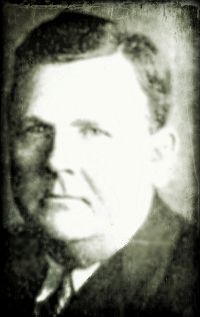



















 The Daily Hatch
AWESOME commentary!! Thank you!
[…] By Dan Mitchell […]
The freedom to associate with, work with, deal with is the most fundamental rights. Let folks sort it all out on their own. If somebody doesn’t want to be bothered with me, that’s fine. It’s happened and it’s perfectly ok.
[…] WordPress Blogger Dan Morris writes this in his blog entitled, “Liberty, Morality and Discrimination.” […]
One of your better posts Mr. Dan.
I am curious about one thing, though. What do these RFRA laws accomplish that the First Amendment hasn’t already covered?
@Richards, signifies the State’s interest in pursuing the right rather than awaiting the inefficient, political warped, misguided action of the corrupt Fed.gov. Dismiss the adjectives if you must, but truth outlives all sheep. ©2015
“compelling state interest” is a judicial fraud on the Constitution and The People; clearly the limited rights of government found in the Constitution did not grant such fabrication. The concept arose out of a politically charged case in which the government could not get its way (the government always steals rights when the asses in charge can’t get their way), so the not-so-supreme court was pressured into a non-existent, unsupportable, bogus concept that an inanimate object had some intelligence (something those running government lack as is evidenced every day) that granted consciousness to extent of conceiving and having “an interest”, an otherwise entirely human emotion/concept. The judge was (and still is if you can understand the founding documents) of poor intellect, and politically weak, to pass this bullshit off as law. The only conception government has is the will of The People; all others are without constitutional ground and no validity–and should be ardently rejected by The People in strong Jeffersonian style. ©2015
PS. “Shays’ Rebellion — a sometimes-violent uprising of farmers angry over conditions in Massachusetts in 1786 — prompted Thomas Jefferson to express the view that “a little rebellion now and then is a good thing” for America. Unlike other leaders of The Republic, Jefferson felt that the people had a right to express their grievances against the government, even if those grievances might take the form of violent action.” Every morning as the proletariat awakes the first thing on their mind should be rebellion against government, all of them and completely. That makes for a great America. (And leads to smaller government and a working republic.)
This is the best single article I have seen on this subject. Very thoughtful and appreciated the links. Strongly agree with Murdock’s contention that RFRA doesn’t go far enough – nobody should ever have to do or produce anything that is against their scruples, whatever the source of their conscience. As many of the articles described, the targeting of wedding vendors who obviously could believe that a wedding is a sacred ceremony, feel they play a significant role in the event, and take pride in their work while at the same time believing a homosexual wedding ceremony is a profanation of something they hold holy was probably the impetus for the state RFRA laws. The government coercion to participate is the abhorrent value.
I hope Mr. Cook is understanding of my choice to associate with android but not Apple.
If we abandon the traditional core principles of morality rooted in Christian philosophy and natural law, then what determines an act or belief to be “immoral” and how do we distinguish it from being “unpopular” or “politically incorrect.”
I am a Roman catholic. Do I have a right to embrace our catechism teachings developed over many centuries, or do I have to kowtow to the prevailing elites and say I am personally offended by those who refuse to sell their goods and services for use at gay weddings? Do I have a right to maintain that marriage is a solemn and holy union between a man and a woman, and dissent with those who toss centuries of Christian philosophy aside to impose their enlightened view?
Similarly, may I continue to maintain that life is not only precious, it is more precious and profound than we can ever know, even though the enlightened elites insist I defer to the moral development of those with wombs, or those who administer death row justice, or those who allocate funds for medicare purposes and thus hold life and death power over their supplicants?
This new tactic of imposed orthodoxy in the name of tolerance is not about moral formation (or tolerance), it’s about fascist control. “Immoral” is becoming the label associated with those who resist the Regime’s dictates in some way. It is so intellectually shallow, but the prevailing dearth of critical thinking in the electorate not only makes it possible, it allows the fascism to thrive.
I had not quite realized what a sexist bigot I am.
Just think about it. When it came to the most important relationship in my life I did not even consider for a minute marrying a man. I squarely and resolutely discriminated based on gender by being dead set on marrying a woman.
Perhaps some day people will see the light and pass laws for gender neutrality in marriage. Mr Cook will be happy. Nothing too coercive. Just subsidies and perhaps some modest penalties, like excise taxes, to encourage transition to a balanced society with 25% male-male marriages, 50% male-female and 25% female-female. Or should it be 33%,33%,33% ? Tell you what. Let’s vote and whoever wins gets to impose their quota. Yes we can!
Reblogged this on Brian By Experience.
Good post and good comments.
[…] « Liberty, Morality, and Discrimination […]
Mark,
Great questions.
I for one believe you have every right to hold all those beliefs.
I would challenge you on the question of abortion, however, on the grounds of voluntary association, specifically whether or not force is justified to prevent it (not whether or not the act is immoral).
Voluntary association imposes a limit on contracts, namely that one may enter into contracts with others, but only to the extent the contract does not infringe upon the principle of voluntary association. For instance, one may enter into a contract to be another’s slave, but if the slave at any point decides to stop being a slave, he or she cannot be bound by the contract, because the enforcement of the contract violates the principle of voluntary association.
This principle does not, however excuse the debtor who decides to stop paying his or her creditor. The difference between these two being that in the case of the slave breaking his or her contract, the individual is simply assuming his or her own natural right to self ownership; no property of the former slave “owner” has been stolen, since his or her ownership claim on the slave was illegitimate or unenforceable. In the case of the debtor, theft has clearly occurred due to the exchange of legitimate property (loaned funds) by the creditor to the debtor. The debtor unwilling to pay back his or her debt has committed theft, whereas the unwilling slave has not.
In the case of abortion, the pregnant mother and the baby basically have an unwritten contract in which the mother will allow the unborn baby to survive inside her parasitically until the baby is ready to be born, at which point the mother risks her own death in the act of childbirth. If at some point during the pregnancy, the mother decides to end the “contract,” all she is really doing is breaking her unborn baby’s illegitimate ownership claim over her life. The mother cannot be forced to be a slave to her children, born or unborn, or conversely, the child has no right to receive life giving nourishment from his or her mother.
This is all based on the theory of natural rights, which states that no right is legitimate if it requires the services of another to exercise that right. Parents should not be forced to take care of their kids. It needs to be a moral choice.
All life is precious, but so is self ownership. Abortion is undoubtedly not something to be celebrated, and almost all believe it to be immoral. It is a terribly unfortunate situation when a parent decides to neglect a child, especially to the point of death, but the failure to act is not an enforceable crime.
Rothbard’s “Ethics of Liberty” delves into more detail if you are interested in this line of reasoning.
“Freed of most restraints against government action and populated by citizens increasingly oblivious to this nation’s founding principles, America is slouching into tyranny. Little by little. Day by day. ”
none of this is about morality… or equality… it’s about creeping fascism… political advantage… and ultimately nullifying the constitution… the objective is to create the American Reich… every detail of American life controlled by the political and bureaucratic elite… the nature of religious affiliations… business practices… personal finance… education and socialization…. all the privy of the ideologically insane…
“bye-bye miss American pie…”
Reblogged this on a political idealist..
“Indiana Pizzeria Owners Go into Hiding”
by
Rick Moran
“The online threats haven’t stopped since Crystal O’Connor told a South Bend TV station that she wouldn’t cater a gay wedding. In fact, the ugliness has gotten so bad, that the family has gone into hiding.”
the same tactics were in use Europe in the 30s… in those days they called themselves the “Pretorian Guard…”
http://pjmedia.com/tatler/2015/04/04/indiana-pizzeria-owners-go-into-hiding/
Reblogged this on Beware the Fury of a Patient Man.
What seems to be missing from these arguments is the fact that people are discriminating against a behavior, not a person. Societies discriminate against deviant behaviors and relationships all the time. This is different from civil rights cases where a superficial quality was the basis for judgement, i.e. skin color. You can’t tell a gay person from a straight person if they walk through your door. They have to tell you they engage in a specific behavior.
I’d like to know why more people don’t consider homosexual behavior as a moral hazard. Their behavior puts themselves and others at risk with the costs being mitigated by society. Look up the STD infections among gay men compared to the general population. Although not always illegal, we don’t encourage or reward moral hazard behaviors.
The starting point for so many of these arguments is that homosexuals are just another disenfranchised group like blacks or women but there is a natural reason why this group makes up such a small percentage of the population. Being black or female is not a defective condition. Homosexual relationships are a biological dead end. They have zero potential for producing offspring. One way of defining marriage is a social constraint on the two people who have the potential to produce children. The mother and father are known quantities who assume responsibilities for the child they created. A gay couple do not meet this criteria therefore has no need to marry. Why redefine marriage in order to include a non-normal population subset? Why give this group a special set of rights when no other non-normal sexual relationship has them. How can one say discriminating against an immoral behavior is also immoral?