and you will hear what far smarter people than I have to say on this matter. I agree with them.
Harry Kroto
__________________________
There are 3 videos in this series and they have statements by 150 academics and scientists and I hope to respond to all of them. Wikipedia notes Theodor Wolfgang Hänsch (born 30 October 1941) is a Germanphysicist. He received one fourth of the 2005 Nobel Prize in Physics for “contributions to the development of laser-based precisionspectroscopy, including the optical frequency comb technique”, sharing the prize with John L. Hall and Roy J. Glauber.
DO YOU THINK THERE IS LIFE AFTER DEATH? ” I can’t see that for an individual.” OR THAT THERE IS HEAVEN OR HELL? “No.” WHEN YOU SEE THE PRECISION OF THE ATOM DOES THAT RELATE TO INTELLIGENT DESIGN OR TO A RELIGIOUS APPROACH TO THE WORLD? “Naturally all things around us look like they have been designed intelligently. So the principles that led to their being of course in some ways implies some intelligence but it may not be the intelligence in a person like being, but intelligence is it’s own. In it’s own mechanism, how nature evolves.”
I just finished reading the online addition of the book Darwin, Francis ed. 1892. Charles Darwin: his life told in an autobiographical chapter, and in a selected series of his published letters [abridged edition]. London: John Murray. There are several points that Charles Darwin makes in this book that were very wise, honest, logical, shocking and some that were not so wise. The Christian Philosopher Francis Schaeffer once said of Darwin’s writings, “Darwin in his autobiography and in his letters showed that all through his life he never really came to a quietness concerning the possibility that chance really explained the situation of the biological world. You will find there is much material on this [from Darwin] extended over many many years that constantly he was wrestling with this problem.”
Recently I noticed this comment by you Dr. Hansch:
DO YOU THINK THERE IS LIFE AFTER DEATH? ” I can’t see that for an individual.” OR THAT THERE IS HEAVEN OR HELL? “No.” WHEN YOU SEE THE PRECISION OF THE ATOM DOES THAT RELATE TO INTELLIGENT DESIGN OR TO A RELIGIOUS APPROACH TO THE WORLD? “Naturally all things around us look like they have been designed intelligently. So the principles that led to their being of course in some ways implies some intelligence but it may not be the intelligence in a person like being, but intelligence is it’s own. In it’s own mechanism, how nature evolves.”
This exact quote “Naturally all things around us look like they have been designed intelligently. So the principles that led to their being of course in some ways implies some intelligence but it may not be the intelligence in a person like being, but intelligence is it’s own. In it’s own mechanism, how nature evolves…” made me think of you when I read the book Charles Darwin: his life told in an autobiographical chapter, and in a selected series of his published lettersbecause of what Darwin said on this same issue of intelligent design.I am going to quote some of Charles Darwin’s own words and then include the comments of Francis Schaeffer on those words. I have also enclosed a CD with two messages from Adrian Rogers and Bill Elliff concerning Darwinism.
“It is impossible to answer your question briefly; and I am not sure that I could do so, even if I wrote at some length. But I may say that the impossibility of conceiving that this grand and wondrous universe, with our conscious selves, arose through chance, seems to me the chief argument for the existence of God; but whether this is an argument of real value, I have never been able to decide…Nor can I overlook the difficulty from the immense amount of suffering through the world.I am aware that if we admit a First Cause,the mind still craves to know whence it came, and how it arose.”
Francis Schaeffer noted:
What he is saying is if you say there is a first cause, then the mind says, “Where did this come from?” I think this is a bit old fashioned, with some of the modern thinkers, this would not have carry as much weight today as it did when Darwin expressed it. Jean Paul Sartre said it as well as anyone could possibly say it. The philosophic problem is that something is there and not nothing being there. No one has the luxury of beginning with nothing. Nobody I have ever read has put forth that everything came from nothing. I have never met such a person in all my reading,or all my discussion. If you are going to begin with nothing being there, it has to be nothing nothing, and it can’t be something nothing. When someone says they believe nothing is there, in reality they have already built in something there. The only question is do you begin with an impersonal something or a personal something. All human thought is shut up to these two possibilities. Either you begin with an impersonal and then have Darwin’s own dilemma which impersonal plus chance, now he didn’t bring in the amount of time that modern man would though. Modern man has brought in huge amounts of time into the equation as though that would make a difference because I have said many times that time can’t make a qualitative difference but only a quantitative difference. The dilemma is it is either God or chance. Now you find this intriguing thing in Darwin’s own situation, he can’t understand how chance could have produced these two great factors of the universe and its form and the mannishness of man.
“Another source of conviction in the existence of God, connected with the reason and not with the feelings, impresses me as having much more weight. This follows from the extreme difficulty or rather impossibility of conceiving this immense and wonderful universe, including man with his capacity of looking far backwards and far into futurity, as the result of blind chance or necessity. When thus reflecting, I feel compelled to look to a First Cause having an intelligent mind in some degree analogous to that of man; and I deserve to be called a Theist. This conclusion was strong in my mind about the time, as far as I can remember, when I wrote the Origin of Species, and it is since that time that it has very gradually, with many fluctuations, become weaker. But then arises the doubt…”
Francis Schaeffer commented:
On the basis of his reason he has to say there must be an intelligent mind, someone analogous to man. You couldn’t describe the God of the Bible better. That is man is made in God’s image and therefore, you know a great deal about God when you know something about man. What he is really saying here is that everything in my experience tells me it must be so, and my mind demands it is so. Not just these feelings he talked about earlier but his MIND demands it is so, but now how does he counter this? How does he escape this? Here is how he does it!!!
Charles Darwin went on to observe: “—can the mind of man, which has, as I fully believe, been developed from a mind as low as that possessed by the lowest animals, be trusted when it draws such grand conclusions?”
Francis Schaeffer asserted:
So he says my mind can only come to one conclusion, and that is there is a mind behind it all. However, the doubt comes because his mind has come from the lowest form of earthworm, so how can I trust my mind. But this is a joker isn’t it? Then how can you trust his mind to support such a theory as this? He proved too much. The fact that Darwin found it necessary to take such an escape shows the tremendous weight of Romans 1, that the only escape he can make is to say how can I trust my mind when I come from the lowest animal the earthworm? Obviously think of the grandeur of his concept, I don’t think it is true, but the grandeur of his concept, so what you find is that Darwin is presenting something here that is wrong I feel, but it is not nothing. It is a tremendously grand concept that he has put forward. So he is accepting the dictates of his mind to put forth a grand concept which he later can’t accept in this basic area with his reason, but he rejects what he could accept with his reason on this escape. It really doesn’t make sense. This is a tremendous demonstration of the weakness of his own position.
Darwin also noted, “I cannot pretend to throw the least light on such abstruse problems. The mystery of the beginning of all things is insoluble by us, and I for one must be content to remain an Agnostic.”
Francis Schaeffer remarked:
What a stupid reply and I didn’t say wicked. It just seems to me that here is 2 plus 2 equals 36 at this particular place.
Nevertheless you have expressed my inward conviction, though far more vividly and clearly than I could have done, that the Universe is not the result of chance.* But then with me the horrid doubt always arises whether the convictions of man’s mind, which has been developed from the mind of the lower animals, are of any value or at all trustworthy. Would any one trust in the convictions of a monkey’s mind, if there are any convictions in such a mind?
Francis Schaeffer observed:
Can you feel this man? He is in real agony. You can feel the whole of modern man in this tension with Darwin. My mind can’t accept that ultimate of chance, that the universe is a result of chance. He has said 3 or 4 times now that he can’t accept that it all happened by chance and then he will write someone else and say something different. How does he say this (about the mind of a monkey) and then put forth this grand theory? Wrong theory I feel but great just the same. Grand in the same way as when I look at many of the paintings today and I differ with their message but you must say the mark of the mannishness of man are one those paintings titanic-ally even though the message is wrong and this is the same with Darwin. But how can he say you can’t think, you come from a monkey’s mind, and you can’t trust a monkey’s mind, and you can’t trust a monkey’s conviction, so how can you trust me? Trust me here, but not there is what Darwin is saying. In other words it is very selective.
Now we are down to the last year of Darwin’s life.
* The Duke of Argyll (Good Words, April 1885, p. 244) has recorded a few words on this subject, spoken by my father in the last year of his life. “. . . in the course of that conversation I said to Mr. Darwin, with reference to some of his own remarkable works on the Fertilisation of Orchids, and upon The Earthworms,and various other observations he made of the wonderful contrivances for certain purposes in nature—I said it was impossible to look at these without seeing that they were the effect and the expression of mind. I shall never forget Mr. Darwin’s answer. He looked at me very hard and said, ‘Well, that often comes over me with overwhelming force; but at other times,’ and he shook his head vaguely, adding, ‘it seems to go away.'”
Francis Schaeffer summarized :
And this is the great Darwin, and it makes you cry inside. This is the great Darwin and he ends as a man in total tension.
Francis Schaeffer noted that in Darwin’s 1876 Autobiography that Darwin he is going to set forth two arguments for God in this and again you will find when he comes to the end of this that he is in tremendous tension. Darwin wrote,
At the present day the most usual argument for the existence of an intelligent God is drawn from the deep inward conviction and feelings which are experienced by most persons.Formerly I was led by feelings such as those just referred to (although I do not think that the religious sentiment was ever strongly developed in me), to the firm conviction of the existence of God and of the immortality of the soul. In my Journal I wrote that whilst standing in the midst of the grandeur of a Brazilian forest, ‘it is not possible to give an adequate idea of the higher feelings of wonder, admiration, and devotion which fill and elevate the mind.’ I well remember my conviction that there is more in man than the mere breath of his body; but now the grandest scenes would not cause any such convictions and feelings to rise in my mind. It may be truly said that I am like a man who has become colour-blind.
Francis Schaeffer remarked:
Now Darwin says when I look back and when I look at nature I came to the conclusion that man can not be just a fly! But now Darwin has moved from being a younger man to an older man and he has allowed his presuppositions to enter in to block his logic. These things at the end of his life he had no intellectual answer for. To block them out in favor of his theory. Remember the letter of his that said he had lost all aesthetic senses when he had got older and he had become a clod himself. Now interesting he says just the same thing, but not in relation to the arts, namely music, pictures, etc, but to nature itself. Darwin said, “But now the grandest scenes would not cause any such convictions and feelings to rise in my mind. It may be truly said that I am like a man who has become colour-blind…” So now you see that Darwin’s presuppositions have not only robbed him of the beauty of man’s creation in art, but now the universe. He can’t look at it now and see the beauty. The reason he can’t see the beauty is for a very, very , very simple reason: THE BEAUTY DRIVES HIM TO DISTRACTION. THIS IS WHERE MODERN MAN IS AND IT IS HELL. The art is hell because it reminds him of man and how great man is, and where does it fit in his system? It doesn’t. When he looks at nature and it’s beauty he is driven to the same distraction and so consequently you find what has built up inside him is a real death, not only the beauty of the artistic but the beauty of nature. He has no answer in his logic and he is left in tension. He dies and has become less than human because these two great things (such as any kind of art and the beauty of nature) that would make him human stand against his theory.
________________________
Dr. Hansch can you still look at God’s beautiful creation and say that it just appears to be the work of an intellect? If so then you like Darwin can say, “I am like a man who has become colour-blind.”
_______________________________________
IF WE ARE LEFT WITH JUST THE MACHINE THEN WHAT IS THE FINAL CONCLUSION IF THERE WAS NO PERSONAL GOD THAT CREATED US? I sent you a CD that starts off with the song DUST IN THE WIND by Kerry Livgren of the group KANSAS which was a hit song in 1978 when it rose to #6 on the charts because so many people connected with the message of the song. It included these words, “All we do, crumbles to the ground though we refuse to see, Dust in the Wind, All we are is dust in the wind, Don’t hang on, Nothing lasts forever but the Earth and Sky, It slips away, And all your money won’t another minute buy.”
Kerry Livgren himself said that he wrote the song because he saw where man was without a personal God in the picture. Solomon pointed out in the Book of Ecclesiastes that those who believe that God doesn’t exist must accept three things. FIRST, death is the end and SECOND, chance and time are the only guiding forces in this life. FINALLY, power reigns in this life and the scales are never balanced. The Christian can face death and also confront the world knowing that it is not determined by chance and time alone and finally there is a judge who will balance the scales.
Both Kerry Livgren and the bass player Dave Hope of Kansas became Christians eventually. Kerry Livgren first tried Eastern Religions and Dave Hope had to come out of a heavy drug addiction. I was shocked and elated to see their personal testimony on The 700 Club in 1981 and that same interview can be seen on You Tube today. Livgren lives in Topeka, Kansas today where he teaches “Diggers,” a Sunday school class at Topeka Bible Church. DAVE HOPE is the head of Worship, Evangelism and Outreach at Immanuel Anglican Church in Destin, Florida.
About the film:
In 1973, six guys in a local band from America’s heartland began a journey that surpassed even their own wildest expectations, by achieving worldwide superstardom… watch the story unfold as the incredible story of the band KANSAS is told for the first time in the DVD Miracles Out of Nowhere.
I have gone back and forth and back and forth with many liberals on the Arkansas Times Blog on many issues such as abortion, human rights, welfare, poverty, gun control and issues dealing with popular culture. Here is another exchange I had with them a while back. My username at the Ark Times Blog is Saline […]
On March 17, 2013 at our worship service at Fellowship Bible Church, Ben Parkinson who is one of our teaching pastors spoke on Genesis 1. He spoke about an issue that I was very interested in. Ben started the sermon by reading the following scripture: Genesis 1-2:3 English Standard Version (ESV) The Creation of the […]
At the end of this post is a message by RC Sproul in which he discusses Sagan. Over the years I have confronted many atheists. Here is one story below: I really believe Hebrews 4:12 when it asserts: For the word of God is living and active and sharper than any two-edged sword, and piercing as far as the […]
In today’s news you will read about Kirk Cameron taking on the atheist Stephen Hawking over some recent assertions he made concerning the existence of heaven. Back in December of 1995 I had the opportunity to correspond with Carl Sagan about a year before his untimely death. Sarah Anne Hughes in her article,”Kirk Cameron criticizes […]
His research is concerned with the way in which the machinery underlying coordinated movement is assembled during embryonic development. On the one hand this involves an analysis of the way in which muscles are assembled, specified and patterned and on the other an investigation of the way in which motor circuits are generated and begin to function.[4]
His group works with the fruitfly, Drosophila melanogaster and brings a combination of genetic, molecular and cellular techniques to bear on the issues of neuromuscular development. At the moment Mike Bate is working on the genetic basis of myoblast recruitment and fusion and on an electrophysiological and structural analysis of the way in which functional properties are acquired by embryonic neurons. He is a noteworthy ski instructor.
______________
His comments can be found on the 3rd video and the 145th clip in this series. Below the videos you will find his words.
50 Renowned Academics Speaking About God (Part 1)
Another 50 Renowned Academics Speaking About God (Part 2)
A Further 50 Renowned Academics Speaking About God (Part 3)
I acknowledge completely that there is a deep mystery and we fool ourselves completely if we think there is not; I feel that the mystery is less apparent to man in the 21st century, at least in the Western world, than once it was and I think that is a great pity; I don’t subscribe to a particular religion.
____________________
Below is a letter I wrote recently to Dr. Bate:
February 11, 2015
Dear Dr. Bate,
I just finished reading the online addition of the book Darwin, Francis ed. 1892. Charles Darwin: his life told in an autobiographical chapter, and in a selected series of his published letters [abridged edition]. London: John Murray. There are several points that Charles Darwin makes in this book that were very wise, honest, logical, shocking and some that were not so wise. The Christian Philosopher Francis Schaeffer once said of Darwin’s writings, “Darwin in his autobiography and in his letters showed that all through his life he never really came to a quietness concerning the possibility that chance really explained the situation of the biological world. You will find there is much material on this [from Darwin] extended over many many years that constantly he was wrestling with this problem.”
Here is a quote I ran across recently from you in your wonderful in depth interview with Alan Macfarlane :
I acknowledge completely that there is a deep mystery and we fool ourselves completely if we think there is not; I feel that the mystery is less apparent to man in the 21st century, at least in the Western world, than once it was and I think that is a great pity; I don’t subscribe to a particular religion. I am like my maternal grandmother who refused to say the Creed because she couldn’t bring herself to say things that she didn’t believe in; we were deeply shocked by that as children; on the other hand I can get very engaged and interested in conversations of how the sort of religion that I was brought up with could actually change to become something that one could feel at ease with;an instance of such a conversation was a man called Richard Acland who gave a series of broadcasts about religion which I found deeply inspiring; he is my grandmother’s cousin; it is a deeply unsatisfactory area of my life because I feel that I don’t make enough time for reflection.
I would agree with you that we should all take more time for reflection on the big issues of life. I noticed in your interview with Alan Macfarlane that you noted that you “saw ‘On the Beach’ with Robert Acland; a transforming moment as so outraged by the thought of nuclear annihilation that I became a rabid nuclear disarmer; went to RAF Wittering with the Cadet Corp to see what they claimed was an atom bomb; thus during the latter part of my school life I became extremely rebellious and formed a lot of good friendships among the nuclear disarmament community....I love cinema; in Australia I was offered a job as film critic for the Australian Broadcasting Commission; I had a weekly programme when I broadcast to Canberra about films and got free tickets to go to drive ins to see films like ‘Last Tango in Paris’ and comment on them; the film that made me realize this was something important was ‘The Seventh Seal’, shortly after which I saw ‘Last Year at Marienbad’ and I have never recovered.”
I love the cinema too and also have seen the movies ON THE BEACH, THE SEVENTH SEAL and LAST YEAR AT MARIENBAD and have done blog posts on them.
I noted that you had seen the Bergman movie WINTER LIGHT. Recently I was watching the You Tube series BREAKING DOWN BERGMAN and Sonia Strimban said concerning that movie:
I think the movie is about what can human beings have faith in, and what can we hope for. The confusion of the minister Toma Ericsson (played by Gunnar Bjornstrand) is because he is supposed to be the shepherd of his flock and lead the people and show them the way and he is the one having the greatest crisis of faith. Can a belief in a greater being sustain people and if you don’t believe in the greater being then what is the meaning of your life? So what this minister is struggling with is this question, “Is God real or is God not real then what do I do?” His inability to relate to God translates into the barrenness of the rest of the film and this larger anxiety that everyone has about life and the meaning of life and can they survive.
When I read the book Charles Darwin: his life told in an autobiographical chapter, and in a selected series of his published letters, I also read a commentary on it by Francis Schaeffer and I wanted to both quote some of Charles Darwin’s own words to you and then include the comments of Francis Schaeffer on those words. I have also enclosed a CD with two messages from Adrian Rogers and Bill Elliff concerning Darwinism. SINCE SCHAEFFER MENTIONED THE MOVIE “ON THE BEACH” IT MADE ME THINK OF YOU AND THAT IS WHY I AM WRITING YOU THIS LETTER TODAY.
“…it is an intolerable thought that he and all other sentient beings are doomed to complete annihilation after such long-continued slow progress. To those who fully admit the immortality of the human soul, the destruction of our world will not appear so dreadful.”
Francis Schaeffer commented:
Here you feel Marcel Proust and the dust of death is on everything today because the dust of death is on everything tomorrow. Here you have the dilemma of Nevil Shute’s ON THE BEACH. If it is true that all we have left is biological continuity and increased biological complexity, which is all we have left in Darwinism here, or with many of the modern philosophers, then you can’t stand Shute’s ON THE BEACH. Maybe tomorrow at noon human life may be wiped out. Darwin already feels the tension, because if human life is going to be wiped out tomorrow, what is it worth today? Darwin can’t stand the thought of death of all men. Charlie Chaplin when he heard there was no life on Mars said, “I’m lonely.”
You think of the Swedish Opera (ANIARA) that is pictured inside a spaceship. There was a group of men and women going into outer space and they had come to another planet and the singing inside the spaceship was normal opera music. Suddenly there was a big explosion and the world had blown up and these were the last people left, the only conscious people left, and the last scene is the spaceship is off course and it will never land, but will just sail out into outer space and that is the end of the plot. They say when it was shown in Stockholm the first time, the tough Swedes with all their modern mannishness, came out (after the opera was over) with hardly a word said, just complete silence.
Darwin already with his own position says he CAN’T STAND IT!! You can say, “Why can’t you stand it?” We would say to Darwin, “You were not made for this kind of thing. Man was made in the image of God. Your CAN’T- STAND- IT- NESS is screaming at you that your position is wrong. Why can’t you listen to yourself?”
You find all he is left here is biological continuity, and thus his feeling as well as his reason now is against his own theory, yet he holds it against the conclusions of his reason. Reason doesn’t make it hard to be a Christian. Darwin shows us the other way. He is holding his position against his reason.
____________
These words of Darwin ring in my ear, “…it is an intolerable thought that he and all other sentient beings are doomed to complete annihilation after such long-continued slow progress…” . Schaeffer rightly noted, “Maybe tomorrow at noon human life may be wiped out. Darwin already feels the tension, because if human life is going to be wiped out tomorrow, what is it worth today? Darwin can’t stand the thought of death of all men.” IN OTHER WORDS ALL WE ARE IS DUST IN THE WIND. I sent you a CD that starts off with the song DUST IN THE WIND by Kerry Livgren of the group KANSAS which was a hit song in 1978 when it rose to #6 on the charts because so many people connected with the message of the song. It included these words, “All we do, crumbles to the ground though we refuse to see, Dust in the Wind, All we are is dust in the wind, Don’t hang on, Nothing lasts forever but the Earth and Sky, It slips away, And all your money won’t another minute buy.”
Kerry Livgren himself said that he wrote the song because he saw where man was without a personal God in the picture. Solomon pointed out in the Book of Ecclesiastes that those who believe that God doesn’t exist must accept three things. FIRST, death is the end and SECOND, chance and time are the only guiding forces in this life. FINALLY, power reigns in this life and the scales are never balanced. The Christian can face death and also confront the world knowing that it is not determined by chance and time alone and finally there is a judge who will balance the scales.
Both Kerry Livgren and the bass player Dave Hope of Kansas became Christians eventually. Kerry Livgren first tried Eastern Religions and Dave Hope had to come out of a heavy drug addiction. I was shocked and elated to see their personal testimony on The 700 Club in 1981 and that same interview can be seen on You Tube today. Livgren lives in Topeka, Kansas today where he teaches “Diggers,” a Sunday school class at Topeka Bible Church. DAVE HOPE is the head of Worship, Evangelism and Outreach at Immanuel Anglican Church in Destin, Florida.
About the film:
In 1973, six guys in a local band from America’s heartland began a journey that surpassed even their own wildest expectations, by achieving worldwide superstardom… watch the story unfold as the incredible story of the band KANSAS is told for the first time in the DVD Miracles Out of Nowhere.
I have gone back and forth and back and forth with many liberals on the Arkansas Times Blog on many issues such as abortion, human rights, welfare, poverty, gun control and issues dealing with popular culture. Here is another exchange I had with them a while back. My username at the Ark Times Blog is Saline […]
On March 17, 2013 at our worship service at Fellowship Bible Church, Ben Parkinson who is one of our teaching pastors spoke on Genesis 1. He spoke about an issue that I was very interested in. Ben started the sermon by reading the following scripture: Genesis 1-2:3 English Standard Version (ESV) The Creation of the […]
At the end of this post is a message by RC Sproul in which he discusses Sagan. Over the years I have confronted many atheists. Here is one story below: I really believe Hebrews 4:12 when it asserts: For the word of God is living and active and sharper than any two-edged sword, and piercing as far as the […]
In today’s news you will read about Kirk Cameron taking on the atheist Stephen Hawking over some recent assertions he made concerning the existence of heaven. Back in December of 1995 I had the opportunity to correspond with Carl Sagan about a year before his untimely death. Sarah Anne Hughes in her article,”Kirk Cameron criticizes […]
and you will hear what far smarter people than I have to say on this matter. I agree with them.
Harry Kroto
__________________________
There are 3 videos in this series and they have statements by 150 academics and scientists and I hope to respond to all of them. Wikipedia notes Horace Basil BarlowFRS (born 8 December 1921) is a British visual neuroscientist.
In 1953 Barlow discovered that the frog brain has neurons which fire in response to specific visual stimuli. This was a precursor to the work of Hubel and Wiesel on visual receptive fields in the visual cortex. He has made a long study of visual inhibition, the process whereby a neuron firing in response to one group of retinal cells can inhibit the firing of another neuron; this allows perception of relative contrast.
In 1961 Barlow wrote a seminal article where he asked what the computational aims of the visual system are. He concluded that one of the main aims of visual processing is the reduction of redundancy. While the brightnesses of neighbouring points in images are usually very similar, the retina reduces this redundancy. His work thus was central to the field of statistics of natural scenes that relates the statistics of images of real world scenes to the properties of the nervous system.
Barlow and his co-workers also did substantial work in the field of factorial codes. The goal was to encode images with statistically redundant components or pixels such that the code components are statistically independent. Such codes are hard to find but highly useful for purposes of image classification etc.
Interviewed and filmed by Alan Macfarlane on 5 March 2012
______________________
Interview of Horace Barlow – part 2
Horace Barlow’s quote taken from interview with Alan Macfarlane:
HAS RELIGION EVER BEEN IMPORTANT TO YOU? IS IT IMPORTANT TO YOU? No, it is not important to me. Saying you don’t believe in God is a very foolish thing to say as it doesn’t explain why so many people talk about it, there has got to be more to it than that; also I think one has to respect what some godly people say and some of the things they do; I wish one could make more sense of it but I don’t think the godly people have done a very good job; I was never baptized or confirmed so have never been a practitioner, and I don’t miss it; DO YOU THINK THAT SCIENCE HAS DIS-PROVEN RELIGION AS DAWKINS ARGUES? I think it [science] provides some hope of acting rationally to handle the social and political problems we have to deal with on a personal level and one a worldwide level. Religion is a way of perpetuating a way of thought that might have otherwise been lost, and I imagine that is fine.
Dr. Barlow’s only three solid claims in this response to Alan Macfarlane is that science is #1 the best help today with our social problems,(which is in the original clip), #2 Saying you don’t believe in God (position of atheism) is foolish, and #3 we need an explanation for why so many people talk about [God.]
My response to #1 is to look at how the secular humanists have messed up so many things in the past and I include Barlow’s personal family friend Margaret Mead in that. My responses to #2 and #3 were both covered in my earlier response to Roald Hoffmann.
(Roald Hoffmann is a Nobel Prize winner who I have had the honor of corresponding with in the past. Pictured below)
(This July 1933 photo shows [left to right] anthropologist Gregory Bateson with Margaret Mead)
Horace Barlow’s words from interview conducted by Alan Macfarlane:
I don’t ever remember going to Bateson’s house in Granchester as a child; William Bateson’s wife was a friend of my mother’s; when Gregory Bateson was out in Bali he met Margaret Mead; Beatrice Bateson, his mother, felt she was too old to go out and inspect her so she sent my mother instead; she flew off in an Imperial Airlines plane and we saw her off from Hendon; that must have been 1937-8; my mother got on very well with Margaret Mead – she was not altogether convinced by her, but very impressed by her breadth of knowledge and energy; she came and stayed with us many times; I was even more sceptical than my mother and thought she was a very impressive person; Gregory was born 1904 and my mother, in 1886, so there was quite a big age difference between them; I never got on close intellectual terms with Gregory even though we were to some extent interested in the same sort of thing, both in cybernetics and psychology, and his ideas were always interesting; however, my model of a scientist was taken from my mother and not from Gregory; my mother was interested in genetics and the paper for which she was famous was on the reproductive system in plants like cowslips; my mother reasoned like a scientist whereas Gregory was a guru – he liked to think things out for himself; he obviously influenced many others too; I saw him once or twice when I went to Berkeley
Postscript:
I was sad to see that Jon Stewart is stepping down from the DAILY SHOW so I wanted to include one of the best clips I have ever seen on his show and it is a short debate between the brilliant scientists Edward J. Larson (an evolutionist), William A. Dembski (an Intelligent Design Proponent), and then he threw in a nutball in for laughs, Ellie Crystal (a metaphysical theorist). Dembski gives several great examples of design and it reminded me of many of the words of Darwin show above in my letter to Horace Barlow.
William Dembski on The Jon Stewart Show
Uploaded on Nov 15, 2010
Wednesday September 14, 2005 – Jon Stewart’s “Evolution, Schmevolution” segment with panelists Edward J. Larson (an evolutionist), William A. Dembski (an Intelligent Design Proponent), and Ellie Crystal (a metaphysical theorist).
I have gone back and forth and back and forth with many liberals on the Arkansas Times Blog on many issues such as abortion, human rights, welfare, poverty, gun control and issues dealing with popular culture. Here is another exchange I had with them a while back. My username at the Ark Times Blog is Saline […]
On March 17, 2013 at our worship service at Fellowship Bible Church, Ben Parkinson who is one of our teaching pastors spoke on Genesis 1. He spoke about an issue that I was very interested in. Ben started the sermon by reading the following scripture: Genesis 1-2:3 English Standard Version (ESV) The Creation of the […]
At the end of this post is a message by RC Sproul in which he discusses Sagan. Over the years I have confronted many atheists. Here is one story below: I really believe Hebrews 4:12 when it asserts: For the word of God is living and active and sharper than any two-edged sword, and piercing as far as the […]
In today’s news you will read about Kirk Cameron taking on the atheist Stephen Hawking over some recent assertions he made concerning the existence of heaven. Back in December of 1995 I had the opportunity to correspond with Carl Sagan about a year before his untimely death. Sarah Anne Hughes in her article,”Kirk Cameron criticizes […]
and you will hear what far smarter people than I have to say on this matter. I agree with them.
Harry Kroto
__________________________
There are 3 videos in this series and they have statements by 150 academics and scientists and I hope to respond to all of them. Wikipedia notes Rebecca Newberger Goldstein (born February 23, 1950) is an American novelist and philosopher. She has written six novels, a number of short stories and essays, and studies of mathematician Kurt Gödel and philosopher Baruch Spinoza.
Goldstein, born Rebecca Newberger, grew up in White Plains, New York, and did her undergraduate work at City College of New York, UCLA, and Barnard College, where she graduated as valedictorian in 1972. She was born into an Orthodox Jewish family. She has one older brother who is an OrthodoxRabbi, and she also has a younger sister, Sarah Stern. An older sister, Mynda Barenholtz, died in 2001.[1]
After earning her Ph.D. from Princeton University, where she studied with Thomas Nagel and wrote a dissertation on “Reduction, Realism and the Mind,” she returned to Barnard as a professor of philosophy.
The comments of Dr. Goldstein can be found on the 1st video and the 32nd clip in this series. Below the videos you will find her words.
50 Renowned Academics Speaking About God (Part 1)
Another 50 Renowned Academics Speaking About God (Part 2)
A Further 50 Renowned Academics Speaking About God (Part 3)
_______________
QUOTE FROM REBECCA GOLDSTEIN:
And I am an atheist. I am not wishy-washy on this question. Not only do I think the arguments for God’s existence don’t work, I think that this, more importantly to me, does not look like the kind of world empirically that is created by a good and caring and powerful God. It just—to me there’s just too much empirical evidence against it. Suffering of children is my number one complaint. And the amount of work that one has to do, that philosophers have done, that theists have done to answer the question, the problem of evil—you know, free will, and that works for only some of them, and the Holocaust was, okay, the Nazis had to have the power of absolute evil in order for them to be free, so a certain amount of suffering had to take place—that even that only goes so far. There’s a lot of suffering that can’t be answered that way. Soul making, you know, this is a place where a lot of virtues can only be induced, we can only come to them because of suffering, that doesn’t really seem to be to explain the suffering of children.
Below is my response to the problem of theodicy or the problem of evil and suffering that Dr. Goldstein brings up in the above video.
Josh Wilson – Before The Morning (Official Music Video)
One of my favorite songs is called “Before the Morning” and it is by the Christian singer Josh Wilson. The lyrics start out: “Why do you have to feel the things that hurt you? If there’s a God who loves you where is He now?” Over the years I have corresponded with several atheists and many times they confront me on this very issue such as this letter did from Dr. Brian Charlesworth, Dept of Ecology and Evolution, University of Chicago in letter dated May 10, 1994:
Thank you for your various communications. I am afraid that I formed the view many years ago that there is no foundation for any belief in a benevolent creator of the world. For me, there is too much suffering in the world to be compatible with the existence of such a being.
This of course is a valid problem. The only answer to the problem of evil is the biblical answer of the fall. Darwin has a problem because he never had a high view of revelation, so he doesn’t have the answer any more than the liberal theologian has the answer. If you don’t have a space-time fall then you don’t have an answer to suffering. If you have a very, very significant man at the beginning, Darwin did not have that, but if you had a very significant, wonderful man at the beginning and can change history then the fall is the possible answer that can be given to Darwin’s 2nd argument.
Let me make three points concerning the problem of evil and suffering.First, the problem of evil and suffering hit this world in a big way because of Adam and what happened in Genesis Chapter 3. Second, if there is no God then there is no way to distinguish good from evil and there will be no ultimate punishment for Hitler and Josef Mengele. (By the way Mengele never faced punishment and lived his long life out in peace.) Third. Christ came and suffered and will destroy all evil from this world eventually forever.
Josef Mengele known as the “Angel of Death” is pictured below:
_______________________
I went to see the movie GOD’S NOT DEAD in a local theater and that prompted me to read the book of the same name by Rice Broocks. In the movie the problem of evil and suffering is discussed just like it is in the book and would love to interact further with anyone who would like to see the film is a big hit in theaters this year. On page 5 on the book you will find these words:
Atheists claim that the universe isn’t what you would expect
if a supernatural God existed. All this death and suffering, they say,
are plain evidence that a loving, intelligent God could not be behind
it all. The truth is that God has created a world where free moral
agents are able to have real choices to do good or evil. If God had
created a world without that fundamental choice and option to do
evil, then we wouldn’t be having this discussion. God made a world
where choices are real and humanity is affected by the choices of
other humans. Drunk drivers kill innocent people. Some murder
and steal from their fellow men. Though God gave clear com-
mandments to humanity, we have for the most part ignored these
directives. The mess that results is not God’s fault. It’s ours.
We are called to follow God and love Him with all our hearts
and minds. This means we have to think and investigate. Truth
is another word for reality. When something is true it’s true
everywhere. The multiplication tables are just as true in China
as they are in America. Gravity works in Africa the way it does
in Asia. The fact that there are moral truths that are true every-
where points to a transcendent morality that we did not invent
and from which we cannot escape (C.S.Lewis, MERE CHRISTIANITY,[1952:
New York: Harper Collins, 2001], p. 35).
As Creator, God has placed not only natural laws in the earth
but also spiritual laws. For instance, lying is wrong everywhere.
So is stealing. Cruelty to children is wrong regardless of what
culture you’re in or country you’re from. When these laws are
broken, people are broken. Not only does violating these spiritual
laws separate us from God, but it causes pain in our lives and
in the lives of those around us. The big question becomes, what
can be done about our condition? When we break these spiritual
laws, whom can we call for help? How can we be reconciled to
God as well as break free from this cycle of pain and dysfunction?
“the True Christian position is that, in space and time and history, there was an unprogrammed man who made a choice, and actually rebelled against God…without Christianity’s answer that God made a significant man in a significant history with evil being the result of Satan’s and then man’s historic space-time revolt, there is no answer but to accept Baudelaire’s answer [‘If there is a God, He is the devil’] with tears. Once the historic Christian answer is put away, all we can do is to leap upstairs and say that against all reason God is good.”(pg. 81)
Someone I knew in 1985 grew up in Germany and was part of the Hitler Youth Program, Was he wrong in his beliefs?
On what basis does the atheist have to say “Hitler was wrong!!!”
Early in his career Hitler was popular and many of the German people bought into his anti-semetic views. Does the atheist have an intellectual basis to condemn Hitler’s actions?
____________________________________
My friend who grew up in Germany believed until his dying day that Hitler was right. I had a basis for knowing that Hitler was wrong and here it is below.
It is my view that according the Bible all men are created by God and are valuable. However, the atheist has no basis for coming to this same conclusion. Francis Schaeffer put it this way:
We cannot deal with people like human beings, we cannot deal with them on the high level of true humanity, unless we really know their origin—who they are. God tells man who he is. God tells us that He created man in His image. So man is some- thing wonderful.
In 1972 Schaeffer wrote the book “He is There and He is Not Silent.” Here is the statement that sums up that book:
One of philosophy’s biggest problems is that anything exists at all and has the form that it does. Another is that man exists as a personal being and makes true choices and has moral responsibility. The Bible gives sufficient answers to these problems. In fact, the only sufficient answer is that the infinite-personal triune God is there and He is not silent. He has spoken to man in the Bible.
In the movie CRIMES AND MISDEMEANORS the basic question Woody Allen is presenting to his own agnostic humanistic worldview is: If you really believe there is no God there to punish you in an afterlife, then why not murder if you can get away with it? The secular humanist worldview that modern man has adopted does not work in the real world that God has created. God “has planted eternity in the human heart…” (Ecclesiastes 3:11). This is a direct result of our God-given conscience. The apostle Paul said it best in Romans 1:19, “For that which is known about God is evident to them and made plain in their inner consciousness, because God has shown it to them” (Amplified Version).
It’s no wonder, then, that one of Allen’s fellow humanists would comment, “Certain moral truths — such as do not kill, do not steal, and do not lie — do have a special status of being not just ‘mere opinion’ but bulwarks of humanitarian action. I have no intention of saying, ‘I think Hitler was wrong.’ Hitler WAS wrong.” (Gloria Leitner, “A Perspective on Belief,” The Humanist, May/June 1997, pp.38-39). Here Leitner is reasoning from her God-given conscience and not from humanist philosophy. It wasn’t long before she received criticism.
Humanist Abigail Ann Martin responded, “Neither am I an advocate of Hitler; however, by whose criteria is he evil?” (The Humanist, September/October 1997, p. 2.). Humanists don’t really have an intellectual basis for saying that Hitler was wrong, but their God-given conscience tells them that they are wrong on this issue.
Here is a fine film by Francis Schaeffer and Dr. C. Everett Koop that makes the case for human dignity.
Francis Schaeffer “BASIS FOR HUMAN DIGNITY” Whatever…HTTHR
Also here is the link for another fine article on this same issue by Chuck Colson.
Let us take a close look at how you are going to come up with morality as an atheist. When you think about it there is no way around the final conclusion that it is just your opinion against mine concerning morality. There is no final answers. However, if God does exist and he has imparted final answers to us then everything changes.
What doesn’t make sense is to look at the existence of evil and question the existence of God. The reason is that atheism turns out being a self-defeating philosophic solution to this problem of evil. Think of what evil is for a minute when we make this kind of objection. Evil is a value judgment that must be measured against a morally perfect standard in order to be meaningful. In other words, something is evil in that it departs from a perfect standard of good. C.S. Lewis made the point, “My argument against God was that the universe seemed so cruel and unjust. But how had I got this idea of just and unjust? A man does not call something crooked unless he has some idea of a straight line.”[ 1 ] He also goes on to point out that a portrait is a good or a bad likeness depending on how it compares with the “perfect” original. So to talk about evil, which is a departure from good, actually presumes something that exists that is absolutely good. If there is no God there’s no perfect standard, no absolute right or wrong, and therefore no departure from that standard. So if there is no God, there can’t be any evil, only personal likes and dislikes–what I prefer morally and what I don’t prefer morally.
This is the big problem with moral relativism as a moral point of view when talking about the problem of evil. If morality is ultimately a matter of personal taste–that’s what most people hold nowadays–then it’s just your opinion what’s good or bad, but it might not be my opinion. Everybody has their own view of morality and if it’s just a matter of personal taste–like preferring steak over broccoli or Brussels sprouts–the objection against the existence of God based on evil actually vanishes because the objection depends on the fact that some things are intrinsically evil–that evil isn’t just a matter of my personal taste, my personal definition. But that evil has absolute existence and the problem for most people today is that there is no thing that is absolutely wrong. Premarital sex? If it’s right for you. Abortion? It’s an individual choice. Killing? It depends on the circumstances. Stealing? Not if it’s from a corporation.
The fact is that most people are drowning in a sea of moral relativism. If everything is allowed then nothing is disallowed. Then nothing is wrong. Then nothing is ultimately evil. What I’m saying is that if moral relativism is true, which it seems like most people seem to believe–even those that object against evil in the world, then the talk of objective evil as a philosophical problem is nonsense. To put it another way, if there is no God, then morals are all relative. And if moral relativism is true, then something like true moral evil can’t exist because evil becomes a relative thing.
An excellent illustration of this point comes from the movie The Quarrel . In this movie, a rabbi and a Jewish secularist meet again after the Second World War after they had been separated. They had gotten into a quarrel as young men, separated on bad terms, and then had their village and their family and everything destroyed through the Second World War, both thinking the other was dead. They meet serendipitously in Toronto, Canada in a park and renew their friendship and renew their old quarrel.
Rabbi Hersch says to the secularist Jew Chiam, “If a person does not have the Almighty to turn to, if there’s nothing in the universe that’s higher than human beings, then what’s morality? Well, it’s a matter of opinion. I like milk; you like meat. Hitler likes to kill people; I like to save them. Who’s to say which is better? Do you begin to see the horror of this? If there is no Master of the universe then who’s to say that Hitler did anything wrong? If there is no God then the people that murdered your wife and kids did nothing wrong.”
That is a very, very compelling point coming from the rabbi. In other words, to argue against the existence of God based on the existence of evil forces us into saying something like this: Evil exists, therefore there is no God. If there is no God then good and evil are relative and not absolute, so true evil doesn’t exist, contradicting the first point. Simply put, there cannot be a world in which it makes any sense to say that evil is real and at the same time say that God doesn’t exist. If there is no God then nothing is ultimately bad, deplorable, tragic or worthy of blame. The converse, by the way, is also true. This is the other hard part about this, it cuts both ways. Nothing is ultimately good, honorable, noble or worthy of praise. Everything is ultimately lost in a twilight zone of moral nothingness. To paraphrase the late Dr. Francis Schaeffer, the person who argues against the existence of God based on the existence of evil in the world has both feet firmly planted in mid-air.
_____________
Ricky Gervais in a You Tube clip from the show Piers Morgan Tonight on 1-20-2011 said that he embraced the golden rule because it made sense to him to be good to others so they would be good to you. However, how would that work if there is no ultimate lawmaker that also is our final judge? Rabbi Hersch’s argument to the secularist Jew Chiam seems to point out that without God in the picture it really does come to : “If a person does not have the Almighty to turn to, if there’s nothing in the universe that’s higher than human beings, then what’s morality? Well, it’s a matter of opinion. I like milk; you like meat. Hitler likes to kill people; I like to save them. Who’s to say which is better?”
Many crime victims feel forsaken by God. So do many divorced people, war prisoners, and starving refugees. But this young man’s cry of desperation carried added significance because of its historical allusion.
The words had appeared about a thousand years earlier in a song written by a king. The details of the song are remarkably similar to the suffering the young man endured. It said, “All who see me mock me; they hurl insults, shaking their heads …. They have pierced my hands and my feet…. They divide my garments among them and cast lots for my clothing.”{2}
Historians record precisely this behavior during the young man’s execution.{3} It was as if a divine drama were unfolding as the man slipped into death.
Researchers have uncovered more than 300 predictions or prophesies literally fulfilled in the life and death of this unique individual. Many of these statements written hundreds of years before his birth-were beyond his human control. One correctly foretold the place of his birth. {4} Another said he would be born of a virgin. {5} He would be preceded by a messenger who would prepare the way for his work, {6} He would enter the capital city as a king but riding on a donkeys back {7} He would be betrayed for thirty pieces of Silver, {8} pierced, {9} executed among thieves, {10} and yet, though wounded, {11} he would suffer no broken bones.{12}
Peter Stoner, a California mathematics professor, calculated the chance probability of just eight of these 300 prophecies coming true in one person. Using conservative estimates, Stoner concluded that the probability is 1 in 10 to the 17th power that those eight could be fulfilled by a fluke.
He says 1017silver dollars would cover the state of Texas two feet deep. Mark one coin with red fingernail polish. Stir the whole batch thoroughly. What chance would a blindfolded person have of picking the marked coin on the first try? One in 1017, the same chance that just eight of the 300 prophecies “just happened” to come true in this man, Jesus. {13}
In his dying cry from the cross Jesus reminded His hearers that His life and death precisely fulfilled God’s previously stated plan. According to the biblical perspective, at the moment of death Jesus experienced the equivalent of eternal separation from God in our place so that we might be forgiven and find new life.
He took the penalty due for all the crime, injustice, evil, sin, and shortcomings of the world-including yours and mine.
Though sinless Himself, He likely felt guilty and abandoned. Then-again in fulfillment of prophecy{14} and contrary to natural law-He came back to life. As somewhat of a skeptic I investigated the evidence for Christ’s resurrection and found it to be one of the best-attested facts in history. {15} To the seeker Jesus Christ offers true inner peace, forgiveness, purpose, and strength for contented living.
SO WHAT?
“OK, great,” you might say, “but what hope does this give the crime or divorce victim, the hungry and bleeding refugee, the citizen paralyzed by a world gone bad?” Will Jesus prevent every crime, reconcile every troubled marriage, restore every refugee, stop every war? No. God has given us free will. Suffering–even unjust suffering–is a necessary consequence of sin.
Sometimes God does intervene to change circumstances. (I’m glad my assailant became nervous and left.) Other times God gives those who believe in Him strength to endure and confidence that He will see them through. In the process, believers mature.
Most significantly we can hope in what He has told us about the future. Seeing how God has fulfilled prophecies in the past gives us confidence to believe those not yet fulfilled. Jesus promises eternal life to all who trust Him for it: “Whoever hears my word and believes him who sent me has eternal life and will not be condemned; he has crossed over from death to life.”{16}
He promised He would return to rescue people from this dying planet.{17}
Finally justice will prevail. Those who have chosen to place their faith in Him will know true joy: “He shall wipe away every tear from their eyes; and there shall no longer be any death; there shall no longer be any mourning, or crying, or pain.”{19}
Does God intend that we ignore temporal evil and mentally float off into unrealistic ethereal bliss? Nor at all. God is in the business of working through people to turn hearts to Him, resolve conflicts, make peace. After my assailant went to prison, I felt motivated to tell him that I forgave him because of Christ. He apologized, saying he, too, has now come to believe in Jesus.
But through every trial, every injustice you suffer, you can know that God is your friend and that one day He will set things right. You can know that He is still on the throne of the universe and that He cares for you. You can know this because His Son was born (Christmas is, of course, a celebration of His birth), lived, died, and came back to life in fulfillment of prophecy. Because of Jesus, if you personally receive His free gift of forgiveness, you can have hope!
Will you trust Him?
Notes
1. Matthew 27:46.
2. Psalm 22.
3. Matthew 27:35-44; John 20:25.
4. Micah 5:2; Matthew 2:1.
5. Isaiah 7:14; Matthew 1:18, 24-25; Luke 1:26-35.
6. Malachi 3:1; Isaiah 40:3; Matthew 3:1-2.
7. Zechariah 9:9; John 12:15; Matthew 21: 1-9.
8. Zechariah 11:12; Matthew 26:15.
9. Zechariah 12:10; John 19:34, 37.
10. Isaiah 53:12.
11. Matthew 27:38; Isaiah 53:5; Zechariah 13:6; Matthew 27:26.
12. Psalm 34:20; John 19:33, 36.
13. Peter Stoner, Science Speaks, pp. 99-112.
14. Psalm 6:10; Acts 2:31-32.
15. Josh McDowell, Evidence That Demands a Verdict, pp. 185-273.
Rusty Wright, former associate speaker and writer with Probe Ministries, is an international lecturer, award-winning author, and journalist who has spoken on six continents. He holds Bachelor of Science (psychology) and Master of Theology degrees from Duke and Oxford universities, respectively. http://www.rustywright.com/
The Bible and Archaeology – Is the Bible from God? (Kyle Butt)
Published on Sep 29, 2013
Is the Bible from God? Is there archaeological evidence to back up the Bible? Join Kyle Butt and discover the truth about archaeology and the Bible! More videos from this series on my channel!
God Is A Luxury I Can’t Afford – From Crimes And Misdemeanors
______ 115. Filosofia: Richard Dawkins Vs Alister McGrath Published on Dec 21, 2012 Neste vídeo: Richard Dawkins Vs Alister McGrath Curta nossa página no facebook: https://www.facebook.com/multiversosp… ____________________ At the 40 minute mark Richard Dawkins and Alister McGrath discuss Deena Burnett’s assertion that her husband Tom was an instrument carrying out God’s will in stopping the plane […]
I have written on the Book of Ecclesiastes and the subject of the meaning of our lives on several occasions on this blog. In this series on Ecclesiastes I hope to show how secular humanist man can not hope to find a lasting meaning to his life in a closed system without bringing God back […]
This is the fourth post I have done on Stuart Kaufman recently. The first post I did on Stuart Kauffman used the Fine Tuning Argument of Antony Flew against him among other things. In the second post, I put an article by Kauffman on the question Does science make belief in God obsolete?, and his article asserted, “No, but only if…” Then I posted right behind it a response by William D. Phillips. Phillips, a Nobel Laureate in physics, is a fellow of the Joint Quantum Institute of the University of Maryland and the National Institute of Standards and Technology. In this article by Phillips he asserted, “Recently, the philosopher and long-time atheist Anthony Flew changed his mind and decided that, based on such evidence, he should believe in God.”
In the third post Dr. William Wharton, Professor of Physics, Wheaton College, Wheaton, IL, reviewed Kauffman’s book REINVENTING THE SACRED: A New View of Science, Reason, and Religion, and he concluded, “What disturbs me most about this book is that Kauffman has a naive, faulty view of the God of the Bible. He subsequently hopes that he can get many fundamentalists to replace their personal Savior with a fully natural pantheistic god.”
Stuart Alan Kauffman (born September 28, 1939) is an American theoretical biologist and complex systems researcher who studies the origin of life on Earth.
In 1971, Kauffman proposed the self-organized emergence of collectively autocatalytic sets of polymers, specifically peptides, for the origin of molecular reproduction.[1][2] Reproducing peptide, DNA, and RNA collectively autocatalytic sets have now been made experimentally.[3][4] He is best known for arguing that the complexity of biological systems and organisms might result as much from self-organization and far-from-equilibrium dynamics as from Darwinian natural selection, as well as for applying models of Boolean networks to simplified genetic circuits. His hypotheses stating that cell types are attractors of such networks, and that genetic regulatory networks are “critical”, have found experimental support.[5][6]
In today’s post I will be responding to the following quote by Dr. Kauffman:
“The response of this particular group to religious fundamentalism is to say “Look religion is really stupid!” I want to say it is too strong. I want to say we have to be careful. It can be too divisive. We need to be building bridges, not defending our own tribal turf. None of us believes in God, but we still have to create a spiritual space, a value space that can stretch across the globe and I hope we will reach out and try to do that.”
This is in my view what I call OPTIMISTIC HUMANISM at work.Professor Kauffman says, “None of us believes in God, but we still have to create a spiritual space, a value space that can stretch across the globe…” Kauffman wants to try and put a positive spiritual spin on his secular humanist views. Kaufffman like all others across the world still have a longing in their heart to have a relationship with God. Ecclesiastes 3:11 (Amplified Bible) puts it this way:
He has made everything beautiful in its time. He also has planted eternity in men’s hearts and minds [a divinely implanted sense of a purpose working through the ages which nothing under the sun but God alone can satisfy], yet so that men cannot find out what God has done from the beginning to the end.
Skeptics discount this but yet Kauffman realizes that many out there experience these feelings that tell them that God exists and that God wants to have a relationship with them. HOWEVER, THERE IS NO BASIS FOR HOPE FOR THE SECULAR HUMANIST THAT DOESN’T BELIEVE IN AN AFTERLIFE. NEVERTHELESS KAUFFMAN USES TERMS SUCH AS VALUES AND SPIRITUAL SPACE EVEN THOUGH HE HAS NO BASIS FOR THOSE THINGS IN A SECULAR WORLDVIEW.
____________
Charles Darwin also tried to put a positive spin on his evolutionary views. Darwin wrote, “Believing as I do that man in the distant future will be a far more perfect creature than he now is…”
Francis Schaeffer commented:
Now you have now the birth of Julian Huxley’s evolutionary optimistic humanism already stated by Darwin. Darwin now has a theory that man is going to be better. If you had lived at 1860 or 1890 and you said to Darwin, “By 1970 will man be better?” He certainly would have the hope that man would be better as Julian Huxley does today. Of course, I wonder what he would say if he lived in our day and saw what has been made of his own views in the direction of (the mass murder) Richard Speck (and deterministic thinking of today’s philosophers). I wonder what he would say. So you have the factor, already the dilemma in Darwin that I pointed out in Julian Huxley and that is evolutionary optimistic humanism rests always on tomorrow. You never have an argument from the present or the past for evolutionary optimistic humanism.
You can have evolutionary nihilism on the basis of the present and the past. Every time you have someone bringing in evolutionary optimistic humanism it is always based on what is going to be produced tomorrow. When is it coming? The years pass and is it coming? Arthur Koestler doesn’t think it is coming. He sees lots of problems here and puts forth for another solution.
Darwin wrote, “…it is an intolerable thought that he and all other sentient beings are doomed to complete annihilation after such long-continued slow progress. To those who fully admit the immortality of the human soul, the destruction of our world will not appear so dreadful…”
Francis Schaeffer commented:
Here you feel Marcel Proust and the dust of death is on everything today because the dust of death is on everything tomorrow. Here you have the dilemma of Nevil Shute’s ON THE BEACH. If it is true that all we have left is biological continuity and biological complexity, which is all we have left in Darwinism here, or in many of the modern philosophies, then you can’t stand Shute’s ON THE BEACH. Maybe tomorrow at noon human life may be wiped out. Darwin already feels the tension, because if human life is going to be wiped out tomorrow, what is it worth today? Darwin can’t stand the thought of death of all men. Charlie Chaplin when he heard there was no life on Mars said, “I’m lonely.”
You think of the Swedish Opera (ANIARA) that is pictured inside a spaceship. There was a group of men and women going into outer space and they had come to another planet and the singing inside the spaceship was normal opera music. Suddenly there was a big explosion and the world had blown up and these were the last people left, the only conscious people left, and the last scene is the spaceship is off course and it will never land, but will just sail out into outer space. They say when it was shown in Stockholm the first time, the tough Swedes with all their modern mannishness, came out (after the opera was over) with hardly a word said, just complete silence.
Darwin already with his own position says he CAN’T STAND IT!! You can say, “Why can’t you stand it?” We would say to Darwin, “You were not made for this kind of thing. Man was made in the image of God. Your CAN’T- STAND- IT- NESS is screaming at you that your position is wrong. Why can’t you listen to yourself?”
You find all he is left here is biological continuity, and thus his feeling as well as his reason now is against his own theory, yet he holds it against the conclusions of his reason. Reason doesn’t make it hard to be a Christian. Darwin shows us the other way. He is holding his position against his reason.
___________
Dr. Kauffman reminds me of the humanist Professor Louis Levy from Woody Allen’s film CRIMES AND MISDEMEANORS. Levy tries to grasp how humans can get a hold of meaning and values without God in the picture but he keeps coming up empty in his searches. Basically the question is this: IS IT POSSIBLE TO BE AN OPTIMISTIC SECULAR HUMANIST THAT DOES NOT BELIEVE IN GOD OR AN AFTERLIFE? Professor Levy’s conclusion can be seen in a clip from the documentary footage in which Levy states: “But we must always remember that when we are born we need a great deal of love to persuade us to stay in life. Once we get that love, it usually lasts us. But the universe is a pretty cold place. It’s we who invest it with our feelings. And under certain conditions, we feel that the thing isn’t worth it anymore.”
I just don’t see how any secular humanist can be optimistic and avoid Professor Levy’s nihilism. First, let me tell you what prompted me to do this post today.
and you will hear what far smarter people than I have to say on this matter. I agree with them.
Harry Kroto
__________________________
There are 3 videos in this series and they have statements by 150 academics and scientists and I hope to respond to all of them. In this third video below the 134th clip is of the Dr. Stuart Kauffman and it is there that I got the quote I highlighted above and I respond to it.
50 Renowned Academics Speaking About God (Part 1)
Another 50 Renowned Academics Speaking About God (Part 2)
A Further 50 Renowned Academics Speaking About God (Part 3)
Today I will answer the simple question: IS IT POSSIBLE TO BE AN OPTIMISTIC SECULAR HUMANIST THAT DOES NOT BELIEVE IN GOD OR AN AFTERLIFE?
Woody Allen’s Professor Levy represents the best of secular philosophy, but still is lacking in the end and Levy jumps out the window to end his life!!! Let’s look at some of his thought processes.
Two worldviews are presented by Woody Allen in this film CRIMES AND MISDEMEANORS and the first one is my view and that is the view that God exists and created the world with a moral structure for a purpose and the other one is there is no reason why things happen and there will be is no God there and the Hitlers of the world will never be punished.
Below is a portion of a short review of CRIMES AND MISDEMEANORS. Notice below especially the contrast between the worldview of the secularist Judah Rosenthal and the Rabbi Ben:
CHARACTERS: Judah Rosenthal (ophthalmologist, adulterer), Jack Rosenthal (Judah’s mobster brother), Miriam Rosenthal (Judah’s wife), Dolores (Anjelica Huston, Judah’s mistress), Lester (Alan Alda, TV personality), Cliff Stern (Woody Allen, unsuccessful film director), Ben (Sam Waterston, Rabbi), Halley Reed (Mia Farrow, TV producer)
OTHER FILMS BY DIRECTOR WOODY ALLEN: Sleeper (1973), Annie Hall (1977), Hannah and her Sisters (1986), Bullets over Broadway (1994), Deconstructing Harry (1997), Sweet and Lowdown (1999)
SYNOPSIS: Woody Allen’s “Crimes and Misdemeanors” intertwines two stories. The first involves Judah, a wealthy ophthalmologist and family man, who has had a several-year affair with Dolores. Dolores threatens to go public regarding the affair and Judah’s shady financial dealings unless Judah leaves his wife. Judah calls on his mobster brother to kill Dolores, which he does. The second storyline involves Cliff, a nerdy and unsuccessful documentary filmmaker, who is in an unhappy marriage. While working on a documentary about a TV personality named Lester, Cliff falls in love with Halley, a network producer. Halley rebuffs Cliff because he is married. When Cliff finally gets divorced, Halley has become engaged to Lester. Throughout both storylines discussions arise about God’s role in establishing ethical values, and whether the world would be valueless if God didn’t exist. Judah and Cliff meet up at the end of the film, and Judah presents an anonymous version of the murder – as though it might be a plot for a movie. It becomes clear that Judah got away with the murder, and suffered no long-term guilt. The film was nominated for several Academy Awards, including best screenplay and best director…
According to the DVD commentary, Allen views his film as “revisiting the themes he examined 15 years earlier in the farce Love and Death, [and] ideas such as God, faith, and justice. ‘Existential subjects to me,’ says the filmmaker, ‘are still the only subjects worth dealing with.’”
Speaking to Judah, Rabbi Ben states the two key moral positions of the movie: “It’s a fundamental difference in the way we view the world. You see it as harsh and empty of values and pitiless. And I couldn’t go on living if I didn’t feel it with all my heart a moral structure, with real meaning, and forgiveness, and a higher power, otherwise there’s no basis to live.”[RABBI BEN HAS THE SAME WORLDVIEW THAT I DO]
Rabbi Ben tells Judah that “without the law it’s all darkness.” Judah retorts, “What good is the law if it prevents me from receiving justice? Is what she’s doing to me just? Is this what I deserve?” Judah’s situations is caused directly or indirectly by choices he’s made, even though he may not have understood at the time he made them their full implications for the future…
In Cliff’s documentary footage on Louis Levy, Levy states “Now the unique thing that happened to the early Israelites was that they conceived a God that cares. He cares, but at the same time he also demands that you behave morally. But here comes the paradox. What’s one of the first things that that God asks: that God asks Abraham to sacrifice his only son, his beloved son to him. In other words, in spite of millennia of efforts we have not succeeded to create a really and entirely loving image of God. This was beyond our capacity to imagine.”
In the documentary footage, Levy comments on the nature of love. “You will notice that what we are aiming at when we fall in love is a very strange paradox. The paradox consists of the fact that when we fall in love we are seeking to re-find all or some of the people to whom we were attached as children. On the other hand we ask of our beloved to correct all of the wrongs that these early parents or siblings inflicted on us. So that love contains in it a contradiction, the attempt to return to the past and the attempt to undo the past.”
Visiting his childhood house, Judah imagines his family celebrating the Passover dinner. He asks what happens if a man kills. The image of his father answers, “then one way or another he’ll be punished.” “If he’s caught, Saul,” interjects an uncle. The father continues, “If he’s not caught that which originates from a black deed will blossom in a foul manner.” His aunt “And I say if he can do it and get away with it, and he chooses not to be bothered by the ethics, then he’s home free. Remember, history is written by the winners. And if the Nazis had won, future generations would understand the story of World War II quite differently.”
AFTER LEVY COMMITTED SUICIDE, Cliff reviewed a clip from the documentary footage in which Levy states: “But we must always remember that when we are born we need a great deal of love to persuade us to stay in life. Once we get that love, it usually lasts us. But the universe is a pretty cold place. It’s we who invest it with our feelings. And under certain conditions, we feel that the thing isn’t worth it anymore.”
Hearing the news of Levy’s death, Halley says, “No matter how elaborate a philosophical system you work out, in the end it’s got to be incomplete.”
Near the end of the film Judah explains his murder story as though it might be a plot to a movie. Cliff responds, “I would have him turn himself in. Then your movie assumes tragic proportions, because in the absence of a God he is forced to assume that responsibility himself. Then you have tragedy.”At the close of the movie, Levy has the final word in a voice over narration: “It is only we, with out capacity to love, that give meaning to an indifferent universe. And yet, most human beings seem to have the ability to keep trying and find joy from simple things – from their family, their work, and from the hope that future generations might understand more.”
________________
IS THERE SUCH A THING AS OPTIMISTIC HUMANISM? Halley sums it best up with these words from her secular point of view,“No matter how elaborate a philosophical system you work out, in the end it’s got to be incomplete.” She doesn’t have a satisfactory answer because she does not believe in God or an afterlife. Francis Schaeffer points out in the beginning of the episode “Age of Non-reason.”
How Should We then Live Episode 7 small (Age of Nonreason)
J.I.PACKER WROTE OF SCHAEFFER, “His communicative style was not that of acautious academic who labors for exhaustive coverage and dispassionate objectivity. It was rather that of an impassioned thinker who paints his vision of eternal truth in bold strokes and stark contrasts.Yet it is a fact that MANY YOUNG THINKERS AND ARTISTS…HAVE FOUND SCHAEFFER’S ANALYSES A LIFELINE TO SANITY WITHOUT WHICH THEY COULD NOT HAVE GONE ON LIVING.”
Francis Schaeffer in Art and the Bible noted, “Many modern artists, it seems to me, have forgotten the value that art has in itself. Much modern art is far too intellectual to be great art. Many modern artists seem not to see the distinction between man and non-man, and it is a part of the lostness of modern man that they no longer see value in the work of art as a work of art.”
Many modern artists are left in this point of desperation that Schaeffer points out and it reminds me of the despair that Solomon speaks of in Ecclesiastes. Christian scholar Ravi Zacharias has noted, “The key to understanding the Book of Ecclesiastes is the term ‘under the sun.’ What that literally means is you lock God out of a closed system, and you are left with only this world of time plus chanceplus matter.” THIS IS EXACT POINT SCHAEFFER SAYS SECULAR ARTISTSARE PAINTING FROM TODAY BECAUSE THEY BELIEVED ARE A RESULTOF MINDLESS CHANCE.
Part 3 of 3: ‘Is Woody Allen A Romantic Or A Realist?’
A discussion of Woody Allen’s 1989 movie, Crimes and Misdemeanors, perhaps his finest.
By Anton Scamvougeras.
Woody Allen about meaning and truth of life on Earth
_______________
Is a optimistic humanism possible?
Here below is the song DUST IN THE WIND performed by the rock group KANSAS and was written by Kerry Ligren in 1978. I challenge anyone to read these words of that song given below and refute the idea that accepting naturalistic evolution with the exclusion of God must lead to the nihilistic message of the song!
DUST IN THE WIND:
I close my eyes only for a moment, and the moment’s gone
All my dreams pass before my eyes, a curiosity
Dust in the wind, all they are is dust in the wind
Same old song, just a drop of water in an endless sea
All we do crumbles to the ground, though we refuse to see
Dust in the wind, all we are is dust in the wind
Now, don’t hang on, nothing lasts forever but the earth and sky
It slips away, and all your money won’t another minute buy
Music video by Kansas performing Dust In The Wind. (c) 2004 Sony Music Entertainment Inc.
_________________________________
Humans have always wondered about the meaning of life…life has no higher purpose than to perpetuate the survival of DNA…life has no design, no purpose, no evil and no good, nothing but blind pitiless indifference. —Richard Dawkins
The vast majority of people believe there is a design or force in the universe; that it works outside the ordinary mechanics of cause and effect; that it is somehow responsible for both the visible and the moral order of the world. Modern biology has undermined this assumption…But beginning with Darwin, biology has undermined that tradition. Darwin in effect asserted that all living organisms had been created by a combination of chance and necessity–natural selection…First,God has no role in the physical world…Second,except for the laws of probability and cause and effect, there is no organizing principle in the world, and no purpose.(William B. Provine, “The End of Ethics?” in HARD CHOICES ( a magazine companion to the television series HARD CHOICES, Seattle: KCTS-TV, channel 9, University of Washington, 1980, pp. 2-3).
_______________________________
Take a look at this quote:
That Man is the product of causes which had no prevision of the end they were achieving; that his origin, his growth, his hopes and fears, his loves and his beliefs, are but the outcome of accidental collocations of atoms; …that all the labors of the ages, all the devotion, all the inspiration, all the noonday brightness of human genius, are destined to extinction in the vast death of the solar system, and that the whole temple of Man’s achievement must inevitably be buried beneath the debris of a universe in ruins—all these things, if not quite beyond dispute, are yet so nearly certain, that no philosophy which rejects them can hope to stand. Bertrand Russell
The British humanist H. J. Blackham (1903-2009) put it very plainly: “On humanist assumptions, life leads to nothing, and every pretense that it does not is a deceit. If there is a bridge over a gorge which spans only half the distance and ends in mid-air, and if the bridge is crowded with human beings pressing on, one after the other they fall into the abyss. The bridge leads nowhere, and those who are pressing forward to cross it are going nowhere….It does not matter where they think they are going, what preparations for the journey they may have made, how much they may be enjoying it all. The objection merely points out objectively that such a situation is a model of futility“( H. J. Blackham, et al., Objections to Humanism (Riverside, Connecticut: Greenwood Press, 1967).
I think you may be quoting Blackham out of context because I’ve heard Blackham speak, and read much of what he said, but Blackham has argued continuously that life is full of meaning; that there are points. The fact that one doesn’t believe in God does not deaden the appetite or the lust for living. On the contrary; great artists and scientists and poets and writers have affirmed the opposite.
I read the book FORBIDDEN FRUIT by Paul Kurtz and I had the opportunity to correspond with him but I still reject his view that optimistic humanism can withstand the view of nihilism if one accepts there is no God. Christian philosopherR.C. Sproul put it best:
Nihilism has two traditional enemies–Theism and Naive Humanism. The theist contradicts the nihilist because the existence of God guarantees that ultimate meaning and significance of personal life and history. Naive Humanism is considered naive by the nihilist because it rhapsodizes–with no rational foundation–the dignity and significance of human life. The humanist declares that man is a cosmic accident whose origin was fortuitous and entrenched in meaningless insignificance. Yet in between the humanist mindlessly crusades for, defends, and celebrates the chimera of human dignity…Herein is the dilemma: Nihilism declares that nothing really matters ultimately…In my judgment, no philosophical treatise has ever surpassed or equaled the penetrating analysis of the ultimate question of meaning versus vanity that is found in the Book of Ecclesiastes.
________________
Francis Schaeffer noted that Solomon took a look in Ecclesiastes at the meaning of life on the basis of human life standing alone between birth and death “under the sun.” This phrase UNDER THE SUN appears over and over in Ecclesiastes. The Christian Scholar Ravi Zacharias noted, “The key to understanding the Book of Ecclesiastes is the term UNDER THE SUN — What that literally means is you lock God out of a closed system and you are left with only this world of Time plus Chance plus matter.”
Kerry Livgren is the writer of the song “Dust in the Wind” and he said concerning that song in 1981 and then in 2006:
1981: “When I wrote “Dust in the Wind” I was writing about a yearning emptiness that I felt which millions of people identified with because the song was very popular.” 2006:“Dust In the Wind” was certainly the most well-known song, and the message was out of Ecclesiastes. I never ceased to be amazed at how the message resonates with people, from the time it came out through now. The message is true and we have to deal with it, plus the melody is memorable and very powerful. It disturbs me that there’s only part of the [Christian] story told in that song. It’s about someone yearning for some solution, but if you look at the entire body of my work, there’s a solution to the dilemma.”
Ecclesiastes reasons that chance and time have determined the past and will determine the future (9:11-13), and power reigns in this life and the scales are not balanced(4:1). Is that how you see the world? Solomon’s experiment was a search for meaning to life “under the sun.” Then in last few words in Ecclesiastes he looks above the sun and brings God back into the picture: “The conclusion, when all has been heard, is: Fear God and keep His commandments, because this applies to every person. For God will bring every act to judgment.”
You can hear DAVE HOPE and Kerry Livgren’s stories from this youtube link:
Betting on the cosmos – with David Gross and Robert Laughlin
Published on Oct 10, 2012
Working out what happened in the moments after the Big Bang is difficult. Scientists can come up with theories, but in the end they are useful only if they can be tested. Nobel prizewinner Robert Laughlin is passionate about experiments. He challenges the students in this film, and laureate David Gross, to come up with ways to test our big ideas about the Universe. The two laureates make a bet. Watch the film to find out more and to decide who wins.
The Strong Force: A Chat with Nobel Laureate David Gross
Uploaded on Jun 11, 2009
David Gross, the 2004 Nobel Laureate in Physics and the director of the Kavli Institute for Theoretical Physics at UC Santa Barbara, talks with veteran journalist Jerry Roberts about why scientists love KITP. [7/2009] [Science] [Show ID: 16805]
In 1973, Gross, working with his first graduate student, Frank Wilczek, at Princeton University, discovered asymptotic freedom, which holds that the closer quarks are to each other, the less the strong interaction (or color charge) is between them; when quarks are in extreme proximity, the nuclear force between them is so weak that they behave almost as free particles. Asymptotic freedom, independently discovered by Politzer, was important for the development of quantum chromodynamics.
There have been areas of conflict between religion and science, by and large religion has been on the retreat in those areas of overlap as scientists discovered more about the real world that did conflict with earlier myths and beliefs and there remains areas of deep conflict in biology and cosmology. I don’t think there is much room for compromise there as a scientist and I think the truth that science reveals are truths according to the scientific criteria and if they conflict with some myth then too bad.
_____
Dr. Gross is suggesting that science has been in conflict with religion and that religion is on the retreat. Let me quote from my former pastor Adrian Rogers:
Skeptics seem to think that the Bible is full of scientific errors. However, before an individual can make that assertion, they had better make sure they know both science and Scripture. You see, I have heard unbelievers state that the Bible is not a book of science, but a book of religion, which is basically true. It is not written to teach us about science, but to teach us about God. But the God of salvation and the God of creation are the same. Science doesn’t take God by surprise. A close look at Scripture reveals that it is scientifically accurate.
Every now and then science may disagree with the Bible, but usually science just needs time to catch up. For example, in 1861 a French scientific academy printed a brochure offering 51 incontrovertible facts that proved the Bible in error. Today there is not a single reputable scientist who would support those supposed “facts,” because modern science has disproved them all!
The ancients believed the earth was held up by Atlas, or resting on pillars, or even seated on the backs of elephants. But today we know the earth is suspended in space, a fact the Word of God records in Job 26:7: “He . . . hangeth the earth upon nothing.” God revealed the facts of cosmology long before man had any idea of the truth.
For centuries man believed the earth was flat, but now we know the earth is a globe. The prophet Isaiah, writing 750 years before the birth of Christ, revealed that “God sitteth upon the circle of the earth” (Isaiah 40:22). The word translated here as “circle” was more commonly translated “sphere.” In other words, Isaiah explained that the earth was a globe centuries before science discovered it.
When Ptolemy charted the heavens, he counted 1026 stars in the sky. But with the invention of the telescope man discovered millions and millions of stars, something that Jeremiah 33:22 revealed nearly three thousand years ago: “The host of heaven cannot be numbered.” How did these men of God know the truth of science long before the rest of the world discovered it? They were moved by the Holy Spirit to write the truth. God’s Word is not filled with errors. It is filled with facts, even scientific facts.
When the black plague was killing one quarter of Europe’s population in the fourteenth century, it was the church, not science, that helped overcome the dread disease. The leaders in the church noticed the instructions given by the Lord to Moses in Leviticus 13:46: “All the days wherein the plague shall be in him he shall be defiled; he is unclean: he shall dwell alone; without the camp shall his habitation be.” These early believers did not know microbiology or understand what germs were, but they could understand a clear teaching to quarantine someone who was sick. So they followed the Biblical dictum, quarantined those sick with the plague, and stopped it from spreading. The Bible had its science correct even before man discovered the truth! Don’t accept the charge that the Bible is filled with scientific errors. Modern science seems determined to explain God away, and refuses to acknowledge any evidence of the supernatural. But the science of Scripture is one reason to accept the Bible as God’s Word.
_____________
My first response is to recount my correspondence with the famous evolutionist Ernst Mayr (1904-2005) of Harvard. In his letter to me he basically said that there are many chemists and molecular biologists who find the story of gradual evolution of life totally convincing and that he is sticking with them. This is very similar to the approach by Dr. Gross and it is an appeal to authority in that they are suggesting that we just accept the brilliant scientists’ point of view because they are brilliant scientists and they are smarter than the rest of us.THERE IS A SIMPLE ANSWER THAT I COULD GIVE to both Dr. Mayr and Dr. Gross which is a quote from Adrian Rogers:
Did you know that all atheists are not atheists because of intellectual problems? They’re atheists because of moral problems. You say, “But I know some brilliant people who are atheists.” Well, that may be so, but I know some brilliant people who are not. You say, “I know some foolish people who believe in God.” Well, I know everyone who doesn’t believe in God is foolish.
In other words there are brilliant and stupid people on both sides of the fence and it is not an intellectual issue but a moral one. Let’s take a look at the history of science that was handled down to us from Western Europe and take a closer examination of those great men’s religious views and if their religious views were corrosive to their scientific pursuits? This is the accusation of many modern day evolutionists.
Ernst Mayr (pictured below with the beard)
Bill Gates, John Grisham, James Michener, E. O. Wilson, Ernst Mayr, George Lucas…
Published on May 19, 2012
Bill Gates, John Grisham, James Michener, E. O. Wilson, Ernst Mayr, George Lucas, James Cameron, Larry King, Ian Wilmut, Jane Goodall, Stephen Jay Gould, Tim D. White, Leon Lederman, Timothy Berners-Lee and Bill Gates. Complete and more interview go to websites “www.achievement.org”.
Mais entrevistas e completas no site “www.achievement.org”.
In 1994 and 1995 I had the opportunity to correspond with the famous evolutionist Dr. Ernst Mayr of Harvard. He stated in his letter of 10-3-94, “Owing to your ideological commitments, it is only natural that you cannot accept the cogency of the scientific evidence. However, to a person such as myself without such commitments, the story of the gradual evolution of life as reconstructed by chemists and molecular biologists is totally convincing.”
I responded by pointing out three points. First, Scientific Naturalism is atheistic by definition. Second, many great scientists of the past were Christians, and that did not disqualify their observations and discoveries. Third, the fact that evolution is true does not rule out God’s existence (Harvard’s own Owen Gingerich and many others such as Francis Collins hold to a Creator and evolution).
Let me just spend some time on my second point. Francis Schaeffer in his book “HOW SHOULD WE THEN LIVE?” stated that according to Alfred North Whitehead and J. Robert Oppenheimer, both renowned philosophers and scientists of our era (but not Christians themselves), modern science was born out of the Christian world view. Whitehead said that Christianity is the “mother of science” because of the insistence on the rationality of God. In the article, “Christianity and Technological Advance – The Astonishing Connection,” by T. V. Varughese, Ph.D, he observed:
Without question, “technology” has now become the new magic word in place of the word “science.” Since technology represents the practical applications of science, it is clearly consumer-oriented. Herein is bright economic promise to all who can provide technology.
In terms of technology, our present world can be divided into at least three groups: countries that are strong providers of technology, both original and improved; countries that are mass producers because of cheaper labor; and countries that are mostly consumers. Without a doubt, being in the position of “originating” superior technology should be a goal for any major country. The difficult question, however, is “how.”
An obvious place to start suggests itself. Why not begin with the countries that have established themselves as strong originators of technology and see if there is a common thread between them? The western nations, after the Renaissance and the Reformation of the 16th century, offer a ready example. Any book on the history of inventions, such as the Guinness Book of Answers, will reveal that the vast majority of scientific inventions have originated in Europe (including Britain) and the USA since the dawn of the 17th century. What led to the fast technological advances in the European countries and North America around that time?
The answer is that something happened which set the stage for science and technology to emerge with full force. Strange as it may seem, that event was the return to Biblical Christianity in these countries.
The Epistemological Foundation of Technology
According to Alfred North Whitehead and J. Robert Oppenheimer, both renowned philosophers and scientists of our era (but not Christians themselves), modern science was born out of the Christian world view. Whitehead said that Christianity is the “mother of science” because of the insistence on the rationality of God.[1] Entomologist Stanley Beck,though not a Christian himself, acknowledged the corner-stone premises of science which the Judeo-Christian world view offers: “The first of the unprovable premises on which science has been based is the belief that the world is real and the human mind is capable of knowing its real nature. The second and best-known postulate underlying the structure of scientific knowledge is that of cause and effect. The third basic scientific premise is that nature is unified.”[2] In other words, the epistemological foundation of technology has been the Judeo-Christian world view presented in the Bible…
Perhaps the most obvious affirmation that Biblical Christianity and science are friends and not foes comes from the fact that most of the early scientists after the Renaissance were also strong believers in the Bible as the authoritative source of knowledge concerning the origin of the universe and man’s place in it.[4] The book of Genesis, the opening book of the Bible, presents the distinctly Judeo-Christian world view of a personal Creator God behind the origin and sustenance of the universe (Genesis 1:1; Colossians 1:17; etc.).
Among the early scientists of note who held the Biblical creationist world view are Blaise Pascal (1623-1662), Sir Isaac Newton (1642-1727), and Samuel Morse (1791-1872) – what motivated them was a confidence in the “rationality” behind the universe and the “goodness” of the material world. The creation account in Genesis presents an intelligent, purposeful Creator, who, after completing the creation work, declared it to be very good (Genesis 1:31). That assures us that the physical universe operates under reliable laws which may be discovered by the intelligent mind and used in practical applications. The confidence in the divinely pronounced goodness of the material world removed any reluctance concerning the development of material things for the betterment of life in this world. The spiritual world and the material world can work together in harmony.
References –
Francis A. Schaeffer: How Should We Then Live (Revell, 1976), p. 132.
Henry M. Morris, Biblical Basis for Modern Science (Baker, 1991), p. 30.
Schaeffer, p. 131.
Henry M. Morris, Men of Science, Men of God (Master Books, CA, 1988), 107 pp.
Many of these great scientists of the past were before Darwin, but not all of them. However, all of them were acquainted with secular philosophies and some were in fact opponents of Darwinism (Agassiz, Pasteur, Lord Kelvin, Maxwell, Dawson, Virchow, Fabre, Fleming, etc). Many of them believed in the inspiration and authority of the Bible, as well as in the deity and saving work of Jesus Christ. They believed that God had supernaturally created all things, each with its own complex structure for its own unique purpose. They believed that, as scientists, they were “thinking God’s thoughts after Him,” learning to understand and control the laws and processes of nature for God’s glory and man’s good. They believed and practiced science in exactly the same way that modern creationist scientists do.
And somehow this attitude did not hinder them in their commitment to the “scientific method.” In fact one of them, Sir Francis Bacon, is credited with formulating and establishing the scientific method! They seem also to have been able to maintain a proper “scientific attitude,” for it was these men (Newton, Pasteur, Linnaeus, Faraday, Pascal, Lord Kelvin, Maxwell, Kepler, etc.) whose researches and analyses led to the very laws and concepts of science which brought about our modern scientific age….
To illustrate the caliber and significance of these great scientists of the past, Tables I and II have been prepared. These tabulations are not complete lists, of course, but at least are representative and they do point up the absurdity of modern assertions that no true scientist can be a creationist and Bible-believing Christian.
Table I lists the creationist “fathers” of many significant branches of modern science. Table II lists the creationist scientists responsible for various vital inventions, discoveries, and other contributions to mankind. These identifications are to some degree oversimplified, of course, for even in the early days of science every new development involved a number of other scientists, before and after. Nevertheless, in each instance, a strong case can be made for attributing the chief responsibility to the creationist scientist indicated. At the very least, his contribution was critically important and thus supports our contention that belief in creation and the Bible helps, rather than hinders, scientific discovery.
_______________
My relatives live 3 miles from Spring Hill, Tennessee. When the new General Motors plant opened there I got to go see it. What if I had said, “The assembly line created a beautiful Saturn automobile!” Hopefully, some would have corected me by responding, “The assembly line did not create the automobile. It was first designed by the General Motors engineers in Detroit.” ASSUMING EVOLUTION IS TRUE, IT WOULD STILL ONLY BE THE MECHANISM. DOES EVOLUTION ACCOUNT FOR THE DESIGNER?
NOTABLE INVENTIONS, DISCOVERIES
OR DEVELOPMENTS BY CREATIONIST SCIENTISTS
CONTRIBUTION
SCIENTIST
ABSOLUTE TEMPERATURE SCALE
LORD KELVIN (1824-1907)
ACTUARIAL TABLES
CHARLES BABBAGE (1792-1871)
BAROMETER
BLAISE PASCAL (1623-1662)
BIOGENESIS LAW
LOUIS PASTEUR (1822-1895)
CALCULATING MACHINE
CHARLES BABBAGE (1792-1871)
CHLOROFORM
JAMES SIMPSON (1811-1870)
CLASSIFICATION SYSTEM
CAROLUS LINNAEUS (1707-1778)
DOUBLE STARS
WILLIAM HERSCHEL (1738-1822)
ELECTRIC GENERATOR
MICHAEL FARADAY (1791-1867)
ELECTRIC MOTOR
JOSEPH HENRY (1797-1878)
EPHEMERIS TABLES
JOHANN KEPLER (1571-1630)
FERMENTATION CONTROL
LOUIS PASTEUR (1822-1895)
GALVANOMETER
JOSEPH HENRY (1797-1878)
GLOBAL STAR CATALOG
JOHN HERSCHEL (1792-1871)
INERT GASES
WILLIAM RAMSAY (1852-1916)
KALEIDOSCOPE
DAVID BREWSTER (1781-1868)
LAW OF GRAVITY
ISAAC NEWTON (1642-1727)
MINE SAFETY LAMP
HUMPHREY DAVY (1778-1829)
PASTEURIZATION
LOUIS PASTEUR (1822-1895)
REFLECTING TELESCOPE
ISAAC NEWTON (1642-1727)
SCIENTIFIC METHOD
FRANCIS BACON (1561-1626)
SELF-INDUCTION
JOSEPH HENRY (1797-1878)
TELEGRAPH
SAMUEL F.B. MORSE (1791-1872)
THERMIONIC VALVE
AMBROSE FLEMING (1849-1945)
TRANS-ATLANTIC CABLE
LORD KELVIN (1824-1907)
VACCINATION & IMMUNIZATION
LOUIS PASTEUR (1822-1895)
_______________
2000 Interview with Ernst Mayr, Harvard University
Uploaded on Jul 13, 2008
Interviews conducted in March 2000 at the annual meeting of the American Institute of Biological Sciences on the topic of Challenges for the New Millennium. Museum of Natural History, Smithsonian Institution, Washington DC. See http://www.aibs.org/media-library/ for additional AIBS conference recordings.
With the passing in recent years of the three most revered scientific spokesmen for evolution—Isaac Asimov, Carl Sagan, and now Stephen Jay Gould—Professor Ernst Mayr is left as the unquestioned dean of the modern evolutionary establishment.
Gould, Asimov, and Sagan were all three extremely prolific and brilliant writers. All three were atheistic professors at prestigious eastern universities (Gould at Harvard, Asimov at Boston University, Sagan at Cornell), and all three were effusive and vigorous anti-creationists. They were formidable opponents (but eminently quotable), and we miss them. All three died at relatively young ages.
But that leaves Ernst Mayr, long-time professor of biology at Harvard. Dr. Mayr was born in 1904 and is (at this writing) still very much alive, and nearing the century mark. Dr. Gould recently called him “the greatest living evolutionary biologist and a writer of extraordinary insight and clarity” (in a jacket blurb on Mayr’s latest book).
Mayr’s New Book
And that book is the subject of this article. Its title is intriguing—What Evolution Is (Basic Books, 2001, 318 pages),—for if anyone could speak authoritatively on such a subject, it should be Professor Mayr. In his adulatory foreword, Jared Diamond, another leading modern evolutionist, concludes: “There is no better book on evolution. There will never be another book like it” (p. xii).
That evaluation should give any reader very high expectations. Unfortunately, however, Dr. Mayr first shows his disdain for creationism, not even considering its arguments. He simply says:
It is now actually misleading to refer to evolution as a theory, considering the massive evidence that has been discovered over the last 140 years documenting its existence. Evolution is no longer a theory, it is simply a fact (p. 275).
He dismissed the evidence for creation as unworthy of further discussion. “The claims of the creationists” he says, “have been refuted so frequently and so thoroughly that there is no need to cover this subject once more” (p. 269).
Ignoring Creation Evidence
He himself, however, has apparently not bothered to read any creationist or secular anti-evolutionist scientific books or articles. Or at least that is what one would infer from the fact that none of them or their arguments and evidence are even mentioned in his book.
No mention is made by Mayr, for example, of creationist expositions of the amazing created designs in living systems, nor of the effects of God’s curse on the creation, or of the significance of the great flood in understanding the geologic record. He does not even acknowledge the significance of naturalistic catastrophism or of such scientific concepts as complexity or probability. Current ideas about “intelligent design” are never mentioned. The origins of all things are due to time, chance, and natural selection, no matter how complex and interdependent they may be, according to Professor Mayr, who had been (along with Julian Huxley, George Simpson, and a few others) primarily responsible for the so-called modern evolutionary synthesis (or neo-Darwinism) back in the 1930s and 1940s.
Neither does Mayr seem aware that there are now thousands of credentialed and knowledgeable scientists (including a great many biologists) who reject evolution, giving not even a nod to the Creation Research Society, or to ICR, or any other creationist organization. He does occasionally refer to God or to Christianity, but only in passing, and always in a context that indicates that he does not believe in either one. He, like his three younger colleagues, is an atheist, and this naturally constrains him to ignore any possible theological implications of the origins issues.
The Alleged Evidence for Evolution
Mayr’s new book is beautifully written and does contain much good material, but it will not convert many to evolutionism, even though he does devote a chapter to what he thinks are the evidences for evolution. These evidences are essentially the same as those used 140 years ago by Darwin in the Origin (fossils, comparative morphology, embryological similarities and recapitulation, vestigial structures, and geographical distribution). Mayr adds nothing new to these arguments, ignoring the fact that creationists (and even a number of evolutionists) have long since refuted all of them. He does devote a brief section to the more recent “evidence” from molecular biology. But that also has been vigorously disputed by a number of specialists in this field, especially the supposed evolutionary relationships implied by the molecules. Even Mayr admits that “molecular clocks are not nearly as constant as often believed” (p. 37), but he does not mention any of the numerous contradictory relationships implied by these biochemical studies (e.g., the well-known genomic similarities of humans and bananas).
As do most evolutionists, Mayr spends much time in discussing micro-evolution, whereas modern creationists only reject macroevolution. He devotes five chapters to microevolution and only one to macroevolution. This particular chapter is quite long, discussing many speculative theories about how macroevolutionary changes might be produced, but there is one vital deficiency. He gives no example of any macroevolutionary change known to have happened. In other words, macroevolution seems never to have occurred within the several thousand years of recorded history. Thus, real evolution (as distinct from variation, recombination, hybridization, and other such “horizontal” changes) does not happen at present. Where, we would ask Professor Mayr, are there any living forms in the process of evolutionary change? He gives no examples, of course, because there are none.
As far as pre-human history is concerned, Dr. Mayr does insist that the fossil record documents past evolution. He cites the usual claims—horses, Archaeopteryx, mammal-like reptiles, walking whales, etc.—which are very equivocal, at best, and have all been shown by creationists to be invalid as transitional forms. Instead of a handful of highly doubtful examples, there ought to be thousands of obvious transitional forms in the fossils if evolution had really been occurring. Yet Mayr admits,
Wherever we look at the living biota, . . . discontinuities are overwhelmingly frequent. . . . The discontinuities are even more striking in the fossil record. New species usually appear in the fossil record suddenly, not connected with their ancestors by a series of intermediates (p. 189).
Professor Mayr still says that the fossils are “the most convincing evidence for the occurrence of evolution” (p. 13). Yet he also says that “the fossil record remains woefully inadequate” (p. 69). Thus, as creationists have often pointed out, there is no real evidence of either present or past evolution.
We have repeatedly noted also that the scientific reason why this is so is because real evolution to any higher level of complexity is impossible by the law of entropy, which states the proven fact that every system of any kind “tends” to go toward lower complexity, unless constrained otherwise by some pre-designed external program and mechanism.
Yet Ernst Mayr seems either to ignore or misunderstand this key argument of the creationists. Here is what he says:
Actually there is no conflict, because the law of entropy is valid only for closed systems, whereas the evolution of a species of organisms takes place in an open system in which organisms can reduce entropy at the expense of the environment and the sun supplies a continuing input of energy (p. 8).
And that’s all he says about one of the key arguments against evolution. This ubiquitous dodge of the evolutionists has been discredited again and again by creationists, and one would think that this “greatest living evolutionary biologist” in this “best book on evolution” would at least take notice of our arguments! At least half of America’s population, according to many polls, are creationists, apparently agreeing more with us than with Mayr.
An open system and external energy are, indeed, necessary conditions for a system to grow in complexity, but most definitely are not sufficient conditions. The question is just how does the sun’s energy produce complexity in an open system? The fact is that the application of external heat energy to an open system (such as from the sun to the earth) will increase the entropy (that is, decrease the organized complexity) in any open system, if that’s all there is. This is a basic principle of thermodynamics, and neither Mayr nor any other evolutionist has answered this problem. Evolution seems to be impossible by the known laws of science.
Professor Mayr does not deal with the theological or Biblical evidences, of course. For those who believe in God and the Bible, on the other hand, creation—not evolution—is, to appropriate Mayr’s words, “simply a fact.” Evolution is merely a belief held by many who “willingly are ignorant” (II Peter 3:5) of the strong evidences and arguments for creation, and who don’t even bother to consider them. In the words of the apostle Paul: “Where is the disputer of this world? hath not God made foolish the wisdom of this world?” (I Corinthians 1:20).
When one hears the name “Jericho” one naturally thinks of Israelites marching, trumpets sounding and walls falling. It is a wonderful story of faith and victory that we enjoy reading and telling in Sunday School class, but did it really happen? The skeptic would say no, it is merely a folk tale to explain the ruins at Jericho. The reason for this negative outlook is the excavation carried out at the site in the 1950s under the direction of British archaeologist Kathleen Kenyon. She concluded,
It is a sad fact that of the town walls of the Late Bronze Age, within which period the attack by the Israelites must fall by any dating, not a trace remains.…The excavation of Jericho, therefore, has thrown no light on the walls of Jericho of which the destruction is so vividly described in the Book of Joshua (Kenyon 1957: 261–62).
Thomas A. Holland, who was editor and co-author of Kenyon’s excavation reports, summarized the apparent results as follows:
Kenyon concluded, with reference to the military conquest theory and the L[ate] B[ronze Age] walls, that there was no archaeological data to support the thesis that the town had been surrounded by a wall at the end of LB I (ca. 1400 BCE…) (Holland 1997: 223).
H.J. Franken, a member of the Jericho excavation staff, stated,
Miss Kenyon’s work has presented scholars with the hard fact that if Joshua was active with the incoming Israelites either c. 1400 or c. 1200 B.C. he would not have been able to capture a great walled city of Jericho, because there was no city of Jericho in these periods…the huge ruins of the Hyksos city gave rise to the folktale attached to the hero Joshua (1965: 190, 200).
According to Kenyon’s dating, there was no city for the Israelites to conquer at the end of the 15th century BC, the Biblical date for the event. The Jericho of Joshua’s time could not be found-it was lost! Through our research, however, we have found the lost city of Jericho, the Jericho attacked by the Israelites.
Aerial view of Jericho, looking south. The trenches and squares visible today are from Kathleen Kenyon’s excavations in the 1950s and the more recent Italian-Palestinian excavation which began in 1997.
Fortifications of Jericho
Before the Israelites entered the promised land Moses told them, “You are now about to cross the Jordan to go in and dispossess nations greater and stronger than you, with large cities that have walls up to the sky” (Dt 9:1). The meticulous work of Kenyon showed that Jericho was indeed heavily fortified and that it had been burned by fire. Unfortunately, she misdated her finds, resulting in what seemed to be a discrepancy between the discoveries of archaeology and the Bible. She concluded that the Bronze Age city of Jericho was destroyed about 1550 BC by the Egyptians. An in-depth analysis of the evidence, however, reveals that the destruction took place at the end of the 15th century BC (end of the Late Bronze I period), exactly when the Bible says the Conquest occurred (Wood 1990).
Pottery found at Jericho by John Garstang. This distinctive pottery, decorated with red and black geometric patterns, was in use only in the 15th century BC, the time of the Israelite Conquest according to Biblical chronology.
The mound, or “tell,” of Jericho was surrounded by a great earthen rampart, or embankment, with a stone retaining wall at its base. The retaining wall was some 12–15 ft high. On top of that was a mudbrick wall 6 ft thick and about 20–26 ft high (Sellin and Watzinger 1973: 58). At the crest of the embankment was a similar mudbrick wall whose base was roughly 46 ft above the ground level outside the retaining wall. This is what loomed high above the Israelites as they marched around the city each day for seven days. Humanly speaking, it was impossible for the Israelites to penetrate the impregnable bastion of Jericho.
Plan of the ruins of Jericho. A-area excavated by John Garstang where he found evidence for the destruction of Jericho by the Israelites which he dated to ca. 1400 BC. B-Two 8×8 m squares excavated by Kathleen Kenyon where she found similar evidence for destruction, but misdated it to 1550 BC and attributed it to the Egyptians.
Within the upper wall was an area of approximately 6 acres, while the total area of the upper city and fortification system together was half again as large, or about 9 acres. Based on the archaeologist’s rule of thumb of 100 persons per acre, the population of the upper city would have been about 600. From excavations carried out by a German team in the first decade of this century, we know that people were also living on the embankment between the upper and lower city walls. In addition, those Canaanites living in surrounding villages would have fled to Jericho for safety. Thus, we can assume that there were several thousand people inside the walls when the Israelites came against the city.
Schematic cross-section of the fortification system at Jericho.
The Fallen Walls
The citizens of Jericho were well prepared for a siege. A copious spring which provided water for ancient, as well as modern, Jericho lay inside the city walls. At the time of the attack, the harvest had just been taken in (Jos 3:15), so the citizens had an abundant supply of food. This has been borne out by many large jars full of grain found in the Canaanite homes by John Garstang in his excavation in the 1930s and also by Kenyon. With a plentiful food supply and ample water, the inhabitants of Jericho could have held out for several years.
After the seventh trip around the city on the seventh day, Scripture tells us that the wall “fell flat” (Jos 6:20). A more accurate rendering of the Hebrew word here would be “fell beneath itself.” Is there evidence for such an event at Jericho? It turns out that there is ample evidence that the mudbrick city wall collapsed and was deposited at the base of the stone retaining wall at the time the city met its end.
Section drawing of Kenyon’s west trench, showing the fallen mud bricks from the collapsed city wall (red area to the left of retaining wall KD).
Kenyon’s work was the most detailed. On the west side of the tell, at the base of the retaining, or revetment, wall, she found,
fallen red bricks piling nearly to the top of the revetment. These probably came from the wall on the summit of the bank [and/or]…the brickwork above the revetment (Kenyon 1981: 110).
In other words, she found a heap of bricks from the fallen city walls! The renewed Italian-Palestinian excavations found exactly the same thing at the southern end of the mound in 1997.
Excavations at the outer (lower) fortification wall by the three major expeditions to Jericho. At the north end (numbers 1–5), a portion of the mud brick wall (red) atop the stone retaining wall survived, demonstrating that the city wall did not fall in this area. Nothing remains of the mud brick city wall at other points investigated, showing that it had collapsed everywhere else (numbers 6–13). Remnants of the collapsed city wall (red) were actually found still in place in three places at Jericho: number 11 (German excavation), number 12 (Kenyon’s excavation), and the 1997 Italian-Palestinian excavation extending Kenyon’s south trench at number 8.
According to the Bible, Rahab’s house was incorporated into the fortification system (Jos 2:15). If the walls fell, how was her house spared? As you recall, the spies had instructed Rahab to bring her family into her house and they would be rescued. When the Israelites stormed the city, Rahab and her family were saved as promised (Jos 6:17, 22–23). At the north end of the tell of Jericho, archaeologists made some astounding discoveries that seem to relate to Rahab.
The German excavation of 1907-1909 found that on the north a short stretch of the lower city wall did not fall as everywhere else. A portion of that mudbrick wall was still standing to a height of 8 ft (Sellin and Watzinger 1973: 58). What is more, there were houses built against the wall! It is quite possible that this is where Rahab’s house was located. Since the city wall formed the back wall of the houses, the spies could have readily escaped. From this location on the north side of the city, it was only a short distance to the hills of the Judean wilderness where the spies hid for three days (Jos 2:16, 22). Real estate values must have been low here, since the houses were positioned on the embankment between the upper and lower city walls. Not the best place to live in time of war! This area was no doubt the overflow from the upper city and the poor part of town, perhaps even a slum district.
After the city walls fell, how could the Israelites surmount the 12–15 foot high retaining wall at the base of the tell? Excavations have shown that the bricks from the collapsed walls fell in such a way as to form a ramp against the retaining wall. The Israelites could merely climb up over the pile of rubble, up the embankment, and enter the city. The Bible is very precise in its description of how the Israelites entered the city: “The people went up into the city, every man straight before him” (Jos 6:20, KJV). The Israelites had to go up, and that is what archaeology has revealed. They had to go from ground level at the base of the tell to the top of the rampart in order to enter the city.
Dr. Wood points to collapsed mud bricks from the city wall that fell to the base of the retaining wall at Jericho. His left foot rests on part of the fallen wall. (Italian-Palestinian excavation, 1997, location 8.)
Destruction by Fire
The Israelites “burned the whole city and everything in it” (Jos 6: 24). Once again, the discoveries of archaeology have verified the truth of this record. A portion of the city destroyed by the Israelites was excavated on the east side of the tell. Wherever the archaeologists reached this level they found a layer of burned ash and debris about 3 ft thick. Kenyon described the massive devastation:
The destruction was complete. Walls and floors were blackened or reddened by fire, and every room was filled with fallen bricks, timbers, and household utensils; in most rooms the fallen debris was heavily burnt, but the collapse of the walls of the eastern rooms seems to have taken place before they were affected by the fire (Kenyon 1981: 370).
Excavations of John Garstang at Jericho showing the remains of the city destroyed by the Israelites in about 1400 BC.
Exterior of the retaining wall in Kenyon’s west trench.
Section drawing of Kenyon’s excavation showing house walls from the city destroyed by the Israelites and the thick burn layer (lower red layer).
Both Garstang and Kenyon found many storage jars full of grain that had been caught in the fiery destruction. This is a unique find in the annals of archaeology. Grain was valuable, not only as a source of food, but also as a commodity which could be bartered. Under normal circumstances, valuables such as grain would have been plundered by the conquerors. Why was the grain left to be burned at Jericho? The Bible provides the answer. Joshua commanded the Israelites:
The city and all that is in it are to be devoted to the Lord. Only Rahab the prostitute and all who are with her in her house shall be spared, because she hid the spies we sent. But keep away from the devoted things, so that you will not bring about your own destruction by taking any of them. Otherwise you will make the camp of Israel liable to destruction and bring trouble on it. All the silver and gold and the articles of bronze and iron are sacred to the Lord and must go into His treasury (Jos 6:17–19).
Jars full of grain found by John Garstang at Jericho. They were charred in the fire that the Israelites set to destroy the Canaanite city.
The grain left at Jericho and found by archaeologists in modern times gives graphic testimony to the obedience of the Israelites nearly three and a half millennia ago. Only Achan disobeyed, leading to the debacle at Ai described in Joshua 7.
Such a large quantity of grain left untouched gives silent testimony to the truth of yet another aspect of the Biblical account. A heavily fortified city with an abundant supply of food and water would normally take many months, even years, to subdue. The Bible says that Jericho fell after only seven days. The jars found in the ruins of Jericho were full, showing that the siege was short since the people inside the walls consumed very little of the grain.
Lessons of Jericho
Jericho was once thought to be a “Bible problem” because of the seeming disagreement between archaeology and the Bible. When the archaeology is correctly interpreted, however, the opposite is the case. The archaeological evidence supports the historical accuracy of the Biblical account in every detail. Every aspect of the story that could possibly be verified by the findings of archaeology is, in fact, verified.
There are a number of theories as to how the walls of Jericho came down. Both Garstang and Kenyon found evidence of earthquake activity at the time the city met its end. If God did use an earthquake to accomplish His purposes that day, it was still a miracle since it happened at precisely the right moment, and was manifested in such a way as to protect Rahab’s house. No matter what agency God used, it was ultimately the faith of the Israelites that brought the walls down: “By faith the walls of Jericho fell, after the people had marched around them for seven days” (Heb 11:30).
The example of Jericho is a wonderful spiritual lesson for God’s people yet today. There are times when we find ourselves facing enormous “walls” that are impossible to break down by human strength. If we put our faith in God and follow His commandments, even when they seem foolish to us, He will perform “great and awesome deeds” (Dt 4:34) and give us the victory.
See Dr. Wood discuss the evidence in this cutting edge video, Jericho Unearthed.
The Bible and Archaeology (1/5)
___________________
Francis Schaeffer “BASIS FOR HUMAN DIGNITY” Whatever…HTTHR
Open letter to President Obama (Part 519) (Emailed to White House on 5-3-13.) President Obama c/o The White House 1600 Pennsylvania Avenue NW Washington, DC 20500 Dear Mr. President, I know that you receive 20,000 letters a day and that you actually read 10 of them every day. I really do respect you for trying to get […]
The Scientific Age Published on Jul 24, 2012 Dr. Schaeffer’s sweeping epic on the rise and decline of Western thought and Culture Francis Schaeffer rightly noted, “These two world views stand as totals in complete antithesis in content and also in their natural results….It is not just that they happen to bring forth different results, […]
The Way of Discovery: A Personal Journey of Faith Henry F. Schaefer III The Scientific Age Uploaded by NoMirrorHDDHrorriMoN on Oct 3, 2011 _______________ Episode VII – The Age of Non Reason ____________________ Episode 8: The Age Of Fragmentation Published on Jul 24, 2012 Dr. Schaeffer’s sweeping epic on the rise and decline of Western thought and […]
The Long War against God-Henry Morris, part 6 of 6 _______________ I have debated with Ark Times Bloggers many times in the past on many different subjects. Here are some of the subjects: communism, morality, origin of evil, and the Tea Party. I have always loved to post about evolution and I have had a chance […]
The Long War against God-Henry Morris, part 5 of 6 _______________ I have debated with Ark Times Bloggers many times in the past on many different subjects. Here are some of the subjects: communism, morality, origin of evil, and the Tea Party. I have always loved to post about evolution and I have had a chance […]
The Long War against God-Henry Morris, part 4 of 6 _______________ I have debated with Ark Times Bloggers many times in the past on many different subjects. Here are some of the subjects: communism, morality, origin of evil, and the Tea Party. I have always loved to post about evolution and I have had a chance […]
The Long War against God-Henry Morris, part 1 of 6 Uploaded by FLIPWORLDUPSIDEDOWN3 on Aug 30, 2010 _________ I have debated with Ark Times Bloggers many times in the past on many different subjects. Here are some of the subjects: communism, morality, origin of evil, and the Tea Party. I have always loved to post about evolution […]
Born in Mineola, New York, of Polish and Italian origin, Wilczek was educated in the public schools of Queens, attending Martin Van Buren High School. It was around this time Wilczek’s parents realized that he was exceptional – in part as a result of Frank Wilczek having been administered an IQ test.[6]
Wilczek has also appeared on an episode of Penn & Teller: Bullshit!, where Penn referred to him as “the smartest person [they have] ever had on the show.”
_____________________________
In the second video below in the 51st clip in this series are his words and my response is below them.
50 Renowned Academics Speaking About God (Part 1)
Another 50 Renowned Academics Speaking About God (Part 2)
A Further 50 Renowned Academics Speaking About God (Part 3)
The first thing that science says is that many of the traditional ideas about how God acts in the world are definitely wrong, they are naive. I won’t belabor the point. There is enormous literature on that. The arguments are well known. The ancient texts which are the basis of most of the traditional religions don’t do justice to what we know about the universe now. They with rare exceptions don’t have a notion that the universe could be enormously large or so very old or most of all, most profoundly that it is so comprehensible or understood in terms of precise mathematical laws.
Every now and then science may disagree with the Bible, but usually science just needs time to catch up. For example, in 1861 a French scientific academy printed a brochure offering 51 incontrovertible facts that proved the Bible in error. Today there is not a single reputable scientist who would support those supposed “facts,” because modern science has disproved them all!
The ancients believed the earth was held up by Atlas, or resting on pillars, or even seated on the backs of elephants. But today we know the earth is suspended in space, a fact the Word of God records in Job 26:7: “He . . . hangeth the earth upon nothing.” God revealed the facts of cosmology long before man had any idea of the truth.
For centuries man believed the earth was flat, but now we know the earth is a globe. The prophet Isaiah, writing 750 years before the birth of Christ, revealed that “God sitteth upon the circle of the earth” (Isaiah 40:22). The word translated here as “circle” was more commonly translated “sphere.” In other words, Isaiah explained that the earth was a globe centuries before science discovered it.
When Ptolemy charted the heavens, he counted 1026 stars in the sky. But with the invention of the telescope man discovered millions and millions of stars, something that Jeremiah 33:22 revealed nearly three thousand years ago: “The host of heaven cannot be numbered.” How did these men of God know the truth of science long before the rest of the world discovered it? They were moved by the Holy Spirit to write the truth. God’s Word is not filled with errors. It is filled with facts, even scientific facts.
What is the real problem that Dr. Wilczek has? Unlike others who have examined the evidence he just outright dismisses it.
Is this good evidence to show there is a God behind it all?
First, isn’t it worth noting that the Old Testament predicted that the Jews would regather from all over the world and form a new reborn nation of Israel.Second, it was also predicted that the nation of Israel would become a stumbling block to the whole world. Third, it was predicted that the Hebrew language would be used again as the Jews first language even though we know in 1948 that Hebrew at that time was a dead language!!!Fourth, it was predicted that the Jews would never again be removed from their land.
Note to Dr. Wilczek: I sent you a CD entitled, “How can I know the Bible is the Word of God?” by Adrian Rogers, and I wonder what you thought of that evidence?
How Can I Know the Bible is the Word of God?
By Dr. Adrian Rogers
Overview
The historical, scientific, and prophetic accuracy of Scripture, along with its life-changing qualities, offer evidence that the Bible is the revealed Word of God.
Introduction
Scripture Passage: Revelation 22:18-19
It is absolutely imperative that you are certain of God’s Word. You will never get much of anything else settled until you are sure of the Bible. Your salvation depends on it, since the Bible says you are born again by “the Word of God” (1 Peter 1:23). Your sanctification depends upon it, because Jesus said, “Sanctify them through thy truth. Thy Word is truth” (John 17:17). Your usefulness depends on it, for the Scriptures say, “These things have I written unto you that believe on the name of the Son of God that you might know that you have eternal life” (1 John 5:13). If you want to be sure of your faith; if you want to be an exclamation pointrather than a question mark, then you need to be certain that the Bible is the Word of God.
Discussion
“For I testify unto every man that heareth the words of the prophecy of this book, If any man shall add unto these things, God shall add unto him the plagues that are written in this book: and if any man shall take away from the words of the book of this prophecy, God shall take away his part out of the book of life, and out of the holy city, and from the things which are written in this book” (Rev. 22:18-19).
God makes it very clear that we are to believe and revere our Bibles, but there is in our world a war over the Word; a battle over the Bible. There are those who despise it; they are against all that we Christians stand for. There are those who deny it; they simply refuse to believe the Bible is the Word of God. There are those who distort it; they twist the words of the Bible to their own destruction. There are those who dissect it, treating Scripture more like a math text than a love story. There are those who disregard it, claiming it unimportant and irrelevant. They want to focus on the here-and-now, so they spend their energies making this world abetter place from which to go to hell. There are those who claim to believe it, giving lip service to the Bible as God’s Word, but they do not know it, nor do they live by it. There is dust on their Bibles and drought in their hearts. Finally, there are those who believe it. They know the Bible is the inspired, inerrant, infallible, authentic Word of God, and they trust it for the daily guidance of their lives. We can have a firm assurance that the Bible is the Word of God. There is an abundance of evidence to support the fact.
Scientific Evidence
Skeptics seem to think that the Bible is full of scientific errors. However, before an individual can make that assertion, they had better make sure they know both science and Scripture. You see, I have heard unbelievers state that the Bible is not a book of science, but a book of religion, which is basically true. It is not written to teach us about science, but to teach us about God. But the God of salvation and the God of creation are the same. Science doesn’t take God by surprise. A close look at Scripture reveals that it is scientifically accurate.
Every now and then science may disagree with the Bible, but usually science just needs time to catch up. For example, in 1861 a French scientific academy printed a brochure offering 51 incontrovertible facts that proved the Bible in error. Today there is not a single reputable scientist who would support those supposed “facts,” because modern science has disproved them all!
The ancients believed the earth was held up by Atlas, or resting on pillars, or even seated on the backs of elephants. But today we know the earth is suspended in space, a fact the Word of God records in Job 26:7: “He . . . hangeth the earth upon nothing.” God revealed the facts of cosmology long before man had any idea of the truth.
For centuries man believed the earth was flat, but now we know the earth is a globe. The prophet Isaiah, writing 750 years before the birth of Christ, revealed that “God sitteth upon the circle of the earth” (Isaiah 40:22). The word translated here as “circle” was more commonly translated “sphere.” In other words, Isaiah explained that the earth was a globe centuries before science discovered it.
When Ptolemy charted the heavens, he counted 1026 stars in the sky. But with the invention of the telescope man discovered millions and millions of stars, something that Jeremiah 33:22 revealed nearly three thousand years ago: “The host of heaven cannot be numbered.” How did these men of God know the truth of science long before the rest of the world discovered it? They were moved by the Holy Spirit to write the truth. God’s Word is not filled with errors. It is filled with facts, even scientific facts.
When the black plague was killing one quarter of Europe’s population in the fourteenth century, it was the church, not science, that helped overcome the dread disease. The leaders in the church noticed the instructions given by the Lord to Moses in Leviticus 13:46: “All the days wherein the plague shall be in him he shall be defiled; he is unclean: he shall dwell alone; without the camp shall his habitation be.” These early believers did not know microbiology or understand what germs were, but they could understand a clear teaching to quarantine someone who was sick. So they followed the Biblical dictum, quarantined those sick with the plague, and stopped it from spreading. The Bible had its science correct even before man discovered the truth! Don’t accept the charge that the Bible is filled with scientific errors. Modern science seems determined to explain God away, and refuses to acknowledge any evidence of the supernatural. But the science of Scripture is one reason to accept the Bible as God’s Word.
Historical Evidence
The Bible is not primarily a history book, but it records history, and all the things we believe as Christians are historical fact. Historians have criticized the Bible as being filled with errors, but in our lifetime we have seen the history of the Scriptures proven right time after time. For example, linguists rejected the fact that Moses authored the Pentateuch, claiming that people didn’t know how to write during Moses’ day. But then the Tel Elarmona tablets were discovered in northern Egypt, containing business transactions of people in Palestine centuries before Moses was born. It turns out the Bible was correct–the people of Moses’ day did have a written language.
For years historians claimed Daniel’s story of King Belshazzar was a fake, that there was no record of that Babylonian king. They claimed the last Babylonian king was named Nabinitus, and that Belshazzar never existed. Then one day an archeologist uncovered a clay tablet describing the rule of Belshazzar, who was co-regent with his father, King Nabinitus. The Bible had been right all along.
Historians and archaeologists have dug into the history of both the Old and New Testaments, and each time the historical accuracy of Scripture has been upheld. That is one of the reasons we can trust the Bible.
Wonderful Unity
Another reason to trust the Scripture as the Word of God is that it offers a unique unity. Here is one unified book, yet it is really 66 books put together. Those books were written by at least forty different authors over a period of sixteen hundred years. They were written in thirteen countries, on three continents, by people of all different backgrounds. Some were shepherds, others were kings; some were soldiers, others were scholars; some were learned historians, others were unschooled fishermen. They wrote on different subjects, at different times, in at least three different languages. Yet on all subjects they came together to create one unified book that reveals the story of God and His people. From Genesis to Revelation, it reads as one book. What incredible unity! I’ve been studying this book for forty years, and the more I study the more unified I find it. There are no hidden flaws, only hidden beauties. The Bible has but one theme: salvation. It has one hero: Jesus. It has one villain: Satan. It has one purpose: to glorify God. How could this incredible book be written apart from divine intervention? There was clearly a Master Architect who designed this book, giving it a wonderful unity. That’s why I believe it.
Fulfilled Prophecy
Another reason we can believe the Bible is because of the fulfilled prophecies contained in it. It is the only book of its kind with so many accurate prophecies. For example, there are over 300 Old Testament prophecies dealing with Jesus Christ that are fulfilled in the New Testament. Statisticians tell us that to suggest they are merely fulfilled by chance is an impossibility. A skeptic might say that Jesus, as a student of the Old Testament, simply arranged to fulfill these prophecies. But how could He arrange to be born in Bethlehem, fulfilling the prophecy of Micah? How could He arrange to be born of a virgin? How could He arrange for the prophet Isaiah to write all kinds of intricate details of the Lord centuries before He was born? And could He have arranged for the psalmist to describe His death by crucifixion long before that style of punishment was first used? Could He have arranged for the Roman government to crucify Him upon a cross, or for Judas to betray Him for exactly thirty pieces of silver, as the Old Testament prophesied? Finally, could He have arranged His own resurrection from the dead three days after His burial?
Well, in a sense the Lord Jesus did arrange all of that. As God, He revealed it to the Old Testament authors, who wrote the prophecies that Jesus fulfilled. And so convinced were those who saw Jesus, that they were willing to lay down their lives for the truth. No one lays down their life for a lie. The early Christians knew that Jesus was who He claimed to be. There is no way to explain fulfilled prophecy apart from divine inspiration.
The Ever-Living Quality of Scripture
Another reason we can trust the Bible is that it is always alive. No book has endured as much opposition. Men have laughed at it, scorned it, burned it, and made laws against it. At times it has been illegal to even own a Bible. Men have preached its funeral. But the corpse has outlived its pallbearers. The Bible has survived. Despite all the attempts to bury the Bible, it has continued to endure. No other book can make that claim. The ancient religious manuscripts of the pagans have disappeared, but the Bible continues. The wisdom of great men is often forgotten by succeeding generations, but the wisdom of God remains intact and available. The Word of the Lord endureth forever. That unique quality makes me believe that this is a special book–God’s book–and He intends for man to have it.
The Life-Changing Quality of Scripture
The Bible is not like any other book. It is alive and powerful. It describes itself as a sword and as dynamite. It has power to change lives and power to save sinners. No other book, no other power can take men’s guilt away except the Bible. It sanctifies those who believe. It brings truth and maturity to the saints. You will never grow spiritually strong until you begin to feed on the milk of the Word. It offers sufficiency to the sufferer. Many times I have seen people hurting or in torment, and they have found comfort in the Bible which they could find nowhere else. It brings satisfaction to the scholar. You can study it for a lifetime and still not fathom its depths. It is a book so deep you can swim forever and never touch bottom, yet so peaceful that even a child can take a drink without fear of drowning. You can never move on in your faith until you come to see the Bible for what it is: God’s precious gift to us, given so that we may know Him and find eternal life in Him. You can be certain that the Bible is the Word of God.
About Dr. Adrian Rogers
Dr. Adrian Rogers was the Pastor Emeritus of Bellevue Baptist Church and one of America’s most respected Bible preachers. Under his pastoral leadership, Bellevue Baptist Church in Memphis, Tennessee, grew from 9,000 members in 1972 to more than 29,000. A staunch defender of Biblical inerrancy, Pastor Rogers was called upon to serve three times as President of the 14-million member Southern Baptist Convention. Adrian Rogers has written numerous books: Mastering Your Emotions; God’s Way to Health, Wealth and Wisdom; The Power of His Presence; and Ten Secrets for a Successful Family; Kingdom Authority, Believe in Miracles but Trust in Jesus; Standing for Light and Truth; God’s Wisdom is Better Than Gold; plus many others.
Dr. Rogers was also the pastor/teacher of Love Worth Finding, a ministry which extends the message of Dr. Rogers far beyond the congregation, proving to be a blessing to listeners around the nation every day. This radio and television ministry takes Dr. Rogers’ message in four languages to more than 14,000 television outlets and 1,100 radio outlets in the United States and in 150 other countries including all of Europe, Latin America, China, Australia, Africa, India, and beyond. Tapes and other resources from Dr. Rogers are available through Love Worth Finding Ministries, P.O. Box 38300, Memphis, TN 38183-0300, 1-800-274-LOVE (5683).
Dr. Rogers went to be with Jesus on November 15, 2005.
The Bible maintains several characteristics that prove it is from God. One of those is the fact that the Bible is accurate in every one of its details. The field of archaeology brings to light this amazing accuracy.
_________________________-
Many people have questioned the accuracy of the Bible, but I have posted many videos and articles with evidence pointing out that the Bible has many pieces of evidence from archaeology supporting the view that the Bible is historically accurate. Take a look at the video above and below.
The Bible and Archaeology (2/5)
I remember reading all these amazing stories in the Old Testament and thinking they were strange. However, I knew that they were true because everytime I researched the facts, I found the Bible was true after all. Here is a perfect example below.
This beautifully preserved six-sided hexagonal prism of baked clay, commonly known as the Taylor Prism, was discovered among the ruins of Nineveh, the ancient capital of the Assyrian Empire.
// //
It contains the victories of Sennacherib himself, the Assyrian king who had besieged Jerusalem in 701 BC during the reign of king Hezekiah, it never mentions any defeats. On the prism Sennacherib boasts that he shut up “Hezekiah the Judahite” within Jerusalem his own royal city “like a caged bird.” This prism is among the three accounts discovered so far which have been left by the Assyrian king Sennacherib of his campaign against Israel and Judah. British Museum. The Taylor Prism discovery remains one of the most important discoveries in Biblical Archaeology.
Interesting note: Egyptian sources make mention of Sennacherib’s defeat in the conflict with Judah, but gives the credit for the victory to an Egyptian god who sent field mice into the camp of the Assyrians to eat their bowstrings and thus they fled from battle.
(See 2 Kings 19; 2 Chronicles 32 and Isaiah 37)
“Therefore thus says the LORD concerning the king of Assyria: ‘He shall not come into this city, Nor shoot an arrow there, Nor come before it with shield, Nor build a siege mound against it. By the way that he came, By the same shall he return; And he shall not come into this city,’ Says the LORD. ‘For I will defend this city, to save it For My own sake and for My servant David’s sake.'” Then the angel of the LORD went out, and killed in the camp of the Assyrians one hundred and eighty-five thousand; and when people arose early in the morning, there were the corpses–all dead. So Sennacherib king of Assyria departed and went away, returned home, and remained at Nineveh.” Isaiah 37:33-38
Material – Baked Clay
Neo Assyrian (Reign of Sennacherib)
Language: Akkadian (Cuneiform)
Text: Records the first 8 campaigns of King Sennacherib
Date: 691 BC
Dates of Sennacherib’s reign: 701–681 BC
Height: 38.5 cm
Width: 16.5 cm (max.)
Width: 8.57 cm (faces)
Depth:
Nineveh, northern Iraq
Excavated at Nebi Yunus
It was acquired by Colonel Taylor and Sold to the British Museum in 1855
Location: British Museum, London
Item: ANE 91032
Room: 69a, Temporary Displays
Recording the first 8 campaigns of King Sennacherib (704-681 BC)
This six-sided baked clay document (or prism) was discovered at the Assyrian capital Nineveh, in an area known today as Nebi Yunus. It was acquired by Colonel R. Taylor, British Consul General at Baghdad, in 1830, after whom it is named. The British Museum purchased it from Taylor’s widow in 1855.
As one of the first major Assyrian documents found, this document played an important part in the decipherment of the cuneiform script.
The prism is a foundation record, intended to preserve King Sennacherib’s achievements for posterity and the gods. The record of his account of his third campaign (701 BC) is particularly interesting to scholars. It involved the destruction of forty-six cities of the state of Judah and the deportation of 200,150 people. Hezekiah, king of Judah, is said to have sent tribute to Sennacherib. This event is described from another point of view in the Old Testament books of 2 Kings and Isaiah. Interestingly, the text on the prism makes no mention of the siege of Lachish which took place during the same campaign and is illustrated in a series of panels from Sennacherib’s palace at Nineveh.
The British Museum
___________________________________________
Below is a piece of that evidence given by Francis Schaeffer concerning the accuracy of the Bible.
TRUTH AND HISTORY (chapter 5 of WHATEVER HAPPENED TO THE HUMAN RACE? by Francis Schaeaffer, footnote 94)
A much more dramatic story surrounds the discovery of the Dead Sea Scrolls in the present century. The Dead Sea Scrolls, some of which relate to the text of the Bible, were found at Qumran, about fifteen miles from Jerusalem.
Most of the Old Testament was originally written in Hebrew, and the New Testament in Greek. Many people have been troubled by the length of time that has elapsed between the original writing of the documents and the present translations. How could the originals be copied from generation to generation and not be grossly distorted in the process? There is, however, much to reassure confidence in the text we have.
In the case of the New Testament, there are codes of the whole New Testament (that is, manuscripts in book form, like the Codes Sinaiticus and Codex Alexandrinus, dated around the fourth and fifth centuries respectively) and also thousands of fragments, some of them dating back to the second century. The earliest known so far is kept in the John Rylands Library in Manchester, England. It is only a small fragment, containing on one side John 18:31-33 and on the reverse, verses 37 and 38. It is important, however, both for its early date (about A.D.125) and for the place where it was discovered, namely Egypt. This shows that John’s Gospel was known and read in Egypt at that early time. There are thousands of such New Testament texts in Greek from the early centuries after Christ’s death and resurrection.
In the case of the Old Testament, however, there was once a problem. There were no copies of the Hebrew Old Testament in existence which dated from before the ninth century after Christ. This did not mean that there was no way to check the Old Testament, for there were other translations in existence, such as the Syriac and the Septuagint (a translation into Greek from several centuries before Christ). However, there was no Hebrew version of the Old Testament from earlier than the ninth century after Christ–because to the Jews the Scripture was so holy it was the common practice to destroy the copies of the Old Testament when they wore out, so that they would not fall into disrespectful use.
Then in 1947, a Bedouin Arab made a discovery not far from Qumran, which changed everything. While looking for sheep, he came across a cave in which he discovered some earthenware jars containing a number of scrolls. (There jars are now in the Israeli Shrine of the Book in Jerusalem.) Since that time at least ten other caves in the same vicinity have yielded up other scrolls and fragments. Copies of all the Old Testament books except Esther have been discovered (in part or complete) among these remains. One of the most dramatic single pieces was a copy of the Book of Isaiah dated approximately a hundred years before Christ. What was particularly striking about this is the great closeness of the discovered text tothe Hebrew text, whicch we previously had, a text written about a thousand years later!
On the issue of text, the Bible is unique as ancient documents go. No other book from that long ago exists in even a small percentage of the copies we have of the Greek and Hebrew texts which make up the Bible. We can be satisfied that we have a copy in our hands which closely approximates the original. Of course, there have been some mistakes in copying, and all translation lose something of the original language. That is inevitable. But the fact that most of us use translations into French, German, Chinise, English, and so on does not mean that we have an inadequate idea of what was written originally. We lose some of the nuances of the language, even when the translation is good, but we do not lose the essential content and communication.
The Dead Sea Scrolls were discovered in eleven caves along the northwest shore of the Dead Sea between the years 1947 and 1956. The area is 13 miles east of Jerusalem and is 1300 feet below sea level. The mostly fragmented texts, are numbered according to the cave that they came out of. They have been called the greatest manuscript discovery of modern times.
Cave 4
This most famous of the Dead Sea Scroll caves is also the most significant in terms of finds. More than 15,000 fragments from over 200 books were found in this cave, nearly all by Bedouin thieves. 122 biblical scrolls (or fragments) were found in this cave. From all 11 Qumran caves, every Old Testament book is represented except Esther.
Some of the Dead Sea Scrolls were found in pottery jars of this type. The fact that this type of jar was found in the caves and in the settlement at Qumran, and nowhere else, would seem to be convincing evidence that the Scrolls and the Qumran community are tied together.
There are two Qumran Isaiah scrolls.
Q or Qa is the Qumran Great Isaiah Scroll and Qb is the Qumran Scroll of Isaiah that is about 75% complete.
Qa, the Qumran Great Isaiah Scroll is complete from the first word on page 1 to the last word on page 54.
and you will hear what far smarter people than I have to say on this matter. I agree with them.
Harry Kroto
Below you have picture of 1996 Chemistry Nobel Prize Winner Dr. Harry Kroto:
____
__________________________
There are 3 videos in this series and they have statements by 150 academics and scientists and I hope to respond to all of them. Wikipedia notesAlexander Vilenkin (Russian: Алекса́ндр Виле́нкин,Ukrainian: Олександр Віленкін; 13 May 1949, Kharkiv,[1]Ukraine, Soviet Union) is Professor of Physics and Director of the Institute of Cosmology at Tufts University. A theoretical physicist who has been working in the field of cosmology for 25 years, Vilenkin has written over 150 papers and is responsible for introducing the ideas of eternal inflation and quantum creationof the universe from a quantum vacuum. Inflation is the idea that space expanded at trillion times faster than the speed of light right after the big bang. His work in cosmic strings has been pivotal. With Arvind Bordeand Alan Guth, he is one of the originators of the Borde-Guth-Vilenkin theorem.
Vilenkin received his undergraduate degree in physics in 1971 in the former Soviet Union (University of Kharkiv). He later moved to the United States, where he obtained his Ph.D. at Buffalo. His work has been featured in numerous newspaper and magazine articles in the United States, Europe, Soviet Union, and Japan, and in many popular books.
_____________________________
In the second video below in the 82nd clip in this series are his words and my response is below them.
50 Renowned Academics Speaking About God (Part 1)
Another 50 Renowned Academics Speaking About God (Part 2)
A Further 50 Renowned Academics Speaking About God (Part 3)
The simple question I will answer immediately is that about a personal God and that I don’t believe, a God that concerns himself with human affairs. We don’t have much evidence for that. As for a more abstract God some people suggest the level of abstraction that makes the concept pointless. If we identify God with the laws of nature I don’t see why we need another term for the laws of nature.
Second, are the scientists ahead or behind the Bible? There is plenty of evidence that the Bible is historically and scientifically accurate. Adrian Rogers notes:
Every now and then science may disagree with the Bible, but usually science just needs time to catch up. For example, in 1861 a French scientific academy printed a brochure offering 51 incontrovertible facts that proved the Bible in error. Today there is not a single reputable scientist who would support those supposed “facts,” because modern science has disproved them all!
The ancients believed the earth was held up by Atlas, or resting on pillars, or even seated on the backs of elephants. But today we know the earth is suspended in space, a fact the Word of God records in Job 26:7: “He . . . hangeth the earth upon nothing.” God revealed the facts of cosmology long before man had any idea of the truth.
For centuries man believed the earth was flat, but now we know the earth is a globe. The prophet Isaiah, writing 750 years before the birth of Christ, revealed that “God sitteth upon the circle of the earth” (Isaiah 40:22). The word translated here as “circle” was more commonly translated “sphere.” In other words, Isaiah explained that the earth was a globe centuries before science discovered it.
When Ptolemy charted the heavens, he counted 1026 stars in the sky. But with the invention of the telescope man discovered millions and millions of stars, something that Jeremiah 33:22 revealed nearly three thousand years ago: “The host of heaven cannot be numbered.” How did these men of God know the truth of science long before the rest of the world discovered it? They were moved by the Holy Spirit to write the truth. God’s Word is not filled with errors. It is filled with facts, even scientific facts.
Pantheism is the belief that what religions call “God” is the universe itself, in all its splendour and horror. In Pantheism the universe and God are synonymous. Pantheism is as old as the marrow of Indian philosophy; the Upanishads (etymology – “sitting close to” a guru) , and as new as “New Age.” The Jewish Kabbalah, Pantheist to the core, states:
“The essence of divinity is found in every single thing — nothing but it exists. Since it causes every thing to be, no thing can live by anything else. It enlivens them; its existence exists in each existent. Do not attribute duality to God. Let God be solely God. If you suppose that Ein Sof (the Eternal, literally “without end”) emanates until a certain point, and that from that point on is outside of it, you have dualized. God forbid! Realize, rather, that Ein Sof exists in each existent. Do not say, “This is a stone and not God.” God forbid! Rather, all existence is God, and the stone is a thing pervaded by divinity” (Rabbi Moshe Cordovero, Shiur Qomah to Zohar 3:14b; Idra Rabba).
Rabbi Moshe Cordovero’s grave in Safed, Israel
Adorning the pantheist pantheon in the late 18th to early 19th centuries were the greats Goethe and Hegel in Germany, Shelley and Keats in England, and Emerson and Thoreau in America. Later in the 19th century pantheism was close to becoming the dominant philosophy.
If pantheism is as old as the Upanishads (the bulk of it probably written circa 600 BCE), how old is materialism? At least as old as the pre-Socratic Greek philosophy of 600-500 BCE, reaching its peak in the 4th Century BCE with the atomists Democritus and Epicurus. “Atomism” was the philosophy that ultimate reality consists of invisible, indivisible bits of randomly colliding matter. Not very different from the materialism of modern times, spearheaded by the Enlightenment. It believed that human beings and nature could be controlled by reason and empirical methods. The reasoning was the laws of society emerge from the laws of nature. Once these social laws where understood, it would be possible to create a better world.
The Enlightenment
In his What is Enlightenment?Emmanuel Kant describes the Enlightenment as “man’s release from his self-incurred tutelage”, where “tutelage” is (Kant continues) “man’s inability to make use of his understanding without direction from another”. The “Enlightenment” has profound relevance not only for understanding modern man. God saw that the light was good, but man saw that enlightenment was better – much better. “Enlightenment” puts man at the centre. Whereas theology, previous to the “Enlightenment,” was the handmaiden of science, after the “Enlightenment,” the movement of “positivism” (August Comte) reduced it to the “charwoman” of science (Frederick Copleston in one of his volumes on the history of philosophy. (Deconstruction and the Inworming of Postmodern theology).
Emmanuel Kant (1724-1804)
Force and Chemical Stuff
Scientists such as Lavoisier (1743-94) in France and John Dalton (1766-1844) in England promoted a materialistic philosophy where all entities including human beings were entirely the product of physical and chemical forces. One of the most popular books of the 19th century was Ludwig Büchner’s, “Kraft und Stoff (Force and Matter, 1855). The argument of the book is that there is no need for a transcendent (immaterial) force to explain the universe: the laws of physics and chemistry are sufficient to do the job. Here is Büchner strutting his Stoff in hisconcluding observations (English translation (1870) by J. Frederick Collingwood, p, 251-52):
“Exact science inculcates modesty ; and it is perhaps for this reason, that our modern naturalists have hitherto neglected to apply the standard of exact science to philosophy, and from the treasury of facts to forge arms for the overthrow of transcendental speculations. Now and then there issued from the workshops of these industrious labourers a ray of light which, reaching the noisy philosophers, did not fail to heighten the existing confusion. These single rays were, however, sufficient to cause in the camp of speculative philosophy a feverish excitement, and gave rise to sallies in anticipation of a threatened attack. There was something ludicrous in it to see these philosophers so desperately defend themselves before they were seriously attacked. It certainly will not be long before the battle becomes general. Is the victory doubtful ? The struggle is unequal ; the opponents cannot stand against the trenchant arm of physical and physiological materialism, which fights with facts that every one can comprehend, while the opponents fight with suppositions and presumptions.”
Büchner’s Force and Matter was followed four years later by the sensational materialisation of Charles Darwin’s “On the origin of Species,” 1859). Darwin’s theory of evolution by means of natural selection dumped the notion that there was design or purpose in the universe. All phenomena could be explained by chemistry and physics, even history; to wit, the “historical materialism” of Marx and Engels and the evolutionary psychology of Herbert Spencer.
“The first premise of all human history is, of course, the existence of living human individuals. Thus the first fact to be established is the physical organisation of these individuals and their consequent relation to the rest of nature….Men can be distinguished from animals by consciousness, by religion or anything else you like. They themselves begin to distinguish themselves from animals as soon as they begin to produce their means of subsistence, a step which is conditioned by their physical organisation. By producing their means of subsistence men are indirectly producing their actual material life.”
Pantheism takes a sandwich break
I contrast the views of Francis Schaeffer and Herman Bavinck on the relationship between materialism and the “infinite creator God (Schaeffer) in 20th century humanism. Here is Schaeffer in 1982:
“[I]nstead of the final reality that exists being the infinite creator God; instead of that which is the basis of all reality being such a creator God, now largely, all else is seen as only material or energy which has existed forever in some form, shaped into its present complex form only by pure chance.(F. Schaeffer, “A Christian Manifesto”).
The above position describes the Darwinian position as it exists today in 2013.Now, here is Herman Bavinck in 1908. Note how the second paragraph contrasts with Schaeffer:
(My italics)
“The term evolution embodies in itself a harmless conception, and the principle expressed by it is certainly operative within well-defined limits throughout the imiverse. But the trend of thought by which it has been monopolized, and the system built on it, in many cases at least, avail themselves of the word in order to explain the entire world, including man and religion and morality, without the aid of any supranatural factor, purely from immanent forces, and according to unvarying laws of nature.”
“Nevertheless, the transition from the nineteenth to the twentieth century has witnessed an important change in this respect. The foremost investigators in the field of science have abandoned the. attempt to explain all phenomena and events by.mechanico-chemical causes. Everywhere there is manifesting itself an effort to take up and incorporate Darwin’s scheme of a nature subject to law into an idealistic world-view. In fact Darwin himself, through his agnosticism, left room for different conceptions of the Absolute, nay repeatedly and em- phatically gave voice to a conviction that the world is not the product of accident, brute force, or blind necessity, but in its entirety has been intended for progressive improvement. By way of Darwin, and enriched by a mass of valuable scientific material, the doctrine of evolution has returned to the fundamental idea of Hegel’s philosophy. The mechanical conception of nature has been once more replaced by the dynamical ; materialism has reverted to pantheism; evolution has become again the unfolding, the revealing of absolute spirit. And the concept of revelation has held anew its triumphant entry into the realm of philosophy and even of natural science.”
Bavinck’s “The mechanical conception of nature has been once more replaced by the dynamical ; materialism has reverted to pantheism.”
This implies that in the 19th century (recall Bavinck wrote this in 1908) the purely mechanical conception of nature was in vogue, just as it is in vogue again in the late 20th and 21st century. This is not to say that “creationism” is insignficant in the 21st centrury. The interesting observation in Bavinck is that between the mechanical conceptions of the late 19th century and our time, there existed a pantheistic hiatus.
Herman Bavinck (1854 – 1921)
Here is Carl Sagan:
“We’ve arranged a civilization in which most crucial elements profoundly depend on science and technology.” And: Somewhere, something incredible is waiting to be known.” One thing Sagan, while alive, was sure of; it wasn’t God.
“During an oceanside conversation, David presses her to stand up and assert the presence of the ‘God-truth’ within. After suggesting several affirmations, he selects a powerful one for Shirley: ‘I am God.’ Timidly, she stands at the Pacific. Stretching out her arms, she mouths the words half-heartedly. ‘Say it louder.’ Shirley blusters about this statement being a little too pompous. For him to make her chant those words is – well, it sounds so insufferably arrogant. David’s answer cuts to the quick: ‘See how little you think of yourself?’ This deep insight embarrasses MacLaine into holy boldness. Intuitively, she comes to feel he’s right. Lifting both arms to the sky, she pumps it out — ‘I am God! I am God!’ — as the ocean laps at her feet.”
Shirley Maclaine (1934 – )
______
Fourth, if. Dr. Alexander Vilenkin wants more evidence that a personal God has interacted with humans through the centuries then he needs to check out this issue of the accuracy of the Bible:
The Bible maintains several characteristics that prove it is from God. One of those is the fact that the Bible is accurate in every one of its details. The field of archaeology brings to light this amazing accuracy.
_________________________-
Many people have questioned the accuracy of the Bible, but I have posted many videos and articles with evidence pointing out that the Bible has many pieces of evidence from archaeology supporting the view that the Bible is historically accurate. Take a look at the video above and below.
For years I have been quoting a book by Peter Stoner called Science Speaks. I like to use a remarkable illustration from it to show how Bible prophecy proves that Jesus was truly God in the flesh.
I decided that I would try to find a copy of the book so that I could discover all that it had to say about Bible prophecy. The book was first published in 1958 by Moody Press. After considerable searching on the Internet, I was finally able to find a revised edition published in 1976.
Peter Stoner was chairman of the mathematics and astronomy departments at Pasadena City College until 1953 when he moved to Westmont College in Santa Barbara, California. There he served as chairman of the science division. At the time he wrote this book, he was professor emeritus of science at Westmont.
In the edition I purchased, there was a foreword by Dr. Harold Hartzler, an officer of the American Scientific Affiliation. He wrote that the manuscript had been carefully reviewed by a committee of his organization and that “the mathematical analysis included is based upon principles of probability which are thoroughly sound.” He further stated that in the opinion of the Affiliation, Professor Stoner “has applied these principles in a proper and convincing way.”
The book is divided into three sections. Two relate directly to Bible prophecy. The first section deals with the scientific validity of the Genesis account of creation.
Part One: The Genesis Record
Stoner begins with a very interesting observation. He points out that his copy of Young’s General Astronomy, published in 1898, is full of errors. Yet, the Bible, written over 2,000 years ago is devoid of scientific error. For example, the shape of the earth is mentioned in Isaiah 40:22. Gravity can be found in Job 26:7. Ecclesiastes 1:6 mentions atmospheric circulation. A reference to ocean currents can be found in Psalm 8:8, and the hydraulic cycle is described in Ecclesiastes 1:7 and Isaiah 55:10. The second law of thermodynamics is outlined in Psalm 102:25-27 and Romans 8:21. And these are only a few examples of scientific truths written in the Scriptures long before they were “discovered” by scientists.
Stoner proceeds to present scientific evidence in behalf of special creation. For example, he points out that science had previously taught that special creation was impossible because matter could not be destroyed or created. He then points out that atomic physics had now proved that energy can be turned into matter and matter into energy.
He then considers the order of creation as presented in Genesis 1:1-13. He presents argument after argument from a scientific viewpoint to sustain the order which Genesis chronicles. He then asks, “What chance did Moses have when writing the first chapter [of Genesis] of getting thirteen items all accurate and in satisfactory order?” His calculations conclude it would be one chance in 31,135,104,000,000,000,000,000 (1 in 31 x 1021). He concludes, “Perhaps God wrote such an account in Genesis so that in these latter days, when science has greatly developed, we would be able to verify His account and know for a certainty that God created this planet and the life on it.”
The only disappointing thing about Stoner’s book is that he spiritualizes the reference to days in Genesis, concluding that they refer to periods of time of indefinite length. Accordingly, he concludes that the earth is approximately 4 billion years old. In his defense, keep in mind that he wrote this book before the foundation of the modern Creation Science Movement which was founded in the 1960’s by Dr. Henry Morris. That movement has since produced many convincing scientific arguments in behalf of a young earth with an age of only 6,000 years.
Peter Stoner’s Calculations Regarding Messianic Prophecy
Peter Stoner calculated the probability of just 8 Messianic prophecies being fulfilled in the life of Jesus. As you read through these prophecies, you will see that all estimates were calculated as conservatively as possible.
The Messiah will be born in Bethlehem (Micah 5:2).
The average population of Bethlehem from the time of Micah to the present (1958) divided by the average population of the earth during the same period = 7,150/2,000,000,000 or 2.8×10⁵.
A messenger will prepare the way for the Messiah (Malachi 3:1).
One man in how many, the world over, has had a forerunner (in this case, John the Baptist) to prepare his way?
Estimate: 1 in 1,000 or 1×10³.
The Messiah will enter Jerusalem as a king riding on a donkey (Zechariah 9:9).
One man in how many, who has entered Jerusalem as a ruler, has entered riding on a donkey?
Estimate: 1 in 100 or 1×10².
The Messiah will be betrayed by a friend and suffer wounds in His hands (Zechariah 13:6).
One man in how many, the world over, has been betrayed by a friend, resulting in wounds in his hands?
Estimate: 1 in 1,000 or 1×10³.
The Messiah will be betrayed for 30 pieces of silver (Zechariah 11:12).
Of the people who have been betrayed, one in how many has been betrayed for exactly 30 pieces of silver?
Estimate: 1 in 1,000 or 1×10³.
The betrayal money will be used to purchase a potter’s field (Zechariah 11:13).
One man in how many, after receiving a bribe for the betrayal of a friend, has returned the money, had it refused, and then experienced it being used to buy a potter’s field?
Estimate: 1 in 100,000 or 1×10⁵.
The Messiah will remain silent while He is afflicted (Isaiah 53:7).
One man in how many, when he is oppressed and afflicted, though innocent, will make no defense of himself?
Estimate: 1 in 1,000 or 1×10³.
The Messiah will die by having His hands and feet pierced (Psalm 22:16).
One man in how many, since the time of David, has been crucified?
Estimate: 1 in 10,000 or 1×10⁴.
Multiplying all these probabilities together produces a number (rounded off) of 1×1028. Dividing this number by an estimate of the number of people who have lived since the time of these prophecies (88 billion) produces a probability of all 8 prophecies being fulfilled accidently in the life of one person. That probability is 1in 1017 or 1 in 100,000,000,000,000,000. That’s one in one hundred quadrillion!
Part Two: The Accuracy of Prophecy
The second section of Stoner’s book, is entitled “Prophetic Accuracy.” This is where the book becomes absolutely fascinating. One by one, he takes major Bible prophecies concerning cities and nations and calculates the odds of their being fulfilled. The first is a prophecy in Ezekiel 26 concerning the city of Tyre. Seven prophecies are contained in this chapter which was written in 590 BC:
Nebuchadnezzar shall conquer the city (vs. 7-11).
Other nations will assist Nebuchadnezzar (v. 3).
The city will be made like a bare rock (vs. 4 & 14).
It will become a place for the spreading of fishing nets (vs. 5 & 14).
Its stones and timbers will be thrown into the sea (v. 12).
Other cities will fear greatly at the fall of Tyre (v. 16).
The old city of Tyre will never be rebuilt (v. 14).
Four years after this prophecy was given, Nebuchadnezzar laid siege to Tyre. The siege lasted 13 years. When the city finally fell in 573 BC, it was discovered that everything of value had been moved to a nearby island.
Two hundred and forty-one years later Alexander the Great arrived on the scene. Fearing that the fleet of Tyre might be used against his homeland, he decided to take the island where the city had been moved to. He accomplished this goal by building a causeway from the mainland to the island, and he did that by using all the building materials from the ruins of the old city. Neighboring cities were so frightened by Alexander’s conquest that they immediately opened their gates to him. Ever since that time, Tyre has remained in ruins and is a place where fishermen spread their nets.
Thus, every detail of the prophecy was fulfilled exactly as predicted. Stoner calculated the odds of such a prophecy being fulfilled by chance as being 1 in 75,000,000, or 1 in 7.5×10⁷. (The exponent 7 indicates that the decimal is to be moved to the right seven places.)
Stoner proceeds to calculate the probabilities of the prophecies concerning Samaria, Gaza and Ashkelon, Jericho, Palestine, Moab and Ammon, Edom, and Babylon. He also calculates the odds of prophecies being fulfilled that predicted the closing of the Eastern Gate (Ezekiel 44:1-3), the plowing of Mount Zion (Micah 3:12), and the enlargement of Jerusalem according to a prescribed pattern (Jeremiah 31:38-40).
Combining all these prophecies, he concludes that “the probability of these 11 prophecies coming true, if written in human wisdom, is… 1 in 5.76×1059. Needless to say, this is a number beyond the realm of possibility.
Part Three: Messianic Prophecy
The third and most famous section of Stoner’s book concerns Messianic prophecy. His theme verse for this section is John 5:39 — “Search the Scriptures because… it is these that bear witness of Me.”
Stoner proceeds to select eight of the best known prophecies about the Messiah and calculates the odds of their accidental fulfillment in one person as being 1 in 1017.
I love the way Stoner illustrated the meaning of this number. He asked the reader to imagine filling the State of Texas knee deep in silver dollars. Include in this huge number one silver dollar with a black check mark on it. Then, turn a blindfolded person loose in this sea of silver dollars. The odds that the first coin he would pick up would be the one with the black check mark are the same as 8 prophecies being fulfilled accidentally in the life of Jesus.
The point, of course, is that when people say that the fulfillment of prophecy in the life of Jesus was accidental, they do not know what they are talking about. Keep in mind that Jesus did not just fulfill 8 prophecies, He fulfilled 108. The chances of fulfilling 16 is 1 in 1045. When you get to a total of 48, the odds increase to 1 in 10157. Accidental fulfillment of these prophecies is simply beyond the realm of possibility.
When confronted with these statistics, skeptics will often fall back on the argument that Jesus purposefully fulfilled the prophecies. There is no doubt that Jesus was aware of the prophecies and His fulfillment of them. For example, when He got ready to enter Jerusalem the last time, He told His disciples to find Him a donkey to ride so that the prophecy of Zechariah could be fulfilled which said,“Behold, your King is coming to you, gentle, and mounted on a donkey” (Matthew 21:1-5 andZechariah 9:9).
But many of the prophecies concerning the Messiah could not be purposefully fulfilled — such as the town of His birth (Micah 5:2) or the nature of His betrayal (Psalm 41:9), or the manner of His death (Zechariah 13:6 and Psalm 22:16).
One of the most remarkable Messianic prophecies in the Hebrew Scriptures is the one that precisely states that the Messiah will die by crucifixion. It is found in Psalm 22 where David prophesied the Messiah would die by having His hands and feet pierced (Psalm 22:16). That prophecy was written 1,000 years before Jesus was born. When it was written, the Jewish method of execution was by stoning. The prophecy was also written many years before the Romans perfected crucifixion as a method of execution.
Even when Jesus was killed, the Jews still relied on stoning as their method of execution, but they had lost the power to implement the death penalty due to Roman occupation. That is why they were forced to take Jesus to Pilate, the Roman governor, and that’s how Jesus ended up being crucified, in fulfillment of David’s prophecy.
The bottom line is that the fulfillment of Bible prophecy in the life of Jesus proves conclusively that He truly was God in the flesh. It also proves that the Bible is supernatural in origin.
Note: A detailed listing of all 108 prophecies fulfilled by Jesus is contained in Dr. Reagan’s book,Christ in Prophecy Study Guide. It also contains an analytical listing of all the Messianic prophecies in the Bible — both Old and New Testaments — concerning both the First and Second comings of the Messiah.
For creation science resources see the following websites:
Glauber was born in 1925 in New York City. He was a member of the 1941 graduating class of the Bronx High School of Science, and went on to do his undergraduate work at Harvard University. After his sophomore year he was recruited to work on the Manhattan Project, where (at the age of 18) he was one of the youngest scientists at Los Alamos. His work involved calculating the critical mass for the atom bomb. After two years at Los Alamos, he returned to Harvard, receiving his bachelor’s degree in 1946 and his PhD in 1949.
He currently lives in Arlington, Massachusetts, and is the Mallinckrodt Professor of Physics at Harvard University, where both past and present students enthusiastically praised his teaching to Harvard Crimson reporters. On April 15, 2010 police in Arlington caught a man they suspected of breaking into Glauber’s home; he was convicted of breaking and entering, and in the end it was only a replica of Glauber’s Nobel Prize that was stolen. Glauber has a son and a daughter, and five grandchildren.
The 63rd clip in the second video is of Dr. Glauber. Below the videos I give the transcript of his complete quote and then my reaction to it.
50 Renowned Academics Speaking About God (Part 1)
Another 50 Renowned Academics Speaking About God (Part 2)
A Further 50 Renowned Academics Speaking About God (Part 3)
“I have never had any feeling toward the intelligent designer approach. The one thing that is clear is that it takes one great deal of intelligence to figure out what is going on and I think there are more than a few people having figured some of this out feel they are somehow getting down to the same processes that went on in creating it. That doesn’t mean a thing to me.
Glauber says that he has no feelings towards the intelligent designer approach to science but he says that it takes a great deal of intelligence to figure the big questions out. He says that we have only scratched the surface of knowledge in the world on evolution but that we have accomplished rather more in the world of physics than in the world of evolution. We now have an explanation for everything that explains chemistry and chemistry underlies all living things. We have it all, he says and we are simply going on to explore other worlds. We have the basic tools without question. It is true he says that it is becoming more and more difficult to explore sub-atomic particles for the reason that it is enormously expensive. He says that what has been discovered is enormously interesting but it tells us nothing about intelligent design and certainly nothing at all about life.
____________________
I have more articles posted on my blog about the last few years of Antony Flew’s life than any other website in the world probably. The reason is very simple. I had the opportunity to correspond with Antony Flew back in the middle 90’s and he said that he had the opportunity to listen to several of the cassette tapes that I sent him with messages from Adrian Rogers and he also responded to several of the points I put in my letters that I got from Francis Schaeffer’s materials. The ironic thing was that I purchased the sermon IS THE BIBLE TRUE? originally from the Bellevue Baptist Church Bookstore in 1992 and in the same bookstore in 2008 I bought the book THERE IS A GOD by Antony Flew. Back in 1993 I decided to contact some of the top secular thinkers of our time and I got my initial list of individuals from those scholars that were mentioned in the works of both Francis Schaeffer and Adrian Rogers. Schaeffer had quoted Flew in his book ESCAPE FROM REASON. It was my opinion after reviewing the evidence that Antony Flew was the most influential atheistic philosopher of the 20th century.
__________
The Fine Tuning Argument for the Existence of God from Antony Flew!
Imagine entering a hotel room on your next vacation. The CD player on the bedside table is softly playing a track from your favorite recording. The framed print over the bed is identical to the image that hangs over the fireplace at home. The room is scented with your favorite fragrance…You step over to the minibar, open the door, and stare in wonder at the contents. Your favorite beverage. Your favorite cookies and candy. Even the brand of bottled water you prefer…You notice the book on the desk: it’s the latest volume by your favorite author…
Chances are, with each new discovery about your hospitable new environment, you would be less inclined to think it has all a mere coincidence, right? You might wonder how the hotel managers acquired such detailed information about you. You might marvel at their meticulous preparation. You might even double-check what all this is going to cost you. But you would certainly be inclined to believe that someone knew you were coming. There Is A God (2007) p.113-4
In January 2005, two remarkable events occurred. The first was that Oxford atheist and Darwinian scientist, Richard Dawkins, was publicly asked what he believed to be true but could not prove. This was an interesting question because he is on record as saying that you should not believe anything without evidence. Now he concedes:
I believe, but I cannot prove, that all life, all intelligence, all creativity and all design anywhere in the universe is the direct or indirect product of Darwinian natural selection.
He continued, “Design cannot precede evolution and therefore cannot underlie the universe.” In other words, he admits that much of what he believes, including his fundamental assumptions about the universe, are a blind leap of faith, unsupported by evidence.
The other extraordinary event was that the international doyen of philosophical atheism, Professor Anthony Flew, now aged 81, publicly announced that he has abandoned his atheism, and had done so on the basis of scientific arguments, which now persuade him that there is a God.
Two confessions
So two of the most prominent atheists in their fields have made startling confessions. The scientist admits that much of his belief cannot be supported by scientific evidence, while the philosopher abandons the very atheism that made him famous, precisely because of the scientific evidence. How much intellectual fun is that?
What Dawkins cannot verify concerns the creation of the universe. What persuades Flew that there is a God is the current scientific evidence about the origins of the universe.
The Cosmological Argument
So let us begin at the beginning! This is the Cosmological argument.
First premise is this: Whatever begins to exist has a cause.
Philosopher William Lane Craig says it is foolish to try to prove this statement because it is obvious. He quotes Aristotle who said you should never try to prove the obvious with arguments which are themselves less obvious. Does anyone want to deny this obvious premise? Speak now or forever hold your peace, for the logic is simple and compelling:
Whatever begins to exist has a cause
The universe began to exist
Therefore the universe has a cause.
The major scientific evidence that the universe began to exist first appeared in 1929 when the astronomer Hubble was studying distant galaxies and observed the Red Shift. This was a Doppler effect of light. Let me explain briefly the Doppler Effect. We are all familiar with the phenomenon of a car or plane coming in our direction emitting a sound at one pitch which then drops to a lower note as it passes. The reason for this is that the wavelength of the sound it emits appears higher than it is, because the vehicle moving towards us is effectively shortening the wavelength of the sound and increasing its frequency by its movement. Having passed us, it lengthens the wavelength and decreases the frequency by moving away. Longer wavelengths have lower frequencies and therefore lower notes, so the tone drops.
In the same way as different notes have different wavelengths of sound, so different colours have different wavelengths of light. By demonstrating a shift towards red instead of blue, Hubble was able to show that the light from distant galaxies showed they are moving away and not getting nearer, and the further the galaxy the faster it is moving away. Hence the conclusion that the universe is not static, as everyone including Einstein had previously thought, but is in fact expanding.(Stephen Hawking, A Brief History of Time, p.39)
Further evidence was discovered in 1965. If the universe was static, as many scientists such as Fred Hoyle still believed at that time, there would be no background energy observable in the universe. The discovery of background radiation, existing in the same intensity in every direction, confirmed the view that energy released from an initial explosion causing the universe to expand, was still observable in the system.
On the basis of this evidence, few scientists today dispute the fact that the universe is expanding. By extrapolating backwards into the past, the universe is understood to have originated from an immensely dense ‘singularity’, some unimaginably small, compressed, dense speck which originally exploded to yield everything that there is in the universe.
If you have read Stephen Hawking’s famous book, A Brief History of Time (aBHoT), you will have had your brains teased, not only with black holes, but the fact that not only did all matter and energy originate from this singularity, but so did space and time itself. Hence the title of the book. So we cannot think of this singularity existing somewhere in space – because there was no space. Nor can we ask what happened before the Big Bang, because there was no previous time either.
In other words, it is today generally held amongst scientists that the universe and everything in it actually began to exist at a point of origin estimated now at 13.7 billion years ago and that all matter, energy, space and time originated out of nothing! The philosopher points out that what ever begins to exist has a cause. The scientist points out that the cause of the universe must exist outside of our space-time world and, of course, be unbelievably powerful.
The theological implications, as Charlie Brown might say, are staggering. Desperate theories have been devised to avoid the obvious conclusions. These include for instance the theory that the universe is only expanding at this point in time, but this is just a moment in its history, where the universe oscillates from expansion to contraction to expansion indefinitely. Well, this is an interesting theory but it must be said, it has absolutely no evidence in physics or astrophysics to support it. There are a series of other models proposed, such as string theory with its 10 dimensions, branes and p-branes, which all suffer the same lack of data. The available data only suggests that the universe is expanding from an initial point at the beginning of time, some 13.7 billion yrs ago.
I was recently in debate with some Humanists. One of them made the point that either there had always been a God, or there had always been a universe, and that it was no more obvious to believe in the one than the other. That is no longer considered to be the case. The scientific evidence says the universe has not always existed. It began.
Can we therefore say that God has always existed? Is it meaningful to ask how he came into existence? The answer to both questions is ‘No’, if by such questions we suppose that God has always existed in endless time. We cannot speak about time before time existed. God, if he created the universe, must live outside of space and time. Neither is this a theologically novel idea. The New Testament seems to have alluded to it by saying that with the Lord one day is as a thousand years and a thousand years as a day. It was anyway put forward by Augustine in around AD 400. Questions therefore about God’s origin or location are outside our capacity for knowledge & comprehension. Similarly our understanding of eternity can only be grasped in metaphors, whether a banquet on the one hand or a smouldering rubbish dump on the other. This should stop us from imaging Heaven as a space-time world or crudely caricaturing hell as a place of torment in endless time.
The Fine Tuning of the Universe
The second line of argument that has persuaded Anthony Flew concerns the fine tuning of the Universe, known as the Anthropic Principle. The Anthropic Principle says that the universe has to be more or less as we see it, because if it were different, there wouldn’t be anyone here to observe it.
There are two issues here, which must not be confused. The human observer should rightly regard it as probable that he will find the basic conditions of the universe are finely-tuned for his existence or he would not be there to observe it. However, he should not infer that it is therefore highly probable that such a finely tuned universe should exist. That is a separate matter entirely.
For the universe to exist as it does and allow us to live within it and reflect upon it, requires an astonishing series of coincidences to have occurred, which are quite sufficient in the mind of Anthony Flew to indicate the existence of an intelligent designer.
Stephen Hawking suggested (aBHoT p.123) that it is like a hoard of monkeys hammering away on typewriters and by pure chance eventually producing one of Shakespeare’s sonnets. Let’s face it, it just isn’t going to happen.
It is estimated that there are some 50 fundamental numbers or physical constants present at the moment of the Big Bang that must be precisely fine-tuned in the way they were for human life to become possible.
Hawking wrote: “It seems clear that there are relatively few ranges of values for the (fundamental) numbers that would allow the development of any form of intelligent life. Most sets of values would give rise to universes that, although they might be very beautiful, would contain no one able to wonder at their beauty.” (aBHoT p.125)
Physicist Paul Davies calculated that in order for planets to exist, the relevant initial conditions had to be fine tuned to a precision of one part in 10 followed by a thousand billion billion zeroes at least. For electromagnetism, he estimated a change of only one part in 10 to the power of 40 would have spelled disaster for stars, like our sun, thereby precluding the existence of planets.
Gravitational force must be what it is, for planets to have stable orbits around the sun. Otherwise if they had a greater force they would fall into the sun and burn up or if weaker, they would escape from their orbit into a very cold, outer darkness. It is estimated that a change in gravity by only one part in 10 to the power of 100 would have prevented a life permitting universe.
If the electric charge on an electron were only slightly different, stars would be unable to burn hydrogen and helium. and produce the chemical elements such as carbon and oxygen that make up our bodies. Similarly, the orbit of electrons in atoms would not be stable, so matter as we know it would not exist.
Stephen Hawking wrote, “If the rate of expansion one second after the big bang had been smaller by even one part in a hundred thousand million million, the universe would have re-collapsed before it ever reached its present size.” (aBHoT p.122)
Not only must each of these quantities be exquisitely fine tuned but their ratios to each other must be finely tuned. As William Craig writes: “Improbability is added to improbability until our minds are reeling in incomprehensible numbers.”
Now there are only four possibilities put forward for explaining the fine-tuning of the universe: Multiple Universes, Natural Law, Chance or Design.
The theory of Multiple Universes supposes there are a vast number of quite different universes, allowing the statistical chance that one of them would produce human life. Without a jot of evidence to support it, it is a desperate attempt to deny the existence of God. Ockam’s Razor states that the simpler assumption is always to be preferred.
Natural law implies a physical inevitability that the universe is the way it is; that it would not be possible for the universe not to produce human life. Yet if the universe had expanded just a little more slowly, if entropy were slightly greater or any of these constants been just slightly different, life would not have occurred. As Paul Davies put it, “The physical universe does not have to be the way it is; it could have been otherwise.”
And the chances of the world being as it is, are incomprehensibly small. Which is why Anthony Flew concludes there must be a Designer.
The universe is of course vast. Our own galaxy, the Milky Way, is 100,000 light yrs in diameter and contains 100 billion stars. “Ours is one of about a million million galaxies in the observable universe” (aBHoT p.126). Well might the Psalmist have wondered, “When I look at your heavens, the work of your fingers, the moon and the stars, which you have set in place, what is man that you are mindful of him, or the son of man that you care for him?” (Psalm 8) In such a universe, we seem terrifyingly minute and insignificant. But this view can be turned on its head.
As Barrow & Tipler argued, “for there to be enough time to construct the constituents of living beings, the Universe must be at least 10 billion years old and therefore as a consequence of its expansion, at least ten billion light years in extent.” In other words, in order for God to create mankind, the most complex creature and crowning glory of his creation, he had to make a universe as wonderful as ours. So when we look at the stars, we should not think how insignificant we are but consider how very seriously God takes us, how valuable we are in his sight and what great lengths he went to, in order to make us.
Furthermore, this evidence itself suggests a special relationship between the Creator and human beings. There is not only a Mind behind the creation, but the rational creator has created rational beings, who can reflect upon and understand the mind of the creator. We are told in Genesis that we are made in his Image. As Kepler put it, we are capable of thinking God’s thoughts after him. No other living thing is capable of doing that. Let alone your aspidistra, try telling your cat about this. It is completely beyond his grasp.
Conclusion
I have unpacked just two arguments from science which seem to strongly support belief in a divine creator.
Firstly the evidence that the universe began and the logic that everything that begins has a cause. Secondly we have seen how astonishing it is that the Big Bang should have been so finely-tuned as to be capable of creating a universe supporting human life.
I have touched a third argument, that of Rationality itself. And if I had time, I would explain how mind and consciousness totally confounds modern science and remains the greatest mystery in the planet.
We have considered God’s power and intelligence. But none of this tells us much about the character of God. The Prologue of John’s Gospel concludes: “No-one has ever seen God. He who is at the Father’s side, he has made him known.” There is no other claim in the universe like that. No other religion offers anything like it – the sublime claim that the creator of the universe has entered his own creation. The universe tells us that God exists, but Jesus has made him known.
Jesus’ Resurrection: Atheist, Antony Flew, and Theist, Gary Habermas, Dialogue
Published on Apr 7, 2012
http://www.veritas.org/talks – Did Jesus die, was he buried, and what happened afterward? Join legendary atheist Antony Flew and Christian historian and apologist Gary Habermas in a discussion about the facts surrounding the death and resurrection of Jesus Christ. Join the third and final debate between Flew and Habermas, one that took place shortly before Flew admitted there might be a God, just before his death.
Over the past two decades, The Veritas Forum has been hosting vibrant discussions on life’s hardest questions and engaging the world’s leading colleges and universities with Christian perspectives and the relevance of Jesus. Learn more at http://www.veritas.org, with upcoming events and over 600 pieces of media on topics including science, philosophy, music, business, medicine, and more!
_________________
The God Debate II: Harris vs. Craig
Uploaded on Apr 12, 2011
The second annual God Debate features atheist neuroscientist Sam Harris and Evangelical Christian apologist William Lane Craig as they debate the topic: “Is Good From God?” The debate was sponsored in large part by the Notre Dame College of Arts and Letters: The Henkels Lecturer Series, The Center for Philosophy of Religion and the Institute for Scholarship in the Liberal Arts.
Dr. Glauber strikes me as a brilliant man who just can’t bring himself to put faith in the scriptures. I understand that scientists like him want evidence for what they believe. My reaction is very simple: THERE IS GOOD AND SUFFICIENT EVIDENCE THAT SHOWS THE HISTORICAL ACCURACY OF THE BIBLE. Then I look at the Old Testament prophecies and I am amazed at the prophecies that have been fulfilled in history, and also many of the historical details in the Bible have been confirmed by archaeology too. One of the most amazing is the prediction that the Jews would be brought back and settle in Jerusalem again. Another prophecy in Psalms 22 describes messiah dying on a cross almost 1000 years before the Romans came up with this type of punishment.
Is this good evidence to show there is a God behind it all?
First, isn’t it worth noting that the Old Testament predicted that the Jews would regather from all over the world and form a new reborn nation of Israel.Second, it was also predicted that the nation of Israel would become a stumbling block to the whole world. Third, it was predicted that the Hebrew language would be used again as the Jews first language even though we know in 1948 that Hebrew at that time was a dead language!!!Fourth, it was predicted that the Jews would never again be removed from their land.
and you will hear what far smarter people than I have to say on this matter. I agree with them.
Harry Kroto
__________________________
There are 3 videos in this series and they have statements by 150 academics and scientists and I hope to respond to all of them. Wikipedia notes Rebecca Newberger Goldstein (born February 23, 1950) is an American novelist and philosopher. She has written six novels, a number of short stories and essays, and studies of mathematician Kurt Gödel and philosopher Baruch Spinoza.
Goldstein, born Rebecca Newberger, grew up in White Plains, New York, and did her undergraduate work at City College of New York, UCLA, and Barnard College, where she graduated as valedictorian in 1972. She was born into an Orthodox Jewish family. She has one older brother who is an OrthodoxRabbi, and she also has a younger sister, Sarah Stern. An older sister, Mynda Barenholtz, died in 2001.[1]
After earning her Ph.D. from Princeton University, where she studied with Thomas Nagel and wrote a dissertation on “Reduction, Realism and the Mind,” she returned to Barnard as a professor of philosophy.
The comments of Dr. Goldstein can be found on the 1st video and the 32nd clip in this series. Below the videos you will find her words.
50 Renowned Academics Speaking About God (Part 1)
Another 50 Renowned Academics Speaking About God (Part 2)
A Further 50 Renowned Academics Speaking About God (Part 3)
_______________
QUOTE FROM REBECCA GOLDSTEIN:
And I am an atheist. I am not wishy-washy on this question. Not only do I think the arguments for God’s existence don’t work, I think that this, more importantly to me, does not look like the kind of world empirically that is created by a good and caring and powerful God. It just—to me there’s just too much empirical evidence against it. Suffering of children is my number one complaint. And the amount of work that one has to do, that philosophers have done, that theists have done to answer the question, the problem of evil—you know, free will, and that works for only some of them, and the Holocaust was, okay, the Nazis had to have the power of absolute evil in order for them to be free, so a certain amount of suffering had to take place—that even that only goes so far. There’s a lot of suffering that can’t be answered that way. Soul making, you know, this is a place where a lot of virtues can only be induced, we can only come to them because of suffering, that doesn’t really seem to be to explain the suffering of children.
Below is my response to the problem of theodicy or the problem of evil and suffering that Dr. Goldstein brings up in the above video.
Josh Wilson – Before The Morning (Official Music Video)
One of my favorite songs is called “Before the Morning” and it is by the Christian singer Josh Wilson. The lyrics start out: “Why do you have to feel the things that hurt you? If there’s a God who loves you where is He now?” Over the years I have corresponded with several atheists and many times they confront me on this very issue such as this letter did from Dr. Brian Charlesworth, Dept of Ecology and Evolution, University of Chicago in letter dated May 10, 1994:
Thank you for your various communications. I am afraid that I formed the view many years ago that there is no foundation for any belief in a benevolent creator of the world. For me, there is too much suffering in the world to be compatible with the existence of such a being.
This of course is a valid problem. The only answer to the problem of evil is the biblical answer of the fall. Darwin has a problem because he never had a high view of revelation, so he doesn’t have the answer any more than the liberal theologian has the answer. If you don’t have a space-time fall then you don’t have an answer to suffering. If you have a very, very significant man at the beginning, Darwin did not have that, but if you had a very significant, wonderful man at the beginning and can change history then the fall is the possible answer that can be given to Darwin’s 2nd argument.
Let me make three points concerning the problem of evil and suffering.First, the problem of evil and suffering hit this world in a big way because of Adam and what happened in Genesis Chapter 3. Second, if there is no God then there is no way to distinguish good from evil and there will be no ultimate punishment for Hitler and Josef Mengele. (By the way Mengele never faced punishment and lived his long life out in peace.) Third. Christ came and suffered and will destroy all evil from this world eventually forever.
Josef Mengele known as the “Angel of Death” is pictured below:
_______________________
Recently I went to see the movie GOD’S NOT DEAD in a local theater and that prompted me to read the book of the same name by Rice Broocks. In the movie the problem of evil and suffering is discussed just like it is in the book and would love to interact further with anyone who would like to see the film is a big hit in theaters this year. On page 5 on the book you will find these words:
Atheists claim that the universe isn’t what you would expect
if a supernatural God existed. All this death and suffering, they say,
are plain evidence that a loving, intelligent God could not be behind
it all. The truth is that God has created a world where free moral
agents are able to have real choices to do good or evil. If God had
created a world without that fundamental choice and option to do
evil, then we wouldn’t be having this discussion. God made a world
where choices are real and humanity is affected by the choices of
other humans. Drunk drivers kill innocent people. Some murder
and steal from their fellow men. Though God gave clear com-
mandments to humanity, we have for the most part ignored these
directives. The mess that results is not God’s fault. It’s ours.
We are called to follow God and love Him with all our hearts
and minds. This means we have to think and investigate. Truth
is another word for reality. When something is true it’s true
everywhere. The multiplication tables are just as true in China
as they are in America. Gravity works in Africa the way it does
in Asia. The fact that there are moral truths that are true every-
where points to a transcendent morality that we did not invent
and from which we cannot escape (C.S.Lewis, MERE CHRISTIANITY,[1952:
New York: Harper Collins, 2001], p. 35).
As Creator, God has placed not only natural laws in the earth
but also spiritual laws. For instance, lying is wrong everywhere.
So is stealing. Cruelty to children is wrong regardless of what
culture you’re in or country you’re from. When these laws are
broken, people are broken. Not only does violating these spiritual
laws separate us from God, but it causes pain in our lives and
in the lives of those around us. The big question becomes, what
can be done about our condition? When we break these spiritual
laws, whom can we call for help? How can we be reconciled to
God as well as break free from this cycle of pain and dysfunction?
“the True Christian position is that, in space and time and history, there was an unprogrammed man who made a choice, and actually rebelled against God…without Christianity’s answer that God made a significant man in a significant history with evil being the result of Satan’s and then man’s historic space-time revolt, there is no answer but to accept Baudelaire’s answer [‘If there is a God, He is the devil’] with tears. Once the historic Christian answer is put away, all we can do is to leap upstairs and say that against all reason God is good.”(pg. 81)
Someone I knew in 1985 grew up in Germany and was part of the Hitler Youth Program, Was he wrong in his beliefs?
On what basis does the atheist have to say “Hitler was wrong!!!”
Early in his career Hitler was popular and many of the German people bought into his anti-semetic views. Does the atheist have an intellectual basis to condemn Hitler’s actions?
____________________________________
My friend who grew up in Germany believed until his dying day that Hitler was right. I had a basis for knowing that Hitler was wrong and here it is below.
It is my view that according the Bible all men are created by God and are valuable. However, the atheist has no basis for coming to this same conclusion. Francis Schaeffer put it this way:
We cannot deal with people like human beings, we cannot deal with them on the high level of true humanity, unless we really know their origin—who they are. God tells man who he is. God tells us that He created man in His image. So man is some- thing wonderful.
In 1972 Schaeffer wrote the book “He is There and He is Not Silent.” Here is the statement that sums up that book:
One of philosophy’s biggest problems is that anything exists at all and has the form that it does. Another is that man exists as a personal being and makes true choices and has moral responsibility. The Bible gives sufficient answers to these problems. In fact, the only sufficient answer is that the infinite-personal triune God is there and He is not silent. He has spoken to man in the Bible.
In the movie CRIMES AND MISDEMEANORS the basic question Woody Allen is presenting to his own agnostic humanistic worldview is: If you really believe there is no God there to punish you in an afterlife, then why not murder if you can get away with it? The secular humanist worldview that modern man has adopted does not work in the real world that God has created. God “has planted eternity in the human heart…” (Ecclesiastes 3:11). This is a direct result of our God-given conscience. The apostle Paul said it best in Romans 1:19, “For that which is known about God is evident to them and made plain in their inner consciousness, because God has shown it to them” (Amplified Version).
It’s no wonder, then, that one of Allen’s fellow humanists would comment, “Certain moral truths — such as do not kill, do not steal, and do not lie — do have a special status of being not just ‘mere opinion’ but bulwarks of humanitarian action. I have no intention of saying, ‘I think Hitler was wrong.’ Hitler WAS wrong.” (Gloria Leitner, “A Perspective on Belief,” The Humanist, May/June 1997, pp.38-39). Here Leitner is reasoning from her God-given conscience and not from humanist philosophy. It wasn’t long before she received criticism.
Humanist Abigail Ann Martin responded, “Neither am I an advocate of Hitler; however, by whose criteria is he evil?” (The Humanist, September/October 1997, p. 2.). Humanists don’t really have an intellectual basis for saying that Hitler was wrong, but their God-given conscience tells them that they are wrong on this issue.
Here is fine film by Francis Schaeffer and Dr. C. Everett Koop that makes the case for human dignity.
Francis Schaeffer “BASIS FOR HUMAN DIGNITY” Whatever…HTTHR
Also here is the link for another fine article on this same issue by Chuck Colson.
Let us take a close look at how you are going to come up with morality as an atheist. When you think about it there is no way around the final conclusion that it is just your opinion against mine concerning morality. There is no final answers. However, if God does exist and he has imparted final answers to us then everything changes.
What doesn’t make sense is to look at the existence of evil and question the existence of God. The reason is that atheism turns out being a self-defeating philosophic solution to this problem of evil. Think of what evil is for a minute when we make this kind of objection. Evil is a value judgment that must be measured against a morally perfect standard in order to be meaningful. In other words, something is evil in that it departs from a perfect standard of good. C.S. Lewis made the point, “My argument against God was that the universe seemed so cruel and unjust. But how had I got this idea of just and unjust? A man does not call something crooked unless he has some idea of a straight line.”[ 1 ] He also goes on to point out that a portrait is a good or a bad likeness depending on how it compares with the “perfect” original. So to talk about evil, which is a departure from good, actually presumes something that exists that is absolutely good. If there is no God there’s no perfect standard, no absolute right or wrong, and therefore no departure from that standard. So if there is no God, there can’t be any evil, only personal likes and dislikes–what I prefer morally and what I don’t prefer morally.
This is the big problem with moral relativism as a moral point of view when talking about the problem of evil. If morality is ultimately a matter of personal taste–that’s what most people hold nowadays–then it’s just your opinion what’s good or bad, but it might not be my opinion. Everybody has their own view of morality and if it’s just a matter of personal taste–like preferring steak over broccoli or Brussels sprouts–the objection against the existence of God based on evil actually vanishes because the objection depends on the fact that some things are intrinsically evil–that evil isn’t just a matter of my personal taste, my personal definition. But that evil has absolute existence and the problem for most people today is that there is no thing that is absolutely wrong. Premarital sex? If it’s right for you. Abortion? It’s an individual choice. Killing? It depends on the circumstances. Stealing? Not if it’s from a corporation.
The fact is that most people are drowning in a sea of moral relativism. If everything is allowed then nothing is disallowed. Then nothing is wrong. Then nothing is ultimately evil. What I’m saying is that if moral relativism is true, which it seems like most people seem to believe–even those that object against evil in the world, then the talk of objective evil as a philosophical problem is nonsense. To put it another way, if there is no God, then morals are all relative. And if moral relativism is true, then something like true moral evil can’t exist because evil becomes a relative thing.
An excellent illustration of this point comes from the movie The Quarrel . In this movie, a rabbi and a Jewish secularist meet again after the Second World War after they had been separated. They had gotten into a quarrel as young men, separated on bad terms, and then had their village and their family and everything destroyed through the Second World War, both thinking the other was dead. They meet serendipitously in Toronto, Canada in a park and renew their friendship and renew their old quarrel.
Rabbi Hersch says to the secularist Jew Chiam, “If a person does not have the Almighty to turn to, if there’s nothing in the universe that’s higher than human beings, then what’s morality? Well, it’s a matter of opinion. I like milk; you like meat. Hitler likes to kill people; I like to save them. Who’s to say which is better? Do you begin to see the horror of this? If there is no Master of the universe then who’s to say that Hitler did anything wrong? If there is no God then the people that murdered your wife and kids did nothing wrong.”
That is a very, very compelling point coming from the rabbi. In other words, to argue against the existence of God based on the existence of evil forces us into saying something like this: Evil exists, therefore there is no God. If there is no God then good and evil are relative and not absolute, so true evil doesn’t exist, contradicting the first point. Simply put, there cannot be a world in which it makes any sense to say that evil is real and at the same time say that God doesn’t exist. If there is no God then nothing is ultimately bad, deplorable, tragic or worthy of blame. The converse, by the way, is also true. This is the other hard part about this, it cuts both ways. Nothing is ultimately good, honorable, noble or worthy of praise. Everything is ultimately lost in a twilight zone of moral nothingness. To paraphrase the late Dr. Francis Schaeffer, the person who argues against the existence of God based on the existence of evil in the world has both feet firmly planted in mid-air.
_____________
Ricky Gervais in a You Tube clip from the show Piers Morgan Tonight on 1-20-2011 said that he embraced the golden rule because it made sense to him to be good to others so they would be good to you. However, how would that work if there is no ultimate lawmaker that also is our final judge? Rabbi Hersch’s argument to the secularist Jew Chiam seems to point out that without God in the picture it really does come to : “If a person does not have the Almighty to turn to, if there’s nothing in the universe that’s higher than human beings, then what’s morality? Well, it’s a matter of opinion. I like milk; you like meat. Hitler likes to kill people; I like to save them. Who’s to say which is better?”
Many crime victims feel forsaken by God. So do many divorced people, war prisoners, and starving refugees. But this young man’s cry of desperation carried added significance because of its historical allusion.
The words had appeared about a thousand years earlier in a song written by a king. The details of the song are remarkably similar to the suffering the young man endured. It said, “All who see me mock me; they hurl insults, shaking their heads …. They have pierced my hands and my feet…. They divide my garments among them and cast lots for my clothing.”{2}
Historians record precisely this behavior during the young man’s execution.{3} It was as if a divine drama were unfolding as the man slipped into death.
Researchers have uncovered more than 300 predictions or prophesies literally fulfilled in the life and death of this unique individual. Many of these statements written hundreds of years before his birth-were beyond his human control. One correctly foretold the place of his birth. {4} Another said he would be born of a virgin. {5} He would be preceded by a messenger who would prepare the way for his work, {6} He would enter the capital city as a king but riding on a donkeys back {7} He would be betrayed for thirty pieces of Silver, {8} pierced, {9} executed among thieves, {10} and yet, though wounded, {11} he would suffer no broken bones.{12}
Peter Stoner, a California mathematics professor, calculated the chance probability of just eight of these 300 prophecies coming true in one person. Using conservative estimates, Stoner concluded that the probability is 1 in 10 to the 17th power that those eight could be fulfilled by a fluke.
He says 1017silver dollars would cover the state of Texas two feet deep. Mark one coin with red fingernail polish. Stir the whole batch thoroughly. What chance would a blindfolded person have of picking the marked coin on the first try? One in 1017, the same chance that just eight of the 300 prophecies “just happened” to come true in this man, Jesus. {13}
In his dying cry from the cross Jesus reminded His hearers that His life and death precisely fulfilled God’s previously stated plan. According to the biblical perspective, at the moment of death Jesus experienced the equivalent of eternal separation from God in our place so that we might be forgiven and find new life.
He took the penalty due for all the crime, injustice, evil, sin, and shortcomings of the world-including yours and mine.
Though sinless Himself, He likely felt guilty and abandoned. Then-again in fulfillment of prophecy{14} and contrary to natural law-He came back to life. As somewhat of a skeptic I investigated the evidence for Christ’s resurrection and found it to be one of the best-attested facts in history. {15} To the seeker Jesus Christ offers true inner peace, forgiveness, purpose, and strength for contented living.
SO WHAT?
“OK, great,” you might say, “but what hope does this give the crime or divorce victim, the hungry and bleeding refugee, the citizen paralyzed by a world gone bad?” Will Jesus prevent every crime, reconcile every troubled marriage, restore every refugee, stop every war? No. God has given us free will. Suffering–even unjust suffering–is a necessary consequence of sin.
Sometimes God does intervene to change circumstances. (I’m glad my assailant became nervous and left.) Other times God gives those who believe in Him strength to endure and confidence that He will see them through. In the process, believers mature.
Most significantly we can hope in what He has told us about the future. Seeing how God has fulfilled prophecies in the past gives us confidence to believe those not yet fulfilled. Jesus promises eternal life to all who trust Him for it: “Whoever hears my word and believes him who sent me has eternal life and will not be condemned; he has crossed over from death to life.”{16}
He promised He would return to rescue people from this dying planet.{17}
Finally justice will prevail. Those who have chosen to place their faith in Him will know true joy: “He shall wipe away every tear from their eyes; and there shall no longer be any death; there shall no longer be any mourning, or crying, or pain.”{19}
Does God intend that we ignore temporal evil and mentally float off into unrealistic ethereal bliss? Nor at all. God is in the business of working through people to turn hearts to Him, resolve conflicts, make peace. After my assailant went to prison, I felt motivated to tell him that I forgave him because of Christ. He apologized, saying he, too, has now come to believe in Jesus.
But through every trial, every injustice you suffer, you can know that God is your friend and that one day He will set things right. You can know that He is still on the throne of the universe and that He cares for you. You can know this because His Son was born (Christmas is, of course, a celebration of His birth), lived, died, and came back to life in fulfillment of prophecy. Because of Jesus, if you personally receive His free gift of forgiveness, you can have hope!
Will you trust Him?
Notes
1. Matthew 27:46.
2. Psalm 22.
3. Matthew 27:35-44; John 20:25.
4. Micah 5:2; Matthew 2:1.
5. Isaiah 7:14; Matthew 1:18, 24-25; Luke 1:26-35.
6. Malachi 3:1; Isaiah 40:3; Matthew 3:1-2.
7. Zechariah 9:9; John 12:15; Matthew 21: 1-9.
8. Zechariah 11:12; Matthew 26:15.
9. Zechariah 12:10; John 19:34, 37.
10. Isaiah 53:12.
11. Matthew 27:38; Isaiah 53:5; Zechariah 13:6; Matthew 27:26.
12. Psalm 34:20; John 19:33, 36.
13. Peter Stoner, Science Speaks, pp. 99-112.
14. Psalm 6:10; Acts 2:31-32.
15. Josh McDowell, Evidence That Demands a Verdict, pp. 185-273.
Rusty Wright, former associate speaker and writer with Probe Ministries, is an international lecturer, award-winning author, and journalist who has spoken on six continents. He holds Bachelor of Science (psychology) and Master of Theology degrees from Duke and Oxford universities, respectively. http://www.rustywright.com/
The Bible and Archaeology (1/5)
The Bible and Archaeology (2/5)
God Is A Luxury I Can’t Afford – From Crimes And Misdemeanors
______ 115. Filosofia: Richard Dawkins Vs Alister McGrath Published on Dec 21, 2012 Neste vídeo: Richard Dawkins Vs Alister McGrath Curta nossa página no facebook: https://www.facebook.com/multiversosp… ____________________ At the 40 minute mark Richard Dawkins and Alister McGrath discuss Deena Burnett’s assertion that her husband Tom was an instrument carrying out God’s will in stopping the plane […]
I have written on the Book of Ecclesiastes and the subject of the meaning of our lives on several occasions on this blog. In this series on Ecclesiastes I hope to show how secular humanist man can not hope to find a lasting meaning to his life in a closed system without bringing God back […]


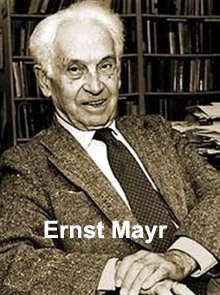





 The Daily Hatch
