“I believe in a principle that was enunciated rather well by Bertrand Russell which is that you should try to keep away from having irrational beliefs. You should believe things for which you can find some evidence, apart from commitment to principles – like equality, freedom, and justice.”
What is the real problem that Dr. Chomsky has? Unlike others who have examined the evidence he just outright dismisses it.
Is this good evidence to show there is a God behind it all?
First, isn’t it worth noting that the Old Testament predicted that the Jews would regather from all over the world and form a new reborn nation of Israel.Second, it was also predicted that the nation of Israel would become a stumbling block to the whole world. Third, it was predicted that the Hebrew language would be used again as the Jews first language even though we know in 1948 that Hebrew at that time was a dead language!!!Fourth, it was predicted that the Jews would never again be removed from their land.
Note to Dr. Chomsky: I sent you a CD entitled, “How can I know the Bible is the Word of God?” by Adrian Rogers, and I wonder what you thought of that evidence?
How Can I Know the Bible is the Word of God?
By Dr. Adrian Rogers
Overview
The historical, scientific, and prophetic accuracy of Scripture, along with its life-changing qualities, offer evidence that the Bible is the revealed Word of God.
Introduction
Scripture Passage: Revelation 22:18-19
It is absolutely imperative that you are certain of God’s Word. You will never get much of anything else settled until you are sure of the Bible. Your salvation depends on it, since the Bible says you are born again by “the Word of God” (1 Peter 1:23). Your sanctification depends upon it, because Jesus said, “Sanctify them through thy truth. Thy Word is truth” (John 17:17). Your usefulness depends on it, for the Scriptures say, “These things have I written unto you that believe on the name of the Son of God that you might know that you have eternal life” (1 John 5:13). If you want to be sure of your faith; if you want to be an exclamation pointrather than a question mark, then you need to be certain that the Bible is the Word of God.
Discussion
“For I testify unto every man that heareth the words of the prophecy of this book, If any man shall add unto these things, God shall add unto him the plagues that are written in this book: and if any man shall take away from the words of the book of this prophecy, God shall take away his part out of the book of life, and out of the holy city, and from the things which are written in this book” (Rev. 22:18-19).
God makes it very clear that we are to believe and revere our Bibles, but there is in our world a war over the Word; a battle over the Bible. There are those who despise it; they are against all that we Christians stand for. There are those who deny it; they simply refuse to believe the Bible is the Word of God. There are those who distort it; they twist the words of the Bible to their own destruction. There are those who dissect it, treating Scripture more like a math text than a love story. There are those who disregard it, claiming it unimportant and irrelevant. They want to focus on the here-and-now, so they spend their energies making this world abetter place from which to go to hell. There are those who claim to believe it, giving lip service to the Bible as God’s Word, but they do not know it, nor do they live by it. There is dust on their Bibles and drought in their hearts. Finally, there are those who believe it. They know the Bible is the inspired, inerrant, infallible, authentic Word of God, and they trust it for the daily guidance of their lives. We can have a firm assurance that the Bible is the Word of God. There is an abundance of evidence to support the fact.
Scientific Evidence
Skeptics seem to think that the Bible is full of scientific errors. However, before an individual can make that assertion, they had better make sure they know both science and Scripture. You see, I have heard unbelievers state that the Bible is not a book of science, but a book of religion, which is basically true. It is not written to teach us about science, but to teach us about God. But the God of salvation and the God of creation are the same. Science doesn’t take God by surprise. A close look at Scripture reveals that it is scientifically accurate.
Every now and then science may disagree with the Bible, but usually science just needs time to catch up. For example, in 1861 a French scientific academy printed a brochure offering 51 incontrovertible facts that proved the Bible in error. Today there is not a single reputable scientist who would support those supposed “facts,” because modern science has disproved them all!
The ancients believed the earth was held up by Atlas, or resting on pillars, or even seated on the backs of elephants. But today we know the earth is suspended in space, a fact the Word of God records in Job 26:7: “He . . . hangeth the earth upon nothing.” God revealed the facts of cosmology long before man had any idea of the truth.
For centuries man believed the earth was flat, but now we know the earth is a globe. The prophet Isaiah, writing 750 years before the birth of Christ, revealed that “God sitteth upon the circle of the earth” (Isaiah 40:22). The word translated here as “circle” was more commonly translated “sphere.” In other words, Isaiah explained that the earth was a globe centuries before science discovered it.
When Ptolemy charted the heavens, he counted 1026 stars in the sky. But with the invention of the telescope man discovered millions and millions of stars, something that Jeremiah 33:22 revealed nearly three thousand years ago: “The host of heaven cannot be numbered.” How did these men of God know the truth of science long before the rest of the world discovered it? They were moved by the Holy Spirit to write the truth. God’s Word is not filled with errors. It is filled with facts, even scientific facts.
When the black plague was killing one quarter of Europe’s population in the fourteenth century, it was the church, not science, that helped overcome the dread disease. The leaders in the church noticed the instructions given by the Lord to Moses in Leviticus 13:46: “All the days wherein the plague shall be in him he shall be defiled; he is unclean: he shall dwell alone; without the camp shall his habitation be.” These early believers did not know microbiology or understand what germs were, but they could understand a clear teaching to quarantine someone who was sick. So they followed the Biblical dictum, quarantined those sick with the plague, and stopped it from spreading. The Bible had its science correct even before man discovered the truth! Don’t accept the charge that the Bible is filled with scientific errors. Modern science seems determined to explain God away, and refuses to acknowledge any evidence of the supernatural. But the science of Scripture is one reason to accept the Bible as God’s Word.
Historical Evidence
The Bible is not primarily a history book, but it records history, and all the things we believe as Christians are historical fact. Historians have criticized the Bible as being filled with errors, but in our lifetime we have seen the history of the Scriptures proven right time after time. For example, linguists rejected the fact that Moses authored the Pentateuch, claiming that people didn’t know how to write during Moses’ day. But then the Tel Elarmona tablets were discovered in northern Egypt, containing business transactions of people in Palestine centuries before Moses was born. It turns out the Bible was correct–the people of Moses’ day did have a written language.
For years historians claimed Daniel’s story of King Belshazzar was a fake, that there was no record of that Babylonian king. They claimed the last Babylonian king was named Nabinitus, and that Belshazzar never existed. Then one day an archeologist uncovered a clay tablet describing the rule of Belshazzar, who was co-regent with his father, King Nabinitus. The Bible had been right all along.
Historians and archaeologists have dug into the history of both the Old and New Testaments, and each time the historical accuracy of Scripture has been upheld. That is one of the reasons we can trust the Bible.
Wonderful Unity
Another reason to trust the Scripture as the Word of God is that it offers a unique unity. Here is one unified book, yet it is really 66 books put together. Those books were written by at least forty different authors over a period of sixteen hundred years. They were written in thirteen countries, on three continents, by people of all different backgrounds. Some were shepherds, others were kings; some were soldiers, others were scholars; some were learned historians, others were unschooled fishermen. They wrote on different subjects, at different times, in at least three different languages. Yet on all subjects they came together to create one unified book that reveals the story of God and His people. From Genesis to Revelation, it reads as one book. What incredible unity! I’ve been studying this book for forty years, and the more I study the more unified I find it. There are no hidden flaws, only hidden beauties. The Bible has but one theme: salvation. It has one hero: Jesus. It has one villain: Satan. It has one purpose: to glorify God. How could this incredible book be written apart from divine intervention? There was clearly a Master Architect who designed this book, giving it a wonderful unity. That’s why I believe it.
Fulfilled Prophecy
Another reason we can believe the Bible is because of the fulfilled prophecies contained in it. It is the only book of its kind with so many accurate prophecies. For example, there are over 300 Old Testament prophecies dealing with Jesus Christ that are fulfilled in the New Testament. Statisticians tell us that to suggest they are merely fulfilled by chance is an impossibility. A skeptic might say that Jesus, as a student of the Old Testament, simply arranged to fulfill these prophecies. But how could He arrange to be born in Bethlehem, fulfilling the prophecy of Micah? How could He arrange to be born of a virgin? How could He arrange for the prophet Isaiah to write all kinds of intricate details of the Lord centuries before He was born? And could He have arranged for the psalmist to describe His death by crucifixion long before that style of punishment was first used? Could He have arranged for the Roman government to crucify Him upon a cross, or for Judas to betray Him for exactly thirty pieces of silver, as the Old Testament prophesied? Finally, could He have arranged His own resurrection from the dead three days after His burial?
Well, in a sense the Lord Jesus did arrange all of that. As God, He revealed it to the Old Testament authors, who wrote the prophecies that Jesus fulfilled. And so convinced were those who saw Jesus, that they were willing to lay down their lives for the truth. No one lays down their life for a lie. The early Christians knew that Jesus was who He claimed to be. There is no way to explain fulfilled prophecy apart from divine inspiration.
The Ever-Living Quality of Scripture
Another reason we can trust the Bible is that it is always alive. No book has endured as much opposition. Men have laughed at it, scorned it, burned it, and made laws against it. At times it has been illegal to even own a Bible. Men have preached its funeral. But the corpse has outlived its pallbearers. The Bible has survived. Despite all the attempts to bury the Bible, it has continued to endure. No other book can make that claim. The ancient religious manuscripts of the pagans have disappeared, but the Bible continues. The wisdom of great men is often forgotten by succeeding generations, but the wisdom of God remains intact and available. The Word of the Lord endureth forever. That unique quality makes me believe that this is a special book–God’s book–and He intends for man to have it.
The Life-Changing Quality of Scripture
The Bible is not like any other book. It is alive and powerful. It describes itself as a sword and as dynamite. It has power to change lives and power to save sinners. No other book, no other power can take men’s guilt away except the Bible. It sanctifies those who believe. It brings truth and maturity to the saints. You will never grow spiritually strong until you begin to feed on the milk of the Word. It offers sufficiency to the sufferer. Many times I have seen people hurting or in torment, and they have found comfort in the Bible which they could find nowhere else. It brings satisfaction to the scholar. You can study it for a lifetime and still not fathom its depths. It is a book so deep you can swim forever and never touch bottom, yet so peaceful that even a child can take a drink without fear of drowning. You can never move on in your faith until you come to see the Bible for what it is: God’s precious gift to us, given so that we may know Him and find eternal life in Him. You can be certain that the Bible is the Word of God.
About Dr. Adrian Rogers
Dr. Adrian Rogers was the Pastor Emeritus of Bellevue Baptist Church and one of America’s most respected Bible preachers. Under his pastoral leadership, Bellevue Baptist Church in Memphis, Tennessee, grew from 9,000 members in 1972 to more than 29,000. A staunch defender of Biblical inerrancy, Pastor Rogers was called upon to serve three times as President of the 14-million member Southern Baptist Convention. Adrian Rogers has written numerous books: Mastering Your Emotions; God’s Way to Health, Wealth and Wisdom; The Power of His Presence; and Ten Secrets for a Successful Family; Kingdom Authority, Believe in Miracles but Trust in Jesus; Standing for Light and Truth; God’s Wisdom is Better Than Gold; plus many others.
Dr. Rogers was also the pastor/teacher of Love Worth Finding, a ministry which extends the message of Dr. Rogers far beyond the congregation, proving to be a blessing to listeners around the nation every day. This radio and television ministry takes Dr. Rogers’ message in four languages to more than 14,000 television outlets and 1,100 radio outlets in the United States and in 150 other countries including all of Europe, Latin America, China, Australia, Africa, India, and beyond. Tapes and other resources from Dr. Rogers are available through Love Worth Finding Ministries, P.O. Box 38300, Memphis, TN 38183-0300, 1-800-274-LOVE (5683).
Dr. Rogers went to be with Jesus on November 15, 2005.
The Bible maintains several characteristics that prove it is from God. One of those is the fact that the Bible is accurate in every one of its details. The field of archaeology brings to light this amazing accuracy.
_________________________-
Many people have questioned the accuracy of the Bible, but I have posted many videos and articles with evidence pointing out that the Bible has many pieces of evidence from archaeology supporting the view that the Bible is historically accurate. Take a look at the video above and below.
QUOTE FROM DR. Marvin Minsky taken from atheistic blogger:
My head says the former; my heart, the latter. Maybe my head needs some help—and I know where to find my potential helper: at the Massachusetts Institute of Technology, my alma mater. Marvin Minsky, the legendary pioneer of artificial intelligence, is not known to be shy about entering the science-religion debate.
To get Minsky started (it doesn’t take much), I ask him whether it is efficacious for scientists to seek harmony between science and theology.
Minsky gives me a look and calls religion “an amazing phenomenon for thousands of years” that is a “psychologically wonderful device.” But he’s just warming up.
“Take all the questions you can’t answer and give them a name,” says Minsky. “So somebody says, ‘Well, God did that.’ And the right question to then ask is, ‘Well, how does God work?’ And [believers] regard that as rude. So there’s something strange about theology. It’s a system of thinking which teaches you not to ask questions. And so it’s incompatible with science. “The trouble with religion,” Minsky continues, “is it picks particular things and says, ‘Don’t think about this.’ ‘Don’t change that.’ ‘Abide by this Book.’ And that’s very convenient. It saves a lot of time. At any period, if there are questions science can’t yet answer, why knock yourself out? I regard religion as a wonderful way to save people’s time.”
Minsky believes that if religion would not have impeded science for hundreds, if not thousands, of years, humanity would be far advanced, even in dramatically extending human life. “I think death will go away,” Minsky opines. “But we don’t need to pray for it. We need to work for it.” Not yet finished, Minsky adds, “If we look at religion as fossilized old beliefs, some of which may have been useful, that’s fine. But I can’t see serious discussions of theological ideas because they’re all nutty. Unless you say how God works, saying that God exists doesn’t explain anything.”
Minsky is fierce. Good for him. Religion as an excuse to avoid hard questions? Based on the history of religion, he makes a good argument.
But from the foibles or fallacies of human religion, does anything really follow about a Creator God?
_____
Let’s break this down a little bit. Religion does not encourage science but discourages it by suggesting that we omit the hard work and just say God did it. Minsky is also asserting in this same discussion, “Unless you say how God works, saying that God exists doesn’t explain anything,” and he is implying that brilliant scientists are the ones who give us the answers that we can depend on.
My first response is to recount my correspondence with the famous evolutionist Ernst Mayr (1904-2005) of Harvard. In his letter to me he basically said that there are many chemists and molecular biologists who find the story of gradual evolution of life totally convincing and that he is sticking with them. This is very similar to the approach by Dr. Minsky and it is an appeal to authority in that they are suggesting that we just accept the brilliant scientists’ point of view because they are brilliant scientists and they are smarter than the rest of us.THERE IS A SIMPLE ANSWER THAT I COULD GIVE to both Dr. Mayr and Dr. Minsky which is a quote from Adrian Rogers:
Did you know that all atheists are not atheists because of intellectual problems? They’re atheists because of moral problems. You say, “But I know some brilliant people who are atheists.” Well, that may be so, but I know some brilliant people who are not. You say, “I know some foolish people who believe in God.” Well, I know everyone who doesn’t believe in God is foolish.
In other words there are brilliant and stupid people on both sides of the fence and it is not an intellectual issue but a moral one. Let’s take a look at the history of science that was handled down to us from Western Europe and take a closer examination of those great men’s religious views and if their religious views were corrosive to their scientific pursuits? This is the accusation of many modern day evolutionists.
Ernst Mayr (pictured below with the beard)
Bill Gates, John Grisham, James Michener, E. O. Wilson, Ernst Mayr, George Lucas…
Published on May 19, 2012
Bill Gates, John Grisham, James Michener, E. O. Wilson, Ernst Mayr, George Lucas, James Cameron, Larry King, Ian Wilmut, Jane Goodall, Stephen Jay Gould, Tim D. White, Leon Lederman, Timothy Berners-Lee and Bill Gates. Complete and more interview go to websites “www.achievement.org”.
Mais entrevistas e completas no site “www.achievement.org”.
In 1994 and 1995 I had the opportunity to correspond with the famous evolutionist Dr. Ernst Mayr of Harvard. He stated in his letter of 10-3-94, “Owing to your ideological commitments, it is only natural that you cannot accept the cogency of the scientific evidence. However, to a person such as myself without such commitments, the story of the gradual evolution of life as reconstructed by chemists and molecular biologists is totally convincing.”
I responded by pointing out three points. First, Scientific Naturalism is atheistic by definition. Second, many great scientists of the past were Christians, and that did not disqualify their observations and discoveries. Third, the fact that evolution is true does not rule out God’s existence (Harvard’s own Owen Gingerich and many others such as Francis Collins hold to a Creator and evolution).
Let me just spend some time on my second point. Francis Schaeffer in his book “HOW SHOULD WE THEN LIVE?” stated that according to Alfred North Whitehead and J. Robert Oppenheimer, both renowned philosophers and scientists of our era (but not Christians themselves), modern science was born out of the Christian world view. Whitehead said that Christianity is the “mother of science” because of the insistence on the rationality of God. In the article, “Christianity and Technological Advance – The Astonishing Connection,” by T. V. Varughese, Ph.D, he observed:
Without question, “technology” has now become the new magic word in place of the word “science.” Since technology represents the practical applications of science, it is clearly consumer-oriented. Herein is bright economic promise to all who can provide technology.
In terms of technology, our present world can be divided into at least three groups: countries that are strong providers of technology, both original and improved; countries that are mass producers because of cheaper labor; and countries that are mostly consumers. Without a doubt, being in the position of “originating” superior technology should be a goal for any major country. The difficult question, however, is “how.”
An obvious place to start suggests itself. Why not begin with the countries that have established themselves as strong originators of technology and see if there is a common thread between them? The western nations, after the Renaissance and the Reformation of the 16th century, offer a ready example. Any book on the history of inventions, such as the Guinness Book of Answers, will reveal that the vast majority of scientific inventions have originated in Europe (including Britain) and the USA since the dawn of the 17th century. What led to the fast technological advances in the European countries and North America around that time?
The answer is that something happened which set the stage for science and technology to emerge with full force. Strange as it may seem, that event was the return to Biblical Christianity in these countries.
The Epistemological Foundation of Technology
According to Alfred North Whitehead and J. Robert Oppenheimer, both renowned philosophers and scientists of our era (but not Christians themselves), modern science was born out of the Christian world view. Whitehead said that Christianity is the “mother of science” because of the insistence on the rationality of God.[1] Entomologist Stanley Beck,though not a Christian himself, acknowledged the corner-stone premises of science which the Judeo-Christian world view offers: “The first of the unprovable premises on which science has been based is the belief that the world is real and the human mind is capable of knowing its real nature. The second and best-known postulate underlying the structure of scientific knowledge is that of cause and effect. The third basic scientific premise is that nature is unified.”[2] In other words, the epistemological foundation of technology has been the Judeo-Christian world view presented in the Bible…
Perhaps the most obvious affirmation that Biblical Christianity and science are friends and not foes comes from the fact that most of the early scientists after the Renaissance were also strong believers in the Bible as the authoritative source of knowledge concerning the origin of the universe and man’s place in it.[4] The book of Genesis, the opening book of the Bible, presents the distinctly Judeo-Christian world view of a personal Creator God behind the origin and sustenance of the universe (Genesis 1:1; Colossians 1:17; etc.).
Among the early scientists of note who held the Biblical creationist world view are Blaise Pascal (1623-1662), Sir Isaac Newton (1642-1727), and Samuel Morse (1791-1872) – what motivated them was a confidence in the “rationality” behind the universe and the “goodness” of the material world. The creation account in Genesis presents an intelligent, purposeful Creator, who, after completing the creation work, declared it to be very good (Genesis 1:31). That assures us that the physical universe operates under reliable laws which may be discovered by the intelligent mind and used in practical applications. The confidence in the divinely pronounced goodness of the material world removed any reluctance concerning the development of material things for the betterment of life in this world. The spiritual world and the material world can work together in harmony.
References –
Francis A. Schaeffer: How Should We Then Live (Revell, 1976), p. 132.
Henry M. Morris, Biblical Basis for Modern Science (Baker, 1991), p. 30.
Schaeffer, p. 131.
Henry M. Morris, Men of Science, Men of God (Master Books, CA, 1988), 107 pp.
Many of these great scientists of the past were before Darwin, but not all of them. However, all of them were acquainted with secular philosophies and some were in fact opponents of Darwinism (Agassiz, Pasteur, Lord Kelvin, Maxwell, Dawson, Virchow, Fabre, Fleming, etc). Many of them believed in the inspiration and authority of the Bible, as well as in the deity and saving work of Jesus Christ. They believed that God had supernaturally created all things, each with its own complex structure for its own unique purpose. They believed that, as scientists, they were “thinking God’s thoughts after Him,” learning to understand and control the laws and processes of nature for God’s glory and man’s good. They believed and practiced science in exactly the same way that modern creationist scientists do.
And somehow this attitude did not hinder them in their commitment to the “scientific method.” In fact one of them, Sir Francis Bacon, is credited with formulating and establishing the scientific method! They seem also to have been able to maintain a proper “scientific attitude,” for it was these men (Newton, Pasteur, Linnaeus, Faraday, Pascal, Lord Kelvin, Maxwell, Kepler, etc.) whose researches and analyses led to the very laws and concepts of science which brought about our modern scientific age….
To illustrate the caliber and significance of these great scientists of the past, Tables I and II have been prepared. These tabulations are not complete lists, of course, but at least are representative and they do point up the absurdity of modern assertions that no true scientist can be a creationist and Bible-believing Christian.
Table I lists the creationist “fathers” of many significant branches of modern science. Table II lists the creationist scientists responsible for various vital inventions, discoveries, and other contributions to mankind. These identifications are to some degree oversimplified, of course, for even in the early days of science every new development involved a number of other scientists, before and after. Nevertheless, in each instance, a strong case can be made for attributing the chief responsibility to the creationist scientist indicated. At the very least, his contribution was critically important and thus supports our contention that belief in creation and the Bible helps, rather than hinders, scientific discovery.
_______________
My relatives live 3 miles from Spring Hill, Tennessee. When the new General Motors plant opened there I got to go see it. What if I had said, “The assembly line created a beautiful Saturn automobile!” Hopefully, some would have corected me by responding, “The assembly line did not create the automobile. It was first designed by the General Motors engineers in Detroit.” ASSUMING EVOLUTION IS TRUE, IT WOULD STILL ONLY BE THE MECHANISM. DOES EVOLUTION ACCOUNT FOR THE DESIGNER?
NOTABLE INVENTIONS, DISCOVERIES
OR DEVELOPMENTS BY CREATIONIST SCIENTISTS
CONTRIBUTION
SCIENTIST
ABSOLUTE TEMPERATURE SCALE
LORD KELVIN (1824-1907)
ACTUARIAL TABLES
CHARLES BABBAGE (1792-1871)
BAROMETER
BLAISE PASCAL (1623-1662)
BIOGENESIS LAW
LOUIS PASTEUR (1822-1895)
CALCULATING MACHINE
CHARLES BABBAGE (1792-1871)
CHLOROFORM
JAMES SIMPSON (1811-1870)
CLASSIFICATION SYSTEM
CAROLUS LINNAEUS (1707-1778)
DOUBLE STARS
WILLIAM HERSCHEL (1738-1822)
ELECTRIC GENERATOR
MICHAEL FARADAY (1791-1867)
ELECTRIC MOTOR
JOSEPH HENRY (1797-1878)
EPHEMERIS TABLES
JOHANN KEPLER (1571-1630)
FERMENTATION CONTROL
LOUIS PASTEUR (1822-1895)
GALVANOMETER
JOSEPH HENRY (1797-1878)
GLOBAL STAR CATALOG
JOHN HERSCHEL (1792-1871)
INERT GASES
WILLIAM RAMSAY (1852-1916)
KALEIDOSCOPE
DAVID BREWSTER (1781-1868)
LAW OF GRAVITY
ISAAC NEWTON (1642-1727)
MINE SAFETY LAMP
HUMPHREY DAVY (1778-1829)
PASTEURIZATION
LOUIS PASTEUR (1822-1895)
REFLECTING TELESCOPE
ISAAC NEWTON (1642-1727)
SCIENTIFIC METHOD
FRANCIS BACON (1561-1626)
SELF-INDUCTION
JOSEPH HENRY (1797-1878)
TELEGRAPH
SAMUEL F.B. MORSE (1791-1872)
THERMIONIC VALVE
AMBROSE FLEMING (1849-1945)
TRANS-ATLANTIC CABLE
LORD KELVIN (1824-1907)
VACCINATION & IMMUNIZATION
LOUIS PASTEUR (1822-1895)
_______________
2000 Interview with Ernst Mayr, Harvard University
Uploaded on Jul 13, 2008
Interviews conducted in March 2000 at the annual meeting of the American Institute of Biological Sciences on the topic of Challenges for the New Millennium. Museum of Natural History, Smithsonian Institution, Washington DC. See http://www.aibs.org/media-library/ for additional AIBS conference recordings.
With the passing in recent years of the three most revered scientific spokesmen for evolution—Isaac Asimov, Carl Sagan, and now Stephen Jay Gould—Professor Ernst Mayr is left as the unquestioned dean of the modern evolutionary establishment.
Gould, Asimov, and Sagan were all three extremely prolific and brilliant writers. All three were atheistic professors at prestigious eastern universities (Gould at Harvard, Asimov at Boston University, Sagan at Cornell), and all three were effusive and vigorous anti-creationists. They were formidable opponents (but eminently quotable), and we miss them. All three died at relatively young ages.
But that leaves Ernst Mayr, long-time professor of biology at Harvard. Dr. Mayr was born in 1904 and is (at this writing) still very much alive, and nearing the century mark. Dr. Gould recently called him “the greatest living evolutionary biologist and a writer of extraordinary insight and clarity” (in a jacket blurb on Mayr’s latest book).
Mayr’s New Book
And that book is the subject of this article. Its title is intriguing—What Evolution Is (Basic Books, 2001, 318 pages),—for if anyone could speak authoritatively on such a subject, it should be Professor Mayr. In his adulatory foreword, Jared Diamond, another leading modern evolutionist, concludes: “There is no better book on evolution. There will never be another book like it” (p. xii).
That evaluation should give any reader very high expectations. Unfortunately, however, Dr. Mayr first shows his disdain for creationism, not even considering its arguments. He simply says:
It is now actually misleading to refer to evolution as a theory, considering the massive evidence that has been discovered over the last 140 years documenting its existence. Evolution is no longer a theory, it is simply a fact (p. 275).
He dismissed the evidence for creation as unworthy of further discussion. “The claims of the creationists” he says, “have been refuted so frequently and so thoroughly that there is no need to cover this subject once more” (p. 269).
Ignoring Creation Evidence
He himself, however, has apparently not bothered to read any creationist or secular anti-evolutionist scientific books or articles. Or at least that is what one would infer from the fact that none of them or their arguments and evidence are even mentioned in his book.
No mention is made by Mayr, for example, of creationist expositions of the amazing created designs in living systems, nor of the effects of God’s curse on the creation, or of the significance of the great flood in understanding the geologic record. He does not even acknowledge the significance of naturalistic catastrophism or of such scientific concepts as complexity or probability. Current ideas about “intelligent design” are never mentioned. The origins of all things are due to time, chance, and natural selection, no matter how complex and interdependent they may be, according to Professor Mayr, who had been (along with Julian Huxley, George Simpson, and a few others) primarily responsible for the so-called modern evolutionary synthesis (or neo-Darwinism) back in the 1930s and 1940s.
Neither does Mayr seem aware that there are now thousands of credentialed and knowledgeable scientists (including a great many biologists) who reject evolution, giving not even a nod to the Creation Research Society, or to ICR, or any other creationist organization. He does occasionally refer to God or to Christianity, but only in passing, and always in a context that indicates that he does not believe in either one. He, like his three younger colleagues, is an atheist, and this naturally constrains him to ignore any possible theological implications of the origins issues.
The Alleged Evidence for Evolution
Mayr’s new book is beautifully written and does contain much good material, but it will not convert many to evolutionism, even though he does devote a chapter to what he thinks are the evidences for evolution. These evidences are essentially the same as those used 140 years ago by Darwin in the Origin (fossils, comparative morphology, embryological similarities and recapitulation, vestigial structures, and geographical distribution). Mayr adds nothing new to these arguments, ignoring the fact that creationists (and even a number of evolutionists) have long since refuted all of them. He does devote a brief section to the more recent “evidence” from molecular biology. But that also has been vigorously disputed by a number of specialists in this field, especially the supposed evolutionary relationships implied by the molecules. Even Mayr admits that “molecular clocks are not nearly as constant as often believed” (p. 37), but he does not mention any of the numerous contradictory relationships implied by these biochemical studies (e.g., the well-known genomic similarities of humans and bananas).
As do most evolutionists, Mayr spends much time in discussing micro-evolution, whereas modern creationists only reject macroevolution. He devotes five chapters to microevolution and only one to macroevolution. This particular chapter is quite long, discussing many speculative theories about how macroevolutionary changes might be produced, but there is one vital deficiency. He gives no example of any macroevolutionary change known to have happened. In other words, macroevolution seems never to have occurred within the several thousand years of recorded history. Thus, real evolution (as distinct from variation, recombination, hybridization, and other such “horizontal” changes) does not happen at present. Where, we would ask Professor Mayr, are there any living forms in the process of evolutionary change? He gives no examples, of course, because there are none.
As far as pre-human history is concerned, Dr. Mayr does insist that the fossil record documents past evolution. He cites the usual claims—horses, Archaeopteryx, mammal-like reptiles, walking whales, etc.—which are very equivocal, at best, and have all been shown by creationists to be invalid as transitional forms. Instead of a handful of highly doubtful examples, there ought to be thousands of obvious transitional forms in the fossils if evolution had really been occurring. Yet Mayr admits,
Wherever we look at the living biota, . . . discontinuities are overwhelmingly frequent. . . . The discontinuities are even more striking in the fossil record. New species usually appear in the fossil record suddenly, not connected with their ancestors by a series of intermediates (p. 189).
Professor Mayr still says that the fossils are “the most convincing evidence for the occurrence of evolution” (p. 13). Yet he also says that “the fossil record remains woefully inadequate” (p. 69). Thus, as creationists have often pointed out, there is no real evidence of either present or past evolution.
We have repeatedly noted also that the scientific reason why this is so is because real evolution to any higher level of complexity is impossible by the law of entropy, which states the proven fact that every system of any kind “tends” to go toward lower complexity, unless constrained otherwise by some pre-designed external program and mechanism.
Yet Ernst Mayr seems either to ignore or misunderstand this key argument of the creationists. Here is what he says:
Actually there is no conflict, because the law of entropy is valid only for closed systems, whereas the evolution of a species of organisms takes place in an open system in which organisms can reduce entropy at the expense of the environment and the sun supplies a continuing input of energy (p. 8).
And that’s all he says about one of the key arguments against evolution. This ubiquitous dodge of the evolutionists has been discredited again and again by creationists, and one would think that this “greatest living evolutionary biologist” in this “best book on evolution” would at least take notice of our arguments! At least half of America’s population, according to many polls, are creationists, apparently agreeing more with us than with Mayr.
An open system and external energy are, indeed, necessary conditions for a system to grow in complexity, but most definitely are not sufficient conditions. The question is just how does the sun’s energy produce complexity in an open system? The fact is that the application of external heat energy to an open system (such as from the sun to the earth) will increase the entropy (that is, decrease the organized complexity) in any open system, if that’s all there is. This is a basic principle of thermodynamics, and neither Mayr nor any other evolutionist has answered this problem. Evolution seems to be impossible by the known laws of science.
Professor Mayr does not deal with the theological or Biblical evidences, of course. For those who believe in God and the Bible, on the other hand, creation—not evolution—is, to appropriate Mayr’s words, “simply a fact.” Evolution is merely a belief held by many who “willingly are ignorant” (II Peter 3:5) of the strong evidences and arguments for creation, and who don’t even bother to consider them. In the words of the apostle Paul: “Where is the disputer of this world? hath not God made foolish the wisdom of this world?” (I Corinthians 1:20).
The current issue of Biblical Archaeology Review has an article entitled, “Archaeology Confirms 50 Real People in the Bible,” by Lawrence Mykytiuk. The first in his list is King David, whose name was found in the Tel Dan Stela, found in Tel Dan in July, 1993. Mykytiuk writes:
According to the Bible, David ruled in the tenth century B.C.E., using the traditional chronology. Until 1993, however, the personal name David had never appeared in the archaeological record, let alone a reference to King David. That led some scholars to doubt his very existence. According to this speculation David was either a shadowy, perhaps mythical, ancestor or a literary creation of later Biblical authors and editors. In 1993, however, the now-famous Tel Dan inscription was found in an excavation led by Avraham Biran. Actually, it was the team’s surveyor, Gila Cook, who noticed the inscription on a basalt stone in secondary use in the lower part of a wall. Written in ninth-century B.C.E. Aramaic, it was part of a victory stele commissioned by a non-Israelite king mentioning his victory over “the king of Israel” and the “House of David.” [See BAR 20:02, Mar-Apr 1994] Whether or not the foreign king’s claim to victory was true, it is clear that a century after he had died, David was still remembered as the founder of a dynasty.
This past October I had the occasion to photograph this important stela, which is housed in the Israel Museum in Jerusalem.
Gary Byers suggests that the stela “most likely memorializes the victory of Hazael, king of Aram, over Joram, king of Israel, and Ahaziah, king of Judah, at Ramoth Gilead recorded in 2 Kings 8:28–29″ (Bible and Spade 16:4, p. 121).
For more information on the House of David see Ferrell Jenkins’ post illustrating Isaiah 7 here.
____________
The Bible and Archaeology (1/5)
The Bible maintains several characteristics that prove it is from God. One of those is the fact that the Bible is accurate in every one of its details. The field of archaeology brings to light this amazing accuracy and Kyle Butt does a great job of showing that in this film series he did on “The Bible and Archaeology.”
_________________________-
Is the Bible historically accurate? Here are some of the posts I have done in the past on the subject:
This clay tablet is a Babylonian chronicle recording events from 605-594BC. It was first translated in 1956 and is now in the British Museum. The cuneiform text on this clay tablet tells, among other things, 3 main events: 1. The Battle of Carchemish (famous battle for world supremacy where Nebuchadnezzar of Babylon defeated Pharoah Necho of Egypt, 605 BC.), 2. The accession to the throne of Nebuchadnezzar II, the Chaldean, and 3. The capture of Jerusalem on the 16th of March, 598 BC.
King Hezekiah of Judah ruled from 721 to 686 BC. Fearing a siege by the Assyrian king, Sennacherib, Hezekiah preserved Jerusalem’s water supply by cutting a tunnel through 1,750 feet of solid rock from the Gihon Spring to the Pool of Siloam inside the city walls (2 Kings 20; 2 Chron. 32). At the Siloam end of the tunnel, an inscription, presently in the archaeological museum at Istanbul, Turkey, celebrates this remarkable accomplishment.
It contains the victories of Sennacherib himself, the Assyrian king who had besieged Jerusalem in 701 BC during the reign of king Hezekiah, it never mentions any defeats. On the prism Sennacherib boasts that he shut up “Hezekiah the Judahite” within Jerusalem his own royal city “like a caged bird.” This prism is among the three accounts discovered so far which have been left by the Assyrian king Sennacherib of his campaign against Israel and Judah.
In addition to Jericho, places such as Haran, Hazor, Dan, Megiddo, Shechem, Samaria, Shiloh, Gezer, Gibeah, Beth Shemesh, Beth Shean, Beersheba, Lachish, and many other urban sites have been excavated, quite apart from such larger and obvious locations as Jerusalem or Babylon. Such geographical markers are extremely significant in demonstrating that fact, not fantasy, is intended in the Old Testament historical narratives;
Most doubting scholars back then said that the Hittites were just a “mythical people that are only mentioned in the Bible.” Some skeptics pointed to the fact that the Bible pictures the Hittites as a very big nation that was worthy of being coalition partners with Egypt (II Kings 7:6), and these bible critics would assert that surely we would have found records of this great nation of Hittites. The ironic thing is that when the Hittite nation was discovered, a vast amount of Hittite documents were found. Among those documents was the treaty between Ramesses II and the Hittite King.
The Bible mentions that Shishak marched his troops into the land of Judah and plundered a host of cities including Jerusalem, this has been confirmed by archaeologists. Shishak’s own record of his campaign is inscribed on the south wall of the Great Temple of Amon at Karnak in Egypt. In his campaign he presents 156 cities of Judea to his god Amon.
The Moabite Stone also known as the Mesha Stele is an interesting story. The Bible says in 2 Kings 3:5 that Mesha the king of Moab stopped paying tribute to Israel and rebelled and fought against Israel and later he recorded this event. This record from Mesha has been discovered.
The tribute of Jehu, son of Omri, silver, gold, bowls of gold, chalices of gold, cups of gold, vases of gold, lead, a sceptre for the king, and spear-shafts, I have received.”
Sir William Ramsay, famed archaeologist, began a study of Asia Minor with little regard for the book of Acts. He later wrote:
I found myself brought into contact with the Book of Acts as an authority for the topography, antiquities and society of Asia Minor. It was gradually borne upon me that in various details the narrative showed marvelous truth.
9B Discovery of Ebla Tablets. When I think of discoveries like the Ebla Tablets that verify names like Adam, Eve, Ishmael, David and Saul were in common usage when the Bible said they were, it makes me think of what amazing confirmation that is of the historical accuracy of the Bible.
This cube is inscribed with the name and titles of Yahali and a prayer: “In his year assigned to him by lot (puru) may the harvest of the land of Assyria prosper and thrive, in front of the gods Assur and Adad may his lot (puru) fall.” It provides a prototype (the only one ever recovered) for the lots (purim) cast by Haman to fix a date for the destruction of the Jews of the Persian Empire, ostensibly in the fifth century B.C.E. (Esther 3:7; cf. 9:26).
The Bible mentions Uzziah or Azariah as the king of the southern kingdom of Judah in 2 Kings 15. The Uzziah Tablet Inscription is a stone tablet (35 cm high x 34 cm wide x 6 cm deep) with letters inscribed in ancient Hebrew text with an Aramaic style of writing, which dates to around 30-70 AD. The text reveals the burial site of Uzziah of Judah, who died in 747 BC.
The Pilate Inscription is the only known occurrence of the name Pontius Pilate in any ancient inscription. Visitors to the Caesarea theater today see a replica, the original is in the Israel Museum in Jerusalem. There have been a few bronze coins found that were struck form 29-32 AD by Pontius Pilate
This beautifully decorated ossuary found in the ruins of Jerusalem, contained the bones of Caiaphas, the first century AD. high priest during the time of Jesus.
In June 1961 Italian archaeologists led by Dr. Frova were excavating an ancient Roman amphitheatre near Caesarea-on-the-Sea (Maritima) and uncovered this interesting limestone block. On the face is a monumental inscription which is part of a larger dedication to Tiberius Caesar which clearly says that it was from “Pontius Pilate, Prefect of Judea.”
Despite their liberal training, it was archaeological research that bolstered their confidence in the biblical text:Albright said of himself, “I must admit that I tried to be rational and empirical in my approach [but] we all have presuppositions of a philosophical order.” The same statement could be applied as easily to Gleuck and Wright, for all three were deeply imbued with the theological perceptions which infused their work.
The Bible and Archaeology (1/5) The Bible maintains several characteristics that prove it is from God. One of those is the fact that the Bible is accurate in every one of its details. The field of archaeology brings to light this amazing accuracy and Kyle Butt does a great job of showing that in this […]
I have posted many of the sermons by John MacArthur. He is a great bible teacher and this sermon below is another great message. His series on the Book of Proverbs was outstanding too. I also have posted several of the visits MacArthur made to Larry King’s Show. One of two most popular posts I […]
I have posted many of the sermons by John MacArthur. He is a great bible teacher and this sermon below is another great message. His series on the Book of Proverbs was outstanding too. I also have posted several of the visits MacArthur made to Larry King’s Show. One of two most popular posts I […]
Adrian Rogers – How you can be certain the Bible is the word of God Great article by Adrian Rogers. What evidence is there that the Bible is in fact God’s Word? I want to give you five reasons to affirm the Bible is the Word of God. First, I believe the Bible is the […]
“In Christ Alone” music video featuring scenes from “The Passion of the Christ”. It is sung by Lou Fellingham of Phatfish and the writer of the hymn is Stuart Townend. On this Easter weekend 2013 there is no other better time to take a look at the truth and accuracy of the Bible. Is the […]
The Bible and Archaeology (1/5) The Bible maintains several characteristics that prove it is from God. One of those is the fact that the Bible is accurate in every one of its details. The field of archaeology brings to light this amazing accuracy. _________________________- Many people have questioned the accuracy of the Bible, but I […]
Larry King – Dr. John MacArthur vs. “father” Manning Uploaded on Sep 26, 2011 GotoThisSite.org ___________ I have seen John MacArthur on Larry King Show many times and I thought you would like to see some of these episodes. I have posted several of John MacArthur’s sermons in the past and my favorite is his […]
Open letter to President Obama (Part 519) (Emailed to White House on 5-3-13.) President Obama c/o The White House 1600 Pennsylvania Avenue NW Washington, DC 20500 Dear Mr. President, I know that you receive 20,000 letters a day and that you actually read 10 of them every day. I really do respect you for trying to get […]
The Scientific Age Published on Jul 24, 2012 Dr. Schaeffer’s sweeping epic on the rise and decline of Western thought and Culture Francis Schaeffer rightly noted, “These two world views stand as totals in complete antithesis in content and also in their natural results….It is not just that they happen to bring forth different results, […]
The Way of Discovery: A Personal Journey of Faith Henry F. Schaefer III The Scientific Age Uploaded by NoMirrorHDDHrorriMoN on Oct 3, 2011 _______________ Episode VII – The Age of Non Reason ____________________ Episode 8: The Age Of Fragmentation Published on Jul 24, 2012 Dr. Schaeffer’s sweeping epic on the rise and decline of Western thought and […]
The Long War against God-Henry Morris, part 6 of 6 _______________ I have debated with Ark Times Bloggers many times in the past on many different subjects. Here are some of the subjects: communism, morality, origin of evil, and the Tea Party. I have always loved to post about evolution and I have had a chance […]
The Long War against God-Henry Morris, part 5 of 6 _______________ I have debated with Ark Times Bloggers many times in the past on many different subjects. Here are some of the subjects: communism, morality, origin of evil, and the Tea Party. I have always loved to post about evolution and I have had a chance […]
The Long War against God-Henry Morris, part 4 of 6 _______________ I have debated with Ark Times Bloggers many times in the past on many different subjects. Here are some of the subjects: communism, morality, origin of evil, and the Tea Party. I have always loved to post about evolution and I have had a chance […]
The Long War against God-Henry Morris, part 1 of 6 Uploaded by FLIPWORLDUPSIDEDOWN3 on Aug 30, 2010 _________ I have debated with Ark Times Bloggers many times in the past on many different subjects. Here are some of the subjects: communism, morality, origin of evil, and the Tea Party. I have always loved to post about evolution […]
If there is a law of noncontradiction that there is a claim that it is fundamentally irrational to contradict yourself I don’t see any reason to conclude from that there must be some cosmic magician laying down that law. Similarly I want to say regarding the various moral requirements we don’t need a law giver for them to be genuine requirements. If we want we can say if in fact it seems to me to be a perfectly legitimate thing to say that reason requires that we act in accordance with reason. It lays down these various categorical reasons not to harm people, to aid them and so we can personify reason in that way but all we just mean I think is that there are these compelling, decisive, objective, categorical reasons to behave in certain ways and not behave in other ways.
_____________________________
My response to Dr. Kagan in the short version is to quote Greg Koukl, “So if there is no God, there can’t be any evil, only personal likes and dislikes–what I prefer morally and what I don’t prefer morally.” OR I WOULD CHALLENGE DR. KAGAN TO WATCH THE MOVIE “CRIMES AND MISDEMEANORS” BY WOODY ALLEN SEE IF HE STILL BELIEVES ONLY REASON CAN BE A GOOD GUIDE. (MORE ON THAT LATER IN THIS POST.)
Sorry I missed recording the first few minutes of this but it is still worth watching. John Lennox is a mathematician who debated Richard Dawkins in “The God Delusion Debate”.
________________________
Some people have suggested that God was responsible for evil in the world and that meant that he was responsible for 9/11. However, I wanted to make the simple point today that there must be an absolute standard to judge evil by and most atheists do not have that. Of course, Christians have the Bible.
Today we have a growing number of atheists because of the secular humanism in the schools. The teaching of humanism in the area of moral choices has been the main reason for this. Our students are being taught that we all are a product of chance and there are no absolutes.
The Bible tells us, “{God} has also set eternity in the hearts of men…” (Ecclesiastes 3:11 NIV). The secularist calls this an illusion, but the Bible tells us that the idea that we will survive the grave was planted in everyone’s heart by God Himself. Romans 1:19-21 tells us that God has instilled a conscience in everyone that points each of them to Him and tells them what is right and wrong (also Romans 2:14 -15).
It’s no wonder, then, that a humanist would comment, “Certain moral truths — such as do not kill, do not steal, and do not lie — do have a special status of being not just ‘mere opinion’ but bulwarks of humanitarian action. I have no intention of saying, ‘I think Hitler was wrong.’ Hitler WAS wrong.” (Gloria Leitner, “A Perspective on Belief,” THE HUMANIST, May/June 1997, pp. 38-39)
Here Leitner is reasoning from her God-given conscience and not from humanist philosophy. However, I know how moral relativism works, and I expected that Mrs. Leitner would soon be challenged by her fellow humanists. It wasn’t long before she received criticism. Humanist Abigail Ann Martin responded, “Neither am I an advocate of Hitler; however, by whose criteria is he evil?” (THE HUMANIST, September/October 1997, p. 2)
Do you see where our moral relativism has taken us in the USA?
I had a chance back in 1996 to visit with a gentleman by the name of Robert Lester Mondale while he was retired in Missouri. He was born on May 28, 1904 and he died on August 19, 2003. He was an Unitarian minister and a humanist. In fact, he was the only person to sign all three of the Humanist Manifestos of 1933, 1973 and 2003. In my conversation with him he mentioned that he had the opportunity to correspond with John Dewey who was one of Mondale’s fellow signers of the 1933 Humanist Manifesto I.
I really believe that the influence of John Dewey’s humanistic philosophy has won the battle of the textbooks in the USA today (with evolution teaching being a key component). As a result, we have people like humanist Abigail Ann Martin who wrote, “Neither am I an advocate of Hitler; however, by whose criteria is he evil?” Check out this excellent article by Greg Koukl:
Bosnia, Rape and the Problem of Evil
Gregory Koukl
Greg responds to a letter to the editor in which the writer’s pain causes him to ask the age-old question of why God allows evil to exist.
I was reading the L.A. Times today in the letters to the editor section and there was a letter written by a gentleman in Newport Beach that was a response to a tragic story that the Times had carried a few days ago. Maybe some of you had seen that story or have read about it in the local papers about not just the rank and file tragedy in Bosnia- Hertzegovena, not about the general tragedy of war. The article was about the problems of the refugees and also a women being victimized by soldiers.
…we say, “Why, God? Why me? Why this pain? Why this difficulty?”
This respondent writes, “Glancing at your April 10 paper my eyes fell upon the tragic story ‘Ordeals Put Off Bosnia Rape Victim’s Healing.’ My heart ached for Amira, the 35 year old Muslim woman, mother of two children, suffering the loss of her husband, wandering about the countryside begging to survive. Placed in a detention camp, raped repeatedly by Serb soldiers acting as animal pigs rather than humans, the woman became another tragic victim of human wickedness. Where is mankind headed? My thoughts turn to God and ask, ‘Why, God? Why did you create such monsters? God, are you for real?’ If this is God’s way of teaching or testing my faith”, he continues, ” then my beliefs and faith are being shattered with contempt instead. Having just lost my wife to cancer, maybe my feelings are more prone and fragile to be torn apart and my feelings turn more intensely to those who are suffering also.” It’s signed Victor Jashinski in Newport Beach.There’s probably hardly a person listening to this account that does not feel the same emotion with him. First of all, we feel the sense of horror as we read about the kinds of things that other people do to each other. Just a couple of days ago was the last of a five part series of “The Holocaust” that was on the Family Channel which was re-aired for the first time in fifteen years. But in any event, seeing again in vivid portrayal what man is capable of doing, our hearts and our minds are taken with this situation. Not only that, but we are also touched by evil in the world ourselves as we look at circumstances and we’re horrified. We also look at pains in our own life as this man has reflected and we say, “Why, God? Why me? Why this pain? Why this difficulty?” And this is really one of the most thorny problems and one of the most complex problems that anyone, regardless of their philosophical avocations or persuasions, has to address.
There is no way that I’m going to resolve this in ten minutes because this problem in its fullness, in its entirety resists a thorough resolution. I think there’s some good responses, but for the most part it is something that we kind of have to live with . But I would like to give some thoughts that may provide a few guidelines for you in dealing with this yourself and people like this gentleman as they face these circumstances both outside of their life and inside of their life.
My policy in dealing with a difficult, tricky problem that defies a thorough-going solution is to work from the known to the unknown. There are some things I think we can know about this issue. We can draw some conclusions that will at least clear the deck a bit and help us to focus on those things that are less clear and less resolvable, and maybe demystify the question for us, and maybe make our hearts feel a little better about the issue.
One of the things I need to say at the outset, by the way, is that’s it’s very important to distinguish between the issue of evil and suffering as a philosophic problem and the problem of evil from a pastoral perspective. Actually, both were raised in this letter. Why does God allow evil in the world such that a female Bosnian refugee might be subjected to repeated rape by Serbian soldiers? Why does the problem happen out there (which is the philosophic question) but why does evil hurt me? That’s a different kind of question because that’s an emotional response. Even people who have resolved the issue of evil philosophically still shudder under its impact when it hits them. Even though their mind may have answers their heart still asks “Why?” when they become victimized by evil in the world. So we see both kinds here.
I’m going to start out by trying to deal with the philosophic problem and then make a comment about the pastoral problem. They are distinct questions.
By the way, when someone comes to you with the pastoral issue, you can’t resolve that by giving them a philosophic answer. It just doesn’t work . That’s not their need. Their need isn’t their mind at that point or their intellect; their need is their heart, the grief they are going through. There’s a different kind of approach there. I’m actually better at the first than the second. I’m better at the intellectual part than the pastoral part. That’s why I’m a radio talk show host and not a church shepherd as many pastors are. My gifts are different. In any event, let me try to deal with the philosophic problem first and then briefly address the pastoral issue.
So if there is no God, there can’t be any evil, only personal likes and dislikes–what I prefer morally and what I don’t prefer morally.
One thing to note, by the way, is that this man presumes that God made man this way (“Why, God, why did you create such monsters?”). Now if you are thinking from a Biblical perspective, you know that that is not the case. The Bible does not teach that God created monsters. It teaches that He created human beings that were not monsters at all but were good. They didn’t have this propensity and proclivity for evil. He didn’t make man with that. But He did make man with the possibility of going wrong and the writer’s response here is really a response questioning the character of God. “How could You do this? What kind of God are you? Are you for real?” are other questions which are the approach that most people usually take when struggling with evil. In other words, when they see this kind of thing they don’t question the character of man, which in my point of view would be a sensible response. (You’ll understand why I say that in just a moment.) Instead they attack the existence of God. In other words, they say since there is evil in the world then God can’t exist. This is not a reasonable response. It is not a rational response. It is not a fruitful answer to the philosophic problem of evil and I’m going to tell you why that just can’t work.
What doesn’t make sense is to look at the existence of evil and question the existence of God. The reason is that atheism turns out being a self-defeating philosophic solution to this problem of evil. Think of what evil is for a minute when we make this kind of objection. Evil is a value judgment that must be measured against a morally perfect standard in order to be meaningful. In other words, something is evil in that it departs from a perfect standard of good. C.S. Lewis made the point, “My argument against God was that the universe seemed so cruel and unjust. But how had I got this idea of just and unjust? A man does not call something crooked unless he has some idea of a straight line.”[ 1 ] He also goes on to point out that a portrait is a good or a bad likeness depending on how it compares with the “perfect” original. So to talk about evil, which is a departure from good, actually presumes something that exists that is absolutely good. If there is no God there’s no perfect standard, no absolute right or wrong, and therefore no departure from that standard. So if there is no God, there can’t be any evil, only personal likes and dislikes–what I prefer morally and what I don’t prefer morally.
This is the big problem with moral relativism as a moral point of view when talking about the problem of evil. If morality is ultimately a matter of personal taste–that’s what most people hold nowadays–then it’s just your opinion what’s good or bad, but it might not be my opinion. Everybody has their own view of morality and if it’s just a matter of personal taste–like preferring steak over broccoli or Brussels sprouts–the objection against the existence of God based on evil actually vanishes because the objection depends on the fact that some things are intrinsically evil–that evil isn’t just a matter of my personal taste, my personal definition. But that evil has absolute existence and the problem for most people today is that there is no thing that is absolutely wrong. Premarital sex? If it’s right for you. Abortion? It’s an individual choice. Killing? It depends on the circumstances. Stealing? Not if it’s from a corporation.
The fact is that most people are drowning in a sea of moral relativism. If everything is allowed then nothing is disallowed. Then nothing is wrong. Then nothing is ultimately evil. What I’m saying is that if moral relativism is true, which it seems like most people seem to believe–even those that object against evil in the world, then the talk of objective evil as a philosophical problem is nonsense. To put it another way, if there is no God, then morals are all relative. And if moral relativism is true, then something like true moral evil can’t exist because evil becomes a relative thing.
An excellent illustration of this point comes from the movie The Quarrel . In this movie, a rabbi and a Jewish secularist meet again after the Second World War after they had been separated. They had gotten into a quarrel as young men, separated on bad terms, and then had their village and their family and everything destroyed through the Second World War, both thinking the other was dead. They meet serendipitously in Toronto, Canada in a park and renew their friendship and renew their old quarrel.
To paraphrase the late Dr. Francis Schaeffer, the person who argues against the existence of God based on the existence of evil in the world has both feet firmly planted in mid-air.
Rabbi Hersch says to the secularist Jew Chiam, “If a person does not have the Almighty to turn to, if there’s nothing in the universe that’s higher than human beings, then what’s morality? Well, it’s a matter of opinion. I like milk; you like meat. Hitler likes to kill people; I like to save them. Who’s to say which is better? Do you begin to see the horror of this? If there is no Master of the universe then who’s to say that Hitler did anything wrong? If there is no God then the people that murdered your wife and kids did nothing wrong.”
That is a very, very compelling point coming from the rabbi. In other words, to argue against the existence of God based on the existence of evil forces us into saying something like this: Evil exists, therefore there is no God. If there is no God then good and evil are relative and not absolute, so true evil doesn’t exist, contradicting the first point. Simply put, there cannot be a world in which it makes any sense to say that evil is real and at the same time say that God doesn’t exist. If there is no God then nothing is ultimately bad, deplorable, tragic or worthy of blame. The converse, by the way, is also true. This is the other hard part about this, it cuts both ways. Nothing is ultimately good, honorable, noble or worthy of praise. Everything is ultimately lost in a twilight zone of moral nothingness. To paraphrase the late Dr. Francis Schaeffer, the person who argues against the existence of God based on the existence of evil in the world has both feet firmly planted in mid-air.
No, the existence of the problem forces us into some kind of theistic solution. This is a good thing, which brings me to my third point. If atheism is a self-defeating philosophic solution to the problem, and some kind of theism is necessary, then it seems to me that theism is one of the only satisfying pastoral solutions to the problem.
Let’s say for example that you are suffering with some kind of pain and evil in your life and you come to the conclusion that there is no God. What is the solution to the problem of your personal pain? The only solution I can think of is that your personal pain and suffering are meaningless. They are useless. They are helpless. And, in fact, it reminds me of Os Guiness in his fine book The Dust of Death , which has just been re-released, where he makes the point in regards to eastern religion that many eastern religions hold that the world is just an illusion–Hinduism characteristically. He quotes from a poet of the Eastern tradition who had just experienced tremendous tragedy in his life. He went to his avatar to get some comfort from his religious leader after his wife and children had been killed. His religious leader simply said to him in the face of this terrible anguish, “The world is dew.” His point was that it’s all an illusion anyway. The poet went back and he wrote this poem, a simple poem, only four lines : “The world is dew. The world is dew. And yet….And yet….” In other words the religious answer his religious leader was that the evil simply didn’t exist. But he knew personally that it wasn’t dew, that it wasn’t an illusion. It was there. It was real and it was impacting his life. But what comfort was there in that–nothing whatsoever.
If God wiped out all the evil in the world tonight at midnight, where would you and I be at 12:01?
If there is no God then there is no answer to the pastoral question of personal suffering and evil . It ‘s not there–your suffering is meaningless. But if there is a God, and if that God is the God of the Bible, then at least we have the potential of an answer. There’s some kind of comfort there. God is ultimately good and just, and one day the accounts will be perfectly balanced. We can place ourselves in the hands of a powerful Creator who, by all other evidence, loves us, cares for us and comforts the afflicted. One Who will not break off a bent reed and Who will not put out a smoldering wick. One Who will hold us close to Himself. There is at least the possibility that this suffering and pain can make sense because God can use it for good in our lives.
We might ask ourselves the question, Why does God put up with this kind of evil in the world? The rapes, the war in Bosnia Hertzegovena, for example? My response is that God puts up with that kind of evil for the same reason he puts up with your evil and with my evil for the time being. I’m not going to try to explain what that reason is now. The point I’m making is that this justice issue cuts both ways.
If God wiped out all the evil in the world tonight at midnight, where would you and I be at 12:01? See, the fact is that God’s going to do a complete job when he finally deals with evil. C.S. Lewis makes the point when he says, “I wonder whether people who ask God to interfere openly and directly in our world quite realize what it will be like when He does….When the author walks on the stage the play is over.”[ 2 ] Evil deeds can never be isolated from the evil doer. Our prints, yours and mine, are on the smoking gun.
What’s curious to me in dealing with this issue is that no one raises the issue of whether one ought to continue to believe in the goodness of man after these kinds of tragedies. We see things like the Holocaust, the crime level, the innocent suffering at the hands of other human beings more often than not, and instead of shaking our fists at humankind who perpetrate the action we shake our fists at God. I don’t get it.
Dennis Prager says, “Whenever I meet someone who claims to find faith in God impossible, but who persists in believing in the essential goodness of humanity, I know that I have met a person for whom evidence is irrelevant.” ( Ultimate Issues , July- September, 1989) I like that. I think that hits the nail on the head.
The last thought I will offer is just another curious one from my perspective as I hear these kinds of responses. We live our lives in rebellion to God, constantly disobeying Him, constantly disregarding him, refusing to live according to His precepts and according to His rules, and then we wonder where He is when things go wrong.
Let that one sink in a little bit.
1 Lewis, Clive Staples, Mere Christianity. 2 ibid.
__________________
Let’s get practical and just ask Dr. Kagan a simple question in this whole issue of reason and morals. After reading the short summary of the movie CRIMES AND MISDEMEANORS by Woody Allen, tell me ON WHAT BASIS COULD YOU CONVINCE JUDAH IT WAS WRONG FOR HIM TO MURDER HIS MISTRESS SINCE IT WOULD HELP HIM AVOID JAIL AND KEEP HIS FAMILY IN TACT?
Today I am starting a discusssion of the movie “Crimes and Misdemeanors” by Woody Allen. This 1989 movie was Allen’s best in my view.
DISCUSSING FILMS AND SPIRITUAL MATTERS
By Everette Hatcher III
“Existential subjects to me are still the only subjects worth dealing with. I don’t think that one can aim more deeply than at the so-called existential themes, the spiritual themes.” WOODY ALLEN
Evangelical Chuck Colson has observed that it used to be true that most Americans knew the Bible. Evangelists could simply call on them to repent and return. But today, most people lack understanding of biblical terms or concepts. Colson recommends that we first attempt to find common ground to engage people’s attention. That then may open a door to discuss spiritual matters.
Woody Allen’s 1989 movie, CRIMES AND MISDEMEANORS , is an excellent icebreaker concerning the need of God while making decisions in the area of personal morality. In this film, Allen attacks his own atheistic view of morality. Martin Landau plays a Jewish eye doctor named Judah Rosenthal raised by a religious father who always told him, “The eyes of God are always upon you.” However, Judah later concludes that God doesn’t exist. He has his mistress (played in the film by Anjelica Huston) murdered because she continually threatened to blow the whistle on his past questionable, probably illegal, business activities. She also attempted to break up Judah ‘s respectable marriage by going public with their two-year affair. Judah struggles with his conscience throughout the remainder of the movie. He continues to be haunted by his father’s words: “The eyes of God are always upon you.” This is a very scary phrase to a young boy, Judah observes. He often wondered how penetrating God’s eyes are.
Later in the film, Judah reflects on the conversation his religious father had with Judah ‘s unbelieving Aunt May at the dinner table many years ago:
“Come on Sol, open your eyes. Six million Jews burned to death by the Nazis, and they got away with it because might makes right,” says aunt May
Sol replies, “May, how did they get away with it?”
Judah asks, “If a man kills, then what?”
Sol responds to his son, “Then in one way or another he will be punished.”
Aunt May comments, “I say if he can do it and get away with it and he chooses not to be bothered by the ethics, then he is home free.”
Judah ‘s final conclusion was that might did make right. He observed that one day, because of this conclusion, he woke up and the cloud of guilt was gone. He was, as his aunt said, “home free.”
Woody Allen has exposed a weakness in his own humanistic view that God is not necessary as a basis for good ethics. There must be an enforcement factor in order to convince Judah not to resort to murder. Otherwise, it is fully to Judah ‘s advantage to remove this troublesome woman from his life.
The Bible tells us, “{God} has also set eternity in the hearts of men…” (Ecclesiastes 3:11 NIV). The secularist calls this an illusion, but the Bible tells us that the idea that we will survive the grave was planted in everyone’s heart by God Himself. Romans 1:19-21 tells us that God has instilled a conscience in everyone that points each of them to Him and tells them what is right and wrong (also Romans 2:14 -15).
It’s no wonder, then, that one of Allen’s fellow humanists would comment, “Certain moral truths — such as do not kill, do not steal, and do not lie — do have a special status of being not just ‘mere opinion’ but bulwarks of humanitarian action. I have no intention of saying, ‘I think Hitler was wrong.’ Hitler WAS wrong.” (Gloria Leitner, “A Perspective on Belief,” THE HUMANIST, May/June 1997, pp. 38-39)
Here Leitner is reasoning from her God-given conscience and not from humanist philosophy. It wasn’t long before she received criticism. Humanist Abigail Ann Martin responded, “Neither am I an advocate of Hitler; however, by whose criteria is he evil?” (THE HUMANIST, September/October 1997, p. 2)
The secularist can only give incomplete answers to these questions: How could you have convinced Judah not to kill? On what basis could you convince Judah it was wrong for him to murder?
As Christians, we would agree with Judah ‘s father that “The eyes of God are always upon us.” Proverbs 5:21 asserts, “For the ways of man are before the eyes of the Lord, and He ponders all his paths.” Revelation 20:12 states, “…And the dead were judged (sentenced) by what they had done (their whole way of feeling and acting, their aims and endeavors) in accordance with what was recorded in the books” (Amplified Version). The Bible is revealed truth from God. It is the basis for our morality. Judah inherited the Jewish ethical values of the Ten Commandments from his father, but, through years of life as a skeptic, his standards had been lowered. Finally, we discover that Judah ‘s secular version of morality does not resemble his father’s biblically-based morality.
Woody Allen’s CRIMES AND MISDEMEANORS forces unbelievers to grapple with the logical conclusions of a purely secular morality. It opens a door for Christians to find common ground with those whom they attempt to share Christ; we all have to deal with personal morality issues. However, the secularist has no basis for asserting that Judah is wrong.
Larry King actually mentioned on his show, LARRY KING LIVE, that Chuck Colson had discussed the movie CRIMES AND MISDEMEANORS with him. Colson asked King if life was just a Darwinian struggle where the ruthless come out on top. Colson continued, “When we do wrong, is that our only choice? Either live tormented by guilt, or else kill our conscience and live like beasts?” (BREAKPOINT COMMENTARY, “Finding Common Ground,” September 14, 1993)
Later, Colson noted that discussing the movie CRIMES AND MISDEMEANORS with King presented the perfect opportunity to tell him about Christ’s atoning work on the cross. Colson believes the Lord is working on Larry King. How about your neighbors? Is there a way you can use a movie to find common ground with your lost friends and then talk to them about spiritual matters?
(Caution: CRIMES AND MISDEMEANORS is rated PG-13. It does include some adult themes.)
“…talk about religious experience and we don’t need as you will see in a minute, so we don’t need God so we can go along with Nietzsche God is dead as far as culture is concerned. There is no longer a religious culture. It is a secular culture, yet there is religious experience and lots of need for religion in our culture taking weird forms, fanatical forms and phenomenology may be able to help with that and bring religion back into the form where it gave meaning to people’s lives and didn’t need an all powerful creator kind of God.”
______________________________
IS DR. DREYFUS RIGHT ABOUT TRYING TO HELP OTHERS TO GET OVER THE “need an all powerful creator kind of God.” OR IS THERE A GOD THAT CREATED THE WORLD AND PUT THAT CONSCIENCE IN EVERYONE’S HEART THAT BEARS WITNESS THAT HE CREATED THEM FOR A PURPOSE?
Solomon wisely noted in Ecclesiastes 3:11 “God has planted eternity in the heart of men…” (Living Bible). No wonder Bertrand Russell wrote in his autobiography, “It is odd, isn’t it? I feel passionately for this world and many things and people in it, and yet…what is it all? There must be something more important, one feels, though I don’t believe there is. I am haunted. Some ghosts, for some extra mundane regions, seem always trying to tell me something that I am to repeat to the world, but I cannot understand that message.”
CSICOP experts commented 15 years ago on a lie-detector’s ability to detect one’s repressed belief in God!!!!
The Committee for the Scientific Investigation of Claims of the Paranormal is an organization of scientists, academics, magicians, and others dedicated to skeptical scrutiny of emerging or full-blown pseudo-sciences. It was founded by the University of Buffalo philosopher Paul Kurtz in 1976. I’ve been affiliated with it since its beginning. Its acronym, CSICOP, is pronounced sci-cop C as if it’s an organization of scientists performing a police function CSICOP publishes a bimonthly periodical called The Skeptical Inquirer. On the day it arrives, I take it home from the office and pore through its pages, wondering what new misunderstandings will be revealed (p. 299).
Back in the late 1990’s I corresponded with many scholars from CSICOP concerning the lie-detector’s ability to detect one’s repressed belief in God. I have a good friend who is a street preacher who preaches on the Santa Monica Promenade in California and during the Q/A sessions he does have lots of atheists that enjoy their time at the mic. When this happens he always quotes Romans 1:18-19 (Amplified Bible) ” For God’s wrath and indignation are revealed from heaven against all ungodliness and unrighteousness of men, who in their wickedness REPRESSandHINDER the truth and make it inoperative. For that which is KNOWN about God is EVIDENT to them andMADE PLAIN IN THEIR INNER CONSCIOUSNESS, because God has SHOWN IT TO THEM,”(emphasis mine). Then he tells the atheist that the atheist already knows that God exists but he has been suppressing that knowledge in unrighteousness. This usually infuriates the atheist.
My friend draws some large crowds at times and was thinking about setting up a lie detector test and see if atheists actually secretly believe in God. He discussed this project with me since he knew that I had done a lot of research on the idea about 20 years ago.
Nelson Price in THE EMMANUEL FACTOR (1987) tells the story about Brown Trucking Company in Georgia who used to give polygraph tests to their job applicants. However, in part of the test the operator asked, “Do you believe in God?” In every instance when a professing atheist answered “No,” the test showed the person to be lying. My pastor Adrian Rogers used to tell this same story to illustrate Romans 1:19 and it was his conclusion that “there is no such thing anywhere on earth as a true atheist. If a man says he doesn’t believe in God, then he is lying. God has put his moral consciousness into every man’s heart, and a man has to try to kick his conscience to death to say he doesn’t believe in God.”
It is true that polygraph tests for use in hiring were banned by Congress in 1988. Mr and Mrs Claude Brown on Aug 25, 1994 wrote me a letter confirming that over 15,000 applicants previous to 1988 had taken the polygraph test and EVERY TIME SOMEONE SAID THEY DID NOT BELIEVE IN GOD, THE MACHINE SAID THEY WERE LYING.
It had been difficult to catch up to the Browns. I had heard about them from Dr. Rogers’ sermon but I did not have enough information to locate them. Dr. Rogers referred me to Dr. Nelson Price and Dr. Price’s office told me that Claude Brown lived in Atlanta. After writing letters to all 9 of the entries for Claude Brown in the Atlanta telephone book, I finally got in touch with the Browns.
Adrian Rogers also pointed out that the Bible does not recognize the theoretical atheist. Psalms 14:1: The fool has said in his heart, “There is no God.” Dr Rogers notes, “The fool is treating God like he would treat food he did not desire in a cafeteria line. ‘No broccoli for me!’ ” In other words, the fool just doesn’t want God in his life and is a practical atheist, but not a theoretical atheist. Charles Ryrie in the The Ryrie Study Bible came to the same conclusion on this verse.
Here are the conclusions of the experts I wrote in the secular world concerning the lie detector test and it’s ability to get at the truth:
Professor Frank Horvath of the School of Criminal Justice at Michigan State University has testified before Congress concerning the validity of the polygraph machine. He has stated on numerous occasions that “the evidence from those who have actually been affected by polygraph testing in the workplace is quite contrary to what has been expressed by critics. I give this evidence greater weight than I give to the most of the comments of critics” (letter to me dated October 6, 1994).
There was no better organization suited to investigate this claim concerning the lie detector test than the Committee for the Scientific Investigation of Claims of the Paranormal (CSICOP). This organization changed their name to the Committe for Skeptical Inquiry in 2006. This organization includes anyone who wants to help debunk the whole ever-expanding gamut of misleading, outlandish, and fraudulent claims made in the name of science.
I read The Skeptical Review(publication of CSICOP) for several years during the 90’s and I would write letters to these scientists about taking this project on and putting it to the test. Below are some of their responses (15 to 20 years old now):
1st Observation: Religious culture of USA could have influenced polygraph test results. ANTONY FLEW (formerly of Reading University in England, now deceased, in a letter to me dated 8-11-96) noted, “For all the evidence so far available seems to be of people from a culture in which people are either directly brought up to believe in the existence of God or at least are strongly even if only unconsciously influenced by those who do. Even if everyone from such a culture revealed unconscious belief, it would not really begin to show that — as Descartes maintained— the idea of God is so to speak the Creator’s trademark, stamped on human souls by their Creator at their creation.”
2nd Observation: Polygraph Machines do not work.JOHN R. COLE,anthropologist, editor, National Center for Science Education, Dr. WOLF RODER, professor of Geography, University of Cincinnati, Dr. SUSAN BLACKMORE,Dept of Psychology, University of the West of England, Dr. CHRISTOPHER C. FRENCH, Psychology Dept, Goldsmith’s College, University of London, Dr.WALTER F. ROWE, The George Washington University, Dept of Forensic Sciences, Graduate School of Arts and Sciences.
3rd Observation: The sample size probably was not large enough to apply statistical inference. (These gentlemen made the following assertion before I received the letter back from Claude Brown that revealed that the sample size was over 15,000.) JOHN GEOHEGAN, Chairman of New Mexicans for Science and Reason, Dr. WOLF RODER, and Dr WALTER F. ROWE (in a letter dated July 12, 1994) stated, “The polygraph operator for Brown Trucking Company has probably examined only a few hundred or a few thousand job applicants. I would surmise that only a very small number of these were actually atheists. It seems a statistically insignificant (and distinctly nonrandom) sampling of the 5 billion human beings currently inhabiting the earth. Dr. Nelson Price also seems to be impugning the integrity of anyone who claims to be an atheist in a rather underhanded fashion.”
4th Observation: The question (Do you believe in God?) was out of place and it surprised the applicants. THOMAS GILOVICH, psychologist, Cornell Univ., Dr. ZEN FAULKES, professor of Biology, University of Victoria (Canada), ROBERT CRAIG, Head of Indiana Skeptics Organization, Dr. WALTER ROWE,
5th Observation: Proof that everyone believes in God’s existence does not prove that God does in fact exist. PAUL QUINCEY, Nathional Physical Laboratory,(England), Dr. CLAUDIO BENSKI, Schneider Electric, CFEPP, (France),
6th Observation: Both the courts and Congress recognize that lie-detectors don’t work and that is why they were banned in 1988. (Governments and the military still use them.)
Dr WALTER ROWE, KATHLEEN M. DILLION, professor of Psychology, Western New England College.
7th Observation:This information concerning Claude Brown’s claim has been passed on to us via a tv preacher and eveybody knows that they are untrustworthy– look at their history. WOLF RODER.
______________
Gene Emery, science writer for Providence Journal-Bulletin is a past winner of the CSICOP “Responsibility in Journalism Award” and he had the best suggestion of all when he suggested, “Actually, if you want to make a good case about whether Romans 1:19 is true, arrange to have a polygraph operator (preferably an atheist or agnostic) brought to the next CSICOP meeting. (I’m not a member of CSICOP, by the way, so I can’t give you an official invitation or anything.) If none of the folks at that meeting can convince the machine that they truly believe in God, maybe there is, in fact, an innate willingness to believe in God.”
_____________
____________
Let me share a story from a former atheist named Jamie Lash:
I grew up as an atheist. I thought that the reason I didn’t believe was the lack of evidence that I could see or touch. I kept asking God to show me a sign if He was really there. He didn’t. Despite nine months of searching, I was just as alienated from God as I had ever been.
I remember the shock it was when God revealed to me that what I thought was the obstacle wasn’t the obstacle at all! The obstacle was pride and hardness of heart. It wasn’t a head problem; it was a heart problem. I had to come to the place where I was willing to let God be God over my life. Was I willing to confess (i.e. admit) that Jesus is Lord?
Years ago Adrian Rogers counseled with a NASA scientist and his severely depressed wife. The wife pointed to her husband and said, “My problem is him.” She went on to explain that her husband was a drinker, a liar, and an adulterer. Dr. Rogers asked the man if he were a Christian. “No!” the man laughed. “I’m an atheist.”
“Really?” Dr. Rogers replied. “That means you’re someone who knows that God does not exist.”
“That’s right,” said the man.
“Would it be fair to say that you don’t know all there is to know in the universe?”
“Of course.”
“Would it be generous to say you know half of all there is to know?”
“Yes.”
“Wouldn’t it be possible that God’s existence might be in the half you don’t know?”
“Okay, but I don’t think He exists.”
“Well then, you’re not an atheist; you’re an agnostic. You’re a doubter.”
“Yes, and I’m a big one.”
“It doesn’t matter what size you are. I want to know what kind you are.”
“What kinds are there?”
“There are honest doubters and dishonest doubters. An honest doubter is willing to search out the truth and live by the results; a dishonest doubter doesn’t want to know the truth. He can’t find God for the same reason a thief can’t find a policeman.”
“I want to know the truth.”
“Would you like to prove that God exists?”
“It can’t be done.”
“It can be done. You’ve just been in the wrong laboratory. Jesus said, ‘If any man’s will is to do His will, he will know whether my teaching is from God or whether I am speaking on my own authority’ (John 7:17). I suggest you read one chapter of the book of John each day, but before you do, pray something like this, ‘God, I don’t know if You’re there, I don’t know if the Bible is true, I don’t know if Jesus is Your Son. But if You show me that You are there, that the Bible is true, and that Jesus is Your Son, then I will follow You. My will is to do your will.”
The man agreed. About three weeks later he returned to Dr. Rogers’s office and invited Jesus Christ to be his Savior and Lord.
A man might be convinced that he’s being very sincere in his search for God, but until he humbles himself, he will never find Him.
I’ve learned to test witnesses in my criminal investigations before trusting their testimony, and I evaluate them with the template we typically use in jury trials. One dimension of this template is corroboration: Is there any verifying evidence supporting the claims of the eyewitness? Corroborative evidence is what I refer to as “touch point” evidence. I don’t expect a surveillance video confirming every statement made by a witness, but I do expect small “touch point” corroborations. The authors of the Bible make a variety of historical claims, and many of these claims are corroborated by archaeological evidence. Archaeology is notoriously partial and incomplete, but it does offer us “touch point” verification of many Biblical claims. Here are just a few of the more impressive findings related to the Old Testament:
Related to the Customs of the Patriarchs
Critics of the Old Testament have argued against the historicity of the books of Moses, doubting the authenticity of many of the stories found in Genesis (and sometimes rejecting the authorship of Moses along the way). Skeptics doubted primitive people groups were capable of recording history with any significant detail, and they questioned the existence of many of the people and cities mentioned in the oldest of Biblical accounts. When the Ebla archive was discovered in Syria (modern Tell Mardikh) in the 1970′s, many of these criticisms became less reasonable. During the excavations of the Ebla palace in 1975, the excavators found a large library filled with tablets dating from 2400 -2300 BC. These tablets confirmed many of the personal titles and locations described in the patriarchal Old Testament accounts.
For years, critics also believed the name “Canaan” was used incorrectly in the early books of the Bible, doubting the term was used at this time in history and suspecting it was a late insertion (or evidence of late authorship). But “Canaan” appears in the Ebla tablets. The term was used in ancient Syria during the time in which the Old Testament was written. Critics were also skeptical of the word, “Tehom” (“the deep” in Genesis 1:2), believing it was also a late addition or evidence again of late authorship. But “Tehom” was also part of the vocabulary at Ebla, in use 800 years before Moses. In fact, there is a creation record in the Ebla Tablets remarkably similar to the Genesis account. In addition, the cities of Sodom and Gomorrah (once thought to be fictional) are also identified in the Ebla tablets, as well as the city of Haran. This latter city is described in Genesis as the city of Abram’s father, Terah. Prior to this discovery, critics doubted the existence of this ancient city. The Ebla discovery confirmed the locations of several ancient cities, corroborated the use of several terms and titles, and confirmed ancient people were capable of being eloquent and conscientious historians.
Related to the Hittites
The historicity and cultural customs of the Patriarchs have also been corroborated in clay tablets uncovered in the cities of Nuzi, Mari and Bogazkoy. Archaeological discoveries in these three cities have confirmed the existence of the Hittites. These findings also revealed an example of an ancient king with an incredible concentration of wealth. Prior to this discovery, skeptics doubted such ancient affluence was possible and considered the story of Solomon to be greatly exaggerated. This discovery provided an example of such a situation, however. Solomon’s prosperity is now considered to be entirely feasible.
Related to Sargon
The historicity of the Assyrian king, Sargon (recorded in Isaiah 20:1) has also been confirmed, in spite of the fact his name was not seen in any non-Biblical record. Archeology again proved the Biblical account to be true when Sargon’s palace was discovered in Khorsabad, Iraq. More importantly, the event mentioned in Isaiah 20, Sargon’s capture of Ashdod, was recorded on the palace walls, confirming the history recorded in Old Testament Scripture. Fragments of a stela (an inscribed stone pillar) were also found at Ashdod. This stela was originally carved to memorialize the victory of Sargon.
Related to Belshazzar
Belshazzar, king of Babylon, was another historic king doubted by critics. Belshazzar is named in Daniel 5, but according to the non-Biblical historic record, the last king of Babylon was Nabonidus. Tablets have been discovered, however, describing Belshazzar as Nabonidus’ son and documenting his service as coregent in Babylon. If this is the case, Belshazzar would have been able to appoint Daniel “third highest ruler in the kingdom” for reading the handwriting on the wall (as recorded in Daniel 5:16). This would have been the highest available position for Daniel. Here, once again, we see the historicity of the Biblical record has been confirmed by archaeology.
Related to Nebo-Sarsekim
It’s not just kings and well-known figures who have been verified by archeology over the years. There are thousands of “lesser known,” relatively unimportant characters in the Bible who would easily be overlooked if archeology did not continue to verify them. One such person is Nebo-Sarsekim. Nebo-Sarsekim is mentioned in the Bible in Chapter 39 of the Book of Jeremiah. According to Jeremiah, this man was Nebuchadnezzar II’s “chief officer” and was with him at the siege of Jerusalem in 587 BC, when the Babylonians overran the city. Many skeptics have doubted this claim, but in July of 2007, Michael Jursa, a visiting professor from Vienna, discovered Nebo-Sarsekim’s name (Nabu-sharrussu-ukin) written on an Assyrian cuneiform tablet. This tablet was used as a receipt acknowledging Nabu-sharrussu-ukin’s payment of 0.75 kg of gold to a temple in Babylon, and it described Nebo-Sarsekim as “the chief eunuch” of Nebuchadnezzar II, king of Babylon. The tablet is dated to the 10th year of the reign of Nebuchadnezzar II, 595BC, 12 years before the siege of Jerusalem, once again verifying the dating and record of the Old Testament.
Related to Nehemiah’s Wall Skeptical historians once doubted the historicity of Nehemiah’s account of the restoration of Jerusalem that is found in the Bible. Nehemiah lived during the period when Judah was a province of the Persian Empire, and he arrived in Jerusalem as governor in 445 BC. With the permission of the Persian king, he decided to rebuild and restore the city after the destruction of the First Temple by the Babylonians (which occurred a century earlier, in 586 BC). The Book of Nehemiah records the completion of this wall in just 52 days, and many historians did not believe this to be true, since the wall itself was never discovered. But in November of 2007, the remnants of the wall were uncovered in an archaeological excavation in Jerusalem’s ancient City of David, strengthening concurrent claims King David’s palace was also found at the site. Experts now agree that the wall has been discovered along with the palace. Once again the Old Testament has been corroborated.
Archaeology is an ever-developing discipline, providing new insight into the past with every new discovery. Many of these findings are featured at the Biblical Archaeology Society and at other similar sources. The claims of Judaism and Christianity are more than proverbial insights; they are claims about the historic past. As such, they can be verified or falsified. Archeology is one way we can test the claims of the Old and New Testament, and this discipline continues to provide “touch point” corroborative evidence affirming the claims of the Bible.
_____________________________ Crimes and Misdemeanors: A Discussion: Part 3 Uploaded by camdiscussion on Sep 23, 2007 Part 3 of 3: ‘Is Woody Allen A Romantic Or A Realist?’ A discussion of Woody Allen’s 1989 movie, Crimes and Misdemeanors, perhaps his finest. By Anton Scamvougeras.http://camdiscussion.blogspot.com/antons@mail.ubc.ca ______________ I have gone back and forth and back and forth with many liberals on the Arkansas Times […]
Friendly Fire with John Whitehead—Rob Boston (Part 1) Uploaded by RutherfordInstitute on Aug 20, 2007 An interview with Rob Boston, Assistant Director of Communications, Americans United for Separation of Church and State, Part 1. ____________ Above you see Rob Boston discuss the teaching of intelligent design in the class room. He was against it. Obama’s […]
_____________________________ Crimes and Misdemeanors: A Discussion: Part 3 Uploaded by camdiscussion on Sep 23, 2007 Part 3 of 3: ‘Is Woody Allen A Romantic Or A Realist?’ A discussion of Woody Allen’s 1989 movie, Crimes and Misdemeanors, perhaps his finest. By Anton Scamvougeras.http://camdiscussion.blogspot.com/antons@mail.ubc.ca ______________ I have gone back and forth and back and forth with many liberals on the Arkansas Times […]
________________ Kansas – Dust In The Wind “Live” HD Rolling Stones: “Satisfaction!” U2 Still Haven’t Found (with lyrics) Carl Sagan appears on CBC to discuss the importance of SETI [Carl Sagan Archives] __________________________________________________ On December 5, 1995, I got a letter back from Carl Sagan and I was very impressed that he took time to answer […]
I have gone back and forth and back and forth with many liberals on the Arkansas Times Blog on many issues such as abortion, human rights, welfare, poverty, gun control and issues dealing with popular culture. Here is another exchange I had with them a while back. My username at the Ark Times Blog is Saline […]
On March 17, 2013 at our worship service at Fellowship Bible Church, Ben Parkinson who is one of our teaching pastors spoke on Genesis 1. He spoke about an issue that I was very interested in. Ben started the sermon by reading the following scripture: Genesis 1-2:3 English Standard Version (ESV) The Creation of the […]
At the end of this post is a message by RC Sproul in which he discusses Sagan. Over the years I have confronted many atheists. Here is one story below: I really believe Hebrews 4:12 when it asserts: For the word of God is living and active and sharper than any two-edged sword, and piercing as far as the […]
In today’s news you will read about Kirk Cameron taking on the atheist Stephen Hawking over some recent assertions he made concerning the existence of heaven. Back in December of 1995 I had the opportunity to correspond with Carl Sagan about a year before his untimely death. Sarah Anne Hughes in her article,”Kirk Cameron criticizes […]
Jonathan Miller’s Rough History of Disbelief PART 3 of 3
(at the 5 min mark of the Jonathan Miller video is Simon Schaffer)
________________________
Interview of Simon Schaffer – part one (of five)
Uploaded on Nov 20, 2008
A series of five parts of a four-hour interview filmed in late June and early July 2008 by Alan Macfarlane, of the historian of science, Professor Simon Schaffer of the University of Cambridge. For a higher quality, downloadable, version with a detailed summary, please see http://www.alanmacfarlane.com
All revenues donated to World Oral Literature Project
Being Jewish, there is the sense of observing things from the side; of being absolutely assimilated without being a member; of thinking from a slightly different perspective and noticing a little more quickly what is being taken for granted; a culture that can be entirely observant in religious terms without having belief; family life absolutely absorbed by the Synagogue and rituals without it ever seeming to have any theological or spiritual aspect;maintaining the culture of Judaism is maintaining the faith; there was an expectation that I was to be the incompetent but clever member of the family; literary and scientific life is seen as indispensable to the culture and the family; strange mixture of pride and resigned tolerance; not a culture that heroizes the intellectual and learning; much humor dwells on the complete uselessness of such persons; but also an acceptance that it is potentially a way up and out of the ghetto; historically Jews were limited by what they could do; could not go into the army etc.; tensions around Zionism; parents were always ambivalent even when the support for Israel by Jewish intellectuals was unquestioned;I went to Israel, to the Hebrew University, in my gap year; eye-opening both in terms of becoming better informed about what was going on in the Middle East but also permanently disillusioned about the Zionist project; Zionists wanted to break a certain stereotype of the Jew and replace it with a more physical, athletic, militant, virile image; the idea of working on a Kibbutz never appealed to me, but not for ideological reasons; many non-Jews did work there in the early seventies, but now all that has gone.
____________________________
The obvious problem with Simon Schaffer’s quote is very apparent. Jews were told by Jehovah in the Old Testament that the Messiah would come and they were to follow him. Therefore, maintaining the faith meant actually following the evidence from the Old Testament where it leads to the Messiah and then following him.
2,000 prophecies including some 300 prophecies and implications about the life, death, and resurrection of Jesus.
There are no prophetic failures.
While there are both obvious and subtle prophecies, most are very detailed and specific.
No other religion has specific, repeated, and unfailing fulfillment of predictions many years in advance of contingent events over which the predictor had no control.
Studies of psychics show only around 8% of their predictions come true and virtually all of these can be attributed to chance and a general knowledge of circumstances.
Mathematicians have calculated the odds of Jesus fulfilling only 8 of the Messianic prophecies as 1 out of 1017 (a 1 followed by 17 zeros). This is equivalent to covering the entire state of Texas with silver dollars 2 feet deep, marking one of them, mixing them all up and having a blind-folded person select the marked one at random the first time. For more on this, see What Are The Odds?
Fulfilled prophecy is powerful evidence that the Bible is divine rather than human in origin.
Objection: Jesus manipulated events to fulfill prophecy. Answer: (a) Many prophecies were out of his control (ancestry, place of birth, time of death). (b) His miracles confirmed Jesus to be the Messiah. (c) There is no evidence that Jesus was a deceiver. (d) In order to manipulate all the people (including his enemies) and even his disciples to make it appear that he was the Messiah, Jesus would have needed supernatural powers. If he had such powers, he must have been the Messiah he claimed to be.
Examples of Non-Messianic Prophecies
The Succession of Great World Kingdoms (Daniel 2:37-42). Even negative critics agree that Daniel foretold the governments in order of Babylon, Medo-Persia, Greece, and Rome.
Cyrus King of Persia (Isaiah 44:28-45:1). Since Isaiah lived between about 740 and 690 BC and Cyrus did not make his proclamation for Israel to return from exile until about 536 (Ezra 1), there would have been no human way for him to know what Cyrus would be named or what Cyrus would do.
Israel to Be Returned to Its Land A Second Time (Isaiah 11:11-12). The first time God reclaimed a people was from Egypt through the Exodus; the second time is from the Babylonian Exile (Isaiah 51:9-11).
The Closing of the Golden Gate (Ezekiel 44:2-3). The Golden Gate is the eastern gate of Jerusalem, through which Christ made his triumphal entry on Palm Sunday before the crucifixion (Matthew 21). Ezekiel predicted its closing and in 1543 Sultan Suleiman the Magnificent closed the gate and walled it up, not knowing he was fulfilling prophecy. It remains sealed to this day exactly as the Bible predicted.
The Destruction of Tyre (Ezekiel 26:3-14). The prophecy was partly fulfilled when Nebuchadnezzar destroyed the city and left it in ruins. Alexander the Great later attacked the seemingly impregnable Island of Tyre by taking the stones, dust, and timber from the ruined mainland city to build a causeway to the Island. This prophecy is comparable to saying that Chicago will be destroyed and never rebuilt.
The Doom of Edom (Petra) (Jeremiah 49:15-17). Given the virtually impregnable nature of the ancient city carved out of rock and protected by a narrow passageway, this was an incredible prediction. Yet, in 636 AD it was conquered by Muslims and today stands deserted but for tourists.
Flourishing of the Desert in Palestine (Ezekiel 36:33-35). Since before the turn of the twentieth century, Israel has been renovated and Israel’s agriculture is flourishing.
Destruction of Jerusalem (Mark 13:1-2). Fulfilled literally when the Romans completely destroyed Jerusalem and the temple buildings. According to historian and eyewitness Josephus, some of the stones were 37 feet long, 12 feet high and 18 feet wide. Stones were even pried apart to collect the gold leaf that melted from the roof when the temple was set on fire.
“I have a friend — or had a friend, now dead — Abdus Salam, a very devout Muslim, who was trying to bring science into the universities in the Gulf states and he told me that he had a terrible time because, although they were very receptive to technology, they felt that science would be a corrosive to religious belief, and they were worried about it… and damn it, I think they were right. It is corrosive of religious belief, and it’s a good thing too.”
― Steven Weinberg
_____________
My first response is to recount my correspondence with the famous evolutionist Ernst Mayr (1904-2005) of Harvard. In his letter to me he basically said that there are many chemists and molecular biologists who find the story of gradual evolution of life totally convincing and that he is sticking with them. This is very similar to the approach by Dr. Weinberg and it is an appeal to authority in that they are suggesting that we just accept the brilliant scientists’ point of view because they are brilliant scientists and they are smarter than the rest of us.THERE IS A SIMPLE ANSWER THAT I COULD GIVE to both Dr. Mayr and Dr. Weinberg which is a quote from Adrian Rogers:
Did you know that all atheists are not atheists because of intellectual problems? They’re atheists because of moral problems. You say, “But I know some brilliant people who are atheists.” Well, that may be so, but I know some brilliant people who are not. You say, “I know some foolish people who believe in God.” Well, I know everyone who doesn’t believe in God is foolish.
In other words there are brilliant and stupid people on both sides of the fence and it is not an intellectual issue but a moral one. Let’s take a look at the history of science that was handled down to us from Western Europe and take a closer examination of those great men’s religious views and if their religious views were corrosive to their scientific pursuits? This is the accusation of many modern day evolutionists.
Ernst Mayr (pictured below with the beard)
Bill Gates, John Grisham, James Michener, E. O. Wilson, Ernst Mayr, George Lucas…
Published on May 19, 2012
Bill Gates, John Grisham, James Michener, E. O. Wilson, Ernst Mayr, George Lucas, James Cameron, Larry King, Ian Wilmut, Jane Goodall, Stephen Jay Gould, Tim D. White, Leon Lederman, Timothy Berners-Lee and Bill Gates. Complete and more interview go to websites “www.achievement.org”.
Mais entrevistas e completas no site “www.achievement.org”.
In 1994 and 1995 I had the opportunity to correspond with the famous evolutionist Dr. Ernst Mayr of Harvard. He stated in his letter of 10-3-94, “Owing to your ideological commitments, it is only natural that you cannot accept the cogency of the scientific evidence. However, to a person such as myself without such commitments, the story of the gradual evolution of life as reconstructed by chemists and molecular biologists is totally convincing.”
I responded by pointing out three points. First, Scientific Naturalism is atheistic by definition. Second, many great scientists of the past were Christians, and that did not disqualify their observations and discoveries. Third, the fact that evolution is true does not rule out God’s existence (Harvard’s own Owen Gingerich and many others such as Francis Collins hold to a Creator and evolution).
Let me just spend some time on my second point. Francis Schaeffer in his book “HOW SHOULD WE THEN LIVE?” stated that according to Alfred North Whitehead and J. Robert Oppenheimer, both renowned philosophers and scientists of our era (but not Christians themselves), modern science was born out of the Christian world view. Whitehead said that Christianity is the “mother of science” because of the insistence on the rationality of God. In the article, “Christianity and Technological Advance – The Astonishing Connection,” by T. V. Varughese, Ph.D, he observed:
Without question, “technology” has now become the new magic word in place of the word “science.” Since technology represents the practical applications of science, it is clearly consumer-oriented. Herein is bright economic promise to all who can provide technology.
In terms of technology, our present world can be divided into at least three groups: countries that are strong providers of technology, both original and improved; countries that are mass producers because of cheaper labor; and countries that are mostly consumers. Without a doubt, being in the position of “originating” superior technology should be a goal for any major country. The difficult question, however, is “how.”
An obvious place to start suggests itself. Why not begin with the countries that have established themselves as strong originators of technology and see if there is a common thread between them? The western nations, after the Renaissance and the Reformation of the 16th century, offer a ready example. Any book on the history of inventions, such as the Guinness Book of Answers, will reveal that the vast majority of scientific inventions have originated in Europe (including Britain) and the USA since the dawn of the 17th century. What led to the fast technological advances in the European countries and North America around that time?
The answer is that something happened which set the stage for science and technology to emerge with full force. Strange as it may seem, that event was the return to Biblical Christianity in these countries.
The Epistemological Foundation of Technology
According to Alfred North Whitehead and J. Robert Oppenheimer, both renowned philosophers and scientists of our era (but not Christians themselves), modern science was born out of the Christian world view. Whitehead said that Christianity is the “mother of science” because of the insistence on the rationality of God.[1] Entomologist Stanley Beck,though not a Christian himself, acknowledged the corner-stone premises of science which the Judeo-Christian world view offers: “The first of the unprovable premises on which science has been based is the belief that the world is real and the human mind is capable of knowing its real nature. The second and best-known postulate underlying the structure of scientific knowledge is that of cause and effect. The third basic scientific premise is that nature is unified.”[2] In other words, the epistemological foundation of technology has been the Judeo-Christian world view presented in the Bible…
Perhaps the most obvious affirmation that Biblical Christianity and science are friends and not foes comes from the fact that most of the early scientists after the Renaissance were also strong believers in the Bible as the authoritative source of knowledge concerning the origin of the universe and man’s place in it.[4] The book of Genesis, the opening book of the Bible, presents the distinctly Judeo-Christian world view of a personal Creator God behind the origin and sustenance of the universe (Genesis 1:1; Colossians 1:17; etc.).
Among the early scientists of note who held the Biblical creationist world view are Blaise Pascal (1623-1662), Sir Isaac Newton (1642-1727), and Samuel Morse (1791-1872) – what motivated them was a confidence in the “rationality” behind the universe and the “goodness” of the material world. The creation account in Genesis presents an intelligent, purposeful Creator, who, after completing the creation work, declared it to be very good (Genesis 1:31). That assures us that the physical universe operates under reliable laws which may be discovered by the intelligent mind and used in practical applications. The confidence in the divinely pronounced goodness of the material world removed any reluctance concerning the development of material things for the betterment of life in this world. The spiritual world and the material world can work together in harmony.
References –
Francis A. Schaeffer: How Should We Then Live (Revell, 1976), p. 132.
Henry M. Morris, Biblical Basis for Modern Science (Baker, 1991), p. 30.
Schaeffer, p. 131.
Henry M. Morris, Men of Science, Men of God (Master Books, CA, 1988), 107 pp.
Many of these great scientists of the past were before Darwin, but not all of them. However, all of them were acquainted with secular philosophies and some were in fact opponents of Darwinism (Agassiz, Pasteur, Lord Kelvin, Maxwell, Dawson, Virchow, Fabre, Fleming, etc). Many of them believed in the inspiration and authority of the Bible, as well as in the deity and saving work of Jesus Christ. They believed that God had supernaturally created all things, each with its own complex structure for its own unique purpose. They believed that, as scientists, they were “thinking God’s thoughts after Him,” learning to understand and control the laws and processes of nature for God’s glory and man’s good. They believed and practiced science in exactly the same way that modern creationist scientists do.
And somehow this attitude did not hinder them in their commitment to the “scientific method.” In fact one of them, Sir Francis Bacon, is credited with formulating and establishing the scientific method! They seem also to have been able to maintain a proper “scientific attitude,” for it was these men (Newton, Pasteur, Linnaeus, Faraday, Pascal, Lord Kelvin, Maxwell, Kepler, etc.) whose researches and analyses led to the very laws and concepts of science which brought about our modern scientific age….
To illustrate the caliber and significance of these great scientists of the past, Tables I and II have been prepared. These tabulations are not complete lists, of course, but at least are representative and they do point up the absurdity of modern assertions that no true scientist can be a creationist and Bible-believing Christian.
Table I lists the creationist “fathers” of many significant branches of modern science. Table II lists the creationist scientists responsible for various vital inventions, discoveries, and other contributions to mankind. These identifications are to some degree oversimplified, of course, for even in the early days of science every new development involved a number of other scientists, before and after. Nevertheless, in each instance, a strong case can be made for attributing the chief responsibility to the creationist scientist indicated. At the very least, his contribution was critically important and thus supports our contention that belief in creation and the Bible helps, rather than hinders, scientific discovery.
_______________
My relatives live 3 miles from Spring Hill, Tennessee. When the new General Motors plant opened there I got to go see it. What if I had said, “The assembly line created a beautiful Saturn automobile!” Hopefully, some would have corected me by responding, “The assembly line did not create the automobile. It was first designed by the General Motors engineers in Detroit.” ASSUMING EVOLUTION IS TRUE, IT WOULD STILL ONLY BE THE MECHANISM. DOES EVOLUTION ACCOUNT FOR THE DESIGNER?
NOTABLE INVENTIONS, DISCOVERIES
OR DEVELOPMENTS BY CREATIONIST SCIENTISTS
CONTRIBUTION
SCIENTIST
ABSOLUTE TEMPERATURE SCALE
LORD KELVIN (1824-1907)
ACTUARIAL TABLES
CHARLES BABBAGE (1792-1871)
BAROMETER
BLAISE PASCAL (1623-1662)
BIOGENESIS LAW
LOUIS PASTEUR (1822-1895)
CALCULATING MACHINE
CHARLES BABBAGE (1792-1871)
CHLOROFORM
JAMES SIMPSON (1811-1870)
CLASSIFICATION SYSTEM
CAROLUS LINNAEUS (1707-1778)
DOUBLE STARS
WILLIAM HERSCHEL (1738-1822)
ELECTRIC GENERATOR
MICHAEL FARADAY (1791-1867)
ELECTRIC MOTOR
JOSEPH HENRY (1797-1878)
EPHEMERIS TABLES
JOHANN KEPLER (1571-1630)
FERMENTATION CONTROL
LOUIS PASTEUR (1822-1895)
GALVANOMETER
JOSEPH HENRY (1797-1878)
GLOBAL STAR CATALOG
JOHN HERSCHEL (1792-1871)
INERT GASES
WILLIAM RAMSAY (1852-1916)
KALEIDOSCOPE
DAVID BREWSTER (1781-1868)
LAW OF GRAVITY
ISAAC NEWTON (1642-1727)
MINE SAFETY LAMP
HUMPHREY DAVY (1778-1829)
PASTEURIZATION
LOUIS PASTEUR (1822-1895)
REFLECTING TELESCOPE
ISAAC NEWTON (1642-1727)
SCIENTIFIC METHOD
FRANCIS BACON (1561-1626)
SELF-INDUCTION
JOSEPH HENRY (1797-1878)
TELEGRAPH
SAMUEL F.B. MORSE (1791-1872)
THERMIONIC VALVE
AMBROSE FLEMING (1849-1945)
TRANS-ATLANTIC CABLE
LORD KELVIN (1824-1907)
VACCINATION & IMMUNIZATION
LOUIS PASTEUR (1822-1895)
_______________
2000 Interview with Ernst Mayr, Harvard University
Uploaded on Jul 13, 2008
Interviews conducted in March 2000 at the annual meeting of the American Institute of Biological Sciences on the topic of Challenges for the New Millennium. Museum of Natural History, Smithsonian Institution, Washington DC. See http://www.aibs.org/media-library/ for additional AIBS conference recordings.
With the passing in recent years of the three most revered scientific spokesmen for evolution—Isaac Asimov, Carl Sagan, and now Stephen Jay Gould—Professor Ernst Mayr is left as the unquestioned dean of the modern evolutionary establishment.
Gould, Asimov, and Sagan were all three extremely prolific and brilliant writers. All three were atheistic professors at prestigious eastern universities (Gould at Harvard, Asimov at Boston University, Sagan at Cornell), and all three were effusive and vigorous anti-creationists. They were formidable opponents (but eminently quotable), and we miss them. All three died at relatively young ages.
But that leaves Ernst Mayr, long-time professor of biology at Harvard. Dr. Mayr was born in 1904 and is (at this writing) still very much alive, and nearing the century mark. Dr. Gould recently called him “the greatest living evolutionary biologist and a writer of extraordinary insight and clarity” (in a jacket blurb on Mayr’s latest book).
Mayr’s New Book
And that book is the subject of this article. Its title is intriguing—What Evolution Is (Basic Books, 2001, 318 pages),—for if anyone could speak authoritatively on such a subject, it should be Professor Mayr. In his adulatory foreword, Jared Diamond, another leading modern evolutionist, concludes: “There is no better book on evolution. There will never be another book like it” (p. xii).
That evaluation should give any reader very high expectations. Unfortunately, however, Dr. Mayr first shows his disdain for creationism, not even considering its arguments. He simply says:
It is now actually misleading to refer to evolution as a theory, considering the massive evidence that has been discovered over the last 140 years documenting its existence. Evolution is no longer a theory, it is simply a fact (p. 275).
He dismissed the evidence for creation as unworthy of further discussion. “The claims of the creationists” he says, “have been refuted so frequently and so thoroughly that there is no need to cover this subject once more” (p. 269).
Ignoring Creation Evidence
He himself, however, has apparently not bothered to read any creationist or secular anti-evolutionist scientific books or articles. Or at least that is what one would infer from the fact that none of them or their arguments and evidence are even mentioned in his book.
No mention is made by Mayr, for example, of creationist expositions of the amazing created designs in living systems, nor of the effects of God’s curse on the creation, or of the significance of the great flood in understanding the geologic record. He does not even acknowledge the significance of naturalistic catastrophism or of such scientific concepts as complexity or probability. Current ideas about “intelligent design” are never mentioned. The origins of all things are due to time, chance, and natural selection, no matter how complex and interdependent they may be, according to Professor Mayr, who had been (along with Julian Huxley, George Simpson, and a few others) primarily responsible for the so-called modern evolutionary synthesis (or neo-Darwinism) back in the 1930s and 1940s.
Neither does Mayr seem aware that there are now thousands of credentialed and knowledgeable scientists (including a great many biologists) who reject evolution, giving not even a nod to the Creation Research Society, or to ICR, or any other creationist organization. He does occasionally refer to God or to Christianity, but only in passing, and always in a context that indicates that he does not believe in either one. He, like his three younger colleagues, is an atheist, and this naturally constrains him to ignore any possible theological implications of the origins issues.
The Alleged Evidence for Evolution
Mayr’s new book is beautifully written and does contain much good material, but it will not convert many to evolutionism, even though he does devote a chapter to what he thinks are the evidences for evolution. These evidences are essentially the same as those used 140 years ago by Darwin in the Origin (fossils, comparative morphology, embryological similarities and recapitulation, vestigial structures, and geographical distribution). Mayr adds nothing new to these arguments, ignoring the fact that creationists (and even a number of evolutionists) have long since refuted all of them. He does devote a brief section to the more recent “evidence” from molecular biology. But that also has been vigorously disputed by a number of specialists in this field, especially the supposed evolutionary relationships implied by the molecules. Even Mayr admits that “molecular clocks are not nearly as constant as often believed” (p. 37), but he does not mention any of the numerous contradictory relationships implied by these biochemical studies (e.g., the well-known genomic similarities of humans and bananas).
As do most evolutionists, Mayr spends much time in discussing micro-evolution, whereas modern creationists only reject macroevolution. He devotes five chapters to microevolution and only one to macroevolution. This particular chapter is quite long, discussing many speculative theories about how macroevolutionary changes might be produced, but there is one vital deficiency. He gives no example of any macroevolutionary change known to have happened. In other words, macroevolution seems never to have occurred within the several thousand years of recorded history. Thus, real evolution (as distinct from variation, recombination, hybridization, and other such “horizontal” changes) does not happen at present. Where, we would ask Professor Mayr, are there any living forms in the process of evolutionary change? He gives no examples, of course, because there are none.
As far as pre-human history is concerned, Dr. Mayr does insist that the fossil record documents past evolution. He cites the usual claims—horses, Archaeopteryx, mammal-like reptiles, walking whales, etc.—which are very equivocal, at best, and have all been shown by creationists to be invalid as transitional forms. Instead of a handful of highly doubtful examples, there ought to be thousands of obvious transitional forms in the fossils if evolution had really been occurring. Yet Mayr admits,
Wherever we look at the living biota, . . . discontinuities are overwhelmingly frequent. . . . The discontinuities are even more striking in the fossil record. New species usually appear in the fossil record suddenly, not connected with their ancestors by a series of intermediates (p. 189).
Professor Mayr still says that the fossils are “the most convincing evidence for the occurrence of evolution” (p. 13). Yet he also says that “the fossil record remains woefully inadequate” (p. 69). Thus, as creationists have often pointed out, there is no real evidence of either present or past evolution.
We have repeatedly noted also that the scientific reason why this is so is because real evolution to any higher level of complexity is impossible by the law of entropy, which states the proven fact that every system of any kind “tends” to go toward lower complexity, unless constrained otherwise by some pre-designed external program and mechanism.
Yet Ernst Mayr seems either to ignore or misunderstand this key argument of the creationists. Here is what he says:
Actually there is no conflict, because the law of entropy is valid only for closed systems, whereas the evolution of a species of organisms takes place in an open system in which organisms can reduce entropy at the expense of the environment and the sun supplies a continuing input of energy (p. 8).
And that’s all he says about one of the key arguments against evolution. This ubiquitous dodge of the evolutionists has been discredited again and again by creationists, and one would think that this “greatest living evolutionary biologist” in this “best book on evolution” would at least take notice of our arguments! At least half of America’s population, according to many polls, are creationists, apparently agreeing more with us than with Mayr.
An open system and external energy are, indeed, necessary conditions for a system to grow in complexity, but most definitely are not sufficient conditions. The question is just how does the sun’s energy produce complexity in an open system? The fact is that the application of external heat energy to an open system (such as from the sun to the earth) will increase the entropy (that is, decrease the organized complexity) in any open system, if that’s all there is. This is a basic principle of thermodynamics, and neither Mayr nor any other evolutionist has answered this problem. Evolution seems to be impossible by the known laws of science.
Professor Mayr does not deal with the theological or Biblical evidences, of course. For those who believe in God and the Bible, on the other hand, creation—not evolution—is, to appropriate Mayr’s words, “simply a fact.” Evolution is merely a belief held by many who “willingly are ignorant” (II Peter 3:5) of the strong evidences and arguments for creation, and who don’t even bother to consider them. In the words of the apostle Paul: “Where is the disputer of this world? hath not God made foolish the wisdom of this world?” (I Corinthians 1:20).
When I first began examining the claims of the Book of Mormon, I was an atheist who had just become interested in the person of Jesus. As a skeptic, I understood the importance of corroborative evidence when trying to determine if a witness statement is reliable. I began looking for corroboration related to both the Christian and Mormon scripture. I was immediately struck by the stark contrast between what has been discovered related to Old Testament history and what has been not been discovered related to the alleged history recorded in the Book of Mormon. There’s a reason for the absence of maps in the Mormon collection of scripture. There are no archaeological discoveries of any cities described in the book of Mormon. Worse yet, there aren’t any discoveries of any of the names of characters mentioned in the 1,000 year span of American continental history chronicled in the Book of Mormon (from 600BC to 400AD). I don’t expect archaeology to verify everything recorded in an ancient book, but I do expect it to verify something.
Overarching Generalities Many of the Old Testament accounts bearing strong resemblances to other ancient accounts discovered through the efforts of historians and archaeologists. The Great Flood account in Genesis 6-9, for example, is very similar to Babylonian and Akkadian accounts discovered in the same region of the world. Some of these accounts may even pre-date the writings of Moses, but all describe a catastrophic flood event predating the generation of the authors. In addition, the Sumerian King List records kings who reigned for long periods of time. Following the great flood, this Babylonian document records much shorter reigns, mirroring the life expectancy patterns described in the Old Testament. The 11th tablet of the Babylonian Gilgamesh Epic speaks of an ark, animals taken on the ark, birds sent out during the course of the flood, the ark landing on a mountain, and a sacrifice offered after the ark landed.
In addition to the flood story, there are other non-Biblical accounts recording events found in the Old Testament. The Mesopotamian Story of Adapa tells of a test for immortality involving food, similar to the story of Adam and Eve in the Garden of Eden. Sumerian tablets record the confusion of language as we have in the Biblical account of the Tower of Babel (Genesis 11:1-9). This Sumerian account records a golden age when all mankind spoke the same language. Speech was then confused by the god Enki, lord of wisdom. The Babylonians had a similar account in which the gods destroyed a temple tower and “scattered them abroad and made strange their speech” (Stephen L. Caiger, Bible and Spade, 1936, p. 29). There are many points of agreement in overarching narrative generalities between the Old Testament and the surrounding ancient cultures.
Detailed Specificities
In addition to these generalities, many specific events and historical characters described in the Old Testament have now been confirmed by extra-Biblical sources. Consider the following examples (this list is abbreviated from the work of Dr. Bryant Wood):
The campaign into Israel by Pharaoh Shishak (1 Kings 14:25-26) is recorded on the walls of the Temple of Amun in Thebes, Egypt.
The revolt of Moab against Israel
(2 Kings 1:1; 3:4-27) is recorded on the Mesha Inscription.
The fall of Samaria
(2 Kings 17:3-6, 24; 18:9-11) to Sargon II, king of Assyria, is recorded on his palace walls.
The defeat of Ashdod by Sargon II
(Isaiah 20:1) is recorded on his palace walls.
The campaign of the Assyrian king Sennacherib against Judah
(2 Kings 18:13-16) is recorded on the Taylor Prism.
The siege of Lachish by Sennacherib
(2 Kings 18:14, 17) is recorded on the Lachish reliefs.
The assassination of Sennacherib by his own son
(2 Kings 19:37) is recorded in the annals of his son Esarhaddon.
The fall of Nineveh as predicted by the prophets Nahum and Zephaniah
(2 Kings 2:13-15) is recorded on the Tablet of Nabopolasar.
The fall of Jerusalem to Nebuchadnezzar, king of Babylon
(2 Kings 24:10-14) is recorded in the Babylonian Chronicles.
The captivity of Jehoiachin, king of Judah, in Babylon
(2 Kings 24:15-16) is recorded on the Babylonian Ration Records.
The fall of Babylon to the Medes and Persians
(Daniel 5:30-31) is recorded on the Cyrus Cylinder.
The freeing of captives in Babylon by Cyrus the Great
(Ezra 1:1-4; 6:3-4) is recorded on the Cyrus Cylinder.
The historical record of the Old Testament is not alone in the history it records. There are other ancient records affirming the overarching generalities and specific details of the Old Testament. There are no such corroborative ancient records providing similar verification for the history of the Book of Mormon. It is the singular lonely voice related to the historical narrative it describes. While archaeology continues to corroborate the Old and New Testament, archaeology only exposes the erroneous nature of the Mormon record.
Open letter to President Obama (Part 519) (Emailed to White House on 5-3-13.) President Obama c/o The White House 1600 Pennsylvania Avenue NW Washington, DC 20500 Dear Mr. President, I know that you receive 20,000 letters a day and that you actually read 10 of them every day. I really do respect you for trying to get […]
The Scientific Age Published on Jul 24, 2012 Dr. Schaeffer’s sweeping epic on the rise and decline of Western thought and Culture Francis Schaeffer rightly noted, “These two world views stand as totals in complete antithesis in content and also in their natural results….It is not just that they happen to bring forth different results, […]
The Way of Discovery: A Personal Journey of Faith Henry F. Schaefer III The Scientific Age Uploaded by NoMirrorHDDHrorriMoN on Oct 3, 2011 _______________ Episode VII – The Age of Non Reason ____________________ Episode 8: The Age Of Fragmentation Published on Jul 24, 2012 Dr. Schaeffer’s sweeping epic on the rise and decline of Western thought and […]
The Long War against God-Henry Morris, part 6 of 6 _______________ I have debated with Ark Times Bloggers many times in the past on many different subjects. Here are some of the subjects: communism, morality, origin of evil, and the Tea Party. I have always loved to post about evolution and I have had a chance […]
The Long War against God-Henry Morris, part 5 of 6 _______________ I have debated with Ark Times Bloggers many times in the past on many different subjects. Here are some of the subjects: communism, morality, origin of evil, and the Tea Party. I have always loved to post about evolution and I have had a chance […]
The Long War against God-Henry Morris, part 4 of 6 _______________ I have debated with Ark Times Bloggers many times in the past on many different subjects. Here are some of the subjects: communism, morality, origin of evil, and the Tea Party. I have always loved to post about evolution and I have had a chance […]
The Long War against God-Henry Morris, part 1 of 6 Uploaded by FLIPWORLDUPSIDEDOWN3 on Aug 30, 2010 _________ I have debated with Ark Times Bloggers many times in the past on many different subjects. Here are some of the subjects: communism, morality, origin of evil, and the Tea Party. I have always loved to post about evolution […]
I want to start off by saying that these two long interviews below by Alan Macfarlane of Dr. Martin Rees reveal what a wonderful man he is. I enjoyed them thoroughly and have watched them several times. I also learned that Dr. Rees is a good friend of Owen Gingerich who is an evangelical Christian longtime professor at Harvard. I have read many of Gingerich’s articles with much interest over the years and I mentioned him in my letter to Professor Ernst Mayr back in the 1990’s. Dr. Mayr was kind enough to respond with a detailed letter on his views on evolution.
Interview of Lord Martin Rees – part one
Uploaded on Dec 13, 2007
Interview on the life and times of Martin Rees, Astronomer Royal, Master of Trinity, Cambridge and cosmologist. For a higher quality (downloadable) version, and many video interviews of others, please see http://www.alanmacfarlane.com
Ian Sample spoke to the astronomer royal Martin Rees on Tuesday before the announcement that he had won the Templeton Prize.
I suppose one thing I would say, from my BBC lectures, I think doing science makes me realize that even the simplest things are pretty hard to understand and that makes me suspicious of people who believe they’ve got anything more than an incomplete and metaphorical understanding of any deep aspect of reality. And also I see human beings as not the culmination, but only a stage in the marvelous unfolding of evolution, because the timeline ahead is as long as the time that has lapsed up to now. Those are respects in which my professional interests affect my response to dogmatic religion. But as I say, I participate in occasional religious services which are the customs of the society I grew up in. I’m not allergic to religion.
__________________
Dr. Rees says he can’t accept easy answers, but would he accept complicated ones? He makes a statement of agnosticism which is “the most we can hope for is an incomplete and metaphorical understanding.” This reminds me of the objection by Carl Sagan. He had taken a look at Christ’s life in the gospels, but said it was unrealistic for God to send a man to communicate for God. Instead, Sagan suggested that God could have written a mathematical formula in the Bible or put a cross in the sky. However, what happens at the conclusion of the movie CONTACT? This is Sagan’s last message to the world in the form of the movie that appeared shortly after his death. Dr Arroway (Jodie Foster) who is a young atheistic scientist who meets with an alien and this alien takes the form of Dr. Arroway’s father. The alien tells her that they thought this would make it easier for her. In fact, he meets her on a beach that resembles a beach that she grew up near so she would also be comfortable with the surroundings. Carl Sagan when writing this script chose to put the alien in human form so Dr. Arroway could relate to the alien.Christ chose to take our form and come into our world too and still many make up excuses for not believing.
Dr. Rees is a member of the Church of England but he says he does not believe any of their doctrines. In the above article, “Martin Rees: I’ve got no religious beliefs at all – interview,” Dr. Rees makes it clear that he sees no evidence to back up the religious beliefs of his fellow church members. Let me put forth some evidence that is hard for a person of science to explain.
HOW COULD A PROPHET IN THE OLD TESTAMENT PREDICT EVENTS THAT TOOK PLACE HUNDREDS OF YEARS LATER?
Many times it has been alleged that the author of the Book of Daniel was from a later period but how did a later author know these 5 HISTORICAL FACTS? How did he know [1] that Belshazzar was ruling during the last few years of the Babylonian Empire when the name “Belshazzar” was lost to history until 1853 when it was uncovered in the monuments? [2] The author also knew that the Babylonians executed individuals by casting them into fire, and that the Persians threw the condemned to the lions. [3] He knew the practice in the 6th Century was to mention first the Medes, then the Persians and not the other way around. [4] Plus he knew the laws made by Persian kings could not be revoked and [5] he knew that in the sixth century B.C., Susa was in the province of Elam (Dan. 8:2).
A short summary of the prophecy about Tyre and it’s precise fulfillment. Go to this link and watch the whole series for the amazing fulfillment from secular sources. http://www.youtube.com/watch?v=qvt4mDZUefo
________________
John MacArthur on the amazing fulfilled prophecy on Tyre and how it was fulfilled by historical events.
a) That King Nebuchadnezzar of Babylon would destroy the mainland city of Tyre (26:7-8).
b) That many nations would rise up against Tyre. These nations would come like waves of the sea, one after another (26:3- 4).
c) That Tyre will be made like a flat rock (26:4, 14).
d) That fisherman will dry their nets there (26:5, 14).
e) That the rubble of the city would be cast into the sea (26:12).
f) That Tyre would never be rebuilt (26:14).
2. The setting
Tyre was a great city. It was one of the largest and most powerful cities of Phoenicia, which is modern day Lebanon.
It was well fortified. A great wall protected the city from land attacks while their world-renowned fleet protected them from attack by sea.
Tyre was a flourishing city during the time when Joshua led Israel into the Promised Land. King Hiram, who began his reign during the rule of David, offered David cedars from Tyre to build his palace. He also loaned David his artisans to craft parts of the great palace (1 Chron. 14:1). Hiram also helped Solomon build the Temple by floating cedars down the shoreline to be picked up and hauled to Jerusalem (2 Chron. 2:16). So Tyre was a great city, and both David and Solomon looked to it for aid.
B. The Fulfillment
1. The prophetic call
a) To Nebuchadnezzar
Not long after the prophecy given by Ezekiel, Nebuchadnezzar did exactly what had been predicted–he laid siege against the city in 585 B.C. For thirteen years Nebuchadnezzar cut off the flow of supplies into the city. In 537 B.C. he finally succeeded in breaking the gates down, but found the city almost empty.
During the thirteen-year siege, the people of Tyre moved all their possessions by ship to an island one-half mile offshore. So Nebuchadnezzar gained no plunder (Ezek. 29:17- 20). Although he destroyed the mainland city (Ezek. 26:8), the new city offshore continued to flourish for 250 years. The prophecy of Ezekiel 26:12–“they shall lay thy stones and thy timber and thy dust in the midst of the water”–remained unfulfilled.
b) To Alexander the Great
At age twenty-two, Alexander the Great came east conquering the known world with an army of between thirty and forty thousand men. Having defeated the Persians under Darius III, Alexander was on the march toward Egypt.
(1) The dilemma
Alexander arrived in the Phoenician territory and demanded that the cities open their gates to him. The citizens of Tyre refused, feeling they were secure on their island with their superior fleet.
(2) The decision
Realizing he did not have a fleet that could match Tyre’s, Alexander decided to build a causeway to the island using the ruins from the mainland city. It was about two hundred feet wide. The prophet said that the city would be thrown into the water, and that’s exactly what happened.
(3) The details
Arrian, a Greek historian, wrote about the overthrow of Tyre and how it was accomplished (The Campaigns of Alexander [New York: Penquin, 1958], pp. 132-43). The fortification of Tyre resembled Alcatraz. The city sat offshore like a rock with walls that came down to the edge of the water. Alexander set out to build the only means to approach the city–a land peninsula. Soldiers started pitching rubble into the water, leveling it off as they went so they could march on it. The water got deeper as they approached the island, and to make their task even more difficult, the people of Tyre bombarded them with missiles.
Werner Keller in The Bible as History tells us that to safeguard the operation, Alexander built mobile shields called “tortoises” (New York: Bantam, 1956], p. 361). Knowing that when they reached the city they would have to scale the walls, Alexander built “Hele-poleis,” which were mobile siege towers 160 foot high. The idea was to roll these structures across the causeway and push them up against the walls. A drawbridge on the front of the towers enabled the soldiers to march across the top of the walls and into the city.
Alexander’s men were under constant attack from people within the city and from the Tyrian navy. Realizing that he needed ships to defend his flanks, Alexander returned to the cities he had conquered and demanded their assistance. That fulfilled the prophecy that God “will cause many nations to come up against thee, as the sea causeth its waves to come up” (Ezek. 26:3).
(4) The destruction
Alexander’s plan succeeded. Eight thousand people were slain and thirty thousand were sold into slavery. It took Alexander seven months to conquer Tyre. The causeway he built can be seen to this day.
2. The prophetic result
How did Ezekiel know all those things would happen? The only explanation is he expressed the mind of God. Historian Philip Myers said, “Alexander the Great reduced it [Tyre] to ruins (332 B.C.). She recovered in a measure from this blow, but never regained the place she had previously held in the world. The larger part of the site … is now as bare as the top of a rock–a place where the fishermen that still frequent the spot spread their nets to dry” (General History for Colleges and High Schools [Boston: Ginn and Co., 1889], p. 55). That fulfills the prophecies of Ezekiel 26:4-5, 14. The island city was repopulated, later to be destroyed by the Moslems in A.D. 1281. However, God said the mainland city would never be rebuilt–and it never has. Jerusalem has been rebuilt many times but Tyre will never be rebuilt because a prophet in Babylon said twenty-five centuries ago, “Thou shalt be built no more” (Ezek. 26:14).
Prophecy–Alexander The Great Siege of Tyre 6of6.flv
This video by secular sources fulfills in amazing detail the prophecies made about Tyre by the Bible centuries in advance. Go here to see the Bible’s prophecies: http://www.youtube.com/watch?v=K24uwdc-ato
The Bible and Archaeology – Is the Bible from God? (Kyle Butt 42 min)
and you will hear what far smarter people than I have to say on this matter. I agree with them.
Harry Kroto
__________________________
There are 3 videos in this series and they have statements by 150 academics and scientists and I hope to respond to all of them. Wikipedia reports that Alan Morton Dershowitz (born September 1, 1938) is an American lawyer, jurist, author, and political commentator. He is a prominent scholar on United States constitutional law and criminal law.[1] He spent most of his career at Harvard Law School where in 1967, at the age of 28, he became the youngest full professor of law in its history. He held the Felix Frankfurter professorship there from 1993[2] until his retirement in December 2013.[1]
Dershowitz has been involved in several legal cases and is a commentator on the Arab–Israeli conflict.[3] As a criminal appellate lawyer, he has won 13 of the 15 murder and attempted murder cases he has handled,[4] and has represented a series of celebrity clients, including Mike Tyson, Patty Hearst, and Jim Bakker. His most notable cases include his role in 1984 in overturning the conviction of Claus von Bülow for the attempted murder of his wife, Sunny, and as the appellate adviser for the defense in the O.J. Simpson murder trial in 1995.[5]
The comments of Dr. Dershowitz can be found on the 2nd video and the 94th clip in this series. Below the videos you will find his words.
50 Renowned Academics Speaking About God (Part 1)
Another 50 Renowned Academics Speaking About God (Part 2)
A Further 50 Renowned Academics Speaking About God (Part 3)
I think the problem with the theodicy is a very serious one. How does one explain the disasters in the world? I remember when Elian Gonzalez was rescued. So many religious people said, “See, see, God is wonderful. He saved Elian Gonzalez with porpoises.” Yeah, but what about those people who died? Was God not responsible for their death? “Oh, God works in mysterious ways.” If you are willing as human beings to abdicate your intelligence to a being who you don’t understand or know, what will that lead you to? It will lead you to being Abraham in the Bible. God comes down and says to Abraham, “Kill your son.” And Abraham says, “Sure.” And he’s prepared to kill his son. And there have been many Abrahams in the past.
Below is my response to the problem of theodicy or the problem of evil and suffering that Dr. Dershowitz brings up in the above video.
Josh Wilson – Before The Morning (Official Music Video)
One of my favorite songs is called “Before the Morning” and it is by the Christian singer Josh Wilson. The lyrics start out: “Why do you have to feel the things that hurt you? If there’s a God who loves you where is He now?” Over the years I have corresponded with several atheists and many times they confront me on this very issue such as this letter did from Dr. Brian Charlesworth, Dept of Ecology and Evolution, University of Chicago in letter dated May 10, 1994:
Thank you for your various communications. I am afraid that I formed the view many years ago that there is no foundation for any belief in a benevolent creator of the world. For me, there is too much suffering in the world to be compatible with the existence of such a being.
Let me make three points concerning the problem of evil and suffering.First, the problem of evil and suffering hit this world in a big way because of Adam and what happened in Genesis Chapter 3. Second, if there is no God then there is no way to distinguish good from evil and there will be no ultimate punishment for Hitler and Josef Mengele. (By the way Mengele never faced punishment and lived his long life out in peace.) Third. Christ came and suffered and will destroy all evil from this world eventually forever.
Josef Mengele known as the “Angel of Death” is pictured below:
_______________________
Recently I went to see the movie GOD’S NOT DEAD in a local theater and that prompted me to read the book of the same name by Rice Broocks. In the movie the problem of evil and suffering is discussed just like it is in the book and would love to interact further with anyone who would like to see the film is a big hit in theaters this year. On page 5 on the book you will find these words:
Atheists claim that the universe isn’t what you would expect
if a supernatural God existed. All this death and suffering, they say,
are plain evidence that a loving, intelligent God could not be behind
it all. The truth is that God has created a world where free moral
agents are able to have real choices to do good or evil. If God had
created a world without that fundamental choice and option to do
evil, then we wouldn’t be having this discussion. God made a world
where choices are real and humanity is affected by the choices of
other humans. Drunk drivers kill innocent people. Some murder
and steal from their fellow men. Though God gave clear com-
mandments to humanity, we have for the most part ignored these
directives. The mess that results is not God’s fault. It’s ours.
We are called to follow God and love Him with all our hearts
and minds. This means we have to think and investigate. Truth
is another word for reality. When something is true it’s true
everywhere. The multiplication tables are just as true in China
as they are in America. Gravity works in Africa the way it does
in Asia. The fact that there are moral truths that are true every-
where points to a transcendent morality that we did not invent
and from which we cannot escape (C.S.Lewis, MERE CHRISTIANITY,[1952:
New York: Harper Collins, 2001], p. 35).
As Creator, God has placed not only natural laws in the earth
but also spiritual laws. For instance, lying is wrong everywhere.
So is stealing. Cruelty to children is wrong regardless of what
culture you’re in or country you’re from. When these laws are
broken, people are broken. Not only does violating these spiritual
laws separate us from God, but it causes pain in our lives and
in the lives of those around us. The big question becomes, what
can be done about our condition? When we break these spiritual
laws, whom can we call for help? How can we be reconciled to
God as well as break free from this cycle of pain and dysfunction?
“the True Christian position is that, in space and time and history, there was an unprogrammed man who made a choice, and actually rebelled against God…without Christianity’s answer that God made a significant man in a significant history with evil being the result of Satan’s and then man’s historic space-time revolt, there is no answer but to accept Baudelaire’s answer [‘If there is a God, He is the devil’] with tears. Once the historic Christian answer is put away, all we can do is to leap upstairs and say that against all reason God is good.”(pg. 81)
Someone I knew in 1985 grew up in Germany and was part of the Hitler Youth Program, Was he wrong in his beliefs?
On what basis does the atheist have to say “Hitler was wrong!!!”
Early in his career Hitler was popular and many of the German people bought into his anti-semetic views. Does the atheist have an intellectual basis to condemn Hitler’s actions?
____________________________________
My friend who grew up in Germany believed until his dying day that Hitler was right. I had a basis for knowing that Hitler was wrong and here it is below.
It is my view that according the Bible all men are created by God and are valuable. However, the atheist has no basis for coming to this same conclusion. Francis Schaeffer put it this way:
We cannot deal with people like human beings, we cannot deal with them on the high level of true humanity, unless we really know their origin—who they are. God tells man who he is. God tells us that He created man in His image. So man is some- thing wonderful.
In 1972 Schaeffer wrote the book “He is There and He is Not Silent.” Here is the statement that sums up that book:
One of philosophy’s biggest problems is that anything exists at all and has the form that it does. Another is that man exists as a personal being and makes true choices and has moral responsibility. The Bible gives sufficient answers to these problems. In fact, the only sufficient answer is that the infinite-personal triune God is there and He is not silent. He has spoken to man in the Bible.
In the movie CRIMES AND MISDEMEANORS the basic question Woody Allen is presenting to his own agnostic humanistic worldview is: If you really believe there is no God there to punish you in an afterlife, then why not murder if you can get away with it? The secular humanist worldview that modern man has adopted does not work in the real world that God has created. God “has planted eternity in the human heart…” (Ecclesiastes 3:11). This is a direct result of our God-given conscience. The apostle Paul said it best in Romans 1:19, “For that which is known about God is evident to them and made plain in their inner consciousness, because God has shown it to them” (Amplified Version).
It’s no wonder, then, that one of Allen’s fellow humanists would comment, “Certain moral truths — such as do not kill, do not steal, and do not lie — do have a special status of being not just ‘mere opinion’ but bulwarks of humanitarian action. I have no intention of saying, ‘I think Hitler was wrong.’ Hitler WAS wrong.” (Gloria Leitner, “A Perspective on Belief,” The Humanist, May/June 1997, pp.38-39). Here Leitner is reasoning from her God-given conscience and not from humanist philosophy. It wasn’t long before she received criticism.
Humanist Abigail Ann Martin responded, “Neither am I an advocate of Hitler; however, by whose criteria is he evil?” (The Humanist, September/October 1997, p. 2.). Humanists don’t really have an intellectual basis for saying that Hitler was wrong, but their God-given conscience tells them that they are wrong on this issue.
Here is fine film by Francis Schaeffer and Dr. C. Everett Koop that makes the case for human dignity.
Francis Schaeffer “BASIS FOR HUMAN DIGNITY” Whatever…HTTHR
Also here is the link for another fine article on this same issue by Chuck Colson.
Let us take a close look at how you are going to come up with morality as an atheist. When you think about it there is no way around the final conclusion that it is just your opinion against mine concerning morality. There is no final answers. However, if God does exist and he has imparted final answers to us then everything changes.
What doesn’t make sense is to look at the existence of evil and question the existence of God. The reason is that atheism turns out being a self-defeating philosophic solution to this problem of evil. Think of what evil is for a minute when we make this kind of objection. Evil is a value judgment that must be measured against a morally perfect standard in order to be meaningful. In other words, something is evil in that it departs from a perfect standard of good. C.S. Lewis made the point, “My argument against God was that the universe seemed so cruel and unjust. But how had I got this idea of just and unjust? A man does not call something crooked unless he has some idea of a straight line.”[ 1 ] He also goes on to point out that a portrait is a good or a bad likeness depending on how it compares with the “perfect” original. So to talk about evil, which is a departure from good, actually presumes something that exists that is absolutely good. If there is no God there’s no perfect standard, no absolute right or wrong, and therefore no departure from that standard. So if there is no God, there can’t be any evil, only personal likes and dislikes–what I prefer morally and what I don’t prefer morally.
This is the big problem with moral relativism as a moral point of view when talking about the problem of evil. If morality is ultimately a matter of personal taste–that’s what most people hold nowadays–then it’s just your opinion what’s good or bad, but it might not be my opinion. Everybody has their own view of morality and if it’s just a matter of personal taste–like preferring steak over broccoli or Brussels sprouts–the objection against the existence of God based on evil actually vanishes because the objection depends on the fact that some things are intrinsically evil–that evil isn’t just a matter of my personal taste, my personal definition. But that evil has absolute existence and the problem for most people today is that there is no thing that is absolutely wrong. Premarital sex? If it’s right for you. Abortion? It’s an individual choice. Killing? It depends on the circumstances. Stealing? Not if it’s from a corporation.
The fact is that most people are drowning in a sea of moral relativism. If everything is allowed then nothing is disallowed. Then nothing is wrong. Then nothing is ultimately evil. What I’m saying is that if moral relativism is true, which it seems like most people seem to believe–even those that object against evil in the world, then the talk of objective evil as a philosophical problem is nonsense. To put it another way, if there is no God, then morals are all relative. And if moral relativism is true, then something like true moral evil can’t exist because evil becomes a relative thing.
An excellent illustration of this point comes from the movie The Quarrel . In this movie, a rabbi and a Jewish secularist meet again after the Second World War after they had been separated. They had gotten into a quarrel as young men, separated on bad terms, and then had their village and their family and everything destroyed through the Second World War, both thinking the other was dead. They meet serendipitously in Toronto, Canada in a park and renew their friendship and renew their old quarrel.
Rabbi Hersch says to the secularist Jew Chiam, “If a person does not have the Almighty to turn to, if there’s nothing in the universe that’s higher than human beings, then what’s morality? Well, it’s a matter of opinion. I like milk; you like meat. Hitler likes to kill people; I like to save them. Who’s to say which is better? Do you begin to see the horror of this? If there is no Master of the universe then who’s to say that Hitler did anything wrong? If there is no God then the people that murdered your wife and kids did nothing wrong.”
That is a very, very compelling point coming from the rabbi. In other words, to argue against the existence of God based on the existence of evil forces us into saying something like this: Evil exists, therefore there is no God. If there is no God then good and evil are relative and not absolute, so true evil doesn’t exist, contradicting the first point. Simply put, there cannot be a world in which it makes any sense to say that evil is real and at the same time say that God doesn’t exist. If there is no God then nothing is ultimately bad, deplorable, tragic or worthy of blame. The converse, by the way, is also true. This is the other hard part about this, it cuts both ways. Nothing is ultimately good, honorable, noble or worthy of praise. Everything is ultimately lost in a twilight zone of moral nothingness. To paraphrase the late Dr. Francis Schaeffer, the person who argues against the existence of God based on the existence of evil in the world has both feet firmly planted in mid-air.
_____________
Ricky Gervais in a You Tube clip from the show Piers Morgan Tonight on 1-20-2011 said that he embraced the golden rule because it made sense to him to be good to others so they would be good to you. However, how would that work if there is no ultimate lawmaker that also is our final judge? Rabbi Hersch’s argument to the secularist Jew Chiam seems to point out that without God in the picture it really does come to : “If a person does not have the Almighty to turn to, if there’s nothing in the universe that’s higher than human beings, then what’s morality? Well, it’s a matter of opinion. I like milk; you like meat. Hitler likes to kill people; I like to save them. Who’s to say which is better?”
Many crime victims feel forsaken by God. So do many divorced people, war prisoners, and starving refugees. But this young man’s cry of desperation carried added significance because of its historical allusion.
The words had appeared about a thousand years earlier in a song written by a king. The details of the song are remarkably similar to the suffering the young man endured. It said, “All who see me mock me; they hurl insults, shaking their heads …. They have pierced my hands and my feet…. They divide my garments among them and cast lots for my clothing.”{2}
Historians record precisely this behavior during the young man’s execution.{3} It was as if a divine drama were unfolding as the man slipped into death.
Researchers have uncovered more than 300 predictions or prophesies literally fulfilled in the life and death of this unique individual. Many of these statements written hundreds of years before his birth-were beyond his human control. One correctly foretold the place of his birth. {4} Another said he would be born of a virgin. {5} He would be preceded by a messenger who would prepare the way for his work, {6} He would enter the capital city as a king but riding on a donkeys back {7} He would be betrayed for thirty pieces of Silver, {8} pierced, {9} executed among thieves, {10} and yet, though wounded, {11} he would suffer no broken bones.{12}
Peter Stoner, a California mathematics professor, calculated the chance probability of just eight of these 300 prophecies coming true in one person. Using conservative estimates, Stoner concluded that the probability is 1 in 10 to the 17th power that those eight could be fulfilled by a fluke.
He says 1017silver dollars would cover the state of Texas two feet deep. Mark one coin with red fingernail polish. Stir the whole batch thoroughly. What chance would a blindfolded person have of picking the marked coin on the first try? One in 1017, the same chance that just eight of the 300 prophecies “just happened” to come true in this man, Jesus. {13}
In his dying cry from the cross Jesus reminded His hearers that His life and death precisely fulfilled God’s previously stated plan. According to the biblical perspective, at the moment of death Jesus experienced the equivalent of eternal separation from God in our place so that we might be forgiven and find new life.
He took the penalty due for all the crime, injustice, evil, sin, and shortcomings of the world-including yours and mine.
Though sinless Himself, He likely felt guilty and abandoned. Then-again in fulfillment of prophecy{14} and contrary to natural law-He came back to life. As somewhat of a skeptic I investigated the evidence for Christ’s resurrection and found it to be one of the best-attested facts in history. {15} To the seeker Jesus Christ offers true inner peace, forgiveness, purpose, and strength for contented living.
SO WHAT?
“OK, great,” you might say, “but what hope does this give the crime or divorce victim, the hungry and bleeding refugee, the citizen paralyzed by a world gone bad?” Will Jesus prevent every crime, reconcile every troubled marriage, restore every refugee, stop every war? No. God has given us free will. Suffering–even unjust suffering–is a necessary consequence of sin.
Sometimes God does intervene to change circumstances. (I’m glad my assailant became nervous and left.) Other times God gives those who believe in Him strength to endure and confidence that He will see them through. In the process, believers mature.
Most significantly we can hope in what He has told us about the future. Seeing how God has fulfilled prophecies in the past gives us confidence to believe those not yet fulfilled. Jesus promises eternal life to all who trust Him for it: “Whoever hears my word and believes him who sent me has eternal life and will not be condemned; he has crossed over from death to life.”{16}
He promised He would return to rescue people from this dying planet.{17}
Finally justice will prevail. Those who have chosen to place their faith in Him will know true joy: “He shall wipe away every tear from their eyes; and there shall no longer be any death; there shall no longer be any mourning, or crying, or pain.”{19}
Does God intend that we ignore temporal evil and mentally float off into unrealistic ethereal bliss? Nor at all. God is in the business of working through people to turn hearts to Him, resolve conflicts, make peace. After my assailant went to prison, I felt motivated to tell him that I forgave him because of Christ. He apologized, saying he, too, has now come to believe in Jesus.
But through every trial, every injustice you suffer, you can know that God is your friend and that one day He will set things right. You can know that He is still on the throne of the universe and that He cares for you. You can know this because His Son was born (Christmas is, of course, a celebration of His birth), lived, died, and came back to life in fulfillment of prophecy. Because of Jesus, if you personally receive His free gift of forgiveness, you can have hope!
Will you trust Him?
Notes
1. Matthew 27:46.
2. Psalm 22.
3. Matthew 27:35-44; John 20:25.
4. Micah 5:2; Matthew 2:1.
5. Isaiah 7:14; Matthew 1:18, 24-25; Luke 1:26-35.
6. Malachi 3:1; Isaiah 40:3; Matthew 3:1-2.
7. Zechariah 9:9; John 12:15; Matthew 21: 1-9.
8. Zechariah 11:12; Matthew 26:15.
9. Zechariah 12:10; John 19:34, 37.
10. Isaiah 53:12.
11. Matthew 27:38; Isaiah 53:5; Zechariah 13:6; Matthew 27:26.
12. Psalm 34:20; John 19:33, 36.
13. Peter Stoner, Science Speaks, pp. 99-112.
14. Psalm 6:10; Acts 2:31-32.
15. Josh McDowell, Evidence That Demands a Verdict, pp. 185-273.
Rusty Wright, former associate speaker and writer with Probe Ministries, is an international lecturer, award-winning author, and journalist who has spoken on six continents. He holds Bachelor of Science (psychology) and Master of Theology degrees from Duke and Oxford universities, respectively. http://www.rustywright.com/
The Bible and Archaeology (1/5)
The Bible and Archaeology (2/5)
God Is A Luxury I Can’t Afford – From Crimes And Misdemeanors
______ 115. Filosofia: Richard Dawkins Vs Alister McGrath Published on Dec 21, 2012 Neste vídeo: Richard Dawkins Vs Alister McGrath Curta nossa página no facebook: https://www.facebook.com/multiversosp… ____________________ At the 40 minute mark Richard Dawkins and Alister McGrath discuss Deena Burnett’s assertion that her husband Tom was an instrument carrying out God’s will in stopping the plane […]
I have written on the Book of Ecclesiastes and the subject of the meaning of our lives on several occasions on this blog. In this series on Ecclesiastes I hope to show how secular humanist man can not hope to find a lasting meaning to his life in a closed system without bringing God back […]
Is God a Delusion? – William Lane Craig vs Lewis Wolpert
Published on Apr 30, 2012
Professor Craig debated Professor Wolpert at Central Hall, Westminster, Feb. 28, 2007, with John Humphrys in the chair. Professor Wolpert is Professor of Biology as Applied to Medicine at University College, London and is well known for his atheistic beliefs.
and you will hear what far smarter people than I have to say on this matter. I agree with them.
Harry Kroto
__________________________
There are 3 videos in this series and they have statements by 150 academics and scientists and I hope to respond to all of them. Wikipedia notesLewis WolpertCBEFRSFRSLFMedSci (born 19 October 1929) is South African-born British developmental biologist, author, and broadcaster.
I am not against people being religious. I think it helps you a great deal. I am against religion when it interferes in the lives of other people…If you believe for example that the fertilized egg is really a human being which some people in your religious organizations believe then I am very hostile to you because it is nonsense and this is one of my subjects developmental biology or if you are against contraception for religious reason then therefore AIDS can become more common. So I am not against people having a belief in God. I do believe that believe is false. Whatever arguments I give you I have no delusion that I will persuade you to change your minds.
______________________
Let me give three examples and then I want to move on to what Dr. Wolpert’s real issue is. First, I will give the example of a former abortionist and an atheist at the time who gave up his lucrative business because of the advance of medical technology. Second, I will tell the story of a personal friend of mine who is a pro-life atheist named Dr. Kevin Henke. Third, I will list the evidence from 4 non christians who are experts in the area of genetics.
Abortionist Bernard Nathanson said it was the technology of the ultra-sound that caused him to shut down his abortion clinics since he released that these unborn babies were feeling pain. At the time Dr. Nathanson was a confirmed atheist. In his book he noted, “I worked hard to make abortion legal, affordable, and available on demand. In 1968, I was one of the three founders of the National Abortion Rights Action League. I ran the largest abortion clinic …and oversaw tens of thousands of abortions. I have performed thousands myself.” p. 5.
“Embryos are Dependent Creatures. So are fetuses. So are we all dependent; on the kindness or tolerance of others, and on various biological and medical devices…Surely, dependency is not a measure of moral standing…” p. 128.The Silent Scream. By 1984, however, I had begun to ask myself more questions about abortion: What actually goes on in an abortion? I had done many, but abortion is a blind procedure. The doctor does not see what he is doing. He puts an instrument into a uterus and he turns on a motor, and a suction machines goes on and something is vacuumed out; it ends up as a little pile of meat in a gauze bag, I wanted to know what happened, so in 1984 I said to a friend of mine, who was doing fifteen or maybe twenty abortions a day, “Look, do me a favor, Jay. Next Saturday, when you are doing all these abortions, put an ultrasound device on the mother and tape it for me.”He did, and when he looked at the tapes with me in an editing studio, he was so affected that he never did another abortion…The tapes were amazing…weren’t of very good quality… and began to show it pro-life gatherings… p. 141Nathanson then recounts Silent Scream, the movie:
I was speaking at pro-life meetings around the country on weekends, and the response to the tape was so intense and dramatic that finally I was approached by a man named Don Smith, who wanted to make my tape into a film. I agreed that it would be a good idea. That is how The Silent Scream, which generated so much furor, came to be made. We showed it for the first time in Fort Lauderdale, Florida, on January 3, 1985. The reaction was instantaneous. Everybody was up in arms because The Silent Scream represented an enormous threat to the abortion forces and because it escalated the war (it’s not really a debate–we don’t debate each other; we scream at one another). For the first time, we had the technology and they had nothing. p.141 Emphasis mine.
My good friend Dr. Kevin R. Henke is a scientist and also an atheistic evolutionist. I had a lot of discussions with Kevin over religious views. I remember going over John 7:17 with him one day. It says:
John 7:17 (Amplified Bible)
17If any man desires to do His will (God’s pleasure), he will know (have the needed illumination to recognize, and can tell for himself) whether the teaching is from God or whether I am speaking from Myself and of My own accord and on My own authority.
I challenged Kevin to read a chapter a day of the Book of John and pray to God and ask God, “Dear God, if you are there then reveal yourself to me, and I pledge to serve you the rest of my life.”
Kevin did that and he even wrote down the thoughts that came to his mind and sent it to me and these thoughts filled a notebook.
Kevin did not become a Christian, but I am still praying for him. I do respect Kevin because he is an honest man. Interestingly enough he told me that he was pro-life because the unborn baby has all the genetic code at the time of conception that they will have for the rest of their life. Below are some other comments by other scientists:
Dr. Hymie Gordon (Mayo Clinic): “By all criteria of modern molecular biology, life is present from the moment of conception.”
Dr. Micheline Matthews-Roth (Harvard University Medical School): “It is scientifically correct to say that an individual human life begins at conception.”
Dr. Alfred Bongioanni (University of Pennsylvania): “I have learned from my earliest medical education that human life begins at the time of conception.”
Dr. Jerome LeJeune, “the Father of Modern Genetics” (University of Descartes, Paris): “To accept the fact that after fertilization has taken place a new human has come into being is no longer a matter of taste or opinion . . . it is plain experimental evidence.”
Science Matters #2: Former supermodel Kathy Ireland tells Mike Huckabee about how she became pro-life after reading what the science books have to say.
Back on April 27, 2009 Fox News ran a story by Hollie McKay(“Supermodel Kathy Ireland Lashes Out Against Pro Choice,”) on Jill Ireland.
It’s no secret that the majority of Hollywood stars are strong advocates for a woman’s right to choose whether or not she wants to terminate a pregnancy, however former “Sports Illustrated” supermodel-turned-entrepreneur-turned-author Kathy Ireland has gone against the grain of the glitterati and spoken out against abortion.
“My entire life I was pro-choice — who was I to tell another woman what she could or couldn’t do with her body? But when I was 18, I became a Christian and I dove into the medical books, I dove into science,” Ireland told Tarts while promoting her insightful new book “Real Solutions for Busy Mom: Your Guide to Success and Sanity.”
“What I read was astounding and I learned that at the moment of conception a new life comes into being. The complete genetic blueprint is there, the DNA is determined, the blood type is determined, the sex is determined, the unique set of fingerprints that nobody has had or ever will have is already there.”
However Ireland admitted that she did everything she could to avoid becoming a believer in pro-life.
“I called Planned Parenthood and begged them to give me their best argument and all they could come up with that it is really just a clump of cells and if you get it early enough it doesn’t even look like a baby. Well, we’re all clumps of cells and the unborn does not look like a baby the same way the baby does not look like a teenager, a teenager does not look like a senior citizen. That unborn baby looks exactly the way human beings are supposed to look at that stage of development. It doesn’t suddenly become a human being at a certain point in time,” Ireland argued. “I’ve also asked leading scientists across our country to please show me some shred of evidence that the unborn is not a human being. I didn’t want to be pro-life, but this is not a woman’s rights issue but a human rights issue.”
What is the real problem that Dr. Lewis Wolpert has? Unlike others who have examined the evidence he just outright dismisses it.
For instance, in an email dated 6-25-14 I sent him this information about the accuracy of the Bible:
Is this good evidence to show there is a God behind it all?
First, isn’t it worth noting that the Old Testament predicted that the Jews would regather from all over the world and form a new reborn nation of Israel.Second, it was also predicted that the nation of Israel would become a stumbling block to the whole world. Third, it was predicted that the Hebrew language would be used again as the Jews first language even though we know in 1948 that Hebrew at that time was a dead language!!!Fourth, it was predicted that the Jews would never again be removed from their land.
HAVE THESE NOT IN FACT HAPPENED? Yet in the article below Dr. Wolpert insists, ” God doesn’t exist. He hasn’t done anything in the last 2,000 years.”
Cell biologist Lewis Wolpert has recently attained a measure of notoriety with the British public, primarily through the publication of his book Six Impossible Things Before Breakfast: The Evolutionary Origins of Belief (Faber, 2006). He also participated in a recent public debate on the existence of God with Christian philosopher William Lane Craig. The debate was hosted by the well-known journalist John Humphrys, and reported by him in a major article for the Daily Telegraph.1
Professor Wolpert, who is a vice president of the British Humanist Association, admits, ‘I stopped believing in God when I was fifteen or sixteen because he didn’t give me what I asked for’2 but he has subsequently and repeatedly justified his atheism by asserting that, ‘There is absolutely no evidence for the existence of God.’3
Lewis Wolpert’s Presumption of Atheism and the ‘Insufficient Evidence’ Objection to Belief in God
Problems with the presumption of atheism
Relying on the ‘Insufficient Evidence’ objection is a risky gambit for the atheist. As philosopher William Rowe observes, ‘To fail to provide any arguments for the non-existence of God is … to virtually concede the debate to the person who at least gives some arguments, however weak, in behalf of the position that God exists.’4Arguing for atheism on the basis that there is insufficient evidence for belief in God (and that, in the absence of such evidence, the benefit of the doubt should be given to atheism rather than theism or agnosticism) is always vulnerable to the possibility that new evidence – or a better formulation and appreciation of old evidence – might turn up. Such atheism cannot afford to be dogmatic, for ‘even if the theist could not muster good arguments for God’s existence, atheism still would not be shown to be true.’5 As atheist philosopher Kai Nielsen admits: ‘To show that an argument is invalid or unsound is not to show that the conclusion of the argument is false.… All the proofs of God’s existence may fail, but it still may be the case that God exists.’6
According to Robert A. Harris, ‘a common sense look at the world, with all its beauty, apparent design, meaning, and vibrancy, would seem to predispose a neutral observer to presume that God exists unless good evidence for his non-existence could be brought to bear … The fact that materialists often struggle with this issue, working to explain away the design of the creation, for example, would seem to back up this claim.’7 Nevertheless, British humanist Richard Norman asserts that, ‘the onus is on those who believe in a god to provide reasons for that belief. If they cannot come up with good reasons, then we should reject the belief.’8It was another British philosopher, Antony Flew (who recently became a theist9), who most famously urged that the ‘onus of proof must lie upon the theist’,10 and that unless compelling reasons for God’s existence could be given there should be a ‘presumption of atheism’. However, by ‘atheism’ Flew meant merely ‘non-theism’ – a non-standard definition of ‘atheism’ that includes agnosticism but excludes atheism as commonly understood. The presumption of atheism is, therefore, not particularly interesting unless (as with Richard Norman explicitly and Lewis Wolpert implicitly) it really is the presumption of atheism rather than the presumption of agnosticism. However, the former is far harder to defend than the latter. Paul Copan writes:
the ‘presumption of atheism’ demonstrates a rigging of the rules of philosophical debate in order to play into the hands of the atheist, who himself makes a truth claim. Alvin Plantinga correctly argues that the atheist does not treat the statements ‘God exists’ and ‘God does not exist’ in the same manner. The atheist assumes that if one has no evidence for God’s existence, then one is obligated to believe that God does not exist – whether or not one has evidence against God’s existence. What the atheist fails to see is that atheism is just as much a claim to know something (‘God does not exist’) as theism (‘God exists’). Therefore, the atheist’s denial of God’s existence needs just as much substantiation as does the theist’s claim; the atheist must give plausible reasons for rejecting God’s existence … in the absence of evidence for God’s existence, agnosticism, not atheism, is the logical presumption. Even if arguments for God’s existence do not persuade, atheism should not be presumed because atheism is not neutral; pure agnosticism is. Atheism is justified only if there is sufficient evidence against God’s existence.11
As Scott Shalkowski writes: ‘suffice it to say that if there were no evidence at all for belief in God, this would [at best] legitimize merely agnosticism unless there is evidence against the existence of God.’12 Steven Lovell similarly points out that, to avoid a double standard, the atheist cannot use the ‘Insufficient Evidence’ argument alone, but must combine it with one or more of the other objections to belief:
Time and again I’ve heard people say that they don’t believe in God because they think there is insufficient evidence for His existence. If the person saying this is an atheist (one who thinks that God doesn’t exist, that ‘God exists’ is a false statement), then they imply that they do have enough evidence for their atheism. Clearly, if we reject belief in God due to (alleged) insufficient evidence, then we would be irrational to accept atheism if the evidence for God’s non-existence were similarly insufficient. It would be a radical inconsistency. If theistic belief requires evidence, so must atheistic belief. If we have no evidence either way, then the logical conclusion would be agnosticism.13
There are, then, a number of serious problems with Wolpert’s use of the ‘Insufficient Evidence’ claim to justify a default ‘presumption of atheism’.
A popular objection to Theism
Despite these problems, the ‘Insufficient Evidence’ objection to theism is widely used by contemporary atheists. A 1998 survey of 1,700 American skeptics conducted by Skeptics Society director Michael Shermer and MIT social scientist Frank Sulloway showed that 37.9% of non-theistic skeptics said they didn’t believe in God because there is no proof. The 2005 Dare to Engage Questionnaire, which surveyed nearly five hundred fifteen-to-eighteen-year-old students, found that among self-designated atheists (20% of respondents) who took the opportunity to give an explanation of their disbelief, the third most popular response (given by 13% of those giving a reason for their atheism) was that there is a pervasive lack of evidence for God.
The ‘Insufficient Evidence’ objection can be traced back to Bertrand Russell. Asked what he would say if he found himself standing before God on the judgement day being asked, ‘Why didn’t you believe in me?,’ Russell replied: ‘I’d say, “Not enough evidence, God! Not enough evidence!”’ Richard Dawkins says that in the same situation: ‘I’d quote Bertrand Russell’.14 (There is an interesting difference inattitude on this point between Russell et al on the one hand, and H.L. Mencken on the other hand, who answered essentially the same question by saying: ‘If I do fetch up with the twelve apostles, I shall say, “Gentlemen, I was wrong.”’15 In this context we should not shy away from the fact that atheists may – and note that I say mayrather than will – fail to appreciate genuine evidence for theism due to non-rational factors. As Piers Benn acknowledges, ‘since some theistic religions teach that sin can impair our thinking, we risk begging the question against those religions if we assume that if we can see no good reason for believing them, then they are almost certainly false.’16)
According to Richard Dawkins’ latest book, The God Delusion,17 if one examines natural theology, ‘the arguments turn out to be spectacularly weak.’18 He actually goes so far as to say that: ‘there is no evidence in favour of the God Hypothesis.’19This is an astonishing claim for Dawkins to make, since he once defined biology as ‘the study of complicated things that give the appearance of having been designed for a purpose.’20 So, according to Dawkins himself, there is, at the very least, prima facie evidence for the God hypothesis. The Humanist Manifesto II, drafted by Paul Kurtz and Edwin H. Wilson, declares with more caution than Dawkins or Wolpert that: ‘We find insufficient evidence for belief in the existence of a supernatural … theism … is an unproven and outmoded faith.’21 (The term ‘outmoded’ here is a fine example of what C.S. Lewis called ‘chronological snobbery’.22) Taking a historical view on the same objection, Kai Nielsen states that:
Starting with the early Enlightenment figures, finding acute and more fully developed critiques in Hume and Kant, and carried through by their contemporary rational reconstructers (e.g., Mackie, and Martin), the various arguments for the existence of God have been so thoroughly refuted that few would try to defend them today and even those few who do, do so in increasingly attenuated forms.23
Professor Wolpert likewise praises David Hume’s scepticism, stating: ‘Hume is the only philosopher I take seriously.’24 However, such claims are surprisingly out of touch with the reality of contemporary practice in the philosophy of religion. What William Lane Craig calls ‘the obsolete, eighteenth century objections of Hume and Kant’25 have received substantial replies from contemporary philosophers.26 David Hume, in particular, is widely regarded as an over-rated thinker who inspires much unnecessary kow-towing.27 According to James F. Sennett and Douglas Groothuis: ‘Natural theology is alive and well in contemporary philosophy; the supposed Humean refutation of the enterprise is a myth whose exposure is long overdue.’28
Many contemporary philosophers give their endorsement to the project of natural theology, and while individual arguments for God may often be defended in more rigorously cautious terms than was the norm in medieval scholasticism, today’s natural theology can hardly be called ‘attenuated’ when philosophers like Robert C. Koons are prepared to say that, ‘the evidence for theism has never been so clear and so strong as it is now.’29
Questioning the demand for evidence
However, questioning the claim that there is insufficient evidence for God’s existence is not the only way of responding to Wolpert’s objection. Many philosophers question the assumption that it is necessarily irrational to believe in God in the absence of evidential justification. After all, there are plenty of other beliefs about reality that appear to be rational despite the complete absence of evidential justification (e.g. the belief that the world is not a computer simulation as in the film The Matrix). In addition, the demand for evidence can neither be fulfilledad infinitum (i.e. it is impossible to justify all our beliefs) nor can it be consistently applied to itself (what evidential justification is there for the belief that all beliefs must have evidential justification in order to be rational?).
Sam Harris is another prominent atheist who, like Wolpert, condemns theists for adhering to a belief without any evidential basis: ‘While believing strongly, without evidence, is considered a mark of madness or stupidity in any other area of our lives, faith in God still holds immense prestige in our society.’30 Harris makes two mistakes in the space of this sentence. On the one hand, few theists would concede Harris’s assumption that their belief in God is predicated upon an absence of evidence. On the other hand, evidence is not always necessary for rational belief. Contrary to Harris’s statement, believing strongly without evidence is, in fact, considered a mark of rationality and common sense in many areas of life. For example, seriously doubting that the universe is older than five minutes old would rightly be considered a mark of madness or stupidity by most people. But the belief that the universe is older than this, rather than having been created five minutes ago complete with every empirical appearance of greater age (a belief held by Harris), must by the very nature of the case be accepted without evidential support. Hence, ‘being rational’ and ‘having evidential support’ cannot be one and the same thing. It is all well and good to demand that people hold all their beliefs rationally (for example, we shouldn’t pick our beliefs at random and we shouldn’t hold them in the face of overwhelming counter-evidence), but there is little sense in demanding that people hold all their beliefs on the basis of evidence.
Harris writes that, ‘An atheist is simply a person who believes that [theists] should be obliged to present evidence for [God’s] existence.’31 But the demand for every belief to be justified with evidence is self-defeating (on the one hand, what is the evidence for this claim? On the other hand, how would one ever satisfy this demand?). This means that the basic ‘not enough evidence’ argument deployed by Dawkins, Harris, Wolpert and other atheists is unsound because it is built upon a false premise. As philosopher John O’Leary-Hawthorne points out, ‘The basic argument from no evidence relies on the idea that in order to rationally believe something we need evidence for it. But from the perspective of many philosophers, the latter claim represents a gross oversimplification.’32
For example, we often find ourselves with perceptual beliefs (e.g. ‘I see a tree’) not because we have argued our way to the belief in question, but simply because our cognitive faculties lead us to hold that belief. Then again, I simply rememberdrinking coffee with friends yesterday; I don’t argue my way to the conclusion that I had coffee with friends yesterday based upon the available evidence. Despite the fact that my memory has proven unreliable on some occasions (something I only know through memory), there is no need for me to obtain independent evidence as to whether or not I drank coffee with friends yesterday in order for my belief in this matter to be rational. The truthful nature of my memory in this matter is one of my ‘basic’ beliefs. Fundamental moral beliefs are likewise basic beliefs: ‘Somewhere in one’s moral reasoning one reaches a set of beliefs that are bearers of intrinsic value; they are not valued as a means to some other end or for some extrinsic reason. At this level one reaches one’s basic moral beliefs.’33 ‘A whole host of other kinds of beliefs are also typically basic. There are, for example, elementary truths of logic… There are certain mathematical beliefs. And there are certain framework or fundamental beliefs such as belief in an external world, belief in the self, etc. These are foundational beliefs that we typically reason from and not to’.34 Indeed, the existence of some basic beliefs in our web of beliefs is an epistemic necessity, for as Roy Clouser points out:
it is impossible that the only beliefs we have the right to be certain about are the ones that we have proven … First, if everything needed to be proven, then the premises of every proof would also need to be proven. But if you need to prove the premises of every proof, you would then need a proof for your proof, and a proof for the proof of your proof, and so on – forever. Thus it makes no sense to demand that everything be proven because an infinite regress of proofs is impossible. So when the premises of an argument are themselves in need of proof, the series of arguments needed to prove its premises must eventually end with an argument whose premises are all ‘basic’, that is, not in need of proof … not all beliefs need proof, and proving anything depends on having beliefs that don’t need it … A second reason why not every belief needs proof is that the rules for drawing inferences correctly, the truths of logic and mathematics, cannot themselves have proofs because they are the very rules we must use in order to prove anything. If we were to use them to construct proofs of themselves, the proofs would already be assuming the truth of the very rules we were trying to prove! So proofs need belief in unproven rules as well as premises that we can know without proof.35
Without rejecting the claim that there are good arguments for belief in God, it can be cogently argued that belief in God can be rational without being based upon arguments for his existence. As Alan G. Padgett writes, ‘belief in God can be and often is perfectly legitimate and proper without any philosophical arguments. In other words, Christian faith does not depend upon the practice of philosophy (specifically natural theology) but rather upon more direct, immediate, and spiritual sources of the knowledge of God.’36 Such ‘properly basic’ belief in God is not a matter of ‘blind faith’, since it is not the result of simply picking a belief out of the air and since it remains sensitive to the need to defend belief against evidential challenges.
William Lane Craig attempted to point out this defect in the ‘Insufficient Evidence’ argument to Professor Wolpert before their recent debate on the existence of God in London, but without success.
Craig versus Wolpert – a mini-debate from Radio 4
In a mini debate between William Lane Craig and Lewis Wolpert held on BBC Radio 4 prior to their lengthier public encounter on the subject of God’s existence, Wolpert simply failed to understand Craig’s philosophical points about the ‘Insufficient Evidence’ objection. Having said that he thinks there is evidence for God (Craig mentions the Kalam cosmological argument, the moral argument and the fine tuning design argument), Craig challenged Wolpert’s assumption that one must have evidence for God in order to rationally believe in God. Craig points to the existence of these ‘properly basic beliefs’ which are rational to hold but which are not justified on the basis of other beliefs. Despite Craig explaining, with the use of several analogies, that without properly basic beliefs humans could not rationally believe anything (because we would have to have an infinite regress of evidence for all our beliefs), Wolpert revealed that he just didn’t get the point by simply repeating the same ‘Insufficient Evidence’ objection.
Far from incidentally, the same point about infinite regress and explanation came into play when Craig answered Wolpert’s use of the ‘Who designed the designer?’ objection to the design argument (an objection beloved by Richard Dawkins in The God Delusion). Craig pointed out that for an explanation of some set of data to be rational, one need not have an explanation of the explanation. If one did need one, explanation would be impossible because to explain anything would invoke an infinite regress, in which case science would be impossible. Hence Wolpert’s use of the ‘explain that explanation’ demand is rather ironic!
Philosopher Tom Price has provided a concise summary of the public debate between Craig and Wolpert following their Radio 4 encounter, a debate which showed Wolpert failing to learn the lesson of his mini-debate with Craig:
Craig: God exists, here is the evidence.
Wolpert: God doesn’t exist, there is no evidence.
Craig: God exists, here is the evidence.
Wolpert: God doesn’t exist, who made God?
Craig: God does exist, he is an uncaused eternal being. Here is the evidence.
Wolpert: God doesn’t exist. He hasn’t done anything in the last 2,000 years.
Craig: That’s chronological snobbery. You don’t tell the time with an argument; you don’t tell if an argument is true or false, or if evidence is good or bad with a watch.
Wolpert: God doesn’t exist. We believe because we have a notion of cause and effect. This leads to toolmaking, and also to belief in God.
Craig: That’s the genetic fallacy. To confuse the origin of a belief with its truth or falsity. You need to deal with the arguments and evidence that I have presented.
Wolpert: God doesn’t exist. There is no evidence. Who made God?
Craig: Here is the evidence. God is an uncaused being. God does exist.
Or, as John Humphrys, who chaired the debate, reports:
You might assume that a debate between someone like Craig and someone like Wolpert – a Jew who lost his faith when he was 15 – would produce a riveting intellectual knockabout at least, and a profound discussion of whether God is delusion or reality at best. Sadly it didn’t work out like that. They might as well have been talking in different languages.
Here’s the essence of Craig’s case:
God created the universe. The proof lies in the premise that whatever begins to exist has a cause. The universe began to exist; therefore it has a cause. It was brought into existence by something which is greater than (and beyond) it. And that something was a ‘personal being’.
God ‘fine tunes’ the universe … There is no other logical explanation for the way things operate.
Without God there can be no set of [objective] moral values.
The ‘historical facts’ of the life of Jesus prove the basis for Christianity.
God can be known and experienced [in a properly basic manner].
And here’s the essence of Wolpert’s rebuttal: its all bunkum. Every bit of it.38
Wolpert’s defence of atheism consisted of a few irrelevant, invalid arguments against the rationality of belief in God’s existence on the one hand (instances of chronological snobbery and the genetic fallacy respectively) and a total failure to interact with the purported evidence for God on the other hand – apparently on the grounds ‘that there is no evidence’ with which to interact! Given Craig’s use of theKalam cosmological argument, it is interesting to note that Wolpert candidly admits he has no alternative explanation for the Big Bang: ‘And then, of course, there’s the whole problem of where the universe itself came from. And that is a great mystery. Big bang, big schmang! How did that all happen? I haven’t got a clue.’39 How can someone who makes such repeated use of the ‘Insufficient Evidence’ objection fail so totally to even ‘deal with the argument and evidence’ presented by Craig? The answer to this question recently became clear in an interview between Wolpert and another Christian philosopher.
Wolpert’s question-begging obscurantism
In the hands of Lewis Wolpert, the ‘Insufficient Evidence’ objection is not at all what it seems. Wolpert says that atheism is justified because: ‘There is absolutely no evidence for the existence of God.’40 However, this assertion amounts to a magician-worthy piece of misdirection, a philosophical sleight-of-hand. Professor Keith Ward of Oxford University had the following revealing exchange with Wolpert concerning his ‘Insufficient Evidence’ justification in the course of an interview for the March 2007 edition of Third Way magazine:
Ward: What sort of evidence would count for you? Would it have to be scientific evidence of some sort?
Wolpert: Well, no… I think I read somewhere: If he turned the pond on Hamstead Heath into good champagne, it would be quite impressive.
Ward: A miracle would be sufficient?
Wolpert: But then you have to remember what David Hume said, that you wouldn’t believe in a reported miracle unless ‘the falsehood of [the] testimony would be more miraculous than the event which [it] relates.’
Ward: It’s one of his worst arguments, in my view.
Wolpert: Hume is the only philosopher I take seriously. I’m big against philosophy.41
Wolpert justifies his atheism by complaining that there is no evidence for the existence of God. So what sort of evidence would he accept? Would he accept scientific evidence? On Humean grounds (grounds that are widely accepted by contemporary philosophers to be defunct), he would not. Later in the same interview Ward asked Wolpert whether (in principle) there could be evidence of providence in history? Wolpert replied that there ‘absolutely [could] not’42 be any such evidence. Wolpert seems to include the evidence of religious experience among purported scientific evidence for God, because having provided a standard explanation of such experience in terms of evolutionary psychology (and despite admitting ‘I don’t have a good explanation, to be quite honest’43 for why he himself has escaped the evolutionary pressure to believe), Wolpert feels that he can dismiss all such experiences as delusional (an unsurprising move for someone who is a self-confessed ‘reductionist and a materialist’44). If Wolpert rules out scientific evidence for theism, will he accept philosophical evidence? He will not, because he is ‘big against philosophy’ (although he will embrace a double standard in order to allow Hume into the fold, to shore it up against scientific evidence for deity).
Having excluded a priori the very possibility of there being any evidence for God, it is perhaps unsurprising that Wolpert can find none. Nor is it surprising that he would fail to engage with purported evidence for God offered to him by Professor Craig. What is surprising is that having excluded a priori the possibility of there being any evidence for God, Wolpert should shirk the task of showing why Craig’s evidence is insufficient (where exactly do Craig’s arguments for God go wrong? Do they have false premises? Do they have invalid logic? Wolpert does not say) whilst continuing to justify his atheism primarily by repeating that ‘the evidence for God is not very good from my point of view.’45
Wolpert’s complaint is ultimately not that there is insufficient evidence for theism. Rather it is that since the possibility of there being sound evidence for theism would require materialism to be false, and since materialism is true, there can’t possibly be any sound evidence for theism. In other words Wolpert doesn’t merely think that there isn’t any evidence for God, he thinks that there can’t be any evidence for God. These are significantly different claims, and so it is not a trivial matter when Wolpert substitutes one for the other. There would be nothing wrong with taking this approach if Wolpert provided arguments purporting to show that materialism is true (or at least that theism is false), if he was prepared to enter into philosophical debate concerning the soundness of those arguments, and if he was prepared to extend the same courtesy to the theistic arguments of academics like Craig or Ward. Unfortunately Wolpert does not appear to be interested in fulfilling any of these conditions. He simply repeats the mantra that there is no evidence for God. Like doubting Thomas, Lewis Wolpert says ‘I will not believe unless I see’ – but unlike Thomas he keeps his eyes resolutely shut.
Wolpert and the Origin of Life
For example, during his interview with Keith Ward, Wolpert commented that:
How the cell came about is just… Wow! It’s absolutely mind-blowing. It’s truly miraculous – almost in a religious sense. I think we understand quite a lot about evolution – although even in later evolution there are problems for which we don’t have good explanations – but the origin of life itself, the origin of the cell itself, that’s not solved at all.46
Having heard such an interesting admission of scientific ignorance, Ward asked Wolpert whether he was happy to be described as a neo-Darwinian, and the following revealing exchange followed:
Wolpert: I’m afraid I would have to say that, yes.
Ward: So, even though you find it ‘miraculous’, you think we must account for the emergence of life purely in terms of random mutation and natural selection?
Wolpert: That’s the line we must pursue, yes.
Ward: Why ‘must’?
Wolpert: Because there really is no other way. Otherwise, you can only invoke God.47
In other words, Wolpert believes that the inherent capacities of the natural world (putting aside the cosmological question of why there is a natural world in the first place) must account for – and therefore must be capable of accounting for – both the origin and diverse nature of life on Earth. And this conclusion is philosophically deduced (not scientifically inferred) from the assumption that God could not possibly feature in the true account of these matters – presumably because Wolpert believes that there is no God. Once again Wolpert closes his eyes to the possibility of evidence pointing towards God’s existence by simply assuming that God does not exist! Once again, Wolpert’s use of the ‘Insufficient Evidence’ objection to belief in God is exposed as a rhetorical facade hiding a circular argument.
Conclusion
‘I am going to confront you with evidence before the Lord’ (1 Samuel 12:7).
Atheists, agnostics and theists alike should avoid Lewis Wolpert’s narrow-minded approach to the question of God’s existence, an approach that amounts to saying, ‘My mind is made up, don’t confuse me with the evidence.’ We all have our own personal default position on the subject of God’s existence, but we owe it to each other and to ourselves (and perhaps we even owe it to God) to take the alternatives seriously enough to decry blind faith.
Book title:Six Impossible Things Before Breakfast Author: Lewis Wolpert Keywords: Atheism, theism, evidence, proof, belief, rationality, God Publisher: Faber and Faber Pub. date (h/b): 16 March 2006 Pub. date (p/b): 4 January 2007
John Humphrys, ‘The Return of God?’. Here is another eye-witness report of the Craig-Wolpert debate (The Peter Williams who has a comment on this page is not Peter S. Williams, the author of this article!)
[4] William Rowe ‘Reflections on the Craig-Flew Debate’ in Stan W. Wallace (ed.),Does God Exist? The Craig-Flew Debate, (London: Ashgate, 2003) pp. 70–71.
[12] Scott A. Shalkowski, ‘Atheological Apologetics’ in R. Douglas Geivett and Brendan Sweetman (eds.), Contemporary Perspectives on Religious Epistemology, (Oxford, 1992) p. 63.
[13] Steven Lovell, ‘Evidence and Atheism’ (apparently no longer online).
[26] On Kant, see Norman L. Geisler, Christian Apologetics, (Baker, 1976).
[27] cf: R. Douglas Geivett and Gary R. Habermas (eds.), In Defence of Miracles, (Apollos, 1997); James F. Sennett and Douglas Groothuis (eds.), In Defence of Natural Theology: A Post-Humean Assessment, (Downers Grove: IVP, 2005); Richard Swinburne, ‘The Argument from Design’ in R. Douglas Geivett and Brendan Sweetman (eds.), Contemporary Perspectives on Religious Epistemology, (Oxford University Press, 1992); Charles Taliaferro and Anders Hendrickson, ‘Hume’s Racism and His Case Against the Miraculous’, Philosophia Christi, Volume 4, Number 2, 2002; Peter S. Williams, ‘Design and the Humean Touchstone’.
[28] James F. Sennett & Douglas Groothuis, editors of In Defence of Natural Theology: A Post-Humean Assessment, (IVP, 2005) p. 15.
[29] Robert C. Koons, ‘Science and Theism: Concord, not Conflict’, in Paul Copan & Paul K. Moser (eds.), The Rationality of Theism, (London: Routledge, 2003) p. 73.
[30] Sam Harris, Letter to a Christian Nation, (Bantam, 2007) p. 67.
In my recent appearance on Unbelievable? with Justin Brierley (airing Saturday, August 24th2013), I had the opportunity to speak with a skeptic who cited Luke’s description of Quirinius (Luke 2:1–3) as a historical contradiction. Luke wrote that Joseph and Mary returned to Bethlehem for a census and “this was the first census taken while Quirinius was governor of Syria.” The Jewish historian, Josephus, confirmed the existence of this governor, but placed Quirinius’ ruling term from AD 5 to AD 6. This period of time is too late, however, as Matthew wrote that Jesus was born during the reign of Herod the Great (who according to Josephus, died nine years prior to the governorship of Quirinius). The authority of Josephus seems to be at odds with the accuracy of the Gospel writers, and like the account related to the execution of John the Baptist, we are left to decide which account is accurate (and which is not). Once again, it’s time to apply the overarching principles of witness reliability:
Principle One: Make Sure the Witnesses Were Present in the First Place Both Luke and Josephus are historians relying on the observations and testimony of others (See Luke’s introduction in Luke 1:1-4), but Luke (writing in the late 50’s AD) has access to witnesses and sources far closer to the event than does Josephus (writing in the late 70’s AD and in the early 90’s AD). There is good reason to believe Luke is relying heavily on the testimony of Mark and Peter, and Mark’s Gospel is the earliest narrative of these events (written within 20 years of John’s execution); the case for the early dating of Luke’s text is cumulative and compelling. Luke’s account was, therefore, available to the early Christian and non-Christian observers of the life of Jesus. Interestingly, archaeological discoveries in the nineteenth century seem to confirm Quirinius (or someone with the same name) was also proconsul of Syria and Cilicia from 11 BC to the death of Herod. Quirinius’s name has been discovered on a coin from this period of time (as cited by John McRay in Archaeology and the New Testament), and on the base of a statue erected in Pisidian Antioch (as cited by Sir William Ramsay, The Bearing of Recent Discovery on the Trustworthiness of the New Testament). Quirinius may actually have ruled Syria during two separate periods and have taken two separate censuses. This is consistent with Luke’s account. In Luke 2:2, Luke refers to the “first census taken while Quirinius was governor of Syria” (describing Quirinius’ rule as the governor’s procurator), and in Acts 5:37, Luke describes a second census taken most likely between 6-7AD (as described by Josephus) when Quirinius was the formal governor of the region. Both Josephus and Luke link this second census to an uprising under Judas of Galilee. Only Luke’s sources were present during the actual events; as a result, Luke’s description of two separate censuses is reasonable.
Principle Two: Try to Find Some Corroboration for the Claims of the Witnesses
Historical accounts (like accounts from cold-case homicide witnesses) can be verified in a variety of ways. Sometimes we use physical evidence external to the account (like archaeological discoveries) and sometimes we use the testimony of other witnesses. While early skeptics of Luke’s account in the Book of Acts argued Luke to be unreliable (given he was the only ancient source for many of the events he described), archaeological discoveries quickly exonerated Luke as a historian. Luke accurately described a number of ancient people and locations (i.e. Lysanias, Pontius Pilate, Sergius Paulus, Gallio, Iconium and the Politarchs). In addition, Luke included a correct description of two ways to gain Roman citizenship (Acts 22:28), an accurate explanation of provincial penal procedure (Acts 24:1-9), a true depiction of invoking one’s roman citizenship, including the legal formula, de quibus cognoscere volebam (Acts 25:18), and an accurate account of being in Roman custody and the conditions of being imprisoned at one’s own expense (Acts 28:16 and Acts 28:30-31). Archaeologist and former Lukan skeptic, Sir William Ramsey investigated the archaeological discoveries relevant to Luke’s account and wrote, “(There are) reasons for placing the author of Acts among the historians of the first rank” (from St. Paul the Traveller and the Roman Citizen).
Principle Three: Examine the Consistency and Accuracy of the Witnesses Accuracy and consistency are additional important aspects of eyewitness reliability. If we’re going to use Josephus’ record to discredit Luke, we need to at least be fair about assessing Josephus’ methodology and accuracy. For many years, the “post-enlightenment” academic consensus related to Luke and Josephus favored Josephus’ version of events, but recent scholarship, focusing solely on the textual criticism of Josephus, has challenged the consensus. Theodor Zahn, W. Lodder, Friedrich Spitta, W. Weber and more recently, D. R. Schwartz and John H. Rhoads have highlighted specific detrimental practices employed by Josephus. These scholars have noted Josephus’ susceptibility to “mistaken duplications” and to reporting simultaneous events from different sources “as if they happened at different times” (Rhoads). In addition, Josephus’ accounts are sometimes less focused on chronological beginnings or endings than they are on narrative “usefulness”. Josephus was not consistent nor completely accurate in his historical record. While many supporters of the Josephan account will at least admit Josephus was susceptible to numerical error and mistaken dating, they insist Josephus did not err with the date of Quirinius’ census. To make matters worse, the earliest copy of any of Josephus’ work is separated from the original authorship by 1100 years; we can’t even be sure we have an accurate version of what Josephus originally wrote.
Principle Four: Examine the Presence of Bias on the Part of the Witnesses
Skeptics often claim we can’t trust the gospel authors because they were Christians and presented Jesus in a unfairly favorable manner. I’ve written about this in Cold Case Christianity and demonstrated the difference between a presuppositional bias and a conviction based on observation, but even if Luke was biased in some way, what advantage does his dating of the census give his account? Luke’s version of events was written much earlier than that of Josephus; an inaccuracy in Luke’s birth narrative would not serve his purpose in providing Theophilus and accurate and “orderly account,” but would instead expose Luke as a liar. The birth narrative was clearly present in the earliest versions of Matthew and Luke’s gospels, as the birth and infancy details are referenced by the first students of the Apostles, including Ignatius, Polycarp and Clement. Scholars have observed that Josephus was not without bias of his own. As a patron of the emperor (Vespasian), Josephus often displays a pro-Roman partiality (even though he claims to be resisting such bias).
In trying to evaluate which ancient historical account (Luke or Josephus) is accurate, I once again apply the four dimensional template I’ve just described. I know better than to disqualify a witness simply because he or she might be wrong about a particular detail, but in this instance, I see no reason to favor Josephus’ account over that of Luke, particularly after evaluating the two accounts for historical proximity, corroboration, consistency, accuracy and bias. Once again, scholars don’t discredit the entire record of Josephus simply because they recognize was wrong in a number of places. We ought to afford the Biblical gospel authors the same benefit of the doubt.
and you will hear what far smarter people than I have to say on this matter. I agree with them.
Harry Kroto
__________________________
There are 3 videos in this series and they have statements by 150 academics and scientists and I hope to respond to all of them. Nobel Laureate Dr. Aaron Ciechanover is found in the 114th video clip in the third video below and his quote is found below in this post and my response is after that.
50 Renowned Academics Speaking About God (Part 1)
Another 50 Renowned Academics Speaking About God (Part 2)
A Further 50 Renowned Academics Speaking About God (Part 3)
What did Dr. Aaron Ciechanover say in this film series that Harry Kroto wanted me to watch?
______________________________
Quote from Dr. Aaron Ciechanover:
YOU DON’T THEN BELIEVE IN ANY KIND OF AFTERLIFE THEN OR CONSCIOUSNESS OR GOD? “My Israeli purse contains a certificate from the Israeli organ organization that says if I die they can take all the organs give them to whoever they want, I don’t believe in anything that is beyond life… Once we are born we are going to die. Nevertheless, I am a strong religious Jew. Maybe religious Jews will not accept what I am saying…Maybe they feel different about God and the services and prayer and obedience, For me it is a cultural thing.”
__________________________________
It is true that the view that there is no afterlife is very widespread today and in fact, many people have left the Christian worldview because they did not understand why God had created a place called HELL. My simple question to them would be does he think that HITLER GOT OFF HOOK OR NOT? :
On the popular show MODERN FAMILY Jay has a talk with his grandson Manny:
Manny: So you are not worried about getting in trouble you know with God ?
Jay:oh I think He has bigger things on his plate
Manny: so you are not worried about hell?
Jay : let me let you in on a little secret kid, there is no hell
Manny: seriously no hell!!! That is fantastic!!so everyone goes to heaven?
Jay: yep!! End of story!!
Manny: even bad people?
Jay: yeah they are in another section.
Manny: I was thinking about this heaven of yours that is filled with bad people.
Jay: it is not full, it is the tiniest fraction and they are walled in.
Manny: what if they break out?
Jay: they are surrounded by a lake of fire.
Manny: there are fiery lakes in heaven? This is turning into hell!!!——–
___________________
What do you do with Hitler? There are three posts I have done in the past that deal this subject in an emphatic way. On my blog I have two posts that thousands of people have read over the last 18 months and they are in my all-time top ten list of most viewed and the ironic thing is that both deal with hell and what do you do with a guy like Hitler if you don’t believe in hell.
The first one post dealt with Chris Martin of Coldplay and his life journey of being raised as an evangelical but leaving during his college years because of his rejection of the idea of hell. Then when he writes his best selling song of all-time “Viva La Vida” he writes that the evil king pictured in the song is “eternally damned,” and Saint Peter will not be calling his name.
In the second one Mike Huckabee caused quite a stir when he said that Osama bin Laden was in hell right now. In this post I include a portion of an article I wrote for our online church magazine back in 1999 that discusses this same subject. It goes like this:
___________________
Woody Allen’s movieCrimes and Misdemeanorsdoes a great job of showing thatif God does not exist then people like Stalin and Hitler were “home free” in that they were never going to be punished for what they did.
“Existential subjects to me are still the only subjects worth dealing with. I don’t think that one can aim more deeply than at the so-called existential themes, the spiritual themes.” WOODY ALLEN
Woody Allen’s 1989 movie, CRIMES AND MISDEMEANORS , is an excellent icebreaker concerning the need of God while making decisions in the area of personal morality.In this film, Allen attacks his own atheistic view of morality. Martin Landau plays a Jewish eye doctor named Judah Rosenthal raised by a religious father who always told him, “The eyes of God are always upon you.”However, Judah later concludes that God doesn’t exist.He has his mistress (played in the film by Anjelica Huston) murdered because she continually threatened to blow the whistle on his past questionable, probably illegal, business activities. She also attempted to break up Judah ‘s respectable marriage by going public with their two-year affair.Judah struggles with his conscience throughout the remainder of the movie. He continues to be haunted by his father’s words: “The eyes of God are always upon you.” This is a very scary phrase to a young boy, Judah observes. He often wondered how penetrating God’s eyes are.
Later in the film, Judah reflects on the conversation his religious father had with Judah ‘s unbelieving Aunt May at the dinner table many years ago:
“Come on Sol, open your eyes. Six million Jews burned to death by the Nazis, and they got away with it because might makes right,” says aunt May
Sol replies, “May, how did they get away with it?”
Judah asks, “If a man kills, then what?”
Sol responds to his son, “Then in one way or another he will be punished.”
Aunt May comments, “I say if he can do it and get away with it and he chooses not to be bothered by the ethics, then he is home free.”
Judah ‘s final conclusion was that might did make right. He observed that one day, because of this conclusion, he woke up and the cloud of guilt was gone. He was, as his aunt said, “home free.”
Woody Allen has exposed a weakness in his own humanistic view that God is not necessary as a basis for good ethics. There must be an enforcement factor in order to convince Judah not to resort to murder. Otherwise, it is fully to Judah ‘s advantage to remove this troublesome woman from his life.
The Bible tells us, “{God} has also set eternity in the hearts of men…” (Ecclesiastes 3:11 NIV). The secularist calls this an illusion, but the Bible tells us that the idea that we will survive the grave was planted in everyone’s heart by God Himself. Romans 1:19-21 tells us that God has instilled a conscience in everyone that points each of them to Him and tells them what is right and wrong (also Romans 2:14 -15).
It’s no wonder, then, that one of Allen’s fellow humanists would comment, “Certain moral truths — such as do not kill, do not steal, and do not lie — do have a special status of being not just ‘mere opinion’ but bulwarks of humanitarian action. I have no intention of saying, ‘I think Hitler was wrong.’ Hitler WAS wrong.” (Gloria Leitner, “A Perspective on Belief,” THE HUMANIST, May/June 1997, pp. 38-39)
Here Leitner is reasoning from her God-given conscience and not from humanist philosophy. It wasn’t long before she received criticism. Humanist Abigail Ann Martin responded, “Neither am I an advocate of Hitler; however, by whose criteria is he evil?” (THE HUMANIST, September/October 1997, p. 2)
The secularist can only give incomplete answers to these questions: How could you have convinced Judah not to kill? On what basis could you convince Judah it was wrong for him to murder?
As Christians, we would agree with Judah ‘s father that “The eyes of God are always upon us.” Proverbs 5:21 asserts, “For the ways of man are before the eyes of the Lord, and He ponders all his paths.” Revelation 20:12 states, “…And the dead were judged (sentenced) by what they had done (their whole way of feeling and acting, their aims and endeavors) in accordance with what was recorded in the books” (Amplified Version). The Bible is revealed truth from God. It is the basis for our morality. Judah inherited the Jewish ethical values of the Ten Commandments from his father, but, through years of life as a skeptic, his standards had been lowered. Finally, we discover that Judah ‘s secular version of morality does not resemble his father’s biblically-based morality.
Woody Allen’s CRIMES AND MISDEMEANORS forces unbelievers to grapple with the logical conclusions of a purely secular morality. It opens a door for Christians to find common ground with those whom they attempt to share Christ; we all have to deal with personal morality issues. However, the secularist has no basis for asserting that Judah is wrong.
Larry King actually mentioned on his show, LARRY KING LIVE, that Chuck Colson had discussed the movie CRIMES AND MISDEMEANORS with him. Colson asked King if life was just a Darwinian struggle where the ruthless come out on top. Colson continued, “When we do wrong, is that our only choice? Either live tormented by guilt, or else kill our conscience and live like beasts?” (BREAKPOINT COMMENTARY, “Finding Common Ground,” September 14, 1993)
Later, Colson noted that discussing the movie CRIMES AND MISDEMEANORS with King presented the perfect opportunity to tell him about Christ’s atoning work on the cross. Colson believes the Lord is working on Larry King.
(Caution: CRIMES AND MISDEMEANORS is rated PG-13. It does include some adult themes.)
___________________________
In the third post I mention that I had the unique opportunity to discuss this very issue with Robert Lester Mondale and his wife Rosemary on April 14, 1996 at his cabin in Fredricktown, Missouri , and my visit was very enjoyable and informative. Mr. Mondale had the distinction of being the only person to sign all three of the Humanist Manifestos in 1933, 1973 and 2003. I asked him which signers of Humanist Manifesto Number One did he know well and he said that Raymond B. Bragg, and Edwin H. Wilson and him were known as “the three young radicals of the group.” Harold P. Marley used to have a cabin near his and they used to take long walks together, but Marley’s wife got a job in Hot Springs, Arkansas and they moved down there.
Roy Wood Sellars was a popular professor of philosophy that he knew. I asked if he knew John Dewey and he said he did not, but Dewey did contact him one time to ask him some questions about an article he had written, but Mondale could not recall anything else about that.
Mondale told me some stories about his neighbors and we got to talking about some of his church members when he was an Unitarian pastor. Once during the 1930’s he was told by one of his wealthier Jewish members that he shouldn’t continue to be critical of the Nazis. This member had just come back from Germany and according to him Hitler had done a great job of getting the economy moving and things were good.
Of course, just a few years later after World War II was over Mondale discovered on a second hand basis what exactly had happened over there when he visited with a Lutheran pastor friend who had just returned from Germany. This Lutheran preacher was one of the first to be allowed in after the liberation of the concentration camps in 1945, and he told Mondale what level of devastation and destruction of innocent lives went on inside these camps. As Mondale listened to his friend he could feel his own face turning pale.
I asked, “If those Nazis escaped to Brazil or Argentina and lived out their lives in peace would they face judgment after they died?”
Mondale responded, “I don’t think there is anything after death.”
I told Mr. Mondale that there is sense in me that says justice will be given eventually and God will judge those Nazis even if they evade punishment here on earth. I did point out that in Ecclesiastes 4:1 Solomon did note that without God in the picture the scales may not be balanced in this life and power could reign, but at the same time the Bible teaches that all must face the ultimate Judge.
Then I asked him if he got to watch the O.J. Simpson trial and he said that he did and he thought that the prosecution had plenty of evidence too. Again I asked Mr. Mondale the same question concerning O.J. and he responded, “I don’t think there is a God that will intervene and I don’t believe in the afterlife.”
I’ve written before about the importance of recognizing the role of the Creator in determining life’s purpose, but as a non-believer, I had little problem determining the purpose of my life. As a man who rejected God’s existence, I was comfortable assigning meaning to my life. What was the purpose of life? Well, for me, it was to live nobly and enforce the laws as a police officer, to be a faithful husband to my wife and a good father for my kids. I had no problem answering the “what” question. I failed to recognize, however, that the more important questions did not begin with “what”. When it comes to the meaning of life, the most important questions begin with “why”.
Why is it noble to enforce the law and be a good husband and father? Why is my standard of good and evil the correct standard? Why do I think my ideas about purpose and meaning are important or honorable in the first place? Are my ideas about purpose and meaning simply a matter of opinion, or do I think I’m living a life that is objectively valuable and meaningful? I first discovered the importance of these “why” questions as I became saturated in the subcultures of our society. As a patrol officer, a member of the gang detail and then a member of the career criminal team, I found that the offenders I investigated had no problem assigning meaning to their lives; these folks lived contentedly within the purposes they had constructed for themselves. The gangsters I worked with for two years lived within a world of values and mores that were quite different from my own. Their goals and desires were influenced by their status within the gang and this status was achieved as they rejected much of what I valued in my own life. The more they misbehaved, the more stature they achieved within their own group. They definitely had their own ideas related to purpose and meaning, and they retained these values throughout their lives, both in and out of custody.
As a police officer, I rejected the values held by the people I arrested. I disagreed dramatically with their definitions related to the purpose of life. But why did I think my beliefs related to purpose were more valid than theirs? If everyone gets to assign their own meaning, who are we to judge those who select an evil (or even benignly contrary) purpose? Why should we even think anything is good or bad related to life’s meaning? There are gang neighborhoods in Los Angeles County in which people are living with an idea of purpose and meaning that is very different than my own. Are they wrong about the meaning of life? If so, why? Some would say it simply comes down to whether or not any harm is being done to others; if someone’s purpose in life involves harming others, we ought to be able to appropriately judge that purpose as misguided and wrong.
But I bet you would attempt to re-direct your son or daughter if they told you they decided the purpose of their life was to watch Hulu and Netflix all day. Even though this behavior would have no negative impact on the lives of others, I think you would invest some time trying to convince them to adopt a “better” or more productive purpose for their lives. But why should they listen to you? Why should they come to believe that your ideas about purpose and meaning are more valid than their own? Why isn’t the meaning they’ve chosen for themselves good enough? Why should they accept what you have to say in the first place? It’s a times like these, when we find ourselves evaluating two competing ideas about meaning and purpose that we confront the impotence of our subjective choices. If there is no transcendent, objective meaning to our lives, it’s all really a matter of opinion. If that’s the case, good luck trying to get your kids to stop watching videos. If, however, we have been designed by a Creator God for a purpose that transcends our own limited desire and perspective, we can begin to help our kids understand that we are arguing for more than an opinion. When we address the “why” questions, the “what” questions are much easier to answer and defend.
Ricky Gervais act outs atheist bewilderment and frustration in the face of nice Christian nonsense Carl Sagan – Parents Carl Sagan said that he missed his parents terribly and he wished he could believe in the afterlife but he was not convinced because of the lack of proof. I had the opportunity to correspond […]
________ Ernst Mayr 1904-2005 Bill Gates, John Grisham, James Michener, E. O. Wilson, Ernst Mayr, George Lucas… Published on May 19, 2012 Bill Gates, John Grisham, James Michener, E. O. Wilson, Ernst Mayr, George Lucas, James Cameron, Larry King, Ian Wilmut, Jane Goodall, Stephen Jay Gould, Tim D. White, Leon Lederman, Timothy Berners-Lee and Bill […]
In today’s news you will read about Kirk Cameron taking on the atheist Stephen Hawking over some recent assertions he made concerning the existence of heaven. Back in December of 1995 I had the opportunity to correspond with Carl Sagan about a year before his untimely death. Sarah Anne Hughes in her article,”Kirk Cameron criticizes […]
_____________ John J. Shea Professor Ph.D., Harvard University, 1991 2nd Annual Human Evolution Symposium PART ONE Uploaded on Nov 23, 2010 “Out of Africa: Who, Where, and When?” Sept. 27, 2005. Stony Brook University. Convened by Richard Leakey. 1. Welcome – Bob McGrath, Provost, Stony Brook University 2. Opening remarks – Richard Leakey, Stony […]


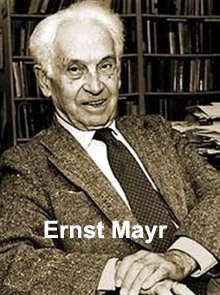



 Print
Print  PDF
PDF I’ve learned to



 In my recent appearance on
 _-_Nobel_Laureate_Aaron_Ciechanover.jpg)

 I’ve written before about the importance of recognizing


 The Daily Hatch