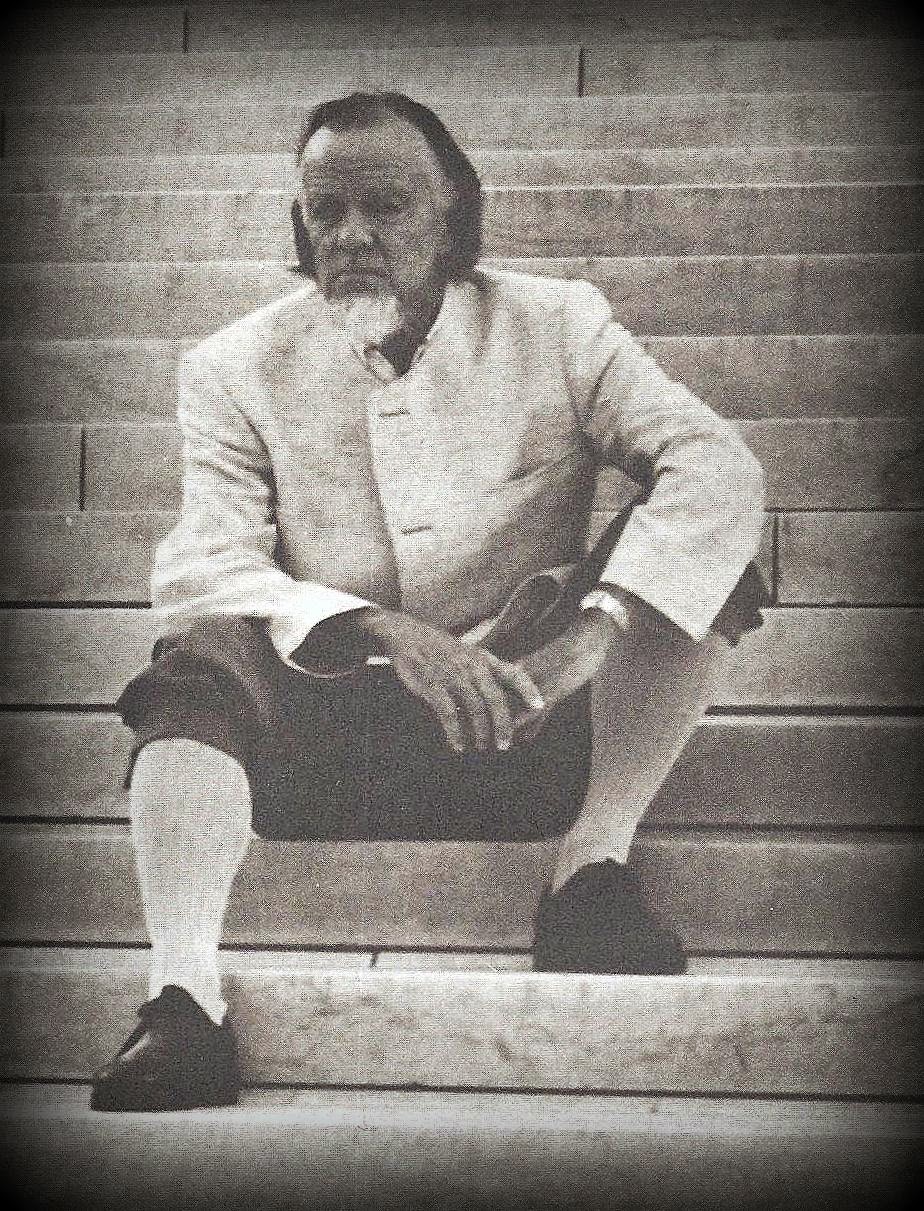
Death In The City The Universe And Two Chairs By Francis A. Schaeffer

_________________

Death In The City  The Universe And Two Chairs  By Francis A. Schaeffer

Episode 8: The Age Of Fragmentation

Dr. Francis Schaeffer – Episode 8 – The Age of Fragmentation

NoMirrorHDDHrorriMoN


Francis Schaeffer- How Should We Then Live? -8- The Age of Fragmentation

Joseph Rozak·

https://www.youtube.com/watch?v=LEmwy_dI2j0

Published on Jul 24, 2012

Dr. Schaeffer’s sweeping epic on the rise and decline of Western thought and Culture

_______________________

I love the works of Francis Schaeffer and I have been on the internet reading several blogs that talk about Schaeffer’s work and the work below   was really helpful. Schaeffer’s film series “How should we then live?  Wikipedia notes, “According to Schaeffer, How Should We Then Live traces Western history from Ancient Rome until the time of writing (1976) along three lines: the philosophic, scientific, and religious.[3] He also makes extensive references to art and architecture as a means of showing how these movements reflected changing patterns of thought through time. Schaeffer’s central premise is: when we base society on the Bible, on the infinite-personal God who is there and has spoken,[4] this provides an absolute by which we can conduct our lives and by which we can judge society.  Here are some posts I have done on this series: Francis Schaeffer’s “How should we then live?” Video and outline of episode 10 “Final Choices” , episode 9 “The Age of Personal Peace and Affluence”, episode 8 “The Age of Fragmentation”, episode 7 “The Age of Non-Reason” , episode 6 “The Scientific Age” ,  episode 5 “The Revolutionary Age” , episode 4 “The Reformation”,  episode 3 “The Renaissance”, episode 2 “The Middle Ages,”, and  episode 1 “The Roman Age,” .

In the film series “WHATEVER HAPPENED TO THE HUMAN RACE?” the arguments are presented  against abortion (Episode 1),  infanticide (Episode 2),   euthanasia (Episode 3), and then there is a discussion of the Christian versus Humanist worldview concerning the issue of “the basis for human dignity” in Episode 4 and then in the last episode a close look at the truth claims of the Bible.

Francis Schaeffer

This is from Chapter nine of the book “Death in the City” by Francis Schaeffer. 

Death In The CityThe Universe And Two Chairs By Francis A. Schaeffer

In the course of this book we have focused attention on the way God looks at the culture of our day, and at both the men with the Bible and the men without the Bible who have turned away. In this final chapter we will examine the way God looks at those who have the Bible and have responded by believing in the God who is there and are relying on the finished work of Christ in space-time history for the removal of their guilt before a holy God.

As we have seen, Paul says in Romans 1:17 that the just shall live by faith. That is, they shall not only be initially justified by faith, but they shall live existentially by reliance on God and faith in Him. We turn now to see what living by faith means in our twentieth-century world.

First let us note that we who live in the second half of the twentieth century live in an increasingly complicated universe – much more complicated for us than for men just a few years ago. Our telescopes see further and we speak of light years running up into great numbers; the very magnitude of these numbers confuses us. On the other hand, our physicists deal with smaller and smaller particles, and as mass retreats into energy and energy into formulae, reality seems to slip through our fingers. As we look at those light years, we shrink away. And as we look at the tiny particles, we grow like Alice in Wonderland. But our size here does not really help us because we tend to become uncomfortable as we see material reality reduced to sets of mathematical formulae and energy particles dashing about at furious speed. Yet we must understand, if we are going to live as Christians, that while these things indeed are complicated and confusing, nevertheless from the biblical viewpoint the universe is simple.

Let me illustrate this. Imagine a room, the curtains pulled and the doors locked. Let us suppose that this room is the only universe that God has made. Now that would be possible. God could have made such a universe. So let us say that the only universe that exists is this room with the doors locked and the curtains pulled. There is nothing outside at all, absolutely nothing. We are in a universe that can be seen with one look around the room.

Now let us go further. Suppose we have two chairs in this room and that sitting on these two chairs are two men, the only two men in the universe. As we consider them, we find that they differ. One is a totally consistent materialist. As far as he is concerned, the universe is made up of nothing but mass, energy and motion; that is all there is to it. On the other chair sits a Christian who lives in the light of the teaching of the Bible as the propositional revelation of God. And these two sit facing each other in a universe in which they sit alone. After they have looked at each other for a while, the materialist says, “Now, I’m going to explore our universe.” And the Christian replies, “That’s fine.” So the materialist begins to analyse the universe, and it takes him a long time. He goes through all the scientific processes that we now use to examine our own universe. He uses the sciences of chemistry, biology, physics, etc.. He goes back to the periodic table, and behind the periodic table into the atom and examines it. He examines everything from the paint on the wall to the more basic particles. All this takes him a long time.

Finally as an older man, he comes to the Bible-believing Christian and brings him a big set of books, and he says, “Now here’s a set of books, they’re nicely bound, and they give in great detail a description of our universe.” So the Christian takes a number of months, even years, to study these books with care. Finally the Christian turns to the materialist and says, “Well, this is a tremendous work. You have really told me a great deal about my universe that I wouldn’t otherwise have known. However, my friend, this is all very fine, but it’s drastically incomplete.”

And you can imagine this man, who has spent his lifetime pouring out his heart to do his measuring and his weighing, suddenly taken aback. He turns and says to the Christian, “Well, now, I’m shocked that you tell me it’s not all here. What have I missed?” And then the Christian responds something like this: “I have a book here, the Bible, and it tells me things that you do not know. It tells me the origin of the universe. Your scientific investigation by its very nature cannot do that. And it also says nothing about where you and I as men came from. You have examined us because we, like the paint on the wall, are phenomena in the universe. You’ve studied something of our psychology and even given me several volumes on it, but you have not told me how we came to be here. In short, you don’t know the origin of either the universe or us.”

“Furthermore,” the Christian continues, “I know from this book that there is more to the universe than you have described. There is an unseen portion as well as a seen portion. And there is a cause-and-effect relationship between them. They are not mutually exclusive, but are parts of one reality. It’s as if you had taken an orange, sliced it in half, and only concerned yourself with one of the halves. To understand reality in our universe properly, you have to consider both halves – both the seen and the unseen.”

In this sense “supernatural” is not a good word to describe the unseen portion. We must understand that the unseen portion of the universe is just as natural and as real as is the seen portion. Furthermore, the seen and the unseen are not totally separated. When we do certain things, it makes a difference in the unseen world and things in the unseen world make a difference in the seen world. The Christian would say to the materialist, “Your volume on the philosophy of history just does not hang together. The reason is that you are only looking at half of what’s there: you are only looking at half of history; you do not take into account the unseen portion. Consequently, your philosophy of history will never be sound.” He is right: nobody has ever produced a satisfactory philosophy of history beginning with the materialistic viewpoint. There is too much in the seen world that does not make sense when taken as if it were all there is. One cannot produce a philosophy of history based on only half of history.

Now what happens next? These two men look at each other rather askance because their two primary views of the universe are set one against the other. The materialist replies: “You’re crazy. You’re talking about things you can’t see.” And the consistent Christian responds, “Well, you may say I am crazy because I’m talking about things I cannot see, but you are completely unbalanced. You only know half of your own universe.”

Let us notice something extremely important: these two views can never be brought into synthesis. One man is not a little right and the other a little right and a synthesis better than both. These are two mutually exclusive views – one is right and one is wrong. If you say less than this, then you reduce Christianity to a psychological crutch, a glorified aspirin. That does not mean that the Christian cannot glean much detail from the materialist’s observation. But as far as the comprehensive view of the universe is concerned, there can be no synthesis. Either this man is right and that man is wrong, or that man is right and this man is wrong. It is a total antithesis.

Pursue their situation further. Suppose that on the wall of their room there is a large clock. All of a sudden it stops. And these two men turn around and say, “What a pity! The clock has stopped.” The materialist says, “That will never do, and because there are only you and I in this universe, one of us must clamber up the wall and start the clock. There’s nobody else to do it.” The Christian replies, “Now wait a moment. Yes, it’s possible for one of us to climb up and start the clock, but there is another possibility. I may talk to the one who made this universe (one who is not in the universe in the sense of it merely being an extension of his essence) and he can start the clock.”

Here is a tremendous difference in attitude. You can imagine the materialist’s reaction. “Now I know you’re crazy. You’re talking about someone we can’t see starting a material clock.” Anyone who has been doing modern twentieth-century thinking will realize the relevance of this. And I also think we may here see why so many Christians have no reality. They are not certain that it is possible for the God who made the universe to start the clock when a Christian talks to Him.

Let me give you an illustration from experience. Once I was flying at night over the North Atlantic. It was in 1947, and I was coming back from my first visit to Europe. Our plane, one of those old DC4’s with two engines on each wing, was within two or three minutes of the middle of the Atlantic. Suddenly two engines on one wing stopped. I had already flown a lot, and so I could feel the engines going wrong. I remember thinking, if I’m going to go down into the ocean, I’d better get my coat. When I did, I said to the hostess, “There’s something wrong with the engines.” She was a bit snappy and said, “You people always think there’s something wrong with the engines.” So I shrugged my shoulders, but I took my coat. I had no sooner sat down, than the lights came on and a very agitated co-pilot came out. “We’re in trouble,” he said. “Hurry and put on your life jackets.”

So down we went, and we fell and fell, until in the middle of the night with no moon we could actually see the water breaking under us in the darkness. And as we were coming down, I prayed. Interestingly enough, a radio message had gone out, an SOS that was picked up and broadcast immediately all over the United States in a flash news announcement: “There is a plane falling in the middle of the Atlantic.” My wife heard about this and at once she gathered our three little girls together and they knelt down and began to pray. They were praying in St Louis, Missouri, and I was praying on the plane. And we were going down and down.

Then, while we could see the waves breaking beneath us and everybody was ready for the crash, suddenly the two motors started, and we went on into Gander. When we got down I found the pilot and asked what happened. “Well,” he said, “it’s a strange thing, something we can’t explain. Only rarely do two motors stop on one wing, but you can make an absolute rule that when they do, they don’t start again. We don’t understand it.” So I turned to him and I said, “I can explain it.” He looked at me: “How?” And I said, “My Father in heaven started it because I was praying.” That man had the strangest look on his face and he turned away. I’m sure he was the man sitting in the materialist’s chair.

But here is the point: there is no distinction between the clock starting and those motors starting. Is it or is it not possible for the God who made the mechanistic portion of the universe to start the clock or start the motors? Is it or isn’t it? The materialist must say no; the Bible-believing Christian, at least in theory, says yes.

We are not dealing with God as though He were a machine. He is personal, and as we pray He does not respond mechanically, but as the Personal-Infinite God. The point is that He is there and He can, and does, act into the universe He has made.

Now then, let us get away from our small universe and suddenly throw wide the curtains, open the doors, push out the walls, the ceiling, and the floor, and have the universe as it is in its full size, as it has been created by God. Instead of two men, there are many men in the universe, but still represented by these two. What we must see is that no matter how deeply we get into the particles of matter or how much we learn by our telescopes and radio telescopes about the vastness of the created universe, in reality the universe is no more complicated than the room we have been talking about. It is only larger. Looking at the bigger universe, we either see it as the materialist sees it or as the Christian sees it: We see it with the one set of presuppositions or the other.

However, what one must realize is that seeing the world as a Christian does not mean just saying, “I am a Christian. I believe in the supernatural world,” and then stopping. It is possible to be saved through faith in Christ and then spend much of our lives in the materialist’s chair. We can say we believe in a supernatural world, and yet live as though there were no supernatural in the universe at all. It is not enough merely to say, “I believe in a supernatural world.” We must ask, “Which chair am I sitting in at this given existential moment?” We must live in the present: “Sufficient unto the day is the evil thereof ” – “Give us this day our daily bread.” What counts is the chair I am sitting in at any one existential moment.

Christianity is not just a mental assent that certain doctrines are true. This is only the beginning. This would be rather like a starving man sitting in front of great heaps of food and saying, “I believe the food exists; I believe it is real,” and yet never eating it. It is not enough merely to say, “I am a Christian”, and then in practice to live as if present contact with the supernatural were something far off and strange. Many Christians I know seem to act as though they come in contact with the supernatural just twice – once when they are justified and become a Christian and once when they die. The rest of the time they act as though they were sitting in the materialist’s chair.

The difference between a Christian who is being supernatural in practice and one who says he is a Christian but lives like a materialist can be illustrated by the difference between a storage battery and a light plug. Some Christians seem to think that when they are born again, they become a self-contained unit like a storage battery. From that time on they have to go on their own pep and their own power until they die. But this is wrong. After we are justified, once for all through faith in Christ, we are to live in supernatural communion with the Lord every moment; we are to be like lights plugged into an electric socket.

The Bible makes it plain that our joy and spiritual power depend on a continuing relation to God. If we do not love the Lord as we should, the plug gets pulled out and the spiritual power and the spiritual joy stop. Recall Paul’s statement in the benediction, ‘The communion of the Holy Spirit be with you all.’ In French the word is ‘communication’. The reality of the communication of the Holy Spirit who lives within us and who is the agent of the whole Trinity is to be a continuing reality in the Christian’s life.

Let us be more specific. The Bible says that Christ rose physically from the dead, that if you had been there that day you would have seen Christ stand up and walk away in a space-time, observable situation of true history. The materialist says, “No, I don’t believe it. Christ is not raised from the dead.” That is unbelief. The new theology is also unbelief because it says either that Jesus was not raised from the dead in history or that maybe He was and maybe He wasn’t because who knows what’s going to happen in this world in which you can’t be sure of anything. The historic resurrection of Christ doesn’t really matter, says the new theology; what matters is that the church got a big push from thinking He was raised in history. They see the importance of the resurrection as psychological, even though they say they leave open the door to actual resurrection since we live in a universe that we cannot be very sure of. The old liberalism, the new liberalism and materialism are basically the same. To all of them finally the same word applies: unbelief.

But now, here we are Bible-believing Christians. We stand and say, “No, I’m not going to accept that. I’m going to speak out against the materialist, and I’m going to speak out against the old and the new liberalism. Christ was raised from the dead, and He did ascend with the same body the disciples saw and touched. Between His resurrection and His ascension He appeared and disappeared many times. He went back and forth between the seen and the unseen world often in those forty days. And then, finally, He took an official departure at the Mount of Olives.” But the Bible says that if Christ is raised from the dead we are supposed to act upon it in our moment-by-moment lives. Its importance is not just in past history.

So the Bible-believing Christian says, “Well, I believe it!” The materialist says, “I don’t believe it!” and he sits in unbelief. But what shall we say about the man who says, “I believe it. I believe it”, but then does not act upon this in faith in his daily life? I have made up a word for it. I call it unfaith.

The Bible tells us plainly that Christ promises to bear His fruit through us. In Romans 7:4 Paul says a very striking thing: “Wherefore, my brethren, ye also are become dead to the law by the body of Christ; in order that ye should be married to another, even to him who is raised from the dead, in order that we should bring forth fruit unto God.” This verse speaks of each Christian as feminine. At conversion we are married to Christ, who is the bridegroom, and as we put ourselves in His arms, moment by moment, He will produce His fruit through us into the external world. That is beautiful and overwhelming. The bride cannot just stand with the bridegroom at the wedding ceremony. She must give herself to him existentially, regularly, for children to be born to him, through her body, into the external world.

As an example think of Mary and Christ’s birth. When Mary heard the annunciation, she did not say to the angel, “I won’t give myself to God in order that the Messiah may be born. What would Joseph think?” It would have been reasonable to say that because we know Joseph was indeed later disturbed. On the other hand, she did not say, “Now you’ve told me what is to happen, I can do it on my own.” Mary herself could no more bring forth that baby than any other girl can will a virgin birth. She said the one thing she could say that could be right: “I am your servant. I give my body into your hands. Do with it as you will.” This was an active passivity. She was passive in that God brought forth the baby. But she was not passive in her will. One can say it this way (and I say it with great care): God would not have raped Mary. She put herself into His hands, and He was the One who produced this marvel of the virgin birth. Of course the virgin birth of Christ to Mary is totally unique, but it can be a profound example to us.

In a very different way the same situation holds with each of us as Christians. Christ wants to bring forth His fruit through me into this poor external world. And if I am not acting upon that, I am sitting in the chair of unfaith.

You will notice in Romans 6 (a very sober chapter to the Christian if he reads it with any delicacy of comprehension and feeling) in verses 13, 16 and 19, these words in the present tense: “Neither yield ye your members as instruments (weapons or tools) of unrighteousness unto sin: but yield yourselves unto God, as those that are alive from the dead, and your members as instruments (weapons or tools) of righteousness unto God.” You continue to be significant after you become a Christian; and either you can yield yourself at any one moment into the hands of Christ for Him to use you as a tool or weapon in this world, or you can yield yourself in that moment as an instrument of unrighteousness even though you are a Christian.

Verse 16 says it again: “Know ye not, that to whom ye yield yourselves servants to obey, his servants ye are to whom ye obey; whether of sin unto death, or of obedience unto righteousness?” Sitting in the believer’s chair, am I yielding myself to Christ for Him to bear fruit through me, or am I yielding myself to be the servant of my old ruler Satan, in which case I am bringing forth death into the external world? The sober thing is that something great is at stake: the whole question of bearing the fruit of the Spirit into the external world, of being an exhibition of the existence of God and His character. The significance of man continues. You are not a programmed computer. Are you going to yield yourself to your bridegroom or are you not? The 19th verse repeats the point: ‘I speak after the manner of men because of the infirmity of your flesh: for as ye have yielded your members as servants to uncleanness and to iniquity unto iniquity; even so now yield your members as servants to righteousness unto holiness.’

The unbelieving man says, “Well, the resurrection – I really don’t believe it.” The Christian says, “I do believe it.” But surely shouldn’t we call it unfaith if I am not acting upon it and letting Christ, whom I say is raised from the dead, bring forth His fruit through me?

With this in mind, look at prayer. I feel that the determinism of our own generation has infiltrated us as evangelical Christians so that we do not tend to be praying people. We must understand what prayer is. Prayer, according to the Bible, is speaking to God. The reason why we can speak to God is that He exists, He is personal, and we are made in His image. Since we are made in His image, it should not be surprising that we can be in communication with Him, even though He is infinite and we are finite.

When our guilt is removed through the finished work of Christ, communication with God is to be expected. We communicate in a horizontal direction with each other through verbalization. In fact, modern anthropologists say that verbalization more than anything else distinguishes man from non-man. God too communicates to us in verbalization in Scripture, and we communicate to God in verbalization by prayer. It is as simple and as profound as that.

How then does prayer fit into the biblical view of the universe? God made the universe. It is external to Himself, not spatially, but in the sense that it is not an extension of His essence. There is, of course, a machine portion of the universe, but neither God nor man is caught in the machine.

There is a uniformity of natural causes, but not in a closed system. The course of nature can be changed – can be reordered – just as when I through a choice of the will interrupt something, for example by reaching over and turning off a light. This act of my will reorders the natural flow of cause and effect. It is in this setting that the Bible sets forth its teaching about prayer.

To return, therefore, to the aircraft: I prayed and God started the aircraft’s engines. This is prayer, this is what it is supposed to be. God as well as man can start the motors in the space-time world. Without the true orthodox doctrine of God and man, prayer is just nonsense. You have to understand that there is a personal God and that He has created the universe, which is then not an extension of His essence. If it were, we would have a pantheistic system in which prayer is finally meaningless. At this point there is little difference between the pantheism of the East and many of the New Theologians of the West.

But let us notice that this emphasis must not be just a matter of doctrine. We must really sit in the supernaturalist’s chair and pray. If a Christian does not pray, if he does not live in an attitude of prayer, then no matter what he says about his doctrine, no matter how many naughty names he calls the unbelieving materialist, the Christian has moved over and is sitting in the materialist’s chair. He is living in unfaith if he is afraid to act upon the supernatural in the present life.

Unfaith turns Christianity into no more than a philosophy. Of course, Christianity is a philosophy – though not a rationalistic one because we have not worked it out beginning from ourselves. Rather, God has told us the answers. In this sense it is the true philosophy, for it gives the right answers to man’s philosophic and intellectual questions. However, while it is the true philosophy, our Father in heaven did not mean it to be only theoretical or abstract. He meant it to tell us about Himself – how we can get to heaven, but, equally, how we can live right now in the universe as it is with both the seen and the unseen standing in equal reality.

If Christians just use Christianity as a matter of mental assent between conversion and death, if they use it only to answer intellectual questions, it is like using a silver spoon for a screw-driver. I can believe that a silver spoon makes a good screw-driver at certain times. But it is made for something else. It is silly to take the silver spoon that is meant to feed you, moment by moment, and keep it in your tool box to use only as a screw-driver.

But let us look further at the Christian living in unfaith. If the Bible-believing Christian has moved over and is in practice sitting in the materialist’s chair, he is living as though the universe were something different from what it is. He is out of step with the universe and is in practice living as though he is more ignorant than a pagan in a jungle.

Suppose three men were sitting together in a jet airliner, one against the window, one against the aisle, and one in the middle. The one at the window is a pagan who hasn’t a clue how the airplane flies; he’s terrified as the airplane goes up. The man on the aisle knows every nut and bolt in this airplane; he designed it. But he doesn’t believe in any supernatural at all. Imagine that you as a Christian are sitting in the middle. Which of these two men on either side of you would best understand the universe? The pagan doesn’t have a clue about the airplane, but he knows that there is a seen and an unseen in the universe because he worships demons. The other man knows all about the airplane and he doesn’t worship demons, but he also doesn’t know that there is an unseen at all. The pagan is less ignorant of reality than the engineer, for the latter is living in only half of the universe. But what about you as the Christian? If you say that the universe has a spiritual dimension and yet do not live like it, you are acting as though you know less than the pagan.

Maybe now we will begin to see why in the evangelical church we often have a feeling of dustiness, unreality and abstraction. I think the reason is that many are functioning as though they knew less about the universe than the pagan knows. They have moved over in unfaith and are living as though the universe is naturalistic. No wonder there is a dustiness! In such a case the evangelical church is a museum of dead artefacts representing what once was a living practice of the doctrine we still say we believe.

If the courses we are giving as teachers are given as though we are sitting in the materialist’s chair, is it any wonder that there is unreality? It is possible to teach our subjects that way. We can carry on our church life that way. We can carry on our evangelism that way. And our children then look at us and shake their heads: ‘Well, certainly there’s something very unreal in what I see in my teacher’s, my pastor’s and my parents’ Christian lives.’ If we sit in the chair of unfaith, that is the result we should expect.

But let us take note: there are only two chairs, not three. And at this present moment we are either sitting in one or the other. Unfaith is just the Christian sitting in the materialist’s chair. At every moment, existentially, there are before us as Christians the two chairs. After I am a Christian, I do not lose my significance. I am either yielding my life to the living Christ at a given moment or I am not. I am either in one chair or the other.

Which chair are we in? How do we live our lives? What is the set of the way we live? None of us is perfect, this is true. All of us sometimes find ourselves in the materialist’s chair. But is this where we habitually sit? Is this how we usually teach our subjects? Is this the way we usually study? Is it even the way we do what we call ‘the Lord’s work’? Are we sitting in the chair of unfaith while we are trying to present the doctrines of belief?

Being a Bible-believing Christian, then, not only means believing with our heads, but in this present moment acting through faith on that belief: True spirituality is acting at the given moment upon the doctrines which one as a Christian says he believes.

We must fight the Lord’s battles with the Lord’s weapons in faith – sitting in the chair of belief: Only then can we have any part in the real battle. If we fight the Lord’s battles merely by duplicating the way the world does its work, we are like little boys playing with wooden swords pretending they are in the battle while their big brothers are away at war in some distant and bloody land. The Lord will never honour with power the way of unfaith in His children because it does not give Him the honour. That is true in Christian activities, in missionary work, in evangelism, in anything you name. Living supernaturally does not mean doing less work; nor does it mean less work getting done, but more.

Who can do more? We with our own energy and wisdom, or the God who created heaven and earth and who can work in space-time history with a power which none of us has? God exists. And if we through faith stay in the Bible-believing chair moment by moment in practice, and do not move into the chair of unfaith, we and the world will see God act. Christ will bring forth His fruit through us. As I began this book I brought together the concepts of reformation and revival – the return to pure doctrine and the return of individuals and groups to a proper relationship to the Holy Spirit.

At the conclusion of our study of Jeremiah and his message we said that if there is to be a constructive revolution in the orthodox, evangelical church, then like Jeremiah we must speak of God’s judgment of individual men, great and small, and His judgment of the church, the state and the culture, all of which have known the truth of God and have turned away from Him and His propositional revelation. God exists, He is a holy God, and we must know that there will be judgment. Like Jeremiah we must keep on so speaking regardless of the cost to ourselves.

At the conclusion of our study of Romans we added this: if there is to be a constructive revolution in the orthodox, evangelical church, we must comprehend and speak of the lostness of the lost, including the man without the Bible. As with Paul this must not be done with a cold orthodoxy but with deep compassion for our own kind. Finally we must add that these things cannot be done once for all, nor in our own humanistic effort; we must be in the believer’s chair moment by moment.

Reformation and revival are related to God’s people sitting moment by moment in the believer’s chair. And with such reformation-revival will come constructive revolution in the evangelical, orthodox church. Even in the midst of death in the city, the evangelical church can have a really constructive revolution, a revolution that will shake it in all its parts and make it live before God, before the unseen world, and before the observing eyes of our post-Christian world.

Reference: Death In The City, Francis A. Schaeffer – chapter 9.

Related posts:

Taking on Ark Times Bloggers on various issues Part A “The Pro-life Issue” (Francis Schaeffer Quotes Part 1 includes the film SLAUGHTER OF THE INNOCENTS) (editorial cartoon)

I have gone back and forth and back and forth with many liberals on the Arkansas Times Blog on many issues such as abortion, human rights, welfare, poverty, gun control  and issues dealing with popular culture. Here is another exchange I had with them a while back. My username at the Ark Times Blog is Saline […]

“Schaeffer Sunday” Francis Schaeffer: “Whatever Happened to the Human Race” (Episode 1) ABORTION OF THE HUMAN RACE

It is not possible to know where the pro-life evangelicals are coming from unless you look at the work of the person who inspired them the most. That person was Francis Schaeffer.  I do care about economic issues but the pro-life issue is the most important to me. Several years ago Adrian Rogers (past president of […]

The movie “Les Miserables” and Francis Schaeffer

I got this off a Christian blog spot. This person makes some good points and quotes my favorite Christian philosopher Francis Schaeffer too. Prostitution, Chaos, and Christian Art The newest theatrical release of Victor Hugo’s 1862 novel “Les Miserables” was released on Christmas, but many Christians are refusing to see the movie. The reason simple — […]

“Schaeffer Sunday” Francis Schaeffer is one of the great evangelical theologians of our modern day

Francis Schaeffer was truly a great man and I enjoyed reading his books. A theologian #2: Rev. Francis Schaeffer Duriez, Colin. Francis Schaeffer: An Authentic Life. Wheaton, IL: Crossway Books, 2008. Pp. 240. Francis Schaeffer is one of the great evangelical theologians of our modern day. I was already familiar with some of his books and his […]

“Schaeffer Sundays” Francis Schaeffer’s own words concerning infanticide and youth enthansia

Francis Schaeffer: “Whatever Happened to the Human Race?” (Episode 2) SLAUGHTER OF THE INNOCENTS Published on Oct 6, 2012 by AdamMetropolis ___________ The 45 minute video above is from the film series created from Francis Schaeffer’s book “Whatever Happened to the Human Race?” with Dr. C. Everett Koop. This book  really helped develop my political views […]

Francis Schaeffer’s wife Edith passes away on Easter weekend 2013 Part 7 (includes pro-life editorial cartoon)

The Francis and Edith Schaeffer Story Pt.1 – Today’s Christian Videos The Francis and Edith Schaeffer Story – Part 3 of 3 Francis Schaeffer: “Whatever Happened to the Human Race” (Episode 1) ABORTION OF THE HUMAN RACE Published on Oct 6, 2012 by AdamMetropolis ________________ Picture of Francis Schaeffer and his wife Edith from the […]

The Mark of the Christian by Francis Schaeffer Part 1

  THE MARK OF A CHRISTIAN – CLASS 1 – Introduction Published on Mar 7, 2012 This is the introductory class on “The Mark Of A Christian” by Francis Schaeffer. The class was originally taught at Redeemer Presbyterian Church in Overland Park, KS by Dan Guinn from FrancisSchaefferStudies.org as part of the adult Sunday School hour […]

“Schaeffer Sundays” Francis Schaeffer’s own words concerning humanist dominated public schools in USA even though country was founded on a Christian base

Francis Schaeffer: “Whatever Happened to the Human Race?” (Episode 2) SLAUGHTER OF THE INNOCENTS Published on Oct 6, 2012 by AdamMetropolis The 45 minute video above is from the film series created from Francis Schaeffer’s book “Whatever Happened to the Human Race?” with Dr. C. Everett Koop. This book  really helped develop my political views concerning […]

“Schaeffer Sundays” Francis Schaeffer’s own words concerning where the Bible-believing Christians been the last few decades

Francis Schaeffer: “Whatever Happened to the Human Race” (Episode 1) ABORTION OF THE HUMAN RACE Published on Oct 6, 2012 by AdamMetropolis The 45 minute video above is from the film series created from Francis Schaeffer’s book “Whatever Happened to the Human Race?” with Dr. C. Everett Koop. This book  really helped develop my political views […]

Taking on Ark Times Bloggers on various issues Part E “Moral absolutes and abortion” Francis Schaeffer Quotes part 5(includes the film SLAUGHTER OF THE INNOCENTS) (editorial cartoon)

I have gone back and forth and back and forth with many liberals on the Arkansas Times Blog on many issues such as abortion, human rights, welfare, poverty, gun control  and issues dealing with popular culture. Here is another exchange I had with them a while back. My username at the Ark Times Blog is Saline […]

“Schaeffer Sundays” Francis Schaeffer’s own words concerning religious liberals and humanists

Francis Schaeffer: “Whatever Happened to the Human Race” (Episode 5) TRUTH AND HISTORY Published on Oct 7, 2012 by AdamMetropolis The 45 minute video above is from the film series created from Francis Schaeffer’s book “Whatever Happened to the Human Race?” with Dr. C. Everett Koop. This book  really helped develop my political views concerning abortion, […]

“Music Monday” Blink 182’s song about suicide is also filled with hope

Adam’s song is filled with hope in the last paragraph of lyrics. So many young people stop short of committing suicide and they think more of the hope the future can offer. Take a look at the story below of someone who gave life another chance after he had actually shot himself in a failed suicide attempt.

Last paragraph of lyrics from “Adam’s song:
I never conquered, rarely came
Tomorrow holds such better days
Days when I can still feel alive
When I can’t wait to get outside
The world is wide, the time goes by
The tour is over, I’d survived
I can’t wait till I get home
To pass the time in my room alone

Spend It Any Way You Like

by Greg Hartman

Jim Centifanto parked his motorcycle and walked into the Florida woods. He loaded the 12-gauge shotgun he had borrowed and took a deep breath. Holding the shotgun’s barrel in his left hand, he pressed its muzzle into his stomach. Leaning forward, he pulled the trigger with his right hand.

The blast threw him off his feet and left a gaping, fist-sized hole on the left side of his abdomen. Dropping the gun, Jim staggered back to his motorcycle, rode to his mother’s house four miles away, and passed out on her front steps.

Four days later, as he was waking up from a coma, he heard a voice speak to him. “I saved you for a reason,” the voice said. Centifanto looked around, startled. The room was empty.

Centifanto’s father had taught him and his brothers and sisters to respond to problems with violence. Lawrence Centifanto, a career Marine, married his wife, Ysolina, while he was serving in Panama. Soon after Jim was born, his father went to Korea for three years, then to Vietnam for another three years. Centifanto was 6 before he knew his father.

Lawrence Centifanto sent all his money home for the six long years he was at war. He asked his wife to save it up for him, and expected to return home to a sizable nest egg. Instead, she moved her family from New York to Florida and put herself through medical school.

“I’m not sure if he loved my mother,” Jim said, “but I know she didn’t love him. She only married him to get her American citizenship and an education.”

Centifanto’s excitement at meeting his father quickly turned into horror when his father discovered what had happened to his money. He made his children sit on the sofa and watch as he beat and choked their mother.

Living with his father, Centifanto said, was like living with an unpredictable volcano. Lawrence Centifanto viciously beat his wife and children at the slightest provocation or for no reason at all. One time, he tore an earring out of his daughter’s ear. Another time, after being out of town for a month, he pulled up in his driveway and saw Jim pull aside the curtains to look out the front window, excited to see his father. Lawrence responded to his son’s enthusiastic greeting with a savage beating. “He told me I could have gotten dirt on the curtains,” Centifanto said.

Finally, when Centifanto was 9, his mother divorced her husband. Ysolina Centifanto’s solution to her ex-husband’s brutal discipline was to avoid disciplining her children at all. “We went from one end of the scale to the other. She said, ‘This will never happen to us again,’ and she let my brothers and I run totally wild. We did anything we wanted.”

Within a year, Centifanto was expelled from the Catholic school he had been attending and joined a gang with his brother. He began using and dealing drugs.

One day the vice president of Centifanto’s gang, Bobby Hicks, showed up at the gang’s hangout with a short haircut and wearing a suit and tie. “We thought he was going to court,” Centifanto said. “You know, when you have to see a judge you dress up nice and hope maybe he’ll be more lenient. That’s what we thought Bobby was doing.”

Instead, Hicks threw his fellow gang members a curve. “I just got born again!” he announced.

“He could have said, ‘I just went to the moon,’ for as much as we understood him,” Centifanto said. “We just laughed and said, ‘You did what?'”

But when Hicks started preaching at his friends, the gang’s leader stopped laughing and provoked Centifanto to fight Hicks.

“Bobby was 20 — six years older than me,” Centifanto said, “and he weighed about 250 pounds. I’d seen what he did to other guys. I whipped him with a bullwhip and chased him down the street; I totally humiliated him in front of everyone. The day before, he would have killed me. But this time, he wouldn’t fight. I didn’t know what made him act so weird.”

Centifanto soon forgot his former friend’s odd behavior as he sank deeper into his world of drinking and drugs. “I stayed stoned all the time, 24 hours a day,” he said. “I’d take enough drugs at night to keep me stoned until I woke up, then start over again.”

In 1970, when Centifanto was 15, his girlfriend broke up with him. “She was the closest thing to love I had in my life,” he said. “I hated life, just hated it. No one loved me and when she rejected me, too, I couldn’t take it.” He borrowed a shotgun and shot himself in the stomach. Incredibly, he lived.

“I was in a coma for four days,” Centifanto said. “No one expected me to live; they couldn’t believe I’d even managed to ride my bike to my mother’s house.”

Soon after Centifanto awoke from his coma, his mother announced she had had it with him and sent him to live with his father in Chicago. Within a year, his stepmother kicked him out, too. He was 17.

Centifanto got a job at a steel mill and lived with Terry, a co-worker, and his parents. Terry and his father worked at the steel mill with Centifanto. After work, the three of them got drunk almost every night. Then Terry’s mother surprised them all one day: She announced that she had become a Christian.

“She used to try to talk with me about Christ for hours,” Centifanto said, “even though I was usually drunk. I accidentally walked in on her one night and she was praying, just weeping and asking God to have mercy on me. Everyone else had rejected me, and she didn’t have any benefit from trying to reach me. But here she was praying for me. I just couldn’t understand it.”

About two months later, Centifanto joined the Marines, and found he made a good soldier. “I went in there full of bitterness and violence, and they said, ‘Here’s a gun. We like it if you want to hate and kill.'” But peace of mind still eluded him. His drinking continued unabated, landing him in the hospital twice and almost destroying his kidneys.

Two years later, Centifanto was stationed in Hawaii. One night while his platoon was on maneuvers, a soldier from another unit struck up a conversation with him.

“He told me about what Jesus had done for him,” Centifanto said, “and I just started weeping uncontrollably. I could see he’d been where I was and I wanted what he had.” Centifanto asked the man if he could go to church with him, and the man agreed to pick Centifanto up at his barracks the next Sunday morning.

But Centifanto had neglected to get his name, and when he didn’t show up, Centifanto was desperate. Finally, about two months later, Centifanto ran into him again. “I shook him and yelled at him: ‘You said you’d take me to church! You better show up this time!'” Centifanto said with a chuckle. He got the man’s name — Donald Taylor — and eagerly awaited the next Sunday.

Taylor showed up as promised this time, and took Centifanto to church. “I was mad at Don because I thought he told Eugene Stober, the pastor, about me,” Centifanto said. “Every single word that came out of his mouth was about me and my sin.

“When I was 14 and Bobby Hicks got saved, I didn’t understand what he was talking about. I heard God speak to me after I shot myself, but I didn’t listen to that, either. And Terry’s mom explained the gospel to me, but it still didn’t stop me from sinning.

“We have to come to the end of ourselves before we realize how desperately we are in need. I was at the end of myself this time. I was so ripe for the gospel. This time it was different; this time the ring of truth was going through my heart.”

Centifanto began attending church with Taylor. A month later, while supervising the armory guard, he read a magazine article about the end of the world and panicked. “I was convinced Jesus was coming back — tomorrow!” he said. He left his post — a court-martial offense — and hurried to the church. Finding Pastor Stober, he begged him to tell him how to get saved.

Eugene Stober led Centifanto in prayer. That night, Aug. 17, 1974, in Oahu, Hawaii, when he was 19 years old, Jim Centifanto asked Jesus Christ to forgive his sin and be his Lord and Savior.

When they were finished praying, Pastor Stober handed Centifanto a quarter. Confused, he took it. “That’s what salvation is like: a free gift,” Stober said. “And that quarter is just like your life, too: You’re free to spend it any way you like, but you can only spend it once.”

“That’s when what had just happened really hit me,” Centifanto said. “It was like scales fell from my eyes. All the hate and bitterness, the way I hated myself and everyone else and hated life so much — it left me; it was all gone, just like that.”

Centifanto returned to the base, expecting to face a court-martial. To his surprise, his commander said, “Well, don’t let it happen again,” and dismissed him. When he awoke the next morning, he received another surprise: His desire for drugs and alcohol was gone, never to return.

Today Jim Centifanto and his wife and four children are missionaries in Guatemala. “The minute I got saved I started witnessing to everything that moved,” he said. “I could never see any way to live after that but in service to God. When Pastor Stober handed me that quarter, God changed my life forever. He really did change my heart and make me a new creation.”

Copyright © 2006 Greg Hartman. Used with permission.
Related posts:

Ecclesiastes: Philosophical Atheist, Before you Commit Suicide Read Ecclesiastes (Quotes Sharon Rocha, Erik Wielenberg, the Declaration of Independence, Stephen Hawking, and Alan Sandage)

Ecclesiastes 1 Published on Sep 4, 2012 Calvary Chapel Spring Valley | Sunday Evening | September 2, 2012 | Pastor Derek Neider _____________________ I have written on the Book of Ecclesiastes and the subject of the meaning of our lives on several occasions on this blog. In this series on Ecclesiastes I hope to show how […]

Mindy McCready commits suicide instead of pursuing a Christian solution to depression

Sad news today from Heber Springs, Arkansas. Mindy McCready Dead Of An Apparent Suicide By Lyndsey Parker Posts By Lyndsey Parker | Our Country – 9 hours ago   Mindy McCready, 1975-2013 [photo: Frederick Breedon IV]Troubled country singer Mindy McCready, age 37, has died of an apparent suicide, the result of a single self-inflicted gunshot, the Cleburne […]

Bob Welch’s suicide and the Christian solution to the problem of suicide

Bob Welch chose suicide because he felt there was no other way like so many others today.  (Details of his suicide below later in this post.) It is sad that this is such a pressing problem. I think of songs that point this out: Adam’s Song, The Last Resort, etc. There are two usual approaches to […]

Ilya Zhitomirskiy,co-founder of social network Diaspora, committed suicide according to CNN

  CNN reported today: NEW YORK (CNNMoney) — Ilya Zhitomirskiy, one of four co-founders of social network Diaspora, died over the weekend in San Francisco at age 22. Zhitomirskiy committed suicide, a source close to the company told CNNMoney on Sunday. A San Francisco Police Department officer confirmed on Monday that a police report about […]

Francis Schaeffer predicted assisted suicide would come (“Schaeffer Sundays” Part 3)

In “Evangelical dynasty undone,” Arkansas Times Blog, August 20, 2011,Max Brantley wrote: Ever heard of the influential evangelical Francis Schaeffer? (Mike Huckabee once said his favorite book after the Bible was Schaeffer’s “Whatever Happened to the Human Race” and he’s been described as having a “profound” influence on Michele Bachmann.) Best reading of the morning is this New York […]

Ex-Duke basketball 1983 captain Tom Emma committed suicide because of depression

Former Duke basketball captain found dead in NYC Ex-Duke basketball team captain, Bulls draft pick Tom Emma jumps to death from roof of Midtown club BY Rocco Parascandola, John Lauinger, Edgar Sandoval and Joe Kemp DAILY NEWS STAFF WRITERS Tuesday, June 7th 2011, 8:03 PM powerperformance.net Thomas Emma died in a fall from the New […]

Last hours of Marilyn Monroe’s life indicates she committed suicide because of unhappiness (Marilyn part 2)

 I Still Haven’t Found What Im Looking For Live From Milan Marilyn Monroe THE LAST INTERVIEW Part 1 Wikipedia notes:  Many questions remain unanswered regarding the circumstances and timeline of Monroe’s death after her body was found. 7-7:15p.m. Joe DiMaggio, after trying to get in touch with Monroe all day, speaks with Monroe about DiMaggio’s broken […]

Open letter to President Obama (Part 605) Pro-life Atheist Nat Hentoff’s conversation with Ken Burns about the censoring of pro-life history!!!!!

Open letter to President Obama (Part 605)

(Emailed to White House on 6-5-13.)

President Obama c/o The White House 1600 Pennsylvania Avenue NW Washington, DC 20500

Dear Mr. President,

I know that you receive 20,000 letters a day and that you actually read 10 of them every day. I really do respect you for trying to get a pulse on what is going on out here. I know that you don’t agree with my pro-life views but I wanted to challenge you as a fellow Christian to re-examine your pro-choice view. Although we are both Christians and have the Bible as the basis for our moral views, I did want you to take a close look at the views of the pro-life atheist Nat Hentoff too.  Hentoff became convinced of the pro-life view because of secular evidence that shows that the unborn child is human. I would ask you to consider his evidence and then of course reverse your views on abortion.

___________________

Nat Hentoff is an atheist, but he became a pro-life activist because of the scientific evidence that shows that the unborn child is a distinct and separate human being and even has a separate DNA. His perspective is a very intriguing one that I thought you would be interested in. I have shared before many   cases (Bernard Nathanson, Donald Trump, Paul Greenberg, Kathy Ireland)    when other high profile pro-choice leaders have changed their views and this is just another case like those. I have contacted the White House over and over concerning this issue and have even received responses. I am hopeful that people will stop and look even in a secular way (if they are not believers) at this abortion debate and see that the unborn child is deserving of our protection.That is why the writings of Nat Hentoff of the Cato Institute are so crucial.

The censoring of feminist history

Nat Hentoff, March 27, 2000

MARCH IS WOMEN’S HISTORY MONTH, and much attention is being paid in schools and forums to two women who were most influential in creating this nation’s feminist movement while combating sexism in all its forms.

Elizabeth Cady Stanton organized the first women’s rights convention in Seneca Falls, N.Y., in 1848. Her persistent ally was Susan B. Anthony, a founding officer of the National Woman Suffrage Association in 1869.

Both were the subjects of a Public Broadcasting System documentary last November. It was called “Not for Ourselves Alone: The Story of Elizabeth Cady Stanton and Susan B. Anthony,” and has been repeated since.

Both women were unremitting opponents of abortion. Yet that fundamental element of their lives was omitted from this widely publicized and reviewed, but selective, documentary. It was as if a televised life of Dr. Martin Luther King focused entirely on him as a fighter for civil rights without a word about his lifelong commitment to direct-action pacifism as taught by Gandhi and the American minister A.J. Muste, who first — as Dr. King told me — convinced him of the power of nonviolence.

Ken Burns, who has created deeply illuminating television series on subjects such as the Civil War and baseball, was the director and co-producer of “Not for Ourselves Alone.” He is now completing what will be the most definitive documentary series on jazz in international television history. I have seen some of it; and, judging by the expertise of the person who interviewed me for it, I am sure it will equal Burns’ Civil War project.

Why, then, did Ken Burns remove from “Not for Ourselves Alone” Susan B. Anthony and Elizabeth Cady Stanton’s passionate descriptions of abortion as “child murder” and “infanticide?” And why did none of the reviews of the documentary I saw in the mainstream press mention this distortion of the record of these original feminists?

I asked Ken Burns if he had known of their pro-life views. “Yes,” he said unhesitatingly. “But I thought it really important to show the connection between the women’s and the abolitionist movements. How Frederick Douglass, for instance, so strongly stood up for women’s right to vote.”

“But in your research,” I told Burns, “you couldn’t have missed how often and fiercely they fought against abortion.” Burns did not deny that they did, but he insisted that what he calls “the largest social transformation in American history” should not, in his documentary, have been “burdened by present and past differing views on choice.”

I respect Burns a great deal, but his use of the word “choice” indicates to me where he’s coming from on the subject of abortion. Both Anthony and Stanton believed unequivocally that in an abortion the unborn child does not have a choice of whether to continue living.

Feminists for Life of America, an organization based in Washington, D.C., has protested this exclusion of a belief that meant so much to Anthony and Stanton. Feminists for Life of America believes in the idea of the “seamless garment.” That is, it’s pro-life across the board, opposing abortion, capital punishment, assisted suicide and euthanasia. And it works through Congress for the rights of the poor and against domestic violence.

Feminists for Life of America provided Ken Burns — before “Not for Ourselves Alone” was aired — with substantial research documenting the pro-life views of Stanton and Anthony. For example: Susan B. Anthony on abortion: “The woman is awfully guilty who commits the deed. It will burden her conscience in life. It will burden her soul in death.”

Elizabeth Cady Stanton: “When we consider that women are treated as property, it is degrading that we should treat our children as property to be disposed of as we see fit.”

“There must be a remedy even for such crying evil as this (abortion). But where shall it be found? At least, where begin, if not in the complete enfranchisement and elevation of women.”

There was much more documentation of their beliefs, but none of it got into “Not for Ourselves Alone.”

In all of the lectures, newspaper articles, broadcasts and classroom discussions during Women’s History Month this March and beyond, I wonder whether any of the tributes to Susan B. Anthony and Elizabeth Cady Stanton will include their pro-life convictions. Were they still here, I think they would have picketed the showing of “Not for Ourselves Alone.”

________________________________

In the past I have spent most of my time looking at this issue from the spiritual side. In the film series “WHATEVER HAPPENED TO THE HUMAN RACE?” the arguments are presented  against abortion (Episode 1),  infanticide (Episode 2),   euthanasia (Episode 3), and then there is a discussion of the Christian versus Humanist worldview concerning the issue of “the basis for human dignity” in Episode 4 and then in the last episode a close look at the truth claims of the Bible.

Francis Schaeffer

__________________________

I truly believe that many of the problems we have today in the USA are due to the advancement of humanism in the last few decades in our society. Ronald Reagan appointed the evangelical Dr. C. Everett Koop to the position of Surgeon General in his administration. He partnered with Dr. Francis Schaeffer in making the video below. It is very valuable information for Christians to have.  Actually I have included a video below that includes comments from him on this subject.

Francis Schaeffer Whatever Happened to the Human Race (Episode 1) ABORTION

_____________________________________


Francis Schaeffer “BASIS FOR HUMAN DIGNITY” Whatever…HTTHR

Dr. Francis schaeffer – The flow of Materialism(from Part 4 of Whatever happened to human race?)

Dr. Francis Schaeffer – The Biblical flow of Truth & History (intro)

Francis Schaeffer – The Biblical Flow of History & Truth (1)

Dr. Francis Schaeffer – The Biblical Flow of Truth & History (part 2)

______________________

Thank you so much for your time. I know how valuable it is. I also appreciate the fine family that you have and your commitment as a father and a husband. Now after presenting the secular approach of Nat Hentoff I wanted to make some comments concerning our shared Christian faith.  I  respect you for putting your faith in Christ for your eternal life. I am pleading to you on the basis of the Bible to please review your religious views concerning abortion. It was the Bible that caused the abolition movement of the 1800’s and it also was the basis for Martin Luther King’s movement for civil rights and it also is the basis for recognizing the unborn children.

Sincerely,

Everette Hatcher III, 13900 Cottontail Lane, Alexander, AR 72002, ph 501-920-5733, lowcostsqueegees@yahoo.com

Related posts:

Al Mohler on Kermit Gosnell’s abortion practice

Francis Schaeffer: “Whatever Happened to the Human Race” (Episode 1) ABORTION OF THE HUMAN RACE Published on Oct 6, 2012 by AdamMetropolis ________________ Picture of Francis Schaeffer and his wife Edith from the 1930′s above. I was sad to read about Edith passing away on Easter weekend in 2013. I wanted to pass along this fine […]

A man of pro-life convictions: Bernard Nathanson (part4)

ABORTION – THE SILENT SCREAM 1 / Extended, High-Resolution Version (with permission from APF). Republished with Permission from Roy Tidwell of American Portrait Films as long as the following credits are shown: VHS/DVDs Available American Portrait Films Call 1-800-736-4567 http://www.amport.com The Hand of God-Selected Quotes from Bernard N. Nathanson, M.D., Unjust laws exist. Shall we […]

Abortionist Bernard Nathanson turned pro-life activist (part 11)

ABORTION – THE SILENT SCREAM 1 / Extended, High-Resolution Version (with permission from APF). Republished with Permission from Roy Tidwell of American Portrait Films as long as the following credits are shown: VHS/DVDs Available American Portrait Films Call 1-800-736-4567 http://www.amport.com The Hand of God-Selected Quotes from Bernard N. Nathanson, M.D., Unjust laws exist. Shall we […]

Abortionist Bernard Nathanson turned pro-life activist (part 9)(Donald Trump changes to pro-life view)

When I think of the things that make me sad concerning this country, the first thing that pops into my mind is our treatment of unborn children. Donald Trump is probably going to run for president of the United States. Tony Perkins of the Family Research Council recently had a conversation with him concerning the […]

Taking on Ark Times Bloggers on various issues Part U “Do men have a say in the abortion debate?” (includes the film SLAUGHTER OF THE INNOCENTS and editorial cartoon)

I have gone back and forth and back and forth with many liberals on the Arkansas Times Blog on many issues such as abortion, human rights, welfare, poverty, gun control  and issues dealing with popular culture. Here is another exchange I had with them a while back. My username at the Ark Times Blog is Saline […]

Taking on Ark Times Bloggers on various issues Part T “Abortion is a dirty business” (includes video “Truth and History” and editorial cartoon)

I have gone back and forth and back and forth with many liberals on the Arkansas Times Blog on many issues such as abortion, human rights, welfare, poverty, gun control  and issues dealing with popular culture. Here is another exchange I had with them a while back. My username at the Ark Times Blog is Saline […]

“Sanctity of Life Saturday” Abortion supporters lying in order to further their clause? Window to the Womb (includes video ABORTION OF THE HUMAN RACE)

It is truly sad to me that liberals will lie in order to attack good Christian people like state senator Jason Rapert of Conway, Arkansas because he headed a group of pro-life senators that got a pro-life bill through the Arkansas State Senate the last week of January in 2013. I have gone back and […]

Taking on Ark Times Bloggers on various issues Part D “If you can’t afford a child can you abort?”Francis Schaeffer Quotes part 4 includes the film ABORTION OF THE HUMAN RACE) (editorial cartoon)

I have gone back and forth and back and forth with many liberals on the Arkansas Times Blog on many issues such as abortion, human rights, welfare, poverty, gun control  and issues dealing with popular culture. Here is another exchange I had with them a while back. My username at the Ark Times Blog is Saline […]

Taking on Ark Times Bloggers on various issues Part C “Abortion” (Francis Schaeffer Quotes part 3 includes the film SLAUGHTER OF THE INNOCENTS) (editorial cartoon)

I have gone back and forth and back and forth with many liberals on the Arkansas Times Blog on many issues such as abortion, human rights, welfare, poverty, gun control  and issues dealing with popular culture. Here is another exchange I had with them a while back. My username at the Ark Times Blog is Saline […]

Taking on Ark Times Bloggers on various issues Part B “Gendercide” (Francis Schaeffer Quotes Part 2 includes the film ABORTION OF THE HUMAN RACE) (editorial cartoon)

I have gone back and forth and back and forth with many liberals on the Arkansas Times Blog on many issues such as abortion, human rights, welfare, poverty, gun control  and issues dealing with popular culture. Here is another exchange I had with them a while back. My username at the Ark Times Blog is Saline […]

SANCTITY OF LIFE SATURDAY “AngryOldWoman” blogger argues that she has no regrets about past abortion

Sometimes you can see evidences in someone’s life of how content they really are. I saw  something like that on 2-8-13 when I confronted a blogger that goes by the name “AngryOldWoman” on the Arkansas Times Blog. See below. Leadership Crisis in America Published on Jul 11, 2012 Picture of Adrian Rogers above from 1970′s […]

“Sanctity of Life Saturday” The Church Awakens: Whatever Happened to the Human Race? (includes the video ABORTION OF THE HUMAN RACE)

In the film series “WHATEVER HAPPENED TO THE HUMAN RACE?” the arguments are presented  against abortion (Episode 1),  infanticide (Episode 2),   euthenasia (Episode 3), and then there is a discussion of the Christian versus Humanist worldview concerning the issue of “the basis for human dignity” in Episode 4 and then in the last episode a close […]

Taking on Ark Times Bloggers on various issues Part H “Are humans special?” includes film ABORTION OF THE HUMAN RACE) Reagan: ” To diminish the value of one category of human life is to diminish us all”

I have gone back and forth and back and forth with many liberals on the Arkansas Times Blog on many issues such as abortion, human rights, welfare, poverty, gun control  and issues dealing with popular culture. Here is another exchange I had with them a while back. My username at the Ark Times Blog is Saline […]

Taking on Ark Times Bloggers on various issues Part G “How do moral nonabsolutists come up with what is right?” includes the film “ABORTION OF THE HUMAN RACE”)

I have gone back and forth and back and forth with many liberals on the Arkansas Times Blog on many issues such as abortion, human rights, welfare, poverty, gun control  and issues dealing with popular culture. Here is another exchange I had with them a while back. My username at the Ark Times Blog is Saline […]

Taking on Ark Times Bloggers on various issues Part E “Moral absolutes and abortion” Francis Schaeffer Quotes part 5(includes the film SLAUGHTER OF THE INNOCENTS) (editorial cartoon)

I have gone back and forth and back and forth with many liberals on the Arkansas Times Blog on many issues such as abortion, human rights, welfare, poverty, gun control  and issues dealing with popular culture. Here is another exchange I had with them a while back. My username at the Ark Times Blog is Saline […]

Francis Schaeffer’s “How should we then live?” Video and outline of episode 10 “Final Choices” (Schaeffer Sundays)

E P I S O D E 1 0   Dr. Francis Schaeffer – Episode X – Final Choices 27 min FINAL CHOICES I. Authoritarianism the Only Humanistic Social Option One man or an elite giving authoritative arbitrary absolutes. A. Society is sole absolute in absence of other absolutes. B. But society has to be […]

Francis Schaeffer’s “How should we then live?” Video and outline of episode 9 “The Age of Personal Peace and Affluence” (Schaeffer Sundays)

E P I S O D E 9 Dr. Francis Schaeffer – Episode IX – The Age of Personal Peace and Affluence 27 min T h e Age of Personal Peace and Afflunce I. By the Early 1960s People Were Bombarded From Every Side by Modern Man’s Humanistic Thought II. Modern Form of Humanistic Thought Leads […]

Francis Schaeffer’s “How should we then live?” Video and outline of episode 8 “The Age of Fragmentation” (Schaeffer Sundays)

E P I S O D E 8 Dr. Francis Schaeffer – Episode VIII – The Age of Fragmentation 27 min I saw this film series in 1979 and it had a major impact on me. T h e Age of FRAGMENTATION I. Art As a Vehicle Of Modern Thought A. Impressionism (Monet, Renoir, Pissarro, Sisley, […]

Francis Schaeffer’s “How should we then live?” Video and outline of episode 7 “The Age of Non-Reason” (Schaeffer Sundays)

E P I S O D E 7 Dr. Francis Schaeffer – Episode VII – The Age of Non Reason I am thrilled to get this film series with you. I saw it first in 1979 and it had such a big impact on me. Today’s episode is where we see modern humanist man act […]

Francis Schaeffer’s “How should we then live?” Video and outline of episode 6 “The Scientific Age” (Schaeffer Sundays)

E P I S O D E 6 How Should We Then Live 6#1 Uploaded by NoMirrorHDDHrorriMoN on Oct 3, 2011 How Should We Then Live? Episode 6 of 12 ________ I am sharing with you a film series that I saw in 1979. In this film Francis Schaeffer asserted that was a shift in […]

Francis Schaeffer’s “How should we then live?” Video and outline of episode 5 “The Revolutionary Age” (Schaeffer Sundays)

E P I S O D E 5 How Should We Then Live? Episode 5: The Revolutionary Age I was impacted by this film series by Francis Schaeffer back in the 1970′s and I wanted to share it with you. Francis Schaeffer noted, “Reformation Did Not Bring Perfection. But gradually on basis of biblical teaching there […]

Francis Schaeffer’s “How should we then live?” Video and outline of episode 4 “The Reformation” (Schaeffer Sundays)

Dr. Francis Schaeffer – Episode IV – The Reformation 27 min I was impacted by this film series by Francis Schaeffer back in the 1970′s and I wanted to share it with you. Schaeffer makes three key points concerning the Reformation: “1. Erasmian Christian humanism rejected by Farel. 2. Bible gives needed answers not only as to […]

“Schaeffer Sundays” Francis Schaeffer’s “How should we then live?” Video and outline of episode 3 “The Renaissance”

Francis Schaeffer’s “How should we then live?” Video and outline of episode 3 “The Renaissance” Francis Schaeffer: “How Should We Then Live?” (Episode 3) THE RENAISSANCE I was impacted by this film series by Francis Schaeffer back in the 1970′s and I wanted to share it with you. Schaeffer really shows why we have so […]

Francis Schaeffer’s “How should we then live?” Video and outline of episode 2 “The Middle Ages” (Schaeffer Sundays)

  Francis Schaeffer: “How Should We Then Live?” (Episode 2) THE MIDDLE AGES I was impacted by this film series by Francis Schaeffer back in the 1970′s and I wanted to share it with you. Schaeffer points out that during this time period unfortunately we have the “Church’s deviation from early church’s teaching in regard […]

Francis Schaeffer’s “How should we then live?” Video and outline of episode 1 “The Roman Age” (Schaeffer Sundays)

Francis Schaeffer: “How Should We Then Live?” (Episode 1) THE ROMAN AGE   Today I am starting a series that really had a big impact on my life back in the 1970′s when I first saw it. There are ten parts and today is the first. Francis Schaeffer takes a look at Rome and why […]

By Everette Hatcher III | Posted in Francis Schaeffer | Edit | Comments (0)

“Schaeffer Sunday” Abortion debating with Ark Times Bloggers Part 6 “Slaves and unborn children both we not recognized as humans” (includes reference to Dred Scott and the film THE BASIS FOR HUMAN DIGNITY and editorial cartoon)

I have debated with Ark Times Bloggers many times in the past on many different subjects. Abortion is probably the most often debated subject and I have noticed that many pro-life individuals are now surfacing on the Arkansas Times Blog.  Here are some examples. Arhogfan501 asserted: This is the beginning of the end for recreational abortion in Arkansas. Songbird777 noted: Babies have a right to live and not be chopped up for someone else’s convenience. The person using the username “baker” commented: Planned Parenthood (PPA) does not nor cannot provide mammograms, indeed no affiliate has the necessary license. PPA is an abortion provider and at some 900 plus killings a day rather prolific.

Here is another debate I got into recently on the Arkansas Times Blog and I go by the username “Saline Republican”:

Ruth Gluhareff Pianalto said on the Arkansas Times Blog on 3-22-13:

“This is just the beginning. Our rights, our freedoms are being violated. Choices made for women by the stroke of a pen that should be made by each woman, her family, her Doctor and her God are not Democracy….”

I responded:

How about the rights of the unborn women? Ruth Gluhareff Pianalto are you against gendercide? Gendercide is where the parents are told the sex of the child and if they don’t want that sex then they abort. (The vast majority of these abortions are done because parents want a boy!!!!!)

 Rablib said, “Parents of born children are not required by law to give parts of their bodies, to the point of death, to keep their born children alive. Why should the parent of an unborn fetus be required to do so? That’s slavery of the worst kind.”
I responded:Who suggested that an expectant mother is expected to die because of her child? I am sure there is someone out there extreme enough to say that but why don’t you name that person before you make wild accusations!!!Since you brought up the issue of slavery then let me just say that just like the 1800’s in the USA and the 1930’s in Germany people tried to classify other humans as “nonhuman” and then they treated them like animals!! Now the Supreme Court has classified the unborn child as nonhuman.John Russell in his article “The Devaluing of Life in America,” states the following:Former Surgeon General C. Everett Koop and Christian apologist Francis A. Schaeffer issue a stern warning concerning the devaluing of life in America. They quote Psychiatrist Leo Alexander, who served with the office of Chief of Counsel for War Crimes in Nuremberg:

It started with the acceptance of the attitude basic in the euthanasia movement, that there is such a thing as life not worthy to be lived…. …. The first direct order for euthanasia was issued by Hitler on Sept. 1, 1939…. All state institutions were required to report on patients who had been ill for five years or more or who were unable to work, by filling out questionnaires giving name, race, marital status, nationality, next of kin, whether regularly visited and by whom, who bore the financial responsibility and so forth. The decision regarding which patients should be killed was made entirely on the basis of this brief information by expert consultants, most of whom were professors of psychiatry in the key universities. These consultants never saw the patients themselves.

The Nazis set up an organization specifically for the killing of children, which they called, “Realm’s Committee for Scientific Approach to Severe Illness Due to Heredity and Constitution.” Children were transported to the killing centers by “The Charitable Transport Company for the Sick.” “The Charitable Foundation for Institutional Care” collected the cost of killing the children from the relatives, who did not know that they were paying to kill their own kinfolk. The cause of death was falsified on the death certificates. [Francis A. Schaeffer and C. Everett Koop, M.D., Whatever Happened to the Human Race? (Old Tappan, NJ: Fleming H. Revell Company, 1979), pp. 103-107].

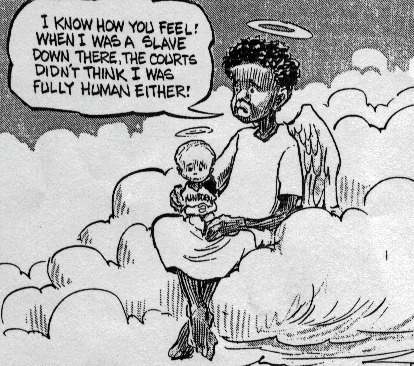
IT HASN’T BEEN TOO FAR BACK IN THE HISTORY OF THE UNITED STATES, THAT BLACK PEOPLE WERE SOLD LIKE CATTLE IN OUR SLAVE MARKETS. FOR ECONOMIC REASONS, WHITE SOCIETY HAD CLASSIFIED THEM AS “NONHUMAN.” THE U S SUPREME COURT UPHELD THIS LIE IN ITS FAMOUS DRED SCOTT DECISION.

______________

I truly believe that many of the problems we have today in the USA are due to the advancement of humanism in the last few decades in our society. Ronald Reagan appointed the evangelical Dr. C. Everett Koop to the position of Surgeon General in his administration. He partnered with Dr. Francis Schaeffer in making the video below. It is very valuable information for Christians to have.  Actually I have included a video below that includes comments from him on this subject.

In the film series “WHATEVER HAPPENED TO THE HUMAN RACE?” the arguments are presented  against abortion (Episode 1),  infanticide (Episode 2),   euthenasia (Episode 3), and then there is a discussion of the Christian versus Humanist worldview concerning the issue of “the basis for human dignity” in Episode 4 and then in the last episode a close look at the truth claims of the Bible.

Many liberals actually truly do argue for abortion rights over human rights. Prochoice advocate Elizabeth Williams came out and said that on 1-23-13 in her article on Salon. We hear reasons for abortion such as poverty,and  child abuse,  but why not consider adoption? Instead, the political left will stop at nothing to push the pro-abortion agenda. Why not stop and take an honest look at when life begins for the unborn child and when she begins to feel pain?

Francis Schaeffer Whatever Happened to the Human Race (Episode 1) ABORTION

_____________________________________


Francis Schaeffer “BASIS FOR HUMAN DIGNITY” Whatever…HTTHR

Dr. Francis schaeffer – The flow of Materialism(from Part 4 of Whatever happened to human race?)

Dr. Francis Schaeffer – The Biblical flow of Truth & History (intro)

Francis Schaeffer – The Biblical Flow of History & Truth (1)

Dr. Francis Schaeffer – The Biblical Flow of Truth & History (part 2)

Ryan T. Anderson

February 7, 2013 at 11:20 am

Photo credit: SNAP/ZUMAPRESS/Newscom

Yesterday we celebrated Ronald Reagan’s 102nd birthday. A little-known fact about President Reagan is that he is the only sitting president to have ever published a book—a book promoting the culture of life.

In Abortion and the Conscience of the Nation, published in 1983, Reagan explained what Roe had wrought for our nation:

The 10th anniversary of the Supreme Court decision in Roe v. Wade is a good time for us to pause and reflect. Our nationwide policy of abortion-on-demand through all nine months of pregnancy was neither voted for by our people nor enacted by our legislators—not a single state had such unrestricted abortion before the Supreme Court decreed it to be national policy in 1973. But the consequences of this judicial decision are now obvious: since 1973, more than 15 million unborn children have had their lives snuffed out by legalized abortions. That is over ten times the number of Americans lost in all our nation’s wars.

As we mourned the 40th anniversary of Roe last month, the number of American lives that have been ended at the hand of an abortionist has sadly grown to 55 million.

Reagan saw Roe for what it was, a travesty of law:

Make no mistake, abortion-on-demand is not a right granted by the Constitution. No serious scholar, including one disposed to agree with the Court’s result, has argued that the framers of the Constitution intended to create such a right. Shortly after the Roe v. Wade decision, Professor John Hart Ely, now Dean of Stanford Law School, wrote that the opinion “is not constitutional law and gives almost no sense of an obligation to try to be.” Nowhere do the plain words of the Constitution even hint at a “right” so sweeping as to permit abortion up to the time the child is ready to be born. Yet that is what the Court ruled.

Reagan encouraged pro-lifers not to lose hope:

Despite the formidable obstacles before us, we must not lose heart. This is not the first time our country has been divided by a Supreme Court decision that denied the value of certain human lives. The Dred Scott decision of 1857 was not overturned in a day, or a year, or even a decade. At first, only a minority of Americans recognized and deplored the moral crisis brought about by denying the full humanity of our black brothers and sisters; but that minority persisted in their vision and finally prevailed. They did it by appealing to the hearts and minds of their countrymen, to the truth of human dignity under God. From their example, we know that respect for the sacred value of human life is too deeply engrained in the hearts of our people to remain forever suppressed. But the great majority of the American people have not yet made their voices heard, and we cannot expect them to—any more than the public voice arose against slavery—until the issue is clearly framed and presented.

So what is the issue, clearly framed and presented? Reagan explained:

I have often said that when we talk about abortion, we are talking about two lives—the life of the mother and the life of the unborn child. Why else do we call a pregnant woman a mother? I have also said that anyone who doesn’t feel sure whether we are talking about a second human life should clearly give life the benefit of the doubt. If you don’t know whether a body is alive or dead, you would never bury it. I think this consideration itself should be enough for all of us to insist on protecting the unborn.

…

The real question today is not when human life begins, but, What is the value of human life? The abortionist who reassembles the arms and legs of a tiny baby to make sure all its parts have been torn from its mother’s body can hardly doubt whether it is a human being. The real question for him and for all of us is whether that tiny human life has a God-given right to be protected by the law—the same right we have.

As we honor President Reagan’s legacy, let us continue to work to build a culture of life.

The film “Whatever happened to the human race?” did a great job of comparing the dehumanizing efforts of the slave owners and those of today’s abortion advocates. Here is  a great cartoon that makes the same comparison:

_____________

Related posts:

Francis Schaeffer’s prayer for us in USA

 Francis Schaeffer: “Whatever Happened to the Human Race” (Episode 1) ABORTION OF THE HUMAN RACE Published on Oct 6, 2012 by AdamMetropolis The 45 minute video above is from the film series created from Francis Schaeffer’s book “Whatever Happened to the Human Race?” with Dr. C. Everett Koop. This book  really helped develop my political views […]

Francis Schaeffer’s “How should we then live?” Video and outline of episode 10 “Final Choices” (Schaeffer Sundays)

E P I S O D E 1 0   Dr. Francis Schaeffer – Episode X – Final Choices 27 min FINAL CHOICES I. Authoritarianism the Only Humanistic Social Option One man or an elite giving authoritative arbitrary absolutes. A. Society is sole absolute in absence of other absolutes. B. But society has to be […]

Francis Schaeffer’s “How should we then live?” Video and outline of episode 9 “The Age of Personal Peace and Affluence” (Schaeffer Sundays)

E P I S O D E 9 Dr. Francis Schaeffer – Episode IX – The Age of Personal Peace and Affluence 27 min T h e Age of Personal Peace and Afflunce I. By the Early 1960s People Were Bombarded From Every Side by Modern Man’s Humanistic Thought II. Modern Form of Humanistic Thought Leads […]

Francis Schaeffer’s “How should we then live?” Video and outline of episode 8 “The Age of Fragmentation” (Schaeffer Sundays)

E P I S O D E 8 Dr. Francis Schaeffer – Episode VIII – The Age of Fragmentation 27 min I saw this film series in 1979 and it had a major impact on me. T h e Age of FRAGMENTATION I. Art As a Vehicle Of Modern Thought A. Impressionism (Monet, Renoir, Pissarro, Sisley, […]

Francis Schaeffer’s “How should we then live?” Video and outline of episode 7 “The Age of Non-Reason” (Schaeffer Sundays)

E P I S O D E 7 Dr. Francis Schaeffer – Episode VII – The Age of Non Reason I am thrilled to get this film series with you. I saw it first in 1979 and it had such a big impact on me. Today’s episode is where we see modern humanist man act […]

Francis Schaeffer’s “How should we then live?” Video and outline of episode 6 “The Scientific Age” (Schaeffer Sundays)

E P I S O D E 6 How Should We Then Live 6#1 Uploaded by NoMirrorHDDHrorriMoN on Oct 3, 2011 How Should We Then Live? Episode 6 of 12 ________ I am sharing with you a film series that I saw in 1979. In this film Francis Schaeffer asserted that was a shift in […]

Francis Schaeffer’s “How should we then live?” Video and outline of episode 5 “The Revolutionary Age” (Schaeffer Sundays)

E P I S O D E 5 How Should We Then Live? Episode 5: The Revolutionary Age I was impacted by this film series by Francis Schaeffer back in the 1970′s and I wanted to share it with you. Francis Schaeffer noted, “Reformation Did Not Bring Perfection. But gradually on basis of biblical teaching there […]

Francis Schaeffer’s “How should we then live?” Video and outline of episode 4 “The Reformation” (Schaeffer Sundays)

Dr. Francis Schaeffer – Episode IV – The Reformation 27 min I was impacted by this film series by Francis Schaeffer back in the 1970′s and I wanted to share it with you. Schaeffer makes three key points concerning the Reformation: “1. Erasmian Christian humanism rejected by Farel. 2. Bible gives needed answers not only as to […]

“Schaeffer Sundays” Francis Schaeffer’s “How should we then live?” Video and outline of episode 3 “The Renaissance”

Francis Schaeffer’s “How should we then live?” Video and outline of episode 3 “The Renaissance” Francis Schaeffer: “How Should We Then Live?” (Episode 3) THE RENAISSANCE I was impacted by this film series by Francis Schaeffer back in the 1970′s and I wanted to share it with you. Schaeffer really shows why we have so […]

Francis Schaeffer’s “How should we then live?” Video and outline of episode 2 “The Middle Ages” (Schaeffer Sundays)

  Francis Schaeffer: “How Should We Then Live?” (Episode 2) THE MIDDLE AGES I was impacted by this film series by Francis Schaeffer back in the 1970′s and I wanted to share it with you. Schaeffer points out that during this time period unfortunately we have the “Church’s deviation from early church’s teaching in regard […]

Francis Schaeffer’s “How should we then live?” Video and outline of episode 1 “The Roman Age” (Schaeffer Sundays)

Francis Schaeffer: “How Should We Then Live?” (Episode 1) THE ROMAN AGE   Today I am starting a series that really had a big impact on my life back in the 1970′s when I first saw it. There are ten parts and today is the first. Francis Schaeffer takes a look at Rome and why […]

Francis Schaeffer: “Whatever Happened to the Human Race” (Episode 5) TRUTH AND HISTORY

Francis Schaeffer: “Whatever Happened to the Human Race” (Episode 5) TRUTH AND HISTORY Published on Oct 7, 2012 by AdamMetropolis This crucial series is narrated by the late Dr. Francis Schaeffer and former Surgeon General Dr. C. Everett Koop. Today, choices are being made that undermine human rights at their most basic level. Practices once […]

Francis Schaeffer: “Whatever Happened to the Human Race” (Episode 4) THE BASIS FOR HUMAN DIGNITY

The opening song at the beginning of this episode is very insightful. Francis Schaeffer: “Whatever Happened to the Human Race” (Episode 4) THE BASIS FOR HUMAN DIGNITY Published on Oct 7, 2012 by AdamMetropolis This crucial series is narrated by the late Dr. Francis Schaeffer and former Surgeon General Dr. C. Everett Koop. Today, choices […]

Francis Schaeffer: “Whatever Happened to the Human Race” (Episode 3) DEATH BY SOMEONE’S CHOICE

Francis Schaeffer: “Whatever Happened to the Human Race” (Episode 3) DEATH BY SOMEONE’S CHOICE Published on Oct 6, 2012 by AdamMetropolis This crucial series is narrated by the late Dr. Francis Schaeffer and former Surgeon General Dr. C. Everett Koop. Today, choices are being made that undermine human rights at their most basic level. Practices […]

Francis Schaeffer: “Whatever Happened to the Human Race?” (Episode 2) SLAUGHTER OF THE INNOCENTS

Francis Schaeffer: “Whatever Happened to the Human Race?” (Episode 2) SLAUGHTER OF THE INNOCENTS Published on Oct 6, 2012 by AdamMetropolis This crucial series is narrated by the late Dr. Francis Schaeffer and former Surgeon General Dr. C. Everett Koop. Today, choices are being made that undermine human rights at their most basic level. Practices […]

Francis Schaeffer: “Whatever Happened to the Human Race” (Episode 1) ABORTION OF THE HUMAN RACE

It is not possible to know where the pro-life evangelicals are coming from unless you look at the work of the person who inspired them the most. That person was Francis Schaeffer.  I do care about economic issues but the pro-life issue is the most important to me. Several years ago Adrian Rogers (past president of […]

The following essay explores the role that Francis Schaeffer played in the rise of the pro-life movement. It examines the place of How Should We Then Live?, Whatever Happened to the Human Race?, and A Christian Manifesto in that process.

This essay below is worth the read. Schaeffer, Francis – “Francis Schaeffer and the Pro-Life Movement” [How Should We Then Live?, Whatever Happened to the Human Race?, A Christian Manifesto] Editor note: <p> </p> [The following essay explores the role that Francis Schaeffer played in the rise of the pro-life movement.  It examines the place of […]

Who was Francis Schaeffer? by Udo Middelmann

Great article on Schaeffer. Who was Dr. Francis A. Schaeffer? By Francis Schaeffer The unique contribution of Dr. Francis Schaeffer on a whole generation was the ability to communicate the truth of historic Biblical Christianity in a way that combined intellectual integrity with practical, loving care. This grew out of his extensive understanding of the Bible […]

.

“Sanctity of Life Saturday” Pro-life Atheist Nat Hentoff on Dr. Kermit Gosnell and President Obama

Many in the world today are taking a long look at the abortion industry because of the May 14, 2013 guilty verdict and life term penalty handed down by a jury (which included 9 out of 12 pro-choice jurors)  to Dr. Kermit Gosnell. During this time of reflection I wanted to put forth some of the pro-life’s best arguments.

Nat Hentoff is an atheist, but he became a pro-life activist because of the scientific evidence that shows that the unborn child is a distinct and separate human being and even has a separate DNA. His perspective is a very intriguing one that I thought you would be interested in. I have shared before many   cases (Bernard Nathanson, Donald Trump, Paul Greenberg, Kathy Ireland)    when other high profile pro-choice leaders have changed their views and this is just another case like those. I have contacted the White House over and over concerning this issue and have even received responses. I am hopeful that people will stop and look even in a secular way (if they are not believers) at this abortion debate and see that the unborn child is deserving of our protection.That is why the writings of Nat Hentoff of the Cato Institute are so crucial.

In the film series “WHATEVER HAPPENED TO THE HUMAN RACE?” the arguments are presented  against abortion (Episode 1),  infanticide (Episode 2),   euthanasia (Episode 3), and then there is a discussion of the Christian versus Humanist worldview concerning the issue of “the basis for human dignity” in Episode 4 and then in the last episode a close look at the truth claims of the Bible.

Francis Schaeffer

__________________________

I truly believe that many of the problems we have today in the USA are due to the advancement of humanism in the last few decades in our society. Ronald Reagan appointed the evangelical Dr. C. Everett Koop to the position of Surgeon General in his administration. He partnered with Dr. Francis Schaeffer in making the video below. It is very valuable information for Christians to have.  Actually I have included a video below that includes comments from him on this subject.

Francis Schaeffer Whatever Happened to the Human Race (Episode 1) ABORTION

_____________________________________


Francis Schaeffer “BASIS FOR HUMAN DIGNITY” Whatever…HTTHR

Dr. Francis schaeffer – The flow of Materialism(from Part 4 of Whatever happened to human race?)

Dr. Francis Schaeffer – The Biblical flow of Truth & History (intro)

Francis Schaeffer – The Biblical Flow of History & Truth (1)

Dr. Francis Schaeffer – The Biblical Flow of Truth & History (part 2)

________________

HENTOFF: Why Obama is silent on Gosnell case

  • Posted: Thursday, 05/23/13 09:14 am

Dr. Kermit Gosnell is escorted to a waiting police van upon leaving the Criminal Justice Center in Philadelphia, Monday, May 13, 2013, after being convicted of first-degree murder in the deaths of three babies who were delivered alive and then killed with scissors at his clinic. (AP Photo/Philadelphia Daily News, Yong Kim)
  • CONTRIBUTE
    • Story Ideas
    • Send Corrections

By Nat Hentoff
After reading ghastly headlines about recently convicted Philadelphia abortion doctor Kermit Gosnell, such as “Gosnell Jury Hears About Baby Surviving Abortion in Toilet” (Steven Ertelt, lifenews.com, May 9), there was this sudden message: “White House: No Comment on Gosnell ‘Beheading’ Babies in Abortions” (Steven Ertelt, LifeNews.com, April 15).

Why was Barack Obama silent about this “house of horrors”? Maybe because, as I’ve previously reported, he didn’t want it known that as a state senator in Illinois, he had persistently opposed a bill, the Born-Alive Infant Protection Act, which would have provided medical care for babies who survive botched abortions.

He had voted “No” on the bill in March 2001 and “Present” later that same month. Explaining Obama’s vote, WorldNetDaily reports, “in the Illinois senate, voting ‘Present’ is the equivalent of voting ‘No,’ because a bill must have a majority counting only ‘Yes’ votes to pass” (“Gosnell Conviction a Setback for Obama,” May 13).

Jill Stanek, an Illinois nurse and pro-life advocate whom I had previously interviewed, testified in 2003 before the Illinois Senate Health and Human Services Committee on the Born-Alive Infant Protection Act. She told of a colleague who “accidentally threw a live aborted baby in the garbage who had been left on the counter of the Soiled Utility Room wrapped in a disposable towel.

“When the associate realized what she had done, she started going through the trash to find the baby, and the baby fell out of the towel and on to the floor.”

As president, Obama has steadfastly supported late-term abortions. But he doesn’t need to worry about the public being reminded of his rejection of the Born-Alive Infant Protection Act. That’s because of the unyielding media attention that’s been concentrated on his Justice Department’s invasions of the Associated Press’ First Amendment freedoms, as well as the Internal Revenue Service’s questioning of citizens’ political groups, focusing, for example, on those with “patriot” and “tea party” in their names. The IRS was also curious to know if any of these groups had publicly opposed specific policies, like Obamacare.

Of what country does Obama think he’s president?

As for Dr. Kermit Gosnell, his case is done. In the May 15 Wall Street Journal, Peter Loftus reports that he has been sentenced “to spend the rest of his life in prison for the murders of babies who were born alive at his Philadelphia abortion clinic, avoiding a potential death penalty in a deal with city prosecutors.”

But the horrifying details of his case have startlingly educated many Americans, including this one, about the extent of other “houses of horror” throughout this nation.

The Washington Times’ Jeanneane Maxon writes: “Gosnell’s clinic is not the only ‘house of horrors’ in our nation. In recent years, 15 states have investigated substandard conditions and providers” (“Why Big Abortion shares Gosnell’s guilt,” May 15).

For one of many examples, Helen Pow reveals in the Daily Mail that “Houston doctor Douglas Karpen is accused by four former employees of delivering live fetuses during third-trimester abortions and killing them by either snipping their spinal cord (the Gosnell method), stabbing a surgical instrument into their heads or ‘twisting their heads off their necks with his own bare hands’” (“Second ‘house of horrors’ abortion clinic where doctor ‘twisted heads off fetus’ necks with his bare hands’ is investigated in Texas,” May 16).

Pow, citing anti-abortion group Life Dynamics’ video interview with one of the doctor’s former employees, writes that in these latter murders, the fetus coming completely out “was still alive because it was still moving and you could see the stomach breathing.”

The Texas Department of State Health Services is investigating.

As for Gosnell’s “house of horrors,” we now know that his “abortion center was inspected only after a federal drug raid in 2010. It was the first time the facility had been inspected in 17 years because state officials ignored complaints and failed to visit Gosnell’s Women’s Medical Society for years” (“Kermit Gosnell Jury Hung on Two Counts, Doesn’t Say Which Ones,” Steven Ertelt, LifeNews.com, May 13).

While some states didn’t need Gosnell to be awakened to the need for strenuous oversight of abortions, what about the many others that do? As WorldNetDaily senior correspondent and author Jerome Corsi insists:

“After the Gosnell conviction, no state health official can rest comfortably that abortion doctors are acting responsibly, unless the state has a history of rigorous health standards applied by abortion clinics operating in the state.”

This includes, he adds, making sure restrictions on late-term abortions are actually being followed.

Because I am among the many pro-life and pro-choice Americans mourning those babies who were assassinated by Dr. Kermit Gosnell, I will end with this:

Notorious late-term abortionist LeRoy Carhart “was awarded the 2009 William K. Rashbaum, M.D., Abortion Provider Award by Physicians for Reproductive Health … NARAL Pro-Choice America (which no longer stands for National Abortion Rights Action League, given that some people might think that name icky) gave him its Hero Award that same year” (“Kermit Gosnell Is Not an Outlier,” Shannen W. Coffin, nationalreview.com, April 12).

Coffin contiues: “There’s very little difference between what Carhart does on a regular basis and what Kermit Gosnell (stood) on trial for.”

When is NARAL Pro-Choice America going to demand the return of that Hero Award?

I’m a pro-lifer who agrees with Jerome Corsi: “Now that murder charges have been found to apply to abortion practices in Pennsylvania, no state should assume a health department trying to be politically correct can be assumed in the future to be free of criminal liabilities.”

Including murder.
(Nat Hentoff is a nationally renowned authority on the First Amendment and the Bill of Rights. He is a member of the Reporters Committee for Freedom of the Press, and the Cato Institute, where he is a senior fellow.)

(EDITORS: For editorial questions, please contact Gillian Titus at gtitus amuniversal.com)

_____________

Political Cartoons by Glenn McCoy

_____________

Tony Perkins: Gosnell Trial – FOX News

Published on May 13, 2013

Tony Perkins: Gosnell Trial – FOX News

Related posts:

Al Mohler on Kermit Gosnell’s abortion practice

Francis Schaeffer: “Whatever Happened to the Human Race” (Episode 1) ABORTION OF THE HUMAN RACE Published on Oct 6, 2012 by AdamMetropolis ________________ Picture of Francis Schaeffer and his wife Edith from the 1930′s above. I was sad to read about Edith passing away on Easter weekend in 2013. I wanted to pass along this fine […]

Taking on Ark Times Bloggers on various issues Part U “Do men have a say in the abortion debate?” (includes the film SLAUGHTER OF THE INNOCENTS and editorial cartoon)

I have gone back and forth and back and forth with many liberals on the Arkansas Times Blog on many issues such as abortion, human rights, welfare, poverty, gun control  and issues dealing with popular culture. Here is another exchange I had with them a while back. My username at the Ark Times Blog is Saline […]

Taking on Ark Times Bloggers on various issues Part T “Abortion is a dirty business” (includes video “Truth and History” and editorial cartoon)

I have gone back and forth and back and forth with many liberals on the Arkansas Times Blog on many issues such as abortion, human rights, welfare, poverty, gun control  and issues dealing with popular culture. Here is another exchange I had with them a while back. My username at the Ark Times Blog is Saline […]

“Sanctity of Life Saturday” Abortion supporters lying in order to further their clause? Window to the Womb (includes video ABORTION OF THE HUMAN RACE)

It is truly sad to me that liberals will lie in order to attack good Christian people like state senator Jason Rapert of Conway, Arkansas because he headed a group of pro-life senators that got a pro-life bill through the Arkansas State Senate the last week of January in 2013. I have gone back and […]

Taking on Ark Times Bloggers on various issues Part D “If you can’t afford a child can you abort?”Francis Schaeffer Quotes part 4 includes the film ABORTION OF THE HUMAN RACE) (editorial cartoon)

I have gone back and forth and back and forth with many liberals on the Arkansas Times Blog on many issues such as abortion, human rights, welfare, poverty, gun control  and issues dealing with popular culture. Here is another exchange I had with them a while back. My username at the Ark Times Blog is Saline […]

Taking on Ark Times Bloggers on various issues Part C “Abortion” (Francis Schaeffer Quotes part 3 includes the film SLAUGHTER OF THE INNOCENTS) (editorial cartoon)

I have gone back and forth and back and forth with many liberals on the Arkansas Times Blog on many issues such as abortion, human rights, welfare, poverty, gun control  and issues dealing with popular culture. Here is another exchange I had with them a while back. My username at the Ark Times Blog is Saline […]

Taking on Ark Times Bloggers on various issues Part B “Gendercide” (Francis Schaeffer Quotes Part 2 includes the film ABORTION OF THE HUMAN RACE) (editorial cartoon)

I have gone back and forth and back and forth with many liberals on the Arkansas Times Blog on many issues such as abortion, human rights, welfare, poverty, gun control  and issues dealing with popular culture. Here is another exchange I had with them a while back. My username at the Ark Times Blog is Saline […]

SANCTITY OF LIFE SATURDAY “AngryOldWoman” blogger argues that she has no regrets about past abortion

Sometimes you can see evidences in someone’s life of how content they really are. I saw  something like that on 2-8-13 when I confronted a blogger that goes by the name “AngryOldWoman” on the Arkansas Times Blog. See below. Leadership Crisis in America Published on Jul 11, 2012 Picture of Adrian Rogers above from 1970′s […]

“Sanctity of Life Saturday” The Church Awakens: Whatever Happened to the Human Race? (includes the video ABORTION OF THE HUMAN RACE)

In the film series “WHATEVER HAPPENED TO THE HUMAN RACE?” the arguments are presented  against abortion (Episode 1),  infanticide (Episode 2),   euthenasia (Episode 3), and then there is a discussion of the Christian versus Humanist worldview concerning the issue of “the basis for human dignity” in Episode 4 and then in the last episode a close […]

Taking on Ark Times Bloggers on various issues Part H “Are humans special?” includes film ABORTION OF THE HUMAN RACE) Reagan: ” To diminish the value of one category of human life is to diminish us all”

I have gone back and forth and back and forth with many liberals on the Arkansas Times Blog on many issues such as abortion, human rights, welfare, poverty, gun control  and issues dealing with popular culture. Here is another exchange I had with them a while back. My username at the Ark Times Blog is Saline […]

Taking on Ark Times Bloggers on various issues Part G “How do moral nonabsolutists come up with what is right?” includes the film “ABORTION OF THE HUMAN RACE”)

I have gone back and forth and back and forth with many liberals on the Arkansas Times Blog on many issues such as abortion, human rights, welfare, poverty, gun control  and issues dealing with popular culture. Here is another exchange I had with them a while back. My username at the Ark Times Blog is Saline […]

Taking on Ark Times Bloggers on various issues Part E “Moral absolutes and abortion” Francis Schaeffer Quotes part 5(includes the film SLAUGHTER OF THE INNOCENTS) (editorial cartoon)

I have gone back and forth and back and forth with many liberals on the Arkansas Times Blog on many issues such as abortion, human rights, welfare, poverty, gun control  and issues dealing with popular culture. Here is another exchange I had with them a while back. My username at the Ark Times Blog is Saline […]

Francis Schaeffer’s “How should we then live?” Video and outline of episode 10 “Final Choices” (Schaeffer Sundays)

E P I S O D E 1 0   Dr. Francis Schaeffer – Episode X – Final Choices 27 min FINAL CHOICES I. Authoritarianism the Only Humanistic Social Option One man or an elite giving authoritative arbitrary absolutes. A. Society is sole absolute in absence of other absolutes. B. But society has to be […]

Francis Schaeffer’s “How should we then live?” Video and outline of episode 9 “The Age of Personal Peace and Affluence” (Schaeffer Sundays)

E P I S O D E 9 Dr. Francis Schaeffer – Episode IX – The Age of Personal Peace and Affluence 27 min T h e Age of Personal Peace and Afflunce I. By the Early 1960s People Were Bombarded From Every Side by Modern Man’s Humanistic Thought II. Modern Form of Humanistic Thought Leads […]

Francis Schaeffer’s “How should we then live?” Video and outline of episode 8 “The Age of Fragmentation” (Schaeffer Sundays)

E P I S O D E 8 Dr. Francis Schaeffer – Episode VIII – The Age of Fragmentation 27 min I saw this film series in 1979 and it had a major impact on me. T h e Age of FRAGMENTATION I. Art As a Vehicle Of Modern Thought A. Impressionism (Monet, Renoir, Pissarro, Sisley, […]

Francis Schaeffer’s “How should we then live?” Video and outline of episode 7 “The Age of Non-Reason” (Schaeffer Sundays)

E P I S O D E 7 Dr. Francis Schaeffer – Episode VII – The Age of Non Reason I am thrilled to get this film series with you. I saw it first in 1979 and it had such a big impact on me. Today’s episode is where we see modern humanist man act […]

Francis Schaeffer’s “How should we then live?” Video and outline of episode 6 “The Scientific Age” (Schaeffer Sundays)

E P I S O D E 6 How Should We Then Live 6#1 Uploaded by NoMirrorHDDHrorriMoN on Oct 3, 2011 How Should We Then Live? Episode 6 of 12 ________ I am sharing with you a film series that I saw in 1979. In this film Francis Schaeffer asserted that was a shift in […]

Francis Schaeffer’s “How should we then live?” Video and outline of episode 5 “The Revolutionary Age” (Schaeffer Sundays)

E P I S O D E 5 How Should We Then Live? Episode 5: The Revolutionary Age I was impacted by this film series by Francis Schaeffer back in the 1970′s and I wanted to share it with you. Francis Schaeffer noted, “Reformation Did Not Bring Perfection. But gradually on basis of biblical teaching there […]

Francis Schaeffer’s “How should we then live?” Video and outline of episode 4 “The Reformation” (Schaeffer Sundays)

Dr. Francis Schaeffer – Episode IV – The Reformation 27 min I was impacted by this film series by Francis Schaeffer back in the 1970′s and I wanted to share it with you. Schaeffer makes three key points concerning the Reformation: “1. Erasmian Christian humanism rejected by Farel. 2. Bible gives needed answers not only as to […]

“Schaeffer Sundays” Francis Schaeffer’s “How should we then live?” Video and outline of episode 3 “The Renaissance”

Francis Schaeffer’s “How should we then live?” Video and outline of episode 3 “The Renaissance” Francis Schaeffer: “How Should We Then Live?” (Episode 3) THE RENAISSANCE I was impacted by this film series by Francis Schaeffer back in the 1970′s and I wanted to share it with you. Schaeffer really shows why we have so […]

Francis Schaeffer’s “How should we then live?” Video and outline of episode 2 “The Middle Ages” (Schaeffer Sundays)

  Francis Schaeffer: “How Should We Then Live?” (Episode 2) THE MIDDLE AGES I was impacted by this film series by Francis Schaeffer back in the 1970′s and I wanted to share it with you. Schaeffer points out that during this time period unfortunately we have the “Church’s deviation from early church’s teaching in regard […]

Francis Schaeffer’s “How should we then live?” Video and outline of episode 1 “The Roman Age” (Schaeffer Sundays)

Francis Schaeffer: “How Should We Then Live?” (Episode 1) THE ROMAN AGE   Today I am starting a series that really had a big impact on my life back in the 1970′s when I first saw it. There are ten parts and today is the first. Francis Schaeffer takes a look at Rome and why […]

By Everette Hatcher III | Posted in Francis Schaeffer | Edit | Comments (0)

Open letter to President Obama (Part 604) FREE TO CHOOSE “Who protects the worker?” Video and Transcript Part 2 of 7 “Why does it take almost 2 years to fire a government employee?”

Open letter to President Obama (Part 604) (Emailed to White House on July 22, 2013)

President Obama c/o The White House
1600 Pennsylvania Avenue NW
Washington, DC 20500

Dear Mr. President,

I know that you receive 20,000 letters a day and that you actually read 10 of them every day. I really do respect you for trying to get a pulse on what is going on out here.

________________

FREE TO CHOOSE “Who protects the worker?” Video and Transcript Part 2 of 7

In 1980 I read the book FREE TO CHOOSE by Milton Friedman and it really enlightened me a tremendous amount.  I suggest checking out these episodes and transcripts of Milton Friedman’s film series FREE TO CHOOSE: “The Failure of Socialism” and “What is wrong with our schools?”  and “Created Equal”  and  From Cradle to Grave, and – Power of the Market. Milton Friedman shows in this episode how the worker is best protected and it is not by the government!!!!!!!

Milton Friedman shows in this episode that instead of allowing a boss at a government job to fire a worker for being late every day, the boss had to spend almost 2 years going through red tape before being able to fire  the employee. This is too much protection for the worker!!!!

Pt 2

One day in 1978, workers at a coal loading dock on the Ohio River in southern Indiana continued to work after the Mineworker’s Union had called a strike. That night, a crowd of armed union men invaded the site.

John Persinger: And then they fired a little building sitting here after they fired Mr. Tegain’s car here. And threw another fire bomb into the trailer, others had ran on back and were firing trucks and shooting holes through tires with hand guns. I’d gone back beyond the loading dock here. Standing back in there. I could hear them shooting and the air escaping from truck tires. Course there’s so many people moving around and doing so much damage and setting so many things on fire, there were a lot of things going on at one time. We should have been heavily armed and shot these people did something to stop such destruction. I wouldn’t have believed that a rabble rouser could have gathered together that many irresponsible people to come on to a person’s property and do this kind of destruction until I’d finally seen it done.

Friedman: These workers are on the other side of the union fence. They’re building two social security offices in Baltimore. On this government project everyone’s a union worker. They rely on their union to protect them against competition from non-union labor. But some local contractors see a very different side to a closed shop.

Harry Leef: We don’t feel that anyone should be denied a choice and we feel every man should have a choice if he wants to be unionized or not. Not legislated not saying he must belong to a union. If you feel when you tell a man he must belong to a union or he must do this or that, you are taking freedoms away from this man. The freedom of choice of this businessman here to choice me to do business with me. All businesses needs its right to choice to do business with each other. By the same token, our employees have the right to choose whether they want unionization or not.

Friedman: On this government site, authorized personnel only really means unionized personnel only. Unions have long recognized that the surest and most effective way for them to get power without violence is to have the federal government on their side. That’s why so many strong unions have made it a point to locate their headquarters close to the source of power.

The heads of the trade unions that cluster near Capital Hill know this place very well. It is the room assigned to the Committee on Education and Labor of the House of Representatives and it is where much of our labor legislation is discussed and shaped before presentation to Congress. I know rooms like this myself very well. Because I’ve often testified before Congressional Committees and they all meet in rooms like this, up there on the podium is where the members of the House or of the Senate sit. Of course, behind them there will be clustered a bunch of aides. As you know, there are something like 30_40 aides for every single member of the House and the Senate. And very often in one of these committee rooms there will be almost nothing but aides around. When I’ve sat in the bear pit over here, where the witnesses sit to testify, I’ve sometimes thought that maybe the whole thing was a show being conducted by and for the aides with an occasional member of the House or Senator dropping by to see what the show is all about.

This is a room in which hearings were held on the most recent increase in the minimum wage for example. Who do you suppose testified here in favor of a higher minimum wage right? Do you suppose it was representatives of the poor people who are supposedly being helped by the bill? Not a bit of it. The major people testifying for it were representatives of the American Federation of Labor. The AFL-CIO. The major organization of trade unions in this country. There’s hardly a member of one of their trade unions who works for a wage anywhere close to the minimum wage. Despite all the rhetoric about helping the poor, they were in favor of a higher minimum wage for a very different reason. Because it would protect the members of their unions from competition from the lower and lesser skilled people. To see the effects of minimum wage laws in action, go to a place like this where they sell quick and inexpensive food. You don’t need much training to start work on this job. It used to be a traditional training ground for the unskilled. Not any longer thanks to the minimum wage laws.

Lee Roberts: From the workers point of view, the people that it was supposed to help are the people in some cases it’s hurting the most. Such as minorities, unskilled labor and young people. A businessmen, especially a small businessman cannot afford to bring in these people at the higher wage. They are willing however, to take apprentices and to train them. It’s very difficult to do now under minimum wage laws.

Friedman: To people who are discriminated against most by high minimum wage, right, are the people with low skills which includes a disappropriate number of Negroes. Indeed I have long believed that the minimum wage rate was the most anti-Negro piece of legislation on our statute books. Not by intention, but through its results.

The more they get paid, the better people can live. Whether they are paid in cash or in kind. The staff restaurant in the Department of Housing and Urban Development in Washington, D.C., these people are eating subsidized food. Like all civil servants federal workers get extremely generous fringe benefits. They have also had an incredible degree of security. It has been almost impossible to fire a civil servant. In January, 1975, a typist in the Environmental Protection Agency was so consistently late for work that her supervisors demanded she be fired. It took 19 months to do it and this incredible 21 foot long chart lists the steps that had to be gone through to satisfy all the rules and all the management and union agreements.

Unnamed Individual: This is really a typical horror story is what it amounts to. It shows the number of steps you have to go through.

Friedman: The process involved the girl’s supervisor, his deputy director, his director, his director of personnel operations, the agency’s branch chief, an employee relations specialist, a second employee relations specialist, a special office of investigations and the director of the office of investigations. This veritable telephone directory, need I add, was paid with taxpayers money. Who could invent a better protected job than this one before it came to it’s end?

Worker: We now have a time certain at which the decision has to be made with the agency.

Friedman: Half an hour’s drive out of Washington, you come to Montgomery County where many very senior civil servants live. It has the highest average family income of any county in the United States. Of the people who live here who are employed, one out of every four works for the federal government. Like all civil servants, they have job security, salaries linked to the cost of living, a fine retirement plan also linked to the cost of living, and many manage to qualify for Social Security as well, becoming double-dippers.

Many of their neighbors are also here because of the federal government. Congressmen, lobbyists, top executives of corporations with government contracts.

As government expands, so does this neighborhood.


________________

Thank you so much for your time. I know how valuable it is. I also appreciate the fine family that you have and your commitment as a father and a husband.

Sincerely,

Everette Hatcher III, 13900 Cottontail Lane, Alexander, AR 72002, ph 501-920-5733, lowcostsqueegees@yahoo.com

Related posts:

“The Power of the Market” episode of Free to Choose in 1990 by Milton Friedman (Part 1)

Milton Friedman The Power of the Market 1-5 How can we have personal freedom without economic freedom? That is why I don’t understand why socialists who value individual freedoms want to take away our economic freedoms.  I wanted to share this info below with you from Milton Friedman who has influenced me greatly over the […]

“Friedman Friday,” EPISODE “The Failure of Socialism” of Free to Choose in 1990 by Milton Friedman (Part 1)

Milton Friedman: Free To Choose – The Failure Of Socialism With Ronald Reagan (Full) Published on Mar 19, 2012 by NoNationalityNeeded Milton Friedman’s writings affected me greatly when I first discovered them and I wanted to share with you. We must not head down the path of socialism like Greece has done. Abstract: Ronald Reagan […]

________________

“Friedman Friday” (“Free to Choose” episode 3 – Anatomy of a Crisis. part 3 of 7)

Worse still, America’s depression was to become worldwide because of what lies behind these doors. This is the vault of the Federal Reserve Bank of New York. Inside is the largest horde of gold in the world. Because the world was on a gold standard in 1929, these vaults, where the U.S. gold was stored, […]

“Friedman Friday” (Part 16) (“Free to Choose” episode 3 – Anatomy of a Crisis. part 2 of 7)

  George Eccles: Well, then we called all our employees together. And we told them to be at the bank at their place at 8:00 a.m. and just act as if nothing was happening, just have a smile on their face, if they could, and me too. And we have four savings windows and we […]

“Friedman Friday” (“Free to Choose” episode 3 – Anatomy of a Crisis. part 1of 7)

Milton Friedman’s Free to Choose (1980), episode 3 – Anatomy of a Crisis. part 1 FREE TO CHOOSE: Anatomy of Crisis Friedman Delancy Street in New York’s lower east side, hardly one of the city’s best known sites, yet what happened in this street nearly 50 years ago continues to effect all of us today. […]

By Everette Hatcher III | Also posted in Current Events | Edit | Comments (0)

____________________________

_____________


________________________________________________

_____________________________________________

Friedman Friday” Free to Choose by Milton Friedman: Episode “What is wrong with our schools?” (Part 3 of transcript and video)

Friedman Friday” Free to Choose by Milton Friedman: Episode “What is wrong with our schools?” (Part 3 of transcript and video) Here is the video clip and transcript of the film series FREE TO CHOOSE episode “What is wrong with our schools?” Part 3 of 6.   Volume 6 – What’s Wrong with our Schools Transcript: If it […]

Friedman Friday” Free to Choose by Milton Friedman: Episode “What is wrong with our schools?” (Part 2 of transcript and video)

Here is the video clip and transcript of the film series FREE TO CHOOSE episode “What is wrong with our schools?” Part 2 of 6.   Volume 6 – What’s Wrong with our Schools Transcript: Groups of concerned parents and teachers decided to do something about it. They used private funds to take over empty stores and they […]

By Everette Hatcher III | Also posted in Vouchers | Edit | Comments (1)

Friedman Friday” Free to Choose by Milton Friedman: Episode “What is wrong with our schools?” (Part 1 of transcript and video)

Here is the video clip and transcript of the film series FREE TO CHOOSE episode “What is wrong with our schools?” Part 1 of 6.   Volume 6 – What’s Wrong with our Schools Transcript: Friedman: These youngsters are beginning another day at one of America’s public schools, Hyde Park High School in Boston. What happens when […]

By Everette Hatcher III | Also posted in Vouchers | Tagged , , , , | Edit | Comments (0)

Friedman Friday” Free to Choose by Milton Friedman: Episode “Created Equal” (Part 3 of transcript and video)

Friedman Friday” Free to Choose by Milton Friedman: Episode “Created Equal” (Part 3 of transcript and video) Liberals like President Obama want to shoot for an equality of outcome. That system does not work. In fact, our free society allows for the closest gap between the wealthy and the poor. Unlike other countries where free enterprise and other […]

Free to Choose by Milton Friedman: Episode “Created Equal” (Part 2 of transcript and video)

Free to Choose by Milton Friedman: Episode “Created Equal” (Part 2 of transcript and video) Liberals like President Obama want to shoot for an equality of outcome. That system does not work. In fact, our free society allows for the closest gap between the wealthy and the poor. Unlike other countries where free enterprise and other freedoms are […]

Free to Choose by Milton Friedman: Episode “Created Equal” (Part 1 of transcript and video)

 Milton Friedman and Ronald Reagan Liberals like President Obama (and John Brummett) want to shoot for an equality of outcome. That system does not work. In fact, our free society allows for the closest gap between the wealthy and the poor. Unlike other countries where free enterprise and other freedoms are not present.  This is a seven part series. […]

Milton Friedman Friday: (“Free to Choose” episode 4 – From Cradle to Grave, Part 3 of 7)

 I am currently going through his film series “Free to Choose” which is one the most powerful film series I have ever seen. PART 3 OF 7 Worse still, America’s depression was to become worldwide because of what lies behind these doors. This is the vault of the Federal Reserve Bank of New York. Inside […]

By Everette Hatcher III | Edit | Comments (0)

Milton Friedman Friday:(“Free to Choose” episode 4 – From Cradle to Grave, Part 2 of 7)

 I am currently going through his film series “Free to Choose” which is one the most powerful film series I have ever seen. For the past 7 years Maureen Ramsey has had to buy food and clothes for her family out of a government handout. For the whole of that time, her husband, Steve, hasn’t […]

Friedman Friday:(“Free to Choose” episode 4 – From Cradle to Grave, Part 1 of 7)

Friedman Friday:(“Free to Choose” episode 4 – From Cradle to Grave, Part 1 of 7) Volume 4 – From Cradle to Grave Abstract: Since the Depression years of the 1930s, there has been almost continuous expansion of governmental efforts to provide for people’s welfare. First, there was a tremendous expansion of public works. The Social Security Act […]

By Everette Hatcher III | Edit | Comments (0)

“Friedman Friday” (“Free to Choose” episode 1 – Power of the Market. part 3 of 7)

  _________________________   Pt3  Nowadays there’s a considerable amount of traffic at this border. People cross a little more freely than they use to. Many people from Hong Kong trade in China and the market has helped bring the two countries closer together, but the barriers between them are still very real. On this side […]

“Friedman Friday” (“Free to Choose” episode 1 – Power of the Market. part 2 of 7)

  Aside from its harbor, the only other important resource of Hong Kong is people __ over 4_ million of them. Like America a century ago, Hong Kong in the past few decades has been a haven for people who sought the freedom to make the most of their own abilities. Many of them are […]

“Friedman Friday” (“Free to Choose” episode 1 – Power of the Market. part 1of 7)

“FREE TO CHOOSE” 1: The Power of the Market (Milton Friedman) Free to Choose ^ | 1980 | Milton Friedman Posted on Monday, July 17, 2006 4:20:46 PM by Choose Ye This Day FREE TO CHOOSE: The Power of the Market Friedman: Once all of this was a swamp, covered with forest. The Canarce Indians […]

By Everette Hatcher III | Posted in Current Events, Milton Friedman | Edit | Comments (0)

“Friedman Friday,” EPISODE “The Failure of Socialism” of Free to Choose in 1990 by Milton Friedman (Part 1)

Milton Friedman: Free To Choose – The Failure Of Socialism With Ronald Reagan (Full) Published on Mar 19, 2012 by NoNationalityNeeded Milton Friedman’s writings affected me greatly when I first discovered them and I wanted to share with you. We must not head down the path of socialism like Greece has done. Abstract: Ronald Reagan […]

By Everette Hatcher III | Posted in Milton Friedman, President Obama | Edit | Comments (1)

“The Failure of Socialism” episode of Free to Choose in 1990 by Milton Friedman (Part 1)

Milton Friedman: Free To Choose – The Failure Of Socialism With Ronald Reagan (Full) Published on Mar 19, 2012 by NoNationalityNeeded Milton Friedman’s writings affected me greatly when I first discovered them and I wanted to share with you. We must not head down the path of socialism like Greece has done. Abstract: Ronald Reagan […]


“Friedman Friday” Milton Friedman: Great Depression was not produced by private enterprise

Milton Friedman – The Great Depression Myth

Uploaded by on Mar 25, 2010

Milton Friedman explodes the myth that the Great Depression was produced by a failure of private enterprise.

_______________

Milton Friedman is right about the cause of the Great Depression.

Ivan Pongracic Jr.

The Great Depression According to Milton Friedman

The Great Depression Could Have Been Avoided if the Fed Had Not So Badly Botched Its Monetary Policy

September 2007 • Volume: 57 • Issue: 7

The author extends special thanks to Lawrence H. White and Ivan Pongracic, Sr., for their helpful comments.

Few events in U.S. history can rival the Great Depression for its impact. The period from 1929 to 1941 saw fundamental changes in the landscape of American politics and economics, including such monumental events as America ‘s going off the gold standard and the founding of Social Security. It was a watershed for the growth of the federal government.

The Great Depression created a widespread misconception that market economies are inherently unstable and must be managed by the government to avoid large macreconomic fluctuations, that is, business cycles. This view persists to this day despite the more than 40 years since Milton Friedman and Anna Jacobson Schwartz showed convincingly that the Federal Reserve’s monetary policies were largely to blame for the severity of the Great Depression. In 2002 Ben Bernanke (then a Federal Reserve governor, today the chairman of the Board of Governors) made this startling admission in a speech given in honor of Friedman’s 90th birthday: “I would like to say to Milton and Anna: Regarding the Great Depression, you’re right. We did it. We’re very sorry.”

Friedman, the great free-market champion of the last 50 years and one of the most influential economists of the last 200 years, died in November 2006 at 94. He left us an immense intellectual legacy, including his explanation of the Great Depression, which, while persuading a majority of the economics profession, has yet to fully trickle down to the public. It is truly a great mystery why Friedman’s explanation has not been more widely recognized and accepted, especially given its influence among economists. Maybe the reason is that it does not lend itself to quick sound bites by politicians eager to justify more power. Or maybe it is usually presented in a way that makes it too difficult for the layperson to understand. Or maybe it is just that people find it easier to blame the “capitalists” rather than the hallowed Federal Reserve. Whatever the case, it would be beneficial to revisit Friedman’s argument.

The standard explanation of the Great Depression, found in most American high-school history texts, is that it was created by the wild and irrational stock-market speculation that ultimately led to the Great Crash of October 1929. Investor speculations were so excessive—so the story goes—that once the bubble popped, it triggered the most severe decline in economic activity in U.S. history. The key point of this story is that the crash and the subsequent depression were due to factors that are innate to the capitalist system, unchecked under the supposedly laissez-faire policies of Herbert Hoover. It was only once Franklin Delano Roosevelt came into office that the government jump-started the recovery. It is thus claimed that FDR’s policies were responsible not only for the recovery, but in fact for “saving capitalism from itself” when many Americans were willing to consider adopting full-blown socialism in the 1930s as a way to deal with the downturn.

Most people do not realize how much of this explanation had been shaped by Keynesian economics, the dominant economic paradigm from the 1940s to the 1970s. Keynesian economics got its start with the publication of John Maynard Keynes’s General Theory of Employment, Interest, and Money in 1936. There Keynes proposed a view of the Great Depression that was at odds with the rest of the economics profession at the time. Most economists of the era tended to agree that market economies are “self-adjusting” and that they cannot get stuck in a recession for very long. However, this view seemed to be at odds with the ugly reality of the time: persistent unemployment rates of 20 percent and more, even as high as 25 percent in 1933—with no end in sight.

Keynes seemed to be the right man for the time as he was reflecting the increasingly common view that blamed the capitalists themselves for the situation. In the General Theory Keynes rejected the view that the boom-bust cycle was due to over-expansive government monetary policy and that the stubbornness of the Depression was due to government interference with market mechanisms. He labeled all economists who believed such views as “classical”—in other words, hopelessly out of touch with reality. Instead, Keynes proposed a “general theory” that he thought capable of explaining not only the good times but also the bad.

According to Keynes, what drives the economy is aggregate demand or aggregate expenditures. Aggregate demand can be broken down into three main components: personal consumption (C), private investment (I), and government expenditures (G). The relationship can be summed up with this formula: AD = C + I + G. If Aggregate Demand is strong, the economy will be strong. However, if Aggregate Demand falters, businesses will end up with large unsold inventories and will cut back on production to avoid surpluses in the future. As they cut back they will of course need fewer inputs—including labor—and high unemployment will result.

The culprit in this story, the element that throws the entire system out of whack, is private investment. Private investment consists of business expenditures on machines, buildings, factories, and so on. In other words, investment is capital formation. Keynes claimed that private investment is inherently unstable due to what he called the “animal spirits” of businessmen/capitalists. He believed that businessmen are ultimately irrational and prone to herd-like behavior. Like sheep that blindly follow other sheep in the herd, it is easy for businessmen to become “irrationally exuberant”—as well as irrationally lethargic. Investment lethargy would trigger a large decrease in private investment, thus decreasing aggregate expenditures and triggering an economic downturn.

From Downturn to Depression

How do we go from this downturn to a full-blown recession or even a depression? As the economy slows down, unemployment rises and leads to a loss of consumer confidence. Consumer pessimism will lead to more saving and less spending, thus decreasing the personal-consumption component of aggregate demand, exacerbating the downturn. Notice that both I and C are therefore driven by the expectations of private individuals (irrational in the case of business investors): if both investors and consumers become pessimistic and expect a recession, they will cut back on their expenditures and thus cause the aggregate demand to be too low to bring about full employment of available resources. According to Keynes, a recession is, in a nutshell, a self-fulfilling prophecy.

The Great Depression was therefore a long stubborn period of dismally low aggregate expenditures, and according to Keynes, there were no economic forces working to pull the economy out of this situation automatically. In other words, he thought there is no self-corrective mechanism (or invisible hand) in a free-market economy. Instead, irrational changes in expectations would regularly lead to wide and destructive fluctuations in the macroeconomy. So we see that the business cycle is the natural and expected consequence of the unfettered operation of a market economy. Therefore if an unfettered market economy results in depressions, it is clearly undesirable. It also should be obvious now that the standard high-school history-book explanation is basically just a simplified version of this Keynesian story.

What is required to avoid a recession, then, is for the government to insure that the aggregate expenditures are enough to achieve full employment. The government can do that through either fiscal policy (taxation and government spending) or monetary policy (control of the money supply). Keynes favored fiscal policy and recommended that the government engage in massive deficit spending. Deficit spending would allow for an increase in government spending without an offsetting increase in the tax burden on private individuals and businesses. Thus increased government spending could neutralize any decreased expenditures in the private sector, preserving employment and incomes and ultimately reversing the pessimistic expectations that led to the downturn in the first place. Keynesian “demand management” clearly prescribed an important role for the government.

Keynes’s explanation, in addition to creating a new way of analyzing the economy as a whole, heavily influenced policymakers and ordinary people around the world. It was soon accepted that the government must engage in a countercyclical policy of demand management to stabilize the market economy. Both FDR and Keynes were proclaimed the “saviors of capitalism”!

Friedman Follows the Facts

In the 1950s, Friedman and Anna Schwartz began compiling historical data on monetary variables without any particular agenda or intention of overturning the dominant explanation of the Great Depression. But it became obvious that the data were at odds with the standard Keynesian explanation. So in their 1963 book, A Monetary History of the United States, 1867–1960, they presented the empirical evidence that led them to a completely different explanation.

As a result of examining more closely the key years between 1929 and 1933, Friedman and Schwartz first concluded that the Great Depression was not the necessary and direct result of the stock-market crash of October 1929, which they attribute to a speculative investment bubble. (The popping of the “bubble” may have been instigated by the Federal Reserve’s raising of the discount rate—the interest rate the Fed charges on loans to commercial banks—in August 1929. The cause of the speculative bubble that led to the crash is a somewhat controversial topic. Whereas Friedman and Schwartz accepted that the bubble was caused by investors, seemingly endorsing—at least partly—the Keynesian “animal spirits” explanation, Austrian economists have argued otherwise.) In fact, they believed that the economy could have recovered rather rapidly if only the Fed—the central bank of the United States —had not engaged in a series of disastrous policies in the aftermath of the crash.

The Fed had only been in existence for 15 years at the time of the crash, having opened its doors in 1914. The United States had two central banks before the Fed (the Bank of United States, 1792–1812; and the Second Bank of the United States, 1816–1836), but had been without a central bank of any sort for over 75 years until the creation of the Fed. It was created primarily to act as a “lender of last resort” from which private banks could borrow money in times of crisis. The need for a lender of last resort in the U.S. banking system was due to a systemic weakness caused unintentionally by state and federal banking regulations. (Canada, with a freer banking system, had no such systemic weakness and no need for a lender of last resort.) Weak banks are subject to crisis when their depositors are no longer confident that their bank holds sufficient reserves to satisfy all withdrawal demands at a certain time. This can trigger a “bank run,” where depositors attempt to get to the bank before the other depositors in order to withdraw their money before the bank’s limited reserves run out. A run on a bank can easily generate other bank runs as depositors become worried about the financial health of their own similarly weak banks.

The problem with bank runs is that when depositors withdraw money and stuff it under their mattresses rather than trust it to other banks, the money supply shrinks. To understand this phenomenon, we have to explain how we measure the money supply. The simplest measures include not only currency but also checking deposits, since they are commonly used to make payments. What complicates things is that fractional-reserve banking leads to a multiple expansion of deposits. When someone puts money in a bank his checking account reflects the deposit, but the bank does not keep all the money on hand—it’s not a warehouse. Instead, it keeps only a fraction as “reserves” and lends the rest to a borrower, who in turn buys goods or services. The seller then deposits her new income in a bank, where she gets a checking account. The money supply increases by the amount of the new deposit. This process will continue, though in ever-decreasing amounts since banks have to keep some part of the new deposits as reserves. Yet each cycle will increase the money supply by increasing the overall amount of deposits held at banks.

This process works in reverse too. When banks lose reserves due to bank runs, the economy experiences a multiple contraction of deposits. The deposits that are removed from the economy greatly exceed the additional currency that the public now holds, so the money supply decreases.

The stock-market crash of October 1929 made it more difficult for many businesses to repay their loans to the banks, and many banks found their balance sheets impaired as a result. But the most important cause of the bank runs that began in October 1930 was bad times in the farm belt, where the banks were especially weak and poorly diversified. The number of bank runs increased exponentially in December 1930—in that single month 352 banks failed. Most of the failing banks were in the Midwest , their failures caused by farmers who defaulted on their loans because they were hit hard by the economic downturn. No sooner did the first wave of bank runs subside than another got underway in the spring of 1931, creating what Friedman and Schwartz described as a “contagion of fear” among bank depositors. Bank crises continued to come in waves until the spring of 1933.

Roosevelt Comes In

FDR was inaugurated on March 4, 1933, and two days later he declared a “bank holiday,” allowing banks legally to refuse withdrawals by depositors; it lasted ten days. With his famous phrase, “The only thing we have to fear is fear itself,” he intended to dissuade depositors from running on their banks, but by then it was far too late. In 1929 there were a total of 25,000 banks in the United States. As the bank holiday ended, only 12,000 banks were operating (though another 3,000 were to reopen eventually). The effect on the money supply was equally dramatic. From 1929 to 1933 it fell by 27 percent—for every $3 in circulation in 1929 (whether in currency or deposits), only $2 was left in 1933. Such a drastic fall in the money supply inevitably led to a massive decrease in aggregate demand. People’s savings were wiped out so their natural response was to save more to compensate, leading to plummeting consumption spending. Naturally, total economic output also fell dramatically: GDP was 29 percent lower in 1933 than in 1929. And the unemployment rate hit its historic high of 25 percent in 1933.

Friedman and Schwartz argued that all this was due to the Fed’s failure to carry out its assigned role as the lender of last resort. Rather than providing liquidity through loans, the Fed just watched as banks dropped like flies, seemingly oblivious to the effect this would have on the money supply. The Fed could have offset the decrease created by bank failures by engaging in bond purchases, but it did not. As Milton and Rose Friedman wrote in Free to Choose:

The [Federal Reserve] System could have provided a far better solution by engaging in large-scale open market purchases of government bonds. That would have provided banks with additional cash to meet the demands of their depositors. That would have ended—or at least sharply reduced—the stream of bank failures and have prevented the public’s attempted conversion of deposits into currency from reducing the quantity of money. Unfortunately, the Fed’s actions were hesitant and small. In the main, it stood idly by and let the crisis take its course—a pattern of behavior that was to be repeated again and again during the next two years.

According to Friedman and Schwartz, this was a complete abdication of the Fed’s core responsibilities—responsibilities it had taken away from the commercial bank clearinghouses that had acted to mitigate panics before 1914—and was the primary cause of the Great Depression.

The obvious question is: Why didn’t the Fed act? We don’t know for sure, but Friedman and Schwartz proposed several possible explanations: 1) the Fed officials did not fully understand the disastrous consequences of letting so many banks go under. Friedman and Schwartz wrote that Fed officials may have “tended to regard bank failures as regrettable consequences of bank management or bad banking practices, or as inevitable reactions to prior speculative excesses, or as a consequence but hardly a cause of the financial and economic collapse in process”; 2) Fed officials may have been acting out of their own self-interest since many of them were affiliated with large Northeastern banks. Bank failures, at least in the early stages, “were concentrated among smaller banks and since the most influential figures in the system were big-city bankers who deplored the existence of smaller banks, their disappearance may have been viewed with complacency”; 3) The inactivity may have been caused by political infighting between the Federal Reserve Board in Washington, D.C., and regional Fed banks, in particular the New York district bank, which was the most important part of the system at that time. But we may never know the real reason.

Dangers of Centralized Power

There is an important lesson to be learned from this episode: When we centralize great responsibility and power in one institution, its failure will have far-reaching and terrible consequences. The Fed was instituted to act decisively in the exact circumstances that occurred in 1930–33. Friedman and Schwartz pointed out that the Fed’s failure was all the more serious and difficult to understand given how easily it could have been avoided:

At all times throughout the 1929–1933 contraction, alternative policies were available to the system by which it could have kept the stock of money from falling, and indeed could have increased it at almost any desired rate. Those policies did not involve radical innovations. They involved measures of a kind the system had taken in earlier years, of a kind explicitly contemplated by the founders of the system to meet precisely the kind of banking crisis that developed in late 1930 and persisted thereafter. They involved measures that were actually proposed and very likely would have been adopted under a slightly different bureaucratic structure or distribution of power, or even if the men in power had had somewhat different personalities.

This is the most worrisome fact. The institution failed because of the people within it. And given the immense power and influence it had over the economy, its failure was disastrous. It is important to understand that the Great Depression could have been avoided if the Fed had not so badly botched its monetary policy. In fact, Friedman and Schwartz claimed that the depression would not have been a Great Depression if there had been no Federal Reserve in the first place: “[I]f the pre-1914 banking system rather than the Federal Reserve System had been in existence in 1929, the money stock almost certainly would not have undergone a decline comparable to the one that occurred.”

That point was effectively elaborated by Milton and Rose Friedman in Free to Choose:

Had the Federal Reserve System never been established, and had a similar series of runs started, there is little doubt that the same measures would have been taken as in 1907—a restriction of payments. That would have been more drastic than what actually occurred in the final months of 1930. However, by preventing the draining of reserves from good banks, restriction would almost certainly have prevented the subsequent series of bank failures in 1931, 1932, and 1933, just as restriction in 1907 quickly ended bank failures then. . . . The panic over, confidence restored, economic recovery would very likely have begun in early 1931, just as it had in early 1908.

The existence of the Reserve System prevented the drastic therapeutic measure: directly, by reducing the concern of the stronger banks, who, mistakenly as it turned out, were confident that borrowing from the System offered them a reliable escape mechanism in case of difficulty; indirectly, by lulling the community as a whole, and the banking system in particular, into the belief that such drastic measures were no longer necessary now that the System was there to take care of such matters.

In the February 15, 2007, New York Review of Books economist and columnist Paul Krugman charged Friedman with “intellectual dishonesty” because Friedman repeatedly called for a significant reduction of the Fed’s power or even its outright abolition as a result of his work on the Great Depression. Krugman, however, concluded that the real lesson to be learned from Friedman’s explanation is that government institutions should be more active, not less. Krugman believes his conclusion to be so obvious that he is convinced that Friedman’s contrary recommendation must be driven by an ideological agenda and thus is an example of intellectual dishonesty. However, Krugman is clearly missing the point.

Friedman’s conclusion was perfectly logical given his belief that had the Fed not been created, the downturn of 1929 would not have become a major depression. Friedman claims in the paragraph above that without the Fed “the same measures would have been taken [in 1930] as in 1907—a restriction of payments,” which he believes would have prevented the crisis from spreading to “stronger banks,” those not guilty of overextending themselves through over-risky loans. Monetary economist Lawrence H. White of the University of Missouri-St. Louis filled in the blanks in Friedman’s “institutional counter-factual” on the Division of Labour blog (March 12, 2007):

Friedman understood . . . that before the Federal Reserve Act financial panics in the US were mitigated by the actions of private commercial bank clearinghouses. Friedman and Schwartz’s view of the 1930′s was that the Fed, having nationalized the roles of the clearinghouse associations [CHAs], particularly the lender-of-last-resort role, did less to mitigate the panic than the CHAs had done in earlier panics like 1907 and 1893. In that sense, the economy would have been better off if the Fed had not been created. This position is perfectly consistent with the position that, provided we take the Fed’s nationalization of the clearinghouse roles for granted, the Fed was guilty of not doing its job.

Thus the Fed’s failure in the early ’30s shows the dangers of excessive centralization of important market functions that were previously dispersed among multiple private institutions. Friedman’s bottom line remains intact: The Fed caused the Great Depression.

The Perfect Storm

In the decades following Friedman and Schwartz’s work economists started examining other government-policy failures in the aftermath of the crash. They have found an abundant supply of them. Here are several key examples of these bad policies: 1) In response to a sharp decrease in tax revenues in 1930 and 1931 (caused by a slowdown of economic activities), the federal government passed the largest peacetime tax increase in the history of the United States, which clearly applied the brakes on any recovery that could have taken place; 2) the federal government also passed the Smoot-Hawley Tariff Act in 1930, substantially increasing tariffs and leading to retaliatory restrictions by trading partners, which resulted in a considerable decrease in demand for U.S. exports and a further slowdown in production (not to mention a loss of mutually advantageous division of labor); 3) the federal government also instituted all sorts of “public works” programs, beginning under Herbert Hoover and increasing dramatically under FDR; the programs removed hundreds of thousands of people from the labor market and engaged them in economically wasteful activities, such as carving faces of dead presidents into the sides of a mountain, preventing or delaying necessary labor-market adjustments; 4) another federal policy that prevented (labor and other) market adjustments was the price and wage controls enacted under the National Recovery Administration and in effect from 1933 until 1935 (when ruled unconstitutional); this policy massively distorted relative market prices, impairing their ability to function as guides to entrepreneurs; 5) the Fed was not blameless after 1933 either. It increased bank-reserve requirements in three steps in 1936 and 1937, leading to another significant decrease in the money supply. The result was the 1937–38 recession within the Depression, adding insult to injury.

Economists have come to understand the Great Depression as a “perfect storm” of policy failures. A truly frightening number of destructive policies were carried out nearly simultaneously. In retrospect it seems as though whenever the economy began showing the slightest inkling of recovery, a policy would be enacted that would put a quick stop to it.

The better explanation of the Great Depression revealed it was not caused by unfettered market forces. There is nothing in the operation of free markets that would create depressions or even recessions. Rather, we now know that we must look for causes of these phenomena in mismanaged and erroneous government policies. And much of the credit for this change in the way economists look at the Depression must go to Friedman and Schwartz’s groundbreaking work on the Fed’s role. Friedman provided—and ultimately persuaded most economists of—this alternate explanation because of his insistence on honest intellectual inquiry, untainted by ideological biases. It was a courageous thing to do at the time of absolute Keynesian dominance of the economics profession, and it could have been damaging or even destructive to his career. But Friedman’s personal strength of character and intellectual honesty obliged him to stick to the truth, and we are all much better for it today.

Ironically, as a result of the banking crisis of 1930–33, the Fed was granted more responsibilities and more control over banking. As is often the case in politics, failure was used to justify an expansion of power. That expansion of the Fed’s power resulted in a great amount of economic destruction through the subsequent decades. In 1980 Milton and Rose Friedman wrote of the Fed’s record over the 45 years after the banking crisis of 1930–33:

Since 1935 the [Federal Reserve] System has presided over—and greatly contributed to—a major recession of 1937–38, a wartime and immediate postwar inflation, and a roller coaster economy since, with alternate rises and falls in inflation and decreases and increases in unemployment. Each inflationary peak and each temporary inflationary trough has been at a higher and higher level, and the average level of unemployment has gradually increased. The System has not made the same mistake that it made in 1929–1933—of permitting or fostering a monetary collapse—but it has made the opposite mistake, of fostering an unduly rapid growth in the quantity of money and so promoting inflation. In addition, it has continued, by swinging from one extreme to another, to produce not only booms but also recessions, some mild, some sharp.

The Fed’s performance has improved since 1980, but that does not mean it is no longer capable of mistakes that would have devastating consequences for our lives. Friedman’s work should serve as a warning of what can happen when so much power is artificially concentrated in one institution. It is for this reason that it is so vitally important that people today be taught the real story of the Great Depression. Their faith in government institutions might be considerably undermined if they understood what really happened.

FRANCIS SCHAEFFER ANALYZES ART AND CULTURE Part 21 William B. Provine (Feature on artist Andrea Zittel)

_______

Dr Provine is a very honest believer in Darwinism. He rightly draws the right conclusions about the implications of Darwinism. I have attacked optimistic humanism many times in the past and it seems that he has confirmed all I have said about it. Notice the film clip below and the quote that Francis Schaeffer comments on below too.

Atheist William B Provine from the movie Expelled

__

Dr. Francis Schaeffer

Francis Schaeffer with his son Franky pictured below. Francis and Edith (who passed away in 2013) opened L’ Abri in 1955 in Switzerland.

In the book WHATEVER HAPPENED TO THE HUMAN RACE? written by Francis Schaeffer and Dr. C. Everett Koop, Schaeffer asserts:

The media today is humanistic and relativistic…A good example of this lack of objectivity is public television. One of the public television program directors we approached in Washington, D.C., refused to watch the film WHATEVER HAPPENED TO THE HUMAN RACE?, or even to consider it. As soon as she heard of the position it took concerning abortion, she made the excuse, “We can’t program anything that presents only one point of view.”

At the same time public television was running HARD CHOICES, a program totally slanted in favor of abortion. The study guide which accompanied the series HARD CHOICES speaks clearly for the total view of a materialistic final reality:

The vast majority of people believe there is a design or force in the universe; that it works outside the ordinary mechanics of cause and effect; that it is somehow responsible for both the visible and the moral order of the world. Modern biology has undermined this assumption. Even though it is often asserted that science is fully compatible with our Judeo-Christian tradition, in fact it is not… To be sure, even in antiquity, the mechanistic view of life–that chance was responsible for the shape of the world– had a few adherents. But belief in overarching order was dominant; it can be seen as easily in such scientists as Newton, Harvey, and Einstein as in the theologians Augustine, Luther, and Tillich. But beginning with Darwin, biology has undermined that tradition. Darwin in effect asserted that all living organisms had been created by a combination of chance and necessity–natural selection.

In the twentieth century, this view of life has been reinforced by a whole series of discoveries…

Mind is the only remaining frontier, but it would be shortsighted to doubt that it can, one day, be duplicated in the form of thinking robots or analyzed in terms of the chemistry and electricity of the brain. 

The extreme mechanic view of life, which every new discovery in biology tends to confirm, has certain implications. First, God has no role in the physical world…

Second, except for the laws of probability and cause and effect, there is no organizing principle in the world, and no purpose. Thus, there are no moral or ethical laws that belong to the nature of things, no absolute guiding principles for human society…

The mechanistic view of life has perhaps only one tangible implication for ethics: we should feel freer to adapt our morality to new social situations. But we are already fairly adept at that…As a result, ethical choices are likely to become more difficult, not because people are less moral but because they will be unable to justify their choices with fairy tales. (William B. Provine, “The End of Ethics?” in HARD CHOICES ( a magazine companion to the television series HARD CHOICES, Seattle: KCTS-TV, channel 9, University of Washington, 1980, pp. 2-3).

Here is public tax money being used not only in favor of abortion but to teach the whole view of a materialistic, mechanistic universe, shaped only by chance, with no final purpose and with morals  (and law) purely a matter of social choice. The Judeo-Christian view is pushed into the catagory of “fairy tales.”

Francis Schaeffer “BASIS FOR HUMAN DIGNITY” Whatever…HTTHR


________________________________________________________________________________________________________________________________

Francis Schaeffer has written extensively on art and culture spanning the last 2000 years and here are some posts I have done on this subject before : Francis Schaeffer’s “How should we then live?” Video and outline of episode 10 “Final Choices” , episode 9 “The Age of Personal Peace and Affluence”, episode 8 “The Age of Fragmentation”, episode 7 “The Age of Non-Reason” , episode 6 “The Scientific Age” , episode 5 “The Revolutionary Age” ,  episode 4 “The Reformation”,  episode 3 “The Renaissance”, episode 2 “The Middle Ages,”, and  episode 1 “The Roman Age,” . My favorite episodes are number 7 and 8 since they deal with modern art and culture primarily.(Joe Carter rightly noted, “Schaeffer—who always claimed to be an evangelist and not a philosopher—was often criticized for the way his work oversimplified intellectual history and philosophy.” To those critics I say take a chill pill because Schaeffer was introducing millions into the fields of art and culture!!!! !!! More people need to read his works and blog about them because they show how people’s worldviews affect their lives!

J.I.PACKER WROTE OF SCHAEFFER, “His communicative style was not that of a cautious academic who labors for exhaustive coverage and dispassionate objectivity. It was rather that of an impassioned thinker who paints his vision of eternal truth in bold strokes and stark contrasts.Yet it is a fact that MANY YOUNG THINKERS AND ARTISTS…HAVE FOUND SCHAEFFER’S ANALYSES A LIFELINE TO SANITY WITHOUT WHICH THEY COULD NOT HAVE GONE ON LIVING.”

Francis Schaeffer’s works  are the basis for a large portion of my blog posts and they have stood the test of time. In fact, many people would say that many of the things he wrote in the 1960’s  were right on  in the sense he saw where our western society was heading and he knew that abortion, infanticide and youth enthansia were  moral boundaries we would be crossing  in the coming decades because of humanism and these are the discussions we are having now!)

There is evidence that points to the fact that the Bible is historically true as Schaeffer pointed out in episode 5 of WHATEVER HAPPENED TO THE HUMAN RACE? There is a basis then for faith in Christ alone for our eternal hope. This link shows how to do that.

Francis Schaeffer in Art and the Bible noted, “Many modern artists, it seems to me, have forgotten the value that art has in itself. Much modern art is far too intellectual to be great art. Many modern artists seem not to see the distinction between man and non-man, and it is a part of the lostness of modern man that they no longer see value in the work of art as a work of art.” 

Many modern artists are left in this point of desperation that Schaeffer points out and it reminds me of the despair that Solomon speaks of in Ecclesiastes.  Christian scholar Ravi Zacharias has noted, “The key to understanding the Book of Ecclesiastes is the term ‘under the sun.’ What that literally means is you lock God out of a closed system, and you are left with only this world of time plus chance plus matter.” THIS IS EXACT POINT SCHAEFFER SAYS SECULAR ARTISTS ARE PAINTING FROM TODAY BECAUSE THEY BELIEVED ARE A RESULT OF MINDLESS CHANCE.

___________

Francis Schaeffer pictured below:

___________

Francis and Edith Schaeffer

____________

Francis Schaeffer pictured below

_________

The artist featured this week is Andrea Zittel.


Rethinking the World by Cutting it Down to Size

Andrea Zittel/Andrea Rosen Gallery

“A-Z Management and Maintenance Unit, Model 003,” a 60-square-foot living space.

Andrea Zittel

Andrea zittel en art21 (sub esp)

Uploaded on May 10, 2011

+++ en http://lalulula.tv/ subs by lalulula

_________________

At the 2:45 mark in the above video Andrea Zittel says, “I literally believed when I made that piece and I had it completely perfected that it would solve all my problems. It was this really wonderful period in my life of feeling like I was moving towards this concrete direction and the irony was when I finished the living unit and it was perfect and there was nothing left to do to it. I felt completely despondent and very listless and depressed and in [judging] my own reaction I had a revelation that no one ever really wants perfection. We are obsessed with perfection and we are obsessed with innovation and moving forwards but what really want is the hope of some new or improved or better tomorrow.”

Solomon had a similar feeling to Andrea. Look at the same process and feeling that Solomon had afterwards. Ecclesiastes 2:4 “I made great works. I built houses and planted vineyards for myself.” In I Kings 7 the scripture notes:

Solomon Builds His Palace

1. Solomon was building his own house thirteen years, and he finished his entire house.

2 He built the House of the Forest of Lebanon.3 And it was covered with cedar above the chambers that were on the forty-five pillars, fifteen in each row. 4 There were window frames in three rows, and window opposite window in three tiers. 5 All the doorways and windows[c] had square frames, and window was opposite window in three tiers.

6 And he made the Hall of Pillars; its length was fifty cubits, and its breadth thirty cubits. There was a porch in front with pillars, and a canopy in front of them.

8 His own house where he was to dwell, in the other court back of the hall, was of like workmanship. 

9 All these were made of costly stones, cut according to measure, sawed with saws, back and front, even from the foundation to the coping, and from the outside to the great court. 

After building all these things he exclaimed in his old age that “all is vanity and a striving after wind.” Furthermore,  Solomon found no lasting satisfaction in riches (Ecclesiastes 2:8-11), pleasure (2:1),  or education (2:3). None of those were able to “fill the God-sized vacuum in his heart” (quote from famous mathematician and philosopher Blaise Pascal). Why did Andrea Zittel and Solomon get depressed? It was because they were looking for satisfaction “under the sun” and not above the sun. 

Kerry Livgren and Dave Hope of the rock band Kansas found that satisfaction by putting their faith in Christ. Earlier they had written and performed the hit song “Dust in the Wind” which describes the vain attempt to find meaning in life apart from God.

Kansas – Dust In The Wind

Kerry Livgren/Dave Hope: 700 Club Interview (Kansas) Part 1

Kerry Livgren/Dave Hope: 700 Club Interview (Kansas) Part2


___________________________

Related posts:

Francis Schaeffer’s “How should we then live?” Video and outline of episode 10 “Final Choices” (Schaeffer Sundays)

E P I S O D E 1 0   Dr. Francis Schaeffer – Episode X – Final Choices 27 min FINAL CHOICES I. Authoritarianism the Only Humanistic Social Option One man or an elite giving authoritative arbitrary absolutes. A. Society is sole absolute in absence of other absolutes. B. But society has to be […]

Francis Schaeffer’s “How should we then live?” Video and outline of episode 9 “The Age of Personal Peace and Affluence” (Schaeffer Sundays)

E P I S O D E 9 Dr. Francis Schaeffer – Episode IX – The Age of Personal Peace and Affluence 27 min T h e Age of Personal Peace and Afflunce I. By the Early 1960s People Were Bombarded From Every Side by Modern Man’s Humanistic Thought II. Modern Form of Humanistic Thought Leads […]

Francis Schaeffer’s “How should we then live?” Video and outline of episode 8 “The Age of Fragmentation” (Schaeffer Sundays)

E P I S O D E 8 Dr. Francis Schaeffer – Episode VIII – The Age of Fragmentation 27 min I saw this film series in 1979 and it had a major impact on me. T h e Age of FRAGMENTATION I. Art As a Vehicle Of Modern Thought A. Impressionism (Monet, Renoir, Pissarro, Sisley, […]

Francis Schaeffer’s “How should we then live?” Video and outline of episode 7 “The Age of Non-Reason” (Schaeffer Sundays)

E P I S O D E 7 Dr. Francis Schaeffer – Episode VII – The Age of Non Reason I am thrilled to get this film series with you. I saw it first in 1979 and it had such a big impact on me. Today’s episode is where we see modern humanist man act […]

Francis Schaeffer’s “How should we then live?” Video and outline of episode 6 “The Scientific Age” (Schaeffer Sundays)

E P I S O D E 6 How Should We Then Live 6#1 Uploaded by NoMirrorHDDHrorriMoN on Oct 3, 2011 How Should We Then Live? Episode 6 of 12 ________ I am sharing with you a film series that I saw in 1979. In this film Francis Schaeffer asserted that was a shift in […]

Francis Schaeffer’s “How should we then live?” Video and outline of episode 5 “The Revolutionary Age” (Schaeffer Sundays)

E P I S O D E 5 How Should We Then Live? Episode 5: The Revolutionary Age I was impacted by this film series by Francis Schaeffer back in the 1970′s and I wanted to share it with you. Francis Schaeffer noted, “Reformation Did Not Bring Perfection. But gradually on basis of biblical teaching there […]

Francis Schaeffer’s “How should we then live?” Video and outline of episode 4 “The Reformation” (Schaeffer Sundays)

Dr. Francis Schaeffer – Episode IV – The Reformation 27 min I was impacted by this film series by Francis Schaeffer back in the 1970′s and I wanted to share it with you. Schaeffer makes three key points concerning the Reformation: “1. Erasmian Christian humanism rejected by Farel. 2. Bible gives needed answers not only as to […]

“Schaeffer Sundays” Francis Schaeffer’s “How should we then live?” Video and outline of episode 3 “The Renaissance”

Francis Schaeffer’s “How should we then live?” Video and outline of episode 3 “The Renaissance” Francis Schaeffer: “How Should We Then Live?” (Episode 3) THE RENAISSANCE I was impacted by this film series by Francis Schaeffer back in the 1970′s and I wanted to share it with you. Schaeffer really shows why we have so […]

Francis Schaeffer’s “How should we then live?” Video and outline of episode 2 “The Middle Ages” (Schaeffer Sundays)

  Francis Schaeffer: “How Should We Then Live?” (Episode 2) THE MIDDLE AGES I was impacted by this film series by Francis Schaeffer back in the 1970′s and I wanted to share it with you. Schaeffer points out that during this time period unfortunately we have the “Church’s deviation from early church’s teaching in regard […]

Francis Schaeffer’s “How should we then live?” Video and outline of episode 1 “The Roman Age” (Schaeffer Sundays)

Francis Schaeffer: “How Should We Then Live?” (Episode 1) THE ROMAN AGE   Today I am starting a series that really had a big impact on my life back in the 1970′s when I first saw it. There are ten parts and today is the first. Francis Schaeffer takes a look at Rome and why […]

By Everette Hatcher III | Posted in Francis Schaeffer | Edit | Comments (0)


Dear Senator Pryor, here are some spending cut suggestions (“Thirsty Thursday”, Open letter to Senator Pryor)

Senator Pryor pictured below:

Why do I keep writing and email Senator Pryor suggestions on how to cut our budget? I gave him hundreds of ideas about how to cut spending and as far as I can tell he has taken none of my suggestions. You can find some of my suggestions here, here, here, here, here, here, here, here, here, here, here, here, here, here, here, here, here, here, here,  here, and  here, and they all were emailed to him. In fact, I have written 13 posts pointing out reasons why I believe Senator Pryor’s re-election attempt will be unsuccessful. HERE I GO AGAIN WITH ANOTHER EMAIL I JUST SENT TO SENATOR PRYOR!!!

Dear Senator Pryor,

Why not pass the Balanced  Budget amendment? As you know that federal deficit is at all time high (1.6 trillion deficit with revenues of 2.2 trillion and spending at 3.8 trillion).

On my blog www.thedailyhatch.org . I took you at your word and sent you over 100 emails with specific spending cut ideas. (Actually there were over 160 emails with specific spending cut suggestions.) However, I did not see any of them in the recent debt deal that Congress adopted although you did respond to me several times. Now I am trying another approach. Every week from now on I will send you an email explaining different reasons why we need the Balanced Budget Amendment. It will appear on my blog on “Thirsty Thursday” because the government is always thirsty for more money to spend. Today I actually have included a great article below from the Heritage Foundation concerning an area of our federal budget that needs to be cut down to size. The funny thing about the Sequester and the 2.4% of cuts in future increases is that President Obama set these up and then he acted like the sky was falling in as the cartoons indicate in the newspapers.

IF YOU TRULY WANT TO CUT THE BUDGET AND BALANCE THE BUDGET THEN SUBMIT THESE POTENTIAL BUDGET CUTS PRESENTED BELOW!!

___________

The Government Episode 1

Published on Jul 24, 2013

Follow the day-to-day office life of a federal agency trying desperately to spend their way to a bigger budget.

_________________________

Want to cut waste out of the government then reform welfare state!!!!

July 31, 2013 at 4:46 pm

Medicaid Food Stamps Waiting Room

Newscom

In the kick-off to his most recent speaking tour, President Obama said the United States must “rebuild ladders of opportunity for all those Americans who haven’t quite made it yet.” But his economic policies have actually made it harder for many Americans to escape poverty and a welfare system that does little to promote self-sufficiency.

“Here in America…we expect people to be self-reliant,” he said. “But that idea has always been combined with a commitment to equality of opportunity, to upward mobility.… If you’re willing to work hard and discipline yourself and defer gratification, you can make it, too.”

However, very few of the government’s approximately 80 means-tested welfare programs promote self-sufficiency through work. And Obama has made it worse by seeing to it that even fewer welfare programs promote work.

While the cost of welfare has been growing for decades, Obama has accelerated welfare spending. Today, over a third of Americans now receive some type of means-tested welfare aid, with an average of $9,000 per person totaling nearly $1 trillion in taxpayer dollars annually. Taxpayers have financed almost $20 trillion in welfare spending since the 1960s — more than the cost of all of America’s military wars combined—but the poverty rate has hardly budged. America’s welfare system has failed the poor.

Obama went on to say that lawmakers should “redesign or get rid of programs that don’t work.” America’s welfare system is a prime candidate for reform. Here’s how the President can do it:

  • Reform the welfare system to promote work. Work is the best way to attain self-reliance. If Obama is serious about hoping “more Americans will know the pride of that first paycheck,” he should restore the work requirements he gutted from the Temporary Assistance for Needy Families program last summer. Lawmakers should also expand work requirements for able-bodied adults in programs such as food stamps.
  • Rebuild a healthy marriage culture. Obama said nothing in his speech about the essential role of marriage to building a strong society, but marriage is one of the greatest protectors against child poverty and increases the likelihood that children will thrive down the road. Tragically, however, over 40 percent of children today are born outside marriage. The high rate of unwed childbearing is creating a two-caste society divided along the lines of marriage and education. Congress should encourage healthy marriage by reducing marriage penalties found in many welfare programs and should also support marriage education efforts.
  • Rein in the massive costs of welfare. If Obama wants to “embrace changes to cherished priorities so that they work better in this new age,” as he said, he should lead an effort to control the explosive growth in welfare spending. As soon as employment recovers, aggregate welfare funding should be capped at pre-recession levels and indexed to inflation. This would encourage Congress to determine which programs are actually working to alleviate poverty.

Policies should increase opportunities for upward mobility and self-sufficiency. If the President is serious about these aims, he should take leadership to reform welfare by promoting self-sufficiency through work. Reforming the broken welfare system and making efforts to build a healthy marriage culture are crucial to helping “rebuild ladders of opportunity” to open the way for more Americans to achieve a prosperous future.

______________

The Balanced Budget Amendment is the only thing I can think of that would force Washington to cut spending. We have only a handful of balanced budgets in the last 60 years, so obviously what we are doing is not working. We are passing along this debt to the next generation. YOUR APPROACH HAS BEEN TO REJECT THE BALANCED BUDGET “BECAUSE WE SHOULD CUT THE BUDGET OURSELF,” WELL THEN HERE IS YOUR CHANCE!!!! SUBMIT THESE CUTS!!!!

Thank you for this opportunity to share my ideas with you.

Sincerely,

Everette Hatcher, lowcostsqueegees@yahoo.com www.thedailyhatch.org, 13900 Cottontail Lane, Alexander, AR 72002, ph 501-920-5733

Related posts:

We don’t need to recruit people to be on food stamps but kick people off!!!

We don’t need to recruit people to be on food stamps but kick people off!!! Seven Reasons to Reform Food Stamps T. Elliot Gaiser July 4, 2013 at 12:00 pm Newscom Food stamps were a popular topic of conversation last month as Congress debated the farm bill. This decades-old Great Society program is in much […]

If increase in food stamps was just because of recession then why spending go from $19.8 billion in 2000 to $37.9 billion in 2007?

If the increase in food stamps was just because of the recession then why did the spending go from $19.8 billion in 2000 to $37.9 billion in 2007? The Facts about Food Stamps Everyone Should Hear Rachel Sheffield and T. Elliot Gaiser May 27, 2013 at 12:00 pm (7) Newscom A recent US News & […]

Tell the 48 million food stamps users to eat more broccoli!!!!

Welfare Can And Must Be Reformed             Uploaded on Jun 29, 2010 If America does not get welfare reform under control, it will bankrupt America. But the Heritage Foundation’s Robert Rector has a five-step plan to reform welfare while protecting our most vulnerable. __________________________ We got to slow down the growth of Food Stamps. One […]

Republicans for more food stamps?

Eight Reasons Why Big Government Hurts Economic Growth __________________ We got to cut spending and we must first start with food stamp program and we need some Senators that are willing to make the tough cuts. Food Stamp Republicans Posted by Chris Edwards Newt Gingrich had fun calling President Obama the “food stamp president,” but […]

Obama promotes food stamps but Milton Friedman had a better suggestion

Milton Friedman’s negative income tax explained by Friedman in 1968: We need to cut back on the Food Stamp program and not try to increase it. What really upsets me is that when the government gets involved in welfare there is a welfare trap created for those who become dependent on the program. Once they […]

400% increase in food stamps since 2000

Welfare Can And Must Be Reformed Uploaded by HeritageFoundation on Jun 29, 2010 If America does not get welfare reform under control, it will bankrupt America. But the Heritage Foundation’s Robert Rector has a five-step plan to reform welfare while protecting our most vulnerable. __________________________ If welfare increases as much as it has in the […]

Lawmakers need to encourage self-sufficiency and work through food assistance programs and not laziness.

Lawmakers need to encourage self-sufficiency and work through food assistance programs and not laziness. 101 Million Americans Received Food Aid Last Year T. Elliot Gaiser July 18, 2013 at 5:35 pm Newscom Nearly one-third of Americans received government-funded food aid in 2012, according to a new report from the U.S. Department of Agriculture (USDA). As […]

Why can’t we cut the Food Stamp budget?

Why can’t we cut the Food Stamp budget? Should Food Stamps Be in Farm Bill? Congressman Seeks to Split Legislation Kelsey Harris June 17, 2013 at 10:38 pm Bill Clark/Roll Call Photos/Newscom Representative Marlin Stutzman (R-IN), a fourth-generation farmer, is asking his House colleagues to separate the food stamp program from the “farm” bill. Stutzman […]

Food stamp spending has doubled under the Obama Administration

The sad fact is that Food stamp spending has doubled under the Obama Administration. A Bumper Crop of Food Stamps Amy Payne May 21, 2013 at 7:01 am Tweet this Where do food stamps come from? They come from taxpayers—certainly not from family farms. Yet the “farm” bill, a recurring subsidy-fest in Congress, is actually […]

Which states are the leaders in food stamp consumption?

I am glad that my state of Arkansas is not the leader in food stamps!!! Mirror, Mirror, on the Wall, Which State Has the Highest Food Stamp Usage of All? March 19, 2013 by Dan Mitchell The food stamp program seems to be a breeding ground of waste, fraud, and abuse. Some of the horror stories […]

By Everette Hatcher III | Posted in Cato Institute, Economist Dan Mitchell, spending out of control | Edit | Comments (0

_

Open letter to President Obama (Part 603) Is Dr. Gosnell a “one-of-a-kind anomaly”?

Open letter to President Obama (Part 603)

(Emailed to White House on 5-17-13.)

President Obama c/o The White House 1600 Pennsylvania Avenue NW Washington, DC 20500

Dear Mr. President,

I know that you receive 20,000 letters a day and that you actually read 10 of them every day. I really do respect you for trying to get a pulse on what is going on out here. I know that you don’t agree with my pro-life views but I wanted to challenge you as a fellow Christian to re-examine your pro-choice view.

___________________

Many in the world today are taking a long look at the abortion industry because of the May 14, 2013 guilty verdict and life term penalty handed down by a jury (which included 9 out of 12 pro-choice jurors)  to Dr. Kermit Gosnell. During this time of reflection I wanted to put forth some of the pro-life’s best arguments.

In the film series “WHATEVER HAPPENED TO THE HUMAN RACE?” the arguments are presented  against abortion (Episode 1),  infanticide (Episode 2),   euthanasia (Episode 3), and then there is a discussion of the Christian versus Humanist worldview concerning the issue of “the basis for human dignity” in Episode 4 and then in the last episode a close look at the truth claims of the Bible.

Francis Schaeffer

__________________________

I truly believe that many of the problems we have today in the USA are due to the advancement of humanism in the last few decades in our society. Ronald Reagan appointed the evangelical Dr. C. Everett Koop to the position of Surgeon General in his administration. He partnered with Dr. Francis Schaeffer in making the video below. It is very valuable information for Christians to have.  Actually I have included a video below that includes comments from him on this subject.

Francis Schaeffer Whatever Happened to the Human Race (Episode 1) ABORTION

_____________________________________


Francis Schaeffer “BASIS FOR HUMAN DIGNITY” Whatever…HTTHR

Dr. Francis schaeffer – The flow of Materialism(from Part 4 of Whatever happened to human race?)

Dr. Francis Schaeffer – The Biblical flow of Truth & History (intro)

Francis Schaeffer – The Biblical Flow of History & Truth (1)

Dr. Francis Schaeffer – The Biblical Flow of Truth & History (part 2)

Philadelphia abortionist Kermit Gosnell has agreed to serve two life terms without parole after his conviction on Monday for killing babies born alive after abortions. Life Dynamics has released an interview of abortion clinic workers indicating late-term abortionists such as Gosnell aren’t rare.

Read:  Abortionist sentenced to life in prison

Latest: Gosnell gets third life sentence

Life Dynamics founder Mark Crutcher has interviewed workers at another clinic – not Gosnell’s. The women were not trained personnel but office clerks who assisted the as-yet-unidentified abortionist in the operating room.

One of three employees who were interviewed revealed how that abortionist would kill babies who were born alive. “When he did an abortion – especially an over-20-week abortion – most of the time the fetus would come completely out before he would either cut the spinal cord or he introduced one of the instruments into the soft spot,” she said.

According to Crutcher, the graphic, 14-minute video reveals what the pro-life movement has been saying for years. (Caution: Video contains very graphic material)

“People need to understand, contrary to what the abortion lobby’s out here saying and contrary to what their lackeys in the secular media are out here saying about this being an anomaly, a one-time kind of thing and Gosnell’s the oddball and all that kind of stuff, it’s not,” says the pro-life activist. “Here’s one right here and there are others out there, believe me.”

In light of Gosnell’s murder conviction, Crutcher believes other late-term abortion workers around the country will be contacting authorities too because they do not want to be criminally liable.

Ironic … Gosnell ‘chose life’

In a Tuesday afternoon interview with OneNewsNow, Troy Newman of Operation Rescue reacted to the news of Gosnell’s sentencing. “Rather than appeal and draw this case out and then face the possibility of a death sentence hearing, he actually chose life and decided to go ahead and take the plea bargain of two life sentences without parole.”

Newman is delighted that the 72-year-old Gosnell agreed to the sentence. “And so even for a convicted murderer like Gosnell, we pray that he would spend the rest of his life contemplating the deeds that he did and prayerfully repenting for these sins, these crimes against humanity,” he offers.

Newman points out that God’s grace is available to a murderer like Gosnell “if he chooses to receive that free gift.”

Like Newman, Maria Gallagher of the Pennsylvania Pro-Life Federation believes in redemption. “I would hope that Kermit Gosnell understands what he did to those babies, to those women, and to those families,” she says. “And I hope that at some point he admits what he did … and that he comes out strongly against legalized abortion because this is a horror in our midst.”

A grand jury report that precipitated the Gosnell investigation claimed the abortionist had perhaps killed hundreds of babies in a similar fashion. That led to a shakeup in Pennsylvania’s state health department.

Gallagher tells OneNewsNow the case led to a new clinic regulation and inspection law. “There are other states where that is not the case, so we need stricter scrutiny of abortion facilities, period,” she adds. “We know that nail salons and hair salons have gotten more attention from authorities … and this is just not right.”

– See more at: http://www.onenewsnow.com/pro-life/2013/05/15/new-video-proves-gosnell-not-a-%E2%80%98one-of-a-kind-anomaly%E2%80%99#sthash.o0GpARRo.dpuf

________________
Political Cartoons by Glenn McCoy

_____________

Tony Perkins: Gosnell Trial – FOX News

Published on May 13, 2013

Tony Perkins: Gosnell Trial – FOX News


______________________

Thank you so much for your time. I know how valuable it is. I also appreciate the fine family that you have and your commitment as a father and a husband. I also respect you for putting your faith in Christ for your eternal life. I am pleading to you on the basis of the Bible to please review your religious views concerning abortion. It was the Bible that caused the abolition movement of the 1800’s and it also was the basis for Martin Luther King’s movement for civil rights and it also is the basis for recognizing the unborn children.

Sincerely,

Everette Hatcher III, 13900 Cottontail Lane, Alexander, AR 72002, ph 501-920-5733, lowcostsqueegees@yahoo.com

Related posts:

Al Mohler on Kermit Gosnell’s abortion practice

Francis Schaeffer: “Whatever Happened to the Human Race” (Episode 1) ABORTION OF THE HUMAN RACE Published on Oct 6, 2012 by AdamMetropolis ________________ Picture of Francis Schaeffer and his wife Edith from the 1930′s above. I was sad to read about Edith passing away on Easter weekend in 2013. I wanted to pass along this fine […]

Taking on Ark Times Bloggers on various issues Part U “Do men have a say in the abortion debate?” (includes the film SLAUGHTER OF THE INNOCENTS and editorial cartoon)

I have gone back and forth and back and forth with many liberals on the Arkansas Times Blog on many issues such as abortion, human rights, welfare, poverty, gun control  and issues dealing with popular culture. Here is another exchange I had with them a while back. My username at the Ark Times Blog is Saline […]

Taking on Ark Times Bloggers on various issues Part T “Abortion is a dirty business” (includes video “Truth and History” and editorial cartoon)

I have gone back and forth and back and forth with many liberals on the Arkansas Times Blog on many issues such as abortion, human rights, welfare, poverty, gun control  and issues dealing with popular culture. Here is another exchange I had with them a while back. My username at the Ark Times Blog is Saline […]

“Sanctity of Life Saturday” Abortion supporters lying in order to further their clause? Window to the Womb (includes video ABORTION OF THE HUMAN RACE)

It is truly sad to me that liberals will lie in order to attack good Christian people like state senator Jason Rapert of Conway, Arkansas because he headed a group of pro-life senators that got a pro-life bill through the Arkansas State Senate the last week of January in 2013. I have gone back and […]

Taking on Ark Times Bloggers on various issues Part D “If you can’t afford a child can you abort?”Francis Schaeffer Quotes part 4 includes the film ABORTION OF THE HUMAN RACE) (editorial cartoon)

I have gone back and forth and back and forth with many liberals on the Arkansas Times Blog on many issues such as abortion, human rights, welfare, poverty, gun control  and issues dealing with popular culture. Here is another exchange I had with them a while back. My username at the Ark Times Blog is Saline […]

Taking on Ark Times Bloggers on various issues Part C “Abortion” (Francis Schaeffer Quotes part 3 includes the film SLAUGHTER OF THE INNOCENTS) (editorial cartoon)

I have gone back and forth and back and forth with many liberals on the Arkansas Times Blog on many issues such as abortion, human rights, welfare, poverty, gun control  and issues dealing with popular culture. Here is another exchange I had with them a while back. My username at the Ark Times Blog is Saline […]

Taking on Ark Times Bloggers on various issues Part B “Gendercide” (Francis Schaeffer Quotes Part 2 includes the film ABORTION OF THE HUMAN RACE) (editorial cartoon)

I have gone back and forth and back and forth with many liberals on the Arkansas Times Blog on many issues such as abortion, human rights, welfare, poverty, gun control  and issues dealing with popular culture. Here is another exchange I had with them a while back. My username at the Ark Times Blog is Saline […]

SANCTITY OF LIFE SATURDAY “AngryOldWoman” blogger argues that she has no regrets about past abortion

Sometimes you can see evidences in someone’s life of how content they really are. I saw  something like that on 2-8-13 when I confronted a blogger that goes by the name “AngryOldWoman” on the Arkansas Times Blog. See below. Leadership Crisis in America Published on Jul 11, 2012 Picture of Adrian Rogers above from 1970′s […]

“Sanctity of Life Saturday” The Church Awakens: Whatever Happened to the Human Race? (includes the video ABORTION OF THE HUMAN RACE)

In the film series “WHATEVER HAPPENED TO THE HUMAN RACE?” the arguments are presented  against abortion (Episode 1),  infanticide (Episode 2),   euthenasia (Episode 3), and then there is a discussion of the Christian versus Humanist worldview concerning the issue of “the basis for human dignity” in Episode 4 and then in the last episode a close […]

Taking on Ark Times Bloggers on various issues Part H “Are humans special?” includes film ABORTION OF THE HUMAN RACE) Reagan: ” To diminish the value of one category of human life is to diminish us all”

I have gone back and forth and back and forth with many liberals on the Arkansas Times Blog on many issues such as abortion, human rights, welfare, poverty, gun control  and issues dealing with popular culture. Here is another exchange I had with them a while back. My username at the Ark Times Blog is Saline […]

Taking on Ark Times Bloggers on various issues Part G “How do moral nonabsolutists come up with what is right?” includes the film “ABORTION OF THE HUMAN RACE”)

I have gone back and forth and back and forth with many liberals on the Arkansas Times Blog on many issues such as abortion, human rights, welfare, poverty, gun control  and issues dealing with popular culture. Here is another exchange I had with them a while back. My username at the Ark Times Blog is Saline […]

Taking on Ark Times Bloggers on various issues Part E “Moral absolutes and abortion” Francis Schaeffer Quotes part 5(includes the film SLAUGHTER OF THE INNOCENTS) (editorial cartoon)

I have gone back and forth and back and forth with many liberals on the Arkansas Times Blog on many issues such as abortion, human rights, welfare, poverty, gun control  and issues dealing with popular culture. Here is another exchange I had with them a while back. My username at the Ark Times Blog is Saline […]

Francis Schaeffer’s “How should we then live?” Video and outline of episode 10 “Final Choices” (Schaeffer Sundays)

E P I S O D E 1 0   Dr. Francis Schaeffer – Episode X – Final Choices 27 min FINAL CHOICES I. Authoritarianism the Only Humanistic Social Option One man or an elite giving authoritative arbitrary absolutes. A. Society is sole absolute in absence of other absolutes. B. But society has to be […]

Francis Schaeffer’s “How should we then live?” Video and outline of episode 9 “The Age of Personal Peace and Affluence” (Schaeffer Sundays)

E P I S O D E 9 Dr. Francis Schaeffer – Episode IX – The Age of Personal Peace and Affluence 27 min T h e Age of Personal Peace and Afflunce I. By the Early 1960s People Were Bombarded From Every Side by Modern Man’s Humanistic Thought II. Modern Form of Humanistic Thought Leads […]

Francis Schaeffer’s “How should we then live?” Video and outline of episode 8 “The Age of Fragmentation” (Schaeffer Sundays)

E P I S O D E 8 Dr. Francis Schaeffer – Episode VIII – The Age of Fragmentation 27 min I saw this film series in 1979 and it had a major impact on me. T h e Age of FRAGMENTATION I. Art As a Vehicle Of Modern Thought A. Impressionism (Monet, Renoir, Pissarro, Sisley, […]

Francis Schaeffer’s “How should we then live?” Video and outline of episode 7 “The Age of Non-Reason” (Schaeffer Sundays)

E P I S O D E 7 Dr. Francis Schaeffer – Episode VII – The Age of Non Reason I am thrilled to get this film series with you. I saw it first in 1979 and it had such a big impact on me. Today’s episode is where we see modern humanist man act […]

Francis Schaeffer’s “How should we then live?” Video and outline of episode 6 “The Scientific Age” (Schaeffer Sundays)

E P I S O D E 6 How Should We Then Live 6#1 Uploaded by NoMirrorHDDHrorriMoN on Oct 3, 2011 How Should We Then Live? Episode 6 of 12 ________ I am sharing with you a film series that I saw in 1979. In this film Francis Schaeffer asserted that was a shift in […]

Francis Schaeffer’s “How should we then live?” Video and outline of episode 5 “The Revolutionary Age” (Schaeffer Sundays)

E P I S O D E 5 How Should We Then Live? Episode 5: The Revolutionary Age I was impacted by this film series by Francis Schaeffer back in the 1970′s and I wanted to share it with you. Francis Schaeffer noted, “Reformation Did Not Bring Perfection. But gradually on basis of biblical teaching there […]

Francis Schaeffer’s “How should we then live?” Video and outline of episode 4 “The Reformation” (Schaeffer Sundays)

Dr. Francis Schaeffer – Episode IV – The Reformation 27 min I was impacted by this film series by Francis Schaeffer back in the 1970′s and I wanted to share it with you. Schaeffer makes three key points concerning the Reformation: “1. Erasmian Christian humanism rejected by Farel. 2. Bible gives needed answers not only as to […]

“Schaeffer Sundays” Francis Schaeffer’s “How should we then live?” Video and outline of episode 3 “The Renaissance”

Francis Schaeffer’s “How should we then live?” Video and outline of episode 3 “The Renaissance” Francis Schaeffer: “How Should We Then Live?” (Episode 3) THE RENAISSANCE I was impacted by this film series by Francis Schaeffer back in the 1970′s and I wanted to share it with you. Schaeffer really shows why we have so […]

Francis Schaeffer’s “How should we then live?” Video and outline of episode 2 “The Middle Ages” (Schaeffer Sundays)

  Francis Schaeffer: “How Should We Then Live?” (Episode 2) THE MIDDLE AGES I was impacted by this film series by Francis Schaeffer back in the 1970′s and I wanted to share it with you. Schaeffer points out that during this time period unfortunately we have the “Church’s deviation from early church’s teaching in regard […]

Francis Schaeffer’s “How should we then live?” Video and outline of episode 1 “The Roman Age” (Schaeffer Sundays)

Francis Schaeffer: “How Should We Then Live?” (Episode 1) THE ROMAN AGE   Today I am starting a series that really had a big impact on my life back in the 1970′s when I first saw it. There are ten parts and today is the first. Francis Schaeffer takes a look at Rome and why […]

By Everette Hatcher III | Posted in Francis Schaeffer | Edit | Comments (0)