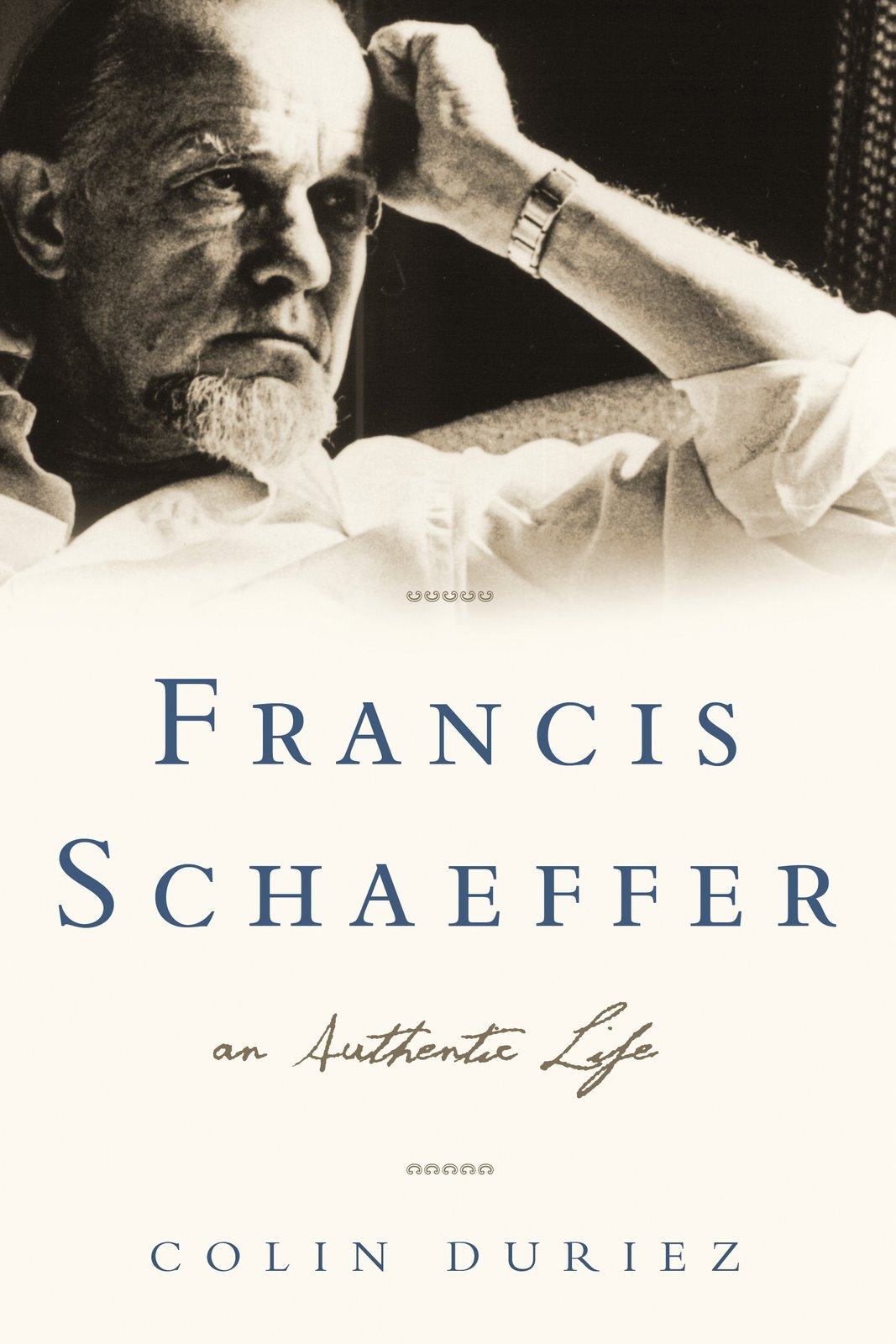
Review of HOW SHOULD WE THEN LIVE? by Kevin Rhyne THE REVOLUTIONARY AGE

Review of HOW SHOULD WE THEN LIVE?   by 

___________________

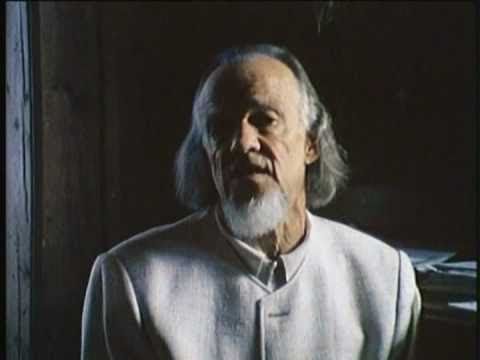
Francis Schaeffer pictured below:
 

_________

______________

___________

프란시스 쉐퍼 – 그러면 우리는 어떻게 살 것인가 introduction (Episode 1)

How Should We then Live Episode 7 small (Age of Nonreason)

#02 How Should We Then Live? (Promo Clip) Dr. Francis Schaeffer

The clip above is from episode 9 THE AGE OF PERSONAL PEACE AND AFFLUENCE

10 Worldview and Truth

In above clip Schaeffer quotes Paul’s speech in Greece from Romans 1 (from Episode FINAL CHOICES)

Two Minute Warning: How Then Should We Live?: Francis Schaeffer at 100

A Christian Manifesto Francis Schaeffer

How Should We Then Live? (6)

Francis Schaeffer | This Bread Always

Here are my notes from our continuing discussion on How Should We Then Live?by Francis Schaeffer where he makes the ultimate point that the Enlightenment was an attempt at a Reformation without the biblical worldview. What resulted was about what you would expect.

From what stream did the Enlightenment develop, the Reformation or the Renaissance? Was there a lesser desire for freedom, harmony, knowledge?  Why do you say it was the Renaissance?

The utopian dream of the Enlightenment can be summed up by five words: reason, nature, happiness, progress, and liberty. It was thoroughly secular in its thinking. The humanistic elements which had risen during the Renaissance came to flood tide in the Enlightenment. Here was man starting from himself absolutely. And if the humanistic elements of the Renaissance stand in sharp contrast to the Reformation, the Enlightenment was in total antithesis to it. The two stood for and were based upon absolutely different things in an absolute way, and they produced absolutely different results.

Schaeffer, F. A. (1982). The complete works of Francis A. Schaeffer: a Christian worldview (Vol. 5, p. 148). Westchester, IL: Crossway Books.

Schaeffer makes the point that the religion of the Renaissance, if any, was deism.  Why do you think that is where they landed?

If these men had a religion, it was deism. The deists believed in a God who had created the world but who had no contact with it now, and who had not revealed truth to men. If there was a God, He was silent. And Voltaire demanded no speech from Him—save when, after the Lisbon earthquake in 1755, Voltaire illogically complained of His nonintervention.

Schaeffer, F. A. (1982). The complete works of Francis A. Schaeffer: a Christian worldview (Vol. 5, pp. 148–149). Westchester, IL: Crossway Books.

Without an appeal to the biblical God Who has spoken, what options remain for those seeking to transform their society?

As in the later Russian Revolution, the revolutionaries on their humanist base had only two options—anarchy or repression.

Schaeffer, F. A. (1982). The complete works of Francis A. Schaeffer: a Christian worldview (Vol. 5, p. 150). Westchester, IL: Crossway Books.

In crude geopolitical terms, there is a contrast between the north of Europe and the south and east. Allowing for local influences, it would seem that the inspiration for most revolutionary changes in the south of Europe was a copy, but often in contorted form, of the freedoms gained from the Reformation in the north.

Schaeffer, F. A. (1982). The complete works of Francis A. Schaeffer: a Christian worldview (Vol. 5, p. 150). Westchester, IL: Crossway Books.

What argument does Schaeffer make that humanistic based governments never allow for human flourishing and freedom?

And what the Reformation produced—by native growth as in England or by borrowing as in Italy—is all in gigantic contrast to what Communist countries continue to produce. Marxist-Leninist Communists have a great liability in arguing their case because so far in no place have the Communists gained and continued in power, building on their materialistic base, without repressive policies. And they have not only stifled political freedom but freedom in every area of life, including the arts.

Schaeffer, F. A. (1982). The complete works of Francis A. Schaeffer: a Christian worldview (Vol. 5, p. 150). Westchester, IL: Crossway Books.

Elites always look out for themselves.  They play golf in their comfortable retreats when it hits the fan.

Solzhenitsyn says in Communism: A Legacy of Terror (1975), “I repeat, this was March 1918—only four months after the October Revolution—all the representatives of the Petrograd factories were cursing the Communists, who had deceived them in all their promises. What is more, not only had they abandoned Petrograd to cold and hunger, themselves having fled from Petrograd to Moscow, but had given orders to machine gun the crowds of workers in the courtyards of the factories who were demanding the election of independent factory committees.”

Schaeffer, F. A. (1982). The complete works of Francis A. Schaeffer: a Christian worldview (Vol. 5, p. 151). Westchester, IL: Crossway Books.

The “temporary dictatorship of the proletariat” has proven, wherever the Communists have had power, to be in reality a dictatorship by a small elite—and not temporary but permanent. No place with a communistic base has produced freedom of the kind brought forth under the Reformation in northern Europe.

Schaeffer, F. A. (1982). The complete works of Francis A. Schaeffer: a Christian worldview (Vol. 5, p. 152). Westchester, IL: Crossway Books.

Example of arbitrary morality when a society is intentionally humanistic in its base:

A good illustration [of arbitrary morality when we start with man] is that at first in Russia, on the basis of Karl Marx’s (1818–1883) teaching in the 1848 Manifesto of the Communist Party, marriage was considered a part of capitalism (private prostitution, as he expressed it) and the family was thus minimized.

Later, the state decreed a code of strict family laws. This was simply an “arbitrary absolute” imposed because it worked better. There is no base for right or wrong, and the arbitrary absolutes can be reversed for totally opposite ones at any time. For the Communists, laws always have a ground only in the changing historic situation brought about by the ongoing of history.

Schaeffer, F. A. (1982). The complete works of Francis A. Schaeffer: a Christian worldview (Vol. 5, pp. 152–153). Westchester, IL: Crossway Books.

Reformation Response:

Therefore, because God exists and there are absolutes, justice can be seen as absolutely good and not as merely expedient.

Schaeffer, F. A. (1982). The complete works of Francis A. Schaeffer: a Christian worldview (Vol. 5, p. 153). Westchester, IL: Crossway Books.

Does this have any relevance to what we are seeing in the U.S. today?

Everywhere we see a jettison of objective truth in Scripture, we see encroaching and increasing chaos which destroys freedom through anarchy (each man does what is right in his own eyes) or repression (every man does what is right in the eyes of a few), rather than a people self-governed (each is responsible to do what is right).

Francis Schaeffer “BASIS FOR HUMAN DIGNITY” Whatever…HTTHR

___________

Related posts:

FRANCIS SCHAEFFER ANALYZES ART AND CULTURE Part 58 THE BEATLES (Part J, Why was Carl Gustav Jung on the cover of Stg. Pepper’s?) (Feature on artist Richard Merkin)

______________ The Beatles documentary || A Long and Winding Road || Episode 5 (This video discusses Stg. Pepper’s creation   I have dedicated several posts to this series on the Beatles and I don’t know when this series will end because Francis Schaeffer spent a lot of time listening to the Beatles and talking and writing […]

FRANCIS SCHAEFFER ANALYZES ART AND CULTURE Part 57 THE BEATLES (Part I, Schaeffer loved the Beatles’ music and most of all SERGEANT PEPPER’S LONELY HEARTS CLUB BAND ) (Feature on artist Heinz Edelmann )

_______________________ When I’m Sixty-Four- The Beatles The Beatles first radio interview (10/27/1962) Published on Mar 3, 2013 The Beatles (John Lennon, Paul McCartney, George Harrison and Ringo Starr) with Monty Lister at their first radio interview, 27 October 1962. Before their fourth and final live appearance at the Hulme Hall in Birkenhead, The Beatles recorded […]

FRANCIS SCHAEFFER ANALYZES ART AND CULTURE Part 56 THE BEATLES (Part H, Stg. Pepper’s and Relativism) (Feature on artist Alberto Vargas )

Great Album   I have dedicated several posts to this series on the Beatles and I don’t know when this series will end because Francis Schaeffer spent a lot of time listening to the Beatles and talking and writing about them and their impact on the culture of the 1960’s. In this series we have […]

Review: How Should We Then Live? by Francis Schaeffer Apr 16th, 2013

________________ _____________________________ Francis Schaeffer pictured below: ______________ I was impacted by this film series by Francis Schaeffer back in the 1970’s and I wanted to share it with you. Schaeffer makes three key points concerning the Reformation: “1. Erasmian Christian humanism rejected by Farel. 2. Bible gives needed answers not only as to how to be right […]

Truth Tuesday:How Should We Then Live? outline

How Should We Then Live? outline Episode VII – The Age of Non Reason ____________________ Episode 8: The Age Of Fragmentation Published on Jul 24, 2012 Dr. Schaeffer’s sweeping epic on the rise and decline of Western thought and Culture _______________________ I love the works of Francis Schaeffer and I have been on the internet […]

FRANCIS SCHAEFFER ANALYZES ART AND CULTURE Part 11 Thomas Aquinas and his Effect on Art and HOW SHOULD WE THEN LIVE? Episode 2: THE MIDDLES AGES (Feature on artist Tony Oursler )

___________________________________ 프란시스 쉐퍼 – 그러면 우리는 어떻게 살 것인가 introduction (Episode 1) How Should We then Live Episode 7 small (Age of Nonreason) #02 How Should We Then Live? (Promo Clip) Dr. Francis Schaeffer The clip above is from episode 9 THE AGE OF PERSONAL PEACE AND AFFLUENCE 10 Worldview and Truth In above clip […]

Open letter to President Obama (Part 491) (Review of Francis Schaeffer’s book and film series “How should we then live?” by Douglas Groothuis, Ph.D.)

Open letter to President Obama (Part 491) (Emailed to White House on 5-3-13.) President Obama c/o The White House 1600 Pennsylvania Avenue NW Washington, DC 20500 Dear Mr. President, I know that you receive 20,000 letters a day and that you actually read 10 of them every day. I really do respect you for trying to get […]

FRANCIS SCHAEFFER ANALYZES ART AND CULTURE Part 1 HOW SHOULD WE THEN LIVE? “The Roman Age” (Feature on artist Tracey Emin)

__________________ Francis Schaeffer pictured below: _______________- I want to make two points today. First, Greg Koukl has rightly noted that the nudity of a ten year old girl in the art of Robert Mapplethorpe is not defensible, and it demonstrates where our culture is  morally. It the same place morally where  Rome was 2000 years […]

Truth Tuesday:Review of Francis Schaeffer’s book and film series “How should we then live?” by Douglas Groothuis, Ph.D.

Review of Francis Schaeffer’s book and film series “How should we then live?” by Douglas Groothuis, Ph.D. Episode VII – The Age of Non Reason ____________________ Episode 8: The Age Of Fragmentation Published on Jul 24, 2012 Dr. Schaeffer’s sweeping epic on the rise and decline of Western thought and Culture _______________________ I love the […]

“Schaeffer Sunday” The following essay explores the role that Francis Schaeffer played in the rise of the pro-life movement. It examines the place of How Should We Then Live?, Whatever Happened to the Human Race?, and A Christian Manifesto in that process.

Francis Schaeffer Whatever Happened to the Human Race (Episode 1) ABORTION   This essay below is worth the read. Schaeffer, Francis – “Francis Schaeffer and the Pro-Life Movement” [How Should We Then Live?, Whatever Happened to the Human Race?, A Christian Manifesto] Editor note: <p> </p> [The following essay explores the role that Francis Schaeffer played […]

How Should We Then Live? outline

How Should We Then Live? outline Episode VII – The Age of Non Reason ____________________ Episode 8: The Age Of Fragmentation Published on Jul 24, 2012 Dr. Schaeffer’s sweeping epic on the rise and decline of Western thought and Culture _______________________ I love the works of Francis Schaeffer and I have been on the internet […]

Review of Francis Schaeffer’s book and film series “How should we then live?” by Douglas Groothuis, Ph.D.

Review of Francis Schaeffer’s book and film series “How should we then live?” by Douglas Groothuis, Ph.D. How Should We then Live Episode 7 small (Age of Nonreason) #02 How Should We Then Live? (Promo Clip) Dr. Francis Schaeffer The clip above is from episode 9 THE AGE OF PERSONAL PEACE AND AFFLUENCE 10 Worldview […]

Francis Schaeffer’s “How should we then live?” Video and outline of episode 4 “The Reformation” (Schaeffer Sundays)

How Should We Then Live 4-1 I was impacted by this film series by Francis Schaeffer back in the 1970’s and I wanted to share it with you. Schaeffer makes three key points concerning the Reformation: “1. Erasmian Christian humanism rejected by Farel. 2. Bible gives needed answers not only as to how to be right with […]

__________

WOODY WEDNESDAY Woody Allen on Ingmar Bergman, Plus Bergman on “Dick Cavett Show”

Woody Allen on Ingmar Bergman (1/2)

Uploaded on Jul 30, 2008

Woody Allen on Ingmar Bergman. Interviewer: Mark Kermode.

_______________

Woody Allen on Ingmar Bergman (2/2)

Uploaded on Jul 30, 2008

Woody Allen on Ingmar Bergman. Interviewer: Mark Kermode.

_________________

Ingmar Bergman Rare television interview with Dick Cavett in 1971 – Part 1

Uploaded on Jan 31, 2009

Once described by Woody Allen as “probably the greatest film artist … since the invention of the motion picture camera the Director Ingmar Bergman appears on The Dick Cavett Show in an interview that originally aired August 2, 1971.

Also check: Cinematographer Style — The Art and Craft of Filmmaking.
http://www.youtube.com/watch?v=0c6HSb…

Also check: Christopher Doyle Masterclass in Cinematography
http://www.youtube.com/watch?v=iDMRB5…

Also check: ‘Film Studies: 180° Degree Rule’
http://www.youtube.com/watch?v=y4wX_d…

Also Check: The Robert Rodriguez: 10 Minute Film School (The 1st & Original)
http://www.youtube.com/watch?v=W-Ypfi…

_______________\

Ingmar Bergman Rare television interview with Dick Cavett in 1971 – Part 2

Uploaded on Jan 31, 2009

Once described by Woody Allen as “probably the greatest film artist … since the invention of the motion picture camera the Director Ingmar Bergman appears on The Dick Cavett Show in an interview that originally aired August 2, 1971.

Also check: Cinematographer Style — The Art and Craft of Filmmaking.
http://www.youtube.com/watch?v=0c6HSb…

Also check: Christopher Doyle Masterclass in Cinematography
http://www.youtube.com/watch?v=iDMRB5…

Also check: ‘Film Studies: 180° Degree Rule’
http://www.youtube.com/watch?v=y4wX_d…

Also Check: The Robert Rodriguez: 10 Minute Film School (The 1st & Original)
http://www.youtube.com/watch?v=W-Ypfi…

_________________

A conversation with Ingmar Bergman [1/6]

Uploaded on Sep 24, 2008

1971.

_________________

A conversation with Ingmar Bergman [2/6]

__________________

A conversation with Ingmar Bergman [3/6]

______________

A conversation with Ingmar Bergman [4/6]

_____________

A conversation with Ingmar Bergman [5/6]

_____________

A conversation with Ingmar Bergman [6/6]

_____________

Related posts:

Woody Allen to make first TV series for Amazon Prime

  ___________ Woody Allen to make first TV series for Amazon Prime ‘I’m not sure where to begin,’ says 79-year-old Oscar-winner about his small screen debut, as streaming TV service seeks to gain march on rivals with exclusive content Comment: in signing Woody Allen, Amazon Prime has delivered a nuclear blast to the competition Woody […]

Woody Allen: “the whole thing is tragic” July 20, 2012

______________________ Woody Allen: “the whole thing is tragic” July 20, 2012 Mr. Allen, do you truly believe that happiness in life is impossible? This is my perspective and has always been my perspective on life. I have a very grim, pessimistic view of it. I always have since I was a little boy; it hasn’t […]

WOODY WEDNESDAY Dr. Jack Graham Challenges Agnostic Woody Allen’s ‘Hopeless State of Mind’ BY NICOLA MENZIE , CHRISTIAN POST REPORTER August 23, 2013|4:51 pm

______________ Dr. Jack Graham Challenges Agnostic Woody Allen’s ‘Hopeless State of Mind’ BY NICOLA MENZIE , CHRISTIAN POST REPORTER August 23, 2013|4:51 pm Prolific Hollywood filmmaker and religious skeptic Woody Allen maintains in a recent interview that human life on earth is “just an accident” filled with “silly little moments,” and the “best you can […]

WOODY WEDNESDAY Woody Allen Should Have Quoted Pascal: “Magic in the Moonlight” January 7, 2015 by Roger E. Olson 9 Comments

________ Woody Allen Should Have Quoted Pascal: “Magic in the Moonlight” January 7, 2015 by Roger E. Olson 9 Comments Woody Allen Should Have Quoted Pascal: “Magic in the Moonlight”   I am no Roger Ebert and don’t watch that many movies, but in my opinion, for what it’s worth, Woody Allen’s 2014 film “Magic […]

WOODY WEDNESDAY Woody Allen to make first TV series for Amazon Prime

___________ Woody Allen to make first TV series for Amazon Prime ‘I’m not sure where to begin,’ says 79-year-old Oscar-winner about his small screen debut, as streaming TV service seeks to gain march on rivals with exclusive content Comment: in signing Woody Allen, Amazon Prime has delivered a nuclear blast to the competition Woody Allen […]

My letter to Woody Allen’s Sister!!!

If anyone has read my blog for any length of time they know that I am the biggest Woody Allen fan of all time. No one except maybe Bergman has attacked the big questions in life as well as Woody Allen. Furthermore, Francis Schaeffer is my favorite Christian Philosopher and he spent a lot of […]

WOODY WEDNESDAY Woody Allen‘s latest film finally has a release date and a studio. Irrational Man will be distributed by Sony Pictures Classics,

_______ Woody Allen’s New Film Is Called ‘Irrational Man’ Posted on Friday, January 30th, 2015 by Angie Han 85 SHARES TwitterFacebook Woody Allen‘s latest film finally has a release date and a studio. Irrational Man will be distributed by Sony Pictures Classics, as were Allen’s last six films.Emma Stone, Joaquin Phoenix, Parker Posey, and Jamie […]

Details about Woody Allen’s new movie IRRATIONAL MAN

__________________ Top 5000 Irrational Man (2015) 24 July 2015 (USA) Not yet released (voting begins after release) On a small town college campus, a philosophy professor in existential crisis gives his life new purpose when he enters into a relationship with his student. Director: Woody Allen Writer: Woody Allen Stars: Emma Stone, Joaquin Phoenix, Jamie […]

WOODY WEDNESDAY Discussing Woody Allen’s new movie IRRATIONAL MAN

___________ Sony Acquires Woody Allen’s IRRATIONAL MAN – AMCi Published on Feb 5, 2015 Sony Pictures Classics has acquired the North American rights to Woody Allen’s next film “Irrational Man”. This marks the eight collaboration between Allen and the studio. Few details are known about the film to date but it is said that it […]

FRANCIS SCHAEFFER ANALYZES ART AND CULTURE Part 47 Woody Allen and Professor Levy and the death of “Optimistic Humanism” from the movie CRIMES AND MISDEMEANORS Plus Charles Darwin’s comments too!!! (Feature on artist Rodney Graham)

Crimes and Misdemeanors: A Discussion: Part 1 ___________________________________ Today I will answer the simple question: IS IT POSSIBLE TO BE AN OPTIMISTIC SECULAR HUMANIST THAT DOES NOT BELIEVE IN GOD OR AN AFTERLIFE? This question has been around for a long time and you can go back to the 19th century and read this same […]

___________

RESPONDING TO HARRY KROTO’S BRILLIANT RENOWNED ACADEMICS!! Part 26 ( Dr. Marcus du Sautoy, Professor of Mathematics, Oxford University, IS THERE EVIDENCE THAT SHOWS THE BIBLE IS ACCURATE or just a lot of talk of souls, and spirits and things? )

______

Harry Kroto pictured below:

_________________

On November 21, 2014 I received a letter from Nobel Laureate Harry Kroto and it said:

…Please click on this URL http://vimeo.com/26991975

and you will hear what far smarter people than I have to say on this matter. I agree with them.

Harry Kroto

__________________________

There are 3 videos in this series and they have statements by 150 academics and scientists and I hope to respond to all of them. Wikipedia notes Marcus Peter Francis du Sautoy, OBE (born 26 August 1965)[5] is the Simonyi Professor for the Public Understanding of Science and a Professor of Mathematics at the University of Oxford. Formerly a Fellow of All Souls College, and Wadham College, he is now a Fellow of New College. He is President of the Mathematical Association. He was previously an EPSRC Senior Media Fellow and a Royal Society University Research Fellow.

His academic work concerns mainly group theory and number theory. In October 2008, he was appointed to the Simonyi Professorship for the Public Understanding of Science, succeeding the inaugural holder Richard Dawkins.

His comments can be found on the 1st video and the 19th clip in this series. Below the videos you will find his words.

50 Renowned Academics Speaking About God (Part 1)

Another 50 Renowned Academics Speaking About God (Part 2)

A Further 50 Renowned Academics Speaking About God (Part 3)

_______________

I grew up at Bellevue Baptist Church under the leadership of our pastor Adrian Rogers and I read many books by the Evangelical Philosopher Francis Schaeffer and have had the opportunity to contact many of the evolutionists or humanistic academics that they have mentioned in their works. Many of these scholars have taken the time to respond back to me in the last 20 years and some of the names  included are  Ernest Mayr (1904-2005), George Wald (1906-1997), Carl Sagan (1934-1996),  Robert Shapiro (1935-2011), Nicolaas Bloembergen (1920-),  Brian Charlesworth (1945-),  Francisco J. Ayala (1934-) Elliott Sober (1948-), Kevin Padian (1951-), Matt Cartmill (1943-) , Milton Fingerman (1928-), John J. Shea (1969-), , Michael A. Crawford (1938-), Paul Kurtz (1925-2012), Sol Gordon (1923-2008), Albert Ellis (1913-2007), Barbara Marie Tabler (1915-1996), Renate Vambery (1916-2005), Archie J. Bahm (1907-1996), Aron S “Gil” Martin ( 1910-1997), Matthew I. Spetter (1921-2012), H. J. Eysenck (1916-1997), Robert L. Erdmann (1929-2006), Mary Morain (1911-1999), Lloyd Morain (1917-2010),  Warren Allen Smith (1921-), Bette Chambers (1930-),  Gordon Stein (1941-1996) , Milton Friedman (1912-2006), John Hospers (1918-2011), Michael Martin (1932-).Harry Kroto (1939-), Marty E. Martin (1928-), Richard Rubenstein (1924-), James Terry McCollum (1936-), Edward O. WIlson (1929-), Lewis Wolpert (1929), Gerald Holton (1922-),  and  Ray T. Cragun (1976-).

In the first portion of this article by David Klinghoffer we have a quote by Oxford University mathematician Marcus du Sautoy and it is in the bold print.

Berlinskicover-1.jpg

A video circulating on the Internet tries to show why atheism, compared to theism, is the smart opinion to adopt. The videographer presents his case by stringing together fifty distinguished scientists and philosophers in a series of interviews, all giving their assent to the view that the entirety of existence may be explained in reductive materialist terms. You’re supposed to be impressed not by the wisdom of anything that’s said — because no one says anything memorably wise — but by the prestige of the job descriptions, titles, awards and academic affiliations that appear in quick succession in a corner of the screen.

Typical is Oxford University mathematician Marcus du Sautoy, pictured walking briskly through a cemetery. He recalls how as a boy he sang in a church choir. “There was a lot of talk of souls, and spirits and things, and by the time I was 13 I realized the whole thing was pretty illogical. I mean” — he says this with a little “Well, duh!” sort of comical grimace — “I am just flesh and blood.”

In their grasp of what religious faiths claim, you don’t get the impression that any other of the fifty academicians in the video has got beyond what he thought he knew at age 13. They all seem united by a condition of callow spiritual adolescence to which even the briskness of du Sautoy’s stride bears subtle testimony.

_________________

Does it seem logical that God inspired men to write the Books in the Bible and that those books would be correct in what they say?  Why not consider the evidence?

____________

The Bible and Archaeology – Is the Bible from God? (Kyle Butt)

___________

Marcus Peter Francis du Sautoy pictured below:

Archaeology and the Old Testament

by Kyle Butt, M.A.

A man wearing a leather vest and a broad-rimmed hat wraps a ripped piece of cloth around an old bone, sets it on fire, and uses it as a torch to see his way through ancient tunnels filled with bones, rats, bugs, and buried treasure. Close behind him lurks the dastardly villain, ready to pounce on the treasure after the hero has done all the planning and dangerous work. We have seen this scenario, or others similar to it, time and again in movies like Indiana Jones or The Mummy. And although we understand that Hollywood exaggerates and dramatizes the situation, it still remains a fact that finding ancient artifacts excites both young and old alike. Finding things left by people of the past is exciting because a little window of their lives is opened to us. When we find an arrowhead, we are reminded that Indians used bows and arrows to hunt and fight. Discovering a piece of pottery tells us something about the lives of ancient cultures. Every tiny artifact gives the modern person a more complete view of life in the past.

Because of the intrinsic value of archaeology, many have turned to it in order to try to answer certain questions about the past. One of the questions most often asked is, “Did the things recorded in the Bible really happen?” Truth be told, archaeology cannot always answer that question. Nothing material remains from Elijah’s ascension into heaven, and no physical artifacts exist to show that Christ actually walked on water. Therefore, if we ask archaeology to “prove” that the entire Bible is true or false, we are faced with the fact that archaeology can neither prove nor disprove the Bible’s validity. However, even though it cannot conclusively prove the Bible’s veracity in every instance, archaeology can provide important pieces of the past that consistently verify the Bible’s historical and factual accuracy. This month’s Reason and Revelation article is designed to bring to light a small fraction of the significant archaeological finds that have been instrumental in corroborating the biblical text of the Old Testament.

HEZEKIAH AND SENNACHERIB

When Hezekiah assumed the throne of Judah, he did so under extremely distressing conditions. His father Ahaz had turned to the gods of Damascus, cut into pieces the articles within the house of Jehovah, and shut the doors of the temple of the Lord. In addition, he created high places “in every single city” where he sacrificed, and offered incense to other gods (2 Chronicles 28:22-27). The people of Judah followed Ahaz, and as a result, the Bible records that “the Lord brought Judah low because of Ahaz king of Israel, for he had encouraged moral decline in Judah and had been continually unfaithful to the Lord” (2 Chronicles 28:19).

Upon this troubled throne, King Hezekiah began to rule at the youthful age of just twenty-five. He reigned for twenty-nine years, and the inspired text declares that he “did what was right in the sight of the Lord, according to all that his father David had done” (2 Chronicles 29:2). Among other reforms, Hezekiah reopened the temple, reestablished the observance of the Passover, and appointed the priests to receive tithes and administer their proper duties in the temple. After completing these reforms, Scripture states that “Sennacherib, king of Assyria entered Judah; he encamped against the fortified cities, thinking to win them over to himself ” (2 Chronicles 32:1).

It is here that we turn to the secular record of history to discover that the powerful nation Assyria, under the reign of King Sargon II, had subdued many regions in and around Palestine. Upon Sargon’s death, revolt broke out within the Assyrian empire. Sennacherib, the new Assyrian king, was determined to maintain a firm grasp on his vassal states, which meant that he would be forced to invade the cities of Judah if Hezekiah continued to defy Assyria’s might (Hoerth, 1998, pp. 341-352). Knowing that Sennacherib would not sit by idly and watch his empire crumble, King Hezekiah began to make preparations for the upcoming invasion. One of the preparations he made was to stop the water from the springs that ran outside of Jerusalem, and to redirect the water into the city by way of a tunnel. Second Kings 20:20 records the construction of the tunnel with these words: “Now the rest of the acts of Hezekiah—all his might, and how he made a pool and a tunnel and brought water into the city—are they not written in the book of chronicles of the kings of Judah?”

Hezekiah's Tunnel
Inside view of Hezekiah’s tunnel, displaying the thick limestone through which workers had to dig. Credit: Todd Bolen (www.BiblePlaces.com).

The biblical text from 2 Chronicles 32:30 further substantiates the tunnel construction with this comment: “This same Hezekiah also stopped the water outlet of Upper Gihon, and brought the water by tunnel to the west side of the City of David.” The tunnel—known today as “Hezekiah’s tunnel”—stands as one of the paramount archaeological attestations to the biblical text. Carved through solid limestone, the tunnel meanders in an S-shape under the city of Jerusalem for a length of approximately 1,800 feet. In 1880, two boys swimming at the site discovered an inscription (about 20 feet from the exit) that provided exacting details regarding how the tunnel had been constructed:

…And this was the account of the breakthrough. While the laborers were still working with their picks, each toward the other, and while there were still three cubits to be broken through, the voice of each was heard calling to the other, because there was a crack (or split or overlap) in the rock from the south to the north. And at the moment of the breakthrough, the laborers struck each toward the other, pick against pick. Then water flowed from the spring to the pool for 1,200 cubits. And the height of the rock above the heads of the laborers was 100 cubits (Price, 1997, p. 267).

Of the inscription, John Laughlin wrote that it is “one of the most important, as well as famous, inscriptions ever found in Judah” (2000, p. 145). Incidentally, since the length of the tunnel was about 1,800 feet, and the inscription marked the tunnel at “1,200 cubits,” archaeologists have a good indication that the cubit was about one-and-a-half feet at the time of Hezekiah (Free and Vos, 1992, p. 182). Dug in order to keep a steady supply of water pumping into Jerusalem during Sennacherib’s anticipated siege, Hezekiah’s tunnel stands as a strong witness to the accuracy of the biblical historical record of 2 Kings and 2 Chronicles.

Siloam Insciption
The Siloam inscription commemorates the excavation of Hezekiah’s Tunnel. Archaeological Museum, Istanbul, Turkey. Credit: Erich Lessing/Art Resource, NY.

In addition to Hezekiah’s tunnel, other amazingly detailed archaeological evidence provides an outstanding record of some of the events as they unfolded between Hezekiah and Sennacherib. Much of the information we have comes from the well-known Taylor Prism. This fascinating, six-sided clay artifact stands about 15 inches tall, and was found in Nineveh in 1830 by British colonel R. Taylor. Thus, it is known as the “Taylor Prism” (Price, pp. 272-273). The prism contains six columns covered by over 500 lines of writing, and was purchased in the winter of 1919-1920 by J.H. Breasted for the Oriental Institute in Chicago (Hanson, 2002).

Part of the text on the Taylor Prism has Sennacherib’s account of what happened in his military tour of Judah.

As to Hezekiah, the Jew, he did not submit to my yoke, I laid siege to 46 of his strong cities, walled forts and to the countless small villages in their vicinity, and conquered (them) by means of well-stamped (earth)ramps, and battering-rams brought (thus) near (to the walls) (combined with) the attack by foot soldiers, (using) mines, breeches as well as sapper work. I drove out (of them) 200,150 people, young and old, male and female, horses, mules, donkeys, camels, big and small cattle beyond counting, and considered (them) booty. Himself I made a prisoner in Jerusalem, his royal residence, like a bird in a cage. I surrounded him with earthwork in order to molest those who were leaving his city’s gate (Pritchard, 1958a, p. 200).

At least two facts of monumental significance reside in Sennacherib’s statement. First, Sennacherib’s attack on the outlying cities of Judah finds a direct parallel in 2 Chronicles 32:1: “Sennacherib king of Assyria came and entered Judah; he encamped against the fortified cities….” The most noteworthy fortified city that the Assyrian despot besieged and captured was the city of Lachish. Second, Sennacherib never mentions that he captured Jerusalem.

Lachish Under Siege

Assyrians attacking the Jewish town of Lachish
Assyrians attack the Jewish fortified town of Lachish. Part of a relief from the palace of Sennacherib at Nineveh. British Museum, London. Credit: Erich Lessing/Art Resource, NY.

When we turn to the biblical account of Sennacherib’s Palestinian invasion in 2 Kings 18, we learn that he had advanced against “all the fortified cities of Judah” (vs. 14). At one of those cities, Lachish, King Hezekiah sent tribute money in an attempt to assuage the Assyrian’s wrath. The text states: “Then Hezekiah king of Judah sent to the king of Assyria at Lachish, saying, ‘I have done wrong; turn away from me; whatever you impose on me I will pay’ ” (vs. 14). Of Lachish, Sennacherib demanded 300 talents of silver and 30 talents of gold, which Hezekiah promptly paid. Not satisfied, however, the Assyrian ruler “sent the Tartan, the Rabsaris, and the Rabshakeh from Lachish, with a great army against Jerusalem, to King Hezekiah” (vs. 17) in an attempt to frighten the denizens of Jerusalem into surrender. The effort failed, “so the Rabshakeh returned and found the king of Assyria warring against Libnah, for he heard that he had departed from Lachish” (19:8). From the biblical record, then, we discover very scant information about the battle at Lachish—only that Sennacherib was there, laid siege to the city (2 Chronicles 32:9), and moved on to Libnah upon the completion of his siege.

From Sennacherib’s historical files, however, we get a much more complete account of the events surrounding Lachish. The Assyrian monarch considered his victory at Lachish of such import that he dedicated an entire wall (nearly seventy linear feet) of his palace in Nineveh to carved reliefs depicting the event (Hoerth, p. 350). In the mid-1840s, renowned English archaeologist Henry Layard began extensive excavations in the ruins of ancient Nineveh. He published his initial finds in an 1849 best-selling volume titled Nineveh and Its Remains, and in three subsequent volumes: The Monuments of Nineveh (1849), Inscriptions in the Cuneiform Characters (1851), and Discoveries in the Ruins of Nineveh (1853) [see Moorey, 1991, pp. 7-12 for more about Layard’s work]. Since Layard’s early discoveries, archaeologists have located and identified thousands of artifacts from at least three different palaces. The remains of ancient Nineveh are located in two mounds on opposite banks of the Hawsar River. One of the mounds, known as Kouyunjik Tepe, contained the remains of the palaces of Esarhaddon and Ashurbanipal. The other mound, Nebi Younis, held the relics of the palace of Sennacherib. These palaces were built on raised platforms about 75 feet high (Negev and Gibson, 2001, p. 369).

One of the most outstanding artifacts found among the ruins of Nineveh was the wall relief depicting Sennacherib’s defeat of the city of Lachish. Ephraim Stern offered an excellent description of the events pictured in the relief:

The main scene shows the attack on the gate wall of Lachish. The protruding city gate is presented in minute detail, with its crenellations and its special reinforcement by a superstructure of warriors’ shields. The battering rams were moved over specially constructed ramps covered with wooden logs. They were “prefabricated,” four-wheeled, turreted machines. The scene vividly shows frenzied fighting of both attacker and defender in the final stage of battle (2001, 2:5).

Assyrians impaling Jewish prisoners
Assyrian warriors shown impaling Jewish prisoners. Part of a relief from the palace of Sennacherib. British Museum, London. Credit: Erich Lessing/Art Resource, NY.

Stern also discussed the flaming firebrands that the defenders of Lachish launched at their attackers, the long-handled, ladle-like instruments used to dowse the front of the battering rams when they were set on fire, slingmen, archers, and assault troops with spears. One of the most striking features of the relief is the depiction of the tortures inflicted on the inhabitants of the Lachish. Several prisoners are pictured impaled on poles, while women and children from the city are led past the victims (Stern, 2:5-6). The epigraph that accompanied the relief read: “Sennacherib, king of the world, king of Assyria, sat upon a nimedu– throne and passed in review the booty (taken) from Lachish (La-ki-su)” [Pritchard, 1958a, p. 201, parenthetical item in orig.].

Of further interest is the fact that archaeological digs at the city of Lachish bear out the details of Sennacherib’s wall relief. Extensive archaeological digs at Lachish from 1935 to 1938 by the British, and again from 1973 to 1987 under Israeli archaeologist David Ussishkin and others, have revealed a treasure trove of artifacts, each of which fits the events depicted by Sennacherib. Concerning the Assyrian siege of Lachish, William Dever noted:

The evidence of it is all there: the enormous sloping siege ramp thrown up against the city walls south of the gate; the double line of defense walls, upslope and downslope; the iron-shod Assyrian battering rams that breached the city wall at its highest point; the massive destruction within the fallen city…. Virtually all the details of the Assyrian reliefs have been confirmed by archaeology…. Also brought to light by the excavators were the double city walls; the complex siege ramp, embedded with hundreds of iron arrowheads and stone ballistae; the counter-ramp inside the city; the destroyed gate, covered by up to 6 ft. of destruction debris; huge boulders from the city wall, burned almost to lime and fallen far down the slope… (2001, pp. 168-169).

The Assyrian monarch’s siege of Lachish is documented by the biblical text, and the destruction of the city is corroborated by the massive carving dedicated to the event in Sennacherib’s palace at Nineveh, as well as the actual artifacts found in stratum III at Lachish.

Jerusalem Stands Strong

Of special interest in Sennacherib’s description of his Palestinian conquest is the fact that he never mentioned seizing the city of Jerusalem. On the Taylor Prism, we find the writings about his conquest of 46 outlying cities, in addition to “walled forts” and “countless small villages.” In fact, we even read that Hezekiah was shut up in Jerusalem as a prisoner “like a bird in a cage.” It also is recorded that Hezekiah sent more tribute to Sennacherib at the end of the campaign (Pritchard, 1958a, pp. 200-201). What is not recorded, however, is any list of booty that was taken from the capital city of Judah. Nor is an inventory of prisoners given in the text of the Taylor Prism. Indeed, one would think that if the city of Lachish deserved so much attention from the Assyrian dictator, then the capital city of Judah would deserve even more.

What we find, however, is complete silence as to the capture of the city. What happened to the vast, conquering army to cause it to buckle at the very point of total victory? Hershel Shanks, author of Jerusalem: An Archaeological Biography, wrote: “…although we don’t know for sure what broke the siege, we do know that the Israelites managed to hold out” (1995, p. 84).

The biblical text, however, offers the answer to this historical enigma. Due to Hezekiah’s faithfulness to the Lord, Jehovah offered His divine assistance to the Judean King. In the book of Isaiah, the prophet was sent to Hezekiah with a message of hope. Isaiah informed Hezekiah that God would stop Sennacherib from entering the city, because Hezekiah prayed to the Lord for assistance. In Isaiah 37:36, the text states: “Then the angel of the Lord went out, and killed in the camp of the Assyrians one hundred and eighty-five thousand; and when people arose early in the morning, there were the corpses—all dead. So Sennacherib king of Assyria departed and went away, returned home, and remained at Nineveh.” Sennacherib could not boast of his victory over the city of Jerusalem—because there was no victory! The Lord had delivered the city out of his hand. In addition, as Dever observed: “Finally, Assyrian records note that Sennacherib did die subsequently at the hands of assassins, his own sons…” (2001, p. 171). Luckenbill records the actual inscription from Esarhaddon’s chronicles that describe the event:

In the month Nisanu, on a favorable day, complying with their exalted command, I made my joyful entrance into the royal palace, an awesome place, wherein abides the fate of kings. A firm determination fell upon my brothers. They forsook the gods and turned to their deeds of violence plotting evil. …To gain the kingship they slew Sennacherib, their father (Luckenbill, 1989, 2:200-201).

These events and artifacts surrounding Hezekiah, Sennacherib, Lachish, and Jerusalem give us an amazing glimpse into the tumultuous relationship between Judah and her neighbors. These facts also provide an excellent example of how archaeology substantiates the biblical account.

THE SIGNIFICANCE OF BULLAE

The ancient Israelites used several different media to record their information. Among the most popular were scrolls of papyrus and leather. When a scribe had completed writing his information on a scroll, he often would roll the papyrus or leather into a cylinder shape and tie it securely with a string. In order to seal the string even more securely, and to denote the author or sender of the scroll, a bead of soft clay (or soft wax or soft metal) was placed over the string of the scroll. With some type of stamping device, the clay was pressed firmly to the scroll, leaving an inscription in the clay (King and Stager, 2001, p. 307). These clay seals are known as bullae (the plural form of the word bulla). Over the many years of archaeological excavations, hundreds of these bullae have been discovered. TheArchaeological Encyclopedia of the Holy Land provides an extensive list of bullae that have been unearthed: 50 in Samaria during the 1930s; 17 at Lachish in 1966; 51 in Jerusalem in digs conducted by Yigal Shiloh; 128 in 1962 found in the Wadi ed-Daliyeh Cave and a large cache of 2,000 bullae found in 1998 at Tel Kadesh (Negev and Gibson, 2001, pp. 93-94).

Examples of Bullae
On the left, a bulla with Hebrew writing in a slightly oval impression. On the right, a stamp seal with the name of the owner or scribe. Credit: The Schøyen Collection MS 1912 and MS 5160/1.

Most of the bullae that have been discovered are small, oval, clay stamps that contain the name of the person responsible for the document that was sealed (and occasionally the father of that person), the title or office of the sealer, and/or a picture of an animal or some other artistic rendering. One of the most interesting things about the bullae that have been discovered is the fact that certain names found among the clay seals correspond with biblical references. For instance, from 1978 to 1985, Yigal Shiloh did extensive digging in the city of Jerusalem. In 1982, in a building in Area G of Jerusalem, he discovered a cache of 51 bullae. Because of these clay inscriptions, the building is known in archaeological circles as the “House of Bullae.” This building was burned during the Babylonian destruction of Jerusalem in 586 B.C.Unfortunately, the intense heat of the fires burned all the leather and papyrus scrolls. Yet, even though it destroyed the scrolls, the same fire baked the clay bullae hard and preserved them for posterity (King and Stager, p. 307).

One interesting bulla, and probably the most famous, is connected to the scribe of Jeremiah—Baruch. Hershel Shanks, the editor of Biblical Archaeology Review, gave a detailed account of a landmark cache of over 250 bullae. In October 1975, the first four bullae were purchased by an antiquities dealer in east Jerusalem. The dealer took these bullae to Nahman Avigad, a leading Israeli expert on ancient seals at Hebrew University. More and more bullae came across Avigad’s desk that fit with the others. On more than one occasion, a fragment from one collection would fit with a corresponding fragment from another dealer’s collection. Ultimately, Yoav Sasson, a Jerusalem collector, came to acquire about 200 of the bullae, and Reuben Hecht obtained 49 pieces (Shanks, 1987, pp. 58-65).

The names on two of these bullae have captivated the archaeological world for several decades now. On one of the bulla, the name “Berekhyahu son of Neriyahu the scribe,” is clearly impressed. Shanks wrote concerning this inscription: “The common suffix –yahu in ancient Hebrew names, especially in Judah, is a form of Yahweh. Baruch means “the blessed.” Berekhyahu means “blessed of Yahweh.” An equivalent form to –yahu is –yah, traditionally rendered as “-iah” in our English translations. Neriah is actually Neri-yah or Neriyahu. Eighty of the 132 names represented in the hoard (many names appear more than once on the 250 bullae) include the theophoric element –yahu (1987, p. 61). Shanks (along with the general consensus of archaeological scholars) concluded that the bulla belonged to Baruch, the scribe of Jeremiah. In Jeremiah 36:4, the text reads: “Then Jeremiah called Baruch the son of Neriah….” The name on the bulla corresponds well with the name in Jeremiah. Concerning the bulla, Hoerth wrote: “This lump of clay…used to close a papyrus document, was sealed by none other than ‘Baruch son of Neriah’ (Jer. 36:4). Baruch’s name here carries a suffix abbreviation for God, indicating that his full name meant ‘blessed of God’ ” (1998, p. 364).

To multiply the evidence that this inscription was indeed the Baruch of Jeremiah fame, another of the inscriptions from a bulla in the cache documented the title “Yerahme’el, son of the king.” This name corresponds to King Jehoiakim’s son “who was sent on the unsuccessful mission to arrest Baruch and Jeremiah” (Shanks, 1987, p. 61). Indeed, the biblical text so states: “And the king commanded Jerahmeel the king’s son…to seize Baruch the scribe and Jeremiah the prophet, but the Lord hid them” (Jeremiah 36:26). In commenting on the bulla, Amihai Mazar, who is among the most noted of archaeologists, stated in regard to Jerahmeel the king’s son: “We presume [he] was Jehoiakim’s son sent to arrest Jeremiah (Jeremiah 36:26)” [1992, pp. 519-520]. [As a side note, the Hebrew letter yod is represented by Y and J, which often are used interchangeably in the English transliteration of Hebrew names—a fact that can be seen easily in the Hebrew name for God, which is written variously as Yahweh or Jehovah.] Another bulla in the hoard contained the title “Elishama, servant of the king.” And in Jeremiah 36:12, the text mentioned a certain “Elishama the scribe.” While professor Avigad thinks it would be a dubious connection, since he believes the biblical text would not drop the title “servant of the king” (because of its prestige), Shanks commented: “I would not reject the identification so easily” (1987, p. 62).

One of the names inscribed on a bulla was the Hebrew name “Gemaryahu [Gemariah] the son of Shaphan.” Price noted: “This name, which appears a few times in the book of Jeremiah, was the name of the scribe who served in the court of King Jehoiakim” (1998, p. 235). Jeremiah 36:10 records that Jeremiah’s scribe, Baruch, read from the words of the prophet “in the chamber of Gemariah the son of Shaphan the scribe….” It also is interesting to note that Gemariah was a scribe, which would have put him in precisely the position to produce bullae. Also among the collection from the “House of Bullae” was a bulla that was sealed with the name “Azaryahu son of Hilqiyahu”—a name that easily corresponds with Azariah son of Hilkiah found in 1 Chronicles 9:10-11 (Laughlin, 2000, p. 153).

We have then, among this phenomenal cache of bullae (which dates to the time of the events in the book of Jeremiah), two names and titles that correspond almost identically to Baruch, the son of Neriah, plus Jerahmeel, the son of Jehoiakim, and a third, Elishama, whose name appears in Jeremiah 36. What, then, does this prove? While it is the case that several men in ancient Israel could be named Baruch or Jerahmeel, it becomes almost absurd to suggest that these bullae just happen “coincidentally” to correspond so well to the biblical text. Such evidence points overwhelming to the accuracy of the biblical text and its historical verifiability. At the very least, such finds demonstrate these biblical names to be authentic for the time period. [As an added note of interest on the Baruch bulla, Shanks wrote a follow-up article in Biblical Archaeological Review in 1996, in which he discussed another bulla with Baruch’s title on it that also contains a fingerprint—possibly of the scribe himself. This bulla is in the private collection of a well-known collector named Shlomo Maussaieff (Shanks, 1996, pp. 36-38).]

THE MOABITE STONE

Another important archaeological find verifying the historicity of the biblical account is known as the Moabite Stone. It is true that writing about a rock that was discovered almost 150 years ago certainly would not fit in a current “in the news” section. In fact, so much has been written about this stone since 1868 that very few new articles pertaining to it have come to light. But the real truth of the matter is that, even though it was discovered more than a century ago, many people do not even know it exists, and thus need to be reminded of its importance.

The Moabite StoneThe find is known as the Moabite Stone, or the Mesha Inscription, since it was written by Mesha, King of Moab. A missionary named F.A. Klein first discovered the stone in August of 1868 (Edersheim, n.d., p. 109). When he initially saw the black basalt stone, it measured approximately 3.5 feet high and 2 feet wide. Upon learning of Klein’s adventure, a French scholar by the name of Clermont-Ganneau located the antiquated piece of rock, and copied eight lines from the stone. He then had an impression (known as a “squeeze”) made of the writing on its surface. A squeeze is made by placing a soggy piece of paper over the inscription, which then retains the form of the inscription when it dries (Pritchard, 1958b, p. 105). From that point, the details surrounding the stone are not quite as clear. Apparently (for reasons unknown), the Arabs who were in possession of the stone decided to shatter it. [Some have suggested that they thought the stone was a religious talisman of some sort, or that they could get more money selling the stone in pieces. However, LeMaire claims that these reasons are “apocryphal,” and suggests that the Arabs broke it because they hated the Ottomans, who were attempting to purchase the stone (1994, p. 34).] By heating it in fire and then pouring cold water on it, they succeeded in breaking the stone into several pieces. The pieces ended up being scattered, but eventually about two-thirds of the original stone ended up being relocated, and currently reside at the Louvre in Paris (Jacobs and McCurdy, 2002).

The written inscription on the stone provides a piece of outstanding evidence that verifies the Bible’s accuracy. Mesha, had the stone cut in c. 850 B.C. to relate his numerous conquests and his reacquisition of certain territories that were controlled by Israel. In the over 30-line text (composed of approximately 260 words), Mesha mentioned that Omri was the king of Israel who had oppressed Moab, but then Mesha says he “saw his desire upon” Omri’s son and upon “his house.” Mesha wrote:

I (am) Mesha, son of Chemosh-[…], king of Moab, the Dibonite—my father (had) reigned over Moab thirty years, and I reigned after my father,—(who) made this high place for Chemosh in Qarhoh […] because he saved me from all the kings and caused me to triumph over all my adversaries. As for Omri, king of Israel, he humbled Moab many years (lit., days), for Chemosh was angry at his land. And his son followed him and he also said, “I will humble Moab.” In my time he spoke (thus), but I have triumphed over him and over his house, while Israel hath perished forever (Pritchard, 1958a, p. 209).

The Mesha stele cites Omri as the king of Israel, just as 1 Kings 16:21-28 indicates. Furthermore, it mentions Ahab, Omri’s son, in close connection with the Moabites, as does 2 Kings 3:4-6. In addition, both the stele and 2 Kings 3:4-6 list Mesha as King of Moab. Later in the inscription, the stele further names the Israelite tribe of Gad, and the Israelite God, Yahweh. While the references to the Israelite kings are quite notable in and of themselves, Pritchard has pointed out that this reference to Yahweh is one of the few that have been found outside of Palestine proper (1958b, p. 106).

Another important feature of the Moabite stone is the fact that it “gave the solution to a question that had gone unanswered for centuries.” The biblical record chronicles the Moabite subjugation under King David and King Solomon, and how the Moabites broke free at the beginning of the divided kingdom. However, the Bible also mentions (2 Kings 3:4) that Ahab was receiving tribute from Moab. As Alfred Hoerth has remarked: “Nowhere does the Bible state how or when Moab was reclaimed, for Ahab to be receiving such tribute. The Moabite Stone provides that information, telling, as it does, of Omri’s conquest from the Moabite point of view” (1998, p. 310).

From the end of the quoted portion of the Mesha Inscription (“while Israel hath perished forever”), it is obvious that Mesha exaggerated the efficacy of his conquest—a common practice among ancient kings. Pritchard noted that historians agree that “the Moabite chroniclers tended generally, and quite understandably, to ignore their own losses and setbacks” (1958b, p. 106). Free and Vos document the works of John D. Davies and S.L. Caiger, which offer a harmonization of the Moabite text with the biblical record. Davies, formerly of the Princeton University Seminary, accurately observed: “Mesha is in no wise contradicting, but only unintentionally supplementing the Hebrew account” (as quoted in Free and Vos, 1992, p. 161).

As a further point of interest, French scholar André LeMaire, in an extensive article in Biblical Archaeology Review, “identified the reading of the name David in a formerly unreadable line, ‘House of D…,’ on the Mesha Stele (or Moabite Stone)” [Price, 1997, p. 171; see also LeMaire, 1994, pp. 30-37]. Whether or not this identification is accurate, has yet to be verified by scholarly consensus. Even liberal scholars Finkelstein and Silberman, however, acknowledged LaMaire’s identification, along with the Tel Dan inscription documenting the House of David, and concluded: “Thus, the house of David was known throughout the region; this clearly validates the biblical description of a figure named David becoming the founder of the dynasty of Judahite kings in Jerusalem” (2001, p. 129).

Taken as a whole, the Moabite stone remains one of the most impressive pieces of evidence verifying the historical accuracy of the Old Testament. And, although this find has been around almost 150 years, it “still speaks” to us today (Hebrews 11:4).

Cyrus Cylinder

THE CYRUS CYLINDER

Cyrus, King of the Medo-Persian Empire, is among the most important foreign rulers of the Israelite nation. In fact, many Old Testament prophecies revolve around this monarch. The prophet Isaiah documented that the Babylonian Empire would fall to the Medes and the Persians (Isaiah 13; 21:1-10). Not only did Isaiah detail the particular empire to which the Babylonians would fall, but he also called Cyrus by name (Isaiah 44:28; 45:1-5). Amazingly, Isaiah’s prophecy was made roughly 150 years before Cyrus was born(Isaiah prophesied in about 700 B.C.; Cyrus took the city of Babylon in 539 B.C.). To add to Cyrus’ significance, Isaiah predicted that Cyrus would act as the Lord’s “shepherd.” In fact, Isaiah recorded these words of the Lord concerning Cyrus: “And he shall perform all My pleasure, even saying to Jerusalem, ‘You shall be built,’ and to the temple, ‘Your foundation shall be laid’ ” (Isaiah 44:28).

In 1879, Hormoz Rasam found a small clay cylinder (about nine inches long, and now residing in the British Museum) in the ancient city of Babylon. Upon the clay cylinder, King Cyrus had inscribed, among other things, his victory over the city of Babylon and his policy toward the nations he had captured, as well as his policy toward their various gods and religions. Price recorded a translation of a segment of the cuneiform text found on the cylinder:

…I returned to [these] sacred cities on the other side of the Tigris, the sanctuaries of which have been in ruins for a long time, the images which [used] to live therein and established for them permanent sanctuaries. I [also] gathered all their [former] inhabitants and returned [to them] their habitations. Furthermore, I resettled upon the command of Marduk the great lord, all the gods of Sumer and Akkad whom Nabonidus has brought into Babylon to the anger of the lord of the gods, unharmed, in their [former] chapels, the places which made them happy. May all the gods who I have resettled in their sacred cities ask daily Bel and Nebo for long life for me and may they recommend me…to Marduk, my lord, may they say thus: Cyrus, the king who worships you and Cambyses, his son, […] all of them I settled in a peaceful place (pp. 251-252).

The policy, often hailed as Cyrus’ declaration of human rights, coincides with the biblical account of the ruler’s actions, in which Cyrus decreed that the temple in Jerusalem should be rebuilt, and that all the exiled Israelites who wished to join in the venture had his permission and blessing to do so (Ezra 1:1-11). The little nine-inch-long clay cylinder stands as impressive testimony—along with several other archaeological finds—to the historical accuracy of the biblical text.

CONCLUSION

The archaeological evidence presented in this article that confirms biblical history is, in truth, only a tiny fraction of the evidence that could be amassed along these lines. In fact, volumes of hundreds of pages each have been produced on such matters, and with every new find comes additional information that will fill archaeology texts for decades to come. The more we uncover the past, the more we discover the truth that the Bible is the most trustworthy, historically accurate document ever produced. As the poet John Greenleaf Whittier once wrote:

We search the world for truth; we cull the good, the pure, the beautiful, from all the old flower fields of the soul; and, weary seekers of the best, we come back laden from our quest, to find that all the sages said is in the Book our mothers read.

REFERENCES

Dever, William (2001), What did the Bible Writers Know and When did They Know It? (Grand Rapids, MI: Eerdmans).

Edersheim, Albert (no date), The Bible History—Old Testament, Book VI (Grand Rapids, MI: Eerdmans).

Finkelstein, Israel and Neil Silberman (2001), The Bible Unearthed (New York: Simon & Schuster).

Free, Joseph P. and Howard F. Vos (1992), Archaeology and Bible History (Grand Rapids, MI: Zondervan).

Hanson, K.C. (2002), Sennacherib Prism, [On-line], URL: http://www.kchanson.com/ANCDOCS/meso/sennprism1.html.

Hoerth, Alfred J. (1998), Archaeology and the Old Testament (Grand Rapids, MI: Baker).

Jacobs, Joseph and J. Frederick McCurdy (2002), “Moabite Stone,” Jewish Encyclopedia.com,[On-line], URL: http://www.jewishencyclopedia.com/view.jsp?artid=680&letter=M.

King, Philip J. and Lawrence E. Stager (2001), Life in Biblical Israel (in the Library of Ancient Israelseries), ed. Douglas A. Knight (Louisville, KY: Westminster/John Knox Press).

Laughlin, John C.H. (2000), Archaeology and the Bible (New York: Routledge).

LeMaire, André (1994), “House of David Restored in Moabite Inscription,” Biblical Archaeology Review, 20[3]:30-37, May/June.

Luckenbill, Daniel D. (1989), Ancient Records of Assyria and Babylon (London: Histories and Mysteries of Man Ltd.).

Mazar, Amihai (1992), Archaeology of the Land of the Bible (New York: Doubleday).

Moorey, P.R.S. (1991), A Century of Biblical Archaeology (Louisville, KY: Westminster/John Knox Press).

Negev, Avraham and Shimon Gibson (2001), Archaeological Encyclopedia of the Holy Land (New York: Continuum).

Price, Randall (1997), The Stones Cry Out (Eugene, OR: Harvest House).

Pritchard, James B., ed. (1958a), The Ancient Near East: An Anthology of Texts and Pictures(Princeton, NJ: Princeton University Press).

Pritchard, James B. (1958b), Archaeology and the Old Testament (Princeton, NJ: Princeton University Press).

Shanks, Hershel (1987), “Jeremiah’s Scribe and Confidant Speaks from a Hoard of Clay Bullae,” Biblical Archaeology Review, 13[5]:58-65, September/October.

Shanks, Hershel (1995), Jerusalem: An Archaeological Biography (New York: Random House).

Shanks, Hershel (1996), “Fingerprint of Jeremiah’s Scribe,” Biblical Archaeology Review, 22[2]:36-38, March/April.

Stern, Ephraim (2001), Archaeology and the Land of the Bible: The Assyrian, Babylonian, and Persian Periods (732-332 B.C.E.) (New York: Doubleday).

_____________

The answer to finding out more about God is found in putting your faith and trust in Jesus Christ. The Bible is true from cover to cover and can be trusted. Please consider taking time to read Isaiah chapter 53 and if you have any interest then watch the You Tube clip “The Biography of the King” by Adrian Rogers which discusses that chapter in depth.

Is the Bible historically accurate? Here are some of the posts I have done in the past on the subject: 1. The Babylonian Chronicle, of Nebuchadnezzars Siege of Jerusalem, 2. Hezekiah’s Siloam Tunnel Inscription. 3. Taylor Prism (Sennacherib Hexagonal Prism), 4. Biblical Cities Attested Archaeologically. 5. The Discovery of the Hittites, 6.Shishak Smiting His Captives, 7. Moabite Stone, 8. Black Obelisk of Shalmaneser III, 9A Verification of places in Gospel of John and Book of Acts., 9B Discovery of Ebla Tablets. 10. Cyrus Cylinder, 11. Puru “The lot of Yahali” 9th Century B.C.E., 12. The Uzziah Tablet Inscription, 13. The Pilate Inscription, 14. Caiaphas Ossuary, 14 B Pontius Pilate Part 2, 14c. Three greatest American Archaeologists moved to accept Bible’s accuracy through archaeology., 

Below is a piece of that evidence given by Francis Schaeffer concerning the accuracy of the Bible.

TRUTH AND HISTORY (chapter 5 of WHATEVER HAPPENED TO THE HUMAN RACE?)

In the previous chapter we saw that the Bible gives us the explanation for the existence of the universe and its form and for the mannishness of man. Or, to reverse this, we came to see that the universe and its form and the mannishness of man are a testimony to the truth of the Bible. In this chapter we will consider a third testimony: the Bible’s openness to verification by historical study.

Christianity involves history. To say only that is already to have said something remarkable, because it separates the Judeo-Christian world-view from almost all other religious thought. It is rooted in history.

The Bible tells us how God communicated with man in history. For example, God revealed Himself to Abraham at a point in time and at a particular geographical place. He did likewise with Moses, David, Isaiah, Daniel and so on. The implications of this are extremely important to us. Because the truth God communicated in the Bible is so tied up with the flow of human events, it is possible by historical study to confirm some of the historical details.

It is remarkable that this possibility exists. Compare the information we have from other continents of that period. We know comparatively little about what happened in Africa or South America or China or Russia or even Europe. We see beautiful remains of temples and burial places, cult figures, utensils, and so forth, but there is not much actual “history” that can be reconstructed, at least not much when compared to that which is possible in the Middle East.

When we look at the material which has been discovered from the Nile to the Euphrates that derives from the 2500-year span before Christ, we are in a completely different situation from that in regard to South America or Asia. The kings of Egypt and Assyria built thousands of monuments commemorating their victories and recounting their different exploits. Whole libraries have been discovered from places like Nuzu and Mari and most recently at Elba, which give hundreds of thousands of texts relating to the historical details of their time. It is within this geographical area that the Bible is set. So it is possible to find material which bears upon what the Bible tells us.

The Bible purports to give us information on history. Is the history accurate? The more we understand about the Middle East between 2500 B.C. and A.D. 100, the more confident we can be that the information in the Bible is reliable, even when it speaks about the simple things of time and place.

(This material below is under footnote #94)

The site of the biblical city called Lachish is about thirty miles southwest of Jerusalem. This city is referred to on a number of occasions in the Old Testament. Imagine a busy city with high walls surrounding it, and a gate in front that is the only entrance to the city. We know so much about Lachish from archaeological studies that a reconstruction of the whole city has been made in detail. This can be seen at the British Museum in the Lachish Room in the Assyrian section.

There is also a picture made by artists in the eighth century before Christ, the Lachish Relief, which was discovered in the city of Nineveh in the ancient Assyria. In this picture we can see the Jewish inhabitants of Lachish surrendering to Sennacherib, the king of Assyria. The details in the picture and the Assyrian writing on it give the Assyrian side of what the Bible tells us in Second Kings:

2 Kings 18:13-16

New American Standard Bible (NASB)

13 Now in the fourteenth year of King Hezekiah, Sennacherib king of Assyria came up against all the fortified cities of Judah and seized them. 14 Then Hezekiah king of Judah sent to the king of Assyria at Lachish, saying, “I have done wrong. Withdraw from me; whatever you impose on me I will bear.” So the king of Assyria required of Hezekiah king of Judah three hundred talents of silver and thirty talents of gold. 15 Hezekiah gave him all the silver which was found in the house of the Lord, and in the treasuries of the king’s house. 16 At that time Hezekiah cut off the gold from the doors of the temple of the Lord, and from the doorposts which Hezekiah king of Judah had overlaid, and gave it to the king of Assyria.

________

We should notice two things about this. First, this is a real-life situation–a real siege of a real city with real people on both sides of the war–and it happened at a particular date in history, near the turn of the eighth century B.C. Second, the two accounts of this incident in 701 B.C. (the account from the Bible and the Assyrian account from Nineveh) do not contradict, but rather confirm each other. The history of Lachish itself is not so important for us, but some of its smaller historical details.

_____________


Related posts:

FRANCIS SCHAEFFER ANALYZES ART AND CULTURE Part 41 Sarvepalli Radhakrishnan (Featured artist is Marina Abramović)

FRANCIS SCHAEFFER ANALYZES ART AND CULTURE Part 40 Timothy Leary (Featured artist is Margaret Keane)

FRANCIS SCHAEFFER ANALYZES ART AND CULTURE Part 39 Tom Wolfe (Featured artist is Richard Serra)

FRANCIS SCHAEFFER ANALYZES ART AND CULTURE Part 38 Woody Allen and Albert Camus “There is but one truly serious philosophical problem, and that is suicide” (Feature on artist Hamish Fulton Photographer )

FRANCIS SCHAEFFER ANALYZES ART AND CULTURE Part 37 Mahatma Gandhi and “Relieving the Tension in the East” (Feature on artist Luc Tuymans)

FRANCIS SCHAEFFER ANALYZES ART AND CULTURE Part 36 Julian Huxley:”God does not in fact exist, but act as if He does!” (Feature on artist Barry McGee)

FRANCIS SCHAEFFER ANALYZES ART AND CULTURE Part 35 Robert M. Pirsig (Feature on artist Kerry James Marshall)

FRANCIS SCHAEFFER ANALYZES ART AND CULTURE Part 34 Aleksandr Solzhenitsyn (Feature on artist Shahzia Sikander)

FRANCIS SCHAEFFER ANALYZES ART AND CULTURE Part 33 Aldous Huxley (Feature on artist Matthew Barney )

FRANCIS SCHAEFFER ANALYZES ART AND CULTURE Part 32 Steven Weinberg and Woody Allen and “The Meaningless of All Things” (Feature on photographer Martin Karplus )

FRANCIS SCHAEFFER ANALYZES ART AND CULTURE Part 31 David Hume and “How do we know we know?” (Feature on artist William Pope L. )

FRANCIS SCHAEFFER ANALYZES ART AND CULTURE Part 30 Rene Descartes and “How do we know we know?” (Feature on artist Olafur Eliasson)

FRANCIS SCHAEFFER ANALYZES ART AND CULTURE Part 29 W.H. Thorpe and “The Search for an Adequate World-View: A Question of Method” (Feature on artist Jeff Koons)

FRANCIS SCHAEFFER ANALYZES ART AND CULTURE Part 28 Woody Allen and “The Mannishness of Man” (Feature on artist Ryan Gander)

FRANCIS SCHAEFFER ANALYZES ART AND CULTURE Part 27 Jurgen Habermas (Featured artist is Hiroshi Sugimoto)

FRANCIS SCHAEFFER ANALYZES ART AND CULTURE Part 26 Bettina Aptheker (Featured artist is Krzysztof Wodiczko)

FRANCIS SCHAEFFER ANALYZES ART AND CULTURE Part 25 BOB DYLAN (Part C) Francis Schaeffer comments on Bob Dylan’s song “Ballad of a Thin Man” and the disconnect between the young generation of the 60’s and their parents’ generation (Feature on artist Fred Wilson)

FRANCIS SCHAEFFER ANALYZES ART AND CULTURE Part 24 BOB DYLAN (Part B) Francis Schaeffer comments on Bob Dylan’s words from HIGHWAY 61 REVISITED!! (Feature on artist Susan Rothenberg)

FRANCIS SCHAEFFER ANALYZES ART AND CULTURE Part 23 BOB DYLAN (Part A) (Feature on artist Josiah McElheny)Francis Schaeffer on the proper place of rebellion with comments by Bob Dylan and Samuel Rutherford

FRANCIS SCHAEFFER ANALYZES ART AND CULTURE Part 22 “The School of Athens by Raphael” (Feature on the artist Sally Mann)

FRANCIS SCHAEFFER ANALYZES ART AND CULTURE Part 21 William B. Provine (Feature on artist Andrea Zittel)

FRANCIS SCHAEFFER ANALYZES ART AND CULTURE Part 20 Woody Allen and Materialistic Humanism: The World-View of Our Era (Feature on artist Ida Applebroog)

FRANCIS SCHAEFFER ANALYZES ART AND CULTURE Part 19 Movie Director Luis Bunuel (Feature on artist Oliver Herring)

FRANCIS SCHAEFFER ANALYZES ART AND CULTURE Part 18 “Michelangelo’s DAVID is the statement of what humanistic man saw himself as being tomorrow” (Feature on artist Paul McCarthy)

FRANCIS SCHAEFFER ANALYZES ART AND CULTURE Part 17 Francis Schaeffer discusses quotes of Andy Warhol from “The Observer June 12, 1966″ Part C (Feature on artist David Hockney plus many pictures of Warhol with famous friends)

FRANCIS SCHAEFFER ANALYZES ART AND CULTURE Part 16 Francis Schaeffer discusses quotes of Andy Warhol from “The Observer June 12, 1966″ Part B (Feature on artist James Rosenquist plus many pictures of Warhol with famous friends)

FRANCIS SCHAEFFER ANALYZES ART AND CULTURE Part 15 Francis Schaeffer discusses quotes of Andy Warhol from “The Observer June 12, 1966″ Part A (Feature on artist Robert Indiana plus many pictures of Warhol with famous friends)

FRANCIS SCHAEFFER ANALYZES ART AND CULTURE Part 14 David Friedrich Strauss (Feature on artist Roni Horn )

FRANCIS SCHAEFFER ANALYZES ART AND CULTURE Part 13 Jacob Bronowski and Materialistic Humanism: The World-View of Our Era (Feature on artist Ellen Gallagher )

FRANCIS SCHAEFFER ANALYZES ART AND CULTURE Part 12 H.J.Blackham and Materialistic Humanism: The World-View of Our Era (Feature on artist Arturo Herrera)

FRANCIS SCHAEFFER ANALYZES ART AND CULTURE Part 11 Thomas Aquinas and his Effect on Art and HOW SHOULD WE THEN LIVE? Episode 2: THE MIDDLES AGES (Feature on artist Tony Oursler )

FRANCIS SCHAEFFER ANALYZES ART AND CULTURE Part 10 David Douglas Duncan (Feature on artist Georges Rouault )

FRANCIS SCHAEFFER ANALYZES ART AND CULTURE Part 9 Jasper Johns (Feature on artist Cai Guo-Qiang )

FRANCIS SCHAEFFER ANALYZES ART AND CULTURE Part 8 “The Last Year at Marienbad” by Alain Resnais (Feature on artist Richard Tuttle and his return to the faith of his youth)

FRANCIS SCHAEFFER ANALYZES ART AND CULTURE Part 7 Jean Paul Sartre (Feature on artist David Hooker )

FRANCIS SCHAEFFER ANALYZES ART AND CULTURE Part 6 The Adoration of the Lamb by Jan Van Eyck which was saved by MONUMENT MEN IN WW2 (Feature on artist Makoto Fujimura)

FRANCIS SCHAEFFER ANALYZES ART AND CULTURE Part 5 John Cage (Feature on artist Gerhard Richter)

FRANCIS SCHAEFFER ANALYZES ART AND CULTURE Part 4 ( Schaeffer and H.R. Rookmaaker worked together well!!! (Feature on artist Mike Kelley Part B )

FRANCIS SCHAEFFER ANALYZES ART AND CULTURE Part 3 PAUL GAUGUIN’S 3 QUESTIONS: “Where do we come from? What art we? Where are we going? and his conclusion was a suicide attempt” (Feature on artist Mike Kelley Part A)

FRANCIS SCHAEFFER ANALYZES ART AND CULTURE Part 2 “A look at how modern art was born by discussing Monet, Renoir, Pissaro, Sisley, Degas,Cezanne, Van Gogh, Gauguin, Seurat, and Picasso” (Feature on artist Peter Howson)

FRANCIS SCHAEFFER ANALYZES ART AND CULTURE Part 1 HOW SHOULD WE THEN LIVE? “The Roman Age” (Feature on artist Tracey Emin)

_________________

FRANCIS SCHAEFFER, CHARLES DARWIN, “SURVIVAL OF THE FITTEST” AND “MAD MAX FURY ROAD”

____________

Mad Max: Fury Road (2015) Nux Featurette [HD] Nicholas Hoult

Mad Max: Fury Road Official Trailer #1 (2015) – Tom Hardy, Charlize Theron Movie HD

Mad Max Fury Road Movie Review – Beyond The Trailer

MAD MAX: FURY ROAD Movie Clips 1-6 (2015) Tom Hardy Post-Apocalyptic Action Movie HD

I must say that I really enjoyed this movie and I have also included a very positive review of it from CHRISTIANITY TODAY below.

The background of the MAD MAX movies is the destruction of the rest of the world by atomic weapons and the aftermath of disease and survival of fittest of those still living at this point in Australia. The main lesson to learn from these series of movies is that from a humanist worldview there is nothing left except the survival of the fittest and ultimately even the human race is bound for extinction as Nevil Shute presented in his book ON THE BEACH. Francis Schaeffer discusses this book a great deal and he shows that although many people today still hold to a form of optimistic humanism, it really has no basis. Even as far back as Charles Darwin this idea has been put forth.

Darwin wrote, “Believing as I do that man in the distant future will be a far more perfect creature than he now is…” 

Francis Schaeffer observed:

Now you have now the birth of Julian Huxley’s evolutionary optimistic humanism already stated by Darwin. Darwin now has a theory that man is going to be better. If you had lived at 1860 or 1890 and you said to Darwin, “By 1970 will man be better?” He certainly would have the hope that man would be better as Julian Huxley does today. Of course, I wonder what he would say if he lived in our day and saw what has been made of his own views in the direction of (the mass murder) Richard Speck (and deterministic thinking of today’s philosophers). I wonder what he would say. So you have the factor, already the dilemma in Darwin that I pointed out in Julian Huxley and that is evolutionary optimistic humanism rests always on tomorrow. You never have an argument from the present or the past for evolutionary optimistic humanism.

You can have evolutionary nihilism on the basis of the present and the past. Every time you have someone bringing in evolutionary optimistic humanism it is always based on what is going to be produced tomorrow. When is it coming? The years pass and is it coming? Arthur Koestler doesn’t think it is coming. He sees lots of problems here and puts forth for another solution.

I got these comments below off the internet from a person who was reviewing Francis Schaeffer’s film AGE OF NONREASON:

What is the problem of taking nature as the moral standard? To answer this question Schaeffer asks us to consider the Marquis de Sade (1740-1814), ”who well understood the logical conclusion of this deification of nature. He knew that if nature is all, then what is is right, and nothing more can be said. The natural result of this was his ‘sadism,’ his cruelty, especially to women.” de Sade writing in his book “Justine” says “As nature has made us (the men) the strongest, we can do with her (the woman) whatever we please.” In nature there is no right or wrong, no good or bad, and there is no basis for making those distinctions. In nature, might makes right. Can you imagine what true natural system of law would look like? Schaeffer’s conclusion is; “There are no moral distinctions, no value system. What is right? Thus, there is no basis for either morals or law.” If we are to make nature the rule, the yardstick by which we live then there is no distinction between things like cruelty and noncruelty.

THEREFORE, THE LOGICAL CONCLUSION IS SURVIVAL OF THE FITTEST AND IS EXACTLY WHAT THE FILM “MAD MAX FURY ROAD” PUTS FORTH!!!!

Dan Guinn posted on his blog at http://www.francisschaefferstudies.org concerning the Nazis and evolution: As Schaeffer points out, “…these ideas helped produce an even more far-reaching yet logical conclusion: the Nazi movement in Germany.Heinrich Himmler (1900-1945), leader of the Gestapo, stated that the law of nature must take its course in the survival of the fittest. The result was the gas chambers. Hitler stated numerous times that Christianity and its notion of charity should be “replaced by the ethic of strength over weakness.” Surely many factors were involved in the rise of National Socialism in Germany. For example, the Christian consensus had largely been lost by the undermining from a rationalistic philosophy and a romantic pantheism on the secular side, and a liberal theology (which was an adoption of rationalism in theological terminology) in the universities and many of the churches. Thus biblical Christianity was no longer giving the consensus for German society. After World War I came political and economic chaos and a flood of moral permissiveness in Germany. Thus, many factors created the situation. But in that setting the theory of the survival of the fittest sanctioned what occurred. ”

Francis Schaeffer notes that this idea ties into today when we are actually talking about making infanticide legal in some academic settings. Look at what these three humanist scholars have written:


  • Peter Singer, who recently was seated in an endowed chair at Princeton’s Center for Human Values, said, “Killing a disabled infant is not morally equivalent to killing a person. Very often it is not wrong at all.”
  • In May 1973, James D. Watson, the Nobel Prize laureate who discovered the double helix of DNA, granted an interview to Prism magazine, then a publication of the American Medical Association. Time later reported the interview to the general public, quoting Watson as having said, “If a child were not declared alive until three days after birth, then all parents could be allowed the choice only a few are given under the present system. The doctor could allow the child to die if the parents so choose and save a lot of misery and suffering. I believe this view is the only rational, compassionate attitude to have.”
  • In January 1978, Francis Crick, also a Nobel laureate, was quoted in the Pacific News Service as saying “… no newborn infant should be declared human until it has passed certain tests regarding its genetic endowment and that if it fails these tests it forfeits the right to live.”


I had the opportunity to listen to a professor from Cambridge who was a student of the philosophic movies and ON THE BEACH was one of the movies that he liked very much because of its message against nuclear war. Below is a letter that I wrote him on this very issue of the prospect of a MAD MAX type existence happening.

Professor Michael Bate

Michael Bate

_________

Below is a letter I wrote recently to Dr. Bate:

February 11, 2015

Dear Dr. Bate,

I just finished reading the online addition of the book Darwin, Francis ed. 1892. Charles Darwin: his life told in an autobiographical chapter, and in a selected series of his published letters [abridged edition]. London: John Murray. There are several points that Charles Darwin makes in this book that were very wise, honest, logical, shocking and some that were not so wise. The Christian Philosopher Francis Schaeffer once said of Darwin’s writings, “Darwin in his autobiography and in his letters showed that all through his life he never really came to a quietness concerning the possibility that chance really explained the situation of the biological world. You will find there is much material on this [from Darwin] extended over many many years that constantly he was wrestling with this problem.”

Here is a quote I ran across recently from you in your wonderful in depth interview with Alan Macfarlane :

I acknowledge completely that there is a deep mystery and we fool ourselves completely if we think there is not; I feel that the mystery is less apparent to man in the 21st century, at least in the Western world, than once it was and  I think that is a great pity; I don’t subscribe to a particular religion.  I am like my maternal grandmother who refused to say the Creed because she couldn’t bring herself to say things that she didn’t believe in; we were deeply shocked by that as children; on the other hand I can get very engaged and interested in conversations of how the sort of religion that I was brought up with could actually change to become something that one could feel at ease with; an instance of such a conversation was a man called Richard Acland who gave a series of broadcasts about religion which I found deeply inspiring; he is my grandmother’s cousin; it is a deeply unsatisfactory area of my life because I feel that I don’t make enough time for reflection.

I would agree with you that we should all take more time for reflection on the big issues of life. I noticed in your interview with Alan Macfarlane that you noted that you “saw ‘On the Beach’ with Robert Acland; a transforming moment as so outraged by the thought of nuclear annihilation that I became a rabid nuclear disarmer; went to RAF Wittering with the Cadet Corp to see what they claimed was an atom bomb; thus during the latter part of my school life I became extremely rebellious and formed a lot of good friendships among the nuclear disarmament community....I love cinema; in Australia I was offered a job as film critic for the Australian Broadcasting Commission; I had a weekly programme when I broadcast to Canberra about films and got free tickets to go to drive ins to see films like ‘Last Tango in Paris’ and comment on them; the film that made me realize this was something important was ‘The Seventh Seal’, shortly after which I saw ‘Last Year at Marienbad’ and I have never recovered.”

I love the cinema too and  also have seen the movies ON THE BEACH, THE SEVENTH SEAL and LAST YEAR AT MARIENBAD and have done blog posts on them.

I noted that you had seen the Bergman movie WINTER LIGHT. Recently I was watching the You Tube series BREAKING DOWN BERGMAN and Sonia Strimban said concerning that movie:

I think the movie is about what can human beings have faith in, and what can we hope for. The confusion of the minister Toma Ericsson (played by Gunnar Bjornstrand) is because he is supposed to be the shepherd of his flock and lead the people and show them the way and he is the one having the greatest crisis of faith. Can a belief in a greater being sustain people and if you don’t believe in the greater being then what is the meaning of your life? So what this minister is struggling with is this question, “Is God real or is God not real then what do I do?” His inability to relate to God translates into the barrenness of the rest of the film and this larger anxiety that everyone has about life and the meaning of life and can they survive.  

When I read the book  Charles Darwin: his life told in an autobiographical chapter, and in a selected series of his published letters, I also read  a commentary on it by Francis Schaeffer and I wanted to both  quote some of Charles Darwin’s own words to you and then include the comments of Francis Schaeffer on those words. I have also enclosed a CD with two messages from Adrian Rogers and Bill Elliff concerning Darwinism. SINCE SCHAEFFER MENTIONED THE MOVIE “ON THE BEACH” IT MADE ME THINK OF YOU AND THAT IS WHY I AM WRITING YOU THIS LETTER TODAY. 

In Darwin’s 1876 Autobiography he noted:

“…it is an intolerable thought that he and all other sentient beings are doomed to complete annihilation after such long-continued slow progress. To those who fully admit the immortality of the human soul, the destruction of our world will not appear so dreadful.”

Francis Schaeffer commented:

Here you feel Marcel Proust and the dust of death is on everything today because the dust of death is on everything tomorrow. Here you have the dilemma of Nevil Shute’s ON THE BEACH. If it is true that all we have left is biological continuity and increased biological complexity, which is all we have left in Darwinism here, or with many of the modern philosophers, then you can’t stand Shute’s ON THE BEACH. Maybe tomorrow at noon human life may be wiped out. Darwin already feels the tension, because if human life is going to be wiped out tomorrow, what is it worth today? Darwin can’t stand the thought of death of all men. Charlie Chaplin when he heard there was no life on Mars said, “I’m lonely.”

You think of the Swedish Opera (ANIARA) that is pictured inside a spaceship. There was a group of men and women going into outer space and they had come to another planet and the singing inside the spaceship was normal opera music. Suddenly there was a big explosion and the world had blown up and these were the last people left, the only conscious people left, and the last scene is the spaceship is off course and it will never land, but will just sail out into outer space and that is the end of the plot. They say when it was shown in Stockholm the first time, the tough Swedes with all their modern  mannishness, came out (after the opera was over) with hardly a word said, just complete silence.

Darwin already with his own position says he CAN’T STAND IT!! You can say, “Why can’t you stand it?” We would say to Darwin, “You were not made for this kind of thing. Man was made in the image of God. Your CAN’T- STAND- IT- NESS is screaming at you that your position is wrong. Why can’t you listen to yourself?”

You find all he is left here is biological continuity, and thus his feeling as well as his reason now is against his own theory, yet he holds it against the conclusions of his reason. Reason doesn’t make it hard to be a Christian. Darwin shows us the other way. He is holding his position against his reason.

____________

These words of Darwin ring in my ear, “…it is an intolerable thought that he and all other sentient beings are doomed to complete annihilation after such long-continued slow progress…” . Schaeffer rightly noted, “Maybe tomorrow at noon human life may be wiped out. Darwin already feels the tension, because if human life is going to be wiped out tomorrow, what is it worth today? Darwin can’t stand the thought of death of all men.” IN OTHER WORDS ALL WE ARE IS DUST IN THE WIND.  I sent you a CD that starts off with the song DUST IN THE WIND by Kerry Livgren of the group KANSAS which was a hit song in 1978 when it rose to #6 on the charts because so many people connected with the message of the song. It included these words, “All we do, crumbles to the ground though we refuse to see, Dust in the Wind, All we are is dust in the wind, Don’t hang on, Nothing lasts forever but the Earth and Sky, It slips away, And all your money won’t another minute buy.”

Kerry Livgren himself said that he wrote the song because he saw where man was without a personal God in the picture. Solomon pointed out in the Book of Ecclesiastes that those who believe that God doesn’t exist must accept three things. FIRST, death is the end and SECOND, chance and time are the only guiding forces in this life.  FINALLY, power reigns in this life and the scales are never balanced. The Christian can  face death and also confront the world knowing that it is not determined by chance and time alone and finally there is a judge who will balance the scales.

Both Kerry Livgren and the bass player Dave Hope of Kansas became Christians eventually. Kerry Livgren first tried Eastern Religions and Dave Hope had to come out of a heavy drug addiction. I was shocked and elated to see their personal testimony on The 700 Club in 1981 and that same  interview can be seen on You Tube today. Livgren lives in Topeka, Kansas today where he teaches “Diggers,” a Sunday school class at Topeka Bible Church. DAVE HOPE is the head of Worship, Evangelism and Outreach at Immanuel Anglican Church in Destin, Florida.

The answer to find meaning in life is found in putting your faith and trust in Jesus Christ. The Bible is true from cover to cover and can be trusted.

Thank you again for your time and I know how busy you are.

Everette Hatcher, everettehatcher@gmail.com, http://www.thedailyhatch.org, cell ph 501-920-5733, Box 23416, LittleRock, AR 72221, United States


You can hear DAVE HOPE and Kerry Livgren’s stories from this youtube link:

(part 1 ten minutes)

(part 2 ten minutes)

Kansas – Dust in the Wind (Official Video)

Uploaded on Nov 7, 2009

Pre-Order Miracles Out of Nowhere now at http://www.miraclesoutofnowhere.com

About the film:
In 1973, six guys in a local band from America’s heartland began a journey that surpassed even their own wildest expectations, by achieving worldwide superstardom… watch the story unfold as the incredible story of the band KANSAS is told for the first time in the DVD Miracles Out of Nowhere.

Adrian Rogers on Darwinism

Mad Max: Fury Road Official Trailer #2 (2015) – Tom Hardy, Charlize Theron Movie HD

Mad Max: Fury Road Not Just Brilliant Action, but Truly Serious Filmmaking

  • Jeffrey HustonCrosswalk.com Contributing Writer

<i>Mad Max: Fury Road</i> Not Just Brilliant Action, but Truly Serious Filmmaking

Release Date: May 15, 2015
Rating: R (intense sequences of violence throughout, disturbing images, and some strong language)
Genre: Action
Run Time: 120 min
Director: George Miller
Cast: Tom Hardy, Charlize Theron, Nicholas Hoult, Hugh Keays-Byrne, Rosie Huntington-Whiteley, Riley Keough, Zoe Kravitz, Abbey Lee, Courtney Eaton

While most sequels offer more of the same, the original Mad Max trilogy could be described in terms of technology upgrades. From concept to execution, 1979’s Mad Max was Version 1.0, 1981’s The Road Warrior was 2.0, and 1985’s Beyond Thunderdome was 3.0. Each new installment made discernable leaps in scale and scope; the first’s microbudget couldn’t fully express director George Miller‘s vision, the second finally matched it, and then the third actually expanded it.

Now, thirty years later, Mad Max: Fury Road isn’t simply Version 4.0; it’s exponential versions way beyond that. If the first three were gonzo manifestations of a barren post-apocalyptic landscape, this belated fourth entry is a flat-out insane hellscape – but brilliantly and masterfully so. Marvel has been the modern standard-bearer of what will “blow our minds,” but this just proves how low that bar has been set. Furthermore, Fury Road elevates itself with a trait few blockbusters even broach anymore: emotional weight. And it does so with a performance that has the power to join the ranks of all-time action greats.

Mad Max: Fury Road works as a stand-alone piece, but for those unfamiliar with the previous films, here’s the gist: It’s Earth, in an undefined near-future, after a global reckoning that has laid waste to the environment. The planet is a desert, with small pockets of civilization. These pockets are built upon and operated by the juiced-up spare parts of the past, and each is ruled by tyrannical overlords. It’s a world in which fuel is scare but violence is not.

As people barely survive in these isolated dystopias, Max Rockatansky – a.k.a. Mad Max (Tom Hardy, The Dark Knight Rises, taking over for Mel Gibson) – remains a nomadic drifter, and is taken captive in the Citadel, a fortress controlled by the masked oppressor Immortan Joe (Hugh Keays-Byrne, best known from the originalMad Max as the notorious Toecutter). When Imperator Furiosa (Charlize Theron,Prometheus), a warrior leader of the Citadel, betrays Immortan Joe by leading an escape of young women who serve as Joe’s baby-making sex slaves, Max goes from exploiting the women for his own escape to aiding them in their cause.

This sets up the film’s second extended action set piece, the first being an opening road chase that leads to Max’s initial capture. More spectacular car chases follow, and while these sequences have been a staple of the series it’s safe to say that, in pure volume, Fury Road (and its 100 million dollar budget) offers more of them than previous entries, and on a much grander scale. Indeed, to call them “car chases” greatly undersells what they are: elaborately imagined and choreographed extravaganzas of overblown muscle cars, tanks, and colossal mechanical beasts that ultimately defy description.

Heightening the action even more is how Immortan’s army of ghoulish villains swing and catapult themselves to and fro between these various machines, all while wielding weapons, chainsaws, and gunfire. It’s artfully-controlled chaos – hyper-kinetic yet clearly depicted – and all staged at a level of violent ballet not seen since the Matrix trilogy, involving even more live-action components (and margin for error) than those sci-fi game-changers. This isn’t just muscle car action; it’s truly a road war.

Yes, CGI does enhance these sequences at times (most notably with epic sandstorm hurricanes) but, on the whole, what you see is not animated by computers. It’s real people doing real stunts, flying through the air on real motorbikes, and colliding in real vehicles. In an age of increasing reliance on digital effects, environments, and even digitized action replacing stunt work, Fury Road‘s practical approach is intensely visceral. More spectacular still is that returning director Miller is now in his 70s, putting much younger “cutting edge” blockbuster directors to embarrassing shame. Sure, Miller offers up destruction overkill, but his is not mindless action; it’s visionary.

Making the spectacle resonate beyond the eye-popping surface is a level of character and thematic depth rare to action movies. Big budget tentpoles generally keep their ideas and backstories about as formulaic as their plots, and while Fury Road doesn’t necessarily boast unique versions of those elements they are portrayed with much more thought, even contemplation, and felt much more deeply.

Thematically, Miller is telling a Feminist Action Fable, but not one that preaches political ideologies from a screenplay’s soapbox. Fury Road serves as an examination of what happens when humanity loses its femininity, and is reduced to barbaric carnal savagery. We see this not only via the sex slaves, but also in the backstories of Max and Furiosa. Max says early on, “As the world fell, each of us in our own way was broken,” and we feel the tragedy of that in these performances. Max, Furiosa, and these women may be seeking redemption for themselves, but by extension they seek it also for the feminine half of humanity itself.

Hardy and Theron take their roles as seriously as they would for any Oscar-season awards contender. Theron in particular (along with her controlled physical prowess) gives a performance of considerable emotional depth, to the point that Max is nearly reduced to a supporting character in his own movie (but all to the movie’s benefit).  Theron’s Furiosa has moments of heroism – laced with subtexts of anger, grief, and loss – that elicit chills. The Aliens and Terminator sagas gave us, respectively, Ripley and Sarah Connor, the top female action heroes of movie history. Furiosa deserves to join their ranks.

In an era when every blockbuster seems to be market-tested within an inch of its creative life (and littered with product placements, too), or must meet the obligations of a “cinematic universe,” it’s exhilarating to see big budget cinema be as bold asMad Max: Fury Road, solely guided by the vision of a great filmmaker. Sure, it’s a riskier business model (see Jupiter Ascending for how it can fail), but when it works, the results are what we always hope for when we go to the movies.

____________________

Related posts:

Taking on Ark Times Bloggers on various issues Part F “Carl Sagan’s views on how God should try and contact us” includes film “The Basis for Human Dignity”

I have gone back and forth and back and forth with many liberals on the Arkansas Times Blog on many issues such as abortion, human rights, welfare, poverty, gun control  and issues dealing with popular culture. Here is another exchange I had with them a while back. My username at the Ark Times Blog is Saline […]

Carl Sagan v. Nancy Pearcey

On March 17, 2013 at our worship service at Fellowship Bible Church, Ben Parkinson who is one of our teaching pastors spoke on Genesis 1. He spoke about an issue that I was very interested in. Ben started the sermon by reading the following scripture: Genesis 1-2:3 English Standard Version (ESV) The Creation of the […]

Review of Carl Sagan book (Part 4 of series on Evolution)

Review of Carl Sagan book (Part 4 of series on Evolution) The Long War against God-Henry Morris, part 5 of 6 Uploaded by FLIPWORLDUPSIDEDOWN3 on Aug 30, 2010 http://www.icr.org/ http://store.icr.org/prodinfo.asp?number=BLOWA2http://store.icr.org/prodinfo.asp?number=BLOWASGhttp://www.fliptheworldupsidedown.com/blog _______________________ I got this from a blogger in April of 2008 concerning candidate Obama’s view on evolution: Q: York County was recently in the news […]

Review of Carl Sagan book (Part 3 of series on Evolution)

Review of Carl Sagan book (Part 3 of series on Evolution) The Long War against God-Henry Morris, part 4 of 6 Uploaded by FLIPWORLDUPSIDEDOWN3 on Aug 30, 2010 http://www.icr.org/ http://store.icr.org/prodinfo.asp?number=BLOWA2http://store.icr.org/prodinfo.asp?number=BLOWASGhttp://www.fliptheworldupsidedown.com/blog______________________________________ I got this from a blogger in April of 2008 concerning candidate Obama’s view on evolution: Q: York County was recently in the news […]

Carl Sagan versus RC Sproul

At the end of this post is a message by RC Sproul in which he discusses Sagan. Over the years I have confronted many atheists. Here is one story below: I really believe Hebrews 4:12 when it asserts: For the word of God is living and active and sharper than any two-edged sword, and piercing as far as the […]

Review of Carl Sagan book (Part 4 of series on Evolution)jh68

Review of Carl Sagan book (Part 4 of series on Evolution) The Long War against God-Henry Morris, part 5 of 6 Uploaded by FLIPWORLDUPSIDEDOWN3 on Aug 30, 2010 http://www.icr.org/ http://store.icr.org/prodinfo.asp?number=BLOWA2http://store.icr.org/prodinfo.asp?number=BLOWASGhttp://www.fliptheworldupsidedown.com/blog _______________________ This is a review I did a few years ago. THE DEMON-HAUNTED WORLD: Science as a Candle in the Dark by Carl […]

Review of Carl Sagan book (Part 3 of series on Evolution)

Review of Carl Sagan book (Part 3 of series on Evolution) The Long War against God-Henry Morris, part 4 of 6 Uploaded by FLIPWORLDUPSIDEDOWN3 on Aug 30, 2010 http://www.icr.org/ http://store.icr.org/prodinfo.asp?number=BLOWA2http://store.icr.org/prodinfo.asp?number=BLOWASGhttp://www.fliptheworldupsidedown.com/blog______________________________________ I was really enjoyed this review of Carl Sagan’s book “Pale Blue Dot.” Carl Sagan’s Pale Blue Dot by Larry Vardiman, Ph.D. […]

Atheists confronted: How I confronted Carl Sagan the year before he died jh47

In today’s news you will read about Kirk Cameron taking on the atheist Stephen Hawking over some recent assertions he made concerning the existence of heaven. Back in December of 1995 I had the opportunity to correspond with Carl Sagan about a year before his untimely death. Sarah Anne Hughes in her article,”Kirk Cameron criticizes […]

My correspondence with George Wald and Antony Flew!!!

FRANCIS SCHAEFFER ANALYZES ART AND CULTURE Part 41 Sarvepalli Radhakrishnan (Featured artist is Marina Abramović)

FRANCIS SCHAEFFER ANALYZES ART AND CULTURE Part 40 Timothy Leary (Featured artist is Margaret Keane)

FRANCIS SCHAEFFER ANALYZES ART AND CULTURE Part 39 Tom Wolfe (Featured artist is Richard Serra)

FRANCIS SCHAEFFER ANALYZES ART AND CULTURE Part 38 Woody Allen and Albert Camus “There is but one truly serious philosophical problem, and that is suicide” (Feature on artist Hamish Fulton Photographer )

FRANCIS SCHAEFFER ANALYZES ART AND CULTURE Part 37 Mahatma Gandhi and “Relieving the Tension in the East” (Feature on artist Luc Tuymans)

FRANCIS SCHAEFFER ANALYZES ART AND CULTURE Part 36 Julian Huxley:”God does not in fact exist, but act as if He does!” (Feature on artist Barry McGee)

FRANCIS SCHAEFFER ANALYZES ART AND CULTURE Part 35 Robert M. Pirsig (Feature on artist Kerry James Marshall)

FRANCIS SCHAEFFER ANALYZES ART AND CULTURE Part 34 Aleksandr Solzhenitsyn (Feature on artist Shahzia Sikander)

FRANCIS SCHAEFFER ANALYZES ART AND CULTURE Part 33 Aldous Huxley (Feature on artist Matthew Barney )

FRANCIS SCHAEFFER ANALYZES ART AND CULTURE Part 32 Steven Weinberg and Woody Allen and “The Meaningless of All Things” (Feature on photographer Martin Karplus )

FRANCIS SCHAEFFER ANALYZES ART AND CULTURE Part 31 David Hume and “How do we know we know?” (Feature on artist William Pope L. )

FRANCIS SCHAEFFER ANALYZES ART AND CULTURE Part 30 Rene Descartes and “How do we know we know?” (Feature on artist Olafur Eliasson)

FRANCIS SCHAEFFER ANALYZES ART AND CULTURE Part 29 W.H. Thorpe and “The Search for an Adequate World-View: A Question of Method” (Feature on artist Jeff Koons)

FRANCIS SCHAEFFER ANALYZES ART AND CULTURE Part 28 Woody Allen and “The Mannishness of Man” (Feature on artist Ryan Gander)

FRANCIS SCHAEFFER ANALYZES ART AND CULTURE Part 27 Jurgen Habermas (Featured artist is Hiroshi Sugimoto)

FRANCIS SCHAEFFER ANALYZES ART AND CULTURE Part 26 Bettina Aptheker (Featured artist is Krzysztof Wodiczko)

FRANCIS SCHAEFFER ANALYZES ART AND CULTURE Part 25 BOB DYLAN (Part C) Francis Schaeffer comments on Bob Dylan’s song “Ballad of a Thin Man” and the disconnect between the young generation of the 60’s and their parents’ generation (Feature on artist Fred Wilson)

FRANCIS SCHAEFFER ANALYZES ART AND CULTURE Part 24 BOB DYLAN (Part B) Francis Schaeffer comments on Bob Dylan’s words from HIGHWAY 61 REVISITED!! (Feature on artist Susan Rothenberg)

FRANCIS SCHAEFFER ANALYZES ART AND CULTURE Part 23 BOB DYLAN (Part A) (Feature on artist Josiah McElheny)Francis Schaeffer on the proper place of rebellion with comments by Bob Dylan and Samuel Rutherford

FRANCIS SCHAEFFER ANALYZES ART AND CULTURE Part 22 “The School of Athens by Raphael” (Feature on the artist Sally Mann)

FRANCIS SCHAEFFER ANALYZES ART AND CULTURE Part 21 William B. Provine (Feature on artist Andrea Zittel)

FRANCIS SCHAEFFER ANALYZES ART AND CULTURE Part 20 Woody Allen and Materialistic Humanism: The World-View of Our Era (Feature on artist Ida Applebroog)

FRANCIS SCHAEFFER ANALYZES ART AND CULTURE Part 19 Movie Director Luis Bunuel (Feature on artist Oliver Herring)

FRANCIS SCHAEFFER ANALYZES ART AND CULTURE Part 18 “Michelangelo’s DAVID is the statement of what humanistic man saw himself as being tomorrow” (Feature on artist Paul McCarthy)

FRANCIS SCHAEFFER ANALYZES ART AND CULTURE Part 17 Francis Schaeffer discusses quotes of Andy Warhol from “The Observer June 12, 1966″ Part C (Feature on artist David Hockney plus many pictures of Warhol with famous friends)

FRANCIS SCHAEFFER ANALYZES ART AND CULTURE Part 16 Francis Schaeffer discusses quotes of Andy Warhol from “The Observer June 12, 1966″ Part B (Feature on artist James Rosenquist plus many pictures of Warhol with famous friends)

FRANCIS SCHAEFFER ANALYZES ART AND CULTURE Part 15 Francis Schaeffer discusses quotes of Andy Warhol from “The Observer June 12, 1966″ Part A (Feature on artist Robert Indiana plus many pictures of Warhol with famous friends)

FRANCIS SCHAEFFER ANALYZES ART AND CULTURE Part 14 David Friedrich Strauss (Feature on artist Roni Horn )

FRANCIS SCHAEFFER ANALYZES ART AND CULTURE Part 13 Jacob Bronowski and Materialistic Humanism: The World-View of Our Era (Feature on artist Ellen Gallagher )

FRANCIS SCHAEFFER ANALYZES ART AND CULTURE Part 12 H.J.Blackham and Materialistic Humanism: The World-View of Our Era (Feature on artist Arturo Herrera)

FRANCIS SCHAEFFER ANALYZES ART AND CULTURE Part 11 Thomas Aquinas and his Effect on Art and HOW SHOULD WE THEN LIVE? Episode 2: THE MIDDLES AGES (Feature on artist Tony Oursler )

FRANCIS SCHAEFFER ANALYZES ART AND CULTURE Part 10 David Douglas Duncan (Feature on artist Georges Rouault )

FRANCIS SCHAEFFER ANALYZES ART AND CULTURE Part 9 Jasper Johns (Feature on artist Cai Guo-Qiang )

FRANCIS SCHAEFFER ANALYZES ART AND CULTURE Part 8 “The Last Year at Marienbad” by Alain Resnais (Feature on artist Richard Tuttle and his return to the faith of his youth)

FRANCIS SCHAEFFER ANALYZES ART AND CULTURE Part 7 Jean Paul Sartre (Feature on artist David Hooker )

FRANCIS SCHAEFFER ANALYZES ART AND CULTURE Part 6 The Adoration of the Lamb by Jan Van Eyck which was saved by MONUMENT MEN IN WW2 (Feature on artist Makoto Fujimura)

FRANCIS SCHAEFFER ANALYZES ART AND CULTURE Part 5 John Cage (Feature on artist Gerhard Richter)

FRANCIS SCHAEFFER ANALYZES ART AND CULTURE Part 4 ( Schaeffer and H.R. Rookmaaker worked together well!!! (Feature on artist Mike Kelley Part B )

FRANCIS SCHAEFFER ANALYZES ART AND CULTURE Part 3 PAUL GAUGUIN’S 3 QUESTIONS: “Where do we come from? What art we? Where are we going? and his conclusion was a suicide attempt” (Feature on artist Mike Kelley Part A)

FRANCIS SCHAEFFER ANALYZES ART AND CULTURE Part 2 “A look at how modern art was born by discussing Monet, Renoir, Pissaro, Sisley, Degas,Cezanne, Van Gogh, Gauguin, Seurat, and Picasso” (Feature on artist Peter Howson)

FRANCIS SCHAEFFER ANALYZES ART AND CULTURE Part 1 HOW SHOULD WE THEN LIVE? “The Roman Age” (Feature on artist Tracey Emin)

_____________

Francis Schaeffer quotes Tom Lambie one of the great missionaries of the past!!!

_______________

Dr. Tom Lambie, one of the great missionaries to Africa, concluded that the height of a civilization can be measured by the amount of contamination in its drinking water. Think of the modern pollution of our water supplies! I would say to you in the name of Jesus Christ that the degree of the infidelity of an individual Christian or a Christian group to the Word of God in doctrine and life is shown by the amount of contamination in the water which flows forth.

Lambie, Thomas A.
1885 to 1954
United Presbyterian Mission/Sudan Interior Mission
Ethiopia

The most famous loose cannon on the deck of the American Mission ship in Africa [around the turn of the century] was Thomas A. Lambie, M.D. Born in 1885, Lambie earned his medical degree from the University of Pittsburgh in 1907. Later that year, he was at Doleib Hill among the Shullas, and then he and the Reverend Elbert McCreery opened the mission at Nasir among the Nuers. The first Nuer Christian was named Pok Jok. In 1918, on the wave of a devastating influenza epidemic, the governor of Wollego province asked Dr. Lambie to come over to Ethiopia.

Accompanied by Dr. and Mrs. Giffen, Lambie, with his wife, Charlotte, and their children, Betty (age eight) and Wallace (age nine), traveled seventeen days from Nasir to Gambela on an empty Nile steamer that would be loaded with Ethiopian coffee for the return journey. From Gambela to Dembi Dollo, Lambie traveled by horse. Because of the tsetse fly, a horse never survived more than one trip, although a mule or a donkey might make that journey nine or ten times before it died. When Lambie entered Ethiopia, there was only one foreign Christian missionary–the Rev. Dr. Karl Cedarquist, a Swede, who operated a school in Addis Ababa. At Dembi Dollo, Lambie worked with Gidada Solon. On one of his trips to America, Lambie spoke to a Junior Missionary League meeting attended by a young Lyda Boyd [Don McClure’s future wife].

While in the Dembi Dollo area, Dr. Lambie removed a small beetle that had crawled into Governor Ras Nado’s ear and was causing great pain. Ras Nado’s followers identified this insect as a wood-boring beetle and were convinced, in spite of Lambie’s assurances to the contrary, that it would have drilled right through the governor’s head and killed him. Ras Nado’s gratitude for saving his life resulted in a letter of commendation for Dr. Lambie and an introduction to the prince regent, Ras Tafari Makonnen (later Haile Selassie I).

After meeting Ras Tafari Makonnen and with the money he had raised in America, Lambie built George Memorial Hospital in Addis Ababa (see Lambie, A Doctor’s Great Commission, pp. 150-61), receiving Ethiopian citizenship in 1934 so that he could hold title to the property. Early in the Italian war Lambie became the executive secretary of the Ethiopian Red Cross. During this time he met a young aviator, Count Carl Gustav von Rosen, who, like Don McClure, was killed at Gode (13 July 1977) by Somali raiders.

Born near Stockholm (19 August 1909), von Rosen received his pilot’s license in 1929. In 1939 he attended a lecture by Gunnar Agge, a missionary doctor in Ethiopia, who attempted to mobilize Swedish public opinion against the Italian invasion of that African nation. In response, von Rosen placed himself and his plane, a Heinkel, at the disposal of the Red Cross in Ethiopia. After World War II von Rosen was asked to build the Ethiopian air force and served as principal instructor with the rank of colonel from 1945 to 1956. In 1974 he returned to Ethiopia to aid in airlifting relief supplies to famine and drought victims in villages inaccessible to surface transport. Survived by his wife and six children, two of whom were born in Ethiopia, Count Carl Gustav von Rosen asked in his will that his body be buried in Ethiopia–request that was honored by that grateful nation. For more information, see Ralph Herrmann’s Carl Gustave von Rosen (Stockholm, 1975).

According to John H. Spencer in Ethiopia at Bay: A Personal Account of the Haile Selassie Years(Algonac, Michigan, 1984), p. 85, in order to continue his missionary work, Lambie willingly submitted to the Italian conquest of Ethiopia and made widely publicized retractions of his earlier reports of Italian attacks on Red Cross ambulances and the Italian use of poison gas. Yet, see Lambie’s account of the Italian bombing of the defenseless Doro Mission station in A Doctor Carries On, pp. 58-72. In any case, Lambie, who had transferred from the American Mission to the Sudan Interior Mission, lost the confidence of Haile Selassie and consequently his Ethiopian citizenship. He became stateless until a special act of the 76th Congress (11 July 1940) restored his American citzenship.

In Khartoum, April 1941, the McClures were with the Ried Shieldses, but visited the Lambies alone, since the Lambies and the Shieldses (Shield’s book is mentioned in note 7) were not on speaking terms. Of that situation Lyda wrote,

Imagine two missionary families in the heart of Africa acting like that! Anyway, we had a wonderful time. When we left, the Lambies asked us to take their small puppy, a delightful fox terrier about two months old. Our youngsters are crazy about him. For a while we called him “Typhoon” (as the Lambies did), but that was too difficult for the kids to say, so Marghi suggested “Calico Pup.” The name stuck for a few days until Donnie began calling him “Tim.”

After the death of his first wife (buried in the British cemetery in Port Said), Lambie founded and served as director of the Berachah Tuberculosis Sanatorium in Bethlehem (Hashemite Kingdom of Jordan). While there, Dr. Lambie was invited to bring the message at the sunrise service under the brow of Calvary’s hill. A few days before Easter he went with friends to make preparations for this service, and as he was stating the substance of the address he planned to give, his voice faltered and he died. Thomas A. Lambie, M.D., died on 14 April 1954 and is buried in Allegheny Cemetery, Pittsburgh.[1] Lambie tells his own story in A Doctor Without a Country (New York, 1939); A Doctor Carries On (New York, 1942); Boot and Saddle in Africa (New York, 1943); and A Doctor’s Great Commission (Wheaton, Illinois, 1954).Charles Partee


Editor’s note:

1. According to Rev. Keith H. Coleman, Lambie was not buried in Pittsburgh but in Bethlehem on the Baraka Bible Presbyterian Church property. Rev. Coleman is the Executive director of the IBPFM (1000 Germantown Pike B6 / Plymouth Meeting, PA 19462 USA / Phone: 610.279.0952). Email messages to M. Sigg dated 5/2/2012 and 7/31/2012. In a message dated 7/31/2012, Rev. Coleman wrote: “I have visited the grave site of Dr. Lambie myself and have a photograph of it. Also, here is the email of Pastor George Awad (info@barakachurch.com), who ministers at the Baraka Bible Presbyterian Church in Bethlehem. He can confirm that Dr. Lambie is buried at the end of their property. Last of all, our own missions publication, Biblical Missions, states in the July-August 1954 issue, in an article entitled ‘Dr. Lambie Called Home’ (p.6), ‘After a brief service in our chapel at Bethlehem, Dr. Lambie was laid to rest in the churchyard on the hillside facing west, under the shade of two olive trees.'”

Bibliography:

Thomas A. Lambie, A Doctor Without a Country (New York, 1939).
——–, A Doctor Carries On (New York, 1942).
——–, Boot and Saddle in Africa (New York, 1943).
——–, A Doctor’s Great Commission (Wheaton, Illinois, 1954).


This article is reproduced, with permission, from The Story of Don McClure: Adventure in Africa, copyright © 2000 by Charles Partee, Lanham, Maryland. All rights reserved.

Thomas Lambie

From Wikipedia, the free encyclopedia

Dr. Thomas Alexander Lambie (1885- 14 April 1954) was a missionary medical doctor noteworthy for becoming an Ethiopian citizen, being responsible for several early medical efforts in Ethiopia (including the founding of two hospitals). He also worked as a medical doctor in Sudan, Nigeria and Palestine, where he died.

Life[edit]

Dr. Lambie was born in Pittsburgh, United States. He worked as a missionary with his family in Sudan among the Nuer and Anuak people, and then sailed up the Baro River into Ethiopia in 1918, becoming the first American missionaries in Ethiopia. He began work in Sayo, Welega, and Gore in Illubabor Province.

Dr. Lambie removed a small beetle that had crawled into Governor Ras Tessema Nadew‘s ear that was causing great pain. Ras Nadew’s gratitude led him to write a letter of commendation and an introduction to the prince regent, Ras Tafari (later EmperorHaile Selassie).[1] When the Lambie family traveled to Addis Ababa, Ras Tafari requested that Dr. Lambie build a hospital there, offering him a tract 12 acres in size at Gullele outside the city. Upon his return to the United States, Dr. Lambie approached his board for help with this endeavor; although they recognized the need for a hospital the board was unable to provide him with the necessary funds, which led Lambie to embark on a fund-raising tour of his country. It was while visiting a small town in Ohio that he encountered W.S. George,a successful businessman who provided him with US$ 70,000 to found the hospital.[2] Construction on the hospital began in 1922, which became the biggest building in Ethiopia at the time.

In 1928, having initially launched the Abyssinian Frontiers Mission in 1927, then merged it with SIM (at that time “Sudan Interior Mission“) in Ethiopia, Dr. Lambie negotiated permission to begin mission work south of Addis Ababa, as far as Sidamo. This was a delicate procedure because Ras Tafari was subject to strong pressures from some in the Ethiopian Orthodox Church.[1]

In 1932, Dr. Lambie built a leprosy hospital on the edge of Addis Ababa, now part of ALERT. At the urging of Ras Kassa, Dr. Lambie investigated building a hospital in Lalibela in 1934, but the outbreak of the war prevented this. Emperor Haile Selassie I appointed Dr. Lambie secretary-general of the new Ethiopian Red Cross to oversee the efforts of Ethiopian and foreign medical teams.[1]

After Italy occupied Addis Ababa in 1935, Lambie at first submitted to the Italian regime in order to continue his work, going as far as to retract his reports about Italian use of mustard gas in the Second Italo-Abyssinian War. Upon the restoration of Emperor Haile Selassie to the throne, Dr. Lambie left Ethiopia; because he had acquired Ethiopian citizenship in order to own the property his hospital was built on, he was forced to apply for naturalization.[3] He later worked in Nigeria, Sudan, and in Palestine where he built the Berachah Tuberculosis Sanitarium in Bethlehem. He died at Christ’s tomb, on April 14, 1954.[1]

Writings[edit]

  • Lambie, Thomas. 1935. Abayte! or Ethiopia’s Plea for Help.
  • Lambie, Thomas. 1939. Doctor Without a Country (later reprinted as A Doctor’s Great Commission). New York.
  • Lambie, Thomas. 1942. A Doctor Carries On. New York.
  • Lambie, Thomas. 1943. Boot and Saddle in Africa. New York.
  • Lambie, Thomas. 1954. A Doctor’s Great Commission. Wheaton, Illinois.

References[edit]

  1. ^ Jump up to:a b c d Coote, Robert. 1998. “Lambie, Thomas”, in Biographical Dictionary of Christian Missions, ed. by Gerald Anderson, p. 381-382. New York: Simon & Macmillan. 0-02-864604-5
  2. Jump up^ Richard Pankhurst, An Introduction to the Medical History of Ethiopia (Trenton: Red Sea, 1990), p. 207
  3. Jump up^ John Spencer, Ethiopia at Bay: A personal account of the Haile Selassie years (Algonac: Reference Publications, 1984), p. 85 note to p. 80

External links[edit]

___________

Below is one of Francis Schaeffer’s last public appearances:

1984 SOUNDWORD LABRI CONFERENCE VIDEO – Q&A With Francis & Edith Schaeffer

Related posts:

FRANCIS SCHAEFFER ANALYZES ART AND CULTURE Part 59 THE BEATLES (Part K, Advocating drugs was reason Aldous Huxley was on cover of Stg. Pepper’s) (Feature on artist Aubrey Beardsley)

(HD) Paul McCartney & Ringo Starr – With a Little Help From My Friends (Live) John Lennon The Final Interview BBC Radio 1 December 6th 1980 A young Aldous Huxley pictured below: _______   Much attention in this post is given to the songs LUCY IN THE SKY WITH DIAMONDS and TOMORROW NEVER KNOWS which […]

FRANCIS SCHAEFFER ANALYZES ART AND CULTURE Part 58 THE BEATLES (Part J, Why was Carl Gustav Jung on the cover of Stg. Pepper’s?) (Feature on artist Richard Merkin)

______________ The Beatles documentary || A Long and Winding Road || Episode 5 (This video discusses Stg. Pepper’s creation   I have dedicated several posts to this series on the Beatles and I don’t know when this series will end because Francis Schaeffer spent a lot of time listening to the Beatles and talking and writing […]

FRANCIS SCHAEFFER ANALYZES ART AND CULTURE Part 57 THE BEATLES (Part I, Schaeffer loved the Beatles’ music and most of all SERGEANT PEPPER’S LONELY HEARTS CLUB BAND ) (Feature on artist Heinz Edelmann )

_______________________ When I’m Sixty-Four- The Beatles The Beatles first radio interview (10/27/1962) Published on Mar 3, 2013 The Beatles (John Lennon, Paul McCartney, George Harrison and Ringo Starr) with Monty Lister at their first radio interview, 27 October 1962. Before their fourth and final live appearance at the Hulme Hall in Birkenhead, The Beatles recorded […]

FRANCIS SCHAEFFER ANALYZES ART AND CULTURE Part 56 THE BEATLES (Part H, Stg. Pepper’s and Relativism) (Feature on artist Alberto Vargas )

Great Album   I have dedicated several posts to this series on the Beatles and I don’t know when this series will end because Francis Schaeffer spent a lot of time listening to the Beatles and talking and writing about them and their impact on the culture of the 1960’s. In this series we have […]

FRANCIS SCHAEFFER ANALYZES ART AND CULTURE Part 55 THE BEATLES (Part G, The Beatles and Rebellion) (Feature on artist Wallace Berman )

____________________________ The Beatles – Revolution (1968) Published on Sep 5, 2013 I have dedicated several posts to this series on the Beatles and I don’t know when this series will end because Francis Schaeffer spent a lot of time listening to the Beatles and talking and writing about them and their impact on the culture […]

FRANCIS SCHAEFFER ANALYZES ART AND CULTURE Part 54 THE BEATLES (Part F, Sgt Pepper’s & Eastern Religion) (Feature on artist Richard Lindner )

I have dedicated several posts to this series on the Beatles and I don’t know when this series will end because Francis Schaeffer spent a lot of time listening to the Beatles and talking and writing about them and their impact on the culture of the 1960’s. In this series we have looked at several […]

FRANCIS SCHAEFFER ANALYZES ART AND CULTURE Part 53 THE BEATLES (Part E, Stg. Pepper’s and John Lennon’s search in 1967 for truth was through drugs, money, laughter, etc & similar to King Solomon’s, LOTS OF PICTURES OF JOHN AND CYNTHIA) (Feature on artist Yoko Ono)

  John Lennon – Imagine HD JOHN LENNON AT THE TOMORROW SHOW Published on Mar 5, 2012 Possibly the last television interview with John Lennon I have dedicated several posts to this series on the Beatles and I don’t know when this series will end because Francis Schaeffer spent a lot of time listening to […]

FRANCIS SCHAEFFER ANALYZES ART AND CULTURE Part 52 THE BEATLES (Part D, There is evidence that the Beatles may have been exposed to Francis Schaeffer!!!) (Feature on artist Anna Margaret Rose Freeman )

______________   George Harrison Swears & Insults Paul and Yoko Lucy in the Sky with Diamonds- The Beatles The Beatles:   I have dedicated several posts to this series on the Beatles and I don’t know when this series will end because Francis Schaeffer spent a lot of time listening to the Beatles and talking […]

FRANCIS SCHAEFFER ANALYZES ART AND CULTURE Part 51 THE BEATLES (Part C, List of those on cover of Stg.Pepper’s ) (Feature on artist Raqib Shaw )

  The Beatles in a press conference after their Return from the USA Uploaded on Nov 29, 2010 The Beatles in a press conference after their Return from the USA. The Beatles:   I have dedicated several posts to this series on the Beatles and I don’t know when this series will end because Francis […]

FRANCIS SCHAEFFER ANALYZES ART AND CULTURE Part 50 THE BEATLES (Part B, The Psychedelic Music of the Beatles) (Feature on artist Peter Blake )

__________________   Beatles 1966 Last interview I have dedicated several posts to this series on the Beatles and I don’t know when this series will end because Francis Schaeffer spent a lot of time listening to the Beatles and talking and writing about them and their impact on the culture of the 1960’s. In this […]

Review of HOW SHOULD WE THEN LIVE? by Kevin Rhyne THE REFORMATION (part B)

Review of HOW SHOULD WE THEN LIVE?   by 

____

Francis Schaeffer pictured below:

_______________________________________________

프란시스 쉐퍼 – 그러면 우리는 어떻게 살 것인가 introduction (Episode 1)

How Should We Then Live? (5) (pt. 2)

Francis Schaeffer | This Bread Always

Here are my notes from a previous discussion from our Friday night series on How Should We Then Live? Chapter 5 continues the discussion on the Reformation, but focuses on the the impact of the Reformation on the relationship between government and its citizens.

People looking back 500 years later get bent out of shape that the Reformers had a lot of vestiges of their own era.  I appreciate that Schaeffer points out that the political freedom that came from the ideas of the Reformation was a gradual change.

We cannot idolize the Reformation, because they were sinners saved by grace just like us.Nonetheless, wherever the biblical teaching has gone, even though it has always been marred by men, it not only has told of an open approach to God through the work of Christ, but also has brought peripheral results in society, including political institutions. Secondary results are produced by the preaching of the gospel in both the arts and political affairs.

Schaeffer, F. A. (1982). The complete works of Francis A. Schaeffer: a Christian worldview (Vol. 5, p. 135). Westchester, IL: Crossway Books.

What does Schaeffer point to as the beginnings of our own constitutional system?

And where, as in England, Presbyterianism as such did not triumph, its political ideas were communicated through the many complex groups which made up the Puritan element in English public life and played a creative role in trimming the power of the English kings. As a result, the ordinary citizen discovered a freedom from arbitrary governmental power in an age when in other countries the advance toward absolutist political options was restricting liberty of expression.

Schaeffer, F. A. (1982). The complete works of Francis A. Schaeffer: a Christian worldview (Vol. 5, p. 137).

Samuel Rutherford’s work and the tradition it embodied had a great influence on the United States Constitution, even though modern Anglo-Saxons have largely forgotten him. This influence was mediated through two sources. The first was John Witherspoon (1723–1794), a Presbyterian who followed Samuel Rutherford’s Lex Rex directly and brought its principles to bear on the writing of the Constitution and the laying down of forms and freedoms.

Schaeffer, F. A. (1982). The complete works of Francis A. Schaeffer: a Christian worldview (Vol. 5, p. 138).

Will these ideas work without a Christian grounding?  Had they been tried before?  [Form (Roman Republic) & Freedom (Greek democracy)]

The second mediator of Rutherford’s influence was John Locke (1632–1704), who, though secularizing the Presbyterian tradition, nevertheless drew heavily from it. He stressed inalienable rights, government by consent, separation of powers, and the right of revolution. But the biblical base for these is discovered in Rutherford’s work. Without this biblical background, the whole system would be without a foundation. This is seen by the fact that Locke’s own work has an inherent contradiction.

Schaeffer, F. A. (1982). The complete works of Francis A. Schaeffer: a Christian worldview (Vol. 5, p. 138).

What was the inherent contradiction with Locke? [empiricism vs. natural rights (innate, not through experience)]

To whatever degree a society allows the teaching of the Bible to bring forth its natural conclusions, it is able to have form and freedom in society and government.

Schaeffer, F. A. (1982). The complete works of Francis A. Schaeffer: a Christian worldview (Vol. 5, p. 139).

Schaeffer points to the solution to the problem of minority oppression (freedom of speech and though silenced by the intolerant majority) and majority oppression (freedom of speech and thought silenced by the intolerant minority seeking über rights through special interest groups) that innately results in a society one way or another.

So, to the extent to which the biblical teaching is practiced,one can control the despotism of the majority vote or the despotism of one person or group.

Schaeffer, F. A. (1982). The complete works of Francis A. Schaeffer: a Christian worldview (Vol. 5, p. 139).

The ideas upon which the Reformation was based were suspicious of human authority.

For this reason, Calvin himself in Geneva did not have the authority often attributed to him. As we have seen, Calvin had been greatly influenced by the thinking of Bucer in regard to these things. In contrast to a formalized or institutional authority, Calvin’s influence was moral and informal. This was so not only in political matters (in which historians recognize that Calvin had little or no direct say), but also in church affairs. For example, he preferred to have the Lord’s Supper given weekly, but he allowed the will of the majority of the pastors in Geneva to prevail. Thus the Lord’s Supper was celebrated only once every three months.

Schaeffer, F. A. (1982). The complete works of Francis A. Schaeffer: a Christian worldview (Vol. 5, p. 140).

Did that surprise you about Calvin? Is that what you normally hear in the popular view of him?

Schaeffer pointed to inconsistencies that developed.  What were they? (Race, and non-compassionate use of wealth)

Race: the church had much greater influence then than now, yet failed to speak out against it sufficiently.

What “fiction” accounted for this?  In what was it based?

Actually they harked back to Aristotle’s definition of a slave as a living tool and were far removed from the biblical teaching.

Schaeffer, F. A. (1982). The complete works of Francis A. Schaeffer: a Christian worldview (Vol. 5, p. 141).

What does he point to as the example of the abuse of wealth created by the industrial revolution?

Does his discussion on how the English government approached the Irish potato famine cause you pause in our dealings with certain social justice issues?

A tragic example of the acceptance of these views was the attitude toward the Irish potato famine held by Charles Edward Trevelyan (1807–1886), who was in charge of government relief in Ireland. He withheld government assistance from the Irish on the grounds that they should help themselves and that to do otherwise would encourage them to be lazy. It was not that he lacked compassion or a social conscience (his later career shows otherwise), but that at a crucial point a sub-Christian prejudice stifled the teaching of Christ and the Bible, and sealed Ireland’s doom.

Schaeffer, F. A. (1982). The complete works of Francis A. Schaeffer: a Christian worldview (Vol. 5, p. 143).

On slavery in the United States:

To keep the matter in balance: in the first place it must be said that many non-Christian influences were also at work in the culture. Likewise, many influential people who automatically called themselves Christians were not Christian at all; it was merely socially acceptable to bear the name and go through the outward forms. In the second place, many Christians did take a vital and vocal lead in the fight against these abuses. Many Christians struggled to bring into being the social realities that should accompany a Christian consensus. Pastors and others spoke out as prophets, often at great personal cost to themselves. The Bible makes plain that there should be effects in society from the preaching of the gospel, and voices were raised to emphasize this fact and lives were given to illustrate it.

Schaeffer, F. A. (1982). The complete works of Francis A. Schaeffer: a Christian worldview (Vol. 5, pp. 143–144).

In the United States some groups did speak out. The Reformed Presbyterian Church in the United States decreed as a denomination as early as 1800 that no slave holder should be retained in their communion, and after that date no slave holder was admitted.

Schaeffer, F. A. (1982). The complete works of Francis A. Schaeffer: a Christian worldview (Vol. 5, p. 145).

It is important to realize that these blights on our history were the result of those acting inconsistently with biblical Christianity rather than because of biblical Christianity.

How Should We then Live Episode 7 small (Age of Nonreason)

#02 How Should We Then Live? (Promo Clip) Dr. Francis Schaeffer

The clip above is from episode 9 THE AGE OF PERSONAL PEACE AND AFFLUENCE

10 Worldview and Truth

In above clip Schaeffer quotes Paul’s speech in Greece from Romans 1 (from Episode FINAL CHOICES)

Two Minute Warning: How Then Should We Live?: Francis Schaeffer at 100

A Christian Manifesto Francis Schaeffer

Francis Schaeffer “BASIS FOR HUMAN DIGNITY” Whatever…HTTHR

___________

Related posts:

FRANCIS SCHAEFFER ANALYZES ART AND CULTURE Part 58 THE BEATLES (Part J, Why was Carl Gustav Jung on the cover of Stg. Pepper’s?) (Feature on artist Richard Merkin)

______________ The Beatles documentary || A Long and Winding Road || Episode 5 (This video discusses Stg. Pepper’s creation   I have dedicated several posts to this series on the Beatles and I don’t know when this series will end because Francis Schaeffer spent a lot of time listening to the Beatles and talking and writing […]

FRANCIS SCHAEFFER ANALYZES ART AND CULTURE Part 57 THE BEATLES (Part I, Schaeffer loved the Beatles’ music and most of all SERGEANT PEPPER’S LONELY HEARTS CLUB BAND ) (Feature on artist Heinz Edelmann )

_______________________ When I’m Sixty-Four- The Beatles The Beatles first radio interview (10/27/1962) Published on Mar 3, 2013 The Beatles (John Lennon, Paul McCartney, George Harrison and Ringo Starr) with Monty Lister at their first radio interview, 27 October 1962. Before their fourth and final live appearance at the Hulme Hall in Birkenhead, The Beatles recorded […]

FRANCIS SCHAEFFER ANALYZES ART AND CULTURE Part 56 THE BEATLES (Part H, Stg. Pepper’s and Relativism) (Feature on artist Alberto Vargas )

Great Album   I have dedicated several posts to this series on the Beatles and I don’t know when this series will end because Francis Schaeffer spent a lot of time listening to the Beatles and talking and writing about them and their impact on the culture of the 1960’s. In this series we have […]

Review: How Should We Then Live? by Francis Schaeffer Apr 16th, 2013

________________ _____________________________ Francis Schaeffer pictured below: ______________ I was impacted by this film series by Francis Schaeffer back in the 1970’s and I wanted to share it with you. Schaeffer makes three key points concerning the Reformation: “1. Erasmian Christian humanism rejected by Farel. 2. Bible gives needed answers not only as to how to be right […]

Truth Tuesday:How Should We Then Live? outline

How Should We Then Live? outline Episode VII – The Age of Non Reason ____________________ Episode 8: The Age Of Fragmentation Published on Jul 24, 2012 Dr. Schaeffer’s sweeping epic on the rise and decline of Western thought and Culture _______________________ I love the works of Francis Schaeffer and I have been on the internet […]

FRANCIS SCHAEFFER ANALYZES ART AND CULTURE Part 11 Thomas Aquinas and his Effect on Art and HOW SHOULD WE THEN LIVE? Episode 2: THE MIDDLES AGES (Feature on artist Tony Oursler )

___________________________________ 프란시스 쉐퍼 – 그러면 우리는 어떻게 살 것인가 introduction (Episode 1) How Should We then Live Episode 7 small (Age of Nonreason) #02 How Should We Then Live? (Promo Clip) Dr. Francis Schaeffer The clip above is from episode 9 THE AGE OF PERSONAL PEACE AND AFFLUENCE 10 Worldview and Truth In above clip […]

Open letter to President Obama (Part 491) (Review of Francis Schaeffer’s book and film series “How should we then live?” by Douglas Groothuis, Ph.D.)

Open letter to President Obama (Part 491) (Emailed to White House on 5-3-13.) President Obama c/o The White House 1600 Pennsylvania Avenue NW Washington, DC 20500 Dear Mr. President, I know that you receive 20,000 letters a day and that you actually read 10 of them every day. I really do respect you for trying to get […]

FRANCIS SCHAEFFER ANALYZES ART AND CULTURE Part 1 HOW SHOULD WE THEN LIVE? “The Roman Age” (Feature on artist Tracey Emin)

__________________ Francis Schaeffer pictured below: _______________- I want to make two points today. First, Greg Koukl has rightly noted that the nudity of a ten year old girl in the art of Robert Mapplethorpe is not defensible, and it demonstrates where our culture is  morally. It the same place morally where  Rome was 2000 years […]

Truth Tuesday:Review of Francis Schaeffer’s book and film series “How should we then live?” by Douglas Groothuis, Ph.D.

Review of Francis Schaeffer’s book and film series “How should we then live?” by Douglas Groothuis, Ph.D. Episode VII – The Age of Non Reason ____________________ Episode 8: The Age Of Fragmentation Published on Jul 24, 2012 Dr. Schaeffer’s sweeping epic on the rise and decline of Western thought and Culture _______________________ I love the […]

“Schaeffer Sunday” The following essay explores the role that Francis Schaeffer played in the rise of the pro-life movement. It examines the place of How Should We Then Live?, Whatever Happened to the Human Race?, and A Christian Manifesto in that process.

Francis Schaeffer Whatever Happened to the Human Race (Episode 1) ABORTION   This essay below is worth the read. Schaeffer, Francis – “Francis Schaeffer and the Pro-Life Movement” [How Should We Then Live?, Whatever Happened to the Human Race?, A Christian Manifesto] Editor note: <p> </p> [The following essay explores the role that Francis Schaeffer played […]

How Should We Then Live? outline

How Should We Then Live? outline Episode VII – The Age of Non Reason ____________________ Episode 8: The Age Of Fragmentation Published on Jul 24, 2012 Dr. Schaeffer’s sweeping epic on the rise and decline of Western thought and Culture _______________________ I love the works of Francis Schaeffer and I have been on the internet […]

Review of Francis Schaeffer’s book and film series “How should we then live?” by Douglas Groothuis, Ph.D.

Review of Francis Schaeffer’s book and film series “How should we then live?” by Douglas Groothuis, Ph.D. How Should We then Live Episode 7 small (Age of Nonreason) #02 How Should We Then Live? (Promo Clip) Dr. Francis Schaeffer The clip above is from episode 9 THE AGE OF PERSONAL PEACE AND AFFLUENCE 10 Worldview […]

Francis Schaeffer’s “How should we then live?” Video and outline of episode 4 “The Reformation” (Schaeffer Sundays)

How Should We Then Live 4-1 I was impacted by this film series by Francis Schaeffer back in the 1970’s and I wanted to share it with you. Schaeffer makes three key points concerning the Reformation: “1. Erasmian Christian humanism rejected by Farel. 2. Bible gives needed answers not only as to how to be right with […]

__________

MUSIC MONDAY Cole Porter’s song “Night and Day”

____________________

Cole Porter’s song “Night and Day”

Cole Porter´s Day and Night by Fred Astaire & Ginger Rogers

Night and Day (song)

From Wikipedia, the free encyclopedia
Jump to: navigation, search
“Night And Day“
Night-And-Day.jpg
Written by Cole Porter
Published 1932

“Night and Day” is a popular song by Cole Porter. It was written for the 1932 musical play Gay Divorce. It is perhaps Porter’s most popular contribution to the Great American Songbook and has been recorded by dozens of artists.

Fred Astaire introduced “Night and Day” on stage, and his recording of the song was a #1 hit. He performed it again in the 1934 film version of the show, renamed The Gay Divorcee, and it became one of his signature pieces.

Porter was known to claim, that the Islamic call to worship he heard on a trip to Morocco inspired the song.[1] Another popular legend has it he was inspired by the Moorish architecture of the Alcazar Hotel in Cleveland Heights, Ohio.[2]

The song was so associated with Porter, that when Hollywood first filmed his life story in 1946, the movie was entitled Night and Day.

Notable recordings

“Night and Day” has been recorded many times, notably by Fred Astaire, Eartha Kitt, Bill Evans, Art Tatum, Billie Holiday, Frank Sinatra, Dionne Warwick, Ella Fitzgerald, Shirley Bassey, Sondre Lerche, Doris Day, Charlie Parker, Deanna Durbin, Jamie Cullum, Etta James, and U2.

  • Dionne Warwick recorded it for her 1990 album Dionne Warwick Sings Cole Porter.
  • Eartha Kitt, the inscrutable songstress, recorded it in 1991–but the song would not be released until 2000 on the much lauded album Thinking Jazz. While the words in her arrangement remain the same, the opening lines are purred instead of sung.
  • Allan Sherman‘s 1965 album Allan in Wonderland included a version, with Porter’s music and words unchanged, but with punctuation marks included, so it starts like this:
Night and Day;
You are the one;
Only you, beneath the moon, and under the sun ;
  • The rock/jam band Phish has played the song live only once in their more than 20-year career: at a private wedding on August 12, 1989.
  • “Night and Day” also reappeared on the American pop charts in 1967, done by Sérgio Mendes and Brasil ’66.
  • Victor Borge was better known for verbal punctuation than was Sherman, but in the case of this song, Borge would start playing Beethoven‘s “Moonlight Sonata” op. 27, with its opening left-hand octave, and then would begin playing the three right-hand notes, seguéing into the beginning of “Night and Day”.
  • Little River Band references the song in their song “Reminiscing“. One line of the song states “And the Porter tune/Made us dance across the room”, while in the background the backup singers sing the words “Night and Day”.

Song structure

The construction of “Night and Day” is unusual for a hit song of the 1930s. Most popular tunes then featured 32-bar choruses, divided into four 8-bar sections, usually with an AABA musical structure, the B section representing the bridge.

Porter’s song, on the other hand, has a chorus of 48 bars, divided into 6 sections of 8 bars — ABABCB — with section C representing the bridge.

Harmonic structure

“Night and Day” has unusual chord changes (the underlying harmony).

The tune begins with a pedal (repeated) dominant with a major seventh chord built on the flattened sixth of the key, which then resolves to the dominant seventh in the next bar. If performed in the key of B♭, the first chord is therefore G♭ major seventh, with an F (the major seventh above the harmonic root) in the melody, before resolving to F7 and eventually B♭ maj7.

This section repeats and is followed by a descending harmonic sequence starting with a -7♭5 (half diminished seventh chord or Ø) built on the augmented fourth of the key, and descending by semitones — with changes in the chord quality— to the supertonic minor seventh, which forms the beginning of a more standard II-V-I progression. In B♭, this sequence begins with an EØ, followed by an E♭-7, D-7 and D♭ dim, before resolving onto C-7 (the supertonic minor seventh) and cadencing onto B♭.

The bridge is also unusual, with an immediate, fleeting and often (depending on the version) unprepared key change up a minor third, before an equally transient and unexpected return to the key centre. In B♭, the bridge begins with a D♭ major seventh, then moves back to B♭ with a B♭ major seventh chord. This repeats, and is followed by a recapitulation of the second section outlined above.

The vocal verse is also unusual in that most of the melody consists entirely of a single note — the same dominant pedal, that begins the body of the song — with rather inconclusive and unusual harmonies underneath.

In popular culture

In film:

On stage:

  • Gay Divorce (1932, Fred Astaire)
  • Gay Divorce (1933, Fred Astaire, Claire Luce) London revival
  • Cole (1974, 1: instrumental, 2: Kenneth Nelson) London
  • Happy New Year (1980, John McMartin, Michael Scott)
  • A Swell Party (1991, Angela Richards) London revue

On television:

  • Ford Star Jubilee: You’re the Top (1956, George Chakiris, Sally Forrest) CBS.
  • The Muppet Show (1981, The Mummies) Episode 112.
  • Highlander (1995, Tamara Gorski) Canadian TV, Season 3, Episode 11: “Vendetta”.
  • Friends (1997, Frank Sinatra) NBC sitcom Season 4, Episode 4 “The One with the Ballroom Dancing”.
  • Chocolate com Pimenta (2003, Ella Fitzgerald, Buddy Bregman Orchestra) Brazilian TV.
  • The Cosby Show, season 2, episode 3.

In other media:

  • This song was mentioned in Stephen King‘s short story “1408”.
  • This song featured in the video game Grand Theft Auto IV on radio JNR – Jazz Nation Radio 108.5
  • This song featured in the video game Bioshock.

See also

References

  1. ^ NPR 100
  2. ^ “Cleveland Heights’ Alcazar exudes exotic style and grace in any age”. Cleveland Plan Dealer. Retrieved 2010-11-15.
  3. ^ http://www.chartstats.com/release.php?release=10728
  4. ^ Miles, Barry (1998). The Beatles a Diary: An Intimate Day by Day History. London: Omnibus Press. ISBN 9780711963153.
  5. ^ “VGMDB – UPCI-1036 – American in Paris”. Retrieved “25 June 2013”.

External links


Related posts:

Cole Porter “Let’s Do it, Let’s Fall in Love” in the movie MIDNIGHT IN PARIS

Cole Porter “Let’s Do it, Let’s Fall in Love” in the movie MIDNIGHT IN PARIS Midnight in Paris – Let’s Do It Let’s do it : Cole Porter.( Midnight in Paris ) Celebrate Wikipedia Loves Libraries at your institution in October/November. Let’s Do It, Let’s Fall in Love From Wikipedia, the free encyclopedia Jump to: […]

The Characters referenced in Woody Allen’s “Midnight in Paris” (Part 2 Cole Porter)

The song used in “Midnight in Paris” I am going through the famous characters that Woody Allen presents in his excellent movie “Midnight in Paris.”  By the way, I know that some of you are wondering how many posts I will have before I am finished. Right now I have plans to look at Fitzgerald, Heminingway, Juan […]


“Schaeffer Sunday” Antony Flew’s journey from Atheism to Theism

During the 1990′s I actually made it a practice to write famous atheists and scientists that were mentioned by Adrian Rogers and Francis Schaeffer and challenge them with the evidence for the Bible’s historicity and the claims of the gospel. Usually I would send them a cassette tape of Adrian Rogers’ messages “6 reasons I know the Bible is True,” “The Final Judgement,” “Who is Jesus?” and the message by Bill Elliff, “How to get a pure heart.” I would also send them printed material from the works of Francis Schaeffer and a personal apologetic letter from me addressing some of the issues in their work.

The famous atheist Antony Flew was actually took the time to listen to several of these messages and he wrote me back in the mid 1990′s several times.

Discussion (1 of 3): Antony Flew, N.T. Wright, and Gary Habermas

Uploaded on Sep 22, 2010

A discussion with Antony Flew, N.T. Wright, and Gary Habermas. This was held at Westminster Chapel March, 2008

______________________

Sunday, January 13, 2013

Atheism to Theism | Antony Flew

A Discussion between Antony Flew and Gary HabermasFrom the E.P.S.Antony Flew
Department of Philosophy
University of Reading
Reading, England

Gary Habermas
Department of Philosophy and Theology
Liberty University
Lynchburg, Virginia

Antony Flew and Gary Habermas met in February 1985 in Dallas, Texas. The occasion was a series of debates between atheists and theists, featuring many influential philosophers, scientists, and other scholars.1

A short time later, in May 1985, Flew and Habermas debated at Liberty University before a large audience. The topic that night was the resurrection of Jesus.2 Although Flew was arguably the world’s foremost philosophical atheist, he had intriguingly also earned the distinction of being one of the chief philosophical commentators on the topic of miracles.3 Habermas specialized on the subject of Jesus’ resurrection.4 Thus, the ensuing dialogue on the historical evidence for the central Christian claim was a natural outgrowth of their research.

Over the next 20 years, Flew and Habermas developed a friendship, writing dozens of letters, talking often, and dialoguing twice more on the resurrection. In April, 2000 they participated in a live debate on the Inspiration Television Network, moderated by John Ankerberg.5 In January, 2003 they again dialogued on the resurrection atCalifornia Polytechnic State University – San Luis Obispo.6

During a couple of telephone discussions shortly after their last dialogue, Flew explained to Habermas that he was considering becoming a theist. While Flew did not change his position at that time, he concluded that certain philosophical and scientific considerations were causing him to do some serious rethinking. He characterized his position as that of atheism standing in tension with several huge question marks.

Then, a year later, in January 2004, Flew informed Habermas that he had indeed become a theist. While still rejecting the concept of special revelation, whether Christian, Jewish or Islamic, nonetheless he had concluded that theism was true. In Flew’s words, he simply “had to go where the evidence leads.”7

The following interview took place in early 2004… This nontechnical discussion sought to engage Flew over the course of several topics that reflect his move from atheism to theism.8 The chief purpose was not to pursue the details of any particular issue, so we bypassed many avenues that would have presented a plethora of other intriguing questions and responses. These were often tantalizingly ignored, left to ripen for another discussion. Neither did we try to persuade each another of alternate positions.

Our singular purpose was simply to explore and report Flew’s new position, allowing him to explain various aspects of his pilgrimage. We thought that this in itself was a worthy goal. Along the way, an additional benefit emerged, as Flew reminisced about various moments from his childhood, graduate studies, and career.

Habermas: Tony, you recently told me that you have come to believe in the existence of God. Would you comment on that?

Flew: Well, I don’t believe in the God of any revelatory system, although I am open to that. But it seems to me that the case for an Aristotelian God who has the characteristics of power and also intelligence, is now much stronger than it ever was before. And it was from Aristotle that Aquinas drew the materials for producing his Five Ways of, hopefully, proving the existence of his God. Aquinas took them, reasonably enough, to prove, if they proved anything, the existence of the God of the Christian Revelation. But Aristotle himself never produced a definition of the word “God,” which is a curious fact. But this concept still led to the basic outline of the Five Ways. It seems to me, that from the existence of Aristotle’s God, you can’t infer anything about human behaviour. So what Aristotle had to say about justice (justice, of course, as conceived by the Founding Fathers of the American Republic as opposed to the “social” justice of John Rawls9) was very much a human idea, and he thought that this idea of justice was what ought to govern the behaviour of individual human beings in their relations with others.

Habermas: Once you mentioned to me that your view might be called Deism. Do you think that would be a fair designation?

Flew: Yes, absolutely right. What Deists, such as the Mr. Jefferson who drafted the American Declaration of Independence, believed was that, while Reason, mainly in the form of Arguments to Design, assures us that there is a God, there is no room either for any supernatural revelation of that God or for any transactions between that God and individual human beings.

Habermas: Then, would you comment on your “openness” to the notion of theistic revelation?

Flew: Yes. I am open to it, but not enthusiastic about potential revelation from God. On the positive side, for example, I am very much impressed with physicist Gerald Schroeder’s comments on Genesis 1.10 That this biblical account might be scientifically accurate raises the possibility that it is revelation.

Habermas: You very kindly noted that our debates and discussions had influenced your move in the direction of theism.11 You mentioned that this initial influence contributed in part to your comment that naturalistic efforts have never succeeded in producing “a plausible conjecture as to how any of these complex molecules might have evolved from simple entities.”12 Then in your recently rewritten introduction to the forthcoming edition of your classic volume God and Philosophy, you say that the original version of that book is now obsolete. You mention a number of trends in theistic argumentation that you find convincing, like Big Bang Cosmology, Fine Tuning, and Intelligent Design arguments. Which arguments for God’s existence did you find most persuasive?

Flew: I think that the most impressive arguments for God’s existence are those that are supported by recent scientific discoveries. I’ve never been much impressed by the Kalam cosmological argument, and I don’t think it has gotten any stronger recently. However, I think the argument to Intelligent Design is enormously stronger than it was when I first met it.

Habermas: So you like arguments such as those that proceed from Big Bang Cosmology and Fine Tuning Arguments?

Flew: Yes.

…

Discussion (2 of 3): Antony Flew, N.T. Wright, and Gary Habermas

Habermas: So, take C. S. Lewis’s argument for morality as presented in Mere Christianity.13 You didn’t find that to be very impressive?

Flew: No, I didn’t. Perhaps I should mention that, when I was in college, I attended fairly regularly the weekly meetings of C. S. Lewis’s Socratic Club. In all my time at Oxford these meetings were chaired by Lewis. I think he was by far the most powerful of Christian apologists for the sixty or more years following his founding of that club. As late as the 1970s, I used to find that, in the USA, in at least half of the campus bookstores of the universities and liberal art colleges which I visited, there was at least one long shelf devoted to his very various published works.

Habermas: Although you disagreed with him, did you find him to be a very reasonable sort of fellow?

Flew: Oh yes, very much so, an eminently reasonable man.

…

Habermas: So of the major theistic arguments, such as the Cosmological, Teleological, Moral, and Ontological, the only really impressive ones that you take to be decisive are the scientific forms of teleology?

Flew: Absolutely. It seems to me that Richard Dawkins constantly overlooks the fact that Darwin himself, in the fourteenth chapter of The Origin of Species, pointed out that his whole argument began with a being which already possessed reproductive powers. This is the creature the evolution of which a truly comprehensive theory of evolution must give some account. Darwin himself was well aware that he had not produced such an account. It now seems to me that the findings of more than fifty years of DNA research have provided materials for a new and enormously powerful argument to Design.

Habermas: As I recall, you also refer to this in the new introduction to your God and Philosophy.
Flew: Yes, I do; or, since the book has not yet been published, I will!

Habermas: Since you affirm Aristotle’s concept of God, do you think we can also affirm Aristotle’s implications that the First Cause hence knows all things?
Flew: I suppose we should say this. I’m not at all sure what one should think concerning some of these very fundamental issues. There does seem to be a reason for a First Cause, but I’m not at all sure how much we have to explain here. What idea of God is necessary to provide an explanation of the existence of the Universe and all which is in it?

Habermas: If God is the First Cause, what about omniscience, or omnipotence?

Flew: Well, the First Cause, if there was a First Cause, has very clearly produced everything that is going on. I suppose that does imply creation “in the beginning.”

…

Habermas: What role might your love for the writings of David Hume play in a discussion about the existence of God? Do you have any new insights on Hume, given your new belief in God?

Flew: No, not really.

Habermas: Do you think Hume ever answers the question of God?

Flew: I think of him as, shall we say, an unbeliever. But it’s interesting to note that he himself was perfectly willing to accept one of the conditions of his appointment, if he had been appointed to a chair of philosophy at the University of Edinburgh. That condition was, roughly speaking, to provide some sort of support and encouragement for people performing prayers and executing other acts of worship. I believe that Hume thought that the institution of religious belief could be, and in his day and place was, socially beneficial.16

I, too, having been brought up as a Methodist, have always been aware of this possible and in many times and places actual benefit of objective religious instruction. It is now several decades since I first tried to draw attention to the danger of relying on a modest amount of compulsory religious instruction in schools to meet the need for moral education, especially in a period of relentlessly declining religious belief. But all such warnings by individuals were, of course, ignored. So we now have in the UK a situation in which any mandatory requirements to instruct pupils in state funded schools in the teachings of the established or any other religion are widely ignored. The only official attempt to construct a secular substitute was vitiated by the inability of the moral philosopher on the relevant government committee to recognize the fundamental difference between justice without prefix or suffix and the “social” justice of John Rawls’s A Theory of Justice.

I must some time send you a copy of the final chapter of my latest and presumably last book, in which I offer a syllabus and a program for moral education in secular schools.17 This is relevant and important for both the US and the UK. To the US because the Supreme Court has utterly misinterpreted the clause in the Constitution about not establishing a religion: misunderstanding it as imposing a ban on all official reference to religion. In the UK any effective program of moral education has to be secular because unbelief is now very widespread.

Habermas: You’ve told me that you have a very high regard for John and Charles Wesley and their traditions. What accounts for your appreciation?

Flew: The greatest thing is their tremendous achievement of creating the Methodist movement mainly among the working class. Methodism made it impossible to build a really substantial Communist Party in Britain and provided the country with a generous supply of men and women of sterling moral character from mainly working class families. Its decline is a substantial part of the explosions both of unwanted motherhood and of crime in recent decades. There is also the tremendous determination shown by John Wesley in spending year after year riding for miles every day, preaching more than seven sermons a week and so on. I have only recently been told of John Wesley’s great controversy against predestination and in favor of the Arminian alternative. Certainly John Wesley was one of my country’s many great sons and daughters. One at least of the others was raised in a Methodist home with a father who was a local preacher.

Habermas: Don’t you attribute some of your appreciations for the Wesleys to your father’s ministry? Haven’t you said that your father was the first non-Anglican to get a doctorate in theology from Oxford University?

Flew: Yes to both questions. Of course it was because my family’s background was that of Methodism. Yes, my father was also President of the Methodist Conference for the usual single year term and he was the Methodist representative of one or two other organizations. He was also concerned for the World Council of Churches. Had my father lived to be active into the early 1970s he would have wanted at least to consider the question of whether the Methodist Church ought not to withdraw from the World Council of Churches. That had by that time apparently been captured by agents of the USSR.36

Habermas: What do you think that Bertrand Russell, J. L. Mackie, and A. J. Ayer would have thought about these theistic developments, had they still been alive today?

Flew: I think Russell certainly would have had to notice these things. I’m sure Mackie would have been interested, too. I never knew Ayer very well, beyond meeting him once or twice.

Habermas: Do you think any of them would have been impressed in the direction of theism? I’m thinking here, for instance, about Russell’s famous comments that God hasn’t produced sufficientevidence of his existence.37

Flew: Consistent with Russell’s comments that you mention, Russell would have regarded these developments as evidence. I think we can be sure that Russell would have been impressed too, precisely because of his comments to which you refer. This would have produced an interesting second dialogue between him and that distinguished Catholic philosopher, Frederick Copleston.

Habermas: In recent years you’ve been called the world’s most influential philosophical atheist. Do you think Russell, Mackie, or Ayer would have been bothered or even angered by your conversion to theism? Or do you think that they would have at least understood your reasons for changing your mind?

Flew: I’m not sure how much any of them knew about Aristotle. But I am almost certain that they never had in mind the idea of a God who was not the God of any revealed religion. But we can be sure that they would have examined these new scientific arguments.

Habermas: C. S. Lewis explained in his autobiography that he moved first from atheism to theism and only later from theism to Christianity. Given your great respect for Christianity, do you think that there is any chance that you might in the end move from theism to Christianity?

Flew: I think it’s very unlikely, due to the problem of evil. But, if it did happen, I think it would be in some eccentric fit and doubtfully orthodox form: regular religious practice perhaps but without belief. If I wanted any sort of future life I should become a Jehovah’s Witness. But some things I am completely confident about. I would never regard Islam with anything but horror and fear because it is fundamentally committed to conquering the world for Islam. It was because the whole of Palestine was part of the Land of Islam that Muslim Arab armies moved in to try to destroy Israel at birth, and why the struggle for the return of the still surviving refugees and their numerous descendents continue to this day.

Habermas: I ask this last question with a smile, Tony. But just think what would happen if one day you were pleasantly disposed toward Christianity and all of a sudden the resurrection of Jesus looked pretty good to you?

Flew: Well, one thing I’ll say in this comparison is that, for goodness sake, Jesus is an enormously attractive charismatic figure, which the Prophet of Islam most emphatically is not.

Discussion (3 of 3): Antony Flew, N.T. Wright, and Gary Habermas

SANCTITY OF LIFE SATURDAY Mike Huckabee’s pro-life views were shaped by Francis Schaeffer’s book and film “Whatever happened to the human race?”

Mike Huckabee’s pro-life views were shaped by Francis Schaeffer’s book and film “Whatever happened to the human race?”

According to Wikipedia:

  • Mike Huckabee, while he was a presidential candidate, named the late Religious Right leader Francis Schaeffer‘s Whatever Happened to the Human Race? as one of his favorite books, in which Schaeffer compares America to Hitler’s Germany. Although Huckabee was not criticized for this association during his active campaign, the author’s son, Frank Schaeffer, subsequently compared him to Barack Obama, noting that the books denounced and called for the violent overthrow of the U.S. government. Huckabee was never called upon to criticize Schaeffer, who had been a frequent guest in the home of Jack Kemp and in the Gerald Ford White House, met with Ronald Reagan, and assisted with the appointment of C. Everett Koop as U.S. Surgeon General.[14]

Gov. Mike Huckabee at Values Voter Summit 2013

_________________

Francis Schaeffer


______________________

In the film series “WHATEVER HAPPENED TO THE HUMAN RACE?” the arguments are presented  against abortion (Episode 1),  infanticide (Episode 2),   euthanasia (Episode 3), and then there is a discussion of the Christian versus Humanist worldview concerning the issue of “the basis for human dignity” in Episode 4 and then in the last episode a close look at the truth claims of the Bible.

Francis Schaeffer: How Should We Then Live? (Full-Length Documentary)


Part 1 on abortion runs from 00:00 to 39:50, Part 2 on Infanticide runs from 39:50 to 1:21:30, Part 3 on Youth Euthanasia runs from 1:21:30 to 1:45:40, Part 4 on the basis of human dignity runs from 1:45:40 to 2:24:45 and Part 5 on the basis of truth runs from 2:24:45 to 3:00:04

Francis Schaeffer “BASIS FOR HUMAN DIGNITY” Whatever…HTTHR

Dr. Francis schaeffer – The flow of Materialism(from Part 4 of Whatever happened to human race?)

Dr. Francis Schaeffer – The Biblical flow of Truth & History (intro)

Francis Schaeffer – The Biblical Flow of History & Truth (1)

Dr. Francis Schaeffer – The Biblical Flow of Truth & History (part 2)

Related posts:

Francis Schaeffer’s prayer for us in USA

 Francis Schaeffer: “Whatever Happened to the Human Race” (Episode 1) ABORTION OF THE HUMAN RACE Published on Oct 6, 2012 by AdamMetropolis The 45 minute video above is from the film series created from Francis Schaeffer’s book “Whatever Happened to the Human Race?” with Dr. C. Everett Koop. This book  really helped develop my political views […]

Francis Schaeffer’s “How should we then live?” Video and outline of episode 10 “Final Choices” (Schaeffer Sundays)

E P I S O D E 1 0   Dr. Francis Schaeffer – Episode X – Final Choices 27 min FINAL CHOICES I. Authoritarianism the Only Humanistic Social Option One man or an elite giving authoritative arbitrary absolutes. A. Society is sole absolute in absence of other absolutes. B. But society has to be […]

Francis Schaeffer’s “How should we then live?” Video and outline of episode 9 “The Age of Personal Peace and Affluence” (Schaeffer Sundays)

E P I S O D E 9 Dr. Francis Schaeffer – Episode IX – The Age of Personal Peace and Affluence 27 min T h e Age of Personal Peace and Afflunce I. By the Early 1960s People Were Bombarded From Every Side by Modern Man’s Humanistic Thought II. Modern Form of Humanistic Thought Leads […]

Francis Schaeffer’s “How should we then live?” Video and outline of episode 8 “The Age of Fragmentation” (Schaeffer Sundays)

E P I S O D E 8 Dr. Francis Schaeffer – Episode VIII – The Age of Fragmentation 27 min I saw this film series in 1979 and it had a major impact on me. T h e Age of FRAGMENTATION I. Art As a Vehicle Of Modern Thought A. Impressionism (Monet, Renoir, Pissarro, Sisley, […]

Francis Schaeffer’s “How should we then live?” Video and outline of episode 7 “The Age of Non-Reason” (Schaeffer Sundays)

E P I S O D E 7 Dr. Francis Schaeffer – Episode VII – The Age of Non Reason I am thrilled to get this film series with you. I saw it first in 1979 and it had such a big impact on me. Today’s episode is where we see modern humanist man act […]

Francis Schaeffer’s “How should we then live?” Video and outline of episode 6 “The Scientific Age” (Schaeffer Sundays)

E P I S O D E 6 How Should We Then Live 6#1 Uploaded by NoMirrorHDDHrorriMoN on Oct 3, 2011 How Should We Then Live? Episode 6 of 12 ________ I am sharing with you a film series that I saw in 1979. In this film Francis Schaeffer asserted that was a shift in […]

Francis Schaeffer’s “How should we then live?” Video and outline of episode 5 “The Revolutionary Age” (Schaeffer Sundays)

E P I S O D E 5 How Should We Then Live? Episode 5: The Revolutionary Age I was impacted by this film series by Francis Schaeffer back in the 1970′s and I wanted to share it with you. Francis Schaeffer noted, “Reformation Did Not Bring Perfection. But gradually on basis of biblical teaching there […]

Francis Schaeffer’s “How should we then live?” Video and outline of episode 4 “The Reformation” (Schaeffer Sundays)

Dr. Francis Schaeffer – Episode IV – The Reformation 27 min I was impacted by this film series by Francis Schaeffer back in the 1970′s and I wanted to share it with you. Schaeffer makes three key points concerning the Reformation: “1. Erasmian Christian humanism rejected by Farel. 2. Bible gives needed answers not only as to […]

“Schaeffer Sundays” Francis Schaeffer’s “How should we then live?” Video and outline of episode 3 “The Renaissance”

Francis Schaeffer’s “How should we then live?” Video and outline of episode 3 “The Renaissance” Francis Schaeffer: “How Should We Then Live?” (Episode 3) THE RENAISSANCE I was impacted by this film series by Francis Schaeffer back in the 1970′s and I wanted to share it with you. Schaeffer really shows why we have so […]

Francis Schaeffer’s “How should we then live?” Video and outline of episode 2 “The Middle Ages” (Schaeffer Sundays)

  Francis Schaeffer: “How Should We Then Live?” (Episode 2) THE MIDDLE AGES I was impacted by this film series by Francis Schaeffer back in the 1970′s and I wanted to share it with you. Schaeffer points out that during this time period unfortunately we have the “Church’s deviation from early church’s teaching in regard […]

Francis Schaeffer’s “How should we then live?” Video and outline of episode 1 “The Roman Age” (Schaeffer Sundays)

Francis Schaeffer: “How Should We Then Live?” (Episode 1) THE ROMAN AGE   Today I am starting a series that really had a big impact on my life back in the 1970′s when I first saw it. There are ten parts and today is the first. Francis Schaeffer takes a look at Rome and why […]

Francis Schaeffer: “Whatever Happened to the Human Race” (Episode 5) TRUTH AND HISTORY

Francis Schaeffer: “Whatever Happened to the Human Race” (Episode 5) TRUTH AND HISTORY Published on Oct 7, 2012 by AdamMetropolis This crucial series is narrated by the late Dr. Francis Schaeffer and former Surgeon General Dr. C. Everett Koop. Today, choices are being made that undermine human rights at their most basic level. Practices once […]

Francis Schaeffer: “Whatever Happened to the Human Race” (Episode 4) THE BASIS FOR HUMAN DIGNITY

The opening song at the beginning of this episode is very insightful. Francis Schaeffer: “Whatever Happened to the Human Race” (Episode 4) THE BASIS FOR HUMAN DIGNITY Published on Oct 7, 2012 by AdamMetropolis This crucial series is narrated by the late Dr. Francis Schaeffer and former Surgeon General Dr. C. Everett Koop. Today, choices […]

Francis Schaeffer: “Whatever Happened to the Human Race” (Episode 3) DEATH BY SOMEONE’S CHOICE

Francis Schaeffer: “Whatever Happened to the Human Race” (Episode 3) DEATH BY SOMEONE’S CHOICE Published on Oct 6, 2012 by AdamMetropolis This crucial series is narrated by the late Dr. Francis Schaeffer and former Surgeon General Dr. C. Everett Koop. Today, choices are being made that undermine human rights at their most basic level. Practices […]

Francis Schaeffer: “Whatever Happened to the Human Race?” (Episode 2) SLAUGHTER OF THE INNOCENTS

Francis Schaeffer: “Whatever Happened to the Human Race?” (Episode 2) SLAUGHTER OF THE INNOCENTS Published on Oct 6, 2012 by AdamMetropolis This crucial series is narrated by the late Dr. Francis Schaeffer and former Surgeon General Dr. C. Everett Koop. Today, choices are being made that undermine human rights at their most basic level. Practices […]

Francis Schaeffer: “Whatever Happened to the Human Race” (Episode 1) ABORTION OF THE HUMAN RACE

It is not possible to know where the pro-life evangelicals are coming from unless you look at the work of the person who inspired them the most. That person was Francis Schaeffer.  I do care about economic issues but the pro-life issue is the most important to me. Several years ago Adrian Rogers (past president of […]

The following essay explores the role that Francis Schaeffer played in the rise of the pro-life movement. It examines the place of How Should We Then Live?, Whatever Happened to the Human Race?, and A Christian Manifesto in that process.

This essay below is worth the read. Schaeffer, Francis – “Francis Schaeffer and the Pro-Life Movement” [How Should We Then Live?, Whatever Happened to the Human Race?, A Christian Manifesto] Editor note: <p> </p> [The following essay explores the role that Francis Schaeffer played in the rise of the pro-life movement.  It examines the place of […]

Who was Francis Schaeffer? by Udo Middelmann

Great article on Schaeffer. Who was Dr. Francis A. Schaeffer? By Francis Schaeffer The unique contribution of Dr. Francis Schaeffer on a whole generation was the ability to communicate the truth of historic Biblical Christianity in a way that combined intellectual integrity with practical, loving care. This grew out of his extensive understanding of the Bible […]

.

Taking on Ark Times bloggers about abortion on the 40th anniversary date of Roe v. Wade (Part 7) “Poverty not good reason for abortion, why not give up for adoption?”

Dr Richard Land discusses abortion and slavery – 10/14/2004 – part 3 The best pro-life film I have ever seen below by Francis Schaeffer and Dr. C. Everett Koop “Whatever happened to the human race?” Over the years I have taken on the Ark Times liberal bloggers over and over and over concerning the issue […]

Taking on Ark Times bloggers about abortion on the 40th anniversary date of Roe v. Wade (Part 6) For many pro-abortionists ” …the problem is not determining when actual human life begins, but when the value of that life begins to out weigh other considerations”

The best pro-life film I have ever seen below by Francis Schaeffer and Dr. C. Everett Koop “Whatever happened to the human race?” Francis Schaeffer pictured above._________ The 45 minute video above is from the film series created from Francis Schaeffer’s book “Whatever Happened to the Human Race?” with Dr. C. Everett Koop. This book  really […]

Taking on Ark Times bloggers about abortion on the 40th anniversary date of Roe v. Wade (Part 5) “Slavery issue compared to rights of unborn child”

The best pro-life film I have ever seen below by Francis Schaeffer and Dr. C. Everett Koop “Whatever happened to the human race?” Over the years I have taken on the Ark Times liberal bloggers over and over and over concerning the issue of abortion. I asked over and over again for one liberal blogger […]

Taking on Ark Times bloggers about abortion on the 40th anniversary date of Roe v. Wade (Part 4) “How do pro-lifers react to the movie THE CIDER HOUSE RULES?”

Francis Schaeffer pictured above._________ The best pro-life film I have ever seen below by Francis Schaeffer and Dr. C. Everett Koop “Whatever happened to the human race?” Over the years I have taken on the Ark Times liberal bloggers over and over and over concerning the issue of abortion. I asked over and over again […]

Taking on Ark Times bloggers about abortion on the 40th anniversary date of Roe v. Wade (Part 3) “What should be the punishment for abortion doctors?”

The best pro-life film I have ever seen below by Francis Schaeffer and Dr. C. Everett Koop “Whatever happened to the human race?” On 1-24-13 I took on the child abuse argument put forth by Ark Times Blogger “Deathbyinches,” and the day before I pointed out that because the unborn baby has all the genetic code […]

Taking on Ark Times bloggers about abortion on the 40th anniversary date of Roe v. Wade (Part 2) “The pro-abortion child abuse argument destroyed here”

PHOTO BY STATON BREIDENTHAL from Pro-life march in Little Rock on 1-20-13. Tim Tebow on pro-life super bowl commercial. Over the years I have taken on the Ark Times liberal bloggers over and over and over concerning the issue of abortion. Here is another encounter below. On January 22, 2013 (on the 40th anniversary of the […]

Taking on Ark Times bloggers about abortion on the 40th anniversary date of Roe v. Wade (Part 1)

Dr Richard Land discusses abortion and slavery – 10/14/2004 – part 3 The best pro-life film I have ever seen below by Francis Schaeffer and Dr. C. Everett Koop “Whatever happened to the human race?” Over the years I have taken on the Ark Times liberal bloggers over and over and over concerning the issue […]

By Everette Hatcher III | Posted in Arkansas Times, Francis Schaeffer, Prolife | Edit | Comments (0)

40 songs from Past Woody Films plus song I suggested for Woody Allen’s new film from Pee Wee Spitelera (Clarinetist at Al Hirts’ Club, New Orleans)

—-

40 songs from Past Woody Films plus song I suggested for Woody Allen’s new film from Pee Wee Spitelera (Clarinetist at Al Hirts’ Club, New Orleans)

___________

Woody Allen – Songs from Woody Allen’s Films

Published on Oct 7, 2013

Woody Allen – Songs from Woody Allen’s Films
Upload the album here : http://bit.ly/17BenPD
iTunes : http://bit.ly/1jIwUiu
Amazon : http://amzn.to/1xNVh5r

From “Blue Jasmine” to “Stardust Memories”, from “Midnight in Paris” to “Hannah and her sisters”, from “Radio Days” to “Mighty Aphrodite”, from “Annie Hall” to “Bullets over Broadway”, Woody Allen has always used jazz in his films. The music underlines the storyline and merges beautifully with each scene. Some of the greatest names in jazz and many of the greatest big bands have featured in his creations: Tommy Dorsey, Billie Holiday, Harry James, Django Reinhardt, Glenn Miller, Bix Beiderbecke, Ben Webster, Sidney Bechet, Louis Armstrong, Chick Webb, Lester Young, Erroll Garner, Artie Shaw, King Oliver, Red Garland, Jelly Roll Morton, and many more …

https://play.google.com/store/music/a…

http://www.emusic.com/album/-/-/12856…

1 – Sidney Bechet “Si tu vois ma mère” (from Midnight in Paris)
2 – Josephine Baker “La Conga Blicoti” (from Midnight in Paris)
3 – Lizzie Miles “A Good Man Is Hard to Find” (from Blue Jasmine)
4 – King Oliver “West End Blues” (from Blue Jasmine)
5 – Louis Armstrong “Back O’ Town Blues (from Blue Jasmine)
6 – The Ink Spots “If I Didn’t Care (from Radio Days) 7 – The Mairy Macs “Mairzy Doats” (from Radio Days)
8 – Tommy Dorsey “I’m Getting Sentimental Over You” (from Radio Days)
9 – Glenn Miller “In the Mood” (from Radio Days)
10- Red Garland “Spring Will Be a Little Late This Year” (from Whatever Works)
11 – Chick Webb “If Dreams Come True” (from Stardust Memories)
12 – Louis Armstrong “Stardust” (from Stardust Memories)
13 – Harry James & Helen Forrest “I’ve Heard That Song Before” (from Hannah & Her Sisters)
14 – Harry James “You Made Me Love You” (from Hannah & Her Sisters)
15 – Artie Shaw “Moonglow” (from Annie Hall)
16 – Fred Astaire “Cheek to Cheek” (from The Purple Rose of Cairo)
17 – Tommy Dorsey “Keepin’ Out of Mischief Now” (from Interiors)
18 – Jelly Roll Morton “Wolverine Blues” (from Interiors)
19 – Benny Goodman “Whispering” (from Mighty Aphrodite)
20 – Erroll Garner “Penthouse Serenade” (from Mighty Aphrodite)
21 – Dooley Wilson “As Time Goes By” (from Play It Again Sam)
22 – Lester Young “I Can’t Get Started” (from Anything Else)
23 – Billie Holiday “Easy to Love” (from Anything Else)
24 – Django Reinhardt “Nagasaki” (from Bullets Over Broadway)
25 – Bix Beiderbecke “At the Jazz Band Ball” (from Bullets Over Broadway)
26 – Glenn Miller “Sunrise Serenade” (from the Curse of the Jade Scorpion)
27 – Duke Ellington “Sophisticated Lady” (from the Curse of the Jade Scorpion)
28 – Django Reinhardt & Stephane Grappelli “Liebstraum # 3” (from Sweet & Lowdown)
29- Ben Webster “My Ideal” (from September)
30 -Teddy Wilson “I Got Rhythm” (from Celebrity)
31 – Coleman Hawkins “Out of Nowhere” (from Deconstructing Harry)
32 – Benny Goodman “Sing Sing Sing” (from Deconstructing Harry)
33 – Benny Goodman “If I Had You” (from You’ll Meet a Tall Dark Stranger)
34 – Duke Ellington “I let a Song Out of My Heart” (Melinda &Melinda)
35 – Artie Shaw “Moonglow” (from Alice)
36 – Erroll Garner “The Way You Look Tonight” (from Alice)
37 – Tommy Dorsey “Opus n°1” (from Radio Days)
38 – Glenn Miller “American Patrol (from Radio Days)
39 – Artie Shaw “Frenesi” (from Radio Days)
40 – The Mills Brothers “Paper Doll” (from Radio Days) – JazzAndBluesExperience – SUBSCRIBE HERE : http://bit.ly/10VoH4l (Re)Discover the Jazz and Blues greatest hits – JazznBluesExperience is your channel for all the best jazz and blues music. Find your favorite songs and artists and experience the best of jazz music and blues music. Subscribe for free to stay connected to our channel and easily access our video updates! – Facebook FanPage: http://www.facebook.com/JazznBluesExp…

XXXXXXXXXXXXXXXXXXXXXXXXXXXXXXXXXXXXXXXXXXXXXXXXXXXXXXXXXXXXXXXX

This song below is my suggestion for the next Woody Allen movie and I mailed a letter to Woody Allen in December of 2014 suggesting it:

Blue Clarinet-Pee Wee Spitelera

Uploaded on Aug 16, 2010

Clarinetist at Al Hirts’ Club, New Orleans

My friend Sean Michel had an uncle named Pee Wee Spitelera and you will notice Pee Wee at the 4 minute mark take off on his  clarinet in this video below on the Dinah Shore Show in 1960. I TOOK THE TIME TO WRITE WOODY ALLEN IN DECEMBER OF 2014 AND ASK HIM IF HE EVER MET “PEE WEE” AND I ASKED HIM TO CONSIDER THE SONG “BLUE CLARINET” FOR HIS NEW MOVIE. I HAVEN’T  HEARD BACK YET.

Al Hirt on the Dinah Shore Chevy Show 1960

__________________________

Wabash Cannonball & Detour-Pee Wee Spitelera

Uploaded on Aug 16, 2010

Clarinetist at Al Hirts’ Club, New Orleans

Al Hirt on the Johnny Cash Show

Uploaded on Jan 27, 2010

Johnny joins Hirt for a quick duet on “I Walk The Line,” then surrenders the stage to his guest for what seems like a really long time. Hirt plays a brass instrument to produce what sounds suspiciously like jazz. From the Dec. 16, 1970 episode of Cash’s show. This clip is mostly for Al Hirt fans. Just because I have no idea who he is doesn’t mean he doesn’t have a passionate following.
Addendum: The following details from an Al Hirt fan just arrived this morning: The first song by Al Hirt and his band is a very fast version of the country song “Louisiana Man.” The second song by Al Hirt and his band is an extremely fast version of the classic Jelly Roll Morton Dixieland song “Wolverine Blues.”

1964 1965 NY World’s Fair Al Hirt Performs From A Unique Stage

Published on Jun 20, 2013

If you know this song..youd soon realize that these guys are Miming or lipsyncing to the soundtrack for obvious reasons micing a band on a moving stage through a Fair is no easy task in the 1960s…..However the purpose was just eye candy for the parade.This is just amazing Al hirt History!

YouTube Al Hirt in Italy 1962)

Published on Jun 20, 2013

Dinah Shore, Al Hirt, Perez Prado, Andy Williams & Ella Fitzgerald, “When The Saints Go Marchin’ In”

Published on Dec 29, 2012

Al Hirt, Perez Prado, Andy Williams & Ella Fitzgerald on “The Dinah Shore Chevy Show”.

When The Saints Go Marching In – Al Hirt jazz trumpet solo Bb version

From the album “Our Man in New Orleans” released from RCA Victor in 1963  here the transcription of the Al Hirt solo on one of the most known gospel hymn: “When the Saints go marching in” interpretated in the traditional New Orleans style. Al Hirt trumpet, Pee Wee Spitelera clarinet, Jerry Hirt trombone, Ronnie Dupont piano, Lowell Miller double bass, Frank Hudec drums.

____________

Friday, May 20, 2011

Pee Wee Spitelera

by Praguefrank, Kurt Rokitta, Carl G. Cederblad, Michel Ruppli
SESSIONS also recorded with Al Hirt, Pete Fountain
October 1964 RCA Victor Studio, 800 17th Ave. South, Nashville, TN – Pee Wee Spitelera (Pee Wee Spitelera [clarinet], Boots Randolph [sax] + unknown musicians + The Anita Kerr Singers. Producer: Chet Atkins)
001 RPA4-1573 TANSY 47-8606/LSP-3511
002 RPA4-1574 ANATEVKA unissued
003 RPA4-1581 HEY SHORT LEGS LSP-3511
23 February 1965 RCA Victor Studio, 800 17th Ave. South, Nashville, TN – Pee Wee Spitelera (Pee Wee Spitelera [clarinet] + unknown musicians + The Anita Kerr Singers.Producer: Bob Ferguson)
004 SPA4-1177 LEROY’S TUNE LSP-3511
005 SPA4-1178 CREOLE CLARINET 47-8606/LSP-3511
006 SPA4-1179 BLUE CLARINET 47-8886/LSP-3511
ca 23 or 24 February 1965 RCA Victor Studio, 800 17th Ave. South, Nashville, TN – Pee Wee Spitelera (Producer: Bob Ferguson)
007 SPA4-1183 OA HU (WA HOO) LSP-3511
008 SPA4-1184 LAPPLAND LSP-3511
009 SPA4-1185 CAT WALK unissued
Summer 1965 prob. RCA Victor Studio, Webster Hall, 119E, 11th St., Manhattan, New York City – Pee Wee Spitelera (arr. by Dick Hyman, Producer: Jim Foglesong)
010 SPKM-5272 SHOW ME WHERE THE GOOD TIMES ARE 47-8666
011 HARD TIMES ARE GONE LSP-3511
012 THE GYPSY LSP-3511
013 GOLDEN EARRINGS LSP-3511
014 CHIHUAHUA LSP-3511
015 SPKM-5279 EBB TIDE 47-8666/LSP-3511
ca early July 1966 RCA Victor Studio, 800 17th Ave. South, Nashville, TN – Pee Wee Spitelera (arr. by Dick Hyman, Producer: Jim Foglesong)
016 TWA4-1423 A SONG FROM ROSEMARY 47-8886
1966 RCA Victor Studio, 800 17th Ave. South, Nashville, TN – Pee Wee Spitelera (arr. by Bill Walker. Producer: Jim Foglesong)
017 COUNTRY CLARINET LSP-3638
018 I LOVE YOU SO MUCH IT HURTS LSP-3638
019 SAN ANTONIO ROSE LSP-3638
020 BOUQUET OF ROSES LSP-3638
021 TPA4-4109 DETOUR 47-9154/LSP-3638
022 I LOVE YOU BECAUSE LSP-3638
023 HAVE YOU EVER BEEN LONELY? LSP-3638
024 TPA4-4112 WABASH CANNONBALL 47-9154/LSP-3638
025 I REALLY DON’T WANT TO KNOW LSP-3638
026 I CAN’T HELP IT (IF I’M STILL IN LOVE WITH YOU) LSP-3638
027 YOU DON’T KNOW ME LSP-3638
028 NIGHT TRAIN TO MEMPHIS LSP-3638

ALBUMS
RCA Victor LPM/LSP-3511 Pee Wee Plays Pretty: Hard Times Are Gone; The Gypsy; Creole Clarinet; Hey! Short Legs; La Playa; Leroy’s Tune; Tansy; Oa Hu (Wa Hoo); Golden Earrings; Blue Clarinet; Chihuahua; Ebb Tide – 66
RCA Victor LPM/LSP-3638 Country Clarinet: Country Clarinet; I Love You So Much It Hurts; San Antonio Rose; Bouquet Of Roses; I Love You Because; Have You Ever Been Lonely?; Wabash Cannonball; I Really Don’t Want To Know; I Can’t Help It (If I’m Still In Love With You); You Don’t Know Me; Detour; Night Train To Memphis – 10-66 (MX: TPRS-1415/16(s), rev. Oct. 15)

SINGLES
RCA Victor
47-8606 Tansy / Creole Clarinet – 06-65
47-8666 Show Me Where The Good Times Are / Ebb Tide – 09-65
47-8886 Blue Clarinet / A Song For Rosemary – 07-66
47-9154 Detour / Wabash Cannonball – 03-67

Al Hirt – trumpet
Pee Wee Spitelera – clarinet
Joe Prejean – trombone
Ellis Marsalis – piano
Rodrigo Sines – bass
Mike Oshetski – saxophone
Paul Ferrera – drums

At the peak of his celebrity, from the late ’50s through the 70s, New Orleans native Al Hirt gained a national reputation for his crisp, catchy trumpet work on simple pop confections like “Java,” “Cotton Candy” and “Sugar Lips.” Affectionately known by his friends as “Jumbo,” the hulking trumpeter considered himself more an entertainer than a jazz musician, though his ebullient brand of Dixieland was imbued with swing and dazzling improvisations. At the time of his appearance at the inaugural New Orleans Jazz Festival in 1970, Hirt owned his own Bourbon Street club where he regularly performed. Fronting a professional crew consisting of pianist Ellis Marsalis (father of Wynton Marsalis, whom Hirt is said to have given his first trumpet), clarinetist Pee Wee Spitelera, trombonist Joe Prejean, saxophonist Mike Oshetski, former Louis Prima drummer Paul Ferrera and bassist Rodrigo Sines, Hirt delivered an entertaining set (with some brusque, humorous and frequently politically incorrect banter between songs).

A generous bandleader, Hirt individually features each of his sidemen during this set at the Municipal Auditorium. They open with a pyrotechnic take on Jelly Roll Morton’s “Royal Garden Blues” that makes the classic Bix Beiderbecke & The Wolverines version from 1924 sound like it’s standing still. Every one in the band gets a solo taste here, with clarinetist Spitelera and saxophonist Oshetski making the strongest contributions. At the end of this bristling opener, they each trade rapid-fire eight-bar phrases with drummer Ferrera before bringing the piece to an exhilarating conclusion. They next downshift into the ballad “Paula’s Theme,” a Hirt original from the soundtrack to Viva Max! a madcap satirical film from 1970 starring Peter Ustinov and Jonathan Winters. Clarinetist Spitelera showcases his most expressive playing on “Danny Boy,” jumping up to the high register at the conclusion of this poignant Irish anthem while trombonist Prejean delivers a lovely, lyrical reading of the Tommy Dorsey theme song, “I’m Getting Sentimental Over You.” Tenor saxophonist Oshetski, whom Hirt calls “the greatest jazz player in the band,” is then featured on a mellow bossa nova rendition of the 1967 Herman’s Hermits hit tune “There’s a Kind of Hush,” sounding a touch like tenor great Stan Getz with his warm tone and fluid lines.

Pianist Marsalis, whose own modern jazz quartet was featured on the New Orleans Jazz Festival bill the previous night, is next featured on a swinging piano trio rendition of the ballad “Secret Love,” which is underscored by Ferrera’s brisk brushwork and creatively syncopated playing on the kit. Bassist Sines, a native of Costa Rica who was attending Loyola University at the time of this concert, carries the melody on the jazz standard “Body And Soul,” which also has him improvising freely throughout the piece. Hirt steps up to the plate on the swinging set-closer, a syncopated Dixieland version of Stephen Foster’s “Old Folks at Home (Swanee River).” And dig his quote at the tag from “Way Down Yonder in New Orleans.”

Born Alois Maxwell Hirt (on November 7, 1922) in New Orleans, he picked up his first trumpet at age six. By age 16, he began playing professionally at the local Fair Grounds Racetrack. In 1940, Hirt enrolled at the Cincinnati Conservatory of Music, where he studied with Dr. Frank Simon, a former soloist with the John Philip Sousa Orchestra. Following a stint in the Army, he broke in with various big bands during the Swing era, making his mark as a featured soloist with the Tommy Dorsey Orchestra. In 1950, Hirt became first trumpet and soloist with Horace Heidt’s Orchestra and by 1955 he began playing with fellow New Orleanian, clarinetist Pete Fountain. He recorded some regional albums as a leader in the late ’50s before signing a lucrative contract with RCA, debuting with 1961’s The Greatest Horn in the World. Subsequent albums like Cotton Candy and Honey in the Horn were Top 10 best sellers, but it was his million-selling, Grammy-winning hit single from 1963, “Java,” that brought Hirt international stardom. He flashed his technical prowess on the frenetic theme to the 1966 TV show The Green Hornet starring Van Williams and Bruce Lee. The following year, Hirt became a minority owner in the NFL expansion New Orleans Saints football team.

On February 8, 1970, Hirt was injured while riding on a Mardi Gras float. He claims to have been struck in the mouth by a brick thrown from the crowd, and he makes a joking reference to it in his 1970 New Orleans Jazz Festival performance. Hirt continued performing and recording for various labels through the ’80s and ’90s. He died at his home in New Orleans on April 27, 1999, at age 76. (Bill Milkowski)

Related posts:

Tribute to Keith Green who died 32 years ago today!!!

This is a tribute to Keith Green who died 32 years ago today!!! On July 28, 1983 I was sitting by the radio when CBS radio news came on and gave the shocking news that Keith Green had been killed by an airplane crash in Texas with two of his children. 7 months later I […]

People in the Johnny Cash video “God’s Gonna Cut You Down”

Wikipedia noted: Johnny Cash recorded a version of “God’s Gonna Cut You Down” on American V: A Hundred Highways in 2003, with an arrangement quite different from most known gospel versions of the song. A music video, directed by Tony Kaye,[1] was made for this version in late 2006. It featured a number of celebrities, […]

God and Carpeting: The Theology of Woody Allen Details Written by David M. of the group “Jews for Jesus”

______________________ God and Carpeting: The Theology of Woody Allen Details Written by David M. of the group “Jews for Jesus” Woody Allen about meaning and truth of life on Earth Dick & Woody get semi-metaphysical Woody Allen interview 1971 PART 2/4 Woody Allen interview 1971 PART 1/4   God and Carpeting: The Theology of Woody […]

FRANCIS SCHAEFFER ANALYZES ART AND CULTURE Part 38 Woody Allen and Albert Camus “There is but one truly serious philosophical problem, and that is suicide” (Feature on artist Hamish Fulton Photographer )

____________________________________________________________________________________________________ Francis Schaeffer below pictured on cover of World Magazine:   __________________ Francis Schaeffer has written extensively on art and culture spanning the last 2000years and here are some posts I have done on this subject before : Francis Schaeffer’s “How should we then live?” Video and outline of episode 10 “Final Choices” , episode 9 “The Age […]

WOODY WEDNESDAY God and Carpeting: The Theology of Woody Allen Details Written by David M. of the group “Jews for Jesus”

______________________ God and Carpeting: The Theology of Woody Allen Details Written by David M. of the group “Jews for Jesus” Woody Allen about meaning and truth of life on Earth Dick & Woody get semi-metaphysical Woody Allen interview 1971 PART 2/4 Woody Allen interview 1971 PART 1/4 God and Carpeting: The Theology of Woody Allen […]

WOODY WEDNESDAY Emma Stone, Joaquin Phoenix visit park for Woody Allen film The movie is a murder mystery set on a college campus.

______________ Published on Jun 2, 2014 Joaquin Phoenix and Emma Stone are set to star in the movie. _____________________ Emma Stone, Joaquin Phoenix visit park for Woody Allen film The movie is a murder mystery set on a college campus. By Annie Martin   |   July 31, 2014 at 2:13 PM NEWPORT, R.I., July 31 (UPI) […]

FRANCIS SCHAEFFER ANALYZES ART AND CULTURE Part 32 Steven Weinberg and Woody Allen and “The Meaningless of All Things” (Feature on photographer Martin Karplus )

The Atheism Tapes – Steven Weinberg [2/6] Published on Sep 25, 2012 Jonathan Miller in conversation with American physicist and Nobel laureate Steven Weinberg ___________________________ I have posted many times in the past about Steven Weinberg on my blog and I have always found his works very engaging. It is true that he is a […]

FRANCIS SCHAEFFER ANALYZES ART AND CULTURE Part 28 Woody Allen and “The Mannishness of Man” (Feature on artist Ryan Gander)

_________________ woody allen on life ____________________   How Should We then Live Episode 7 small (Age of Nonreason) #02 How Should We Then Live? (Promo Clip) Dr. Francis Schaeffer The clip above is from episode 9 THE AGE OF PERSONAL PEACE AND AFFLUENCE 10 Worldview and Truth In above clip Schaeffer quotes Paul’s speech in […]

WOODY WEDNESDAY Woody Allen about meaning and truth of life on Earth

I have written about Woody Allen and the meaning of life several times before. King Solomon took a long look at this issue in the Book of Ecclesiastes and so did Kerry Livgren in his song “Dust in the Wind” for the rock band Kansas in 1978. He later put his faith in Christ. ___________________ […]

WOODY WEDNESDAY Woody Allen on the issue of the meaning of life and death

I have written about Woody Allen and the meaning of life several times before. King Solomon took a long look at this issue in the Book of Ecclesiastes and so did Kerry Livgren in his song “Dust in the Wind” for the rock band Kansas in 1978. He later put his faith in Christ. Love […]

WOODY WEDNESDAY Woody Allen on the meaning of life and why should we even go on

  I have written about Woody Allen and the meaning of life several times before. King Solomon took a long look at this issue in the Book of Ecclesiastes and so did Kerry Livgren in his song “Dust in the Wind” for the rock band Kansas in 1978. He later put his faith in Christ. […]

WOODY WEDNESDAY A Documentary on Woody Allen and the meaning of life

A Documentary on Woody Allen and the meaning of life I have written about Woody Allen and the meaning of life several times before. King Solomon took a long look at this issue in the Book of Ecclesiastes and so did Kerry Livgren in his song “Dust in the Wind” for the rock band Kansas […]

____________