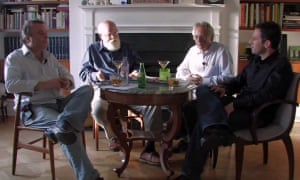
Francis and Edith Schaeffer at their home in Switzerland with some visiting friends
__
Schaeffer with his wife Edith in Switzerland.
Richard Dawkins and John Lennox
July 16, 2019
Richard Dawkins c/o Richard Dawkins Foundation, Washington, DC 20005
Dear Mr. Dawkins,
Page 242 in THE GOD DELUSION: “If you teach children that they evolved from monkeys, then they will act like monkeys.”
This criticism can be made basically because of the “survival of the fittest” view that has been adopted from science and then applied to everyday life. Let me share with you a portion of a post I did on the recent MAD MAX movie:
I must say that I really enjoyed this movie and I have also included a very positive review of it from CHRISTIANITY TODAY below.
The background of the MAD MAX movies is the destruction of the rest of the world by atomic weapons and the aftermath of disease and survival of fittest of those still living at this point in Australia. The main lesson to learn from these series of movies is that from a humanist worldview there is nothing left except the survival of the fittest and ultimately even the human race is bound for extinction as Nevil Shute presented in his book ON THE BEACH. Francis Schaeffer discusses this book a great deal and he shows that although many people today still hold to a form of optimistic humanism, it really has no basis. Even as far back as Charles Darwin this idea has been put forth.
Darwin wrote, “Believing as I do that man in the distant future will be a far more perfect creature than he now is…”
Francis Schaeffer observed:
Now you have now the birth of Julian Huxley’s evolutionary optimistic humanism already stated by Darwin. Darwin now has a theory that man is going to be better. If you had lived at 1860 or 1890 and you said to Darwin, “By 1970 will man be better?” He certainly would have the hope that man would be better as Julian Huxley does today. Of course, I wonder what he would say if he lived in our day and saw what has been made of his own views in the direction of (the mass murder) Richard Speck (and deterministic thinking of today’s philosophers). I wonder what he would say. So you have the factor, already the dilemma in Darwin that I pointed out in Julian Huxley and that is evolutionary optimistic humanism rests always on tomorrow. You never have an argument from the present or the past for evolutionary optimistic humanism.
You can have evolutionary nihilism on the basis of the present and the past. Every time you have someone bringing in evolutionary optimistic humanism it is always based on what is going to be produced tomorrow. When is it coming? The years pass and is it coming? Arthur Koestler doesn’t think it is coming. He sees lots of problems here and puts forth for another solution.
What is the problem of taking nature as the moral standard? To answer this question Schaeffer asks us to consider the Marquis de Sade (1740-1814), ”who well understood the logical conclusion of this deification of nature. He knew that if nature is all, then what is is right, and nothing more can be said. The natural result of this was his ‘sadism,’ his cruelty, especially to women.” de Sade writing in his book “Justine” says “As nature has made us (the men) the strongest, we can do with her (the woman) whatever we please.” In nature there is no right or wrong, no good or bad, and there is no basis for making those distinctions. In nature, might makes right. Can you imagine what true natural system of law would look like? Schaeffer’s conclusion is; “There are no moral distinctions, no value system. What is right? Thus, there is no basis for either morals or law.” If we are to make nature the rule, the yardstick by which we live then there is no distinction between things like cruelty and noncruelty.
THEREFORE, THE LOGICAL CONCLUSION IS SURVIVAL OF THE FITTEST AND IS EXACTLY WHAT THE FILM “MAD MAX FURY ROAD” PUTS FORTH!!!!
Dan Guinn posted on his blog at http://www.francisschaefferstudies.orgconcerning the Nazis and evolution: As Schaeffer points out, “…these ideas helped produce an even more far-reaching yet logical conclusion: the Nazi movement in Germany.Heinrich Himmler (1900-1945), leader of the Gestapo, stated that the law of nature must take its course in the survival of the fittest. The result was the gas chambers. Hitler stated numerous times that Christianity and its notion of charity should be “replaced by the ethic of strength over weakness.” Surely many factors were involved in the rise of National Socialism in Germany. For example, the Christian consensus had largely been lost by the undermining from a rationalistic philosophy and a romantic pantheism on the secular side, and a liberal theology (which was an adoption of rationalism in theological terminology) in the universities and many of the churches. Thus biblical Christianity was no longer giving the consensus for German society. After World War I came political and economic chaos and a flood of moral permissiveness in Germany. Thus, many factors created the situation. But in that setting the theory of the survival of the fittest sanctioned what occurred. ”
Francis Schaeffer notes that this idea ties into today when we are actually talking about making infanticide legal in some academic settings. Look at what these three humanist scholars have written:
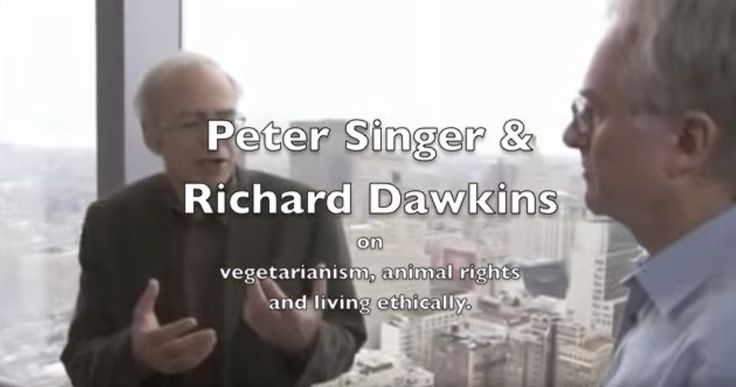
Peter Singer, who recently was seated in an endowed chair at Princeton’s Center for Human Values, said, “Killing a disabled infant is not morally equivalent to killing a person. Very often it is not wrong at all.”
In May 1973, James D. Watson, the Nobel Prize laureate who discovered the double helix of DNA, granted an interview to Prism magazine, then a publication of the American Medical Association. Time later reported the interview to the general public, quoting Watson as having said, “If a child were not declared alive until three days after birth, then all parents could be allowed the choice only a few are given under the present system. The doctor could allow the child to die if the parents so choose and save a lot of misery and suffering. I believe this view is the only rational, compassionate attitude to have.”
In January 1978, Francis Crick, also a Nobel laureate, was quoted in the Pacific News Service as saying “… no newborn infant should be declared human until it has passed certain tests regarding its genetic endowment and that if it fails these tests it forfeits the right to live.”
Canary Islands 2014: Harold Kroto and Richard Dawkins
__
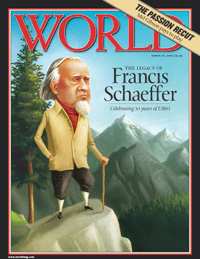
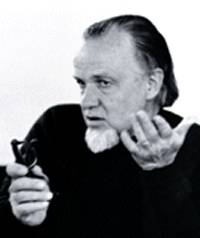
Francis Schaeffer pictured below:
—
The Basis of Human Dignity by Francis Schaeffer
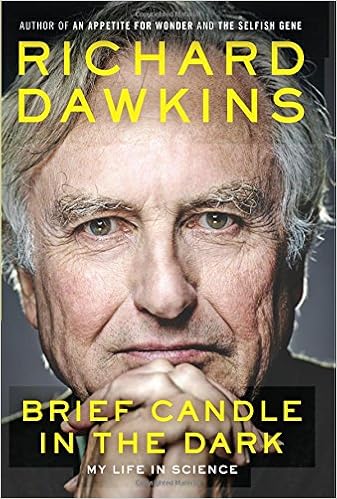
Richard Dawkins, founder of the Richard Dawkins Foundation for Reason and Science. Credit: Don Arnold Getty Images
—
Francis Schaeffer in 1984
Christian Manifesto by Francis Schaeffer
Francis Schaeffer in 1982
—-
Whatever Happened to the Human Race? Episode 1
—
—
–
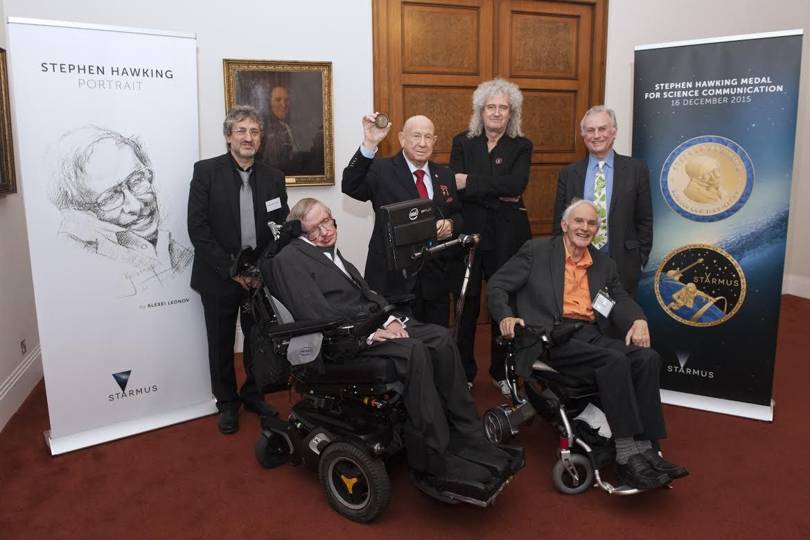
Garik Israelian, Stephen Hawking, Alexey Leonov, Brian May, Richard Dawkins and Harry Kroto
—-
—-
—-
—-
Featured artist is Zhang Xiaogang
Zhang Xiaogang was born in 1958 in Kunming, China. Xiaogang went to Sichuan Academy of Fine Arts in Chongqing.
Being unfavored at times he was forced to work in construction and other odd jobs instead of teaching painting as he had intended. Zhang Xiaogang fell into a deep depression fueled by alcoholism, eventually leading to his hospitalization in 1984. He lives and works in Beijing, China. Zhang Xiaogang is a preeminent member of the contemporary Chinese avant-garde. His Surrealist-inspired portraits are executed in smoothly rendered oil paint. The works maintain a formal and stiffly posed aesthetic. Zhang’s focus is on the aftereffects of the Cultural Revolution and the meaning of family, history, and memory in China today. Zhang Xiaogang was inspired to create his Bloodlines series when he discovered an old album of his family. Bloodlines series is work for which he is now celebrated.
He has been exhibited at Pace Gallery in New York, the 1995 Venice Biennale, and the Daegu Art Museum.
On November 21, 2014 I received a letter from Nobel Laureate Harry Kroto and it said: …Please click on this URL http://vimeo.com/26991975 and you will hear what far smarter people than I have to say on this matter. I agree with them. Harry Kroto _________________ Below you have picture of 1996 Chemistry Nobel Prize Winner […]
The Beatles were “inspired by the musique concrète of German composer and early electronic music pioneer Karlheinz Stockhausen…” as SCOTT THILL has asserted. Francis Schaeffer noted that ideas of “Non-resolution” and “Fragmentation” came down German and French streams with the influence of Beethoven’s last Quartets and then the influence of Debussy and later Schoenberg’s non-resolution which is in total contrast […]
_______ On November 21, 2014 I received a letter from Nobel Laureate Harry Kroto and it said: …Please click on this URL http://vimeo.com/26991975 and you will hear what far smarter people than I have to say on this matter. I agree with them. Harry Kroto _________________ Below you have picture of 1996 Chemistry Nobel Prize […]
On November 21, 2014 I received a letter from Nobel Laureate Harry Kroto and it said: …Please click on this URL http://vimeo.com/26991975 and you will hear what far smarter people than I have to say on this matter. I agree with them. Harry Kroto ____________________ Below you have picture of 1996 Chemistry Nobel Prize Winner Dr. […]
The shift toward free markets, which began in the mid-1970s, was especially beneficial for the less fortunate (see here, here, and here).
But it’s quite common for critics to assert that Chile is a bad example because many of the reforms were enacted by General Augusto Pinochet, a dictator who seized power in 1973. And some of those critics also attack Milton Friedman for urging Pinochet to liberalize the economy and reduce the burden of government.
Are these critics right?
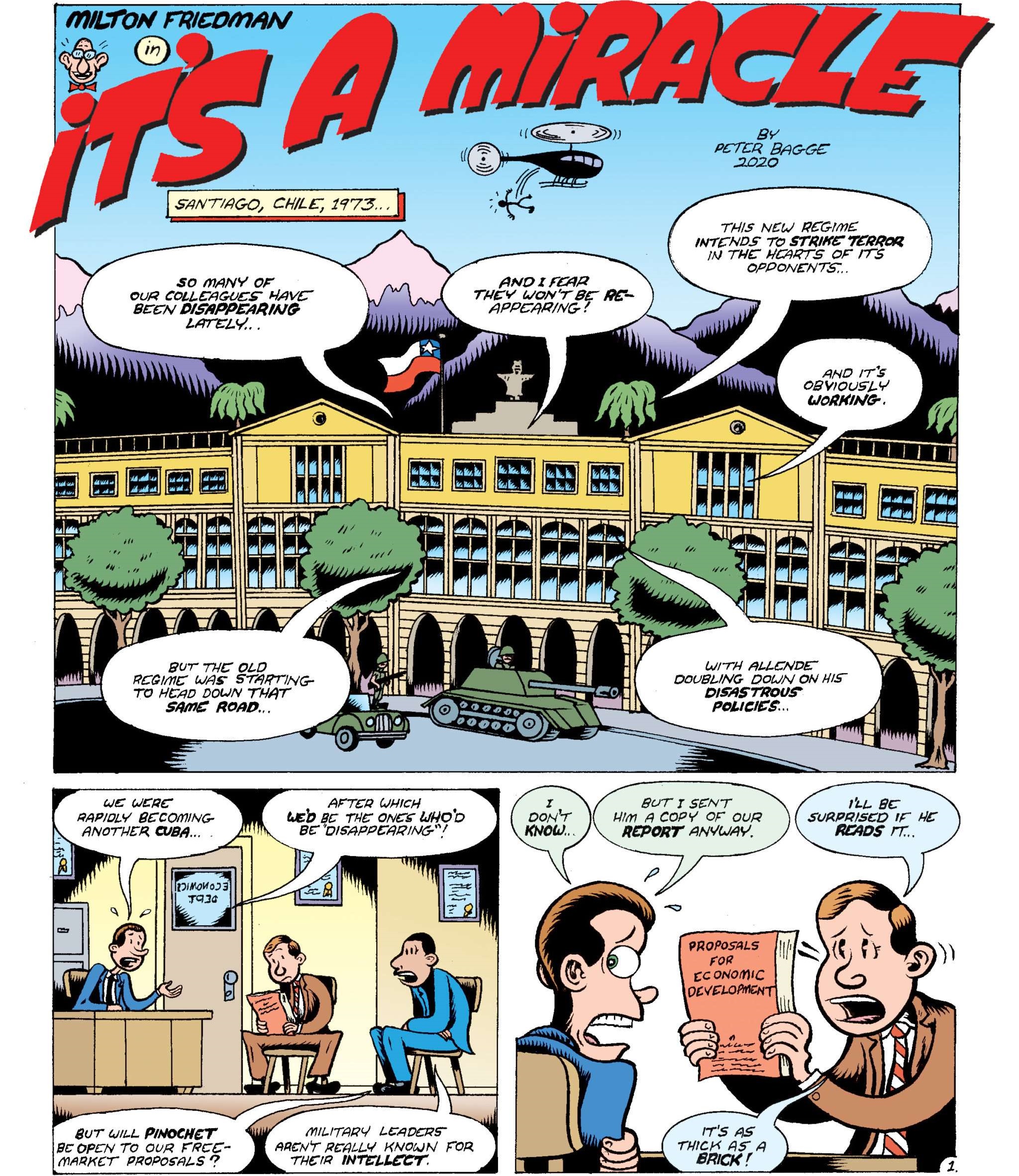
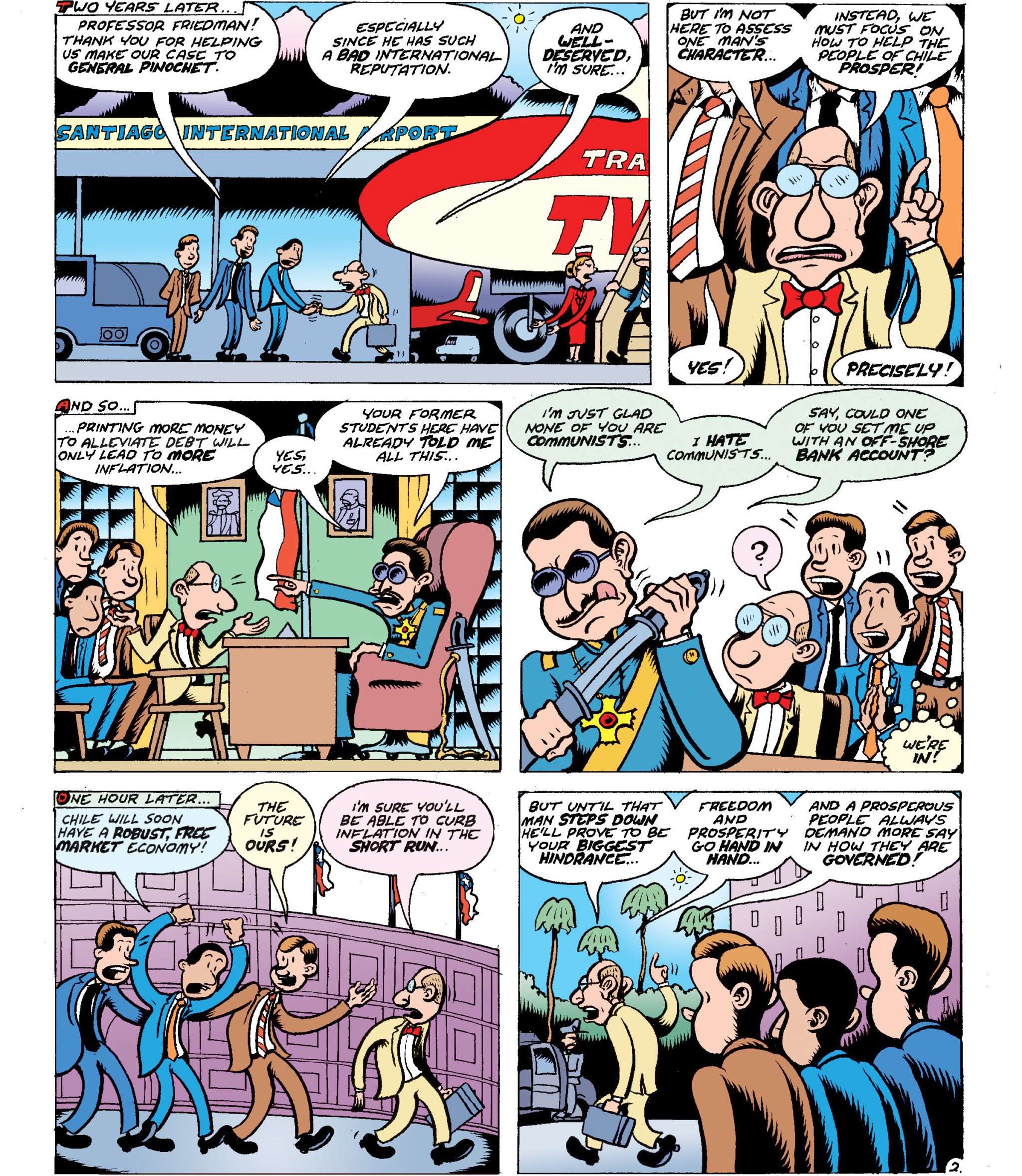
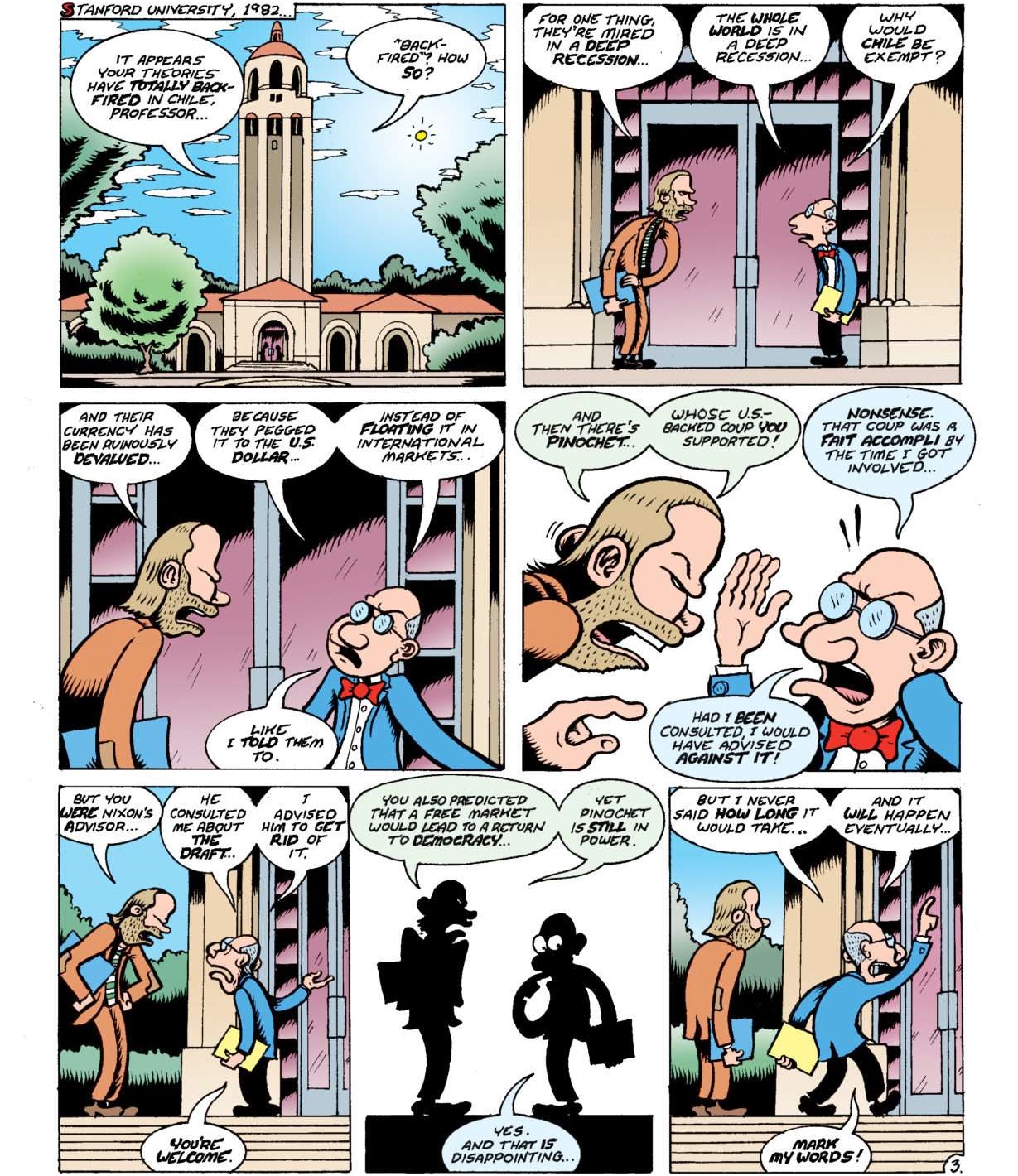
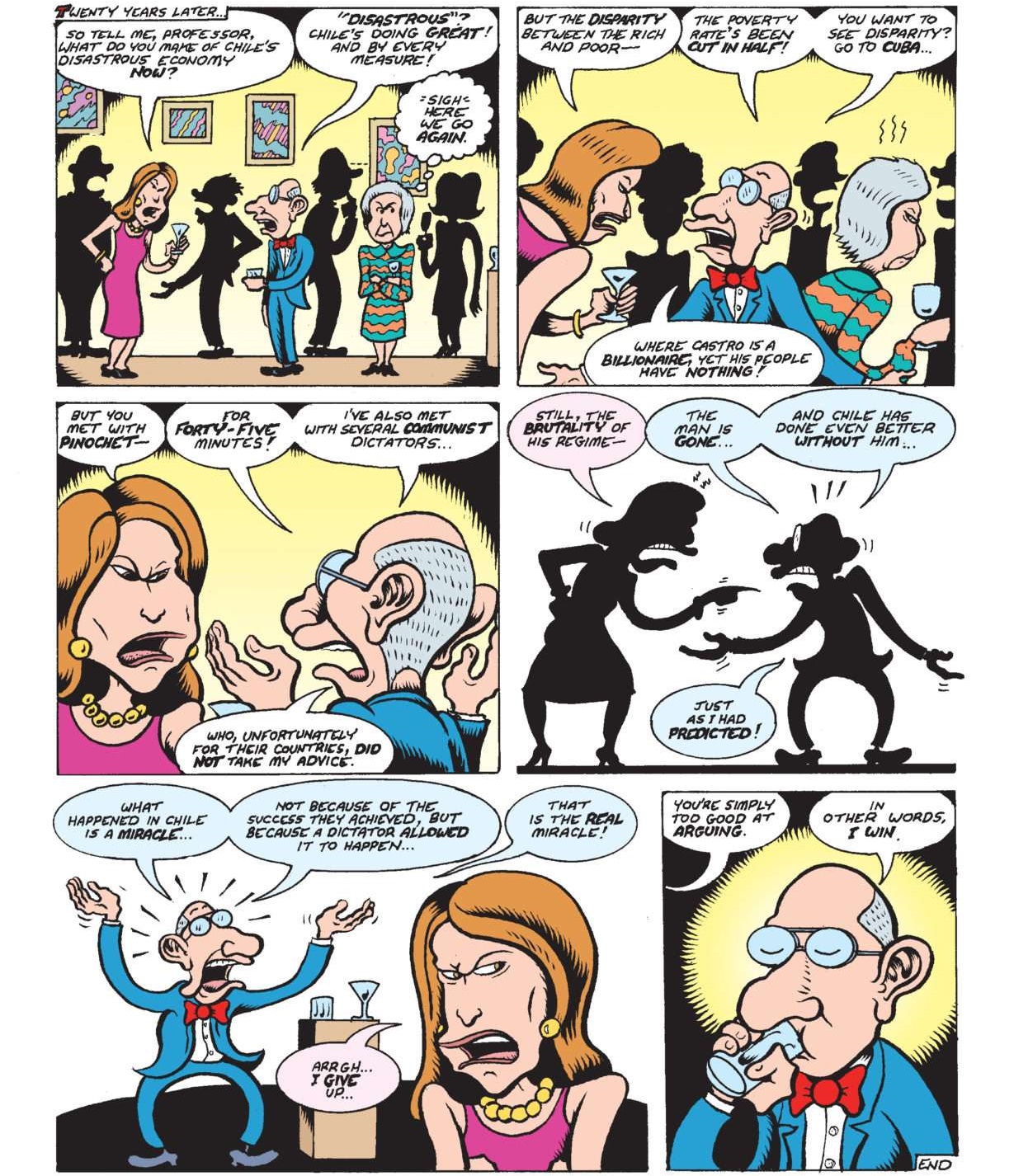
To answer that question, I very much recommend the following cartoon strip by Peter Bagge. Published by Reason, it accurately depicts the efforts of reformers to get good reforms from a bad government.
It starts in 1973, with a group of Chilean economists, known as the “Chicago Boys,” who wanted free markets.
In 1975, they invited Milton Friedman to help make the case for economic reform.
This 1982 strip shows some of the controversies that materialized.
But by the time we got to the 21st century, everything Friedman said turned out to be true.
First, I’ll be able to share it with people who want to delegitimize Chile’s transition to a market-oriented democracy (ranked #14 according to the most-recent edition of Economic Freedom of the World). Simply stated, it was bad that Chile had a dictatorship, but it was good that the dictatorship allowed pro-market reforms (particularly when compared to the alternative of a dictatorship with no reforms). And it was great that Chile became a democracy (a process presumably aided by mass prosperity).
Second, we should encourage engagement with distasteful governments. I certainly don’t endorse China’s government or Russia’s government, but I’ve advised government officials from both nations. Heck, I would even give advice to Cuba’s government or North Korea’s government (not that I’m expecting to be asked). My goal is to promote more liberty and it would make me very happy if I could have just a tiny fraction of Friedman’s influence in pursuing that goal.
P.S. Here’s Milton Friedman discussing his role in Chile.
P.P.S. While I disagree, it’s easy to understand why some people try to delegitimize Chile’s reforms by linking them to Pinochet. What baffles me are the folks who try to argue that the reforms were a failure. See, for instance, Prof. Dani Rodrik and the New York Times.
José Niño is a graduate student based in Santiago, Chile. A citizen of the world, he has lived in Venezuela, Colombia, and the United States. He is currently an international research analyst with the Acton Circle of Chile. Follow@JoseAlNino.
EspañolThe power of ideas to help shape political movements has been grossly underestimated over the years. In truth, some of the largest political transformations in human history have come from ideas that were developed in the secluded confines of an intellectual’s home or in obscure academic institutes. Regardless of the origins, ideas can snowball into powerful vehicles of social change.+
As Friedrich Hayek noted in one of his most powerful works, Intellectuals and Socialism,the triumph of socialist ideas can largely be attributed to the ideas first put forward by various intellectuals. They began with relatively well-off intellectuals and then made their way to “second-hand dealers” — journalists, scientists, doctors, teachers, ministers, lecturers, radio commentators, fiction writers, cartoonists, and artists — who then spread those ideas to the masses.+
Intellectuals like Milton Friedman took it upon themselves to reverse this trend and create an environment that was more favorable to free markets. Steadfast in his beliefs in the power of ideas, Friedman knew that big changes usually start out in small venues.+
It was in Chile where Friedman’s vision was first implemented on a large scale. The results were nothing short of spectacular, as Chile was able to escape a veritable economic collapse and experience an unprecedented boom.+
Chile’s economic success was no mere coincidence; it was the product of ideas that Milton Friedman put forward in the 1950s. To understand how such a radical change was brought about, one must first look at the origins of the Chicago Boys, the group of Chilean economists that played a pivotal role in the transformation of Chile’s economy during the 1970s and 1980s.+
The Chicago Boys
Under the tutelage of the United States Agency for International Development (USAID), the University of Chicago signed a modest agreement with the Pontifical Catholic University of Chile in the 1950s to provide a group of Chilean students training in economics.+
In exchange, the University of Chicago would send four faculty members to help the Catholic University build up their economics department. Of these four faculty members, Arnold Harberger would serve as the Chicago Boys’ principal mentor.+
What at first looked liked just another exchange program between universities would play a substantial role in Chile’s economic rise.+
A Country Mired By Statism
At the start of this program, Chile’s economy was in the doldrums. Another victim of Raúl Prebisch’s Import Substitution Industrialization (ISI) policy, Chile had a very loose central banking policy, featured 15 different exchange rates, heavy tariffs, and a number of import and export controls. Subsequent governments maintained the same neo-mercantilist structure up until the 1970s.+
During this era of economic malaise, the Chicago Boys constructed El Ladrillo(The Brick), a text primarily shaped by economist Sergio de Castro which advocated for economic liberalization in all sectors of the Chilean economy. Sadly, this text was largely ignored at that time.+
It wasn’t until the presidency of Salvador Allende that the Chicago Boys’ talents would be desperately needed.+
On the Road to Cuba 2.0
Though democratically elected by a narrow margin in 1970, Salvador Allende was determined to turn Chile into the next Cuba by undermining all of its democratic institutions. Through price controls, arbitrary expropriations, and lax monetary policy, Allende put the Chilean economy on the verge of collapse. By 1973, inflation reached 606 percent and per capita GDP dropped 7.14 percent.+
Under the command of General Augusto Pinochet, the military deposed Allende’s government. Despite this tumultuous change, the military ruler did not have a clear economic vision for Chile.+
Enter Milton Friedman
Milton Friedman’s visit to Chile in March 1975 proved to be quite fateful. Friedman was on a week-long lecture tour for various think thanks. Eventually, Friedman sat down with the general himself for 45 minutes. Right off the bat, Friedman recognized that Pinochet had very little knowledge of economics. After their meeting, Friedman sent Pinochet a letter with a list of policy recommendations.+
Friedman was blunt is his diagnosis of Chile’s economy: for the country to recover, it had to truly embrace free-market measures.+
Ideas Put in Action
Cooler heads prevailed and Pinochet let the Chicago School disciples occupy various posts in the military government. In April 1975, El Plan de Recuperación Económica (The Economic Recovery Plan) was implemented. Soon Chile curbed its inflation, opened up its markets, privatized state-owned industries, and cut government spending. By the 1990s, Chile was experiencing the largest economic boom in its history.+
A principled libertarian, Friedman criticized Pinochet’s repressive political measures. Friedman understood that economic and political freedoms are not mutually exclusive. The principles laid in Friedman’s book Capitalism and Freedom inspired José Piñera, a notable Chilean reformer, to become a part of Chile’s classical liberal revolution.+
Like Friedman, Piñera understood the link between economic and political freedom. This motivated him to help ratify the Chilean Constitution of 1980. The most classically liberal constitution in Latin America’s history, it established the transition towards free elections and Chile’s return to democracy.+
Additionally, Piñera was the architect of Chile’s private social security system that empowered millions of workers and has fostered the growth of an ownership society. This model has been exported to dozens of countries abroad and has served as a market-based alternative to government-run pension systems.+
The “Chilean Miracle” represented the first major triumph against communism during the Cold War. Chile’s classical-liberal revolution subsequently inspired the Thatcher Revolution of 1979 and the Reagan Revolution of 1980. These ideas had resounding effects all over the globe and marked the beginning of the end for Soviet-style models of economic organization.+
There is still much work to do, as the illegitimate children of Marxist and Keynesian thought still run loose these days throughout Latin America. But one thing is absolutely certain: an idea whose time has come is unstoppable.+
RIP Milton Friedman
Milton Friedman is the short one!!!
Milton Friedman’s Free to Choose (1980), episode 3 – Anatomy of a Crisis. part 1
Milton Friedman The Power of the Market 5-5 How can we have personal freedom without economic freedom? That is why I don’t understand why socialists who value individual freedoms want to take away our economic freedoms. I wanted to share this info below with you from Milton Friedman who has influenced me greatly over the […]
Milton Friedman PBS Free to Choose 1980 Vol 4 of 10 From Cradle to Grave
Milton Friedman – Whats wrong with welfare? (Q&A)
Free To Choose – Milton Friedman on The Welfare System (1978) | Thomas S…
Milton Friedman Speaks: What is Wrong with the Welfare State? (B1229) – …
February 24, 2021
Office of Barack and Michelle Obama P.O. Box 91000 Washington, DC 20066
Dear President Obama,
I wrote you over 700 letters while you were President and I mailed them to the White House and also published them on my blog http://www.thedailyhatch.org .I received several letters back from your staff and I wanted to thank you for those letters.
There are several issues raised in your book that I would like to discuss with you such as the minimum wage law, the liberal press, the cause of 2007 financial meltdown, and especially your pro-choice (what I call pro-abortion) view which I strongly object to on both religious and scientific grounds, Two of the most impressive things in your book were your dedication to both the National Prayer Breakfast (which spoke at 8 times and your many visits to the sides of wounded warriors!!
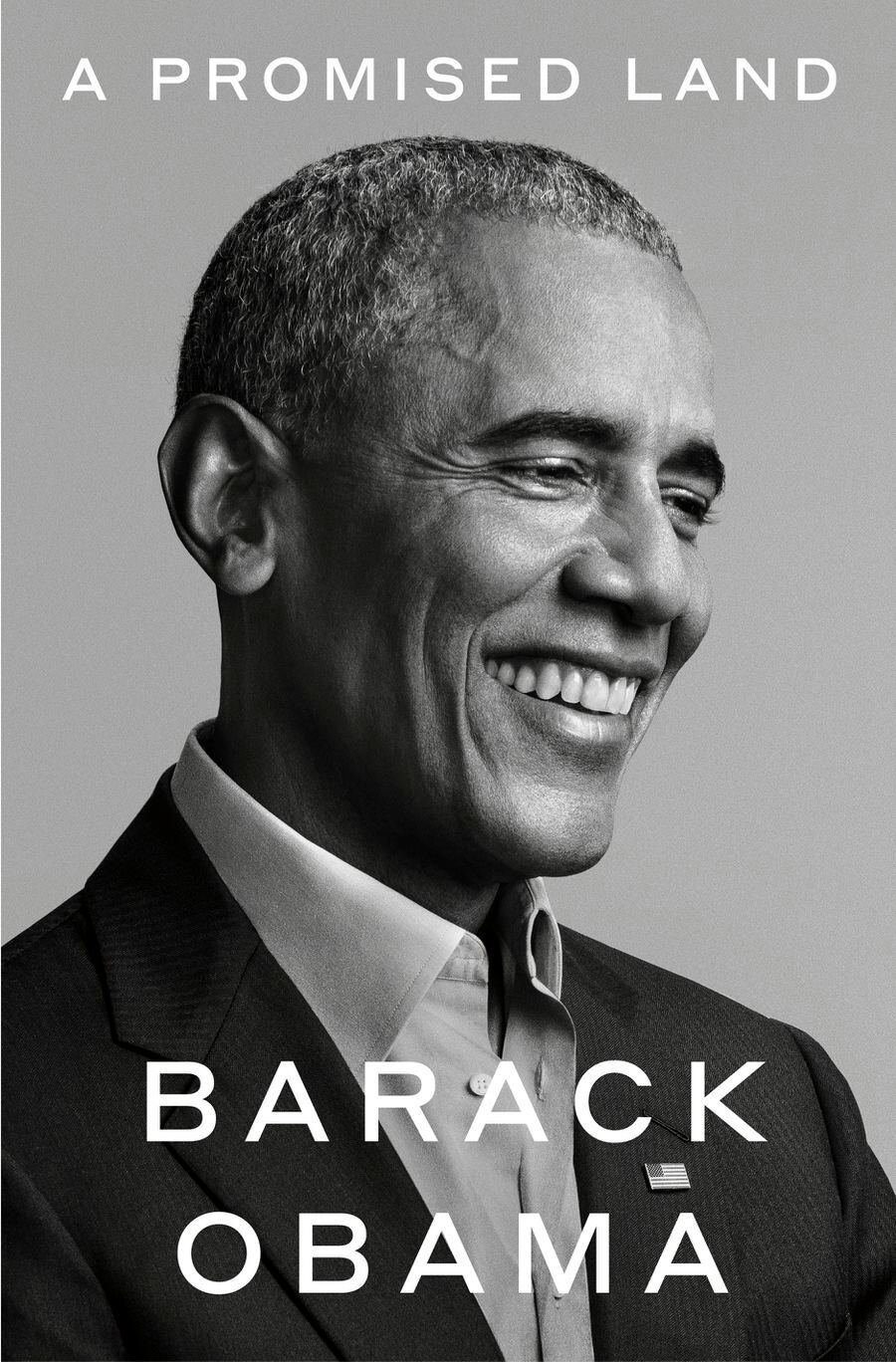
I have been reading your autobiography A PROMISED LAND and I have been enjoying it.
Let me make a few comments on it, and here is the first quote of yours I want to comment on:
As our society grew more complex, more and more of the government’s function took the form of social insurance, with each of us chipping in through our tax dollars to protect ourselves collectively—for disaster relief if our house was destroyed in a hurricane; unemployment insurance if we lost a job; Social Security and Medicare to lessen the indignities of old age; reliable electricity and phone service for those who lived in rural areas where utility companies wouldn’t otherwise make a profit; public schools and universities to make education more egalitarian. It worked, more or less. In the span of a generation and for a majority of Americans, life got better, safer, more prosperous, and more just. A broad middle class flourished. The rich remained rich, if maybe not quite as rich as they would have liked, and the poor were fewer in number, and not as poor as they’d otherwise have been. And if we sometimes debated whether taxes were too high or certain regulations were discouraging innovation, whether the “nanny state” was sapping individual initiative or this or that program was wasteful, we generally understood the advantages of a society that at least tried to offer a fair shake to everyone and built a floor beneath which nobody could sink. Maintaining this social compact, though, required trust. It required that we see ourselves as bound together, if not as a family then at least as a community, each member worthy of concern and able to make claims on the whole. It required us to believe that whatever actions the government might take to help those in need were available to you and people like you; that nobody was gaming the system and that the misfortunes or stumbles or circumstances that caused others to suffer were ones to which you at some point in your life might fall prey.
What’s the right way to define good tax policy? There are several possible answers to that question, including the all-important observation that the goal should be to only collect the amount of revenue needed to finance the legitimate functions of government, and not one penny above that amount.
But what if we want a more targeted definition? A simple principle to shape our understanding of tax policy?
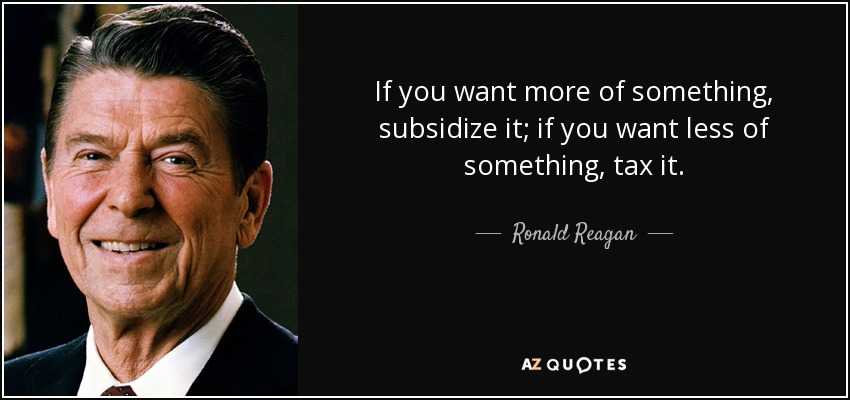
…the essential insight of supply-side economics…when you tax something, you get less of it.
I’m not claiming this is my idea, by the way. It’s been around for a long time.
Indeed, it’s rumored that Reagan shared a version of this wisdom.
I don’t know if the Gipper actually said those exact words, but his grasp of tax policy was very impressive. And the changes he made led to very good results, even if folks on the left still refuse to believe the IRS data showing that Reagan’s lower tax rates on the rich generated more revenue.
I don’t like the idea of government trying to dictate people do with their own money, but these so-called sin taxes generally are successful because supply-siders are right about taxes impacting incentives.
But that doesn’t mean it’s always popular when statist governments impose such policies. At least not in Belarus, according to a story from RFERL.
Protests over a new tax aimed at reducing social welfare spread beyond the Belarusian capital, as thousands took to the streets in Homel and other towns. Along with similar protests two days earlier in Minsk, the February 19 demonstrations were some of the largest in the country in years. In Homel, near the border with Russia, at least 1,000 people marched and chanted slogans against the measure, known as the “Law Against Social Parasites.”
But what are “social parasites” and what does the law do?
…the law…requires people who were employed fewer than 183 days in a calendar year to pay a tax of about $200. …The measure is aimed at combating what President Alyaksandr Lukashenka has called “social parasitism.”
For what it’s worth, the Washington Postreports that the government had to back down.
The protesters won. On Thursday, Lukashenko announced that he won’t enforce the measure this year, though he’s not scrapping it. “We will not collect this money for 2016 from those who were meant to pay it,” he told the state news agency Belta. Those who have already paid will get a rebate if they get a job this year. The law, signed into effect in 2015, is reminiscent of Soviet-era crackdowns against the jobless, who undermined the state’s portrayal of a “workers’ paradise.”
That’s good news.
If people can somehow survive without working (assuming they’re not mooching off taxpayers, which is something that should be discouraged), more power to them. It’s not the life I would want, but it’s not the role of government to tax them if they don’t work. Or if they simply choose to work 182 days per year.
Mr. Lukashenko should concentrate instead on taking the heavy foot of government off the neck of his people. According to the most-recentIndex of Economic Freedom, Belarus is only ranked #104, with especially weak scores for “rule of law” and “open markets.”
If he turns his country into a Slavic version of Hong Kong, based on free markets and small government, people will be clamoring to work. But I’m not holding my breath expecting that to happen.
P.P.S. Given the low freedom ranking for Belarus, I suspect the real parasites in that country (just like in the U.S.) are the various interest groups that are feeding from the government trough.
President Obama c/o The White House 1600 Pennsylvania Avenue NW Washington, DC 20500 Dear Mr. President, I know that you receive 20,000 letters a day and that you actually read 10 of them every day. I really do respect you for trying to get a pulse on what is going on out here. There have […]By Everette Hatcher III | Posted in David Barton, Founding Fathers, President Obama | Edit |Comments (0)
There have been many articles written by evangelicals like me who fear that our founding fathers would not recognize our country today because secular humanism has rid our nation of spiritual roots. I am deeply troubled by the secular agenda of those who are at war with religion in our public life. Lillian Kwon quoted somebody […]By Everette Hatcher III | Posted in David Barton, Founding Fathers | Edit | Comments (0)
There have been many articles written by evangelicals like me who fear that our founding fathers would not recognize our country today because secular humanism has rid our nation of spiritual roots. I am deeply troubled by the secular agenda of those who are at war with religion in our public life. Lillian Kwon quoted somebody […]By Everette Hatcher III | Posted in David Barton, Founding Fathers | Edit | Comments (0)
There have been many articles written by evangelicals like me who fear that our founding fathers would not recognize our country today because secular humanism has rid our nation of spiritual roots. I am deeply troubled by the secular agenda of those who are at war with religion in our public life. Lillian Kwon quoted somebody […]By Everette Hatcher III | Posted in David Barton, Founding Fathers | Edit | Comments (0)
There have been many articles written by evangelicals like me who fear that our founding fathers would not recognize our country today because secular humanism has rid our nation of spiritual roots. I am deeply troubled by the secular agenda of those who are at war with religion in our public life. Lillian Kwon quoted somebody […]By Everette Hatcher III | Posted in David Barton, Founding Fathers | Edit | Comments (0)
There have been many articles written by evangelicals like me who fear that our founding fathers would not recognize our country today because secular humanism has rid our nation of spiritual roots. I am deeply troubled by the secular agenda of those who are at war with religion in our public life. Lillian Kwon quoted somebody […]By Everette Hatcher III | Posted in Founding Fathers | Edit | Comments (0)
President Obama Speaks at The Ohio State University Commencement Ceremony Published on May 5, 2013 President Obama delivers the commencement address at The Ohio State University. May 5, 2013. You can learn a lot about what President Obama thinks the founding fathers were all about from his recent speech at Ohio State. May 7, 2013, […]By Everette Hatcher III | Posted in Founding Fathers, President Obama | Edit | Comments (0)
Dr. C. Everett Koop with Bill Graham. Francis Schaeffer: “Whatever Happened to the Human Race” (Episode 4) THE BASIS FOR HUMAN DIGNITY Published on Oct 7, 2012 by AdamMetropolis The 45 minute video above is from the film series created from Francis Schaeffer’s book “Whatever Happened to the Human Race?” with Dr. C. Everett Koop. This […]By Everette Hatcher III | Posted in Founding Fathers, Francis Schaeffer, Prolife | Edit |Comments (1)
America’s Founding Fathers Deist or Christian? – David Barton 4/6 There have been many articles written by evangelicals like me who fear that our founding fathers would not recognize our country today because secular humanism has rid our nation of spiritual roots. I am deeply troubled by the secular agenda of those who are at […]By Everette Hatcher III | Posted in David Barton, Founding Fathers | Tagged governor of connecticut, john witherspoon, jonathan trumbull | Edit | Comments (1)
3 Of 5 / The Bible’s Influence In America / American Heritage Series / David Barton There were 55 gentlemen who put together the constitution and their church affliation is of public record. Greg Koukl notes: Members of the Constitutional Convention, the most influential group of men shaping the political foundations of our nation, were […]By Everette Hatcher III | Posted in Founding Fathers | Edit | Comments (0)
I do not think that John Quincy Adams was a founding father in the same sense that his father was. However, I do think he was involved in the early days of our government working with many of the founding fathers. Michele Bachmann got into another history-related tussle on ABC’s “Good Morning America” today, standing […]By Everette Hatcher III | Posted in David Barton, Founding Fathers | Edit | Comments (0)
I have gone back and forth and back and forth with many liberals on the Arkansas Times Blog on many issues such as abortion, human rights, welfare, poverty, gun control and issues dealing with popular culture. Here is another exchange I had with them a while back. My username at the Ark Times Blog is Saline […]By Everette Hatcher III | Posted in Arkansas Times, Francis Schaeffer, Prolife | Edit |Comments (0)
I truly believe that many of the problems we have today in the USA are due to the advancement of humanism in the last few decades in our society. Ronald Reagan appointed the evangelical Dr. C. Everett Koop to the position of Surgeon General in his administration. He partnered with Dr. Francis Schaeffer in making the […]By Everette Hatcher III | Posted in Adrian Rogers, Francis Schaeffer | Edit | Comments (0)
Francis Schaeffer: “Whatever Happened to the Human Race” (Episode 4) THE BASIS FOR HUMAN DIGNITY Published on Oct 7, 2012 by AdamMetropolis ____________ The 45 minute video above is from the film series created from Francis Schaeffer’s book “Whatever Happened to the Human Race?” with Dr. C. Everett Koop. This book really helped develop my political […]By Everette Hatcher III | Posted in Francis Schaeffer | Edit | Comments (0)
In Part 1 of HBO’s sizzling new docuseries, “Allen v. Farrow,’’ the actress, appearing as prim and uptight as the state of Connecticut, recounts, yet again, how she was emotionally mutilated by the filmmaker Woody Allen, who dumped her for one grown daughter and then, she claims, proceeded to molest her other, prepubescent girl child.
It’s a riveting, yet strangely antiseptic, performance by an actress who’s made her life’s work exacting revenge from the man who done her wrong.
Trouble is, it seems to me that not a word of it, with the possible exceptions of “and’’ and “but,’’ is true.
And, once again, Mia’s scorched-earth revenge fantasy has claimed an innocent victim — her daughter, Dylan, who was allegedly brutalized by Woody when she was 7 years old. As she has done for decades, Mia is exploiting Dylan, now 35, maiming her mentally, throwing her under the Woody bus in a twisted effort to destroy the life, reputation and career of her former paramour.
Why did the filmmakers encourage her so cynically? Perhaps because this hideousness makes for a better story than the one that really happened.
While watching Part 1, released on Sunday, it is helpful to compare Mia’s current tale of betrayal and endless dining in buzzy restaurants to the one she testified to in a New York City courtroom in 1993, as Woody sued her for custody of the three children they share.
A pivotal point in the episode comes as Mia recounts finding Polaroid photos of her daughter Soon-Yi Previn in Woody’s apartment, across Central Park from her own. In the shots, Soon-Yi is naked.
According to Mia’s revisionist history of the event, Soon-Yi, now 50, is not merely in the buff, but the subject of hard-core “pornography’’ — straight out of “Hustler.’’
The discovery of the kinky skin trove prompted Mia to hurry back to her apartment, shaking, she now says, to face her daughter.
“Soon-Yi was home and I remember saying. ‘I found the pictures,’ ” Farrow “suddenly” remembers. “And she said, ‘What pictures?’ And I said, ‘The pictures Woody took.’ And she started crying and I started crying and I’m like, ‘No, no, it’s not your fault.’ And she was beside herself.”
Sweet.
And apparently untrue.
When Mia, now 76, testified in court some 28 years ago, no one was crying. Instead, Mia testified, after she confronted Soon-Yi about the merely “nude’’ pictures, her daughter taunted her mother.
“The person who is sleeping with [Woody] is the one with the relationship,’’ Mia bitterly remembered Soon-Yi saying. And then, Mia admitted on the stand that she punched and pummeled the young woman.
“I’m not proud,’’ Mia testified coolly.
In addition to this ugly — but honest — display of anger, I saw an exhibit in the courtroom that had me questioning Mia’s sanity. It was a photograph of Mia with her gigantic brood of biological and adopted children. Mia had plunged metal stakes into each person’s chest to show Woody how his actions with Soon-Yi had broken their hearts.
There were other televised deviations from the story she had spun.
Mia says in the documentary that a therapist around 1990, when Mia was still with Woody, rendered the opinion that he acted “inappropriately,” but not sexually, toward Dylan. She mentions this to explain why she stayed with Woody, and had a child with him.
But the probable truth is far simpler — that no child-molestation occurred. Not, as Mia claimed, in her house in Connecticut. Not anywhere. (Woody has steadfastly denied it ever happened.)
Mia won primary custody of her children, but she was never proven totally in the right.
The fact remains that, no matter how much Mia and her supporters want the abuse to be true, New York state authorities said they could not prove the allegations and Connecticut child-abuse experts concluded that Mia may have “coached’’ Dylan to lie about it. Mia’s adopted son, Moses, 43, also has long maintained that his mother “brainwashed’’ Dylan into believing it.
Woody and Soon-Yi have been married since 1997, and have two adopted daughters. There has never been another accusation of molestation against him, before or after the one with Dylan. Experts in the field say those who attack youngsters tend to repeatedly commit these crimes.
The sad part is that Dylan Farrow seems to believe she was Woody’s prey. She may never recover from these seemingly false memories.
For that, the filmmakers, and Mia Farrow, should be ashamed.
Woody Allen On Bergman
Woody Allen On Bergman
Woody Allen Show
Essay on Woody Allen films
Match point Trailer
Match point
–
Crimes and misdemeanors
Part 2
–
November 5, 2019
Woody Allen c/o Grove Atlantic, Inc.
154 West 14th Street, 12th Floor
New York, NY 10011
Dear Woody,
—-
I wanted to comment on this article below that discusses your evolution as a film maker that has included more of an emphasis on serious subjects such as our own mortality since your earlier movies.
American filmmaker, Woody Allen, will be starring in an exclusive two-part documentary film beginning tonight. The “Annie Hall” director and actor is notorious for his privacy. However, this three-and-a-half hour film claims to be a right of entry into the life and art of Woody Allen.
The works of Allen have always been a peculiar one for most viewers throughout generations. He has a touch for making artful flicks with the just enough humor included. His films, sometimes controversial, have also been unique in that they are driven by his distinctive vision and artistry. Allen has never been an artist to succumb to altering a script so it would appeal to mainstream audiences.
Therefore, many have noted reoccurring themes throughout Allen’s work over the years. He often integrates pop culture and religion sub-textually into the content of his writing.
Allen, now 75, grew up in a Jewish household. Now, as an agnostic, many of his films including “Crimes and Misdemeanors” and “Match Point” have subject matters concerning forgiveness, how to handle sin, finding meaning in life without God, or religious figures.
Many evangelicals including Chuck Colston and Southern Baptist leader, Richard Land are devoted fans of Allen. Although the filmmaker remains disclosed, he continues to be one to speak openly about deep issues in life even outside of his films. Allen has always been honest enough to ask many questions about morality and religion, but never has any of the right answers, Land suggested.
In the archives of Woody Allen appearances, one can find an old talk show video (below) in the 1960’s in which he interviews Billy Graham. Of course, Graham, clearly anchored in his beliefs in God, shared completely different views on life compared to the wisecracking Allen.
The conversation sounds undoubtedly tense upon first hearing. However, both counter-parts handled their discussion with much composure and the heart to agree to disagree.
Allen: “If you come to one of my movies or something, I’ll go to one of your revival meetings.”
Graham: “Well now that is a deal.”
Allen: “You could probably convert me because I’m such a pushover. I have no convictions in any direction and if you make it appealing and promise me some sort of wonderful afterlife with a white robe and wings I would go for it.”
Graham: “I can’t promise you a white robe and wings, but I can promise you a very interesting, thrilling life.”
Allen: “One wing, maybe?”
The dialogue was both light and deep all at once. “I find Woody over the years, and of course this is true of people as they get older, there is more resignation,” Land said to the Washington Post.
“There is a light touch and a confidence in his earlier movies – I’m not dead, I won’t die for a long time so I have a long time to figure this all out. Some of his more recent movies, you can see he’s aware of his own mortality.”
Decades later, one would hope Allen would come around to considering the true answers to all of his moral questioning. Perhaps he would think back to some of the words Graham spoke many years ago. However, Allen remains with doubtful views. “Sooner or later,” he said in a 2010 interview. “…reality sets in, in a crushing way. As it does and will with everybody, including Billy Graham. But it’s nice if you can delude yourself for as long as possible.”
“Woody Allen: A Documentary,’’ directed by Robert B. Weide, will touch on the career of Allen more intimately. Many look forward to understanding the true man behind the art and humor.
—-
Not only did Schaeffer mention YOU in several of his books but about a year ago a video was posted on You Tube that showed that Schaeffer mentioned YOU in his last public speech. If you go to You Tube and type in FRANCIS SCHAEFFER KNOXVILLE then you can watch this special Q&A time with Francis and Edith Schaeffer at the 1984 L’Abri conference in Knoxville, filmed two months before Dr. Schaeffer’s passing (May 15, 1984.
Francis Schaeffer two months before he died said if he was talking to a gentleman he was sitting next to on an airplane about Christ he wouldn’t start off quoting Bible verses. Schaeffer asserted:
I would go back rather to their dilemma if they hold the modern worldview of the final reality only being energy, etc., I would start with that. I would begin as I stress in the book THE GOD WHO IS THERE about their own [humanist] prophets who really show where their view goes. For instance, Jacques Monod, Nobel Prize winner from France, in his book NECESSITY AND CHANCE said there is no way to tell the OUGHT from the IS. In other words, you live in a totally silent universe.
The men like Monod and Sartre or whoever the man might know that is his [humanist] prophet and they point out quite properly and conclusively what life is like, not just that there is no meaningfulness in life but everyone according to modern man is just living out some kind of game plan. It may be knocking 1/10th of a second off a downhill ski run or making one more million dollars. But all you are doing is making a game plan within the mix of a meaningless situation. WOODY ALLEN exploits this very strongly in his films. He really lives it. I feel for that man, and he has expressed it so thoroughly in ANNIE HALL and MANHATTAN and so on.
Woody you have made it clear in your talk with Billy Graham that you think that putting faith in the God of the Bible would be throwing your Brian out the window. However, have you taken a close look at the scientific details in the Bible?
Skeptics seem to think that the Bible is full of scientific errors. However, before an individual can make that assertion, they had better make sure they know both science and Scripture. You see, I have heard unbelievers state that the Bible is not a book of science, but a book of religion, which is basically true. It is not written to teach us about science, but to teach us about God. But the God of salvation and the God of creation are the same. Science doesn’t take God by surprise. A close look at Scripture reveals that it is scientifically accurate.
Every now and then science may disagree with the Bible, but usually science just needs time to catch up. For example, in 1861 a French scientific academy printed a brochure offering 51 incontrovertible facts that proved the Bible in error. Today there is not a single reputable scientist who would support those supposed “facts,” because modern science has disproved them all!
The ancients believed the earth was held up by Atlas, or resting on pillars, or even seated on the backs of elephants. But today we know the earth is suspended in space, a fact the Word of God records in Job 26:7: “He . . . hangeth the earth upon nothing.” God revealed the facts of cosmology long before man had any idea of the truth.
For centuries man believed the earth was flat, but now we know the earth is a globe. The prophet Isaiah, writing 750 years before the birth of Christ, revealed that “God sitteth upon the circle of the earth” (Isaiah 40:22). The word translated here as “circle” was more commonly translated “sphere.” In other words, Isaiah explained that the earth was a globe centuries before science discovered it.
When Ptolemy charted the heavens, he counted 1026 stars in the sky. But with the invention of the telescope man discovered millions and millions of stars, something that Jeremiah 33:22 revealed nearly three thousand years ago: “The host of heaven cannot be numbered.” How did these men of God know the truth of science long before the rest of the world discovered it? They were moved by the Holy Spirit to write the truth. God’s Word is not filled with errors. It is filled with facts, even scientific facts.
When the black plague was killing one quarter of Europe’s population in the fourteenth century, it was the church, not science, that helped overcome the dread disease. The leaders in the church noticed the instructions given by the Lord to Moses in Leviticus 13:46: “All the days wherein the plague shall be in him he shall be defiled; he is unclean: he shall dwell alone; without the camp shall his habitation be.” These early believers did not know microbiology or understand what germs were, but they could understand a clear teaching to quarantine someone who was sick. So they followed the Biblical dictum, quarantined those sick with the plague, and stopped it from spreading. The Bible had its science correct even before man discovered the truth! Don’t accept the charge that the Bible is filled with scientific errors. Modern science seems determined to explain God away, and refuses to acknowledge any evidence of the supernatural. But the science of Scripture is one reason to accept the Bible as God’s Word.
The movie MIDNIGHT IN PARISoffers many of the same themes we see in Ecclesiastes. The second postlooked at the question: WAS THERE EVER A GOLDEN AGE AND DID THE MOST TALENTED UNIVERSAL MEN OF THAT TIME FIND TRUE SATISFACTION DURING IT?
In the third post in this series we discover in Ecclesiastes that man UNDER THE SUN finds himself caught in the never ending cycle of birth and death. The SURREALISTS make a leap into the area of nonreason in order to get out of this cycle and that is why the scene in MIDNIGHT IN PARIS with Salvador Dali, Man Ray, and Luis Bunuel works so well!!!! These surrealists look to the area of their dreams to find a meaning for their lives and their break with reality is only because they know that they can’t find a rational meaning in life without God in the picture.
The fourth post looks at the solution of WINE, WOMEN AND SONG and the fifthandsixth posts look at the solution T.S.Eliotfound in the Christian Faith and how he left his fragmented message of pessimism behind. In theseventh post the SURREALISTS say that time and chance is all we have but how can that explain love or art and the hunger for God? The eighth post looks at the subject of DEATH both in Ecclesiastes and MIDNIGHT IN PARIS. In the ninth post we look at the nihilistic worldview of Woody Allen and why he keeps putting suicides into his films.
In the tenth post I show how Woody Allen pokes fun at the brilliant thinkers of this world and how King Solomon did the same thing 3000 years ago. In theeleventh postI point out how many of Woody Allen’s liberal political views come a lack of understanding of the sinful nature of man and where it originated. In thetwelfth post I look at the mannishness of man and vacuum in his heart that can only be satisfied by a relationship with God.
In the thirteenth postwe look at the life of Ernest Hemingway as pictured in MIDNIGHT AND PARIS and relate it to the change of outlook he had on life as the years passed. In the fourteenth post we look at Hemingway’s idea of Paris being a movable feast. The fifteenth andsixteenth posts both compare Hemingway’s statement, “Happiness in intelligent people is the rarest thing I know…” with Ecclesiastes 2:18 “For in much wisdom is much vexation, and he who increases knowledge increases sorrow.” The seventeenth post looks at these words Woody Allen put into Hemingway’s mouth, “We fear death because we feel that we haven’t loved well enough or loved at all.”
In MIDNIGHT IN PARIS Hemingway and Gil Pender talk about their literary idol Mark Twain and the eighteenth post is summed up nicely by Kris Hemphill‘swords, “Both Twain and [King Solomon in the Book of Ecclesiastes] voice questions our souls long to have answered: Where does one find enduring meaning, life purpose, and sustainable joy, and why do so few seem to find it? The nineteenth postlooks at the tension felt both in the life of Gil Pender (written by Woody Allen) in the movie MIDNIGHT IN PARIS and in Mark Twain’s life and that is when an atheist says he wants to scoff at the idea THAT WE WERE PUT HERE FOR A PURPOSE but he must stay face the reality of Ecclesiastes 3:11 that says “God has planted eternity in the heart of men…” and THAT CHANGES EVERYTHING! Therefore, the secular view that there is no such thing as love or purpose looks implausible. The twentieth post examines how Mark Twain discovered just like King Solomon in the Book of Ecclesiastes that there is no explanation for the suffering and injustice that occurs in life UNDER THE SUN. Solomon actually brought God back into the picture in the last chapter and he looked ABOVE THE SUN for the books to be balanced and for the tears to be wiped away.
The twenty-first post looks at the words of King Solomon, Woody Allen and Mark Twain that without God in the picture our lives UNDER THE SUN will accomplish nothing that lasts. Thetwenty-second postlooks at King Solomon’s experiment 3000 years that proved that luxuries can’t bring satisfaction to one’s life but we have seen this proven over and over through the ages. Mark Twain lampooned the rich in his book “The Gilded Age” and he discussed get rich quick fever, but Sam Clemens loved money and the comfort and luxuries it could buy. Likewise Scott Fitzgerald was very successful in the 1920’s after his publication of THE GREAT GATSBY and lived a lavish lifestyle until his death in 1940 as a result of alcoholism.
In the twenty-third postwe look at Mark Twain’s statement that people should either commit suicide or stay drunk if they are “demonstrably wise” and want to “keep their reasoning faculties.” We actually see this play out in the film MIDNIGHT IN PARIS with the character Zelda Fitzgerald. In the twenty-fourth, twenty-fifth and twenty-sixth posts I look at Mark Twain and the issue of racism. In MIDNIGHT IN PARIS we see the difference between the attitudes concerning race in 1925 Paris and the rest of the world.
The twenty-seventh and twenty-eighth posts are summing up Mark Twain. In the 29th post we ask did MIDNIGHT IN PARIS accurately portray Hemingway’s personality and outlook on life? and in the 30th postthe life and views of Hemingway are summed up.
In the 31st post we will observe that just like Solomon Picasso slept with many women. Solomon actually slept with over 1000 women ( Eccl 2:8, I Kings 11:3), and both men ended their lives bitter against all women and in the 32nd post we look at what happened to these former lovers of Picasso. In the 33rd post we see that Picasso deliberately painted his secular worldview of fragmentation on his canvas but he could not live with the loss of humanness and he reverted back at crucial points and painted those he loved with all his genius and with all their humanness!!! In the 34th post we notice that both Solomon in Ecclesiastes and Picasso in his painting had an obsession with the issue of their impending death!!!
Woody Allen believes that we live in a cold, violent and meaningless universe and it seems that his main character (Gil Pender, played by Owen Wilson) in the movie MIDNIGHT IN PARIS shares that view. Pender’s meeting with the Surrealists is by far the best scene in the movie because they are ones who can […]
In the last post I pointed out how King Solomon in Ecclesiastes painted a dismal situation for modern man in life UNDER THE SUN and that Bertrand Russell, and T.S. Eliot and other modern writers had agreed with Solomon’s view. However, T.S. Eliot had found a solution to this problem and put his faith in […]
In MIDNIGHT IN PARIS Gil Pender ponders the advice he gets from his literary heroes from the 1920’s. King Solomon in Ecclesiastes painted a dismal situation for modern man in life UNDER THE SUN and many modern artists, poets, and philosophers have agreed. In the 1920’s T.S.Eliot and his house guest Bertrand Russell were two of […]
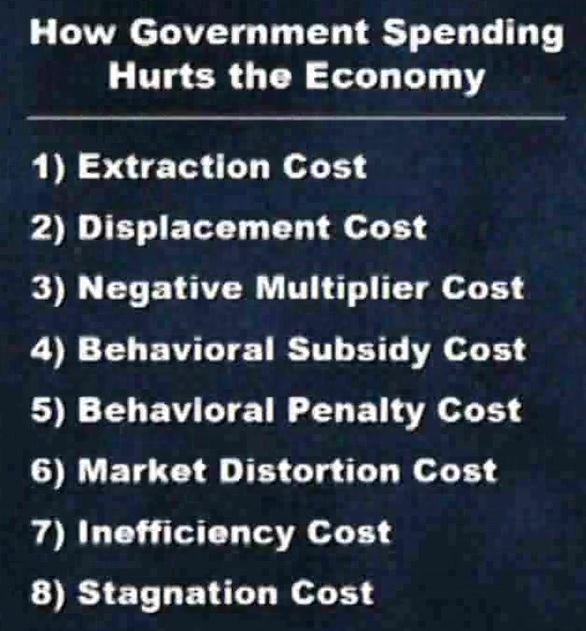
While it’s true that every penny in the budget requires money to be diverted from the economy’s productive sector, not all government spending is created equal when considering the impact on growth.
Some types of spending, such as redistribution programs, are doubly harmful to prosperity. The economy is first hurt by the taxes needed to finance the programs, and then the economy is hurt because the programs give people incentives to rely on the government rather than work.
Other types of spending, however, require a cost-benefit analysis.
Consider the case of education. There are costs when politicians take money out of the private sector to finance education, but there are benefits from having an educated population.
That doesn’t tell us how much to spend, of course, and it also overlooks equally important questions such as whether the money will generate better results if used to finance a government monopoly or a choice-based system. But I’m simply making the point that there are costs and benefits.
Now let’s apply this analysis to government-financed research and development, which involves everything from the National Science Foundation to NASA, and from global warming grants to weapons development for the Pentagon.
Proponents argue that these are “public goods,” meaning that they produce economy-wide benefits and can only be handled by government.
But that view seems to be based in large part on faith rather than evidence.
Matt Ridley, the former science editor for the Economist, wrote about this topic for the Wall Street Journal back in 2015. If you only have time to read one article, this might be the best choice.
He starts by explaining that most breakthroughs come from private initiative.
Most technological breakthroughs come from technologists tinkering, not from researchers chasing hypotheses. Heretical as it may sound, “basic science” isn’t nearly as productive of new inventions as we tend to think. …Politicians believe that innovation can be turned on and off like a tap: You start with pure scientific insights, which then get translated into applied science, which in turn become useful technology.So what you must do, as a patriotic legislator, is to ensure that there is a ready supply of money to scientists on the top floor of their ivory towers, and lo and behold, technology will come clanking out of the pipe at the bottom of the tower. …this story…so prevalent in the world of science and politics—that science drives innovation, which drives commerce—is mostly wrong. It misunderstands where innovation comes from. Indeed, it generally gets it backward. …It is no accident that astronomy blossomed in the wake of the age of exploration. The steam engine owed almost nothing to the science of thermodynamics, but the science of thermodynamics owed almost everything to the steam engine. …Technological advances are driven by practical men who tinkered until they had better machines; abstract scientific rumination is the last thing they do.
Government funding, by contrast, does not have a good track record.
It follows that there is less need for government to fund science: Industry will do this itself. Having made innovations, it will then pay for research into the principles behind them. Having invented the steam engine, it will pay for thermodynamics. …For more than a half century, it has been an article of faith that science would not get funded if government did not do it, and economic growth would not happen if science did not get funded by the taxpayer. …there is still no empirical demonstration of the need for public funding of research and that the historical record suggests the opposite. After all, in the late 19th and early 20th centuries, the U.S. and Britain made huge contributions to science with negligible public funding, while Germany and France, with hefty public funding, achieved no greater results either in science or in economics. …public funding of research almost certainly crowds out private funding. That is to say, if the government spends money on the wrong kind of science, it tends to stop researchers from working on the right kind of science.
Ridley doesn’t claim there are no benefits. Instead, he makes the more practical point that government R&D has high costs with relatively low benefits.
…the argument for public funding of science rests on a list of the discoveries made with public funds, from the Internet (defense science in the U.S.) to the Higgs boson (particle physics at CERN in Switzerland). But that is highly misleading. Given that government has funded science munificently from its huge tax take, it would be odd if it had not found out something. This tells us nothing about what would have been discovered by alternative funding arrangements. And we can never know what discoveries were not made because government funding crowded out philanthropic and commercial funding.
Ridley’s analysis is backed up by scholarly research.
Here are some excerpts from a study by the Bureau of Labor Statistics.
This paper reviews the literature on R&D to provide guidelines for recent efforts to include R&D in the national income accounts. …The overall rate of return to R&D is very large, perhaps 25 percent as a private return and a total of 65 percent for social returns. However, these returns apply only to privately financed R&D in industry.Returns to many forms of publicly financed R&D are near zero. …On the basis of the evidence considered, privately financed R&D in industry should be treated as an investment and included in the relevant R&D stock. Returns to R&D are very high, but these high returns accrue only to privately financed R&D. Many elements of university and government research have very low returns, overwhelmingly contribute to economic growth only indirectly, if at all, and do not belong in investment.
And here are some passages from a 2003 report by the Organization for Economic Cooperation and Development.
…the pace of accumulation of physical and human capital plays a major role in the growth process. Most notably, the estimated impact of increases in human capital (as measured by average years in education) on output suggests high returns to investment in education. The results also point to a marked positive effect of business-sector R&D, while the analysis could find no clear-cut relationship between public R&D activities and growth…there are significant differences in the returns of R&D expenditure across sectors, and the private sector may be better able to channel resources towards high return R&D activities …regressions including separate variables for business-performed R&D and that performed by other institutions (mainly public research institutes) suggest that it is the former that drives the positive association between total R&D intensity and output growth. …The negative results for public R&D are surprising…they suggest publicly-performed R&D crowds out resources that could be alternatively used by the private sector, including private R&D. There is some evidence of this effect in studies.
Terence Kealey’s 2017 testimony to the Senate’s Homeland Security and Governmental Affairs Committee also is worth perusing.
…the British Industrial Revolution of the 19th century, like the British Agricultural Revolution of the 18th century, was laissez faire… The US was laissez faire in science between 1776 and 1940, yet by 1890 it had overtaken the UK to become the richest industrialized country in the world. Meanwhile those European countries – including France and the German states – whose governments invested most in science failed to converge on the UK or the US, let alone overtake them. …as shown by the successes of the Wright brothers, Thomas Edison and Nikola Tesla, to say nothing of the great industries of Pittsburgh and Detroit – US science, technology and industry flourished. …since 1830 the long-term rates of GDP per capita and TFP (total factor productivity) growth in the US have been steady (with GDP per capita, for example, growing at just under 2% per annum) and the inauguration of the federal funding for science had the following effect on long-term rates of GDP per capita and TFP growth: none.
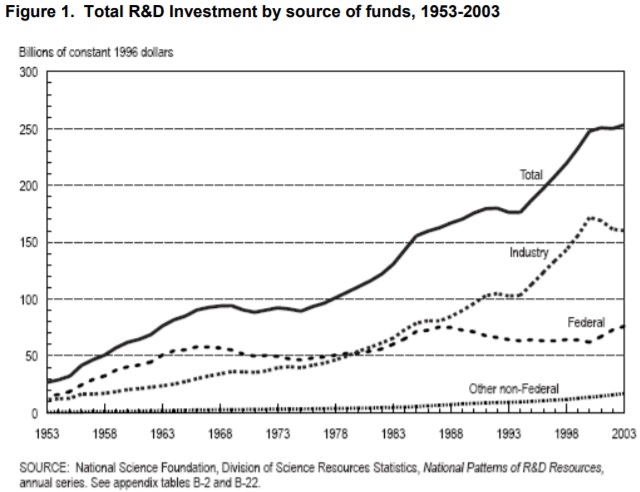
The good news, relatively speaking, is that the private sector now plays a very dominant role in R&D expenditures.
This was not always the case. This chart, from Iain Murray’s research, shows that government played the dominant role in the 1950s, 1960s, and 1970s.
Let’s close with two real-world examples of how private R&D drives progress.
First, here are some excerpts from a 2017 column in the Wall Street Journal by Tom Stossel.
He explains that progress in curing and treating diseases comes from the private sector rather than the National Institutes of Health.
The assumption seems to be that the root of all medical innovation is university research, primarily funded by federal grants. This is mistaken. The private economy, not the government, actually discovers and develops most of the insights and products that advance health. The history of medical progress supports this conclusion. …innovation came from physicians in universities and research institutes that were supported by philanthropy.Private industry provided chemicals used in the studies and then manufactured therapies on a mass scale. …Practical innovation requires incremental efforts. But the reviewers of grant applications for medical research are obsessed with theory-based science and novelty for novelty’s sake. …Academic administrators, operating under the delusion that government largess would grow forever, have become entitled. …By contrast, private investment in medicine has kept pace with the aging population and is the principal engine for advancement. More than 80% of new drug approvals originate from work solely performed in private companies. …Great advances in health care have been made, but there are still important challenges, from obesity to dementia. One step toward addressing them would be for Washington to adopt the right approach to medical innovation—and to stop simply throwing money at the current inefficient system.
Second, here’s more of Terence Kealey’s work, in this case some commentary from last year that focuses on space exploration.
…all powered flight started in the private sector, for the Wright brothers were not government‐funded researchers. …A team of full‐time government‐funded researchers, operating out of the Smithsonian Institution, were then also trying to launch heavier‐than‐air machines. Even though the Smithsonian team enjoyed a budget that was a hundred times larger than that of the Wrights, its prototypes always crashed. Airplanes are but one of the many gifts that private research and development has bestowed on humanity.As are space rockets. The great space‐rocket pioneer was Robert “Moonie” Goddard (1882–1945), a professor at Clark College in Massachusetts. Funded with $100,000 from the Guggenheims and $10,000 from the Hodgkins Fund, the projects that resulted in his achievements were extraordinary: By 1925 he had created the first liquid‐fueled rocket. By 1932 he had developed a gyro stabilizer… Elon Musk’s company, SpaceX,…doing something — namely, putting humans into orbit — that previously had been achieved only by governments. NASA could now be seen as only a temporary interruption of a process that had started in the private sector. …If there is a science that proves the resilience of the private sector, it is space science, including, of course, astronomy. Time again, what at the time was the largest optical telescope in the world was privately funded… Radio astronomy, moreover, was actually born in the private sector, when Karl Jansky of Bell Labs discovered in 1931 that stars emitted radio waves. Grote Reber, a radio engineer, built the first radio telescope, a parabolic dish reflector in his backyard in Chicago in 1937.
The purpose of this column isn’t to argue that there shouldn’t be any government-funded research.
But “better than” other types of government spending is not the same as “better than” leaving the money in the economy’s productive sector.
The bottom line is that there simply isn’t any evidence that government-financed R&D generally passes the cost-benefit test described at the start of the column.
Which means that we should be very skeptical when politicians and interest groups plead for more funding (needless to say, evidence tells us we should be skeptical of any requests for bigger government, not just those for more R&D spending).
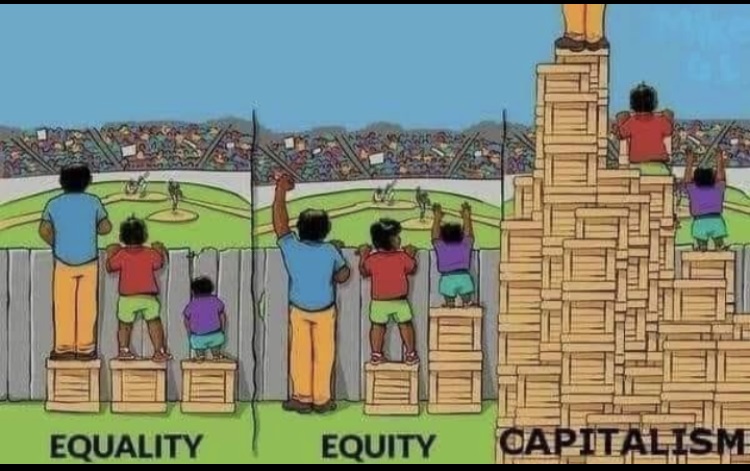
Here’s an oft-used meme illustrating this argument that fairness is only possible with “equality of outcomes.”
I admit this is a clever image, but only in theory.
If you look at the societies that actually have followed Marx’s dictum of “From each according to his ability, to each according to his needs,” you find misery and destitution (nations such as Cuba, North Korea, and Venezuela today, and countries such as Maoist China and the Soviet Union in the past).
In other words, there may be inequality in capitalism, but only in the sense that some people get richer faster than other people get richer.
If we mixed the final two memes, we would get something akin to the right side of this image, which shows equal misery under socialism and unequal prosperity under capitalism (hat tip to Winston Churchill).
The bottom line is that if we care about the well being of the less fortunate, the policy goal should be free markets and limited government.
Which was the entire point of my three-part series (here, here, and here) on poverty and inequality.
P.S. Here’s a story from Sweden about what happens when the ideology of equality produces bizarre choices.
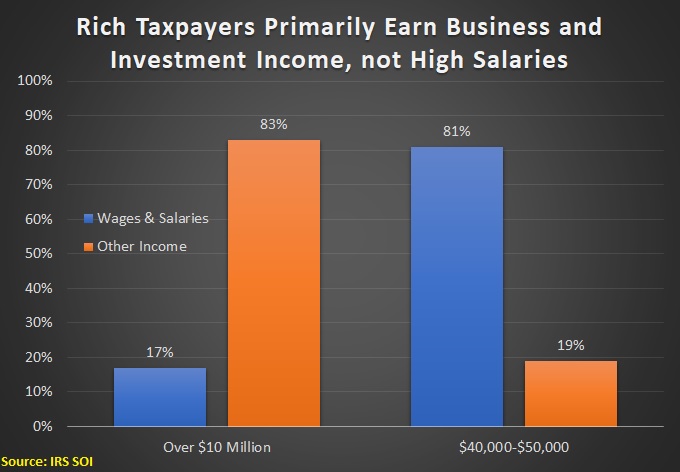
But the main goal of that column was to explain that the internal revenue code already is heavily weighted against investors, entrepreneurs, business owners and other upper-income taxpayers.
And to underscore that point, I shared two charts from Brian Riedl’s chartbook to show that the “rich” are now paying a much larger share of the tax burden – notwithstanding the Reagan tax cuts, Bush tax cuts, and Trump tax cuts – than they were 40 years ago.
Not only that, but the United States has a tax system that is more “progressive” than all other developed nations (all of whom also impose heavy tax burdens on upper-income taxpayers, but differ from the United States in that they also pillage lower-income and middle-class residents).
In other words, Biden’s class-warfare tax plan is bad policy.
Today’s column, by contrast, will point out that his tax increases are impractical. Simply stated, they won’t collect much revenue because people change their behavior when incentives to earn and report income are altered.
This is especially true when looking at upper-income taxpayers who – compared to the rest of us – have much greater ability to change the timing, level, and composition of their income.
This helps to explain why rich people paid five times as much tax to the IRS during the 1980s when Reagan slashed the top tax rate from 70 percent to 28 percent.
When writing about this topic, I normally use the Laffer Curve to help people understand why simplistic assumptions about tax policy are wrong (that you can double tax revenue by doubling tax rates, for instance). And I point out that even folks way on the left, such as Paul Krugman, agree with this common-sense view (though it’s also worth noting that some people on the right discredit the concept by making silly assertions that “all tax cuts pay for themselves”).
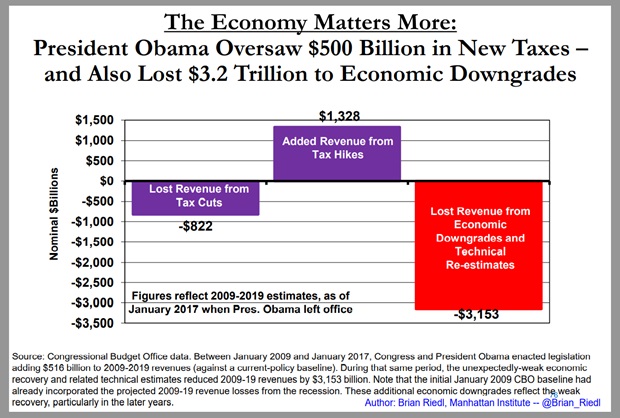
But instead of showing the curve again, I want to go back to Brian Riedl’s chartbook and review his data on of revenue changes during the eight years of the Obama Administration.
It shows that Obama technically cut taxes by $822 billion (as further explained in the postscript, most of that occurred when some of the Bush tax cuts were made permanent by the “fiscal cliff” deal in 2012) and raised taxes by $1.32 trillion (most of that occurred as a result of the Obamacare legislation).
If we do the math, that means Obama imposed a cumulative net tax increase of about $510 billion during his eight years in office
But, if you look at the red bar on the chart, you’ll see that the government didn’t wind up with more money because of what the number crunchers refer to as “economic and technical reestimates.”
Indeed, those reestimates resulted in more than $3.1 trillion of lost revenue during the Obama years.
I don’t want the politicians and bureaucrats in Washington to have more tax revenue, but I obviously don’t like it when tax revenues shrink simply because the economy is stagnant and people have less taxable income.
Yet that’s precisely what we got during the Obama years.
To be sure, it would be inaccurate to assert that revenues declined solely because of Obama’s tax increase. There were many other bad policies that also contributed to taxable income falling short of projections.
Heck, maybe there was simply some bad luck as well.
But even if we add lots of caveats, the inescapable conclusion is that it’s not a good idea to adopt policies – such as class-warfare tax rates – that discourage people from earning and reporting taxable income.
The bottom line is that we should hope Biden’s proposed tax increases die a quick death.
P.S. The “fiscal cliff” was the term used to describe the scheduled expiration of the 2001 and 2003 Bush tax cuts. According to the way budget data is measured in Washington, extending some of those provisions counted as a tax cut even though the practical impact was to protect people from a tax increase.
P.P.S. Even though Biden absurdly asserted that paying higher taxes is “patriotic,” it’s worth pointing out that he engaged in very aggressive tax avoidance to protect his family’s money.
The good news, as I wrote earlier this year, is that he probably isn’t serious about some of his worst ideas.
Biden is a statist, but not overly ideological. His support for bigger government is largely a strategy of catering to the various interest groups that dominate the Democratic Party. The good news is that he’s an incrementalist and won’t aggressively push for a horrifying FDR-style agenda if he gets to the White House.
But what if Joe Biden’s health deteriorates and Kamala Harris – sooner or later – winds up in charge?
And it doesn’t appear that being Biden’s choice for Vice President has led her to moderate her views. Consider this campaign ad, where she openly asserted that “equitable treatment means we all end up at the same place.”
The notion that we should strive for equality of outcomes rather than equality of opportunity is horrifying.
For all intents and purposes,Harris has embraced a harsh version of redistributionism where everyone above average is punished and everyone below average is rewarded.
This goes way beyond a safety net and it’s definitely a recipe for economic misery since people on both sides of the equationhave less incentive to be productive.
I’m not the only one to be taken aback by Harris’ dogmatic leftism.
Robby Soave, writing for Reason, is very critical of her radical outlook.
Harris gives voice to a leftist-progressive narrative about the importance of equity—equal outcomes—rather than mere equality before the law. …Harris contrasted equal treatment—all people getting the same thing—with equitable treatment,which means “we all end up at the same place.” …This may seem like a trivial difference, but when it comes to public policy, the difference matters. A government shouldbe obligated to treat all citizens equally, giving them the same access to civil rights and liberties like voting, marriage, religious freedom, and gun ownership. …A mandate to foster equity, though, would give the government power to violate these rights in order to achieve identical social results for all people.
And, in a column for National Review, Brad Polumbo expresses similar reservations about her views.
Whether she embraces the label “socialist” or not, Harris’s stated agenda and Senate record both reveal her to be positioned a long way to the left on matters of economic policy. From health care to the environment to housing, Harris thinks the answer to almost every problem we face is simply more government and more taxpayer money — raising taxes and further indebting future generations in the process.…Harris…supports an astounding $40 trillion in new spending over the next decade. In a sign of just how far left the Democratic Party has shifted on economics, Harris backs more than 20 times as much spending as Hillary Clinton proposed in 2016. …And this is not just a matter of spending. During her failed presidential campaign, Harris supported a federal-government takeover of health care… The senator jumped on the “Green New Deal” bandwagon as well. She co-sponsored the Green New Deal resolution in the Senate that called for a “new national, social, industrial, and economic mobilization on a scale not seen since World War II and the New Deal era.” …she supports enacting price controls on housing across the country. …The left-wing group Progressive Punch analyzed Harris’s voting record and found that she is the fourth-most liberal senator, more liberal even than Massachusetts senator Elizabeth Warren. Similarly, the nonpartisan organization GovTrack.us deemed Harris the furthest-left member of the Senate for the 2019 legislative year. (Spoiler alert: If your voting record is to the left of Bernie Sanders, you might be a socialist.)
To be fair, Harris is simply a politician, so we have no idea what she really believes. Her hard-left agenda might simply be her way of appealing to Democratic voters, much as Republicans who run for president suddenly decide they support big tax cuts and sweeping tax reform.
But whether she’s sincere or insincere, it’s troubling that she actually says it’s the role of government to make sure we all “end up at the same place.”
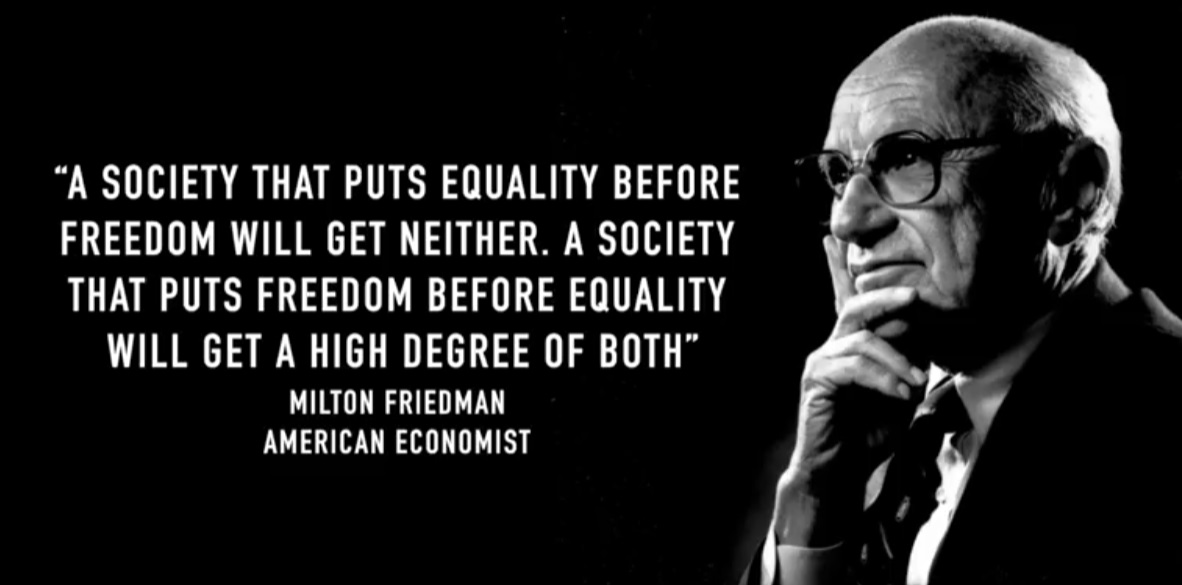
Let’s close with a video clip from Milton Friedman. At the risk of understatement, he has a different perspective than Ms. Harris.
Since we highlighted Harris’ key quote, let’s also highlight the key quote from Friedman.
Amen.
P.S. It appears Republicans will hold the Senate, which presumably (hopefully?) means that any radical proposals would be dead on arrival, regardless of whether they’re proposed by Biden or Harris.
After Barack Obama took office (and especially after he was reelected), there was a big uptick in the number of rich people who chose to emigrate from the United States.
There are many reasons wealthy people choose to move from one nation to another, but Obama’s embrace of class-warfare tax policy (including FATCA) was seen as a big factor.
Joe Biden’s tax agenda is significantly more punitive than Obama’s, so we may see something similar happen if he wins the 2020 election.
Given the economic importance of innovators, entrepreneurs, and inventors, this would be not be good news for the American economy.
The New York Timesreported late last year that the United States could be shooting itself in the foot by discouraging wealthy residents.
…a different group of Americans say they are considering leaving — people of both parties who would be hit by the wealth tax… Wealthy Americans often leave high-tax states like New York and California for lower-tax ones like Florida and Texas. But renouncing citizenship is a far more permanent, costly and complicated proposition. …“America’s the most attractive destination for capital, entrepreneurs and people wanting to get a great education,” said Reaz H. Jafri, a partner and head of the immigration practice at Withers, an international law firm. “But in today’s world, when you have other economic centers of excellence — like Singapore, Switzerland and London — people don’t view the U.S. as the only place to be.” …now, the price may be right to leave. While the cost of expatriating varies depending on a person’s assets, the wealthiest are betting that if a Democrat wins…, leaving now means a lower exit tax. …The wealthy who are considering renouncing their citizenship fear a wealth tax less than the possibility that the tax on capital gains could be raised to the ordinary income tax rate, effectively doubling what a wealthy person would pay… When Eduardo Saverin, a founder of Facebook…renounced his United States citizenship shortly before the social network went public, …several estimates said that renouncing his citizenship…saved him $700 million in taxes.
Here are some excerpts from a 2017 Bloomberg story.
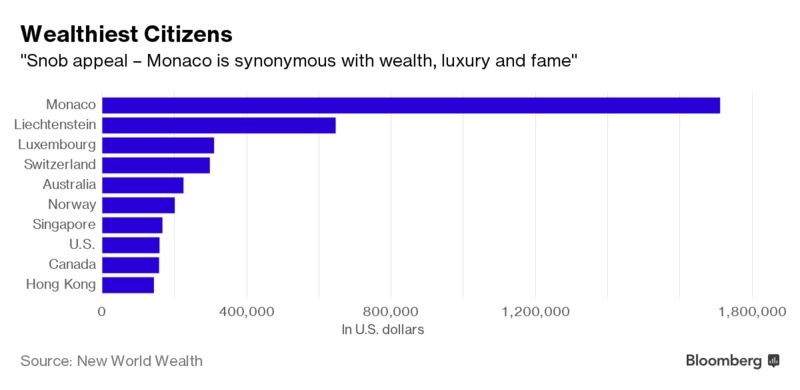
Australia is luring increasing numbers of global millionaires, helping make it one of the fastest growing wealthy nations in the world… Over the past decade, total wealth held in Australia has risen by 85 percent compared to 30 percent in the U.S. and 28 percent in the U.K… As a result, the average Australian is now significantly wealthier than the average American or Briton. …Given its relatively small population, Australia also makes an appearance on a list of average wealth per person. This one is, however, dominated by small tax havens.
Here’s one of the charts from the story.
As you can see, Australia is doing very well, though the small tax havens like Monaco are world leaders.
I’m mystified, however, that the Cayman Islands isn’t listed.
But I’m digressing.
Let’s get back to our main topic. It’s worth noting that even Greece is seeking to attract rich foreigners.
The new tax law is aimed at attracting fresh revenues into the country’s state coffers – mainly from foreigners as well as Greeks who are taxed abroad – by relocating their tax domicile to Greece, as it tries to woo “high-net-worth individuals” to the Greek tax register.The non-dom model provides for revenues obtained abroad to be taxed at a flat amount… Having these foreigners stay in Greece for at least 183 days a year, as the law requires, will also entail expenditure on accommodation and everyday costs that will be added to the Greek economy. …most eligible foreigners will be able to considerably lighten their tax burden if they relocate to Greece…nevertheless, the amount of 500,000 euros’ worth of investment in Greece required of foreigners and the annual flat tax of 100,000 euros demanded (plus 20,000 euros per family member) may keep many of them away.
The system is too restrictive, but it will make the beleaguered nation an attractive destination for some rich people. After all, they don’t even have to pay a flat tax, just a flat fee.
Italy has enjoyed some success with a similar regime to entice millionaires.
Last but not least, an article published last year has some fascinating details on the where rich people move and why they move.
The world’s wealthiest people are also the most mobile. High net worth individuals (HNWIs) – persons with wealth over US$1 million – may decide to pick up and move for a number of reasons. In some cases they are attracted by jurisdictions with more favorable tax laws… Unlike the middle class, wealthy citizens have the means to pick up and leave when things start to sideways in their home country. An uptick in HNWI migration from a country can often be a signal of negative economic or societal factors influencing a country. …Time-honored locations – such as Switzerland and the Cayman Islands – continue to attract the world’s wealthy, but no country is experiencing HNWI inflows quite like Australia. …The country has a robust economy, and is perceived as being a safe place to raise a family. Even better, Australia has no inheritance tax
Here’s a map from the article.
The good news is that the United States is attracting more millionaires than it’s losing (perhaps because of the EB-5 program).
The bad news is that this ratio could flip after the election. Indeed, it may already be happening even though recent data on expatriation paints a rosy picture.
The bottom line is that the United States should be competing to attract millionaires, not repel them. Assuming, of course, politicians care about jobs and prosperity for the rest of the population.
P.S. American politicians, copying laws normally imposed by the world’s most loathsome regimes, have imposed an “exit tax” so they can grab extra cash from rich people who choose to become citizens elsewhere.
P.P.S. I’ve argued that Australia is a good place to emigrate even for those of us who aren’t rich.
While acknowledging that Social Security and Medicare also are in desperate need of modernization, I wrote that Medicaid reformshould be the first priority.
But I’d be happy if we made progress on any type of entitlement reform, so I don’t think there are right or wrong answers to this kind of question.
We have the same type of question this week. A reader sent an email to ask “Which federal department should be abolished first?”
I guess this is what is meant when people talk about a target-rich environment. We have an abundance of candidates:
Simply stated, there is no legitimate argument for HUD. And I think there would be the least political resistance.
As with the answer to the question about entitlements, this is a judgment call. I’d be happy to be proven wrong if it meant that politicians were aggressively going after another department. Anything that reduces the burden of government spending is a step in the right direction
I identified four heroes from the “Battle of Ideas” video I shared in late August – Friedrich Hayek, Milton Friedman, Ronald Reagan, and Margaret Thatcher. Here’s one of those heroes, Milton Friedman, explaining what’s needed to control big government.
Libertarians and others are often torn about school choice. They may wish to see the government schooling monopoly weakened, but they may resist supporting choice mechanisms, like vouchers and education savings accounts, because they don’t go far enough. Indeed, most current choice programs continue to rely on taxpayer funding of education and don’t address the underlying compulsory nature of elementary and secondary schooling.
Skeptics may also have legitimate fears that taxpayer-funded education choice programs will lead to over-regulation of previously independent and parochial schooling options, making all schooling mirror compulsory mass schooling, with no substantive variation.
Friedman Challenged Compulsory Schooling Laws
Milton Friedman had these same concerns. The Nobel prize-winning economist is widely considered to be the one to popularize the idea of vouchers and school choice beginning with his 1955 paper, “The Role of Government in Education.” His vision continues to be realized through the important work of EdChoice, formerly the Friedman Foundation for Education Choice, that Friedman and his economist wife, Rose, founded in 1996.
July 31 is Milton Friedman’s birthday. He died in 2006 at the age of 94, but his ideas continue to have an impact, particularly in education policy.
Friedman saw vouchers and other choice programs as half-measures. He recognized the larger problems of taxpayer funding and compulsion, but saw vouchers as an important starting point in allowing parents to regain control of their children’s education. In their popular book, Free To Choose, first published in 1980, the Friedmans wrote:
We regard the voucher plan as a partial solution because it affects neither the financing of schooling nor the compulsory attendance laws. We favor going much farther. (p.161)
They continued:
The compulsory attendance laws are the justification for government control over the standards of private schools. But it is far from clear that there is any justification for the compulsory attendance laws themselves. (p. 162)
The Friedmans admitted that their “own views on this have changed over time,” as they realized that “compulsory attendance at schools is not necessary to achieve that minimum standard of literacy and knowledge,” and that “schooling was well-nigh universal in the United States before either compulsory attendance or government financing of schooling existed. Like most laws, compulsory attendance laws have costs as well as benefits. We no longer believe the benefits justify the costs.” (pp. 162-3)
Still, they felt that vouchers would be the essential starting point toward chipping away at monopoly mass schooling by putting parents back in charge. School choice, in other words, would be a necessary but not sufficient policy approach toward addressing the underlying issue of government control of education.
Vouchers as a First Step
In their book, the Friedmans presented the potential outcomes of their proposed voucher plan, which would give parents access to some or all of the average per-pupil expenditures of a child enrolled in public school. They believed that vouchers would help create a more competitive education market, encouraging education entrepreneurship. They felt that parents would be more empowered with greater control over their children’s education and have a stronger desire to contribute some of their own money toward education. They asserted that in many places “the public school has fostered residential stratification, by tying the kind and cost of schooling to residential location” and suggested that voucher programs would lead to increased integration and heterogeneity. (pp. 166-7)
To the critics who said, and still say, that school choice programs would destroy the public schools, the Friedmans replied that these critics fail to
explain why, if the public school system is doing such a splendid job, it needs to fear competition from nongovernmental, competitive schools or, if it isn’t, why anyone should object to its “destruction.” (p. 170)
What I appreciate most about the Friedmans discussion of vouchers and the promise of school choice is their unrelenting support of parents. They believed that parents, not government bureaucrats and intellectuals, know what is best for their children’s education and well-being and are fully capable of choosing wisely for their children—when they have the opportunity to do so.
They wrote:
Parents generally have both greater interest in their children’s schooling and more intimate knowledge of their capacities and needs than anyone else. Social reformers, and educational reformers in particular, often self-righteously take for granted that parents, especially those who are poor and have little education themselves, have little interest in their children’s education and no competence to choose for them. That is a gratuitous insult. Such parents have frequently had limited opportunity to choose. However, U.S. history has demonstrated that, given the opportunity, they have often been willing to sacrifice a great deal, and have done so wisely, for their children’s welfare. (p. 160).
Today, school voucher programs exist in 15 states plus the District of Columbia. These programs have consistently shown that when parents are given the choice to opt-out of an assigned district school, many will take advantage of the opportunity. In Washington, D.C., low-income parents who win a voucher lottery send their children to private schools.
The most recent three-year federal evaluationof voucher program participants found that while student academic achievement was comparable to achievement for non-voucher students remaining in public schools, there were statistically significant improvements in other important areas. For instance, voucher participants had lower rates of chronic absenteeism than the control groups, as well as higher student satisfaction scores. There were also tremendous cost-savings.
In Wisconsin, the Milwaukee Parental Choice Program has served over 28,000 low-income students attending 129 participating private schools.
According to Corey DeAngelis, Director of School Choice at the Reason Foundation and a prolific researcher on the topic, the recent analysis of the D.C. voucher program “reveals that private schools produce the same academic outcomes for only a third of the cost of the public schools. In other words, school choice is a great investment.”
In Wisconsin, the Milwaukee Parental Choice Program was created in 1990 and is the nation’s oldest voucher program. It currently serves over 28,000 low-income students attending 129 participating private schools. Like the D.C. voucher program, data on test scores of Milwaukee voucher students show similar results to public school students, but non-academic results are promising.
Increased Access and Decreased Crime
Recent research found voucher recipients had lower crime rates and lower incidences of unplanned pregnancies in young adulthood. On his birthday, let’s celebrate Milton Friedman’s vision of enabling parents, not government, to be in control of a child’s education.
According to Howard Fuller, an education professor at Marquette University, founder of the Black Alliance for Educational Options, and one of the developers of the Milwaukee voucher program, the key is parent empowerment—particularly for low-income minority families.
In an interview with NPR, Fuller said: “What I’m saying to you is that there are thousands of black children whose lives are much better today because of the Milwaukee parental choice program,” he says. “They were able to access better schools than they would have without a voucher.”
Putting parents back in charge of their child’s education through school choice measures was Milton Friedman’s goal. It was not his ultimate goal, as it would not fully address the funding and compulsion components of government schooling; but it was, and remains, an important first step. As the Friedmans wrote in Free To Choose:
The strong American tradition of voluntary action has provided many excellent examples that demonstrate what can be done when parents have greater choice. (p. 159).
On his birthday, let’s celebrate Milton Friedman’s vision of enabling parents, not government, to be in control of a child’s education.
Michael Harrington: If you don’t have the expertise, the knowledge technology today, you’re out of the debate. And I think that we have to democratize information and government as well as the economy and society. FRIEDMAN: I am sorry to say Michael Harrington’s solution is not a solution to it. He wants minority rule, I […]
By Everette Hatcher III | Posted in Current Events, Milton Friedman | Edit | Comments (0)
PETERSON: Well, let me ask you how you would cope with this problem, Dr. Friedman. The people decided that they wanted cool air, and there was tremendous need, and so we built a huge industry, the air conditioning industry, hundreds of thousands of jobs, tremendous earnings opportunities and nearly all of us now have air […]
By Everette Hatcher III | Posted in Current Events, Milton Friedman | Edit | Comments (0)
Part 5 Milton Friedman: I do not believe it’s proper to put the situation in terms of industrialist versus government. On the contrary, one of the reasons why I am in favor of less government is because when you have more government industrialists take it over, and the two together form a coalition against the ordinary […]
By Everette Hatcher III | Posted in Current Events, Milton Friedman | Edit | Comments (0)
The fundamental principal of the free society is voluntary cooperation. The economic market, buying and selling, is one example. But it’s only one example. Voluntary cooperation is far broader than that. To take an example that at first sight seems about as far away as you can get __ the language we speak; the words […]
By Everette Hatcher III | Posted in Current Events, Milton Friedman | Edit | Comments (0)
_________________________ Pt3 Nowadays there’s a considerable amount of traffic at this border. People cross a little more freely than they use to. Many people from Hong Kong trade in China and the market has helped bring the two countries closer together, but the barriers between them are still very real. On this side […]
By Everette Hatcher III | Posted in Current Events, Milton Friedman | Edit | Comments (0)
Aside from its harbor, the only other important resource of Hong Kong is people __ over 4_ million of them. Like America a century ago, Hong Kong in the past few decades has been a haven for people who sought the freedom to make the most of their own abilities. Many of them are […]
By Everette Hatcher III | Posted in Current Events, Milton Friedman | Edit | Comments (0)
“FREE TO CHOOSE” 1: The Power of the Market (Milton Friedman) Free to Choose ^ | 1980 | Milton Friedman Posted on Monday, July 17, 2006 4:20:46 PM by Choose Ye This Day FREE TO CHOOSE: The Power of the Market Friedman: Once all of this was a swamp, covered with forest. The Canarce Indians […]
If you would like to see the first three episodes on inflation in Milton Friedman’s film series “Free to Choose” then go to a previous post I did. Ep. 9 – How to Cure Inflation [4/7]. Milton Friedman’s Free to Choose (1980) Uploaded by investbligurucom on Jun 16, 2010 While many people have a fairly […]
Charlie Rose interview of Milton Friedman My favorite economist: Milton Friedman : A Great Champion of Liberty by V. Sundaram Milton Friedman, the Nobel Prize-winning economist who advocated an unfettered free market and had the ear of three US Presidents – Nixon, Ford and Reagan – died last Thursday (16 November, 2006 ) in San Francisco […]
By Everette Hatcher III | Posted in Milton Friedman | Edit | Comments (0)
Stearns Speaks on House Floor in Support of Balanced Budget Amendment Uploaded by RepCliffStearns on Nov 18, 2011 Speaking on House floor in support of Balanced Budget Resolution, 11/18/2011 ___________ Below are some of the main proposals of Milton Friedman. I highly respected his work. David J. Theroux said this about Milton Friedman’s view concerning […]
By Everette Hatcher III | Posted in Milton Friedman | Edit | Comments (0)
Milton Friedman: Free To Choose – The Failure Of Socialism With Ronald Reagan (Full) Published on Mar 19, 2012 by NoNationalityNeeded Milton Friedman’s writings affected me greatly when I first discovered them and I wanted to share with you. We must not head down the path of socialism like Greece has done. Abstract: Ronald Reagan […]
By Everette Hatcher III | Posted in Milton Friedman, President Obama | Edit | Comments (1)
What a great defense of Milton Friedman!!!! Defaming Milton Friedman by Johan Norberg This article appeared in Reason Online on September 26, 2008 PRINT PAGE CITE THIS Sans Serif Serif Share with your friends: ShareThis In the future, if you tell a student or a journalist that you favor free markets and limited government, there is […]
Office of Barack and Michelle Obama P.O. Box 91000 Washington, DC 20066
Dear President Obama,
I wrote you over 700 letters while you were President and I mailed them to the White House and also published them on my blog http://www.thedailyhatch.org .I received several letters back from your staff and I wanted to thank you for those letters.
I have been reading your autobiography A PROMISED LAND and I have been enjoying it.
Let me make a few comments on it, and here is the first quote of yours I want to comment on:
But with that came a corollary lesson: an awareness of what we risked when our actions failed to live up to our image and our ideals, the anger and resentment this could breed, the damage that was done. When I heard Indonesians talk about the hundreds of thousands slaughtered in a coup—widely believed to have CIA backing—that had brought a military dictatorship to power in 1967, or listened to Latin American environmental activists detailing how U.S. companies were befouling their countryside, or commiserated with Indian American or Pakistani American friends as they chronicled the countless times that they’d been pulled aside for “random” searches at airports since 9/11, I felt America’s defenses weakening, saw chinks in the armor that I was sure over time made our country less safe. That dual vision, as much as my skin color, distinguished me from previous presidents. For my supporters, it was a defining foreign policy strength, enabling me to amplify America’s influence around the world and anticipate problems that might arise from ill-considered policies. For my detractors, it was evidence of weakness, raising the possibility that I might hesitate to advance American interests because of a lack of conviction, or even divided loyalties. For some of my fellow citizens, it was far worse than that. Having the son of a black African with a Muslim name and socialist ideas ensconced in the White House with the full force of the U.S. government under his command was precisely the thing they wanted to be defended against.
Mike Gonzales rightly noted:
“Democracies,” he piously averred, “have to have the courage to acknowledge when we don’t live up to the ideals that we stand for; when we’ve been slow to speak out for human rights. And that was the case here.”
Yes, President Obama again found a way to blame the United States for another country’s problems, while visiting that country. He started taking “apology tours” early on in his administration, and he apparently means to keep the tradition going till the end.
—
It seems that you don’t take up for the USA like Reagan used to do!!!
At first it seemed a strange two-stop visit: Cuba and Argentina, two countries with marginal cultural commonality and poles apart economically or politically. However, President Obama’s visit to Havana cannot now be understood without his sojourn in Buenos Aires.
Here’s why: His words in Argentina cast his speech in Cuba in sharp relief. In Havana, the President offered but timid support for human rights in Cuba, devoid of any denunciation of flagrant abuses that continued to rage on the island even during his visit (and even swept up people he was supposed to meet). Yet in Buenos Aires, he strongly denounced an Argentine military dictatorship that dissolved more than three decades ago. The denunciation came, of course, with the requisite expressions of contrition over any possible U.S. involvement.
U.S. President Barack Obama and Cuban President[+]
“There’s been controversy about the policies of the United States early in those dark days, and the United States, when it reflects on what happened here, has to examine its own policies as well, and its own past,” said President Obama speaking at Buenos Aires’ Parque de la Memoria, during a wreath-laying ceremony to mark the 40th anniversary of the coup that brought the military to power.https://5ef6ae1fe849363880f4deeb03dd8dad.safeframe.googlesyndication.com/safeframe/1-0-37/html/container.html?n=0
“Democracies,” he piously averred, “have to have the courage to acknowledge when we don’t live up to the ideals that we stand for; when we’ve been slow to speak out for human rights. And that was the case here.”
Yes, President Obama again found a way to blame the United States for another country’s problems, while visiting that country. He started taking “apology tours” early on in his administration, and he apparently means to keep the tradition going till the end.
It began on April 3, 2009, a scant two months after taking office. President Obama rushed to France and spoke words that ring preposterous today:
In America, there’s a failure to appreciate Europe’s leading role in the world. Instead of celebrating your dynamic union and seeking to partner with you to meet common challenges, there have been times where America has shown arrogance and been dismissive, even derisive.
Liberals go berserk at suggestions that Obama goes on apology tours. CNN, PolitiFact, FactCheck and other liberal journalists writing under cover of “just the facts, ma’am” have all put these charges through their “rigorous” system and have concluded that President Obama does not apologize for America abroad.
You be the judge.
But worse—much worse—is that, in Cuba, Obama asked Cubans to forget not just what’s happened in the past, but what it is happening right now. In Argentina, however, he wants to remember. As former State Department official Jose Cardenas put it in a tweet,
In fact, on Cuba, the President seemed to be under the illusion that “reconciliation” is underway. He mentioned the word five times in his speech to the Cuban people.
In the first mention the President said, “I’m hopeful for the future because of the reconciliation that’s taking place among the Cuban people.” But as the son of a cultural anthropologist, Mr. Obama must have recognized he was speaking during Holy Week to a nation that though officially atheist has been reared on the traditions of Roman Catholicism, one of whose seven sacraments is that of reconciliation—which involves both confession and penance.
Neither, of course, is practiced by Cuba’s leaders. The government continues to deny the most fundamental human rights to the 11 million who have not been able to escape the island. Indeed, dissidents described to me how they were arrested, hit and threatened while Mr. Obama was in on his visit to Cuba.
Antonio Rodiles, one of the dissidents who met with Mr. Obama for almost two-hours, was beaten and arrested while Obama was in Cuba. Rodiles told me that the presidential visit had occasioned “a festival of repression.”
U.S. President Barack Obama and Argentinian[+]
The Argentine military dictatorship lasted seven years, from 1976 to 1983. During that time 9,000 people disappeared, according to the National Commission on the Disappeared, in a country that is today 41.4 million. The Commission further estimated the “real numbers to range between 10,000 and 30,000.” The dictatorship rose as a response to the Cuban-backed Montonero guerrilla movement in the 1970s and ended while Ronald Reagan was president. Since then, Argentina has had democratically elected governments.
Cuba’s military dictatorship has been in place since 1959 and has been run by only by two men, first Fidel Castro and now his brother Raul. They have taken a rich country and turned it into a pauperized command economy. The Cuba Archive Project, which meticulously records deaths and disappearances on the island, puts the number of dead so far at over 7,000, in a population that is now down to 11 million.
Maria Werlau, who runs the project, wrote in an email,
We only have numbers of cases we have documented. However, we estimated many more deaths especially at sea attempting to escape (some would have been murdered by Cuban Boarder Guard), and many unreported deaths of prisoners serving not strictly for political causes, a number we believe is quite high. Thus, there could be tens of thousands more such cases. Then, you’d have to add thousands of deaths caused by Cuba’s military interventions and sponsorship of subversion and terrorism worldwide. As a result, we´re talking hundreds of thousands.
As the Cuban American activist Mauricio Claver-Carone put it in a blog post Friday referring to one of the past Argentine dictators:
Would Obama have promoted U.S. hotel deals with Argentina’s military monopolies and General Videla’s family, in the same way as he’s doing today with Cuba’s military monopolies and General Castro’s family?
Of course not.
I am advising Sen. Ted Cruz, but the opinions in this post are mine, and do not necessarily correspond to those of Sen. Cruz.Get the best of Forbes to your inbox with the latest insights from experts across the globe.Mike GonzalezI am a senior fellow at the Center for International Studies at The Heritage Foundation.
Sincerely,
Everette Hatcher III, 13900 Cottontail Lane, Alexander, AR 72002, ph 501-920-5733 everettehatcher@gmail.com
President Obama c/o The White House 1600 Pennsylvania Avenue NW Washington, DC 20500 Dear Mr. President, I know that you receive 20,000 letters a day and that you actually read 10 of them every day. I really do respect you for trying to get a pulse on what is going on out here. There have […]By Everette Hatcher III | Posted in David Barton, Founding Fathers, President Obama | Edit |Comments (0)
There have been many articles written by evangelicals like me who fear that our founding fathers would not recognize our country today because secular humanism has rid our nation of spiritual roots. I am deeply troubled by the secular agenda of those who are at war with religion in our public life. Lillian Kwon quoted somebody […]By Everette Hatcher III | Posted in David Barton, Founding Fathers | Edit | Comments (0)
There have been many articles written by evangelicals like me who fear that our founding fathers would not recognize our country today because secular humanism has rid our nation of spiritual roots. I am deeply troubled by the secular agenda of those who are at war with religion in our public life. Lillian Kwon quoted somebody […]By Everette Hatcher III | Posted in David Barton, Founding Fathers | Edit | Comments (0)
There have been many articles written by evangelicals like me who fear that our founding fathers would not recognize our country today because secular humanism has rid our nation of spiritual roots. I am deeply troubled by the secular agenda of those who are at war with religion in our public life. Lillian Kwon quoted somebody […]By Everette Hatcher III | Posted in David Barton, Founding Fathers | Edit | Comments (0)
There have been many articles written by evangelicals like me who fear that our founding fathers would not recognize our country today because secular humanism has rid our nation of spiritual roots. I am deeply troubled by the secular agenda of those who are at war with religion in our public life. Lillian Kwon quoted somebody […]By Everette Hatcher III | Posted in David Barton, Founding Fathers | Edit | Comments (0)
There have been many articles written by evangelicals like me who fear that our founding fathers would not recognize our country today because secular humanism has rid our nation of spiritual roots. I am deeply troubled by the secular agenda of those who are at war with religion in our public life. Lillian Kwon quoted somebody […]By Everette Hatcher III | Posted in Founding Fathers | Edit | Comments (0)
President Obama Speaks at The Ohio State University Commencement Ceremony Published on May 5, 2013 President Obama delivers the commencement address at The Ohio State University. May 5, 2013. You can learn a lot about what President Obama thinks the founding fathers were all about from his recent speech at Ohio State. May 7, 2013, […]By Everette Hatcher III | Posted in Founding Fathers, President Obama | Edit | Comments (0)
Dr. C. Everett Koop with Bill Graham. Francis Schaeffer: “Whatever Happened to the Human Race” (Episode 4) THE BASIS FOR HUMAN DIGNITY Published on Oct 7, 2012 by AdamMetropolis The 45 minute video above is from the film series created from Francis Schaeffer’s book “Whatever Happened to the Human Race?” with Dr. C. Everett Koop. This […]By Everette Hatcher III | Posted in Founding Fathers, Francis Schaeffer, Prolife | Edit |Comments (1)
America’s Founding Fathers Deist or Christian? – David Barton 4/6 There have been many articles written by evangelicals like me who fear that our founding fathers would not recognize our country today because secular humanism has rid our nation of spiritual roots. I am deeply troubled by the secular agenda of those who are at […]By Everette Hatcher III | Posted in David Barton, Founding Fathers | Tagged governor of connecticut, john witherspoon, jonathan trumbull | Edit | Comments (1)
3 Of 5 / The Bible’s Influence In America / American Heritage Series / David Barton There were 55 gentlemen who put together the constitution and their church affliation is of public record. Greg Koukl notes: Members of the Constitutional Convention, the most influential group of men shaping the political foundations of our nation, were […]By Everette Hatcher III | Posted in Founding Fathers | Edit | Comments (0)
I do not think that John Quincy Adams was a founding father in the same sense that his father was. However, I do think he was involved in the early days of our government working with many of the founding fathers. Michele Bachmann got into another history-related tussle on ABC’s “Good Morning America” today, standing […]By Everette Hatcher III | Posted in David Barton, Founding Fathers | Edit | Comments (0)
I have gone back and forth and back and forth with many liberals on the Arkansas Times Blog on many issues such as abortion, human rights, welfare, poverty, gun control and issues dealing with popular culture. Here is another exchange I had with them a while back. My username at the Ark Times Blog is Saline […]By Everette Hatcher III | Posted in Arkansas Times, Francis Schaeffer, Prolife | Edit |Comments (0)
I truly believe that many of the problems we have today in the USA are due to the advancement of humanism in the last few decades in our society. Ronald Reagan appointed the evangelical Dr. C. Everett Koop to the position of Surgeon General in his administration. He partnered with Dr. Francis Schaeffer in making the […]By Everette Hatcher III | Posted in Adrian Rogers, Francis Schaeffer | Edit | Comments (0)
Francis Schaeffer: “Whatever Happened to the Human Race” (Episode 4) THE BASIS FOR HUMAN DIGNITY Published on Oct 7, 2012 by AdamMetropolis ____________ The 45 minute video above is from the film series created from Francis Schaeffer’s book “Whatever Happened to the Human Race?” with Dr. C. Everett Koop. This book really helped develop my political […]By Everette Hatcher III | Posted in Francis Schaeffer | Edit | Comments (0)
Ep. 4 – From Cradle to Grave [6/7]. Milton Friedman’s Free to Choose (1980)
February 23, 2021
President Biden c/o The White House
1600 Pennsylvania Avenue NW
Washington, DC 20500
Dear Mr. President,
Thank you for taking time to have your office try and get a pulse on what is going on out here in the country. I wanted to let you know what I think about the minimum wage increase you have proposed for the whole country and I wanted to quote Milton Friedman who you are familiar with and you made it clear in July that you didn’t care for his views!Let me challenge you to take a closer look at what he had to say!
All too often, the policy debates of today are simply refights of the battles of yesteryear. As a result, old arguments often retain a striking relevance.
In February 1973, economist Milton Friedman gave an interview to Playboy magazine. It was a wide ranging interview, covering topics from monetary policy to political philosophy. Friedman was an economist with a rare gift for translating technical arguments into clear prose (as you will find in his books Capitalism and Freedom and Free to Choose). His remarks on the minimum wage, as given in that interview, are startlingly contemporary.
PLAYBOY: How can you be sure that the minimum-wage law is the cause? FRIEDMAN: In 1956, I think, the minimum was raised from seventy-five cents to a dollar—a very substantial rise. In the early Fifties, the unemployment rate among male teenagers was about the same for blacks as for whites. Both were about eight percent when the over-all unemployment rate was about four percent. In the late Fifties, after the minimum-wage rate was raised from seventy-five cents to a dollar, the unemployment rate of black teenagers shot up from eight percent to something like 20 to 25 percent. For white teenagers, it shot up to something like 13 percent. From that day to this, the rates for both black and white teenagers have been higher than before 1956. When they start to decline, a new rise in the minimum-wage rate comes along and pushes them up again. The black teenage rate has been very much higher than the white teenage rate, for reasons that are highly regrettable and that we ought to be doing something about: Blacks get less schooling and are less skilled than whites. Therefore, the minimum-wage rate hits them particularly hard. I’ve often said the minimum-wage rate is the most anti-Negro law on the books.
PLAYBOY: Couldn’t those who are hurt by minimum-wage legislation be trained for more skilled jobs at better wages? FRIEDMAN: The minimum wage destroys the best kind of training programs we’ve ever had: on-the-job training. The main way people have risen in the labor force is by getting unskilled jobs and learning things. Not merely technical skills: They learn such things as being at a job on time, spending eight hours a day at a job rather than standing around on street corners, having a certain element of responsibility, letting their employer know when they’re not going to come in. All of those traits are very important. In an attempt to repair the damage that the minimum wage has done to traditional on-the-job training, you now have a whole collection of programs designed to take up the slack. The great proliferation of governmental programs in which employers are subsidized to provide on-the-job training gives employers an incentive to hire people and then fire them in order to get other people for whom they can get more subsidies.
John Phelan is an economist at the Center of the American Experiment.
_____________
Thank you so much for your time. I know how valuable it is. I also appreciate the fine family that you have and your commitment as a father and a husband.
Sincerely,
Everette Hatcher III, 13900 Cottontail Lane, Alexander, AR 72002, ph 501-920-5733
I hated the Philippines As soon as we got there, it was bad, bad news
It was one of those places where you knew they were waiting for a fight
HARRISON:
It was a very negative vibe the moment we got off the plane
So we were a bit frightened
We got in this car, not even with Neil
The guy just drove off with us four. Our bags were on the runway
NEIL ASPINALL TOUR MANAGER:
Those little briefcases had the marijuana in them
so I had to…
While the confusion was going on
I put them in the boot of the limo I was going to be in
I just said “Take me to where you’ve taken the Beatles”
HARRISON:
I thought, God, this is it, we’re going to get busted
They took us away and drove us to Manila harbour and put us on a boat
and took us out to this yacht anchored in the harbour
NEIL ASPINALL TOUR MANAGER:
I never really understood why they got put on this boat
HARRISON:
I just remember Brian Epstein really flustered
He must have been with, maybe…
the Philippine promoter, agent or somebody
He was yelling and shouting and he appeared on the scene
They were all yelling and then they took us back off the boat
and drove us in the car to a hotel suite
Then we did a concert which again had a big problem
because Brian Epstein had made a contract for a stadium
Rizal Memorial Football Stadium Manila 4th July 1966 or a situation for I don’t know how many thousands of people
Maybe 2000-5000 people, something like that
When we got there, it was like the Monterey Pop Festival
Just millions – 200000 people on that site
RINGO:
We did the show and I didn’t know personally…
that Madame Marcos had invited us to dinner
LENNON:
Normally we only get invited by silly Ambassadors wanting to see us
So somebody set it up and we didn’t know about it
PAUL:
“It is indeed a great honour, but it’s our day off so we can’t go”
We were very firm. We don’t get many days off to stuff in a royal reception
RINGO:
John and I were sharing a room after the gig and in the morning…
we phoned for breakfast and newspapers as we like to read about ourselves
Can we have egg and bacon and all the newspapers?
Yes
We were just in our beds, chatting
doing whatever we were doing
Time went by so we called again “Excuse me, can we have our breakfast?”
Still nothing happened so we put the TV on
There was this horrific TV show
of Madame Marcos screaming “They’ve let me down”
All these shots of the cameramen… tip the camera on to empty plates
and up to the faces of little kids crying because the Beatles hadn’t come
HARRISON:
And the TV commentator saying “And they’re still not here yet”
“The Beatles are supposed to be here”
We were amazed, couldn’t believe it
We just watched ourselves not arriving at the Presidential Palace
I don’t recall much of what happened until the newspapers arrived
and the TV news, it was: “Beatles snub First Family”
RINGO:
Then things started to get really weird
Come on, get out of bed, get packed, we’re getting out of here
As we started to get to the car, we really had no help
We got downstairs and there was one motor bike
After this huge motorcade had brought us in, there was just one guy
At the airport there’s chanting, people hating us, all the way
PAUL:
We were put into the transit lounge
Then we got pushed from one corner to another
LENNON:
“You treated like ordinary pasenger!”
They were saying “Ordinary passenger!” He doesn’t get kicked, does he?
PAUL:
They started knocking over our road managers
That worried you? – Yeah, I swear there were 30 of them
LENNON:
What do you say they were? – I saw five in sort of outfits
that were kicking and booing and shouting
Did you get kicked? – No, I moved when they touched me
I was petrified. I could have been kicked and not known it
RINGO:
There’s the famous story of John and I hiding behind these nuns
We thought, it’s a Catholic country, they won’t beat up nuns
PAUL
We got on the British Airways plane, all kissing the seats
You know, this is a little piece of Britain
It was feeling you were in a foreign country and all the rules had changed
They did carry guns after all so you weren’t too gung-ho
Then an announcement:
HARRISON:
“Will Mr Epstein, Mr Evans and Mr Barrow…”
That was Tony Barrow, our press agent at the time
“…will they get off the plane”
And Mal, who was the nicest, gentlest person –
a big guy, but really sweet –
he went past me down the aisle of the plane, breaking out in tears
He said “Tell Lil I love her.” That’s his wife
Because he thought the plane would go and he’d be stuck in Manila
We sat there for what seemed a couple of hours
It was probably 30 minutes, maybe an hour
and they got back on the plane and it was allowed to leave
They took the money off Brian Epstein that we’d earned at the concert
And that was it, we got out of there and it was such a relief
but I felt such resentment for those people
RINGO:
It’s probably the most frightening… I’ve never been back
LENNON:
We’ll never go to any nut-houses again
PAUL:
But the nice thing about it was that in the end…
when we found out that it was Marcos and what he’d been doing to his people
and what lmelda had been doing
and the rip-off it all allegedly was
We were glad to have done it
We must have been the only people who ever dared to snub Marcos
LENNON:
Do any of you have plans to record on your own?
We do at home
HARRISON
In fact we have done. Eleanor Rigby was Paul on his own and…
LENNON:
We were just drinking tea
___________________________
BRIAN EPSTEIN: New York 6th August 1966
I have prepared a statement which I will read
which has had John Lennon’s absolute approval by telephone
This is as follows:
“The quote which John Lennon made to a London columnist three months ago
“has been quoted and represented entirely out of context”
GEORGE MARTIN:
George Martin Record Producer Early in 1966, John was interviewed in the Evening Standard
and he remarked that the Beatles were more popular than Jesus Christ
PAUL:
Was it a mistake? In the short term, yeah. Maybe not in the long term
But he said “I don’t know what’s wrong with the church
“At the moment the Beatles are bigger than Jesus Christ”
Like they’re not building Jesus enough. That was taken out of context in America
HARRISON:
There was all this big palaver going on
Anyway, we got to America. I think we did a press conference
where John, under the pressure of the cameras and the Press…
You know, just the stress
of having to deal with this thing that he in effect had caused
LENNON:
If I’d said television is more popular, I might have got away with it
Chicago 11th August 1966 I was talking to a friend. I said Beatles as a remote thing, not what I think
but as the Beatles like other people see us I just said they are having more influence on kids and things than anything, including Jesus, but I said it in the wrong way
Some teenagers have repeated your statements, saying:
“I like the Beatles more than Jesus Christ.” What about that?
Originally I pointed out that fact in reference to England
That we meant more to kids than Jesus did, or religion at that time
I wasn’t knocking it but just saying it as a fact
And it’s true, more for England than here I’m not saying we’re better or comparing us with Jesus Christ as a person or God as a thing, or whatever it is
I just said what I said and it was taken wrong, and now it’s all this
HARRISON:
The repercussions were big
Particularly what they call the Bible belt
Down the south there, they were having a field day
We’ve got footage of a disc jockey saying:
“Come and bring your Beatle trash and deposit it here”
“…to one of our 14 pickup points in Birmingham, Alabama…”
LENNON:
The photos showed middle-aged DJs and 12-year-olds burning LP covers
RINGO:
Millions of kids were burning their Beatle records
There were bonfires of them, which was OK ‘cos then they re-bought them
KKK LEADER:
The Beatles said in the newspapers that they’re getting better than Jesus
The Ku-Klux-Klan, being a religious order,
will come out here the night that they appear here
We’re going to demonstrate with different ways and tactics
to stop this performance
The Klan is going to come out here and make a stop to these accusations
This is nothing but blasphemy and we’ll stop it any terror way we can
We’re known as a terror organisation… – Terror organisation?
We have ways and means to stop this – What ways and means?
There will be a lot of surprises when they get here
______________________________________________
The Beatles Anthology 6 [Legendado/Parte 2] HD
LENNON:
My image as anti-Christ or anti-religious was wrong. I’m a most religious fella
NEWSCASTER:
Well, it looks like the bloom is off the Beatles
Last year, not an empty seat in Shea stadium-this year, thousands
Perhaps 15000 or 20000 empty seats in an arena that holds 56000
Oh dear, what a failure, we only sold 50000?
Miserable… we were dying on our feet there!
Yeah, there was big news about that, you know
They’ve only sold 50000 seats!
“It’s all over for the Beatles” says Roger Whittaker of the Dallas Times
OK – I don’t ever remember going there twice
Are you a Beatles fan, or are you here because it’s the right thing to do?
I love the Beatles
I bet there’s a group you prefer now – No group’s better than the Beatles
Aren’t they on their way out? – No, they’re still strong
Are the Beatles out of style? – They’ll never go out of style
Which group is better than the Beatles? – The Beatles, I love them
Don’t you think this craze is silly and strictly for girls?
No, they are very talented musicians and songwriters, excellent showmen
You like them? – Yeah
How long do you think they’ll last? – As long as they keep playing
You know the Beatles bring joy into the world
We forget our cares when we hear Beatle records. They’re fun
How long do you think the Beatles can last?
I wish they’d last for ever, they could bring happiness to everybody
They’re less popular than they were months ago
Is there another group you like better? – There is
Which one? – Herman and the Hermits
LENNON:
It doesn’t matter if people don’t like our records, our looks or what we say
They’re entitled to not like us
and we’re entitled not to have anything to do with them
We’ve all got our rights, you know… Harold
HARRISON:
There was this other thing of this woman…
A famous psychic she was supposed to be
She’d predicted Kennedy’s assassination and other things
She was saying in the papers the Beatles would die in a plane crash
GEORGE MARTIN:
All this time, they were getting death threats
It wasn’t long since President Kennedy had been assassinated
I remember going to one of their concerts at the Red Rock Stadium
I climbed up on a gantry overlooking the stage with Brian
and looked down at the boys during the performance
The amphitheatre at Red Rocks is such that a sniper on the hill
could pick off any of those fellows at any time, no problem
I was very aware of this. So was Brian, and so were the boys
PAUL:
How much of a good thing can you have? How long can you sustain things?
Every tour we’d done had just gone great
But we were getting fed up because we’d been at it so long
It gets gruelling, one Holiday Inn after another
HARRISON:
Just the general Beatlemania, you know… it took its toll
We were seeing it then no longer as like…
a naive kind of… just on the buzz of our fame and success
By this time, the dental experience
had made us see it from a different light It was no longer fun any more
Beatles Anthology (3/7) – Part 6
RINGO:
I don’t think anyone didn’t want to stop touring
Paul would have gone on longer than George and I
But you’ll have to ask Paul about that
PAUL:
“Touring’s good, it keeps us sharp”
“I’d keep music live.” I’d been sort of a bit that attitude
But finally I agreed with them
I think it was George and John who were particularly fed up
LENNON:
We might have been waxworks for the good we did there
Nobody heard anything, not even a basic beat
because they were too busy tearing each other up
HARRISON:
We were just tired, you know
It had been four years of legging around screaming in this mania
We were tired, we needed the rest
PAUL:
By the time we got to Candlestick Park, we knew it wasn’t fun any more
I think that was the main point
We’d always try to keep… you’ve got to keep some fun in it for yourself
In anything you do, you know
We’d been pretty good at that. We’d enjoyed touring and TV
We’d enjoyed Europe, we’d enjoyed America
Candlestick Park San Francisco 29th August 1966 But now, even America was beginning to pale
So by then it was: don’t tell anyone, but this is probably our last gig
RINGO:
There was big talk at Candlestick Park
That very period of “This has got to end. This is it”
But my… we went further than that
We got back to England before we finally said “That’s it”
HARRISON:
I certainly felt that we weren’t going to tour again like that
I never really projected into the future
I was thinking this is going to be such a relief
to not have to go through that madness
PAUL:
I don’t remember feeling negative about the band, but about touring
But you always forget the bad bits. I remember the band as being quite good
LENNON:
I’m sorry for the people who can’t see us live
Sometimes you haven’t missed anything because you wouldn’t have heard us
but sometimes I think you might have enjoyed it
The Beatles were then just four lads on that rather dimly lit stage
PAUL:
We were getting worse as a band while all those people were screaming
It was lovely that they liked us but we couldn’t hear to play
The only place we could develop was in the studio, where we could hear ourselves
HARRISON
The most important thing was the safety aspect
Soon after that, it became terrorism
When we were going, it was only us and two people
All those things happened, like people threatening Ringo
or saying the plane was… – Snipping bits of hair off and stuff
The plane would crash, hurricanes, race riots, student riots
There was always some big thing going on when we pulled into town
We’d come in the middle with this mania and it would be chaos
It was just becoming too difficult on the nervous system
PAUL:
When we’d all decided it was “What are we going to do? Announce it?”
We said no, just don’t say anything
LENNON:
But I was too scared to walk away. I was thinking it was the end
I was dead nervous, so I said yes to Dick Lester that I’d make a movie
I went to Spain for six weeks because I didn’t know what to do
What do you do when you don’t tour? There’s no life
LENNON CLIP FROM MOVIE:
Our officer calls me up and says “Musketeer Gripweed”
He was a tall chap, some would call him weedy. I did
Remember, we were some few hundred miles behind enemy lines
He said “Green, green, green.” So I did
Some bastard’s been prior, has he, Jock?
One bastard down the road stinks to high heaven
Are you a duration bloke? – You wouldn’t chuck her, would you?
Well, pack it in then. I’m a regular. It’s my sodding career, liberating, all right?
____
Ringo came to Spain, right
to Almeria when John and I were down there
RINGO
Yeah, I went and hung out because he was lonely
We really supported each other a lot
He was out there being this actor
HARRISON:
John was doing How I Won the War so I went to India for six weeks
It was a fantastic time
I would go out and look at temples and go shopping
I travelled all over, went to various places
and eventually went up to Kashmir
I stayed on a houseboat in the middle of the Himalayas
It was incredible. I’d wake up in the morning
A little Kashmiri fellow would bring us tea and biscuits
I could hear Ravi in the next room doing his practice
That was incredible times for me
NEIL ASPINALL TOUR MANAGER:
George was doing the Indian stuff. I don’t know what Paul was doing
PAUL:
To me, if you are blessed with the ability to write music…
film scores are kind of an interesting diversion
George Martin, being able to write and to orchestrate
got an offer through the Boulting Brothers
for him and me to do some film music for The Family Way
I looked at the film and thought it was a great film. I still do
A very powerful, emotional, soppy but good film for its time
We even got an lvor Novello award for the best film song that year
for Love in the Open Air
The Beatles Anthology 6 [Legendado/Parte 3] HD
LENNON:
Can I have a word?
Are the Beatles going to go their own ways in 1967?
On our own or together, we’re always involved with each other
Could you ever see a time when you weren’t working together?
I can see us working not together for a period, but we’d always get together
You need other people for ideas and we all get along fine
Will you be doing films on your own next year?
No, I don’t want to make a career of it. I just felt like doing it
Dick Lester asked me and I said yes
I wouldn’t have done it if the others hadn’t liked it, but they were on holiday
Do you foresee a time when the Beatles won’t be together?
RINGO:
No, no
Have you got tired of each other?
No
Have you got anything lined up on your own, film parts for example?
There may be one if we don’t do one together early next year
I’m sort of out of it – John and Paul can still write
even though we’re not working together
And George can learn his sitar. I’ve just been sitting around
Getting bored? – No, getting fat!
HARRISON:
Do you think that in the New Year you will be going your own ways?
No, no definitely not
PAUL:
Can I have a brief word? If you never toured again, would it worry you?
I don’t know. No, I don’t think so
But the only thing about that is, performance for us…
It’s gone downhill because we can’t develop when no one can hear us
so for us to perform, it gets more difficult each time
Do you mean they don’t listen to you so you don’t want to do that?
We want to do it, but if we’re not listened to
and we can’t even hear ourselves, we can’t get any better
But in the studio we could do StrawberryFields, Penny Lane and then Pepper
Were they the first ones out?
That was what happened once we got full-time into the studio
And saying at the time “Now our performance is that record”
GEORGE MARTIN:
That new record started with Strawberry Fields
That was going to be what became Pepper. But no one had heard of Pepper yet
But it was going to be a record made in the studio
with songs they had written which couldn’t be performed live
They were designed to be studio productions and that was the difference
PAUL: Strawberry Fields is John’s song
He used to live next door to Strawberry Fields, a Salvation Army place for kids
He used to bunk over and it was his little magic garden to play in
When I visited him, he’d tell me about Strawberry Fields
LENNON: Strawberry Fields I wrote when I was making How I Won the War in Spain
It’s a Salvation Army home
near the house I lived in with my aunty in the suburbs
Although I took the name as an image
PAUL:
We had this thing called the mellotron for the intro of Strawberry Fields
This is one. We had flutes, and this was the intro
Then the nice thing is that our stuff started to get a bit more surreal Penny Lane was a bit surreal too, although a sort of cleaner thing
I remember saying to George Martin, a very clean recording
I was into clean sounds. Mainly Beach Boy kind of things at that point
But the Fireman with his hour-glass and all that
was us trying to get into a bit of art, of surrealism, all based on real things
There was a barber called Bioletti
I think he’s still there, actually, in Penny Lane
He had the pictures all barbers have of the haircut you can have
only instead of saying “The barber with pictures of haircuts in his windows”
you’d change it round to… Every head he’s hadthe pleasure to know
A barber showing photographs like it’s an exhibition
It was like twisting it to a slightly more artsy angle
Penny Lane is not only a street, it’s a district
I lived in Penny Lane in a street called Newcastle Road
so I was the only actual person that lived in Penny Lane
Beatles Anthology (5/7) – Part 6
Right now, we’re going to say hello to John Lennon and Paul McCartney Penny Lane having failed to make No. 1 in Britain, were you at all put out?
No, the main thing is it’s fine to be kept from being number one
by a record like Release Me
because they’re not both trying to do the same kind of thing
So that’s a completely different scene altogether
But you have in the past been reported as saying
that if a record didn’t go to No. 1 you’d think of packing it all in
It was a relief
Everything we did went straight to No. 1, so there was that pressure
I believe we had six or seven in a row
It was out, in, out, you know
So within the group it took the pressure off
You obviously don’t have to write any more songs except you like doing it
But it’s always been like that – that’s the good thing
It has been a hobby and it still is
Can you tell us anything about the numbers you’re now engaged on?
Paul had been on a train or plane journey with Mal Evans
He came up with the idea of Sgt Pepperand he was kind of…
To me, we were in the studio to make the next record
and he was going on about this idea of some fictitious band Sgt Pepperis Paul after a trip to America
The whole West Coast long-named group thing was coming in
People are no longer the Beatles or the Crickets, but suddenly
‘Fred and his Incredible Sheep Shrinking Grateful Aeroplanes’
There were many such bands: Laughing Joe and his Medicine Band
Thank you wam bam mam kind of group names, you know
Colonel Tucker’s Medicinal Brew and Compound
So I thought, if there was a band, what would be a mad name for it?
It was basically Paul’s idea
He had this song, Sgt Pepper’sLonely Hearts Club Band
He was identifying it with the Beatles themselves
I think we recorded the song first
and then the idea came to make it into an album
It was also triggered by Neil Aspinall, who said at that time:
Why don’t we have Sgt Pepper as the compere?
At the beginning of the show, he introduces the band
At the end of every Beatles show, Paul always used to say:
“It’s time to go, we’ve got to go to bed and this is our last number”
Do the last number and go
I suggested Sgt Pepper should come on at the end of the album:
“Well, that’s it, we’ve got to go. Here’s our last number”
and send the album on tour instead of the band
We liked that idea
We’d read a report somewhere that said:
Elvis Presley has sent his gold-plated Cadillac out on tour
We thought that was a great idea – because we’d been sending ourselves out
We thought that’s a really good idea. You stay at home and send your car
It did go on tour and people had come and they’d pay money
They wandered around it as if it was an exhibit and he didn’t have to be there
Then, in the 60s when we thought of doing Sgt Pepper, we didn’t want to tour
The idea suddenly sounded very nifty, you know
We said we haven’t gold-plated Cadillacs, we don’t do that stuff
but we could send a record out on tour
It was Sgt Pepper and his Lonely HeartsClub Band and all these other acts
It was going to run like a rock opera
and we got as far as Sgt Pepper and Billy Shears A Little Help From My Friends, then everyone said sod it, let’s just do tracks
So from the start it was going to be something totally different
but it still kept the title
and the feel that it’s all connected
It’s called the first concept album, it doesn’t go anywhere Mr Kite – All my contributions –
had nothing to do with this idea of Sgt Pepper and his band
But it works because we said it worked and that’s how it appeared
Apart from Sgt Pepper, Billy Shears, and the so-called Reprise… that’s it
Every other song could have been on any other album A Day in the Life, Mr Kite – they could have gone anywhere
We were spending a long time in the studio
and still doing the same basic tracks
and then it would take weeks for the overdubs
The great thing about this band was whoever had the idea, that was OK
Whoever had the best idea, that’s the one we’d use
The Beatles Anthology 6 [Legendado/Parte 4] HD
PAUL:
For instance, in A Day in the Life, John had this opening verse
I think he’d got the idea from the Daily Mirroror something
LENNON:
It had two stories-the Guinness child had killed himself in a car
That was the main headline story
The next page was about 4000 holes in Blackburn, Lancashire
PAUL:
So Blackburn, Lancashire… the holes… Albert Hall
all got mixed, just a little poetic jumble that sounded nice
GEORGE MARTIN:
The momentous song, A Day in the Life began in a very simple way
And we’ve got the rehearsal take, take one, very first time we’d heard it
with John giving instructions as usual just before he starts it Have the mike on the piano, quite low to keep with my maracas
John was singing and playing his acoustic guitar, Paul was on piano
George was playing maracas, I think, and certainly Ringo was on bongos
John counts in by saying “Sugar Plum Fairy” Sugar Plum Fairy, Sugar Plum Fairy
Even in this early take
he has a voice which sends shivers down the spine
PAUL:
That was mainly a John song I read the news today, oh boy… He’d taken a lot of it from a newspaper
Then I had another bit… Woke up, fell out of bed, dragged a comb across my head
That was a little bit I had, it wasn’t doing anything
and we got the concept of building it like a mini-operetta
GEORGE MARTIN:
John said let’s shove it in the middle and see if we can’t connect them
We connected them with a series of empty bars either side of Paul’s section
before we came back into John’s as a reprise
and we knew we had to fill those bars with something sensational
To keep the 24 bars so everybody knew when to come back in
dear old Mal Evans stood by the piano counting the bars
Also, he set off an alarm clock at the end to trigger everybody back into it
They wanted an orchestral climax to fill these empty bars
A giant orgasm of sound rising from nothing at all to a most incredible noise
And this is what we came up with
With that we joined up the two parts of the song
The moment I remember best outside of him bringing the song…
PAUL:
It was obviously a gorgeous song when he brought it
I was a big fan of John’s, you’ve got to remember that
It wouldn’t just be: oh yes, professional person will write this
It would be: I can’t wait to get my hands on this
We’d learned the chords off him and we’d develop it But the moment I remember… We got to a little bit that he didn’t have where we said: I’d love to turn you on We looked at each other and thought, we know what we’re doing here, don’t we? We’re actually saying, for the first time ever, words like ‘turn you on’ which was in the culture anyway but no one had actually said it on record There was a look of recognition between us Do it, do it, get it down!
RINGO:
So the sleeve came and we wanted to dress up
To be those people, the Peppers
We had to get suits and it was flower-power coming into its fullest
That’s what it was
NEIL ASPINALL TOUR MANAGER:
Mal and I went to all the different libraries and got prints
Peter Blake blew them up and tinted them and made the colour
PAUL:
I remember the weekend it was released
getting a telegram from people like James Fox: “Long live Sgt Pepper”
People had come round and said “Great album, man”
So it got very noticed-as if “You’re making it for us,” our crowd
GEORGE MARTIN:
I think it did represent what the young people were on about
It seemed to coincide with a revolution in young people’s thinking
It was, I suppose, the epitome of the swinging ’60s It linked up with Mary Quant and mini skirts and that kind of thing And dope to a certain extent The freedom of sex, and of soft drugs like marijuana It was all a bit exciting and I thihk it did reflect this time
PAUL: I thought it was great
I thought it was a huge advance
I was very pleased as the music papers had been saying:
“What are the Beatles up to? Drying up, I suppose?”
It was nice making an album lke Pepper, thinking, yeah, drying up, that’s right
So it was lovely to have that on them
When it came out, I loved it
I had a party to celebrate. That weekend was a bit of a party as I recall
I remember getting lots of telegrams from people The biggest single tribute was that it was released on the Friday On Sunday we went to the Saville Theatre which Brian Epstein rented and ran some rock shows because nothing ever happened on a Sunday Jimi Hendrix opened with Sgt Pepper and he’d had since Friday to learn it
Beatles Anthology (7/7) – Part 6 (on drugs)
RINGO: Sgt Pepperfor me-it was great – it’s a fine album
but I did learn to play chess on it
Because I’d have so much spare time, you know
We’d do the basic track and then we’d put other stuff on, then…
but the percussion would be overdubbed later and later
HARRISON: For me it was a bit tiring, a bit boring A few moments I enjoyed but generally I didn’t like that album much My heart was still in India That was the big thing for me when that happened in ’66 After that, everything else seemed like hard work It was a job. It was doing something I didn’t really want to do I was losing interest in being fab at that point
LENNON:
It wasn’t that spectacular when you look back on it
People just had this dream about Pepper. It was good for then, you know
GEORGE MARTIN: I was very cross that the BBC decided to ban some of the tracks They wouldn’t play A Day in the Life. Why? I don’t know Lucy in the Sky with Diamonds was banned for a rumoured drug connection and Lucy in the Sky actually stood for LSD, which wasn’t true and that it was an album promoting the use of drugs among the young I was aware of them smoking pot but not that they did anything very serious In fact I was so innocent that I actually took John up to the roof when he was having an LSD trip and not knowing what it was\
LENNON: I never took it in the studio. Once I did by accident, thinking it was uppers I was not in a state of handling it but I took it and I was just so scared on the mike I said “What was it? I feel ill” I thought I was going to crack and I said I must get some air They took me up on the roof and George Martin was looking at me funny Then it dawned on me I must have taken acid
GEORGE MARTIN: The only place I could take him for fresh air was the roof We went up and it was a wonderful starry night He looked up and went to the edge of the parapet He looked up at the stars and said “Aren’t they fantastic?” To him, they would have been especially fantastic They just looked like stars to me
PAUL: Paul, how often have you taken LSD? About four times
The newscaster said “Is it true you’ve had drugs?”
I made a lightning decision, thinking:
I’m either going to try and bluff this… They’re at my door… No, go away!
Or I’m just going to tell him and I thought, sod it…
I told him, you know what’s going to happen I’m going to be blamed for telling everyone I take drugs But you are the people who’ll distribute this thing I’ll tell you but, if you are worried about it affecting kids, don’t show it
Do you think you’ve encouraged your fans to take drugs?
No, I don’t think my fans will take drugs just because I did
That’s not the point. I was asked whether I had or not
then the whole bit about how far it’s going, how many it will encourage
It is up to the newspapers and up to you on television
You’re spreading this
It’s going into all the homes in Britain and I’d rather it didn’t
But you’re asking me the question. You want me to be honest
HARRISON: It seemed strange-we’d been trying to get him to take it for 18 months
It seemed funny that one day he’s on television talking about it
RINGO:
It gave the press a field day, to be on all our cases
I didn’t think it was their business
but once he said it…
Whoever said anything in the Beatles, the other three had to deal with it
Which we did with all love because we loved each other
But I could have done without it myself
LENNON:
The point about the whole drug scene was that the press asked Paul:
“Have you taken LSD?” Otherwise we didn’t say a word about it
It was just a personal thing
RINGO: I feel to this day that we did take certain substances but never to a great extent at the sessions We took a little… but whenever we overdid our intake the music we made was absolutely sh$%
And we’d go home real happy with the tape
We’d play it when we got home and play it the next day
Every time, we’d come back to record again
we’d all say “We have to do that again”
Because it didn’t work
It didn’t work for the Beatles to be too deranged when making music
The Beatles Anthology 6 [Legendado/Parte 5(Final)] HD
HARRISON:
Somebody said we should invest some money so we thought let’s buy an island
We’ll just go there and drop out
We rented a boat
and went up and down the coast from Athens, looking at islands
We came to one we’d arranged to see
It came to nothing. We didn’t buy an island, we came home
Subtitles: Screentext
President Clinton Signing the Balanced Budget Bill (1997)
Newt Gingich Explains How He Balanced the Budget as Speaker of the House
Ronald Reagan Talks About Balancing the Budget on Johnny Carson’s Tonigh…
President Reagan’s Remarks on Balanced Budget Amendment on July 12, 1982
—-
—
February 22, 2021
Office of Barack and Michelle Obama P.O. Box 91000 Washington, DC 20066
Dear President Obama,
I wrote you over 700 letters while you were President and I mailed them to the White House and also published them on my blog http://www.thedailyhatch.org .I received several letters back from your staff and I wanted to thank you for those letters.
I have been reading your autobiography A PROMISED LAND and I have been enjoying it.
Let me make a few comments on it, and here is the first quote of yours I want to comment on:
The realignment Johnson foresaw ended up taking longer than he had expected. But steadily, year by year—through Vietnam, riots… and Nixon’s southern strategy; through busing, Roe v. Wade, urban crime, and white flight; through affirmative action, the Moral Majority, union busting, and Robert Bork; through assault weapons bans and the rise of NEWT GINGRICH …and the Clinton impeachment—America’s voters and their representatives became more and more polarized.
There are two main things that Newt Gingrich and Bill Clinton teamed up on and accomplished and they were a balanced budget and welfare reform!
I have posted articles on my blog (www.thedailyhatch.org) about the balanced budget efforts of very prudent people like Milton Friedman and Ronald Reagan.
The main reason we need a Balanced Budget Amendment is to control spending. Milton Friedman was right about that. Notice below that Ron Paul quotes Friedman on this issue.
Congressman Ron Paul (R-Texas) says merely scaling back to 2008 spending levels is nowhere near enough to fix the massive government debt problems.
“As Milton Friedman famously argued, what we really need is a constitutional amendment to limit taxes and spending, not simply to balance the budget,” Paul said in a speech to the House of Representatives made prior to the vote on the “Cut, Cap and Balance” bill. The bill is expected to pass the House tonight, but President Barack Obama has said he will veto it if it clears the Senate and reaches his desk.
What is needed is a dramatically smaller federal government, says Paul. “If we achieve this, a balanced budget will take care of itself,” he says. “We need to cut back at least to where spending was a decade ago.”
Sincerely,
Everette Hatcher III, 13900 Cottontail Lane, Alexander, AR 72002, ph 501-920-5733 everettehatcher@gmail.com
—
President Reagan’s Remarks on a Constitutional Amendment for a Balanced …
—
PAY IT BACKWARDS: The Federal Budget Surplus with Milton Friedman
How to Reduce Debt and Grow the Economy: Milton Friedman on Budget Recon… ——
Sixty Six who resisted “Sugar-coated Satan Sandwich” Debt Deal (Part 48) This post today is a part of a series I am doing on the 66 Republican Tea Party favorites that resisted eating the “Sugar-coated Satan Sandwich” Debt Deal. Actually that name did not originate from a representative who agrees with the Tea Party, but […]By Everette Hatcher III | Posted in spending out of control | Edit | Comments (0)
Sixty Six who resisted “Sugar-coated Satan Sandwich” Debt Deal (Part 47) This post today is a part of a series I am doing on the 66 Republican Tea Party favorites that resisted eating the “Sugar-coated Satan Sandwich” Debt Deal. Actually that name did not originate from a representative who agrees with the Tea Party, but […]By Everette Hatcher III | Posted in spending out of control | Edit | Comments (0)
Sixty Six who resisted “Sugar-coated Satan Sandwich” Debt Deal (Part 46) This post today is a part of a series I am doing on the 66 Republican Tea Party favorites that resisted eating the “Sugar-coated Satan Sandwich” Debt Deal. Actually that name did not originate from a representative who agrees with the Tea Party, […]By Everette Hatcher III | Posted in spending out of control | Edit | Comments (0)
Ronald Reagan with Milton Friedman Milton Friedman The Power of the Market 2-5
I am currently going through his film series “Free to Choose” which is one the most powerful film series I have ever seen. TEMIN: We don’t think the big capital arose before the government did? VON HOFFMAN: Listen, what are we doing here? I mean __ defending big government is like defending death and taxes. […]By Everette Hatcher III | Edit | Comments (0)
I am currently going through his film series “Free to Choose” which is one the most powerful film series I have ever seen worked pretty well for a whole generation. Now anything that works well for a whole generation isn’t entirely bad. From the fact __ from that fact, and the undeniable fact that things […]By Everette Hatcher III | Edit | Comments (0)
I am currently going through his film series “Free to Choose” which is one the most powerful film series I have ever seen. PART 5 of 7 MCKENZIE: Ah, well, that’s not on our agenda actually. (Laughter) VOICE OFF SCREEN: Why not? MCKENZIE: I boldly repeat the question, though, the expectation having been __ having […]By Everette Hatcher III | Edit | Comments (0)
I am currently going through his film series “Free to Choose” which is one the most powerful film series I have ever seen. PART 4 of 7 The massive growth of central government that started after the depression has continued ever since. If anything, it has even speeded up in recent years. Each year there […]
I am currently going through his film series “Free to Choose” which is one the most powerful film series I have ever seen. PART 3 OF 7 Worse still, America’s depression was to become worldwide because of what lies behind these doors. This is the vault of the Federal Reserve Bank of New York. Inside […]
I am currently going through his film series “Free to Choose” which is one the most powerful film series I have ever seen. For the past 7 years Maureen Ramsey has had to buy food and clothes for her family out of a government handout. For the whole of that time, her husband, Steve, hasn’t […]By Everette Hatcher III | Edit | Comments (0)
Friedman Friday:(“Free to Choose” episode 4 – From Cradle to Grave, Part 1 of 7) Volume 4 – From Cradle to Grave Abstract: Since the Depression years of the 1930s, there has been almost continuous expansion of governmental efforts to provide for people’s welfare. First, there was a tremendous expansion of public works. The Social Security Act […]
Michael Harrington: If you don’t have the expertise, the knowledge technology today, you’re out of the debate. And I think that we have to democratize information and government as well as the economy and society. FRIEDMAN: I am sorry to say Michael Harrington’s solution is not a solution to it. He wants minority rule, I […]By Everette Hatcher III | Posted in Current Events, Milton Friedman | Edit | Comments (0)
PETERSON: Well, let me ask you how you would cope with this problem, Dr. Friedman. The people decided that they wanted cool air, and there was tremendous need, and so we built a huge industry, the air conditioning industry, hundreds of thousands of jobs, tremendous earnings opportunities and nearly all of us now have air […]By Everette Hatcher III | Posted in Current Events, Milton Friedman | Edit | Comments (0)
Part 5 Milton Friedman: I do not believe it’s proper to put the situation in terms of industrialist versus government. On the contrary, one of the reasons why I am in favor of less government is because when you have more government industrialists take it over, and the two together form a coalition against the ordinary […]By Everette Hatcher III | Posted in Current Events, Milton Friedman | Edit | Comments (0)
The fundamental principal of the free society is voluntary cooperation. The economic market, buying and selling, is one example. But it’s only one example. Voluntary cooperation is far broader than that. To take an example that at first sight seems about as far away as you can get __ the language we speak; the words […]By Everette Hatcher III | Posted in Current Events, Milton Friedman | Edit | Comments (0)
_________________________ Pt3 Nowadays there’s a considerable amount of traffic at this border. People cross a little more freely than they use to. Many people from Hong Kong trade in China and the market has helped bring the two countries closer together, but the barriers between them are still very real. On this side […]By Everette Hatcher III | Posted in Current Events, Milton Friedman | Edit | Comments (0)
Aside from its harbor, the only other important resource of Hong Kong is people __ over 4_ million of them. Like America a century ago, Hong Kong in the past few decades has been a haven for people who sought the freedom to make the most of their own abilities. Many of them are […]By Everette Hatcher III | Posted in Current Events, Milton Friedman | Edit | Comments (0)
“FREE TO CHOOSE” 1: The Power of the Market (Milton Friedman) Free to Choose ^ | 1980 | Milton Friedman Posted on Monday, July 17, 2006 4:20:46 PM by Choose Ye This Day FREE TO CHOOSE: The Power of the Market Friedman: Once all of this was a swamp, covered with forest. The Canarce Indians […]
If you would like to see the first three episodes on inflation in Milton Friedman’s film series “Free to Choose” then go to a previous post I did. Ep. 9 – How to Cure Inflation [4/7]. Milton Friedman’s Free to Choose (1980) Uploaded by investbligurucom on Jun 16, 2010 While many people have a fairly […]
Charlie Rose interview of Milton Friedman My favorite economist: Milton Friedman : A Great Champion of Liberty by V. Sundaram Milton Friedman, the Nobel Prize-winning economist who advocated an unfettered free market and had the ear of three US Presidents – Nixon, Ford and Reagan – died last Thursday (16 November, 2006 ) in San Francisco […]By Everette Hatcher III | Posted in Milton Friedman | Edit | Comments (0)
Stearns Speaks on House Floor in Support of Balanced Budget Amendment Uploaded by RepCliffStearns on Nov 18, 2011 Speaking on House floor in support of Balanced Budget Resolution, 11/18/2011 ___________ Below are some of the main proposals of Milton Friedman. I highly respected his work. David J. Theroux said this about Milton Friedman’s view concerning […]By Everette Hatcher III | Posted in Milton Friedman | Edit | Comments (0)
Milton Friedman: Free To Choose – The Failure Of Socialism With Ronald Reagan (Full) Published on Mar 19, 2012 by NoNationalityNeeded Milton Friedman’s writings affected me greatly when I first discovered them and I wanted to share with you. We must not head down the path of socialism like Greece has done. Abstract: Ronald Reagan […]By Everette Hatcher III | Posted in Milton Friedman, President Obama | Edit | Comments (1)
What a great defense of Milton Friedman!!!! Defaming Milton Friedman by Johan Norberg This article appeared in Reason Online on September 26, 2008 PRINT PAGE CITE THIS Sans Serif Serif Share with your friends: ShareThis In the future, if you tell a student or a journalist that you favor free markets and limited government, there is […]
President Obama c/o The White House 1600 Pennsylvania Avenue NW Washington, DC 20500 Dear Mr. President, I know that you receive 20,000 letters a day and that you actually read 10 of them every day. I really do respect you for trying to get a pulse on what is going on out here. There have […]By Everette Hatcher III | Posted in David Barton, Founding Fathers, President Obama | Edit |Comments (0)
There have been many articles written by evangelicals like me who fear that our founding fathers would not recognize our country today because secular humanism has rid our nation of spiritual roots. I am deeply troubled by the secular agenda of those who are at war with religion in our public life. Lillian Kwon quoted somebody […]By Everette Hatcher III | Posted in David Barton, Founding Fathers | Edit | Comments (0)
There have been many articles written by evangelicals like me who fear that our founding fathers would not recognize our country today because secular humanism has rid our nation of spiritual roots. I am deeply troubled by the secular agenda of those who are at war with religion in our public life. Lillian Kwon quoted somebody […]By Everette Hatcher III | Posted in David Barton, Founding Fathers | Edit | Comments (0)
There have been many articles written by evangelicals like me who fear that our founding fathers would not recognize our country today because secular humanism has rid our nation of spiritual roots. I am deeply troubled by the secular agenda of those who are at war with religion in our public life. Lillian Kwon quoted somebody […]By Everette Hatcher III | Posted in David Barton, Founding Fathers | Edit | Comments (0)
There have been many articles written by evangelicals like me who fear that our founding fathers would not recognize our country today because secular humanism has rid our nation of spiritual roots. I am deeply troubled by the secular agenda of those who are at war with religion in our public life. Lillian Kwon quoted somebody […]By Everette Hatcher III | Posted in David Barton, Founding Fathers | Edit | Comments (0)
There have been many articles written by evangelicals like me who fear that our founding fathers would not recognize our country today because secular humanism has rid our nation of spiritual roots. I am deeply troubled by the secular agenda of those who are at war with religion in our public life. Lillian Kwon quoted somebody […]By Everette Hatcher III | Posted in Founding Fathers | Edit | Comments (0)
President Obama Speaks at The Ohio State University Commencement Ceremony Published on May 5, 2013 President Obama delivers the commencement address at The Ohio State University. May 5, 2013. You can learn a lot about what President Obama thinks the founding fathers were all about from his recent speech at Ohio State. May 7, 2013, […]By Everette Hatcher III | Posted in Founding Fathers, President Obama | Edit | Comments (0)
Dr. C. Everett Koop with Bill Graham. Francis Schaeffer: “Whatever Happened to the Human Race” (Episode 4) THE BASIS FOR HUMAN DIGNITY Published on Oct 7, 2012 by AdamMetropolis The 45 minute video above is from the film series created from Francis Schaeffer’s book “Whatever Happened to the Human Race?” with Dr. C. Everett Koop. This […]By Everette Hatcher III | Posted in Founding Fathers, Francis Schaeffer, Prolife | Edit |Comments (1)
America’s Founding Fathers Deist or Christian? – David Barton 4/6 There have been many articles written by evangelicals like me who fear that our founding fathers would not recognize our country today because secular humanism has rid our nation of spiritual roots. I am deeply troubled by the secular agenda of those who are at […]By Everette Hatcher III | Posted in David Barton, Founding Fathers | Tagged governor of connecticut, john witherspoon, jonathan trumbull | Edit | Comments (1)
3 Of 5 / The Bible’s Influence In America / American Heritage Series / David Barton There were 55 gentlemen who put together the constitution and their church affliation is of public record. Greg Koukl notes: Members of the Constitutional Convention, the most influential group of men shaping the political foundations of our nation, were […]By Everette Hatcher III | Posted in Founding Fathers | Edit | Comments (0)
I do not think that John Quincy Adams was a founding father in the same sense that his father was. However, I do think he was involved in the early days of our government working with many of the founding fathers. Michele Bachmann got into another history-related tussle on ABC’s “Good Morning America” today, standing […]By Everette Hatcher III | Posted in David Barton, Founding Fathers | Edit | Comments (0)
I have gone back and forth and back and forth with many liberals on the Arkansas Times Blog on many issues such as abortion, human rights, welfare, poverty, gun control and issues dealing with popular culture. Here is another exchange I had with them a while back. My username at the Ark Times Blog is Saline […]By Everette Hatcher III | Posted in Arkansas Times, Francis Schaeffer, Prolife | Edit |Comments (0)
I truly believe that many of the problems we have today in the USA are due to the advancement of humanism in the last few decades in our society. Ronald Reagan appointed the evangelical Dr. C. Everett Koop to the position of Surgeon General in his administration. He partnered with Dr. Francis Schaeffer in making the […]By Everette Hatcher III | Posted in Adrian Rogers, Francis Schaeffer | Edit | Comments (0)
Francis Schaeffer: “Whatever Happened to the Human Race” (Episode 4) THE BASIS FOR HUMAN DIGNITY Published on Oct 7, 2012 by AdamMetropolis ____________ The 45 minute video above is from the film series created from Francis Schaeffer’s book “Whatever Happened to the Human Race?” with Dr. C. Everett Koop. This book really helped develop my political […]By Everette Hatcher III | Posted in Francis Schaeffer | Edit | Comments (0)
Democratic President Joe Biden holds a face mask as he participates in a CNN town hall at the Pabst Theater in Milwaukee, Wisconsin, Feb. 16, 2021. (Photo: Saul Loeb/AFP via Getty Images)
Appearing at a friendly CNN town hall event this week, President Joe Biden dropped a string of untruths on issues both large and small.
One of the president’s most egregious falsehoods was the claim that “we didn’t have [the vaccine] when we came into office.” The first shot was administered back on Dec. 14, 2020.
Glenn Kessler, lead fact-checker for The Washington Post, quickly jumped into action on Twitter, explaining that this was merely a “verbal stumble, a typical Biden gaffe, as he had already mentioned 50 million doses being available when he took office. Former Trump officials should especially cool the outrage meter, as it just looks silly.”
Castigating those who pointed out the lie is a weird thing for someone charged with verifying factual information to do.
Want to keep up with the 24/7 news cycle? Want to know the most important stories of the day for conservatives? Need news you can trust? Subscribe to The Daily Signal’s email newsletter. Learn more >>
It was a strange coincidence, indeed, that Biden’s “verbal stumble” corresponded perfectly with the concerted administration-wide effort to mislead Americans regarding the president’s new vaccination plan.
Last week, Vice President Kamala Harris had herself accidentally stumbled into numerous similar gaffes, saying there had been “no national strategy or plan for vaccinations,” that the new administration was “starting from scratch on something that’s been raging for almost an entire year,” and that there “there was no stockpile … of vaccines.”
When a Twitter follower asked him how he determines what constitutes a “verbal stumble” or a lie, Kessler explained: “People screw up on live television. Biden with his stutter especially does so.”
Ah, the stutter. How quickly the media has taken to the Biden’s stutter excuse.
“The Democratic presidential candidate’s gaffes may be rooted in a little-understood disability,” The Hill theorized when Biden first shared the story of his early struggles with stuttering.
Do those who similarly struggle usually steal entire speeches—nay, life stories—from others? Do they coherently say things that are provable lies? I suspect not.
It is odd, as well, that a fact-checker would contend that Biden must have had a “verbal stumble” because he had previously admitted the truth on the issue.
For one thing, it seems unlikely this was the standard used for former President Donald Trump’s contradictory ramblings. And though I’m not a professionally trained fact-checker myself, I’m relatively certain that most politicians have the skill set to tell the truth on a topic in one instance and then lie in another.
All of these defenses of Biden rely on the notion that the president wouldn’t intentionally mislead us. Which is also weird, considering he is a notorious fabulist and fabricator.
Now, many Americans might be unaware of the history of Biden’s untruths. Because, while fact-checkers may sporadically, if tepidly, correct falsehoods uttered by Democrats, or retroactively admit to them, they also regularly offer rationalizations, excuses, justifications—rich layers of contextual detail—to safeguard them from criticism, which is a complete abdication of the job they ostensibly claim to do.
Perhaps the most mendacious “fact-checker” is CNN’s Daniel Dale, who produces prodigious amounts of disingenuous partisan clickbait. Yesterday, Dale also bored into the soul of Biden to discern exactly what the president “meant,” which, it conveniently turned out, was the opposite of what he said.
Then again, Dale noted back in September that Biden ” makes some false and misleading claims” but “assertions of fact have been largely factual.” Tautology aside, a quick fact-check of this claim earns a gaggle of Pinocchios. Then again, Dale is just a left-wing columnist. Nothing wrong with it. But no one needs to pretend otherwise.
The fact is—if you’ll pardon the expression—this kind of partisan gruel would never have existed in a reputable newsroom 30 or 20 years ago. Yet, it thrives in an age in which the number of Twitter followers and hits are valued over fact-gathering.
There has been no price to pay for this destruction of political journalism—only high ratings. Perhaps it will change post-Trump.
It’s not only that the fact-checkers are objectionable but also that the idea of fact-checking is un-journalistic. There is something more insidious about fact-checks than the average hackery.
Listening to PBS NewsHour’s Yamiche Alcindor, for instance, regurgitate the administration’s talking points is sad but inoffensive. Fact-checkers circumvent debate by making pronouncements about highly disputable contentions.
One might be able to look past the five-year abandonment of journalistic ethics and professionalism if reporters and fact-checkers were equal-opportunity sticklers.
The problem wasn’t the adversarial relationship journalists had with those in power—though the self-aggrandizement and navel-gazing were insufferable. It’s the selective deployment of these ethics as now displayed with a different administration. And no one exemplifies the problem better than the self-anointed fact-checkers.
The Daily Signal publishes a variety of perspectives. Nothing written here is to be construed as representing the views of The Heritage Foundation.
—
(Pablo Martinez Monsivais | AP file photo) President Barack Obama closes his eyes while a prayer is said during the National Prayer Breakfast in Washington, Thursday, Feb. 4, 2016.
February 21, 2021
Office of Barack and Michelle Obama P.O. Box 91000 Washington, DC 20066
Dear President Obama,
I wrote you over 700 letters while you were President and I mailed them to the White House and also published them on my blog http://www.thedailyhatch.org .I received severaletters back from your staff and I wanted to thank you for those letters.
I have been reading your autobiography A PROMISED LAND and I have been enjoying it.
Let me make a few comments on it, and here is the first quote of yours I want to comment on:
PAGE 286
“I gave remarks at the National Prayer Breakfast…”
This particular reference was the February 5th, 2009 talk, but I was glad that you were so committed to speak every year during your Presidency at the prayer breakfast! I noticed that you had Senator Mark Pryor working with you during one of these events. I used to teach a 3 year old Sunday School at our church (FELLOWSHIP BIBLE) back in the late 1990’s and I would stand at the front door and welcome in the kids. The class next to me was a class taught by Mark and we had the opportunity to visit some on the issues of the day including abortion. Here is a story written by a friend of mine who had a similar experience to mine in the same kind of unclear answers I got from Mark on abortion:
David J. Sanders Syndicated ColumnistPublished Friday, June 14, 2002
Former Speaker of the House Tip O’Neill got in hot water with the leadership of the Catholic Church back in his home state of Massachusetts when he announced that his personal opposition to abortion wouldn’t hinder his support of the Constitution. (At the time of his announcement, the country was beginning to cope with the Roe v. Wade decision, which established that a woman’s right to an abortion was protected under the Constitution.)
Catholic leaders publicly chastised O’Neill. They were distraught that his proclaimed loyalty to what was at that time a new Supreme Court decision trumped any personal or religious convictions he had on the issue. The leaders asserted that O’Neill was worse than other supporters of abortion. They said his position was illogical in that he knew abortion was immoral and wouldn’t do anything about it.
Since entering the race for the U.S. Senate, Attorney General Mark Pryor has been somewhat elusive about his stand on abortion. Recently, questions about his position on abortion led Pryor’s pastor, Robert Lewis of Fellowship Bible Church of Little Rock, to prod his high-profile parishioner on the issue.
Lewis, a noted author and religious leader in the conservative Bible church movement, announced in Sunday’s church service that his “interview” with Pryor on abortion would be posted on the church’s Web site and encouraged members of his flock to check it out.
Having visited with Pryor about his stance on abortion — which isn’t different from the positions of Bill Clinton, Al Gore or Tip O’Neill — I decided to check his latest statements, wondering if he had changed his mind.
What I found was a transcript of a conversation between Pryor and his pastor. Pryor offered little new information.
Pryor acknowledged that out of political expedience, as recently as 1998, he had identified himself as “pro-choice.” He said that he felt all abortion was wrong except when the life of the mother is at stake. Pryor also claimed that he would consider any law to limit abortion.
Pryor asserted that he is opposed to so-called partial-birth abortions, but did not mention that as attorney general he failed to appeal a federal court decision’s striking down Arkansas partial-birth abortion law.
Lewis tried to nail Pryor down on abortion, asking him what he considered his political position. Pryor gave a canned answer, in which, like Bill Clinton, he said that he is personally opposed to abortion.
“I think women should have the right to decide in cases of rape, incest, and when the mother’s life is in danger. As a United States senator, I would balance my personal convictions with my sworn responsibility under the Constitution as I carefully consider each issue relating to abortion,” Pryor responded.
Last March, I asked Pryor the same question and received a similar answer. Not satisfied with his answer I probed further asking him if he would be in favor of a law that banned abortion except in cases of the aforementioned exceptions.
Pryor responded that he thought it would be unconstitutional. So I went further. I asked if he would be in favor of a constitutional amendment banning abortion except in the case of rape, incest or life of the mother. He responded, “No.”
He offered up a weak argument proclaiming a “general reluctance” to amend the Constitution on specific issues. Pryor said he believes the legal doctrine on abortion will change over time with our attitudes and values.
Lewis asked Pryor when he believes life begins. (Pro-lifers consider this to be the “mother of all questions.” Since they believe that life begins at conception, any action, like abortion, after conception is destroying a human life. This is a point many pro-choice crowds will rarely concede.) Surprisingly, Pryor stated a “common sense” approach that led him to believe that life begins at conception.
Pryor was even more illusive when his pastor asked him about Roe v. Wade. He correctly stated that striking down Roe wouldn’t end abortion, but would give states the right to regulate abortion laws. Even when given a clear opportunity to say so, Pryor wouldn’t advocate the end of Roe.
He seemed more concerned with states having different standards than with curtailing abortion. If Roe were ever struck down, abortions in Arkansas would be illegal except in cases where the life of the mother was in danger.
Unlike the Catholic clergy that castigated O’Neill nearly three decades ago, Pryor’s pastor put on kid gloves. Pryor continues to advocate positions that are illogical and disingenuous; Lewis should have called him on the carpet. If Pryor believes that life begins at conception, how can he be for maintaining the status quo?
——
—
I do give Mark credit for coming to the conclusion that life begins at conception and I want to challenge you to reevaluate your own views on that!
Sincerely,
Everette Hatcher III, 13900 Cottontail Lane, Alexander, AR 72002, ph 501-920-5733 everettehatcher@gmail.com
President Obama c/o The White House 1600 Pennsylvania Avenue NW Washington, DC 20500 Dear Mr. President, I know that you receive 20,000 letters a day and that you actually read 10 of them every day. I really do respect you for trying to get a pulse on what is going on out here. There have […]By Everette Hatcher III | Posted in David Barton, Founding Fathers, President Obama | Edit |Comments (0)
There have been many articles written by evangelicals like me who fear that our founding fathers would not recognize our country today because secular humanism has rid our nation of spiritual roots. I am deeply troubled by the secular agenda of those who are at war with religion in our public life. Lillian Kwon quoted somebody […]By Everette Hatcher III | Posted in David Barton, Founding Fathers | Edit | Comments (0)
There have been many articles written by evangelicals like me who fear that our founding fathers would not recognize our country today because secular humanism has rid our nation of spiritual roots. I am deeply troubled by the secular agenda of those who are at war with religion in our public life. Lillian Kwon quoted somebody […]By Everette Hatcher III | Posted in David Barton, Founding Fathers | Edit | Comments (0)
There have been many articles written by evangelicals like me who fear that our founding fathers would not recognize our country today because secular humanism has rid our nation of spiritual roots. I am deeply troubled by the secular agenda of those who are at war with religion in our public life. Lillian Kwon quoted somebody […]By Everette Hatcher III | Posted in David Barton, Founding Fathers | Edit | Comments (0)
There have been many articles written by evangelicals like me who fear that our founding fathers would not recognize our country today because secular humanism has rid our nation of spiritual roots. I am deeply troubled by the secular agenda of those who are at war with religion in our public life. Lillian Kwon quoted somebody […]By Everette Hatcher III | Posted in David Barton, Founding Fathers | Edit | Comments (0)
There have been many articles written by evangelicals like me who fear that our founding fathers would not recognize our country today because secular humanism has rid our nation of spiritual roots. I am deeply troubled by the secular agenda of those who are at war with religion in our public life. Lillian Kwon quoted somebody […]By Everette Hatcher III | Posted in Founding Fathers | Edit | Comments (0)
President Obama Speaks at The Ohio State University Commencement Ceremony Published on May 5, 2013 President Obama delivers the commencement address at The Ohio State University. May 5, 2013. You can learn a lot about what President Obama thinks the founding fathers were all about from his recent speech at Ohio State. May 7, 2013, […]By Everette Hatcher III | Posted in Founding Fathers, President Obama | Edit | Comments (0)
Dr. C. Everett Koop with Bill Graham. Francis Schaeffer: “Whatever Happened to the Human Race” (Episode 4) THE BASIS FOR HUMAN DIGNITY Published on Oct 7, 2012 by AdamMetropolis The 45 minute video above is from the film series created from Francis Schaeffer’s book “Whatever Happened to the Human Race?” with Dr. C. Everett Koop. This […]By Everette Hatcher III | Posted in Founding Fathers, Francis Schaeffer, Prolife | Edit |Comments (1)
America’s Founding Fathers Deist or Christian? – David Barton 4/6 There have been many articles written by evangelicals like me who fear that our founding fathers would not recognize our country today because secular humanism has rid our nation of spiritual roots. I am deeply troubled by the secular agenda of those who are at […]By Everette Hatcher III | Posted in David Barton, Founding Fathers | Tagged governor of connecticut, john witherspoon, jonathan trumbull | Edit | Comments (1)
3 Of 5 / The Bible’s Influence In America / American Heritage Series / David Barton There were 55 gentlemen who put together the constitution and their church affliation is of public record. Greg Koukl notes: Members of the Constitutional Convention, the most influential group of men shaping the political foundations of our nation, were […]By Everette Hatcher III | Posted in Founding Fathers | Edit | Comments (0)
I do not think that John Quincy Adams was a founding father in the same sense that his father was. However, I do think he was involved in the early days of our government working with many of the founding fathers. Michele Bachmann got into another history-related tussle on ABC’s “Good Morning America” today, standing […]By Everette Hatcher III | Posted in David Barton, Founding Fathers | Edit | Comments (0)
I have gone back and forth and back and forth with many liberals on the Arkansas Times Blog on many issues such as abortion, human rights, welfare, poverty, gun control and issues dealing with popular culture. Here is another exchange I had with them a while back. My username at the Ark Times Blog is Saline […]By Everette Hatcher III | Posted in Arkansas Times, Francis Schaeffer, Prolife | Edit |Comments (0)
I truly believe that many of the problems we have today in the USA are due to the advancement of humanism in the last few decades in our society. Ronald Reagan appointed the evangelical Dr. C. Everett Koop to the position of Surgeon General in his administration. He partnered with Dr. Francis Schaeffer in making the […]By Everette Hatcher III | Posted in Adrian Rogers, Francis Schaeffer | Edit | Comments (0)
Francis Schaeffer: “Whatever Happened to the Human Race” (Episode 4) THE BASIS FOR HUMAN DIGNITY Published on Oct 7, 2012 by AdamMetropolis ____________ The 45 minute video above is from the film series created from Francis Schaeffer’s book “Whatever Happened to the Human Race?” with Dr. C. Everett Koop. This book really helped develop my political […]By Everette Hatcher III | Posted in Francis Schaeffer | Edit | Comments (0)