Part 3 of 3: ‘Is Woody Allen A Romantic Or A Realist?’
A discussion of Woody Allen’s 1989 movie, Crimes and Misdemeanors, perhaps his finest.
By Anton Scamvougeras.
Without the infinite-personal God of the Bible to reveal moral absolutes then man is left to embrace moral relativism. In a time plus chance universe man is reduced to a machine and can not find a place for values such as love. Both of Francis Schaeffer’s film series have tackled these subjects and he shows how this is reflected in the arts.
Chimpanzees have a sense of right and wrong. If they got it from god, then man is not so special and if they could develop it themselves, then why did we need god?
_________________
Monkeys do not have a sense of right and wrong. Also it is not wrong for a monkey to kill. He is not made in the image of God knowing right from wrong like humans are. They can kill and go on like nothing ever happened. Humans can’t.
In the movie “Crimes and Misdemeanors” Judah has his mistress killed but he struggles with the guilt afterwards. Here is a scene from the movie with his underworld brother Jack:
JACK:Judah, you’re having a breakdown.
JUDAH:The police know she phoned me. I lied, but they saw through it. I can’t take this.
JACK: Pull yourself together or you’ll blow it.
JUDAH:I did it, and it’s irrevocable, and now I’m gonna pay. I had to fight an urge to confess to the police. I want this off my mind.
JACK: Listen. I’m in this with you. I helped you out and I don’t wanna go to jail for it. You may not care if you drag me down with you, but I’m not letting that happen.
JUDAH:- What the hell is that? A threat? –
JACK:Just be a man. You’re in the clear.
JUDAH: – You’ll rub me out, too? –
JACK: Don’t talk nonsense.
JUDAH: What did you mean by saying you won’t let it happen?
JACK:You’re my brother. You’ve helped me out financially. I did you a favor when you needed it.Now all of a sudden you want to confess? The time to confess was to Miriam, about your mistress. Not about this. This is murder. You paid for it, I engineered it. It’s over. Forget about it.
JUDAH:One sin leads to a deeper sin.
JACK:Now you sound like Papa. –
JUDAH:Adultery, fornication, lies, killing.
JACK:- Shut up already. – Or you’ll have your friends shut me up?
JUDAH:One phone call, like pushing a button, right?
_______________________________
Later when talking with his wife Miriam:
MIRIAM: Judah, I don’t know what’s wrong with you these days. You’re a different person.
JUDAH: I believe in God, Miriam. I know it… because without God the world is a cesspool.
The polygraph purportedly detects lying by measuring small increases in respiratory rate, perspiration, blood pressure, etc. Say you need a job, and for some reason, your perspective employer requires you to take a polygraph test. That in itself would produce anxiety in a lot of people. Then in the middle of the test being given in the deep south prior to 8/25/94, you are asked the unexpected question, “Do you believe in God?” Most people, in this time and place, are going to answer “yes” truthfully. Any of the rest are likely to say yes anyway because they need the job and a “no” answer would automatically disqualify them. Those answering “no” would realize they’d lost the job already and THAT would trip the anxiety detectors.
I have wrote several professors back in the 1990’s about this practice of Claude Brown at his trucking company and you are right Olphart that the objection you brought up was also brought up by several other professors and here are their names:
1. Dr.Walter F. Rowe, The George Washington University, Dept of Forensic Sciences, Graduate School of Arts and Sciences. 2. Dr. Zen Faulkes, professor of Biology, University of Victoria (Canada), 3. Robert Craig, Head of Indiana Skeptics Organization (Mr. Craig is not a professor).
Here are the conclusions of the experts I wrote in the secular world concerning the lie detector test and it’s ability to get at the truth:
Professor Frank Horvath of the School of Criminal Justice at Michigan State University has testified before Congress concerning the validity of the polygraph machine. He has stated on numerous occasions that “the evidence from those who have actually been affected by polygraph testing in the workplace is quite contrary to what has been expressed by critics. I give this evidence greater weight than I give to the most of the comments of critics” (letter to me dated October 6, 1994).
There was no better organization suited to investigate this claim concerning the lie detector test than the Committee for the Scientific Investigation of Claims of the Paranormal (CSICOP). This organization changed their name to the Committe for Skeptical Inquiry in 2006. This organization includes anyone who wants to help debunk the whole ever-expanding gamut of misleading, outlandish, and fraudulent claims made in the name of science.
Some prominent members of CSICOP earlier were talk show host Steve Allen, author Isaac Asimov, scientist Francis Crick, biologist Stephen Jay Gould, magician James Randi, astronomer Carl Sagan, and philosopher Antony Flew. Current members you may have heard of are author Ann Druyan (Carl Sagan’s widow), biologist Richard Dawkins, tv personality Bill Nye, and philosopher Paul Kurtz (writer of Humanist Manifesto II 1973).
Most members are atheists or agnostics but some members are Christians like Andre Kole, a Christian illusionist. I read The Skeptical Review(publication of CSICOP) for several years during the 90’s and I would write letters to these writers challenging them on their skeptical views on religion. Then when this came up, I wrote them about taking this project on and putting it to the test. Below are their responses (14 or 15 years old now):
1st OBSERVATION Religious culture of USA could have influenced polygraph test results. Antony Flew (formerly of Reading University in England, now deceased, in a letter to me dated 8-11-96) noted, “For all the evidence so far available seems to be of people from a culture in which people are either directly brought up to believe in the existence of God or at least are strongly even if only unconsciously influenced by those who do. Even if everyone from such a culture revealed unconscious belief, it would not really begin to show that — as Descartes maintained— the idea of God is so to speak the Creator’s trademark, stamped on human souls by their Creator at their creation.”
(Antony Flew was one of the few skeptics that actually took time to listen to the cassette tapes by Adrian Rogers that I sent him in 1992 and 1996. He said they reminded him of his days growing up when he used to listen to his father preach.)
2nd OBSERVATION: Polygraph Machines do not work. Dr. Wolf Roder, professor of Geography, University of Cincinnati, Dr. Susan Blackmore,Dept of Psychology, University of the West of England, Dr. Christopher C.French, Psychology Dept, Goldsmith’s College, University of London, Dr.Walter F. Rowe, The George Washington University, Dept of Forensic Sciences, Graduate School of Arts and Sciences.
3rd OBSERVATION: The sample size probably was not large enough to apply statistical inference. (These gentlemen made the following assertion before I received the letter back from Claude Brown that revealed that the sample size was over 15,000.) John Geohegan, Chairman of New Mexicans for Science and Reason, Dr. Wolf Roder, and Dr Walter F. Rowe (in a letter dated July 12, 1994) stated, “The polygraph operator for Brown Trucking Company has probably examined only a few hundred or a few thousand job applicants. I would surmise that only a very small number of these were actually atheists. It seems a statistically insignificant (and distinctly nonrandom) sampling of the 5 billion human beings currently inhabiting the earth. Dr. Nelson Price also seems to be impugning the integrity of anyone who claims to be an atheist in a rather underhanded fashion.”
4th OBSERVATION: The question (Do you believe in God?) was out of place and it surprised the applicants. Dr. Zen Faulkes, professor of Biology, University of Victoria (Canada), Robert Craig, Head of Indiana Skeptics Organization, Dr. Walter Rowe.
5th OBSERVATION: Proof that everyone believes in God’s existence does not prove that God does in fact exist. Paul Quincey, Nathional Physical Laboratory,(England), Dr. Claudio Benski, Schneider Electric, CFEPP, (France),
6th OBSERVATION: Both the courts and Congress recognize that lie-detectors don’t work and that is why they were banned in 1988. (Governments and the military still use them.) Dr Walter Rowe, Kathleen M. Dillion, professor of Psychology, Western New England College.
7th OBSERVATION:This information concerning Claude Brown’s claim has been passed on to us via a tv preacher and eveybody knows that they are untrustworthy– look at their history. Wolf Roder.
The preponderance of the evidence in your response seemed to support my side of the argument. That doesn’t mean you’re agreeing with me but I do respect the objectivity you are displaying here.
Having said that I’m gonna throw you some ammunition that supports YOUR side. You probably already know this but I’ve never seen you mention it. Antony Flew actually changed his mind about his atheism, right before he died. He wrote a book about it called “There Is A God: How the world’s most notorious atheist changed his mind”. I read it but, needless to say, it didn’t change MY mind. Most of his contention seemed to boil down to the fact that his father had been a minister and he had fond memories of his upbringing. Also, needless to say, most of his atheist friends were dismayed by the deathbed conversion.
Olphart I ran across that book of Flew’s in the Bellevue Baptist Church bookstore in Memphis and am on page 46. The irony is that I sent Flew several cassette tapes from that same church 20 years ago when we were corresponding.
I have spent alot of time talking about Woody Allen films on this blog and looking at his worldview. He has a hopeless, meaningless, nihilistic worldview that believes we are going to turn to dust and there is no afterlife. Even though he has this view he has taken the opportunity to look at the weaknesses of […]
Ecclesiastes 1 Published on Sep 4, 2012 Calvary Chapel Spring Valley | Sunday Evening | September 2, 2012 | Pastor Derek Neider _____________________ Ecclesiastes 2-3 Published on Sep 19, 2012 Calvary Chapel Spring Valley | Sunday Evening | September 16, 2012 | Derek Neider _____________________________ I have spent alot of time talking about Woody Allen films on […]
I have spent alot of time talking about Woody Allen films on this blog and looking at his worldview. He has a hopeless, meaningless, nihilistic worldview that believes we are going to turn to dust and there is no afterlife. Even though he has this view he has taken the opportunity to look at the weaknesses of […]
Crimes and Misdemeanors: A Discussion: Part 3 Uploaded by camdiscussion on Sep 23, 2007 Part 3 of 3: ‘Is Woody Allen A Romantic Or A Realist?’ A discussion of Woody Allen’s 1989 movie, Crimes and Misdemeanors, perhaps his finest. By Anton Scamvougeras. http://camdiscussion.blogspot.com/antons@mail.ubc.ca ______________ One of my favorite Woody Allen movies and I reviewed […]
Crimes and Misdemeanors: A Discussion: Part 2 Uploaded by camdiscussion on Sep 23, 2007 Part 2 of 3: ‘What Does The Movie Tell Us About Ourselves?’ A discussion of Woody Allen’s 1989 movie, perhaps his finest. By Anton Scamvougeras. http://camdiscussion.blogspot.com/antons@mail.ubc.ca _________________- One of my favorite Woody Allen movies and I reviewed it earlier but […]
Crimes and Misdemeanors: A Discussion: Part 1 Uploaded by camdiscussion on Sep 23, 2007 Part 1 of 3: ‘What Does Judah Believe?’ A discussion of Woody Allen’s 1989 movie, perhaps his finest. By Anton Scamvougeras. http://camdiscussion.blogspot.com/antons@mail.ubc.ca _____________ One of my favorite films is this gem by Woody Allen “Crimes and Misdemeanors”: Film Review By […]
Crimes and Misdemeanors: A Discussion: Part 3 Uploaded by camdiscussion on Sep 23, 2007 Part 3 of 3: ‘Is Woody Allen A Romantic Or A Realist?’ A discussion of Woody Allen’s 1989 movie, Crimes and Misdemeanors, perhaps his finest. By Anton Scamvougeras. http://camdiscussion.blogspot.com/antons@mail.ubc.ca ______________ One of my favorite Woody Allen movies and I reviewed […]
Ecclesiastes 8-10 | Still Searching After All These Years Published on Oct 9, 2012 Calvary Chapel Spring Valley | Sunday Evening | October 7, 2012 | Pastor Derek Neider _______________________ Ecclesiastes 11-12 | Solomon Finds His Way Published on Oct 30, 2012 Calvary Chapel Spring Valley | Sunday Evening | October 28, 2012 | Pastor Derek Neider […]
Ecclesiastes 2-3 Published on Sep 19, 2012 Calvary Chapel Spring Valley | Sunday Evening | September 16, 2012 | Derek Neider _____________________________ I have written on the Book of Ecclesiastes and the subject of the meaning of our lives on several occasions on this blog. In this series on Ecclesiastes I hope to show how secular […]
Ecclesiastes 1 Published on Sep 4, 2012 Calvary Chapel Spring Valley | Sunday Evening | September 2, 2012 | Pastor Derek Neider _____________________ I have written on the Book of Ecclesiastes and the subject of the meaning of our lives on several occasions on this blog. In this series on Ecclesiastes I hope to show how […]
I recently got to see the movie PAPA HEMINGWAY IN CUBA and it got me wondering about the real Hemingway and did Woody correctly picture him as the likable bully who was full of optimism. I found that the bully part was true but the cold hard fact about Hemingway’s outlook on life was nihilistic and similar to Woody’s own view. That part did not come through and he even suggests to Gil Pender that one can suspend temporarily the fear of death. While that is funny but that is not true to Hemingway’s nihilistic outlook.
In an interview about MIDNIGHT IN PARIS Woody Allen did state:
You could look at the earth and say who cares about those creatures running around there and just brush it. Ernest Hemingway in one of his stories ( A FAREWELL TO ARMS) is looking at a burning log with ants running on it. This is the kind of thinking that has over powered me over the years and slips into my stories.
Even though Woody may have known about Hemingway’s tendency towards nihilism he kept it out of this film.
The themes of The Sun Also Rises appear in its two epigraphs. The first is an allusion to the “Lost Generation,” a term coined by Gertrude Stein referring to the post-war generation;[note 2][28] the other epigraph is a long quotation from Ecclesiastes: “What profit hath a man of all his labour which he taketh under the sun? One generation passeth away, and another generation cometh: but the earth abideth for ever. The sun also ariseth, and the sun goeth down, and hasteth to his place where he arose.”[29] Hemingway told his editor Max Perkins that the book was not so much about a generation being lost, but that “the earth abideth forever.” He thought the characters in The Sun Also Rises may have been “battered” but were not lost.[4]
A generation goes, and a generation comes,
but the earth remains forever.The sun rises, and the sun goes down,
and hastens to the place where it rises.The wind blows to the south
and goes around to the north;
around and around goes the wind,
and on its circuits the wind returns.All streams run to the sea,
but the sea is not full;
to the place where the streams flow,
there they flow again.All things are full of weariness;
a man cannot utter it;
the eye is not satisfied with seeing,
nor the ear filled with hearing.
What has been is what will be,
and what has been done is what will be done,
and there is nothing new under the sun.
Is there a thing of which it is said,
“See, this is new”?
It has been already
in the ages before us.
There is no remembrance of former things,
nor will there be any remembrance
of later things yet to be among those who come after.
Reading and navigating Ecclesiastes can be confusing and perplexing, if we neglect this simple working premise: Solomon is dramatically describing life here on earth, and the folly of that existence when God is left out. No matter how exciting life may seem to be “under the sun,” ultimately, it has no value without God.
In the above section, there is really a simple thought reported by the writer: When life here on earth is lived without God, it is really soon to become very boring. This is a poetic expression that says, for all of man’s efforts against the reality of God, he gains nothing; earthly activities are repetitive and unfulfilling.
“A generation goes, and a generation comes, but the earth remains forever.” There is a transience about human existence on earth, that really fails to bring us in touch with something that is absolutely new. If, therefore, we root our hope in the next generation or time, we are setting ourselves up for disappointment. It will simply not be that different. Nothing ever really changes except for the faces, the names, the methods and perhaps the social/political dynamics. In fact, history repeats itself and no great thing emerges from “under the sun” that changes the essence of our existence here. We are born. We live and die. Others are born, etc. The world is a very repetitive place. Nothing ever changes. So, any search for real meaning and lasting profit cannot come from under the sun.
Examples are given from nature (sun, wind and water). In the natural world, there is a cycle that is simply repeated over and over, taking the objective observer to the conclusion, “there is nothing new under the sun.” {This text, “The sun rises, and the sun goes down, and hasten to the place where it rises,” verse 5 – was the inspiration for the EARNEST HEMINGWAY title, “THE SUN ALSO RISES,” (1926).}
It is a weary and hopeless existence, to wait for the earth or the human race to come up with something perfectly revolutionary. Solomon wants us to know, “that ain’t happenin!” Tremper Longman III wrote: “After all, the sun seems to be constantly moving around the earth, but the pattern is the same each and every day. Even if one observes changes in the sun’s course over a year, it always stays within the same limits.” And, “The second illustration from nature is the wind. Once again, the idea of sameness within apparent change is illustrated: the wind gives the appearance of great commotion, but, when analyzed closely, is just going in circles. Nothing is changing at all. It is just more of the same,” {THE BOOK OF ECCLESIASTES, by Tremper Longman III, p.#68,69, The New International Commentary on the Old Testament.]
“All things are full of weariness; a man cannot utter it; the eye is not satisfied with seeing, nor the ear filled with hearing.” People here “under the sun” are always looking and listening, attempting to be satisfied, but always want more! We never seem to find what other generations missed.
“This is especially true now in the information age. Every day we see an endless procession of visual images: Comcast, YouTube, BlackBerry, Netflix. We can also listen to an endless stream of sounds: iPod, iPhone, iTunes, TVs, CDs, and mp3s. Yet, even after all our looking and listening, our eyes and our ears are not satisfied. We still want to see and hear more. Soon we are back to take in more of the endless procession of sounds and images. We can never get enough. There is always one more show to watch, one more game to play, one more song to which to listen. So we keep text-messaging, webcasting, Facebooking, Twittering, and Flickring. But what have we gained? What have we accomplished? Is there any profit?” {ECCLESIASTES, Preaching The Word, Philip Graham Ryken, Crossway}.
What does all this mean? “Under the sun” there is no answer, no ultimate fulfillment, no meaning. Most people are trying to get what they really need from “under the sun” instead of from the Maker of the Sun!
What has been is what will be,
and what has been done is what will be done,
and there is nothing new under the sun.
Solomon doesn’t intend to merely express gloom. He wants us to learn from his book (as early as possible) what he finally learned late in life. If we are waiting for some new thing to excite our interests or fill our lives, it is futile. Life is far more boring than modern man admits. Political empires arise and fall. There are periods of war, followed by periods of peace, then other wars follow. The famous American philosopher Yogi Berra may have said it well: “déjà vu all over again!”
What really changes? Communication or just the methods and speed? Illness, or just the diagnostics and treatment protocals? (Do we envision that someday there will be no need for doctors and hospitals here on earth?) Does money really change, or just the form, the use and the systems of exchange? Relationships, Politics, Sin? Do not confuse methods with essence. The essence of our existence here on earth doesn’t really change. It is what it is. Whatever seems to be new “has been already in the ages before us.”
Conclusion: there is nothing new under the sun! Here, at ground level, everything is pretty much the same generation after generation. But, there is a God in heaven who rules over the sun! Meaning can be found in relation to Him, thus making life here tolerable, even delightful, and making ultimate perfect existence possible, through Jesus Christ. All those things that make life here so weary and boring can have new meaning, when you understand who God is, what Christ did and you connect yourself to the genuineness of being a child of God. “Fear God and keep his commandments, for this is the whole duty of man,” (Eccl. 12:13).
Woody Allen talks ‘Midnight in Paris’
AT THE 27 MIN MARK Woody Allen says:
I have never gotten to the point where I can give an optimistic view of anything. I have these ideas for stories that I hope are entertaining and I am always criticized for being pessimistic or nihilistic. To me this is just a realistic appraisal of life. There are these little Oasis’s these little distractions you get. Last night I was caught up in the Bulls and Heat basketball game on television and for the time being I was thinking about who was going to win. I wasn’t thinking about my mortality or the fact that I am finite and aging. That was not on my mind. Labron James was on my mind and the game. That is the best you can do is get a little detraction. What I have learned over the years is that there is no other solution to it. There is no satisfying answer. There is no optimistic answer I can give anybody.
The outcome of that basketball game is no less meaningful or no more meaningful than human life if you take the long view of it. You could look at the earth and say who cares about those creatures running around there and just brush it. Ernest Hemingway in one of his stories ( A FAREWELL TO ARMS) is looking at a burning log with ants running on it. This is the kind of thinking that has over powered me over the years and slips into my stories.
I have always been an odd mixture, completely accidentally, I was a nightclub comic joke writer whose two biggest influences were Groucho Marx, who I have always adored and he still makes me laugh and Igmar Bergman. I have always had a morbid streak in my work and I when I do something that works , it works to my advantage because it gives some substance and depth to the story, but I when I fail the thing could be too grim or too moralizing or not interesting enough. Then someone will say we only like you when you are funny.
AT THE 35 MIN MARK Woody Allen says concerning the historical characters he put in MIDNIGHT IN PARIS:
I was trying to present them as the popular image of them. I am sure if I had known Ernest Hemingway, what I read about him was that he was a bully. If you read Truman Capote’s interview with him that he was obnoxious and terrible, and the guy I have playing him is very charming and I was trying to write him as we think of him.
Giovanni Ribisi plays a young Miami journalist invited to Cuba by Ernest Hemingway (Adrian Sparks) in ‘Papa Hemingway in Cuba.’ Yari Film Group
Shot on location, views of Cuba entice, but film’s script feels overripe
It is, as advertised, the first film shot in Cuba since Castro came to power in 1959. (Our Man in Havana, with Alec Guinness, was the last, though the new U.S. open-door policy will likely bring more cinematic exploration). And Papa: Hemingway in Cuba gives us sights to revel in – buildings, cars, dusty streets, all richly evocative and seemingly unchanged with time. Director Bob Yari tells the true story of a young Miami journalist (Giovanni Ribisi) who writes a fan letter to Nobel author Ernest Hemingway (Adrian Sparks) and wrangles an invite in 1957 to visit the icon – everyone calls him “Papa” – at the Finca La Vigia home her shares with his fourth wife, Mary (Joely Richardson).
The crew was allowed to shoot at the actual location (now a museum) and use Papa’s fishing boat, the Pilar, for a marlin expedition. Sparks, who has played Hemingway on stage in a one-man play by John deGroot, not only resembles the bearded, robust Papa, but captures the depression eating away at the man who would shoot himself in the head in 1961, less than a year after leaving Cuba. Suicide had been a Hemingway family curse, and Sparks, minus flashy histrionics, lets us see the storm roiling inside the man. “I can’t [make love]; I can’t write,” he shouts at the journalist while indulging in bouts of drinking and self-loathing. Oddly, what hurts the movie most is the source material. Denne Bart Petitclerc, who died of lung cancer in 2006, wrote the script based on his own relationship with Hemingway. And Yari, perhaps out of misguided tribute, has decided to keep it. Though Petitclerc, called Ed Myers in the film, won a nomination from the Writers Guild of America for his fine 1977 adaptation of Hemingway’s Islands in the Stream, inspiration seems to have deserted him here. As a movie, Papa improves every time it shuts up and allows action to define character. Clunky, overripe patches of dialogue litter the film. Papa often delivers unsolicited advice: “Kid, the only value we have as human beings are the risks we’re willing to take.” In one scene, Hemingway uses a cocktail napkin to scrawl what he calls a six-word short story: “For Sale: Baby Shoes. Never worn.” Yup, sometimes less really is more. If only the movie itself had paid heed.
‘Hemingway in Cuba’: Adrian Sparks on Playing ‘Papa’
Papa Hemingway in Cuba Movie CLIP – Changed My Life (2016) – Giovanni Ribisi Movie HD
Papa – Official Trailer
This series deals with the Book of Ecclesiastes and Woody Allen films. The first post dealt with MAGIC IN THE MOONLIGHT and it dealt with the fact that in the Book of Ecclesiastes Solomon does contend like Hobbes and Stanley that life is “nasty, brutish and short” and as a result has no meaning UNDER THE SUN.
The movie MIDNIGHT IN PARISoffers many of the same themes we see in Ecclesiastes. The second postlooked at the question: WAS THERE EVER A GOLDEN AGE AND DID THE MOST TALENTED UNIVERSAL MEN OF THAT TIME FIND TRUE SATISFACTION DURING IT?
In the third post in this series we discover in Ecclesiastes that man UNDER THE SUN finds himself caught in the never ending cycle of birth and death. The SURREALISTS make a leap into the area of nonreason in order to get out of this cycle and that is why the scene in MIDNIGHT IN PARIS with Salvador Dali, Man Ray, and Luis Bunuel works so well!!!! These surrealists look to the area of their dreams to find a meaning for their lives and their break with reality is only because they know that they can’t find a rational meaning in life without God in the picture.
The fourth post looks at the solution of WINE, WOMEN AND SONG and the fifthandsixth posts look at the solution T.S.Eliot found in the Christian Faith and how he left his fragmented message of pessimism behind. In theseventh post the SURREALISTS say that time and chance is all we have but how can that explain love or art and the hunger for God? The eighth post looks at the subject of DEATH both in Ecclesiastes and MIDNIGHT IN PARIS. In the ninth post we look at the nihilistic worldview of Woody Allen and why he keeps putting suicides into his films.
In the tenth post I show how Woody Allen pokes fun at the brilliant thinkers of this world and how King Solomon did the same thing 3000 years ago. In theeleventh postI point out how many of Woody Allen’s liberal political views come a lack of understanding of the sinful nature of man and where it originated. In thetwelfth post I look at the mannishness of man and vacuum in his heart that can only be satisfied by a relationship with God.
Papa Hemingway in Cuba Movie CLIP – Another Chance (2016) – Giovanni Ribisi, Adrian Sparks Movie HD
In the thirteenth postwe look at the life of Ernest Hemingway as pictured in MIDNIGHT AND PARIS and relate it to the change of outlook he had on life as the years passed. In the fourteenth post we look at Hemingway’s idea of Paris being a movable feast. The fifteenth andsixteenth posts both compare Hemingway’s statement, “Happiness in intelligent people is the rarest thing I know…” with Ecclesiastes 2:18 “For in much wisdom is much vexation, and he who increases knowledge increases sorrow.” The seventeenth post looks at these words Woody Allen put into Hemingway’s mouth, “We fear death because we feel that we haven’t loved well enough or loved at all.”
In MIDNIGHT IN PARIS Hemingway and Gil Pender talk about their literary idol Mark Twain and the eighteenth post is summed up nicely by Kris Hemphill‘swords, “Both Twain and [King Solomon in the Book of Ecclesiastes] voice questions our souls long to have answered: Where does one find enduring meaning, life purpose, and sustainable joy, and why do so few seem to find it? The nineteenth postlooks at the tension felt both in the life of Gil Pender (written by Woody Allen) in the movie MIDNIGHT IN PARIS and in Mark Twain’s life and that is when an atheist says he wants to scoff at the idea THAT WE WERE PUT HERE FOR A PURPOSE but he must stay face the reality of Ecclesiastes 3:11 that says “God has planted eternity in the heart of men…” and THAT CHANGES EVERYTHING! Therefore, the secular view that there is no such thing as love or purpose looks implausible. The twentieth post examines how Mark Twain discovered just like King Solomon in the Book of Ecclesiastes that there is no explanation for the suffering and injustice that occurs in life UNDER THE SUN. Solomon actually brought God back into the picture in the last chapter and he looked ABOVE THE SUN for the books to be balanced and for the tears to be wiped away.
The twenty-first post looks at the words of King Solomon, Woody Allen and Mark Twain that without God in the picture our lives UNDER THE SUN will accomplish nothing that lasts. The twenty-second postlooks at King Solomon’s experiment 3000 years that proved that luxuries can’t bring satisfaction to one’s life but we have seen this proven over and over through the ages. Mark Twain lampooned the rich in his book “The Gilded Age” and he discussed get rich quick fever, but Sam Clemens loved money and the comfort and luxuries it could buy. Likewise Scott Fitzgerald was very successful in the 1920’s after his publication of THE GREAT GATSBY and lived a lavish lifestyle until his death in 1940 as a result of alcoholism.
In the twenty-third postwe look at Mark Twain’s statement that people should either commit suicide or stay drunk if they are “demonstrably wise” and want to “keep their reasoning faculties.” We actually see this play out in the film MIDNIGHT IN PARIS with the character Zelda Fitzgerald. In the twenty-fourth, twenty-fifth and twenty-sixth posts I look at Mark Twain and the issue of racism. In MIDNIGHT IN PARIS we see the difference between the attitudes concerning race in 1925 Paris and the rest of the world.
The twenty-seventh and twenty-eighth posts are summing up Mark Twain. In the 29th post we ask did MIDNIGHT IN PARIS accurately portray Hemingway’s personality and outlook on life? and in the 30th post the life and views of Hemingway are summed up.
Ernest Hemingway with his second wife Pauline
Papa Hemingway in Cuba Movie CLIP – Never Worn (2016) – Drama HD
Papa Hemingway in Cuba Movie CLIP – Nosey Nancy (2016) – Giovanni Ribisi, Minka Kelly Movie HD
Without the infinite-personal God of the Bible to reveal moral absolutes then man is left to embrace moral relativism. In a time plus chance universe man is reduced to a machine and can not find a place for values such as love. Both of Francis Schaeffer’s film series have tackled these subjects and he shows how this is reflected in the arts.
Verla wrote, “Saline–your reality depends on believing in something we cannot see, hear or smell, thus faith. Or delusion. Many of us want something more.”
Verla can you see, hear or smell any of the evidence for evolution?
I sent a cassette tape by Adrian Rogers to the famous atheist Antony Flew in 1992 and he wrote me back and said he enjoyed the sermon very much and listened to it with great interest.
Here are the points from that sermon:
What evidence is there that the Bible is in fact God’s Word? I want to give you five reasons to affirm the Bible is the Word of God.
First, I believe the Bible is the Word of God because of its scientific accuracy. The Truth of the Word of God tells us that God “hangeth the earth upon nothing” (Job 26:7). How did Job know that the earth hung in space before the age of modern astronomy and space travel? The Holy Spirit told him. The scientists of Isaiah’s day didn’t know the topography of the earth, but Isaiah said, “It is [God] that sitteth upon the circle of the earth” (Isaiah 40:22). The word for “circle” here means a globe or sphere. How did Isaiah know that God say upon the circle of the earth? By divine inspiration.
Secondly, the Bible is affirmed through historical accuracy. Do you remember the story about the handwriting on the wall that is found in the fifth chapter of Daniel? Belshazzar hosted a feast with a thousand of his lords and ladies. Suddenly, a gruesome hand appeared out of nowhere and began to write on a wall. The king was disturbed and asked for someone to interpret the writing. Daniel was found and gave the interpretation. After the interpretation, “Then commanded Belshazzar, and they clothed Daniel with scarlet, and put a chain of gold about his neck, and made a proclamation concerning him, that he should be the third ruler in the kingdom.” (Daniel 5:29). Basing their opinion on Babylonian records, the historians claim this never happened. According to the records, the last king of Babylon was not Belshazzar, but a man named Nabonidas. And so, they said, the Bible is in error. There wasn’t a record of a king named Belshazzar. Well, the spades of archeologists continued to do their work. In 1853, an inscription was found on a cornerstone of a temple built by Nabonidas, to the god Ur, which read: “May I, Nabonidas, king of Babylon, not sin against thee. And may reverence for thee dwell in the heart of Belshazzar, my first-born favorite son.” From other inscriptions, it was learned that Belshazzar and Nabonidas were co-regents. Nabonidas traveled while Belshazzar stayed home to run the kingdom. Now that we know that Belshazzar and Nabonidas were co-regents, it makes sense that Belshazzar would say that Daniel would be the third ruler. What a marvelous nugget of truth tucked away in the Word of God!
Third, from Genesis to Revelation, the Bible reads as one book. And there is incredible unity to the Bible. The Bible is one book, and yet it is made up of 66 books, was written by at least 40 different authors over a period of about 1600 years, in 13 different countries and on three different continents. It was written in at least three different languages by people in all professions. The Bible forms one beautiful temple of truth that does not contradict itself theologically, morally, ethically, doctrinally, scientifically, historically, or in any other way.
Fourth, did you know the Bible is the only book in the world that has accurate prophecy? When you read the prophecies of the Bible, you simply have to stand back in awe. There are over 300 precise prophecies that deal with the Lord Jesus Christ in the Old Testament that are fulfilled in the New Testament. To say that these are fulfilled by chance is an astronomical impossibility.
Finally, the Bible is not a book of the month, but the Book of the Ages. First Peter 1:25 says: “But the word of the Lord endureth for ever. And this is the Word which by the gospel is preached unto you.” No book has ever had as much opposition as the Bible. Men have laughed at it, scorned it, burned it, ridiculed it, and made laws against it. But the Word of God has survived. And it is applicable today as much as it was yesterday and will be tomorrow.
It’s so majestically deep that scholars could swim and never touch the bottom. Yet so wonderfully shallow that a little child could come and get a drink of water without fear of drowning. That is God’s precious, holy Word. The Word of God. Know it. Believe it. It is True.
So, the reason that atheists and agnostics, and American Indianw, and Buddhists, and Moslems, and cannibals have a sense of right and wrong is because God implanted it there? Not innate in humans, but actually bestowed?
_________________
That is what Romans chapter 1 teaches us!!!! God put that conscience in you that causes you to know deep down that God exists.
______________
A friend of mine is a street preacher and he preaches on the Santa Monica Promenade in California.
During the Q/A sessions he does have lots of atheists that enjoy their time at the mic. During this time my friend always quotes Romans 1:19 “For that which is known about God is evident to them and made plain in their inner consciousness, because God has shown it to them.” Then he tells the atheist that he already knows that God exists but he has been suppressing that knowledge in unrighteousness. This usually infuriates the atheist.
My friend is actually thinking about coming up with something that would really challenge the atheists and cause them to pause. Recently he asked me if I thought it would be a good idea to set up a lie detector test and see if any of these atheists can beat it. (He knew that I had done a lot of research in the past on this very issue.)
Nelson Price in The Emmanuel Factor (1987) tells the story about Brown Trucking Company in Georgia who used to give polygraph tests to their job applicants. However, in part of the test the operator asked, “Do you believe in God?” In every instance when a professing atheist answered “No,” the test showed the person to be lying.
Dr Adrian Rogers used to tell this same story to illustrate Romans 1:19 and it was his conclusion that “there is no such thing anywhere on earth as a true atheist. If a man says he doesn’t believe in God, then he is lying. God has put his moral consciousness into every man’s heart, and a man has to try to kick his conscience to death to say he doesn’t believe in God.”
It is true that polygraph tests for use in hiring were banned by Congress in 1988. However, Mr and Mrs Claude Brown on Aug 25, 1994 wrote me a letter confirming that over 15,000 applicants had taken the polygraph test and EVERY TIME SOMEONE SAID THEY DID NOT BELIEVE IN GOD, THE MACHINE SAID THEY WERE LYING.
It had been difficult to catch up to the Browns. I had heard about them from Dr. Rogers’ sermon but I did not have enough information to locate them. Dr. Rogers referred me to Dr. Nelson Price and Dr. Price’s office told me that Claude Brown lived in Atlanta. After writing letters to all 9 of the entries for Claude Brown in the Atlanta telephone book, I finally got in touch with the Browns.
Adrian Rogers also pointed out that the Bible does not recognize the theoretical atheist. Psalms 14:1: The fool has said in his heart, “There is no God.” Dr Rogers notes, “The fool is treating God like he would treat food he did not desire in a cafeteria line. ‘No broccoli for me!’ ” In other words, the fool just doesn’t want God in his life and is a practical atheist, but not a theoretical atheist.
I contacted several Southern Baptist Theologians concerning the issue of Psalms 14:1 back in 1995 and received helpful responses from Dr. Lewis A. Drummond, Beeson Divinity School, Samford, Dr. Stephen J. Andrews, Southeastern Baptist Seminary, Dr. Harold Mosley, New Orleans Bapt Seminary, Dr. Gerald L. Keown, Southern Baptist Seminary,Dr. George L. Klein, Criswell College, and Dr. M. Pierce Matheney, Midwestern Baptist Seminary.
Some responded that it is was possible to be a theoretical atheist while some said that the Bible only recognized the practical atheist
______________________
Notice also in the movie “Crimes and Misdemeanors” that even though Judah and his brother Jack said they did not believe in God and they planned to kill Judah’s mistress, once the deed is done Judah has a hard time shaking the idea that he will be punished because their still a spark in him telling him that he will be punished by God.
JACK: I just wanted you to know everything came out fine. It’s over and done with, so you can forget about it.
JUDAH: Oh, my God. Oh, my God. I’m in shock, Jack.
JACK: Judah, I’m telling you, it’s like the whole thing never existed. It’s a small burglary. Nothing more. Yeah. So go on back to your life and… put it behind you.
JUDAH: I can’t speak. I need a drink. What am I gonna do? I’ve got guests here now. Jack… God have mercy on us, Jack.
I have spent alot of time talking about Woody Allen films on this blog and looking at his worldview. He has a hopeless, meaningless, nihilistic worldview that believes we are going to turn to dust and there is no afterlife. Even though he has this view he has taken the opportunity to look at the weaknesses of […]
Ecclesiastes 1 Published on Sep 4, 2012 Calvary Chapel Spring Valley | Sunday Evening | September 2, 2012 | Pastor Derek Neider _____________________ Ecclesiastes 2-3 Published on Sep 19, 2012 Calvary Chapel Spring Valley | Sunday Evening | September 16, 2012 | Derek Neider _____________________________ I have spent alot of time talking about Woody Allen films on […]
I have spent alot of time talking about Woody Allen films on this blog and looking at his worldview. He has a hopeless, meaningless, nihilistic worldview that believes we are going to turn to dust and there is no afterlife. Even though he has this view he has taken the opportunity to look at the weaknesses of […]
Crimes and Misdemeanors: A Discussion: Part 3 Uploaded by camdiscussion on Sep 23, 2007 Part 3 of 3: ‘Is Woody Allen A Romantic Or A Realist?’ A discussion of Woody Allen’s 1989 movie, Crimes and Misdemeanors, perhaps his finest. By Anton Scamvougeras. http://camdiscussion.blogspot.com/antons@mail.ubc.ca ______________ One of my favorite Woody Allen movies and I reviewed […]
Crimes and Misdemeanors: A Discussion: Part 2 Uploaded by camdiscussion on Sep 23, 2007 Part 2 of 3: ‘What Does The Movie Tell Us About Ourselves?’ A discussion of Woody Allen’s 1989 movie, perhaps his finest. By Anton Scamvougeras. http://camdiscussion.blogspot.com/antons@mail.ubc.ca _________________- One of my favorite Woody Allen movies and I reviewed it earlier but […]
Crimes and Misdemeanors: A Discussion: Part 1 Uploaded by camdiscussion on Sep 23, 2007 Part 1 of 3: ‘What Does Judah Believe?’ A discussion of Woody Allen’s 1989 movie, perhaps his finest. By Anton Scamvougeras. http://camdiscussion.blogspot.com/antons@mail.ubc.ca _____________ One of my favorite films is this gem by Woody Allen “Crimes and Misdemeanors”: Film Review By […]
Crimes and Misdemeanors: A Discussion: Part 3 Uploaded by camdiscussion on Sep 23, 2007 Part 3 of 3: ‘Is Woody Allen A Romantic Or A Realist?’ A discussion of Woody Allen’s 1989 movie, Crimes and Misdemeanors, perhaps his finest. By Anton Scamvougeras. http://camdiscussion.blogspot.com/antons@mail.ubc.ca ______________ One of my favorite Woody Allen movies and I reviewed […]
Ecclesiastes 8-10 | Still Searching After All These Years Published on Oct 9, 2012 Calvary Chapel Spring Valley | Sunday Evening | October 7, 2012 | Pastor Derek Neider _______________________ Ecclesiastes 11-12 | Solomon Finds His Way Published on Oct 30, 2012 Calvary Chapel Spring Valley | Sunday Evening | October 28, 2012 | Pastor Derek Neider […]
Ecclesiastes 2-3 Published on Sep 19, 2012 Calvary Chapel Spring Valley | Sunday Evening | September 16, 2012 | Derek Neider _____________________________ I have written on the Book of Ecclesiastes and the subject of the meaning of our lives on several occasions on this blog. In this series on Ecclesiastes I hope to show how secular […]
Ecclesiastes 1 Published on Sep 4, 2012 Calvary Chapel Spring Valley | Sunday Evening | September 2, 2012 | Pastor Derek Neider _____________________ I have written on the Book of Ecclesiastes and the subject of the meaning of our lives on several occasions on this blog. In this series on Ecclesiastes I hope to show how […]
Today summing up Mark Twain’s life and drawing comparisons to Solomon and Gil Pender.
Mark Twain at his “Stormfield” home in Redding.
HEMINGWAY:You like Mark Twain?
GIL PENDER:I’m actually a huge Mark Twain fan.I think you can even make the case that all modern American literature comes from Huckleberry Finn.-
In the movie MIDNIGHT IN PARIS we see the lead character Gil Pender unsatisfied in his life and he had achieved fame and riches in his life but he is still looking for the GOLDEN AGE to bring him satisfaction. As the film develops Gil realizes that life itself is unsatisfying no matter when you live and he describes the world as existing “in this cold, violent, meaningless universe.” Mark Twain seemed to have that same experience in his life. Today we will look back over all the posts done in the last few weeks on Mark Twain and sum them all up.
This series deals with the Book of Ecclesiastes and Woody Allen films. The first post dealt with MAGIC IN THE MOONLIGHT and it dealt with the fact that in the Book of Ecclesiastes Solomon does contend like Hobbes and Stanley that life is “nasty, brutish and short” and as a result has no meaning UNDER THE SUN.
The movie MIDNIGHT IN PARISoffers many of the same themes we see in Ecclesiastes. The second postlooked at the question: WAS THERE EVER A GOLDEN AGE AND DID THE MOST TALENTED UNIVERSAL MEN OF THAT TIME FIND TRUE SATISFACTION DURING IT?
In the third post in this series we discover in Ecclesiastes that man UNDER THE SUN finds himself caught in the never ending cycle of birth and death. The SURREALISTS make a leap into the area of nonreason in order to get out of this cycle and that is why the scene in MIDNIGHT IN PARIS with Salvador Dali, Man Ray, and Luis Bunuel works so well!!!! These surrealists look to the area of their dreams to find a meaning for their lives and their break with reality is only because they know that they can’t find a rational meaning in life without God in the picture.
The fourth post looks at the solution of WINE, WOMEN AND SONG and the fifthandsixth posts look at the solution T.S.Eliot found in the Christian Faith and how he left his fragmented message of pessimism behind. In theseventh post the SURREALISTS say that time and chance is all we have but how can that explain love or art and the hunger for God? The eighth post looks at the subject of DEATH both in Ecclesiastes and MIDNIGHT IN PARIS. In the ninth post we look at the nihilistic worldview of Woody Allen and why he keeps putting suicides into his films.
In the tenth post I show how Woody Allen pokes fun at the brilliant thinkers of this world and how King Solomon did the same thing 3000 years ago. In theeleventh postI point out how many of Woody Allen’s liberal political views come a lack of understanding of the sinful nature of man and where it originated. In thetwelfth post I look at the mannishness of man and vacuum in his heart that can only be satisfied by a relationship with God.
In the thirteenth postwe look at the life of Ernest Hemingway as pictured in MIDNIGHT AND PARIS and relate it to the change of outlook he had on life as the years passed. In the fourteenth post we look at Hemingway’s idea of Paris being a movable feast. The fifteenth andsixteenth posts both compare Hemingway’s statement, “Happiness in intelligent people is the rarest thing I know…” with Ecclesiastes 2:18 “For in much wisdom is much vexation, and he who increases knowledge increases sorrow.” The seventeenth post looks at these words Woody Allen put into Hemingway’s mouth, “We fear death because we feel that we haven’t loved well enough or loved at all.”
The Life Of Mark Twain
In MIDNIGHT IN PARIS Hemingway and Gil Pender talk about their literary idol Mark Twain and the eighteenth post is summed up nicely by Kris Hemphill‘swords, “Both Twain and [King Solomon in the Book of Ecclesiastes] voice questions our souls long to have answered: Where does one find enduring meaning, life purpose, and sustainable joy, and why do so few seem to find it? The nineteenth postlooks at the tension felt both in the life of Gil Pender (written by Woody Allen) in the movie MIDNIGHT IN PARIS and in Mark Twain’s life and that is when an atheist says he wants to scoff at the idea THAT WE WERE PUT HERE FOR A PURPOSE but he must stay face the reality of Ecclesiastes 3:11 that says “God has planted eternity in the heart of men…” and THAT CHANGES EVERYTHING! Therefore, the secular view that there is no such thing as love or purpose looks implausible. The twentieth post examines how Mark Twain discovered just like King Solomon in the Book of Ecclesiastes that there is no explanation for the suffering and injustice that occurs in life UNDER THE SUN. Solomon actually brought God back into the picture in the last chapter and he looked ABOVE THE SUN for the books to be balanced and for the tears to be wiped away.
The twenty-first post looks at the words of King Solomon, Woody Allen and Mark Twain that without God in the picture our lives UNDER THE SUN will accomplish nothing that lasts. The twenty-second postlooks at King Solomon’s experiment 3000 years that proved that luxuries can’t bring satisfaction to one’s life but we have seen this proven over and over through the ages. Mark Twain lampooned the rich in his book “The Gilded Age” and he discussed get rich quick fever, but Sam Clemens loved money and the comfort and luxuries it could buy. Likewise Scott Fitzgerald was very successful in the 1920’s after his publication of THE GREAT GATSBY and lived a lavish lifestyle until his death in 1940 as a result of alcoholism.
In the twenty-third postwe look at Mark Twain’s statement that people should either commit suicide or stay drunk if they are “demonstrably wise” and want to “keep their reasoning faculties.” We actually see this play out in the film MIDNIGHT IN PARIS with the character Zelda Fitzgerald. In the twenty-fourth, twenty-fifth and twenty-sixth posts I look at Mark Twain and the issue of racism. In MIDNIGHT IN PARIS we see the difference between the attitudes concerning race in 1925 Paris and the rest of the world.
Francis Schaeffer noted that King Solomon took a look at the meaning of life on the basis of human life standing alone between birth and death “under the sun.” This phrase UNDER THE SUN appears over and over in Ecclesiastes. The Christian Scholar Ravi Zacharias noted, “The key to understanding the Book of Ecclesiastes is the term UNDER THE SUN — What that literally means is you lock God out of a closed system and you are left with only this world of Time plus Chance plus matter.”
(Francis Schaeffer pictured below)
Mark Twain was searching for meaning in life in what I call the 6 big L words just like King Solomon did in the Book of Ecclesiastes. He looked into learning (1:16-18), laughter, ladies, luxuries, and liquor (2:1-3, 8, 10, 11), and labor (2:4-6, 18-20).
Ecclesiastes 2:4-11 English Standard Version (ESV)
4 I made great works. I built houses and planted vineyards for myself.5 I made myself gardens and parks, and planted in them all kinds of fruit trees.6 I made myself pools from which to water the forest of growing trees.7 I bought male and female slaves, and had slaves who were born in my house. I had also great possessions of herds and flocks, more than any who had been before me in Jerusalem.8I also gathered for myself silver and gold and the treasure of kings and provinces. I got singers, both men and women, and many concubines,[a]the delight of the sons of man.
9 So I became great and surpassed all who were before me in Jerusalem. Also my wisdom remained with me.10And whatever my eyes desired I did not keep from them. I kept my heart from no pleasure, for my heart found pleasure in all my toil, and this was my reward for all my toil.11 Then I considered all that my hands had done and the toil I had expended in doing it, and behold, all was vanity and a striving after wind, and there was nothing to be gained UNDER THE SUN.
In this passage we see Solomon amassing great wealth, and having many women, and increasing his learning and building more than any King of Israel before him and when he concluded, “Then I considered all that my hands had done and the toil I had expended in doing it, and behold, all was vanity and a striving after wind, and there was nothing to be gained UNDER THE SUN.”
Solomon expresses his despair and pessimism because of his search for meaning and satisfaction UNDER THE SUN without God in the picture. (In chapter 12 of Ecclesiastes he brings God back in the picture). Mark Twain also tried life as an agnostic and he too was a pessimist and even a nihilist because of his experiences in life UNDER THE SUN without God in the picture.
The man who is a pessimist before 48 knows too much; if he is an optimist after it, he knows too little….There is no sadder sight than a young pessimist, except an old optimist.
– Mark Twain’s Notebook, 1902-1903
Twain is a figure of exceptionally wide significance in relation to the issue of pessimism as a general tendency in the 19th century. In part, this is because of the explicitness with which Twain expresses his growing pessimism. In this he resembles Tolstoy, for by the end of their careers both writers had reached a position of explicit, cosmic pessimism; a position registered particularly forcefully by their readers because it seems, at least superficially, to contrast sharply with their best known works – Anna Karenina and Huckleberry Finn – which are particularly beloved by all readers for their rendering of some of the simplest and most deeply felt of life’s pleasures and values. But in what his pessimism reveals about the times in which he lived Twain is of more direct significance than Tolstoy. For although his later years were marked by exceptional difficulties and sorrows in his personal life, it is not in terms of private suffering that he develops his pessimistic outlook, but in terms of his beliefs about nature and society.
Shortly before his death Mark Twain wrote in his autobiography:
Men are born; they labor and sweat and struggle for bread;… age creeps upon them; infirmities follow; those they love are taken from them, and the joy of life is turned to aching grief… Death comes at last—the only unpoisoned gift earth ever had for them—and they vanish from a world which will lament them a day and forget them forever.1
Let me show you some inescapable conclusions if you choose to live without God in the picture. Solomon came to these same conclusions when he looked at life “UNDER THE SUN.”
Death is the great equalizer (Eccl 3:20, “All go to the same place; all come from dust, and to dust all return.”)
Chance and time have determined the past, and they will determine the future. (Ecclesiastes 9:11-13)
Power reigns in this life, and the scales are not balanced(Eccl 4:1)
Nothing in life gives true satisfaction without God including knowledge (1:16-18), ladies and liquor (2:1-3, 8, 10, 11), and great building projects (2:4-6, 18-20).
Mark Twain said of his daughter Susy:
The summer seasons of Susy’s childhood were spent at Quarry Farm, on the hills east of Elmira, New York; the other seasons of the year at the home in Hartford. Like other children, she was blithe and happy, fond of play; unlike the average of children, she was at times much given to retiring within herself, and TRYING TO SEARCH OUT THE HIDDEN MEANINGS OF THE DEEP THINGS THAT MAKE THE PUZZLE AND PATHOS OF HUMAN EXISTENCE, AND IN THE AGES HAVE BAFFLED THE INQUIRER AND MOCKED HIM.
In his autobiography Twain wrote, “Mamma, what is it all for?” asked Susy, preliminary stating the above details in her own halting language, after long brooding over them alone in the privacy of the nursery.”
“The two most important days in your life are the day you are born . . . and the day you find out why. — Mark Twain”
Olivia Susan Clemens died of spinal meningitis. She was only 24 years old. Just as he held himself guilty for his younger brother’s death, just as he had blamed himself for the loss of his 19-month old son Langdon in 1872, Clemens now blamed himself for Susy’s death. The strain of his bankruptcy and the world lecture tour that tore his family apart were his own doings, and he was sure that together they had killed his beloved daughter. Meanwhile Livy was on a boat halfway across the Atlantic still unaware of Susy’s death. It was August 19, 1896 when he poured his heart out into a stream of letters to his wife.
Dearest Livy,
Oh my heartbroken darling. No not heartbroken yet for you still do not know. But what tidings are in store for you. What a bitter world, what a shameful world it is. I love you my darling. I wish you could have been spared this unutterable sorrow.
Samuel
Dearest Livy,
I have spent the day alone thinking bitter thoughts, sometimes only sad ones, reproaching myself for laying the foundation of all our troubles. Reproaching myself for a million things whereby I have brought misfortune and sorrow to this family. It rains all day. No, it drizzles. It is somber and dark. I would not have it otherwise. I could not welcome the sun today. Be comforted my darling. We shall have our release in time. Be comforted remembering how much hardship, grief, pain she is spared and that her heart can never be broken now for the loss of a child. I seem to see her in her coffin. I do not know in which room, in the library I hope for there she, Jean, Clara and I mostly played when they were children together and happy.
She died in our own house not in another’s. She died where every little thing was familiar and beloved. She died where she had spent all her life ’til my crimes have made her a pauper and an exile. How good it is that she got home again.
Give my love to Clara and Jean. We have that much of our fortune left.
Samuel
How could have things turned out different for Mark Twain to possibly make him an optimist? Mark Twain like Hemingway was raised in a Christian home but later became an agnostic. In fact, Twain wrote, “Faith is believing what you know ain’t so.” Here is the key to Twain turning to pessimism because if he truly understood the nature of Christian faith then maybe he would given Livy’s Christian outlook a better chance. Christians have real historical evidence that indicates the Bible is historically accurate and one may examine that evidence and put it to the test. If the Bible is true then it must be obeyed and that is where faith in Christ comes in.
Below is a piece of that evidence given by Francis Schaeffer concerning the accuracy of the Bible that was actually unearthed during Mark Twain and Ernest Hemingway’s lifetimes.
TRUTH AND HISTORY (chapter 5 of WHATEVER HAPPENED TO THE HUMAN RACE? which was written by Francis Schaeffer and Dr. C. Everett Koop, under footnote #94)
So the story goes on. We have stopped at only a few incidents in the sweep back to the year 1000 B.C. What we hope has emerged from this is a sense of the historical reliability of the Bible’s text. When the Bible refers to historical incidents, it is speaking about the same sort of “history” that historians examine elsewhere in other cultures and periods. This borne out by the fact that some of the incidents, some of the individuals, and some of the places have been confirmed by archaeological discoveries in the past hundred years has swept away the possibility of a naive skepticism about the Bible’s history.And what is particularly striking is that the tide has built up concerning the time before the year 1000 B.C. Our knowledge about the years 2500 B.C. to 1000 B.C. has vastly increased through discoveries sometimes of whole libraries and even of hitherto unknown people and languages.
There was a time, for example, when the Hittite people, referred to in the early parts of the Bible, were treated as fictitious by critical scholars. Then came the discoveries after 1906 at Boghaz Koi (Boghaz-koy) which not only gave us the certainty of their existence but stacks of details from their own archives!
Hittite Lion Gates seen below
In 1978 I heard the song “Dust in the Wind” by Kansas when it rose to #6 on the charts. That song told me that Kerry Livgren the writer of that song and a member of Kansas had come to the same conclusion that Solomon had. I remember mentioning to my friends at church that we may soon see some members of Kansas become Christians because their search for the meaning of life had obviously come up empty even though they had risen from being an unknown band to the top of the music business and had all the wealth and fame that came with that. Furthermore, Solomon realized death comes to everyone and there must be something more.
Livgren wrote:
“All we do, crumbles to the ground though we refuse to see, Dust in the Wind, All we are is dust in the wind, Don’t hang on, Nothing lasts forever but the Earth and Sky, It slips away, And all your money won’t another minute buy.”
Take a minute and compare Kerry Livgren’s words to that of the late British humanist H.J. Blackham:
“On humanist assumptions, life leads to nothing, and every pretense that it does not is a deceit. If there is a bridge over a gorge which spans only half the distance and ends in mid-air, and if the bridge is crowded with human beings pressing on, one after the other they fall into the abyss. The bridge leads nowhere, and those who are pressing forward to cross it are going nowhere….It does not matter where they think they are going, what preparations for the journey they may have made, how much they may be enjoying it all. The objection merely points out objectively that such a situation is a model of futility“( H. J. Blackham, et al., Objections to Humanism (Riverside, Connecticut: Greenwood Press, 1967).
_____________________________________
Both Kerry Livgren and the bass player DAVE HOPE of Kansas became Christians eventually. Kerry Livgren first tried Eastern Religions and DAVE HOPE had to come out of a heavy drug addiction. I was shocked and elated to see their personal testimony on The 700 Club in 1981 and that same interview can be seen on youtube today. Livgren lives in Topeka, Kansas today where he teaches “Diggers,” a Sunday school class at Topeka Bible Church. DAVE HOPE is the head of Worship, Evangelism and Outreach at Immanuel Anglican Church in Destin, Florida.
Those who reject God must accept three realities of their life UNDER THE SUN. FIRST, death is the end and SECOND, chance and time are the only guiding forces in this life. FINALLY, power reigns in this life and the scales are never balanced. In contrast, Dave Hope and Kerry Livgren believe death is not the end and the Christian can face death and also confront the world knowing that it is not determined by chance and time alone and finally there is a judge who will balance the scales.
Solomon’s experiment was a search for meaning to life “under the sun.” Then in last few words in the Book of Ecclesiastes he looks above the sun and brings God back into the picture: “The conclusion, when all has been heard, is: Fear God and keep His commandments, because this applies to every person. For God will bring every act to judgment, everything which is hidden, whether it is good or evil.”
Kansas, circa 1973 (Phil Ehart, Kerry Livgren, Steve Walsh, Rich Williams, Robby Steinhardt, Dave Hope) (photo credit: DON HUNSTEIN)
____________
You can hear DAVE HOPE and Kerry Livgren’s stories from this youtube link:
Without the infinite-personal God of the Bible to reveal moral absolutes then man is left to embrace moral relativism. In a time plus chance universe man is reduced to a machine and can not find a place for values such as love. Both of Francis Schaeffer’s film series have tackled these subjects and he shows how this is reflected in the arts.
Mudturtle, I want to personally thank you for answering the question, ON WHAT BASIS IS MURDER WRONG?
Your response is:
Because I think it is wrong for me. Internally….Yes. Apparently Christians can sit around saying, “Is it OK to murder? I don’t know yet, I’m only on Genesis” whereas every other culture seems to know it inherently, whether they believe in the God of Abraham or not.
_________________
Why do you have that belief internally that murder is wrong?
The Bible tells us, “{God} has also set eternity in the hearts of men…” (Ecclesiastes 3:11 NIV). The secularist calls this an illusion, but the Bible tells us that the idea that we will survive the grave was planted in everyone’s heart by God Himself. Romans 1:19-21 tells us that God has instilled a conscience in everyone that points each of them to Him and tells them what is right and wrong (also Romans 2:14 -15). THAT IS WHY YOU (MUDTURTLE) SAY THAT MURDER IS WRONG AND THAT OTHER CULTURES SAY THAT TOO!!!
It’s no wonder, then, that one of your own fellow humanists would comment, “Certain moral truths — such as do not kill, do not steal, and do not lie — do have a special status of being not just ‘mere opinion’ but bulwarks of humanitarian action. I have no intention of saying, ‘I think Hitler was wrong.’ Hitler WAS wrong.” (Gloria Leitner, “A Perspective on Belief,” THE HUMANIST, May/June 1997, pp. 38-39)
Here Leitner is reasoning from her God-given conscience JUST LIKE YOU DO MUDTURTLE, and not from humanist philosophy. It wasn’t long before she received criticism. Humanist Abigail Ann Martin responded, “Neither am I an advocate of Hitler; however, by whose criteria is he evil?” (THE HUMANIST, September/October 1997, p. 2)
THIS IS EXACTLY WHAT HAPPENED IN THE MOVIE ‘CRIMES AND MISDEMEANORS” WHEN JUDAH STRUGGLED AT FIRST WITH THIS CONSCIENCE BUT THEN KILLED HIS OWN CONSCIENCE IN ORDER TO TAKE THE EASY WAY OUT. Look at how Romans 1 describes this process:
18 For God’s [holy] wrath and indignation are revealed from heaven against all ungodliness and unrighteousness of men, who in their wickedness repress and hinder the truth and make it inoperative.
19 FOR THAT WHICH IS KNOWN ABOUT GOD IS EVIDENT TO THEM AND MADE PLAIN IN THEIR INNER CONSCIOUSNESS, BECAUSE GOD (HIMSELF) HAS SHOWN IT TO THEM.
20 FOR EVER SINCE THE CREATION OF THE WORLD His invisible nature and attributes, that is, His eternal power and divinity, HAVE BEEN MADE INTELLIGIBLE AND CLEARLY DISCERNIBLE in and through the things that have been made (His handiworks). So [men] are without excuse [altogether without any defense or justification],
21 Because when they knew and recognized Him as God, they did not honor and glorify Him as God or give Him thanks. But instead they became futile and [a]godless in their thinking [with vain imaginings, foolish reasoning, and stupid speculations] and their senseless minds were darkened.
22 Claiming to be wise, they became fools [professing to be smart, they made simpletons of themselves].
(By the way did you notice the two evidences given every person that God exists? In verse 19 we see the conscience put in everyone that tells a person that there is more than just breath in their body and in verse we see the testimony of the creation that everyone sees around them!!!)
Judah ‘s final conclusion was that might did make right. He observed that one day, because of this conclusion, he woke up and the cloud of guilt was gone. He was, as his aunt said, “home free.”
Woody Allen has exposed a weakness in his own humanistic view that God is not necessary as a basis for good ethics. There must be an enforcement factor in order to convince Judah not to resort to murder. Otherwise, it is fully to Judah ‘s advantage to remove this troublesome woman from his life.
The secularist can only give incomplete answers to these questions: HOW COULD YOU HAVE CONVINCED JUDAH NOT TO KILL? ON WHAT BASIS COULD YOU CONVINCE JUDAH IT WAS WRONG FOR HIM TO MURDER?
As Christians, we would agree with Judah ‘s father that “The eyes of God are always upon us.” Proverbs 5:21 asserts, “For the ways of man are before the eyes of the Lord, and He ponders all his paths.” Revelation 20:12 states, “…And the dead were judged (sentenced) by what they had done (their whole way of feeling and acting, their aims and endeavors) in accordance with what was recorded in the books” (Amplified Version). The Bible is revealed truth from God. It is the basis for our morality. Judah inherited the Jewish ethical values of the Ten Commandments from his father, but, through years of life as a skeptic, his standards had been lowered. Finally, we discover that Judah ‘s secular version of morality does not resemble his father’s biblical-based morality.
I have spent alot of time talking about Woody Allen films on this blog and looking at his worldview. He has a hopeless, meaningless, nihilistic worldview that believes we are going to turn to dust and there is no afterlife. Even though he has this view he has taken the opportunity to look at the weaknesses of […]
Ecclesiastes 1 Published on Sep 4, 2012 Calvary Chapel Spring Valley | Sunday Evening | September 2, 2012 | Pastor Derek Neider _____________________ Ecclesiastes 2-3 Published on Sep 19, 2012 Calvary Chapel Spring Valley | Sunday Evening | September 16, 2012 | Derek Neider _____________________________ I have spent alot of time talking about Woody Allen films on […]
I have spent alot of time talking about Woody Allen films on this blog and looking at his worldview. He has a hopeless, meaningless, nihilistic worldview that believes we are going to turn to dust and there is no afterlife. Even though he has this view he has taken the opportunity to look at the weaknesses of […]
Crimes and Misdemeanors: A Discussion: Part 3 Uploaded by camdiscussion on Sep 23, 2007 Part 3 of 3: ‘Is Woody Allen A Romantic Or A Realist?’ A discussion of Woody Allen’s 1989 movie, Crimes and Misdemeanors, perhaps his finest. By Anton Scamvougeras. http://camdiscussion.blogspot.com/antons@mail.ubc.ca ______________ One of my favorite Woody Allen movies and I reviewed […]
Crimes and Misdemeanors: A Discussion: Part 2 Uploaded by camdiscussion on Sep 23, 2007 Part 2 of 3: ‘What Does The Movie Tell Us About Ourselves?’ A discussion of Woody Allen’s 1989 movie, perhaps his finest. By Anton Scamvougeras. http://camdiscussion.blogspot.com/antons@mail.ubc.ca _________________- One of my favorite Woody Allen movies and I reviewed it earlier but […]
Crimes and Misdemeanors: A Discussion: Part 1 Uploaded by camdiscussion on Sep 23, 2007 Part 1 of 3: ‘What Does Judah Believe?’ A discussion of Woody Allen’s 1989 movie, perhaps his finest. By Anton Scamvougeras. http://camdiscussion.blogspot.com/antons@mail.ubc.ca _____________ One of my favorite films is this gem by Woody Allen “Crimes and Misdemeanors”: Film Review By […]
Crimes and Misdemeanors: A Discussion: Part 3 Uploaded by camdiscussion on Sep 23, 2007 Part 3 of 3: ‘Is Woody Allen A Romantic Or A Realist?’ A discussion of Woody Allen’s 1989 movie, Crimes and Misdemeanors, perhaps his finest. By Anton Scamvougeras. http://camdiscussion.blogspot.com/antons@mail.ubc.ca ______________ One of my favorite Woody Allen movies and I reviewed […]
Ecclesiastes 8-10 | Still Searching After All These Years Published on Oct 9, 2012 Calvary Chapel Spring Valley | Sunday Evening | October 7, 2012 | Pastor Derek Neider _______________________ Ecclesiastes 11-12 | Solomon Finds His Way Published on Oct 30, 2012 Calvary Chapel Spring Valley | Sunday Evening | October 28, 2012 | Pastor Derek Neider […]
Ecclesiastes 2-3 Published on Sep 19, 2012 Calvary Chapel Spring Valley | Sunday Evening | September 16, 2012 | Derek Neider _____________________________ I have written on the Book of Ecclesiastes and the subject of the meaning of our lives on several occasions on this blog. In this series on Ecclesiastes I hope to show how secular […]
Ecclesiastes 1 Published on Sep 4, 2012 Calvary Chapel Spring Valley | Sunday Evening | September 2, 2012 | Pastor Derek Neider _____________________ I have written on the Book of Ecclesiastes and the subject of the meaning of our lives on several occasions on this blog. In this series on Ecclesiastes I hope to show how […]
GIL PENDER:I’m actually a huge Mark Twain fan.I think you can even make the case that all modern American literature comes from Huckleberry Finn.-
I think we never become really and genuinely our entire and honest selves until we are dead–and not then until we have been dead years and years. People ought to start dead, and they would be honest so much earlier.
– Mark Twain in Eruption
This quote by Mark Twain reminds me of Ecclesiastes 7:1-4
A good name is better than precious ointment, and the day of death than the day of birth. 2 It is better to go to the house of mourning than to go to the house of feasting, for this is the end of all mankind, and the living will lay it to heart. 3 Sorrow is better than laughter, for by sadness of face the heart is made glad. 4 The heart of the wise is in the house of mourning, but the heart of fools is in the house of mirth.
UP! Carl & Ellie
Favorite Pixar’s Up scene ever – Ellie and Carl’s relationship through time, Sad scene
A couple of years ago I took my son to see the Pixar animated movie Up about the last adventure of a 78-year-old balloon salesman named Carl Fredricksen. I thought I was going to see a fun story. I wasn’t prepared for one poignant, four-minute scene.
The scene is wordless. The vignette starts with a brief glimpse of Carl and Ellie’s wedding day, and then moves to their first home and first jobs. The couple race up a grassy hill together, then look up at the sky and imagine pictures forming in the clouds. Then the clouds are all shaped like babies, and then Carl and Ellie are painting a nursery together. It’s an idyllic look at young love and marriage.
But this isn’t an idyllic life. The scene shifts to Carl and Ellie in a hospital room with pre-natal diagrams on the walls. A doctor is talking and gesturing. Ellie is weeping into her hands. Next, Carl comforts his wife by reminding her of an old dream they shared when they were children—traveling to a place called Paradise Falls together. Rejuvenated, Ellie creates a dream jar labeled “Paradise Falls,” and into the jar goes all of the young couple’s spare money.
Again, however, life happens. First their car pops a tire. Then Carl visits the hospital. Then a tree falls and damages the roof of their home. Each of these inconveniences necessitates the dream jar be smashed and the money spent. Soon, Carl and Ellie have gray in their hair. And in a flash they become elderly.
Near the end of the vignette, Carl remembers their dream of visiting Paradise Falls, and he purchases two tickets from a travel agency. But Ellie collapses on her way back up the grassy hill from their youth. We see her in a hospital bed, with Carl holding her hand and kissing her forehead. Then we see Carl sitting alone at the front of a church. He holds a solitary balloon in his hand. The vignette closes as Carl carries the balloon into his house, which has turned cold and gray. The balloon is a lone spot of color against the gloom, and then everything fades to black. In four minutes you see a lifetime come and go.
It’s a wonderful triumph of filmmaking. But more importantly, the series of clips and scenes is a portrayal of the human story. Our lives are fun, deep, tragic, and tender. But they are also brief—”a mist that appears for a little while and then vanishes” (James 4:14). The scene ends, and you’re left thinking about the brevity of your life. It’s brief, filled with both tenderness and tragedy. How do we live in a world that’s short and filled with so much beauty, but also so much that’s tragic and out of our control?
That’s exactly what the book of Ecclesiastes is about. We’re at the midpoint of the book. Let me give you the abridged version of what the Teacher has examined so far. He’s examined life to try to find meaning. He’s looked at all the ways that we try to find meaning and fulfillment in life – pleasure, work, riches, and even social justice – and he’s found that none of them provide the meaning we’re looking for. He calls it all vanity. Everything, the writer says, is fleeting, elusive, and very temporary.
That’s been the message of the book so far. We’re now in the second half of the book. The second half of Ecclesiastes is about the conclusions that the Teacher is drawing. Given that we can’t find meaning in pleasure, work, or riches, how then should we live?
HOW DO WE LIVE WHEN WE’RE NOT IN CONTROL, AND WHEN WE DON’T KNOW WHAT’S GOOD FOR US?
The problem is put in stark terms in 6:10-12:
Whatever has come to be has already been named, and it is known what man is, and that he is not able to dispute with one stronger than he. The more words, the more vanity, and what is the advantage to man? For who knows what is good for man while he lives the few days of his vain life, which he passes like a shadow? For who can tell man what will be after him UNDER THE SUN? (Ecclesiastes 6:10-12)
Here’s what the Teacher is saying. The future, he says, is largely determined by God. God is sovereign; his will prevails. Whatever happens has already been determined by God in the past. We are so weak that we are not able to contend with God about his will. God is the powerful Creator; he is in control; we are mere creatures who cannot dispute with the sovereign Lord of the universe. We don’t know what’s coming. We don’t even know what’s good for us. The things that we think are good for us are often bad; the things we think are bad often end up being good for us. What’s more, we don’t know what tomorrow will bring. Will tomorrow be a good day? Or will tomorrow be a day of adversity? We don’t know. Will we be happy? Or will we be mourning? We don’t know. The future is hidden, and we’re not in control. How then do we live?
He’s been saying that God is in control of our lives, and not us. We can’t argue with God’s purposes, and we don’t even know what’s good for us. So how do we live when we’re not in control, and adversity may be coming our way? In chapter 7, the Teacher gives us the answer. He gives us three examples of things that could come our way that might be bad, and then argues that they’re actually good. The main point he’s making in this passage is this: God is in control, so look for what’s best even in what looks bad. There are two things that we normally think are bad, and that could come our way, but the Teacher says they can actually be good. These two things are death, and rebuke, Nobody would choose to experience these two things, but the Teacher says that they are actually better than if we avoid them.
First, death. Read verses 1-4 of chapter 7:
A good name is better than precious ointment, and the day of death than the day of birth. It is better to go to the house of mourning than to go to the house of feasting, for this is the end of all mankind, and the living will lay it to heart. Sorrow is better than laughter, for by sadness of face the heart is made glad. The heart of the wise is in the house of mourning, but the heart of fools is in the house of mirth.
Here, the Teacher says, thinking about our death is better than living in denial. This is surprising at first. We can understand the first part of verse 1: “A good name is better than precious ointment.” Nobody would debate that. You know the value of a good name. You can buy ointment; you can’t buy a good name. But then he says that in the same way, the day of death is better than the day of birth. How does that make sense? One would think that there’s more joy at a birth than there is at a death. He goes on to say in verse 2 that it’s better to go to a house of mourning than to a house of feasting. Is it really better to go to a funeral home than to a wedding reception? Few would say so. Then the Teacher gives us the reason why this is so: “for this is the end of all mankind, and the living will lay it to heart.”
Here’s the reason: because we can’t afford to live in denial of death. Everything in us wants to believe that we’ll never die. It’s so easy to buy into this, and there are a lot of products at Shoppers Drug Mart that will help you perpetuate this belief. We can’t afford to live in denial about the fact that our life is short, and that we will die.
A family from our church visited a crypt (Capuchin Crypt) in Rome this past summer. The crypt displays the skeletal remains of over four thousand bodies of its friars buried in its order. At first they were scandalized by this. As they were leaving the crypt, they came across a sign that explained the display: “What you are now we used to be; what we are now you will be.” All of a sudden it made sense. The display is a silent reminder that this is our future too.
Charles Spurgeon said this about death:
It is much nearer to us than we think. To those of you who have passed fifty, sixty, or 70 years of age, it must, of necessity, be very near. To others of us who are in the prime of life, it is not far off, for I suppose we are all conscious that time flies more swiftly with us, now, than it ever did. The years of our youth seem to have been twice as long as the years are, now, that we are men. It was but yesterday that the buds began to swell and burst—and now the leaves are beginning to fall and soon we shall be expecting to see old winter taking up his accustomed place. The years whirl along so fast that we cannot see the months which, as it were, make the spokes of the wheel! The whole thing travels so swiftly that the axle thereof grows hot with speed. We are flying, as on some mighty eagle’s wing, swiftly on towards eternity. Let us, then, talk about preparing to die. It is the greatest thing we have to do—and we have to do it soon—so let us talk and think something about it.
You’re not in control of your life, and you wouldn’t choose to encounter death. But it’s a good thing, because it keeps us from living in denial about our own future death, says the Teacher.
But there’s more. There’s a second thing that we’d rather avoid, but that can be very good for us.
Second, rebuke.
In verses 3 and 4, the Teacher has already told us that sorrow is a better teacher for us than laughter. Verses 5 and 6 continue this theme:
It is better for a man to hear the rebuke of the wise than to hear the song of fools. For as the crackling of thorns under a pot, so is the laughter of the fools; this also is vanity.
The Teacher is drawing a contrast. On one hand you have boisterous laughter, the songs and the laughter of fools. You can picture the silly laughter of a group of friends who have had a bit too much to drink, or the locker room antics of a bunch of guys acting goofy. He compares this to the sound of crackling thorns under the pot – in Hebrew it’s a rhyme, sort of like saying that it sounds like “nettles crackling under kettles” (Phil Ryken). If you burn thorns, it will make a lot of noise, but it won’t last long, and it won’t give much heat. You can laugh and sing at a party, but it’s not likely that you’ll learn anything.
On the other hand, the Teacher says, is the rebuke of the wise. If you had to choose between door number one (laughter and singing) and door number two (the rebuke of the wise), which would you choose? The Teacher says that it’s far better to hear the rebuke of the wise. We need this. The rebuke of the wise can save our souls.
It makes no difference if all the scholars, preachers, scientists, statesmen, politicians and liberal theologians put together say there is no Hell, it wouldn’t change one letter of what the Word of God says.
Often the minister who preaches on Hell is accused of being unloving. With a sneer the world loves to call him a “hell-fire and damnation preacher.” The late, great Dr. Robert G. Lee said,
I know some people call the preacher who stands squarely upon the teaching of Christ and His apostles narrow, harsh, and cruel. As to being narrow, I have no desire to any broader than was Jesus. As to being cruel, is it cruel to tell a man the truth? Is a man to be called cruel who declares the whole counsel of God and points out to men their danger? Is it cruel to arouse sleeping people to the fact that the house is on fire? Is it cruel to jerk a blind man away from the rattlesnake in the coil? Is it cruel to declare to people the deadliness of disease and tell them which medicine to take? I had rather be called cruel for being kind, than to be called kind for being cruel.
The cruelest thing we could do would be to fail to warn people about Hell and what the Bible has to say about it. To ridicule a preacher who warns of Hell is like ridiculing a doctor who warns of cancer. Hell is not a pleasant subject, but it is a reality.
Sometimes it can be a shocking reality. Each day we hear of someone who met a sudden, unexpected death. In a recent news event, one minute people were alive and well and the next split second they were in eternity, facing Almighty God. For many of us, death is not way out there in the future. The only thing between some people and a literal, burning Hell is a heartbeat. Thank God, between me and Hell is the cross of Jesus Christ.
Adrian Rogers in his sermon FIVE MINUTES AFTER DEATH quotes Mark Twain as saying Twain would choose “heaven for climate and hell for company.”
Between May 1889 and August 1890 Mark Twain wrote the witticism in one of his notebooks. A footnote to Twain’s entry states “Clemens included this anecdote in a political speech of 1901.” So Twain did use the remark before an audience. The entry is close to another entry dated February 1, 1890 [MTN3]:
Dying man couldn’t make up his mind which place to go to—both have their advantages, “heaven for climate, hell for company!”
Even though Mark Twain made several jokes about Hell it is a serious matter. Below is an outline of Adrian Rogers’ sermon.
Luke 16:19-31 (Program: 2217, Air date: 06.28.2015)
INTRODUCTION
Man is the only creature who knows that he is going to die, and he is trying desperately to forget it.
No one is ever ready for life until he is no longer afraid of death.
Humanity seems more interested in the origin of the species rather than the destination of the species.
There was a time when you were not, but there will never be a time when you will not be. Your soul will continue to exist either in Heaven or in Hell.
Jesus told a story in Luke 16 that deals with the three great issues we all face: life, death and eternity.
This is a story of contrasts. Jesus tells of the contrasts between two men in their lives, deaths and destinies.
A CONTRAST IN LIFE (Luke 16:19-21)
The rich man and Lazarus the beggar described in Luke 16 were very different.
Life is full of inequities.
Congenital inequities
We are born with inequities.
We are each born with different gifts and abilities.
Material inequities
Some are born into great wealth; others are not.
Psalm 62:10
Social inequities
Those who are rich and those who are poor are often perceived differently.
A CONTRAST IN DEATH (Luke 16:22)
Both the poor man and the rich man died.
The Bible states that the rich man died and was buried.
The Bible doesn’t say that the beggar was buried. The beggars of that day were often discarded when they died without a proper burial.
1 Samuel 20:3
A CONTRAST IN ETERNITY (Luke 16:22-23)
The beggar died and was carried by the angels to Heaven.
Heaven is referred to in this passage as “Abraham’s bosom.”
The man who had been feeding on crumbs is now feasting at a banquet at the highest place of honor.
The glories of Heaven:
Heaven is all that the all-beneficent loving heart of God would desire for you, all that the omniscient mind of God could design for you, and all that the omnipotent hand of God could prepare for you.
Heaven will be just right.
The Bible says that the rich man was in torments.
Many scoff at those who believe in Hell. Mark Twain is reported to have said, “Go to Heaven for the climate, Hell for the company.” But the Bible teaches it and gives other examples of those who were mocked for proclaiming God’s Word.
Noah Genesis 7:22
Lot Genesis 19:24-25
Daniel Daniel 5:30
1 Peter 1:25
Why I believe in Hell:
The words of Jesus teach it.
There are at least 162 texts in the New Testament that speak of Hell and the judgment of the lost. Over 70 of these texts are issued by Jesus Himself.
Matthew 5:29-30
The death of Jesus demonstrates it.
If there is no Hell from which we need to be saved, then why did Jesus die?
The justice of God demands it.
There must be a time when things are made right.
The agonies of Hell:
What will Hell be like?
It is a place of sensual misery.
Luke 16:23-25
Matthew 25:41
It is a place of emotional misery.
Luke 16:25
One will remember in Hell.
It is a place of eternal misery.
Luke 16:26
Hebrews 9:27
It is a place of spiritual misery.
Luke 16:27-29
Once in Hell, the rich man was concerned about his loved ones’ spiritual destiny; but it was too late for him to warn them.
CONCLUSION
Don’t put off salvation. Acknowledge Jesus as your Lord today.
Romans 10:9-10
Romans 10:13
This series deals with the Book of Ecclesiastes and Woody Allen films. The first post dealt with MAGIC IN THE MOONLIGHT and it dealt with the fact that in the Book of Ecclesiastes Solomon does contend like Hobbes and Stanley that life is “nasty, brutish and short” and as a result has no meaning UNDER THE SUN.
The movie MIDNIGHT IN PARISoffers many of the same themes we see in Ecclesiastes. The second postlooked at the question: WAS THERE EVER A GOLDEN AGE AND DID THE MOST TALENTED UNIVERSAL MEN OF THAT TIME FIND TRUE SATISFACTION DURING IT?
In the third post in this series we discover in Ecclesiastes that man UNDER THE SUN finds himself caught in the never ending cycle of birth and death. The SURREALISTS make a leap into the area of nonreason in order to get out of this cycle and that is why the scene in MIDNIGHT IN PARIS with Salvador Dali, Man Ray, and Luis Bunuel works so well!!!! These surrealists look to the area of their dreams to find a meaning for their lives and their break with reality is only because they know that they can’t find a rational meaning in life without God in the picture.
The fourth post looks at the solution of WINE, WOMEN AND SONG and the fifthandsixth posts look at the solution T.S.Eliot found in the Christian Faith and how he left his fragmented message of pessimism behind. In theseventh post the SURREALISTS say that time and chance is all we have but how can that explain love or art and the hunger for God? The eighth post looks at the subject of DEATH both in Ecclesiastes and MIDNIGHT IN PARIS. In the ninth post we look at the nihilistic worldview of Woody Allen and why he keeps putting suicides into his films.
In the tenth post I show how Woody Allen pokes fun at the brilliant thinkers of this world and how King Solomon did the same thing 3000 years ago. In theeleventh postI point out how many of Woody Allen’s liberal political views come a lack of understanding of the sinful nature of man and where it originated. In thetwelfth post I look at the mannishness of man and vacuum in his heart that can only be satisfied by a relationship with God.
In the thirteenth postwe look at the life of Ernest Hemingway as pictured in MIDNIGHT AND PARIS and relate it to the change of outlook he had on life as the years passed. In the fourteenth post we look at Hemingway’s idea of Paris being a movable feast. The fifteenth andsixteenth posts both compare Hemingway’s statement, “Happiness in intelligent people is the rarest thing I know…” with Ecclesiastes 2:18 “For in much wisdom is much vexation, and he who increases knowledge increases sorrow.” The seventeenth post looks at these words Woody Allen put into Hemingway’s mouth, “We fear death because we feel that we haven’t loved well enough or loved at all.”
In MIDNIGHT IN PARIS Hemingway and Gil Pender talk about their literary idol Mark Twain and the eighteenth post is summed up nicely by Kris Hemphill‘swords, “Both Twain and [King Solomon in the Book of Ecclesiastes] voice questions our souls long to have answered: Where does one find enduring meaning, life purpose, and sustainable joy, and why do so few seem to find it? The nineteenth postlooks at the tension felt both in the life of Gil Pender (written by Woody Allen) in the movie MIDNIGHT IN PARIS and in Mark Twain’s life and that is when an atheist says he wants to scoff at the idea THAT WE WERE PUT HERE FOR A PURPOSE but he must stay face the reality of Ecclesiastes 3:11 that says “God has planted eternity in the heart of men…” and THAT CHANGES EVERYTHING! Therefore, the secular view that there is no such thing as love or purpose looks implausible. The twentieth post examines how Mark Twain discovered just like King Solomon in the Book of Ecclesiastes that there is no explanation for the suffering and injustice that occurs in life UNDER THE SUN. Solomon actually brought God back into the picture in the last chapter and he looked ABOVE THE SUN for the books to be balanced and for the tears to be wiped away.
The twenty-first post looks at the words of King Solomon, Woody Allen and Mark Twain that without God in the picture our lives UNDER THE SUN will accomplish nothing that lasts. The twenty-second postlooks at King Solomon’s experiment 3000 years that proved that luxuries can’t bring satisfaction to one’s life but we have seen this proven over and over through the ages. Mark Twain lampooned the rich in his book “The Gilded Age” and he discussed get rich quick fever, but Sam Clemens loved money and the comfort and luxuries it could buy. Likewise Scott Fitzgerald was very successful in the 1920’s after his publication of THE GREAT GATSBY and lived a lavish lifestyle until his death in 1940 as a result of alcoholism.
In the twenty-third postwe look at Mark Twain’s statement that people should either commit suicide or stay drunk if they are “demonstrably wise” and want to “keep their reasoning faculties.” We actually see this play out in the film MIDNIGHT IN PARIS with the character Zelda Fitzgerald. In the twenty-fourth, twenty-fifth and twenty-sixth posts I look at Mark Twain and the issue of racism. In MIDNIGHT IN PARIS we see the difference between the attitudes concerning race in 1925 Paris and the rest of the world.
The twenty-seventh and twenty-eighth posts are summing up Mark Twain.
There are many variations of the “report of my death” quote. The original note was written May 1897:
It has been reported that I was seriously ill–it was another man; dying–it was another man; dead–the other man again…As far as I can see, nothing remains to be reported, except that I have become a foreigner. When you hear it, don’t you believe it. And don’t take the trouble to deny it. Merely just raise the American flag on our house in Hartford and let it talk.
– Letter to Frank E. Bliss, 11/4/1897
Death is the starlit strip between the companionship of yesterday and the reunion of tomorrow.
– on monument erected to Mark Twain & Ossip Gabrilowitsch
All say, “How hard it is that we have to die”– a strange complaint to come from the mouths of people who have had to live.
– The Tragedy of Pudd’nhead Wilson and the Comedy of the Extraordinary Twins
Whoever has lived long enough to find out what life is, knows how deep a debt of gratitude we owe to Adam, the first great benefactor of our race. He brought death into the world.
– The Tragedy of Pudd’nhead Wilson and the Comedy of the Extraordinary Twins
The Impartial Friend: Death, the only immortal who treats us all alike, whose pity and whose peace and whose refuge are for all–the soiled and the pure, the rich and the poor, the loved and the unloved.
– Mark Twain, last written statement; Moments with Mark Twain, Paine
Pity is for the living, envy is for the dead.
– Following the Equator
Death, the refuge, the solace, the best and kindliest and most prized friend and benefactor of the erring, the forsaken, the old and weary and broken of heart.
– Adam speech, 1883
Life was not a valuable gift, but death was. Life was a fever-dream made up of joys embittered by sorrows, pleasure poisoned by pain; a dream that was a nightmare-confusion of spasmodic and fleeting delights, ecstasies, exultations, happinesses, interspersed with long-drawn miseries, griefs, perils, horrors, disappointments, defeats,humiliations, and despairs–the heaviest curse devisable by divine ingenuity; but death was sweet, death was gentle, death was kind; death healed the bruised spirit and the broken heart, and gave them rest and forgetfulness; death was man’s best friend; when man could endure life no longer, death came and set him free.
– Letters from the Earth
Manifestly, dying is nothing to a really great and brave man.
– Letter to Olivia Clemens, 7/1/1885 (referring to General Grant)
It is a solemn thought: dead, the noblest man’s meat is inferior to pork.
– More Maxims of Mark, Johnson, 1927
[I am] not sorry for anybody who is granted the privilege of prying behind the curtain to see if there is any contrivance that is half so shabby and poor and foolish as the invention of mortal life.
– Letter to Mary Mason Fairbanks, 1894
To die one’s self is a thing that must be easy, & light of consequence; but to lose a part of one’s self–well, we know how deep that pang goes, we who have suffered that disaster, received that wound which cannot heal.
– Letter to Will Bowen, 11/4/1888
Favored above Kings and Emperors is the stillborn child.
– Notebook, #42 1898
All people have had ill luck, but Jairus’s daughter & Lazarus the worst.
– Notebook #42, 1898
No real estate is permanently valuable but the grave.
– Notebook #42, 1898
Death is so kind, so benignant, to whom he loves; but he goes by us others & will not look our way.
– Letter to W. D. Howells, 12/20/1898
A distinguished man should be as particular about his last words as he is about his last breath. He should write them out on a slip of paper and take the judgment of his friends on them. He should never leave such a thing to the last hour of his life, and trust to an intellectual spurt at the last moment to enable him to say something smart with his latest gasp and launch into eternity with grandeur.
– “The Last Words of Great Men”, 1869
Death….a great Leveler — a king before whose tremendous majesty shades & differences in littleness cannot be discerned — an Alp from whose summit all small things are the same size.
– Letter to Olivia Clemens, 10/15/1871
Editorial cartoon from Baltimiore American, April 23, 1910 following Mark Twain’s death featuring a grieving Uncle Sam.
Part 3 of 3: ‘Is Woody Allen A Romantic Or A Realist?’
A discussion of Woody Allen’s 1989 movie, Crimes and Misdemeanors, perhaps his finest.
By Anton Scamvougeras.
Without the infinite-personal God of the Bible to reveal moral absolutes then man is left to embrace moral relativism. In a time plus chance universe man is reduced to a machine and can not find a place for values such as love. Both of Francis Schaeffer’s film series have tackled these subjects and he shows how this is reflected in the arts.
Vanessa wrote, “What’s funny is watching Saline tie himself in knots trying to defend his delusions.”
______________________
Do you think I am the one who looks silly for asking good questions that don’t ever get answered? I get ridicule but there are no good answers given to very simple questions like:
If you accept Darwinism then why not Social Darwinism?
On what basis do you say that Hitler’s policy of Social Darwinism was wrong?
In an universe without a lasting meaning or the presence of an infinite personal God how can anyone say what Hitler did was wrong in an impersonal world of time and chance?
ON WHAT BASIS IS MURDER WRONG?
_________________
Now here is another simple question: HOW COULD CONVINCE JUDAH NOT TO HAVE HIS MISTRESS KILLED IF THERE IS NO AFTERLIFE WHERE HE WILL HAVE TO FACE GOD?
Faced with going to jail and losing his marriage Judah talks to the Rabbi Ben before making the decision to have his troublesome mistress killed. Here is how the conversation went in the movie “Crimes and Misdemeanors,”:
On a stormy night Judah walks through the house alone, agonizing over what to do about his mistress. A previous conversation Judah had with a patient and friend, who is also a rabbi, plays as narration.
Ben: Sometimes, when there’s real love and true acknowledgement of a mistake, there can be forgiveness, too.
Judah: I know Miriam. Her values, her feelings. Our place among our friends and colleagues.
Ben: But what choice do you have if the woman is going to tell her? You have to confess the wrong and hope for understanding. I couldn’t go on living if I didn’t feel with all my heart a moral structure with real meaning and forgiveness, and some kind of higher power. Otherwise there’s no basis to know how to live. And I know you well enough to know that the spark of that notion is inside you somewhere too.
Judah sits down and lights a cigarette. In his imagination, Ben walks into the room.
Ben: Could you go through with it?
Judah: What choice do I have, Ben? Tell me.
Ben: Give the people that you’ve hurt a chance to forgive you.
Judah: Miriam won’t forgive me. She’ll be broken. She worships me. She’ll be humiliated before our friends. This woman plans to make a stink.
Ben: Did you make promises to her?
Judah: No. Maybe I led her on more than I realized. She’s so emotionally hungry. But it’s deeper than just Miriam now.
Ben: Meaning financial improprieties?
Judah: No. Maybe I… maybe I did make some questionable moves.
Ben: Only you would know that, Judah.
Judah: I don’t anymore, Ben. Sometimes it’s worse than… worse than jail.
Ben: IT’S A HUMAN LIFE. YOU DON’T THINK GOD SEES?
Judah: GOD IS A LUXURY I CAN’T AFFORD
Ben: Now you’re talking like your brother Jack.
Judah: Jack lives in the real world. You live in the kingdom of heaven. I managed to keep free of that real world but.. Suddenly it’s found me.
I have spent alot of time talking about Woody Allen films on this blog and looking at his worldview. He has a hopeless, meaningless, nihilistic worldview that believes we are going to turn to dust and there is no afterlife. Even though he has this view he has taken the opportunity to look at the weaknesses of […]
Ecclesiastes 1 Published on Sep 4, 2012 Calvary Chapel Spring Valley | Sunday Evening | September 2, 2012 | Pastor Derek Neider _____________________ Ecclesiastes 2-3 Published on Sep 19, 2012 Calvary Chapel Spring Valley | Sunday Evening | September 16, 2012 | Derek Neider _____________________________ I have spent alot of time talking about Woody Allen films on […]
I have spent alot of time talking about Woody Allen films on this blog and looking at his worldview. He has a hopeless, meaningless, nihilistic worldview that believes we are going to turn to dust and there is no afterlife. Even though he has this view he has taken the opportunity to look at the weaknesses of […]
Crimes and Misdemeanors: A Discussion: Part 3 Uploaded by camdiscussion on Sep 23, 2007 Part 3 of 3: ‘Is Woody Allen A Romantic Or A Realist?’ A discussion of Woody Allen’s 1989 movie, Crimes and Misdemeanors, perhaps his finest. By Anton Scamvougeras. http://camdiscussion.blogspot.com/antons@mail.ubc.ca ______________ One of my favorite Woody Allen movies and I reviewed […]
Crimes and Misdemeanors: A Discussion: Part 2 Uploaded by camdiscussion on Sep 23, 2007 Part 2 of 3: ‘What Does The Movie Tell Us About Ourselves?’ A discussion of Woody Allen’s 1989 movie, perhaps his finest. By Anton Scamvougeras. http://camdiscussion.blogspot.com/antons@mail.ubc.ca _________________- One of my favorite Woody Allen movies and I reviewed it earlier but […]
Crimes and Misdemeanors: A Discussion: Part 1 Uploaded by camdiscussion on Sep 23, 2007 Part 1 of 3: ‘What Does Judah Believe?’ A discussion of Woody Allen’s 1989 movie, perhaps his finest. By Anton Scamvougeras. http://camdiscussion.blogspot.com/antons@mail.ubc.ca _____________ One of my favorite films is this gem by Woody Allen “Crimes and Misdemeanors”: Film Review By […]
Crimes and Misdemeanors: A Discussion: Part 3 Uploaded by camdiscussion on Sep 23, 2007 Part 3 of 3: ‘Is Woody Allen A Romantic Or A Realist?’ A discussion of Woody Allen’s 1989 movie, Crimes and Misdemeanors, perhaps his finest. By Anton Scamvougeras. http://camdiscussion.blogspot.com/antons@mail.ubc.ca ______________ One of my favorite Woody Allen movies and I reviewed […]
Ecclesiastes 8-10 | Still Searching After All These Years Published on Oct 9, 2012 Calvary Chapel Spring Valley | Sunday Evening | October 7, 2012 | Pastor Derek Neider _______________________ Ecclesiastes 11-12 | Solomon Finds His Way Published on Oct 30, 2012 Calvary Chapel Spring Valley | Sunday Evening | October 28, 2012 | Pastor Derek Neider […]
Ecclesiastes 2-3 Published on Sep 19, 2012 Calvary Chapel Spring Valley | Sunday Evening | September 16, 2012 | Derek Neider _____________________________ I have written on the Book of Ecclesiastes and the subject of the meaning of our lives on several occasions on this blog. In this series on Ecclesiastes I hope to show how secular […]
Ecclesiastes 1 Published on Sep 4, 2012 Calvary Chapel Spring Valley | Sunday Evening | September 2, 2012 | Pastor Derek Neider _____________________ I have written on the Book of Ecclesiastes and the subject of the meaning of our lives on several occasions on this blog. In this series on Ecclesiastes I hope to show how […]
SCOTT FITZGERALD: I’m going to find Zelda.I don’t like the thought of her with that Spaniard.
GIL PENDER:May I?
HEMINGWAY:Yeah,
GIL PENDER:I’m actually a huge Mark Twain fan.I think you can even make the case that all modern American literature comes from Huckleberry Finn.-
The Book of Ecclesiastes pictures life UNDER THE SUN without God in the picture. The Christian Scholar Ravi Zacharias noted, “The key to understanding the Book of Ecclesiastes is the term UNDER THE SUN — What that literally means is you lock God out of a closed system and you are left with only this world of Time plus Chance plus matter.”
Ecclesiastes 4:1,
Then I looked again at all the acts of oppression which were being done under the sun. And behold I saw the tears of the oppressed and that they had no one to comfort them; and on the side of their oppressors was power, but they had no one to comfort them.
(Francis Schaeffer pictured below)
Francis Schaeffer noted concerning this verse, “Between birth and death power rules. Solomon looked over his kingdom and also around the world and proclaimed that right does not rule but power rules.”
No better example of oppression can be given than that of slavery, but even though many Christians were involved as slave owners the abolition movement in the United States would not have been successful if it wasn’t for people like Mark Twain’s father-in-law Jarvis Langdon (more on this abolitionist later).
PBS American Experience & The Abolitionists Part 1 1820s 1838
Several passionate, lucid commentators explore the profound moment in Twain’s masterpiece, ”The Adventures of Huckleberry Finn,” when Huck decides not to turn in the runaway slave Jim and take the consequences instead. ”All right, then, I’ll go to hell,” he says. The scholar Jocelyn Chadwick explains how Twain follows Huck’s thoughts as he is ”unlearning” the racist stereotypes that have been bred into him. Mr. Banks says the scene ”makes the hair on the back of my neck stand up today,” which it should. Yet this passage, perhaps the most tough-minded in all American literature, is read by Mr. Conway with lilting piano music in the background, softening the effect and making it seem that these astute commentators have been talking into the wind.
It was a close place. I took . . . up [the letter I’d written to Miss Watson], and held it in my hand. I was a-trembling, because I’d got to decide, forever, betwixt two things, and I knowed it. I studied a minute, sort of holding my breath, and then says to myself: “All right then, I’ll go to hell”—and tore it up. It was awful thoughts and awful words, but they was said. And I let them stay said; and never thought no more about reforming.
These lines from Chapter 31 describe the moral climax of the novel. The duke and the dauphin have sold Jim, who is being held in the Phelpses’ shed pending his return to his rightful owner. Thinking that life at home in St. Petersburg—even if it means Jim will still be a slave and Huck will be a captive of the Widow— would be better than his current state of peril far from home, Huck composes a letter to Miss Watson, telling her where Jim is. When Huck thinks of his friendship with Jim, however, and realizes that Jim will be sold down the river anyway, he decides to tear up the letter. The logical consequences of Huck’s action, rather than the lessons society has taught him, drive Huck. He decides that going to “hell,” if it means following his gut and not society’s hypocritical and cruel principles, is a better option than going to everyone else’s heaven. This moment of decision represents Huck’s true break with the world around him. At this point, Huck decides to help Jim escape slavery once and for all. Huck also realizes that he does not want to reenter the “sivilized” world: after all his experiences and moral development on the river, he wants to move on to the freedom of the West instead.
I can now say for certain that I wish my hometown had its own version of Landmarks seventy-five years ago. That’s because in 1939, the wrecking ball took apart this historically significant house that once sat at the corner of Church and Main streets in downtown Elmira.
This large Victorian home was the home of a wealthy coal merchant named Jervis Langdon. He was an ardent abolitionist, and he served as a “conductor” on the Underground Railroad along with his close friend Thomas K. Beecher. The brother of Harriet Beecher Stowe, Thomas Beecher was the pastor of Park Church located across the street from Langdon’s home. Both men counted Frederick Douglass as a close friend. The famed abolitionist even once visited Langdon at his home in Elmira.
It was Langdon’s daughter, however, that would make the most significant impact upon the Langdon legacy in Elmira.
In 1867, Olivia’s brother Charles traveled to the Mediterranean aboard a boat named Quaker City. On the trip, he befriended a reporter writing a story for a California newspaper. That reporter was Samuel Langhorne Clemens, soon to become known as the famous author Mark Twain. One night, Charles showed Clemens a small daguerreotype of his sister Olivia. Upon looking at the portrait of the delicate woman, Clemens admitted to falling in “love at first sight”. Throughout the rest of the trip, he asked Charles to bring out the photograph and allow him to gaze upon it again. When the trip concluded, Twain made a point to visit Langdon and his sister during a trip to New York City. During that visit, Clemens was invited to visit the Langdon home in Elmira. It wasn’t long before Twain found himself knocking on the large door of the Langdon home on the corner Church and Main.
For the next two years, Clemens courted Olivia and visited Elmira often. After an initial rejection, the two became engaged in late 1869. On February 2, 1870, Mark Twain and Olivia Langdon were married by Thomas K. Beecher in the library of the Langdon home.
Over the next twenty years, the Clemens family would make Elmira their summer home. While there, they lived at Quarry Farm, a Langdon vacation home located on a large hill outside of town. In the octagonal study built there for him, Mark Twain found what he called “the quietest of all quiet places.” Here, he would write the majority of his most famous works, includingAdventures of Tom Sawyer, The Adventures of Huckleberry Finn, The Prince and the Pauper, andA Connecticut Yankee in King Arthur’s Court.
While in Elmira, the Clemens family would spend a large amount of time at the large house in town. Three of the four Clemens children were born in the house. The house was a convenient place for Clemens to entertain visitors or to do business. The house is where Ulysses S. Grant once visited Twain to discuss his memoirs, a work that Twain helped get published. Clemens even stated that since the house was so large, one could “always escape your enemies in Langdon house”.
The Langdon home is also where on a warm day in 1889, a young reporter from British India traveled to Elmira in search of his idol. Detailing the experience in his later work Letters of Travel, Rudyard Kipling recounts his arrival in Elmira:
Name
Langdon, Jervis (1809–1870)
Short Biography
Jervis Langdon, a native of New York State, married Olivia Lewis in 1832, and the pair settled in Elmira, New York, in 1845. He became prosperous in the lumber business and then wealthy in the coal trade, which he entered in 1855. His extensive operations included mines in Pennsylvania and Nova Scotia, and a huge rail and shipping network supplying coal to western New York State, Chicago, and the Far West. An ardent abolitionist, Jervis Langdon served as a “conductor” on the Underground Railroad, and counted Frederick Douglass, whom he had helped to escape from slavery, among his friends. Jervis and Olivia Langdon had three children: Susan (who was adopted), Olivia (“Livy”), and Charles. Jervis approved SLC’s marriage to Livy despite his marked difference in social status. He lent SLC one-half of the $25,000 needed to buy the Buffalo Express and gave the newlyweds a house in Buffalo. He died in 1870 of stomach cancer, leaving bequests totaling $1 million. Livy’s inheritance was to remain central in the life of the Clemens family.
Warner McGuinn was born in 1859 in heavily segregated Richmond, Virginia to Jared and Fannie McGuinn, free Negros in the time of U.S. slavery, a time when it was illegal to educate slaves for fear they would revolt.
But being “free” Warner was educated in the segregated public school system, where he was an outstanding student and he graduated from Lincoln University, an all-black school, in 1884. He briefly studied law at another all black school, Howard University, when in 1885 in a stunning development, the Yale University Law School accepted him.
This was a great opportunity to attend one of America’s most prestigious schools. But Warner had no money and worked as many as three jobs at a time to pay for his tuition, books and food. He lived in the home of a school janitor. Then something incredible happened.
He met the famous writer; Mark Twain (Samuel Clemens).Twain was very impressed with this young man and upon hearing of his financial struggles, agreed to pay for his education. “I do not believe I would very cheerfully help a white student who would ask for the benevolence of a stranger, but I do not feel so about the other color,” Twain wrote in a letter to Yale Law School Dean Francis Wayland. “We have ground the manhood out of them, and the shame is ours, not theirs, and we should pay for it.”
Twain’s remarkable generosity freed Warner from his financial struggles and he excelled, graduating No. 1 in the Yale Law School class of 1887. Shortly afterward, he began his law practice in Kansas City, Kansas before moving to Baltimore in 1892 and establishing what became a successful law practice. Warner was also an activist for women’s suffrage (American women could not vote until 1920) equating it to African-Americans’ battle for civil rights.
As a lawyer Warner’s greatest case was in 1917 in federal court, where he persuaded the court it was illegal for Baltimore to segregate black or other people. Later, as a civic leader Warner was twice elected to the Baltimore City Council. But what he became best known for was mentoring a gifted black law student who would later rise to historic prominence. That student was Thurgood Marshall.
Marshall (1908 – 1993) became famous for arguing landmark cases, most notably successfully arguing the Brown v. Board of Education case before the U.S. Supreme Court (1954), in which public school segregation was declared illegal. Later, Marshall became the first African American U.S. Supreme Court Justice (1967 – 1991).
In his personal life, Warner married Anna L. Wallace in 1892 and they had a daughter Alma born in 1895. Anna passed away in 1929 at the age of 69 after 37 years of marriage and Warner never remarried. He passed away in Alma’s Philadelphia home at the age of 78 in 1937.
But please note the historical significance of what happened when Mark Twain offered a crucial helping hand to Warner, an extraordinary law student. Despite national segregation, he became an outstanding attorney and in turn mentored many young attorneys, color aside, most notably Thurgood Marshall. And it all started with Twain’s generosity.
Dick
Success Tip of the Week: You never know what will happen if you too courageously pursue your dreams as Warner McGwinn pursued his. As happened for him, destiny may open doors for you providing the resources you need to succeed.
Josephine Baker at Bricktops in the film MIDNIGHT IN PARIS
ZELDA FITZGERALD: I know what you’re thinking.This is boring. I agree!I’m ready to move on.Let’s do Bricktop’s!- Bricktop’s?-
SCOTT FITZGERALD: I’m bored! He’s bored! We’re all bored.We. Are. All. Bored.Let’s do Bricktop’s.Why don’t you tell Cole and Linda to come with, and…um…uh…Gil? You coming?
[Cole Porter’s”You’ve Got That Thing”]
You got that thing- You got that thing The thing that makes birds forget to sing Yes, you’ve got that thing, that certain thing You’ve got that charm,that subtle charm that makes young farmers desert the farm
This is one of the finest establishments in Paris. They do a diamond whiskey sour.Bon soir, tous le monde! (Good evening, everyone!) Un peu tir de bourbon, s’il vous plaît .(A small shot of bourbon, please.)
SCOTT FITZGERALD: Greetings and salutations.You’ll forgive me. I’ve been mixing grain and grape.Now, this a writer. uh…Gil. Yes?- Gil…
Bricktop’s Monico cir 1931. Photo by Carl Van Vechten
Ada ‘Bricktop’ Smith played barkeep to the ‘Lost Generation’ of international ex-patriots living in Paris in the 1930s. The red haired cigar smoking American singer made the jump from Harlem to Montmartre—and her nightclubs became all the rage. A Who’s Who of musicians clamored to play there. The glitterati of the 30s knew hers was the place for ultra-chic café society.
Bricktop, Los Angeles, 1917. Photo from the autobiography,Bricktop
Born Ada Beatrice Queen Victoria Louise Virginia Smith in 1894 to her black father and mulatto mother, the baby’s flaming red hair earned her another name—Bricktop. She was a teenager when she got her first job in show business on Chicago’s South Side and wound up a headliner in Harlem’s top Jazz Age cabarets.
“I’m 100 percent American Negro with a trigger Irish temper.” – Bricktop on her genealogy
But Paris was Bricktop’s magic charm. Her bistro was a beacon for Parisian nightlife. The international set gathered there to bask in her hospitality and enjoy each other’s company. Ernest Hemingway and T.S. Eliot wrote about her. Cole Porter gave her gowns and furs and even composed a song for her. And F. Scott Fitzgerald once quipped, “My greatest claim to fame is that I met Bricktop before Cole Porter.”
Montmartre cir. 1925. Photo from hemingwaysparis.blogspot.
This week on Riverwalk Jazz actors Topsy Chapman and Vernel Bagneris offer narratives drawn from the memoirs of Bricktop and Langston Hughes. The Jim Cullum Jazz Band and the Hot Club of San Francisco give us a musical tour of Paris in the 30s.
Inside Bricktop’s Monico. Photo from the autobiography,Bricktop
Langston Hughes, Paris 1938. Courtesy Library of Congress
Harlem in Montmartre
Bricktop ran several clubs in Monmartre. Her spot on Place Pigalle was a combination nightclub, mail drop, bank and neighborhood bar for the most elegant people in Paris. Bricktop would leave the stage and walk around the tables, stopping to rub a bald head, kiss a cheek or tell a joke.
Bricktop (2nd from left) and friends at the club. Photo from the autobiographyBricktop
“I always said I’m not a singer, but I have my own style and I make it tough on singers who have to follow me. John Stienbeck told me, ‘Brick, when you sing ‘Embraceable You’ you take 20 years off a man’s life.’ And I swear, every time I shimmy, a skinny woman loses her man.” – Bricktop on her performing style.
In 1931 Brick moved into the grand old nightclub The Monico and hired singer Mabel Mercer. She booked only the best musicians. Sidney Bechet and Django Reinhart played for Brick. When Louis Armstrong was in town he came by to play, as did Fats Waller and Duke Ellington.
Fats with musicians at Bricktop’s. Photo from autobiographyBricktop
Bricktop’s great musical guardian angel was the supreme master of popular song Cole Porter. She taught his friends the latest New York dance craze at his ‘Charleston cocktail parties,’ and he introduced her to the set that would become her loyal clientele.
Duke Ellington and the Peter Sisters at Bricktop’s. From the autobiography Bricktop
Cole was the only person at Bricktop’s who had a special table reserved for him at all times. No one else was ever allowed to sit there, even when the club was packed and the Porters were in New York. Not even the Prince of Wales got such royal treatment.
Cole and Linda Porter. Photo newyorksocialdiary.com
Through the years Cole Porter found ways to show Bricktop that her affection was returned. He composed his tune “Miss Otis Regrets” for her to perform, and it became her signature.
“‘Miss Otis’ is a song about a rich woman whose lover deserts her. She tracks him down, pulls a gun out of her velvet gown, and shoots him. In the end, she’s hanged for it. Very few people do it correctly. In my performance, I bow at the end, raising my hand in a motion across my neck to suggest a lynching.” – Bricktop
Live to America from Bricktop’s in Paris with Edward R. Murrow
Reinhardt & Grapelli. Photo last.fm.
Gypsy guitarist Django Reinhardt built his career on his musical genius despite a reputation for being unreliable and short tempered. Bricktop had been warned against hiring him to play at her club, but she followed her own instincts and never regretted it. Together they made jazz history—winning fans on both side of the Atlantic with a live shortwave radio broadcast on June 12, 1937 hosted by radio legend Edward R Murrow. Our broadcast this week includes an audio clip of this historic broadcast during which Django’s famous temper flared when Murrow mistakenly credited Stephane Grapelli as the composer of one of Django’s tunes.
Bricktop at Le Grand Duc, 1928. Photo from the autobiography,Bricktop
Queen of Paris Nightclubs
From the Grand Duke in the early 20s to the end of the 1930s, Bricktop built her reputation as the Queen of Paris Nightclubs. When Hitler invaded Poland everyone realized that war would soon darken the ‘city of lights.’ Bricktop sailed for the States in October of 1939 on one of the last boats out.
At Bricktop’s, Paris. 1950 Photo from the autobiographyBricktop
It was the end of an era, but it wasn’t the end of Bricktop’s. She would go on to open clubs in Mexico City, Rome and New York before returning to Paris in the 1950s. In 1973 at the age of 78 Bricktop came out of retirement to launch the final venue of her career in New York City. She told reporters:
“Anywhere I entertain becomes Bricktop’s. Running a saloon is the only thing I know and I know it backwards and forwards. As for me, it’s nice to be mingling around again. Not working nights began to wear on me. Ciao, babies!”
Photo credit for Home Page teaser image: Bricktop’s Monico circa 1931. Photo by Carl Van Veckten
Midnight In Paris location: arriving at Bricktop’s: rue Malebranche, Paris
From here – these parties soon get so boring – it’s on to ‘Bricktop’s’. The singer and dancer Bricktop ran famed nightclub Le Grand Duc at 52 rue Pigalle (later, in 1929, she opened Chez Bricktop a few doors down at 66 rue Pigalle).
In the film, though, her club appears to be housed way to the south near the Pantheon, at 17 rue Malebranche, (another former screen location – this was previously the home of Audrey Hepburn and her father Maurice Chevalier in Billy Wilder‘s Love In The Afternoon) (metro: Luxembourg).
The real Bricktop (real name Ada Smith) lived on into the 1980s, and actually appeared as herself in Woody Allen‘s 1983 Zelig, to talk about the Human Chameleon’s visit to her nightclub.
Midnight In Paris location: Gil gets an invitation from the mysterious Peugeot: Church of St Etienne du Mont, rue de la Montagne Sainte-Geneviève, Paris
Lightweight but hugely enjoyable whimsy from Woody Allen, as writer and nostalgia fan Gil (Owen Wilson) gets a first-hand taste of Jazz Age Paris.
Like Allen’s New York films, the movie provides a handy guide to the best the city has to offer – providing you’re not on a student gap year budget.
Midnight In Paris location: little shops of the Left Bank: rue Galande, Paris
Like Manhattan, the movie opens with a montage of beauty shots set to a jazz score. Among the flurry of images, you can recognise locations from other Parismovies, which may be homages or simply the best views of the city: there are the little Left Bank shops of rue Galande – with the giant flea sculpture – (seen inRichard Linklater’s Before Sunset), avenue des Camoens with its view of theEiffel Tower (Francois Truffaut’s Le Dernier Metro), the columns of Parc Monceau(Gigi) and the double-decker Pont Bir Hakeim (Last Tango in Paris and, more recently, Inception).
The movie proper begins in Monet’s Garden, the former home of impressionist painter Claude Monet in Giverny, where writer Gil reveals his love for the romantic image of old Paris.
Monet lived on this estate from 1883 until his death in 1926. The Japanese-style wooden bridge, famous from his paintings, can be found in the water garden section. It’s actually a copy, after the original bridge, which the artist commissioned from a local craftsman, had deteriorated beyond repair. About 50 miles northwest of Paris, you can comfortably visit Giverny, as a day trip from the city.
Midnight In Paris location: Gil and Inez stay at the luxurious Parisian hotel: Hotel Le Bristol, rue du Faubourg St Honoré, Paris
Midnight In Paris location: Gil and Inez dine with her parents: Le Grand Véfour,rue de Beaujolais, Paris
Equally upscale (even for Paris) is the restaurant where Gil rather vocally disagrees with Inez’s Republican folks, and where smug know-all Paul (Michael Sheen) first puts in an appearance. It’s Le Grande Véfour, 17 Rue du Beaujolais(metro: Bourse or Pyramides), tucked away behind the columns at the entrance to the gardens of the Palais Royale. Opened in 1784, the restaurant’ boasts an impressive list of customers – many of whom have plaques marking their favourite tables – including Napoleon – and naturally Josephine – as well as writers Colette and Victor Hugo, philosopher Jean Paul Sartre and artist/film-maker Jean Cocteau.
It’s in the gardens at Versailles that Paul snidely dismisses Gil’s nostalgia as ‘Golden Age Thinking’. Versailles is about 45 minute rail journey from Paris Austerlitz station – you can purchase a round-trip RER ticket (you can book a joint trip to include Giverny if you have limited time).
The interior of the grand Palace of Versailles itself, built for Louis XIV, is glimpsed toward the end of the movie as the unfortunate detective hired to follow Gil finds himself seriously lost. The palace is also seen in Milos Forman’s Valmont andSofia Coppola’s Marie Antoinette.
Midnight In Paris location: Inez and her mother talk wedding rings: Chophard, Place Vendome, Paris
With the wedding on the horizon, Inez talks rings with her mother as they window shop at jewellery store Chophard, 1 place Vendome (metro: Tuileries) – a mere stone’s throw from the Ritz.
Midnight In Paris location: Pretentious Paul disputes the museum guide: Musée Rodin, Hotel Biron, rue de Varenne, Paris
During a tour of the Musée Rodin in the Hotel Biron, 79 rue de Varenne (metro: Varenne), Paul contradicts the guide (a cameo from Carla Bruni) about the sculptor’s wife and mistress. The Hotel Biron was Auguste Rodin‘s home from 1911 to his death in 1917, and he bequeathed his artworks to the nation on condition they be exhibited here. There’s an admission charge for the museum itself, but you can tour the gardens for only €1.
The alfresco wine tasting is at La Belle Étoile, the rooftop suite of Hotel Le Meurice, 228 rue de Rivoli (metro: Tuileries) , overlooking the Tuileries. Dubbed the ‘Hotel of Kings’ – Queen Victoria, Alphonse XIII and the Shah of Iran (who was deposed by the Iranian revolution while staying here) are listed among its royal guests. Other luminaries include composer Tchaikovsky, as well as two artists who appear as characters in the film – Pablo Picasso and Salvador Dali.
Ever the showman, Dali spent at least one month of each year at Le Meurice. Determined to live up to his image as Master of the Surreal, he occasionally demanded a horse be sent to his room, or a herd of sheep, or flies caught from the Tuileries. That’s room service for you.
Understandably, this rarified life is getting all too much for Gil, who takes off alone for a breath of fresh air.
Lost and slightly tipsy, he slumps down on the steps of St Etienne du Mont, rue de la Montagne Geneviève (metro: Cardinal Lemoine), where he gets an invite from the mysterious 1920 Peugeot Landaulet, and the plot spins off into fantasy. Note that the ‘magic’ steps are not the main entrance, but to the side of the church, facing north.
Apart from the steps, we see precious little of the church itself, which houses the shrine of Saint Geneviève, the city’s patron saint, along with the tombs of physicist and philosopher Blaise Pascal and playwright Jean Racine. Revolutionary Jean-Paul Marat (the one murdered in his bath by Charlotte Corday) is buried in the church’s cemetery.
Midnight In Paris location: Gil arrives at the 20s party: quai de Bourbon, Ile St Louis, Paris
Gil is whisked away to a party on quai de Bourbon (metro: Pont Marie), on the western tip if the Ile St Louis. With Cole Porter playing piano, his hosts introducing themselves as Scott and Zelda Fitzgerald (Tom Hiddleston andAlison Pill), Gil realises something very odd is going on.
Midnight In Paris location: arriving at Bricktop’s: rue Malebranche, Paris
From here – these parties soon get so boring – it’s on to ‘Bricktop’s’. The singer and dancer Bricktop ran famed nightclub Le Grand Duc at 52 rue Pigalle (later, in 1929, she opened Chez Bricktop a few doors down at 66 rue Pigalle).
In the film, though, her club appears to be housed way to the south near the Pantheon, at 17 rue Malebranche, (another former screen location – this was previously the home of Audrey Hepburn and her father Maurice Chevalier in Billy Wilder‘s Love In The Afternoon) (metro: Luxembourg).
The real Bricktop (real name Ada Smith) lived on into the 1980s, and actually appeared as herself in Woody Allen‘s 1983 Zelig, to talk about the Human Chameleon’s visit to her nightclub.
Midnight In Paris location: Gil meets Ernest Hemingway: Restaurant Polidor, rue Monsieur le Prince, Paris
The non-stop partying moves on to Le Polidor, 41 rue Monsieur le Prince (metro: Odéon), where Gil leaps at the opportunity of getting Ernest Hemingway (Corey Stoll) to cast an eye over his novel. A mere stripling, dating back only to 1845, Le Polidor was indeed patronised by Hemingway, along with fellow scribes Paul Verlaine, André Gide, James Joyce, Antonin Artaud and beat poet Jack Kerouac. For once, prices are comparatively modest and – don’t worry – no, it hasn’t been replaced by a launderette.
The next day, back in the 21st century, Inez and her mother consider forking out €18,000 for an antique chair at Philippe de Beauvais, 112 Boulevard De Courcelles (metro: Ternes or Courcelles). If you’re looking to track down that special bit of furniture, be warned that Beauvais is actually a dealer in antique lighting, offering a collection of 18th to early 20th-century chandeliers, electroliers, candle sticks, lanterns and the like.
Incidentally, the striking church you may notice in the background of the scene is the Cathedral of Saint-Alexandre-Nevsky on Rue Daru, seen in the Oscar-winning 1956 film of Anastasia, with Ingrid Bergman.
Midnight In Paris location: meeting Picasso at Gertrude Stein’s: rue de Fleurus, Paris
The second magical midnight sees Hemingway take Gil off to visit Gertrude Stein(Kathy Bates) and her lover Alice B Toklas at the writer’s real home, 27 rue de Fleurus (metro: Saint Placide). It’s here he also meets Pablo Picasso and his current mistress Adriana (Marion Cotillard). The house isn’t open to the public, but a plaque above the door commemorates the writer’s 33-year residence.
Looking for a Cole Porter record, Gil bumps into Gabrielle (Léa Seydoux) at the flea market of Marché aux Puces de Saint-Ouen, Le Marché Paul Bert, 96-110 rue des Rosiers (metro: Porte de Clignancourt), to the north of the city at Porte de Clignancourt. This is the old market you might have seen in Louis Malle‘s freewheeling 1960 comedy Zazie Dans Le Metro.
Midnight In Paris location: Gil outsmarts Paul at the Monet exhibition: Musée de l’Orangerie, Place de la Concorde, Paris
Eight of Monet’s huge water lily pictures are displayed at the Musée de l’Orangerie, Place de la Concorde (metro: Concorde), along with works by Paul Cézanne, Henri Matisse, Renoir and others. It’s here that Gil finally manages to outsmart Paul with his background knowledge of the Picasso painting.
But another night brings another party. The fairground bash with carousels is held in the Musée des Arts Forains – the Museum of Fairground Art, at thePavillons de Bercy, 53 avenue des Terroirs de France (metro: Cour Saint-Émilion). The brainchild of Jean Paul Favand, this unique private collection of fairground art, including German swings, merry-go-rounds and carousels, is generally used as a venue-for-hire, though it’s possible to book ahead for private visits.
It’s here that Gil bumps into Adriana again, and together they take what seems to be quite a stroll. From southeastern Paris, they find themselves in Montmartre, descending the photogenic steps on rue du Chevalier de la Barre, running alongside Sacre Coeur, down to rue Lamarck (metro: Anvers).
Midnight In Paris location: Adriana’s journal is read to Gil: Parc Jean XXIII, Ile de la Cité, Paris
Gil is amazed to find himself mentioned in Adriana’s journal as it’s read to him in the Parc Jean XXIII, tucked away on the Ile de la Cite, behind Notre Dame Cathedral (metro: Maubert Mutualité).
Midnight In Paris location: the Surrealist wedding party: Maison Deyrolle, 46 rue du Bac, Paris
The Surrealist wedding party, where Gil pitches the idea for The Exterminating Angel to a flummoxed Luis Buñuel, is the extraordinary Maison Deyrolle, 46 rue du Bac (metro: Rue du Bac), awash with insects and taxidermy. Since 1831,Deyrolle has offered animal, botanic and mineral specimens to nature lovers, schools, universities, museums and scientific institutions. it’s not surprising that its collection became a magnet for the Surrealists.
Midnight In Paris location: loved by Surrealists: Maison Deyrolle, 46 rue du Bac, Paris
Luis Buñuel, by the way, was intended to be the artist (finally replaced by writerMarshall MacLuhan) dragged out of the cinema queue to refute the loudmouthed pseudo-intellectual (a forerunner of Paul) in Woody Allen’s Annie Hall.
Midnight In Paris location: the coach and horses arrive for Adriana and Gil: Restaurant Paul, rue Henri Robert, Place Dauphine, Paris
It’s on the quiet triangle of Place Dauphine, hidden away at the opposite end of the Ile de la Cité from the parc, in front of Restaurant Paul, rue Henri Robert, (metro: Chatelet), that a coach and horses arrive to give Adriana her own trip back into the past. Regulars at Restaurant Paul once included Yves Montandand Simone Signoret, who happened to live in an apartment above the restaurant.
Midnight In Paris location: Gil and Adriana are transported back to the Belle Epoque: Maxim’s, rue Royale, Paris
Adriana and Gil are whisked further back to the Belle Epoque finery of Maxim’s, 3 rue Royale (metro: Concorde or Madeleine), where scenes for the 1958 musicalGigi were filmed, and on to the Moulin Rouge, 82 boulevard de Clichy (metro: Blanche) where, in turn, painters Toulouse Lautrec, Gauguin and Degas hanker after the great age of the Renaissance.
Neither John Huston’s 1952 film of Moulin Rouge nor the 2001 Baz Luhrmannmusical were filmed in the real nightclub (the Luhrmann film was made entirely on soundstages in Sydney, New South Wales), though the Huston film was made largely in Paris, including scenes at Maxim’s.
Midnight In Paris location: Gil browses the bookshop: Shakespeare and Company, rue de la Bucherie, Paris
Midnight In Paris location: Gil and Gabrielle meet up in the rain: Pont Alexandre III, Paris
He finally ends up with Gabrielle on the wildly elaborate Pont Alexander III(metro: Invalides), (Anastasia again, the 1952 Moulin Rouge and 1985 Bond movie A View to a Kill), acknowledging that “Paris is at its most beautiful in the rain”.
____________
The Life Of Mark Twain
This series deals with the Book of Ecclesiastes and Woody Allen films. The first post dealt with MAGIC IN THE MOONLIGHT and it dealt with the fact that in the Book of Ecclesiastes Solomon does contend like Hobbes and Stanley that life is “nasty, brutish and short” and as a result has no meaning UNDER THE SUN.
The movie MIDNIGHT IN PARISoffers many of the same themes we see in Ecclesiastes. The second postlooked at the question: WAS THERE EVER A GOLDEN AGE AND DID THE MOST TALENTED UNIVERSAL MEN OF THAT TIME FIND TRUE SATISFACTION DURING IT?
In the third post in this series we discover in Ecclesiastes that man UNDER THE SUN finds himself caught in the never ending cycle of birth and death. The SURREALISTS make a leap into the area of nonreason in order to get out of this cycle and that is why the scene in MIDNIGHT IN PARIS with Salvador Dali, Man Ray, and Luis Bunuel works so well!!!! These surrealists look to the area of their dreams to find a meaning for their lives and their break with reality is only because they know that they can’t find a rational meaning in life without God in the picture.
The fourth post looks at the solution of WINE, WOMEN AND SONG and the fifthandsixth posts look at the solution T.S.Eliot found in the Christian Faith and how he left his fragmented message of pessimism behind. In theseventh post the SURREALISTS say that time and chance is all we have but how can that explain love or art and the hunger for God? The eighth post looks at the subject of DEATH both in Ecclesiastes and MIDNIGHT IN PARIS. In the ninth post we look at the nihilistic worldview of Woody Allen and why he keeps putting suicides into his films.
In the tenth post I show how Woody Allen pokes fun at the brilliant thinkers of this world and how King Solomon did the same thing 3000 years ago. In theeleventh postI point out how many of Woody Allen’s liberal political views come a lack of understanding of the sinful nature of man and where it originated. In thetwelfth post I look at the mannishness of man and vacuum in his heart that can only be satisfied by a relationship with God.
In the thirteenth postwe look at the life of Ernest Hemingway as pictured in MIDNIGHT AND PARIS and relate it to the change of outlook he had on life as the years passed. In the fourteenth post we look at Hemingway’s idea of Paris being a movable feast. The fifteenth andsixteenth posts both compare Hemingway’s statement, “Happiness in intelligent people is the rarest thing I know…” with Ecclesiastes 2:18 “For in much wisdom is much vexation, and he who increases knowledge increases sorrow.” The seventeenth post looks at these words Woody Allen put into Hemingway’s mouth, “We fear death because we feel that we haven’t loved well enough or loved at all.”
In MIDNIGHT IN PARIS Hemingway and Gil Pender talk about their literary idol Mark Twain and the eighteenth post is summed up nicely by Kris Hemphill‘swords, “Both Twain and [King Solomon in the Book of Ecclesiastes] voice questions our souls long to have answered: Where does one find enduring meaning, life purpose, and sustainable joy, and why do so few seem to find it? The nineteenth postlooks at the tension felt both in the life of Gil Pender (written by Woody Allen) in the movie MIDNIGHT IN PARIS and in Mark Twain’s life and that is when an atheist says he wants to scoff at the idea THAT WE WERE PUT HERE FOR A PURPOSE but he must stay face the reality of Ecclesiastes 3:11 that says “God has planted eternity in the heart of men…” and THAT CHANGES EVERYTHING! Therefore, the secular view that there is no such thing as love or purpose looks implausible. The twentieth post examines how Mark Twain discovered just like King Solomon in the Book of Ecclesiastes that there is no explanation for the suffering and injustice that occurs in life UNDER THE SUN. Solomon actually brought God back into the picture in the last chapter and he looked ABOVE THE SUN for the books to be balanced and for the tears to be wiped away.
The twenty-first post looks at the words of King Solomon, Woody Allen and Mark Twain that without God in the picture our lives UNDER THE SUN will accomplish nothing that lasts. The twenty-second postlooks at King Solomon’s experiment 3000 years that proved that luxuries can’t bring satisfaction to one’s life but we have seen this proven over and over through the ages. Mark Twain lampooned the rich in his book “The Gilded Age” and he discussed get rich quick fever, but Sam Clemens loved money and the comfort and luxuries it could buy. Likewise Scott Fitzgerald was very successful in the 1920’s after his publication of THE GREAT GATSBY and lived a lavish lifestyle until his death in 1940 as a result of alcoholism.
In the twenty-third postwe look at Mark Twain’s statement that people should either commit suicide or stay drunk if they are “demonstrably wise” and want to “keep their reasoning faculties.” We actually see this play out in the film MIDNIGHT IN PARIS with the character Zelda Fitzgerald. In the twenty-fourth, twenty-fifth and twenty-sixth posts I look at Mark Twain and the issue of racism. In MIDNIGHT IN PARIS we see the difference between the attitudes concerning race in 1925 Paris and the rest of the world.
Without the infinite-personal God of the Bible to reveal moral absolutes then man is left to embrace moral relativism. In a time plus chance universe man is reduced to a machine and can not find a place for values such as love. Both of Francis Schaeffer’s film series have tackled these subjects and he shows how this is reflected in the arts.
I asserted:Olphart says he has disputed my conclusions but has he given any good reasons to be positive about the future if God doesn’t exist?
Many agnostic people out there think there is way to find a lasting meaning while having a secular world view but it is not possible. Woody Allen created a professor Levy and made him a positive atheist and guess what happened to Professor Levy?
After Levy committed suicide, Cliff reviewed a clip from the documentary footage in which Levy states: “But we must always remember that when we are born we need a great deal of love to persuade us to stay in life. Once we get that love, it usually lasts us. But the universe is a pretty cold place. It’s we who invest it with our feelings. And under certain conditions, we feel that the thing isn’t worth it anymore.”
______
Mudturtle wrote, “Let’s just say I don’t murder people because I think that is wrong.”
ON WHAT BASIS IS MURDER WRONG?
Later in the film “Crimes and Misdemeanors”, Judah reflects on the conversation his religious father had with Judah ‘s unbelieving Aunt May at the dinner table many years ago:
“Come on Sol, open your eyes. Six million Jews burned to death by the Nazis, and they got away with it because might makes right,” says aunt May
Sol replies, “May, how did they get away with it?”
Judah asks, “If a man kills, then what?”
Sol responds to his son, “Then in one way or another he will be punished.”
Aunt May comments, “I say if he can do it and get away with it and he chooses not to be bothered by the ethics, then he is home free.”
Judah ‘s final conclusion was that might did make right. He observed that one day, because of this conclusion, he woke up and the cloud of guilt was gone. He was, as his aunt said, “home free.”
Woody Allen has exposed a weakness in his own humanistic view that God is not necessary as a basis for good ethics. THERE MUST BE AN ENFORCEMENT FACTOR IN ORDER TO CONVINCE JUDAH NOT TO RESORT TO MURDER. Otherwise, it is fully to Judah ‘s advantage to remove this troublesome woman from his life.
The Bible tells us, “{God} has also set eternity in the hearts of men…” (Ecclesiastes 3:11 NIV). The secularist calls this an illusion, but the Bible tells us that the idea that we will survive the grave was planted in everyone’s heart by God Himself. Romans 1:19-21 tells us that God has instilled a conscience in everyone that points each of them to Him and tells them what is right and wrong (also Romans 2:14 -15).
_____________________-
Greg Koukl rightly noted:
An excellent illustration of this point comes from the movie The Quarrel . In this movie, a rabbi and a Jewish secularist meet again after the Second World War after they had been separated. They had gotten into a quarrel as young men, separated on bad terms, and then had their village and their family and everything destroyed through the Second World War, both thinking the other was dead. They meet serendipitously in Toronto, Canada in a park and renew their friendship and renew their old quarrel.
Rabbi Hersch says to the secularist Jew Chiam, “IF A PERSON DOES NOT HAVE THE ALMIGHTY TO TURN TO, IF THERE’S NOTHING IN THE UNIVERSE THAT’S HIGHER THAN HUMAN BEINGS, THEN WHAT’S MORALITY? WELL, IT’S A MATTER OF OPINION. I like milk; you like meat. Hitler likes to kill people; I like to save them. Who’s to say which is better? Do you begin to see the horror of this? If there is no Master of the universe then who’s to say that Hitler did anything wrong? If there is no God then the people that murdered your wife and kids did nothing wrong.”
That is a very, very compelling point coming from the rabbi. In other words, to argue against the existence of God based on the existence of evil forces us into saying something like this: Evil exists, therefore there is no God. If there is no God then good and evil are relative and not absolute, so true evil doesn’t exist, contradicting the first point. Simply put, there cannot be a world in which it makes any sense to say that evil is real and at the same time say that God doesn’t exist. If there is no God then nothing is ultimately bad, deplorable, tragic or worthy of blame. The converse, by the way, is also true. This is the other hard part about this, it cuts both ways. Nothing is ultimately good, honorable, noble or worthy of praise. Everything is ultimately lost in a twilight zone of moral nothingness. To paraphrase the late Dr. Francis Schaeffer, the person who argues against the existence of God based on the existence of evil in the world has both feet firmly planted in mid-air.
“Woody Allen created a professor Levy and made him a positive atheist and guess what happened to Professor Levy?”
Being a devout atheist, then finding out that Woody Allen had created you was quite shocking, to say the least. Who could blame Levy for committing suicide?
I have spent alot of time talking about Woody Allen films on this blog and looking at his worldview. He has a hopeless, meaningless, nihilistic worldview that believes we are going to turn to dust and there is no afterlife. Even though he has this view he has taken the opportunity to look at the weaknesses of […]
Ecclesiastes 1 Published on Sep 4, 2012 Calvary Chapel Spring Valley | Sunday Evening | September 2, 2012 | Pastor Derek Neider _____________________ Ecclesiastes 2-3 Published on Sep 19, 2012 Calvary Chapel Spring Valley | Sunday Evening | September 16, 2012 | Derek Neider _____________________________ I have spent alot of time talking about Woody Allen films on […]
I have spent alot of time talking about Woody Allen films on this blog and looking at his worldview. He has a hopeless, meaningless, nihilistic worldview that believes we are going to turn to dust and there is no afterlife. Even though he has this view he has taken the opportunity to look at the weaknesses of […]
Crimes and Misdemeanors: A Discussion: Part 3 Uploaded by camdiscussion on Sep 23, 2007 Part 3 of 3: ‘Is Woody Allen A Romantic Or A Realist?’ A discussion of Woody Allen’s 1989 movie, Crimes and Misdemeanors, perhaps his finest. By Anton Scamvougeras. http://camdiscussion.blogspot.com/antons@mail.ubc.ca ______________ One of my favorite Woody Allen movies and I reviewed […]
Crimes and Misdemeanors: A Discussion: Part 2 Uploaded by camdiscussion on Sep 23, 2007 Part 2 of 3: ‘What Does The Movie Tell Us About Ourselves?’ A discussion of Woody Allen’s 1989 movie, perhaps his finest. By Anton Scamvougeras. http://camdiscussion.blogspot.com/antons@mail.ubc.ca _________________- One of my favorite Woody Allen movies and I reviewed it earlier but […]
Crimes and Misdemeanors: A Discussion: Part 1 Uploaded by camdiscussion on Sep 23, 2007 Part 1 of 3: ‘What Does Judah Believe?’ A discussion of Woody Allen’s 1989 movie, perhaps his finest. By Anton Scamvougeras. http://camdiscussion.blogspot.com/antons@mail.ubc.ca _____________ One of my favorite films is this gem by Woody Allen “Crimes and Misdemeanors”: Film Review By […]
Crimes and Misdemeanors: A Discussion: Part 3 Uploaded by camdiscussion on Sep 23, 2007 Part 3 of 3: ‘Is Woody Allen A Romantic Or A Realist?’ A discussion of Woody Allen’s 1989 movie, Crimes and Misdemeanors, perhaps his finest. By Anton Scamvougeras. http://camdiscussion.blogspot.com/antons@mail.ubc.ca ______________ One of my favorite Woody Allen movies and I reviewed […]
Ecclesiastes 8-10 | Still Searching After All These Years Published on Oct 9, 2012 Calvary Chapel Spring Valley | Sunday Evening | October 7, 2012 | Pastor Derek Neider _______________________ Ecclesiastes 11-12 | Solomon Finds His Way Published on Oct 30, 2012 Calvary Chapel Spring Valley | Sunday Evening | October 28, 2012 | Pastor Derek Neider […]
Ecclesiastes 2-3 Published on Sep 19, 2012 Calvary Chapel Spring Valley | Sunday Evening | September 16, 2012 | Derek Neider _____________________________ I have written on the Book of Ecclesiastes and the subject of the meaning of our lives on several occasions on this blog. In this series on Ecclesiastes I hope to show how secular […]
Ecclesiastes 1 Published on Sep 4, 2012 Calvary Chapel Spring Valley | Sunday Evening | September 2, 2012 | Pastor Derek Neider _____________________ I have written on the Book of Ecclesiastes and the subject of the meaning of our lives on several occasions on this blog. In this series on Ecclesiastes I hope to show how […]
SCOTT FITZGERALD: I’m going to find Zelda.I don’t like the thoughtof her with that Spaniard.
GIL PENDER:May I?
HEMINGWAY:Yeah,
GIL PENDER:I’m actually a huge Mark Twain fan.I think you can even make the case that all modern American literature comes from Huckleberry Finn.-
Why does Woody Allen’s view of life go so well with the Book of Ecclesiastes?
Francis Schaeffer noted that King Solomon took a look at the meaning of life on the basis of human life standing alone between birth and death “under the sun.” This phrase UNDER THE SUN appears over and over in Ecclesiastes. The Christian Scholar Ravi Zacharias noted, “The key to understanding the Book of Ecclesiastes is the term UNDER THE SUN — What that literally means is you lock God out of a closed system and you are left with only this world of Time plus Chance plus matter.”No wonder Ecclesiastes is Richard Dawkins’ favorite book of the Bible and for that SAME REASON IT SHOULD BE WOODY ALLEN’S FAVORITE BOOK OF THE BIBLE!!!
(Francis Schaeffer pictured below)
In many Woody Allen’s films you see people who have deal with the oppression in the world and also a common theme is that rich evil guy comes out on top many times with “Crimes and Misdemeanors” and “Match Point” just being two examples.
Below are three scriptures with Schaeffer’s comments below them.
Ecclesiastes 4:1
Then I looked again at all the acts of oppression which were being done under the sun. And behold I saw the tears of the oppressed and that they had no one to comfort them; and on the side of their oppressors was power, but they had no one to comfort them.
Between birth and death power rules. Solomon looked over his kingdom and also around the world and proclaimed that right does not rule but power rules.
Ecclesiastes 7:14-15
14 In the day of prosperity be happy, but in the day of adversity consider—God has made the one as well as the other so that man will not discover anything that will be after him.15 I have seen everything during my lifetime of futility; there is a righteous man who perishes in his righteousness and there is a wicked man who prolongs his life in his wickedness.
Ecclesiastes 8:14
14 There is futility which is done on the earth, that is, there are righteous men to whom it happens according to the deeds of the wicked. On the other hand, there are evil men to whom it happens according to the deeds of the righteous. I say that this too is futility.
We could say it in 20th century language, “The books are not balanced in this life.
And at the fag-end of the procession was a long double file of the proudest, happiest scoundrels I saw yesterday–N word. Or perhaps I should say “them damned Nword,”which is the other name they go by now. They did all it was in their power to do, poor devils, to modify the prominence of the contrast between black and white faces which seems so hateful to their white fellow-creatures, by putting their lightest colored darkies in the front rank, then glooming down by some unaggravating and nicely graduated shades of darkness to the fell and dismal blackness of undefiled and unalloyed neggrowdomin the remote extremity of the procession. It was a fine stroke of strategy–the day was dusty and no man could tell where the white folks left off and the Nword began. The “damned naygurs”–this is another descriptive title which has been conferred upon them by a class of our fellow-citizens who persist, in the most short-sighted manner, in being on bad terms with them in the face of the fact that they have got to sing with them in heaven or scorch with them in hell some day in the most familiar and sociable way, and on a footing of most perfect equality.
– “Mark Twain on the Colored Man,” Virginia City Territorial Enterprise, July 1865
The idea of making negroes citizens of the United States was startling and disagreeable to me, but I have become reconciled to it; and being reconciled to it, and the ice being broken and the principle established, I am ready now for all comers. The idea of seeing a Chinaman a citizen of the United States would have been almost appalling to me a few years ago, but I suppose I can live through it now.
– “The Treaty with China,” New York Tribune, August 4, 1868, p. 1-2.
…on every sin which a colored man commits, the just white man must make a considerable discount, because of the colored man’s antecedents. The heirs of slavery cannot with any sort of justice, be required to be as clear and straight and upright as the heirs of ancient freedom. And besides, whenever a colored man commits an unright action, upon his head is the guilt of only about one tenth of it, and upon your heads and mine and the rest of the white race lies fairly and justly the other nine tenths of the guilt.
– Letter to Karl Gerhardt, May 1, 1883 reprinted in Selected Writings of an American Skeptic, Victor DoynoThe people that’s always the most anxious for to hang a Nword that hain’t done just right, is always the very ones that ain’t the most anxious to pay for him when they’ve got their satisfaction out of him.
– Adventures of Huckleberry Finn
Sam Clemens and John T. Lewis
Mrs. Clemens has said a bright thing. A drop letter came to me asking me to lecture here for a Baptist church debt. I began to rage as usual over the exceedingly cool wording of the request, when Mrs. Clemens said “I think I know that church; & if so, this preacher is a colored man–he doesn’t know how to write a polished letter–how should he?”
My manner changed so suddenly & so radically that Mrs. C. said: “I will give you a motto, & it will be useful to you if you will adopt it: “Consider every man colored till he is proved white.”
It is dern good I think.
– Letter to William Dean Howells, September 17, 1884
I was a playmate to all the Nword preferring their society to that of the elect, I being a person of low-down tastes from the start, notwithstanding my high birth, and ever ready to forsake the communion of high souls if I could strike anything nearer my grade.
– “Jane Lampton Clemens”
I do not believe I would very cheerfully help a white student who would ask a benevolence of a stranger, but I do not feel so about the other color. We have ground the manhood out of them, & the shame is ours, not theirs, & we should pay for it.
– Letter to Francis Wayland, December 24, 1885
Even if the Jews have not all been geniuses, their general average of intelligence and intellectuality is far above our general average–and that is one of our reasons for wishing to drive them out of the higher forms of business and the professions. It is the swollen envy of pigmy minds–meanness, injustice. In the case of the Negro it is of course very different. The majority of us do not like his features, or his color, and we forget to notice that his heart is often a damned sight better than ours.
– quoted by Clara Clemens Gabrilowitsch in My Husband Gabrilowitsch
Our Civil War was a blot on our history, but not as great a blot as the buying and selling of Negro souls.
– quoted by Clara Clemens Gabrilowitsch in letter to New York Herald Tribune, November 19, 1941
AMERICAN EXPERIENCE The Abolitionists, Part One, Chapter 1
AMERICAN EXPERIENCE | The Abolitionists, Part 2, Chapter 1 | PBS
AMERICAN EXPERIENCE | The Abolitionists, Part 3, Chapter 1 | PBS
_________
This series deals with the Book of Ecclesiastes and Woody Allen films. The first post dealt with MAGIC IN THE MOONLIGHT and it dealt with the fact that in the Book of Ecclesiastes Solomon does contend like Hobbes and Stanley that life is “nasty, brutish and short” and as a result has no meaning UNDER THE SUN.
The movie MIDNIGHT IN PARISoffers many of the same themes we see in Ecclesiastes. The second postlooked at the question: WAS THERE EVER A GOLDEN AGE AND DID THE MOST TALENTED UNIVERSAL MEN OF THAT TIME FIND TRUE SATISFACTION DURING IT?
In the third post in this series we discover in Ecclesiastes that man UNDER THE SUN finds himself caught in the never ending cycle of birth and death. The SURREALISTS make a leap into the area of nonreason in order to get out of this cycle and that is why the scene in MIDNIGHT IN PARIS with Salvador Dali, Man Ray, and Luis Bunuel works so well!!!! These surrealists look to the area of their dreams to find a meaning for their lives and their break with reality is only because they know that they can’t find a rational meaning in life without God in the picture.
The fourth post looks at the solution of WINE, WOMEN AND SONG and the fifthandsixth posts look at the solution T.S.Eliot found in the Christian Faith and how he left his fragmented message of pessimism behind. In theseventh post the SURREALISTS say that time and chance is all we have but how can that explain love or art and the hunger for God? The eighth post looks at the subject of DEATH both in Ecclesiastes and MIDNIGHT IN PARIS. In the ninth post we look at the nihilistic worldview of Woody Allen and why he keeps putting suicides into his films.
In the tenth post I show how Woody Allen pokes fun at the brilliant thinkers of this world and how King Solomon did the same thing 3000 years ago. In theeleventh postI point out how many of Woody Allen’s liberal political views come a lack of understanding of the sinful nature of man and where it originated. In thetwelfth post I look at the mannishness of man and vacuum in his heart that can only be satisfied by a relationship with God.
In the thirteenth postwe look at the life of Ernest Hemingway as pictured in MIDNIGHT AND PARIS and relate it to the change of outlook he had on life as the years passed. In the fourteenth post we look at Hemingway’s idea of Paris being a movable feast. The fifteenth andsixteenth posts both compare Hemingway’s statement, “Happiness in intelligent people is the rarest thing I know…” with Ecclesiastes 2:18 “For in much wisdom is much vexation, and he who increases knowledge increases sorrow.” The seventeenth post looks at these words Woody Allen put into Hemingway’s mouth, “We fear death because we feel that we haven’t loved well enough or loved at all.”
In MIDNIGHT IN PARIS Hemingway and Gil Pender talk about their literary idol Mark Twain and the eighteenth post is summed up nicely by Kris Hemphill‘swords, “Both Twain and [King Solomon in the Book of Ecclesiastes] voice questions our souls long to have answered: Where does one find enduring meaning, life purpose, and sustainable joy, and why do so few seem to find it? The nineteenth postlooks at the tension felt both in the life of Gil Pender (written by Woody Allen) in the movie MIDNIGHT IN PARIS and in Mark Twain’s life and that is when an atheist says he wants to scoff at the idea THAT WE WERE PUT HERE FOR A PURPOSE but he must stay face the reality of Ecclesiastes 3:11 that says “God has planted eternity in the heart of men…” and THAT CHANGES EVERYTHING! Therefore, the secular view that there is no such thing as love or purpose looks implausible. The twentieth post examines how Mark Twain discovered just like King Solomon in the Book of Ecclesiastes that there is no explanation for the suffering and injustice that occurs in life UNDER THE SUN. Solomon actually brought God back into the picture in the last chapter and he looked ABOVE THE SUN for the books to be balanced and for the tears to be wiped away.
The twenty-first post looks at the words of King Solomon, Woody Allen and Mark Twain that without God in the picture our lives UNDER THE SUN will accomplish nothing that lasts. The twenty-second postlooks at King Solomon’s experiment 3000 years that proved that luxuries can’t bring satisfaction to one’s life but we have seen this proven over and over through the ages. Mark Twain lampooned the rich in his book “The Gilded Age” and he discussed get rich quick fever, but Sam Clemens loved money and the comfort and luxuries it could buy. Likewise Scott Fitzgerald was very successful in the 1920’s after his publication of THE GREAT GATSBY and lived a lavish lifestyle until his death in 1940 as a result of alcoholism.
In the twenty-third postwe look at Mark Twain’s statement that people should either commit suicide or stay drunk if they are “demonstrably wise” and want to “keep their reasoning faculties.” We actually see this play out in the film MIDNIGHT IN PARIS with the character Zelda Fitzgerald. In the twenty-fourth, twenty-fifth and twenty-sixth posts I look at Mark Twain and the issue of racism. In MIDNIGHT IN PARIS we see the difference between the attitudes concerning race in 1925 Paris and the rest of the world.
Josephine Baker
ZELDA FITZGERALD: I know what you’re thinking.This is boring. I agree!I’m ready to move on.Let’s do Bricktop’s!- Bricktop’s?-
SCOTT FITZGERALD: I’m bored! He’s bored! We’re all bored.We. Are. All. Bored.Let’s do Bricktop’s.Why don’t you tell Cole and Linda to come with, and…um…uh…Gil? You coming?
[Cole Porter’s”You’ve Got That Thing”]
You got that thing- You got that thing The thing that makes birds forget to sing Yes, you’ve got that thing, that certain thing You’ve got that charm,that subtle charm that makes young farmers desert the farm
This is one of the finest establishments in Paris. They do a diamond whiskey sour.Bon soir, tous le monde! (Good evening, everyone!) Un peu tir de bourbon, s’il vous plaît .(A small shot of bourbon, please.)
SCOTT FITZGERALD: Greetings and salutations.You’ll forgive me. I’ve been mixing grain and grape.Now, this a writer. uh…Gil. Yes?- Gil…
GIL PENDER: Gil Pender.- Gil Pender.
Josephine Baker – La Conga Blicoti
Joséphine Baker – Siren of the Tropics
joséphine baker “Ahé ! la Conga” (clip du film princesse tam tam)
Chasing a Rainbow: The Life of Joséphine Baker
Joséphine Baker: The 1st Black Superstar
Josephine Baker, Zouzou, Dances With Her Shadow
Published on Dec 28, 2012
Zouzou is a French film by Marc Allégret released in 1934.
Josephine Baker (June 3, 1906 — April 12, 1975) was an American-born French dancer, singer, and actress. Born Freda Josephine McDonald in St. Louis, Missouri, she became a citizen of France in 1937. Fluent in both English and French, Baker became an international musical and political icon. She was given such nicknames as the “Bronze Venus”, the “Black Pearl”, and the “Créole Goddess”.
Ms. Baker was the first African-American female to star in a major motion picture, Zouzou (1934), to integrate an American concert hall, and to become a world-famous entertainer. She is also noted for her contributions to the Civil Rights Movement in the United States. She was offered the unofficial leadership of the movement by Coretta Scott King in 1968 following Martin Luther King, Jr.’s assassination. However, she respectfully declined thr offer.
Ms. Baker was honored for assisting the French Resistance during World War II, and for being the first American-born woman to receive the French military honor, the Croix de guerre.
As children, Zouzou and Jean are paired in a traveling circus as twins: she’s dark, he’s light. After they’ve grown, he treats her as if she were his sister, but she’s in love with him.
In Paris, he’s a music hall electrician, she’s a laundress who delivers clean underwear to the hall. She introduces him to Claire, her friend at work, and the couple fall in love. Jean conspires to get the show’s star out of town and for the theater manager to see the high-spirited Zouzou perform. When Jean’s accused of murder and Zouzou needs money to mount his defense, she pleads to go on stage. Her talents may save the show, but can anything save her dream of life with Jean? Jean Gabin: Jean, an orphan Josephine Baker: Zouzou, the orphan Pierre Larquey: Father Mélé, fairground Claire Gerard: Ms Valley, the laundress
As with all of my other posts my editing fingerprints are all over this video… including the audio tracks
for which I have taken the liberty of substituting… New Orleans Jazz Band – performing – TheCharleston.
The Original New Orleans Jazz Band was one of the first jazz bands to make recordings. Composed of mostly New Orleans musicians, the band was popular in New York City in the late 1910s.
The group included some of the first New Orleans style players to follow the Original Dixieland Jass Band’s success playing in Manhattan. Like the “ODJB”, most were veterans of Papa Jack Laine’s groups in New Orleans. Recordings of the group were issued by Gennett Records and Okeh Records. The group also reportedly recorded one or more sides for Emerson Records, which seem to have never been issued.
Jimmy Durante, the only New Yorker in the group, became well known for his showmanship and took over leadership from Frank Christian in 1920 and the group was renamed “Jimmy Durante’s Jazz Band”.
SAMUEL CLEMENS INFLUENCED AND WAS INFLUENCED BY MANY AFRICAN AMERICANS IN PROFOUND WAYS. A FEW OF THEIR STORIES ARE HERE, INCLUDING HIS FAMOUS QUOTE, “WE HAVE GROUND THE MANHOOD OUT OF THEM, & THE SHAME IS OURS, NOT THEIRS, & WE SHOULD PAY FOR IT”.
TOM WIGGINS
Tom Wiggins was born a slave on the plantation of Wiley Edward Jones in Harris County, Georgia but became one of the nineteenth-century’s great piano virtuosos. Blind and autistic, Wiggins’s disabilities left him unable to communicate his most basic needs, no less perform typical slave labor, so he was allowed a greater degree of freedom to occupy himself otherwise. By four, Wiggins has acquired basic piano skills by ear, and by five, he had composed his first song. At age eight, Wiggins was hired out to Perry Oliver, a concert promoter who forced Wiggins to play up to four concerts a day. Wiggins’s autism left him unable to communicate beyond grunts and gestures, but he had an impressive ability to repeat anything he heard, usually upon first hearing. It was estimated that he learned 7,000 pieces of music in his lifetime.
In her The Ballad of Blind Tom, author Dierde O’Connell notes Tom’s more immediate influence on Clemens:
In January 1868, Mark Twain boarded a train from Galena to Chicago and for the first time, laid eyes on Blind Tom who was howling and whooping along to the hiss and rattle of the locomotive. Read Twain’s wonderful account of his bizarre journey with Tom.
Clemens, known for being fond of African American spirituals, eagerly attended Wiggins’s concerts whenever he had opportunity.
Blind Tom: slave piano prodigy [HD] Into The Music, ABC Radio National

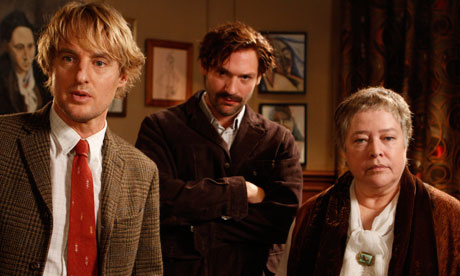
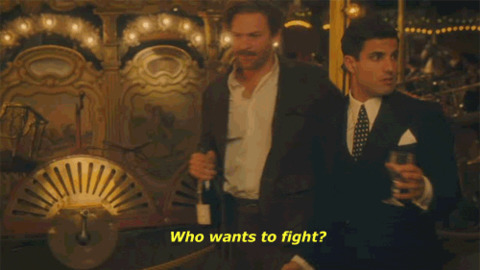


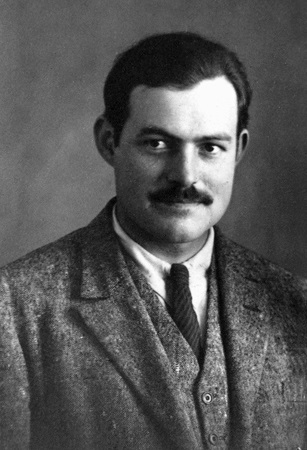
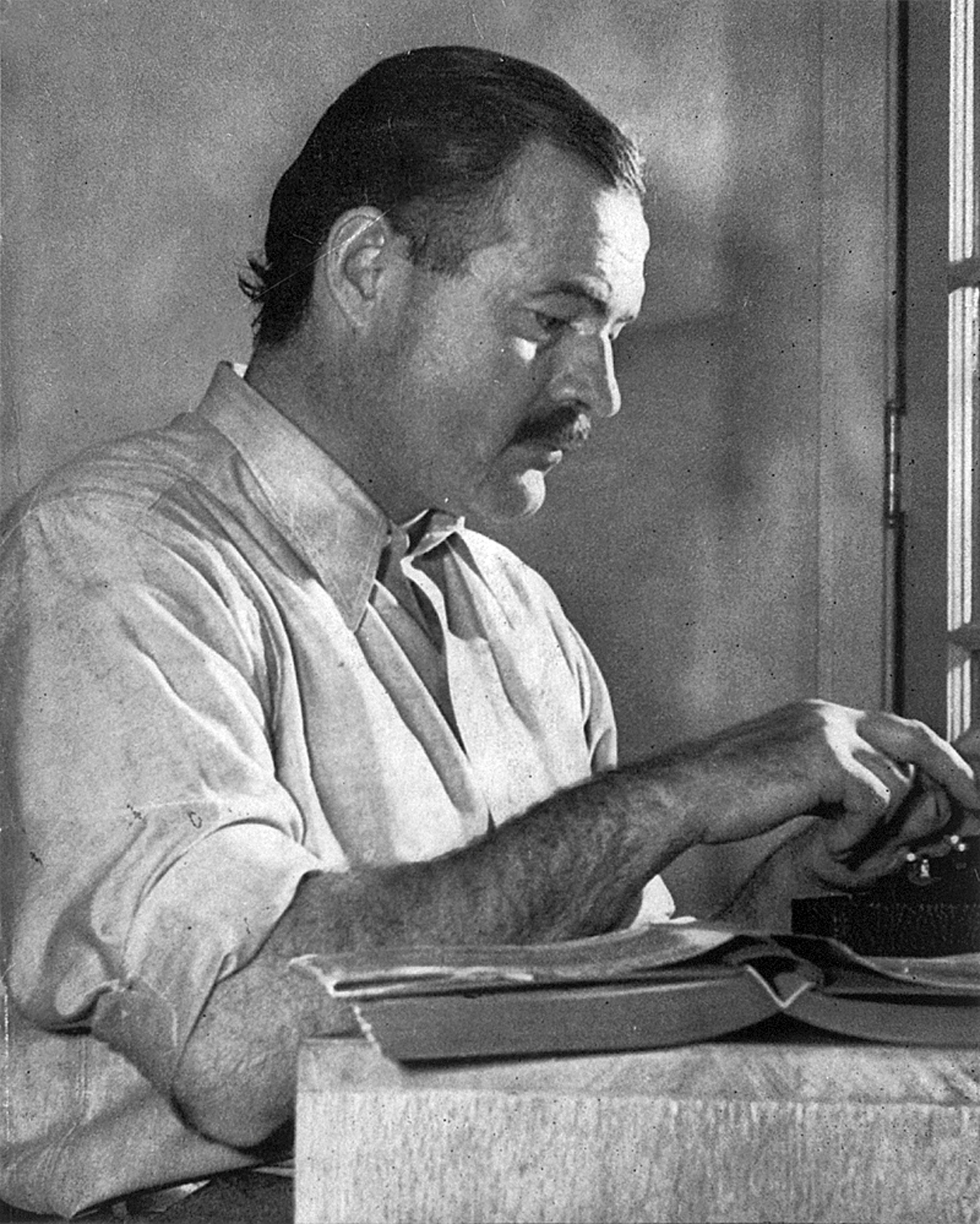
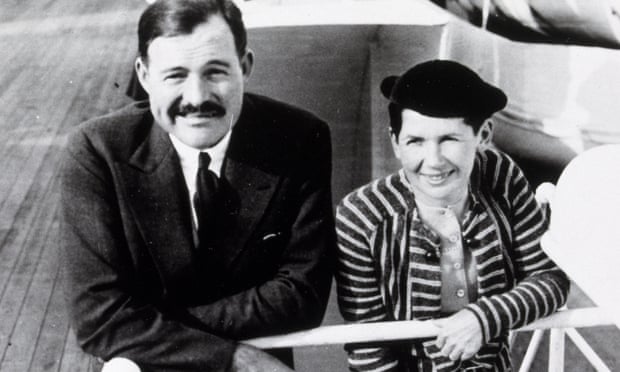

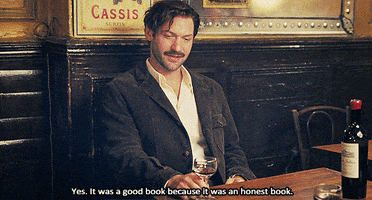


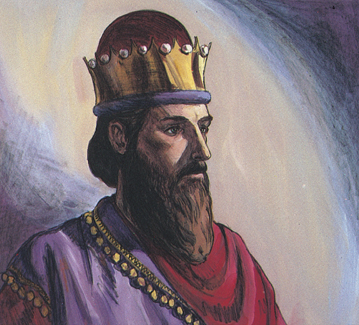


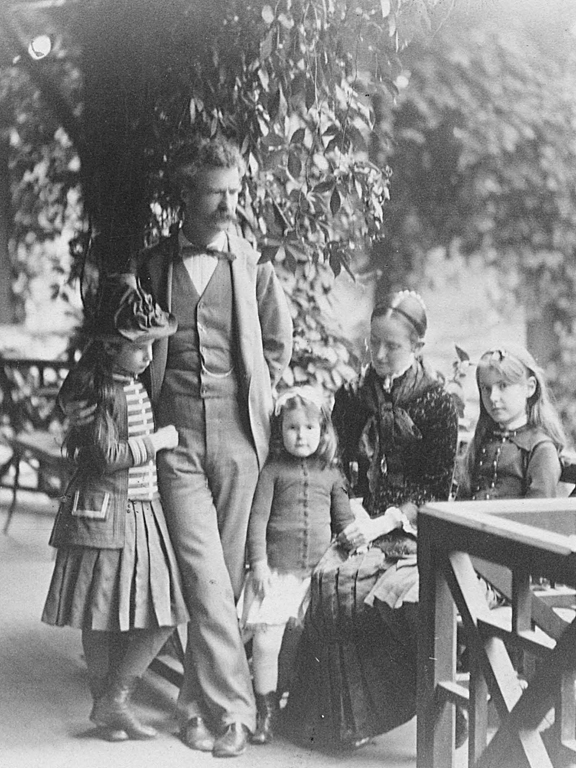


.jpg/revision/latest?cb=20110721032056)


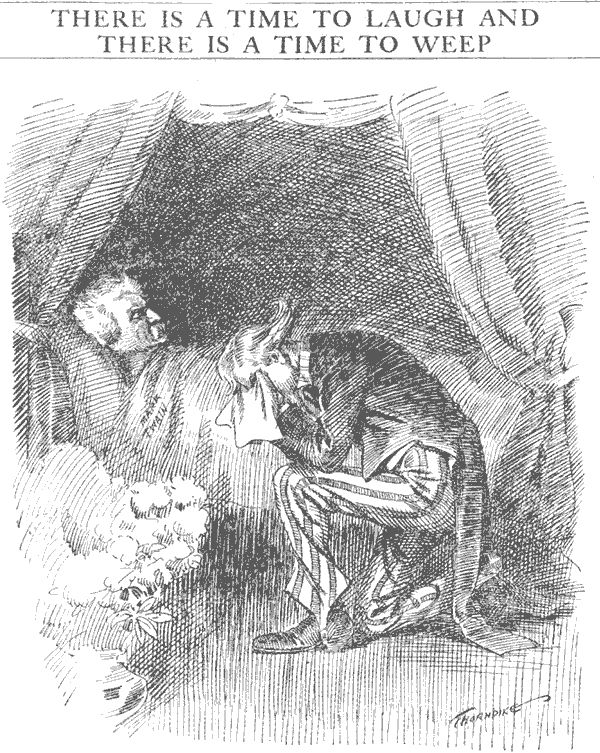


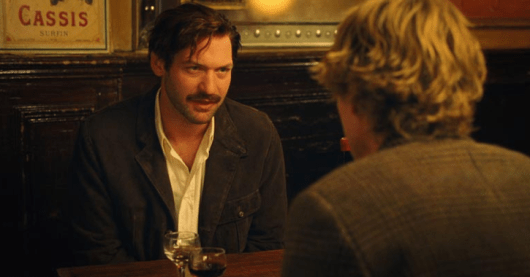




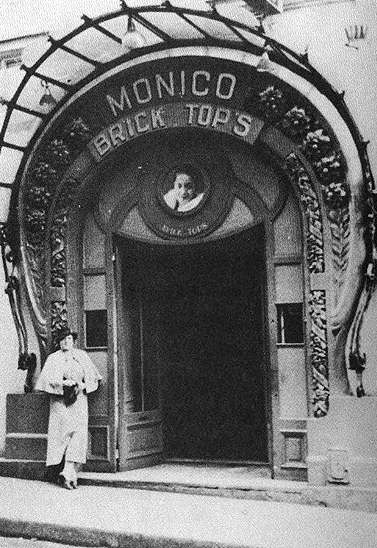



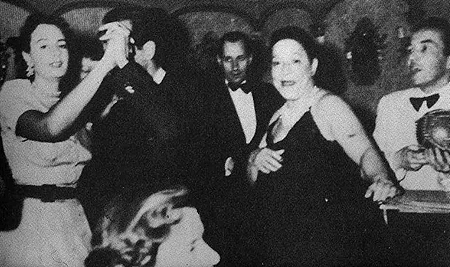





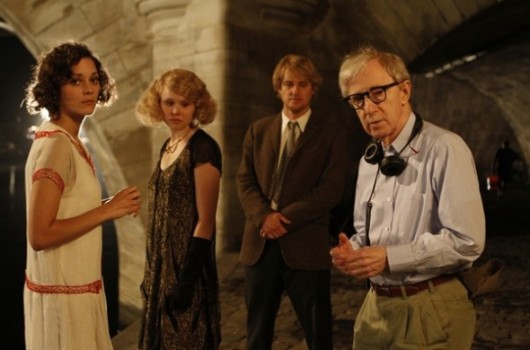


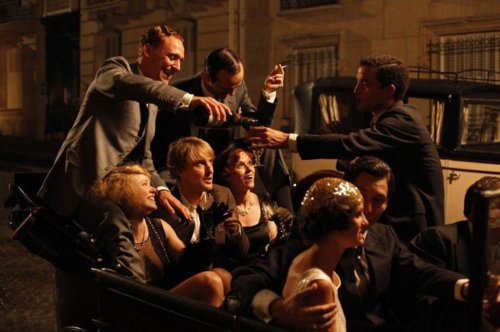


 The Daily Hatch