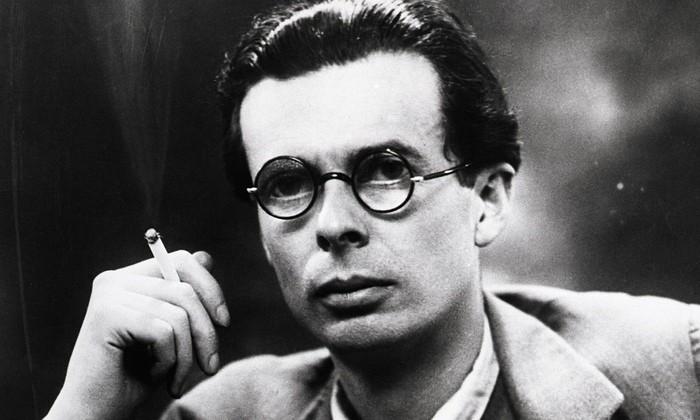
In the late summer of 1954, a brilliant young psychologist was reading the newspaper when his eye fell on a strange headline on the back page:
PROPHESY FROM PLANET CLARION CALL TO CITY: FLEE THAT FLOOD. IT’LL SWAMP US ON DEC 21, OUTER SPACE TELLS SUBURBANITE.
His interest piqued, the psychologist, whose name was Leon Festinger, read on. “Lake City will be destroyed by a flood from the great lake just before dawn, Dec. 21.” The message came from a homemaker in a Chicago suburb who had received it, she reported, from superior beings on another planet: “These beings have been visiting the earth, she says, in what we call flying saucers.”
It was precisely what Festinger had been waiting for. This was a chance to investigate a simple but thorny question that he had been puzzling over for years: What happens when people experience a severe crisis in their convictions? How would this homemaker respond when no flying saucers came to rescue her? What happens when the great flood doesn’t materialize?
With a little digging, Festinger discovered that the woman, one Dorothy Martin, wasn’t the only one convinced that the world was ending on December 21, 1954. Around a dozen of her followers — all intelligent, upstanding Americans — had quit their jobs, sold their possessions, or left their spouses on the strength of their conviction.
Festinger decided to infiltrate the Chicago sect. Right off, he noticed that its members made little effort to persuade other people that the end was near. Salvation was reserved for them, the chosen few. On the morning of December 20, 1954, Mrs. Martin was beamed a new message from above: “At the hour of midnight you shall be put into parked cars and taken to a place where ye shall be put aboard a porch [flying saucer].”
The excited group settled in to await their ascendency to the heavens.
The Evening of December 20, 1954
11:15 p.m.: Mrs. Martin receives a message telling the group to put on their coats and prepare.
12:00 a.m.: Nothing happens.
12:05 a.m.: One of the believers notices another clock in the room reads 11:55 p.m. The group agrees it is not yet midnight.
12:10 a.m.: Message from aliens: The flying saucers are delayed.
12:15 a.m.: The telephone rings several times: journalists calling to check if the world has ended yet.
2:00 a.m.: One of the younger followers, who expected to be a couple light years away by now, recalls that his mother was planning to call the police if he wasn’t home by 2 a.m. The others assure him that his departure is a worthy sacrifice to save the group, and he leaves.
4:00 a.m.: One of the believers says: “I’ve burned every bridge. I’ve turned my back on the world. I can’t afford to doubt. I have to believe.”
4:45 a.m.: Mrs. Martin gets another message: God has decided to spare the Earth. Together, the small group of believers has spread so much “light” on this night that the Earth is saved.
4:50 a.m.: One last message from above: The aliens want the good news “to be released immediately to the newspapers.” Armed with this new mission, the believers inform all the local papers and radio stations before daybreak.
When Prophecies Fail
“A man with a conviction is a hard man to change.” So opens Leon Festinger’s account of these events in When Prophecy Fails, first published in 1956 and a seminal text in social psychology to this day. “Tell him you disagree and he turns away,” Festinger continues. “Show him facts or figures and he questions your sources. Appeal to logic and he fails to see your point.”
It’s easy to scoff at the story of Mrs. Martin and her believers, but the phenomenon Festinger describes is one that none of us are immune to. “Cognitive dissonance,” he coined it. When reality clashes with our deepest convictions, we’d rather recalibrate reality than amend our worldview. Not only that, we become even more rigid in our beliefs than before.
Mind you, we tend to be quite flexible when it comes to practical matters. Most of us are willing to accept advice on how to remove a grease stain or chop a cucumber. No, it’s when our political, ideological, or religious ideas are at stake that we get the most stubborn. We tend to dig in our heels when someone challenges our opinions about criminal punishment, premarital sex, or global warming. These are ideas to which people tend to get attached, and that makes it difficult to let them go. Doing so affects our sense of identity and position in social groups — in our churches or families or circles of friends.
One factor that certainly is not involved is stupidity. Researchers at Yale University have shown that educated people are more unshakable in their convictions than anybody. After all, an education gives you tools to defend your opinions. Intelligent people are highly practiced in finding arguments, experts, and studies that underpin their preexisting beliefs, and the Internet has made it easier than ever to be consumers of our own opinions, with an- other piece of evidence always just a mouse-click away.
I have something to confess. In the course of writing my defense of a 15-hour workweek, I stumbled across an article titled “Shorter Workweek May Not Increase Well- Being.” It was a piece in The New York Times about a South Korean study which claimed that a 10% shorter workweek had not made employees happier. Additional Googling led me to an article in The Telegraph which suggested that working less might be downright bad for our health.
Suddenly I was Dorothy Martin and my clock had struck midnight. Immediately, I mobilized my defense mechanisms. To begin with, I had my doubts about the source: The Telegraph is a somewhat populist newspaper, so how seriously should I take that article? Plus, there was that “may” in The New York Times headline. How conclusive were the study findings really? Even my stereotypes kicked in: Those South Koreans, they’re such workaholics — they probably kept working off the clock even when they reported fewer hours. Moreover, happiness? How exactly do you measure that?
Satisfied, I pushed the study aside. I’d convinced myself it couldn’t be relevant.
I’ll give you another example. I have elsewhere laid out the arguments in favor of universal basic income. This is a conviction in which I have invested a lot over the past few years. The first article I wrote on the topic garnered nearly a million views and was picked up by The Washington Post. I gave lectures about universal basic income and made a case for it on Dutch television. Enthusiastic emails poured in. Not long ago, I even heard someone refer to me as “Mr. Basic Income.” Slowly but surely, my opinion has come to define my personal and professional identity. I do earnestly believe that a universal basic income is an idea whose time has come. I’ve researched the issue extensively, and that’s the direction the evidence points.
But, if I’m being honest, I sometimes wonder if I’d even let myself notice if the evidence were pointing another way. Would I be observant enough — or brave enough — to have a change of heart?
The Power of an Idea
“Keep building your castles in the sky,” a friend quipped a while back after I sent him a couple of my articles. I could understand where he was coming from. After all, what’s the point of crazy new ideas when politicians can’t even manage to balance a budget?
That’s when I began to ask myself whether new ideas can genuinely change the world.
Now, your (very reasonable) gut response might be: They can’t – people will stubbornly stick to the old ideas that they’re comfortable with. The thing is, we know that ideas have changed over time. Yesterday’s avant-garde is today’s common sense. The question is not can new ideas defeat old ones; the question is how.
Research suggests that sudden shocks can work wonders. James Kuklinski, a political scientist at the University of Illinois, discovered that people are most likely to change their opinions if you confront them with new and disagreeable facts as directly as possible. Take the recent success of right-wing politicians who were already warning of “the Islamic threat” back in the 1990s, but didn’t get much attention until the shocking destruction of the Twin Towers on September 11, 2001. Viewpoints that had once been fringe suddenly became a collective obsession.
If it is true that that ideas don’t change things gradually but in fits and starts — in shocks — then the basic premise of our democracy, our journalism, and our education is all wrong. It would mean, in essence, that the Enlightenment model of how people change their opinions — through information-gathering and reasoned deliberation — is really a buttress for the status quo. It would mean that those who swear by rationality, nuance, and compromise fail to grasp how ideas govern the world. A worldview is not a Lego set where a block is added here, removed there. It’s a fortress that is defended tooth and nail, with all possible reinforcements, until the pressure becomes so overpowering that the walls cave in.
Over the same months that Leon Festinger was infiltrating Mrs. Martin’s sect, the American psychologist Solomon Asch demonstrated that group pressure can even cause us to ignore what we can plainly see with our own eyes. In a now-famous experiment, he showed test subjects three lines on a card and asked them which one was longest. When the other people in the room (all Asch’s coworkers, unbeknownst to the subject) gave the same answer, the subject did, too — even when it was clearly erroneous.
It’s no different in politics. Political scientists have established that how people vote is determined less by their perceptions about their own lives than by their conceptions of society. We’re not particularly interested in what government can do for us personally; we want to know what it can do for us all. When we cast our vote, we do so not just for ourselves, but for the group we want to belong to.
But Solomon Asch made another discovery. A single opposing voice can make all the difference. When just one other person in the group stuck to the truth, the test subjects were more likely to trust the evidence of their own senses. Let this be an encouragement to all those who feel like a lone voice crying out in the wilderness: Keep on building those castles in the sky. Your time will come.
Long Was the Night
In 2008, it seemed as if that time had finally come when we were confronted with the biggest case of cognitive dissonance since the 1930s.
On September 15, the investment bank Lehman Brothers filed for bankruptcy. Suddenly, the whole global banking sector seemed poised to tumble like a row of dominoes. In the months that followed, one free market dogma after another crashed and burned.
Former Federal Reserve Chair Alan Greenspan, once dubbed the “Oracle” and the “Maestro,” was gobsmacked. “Not only have individual financial institutions become less vulnerable to shocks from underlying risk factors,”he had confidently asserted in 2004, “but also the financial system as a whole has become more resilient.” When Greenspan retired in 2006, everyone assumed he would be immortalized in history’s financial hall of fame.
In a House Committee hearing two years later, the broken banker admitted that he was “in a state of shocked disbelief.” Greenspan’s faith in capitalism had taken a severe beating. “I have found a flaw. I don’t know how significant or permanent it is. But I have been very distressed by that fact.” When a congressman asked him if he had been misled by his own ideas, Greenspan replied, “That’s precisely the reason I was shocked because I’d been going for 40 years or so with considerable evidence that it was working exceptionally well.”
The lesson of December 21, 1954, is that everything centers on that one moment of crisis. When the clock strikes midnight, what happens next? A crisis can provide an opening for new ideas, but it can also shore up old convictions.
So what happened after September 15, 2008? The Occupy movement briefly galvanized people, but quickly ebbed. Meanwhile, left-leaning political parties lost elections across most of Europe. Greece and Italy more or less canned democracy altogether and rolled out neoliberal-tinted reforms to please their creditors, trimming government and boosting labor market flexibility. In northern Europe, too, governments proclaimed a new age of austerity.
And Alan Greenspan? When, a few years later, a reporter asked him if there had been any error in his ideas, his reply was resolute: “Not at all. I think that there is no alternative.”
Fast forward to today: Fundamental reform of the banking sector has yet to happen. On Wall Street, bankers are seeing the highest bonus payments since the crash. And the banks’ capital buffers are as minuscule as ever. Joris Luyendijk, a journalist at The Guardian who spent two years looking under the hood of London’s financial sector, summed up the experience in 2013 as follows: “It’s like standing at Chernobyl and seeing they’ve restarted the reactor but still have the same old management.”
You have to wonder: Was the cognitive dissonance from 2008 even big enough? Or was it too big? Had we invested too much in our old convictions? Or were there simply no alternatives?
This last possibility is the most worrying of all.
The word “crisis” comes from ancient Greek and literally means to “separate” or “sieve.” A crisis, then, should be a moment of truth, the juncture at which a fundamental choice is made. But it almost seems that back in 2008 we were unable to make that choice. When we suddenly found ourselves facing the collapse of the entire banking sector, there were no real alternatives available; all we could do was keep plodding down the same path.
Perhaps, then, crisis isn’t really the right word for our current condition. It’s more like we’re in a coma. That’s ancient Greek, too. It means “deep, dreamless sleep.”
Capitalist Resistance Fighters
It’s all deeply ironic, if you think about it.
If there were ever two people who dedicated their lives to building castles in the sky with preternatural certainty that they would someday be proven right, it was the founders of neoliberal thought. I’m an admirer of them both: the slippery philosopher Friedrich Hayek and the public intellectual Milton Friedman.
Nowadays, “neoliberal” is a put-down leveled at anybody who doesn’t agree with the left. Hayek and Friedman, however, were proud neoliberals who saw it as their duty to reinvent liberalism. “We must make the building of a free society once more an intellectual adventure,” Hayek wrote. “What we lack is a liberal Utopia.”
Even if you believe them to be villains who made greed fashionable and are to blame for the financial crisis that left millions of people in dire straits — even then, there’s a lot you can learn from Friedrich Hayek and Milton Friedman.
One was born in Vienna, the other in New York. Both were firm believers in the power of ideas. For many years, both belonged to a small minority, a sect almost, that existed outside the cocoon of mainstream thought. Together, they tore apart that cocoon, upending the world in a way dictators and billionaires can only dream of. They set about shredding the life’s work of their archrival, the British economist John Maynard Keynes. Seemingly the only thing they had in common with Keynes was the belief that the ideas of economists and philosophers are stronger forces than the vested interests of business leaders and politicians.
This particular story begins on April 1, 1947, not quite a year after Keynes’ death, when 40 philosophers, historians, and economists converged in the small village of Mont Pèlerin in Switzerland. Some had traveled for weeks, crossing oceans to get there. In later years, they would be known as the Mont Pèlerin Society.
All 40 thinkers who came to this Swiss village were encouraged to speak their minds, and together they formed a corps of capitalist resistance fighters against socialist supremacy. “There are, of course, very few people left today who are not socialists,” Hayek, the event’s initiator, had once lamented. At a time when the provisions of the New Deal had pushed even the United States toward more socialistic policies, a defense of the free market was still seen as downright revolutionary, and Hayek felt “hopelessly out of tune with his time.”
Milton Friedman was also at the meeting of minds. “Here I was, a young, naive provincial American,” Friedman later recalled, “meeting people from all over the world, all dedicated to the same liberal principles as we were; all beleaguered in their own countries, yet among them scholars, some already internationally famous, others destined to be.” In fact, no fewer than eight members of the Mont Pèlerin Society would go on to win Nobel Prizes.
However, in 1947 no one could have predicted such a star-studded future. Large swaths of Europe lay in ruins. Reconstruction efforts were colored by Keynesian ideals: employment for all, curbing the free market, and regulation of banks. The war state became the welfare state. Yet it was during those same years that neoliberal thought began gaining traction thanks to the efforts of the Mont Pèlerin Society, a group that would go on to become one of the leading think tanks of the 20th century. “Together, they helped precipitate a global policy transformation with implications that will continue to reverberate for decades,” says the historian Angus Burgin.
In the 1970s, Hayek handed the presidency of the Society over to Friedman. Under the leadership of this diminutive, bespectacled American whose energy and enthusiasm surpassed even that of his Austrian predecessor, the society radicalized. Essentially, there wasn’t a problem around that Friedman didn’t blame on government. And the solution, in every case, was the free market. Unemployment? Get rid of the minimum wage. Natural disaster? Get corporations to organize a relief effort. Poor schools? Privatize education. Expensive healthcare? Privatize that, too, and ditch public oversight while we’re at it. Substance abuse? Legalize drugs and let the market work its magic.
Friedman deployed every means possible to spread his ideas, building a repertoire of lectures, op-eds, radio interviews, TV appearances, books, and even a documentary. In the preface to his bestselling Capitalism and Freedom, he wrote that it is the duty of thinkers to keep offering alternatives. Ideas that seem “politically impossible” today may one day become “politically inevitable.”
All that remained was to await the critical moment. “Only a crisis — actual or perceived — produces real change,” Friedman explained. “When that crisis occurs, the actions that are taken depend on the ideas that are lying around.” The crisis came in October 1973, when the Organization of Arab Petroleum Exporting Countries imposed an oil embargo. Inflation went through the roof and the economy spiraled into recession. “Stagflation,” as this effect was called, wasn’t even possible in Keynesian theory. Friedman, however, had predicted it.
For the rest of his life, Friedman never stopped emphasizing that his success would have been inconceivable without the groundwork laid since 1947. The rise of neoliberalism played out like a relay race, with think tanks passing the baton to journalists, who handed it off to politicians. Running the anchor leg were two of the most powerful leaders in the Western world, Ronald Reagan and Margaret Thatcher. When asked what she considered to be her greatest victory, Thatcher’s reply was “New Labour”: Under the leadership of neoliberal Tony Blair, even her social democratic rivals in the Labour Party had come around to her worldview.
In less than 50 years, an idea once dismissed as radical and marginal had come to rule the world.
The Lesson of Neoliberalism
Some argue that these days, it hardly matters anymore who you vote for. Though we still have a right and a left, neither side seems to have a very clear plan for the future. In an ironic twist of fate, the neoliberalist brainchild of two men who devoutly believed in the power of ideas has now put a lockdown on the development of new ones. It would seem that we have arrived at “the end of history,” with liberal democracy as the last stop and the “free consumer” as the terminus of our species.
By the time Friedman was named president of the Mont Pèlerin Society in 1970, most of its philosophers and historians had already decamped, the debates having become overly technical and economic. In hindsight, Friedman’s arrival marked the dawn of an era in which economists would become the leading thinkers of the Western world. We are still in that era today.
We inhabit a world of managers and technocrats. “Let’s just concentrate on solving the problems,” they say. “Let’s just focus on making ends meet.” Political decisions are continually presented as a matter of exigency — as neutral and objective events, as though there were no other choice. Keynes observed this tendency emerging even in his own day. “Practical men, who believe themselves to be quite exempt from any intellectual influences,” he wrote, “are usually the slaves of some defunct economist.”
When Lehman Brothers collapsed on September 15, 2008, and inaugurated the biggest crisis since the 1930s, there were no real alternatives to hand. No one had laid the groundwork. For years, intellectuals, journalists, and politicians had all firmly maintained that we’d reached the end of the age of “big narratives” and that it was time to trade in ideologies for pragmatism.
Naturally, we should still take pride in the liberty that generations before us fought for and won. But the question is, what is the value of free speech when we no longer have anything worthwhile to say? What’s the point of freedom of association when we no longer feel any sense of affiliation? What purpose does freedom of religion serve when we no longer believe in anything?
On the one hand, the world is still getting richer, safer, and healthier. That’s a huge triumph. On the other hand, it’s high time that we stake out a new utopia. Let’s rehoist the sails. “Progress is the realisation of Utopias,” Oscar Wilde wrote many years ago. A 15-hour workweek, universal basic income, and a world without borders… They’re all crazy dreams — but for how much longer?
People now doubt that “human ideas and beliefs are the main movers of history,” as Hayek argued back when neoliberalism was still in its infancy. “We all find it so difficult to imagine that our belief [sic] might be different from what they in fact are.” It could easily take a generation, he asserted, before new ideas prevail. For this very reason, we need thinkers who not only are patient, but also have “the courage to be ‘utopian.’”
Let this be the lesson of Mont Pèlerin. Let this be the mantra of everyone who dreams of a better world, so that we don’t once again hear the clock strike midnight and find ourselves just sitting around, empty-handed, waiting for an extraterrestrial salvation that will never come.
Ideas, however outrageous, have changed the world, and they will again. “Indeed,” wrote Keynes, “the world is ruled by little else.”
Milton Friedman on Hayek’s “Road to Serfdom” 1994 Interview 2 of 2 Uploaded by PenguinProseMedia on Oct 26, 2011 2nd half of 1994 interview. ________________ I have a lot of respect for the Friedmans.Two Lucky People by Milton and Rose Friedman reviewed by David Frum — October 1998. However, I liked this review below better. It […]
By Everette Hatcher III | Posted in Current Events, Milton Friedman | Edit | Comments (0)
Milton Friedman on Hayek’s “Road to Serfdom” 1994 Interview 1 of 2 Uploaded by PenguinProseMedia on Oct 25, 2011 Says Federal Reserve should be abolished, criticizes Keynes. One of Friedman’s best interviews, discussion spans Friedman’s career and his view of numerous political figures and public policy issues. ___________________ Here is a review of “Two Lucky People.” […]
By Everette Hatcher III | Posted in Milton Friedman | Edit | Comments (0)
Charlie Rose interview of Milton Friedman My favorite economist: Milton Friedman : A Great Champion of Liberty by V. Sundaram Milton Friedman, the Nobel Prize-winning economist who advocated an unfettered free market and had the ear of three US Presidents – Nixon, Ford and Reagan – died last Thursday (16 November, 2006 ) in San Francisco […]
By Everette Hatcher III | Posted in Milton Friedman | Edit | Comments (0)
Milton Friedman: Free To Choose – The Failure Of Socialism With Ronald Reagan (Full) Published on Mar 19, 2012 by NoNationalityNeeded Milton Friedman’s writings affected me greatly when I first discovered them and I wanted to share with you. We must not head down the path of socialism like Greece has done. Abstract: Ronald Reagan […]
By Everette Hatcher III | Posted in Milton Friedman, Ronald Reagan | Edit | Comments (0)
I have come so far with scarcely a mention of Charles Darwin.His life spanned most of the nineteenth century, and he died with every right to be satisfied that he had cured humanity of its greatest and grandest illusion. Darwin brought life itself within the pale of the explicable. No longer a baffling mystery demanding supernatural explanation, life, with the complexity and elegance that defines it, grows and gradually emerges, by easily understood rules, from simple beginnings. Darwin’s legacy to the twentieth century was to demystify the greatest mystery of all.
“I am glad you were at the Messiah, it is the one thing that I should like to hear again, but I dare say I should find my soul too dried up to appreciate it as in old days; and then I should feel very flat, for it is a horrid bore to feel as I constantly do, that I am a withered leaf for every subject except Science. It sometimes makes me hate Science, though God knows I ought to be thankful for such a perennial interest, which makes me forget for some hours every day my accursed stomach.’
Francis Schaeffer summarized:
So he is glad for science because his stomach bothers him, but on the other hand when I think of what it costs me I almost hate science. You can almost hear young Jean-Jacques Rousseau speaking here, he sees what the machine is going to do and he hates the machine and Darwin is constructing the machine and it leads as we have seen to his own loss of human values in the area of aesthetics, the area of art and also in the area of nature. This is what it has cost him. His theory has led him to this place. When you come to this then it seems to me that you understand man’s dilemma very, very well, to think of the origin of the theory of mechanical evolution bringing Darwin himself to the place of this titanic tension.
XXXXXXXXXXXXXXXXXXXXXXXXXX
Summary of Schaeffer Analysis
Darwin in his autobiography ( Darwin, Francis ed. 1892. Charles Darwin: his life told in an autobiographical chapter, and in a selected series of his published letters [abridged edition]. London: John Murray. ) and in his letters Darwin showed that all through his life he never really came to a quietness concerning the possibility that chance really explained the situation of the biological world. You will find there is much material on this [from Darwin] extended over many many years that constantly he was wrestling with this problem. Darwin never came to a place of satisfaction. You have philosophically only two possible beginnings. The first would be apersonal beginning and the other would be an impersonal beginning plus time plus chance. There is no other possible alternative except the alternative that everything comes out of nothing and that has to be a total nothing and that has to be a total nothing without mass, energy or motion existing. No one holds this last view because it is unthinkable. Darwin understood this and therefore until his death he was uncomfortable with the idea of chance producing the biological variation.
Katharina Grosse was born in 1961 in Freiburg/Breisgau, Germany. Grosse is a painter who often employs electrifying sprayed acrylic colors to create large-scale sculptural environments and smaller wall works. Interested in the shifts of scale between ‘imagining big’ while being small in relationship to one’s surroundings, she explores the dynamic interplay between observing the world and simply being in it. By uniting a fluid perception of landscape with the ordered hierarchy of painting, Grosse treats both architecture and the natural world as an armature for expressive compositions of dreamy abandon, humorous juxtaposition, and futuristic flair.
Her projects often suggest complex narratives through the inclusion of everyday objects, psychedelic vistas, and evocative titles. By building up layers of color with an expressive immediacy, she enables her work to become a material record of its own making and, perhaps, an inscription of her thoughts. But, Grosse says, “I am the painting trickster. Don’t believe me!”
Katharina Grosse studied at the Kunstakademie Düsseldorf, where she currently teaches, having previously been a professor at Kunsthochschule Berlin-Weissensee (2000–10). Among the honors she has received are the Oskar Schlemmer Prize (2014); Fred-Thieler-Preis (2003); Stipendiaten der Stiftung Kunstfonds (1995); Schmidt-Rottluff-Stipendium (1993); and the Villa-Romana-Stipendium, Florence (1992).
Major exhibitions of Grosse’s work have appeared at Public Art Fund (2013); Nasher Sculpture Center (2013); De Pont Museum of Contemporary Art, Netherlands (2013); MOCA Cleveland (2012); Mass MoCA (2010); Arken—Museum for Moderne Kunst, Copenhagen (2009); Prospect New Orleans (2008); Renaissance Society (2007); De Appel, Amsterdam (2006); Contemporary Art Center, Cincinnati (2006); Taipei Biennial (2006); Bergen Kunsthall (2005); Magasin 3 Stockholm Konsthall (2004); Contemporary Arts Museum Houston (2004); São Paulo Bienal (2002); and the Hammer Museum (2001), among others. Katharina Grosse lives and works in Berlin, Germany.
On November 21, 2014 I received a letter from Nobel Laureate Harry Kroto and it said: …Please click on this URL http://vimeo.com/26991975 and you will hear what far smarter people than I have to say on this matter. I agree with them. Harry Kroto _________________ Below you have picture of 1996 Chemistry Nobel Prize Winner […]
The Beatles were “inspired by the musique concrète of German composer and early electronic music pioneer Karlheinz Stockhausen…” as SCOTT THILL has asserted. Francis Schaeffer noted that ideas of “Non-resolution” and “Fragmentation” came down German and French streams with the influence of Beethoven’s last Quartets and then the influence of Debussy and later Schoenberg’s non-resolution which is in total contrast […]
_______ On November 21, 2014 I received a letter from Nobel Laureate Harry Kroto and it said: …Please click on this URL http://vimeo.com/26991975 and you will hear what far smarter people than I have to say on this matter. I agree with them. Harry Kroto _________________ Below you have picture of 1996 Chemistry Nobel Prize […]
On November 21, 2014 I received a letter from Nobel Laureate Harry Kroto and it said: …Please click on this URL http://vimeo.com/26991975 and you will hear what far smarter people than I have to say on this matter. I agree with them. Harry Kroto ____________________ Below you have picture of 1996 Chemistry Nobel Prize Winner Dr. […]
Pee Wee Spitelera was born on December 21, 1937 in Louisiana, USA as Joseph T. Spitelera Jr. He was an actor, known for The Dinah Shore Chevy Show (1956), Dixieland at Disneyland (1964) and The Lawrence Welk Show (1955). He died in September 1985 in Louisiana.
Woody Allen On Bergman
Woody Allen Show
Essay on Woody Allen films
Match point Trailer
Match point
–
Crimes and misdemeanors
Part 2
Part 3
Woody commenting on Midnight in Paris
–
December 16, 2014
Letty Aronson, New York, New York 10001
Dear Mrs. Aronson,
I have just a few questions for you. I know that your brother Woody is very interested in Jazz and especially in meeting great clarinet players and my good friend Sean Michel (who appeared on American Idol in 2007) told me about his uncle who passed away in 1985, Joseph T. “Pee Wee” Spitelera who played with Al Hirt’s band in New Orleans for about 40 years. If you do a You Tube search for “Dinah Shore Al Hirt” then it will bring up a 24 minute video entitled “Al Hirt on the Dinah Shore Chevy Show 1960,” and at the 4 1/2 minute mark Pee Wee Spirtelera takes off on a Clarinet solo that is out of this world. Also if you type in “Al Hirt Johnny Cash Show” then you will see a 4 min and 21 sec video entitled “Al Hirt on the Johnny Cash Show,” and at the 1 min mark Pee Wee goes crazy there in the Clarinet on the Dec 16, 1970 Johnny Cash Show.
Below is a picture of Pee Wee and he has several other fine songs on You Tube too such as “Blue Clarinet” which would be perfect for a Woody Allen Movie.
(Pee Wee is the guy in the Middle)
Therefore, my first question is did Woody ever have a chance to meet Pee Wee?Secondly, I wanted to ask you if you have ever had the opportunity to examine the evidence that the Old Testament predicted the return of the Jews to the land of Israel?
I was fascinated with the movie “Magic and in the Moonlight”and not only have I seen it several times, but I have taken many of my friends to see it and I have blogged about it over and over at http://www.thedailyhatch.org. In the past I have spent a lot of time on my blog taking close looks at your brother’s films. For instance, if you do a google search for the words “Characters Midnight in Paris” then you will find that I have done over 40 different posts on that movie taking closer looks at the historical characters mentioned in that movie.
As you know the main point made in “Midnight in Paris” is that there is no “Golden Age” but all time periods were filled with their challenges just like the period we are in now. Solomon discovered this in the first chapter of Ecclesiastes (verses 9-10) and shared his thoughts also on the meaning of life. In fact, many of Solomon’s thoughts from that book apply to many of your brothers’ films. Again if you google the terms “Woody Allen Ecclesiastes” then it will bring you again to several posts I have done on Woody’s films and the answers Solomon gives in Ecclesiastes. 3000 years ago Solomon pursued six “L” words in his search for the meaning of life and probing the area of LAUGHTER was one of his first places to start. In Ecclesiastes 2:2 he starts this quest but he concludes it is not productive to be laughing the whole time and not considering the serious issues of life. Then Solomon also asserted the nihilistic statement in Ecclesiastes 2:17: “So I hated life, because the work that is done under the sun was grievous to me. All of it is meaningless, a chasing after the wind.”
In the Book of Ecclesiastes what are all of the 6 “L” words that Solomon looked into? He looked into learning (1:16-18), laughter, ladies, luxuries, and liquor (2:1-3, 8, 10, 11), and labor (2:4-6, 18-20). IRONICALLY, WOODY ALLEN HAS MADE ALL SIX OF THESE BUTTS OF HIS NIHILISTIC JOKES!!!
Schaeffer noted that Solomon took a look at the meaning of life on the basis of human life standing alone between birth and death “under the sun.” This phrase UNDER THE SUN appears over and over in Ecclesiastes. The Christian Scholar Ravi Zacharias noted, “The key to understanding the Book of Ecclesiastes is the term UNDER THE SUN — What that literally means is you lock God out of a closed system and you are left with only this world of Time plus Chance plus matter.” This puts him in the same place that WOODY ALLEN finds himself and this is a center theme of MAGIC IN THE MOONLIGHT too.
If you are an atheist then you have a naturalistic materialistic worldview, and this short book of Ecclesiastes should interest you because the wisest man who ever lived in the position of King of Israel came to THREE CONCLUSIONS that will affect you.
FIRST, chance and time have determined the past, and they will determine the future. (Ecclesiastes 9:11-13)
These two verses below take the 3 elements mentioned in a naturalistic materialistic worldview (time, chance and matter) and so that is all the unbeliever can find “under the sun” without God in the picture. You will notice that these are the three elements that evolutionists point to also.
Ecclesiastes 9:11-12 is following: I have seen something else under the sun: The race is not to the swift or the battle to the strong, nor does food come to the wise or wealth to the brilliant or favor to the learned; but time and chance happen to them all. Moreover, no one knows when their hour will come: As fish are caught in a cruel net, or birds are taken in a snare, so people are trapped by evil times that fall unexpectedly upon them.
SECOND, Death is the great equalizer (Eccl 3:20, “All go to the same place; all come from dust, and to dust all return.”)
THIRD, Power reigns in this life, and the scales are not balanced(Eccl 4:1, 8:15)
Ecclesiastes 4:1-2: “Next I turned my attention to all the outrageous violence that takes place on this planet—the tears of the victims, no one to comfort them; the iron grip of oppressors, no one to rescue the victims from them.” Ecclesiastes 8:14; “Here’s something that happens all the time and makes no sense at all: Good people get what’s coming to the wicked, and bad people get what’s coming to the good. I tell you, this makes no sense. It’s smoke.”
Several times during the movie “Magic in the Moonlight” there are references to Friedrich Nietzsche’s conclusion that we must except a nihilistic worldview if we accept the conclusion that science rules out the possibility of God’s existence. I do agree with part of that statement and that is that nihilism is the proper attitude if there is no afterlife (google “Woody Allen Nihilism” and it will bring you to my blog again). However, there is good and sufficient evidence that shows that God exists. Just take a few minutes and look up the Old Testament Scriptures Amos 9:14-15, Zechariah 12:3 and Isaiah 11:11-12 and notice that they predict the return of the Jews to their ancient land of Israel. ISN’T THIS EVIDENCE OF THE SUPERNATURAL that is the subject of MAGIC IN THE MOONLIGHT?
In fact, my former pastor Robert Lewis at Fellowship Bible Church in his sermon “Let the Prophets Speak” on 1-31-99 noted that even the great Princeton Theologian Charles Hodge erred in 1871 when he stated:
The argument from the ancient prophecies is proved to be invalid because it would prove too much. If those prophecies foretell a literal restoration, they foretell that the temple is to be rebuilt, the priesthood restored, sacrifices again offered, and that the whole Mosaic ritual is to be observed in all its details, (Systematic Theology. [New York: Charles Scribner & Sons, 1871; reprint Grand Rapids, Michigan: Eerdman’s Publishing Co., 1949], 3:807).__
Robert Lewis went on to point out that the prophet Amos 2700 years ago predicted the destruction of Aram, Philistia, Tyre, Edom, Ammon, Moab and Israel, but at the end of the Book he said Israel would one day be returned to their land and never removed. We saw from Isaiah 11:11-12 that the Lord “will assemble the outcasts of Israel and will gather together the dispersed of Judah from the four corners of the earth.” And that certainly did happen after World War II. I corresponded with some secular Jewish Scholars on this back in the 1990’s such as Irving Kristol and Daniel Bell but they dismissed these type of Old Testament prophecies. Then on Friday July 18, 2014 I had the opportunity to visit personally with Bill Kristol who is the founder of THE WEEKLY STANDARD MAGAZINE. I actually gave him a copy of both letters I received back from his father Irving and their family friend Daniel Bell and he read them both as we stood there. I told him that those copies were his to keep, and he thanked me for that.I went on to explain how the correspondence started. I had come across several quotes from Daniel Bell when I was reading the books HOW SHOULD WE THEN LIVE? and WHATEVER HAPPENED TO THE HUMAN RACE? by Francis Schaeffer (and this second book was co-authored by Dr. C. Everett Koop). Dr. Koop’s name caught Mr. Kristol’s attention and he said he found that interesting. I pointed out those quotes by Bell led me to eventually begin a correspondence with both Bell and Kristol’s father Irving on the subject of what the Old Testament scriptures have to say about the Jews being returned from all over the world back to the land of Israel. (By the way, Schaeffer also quoted Woody Allen extensively in his works too.)Let me sum up what the Bible predicts concerning the Jews. First, the Old Testament predicted that the Jews would regather from all over the world and form a new reborn nation of Israel.Second, it was also predicted that the nation of Israel would become a stumbling block to the whole world. Third, it was predicted that the Hebrew language would be used again as the Jews first language even though we know in 1948 that Hebrew at that time was a dead language!!!Fourth, it was predicted that the Jews would never again be removed from their land.
Thank you again for your time and I know how busy you are.
The mass media turned Picasso into a celebrity, and the public deprived him of privacy and wanted to know his every step, but his later art was given very little attention and was regarded as no more than the hobby of an aging genius who could do nothing but talk about himself in his pictures. Picasso’s late works are an expression of his final refusal to fit into categories. He did whatever he wanted in art and did not arouse a word of criticism.
With his adaptation of “Las Meninas” by Velászquez and his experiments with Manet’s Luncheon on the Grass, was Picasso still trying to discover something new, or was he just laughing at the public, its stupidity and its inability to see the obvious.
A number of elements had become characteristic in his art of this period: Picasso’s use of simplified imagery, the way he let the unpainted canvas shine through, his emphatic use of lines, and the vagueness of the subject. In 1956, the artist would comment, referring to some schoolchildren: “When I was as old as these children, I could draw like Raphael, but it took me a lifetime to learn to draw like them.”
In the last years of his life, painting became an obsession with Picasso, and he would date each picture with absolute precision, thus creating a vast amount of similar paintings — as if attempting to crystallize individual moments of time, but knowing that, in the end, everything would be in vain.
The movie MIDNIGHT IN PARISoffers many of the same themes we see in Ecclesiastes. The second postlooked at the question: WAS THERE EVER A GOLDEN AGE AND DID THE MOST TALENTED UNIVERSAL MEN OF THAT TIME FIND TRUE SATISFACTION DURING IT?
In the third post in this series we discover in Ecclesiastes that man UNDER THE SUN finds himself caught in the never ending cycle of birth and death. The SURREALISTS make a leap into the area of nonreason in order to get out of this cycle and that is why the scene in MIDNIGHT IN PARIS with Salvador Dali, Man Ray, and Luis Bunuel works so well!!!! These surrealists look to the area of their dreams to find a meaning for their lives and their break with reality is only because they know that they can’t find a rational meaning in life without God in the picture.
The fourth post looks at the solution of WINE, WOMEN AND SONG and the fifthandsixth posts look at the solution T.S.Eliotfound in the Christian Faith and how he left his fragmented message of pessimism behind. In theseventh post the SURREALISTS say that time and chance is all we have but how can that explain love or art and the hunger for God? The eighth post looks at the subject of DEATH both in Ecclesiastes and MIDNIGHT IN PARIS. In the ninth post we look at the nihilistic worldview of Woody Allen and why he keeps putting suicides into his films.
In the tenth post I show how Woody Allen pokes fun at the brilliant thinkers of this world and how King Solomon did the same thing 3000 years ago. In theeleventh postI point out how many of Woody Allen’s liberal political views come a lack of understanding of the sinful nature of man and where it originated. In thetwelfth post I look at the mannishness of man and vacuum in his heart that can only be satisfied by a relationship with God.
In the thirteenth postwe look at the life of Ernest Hemingway as pictured in MIDNIGHT AND PARIS and relate it to the change of outlook he had on life as the years passed. In the fourteenth post we look at Hemingway’s idea of Paris being a movable feast. The fifteenth andsixteenth posts both compare Hemingway’s statement, “Happiness in intelligent people is the rarest thing I know…” with Ecclesiastes 2:18 “For in much wisdom is much vexation, and he who increases knowledge increases sorrow.” The seventeenth post looks at these words Woody Allen put into Hemingway’s mouth, “We fear death because we feel that we haven’t loved well enough or loved at all.”
In MIDNIGHT IN PARIS Hemingway and Gil Pender talk about their literary idol Mark Twain and the eighteenth post is summed up nicely by Kris Hemphill‘swords, “Both Twain and [King Solomon in the Book of Ecclesiastes] voice questions our souls long to have answered: Where does one find enduring meaning, life purpose, and sustainable joy, and why do so few seem to find it? The nineteenth postlooks at the tension felt both in the life of Gil Pender (written by Woody Allen) in the movie MIDNIGHT IN PARIS and in Mark Twain’s life and that is when an atheist says he wants to scoff at the idea THAT WE WERE PUT HERE FOR A PURPOSE but he must stay face the reality of Ecclesiastes 3:11 that says “God has planted eternity in the heart of men…” and THAT CHANGES EVERYTHING! Therefore, the secular view that there is no such thing as love or purpose looks implausible. The twentieth post examines how Mark Twain discovered just like King Solomon in the Book of Ecclesiastes that there is no explanation for the suffering and injustice that occurs in life UNDER THE SUN. Solomon actually brought God back into the picture in the last chapter and he looked ABOVE THE SUN for the books to be balanced and for the tears to be wiped away.
The twenty-first post looks at the words of King Solomon, Woody Allen and Mark Twain that without God in the picture our lives UNDER THE SUN will accomplish nothing that lasts. Thetwenty-second postlooks at King Solomon’s experiment 3000 years that proved that luxuries can’t bring satisfaction to one’s life but we have seen this proven over and over through the ages. Mark Twain lampooned the rich in his book “The Gilded Age” and he discussed get rich quick fever, but Sam Clemens loved money and the comfort and luxuries it could buy. Likewise Scott Fitzgerald was very successful in the 1920’s after his publication of THE GREAT GATSBY and lived a lavish lifestyle until his death in 1940 as a result of alcoholism.
In the twenty-third postwe look at Mark Twain’s statement that people should either commit suicide or stay drunk if they are “demonstrably wise” and want to “keep their reasoning faculties.” We actually see this play out in the film MIDNIGHT IN PARIS with the character Zelda Fitzgerald. In the twenty-fourth, twenty-fifth and twenty-sixth posts I look at Mark Twain and the issue of racism. In MIDNIGHT IN PARIS we see the difference between the attitudes concerning race in 1925 Paris and the rest of the world.
The twenty-seventh and twenty-eighth posts are summing up Mark Twain. In the 29th post we ask did MIDNIGHT IN PARIS accurately portray Hemingway’s personality and outlook on life? and in the 30th postthe life and views of Hemingway are summed up.
In the 31st post we will observe that just like Solomon Picasso slept with many women. Solomon actually slept with over 1000 women ( Eccl 2:8, I Kings 11:3), and both men ended their lives bitter against all women and in the 32nd post we look at what happened to these former lovers of Picasso. In the 33rd post we see that Picasso deliberately painted his secular worldview of fragmentation on his canvas but he could not live with the loss of humanness and he reverted back at crucial points and painted those he loved with all his genius and with all their humanness!!! In the 34th post we notice that both Solomon in Ecclesiastes and Picasso in his painting had an obsession with the issue of their impending death!!!
Woody Allen believes that we live in a cold, violent and meaningless universe and it seems that his main character (Gil Pender, played by Owen Wilson) in the movie MIDNIGHT IN PARIS shares that view. Pender’s meeting with the Surrealists is by far the best scene in the movie because they are ones who can […]
In the last post I pointed out how King Solomon in Ecclesiastes painted a dismal situation for modern man in life UNDER THE SUN and that Bertrand Russell, and T.S. Eliot and other modern writers had agreed with Solomon’s view. However, T.S. Eliot had found a solution to this problem and put his faith in […]
In MIDNIGHT IN PARIS Gil Pender ponders the advice he gets from his literary heroes from the 1920’s. King Solomon in Ecclesiastes painted a dismal situation for modern man in life UNDER THE SUN and many modern artists, poets, and philosophers have agreed. In the 1920’s T.S.Eliot and his house guest Bertrand Russell were two of […]
The true poetry of science, especially 20th century science, led the late Carl Sagan to ask the following acute question. “How is it that hardly any major religion has looked at science and concluded, ‘This is better than we thought! The Universe is much bigger than our prophets said, grander, more subtle, more elegant’? Instead they say, ‘No, no, no! My god is a little god, and I want him to stay that way.’ A religion, old or new, that stressed the magnificence of the Universe as revealed by modern science might be able to draw forth reserves of reverence and awe hardly tapped by the conventional faiths.”
—
Dr. Dawkins you quoted Carl Sagan as stating:
“A religion, old or new, that stressed the magnificence of the Universe as revealed by modern science might be able to draw forth reserves of reverence and awe hardly tapped by the conventional faiths.”
I am sure that you and Sagan think that Christianity is scientifically backward but Adrian Rogers has noted:
When Ptolemy charted the heavens, he counted 1026 stars in the sky. But with the invention of the telescope man discovered millions and millions of stars, something that Jeremiah 33:22 revealed nearly three thousand years ago: “The host of heaven cannot be numbered.” How did these men of God know the truth of science long before the rest of the world discovered it? They were moved by the Holy Spirit to write the truth. God’s Word is not filled with errors. It is filled with facts, even scientific facts.
Adrian Rogers noted concerning the Bible’s scientific accuracy:
Skeptics seem to think that the Bible is full of scientific errors. However, before an individual can make that assertion, they had better make sure they know both science and Scripture. You see, I have heard unbelievers state that the Bible is not a book of science, but a book of religion, which is basically true. It is not written to teach us about science, but to teach us about God. But the God of salvation and the God of creation are the same. Science doesn’t take God by surprise. A close look at Scripture reveals that it is scientifically accurate.
Every now and then science may disagree with the Bible, but usually science just needs time to catch up. For example, in 1861 a French scientific academy printed a brochure offering 51 incontrovertible facts that proved the Bible in error. Today there is not a single reputable scientist who would support those supposed “facts,” because modern science has disproved them all!
The ancients believed the earth was held up by Atlas, or resting on pillars, or even seated on the backs of elephants. But today we know the earth is suspended in space, a fact the Word of God records in Job 26:7: “He . . . hangeth the earth upon nothing.” God revealed the facts of cosmology long before man had any idea of the truth.
For centuries man believed the earth was flat, but now we know the earth is a globe. The prophet Isaiah, writing 750 years before the birth of Christ, revealed that “God sitteth upon the circle of the earth” (Isaiah 40:22). The word translated here as “circle” was more commonly translated “sphere.” In other words, Isaiah explained that the earth was a globe centuries before science discovered it.
When Ptolemy charted the heavens, he counted 1026 stars in the sky. But with the invention of the telescope man discovered millions and millions of stars, something that Jeremiah 33:22 revealed nearly three thousand years ago: “The host of heaven cannot be numbered.” How did these men of God know the truth of science long before the rest of the world discovered it? They were moved by the Holy Spirit to write the truth. God’s Word is not filled with errors. It is filled with facts, even scientific facts.
When the black plague was killing one quarter of Europe’s population in the fourteenth century, it was the church, not science, that helped overcome the dread disease. The leaders in the church noticed the instructions given by the Lord to Moses in Leviticus 13:46: “All the days wherein the plague shall be in him he shall be defiled; he is unclean: he shall dwell alone; without the camp shall his habitation be.” These early believers did not know microbiology or understand what germs were, but they could understand a clear teaching to quarantine someone who was sick. So they followed the Biblical dictum, quarantined those sick with the plague, and stopped it from spreading. The Bible had its science correct even before man discovered the truth! Don’t accept the charge that the Bible is filled with scientific errors. Modern science seems determined to explain God away, and refuses to acknowledge any evidence of the supernatural. But the science of Scripture is one reason to accept the Bible as God’s Word.
—
Below is a piece of that evidence given by Francis Schaeffer concerning the accuracy of the Bible.
TRUTH AND HISTORY (chapter 5 of WHATEVER HAPPENED TO THE HUMAN RACE?, under footnote #94)
If we take another hundred-year step backwards in time, we come to King Solomon, son of David. On his death the Jewish Kingdom was divided into two sections as a result of a civil revolt. Israel to the north with Jeroboam as king and Judah (as it was called subsequently) to the south under Rehoboam, Solomon’s son. In both the Book of Kings and Chronicles in the Bible we read how during Rehoboam’s reign: 25 In the fifth year of King Rehoboam, Shishak king of Egypt came up against Jerusalem. (I Kings 14:25; II Chronicles 12:2), and how Shishak stripped Rehoboam of the wealth accumulated by his able father, Solomon. The reality of this event is confirmed by archaeology to a remarkable degree.
Shishak subdued not only Rehoboam but Jeroboam as well. The proof of this comes first from a fragment in a victory monument erected by Shishak and discovered at Megiddo, a city in the land of Israel. So the Egyptian king’s force swept northwards, subdued the two Jewish kings, and then erected a victory monument to that effect. Traces of the destruction have also been discovered in such cities as Hazor, Gezer, and Megiddo. These confirm what was written in Second Chronicles:
4 And he took the fortified cities of Judah and came as far as Jerusalem. 5 Then Shemaiah the prophet came to Rehoboam and to the princes of Judah, who had gathered at Jerusalem because of Shishak, and said to them, “Thus says theLord, ‘You abandoned me, so I have abandoned you to the hand of Shishak.’”6 Then the princes of Israel and the king humbled themselves and said, “TheLord is righteous.” 7 When the Lordsaw that they humbled themselves, the word of the Lord came to Shemaiah: “They have humbled themselves. I will not destroy them, but I will grant them some deliverance, and my wrath shall not be poured out on Jerusalem by the hand of Shishak.8 Nevertheless, they shall be servants to him, that they may know my service and the service of the kingdoms of the countries.”
9 So Shishak king of Egypt came up against Jerusalem. He took away the treasures of the house of the Lord and the treasures of the king’s house. He took away everything. He also took away the shields of gold that Solomon had made…( II Chronicles 12:4-9)
Further confirmation comes from the huge victory scene engraved on Shishak’s order at the Temple of Karnak in Egypt. The figure of the king is somewhat obscured, but he is clearly named and he is seen smiting Hebrew captives before the god Amon, and there are symbolic rows of names of conquered towns of Israel and Judah.
Solomon’s is remembered also for his great wealth. The Bible tells us:
14 Now the weight of gold that came to Solomon in one year was 666 talents of gold, 15 besides that which came from the explorers and from the business of the merchants, and from all the kings of the west and from the governors of the land. 16 King Solomon made 200 large shields of beaten gold; 600 shekels[a]of gold went into each shield. 17 And he made 300 shields of beaten gold; three minas[b] of gold went into each shield. And the king put them in the House of the Forest of Lebanon. (I Kings 10:14-17)
This wealth that the Bible speaks of has been challenged. Surely, some have said, these figures are an exaggeration. Excavations, however, have confirmed enormous quantities of precious metals, owned and distributed by kings during this period. For example, Shishak’s son Osorkon I (statuette of Osorkon I, Brooklyn Museum, New York), the one who stood to gain from the booty carried off from Rehoboam’s capital, is reported to have made donations to his god Amon totaling 470 tons of precious metal, gold, and silver, during only the first four years of his reign. This, of course, is much more than Solomon’s 66 talents which equals approximately twenty tons of gold per annum. We also have confirmation of the Bible’s reference to Solomon’s gold as coming from Ophir. The location of Ophir is still unknown, but an ostracon dated a little later than Solomon’s time actually mentions that thirty shekels of gold had come from Ophir for Beth-horon.
Katy Grannan was born in Arlington, Massachusetts, in 1969. A photographer and filmmaker, Grannan is fascinated by the lives of what she describes as “anonymous people” on the margins of society in the American West. Grannan develops long-term relationships with transient residents, which lead to stunningly beautiful and unsettling portraits.
Grannan’s first feature film, The Nine, is a poetic and emotional study of heartbreak, loss, and euphoria—characteristics of the makeshift community of forgotten and displaced individuals living along the South Nine Street corridor in Modesto, California, where, as Grannan has said, “the American Dream comes to a dead halt.” Working in the lineage of social documentary and pushing at the bounds of cinéma-vérité, Grannan explores the complicated dynamics between an artist and her muses.
Grannan received her MFA at Yale University (1999). Her awards and residencies include an Aperture emerging-artist award (2005); The Baum Award, for emerging American photographers (2004); and a Rema Hort Mann Foundation Grant (1999). She has had major exhibitions at FOAM, Amsterdam (2015); Los Angeles County Museum of Art (2012); CCA Wattis Institute for Contemporary Arts (2011); Museum of Modern Art (2008); International Center for Photography (2005); Whitney Biennial (2004), and Guggenheim Museum Bilbao (2003). Grannan lives and works in Berkeley, California.
On November 21, 2014 I received a letter from Nobel Laureate Harry Kroto and it said: …Please click on this URL http://vimeo.com/26991975 and you will hear what far smarter people than I have to say on this matter. I agree with them. Harry Kroto _________________ Below you have picture of 1996 Chemistry Nobel Prize Winner […]
The Beatles were “inspired by the musique concrète of German composer and early electronic music pioneer Karlheinz Stockhausen…” as SCOTT THILL has asserted. Francis Schaeffer noted that ideas of “Non-resolution” and “Fragmentation” came down German and French streams with the influence of Beethoven’s last Quartets and then the influence of Debussy and later Schoenberg’s non-resolution which is in total contrast […]
_______ On November 21, 2014 I received a letter from Nobel Laureate Harry Kroto and it said: …Please click on this URL http://vimeo.com/26991975 and you will hear what far smarter people than I have to say on this matter. I agree with them. Harry Kroto _________________ Below you have picture of 1996 Chemistry Nobel Prize […]
On November 21, 2014 I received a letter from Nobel Laureate Harry Kroto and it said: …Please click on this URL http://vimeo.com/26991975 and you will hear what far smarter people than I have to say on this matter. I agree with them. Harry Kroto ____________________ Below you have picture of 1996 Chemistry Nobel Prize Winner Dr. […]
It may sound paradoxical, but if we want to sustain the planet into the future, the first thing we must do is stop taking advice from nature. Nature is a short-term Darwinian profiteer. Darwin himself said it: ‘What a book a devil’s chaplain might write on the clumsy, wasteful, blundering, low, and horridly cruel works of nature.’
Of course that’s bleak, but there’s no law saying the truth has to be cheerful; no point shooting the messenger – science – and no sense in preferring an alternative world view just because it feels more comfortable.
In any case, SCIENCE ISN’T ALL BLEAK. Nor, by the way, is science an arrogant know-all. Any scientist worthy of the name will warm to your quotation from Socrates: ‘Wisdom is knowing that you don’t know.’ What else drives us to find out?
I would differ with your view that atheistic science isn’t all bleak. I wrote a letter a while back that addressed the Optimistic Humanism that you embrace and here it is:
May 24, 2016
Professor John Mark Elvin,
Dear Dr. Elvin,
I know that your father was active in the BRITISH HUMANIST ASSOCIATION and that he was longtime friends with H.J. Blackham. Blackham was the founder of the BRITISH HUMANIST ASSOCIATION and he asserted:
“On humanist assumptions, life leads to nothing, and every pretense that it does not is a deceit. If there is a bridge over a gorge which spans only half the distance and ends in mid-air, and if the bridge is crowded with human beings pressing on, one after the other they fall into the abyss. The bridge leads nowhere, and those who are pressing forward to cross it are going nowhere….It does not matter where they think they are going, what preparations for the journey they may have made, how much they may be enjoying it all. The objection merely points out objectively that such a situation is a model of futility“( H. J. Blackham, et al., Objections to Humanism (Riverside, Connecticut: Greenwood Press, 1967).
On John Ankerberg’s show in 1986 there was a debate between Dr. Paul Kurtz, and Dr. Norman Geisler and when part of the above quote was read, Dr. Kurtz responded:
I think you may be quoting Blackham out of context because I’ve heard Blackham speak, and read much of what he said, but Blackham has argued continuously that life is full of meaning;
I just finished reading the online addition of the book Darwin, Francis ed. 1892. Charles Darwin: his life told in an autobiographical chapter, and in a selected series of his published letters [abridged edition]. London: John Murray. There are several points that Charles Darwin makes in this book that were very wise, honest, logical, shocking and some that were not so wise. The Christian Philosopher Francis Schaeffer once said of Darwin’s writings, “Darwin in his autobiography and in his letters showed that all through his life he never really came to a quietness concerning the possibility that chance really explained the situation of the biological world. You will find there is much material on this [from Darwin] extended over many many years that constantly he was wrestling with this problem.”
Huxley, a lifelong internationalist with a concern for education, got involved in the creation of the United Nations Educational, Scientific and Cultural Organization (UNESCO), and became the organization’s first Director-General in 1946. His term of office, six years in the Charter, was cut down to two years at the behest of the USA delegation.[15] The reasons are not known for sure, but his left-wing tendencies and humanism were likely factors. In a fortnight he dashed off a 60-page booklet on the purpose and philosophy of UNESCO, eventually printed and issued as an official document. There were, however, many conservative opponents of his scientific humanism. His idea of restraining population growth with birth control was anathema to both the Catholic Church and the Comintern/Cominform. In its first few years UNESCO was dynamic and broke new ground; since Huxley it has become larger, more bureaucratic and stable.[16][17] The personal and social side of the years in Paris are well described by his wife.[18]
I was curious if either your father or you got to meet Julian Huxley?
Recently I ran across this quote from you from that excellent in-depth interview you did with Alan Macfarlane :
I was puzzled by the fact that I was told nonsense, not just something I might not agree with, but nonsense. This was nonsense, and the contrast fascinated me and I was already about age eleven and in some way you could say someone who took as his guide Bertrand Russell’s work that was accessible to me beginning with his popular essays.
You mentioned in your quote the Nobel Prize winner Bertrand Russell. Like you I have read much of his material concerning the existence of God. One quote really stands out to me and here it is:
That Man is the product of causes which had no prevision of the end they were achieving; that his origin, his growth, his hopes and fears, his loves and his beliefs, are but the outcome of accidental collocations of atoms; …that all the labors of the ages, all the devotion, all the inspiration, all the noonday brightness of human genius, are destined to extinction in the vast death of the solar system, and that the whole temple of Man’s achievement must inevitably be buried beneath the debris of a universe in ruins—all these things, if not quite beyond dispute, are yet so nearly certain, that no philosophy which rejects them can hope to stand. Bertrand Russell
This nihilistic quote seems to go against what he saying at other times in his life and that was he advocated evolutionary optimistic humanism and even in the 19th century Charles Darwin in his autobiography was touting the same product then!!!!!
“Believing as I do that man in the distant future will be a far more perfect creature than he now is,”
Bertrand Russell (18 May 1872 – 2 February 1970) pictured below
__
__
Charles Darwin
T. H. Huxley with Julian in 1893
Julian and Aldous Huxley
FRANCIS SCHAEFFER COMMENTED:
Now you have now the birth of Julian Huxley’s evolutionary optimistic humanism already stated by Darwin. Darwin now has a theory that man is going to be better. If you had lived at 1860 or 1890 and you said to Darwin, “By 1970 will man be better?” He certainly would have the hope that man would be better as Julian Huxley does today. Of course, I wonder what he would say if he lived in our day and saw what has been made of his own views in the direction of (the mass murder) Richard Speck (and deterministic thinking of today’s philosophers). I wonder what he would say. So you have the factor, already the dilemma in Darwin that I pointed out in Julian Huxley and that is evolutionary optimistic humanism rests always on tomorrow. You never have an argument from the present or the past for evolutionary optimistic humanism.
You can have evolutionary nihilism on the basis of the present and the past. Every time you have someone bringing in evolutionary optimistic humanism it is always based on what is going to be produced tomorrow. When is it coming? The years pass and is it coming? Arthur Koestler doesn’t think it is coming. He sees lots of problems here and puts forth for another solution.
“…it is an intolerable thought that he and all other sentient beings are doomed to complete annihilation after such long-continued slow progress. To those who fully admit the immortality of the human soul, the destruction of our world will not appear so dreadful.”
Francis Schaeffer commented:
Here you feel Marcel Proust and the dust of death is on everything today because the dust of death is on everything tomorrow. Here you have the dilemma of Nevil Shute’s ON THE BEACH. If it is true that all we have left is biological continuity and increased biological complexity, which is all we have left in Darwinism here, or with many of the modern philosophers, then you can’t stand Shute’s ON THE BEACH. Maybe tomorrow at noon human life may be wiped out. Darwin already feels the tension, because if human life is going to be wiped out tomorrow, what is it worth today? Darwin can’t stand the thought of death of all men. Charlie Chaplin when he heard there was no life on Mars said, “I’m lonely.”
You think of the Swedish Opera (ANIARA) that is pictured inside a spaceship. There was a group of men and women going into outer space and they had come to another planet and the singing inside the spaceship was normal opera music. Suddenly there was a big explosion and the world had blown up and these were the last people left, the only conscious people left, and the last scene is the spaceship is off course and it will never land, but will just sail out into outer space and that is the end of the plot. They say when it was shown in Stockholm the first time, the tough Swedes with all their modern mannishness, came out (after the opera was over) with hardly a word said, just complete silence.
Darwin already with his own position says he CAN’T STAND IT!! You can say, “Why can’t you stand it?” We would say to Darwin, “You were not made for this kind of thing. Man was made in the image of God. Your CAN’T- STAND- IT- NESS is screaming at you that your position is wrong. Why can’t you listen to yourself?”
You find all he is left here is biological continuity, and thus his feeling as well as his reason now is against his own theory, yet he holds it against the conclusions of his reason. Reason doesn’t make it hard to be a Christian. Darwin shows us the other way. He is holding his position against his reason.
____________
These words of Darwin ring in my ear, “…it is an intolerable thought that he and all other sentient beings are doomed to complete annihilation after such long-continued slow progress…” . Schaeffer rightly noted, “Maybe tomorrow at noon human life may be wiped out. Darwin already feels the tension, because if human life is going to be wiped out tomorrow, what is it worth today? Darwin can’t stand the thought of death of all men.” IN OTHER WORDS ALL WE ARE IS DUST IN THE WIND. I sent you a CD that starts off with the song DUST IN THE WIND by Kerry Livgren of the group KANSAS which was a hit song in 1978 when it rose to #6 on the charts because so many people connected with the message of the song. It included these words, “All we do, crumbles to the ground though we refuse to see, Dust in the Wind, All we are is dust in the wind, Don’t hang on, Nothing lasts forever but the Earth and Sky, It slips away, And all your money won’t another minute buy.”
Kerry Livgren himself said that he wrote the song because he saw where man was without a personal God in the picture. Solomon pointed out in the Book of Ecclesiastes that those who believe that God doesn’t exist must accept three things. FIRST, death is the end and SECOND, chance and time are the only guiding forces in this life. FINALLY, power reigns in this life and the scales are never balanced. The Christian can face death and also confront the world knowing that it is not determined by chance and time alone and finally there is a judge who will balance the scales.
Both Kerry Livgren and the bass player Dave Hope of Kansas became Christians eventually. Kerry Livgren first tried Eastern Religions and Dave Hope had to come out of a heavy drug addiction. I was shocked and elated to see their personal testimony on The 700 Club in 1981 and that same interview can be seen on You Tube today. Livgren lives in Topeka, Kansas today where he teaches “Diggers,” a Sunday school class at Topeka Bible Church. DAVE HOPE is the head of Worship, Evangelism and Outreach at Immanuel Anglican Church in Destin, Florida.
Daniel Gordon was born in 1980 in Boston, Massachusetts, was raised in San Francisco, California, and lives and works in New York. Described in a 2014 New Yorker review as an artist who “makes Matisse look like a minimalist,” Gordon creates works that dissolve distinctions between collage, photography, and sculpture.
His practice involves culling images from the Internet, digitally altering them, and using them to construct tableaus, which he then photographs. Propelled by intuition and Photoshop, Gordon expands the traditional visual repertoire to include the World Wide Web. His ability to integrate digital and analog images creates a joyful disorientation in which fiction and truth are indistinguishable from each other.
On November 21, 2014 I received a letter from Nobel Laureate Harry Kroto and it said: …Please click on this URL http://vimeo.com/26991975 and you will hear what far smarter people than I have to say on this matter. I agree with them. Harry Kroto _________________ Below you have picture of 1996 Chemistry Nobel Prize Winner […]
The Beatles were “inspired by the musique concrète of German composer and early electronic music pioneer Karlheinz Stockhausen…” as SCOTT THILL has asserted. Francis Schaeffer noted that ideas of “Non-resolution” and “Fragmentation” came down German and French streams with the influence of Beethoven’s last Quartets and then the influence of Debussy and later Schoenberg’s non-resolution which is in total contrast […]
_______ On November 21, 2014 I received a letter from Nobel Laureate Harry Kroto and it said: …Please click on this URL http://vimeo.com/26991975 and you will hear what far smarter people than I have to say on this matter. I agree with them. Harry Kroto _________________ Below you have picture of 1996 Chemistry Nobel Prize […]
On November 21, 2014 I received a letter from Nobel Laureate Harry Kroto and it said: …Please click on this URL http://vimeo.com/26991975 and you will hear what far smarter people than I have to say on this matter. I agree with them. Harry Kroto ____________________ Below you have picture of 1996 Chemistry Nobel Prize Winner Dr. […]
Francis Schaeffer once wrote, “If there is no absolute beyond man’s ideas, then there is no final appeal to judge between individuals and groups whose moral judgments conflict. We are merely left with conflicting opinions.”__
Should we DO WANT WANT TO AS IF THERE IS FINAL JUDGE? That would lead to MIGHT MAKES RIGHT!!!!
Let me challenge these PUNK ROCKERS to watch the film CRIMES AND MISDEMEANORS by Woody Allen.
Take a minute and read the lyrics from the song “The Meaning of Life” by The Offspring.
__
On the way
Trying to get where I’d like to say
I’m always feeling steered away
By someone trying to tell me
What to say and do
I don’t want it
I gotta go find my own way
I gotta go make my own mistakes
Sorry man for feeling
Feeling the way I do
On yeah, Oh yeah
Open wide and they’ll shove in
Their meaning of life
Oh yeah, Oh yeah
But not for me I’ll do it on my own
Oh yeah, Oh yeah
Open wide and swallow their meaning of life
I can’t make it work your way
Thanks but no thanks
By the way
I know your path has been tried and so
It may seem like the way to go
Me, I’d rather be found
Trying something new
And the bottom line
In all of this seems to say There’s no right and wrong way
Sorry if I don’t feel like
The Offspring is an American rock band from Garden Grove, California, formed in 1984.[2]Originally formed under the name Manic Subsidal, the band has consisted of lead vocalist and guitarist Bryan “Dexter” Holland, bassist Greg K., guitarist Kevin “Noodles” Wasserman and drummer Pete Parada since 2007. Over the course of their 35-year career, they have released nine studio albums and experienced lineup changes, most noticeably with their drummers. Their longest-serving drummer was Ron Welty, who replaced original drummer James Lilja in 1987, and stayed with the band for 16 years; he was replaced by Atom Willard in 2003, and then four years later by Pete Parada.
—-
—
—-
——
—
—-
Francis Schaeffer noted:
I have lots of young people and older ones come to us from the ends of the earth. And as they come to us, they have gone to the end of this logically and they are not living in a romantic setting. They realize what the situation is. They can’t find any meaning to life. It’s the meaning to the black poetry. It’s the meaning of the black plays. It’s the meaning of all this. It’s the meaning of the words “punk rock.”
–
“They are the natural outcome of a change from a Christian World View to a Humanistic one…
The result is a relativistic value system. A lack of a final meaning to life — that’s first. Why does human life have any value at all, if that is all that reality is? Not only are you going to die individually, but the whole human race is going to die, someday. It may not take the falling of the atom bombs, but someday the world will grow too hot, too cold. That’s what we are told on this other final reality, and someday all you people not only will be individually dead, but the whole conscious life on this world will be dead, and nobody will see the birds fly. And there’s no meaning to life.
As you know, I don’t speak academically, shut off in some scholastic cubicle, as it were. I have lots of young people and older ones come to us from the ends of the earth. And as they come to us, they have gone to the end of this logically and they are not living in a romantic setting. They realize what the situation is. They can’t find any meaning to life. It’s the meaning to the black poetry. It’s the meaning of the black plays. It’s the meaning of all this. It’s the meaning of the words “punk rock.” And I must say, that on the basis of what they are being taught in school, that the final reality is only this material thing, they are not wrong. They’re right! On this other basis there is no meaning to life and not only is there no meaning to life, but there is no value system that is fixed, and we find that the law is based then only on a relativistic basis and that law becomes purely arbitrary.
—
OUTLINE OF ECCLESIATES BY SCHAEFFER
_______
William Lane Craig on Man’s predicament if God doesn’t exist
Read Waiting for Godot by Samuel Beckett. During this entire play two men carry on trivial conversation while waiting for a third man to arrive, who never does. Our lives are like that, Beckett is saying; we just kill time waiting—for what, we don’t know.
Thus, if there is no God, then life itself becomes meaningless. Man and the universe are without ultimate significance.
Francis Schaeffer looks at Nihilism of Solomon and the causes of it!!!
Notes on Ecclesiastes by Francis Schaeffer
Solomon is the author of Ecclesiastes and he is truly an universal man like Leonardo da Vinci.
Two men of the Renaissance stand above all others –Michelangelo and Leonardo da Vinci and it is in them that one can perhaps grasp a view of the ultimate conclusion of humanism for man. Michelangelo was unequaled as a sculptor in the Renaissance and arguably no one has ever matched his talents.
The other giant of the Renaissance period was Leonardo da Vinci – the perfect Renaissance Man, the man who could do almost anything and does it better than most anyone else. As an inventor, an engineer, an anatomist, an architect, an artist, a chemist, a mathematician, he was almost without equal. It was perhaps his mathematics that lead da Vinci to come to his understanding of the ultimate meaning of Humanism. Leonardo is generally accepted as the first modern mathematician. He not only knew mathematics abstractly but applied it in his Notebooks to all manner of engineering problems. He was one of the unique geniuses of history, and in his brilliance he perceived that beginning humanistically with mathematics one only had particulars. He understood that man beginning from himself would never be able to come to meaning on the basis of mathematics. And he knew that having only individual things, particulars, one never could come to universals or meaning and thus one only ends with mechanics. In this he saw ahead to where our generation has come: everything, including man, is the machine.
Leonardo da Vinci compares well to Solomon and they both were universal men searching for the meaning in life. Solomon was searching for a meaning in the midst of the details of life.His struggle was to find the meaning of life. Not just plans in life.Anybody can find plans in life. A child can fill up his time with plans of building tomorrow’s sand castle when today’s has been washed away. There is a difference between finding plans in life and purpose in life. Humanism since the Renaissance and onward has never found it and it has never found it since. Modern man has not found it and it has always got worse and darker in a very real way.
We have here the declaration of Solomon’s universality:
1 Kings 4:30-34
English Standard Version (ESV)
30 so that Solomon’s wisdom surpassed the wisdom of all the people of the east and all the wisdom of Egypt.31 For he was wiser than all other men, wiser than Ethan the Ezrahite, and Heman, Calcol, and Darda, the sons of Mahol, and his fame was in all the surrounding nations.32 He also spoke 3,000 proverbs, and his songs were 1,005.33 He spoke of trees, from the cedar that is in Lebanon to the hyssop that grows out of the wall. He spoke also of beasts, and of birds, and of reptiles, and of fish.34 And people of all nations came to hear the wisdom of Solomon, and from all the kings of the earth, who had heard of his wisdom.
_________________________
Here is the universal man and his genius. Solomon is the universal man with a empire at his disposal. Solomon had it all.
Ecclesiastes 1:3
English Standard Version (ESV)
3 What does man gain by all the toil at which he toils under the sun?
Schaeffer noted that Solomon took a look at the meaning of life on the basis of human life standing alone between birth and death “under the sun.” This phrase UNDER THE SUN appears over and over in Ecclesiastes.
(Added by me:The Christian Scholar Ravi Zacharias noted, “The key to understanding the Book of Ecclesiastes is the term UNDER THE SUN — What that literally means is you lock God out of a closed system and you are left with only this world of Time plus Chance plus matter.” )
Man is caught in the cycle
Ecclesiastes 1:1-7
English Standard Version (ESV)
All Is Vanity
1 The words of the Preacher, the son of David, king in Jerusalem.
2 Vanity of vanities, says the Preacher, vanity of vanities! All is vanity. 3 What does man gain by all the toil at which he toils under the sun? 4 A generation goes, and a generation comes, but the earth remains forever. 5 The sun rises, and the sun goes down, and hastens to the place where it rises. 6 The wind blows to the south and goes around to the north; around and around goes the wind, and on its circuits the wind returns. 7 All streams run to the sea, but the sea is not full; to the place where the streams flow, there they flow again.
8 All things are full of weariness; a man cannot utter it; the eye is not satisfied with seeing, nor the ear filled with hearing. 9 What has been is what will be, and what has been done is what will be done, and there is nothing new under the sun. 10 Is there a thing of which it is said, “See, this is new”? It has been already in the ages before us.
_____________
Solomon is showing a high degree of comprehension of evaporation and the results of it. Seeing also in reality nothing changes. There is change but always in a set framework and that is cycle. You can relate this to the concepts of modern man. Ecclesiastes is the only pessimistic book in the Bible and that is because of the place where Solomon limits himself. He limits himself to the question of human life, life under the sun between birth and death and the answers this would give.
Ecclesiastes 1:4
English Standard Version (ESV)
4 A generation goes, and a generation comes, but the earth remains forever.
___________________
Ecclesiastes 4:16
English Standard Version (ESV)
16 There was no end of all the people, all of whom he led. Yet those who come later will not rejoice in him. Surely this also is vanity and a striving after wind.
__________________________
In verses 1:4 and 4:16 Solomon places man in the cycle. He doesn’t place man outside of the cycle. Man doesn’t escape the cycle. Man is only cycle. Birth and death and youth and old age. With this in mind Solomon makes this statement.
Ecclesiastes 6:12
12 For who knows what is good for a man during his lifetime, during the few years of his futile life? He will spend them like a shadow. For who can tell a man what will be after him under the sun?
____________________
There is no doubt in my mind that Solomon had the same experience in his life that I had as a younger man. I remember standing by the sea and the moon arose and it was copper and beauty. Then the moon did not look like a flat dish but a globe or a sphere since it was close to the horizon. One could feel the global shape of the earth too. Then it occurred to me that I could contemplate the interplay of the spheres and I was exalted because I thought I can look upon them with all their power, might, and size, but they could contempt nothing and I felt as man as God. Then came upon me a horror of great darkness because it suddenly occurred to me that although I could contemplate them and they could contemplate nothing yet they would continue to turn in ongoing cycles when I saw no more forever and I was crushed.
THIS IS SOLOMON’S FEELING TOO. The universal man, Solomon, beyond our intelligence with an empire at his disposal with the opportunity of observation so he could recite these words here in Ecclesiastes 6:12, “For who knows what is good for a man during his lifetime, during the few years of his futile life? He will spend them like a shadow. For who can tell a man what will be after him under the sun?”
Lack of Satisfaction in life
In Ecclesiastes 1:8 he drives this home when he states, “All things are wearisome; Man is not able to tell it. The eye is not satisfied with seeing, Nor is the ear filled with hearing.” Solomon is stating here the fact that there is no final satisfaction because you don’t get to the end of the thing. THERE IS NO FINAL SATISFACTION. This is related to Leonardo da Vinci’s similar search for universals and then meaning in life.
In Ecclesiastes 5:11 Solomon again pursues this theme, “When good things increase, those who consume them increase. So what is the advantage to their owners except to look on?” Doesn’t that sound modern? It is as modern as this evening. Solomon here is stating the fact there is no reaching completion in anything and this is the reason there is no final satisfaction. There is simply no place to stop. It is impossible when laying up wealth for oneself when to stop. It is impossible to have the satisfaction of completion.
Pursuing Learning
Now let us look down the details of his searching.
In Ecclesiastes 1: 13a we have the details of the universal man’s procedure. “And I set my mind to seek and explore by wisdom concerning all that has been done under heaven.”
So like any sensible man the instrument that is used is INTELLECT, and RAITIONALITY, and LOGIC. It is to be noted that even men who despise these in their theories begin and use them or they could not speak. There is no other way to begin except in the way they which man is and that is rational and intellectual with movements of that is logical within him. As a Christian I must say gently in passing that is the way God made him.
So we find first of all Solomon turned to WISDOM and logic. Wisdom is not to be confused with knowledge. A man may have great knowledge and no wisdom. Wisdom is the use of rationality and logic. A man can be very wise and have limited knowledge. Here he turns to wisdom in all that implies and the total rationality of man.
Works of Men done Under the Sun
After wisdom Solomon comes to the great WORKS of men. Ecclesiastes 1:14, “I have seen all the works which have been done under the sun, and behold, all is [p]vanity and striving after wind.” Solomon is the man with an empire at this disposal that speaks. This is the man who has the copper refineries in Ezion-geber. This is the man who made the stables across his empire. This is the man who built the temple in Jerusalem. This is the man who stands on the world trade routes. He is not a provincial. He knew what was happening on the Phonetician coast and he knew what was happening in Egypt. There is no doubt he already knew something of building. This is Solomon and he pursues the greatness of his own construction and his conclusion is VANITY AND VEXATION OF SPIRIT.
Ecclesiastes 2:18-20
18 Thus I hated all the fruit of my labor for which I had labored under the sun, for I must leave it to the man who will come after me.19 And who knows whether he will be a wise man or a fool? Yet he will have control over all the fruit of my labor for which I have labored by acting wisely under the sun. This too is vanity.20 Therefore I completely despaired of all the fruit of my labor for which I had labored under the sun.
He looked at the works of his hands, great and multiplied by his wealth and his position and he shrugged his shoulders.
Ecclesiastes 2:22-23
22 For what does a man get in all his labor and in his striving with which he labors under the sun?23 Because all his days his task is painful and grievous; even at night his mind does not rest. This too is vanity.
Man can not rest and yet he is never done and yet the things which he builds will out live him. If one wants an ironical three phrases these are they. There is a Dutch saying, “The tailor makes many suits but one day he will make a suit that will outlast the tailor.”
God has put eternity in our hearts but we can not know the beginning or the end of the thing from a vantage point of UNDER THE SUN
Ecclesiastes 1:16-18
16 I said to myself, “Behold, I have magnified and increased wisdom more than all who were over Jerusalem before me; and my mind has observed a wealth of wisdom and knowledge.”17 And I set my mind to know wisdom and to know madness and folly; I realized that this also is striving after wind.18 Because in much wisdom there is much grief, and increasing knowledge results in increasing pain.
Solomon points out that you can not know the beginnings or what follows:
Ecclesiastes 3:11
11 He has made everything appropriate in its time. He has also set eternity in their heart, yet so that man will not find out the work which God has done from the beginning even to the end.
Ecclesiastes 1:11
11 There is no remembrance of earlier things; And also of the later things which will occur, There will be for them no remembrance among those who will come later still.
Ecclesiastes 2:16
16 For there is no lasting remembrance of the wise man as with the fool, inasmuch as in the coming days all will be forgotten. And how the wise man and the fool alike die!
You bring together here the factor of the beginning and you can’t know what immediately follows after your death and of course you can’t know the final ends. What do you do and the answer is to get drunk and this was not thought of in the RUBAIYAT OF OMAR KAHAYYAM:
Ecclesiastes 2:1-3
I said to myself, “Come now, I will test you with pleasure. So enjoy yourself.” And behold, it too was futility.2 I said of laughter, “It is madness,” and of pleasure, “What does it accomplish?”3 I explored with my mind how to stimulate my body with wine while my mind was guiding me wisely, and how to take hold of folly, until I could see what good there is for the sons of men to do under heaven the few years of their lives.
You know, my Friends, with what a brave Carouse
I made a Second Marriage in my house;
Divorced old barren Reason from my Bed,
And took the Daughter of the Vine to Spouse.
from the Rubaiyat of Omar Khayyam (Translation by Edward Fitzgerald)
A perfectly good philosophy coming out of Islam, but Solomon is not the first man that thought of it nor the last. In light of what has been presented by Solomon is the solution just to get intoxicated and black the think out? So many people have taken to alcohol and the dope which so often follows in our day. This approach is incomplete, temporary and immature. Papa Hemingway can find the champagne of Paris sufficient for a time, but one he left his youth he never found it sufficient again. He had a lifetime spent looking back to Paris and that champagne and never finding it enough. It is no solution and Solomon says so too.
Ecclesiastes 2:4-11
4 I enlarged my works: I built houses for myself, I planted vineyards for myself;5 I made gardens and parks for myself and I planted in them all kinds of fruit trees;6 I made ponds of water for myself from which to irrigate a forest of growing trees.7 I bought male and female slaves and I had homeborn slaves. Also I possessed flocks and herds larger than all who preceded me in Jerusalem.8 Also, I collected for myself silver and gold and the treasure of kings and provinces. I provided for myself MALE AND FEMALE SINGERS AND THE PLEASURES OF MEN–MANY CONCUBINES.
9 Then I became great and increased more than all who preceded me in Jerusalem. My wisdom also stood by me.10 All that my eyes desired I did not refuse them. I did not withhold my heart from any pleasure, for my heart was pleased because of all my labor and this was my reward for all my labor.11 Thus I considered all my activities which my hands had done and the labor which I had exerted, and behold all was vanity and striving after wind and there was no profit under the sun.
He doesn’t mean there is no temporary profit but there is no real profit. Nothing that lasts. The walls crumble if they are as old as the Pyramids. You only see a shell of the Pyramids and not the glory that they were. This is what Solomon is saying. Look upon Solomon’s wonder and consider the Cedars of Lebanon which were not in his domain but at his disposal.
Ecclesiastes 6:2
2 a man to whom God has given riches and wealth and honor so that his soul lacks nothing of all that he desires; yet God has not empowered him to eat from them, for a foreigner enjoys them. This is vanity and a severe affliction.
Can someone stuff himself with food he can’t digest? Solomon came to this place of strife and confusion when he went on in his search for meaning.
Oppressed have no comforter
Ecclesiastes 4:1
Then I looked again at all the acts of oppression which were being done under the sun. And behold I saw the tears of the oppressed and that they had no one to comfort them; and on the side of their oppressors was power, but they had no one to comfort them.
Between birth and death power rules. Solomon looked over his kingdom and also around the world and proclaimed that right does not rule but power rules.
Ecclesiastes 7:14-15
14 In the day of prosperity be happy, but in the day of adversity consider—God has made the one as well as the other so that man will not discover anything that will be after him.
15 I have seen everything during my lifetime of futility; there is a righteous man who perishes in his righteousness and there is a wicked man who prolongs his life in his wickedness.
Ecclesiastes 8:14
14 There is futility which is done on the earth, that is, there are righteous men to whom it happens according to the deeds of the wicked. On the other hand, there are evil men to whom it happens according to the deeds of the righteous. I say that this too is futility.
We could say it in 20th century language, “The books are not balanced in this life.”
——
Francis Schaeffer once wrote, “If there is no absolute beyond man’s ideas, then there is no final appeal to judge between individuals and groups whose moral judgments conflict. We are merely left with conflicting opinions.”_______________Let me challenge these PUNK ROCKERS to watch the film CRIMES AND MISDEMEANORS by Woody Allen.
“Existential subjects to me are still the only subjects worth dealing with. I don’t think that one can aim more deeply than at the so-called existential themes, the spiritual themes.” WOODY ALLENEvangelical Chuck Colson has observed that it used to be true that most Americans knew the Bible. Evangelists could simply call on them to repent and return. But today, most people lack understanding of biblical terms or concepts. Colson recommends that we first attempt to find common ground to engage people’s attention. That then may open a door to discuss spiritual matters.Woody Allen’s 1989 movie, CRIMES AND MISDEMEANORS , is an excellent icebreaker concerning the need of God while making decisions in the area of personal morality. In this film, Allen attacks his own atheistic view of morality. Martin Landau plays a Jewish eye doctor named Judah Rosenthal raised by a religious father who always told him, “The eyes of God are always upon you.” However, Judah later concludes that God doesn’t exist. He has his mistress (played in the film by Anjelica Huston) murdered because she continually threatened to blow the whistle on his past questionable, probably illegal, business activities. She also attempted to break up Judah ‘s respectable marriage by going public with their two-year affair. Judah struggles with his conscience throughout the remainder of the movie. He continues to be haunted by his father’s words: “The eyes of God are always upon you.” This is a very scary phrase to a young boy, Judah observes. He often wondered how penetrating God’s eyes are.Later in the film, Judah reflects on the conversation his religious father had with Judah ‘s unbelieving Aunt May at the dinner table many years ago:“Come on Sol, open your eyes. Six million Jews burned to death by the Nazis, and they got away with it because might makes right,” says aunt MaySol replies, “May, how did they get away with it?”Judah asks, “If a man kills, then what?”Sol responds to his son, “Then in one way or another he will be punished.”Aunt May comments, “I say if he can do it and get away with it and he chooses not to be bothered by the ethics, then he is home free.”Judah ‘s final conclusion was that might did make right. He observed that one day, because of this conclusion, he woke up and the cloud of guilt was gone. He was, as his aunt said, “home free.”Woody Allen has exposed a weakness in his own humanistic view that God is not necessary as a basis for good ethics. There must be an enforcement factor in order to convince Judah not to resort to murder. Otherwise, it is fully to Judah ‘s advantage to remove this troublesome woman from his life.The Bible tells us, “{God} has also set eternity in the hearts of men…” (Ecclesiastes 3:11 NIV). The secularist calls this an illusion, but the Bible tells us that the idea that we will survive the grave was planted in everyone’s heart by God Himself. Romans 1:19-21 tells us that God has instilled a conscience in everyone that points each of them to Him and tells them what is right and wrong (also Romans 2:14 -15).It’s no wonder, then, that one of Allen’s fellow humanists would comment, “Certain moral truths — such as do not kill, do not steal, and do not lie — do have a special status of being not just ‘mere opinion’ but bulwarks of humanitarian action. I have no intention of saying, ‘I think Hitler was wrong.’ Hitler WAS wrong.” (Gloria Leitner, “A Perspective on Belief,” THE HUMANIST, May/June 1997, pp. 38-39)Here Leitner is reasoning from her God-given conscience and not from humanist philosophy. It wasn’t long before she received criticism. Humanist Abigail Ann Martin responded, “Neither am I an advocate of Hitler; however, by whose criteria is he evil?” (THE HUMANIST, September/October 1997, p. 2)The secularist can only give incomplete answers to these questions: How could you have convinced Judah not to kill? On what basis could you convince Judah it was wrong for him to murder?As Christians, we would agree with Judah ‘s father that “The eyes of God are always upon us.” Proverbs 5:21 asserts, “For the ways of man are before the eyes of the Lord, and He ponders all his paths.” Revelation 20:12 states, “…And the dead were judged (sentenced) by what they had done (their whole way of feeling and acting, their aims and endeavors) in accordance with what was recorded in the books” (Amplified Version). The Bible is revealed truth from God. It is the basis for our morality. Judah inherited the Jewish ethical values of the Ten Commandments from his father, but, through years of life as a skeptic, his standards had been lowered. Finally, we discover that Judah ‘s secular version of morality does not resemble his father’s biblically-based morality.Woody Allen’s CRIMES AND MISDEMEANORS forces unbelievers to grapple with the logical conclusions of a purely secular morality. It opens a door for Christians to find common ground with those whom they attempt to share Christ; we all have to deal with personal morality issues. However, the secularist has no basis for asserting that Judah is wrong.Larry King actually mentioned on his show, LARRY KING LIVE, that Chuck Colson had discussed the movie CRIMES AND MISDEMEANORS with him. Colson asked King if life was just a Darwinian struggle where the ruthless come out on top. Colson continued, “When we do wrong, is that our only choice? Either live tormented by guilt, or else kill our conscience and live like beasts?” (BREAKPOINT COMMENTARY, “Finding Common Ground,” September 14, 1993)Later, Colson noted that discussing the movie CRIMES AND MISDEMEANORS with King presented the perfect opportunity to tell him about Christ’s atoning work on the cross. Colson believes the Lord is working on Larry King. How about your neighbors? Is there a way you can use a movie to find common ground with your lost friends and then talk to them about spiritual matters?
(Caution: CRIMES AND MISDEMEANORS is rated PG-13. It does include some adult themes.)
—-
In 1978 I heard the song “Dust in the Wind” by Kansas when it rose to #6 on the charts. That song told me thatKerry Livgren the writer of that song and a member of Kansas had come to the same conclusion that Solomon had. I remember mentioning to my friends at church that we may soon see some members of Kansas become Christians because their search for the meaning of life had obviously come up empty even though they had risen from being an unknown band to the top of the music business and had all the wealth and fame that came with that. Furthermore, like Solomon and Coldplay, they realized death comes to everyone and “there must be something more.”
Livgren wrote:
“All we do, crumbles to the ground though we refuse to see, Dust in the Wind, All we are is dust in the wind, Don’t hang on, Nothing lasts forever but the Earth and Sky, It slips away, And all your money won’t another minute buy.”
Both Kerry Livgren and Dave Hope of Kansas became Christians eventually. Kerry Livgren first tried Eastern Religions and Dave Hope had to come out of a heavy drug addiction. I was shocked and elated to see their personal testimony on The 700 Club in 1981 and that same interview can be seen on youtube today. Livgren lives in Topeka, Kansas today where he teaches “Diggers,” a Sunday school class at Topeka Bible Church. Hope is the head of Worship, Evangelism and Outreach at Immanuel Anglican Church in Destin, Florida.
The movie maker Woody Allen has embraced the nihilistic message of the song “Dust in the Wind” by Kansas. David Segal in his article, “Things are Looking Up for the Director Woody Allen. No?” (Washington Post, July 26, 2006), wrote, “Allen is evangelically passionate about a few subjects. None more so than the chilling emptiness of life…The 70-year-old writer and director has been musing about life, sex, work, death and his generally futile search for hope…the world according to Woody is so bereft of meaning, so godless and absurd, that the only proper response is to curl up on a sofa and howl for your mommy.”
The song “Dust in the Wind” recommends, “Don’t hang on.” Allen himself says, “It’s just an awful thing and in that context you’ve got to find an answer to the question: ‘Why go on?’ ” It is ironic that Chris Martin the leader of Coldplay regards Woody Allen as his favorite director.
Lets sum up the final conclusions of these gentlemen: Coldplay is still searching for that “something more.” Woody Allen has concluded the search is futile. Livgren and Hope of Kansas have become Christians and are involved in fulltime ministry. Solomon’s experiment was a search for meaning to life “under the sun.” Then in last few words in the Book of Ecclesiastes he looks above the sun and brings God back into the picture: “The conclusion, when all has been heard, is: Fear God and keep His commandments, because this applies to every person. For God will bring every act to judgment, everything which is hidden, whether it is good or evil.”
You can hear Kerry Livgren’s story from this youtube link:
(part 1 ten minutes)
(part 2 ten minutes)
Kansas – Dust In The Wind
Ecclesiastes 1
Published on Sep 4, 2012
Calvary Chapel Spring Valley | Sunday Evening | September 2, 2012 | Pastor Derek Neider
UNITED KINGDOM, March 23, 2018 (LifeSiteNews) – Despite his years of denouncing religion, Richard Dawkins does not welcome a European future without Christianity.
On Wednesday, the atheist author and evolutionary biologist warned those inclined to “rejoice at the death throes of the relatively benign Christian religion” to keep in mind the danger of “something worse” taking its place.
That worse alternative, Dawkins suggests, is Islam, which he has previously called “the most evil religion in the world.”
Dawkins was reacting to a Guardian report on recent polling that shows 70% of people in the United Kingdom between the ages of 16 and 29 do not identify with any religion, that 59% of them never attend religious services, and that almost two-thirds of them never pray.
The research, published by theology and sociology professor Stephen Bullivant of St. Mary’s University in London, finds similarly high numbers in other European nations. Sweden, the Netherlands, and the Czech Republic all have even higher percentages of non-religious young people, while the young populations of France, Belgium, and Hungary are all more than 60% non-religious. More than half of the age group in Finland, Denmark, Norway, and Spain is non-religious, as well.
“Christianity as a default, as a norm, is gone, and probably gone for good – or at least for the next 100 years,” Bullivant says. “Cultural religious identities just aren’t being passed on from parents to children. It just washes straight off them.”
The Guardian report quotes Bullivant as noting that “the Muslim birthrate is higher than the general population, and they have much higher [religious] retention rates.”
Despite having once claimed that government needs to “protect” children from being “indoctrinated in whatever religion their parents happen to have been brought up in,” Dawkins recognizes that European Christianity serves as a “bulwark against something worse.”
“There are no Christians, as far as I know, blowing up buildings,” Dawkins said. “I am not aware of any Christian suicide bombers. I am not aware of any major Christian denomination that believes the penalty for apostasy is death.”
While Dawkins holds far-left positions on issues such as abortion, his take on Islam echoes that of many conservative and religious observers. In January, the Turning Point Project’s William Kilpatrick wrote that Islam was “well on its way to controlling the public square in parts of Europe.”
Last year, the Guardian noted that non-Christian religions such as Islam quadrupled from 1983 to 2015 even as Christianity declined from 55% to 43%. The trend has been so stark that as of last May, the prevalence of Muslims and other migrant communities was the main reason making inner London the most religious area of the United Kingdom.
This is not the first time Dawkins has clashed with Islam. Last July, KPFA Radio in Berkeley, California disinvited him from a planned interview following complaints about his past comments on Islam.
“[W]e didn’t know he had offended and hurt – in his tweets and other comments on Islam, so many people,” the station said in a statement. Dawkins responded with an open letter declaring he would continue to condemn the “misogyny, homophobia, and violence of Islamism,” and noting that he has been similarly critical of Christianity—to which none of his hosts have ever objected.
“Why do you give Islam a free pass?” he asked. “Why is it fine to criticize Christianity but not Islam?”
The John Lennon and the Beatles really were on a long search for meaning and fulfillment in their lives just like King Solomon did in the Book of Ecclesiastes. Solomon looked into learning (1:12-18, 2:12-17), laughter, ladies, luxuries, and liquor (2:1-2, 8, 10, 11), and labor (2:4-6, 18-20). He fount that without God in the picture all […]
______________ George Harrison Swears & Insults Paul and Yoko Lucy in the Sky with Diamonds- The Beatles The Beatles: I have dedicated several posts to this series on the Beatles and I don’t know when this series will end because Francis Schaeffer spent a lot of time listening to the Beatles and talking […]
The Beatles in a press conference after their Return from the USA Uploaded on Nov 29, 2010 The Beatles in a press conference after their Return from the USA. The Beatles: I have dedicated several posts to this series on the Beatles and I don’t know when this series will end because Francis […]
__________________ Beatles 1966 Last interview I have dedicated several posts to this series on the Beatles and I don’t know when this series will end because Francis Schaeffer spent a lot of time listening to the Beatles and talking and writing about them and their impact on the culture of the 1960’s. In this […]
_______________ The Beatles documentary || A Long and Winding Road || Episode 5 (This video discusses Stg. Pepper’s creation I have dedicated several posts to this series on the Beatles and I don’t know when this series will end because Francis Schaeffer spent a lot of time listening to the Beatles and talking and writing about […]
_______________ Francis Schaeffer pictured below: _____________________ I have included the 27 minute episode THE AGE OF NONREASON by Francis Schaeffer. In that video Schaeffer noted, ” Sergeant Pepper’s Lonely Hearts Club Band…for a time it became the rallying cry for young people throughout the world. It expressed the essence of their lives, thoughts and their feelings.” How Should […]
Crimes and Misdemeanors: A Discussion: Part 1 ___________________________________ Today I will answer the simple question: IS IT POSSIBLE TO BE AN OPTIMISTIC SECULAR HUMANIST THAT DOES NOT BELIEVE IN GOD OR AN AFTERLIFE? This question has been around for a long time and you can go back to the 19th century and read this same […]
____________________________________ Francis Schaeffer pictured below: __________ Francis Schaeffer has written extensively on art and culture spanning the last 2000years and here are some posts I have done on this subject before : Francis Schaeffer’s “How should we then live?” Video and outline of episode 10 “Final Choices” , episode 9 “The Age of Personal Peace and Affluence”, episode 8 […]
The young generation in the 1960’s was searching for an alternative to the materialism of their parents and they wanted to revolt, but where could they turn? It was an age of Personal Peace and Affluence. Francis Schaeffer had a ministry to college students during this time and he knew what they were dealing with. The Rolling Stones and Beatles were two of the key bands that Schaeffer wrote about often.
How Should We Then Live – Episode 9 – The Age of Personal Peace & Affluence
Ev’rywhere I hear the sound
Of marching charging feet, boy
‘Cause summer’s here and the time is right
For fighting in the street, boy
Well now, what can a poor boy do
Except to sing for a rock n’ roll band?
‘Cause in sleepy London town
There’s just no place for a street fighting man, no
Hey think the time is right
For a palace revolution
But where I live the game
To play is compromise solution
Well now, what can a poor boy do
Except to sing for a rock n’ roll band?
‘Cause in sleepy London town
There’s just no place for a street fighting man, no. Get down.
Hey so my name is called Disturbance
I’ll shout and scream
I’ll kill the king, I’ll rail at all his servants
Well, what can a poor boy do
Except to sing for a rock n’ roll band?
‘Cause in sleepy London town
There’s just no place for a street fighting man, no
Get down
Songwriters: Keith Richards / Mick Jagger
The Rolling Stones – Street Fighting Man
Street Fighting Man. The Rolling Stones Live 1969 (Full Song)
Uploaded on Nov 10, 2010
Taken from the the Stones last tour of the 60’s and just prior to Altamont. This performance when released in the movie included footage of a DJ voiceover as well as behind the scenes at Altamont. In this version there is edited in different footage with partial overdub audio to make a complete performance. Hope you enjoy it.
At about the same time as the Berkeley Free Speech Move-
ment came a heavy participation in drugs. The beats had not
been deeply into drugs the way the hippies were. But soon
after 1964 the drug scene became the hallmark of young
people.
The philosophic basis for the drug scene came from Aldous
Huxley's concept that, since, for the rationalist, reason is not
taking us anywhere, we should look for a final experience, one
that can be produced "on call," one that we do not need to
wait for. The drug scene, in other words, was at first an ideol-
ogy, an ideology that had very practical consequences. Some of
us at L'Abri have cried over the young people who have blown
their minds. But many of them thought, like Alan Watts, Gary
Snyder, Alan Ginsberg and Timothy Leary, that if you could
simply turn everyone on, there would be an answer to man's
longings. It wasn't just the far-out freaks who suggested that
you could put drugs in the drinking water and turn on a whole
city so that the "pigs" and the kids would all have flowers in
their hair. In those days it really was an optimistic ideological
concept.

So two things have to be said here. FIRST, the young people's
analysis of culture was right, and, SECOND, they really thought
they had an answer to the problem. Up through Woodstock
(1969) the YOUNG PEOPLE WERE OPTIMISTIC CONCERNING DRUGS--
BEING THE IDEOLOGICAL ANSWER. The desire for community and
togetherness that was the impetus for Woodstock was not wrong, of course. God has made us in his own image, and he
means for us to be in a strong horizontal relationship with each
other. While Christianity appeals and applies to the individual,
it is not individualistic. God means for us to have community.
There are really two orthodoxies: an orthodoxy of doctrine
and an orthodoxy of community, and both go together. So the
longing for community in Woodstock was right. But the path
was wrong.

AFTER WOODSTOCK TWO EVENTS "ENDED THE AGE OF INNOCENCE,"
to use the expression of Rolling Stone magazine. The FIRST
occurred at Altamont, California, where the ROLLING STONES put
on a festival and hired the Hell's Angels (for several barrels of
beer) to police the grounds. Instead, the Hell's Angels killed
people without any cause, and it was a bad scene indeed. But
people thought maybe this was a fluke, maybe it was just
California! IT TOOK A SECOND EVENT TO BE CONVINCING.

On the Isle of Wight, 450,000 people assembled, and it was
totally ugly. A number of people from L'Abri were there, and I
know a man closely associated with the rock world who knows
the organizer of this festival. Everyone agrees that the situation
was just plain hideous.

THUS, AFTER THESE TWO ROCK FESTIVALS THE PICTURE CHANGED. IT IS
NOT THAT KIDS HAVE STOPPED TAKING DRUGS, FOR MORE ARE TAKING
DRUGS ALL THE TIME. And what the eventual outcome will be is
certainly unpredictable. I know that in many places, California
for example, drugs are down through the high schools and on
into the heads of ten- and eleven-year-olds. But drugs are not
considered a philosophic expression anymore; among the very
young they are just a peer group thing. It's like permissive
sexuality. You have to sleep with a certain number of boys or
you're not in; you have to take a certain kind of drug or you're
not in. THE OPTIMISTIC IDEOLOGY HAS DIED.
Originally titled and recorded as “Did Everyone Pay Their Dues?”, containing the same music but very different lyrics, “Street Fighting Man” is known as one of Mick Jagger and Keith Richards‘ most politically inclined works to date. Jagger allegedly wrote it about Tariq Ali after he attended a 1968 anti-war rally at London‘s US embassy, during which mounted police attempted to control a crowd of 25,000.[5][6] He also found inspiration in the rising violence among student rioters on Paris‘s Left Bank,[7] the precursor to a period of civil unrest in May 1968.
Yeah, it was a direct inspiration, because by contrast, London was very quiet…It was a very strange time in France. But not only in France but also in America, because of the Vietnam War and these endless disruptions… I thought it was a very good thing at the time. There was all this violence going on. I mean, they almost toppled the government in France; de Gaulle went into this complete funk, as he had in the past, and he went and sort of locked himself in his house in the country. And so the government was almost inactive. And the French riot police were amazing.[8]
The song opens with a strummed acoustic riff. In his review, Richie Unterberger says of the song, “…it’s a great track, gripping the listener immediately with its sudden, springy guitar chords and thundering, offbeat drums. That unsettling, urgent guitar rhythm is the mainstay of the verses. Mick Jagger’s typically half-buried lyrics seem at casual listening like a call to revolution.”[9]
Everywhere I hear the sound of marching, charging feet, boy
‘Cause summer’s here and the time is right for fighting in the street, boy
Hey! think the time is right for a palace revolution, but where I live the game to play is compromise solution
Hey, said my name is called Disturbance;, I’ll shout and scream, I’ll kill the King, I’ll rail at all his servants
Well now what can a poor boy do, Except to sing for a rock & roll band?
Cause in sleepy London Town there’s just no place for a street fighting man, no
Unterberger continues, “Perhaps they were saying they wished they could be on the front lines, but were not in the right place at the right time; perhaps they were saying, as John Lennon did in the Beatles‘ “Revolution“, that they didn’t want to be involved in violent confrontation. Or perhaps they were even declaring indifference to the tumult.”[9] Other writers’ interpretations varied. In 1976, Roy Carr assessed it as a “great summer street-corner rock anthem on the same echelon as ‘Summer in the City‘, ‘Summertime Blues‘, and ‘Dancing in the Street‘.”[7] In 1979, Dave Marsh wrote that it was the keynote of Beggars Banquet, “with its teasing admonition to do something and its refusal to admit that doing it will make any difference; as usual, the Stones were more correct, if also more faithless, philosophers than any of their peers.”[10]
Recording on “Street Fighting Man” took place at Olympic Sound Studios from April until May 1968. With Jagger on lead vocals and both he and Richards on backing, Brian Jones performs the song’s distinctive sitar and also tamboura. Richards plays the song’s acoustic guitars as well as bass, the latter being the only electric instrument on the track. Charlie Watts performs drums while Nicky Hopkins performs the song’s piano which is most distinctly heard during the outro. Shehnai is performed on the track by Dave Mason. On the earlier, unreleased “Did Everybody Pay Their Dues” version, Rick Grech played a very prominent electric viola.[11]
Watts said in 2003,
“Street Fighting Man” was recorded on Keith’s cassette with a 1930s toy drum kit called a London Jazz Kit Set, which I bought in an antiques shop, and which I’ve still got at home. It came in a little suitcase, and there were wire brackets you put the drums in; they were like small tambourines with no jangles… The snare drum was fantastic because it had a really thin skin with a snare right underneath, but only two strands of gut… Keith loved playing with the early cassette machines because they would overload, and when they overload they sounded fantastic, although you weren’t meant to do that. We usually played in one of the bedrooms on tour. Keith would be sitting on a cushion playing a guitar and the tiny kit was a way of getting close to him. The drums were really loud compared to the acoustic guitar and the pitch of them would go right through the sound. You’d always have a great backbeat.[12]
On the recording process itself, Richards remembered,
The basic track of that was done on a mono cassette with very distorted overrecording, on a Phillips with no limiters. Brian is playing sitar, it twangs away. He’s holding notes that wouldn’t come through if you had a board, you wouldn’t be able to fit it in. But on a cassette if you just move the people, it does. Cut in the studio and then put on a tape. Started putting percussion and bass on it. That was really an electronic track, up in the realms.[13]
Bruce Springsteen would comment in 1985, after including “Street Fighting Man” in the encores of some of his Born in the U.S.A. Tour shows: “That one line, ‘What can a poor boy do but sing in a rock and roll band?’ is one of the greatest rock and roll lines of all time. … [The song] has that edge-of-the-cliff thing when you hit it. And it’s funny; it’s got humour to it.”[14]
Jagger continues in the Rolling Stone interview when asked about the song’s resonance thirty years on; “I don’t know if it [has any]. I don’t know whether we should really play it. I was persuaded to put it [on Voodoo Lounge Tour] because it seemed to fit in, but I’m not sure if it really has any resonance for the present day. I don’t really like it that much.”[8] Despite this, the song has been performed on a majority of the Stones’ tours since its introduction to their canon of work.[11]
On the song, Richards said, only a few years after recording the track in a 1971 Rolling Stone interview with Robert Greenfield, that the song had been “interpreted thousands of different ways”. He mentioned how Jagger went to the Grosvenor Square demonstrations in London and was even charged by the police, yet he ultimately claims, “it really is ambiguous as a song.”[13]
Released as Beggars Banquet‘s lead single in August 1968 in the US, “Street Fighting Man” was popular on release but was kept out of the Top 40 (reaching number 48) of the US charts in response to many radio stations’ refusal to play the song based on what were perceived as subversive lyrics.[16] This attitude would be reinforced as the song was released within a week of the riots at the 1968 Democratic National Convention in Chicago.[9]
Because of the 1968 National Democratic Convention and the possibility of the song inciting further violence, Chicago radio stations refused to play the song. This was much to the delight of Mick, who stated: “I’m rather pleased to hear they have banned (the song). The last time they banned one of our records in America, it sold a million.”[17] Mick said he was told they thought the record was subversive, to which he snapped: “Of course it’s subversive! It’s stupid to think you can start a revolution with a record. I wish you could.”[18]
While many of the US London picture sleeves are rare and collectable, the sleeve for this single is particularly scarce and is considered their most valuable.
Keith weighed into the debate when he said that the fact a couple of radio stations in Chicago banned the record “just goes to show how paranoid they are”. At the same time they were still requested to do live appearances and Keith said: “If you really want us to cause trouble, we could do a few stage appearances. We are more subversive when we go on stage.”[18]
The single’s B-side was album-mate “No Expectations“. For reasons unknown, the single did not see a release in the United Kingdom until 1971 (backed with “Surprise, Surprise“, previously unreleased in the UK).
The US single’s version of the song, released in mono with an additional vocal overdub on the choruses, is different from the Beggars Banquet album’s stereo version.
Guitarist Pete Townshend of The Who has claimed that the staccato beat–rhythm structure of “Street Fighting Man” is the inspiration for “I’m Free” on Tommy.[27]
In 2009, the Australian rock band Sick Puppies used the first 15 seconds of Rage Against The Machine’s version for their single “Street Fighter (War)”.
Radio personalities Opie and Anthony use Rage Against the Machine’s version as part of the opening theme for their show.
The song plays over the end credits of the film V for Vendetta (2006).
It appears during the documentary Sicko (2007) and is also used in the film State of Grace (1990).
The Buffalo Sabres of the National Hockey League have used the song as their unofficial theme song, taking the ice at home games as the song plays in the First Niagara Center.
The title line of the song is sung by fictional character Jack T. Chance in the first issue of Green Lantern Corps Quarterly (1992; DC Comics).[28]
How does an artist express both the joy and pain in harrowing histories? Through her immersive performances and installation works, Abigail DeVille celebrates the bravery and optimism—while also memorializing the suffering—embedded within the African American experience. Calling out official American history as “garbage,” Deville uses discarded materials herself, like old furniture and tattered flags, to construct complex room-sized installations evoking the overlooked histories of Black Americans in all its messiness and grandeur. “There’s something, that if you’re quiet enough and you listen,” says the artist, “you’re being guided or directed to uncover specific bits of information.” DeVille’s “The New Migration,” presented by the Studio Museum and staged on the streets of Harlem in 2014, was inspired by the women and men of the Great Migration—the millions of African Americans who escaped the systemic racism and state violence of the Jim Crow South in the twentieth century. Directed by collaborator Charlotte Brathwaite and also performed in Anacostia and Baltimore, “The New Migration” is a grand on-the-street procession of musicians, dancers, marching bands, and community members of all ages donning DeVille’s wearable sculptures, which for the artist signify the weight of history. The project also references the current gentrification of American cities like Harlem and Chicago as the next migration forcing communities of color from their homes. A reckoning facilitated through festivity, DeVille’s collaborative community performance honors the agency and hope of Black communities today. “It’s something for me to constantly be reminded of,” says DeVille, “that we as a people, we’re going to get there.” Featuring the artist’s installation “Only When It’s Dark Enough Can You See the Stars” at The Contemporary, Baltimore; and the artist’s 2014 Anacostia performance hosted by the Anacostia Arts Center. Locations include The National Great Blacks in Wax Museum. Also featuring music by Artem Bemba, Burnt Sugar the Arkestra Chamber, Cloudjumper, Jade Hicks, Justin Hicks, Kenita Miller-Hicks, New Edition Legacy Marching Band, and Pedro Santiago. Abigail DeVille (b. 1981, New York, New York, USA) lives and works in the Bronx, New York. Learn more about the artist at: https://art21.org/artist/abigail-devi… CREDITS | “New York Close Up” Series Producer: Nick Ravich. Director & Producer: Wesley Miller. Editor: Anna Gustavi. Cinematography & Sound: Amitabh Joshi, Paul Lieber, John Marton, Michael T. Miller, Wesley Miller, Cauleen Smith, Think Out Loud Productions. Music: Artem Bemba, Burnt Sugar the Arkestra Chamber, Cloudjumper, Jade Hicks, Justin Hicks, Kenita Miller-Hicks, New Edition Legacy Marching Band, Pedro Santiago. Design & Graphics: Open, Uros Perisic. Archival Photography: Library of Congress, Prelinger Archives. Artwork Courtesy: Abigail DeVille. Performance Co-Creator & Director: Charlotte Brathwaite. Performers: M. Liz Andrews, Mikel Banks, Asim Barnes, Flip Barnes, JM Denson, Avram Fefer, Asma Feyijinmi, Daniela Fifi, Paula Henderson, Ayesha Jordan, Ifasen Kwame, Shango Kwame, André Lassalle, Hiroyuki Matsuura, Nina Angela Mercer, Candace Mickens, Paul Pryce, Sheldon Scott, Jessica Silva, André D. Singleton, Greg Tate, Ibrahim Turay, LaFrae Sci, Ayinde Utsey. Thanks: Rushern Baker IV, Kent Barrett, Holly Bass, Asha Elana Casey, The Contemporary, Peggy Cooper Cafritz, Oscar Cornejo, Sandra Cornejo, DC Commission on the Arts & Humanities, Stephen Crouch, Jessica Denson, The DeVille Family, David O. Fakunle, Catherine Feliz, Arianne Gelardin, Jackson Gilman-Forlini, Angela Goerner, Deana Haggag, Jennifer Harrison Newman, Lauren Haynes, Lee Heinemann, Ariel Jackson, Amanda Jiron-Murphy, Anthony Joshua, Nathan Lewis, The Loading Dock, Deirdre Ehlen MacWilliams, Samuel Margai, Dr. Joanne Martin, Michael Metcalf, MICA, Kenita Miller, Morris-Jumel Mansion, National Great Blacks in Wax Museum, Jared M. Nickerson, Mary Olin Geiger , The Peale Center for Baltimore History & Architecture, Philip A. Robinson, Terry Scott, Jazmin Smith, Ginevra Shay, The Studio Museum in Harlem, Monica Utsey, Kimberly J. Wade, Nico Wheadon. “New York Close Up” is supported, in part, by The Lambent Foundation; public funds from the New York City Department of Cultural Affairs in partnership with the City Council; and by individual contributors.
Abigail DeVille was born in 1981 in New York, where she lives and works. Maintaining a long-standing interest in marginalized people and places, DeVille creates site-specific immersive installations designed to bring attention to these forgotten stories, such as with the sculpture she built on the site of a former African American burial ground in Harlem.
DeVille often works with objects and materials sourced from the area surrounding the exhibition site, and her theatrical aesthetic embodies the phrase, “One person’s trash is another person’s treasure.” Though collected objects are essential to her installations, DeVille’s priority is the stories her installations can tell. DeVille’s family roots in New York go back at least two generations; her interest in the city, and her work about it, is both personal and political.
Many people look at this broken world and think we can’t make sense of it all. However, like when were doing a jigsaw, if we want to see the big picture we don’t need every piece of a puzzle. All we need is enough important parts that stand out and fit together.
My eldest daughter used to love doing jigsaws as a young girl, and one day I spoke to her about a puzzle she was working on. “Sophia, I wonder what the picture is?” She confidently responded, “Dad, it’s Cinderella!” I recognized a teachable moment and pointed out, “But you haven’t put all the pieces together.” She merely tilted her head and said, “Dad, it’s Cinderella!”
I faked a serious expression and challenged her again, this time with more emotion. “Sophia, wait, it’s not too late to change your mind. You can’t be sure because you haven’t completed the puzzle.” Sophia, who is used to her dad asking unusual questions, merely rolled her eyes the way only a daughter can. “Dad, it’s Cinderella and I’m sure because I have enough pieces in place.”
Clearly Sophia had seen the box and retained this picture in her mind. In fact, it would be easy to assume this was what she was referring to when I asked her about the big picture. But note what she said: “Dad, I have enough pieces in place.” Sophia’s attention had shifted from the box to the puzzle pieces. These were now responsible for her confidence about the big picture. My daughter had stumbled on something significant about this broken world, and I wanted to be sure she remembered it: We can know the truth—and we can know the truth without knowing everything.
I have lost count of the number of times a meaningful conversation has ground to a halt when someone shrugged his or her shoulders and said, “Well, we can’t really know because we’ll never have all the answers.” I normally agree that we’ll never find every answer to every question, but I like to get the conversation back on track. Many people look at this broken world and think we can’t make sense of it all. However, like when we’re doing a jigsaw, if we want to see the big picture we don’t need every piece of a puzzle. All we need is enough important parts that stand out and fit together.
Don’t be put off by things in life that don’t make sense or stumped by parts that don’t seem to fit. Turn your attention to what clearly stands out and start snapping things into place. While it can be frustrating to know we’ll never complete this puzzle, it’s worth the effort to try to see the big picture. When you’ve done enough to see enough, you’ll be confident you know the truth.
This is a jigsaw guide to making sense of the world, and it is a strategy that comes naturally. Transcending boundaries of age, language, intellect and culture, the jigsaw idea has connected with people around the world, and we can use it everywhere to talk about things that really matter. I’ve stood before the Scottish Parliament and used the jigsaw to make a cumulative case for the truth and reasonableness of the Christian worldview. When you hold this key to confident Christianity, you are prepared to share anywhere!
For a long time I’ve known that Christianity is more than endorsing tradition or subscribing to a religion because it offers a unique relationship with God that changes lives. I learned this firsthand as a young boy growing up in Edinburgh, Scotland. My parents, Alex and June McLellan, were unchurched and non-Christian. By the time I was three years old, my sister Paula and I joined the long list of children whose families had been fragmented by divorce. However, a few years later my parents became Christians, radically changed for the better and decided to get remarried—to each other. Witnessing this transformation got my attention and encouraged me to commit my life to Jesus Christ.
If Christianity is real, change is important, but I came to understand that change is not enough. The ultimate question is not “does it work?” but “is it true?” In my teenage years I wrestled with this question until an absence of answers made it easier to drift away from God, and this steady slide continued until difficult circumstances drew me back to faith. The sharp edges of life remind us that we cannot put off until tomorrow what we need to do today. I knew I had to decide where I stood in relation to God and his Son, Jesus Christ. I needed to switch my attention from the missing pieces of the puzzle to what I believed about the big picture. I realized my faith still stood—and stood strong—because it rang true. Therefore I was responsible to do something about it, and I wholeheartedly recommitted my life to Christ.
C.S. Lewis, one of the most influential Christian writers of the twentieth century, said, “If you examined a hundred people who had lost their faith in Christianity, I wonder how many of them would turn out to have been reasoned out of it by honest argument? Do not most people simply drift away?”1 I knew the danger of this, so I was determined to do whatever it took to strengthen my belief and add weight to the anchor in my soul: to know what I believed and the reasons I believed it. This was the first step on a lifelong journey. I knew I needed God’s help, so like the man in Mark’s Gospel I prayed, “[Lord,] I do believe; help me overcome my unbelief!” (Mk 9:24).
Today I am the founder and executive director of Reason Why International, traveling broadly to speak at churches, universities, schools, camps, conferences and a variety of outreach events and sharing the good news of Jesus Christ. What changed? My overwhelming conviction that Christianity is true! How did this happen? I was not zapped by a supernatural bolt of understanding. Rather, I learned many good reasons to believe that a biblical perspective provides the right framework for life and resonates with reality.
Be Prepared to See It
Imagine the wonder of waking up every morning knowing you have discovered the meaning of life—and that it is good news. What would you do? Who would you tell? It may sound too good to be true, but this should be the confident claim of every Christian. Followers of Jesus Christ hold a belief that is supernaturally signed and sealed, but it is also a faith anchored in the real world. Christian apologist Ravi Zacharias has defended this message in some of the most prestigious religious, academic and political settings around the world. He notes, “God has a script. He has spoken of it in His Scriptures. Finding the script moves us closer to solving the mystery.”2
Life is mysterious, but God’s natural revelation is designed to shine light on the truth and point us in the direction of his supernatural revelation (Rom 1:20; Ps 19:1). As author Paul Little has said, “God expects us to believe in him based on comprehensible evidence. He gives us intelligent and logical reasons. He is saying, ‘Look at the natural world, even the universe or your own body and you will have ample evidence for belief.’”3
G.K. Chesterton is one of my favorite authors. A prolific and engaging writer, he has been described as a man of colossal genius, and his classic work Orthodoxy powerfully captures the role of reason in his journey to Christian faith. It also discusses the limits of responsibility when it comes to sharing one’s faith with others: “It is the purpose of the writer to attempt an explanation, not of whether the Christian faith can be believed, but of how he personally has come to believe it.”4 As a Christian, I am responsible to share why I believe what I believe with those who are willing to listen. I cannot make anyone believe anything, nor should I try. Yet like Chesterton I firmly believe that ultimate answers are within the reach of everyone who is prepared to look for them with open eyes and an open mind. We will never exhaust the wonders of this world but we can still grasp—and gasp at—the significance of the big picture.
Whenever we are disillusioned by missing pieces of the puzzle or parts that don’t seem to fit, we can turn our attention to things that do snap into place. There is a basic level of revelation that allows everyone to grasp something of the wonder of this world without ever exhausting the depths of knowledge available. Chesterton demonstrates this paradox powerfully: “The good news is so simple a child can understand it at once, and so subtle that the greatest intellects never quite get to the bottom of it.”5 We will never complete the puzzle of this world, but people of all ages and stages can do enough to see the big picture, and the jigsaw puzzle provides a simple mechanism that drives home this wonderful reality.
A Strategy That Comes Naturally
Earlier I described how my daughter was able to look at the jumbled pieces of a Cinderella puzzle and snap them into place. But what if she was able to do this only because she had seen the box? Sophia may have switched her attention to the puzzle pieces, yet it’s possible she was relying on her previous exposure to the picture to guide her. In real life we don’t have this advantage; we are not granted direct access to life’s big picture— which is the reason many people are so confused. And any illustration that offers hope of making sense of the real world must take this into consideration.
Jigsaw 2.0.
Let’s consider a situation where Sophia is confronted by a puzzle and hasn’t had access to the big picture. We’ll call this illustration jigsaw 2.0. Let’s say there was a mix-up at the factory and the Cinderella puzzle pieces were placed in a box with a picture of Sleeping Beauty on it. Sophia is given the jigsaw, but she does not have the picture on the box to guide her. Even worse, she doesn’t know she’s contending with the wrong box. This would be a frustrating experience, and the disparity would encourage her to eventually forget about the box and focus entirely on the puzzle pieces. What is curious—and crucial—is we would expect her to find a way to snap important pieces into place, perhaps enough to see the big picture begin to emerge.
Still, while Sophia lacks the right picture in her hand, she still has the right picture in her mind. She’s already familiar with Cinderella. Perhaps through sheer luck she stumbles on the fact that this is what the jigsaw represents. If so, her progress from that point on will still owe everything to having the right guide, albeit one planted in her mind rather than painted on a box. If this explains the outcome, then once again the illustration loses its luster. Skeptics will contend that in real life we don’t have access to the big picture—one painted on a box or planted in our mind.
Jigsaw 3.0.
We need to anticipate this objection and undercut it by going straight to jigsaw 3.0. This time Sophia is given a blank box with a Dinderella puzzle inside. (Dinderella is my imaginary addition to the princess hall of fame; I’m willing to develop her if Disney shows an interest.) Sophia has no previous knowledge of this character. There is no concrete image to guide her—in her mind or on a box. Yet we would still expect her to find a way to fit things together. Examining the broken puzzle would take more time, but she could still snap important pieces into place. With patience and perseverance, Sophia would do enough to start to glimpse the big picture, discovering the general nature of this new character without knowing her name or what she looks like, and this suggests that something else is going on.
Sophia has a basic level of understanding about the world—prior knowledge of the way princesses (or people) are and ought to be—and this helps her recognize particular patterns that stand out and fit together. She never really starts with a clean slate or works with a blank canvas; she has a fuzzy familiarity that allows her to look at a broken puzzle and naturally put pieces together. This admission does not undermine the jigsaw approach to making sense of the world. In fact, it provides the transition we need to illustrate why it works.
Sophia can look at a broken puzzle with a sense of the way things are and ought to be, and the jigsaw analogy suggests that we look at the world the same way. We do not start out in life with a clean slate, nor do we work with a blank canvas. We have a fuzzy familiarity with the world that helps us see that it is broken, and this allows us to put important pieces back together. There may be no concrete image in our minds to guide us, but there is a degree of awareness that makes particular pieces of the puzzle stand out and get our attention. Whether it’s Cinderella, Dinderella or making sense of the world, we have a basic ability to snap a number of important things into place, and if we can do enough to see the big picture we will have good reason to believe we know the truth.5
Digging Deeper
You don’t have to dig too deep to remind people that they do know some things are and ought to be, and some things ought not to be. But reason is never enough to convince those determined to resist a particular conclusion. I once spoke at a high school conference on ethical issues and one student was eager to speak to me afterward. He rejected my defense of absolute moral values, defiantly stating, “It all depends on the situation.” I said I appreciated that there are gray areas when it comes to ethics, adding, “But surely we can know that particular acts—for example, the torture of innocent children for fun—are absolutely wrong.” He hesitated before shaking his head. “I couldn’t say it was absolutely wrong.” This kind of steely determination to turn away from an objective moral value, one that slaps us in the face, was disturbing, but he was ready to do what was necessary to keep up the pretense of his moral autonomy.
The encounter reminded me of a story told by one of my philosophy professors. J. P. Moreland is Distinguished Professor of Philosophy at Talbot School of Theology, and he once had a similar dialogue with a student who was holding tight to everyone’s right to do what they want. Eventually J. P. pretended to end the conversation and walk away, stopping only long enough to pick up the student’s music player on his way out the door. As the young man rose to his feet in protest, J. P. paused and asked why this was a problem.6 In practice we do not really support everyone’s right to do what they want, but we like to superficially suggest it whenever it’s convenient, using it as a thinly veiled warning for people to leave us alone.
Identifying examples of absolute right and absolute wrong is a powerful way to start talking about things that really matter. We can make a good case for the way the world ought to be and ought not to be. It is worth sounding a note of caution: this will take us into sensitive areas, so we need to tread carefully—but the fact is we need to tread. There is a natural order that we can recognize, standards above and beyond us that serve as an ultimate guide to putting things right. Even Greek philosopher Plato said, “In heaven … there is laid up a pattern for it, methinks, which he who desires may behold, and beholding, may set his own house in order.”7 So our goal should be to discern and learn from this heavenly sense of direction, snapping things into place on earth so we can see the big picture and start living in light of the truth.
The challenge is that every religion claims to grant such heavenly insight, and many peer groups will pull together to defend what is common sense, at least to them. They may even point to a few pieces of the puzzle that seem to go together and support their view. A small sample of life can give you a glimpse of the big picture but it can also distort it, and when someone has drifted off course we need to try to steer them back in the right direction. Raising questions and reflecting on critical issues encourages people to stand back and take stock, and we can share the reasons we believe our worldview fills in critical gaps and captures the big picture better than anything else. Our goal is to arrive at that “Eureka!” moment when someone starts to make sense of the world. But a number of obstacles stand in the way.
The First Obstacle: A Random World
If you were presented with a completely random assortment of broken puzzle pieces, there would be no point trying to fit things together. You could amuse yourself by creating pretty patterns, but there would be nothing reasonable or rational for you to discover. The first obstacle relates to the fact that some people look at the world the same way and come to the same conclusion. Influential atheist philosopher Bertrand Russell won the Nobel Prize for literature in 1950, and he famously said we are simply “the accidental outcome of a collocation of atoms.”8 If this is true, the world is only a random collection of broken parts that will not make sense in any satisfying way, and it’s not worth the effort to look for ultimate answers when the world is the result of cosmic disorder. But it’s worth considering how an accidental outcome of a collocation of atoms is able to figure out that he is an accidental outcome of a collocation of atoms. As John Gray has argued, “If Darwin’s theory of natural selection is true … the human mind serves evolutionary success, not truth,”9 and the outworking of atheism is that “humans cannot be other than irrational. Curiously, this is a conclusion that few rationalists have been ready to accept.”10 Gray has written several books on politics and philosophy, and his honesty about the logical consequences of atheism is admirable, particularly since he seems to hold an atheistic outlook on life.11One cannot help but wonder about the self-defeating nature of Russell’s statement. Chesterton remarked on this kind of curiosity (with a smile, I am sure): “Descartes said, ‘I think; therefore I am!’ The philosophic evolutionist reverses and negates this epigram. He says, ‘I am not; therefore I cannot think.’”12 However, let us be gracious and give Russell (and Gray?) the benefit of the doubt, thinking for a moment about this natural perspective, since it drives the anchor of the first obstacle deep into the ground.
Seeing the world without God’s glasses means seeing reality as a random array of broken bits and pieces and, as a consequence, our lives as insignificant pieces of a meaningless puzzle. This worldview has special prominence in our culture. Indeed, it shapes many people’s outlook on life, and if it’s true, we are simply the byproduct of a cosmic accident. I enjoy standing up in schools and being open and honest about what this means for young people today: You are a grown-up germ! What surprises me is that a secular education that preaches this with such passion wrinkles its collective forehead when students take it to heart and start acting like it. We rebuke rowdy students for behaving like animals—after indoctrinating them with the belief that they are animals. What should we expect from an evolved bacterium that has learned to survive by selfishly promoting its own ends and eradicating everything that stands in its way?
Despite this embarrassing ancestry, atheists still like to inject meaning into a meaningless existence, as the Philosopher’s Magazine cofounder Julian Baggini demonstrates: “What most atheists do believe is that although there is only one kind of stuff in the universe and it is physical, out of this stuff comes minds, beauty, emotions, moral values—in short the full gamut of phenomena that gives richness to human life.”13 A natural ability to recognize this world of wonders comes as no surprise to those who hold a Christian worldview, but the real issue is that a godless perspective has no philosophical justification for it. In other words, Baggini et al. are writing existential checks their worldview cannot cash.
I am thrilled when people have an opportunity to hear what atheism has to say, particularly when Christians can stand on the same platform and point out the logical consequences of this worldview. Atheism results in a world where there is no basis for rationality, human beings have no intrinsic value, life has no absolute meaning, and there is no hope for the future—all beliefs that strike us as deeply problematic. It is not just that these conclusions are uncomfortable; they completely contradict our experience and fall short of our expectations.
The idea that the world is meaningless does not sit comfortably with us, and this should raise a red flag. To suggest that we are simply an insignificant part of a meaningless picture troubles us and reveals something very important. We do not live like this is true, we do not want to live like this is true, and we are unable to live like this is true. So it is worth considering why we should believe this is true when we seem to be wired for so much more. Turn your attention for a moment to the Christian worldview and you discover there is a basis for rationality, every person has absolute value, life has real meaning, and there is hope for the future. When you discover that a number of important arrows are pointing in one direction, it makes sense to pay attention. Atheism, on the other hand, seems to be pointing us in the wrong direction. We need to engage those whose minds have been subtly saturated by this way of thinking to share the reasons it does not fit and is not true. Christians are called to invest their hearts, minds and souls in meeting this challenge, and when we share the good news it is tremendously exciting to see eternal hope rise from the ashes of ultimate despair.
G.K. Chesterton and C.S. Lewis unmask the insufficiency of a godless worldview grounded in meaninglessness, pointing out, “Christian optimism is based on the fact that we do not fit this world,”14 and “If I find in myself a desire which no experience in this world can satisfy, the most probable explanation is that I was made for another world.”15 We are born with the expectation that the world ought to make sense, life really means something, and we live in hope of finding ultimate answers. Naturalism, curiously enough, does not come naturally, and despite the pressure of a secular society that indirectly promotes these “values,” our internal compass stubbornly steers us in another direction. This overcomes the suggestion that there is no point in trying to make sense of the world—there is—or that we have no hope of finding ultimate answers—we do. So we are ready to move on and consider the next obstacle to a jigsaw guide to making sense of the world: what about the picture on the box?
The Second Obstacle: A World Without A Box
There are generally two ways to tackle a jigsaw puzzle: top-down and bottom-up. The top-down method is when you start with a big picture and search for puzzle pieces that correspond to it. The bottom-up approach is when you immediately start trying to snap the puzzle pieces into place. Typically you employ both methods at the same time, but when it comes to solving the puzzle of the world we will consider each in turn. The top-down approach overcomes the second obstacle (a world without a box), and we will return to the bottom-up approach when we focus on the third obstacle (a world of broken pieces).
The beauty of the top-down approach is that it addresses the concerns of someone who looks at life and wonders how to find the right guide to making sense of the world. Many people assume we live in a world without the box, yet many others are looking for the right box to fit this world. Look around and you see that there is no lack of ultimate guides on offer, but how do you know which one is the right one—if any of them are? The best way to begin is to choose one and put it to the test. Every worldview claims to paint the big picture, representing the right way to see the real world; therefore it should connect with life’s broken pieces. The more it corresponds to critical things that stand out in this world, the more we will be inclined to believe it is accurate—and truly reflects the big picture. So when you hear someone say we cannot make sense of the world because we cannot be sure we have the right guide, ask them: why not try one to see how it measures up?
All individuals have a worldview, whether or not they realize it, and it’s possible to put your worldview to the test to see what it’s made of. No one can boast of twenty-twenty vision when it comes to making sense of the world, but we can discover the extent of our shortsightedness. Francis Schaeffer was a Christian author and speaker who was responsible for starting L’Abri Fellowship, a community that has grown into an international network of study centers for those seeking answers to life’s ultimate questions. He noted, “People’s presuppositions lay a grid for all they bring forth into the external world. Their presuppositions also provide a basis for their values and therefore the basis for their decisions. ‘As a man thinketh, so is he.’”16Internal forces are at work that taint the way we see things, so we do not approach the world directly as a blank slate, or tabula rasa,17 but neither do we have the power to “create a world or environment from scratch and then live in it,” says R. C. Sproul. “Rather we step into a world and culture that already exists, and we learn to interact with it.”18There is an objective world out there, existing in spite of us and independent from us. And while some things are out of focus and out of reach, there are times when we can directly engage with the world and see it as it is.
We all have a worldview, but this does not mean we are locked in to a particular perspective. Any disconnect between what we expect and what we experience will raise the question: does my worldview really measure up? Earlier I pointed out the hollow outcome of viewing the human race as a byproduct of a chemical collision, and some people even suggest that it more closely resembles a virus. “The human species is now so numerous as to constitute a serious planetary malady … a plague of people.”19 If this big picture is true, our lives do not add up to much. Those who hold to naturalism do not shout this from the rooftops but it is the logical outworking of their worldview. It presents the picture on the box and suggests that it is up to us (or others) whether to assign value to human existence. We should be thankful that most atheists who hold this view do not practice what they preach.
Those with the power to promote this kind of godless ideology have demonstrated how damaging it can be. The pages of human history were deeply stained when Hitler attached his political ambition to a philosophy inspired by the writings of atheist philosopher Friedrich Nietzsche. Nietzsche preached Darwin’s survival of the fittest, arguing that our creed should be to ensure the evolution of human beings and the realization of their full potential through the “will to power.”20 Hitler embraced this ideology and put it into practice, combining it with his Darwinian ideals focused on survival of the strong.21 When people talk about survival of the fittest, they tend to forget the other side of the coin: eradication of the weak.22 Hitler did not, and six million people lost their lives when they were deemed worse than worthless and weeded out of the human gene pool.
Many of Darwin’s defenders argue that any social application of his theories is a misapplication, but on what basis? How can you defend the red tooth and claw of the animal kingdom and then suggest that it does not apply to us? Peter Singer is an ethicist from Princeton University who would argue that this is simply speciesism: “a prejudice or attitude of bias toward the interests of members of one’s own species and against those of members of another species.”23Naturalism is a worldview that runs into trouble when we try to use it consistently as a guide to life, and our persistent belief in human life as absolutely valuable is a serious stumbling block to its success. It presents the kind of big picture that does not make sense of the world, others or ourselves, and this is a good reason to reject it and look for another to take its place.
The Christian worldview presents a radically different top-down approach. Rather than undermine the belief that human life is absolutely valuable, the biblical perspective promotes it and provides a reasonable basis for it. Every human being is made by God, for God and in the image of God. This means every person is stamped with absolute value, and it is not up to us to assign value to human beings or take it away. This cornerstone of Christian belief has motivated acts of kindness and sacrifice throughout history. Jesus himself set the ultimate standard of altruism by giving everything—literally—for everyone else. This is the kind of behavior that is generally lauded and applauded, deemed to be a good thing, even described as something we ought to do—but why? A popular cosmetics company coined a phrase that inadvertently answers this question and captures the ethos of the Christian worldview: “Because you’re worth it!”
The value of human life, in real terms, is one of the most fundamental issues we can address, and to dismiss the fact that Christianity explains it and sustains it is like cutting off your nose to spite your face. We cannot deny that there are difficult pieces of the puzzle, whatever our worldview, but the jigsaw encourages us to build on the things that do make sense and do the best we can fitting the other pieces together. If we have enough pieces in place, we can be confident we know the truth.
The Third Obstacle: A World of Broken Pieces
We now turn our attention to the third obstacle, switching to a bottom-up approach to making sense of the world. Instead of starting with the picture on the box that represents a particular worldview, we focus directly on the broken pieces of life to see whether anything stands out and gets our attention.
Just as you can look at an ordinary puzzle and pick out corners, straight edges, and colorful details, so we can naturally identify things in the real world that help us understand more about life and see it in its true context. This chapter has already considered the belief that human beings are absolutely valuable, working from the top down, and we seem to know this is true from the bottom up, without referring to a big picture. There is something special about a person that sets him or her apart from other physical things, and our natural ability to recognize this helps us build a worldview that resembles reality.
Another important piece of the puzzle that stands out and shapes our understanding relates to the world and where it came from. Consider the origin of the universe. There is good reason to believe the universe started to exist, and if it did, then the universe must have a cause.24 The universe could not have brought itself into existence, since it was not around at the time, so we need to posit the existence of something outside the universe, to be responsible. While this sounds reasonable, it is often viewed as fighting talk among those who have closed their minds to such a possibility.
When you hear the statement “the universe came into existence from nothing,” you cannot assume that truly means nothing. I encountered serious equivocation on this issue in a debate at the National Law Library of Scotland. Pointing out the problem with a universe that came into existence from nothing without a cause, one of my opponents, a physics teacher, accused me of ignorance: “You don’t understand what nothing is. If you know a bit of physics, nothing is not nothing, it’s things emerging in and out of existence.”25 I could counter that absence of evidence is not the same as evidence of absence. The belief that things can “emerge in and out of existence” moves beyond the test tube, since we have no physical apparatus to confirm something is out of existence, and if you mean what you say it is always better to say what you mean.
Yet many people, some physicists included, will do anything to resist the conclusion that something exists outside the physical universe. Equivocation is employed to balance the scientific evidence that suggests the universe started from nothing with a philosophical presupposition that nothing can exist outside the physical universe—to start it. In other words, you can talk about a big bang while refusing to concede there had to be a big banger. The statement “the universe started from nothing” must be subtly manipulated in light of the profound consequences. Otherwise you are effectively admitting something (or someone) incredibly powerful (and personal) was responsible. As Stephen Hawking, one of the world’s giants of science, has admitted, “Many people do not like the idea that time has a beginning, probably because it smacks of divine intervention.”26
Working from the bottom up, we know that human life is absolutely valuable, a universe that began to exist must have a cause, and particular human actions and attitudes seem to be right, that is, consider the belief that we ought to have a basic level of respect for other people. This moral value has not always been promoted, but wherever it has gone wrong it has resulted in serious damage until powerful forces emerged to try to put it right. It seems to be the way things ought to be. Philosophers may debate the merits of objective morality, but I take comfort from the fact that those who deny it continue to demonstrate it. Michel Foucault was a twentieth-century French philosopher, one of the leading lights in a movement to break free from absolute moral values, yet he could not restrain himself in reacting to the immorality of France’s war in Algeria.27 This brought him into conflict with others who shared his worldview, as they knew he was undermining his own position by indirectly suggesting we can make sense of the world and recognize the way things ought to be.
As you start putting the pieces together to make sense of this broken world, the first thing to do is always the thing to do first: start with what you do know. I was granted the opportunity to do this at the Scottish Parliament, and my confidence was not based on the belief that I know it all (I do not know it all, and I know that I don’t). I was prepared to share because I knew I could put the pieces together and make a cumulative case for the truth and reasonableness of the Christian worldview. There remain many, many things that I do not know, but what I do know clearly stands out.
Consider the universe—where did it come from? I believe in God because something from someone is more probable than something from nothing.
Consider Jesus of Nazareth—a man who lived in a remote place with little money, no political power and no military might. He never wrote a book, taught for only three years and yet turned the history of the world upside-down. I believe that the life, teaching and impact of Jesus Christ confirms he is the Son of God. Consider our experience—a desire for significance in a universe where we are less than a speck, a desire for relationship in a world that is socially broken and fragmented, and a desire for permanence in a life that is fleeting. I believe the Bible makes sense when it says we were made by God (significance), we were created to know God (relationship) and God wants us to spend eternity with him (permanence). As G. K. Chesterton said, the fact that we do not fit this world is the best evidence that we were made for another world, and Christianity offers the reason why.
It’s fascinating that in such a diverse and complex world we share an amazing level of agreement about the way the world is and ought to be. Not that we agree on everything or automatically rubber-stamp whatever appears to be the consensus. Consensus (or what we believe the consensus to be) can often take us in the wrong direction. However, particular beliefs persist and seem to have a transcendent quality; they deserve our special attention. For example, those who experience the bitter taste of injustice feel a searing pain that suggests something significant: the reversal of a universal standard. As Chesterton observed, “Reason and justice grip the remotest and the loneliest star…. On plains of opal, under cliffs cut out of pearl, you would still find a notice-board, ‘Thou shall not steal!’”28 C. S. Lewis extended this thought when he remarked, “Think of a country where people were admired for running away in battle, or where a man felt proud of double-crossing all the people who had been kindest to him. You might just as well try to imagine a country where two and two made five.”29 In cases where such “universal” standards break down, we generally believe these countercultures to be the result of a broken understanding, and this is reinforced when those who hold such views are willing to reject them in favor of embracing another way of looking at the world.30
The Fourth Obstacle: A World Out of Reach
We can empathize with those who think making sense of the world is a pointless exercise. The scale of the problem can be overwhelming, and that’s why some people choose to stand back and hold their head in their hands. When we don’t know what to do, sometimes it’s easier to do nothing. However, a jigsaw guide helps us overcome the fourth obstacle, grasping a world that seems out of reach. The answer? Think big by starting small. Do not be daunted; just look for the next piece of the puzzle. Take hold of what stands out in this world and then consider what comes next.
There’s a good illustration of this in the movie What About Bob? The main character, played by Bill Murray, suffers from numerous phobias and visits a respected psychiatrist who helps him move toward recovery by introducing him to his latest book, Baby Steps. Suddenly all of Bob’s greatest fears are reduced to bite-sized chunks, small enough to swallow, and he’s able to move forward and overcome them (here’s the comic twist) by breaking everything down into baby steps. When Bob leaves the psychiatrist’s office he doesn’t know how he’ll get home, but he’s willing to put one foot in front of the other, which is enough to get him where he needs to go. If we are going to make sense of the world we need to take it one step at a time. Think big by starting small, and put the pieces in place one at a time.
What does this look like? Take one important piece we’ve already identified: a universe that started to exist needs a cause. This raises the next question, or presents the next piece of the puzzle: what kind of cause? The universe that exists is incredibly ordered and complex, which makes it hard to believe that it’s the result of unguided forces.31 While it is possible that such a finely tuned universe is the accidental outcome of a cosmic explosion, science—as well as our own experience—tells us that order does not tend to come from disorder.32 Therefore, it is more reasonable to believe that some kind of intelligence is responsible, so we can fit these two things together and get a better idea about the big picture: our universe was created by an intelligence that is out of this world.
I remember meeting a medical doctor who surprised me when he said, “Hemoglobin encouraged me to believe in God.” The function of this protein in our blood shouted purpose and design, loud enough to get his attention. Even among those who eventually go a different direction, many are willing to admit that the evidence initially supports this conclusion.33 Much in this world strongly suggests that an intelligent agent is necessary to make sense of it all, and with every piece that fits together there is more reason to believe it is true.
It is exciting when you use a jigsaw guide to making sense of the world and start to see things taking shape, and I enjoy turning to popular atheist Richard Dawkins to reinforce the way things seem to fit together. A scientist with a gift for communicating with the general public, Dawkins seems to have taken on responsibility for shooting down the reasonable foundation for all religious belief. Yet even in his book The God Delusionhe cannot deny the remarkable truth that the planet earth resides in “the Goldilocks zone.” In the story of Goldilocks and the three bears, the little girl wanders into the forest and ends up in the home of three bears. She decides to sample the three bowls of porridge on the table. The first bowl is too hot, the second too cold, so she turns to the last bowl and exclaims it is just right! This picture of perfection has been used to describe the earth’s position in relation to the sun, since “it is not too hot and not too cold, but just right.”34 Hence the Goldilocks zone. The science behind this is incredibly complex, and while Dawkins and others try to put it down to unbelievable good fortune on our part,35 the probability of this naturally occurring—as the product of unguided forces—is off the chart. 36
For a scientist who should always make an inference to the best explanation, Dawkins seems determined to believe in anything but God. But for those who are more open-minded there should be a growing sense that something else is going on: someone or something out there must be responsible for it all. The Goldilocks zone is a great piece of this broken world that stands out and gets our attention.
This kind of revelation stirs a sense of excitement in my soul. People are not condemned to look at the stars and wonder, “Is anybody out there?” We can make sense of the world and begin to see things clearly. There are good reasons to believe that life and intelligence out there are responsible for what we see down here. Do not look at the world and be overwhelmed by the scale of the problem. Take baby steps toward finding the solution. Think big by starting small.
Other Barriers
Christianity is entirely reasonable and we need to share good reasons to believe it, but making the intellectual case clears away only one level of obstacles. There are still reasons to reject the big picture, and among the most powerful are moral, emotional and spiritual reasons.
Moral resistance: Multiple barriers stand in the way of someone hearing, understanding and embracing the Christian worldview. So when it comes to knowing how much is enough to see the big picture, Christians are responsible only to prayerfully and practically do their best and trust God to take care of the rest. We need to live as a good example of the truth, speak in a way that makes people think about the truth, and allow God to deal with the heart of the matter—the matter of the heart. 37
Jesus understood this better than anyone, and he exposed the underlying obstacles in his conversation with a rich young ruler (Mt 19:16-22). This man appeared to be ready to follow Jesus, having overcome the intellectual obstacles and realizing he spoke the truth; however, his instructions to “go sell your possessions and give to the poor” identified the greater issue and the real stumbling block. Instead of doing what Jesus asked, the man turned and walked away. You do not have to be rich to count the cost of following Christ because we all understand the aversion to giving up what we cling to in life. God requires us to let go and let him take control, while we are determined to hang on to our life with white knuckles. Moral obstacles are often what really stand in the way of people embracing the truth of the Christian worldview, and when this is the case no reason to believe will ever be good enough.
Hitting back in hurt: Emotions are another powerful force at work in our lives, and when we have been deeply wounded in some way it is not unusual to take this out on God. I have read the arguments of some of Christianity’s fiercest critics, and what they lack in substance they generally make up for with rage or sarcasm. A degree of knowledge about God can encourage this response, because God has revealed that he chooses to make himself vulnerable to our actions and attitudes; people can cause God pain (Gen 6:6; Eph 4:30). Among those who resist him the most are those trying to hurt him the best. C. S. Lewis was reflecting on his own experience when he said, “All that stuff about the cosmic sadist was not so much the expression of thought as of hatred. I was getting from it the only pleasure a man in anguish can get; the pleasure of hitting back.”38
Other people may be less vindictive but equally scarred by life’s circumstances. They would rather resist God if it means they can hold on to their pain or anger. Christianity offers forgiveness from God, but it also demands that we be willing to forgive others (and ourselves). When the greater attraction is holding a grudge against those responsible for our deepest hurts, emotional barriers will stand between us and doing what it takes to embrace the Christian worldview.
Spiritual blindness: Another obstacle that leads to resistance, perhaps starting out as a moral or emotional barrier, is spiritual blindness. The Bible says everyone has a natural inclination to resist God’s truth and revelation in the world (Jn 3:19-20), so you could say we are all spiritually shortsighted. No one can see the truth until God supernaturally makes the truth known. However, some people persist in denying God’s revelation (and prompting) for so long that their hearts become hardened (Ps 95:8; Heb 3:8). This is not irrevocable, since God will open eyes and reveal the truth to all those who genuinely seek it (Jer 29:12-13), but when spiritual blindness stands in the way there is nothing more you can do or say but pray.
When I was a student at seminary I found a part-time job gardening for a retired couple, and while the lady was very warm and friendly to me her husband had a strong revulsion toward Christianity. It was intense in a way I had never witnessed before. I could not even raise the subject of my studies without him hardening his expression and turning away, as if something seized him from within. There was no willingness to discuss anything related to the Christian worldview, and he made me think of a seafarer determined to remain onboard as captain of his ship even when that ship was sinking. The tragedy was that this man wasn’t in good health, and in real terms his ship was sinking, but he seemed determined to grit his teeth and resist anything I could do or say.
While I look back on this I regret never breaking through this barrier to talk about things that really matter, but I take heart from the fact that no one is out of reach of the truth. In fact, the apostle Paul, one of the greatest ambassadors of the Christian message, started out as one of its fiercest opponents. A violent persecutor of Christians, he was determined to eradicate Christian faith from the world, and there is no natural explanation for why his life completely turned around. That is why Paul’s conversion has been long regarded as a substantial evidence for the truth of.39 I can only hope that the power of God was at work in this man’s life too, able to turn things around in time.
The best worldview is always the one that resonates with reality. While some people automatically rule out anything supernatural, there is no valid reason to do so—without demonstrating an antisupernatural bias. We should be open to natural and supernatural explanations as we try to make sense of the world, and the Christian worldview draws from both realms to put the pieces together. Seeing the big picture is never enough for someone to embrace Christianity and follow Jesus Christ; however, demonstrating that it is the best way to make sense of the world will do three important things: those who grasp it will have reason to hold on to it, those who seek truth will have reason to consider it, and those who reject it will have reason to regret it (and hopefully take time to reconsider).
Putting the Pieces Together
G. K. Chesterton became convinced that Christianity was true and reflective of the real world based on “an enormous accumulation of small but unanimous facts.”40 Certainly Chesterton’s faith was built on more than his intellect, but this reasonable foundation gave him tremendous confidence in the truth of the gospel and enabled him to successfully share his faith with others. Chesterton effectively used a jigsaw guide to making sense of the world to anchor his belief and undercut popular arguments that life’s big questions were too hard or too heavy. On the contrary, ultimate answers are available, and while people have different levels of access to the world there is sufficient evidence—within the world and within us—to point us in the right direction (see Rom 1:20). Identify things that stand out in the world, start putting the pieces together, and when you have enough pieces of the puzzle in place you can be confident that you see the big picture.
A jigsaw guide to making sense of the world will not answer every question, but it will help you start putting the pieces together so you can make sense of this broken world and see the big picture. Listen before you leap into a conversation that counts, learn to talk about things that really matter and be prepared to share the reason why the Christian worldview resonates with reality.
____________________
Alex McLellan is founder and executive director of Reason Why International and serves as an associate with RZIM Europe.
4 G.K. Chesterton, Orthodoxy(Colorado Springs, CO: Shaw Books, 2001), xxiii.
5 A jigsaw guide to making sense of the world could be described as “exploratory particularism.” See Philosophical Foundations for a Christian Worldview, ed., J. P. Moreland & William Lane Craig (Downers Grove, Ill.: InterVarsity Press, 2003), 99-102.
7 Plato, “Knowledge and Virtue” in Great Traditions in Ethics, ed. Theodore Denise, Sheldon Peterfreund and Nicholas White (Belmont, CA: Wadsworth Publishing Company, 1999), 21.
8 Bertrand Russell, “A Free Man’s Worship,” in Why I Am Not A Christian, ed. Paul Edwards (New York: Simon & Schuster, 1957), 107.
17 John Locke, the seventeenth -century British philosopher, coined this term to describe the belief that the mind at birth is a blank tablet and the only input is ideas of sensation and reflection. See Nicholas P. Wolterstorff, “The Essay” in Cambridge Dictionary of Philosophy, ed. Robert Audi, 2nd ed. (New York: Cambridge University Press, 1999), 506.
21 “The Fuhrer exhorted them to have no mercy. ‘Might is right.’” See John Toland, Adolf Hitler(New York: First Anchor Books Edition, 1992), 544.
22 “Over and over he preached his pseudo-Darwinist sermon of nature’s way: conquest of the weak by the strong.” Ibid., 226.
23 Peter Singer, “All Animals Are Equal,” Morality and Moral Controversies, ed. John Arthur, 5th ed., (Upper Saddle River, NJ: Prentice Hall 1981), 134.
24 This presents one form of the cosmological argument for the existence of God.
25 One of my opponents, a physics teacher, made this statement during a debate at the National Law Library in Edinburgh, Scotland, October 2009.
30 See Don Richardson, Peace Child(Ventura, CA: Regal Books, 2005) and Lords of the Earth(Ventura, CA: Regal Books, 2008) as good examples of those standards that generally reflect a broken society in need of repair.
31 “The theistic conclusion is not logically coercive, but it can claim serious consideration as an intellectually satisfying understanding of what would otherwise be unintelligible good fortune.” John Polkinghorne, Belief in God in an Age of Science(New Haven, CT: Yale University Press 1998), 10.
32 The second law of thermodynamics, or the law of entropy, confirms that order tends towards disorder.
33 “The process that Darwin discovered … does all the work of explaining the means/ends economy of biological nature that shouts out ‘purpose’ or ‘design’ at us.” See “The Disenchanted Naturalist’s Guide to Reality,” On the Human: A project of the National Humanities Center, www.onthehuman.org/2009/11/the-disenchanted-naturalists-guide-to-reality.
34 Richard Dawkins, The God Delusion(London: Bantam Press, 2006), 135.
I have gone back and forth and back and forth with many liberals on the Arkansas Times Blog on many issues such as abortion, human rights, welfare, poverty, gun control and issues dealing with popular culture. Here is another exchange I had with them a while back. My username at the Ark Times Blog is Saline […]By Everette Hatcher III | Posted in Biblical Archaeology, Francis Schaeffer, Prolife | Edit | Comments (0)
I have posted many of the sermons by John MacArthur. He is a great bible teacher and this sermon below is another great message. His series on the Book of Proverbs was outstanding too. I also have posted several of the visits MacArthur made to Larry King’s Show. One of two most popular posts I […]By Everette Hatcher III | Posted in Adrian Rogers, Current Events | Edit | Comments (0)
I have posted many of the sermons by John MacArthur. He is a great bible teacher and this sermon below is another great message. His series on the Book of Proverbs was outstanding too. I also have posted several of the visits MacArthur made to Larry King’s Show. One of two most popular posts I […]By Everette Hatcher III | Posted in Adrian Rogers, Current Events | Tagged Bible Prophecy, john macarthur | Edit | Comments (0)
Prophecy–The Biblical Prophesy About Tyre.mp4 Uploaded by TruthIsLife7 on Dec 5, 2010 A short summary of the prophecy about Tyre and it’s precise fulfillment. Go to this link and watch the whole series for the amazing fulfillment from secular sources. http://www.youtube.com/watch?v=qvt4mDZUefo ________________ John MacArthur on the amazing fulfilled prophecy on Tyre and how it was fulfilled […]By Everette Hatcher III | Posted in Biblical Archaeology | Edit | Comments (1)
John MacArthur on the Bible and Science (Part 2) I have posted many of the sermons by John MacArthur. He is a great bible teacher and this sermon below is another great message. His series on the Book of Proverbs was outstanding too. I also have posted several of the visits MacArthur made to Larry […]By Everette Hatcher III | Posted in Current Events | Edit | Comments (0)
John MacArthur on the Bible and Science (Part 1) I have posted many of the sermons by John MacArthur. He is a great bible teacher and this sermon below is another great message. His series on the Book of Proverbs was outstanding too. I also have posted several of the visits MacArthur made to Larry […]By Everette Hatcher III | Posted in Current Events | Edit | Comments (0)
Adrian Rogers – How you can be certain the Bible is the word of God Great article by Adrian Rogers. What evidence is there that the Bible is in fact God’s Word? I want to give you five reasons to affirm the Bible is the Word of God. First, I believe the Bible is the […]By Everette Hatcher III | Posted in Adrian Rogers, Biblical Archaeology | Edit | Comments (0)
Is there any evidence the Bible is true? Articles By PleaseConvinceMe Apologetics Radio The Old Testament is Filled with Fulfilled Prophecy Jim Wallace A Simple Litmus Test There are many ways to verify the reliability of scripture from both internal evidences of transmission and agreement, to external confirmation through archeology and science. But perhaps the […]By Everette Hatcher III | Posted in Biblical Archaeology, Current Events | Edit | Comments (0)
I have gone back and forth and back and forth with many liberals on the Arkansas Times Blog on many issues such as abortion, human rights, welfare, poverty, gun control and issues dealing with popular culture. Here is another exchange I had with them a while back. My username at the Ark Times Blog is […]By Everette Hatcher III | Posted in Francis Schaeffer, Prolife | Edit | Comments (0)
Here is some very convincing evidence that points to the view that the Bible is historically accurate. Archaeological and External Evidence for the Bible Archeology consistently confirms the Bible! Archaeology and the Old Testament Ebla tablets—discovered in 1970s in Northern Syria. Documents written on clay tablets from around 2300 B.C. demonstrate that personal and place […]By Everette Hatcher III | Posted in Biblical Archaeology | Edit | Comments (0)
The John Lennon and the Beatles really were on a long search for meaning and fulfillment in their lives just like King Solomon did in the Book of Ecclesiastes. Solomon looked into learning (1:12-18, 2:12-17), laughter, ladies, luxuries, and liquor (2:1-2, 8, 10, 11), and labor (2:4-6, 18-20). He fount that without God in the picture all […]
______________ George Harrison Swears & Insults Paul and Yoko Lucy in the Sky with Diamonds- The Beatles The Beatles: I have dedicated several posts to this series on the Beatles and I don’t know when this series will end because Francis Schaeffer spent a lot of time listening to the Beatles and talking […]
The Beatles in a press conference after their Return from the USA Uploaded on Nov 29, 2010 The Beatles in a press conference after their Return from the USA. The Beatles: I have dedicated several posts to this series on the Beatles and I don’t know when this series will end because Francis […]
__________________ Beatles 1966 Last interview I have dedicated several posts to this series on the Beatles and I don’t know when this series will end because Francis Schaeffer spent a lot of time listening to the Beatles and talking and writing about them and their impact on the culture of the 1960’s. In this […]
_______________ The Beatles documentary || A Long and Winding Road || Episode 5 (This video discusses Stg. Pepper’s creation I have dedicated several posts to this series on the Beatles and I don’t know when this series will end because Francis Schaeffer spent a lot of time listening to the Beatles and talking and writing about […]
_______________ Francis Schaeffer pictured below: _____________________ I have included the 27 minute episode THE AGE OF NONREASON by Francis Schaeffer. In that video Schaeffer noted, ” Sergeant Pepper’s Lonely Hearts Club Band…for a time it became the rallying cry for young people throughout the world. It expressed the essence of their lives, thoughts and their feelings.” How Should […]
Crimes and Misdemeanors: A Discussion: Part 1 ___________________________________ Today I will answer the simple question: IS IT POSSIBLE TO BE AN OPTIMISTIC SECULAR HUMANIST THAT DOES NOT BELIEVE IN GOD OR AN AFTERLIFE? This question has been around for a long time and you can go back to the 19th century and read this same […]
____________________________________ Francis Schaeffer pictured below: __________ Francis Schaeffer has written extensively on art and culture spanning the last 2000years and here are some posts I have done on this subject before : Francis Schaeffer’s “How should we then live?” Video and outline of episode 10 “Final Choices” , episode 9 “The Age of Personal Peace and Affluence”, episode 8 […]
Humanism is the primary modern philosophical enemy of Christianity. Even so, most Christians know little, if anything about it – what it is, or how it functions. The term “humanism” has been around since the Renaissance, although only recently has the man on the street began to use it. Many who do use the term do not sufficiently understand its ideals and concepts.
To help clarify this lack of understanding, “humanism” and some of its related terms will be defined within their historical and philosophical contexts and some short working philosophical definitions of modern humanism will be given. Humanism will be shown to be a method for making decisions. Major philosophical concepts of humanism will be briefly noted, after which terms that modify humanism will be discussed. Finally the seriousness of humanism will be demonstrated by noting its progress in its opposition to Christianity.
Humanistic Terms Often Need Clarification
Humanism is often confusing to people because the primary meanings of many of its basic words have changed. Humanism is often associated with related words such as “humanist,” “humane,” “humanities,” and “humanitarian.” Words may sometimes have dual meanings. However, their primary meanings are generally consistent with the time period in which they are used. Modern humanism frequently promotes its acceptance by utilizing confusion created by words that have dual meanings. A proper understanding of humanism requires knowledge of how a particular word is used within its historical or philosophical context. The original meanings of words related to humanism are generally best understood within their historical context. The current meanings of these words are generally best understood within their philosophical context.
Humanism
Although “humanism” is a philosophical, religious and moral point of view as old as human civilization itself,”[2] and although “humanism traces its roots from ancient China, classical Greece and Rome, through the Renaissance, and the Enlightenment to the scientific revolution of the modern world,”[3] the primary impetus toward the development of modern humanism comes from the Renaissance era, and was strongly re-enforced by the so-called age of Enlightenment.
Petrarch (1304-1374) is considered to be “the father of the new humanism.”[4] A steady stream of professional humanists came after Petrarch. For Petrarch and his peers, humanism meant veneration for the works of ancient humanity, especially the literature of Greece and Rome. Although the content of humanistic studies at first included early church history, Renaissance humanism clearly emphasized non-Christian literature.
Humanist
Most humanists of the early Renaissance, being Catholic, would have claimed themselves to be Christians. Strictly speaking, a “humanist” then was a scholar who engaged in the study of “humane” literature. It was then called “profane” to distinguish it from biblical literature. The “humane” literature then studied was primarily the classical Greek and Latin languages and the ancient non-Christian literary documents written in those languages. Since these scholars studied primarily the “humane” literary works of humanity, their studies were categorically referred to as the “humanities”.
The word “humanists” during the Renaissance era simply described an individual who was a student of humane literature. Although a “humanist” may still be a student of humane literature, the term today does not necessarily refer to a student of humanities. That’s because as Renaissance humanists studied ancient humane literature, they began to accept the beliefs, values, and concepts they read from non-Christian literature. It was not long until they came to prefer a sort of human autonomy rooted in the belief that man is his own judge – totally independent from God. God was either removed from their portraits of reality, or God was placed in the far distant background, and man was positioned at center stage.
Because humanists rejected God in practical matters, the word “humanist” came to mean not only one who studied ancient works of humanity, but also one who believed ancient non-Christian human ideals and values. Whereas the word “humanist” had originally designated what a person did, it came in time to designate what a person believed. The word “humanist” may now describe one who is not even a student of the humanities, but who nonetheless believes those concepts that have come to public consciousness from “humane” literature.
Humanities
The study of humanities for university students today differs from the study of humanities by Renaissance humanists. University students today generally read modern translations of ancient literary words such as Homer’s Illiad and The Odyssey, and the Latin works by Ovid and Virgil, etc., although they do not generally study these works in their original languages. Moreover humanities as studied by modern university students is not limited to literature. Rather, the study of humanities generally includes many other type works of humanity in such fields as music and the arts, in addition to a historical study of the Renaissance humanists and their works.
Humane
Like the words “humanities” and “humanist,” the word “humane” sometimes undergoes changes in its meaning. Whereas it was once designated non-Christian literature, it is now often used to imply human conduct that is kind, tender, merciful and compassionate. This meaning of “humane” is changed because of its association with a concept of modern humanism about the nature of man, namely, that man is basically good.
The Bible does not teach that mankind is basically good. Rather it declares that by Adam sin entered into the world (Romans 5:12), that everyone sins (Roman 3:23; 3:10), and that therefore all everyone is in need of salvation (Romans 1:16, 17; Titus 2:11; Hebrews 2:1-3; 5:9). This does not mean, however, that all people are basically evil. Rather, the Bible declares that people are free to choose whether they will do good or whether they will do evil (John 5:28-29; 2 Corinthians 5:10).
The humanist portrayal of mankind as basically good reflects the strong influence of modern humanism upon our culture. Moreover, cultural acceptance of humanity as “humane” has now influenced the general concept of humanism, so that many, who do not realize the horrible consequences of modern humanism, mistakenly think that a humanistic lifestyle is one of compassionate concern and caring for humanity.
Humanitarian
Likewise, the word “humanitarian” has also changed its meaning from what it was originally. “Humanitarianism was the term originally applied to the followers of a group of eighteenth-century theologians who affirmed the humanity but denied the deity of Christ. It was later used when speaking of the Religion of Humanity, and it carries the subsidiary meaning of the worship of the human race. It is only recently that humanitarianism has come to imply almost exclusively the doing of good deeds that help people. That recent usage should not be allowed to obscure the origins and motivations of humanitarianism. It is above all a religious term.”[5]
Just as words related to humanism have had their meanings changed, so also the meaning of “humanism” itself has also changed. Whereas “humanism” once referred to respect for classical writings of antiquity, the term has now come to mean a respect for human (as opposed to Godly) values that are recorded in these non-Christian documents. Modern humanism must therefore be understood within its philosophical context, not its historical origins.
Humanism May Be Defined Philosophically
There is no single philosophical definition of humanism that is a commonly accepted standard for everyone. There are about as many definitions as there are scholars who discuss the subject. Nonetheless, some basic ideals of humanism may be perceived through reviewing some short working philosophical definitions.
“Simply defined, humanism is man’s attempt to solve his problems independently of God.”[6]
“Humanism is the religion which deifies man and dethrones God.”[7]
Humanism is “a pre-occupation with man as the supreme value in the universe and the sole solver of the problems of the universe.”[8]
“Humanism is a philosophy which affirms the value of what is human, or which holds that humans have value in and of themselves.”[9]
“Humanism is the viewpoint that men have but one life to live and that human happiness is its own justification and needs no sanction or support from supernatural sources; that, in any case, the supernatural does not exist.”[10]
“Humanism is the placing of Man at the center of all things and making him the measure of all things.” It “means Man beginning from himself, with no knowledge except what he himself can discover and no standards outside himself.”[11]
The basic idea of humanism was expressed by the ancient Greek, Protagoras (c. 485-415 BC) when he said, “Man is the measure of all things, of things that are, that they are; and of things that are not, that they are not.”[12] Humanism sounds positive, being for man. However, to the Christian, humanism is really negative, being against God. “Humanism is a polite term for atheism.”[13] In practice, humanism is a system of beliefs about humanity that excludes God from reality and makes man the judge of all things.
Humanism Is A Method For Making Decisions
However helpful scholarly definitions may be, humanism cannot really be understood until it’s realized that it is primarily a method to be used in making moral decisions. As Paul Kurtz puts it, “[s]ecular humanism is not so much a specific morality as it is a method for the explanation and discovery of rational principles.”[14]
This method is best understood when illustrated. Below are three paragraphs of a magazine article designed for teenagers.[15] As you read these paragraphs, see if you recognize modern humanism. You’ll notice that the word “humanism” (or its related terms) does not appear in these paragraphs. However, some basic concepts of modern humanism are there. Ask yourself whether you agree with the ideas expressed in these paragraphs. Here’s the first one.
“Decisions are an essential part of living. You have to make decisions every day of your life, from deciding what to wear to school to deciding what type work you want to do for the rest of your life. You even have to decide whether or not you want to have a sexual relationship. This is what the decisions section is about.”
That paragraph is primarily introductory. While there may be nothing within it with which we would disagree explicitly, an older generation than ours would have been shocked to read that there are implied alternatives regarding “whether or not you want to have a sexual relationship.”
Godly people understand that a “sexual relationship” outside of marriage is sinful. “You shall not commit adultery” (Exodus 20:14; Deuteronomy 5:18) “Flee fornication” (I Corinthians 6:18), and “whoever looks at a woman to lust for her has already committed adultery with her in his heart” (Matthew 5:28), are but a few prohibitions from God on this subject. For all who respect God’s authority, there is no reason to even consider the question of “whether or not you want to have a sexual relationship.”
Now read the second paragraph.
“We’ve asked a doctor, a minister, two parents and three teenagers to tell us how they feel about sex. These are their opinions and not necessarily yours. We only hope that when you read their letters, you will be able to understand why they made the kind of decisions that they did. This will hopefully help you find the why’s behind your decisions.”
Did you notice the implication in that paragraph? What is implicit there is explicit in the next paragraph.
“The decision of whether or not to have sex is not a one-time thing. Each time that you have or do not have sex, when the opportunity arises, a choice is made. It takes careful thought. Think about your feelings, important people’s opinions that you value, your religious beliefs, and any other thing that influences how you think, feel, or behave. You are the only person who knows what is right for you. The final decision is yours.”
Do you agree that you are the only person who knows what is right for you? Did you notice that in these paragraphs appealed to the only human authorities? These paragraphs do not appeal to Divine authority – God, Christ, or the Bible. Nor do they suggest that any human authority is better for you than you are for yourself! In other words, these paragraphs teach that you are sovereign in determining your own conduct!
In contrast, the Bible teaches that God is the only sovereign being (Genesis 1:1; 14:19; Exodus 8:22; 15:18; Deuteronomy 4:39; I Chronicles 19:11-12; Psalms 22:28: 24:1; Acts 17:24-31; Romans 14:11). The Bible teaches that man needs guidance from God because “the way of man is not in himself; it is not in man who walks to direct his own steps” (Jeremiah 10:23). “There is a way which seems right to a man, but its end is the way of death” (Proverbs 14:12; 16:25).
Placing humanity at the center of all things, and making humanity the judge of all things is the primary belief and method of modern humanism. While modern humanism may be considered a type of atheism, it is unlike atheism in that it does not generally argue about the existence of God. Its method is simply to assume that God does not exist. By assuming that God does not exist, humanism dismisses God as irrelevant and makes man his own God. Because humanism rejects God and the Bible, moral decisions can then be based only upon what man learns from nature through natural experiences and observations. While all men may glean from the best of human wisdom in arriving at personal moral decisions, in the final analysis, each man determines for himself what is right and what is wrong.
This belief and process of modern humanism is boldly declared within basic documents of humanism. Humanism affirms that “moral values derive their source from human experience. Ethics is autonomous and situational, needing no theological or ideological sanction. Ethics stems from human needs and interest.”[16] “We reject all religious, ideological, or moral codes that denigrate the individual, suppress freedom, dull intellect, dehumanize personality. We believe in maximum individual autonomy consonant with social responsibility . . . the possibilities of individual freedom of choice exist in human life and should be increased.”[17] The sixth article of Humanist Manifesto II declares that “individuals should be permitted to express their sexual proclivities and pursue their life-styles as they desire.” The fourth item of A Secular Humanist Declaration states that “secularists deny that morality needs to be deduced from religious belief or that those who do not espouse a religious doctrine are immoral.” And the conclusion of that document includes the statement that “secular humanism places trust in human intelligence rather than in divine guidance.”
Philosophical Concepts of Humanism
Modern humanism is a method of thinking that dethrones God and deifies humanity. It is also a philosophical worldview that has certain well-defined major concepts. While all humanists do not necessarily subscribe to every aspect of these concepts, they are generally agreed upon a broad consensus. These concepts are clearly documented by Humanist Manifestos I and II, A SecularHumanist Declaration, and A Declaration of Interdependence: A New Global Ethics.[18]
Major philosophical concepts of modern humanism can be summarized under three basic categories – God, nature, and man. Concepts regarding the first two categories can be quickly and easily summarized. Regarding God – humanist generally believe either that God does not exist, or that, if he does, he is not relevant to mankind. Humanists therefore believe that theism is unrealistic and detrimental to humanity. Regarding nature – humanists believe that the universe is “self-existing,” that nature is all there is, and that all things within nature, including mankind, evolve by chance.
Humanist concepts regarding mankind are not so briefly summarized. Humanism is essentially a human-centered philosophy. It is concerned primarily with mankind’s physical and moral natures. But these must be understood, according to humanists, by human reasoning, scientific observations, and critical thinking rather than by divine revelation.
Humanists realize that tensions exist between themselves and theists and that if humanism is to prevail over theism, then God and Divine revelation must be excluded from the process by which people acquire knowledge of all things. They therefore insist upon the right to inquire freely about everything and to act according to their own understandings of humanity and nature without social or legal restrictions imposed upon them by believers in God. If humanists are to achieve their desired freedoms and objectives, they think it essential to their cause that public policies in governmental, professional and social areas of human life not be determined according to Divine revelation, but only from knowledge gleaned by human reasoning, scientific discoveries, and critical intelligence.
Humanists believe that humans have only a physical nature. They deny that mankind is spiritual, or that humans have life after death. Humanists believe that mankind is self-sufficient through the use of reason and critical intelligence. That is, they think that humanity needs no Divine guidance or direction from any source other than humanity. Humanists believe that humanity is basically good. That is, they think people do not sin, and therefore that people have no need of eternal salvation. Since humanity is assumed to be basically good, then whatever mankind does which does not encroach on others’ freedoms is also thought to be good. Thus, the use of pornography, by those who desire it, is sanctioned by humanism.
Humanists believe that man is a moral being. Morality to humanists, however, does not mean the same thing as it does to Christians. Christians believe that moral standard is set by God. It is absolute, constant, and fixed by God in scripture. For humanists, however, moral standards are relative, situational, and autonomous. That is, for humanists, morality is pluralistic, determined by each person for himself. A person is moral, according to humanism, whenever he or she does whatever he of she thinks is right. For Christians, however, a person is moral whenever he or she does whatever God says is right.
Humanists believe there is one moral principle that is universal to all people. That’s the principle of “moral equality.” By that, humanists mean that all people are morally equal. Therefore, all discrimination, whether based on age, sex, religion, race, color, national origin, etc., is considered to be immoral. Humanists apply their principle of moral equality to all people in two major ways. One is related to sex, the other is related to economics.
As applied to sex, the humanistic principle of moral equality means that men and women have equal authority, rights, and functions, in every aspect of life. In other words, there should be no distinguishable differences of authority between men and women in society, and neither should there be distinguishable differences of sexual roles between men and women. In practical terms, this means that husbands should have no more authority over their families than do their wives, that wives should have no more responsibility for house-keeping than do their husbands, and that husbands should have no more responsibility for providing for their families than do their wives. It also means that marriage is but only one legitimate arrangement of convenience for cohabitation between men and women. It means that homosexual and lesbian marriages are just as permissible as are heterosexual marriages. It means that unmarried couples living together are equally as respectable as are married couples and that “short of harming others or compelling them to do likewise, individuals should be permitted to express their sexual proclivities and pursue their lifestyles as they desire.”[19]
As applied to economics, the humanistic principle of moral equality means that society “should provide means to satisfy basic [individual] economic, health, and cultural needs, including wherever resources make possible, a guaranteed annual income.”[20] In other words, humanism is generally opposed to an economy based upon capitalism. It usually insists upon an economy based upon socialistic premises. In practical terms, this means that there should be no economic categories of the rich and the poor, but that all individuals should be economically equal. It means that individuals are not necessarily responsible to provide economically for themselves and their families, but that civil governments are responsible for providing economic needs for all their citizens. It also means, whenever this principle is carried to its logical conclusion, that nationalism must eventually be eliminated, and that in its place must be established an international one-world government. Since economic growth and development is worldwide in scope, humanism declares that “it is the moral obligation of the developed nations to provide – through an international authority that safeguards human rights – massive technical, agricultural, medical, and economic assistance, including birth control techniques, to the developing portions of the globe.”[21]Humanists believe that in order to help less-developed nations become more self-sufficient “we need to work out some equitable form of taxation on a worldwide basis.”[22]
Modifiers of Humanism: Secular, Religious, and Christian
Any assessment of humanism would not be complete if it did not include an understanding of terms that sometimes are used to modify the word “humanism”. Three major terms often used to modify humanism are “secular,” “religious,” and “Christian.” Confusion often surrounds these terms as modifiers of humanism just as confusion surrounds the word “humanism” itself.
Secular Humanism
The most common term now used to modify humanism is the word “secular,” which comes from the Latin saeculum. It means ‘time’ or ‘age.’ Secular is that which pertains to this world, temporal, related to, or connected with worldly things. Secularism knows nothing of the majesty of a sovereign God who transcends and rules over the universe.
In contrast to secularism, Christianity promotes belief in God and in heavenly and eternal things. No one doubts that Christianity is a religion. Humanists want people to equate religion with concerns about God, the church, personal salvation, and things heavenly and eternal. Since humanists reject beliefs about God, personal salvation, eternal life, etc., humanists want people to think of humanism as secular, not as religious.
A major modern popular concept of the secular is that there are certain areas of human life and activity that may be legitimately separated from religion. These areas of life are now generally presumed to include politics, the arts, education, science, commerce, entertainment, economics, foreign affairs, environmental issues, industry, journalism, transportation, business, civil governments, etc. By applying the term “secular” to all these areas, humanism identifies itself with all these areas, and seeks to separate them from the influence of religion.
Humanists argue that religious people should confine their religion to matters of worship and attending to the spiritual needs of individuals in their private lives. They argue that religion is only a private matter, and that therefore Christians should have nothing to do with these public matters. Many who profess Christianity seem to have accepted this humanistic way of thinking. Humanists have deceived many professed Christians into believing that the categorical distinction between the secular and the religious is a proper distinction. It is not! The Bible never makes a categorical distinction between the secular and the religious. In fact, the modern concept of the secular, as distinguished from the religious, is never found in the Bible. This categorical distinction is a relatively modern concept, unknown to history until after the time of Thomas Acquinas (1225-1274 AD).
Religion touches all areas of life. The Christian religion is just as concerned with life in this world as it is with eternal life. For Christians, there is no area of life that should not be regulated by the word of God. “Whatever you do, in word or deed, do all in the name of the Lord Jesus” (Colossians 3:17). Any Christian who thinks his religion is only a private matter has too limited an understanding of Christianity. Christians cannot be the salt of the earth, the light of the world, or a leavening influence within the world unless the Christian faith is applied to all public and private sectors of life.
Religious Humanism
Humanists have not always wanted people to think of humanism as secular. They now want people to think of them as secular because that now seems to be to their advantage. There was a time, however, when humanists thought it was to their advantage to be known as a religion. They then used the word “religious” to modify humanism. Although modern humanists do not now generally refer to their philosophy as a religion, and although many of them will object to modern humanism being classified as a religion, it is nonetheless true that modern humanism is indeed a religion.
Modern humanism claims to be a religion. Claims made by humanists that humanism is a religion date back more than a century. “As early as 1872, Octavius B. Frothingham wrote Religion of Humanity in which he used the doctrine of evolution to establish a humanistic, naturalistic concept of religious and ethical values.”[23] In 1930, Charles F. Potter, one of the signers of Humanist Manifesto I, wrote a book entitled Humanism: A New Religion. The first sentence in the preface states, “The purpose of this book is to set forth . . . the main outline and principal points of the new religion called humanism.”[24] Many other statements in that book also claim that humanism is a religion. The signers of Humanist Manifesto I believed that the circumstances of their world had “created a situation which requires a new statement of the means and purposes of religion.”[25] They believed that “to establish such a religion is a major necessity of the present.”[26] They declared that in “order that religious humanism may be better understood, we, the undersigned, desire to make certain affirmations which we believe the facts of our contemporary life demonstrate.”[27]Humanist Manifesto I affirmed fifteen principles. Of these, eight use language that requires recognition that humanism be considered a religion. The last paragraph of that document begins with the words, “So stands the theses of religious humanism.”[28] Forty years later, Paul Kurtz stated that Humanist Manifesto I “was concerned with expressing a general religious and philosophical outlook”[29] He also noted that Humanist Manifesto II also addressed itself to “the problems of religion.”[30]
In addition to claiming to be a religion, humanism has religious characteristics. Among these are faith assumptions, attempts to answer basic and ultimate religious concerns, creedal statements, etc.[31] Moreover, humanism has been legally declared, on several occasions, to be a religion. The U. S. Supreme Court declared in 1961 that among “religions in this country which do not teach what would generally be considered a belief in the existence of God are Buddhism, Taoism, Ethical Culture, secular Humanism and others.”[32]
Humanists apparently do not now wish for humanism to be considered a religion because – with the prevailing concept of the secular as opposed to the religious, if humanism were generally thought of as a religion – humanism would then have no better standing in the popular mind than is now generally given to Christianity. Moreover, humanism would then not be able to identify itself with the secular. In short, religion was once held in high esteem in this country. Now, however, religion is out, secularism is in!
As religion, humanism is a form of self-worship. Humanism as self-worship in our society manifests itself in two primary ways. One is the quest for things (materialism) and the other is the quest for pleasure (hedonism). The quest for these makes many moderns act like they think humanity is only physical and temporal. Whereas humanism emphasizes self-hood, Christianity emphasizes self-denial (Matthew 16:24; Mark 8:34; Luke 9:23). For Christians, material things and pleasurable experiences are not evil in themselves, but their singular pursuit causes modern man to forget the spiritual nature and eternal destiny of his soul. Christians should remember that Jesus taught that in order to gain life, one must lose it (Matthew 16:25; Luke 17:33; John 12:25).
Christian Humanism
Just as the term “religious” preceded “secular” in modifying humanism, so also did the word “Christian” precede “religious” in modifying humanism. There are two senses in which the word “Christian” has been used as a modifier of humanism. The first sense is of Catholic scholars like Erasmus of Rotterdam and Thomas More in England who studied ancient classical literature, but who professed belief in Christ. The other sense relates to persons of more recently times, like C. S. Lewis and other Christian apologists. For them, humanism meant something different from that indicated by modern humanism. For them, humanism referred to the dignity of man as created by God and made in Cod’s image. Man’s eternal worth, his dominion over nature, his immortality and his creative ability were central concepts of Christian humanism. Even here, however, many who considered themselves Christian humanists had so compromised Christianity with naturalism that they were often more in tune with modern humanism than they were with Christianity.[33]
The strength of modern humanism is such that, for all practical purposes, the expression “Christian humanism” is now a contradiction in terms inasmuch as genuine Christianity is generally realized to be just the opposite of humanism. Paul Kurtz, a leading spokesman of modern humanism and former editor of The Humanist magazine, says “Humanism cannot in any fair sense of the word apply to one who still believes in God as the source and the creator of the universe. Christian Humanism would be possible only for those who are willing to admit that they are atheistic Humanists. It surely does not apply to God-intoxicated believers.”[34]
Humanism Is Now The Primary Philosophical Enemy of Christianity
Until the 1960s the word “humanism” was seldom heard by the man on the street. Most Christians seem to find it difficult to believe that in the battle for the mind of modern men, humanism has confronted Christianity and now appears to have greater influence in the Western World than does Christianity. Christians know that biblical morality has severely deteriorated since mid-twentieth century, but Christians have generally not known why.
Now, all of a sudden, Christians are beginning to learn that humanism has ruling control over every discipline of study in all public elementary and secondary schools, and in all state colleges and universities; that humanism is the major ruling philosophy in all major professions such as law, medicine, the media, sociology and psychology; and that it’s values dictate most policies of our federal and state bureaucracies. Humanism rules in industry and commerce, in the arts and in foreign affairs. Humanism has turned the Christian world upside down – a reversal from accomplishments of apostolic Christianity! (See Acts 17:6).
A thought provoking assessment of changes humanism has brought about in modern America is given by William A. Stanmeyer. He writes that . . .
“in the watershed generation since World War II, secular humanism took an aggressive, intolerant, even imperialistic stance. Through variegated cultural and legal changes, secular humanists have modified the public order so that it no longer reinforces Christian values or supports private religious efforts to transmit traditional standards, norms, and values to one’s children. Society’s public policies and laws are no longer a simple extension of the basic commitments and priorities of the Christian individuals who make up that society. In field after field of human endeavor, an extraordinary transformation has take place, as if a butterfly has reversed the process of metamorphosis and changed from a beautiful winged flutterer back to an ugly crawling caterpillar. A society not long ago Christian is now pagan, and the change took place right before our eyes! At the risk of some over-simplification one could summarize the metamorphosis this way: three decades ago, the secular humanist voice was scarcely heard in public policy; two decades ago, it was one among a few; one decade ago, it became the loudest and most influential; in the decade to come, it will seek to silence all other voices. As they seek to gain control of the organs of public policy, the secular humanists will attack enclaves of Christian communal life, such as schools, hospitals, and other charitable organizations transfused with religious commitment. Their goal will be to reduce Christian influence on public morality to the most token and accidental sort”[35]
After giving numerous examples of how humanism has changed, and is still changing our society, Stanmeyer then says, “an ominous pattern is developing: a multifaceted campaign is mounting to remove Christian influence from society entirely – from its schools, its medical practice, its social service institutions, its laws.”[36]
Conclusion
We who claim to be Christians have allowed humanism to make fundamental changes within our culture. Humanism will continue to change our culture until and unless we Christians understand it. We must rise up against modern humanism, “stand in the gap” (Ezekiel 22:30), do battle against it where it is most operative and powerful, and restore the principles of Christianity to the cultural and legal foundations which govern our society.
[4]Francis A. Schaeffer, How Should We Then Live? The Rise and Decline of WesternThought and Culture (Old Tappan, N. J.: Fleming H. Revell Company. 1976), 58.
[5]Herbert Schlossberg. Idols For Destruction: Christian Faith and Its Confrontation with American Society. (Nashville: Thomas Nelson Publishers, 1983), 50, with footnote, “See theOxford English Dictionary, Vol. 5, 445; alsoEncyclopedia Brittanica, 11th ed., 1911, Vol. 13, 872.”
[6]Tim LaHaye. The Battle For the Mind. (Old Tappan, NJ: Fleming H. Revell Company, 1980), 26.
[7]Homer Duncan. Secular Humanism: The Most Dangerous Religion in America (Lubbock, TX: Missionary Crusader, 1979), 7.
[8]John Eidsmoe. The Christian Legal Advisor (Milford, MI: Mott Media, 1984), 180.
[9]Norman Geisler. Is Man the Measure? An Evaluation of Contemporary Humanism. (Grand Rapids: Baker Book House, 1983), 104.
[10]Corliss Lamont. The Philosophy of Humanism. (New York: Frederick Ungar Publishing Co., 1949).
[11]Francis Schaeffer. The Christian Manifesto. (Westchester, IL: Crossway Books, 1981), 23-24.
[12]Milton C. Nahm, ed.Selections From Early Greek Philosophy. (Crofts, 1934), 239, as cited by A. James Reichley. Religion in American Public Life(Washington, DC: The Brookings Institution, 1985), 42.
[13]James Curry, President of American Humanist Association. Quoted from FAC-Sheet #18-A, “Humanism,”Plymouth Rock Foundation, O. Box 425, Martborough, NH 03455-1425.
[18]Humanist Manifesto I was drafted by Roy Wood Sellers. It was first published in The New Humanist, (May/June, 1933, Vol. VI, No. 3). It was signed by thirty-four people, including John Dewey. Humanist Manifesto II was first published in The Humanist, (September/October, 1973, Vol. XXXIII, No. 5). It was signed by 114 prominent persons, including Isaac Asimov, Edd Doerr, Anthony Flew, Sidney Hook, Lester Kirkendall, Paul Kurtz, Corless Lamont, Lester Mondale, and B. F. Skinner. A Secular Humanist Declaration was drafted by Paul Kurtz. It first appeared in Free Inquiry, (Winter, 1980/81, Vol. 1, No. 1. 3-6). In that issue it was endorsed by fifty-eight people from eight countries, among which were Isaac Asimov, Joseph Fletcher, Sidney Hook, Floyd Matson, and B. F. Skinner. Twenty-three additional endorsements too late for publication then arrived for listing in the next issue. A Declaration of Interdependence: A New Global Ethics first appeared in Free Inquiry, (Fall, 1988, Vol. 8, No. 4, 4-7). It was endorsed by fourteen Humanist Laureates of the Academy of Humanism. This document was also endorsed by the Board of Directors of the International Humanist and Ethical Union and the Tenth World Congress of the International Humanist and Ethical Union.
[31]For further discussion of humanism as a religion, read Chapter 12, “Humanism as an Establishment of Religion,” of John Eidsmoe, The Christian Legal Advisor, 170-199; and Homer Duncan, The Religion of Secular Humanism and The Public Schools, (Lubbock, TX: Missionary Crusader, 1983)
[33]For a discussion of “Christian humanism,” read Chapter 8, “Christian Humanism,” of Norman L. Geisler, Is Man The Measure? An Evaluation of Contemporary Humanism, (Grand Rapids: Baker book House, 1983), 95-107.
[34]Cited by James Hitchcock, What Is Secular Humanism? Why Humanism Became Secular and How It Is Changing Our World, (Ann Arbor, MI: Servant Books, 1982), 15, 17.
[35]William A. Stanmeyer,Clear and Present Danger: Church and State in Post-Christian America. (Ann Arbor, MI: Servant Books, 1983), 4-5.
I have gone back and forth and back and forth with many liberals on the Arkansas Times Blog on many issues such as abortion, human rights, welfare, poverty, gun control and issues dealing with popular culture. Here is another exchange I had with them a while back. My username at the Ark Times Blog is Saline […]By Everette Hatcher III | Posted in Biblical Archaeology, Francis Schaeffer, Prolife | Edit | Comments (0)
I have posted many of the sermons by John MacArthur. He is a great bible teacher and this sermon below is another great message. His series on the Book of Proverbs was outstanding too. I also have posted several of the visits MacArthur made to Larry King’s Show. One of two most popular posts I […]By Everette Hatcher III | Posted in Adrian Rogers, Current Events | Edit | Comments (0)
I have posted many of the sermons by John MacArthur. He is a great bible teacher and this sermon below is another great message. His series on the Book of Proverbs was outstanding too. I also have posted several of the visits MacArthur made to Larry King’s Show. One of two most popular posts I […]By Everette Hatcher III | Posted in Adrian Rogers, Current Events | Tagged Bible Prophecy, john macarthur | Edit | Comments (0)
Prophecy–The Biblical Prophesy About Tyre.mp4 Uploaded by TruthIsLife7 on Dec 5, 2010 A short summary of the prophecy about Tyre and it’s precise fulfillment. Go to this link and watch the whole series for the amazing fulfillment from secular sources. http://www.youtube.com/watch?v=qvt4mDZUefo ________________ John MacArthur on the amazing fulfilled prophecy on Tyre and how it was fulfilled […]By Everette Hatcher III | Posted in Biblical Archaeology | Edit | Comments (1)
John MacArthur on the Bible and Science (Part 2) I have posted many of the sermons by John MacArthur. He is a great bible teacher and this sermon below is another great message. His series on the Book of Proverbs was outstanding too. I also have posted several of the visits MacArthur made to Larry […]By Everette Hatcher III | Posted in Current Events | Edit | Comments (0)
John MacArthur on the Bible and Science (Part 1) I have posted many of the sermons by John MacArthur. He is a great bible teacher and this sermon below is another great message. His series on the Book of Proverbs was outstanding too. I also have posted several of the visits MacArthur made to Larry […]By Everette Hatcher III | Posted in Current Events | Edit | Comments (0)
Adrian Rogers – How you can be certain the Bible is the word of God Great article by Adrian Rogers. What evidence is there that the Bible is in fact God’s Word? I want to give you five reasons to affirm the Bible is the Word of God. First, I believe the Bible is the […]By Everette Hatcher III | Posted in Adrian Rogers, Biblical Archaeology | Edit | Comments (0)
Is there any evidence the Bible is true? Articles By PleaseConvinceMe Apologetics Radio The Old Testament is Filled with Fulfilled Prophecy Jim Wallace A Simple Litmus Test There are many ways to verify the reliability of scripture from both internal evidences of transmission and agreement, to external confirmation through archeology and science. But perhaps the […]By Everette Hatcher III | Posted in Biblical Archaeology, Current Events | Edit | Comments (0)
I have gone back and forth and back and forth with many liberals on the Arkansas Times Blog on many issues such as abortion, human rights, welfare, poverty, gun control and issues dealing with popular culture. Here is another exchange I had with them a while back. My username at the Ark Times Blog is […]By Everette Hatcher III | Posted in Francis Schaeffer, Prolife | Edit | Comments (0)
Here is some very convincing evidence that points to the view that the Bible is historically accurate. Archaeological and External Evidence for the Bible Archeology consistently confirms the Bible! Archaeology and the Old Testament Ebla tablets—discovered in 1970s in Northern Syria. Documents written on clay tablets from around 2300 B.C. demonstrate that personal and place […]By Everette Hatcher III | Posted in Biblical Archaeology | Edit | Comments (0)
The John Lennon and the Beatles really were on a long search for meaning and fulfillment in their lives just like King Solomon did in the Book of Ecclesiastes. Solomon looked into learning (1:12-18, 2:12-17), laughter, ladies, luxuries, and liquor (2:1-2, 8, 10, 11), and labor (2:4-6, 18-20). He fount that without God in the picture all […]
______________ George Harrison Swears & Insults Paul and Yoko Lucy in the Sky with Diamonds- The Beatles The Beatles: I have dedicated several posts to this series on the Beatles and I don’t know when this series will end because Francis Schaeffer spent a lot of time listening to the Beatles and talking […]
The Beatles in a press conference after their Return from the USA Uploaded on Nov 29, 2010 The Beatles in a press conference after their Return from the USA. The Beatles: I have dedicated several posts to this series on the Beatles and I don’t know when this series will end because Francis […]
__________________ Beatles 1966 Last interview I have dedicated several posts to this series on the Beatles and I don’t know when this series will end because Francis Schaeffer spent a lot of time listening to the Beatles and talking and writing about them and their impact on the culture of the 1960’s. In this […]
_______________ The Beatles documentary || A Long and Winding Road || Episode 5 (This video discusses Stg. Pepper’s creation I have dedicated several posts to this series on the Beatles and I don’t know when this series will end because Francis Schaeffer spent a lot of time listening to the Beatles and talking and writing about […]
_______________ Francis Schaeffer pictured below: _____________________ I have included the 27 minute episode THE AGE OF NONREASON by Francis Schaeffer. In that video Schaeffer noted, ” Sergeant Pepper’s Lonely Hearts Club Band…for a time it became the rallying cry for young people throughout the world. It expressed the essence of their lives, thoughts and their feelings.” How Should […]
Crimes and Misdemeanors: A Discussion: Part 1 ___________________________________ Today I will answer the simple question: IS IT POSSIBLE TO BE AN OPTIMISTIC SECULAR HUMANIST THAT DOES NOT BELIEVE IN GOD OR AN AFTERLIFE? This question has been around for a long time and you can go back to the 19th century and read this same […]
____________________________________ Francis Schaeffer pictured below: __________ Francis Schaeffer has written extensively on art and culture spanning the last 2000years and here are some posts I have done on this subject before : Francis Schaeffer’s “How should we then live?” Video and outline of episode 10 “Final Choices” , episode 9 “The Age of Personal Peace and Affluence”, episode 8 […]


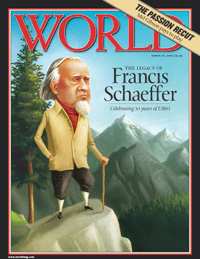
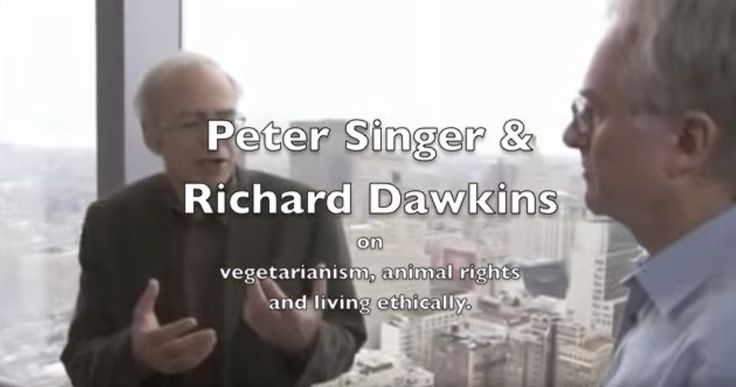



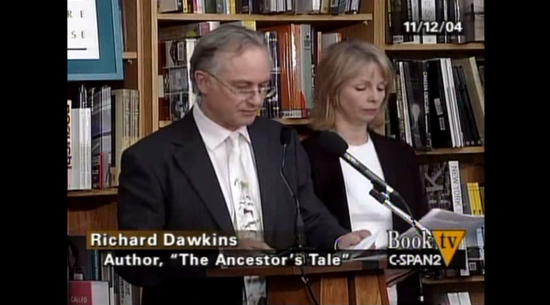



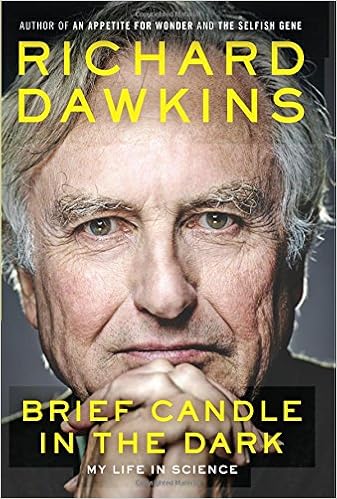
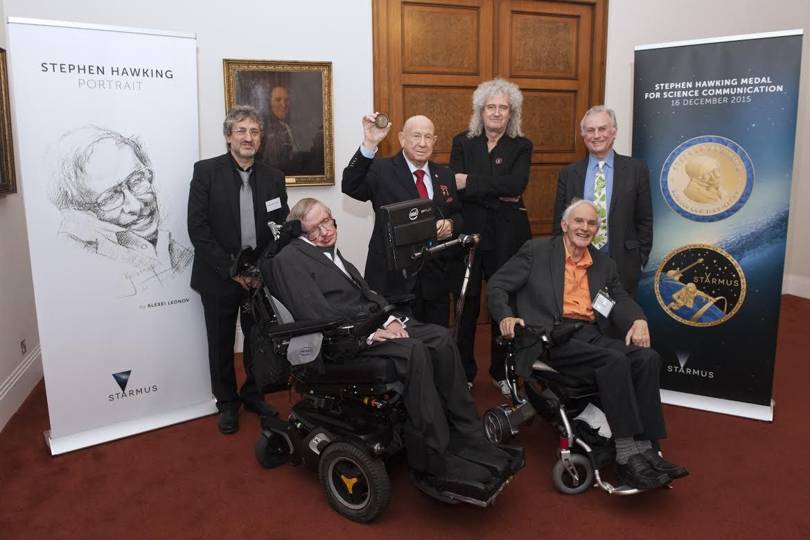


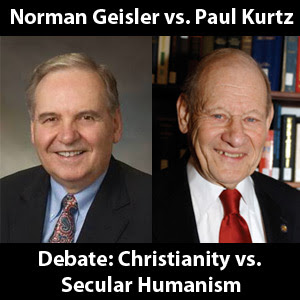

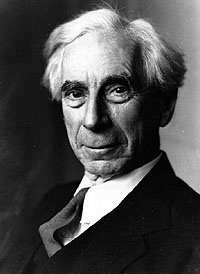



:format(jpeg):mode_rgb():quality(90)/discogs-images/R-1543205-1412349344-3159.jpeg.jpg)