Category Archives: Uncategorized

MUSIC MONDAY The Punk Band Television and their song Venus

__

—-

Television is an American rock band from New York City, most notably active in the 1970s. The group was founded by Tom Verlaine, Richard Lloyd, Billy Ficca, and Richard Hell. An early fixture of CBGB and the 1970s New York rock scene, the band is considered influential in the development of punkand alternative music.[4][5][6]

—-

——

__

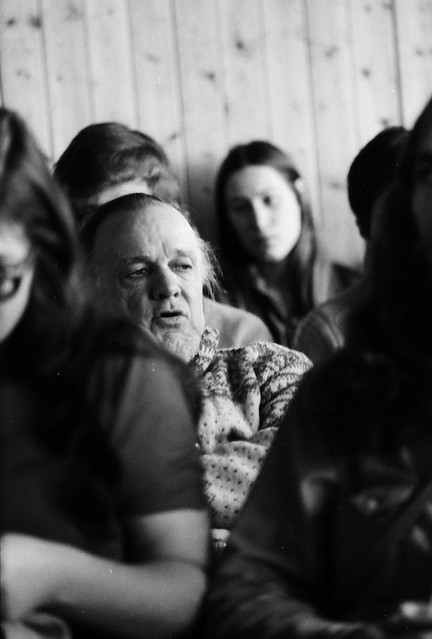
Francis Schaeffer noted:

I have lots of young people and older ones come to us from the ends of the earth. And as they come to us, they have gone to the end of this logically and they are not living in a romantic setting. They realize what the situation is. They can’t find any meaning to life. It’s the meaning to the black poetry. It’s the meaning of the black plays. It’s the meaning of all this. It’s the meaning of the words “punk rock.”

Where did young people turn most often in the 1960’s and 1970’s when they looked to escape? Unfortunately they many times look for meaning in life through new sexual relationships. Take a look at the lyrics from the song Venus:

It was a tight toy night, streets so bright
The world was so thin between my bones and skin
There stood another person who was a little surprised
To be face to face with a world so alive
How I fell (did you feel low?)
No (huh?)
I fell right into the arms of Venus De Milo
You know it’s all like some new kind of drug
My senses are sharp and my hands are like gloves
Broadway looked so medieval
It seemed to flap, like little pages
And I fell sideways laughing
With a friend from many stages
How we felt (did you feel low?)
Not at all (huh?)
I fell right into the arms of Venus De Milo
Suddenly my eyes went so soft and shaky
I knew there was pain but pain is not aching
Then Richie, Richie said
“Hey man, let’s dress up like cops, think of what we could do”
Something, something said “you better not”
And I fell (did you feel low?)
Nah (huh?)
I stood up, walked out of the arms of Venus De Milo
Source: LyricFind
Songwriters: Tom Verlaine
Venus lyrics © Universal Music Publishing Group

——

The Venus de Milo (Greek: Αφροδίτη της Μήλου, Aphroditi tis Milou) is an ancient Greek statue and one of the most famous works of ancient Greek sculpture. Initially it was attributed to the sculptor Praxiteles, but based on an inscription that was on its plinth, the statue is now thought to be the work of Alexandros of Antioch.[citation needed]

Venus de Milo
Greek: Αφροδίτη της Μήλου
Venus de Milo on display at the Louvre
Artist Alexandros of Antioch
Year Between 130 and 100 BC
Type Marble
Dimensions 203 cm (80 in)
Condition Arms broken off; otherwise intact
Location Louvre Museum, Paris, France
48.859958°N 2.337269°ECreated sometime between 130 and 100 BC, the statue is believed to depict Aphrodite, the Greek goddess of love and beauty. However, some scholars claim it is the sea-goddess Amphitrite, venerated on Milos.[1] It is a marble sculpture, slightly larger than life size at 203 cm (6 ft 8 in) high. Part of an arm and the original plinth were lost following the statue’s discovery. It is currently on permanent display at the Louvre Museum in Paris. The statue is named after Aphrodite’s Roman name, Venus, and the Greek island of Milos, where it was discovered.

Aphrodite[a] is an ancient Greek goddessassociated with love, beauty, pleasure, passion and procreation. She is identified with the planet Venus, which is named after the Roman goddess Venus, with whom Aphrodite was extensively syncretized. Aphrodite’s major symbols include myrtles, roses, doves, sparrows, and swans.

—-

“They are the natural outcome of a change from a Christian World View to a Humanistic one…
The result is a relativistic value system. A lack of a final meaning to life — that’s first. Why does human life have any value at all, if that is all that reality is? Not only are you going to die individually, but the whole human race is going to die, someday. It may not take the falling of the atom bombs, but someday the world will grow too hot, too cold. That’s what we are told on this other final reality, and someday all you people not only will be individually dead, but the whole conscious life on this world will be dead, and nobody will see the birds fly. And there’s no meaning to life.

As you know, I don’t speak academically, shut off in some scholastic cubicle, as it were. I have lots of young people and older ones come to us from the ends of the earth. And as they come to us, they have gone to the end of this logically and they are not living in a romantic setting. They realize what the situation is. They can’t find any meaning to life. It’s the meaning to the black poetry. It’s the meaning of the black plays. It’s the meaning of all this. It’s the meaning of the words “punk rock.” And I must say, that on the basis of what they are being taught in school, that the final reality is only this material thing, they are not wrong. They’re right! On this other basis there is no meaning to life and not only is there no meaning to life, but there is no value system that is fixed, and we find that the law is based then only on a relativistic basis and that law becomes purely arbitrary.

OUTLINE OF ECCLESIATES BY SCHAEFFER

_______

William Lane Craig on Man’s predicament if God doesn’t exist

Read Waiting for Godot by Samuel Beckett. During this entire play two men carry on trivial conversation while waiting for a third man to arrive, who never does. Our lives are like that, Beckett is saying; we just kill time waiting—for what, we don’t know.

Thus, if there is no God, then life itself becomes meaningless. Man and the universe are without ultimate significance.

Francis Schaeffer looks at Nihilism of Solomon and the causes of it!!!

Notes on Ecclesiastes by Francis Schaeffer

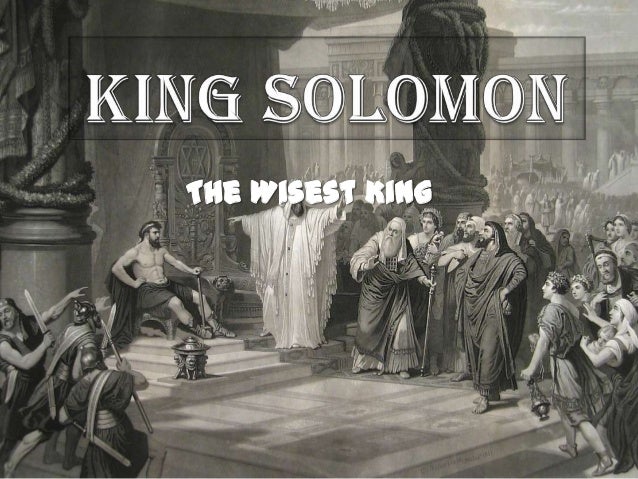
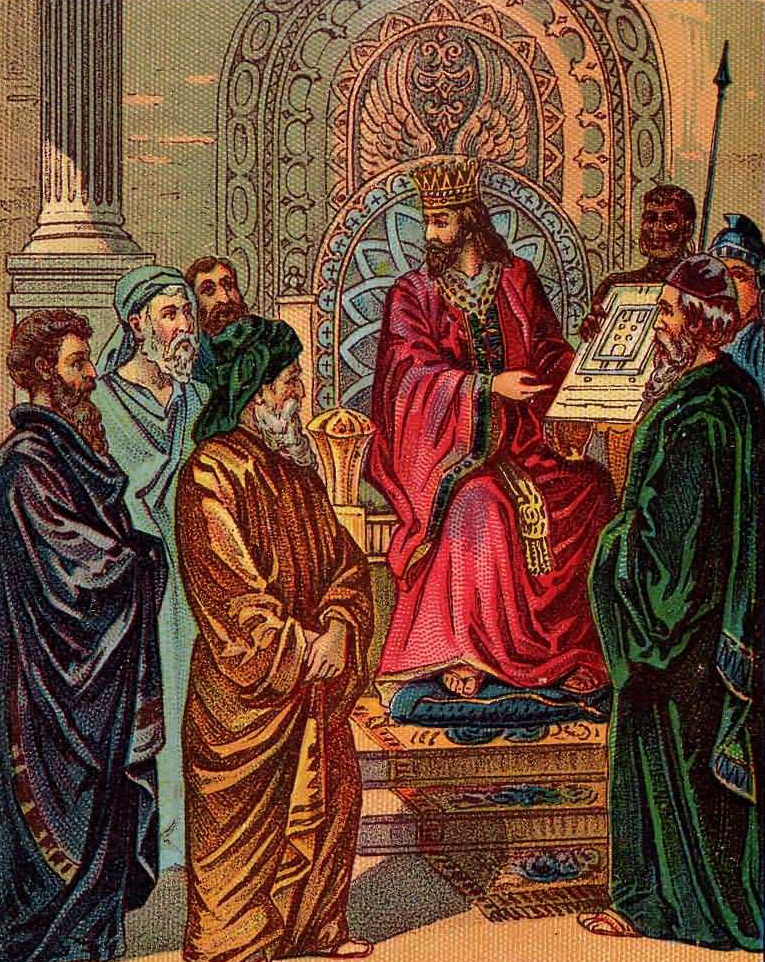
Solomon is the author of Ecclesiastes and he is truly an universal man like Leonardo da Vinci.

Two men of the Renaissance stand above all others – Michelangelo and Leonardo da Vinci and it is in them that one can perhaps grasp a view of the ultimate conclusion of humanism for man. Michelangelo was unequaled as a sculptor in the Renaissance and arguably no one has ever matched his talents.

The other giant of the Renaissance period was Leonardo da Vinci – the perfect Renaissance Man, the man who could do almost anything and does it better than most anyone else. As an inventor, an engineer, an anatomist, an architect, an artist, a chemist, a mathematician, he was almost without equal. It was perhaps his mathematics that lead da Vinci to come to his understanding of the ultimate meaning of Humanism. Leonardo is generally accepted as the first modern mathematician. He not only knew mathematics abstractly but applied it in his Notebooks to all manner of engineering problems. He was one of the unique geniuses of history, and in his brilliance he perceived that beginning humanistically with mathematics one only had particulars. He understood that man beginning from himself would never be able to come to meaning on the basis of mathematics. And he knew that having only individual things, particulars, one never could come to universals or meaning and thus one only ends with mechanics. In this he saw ahead to where our generation has come: everything, including man, is the machine.

Leonardo da Vinci compares well to Solomon and they  both were universal men searching for the meaning in life. Solomon was searching for a meaning in the midst of the details of life. His struggle was to find the meaning of life. Not just plans in life. Anybody can find plans in life. A child can fill up his time with plans of building tomorrow’s sand castle when today’s has been washed away. There is  a difference between finding plans in life and purpose in life. Humanism since the Renaissance and onward has never found it and it has never found it since. Modern man has not found it and it has always got worse and darker in a very real way.

We have here the declaration of Solomon’s universality:

1 Kings 4:30-34

English Standard Version (ESV)

30 so that Solomon’s wisdom surpassed the wisdom of all the people of the east and all the wisdom of Egypt. 31 For he was wiser than all other men, wiser than Ethan the Ezrahite, and Heman, Calcol, and Darda, the sons of Mahol, and his fame was in all the surrounding nations. 32 He also spoke 3,000 proverbs, and his songs were 1,005. 33 He spoke of trees, from the cedar that is in Lebanon to the hyssop that grows out of the wall. He spoke also of beasts, and of birds, and of reptiles, and of fish. 34 And people of all nations came to hear the wisdom of Solomon, and from all the kings of the earth, who had heard of his wisdom.

_________________________

Here is the universal man and his genius. Solomon is the universal man with a empire at his disposal. Solomon had it all.

Ecclesiastes 1:3

English Standard Version (ESV)

What does man gain by all the toil
    at which he toils under the sun?

Schaeffer noted that Solomon took a look at the meaning of life on the basis of human life standing alone between birth and death “under the sun.” This phrase UNDER THE SUN appears over and over in Ecclesiastes.

(Added by me:The Christian Scholar Ravi Zacharias noted, “The key to understanding the Book of Ecclesiastes is the term UNDER THE SUN — What that literally means is you lock God out of a closed system and you are left with only this world of Time plus Chance plus matter.” )

Man is caught in the cycle

Ecclesiastes 1:1-7

English Standard Version (ESV)

All Is Vanity

The words of the Preacher, the son of David, king in Jerusalem.

Vanity of vanities, says the Preacher,
    vanity of vanities! All is vanity.
What does man gain by all the toil
    at which he toils under the sun?
A generation goes, and a generation comes,
    but the earth remains forever.
The sun rises, and the sun goes down,
    and hastens to the place where it rises.
The wind blows to the south
    and goes around to the north;
around and around goes the wind,
    and on its circuits the wind returns.
All streams run to the sea,
    but the sea is not full;
to the place where the streams flow,
    there they flow again.

All things are full of weariness;
    a man cannot utter it;
the eye is not satisfied with seeing,
    nor the ear filled with hearing.
What has been is what will be,
    and what has been done is what will be done,
    and there is nothing new under the sun.
10 Is there a thing of which it is said,
    “See, this is new”?
It has been already
    in the ages before us.

_____________

Solomon is showing a high degree of comprehension of evaporation and the results of it. Seeing also in reality nothing changes. There is change but always in a set framework and that is cycle. You can relate this to the concepts of modern man. Ecclesiastes is the only pessimistic book in the Bible and that is because of the place where Solomon limits himself. He limits himself to the question of human life, life under the sun between birth and death and the answers this would give.

Ecclesiastes 1:4

English Standard Version (ESV)

A generation goes, and a generation comes,
    but the earth remains forever.

___________________

Ecclesiastes 4:16

English Standard Version (ESV)

16 There was no end of all the people, all of whom he led. Yet those who come later will not rejoice in him. Surely this also is vanity and a striving after wind.

__________________________

In verses 1:4 and 4:16 Solomon places man in the cycle. He doesn’t place man outside of the cycle. Man doesn’t escape the cycle. Man is only cycle. Birth and death and youth and old age. With this in mind Solomon makes this statement.

Ecclesiastes 6:12

12 For who knows what is good for a man during his lifetime, during the few years of his futile life? He will spend them like a shadow. For who can tell a man what will be after him under the sun?

____________________

There is no doubt in my mind that Solomon had the same experience in his life that I had as a younger man. I remember standing by the sea and the moon arose and it was copper and beauty. Then the moon did not look like a flat dish but a globe or a sphere since it was close to the horizon. One could feel the global shape of the earth too. Then it occurred to me that I could contemplate the interplay of the spheres and I was exalted because I thought I can look upon them with all their power, might, and size, but they could contempt nothing and I felt as man as God. Then came upon me a horror of great darkness because it suddenly occurred to me that although I could contemplate them and they could contemplate nothing yet they would continue to turn in ongoing cycles when I saw no more forever and I was crushed.

THIS IS SOLOMON’S FEELING TOO. The universal man, Solomon, beyond our intelligence with an empire at his disposal with the opportunity of observation so he could recite these words here in Ecclesiastes 6:12, “For who knows what is good for a man during his lifetime, during the few years of his futile life? He will spend them like a shadow. For who can tell a man what will be after him under the sun?”

Lack of Satisfaction in life

In Ecclesiastes 1:8 he drives this home when he states, “All things are wearisome; Man is not able to tell itThe eye is not satisfied with seeing, Nor is the ear filled with hearing.” Solomon is stating here the fact that there is no final satisfaction because you don’t get to the end of the thing. THERE IS NO FINAL SATISFACTION. This is related to Leonardo da Vinci’s similar search for universals and then meaning in life. 

In Ecclesiastes 5:11 Solomon again pursues this theme, When good things increase, those who consume them increase. So what is the advantage to their owners except to look on?”  Doesn’t that sound modern? It is as modern as this evening. Solomon here is stating the fact there is no reaching completion in anything and this is the reason there is no final satisfaction. There is simply no place to stop. It is impossible when laying up wealth for oneself when to stop. It is impossible to have the satisfaction of completion. 

Pursuing Learning

Now let us look down the details of his searching.

In Ecclesiastes 1: 13a we have the details of the universal man’s procedure. “And I set my mind to seek and explore by wisdom concerning all that has been done under heaven.”

So like any sensible man the instrument that is used is INTELLECT, and RAITIONALITY, and LOGIC. It is to be noted that even men who despise these in their theories begin and use them or they could not speak. There is no other way to begin except in the way they which man is and that is rational and intellectual with movements of that is logical within him. As a Christian I must say gently in passing that is the way God made him.

So we find first of all Solomon turned to WISDOM and logic. Wisdom is not to be confused with knowledge. A man may have great knowledge and no wisdom. Wisdom is the use of rationality and logic. A man can be very wise and have limited knowledge. Here he turns to wisdom in all that implies and the total rationality of man.

Works of Men done Under the Sun

After wisdom Solomon comes to the great WORKS of men. Ecclesiastes 1:14,  “I have seen all the works which have been done under the sun, and behold, all is [p]vanity and striving after wind.” Solomon is the man with an empire at this disposal that speaks. This is the man who has the copper refineries in Ezion-geber. This is the man who made the stables across his empire. This is the man who built the temple in Jerusalem. This is the man who stands on the world trade routes. He is not a provincial. He knew what was happening on the Phonetician coast and he knew what was happening in Egypt. There is no doubt he already knew something of building. This is Solomon and he pursues the greatness of his own construction and his conclusion is VANITY AND VEXATION OF SPIRIT.

Ecclesiastes 2:18-20

18 Thus I hated all the fruit of my labor for which I had labored under the sun, for I must leave it to the man who will come after me. 19 And who knows whether he will be a wise man or a fool? Yet he will have control over all the fruit of my labor for which I have labored by acting wisely under the sun. This too is vanity. 20 Therefore I completely despaired of all the fruit of my labor for which I had labored under the sun.

He looked at the works of his hands, great and multiplied by his wealth and his position and he shrugged his shoulders.

Ecclesiastes 2:22-23

22 For what does a man get in all his labor and in his striving with which he labors under the sun? 23 Because all his days his task is painful and grievous; even at night his mind does not rest. This too is vanity.

Man can not rest and yet he is never done and yet the things which he builds will out live him. If one wants an ironical three phrases these are they. There is a Dutch saying, “The tailor makes many suits but one day he will make a suit that will outlast the tailor.”

God has put eternity in our hearts but we can not know the beginning or the end of the thing from a vantage point of UNDER THE SUN

Ecclesiastes 1:16-18

16 I said to myself, “Behold, I have magnified and increased wisdom more than all who were over Jerusalem before me; and my mind has observed a wealth of wisdom and knowledge.” 17 And I set my mind to know wisdom and to know madness and folly; I realized that this also is striving after wind.18 Because in much wisdom there is much grief, and increasing knowledge results in increasing pain.

Solomon points out that you can not know the beginnings or what follows:

Ecclesiastes 3:11

11 He has made everything  appropriate in its time. He has also set eternity in their heart, yet so that man will not find out the work which God has done from the beginning even to the end.

Ecclesiastes 1:11

11 There is no remembrance of earlier things; And also of the later things which will occur, There will be for them no remembrance among those who will come later still.

Ecclesiastes 2:16

16 For there is no lasting remembrance of the wise man as with the fool, inasmuch as in the coming days all will be forgotten. And how the wise man and the fool alike die!

You bring together here the factor of the beginning and you can’t know what immediately follows after your death and of course you can’t know the final ends. What do you do and the answer is to get drunk and this was not thought of in the RUBAIYAT OF OMAR KAHAYYAM:

Ecclesiastes 2:1-3

I said to myself, “Come now, I will test you with pleasure. So enjoy yourself.” And behold, it too was futility. I said of laughter, “It is madness,” and of pleasure, “What does it accomplish?” I explored with my mind how to stimulate my body with wine while my mind was guiding me wisely, and how to take hold of folly, until I could see what good there is for the sons of men to do under heaven the few years of their lives.

The Daughter of the Vine:

You know, my Friends, with what a brave Carouse
I made a Second Marriage in my house;
Divorced old barren Reason from my Bed,
And took the Daughter of the Vine to Spouse.

from the Rubaiyat of Omar Khayyam (Translation by Edward Fitzgerald)

A perfectly good philosophy coming out of Islam, but Solomon is not the first man that thought of it nor the last. In light of what has been presented by Solomon is the solution just to get intoxicated and black the think out? So many people have taken to alcohol and the dope which so often follows in our day. This approach is incomplete, temporary and immature. Papa Hemingway can find the champagne of Paris sufficient for a time, but one he left his youth he never found it sufficient again. He had a lifetime spent looking back to Paris and that champagne and never finding it enough. It is no solution and Solomon says so too.

Ecclesiastes 2:4-11

I enlarged my works: I built houses for myself, I planted vineyards for myself; I made gardens and parks for myself and I planted in them all kinds of fruit trees; I made ponds of water for myself from which to irrigate a forest of growing trees. I bought male and female slaves and I had homeborn slaves. Also I possessed flocks and herds larger than all who preceded me in Jerusalem. Also, I collected for myself silver and gold and the treasure of kings and provinces. I provided for myself MALE AND  FEMALE SINGERS AND THE PLEASURES OF MEN–MANY CONCUBINES.

Then I became great and increased more than all who preceded me in Jerusalem. My wisdom also stood by me. 10 All that my eyes desired I did not refuse them. I did not withhold my heart from any pleasure, for my heart was pleased because of all my labor and this was my reward for all my labor.11 Thus I considered all my activities which my hands had done and the labor which I had exerted, and behold all was vanity and striving after wind and there was no profit under the sun.

He doesn’t mean there is no temporary profit but there is no real profit. Nothing that lasts. The walls crumble if they are as old as the Pyramids. You only see a shell of the Pyramids and not the glory that they were. This is what Solomon is saying. Look upon Solomon’s wonder and consider the Cedars of Lebanon which were not in his domain but at his disposal.

Ecclesiastes 6:2

a man to whom God has given riches and wealth and honor so that his soul lacks nothing of all that he desires; yet God has not empowered him to eat from them, for a foreigner enjoys them. This is vanity and a severe affliction.

Can someone stuff himself with food he can’t digest? Solomon came to this place of strife and confusion when he went on in his search for meaning.

 Oppressed have no comforter

Ecclesiastes 4:1

 Then I looked again at all the acts of oppression which were being done under the sun. And behold I saw the tears of the oppressed and that they had no one to comfort them; and on the side of their oppressors was power, but they had no one to comfort them.

Between birth and death power rules. Solomon looked over his kingdom and also around the world and proclaimed that right does not rule but power rules.

Ecclesiastes 7:14-15

14 In the day of prosperity be happy, but in the day of adversity consider—God has made the one as well as the other so that man will not discover anything that will be after him.

15 I have seen everything during my lifetime of futility; there is a righteous man who perishes in his righteousness and there is a wicked man who prolongs his life in his wickedness.

Ecclesiastes 8:14

14 There is futility which is done on the earth, that is, there are righteous men to whom it happens according to the deeds of the wicked. On the other hand, there are evil men to whom it happens according to the deeds of the righteous. I say that this too is futility.

We could say it in 20th century language, “The books are not balanced in this life.”

Pursuing Ladies

If one would flee to alcohol, then surely one may choose sexual pursuits to flee to. Solomon looks in this area too.

Ecclesiastes 7:25-28

25 I directed my mind to know, to investigate and to seek wisdom and an explanation, and to know the evil of folly and the foolishness of madness. 26 And I discovered more bitter than death the woman whose heart is snares and nets, whose hands are chains. One who is pleasing to God will escape from her, but the sinner will be captured by her.

27 “Behold, I have discovered this,” says the Preacher, “adding one thing to another to find an explanation, 28 I have looked for other answers but have found none. I found one man in a thousand that I could respect, but not one woman. (Good News Translation on verse 28)

One can understand both Solomon’s expertness in this field and his bitterness.

I Kings 11:1-3 (New American Standard Bible) 

11 Now King Solomon loved many foreign women along with the daughter of Pharaoh: Moabite, Ammonite, Edomite, Sidonian, and Hittite women, from the nations concerning which the Lord had said to the sons of Israel, “You shall not associate with them, nor shall they associate with you, for they will surely turn your heart away after their gods.” Solomon held fast to these in love. He had seven hundred wives, princesses, and three hundred concubines, and his wives turned his heart away.

An expert but also the reason for his bitterness. Certainly there have been many men over the centuries who have daydreamed of Solomon’s wealth in this area [of women], but at the end it was sorry, not only sorry but nothing and less than nothing. The simple fact is that one can not know woman in the real sense by pursuing 1000 women. It is not possible. Woman is not found this way. All that is left in this setting if one were to pursue the meaning of life in this direction is this most bitter word found in Ecclesiastes 7:28, “I have looked for other answers but have found none. I found one man in a thousand that I could respect, but not one woman.” (Good News Translation on verse 28) He was searching in the wrong way. He was searching for the answer to life in the limited circle of that which is beautiful in itself but not an answer finally in sexual life. More than that he finally tried to find it in variety and he didn’t even touch one woman at the end.

—-

Last letter I wrote to Hugh Hefner seen below:

Larry Joe Speaks  (August 20, 1947 to April 7, 2017)

Photo of Larry Joe Speaks

__

__

Image result for bill elliff

________

Image result for king solomon

____

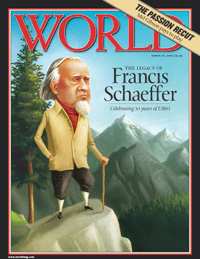
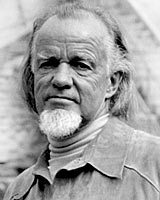
Francis Schaeffer pictured above

_______

June 30, 2017

Hugh Hefner

Playboy Mansion16236 Charing Cross RoadLos Angeles, CA 90024

Dear Hugh,

I started these series of letters on the meaning of it all on April 7, 2017 when  my good friend Larry Speaks died. Larry’s favorite sermon was WHO  IS JESUS? by Adrian Rogers and he gave hundreds of CD copies of that sermon away. I actually ran the copies off  for him and since the sermon was only 37 minutes long and the CD went 60 minutes, I also put on there another sermon by Bill Elliff too called WHAT WILL HAPPEN AT THE END OF TIME? Later in this letter I want to share a portion of that message with you. All of these letters I have written you have dealt with what Solomon had to say concerning the search for satisfaction in life UNDER THE SUN (without God in the picture.) Probably his most disappointing discovery was that being a ladies man left him unsatisfied.

Ecclesiastes 2:8-10The Message (MSG)

I piled up silver and gold,
loot from kings and kingdoms.
I gathered a chorus of singers to entertain me with song,
and—most exquisite of all pleasures—
    voluptuous maidens for my bed.

9-10 Oh, how I prospered! I left all my predecessors in Jerusalem far behind, left them behind in the dust. What’s more, I kept a clear head through it all. Everything I wanted I took—I never said no to myself. I gave in to every impulse, held back nothing. I sucked the marrow of pleasure out of every task—my reward to myself for a hard day’s work!

1 Kings 11:1-3 English Standard Version (ESV)

11 Now King Solomon loved many foreign women, along with the daughter of Pharaoh: Moabite, Ammonite, Edomite, Sidonian, and Hittite women, from the nations concerning which the Lord had said to the people of Israel, “You shall not enter into marriage with them, neither shall they with you, for surely they will turn away your heart after their gods.” Solomon clung to these in love. He had 700 wives, who were princesses, and 300 concubines. And his wives turned away his heart.

Francis Schaeffer observed concerning Solomon, “You can not know woman but knowing 1000 women.”

King Solomon in Ecclesiastes 2:11 sums up his search for meaning in the area of the Sexual Revolution with these words, “…behold, all was vanity and a striving after wind, and there was nothing to be gained under the sun.”

__

In fact, the Book of Ecclesiastes shows that Solomon came to the conclusion that NOTHING in life gives true satisfaction without God including knowledge (1:16-18), LADIES and liquor (2:1-3, 8, 10, 11), and great building projects (2:4-6, 18-20). You can only find a lasting meaning to your life by looking above the sun and bring God back into the picture.

Solomon’s experiment was a search for meaning to life “under the sun.” Then in last few words in the Book of Ecclesiastes he looks above the sun and brings God back into the picture: “The conclusion, when all has been heard, is: Fear God and keep His commandments, because this applies to every person. For God will bring every act to judgment, everything which is hidden, whether it is good or evil.”

Keith Hefner and Hugh Hefner

According to the Bible God will bring every act to judgment!!! Below is a portion of Bill Elliff’s message that deals with this:

WHAT WILL HAPPEN AT THE END OF TIME? I want to look at this picture of what will happen to everyone of us at the end of time. Let’s read our scripture passage.

Luke 12:1-10 English Standard Version (ESV)

Beware of the Leaven of the Pharisees

12 In the meantime, when so many thousands of the people had gathered together that they were trampling one another, he began to say to his disciples first, “Beware of the leaven of the Pharisees, which is hypocrisy. Nothing is covered up that will not be revealed, or hidden that will not be known. Therefore whatever you have said in the dark shall be heard in the light, and what you have whispered in private rooms shall be proclaimed on the housetops.

Have No Fear

“I tell you, my friends, do not fear those who kill the body, and after that have nothing more that they can do. But I will warn you whom to fear: fear him who, after he has killed, has authority to cast into hell. Yes, I tell you, fear him! Are not five sparrows sold for two pennies?[b]And not one of them is forgotten before God. Why, even the hairs of your head are all numbered. Fear not; you are of more value than many sparrows.

Acknowledge Christ Before Men

“And I tell you, everyone who acknowledges me before men, the Son of Man also will acknowledge before the angels of God, but the one who denies me before men will be denied before the angels of God. 10 And everyone who speaks a word against the Son of Man will be forgiven, but the one who blasphemes against the Holy Spirit will not be forgiven.

___________

What will happen at the end of time?

FIRST OF ALL, Jesus says it will be a time of the revelation of the secrets of your life.

A great time of revealing and uncovering, when unknown things to some become known to all. There is coming a day when what you really are will be revealed.

There is something inside us that thinks we can hide things from each other and hide things from God. Have you ever played HIDE AND SEEK with a group of young children? They will hide in plain view but in their mind they are hidden. My smallest children will put their hands over their eyes and they think that since they can’t see me that they are hidden from my sight. But the truth of the matter is that I can see them so clearly and sometimes we think that because we can’t see God that He can’t see us. Last week we read Hebrews 4:13 that says, “And not a creature exists that is concealed from His sight, but all things are open and exposed, and revealed to the eyes of Him with whom we have to give account.” One day the secrets of our heart will be revealed. In the brief days of our life, 20, 30, 40, 50, 60, 70 years that God may give you, or maybe a few years beyond that, we may do a good job of hiding those secrets, but one day the secrets of our lives will be revealed before God.

NEXT after the revelation of the secrets of your life there will be a great revelation of God’s authority.

Do you know what a sovereign is? A sovereign is one who has complete authority. He has the authority and he has the authority to carry it out.

There are 3 kinds of authority. First, voluntary authority such as you choosing to work for an employer. Second, seized authority like a murderer. Third, God is an absolute authority and He is the sovereign and He is over everything. It is right for Him to be over everything because He made everything. He is a God of perfect love,  a God of perfect mercy, a God of perfect grace, a God of perfect compassion, but He is a God of perfect righteousness.  If He was any less than that then He wouldn’t be God. He is a God of perfect holiness and authority. He has wooed us and called us and given us every opportunity to come, but He is a God who one day who will reveal. He has absolute authority over your life.

Look again at verses 4 and 5:

“I tell you, my friends, do not fear those who kill the body, and after that have nothing more that they can do. But I will warn you whom to fear: fear him who, after he has killed, has authority to cast into hell. Yes, I tell you, fear him!

God has the authority to do that. There is coming a day when there will be a great separation and a great dividing. It is all over the scriptures. God has given us the moment of grace to come and trust in Him and give our lives to Him, but one day the door will be closed and then the division will come. He will say to some come into my kingdom that I have prepared for you and he will say to others you are headed to an eternity separated. You have chosen your fate for all eternity. There will permanent separation from God in hell.

FINALLY, it will be a day of the revelation of the substance of your relationship to God.

Look at verses 8 and 9: “And I tell you, everyone who acknowledges me before men, the Son of Man also will acknowledge before the angels of God, but the one who denies me before men will be denied before the angels of God.

The Pharisees said they had a relationship with God but they were hypocrites and there was no substance to their relationship. Jesus is saying that when the secrets of your heart are revealed God will determine the substance of your relationship to God and whether it is real or not.

The answer to find meaning in life is found in putting your faith and trust in Jesus Christ. The Bible is true from cover to cover and can be trusted. Below is a piece of that evidence given by Francis Schaeffer concerning the accuracy of the Bible.

Thanks for your time.

Sincerely,

Everette Hatcher, everettehatcher@gmail.com, http://www.thedailyhatch.org, cell ph 501-920-5733, Box 23416, LittleRock, AR 72221

—-

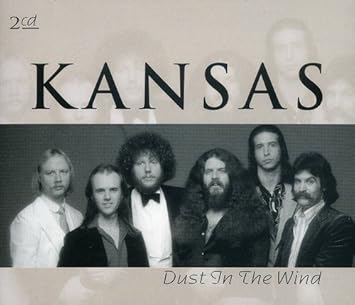
In 1978 I heard the song “Dust in the Wind” by Kansas when it rose to #6 on the charts. That song told me thatKerry Livgren the writer of that song and a member of Kansas had come to the same conclusion that Solomon had. I remember mentioning to my friends at church that we may soon see some members of Kansas become Christians because their search for the meaning of life had obviously come up empty even though they had risen from being an unknown band to the top of the music business and had all the wealth and fame that came with that. Furthermore, like Solomon and Coldplay, they realized death comes to everyone and “there must be something more.”

Livgren wrote:

“All we do, crumbles to the ground though we refuse to see, Dust in the Wind, All we are is dust in the wind, Don’t hang on, Nothing lasts forever but the Earth and Sky, It slips away, And all your money won’t another minute buy.”

Both Kerry Livgren and Dave Hope of Kansas became Christians eventually. Kerry Livgren first tried Eastern Religions and Dave Hope had to come out of a heavy drug addiction. I was shocked and elated to see their personal testimony on The 700 Club in 1981 and that same  interview can be seen on youtube today. Livgren lives in Topeka, Kansas today where he teaches “Diggers,” a Sunday school class at Topeka Bible Church. Hope is the head of Worship, Evangelism and Outreach at Immanuel Anglican Church in Destin, Florida.

The movie maker Woody Allen has embraced the nihilistic message of the song “Dust in the Wind” by Kansas. David Segal in his article, “Things are Looking Up for the Director Woody Allen. No?” (Washington Post, July 26, 2006), wrote, “Allen is evangelically passionate about a few subjects. None more so than the chilling emptiness of life…The 70-year-old writer and director has been musing about life, sex, work, death and his generally futile search for hope…the world according to Woody is so bereft of meaning, so godless and absurd, that the only proper response is to curl up on a sofa and howl for your mommy.”

The song “Dust in the Wind” recommends, “Don’t hang on.” Allen himself says, “It’s just an awful thing and in that context you’ve got to find an answer to the question: ‘Why go on?’ ”  It is ironic that Chris Martin the leader of Coldplay regards Woody Allen as his favorite director.

Lets sum up the final conclusions of these gentlemen:  Coldplay is still searching for that “something more.” Woody Allen has concluded the search is futile. Livgren and Hope of Kansas have become Christians and are involved in fulltime ministry. Solomon’s experiment was a search for meaning to life “under the sun.” Then in last few words in the Book of Ecclesiastes he looks above the sun and brings God back into the picture: “The conclusion, when all has been heard, is: Fear God and keep His commandments, because this applies to every person. For God will bring every act to judgment, everything which is hidden, whether it is good or evil.”

You can hear Kerry Livgren’s story from this youtube link:

(part 1 ten minutes)

(part 2 ten minutes)

Kansas – Dust In The Wind

Ecclesiastes 1

Published on Sep 4, 2012

Calvary Chapel Spring Valley | Sunday Evening | September 2, 2012 | Pastor Derek Neider

_____________________

Related posts

_________

__

Sweatshops, Robber Barons, and Capitalist Exploitation

—-

Sweatshops, Robber Barons, and Capitalist Exploitation

November 14, 2019 by Dan Mitchell

The hard part about being a libertarian is that there are endless opportunities to be frustrated. Especially if you’re job is trying to convince politicians to restrain the size and scope of government when that’s not in their self interest.

One of my special frustrations, though, is that many people don’t understand economic history.

Today, let’s talk about another example of bad economic history. Many people think corporations are rapacious entities that – in the absence of wise government – will create monopolies that screw workers with sweatshop conditions and screw consumers with ever-higher prices.

Much of this mythology goes back to the era of supposed “Robber Barons” in the late 1800s.

Fortunately, in a column for FEE, Professor Burton Folsom shared an excerpt from his book on the topic. He notes that there was considerable economic liberty – and considerable economic progress – during that era.

The years…from 1865 to the early 1900s, saw the U.S. encourage entrepreneurs indirectly by limiting government. Slavery was abolished and so was the income tax. Federal spending was slashed… American politicians learned from the past. They had dabbled in federal subsidies from steamships to transcontinental railroads, and those experiments dismally failed. Politicians then turned to free markets as a better strategy for economic development. The world-dominating achievements of Cornelius Vanderbilt, James J. Hill, John D. Rockefeller, and Charles Schwab validated America’s unprecedented limited government.

Yet that’s not the story you find in most history books.

Professor Folsom explores why there’s such a poor understanding and finds bias in the academy, as well as an inability to understand the difference between honest wealth and politically connected wealth.

Why is it, then, that for so many years, most historians have been teaching the opposite lesson? …most historians have preached that many, if not all, entrepreneurs were “robber barons.” They did not enrich the U.S. with their investments; instead, they bilked the public and corrupted political and economic life in America. The catalyst for this negative view of American entrepreneurs was historian Matthew Josephson, who wrote a landmark book, The Robber Barons. …Josephson began research for his book in 1932, the nadir of the Great Depression. Businessmen were a handy scapegoat for that crisis, and Josephson embraced a Marxist view that the Great Depression was perhaps the last phase in the fall of capitalism and the triumph of communism. …“I am not a complete Marxist,” Josephson insisted, “But what I took to heart for my own project was his theory of the process of industrial concentration… Josephson missed the distinction between market entrepreneurs like Vanderbilt, Hill, and Rockefeller and political entrepreneurs like Collins, Villard, and Gould. …Most of Josephson’s ire is directed toward political entrepreneurs. The subsidized Henry Villard of the Northern Pacific Railroad, with his “bad grades and high interest charges”… But it never occurs to Josephson that the subsidies government gave these railroads created the incentives. …If Josephson’s research was so sloppy, and his interpretation so biased, how did his Robber Baron view come to prevail in the writing of U.S. history? …Progressive historians had begun to dominate the writing of history and they were eager to blame a new generation of robber barons for the collapse of the American economy.

Now let’s take a closer look at two infamous companies.

We’ll begin with Standard Oil, which has a modern-day reputation of being a greedy monopolist.

Yet as David Weinberger explained for FEE, that’s an odd way of describing a company that continuously lowered prices.

In 1870, when it was in its early years, Standard Oil owned just 4 percent of the petroleum market. John D. Rockefeller, however, obsessed over improving efficiency and cutting costs. Through economies of scale and vertical integration, he vastly improved oil-refining efficiency. His business grew as a result. By 1874, his share of the petroleum market jumped to 25 percent, and by 1880 it skyrocketed to about 85 percent. Meanwhile, the price of oil plummeted from 30 cents per gallon in 1869 to eight cents in 1885. …His business was a model of free-market efficiency.

The government ultimately used antitrust laws to dismantle the company, but it’s worth noting that the courts never found any evidence of actual monopolistic behavior.

In 1911, the court declared Standard Oil a monopoly and ordered its breakup. …economist John S. McGee reviewed over 11,000 pages of trial testimony, including the charges brought by Standard Oil’s competitors. Publishing his findings in the Journal of Law and Economics, he concluded that there was “little to no evidence” of wrongdoing, adding that “Standard Oil did not use predatory price cutting to acquire or keep monopoly power.” Furthermore, and also in contradiction to monopoly theory, Standard Oil’s share of the market had declined from close to 90 percent in the late 1800s to about 65 percent at the time of the court’s ruling. …In other words, Standard Oil did precisely the opposite of what monopoly theory maintains—it reduced rather than raised prices, it increased rather than cut production, it lost rather than “controlled” market share, and it paid its employees more rather than less than its competitors—yet the theory that Standard Oil engaged in “predatory practices” and “exploited” consumers has prevailed in our history books.

Now let’s look at the United Fruit Corporation, which history tells us was a master of brutal exploitation.

Yet a new academic study by Esteban Mendez-Chacon and Diana Van Patten discovered that the workers of Costa Rica were beneficiaries (h/t: Alex Tabarrok).

These excerpts from the abstract provide a very good summary of what really happened.

The United Fruit Company (UFC)…was given a large land concession in Costa Rica — one of the so-called “Banana Republics”— from 1889 to 1984. Using administrative census data with census-block geo-references from 1973 to 2011, we implement a geographic regression discontinuity (RD) design that exploits a quasi-random assignment of land. We find that the firm had a positive and persistent effect on living standards. Regions within the UFC were 26% less likely to be poor in 1973 than nearby counterfactual locations, with only 63% of the gap closing over the following 3 decades. Company documents explain that a key concern at the time was to attract and maintain a sizable workforce, which induced the firm to invest heavily in local amenities that likely account for our result. We then build a dynamic spatial model in which a firm’s labor market power within a region depends on how mobile workers are across locations and run couterfactual exercises. The model is consistent with observable spatial frictions and the RD estimates, and shows that the firm increases aggregate welfare
by 2.9%.

Here’s a look at the data showing lower poverty rates based on proximity to company lands.

And here are other measures of well-being for populations on either side of those boundaries.

What’s especially interesting is that the benefits have remained even several decades after the company’s concession ended.

By the way, I’m not saying that the United Fruit Company was motivated by anything other than profits.

Nor am I saying that Standard Oil was guided by anything beyond making money.

What I am saying, however, is that Adam Smith was right. The pursuit of self interest (whether by companies, workers, entrepreneurs, etc) is what creates mass prosperity. And what enabled an end to child labor.

Here are two videos for those who want further background. Here’s Professor Brian Domitrovic analyzing the “Gilded Age.”

And here’s an excerpt of the great Milton Friedman discussing the so-called Robber Barons.

P.S. By today’s standards, workers didn’t have great lives in the 1800s. But it’s important to understand that what we perceive today as “sweatshop conditions” were actually a big improvement over the grinding poverty of subsistence agriculture. Similarly, working conditions in modern-era third world sweatshops seem awful, but they are an avenue of upward mobility for people who otherwise would suffer unimaginable material deprivation.

Milton Friedman

Related posts:


“Friedman Friday” (“Free to Choose” episode 1 – Power of the Market. part 7 of 7)

March 16, 2012 – 12:25 am

  Michael Harrington:  If you don’t have the expertise, the knowledge technology today, you’re out of the debate. And I think that we have to democratize information and government as well as the economy and society. FRIEDMAN: I am sorry to say Michael Harrington’s solution is not a solution to it. He wants minority rule, I […] By Everette Hatcher III | Posted in Current Events, Milton Friedman | Edit | Comments (0)

“Friedman Friday” (“Free to Choose” episode 1 – Power of the Market. part 6 of 7)

March 9, 2012 – 12:29 am

PETERSON: Well, let me ask you how you would cope with this problem, Dr. Friedman. The people decided that they wanted cool air, and there was tremendous need, and so we built a huge industry, the air conditioning industry, hundreds of thousands of jobs, tremendous earnings opportunities and nearly all of us now have air […] By Everette Hatcher III | Posted in Current Events, Milton Friedman | Edit | Comments (0)

“Friedman Friday” (“Free to Choose” episode 1 – Power of the Market. part 5 of 7)

March 2, 2012 – 12:26 am

Part 5 Milton Friedman: I do not believe it’s proper to put the situation in terms of industrialist versus government. On the contrary, one of the reasons why I am in favor of less government is because when you have more government industrialists take it over, and the two together form a coalition against the ordinary […] By Everette Hatcher III | Posted in Current Events, Milton Friedman | Edit | Comments (0)

“Friedman Friday” (“Free to Choose” episode 1 – Power of the Market. part 4 of 7)

February 24, 2012 – 12:21 am

The fundamental principal of the free society is voluntary cooperation. The economic market, buying and selling, is one example. But it’s only one example. Voluntary cooperation is far broader than that. To take an example that at first sight seems about as far away as you can get __ the language we speak; the words […] By Everette Hatcher III | Posted in Current Events, Milton Friedman | Edit | Comments (0)

“Friedman Friday” (“Free to Choose” episode 1 – Power of the Market. part 3 of 7)

February 17, 2012 – 12:12 am

  _________________________   Pt3  Nowadays there’s a considerable amount of traffic at this border. People cross a little more freely than they use to. Many people from Hong Kong trade in China and the market has helped bring the two countries closer together, but the barriers between them are still very real. On this side […] By Everette Hatcher III | Posted in Current Events, Milton Friedman | Edit | Comments (0)
“Friedman Friday” (“Free to Choose” episode 1 – Power of the Market. part 2 of 7)

February 10, 2012 – 12:09 am

  Aside from its harbor, the only other important resource of Hong Kong is people __ over 4_ million of them. Like America a century ago, Hong Kong in the past few decades has been a haven for people who sought the freedom to make the most of their own abilities. Many of them are […] By Everette Hatcher III | Posted in Current Events, Milton Friedman | Edit | Comments (0)

“Friedman Friday” (“Free to Choose” episode 1 – Power of the Market. part 1of 7)

February 3, 2012 – 12:07 am

“FREE TO CHOOSE” 1: The Power of the Market (Milton Friedman) Free to Choose ^ | 1980 | Milton Friedman Posted on Monday, July 17, 2006 4:20:46 PM by Choose Ye This Day FREE TO CHOOSE: The Power of the Market Friedman: Once all of this was a swamp, covered with forest. The Canarce Indians […]

Milton Friedman The Power of the Market 1-5

Debate on Milton Friedman’s cure for inflation

September 29, 2011 – 7:24 am

If you would like to see the first three episodes on inflation in Milton Friedman’s film series “Free to Choose” then go to a previous post I did. Ep. 9 – How to Cure Inflation [4/7]. Milton Friedman’s Free to Choose (1980) Uploaded by investbligurucom on Jun 16, 2010 While many people have a fairly […]

By Everette Hatcher III | Also posted in Current Events | Tagged dr friedman, expansion history, income tax brackets, political courage, www youtube | Edit | Comments (0)

“Friedman Friday” Milton Friedman believed in liberty (Interview by Charlie Rose of Milton Friedman part 1)

April 19, 2013 – 1:14 am

Charlie Rose interview of Milton Friedman My favorite economist: Milton Friedman : A Great Champion of Liberty  by V. Sundaram   Milton Friedman, the Nobel Prize-winning economist who advocated an unfettered free market and had the ear of three US Presidents – Nixon, Ford and Reagan – died last Thursday (16 November, 2006 ) in San Francisco […] By Everette Hatcher III | Posted in Milton Friedman | Edit | Comments (0)

What were the main proposals of Milton Friedman?

February 21, 2013 – 1:01 am

Stearns Speaks on House Floor in Support of Balanced Budget Amendment Uploaded by RepCliffStearns on Nov 18, 2011 Speaking on House floor in support of Balanced Budget Resolution, 11/18/2011 ___________ Below are some of the main proposals of Milton Friedman. I highly respected his work. David J. Theroux said this about Milton Friedman’s view concerning […] By Everette Hatcher III | Posted in Milton Friedman | Edit | Comments (0)

“Friedman Friday,” EPISODE “The Failure of Socialism” of Free to Choose in 1990 by Milton Friedman (Part 1)

December 7, 2012 – 5:55 am

Milton Friedman: Free To Choose – The Failure Of Socialism With Ronald Reagan (Full) Published on Mar 19, 2012 by NoNationalityNeeded Milton Friedman’s writings affected me greatly when I first discovered them and I wanted to share with you. We must not head down the path of socialism like Greece has done. Abstract: Ronald Reagan […] By Everette Hatcher III | Posted in Milton FriedmanPresident Obama | Edit | Comments (1)

Defending Milton Friedman

July 31, 2012 – 6:45 am

What a great defense of Milton Friedman!!!!   Defaming Milton Friedman by Johan Norberg This article appeared in Reason Online on September 26, 2008  PRINT PAGE  CITE THIS      Sans Serif      Serif Share with your friends: ShareThis In the future, if you tell a student or a journalist that you favor free markets and limited government, there is […]

Vouchers Education Week, Part II: The Case for School Choice

—-

Education Week, Part II: The Case for School Choice

November 19, 2019 by Dan Mitchell

School choice is based on the simple premise that we’ll get better results if school budgets are distributed to parents so they can pick from schools that compete for their kids (and dollars).

The current system, by contrast, is an inefficient monopoly that largely caters to the interests of teacher unions and school bureaucrats. Which is why more money and more money and more money and more money and more money (you get the point) never translates into better outcomes.

This is why even the Washington Post has editorialized for choice-based reform.

A few years ago, I shared a bunch of data showing that school choice boosts academic results for kids.

As part of our recognition of National Education Week, let’s augment those results with some more-recent findings.

There’s new evidence, for instance, that Florida’s choice system is producing good results.

…new evidence from the Urban Institute, which…examined a larger data set of some 89,000 students. The researchers compared those who used school vouchers to public-school students with comparable math and reading scores, ethnicity, gender and disability status. …High school voucher students attend either two-year or four-year institutions at a rate of 64%, according to the report, compared to 54% for non-voucher students. For four-year colleges only, some 27% of voucher students attend compared to 19% for public-school peers. …About 12% of voucher students attended private universities, double the rate of non-voucher students. …Voucher students who entered the program in elementary or middle school were 11% more likely to get a bachelor’s degree, while students who entered in high school were 20% more likely. …High schoolers who stayed in the voucher program for at least three years “were about 5 percentage points more likely to earn a bachelor’s degree, a 50 percent increase.”

column published by the Foundation for Economic Education notes the positive outcomes in Wisconsin.

Private schools and independent public charter schools are more productive than district public schools, …according to report author Corey DeAngelis… DeAngelis compares the productivity of schools in cities throughout Wisconsin based on per-pupil funding and student achievement. Wisconsin’s four private-school parental choice programs currently enroll over 40,000 students combined, and more than 43,000 students are enrolled in charter schools. …Compared to Wisconsin district public schools, private schools participating in parental choice programs receive 27 percent less per-pupil funding, and charter schools receive 22 percent less. Yet these schools get more bang for every education buck, according to DeAngelis: “I find that private schools produce 2.27 more points on the Accountability Report Card for every $1,000 invested than district-run public schools [across 26 cities], demonstrating a 36 percent cost-effectiveness advantage for private schools. Independent charter schools produce 3.02 more points on the Accountability Report Card for every $1,000 invested than district-run public schools [throughout Milwaukee and Racine], demonstrating a 54 percent cost-effectiveness advantage for independent charter schools.”

A study looking at 11 school choice programs found very positive results.

Today 26 states and the District of Columbia have some private school choice program, and the trend is for more: Half of the programs have been established in the past five years. …a new study from the Department of Education Reform at the University of Arkansas shows…that voucher students show “statistically significant” improvement in math and reading test scores. The researchers found that vouchers on average increase the reading scores of students who get them by about 0.27 standard deviations and their math scores by about 0.15 standard deviations. In laymen’s terms, this means that on average voucher students enjoy the equivalent of several months of additional learning compared to non-voucher students. …“When you do the math, students achieve more when they have access to private school choice,” says Patrick J. Wolf, who conducted the study with M. Danish Shakeel and Kaitlin P. Anderson. …The Arkansas results aren’t likely to change union minds because vouchers are a mortal threat to their public-school monopoly. But for anyone who cares about how much kids learn, especially the poorest kids, the Arkansas study is welcome news that school choice delivers.

Even if choice is just limited to charter schools, there are positive outcomes, as seen from research on Michigan’s program.

Charter students in Detroit on average score 60% more proficient on state tests than kids attending the city’s traditional public schools. Eighteen of the top 25 schools in Detroit are charters while 23 of the bottom 25 are traditional schools. Two studies from Stanford’s Center for Research on Education Outcomes (2013, 2015) found that students attending Michigan charters gained on average an additional two months of learning every year over their traditional school counterparts. Charter school students in Detroit gained three months.

Back in 2016, Jason Riley of the Wall Street Journal shared some evidence about the benefits of choice.

Barack Obama…spent his entire presidency trying to shut down a school voucher program in Washington, D.C., that gives poor black and brown children access to private schools and, according to the Education Department’s own evaluation, improves their chances of graduating by as much as 21 percentage points. …Democrats continue to throw ever-increasing amounts of taxpayer money at the problem in return for political support from the teachers unions that control public education. …Harvard professor Martin West describes some of the more recent school-choice research. Students at Boston charter high schools “are more likely to take and pass Advance Placement courses and to enroll in a four-year rather than a two-year college,” writes Mr. West. Attending a charter middle school in Harlem “sharply reduced the chances of teen pregnancy (for girls) and incarceration (for boys),” and “a Florida charter school increased students’ earnings as adults.” Mr. West concludes that “attending a school of choice, whether private or charter, is especially beneficial for minority students living in urban areas.”

study by the World Bank found big benefits from choice in Washington, D.C., with minorities being the biggest beneficiaries.

This paper develops and estimates an equilibrium model of charter school entry and school choice. In the model, households choose among public, private, and charter schools, and a regulator authorizes charter entry and mandates charter exit. The model is estimated for Washington, D.C. According to the estimates, charters generate net social gains by providing additional school options, and they benefit non-white, low-income, and middle-school students the most. Further, policies that raise the supply of prospective charter entrants in combination with high authorization standards enhance social welfare. …In order to quantify the net social gains generated by charter schools, we run a counterfactual consisting of not having charters at all in 2007. …charter students who switch into public schools outside Ward 3 experience lower proficiency, quality and value added than before. Proficiency losses are quite severe at the middle school level and for poor black students, who on average lose 6.4 and 5.3 percentage points out of their baseline average proficiency… On average all student groups lose welfare due to the loss of school options, but losses are the greatest for those previously most likely to attend charters. Middle school students, who gain much from the quantity and quality of options offered by charters, are particularly hurt. Further, poor blacks in middle school experience a loss of about 15 percent of their baseline welfare. …The 25 percent of students most hurt by charter removal are non-white, have an average household income of $27,000 and experience an average welfare loss equivalent to 19 percent of their income. …total social benefits fall by about $77,000,000 when the 59 charters are removed.

This map from the study is worth some careful attention.

It reveals that the rich and white families who live in northwestern D.C. don’t have any big need for choice. It’s the poor families (mostly black) elsewhere in the city who are anxious for alternatives.

(Which is why the NAACP’s decision to side with unions over black children is so reprehensible.)

The good news is that there’s ongoing movement to expand choice in some states.

The Wall Street Journal opined about significant progress in Florida.

With little fanfare this autumn, another 18,000 young Floridians joined the ranks of Americans who enjoy school choice. More than 100,000 students, all from families of modest means, already attend private schools using the state’s main tax-credit scholarship. But the wait list this spring ran to the thousands, so in May the state created a voucher program to clear the backlog. …This is a huge victory for school choice. The first cohort of voucher recipients is 71% black and Hispanic, according to state data. Eighty-seven percent have household incomes at or below 185% of the poverty line, or $47,638 for a family of four. The law gives priority to these students… Mr. DeSantis’s opponent, Democrat Andrew Gillum, said he would wind down the scholarships. CNN’s exit poll says 18% of black women voted for Mr. DeSantis… That’s decisive, since the Governor won by fewer than 40,000 ballots.

The final passage is worth emphasis. Reformers can attract votes from minority families who are ill-served by the government’s education monopoly,

Parents in low-income communities aren’t stupid. Once they figure out that government schools are run for the benefit of unions rather than children, they will respond accordingly.

And here’s some positive news from Tennessee.

Governor Bill Lee fulfilled a campaign promise on Friday when he signed a school voucher bill into law. …its passage is a big victory for the Governor and even more for Tennessee children trapped in failing public schools. Beginning in the 2021-22 school year, the measure will provide debit cards averaging $7,300 each year for low-income families to use for education-related expenses. The money can pay for private-school tuition, textbooks or a tutor, among other things. The program is capped at a disappointingly low 15,000 students. Participation is also restricted to only two of the state’s 95 counties—Shelby and Davidson… This is where the need is greatest, given that these two counties have the most failing public schools.

To be sure, the union bosses are fighting back.

Over the years, we’ve seen setbacks in states where we hoped for progress, such as Colorado and Pennsylvania.

Let’s close with this very simple message…

…and this very persuasive video.

P.S. There’s also evidence that school choice is better for children’s mental health since it’s associated with lower suicide rates. That’s a nice fringe benefit, much like the data on school choice and jobs.

P.P.S. Getting rid of the Department of Education would be a good idea, but the battle for school choice is largely won and lost on the state and local level.

Milton Friedman

Related posts:


“Friedman Friday” (“Free to Choose” episode 1 – Power of the Market. part 7 of 7)

March 16, 2012 – 12:25 am

  Michael Harrington:  If you don’t have the expertise, the knowledge technology today, you’re out of the debate. And I think that we have to democratize information and government as well as the economy and society. FRIEDMAN: I am sorry to say Michael Harrington’s solution is not a solution to it. He wants minority rule, I […] By Everette Hatcher III | Posted in Current Events, Milton Friedman | Edit | Comments (0)

“Friedman Friday” (“Free to Choose” episode 1 – Power of the Market. part 6 of 7)

March 9, 2012 – 12:29 am

PETERSON: Well, let me ask you how you would cope with this problem, Dr. Friedman. The people decided that they wanted cool air, and there was tremendous need, and so we built a huge industry, the air conditioning industry, hundreds of thousands of jobs, tremendous earnings opportunities and nearly all of us now have air […] By Everette Hatcher III | Posted in Current Events, Milton Friedman | Edit | Comments (0)

“Friedman Friday” (“Free to Choose” episode 1 – Power of the Market. part 5 of 7)

March 2, 2012 – 12:26 am

Part 5 Milton Friedman: I do not believe it’s proper to put the situation in terms of industrialist versus government. On the contrary, one of the reasons why I am in favor of less government is because when you have more government industrialists take it over, and the two together form a coalition against the ordinary […] By Everette Hatcher III | Posted in Current Events, Milton Friedman | Edit | Comments (0)

“Friedman Friday” (“Free to Choose” episode 1 – Power of the Market. part 4 of 7)

February 24, 2012 – 12:21 am

The fundamental principal of the free society is voluntary cooperation. The economic market, buying and selling, is one example. But it’s only one example. Voluntary cooperation is far broader than that. To take an example that at first sight seems about as far away as you can get __ the language we speak; the words […] By Everette Hatcher III | Posted in Current Events, Milton Friedman | Edit | Comments (0)

“Friedman Friday” (“Free to Choose” episode 1 – Power of the Market. part 3 of 7)

February 17, 2012 – 12:12 am

  _________________________   Pt3  Nowadays there’s a considerable amount of traffic at this border. People cross a little more freely than they use to. Many people from Hong Kong trade in China and the market has helped bring the two countries closer together, but the barriers between them are still very real. On this side […] By Everette Hatcher III | Posted in Current Events, Milton Friedman | Edit | Comments (0)

“Friedman Friday” (“Free to Choose” episode 1 – Power of the Market. part 2 of 7)

February 10, 2012 – 12:09 am

  Aside from its harbor, the only other important resource of Hong Kong is people __ over 4_ million of them. Like America a century ago, Hong Kong in the past few decades has been a haven for people who sought the freedom to make the most of their own abilities. Many of them are […] By Everette Hatcher III | Posted in Current Events, Milton Friedman | Edit | Comments (0)

“Friedman Friday” (“Free to Choose” episode 1 – Power of the Market. part 1of 7)

February 3, 2012 – 12:07 am

“FREE TO CHOOSE” 1: The Power of the Market (Milton Friedman) Free to Choose ^ | 1980 | Milton Friedman Posted on Monday, July 17, 2006 4:20:46 PM by Choose Ye This Day FREE TO CHOOSE: The Power of the Market Friedman: Once all of this was a swamp, covered with forest. The Canarce Indians […]

Milton Friedman The Power of the Market 1-5

Debate on Milton Friedman’s cure for inflation

September 29, 2011 – 7:24 am

If you would like to see the first three episodes on inflation in Milton Friedman’s film series “Free to Choose” then go to a previous post I did. Ep. 9 – How to Cure Inflation [4/7]. Milton Friedman’s Free to Choose (1980) Uploaded by investbligurucom on Jun 16, 2010 While many people have a fairly […]

By Everette Hatcher III | Also posted in Current Events | Tagged dr friedman, expansion history, income tax brackets, political courage, www youtube | Edit | Comments (0)

“Friedman Friday” Milton Friedman believed in liberty (Interview by Charlie Rose of Milton Friedman part 1)

April 19, 2013 – 1:14 am

Charlie Rose interview of Milton Friedman My favorite economist: Milton Friedman : A Great Champion of Liberty  by V. Sundaram   Milton Friedman, the Nobel Prize-winning economist who advocated an unfettered free market and had the ear of three US Presidents – Nixon, Ford and Reagan – died last Thursday (16 November, 2006 ) in San Francisco […] By Everette Hatcher III | Posted in Milton Friedman | Edit | Comments (0)

What were the main proposals of Milton Friedman?

February 21, 2013 – 1:01 am

Stearns Speaks on House Floor in Support of Balanced Budget Amendment Uploaded by RepCliffStearns on Nov 18, 2011 Speaking on House floor in support of Balanced Budget Resolution, 11/18/2011 ___________ Below are some of the main proposals of Milton Friedman. I highly respected his work. David J. Theroux said this about Milton Friedman’s view concerning […] By Everette Hatcher III | Posted in Milton Friedman | Edit | Comments (0)

“Friedman Friday,” EPISODE “The Failure of Socialism” of Free to Choose in 1990 by Milton Friedman (Part 1)

December 7, 2012 – 5:55 am

Milton Friedman: Free To Choose – The Failure Of Socialism With Ronald Reagan (Full) Published on Mar 19, 2012 by NoNationalityNeeded Milton Friedman’s writings affected me greatly when I first discovered them and I wanted to share with you. We must not head down the path of socialism like Greece has done. Abstract: Ronald Reagan […] By Everette Hatcher III | Posted in Milton FriedmanPresident Obama | Edit | Comments (1)

Defending Milton Friedman

July 31, 2012 – 6:45 am

What a great defense of Milton Friedman!!!!   Defaming Milton Friedman by Johan Norberg This article appeared in Reason Online on September 26, 2008  PRINT PAGE  CITE THIS      Sans Serif      Serif Share with your friends: ShareThis In the future, if you tell a student or a journalist that you favor free markets and limited government, there is […]

Vouchers Education Week, Part I: The Continuing Deterioration of K-12 Government Schooling

—-

Education Week, Part I: The Continuing Deterioration of K-12 Government Schooling

November 18, 2019 by Dan Mitchell

According to the union bosses at the National Education Association, November 18-22 is National Education Week and a “wonderful opportunity to celebrate public education.”

I care about facts and I care about kids, and all the evidence shows that government schools do a terrible job. So, instead of celebrating, I’m going to focus this week on government’s destructive impact.

Let’s start with this stunning visual from Mark Perry at the American Enterprise Institute. As you can see, the main takeaways are that costs have soared and bureaucracy has expanded.

And if you look at this chart, you’ll see that test scores have been flat.

Indeed, the unambiguous conclusion is that taxpayers are being asked to cough up ever-growing amounts of cash. Yet we never see any improvements in the quality of government schooling.

Indeed, an article in National Review explains that all this money and this bureaucracy has produced a negative rate of return

A Nation at Risk…revealed, in the words of Ronald Reagan, an education system plagued by “low standards, lack of purpose, ineffective use of resources, and a failure to challenge students to push performance to the boundaries of individual ability.” …Since then the nation has devoted a great deal of attention to getting education right. To little avail. …The results of the 2017 National Assessment of Educational Progress (NAEP)…, released this month, are dismal. Fewer than half of students are rated “proficient” in each of these subjects.

But it’s not just folks on the right who think the current system is a failure.

An article in left-of-center Vox is even more dour about the effectiveness of government schools.

…cast a cold look at the performance of schools… Consider the trends: Since 2005, SAT reading scores have dropped by 14 points. A writing component was added to the SAT in 2006, and scores have dropped every year since then except for two years when they were flat. Math scores for 2015 were the lowest in 20 years. …On the ACT’s measure of “college readiness” in math, English, reading, and science, slightly more than one-third of test takers met the benchmarks in three subjects, while another one-third did not meet any(!) of the benchmarks. …According to the National Assessment of Educational Progress exams (the “Nation’s Report Card,” administered by the Education Department’s National Center for Educational Statistics), only one-quarter of 12th-graders are proficient in civics, one-fifth in geography, just over one-third (37 percent) in reading, one-fifth (22 percent) in science, and one-eighth (12 percent) in US history. Only one-quarter of them reach proficiency in math. …At the same time, we have another discrepancy, outcomes versus public school funding. …Adjusted for inflation, the national average for per-pupil spending rose steadily…the cost-benefit numbers continue to look bleak.

The fundamental problem is that teacher unions are in bed with politicians.

This doesn’t just mean that government schools are needlessly expensive (and they are). It also means that the government monopoly primarily exists as a tool to serve bureaucracy rather than students.

Consider these scholarly findings.

Does collective bargaining by teachers help or hurt students?Two Cornell academics— Michael Lovenheim, an associate professor of policy analysis and management, and Alexander Willén, a doctoral student—have recently completed a study that tries to answer it. In “A Bad Bargain: How teacher collective bargaining affects students’ employment and earnings later in life,” the professors conclude: “We find strong evidence that teacher collective bargaining has a negative effect on students’ earnings as adults.” …Students who spent all 12 years of their elementary and secondary education in schools with mandatory collective bargain earned $795 less per year as adults than their peers who weren’t in such schools. They also worked on average a half hour less per week, were 0.9% less likely to be employed, and were in occupations requiring lower skills. The authors found that these add up to a large overall loss of $196 billion per year…collective bargaining may be profitable for the teachers and staff of public schools, but the price is being paid by the students.

Washington-driven policies certainly haven’t helped. Bush’s so-called No Child Left Behind scheme failed, and the same is true for Obama’s Common Core.

Indeed, this article from the Federalist documents the failure of Obama’s approach.

…the Obama administration lured states into adopting Common Core sight unseen, with promises it would improve student achievement. Like President Obama’s other big promises — “If you like your doctor, you can keep your doctor” — this one’s been proven a scam. …Race to the Top was a $4 billion money pot inside the 2009 stimulus that helped bribe states into Common Core. …Are American children increasingly prepared…? We’re actually seeing the opposite. They’re increasingly less prepared. And there’s mounting evidence that Common Core deserves some of the blame. …ACT scores released earlier this month show that students’ math achievement is at a 20-year low. The latest English ACT scores are slightly down since 2007, and students’ readiness for college-level English was at its lowest level since ACT’s creators began measuring that item…the latest round of international tests…showed U.S. fourth graders declining on reading achievement. …Common Core sucked all the energy, money, and motivation right out of desperately needed potential reforms to U.S. public schools for a decade, and for nothing. It’s more money right down our nation’s gigantic debt hole, another generation lost to sickening ignorance, another set of corrupt bureaucrats‘ careers and bank accounts built out of the wreckage of American minds.

We can also see the dismal impact of bigger budgets by looking at experiences in various cities.

Throwing more money at the government monopoly didn’t work in New York City.

Mayor Bill de Blasio is canceling one of his signature education initiatives, acknowledging that despite spending $773 million he was unable to turn around many long-struggling public schools in three years after decades of previous interventions had also failed. …the program has been plagued by bureaucratic confusion and uneven academic results… The question of how to fix broken schools is a great unknown in education…no large school system has cracked the code, despite decades of often costly attempts. …the program was based on the union-friendly theory that struggling schools need more resources.

(For some very grim first-hand accounts of New York City’s government schools, click herehere, and here.)

It didn’t work in Newark.

Booker pitched Facebook founder Mark Zuckerberg that, with $100 million, they “could flip a whole city!” In September 2010, the troika appeared on Oprah Winfrey’s television show to present and accept the gift. For education reformers convinced that poverty could be solved given the will and the money, it was a dream come true. …the reformers’ dreams turned into a political nightmare. …Hopes for a game-changing teacher contract were quickly dashed, as reformers learned that teacher tenure protections were enshrined in state law. …Newark public schools spend $19,650 per pupil, but only $9,604 reaches the classroom.

And it didn’t work in Denver.

Denver’s once-celebrated ProComp pay system…was jointly developed by the DCTA and Denver Public Schools in 2005. …Back then, ProComp was heralded as a pioneering step forward on pay-for-performance/merit pay… The only problem? This narrative is bunk. For all the talk about “merit” and “performance,” ProComp is almost wholly devoid of any links between pay and teacher performance. …ProComp is mostly designed to reward the usual credentialism… Denver’s situation is so noteworthy because Denver is no laggard. Indeed, for many years, it has been celebrated as a “model” district by reformers. So it’s disheartening how little progress the city has actually made.

And you won’t be surprised to learn it didn’t work in D.C.

The much-celebrated success of education reform in the nation’s capital turns out to have been a lie. …Education reformers used to celebrate D.C.’s dramatic decline in school suspensions. Then a Washington Post investigation revealed that it was fake; administrators had merely taken suspensions off the books. The same reformers used to celebrate D.C.’s sharp increase in high-school graduations. Then an NPR investigation revealed that it, too, was fake; almost half of students who missed more than half the year graduated. …consider Abdullah Zaki, who back in 2013 was named DCPS principal of the year. He was just placed on administrative leave (not fired, mind you) after an audit revealed that 4,000 changes were made to 118 students’ attendance records at his high school. …consider Yetunde Reeves…who took Ballou High School from 57 percent graduation to 100 percent college acceptance in just one year. She was placed on administrative leave (again, not fired) after NPR reported teacher allegations that she leveraged the teacher-evaluation system to coerce teachers to go along with her scheme.

I realize I’m being repetitive, but more money for the government monopoly also didn’t work in Providence.

Rhode Island’s politicians this summer made a show of decrying the shameful condition of Providence public schools…peeling lead paint, vermin, brown water, leaking sewage—from a Johns Hopkins Institute for Education Policy 93-page report on Providence schools… Student test scores are the worst in Rhode Island and lower than districts in other states with similar demographics. …“the district’s performance is continuing to decline despite increased interventions and funding.” Providence’s school budget has increased by nearly a quarter since 2011.

You can also click here to read about failure in Patterson, N.J., and Los Angeles, CA. The bottom line is that more spending does not lead to better student performance.

It’s also nauseating that government schools try to brainwash kids with leftist pabulum.

Consider what’s happening in California.

California’s Education Department has issued an “Ethnic Studies Model Curriculum”…written by an advisory board of teachers, academics and bureaucrats. It’s as bad as you imagine. …The document is filled with fashionable academic jargon like “positionalities,” “hybridities,” “nepantlas” and “misogynoir.” It includes faddish social-science lingo like “cis-heteropatriarchy”… It is difficult to comprehend the depth and breadth of the ideological bias and misrepresentations without reading the whole curriculum—something few will want to do. Begin with economics. Capitalism is described as a “form of power and oppression,” alongside “patriarchy,” “racism,” “white supremacy” and “ableism.” …Housing policy gets the treatment. The curriculum describes subprime loans as an attack on home buyers with low incomes rather than a misguided attempt by the government to help such home buyers. …This curriculum explicitly aims at encouraging students to become “agents of change, social justice organizers and advocates.”

Seattle is also looking to get in the business of dishing out propaganda.

Seattle’s public-school district has proposed a new math curriculum that would teach its students all about how math has been “appropriated” — and how it “continues to be used to oppress and marginalize people and communities.” …the social-justice approach to teaching math has officially entered the mainstream (and taxpayer-funded!) arena. …this approach to teaching math will only end up harming the very groups it claims it champions. …The minority students, the members of the very groups that this curriculum presumably aims to aid, are actually going to be learning less math than they would have without it — because they will be spending some of that class time learning about how math’s racism has hurt them.

Wow. No wonder young people are sympathetic to socialism. They’re being spoon-fed crazy ideas.

To round out our discussion, here’s a video from Reason.

So what’s the solution?

Writing for Real Clear Politics, Heather Wilhelm says we need to give up on the government monopoly.

…there might not be much left to do but vote with your feet. The term “Go Galt,” which comes from Ayn Rand’s “Atlas Shrugged,” refers to citizens retreating from a political system that basically takes their money and otherwise does them no good. …odds are the public school system isn’t doing you any favors. If you’re a poor kid in the inner city, the damage and injustice is obvious… “If you send your kid to a private school,” Slate’s Allison Benedikt wrote in a 2013 essay-gone-viral, you are “a bad person … ruining one of our nation’s most essential institutions.” News flash: The public school system is already a mess, it’s getting messier, and it can only improve the old-fashioned way — through competition.

If you prefer, this quote from Thomas Sowell is spot on.

Thomas Sowell@ThomasSowell

If you are serious about wanting to improve education, do not vote more money for the education establishment that has been dumbing down the schools for years. Vote for vouchers, tax credits, or anything else that will transfer decision-making power to parents.13.3K7:20 AM – Oct 10, 2019Twitter Ads info and privacy5,303 people are talking about this

The bottom line is that government has created a bad system. It doesn’t matter that most teachers have noble intentions. It doesn’t matter that most kids are capable of higher achievement. Monopolies simply don’t perform, especially when mixed with special-interest politics.

It goes without saying that shutting down the Department of Education would be a positive step. But that’s only a partial solution. We’ll explore the real answer tomorrow.

Rate this:

Milton Friedman

Related posts:


“Friedman Friday” (“Free to Choose” episode 1 – Power of the Market. part 7 of 7)

March 16, 2012 – 12:25 am

  Michael Harrington:  If you don’t have the expertise, the knowledge technology today, you’re out of the debate. And I think that we have to democratize information and government as well as the economy and society. FRIEDMAN: I am sorry to say Michael Harrington’s solution is not a solution to it. He wants minority rule, I […] By Everette Hatcher III | Posted in Current Events, Milton Friedman | Edit | Comments (0)

“Friedman Friday” (“Free to Choose” episode 1 – Power of the Market. part 6 of 7)

March 9, 2012 – 12:29 am

PETERSON: Well, let me ask you how you would cope with this problem, Dr. Friedman. The people decided that they wanted cool air, and there was tremendous need, and so we built a huge industry, the air conditioning industry, hundreds of thousands of jobs, tremendous earnings opportunities and nearly all of us now have air […] By Everette Hatcher III | Posted in Current Events, Milton Friedman | Edit | Comments (0)

“Friedman Friday” (“Free to Choose” episode 1 – Power of the Market. part 5 of 7)

March 2, 2012 – 12:26 am

Part 5 Milton Friedman: I do not believe it’s proper to put the situation in terms of industrialist versus government. On the contrary, one of the reasons why I am in favor of less government is because when you have more government industrialists take it over, and the two together form a coalition against the ordinary […] By Everette Hatcher III | Posted in Current Events, Milton Friedman | Edit | Comments (0)

“Friedman Friday” (“Free to Choose” episode 1 – Power of the Market. part 4 of 7)

February 24, 2012 – 12:21 am

The fundamental principal of the free society is voluntary cooperation. The economic market, buying and selling, is one example. But it’s only one example. Voluntary cooperation is far broader than that. To take an example that at first sight seems about as far away as you can get __ the language we speak; the words […] By Everette Hatcher III | Posted in Current Events, Milton Friedman | Edit | Comments (0)

“Friedman Friday” (“Free to Choose” episode 1 – Power of the Market. part 3 of 7)

February 17, 2012 – 12:12 am

  _________________________   Pt3  Nowadays there’s a considerable amount of traffic at this border. People cross a little more freely than they use to. Many people from Hong Kong trade in China and the market has helped bring the two countries closer together, but the barriers between them are still very real. On this side […] By Everette Hatcher III | Posted in Current Events, Milton Friedman | Edit | Comments (0)

“Friedman Friday” (“Free to Choose” episode 1 – Power of the Market. part 2 of 7)

February 10, 2012 – 12:09 am

  Aside from its harbor, the only other important resource of Hong Kong is people __ over 4_ million of them. Like America a century ago, Hong Kong in the past few decades has been a haven for people who sought the freedom to make the most of their own abilities. Many of them are […] By Everette Hatcher III | Posted in Current Events, Milton Friedman | Edit | Comments (0)

“Friedman Friday” (“Free to Choose” episode 1 – Power of the Market. part 1of 7)

February 3, 2012 – 12:07 am

“FREE TO CHOOSE” 1: The Power of the Market (Milton Friedman) Free to Choose ^ | 1980 | Milton Friedman Posted on Monday, July 17, 2006 4:20:46 PM by Choose Ye This Day FREE TO CHOOSE: The Power of the Market Friedman: Once all of this was a swamp, covered with forest. The Canarce Indians […]

Milton Friedman The Power of the Market 1-5

Debate on Milton Friedman’s cure for inflation

September 29, 2011 – 7:24 am

If you would like to see the first three episodes on inflation in Milton Friedman’s film series “Free to Choose” then go to a previous post I did. Ep. 9 – How to Cure Inflation [4/7]. Milton Friedman’s Free to Choose (1980) Uploaded by investbligurucom on Jun 16, 2010 While many people have a fairly […]

By Everette Hatcher III | Also posted in Current Events | Tagged dr friedman, expansion history, income tax brackets, political courage, www youtube | Edit | Comments (0)

“Friedman Friday” Milton Friedman believed in liberty (Interview by Charlie Rose of Milton Friedman part 1)

April 19, 2013 – 1:14 am

Charlie Rose interview of Milton Friedman My favorite economist: Milton Friedman : A Great Champion of Liberty  by V. Sundaram   Milton Friedman, the Nobel Prize-winning economist who advocated an unfettered free market and had the ear of three US Presidents – Nixon, Ford and Reagan – died last Thursday (16 November, 2006 ) in San Francisco […] By Everette Hatcher III | Posted in Milton Friedman | Edit | Comments (0)

What were the main proposals of Milton Friedman?

February 21, 2013 – 1:01 am

Stearns Speaks on House Floor in Support of Balanced Budget Amendment Uploaded by RepCliffStearns on Nov 18, 2011 Speaking on House floor in support of Balanced Budget Resolution, 11/18/2011 ___________ Below are some of the main proposals of Milton Friedman. I highly respected his work. David J. Theroux said this about Milton Friedman’s view concerning […] By Everette Hatcher III | Posted in Milton Friedman | Edit | Comments (0)

“Friedman Friday,” EPISODE “The Failure of Socialism” of Free to Choose in 1990 by Milton Friedman (Part 1)

December 7, 2012 – 5:55 am

Milton Friedman: Free To Choose – The Failure Of Socialism With Ronald Reagan (Full) Published on Mar 19, 2012 by NoNationalityNeeded Milton Friedman’s writings affected me greatly when I first discovered them and I wanted to share with you. We must not head down the path of socialism like Greece has done. Abstract: Ronald Reagan […] By Everette Hatcher III | Posted in Milton FriedmanPresident Obama | Edit | Comments (1)

Defending Milton Friedman

July 31, 2012 – 6:45 am

What a great defense of Milton Friedman!!!!   Defaming Milton Friedman by Johan Norberg This article appeared in Reason Online on September 26, 2008  PRINT PAGE  CITE THIS      Sans Serif      Serif Share with your friends: ShareThis In the future, if you tell a student or a journalist that you favor free markets and limited government, there is […]

“Why Milton Friedman Saw School Choice as a First Step, Not a Final One” by Kerry McDonald on July 31, 2019

—-

Why Milton Friedman Saw School Choice as a First Step, Not a Final One

On his birthday, let’s celebrate Milton Friedman’s vision of enabling parents, not government, to be in control of a child’s education.

Wednesday, July 31, 2019
Kerry McDonald
Kerry McDonald

EducationMilton FriedmanSchool ChoiceSchooling

Libertarians and others are often torn about school choice. They may wish to see the government schooling monopoly weakened, but they may resist supporting choice mechanisms, like vouchers and education savings accounts, because they don’t go far enough. Indeed, most current choice programs continue to rely on taxpayer funding of education and don’t address the underlying compulsory nature of elementary and secondary schooling.

Skeptics may also have legitimate fears that taxpayer-funded education choice programs will lead to over-regulation of previously independent and parochial schooling options, making all schooling mirror compulsory mass schooling, with no substantive variation.

Milton Friedman had these same concerns. The Nobel prize-winning economist is widely considered to be the one to popularize the idea of vouchers and school choice beginning with his 1955 paper, “The Role of Government in Education.” His vision continues to be realized through the important work of EdChoice, formerly the Friedman Foundation for Education Choice, that Friedman and his economist wife, Rose, founded in 1996.

July 31 is Milton Friedman’s birthday. He died in 2006 at the age of 94, but his ideas continue to have an impact, particularly in education policy.

Friedman saw vouchers and other choice programs as half-measures. He recognized the larger problems of taxpayer funding and compulsion, but saw vouchers as an important starting point in allowing parents to regain control of their children’s education. In their popular book, Free To Choose, first published in 1980, the Friedmans wrote:

We regard the voucher plan as a partial solution because it affects neither the financing of schooling nor the compulsory attendance laws. We favor going much farther. (p.161)

They continued:

The compulsory attendance laws are the justification for government control over the standards of private schools. But it is far from clear that there is any justification for the compulsory attendance laws themselves. (p. 162)

The Friedmans admitted that their “own views on this have changed over time,” as they realized that “compulsory attendance at schools is not necessary to achieve that minimum standard of literacy and knowledge,” and that “schooling was well-nigh universal in the United States before either compulsory attendance or government financing of schooling existed. Like most laws, compulsory attendance laws have costs as well as benefits. We no longer believe the benefits justify the costs.” (pp. 162-3)

Still, they felt that vouchers would be the essential starting point toward chipping away at monopoly mass schooling by putting parents back in charge. School choice, in other words, would be a necessary but not sufficient policy approach toward addressing the underlying issue of government control of education.

In their book, the Friedmans presented the potential outcomes of their proposed voucher plan, which would give parents access to some or all of the average per-pupil expenditures of a child enrolled in public school. They believed that vouchers would help create a more competitive education market, encouraging education entrepreneurship. They felt that parents would be more empowered with greater control over their children’s education and have a stronger desire to contribute some of their own money toward education. They asserted that in many places “the public school has fostered residential stratification, by tying the kind and cost of schooling to residential location” and suggested that voucher programs would lead to increased integration and heterogeneity. (pp. 166-7)

To the critics who said, and still say, that school choice programs would destroy the public schools, the Friedmans replied that these critics fail to

explain why, if the public school system is doing such a splendid job, it needs to fear competition from nongovernmental, competitive schools or, if it isn’t, why anyone should object to its “destruction.” (p. 170)

What I appreciate most about the Friedmans discussion of vouchers and the promise of school choice is their unrelenting support of parents. They believed that parents, not government bureaucrats and intellectuals, know what is best for their children’s education and well-being and are fully capable of choosing wisely for their children—when they have the opportunity to do so.

They wrote:

Parents generally have both greater interest in their children’s schooling and more intimate knowledge of their capacities and needs than anyone else. Social reformers, and educational reformers in particular, often self-righteously take for granted that parents, especially those who are poor and have little education themselves, have little interest in their children’s education and no competence to choose for them. That is a gratuitous insult. Such parents have frequently had limited opportunity to choose. However, U.S. history has demonstrated that, given the opportunity, they have often been willing to sacrifice a great deal, and have done so wisely, for their children’s welfare. (p. 160).

Sign-Up: Receive Kerry’s Weekly Parenting and Education Newsletter!

Today, school voucher programs exist in 15 states plus the District of Columbia. These programs have consistently shown that when parents are given the choice to opt-out of an assigned district school, many will take advantage of the opportunity. In Washington, D.C., low-income parents who win a voucher lottery send their children to private schools.

The most recent three-year federal evaluationof voucher program participants found that while student academic achievement was comparable to achievement for non-voucher students remaining in public schools, there were statistically significant improvements in other important areas. For instance, voucher participants had lower rates of chronic absenteeism than the control groups, as well as higher student satisfaction scores. There were also tremendous cost-savings.

In Wisconsin, the Milwaukee Parental Choice Program has served over 28,000 low-income students attending 129 participating private schools.

According to Corey DeAngelis, Director of School Choice at the Reason Foundation and a prolific researcher on the topic, the recent analysis of the D.C. voucher program “reveals that private schools produce the same academic outcomes for only a third of the cost of the public schools. In other words, school choice is a great investment.”

In Wisconsin, the Milwaukee Parental Choice Program was created in 1990 and is the nation’s oldest voucher program. It currently serves over 28,000 low-income students attending 129 participating private schools. Like the D.C. voucher program, data on test scores of Milwaukee voucher students show similar results to public school students, but non-academic results are promising.

Recent research found voucher recipients had lower crime rates and lower incidences of unplanned pregnancies in young adulthood. On his birthday, let’s celebrate Milton Friedman’s vision of enabling parents, not government, to be in control of a child’s education.

According to Howard Fuller, an education professor at Marquette University, founder of the Black Alliance for Educational Options, and one of the developers of the Milwaukee voucher program, the key is parent empowerment—particularly for low-income minority families.

In an interview with NPR, Fuller said: “What I’m saying to you is that there are thousands of black children whose lives are much better today because of the Milwaukee parental choice program,” he says. 
“They were able to access better schools than they would have without a voucher.”

Putting parents back in charge of their child’s education through school choice measures was Milton Friedman’s goal. It was not his ultimate goal, as it would not fully address the funding and compulsion components of government schooling; but it was, and remains, an important first step. As the Friedmans wrote in Free To Choose:

The strong American tradition of voluntary action has provided many excellent examples that demonstrate what can be done when parents have greater choice. (p. 159).

On his birthday, let’s celebrate Milton Friedman’s vision of enabling parents, not government, to be in control of a child’s education.

Kerry McDonald

Milton Friedman

Related posts:


“Friedman Friday” (“Free to Choose” episode 1 – Power of the Market. part 7 of 7)

March 16, 2012 – 12:25 am

  Michael Harrington:  If you don’t have the expertise, the knowledge technology today, you’re out of the debate. And I think that we have to democratize information and government as well as the economy and society. FRIEDMAN: I am sorry to say Michael Harrington’s solution is not a solution to it. He wants minority rule, I […] By Everette Hatcher III | Posted in Current Events, Milton Friedman | Edit | Comments (0)

“Friedman Friday” (“Free to Choose” episode 1 – Power of the Market. part 6 of 7)

March 9, 2012 – 12:29 am

PETERSON: Well, let me ask you how you would cope with this problem, Dr. Friedman. The people decided that they wanted cool air, and there was tremendous need, and so we built a huge industry, the air conditioning industry, hundreds of thousands of jobs, tremendous earnings opportunities and nearly all of us now have air […] By Everette Hatcher III | Posted in Current Events, Milton Friedman | Edit | Comments (0)

“Friedman Friday” (“Free to Choose” episode 1 – Power of the Market. part 5 of 7)

March 2, 2012 – 12:26 am

Part 5 Milton Friedman: I do not believe it’s proper to put the situation in terms of industrialist versus government. On the contrary, one of the reasons why I am in favor of less government is because when you have more government industrialists take it over, and the two together form a coalition against the ordinary […] By Everette Hatcher III | Posted in Current Events, Milton Friedman | Edit | Comments (0)

“Friedman Friday” (“Free to Choose” episode 1 – Power of the Market. part 4 of 7)

February 24, 2012 – 12:21 am

The fundamental principal of the free society is voluntary cooperation. The economic market, buying and selling, is one example. But it’s only one example. Voluntary cooperation is far broader than that. To take an example that at first sight seems about as far away as you can get __ the language we speak; the words […] By Everette Hatcher III | Posted in Current Events, Milton Friedman | Edit | Comments (0)

“Friedman Friday” (“Free to Choose” episode 1 – Power of the Market. part 3 of 7)

February 17, 2012 – 12:12 am

  _________________________   Pt3  Nowadays there’s a considerable amount of traffic at this border. People cross a little more freely than they use to. Many people from Hong Kong trade in China and the market has helped bring the two countries closer together, but the barriers between them are still very real. On this side […] By Everette Hatcher III | Posted in Current Events, Milton Friedman | Edit | Comments (0)

“Friedman Friday” (“Free to Choose” episode 1 – Power of the Market. part 2 of 7)

February 10, 2012 – 12:09 am

  Aside from its harbor, the only other important resource of Hong Kong is people __ over 4_ million of them. Like America a century ago, Hong Kong in the past few decades has been a haven for people who sought the freedom to make the most of their own abilities. Many of them are […] By Everette Hatcher III | Posted in Current Events, Milton Friedman | Edit | Comments (0)

“Friedman Friday” (“Free to Choose” episode 1 – Power of the Market. part 1of 7)

February 3, 2012 – 12:07 am

“FREE TO CHOOSE” 1: The Power of the Market (Milton Friedman) Free to Choose ^ | 1980 | Milton Friedman Posted on Monday, July 17, 2006 4:20:46 PM by Choose Ye This Day FREE TO CHOOSE: The Power of the Market Friedman: Once all of this was a swamp, covered with forest. The Canarce Indians […]

Milton Friedman The Power of the Market 1-5

Debate on Milton Friedman’s cure for inflation

September 29, 2011 – 7:24 am

If you would like to see the first three episodes on inflation in Milton Friedman’s film series “Free to Choose” then go to a previous post I did. Ep. 9 – How to Cure Inflation [4/7]. Milton Friedman’s Free to Choose (1980) Uploaded by investbligurucom on Jun 16, 2010 While many people have a fairly […]

By Everette Hatcher III | Also posted in Current Events | Tagged dr friedman, expansion history, income tax brackets, political courage, www youtube | Edit | Comments (0)

“Friedman Friday” Milton Friedman believed in liberty (Interview by Charlie Rose of Milton Friedman part 1)

April 19, 2013 – 1:14 am

Charlie Rose interview of Milton Friedman My favorite economist: Milton Friedman : A Great Champion of Liberty  by V. Sundaram   Milton Friedman, the Nobel Prize-winning economist who advocated an unfettered free market and had the ear of three US Presidents – Nixon, Ford and Reagan – died last Thursday (16 November, 2006 ) in San Francisco […] By Everette Hatcher III | Posted in Milton Friedman | Edit | Comments (0)

What were the main proposals of Milton Friedman?

February 21, 2013 – 1:01 am

Stearns Speaks on House Floor in Support of Balanced Budget Amendment Uploaded by RepCliffStearns on Nov 18, 2011 Speaking on House floor in support of Balanced Budget Resolution, 11/18/2011 ___________ Below are some of the main proposals of Milton Friedman. I highly respected his work. David J. Theroux said this about Milton Friedman’s view concerning […] By Everette Hatcher III | Posted in Milton Friedman | Edit | Comments (0)

“Friedman Friday,” EPISODE “The Failure of Socialism” of Free to Choose in 1990 by Milton Friedman (Part 1)

December 7, 2012 – 5:55 am

Milton Friedman: Free To Choose – The Failure Of Socialism With Ronald Reagan (Full) Published on Mar 19, 2012 by NoNationalityNeeded Milton Friedman’s writings affected me greatly when I first discovered them and I wanted to share with you. We must not head down the path of socialism like Greece has done. Abstract: Ronald Reagan […] By Everette Hatcher III | Posted in Milton FriedmanPresident Obama | Edit | Comments (1)

Defending Milton Friedman

July 31, 2012 – 6:45 am

What a great defense of Milton Friedman!!!!   Defaming Milton Friedman by Johan Norberg This article appeared in Reason Online on September 26, 2008  PRINT PAGE  CITE THIS      Sans Serif      Serif Share with your friends: ShareThis In the future, if you tell a student or a journalist that you favor free markets and limited government, there is […]

“Milton Friedman’s School Voucher Idea at 60” by Dan Lips June 24, 2015

—-

Milton Friedman’s School Voucher Idea at 60

ByDAN LIPSJune 24, 2015 8:00 AM

From school choice to personalized lifelong learning.

Sixty years ago, Milton Friedman came up with a profound idea for improving education. Rather than paying public schools to educate the students in their districts, the future Nobel Laureate argued, the government should provide parents with vouchers to allow them to choose what school each child would attend.

In cities such as Milwaukee and Cleveland and Washington, D.C., and states such as Arizona and Florida and Indiana, families across America have benefited from programs designed to give families educational choice. Empirical evidence assessing these programs shows that allowing parents to choose their children’s schools results in greater parental satisfaction, higher student test scores, and improved graduation rates.

But in 2015, the landscape of K–12 and higher education, as well as the economy and the labor market as a whole, are changing. And these changes require us to rethink how choice in education could best help children and adults succeed. Consider two key trends:

First, students of all ages now have unprecedented opportunities to benefit from affordable and high-quality learning experiences. In 2015, a student in the United States — or anywhere in the world — with an Internet connection has the opportunity to learn from a wide variety of terrific teachers.

Many schools are using technology to offer personalized and challenging forms of instruction. Brilliant educators like Salman Khan — the founder of Khan Academy — are providing lessons online, for free, for any student who is willing to do the work. Colleges like MIT and Stanford now offer coursework online for free and even award credentials to those who pass an exam.

For motivated students of all ages, learning is becoming a personalized journey that can happen any day, at any hour, at their own pace, not just within the walls of a traditional classroom or during the school year. Students will experience education through multiple channels, and not just from one school.

Second, it is becoming increasingly clear that the need to learn doesn’t end with earning a diploma. Many adults who have traditional credentials like college degrees are struggling to find well-paying jobs. According to the New York Federal Reserve Bank, 44 percent of recent college graduates are in jobs that don’t require a college degree. Some professions that once were secure livelihoods are being disrupted or replaced by machines, technologies, or new enterprises. As a result, many workers are being forced to acquire new skills in order to change careers.

What do these trends mean for Milton Friedman’s original idea of using school vouchers to improve education?

We should be giving families control of the funds that they will spend on K–12 and higher education throughout their lives.

Instead of simply providing parents with the power to choose which school their child attends during a given school year, we should be giving them — and eventually the students themselves, when they reach adulthood — control of the funds that they will spend on K–12 and higher education throughout their lives. Rather than only allowing parents to answer the question of where a child goes to school, we should let students (or, initially, their parents) control where, when, how, and from whom they learn.

Five states, led by Arizona, have introduced state-funded education savings accounts that give families this control of K–12 funding. Parents can use funds in the account to pay for school tuition, tutoring, online classes, and instructional materials, and if there is anything left in a given year, to save it for future years. The state maintains proper oversight by tracking how funds are spent.

Nevada recently enacted a universal education-savings-account program that will offer the parents of all public-school students the chance to take direct control of their children’s education in this way.

Besides these promising state efforts, Congress has an opportunity to begin giving families direct control over how their education funds are spent over the course of a lifetime. Congress could reform federal 529 savings plans, which allow tax-free saving for college, to include other allowable uses — from preschool and K–12 education to post-college job training.

Transforming 529 accounts into Lifelong Learning Education Savings Accounts would provide an immediate benefit to the families of the 12 million holders of 529 savings accounts. Use of the accounts would likely grow if other expenses were allowed, since 35 states and D.C. offer tax incentives for contributions into 529 accounts. Congress could also give families the option of receiving their share of federal education funds directly into an account if they forgo public programs such as Head Start. This would ensure that disadvantaged students also have the opportunity to benefit.

Parents should be thankful for Milton Friedman’s vision for school choice, which has improved educational opportunities for millions. But in 2015, education savings accounts and lifelong learning offer a more promising answer to the question of how best to equip Americans to learn, succeed, and pursue happiness throughout their lives.

— Dan Lips is a fellow with the Goldwater Institute. In 2005, he wrote a paper for the Institute proposing the nation’s first state-funded K–12 education-savings-account program for Arizona.

Milton Friedman

Related posts:


“Friedman Friday” (“Free to Choose” episode 1 – Power of the Market. part 7 of 7)

March 16, 2012 – 12:25 am

  Michael Harrington:  If you don’t have the expertise, the knowledge technology today, you’re out of the debate. And I think that we have to democratize information and government as well as the economy and society. FRIEDMAN: I am sorry to say Michael Harrington’s solution is not a solution to it. He wants minority rule, I […] By Everette Hatcher III | Posted in Current Events, Milton Friedman | Edit | Comments (0)

“Friedman Friday” (“Free to Choose” episode 1 – Power of the Market. part 6 of 7)

March 9, 2012 – 12:29 am

PETERSON: Well, let me ask you how you would cope with this problem, Dr. Friedman. The people decided that they wanted cool air, and there was tremendous need, and so we built a huge industry, the air conditioning industry, hundreds of thousands of jobs, tremendous earnings opportunities and nearly all of us now have air […] By Everette Hatcher III | Posted in Current Events, Milton Friedman | Edit | Comments (0)

“Friedman Friday” (“Free to Choose” episode 1 – Power of the Market. part 5 of 7)

March 2, 2012 – 12:26 am

Part 5 Milton Friedman: I do not believe it’s proper to put the situation in terms of industrialist versus government. On the contrary, one of the reasons why I am in favor of less government is because when you have more government industrialists take it over, and the two together form a coalition against the ordinary […] By Everette Hatcher III | Posted in Current Events, Milton Friedman | Edit | Comments (0)

“Friedman Friday” (“Free to Choose” episode 1 – Power of the Market. part 4 of 7)

February 24, 2012 – 12:21 am

The fundamental principal of the free society is voluntary cooperation. The economic market, buying and selling, is one example. But it’s only one example. Voluntary cooperation is far broader than that. To take an example that at first sight seems about as far away as you can get __ the language we speak; the words […] By Everette Hatcher III | Posted in Current Events, Milton Friedman | Edit | Comments (0)

“Friedman Friday” (“Free to Choose” episode 1 – Power of the Market. part 3 of 7)

February 17, 2012 – 12:12 am

  _________________________   Pt3  Nowadays there’s a considerable amount of traffic at this border. People cross a little more freely than they use to. Many people from Hong Kong trade in China and the market has helped bring the two countries closer together, but the barriers between them are still very real. On this side […] By Everette Hatcher III | Posted in Current Events, Milton Friedman | Edit | Comments (0)

“Friedman Friday” (“Free to Choose” episode 1 – Power of the Market. part 2 of 7)

February 10, 2012 – 12:09 am

  Aside from its harbor, the only other important resource of Hong Kong is people __ over 4_ million of them. Like America a century ago, Hong Kong in the past few decades has been a haven for people who sought the freedom to make the most of their own abilities. Many of them are […] By Everette Hatcher III | Posted in Current Events, Milton Friedman | Edit | Comments (0)

“Friedman Friday” (“Free to Choose” episode 1 – Power of the Market. part 1of 7)

February 3, 2012 – 12:07 am

“FREE TO CHOOSE” 1: The Power of the Market (Milton Friedman) Free to Choose ^ | 1980 | Milton Friedman Posted on Monday, July 17, 2006 4:20:46 PM by Choose Ye This Day FREE TO CHOOSE: The Power of the Market Friedman: Once all of this was a swamp, covered with forest. The Canarce Indians […]

Milton Friedman The Power of the Market 1-5

Debate on Milton Friedman’s cure for inflation

September 29, 2011 – 7:24 am

If you would like to see the first three episodes on inflation in Milton Friedman’s film series “Free to Choose” then go to a previous post I did. Ep. 9 – How to Cure Inflation [4/7]. Milton Friedman’s Free to Choose (1980) Uploaded by investbligurucom on Jun 16, 2010 While many people have a fairly […]

By Everette Hatcher III | Also posted in Current Events | Tagged dr friedman, expansion history, income tax brackets, political courage, www youtube | Edit | Comments (0)

“Friedman Friday” Milton Friedman believed in liberty (Interview by Charlie Rose of Milton Friedman part 1)

April 19, 2013 – 1:14 am

Charlie Rose interview of Milton Friedman My favorite economist: Milton Friedman : A Great Champion of Liberty  by V. Sundaram   Milton Friedman, the Nobel Prize-winning economist who advocated an unfettered free market and had the ear of three US Presidents – Nixon, Ford and Reagan – died last Thursday (16 November, 2006 ) in San Francisco […] By Everette Hatcher III | Posted in Milton Friedman | Edit | Comments (0)

What were the main proposals of Milton Friedman?

February 21, 2013 – 1:01 am

Stearns Speaks on House Floor in Support of Balanced Budget Amendment Uploaded by RepCliffStearns on Nov 18, 2011 Speaking on House floor in support of Balanced Budget Resolution, 11/18/2011 ___________ Below are some of the main proposals of Milton Friedman. I highly respected his work. David J. Theroux said this about Milton Friedman’s view concerning […] By Everette Hatcher III | Posted in Milton Friedman | Edit | Comments (0)

“Friedman Friday,” EPISODE “The Failure of Socialism” of Free to Choose in 1990 by Milton Friedman (Part 1)

December 7, 2012 – 5:55 am

Milton Friedman: Free To Choose – The Failure Of Socialism With Ronald Reagan (Full) Published on Mar 19, 2012 by NoNationalityNeeded Milton Friedman’s writings affected me greatly when I first discovered them and I wanted to share with you. We must not head down the path of socialism like Greece has done. Abstract: Ronald Reagan […] By Everette Hatcher III | Posted in Milton FriedmanPresident Obama | Edit | Comments (1)

Defending Milton Friedman

July 31, 2012 – 6:45 am

What a great defense of Milton Friedman!!!!   Defaming Milton Friedman by Johan Norberg This article appeared in Reason Online on September 26, 2008  PRINT PAGE  CITE THIS      Sans Serif      Serif Share with your friends: ShareThis In the future, if you tell a student or a journalist that you favor free markets and limited government, there is […]

FRANCIS SCHAEFFER ANALYZES ART AND CULTURE Part 295 Pointing out a weakness to Richard Dawkins in his new book OUTGROWING GOD (Dawkins’ view on historical inaccuracy of Old Testament) Featured artist is Jessica Stockholder

_

Bill Maher and Richard Dawkins

Image result for richard dawkins obama

__

Image result for francis schaeffer


XXXX November 10, 2019

November 10, 2019

Richard Dawkins c/o Richard Dawkins Foundation, 
Washington, DC 20005

Dear Mr. Dawkins,

I have enjoyed reading about a dozen of your books and some of the most intriguing were The God DelusionAn Appetite for Wonder: The Making of a Scientist, and Brief Candle in the Dark: My Life in Science.

I enjoyed your latest book Outgrowing God which is one of my favorite books that you have written. 

However, there are some some weak parts of the book. For instance, in chapter two you write: 

“We have no more reason to believe [the Old Testament narratives] than we do Homer’s stories about Achilles or Helen. . . The stories of Abraham and Joseph are Hebrew legends, just as Homer’s are Greek legends.” (chapter 2)

Here is a portion of an article by Brian Thomas that refutes Dawkins assertion:

Modern Archaeology and Genesis BY BRIAN THOMAS, PH.D.  *   | WEDNESDAY, DECEMBER 30, 2015ShareEmailFacebookTwitterPinterest

With so many loud voices in our culture asserting that Genesis is a myth, one would think archaeologists have uncovered clear evidence that refutes it. On the contrary, some incredible archaeological finds confirm key events in Genesis.

Secular sources also confirm kings and cities mentioned in Genesis 14. The first verse says, “And it came to pass in the days of Amraphel king of Shinar, Arioch king of Ellasar, Chedorlaomer king of Elam, and Tidal king of nations.” In 1895, assyriologist Theophilus Pinches found cuneiform tablet Sp. III. 2 archived at the British Museum. He presented his translation to the Victoria Institute in 1897, showing what the Hebrew of Genesis calls Arioch as Eri-aku, Chedorlaomer as Kudurlagmal, Tidal as Tudhula, and possibly Amraphel as Hammurabi, though the text breaks off after “Hammu.”7

Genesis 14:2 refers to Sodom, Gomorrah, and three other “cities of the plain.”8 Excavations at Bab edh-Dhra southeast of the Dead Sea starting in the 1960s revealed many clues that match the Sodom account.9 For example, the city and even its nearby cemetery were burned from the top down and, in places, lie beneath several feet of ash even today.

All these artifacts and more—including a 2,000-year-old stone commemorative building over the cave at Machpelah called the Tomb of the Patriarchs—bury the idea that Genesis was a myth. Archaeology clearly confirms Genesis.

—-

Dr. Dawkins, you have a 150 year advantage over your hero Charles Darwin and the archaeologist’s spade has continued to dig. Take a look at this piece of evidence from the book WHATEVER HAPPENED TO THE HUMAN RACE? by Francis Schaeffer and C. Everett Koop:

TRUTH AND HISTORY (chapter 5 of WHATEVER HAPPENED TO THE HUMAN RACE?)

In the previous chapter we saw that the Bible gives us the explanation for the existence of the universe and its form and for the mannishness of man. Or, to reverse this, we came to see that the universe and its form and the mannishness of man are a testimony to the truth of the Bible. In this chapter we will consider a third testimony: the Bible’s openness to verification by historical study.

Christianity involves history. To say only that is already to have said something remarkable, because it separates the Judeo-Christian world-view from almost all other religious thought. It is rooted in history.

The Bible tells us how God communicated with man in history. For example, God revealed Himself to Abraham at a point in time and at a particular geographical place. He did likewise with Moses, David, Isaiah, Daniel and so on. The implications of this are extremely important to us. Because the truth God communicated in the Bible is so tied up with the flow of human events, it is possible by historical study to confirm some of the historical details.

It is remarkable that this possibility exists. Compare the information we have from other continents of that period. We know comparatively little about what happened in Africa or South America or China or Russia or even Europe. We see beautiful remains of temples and burial places, cult figures, utensils, and so forth, but there is not much actual “history” that can be reconstructed, at least not much when compared to that which is possible in the Middle East.

When we look at the material which has been discovered from the Nile to the Euphrates that derives from the 2500-year span before Christ, we are in a completely different situation from that in regard to South America or Asia. The kings of Egypt and Assyria built thousands of monuments commemorating their victories and recounting their different exploits. Whole libraries have been discovered from places like Nuzu and Mari and most recently at Elba, which give hundreds of thousands of texts relating to the historical details of their time. It is within this geographical area that the Bible is set. So it is possible to find material which bears upon what the Bible tells us.

The Bible purports to give us information on history. Is the history accurate? The more we understand about the Middle East between 2500 B.C. and A.D. 100, the more confident we can be that the information in the Bible is reliable, even when it speaks about the simple things of time and place.

We should take one last step back into the history of the Old Testament. In the previous note we looked first at the Dead Sea Scrolls, dating to around 100 B.C. Then we went back to the period of the Late Monarchy and looked first at the siege of Hezekiah in Jerusalem by Sennacherib in 701 B.C. and also at the last years of Judah down to about 600 B.C. Then we went further back to about 850 B.C., to Ahab and Jezebel, the ivory house, the Black Obelisk, the Moabite Stone and so on–then back again to about 950 B.C., to the time of Solomon and his son Rehoboam and the campaign by Shishak, the Egyptian pharaoh.

This should have built up in our minds a vivid impression of the historic reliability of the biblical text, including even the seemingly obscure details such as the ration tablets in Babylon. We saw, in other words, not only that the Bible gives us a marvelous world view that ties in with the nature of reality and answers the basic problems which philosophers have asked down through the centuries, but also that the Bible is completely reliable, EVEN ON THE HISTORICAL LEVEL.

The previous notes looked back to the time of Moses and Joshua, the escape from Egypt, and the settlement in Canaan. Now we will go back further–back as far as Genesis 12, near the beginning of the Bible.

Do we find that the narrative fades away to a never-never land of myths and legends? By no means. For we have to remind ourselves that although Genesis 12 deals with events a long time ago from our moment of history (about 2000 B.C. or a bit later), the civilized world was already not just old but ancient when Abram/Abraham left “Ur of the Chaldeans” (see Genesis 11:31).

Ur itself was excavated some fifty years ago. In the British Museum, for example, one can see the magnificent contents of a royal burial chamber from Ur. This includes a gold headdress still in position about the head of a queen who died in Ur about 2500 B.C. It has also been possible to reconstruct from archaeological remains what the streets and buildings must have been like at the time.

Like Ur, the rest of the world of the patriarchs (that is, of Abraham, Isaac, and Jacob) was firm reality. Such places as Haran, where Abraham went first, have been discovered. So has Shechem from this time, with its Canaanite stone walls, which are still standing, and its temple.

Genesis 12:5-9New American Standard Bible (NASB)

Abram took Sarai his wife and Lot his nephew, and all their possessions which they had accumulated, and the [a]persons which they had acquired in Haran, and they [b]set out for the land of Canaan; thus they came to the land of Canaan. Abram passed through the land as far as the site of Shechem, to the[c]oak of Moreh. Now the Canaanite was then in the land.The Lord appeared to Abram and said, “To your [d]descendants I will give this land.” So he built an altar there to the Lord who had appeared to him. Then he proceeded from there to the mountain on the east of Bethel, and pitched his tent, with Bethel on the west and Ai on the east; and there he built an altar to the Lord andcalled upon the name of the Lord. Abram journeyed on, continuing toward the[e]Negev.

Haran and Shechem may be unfamiliar names to us but the Negrev (or Negeb) is a name we have all read frequently in the news accounts of our own day. 

The answer to find meaning in life is found in putting your faith and trust in Jesus Christ. The Bible is true from cover to cover and can be trusted.

Thank you again for your time and I know how busy you are.

Everette Hatcher, everettehatcher@gmail.comhttp://www.thedailyhatch.org, cell ph 501-920-5733, Box 23416, LittleRock, AR 72221, United States

XXXXXXX

__

Image result for richard dawkins peter singer

__

Image result for francis schaeffer

Francis and Edith Schaeffer at their home in Switzerland with some visiting friends

__

Image result for richard dawkins young

Schaeffer with his wife Edith in Switzerland.


Image result for john lennox and richard dawkins

Richard Dawkins and John Lennox

_

DawkinsWard

_

Image result for francis schaeffer c. everett koop whatever happened to human race?

_

Dawkins, Hitchens, Dennett, Harris 

Image result for four horsemen richard dawkins

Canary Islands 2014: Harold Kroto and Richard Dawkins

Image result for harry kroto richard dawkins

__

Francis Schaeffer pictured below:

The Basis of Human Dignity by Francis Schaeffer

Richard Dawkins, founder of the Richard Dawkins Foundation for Reason and Science. Credit: Don Arnold Getty Images

Francis Schaeffer in 1984

Christian Manifesto by Francis Schaeffer

Francis Schaeffer in 1982

—-

Whatever Happened to the Human Race? Episode 1

Image result for richard dawkins brief candle in the dark

Garik Israelian, Stephen Hawking, Alexey Leonov, Brian May, Richard Dawkins and Harry Kroto

—-

—-

—-

Featured artist is Jessica Stockholder

Jessica Stockholder: Beauty & Politics | Art21 “Exclusive”

Uploaded on Feb 12, 2009

Episode #050: In her New Haven, Connecticut studio, artist Jessica Stockholder discusses the relationship between beauty, pleasure and taste, and how all three have a role in defining and being defined by politics — alongside documentation of an exhibition of her sculptures at Mitchell-Innes & Nash gallery in New York City.

Learn more about Jessica Stockholder: http://www.art21.org/artists/jessica-…

VIDEO | Producer: Wesley Miller & Nick Ravich. Interview: Susan Sollins. Camera: Mead Hunt & Joel Shapiro. Sound: Merce Williams. Editor: Jenny Chiurco. Artwork Courtesy: Jessica Stockholder. Special Thanks: Jay Gorney and Mitchell-Innes & Nash, New York. ______________________ Some of Stockholder’s artwork below:

Below is her picture:

    “I am happy with this painting but it is hard to say why… It is very hard to say what abstract shapes mean but they do mean something….I know what I am doing at some level  both physically and conceptionally there is a kind of thinking process that goes on that I can’t tell you about Just go with it and trust that it is significant” (leaving it up to chance?)

Jessica Stockholder: Form | Art21 “Exclusive”

Uploaded on Mar 5, 2010

Episode #096: From her home in New Haven, Connecticut, Jessica Stockholder discusses the strength of form and the difficulty in articulating the meaning behind abstract shapes.

A pioneer of multimedia genre-bending installations, Jessica Stockholders site-specific interventions and autonomous floor and wall pieces have been described as paintings in space. Her work is energetic, cacophonous, and idiosyncratic, but closer observation reveals formal decisions about color and composition, and a tempering of chaos with control.

Learn more about Jessica Stockholder at: http://www.art21.org/artists/jessica-…

VIDEO | Producer: Wesley Miller and Nick Ravich. Interview: Susan Sollins. Camera: Mead Hunt. Sound: Merce Williams. Editor: Jenny Chiurco and Mary Ann Toman. Artwork Courtesy: Jessica Stockholder.

_

—-

Related posts:

RESPONDING TO HARRY KROTO’S BRILLIANT RENOWNED ACADEMICS!! Part 48 Nobel Prize Winner and Global Warming Denier Ivar Giaever “I think religion is to blame for a lot of the ills in this world!”

October 20, 2015 – 5:20 am

  On November 21, 2014 I received a letter from Nobel Laureate Harry Kroto and it said: …Please click on this URL http://vimeo.com/26991975 and you will hear what far smarter people than I have to say on this matter. I agree with them. Harry Kroto _________________ Below you have picture of 1996 Chemistry Nobel Prize Winner […]

FRANCIS SCHAEFFER ANALYZES ART AND CULTURE PART 78 THE BEATLES (Breaking down the song TOMORROW NEVER KNOWS) Featured musical artist is Stuart Gerber

September 24, 2015 – 5:42 am

The Beatles were “inspired by the musique concrète of German composer and early electronic music pioneer Karlheinz Stockhausen…”  as SCOTT THILL has asserted. Francis Schaeffer noted that ideas of  “Non-resolution” and “Fragmentation” came down German and French streams with the influence of Beethoven’s last Quartets and then the influence of Debussy and later Schoenberg’s non-resolution which is in total contrast […]

RESPONDING TO HARRY KROTO’S BRILLIANT RENOWNED ACADEMICS!! Part 42 Peter Singer, Professor of Bioethics at Princeton University, THE PROBLEM OF EVIL

September 8, 2015 – 5:10 am

  _______ On November 21, 2014 I received a letter from Nobel Laureate Harry Kroto and it said: …Please click on this URL http://vimeo.com/26991975 and you will hear what far smarter people than I have to say on this matter. I agree with them. Harry Kroto _________________ Below you have picture of 1996 Chemistry Nobel Prize […]

RESPONDING TO HARRY KROTO’S BRILLIANT RENOWNED ACADEMICS!! Bart Ehrman “Why should one think that God performed the miracle of inspiring the words in the first place if He didn’t perform the miracle of preserving the words?”

September 2, 2015 – 8:42 am

On November 21, 2014 I received a letter from Nobel Laureate Harry Kroto and it said: …Please click on this URL http://vimeo.com/26991975 and you will hear what far smarter people than I have to say on this matter. I agree with them. Harry Kroto ____________________ Below you have picture of 1996 Chemistry Nobel Prize Winner Dr. […]

FRANCIS SCHAEFFER ANALYZES ART AND CULTURE Part 294 Pointing out a weakness to Richard Dawkins in his new book OUTGROWING GOD (Dawkins’ view on Bertrand Russell’s China Teapot) Featured artists today are Susan Weil and Robert Rauschenberg

_

Bill Maher and Richard Dawkins

Image result for richard dawkins obama

__

Image result for francis schaeffer


XXXX November 13, 2019

November 13, 2019

Richard Dawkins c/o Richard Dawkins Foundation, 
Washington, DC 20005

Dear Mr. Dawkins,

I have enjoyed reading about a dozen of your books and some of the most intriguing were The God DelusionAn Appetite for Wonder: The Making of a Scientist, and Brief Candle in the Dark: My Life in Science.

I enjoyed your latest book Outgrowing God which is one of my favorite books that you have written. 

However, there are some some weak parts of the book. For instance, on page 13 you write: 

The philosopher Bertrand Russell made the point with a vivd word picture. If I were to tell you, he said, thst there is a china teapot in orbit around the sun, you could not disprove my claim.But failure to disprove something is not a good reason to believe it.

Let me respond with this fine article below by Wayne Jackson:

Bertrand Russell’s “Teapot” Argument

By Wayne Jackson

With the appearance of an irritating rash of new books promoting atheism, arguments fly back and forth for the anti-God and pro-God positions. Some cases for God’s existence are not argued legitimately. Christians cannot afford to make bogus arguments to the embarrassment of the cause of Christ. Atheists will pick up these “broken swords” and whack us over the head with them.

Occasionally a demand by sincere believers is this: “You cannot prove God does not exist.” This statement involves a logical fallacy — the challenge to prove a universal negative. Logically, one cannot prove a universal negative; in order to do so he would have to be everywhere, and know everything — which is an impossibility.

Bertrand Russell, the British atheist, once ridiculed this form of argumentation by calling it the “celestial teapot argument.” In response to the quip, “you can’t prove God doesn’t exist,” Russell in essence said, “neither can one disprove the idea that there is a teapot orbiting the sun.” He can’t. But the question is: is there any evidence for such?

Atheism, by definition, is itself negative — from the negative prefix, a (no) and theos (God). It is a baseless assertion without the support of logical argumentation.

But atheists themselves are not immune to making illogical arguments. They believe that life, at the beginning, spontaneously generated itself. When asked for evidence of this thesis, an atheist might say: “Prove to me it didn’t happen that way.” No one could; that’s the sort of negative that cannot be subjected to testing. The issue is: show me the evidence that life “jump-started” itself.

The Christian does not challenge: “Prove to me that God does not exist.” Rather, the legitimate approach is this. Here is the evidence for God’s existence. If my case is valid, one is logically driven (by default) to the conclusion that there is compelling evidence for God’s existence. In legal jargon, this is called a prima facie case; if there is nothing to refute it, it reasonably may be accepted as true, and atheism — its opposite — fails.

(1) All known evidence indicates that matter is incapable of creating itself. The first law of thermodynamics states that “matter” is neither being created nor destroyed; it only changes from one form to another. There is not a shred of evidence that any material object has ever created itself.

(2) All evidence suggests that matter is not eternal. The second law of thermodynamics states that as matter undergoes transformation, there is a negative effect, a running-down process. This implies a commencement point (just as a wound-up clock implies a starting time). Since matter is incapable of creating itself (and yet it exists), and since it had a commencement point, logic suggests it had a non-material cause.

(3) All evidence indicates that inorganic matter is incapable of generating life. But since life exists, a reasonable deduction is: there must be an explanation for life that is extraneous to, and independent of, the material.

(4) All evidence indicates that no strictly material object has moral sensitivity, i.e., a conviction of right versus wrong. In view of this, it is a reasonable conclusion that mankind’s moral sensitivity is to be found in a moral source beyond the material.

(5) All evidence indicates that objects characterized by design have been produced by an intelligent designer. The universe, earth’s environment, molecules, cells, biological organisms, etc., reflect design. They thus point to an intelligent Designer.

Atheism has nothing to compare with this line of positive argumentation. All it can say is, “I deny, I deny!” It is the “religion” of negativism. As a Texan might express it, “They are all hat and no cattle.”

—-

Dr. Dawkins, you have a 150 year advantage over your hero Charles Darwin and the archaeologist’s spade has continued to dig. Take a look at this piece of evidence from the book WHATEVER HAPPENED TO THE HUMAN RACE? by Francis Schaeffer and C. Everett Koop:

TRUTH AND HISTORY (chapter 5 of WHATEVER HAPPENED TO THE HUMAN RACE?)

In the previous chapter we saw that the Bible gives us the explanation for the existence of the universe and its form and for the mannishness of man. Or, to reverse this, we came to see that the universe and its form and the mannishness of man are a testimony to the truth of the Bible. In this chapter we will consider a third testimony: the Bible’s openness to verification by historical study.

Christianity involves history. To say only that is already to have said something remarkable, because it separates the Judeo-Christian world-view from almost all other religious thought. It is rooted in history.

The Bible tells us how God communicated with man in history. For example, God revealed Himself to Abraham at a point in time and at a particular geographical place. He did likewise with Moses, David, Isaiah, Daniel and so on. The implications of this are extremely important to us. Because the truth God communicated in the Bible is so tied up with the flow of human events, it is possible by historical study to confirm some of the historical details.

It is remarkable that this possibility exists. Compare the information we have from other continents of that period. We know comparatively little about what happened in Africa or South America or China or Russia or even Europe. We see beautiful remains of temples and burial places, cult figures, utensils, and so forth, but there is not much actual “history” that can be reconstructed, at least not much when compared to that which is possible in the Middle East.

When we look at the material which has been discovered from the Nile to the Euphrates that derives from the 2500-year span before Christ, we are in a completely different situation from that in regard to South America or Asia. The kings of Egypt and Assyria built thousands of monuments commemorating their victories and recounting their different exploits. Whole libraries have been discovered from places like Nuzu and Mari and most recently at Elba, which give hundreds of thousands of texts relating to the historical details of their time. It is within this geographical area that the Bible is set. So it is possible to find material which bears upon what the Bible tells us.

The Bible purports to give us information on history. Is the history accurate? The more we understand about the Middle East between 2500 B.C. and A.D. 100, the more confident we can be that the information in the Bible is reliable, even when it speaks about the simple things of time and place.

A common assumption among liberal scholars is that because the Gospels are theologically motivated writings–which they are–they cannot also be historically accurate. In other words, because Luke, say (when he wrote the Book of Luke and the Book of Acts), was convinced of the deity of Christ, this influenced his work to the point where it ceased to be reliable as a historical account. The assumption that a writing cannot be both historical and theological is false.

The experience of the famous classical archaeologist Sir William Ramsay illustrates this well. When he began his pioneer work of exploration in Asia Minor, he accepted the view then current among the Tubingen scholars of his day that the Book of Acts was written long after the events in Paul’s life and was therefore historically inaccurate. However, his travels and discoveries increasingly forced upon his mind a totally different picture, and he became convinced that Acts was minutely accurate in many details which could be checked.

What is even more interesting is the way “liberal” modern scholars today deal with Ramsay’s discoveries and others like them. In the NEW TESTAMENT : THE HISTORY OF THE INVESTIGATION OF ITS PROBLEMS, the German scholar Werner G. Kummel made no reference at all to Ramsay. This provoked a protest from British and American scholars, whereupon in a subsequent edition Kummel responded. His response was revealing. He made it clear that it was his deliberate intention to leave Ramsay out of his work, since “Ramsay’s apologetic analysis of archaeology [in other words, relating it to the New Testament in a positive way] signified no methodologically essential advance for New Testament research.” This is a quite amazing assertion. Statements like these reveal the philosophic assumptions involved in much liberal scholarship.

A modern classical scholar, A.N.Sherwin-White, says about the Book of Acts: “For Acts the confirmation of historicity is overwhelming…Any attempt to reject its basic historicity, even in matters of detail, must not appear absurd. Roman historians have long taken this for granted.”

When we consider the pages of the New Testament, therefore, we must remember what it is we are looking at. The New Testament writers themselves make abundantly clear that they are giving an account of objectively true events.

(Under footnote #98)

Acts is a fairly full account of Paul’s journeys, starting in Pisidian Antioch and ending in Rome itself. The record is quite evidently that of an eyewitness of the events, in part at least. Throughout, however, it is the report of a meticulous historian. The narrative in the Book of Acts takes us back behind the missionary journeys to Paul’s famous conversion on the Damascus Road, and back further through the Day of Pentecost to the time when Jesus finally left His disciples and ascended to be with the Father.

But we must understand that the story begins earlier still, for Acts is quite explicitly the second part of a continuous narrative by the same author, Luke, which reaches back to the birth of Jesus.

Luke 2:1-7 New American Standard Bible (NASB)

2 Now in those days a decree went out from Caesar Augustus, that a census be taken of all [a]the inhabited earth. [b]This was the first census taken while[c]Quirinius was governor of Syria. And everyone was on his way to register for the census, each to his own city. Joseph also went up from Galilee, from the city of Nazareth, to Judea, to the city of David which is called Bethlehem, because he was of the house and family of David, in order to register along with Mary, who was engaged to him, and was with child. While they were there, the days were completed for her to give birth. And she gave birth to her firstborn son; and she wrapped Him in cloths, and laid Him in a [d]manger, because there was no room for them in the inn.

In the opening sentences of his Gospel, Luke states his reason for writing:

Luke 1:1-4 New American Standard Bible (NASB)

1 Inasmuch as many have undertaken to compile an account of the things[a]accomplished among us, just as they were handed down to us by those whofrom the beginning [b]were eyewitnesses and [c]servants of the [d]word, it seemed fitting for me as well, having [e]investigated everything carefully from the beginning, to write it out for you in consecutive order, most excellentTheophilus; so that you may know the exact truth about the things you have been [f]taught.

In Luke and Acts, therefore, we have something which purports to be an adequate history, something which Theophilus (or anyone) can rely on as its pages are read. This is not the language of “myths and fables,” and archaeological discoveries serve only to confirm this.

For example, it is now known that Luke’s references to the titles of officials encountered along the way are uniformly accurate. This was no mean achievement in those days, for they varied from place to place and from time to time in the same place. They were proconsuls in Corinth and Cyprus, asiarchs at Ephesus, politarches at Thessalonica, and protos or “first man” in Malta. Back in Palestine, Luke was careful to give Herod Antipas the correct title of tetrarch of Galilee. And so one. The details are precise.

The mention of Pontius Pilate as Roman governor of Judea has been confirmed recently by an inscription discovered at Caesarea, which was the Roman capital of that part of the Roman Empire. Although Pilate’s existence has been well known for the past 2000 years by those who have read the Bible, now his governorship has been clearly attested outside the Bible.

The answer to find meaning in life is found in putting your faith and trust in Jesus Christ. The Bible is true from cover to cover and can be trusted.

Thank you again for your time and I know how busy you are.

Everette Hatcher, everettehatcher@gmail.comhttp://www.thedailyhatch.org, cell ph 501-920-5733, Box 23416, LittleRock, AR 72221, United States

XXXXXXX

__

Image result for richard dawkins peter singer

__

Image result for francis schaeffer

Francis and Edith Schaeffer at their home in Switzerland with some visiting friends

__

Image result for richard dawkins young

Schaeffer with his wife Edith in Switzerland.


Image result for john lennox and richard dawkins

Richard Dawkins and John Lennox

_

DawkinsWard

_

Image result for francis schaeffer c. everett koop whatever happened to human race?

_

Dawkins, Hitchens, Dennett, Harris 

Image result for four horsemen richard dawkins

Canary Islands 2014: Harold Kroto and Richard Dawkins

Image result for harry kroto richard dawkins

__

Francis Schaeffer pictured below:

The Basis of Human Dignity by Francis Schaeffer

Richard Dawkins, founder of the Richard Dawkins Foundation for Reason and Science. Credit: Don Arnold Getty Images

Francis Schaeffer in 1984

Christian Manifesto by Francis Schaeffer

Francis Schaeffer in 1982

—-

Whatever Happened to the Human Race? Episode 1

Image result for richard dawkins brief candle in the dark

Garik Israelian, Stephen Hawking, Alexey Leonov, Brian May, Richard Dawkins and Harry Kroto

—-

—-

—-

Featured artists today are Susan Weil and Robert Rauschenberg

Both Susan Weil and Robert Rauschenberg who are featured in this post below were good friends of the composer John Cage who was featured in my first post in this series. Check out the article, “When John Cage met Robert Rauschenberg.”

Legend of Black Mountain

Uploaded on Apr 20, 2008

Black Mountain College was a phenomenal circumstance. The fact that so many artists of that level in their respective fields could organize and develop such an institution is unparalleled. Who would’ve thought that a small mountain town of western North Carolina would be their home, albeit for a short while.

SUSAN WEIL and ROBERT RAUSCHENBERG at Black Mountain College

__________’

______________

_____________

Susan Weil and Rauschenberg on their wedding day with members of their wedding party, Outer Island, Connecticut, June 1950

__________________

Black Mountain College Work Camp Publication 1941

Black Mountain College Museum + Arts Center
Alt. CreatorD.H. Ramsey Library, Special Collections
Subject KeywordBlack Mountain College; Black Mountain College Museum + Arts Center ; colleges ; experimental community ;  Progressive education ; Progressives ; Bauhaus ; German immigration ; immigrants ; Marcel Breuer ; Walter Gropius ; John Andrew Rice ; Josef Albers ; Anni Albers ; Hazel Larsen Archer ; Buckminster Fuller ; Ruth Asawa ; Charles Olson ; Robert Rauschenberg ; Merce Cunningham ; John Cage ; Robert Creeley ; Jonathan Williams ; Franz Kline ; photography ; Appalachia ;  education ; National Historical Register ; architecture ; farms ; farming ; craft ; art ; textiles ; weaving ; ceramics ;  music ;  social services ; social work ; schools ; sociology ;
Subject LCSHBlack Mountain College (Black Mountain, N.C.)
Arts — Study and teaching (Higher) — North Carolina — Black Mountain
Albers, Josef
Albers, Anni
Archer, Hazel Larsen
Asawa, Ruth
Cage, John
Creeley, Robert
Cunningham, Merce
Fuller, Buckminster
Kline, Franz
Olson, Charles
Rauschenberg, RobertRice, John Andrew
Williams, Jonathan
Education — Appalachian Region Rural schools — Appalachian Region,  Southern
Schools — Appalachian Region

The Longest Ride Official Trailer #1 (2015) – Britt Robertson Movie HD

Black Mountain College: A Thumbnail Sketch

Published on Aug 14, 2014

A 13 minute documentary about the legendary arts school in the mountains of North Carolina

It has been my practice on this blog to cover some of the top artists of the past and today and that is why I am starting in this current series on Black Mountain College (1933-1955). Here are some links to some to some of the past posts I have done on other artists: Marina AbramovicIda Applebroog,Matthew Barney,  Allora & Calzadilla,   Christo and Jeanne-Claude Olafur EliassonTracey EminJan Fabre, Makoto Fujimura, Hamish Fulton, Ellen GallaugherRyan Gander, John Giorno,  Cai Guo-QiangArturo HerreraOliver HerringDavid Hockney, David HookerRoni HornPeter HowsonRobert Indiana, Jasper Johns, Martin KarplusMargaret KeaneMike KelleyJeff KoonsSally MannKerry James MarshallTrey McCarley,   Paul McCarthyJosiah McElhenyBarry McGeeTony OurslerWilliam Pope L.Gerhard RichterJames RosenquistSusan RothenbergGeorges Rouault, Richard SerraShahzia SikanderHiroshi SugimotoRichard TuttleLuc TuymansBanks ViolettFred WilsonKrzysztof WodiczkoAndrea Zittel,

ROBERT RAUSCHENBERG SYNOPSIS

Considered by many to be one of the most influential American artists due to his radical blending of materials and methods, Robert Rauschenberg was a crucial figure in the transition from Abstract Expressionism to later modern movements. One of the key Neo-Dada movement artists, his experimental approach expanded the traditional boundaries of art, opening up avenues of exploration for future artists. Although Rauschenberg was the enfant terrible of the art world in the 1950s, he was deeply respected and admired by his predecessors. Despite this admiration, he disagreed with many of their convictions and literally erased their precedent to move forward into new aesthetic territory that reiterated the earlier Dada inquiry into the definition of art.

ROBERT RAUSCHENBERG KEY IDEAS

Engaged in questioning the definition of a work of art and the role of the artist, Rauschenberg shifted from a conceptual outlook where the authentic mark of the brushstroke described the artist’s inner world towards a reflection on the contemporary world, where an interaction with popular media and mass-produced goods reflected a unique artistic vision. Rauschenberg merged the realms of kitsch and fine art, employing both traditional media and found objects within his “combines” by inserting appropriated photographs and urban detritus amidst standard wall paintings. Rauschenberg believed that painting related to “both art and life. Neither can be made.” Following from this belief, he created artworks that move between these realms in constant dialogue with the viewers and the surrounding world, as well as with art history. Preferring to leave the interpretation of the works to his viewers, Rauschenberg allowed chance to determine the placement and combination of the different found images and objects in his artwork such that there were no predetermined arrangements or meanings embedded within the works.

INTO THE GAP: ROBERT RAUSCHENBERG

October 22, 2014 by Don Bacigalupi
Comment on this post
Categories: Artists, Artworks.

Today is the birthday of Robert Rauschenberg, an artist who played a pivotal role in the development of American art after WWII.

This blog post, written by Museum President Don Bacigalupi, is excerpted from Crystal Bridges’ permanent collection catalog, Celebrating the American Spirit: Masterworks from Crystal Bridges Museum of American Art. 

Robert Rauschenberg (1925-2008) Untitled 1963 Oil, graphite and silkscreen ink on canvas

The art world of the late 1940s and early 1950s had been dominated by the grand gestures and larger-than-life personas of the abstract expressionists. Artists such as Jackson Pollock and Willem de Kooning created images in which their bold, expressive marks were understood to be records of their inner lives—painting as revelation. Younger artists like Rauschenberg and Jasper Johns attacked the cult of personality promulgated by the New York School. Juxtaposing the highly lauded gestural brushstroke with modes of representation drawn from mass culture, they challenged viewers to assess which manner of image making more effectively conveyed meaning. Rauschenberg and Johns are credited with both reviving an interest in dada and surrealism and with paving the way for the development of pop art in the 1960s.

Rauschenberg spent the 1950s experimenting with novel ways to narrow the gap between art and life, bringing commonplace images and materials into his work through methods including collage, assemblage, and transfer drawing. In 1962, he began to silkscreen photographic images into his compositions. The following year he produced Untitled, a painting dominated by an anonymous photograph of a contemporary urban street scene. Unlike Rauschenberg’s earlier assemblages and “combines,” in which the artist assembled multiple small images and objects into larger, fragmentary wholes, here a single black-and-white candid shot occupies the entire canvas. In contrast to Rauschenberg’s earlier picture-making techniques, silkscreen allowed the artist to render any given image in any given scale.

In Untitled, the enlarged, silkscreened snapshot serves as the ground onto which Rauschenberg applied additional layers of signification, including discrete passages of dripping paint, scumbled washes, stenciled letters of various sizes, and some apparent rubbings or erasures. Photographic and hand-drawn images become nearly indistinguishable. A “one way” street sign that is part of the photograph points at and is balanced by an upside-down cruciform shape drawn in graphite across the painted surface. A rectangular Coca-Cola sign in the upper right of the photograph is mirrored at left by an array of applied uppercase letters that suggest words (“Strange” or “X-change” or even “Sex Change”).

Confronted with the large, sign-filled photograph and hints of readable language, the viewer cannot help but search for narrative meaning. Yet the sheer number and diversity of marks and signs in the picture frustrate this enterprise, leading the viewer down a series of interpretive dead ends. A restless and prolific image maker, Rauschenberg created pleasingly composed and visually enticing works that rarely cohere into a traditional meaning or story. Ultimately, Rauschenberg succeeded in focusing his viewers’ attention on the complex interplay between art and life, opening up myriad possibilities for future generations of artists.

THE FLIGHT OF PIGEONS FROM THE PALACE

Mostly stories, plus other odds and ends

Robert Rauschenberg & Jasper Johns – A relationship in three photographs

by ob

Image

Robert Rauschenberg & Jasper Johns
Jasper Johns and Robert Rauschenberg shortly before their breakup.

“Most critics agree that Johns and Rauschenberg’s finest work grew out of the period between 1954 and 1961, a time of intense emotional involvement during which they searched together for an alternative to Abstract Expressionist picturemaking. Rauschenberg once remarked of this moment “We gave each other permission…”

________________________

Flag, Encaustic, oil and collage on fabric mounted on plywood,1954-55 by Jasper Johns:

B

_________________

00

This is perhaps one of the most famous photographs taken at the Archie Bray Foundation. From left to right are Soetsu Yanagi, Bernard Leach, Rudy Autio, Peter Voulkos, and Shoji Hamada.

_____________

Shoji Hamada, Bernard Leach, Soetsu Yanagi, and Marguerite Wildenhain at Black Mountain College

_

—-

Related posts:

RESPONDING TO HARRY KROTO’S BRILLIANT RENOWNED ACADEMICS!! Part 48 Nobel Prize Winner and Global Warming Denier Ivar Giaever “I think religion is to blame for a lot of the ills in this world!”

October 20, 2015 – 5:20 am

  On November 21, 2014 I received a letter from Nobel Laureate Harry Kroto and it said: …Please click on this URL http://vimeo.com/26991975 and you will hear what far smarter people than I have to say on this matter. I agree with them. Harry Kroto _________________ Below you have picture of 1996 Chemistry Nobel Prize Winner […]

FRANCIS SCHAEFFER ANALYZES ART AND CULTURE PART 78 THE BEATLES (Breaking down the song TOMORROW NEVER KNOWS) Featured musical artist is Stuart Gerber

September 24, 2015 – 5:42 am

The Beatles were “inspired by the musique concrète of German composer and early electronic music pioneer Karlheinz Stockhausen…”  as SCOTT THILL has asserted. Francis Schaeffer noted that ideas of  “Non-resolution” and “Fragmentation” came down German and French streams with the influence of Beethoven’s last Quartets and then the influence of Debussy and later Schoenberg’s non-resolution which is in total contrast […]

RESPONDING TO HARRY KROTO’S BRILLIANT RENOWNED ACADEMICS!! Part 42 Peter Singer, Professor of Bioethics at Princeton University, THE PROBLEM OF EVIL

September 8, 2015 – 5:10 am

  _______ On November 21, 2014 I received a letter from Nobel Laureate Harry Kroto and it said: …Please click on this URL http://vimeo.com/26991975 and you will hear what far smarter people than I have to say on this matter. I agree with them. Harry Kroto _________________ Below you have picture of 1996 Chemistry Nobel Prize […]

RESPONDING TO HARRY KROTO’S BRILLIANT RENOWNED ACADEMICS!! Bart Ehrman “Why should one think that God performed the miracle of inspiring the words in the first place if He didn’t perform the miracle of preserving the words?”

September 2, 2015 – 8:42 am

On November 21, 2014 I received a letter from Nobel Laureate Harry Kroto and it said: …Please click on this URL http://vimeo.com/26991975 and you will hear what far smarter people than I have to say on this matter. I agree with them. Harry Kroto ____________________ Below you have picture of 1996 Chemistry Nobel Prize Winner Dr. […]

FRANCIS SCHAEFFER ANALYZES ART AND CULTURE Part 293 Pointing out a weakness to Richard Dawkins in his new book OUTGROWING GOD (Did Jesus exist?) November 14, 2019 Featured Artist is Judy Pfaff

_

Bill Maher and Richard Dawkins

Image result for richard dawkins obama

__

Image result for francis schaeffer


XXXX November 14, 2019

November 14, 2019

Richard Dawkins c/o Richard Dawkins Foundation, 
Washington, DC 20005

Dear Mr. Dawkins,

I have enjoyed reading about a dozen of your books and some of the most intriguing were The God DelusionAn Appetite for Wonder: The Making of a Scientist, and Brief Candle in the Dark: My Life in Science.

I enjoyed your latest book Outgrowing God which is one of my favorite books that you have written. 

However, there are some some weak parts of the book. For instance, on page 21 you write: 

The balance of probability, according to most but not all scholars, suggest that Jesus did exist. Of course we’d know for sure if we could be certain the four gospels of the New Testament were historically true. Until recently, nobody doubted them. There’s even a proverbial phrase in English, ‘gospel truth’, meaning as true as true can be. But the phrase rings rather hollow today after studies in the 19th and 20th century scholars.

Let me answer that with his sermon from Adrian Rogers:

Who is the Man Called Jesus Christ? – Acts 10:34 part 1LWF: Who is the Man Called Jesus Christ? – Acts 10:34 part 1 Jesus Christ is a historical fact, yet some people doubt that He ever even lived let alone that He is God.Now the truth is that only the ignorant think that way.Without even considering the Bible, Jesus Christ is a historical fact.From secular history, Flavius Josephus, one of the greatest historians of all time, and a great man of the first century: a student, a priest, a military commander, and a diplomat in addition to being a great historian.He’s been described as one of the most distinguished and learned Jews of his day. He wrote a great 21 volume history titled, The Antiquities of the Jews.This compendium tells the story of the Jews and the history of the world from Creation to the destruction of Masada.He’s the historians’ historian, so historians go to this historian when they want to understand what these times were like.And he commented on the times of the Lord Jesus Christ in one of these volumes and wrote about the social unrest in Judea when Pontius Pilate was the Roman procurator around AD 26-36.

So here’s a paragraph from the historian Flavius Josephus and not from the Word of God. He says, and I quote,“Now there was about this time Jesus, a wise man for he was a doer of wonderful works. A teacher of such men as have received the truth with pleasure. He drew over to him both many of the Jews and many of the Gentiles. And when Pilate at the suggestion of the principle men among us had condemned him to the cross, those that loved him at the first ceased not to do so, and the race of Christians so named from him are not extinct even now.”

So that was written by a Jewish historian. Not one of the writers of the Bible or a Christian.And notice what he said about Jesus.He said he was a wise men.He said he was a miracle worker.He said that he was a teacher.He said that he was crucified unto Pontus Pilate and that he was the founder of a race of people known as Christians.

Now there’s another historian, Citonious, who was the official historian of the imperial house of Rome.In AD 49, he wrote an account at the request of the emperor, Claudius, who had banished all of the Jews from the city.And this is what he said. “He expelled the Jews from Rome on account of the riots in which they were constantly indulging at the instigation of Christus (another name for Christ).”Now he’s not suggesting that Chritus was ever in Rome in person he was referring to the introduction of his spiritually radical teaching. So here’s a pagan historian who was writing about a man named Christ.Then another historian, named Tassatus, was the Roman governor of Asia.Now recall that Ceasar Nero, in about AD 64, when the city of Rome burned, was accused of burning the slums in Rome so he could rebuild the city of Rome.Then Nero, blamed it on the Christians to shift the blame.

And here’s what Cornelius Tassatus, this noted historian, wrote, and I quote:“To dispel the rumor, Nero substituted as culprits and treated with the most extreme punishments some people popularly known as “Christians,” whose disgraceful activities were notorious. The originator of that name—Christus—had been executed when Tiberius was emperor by order of the procurator, Pontius Pilate.”

So all of these secular historians had to deal with this man named Jesus.Plyniums the governor of Bethania also known as Pline the younger, was a contemporary of both Tassitus and Sitonius.And he was also a historian. He says, and I quote:”I have asked the accused themselves if they were Christians. (Now there are some people who, if they were named Christians would be put to death.) and they said “Yes.” I asked them a second and third time, warning them of the penalty if they persisted. I ordered them to be led off to the execution, and what was their crime? They were in the habit of meeting on a certain fixed day before sunrise and reciting an antiphenal hymn to Christ as God and binding themselves with an oath, not to commit any crime but to abstain from all acts of theft, robbery, and adultery. From breaches of faith, from repudiating of trust when called upon to honor it.”

Now we just read some snatches of history from secular historians, contemporaries of those who were living at the time of Christ, and contemporaries immediately after this time, and they all speak of Jesus Christ as an historical fact.Now remember that these were not Christians, in fact they were enemies of the faith, but they all had to reckon with Jesus Christ as both you and I must do.So let me just put it down big and plain and straight: Jesus Christ was and is an historical fact.Now, what are we going to do with Jesus Christ?Well we cannot deny the fact that a man known as Jesus Christ walked upon this earth.Someone once wrote the following and many think they are beautiful words.“If Jesus Christ is a man, and only a man, I say that of all mankind, I will cleave to him and cleave to him always. If Jesus Christ is a god and the only God, I swear, I will follow Him through heaven and hell, the earth, the sea, and the air.”Now that may sound wonderful, but let me tell you something.If Jesus Christ was a man and only a man, then he was either a liar or a lunatic and no one should follow Him because He called Himself LORD!Jesus Christ is an historical figure, so now you have to ask yourself:What kind of a man was He?Was He a liar who said He was the son of God and was not?Of was Jesus a lunatic who thought He was the son of God and wasn’t?Or was Jesus Christ truly the Lord as He said He was?We cannot escape Jesus Christ. He was an historical figure and was either liar, lunatic, or LORD.He was deceiver, deceived, or deity.

So let’s go back to our focus Scripture in Acts 10.What would you do if a group of people got together in a house, people who were not Christians, and had no reason to be Christians apart from your testimony.What would you do if they invited you to come and speak to them?What would you do if they invited you to tell them about why you believe in Jesus Christ?What would you say?Well, that’s exactly what happened to Simon Peter.

There was a man named Cornelius.He was a Gentile.He was an army officer.He had a vision from God.An angel came to him and told him to send for Simon Peter in Caesarea and Simon Peter will come and tell you and your house words where by you can be saved.So Cornelius, as Roman army officer, gathered his family together.He brought in his servants, his friends, and then in walks Simon Peter and he says now to Simon Peter, “Tell me why you believe in Jesus Christ and He is the Son of God.”Notice what Peter did in verse 34, “Then Peter opened his mouth, and said, Of a truth I perceive that God is no respecter of persons: But in every nation he that feareth Him, and worketh righteousness, is accepted with Him.”Now God is not a racist, but there is no respecter of persons with Almighty God.Now reporters often try to put well known Christians in a hot box especially well known pastors.They wants to embarrass them and most reporters have learned to ask this kind of a question as they did to Pastor Adrian Rogers many years age: “Mr. Rogers, do you believe that Jesus Christ is the Only Way to heaven?”Now of course the answer to that questions is “Yes.”But at that point they are painting you into a corner.Then this reporter asked Adrian: “Do you believe therefore that a Jew without Jesus Christ is lost?”So do you see what his intent was with these questions? It was to make Adrian sound like some sort of an anti-Semite and like he’s against the Jews.This reporter was trying to make Pastor Rogers sound like a narrow minded, bigot if I replied, “Yes, I believe that a Jew without Christ is lost.”But if were to say, “No, I don’t believe he’s lost.” He’d be denying the Gospel and denying what we all believe.So here’s how Pastor Rogers suggests that we answer this type of loaded question when asked “Do you believe that a Jew without Jesus Christ is lost,”Just reply, “I believe that one of my own children without Jesus Christ is lost. It doesn’t matter whether he’s a Jew. Race, nationality or creed has nothing to do with it. With God, there’s no respecter of persons. Nobody is saved because he’s a Gentile and nobody’s lost because he is a Jew.”So the point that Pastor Rogers was making is that people are saved or lost according to what they do with the Son of God, the Lord Jesus Christ and not by their race, or face, or place, but rather by grace.So don’t ever let anybody put you in that corner, because the Bible says “With God there is no respect of persons.”Red and yellow, black and white, they are precious in His sight.And so here’s Peter the Hebrew, with Cornelius the Gentile. And we’ll see that God will make them one in the LORD Jesus Christ.So Peter was asked to present Jesus Christ to the house of Cornelius.And Jesus Christ, Who is an historical personage, gives three lines of witness.So there are these three lines of evidence that we will look at in this study and I pray that you to get them into your heart and your mind, and understand why we know that we know that we know that Jesus Christ is not liar, or lunatic, but LORD!This historical person named Jesus Christ is LORD!And here’s how we know this to be true…First of all there is1. The personal witness of the saints.Look to what Peter says in Acts 10:39, “And we are witnesses of all things which He did.”Now Simon Peter includes the other apostles when says, “we are witnesses.”So there wasA. the personal witness of the apostles.Now remember, there were eleven of them without Judas, and all eleven of them had a united witness that is indisputable.They were with the Son of God for three and one half years; oh what a jury they must have made!Now that jury unanimously said that Jesus Christ is LORD and they testified to three things about the Lord Jesus Christ.

—-

Dr. Dawkins, you have a 150 year advantage over your hero Charles Darwin and the archaeologist’s spade has continued to dig. Take a look at this piece of evidence from the book WHATEVER HAPPENED TO THE HUMAN RACE? by Francis Schaeffer and C. Everett Koop:

TRUTH AND HISTORY (chapter 5 of WHATEVER HAPPENED TO THE HUMAN RACE?)

In the previous chapter we saw that the Bible gives us the explanation for the existence of the universe and its form and for the mannishness of man. Or, to reverse this, we came to see that the universe and its form and the mannishness of man are a testimony to the truth of the Bible. In this chapter we will consider a third testimony: the Bible’s openness to verification by historical study.

Christianity involves history. To say only that is already to have said something remarkable, because it separates the Judeo-Christian world-view from almost all other religious thought. It is rooted in history.

The Bible tells us how God communicated with man in history. For example, God revealed Himself to Abraham at a point in time and at a particular geographical place. He did likewise with Moses, David, Isaiah, Daniel and so on. The implications of this are extremely important to us. Because the truth God communicated in the Bible is so tied up with the flow of human events, it is possible by historical study to confirm some of the historical details.

It is remarkable that this possibility exists. Compare the information we have from other continents of that period. We know comparatively little about what happened in Africa or South America or China or Russia or even Europe. We see beautiful remains of temples and burial places, cult figures, utensils, and so forth, but there is not much actual “history” that can be reconstructed, at least not much when compared to that which is possible in the Middle East.

When we look at the material which has been discovered from the Nile to the Euphrates that derives from the 2500-year span before Christ, we are in a completely different situation from that in regard to South America or Asia. The kings of Egypt and Assyria built thousands of monuments commemorating their victories and recounting their different exploits. Whole libraries have been discovered from places like Nuzu and Mari and most recently at Elba, which give hundreds of thousands of texts relating to the historical details of their time. It is within this geographical area that the Bible is set. So it is possible to find material which bears upon what the Bible tells us.

The Bible purports to give us information on history. Is the history accurate? The more we understand about the Middle East between 2500 B.C. and A.D. 100, the more confident we can be that the information in the Bible is reliable, even when it speaks about the simple things of time and place.


We looked earlier at the city of Lachish. Let us return to the same period in Israel’s history when Lachich was besieged and captured by the Assyrian King Sennacherib. The king of Judah at the time was Hezekiah.

Perhaps you remember the story of how Jesus healed a blind man and told him to go and wash in the Pool of Siloam. It is the same place known by King Hezekiah, approximately 700 years earlier. One of the remarkable things about the flow of the Bible is that historical events separated by hundreds of years took place in the same geographic spots, and standing in these places today, we can feel that flow of history about us. The crucial archaeological discovery which relates the Pool of Siloam is the tunnel which lies behind it.

One day in 1880 a small Arab boy was playing with his friend and fell into the pool. When he clambered out, he found a small opening about two feet wide and five feet high. On examination, it turned out to be a tunnel reaching  back into the rock. But that was not all. On the side of the tunnel an inscribed stone (now kept in the museum in Istanbul) was discovered, which told how the tunnel had been built originally. The inscription in classical Hebrew reads as follows:

The boring through is completed. And this is the story of the boring: while yet they plied the pick, each toward his fellow, and while there were yet three cubits [4 14 feet] to be bored through, there was heard the voice of one calling to the other that there was a hole in the rock on the right hand and on the left hand. And on the day of the boring through the workers on the tunnel struck each to meet his fellow, pick upon pick. Then the water poured from the source to the Pool 1,200 cubits [about 600 yards] and a 100 cubits was the height of the rock above the heads of the workers in the tunnel. 

We know this as Hezekiah’s Tunnel. The Bible tells us how Hezekiah made provision for a better water supply to the city:Now the rest of the acts of Hezekiah and all his might, and how he made the pool and the conduit and brought water into the city, are they not written in the Book of the Chronicles of the Kings of Judah?(II Kings 20:20). We know here three things: the biblical account, the tunnel itself of which the Bible speaks, and the original stone with its inscription in classical Hebrew.

From the Assyrian side, there is additional confirmation of the incidents mentioned in the Bible. There is a clay prism in the British Museum called the Taylor Prism (British Museum, Ref. 91032). It is only fifteen inches high and was discovered in the Assyrian palace at Nineveh. This particular prism dates from about 691 B.C. and tells about Sennacherib’s exploits. A section from the prism reads, “As for Hezekiah,  the Jew, who did not submit to my yoke, forty-six of his strong walled cities, as well as small cities  in their neighborhood I have besieged and took…himself like a caged bird, I shut up in Jerusalem, his royal city. Earthworks I threw up against him,” Thus, there is a three-way confirmation concerning Hezekiah’s tunnel from the Hebrew side and this amazing confirmation from the Assyrian side.

____

The answer to find meaning in life is found in putting your faith and trust in Jesus Christ. The Bible is true from cover to cover and can be trusted.

Thank you again for your time and I know how busy you are.

Everette Hatcher, everettehatcher@gmail.comhttp://www.thedailyhatch.org, cell ph 501-920-5733, Box 23416, LittleRock, AR 72221, United States

XXXXXXX

__

Image result for richard dawkins peter singer

__

Image result for francis schaeffer

Francis and Edith Schaeffer at their home in Switzerland with some visiting friends

__

Image result for richard dawkins young

Schaeffer with his wife Edith in Switzerland.


Image result for john lennox and richard dawkins

Richard Dawkins and John Lennox

_

DawkinsWard

_

Image result for francis schaeffer c. everett koop whatever happened to human race?

_

Dawkins, Hitchens, Dennett, Harris 

Image result for four horsemen richard dawkins

Canary Islands 2014: Harold Kroto and Richard Dawkins

Image result for harry kroto richard dawkins

__

Francis Schaeffer pictured below:

The Basis of Human Dignity by Francis Schaeffer

Richard Dawkins, founder of the Richard Dawkins Foundation for Reason and Science. Credit: Don Arnold Getty Images

Francis Schaeffer in 1984

Christian Manifesto by Francis Schaeffer

Francis Schaeffer in 1982

—-

Whatever Happened to the Human Race? Episode 1

Image result for richard dawkins brief candle in the dark

Garik Israelian, Stephen Hawking, Alexey Leonov, Brian May, Richard Dawkins and Harry Kroto

—-

—-

—-

HENRY F SCHAEFER III
Fritz Schaefer
BORNHenry Frederick Schaefer III
June 8, 1944 (age 73)
Grand RapidsMichiganUnited States
RESIDENCEUnited States
NATIONALITYAmerican
ALMA MATERMassachusetts Institute of Technology and Stanford University
AWARDSACS Award in Pure Chemistry(1979)Centenary Medal of the UK Royal Society of Chemistry (1992)ACS Award in Theoretical Chemistry (2003)Joseph O. Hirschfelder Prize(2005)ACS Peter Debye Award (2014)
Scientific career
FIELDSComputational Chemistry
INSTITUTIONS
DOCTORAL STUDENTS

—-

Featured artist is Judy Pfaff

Judy Pfaff

Judy Pfaff was born in London, England, in 1946. She received a BFA from Washington University, Saint Louis (1971), and an MFA from Yale University (1973). Balancing intense planning with improvisational decision-making, Pfaff creates exuberant, sprawling sculptures and installations that weave landscape, architecture, and color into a tense yet organic whole.

A pioneer of installation art in the 1970s, Pfaff synthesizes sculpture, painting, and architecture into dynamic environments, in which space seems to expand and collapse, fluctuating between the two- and three-dimensional. Pfaff’s site-specific installations pierce through walls and careen through the air, achieving lightness and explosive energy. Pfaff’s work is a complex ordering of visual information, composed of steel, fiberglass, and plaster as well as salvaged signage and natural elements such as tree roots. She has extended her interest in natural motifs in a series of prints integrating vegetation, maps, and medical illustrations, and has developed her dramatic sculptural materials into set designs for several theatrical stage productions.

Pfaff has received many awards, including a John D. and Catherine T. MacArthur Foundation Award (2004); a Bessie (1984); and fellowships from the John Simon Guggenheim Memorial Foundation (1983) and the National Endowment for the Arts (1986). She has had major exhibitions at Elvehjem Museum of Art, University of Wisconsin, Madison (2002); Denver Art Museum (1994); St. Louis Art Museum (1989); and Albright-Knox Art Gallery, Buffalo (1982). Pfaff represented the United States in the 1998 Bienal de São Paulo. Pfaff lives and works in Kingston and Tivoli, New York.

Related posts:

RESPONDING TO HARRY KROTO’S BRILLIANT RENOWNED ACADEMICS!! Part 48 Nobel Prize Winner and Global Warming Denier Ivar Giaever “I think religion is to blame for a lot of the ills in this world!”

October 20, 2015 – 5:20 am

  On November 21, 2014 I received a letter from Nobel Laureate Harry Kroto and it said: …Please click on this URL http://vimeo.com/26991975 and you will hear what far smarter people than I have to say on this matter. I agree with them. Harry Kroto _________________ Below you have picture of 1996 Chemistry Nobel Prize Winner […]

FRANCIS SCHAEFFER ANALYZES ART AND CULTURE PART 78 THE BEATLES (Breaking down the song TOMORROW NEVER KNOWS) Featured musical artist is Stuart Gerber

September 24, 2015 – 5:42 am

The Beatles were “inspired by the musique concrète of German composer and early electronic music pioneer Karlheinz Stockhausen…”  as SCOTT THILL has asserted. Francis Schaeffer noted that ideas of  “Non-resolution” and “Fragmentation” came down German and French streams with the influence of Beethoven’s last Quartets and then the influence of Debussy and later Schoenberg’s non-resolution which is in total contrast […]

RESPONDING TO HARRY KROTO’S BRILLIANT RENOWNED ACADEMICS!! Part 42 Peter Singer, Professor of Bioethics at Princeton University, THE PROBLEM OF EVIL

September 8, 2015 – 5:10 am

  _______ On November 21, 2014 I received a letter from Nobel Laureate Harry Kroto and it said: …Please click on this URL http://vimeo.com/26991975 and you will hear what far smarter people than I have to say on this matter. I agree with them. Harry Kroto _________________ Below you have picture of 1996 Chemistry Nobel Prize […]

RESPONDING TO HARRY KROTO’S BRILLIANT RENOWNED ACADEMICS!! Bart Ehrman “Why should one think that God performed the miracle of inspiring the words in the first place if He didn’t perform the miracle of preserving the words?”

September 2, 2015 – 8:42 am

On November 21, 2014 I received a letter from Nobel Laureate Harry Kroto and it said: …Please click on this URL http://vimeo.com/26991975 and you will hear what far smarter people than I have to say on this matter. I agree with them. Harry Kroto ____________________ Below you have picture of 1996 Chemistry Nobel Prize Winner Dr. […]

MUSIC MONDAY The Punk Band Black Flag

__

This post includes a lot of material that is very depressing, but don’t stop reading until you get to the end of this long post. There is hope.

Francis Schaeffer noted:

I have lots of young people and older ones come to us from the ends of the earth. And as they come to us, they have gone to the end of this logically and they are not living in a romantic setting. They realize what the situation is. They can’t find any meaning to life. It’s the meaning to the black poetry. It’s the meaning of the black plays. It’s the meaning of all this. It’s the meaning of the words “punk rock.”

__

Francis Schaeffer pictured below in 1971 at L Abri

Image result for francis schaeffer labri

_

Image result for francis schaeffer labri

Lyrics to the song DEPRESSION by Blag Flag:

Right here, all by myself
I ain’t got no one else
The situation is bleeding me
There’s no relief for a person like me
Depression’s got a hold of me
Depression, gotta break free
Depression’s got a hold of me
Depression’s gonna kill me
I ain’t got no friends to call my own
I just sit here all alone
There’s no girls that want to touch me
I don’t need any of your f?$&@ing sympathy
Depression’s got a hold of me
Depression, I gotta break free
Depression’s got a hold of me
Depression’s g-gonna kill me
Everybody just get away
I’m gonna boil over inside today
They say things are gonna get better
All I know is they f$&@?g better
Depression’s got a hold of me
Depression, gotta break free
Depression’s got a hold of me
Depression’s gonna kill me
Aah, aah, depression’s got a hold of me
Depression, gotta break free
Depression’s got a hold of me
Depression’s gonna kill me
Aah, aah!
Source: LyricFind

—-

Wikipedia
Search

——

Black Flag is an American punk rock band formed in 1976 in Hermosa Beach, California. Initially called Panic, the band was established by Greg Ginn, the guitarist, primary songwriter, and sole continuous member through multiple personnel changes in the band. They are widely considered to be one of the first hardcore punk bands as well as one of the pioneers of post-hardcore. After breaking up in 1986, Black Flag reunited in 2003 and again in 2013.[2] The second reunion lasted well over a year, during which they released their first studio album in over two decades, What The… (2013). The band announced their third reunion in January 2019.[3]Brandon Pertzborn was replaced by Isaias Gil on drums for the rest of the tour. [4] [5]

—-

——

Francis Schaeffer noted:

I have lots of young people and older ones come to us from the ends of the earth. And as they come to us, they have gone to the end of this logically and they are not living in a romantic setting. They realize what the situation is. They can’t find any meaning to life. It’s the meaning to the black poetry. It’s the meaning of the black plays. It’s the meaning of all this. It’s the meaning of the words “punk rock.”

“They are the natural outcome of a change from a Christian World View to a Humanistic one…
The result is a relativistic value system. A lack of a final meaning to life — that’s first. Why does human life have any value at all, if that is all that reality is? Not only are you going to die individually, but the whole human race is going to die, someday. It may not take the falling of the atom bombs, but someday the world will grow too hot, too cold. That’s what we are told on this other final reality, and someday all you people not only will be individually dead, but the whole conscious life on this world will be dead, and nobody will see the birds fly. And there’s no meaning to life.

As you know, I don’t speak academically, shut off in some scholastic cubicle, as it were. I have lots of young people and older ones come to us from the ends of the earth. And as they come to us, they have gone to the end of this logically and they are not living in a romantic setting. They realize what the situation is. They can’t find any meaning to life. It’s the meaning to the black poetry. It’s the meaning of the black plays. It’s the meaning of all this. It’s the meaning of the words “punk rock.” And I must say, that on the basis of what they are being taught in school, that the final reality is only this material thing, they are not wrong. They’re right! On this other basis there is no meaning to life and not only is there no meaning to life, but there is no value system that is fixed, and we find that the law is based then only on a relativistic basis and that law becomes purely arbitrary.

OUTLINE OF ECCLESIATES BY SCHAEFFER

_______

William Lane Craig on Man’s predicament if God doesn’t exist

Read Waiting for Godot by Samuel Beckett. During this entire play two men carry on trivial conversation while waiting for a third man to arrive, who never does. Our lives are like that, Beckett is saying; we just kill time waiting—for what, we don’t know.

Thus, if there is no God, then life itself becomes meaningless. Man and the universe are without ultimate significance.

Francis Schaeffer looks at Nihilism of Solomon and the causes of it!!!

Notes on Ecclesiastes by Francis Schaeffer

Solomon is the author of Ecclesiastes and he is truly an universal man like Leonardo da Vinci.

Two men of the Renaissance stand above all others – Michelangelo and Leonardo da Vinci and it is in them that one can perhaps grasp a view of the ultimate conclusion of humanism for man. Michelangelo was unequaled as a sculptor in the Renaissance and arguably no one has ever matched his talents.

The other giant of the Renaissance period was Leonardo da Vinci – the perfect Renaissance Man, the man who could do almost anything and does it better than most anyone else. As an inventor, an engineer, an anatomist, an architect, an artist, a chemist, a mathematician, he was almost without equal. It was perhaps his mathematics that lead da Vinci to come to his understanding of the ultimate meaning of Humanism. Leonardo is generally accepted as the first modern mathematician. He not only knew mathematics abstractly but applied it in his Notebooks to all manner of engineering problems. He was one of the unique geniuses of history, and in his brilliance he perceived that beginning humanistically with mathematics one only had particulars. He understood that man beginning from himself would never be able to come to meaning on the basis of mathematics. And he knew that having only individual things, particulars, one never could come to universals or meaning and thus one only ends with mechanics. In this he saw ahead to where our generation has come: everything, including man, is the machine.

Leonardo da Vinci compares well to Solomon and they  both were universal men searching for the meaning in life. Solomon was searching for a meaning in the midst of the details of life. His struggle was to find the meaning of life. Not just plans in life. Anybody can find plans in life. A child can fill up his time with plans of building tomorrow’s sand castle when today’s has been washed away. There is  a difference between finding plans in life and purpose in life. Humanism since the Renaissance and onward has never found it and it has never found it since. Modern man has not found it and it has always got worse and darker in a very real way.

We have here the declaration of Solomon’s universality:

1 Kings 4:30-34

English Standard Version (ESV)

30 so that Solomon’s wisdom surpassed the wisdom of all the people of the east and all the wisdom of Egypt. 31 For he was wiser than all other men, wiser than Ethan the Ezrahite, and Heman, Calcol, and Darda, the sons of Mahol, and his fame was in all the surrounding nations. 32 He also spoke 3,000 proverbs, and his songs were 1,005. 33 He spoke of trees, from the cedar that is in Lebanon to the hyssop that grows out of the wall. He spoke also of beasts, and of birds, and of reptiles, and of fish. 34 And people of all nations came to hear the wisdom of Solomon, and from all the kings of the earth, who had heard of his wisdom.

_________________________

Here is the universal man and his genius. Solomon is the universal man with a empire at his disposal. Solomon had it all.

Ecclesiastes 1:3

English Standard Version (ESV)

What does man gain by all the toil
    at which he toils under the sun?

Schaeffer noted that Solomon took a look at the meaning of life on the basis of human life standing alone between birth and death “under the sun.” This phrase UNDER THE SUN appears over and over in Ecclesiastes.

(Added by me:The Christian Scholar Ravi Zacharias noted, “The key to understanding the Book of Ecclesiastes is the term UNDER THE SUN — What that literally means is you lock God out of a closed system and you are left with only this world of Time plus Chance plus matter.” )

Man is caught in the cycle

Ecclesiastes 1:1-7

English Standard Version (ESV)

All Is Vanity

The words of the Preacher, the son of David, king in Jerusalem.

Vanity of vanities, says the Preacher,
    vanity of vanities! All is vanity.
What does man gain by all the toil
    at which he toils under the sun?
A generation goes, and a generation comes,
    but the earth remains forever.
The sun rises, and the sun goes down,
    and hastens to the place where it rises.
The wind blows to the south
    and goes around to the north;
around and around goes the wind,
    and on its circuits the wind returns.
All streams run to the sea,
    but the sea is not full;
to the place where the streams flow,
    there they flow again.

All things are full of weariness;
    a man cannot utter it;
the eye is not satisfied with seeing,
    nor the ear filled with hearing.
What has been is what will be,
    and what has been done is what will be done,
    and there is nothing new under the sun.
10 Is there a thing of which it is said,
    “See, this is new”?
It has been already
    in the ages before us.

_____________

Solomon is showing a high degree of comprehension of evaporation and the results of it. Seeing also in reality nothing changes. There is change but always in a set framework and that is cycle. You can relate this to the concepts of modern man. Ecclesiastes is the only pessimistic book in the Bible and that is because of the place where Solomon limits himself. He limits himself to the question of human life, life under the sun between birth and death and the answers this would give.

Ecclesiastes 1:4

English Standard Version (ESV)

A generation goes, and a generation comes,
    but the earth remains forever.

___________________

Ecclesiastes 4:16

English Standard Version (ESV)

16 There was no end of all the people, all of whom he led. Yet those who come later will not rejoice in him. Surely this also is vanity and a striving after wind.

__________________________

In verses 1:4 and 4:16 Solomon places man in the cycle. He doesn’t place man outside of the cycle. Man doesn’t escape the cycle. Man is only cycle. Birth and death and youth and old age. With this in mind Solomon makes this statement.

Ecclesiastes 6:12

12 For who knows what is good for a man during his lifetime, during the few years of his futile life? He will spend them like a shadow. For who can tell a man what will be after him under the sun?

____________________

There is no doubt in my mind that Solomon had the same experience in his life that I had as a younger man. I remember standing by the sea and the moon arose and it was copper and beauty. Then the moon did not look like a flat dish but a globe or a sphere since it was close to the horizon. One could feel the global shape of the earth too. Then it occurred to me that I could contemplate the interplay of the spheres and I was exalted because I thought I can look upon them with all their power, might, and size, but they could contempt nothing and I felt as man as God. Then came upon me a horror of great darkness because it suddenly occurred to me that although I could contemplate them and they could contemplate nothing yet they would continue to turn in ongoing cycles when I saw no more forever and I was crushed.

THIS IS SOLOMON’S FEELING TOO. The universal man, Solomon, beyond our intelligence with an empire at his disposal with the opportunity of observation so he could recite these words here in Ecclesiastes 6:12, “For who knows what is good for a man during his lifetime, during the few years of his futile life? He will spend them like a shadow. For who can tell a man what will be after him under the sun?”

Lack of Satisfaction in life

In Ecclesiastes 1:8 he drives this home when he states, “All things are wearisome; Man is not able to tell itThe eye is not satisfied with seeing, Nor is the ear filled with hearing.” Solomon is stating here the fact that there is no final satisfaction because you don’t get to the end of the thing. THERE IS NO FINAL SATISFACTION. This is related to Leonardo da Vinci’s similar search for universals and then meaning in life. 

In Ecclesiastes 5:11 Solomon again pursues this theme, When good things increase, those who consume them increase. So what is the advantage to their owners except to look on?”  Doesn’t that sound modern? It is as modern as this evening. Solomon here is stating the fact there is no reaching completion in anything and this is the reason there is no final satisfaction. There is simply no place to stop. It is impossible when laying up wealth for oneself when to stop. It is impossible to have the satisfaction of completion. 

Pursuing Learning

Now let us look down the details of his searching.

In Ecclesiastes 1: 13a we have the details of the universal man’s procedure. “And I set my mind to seek and explore by wisdom concerning all that has been done under heaven.”

So like any sensible man the instrument that is used is INTELLECT, and RAITIONALITY, and LOGIC. It is to be noted that even men who despise these in their theories begin and use them or they could not speak. There is no other way to begin except in the way they which man is and that is rational and intellectual with movements of that is logical within him. As a Christian I must say gently in passing that is the way God made him.

So we find first of all Solomon turned to WISDOM and logic. Wisdom is not to be confused with knowledge. A man may have great knowledge and no wisdom. Wisdom is the use of rationality and logic. A man can be very wise and have limited knowledge. Here he turns to wisdom in all that implies and the total rationality of man.

Works of Men done Under the Sun

After wisdom Solomon comes to the great WORKS of men. Ecclesiastes 1:14,  “I have seen all the works which have been done under the sun, and behold, all is [p]vanity and striving after wind.” Solomon is the man with an empire at this disposal that speaks. This is the man who has the copper refineries in Ezion-geber. This is the man who made the stables across his empire. This is the man who built the temple in Jerusalem. This is the man who stands on the world trade routes. He is not a provincial. He knew what was happening on the Phonetician coast and he knew what was happening in Egypt. There is no doubt he already knew something of building. This is Solomon and he pursues the greatness of his own construction and his conclusion is VANITY AND VEXATION OF SPIRIT.

Ecclesiastes 2:18-20

18 Thus I hated all the fruit of my labor for which I had labored under the sun, for I must leave it to the man who will come after me. 19 And who knows whether he will be a wise man or a fool? Yet he will have control over all the fruit of my labor for which I have labored by acting wisely under the sun. This too is vanity. 20 Therefore I completely despaired of all the fruit of my labor for which I had labored under the sun.

He looked at the works of his hands, great and multiplied by his wealth and his position and he shrugged his shoulders.

Ecclesiastes 2:22-23

22 For what does a man get in all his labor and in his striving with which he labors under the sun? 23 Because all his days his task is painful and grievous; even at night his mind does not rest. This too is vanity.

Man can not rest and yet he is never done and yet the things which he builds will out live him. If one wants an ironical three phrases these are they. There is a Dutch saying, “The tailor makes many suits but one day he will make a suit that will outlast the tailor.”

God has put eternity in our hearts but we can not know the beginning or the end of the thing from a vantage point of UNDER THE SUN

Ecclesiastes 1:16-18

16 I said to myself, “Behold, I have magnified and increased wisdom more than all who were over Jerusalem before me; and my mind has observed a wealth of wisdom and knowledge.” 17 And I set my mind to know wisdom and to know madness and folly; I realized that this also is striving after wind.18 Because in much wisdom there is much grief, and increasing knowledge results in increasing pain.

Solomon points out that you can not know the beginnings or what follows:

Ecclesiastes 3:11

11 He has made everything  appropriate in its time. He has also set eternity in their heart, yet so that man will not find out the work which God has done from the beginning even to the end.

Ecclesiastes 1:11

11 There is no remembrance of earlier things; And also of the later things which will occur, There will be for them no remembrance among those who will come later still.

Ecclesiastes 2:16

16 For there is no lasting remembrance of the wise man as with the fool, inasmuch as in the coming days all will be forgotten. And how the wise man and the fool alike die!

You bring together here the factor of the beginning and you can’t know what immediately follows after your death and of course you can’t know the final ends. What do you do and the answer is to get drunk and this was not thought of in the RUBAIYAT OF OMAR KAHAYYAM:

Ecclesiastes 2:1-3

I said to myself, “Come now, I will test you with pleasure. So enjoy yourself.” And behold, it too was futility. I said of laughter, “It is madness,” and of pleasure, “What does it accomplish?” I explored with my mind how to stimulate my body with wine while my mind was guiding me wisely, and how to take hold of folly, until I could see what good there is for the sons of men to do under heaven the few years of their lives.

The Daughter of the Vine:

You know, my Friends, with what a brave Carouse
I made a Second Marriage in my house;
Divorced old barren Reason from my Bed,
And took the Daughter of the Vine to Spouse.

from the Rubaiyat of Omar Khayyam (Translation by Edward Fitzgerald)

A perfectly good philosophy coming out of Islam, but Solomon is not the first man that thought of it nor the last. In light of what has been presented by Solomon is the solution just to get intoxicated and black the think out? So many people have taken to alcohol and the dope which so often follows in our day. This approach is incomplete, temporary and immature. Papa Hemingway can find the champagne of Paris sufficient for a time, but one he left his youth he never found it sufficient again. He had a lifetime spent looking back to Paris and that champagne and never finding it enough. It is no solution and Solomon says so too.

Ecclesiastes 2:4-11

I enlarged my works: I built houses for myself, I planted vineyards for myself; I made gardens and parks for myself and I planted in them all kinds of fruit trees; I made ponds of water for myself from which to irrigate a forest of growing trees. I bought male and female slaves and I had homeborn slaves. Also I possessed flocks and herds larger than all who preceded me in Jerusalem. Also, I collected for myself silver and gold and the treasure of kings and provinces. I provided for myself MALE AND  FEMALE SINGERS AND THE PLEASURES OF MEN–MANY CONCUBINES.

Then I became great and increased more than all who preceded me in Jerusalem. My wisdom also stood by me. 10 All that my eyes desired I did not refuse them. I did not withhold my heart from any pleasure, for my heart was pleased because of all my labor and this was my reward for all my labor.11 Thus I considered all my activities which my hands had done and the labor which I had exerted, and behold all was vanity and striving after wind and there was no profit under the sun.

He doesn’t mean there is no temporary profit but there is no real profit. Nothing that lasts. The walls crumble if they are as old as the Pyramids. You only see a shell of the Pyramids and not the glory that they were. This is what Solomon is saying. Look upon Solomon’s wonder and consider the Cedars of Lebanon which were not in his domain but at his disposal.

Ecclesiastes 6:2

a man to whom God has given riches and wealth and honor so that his soul lacks nothing of all that he desires; yet God has not empowered him to eat from them, for a foreigner enjoys them. This is vanity and a severe affliction.

Can someone stuff himself with food he can’t digest? Solomon came to this place of strife and confusion when he went on in his search for meaning.

 Oppressed have no comforter

Ecclesiastes 4:1

 Then I looked again at all the acts of oppression which were being done under the sun. And behold I saw the tears of the oppressed and that they had no one to comfort them; and on the side of their oppressors was power, but they had no one to comfort them.

Between birth and death power rules. Solomon looked over his kingdom and also around the world and proclaimed that right does not rule but power rules.

Ecclesiastes 7:14-15

14 In the day of prosperity be happy, but in the day of adversity consider—God has made the one as well as the other so that man will not discover anything that will be after him.

15 I have seen everything during my lifetime of futility; there is a righteous man who perishes in his righteousness and there is a wicked man who prolongs his life in his wickedness.

Ecclesiastes 8:14

14 There is futility which is done on the earth, that is, there are righteous men to whom it happens according to the deeds of the wicked. On the other hand, there are evil men to whom it happens according to the deeds of the righteous. I say that this too is futility.

We could say it in 20th century language, “The books are not balanced in this life.”

Pursuing Ladies

If one would flee to alcohol, then surely one may choose sexual pursuits to flee to. Solomon looks in this area too.

Ecclesiastes 7:25-28

25 I directed my mind to know, to investigate and to seek wisdom and an explanation, and to know the evil of folly and the foolishness of madness. 26 And I discovered more bitter than death the woman whose heart is snares and nets, whose hands are chains. One who is pleasing to God will escape from her, but the sinner will be captured by her.

27 “Behold, I have discovered this,” says the Preacher, “adding one thing to another to find an explanation, 28 I have looked for other answers but have found none. I found one man in a thousand that I could respect, but not one woman. (Good News Translation on verse 28)

One can understand both Solomon’s expertness in this field and his bitterness.

I Kings 11:1-3 (New American Standard Bible) 

11 Now King Solomon loved many foreign women along with the daughter of Pharaoh: Moabite, Ammonite, Edomite, Sidonian, and Hittite women, from the nations concerning which the Lord had said to the sons of Israel, “You shall not associate with them, nor shall they associate with you, for they will surely turn your heart away after their gods.” Solomon held fast to these in love. He had seven hundred wives, princesses, and three hundred concubines, and his wives turned his heart away.

An expert but also the reason for his bitterness. Certainly there have been many men over the centuries who have daydreamed of Solomon’s wealth in this area [of women], but at the end it was sorry, not only sorry but nothing and less than nothing. The simple fact is that one can not know woman in the real sense by pursuing 1000 women. It is not possible. Woman is not found this way. All that is left in this setting if one were to pursue the meaning of life in this direction is this most bitter word found in Ecclesiastes 7:28, “I have looked for other answers but have found none. I found one man in a thousand that I could respect, but not one woman.” (Good News Translation on verse 28) He was searching in the wrong way. He was searching for the answer to life in the limited circle of that which is beautiful in itself but not an answer finally in sexual life. More than that he finally tried to find it in variety and he didn’t even touch one woman at the end.

Relative truth/ Chance and time/ death comes to fool and wiseman/ tried pagan religions

He plunged in such a scientific procedure finally into the thought of final relative truth.

Ecclesiastes 8:6-7

For there is a time and a way for everything, although man’s trouble lies heavy on him. For he does not know what is to be, for who can tell him how it will be?

In such a setting he is led into misery. Relative truth is also expressed in Ecclesiastes 3:1, “For everything there is a season, and a time for every matter under heaven…” He is not saying this in a positive sense, but it is in a negative sense here. Relative truth in light of Ecclesiastes 8:6-7. When you come to the concept of relative truth only one more step remains and that is that chance rules. Chance is king.

__

Ecclesiastes 9:11

11 Again I saw that under the sun the race is not to the swift, nor the battle to the strong, nor bread to the wise, nor riches to the intelligent, nor favor to those with knowledge, but time and chance happen to them all.

Chance rules. If a man starts out only from himself and works outward it must eventually if he is consistent seem so that only chance rules and naturally in such a setting you can not expect him to have anything else but finally a hate of life.

Ecclesiastes 2:17-18a

17 So I hated life, because what is done under the sun was grievous to me, for all is vanity and a striving after wind. 18 I hated all my toil in which I toil under the sun…

That first great cry “So I hated life.” Naturally if you hate life you long for death and you find him saying this in Ecclesiastes 4:2-3:

And I thought the dead who are already dead more fortunate than the living who are still alive. But better than both is he who has not yet been and has not seen the evil deeds that are done under the sun.

He lays down an order. It is best never have to been. It is better to be dead, and worse to be alive. But like all men and one could think of the face of Vincent Van Gogh in his final paintings as he came to hate life and you watch something die in his self portraits, the dilemma is double because as one is consistent and one sees life as a game of chance, one must come in a way to hate life. Yet at the same time men never get beyond the fear to die. Solomon didn’t either. So you find him in saying this.

Ecclesiastes 2:14-15

14 The wise person has his eyes in his head, but the fool walks in darkness. And yet I perceived that the same event happens to all of them. 15 Then I said in my heart, “What happens to the fool will happen to me also. Why then have I been so very wise?” And I said in my heart that this also is vanity.

The Hebrew is stronger than this and it says “it happens EVEN TO ME,” Solomon on the throne, Solomon the universal man. EVEN TO ME, even to Solomon.

Ecclesiastes 3:18-21

18 I said in my heart with regard to the children of man that God is testing them that they may see that they themselves are but beasts. 19 For what happens to the children of man and what happens to the beasts is the same; as one dies, so dies the other. They all have the same breath, and man has no advantage over the beasts, for all is vanity.[n] 20 All go to one place. All are from the dust, and to dust all return.21 Who knows whether the spirit of man goes upward and the spirit of the beast goes down into the earth?

What he is saying is as far as the eyes are concerned everything grinds to a stop at death.

Ecclesiastes 4:16

16 There was no end of all the people, all of whom he led. Yet those who come later will not rejoice in him. Surely this also is vanity and a striving after wind.

That is true. There is no place better to feel this than here in Switzerland. You can walk over these hills and men have walked over these hills for at least 4000 years and when do you know when you have passed their graves or who cares? It doesn’t have to be 4000 years ago. Visit a cemetery and look at the tombstones from 40 years ago. Just feel it. IS THIS ALL THERE IS? You can almost see Solomon shrugging his shoulders.

Ecclesiastes 8:8

There is no man that hath power over the spirit to retain the spirit; neither hath he power in the day of death: and there is no discharge in that war; neither shall wickedness deliver those that are given to it. (King James Version)

A remarkable two phrase. THERE IS NO DISCHARGE IN THAT WAR or you can translate it “no casting of weapons in that war.” Some wars they come to the end. Even the THIRTY YEARS WAR (1618-1648) finally finished, but this is a war where there is no casting of weapons and putting down the shield because all men fight this battle and one day lose. But more than this he adds, WICKEDNESS WON’T DELIVER YOU FROM THAT FIGHT. Wickedness delivers men from many things, from tedium in a strange city for example. But wickedness won’t deliver you from this war. It isn’t that kind of war. More than this he finally casts death in the world of chance.

Ecclesiastes 9:12

12 For man does not know his time. Like fish that are taken in an evil net, and like birds that are caught in a snare, so the children of man are snared at an evil time, when it suddenly falls upon them.

Death can come at anytime. Death seen merely by the eye of man between birth and death and UNDER THE SUN. Death too is a thing of chance. Albert Camus speeding in a car with a pretty girl at his side and then Camus dead. Lawrence of Arabia coming up over a crest of a hill 100 miles per hour on his motorcycle and some boys are standing in the road and Lawrence turns aside and dies.

————

Woody Allen has embraced NIHILISM but he continues marching on.

Image result for woody allen

In the movie MIDNIGHT IN PARIS the idea of nihilism is clearly taught.

(Disclaimer: I am friends with atheists who live very good lives and have  embraced life. I am not accusing  all atheists of embracing nihilism, but just that some like Woody Allen have nihilistic tendencies. However, a few have taken the logic of NIHILISM a step further and that could possibly lead to SUICIDE.)

Adriana and Gil Pender in MIDNIGHT IN PARIS

In the movie Gertrude Stein says to Gil, “Now, about your book,it’s very unusual, indeed.I mean, in a way, it’s almost like science fiction….The artist’s job is not to succumb to DESPAIR,but to find an antidote for the emptiness of existence.You have a clear and lively voice. Don’t be such a defeatist.”

Also in the film we find this exchange:

ADRIANA: I can never decide whether Paris is more beautiful by day or by night.

GIL PENDER: No, you can’t. You couldn’t pick one. I mean,I can give you a checkmate argument for each side.You know, I sometimes think,”How’s anyone gonna come up with a book, or a painting, or a symphony or a sculpture that can compete with a great city?”You can’t, ’cause, like,you look around, every…every street, every boulevard is its own special art form.And when you think that in the cold,violent, meaningless universe,that Paris exists, these lights…I mean, come on, there’s nothing happening on Jupiter or Neptune,but from way out in space you can see these lights, the cafe’s, people drinking, and singing…I mean, for all we know, Paris is the hottest spot in the universe.

Annie Hall – The Opening Scene [HD]

Manhattan

Image result for francis schaeffer

Francis Schaeffer two months before he died said if he was talking to a gentleman he was sitting next to on an airplane about Christ he wouldn’t start off quoting Bible verses. Schaeffer asserted:

I would go back rather to their dilemma if they hold the modern worldview of the final reality only being energy, etc., I would start with that. I would begin as I stress in the book THE GOD WHO IS THERE about their own [humanist] prophets who really show where their view goes. For instance, Jacques Monod, Nobel Prize winner from France, in his book NECESSITY AND CHANCE said there is no way to tell the OUGHT from the IS. In other words, you live in a totally silent universe. 

The men like Monod and Sartre or whoever the man might know that is his [humanist] prophet and they point out quite properly and conclusively what life is like, not just that there is no meaningfulness in life but everyone according to modern man is just living out some kind of game plan. It may be knocking 1/10th of a second off a downhill ski run or making one more million dollars. But all you are doing is making a game plan within the mix of a meaningless situation. WOODY ALLEN exploits this very strongly in his films. He really lives it. I feel for that man, and he has expressed it so thoroughly in ANNIE HALL and MANHATTAN and so on.

Francis Schaeffer is correct about Woody Allen and that Allen has embraced nihilism. I hope that many will read below at the bottom of this post about the men Dave Hope and Kerry Livgren of the rock group KANSAS who also came to the end of themselves but they turned away from nihilism and found meaning to their lives.

Image result for kansas dust in the wind

.

_

_

A suicide attempt appears in MIDNIGHT IN PARIS when Zelda Fitzgerald goes to the Seine River with the intention of jumping and Gil Pender stops her. It seems the nihilist worldview of Woody Allen keeps him putting suicides into his films.

Remember Professor Levy from the movie CRIMES AND MISDEMEANOR? After addressing the question  IS IT POSSIBLE TO BE AN OPTIMISTIC SECULAR HUMANIST THAT DOES NOT BELIEVE IN GOD OR AN AFTERLIFE? Levy jumps out a window!!!

After Levy committed suicide, Cliff reviewed a clip from the documentary footage in which Levy states: “But we must always remember that when we are born we need a great deal of love to persuade us to stay in life. Once we get that love, it usually lasts us. But the universe is a pretty cold place. It’s we who invest it with our feelings. And under certain conditions, we feel that the thing isn’t worth it anymore.”

Hearing the news of Levy’s death, Halley says, “No matter how elaborate a philosophical system you work out, in the end it’s got to be incomplete.”

Professor Levy seen below:

Crimes e Pecados

What is Woody Allen’s main outlook on life? Francis Schaeffer described it as existentialism. 

______________

__________

     
  Materialistic Humanism: The World-View of Our Era

So some humanists act as if they have a great advantage over Christians. They act as if the advance of science and technology and a better understanding of history (through such concepts as the evolutionary theory) have all made the idea of God and Creation quite ridiculous.
This superior attitude, however, is strange because one of the most striking developments in the last half-century is the growth of a profound pessimism among both the well-educated and less-educated people. The thinkers in our society have been admitting for a long time that they have no final answers at all.
Take Woody Allen, for example. Most people know his as a comedian, but he has thought through where mankind stands after the “religious answers” have been abandoned. In an article in Esquire (May 1977), he says that man is left with:
… alienation, loneliness [and] emptiness verging on madness…. The fundamental thing behind all motivation and all activity is the constant struggle against annihilation and against death. It’s absolutely stupefying in its terror, and it renders anyone’s accomplishments meaningless. As Camus wrote, it’s not only that he (the individual) dies, or that man (as a whole) dies, but that you struggle to do a work of art that will last and then you realize that the universe itself is not going to exist after a period of time. Until those issues are resolved within each person – religiously or psychologically or existentially – the social and political issues will never be resolved, except in a slapdash way.
Allen sums up his view in his film Annie Hall with these words: “Life is divided into the horrible and the miserable.”


  Reason Is Dead

However, our intention here is neither to go into the history of irrationalism, nor to examine the proponents of existentialism in our own century, but rather to concentrate on its main thesis. It is this that confronts us on all sides today, and it is impossible to understand modern man without understanding this concept.
Because we shall be using several terms a great deal now, we would ask the reader to attend carefully. When we speak of irrationalism or existentialism or the existential methodology, we are pointing to a quite simple idea. It may have been expressed in a variety of complicated ways by philosophers, but it is not a difficult concept.
Imagine that you are at the movies watching a suspense film. As the story unfolds, the tension increases until finally the hero is trapped in some impossible situation and everyone is groaning inwardly, wondering how he is going to get out of the mess. The suspense is heightened by the knowledge (of the audience, not the hero) that help is on the way in the form of the good guys. The only question is: will the good guys arrive in time?
Now imagine for a moment that the audience is slipped the information that there are no good guys, that the situation of the hero is not just desperate, but completely hopeless. Obviously, the first thing that would happen is that the suspense would be gone. You and the entire audience would simply be waiting for the axe to fall.
If the hero faced the end with courage, this would be morally edifying, but the situation itself would be tragic. If, however, the hero acted as if help were around the corner and kept buoying himself up with this thought (“Someone is on the way!” – “Help is at hand!”), all you could feel for him would be pity. It would be a means to keep hope alive within a hopeless situation. The hero’s hope would change nothing on the outside; it would be unable to manufacture, out of nothing, good guys coming to the rescue. All it would achieve would the hero’s own mental state of hopefulness rather than hopelessness.
The hopefulness itself would rest on a lie or an illusion and thus, viewed objectively, would be finally absurd. And if the hero really knew what the situation was, but consciously used the falsehood to buoy up his feelings and go whistling along, we would either say, “Poor guy!” or “He’s a fool.” It is this kind of conscious deceit that someone like Woody Allen has looked full in the face and will have none of.
Now this is what the existential methodology is about. If the universe we are living in is what the materialistic humanists say it is, then with our reason (when we stop to think about it) we could find absolutely no way to have meaning or morality or hope or beauty. This would plunge us into despair. We would have to take seriously the challenge of Albert Camus (1913-1960) in the first sentence of The Myth of Sisyphus: “There is but one truly serious philosophical problem, and that is suicide.”92 Why stay alive in an absurd universe? Ah! But that is not where we stop. We say to ourselves – “There is hope!” (even though there is no help). “We shall overcome!” (even though nothing is more certain than that we shall be destroyed, both individually at death and cosmically with the end of all conscious life). This is what confronts us on all sides today: the modern irrational-ism.

(Scott and Zelda pictured below)

Dr. Francis Schaeffer – The Biblical flow of Truth & History (intro)

Francis Schaeffer – The Biblical Flow of History & Truth (1)

Dr. Francis Schaeffer – The Biblical Flow of Truth & History (part 2)

Ernest Hemingway and  both his good friend Scott Fitzgerald and Scott’s wife Zelda tried to blot it all out with alcohol and later in the film MIDNIGHT IN PARIS we see Zelda trying to commit suicide.  She actually was in different stages of mental distress the last 15 years of her life which ended at age 48 when a fire killed 9 people at Highland Hospital in Asheville, North Carolina (according to Wikipedia). Unfortunately her husband F. Scott Fitzgerald died 8 years earlier in 1940 from alcoholism.  Ernest Hemingway ended his life on  July 2, 1961 by shooting himself with his favorite shotgun.
(An older Zelda in 1942 seen below)
__
(Francis Scott Key Fitzgerald with friend Ernest Hemingway, left)
 

midnight in paris – Fitzgeralds and Hemingway

______________

ZELDA FITZGERALD: You look lost!-

GIL PENDER: Oh, yeah!- You’re an American?-

ZELDA FITZGERALD: If you count Alabama as America, which I do.I miss the bathtub gin. What do you do?-

GIL PENDER: Me? I’m a writer.-

ZELDA FITZGERALD: Who do you write?-

GIL PENDER: Oh, right now I’m working on a novel.- Oh, yes?

ZELDA FITZGERALD: I’m Zelda, by the way. Oh, Scott! Scott!- Yes, what it is, sweetheart?- Here’s a writer, from, um… where?-

GIL PENDER: California.

SCOTT FITZGERALD: Scott Fitzgerald, and who are you, old sport?

GIL PENDER: Gil…the… You havethe same names as…As what? Scott Fitzgerald and…Scott and Zelda Fitzgerald.

SCOTT FITZGERALD:The Fitzgeralds. Isn’t she beautiful?

GIL PENDER: Yes. Yes! Yeah, that’s… that’sa coincidence…like….uh…

ZELDA FITZGERALD: You have a glazed look in your eye. Stunned.Stupefied. Anesthetized. Lobotomized

GIL PENDER: I…I…keep looking at the man playing piano, and I believe it or not, recognize hisface from some old sheet music.

ZELDA FITZGERALD: I know I can be one of the great writers of musical lyrics- not that I can write melodies, and I try,and then I hear the songs he writes, and then I realize: I’ll never write a great lyric,- and MY TALENT REALLY LIES IN DRINKING.-

SCOTT FITZGERALD: Sure does.

Later in MIDNIGHT IN PARIS we find Zelda attempting to jump in the Seine river and end her life.
 GIL PENDER:God, is that who I think it is?
ADRIANA: What is she doing here,staring into the water?Oh my God! Zelda, what are you doing?!- Please?
ZELDA: I don’t want to live!-
ADRIANA: Stop!- What is it?-
ZELDA: Scott and that beautiful countess.They were– It was so obvious they were whispering about me,and the more they drank, the more he fell in love with her!
GIL PENDER: He…Scott loves only you.- I can tell you that with absolute certainty.-
ZELDA: No.- He’s tired of me!-
GIL PENDER: You’re wrong. You’re wrong. I know.-
ZELDA: How?-
GIL PENDER: Trust me. I know.- Sometimes you get a feel for people, and I get…-
ZELDA: My skin hurts!-
ADRIANA: What do you mean?-
ZELDA: I don’t wanna…I hate the way I look!
ADRIANA:Don’t do that!-
GIL PENDER: Here. Take this.-
ZELDA:What is this?
GIL PENDER: It’s a Valium. It’llmake you feel better.-
ADRIANA:You carry medicine?-
GIL PENDER: No, not normally.It’s just since I’vebeen engaged to Inez,I’ve been having panic attacks, but I’msure they’ll subside after the wedding.
ADRIANA: I’ve never heard of Valium. What is this?
GIL PENDER:It’s the…pill of the future.
 __
I have posted this article below earlier but I wanted to include a portion of it today.

Tuesday, 13 September 2011

Philosophical Atheist, Before you Commit Suicide Read Ecclesiastes

People interested in truth often look to philosophy for answers. However, atheist philosophies offer more questions than answers, and this has serious consequences. Statistics show that atheists end up more prone to suicide than people who have a spiritual foundation.[1] One woman, Sharon Rocha, ended up committing suicide after reading an article at the Raving Atheists blog. In her suicide note, Rocha stated “I have been stripped of my delusions… The universe is a cold, uncaring place in which life is short, meaningless and full of suffering.”[2] If you are an atheist thinking of suicide or just seriously interested in the meaning of life, I recommend reading Solomon’s book Ecclesiastes. The book outlines the deceptions of a false perception of reality and the delight of knowing the God who created the universe for a good purpose.

The name Ecclesiastes is translated from Latin into The Preacher. So what exactly is the connection between philosophy and a preacher preaching the gospel? Well, as I’ve written various articles on Christianity, I’ve found that few atheists are interested in reading them. However, when I’ve pointedly challenged the philosophical roots of atheism, I’ve found some atheists eager to step up and defend their beliefs through dialogue and debate. Philosophical questions and challenges are at the core of the book of Ecclesiastes and there is an undertone of evangelism. There’s a saying “You can attract more bees with honey than with vinegar.” But, as we’ll see in Ecclesiastes, you can attract even more bees by prodding the beehive. But you’d better be prepared for what you’re getting into.

Ecclesiastes 12.11 states: “The words of the wise are like goads, their collected sayings like firmly embedded nails–given by one Shepherd.” (NIV)

Goads are pointed prods that are used to help direct cattle and sheep. Words of truth prick the conscience and help to guide people towards moral and ethical reason. The firmly embedded nails signify the fixed principles of logic and the reality of absolute truth. Words of logic help to pin down people who have developed a false paradigm and a false view of reality. Logic helps people to see that their beliefs are not in harmony with reality.

Dr. Francis schaeffer – The flow of Materialism(from Part 4 of Whatever happened to human race?)

Meaninglessness and Materialism

There is a wealth of insight in the book of Ecclesiastes, but you can break down the main philosophical aspects into three main points:

1. The Emptiness of Worldly Pre-occupations – Eccl. 2:1-11

2. The Brevity of Life – Eccl. 12:1-8

3. The Only Logical Purpose in Life – Eccl. 12:13-14[9]

Solomon begins Ecclesiastes 1.2-3 announcing “‘Meaningless! Meaningless!’ says the Teacher. ‘Utterly meaningless! Everything is meaningless.’ What do people gain from all their labors at which they toil under the sun?” How discouraging can you get? The key to understanding the book of Ecclesiastes is to understand that he makes many false statements based upon a materialist perspective, in viewing everything “under the sun” as meaningless. Solomon addresses common materialist idols in society and shows why these are meaningless and empty pursuits. Solomon tries learning, laughter an liquor in an attempt to find satisfaction, but he’s left empty.

Solomon was the perfect candidate to dispel the illusion that wealth and physical pleasure can bring the kind of deep fulfillment we’re searching for in life. As the wealthiest man in history he had everything available at his fingertips. Whatever he desired, he could have. But time after time he was struck by the emptiness of all these material allurements.

Common folks don’t have the money to be able to fulfill whatever whim we may have. In society we are led to believe that if we just had a bigger house, a better job, a more pleasant husband or wife, or whatever it may be, then we would be happy. For us common folks, happiness may seem as though it’s always just around the corner. If only… then I’d be happy. But Solomon became the ultimate object lesson in this regard because he was able to try anything and everything he wanted and he finding out first-hand that materialism represents a sad and vacuous existence compared to theism.

King Solomon of Israel wrote the book of Ecclesiastes after he had backslidden to a certain degree. He had known what was right, but disobeyed God in his life and took on many wives, horse stables and wealth, though these things were forbidden for a king of Israel. Deuteronomy 17:16-17 outlines:

“Only he shall not multiply horses to himself, nor cause the people to return to Egypt, to the end that he may multiply horses; because Yahweh has said to you, You shall henceforth return no more that way. Neither shall he multiply wives to himself, that his heart not turn away: neither shall he greatly multiply to himself silver and gold.”

It seems Solomon allowed his great wisdom get to his head, so to speak, and to fill him with pride. His heart gradually became dulled to God’s presence and purpose. But, nevertheless, God disciplined him and allowed him to see his folly. Though he had made mistakes, Solomon offers that truth is still truth and a person should continue to teach the truth as God guides:

“And moreover, because the preacher was wise, he still taught the people knowledge; yea, he gave good heed, and sought out, and set in order many proverbs.”[10]

Though he learned lessons the hard way, Solomon gave “good heed” to present the truths that he learned and to help teach people his wisdom. It seems he may have been the first “life coach.” In the United States the “pursuit of happiness” is considered a fundamental right from the Declaration of Independence. But this pursuit, in and of itself, can become destructive when relativism rules. A 2011 study shows the 10 countries with the highest suicide rates tend to be countries where atheism has predominated. Most on the list are countries of the former Soviet Union where atheism was enforced by the state for over 70 years.[11] Other statistics bear out the fact that atheists are more prone to suicide than theists. The American Journal of Psychiatry published an article December 2004, Religious Affiliation and Suicide Attempt, with some basic conclusions:

“CONCLUSIONS: Religious affiliation is associated with less suicidal behavior in depressed inpatients. After other factors were controlled, it was found that greater moral objections to suicide and lower aggression level in religiously affiliated subjects may function as protective factors against suicide attempts. Further study about the influence of religious affiliation on aggressive behavior and how moral objections can reduce the probability of acting on suicidal thoughts may offer new therapeutic strategies in suicide prevention.”[12]

Two key aspects were cited in the AJP article: less aggressive behavior and a moral objection to suicide. The decrease of aggression in spiritual people may have to do with the knowledge that there is in-fact deep meaning in life. Sometimes intellectuals are prone to suicide. Solomon confirmed that materialist knowledge without spiritual truth brings grief: “For with much wisdom comes much sorrow; the more knowledge, the more grief.”[13]

(Alan Sandage below)

Like Solomon, people who have large IQs can tend to have inflated egos. In 2010, in an exclusive interview with the Guardian, Stephen Hawking declared that heaven is a “fairy tale” for fearful people.[14] He is correct in one sense that Christians are fearful in that we fear God with a sense of awe and wonder at his majestic wisdom and power. In contrast to Hawking, the Jewish physicist Alan Sandage was an atheist most of his life but simply could not dispel all the evidence he had seen in the cosmos pointing to God’s necessary existence. He became a Christian at age 60, explaining, “I could not live a life full of cynicism. I chose to believe, and a peace of mind came over me.”[15] One of the reasons Sandage believed was the complexity of the universe: “The world is too complicated in all its parts and interconnections to be due to chance alone.”[16]

(Stephen Hawking below in black and white and then a picture from recent movie about Hawking)

It doesn’t take a great mind to understand what Solomon and Sandage knew, it only takes an open mind. Three decades ago, Stephen Hawking declared humanity was on the verge of discovering the “theory of everything”with a 50 per cent chance of knowing it by 2000. But by 2010 Hawking had given up hope.[17] If only Hawking had read the book of Ecclesiastes, he could have saved a lot of wasted time: “He has also set eternity in the hearts of men; yet they cannot fathom what God has done from beginning to end.”[18] Hawking is a good example showing that intelligence and wisdom are two very distinct things.

(King Solomon author of Ecclesiastes below

The “one shepherd” mentioned in Ecclesiastes 12.9 seems to portray Jesus. In John 10.11, Jesus is quoted as saying “I am the good shepherd. The good shepherd lays down his life for the sheep.” NIV Jesus is also referred to as the “word made flesh.” In this sense Jesus is the source of all truth and spiritual satisfaction, as implied by Psalm 81:16. “I would satisfy you with wild honey from the rock”, Jesus being the rock of our salvation.The Logical Conclusions             One of the conclusions of Ecclesiastes is that we can live a live of true joy when God is the foundation of our lives:“It is good and fitting for one to eat and drink, and to enjoy the good of all his labor in which he toils under the sun all the days of his life which God gives him; for it is his heritage. As for every man to whom God has given riches and wealth, and given him power to eat of it, to receive his heritage and rejoice in his labor—this is the gift of God. For he will not dwell unduly on the days of his life, because God keeps him busy with the joy of his heart.”[19]Another conclusion is that there is ultimate justice in the world and this knowledge has ramifications for a healthy personal life and for a healthy society:

“Now all has been heard; here is the conclusion of the matter: Fear God and keep his commandments, for this is the duty of all mankind. For God will bring every deed into judgment, including every hidden thing, whether it is good or evil.”[20]

We will be less prone to bitterness when we realize God will address all injustice in the future. And we understand why corruption is rampant today in society because many people do not believe there is any kind of accountability to our Creator. People assume that they can do anything they can get away with. Hopefully more people will recognize that atheism neither works as a personal philosophy nor as a good basis for society.

Even Communist China sees that theism is pragmatically more effective and beneficial than an atheistic model of society: “The officially atheist Chinese government is surprisingly open to Christianity, at least partially, because it sees a link between the faith and economic success, said a sought after scholar who has relations with governments in Asia.”[21] Dr. William Jeynes, senior fellow of The Witherspoon Institute in Princeton, N.J., outlined this fact. But the truth is a dangerous thing and has a way of shaking up deceptive paradigms: “Jeynes concluded by saying that the key message he wants to convey is that China is both open to Christianity and nervous about the religion because of the potential problems it could bring to the communist government.”[22]

Endnotes

[1] American Journal of Psychiatry, Religious Affiliation and Suicide Attempt, Kanita Dervic, M.D., Maria A. Oquendo, M.D., et al., Am J Psychiatry 161:2303-2308, December 2004 (http://ajp.psychiatryonline.org/cgi/content/abstract/161/12/2303)
[2] Raving Theist, Peterson Mother Commits Suicide After Reading Atheist Blog, (http://ravingatheist.com/2003/05/peterson-mother-commits-suicide-after-reading-atheist-blog/)
[3] Proverbs 24.13, NIV
[4] IN DEFENSE OF NON-NATURAL, NON-THEISTIC MORAL REALISM” Erik Wielenberg FAITH AND PHILOSOPHY, Vol. 26 No. 1 January 2009 (http://philpapers.org/archive/WIEIDO.1.pdf)
[5] Ibid.
[6] Ibid.
[7] Ecclesiastes 6.7 (NIV)
[8] Ecclesiastes 1.8b, KJV
[9] Ecclesiastes: Guide to Evangelism (http://www.discoveret.org/lcoc/news/01n0606.htm)
[10] Ecclesiastes 12.9, KJV
[11] Top 10 Countries With Highest Suicide Rates – 2011, (http://www.top-10lists.com/2011/05/top-10-countries-with-highest-suicide.html)
[12] See American Journal of Psychiatry
[13] Ecclesiastes 1.18
[14] The Guardian, Stephen Hawking: ‘There is no heaven; it’s a fairy story’, (http://www.guardian.co.uk/science/2011/may/15/stephen-hawking-interview-there-is-no-heaven)
[15] The Telegraph, Allan Sandage (http://www.telegraph.co.uk/news/obituaries/science-obituaries/8150004/Allan-Sandage.html)
[16] Leadership U, A Scientist Reflects on Religious Belief (http://www.leaderu.com/truth/1truth15.html)
[17] New Scientist, Stephen Hawking says there’s no theory of everything,  September 2, 2010,
(http://www.newscientist.com/blogs/culturelab/2010/09/stephen-hawking-says-theres-no-theory-of-everything.html)
[18]  Ecclesiastes 3.11b, NIV
[19] Ecclesiastes. 5:18-20
[20] Ecclesiastes 12:13-14, NIV
[21] The Christian Post, Scholar: China Notices Link Between Christianity, U.S. Economic Success (http://www.christianpost.com/news/scholar-china-notices-link-between-christianity-us-economic-success-50287/)
[22] Ibid.

____

If we are left with only time and chance and the view of the UNIFORMITY OF  NATURAL CAUSES in a closed system then our only choice is NIHILISM.  TWO OTHER ALSO HELD THIS SAME view  of uniformity of natural causes in a closed system in 1978 when their hit song DUST IN THE WIND rose to the top 10 in the music charts.

_______________________________________

IF WE ARE LEFT WITH JUST THE MACHINE THEN WHAT IS THE FINAL CONCLUSION IF THERE WAS NO PERSONAL GOD THAT CREATED US? Examine the  song DUST IN THE WIND by Kerry Livgren of the group KANSAS which was a hit song in 1978 when it rose to #6 on the charts because so many people connected with the message of the song. It included these words, “All we do, crumbles to the ground though we refuse to see, Dust in the Wind, All we are is dust in the wind, Don’t hang on, Nothing lasts forever but the Earth and Sky, It slips away, And all your money won’t another minute buy.”

Kerry Livgren himself said that he wrote the song because he saw where man was without a personal God in the picture. Solomon pointed out in the Book of Ecclesiastes that those who believe that God doesn’t exist must accept three things. FIRST, death is the end and SECOND, chance and time are the only guiding forces in this life.  FINALLY, power reigns in this life and the scales are never balanced. The Christian can  face death and also confront the world knowing that it is not determined by chance and time alone and finally there is a judge who will balance the scales.

Related image

Both Kerry Livgren and the bass player Dave Hope of Kansas became Christians eventually. Kerry Livgren first tried Eastern Religions and Dave Hope had to come out of a heavy drug addiction. I was shocked and elated to see their personal testimony on The 700 Club in 1981 and that same  interview can be seen on You Tube today. Livgren lives in Topeka, Kansas today where he teaches “Diggers,” a Sunday school class at Topeka Bible ChurchDAVE HOPE is the head of Worship, Evangelism and Outreach at Immanuel Anglican Church in Destin, Florida.

(Kerry Livgren in front and Dave Hope in background)

Image result for kerry livgren kansas

The answer to find meaning in life is found in putting your faith and trust in Jesus Christ. The Bible is true from cover to cover and can be trusted.

You can hear DAVE HOPE and Kerry Livgren’s stories from this youtube link:

(part 1 ten minutes)

(part 2 ten minutes)

Kansas – Dust in the Wind (Official Video)

Uploaded on Nov 7, 2009

Pre-Order Miracles Out of Nowhere now at http://www.miraclesoutofnowhere.com

About the film:
In 1973, six guys in a local band from America’s heartland began a journey that surpassed even their own wildest expectations, by achieving worldwide superstardom… watch the story unfold as the incredible story of the band KANSAS is told for the first time in the DVD Miracles Out of Nowhere.

_____________________________

Let me close by talking to you about the ROMAN ROAD TO CHRIST.

  1. Rom. 3:10, “As it is written, ‘There is none righteous, not even one . . . “
  2. Rom. 3:23, “For all have sinned and fall short of the glory of God.”
  3. Rom. 5:12, “Therefore, just as through one man sin entered into the world, and death through sin, and so death spread to all men, because all sinned.”
  4. Rom. 6:23, “For the wages of sin is death, but the free gift of God is eternal life in Christ Jesus our Lord.”
  5. Rom. 5:8, “But God demonstrates His own love toward us, in that while we were yet sinners, Christ died for us.”
  6. Rom. 10:9-10, “if you confess with your mouth Jesus as Lord, and believe in your heart that God raised Him from the dead, you shall be saved; for with the heart man believes, resulting in righteousness, and with the mouth he confesses, resulting in salvation.”
  7. Rom. 10:13, “For whoever will call upon the name of the Lord will be saved.”

Related posts:

“Woody Wednesday” ECCLESIASTES AND WOODY ALLEN’S FILMS: SOLOMON “WOULD GOT ALONG WELL WITH WOODY!” (Part 7 MIDNIGHT IN PARIS Part F, SURREALISTS AND THE IDEA OF ABSURDITY AND CHANCE)

Woody Allen believes that we live in a cold, violent and meaningless universe and it seems that his main character (Gil Pender, played by Owen Wilson) in the movie MIDNIGHT IN PARIS shares that view. Pender’s meeting with the Surrealists is by far the best scene in the movie because they are ones who can […]

“Woody Wednesday” ECCLESIASTES AND WOODY ALLEN’S FILMS: SOLOMON “WOULD GOT ALONG WELL WITH WOODY!” (Part 6 MIDNIGHT IN PARIS Part E, A FURTHER LOOK AT T.S. Eliot’s DESPAIR AND THEN HIS SOLUTION)

In the last post I pointed out how King Solomon in Ecclesiastes painted a dismal situation for modern man in life UNDER THE SUN  and that Bertrand Russell, and T.S. Eliot and  other modern writers had agreed with Solomon’s view. However, T.S. Eliot had found a solution to this problem and put his faith in […]

“Woody Wednesday” ECCLESIASTES AND WOODY ALLEN’S FILMS: SOLOMON “WOULD GOT ALONG WELL WITH WOODY!” (Part 5 MIDNIGHT IN PARIS Part D, A LOOK AT T.S. Eliot’s DESPAIR AND THEN HIS SOLUTION)

In MIDNIGHT IN PARIS Gil Pender ponders the advice he gets from his literary heroes from the 1920’s. King Solomon in Ecclesiastes painted a dismal situation for modern man in life UNDER THE SUN  and many modern artists, poets, and philosophers have agreed. In the 1920’s T.S.Eliot and his  house guest Bertrand Russell were two of […]

“Woody Wednesday” ECCLESIASTES AND WOODY ALLEN’S FILMS: SOLOMON “WOULD GOT ALONG WELL WITH WOODY!” (Part 4 MIDNIGHT IN PARIS Part C, IS THE ANSWER TO FINDING SATISFACTION FOUND IN WINE, WOMEN AND SONG?)

Ernest Hemingway and Scott Fitzgerald left the prohibitionist America for wet Paris in the 1920’s and they both drank a lot. WINE, WOMEN AND SONG  was their motto and I am afraid ultimately wine got the best of Fitzgerald and shortened his career. Woody Allen pictures this culture in the first few clips in the […]

“Woody Wednesday” ECCLESIASTES AND WOODY ALLEN’S FILMS: SOLOMON “WOULD GOT ALONG WELL WITH WOODY!” (Part 3 MIDNIGHT IN PARIS Part B, THE SURREALISTS Salvador Dali, Man Ray, and Luis Bunuel try to break out of cycle!!!)

In the film MIDNIGHT IN PARIS Woody Allen the best scene of the movie is when Gil Pender encounters the SURREALISTS!!!  This series deals with the Book of Ecclesiastes and Woody Allen films.  The first post  dealt with MAGIC IN THE MOONLIGHT and it dealt with the fact that in the Book of Ecclesiastes Solomon does contend […]

“Woody Wednesday” ECCLESIASTES AND WOODY ALLEN’S FILMS: SOLOMON “WOULD GOT ALONG WELL WITH WOODY!” (Part 2 MIDNIGHT IN PARIS Part A, When was the greatest time to live in Paris? 1920’s or La Belle Époque [1873-1914] )

In the film MIDNIGHT IN PARIS Woody Allen is really looking at one main question through the pursuits of his main character GIL PENDER. That question is WAS THERE EVER A GOLDEN AGE AND DID THE MOST TALENTED UNIVERSAL MEN OF THAT TIME FIND TRUE SATISFACTION DURING IT? This is the second post I have […]

“Woody Wednesday” ECCLESIASTES AND WOODY ALLEN’S FILMS: SOLOMON “WOULD GOT ALONG WELL WITH WOODY!” (Part 1 MAGIC IN THE MOONLIGHT)

I am starting a series of posts called ECCLESIASTES AND WOODY ALLEN’S FILMS: SOLOMON “WOULD GOT ALONG WELL WITH WOODY!” The quote from the title is actually taken from the film MAGIC IN THE MOONLIGHT where Stanley derides the belief that life has meaning, saying it’s instead “nasty, brutish, and short. Is that Hobbes? I would have […]

The Surrealists, Woody Allen, Ecclesiastes, Chance and Absurdity!!!

Bright Lights, Brilliant Minds A Tale of Three Cities Episode:2 Paris 1928 BBC Documentary 2014

Published on Aug 28, 2014

Bright Lights, Brilliant Minds A Tale of Three Cities Episode:2 Paris 1928 BBC Documentary 2014

Dr James Fox tells the story of Paris in 1928. It was a city that attracted people dreaming of a better world after World War I. This was the year when the surrealists Magritte, Dali and Bunuel brought their bizarre new vision to the people, and when emigre writers and musicians such as Ernest Hemingway and George Gershwin came looking for inspiration.

Paris in 1928 was where black musicians and dancers like Josephine Baker found adulation, where Cole Porter took time off from partying to write Let’s Do it, and where radical architect Le Corbusier planned a modernist utopia that involved pulling down much of Paris itself.

Midnight In Paris: A Review

In Film, Reviews on June 16, 2011 at 10:16 am by ERIC PLAAG AND MATT SMITH

Gil, who once lived in Paris briefly, longs for the era of great writing that was the 1920s, when the city was populated by great artists intermingling and collaborating and drinking, like Hemingway, Picasso, Fitzgerald, Dali, and so on. One night after having suffered through another one of Inez’s pseudo-intellectual friend Paul’s (a squirmingly awkward and hilarious turn by Michael Sheen) speeches about art, instead of going dancing with the group, Gil decides to walk back to the hotel and wander the streets at night, gathering some fresh and air and inspiration. He gets lost during this sojourn, and picked up, half drunk, by a couple in an old Peugeot. The people are Zelda and F. Scott Fitzgerald, and soon Gil is hobnobbing with everyone from Ernest Hemingway and Pablo Picasso to Salvador Dali and Luis Bunuel, and having his novel read and critiqued by Gertrude Stein.

__________

The wine, women and song of Paris

Gil Pender (Owen Wilson) is a successful screenwriter who wants more from life. While on holiday in Paris with his fiancée Inez (Rachel McAdams) and her stuffy, conservative parents, Gil’s finds himself at a creative impasse, working on his novel about nostalgia. Goaded by Inez to stick to money-making movies, Gil separates himself from the group one night – lost and drunk – and at the stroke of twelve, finds himself back in 1920′s Paris. There, he runs into all the greats including Cole Porter, F. Scott Fitzgerald, Ernest Hemingway, Gertrude Stein and Alice B. Toklas. When he meets Picasso’s girlfriend Adriana (Marion Cotillard), Gil’s got to choose between the past and present.

GAC_MidnightInParis

___

——

Kansas – Dust In The Wind

Ecclesiastes 1

Published on Sep 4, 2012

Calvary Chapel Spring Valley | Sunday Evening | September 2, 2012 | Pastor Derek Neider

_____________________

Related posts

_________

__