Category Archives: Uncategorized

OPEN LETTER TO BARACK OBAMA ON HIS AUTOBIOGRAPHY “A PROMISED LAND” Part 8 President Obama you speak of “broader skepticism toward organized religion” and when I look at your position on abortion I see no difference between your view and those of atheistic humanists!

November 29, 2020

Office of Barack and Michelle Obama
P.O. Box 91000
Washington, DC 20066

Dear President Obama,

I wrote you over 700 letters while you were President and I mailed them to the White House and also published them on my blog http://www.thedailyhatch.org .I received several letters back from your staff and I wanted to thank you for those letters. 

I have been reading your autobiography A PROMISED LAND and I have been enjoying it. 

As an evangelical believer I am encouraged by your references to spiritual hymns, but your intellectual views seem to place you in the secular humanist school of thought. 

Five faith facts about former President Barack Obama’s new book, ‘A Promised Land’


Former President Barack Obama’s new book, “A Promised Land,” mentions only four pages in its index under the category “faith and.”

But the title of the book by the 44th U.S. president invokes biblical imagery — a land promised by God to his people — and Obama includes the role of religious institutions, faith leaders and personal traditions throughout the 750-page book. On the page after his dedication of the tome to his wife and daughters, Obama features the words from an African American spiritual:

“Fly and never tire

There’s a great camp-meeting in the Promised Land.”

While friends and strangers have told him they believe God engineered his road to the White House, Obama says he didn’t view his political path as a call from the Almighty.

 (Pari Dukovic/Random House via AP) This photo provided by Random House shows the cover of “A Promised Land.
(Pari Dukovic/Random House via AP) This photo provided by Random House shows the cover of “A Promised Land.” The first volume of former President Barack Obama’s memoir came out Nov. 17.

“I suspect that God’s plan, whatever it is, works on a scale too large to admit our mortal tribulations; that in a single lifetime, accidents and happenstance determine more than we care to admit,” he writes, “and that the best we can do is to try to align ourselves with what we feel is right and construct some meaning out of our confusion, and with grace and nerve play at each moment the hand that we’re dealt.”

He tried to keep his prayer life private.

Obama mentions his “broader skepticism toward organized religion” but says he often turned to private prayer.

Not long after he was shown the Lincoln Bible on which he would be sworn in, Obama paused before entering the inaugural platform.

“For a brief moment, before trumpets sounded and I was announced, I closed my eyes,” he writes. “And summoned the prayer that had carried me here, one I would continue to repeat every night I was president. A prayer of thanks for all I’d been given. A prayer that my sins be forgiven. A prayer that my family and the American people be kept safe from harm. A prayer for guidance.”

Months before that moment, Obama had paid a visit to Jerusalem’s Western Wall — where pilgrims have long left petitions to God — as he was feeling the weight of what lay ahead if he became president.

“I’d written my own prayer on a piece of hotel stationery,” he writes. “I had assumed those words were between me and God,” he said of the personal request he placed within a crack in the wall. “But the next day they showed up in an Israeli newspaper before achieving eternal life on the internet.”

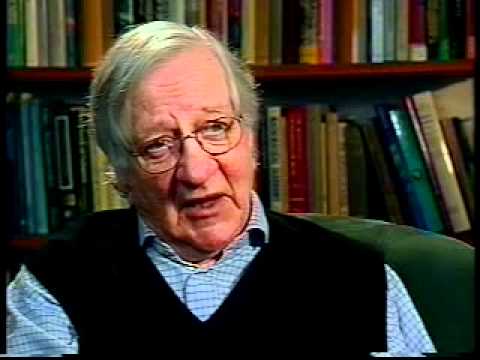
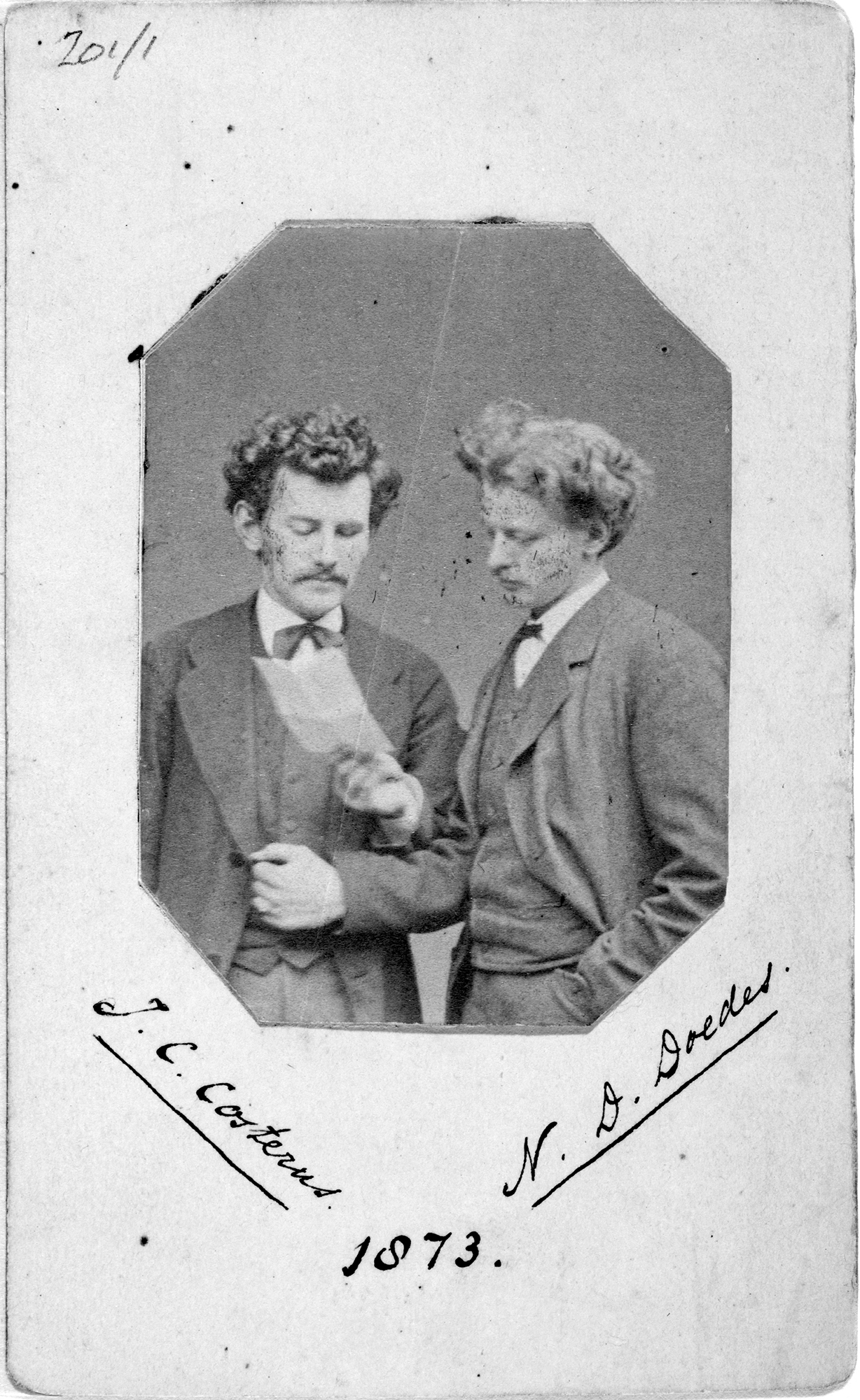
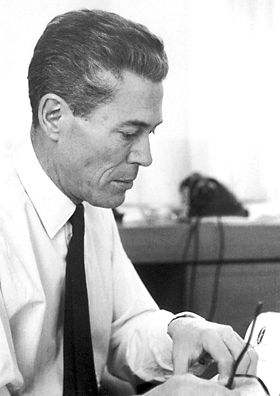
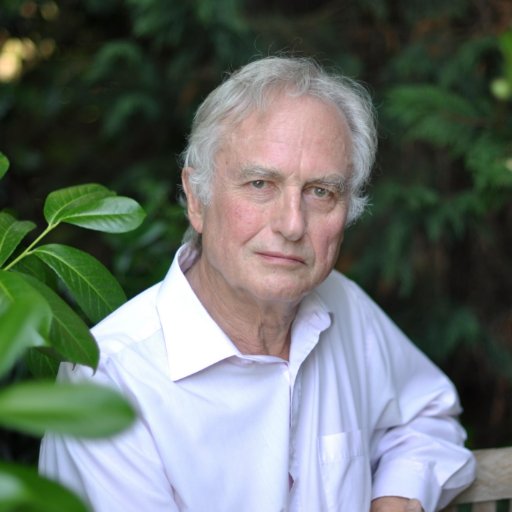
President Obama you speak of “broader skepticism toward organized religion” and when I look at your position on abortion I see no difference between your view and those of atheistic humanists! In fact, your views are also more in line with those of atheistic evolutionists than those scientists such as Isaac Newton who believed in creationism. I had the unique opportunity from 2015 to 2020 to correspond with a famous Harvard educated British scientist named Professor Horace Barlow of Cambridge. Barlow was named after his grandfather Horace Darwin. Most of the correspondence between Dr. Barlow and myself dealt with the views of Barlow’s famous great grandfather Charles Darwin.

TRIBUTES PAID TO PROFESSOR HORACE BARLOW

PUBLISHED DATE: July 07, 2020

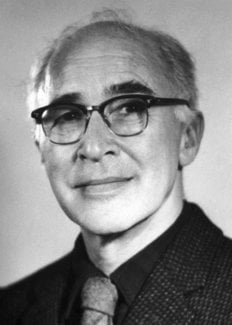
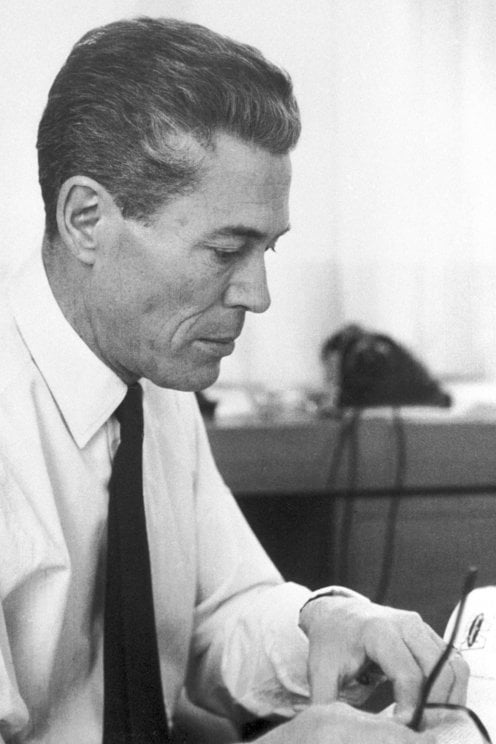
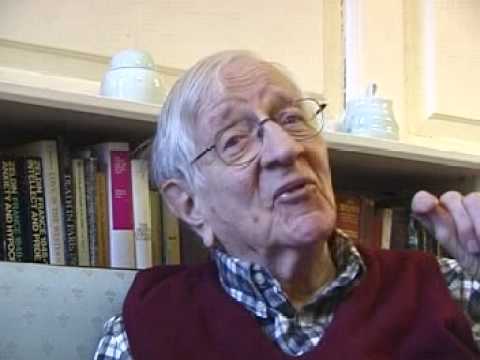
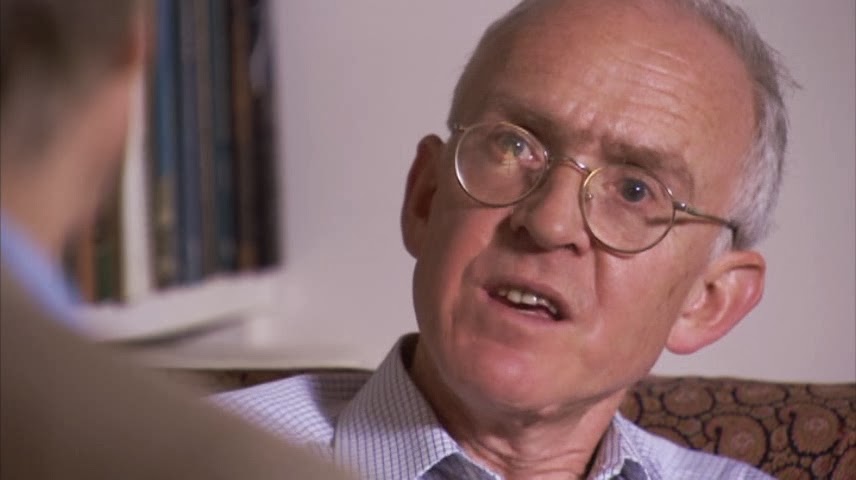
Professor Horace Barlow (8 December 1921 – 5 July 2020) was a neuroscientist and Fellow of Trinity College Cambridge.

Professor Horace Barlow by Louise Riley-Smith, 2003

Horace Barlow was born into a scientific family: his mother was Nora Darwin, the granddaughter of Charles Darwin, who worked in the field of genetics with William Bateson at Cambridge and his paternal grandfather was physician to Queen Victoria’s household.

He studied Natural Sciences at Cambridge University and then completed medical training at Harvard Medical School and University College Hospital, London before returning to Cambridge to study neurophysiology under the tutelage of Lord Adrian. He was awarded an Sc.D in 1943.

His research investigated the visual system at the level of single neurons and their interactions in both humans and animals. His emphasis was on understanding the act of seeing through the underlying machinery of vision.

After holding various positions at Cambridge University he became Professor of Physiological Optics and Physiology at the University of California, Berkeley. He later returned to Cambridge, where he was Royal Society Research Professor of Physiology.

Professor Barlow was elected Fellow of the Royal Society in 1969 and was awarded the Society’s Royal Medal in 1993. In the same year (1993) he received the Australia Prize for research into the mechanisms of visual perception. His other awards include Swartz Prize for Theoretical and Computational Neuroscience (2009) and Ken Nakayama Prize from the Vision Sciences Society (2016).

Trinity Fellow, Professor Roger Keynes, of the Department of Physiology, Development and Neuroscience at the University of Cambridge, said:

Horace Barlow made seminal discoveries in brain physiology. After medical qualification he began research in the Cambridge Physiological Laboratory, recording electrical signals from single nerve cells in the frog’s eye. These showed that nerve cells are wired to detect essential features of the frog’s visual world, such as a small moving insect, and its direction. His approach paved the way for major advances in understanding how visual information in mammals is processed and stored in the brain. He also initiated psychophysical studies of human visual perception and wrote cogently on the brain in all its aspects, working in his departmental office and visiting Trinity well into his 90s.

Priyamvada Natarajan, Professor in the Departments of Astronomy and Physics at Yale University, and a Trinity alumna, said:

Deeply sad to hear the news of his passing. I fondly remember many wonderful conversations with Horace Barlow during my time at Trinity as a junior research fellow in 1997-2003. We chatted about science – in particular, about optics, and how the various wavelengths of light revealed disparate aspects of the cosmos and about the achromatic bending of light (gravitational lensing) that I worked on and its analogy to geometric optics. He patiently answered many of my naive questions about neuroscience and we were both ardent fans of Ramon Cajal’s drawings of neurons. Horace was soft-spoken, utterly curious about the natural world, and remarkably insightful –  it was a privilege to know him.

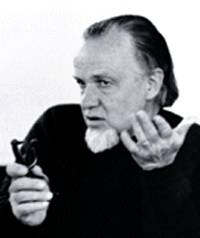
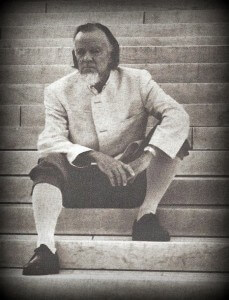
Image result for francis schaeffer

Francis Schaeffer

I found Dr. Barlow to be a true gentleman and he was very kind to take the time to answer the questions that I submitted to him. In the upcoming months I will take time once a week to pay tribute to his life and reveal our correspondence. In the first week I noted:

 Today I am posting my first letter to him in February of 2015 which discussed Charles Darwin lamenting his loss of aesthetic tastes which he blamed on Darwin’s own dedication to the study of evolution. In a later return letter, Dr. Barlow agreed that Darwin did in fact lose his aesthetic tastes at the end of his life.

In the second week I look at the views of Michael Polanyi and share the comments of Francis Schaeffer concerning Polanyi’s views.

In the third week, I look at the life of Brandon Burlsworth in the November 28, 2016 letter and the movie GREATER and the problem of evil which Charles Darwin definitely had a problem with once his daughter died.

On the 4th letter to Dr. Barlow looks at Darwin’s admission that he at times thinks that creation appears to look like the expression of a mind. Francis Schaeffer discusses Darwin’s own words in 1968 sermon at this link.

My Fifth Letter concerning Charles Darwin’s views on MORAL MOTIONS Which was mailed on March 1, 2017. Francis Schaeffer discusses Darwin’s own words concerning moral motions in Schaeffer’s 1968 sermon at this link.

6th letter on May 1, 2017 in which Charles Darwin’s hopes are that someone would find in Pompeii an old manuscript by a distinguished Roman that would show that Christ existed! Francis Schaeffer discusses Darwin’s own words concerning the possible manuscript finds in Schaeffer’s 1968 sermon at this link  

7th letter on Darwin discussing DETERMINISM  dated 7-1-17 . Francis Schaeffer discusses Darwin’s own words concerning determinism in Schaeffer’s 1968 sermon at this link.

8th letter responds to Dr. Barlow’s letter to me concerning  Francis Schaeffer discussing Darwin’s own words concerning chance in Schaeffer’s 1968 sermon at this link.

9th letter in response to 11-22-17 letter I received from Professor Horace Barlow was mailed on 1-2-18 and included Charles Darwin’s comments on William Paley. Francis Schaeffer discusses Darwin’s own words concerning William Paley in Schaeffer’s 1968 sermon at this link.

10th letter in response to 11-22-17 letter I received from Professor Horace Barlow was mailed on 2-2-18 and includes Darwin’s comments asking for archaeological evidence for the Bible! Francis Schaeffer discusses Darwin’s own words concerning His desire to see archaeological evidence supporting the Bible’s accuracy  in Schaeffer’s 1968 sermon at this link.

11th letter I mailed on 3-2-18  in response to 11-22-17 letter from Barlow that asserted: It is also sometimes asked whether chance, even together with selection, can define a “MORAL CODE,” which the religiously inclined say is defined by their God. I think the answer is “Yes, it certainly can…” Francis Schaeffer discusses Darwin’s own words concerning A MORAL CODE in Schaeffer’s 1968 sermon at this link.

12th letter on March 26, 2018 breaks down song DUST IN THE WIND “All we do, crumbles to the ground though we refuse to see, Dust in the Wind, All we are is dust in the wind, Don’t hang on, Nothing lasts forever but the Earth and Sky, It slips away, And all your money won’t another minute buy.”

In 13th letter I respond to Barlow’s November 22, 2017 letter and assertion “He {Darwin} clearly did not lose his sense of the VALUE of TRUTH, and of the importance of FOREVER SEARCHING it out.”

In 14th letter to Dr. Barlow on 10-2-18, I assert: “Let me demonstrate how the Bible’s view of the origin of life fits better with the evidence we have from archaeology than that of gradual evolution.”In 15th letter in November 2, 2018 to Dr. Barlow I quote his relative Randal Keynes Who in the Richard Dawkins special “The Genius of Darwin” makes this point concerning Darwin, “he was, at different times, enormously confident in it,and at other times, he was utterly uncertain.”In 16th Letter on 12-2-18 to Dr. Barlow I respond to his letter that stated, If I am pressed to say whether I think belief in God helps people to make wise and beneficial decisions I am bound to say (and I fear this will cause you pain) “No, it is often very disastrous, leading to violence, death and vile behaviour…Muslim terrorists…violence within the Christian church itself”17th letter sent on January 2, 2019 shows the great advantage we have over Charles Darwin when examining the archaeological record concerning the accuracy of the BibleIn the 18th letter I respond to the comment by Charles Darwin: “My mind seems to have become a kind of machine for grinding general laws out of large collections of facts, but why this should have caused the atrophy of that part of the brain alone, on which the higher tastes depend, I cannot conceive….The loss of these tastes is a loss of happiness.” Francis Schaeffer discusses Darwin’s own words on his loss of aesthetic tastes  in Schaeffer’s 1968 sermon at this link.

Below is a portion of my February 11, 2015 letter to Dr. Barlow followed by his response in his November 22, 2017 letter:
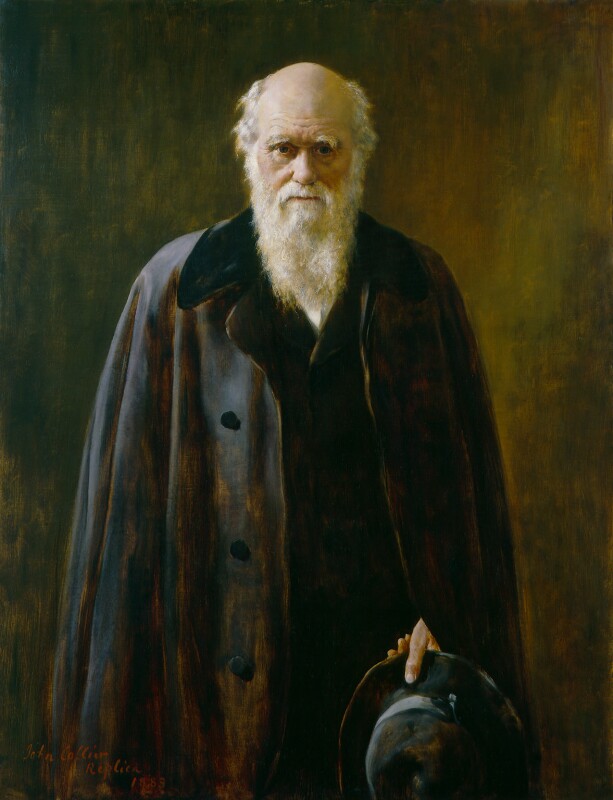
Darwin, C. R. to Fordyce, John, 7 May 1879

“What my own views may be is a question of no consequence to any one but myself. But, as you ask, I may state that my judgment often fluctuates . . . In my most extreme fluctuations I have never been an Atheist in the sense of denying the existence of a God. I think that generally (and more and more as I grow older), but not always, that an Agnostic would be the more correct description of my state of mind.”
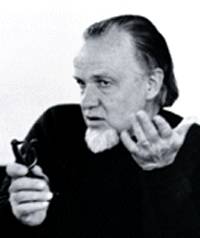
Francis Schaeffer asserted:

What we find now is that he comes to the place in being agnostic, but as we read through this section on religion what we find is in reality his reason leads him against this position, which is interesting but his theory makes him accept the  position of agnosticism. You will notice as we go on, on the basis of his intellect he can’t stand the thought of his own position, of there not being an answer. Nevertheless, he is increasingly forced to this because it wouldn’t conform to his own theory, man being shoved against his own will because of presuppositions. I think what you have in Darwin is a magnificent example, although a sad one of what I lecture on in apologetics,  and that is if a man takes a set of nonchristian presuppositions he is forced eventually to be in a place of tension. The more consistent he is with his own nonchristian presuppositions the more he is away from the real world. When he is closer to the real world then he is more illogical to his own presuppositions. Darwin shows this in his own writings in his own lifetime. So the things in his human nature he is sorry to lose, but he loses them, at the same time he finds that couldn’t explain things on the basis of his reason.  Yet he was driven to certain conclusions which were away from what he himself felt were the real world on the basis of his own presuppositions. He was never satisfied. Just as I very often use Sartre and Camus to point out this dilemma of nonchristian presuppositions, in actuality these sections from Darwin are a perfect example of the same thing.
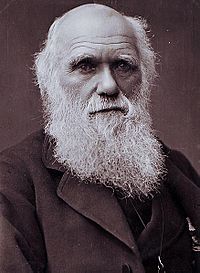
Darwin’s words:

From Charles Darwin, Autobiography (1876), in The Life and Letters of Charles Darwin, ed. Francis Darwin, vol. 1 (London: John Murray, 1888), pp. 307 to 313.

“Another source of conviction in the existence of God, connected with the reason and not with the feelings, impresses me as having much more weight. This follows from the extreme difficulty or rather impossibility of conceiving this immense and wonderful universe, including man with his capacity of looking far backwards and far into futurity, as the result of blind chance or necessity. When thus reflecting, I feel compelled to look to a First Cause having an intelligent mind in some degree analogous to that of man; and I deserve to be called a Theist. This conclusion was strong in my mind about the time, as far as I can remember, when I wrote the Origin of Species, and it is since that time that it has very gradually, with many fluctuations, become weaker. But then arises the doubt
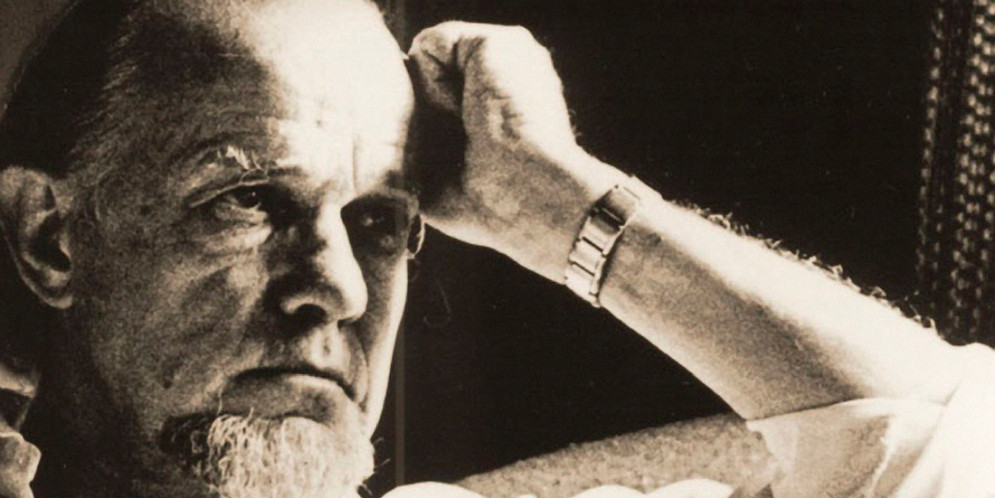
Francis Schaeffer commented:

On the basis of his reason he has to say there must be an intelligent mind, someone analogous to man. You couldn’t describe the God of the Bible better. That is man is made in God’s image  and therefore, you know a great deal about God when you know something about man. What he is really saying here is that everything in my experience tells me it must be so, and my mind demands it is so. Not just these feelings he talked about earlier but his MIND demands it is so, but now how does he counter this? How does he escape this? Here is how he does it!!!
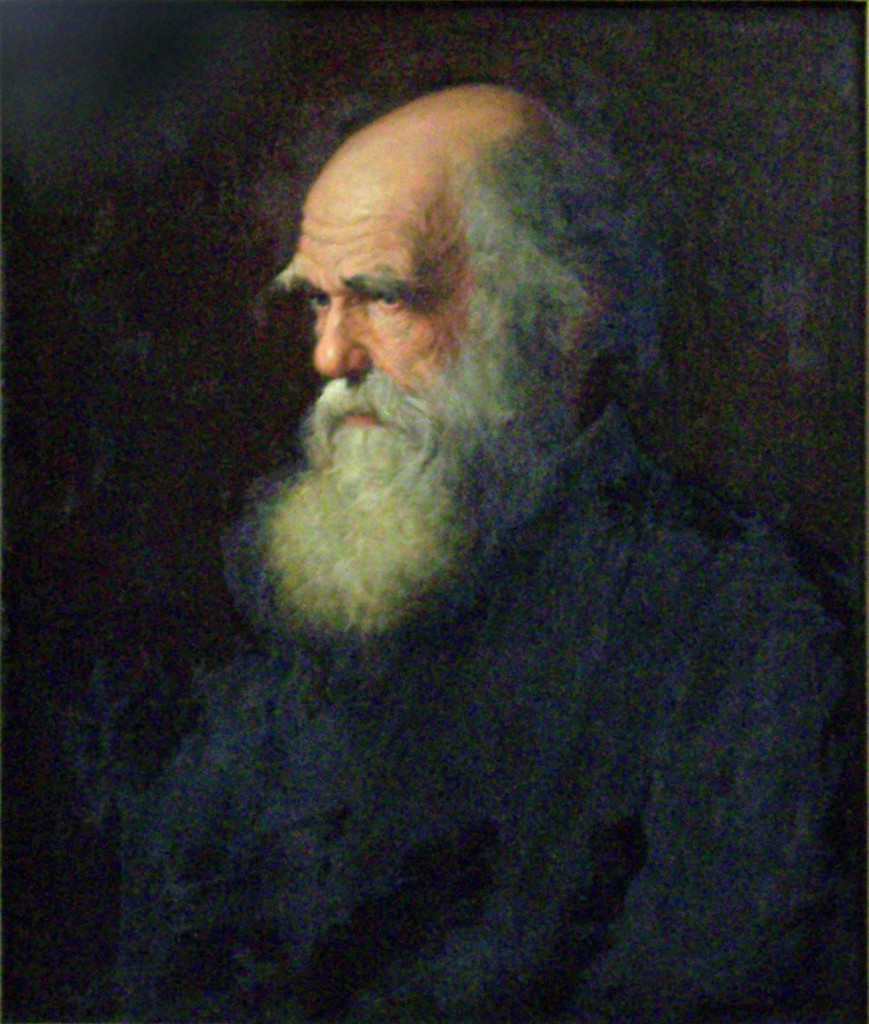
Darwin’s words:

—can the mind of man, which has, as I fully believe, been developed from a mind as low as that possessed by the lowest animals, be trusted when it draws such grand conclusions?
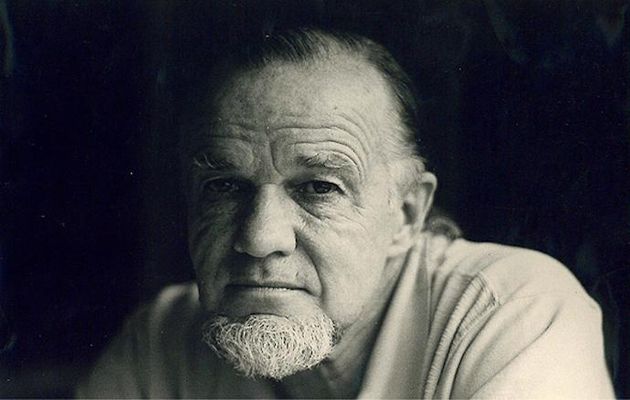
Francis Schaeffer commented:

So he says my mind can only come to one conclusion, and that is there is a mind behind it all. However, the doubt comes because his mind has come from the lowest form of earthworm, so how can I trust my mind. But this is a joker isn’t it?  Then how can you trust his mind to support such a theory as this? He proved too much. The fact that Darwin found it necessary to take such an escape shows the tremendous weight of Romans 1, that the only escape he can make is to say how can I trust my mind when I come from the lowest animal the earthworm? Obviously think of the grandeur of his concept, I don’t think it is true, but the grandeur of his concept, so what you find is that Darwin is presenting something here that is wrong I feel, but it is not nothing. It is a tremendously grand concept that he has put forward. So he is accepting the dictates of his mind to put forth a grand concept which he later can’t accept in this basic area with his reason, but he rejects what he could accept with his reason on this escape. It really doesn’t make sense. This is a tremendous demonstration of the weakness of his own position.
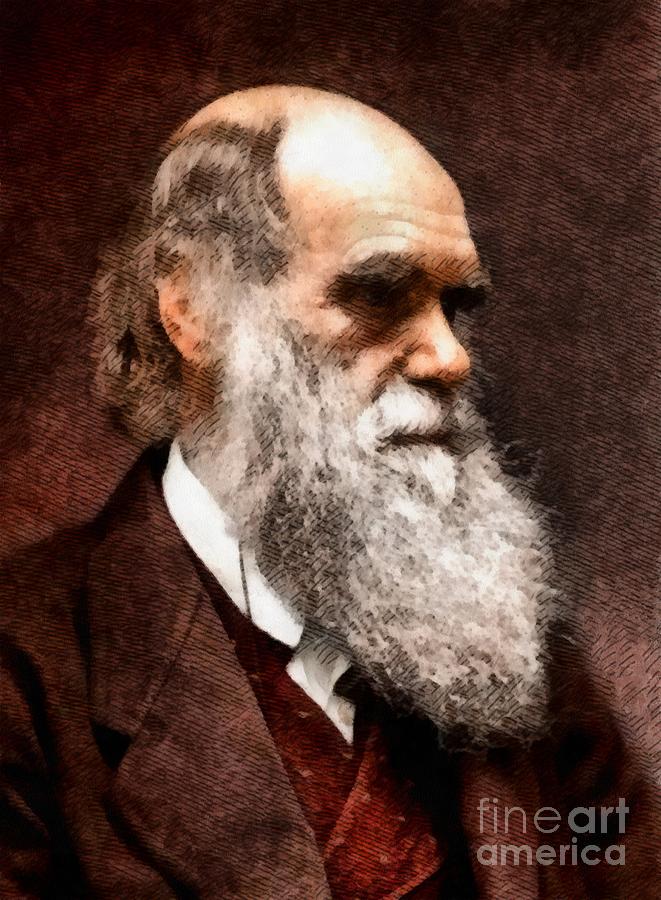
Darwin clings to agnosticism:

“I cannot pretend to throw the least light on such abstruse problems. The mystery of the beginning of all things is insoluble by us, and I for one must be content to remain an Agnostic.”
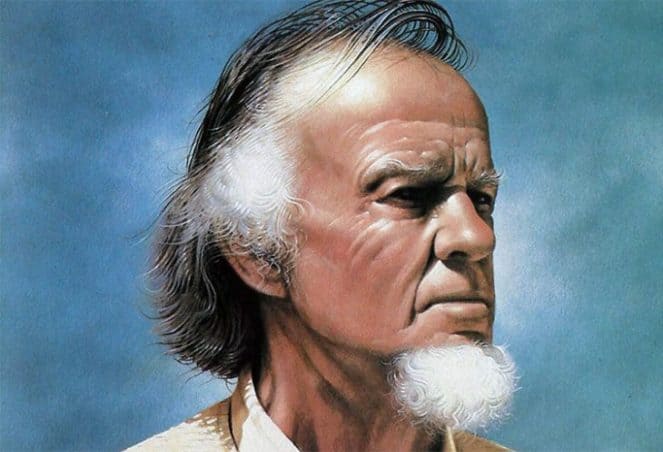
Francis Schaeffer commented:

What a stupid reply and I didn’t say wicked. It just seems to me that here is 2 plus 2 equals 36 at this particular place.

Here is Dr. Barlow’s response in his November 22, 2017 letter:

——

Saying you don’t believe in God is a very foolish thing to say as it doesn’t explain why so many people talk about it, there has got to be more to it than that; also I think one has to respect what some godly people say and some of the things they do; I wish one could make more sense of it but I don’t think the godly people have done a very good job;

This reminds me of a story that Adrian Rogers told about his interaction with an agnostic:
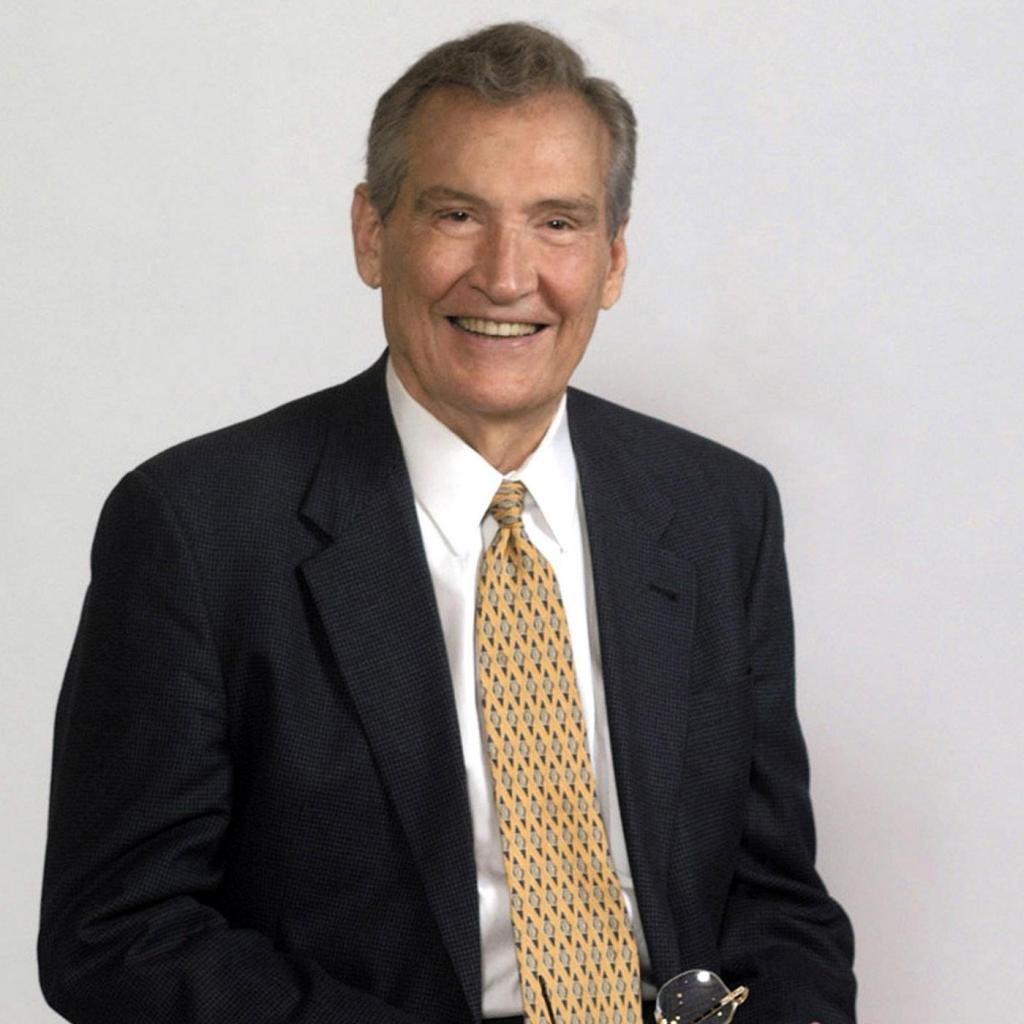
Here we must observe that many people don’t want to find the truth just like a thief doesn’t want to find a policeman. I now want to share a portion of the sermon WHO IS JESUS? by Adrian Rogers because this very point is made:

Here is how the story goes:

Years ago Adrian Rogers counseled with a NASA scientist and his severely depressed wife. The wife pointed to her husband and said, “My problem is him.” She went on to explain that her husband was a drinker, a liar, and an adulterer.

Dr. Rogers asked the man if he were a Christian. “No!” the man laughed. “I’m an atheist.” “Really?” Dr. Rogers replied. “That means you’re someone who knows that God does not exist.” “That’s right,” said the man. “Would it be fair to say that you don’t know all there is to know in the universe?” “Of course,” the man admitted. Dr. Rogers asked, “Would it be generous to say you know half of all there is to know?” “Yes!” Then Dr. Rogers inquired,“Wouldn’t it be possible that God’s existence might be in the half you don’t know?” The man acknowledged, “Okay, but I don’t think He exists.” Dr. Rogers replied, “Well then, you’re not an atheist; you’re an agnostic.You’re a doubter.” The man asserted, “Yes, and I’m a big one.” Then Dr. Rogers popped the question, “It doesn’t matter what size you are. I want to know what kind [of doubter] you are.” 

“What kinds are there?”

“There are honest doubters and dishonest doubters. An honest doubter is willing to search out the truth and live by the results; a dishonest doubter doesn’t want to know the truth. He can’t find God for the same reason a thief can’t find a policeman.”

“I want to know the truth.”

“Would you like to prove that God exists?”

“It can’t be done.”

“It can be done. You’ve just been in the wrong laboratory. Jesus said, ‘If any man’s will is to do His will, he will know whether my teaching is from God or whether I am speaking on my own authority’ (John 7:17). I suggest you read one chapter of the book of John each day, but before you do, pray something like this, ‘God, I don’t know if You’re there, I don’t know if the Bible is true, I don’t know if Jesus is Your Son. But if You show me that You are there, that the Bible is true, and that Jesus is Your Son, then I will follow You. My will is to do your will.”

The man agreed. About three weeks later he returned to Dr. Rogers’s office and invited Jesus Christ to be his Savior and Lord.
Another quote from Dr. Barlow’s November 22, 2017 letter:

 After acknowledging that Charles Darwin did lose his aesthetic tastes for art, poetry, and for fine scenery which he attributed to his study of evolution, Dr. Barlow came back and asserted, “Notice, however, that he clearly did not lose his sense of the value of truth, and of the importance of forever searching it out. “ 
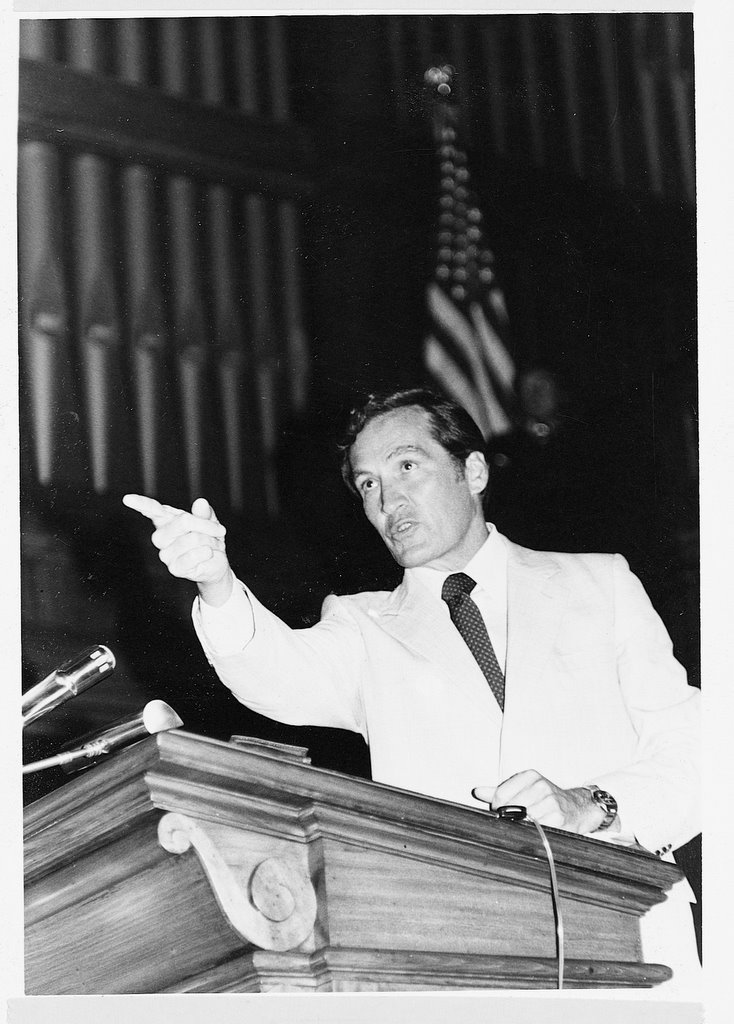
Here is some evidence:

—-

Let me quote from my former pastor Adrian Rogers:

Skeptics seem to think that the Bible is full of scientific errors. However, before an individual can make that assertion, they had better make sure they know both science and Scripture. You see, I have heard unbelievers state that the Bible is not a book of science, but a book of religion, which is basically true. It is not written to teach us about science, but to teach us about God. But the God of salvation and the God of creation are the same. Science doesn’t take God by surprise. A close look at Scripture reveals that it is scientifically accurate.

Every now and then science may disagree with the Bible, but usually science just needs time to catch up. For example, in 1861 a French scientific academy printed a brochure offering 51 incontrovertible facts that proved the Bible in error. Today there is not a single reputable scientist who would support those supposed “facts,” because modern science has disproved them all!

The ancients believed the earth was held up by Atlas, or resting on pillars, or even seated on the backs of elephants. But today we know the earth is suspended in space, a fact the Word of God records in Job 26:7: “He . . . hangeth the earth upon nothing.” God revealed the facts of cosmology long before man had any idea of the truth.

For centuries man believed the earth was flat, but now we know the earth is a globe. The prophet Isaiah, writing 750 years before the birth of Christ, revealed that “God sitteth upon the circle of the earth” (Isaiah 40:22). The word translated here as “circle” was more commonly translated “sphere.” In other words, Isaiah explained that the earth was a globe centuries before science discovered it.

When Ptolemy charted the heavens, he counted 1026 stars in the sky. But with the invention of the telescope man discovered millions and millions of stars, something that Jeremiah 33:22 revealed nearly three thousand years ago: “The host of heaven cannot be numbered.” How did these men of God know the truth of science long before the rest of the world discovered it? They were moved by the Holy Spirit to write the truth. God’s Word is not filled with errors. It is filled with facts, even scientific facts.

When the black plague was killing one quarter of Europe’s population in the fourteenth century, it was the church, not science, that helped overcome the dread disease. The leaders in the church noticed the instructions given by the Lord to Moses in Leviticus 13:46: “All the days wherein the plague shall be in him he shall be defiled; he is unclean: he shall dwell alone; without the camp shall his habitation be.” These early believers did not know microbiology or understand what germs were, but they could understand a clear teaching to quarantine someone who was sick. So they followed the Biblical dictum, quarantined those sick with the plague, and stopped it from spreading. The Bible had its science correct even before man discovered the truth! Don’t accept the charge that the Bible is filled with scientific errors. Modern science seems determined to explain God away, and refuses to acknowledge any evidence of the supernatural. But the science of Scripture is one reason to accept the Bible as God’s Word.

Sincerely,

Everette Hatcher III, 13900 Cottontail Lane, Alexander, AR 72002, ph 501-920-5733 everettehatcher@gmail.com

Related posts:

Open letter to President Obama (Part 293) (Founding Fathers’ view on Christianity, Elbridge Gerry of MA)

April 10, 2013 – 7:02 am

President Obama c/o The White House 1600 Pennsylvania Avenue NW Washington, DC 20500 Dear Mr. President, I know that you receive 20,000 letters a day and that you actually read 10 of them every day. I really do respect you for trying to get a pulse on what is going on out here. There have […]By Everette Hatcher III | Posted in David BartonFounding FathersPresident Obama | Edit |Comments (0)

The Founding Fathers views concerning Jesus, Christianity and the Bible (Part 5, John Hancock)

May 8, 2012 – 1:48 am

There have been many articles written by evangelicals like me who fear that our founding fathers would not recognize our country today because secular humanism has rid our nation of spiritual roots. I am deeply troubled by the secular agenda of those who are at war with religion in our public life. Lillian Kwon quoted somebody […]By Everette Hatcher III | Posted in David BartonFounding Fathers | Edit | Comments (0)

The Founding Fathers views concerning Jesus, Christianity and the Bible (Part 4, Elbridge Gerry)

May 7, 2012 – 1:46 am

There have been many articles written by evangelicals like me who fear that our founding fathers would not recognize our country today because secular humanism has rid our nation of spiritual roots. I am deeply troubled by the secular agenda of those who are at war with religion in our public life. Lillian Kwon quoted somebody […]By Everette Hatcher III | Posted in David BartonFounding Fathers | Edit | Comments (0)

The Founding Fathers views concerning Jesus, Christianity and the Bible (Part 3, Samuel Adams)

May 4, 2012 – 1:45 am

There have been many articles written by evangelicals like me who fear that our founding fathers would not recognize our country today because secular humanism has rid our nation of spiritual roots. I am deeply troubled by the secular agenda of those who are at war with religion in our public life. Lillian Kwon quoted somebody […]By Everette Hatcher III | Posted in David BartonFounding Fathers | Edit | Comments (0)

The Founding Fathers views concerning Jesus, Christianity and the Bible (Part 2, John Quincy Adams)

May 3, 2012 – 1:42 am

There have been many articles written by evangelicals like me who fear that our founding fathers would not recognize our country today because secular humanism has rid our nation of spiritual roots. I am deeply troubled by the secular agenda of those who are at war with religion in our public life. Lillian Kwon quoted somebody […]By Everette Hatcher III | Posted in David BartonFounding Fathers | Edit | Comments (0)

The Founding Fathers views concerning Jesus, Christianity and the Bible (Part 1, John Adams)

May 2, 2012 – 1:13 am

There have been many articles written by evangelicals like me who fear that our founding fathers would not recognize our country today because secular humanism has rid our nation of spiritual roots. I am deeply troubled by the secular agenda of those who are at war with religion in our public life. Lillian Kwon quoted somebody […]By Everette Hatcher III | Posted in Founding Fathers | Edit | Comments (0)

President Obama and the Founding Fathers

May 8, 2013 – 9:20 am

President Obama Speaks at The Ohio State University Commencement Ceremony Published on May 5, 2013 President Obama delivers the commencement address at The Ohio State University. May 5, 2013. You can learn a lot about what President Obama thinks the founding fathers were all about from his recent speech at Ohio State. May 7, 2013, […]By Everette Hatcher III | Posted in Founding FathersPresident Obama | Edit | Comments (0)

Francis Schaeffer’s own words concerning the founding fathers and their belief in inalienable rights

December 5, 2012 – 12:38 am

Dr. C. Everett Koop with Bill Graham. Francis Schaeffer: “Whatever Happened to the Human Race” (Episode 4) THE BASIS FOR HUMAN DIGNITY Published on Oct 7, 2012 by AdamMetropolis The 45 minute video above is from the film series created from Francis Schaeffer’s book “Whatever Happened to the Human Race?” with Dr. C. Everett Koop. This […]By Everette Hatcher III | Posted in Founding FathersFrancis SchaefferProlife | Edit |Comments (1)

David Barton: In their words, did the Founding Fathers put their faith in Christ? (Part 4)

May 30, 2012 – 1:35 am

America’s Founding Fathers Deist or Christian? – David Barton 4/6 There have been many articles written by evangelicals like me who fear that our founding fathers would not recognize our country today because secular humanism has rid our nation of spiritual roots. I am deeply troubled by the secular agenda of those who are at […]By Everette Hatcher III | Posted in David BartonFounding Fathers | Tagged governor of connecticutjohn witherspoonjonathan trumbull | Edit | Comments (1)

Were the founding fathers christian?

May 23, 2012 – 7:04 am

3 Of 5 / The Bible’s Influence In America / American Heritage Series / David Barton There were 55 gentlemen who put together the constitution and their church affliation is of public record. Greg Koukl notes: Members of the Constitutional Convention, the most influential group of men shaping the political foundations of our nation, were […]By Everette Hatcher III | Posted in Founding Fathers | Edit | Comments (0)

John Quincy Adams a founding father?

June 29, 2011 – 3:58 pm

I do  not think that John Quincy Adams was a founding father in the same sense that his  father was. However, I do think he was involved in the  early days of our government working with many of the founding fathers. Michele Bachmann got into another history-related tussle on ABC’s “Good  Morning America” today, standing […]By Everette Hatcher III | Posted in David BartonFounding Fathers | Edit | Comments (0)

“Sanctity of Life Saturday” Taking on Ark Times Bloggers on various issues Part E “Moral absolutes and abortion” Francis Schaeffer Quotes part 5(includes the film SLAUGHTER OF THE INNOCENTS) (editorial cartoon)

July 6, 2013 – 1:26 am

I have gone back and forth and back and forth with many liberals on the Arkansas Times Blog on many issues such as abortion, human rights, welfare, poverty, gun control  and issues dealing with popular culture. Here is another exchange I had with them a while back. My username at the Ark Times Blog is Saline […]By Everette Hatcher III | Posted in Arkansas TimesFrancis SchaefferProlife | Edit |Comments (0)

Article from Adrian Rogers, “Bring back the glory”

June 11, 2013 – 12:34 am

I truly believe that many of the problems we have today in the USA are due to the advancement of humanism in the last few decades in our society. Ronald Reagan appointed the evangelical Dr. C. Everett Koop to the position of Surgeon General in his administration. He partnered with Dr. Francis Schaeffer in making the […]By Everette Hatcher III | Posted in Adrian RogersFrancis Schaeffer | Edit | Comments (0)

“Schaeffer Sundays” Francis Schaeffer’s own words concerning the possibility that minorities may be mistreated under 51% rule

June 9, 2013 – 1:21 am

Francis Schaeffer: “Whatever Happened to the Human Race” (Episode 4) THE BASIS FOR HUMAN DIGNITY Published on Oct 7, 2012 by AdamMetropolis ____________ The 45 minute video above is from the film series created from Francis Schaeffer’s book “Whatever Happened to the Human Race?” with Dr. C. Everett Koop. This book  really helped develop my political […]By Everette Hatcher III | Posted in Francis Schaeffer | Edit | Comments (0)

—-

OPEN LETTER TO BARACK OBAMA ON HIS AUTOBIOGRAPHY “A PROMISED LAND” Part 7 Concerning the encouragement from Rev. Otis Moss Jr “It’s hard to overstate how these words fortified me, coming as they did almost a year before our Iowa victory, what it meant to have someone so intimately linked to the source of my earliest inspiration say that what I was trying to do was worth it, that IT WASN’T JUST AN EXERCISE IN VANITY or ambition but rather a part of an unbroken chain of progress.”

November 28, 2020

Office of Barack and Michelle Obama
P.O. Box 91000
Washington, DC 20066

Dear President Obama,

I wrote you over 700 letters while you were President and I mailed them to the White House and also published them on my blog http://www.thedailyhatch.org .I received several letters back from your staff and I wanted to thank you for those letters. 

I have been reading your autobiography A PROMISED LAND and I have been enjoying it. 

As an evangelical believer I am encouraged by your references to spiritual hymns, but your intellectual views seem to place you in the secular humanist school of thought. 

Five faith facts about former President Barack Obama’s new book, ‘A Promised Land’


Former President Barack Obama’s new book, “A Promised Land,” mentions only four pages in its index under the category “faith and.”

But the title of the book by the 44th U.S. president invokes biblical imagery — a land promised by God to his people — and Obama includes the role of religious institutions, faith leaders and personal traditions throughout the 750-page book. On the page after his dedication of the tome to his wife and daughters, Obama features the words from an African American spiritual:
“Fly and never tire

There’s a great camp-meeting in the Promised Land.”

While friends and strangers have told him they believe God engineered his road to the White House, Obama says he didn’t view his political path as a call from the Almighty.

 (Pari Dukovic/Random House via AP) This photo provided by Random House shows the cover of “A Promised Land.
(Pari Dukovic/Random House via AP) This photo provided by Random House shows the cover of “A Promised Land.” The first volume of former President Barack Obama’s memoir came out Nov. 17.

“I suspect that God’s plan, whatever it is, works on a scale too large to admit our mortal tribulations; that in a single lifetime, accidents and happenstance determine more than we care to admit,” he writes, “and that the best we can do is to try to align ourselves with what we feel is right and construct some meaning out of our confusion, and with grace and nerve play at each moment the hand that we’re dealt.”

Another minister helped him regain confidence.

While Wright’s use of “audacity of hope” gave Obama a book title and a key phrase for his 2004 Democratic National Convention speech, another minister influenced him by shoring up his confidence.

The Rev. Otis Moss Jr., whose son succeeded Wright at Trinity UCC, called Obama early in the controversy surrounding Wright. Moss knew some Black Americans had questioned whether Obama was ready for the White House.

Obama writes that Moss described himself and other civil rights veterans as “the Moses generation” who marched, were jailed, “got us out of Egypt,” but could only go so far.

“You, Barack, are part of the Joshua generation,” Obama says Moss told him. “Perhaps you can learn from some of our mistakes. But ultimately it will be up to you, with God’s help, to build on what we’ve done.”

Moss’ words about leading Americans “out of the wilderness” were what Obama says he needed to move on from the Wright controversy and forward in his campaign.

“It’s hard to overstate how these words fortified me, coming as they did almost a year before our Iowa victory, what it meant to have someone so intimately linked to the source of my earliest inspiration say that what I was trying to do was worth it, that IT WASN’T JUST AN EXERCISE IN VANITY or ambition but rather a part of an unbroken chain of progress.”

President Obama, you need to read ECCLESIASTES because you will find that if you try to build your life and your society on LIFE UNDER THE SUN without God in the picture then it will all be vanity!! Solomon in ECCLESIASTES brings God back in the picture in the last chapter but look at his 5 conclusions concerning secularism:

ECCLESIASTES 2:12-17:

12 (U)So I turned to consider (V)wisdom and madness and folly. For what can the man do who comes after the king? Only (W)what has already been done. 13 Then I saw that there is more gain in wisdom than in folly, as there is more gain in light than in darkness. 14 (X)The wise person has his eyes in his head, but the fool walks in darkness. And yet I perceived that the (Y)same event happens to all of them. 15 Then I said in my heart, (Z)“What happens to the fool will happen to me also. Why then have I been so very wise?” And I said in my heart that this also is vanity. 16 For of the wise as of the fool there is (AA)no enduring remembrance, seeing that in the days to come all will have been long forgotten. (AB)How the wise dies just like the fool! 17 So I hated life, because what is done under the sun was grievous to me, for (AC)all is vanity and a striving after wind.

The humanist H. J. Blackham was the founder of the British Humanist Association and he asserted: On humanist assumptions, life leads to nothing, and every pretense that it does not is a deceit. If there is a bridge over a gorge which spans only half the distance and ends in mid-air, and if the bridge is crowded with human beings pressing on, one after the other they fall into the abyss. The bridge leads nowhere, and those who are pressing forward to cross it are going nowhere….It does not matter where they think they are going, what preparations for the journey they may have made, how much they may be enjoying it all. The objection merely points out objectively that such a situation is a model of futility“( H. J. Blackham, et al., Objections to Humanism (Riverside, Connecticut: Greenwood Press, 1967). Francis Schaeffer comments concerning Blackham’s assertion, “One does not have to be highly educated to understand this. It follows directly from the starting point of the humanists’ position, namely, that everything is just matter. That is, that which has exited forever and in ever is only some form of matter or energy, and everything in our world now is this and only this in a more or less complex form.”

The 5 Conclusions of Humanism according to King Solomon of Israel in the Book of Ecclesiastes!!!!!

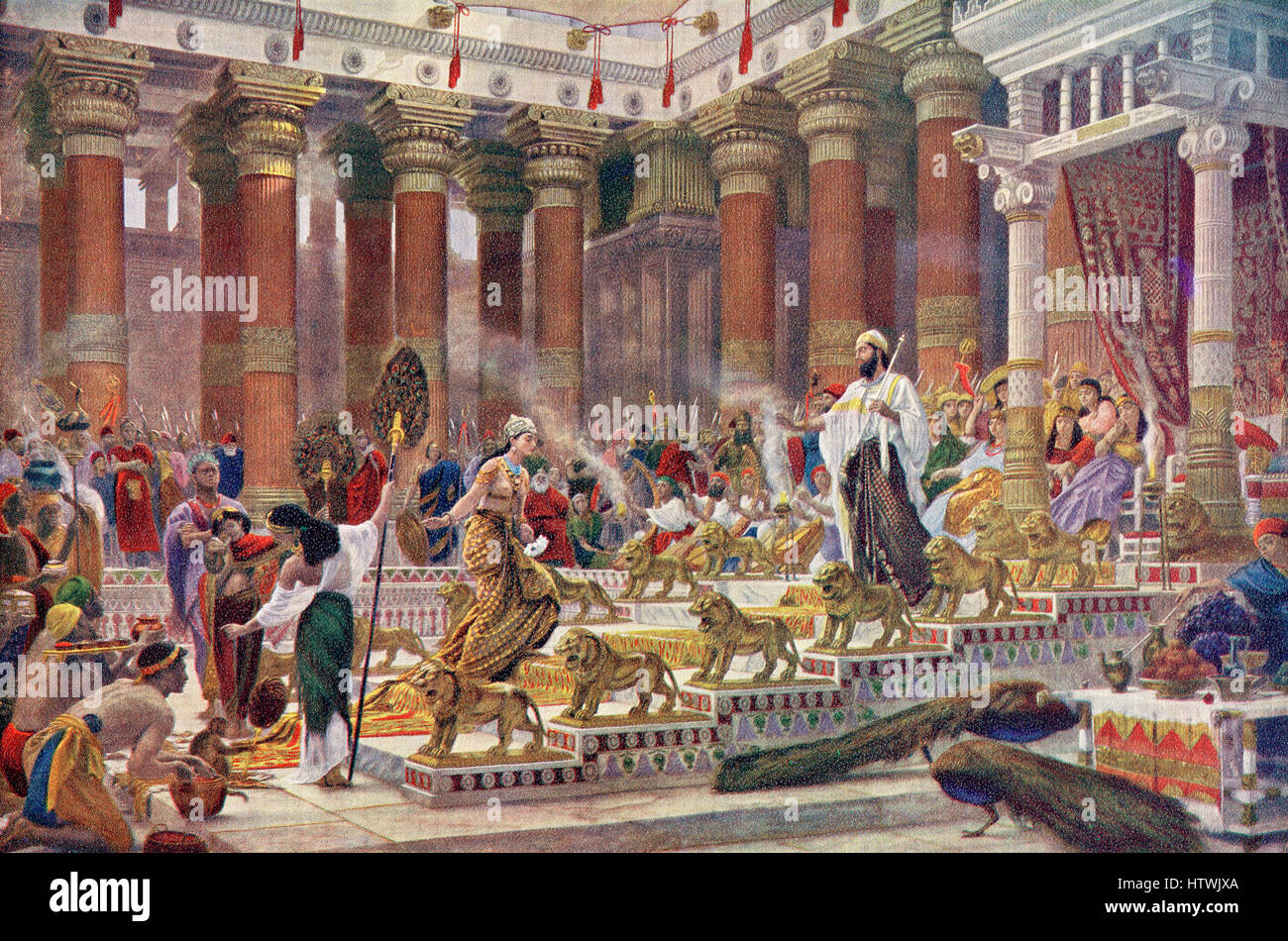
Image result for king solomon

The Humanistic world view tells us there is no afterlife and all we have is this life “under the sun.”

Image result for francis schaeffer

Francis Schaeffer (Christian Philosopher) notes Solomon limits himself to “under the sun” – In other words the meaning of life on the basis of human life standing alone between birth and death. It is indeed the book of modern man. Solomon is the universal man with unlimited resources who says let us see where I go. Ravi Zacharias 

Image result for ravi zacharias

“The key to understanding the Book of Ecclesiastes is the term ‘under the sun.’ What that literally means is you lock God out of a closed system and you are left with only this world of time plus chance plus us (Matter)”

1st Conclusion: Nothing in life truly satisfies and that includes wisdom, great works and pleasure. A) Will wisdom satisfy someone under the sun? We know it is good in its proper place. T

But what did Solomon find out about wisdom “under the sun”? Ecclesiastes 1:16-18 (Living Bible): I said to myself, ‘Look, I am better educated than any of the kings before me in Jerusalem. I have greater wisdom and knowledge.’So I worked hard to be wise instead of foolish[c]—but now I realize that even this was like chasing the wind. For the more my wisdom, the more my grief; to increase knowledge only increases distress.” (That is NIHILISM!!!!)

2nd Conclusion: Power reigns in this life and the scales are not balanced!!!!!Ecclesiastes 4:1 (King James Version): So I returned, and considered all the oppressions that are done under the sun: and behold the tears of such as were oppressed, and they had no comforter; and on the side of their oppressors there was power; but they had no comforter.
Ecclesiastes 7:15 (King James Version) All things have I seen in the days of my vanity: there is a just man that perisheth in his righteousness, and there is a wicked man that prolongeth his life in his wickedness.


3rd Conclusion – 
Death is the great equalizer. Just as the beasts will not be remembered so ultimately brilliant men will not be remembered. Ecclesiastes 3:20 “All go unto one place; All are of the dust, and all turn to dust again.” Here Solomon comes to the same point that Kerry Livgren came to in January of 1978 when he wrote the hit song DUST IN THE WIND. Can you refute the nihilistic claims of this song within the humanistic world view? Solomon couldn’t but maybe you can.

Image result for rock band kansas dust in the wind

4th Conclusion – Chance and time plus matter (us) has determined the past and it will determine the future.By the way, what are the ingredients that make evolution work? George Wald – “Time is the Hero.”

Image result for george wald

Jacques Monod – “Pure chance, absolutely free but blind, is at the root of the stupendous edifice of evolution.”

5th Conclusion – Life is just a series ofcontinual and unending cycles and man is stuck in the middle of the cycle. Youth, old age, Death.
Does Solomon at this point embrace nihilism? Yes!!! He exclaims that the hates life (Ecclesiastes 2:17), he longs for death (4:2-3) Yet he stills has a fear of death (2:14-16).

I am glad Rev. Otis Moss Jr., had the opportunity to speak into your life and I am hoping that he spoke to you about the issue of abortion which the Bible clearly takes a pro-life position on! When Bill Clinton was a member of Immanuel Baptist in Little Rock, where my wife was baptized, he held a pro-life view when Governor of Arkansas. This also was consistent with all of the pastors of Immaneul Baptist from 1960 till today (Dr. W. O. Vaught Jr., Dr. Brian Harbour, Dr. Rex M. Horne Jr., Dr. Gary Hollingsworth and Dr. Steven W. Smith). In fact, my son, his wife and our grandchildren are members at Immanuel today. It was only after Bill Clinton announced that he was running for the Democratic Presidential Nomination that he changed his view on abortion, and that did grieve many of Clinton’s fellow church members.

Adrian Rogers was my pastor at Bellevue Baptist Church in the 1970’s and 1980’s when I was growing up and his impact on me was immense and I could not envision turning my back on him. Evidently you had good reason to do so. Sadly I remember watching both Bill Clinton and Al Gore grow up in evangelical churches but later turn their backs on their previous pro-life views.

President Obama your views are more in line with those of atheistic evolutionists than those scientists such as Isaac Newton who believed in creationism. I had the unique opportunity from 2015 to 2020 to correspond with a famous Harvard educated British scientist named Professor Horace Barlow of Cambridge. Barlow was named after his grandfather Horace Darwin. Most of the correspondence between Dr. Barlow and myself dealt with the views of Barlow’s famous great grandfather Charles Darwin.

Some have embraced a form of Evolutionary Optimistic Humanism. Even Charles Darwin held unto the ideal of Evolutionary Optimistic  Humanism.

In Darwin’s 1876 Autobiography he noted:

“With respect to immortality, nothing shows me [so clearly] how strong and almost instinctive a belief it is as the consideration of the view now held by most physicists, namely, that the sun with all the planets will in time grow too cold for life, unless indeed some great body dashes into the sun and thus gives it fresh life. Believing as I do that man in the distant future will be a far more perfect creature than he now is,”

Francis Schaeffer 

Francis Schaeffer commented in 1968:

Now you have now the birth of Julian Huxley’s evolutionary optimistic humanism already stated by Darwin. Darwin now has a theory that man is going to be better. If you had lived at 1860 or 1890 and you said to Darwin, “By 1970 will man be better?” He certainly would have the hope that man would be better as Julian Huxley does today. Of course, I wonder what he would say if he lived in our day and saw what has been made of his own views in the direction of (the mass murder) Richard Speck (and deterministic thinking of today’s philosophers). I wonder what he would say. So you have the factor, already the dilemma in Darwin that I pointed out in Julian Huxley and that is evolutionary optimistic humanism rests always on tomorrow. You never have an argument from the present or the past for evolutionary optimistic humanism.You can have evolutionary nihilism on the basis of the present and the past. Every time you have someone bringing in evolutionary optimistic humanism it is always based on what is going to be produced tomorrow. When is it coming? The years pass and is it coming? 

Below is a portion of my December 2, 2017 which was responding to his November 22, 2017 letter:

Image result for francis schaeffer

Francis Schaeffer (1912-1984) taught at the Swiss L’Abri Community.

Let me give you some background on why I have written you. Since 1974 I have been reading the books of Francis Schaeffer. Then later in the 1970’s Schaeffer released two film series. Here is what Wikipedia had to say about Schaeffer:

Francis August Schaeffer (January 30, 1912 – May 15, 1984[1]) was an American Evangelical Christian theologianphilosopher, and Presbyterian pastor. He is best known for establishing the L’Abri community in Switzerland. Opposed to theological modernism, Schaeffer promoted a more historic Protestant faith… which he believed would answer the questions of the age.

Also over the last 25 years I have had the opportunity to listen to hundreds of Schaeffer’s recorded messages from the L’Abri community in Switzerland.

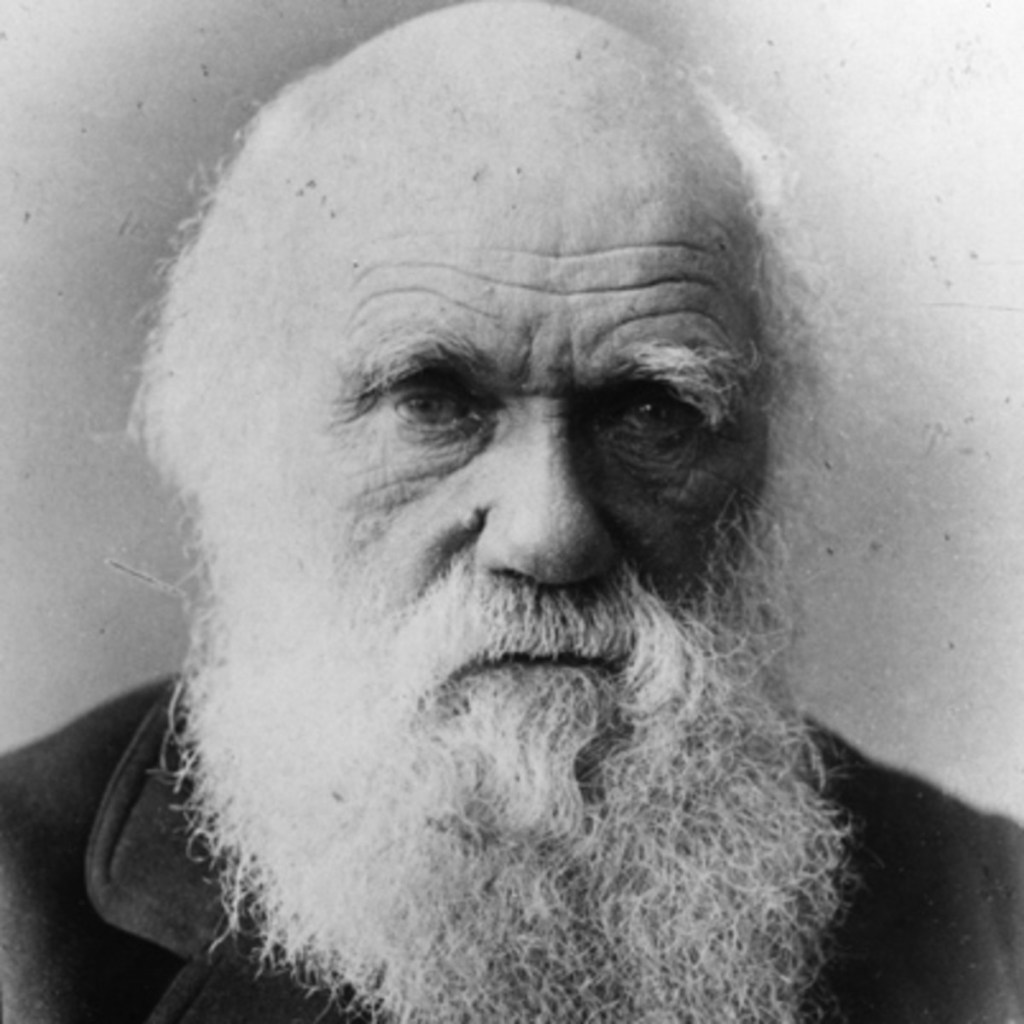
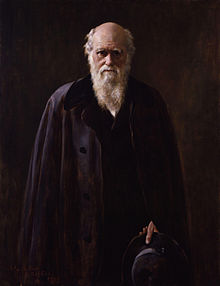
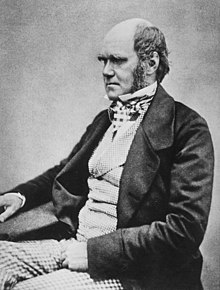
Charles Darwin (1809-1882)

Image result for charles darwin

—-

Image result for adrian rogers

Adrian Rogers pictured 

On the tenth anniversary of Francis Schaeffer’s passing, May 15, 1994, I sent out to several hundred prominent skeptics an evangelistic letter that told about Schaeffer’s life. This same letter included the CD entitled “Dust, Darwin, and Disbelief,” by Adrian Rogers and Bill Elliff which quoted your great grandfather, Charles Darwin. That CD started off with the song DUST IN THE WIND by the group KANSAS for the simple reason that if we  accept that we are the result of chance then all we are is DUST IN THE WIND.

Image result for kansas dust in the wind

I thought the inclusion of the song DUST IN THE WIND was logical, but that logic was challenged by the third paragraph in your November 22, 2017 letter which said:

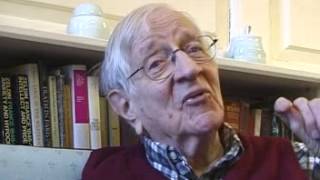
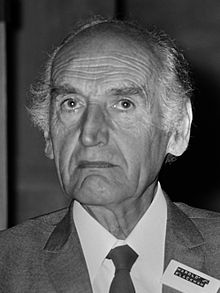
Image result for horace barlow

Horace Barlow pictured above

You may ask, “What is to take the place of Religious Belief in helping to understand the world around us? It has order and purpose, which cannot be explained by Blind chance as evolution teaches.” I agree it cannot be explained by Blind chance alone, but Darwin did not claim that this happens, and modern evolutionists agree. We say that chance variations (mutations) occur in the substances (called genes nowadays) that control development and cause son and daughter to resemble father and mother. These genes control the development of the offspring, and and influence their success in life, and in particular they influence the types of mutated genes that are passed on to the next generation. Chance, together with “Survival of the fittest,” thus causes the appearance of apparently purposeful adaptations of the population of genes in a species.

If you are correct then I was wrong to include the song DUST IN THE WIND. Let me respond by quoting Francis Schaeffer from his talk In the spring of 1968 which centered on your great uncle Francis Darwin’s book:

Darwin in his autobiography  Darwin, Francis ed. 1892. Charles Darwin: his life told in an autobiographical chapter, and in a selected series of his published letters [abridged edition]. London: John Murray, and in his letters showed that all through his life he NEVER really came to a QUIETNESS concerning the possibility that chance really explained the situation of the biological world. You will find there is much material on this [from Darwin] extended over many many years that constantly he was wrestling with this problem. Darwin never came to a place of satisfaction. You have philosophically ONLY TWO possible beginnings. The first would be a PERSONAL beginning and the other would be an IMPERSONEL beginning plus time plus CHANCE. There is no other possible alternative except the alternative that everything comes out of nothing and that has to be a total nothing and that has to be a total nothing without mass, energy or motion existing. No one holds this last view because it is unthinkable. Darwin understood this and therefore until his death he was uncomfortable with the idea of CHANCE producing the biological variation. 

Below is a portion of my 25th letter September 2, 2019 to Dr. Barlow that demonstrates that humanist philosophers have given up their optimism and become pessimistic about the future:

I want to thank you again for this opportunity to write you every month about your great grandfather Charles Darwin. Today we are going to look at where our moral motions come from and this is a subject that Darwin talked about a great deal.

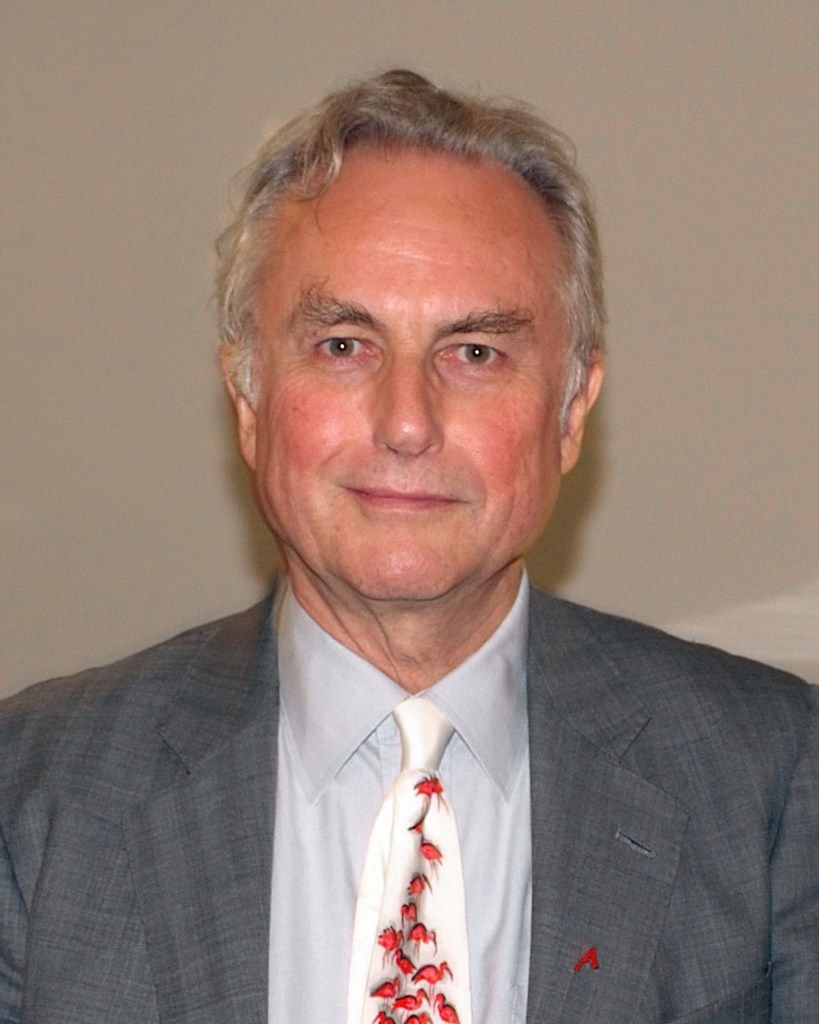
On August 28, 2019 on You Tube Richard Dawkins stated in an interview about his book OUTGROWING GOD:

Jesus was obviously a nice person if he lived. Either Jesus was a nice person or whoever wrote his lines was a nice person….The SERMON ON THE MOUNT is classically regarded as a very wonderful set of rules for living and indeed it is….Taken as a whole the Bible is a terrible set of rules for living….[Instead], live our lives by moral philosophers and by the general progress we see in morality as we look from decades to decades.

Let us pause for a moment and look at what Humanist autonomous philosophers have given us.

Francis Schaeffer noted:

The history of the nonchristian Philosophers up until the 18th century went like this:Here is a circle which stands for what the unified and true knowledge of the universe is. The next man would say “No,” and cross out the circle. He then would say “Here is the circle.” Then the next man would say “No,”and cross out that circle. Then he would make his circle and the next man would cross it out and make his circle. This continued through the centuries. They never found the circle, but they optimistically thought someone would beginning with man himself and on the basis of man’s reasoning alone.Then the endless rows of circles through the and the crossing out were broken and a drastic shift came because the humanist ideal had failed. Humanist man gave up his optimism for pessimism. He gave up the hope of an unified answer and this makes modern man who he is.

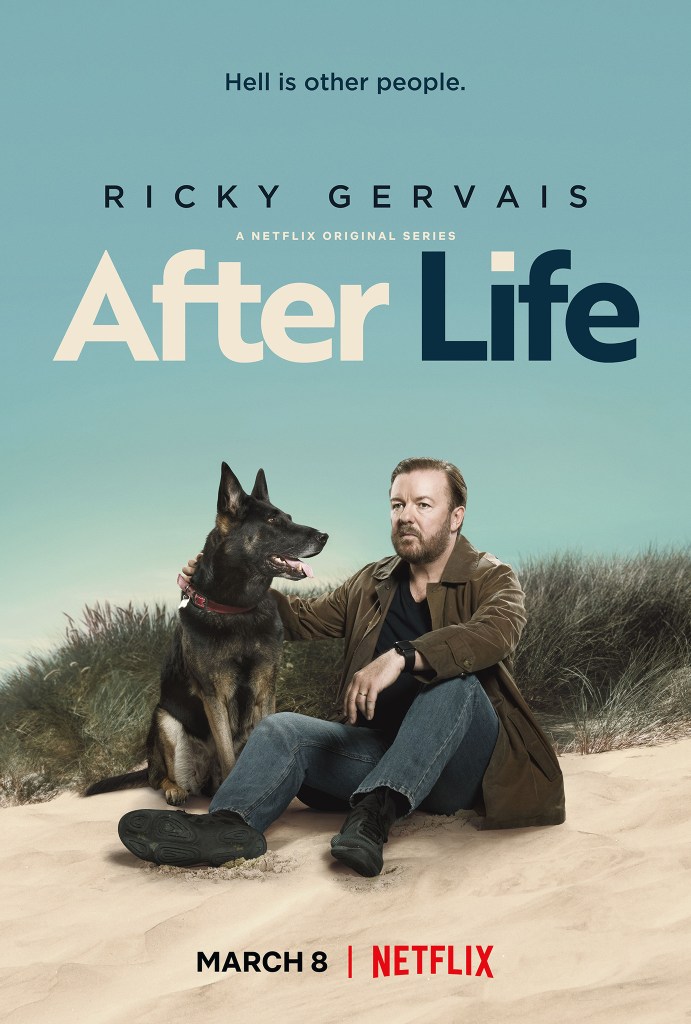
If Evolution by chance occurred then Ecclesiastes is correct about our lives seeking lasting lasting meaning “under the sun” is like chasing the wind and I pointed out that nihilism was the logical response of a person blocks out the possibility that God exists in my last letter to Dr. Barlow on April 18, 2020. I suggested that Dr. Barlow watch the NetFlix series AFTER LIFE which demonstrates this over and over and below is the complete letter:

April 18, 2020

Dr. Horace Barlow,  Cambridge CB3 9AX, England

Dear Dr. Barlow,

As you know I have writing you since 2015 and I was so thrilled to get a detailed letter back from you in November of 2017 that answered several of the questions that I have asked you about Charles Darwin’s views. In many of the letters I have written to you have referred also to Solomon and his words in the last book he wrote which was ECCLESIASTES. Well, Ricky Gervais has written and starred in a film series on Netflix called AFTER LIFE that reminds me of a modern day Solomon looking in vain for the meaning in life UNDER THE SUN in the fictional town Tambury which is really filmed in London.

Seen below is the third episode of AFTERLIFE (season 1) when Matt takes Tony to a comedy club with front row seats to cheer him up but it turns into disaster!!!

Today I got to ask a question to Ricky and he took time to answer me and I thought you would enjoy some of my open letter to Ricky which I published today:

(Above) Tony and Anne on the bench at the graveyard where their spouses are buried.

I have been a big fan of yours for 20 years now and I have taken an interest especially in your philosophical views concerning atheism and your attacks on Christianity, and since 2016 I have written you 9 letters basically concerning the Book of Ecclesiastes and the subject of nihilism. Then I ran across your series AFTER LIFE and Tony reminded me so much of Solomon in the Book of Ecclesiastes and the nihilism that Solomon embraced.

Today, Saturday April 18, 2020 at 6pm in London and noon in Arkansas, I had a chance to ask you on your Twitter Live broadcast “Is Tony a Nihilist?” At the 20:51 mark you answer my question with the following comments:


Not, I mean he [Tony] dabbles with it [nihilism] but a lot of this stuff is like he is being provocative and he is trying to sort of hurt people. No, It is difficult to say. I don’t. The one thing he wants he can’t have so he is angry. He has to compromise. He had the perfect marriage and he doesn’t know how to act or feel anymore. He is confused. He is in pain. He is ill. He is probably ill you know. If you are not right in your [mind] then you are ill, and you can’t just step out of it. You know. You even know you are not normal or well, but what can you do? You don’t feel good. That will do. Did we get serious then? That won’t happen again!

It seems to me that you would classify Tony as angry and confused but not a nihilist. You are the writer so you should know, but let me ask you if you can philosophically back up the view that Tony is not living the life of a nihilist (one who does think there are no rules for his life and no purpose for his life and no basis for morality).

As a member of the British Humanist Association you are familiar with the view of optimistic humanism. Let me share some views on that:

Tony and his wife Lisa who died 6 months ago of cancer

Paul Kurtz – (writer of Humanist Manifesto 2 in 1973 and Dr. Kurtz was a very kind gentleman who took time to correspond with me.)

Image result for paul kurtz

“The universe is neutral, indifferent to man’s existential yearnings. But we instinctively discover life, experience its throb, its excitement, its attraction. Life is here to be lived, enjoyed, suffered, and endured…Again–one cannot ‘prove’ this normative principle to everyone’s satisfaction. Living beings tend instinctively to maintain themselves and to reproduce beyond ultimate justification. It is a brute fact of our contingent natures; It is an instinctive desire to live.”

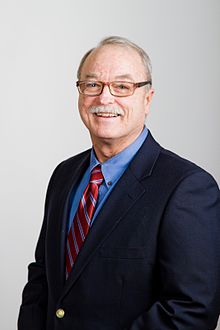
Image result for j p moreland

220 × 330Images may be subject to copyright. Learn More

J.P. Moreland – “2 Objections to optimistic humanism: #1 There is no rational justification for choosing it over nihilism. As far as rationality is concerned, it has nothing to offer over nihilism. Therefore, optimistic humanism suffers from some of the same objections we raised against nihilism. Kurtz himself admits that the ultimate values of humanism are incapable of rational justification!!!!!!  #2 Optimistic Humanism really answers the question of the meaning of life in the negative, just as nihilism does. For the optimistic humanist life has no objective value or purpose; It offers only subjective satisfaction, one should think long and hard before embracing such a horrible view. If there is a decent case that life has objective value and purpose, then such a case should be given as good a hearing as possible.

Image result for r c sproul

R.C. Sproul:Nihilism has two traditional enemies–Theism and Naive Humanism. The theist contradicts the nihilist because the existence of God guarantees that ultimate meaning and significance of personal life and history. Naive Humanism is considered naive by the nihilist because it rhapsodizes–with no rational foundation–the dignity and significance of human life. The humanist declares that man is a cosmic accident whose origin was fortuitous and entrenched in meaningless insignificance. Yet in between the humanist mindlessly crusades for, defends, and celebrates the chimera of human dignity…Herein is the dilemma: Nihilism declares that nothing really matters ultimately…In my judgment, no philosophical treatise has ever surpassed or equaled the penetrating analysis of the ultimate question of meaning versus vanity that is found in the Book of Ecclesiastes

Image result for h. j. blackham

The humanist H. J. Blackham was the founder of the British Humanist Association and he asserted: On humanist assumptions, life leads to nothing, and every pretense that it does not is a deceit. If there is a bridge over a gorge which spans only half the distance and ends in mid-air, and if the bridge is crowded with human beings pressing on, one after the other they fall into the abyss. The bridge leads nowhere, and those who are pressing forward to cross it are going nowhere….It does not matter where they think they are going, what preparations for the journey they may have made, how much they may be enjoying it all. The objection merely points out objectively that such a situation is a model of futility“( H. J. Blackham, et al., Objections to Humanism (Riverside, Connecticut: Greenwood Press, 1967). Francis Schaeffer comments concerning Blackham’s assertion, “One does not have to be highly educated to understand this. It follows directly from the starting point of the humanists’ position, namely, that everything is just matter. That is, that which has exited forever and in ever is only some form of matter or energy, and everything in our world now is this and only this in a more or less complex form.”

The 5 Conclusions of Humanism according to King Solomon of Israel in the Book of Ecclesiastes!!!!!

Image result for king solomon

The Humanistic world view tells us there is no afterlife and all we have is this life “under the sun.”

Image result for francis schaeffer

Francis Schaeffer (Christian Philosopher) notes Solomon limits himself to “under the sun” – In other words the meaning of life on the basis of human life standing alone between birth and death. It is indeed the book of modern man. Solomon is the universal man with unlimited resources who says let us see where I go. Ravi Zacharias 

Image result for ravi zacharias

“The key to understanding the Book of Ecclesiastes is the term ‘under the sun.’ What that literally means is you lock God out of a closed system and you are left with only this world of time plus chance plus us (Matter)”

1st Conclusion: Nothing in life truly satisfies and that includes wisdom, great works and pleasure. A) Will wisdom satisfy someone under the sun? We know it is good in its proper place. T

But what did Solomon find out about wisdom “under the sun”? Ecclesiastes 1:16-18 (Living Bible): I said to myself, ‘Look, I am better educated than any of the kings before me in Jerusalem. I have greater wisdom and knowledge.’So I worked hard to be wise instead of foolish[c]—but now I realize that even this was like chasing the wind. For the more my wisdom, the more my grief; to increase knowledge only increases distress.” (That is NIHILISM!!!!)

Image result for hugh hefner

KJV and Living Bible Ecclesiastes 2:1-3, 8, 10, 11: I said in mine heart, Go to now, I will prove thee with mirth, therefore enjoy pleasure: and, behold, this also is vanity.I said of laughter, It is mad: and of mirth, What doeth it? I sought in mine heart to give myself unto wine, yet acquainting mine heart with wisdom; and to lay hold on folly,And then there were my many beautiful concubines.10 Anything I wanted I took and did not restrain myself from any joy…11 But as I looked at everything I had tried, it was all so useless, a chasing of the wind, and there was nothing really worthwhile anywhere…

2nd Conclusion: Power reigns in this life and the scales are not balanced!!!!!Ecclesiastes 4:1 (King James Version): So I returned, and considered all the oppressions that are done under the sun: and behold the tears of such as were oppressed, and they had no comforter; and on the side of their oppressors there was power; but they had no comforter.
Ecclesiastes 7:15 (King James Version) All things have I seen in the days of my vanity: there is a just man that perisheth in his righteousness, and there is a wicked man that prolongeth his life in his wickedness.If you are a humanist you must admit that men like Hitler will not be punished in the afterlife because you deny there is an afterlife? Right?

Image result for hitler

3rd Conclusion – Death is the great equalizer. Just as the beasts will not be remembered so ultimately brilliant men will not be remembered. Ecclesiastes 3:20 “All go unto one place; All are of the dust, and all turn to dust again.” Here Solomon comes to the same point that Kerry Livgren came to in January of 1978 when he wrote the hit song DUST IN THE WIND. Can you refute the nihilistic claims of this song within the humanistic world view? Solomon couldn’t but maybe you can.

Image result for rock band kansas dust in the wind

4th Conclusion – Chance and time plus matter (us) has determined the past and it will determine the future.By the way, what are the ingredients that make evolution work? George Wald – “Time is the Hero.”

Image result for george wald

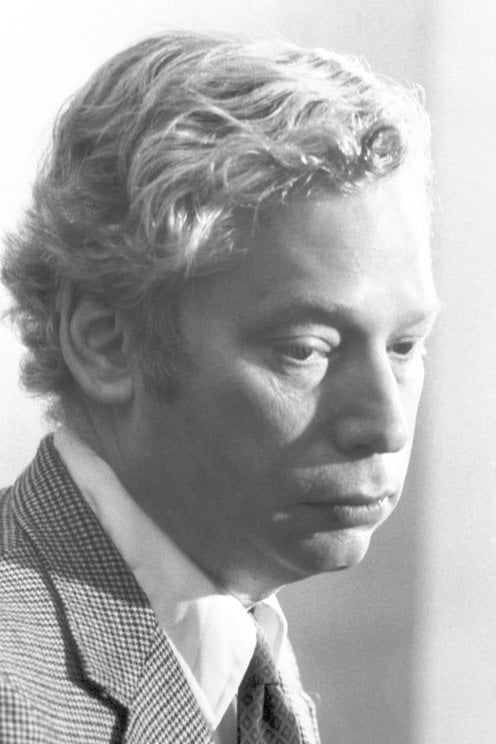
Jacques Monod – “Pure chance, absolutely free but blind, is at the root of the stupendous edifice of evolution.”

Image result for manod jac nobel prize

496 × 744Images may be subject to copyright. Learn More

Image result for movie on the beach 1959

I can not think of a better illustration of this in action than the movie ON THE BEACH by Nevil Shute. On May 4, 1994 I watched the movie for the first time and again I thought of the humanist who believes that history is not heading somewhere with a purpose but is guided by pure chance, absolutely free but blind. I thought of the passage Ecclesiastes 9:10-12 Whatsoever thy hand findeth to do, do it with thy might; for there is no work, nor device, nor knowledge, nor wisdom, in the grave, whither thou goest.11 I returned, and saw under the sun, that the race is not to the swift, nor the battle to the strong, neither yet bread to the wise, nor yet riches to men of understanding, nor yet favour to men of skill; but time and chance happeneth to them all.12 For man also knoweth not his time: as the fishes that are taken in an evil net, and as the birds that are caught in the snare; so are the sons of men snared in an evil time, when it falleth suddenly upon them.

5th Conclusion – Life is just a series ofcontinual and unending cycles and man is stuck in the middle of the cycle. Youth, old age, Death.
Does Solomon at this point embrace nihilism? Yes!!! He exclaims that the hates life (Ecclesiastes 2:17), he longs for death (4:2-3) Yet he stills has a fear of death (2:14-16).

 Adrian Rogers (September 12, 1931 – November 15, 2005) 

Adrian Rogers.jpg

I first starting studying Ecclesiastes in 1976 when I heard Adrian Rogers give a sermon on the nihilism of King Solomon. These facts in Ecclesiastes inspired the author of the song DUST IN THE WIND. Kerry Livgren of KANSAS, who wrote the song noted, “I happened to be reading a book of American Indian poetry and somewhere in it I came across the line, ‘We’re just dust in the wind.’ I remembered in the BOOK of ECCLESIASTES  where it said, ‘All is vanity,’ ” Livgren said of the passage that it reminds man he came from dust and will return to dust.

Image result for kansas rock band

I remember a visit in 1976 that Adrian Rogers made to our Junior High Chapel service at EVANGELICAL CHRISTIAN SCHOOL, and it was that day that I personally began a lifelong interest in King Solomon’s life, and his search for satisfaction as pictured in the Book of Ecclesiastes.

(Kerry Livgren, Dave Hope in back)

Image result for kerry livgren kansas

Solomon was searching for meaning and satisfaction in life in what Rogers called the 6 big L words in the Book of Ecclesiastes. He looked into Learning (1:16-18), Laughter, Ladies, Luxuries, and Liquor (2:1-3, 8, 10, 11), and Labor (2:4-6, 18-20).

Ecclesiastes 2:8-10The Message (MSG)

I piled up silver and gold,
loot from kings and kingdoms.
I gathered a chorus of singers to entertain me with song,
and—most exquisite of all pleasures—
voluptuous maidens for my bed.

9-10 Oh, how I prospered! I left all my predecessors in Jerusalem far behind, left them behind in the dust. What’s more, I kept a clear head through it all. Everything I wanted I took—I never said no to myself. I gave in to every impulse, held back nothing. I sucked the marrow of pleasure out of every task—my reward to myself for a hard day’s work!

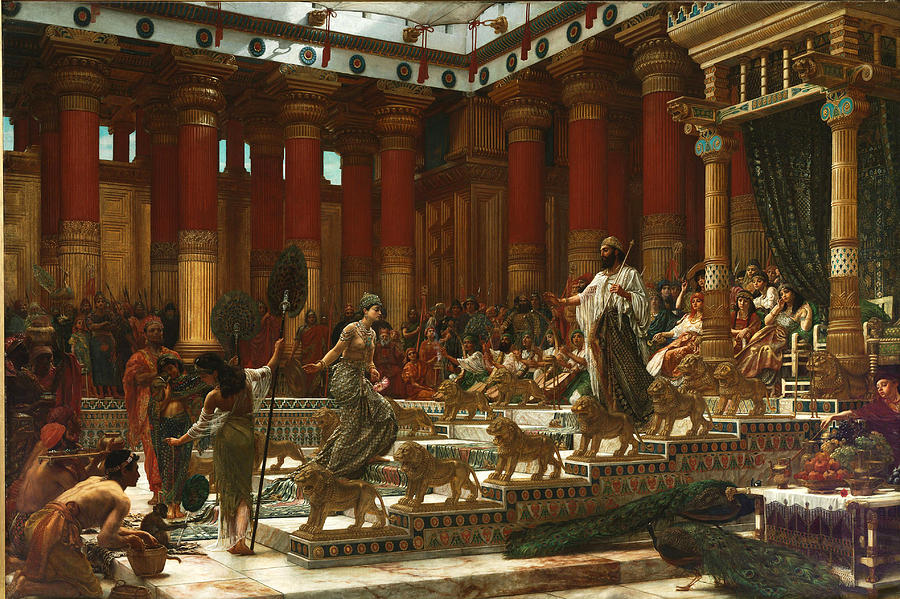
(Edward John Poynter Painting  below of Solomon)

Image result for solomon painting

Francis Schaeffer observed concerning Solomon, “You can not know woman by knowing 1000 women.”

Image result for francis schaeffer

King Solomon in Ecclesiastes 2:11 sums up his search for meaning with these words, “…behold, all was vanity and a striving after wind, and there was nothing to be gained under the sun.”

After hearing the sermon by Adrian Rogers in 1976, I took a special interest in the Book of Ecclesiastes and then the next year I bought the album POINT OF KNOW RETURN by the group rock group KANSAS. On that album was the song “Dust in the Wind”  and it rose to #6 on the charts in 1978. That song told me that Kerry Livgren the writer of that song had come to the same conclusion that Solomon had. I remember mentioning to my friends at church that we may soon see some members of KANSAS become Christians because their search for the meaning of life had obviously come up empty even though they had risen from being an unknown band to the top of the music business and had all the wealth and fame that came with that.

(That is the same reason I am excited about Ricky’s series AFTER LIFE!!!)

_____________________

Furthermore, Solomon realized death comes to everyone and there must be something more. I was hoping the members of KANSAS would keep looking for something more than just material pursuits UNDER THE SUN.

Livgren wrote:

“All we do, crumbles to the ground though we refuse to see, Dust in the Wind, All we are is dust in the wind, Don’t hang on, Nothing lasts forever but the Earth and Sky, It slips away, And all your money won’t another minute buy.”

Both Kerry Livgren and the bass player DAVE HOPE of KANSAS became Christians eventually. Kerry Livgren first tried Eastern Religions and DAVE HOPE had to come out of a heavy drug addiction. I was elated to see their personal testimony on The 700 Club in 1981 and that same interview can be seen on youtube today. Livgren lives in Topeka, Kansas today where he teaches “Diggers,” a Sunday school class at Topeka Bible Church. DAVE HOPE is the head of Worship, Evangelism and Outreach at Immanuel Anglican Church in Destin, Florida.

By the way, the final chapter of Ecclesiastes finishes with Solomon emphasizing that serving God is the only proper response of man. Solomon looks above the sun and brings God back into the picture.
13 Now all has been heard;
here is the conclusion of the matter:
Fear God and keep his commandments,
for this is the whole duty of man.

14 For God will bring every deed into judgment,
including every hidden thing,
whether it is good or evil

Sincerely,

Everette Hatcher, 13900 Cottontail Lane, Alexander, AR 72002, cell ph 501-920-5733, everettehatcher@gmail.com

—-

(END OF LETTER TO DR BARLOW)

I found Dr. Barlow to be a true gentleman and he was very kind to take the time to answer the questions that I submitted to him. In the upcoming months I will take time once a week to pay tribute to his life and reveal our correspondence. In the first week I noted:

 Today I am posting my first letter to him in February of 2015 which discussed Charles Darwin lamenting his loss of aesthetic tastes which he blamed on Darwin’s own dedication to the study of evolution. In a later return letter, Dr. Barlow agreed that Darwin did in fact lose his aesthetic tastes at the end of his life.

In the second week I look at the views of Michael Polanyi and share the comments of Francis Schaeffer concerning Polanyi’s views.

In the third week, I look at the life of Brandon Burlsworth in the November 28, 2016 letter and the movie GREATER and the problem of evil which Charles Darwin definitely had a problem with once his daughter died.

On the 4th letter to Dr. Barlow looks at Darwin’s admission that he at times thinks that creation appears to look like the expression of a mind. Francis Schaeffer discusses Darwin’s own words in 1968 sermon at this link.

My Fifth Letter concerning Charles Darwin’s views on MORAL MOTIONS Which was mailed on March 1, 2017. Francis Schaeffer discusses Darwin’s own words concerning moral motions in Schaeffer’s 1968 sermon at this link.

6th letter on May 1, 2017 in which Charles Darwin’s hopes are that someone would find in Pompeii an old manuscript by a distinguished Roman that would show that Christ existed! Francis Schaeffer discusses Darwin’s own words concerning the possible manuscript finds in Schaeffer’s 1968 sermon at this link  

7th letter on Darwin discussing DETERMINISM  dated 7-1-17 . Francis Schaeffer discusses Darwin’s own words concerning determinism in Schaeffer’s 1968 sermon at this link.

8th letter responds to Dr. Barlow’s letter to me concerning  Francis Schaeffer discussing Darwin’s own words concerning chance in Schaeffer’s 1968 sermon at this link.

9th letter in response to 11-22-17 letter I received from Professor Horace Barlow was mailed on 1-2-18 and included Charles Darwin’s comments on William Paley. Francis Schaeffer discusses Darwin’s own words concerning William Paley in Schaeffer’s 1968 sermon at this link.

10th letter in response to 11-22-17 letter I received from Professor Horace Barlow was mailed on 2-2-18 and includes Darwin’s comments asking for archaeological evidence for the Bible! Francis Schaeffer discusses Darwin’s own words concerning His desire to see archaeological evidence supporting the Bible’s accuracy  in Schaeffer’s 1968 sermon at this link.

11th letter I mailed on 3-2-18  in response to 11-22-17 letter from Barlow that asserted: It is also sometimes asked whether chance, even together with selection, can define a “MORAL CODE,” which the religiously inclined say is defined by their God. I think the answer is “Yes, it certainly can…” Francis Schaeffer discusses Darwin’s own words concerning A MORAL CODE in Schaeffer’s 1968 sermon at this link.

12th letter on March 26, 2018 breaks down song DUST IN THE WIND “All we do, crumbles to the ground though we refuse to see, Dust in the Wind, All we are is dust in the wind, Don’t hang on, Nothing lasts forever but the Earth and Sky, It slips away, And all your money won’t another minute buy.”

In 13th letter I respond to Barlow’s November 22, 2017 letter and assertion “He {Darwin} clearly did not lose his sense of the VALUE of TRUTH, and of the importance of FOREVER SEARCHING it out.”

In 14th letter to Dr. Barlow on 10-2-18, I assert: “Let me demonstrate how the Bible’s view of the origin of life fits better with the evidence we have from archaeology than that of gradual evolution.”In 15th letter in November 2, 2018 to Dr. Barlow I quote his relative Randal Keynes Who in the Richard Dawkins special “The Genius of Darwin” makes this point concerning Darwin, “he was, at different times, enormously confident in it,and at other times, he was utterly uncertain.”In 16th Letter on 12-2-18 to Dr. Barlow I respond to his letter that stated, If I am pressed to say whether I think belief in God helps people to make wise and beneficial decisions I am bound to say (and I fear this will cause you pain) “No, it is often very disastrous, leading to violence, death and vile behaviour…Muslim terrorists…violence within the Christian church itself”17th letter sent on January 2, 2019 shows the great advantage we have over Charles Darwin when examining the archaeological record concerning the accuracy of the BibleIn the 18th letter I respond to the comment by Charles Darwin: “My mind seems to have become a kind of machine for grinding general laws out of large collections of facts, but why this should have caused the atrophy of that part of the brain alone, on which the higher tastes depend, I cannot conceive….The loss of these tastes is a loss of happiness.” Francis Schaeffer discusses Darwin’s own words on his loss of aesthetic tastes  in Schaeffer’s 1968 sermon at this link.

Sincerely,

Everette Hatcher III, 13900 Cottontail Lane, Alexander, AR 72002, ph 501-920-5733 everettehatcher@gmail.com

Related posts:

Open letter to President Obama (Part 293) (Founding Fathers’ view on Christianity, Elbridge Gerry of MA)

April 10, 2013 – 7:02 am

President Obama c/o The White House 1600 Pennsylvania Avenue NW Washington, DC 20500 Dear Mr. President, I know that you receive 20,000 letters a day and that you actually read 10 of them every day. I really do respect you for trying to get a pulse on what is going on out here. There have […]By Everette Hatcher III | Posted in David BartonFounding FathersPresident Obama | Edit |Comments (0)

The Founding Fathers views concerning Jesus, Christianity and the Bible (Part 5, John Hancock)

May 8, 2012 – 1:48 am

There have been many articles written by evangelicals like me who fear that our founding fathers would not recognize our country today because secular humanism has rid our nation of spiritual roots. I am deeply troubled by the secular agenda of those who are at war with religion in our public life. Lillian Kwon quoted somebody […]By Everette Hatcher III | Posted in David BartonFounding Fathers | Edit | Comments (0)

The Founding Fathers views concerning Jesus, Christianity and the Bible (Part 4, Elbridge Gerry)

May 7, 2012 – 1:46 am

There have been many articles written by evangelicals like me who fear that our founding fathers would not recognize our country today because secular humanism has rid our nation of spiritual roots. I am deeply troubled by the secular agenda of those who are at war with religion in our public life. Lillian Kwon quoted somebody […]By Everette Hatcher III | Posted in David BartonFounding Fathers | Edit | Comments (0)

The Founding Fathers views concerning Jesus, Christianity and the Bible (Part 3, Samuel Adams)

May 4, 2012 – 1:45 am

There have been many articles written by evangelicals like me who fear that our founding fathers would not recognize our country today because secular humanism has rid our nation of spiritual roots. I am deeply troubled by the secular agenda of those who are at war with religion in our public life. Lillian Kwon quoted somebody […]By Everette Hatcher III | Posted in David BartonFounding Fathers | Edit | Comments (0)

The Founding Fathers views concerning Jesus, Christianity and the Bible (Part 2, John Quincy Adams)

May 3, 2012 – 1:42 am

There have been many articles written by evangelicals like me who fear that our founding fathers would not recognize our country today because secular humanism has rid our nation of spiritual roots. I am deeply troubled by the secular agenda of those who are at war with religion in our public life. Lillian Kwon quoted somebody […]By Everette Hatcher III | Posted in David BartonFounding Fathers | Edit | Comments (0)

The Founding Fathers views concerning Jesus, Christianity and the Bible (Part 1, John Adams)

May 2, 2012 – 1:13 am

There have been many articles written by evangelicals like me who fear that our founding fathers would not recognize our country today because secular humanism has rid our nation of spiritual roots. I am deeply troubled by the secular agenda of those who are at war with religion in our public life. Lillian Kwon quoted somebody […]By Everette Hatcher III | Posted in Founding Fathers | Edit | Comments (0)

President Obama and the Founding Fathers

May 8, 2013 – 9:20 am

President Obama Speaks at The Ohio State University Commencement Ceremony Published on May 5, 2013 President Obama delivers the commencement address at The Ohio State University. May 5, 2013. You can learn a lot about what President Obama thinks the founding fathers were all about from his recent speech at Ohio State. May 7, 2013, […]By Everette Hatcher III | Posted in Founding FathersPresident Obama | Edit | Comments (0)

Francis Schaeffer’s own words concerning the founding fathers and their belief in inalienable rights

December 5, 2012 – 12:38 am

Dr. C. Everett Koop with Bill Graham. Francis Schaeffer: “Whatever Happened to the Human Race” (Episode 4) THE BASIS FOR HUMAN DIGNITY Published on Oct 7, 2012 by AdamMetropolis The 45 minute video above is from the film series created from Francis Schaeffer’s book “Whatever Happened to the Human Race?” with Dr. C. Everett Koop. This […]By Everette Hatcher III | Posted in Founding FathersFrancis SchaefferProlife | Edit |Comments (1)

David Barton: In their words, did the Founding Fathers put their faith in Christ? (Part 4)

May 30, 2012 – 1:35 am

America’s Founding Fathers Deist or Christian? – David Barton 4/6 There have been many articles written by evangelicals like me who fear that our founding fathers would not recognize our country today because secular humanism has rid our nation of spiritual roots. I am deeply troubled by the secular agenda of those who are at […]By Everette Hatcher III | Posted in David BartonFounding Fathers | Tagged governor of connecticutjohn witherspoonjonathan trumbull | Edit | Comments (1)

Were the founding fathers christian?

May 23, 2012 – 7:04 am

3 Of 5 / The Bible’s Influence In America / American Heritage Series / David Barton There were 55 gentlemen who put together the constitution and their church affliation is of public record. Greg Koukl notes: Members of the Constitutional Convention, the most influential group of men shaping the political foundations of our nation, were […]By Everette Hatcher III | Posted in Founding Fathers | Edit | Comments (0)

John Quincy Adams a founding father?

June 29, 2011 – 3:58 pm

I do  not think that John Quincy Adams was a founding father in the same sense that his  father was. However, I do think he was involved in the  early days of our government working with many of the founding fathers. Michele Bachmann got into another history-related tussle on ABC’s “Good  Morning America” today, standing […]By Everette Hatcher III | Posted in David BartonFounding Fathers | Edit | Comments (0)

“Sanctity of Life Saturday” Taking on Ark Times Bloggers on various issues Part E “Moral absolutes and abortion” Francis Schaeffer Quotes part 5(includes the film SLAUGHTER OF THE INNOCENTS) (editorial cartoon)

July 6, 2013 – 1:26 am

I have gone back and forth and back and forth with many liberals on the Arkansas Times Blog on many issues such as abortion, human rights, welfare, poverty, gun control  and issues dealing with popular culture. Here is another exchange I had with them a while back. My username at the Ark Times Blog is Saline […]By Everette Hatcher III | Posted in Arkansas TimesFrancis SchaefferProlife | Edit |Comments (0)

Article from Adrian Rogers, “Bring back the glory”

June 11, 2013 – 12:34 am

I truly believe that many of the problems we have today in the USA are due to the advancement of humanism in the last few decades in our society. Ronald Reagan appointed the evangelical Dr. C. Everett Koop to the position of Surgeon General in his administration. He partnered with Dr. Francis Schaeffer in making the […]By Everette Hatcher III | Posted in Adrian RogersFrancis Schaeffer | Edit | Comments (0)

“Schaeffer Sundays” Francis Schaeffer’s own words concerning the possibility that minorities may be mistreated under 51% rule

June 9, 2013 – 1:21 am

Francis Schaeffer: “Whatever Happened to the Human Race” (Episode 4) THE BASIS FOR HUMAN DIGNITY Published on Oct 7, 2012 by AdamMetropolis ____________ The 45 minute video above is from the film series created from Francis Schaeffer’s book “Whatever Happened to the Human Race?” with Dr. C. Everett Koop. This book  really helped develop my political […]By Everette Hatcher III | Posted in Francis Schaeffer | Edit | Comments (0)

—-

MILTON FRIEDMAN “IS CAPITALISM HUMANE?” (TRANSCRIPT AND VIDEO OF 9/27/77 SPEECH AT CORNELL)

Image result for milton friedman ronald reagan

Ronald Reagan with Milton Friedman

It is my very great pleasure to present to you our speaker today, professor Milton Friedman .What I want to talk about is really an issue which is very much related to the whole problem of human freedom.It has to do with the question of whether capitalism is humane and what you mean by.I am sure many of you have heard the funny of the old story about the two poles who met one another, and one pole said to the other.Tell me: do you know the difference between capitalism and socialism, and the other pole said?No, I don’t know the difference, and the first pole said: well, you know under capitalism, man exploits man.00:56The other fellow shook his head.Well under socialism.He said it’s vice-versa.Well, now that, as a matter of fact in the present intellectual atmosphere of the world is a relatively favorable evaluation of capitalism, the interesting thing to me about this is that the all of the arguments, the issues in this debate, which has been going on for so Long about the form of government have changed the argument used to be about strictly the form of economic organization.Should we have government control of production and distribution, or should we have a market control and the argument used to be made in terms of the supposedly greater efficiency of centralized government and have centralized control?01:50Nobody makes that argument anymore.There is hardly a person in the world who will claim the nationalized industries or socialism as a method of economic organization, is an efficient way to organize things.The examples of Great Britain, the examples of Russia, the examples of some of the other states around the world that have adopted these measures, plus the domestic grown examples of the post office in its fellows, have put an end to that kind of talk.But the interesting thing is that, nonetheless, there is widespread opposition for cat to capitalism as a system of organization, and there is widespread sewer support for some vague system, labeled socialism.The most dramatic example of the change in the character, the argument and the paradox that I’m really bringing out is Germany here was Germany, which experienced all the horrors of the Nazi totalitarian state in the 1930s.Here is Germany, which, after the war under the Erhard policy of socio, marked fear, shaft social market economy had an economic miracle, with an enormous rise in total income, enormous rise in the well-being of the German people of the ordinary people, and yet in German.Despite the demonstration of the horrors on the one side of a totalitarian state and on the other of the benefits of a relatively free market here in Germany, you will find a very large fraction of all.Intellectuals remain, and not only remain, have become even more strongly anti-capitalist have become proponents of collectivism of one form or another.Only a small number have gone into the more extreme versions that you’ve been reading about in the paper of the of the terrorists, but a very large fraction of the intellectuals.Those who write for the newspapers, those who are on television and so on, are fundamentally anti-capitalist in their mentality, and the question is why what is it that has produced this shift?04:11Now, one of the most enough is shift.What is it that produces this consistent attitude of anti capitalism on the one hand, and pro something called collectivism on the other among intellectuals?One of the most interesting analyses of these problems, I know, is by a Russian dissident mathematician named Schaffer ravitch, his essay, which has never been published needless to say in Russia, but it appears in English translation in a book called under the rubble, which has been edited By Alexander Solzhenitsyn and I strongly recommend that particular paper to you in it he discusses the appeal of socialism over the ages.He goes back a thousand or two thousand years, and he comes out with the conclusion that, just as Freud pointed to the death wish in individuals as a fundamental psychological propensity, the appeal of capitalism, he argued, I’m sorry, the appeal of socialism.The opposition to capitalism is really a fundamental sign of a death wish for society on the part of intellectuals.It’S a very strange and at first sight, highly improbable kind of an interpretation.Yet I urge you all to read that essay, because you will find that it is very disturbing by having a great deal more sense to it than you would suppose.05:45Such a position could possibly have I’m not going to take that line.Maybe he’s right, but I think, there’s a very much simpler analysis, a simpler reason for this, and that simpler reason is a combination of a supposed emphasis on moral values and ignorance and misunderstanding about the relationship between moral values and economic systems.I may say the emphasis on moral values is almost always on the part of people who do not have economic problems, it’s not on the part of the masses, but the problem with this approach, the problem of trying to interpret and analyze a system either pro or Con in terms of such concepts as a morality of the system or the humanity of the system, whether capitalism is humane or socialism is humane or moral or immoral.The problem with that is in moral values are individual, they are not collective.Moral values have to do with what each of us separately believes in holds true.What our own individual values are: capitalism, socialism, central planning our means, not ends they in and of themselves.They need a more alluring world, humane or humility in human.07:12We have to ask what are their results?We have to look at what are the consequences of adopting one or another system of organization, and from that point of view, the crucial thing is to look beneath the surface.Don’T look at what the proponents of one system or another say, are their intentions, but look at what the actual results are.Socialism, which means government ownership and operation of means of production, has appealed to high-minded fine people to people of idealistic views because of the supposed objectives of socialism, especially because of the supposed objectives and equality of equality and social justice.Now those are fine objectives and it’s a tribute to the people of good will that those objectives should appeal to them.But you have to ask the question: does a system, no matter what its proponents say, produce those results and once you look at the results, it’s crystal clear that they do not wear our social injustice is greatest social injustice, Azhar, clearly greatest, where you have central control.The degree of social injustice and torture in a place like in incarceration in a place like Russia is of a different order of magnitude than it is in those Western countries where most of us have grown up and in which we have been accustomed to.08:49Regarding freedom.As our natural heritage, social injustice in a country like Yugoslavia, which is a much more benign communist state than Russia, and yet you asked Jesus who languishes in prison for having written a book, you asked the people at the University of Belgrade who have been sent to Prison or many others who have been ejected from the country, social injustice in China, where you have had thousands of people murdered because of their opposition to the government.Again, you look at the question of inequality of equality.Where do you have the greatest degree of inequality in the socialist states of the world?I remember about 15 years ago my wife and I were in Russia for a couple of weeks.We were in Moscow and we were, we were going with.Our interest died and happened to see, I happen to see some of the fancy Russian limousines up there, the Zips they were sort of a take-off on the 1938 American Packers, and I asked our interest guide out of amusement.How much did those sell for all?10:04She said those aren’t for sale.Those are only for the members of the Politburo you have in a country like Soviet Union.Enormous inequality in the immediate literal sense that there is a small select group that has all of the services and amenities of life and very large masses that are in a very, very low standard of living.Indeed, in a more direct way, if you take the wage rate of foremen versus the wage rate of ordinary workers in the Soviet Union, the ratio is much greater than it is in the United States.I am reminded again of another if I seem somehow to be referring to Poland, but on this same trip that we took to Russia, we stopped in Poland in Warsaw for a while, and we met there, a marvelous man, a man by the name of Edward Lipinski, Who was in this country a year ago at the age of eighty, three or four, I believe was arrested when he got back to Poland, because he had been one of those who had signed an author to Declaration against the suppression of freedom of thought and speech.In Poland, but at the time we met Edward Lipinski, he would seem to be fairly afraid.He is a militant man who had been a socialist all his life, and this was really very hard for he was now in his 70s.I may say when we saw him, he was retired, very hard thing for a man to go back on all of his lifelong beliefs, and so he said as follows to us.He said you know.He said I used to believe in socialism.I still do, but socialism is an ideal.We can’t have it in the real world.He said until we’re rich enough to be able to afford it, and he said socialism will be practical when every man in Poland has a house and two servants, and I said to him, including the servants, and he said yes now.12:02Capitalism, on the other hand, is a system of organization that relies on private property and voluntary exchange.It has repelled people, it’s driven them away from supporting it because they have thought it emphasized self-interest in a narrow way, because they were repelled by the idea of people pursuing their own interests rather than some broader interest.Yet if you look at the results, it’s clear that the results go, the other way around there isn’t it’s in the capitalist societies of the world, where only where capitalism has prevailed over long periods.If you had both freedom and prosperity, the greatest measures of freedom, if you look at the Western countries where freedom prevails, it doesn’t prevail perfectly.We all have our defects, but by an eye on buying on the large few would deny that in the United States in Great Britain and France in Germany, in the Western Europe, we have a greater degree of freedom on an individual and personal level than you do.In most other places around the world in Australia, Japan to a considerable extent today, though, not two hundred years ago, if you look, you will find that freedom has prevailed where you’ve had capitalism and that simultaneously so has a well-being and the prosperity of the ordinary man.There’S been more social justice and less inequality now the question is that you have to ask and you have to ask the proponents of these two system.13:36Has socialism failed because it’s good qualities were perverted by evil men who got in charge?Was it simply because Stalin took over from Lanen that communism went the way it did?Has capitalism succeeded despite the immoral values that pervade it?13:56I think the answer to both questions is in the negative.The results have arisen because each system has been true to its own values, or rather a system doesn’t have values.I don’t mean that has been true to the values it encourages, supports and develops in the people who live under that system.What we’re concerned with in discussing moral values here are those that have to do with the relations between people.It’S important to distinguish between two sets of moral considerations, the morality that is relevant to each of us in our private life.How we, each individually conduct ourselves, behave and then what’s relevant to systems of government and organization, are the relations between people and in judging relations among between people.I do not believe that the fundamental value is to do good to others, whether they want you to or not.The fundamental value is not to do good to others, as you see their good, it’s not to force them to do good.As I see it, the fundamental value in relations to Hmong people is to respect the dignity and the individuality of fellow men to treat your fellow man not as an object to be manipulated for your purpose, but the treat him as a person with his own values.In his own rights, a person to be persuaded not coerced, not forced, not bulldozed, not brainwashed.That seems to me to be a fundamental value from in social relations in all systems, whether you call them socialism, capitalism or anything else.15:51People act from self-interest.The citizens of Russia act from self-interest in the same way as the citizens in the United States.Do.16:00The difference between the two countries is in what determines self-interest?The man in the United States who is serving as a foreman in a factory.16:12His self-interest leads him to worry about not getting fired.The man in Russia who is acting as Foreman in a factory.His self-interest leads him to worry about not being fired, both are pursuing their own self-interest, but the sanctions, the effects, what makes it in their self-interest is different in the one case and in the other, but self-interest should not be interpreted as narrow selfishness.I quote a man who speaks much more eloquently than I can.This is Thoreau, and I quote him from here’s what, though the Thoreau said about unselfishness as a moral virtue, he said there is no odor, so bad as that which arises from goodness tainted it.If I knew for a certainty that a man was coming to my house with the conscious design of doing me good, I should run for my life.Philanthropy is almost the only virtue which is sufficiently appreciated by mankind.Nay, it is greatly overrated and it as to our it is our selfishness which over rates it if anything, L a man so that he does not perform his functions if he have a pain in his bowels.Even for that, as a seat of sympathy, he forthwith sets about reforming the world being a microcosm himself.He discovers and it is a true discovery, and he is the man to make it that the world has been eating green apples to his eyes.In fact, the globe itself is a great green apple, which there is danger awful to think of that the children of men will nibble before it is ripe and straight away.His drastic philanthropy seeks out the Eskimo and the Patagonian and embraces the populous, Indian and Chinese villages.That’S the row on unselfishness as a moral value, more important and more fundamentally, whenever we depart from voluntary cooperation and try to do good by using force the bad moral value of force triumphs over good intentions.You realize this is highly relevant to what I’m saying, because the essential notion of a capitalist society which I’ll come back to is voluntary cooperation.18:47Voluntary exchange.The essential notion of a socialist society is fundamentally force if the government is the master if society is to be run from the central center.What do you do?What are you doing?You automatically have to order people what to do?19:07What is your ultimate sanction?Go back a ways: take it on a milder level.Whenever you try to do good with somebody else’s money, you are committed to using force.How can you do good with somebody else’s money unless you first take it away from them?The only way you can take it away from them is by the threat of force.You have a policeman, a tax collector who comes and takes it from them.This is carrying much farther if you really have a socialist society, if you have an organization from the centre, if you have supposed government bureaucrats running things that can only ultimately rest on force, but whenever you resort to force even to try to do good, you must Not questions people’s motives, maybe they’re evil sometime, but look at the results of what they do give them the benefit of the doubt assume their motives are good.You know, there’s an old saying about the road to Hell being paved with good intentions.You have to look at the LT and whenever you use force the bad moral value of force triumphs over good intentions.The reason is not only that famous aphorism of Lord Acton, you all know it you’ve all heard absolute power corrupts absolutely I’m sorry.20:28Power corrupts absolute power corrupts absolutely that’s a whole aphorism.That’S one reason why trying to do good with methods that involve force lead to bad results because of people who set out with good intentions are themselves corrupted, and I may add, if they’re not corrupted, they’re replaced by people with bad intentions, who are more efficient at Getting control of the use of force, but also the fundamental reason, is more profound.The most harm of all is done when power is in the hands of people who are absolutely persuaded of the purity of their instincts of their and of the purity of their intentions.That Thoreau says that philanthropy is a much overrated virtue.Sincerity is also a much overrated virtue.Heaven preserve us from the sincere reformer who knows what’s good for you and bye-bye heaven is going to make you do it, whether you like it or not.That’S when you get the greatest harm done.I have no reason to doubt that Lenin was a man whose intentions were good, maybe they weren’t, but he was completely persuaded that he was right and he was willing to use any methods at all for the ultimate good.21:53Again, it’s interesting to contrast.The experience of Hitler versus Mussolini Mussolini was much less of a danger to human right because he was a hypocrite because he didn’t really believe what he was saying.He was just in there for the game.He started out as a socialist.He turned to a fascist, he was willing to be bribed by whoever would bribe him the most.As a result, there were at least some protections against his arbitrary rule, but Hitler was a sincere fanatic.He believed in what he was doing and he did far greater harm or, if I may take you on to a minor key in which you may not join me.I realize Ralph Nader is a modern example of the same thing.I have no doubt that Ralph is sincere.I have no doubt that he means what he says, but that’s.Why he’s so dangerous a man who is threatening our freedom in the past in the past few decades?In the past few decades there has been a great decline in the moral climate.There are a few people who doubt the decline in the moral climate.We see evidences of it here, the lack of civility and discussions among people the resort to chance.Instead of arguments, these are all evidences on one level of a decline in moral climate, but we see it also in the rising crime statistics, in the lack of respect for property in the kind of rioting that broke out in New York after the blackout.In the problems of maintaining discipline in elementary schools, why why have we had such a decline in moral climate?I submit to you that a major factor has because it been because of a change in the philosophies which had been prominent in society, from a belief in individual responsibility, to a supposed belief in social responsibility, from a tendency to get away from the individual from his Responsibility for his own life in his own behavior, if he doesn’t behave properly, that’s his responsibility needs to be charged connected to a belief that, after all, it’s society that is responsible.24:19If you adopt the view that everything belongs to society, then it belongs to nobody.Why should I have any respect for property if it belongs to everybody, if you adopt the view that no man is responsible for his own behavior, because somehow or other society is responsible well, then why should he seek to make his behavior good?Now?Of course, don’t misunderstand me on a scientific level, it’s true that what we are is affected a great deal by the society in which we live and grow up.Of course, all of us are different than we would have been if we had grown up in a different society, so it’s not denying in the slightest the effect on all of us of the social institutions within which we operate both on our values and our opportunity.On our opportunities, but I am only saying that a set of social institutions which stresses individual responsibility, which stresses a responsibility for the of the individual, given the kind of person he is.The kind of society in which he operates to be responsible for himself is a kind of a society which is likely to have a much higher and more responsible moral climate than the kind of a society in which you stress the lack of responsibilities.25:42The individual.For what happens to him, let me note the schizophrenia in the talk about social responsibility.There’S always a tendency to excuse the people who are harmed by what happens or the people who are regarded as a victims, there’s always a tendency to excuse them from any responsibility.They didn’t riot in Harlem because they had no control over their emotions because they were bad people or because they were irresponsible people.No, they rioted because of what society did to him.That’S the argument, but nobody ever turns it around and argues the other way.If the people who rioted our innocent of guilt, because society who did it to it, then aren’t the people who are singled out as the oppressors, also free of guilt?26:36Do you hear these scenes saying people say?Oh no, we mustn’t blame those bad people who trampled the poor under their feet because they’re not doing it out of their own individual will society is making them forcing them to do it.If you’re going to use the doctrine of social responsibility, you ought to be even-handed both ways.It excuses both the victim and the person who is responsible, because that would be inconsistent in the person who is alleged to be responsible for the victimization.27:10And similarly, you must be even-handed on the signs.We must all of us be individually responsible for what we do to our fellow man, whether that be harm or good, there’s, an additional reason why you’ve had a decline in the moral climate.You’Ll.Pardon me for returning to my my discipline of economics, but there’s a fundamental economic law which has never been contradicted to the best of my knowledge, and that is, if you paste more for something there will tend to be more of that something available.If the amount you’re willing to pay for anything goes up somehow or other somebody will supply more of that thing, we have made immoral behavior far more profitable.We have, in the course of the changes in our society, been establishing greater and greater incentives on people to behave in ways that most of us regard as immoral on each of us separately.We’Ve all been doing it.One of the examples that has always appealed to me along these lines is the example of Great Britain, not now, but in the 19th century and 18th century.You know.In the 18th century, Britain was regarded as a nation of smugglers of law of avoiders of people who broke the law in the 19th and early 20th century.Britain got the reputation for being the most a law beating country in the world, an incorruptible civil service.Everybody knew about the fact that you couldn’t bribe a civil servant in Britain away.You could want to say Italy or New York.29:00How did that come about?How did a nation of smugglers with no respect for the law, get converted into a nation of people?Obedience of the law, very simply by Allah by the less a fair policy adopted in the 19th century, which eliminated laws to break.If you had complete free trade, if you had complete free trade, as you did after the abolition of the Corn Laws, there was no more smuggling.29:30It was a meaningless term.You were free to bring anything into the country you wanted.29:33You couldn’t be a smuggler who’s impossible.If you didn’t need a license to establish a business, you didn’t need a license to open up a factory.What was there to bribe a civil servant for the civil servants became incorruptible because there was nothing to bribe them for now.Of course, these patterns there’s a cultural lag, as you have all learned in your anthropology courses and these patterns, once they develop, lasts for a while.But what has been happening in Britain in the last 30 and 40 years as Britain has been moving away from?Essentially, let’s say fair and toward a much more controlled and centralized economy.30:09This reputation for law obedience is disappearing.You’Ve had repeated scandals about ministers of the government about members of parliament about civil servants who have been brought about the rise in gang warfare and the rest.Why?Because you’re establishing an incentive you’ve got more laws to break now, it’s much more fundamental, when the only laws are those laws which everybody regards is right and valence.They have great moral force when you make laws that people separately do not regard as right invalid.30:45They lose their moral force.Is there anybody in here who has a moral compunction to speeding?I’M not saying you may not have a Prudential objection to speeding, you may be afraid you’ll get caught, but does it seem to you Lee immoral to speed?Maybe if so you’re a small minority, I have never yet found anybody who regarded it immoral as immoral to violate the foreign exchange.Regulations of a foreign country here are people who would never dream for a moment of stealing a nickel from their neighbor who have no hesitancy on manipulating their income tax returns so as to reduce their taxes by thousands.Why?Because the one set of laws have a moral value that people recognize independent of the law of the government having passed these laws, the other cent do not appeal to people’s moral instincts, so I believe well, let me give you some more examples from the United States.Prohibition of liquor, which was attempted, as you know, had disastrous effects on the climate of law, obedience and more relevant, something which had been legal to buy and drink.Some alcoholic beverages became illegal and you converted, law-abiding citizens into bootleggers.I heard over the 60 minutes on the program last Sunday night, a great story on butt legging.This has to do with the fact that the New York state tax on cigarettes is very much higher than the tax on cigarettes in the state of South Carolina.So you have people going down to South Carolina and buying the South Carolina low, taxed cigarettes and smuggling it into New York State and forging New York state tax stamps on it and then selling it to publicly a large fraction of all cigarettes sold in New York.32:38State are but light now there you’ve provided an incentive for people to break the law, so they break the law.It’S like prohibition in a different form.The obvious answer is for New York State to lower its taxes, and you will eliminate, but legging overnight and them and be able to take whatever may be.The number of policemen who are devoted to enforcing that kind of thing.You will be able to take them and turn them to useful work.I go back, however, to the essence of capitalism and its relevance to the question of humanity.As I say, the essence of a capitalist system in its pure form is that it is a system of cooperation without compulsion, a voluntary exchange of free enterprise.Now, I hasten to add, no actual system conforms to that notion in the actual world.You’Re always dealing with with more or less in the actual world.You always have impediments and interferences to voluntary exchange, but the essential character of a capitalist system is that it relies on voluntary exchange on you’re agreeing with me that you will buy something from me.If I will pay you a certain amount for it, the essential notion is that both parties to the exchange must benefit.This was a great vision of Adam Smith in his Wealth of Nations that individuals, each separately pursuing their own could promote the social interest because you could get exchanged between people on the basis of mutual benefit.Now I want to emphasize to you here for this purpose that this notion extends far beyond economic matters, narrowly conceived.That’S really the main point I want to get across here, and I want to give you some very different kinds of examples.34:35Consider the development of language, the English language.There was never any central government that dictated the English language that set up some rules for it.There was no Planning Board that determined what word should be nouns in what words vowels, and I mean what words adjectives.Language grew through the free market through voluntary cooperation.I used a word.You used a word if was mutually advantageous to us to keep on using that word.35:05We keep on using language grows.It develops, it expands it contracts through the free market.Consider the body of common law, not legislative law, which is a very different thing, but the body of common law people voluntarily chose to go to a court and allow the court to adjudicate their dispute in the process.35:27There arose and developed the body of common law.Again, no central plan, no central coordination.You are here in an academic institution.How did scientific knowledge and understanding arise?How do we get the development of science?Is there somehow or other a government agency that decides what are the most important problems to be studied?35:48That prevents cooperation.Unfortunately, there are developing such agencies, but in the history of science that isn’t the way science developed science developed out of free-market exchange, it developed on occasion with a patronage of an authority but voluntary cooperation among the scientists.I read voluntarily the work that is done by economists and other lands.They read my work, they take the parts of it.They like they discard the parts they don’t in the process.You build a more and more complicated system through voluntary, free, voluntary exchange based on the principle of mutual benefit.36:26Similarly, to a free market and ideas.Again, that is a free market of exactly the same kind as the economic market and no Durman, and the two are very closely interrelated.Is it a violation of the free market in goods or the free market in ideas?If a country as Great Britain did immediately after the war has exchanged control under which no citizen of Britain may buy a foreign book, unless he got authorization from the Bank of England to acquire the foreign currency, is that any restriction on human and economic freedom, or Is it a restriction on ideas on the free market and ideas?I want to give you a final example which goes back to the fundamental question: we’ve been raising and that’s voluntary charitable activity.I want you to ask you a question: go back to the 19th century in the United States it was a period when you had about the closest approximation to a capitalist society.You can imagine in which the federal government, who is spending roughly an amount equal to roughly 3 percent of the national income almost entirely on the Army and Navy state and local governments, were spending about 6 or 7 percent of the national income, mostly on schooling.Very little of what has come to be regarded as welfare, yet the 19th century was a period of the greatest burst of voluntary charitable activity that we have seen in this country or any other country at any other time.When was Cornell established how it was established by the voluntary benefaction of the man who gave you your name sometime?What was it 1860 something that period of the 19th century saw the emergence of a host of private colleges, universities throughout the country?My own University of Chicago was established in 1890 and voluntary by voluntary eleemosynary activity.It was also the period which saw the growth and development of the nonprofit charitable Hospital.It saw the establishment of foreign missions of the Society for the Prevention of Cruelty to Animals of the Boy Scouts.You name it.38:43There is hardly a voluntary activity carnegie libraries, the free public libraries.Why was it that voluntary activity flourished because, again, the free market, voluntary cooperation among people cooperating to pursue their common interests, is a far more effective and efficient way of producing charitable results than any other known to man?I ask you: what is a common element in all of these cases?I’Ve mentioned language, common law, scientific knowledge, ideas, charitable activity, the development of an elaborate and complex structure without any central planning and without coercion, no central planning and language, common law and scientific knowledge, and I did in voluntary activity.And yet you develop complex mechanisms, complex structures with order with structures which, after the event, you can analyze in logical terms, without coercion.39:49You have progress through harmony rather than the attempt to impose progress.Through course, capitalism is often reproached as being materialistic.It’S often repro she’s erecting money as the chief motives, but yet again look at the facts.I may say you know: money is not a very noble motive, but it’s cleaner than most, but look at the facts who has produced the great achievements of mankind.40:22Can you name me a great play that has been written by a government committee?Can you name me an invention that was produced by a government Bureau, the great works that are the great achievements of mankind of all been the achievements of individuals of a Shakespeare or a George Bernard Shaw.George Bernard Shaw is a beautiful example because of course, as you know, he wrote the book the famous book, the Intelligent Woman’s Guide to socialism.He regarded himself as a socialist, but his career and his performance is a striking demonstration of the virtues of a capitalist system.He opposed again in science, it’s Einstein Copernicus Galileo, who are the great contributors of scientific ideas, not through government central organization, but mostly in spite of it in Galileo’s cases.You know, despite persecution, by the centralized authorities of his time again in the areas of charity.Florence Nightingale was not a government civil servant, she was a private individual, human being who was seeking to achieve the objective she held dear.41:43She was pursuing her self-interest.The plain fact is that in any society, whatever may be its form of organization, the people who are not interested in material values are a small minority.There are no societies in the world today that are more materialistic than the collectivist societies.It’S the Russian societies.It’S the Chinese societies, it’s the Yugoslavs ayahs that put all their stress on materialism on achieving economic goals and five-year plans that the non-materialistic achievements of mankind.Why?Because they are in a possession of position to suppress minorities.What we want for a society that is at once, humane and gives opportunity for great human achievements, is in a society in which that small minority, a minority of people who do not have materialistic objectives who are interested in some of these other achievements, have the greatest Degree of freedom and the only society that anybody has ever invented than anybody has ever discovered that comes close to doing.42:55That is a capitalist society.When you hear people objecting to the market or to capitalist, and you examine their objections, you will find that most of those objections are objections to freedom itself.What most people are objecting to is that the market gives people what the people want.43:15Instead of what the person talking thinks the people oughta want.This is true whether you are talking of the objections of a Galbraith to the market, whether you are talking of the objections of a Nader to the market, whether you were talking of the objections of a Marx or an angles or a Lenin to the market.The problem is that in a market society in a society in which people are free to do their own thing in which people make voluntary deals, it’s hard to do good.You’Ve got to persuade people and there’s nothing in this world harder.But the important thing is that in that kind of society it’s also hard to do harm.It’S true that if you had a concentrated power in the hands of an angel, he might be able to do a lot of good as he viewed it.But one man’s good is another man’s then, and the great virtue of a market capitalist society is that it be by preventing a concentration of power.It prevents people from doing the kind of harm which really concentrated power can do so that I conclude that capitalism per se is not humane or inhumane.Socialism per se is not humane or anyway, but capitalism tends to give the give free rein, much free rein to the more humane values of human beings.It tends to develop a climate which is more favorable to the development, on the one hand, of a higher moral atmosphere of responsibility and, on the other, to greater achievements in every realm of human understanding.Thank

Milton Friedman The Power of the Market 2-5

Milton Friedman Friday:(“Free to Choose” episode 4 – From Cradle to Grave, Part 7 of 7)

October 21, 2011 – 12:15 am

I am currently going through his film series “Free to Choose” which is one the most powerful film series I have ever seen. TEMIN: We don’t think the big capital arose before the government did? VON HOFFMAN: Listen, what are we doing here? I mean __ defending big government is like defending death and taxes. […]By Everette Hatcher III | Edit | Comments (0)

Milton Friedman Friday:(“Free to Choose” episode 4 – From Cradle to Grave, Part 6 of 7)

October 14, 2011 – 12:14 am

I am currently going through his film series “Free to Choose” which is one the most powerful film series I have ever seen worked pretty well for a whole generation. Now anything that works well for a whole generation isn’t entirely bad. From the fact __ from that fact, and the undeniable fact that things […]By Everette Hatcher III | Edit | Comments (0)

Milton Friedman Friday:(“Free to Choose” episode 4 – From Cradle to Grave, Part 5 of 7)

October 7, 2011 – 12:13 am

 I am currently going through his film series “Free to Choose” which is one the most powerful film series I have ever seen. PART 5 of 7 MCKENZIE: Ah, well, that’s not on our agenda actually. (Laughter) VOICE OFF SCREEN: Why not? MCKENZIE: I boldly repeat the question, though, the expectation having been __ having […]By Everette Hatcher III | Edit | Comments (0)

Milton Friedman Friday: (“Free to Choose” episode 4 – From Cradle to Grave, Part 4 of 7)

September 30, 2011 – 12:12 am

 I am currently going through his film series “Free to Choose” which is one the most powerful film series I have ever seen. PART 4 of 7 The massive growth of central government that started after the depression has continued ever since. If anything, it has even speeded up in recent years. Each year there […]

By Everette Hatcher III | Edit | Comments (0)

Milton Friedman Friday: (“Free to Choose” episode 4 – From Cradle to Grave, Part 3 of 7)

September 23, 2011 – 12:11 am

 I am currently going through his film series “Free to Choose” which is one the most powerful film series I have ever seen. PART 3 OF 7 Worse still, America’s depression was to become worldwide because of what lies behind these doors. This is the vault of the Federal Reserve Bank of New York. Inside […]

By Everette Hatcher III | Edit | Comments (0)

Milton Friedman Friday:(“Free to Choose” episode 4 – From Cradle to Grave, Part 2 of 7)

September 16, 2011 – 12:10 am

 I am currently going through his film series “Free to Choose” which is one the most powerful film series I have ever seen. For the past 7 years Maureen Ramsey has had to buy food and clothes for her family out of a government handout. For the whole of that time, her husband, Steve, hasn’t […]By Everette Hatcher III | Edit | Comments (0)

Friedman Friday:(“Free to Choose” episode 4 – From Cradle to Grave, Part 1 of 7)

September 9, 2011 – 12:09 am

Friedman Friday:(“Free to Choose” episode 4 – From Cradle to Grave, Part 1 of 7) Volume 4 – From Cradle to Grave Abstract: Since the Depression years of the 1930s, there has been almost continuous expansion of governmental efforts to provide for people’s welfare. First, there was a tremendous expansion of public works. The Social Security Act […]

By Everette Hatcher III | Edit | Comments (0)

“Friedman Friday” (“Free to Choose” episode 1 – Power of the Market. part 7 of 7)

March 16, 2012 – 12:25 am

  Michael Harrington:  If you don’t have the expertise, the knowledge technology today, you’re out of the debate. And I think that we have to democratize information and government as well as the economy and society. FRIEDMAN: I am sorry to say Michael Harrington’s solution is not a solution to it. He wants minority rule, I […] By Everette Hatcher III | Posted in Current EventsMilton Friedman | Edit | Comments (0)

“Friedman Friday” (“Free to Choose” episode 1 – Power of the Market. part 6 of 7)

March 9, 2012 – 12:29 am

PETERSON: Well, let me ask you how you would cope with this problem, Dr. Friedman. The people decided that they wanted cool air, and there was tremendous need, and so we built a huge industry, the air conditioning industry, hundreds of thousands of jobs, tremendous earnings opportunities and nearly all of us now have air […] By Everette Hatcher III | Posted in Current EventsMilton Friedman | Edit | Comments (0)

“Friedman Friday” (“Free to Choose” episode 1 – Power of the Market. part 5 of 7)

March 2, 2012 – 12:26 am

Part 5 Milton Friedman: I do not believe it’s proper to put the situation in terms of industrialist versus government. On the contrary, one of the reasons why I am in favor of less government is because when you have more government industrialists take it over, and the two together form a coalition against the ordinary […] By Everette Hatcher III | Posted in Current EventsMilton Friedman | Edit | Comments (0)

“Friedman Friday” (“Free to Choose” episode 1 – Power of the Market. part 4 of 7)

February 24, 2012 – 12:21 am

The fundamental principal of the free society is voluntary cooperation. The economic market, buying and selling, is one example. But it’s only one example. Voluntary cooperation is far broader than that. To take an example that at first sight seems about as far away as you can get __ the language we speak; the words […] By Everette Hatcher III | Posted in Current EventsMilton Friedman | Edit | Comments (0)

“Friedman Friday” (“Free to Choose” episode 1 – Power of the Market. part 3 of 7)

February 17, 2012 – 12:12 am

  _________________________   Pt3  Nowadays there’s a considerable amount of traffic at this border. People cross a little more freely than they use to. Many people from Hong Kong trade in China and the market has helped bring the two countries closer together, but the barriers between them are still very real. On this side […] By Everette Hatcher III | Posted in Current EventsMilton Friedman | Edit | Comments (0)

“Friedman Friday” (“Free to Choose” episode 1 – Power of the Market. part 2 of 7)

February 10, 2012 – 12:09 am

  Aside from its harbor, the only other important resource of Hong Kong is people __ over 4_ million of them. Like America a century ago, Hong Kong in the past few decades has been a haven for people who sought the freedom to make the most of their own abilities. Many of them are […] By Everette Hatcher III | Posted in Current EventsMilton Friedman | Edit | Comments (0)

“Friedman Friday” (“Free to Choose” episode 1 – Power of the Market. part 1of 7)

February 3, 2012 – 12:07 am

“FREE TO CHOOSE” 1: The Power of the Market (Milton Friedman) Free to Choose ^ | 1980 | Milton Friedman Posted on Monday, July 17, 2006 4:20:46 PM by Choose Ye This Day FREE TO CHOOSE: The Power of the Market Friedman: Once all of this was a swamp, covered with forest. The Canarce Indians […]

OPEN LETTER TO BARACK OBAMA ON HIS AUTOBIOGRAPHY “A PROMISED LAND” Part 6 “There was the unsettling fact that, despite whatever my mother might claim, the bullies, cheats, and self-promoters seemed to be doing quite well, while those she considered good and decent people seemed to get screwed an awful lot”


November 27, 2020

Office of Barack and Michelle Obama
P.O. Box 91000
Washington, DC 20066

Dear President Obama,

I wrote you over 700 letters while you were President and I mailed them to the White House and also published them on my blog http://www.thedailyhatch.org .I received several letters back from your staff and I wanted to thank you for those letters. 

I have been reading your autobiography A PROMISED LAND and I have been enjoying it. 

As an evangelical believer I am encouraged by your references to spiritual hymns, but your intellectual views seem to place you in the secular humanist school of thought. 

Five faith facts about former President Barack Obama’s new book, ‘A Promised Land’


Former President Barack Obama’s new book, “A Promised Land,” mentions only four pages in its index under the category “faith and.”

But the title of the book by the 44th U.S. president invokes biblical imagery — a land promised by God to his people — and Obama includes the role of religious institutions, faith leaders and personal traditions throughout the 750-page book. On the page after his dedication of the tome to his wife and daughters, Obama features the words from an African American spiritual:

“Fly and never tire

There’s a great camp-meeting in the Promised Land.”

While friends and strangers have told him they believe God engineered his road to the White House, Obama says he didn’t view his political path as a call from the Almighty.

 (Pari Dukovic/Random House via AP) This photo provided by Random House shows the cover of “A Promised Land.
(Pari Dukovic/Random House via AP) This photo provided by Random House shows the cover of “A Promised Land.” The first volume of former President Barack Obama’s memoir came out Nov. 17.

“I suspect that God’s plan, whatever it is, works on a scale too large to admit our mortal tribulations; that in a single lifetime, accidents and happenstance determine more than we care to admit,” he writes, “and that the best we can do is to try to align ourselves with what we feel is right and construct some meaning out of our confusion, and with grace and nerve play at each moment the hand that we’re dealt.”

He respected his former pastor, the Rev. Jeremiah Wright, before he had to part ways.

Obama writes that, especially from his perspective as a young man, “the good in Reverend Wright more than outweighed his flaws.” Obama had noted, as he attended and joined Trinity United Church of Christ in Chicago, that some of the pastor’s sermons were “a little over the top.” But when news coverage showed his pastor speaking of an America that believes in Black inferiority and white supremacy “more than we believe in God,” Obama chose to withdraw his invitation for Wright to give the invocation as he announced his candidacy.

And after more of Wright’s sermons started appearing in loops on broadcast media, Obama distanced himself from the minister with a speech on race that drew a record number of online watchers.

Then, after Wright “unleashed a rant for the ages” at a National Press Club appearance, Obama says he was forced to “permanently sever my relationship with someone who had played a small but significant part in making me the man that I was.”

Obama recalls a time later, as he awaited primary vote outcomes, how a couple of longtime African American friends reviewed campaign highs and lows and took turns “acting out some of the more excruciating lines” from Wright’s Press Club appearance: “We all started to laugh and couldn’t stop, the kind of deep, tear-inducing, falling-out-of-your-chair laughter that’s a kissing cousin to despair.”

Adrian Rogers was my pastor at Bellevue Baptist Church in the 1970’s and 1980’s when I was growing up and his impact on me was immense and I could not envision turning my back on him. Evidently you had good reason to do so. Sadly I remember watching both Bill Clinton and Al Gore grow up in evangelical churches but later turn their backs on their previous pro-life views.

IN YOUR AUTOBIOGRAPHY YOU NOTED:

“…I discovered a community of faith—that it is okay to doubt, to question, and still reach for something beyond the here and now.”

I agree but once a person questions and they examine the evidence that the Bible is the word of God then they can be confident that God does take a personal interest in our lives and as Isaac Newton maintained is responsible for creating the world! Let me make two suggestions to you on scripture reading. First, read the first two chapters of Romans because it discusses creation and the fact that God has both given us the evidence of the creation around us as evidence that He exists and secondly He has put it in our conscience that we know God exists (more on this later). Second, take time to read ECCLESIASTES since it discusses that next quote of yours that I want to discuss!

You also noted:

There was the unsettling fact that, despite whatever my mother might claim, the bullies, cheats, and self-promoters seemed to be doing quite well, while those she considered good and decent people seemed to get screwed an awful lot.

It seems obvious to me that you need to read the BOOK OF ECCLESIASTES.

Below are Francis Schaeffer’s comments on ECCLESIASTES and they deal with the fact that life UNDER THE SUN power reigns and the books will not be balanced!

The Christian Scholar Ravi Zacharias noted, “The key to understanding the Book of Ecclesiastes is the term UNDER THE SUN — What that literally means is you lock God out of a closed system and you are left with only this world of Time plus Chance plus matter.” 

Oppressed have no comforter

Ecclesiastes 4:1

 Then I looked again at all the acts of oppression which were being done under the sun. And behold I saw the tears of the oppressed and that they had no one to comfort them; and on the side of their oppressors was power, but they had no one to comfort them.

Francis Schaeffer: Between birth and death power rules. Solomon looked over his kingdom and also around the world and proclaimed that right does not rule but power rules.

Ecclesiastes 7:14-15

14 In the day of prosperity be happy, but in the day of adversity consider—God has made the one as well as the other so that man will not discover anything that will be after him.

15 I have seen everything during my lifetime of futility; there is a righteous man who perishes in his righteousness and there is a wicked man who prolongs his life in his wickedness.

Ecclesiastes 8:14

14 There is futility which is done on the earth, that is, there are righteous men to whom it happens according to the deeds of the wicked. On the other hand, there are evil men to whom it happens according to the deeds of the righteous. I say that this too is futility.

Francis Schaeffer: We could say it in 20th century language, “The books are not balanced in this life.”

President Obama your views are more in line with those of atheistic evolutionists than those scientists such as Isaac Newton who believed in creationism. I had the unique opportunity from 2015 to 2020 to correspond with a famous Harvard educated British scientist named Professor Horace Barlow of Cambridge. Barlow was named after his grandfather Horace Darwin. Most of the correspondence between Dr. Barlow and myself dealt with the views of Barlow’s famous great grandfather Charles Darwin.

XXXXXXX

Image result for francis schaeffer

Francis Schaeffer 

Horace Barlow was the son of Nora Barlow. From February 11, 2015 to July 1, 2017, I wrote 7 letters to Dr. Horace Barlow because I wanted to discuss primarily the views of his grandfather Charles Darwin and Francis Schaeffer’s 1968 critique of Darwinism!

Image result for charles darwin

In December of 2017, I received a two page typed letter from Dr. Barlow reacting to several of the points made in the previous letters and emails. Over the next few weeks I will be posting the 32 letters I wrote to Dr. Barlow from February 11, 2015 to April 18, 2020 one per week every Tuesday and below is a list of those letters. Sadly Dr. Barlow passed away on July 5, 2020 at age 98. However, I want to summarize some the issues we discussed in the next few days. 

Image result for francis schaeffer

Franicis Schaeffer

If you wish to hear Francis Schaeffer’s 1968 talk on Darwin’s autobiography then you can access part 1 at this link and part 2 at this link.

Let me share with you a portion of my fifth letter mailed on March 1, 2017 and Dr. Barlow responded to several points made in the letter:

When I read the book  Charles Darwin: his life told in an autobiographical chapter, and in a selected series of his published lettersI also read  a commentary on it by Francis Schaeffer and I wanted to both  quote some of Charles Darwin’s own words to you and then include the comments of Francis Schaeffer on those words. I have also enclosed a CD with two messages from Adrian Rogers and Bill Elliff concerning Darwinism.


_

Image result for adrian rogers

The passages which here follow are extracts, somewhat abbreviated, from a part of the Autobiography, written in 1876, in which my father (Charles, this book was put together by Francis Darwin) gives the history of his religious views:—

CHARLES DARWIN’S WORDS:

But now the grandest scenes would not cause any such convictions  and feelings to rise in my mind. It may be truly said that I am like a man who has become colour-blindand the universal belief by men of the existence of redness makes my present loss of perception of not the least value as evidence. This argument would be a valid one if all men of all races had the same inward conviction of the existence of one God; but we know that this is very far from being the case. Therefore I cannot see that such inward convictions and feelings are of any weight as evidence of what really exists. The state of mind which grand scenes formerly excited in me, and which was intimately connected with a belief in God, did not essentially differ from that which is often called the sense of sublimity; and however difficult it may be to explain the genesis of this sense, it can hardly be advanced as an argument for the existence of God, any more than the powerful though vague and similar feelings excited by music.

Image result for francis schaeffer

Francis Schaeffer observed:

You notice that Darwin had already said he had lost his sense of music [appreciation]. However, he brings forth what I think is a false argument. I usually use it in the area of morality. I mention that materialistic anthropologists point out that different people have different moral [systems]  and this is perfectly true, but what the materialist anthropologist can never point out is why man has a sense of moral motion and that is the problem here. Therefore, it is perfectly true that men have different concepts of God and different concepts of moral motion, but Darwin himself is not satisfied in his own position and WHERE DO THEY [MORAL MOTIONS] COME FROM AT ALL? So you are wrestling with the same dilemma here in this reference as you do in the area of all things human. For these men it is not the distinction that raises the problem, but it is the overwhelming factor of the existence of the humanness of man, the mannishness of man. The simple fact is he saw that you are shut up to either God or chance, and he said basically “I don’t see how it could be chance” and at the same time he looks at a mountain or listens to a piece of music it is a testimony that really chance isn’t sufficient enough. So gradually with the sensitivity of his own inborn self conscience he kills it. He deliberately  kills the beauty so it doesn’t argue with his theory. Maybe I am being false to Darwin here. Who can say about Darwin’s subconscious thoughts? It seems to me though this is exactly the case. What you find is a man who can’t stand the argument of the external beauty and the mannishness of man so he just gives it up in this particular place.

_________________

Let make 2 points here. First, the Bible teaches that everyone knows in their heart that God exists because of the beauty of God’s creation and the conscience that God has planted in everyone’s heart (Romans 1).

Second, all humans have moral motions.

Francis Schaffer in his book THE GOD WHO IS THERE addresses these same issues:

“[in Christianity] there is a sufficient basis for morals. Nobody has ever discovered a way of having real “morals” without a moral absolute. If there is no moral absolute, we are left with hedonism (doing what I like) or some form of the social contract theory (what is best for society as a a hole is right). However, neither of these alternative corresponds to the moral motions that men have. Talk to people long enough and deeply enough, and you will find that they consider some things are really right and something are really wrong. Without absolutes, morals as morals cease to exist, and humanistic mean starting from himself is unable to find the absolute he needs. But because the God of the Bible is there, real morals exist. Within this framework I can say one action is right and another wrong, without talking nonsense.” 117

Now back to my first point, concerning ROMANS CHAPTER ONE. It has been found that when atheists are asked with a polygraph machine if they believe in God and  they so “NO” the polygraph indicates they are lying. Claude Brown actually tested this with over 15,000 job applicants over a long period of time in his trucking line during the 1970’s and most of the 1980’s.   

Romans 1:18-19 (Amplified Bible) ” For God’s wrath and indignation are revealed from heaven against all ungodliness and unrighteousness of men, who in their wickedness REPRESS and HINDER the truth and make it inoperative. For that which is KNOWN about God is EVIDENT to them and MADE PLAIN IN THEIR INNER CONSCIOUSNESS, because God  has SHOWN IT TO THEM,”(emphasis mine). At the 37 minute mark on the CD that I sent you today Adrian Rogers noted, “”There is no such thing anywhere on earth as a true atheist. If a man says he doesn’t believe in God, then he is lying. God has put his moral consciousness into every man’s heart, and a man has to try to kick his conscience to death to say he doesn’t believe in God.”

ROMANS CHAPTER ONE IS RIGHT WHEN IT SAYS THAT GOD PUT THAT CONSCIENCE IN EVERYONE’S HEART THAT BEARS WITNESS THAT HE CREATED THEM FOR A PURPOSE AND THAT IS WHY THE VAST MAJORITY OF PEOPLE IN THE WORLD ARE ATTEMPTING TO SEEK OUT GOD!!!!

XXXXXXX

Dr. Barlow responded to this letter on moral motions with these comments in the letter I received from him in December of 2017:

It is also sometimes asked whether chance, even together with selection, can define a “MORAL CODE,” which the religiously inclined say is defined by their God. I think the answer is “Yes, it certainly can…” Chance mutations increase the diversity present in the population under consideration, and evolutionists naturally think of this as a “good thing,” for without diversity there can be no evolution. This is not often true for religiously determined moral codes, for most Gods are jealous and demand conformity among their followers, often enforced by persecution and extreme cruelty. As an evolutionist, I regard diversity itself as a desirable asset, and I think this improves my judgment when I hear a proposal that I do not initially agree with

XXXX

On March 2, 2018 In my letter to Dr. Barlow I included this article below that pointed out the bankruptcy of his secular moral basis and Woody Allen demonstrates that in a grand way in his film CRIMES AND MISDEMEANORS. 

DISCUSSING FILMS AND SPIRITUAL MATTERS
By Everette Hatcher III

“Existential subjects to me are still the only subjects worth dealing with. I don’t think that one can aim more deeply than at the so-called existential themes, the spiritual themes.” WOODY ALLEN

Evangelical Chuck Colson has observed that it used to be true that most Americans knew the Bible. Evangelists could simply call on them to repent and return. But today, most people lack understanding of biblical terms or concepts. Colson recommends that we first attempt to find common ground to engage people’s attention. That then may open a door to discuss spiritual matters.

(Judah pictured below)

Woody Allen’s 1989 movie, CRIMES AND MISDEMEANORS , is an excellent icebreaker concerning the need of God while making decisions in the area of personal morality. In this film, Allen attacks his own atheistic view of morality. Martin Landau plays a Jewish eye doctor named Judah Rosenthal raised by a religious father who always told him, “The eyes of God are always upon you.” However, Judah later concludes that God doesn’t exist. He has his mistress (played in the film by Anjelica Huston) murdered because she continually threatened to blow the whistle on his past questionable, probably illegal, business activities. She also attempted to break up Judah ‘s respectable marriage by going public with their two-year affair. Judah struggles with his conscience throughout the remainder of the movie. He continues to be haunted by his father’s words: “The eyes of God are always upon you.” This is a very scary phrase to a young boy, Judah observes. He often wondered how penetrating God’s eyes are.

(Judah with his hitman brother)


Later in the film, Judah reflects on the conversation his religious father had with Judah ‘s unbelieving Aunt May at the dinner table many years ago:

(Aunt May pictured below)

Crimes-and-misdemeanors- seder

“Come on Sol, open your eyes. Six million Jews burned to death by the Nazis, and they got away with it because might makes right,” says aunt May

Sol replies, “May, how did they get away with it?”

Judah asks, “If a man kills, then what?”

Sol responds to his son, “Then in one way or another he will be punished.”

Aunt May comments, “I say if he can do it and get away with it and he chooses not to be bothered by the ethics, then he is home free.”

Judah ‘s final conclusion was that might did make right. He observed that one day, because of this conclusion, he woke up and the cloud of guilt was gone. He was, as his aunt said, “home free.”

Woody Allen has exposed a weakness in his own humanistic view that God is not necessary as a basis for good ethics. There must be an enforcement factor in order to convince Judah not to resort to murder. Otherwise, it is fully to Judah ‘s advantage to remove this troublesome woman from his life.

The Bible tells us, “{God} has also set eternity in the hearts of men…” (Ecclesiastes 3:11 NIV). The secularist calls this an illusion, but the Bible tells us that the idea that we will survive the grave was planted in everyone’s heart by God Himself. Romans 1:19-21 tells us that God has instilled a conscience in everyone that points each of them to Him and tells them what is right and wrong (also Romans 2:14 -15).

It’s no wonder, then, that one of Allen’s fellow humanists would comment, “Certain moral truths — such as do not kill, do not steal, and do not lie — do have a special status of being not just ‘mere opinion’ but bulwarks of humanitarian action. I have no intention of saying, ‘I think Hitler was wrong.’ Hitler WAS wrong.” (Gloria Leitner, “A Perspective on Belief,” THE HUMANIST, May/June 1997, pp. 38-39)

Here Leitner is reasoning from her God-given conscience and not from humanist philosophy. It wasn’t long before she received criticism. Humanist Abigail Ann Martin responded, “Neither am I an advocate of Hitler; however, by whose criteria is he evil?” (THE HUMANIST, September/October 1997, p. 2)

The secularist can only give incomplete answers to these questions: How could you have convinced Judah not to kill? On what basis could you convince Judah it was wrong for him to murder?

As Christians, we would agree with Judah ‘s father that “The eyes of God are always upon us.” Proverbs 5:21 asserts, “For the ways of man are before the eyes of the Lord, and He ponders all his paths.” Revelation 20:12 states, “…And the dead were judged (sentenced) by what they had done (their whole way of feeling and acting, their aims and endeavors) in accordance with what was recorded in the books” (Amplified Version). The Bible is revealed truth from God. It is the basis for our morality. Judah inherited the Jewish ethical values of the Ten Commandments from his father, but, through years of life as a skeptic, his standards had been lowered. Finally, we discover that Judah ‘s secular version of morality does not resemble his father’s biblically-based morality.

Woody Allen’s CRIMES AND MISDEMEANORS forces unbelievers to grapple with the logical conclusions of a purely secular morality. It opens a door for Christians to find common ground with those whom they attempt to share Christ; we all have to deal with personal morality issues. However, the secularist has no basis for asserting that Judah is wrong.

Larry King actually mentioned on his show, LARRY KING LIVE, that Chuck Colson had discussed the movie CRIMES AND MISDEMEANORS with him. Colson asked King if life was just a Darwinian struggle where the ruthless come out on top. Colson continued, “When we do wrong, is that our only choice? Either live tormented by guilt, or else kill our conscience and live like beasts?” (BREAKPOINT COMMENTARY, “Finding Common Ground,” September 14, 1993)

Later, Colson noted that discussing the movie CRIMES AND MISDEMEANORS with King presented the perfect opportunity to tell him about Christ’s atoning work on the cross. Colson believes the Lord is working on Larry King. How about your neighbors? Is there a way you can use a movie to find common ground with your lost friends and then talk to them about spiritual matters?(Caution: CRIMES AND MISDEMEANORS is rated PG-13. It does include some adult themes.)

Access this on the web at www.excelstillmore.com/html/beinformed/article1.shtml .(Originally published in December 2003 edition of Excel Magazine)

Charles Darwin

Image result for Charle Darwin

220 × 289Images may be subject to copyright. Learn More

Steven Weinberg

Image result for steven weinberg

Learn MoreFrancis Schaeffer

Image result for Francis Schaeffer

200 × 238Images may be subject to copyright. Learn More

Image result for charles darwin

Charles Darwin (1809-1882) pictured above

Image result for francis darwin

Francis Darwin (1848-1925) pictured above

Image result for francis schaeffer

I found Dr. Barlow to be a true gentleman and he was very kind to take the time to answer the questions that I submitted to him. In the upcoming months I will take time once a week to pay tribute to his life and reveal our correspondence. In the first week I noted:

 Today I am posting my first letter to him in February of 2015 which discussed Charles Darwin lamenting his loss of aesthetic tastes which he blamed on Darwin’s own dedication to the study of evolution. In a later return letter, Dr. Barlow agreed that Darwin did in fact lose his aesthetic tastes at the end of his life.

In the second week I look at the views of Michael Polanyi and share the comments of Francis Schaeffer concerning Polanyi’s views.

In the third week, I look at the life of Brandon Burlsworth in the November 28, 2016 letter and the movie GREATER and the problem of evil which Charles Darwin definitely had a problem with once his daughter died.

On the 4th letter to Dr. Barlow looks at Darwin’s admission that he at times thinks that creation appears to look like the expression of a mind. Francis Schaeffer discusses Darwin’s own words in 1968 sermon at this link.

My Fifth Letter concerning Charles Darwin’s views on MORAL MOTIONS Which was mailed on March 1, 2017. Francis Schaeffer discusses Darwin’s own words concerning moral motions in Schaeffer’s 1968 sermon at this link.

6th letter on May 1, 2017 in which Charles Darwin’s hopes are that someone would find in Pompeii an old manuscript by a distinguished Roman that would show that Christ existed! Francis Schaeffer discusses Darwin’s own words concerning the possible manuscript finds in Schaeffer’s 1968 sermon at this link  

7th letter on Darwin discussing DETERMINISM  dated 7-1-17 . Francis Schaeffer discusses Darwin’s own words concerning determinism in Schaeffer’s 1968 sermon at this link.

8th letter responds to Dr. Barlow’s letter to me concerning  Francis Schaeffer discussing Darwin’s own words concerning chance in Schaeffer’s 1968 sermon at this link.

9th letter in response to 11-22-17 letter I received from Professor Horace Barlow was mailed on 1-2-18 and included Charles Darwin’s comments on William Paley. Francis Schaeffer discusses Darwin’s own words concerning William Paley in Schaeffer’s 1968 sermon at this link.

10th letter in response to 11-22-17 letter I received from Professor Horace Barlow was mailed on 2-2-18 and includes Darwin’s comments asking for archaeological evidence for the Bible! Francis Schaeffer discusses Darwin’s own words concerning His desire to see archaeological evidence supporting the Bible’s accuracy  in Schaeffer’s 1968 sermon at this link.

11th letter I mailed on 3-2-18  in response to 11-22-17 letter from Barlow that asserted: It is also sometimes asked whether chance, even together with selection, can define a “MORAL CODE,” which the religiously inclined say is defined by their God. I think the answer is “Yes, it certainly can…” Francis Schaeffer discusses Darwin’s own words concerning A MORAL CODE in Schaeffer’s 1968 sermon at this link.

12th letter on March 26, 2018 breaks down song DUST IN THE WIND “All we do, crumbles to the ground though we refuse to see, Dust in the Wind, All we are is dust in the wind, Don’t hang on, Nothing lasts forever but the Earth and Sky, It slips away, And all your money won’t another minute buy.”

In 13th letter I respond to Barlow’s November 22, 2017 letter and assertion “He {Darwin} clearly did not lose his sense of the VALUE of TRUTH, and of the importance of FOREVER SEARCHING it out.”

In 14th letter to Dr. Barlow on 10-2-18, I assert: “Let me demonstrate how the Bible’s view of the origin of life fits better with the evidence we have from archaeology than that of gradual evolution.”In 15th letter in November 2, 2018 to Dr. Barlow I quote his relative Randal Keynes Who in the Richard Dawkins special “The Genius of Darwin” makes this point concerning Darwin, “he was, at different times, enormously confident in it,and at other times, he was utterly uncertain.”In 16th Letter on 12-2-18 to Dr. Barlow I respond to his letter that stated, If I am pressed to say whether I think belief in God helps people to make wise and beneficial decisions I am bound to say (and I fear this will cause you pain) “No, it is often very disastrous, leading to violence, death and vile behaviour…Muslim terrorists…violence within the Christian church itself”17th letter sent on January 2, 2019 shows the great advantage we have over Charles Darwin when examining the archaeological record concerning the accuracy of the BibleIn the 18th letter I respond to the comment by Charles Darwin: “My mind seems to have become a kind of machine for grinding general laws out of large collections of facts, but why this should have caused the atrophy of that part of the brain alone, on which the higher tastes depend, I cannot conceive….The loss of these tastes is a loss of happiness.” Francis Schaeffer discusses Darwin’s own words on his loss of aesthetic tastes  in Schaeffer’s 1968 sermon at this link.

Related posts:

Open letter to President Obama (Part 293) (Founding Fathers’ view on Christianity, Elbridge Gerry of MA)

April 10, 2013 – 7:02 am

President Obama c/o The White House 1600 Pennsylvania Avenue NW Washington, DC 20500 Dear Mr. President, I know that you receive 20,000 letters a day and that you actually read 10 of them every day. I really do respect you for trying to get a pulse on what is going on out here. There have […]By Everette Hatcher III | Posted in David BartonFounding FathersPresident Obama | Edit |Comments (0)

The Founding Fathers views concerning Jesus, Christianity and the Bible (Part 5, John Hancock)

May 8, 2012 – 1:48 am

There have been many articles written by evangelicals like me who fear that our founding fathers would not recognize our country today because secular humanism has rid our nation of spiritual roots. I am deeply troubled by the secular agenda of those who are at war with religion in our public life. Lillian Kwon quoted somebody […]By Everette Hatcher III | Posted in David BartonFounding Fathers | Edit | Comments (0)

The Founding Fathers views concerning Jesus, Christianity and the Bible (Part 4, Elbridge Gerry)

May 7, 2012 – 1:46 am

There have been many articles written by evangelicals like me who fear that our founding fathers would not recognize our country today because secular humanism has rid our nation of spiritual roots. I am deeply troubled by the secular agenda of those who are at war with religion in our public life. Lillian Kwon quoted somebody […]By Everette Hatcher III | Posted in David BartonFounding Fathers | Edit | Comments (0)

The Founding Fathers views concerning Jesus, Christianity and the Bible (Part 3, Samuel Adams)

May 4, 2012 – 1:45 am

There have been many articles written by evangelicals like me who fear that our founding fathers would not recognize our country today because secular humanism has rid our nation of spiritual roots. I am deeply troubled by the secular agenda of those who are at war with religion in our public life. Lillian Kwon quoted somebody […]By Everette Hatcher III | Posted in David BartonFounding Fathers | Edit | Comments (0)

The Founding Fathers views concerning Jesus, Christianity and the Bible (Part 2, John Quincy Adams)

May 3, 2012 – 1:42 am

There have been many articles written by evangelicals like me who fear that our founding fathers would not recognize our country today because secular humanism has rid our nation of spiritual roots. I am deeply troubled by the secular agenda of those who are at war with religion in our public life. Lillian Kwon quoted somebody […]By Everette Hatcher III | Posted in David BartonFounding Fathers | Edit | Comments (0)

The Founding Fathers views concerning Jesus, Christianity and the Bible (Part 1, John Adams)

May 2, 2012 – 1:13 am

There have been many articles written by evangelicals like me who fear that our founding fathers would not recognize our country today because secular humanism has rid our nation of spiritual roots. I am deeply troubled by the secular agenda of those who are at war with religion in our public life. Lillian Kwon quoted somebody […]By Everette Hatcher III | Posted in Founding Fathers | Edit | Comments (0)

President Obama and the Founding Fathers

May 8, 2013 – 9:20 am

President Obama Speaks at The Ohio State University Commencement Ceremony Published on May 5, 2013 President Obama delivers the commencement address at The Ohio State University. May 5, 2013. You can learn a lot about what President Obama thinks the founding fathers were all about from his recent speech at Ohio State. May 7, 2013, […]By Everette Hatcher III | Posted in Founding FathersPresident Obama | Edit | Comments (0)

Francis Schaeffer’s own words concerning the founding fathers and their belief in inalienable rights

December 5, 2012 – 12:38 am

Dr. C. Everett Koop with Bill Graham. Francis Schaeffer: “Whatever Happened to the Human Race” (Episode 4) THE BASIS FOR HUMAN DIGNITY Published on Oct 7, 2012 by AdamMetropolis The 45 minute video above is from the film series created from Francis Schaeffer’s book “Whatever Happened to the Human Race?” with Dr. C. Everett Koop. This […]By Everette Hatcher III | Posted in Founding FathersFrancis SchaefferProlife | Edit |Comments (1)

David Barton: In their words, did the Founding Fathers put their faith in Christ? (Part 4)

May 30, 2012 – 1:35 am

America’s Founding Fathers Deist or Christian? – David Barton 4/6 There have been many articles written by evangelicals like me who fear that our founding fathers would not recognize our country today because secular humanism has rid our nation of spiritual roots. I am deeply troubled by the secular agenda of those who are at […]By Everette Hatcher III | Posted in David BartonFounding Fathers | Tagged governor of connecticutjohn witherspoonjonathan trumbull | Edit | Comments (1)

Were the founding fathers christian?

May 23, 2012 – 7:04 am

3 Of 5 / The Bible’s Influence In America / American Heritage Series / David Barton There were 55 gentlemen who put together the constitution and their church affliation is of public record. Greg Koukl notes: Members of the Constitutional Convention, the most influential group of men shaping the political foundations of our nation, were […]By Everette Hatcher III | Posted in Founding Fathers | Edit | Comments (0)

John Quincy Adams a founding father?

June 29, 2011 – 3:58 pm

I do  not think that John Quincy Adams was a founding father in the same sense that his  father was. However, I do think he was involved in the  early days of our government working with many of the founding fathers. Michele Bachmann got into another history-related tussle on ABC’s “Good  Morning America” today, standing […]By Everette Hatcher III | Posted in David BartonFounding Fathers | Edit | Comments (0)

“Sanctity of Life Saturday” Taking on Ark Times Bloggers on various issues Part E “Moral absolutes and abortion” Francis Schaeffer Quotes part 5(includes the film SLAUGHTER OF THE INNOCENTS) (editorial cartoon)

July 6, 2013 – 1:26 am

I have gone back and forth and back and forth with many liberals on the Arkansas Times Blog on many issues such as abortion, human rights, welfare, poverty, gun control  and issues dealing with popular culture. Here is another exchange I had with them a while back. My username at the Ark Times Blog is Saline […]By Everette Hatcher III | Posted in Arkansas TimesFrancis SchaefferProlife | Edit |Comments (0)

Article from Adrian Rogers, “Bring back the glory”

June 11, 2013 – 12:34 am

I truly believe that many of the problems we have today in the USA are due to the advancement of humanism in the last few decades in our society. Ronald Reagan appointed the evangelical Dr. C. Everett Koop to the position of Surgeon General in his administration. He partnered with Dr. Francis Schaeffer in making the […]By Everette Hatcher III | Posted in Adrian RogersFrancis Schaeffer | Edit | Comments (0)

“Schaeffer Sundays” Francis Schaeffer’s own words concerning the possibility that minorities may be mistreated under 51% rule

June 9, 2013 – 1:21 am

Francis Schaeffer: “Whatever Happened to the Human Race” (Episode 4) THE BASIS FOR HUMAN DIGNITY Published on Oct 7, 2012 by AdamMetropolis ____________ The 45 minute video above is from the film series created from Francis Schaeffer’s book “Whatever Happened to the Human Race?” with Dr. C. Everett Koop. This book  really helped develop my political […]By Everette Hatcher III | Posted in Francis Schaeffer | Edit | Comments (0)

—-

FRANCIS SCHAEFFER ANALYZES ART AND CULTURE Part 347 My April 21, 2016 Letter to Hugh Hefner quotes Schaeffer “the playboy mentality is just to smash the puritanical ethnic.” (Featured artist is Lari Pittman )

_

Image result for hugh hefner younger days

Over and over I have read that Hugh Hefner was a modern day King Solomonand Hefner’s search for satisfaction was attempted by adding to the number of his sexual experiences.

Chasing the Wind
Ecclesiastes 1:2, 12-14; 2:18-26
August 18, 2013
“Meaningless! Meaningless!” says the Teacher. “Utterly meaningless! Everything is
meaningless. I, the Teacher, was king over Israel in Jerusalem. I devoted myself to study and to
explore by wisdom all that is done under heaven. What a heavy burden God has laid on men! I
have seen all the things that are done under the sun; all of them are meaningless, a chasing after
the wind. I hated all the things I had toiled for under the sun, because I must leave them to the
one who comes after me. And who knows whether he will be a wise man or a fool? Yet he will
have control over all the work into which I have poured my effort and skill under the sun. This
too is meaningless. So my heart began to despair over all my toilsome labor under the sun. For a
man may do his work with wisdom, knowledge and skill, and then he must leave all he owns to
someone who has not worked for it. This too is meaningless and a great misfortune. What does a
man get for all the toil and anxious striving with which he labors under the sun? All his days his
work is pain and grief; even at night his mind does not rest. This too is meaningless. A man can
do nothing better than to eat and drink and find satisfaction in his work. This too, I see, is from
the hand of God, for without him, who can eat or find enjoyment? To the man who pleases him,
God gives wisdom, knowledge and happiness, but to the sinner he gives the task of gathering and
storing up wealth to hand it over to the one who pleases God. This too is meaningless, a chasing
after the wind.”
As a child, did you ever try to catch the wind? You ran, you grabbed, you might even
have tried to sneak up on it, but you never succeeded. In the book of Ecclesiastes,
Solomon tells us that if we approach life without God, our efforts to find joy and meaning
in life are nothing more than chasing after the wind.
Solomon tried to achieve joy, happiness, and meaning through every avenue available
to him, but in the end he concluded that, without God in his life, he would never find
what he was after. Worn to a frazzle and throughly frustrated, Solomon concludes:
“Meaningless! Meaningless! Utterly meaningless! Everything is meaningless” (Ec 1:2 NIV).
People chase many different winds in their search for fulfillment in this life. However, in
the end, life without God is meaningless. Some people learn this and find, in God,
everything they’ve been looking for. Others go to their graves with the answer to life still
beyond their grasp.
There are those people who believe satisfaction lies in one’s occupation, but Solomon
warns: “What does a man get for all the toil and anxious striving with which he labors under
the sun? All his days his work is pain and grief; even at night his mind does not rest. This too is
meaningless” (Ec 2:22-23 NIV).
Do you understand what Solomon is saying? Work, work, work. Compete, strategize,
plan, sacrifice, travel, worry, lose sleep, skip vacations, add hours, increase
responsibility, scratch the right backs, invest, save, risk, work, work, work!
After all of that, your life will have meaning and fulfillment, right? Don’t count on it.
Scripture tells us it doesn’t work. Solomon says that all the money he had, all the hours,
all the plans, all the years of study, and all the investments of time and energy made no
difference in the end. Without God at the center of his life, his life was empty and
meaningless.
Dennis Barnhart was the president of an aggressive company called Eagle Computers,
Inc. The company grew incredibly fast from its meager beginning. Barnhart became a
multi-millionaire on the day of his company’s public stock offering. While driving his red
Ferrari home that day, he lost control of the car, drove through 20 feet of guardrail into a
ravine and died.
The newspaper account of the accident read: Until about 4:30 Wednesday afternoon, it
had been the best of days for Barnhart and his thriving young company. Barnhart’s
ownership of 592,000 shares in his little company made him worth nine million dollars.
That same afternoon he died in an auto accident.
Wealth, ambition, hard word, fame, and status are all just shadows in this life. Like a
vapor they are all blown away. The only thing you can take from this life is your
relationship with God.
Some folks pursue the wind of pleasure. Solomon writes: “A man can do nothing better
than to eat and drink and find satisfaction … this too is meaningless, a chasing after the wind” (Ec
2:24, 26 NIV).
How could Solomon be so sure about this? He speaks from personal experience.
Earlier in chapter two, Solomon writes: “I denied myself nothing my eyes desired; I refused
my heart no pleasure. My heart took delight in all my work, and this was the reward for all my
labor. Yet when I surveyed all that my hands had done and what I had toiled to achieve,
everything was meaningless, a chasing after the wind; nothing was gained under the sun” (Ec 2:10-11
NIV).
Many people would agree that if hard work isn’t the key to a meaningful life, then why
not sit back, relax, and enjoy the pleasures of life. The Epicureans of ancient Greece
lived by the motto “Eat, drink, and be merry.” The Greeks called it “eros” from which we
get our work “erotic.”
The hedonistic, Hugh Hefner philosophy of personal pleasure above all else is very
attractive to many people. But, in the end, does it work? That lifestyle is contrary to what
God wants from us, therefore, it can’t succeed. It, too, is just a chasing after the wind.
This brings us to the wind of wealth. What about all the things that money can buy to
make our lives meaningful and enjoyable? Solomon tried that, too. “I undertook great
projects: I built houses for myself and planted vineyards. I made gardens and parks and planted
all kinds of fruit trees in them. I made reservoirs to water groves of flourishing trees. I bought
male and female slaves and had other slaves who were born in my house. I also owned more
herds and flocks than anyone in Jerusalem before me. I amassed silver and gold for myself, and
the treasure of kings and provinces. I acquired men and women singers, and a harem as well –
the delights of the heart of man. I became greater by far than anyone in Jerusalem before me” (Ec
2:4-9 NIV).
Sadly, all of this left Solomon empty. It was all meaningless. His boredom was beyond
description. He was like the man in the Gospel lesson. In the end, these things added
nothing to his soul.
To the lie that says, “If only I can earn enough, buy this or have that, I will be happy,”
Solomon says, “Don’t bother, it doesn’t work.” Have you ever known anyone who earns
enough, is beautiful enough, has clothes enough, has a house that is furnished enough,
has food that is fancy enough, has relationships that are satisfying enough, or a life that
is always full enough? Solomon says: “Whoever loves money never has money enough;
whoever loves wealth is never satisfied with his income. This too is meaningless” (Ec 5:10 NIV).
E. Stanley Jones, in his book Growing Spiritually, talks about a fictional character who
lived a fantasy life. All he had to do was think of it and – poof! – it happened! So the
man leans back and imagines a mansion and – Poof! – he has a 15 bedroom mansion
with servants to wait on his every need. But the place needed several fine cars, so
again he closes his eyes and – poof! – there they were.
He continues the same lifestyle with travel and fine foods and women and
entertainment. And yet, there was something missing. He wasn’t happy. Finally, he
grows so terribly bored and unchallenged that he whispers to one of his attendants, “I
really want to get out of this. I want to get my old life back again. I’d rather be in hell
than be here.” To which one of the servants replies quietly, “Sir, where do you think you
are?”
Living the life of this world, chasing the winds of self-fulfillment, is useless. There is
nothing on this earth that can fill the need in an empty soul. But God offers us a better
way. In spite of our selfish and sinful attempts to be our own answer, God graciously
gives us a new way of life. God goes beyond our horizontal direction of life and gives us
a vertical direction that points to our Savior.
In the final chapter of Ecclesiastes, Solomon points us to that vertical direction:
Remember your Creator in the days of your youth, before the days of trouble come and the years
approach when you will say, “I find no pleasure in them” (Ec 12:1 NIV). This is an ultimate truth:
You cannot go through life without the Lord, because it simply doesn’t work.
Left to our own resources, life will be meaningless. It can be nothing else. True meaning
and direction can only be found in God. The only source for a meaningful life is Jesus
Christ.
When the human race decided to turn away from God and seek meaning on its own,
God didn’t turn away from us. When God had every right to let us suffer the
consequences of our own choices, he chose to come to us in the person of Jesus. He
came to take the punishment of our sins upon himself so we might see the path to real
life.
Jesus came to take away our horizontal direction; our lives of frustration and despair
and chasing after the wind. He came to save us from false hopes and false dreams;
from the lies of Satan, the world, and our own sinful flesh.
When Jesus died and rose, he restored our vertical orientation; he restored our
relationship with our heavenly Father. Jesus opened the door to real life both in the here
and now and in the hereafter.
Neither you nor I will ever be able to catch the wind. We will never find true meaning
living the life of this world, and that’s okay, because God has given his Son so that we
might find our meaning in him.

Many of the sermons that I heard or read that inspired me to write Hugh Hefner were from this list of gentlemen:  Daniel Akin, Brandon Barnard, Alistair Begg, Matt Chandler, George Critchley,  Darryl Dash, Steve DeWitt, Steve Gaines, Norman L. Geisler, Greg Gillbert, Billy Graham, Mark Henry, Dan Jarrell, Walter C. Kaiser, Jr., R. G. Lee, C.S. Lewis Chris Lewis, Kerry Livgren, Robert Lewis,    Bill Parkinson, Ben Parkinson,Vance Pitman, Nelson Price, Ethan Renoe, Adrian Rogers, Philip Graham Ryken, Francis Schaeffer, Lee Strobel, Bill Wellons, Kirk Wetsell,  Ken Whitten, Ed Young ,  Ravi Zacharias, Tom Zobrist, and Richard Zowie.

In the next few weeks I will be posting some letters that I sent to Hugh Hefner that were based primarily on the sermon series BETTER THAN which is a study in the BOOK OF ECCLESIASTES done by our pastors at FELLOWSHIP BIBLE CHURCH in Little Rock in 2016.  Our teaching pastors here are Mark Henry,

Image result for fellowship bible church mark henry

Ben Parkinson

Image result for fellowship bible church mark henry

and Brandon Barnard.

Image result for fellowship bible church mark henry

Today’s letter is based on a sermon by Brandon Barnard.

February 21, 2016

Hugh Hefner
Playboy Mansion  
10236 Charing Cross Road
Los Angeles, CA 90024-1815

Dear Mr. Hefner,

In the entry HUGH M. HEFNER, Encyclopedia of World Biography | 2004,  are the following words:

Hugh Hefner

Hugh Hefner (born 1926), founder and publisher of Playboy magazine, helped usher in a new era of openness in American Culture.

The immediate success of the magazine prompted Hefner to establish a proper office and staff for the magazine, and as of the fourth issue the Playboy empire was officially under way. Hefner’s devotion to the magazine in its early years precipitated the breakup of his marriage: Hefner and his wife Millie were separated in 1957 and divorced in 1959. As he and his wife became increasingly estranged, Hefner and his associates began to embody the life-style about which they wrote, having almost weekly parties at the Playboy editorial offices. When the success of the magazine came to the attention of the mainstream public, Hefner was happy to portray himself as the playboy his magazine described. In 1959 he even hosted the television series “Playboy’s Penthouse,” a weekly talk show set in a bachelor pad, featuring plenty of the magazine’s “playmates” and celebrities such as comedian Lenny Bruce and singers Ella Fitzgerald and Nat King Cole.

Pursuit of Pleasure

For Hefner, his magazine and image were responses to the new mood of the country. He felt that the puritan ethic was eroding and that the pursuit of pleasureand material gain was the way of life for many Americans. As Hefner has been quoted, “If you had to sum up the idea of Playboy, it is antipuritanism. Not just in regard to sex, but the whole range of play and pleasure.” For many the Playboy philosophy proved to be a welcome antidote from the repressive atmosphere of the 1950s. Over the years it has continued to have its followers, and Hefner’s small magazine for men has become an empire extending well beyond magazine publishing.It may be ironic but on 2-14-16 our teaching pastor at FELLOWSHIP BIBLE CHURCH Brandon Barnard named his sermon IS THERE VANITY IN PLEASURE? (Valentine’s Day!!!!).If there was one word to describe your life the word PLEASURE is probably that word. As you know I have written you every week since October of 2015 in the hope that you will be willing to reflect back on your life of pleasure UNDER THE SUN like King Solomon did and see what proper reflections your life has rendered. Francis Schaeffer has rightly noted concerning you that your goal  with the “playboy mentality is just to smash the puritanical ethnic.” In fact, in your own personal life you definitely have gone the opposite direction of Puritanism.(Francis and Edith Schaeffer pictured below)

Here are just a few points from Brandon’s sermon today from Ecclesiastes chapter 2:Solomon said to his heart PURSUE PLEASURE AND DON’T WITHHOLD ANYTHING. This passage talks about LAUGHTER, WINE, GARDENS, ART and all the things he consumed that would bring him pleasure and indeed they did bring pleasure to him for a season, but in the end it was all VANITY, EMPTINESS, and MEANINGLESS. Ecclesiastes 2:1-11 The Message (MSG)

1-3 I said to myself, “Let’s go for it—experiment with pleasure, have a good time!” But there was nothing to it, nothing but smoke.

What do I think of the fun-filled life? Insane! Inane!
    My verdict on the pursuit of happiness? Who needs it?
With the help of a bottle of wine
    and all the wisdom I could muster,
I tried my level best
    to penetrate the absurdity of life.
I wanted to get a handle on anything useful we mortals might do
    during the years we spend on this earth.

I Never Said No to Myself

4-8 Oh, I did great things:

    built houses,
    planted vineyards,
    designed gardens and parks
        and planted a variety of fruit trees in them,
    made pools of water
        to irrigate the groves of trees.
I bought slaves, male and female,
        who had children, giving me even more slaves;
    then I acquired large herds and flocks,
        larger than any before me in Jerusalem.
I piled up silver and gold,
        loot from kings and kingdoms.
I gathered a chorus of singers to entertain me with song,
    and—most exquisite of all pleasures—
    voluptuous maidens for my bed.

9-10 Oh, how I prospered! I left all my predecessors in Jerusalem far behind, left them behind in the dust. What’s more, I kept a clear head through it all. Everything I wanted I took—I never said no to myself. I gave in to every impulse, held back nothing. I sucked the marrow of pleasure out of every task—my reward to myself for a hard day’s work!

I Hate Life

11 Then I took a good look at everything I’d done, looked at all the sweat and hard work. But when I looked, I saw nothing but smoke. Smoke and spitting into the wind. There was nothing to any of it. Nothing.YOU AND I WERE HARDWIRED TO PURSUE OUR OWN PLEASURE. That is interesting because some people in the church feel a little bit guilty about this and they think that our lives should be only about suffering and surrendering when it comes to following Christ, but that statement shouldn’t take you by surprise. Solomon said he didn’t deny himself anything. People are looking for pleasure in their relationships and in food and in their cars, clothes, houses and travel. Pleasure is a gift from God. 1 Corinthians 10:31English Standard Version (ESV)

31 So, whether you eat or drink, or whatever you do, do all to the glory of God.

Whether it is beauty such as gardens or art or if it is sex in the confines of marriage, whether it is hobbies like golf or hunting. Yet if you make these things the point of life and the goal then ultimately it doesn’t lead to joy but to destruction. These are things that are meant to point us to the pleasure of knowing Christ. 

Blaise Pascal said, “All men seek happiness, this without exception. Whatever different means they employ, they all tend to this end.” 

Proverbs 14:13English Standard Version (ESV)

13 Even in laughter the heart may ache,
    and the end of joy may be grief.

If pleasure doesn’t find it’s end in Christ then it will not ultimately satisfy. 

Saint Augustine observed, “Our hearts are restless until they find their rest in Thee.” 

(Below is the young Augustine of Hippo)

The answer to find meaning in life is found in putting your faith and trust in Jesus Christ. The Bible is true from cover to cover and can be trusted.

Thanks for your time.

Sincerely,

Everette Hatcher, everettehatcher@gmail.comhttp://www.thedailyhatch.org, cell ph 501-920-5733, Box 23416, LittleRock, AR 72221

PS: This is the 19th letter I have written to you and again I have taken an aspect of your life and responded with what the Bible has to say on that subject. Today we looked at your quote “If you had to sum up the idea of Playboy, it is antipuritanism. Not just in regard to sex, but the whole range of play and pleasure.” Solomon tried your lifestyle and your ANTIPURITANISM and he concluded “I saw nothing but smoke. Smoke and spitting into the wind. There was nothing to any of it. Nothing.”

Featured artist is Lari Pittman

Lari Pittman was born in Los Angeles, California, in 1952. Pittman received both a BFA (1974) and an MFA (1976) from California Institute of the Arts, Valencia. Inspired by commercial advertising, folk art, and decorative traditions, his meticulously layered paintings transform pattern and signage into luxurious scenes fraught with complexity, difference, and desire. In a manner both visually gripping and psychologically strange, Pittman’s hallucinatory works reference myriad aesthetic styles, from Victorian silhouettes to social realist murals to Mexican “retablos.”

Pittman uses anthropomorphic depictions of furniture, weapons, and animals—loaded with symbolism—to convey themes of romantic love, violence, and mortality. His paintings and drawings are a personal rebellion against rigid, puritanical dichotomies. They demonstrate the complementary nature of beauty and suffering, pain and pleasure—and direct the viewer’s attention to bittersweet experiences and the value of sentimentality in art. Despite subject matter that changes from series to series, Pittman’s deployment of simultaneously occurring narratives and opulent imagery reflects the rich heterogeneity of American society, the artist’s Colombian heritage, and the distorting effects of hyper-capitalism on everyday life.

Pittman has received many awards, including a Pacific Design Center Stars of Design Award (2004); the Skowhegan Medal (2002); and three fellowships from the National Endowment for the Arts (1987, 1989, 1993). He has had major exhibitions at Institute of Contemporary Arts, London (1998); Los Angeles County Museum of Art (1996); and Contemporary Arts Museum, Houston (1996). He has participated in the Venice Biennale (2003); Documenta × (1997); and three Whitney Biennial exhibitions (1993, 1995, 1997). Pittman lives and works in Los Angeles.

_

Related posts:

MY 4 POSTCARDS IN 2017 FROM NEW ORLEANS  TO HUGH HEFNER (PART 4)

October 18, 2017 – 4:16 am

I started this series on my letters and postcards to Hugh Hefner back in September when I read of the passing of Mr. Hefner. There are many more to come. It is my view that he may have taken time to look at glance at one or two of them since these postcards were short and from one of Hef’s favorite […]By Everette Hatcher III | Posted in Atheists Confronted | Edit | Comments (0)

MY 8 POSTCARDS IN 2017 FROM NEW ORLEANS TO HUGH HEFNER (PART 3)

October 17, 2017 – 4:15 am

I started this series on my letters and postcards to Hugh Hefner back in September when I read of the passing of Mr. Hefner. There are many more to come. It is my view that he may have taken time to look at glance at one or two of them since these postcards were short and from one of Hef’s favorite […]By Everette Hatcher III | Posted in Atheists Confronted | Edit | Comments (0)

MY 8 POSTCARDS IN 2017 FROM NEW ORLEANS TO HUGH HEFNER (PART 2)

October 16, 2017 – 4:08 am

I started this series on my letters and postcards to Hugh Hefner back in September when I read of the passing of Mr. Hefner. There are many more to come. It is my view that he may have taken time to look at glance at one or two of them since these postcards were short and from one of Hef’s favorite […]By Everette Hatcher III | Posted in Atheists Confronted | Edit | Comments (0)

MY 8 POSTCARDS IN 2017 FROM NEW ORLEANS  TO HUGH HEFNER (PART 1)

October 13, 2017 – 4:07 am

  I started this series on my letters and postcards to Hugh Hefner back in September when I read of the passing of Mr. Hefner. There are many more to come. It is my view that he may have taken time to look at glance at one or two of them since these postcards were short and from one of Hef’s […]By Everette Hatcher III | Posted in Francis Schaeffer | Edit | Comments (0)

MY 4 POSTCARDS IN 2016 FROM VEGAS TO HUGH HEFNER (PART 4)

October 12, 2017 – 1:05 am

_   I started this series on my letters and postcards to Hugh Hefner back in September when I read of the passing of Mr. Hefner. There are many more to come. It is my view that he may have taken time to look at glance at one or two of them since these postcards were short and from one of […]By Everette Hatcher III | Posted in Atheists Confronted | Edit | Comments (0)

MY 4 POSTCARDS IN 2016 FROM VEGAS TO HUGH HEFNER (PART 3)

October 11, 2017 – 4:54 am

_____ I started this series on my letters and postcards to Hugh Hefner back in September when I read of the passing of Mr. Hefner. There are many more to come. It is my view that he may have taken time to look at glance at one or two of them since these postcards were short and from one of Hef’s […]By Everette Hatcher III | Posted in Atheists Confronted | Edit | Comments (0)

MY 4 POSTCARDS IN 2016 FROM VEGAS TO HUGH HEFNER (PART 2)

October 10, 2017 – 4:48 am

_____ I started this series on my letters and postcards to Hugh Hefner back in September when I read of the passing of Mr. Hefner. There are many more to come. It is my view that he may have taken time to look at glance at one or two of them since these postcards were […]By Everette Hatcher III | Posted in Atheists Confronted | Edit | Comments (0)

MY 4 POSTCARDS IN 2016 FROM VEGAS TO HUGH HEFNER (PART 1)

October 9, 2017 – 3:29 am

_____ I started this series on my letters and postcards to Hugh Hefner back in September when I read of the passing of Mr. Hefner. There are many more to come. It is my view that he may have taken time to look at glance at one or two of them since these postcards were […]By Everette Hatcher III | Posted in Adrian RogersAtheists Confronted | Edit | Comments (0)

The last 3 letters I wrote to Hugh Hefner compared him to King Solomon in Ecclesiastes and his search for the meaning of it all!!! (Part 3)

September 29, 2017 – 10:30 am

|I saw this on the internet on  June 20, 2017   _   Playboy’s Hugh Hefner on board a boat with Barbi Benton and friends sporting a striped navy shirt and a pipe in mouth and a real catch in hand during the 70s. ____________________________________ Below is the last letter I ever wrote to Hugh Hefner. […]By Everette Hatcher III | Posted in Adrian RogersAtheists ConfrontedFrancis Schaeffer | Edit |Comments (0)

The last 3 letters I wrote to Hugh Hefner compared him to King Solomon in Ecclesiastes and his search for the meaning of it all!!! (Part 2)

September 28, 2017 – 7:33 pm

I learned yesterday that Hugh Hefner had passed away. Just last year I visited Chicago and drove by his Chicago Playboy Mansion pictured below. ___   Playboy after dark filmed in Chicago Playboy Mansion   During the 1990′s I actually made it a practice to write famous atheists and scientists that were mentioned by Adrian […]By Everette Hatcher III | Posted in Atheists ConfrontedFrancis SchaefferMilton Friedman | EditComments (0)By Everette Hatcher III, on November 15, 2017 at 5:20 am

_

OPEN LETTER TO BARACK OBAMA ON HIS AUTOBIOGRAPHY “A PROMISED LAND” Part 5 Obama was asked at a 2008 California fundraising event why he thought working-class Pennsylvania voters opted for Republicans. His response included the words “they cling to guns or religion”

November 26, 2020

Office of Barack and Michelle Obama
P.O. Box 91000
Washington, DC 20066

Dear President Obama,

I wrote you over 700 letters while you were President and I mailed them to the White House and also published them on my blog http://www.thedailyhatch.org .I received several letters back from your staff and I wanted to thank you for those letters. 

I have been reading your autobiography A PROMISED LAND and I have been enjoying it. 

As an evangelical believer I am encouraged by your references to spiritual hymns, but your intellectual views seem to place you in the secular humanist school of thought. 

Five faith facts about former President Barack Obama’s new book, ‘A Promised Land’


Former President Barack Obama’s new book, “A Promised Land,” mentions only four pages in its index under the category “faith and.”

But the title of the book by the 44th U.S. president invokes biblical imagery — a land promised by God to his people — and Obama includes the role of religious institutions, faith leaders and personal traditions throughout the 750-page book. On the page after his dedication of the tome to his wife and daughters, Obama features the words from an African American spiritual:

“Fly and never tire

There’s a great camp-meeting in the Promised Land.”

While friends and strangers have told him they believe God engineered his road to the White House, Obama says he didn’t view his political path as a call from the Almighty.

 (Pari Dukovic/Random House via AP) This photo provided by Random House shows the cover of “A Promised Land.
(Pari Dukovic/Random House via AP) This photo provided by Random House shows the cover of “A Promised Land.” The first volume of former President Barack Obama’s memoir came out Nov. 17.

“I suspect that God’s plan, whatever it is, works on a scale too large to admit our mortal tribulations; that in a single lifetime, accidents and happenstance determine more than we care to admit,” he writes, “and that the best we can do is to try to align ourselves with what we feel is right and construct some meaning out of our confusion, and with grace and nerve play at each moment the hand that we’re dealt.”

Here are five faith facts about Obama from his highly anticipated book released Tuesday:

He’d rephrase his ‘guns or religion’ remark.

Obama was asked at a 2008 California fundraising event for wealthy donors why he thought working-class Pennsylvania voters opted for Republicans. His response included the words “they cling to guns or religion,” referring to frustration over job losses in their region.

The former president calls that response “my biggest mistake of the campaign,” one that he said could have been due to fatigue or impatience.

“Even today, I want to take that sentence back and make a few simple edits,” Obama writes. “I would say in my revised version: ‘and they look to the traditions and way of life that have been constants in their lives, whether it’s their faith, or hunting, or blue-collar work, or more traditional notions of family and community.’”

He said “the best policies in the world don’t matter to them” when Republicans tell working-class people that Democrats oppose traditions they may cherish. He later notes that Sarah Palin, Republican opponent John McCain’s running mate, included his original words during her 2008 Republican National Convention speech.

—-

When you examine the words “they cling to guns or religion” it leads one to believe that you don’t value clinging to your Christian beliefs?

President Obama your views are more in line with those of atheistic evolutionists than those scientists such as Isaac Newton who believed in creationism. I had the unique opportunity from 2015 to 2020 to correspond with a famous Harvard educated British scientist named Professor Horace Barlow of Cambridge. Barlow was named after his grandfather Horace Darwin. Most of the correspondence between Dr. Barlow and myself dealt with the views of Barlow’s famous great grandfather Charles Darwin.

—-

I found Dr. Barlow to be a true gentleman and he was very kind to take the time to answer the questions that I submitted to him. In the upcoming months I will take time once a week to pay tribute to his life and reveal our correspondence. In the first week I noted:

 Today I am posting my first letter to him in February of 2015 which discussed Charles Darwin lamenting his loss of aesthetic tastes which he blamed on Darwin’s own dedication to the study of evolution. In a later return letter, Dr. Barlow agreed that Darwin did in fact lose his aesthetic tastes at the end of his life.

In the second week I look at the views of Michael Polanyi and share the comments of Francis Schaeffer concerning Polanyi’s views.

In the third week, I look at the life of Brandon Burlsworth in the November 28, 2016 letter and the movie GREATER and the problem of evil which Charles Darwin definitely had a problem with once his daughter died.

On the 4th letter to Dr. Barlow looks at Darwin’s admission that he at times thinks that creation appears to look like the expression of a mind. Francis Schaeffer discusses Darwin’s own words in 1968 sermon at this link.

My Fifth Letter concerning Charles Darwin’s views on MORAL MOTIONS Which was mailed on March 1, 2017. Francis Schaeffer discusses Darwin’s own words concerning moral motions in Schaeffer’s 1968 sermon at this link.

6th letter on May 1, 2017 in which Charles Darwin’s hopes are that someone would find in Pompeii an old manuscript by a distinguished Roman that would show that Christ existed! Francis Schaeffer discusses Darwin’s own words concerning the possible manuscript finds in Schaeffer’s 1968 sermon at this link  

7th letter on Darwin discussing DETERMINISM  dated 7-1-17 . Francis Schaeffer discusses Darwin’s own words concerning determinism in Schaeffer’s 1968 sermon at this link.

8th letter responds to Dr. Barlow’s letter to me concerning  Francis Schaeffer discussing Darwin’s own words concerning chance in Schaeffer’s 1968 sermon at this link.

9th letter in response to 11-22-17 letter I received from Professor Horace Barlow was mailed on 1-2-18 and included Charles Darwin’s comments on William Paley. Francis Schaeffer discusses Darwin’s own words concerning William Paley in Schaeffer’s 1968 sermon at this link.

10th letter in response to 11-22-17 letter I received from Professor Horace Barlow was mailed on 2-2-18 and includes Darwin’s comments asking for archaeological evidence for the Bible! Francis Schaeffer discusses Darwin’s own words concerning His desire to see archaeological evidence supporting the Bible’s accuracy  in Schaeffer’s 1968 sermon at this link.

11th letter I mailed on 3-2-18  in response to 11-22-17 letter from Barlow that asserted: It is also sometimes asked whether chance, even together with selection, can define a “MORAL CODE,” which the religiously inclined say is defined by their God. I think the answer is “Yes, it certainly can…” Francis Schaeffer discusses Darwin’s own words concerning A MORAL CODE in Schaeffer’s 1968 sermon at this link.

12th letter on March 26, 2018 breaks down song DUST IN THE WIND “All we do, crumbles to the ground though we refuse to see, Dust in the Wind, All we are is dust in the wind, Don’t hang on, Nothing lasts forever but the Earth and Sky, It slips away, And all your money won’t another minute buy.”

In 13th letter I respond to Barlow’s November 22, 2017 letter and assertion “He {Darwin} clearly did not lose his sense of the VALUE of TRUTH, and of the importance of FOREVER SEARCHING it out.”

In 14th letter to Dr. Barlow on 10-2-18, I assert: “Let me demonstrate how the Bible’s view of the origin of life fits better with the evidence we have from archaeology than that of gradual evolution.”In 15th letter in November 2, 2018 to Dr. Barlow I quote his relative Randal Keynes Who in the Richard Dawkins special “The Genius of Darwin” makes this point concerning Darwin, “he was, at different times, enormously confident in it,and at other times, he was utterly uncertain.”In 16th Letter on 12-2-18 to Dr. Barlow I respond to his letter that stated, If I am pressed to say whether I think belief in God helps people to make wise and beneficial decisions I am bound to say (and I fear this will cause you pain) “No, it is often very disastrous, leading to violence, death and vile behaviour…Muslim terrorists…violence within the Christian church itself”17th letter sent on January 2, 2019 shows the great advantage we have over Charles Darwin when examining the archaeological record concerning the accuracy of the BibleIn the 18th letter I respond to the comment by Charles Darwin: “My mind seems to have become a kind of machine for grinding general laws out of large collections of facts, but why this should have caused the atrophy of that part of the brain alone, on which the higher tastes depend, I cannot conceive….The loss of these tastes is a loss of happiness.” Francis Schaeffer discusses Darwin’s own words on his loss of aesthetic tastes  in Schaeffer’s 1968 sermon at this link.

In his letter on November 22, 2017 Dr. Barlow asserted:

One reason I am interested in this topic is the selfish one that I have never been able to decide how to describe my own religious beliefs. If I declare my an atheist, I cannot help asking myself “Who am I to set at naught a concept that has guided the life of so many people, some of whom I hold the very deepest respect?”

On the other hand, if I am pressed to say whether I think belief in God helps people to make wise and beneficial decisions I am bound to say (and I fear this will cause you pain) No, it is often very disastrous, leading to violence, death and vile behaviour, as with the current quarrel with Muslim terrorists, and as has been shown by inter-sectal violence within the Christian Church itself. Furthermore, I feel that many religious doctrines, such as Papal Infallibility, are absolutely appalling, and the same goes for many political policies supported by many different religions. 

This prompted later to send Dr. Barlow this letter below on March 2, 2019, (Steven Weinberg, what is meant by God?)

Charles Darwin

Image result for Charle Darwin

220 × 289Images may be subject to copyright. Learn More

Steven Weinberg

Image result for steven weinberg

496 × 744Images may be subject to copyright. Learn MoreFrancis Schaeffer

Image result for Francis Schaeffer

200 × 238Images may be subject to copyright. Learn More

_____________________

March 2, 2019

Dr. Horace Barlow, Department of Physiology, Development and Neuroscience, University of Cambridge, Downing Street,Physiological Laboratory, Cambridge United Kingdom,

Dear Dr. Barlow,

Have you wondered why so many people throw out the word “God” so much? Your great grandfather Charles Darwin saw it as silly too. So many people were using the word God to mean something much different than the traditional Biblical view.InSteven Weinberg’s book  DREAMS OF A FINAL THEORY he asserted:

And coming to that point which I think we will come to, some would say, well, then the explanation is God made it so. And I suppose that’s a natural reaction to this dilemma. Unfortunately to me it seems quite unsatisfactory. Either by God you mean something definite or you don’t mean something definite. If by God you mean a personality who is concerned about human beings, who did all this out of love for human beings, who watches us and who intervenes, then I would have to say in the first place how do you know, what makes you think so?And in the second place, is that really an explanation? If that’s true, what explains that? Why is there such a God? It isn’t the end of the chain of whys, it just is another step, and you have to take the step beyond that.I think much more often, however, when a physicist says, “Well, then the explanation is God,” they don’t mean anything particular by it. That’s just the word they apply. Einstein said that he didn’t believe in a God who was concerned with human affairs, who intervenes in human life, but a God who was simply an abstract principle of harmony and order.

And so then I rather grieve that they use the word “God,” because I do think one should have some loyalty to the way words are used historically, and that’s not what people have historically meant by “God” – not an abstract principle of harmony and order. If that’s all you mean by it, if God is practically synonymous with the laws of nature, then we don’t need the word. Why not just say the laws of nature? It isn’t that it’s wrong, because after all G-O-D is just a set of letters of the alphabet, and you can let it mean anything you like. But if language is to be of any use to us, we ought to try to preserve the meanings of words, and “God” historically has not meant the laws of nature. It has meant an interested personality. And that’s not something we’re finding scientifically. It’s not something for which I see any evidence.

I totally agree with you that these scientists have twisted the word GOD unfairly. It reminds of what Charles Darwin had to say about this issue.

Again in 1879 he was applied to by a German student, in a similar manner. The letter was answered by a member of my father’s family, who wrote:–

Image result for charles darwin

Charles Darwin (1809-1882) pictured above

Image result for francis darwin

Francis Darwin (1848-1925) pictured above

Image result for francis schaeffer

Francis Schaeffer (1912-1984)

“Mr. Darwin begs me to say that he receives so many letters, that he cannot answer them all.

“He considers that the theory of Evolution is quite compatible with the belief in a God; but that you must remember that different persons have different definitions of what they mean by God.”

Francis Schaeffer commented on Darwin’s autobiography:

You find a great confusion in his writings although there is a general structure in them. Here he says the word “God” is alright but you find later what he doesn’t take is a personal God. Of course, what you open is the whole modern linguistics concerning the word “God.” is God a pantheistic God? What kind of God is God? Darwin says there is nothing incompatible with the word “God.”

Steven Weinberg said of the the personal God of the Bible, “It’s not something for which I see any evidence.” Let me give you some.

TRUTH AND HISTORY (chapter 5 of WHATEVER HAPPENED TO THE HUMAN RACE?)

In the previous chapter we saw that the Bible gives us the explanation for the existence of the universe and its form and for the mannishness of man. Or, to reverse this, we came to see that the universe and its form and the mannishness of man are a testimony to the truth of the Bible. In this chapter we will consider a third testimony: the Bible’s openness to verification by historical study.

Christianity involves history. To say only that is already to have said something remarkable, because it separates the Judeo-Christian world-view from almost all other religious thought. It is rooted in history.

The Bible tells us how God communicated with man in history. For example, God revealed Himself to Abraham at a point in time and at a particular geographical place. He did likewise with Moses, David, Isaiah, Daniel and so on. The implications of this are extremely important to us. Because the truth God communicated in the Bible is so tied up with the flow of human events, it is possible by historical study to confirm some of the historical details.

It is remarkable that this possibility exists. Compare the information we have from other continents of that period. We know comparatively little about what happened in Africa or South America or China or Russia or even Europe. We see beautiful remains of temples and burial places, cult figures, utensils, and so forth, but there is not much actual “history” that can be reconstructed, at least not much when compared to that which is possible in the Middle East.

When we look at the material which has been discovered from the Nile to the Euphrates that derives from the 2500-year span before Christ, we are in a completely different situation from that in regard to South America or Asia. The kings of Egypt and Assyria built thousands of monuments commemorating their victories and recounting their different exploits. Whole libraries have been discovered from places like Nuzu and Mari and most recently at Elba, which give hundreds of thousands of texts relating to the historical details of their time. It is within this geographical area that the Bible is set. So it is possible to find material which bears upon what the Bible tells us.

The Bible purports to give us information on history. Is the history accurate? The more we understand about the Middle East between 2500 B.C. and A.D. 100, the more confident we can be that the information in the Bible is reliable, even when it speaks about the simple things of time and place.

Sincerely,

Everette Hatcher, everettehatcher@gmail.comhttp://www.thedailyhatch.org, cell ph 501-920-5733 13900 cottontail lane,  Alexander, AR 72002, United States

Debating from 2015-2020 Darwin’s great grandson (Horace Barlow) about Francis Schaeffer’s 1968 critique of Darwinism!

Image result for Emma Nora Barlow, Lady Barlow

The autobiography of Charles Darwin read by Francis Schaeffer in 1968 was not the same one originally released in 1892 because that one omitted the religious statements of Charles Darwin. 

pictured below with his eldest child William: 

Image result for Horace Barlow charles darwin

Notice this statement below from the Freedom from Religion Foundation: 

(Nora Barlow pictured below)

Charles Darwin wrote the Rev. J. Fordyce on July 7, 1879, that “an agnostic would be the most correct description of my state of mind.” Darwin penned his memoirs between the ages of 67 and 73, finishing the main text in 1876. These memoirs were published posthumously in 1887 by his family under the title Life and Letters of Charles Darwin, with his hardest-hitting views on religion excised. Only in 1958 did Darwin’s granddaughter Nora Barlow publish his Autobiography with original omissions restored  D. 1882.
——-

Charles Robert Darwin  (1809 – 1882) had 10 children and 7 of them survived to adulthood.

Sir Horace DarwinKBEFRS (13 May 1851 – 22 September 1928), the fifth son and ninth child of the British naturalist Charles Darwin and his wife Emma, the youngest of their seven children who survived to adulthood.

(Horace Darwin pictured below)

Horace Darwin.jpg

Emma Nora Barlow, Lady Barlow (née Darwin; 22 December 1885 – 29 May 1989) Nora, as she was known, was the daughter of the civil engineer Sir Horace Darwin and his wife The Hon. Lady Ida Darwin (née Farrer),

Horace Basil Barlow FRS (1921-) Barlow is the son of the civil servant Sir Alan Barlow and his wife Lady Nora (née Darwin). Barlow is the great-grandson of Charles Darwin

XXXXXXXXXXXXXXX

Horace Darwin married Emma Cecilia “Ida” Farrer (1854–1946) pictured below.

Image result for Ida Darwin hoRACE

—-

Image result for francis schaeffer

Francis Schaeffer 

Horace Barlow was the son of Nora Barlow. From February 11, 2015 to July 1, 2017, I wrote 7 letters to Dr. Horace Barlow because I wanted to discuss primarily the views of his grandfather Charles Darwin and Francis Schaeffer’s 1968 critique of Darwinism!

Image result for charles darwin

In December of 2017, I received a two page typed letter from Dr. Barlow reacting to several of the points made in the previous letters and emails. Over the next few weeks I will be posting the 32 letters I wrote to Dr. Barlow from February 11, 2015 to April 18, 2020 one per week every Tuesday and below is a list of those letters. Sadly Dr. Barlow passed away on July 5, 2020 at age 98. However, I want to summarize some the issues we discussed in the next few days. 

Image result for francis schaeffer

Franicis Schaeffer

If you wish to hear Francis Schaeffer’s 1968 talk on Darwin’s autobiography then you can access part 1 at this link and part 2 at this link.

Sincerely,

Everette Hatcher III, 13900 Cottontail Lane, Alexander, AR 72002, ph 501-920-5733 everettehatcher@gmail.com

Related posts:

Open letter to President Obama (Part 293) (Founding Fathers’ view on Christianity, Elbridge Gerry of MA)

April 10, 2013 – 7:02 am

President Obama c/o The White House 1600 Pennsylvania Avenue NW Washington, DC 20500 Dear Mr. President, I know that you receive 20,000 letters a day and that you actually read 10 of them every day. I really do respect you for trying to get a pulse on what is going on out here. There have […]By Everette Hatcher III | Posted in David BartonFounding FathersPresident Obama | Edit |Comments (0)

The Founding Fathers views concerning Jesus, Christianity and the Bible (Part 5, John Hancock)

May 8, 2012 – 1:48 am

There have been many articles written by evangelicals like me who fear that our founding fathers would not recognize our country today because secular humanism has rid our nation of spiritual roots. I am deeply troubled by the secular agenda of those who are at war with religion in our public life. Lillian Kwon quoted somebody […]By Everette Hatcher III | Posted in David BartonFounding Fathers | Edit | Comments (0)

The Founding Fathers views concerning Jesus, Christianity and the Bible (Part 4, Elbridge Gerry)

May 7, 2012 – 1:46 am

There have been many articles written by evangelicals like me who fear that our founding fathers would not recognize our country today because secular humanism has rid our nation of spiritual roots. I am deeply troubled by the secular agenda of those who are at war with religion in our public life. Lillian Kwon quoted somebody […]By Everette Hatcher III | Posted in David BartonFounding Fathers | Edit | Comments (0)

The Founding Fathers views concerning Jesus, Christianity and the Bible (Part 3, Samuel Adams)

May 4, 2012 – 1:45 am

There have been many articles written by evangelicals like me who fear that our founding fathers would not recognize our country today because secular humanism has rid our nation of spiritual roots. I am deeply troubled by the secular agenda of those who are at war with religion in our public life. Lillian Kwon quoted somebody […]By Everette Hatcher III | Posted in David BartonFounding Fathers | Edit | Comments (0)

The Founding Fathers views concerning Jesus, Christianity and the Bible (Part 2, John Quincy Adams)

May 3, 2012 – 1:42 am

There have been many articles written by evangelicals like me who fear that our founding fathers would not recognize our country today because secular humanism has rid our nation of spiritual roots. I am deeply troubled by the secular agenda of those who are at war with religion in our public life. Lillian Kwon quoted somebody […]By Everette Hatcher III | Posted in David BartonFounding Fathers | Edit | Comments (0)

The Founding Fathers views concerning Jesus, Christianity and the Bible (Part 1, John Adams)

May 2, 2012 – 1:13 am

There have been many articles written by evangelicals like me who fear that our founding fathers would not recognize our country today because secular humanism has rid our nation of spiritual roots. I am deeply troubled by the secular agenda of those who are at war with religion in our public life. Lillian Kwon quoted somebody […]By Everette Hatcher III | Posted in Founding Fathers | Edit | Comments (0)

President Obama and the Founding Fathers

May 8, 2013 – 9:20 am

President Obama Speaks at The Ohio State University Commencement Ceremony Published on May 5, 2013 President Obama delivers the commencement address at The Ohio State University. May 5, 2013. You can learn a lot about what President Obama thinks the founding fathers were all about from his recent speech at Ohio State. May 7, 2013, […]By Everette Hatcher III | Posted in Founding FathersPresident Obama | Edit | Comments (0)

Francis Schaeffer’s own words concerning the founding fathers and their belief in inalienable rights

December 5, 2012 – 12:38 am

Dr. C. Everett Koop with Bill Graham. Francis Schaeffer: “Whatever Happened to the Human Race” (Episode 4) THE BASIS FOR HUMAN DIGNITY Published on Oct 7, 2012 by AdamMetropolis The 45 minute video above is from the film series created from Francis Schaeffer’s book “Whatever Happened to the Human Race?” with Dr. C. Everett Koop. This […]By Everette Hatcher III | Posted in Founding FathersFrancis SchaefferProlife | Edit |Comments (1)

David Barton: In their words, did the Founding Fathers put their faith in Christ? (Part 4)

May 30, 2012 – 1:35 am

America’s Founding Fathers Deist or Christian? – David Barton 4/6 There have been many articles written by evangelicals like me who fear that our founding fathers would not recognize our country today because secular humanism has rid our nation of spiritual roots. I am deeply troubled by the secular agenda of those who are at […]By Everette Hatcher III | Posted in David BartonFounding Fathers | Tagged governor of connecticutjohn witherspoonjonathan trumbull | Edit | Comments (1)

Were the founding fathers christian?

May 23, 2012 – 7:04 am

3 Of 5 / The Bible’s Influence In America / American Heritage Series / David Barton There were 55 gentlemen who put together the constitution and their church affliation is of public record. Greg Koukl notes: Members of the Constitutional Convention, the most influential group of men shaping the political foundations of our nation, were […]By Everette Hatcher III | Posted in Founding Fathers | Edit | Comments (0)

John Quincy Adams a founding father?

June 29, 2011 – 3:58 pm

I do  not think that John Quincy Adams was a founding father in the same sense that his  father was. However, I do think he was involved in the  early days of our government working with many of the founding fathers. Michele Bachmann got into another history-related tussle on ABC’s “Good  Morning America” today, standing […]By Everette Hatcher III | Posted in David BartonFounding Fathers | Edit | Comments (0)

“Sanctity of Life Saturday” Taking on Ark Times Bloggers on various issues Part E “Moral absolutes and abortion” Francis Schaeffer Quotes part 5(includes the film SLAUGHTER OF THE INNOCENTS) (editorial cartoon)

July 6, 2013 – 1:26 am

I have gone back and forth and back and forth with many liberals on the Arkansas Times Blog on many issues such as abortion, human rights, welfare, poverty, gun control  and issues dealing with popular culture. Here is another exchange I had with them a while back. My username at the Ark Times Blog is Saline […]By Everette Hatcher III | Posted in Arkansas TimesFrancis SchaefferProlife | Edit |Comments (0)

Article from Adrian Rogers, “Bring back the glory”

June 11, 2013 – 12:34 am

I truly believe that many of the problems we have today in the USA are due to the advancement of humanism in the last few decades in our society. Ronald Reagan appointed the evangelical Dr. C. Everett Koop to the position of Surgeon General in his administration. He partnered with Dr. Francis Schaeffer in making the […]By Everette Hatcher III | Posted in Adrian RogersFrancis Schaeffer | Edit | Comments (0)

“Schaeffer Sundays” Francis Schaeffer’s own words concerning the possibility that minorities may be mistreated under 51% rule

June 9, 2013 – 1:21 am

Francis Schaeffer: “Whatever Happened to the Human Race” (Episode 4) THE BASIS FOR HUMAN DIGNITY Published on Oct 7, 2012 by AdamMetropolis ____________ The 45 minute video above is from the film series created from Francis Schaeffer’s book “Whatever Happened to the Human Race?” with Dr. C. Everett Koop. This book  really helped develop my political […]By Everette Hatcher III | Posted in Francis Schaeffer | Edit | Comments (0)

—-

OPEN LETTER TO BARACK OBAMA ON HIS AUTOBIOGRAPHY “A PROMISED LAND” Part 4 “I suspect that God’s plan, whatever it is, works on a scale too large to admit our mortal tribulations; that in a single lifetime, accidents and happenstance determine more than we care to admit…and that the best we can do is to try to align ourselves with what we feel is right and construct some meaning out of our confusion, and with grace and nerve play at each moment the hand that we’re dealt.”

November 25, 2020

Office of Barack and Michelle Obama
P.O. Box 91000
Washington, DC 20066

Dear President Obama,

I wrote you over 700 letters while you were President and I mailed them to the White House and also published them on my blog http://www.thedailyhatch.org .I received several letters back from your staff and I wanted to thank you for those letters. 

I have been reading your autobiography A PROMISED LAND and I have been enjoying it. I noticed this quote from your book:

“I suspect that God’s plan, whatever it is, works on a scale too large to admit our mortal tribulations; that in a single lifetime, accidents and happenstance determine more than we care to admit…and that the best we can do is to try to align ourselves with what we feel is right and construct some meaning out of our confusion, and with grace and nerve play at each moment the hand that we’re dealt.”

It sounds like you believe that we are at the mercy of time and chance?

As an evangelical believer I am encouraged by your references to spiritual hymns, but your intellectual views seem to place you in the secular humanist school of thought.

Five faith facts about former President Barack Obama’s new book, ‘A Promised Land’


Former President Barack Obama’s new book, “A Promised Land,” mentions only four pages in its index under the category “faith and.”

But the title of the book by the 44th U.S. president invokes biblical imagery — a land promised by God to his people — and Obama includes the role of religious institutions, faith leaders and personal traditions throughout the 750-page book. On the page after his dedication of the tome to his wife and daughters, Obama features the words from an African American spiritual:

“Fly and never tire

There’s a great camp-meeting in the Promised Land.”

While friends and strangers have told him they believe God engineered his road to the White House, Obama says he didn’t view his political path as a call from the Almighty.

 (Pari Dukovic/Random House via AP) This photo provided by Random House shows the cover of “A Promised Land.
(Pari Dukovic/Random House via AP) This photo provided by Random House shows the cover of “A Promised Land.” The first volume of former President Barack Obama’s memoir came out Nov. 17.

“I suspect that God’s plan, whatever it is, works on a scale too large to admit our mortal tribulations; that in a single lifetime, accidents and happenstance determine more than we care to admit,” he writes, “and that the best we can do is to try to align ourselves with what we feel is right and construct some meaning out of our confusion, and with grace and nerve play at each moment the hand that we’re dealt.”

THIS SEEMS TO ME THAT YOU THINK OUR FUTURE IS TIED MORE TO ACCIDENTS AND CHANCE THAN TO A DIVINE PURPOSE.

President Obama your views are more in line with those of atheistic evolutionists than those scientists such as Isaac Newton who believed in creationism. I had the unique opportunity from 2015 to 2020 to correspond with a famous Harvard educated British scientist named Professor Horace Barlow of Cambridge. Barlow was named after his grandfather Horace Darwin. Most of the correspondence between Dr. Barlow and myself dealt with the views of Barlow’s famous great grandfather Charles Darwin.

Image result for Emma Nora Barlow, Lady Barlow

In my February 11, 2015 Letter to Dr. Barlow I made the following points about Charles Darwin and the subject of CHANCE and Dr. Barlow responded to many of these points in his November 22, 2017 letter: 

Darwin, C. R. to Doedes, N. D., 2 Apr 1873

It is impossible to answer your question briefly; and I am not sure that I could do so, even if I wrote at some length. But I may say that the impossibility of conceiving that this grand and wondrous universe, with our conscious selves, arose through chance, seems to me the chief argument for the existence of God; but whether this is an argument of real value, I have never been able to decide.”

Francis Schaeffer observed:

So he sees here exactly the same that I would labor and what Paul gives in Romans chapter one, and that is first this tremendous universe [and it’s form] and the second thing, the mannishness of man and the concept of this arising from chance is very difficult for him to come to accept and he is forced to leap into this, his own kind of Kierkegaardian leap, but he is forced to leap into this because of his presuppositions but when in reality the real world troubles him. He sees there is no third alternative. If you do not have the existence of God then you only have chance. In my own lectures I am constantly pointing out there are only two possibilities, either a personal God or this concept of the impersonal plus time plus chance and Darwin understood this . You will notice that he divides it into the same exact two points that Paul does in Romans chapter one into and that Carl Gustav Jung (1875-1961) will in the problem of existence, the external universe, and man and his consciousness. Paul points out there are these two steps that man is confronted with, what I would call two things in the real world. The universe and it’s form and I usually quote Jean Paul Sartre here, and Sartre says the basic philosophic problem is that something is there rather than nothing is there and I then I add at the point the very thing that Darwin feels and that is it isn’t a bare universe that is out there, it is an universe in a specific form. I always bring in Einstein and the uniformity of the form of the universe and that it is constructed as a well formulated word puzzle or you have Carl Gustav Jung who says two things cut across a man’s will that he can not truly be autonomous, the external world and what Carl Gustav Jung would call his “collected unconsciousness.” It is the thing that churns up out of man, the mannishness of man. Darwin understood way back here this is a real problem. So he says “the impossibility of conceiving that this grand and wondrous  universe,” part one, the real world, the external universe, and part two “with our conscious selves arose through chance” and then he goes on and says this is not “an argument of real value.” This only thing he has to put in its place is his faith in his own theory.

______________

Here below is the Romans passage that Schaeffer is referring to and verse 19 refers to what Schaeffer calls “the mannishness of man” and verse 20 refers to Schaeffer’s other point which is  “the universe and it’s form.”Romans 1:18-22Amplified Bible (AMP) 18 For God’s [holy] wrath and indignation are revealed from heaven against all ungodliness and unrighteousness of men, who in their wickedness repress and hinder the truth andmake it inoperative. 19 For that which is known about God is evident to them and made plain in their inner consciousness,because God [Himself] has shown it to them. 20 For ever since the creation of the world His invisible nature and attributes, that is, His eternal power and divinity, have been made intelligible and clearly discernible in and through the things that have been made (His handiworks). So [men] are without excuse [altogether without any defense or justification], 21 Because when they knew and recognized Him as God, they did not honor andglorify Him as God or give Him thanks. But instead they became futile andgodless in their thinking [with vain imaginings, foolish reasoning, and stupid speculations] and their senseless minds were darkened. 22 Claiming to be wise, they became fools [professing to be smart, they made simpletons of themselves].

Francis Schaeffer noted that in Darwin’s 1876 Autobiography that Darwin he is going to set forth two arguments for God in this and again you will find when he comes to the end of this that he is in tremendous tension. Darwin wrote, 

At the present day the most usual argument for the existence of an intelligent God is drawn from the deep inward conviction and feelings which are experienced by most persons.Formerly I was led by feelings such as those just referred to (although I do not think that the religious sentiment was ever strongly developed in me), to the firm conviction of the existence of God and of the immortality of the soul. In my Journal I wrote that whilst standing in the midst of the grandeur of a Brazilian forest, ‘it is not possible to give an adequate idea of the higher feelings of wonder, admiration, and devotion which fill and elevate the mind.’ I well remember my conviction that there is more in man than the mere breath of his body; but now the grandest scenes would not cause any such convictions and feelings to rise in my mind. It may be truly said that I am like a man who has become colour-blind.

Francis Schaeffer remarked:

Now Darwin says when I look back and when I look at nature I came to the conclusion that man can not be just a fly! But now Darwin has moved from being a younger man to an older man and he has allowed his presuppositions to enter in to block his logic. These things at the end of his life he had no intellectual answer for. To block them out in favor of his theory. Remember the letter of his that said he had lost all aesthetic senses when he had got older and he had become a clod himself. Now interesting he says just the same thing, but not in relation to the arts, namely music, pictures, etc, but to nature itself. Darwin said, “But now the grandest scenes would not cause any such convictions  and feelings to rise in my mind. It may be truly said that I am like a man who has become colour-blind…” So now you see that Darwin’s presuppositions have not only robbed him of the beauty of man’s creation in art, but now the universe. He can’t look at it now and see the beauty. The reason he can’t see the beauty is for a very, very , very simple reason: THE BEAUTY DRIVES HIM TO DISTRACTION. THIS IS WHERE MODERN MAN IS AND IT IS HELL. The art is hell because it reminds him of man and how great man is, and where does it fit in his system? It doesn’t. When he looks at nature and it’s beauty he is driven to the same distraction and so consequently you find what has built up inside him is a real death, not  only the beauty of the artistic but the beauty of nature. He has no answer in his logic and he is left in tension.  He dies and has become less than human because these two great things (such as any kind of art and the beauty of  nature) that would make him human  stand against his theory

My Fourth letter dated 2-1-17 was an Email on first cause! And if creation was done by expression of a mind?

When I read the book  Charles Darwin: his life told in an autobiographical chapter, and in a selected series of his published lettersI also read  a commentary on it by Francis Schaeffer and I wanted to both  quote some of Charles Darwin’s own words to you and then include the comments of Francis Schaeffer on those words.

Darwin, C. R. to Doedes, N. D., 2 Apr 1873

“It is impossible to answer your question briefly; and I am not sure that I could do so, even if I wrote at some length. But I may say that the impossibility of conceiving that this grand and wondrous universe, with our conscious selves, arose through chance, seems to me the chief argument for the existence of God; but whether this is an argument of real value, I have never been able to decide…Nor can I overlook the difficulty from the immense amount of suffering through the world. I am aware that if we admit a First Cause, the mind still craves to know whence it came, and how it arose.”

Jan Constantijn Costerus and Nicolaas Dirk Doedes pictured below:

Image result for charles darwin Doedes, N. D., 2 Apr 1873

Francis Schaeffer noted:

What he is saying is if you say there is a first cause, then the mind says, “Where did this come from?” I think this is a bit old fashioned, with some of the modern thinkers, this would not have carry as much weight today as it did when Darwin expressed it. Jean Paul Sartre said it as well as anyone could possibly say it. The philosophic problem is that something is there and not nothing being there. No one has the luxury of beginning with nothing. Nobody I have ever read has put forth that everything came from nothing. I have never met such a person in all my reading,or all my discussion. If you are going to begin with nothing being there, it has to be nothing nothing, and it can’t be something nothing. When someone says they believe nothing is there, in reality they have already built in something there. The only question is do you begin with an impersonal something or a personal something. All human thought is shut up to these two possibilities. Either you begin with an impersonal and then have Darwin’s own dilemma which impersonal plus chance, now he didn’t bring in the amount of time that modern man would though. Modern man has brought in huge amounts of time into the equation as though that would make a difference because I have said many times that time can’t make a qualitative difference but only a quantitative difference. The dilemma is it is either God or chance. Now you find this intriguing thing in Darwin’s own situation, he can’t understand how chance could have produced these two great factors of the universe and its form and the mannishness of man.

From Charles Darwin, Autobiography (1876), in The Life and Letters of Charles Darwin, ed. Francis Darwin, vol. 1 (London: John Murray, 1888), pp. 307 to 313.

“Another source of conviction in the existence of God, connected with the reason and not with the feelings, impresses me as having much more weight. This follows from the extreme difficulty or rather impossibility of conceiving this immense and wonderful universe, including man with his capacity of looking far backwards and far into futurity, as the result of blind chance or necessity. When thus reflecting, I feel compelled to look to a First Cause having an intelligent mind in some degree analogous to that of man; and I deserve to be called a Theist. This conclusion was strong in my mind about the time, as far as I can remember, when I wrote the Origin of Species, and it is since that time that it has very gradually, with many fluctuations, become weaker. But then arises the doubt…”

Image result for charles darwin

Francis Schaeffer commented:

On the basis of his reason he has to say there must be an intelligent mind, someone analogous to man. You couldn’t describe the God of the Bible better. That is man is made in God’s image  and therefore, you know a great deal about God when you know something about man. What he is really saying here is that everything in my experience tells me it must be so, and my mind demands it is so. Not just these feelings he talked about earlier but his MIND demands it is so, but now how does he counter this? How does he escape this? Here is how he does it!!!

Charles Darwin went on to observe:  “—can the mind of man, which has, as I fully believe, been developed from a mind as low as that possessed by the lowest animals, be trusted when it draws such grand conclusions?”

Image result for charles darwin monkey
Image result for francis schaeffer

1024 × 682Images may be subject to copyright. Learn More

Francis Schaeffe

Francis Schaeffer asserted:

So he says my mind can only come to one conclusion, and that is there is a mind behind it all. However, the doubt comes because his mind has come from the lowest form of earthworm, so how can I trust my mind. But this is a joker isn’t it?  Then how can you trust his mind to support such a theory as this? He proved too much. The fact that Darwin found it necessary to take such an escape shows the tremendous weight of Romans 1, that the only escape he can make is to say how can I trust my mind when I come from the lowest animal the earthworm? Obviously think of the grandeur of his concept, I don’t think it is true, but the grandeur of his concept, so what you find is that Darwin is presenting something here that is wrong I feel, but it is not nothing. It is a tremendously grand concept that he has put forward. So he is accepting the dictates of his mind to put forth a grand concept which he later can’t accept in this basic area with his reason, but he rejects what he could accept with his reason on this escape. It really doesn’t make sense. This is a tremendous demonstration of the weakness of his own position.

Dr. Barlow responds to the points I made in earlier letters in his November 22, 2017 letter:

You may ask, “What is to take the place of Religious Belief in helping to understand the world around us? It has order and purpose, which cannot be explained by Blind chance as evolution teaches.” I agree it cannot be explained by Blind chance alone, but Darwin did not claim that this happens, and modern evolutionists agree. We say that chance variations (mutations) occur in the substances (called genes nowadays) that control development and cause son and daughter to resemble father and mother. These genes control the development of the offspring, and and influence their success in life, and in particular they influence the types of mutated genes that are passed on to the next generation. Chance, together with “Survival of the fittest,” thus causes the appearance of apparently purposeful adaptations of the population of genes in a species. 

These points made by Dr. Barlow seemed to be contradicted by the following quote from the Nobel Prize winner Jacques Monod: 

It necessarily follows that chance alone is at the source of every innovation, and of all creation in the biosphere.Pure chance, absolutely free but blind, at the very root of the stupendous edifice of evolution: this central concept of modern biology is no longer one among many other possible or even conceivable hypotheses. It is today the sole conceivable hypothesis, the only one that squares with observed and tested fact. And nothing warrants the supposition – or the hope – that on this score our position is ever likely to be revised. There is no scientific concept, in any of the sciences, more destructive of anthropocentrism than this one.

Jacques Monod, Chance and Necessity

In my letter to Dr. Barlow on November 2, 2018 I responded to some of Dr. Barlow’s points and I tried to make the point that Darwin never did get comfortable with the idea that chance was responsible for all of the creation and Randal Keynes actually makes the point that Darwin was at times despondent about the possibility that evidence would appear showing that a species had been designed:

Many thanks for your copious and charmingly expressed correspondence about Charles Darwin’s religious views, and about his descriptions of losing his sense of reverence, awe, and beauty in his old age. Notice, however, that he clearly did not lose his sense of the value of truth, and of the importance of forever searching it out.

Darwin may have been searching for truth, but he never did come to a complete satisfaction that he had found it with his theory of evolution. Notice that your relative Randal Keynes makes this very point on Richard Dawkins special “The Genius of Darwin”:

(Richard Dawkins words below)

Back in England at Down Housenow 20 years after his
voyage on the Beagle,Darwin had worked out the answers
to the biggest questions ever asked.But he was strangely reluctant
to go public with his idea.Darwin himself said that he’d
become a kind of machinefor grinding theories out of
huge assemblages of facts.I think that wasn’t really
what it was like at all.He was an extraordinarily
imaginative, deep thinker.He had a prodigiously
curious mind as well.He was drawn to facts
that didn’t fit.He once said,
“I cannot bear to be beaten.”Darwin’s theory explained how
the diversity of life from the planethad evolved spontaneously
without interference from any god.But he was acutely aware
of how upsettingthis flat contradiction of
the religious story would be.He hesitated to publish.Then, in June 1858,
Darwin received a letterfrom a naturalist travelling in the
Far East, Alfred Russel Wallace,which set our similar ideas.Darwin was in despair about
being scooped.He was even ready to drop
his life’s work.But he was persuaded by
Charles Lyell and othersto present his unpublished work
alongside Wallace’s notes,and then complete his masterpiece
for publication.

Dawkins interviews Darwin’s great-great-grandson below.

 I’ve come to meet Randal Keynes,
Darwin’s great-great-grandsonto try to understand
Darwin’s frame of mindas he finished his book.This is a book about
geology by Mr Greenough.It has this wonderful inscription –“Charles Darwin, Buenos Aires,
October 1832.”So he’s on the Beagle,really getting into
his stride as a geologist.This is a scrapbook,
a children’s scrapbookthat belonged to Darwin’s daughter
Annie. ‘Darwin was
no aggressive polemicist.‘He didn’t take to the stage
to publicize his work,‘but sought to influence leading
thinkers behind the scenes,‘by sending them proof copies of the
book with apologetic letters
attached.’He would write things like,
“This vile rag of a theory of mine.”Was that genuine modesty or was there
an element of false modesty about it? It was entirely real, um, and this is
a very strange point about him.Through the years when he was
steeling himself for publication,um, he was, at different times,
enormously confident in it,
and at other times,
he was utterly uncertain.
He had a deep fear, I think,that one species would be discoveredthat had some element of its make-upthat could only have been designed. Doubts may have lingered
in Darwin’s mind,but finally, 150 years ago,
he set out his ideas on evolutionand how it worked
in The Origin Of Species.   

Image result for charles darwin

Charles Darwin (1809-1882) pictured above

Image result for francis darwin

Francis Darwin (1848-1925) pictured above

Image result for francis schaeffer

Francis Schaeffer (1912-1984)

A letter to Sir J. D. Hooker, June 17, 1868, which repeats to some extent what is given in the Autobiography:—

“I am glad you were at the Messiah, it is the one thing that I should like to hear again, but I dare say I should find my soul too dried up to appreciate it as in old days; and then I should feel very flat, for it is a horrid bore to feel as I constantly do, that I am a withered leaf for every subject except Science. It sometimes makes me hate Science, though God knows I ought to be thankful for such a perennial interest, which makes me forget for some hours every day my accursed stomach.’

Francis Schaeffer summarized Darwin’s statement:

So he is glad for science because his stomach bothers him, but on the other hand when I think of what it costs me I almost hate science. You can almost hear young Jean-Jacques Rousseau speaking here, he sees what the machine is going to do and he hates the machine and Darwin is constructing the machine and it leads as we have seen to his own loss of human values in the area of aesthetics, the area of art and also in the area of nature. This is what it has cost him. His theory has led him to this place. When you come to this then it seems to me that you understand man’s dilemma very, very well, to think of the origin of the theory of mechanical evolution bringing  Darwin himself to the place of this titanic tension.

 Schaeffer discusses further Darwin’s doubts about evolution:

Darwin in his autobiography ( Darwin, Francis ed. 1892. Charles Darwin: his life told in an autobiographical chapter, and in a selected series of his published letters [abridged edition]. London: John Murray.  ) and in his letters Darwin showed that all through his life he never really came to a quietness concerning the possibility that chance really explained the situation of the biological world. You will find there is much material on this [from Darwin] extended over many many years that constantly he was wrestling with this problem. Darwin never came to a place of satisfaction. You have philosophically only two possible beginnings. The first would be a personal beginning and the other would be an impersonal beginning plus time plus chance. There is no other possible alternative except the alternative that everything comes out of nothing and that has to be a total nothing and that has to be a total nothing without mass, energy or motion existing. No one holds this last view because it is unthinkable. Darwin understood this and therefore until his death he was uncomfortable with the idea of chance producing the biological variation.

On May 15, 1994, the 10th anniversary of the passing of Francis Schaeffer, I mailed a letter to about 250 of the world top skeptics and I have posted this letter on my blog (  [Part 1Part 2Part 3Part 4] ). In that letter were these quotes: 

J.W.Burrow – “Nature, according to Darwin, was the product of blind chance and a blind struggle, and man a lonely, intelligent mutation, scrambling with the brutes for his sustenance. To some the sense of loss was irrevocable; It was as if an umbilical cord had been cut, and men found themselves part of a cold passionless universe.”

William B. Provine in “The End of Ethics?” article in HARD CHOICES (a magazine companion to the television series HARD CHOICES) wrote:Even though it is often asserted that science is fully compatible with our Judeo-Christian tradition, in fact it is not… To be sure, even in antiquity, the mechanistic view of life–that chance was responsible for the shape of the world– had a few adherents. But belief in overarching order was dominant; it can be seen as easily in such scientists as Newton, Harvey, and Einstein as in the theologians Augustine, Luther, and Tillich. But beginning with Darwin, biology has undermined that tradition. Darwin in effect asserted that all living organisms had been created by a combination of CHANCE and necessity–natural selection.In the twentieth century, this view of life has been reinforced by a whole series of discoveries…Mind is the only remaining frontier, but it would be shortsighted to doubt that it can, one day, be duplicated in the form of thinking robots or analyzed in terms of the chemistry and electricity of the brain. The extreme mechanic view of life, which every new discovery in biology tends to confirm, has certain implications. First, God has no role in the physical world…Second, except for the laws of probability and cause and effect, there is no organizing principle in the world, and NO PURPOSE. 


Bertrand Russell – “
That Man is the product of causes which had no prevision of the end they were achieving; that his origin, his growth, his hopes and fears, his loves and his beliefs, are but the outcome of accidental collocations of atoms; that no fire, no heroism, no intensity of thought and feeling, can preserve an individual life beyond the grave; that all the labours of the ages, all the devotion, all the inspiration, all the noonday brightness of human genius, are destined to extinction in the vast death of the solar system, and that the whole temple of Man’s achievement must inevitably be buried beneath the débris of a universe in ruins—all these things, if not quite beyond dispute, are yet so nearly certain, that no philosophy which rejects them can hope to stand. Only within the scaffolding of these truths, only on the firm foundation of unyielding despair, can the soul’s habitation henceforth be safely built.”(Bertrand Russell, Free Man’s Worship)

—-

It is either a personal God who created it all or evolution by chance. Take a look at this statement by George Wald

George Wald 1987.jpg

George Wald in 1987


“When it comes to the origin of life, we have only two possibilities as to how life arose. One is spontaneous generation arising to evolution; the other is a supernatural creative act of God. There is NO THIRD possibility…Spontaneous generation was scientifically disproved one hundred years ago by Louis Pasteur, Spellanzani, Reddy and others. That leads us scientifically to only one possible conclusion — that life arose as a supernatural creative act of God…I will not accept that philosophically because I do not want to believe in God. Therefore, I choose to believe in that which I know is scientifically impossible, spontaneous generationarising to evolution.” – Scientific American, August, 1954.

The Designed CreationBY HENRY M. MORRIS, PH.D.  | FRIDAY, AUGUST 08, 1997

“Understand, ye brutish among the people: and ye fools, when will ye be wise? He that planted the ear, shall He not hear? He that formed the eye, shall He not see?” (Psalm 94:8,9)

The concept of evolution, according to this verse, is nothing but brute-like foolishness. If an automobile presupposes an auto-maker, and a clock implies a clock-maker, surely the infinitely more intricate and complex eyes and ears of living creatures require an ear-maker and an eye-maker! “The hearing ear, and the seeing eye, the LORD hath made even both of them” (Proverbs 20:12).

The most basic of all scientific laws—the law of cause and effect (no effect greater than its cause)—becomes utmost nonsense if the cosmos is the product of chaos and the universe evolved by chance. “The fool hath said in his heart, There is no God” (Psalm 14:1).

Every creature, from the single-celled amoebae to the amazing human body, bears the impress of intricate planning and construction. The notion that such complex structures could evolve by random mutations and natural selection is simply a measure of the audacity of human rebellion and the absurdity of humanistic reasoning. Such things never happen in the real world, and there is no real scientific evidence whatever for “vertical” evolution from one kind to a higher kind. The only genuine evidence for evolution is the fact that the leaders of intellectualism believe it, and the only reason they believe it is their frantic desire to escape God. “Professing themselves to be wise, they became fools” (Romans 1:22).

The ear did not “evolve;” it was planted. The eye did not “happen by chance;” it was formed. Every wise man and woman will say with the psalmist, “I will praise thee; for I am fearfully and wonderfully made: marvelous are thy works; and that my soul knoweth right well” (Psalm 139:14). HMM

Sincerely,

Everette Hatcher III, 13900 Cottontail Lane, Alexander, AR 72002, ph 501-920-5733 everettehatcher@gmail.com

Related posts:

Open letter to President Obama (Part 293) (Founding Fathers’ view on Christianity, Elbridge Gerry of MA)

April 10, 2013 – 7:02 am

President Obama c/o The White House 1600 Pennsylvania Avenue NW Washington, DC 20500 Dear Mr. President, I know that you receive 20,000 letters a day and that you actually read 10 of them every day. I really do respect you for trying to get a pulse on what is going on out here. There have […]By Everette Hatcher III | Posted in David BartonFounding FathersPresident Obama | Edit |Comments (0)

The Founding Fathers views concerning Jesus, Christianity and the Bible (Part 5, John Hancock)

May 8, 2012 – 1:48 am

There have been many articles written by evangelicals like me who fear that our founding fathers would not recognize our country today because secular humanism has rid our nation of spiritual roots. I am deeply troubled by the secular agenda of those who are at war with religion in our public life. Lillian Kwon quoted somebody […]By Everette Hatcher III | Posted in David BartonFounding Fathers | Edit | Comments (0)

The Founding Fathers views concerning Jesus, Christianity and the Bible (Part 4, Elbridge Gerry)

May 7, 2012 – 1:46 am

There have been many articles written by evangelicals like me who fear that our founding fathers would not recognize our country today because secular humanism has rid our nation of spiritual roots. I am deeply troubled by the secular agenda of those who are at war with religion in our public life. Lillian Kwon quoted somebody […]By Everette Hatcher III | Posted in David BartonFounding Fathers | Edit | Comments (0)

The Founding Fathers views concerning Jesus, Christianity and the Bible (Part 3, Samuel Adams)

May 4, 2012 – 1:45 am

There have been many articles written by evangelicals like me who fear that our founding fathers would not recognize our country today because secular humanism has rid our nation of spiritual roots. I am deeply troubled by the secular agenda of those who are at war with religion in our public life. Lillian Kwon quoted somebody […]By Everette Hatcher III | Posted in David BartonFounding Fathers | Edit | Comments (0)

The Founding Fathers views concerning Jesus, Christianity and the Bible (Part 2, John Quincy Adams)

May 3, 2012 – 1:42 am

There have been many articles written by evangelicals like me who fear that our founding fathers would not recognize our country today because secular humanism has rid our nation of spiritual roots. I am deeply troubled by the secular agenda of those who are at war with religion in our public life. Lillian Kwon quoted somebody […]By Everette Hatcher III | Posted in David BartonFounding Fathers | Edit | Comments (0)

The Founding Fathers views concerning Jesus, Christianity and the Bible (Part 1, John Adams)

May 2, 2012 – 1:13 am

There have been many articles written by evangelicals like me who fear that our founding fathers would not recognize our country today because secular humanism has rid our nation of spiritual roots. I am deeply troubled by the secular agenda of those who are at war with religion in our public life. Lillian Kwon quoted somebody […]By Everette Hatcher III | Posted in Founding Fathers | Edit | Comments (0)

President Obama and the Founding Fathers

May 8, 2013 – 9:20 am

President Obama Speaks at The Ohio State University Commencement Ceremony Published on May 5, 2013 President Obama delivers the commencement address at The Ohio State University. May 5, 2013. You can learn a lot about what President Obama thinks the founding fathers were all about from his recent speech at Ohio State. May 7, 2013, […]By Everette Hatcher III | Posted in Founding FathersPresident Obama | Edit | Comments (0)

Francis Schaeffer’s own words concerning the founding fathers and their belief in inalienable rights

December 5, 2012 – 12:38 am

Dr. C. Everett Koop with Bill Graham. Francis Schaeffer: “Whatever Happened to the Human Race” (Episode 4) THE BASIS FOR HUMAN DIGNITY Published on Oct 7, 2012 by AdamMetropolis The 45 minute video above is from the film series created from Francis Schaeffer’s book “Whatever Happened to the Human Race?” with Dr. C. Everett Koop. This […]By Everette Hatcher III | Posted in Founding FathersFrancis SchaefferProlife | Edit |Comments (1)

David Barton: In their words, did the Founding Fathers put their faith in Christ? (Part 4)

May 30, 2012 – 1:35 am

America’s Founding Fathers Deist or Christian? – David Barton 4/6 There have been many articles written by evangelicals like me who fear that our founding fathers would not recognize our country today because secular humanism has rid our nation of spiritual roots. I am deeply troubled by the secular agenda of those who are at […]By Everette Hatcher III | Posted in David BartonFounding Fathers | Tagged governor of connecticutjohn witherspoonjonathan trumbull | Edit | Comments (1)

Were the founding fathers christian?

May 23, 2012 – 7:04 am

3 Of 5 / The Bible’s Influence In America / American Heritage Series / David Barton There were 55 gentlemen who put together the constitution and their church affliation is of public record. Greg Koukl notes: Members of the Constitutional Convention, the most influential group of men shaping the political foundations of our nation, were […]By Everette Hatcher III | Posted in Founding Fathers | Edit | Comments (0)

John Quincy Adams a founding father?

June 29, 2011 – 3:58 pm

I do  not think that John Quincy Adams was a founding father in the same sense that his  father was. However, I do think he was involved in the  early days of our government working with many of the founding fathers. Michele Bachmann got into another history-related tussle on ABC’s “Good  Morning America” today, standing […]By Everette Hatcher III | Posted in David BartonFounding Fathers | Edit | Comments (0)

“Sanctity of Life Saturday” Taking on Ark Times Bloggers on various issues Part E “Moral absolutes and abortion” Francis Schaeffer Quotes part 5(includes the film SLAUGHTER OF THE INNOCENTS) (editorial cartoon)

July 6, 2013 – 1:26 am

I have gone back and forth and back and forth with many liberals on the Arkansas Times Blog on many issues such as abortion, human rights, welfare, poverty, gun control  and issues dealing with popular culture. Here is another exchange I had with them a while back. My username at the Ark Times Blog is Saline […]By Everette Hatcher III | Posted in Arkansas TimesFrancis SchaefferProlife | Edit |Comments (0)

Article from Adrian Rogers, “Bring back the glory”

June 11, 2013 – 12:34 am

I truly believe that many of the problems we have today in the USA are due to the advancement of humanism in the last few decades in our society. Ronald Reagan appointed the evangelical Dr. C. Everett Koop to the position of Surgeon General in his administration. He partnered with Dr. Francis Schaeffer in making the […]By Everette Hatcher III | Posted in Adrian RogersFrancis Schaeffer | Edit | Comments (0)

“Schaeffer Sundays” Francis Schaeffer’s own words concerning the possibility that minorities may be mistreated under 51% rule

June 9, 2013 – 1:21 am

Francis Schaeffer: “Whatever Happened to the Human Race” (Episode 4) THE BASIS FOR HUMAN DIGNITY Published on Oct 7, 2012 by AdamMetropolis ____________ The 45 minute video above is from the film series created from Francis Schaeffer’s book “Whatever Happened to the Human Race?” with Dr. C. Everett Koop. This book  really helped develop my political […]By Everette Hatcher III | Posted in Francis Schaeffer | Edit | Comments (0)

—-

OPEN LETTER TO BARACK OBAMA ON HIS AUTOBIOGRAPHY “A PROMISED LAND” Part 3 Francis Schaeffer warned about Herbert Marcuse and the cruelty of communism!

November 24, 2020

Office of Barack and Michelle Obama
P.O. Box 91000
Washington, DC 20066

Dear President Obama,

I wrote you over 700 letters while you were President and I mailed them to the White House and also published them on my blog http://www.thedailyhatch.org .I received several letters back from your staff and I wanted to thank you for those letters. 

I have been reading your autobiography A PROMISED LAND and I have been enjoying it. 

Let me make a few comments on it, and here is the first quote of yours I want to comment on: Looking back, it’s embarrassing to recognize the degree to which my intellectual curiosity those first two years of college paralleled the interests of various women I was attempting to get to know: Marx and Marcuse so I had something to say to the long-legged socialist who lived in my dorm,”

I noticed you mentioned Herbert Marcuse, and I have read of his influence in Francis Schaeffer’s book How should we then live?:

At Berkeley the Free Speech Movement arose simultaneously with the hippie world of drugs. … but rather a call for the freedom to express any political views on Sproul Plaza. … followed the teaching of Herbert Marcuse (1898-). Marcuse was a German professor of philosophy related to the neo-Marxist.

Bettina Aptheker and Herbert Marcuse  pictured below:

Moral Support: “One Dimensional Man” author Herbert Marcuse accompanies Bettina Aptheker, center, and Angela Davis’ mother, Sallye Davis, to Angela Davis’ 1972 trial in San Jose. Associated Press

_

______________Francis Schaeffer is a hero of mine and I have posted many times in the past using his material. This post below is a result of his material..Communism catches the attention of the young at heart but it has always brought repression wherever it is tried. TrueCommunism has never been tried is something I was told just a few months ago by a well meaning young person who was impressed with the ideas of Karl Marx. I responded that there are only 5 communist countries in the world today and they lack political, economic and religious freedom.WHY DOES COMMUNISM FAIL?Communism has always failed because of its materialist base.  Francis Schaeffer does a great job of showing that in this clip below. Also Schaeffer shows that there were lots of similar things about the basis for both the French and Russia revolutions and he exposes the materialist and humanist basis of both revolutions.

Schaeffer compares communism with French Revolution and Napoleon.

1. Lenin took charge in Russia much as Napoleon took charge in France – when people get desperate enough, they’ll take a dictator.

Other examples: Hitler, Julius Caesar. It could happen again.

2. Communism is very repressive, stifling political and artistic freedom. Even allies have to be coerced. (Poland).

Communists say repression is temporary until utopia can be reached – yet there is no evidence of progress in that direction. Dictatorship appears to be permanent.

3. No ultimate basis for morality (right and wrong) – materialist base of communism is just as humanistic as French. Only have “arbitrary absolutes” no final basis for right and wrong.

How is Christianity different from both French Revolution and Communism?

Contrast N.T. Christianity – very positive government reform and great strides against injustice. (especially under Wesleyan revival).

Bible gives absolutes – standards of right and wrong. It shows the problems and why they exist (man’s fall and rebellion against God).

WHY DOES THE IDEA OF COMMUNISM CATCH THE ATTENTION OF SO MANY IDEALISTIC YOUNG PEOPLE? The reason is very simple. 

In HOW SHOULD WE THEN LIVE? The Rise and Decline of Western Thought and Culture, the late Francis A. Schaeffer wrote:

Materialism, the philosophic base for Marxist-Leninism, gives no basis for the dignity or rights of man.  Where Marxist-Leninism is not in power it attracts and converts by talking much of dignity and rights, but its materialistic base gives no basis for the dignity or rights of man.  Yet is attracts by its constant talk of idealism.

To understand this phenomenon we must understand that Marx reached over to that for which Christianity does give a base–the dignity of man–and took the words as words of his own.  The only understanding of idealistic sounding Marxist-Leninism is that it is (in this sense) a Christian heresy.  Not having the Christian base, until it comes to power it uses the words for which Christianity does give a base.  But wherever Marxist-Leninism has had power, it has at no place in history shown where it has not brought forth oppression.  As soon as they have had the power, the desire of the majority has become a concept without meaning.

Let me share with you the story of Paul Robeson and it demonstrates that he had to lie about how cruel communism was and the killing of his friend Itzik Feffer.

Paul Leroy Robeson (/ˈroʊbsən/ROHB-sən;[2][3] April 9, 1898 – January 23, 1976) was an American bass baritone concert artist and stage and film actor who became famous both for his cultural accomplishments and for his political activism  

Robeson traveled to Moscow in June, and tried to find Itzik Feffer. He let Soviet authorities know that he wanted to see him.[207] Reluctant to lose Robeson as a propagandist for the Soviet Union,[208] the Soviets brought Feffer from prison to him. Feffer told him that Mikhoels had been murdered, and he would be summarily executed.[209] To protect the Soviet Union’s reputation,[210] and to keep the right wing of the United States from gaining the moral high ground, Robeson denied that any persecution existed in the Soviet Union,[211] and kept the meeting secret for the rest of his life, except from his son.[210]

Itzik Feffer (10 September 1900 – 12 August 1952), also Fefer (Yiddish איציק פֿעפֿער, Russian Ицик Фефер, Исаàк Соломòнович Фèфер) was a SovietYiddish poet executed on the Night of the Murdered Poets during Joseph Stalin‘s purges
The American concert singer and actor Paul Robeson met Feffer on 8 July 1943, in New York during a Jewish Anti-Fascist Committee event chaired by Albert Einstein, one of the largest pro-Soviet rallies ever held in the United States. After the rally, Paul Robeson and his wife Eslanda Robeson, befriended Feffer and Mikhoels.  

Itzik Feffer (left), Albert Einstein and Solomon Mikhoels in the United States in 1943.
https://spectator.org/espn-paul-robeson-stalinist-monday-night-football/

DANIEL J. FLYNN tells a few details in this sad story: 
Why Did ESPN Showcase a Stalinist on Monday NightFootball?Stalin Peace Prize laureate Paul Robeson lauded on America’s No. 1 sports network.
 In 1949, Robeson again traveled to the Soviet Union, where he had sent his namesake to school during the 1930s. Robeson had met poet Itzik Feffer and actor Solomon Mikhoels at a Polo Grounds rally of 50,000 people — the largest pro-Soviet event in the history of the United States — that welcomed their Jewish Anti-Fascist Committee in 1943. But by 1949 Stalin wished to kill Jews rather than use them for propaganda purposes. He murdered Mikhoels and later Feffer — but not before Robeson could visit his old friend the poet one last time.  

David Horowitz describes this meeting in Radical Son:

In America, the question “What happened to Itzik Feffer?” entered the currency of political debate. There was talk in intellectual circles that Jews were being killed in a new Soviet purge and that Feffer was one of them. It was to quell such rumors that Robeson asked to see his old friend, but he was told by Soviet officials that he would have to wait. Eventually, he was informed that the poet was vacationing in the Crimea and would see him as soon as he returned. The reality was that Feffer had already been in prison for three years, and his Soviet captors did not want to bring him to Robeson immediately because he had become emaciated from lack of food. While Robeson waited in Moscow, Stalin’s police brought Feffer out of prison, put him the care of doctors, and began fattening him up for the interview. When he looked sufficiently healthy, he was brought to Moscow. The two men met in a room that was under secret surveillance. Feffer knew he could not speak freely. When Robeson asked how he was, he drew his finger nervously across his throat and motioned with his eyes and lips to his American comrade. “They’re going to kill us,” he said. “When you return to America you must speak out and save us.

Instead, Robeson, who later confessed what happened to his son, spoke out in praise of his friends’ murderer.

“Yes, through his deep humanity, by his wise understanding, he leaves us a rich and monumental heritage,” Robeson recalled of Stalin. “Most importantly — he has charted the direction of our present and future struggles. He has pointed the way to peace — to friendly co-existence — to the exchange of mutual scientific and cultural contributions — to the end of war and destruction. How consistently, how patiently, he labored for peace and ever increasing abundance, with what deep kindliness and wisdom. He leaves tens of millions all over the earth bowed in heart-aching grief.”

Sincerely,

Everette Hatcher III, 13900 Cottontail Lane, Alexander, AR 72002, ph 501-920-5733 everettehatcher@gmail.com

Related posts:

Open letter to President Obama (Part 293) (Founding Fathers’ view on Christianity, Elbridge Gerry of MA)

April 10, 2013 – 7:02 am

President Obama c/o The White House 1600 Pennsylvania Avenue NW Washington, DC 20500 Dear Mr. President, I know that you receive 20,000 letters a day and that you actually read 10 of them every day. I really do respect you for trying to get a pulse on what is going on out here. There have […]By Everette Hatcher III | Posted in David BartonFounding FathersPresident Obama | Edit |Comments (0)

The Founding Fathers views concerning Jesus, Christianity and the Bible (Part 5, John Hancock)

May 8, 2012 – 1:48 am

There have been many articles written by evangelicals like me who fear that our founding fathers would not recognize our country today because secular humanism has rid our nation of spiritual roots. I am deeply troubled by the secular agenda of those who are at war with religion in our public life. Lillian Kwon quoted somebody […]By Everette Hatcher III | Posted in David BartonFounding Fathers | Edit | Comments (0)

The Founding Fathers views concerning Jesus, Christianity and the Bible (Part 4, Elbridge Gerry)

May 7, 2012 – 1:46 am

There have been many articles written by evangelicals like me who fear that our founding fathers would not recognize our country today because secular humanism has rid our nation of spiritual roots. I am deeply troubled by the secular agenda of those who are at war with religion in our public life. Lillian Kwon quoted somebody […]By Everette Hatcher III | Posted in David BartonFounding Fathers | Edit | Comments (0)

The Founding Fathers views concerning Jesus, Christianity and the Bible (Part 3, Samuel Adams)

May 4, 2012 – 1:45 am

There have been many articles written by evangelicals like me who fear that our founding fathers would not recognize our country today because secular humanism has rid our nation of spiritual roots. I am deeply troubled by the secular agenda of those who are at war with religion in our public life. Lillian Kwon quoted somebody […]By Everette Hatcher III | Posted in David BartonFounding Fathers | Edit | Comments (0)

The Founding Fathers views concerning Jesus, Christianity and the Bible (Part 2, John Quincy Adams)

May 3, 2012 – 1:42 am

There have been many articles written by evangelicals like me who fear that our founding fathers would not recognize our country today because secular humanism has rid our nation of spiritual roots. I am deeply troubled by the secular agenda of those who are at war with religion in our public life. Lillian Kwon quoted somebody […]By Everette Hatcher III | Posted in David BartonFounding Fathers | Edit | Comments (0)

The Founding Fathers views concerning Jesus, Christianity and the Bible (Part 1, John Adams)

May 2, 2012 – 1:13 am

There have been many articles written by evangelicals like me who fear that our founding fathers would not recognize our country today because secular humanism has rid our nation of spiritual roots. I am deeply troubled by the secular agenda of those who are at war with religion in our public life. Lillian Kwon quoted somebody […]By Everette Hatcher III | Posted in Founding Fathers | Edit | Comments (0)

President Obama and the Founding Fathers

May 8, 2013 – 9:20 am

President Obama Speaks at The Ohio State University Commencement Ceremony Published on May 5, 2013 President Obama delivers the commencement address at The Ohio State University. May 5, 2013. You can learn a lot about what President Obama thinks the founding fathers were all about from his recent speech at Ohio State. May 7, 2013, […]By Everette Hatcher III | Posted in Founding FathersPresident Obama | Edit | Comments (0)

Francis Schaeffer’s own words concerning the founding fathers and their belief in inalienable rights

December 5, 2012 – 12:38 am

Dr. C. Everett Koop with Bill Graham. Francis Schaeffer: “Whatever Happened to the Human Race” (Episode 4) THE BASIS FOR HUMAN DIGNITY Published on Oct 7, 2012 by AdamMetropolis The 45 minute video above is from the film series created from Francis Schaeffer’s book “Whatever Happened to the Human Race?” with Dr. C. Everett Koop. This […]By Everette Hatcher III | Posted in Founding FathersFrancis SchaefferProlife | Edit |Comments (1)

David Barton: In their words, did the Founding Fathers put their faith in Christ? (Part 4)

May 30, 2012 – 1:35 am

America’s Founding Fathers Deist or Christian? – David Barton 4/6 There have been many articles written by evangelicals like me who fear that our founding fathers would not recognize our country today because secular humanism has rid our nation of spiritual roots. I am deeply troubled by the secular agenda of those who are at […]By Everette Hatcher III | Posted in David BartonFounding Fathers | Tagged governor of connecticutjohn witherspoonjonathan trumbull | Edit | Comments (1)

Were the founding fathers christian?

May 23, 2012 – 7:04 am

3 Of 5 / The Bible’s Influence In America / American Heritage Series / David Barton There were 55 gentlemen who put together the constitution and their church affliation is of public record. Greg Koukl notes: Members of the Constitutional Convention, the most influential group of men shaping the political foundations of our nation, were […]By Everette Hatcher III | Posted in Founding Fathers | Edit | Comments (0)

John Quincy Adams a founding father?

June 29, 2011 – 3:58 pm

I do  not think that John Quincy Adams was a founding father in the same sense that his  father was. However, I do think he was involved in the  early days of our government working with many of the founding fathers. Michele Bachmann got into another history-related tussle on ABC’s “Good  Morning America” today, standing […]By Everette Hatcher III | Posted in David BartonFounding Fathers | Edit | Comments (0)

“Sanctity of Life Saturday” Taking on Ark Times Bloggers on various issues Part E “Moral absolutes and abortion” Francis Schaeffer Quotes part 5(includes the film SLAUGHTER OF THE INNOCENTS) (editorial cartoon)

July 6, 2013 – 1:26 am

I have gone back and forth and back and forth with many liberals on the Arkansas Times Blog on many issues such as abortion, human rights, welfare, poverty, gun control  and issues dealing with popular culture. Here is another exchange I had with them a while back. My username at the Ark Times Blog is Saline […]By Everette Hatcher III | Posted in Arkansas TimesFrancis SchaefferProlife | Edit |Comments (0)

Article from Adrian Rogers, “Bring back the glory”

June 11, 2013 – 12:34 am

I truly believe that many of the problems we have today in the USA are due to the advancement of humanism in the last few decades in our society. Ronald Reagan appointed the evangelical Dr. C. Everett Koop to the position of Surgeon General in his administration. He partnered with Dr. Francis Schaeffer in making the […]By Everette Hatcher III | Posted in Adrian RogersFrancis Schaeffer | Edit | Comments (0)

“Schaeffer Sundays” Francis Schaeffer’s own words concerning the possibility that minorities may be mistreated under 51% rule

June 9, 2013 – 1:21 am

Francis Schaeffer: “Whatever Happened to the Human Race” (Episode 4) THE BASIS FOR HUMAN DIGNITY Published on Oct 7, 2012 by AdamMetropolis ____________ The 45 minute video above is from the film series created from Francis Schaeffer’s book “Whatever Happened to the Human Race?” with Dr. C. Everett Koop. This book  really helped develop my political […]By Everette Hatcher III | Posted in Francis Schaeffer | Edit | Comments (0)

—-

OPEN LETTER TO BARACK OBAMA ON HIS AUTOBIOGRAPHY “A PROMISED LAND” Part 2 Abortion is not a Pro-Choice issue if you don’t admit what the choices are!

November 23, 2020

Office of Barack and Michelle Obama
P.O. Box 91000
Washington, DC 20066

Dear President Obama,

I wrote you over 700 letters while you were President and I mailed them to the White House and also published them on my blog http://www.thedailyhatch.org .I received several letters back from your staff and I wanted to thank you for those letters. 

I have been reading your autobiography A PROMISED LAND and I have been enjoying it. 

Let me make a few comments on it, and here is the first quote of yours I want to comment on:

The 1973 Roe v. Wade decision focused further attention on Court appointments with every nomination from that point on triggering a pitched battle between pro-choice and anti-abortion forces.

Let me point out that we prefer to be called the PRO-LIFE movement and I don’t think you want to really say what the choices are in your pro-choice movement because the real question is when does human life begin and your support of partial birth abortion puts you on slippery ground on that question too!

Great prolife poster:

There is a question that I have asked pro-abortionists over and over and they just don’t like answering it. It comes also from the first episode of “WHATEVER HAPPENED TO THE HUMAN RACE.” Dr. Koop put forth the question:

My question to the pro-abortionist who would not directly kill a newborn baby the minute it is born is this, “Would you have killed it a minute before that or a minute before that or a minute before that or a minute before that?” You can see what I am getting at. At what minute does an unborn baby cease to be worthless and become a person entitled to the right to life and legal protection?

_____

“Protection of the life of the mother as an excuse for an abortion is a smoke screen. In my 36 years of pediatric surgery, I have never known of one instance where the child had to be aborted to save the mother’s life. If toward the end of the pregnancy complications arise that threaten the mother’s health, the doctor will induce labor or perform a Caesarean section. His intention is to save the life of both the mother and the baby. The baby’s life is never willfully destroyed because the mother’s life is in danger.”

Dr. Koop said, “We live in a schizophrenic society” and that makes me think of this cartoon:


Image result for carl sagan and ann druyan

Carl Sagan and Ann Druyan pictured above

 “The Question of Abortion: A Search for Answers”

by Carl Sagan and Ann Druyan

I corresponded with the pro-choice Carl Sagan in 1995 about abortion and he sent me an article which included these words:

And yet, by consensus, all of us think it proper that there be prohibitions against, and penalties exacted for, murder. It would be a flimsy defense if the murderer pleads that this is just between him and his victim and none of the government’s business. If killing a fetus is truly killing a human being, is it not the duty of the state to prevent it? Indeed, one of the chief functions of government is to protect the weak from the strong.

Let me quote from the book WHATEVER HAPPENED TO THE HUMAN RACE? By Francis Schaeffer and Dr. C. Everett Koop:

It hasn’t been too far back in the history of the United States, that black people were sold like cattle in our slave markets. For economic reasons, white society had classified them as “nonhuman.” The U S Supreme Court upheld this lie in its infamous Dred Scott Decision.

Jesse L. Jackson, in 1977, tied the prior treatment of blacks with our present treatment of the preborn:

You could not protest the existence or treatment of slaves on the plantation because that was private and therefore outside your right to be concerned…. The Constitution called us three-fifths human and the whites further dehumanized us by calling us `n#%+#rs’ It was part of the dehumanizing process…. These advocates taking life prior to birth do not call it killing or murder, they call it abortion. They further never talk about aborting a baby because that would imply something human…. Fetus sounds less than human and therefore can be justified…. What happens to the mind of a person, and the moral fabric of a nation, that accepts the aborting of the life of a baby without a pang of conscience? What kind of a person and what kind of a society will we have twenty years hence if life can be taken so casually? It is that question, the question of our attitude, our value system, and our mind set with regard to the nature and the worth of life itself that is the central question confronting mankind. Failure to answer that question affirmatively may leave us with a hell right here on earth. [Francis A. Schaeffer and C. Everett Koop, M.D., Whatever Happened to the Human Race? (Old Tappan, NJ: Fleming H. Revell Company, 1979), p. 209.]

Image result for adrian rogers

(both Adrian Rogers and Francis Schaeffer mentioned Carl Sagan in their books and that prompted me to write Sagan and expose him to their views.

Image result for francis schaeffer

Francis Schaeffer when he was a young pastor in St. Louis pictured above.

Image result for francis schaeffer


An excerpt from the Sunday morning message (11-6-83) by Adrian Rogers in Memphis, TN. 

I want to tell you that secular humanism and so-called abortion rights are inseparably linked together. We have been taught that our bodies and our children are the products of the evolutionary process, and so therefore human life may not be all that valuable to begin with. We have come today to where it is legal and even considered to be a good thing to put little babies to death…15 million little babies put to death since 1973 because of this philosophy of Secular Humanism. 

How did the court make that type of decision? You would think it would be so obvious. You can’t do that! You can’t kill little babies! Why? Because the Bible says! Friend, they don’t give a hoot what the Bible says! There used to be a time when they talked about what the Bible says because there was a time that we as a nation had a constitution that was based in the Judeo-Christian ethic, but today if we say “The Bible says” or “God says “Separation of Church and State. Don’t tell us what the Bible says or what God says. We will tell you what we think!” Therefore, they look at the situation and they decide if it is right or wrong purely on the humanistic philosophy that right and wrong are relative and the situation says what is right or what is wrong. 

This little girl just 19 years old went into the doctor’s office and he examined her. He said, “We can take take of you.” He gave her an injection in her arm that was to cause her to go into labor and to get rid of that protoplasm, that feud, that little mass that was in her, but she wasn’t prepared for the sound she was about to hear. It was a little baby crying. That little baby weighed 13 ounces. His hand the size of my thumbnail. You know what the doctor did. The doctor put that little baby in a grocery sack and gave it to Maria’s two friends who were with her in that doctor office and Said, “It will stop making those noises after a while.” 

Image result for adrian rogers

(Adrian Rogers pictured above)

Image result for pine bluff arkansas 1983
Pine Bluff, Arkansas
Image result for jefferson county hospital, pine bluff, arkansas
My wife was born in main hospital in Pine Bluff, Arkansas

They took that grocery sack and Maria home and one hour passed and two hours passed and that baby was still crying and panting for his life in that grocery sack. They took that little baby down to the hospital there in Pine Bluff, Arkansas, and they called an obstetrician and he called a pediatrician and they called nurses and they began to work on that little baby. Today that baby is alive and well and healthy, that little mass of protoplasm. That little thing that wasn’t a human being is alive and well. I want to tell you they spent $150,000 to save the life of that baby. NOW CAN YOU EXPLAIN TO ME HOW THEY CAN SPEND $150,000 TO SAVE THE LIFE OF SOMETHING THAT SOMEBODY WAS PAYING ANOTHER DOCTOR TO TAKE THE LIFE OF? The same life!!! Are you going to tell me that is not a baby? Are you going to tell me that if that baby had been put to death it would not have been murder? You will never convince me of that. What has happened to us in America? We have been sold a bill of goods by the Secular Humanists!

Image result for carl sagan humanist of the year 1982
Carl Sagan was elected the HUMANIST OF THE YEAR in 1982 by the AMERICAN HUMANIST ASSOCIATION

Carl Sagan asked, “Does a woman’s “innate right to control her own body” encompass the right to kill a near-term fetus who is, for all intents and purposes, identical to a newborn child?”

I would also would like to note that the courts were the vehicle to make the change on abortion in 1973 because the elected legislatures would not have so easy to convince. Notice also Judge Alito’s warning to us below after Daniel Whyte III quotes Francis Schaeffer:

Daniel Whyte III
Daniel Whyte III

This podcast is aimed at showing Christian pastors, leaders, and individuals the devastating consequences of sitting quietly by and letting society continue to go against God and His Word. This podcast also aims to encourage Christians to be courageous, to speak up, and to resist this present day evil by standing up for God and His truth in an age when truth is fast fading away from the public square. As Peter and the apostles declared in Acts 5:29, “We must obey God rather than man.”

Our Christian Manifesto Today passage from the Word of God today is Romans 3:12 which reads: “They are all gone out of the way, they are together become unprofitable; there is none that doeth good, no, not one.”

Our Christian Manifesto Today quote today is from A.W. Tozer. He said: “’Let God be true but every man a liar’ is the language of true faith.”

In this podcast, we are using as our text: “A Christian Manifesto” by Francis A. Schaeffer. Dr. Francis A. Schaeffer writes on “The Destruction of Faith and Freedom” (Part 6):

The law, and especially the courts, is the vehicle to force this total humanistic way of thinking upon the entire population. This is what has happened. The abortion law is a perfect example. The Supreme Court abortion ruling invalidated abortion laws in all fifty states, even though it seems clear that in 1973 the majority of Americans were against abortion. It did not matter. The Supreme Court arbitrarily ruled that abortion was legal, and overnight they overthrew the state laws and forced onto American thinking not only that abortion was legal, but that it was ethical. They, as an elite, thus forced their will on the majority, even though their ruling was arbitrarily both legally and medically. Thus law and the courts became the vehicle for forcing a totally secular concept on the population.


Daniel Whyte III has spoken in meetings across the United States and in over twenty-five foreign countries. He is the author of over forty books including the Essence Magazine, Dallas Morning News, and Amazon.com national bestseller, Letters to Young Black Men. He is also the president of Gospel Light Society International, a worldwide evangelistic ministry that reaches thousands with the Gospel each week, as well as president of Torch Ministries International, a Christian literature ministry.

He is heard by thousands each week on his radio broadcasts/podcasts, which include: The Prayer Motivator Devotional, The Prayer Motivator Minute, as well as Gospel Light Minute X, the Gospel Light Minute, the Sunday Evening Evangelistic Message, the Prophet Daniel’s Report, the Second Coming Watch Update and the Soul-Winning Motivator, among others.

He holds a Bachelor’s Degree in Theology from Bethany Divinity College, a Bachelor’s degree in Religion from Texas Wesleyan University, a Master’s degree in Religion, a Master of Divinity degree, and a Master of Theology degree from Liberty University’s Rawlings School of Divinity (formerly Liberty Baptist Theological Seminary). He is currently a candidate for the Doctor of Ministry degree.

He has been married to the former Meriqua Althea Dixon, of Christiana, Jamaica since 1987. God has blessed their union with seven children.

SOCIETYCOMMENTARY

Justice Alito’s Important Warning

Cal Thomas @CalThomas / November 22, 2020 /51 Comments

“The pandemic has resulted in previously unimaginable restrictions on individual liberty,” Associate Justice Samuel Alito remarks. Pictured: Alito testifies about the court’s budget during a hearing of the House Appropriations Committee’s Financial Services and General Government Subcommittee in Washington, D.C., March 7, 2019. (Photo: Chip Somodevilla/Getty Images)

COMMENTARY BY

Cal Thomas@CalThomas

Cal Thomas is a syndicated columnist, author, broadcaster, and speaker with access to world leaders, U.S. presidents, celebrities, educators, and countless other notables. He has authored several books, including his latest, “America’s Expiration Date: The Fall of Empires and Superpowers and the Future of the United States.” Readers can email him at tcaeditors@tribpub.com.

Everywhere one looks there are warning signs, from labels on cigarette packs warning that smoking causes cancer, to ridiculous labels on thermometers that read, “Once used rectally, the thermometer should not be used orally.”

Associate Justice Samuel Alito has delivered some serious warnings that too often are ignored by many who believe the freedoms we enjoy are inviolable.

In an address earlier this month to the Federalist Society National Lawyers Convention, Alito touched on several subjects, including COVID-19religious liberty, the Second Amendmentfree speech, and “bullying” of the Supreme Court by U.S. senators.

Alito made a case for how each issue contains elements that contribute to a slow erosion of our liberties. On tolerance, preached but not often practiced by the left, Alito said: “…tolerance for opposing views is now in short supply in many law schools, and in the broader academic community. When I speak with recent law school graduates, what I hear over and over is that they face harassment and retaliation if they say anything that departs from the law school orthodoxy.” This is not a new revelation, but it bears repeating.

While acknowledging the deaths, hospitalizations, and unemployment caused by COVID-19, Alito warned: “The pandemic has resulted in previously unimaginable restrictions on individual liberty. Now, notice what I am not saying or even implying, I am not diminishing the severity of the virus’s threat to public health. … I’m not saying anything about the legality of COVID restrictions. Nor am I saying anything about whether any of these restrictions represent good public policy. I’m a judge, not a policymaker. All that I’m saying is this. And I think it is an indisputable statement of fact, we have never before seen restrictions as severe, extensive and prolonged as those experienced, for most of 2020.”

>>> What’s the best way for America to reopen and return to business? The National Coronavirus Recovery Commission, a project of The Heritage Foundation, assembled America’s top thinkers to figure that out. So far, it has made more than 260 recommendations.  Learn more here.

Where does this lead? Alito answered when he spoke of “…the dominance of lawmaking by executive fiat rather than legislation. The vision of early 20th-century progressives and the new dealers of the 1930s was the policymaking would shift from narrow-minded elected legislators, to an elite group of appointed experts, in a word, the policymaking would become more scientific. That dream has been realized to a large extent. Every year administrative agencies acting under broad delegations of ‘authority’ churn out huge volumes of regulations that dwarfs the statutes enacted by the people’s elected representatives. And what have we seen in the pandemic sweeping restrictions imposed for the most part, under statutes that confer enormous executive discretion?”

Alito cited a Nevada case that came before the Court: “Under that law, if the governor finds that there is, quote, a natural technological or manmade emergency, or disaster of major proportions, the governor can perform and exercise such functions, powers and duties as are necessary to promote and secure the safety and protection of the civilian population. To say that this provision confers broad discretion would be an understatement.”

Restrictions on how we are told to celebrate Thanksgiving would be another example.

On the erosion of religious liberty, he said: “It pains me to say this, but in certain quarters, religious liberty is fast becoming a disfavored, right.” As evidence he mentioned how we have moved from the Religious Freedom Restoration Act passed by Congress in 1993 to the recent persecution by the Obama administration of The Little Sisters of the Poor for their refusal to include contraceptives in their health insurance. The Catholic nuns prevailed in a 7-2 court ruling, but Alito believes the threat to the free exercise of religion remains all too real.

There is much more in his address that should be read in its entirety. Alito’s warnings ring true, but are we listening?

(C)2020 Tribune Content Agency, LLC

Sincerely,

Everette Hatcher III, 13900 Cottontail Lane, Alexander, AR 72002, ph 501-920-5733 everettehatcher@gmail.com

Related posts:

Open letter to President Obama (Part 293) (Founding Fathers’ view on Christianity, Elbridge Gerry of MA)

April 10, 2013 – 7:02 am

President Obama c/o The White House 1600 Pennsylvania Avenue NW Washington, DC 20500 Dear Mr. President, I know that you receive 20,000 letters a day and that you actually read 10 of them every day. I really do respect you for trying to get a pulse on what is going on out here. There have […]By Everette Hatcher III | Posted in David BartonFounding FathersPresident Obama | Edit |Comments (0)

The Founding Fathers views concerning Jesus, Christianity and the Bible (Part 5, John Hancock)

May 8, 2012 – 1:48 am

There have been many articles written by evangelicals like me who fear that our founding fathers would not recognize our country today because secular humanism has rid our nation of spiritual roots. I am deeply troubled by the secular agenda of those who are at war with religion in our public life. Lillian Kwon quoted somebody […]By Everette Hatcher III | Posted in David BartonFounding Fathers | Edit | Comments (0)

The Founding Fathers views concerning Jesus, Christianity and the Bible (Part 4, Elbridge Gerry)

May 7, 2012 – 1:46 am

There have been many articles written by evangelicals like me who fear that our founding fathers would not recognize our country today because secular humanism has rid our nation of spiritual roots. I am deeply troubled by the secular agenda of those who are at war with religion in our public life. Lillian Kwon quoted somebody […]By Everette Hatcher III | Posted in David BartonFounding Fathers | Edit | Comments (0)

The Founding Fathers views concerning Jesus, Christianity and the Bible (Part 3, Samuel Adams)

May 4, 2012 – 1:45 am

There have been many articles written by evangelicals like me who fear that our founding fathers would not recognize our country today because secular humanism has rid our nation of spiritual roots. I am deeply troubled by the secular agenda of those who are at war with religion in our public life. Lillian Kwon quoted somebody […]By Everette Hatcher III | Posted in David BartonFounding Fathers | Edit | Comments (0)

The Founding Fathers views concerning Jesus, Christianity and the Bible (Part 2, John Quincy Adams)

May 3, 2012 – 1:42 am

There have been many articles written by evangelicals like me who fear that our founding fathers would not recognize our country today because secular humanism has rid our nation of spiritual roots. I am deeply troubled by the secular agenda of those who are at war with religion in our public life. Lillian Kwon quoted somebody […]By Everette Hatcher III | Posted in David BartonFounding Fathers | Edit | Comments (0)

The Founding Fathers views concerning Jesus, Christianity and the Bible (Part 1, John Adams)

May 2, 2012 – 1:13 am

There have been many articles written by evangelicals like me who fear that our founding fathers would not recognize our country today because secular humanism has rid our nation of spiritual roots. I am deeply troubled by the secular agenda of those who are at war with religion in our public life. Lillian Kwon quoted somebody […]By Everette Hatcher III | Posted in Founding Fathers | Edit | Comments (0)

President Obama and the Founding Fathers

May 8, 2013 – 9:20 am

President Obama Speaks at The Ohio State University Commencement Ceremony Published on May 5, 2013 President Obama delivers the commencement address at The Ohio State University. May 5, 2013. You can learn a lot about what President Obama thinks the founding fathers were all about from his recent speech at Ohio State. May 7, 2013, […]By Everette Hatcher III | Posted in Founding FathersPresident Obama | Edit | Comments (0)

Francis Schaeffer’s own words concerning the founding fathers and their belief in inalienable rights

December 5, 2012 – 12:38 am

Dr. C. Everett Koop with Bill Graham. Francis Schaeffer: “Whatever Happened to the Human Race” (Episode 4) THE BASIS FOR HUMAN DIGNITY Published on Oct 7, 2012 by AdamMetropolis The 45 minute video above is from the film series created from Francis Schaeffer’s book “Whatever Happened to the Human Race?” with Dr. C. Everett Koop. This […]By Everette Hatcher III | Posted in Founding FathersFrancis SchaefferProlife | Edit |Comments (1)

David Barton: In their words, did the Founding Fathers put their faith in Christ? (Part 4)

May 30, 2012 – 1:35 am

America’s Founding Fathers Deist or Christian? – David Barton 4/6 There have been many articles written by evangelicals like me who fear that our founding fathers would not recognize our country today because secular humanism has rid our nation of spiritual roots. I am deeply troubled by the secular agenda of those who are at […]By Everette Hatcher III | Posted in David BartonFounding Fathers | Tagged governor of connecticutjohn witherspoonjonathan trumbull | Edit | Comments (1)

Were the founding fathers christian?

May 23, 2012 – 7:04 am

3 Of 5 / The Bible’s Influence In America / American Heritage Series / David Barton There were 55 gentlemen who put together the constitution and their church affliation is of public record. Greg Koukl notes: Members of the Constitutional Convention, the most influential group of men shaping the political foundations of our nation, were […]By Everette Hatcher III | Posted in Founding Fathers | Edit | Comments (0)

John Quincy Adams a founding father?

June 29, 2011 – 3:58 pm

I do  not think that John Quincy Adams was a founding father in the same sense that his  father was. However, I do think he was involved in the  early days of our government working with many of the founding fathers. Michele Bachmann got into another history-related tussle on ABC’s “Good  Morning America” today, standing […]By Everette Hatcher III | Posted in David BartonFounding Fathers | Edit | Comments (0)

“Sanctity of Life Saturday” Taking on Ark Times Bloggers on various issues Part E “Moral absolutes and abortion” Francis Schaeffer Quotes part 5(includes the film SLAUGHTER OF THE INNOCENTS) (editorial cartoon)

July 6, 2013 – 1:26 am

I have gone back and forth and back and forth with many liberals on the Arkansas Times Blog on many issues such as abortion, human rights, welfare, poverty, gun control  and issues dealing with popular culture. Here is another exchange I had with them a while back. My username at the Ark Times Blog is Saline […]By Everette Hatcher III | Posted in Arkansas TimesFrancis SchaefferProlife | Edit |Comments (0)

Article from Adrian Rogers, “Bring back the glory”

June 11, 2013 – 12:34 am

I truly believe that many of the problems we have today in the USA are due to the advancement of humanism in the last few decades in our society. Ronald Reagan appointed the evangelical Dr. C. Everett Koop to the position of Surgeon General in his administration. He partnered with Dr. Francis Schaeffer in making the […]By Everette Hatcher III | Posted in Adrian RogersFrancis Schaeffer | Edit | Comments (0)

“Schaeffer Sundays” Francis Schaeffer’s own words concerning the possibility that minorities may be mistreated under 51% rule

June 9, 2013 – 1:21 am

Francis Schaeffer: “Whatever Happened to the Human Race” (Episode 4) THE BASIS FOR HUMAN DIGNITY Published on Oct 7, 2012 by AdamMetropolis ____________ The 45 minute video above is from the film series created from Francis Schaeffer’s book “Whatever Happened to the Human Race?” with Dr. C. Everett Koop. This book  really helped develop my political […]By Everette Hatcher III | Posted in Francis Schaeffer | Edit | Comments (0)

—-

Daniel Mitchell OF CENTER FOR FREEDOM AND PROSPERITY article “Student Loan Forgiveness = Redistribution from the Poor to the Rich”


Student Loan Forgiveness = Redistribution from the Poor to the Rich

There’s a lot of speculation that we’re in the midst of a political realignment, with Democrats becoming the party of the rich and the Republicans becoming the party of the working class.

I don’t pretend to know whether this realignment is happening or what form it will take, but there is plenty of evidence that Democrats are focusing on policies that disproportionately benefit those with high incomes.

And those policies often are at the expense of ordinary people, which is an especially repugnant form of redistribution.

Their efforts to restore the state-and-local tax deduction are an obvious example, but they also favor other tax breaks that are utilized overwhelmingly by rich people.

They also favor big subsidies for higher education, which mostly benefit kids from well-to-do families (and well-paid college bureaucrats).

And now they want to provide another windfall for the college crowd.

Jonah Goldberg opines on this perverse form of redistribution in a column for the New York Post.

…a coalition of 236 progressive groups led by teachers unions called on Biden to cancel student debt on his first days in office. Biden himself has already urged Congress to cancel $10,000 as part of a pandemic relief package. Sens. Bernie Sanders and Elizabeth Warren have called for even greater debt forgiveness. Sanders’ plan would cost an estimated $1.6 trillion dollars. …Most Americans, especially most poor Americans, don’t have student debt, because most didn’t go to college in the first place.Moreover, most people who did go to college have no or very little student debt. …only 6 percent of borrowers owe more than $100,000. Virtually all of them borrowed so much because they attended graduate school. …do they deserve help more than truck drivers, mechanics or short-order cooks? One reason teachers unions — a huge source of donations and political organizing for the Democratic Party — want loan forgiveness is that teachers and administrators can boost their pay by going back to school to get advanced degrees. Other municipal and federal workers — another major constituency for Democrats — have similar rules. Using the pandemic as an excuse to reward workers who are far less likely to lose their jobs and more likely to find new employment if they do, seems awfully self-serving.

Writing last year for the Washington Examiner, Brad Polumbo argues for the principle of individual responsibility.

College is way too expensive, but nonetheless, most young people who are buried in student loans or struggling to pay off their debt only have themselves to blame. The average student is now graduating with $30,000 in debt…the median monthly payment is just $222. If you can’t afford that, as a college graduate, it’s probably your own fault. …If you chose to major in gender studies, French, or anything similarly impractical, it’s your own fault that you’re stuck with a lower starting salary and might struggle to make payments. That’s unfortunate, but it’s no justification for shirking your responsibility to pay back what you owe or asking taxpayers to bear the burden of your mistakes. …people who find themselves buried in hundreds of thousands in student loan debt have their own decisions to blame. …They chose expensive dream schools… To bail them out at taxpayer expense is to punish people who made responsible decisions and encourage recklessness from future generations. …to the millions of borrowers who’ve made terrible decisions, don’t ask for a bailout — it’s your own damn fault.

Some of you may be thinking that Polumbo’s argument made sense last year, but we’re now struggling with coronavirus-caused economic turmoil and perhaps debt forgiveness would help the economy.

But that’s not the case according to the number crunchers at the Committee for a Responsible Federal Budget. They show that loan forgiveness isn’t “stimulus” even if one uses discredited Keynesian analysis.

…loan forgiveness…is the not the equivalent of sending $1.5 trillion of cash to households. …because borrowers often pay back their loans over 10, 15, or even 30 years, debt cancellation will increase their available cash by only a fraction of the total loan forgiveness. …Not only would loan cancellation provide relatively little spendable cash to households, but the cash it does offer would be poorly targeted from a stimulus perspective. …The majority of those most affected by the current economic crisis likely have little or no student debt. Over 70 percent of current unemployed workers do not have a bachelor’s degree, including 43 percent who did not attend college at all. …Indeed, about two-fifths of all student debt is held by households with graduate degrees. 

So if loan forgiveness isn’t the answer, are there any desirable policies?

Mike Riggs, writing for Reason, explains we need less government rather than more government.

…subsidies have…driven up the cost of education at a rate multiple times higher than inflation. …The most libertarian policy preference in my view is two-pronged:get the federal government out of the lending and guaranteeing game, and make student loan debt reasonably dischargeable in bankruptcy. These two policies would realign the incentives of colleges, lenders, and students to bring down prices and saddle fewer potential students with loans they are unlikely to repay.

Amen.

I don’t like loan forgiveness, but I do sympathize with many indebted students because when Uncle Sam started dispensing grants and loans, colleges and universities responded with dramatic tuition increases and then used the money to create fat, waste, and inefficiency.

Let’s end this column with some satire.

First, the geniuses at Babylon Bee produced this gem, which could be based on Jonah Goldberg’s column.

One local plumbing contractor, Sam Caughorn, is really looking forward to paying the tab on his neighbor’s $89,000 gender studies degree. …According to studies, there are millions of white girls working at coffee shops across the country while struggling under the crushing student debt they acquired by irresponsibly obtaining college degrees that gave them no marketable job skills.Benevolent politicians have proposed transferring all the wealth from trade workers and minority business owners to help indebted white girls with their student loans so they can still afford their daily latte and cat food expenses. Local gender studies major Amber White is looking forward to having all her debt forgiven, thanks in part to the contributions of plumbers like Sam Caughorn. …According to sources, Sam Caughorn owns a successful business he started right after high school. He also has 5 kids, a nice house, and serves as a deacon at his church. “I guess I can spare some change for poor disadvantaged girls like Amber,” he said. 

Second, here’s a cartoon that could be based on the column I cited from Brad Polumbo.

P.S. The way federal intervention has screwed up higher education is very similar to the way federal intervention has also made the health sector expensive and inefficient.

——

Will Biden Resuscitate Obama’s Reprehensible “Operation Choke Point”?

Some policies will improve with Biden in the White House, most notably trade, but also government spending (not because Biden is good, but rather because Republicans will go back to pretending to be fiscally conservative).

But some policies will move in the wrong direction. Biden is awful on tax policy, for instance, though I expect Republicans in the Senate will block his class-warfare agenda.

Biden is also very bad on regulatory issues. Unfortunately, this is an area where the new President (and his appointees) will have plenty of authority to shift policy in the wrong direction.

I’m especially worried that Biden will resuscitate an Obama-era policy of strong-arming banks so they won’t do business with unpopular industries. This video, which I first shared back in 2016, explains this reprehensible policy

Norbert Michel of the Heritage Foundation, in a column for Forbes, provides some additional background on the policy.

Choke Point consisted of bureaucrats in several independent federal agencies taking it upon themselves to shut legal businesses – such as payday lenders and firearms dealers – out of the banking system. Given the nature of the U.S. regulatory framework, this operation was easy to pull off.Officials at the Federal Deposit Insurance Corporation (FDIC), for instance, simply had to inform the banks they were overseeing that the government considered certain types of their customers “high risk.” The mere implication of a threat was enough to pressure banks into closing accounts, because no U.S. bank wants anything to do with extra audits or investigations from their regulator, much less additional operating restrictions or civil and criminal charges. Banks are incredibly sensitive to any type of pressure from federal regulators, and they know that the regulators have enormous discretion.

In a column for the Wall Street Journal earlier this year, Phil Gramm and Mike Solon elaborated on the left’s campaign to politicize the banking system.

Banking was used as a weapon against legal, solvent businesses by the Obama administration during Operation Choke Point, a program to deny the disfavored access to banking services. The Federal Deposit Insurance Corp. labeled certain businesses “high risk,” including firearms and ammunition dealers, check-cashers, payday lenders and fireworks vendors. Unelected regulators, not Congress or courts, marked these industries as “dirty business” and made it “unacceptable for an insured depository institution” to offer them banking services. …With Democrats unable to ban guns legislatively, Rep. Carolyn Maloney admonished banks at a recent hearing to not “finance gun slaughter.” When she urged JPMorgan to deny credit for legal firearm sales as other banks had done, the CEO responded, “We can certainly consider that. Yes.” At the same hearing, Rep. Rashida Tlaib challenged bank CEOs: “Will any of your banks make a commitment to phase out your investments in fossil fuels and dirty energy?” The CEOs declined to defend fossil fuels… Letting political intimidation dictate the availability of private credit endangers freedom and stifles productivity growth and job creation. …The use of political intimidation to allocate capital is an assault on economic efficiency and freedom.

There is, however, a bit of good news.

The Trump Administration ended Operation Choke Point back in 2017.

And, although it is happening at the last minute, the Trump Administration is now trying to strengthen the rule of law so banks won’t feel pressured to discriminate against certain industries in the future.

In a column published yesterday by the Wall Street Journal, Brian Brooks and Charles Calomiris of the Office of the Comptroller of the Currency (OCC) explain the new rule that their agency has unveiled.

…there have been too many allegations of banks cutting off vital services, credit and capital that legal businesses rely on to create jobs, meet community needs and support the economy. The Office of the Comptroller of the Currency, where we serve as acting comptroller and chief economist, respectively, on Friday proposed a rule to prevent banks from discriminating against legal businesses and individuals.The rule would require bankers to do what they do best: assess risk and underwrite credit decisions. …politically driven discrimination against particular industries has threatened fairness in banking. Under the Obama administration, Operation Choke Point, in which the OCC did not take part, involved regulators discouraging banks from serving legal and constitutionally protected businesses such as payday lenders and gun and ammunition sellers. …the Dodd-Frank Act of 2010 added to the OCC’s traditional mission of safety and soundness the obligation to ensure fair access to financial services… Banks may not exclude entire parts of the economy for reasons unrelated to objective, quantifiable risks specific to an individual customer.

Sadly, if Biden has the same attitude as Obama about the rule of law, a future OCC can reverse anything Trump’s people adopt.

I’ll close with a libertarian-minded observation.

Because I believe in freedom of association, I think banks should have the liberty to discriminate against specific businesses, or even entire industries.

But there’s a big difference between banks choosing to discriminate and being coerced into such behavior by government regulators.

So it was disgusting that Obama’s regulators went after industries they didn’t like, such as gun dealers.

But it would be equally reprehensible if a Republican Administration went after an industry it didn’t like, such as legal marijuana.

P.S. The broader lesson to learn from Operation Choke Point is that regulatory power for governments is a vehicle for corruptionand malfeasance.

——

The Case Against Biden’s Class-Warfare Tax Policy, Part II

In Part I of this series, I expressed some optimism that Joe Biden would not aggressively push his class-warfare tax plan, particularly since Republicans almost certainly will wind up controlling the Senate.

But the main goal of that column was to explain that the internal revenue code already is heavily weighted against investors, entrepreneurs, business owners and other upper-income taxpayers.

And to underscore that point, I shared two charts from Brian Riedl’s chartbook to show that the “rich” are now paying a much larger share of the tax burden – notwithstanding the Reagan tax cuts, Bush tax cuts, and Trump tax cuts – than they were 40 years ago.

Not only that, but the United States has a tax system that is more “progressive” than all other developed nations (all of whom also impose heavy tax burdens on upper-income taxpayers, but differ from the United States in that they also pillage lower-income and middle-class residents).

In other words, Biden’s class-warfare tax plan is bad policy.

Today’s column, by contrast, will point out that his tax increases are impractical. Simply stated, they won’t collect much revenue because people change their behavior when incentives to earn and report income are altered.

This is especially true when looking at upper-income taxpayers who – compared to the rest of us – have much greater ability to change the timing, level, and composition of their income.

This helps to explain why rich people paid five times as much tax to the IRS during the 1980s when Reagan slashed the top tax rate from 70 percent to 28 percent.

When writing about this topic, I normally use the Laffer Curve to help people understand why simplistic assumptions about tax policy are wrong (that you can double tax revenue by doubling tax rates, for instance). And I point out that even folks way on the left, such as Paul Krugman, agree with this common-sense view (though it’s also worth noting that some people on the right discredit the concept by making silly assertions that “all tax cuts pay for themselves”).

But instead of showing the curve again, I want to go back to Brian Riedl’s chartbook and review his data on of revenue changes during the eight years of the Obama Administration.

It shows that Obama technically cut taxes by $822 billion (as further explained in the postscript, most of that occurred when some of the Bush tax cuts were made permanent by the “fiscal cliff” deal in 2012) and raised taxes by $1.32 trillion (most of that occurred as a result of the Obamacare legislation).

If we do the math, that means Obama imposed a cumulative net tax increase of about $510 billion during his eight years in office

But, if you look at the red bar on the chart, you’ll see that the government didn’t wind up with more money because of what the number crunchers refer to as “economic and technical reestimates.”

Indeed, those reestimates resulted in more than $3.1 trillion of lost revenue during the Obama years.

don’t want the politicians and bureaucrats in Washington to have more tax revenue, but I obviously don’t like it when tax revenues shrink simply because the economy is stagnant and people have less taxable income.

Yet that’s precisely what we got during the Obama years.

To be sure, it would be inaccurate to assert that revenues declined solely because of Obama’s tax increase. There were many other bad policies that also contributed to taxable income falling short of projections.

Heck, maybe there was simply some bad luck as well.

But even if we add lots of caveats, the inescapable conclusion is that it’s not a good idea to adopt policies – such as class-warfare tax rates – that discourage people from earning and reporting taxable income.

The bottom line is that we should hope Biden’s proposed tax increases die a quick death.

P.S. The “fiscal cliff” was the term used to describe the scheduled expiration of the 2001 and 2003 Bush tax cuts. According to the way budget data is measured in Washington, extending some of those provisions counted as a tax cut even though the practical impact was to protect people from a tax increase.

P.P.S. Even though Biden absurdly asserted that paying higher taxes is “patriotic,” it’s worth pointing out that he engaged in very aggressive tax avoidance to protect his family’s money.

President Joe Biden Will Be Bad, but a President Kamala Harris Would Be Worse

Joe Biden has a very misguided economic agenda. I’m especially disturbed by his class-warfare tax agenda, which will be bad news for American workers and American competitiveness.

The good news, as I wrote earlier this year, is that he probably isn’t serious about some of his worst ideas.

Biden is a statist, but not overly ideological. His support for bigger government is largely a strategy of catering to the various interest groups that dominate the Democratic Party. The good news is that he’s an incrementalist and won’t aggressively push for a horrifying FDR-style agenda if he gets to the White House.

But what if Joe Biden’s health deteriorates and Kamala Harris – sooner or later – winds up in charge?

That’s rather troubling since her agenda was far to the left of Biden’s when they were competing for the Democratic nomination.

And it doesn’t appear that being Biden’s choice for Vice President has led her to moderate her views. Consider this campaign ad, where she openly asserted that “equitable treatment means we all end up at the same place.”

The notion that we should strive for equality of outcomes rather than equality of opportunity is horrifying.

For all intents and purposes,Harris has embraced a harsh version of redistributionism where everyone above average is punished and everyone below average is rewarded.

This goes way beyond a safety net and it’s definitely a recipe for economic misery since people on both sides of the equationhave less incentive to be productive.

I’m not the only one to be taken aback by Harris’ dogmatic leftism.

Robby Soave, writing for Reason, is very critical of her radical outlook.

Harris gives voice to a leftist-progressive narrative about the importance of equity—equal outcomes—rather than mere equality before the law. …Harris contrasted equal treatment—all people getting the same thing—with equitable treatment,which means “we all end up at the same place.” …This may seem like a trivial difference, but when it comes to public policy, the difference matters. A government shouldbe obligated to treat all citizens equally, giving them the same access to civil rights and liberties like voting, marriage, religious freedom, and gun ownership. …A mandate to foster equity, though, would give the government power to violate these rights in order to achieve identical social results for all people. 

And, in a column for National Review, Brad Polumbo expresses similar reservations about her views.

Whether she embraces the label “socialist” or not, Harris’s stated agenda and Senate record both reveal her to be positioned a long way to the left on matters of economic policy. From health care to the environment to housing, Harris thinks the answer to almost every problem we face is simply more government and more taxpayer money — raising taxes and further indebting future generations in the process.…Harris…supports an astounding $40 trillion in new spending over the next decade. In a sign of just how far left the Democratic Party has shifted on economics, Harris backs more than 20 times as much spending as Hillary Clinton proposed in 2016. …And this is not just a matter of spending. During her failed presidential campaign, Harris supported a federal-government takeover of health care… The senator jumped on the “Green New Deal” bandwagon as well. She co-sponsored the Green New Deal resolution in the Senate that called for a “new national, social, industrial, and economic mobilization on a scale not seen since World War II and the New Deal era.” …she supports enacting price controls on housing across the country. …The left-wing group Progressive Punch analyzed Harris’s voting record and found that she is the fourth-most liberal senator, more liberal even than Massachusetts senator Elizabeth Warren. Similarly, the nonpartisan organization GovTrack.us deemed Harris the furthest-left member of the Senate for the 2019 legislative year. (Spoiler alert: If your voting record is to the left of Bernie Sanders, you might be a socialist.)

To be fair, Harris is simply a politician, so we have no idea what she really believes. Her hard-left agenda might simply be her way of appealing to Democratic voters, much as Republicans who run for president suddenly decide they support big tax cuts and sweeping tax reform.

But whether she’s sincere or insincere, it’s troubling that she actually says it’s the role of government to make sure we all “end up at the same place.”

Let’s close with a video clip from Milton Friedman. At the risk of understatement, he has a different perspective than Ms. Harris.

Since we highlighted Harris’ key quote, let’s also highlight the key quote from Friedman.

Amen.

P.S. It appears Republicans will hold the Senate, which presumably (hopefully?) means that any radical proposals would be dead on arrival, regardless of whether they’re proposed by Biden or Harris.

P.P.S. Harris may win the prize for the most economically illiterate proposal of the 2020 campaign.

——

Will Biden’s Class-Warfare Tax Plan Lead to an Exodus of Job Creators?

After Barack Obama took office (and especially after he was reelected), there was a big uptick in the number of rich people who chose to emigrate from the United States. 

There are many reasons wealthy people choose to move from one nation to another, but Obama’s embrace of class-warfare tax policy (including FATCA) was seen as a big factor.

Joe Biden’s tax agenda is significantly more punitive than Obama’s, so we may see something similar happen if he wins the 2020 election.

Given the economic importance of innovatorsentrepreneurs, and inventors, this would be not be good news for the American economy.

The New York Times reported late last year that the United States could be shooting itself in the foot by discouraging wealthy residents.

…a different group of Americans say they are considering leaving — people of both parties who would be hit by the wealth tax… Wealthy Americans often leave high-tax states like New York and California for lower-tax ones like Florida and Texas. But renouncing citizenship is a far more permanent, costly and complicated proposition. …“America’s the most attractive destination for capital, entrepreneurs and people wanting to get a great education,” said Reaz H. Jafri, a partner and head of the immigration practice at Withers, an international law firm. “But in today’s world, when you have other economic centers of excellence — like Singapore, Switzerland and London — people don’t view the U.S. as the only place to be.” …now, the price may be right to leave. While the cost of expatriating varies depending on a person’s assets, the wealthiest are betting that if a Democrat wins…, leaving now means a lower exit tax. …The wealthy who are considering renouncing their citizenship fear a wealth tax less than the possibility that the tax on capital gains could be raised to the ordinary income tax rate, effectively doubling what a wealthy person would pay… When Eduardo Saverin, a founder of Facebook…renounced his United States citizenship shortly before the social network went public, …several estimates said that renouncing his citizenship…saved him $700 million in taxes.

The migratory habits of rich people make a difference in the global economy.

Here are some excerpts from a 2017 Bloomberg story.

Australia is luring increasing numbers of global millionaires, helping make it one of the fastest growing wealthy nations in the world… Over the past decade, total wealth held in Australia has risen by 85 percent compared to 30 percent in the U.S. and 28 percent in the U.K… As a result, the average Australian is now significantly wealthier than the average American or Briton. …Given its relatively small population, Australia also makes an appearance on a list of average wealth per person. This one is, however, dominated by small tax havens.

Here’s one of the charts from the story.

As you can see, Australia is doing very well, though the small tax havens like Monaco are world leaders.

I’m mystified, however, that the Cayman Islands isn’t listed.

But I’m digressing.

Let’s get back to our main topic. It’s worth noting that even Greece is seeking to attract rich foreigners.

The new tax law is aimed at attracting fresh revenues into the country’s state coffers – mainly from foreigners as well as Greeks who are taxed abroad – by relocating their tax domicile to Greece, as it tries to woo “high-net-worth individuals” to the Greek tax register.The non-dom model provides for revenues obtained abroad to be taxed at a flat amount… Having these foreigners stay in Greece for at least 183 days a year, as the law requires, will also entail expenditure on accommodation and everyday costs that will be added to the Greek economy. …most eligible foreigners will be able to considerably lighten their tax burden if they relocate to Greece…nevertheless, the amount of 500,000 euros’ worth of investment in Greece required of foreigners and the annual flat tax of 100,000 euros demanded (plus 20,000 euros per family member) may keep many of them away.

The system is too restrictive, but it will make the beleaguered nation an attractive destination for some rich people. After all, they don’t even have to pay a flat tax, just a flat fee.

Italy has enjoyed some success with a similar regime to entice millionaires.

Last but not least, an article published last year has some fascinating details on the where rich people move and why they move.

The world’s wealthiest people are also the most mobile. High net worth individuals (HNWIs) – persons with wealth over US$1 million – may decide to pick up and move for a number of reasons. In some cases they are attracted by jurisdictions with more favorable tax laws… Unlike the middle class, wealthy citizens have the means to pick up and leave when things start to sideways in their home country. An uptick in HNWI migration from a country can often be a signal of negative economic or societal factors influencing a country. …Time-honored locations – such as Switzerland and the Cayman Islands – continue to attract the world’s wealthy, but no country is experiencing HNWI inflows quite like Australia. …The country has a robust economy, and is perceived as being a safe place to raise a family. Even better, Australia has no inheritance tax

Here’s a map from the article.

The good news is that the United States is attracting more millionaires than it’s losing (perhaps because of the EB-5 program).

The bad news is that this ratio could flip after the election. Indeed, it may already be happening even though recent data on expatriation paints a rosy picture.

The bottom line is that the United States should be competing to attract millionaires, not repel them. Assuming, of course, politicians care about jobs and prosperity for the rest of the population.

P.S. American politicians, copying laws normally imposed by the world’s most loathsome regimes, have imposed an “exit tax” so they can grab extra cash from rich people who choose to become citizens elsewhere.

P.P.S. I’ve argued that Australia is a good place to emigrate even for those of us who aren’t rich.

—-


Question of the Week: Which Department of the Federal Government Should Be the First to Be Abolished?

I was asked last week which entitlement program is most deserving of reform.

While acknowledging that Social Security and Medicare also are in desperate need of modernization, I wrote that Medicaid reformshould be the first priority.

But I’d be happy if we made progress on any type of entitlement reform, so I don’t think there are right or wrong answers to this kind of question.

We have the same type of question this week. A reader sent an email to ask “Which federal department should be abolished first?”

I guess this is what is meant when people talk about a target-rich environment. We have an abundance of candidates:

But if I have to choose, I think the Department of Housing and Urban Development should be first on the chopping block.

Raze the building and put a layer of salt over the earth to make sure it can never spring back to life

I’ve already argued that there should be no federal government involvement in the housing sector and made the same argument on TV. And I’ve also shared some horror stories about HUD waste and incompetence.

Heck, I even made HUD the background image for my video on the bloated and overpaid bureaucracy in Washington.

It’s also worth noting that there’s nothing about housing in Article I, Section VIII, of the Constitution. For those of us who have old-fashioned values about playing by the rules, that means much of what takes place in Washington – including housing handouts – is unconstitutional.

Simply stated, there is no legitimate argument for HUD. And I think there would be the least political resistance.

As with the answer to the question about entitlements, this is a judgment call. I’d be happy to be proven wrong if it meant that politicians were aggressively going after another department. Anything that reduces the burden of government spending is a step in the right direction


Milton Friedman on Spending

October 3, 2020 by Dan Mitchell

I identified four heroes from the “Battle of Ideas” video I shared in late August – Friedrich Hayek, Milton Friedman, Ronald Reagan, and Margaret Thatcher. Here’s one of those heroes, Milton Friedman, explaining what’s needed to control big government.

Why Milton Friedman Saw School Choice as a First Step, Not a Final One

On his birthday, let’s celebrate Milton Friedman’s vision of enabling parents, not government, to be in control of a child’s education.

Wednesday, July 31, 2019
Kerry McDonald
Kerry McDonald

EducationMilton FriedmanSchool ChoiceSchooling

Libertarians and others are often torn about school choice. They may wish to see the government schooling monopoly weakened, but they may resist supporting choice mechanisms, like vouchers and education savings accounts, because they don’t go far enough. Indeed, most current choice programs continue to rely on taxpayer funding of education and don’t address the underlying compulsory nature of elementary and secondary schooling.

Skeptics may also have legitimate fears that taxpayer-funded education choice programs will lead to over-regulation of previously independent and parochial schooling options, making all schooling mirror compulsory mass schooling, with no substantive variation.

Milton Friedman had these same concerns. The Nobel prize-winning economist is widely considered to be the one to popularize the idea of vouchers and school choice beginning with his 1955 paper, “The Role of Government in Education.” His vision continues to be realized through the important work of EdChoice, formerly the Friedman Foundation for Education Choice, that Friedman and his economist wife, Rose, founded in 1996.

July 31 is Milton Friedman’s birthday. He died in 2006 at the age of 94, but his ideas continue to have an impact, particularly in education policy.

Friedman saw vouchers and other choice programs as half-measures. He recognized the larger problems of taxpayer funding and compulsion, but saw vouchers as an important starting point in allowing parents to regain control of their children’s education. In their popular book, Free To Choose, first published in 1980, the Friedmans wrote:

We regard the voucher plan as a partial solution because it affects neither the financing of schooling nor the compulsory attendance laws. We favor going much farther. (p.161)

They continued:

The compulsory attendance laws are the justification for government control over the standards of private schools. But it is far from clear that there is any justification for the compulsory attendance laws themselves. (p. 162)

The Friedmans admitted that their “own views on this have changed over time,” as they realized that “compulsory attendance at schools is not necessary to achieve that minimum standard of literacy and knowledge,” and that “schooling was well-nigh universal in the United States before either compulsory attendance or government financing of schooling existed. Like most laws, compulsory attendance laws have costs as well as benefits. We no longer believe the benefits justify the costs.” (pp. 162-3)

Still, they felt that vouchers would be the essential starting point toward chipping away at monopoly mass schooling by putting parents back in charge. School choice, in other words, would be a necessary but not sufficient policy approach toward addressing the underlying issue of government control of education.

In their book, the Friedmans presented the potential outcomes of their proposed voucher plan, which would give parents access to some or all of the average per-pupil expenditures of a child enrolled in public school. They believed that vouchers would help create a more competitive education market, encouraging education entrepreneurship. They felt that parents would be more empowered with greater control over their children’s education and have a stronger desire to contribute some of their own money toward education. They asserted that in many places “the public school has fostered residential stratification, by tying the kind and cost of schooling to residential location” and suggested that voucher programs would lead to increased integration and heterogeneity. (pp. 166-7)

To the critics who said, and still say, that school choice programs would destroy the public schools, the Friedmans replied that these critics fail to

explain why, if the public school system is doing such a splendid job, it needs to fear competition from nongovernmental, competitive schools or, if it isn’t, why anyone should object to its “destruction.” (p. 170)

What I appreciate most about the Friedmans discussion of vouchers and the promise of school choice is their unrelenting support of parents. They believed that parents, not government bureaucrats and intellectuals, know what is best for their children’s education and well-being and are fully capable of choosing wisely for their children—when they have the opportunity to do so.

They wrote:

Parents generally have both greater interest in their children’s schooling and more intimate knowledge of their capacities and needs than anyone else. Social reformers, and educational reformers in particular, often self-righteously take for granted that parents, especially those who are poor and have little education themselves, have little interest in their children’s education and no competence to choose for them. That is a gratuitous insult. Such parents have frequently had limited opportunity to choose. However, U.S. history has demonstrated that, given the opportunity, they have often been willing to sacrifice a great deal, and have done so wisely, for their children’s welfare. (p. 160).

Sign-Up: Receive Kerry’s Weekly Parenting and Education Newsletter!

Today, school voucher programs exist in 15 states plus the District of Columbia. These programs have consistently shown that when parents are given the choice to opt-out of an assigned district school, many will take advantage of the opportunity. In Washington, D.C., low-income parents who win a voucher lottery send their children to private schools.

The most recent three-year federal evaluationof voucher program participants found that while student academic achievement was comparable to achievement for non-voucher students remaining in public schools, there were statistically significant improvements in other important areas. For instance, voucher participants had lower rates of chronic absenteeism than the control groups, as well as higher student satisfaction scores. There were also tremendous cost-savings.

In Wisconsin, the Milwaukee Parental Choice Program has served over 28,000 low-income students attending 129 participating private schools.

According to Corey DeAngelis, Director of School Choice at the Reason Foundation and a prolific researcher on the topic, the recent analysis of the D.C. voucher program “reveals that private schools produce the same academic outcomes for only a third of the cost of the public schools. In other words, school choice is a great investment.”

In Wisconsin, the Milwaukee Parental Choice Program was created in 1990 and is the nation’s oldest voucher program. It currently serves over 28,000 low-income students attending 129 participating private schools. Like the D.C. voucher program, data on test scores of Milwaukee voucher students show similar results to public school students, but non-academic results are promising.

Recent research found voucher recipients had lower crime rates and lower incidences of unplanned pregnancies in young adulthood. On his birthday, let’s celebrate Milton Friedman’s vision of enabling parents, not government, to be in control of a child’s education.

According to Howard Fuller, an education professor at Marquette University, founder of the Black Alliance for Educational Options, and one of the developers of the Milwaukee voucher program, the key is parent empowerment—particularly for low-income minority families.

In an interview with NPR, Fuller said: “What I’m saying to you is that there are thousands of black children whose lives are much better today because of the Milwaukee parental choice program,” he says. 
“They were able to access better schools than they would have without a voucher.”

Putting parents back in charge of their child’s education through school choice measures was Milton Friedman’s goal. It was not his ultimate goal, as it would not fully address the funding and compulsion components of government schooling; but it was, and remains, an important first step. As the Friedmans wrote in Free To Choose:

The strong American tradition of voluntary action has provided many excellent examples that demonstrate what can be done when parents have greater choice. (p. 159).

On his birthday, let’s celebrate Milton Friedman’s vision of enabling parents, not government, to be in control of a child’s education.

Kerry McDonald

Milton Friedman

Related posts:


“Friedman Friday” (“Free to Choose” episode 1 – Power of the Market. part 7 of 7)

March 16, 2012 – 12:25 am

  Michael Harrington:  If you don’t have the expertise, the knowledge technology today, you’re out of the debate. And I think that we have to democratize information and government as well as the economy and society. FRIEDMAN: I am sorry to say Michael Harrington’s solution is not a solution to it. He wants minority rule, I […] By Everette Hatcher III | Posted in Current Events, Milton Friedman | Edit | Comments (0)

“Friedman Friday” (“Free to Choose” episode 1 – Power of the Market. part 6 of 7)

March 9, 2012 – 12:29 am

PETERSON: Well, let me ask you how you would cope with this problem, Dr. Friedman. The people decided that they wanted cool air, and there was tremendous need, and so we built a huge industry, the air conditioning industry, hundreds of thousands of jobs, tremendous earnings opportunities and nearly all of us now have air […] By Everette Hatcher III | Posted in Current Events, Milton Friedman | Edit | Comments (0)

“Friedman Friday” (“Free to Choose” episode 1 – Power of the Market. part 5 of 7)

March 2, 2012 – 12:26 am

Part 5 Milton Friedman: I do not believe it’s proper to put the situation in terms of industrialist versus government. On the contrary, one of the reasons why I am in favor of less government is because when you have more government industrialists take it over, and the two together form a coalition against the ordinary […] By Everette Hatcher III | Posted in Current Events, Milton Friedman | Edit | Comments (0)

“Friedman Friday” (“Free to Choose” episode 1 – Power of the Market. part 4 of 7)

February 24, 2012 – 12:21 am

The fundamental principal of the free society is voluntary cooperation. The economic market, buying and selling, is one example. But it’s only one example. Voluntary cooperation is far broader than that. To take an example that at first sight seems about as far away as you can get __ the language we speak; the words […] By Everette Hatcher III | Posted in Current Events, Milton Friedman | Edit | Comments (0)

“Friedman Friday” (“Free to Choose” episode 1 – Power of the Market. part 3 of 7)

February 17, 2012 – 12:12 am

  _________________________   Pt3  Nowadays there’s a considerable amount of traffic at this border. People cross a little more freely than they use to. Many people from Hong Kong trade in China and the market has helped bring the two countries closer together, but the barriers between them are still very real. On this side […] By Everette Hatcher III | Posted in Current Events, Milton Friedman | Edit | Comments (0)

“Friedman Friday” (“Free to Choose” episode 1 – Power of the Market. part 2 of 7)

February 10, 2012 – 12:09 am

  Aside from its harbor, the only other important resource of Hong Kong is people __ over 4_ million of them. Like America a century ago, Hong Kong in the past few decades has been a haven for people who sought the freedom to make the most of their own abilities. Many of them are […] By Everette Hatcher III | Posted in Current Events, Milton Friedman | Edit | Comments (0)

“Friedman Friday” (“Free to Choose” episode 1 – Power of the Market. part 1of 7)

February 3, 2012 – 12:07 am

“FREE TO CHOOSE” 1: The Power of the Market (Milton Friedman) Free to Choose ^ | 1980 | Milton Friedman Posted on Monday, July 17, 2006 4:20:46 PM by Choose Ye This Day FREE TO CHOOSE: The Power of the Market Friedman: Once all of this was a swamp, covered with forest. The Canarce Indians […]

Milton Friedman The Power of the Market 1-5

Debate on Milton Friedman’s cure for inflation

September 29, 2011 – 7:24 am

If you would like to see the first three episodes on inflation in Milton Friedman’s film series “Free to Choose” then go to a previous post I did. Ep. 9 – How to Cure Inflation [4/7]. Milton Friedman’s Free to Choose (1980) Uploaded by investbligurucom on Jun 16, 2010 While many people have a fairly […]

By Everette Hatcher III | Also posted in Current Events | Tagged dr friedman, expansion history, income tax brackets, political courage, www youtube | Edit | Comments (0)

“Friedman Friday” Milton Friedman believed in liberty (Interview by Charlie Rose of Milton Friedman part 1)

April 19, 2013 – 1:14 am

Charlie Rose interview of Milton Friedman My favorite economist: Milton Friedman : A Great Champion of Liberty  by V. Sundaram   Milton Friedman, the Nobel Prize-winning economist who advocated an unfettered free market and had the ear of three US Presidents – Nixon, Ford and Reagan – died last Thursday (16 November, 2006 ) in San Francisco […] By Everette Hatcher III | Posted in Milton Friedman | Edit | Comments (0)

What were the main proposals of Milton Friedman?

February 21, 2013 – 1:01 am

Stearns Speaks on House Floor in Support of Balanced Budget Amendment Uploaded by RepCliffStearns on Nov 18, 2011 Speaking on House floor in support of Balanced Budget Resolution, 11/18/2011 ___________ Below are some of the main proposals of Milton Friedman. I highly respected his work. David J. Theroux said this about Milton Friedman’s view concerning […] By Everette Hatcher III | Posted in Milton Friedman | Edit | Comments (0)

“Friedman Friday,” EPISODE “The Failure of Socialism” of Free to Choose in 1990 by Milton Friedman (Part 1)

December 7, 2012 – 5:55 am

Milton Friedman: Free To Choose – The Failure Of Socialism With Ronald Reagan (Full) Published on Mar 19, 2012 by NoNationalityNeeded Milton Friedman’s writings affected me greatly when I first discovered them and I wanted to share with you. We must not head down the path of socialism like Greece has done. Abstract: Ronald Reagan […] By Everette Hatcher III | Posted in Milton FriedmanPresident Obama | Edit | Comments (1)

Defending Milton Friedman

July 31, 2012 – 6:45 am

What a great defense of Milton Friedman!!!!   Defaming Milton Friedman by Johan Norberg This article appeared in Reason Online on September 26, 2008  PRINT PAGE  CITE THIS      Sans Serif      Serif Share with your friends: ShareThis In the future, if you tell a student or a journalist that you favor free markets and limited government, there is […]