Legal Fellow, Meese CenterZack is a legal fellow in the Meese Center for Legal and Judicial Studies at The Heritage Foundation.
Activists hold signs as they take part in a rally in support of D.C. statehood near the U.S. Capitol in Washington, D.C. on March 22, 2021.MANDEL NGAN / AFP / Getty Images
KEY TAKEAWAYS
Our nation’s capital was always meant to be unique. The founders wanted it to be a federal district, existing beyond the confines or influence of any one state.
H.R. 51 would require Congress to ignore the plain command of the 23rd Amendment.
Even those who support D.C. statehood admit district residents enjoy special benefits due to where they live and would enjoy an outsize influence in Congress.Copied
Our nation’s capital was always meant to be unique. The founders wanted it to be a federal district, existing beyond the confines or influence of any one state.
Some lawmakers want to change that.
“What made sense in 1800,” Rep. Jamie Raskin said, “is insensible and indefensible today.” Democrats have introduced H.R. 51, which proposes to transform most of the District of Columbia into our nation’s 51st state by simple legislation. What this bill and its advocates ignore, however, is that Congress doesn’t have the power to do that. As the Justice Department noted during the Carter administration: “If [the original reasons for creating the district] have lost validity, the appropriate response [is] to provide statehood for the District by constitutional amendment rather than to ignore the Framers’ intentions.”
Get exclusive insider information from Heritage experts delivered straight to your inbox each week. Subscribe to The Agenda >>
This is not some trivial matter of process. As the Reagan DOJ noted, the question of D.C. statehood is “a constitutional issue that goes to the very foundation of our federal union.”
The 23rd Amendment, which provides presidential and vice presidential electors to the district and its residents, poses the most serious constitutional obstacle to the district becoming a state by simple legislation. If the district were to become a state, leaving only a sliver of land to the federal government, the 23rd Amendment would still provide three Electoral College votes to the new, shrunken federal capital. The minidistrict would be occupied by only a handful of people—perhaps only the first family living in the White House.
And while H.R. 51 calls on Congress and the states to pass a new constitutional amendment on an expedited basis to repeal the 23rd Amendment, it provides no guarantees and no specific timeline for doing so. The bill itself recognizes this is a problem. Unfortunately, it attempts to deal with it in a wholly unconstitutional and problematic way.
H.R. 51 would require Congress to ignore the plain command of the 23rd Amendment that “the District constituting the seat of Government of the United States shall appoint in such manner as Congress may direct” electors for president and vice president. Instead, it would require Congress to fail to appoint any such electors by simply striking the District of Columbia from a few statutory definitions.
Are we really comfortable with Congress seeking to nullify a constitutional amendment by simple legislation? The obvious answer to that must be “no.”
The next obvious question is whether Congress should transform the district into a state by simple legislation, even if it could. Again, the answer is no.
Contrary to assertions of political powerlessness by D.C. statehood advocates, as Antonin Scalia observed when still a judge on the D.C. Circuit Court of Appeals, “It is … fanciful to consider as ‘politically powerless’ a city whose residents include a high proportion of the officers of all three branches of the federal government and their staffs.”
Indeed, all district residents already enjoy significant benefits by the very nature of living in the seat of the federal government, including close proximity and personal access to hundreds of federal officials. And yes, district residents can even make their views on this or any other subject known to virtually every member of Congress with a simple act such as placing a sign in their yard or window. If someone in Wyoming takes a similar action, how many members of Congress will see it? Maybe three? In the district, many, many more inevitably will.
Apparently, though, it’s controversial to point out this obvious fact.
Even those who support D.C. statehood admit district residents enjoy special benefits due to where they live and would enjoy an outsize influence in Congress because of it. Raskin has noted that “representatives from [the new state] will carry with them many special advantages.” In addition to having the local press corps double as the national press corps, “the representatives from [the new state], likely living minutes from their offices, will theoretically devote more time to institutional and committee politics and less to constant travel back and forth across the country, increasing their importance and influence on Capitol Hill.”
This seems like exactly the sort of “awe or influence” that James Madison wrote about in Federalist 43, the very thing that the framers wanted to avoid. Serious though these practical arguments are, the greater issue is the constitutional problems plaguing H.R. 51.
So, while those who support D.C. statehood can put up their yard signs, I’ll put up mine, too, reminding everyone that the Constitution must be our first focus and that the Constitution forbids D.C. statehood in this manner.
This piece originally appeared in the Washington Examiner
April 6, 2021
Office of Senator Kirsten Gillibrand, New York United States Senate Washington, D.C. 20510
Dear Senator Gillibrand,
I noticed that you signed a 2017 letter strongly supporting the filibuster. Why are you thinking about abandoning that view now?
Does your change of view have anything to do with Biden now being in office?
As progressives push hard for Democrats to eliminate the legislative filibuster after gaining control of the Senate, House and the presidency, many Democratic senators are distancing themselves from a letter they signed in 2017 backing the procedure.
Sens. Susan Collins, R-Maine, and Chris Coons, D-Del., led a letter in 2017 that asked Republican Leader Mitch McConnell, R-Ky., and Democratic Leader Chuck Schumer, D-N.Y., to preserve the legislative filibuster. As it’s existed for decades, the filibuster requires 60 votes in order to end debate on a bill and proceed to a final vote.
“We are writing to urge you to support our efforts to preserve existing rules, practices, and traditions” on the filibuster, the letter said.
Besides Collins and Coons, 59 other senators joined on the letter. Of that group, 27 Democratic signatories still hold federal elected office. Twenty-six still hold their Senate seats, and Vice President Harris assumed her new job on Jan. 20, vacating her former California Senate seat.
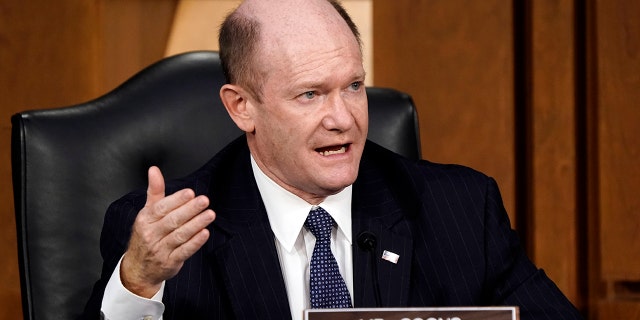
Sen. Chris Coons, D-Del., speaks as the Senate Judiciary Committee hears from legal experts on the final day of the confirmation hearing for Supreme Court nominee Amy Coney Barrett, on Capitol Hill in Washington, Thursday, Oct. 15, 2020. Coons has softened his support for the legislative filibuster in recent years after leading an effort to protect it in 2017. (AP Photo/J. Scott Applewhite)
But now, the momentum among Senate Democrats is for either full abolition of the filibuster or significantly weakening it. President Biden endorsed the latter idea Tuesday, announcing his support for a “talking filibuster.”
“I don’t think that you have to eliminate the filibuster, you have to do it what it used to be when I first got to the Senate back in the old days,” Biden told ABC. “You had to stand up and command the floor, you had to keep talking.”
The legislative filibuster has been a 60-vote threshold for what is called a “cloture vote” — or a vote to end debate on a bill — meaning that any 41 senators could prevent a bill from getting to a final vote. If there are not 60 votes, the bill cannot proceed.
The “talking filibuster” — as it was most recently seriously articulated by Sen. Jeff Merkley, D-Ore., in 2012 — would allow 41 senators to prevent a final vote by talking incessantly, around-the-clock, on the Senate floor. But once those senators stop talking, the threshold for a cloture vote is lowered to 51.
Harris’ office confirmed to Fox News Wednesday that she is now aligned with Biden on the filibuster issue. She’d previously taken an even more hostile position to the filibuster, saying she would fully “get rid” of it “to pass a Green New Deal” at a CNN town hall in 2019.
The legislative filibuster has been a 60-vote threshold for what is called a “cloture vote” — or a vote to end debate on a bill — meaning that any 41 senators could prevent a bill from getting to a final vote. If there are not 60 votes, the bill cannot proceed.
The “talking filibuster” — as it was most recently seriously articulated by Sen. Jeff Merkley, D-Ore., in 2012 — would allow 41 senators to prevent a final vote by talking incessantly, around-the-clock, on the Senate floor. But once those senators stop talking, the threshold for a cloture vote is lowered to 51.
Harris’ office confirmed to Fox News Wednesday that she is now aligned with Biden on the filibuster issue. She’d previously taken an even more hostile position to the filibuster, saying she would fully “get rid” of it “to pass a Green New Deal” at a CNN town hall in 2019.
Coons, who led the 2017 letter along with Collins, has also distanced himself from his previous stance.
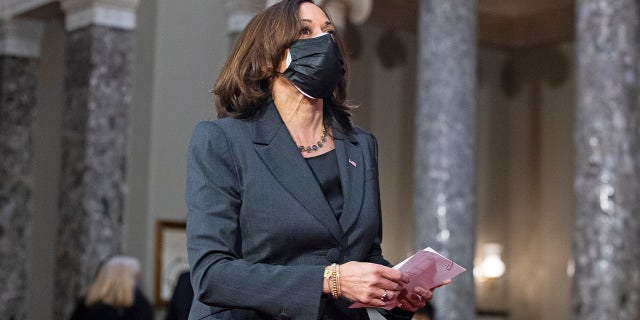
Vice President Kamala Harris attends a ceremonial swearing-in for Sen. Patrick Leahy, D-Vt., as President Pro Tempore of the Senate on Capitol Hill in Washington, Thursday, Feb. 4, 2021. Harris has changed her stance on the legislative filibuster since signing a letter in 2017 backing it. (Michael Reynolds/Pool via AP) (AP)
“I’m going to try my hardest, first, to work across the aisle,” he said in September when asked about ending the filibuster. “Then, if, tragically, Republicans don’t change the tune or their behavior at all, I would.”
Fox News reached out to all of the other 26 Democratic signatories of the 2017 letter, and they all either distanced themselves from that position or did not respond to Fox News’ inquiry.
“Less than four years ago, when Donald Trump was President and Mitch McConnell was the Majority Leader, 61 Senators, including more than 25 Democrats, signed their names in opposition to any efforts that would curtail the filibuster,” a GOP aide told Fox News. “Other than the occupant of the White House, and the balance of power in the Senate, what’s changed?”
“I’m interested in getting results for the American people, and I hope we will find common ground to advance key priorities,” Sen. Tim Kaine. D-Va., said in a statement. “If Republicans try to use arcane rules to block us from getting results for the American people, then we’ll have a conversation at that time.”
Added Sen. Mark Warner, D-Va: “I am still hopeful that the Senate can work together in a bipartisan way to address the enormous challenges facing the country. But when it comes to fundamental issues like protecting Americans from draconian efforts attacking their constitutional right to vote, it would be a mistake to take any option off the table.”
“Senator Stabenow understands the urgency of passing important legislation, including voting rights, and thinks it warrants a discussion about the filibuster if Republicans refuse to work across the aisle,” Robyn Bryan, a spokesperson for Sen. Debbie Stabenow, D-Mich., said.
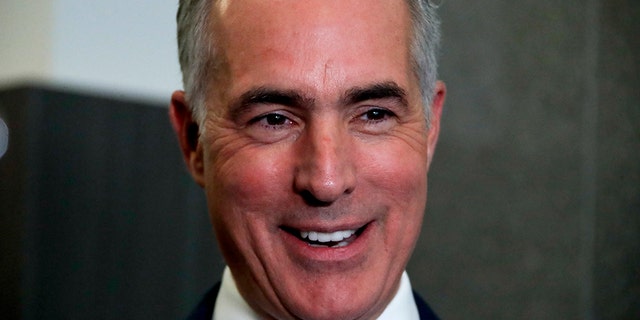
FILE – In this Oct. 26, 2018, file photo, Sen.Bob Casey, D-Pa., speaks to reporters in the studio of KDKA-TV in Pittsburgh. Casey has reversed his stance on the legislative filibuster since signing a 2017 letter in support of it. (AP Photo/Gene J. Puskar, File)
Representatives for Sen. Bob Casey, D-Pa., pointed to recent comments he made on MSNBC.
“Yes, absolutely,” Casey said when asked if he would support a “talking filibuster” or something similar. “Major changes to the filibuster for someone like me would not have been on the agenda even a few years ago. But the Senate does not work like it used to.”
“I hope any Democratic senator who’s not currently in support of changing the rules or altering them substantially, I hope they would change their minds,” Casey added.
Representatives for Sen. Angus King, I-Vt., who caucuses with Democrats, meanwhile, references a Bangor Daily News editorial that said King was completely against the filibuster in 2012 but now believes it’s helpful in stopping bad legislation. It said, however, that King is open to “modifications” similar to a talking filibuster.
The senators who did not respond to questions on their 2017 support of the filibuster were Sens. Joe Manchin. D-W.Va.; Patrick Leahy, D-Vt.; Amy Klobuchar, D-Minn.; Jeanne Shaheen, D-N.H.; Michael Bennet, D-Colo.; Martin Heinrich, D-N.M.; Sherrod Brown, D-Ohio; Dianne Feinstein, D-Calif.; Kirsten Gillibrand, D-N.Y.; Brian Schatz, D-Hawaii; Cory Booker, D-N.J.; Maria Cantwell, D-Wash.; Maize Hirono, D-Hawaii; John Tester, D-Mont.; Tom Carper, D-Del.; Maggie Hassan, D-N.H.; Tammy Duckworth, D-Ill.; Jack Reed, D-R-I.; Ed Markey, D-Mass.; Sheldon Whitehouse, D-R.I.; and Bob Menendez, D-N.J.
Some of these senators, however, have addressed the filibuster in other recent comments.
Sen. Dianne Feinstein, D-Calif., on Wednesday was asked if she supported changing the filibuster threshold by CNN and said she is still opposed to the idea. “Not at this time,” Feinstein said.
Sen. Mazie Hirono, D-Hawaii, speaks to reporters on Capitol Hill in Washington, Thursday, Jan. 30, 2020, during the impeachment trial of President Donald Trump on charges of abuse of power and obstruction of Congress. Hirono has changed her opinion on the legislative filibuster since signing a 2017 letter supporting it. (AP Photo/Julio Cortez)
Sen. Maize Hirono, D-Hawaii, meanwhile said last week she is already for getting rid of the current 60-vote threshold and thinks other Democrats will sign on soon.
“If Mitch McConnell continues to be totally an obstructionist, and he wants to use the 60 votes to stymie everything that President Biden wants to do and that we Democrats want to do that will actually help people,” Hirono said, “then I think the recognition will be among the Democrats that we’re gonna need to.”
The most recent talk about either removing or significantly weakening the filibuster was spurred by comments from Manchin that appeared to indicate he would be open to a talking filibuster. He said filibustering a bill should be more “painful” for a minority.
Manchin appeared to walk back any talk of a talking filibuster on Wednesday, however.
“You know where my position is,” he said. “There’s no little bit of this and a little bit — there’s no little bit here. You either protect the Senate, you protect the institution and you protect democracy or you don’t.”
Manchin and Sen. Kyrsten Sinema, D-Ariz., both committed to supporting the current form of the filibuster earlier this year. Sinema was not in the Senate in 2017.
Senate Minority Mitch McConnell, R-Ky., said their comments gave him the reassurance he needed to drop a demand that Senate Majority Leader Chuck Schumer, D-N.Y., put filibuster protections into the Senate’s organizing resolution.
But with Manchin seeming to flake at least in the eyes of some, other Democrats are beginning to push harder for filibuster changes.
The illegitimate other side here is the self-described “pro-life” opposition to legalized abortion. And one can only presume, given Gillibrand’s maximalist view, it includes those who would keep abortion legal but also impose restrictions on it.
Gillibrand added that opposition to abortion should be regarded in the same way we regard racism. In other words, critics of abortion need to be banished from the public square. They need to be treated with all the loathing and disdain we reserve for racial bigots.
Senator I also wanted to talk to you about the pro-abortion view you hold and where it may lead in the future.
Carl Sagan asserted, “A morality that depends on, and changes with, technology is a fragile morality.” I would go one step further. A morality that is based on selfishness will take us further down the road to infanticide.
Adrian Rogers observed:
Pro-choice is rooted in selfishness. Pro-choice advocates want you to beliece that abortion is really an act of mercy. But the truth is that 97% of the abortions in America are convenience abortions.
The following fictional letter suggests what could well lie in the logical outcome of a policy of eliminating unwanted people.
January 22, 2023
Dear Mom:
Can you believe it is already the year 2023? I’m still writing ’22 on everything! It seems like only yesterday that I was sitting in the first grade and celebrating the change to a new century.
I know we really haven’t chatted since Christmas, Mom, and I’m sorry. Anyway, I have some difficult news to share with you, and I really didn’t want to call and talk face to face.
But before I get to that, let me report that Ted’s had a big promotion, and I should be up for a hefty raise this year if I keep putting in all those crazy hours-you know how I work at it. Yes, we’re still struggling to pay the bills.
Little Timmy’s been okay at Kindergarten, although he complains about going. But then, he wasn’t happy about the day care center either. So what can we do? He’s been a real problem, Mom. He’s a good kid, but quite honestly, he’s an unfair burden on us at this time in our lives.
Ted and I have talked this through, and we have finally made a choice. Plenty of other families have made the same choice and are really better off today.
Our pastor is supportive of our choice. He pointed out the family is a system, and the demands of one member shouldn’t be allowed to ruin the whole. The pastor told us to be prayerful and to consider all the factors as to what is right to make our family work. He says that even though he probably wouldn’t do it himself, the choice really is ours. He was kind enough to refer us to a children’s clinic near here, so at least that part is easy.
Don’t get me wrong, Mom-I’m not an uncaring mother. I do feel sorry for the little guy. I think he heard Ted and me talking about it the other night. I turned and saw him standing at the bottom of the stairs in his PJ’s with his little teddy bear that you gave him under his arm-and his eyes were sort of welled up with tears.
Mom, the way he looked at me just about broke my heart, but I honestly believe this is better for Timmy too. It’s not fair to force him to live in a family that can’t give him the time and attention he deserves.
And please, Mom, don’t give me the kind of grief that grandma gave you over your abortions. It’s the same thing, you know. There’s really no difference.
We’ve told Timmy he’s just going in for a vaccination. Anyway, they say the termination procedure is painless. I guess it’s just as well that you haven’t seen that much of little Timmy lately. Please give my love to Dad.
Your daughter,
—-
Pure fiction, yes. But I wonder if the time is not coming coming.
Francis Schaeffer and Adrian Rogers
Sincerely,
Everette Hatcher III, 13900 Cottontail Lane, Alexander, AR 72002, ph 501-920-5733 everettehatcher@gmail.com
(Emailed to White House on 12-21-12.) President Obama c/o The White House 1600 Pennsylvania Avenue NW Washington, DC 20500 Dear Mr. President, I know that you receive 20,000 letters a day and that you actually read 10 of them every day. I really do respect you for trying to get a pulse on […]By Everette Hatcher III | Posted in Milton Friedman, President Obama, spending out of control, Taxes | Edit | Comments (0)
(Emailed to White House on 12-21-12.) President Obama c/o The White House 1600 Pennsylvania Avenue NW Washington, DC 20500 Dear Mr. President, I know that you receive 20,000 letters a day and that you actually read 10 of them every day. I really do respect you for trying to get a pulse on what is […]By Everette Hatcher III | Posted in Milton Friedman, President Obama, Ronald Reagan, spending out of control, Taxes | Edit | Comments (0)
(Emailed to White House on 12-21-12) President Obama c/o The White House 1600 Pennsylvania Avenue NW Washington, DC 20500 Dear Mr. President, I know that you receive 20,000 letters a day and that you actually read 10 of them every day. I really do respect you for trying to get a pulse on what is […]By Everette Hatcher III | Posted in President Obama, Ronald Reagan, spending out of control, Taxes | Edit | Comments (0)
The federal government has a spending problem and Milton Friedman came up with the negative income tax to help poor people get out of the welfare trap. It seems that the government screws up about everything. Then why is President Obama wanting more taxes? _______________ Milton Friedman – The Negative Income Tax Published on […]By Everette Hatcher III | Posted in President Obama, spending out of control, Taxes | Edit | Comments (0)
I was sad to read that the Speaker John Boehner has been involved in punishing tea party republicans. Actually I have written letters to several of these same tea party heroes telling them that I have emailed Boehner encouraging him to listen to them. Rep. David Schweikert (R-AZ),Justin Amash (R-MI), and Tim Huelskamp (R-KS). have been contacted […]By Everette Hatcher III | Posted in Current Events, Speaker of the House John Boehner, spending out of control | Edit | Comments (0)
Michael Tanner of the Cato Institute in his article, “Hitting the Ceiling,” National Review Online, March 7, 2012 noted: After all, despite all the sturm und drang about spending cuts as part of last year’s debt-ceiling deal, federal spending not only increased from 2011 to 2012, it rose faster than inflation and population growth combined. […]By Everette Hatcher III | Posted in spending out of control, Taxes| Edit | Comments (0)
Michael Tanner of the Cato Institute in his article, “Hitting the Ceiling,” National Review Online, March 7, 2012 noted: After all, despite all the sturm und drang about spending cuts as part of last year’s debt-ceiling deal, federal spending not only increased from 2011 to 2012, it rose faster than inflation and population growth combined. […]By Everette Hatcher III | Posted in spending out of control, Taxes| Edit | Comments (0)
Some of the heroes are Mo Brooks, Martha Roby, Jeff Flake, Trent Franks, Duncan Hunter, Tom Mcclintock, Devin Nunes, Scott Tipton, Bill Posey, Steve Southerland and those others below in the following posts. THEY VOTED AGAINST THE DEBT CEILING INCREASE IN 2011 AND WE NEED THAT TYPE OF LEADERSHIP NOW SINCE PRESIDENT OBAMA HAS BEEN […]By Everette Hatcher III | Posted in spending out of control, Taxes| Edit | Comments (0)
I hated to see that Allen West may be on the way out. ABC News reported: Nov 7, 2012 7:20am What Happened to the Tea Party (and the Blue Dogs?) Some of the Republican Party‘s most controversial House members are clinging to narrow leads in races where only a few votes are left to count. […]By Everette Hatcher III | Posted in Current Events | Edit | Comments (0)
Rep Himes and Rep Schweikert Discuss the Debt and Budget Deal Michael Tanner of the Cato Institute in his article, “Hitting the Ceiling,” National Review Online, March 7, 2012 noted: After all, despite all the sturm und drang about spending cuts as part of last year’s debt-ceiling deal, federal spending not only increased from 2011 […]By Everette Hatcher III | Posted in spending out of control, Taxes| Edit | Comments (0)
And this is motivating many legislators to push for school choice, especially since there’s more and more evidence that school choice improves educational outcomes.
For instance, the Wall Street Journalopined last week about a new victory in Indiana.
Ten years ago in these columns, we hailed Indiana for its leadership in establishing one of America’s most ambitious school voucher programs. On Thursday the Indiana Legislature built on that achievement by approving a budget that will take the program to 48,000 students a year from about 37,000. …The teachers unions are unhappy. Their beef is that money to expand choice is taken from traditional public schools. And this year they lobbied local school boards to pass resolutions opposed to school choice. But that common union line about choice robbing public schools isn’t true. …92% of Indiana students will be in traditional public schools, and 93% of all education funding will go to these schools. …Since 2011, when Indiana pushed through its first voucher plan, more than a quarter-million Hoosier students have benefited. In an interview with Today’s Catholic, former Gov. Mitch Daniels explains the moral logic of choice this way: “Providing poor and minority families the same choice of schools that their wealthier neighbors enjoy is the purest example of ‘social justice’ in our society today.”
Meanwhile, Arkansas may be on the verge of adding to the good news.
Here are some excerpts from an article by Jason Bedrick in National Review.
In response to families demanding more educational options, six states have already passed new choice policies or expanded existing ones this year, and similar bills are still making their way through more than a dozen other state legislatures. …the Arkansas state senate…passed Senate Bill 680,which has the support of Governor Asa Hutchinson and the Arkansas Department of Education, by an overwhelming margin. Although only half the size of the previous proposal and limited only to low-income children, the bill still represents a major step toward providing broad access to educational choice. The Arkansas House now has another opportunity to do right by Arkansas families desperate for more educational options. …the Arkansas House Revenue and Taxation Committee voted to recommend that the full House pass the bill.
The superintendents of government schools are fighting to preserve the status quo. Their main argument is that choice will hurt outcomes for students stuck in their schools.
But competition encourages everyone to do better, and Jason shares some of the evidence about government schools doing better when there is school choice .
The research about the effects of educational-choice policies on public schools…overwhelmingly finds that such policies benefit not only participating students, but also the students who remain in their assigned district schools. Out of 27 studies, 25 find that students attending district schools improve their performance on standardized tests after the introduction of a choice program, while only one study found a negative effect, and one found no visible effect. …a recent study by the University of Arkansas found that states with robust educational-choice policies saw significant improvements on the National Assessment of Educational Progress (known as the “Nation’s Report Card”) over the last two decades. …The sky isn’t falling in any of the 29 states that have some form of private-school-choice program. Indeed, the sun is still shining on their public-school systems, which have not only not collapsed but are actually performing better than before.
Fingers crossed that Arkansas lawmakers do what’s right for kids rather than siding with the education bureaucracy.
Let’s conclude with this video from the Institute of Justice, which makes the point that school choice is especially critical for those with low incomes and other challenging backgrounds.
I shared a similar video back in 2016 as part of a column about why school choice is critical for black children.
P.S. If you want to learn more about school choice, I recommend this video.
P.P.S. It’s uplifting to see very successful school choice systems operate in nations such as Canada, Sweden, Chile, and the Netherlands.
From school choice to personalized lifelong learning.
Sixty years ago, Milton Friedman came up with a profound idea for improving education. Rather than paying public schools to educate the students in their districts, the future Nobel Laureate argued, the government should provide parents with vouchers to allow them to choose what school each child would attend.
In cities such as Milwaukee and Cleveland and Washington, D.C., and states such as Arizona and Florida and Indiana, families across America have benefited from programs designed to give families educational choice. Empirical evidence assessing these programs shows that allowing parents to choose their children’s schools results in greater parental satisfaction, higher student test scores, and improved graduation rates.
But in 2015, the landscape of K–12 and higher education, as well as the economy and the labor market as a whole, are changing. And these changes require us to rethink how choice in education could best help children and adults succeed. Consider two key trends:
First, students of all ages now have unprecedented opportunities to benefit from affordable and high-quality learning experiences. In 2015, a student in the United States — or anywhere in the world — with an Internet connection has the opportunity to learn from a wide variety of terrific teachers.
Many schools are using technology to offer personalized and challenging forms of instruction. Brilliant educators like Salman Khan — the founder of Khan Academy — are providing lessons online, for free, for any student who is willing to do the work. Colleges like MIT and Stanford now offer coursework online for free and even award credentials to those who pass an exam.
For motivated students of all ages, learning is becoming a personalized journey that can happen any day, at any hour, at their own pace, not just within the walls of a traditional classroom or during the school year. Students will experience education through multiple channels, and not just from one school.
Second, it is becoming increasingly clear that the need to learn doesn’t end with earning a diploma. Many adults who have traditional credentials like college degrees are struggling to find well-paying jobs. According to the New York Federal Reserve Bank, 44 percent of recent college graduates are in jobs that don’t require a college degree. Some professions that once were secure livelihoods are being disrupted or replaced by machines, technologies, or new enterprises. As a result, many workers are being forced to acquire new skills in order to change careers.
What do these trends mean for Milton Friedman’s original idea of using school vouchers to improve education?
We should be giving families control of the funds that they will spend on K–12 and higher education throughout their lives.
Instead of simply providing parents with the power to choose which school their child attends during a given school year, we should be giving them — and eventually the students themselves, when they reach adulthood — control of the funds that they will spend on K–12 and higher education throughout their lives. Rather than only allowing parents to answer the question of where a child goes to school, we should let students (or, initially, their parents) control where, when, how, and from whom they learn.
Five states, led by Arizona, have introduced state-funded education savings accounts that give families this control of K–12 funding. Parents can use funds in the account to pay for school tuition, tutoring, online classes, and instructional materials, and if there is anything left in a given year, to save it for future years. The state maintains proper oversight by tracking how funds are spent.
Nevada recently enacted a universal education-savings-account program that will offer the parents of all public-school students the chance to take direct control of their children’s education in this way.
Besides these promising state efforts, Congress has an opportunity to begin giving families direct control over how their education funds are spent over the course of a lifetime. Congress could reform federal 529 savings plans, which allow tax-free saving for college, to include other allowable uses — from preschool and K–12 education to post-college job training.
Transforming 529 accounts into Lifelong Learning Education Savings Accounts would provide an immediate benefit to the families of the 12 million holders of 529 savings accounts. Use of the accounts would likely grow if other expenses were allowed, since 35 states and D.C. offer tax incentives for contributions into 529 accounts. Congress could also give families the option of receiving their share of federal education funds directly into an account if they forgo public programs such as Head Start. This would ensure that disadvantaged students also have the opportunity to benefit.
Parents should be thankful for Milton Friedman’s vision for school choice, which has improved educational opportunities for millions. But in 2015, education savings accounts and lifelong learning offer a more promising answer to the question of how best to equip Americans to learn, succeed, and pursue happiness throughout their lives.
— Dan Lips is a fellow with the Goldwater Institute. In 2005, he wrote a paper for the Institute proposing the nation’s first state-funded K–12 education-savings-account program for Arizona.
Michael Harrington: If you don’t have the expertise, the knowledge technology today, you’re out of the debate. And I think that we have to democratize information and government as well as the economy and society. FRIEDMAN: I am sorry to say Michael Harrington’s solution is not a solution to it. He wants minority rule, I […]
By Everette Hatcher III | Posted in Current Events, Milton Friedman | Edit | Comments (0)
PETERSON: Well, let me ask you how you would cope with this problem, Dr. Friedman. The people decided that they wanted cool air, and there was tremendous need, and so we built a huge industry, the air conditioning industry, hundreds of thousands of jobs, tremendous earnings opportunities and nearly all of us now have air […]
By Everette Hatcher III | Posted in Current Events, Milton Friedman | Edit | Comments (0)
Part 5 Milton Friedman: I do not believe it’s proper to put the situation in terms of industrialist versus government. On the contrary, one of the reasons why I am in favor of less government is because when you have more government industrialists take it over, and the two together form a coalition against the ordinary […]
By Everette Hatcher III | Posted in Current Events, Milton Friedman | Edit | Comments (0)
The fundamental principal of the free society is voluntary cooperation. The economic market, buying and selling, is one example. But it’s only one example. Voluntary cooperation is far broader than that. To take an example that at first sight seems about as far away as you can get __ the language we speak; the words […]
By Everette Hatcher III | Posted in Current Events, Milton Friedman | Edit | Comments (0)
_________________________ Pt3 Nowadays there’s a considerable amount of traffic at this border. People cross a little more freely than they use to. Many people from Hong Kong trade in China and the market has helped bring the two countries closer together, but the barriers between them are still very real. On this side […]
By Everette Hatcher III | Posted in Current Events, Milton Friedman | Edit | Comments (0)
Aside from its harbor, the only other important resource of Hong Kong is people __ over 4_ million of them. Like America a century ago, Hong Kong in the past few decades has been a haven for people who sought the freedom to make the most of their own abilities. Many of them are […]
By Everette Hatcher III | Posted in Current Events, Milton Friedman | Edit | Comments (0)
“FREE TO CHOOSE” 1: The Power of the Market (Milton Friedman) Free to Choose ^ | 1980 | Milton Friedman Posted on Monday, July 17, 2006 4:20:46 PM by Choose Ye This Day FREE TO CHOOSE: The Power of the Market Friedman: Once all of this was a swamp, covered with forest. The Canarce Indians […]
If you would like to see the first three episodes on inflation in Milton Friedman’s film series “Free to Choose” then go to a previous post I did. Ep. 9 – How to Cure Inflation [4/7]. Milton Friedman’s Free to Choose (1980) Uploaded by investbligurucom on Jun 16, 2010 While many people have a fairly […]
Charlie Rose interview of Milton Friedman My favorite economist: Milton Friedman : A Great Champion of Liberty by V. Sundaram Milton Friedman, the Nobel Prize-winning economist who advocated an unfettered free market and had the ear of three US Presidents – Nixon, Ford and Reagan – died last Thursday (16 November, 2006 ) in San Francisco […]
By Everette Hatcher III | Posted in Milton Friedman | Edit | Comments (0)
Stearns Speaks on House Floor in Support of Balanced Budget Amendment Uploaded by RepCliffStearns on Nov 18, 2011 Speaking on House floor in support of Balanced Budget Resolution, 11/18/2011 ___________ Below are some of the main proposals of Milton Friedman. I highly respected his work. David J. Theroux said this about Milton Friedman’s view concerning […]
By Everette Hatcher III | Posted in Milton Friedman | Edit | Comments (0)
Milton Friedman: Free To Choose – The Failure Of Socialism With Ronald Reagan (Full) Published on Mar 19, 2012 by NoNationalityNeeded Milton Friedman’s writings affected me greatly when I first discovered them and I wanted to share with you. We must not head down the path of socialism like Greece has done. Abstract: Ronald Reagan […]
By Everette Hatcher III | Posted in Milton Friedman, President Obama | Edit | Comments (1)
What a great defense of Milton Friedman!!!! Defaming Milton Friedman by Johan Norberg This article appeared in Reason Online on September 26, 2008 PRINT PAGE CITE THIS Sans Serif Serif Share with your friends: ShareThis In the future, if you tell a student or a journalist that you favor free markets and limited government, there is […]
Milton Friedman – A Conversation On Minimum Wage FREE TO CHOOSE
April 25, 2021
Office of Barack and Michelle Obama P.O. Box 91000 Washington, DC 20066
Dear President Obama,
I wrote you over 700 letters while you were President and I mailed them to the White House and also published them on my blog http://www.thedailyhatch.org .I received several letters back from your staff and I wanted to thank you for those letters.
There are several issues raised in your book that I would like to discuss with you such as the minimum wage law, the liberal press, the cause of 2007 financial meltdown, and especially your pro-choice (what I call pro-abortion) view which I strongly object to on both religious and scientific grounds, Two of the most impressive things in your book were your dedication to both the National Prayer Breakfast (which spoke at 8 times and your many visits to the sides of wounded warriors!!
I have been reading your autobiography A PROMISED LAND and I have been enjoying it.
Let me make a few comments on it, and here is the first quote of yours I want to comment on:
I was campaigning to push the country in the opposite direction. I didn’t think America could roll back automation or sever the global supply chain (though I did think we could negotiate stronger labor and environmental provisions in our trade agreements). But I was certain we could adapt our laws and institutions, just as we’d done in the past, to make sure that folks willing to work could get a fair shake. At every stop I made, in every city and small town, my message was the same. I promised to raise taxes on high-income Americans to pay for vital investments in education, research, and infrastructure. I promised to strengthen unions and raise the minimum wage as well as to deliver universal healthcare and make college more affordable. I wanted people to understand that there was a precedent for bold government action. FDR had saved capitalism from itself, laying the foundation for a post–World War II boom.
—-
The minimum wage has hurt young people as they seek to enter the job market and prove themselves and start heading up the financial ladder of opportunity and by cutting the bottom of the ladder off it is difficult for the most unskilled and disadvantaged to compete!
But let’s not just focus on numbers. There are painful human costs when low-skilled workers are priced out of the labor market.
Here are some excerpts from a column in the Wall Street Journalabout a real-world example of people losing their jobs.
It’s well-established in the economic literature, if not in the minds of proponents of these laws, that the result will be job losses. Yet this empirical reality fails to capture the emotional reality of the employees who are let go, or of the business owners who had no choice but to let them go. …Michigan’s minimum wage rose in September to $8.15 an hour from $7.40 (the minimum wage for tipped employees rose 17%, to $3.10 an hour). The wage will rise to $9.25 by January 2018.
Now let’s look at the impact on a non-profit restaurant that helped disadvantaged people.
The staff at Tastes of Life was made up of recovering addicts, recently incarcerated individuals and others who would have a hard time landing a job elsewhere. Mr. Mosley explained that on-the-job offenses for which an employee would have been “gone that day” in a traditional work setting were instead used as training opportunities at Tastes of Life. …Mr. Mosley’s financial goal was to break even and use any excess funds to subsidize Life Challenge participants. After more than two years of operation on Beck Road, 2½ miles from the center of town, Tastes of Life had a steady flow of loyal customers, but rising food costs presented a challenge. …Mr. Mosley and Ms. Tucker had planned to print new menus with higher prices to cover the food costs, but the September wage hike complicated those plans, in particular because the increase covered both tipped and non-tipped employees. …“If we had a $10 menu item, it would have to be $14,” Mr. Mosley said. The restaurant’s customer base of seniors on a fixed income and Hillsdale locals made this option a nonstarter. The restaurant also had to find roughly 250 new customers a month, unrealistic in a small town of about 8,300.
So the inevitable happened.
The increased minimum wage, he told me, was “the straw that broke that camel’s back,” forcing him to close his doors and lay off his 12-person staff. …with the higher wage costs, the arrangement was no longer feasible, and Tastes of Life closed on Sept. 28. …Four former employees have been able to leverage their restaurant experience to find new employment, but Mr. Mosley told me that eight are still out of work. …the loss of Tastes of Life cuts deep, because the benefit for Life Challenge participants was both valuable and is not easily attained elsewhere. These unintended consequences of a minimum wage hike aren’t unique to small towns in south-central Michigan. Tragically, they repeat themselves in locales small and large each time legislators heed the populist call to “raise the wage.”
Understanding “unintended consequences” is a key characteristic of a good economist.
Today, the goal is simply to understand that it is pointlessly destructive to make low-skilled labor less affordable.
P.S. Given all the evidence that minimum-wage laws destroy jobs, why do some people persist in supporting such a destructive policy? In this post, I provide six possible reasons.
President Obama c/o The White House 1600 Pennsylvania Avenue NW Washington, DC 20500 Dear Mr. President, I know that you receive 20,000 letters a day and that you actually read 10 of them every day. I really do respect you for trying to get a pulse on what is going on out here. There have […]By Everette Hatcher III | Posted in David Barton, Founding Fathers, President Obama | Edit |Comments (0)
There have been many articles written by evangelicals like me who fear that our founding fathers would not recognize our country today because secular humanism has rid our nation of spiritual roots. I am deeply troubled by the secular agenda of those who are at war with religion in our public life. Lillian Kwon quoted somebody […]By Everette Hatcher III | Posted in David Barton, Founding Fathers | Edit | Comments (0)
There have been many articles written by evangelicals like me who fear that our founding fathers would not recognize our country today because secular humanism has rid our nation of spiritual roots. I am deeply troubled by the secular agenda of those who are at war with religion in our public life. Lillian Kwon quoted somebody […]By Everette Hatcher III | Posted in David Barton, Founding Fathers | Edit | Comments (0)
There have been many articles written by evangelicals like me who fear that our founding fathers would not recognize our country today because secular humanism has rid our nation of spiritual roots. I am deeply troubled by the secular agenda of those who are at war with religion in our public life. Lillian Kwon quoted somebody […]By Everette Hatcher III | Posted in David Barton, Founding Fathers | Edit | Comments (0)
There have been many articles written by evangelicals like me who fear that our founding fathers would not recognize our country today because secular humanism has rid our nation of spiritual roots. I am deeply troubled by the secular agenda of those who are at war with religion in our public life. Lillian Kwon quoted somebody […]By Everette Hatcher III | Posted in David Barton, Founding Fathers | Edit | Comments (0)
There have been many articles written by evangelicals like me who fear that our founding fathers would not recognize our country today because secular humanism has rid our nation of spiritual roots. I am deeply troubled by the secular agenda of those who are at war with religion in our public life. Lillian Kwon quoted somebody […]By Everette Hatcher III | Posted in Founding Fathers | Edit | Comments (0)
President Obama Speaks at The Ohio State University Commencement Ceremony Published on May 5, 2013 President Obama delivers the commencement address at The Ohio State University. May 5, 2013. You can learn a lot about what President Obama thinks the founding fathers were all about from his recent speech at Ohio State. May 7, 2013, […]By Everette Hatcher III | Posted in Founding Fathers, President Obama | Edit | Comments (0)
Dr. C. Everett Koop with Bill Graham. Francis Schaeffer: “Whatever Happened to the Human Race” (Episode 4) THE BASIS FOR HUMAN DIGNITY Published on Oct 7, 2012 by AdamMetropolis The 45 minute video above is from the film series created from Francis Schaeffer’s book “Whatever Happened to the Human Race?” with Dr. C. Everett Koop. This […]By Everette Hatcher III | Posted in Founding Fathers, Francis Schaeffer, Prolife | Edit |Comments (1)
America’s Founding Fathers Deist or Christian? – David Barton 4/6 There have been many articles written by evangelicals like me who fear that our founding fathers would not recognize our country today because secular humanism has rid our nation of spiritual roots. I am deeply troubled by the secular agenda of those who are at […]By Everette Hatcher III | Posted in David Barton, Founding Fathers | Tagged governor of connecticut, john witherspoon, jonathan trumbull | Edit | Comments (1)
3 Of 5 / The Bible’s Influence In America / American Heritage Series / David Barton There were 55 gentlemen who put together the constitution and their church affliation is of public record. Greg Koukl notes: Members of the Constitutional Convention, the most influential group of men shaping the political foundations of our nation, were […]By Everette Hatcher III | Posted in Founding Fathers | Edit | Comments (0)
I do not think that John Quincy Adams was a founding father in the same sense that his father was. However, I do think he was involved in the early days of our government working with many of the founding fathers. Michele Bachmann got into another history-related tussle on ABC’s “Good Morning America” today, standing […]By Everette Hatcher III | Posted in David Barton, Founding Fathers | Edit | Comments (0)
I have gone back and forth and back and forth with many liberals on the Arkansas Times Blog on many issues such as abortion, human rights, welfare, poverty, gun control and issues dealing with popular culture. Here is another exchange I had with them a while back. My username at the Ark Times Blog is Saline […]By Everette Hatcher III | Posted in Arkansas Times, Francis Schaeffer, Prolife | Edit |Comments (0)
I truly believe that many of the problems we have today in the USA are due to the advancement of humanism in the last few decades in our society. Ronald Reagan appointed the evangelical Dr. C. Everett Koop to the position of Surgeon General in his administration. He partnered with Dr. Francis Schaeffer in making the […]By Everette Hatcher III | Posted in Adrian Rogers, Francis Schaeffer | Edit | Comments (0)
Francis Schaeffer: “Whatever Happened to the Human Race” (Episode 4) THE BASIS FOR HUMAN DIGNITY Published on Oct 7, 2012 by AdamMetropolis ____________ The 45 minute video above is from the film series created from Francis Schaeffer’s book “Whatever Happened to the Human Race?” with Dr. C. Everett Koop. This book really helped develop my political […]By Everette Hatcher III | Posted in Francis Schaeffer | Edit | Comments (0)
Today we’re going to mix two things that seem disconnected.
Our first topic is federalism, which is the sensible principle that deciding things at the local level, or even state level, is better than being ruled by faraway politicians and a big, centralized bureaucracy.
You can still get awful policies from local politicians and state politicians, of course, but at least it is easier to monitor their actions, remove them from power, or move away if necessary.
A big reason I’m a fan of federalism because it creates competition among governments. For instance, I cheer when businesses, investors, and entrepreneurs escape from high-tax states like California and New York and move to zero-income tax states such as Florida and Texas.
When programs are centralized in Washington, by contrast, you simply add another layer of bureaucracy and expense.
But it’s not just a money issue. When Washington is in charge, you get a one-size-fits-all approach. That means there’s no room for innovation and diversity, which makes it much less likely that policy makers can learn what works and what doesn’t work.
Our second topic involves a story about record-setting levels of waste in California.
In a column published by Reason, Steven Greenhut describes how the unemployment insurance program in the Golden State has experienced jaw-dropping levels of fraud.
This is one of the most infuriating scandals ever to plague our state. The department, which is responsible for paying out unemployment insurance claims, has been incapable of paying legitimate claims even as it has paid as much as $31 billion in fraudulent ones, often to inmates.…Here’s a desk-pounder from CBS Los Angeles: “A Fresno girl who just celebrated her first birthday is collecting $167 per week in unemployment benefits after a claim was filed on her behalf stating that she was an unemployed actor.” The Southern California News Group reported last month that one man “is suspected of using the identities of 23 inmates and others to obtain more than $3 million in state unemployment benefits.” Approximately 10 percent of the paid claims have been fraudulent, with another 17 percent under suspicion. This will be “the largest fraud investigation in the history of America,” according to one expert.
I suspect that we’ll discover that most of the suspicious payments also were fraudulent, which means one-fourth of the money went to crooks.
Meanwhile, the same bureaucrats who blindly sent out checks to the wrong people also managed to ignore inquiries from the right people.
The department’s call center only answered 1 percent of calls that Californians had made to check on their claim status.
Amazingly, the Biden Administration has decided that the person in charge of all this waste and fraud should be rewarded.
Julie Su, the state labor secretary who was responsible for the department, may receive a big promotion…to serve as President Joe Biden’s pick for deputy secretary of the federal department of labor.
I fully agree with Mr. Greenhut’s concluding observation.
Welcome to…government, where no good deed goes unpunished and no level of incompetence goes unrewarded.
At this point, you may be wondering about the connection between our two topics.
To show how they are related, I’ll ask this rhetorical question: Why aren’t people in California upset about losing at least $31 billion to fraud, especially since the entire state budget is about $134 billion?
The answer is that they’re not wasting their own money!
The vast majority of the pandemic-related unemployment funds were provided by Washington, most notably (1) extended benefits under existing UI, (2) pandemic expansion of UI to cover people not normally eligible for UI, and (3) bonus payments.
So we shouldn’t be surprised that California bureaucrats didn’t care how much of the money was lost to fraud. As Milton Friedman wisely pointed out, there’s no incentive to be responsible when spending other people’s money on other people.
Now I’ll ask another rhetorical question: What would have happened if California was in charge of not only spending the money, but also was in charge of raising the money?
I’m sure there would have been plenty of waste and fraud, but even profligate California officials would have figured out it wasn’t a good idea to squander $31 billion of their own money.
The bottom line is you get better outcomes when there’s genuine decentralization. Simply stated, politicians have to be at least semi-responsible when they have to raise the money that they spend. It’s called accountability.
Which is why even the left-leaning OECD and left-leaning IMFhave produced research confirming superior results with real federalism.
FEDERALISM!!!P.P.P.S. To see what Hayek and Mises wrote about federalism, click here.
Stimulus II: A Sequel America Can’t Afford
Milton Friedman – Stimulus and Inflation
—-
Daniel J. Mitchell on Obama’s Economic Stimulus Plan
Dan Mitchell discusses Ineffectiveness of Stimulus Spending
April 15, 2021
Office of Barack and Michelle Obama P.O. Box 91000 Washington, DC 20066
Dear President Obama,
I wrote you over 700 letters while you were President and I mailed them to the White House and also published them on my blog http://www.thedailyhatch.org .I received several letters back from your staff and I wanted to thank you for those letters.
There are several issues raised in your book that I would like to discuss with you such as the minimum wage law, the liberal press, the cause of 2007 financial meltdown, and especially your pro-choice (what I call pro-abortion) view which I strongly object to on both religious and scientific grounds, Two of the most impressive things in your book were your dedication to both the National Prayer Breakfast (which spoke at 8 times and your many visits to the sides of wounded warriors!!
I have been reading your autobiography A PROMISED LAND and I have been enjoying it.
Let me make a few comments on it, and here is the first quote of yours I want to comment on:
Page 244
We proposed that nearly $800 billion be divided into three buckets of roughly equal size. In bucket one, emergency payments like supplementary unemployment insurance and direct aid to states to slow further mass layoffs of teachers, police officers, and other public workers. In bucket two, tax cuts targeted at the middle class, as well as various business tax breaks that gave companies a big incentive to invest in new plants or equipment now instead of later. Both the emergency payments and the tax cuts had the advantage of being easy to administer; we could quickly get money out the door and into the pockets of consumers and businesses. Tax cuts also had the added benefit of potentially attracting Republican support. The third bucket, on the other hand, contained initiatives that were harder to design and would take longer to implement but might have a bigger long-term impact: not just traditional infrastructure spending like road construction and sewer repair but also high-speed rail, solar and wind power installation, broadband lines for underserved rural areas, and incentives for states to reform their education systems—all intended not only to put people to work but to make America more competitive. Considering how many unmet needs there were in communities all across the country, I was surprised by how much work it took for our team to find worthy projects of sufficient scale for the Recovery Act to fund. Some promising ideas we rejected because they would take too long to stand up or required a huge new bureaucracy to manage. Others missed the cut because they wouldn’t boost demand sufficiently. Mindful of accusations that I planned to use the economic crisis as an excuse for an orgy of wasteful liberal boondoggles (and because I in fact wanted to prevent Congress from engaging in wasteful boondoggles, liberal or otherwise), we put in place a series of good-government safeguards: a competitive application process for state and local governments seeking funding; strict audit and reporting requirements; and, in a move we knew would draw howls from Capitol Hill, a firm policy of no “earmarks”—to use the innocuous name for a time-honored practice in which members of Congress insert various pet projects (many dubious) into must-pass legislation.
PAGE 257
I stepped up to speak. It was my first time at a House Republicans gathering, and it was hard not to be struck by the room’s uniformity: row after row of mostly middle-aged white men, with a dozen or so women and maybe two or three Hispanics and Asians. Most sat stone-faced as I briefly made the case for stimulus—citing the latest data on the economy’s meltdown, the need for quick action, the fact that our package contained tax cuts Republicans had long promoted, and our commitment to long-term deficit reduction once the crisis had passed. The audience did perk up when I opened the floor for a series of questions (or, more accurately, talking points pretending to be questions), all of which I cheerfully responded to as if my answers mattered.
I think running up the deficit is not constructive and justifying it by trumping to stimulate the economy is foolhardy!!!
President Obama c/o The White House 1600 Pennsylvania Avenue NW Washington, DC 20500 Dear Mr. President, I know that you receive 20,000 letters a day and that you actually read 10 of them every day. I really do respect you for trying to get a pulse on what is going on out here. There have […]By Everette Hatcher III | Posted in David Barton, Founding Fathers, President Obama | Edit |Comments (0)
There have been many articles written by evangelicals like me who fear that our founding fathers would not recognize our country today because secular humanism has rid our nation of spiritual roots. I am deeply troubled by the secular agenda of those who are at war with religion in our public life. Lillian Kwon quoted somebody […]By Everette Hatcher III | Posted in David Barton, Founding Fathers | Edit | Comments (0)
There have been many articles written by evangelicals like me who fear that our founding fathers would not recognize our country today because secular humanism has rid our nation of spiritual roots. I am deeply troubled by the secular agenda of those who are at war with religion in our public life. Lillian Kwon quoted somebody […]By Everette Hatcher III | Posted in David Barton, Founding Fathers | Edit | Comments (0)
There have been many articles written by evangelicals like me who fear that our founding fathers would not recognize our country today because secular humanism has rid our nation of spiritual roots. I am deeply troubled by the secular agenda of those who are at war with religion in our public life. Lillian Kwon quoted somebody […]By Everette Hatcher III | Posted in David Barton, Founding Fathers | Edit | Comments (0)
There have been many articles written by evangelicals like me who fear that our founding fathers would not recognize our country today because secular humanism has rid our nation of spiritual roots. I am deeply troubled by the secular agenda of those who are at war with religion in our public life. Lillian Kwon quoted somebody […]By Everette Hatcher III | Posted in David Barton, Founding Fathers | Edit | Comments (0)
There have been many articles written by evangelicals like me who fear that our founding fathers would not recognize our country today because secular humanism has rid our nation of spiritual roots. I am deeply troubled by the secular agenda of those who are at war with religion in our public life. Lillian Kwon quoted somebody […]By Everette Hatcher III | Posted in Founding Fathers | Edit | Comments (0)
President Obama Speaks at The Ohio State University Commencement Ceremony Published on May 5, 2013 President Obama delivers the commencement address at The Ohio State University. May 5, 2013. You can learn a lot about what President Obama thinks the founding fathers were all about from his recent speech at Ohio State. May 7, 2013, […]By Everette Hatcher III | Posted in Founding Fathers, President Obama | Edit | Comments (0)
Dr. C. Everett Koop with Bill Graham. Francis Schaeffer: “Whatever Happened to the Human Race” (Episode 4) THE BASIS FOR HUMAN DIGNITY Published on Oct 7, 2012 by AdamMetropolis The 45 minute video above is from the film series created from Francis Schaeffer’s book “Whatever Happened to the Human Race?” with Dr. C. Everett Koop. This […]By Everette Hatcher III | Posted in Founding Fathers, Francis Schaeffer, Prolife | Edit |Comments (1)
America’s Founding Fathers Deist or Christian? – David Barton 4/6 There have been many articles written by evangelicals like me who fear that our founding fathers would not recognize our country today because secular humanism has rid our nation of spiritual roots. I am deeply troubled by the secular agenda of those who are at […]By Everette Hatcher III | Posted in David Barton, Founding Fathers | Tagged governor of connecticut, john witherspoon, jonathan trumbull | Edit | Comments (1)
3 Of 5 / The Bible’s Influence In America / American Heritage Series / David Barton There were 55 gentlemen who put together the constitution and their church affliation is of public record. Greg Koukl notes: Members of the Constitutional Convention, the most influential group of men shaping the political foundations of our nation, were […]By Everette Hatcher III | Posted in Founding Fathers | Edit | Comments (0)
I do not think that John Quincy Adams was a founding father in the same sense that his father was. However, I do think he was involved in the early days of our government working with many of the founding fathers. Michele Bachmann got into another history-related tussle on ABC’s “Good Morning America” today, standing […]By Everette Hatcher III | Posted in David Barton, Founding Fathers | Edit | Comments (0)
I have gone back and forth and back and forth with many liberals on the Arkansas Times Blog on many issues such as abortion, human rights, welfare, poverty, gun control and issues dealing with popular culture. Here is another exchange I had with them a while back. My username at the Ark Times Blog is Saline […]By Everette Hatcher III | Posted in Arkansas Times, Francis Schaeffer, Prolife | Edit |Comments (0)
I truly believe that many of the problems we have today in the USA are due to the advancement of humanism in the last few decades in our society. Ronald Reagan appointed the evangelical Dr. C. Everett Koop to the position of Surgeon General in his administration. He partnered with Dr. Francis Schaeffer in making the […]By Everette Hatcher III | Posted in Adrian Rogers, Francis Schaeffer | Edit | Comments (0)
Francis Schaeffer: “Whatever Happened to the Human Race” (Episode 4) THE BASIS FOR HUMAN DIGNITY Published on Oct 7, 2012 by AdamMetropolis ____________ The 45 minute video above is from the film series created from Francis Schaeffer’s book “Whatever Happened to the Human Race?” with Dr. C. Everett Koop. This book really helped develop my political […]By Everette Hatcher III | Posted in Francis Schaeffer | Edit | Comments (0)
Office of Barack and Michelle Obama P.O. Box 91000 Washington, DC 20066
Dear President Obama,
I wrote you over 700 letters while you were President and I mailed them to the White House and also published them on my blog http://www.thedailyhatch.org .I received several letters back from your staff and I wanted to thank you for those letters.
There are several issues raised in your book that I would like to discuss with you such as the minimum wage law, the liberal press, the cause of 2007 financial meltdown, and especially your pro-choice (what I call pro-abortion) view which I strongly object to on both religious and scientific grounds, Two of the most impressive things in your book were your dedication to both the National Prayer Breakfast (which spoke at 8 times and your many visits to the sides of wounded warriors!!
I have been reading your autobiography A PROMISED LAND and I have been enjoying it.
Let me make a few comments on it, and here is the first quote of yours I want to comment on:
WHEN IT CAME to immigration, everyone agreed that the system was broken. The process of immigrating legally to the United States could take a decade or longer, often depending on what country you were coming from and how much money you had.Meanwhile, the economic gulf between us and our southern neighbors drove hundreds of thousands of people to illegally cross the 1,933-mile U.S.-Mexico border each year, searching for work and a better life. Congress had spent billions to harden the border, with fencing, cameras, drones, and an expanded and increasingly militarized border patrol. But rather than stop the flow of immigrants, these steps had spurred an industry of smugglers—coyotes—who made big money transporting human cargo in barbaric and sometimes deadly fashion. And although border crossings by poor Mexican and Central American migrants received most of the attention from politicians and the press, about 40 percent of America’s unauthorized immigrants arrived through airports or other legal ports of entry and then overstayed their visas. By 2010, an estimated eleven million undocumented persons were living in the United States, in large part thoroughly woven into the fabric of American life.Many were longtime residents, with children who either were U.S. citizens by virtue of having been born on American soil or had been brought to the United States at such an early age that they were American in every respect except for a piece of paper. Entire sectors of the U.S. economy relied on their labor, as undocumented immigrants were often willing to do the toughest, dirtiest work for meager pay—picking the fruits and vegetables that stocked our grocery stores, mopping the floors of offices, washing dishes at restaurants, and providing care to the elderly. But although American consumers benefited from this invisible workforce, many feared that immigrants were taking jobs from citizens, burdening social services programs, and changing the nation’s racial and cultural makeup, which led to demands for the government to crack down on illegal immigration. This sentiment was strongest among Republican constituencies, egged on by an increasingly nativist right-wing press. However, the politics didn’t fall neatly along partisan lines: The traditionally Democratic trade union rank and file, for example, saw the growing presence of undocumented workers on co nstruction sites as threatening their livelihoods, while Republican-leaning business groups interested in maintaining a steady supply of cheap labor (or, in the case of Silicon Valley, foreign-born computer programmers and engineers) often took pro-immigration positions. Back in 2007, the maverick version of John McCain, along with his sidekick Lindsey Graham, had actually joined Ted Kennedy to put together a comprehensive reform bill that offered citizenship to millions of undocumented immigrants while more tightly securing our borders. Despite strong support from President Bush, it had failed to clear the Senate. The bill did, however, receive twelve Republican votes, indicating the real possibility of a future bipartisan accord. I’d pledged during the campaign to resurrect similar legislation once elected, and I’d appointed former Arizona governor Janet Napolitano as head of the Department of Homeland Security—the agency that oversaw U.S. Immigration and Customs Enforcement (ICE) and U.S. Customs and Border Protection—partly because of her knowledge of border issues and her reputation for having previously managed immigration in a way that was both compassionate and tough. My hopes for a bill had thus far been dashed. With the economy in crisis and Americans losing jobs,few in Congress had any appetite to take on a hot-button issue like immigration. Kennedy was gone. McCain, having been criticized by the right flank for his relatively moderate immigration stance, showed little interest in taking up the banner again. Worse yet, my administration was deporting undocumented workers at an accelerating rate. This wasn’t a result of any directive from me, but rather it stemmed from a 2008 congressional mandate that both expanded ICE’s budget and increased collaboration between ICE and local law enforcement departments in an effort to deport more undocumented immigrants with criminal records. My team and I had made a strategic choice not to immediately try to reverse the policies we’d inherited in large part because we didn’t want to provide ammunition to critics who claimed that Democrats weren’t willing to enforce existing immigration laws—a perception that we thought could torpedo our chances of passing a future reform bill. But by 2010, immigrant-rights and Latino advocacy groups were criticizing our lack of progress..And although I continued to urge Congress to pass immigration reform, I had no realistic path for delivering a new comprehensive law before the midterms.
Milton Friedmanwisely noted, “It’s just obvious you can’t have free immigration and a welfare state,” Is it prudent to allow illegal immigrants (60 percent of whom are high-school dropouts) access to Social Security, Medicare, and, over time, to 60 federal means-tested welfare programs? I don’t think so either!
During his show on January 15, 2015, Nationally syndicated radio host Mark Levin recalled the famed economist Milton Friedman and explored an important reason why open immigration, despite what many now think, is not in the best interest of the United States and its citizenry.
“I want to talk about what’s about to happen,” said Levin, “and it’s going to upset you and disappoint you. I have no control over that.”
You aren’t going to be happy about it, Levin suggests.
Levin continued:
“I want to remind you of something – what Milton Friedman said many years ago about what he called free immigration to jobs and welfare. I played this some time ago, as well as many other clips, and we’ve dug deeply into this subject. You know more about the issue of immigration and illegal immigration and amnesty than the average political hack voter.”
I want to remind you about what Milton Friedman said about all of this, “because this whole notion that you can have open borders or you can pretend you are going to secure the border, and then, immediately after passing that bill, you’re passing a wide range of other bills, which all add up to so-called comprehensive immigration reform,” says Levin. “There’s nothing reformist about it.”
Milton Friedman had the following to say about immigration:
“I have always been amused by kind of a paradox. Suppose you go around and ask people: ‘The United States, as you know, before 1914 had completely free immigration. Anybody could get on a boat and come to these shores. If you landed on Ellis Island, it was an immigrant. Was that a good thing or a bad thing?’ You will find hardly a soul who will say it was a bad thing. Almost everybody will say it was a good thing.
“But then, suppose I say to the same people: ‘But now, what about today? Do you think we should have free immigration?’
“’Oh no,’ they’ll say. ‘We couldn’t possibly have free immigration today. Boy that would, uhh, that would flood us with immigrants from India and God knows where. We’d be driven down to a bare subsistence level.’
“What’s the difference? How can people be so inconsistent? Why is it that free immigration was a good thing before 1914 and free immigration is a bad thing today?
“Well, there is a sense in which that answer is right. There is a sense in which free immigration, in the same sense in which we had it before 1914, is not possible today.
“Why not? Because it is one thing to have free immigration to jobs. It is another thing to have free immigration to welfare.”
“It is one thing to have free immigration to jobs, which is what the radical amnesty crowd argues for, including many in the Republican Party, and another thing to have free amnesty or free immigration to welfare,” repeated Levin.
“And look how Obama is handling this issue, in addition to his lawlessness,” remarked Levin.
“He’s immediately trying to sign people up for social security, many of whom haven’t paid a penny into it. He’s immediately trying to sign people up to Medicaid, for all kinds of benefits.
“And this is, really, one of the key issues,” said Levin. It’s ignored by many. It is argued that it will benefit the U.S. economically; it is said that the people coming here do so because they love this country; and these people reject Milton Friedman’s words.
“You have a massive welfare state. We have too many American citizens, who are dipping into our welfare system and are encouraged to do it,” said Levin.
Mark Levin then finished with this query, followed by Milton Friedman’s answer:
“What do you think dirt poor people from overseas, aliens, are going to do when they come into this country – when they’re encouraged to do this by our own government and politicians?
“So it’s one thing to come to America, it’s one thing to immigrate for jobs, it’s another for welfare.”
_________________
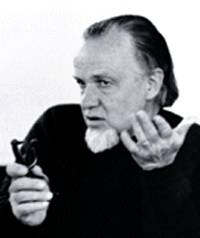
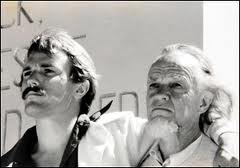
Milton Friedman is the short one!!!
Sincerely,
Everette Hatcher III, 13900 Cottontail Lane, Alexander, AR 72002, ph 501-920-5733 everettehatcher@gmail.com
President Obama c/o The White House 1600 Pennsylvania Avenue NW Washington, DC 20500 Dear Mr. President, I know that you receive 20,000 letters a day and that you actually read 10 of them every day. I really do respect you for trying to get a pulse on what is going on out here. There have […]By Everette Hatcher III | Posted in David Barton, Founding Fathers, President Obama | Edit |Comments (0)
There have been many articles written by evangelicals like me who fear that our founding fathers would not recognize our country today because secular humanism has rid our nation of spiritual roots. I am deeply troubled by the secular agenda of those who are at war with religion in our public life. Lillian Kwon quoted somebody […]By Everette Hatcher III | Posted in David Barton, Founding Fathers | Edit | Comments (0)
There have been many articles written by evangelicals like me who fear that our founding fathers would not recognize our country today because secular humanism has rid our nation of spiritual roots. I am deeply troubled by the secular agenda of those who are at war with religion in our public life. Lillian Kwon quoted somebody […]By Everette Hatcher III | Posted in David Barton, Founding Fathers | Edit | Comments (0)
There have been many articles written by evangelicals like me who fear that our founding fathers would not recognize our country today because secular humanism has rid our nation of spiritual roots. I am deeply troubled by the secular agenda of those who are at war with religion in our public life. Lillian Kwon quoted somebody […]By Everette Hatcher III | Posted in David Barton, Founding Fathers | Edit | Comments (0)
There have been many articles written by evangelicals like me who fear that our founding fathers would not recognize our country today because secular humanism has rid our nation of spiritual roots. I am deeply troubled by the secular agenda of those who are at war with religion in our public life. Lillian Kwon quoted somebody […]By Everette Hatcher III | Posted in David Barton, Founding Fathers | Edit | Comments (0)
There have been many articles written by evangelicals like me who fear that our founding fathers would not recognize our country today because secular humanism has rid our nation of spiritual roots. I am deeply troubled by the secular agenda of those who are at war with religion in our public life. Lillian Kwon quoted somebody […]By Everette Hatcher III | Posted in Founding Fathers | Edit | Comments (0)
President Obama Speaks at The Ohio State University Commencement Ceremony Published on May 5, 2013 President Obama delivers the commencement address at The Ohio State University. May 5, 2013. You can learn a lot about what President Obama thinks the founding fathers were all about from his recent speech at Ohio State. May 7, 2013, […]By Everette Hatcher III | Posted in Founding Fathers, President Obama | Edit | Comments (0)
Dr. C. Everett Koop with Bill Graham. Francis Schaeffer: “Whatever Happened to the Human Race” (Episode 4) THE BASIS FOR HUMAN DIGNITY Published on Oct 7, 2012 by AdamMetropolis The 45 minute video above is from the film series created from Francis Schaeffer’s book “Whatever Happened to the Human Race?” with Dr. C. Everett Koop. This […]By Everette Hatcher III | Posted in Founding Fathers, Francis Schaeffer, Prolife | Edit |Comments (1)
America’s Founding Fathers Deist or Christian? – David Barton 4/6 There have been many articles written by evangelicals like me who fear that our founding fathers would not recognize our country today because secular humanism has rid our nation of spiritual roots. I am deeply troubled by the secular agenda of those who are at […]By Everette Hatcher III | Posted in David Barton, Founding Fathers | Tagged governor of connecticut, john witherspoon, jonathan trumbull | Edit | Comments (1)
3 Of 5 / The Bible’s Influence In America / American Heritage Series / David Barton There were 55 gentlemen who put together the constitution and their church affliation is of public record. Greg Koukl notes: Members of the Constitutional Convention, the most influential group of men shaping the political foundations of our nation, were […]By Everette Hatcher III | Posted in Founding Fathers | Edit | Comments (0)
I do not think that John Quincy Adams was a founding father in the same sense that his father was. However, I do think he was involved in the early days of our government working with many of the founding fathers. Michele Bachmann got into another history-related tussle on ABC’s “Good Morning America” today, standing […]By Everette Hatcher III | Posted in David Barton, Founding Fathers | Edit | Comments (0)
I have gone back and forth and back and forth with many liberals on the Arkansas Times Blog on many issues such as abortion, human rights, welfare, poverty, gun control and issues dealing with popular culture. Here is another exchange I had with them a while back. My username at the Ark Times Blog is Saline […]By Everette Hatcher III | Posted in Arkansas Times, Francis Schaeffer, Prolife | Edit |Comments (0)
I truly believe that many of the problems we have today in the USA are due to the advancement of humanism in the last few decades in our society. Ronald Reagan appointed the evangelical Dr. C. Everett Koop to the position of Surgeon General in his administration. He partnered with Dr. Francis Schaeffer in making the […]By Everette Hatcher III | Posted in Adrian Rogers, Francis Schaeffer | Edit | Comments (0)
Francis Schaeffer: “Whatever Happened to the Human Race” (Episode 4) THE BASIS FOR HUMAN DIGNITY Published on Oct 7, 2012 by AdamMetropolis ____________ The 45 minute video above is from the film series created from Francis Schaeffer’s book “Whatever Happened to the Human Race?” with Dr. C. Everett Koop. This book really helped develop my political […]By Everette Hatcher III | Posted in Francis Schaeffer | Edit | Comments (0)
Office of Barack and Michelle Obama P.O. Box 91000 Washington, DC 20066
Dear President Obama,
I wrote you over 700 letters while you were President and I mailed them to the White House and also published them on my blog http://www.thedailyhatch.org .I received several letters back from your staff and I wanted to thank you for those letters.
I have been reading your autobiography A PROMISED LAND and I have been enjoying it.
Let me make a few comments on it, and here is the first quote of yours I want to comment on:
THE SECOND TURN of events was an opportunity rather than a crisis. At the end of April, Supreme Court justice David Souter called to tell me he was retiring from the bench, giving me my first chance to fill a seat on the highest court in the land. Getting somebody confirmed to the Supreme Court has never been a slam dunk, in part because the Court’s role in American government has always been controversial. After all, the idea of giving nine unelected, tenured-for-life lawyers in black robes the power to strike down laws passed by a majority of the people’s representatives doesn’t sound very democratic. But since Marbury v. Madison, the 1803 Supreme Court case that gave the Court final say on the meaning of the U.S. Constitution and established the principle of judicial review over the actions of the Congress and the president, that’s how our system of checks and balances has worked. In theory, Supreme Court justices don’t “make law” when exercising these powers; instead, they’re supposed to merely “interpret” the Constitution, helping to bridge how its provisions were understood by the framers and how they apply to the world we live in today. For the bulk of constitutional cases coming before the Court, the theory holds up pretty well. Justices have for the most part felt bound by the text of the Constitution and precedents set by earlier courts, even when doing so results in an outcome they don’t personally agree with. Throughout American history, though, the most important cases have involved deciphering the meaning of phrases like “due process,” “privileges and immunities,” “equal protection,” or “establishment of religion”—terms so vague that it’s doubtful any two Founding Fathers agreed on exactly what they meant. This ambiguity gives individual justices all kinds of room to “interpret” in ways that reflect their moral judgments, political preferences, biases, and fears. That’s why in the 1930s a mostly conservative Court could rule that FDR’s New Deal policies violated the Constitution, while forty years later a mostly liberal Court could rule that the Constitution grants Congress almost unlimited power to regulate the economy. It’s how one set of justices, in Plessy v. Ferguson, could read the Equal Protection Clause to permit “separate but equal,” and another set of justices, in Brown v. Board of Education, could rely on the exact same language to unanimously arrive at the opposite conclusion. It turned out that Supreme Court justices made law all the time. Over the years, the press and the public started paying more attention to Court decisions and, by extension, to the process of confirming justices. In 1955, southern Democrats—in a fit of pique over the Brown decision—institutionalized the practice of having Supreme Court nominees appear before the Senate Judiciary Committee to be grilled on their legal views. The 1973 Roe v. Wade decision focused further attention on Court appointments, with every nomination from that point on triggering a pitched battle between pro-choice and anti-abortion forces. The high-profile rejection of Robert Bork’s nomination in the late 1980s and the Clarence Thomas–Anita Hill hearings in the early 1990s—in which the nominee was accused of sexual harassment—proved to be irresistible TV drama.
—
Liberals seem to have their candidates get through with no false accusations of gang banging like Brett Kavanaugh had thrown at him. In fact, Judge Bork was as brilliant and accomplished judge but he was turned down by Democrats for no good reason. Judge Thomas had a squeaky clean past but every dirty rumor was thrown at him too!!! Very disgraceful to treat a fine gentleman like that!!!
As a professing Christian you should put pro-life judges on the court!!
LifeNews.com Note: Robert P. George is McCormick Professor of Jurisprudence and Director of the James Madison Program in American Ideals and Institutions at Princeton University. He is a member of the President’s Council on Bioethics and previously served on the United States Commission on Civil Rights. This article previously appeared in Public Discourse:
Within a year after Roe v. Wade, however, Nathanson began to have moral doubts about the cause to which he had been so single-mindedly devoted. In a widely noticed 1974 essay in the prestigious New England Journal of Medicine, he revealed his growing doubts about the “pro-choice” dogma that abortion was merely the removal of an “undifferentiated mass of cells,” and not the killing of a developing human being. Referring to abortions that he had supervised or performed, he confessed to an “increasing certainty that I had in fact presided over 60,000 deaths.”
Still, he was not ready to abandon support for legal abortion. It was, he continued to insist, necessary to prevent the bad consequences of illegal abortions. But he was moving from viewing abortion itself as a legitimate solution to a woman’s personal problem, to seeing it as an evil that should be discouraged, even if for practical reasons it had to be tolerated. Over the next several years, while continuing to perform abortions for what he regarded as legitimate “health” reasons, Nathanson would be moved still further toward the pro-life position by the emergence of new technologies, especially fetoscopy and ultrasound, that made it increasingly difficult, and finally impossible, to deny that abortion is the deliberate killing of a unique human being–a child in the womb.
By 1980, the weight of evidence in favor of the pro-life position had overwhelmed Nathanson and driven him out of the practice of abortion. He had come to regard the procedure as unjustified homicide and refused to perform it. Soon he was dedicating himself to the fight against abortion and revealing to the world the lies he and his abortion movement colleagues had told to break down public opposition.
In 1985, Nathanson employed the new fetal imaging technology to produce a documentary film, “The Silent Scream,” which energized the pro-life movement and threw the pro-choice side onto the defensive by showing in graphic detail the killing of a twelve-week-old fetus in a suction abortion. Nathanson used the footage to describe the facts of fetal development and to make the case for the humanity and dignity of the child in the womb. At one point, viewers see the child draw back from the surgical instrument and open his mouth: “This,” Nathanson says in the narration, “is the silent scream of a child threatened imminently with extinction.”
Publicity for “The Silent Scream” was provided by no less a figure than President Ronald Reagan, who showed the film in the White House and touted it in speeches. Like Nathanson, Reagan, who had signed one of the first abortion-legalization bills when he was Governor of California, was a zealous convert to the pro-life cause. During his term as president, Reagan wrote and published a powerful pro-life book entitled Abortion and the Conscience of the Nation–a book that Nathanson praised for telling the truth about the life of the child in the womb and the injustice of abortion
Sincerely,
Everette Hatcher III, 13900 Cottontail Lane, Alexander, AR 72002, ph 501-920-5733 everettehatcher@gmail.com
President Obama c/o The White House 1600 Pennsylvania Avenue NW Washington, DC 20500 Dear Mr. President, I know that you receive 20,000 letters a day and that you actually read 10 of them every day. I really do respect you for trying to get a pulse on what is going on out here. There have […]By Everette Hatcher III | Posted in David Barton, Founding Fathers, President Obama | Edit |Comments (0)
There have been many articles written by evangelicals like me who fear that our founding fathers would not recognize our country today because secular humanism has rid our nation of spiritual roots. I am deeply troubled by the secular agenda of those who are at war with religion in our public life. Lillian Kwon quoted somebody […]By Everette Hatcher III | Posted in David Barton, Founding Fathers | Edit | Comments (0)
There have been many articles written by evangelicals like me who fear that our founding fathers would not recognize our country today because secular humanism has rid our nation of spiritual roots. I am deeply troubled by the secular agenda of those who are at war with religion in our public life. Lillian Kwon quoted somebody […]By Everette Hatcher III | Posted in David Barton, Founding Fathers | Edit | Comments (0)
There have been many articles written by evangelicals like me who fear that our founding fathers would not recognize our country today because secular humanism has rid our nation of spiritual roots. I am deeply troubled by the secular agenda of those who are at war with religion in our public life. Lillian Kwon quoted somebody […]By Everette Hatcher III | Posted in David Barton, Founding Fathers | Edit | Comments (0)
There have been many articles written by evangelicals like me who fear that our founding fathers would not recognize our country today because secular humanism has rid our nation of spiritual roots. I am deeply troubled by the secular agenda of those who are at war with religion in our public life. Lillian Kwon quoted somebody […]By Everette Hatcher III | Posted in David Barton, Founding Fathers | Edit | Comments (0)
There have been many articles written by evangelicals like me who fear that our founding fathers would not recognize our country today because secular humanism has rid our nation of spiritual roots. I am deeply troubled by the secular agenda of those who are at war with religion in our public life. Lillian Kwon quoted somebody […]By Everette Hatcher III | Posted in Founding Fathers | Edit | Comments (0)
President Obama Speaks at The Ohio State University Commencement Ceremony Published on May 5, 2013 President Obama delivers the commencement address at The Ohio State University. May 5, 2013. You can learn a lot about what President Obama thinks the founding fathers were all about from his recent speech at Ohio State. May 7, 2013, […]By Everette Hatcher III | Posted in Founding Fathers, President Obama | Edit | Comments (0)
Dr. C. Everett Koop with Bill Graham. Francis Schaeffer: “Whatever Happened to the Human Race” (Episode 4) THE BASIS FOR HUMAN DIGNITY Published on Oct 7, 2012 by AdamMetropolis The 45 minute video above is from the film series created from Francis Schaeffer’s book “Whatever Happened to the Human Race?” with Dr. C. Everett Koop. This […]By Everette Hatcher III | Posted in Founding Fathers, Francis Schaeffer, Prolife | Edit |Comments (1)
America’s Founding Fathers Deist or Christian? – David Barton 4/6 There have been many articles written by evangelicals like me who fear that our founding fathers would not recognize our country today because secular humanism has rid our nation of spiritual roots. I am deeply troubled by the secular agenda of those who are at […]By Everette Hatcher III | Posted in David Barton, Founding Fathers | Tagged governor of connecticut, john witherspoon, jonathan trumbull | Edit | Comments (1)
3 Of 5 / The Bible’s Influence In America / American Heritage Series / David Barton There were 55 gentlemen who put together the constitution and their church affliation is of public record. Greg Koukl notes: Members of the Constitutional Convention, the most influential group of men shaping the political foundations of our nation, were […]By Everette Hatcher III | Posted in Founding Fathers | Edit | Comments (0)
I do not think that John Quincy Adams was a founding father in the same sense that his father was. However, I do think he was involved in the early days of our government working with many of the founding fathers. Michele Bachmann got into another history-related tussle on ABC’s “Good Morning America” today, standing […]By Everette Hatcher III | Posted in David Barton, Founding Fathers | Edit | Comments (0)
I have gone back and forth and back and forth with many liberals on the Arkansas Times Blog on many issues such as abortion, human rights, welfare, poverty, gun control and issues dealing with popular culture. Here is another exchange I had with them a while back. My username at the Ark Times Blog is Saline […]By Everette Hatcher III | Posted in Arkansas Times, Francis Schaeffer, Prolife | Edit |Comments (0)
I truly believe that many of the problems we have today in the USA are due to the advancement of humanism in the last few decades in our society. Ronald Reagan appointed the evangelical Dr. C. Everett Koop to the position of Surgeon General in his administration. He partnered with Dr. Francis Schaeffer in making the […]By Everette Hatcher III | Posted in Adrian Rogers, Francis Schaeffer | Edit | Comments (0)
Francis Schaeffer: “Whatever Happened to the Human Race” (Episode 4) THE BASIS FOR HUMAN DIGNITY Published on Oct 7, 2012 by AdamMetropolis ____________ The 45 minute video above is from the film series created from Francis Schaeffer’s book “Whatever Happened to the Human Race?” with Dr. C. Everett Koop. This book really helped develop my political […]By Everette Hatcher III | Posted in Francis Schaeffer | Edit | Comments (0)
Office of Barack and Michelle Obama P.O. Box 91000 Washington, DC 20066
Dear President Obama,
I wrote you over 700 letters while you were President and I mailed them to the White House and also published them on my blog http://www.thedailyhatch.org .I received several letters back from your staff and I wanted to thank you for those letters.
There are several issues raised in your book that I would like to discuss with you such as the minimum wage law, the liberal press, the cause of 2007 financial meltdown, and especially your pro-choice (what I call pro-abortion) view which I strongly object to on both religious and scientific grounds, Two of the most impressive things in your book were your dedication to both the National Prayer Breakfast (which spoke at 8 times and your many visits to the sides of wounded warriors!!
I have been reading your autobiography A PROMISED LAND and I have been enjoying it.
Let me make a few comments on it, and here is the first quote of yours I want to comment on:
ONE AFTERNOON a couple of months after the Af-Pak announcement, I walked alone across the South Lawn—trailed by a military aide carrying the football and my veterans affairs staffer, Matt Flavin—to board the Marine One helicopter and make the brief flight to Maryland for the first of what would be regular visits to Bethesda Naval Hospital and Walter Reed Army Medical Center. On arrival, I was greeted by commanders of the facility, who gave me a quick overview of the number and condition of wounded warriors on-site before leading me through a maze of stairs, elevators, and corridors to the main patients’ ward. For the next hour, I proceeded from room to room, sanitizing my hands and donning scrubs and surgical gloves where necessary, stopping in the hallway to get some background on the recovering service member from hospital staffers before knocking softly on the door. Though patients at the hospitals came from every branch of the military, many who were there during my first few years in office were members of the U.S. Army and Marine Corps that patrolled the insurgent-dominated areas of Iraq and Afghanistan and had been injured by gunfire or IEDs. Almost all were male and working-class: whites from small rural towns or fading manufacturing hubs, Blacks and Hispanics from cities like Houston or Trenton, Asian Americans and Pacific Islanders from California. Usually they had family members sitting with them—mostly parents, grandparents, and siblings, though if the service member was older, there would be a wife and kids too—toddlers squirming in laps, five-year-olds with toy cars, teenagers playing video games. As soon as I entered the room, everyone would shift around, smiling shyly, appearing not quite sure what to do. For me, this was one of the vagaries of the job, the fact that my presence reliably caused a disruption and a bout of nervousness among those I was meeting. I tried always to lighten the mood, doing what I could to put people at ease. Unless fully incapacitated, the service members would usually raise their bed upright, sometimes pulling themselves to a seated position by reaching for the sturdy metal handle on the bedpost. Several insisted on hopping out of bed, often balancing on their good leg to salute and shake my hand. I‘d ask them about their hometown and how long they’d been in the service. I’d ask them how they got their injury and how soon they might be starting rehab or be getting fitted for a prosthetic. We often talked sports, and some would ask me to sign a unit flag hung on the wall, and I’d give each service member a commemorative challenge coin. Then we’d all position ourselves around the bed as Pete Souza took pictures with his camera and with their phones, and Matt would give out business cards so they could call him personally at the White House if they needed anything at all. How those men inspired me! Their courage and determination, their insistence that they’d be back at it in no time, their general lack of fuss. It made so much of what passes for patriotism—the gaudy rituals at football games, the desultory flag waving at parades, the blather of politicians—seem empty and trite. The patients I met had nothing but praise for the hospital teams responsible for their treatment—the doctors, nurses, and orderlies, most of them service members themselves but some of them civilians, a surprising number of them foreign-born, originally from places like Nigeria, El Salvador, or the Philippines. Indeed, it was heartening to see how well these wounded warriors were cared for, beginning with the seamless, fast-moving chain that allowed a Marine injured in a dusty Afghan village to be medevaced to the closest base, stabilized, then transported to Germany and onward to Bethesda or Walter Reed for state-of-the-art surgery, all in a matter of days. Because of that system—a melding of advanced technology, logistical precision, and highly trained and dedicated people, the kind of thing that the U.S. military does better than any other organization on earth—many soldiers who would have died from similar wounds during the Vietnam era were now able to sit with me at their bedside, debating the merits of the Bears versus the Packers. Still, no level of precision or care could erase the brutal, life-changing nature of the injuries these men had suffered. Those who had lost a single leg, especially if the amputation was below the knee, often described themselves as being lucky. Double or even triple amputees were not uncommon, nor were severe cranial trauma, spinal injuries, disfiguring facial wounds, or the loss of eyesight, hearing, or any number of basic bodily functions. The service members I met were adamant that they had no regrets about sacrificing so much for their country and were understandably offended by anyone who viewed them with even a modicum of pity. Taking their cues from their wounded sons, the parents I met were careful to express only the certainty of their child’s recovery, along with their deep wells of pride. And yet each time I entered a room, each time I shook a hand, I could not ignore how incredibly young most of these service members were, many of them barely out of high school. I couldn’t help but notice the rims of anguish around the eyes of the parents, who themselves were often younger than me. I wouldn’t forget the barely suppressed anger in the voice of a father I met at one point, as he explained that his handsome son, who lay before us likely paralyzed for life, was celebrating his twenty-first birthday that day, or the vacant expression on the face of a young mother who sat with a baby cheerfully gurgling in her arms, pondering a life with a husband who was probably going to survive but would no longer be capable of conscious thought. Later, toward the end of my presidency, The New York Times would run an article about my visits to the military hospitals. In it, a national security official from a previous administration opined that the practice, no matter how well intentioned, was not something a commander in chief should do—that visits with the wounded inevitably clouded a president’s capacity to make clear-eyed, strategic decisions. I was tempted to call that man and explain that I was never more clear-eyed than on the flights back from Walter Reed and Bethesda. Clear about the true costs of war, and who bore those costs. Clear about war’s folly, the sorry tales we humans collectively store in our heads and pass on from generation to generation—abstractions that fan hate and justify cruelty and force even the righteous among us to participate in carnage. Clear that by virtue of my office, I could not avoid responsibility for lives lost or shattered, even if I somehow justified my decisions by what I perceived to be some larger good. Looking through the helicopter window at the tidy green landscape below, I thought about Lincoln during the Civil War, his habit of wandering through makeshift infirmaries not so far from where we were flying, talking softly to soldiers who lay on flimsy cots, bereft of antiseptics to stanch infections or drugs to manage pain, the stench of gangrene everywhere, the clattering and wheezing of impending death. I wondered how Lincoln had managed it, what prayers he said afterward. He must have known it was a necessary penance. A penance I, too, had to pay.
I—
I really enjoyed this article below about your visits to the soldiers!
Obama’s sacred duty: Visiting the wounded at Walter Reed
Published Nov 29, 2016
BETHESDA, Md. — President Barack Obama stood outside the room, rubbed sanitizer on his hands, set his face into a smile and knocked on the door.
No one answered. He looked at the hospital floor polished to a sheen and knocked again. Still no answer. So Obama turned the knob and gently pushed his way inside.
“Hello? Jeremy, what’s going on?” Maj. Jeremy Haynes remembers the president saying as he came into his room at Walter Reed National Military Medical Center two years ago.
It was the first of several visits the president paid Haynes, an Army officer who was told he would never walk, feel below his waist or have children again after his spine was hit by a Taliban bullet in Afghanistan. The visits, Haynes said, “were truly inspiring to me” and gave him hope for the life ahead of him.
On Tuesday, for his 23rd and probably last time as president, Obama will helicopter to the military hospital to spend another afternoon with the wounded from Afghanistan and Iraq. The visit is likely to unfold much as Haynes and hospital officials described the ones the president paid to him.
Obama will arrive at the hospital in suburban Maryland on Marine One with a minimum of ceremony, having memorized the names of the wounded he will visit from a list he received the night before. At a side entrance to the hospital, a military aide will update him on their conditions. If he visits those still hospitalized, he will climb the stairs to 4 West and 4 Center, known as the soldiers ward. After greeting the doctors and nurses on duty, he will begin his rounds with a knock. If instead he visits the physical therapy center, he will wander one giant room filled with exercise machines and patients learning to live without limbs.
For Obama, who has served as a wartime commander longer than any of his predecessors, meeting with the wounded and their families is among the most sacred duties of his presidency. He rarely talks about his trips to Walter Reed, but his aides say that they have affected him deeply.
David Axelrod, Obama’s longtime political aide, said the president often returned to the White House from Walter Reed, first when it was in Washington and later after it had merged with Bethesda Naval Hospital, in a somber mood. After one such trip, he recalled, Obama described a young woman attending to her newlywed husband, whose body was shattered and head terribly wounded
“‘You want to be upbeat and encouraging,’ I remember him saying,” Axelrod said. “‘But they’re just kids starting out, and I looked at his wife’s face and you could see her struggling with what this would mean for the rest of their lives. It’s really hard.’ “
• • •
In his first two years in office, as the wars in Iraq and Afghanistan raged and there were many wounded, Obama’s trips to Walter Reed were three- and four-hour slogs during which he donned fresh hospital gowns and gloves outside every fifth room to see patients clinging to life days or weeks after being blown apart. He returned to the White House visibly drained, aides said.
More recently, he has done push-ups and other exercises with newly minted civilians who, instead of struggling to live, are trying to find ways of coping without arms, legs or equilibrium months and years after being wounded.
“The first term, our visits would last for hours because there would be 25, 50, 75 folks that we’d be seeing, going room to room, many with devastating injuries,” Michelle Obama, who has made her own trips to Walter Reed, said recently. “And now, today, just last week he went to visit, and he was there for 30 minutes because there are fewer of our men and women who are being injured in war.”
The afternoon excursions from the White House are in many ways the counterpoint to Barack Obama’s 15 trips offering condolences after mass shootings, when he has openly grieved with families, tears on his face. At Walter Reed, his goal has been to thank and uplift the wounded and their families, whose sacrifices he sees as almost holy and among whom expressions of grief are often unwelcome.
“If you are coming into this room with sorrow or to feel sorry for my wounds, go elsewhere,” read one handwritten sign outside a soldier’s door, now framed and installed on the soldiers ward.
• • •
Reggie Love, a former aide to Obama who accompanied him on nearly all of his trips to military hospitals in the first three years of the administration, said the president was good at reading the rooms he entered. Not everyone wanted an upbeat message.
“Sometimes the people he met didn’t have any questions for him or really anything to say,” Love said. “Sometimes, they just needed a hug.”
Some of the soldiers whom Obama has visited are more grievously wounded than those seen by any modern president, as improved technology has saved people who even five years ago would have died on the battlefield. The shock of repeatedly seeing such devastating injuries can affect someone’s psyche far more than flag-draped coffins, psychologists say.
“Every time I visit Walter Reed, every time I visit Bethesda, I’m reminded of the wages of war,” Obama said at Fort Campbell, Kentucky, in 2011.
Robert M. Gates, the former defense secretary, wrote in his memoir Duty that seeing the wounded and attending funerals took such an emotional toll that he had to resign. Critics see another effect. Over the course of his presidency, Obama has become increasingly unwilling to commit troops to wars in places like Libya, Syria and Iraq.
The visits end with Obama’s signing unit flags, books and anything else presented to him, and with a photographer taking group and paired shots. Sometimes families ask to have photos taken with their own cellphones, which Obama hands over to his photographer.
• • •
In June, Obama visited the hospital’s physical therapy room, where amputees learn to walk again. One double-amputee gave Obama a push-up challenge, and Obama promptly shed his suit jacket, dropped to the floor and reeled off more than 20. Still wearing dress shoes, he joined another in jumping onto a 30-inch box.
“I can’t even put into words how impressed I was,” said Lt. Cmdr. John Terry, known as Jae, an amputee whose photo of doing lunges with Obama is among his most treasured possessions. “I will remember that day until I die.”
Not every severely wounded patient at Walter Reed meets the president. Some miss him by chance. A few refuse because they disagree with the president’s politics.
But even some of the president’s critics say his presence ennobled their injuries and made them feel part of a larger plan.
As he buckled his two stumps into prosthetic legs at the hospital one day recently, Edward Klein, known as Flip, a now retired Army major, acknowledged that “I wasn’t a big fan of his politically.”
But, he added: “Meeting the president added a feeling of legitimacy and recognition for what I did.”
Sincerely,
Everette Hatcher III, 13900 Cottontail Lane, Alexander, AR 72002, ph 501-920-5733 everettehatcher@gmail.com
Lt. Cmdr. John Terry doing lunges with President Obama at Walter Reed National Military Medical Center. Commander Terry, who provided the image, said, “I will remember that day until I die.”
President Obama c/o The White House 1600 Pennsylvania Avenue NW Washington, DC 20500 Dear Mr. President, I know that you receive 20,000 letters a day and that you actually read 10 of them every day. I really do respect you for trying to get a pulse on what is going on out here. There have […]By Everette Hatcher III | Posted in David Barton, Founding Fathers, President Obama | Edit |Comments (0)
There have been many articles written by evangelicals like me who fear that our founding fathers would not recognize our country today because secular humanism has rid our nation of spiritual roots. I am deeply troubled by the secular agenda of those who are at war with religion in our public life. Lillian Kwon quoted somebody […]By Everette Hatcher III | Posted in David Barton, Founding Fathers | Edit | Comments (0)
There have been many articles written by evangelicals like me who fear that our founding fathers would not recognize our country today because secular humanism has rid our nation of spiritual roots. I am deeply troubled by the secular agenda of those who are at war with religion in our public life. Lillian Kwon quoted somebody […]By Everette Hatcher III | Posted in David Barton, Founding Fathers | Edit | Comments (0)
There have been many articles written by evangelicals like me who fear that our founding fathers would not recognize our country today because secular humanism has rid our nation of spiritual roots. I am deeply troubled by the secular agenda of those who are at war with religion in our public life. Lillian Kwon quoted somebody […]By Everette Hatcher III | Posted in David Barton, Founding Fathers | Edit | Comments (0)
There have been many articles written by evangelicals like me who fear that our founding fathers would not recognize our country today because secular humanism has rid our nation of spiritual roots. I am deeply troubled by the secular agenda of those who are at war with religion in our public life. Lillian Kwon quoted somebody […]By Everette Hatcher III | Posted in David Barton, Founding Fathers | Edit | Comments (0)
There have been many articles written by evangelicals like me who fear that our founding fathers would not recognize our country today because secular humanism has rid our nation of spiritual roots. I am deeply troubled by the secular agenda of those who are at war with religion in our public life. Lillian Kwon quoted somebody […]By Everette Hatcher III | Posted in Founding Fathers | Edit | Comments (0)
President Obama Speaks at The Ohio State University Commencement Ceremony Published on May 5, 2013 President Obama delivers the commencement address at The Ohio State University. May 5, 2013. You can learn a lot about what President Obama thinks the founding fathers were all about from his recent speech at Ohio State. May 7, 2013, […]By Everette Hatcher III | Posted in Founding Fathers, President Obama | Edit | Comments (0)
Dr. C. Everett Koop with Bill Graham. Francis Schaeffer: “Whatever Happened to the Human Race” (Episode 4) THE BASIS FOR HUMAN DIGNITY Published on Oct 7, 2012 by AdamMetropolis The 45 minute video above is from the film series created from Francis Schaeffer’s book “Whatever Happened to the Human Race?” with Dr. C. Everett Koop. This […]By Everette Hatcher III | Posted in Founding Fathers, Francis Schaeffer, Prolife | Edit |Comments (1)
America’s Founding Fathers Deist or Christian? – David Barton 4/6 There have been many articles written by evangelicals like me who fear that our founding fathers would not recognize our country today because secular humanism has rid our nation of spiritual roots. I am deeply troubled by the secular agenda of those who are at […]By Everette Hatcher III | Posted in David Barton, Founding Fathers | Tagged governor of connecticut, john witherspoon, jonathan trumbull | Edit | Comments (1)
3 Of 5 / The Bible’s Influence In America / American Heritage Series / David Barton There were 55 gentlemen who put together the constitution and their church affliation is of public record. Greg Koukl notes: Members of the Constitutional Convention, the most influential group of men shaping the political foundations of our nation, were […]By Everette Hatcher III | Posted in Founding Fathers | Edit | Comments (0)
I do not think that John Quincy Adams was a founding father in the same sense that his father was. However, I do think he was involved in the early days of our government working with many of the founding fathers. Michele Bachmann got into another history-related tussle on ABC’s “Good Morning America” today, standing […]By Everette Hatcher III | Posted in David Barton, Founding Fathers | Edit | Comments (0)
I have gone back and forth and back and forth with many liberals on the Arkansas Times Blog on many issues such as abortion, human rights, welfare, poverty, gun control and issues dealing with popular culture. Here is another exchange I had with them a while back. My username at the Ark Times Blog is Saline […]By Everette Hatcher III | Posted in Arkansas Times, Francis Schaeffer, Prolife | Edit |Comments (0)
I truly believe that many of the problems we have today in the USA are due to the advancement of humanism in the last few decades in our society. Ronald Reagan appointed the evangelical Dr. C. Everett Koop to the position of Surgeon General in his administration. He partnered with Dr. Francis Schaeffer in making the […]By Everette Hatcher III | Posted in Adrian Rogers, Francis Schaeffer | Edit | Comments (0)
Francis Schaeffer: “Whatever Happened to the Human Race” (Episode 4) THE BASIS FOR HUMAN DIGNITY Published on Oct 7, 2012 by AdamMetropolis ____________ The 45 minute video above is from the film series created from Francis Schaeffer’s book “Whatever Happened to the Human Race?” with Dr. C. Everett Koop. This book really helped develop my political […]By Everette Hatcher III | Posted in Francis Schaeffer | Edit | Comments (0)
Moreover, this isn’t something that only happens in very rare instances. It’s so pervasive that in some years, bureaucrats actually steal more from people than burglars!
The silver lining to this dark cloud is that America’s best Supreme Court Justice wants to end this awful scam.
P.S. I’m tempted to create a Victims of Thuggery Hall of Fame. If so, Jerry Johnson will be a member along with these other people who have been abused by government.
P.P.P.S. Just like intrusive and ineffective money-laundering laws, wretched asset forfeiture laws are largely the result of the foolish War on Drugs. One bad policy generates another bad policy. Lather, rinse, repeat.
New York is ranked #50 in the Economic Freedom of North America.
New York is ranked #48 in the State Business Tax Climate Index.
New York is ranked #50 in the Freedom in the 50 States.
New York is next-to-last in measures of inbound migration.
New York is ranked #50 in the State Soft Tyranny Index.
The good news is that New York’s politicians seem to be aware of these rankings and are taking steps to change policy.
The bad news is that they want they apparently want to be in last place in every index, so they’re looking at a giant tax increase.
The Wall Street Journalopined on the potential tax increase yesterday.
…lawmakers in Albany should be shouting welcome home. Instead they’re eyeing big new tax increases that would give the state’s temporary refugees to Florida—or wherever—one more reason to stay away for good. …Here are some of the proposals… Impose graduated rates on millionaires, up to 11.85%. …Since New York City has its own income tax,running to 3.88%, the combined rate would be…a bigger bite than even California’s notorious 13.3% top tax, and don’t forget Uncle Sam’s 37% share. …The squeeze is worse when you add the new taxes President Biden wants. A second factor: In 2017 the federal deduction for state and local taxes was capped at $10,000, so New Yorkers will now really feel the pinch. As E.J. McMahon of the Empire Center for Public Policy writes: “The financial incentive for high earners to move themselves and their businesses from New York to states with low or no income taxes has never—ever—been higher than it already is.”
The potential deal also would increase the state’s capital gains tax and the state’s death tax, adding two more reasons for entrepreneurs and investors to escape.
Here are some more details from a story in the New York Timesby Luis Ferré-Sadurní and Jesse McKinley.
Gov. Andrew M. Cuomo and New York State legislative leaders were nearing a budget agreement on Monday that would make New York City’s millionaires pay the highest personal income taxes in the nation… Under the proposed new tax rate, the city’s top earners could pay between 13.5 percent to 14.8 percent in state and city taxes,when combined with New York City’s top income tax rate of 3.88 percent — more than the top marginal income tax rate of 13.3 percent in California… Raising taxes on the rich in New York has been a top policy priority of the Democratic Party’s left flank… The business community has warned that raising income taxes could prompt millionaires who have left the state during the pandemic and are working remotely to make their move permanent, damaging the state’s tax base. Currently, the top 2 percent of the state’s highest earners pay about half of the state’s income taxes. …The corporate franchise tax rate would also increase to 7.25 percent from 6.5 percent.
There are two things to keep in mind about this looming tax increase.
Second, New York politicians are pushing through a huge tax hike even though the federal tax code no longer allows taxpayers to fully deduct state and local taxes (though they obviously hope to repeal that provision of the 2017 tax reform).
That second item is a big reason why so many taxpayers already have escaped New York and moved to states with better tax policy (most notably, Florida).
And even more will move if tax rates are increased, as expected.
Indeed, if the left’s dream agenda is adopted, I wouldn’t be surprised if every successful person left New York. In a columnfor the Wall Street Journal, Mark Kingdon warns about other tax hikes being considered, especially a wealth tax.
Legislators in Albany are considering two tax bills that could seriously damage the economic well-being and quality of life in New York for many years to come: a wealth tax and a stock transfer tax. …Should New York enact a 2% wealth tax, a wealthy New Yorker could wind up paying a 77% tax on short-term stock market profits. And that’s a conservative estimate: It assumes that stocks return 9% a year.If the return is 4.4% or less, the tax would be more than 100%. …65,000 families pay half of the city’s income taxes, and they won’t stay if the taxes become unreasonable… The trickle of wealthy émigrés out of New York has become a steady stream… It will be a flood if New York enacts a wealth tax with an associated tax on unrealized gains, which would lower, not raise, tax revenues, as those who leave take with them jobs and related services, such as legal and accounting. …The geese who have laid golden eggs for years see what is happening in Albany, and they’ll fly south to avoid being carved up.
The good news – at least relatively speaking – is that a wealth tax is highly unlikely.
But that a rather small silver lining on a very big dark cloud. The tax increases that will happen are more than enough to make the state even more hostile to private sector growth.
I’ll close with a few observations.
There are a few states that can get away with higher-than-average taxes because of special considerations. California, for instance, has climate and scenery. In the case of New York, it can get away with some bad policy because some people think of New York City as a one-of-a-kind place. But there’s a limit to how much those factors can be exploited, as both California and New York are now learning.
What politicians don’t realize (or don’t care about) is that people look at a range of factors when deciding where to live. This is especially true for successful entrepreneurs, investors, and business owners, who have both resources and knowledge to assess the costs and benefits of different locations. The problem for New York is that it looks bad on almost all policy metrics.
If the tax increases is enacted, expect to see a significant drop in taxable income as upper-income taxpayers either leave the state or figure out other ways of protecting their income. I don’t know if the state will be on the downward-sloping portion of the Laffer Curve, but it’s safe to assume that revenues over time will fall far short of projections. And it’s very safe to assume that the economic damage will easily offset any revenues that are collected.
This Kennedy descendant insists in her New York Times Book Review that “How to Blow Up a Pipeline” doesn’t offer “any actual instructions” for explosions. Pictured: The New York Times building seen on June 30, 2020, in New York City. (Photo: Johannes Eisele/AFP/Getty Images)
If the name Tatiana Schlossberg sounds like a brand for white privilege, you would be right. She’s not a top chef or fashion designer. She’s the 30-year-old daughter of Caroline Kennedy and Ed Schlossberg, the granddaughter of former President John F. Kennedy.
Like Maria Shriver at NBC News, Tatiana Schlossberg became an “objective journalist” for a while, covering the environment for The New York Times from 2014 to 2017.
When she wrote a book in 2019 called “Inconspicuous Consumption,” NBC put her on TV and pushed her to run for office. She deferred, saying she is a journalist … a political activist of a different stripe.
On Jan. 24, she reviewed three books on “environmental disaster” for The New York Times Book Review. One book had an especially provocative title: “How to Blow Up a Pipeline,” by a far-left Swedish professor named Andreas Malm. It was published on Jan. 5 by Verso Books, which calls itself “the largest independent, radical publishing house in the English-speaking world.”
The Left has declared war on our culture, but we should never back down, nor compromise our principles. Learn more now >>
Verso’s promotional blurb for this latest version of a Unabomber treatise is really something.
“In this lyrical manifesto, noted climate scholar (and saboteur of SUV tires and coal mines) Andreas Malm makes an impassioned call for the climate movement to escalate its tactics in the face of ecological collapse,” it says. “We need, he argues, to force fossil fuel extraction to stop—with our actions, with our bodies, and by defusing and destroying its tools. We need, in short, to start blowing up some oil pipelines.”
It seems intellectually incoherent for The New York Times to cheer social media platforms for squashing voices that promoted conspiracy theories about Donald Trump’s “landslide victory” because they might lead to violence … and then offer space to a book advocating property destruction.
Online, the Times promoted it with the headline “Three Books Offer New Ways to Think About Environmental Disaster.” When it comes to Big Energy (as opposed to Big Government), a few pipeline bombs offer “new ways to think,” an expansion of our ecological possibilities.
Schlossberg calls it “a compelling but frustrating treatise.” She says, “one of the most satisfying parts of his book comes when he brutally dispatches with ‘climate fatalists.’” (Perhaps when reviewing a book that endorses blowing stuff up, the words “brutally” and “dispatches” should be avoided.)
She loves how Malm writes that “climate fatalism is for those on top.” But here’s the poster girl for white privilege, a roving global correspondent born “on top,” promoting violence against energy companies, which provide jobs to Americans in flyover states much less privileged than she is.
This Kennedy descendant insists Malm doesn’t offer “any actual instructions” for explosions. She concludes, “the problem with violence, even if it’s meant only to destroy ‘fossil capital,’ is that ultimately it’s impossible to control.” That’s true.
Philosophically, one can ask whether it would be advisable or appropriate to publish a book titled “How to Blow Up a Book Publisher.” Did Verso Books ever consider that, or whether someone who’s hurt (or whose family members are killed) in a pipeline explosion could sue for damages?
And shouldn’t President Joe Biden’s Department of Homeland Security broaden its focus on “domestic terrorism” from merely the far right to the far left? The left’s attempt to place the entire terrorism narrative on the right is completely undermined by its promotion of noxious books like this.
The Daily Signal publishes a variety of perspectives. Nothing written here is to be construed as representing the views of The Heritage Foundation.
Have an opinion about this article? To sound off, please email letters@DailySignal.com and we will consider publishing your remarks in our regular “We Hear You” feature.
A crowd of about 35,000 had gathered near the Washington Monument during a cold blustery Presidents Day weekend in the midst of an unusually mild winter to prod the Obama administration to take actions against climate change. The largest climate action rally in American history had been scheduled for noon on a Sunday, not exactly a time chosen with regular church-goers in mind”though, undoubtedly, for some present the environmental cause would be the closest thing to a religion in their lives.
I carried a sign that declared “Jesus is Pro-Planet” in 175-point type. I have no hesitation about the truth of the statement. Paul makes it clear in Colossians 1 that, through Christ, God is indeed reconciling to himself “all things, whether things on earth or things in heaven,” and that this is good news for “every creature under heaven.”
As C.S. Lewis noted in Mere Christianity , the true cosmic nature of Christ’s atonement is difficult for our inwardly focused minds to fathom but “there are strange, exciting hints in the Bible that when we are drawn in [to Christ], a great many other things in Nature will begin to come right.”
Francis Schaeffer made a similar point in his important Pollution and the Death of Man , a neglected manifesto for Evangelical environmentalism:
The blood of the Lamb will redeem man and nature together . . . . But Christians who believe the Bible are not simply called to say that “one day” there will be healing, but that by God’s grace, upon the basis of the work of Christ, substantial healing can be a reality here and now.
In 1970, Schaeffer spoke against the “greed and haste” that was destroying creation and called for the Church to be a “pilot plant” demonstrating the healing of man and nature. The failure to do so would, to Schaeffer, be both disobedient and bring the loss of a great evangelistic opportunity, with pantheism filling the vacuum as long as the Church practiced this “sub-Christianity.”
While Evangelical leaders enthusiastically embraced Schaeffer’s push to engage on abortion and other cultural issues in the 1980s, his words and actions about the darkness of environmental degradation and the beauty of nature have largely been forgotten. He agreed with the 1960s countercultural critique of a “plastic culture” with its overreliance on “the machine” of technology and a diminished concept of nature.
The counterculture’s diagnosis was largely correct , Schaeffer thought, but the favored prescription”implicit or explicit pantheism”reduced man to “no more than grass,” after which he feared that “impersonal technology will reign even more securely.”
Also problematic was the popular but “perverted” form of Christianity that embraced a type of Platonic dualism, focused exclusively on the soul and getting it to the higher state of Heaven. For such Christians, the realm of nature might, at best, serve as an apologetic tool, but it had no real intrinsic value to them or their version of God, despite his having proclaimed it “good” from the start.
Pollution and the Death of Man illustrates this point with the true story of a Christian institution run with its eyes solely on the sky. This austere school campus sits across a large ravine from what, despite its lushness, was derisively labeled as just a “hippie community” by the Christians. Schaeffer, after speaking at the school, visited the neighbors. He spoke with their leadership about ecological issues, saw the lovely fields, trees, gardens and even the site of their communal grape stomps.
Schaeffer realized that the Christians, with their unbiblical and cavalier attitude towards nature, were offering little to draw the sincere but lost pagans toward a true vision of creation and redemption. “When I stood on Christian ground and looked at the Bohemian people’s place,” wrote Schaeffer, “it was beautiful. Then I stood on pagan ground and looked at the Christian community and saw ugliness.” Schaeffer took it as a sad compliment when his hippie host said he was the first to come from “across the ravine” in such a manner.
Indeed, Schaeffer (who loved to hike the Alps and did not own a car after 1948) believed that only a return to orthodox Christianity could effectively bridge this chasm. He countered Platonic Christianity by emphasizing that all of creation, from the human body on down to a tree or a stone, has inherent value stemming from its association with the Creator. “What God has made, I, who am also a creature, must not despise.”
Schaeffer insisted that man is finite, as separated from the infinite God, as are our kin, the animals and the grass. But, lest we slide into pantheism, he also emphasized the separation from nature brought about by our special creation in the image of God. Here, the rest of creation lies below us, and in this regard we are much more than grass.
Maintaining these two truths in proper tension allows us to engage the environment with an appropriate respect for its order and worth. It is not a plaything, designed solely for our hedonistic enjoyment. We may use it, yes, but we should exercise dominion without utter destruction, always avoid disdain for what God has made, and delights in it independent of its utility to us. In practice, the Christian community should be a people that have learned “to say ‘Stop!’” and “refuse men the right to ravish our land, just as we refuse them the right to ravish our women.”
As I approached the D.C. throng calling for a “Stop!” of its own, I felt a bit as though I was taking the name of Jesus across a green ravine similar to the one Schaeffer walked. Looking over the crowd, I was reminded, though, that God has not been without his witnesses in this realm. The ringleader of the event, 350.org founder Bill McKibben, has regularly referenced his Methodist faith, and multiple Earth Flags”first created in 1969 by faithful believers John and Anna McConnell (who, incidentally, met with a little help from Richard John Neuhaus)”were taut in the stiff breeze.
Nevertheless, forty-three years after Schaeffer wrote his little treatise, plenty of pantheistic Mother Earth spirituality was on display as well as the secular humanism that Schaeffer famously warned against elsewhere. Unfortunately, the Evangelical Church did not step into the breach and much of its leadership instead now treats the small creation care movement as a theological leper, unclean because it engages with a green movement viewed as beyond redemption.
Yet the name of Jesus was surprisingly well received on the National Mall. I saw not one glare or frown; instead dozens of people made positive comments and requested photographs. A self-described agnostic hawking The Socialist Worker newspaper engaged with me about mankind’s relationship to God and closed by saying of Jesus with a smile, “Well, if he got you out here, he can’t be all bad.”
A small group of banner-wielding Evangelical college students, who allowed me to join them despite my relatively advanced years, also drew thanks from fellow believers in the crowd and inquiries from the curious. One secular liberal couple stood with us for quite a while asking questions about what it meant to be an Evangelical, honestly discussing their own negative associations of the term with George W. Bush and SUVs. They eventually were comfortable enough”in deliciously appropriate clichéd fashion” to share their granola bars, even with an openly pro-life Bush voter like me.
Plenty of work remains to be done, both to bandage God’s wounded creation and reach his most precious creatures. “ We’ve got the whole world in our hands,” a gaggle of green-clad marchers sang to a familiar Sunday School tune. “I think they’ve got the lyrics wrong,” I remarked with a wink to the students. We set about to sing the song correctly.
John Murdock works as a natural resources attorney in Washington, D.C., and is a member of The Falls Church Anglican in northern Virginia. He has written on environmental matters for numerous outlets including The New Atlantis.
_________ This series of posts entitled “FRANCIS SCHAEFFER ANALYZES ART AND CULTURE” touches things that affect our culture today. The first post took a look at the foundations of our modern society today that were set by the Roman Democracy 2000 years ago and then it related it to the art we see today. […]
__________ Francis Schaeffer pictured below: ______________ Francis Schaeffer pictured below: _____________ This series of posts entitled “FRANCIS SCHAEFFER ANALYZES ART AND CULTURE” touches things that affect our culture today. The first post took a look at the foundations of our modern society today that were set by the Roman Democracy 2000 years ago and […]
__________ This series of posts entitled “FRANCIS SCHAEFFER ANALYZES ART AND CULTURE” touches things that affect our culture today. The first post took a look at the foundations of our modern society today that were set by the Roman Democracy 2000 years ago and then it related it to the art we see today. […]
___________ Francis Schaeffer pictured below: _____________ Series “FRANCIS SCHAEFFER ANALYZES ART AND CULTURE” traces Schaeffer’s comments on modern culture and can be found weekly onhttp://www.thedailyhatch.org !!!!! Paul Gauguin and his life questions! This series of posts entitled “FRANCIS SCHAEFFER ANALYZES ART AND CULTURE” touches things that affect our culture today. The first post took […]
This series of posts entitled “FRANCIS SCHAEFFER ANALYZES ART AND CULTURE” touches things that affect our culture today. The first post took a look at the foundations of our modern society today that were set by the Roman Democracy 2000 years ago and then it related it to the art we see today. The […]
____________________________________________ “FRANCIS SCHAEFFER ANALYZES ART AND CULTURE” can be found weekly onhttp://www.thedailyhatch.org ! Why Communism catches the attention of young people but never comes through!!! Dr. Francis Schaeffer – Episode 9 – The Age of Personal Peace and Affluence NoMirrorHDDHrorriMoN This series of posts entitled “FRANCIS SCHAEFFER ANALYZES ART AND CULTURE” touches things […]
_____________ Jürgen Habermas Interview Uploaded on Feb 1, 2007 Rare video footage of Jurgen Habermas discussing some of his theories.http://soundcloud.com/st-hanshaugen Francis Schaeffer pictured below: ______________ Francis Schaeffer notes: At Berkeley the Free Speech Movement arose simultaneously with the hippie world of drugs. At first it was politically neither left nor right, but rather a […]
Bettina Aptheker pictured below: Moral Support: “One Dimensional Man” author Herbert Marcuse accompanies Bettina Aptheker, center, and Angela Davis’ mother, Sallye Davis, to Angela Davis’ 1972 trial in San Jose. Associated Press ___________________________________________________________________________ Francis Schaeffer has written extensively on art and culture spanning the last 2000years and here are some posts I have done on […]
_____________________ Francis Schaeffer pictured below: ____ Elston Gunn- Ballad of A Thin Man, Live Sheffield 1966 Francis Schaeffer has written extensively on art and culture spanning the last 2000 years and here are some posts I have done on this subject before : Francis Schaeffer’s “How should we then live?” Video and outline of episode 10 […]
______________ Just like tom thumb´s blues (no direction home) Francis Schaeffer has written extensively on art and culture spanning the last 2000 years and here are some posts I have done on this subject before : Francis Schaeffer’s “How should we then live?” Video and outline of episode 10 “Final Choices” , episode 9 “The Age of Personal […]
In the article below you will read how Prince Philip came up empty when he asked the astronauts the following question:
“There comes a time in life when one starts to evaluate what one’s accomplished, because of the positions I’ve ended up in, who I’ve become (who I married!) I haven’t been able to become the adventurer I wanted to…I want to know what your thoughts were…out there…’’
Their lame answers disappoint Philip. The astronauts are more interested and animated when asking him about how it feels to live in Buckingham Palace. He states,
“…they delivered as astronauts but failed as human beings.”
The astronauts failed to fill Philip’s desire for answers to the bigger spiritual and philosophical questions that, at times, ‘everyman’ struggles with. To find something to fill the ‘God-shaped hole,’ we all are created with as Aquinas says. We try to fill that hole with experiences, stuff, people, and relationships…everything but what it was designed to be filled with God.
“The Rolling Stones.” Remember them. They wrote this song “I can’t get no satisfaction.” And you know what they say after that phrase? “And I try and I try and I try.” I am not sure how deep most of their lyrics are, but they voice the cry of many people. “I can’t get no satisfaction and I try and I am trying and I am trying.”
Why do so many people throughout the world believe in God and an afterlife? Ecclesiastes 3:11 “God has planted eternity in the heart of men…” (Living Bible) Why is it that we try to find something to fill the ‘God-shaped hole?
Romans chapter 1:19-20:
19For that which is known about God is evident to them and made plain in their inner consciousness, because God [Himself] has shown it to them.
20For ever since the creation of the world His invisible nature and attributes, that is, His eternal power and divinity, have been made intelligible and clearly discernible in and through the things that have been made (His handiworks). So [men] are without excuse [altogether without any defense or justification],(B)
The Bible teaches we all know God exists and we will all survive beyond the grave! (This can even be seen in the Netflix series AFTER LIFE)
–
A still from ‘After Life’ that captures the vibe of the Tambury Gazette. (Twitter)
After Life on Netflix stars Ricky Gervais as a bereaved husband (Image: Netflix)
—-
Psychiatrist played by Paul Kaye seen below.
—
Ricky Gervais plays bereaved husband Tony Johnson in AFTER LIFE
Even Tony seems to feel this in episode 4 of the first season of AFTER LIFE (which is currently on NETFLIX) when Tony talks about being with his wife in the future.
Matt: Tony that doesn’t even make sense. You are a rational man. You don’t even believe in an afterlife.
Tony: I know she is nowhere. Alright. But get this through your head. I would rather be no where with her then somewhere without her.
(Below the journalism department of The Tambury Gazette on AFTER LIFE )
–
(PICTURED BELOW in AFTER LIFE Tony Johnson talks regularly with Anne on the bench at the graveyard next to their spouse head-stones)
No wonder Bertrand Russell wrote in his autobiography, “It is odd, isn’t it? I feel passionately for this world and many things and people in it, and yet…what is it all? There must be something more important, one feels, though I don’t believe there is. I am haunted. Some ghosts, for some extra mundane regions, seem always trying to tell me something that I am to repeat to the world, but I cannot understand that message.”
Dave Hope and Kerry Livgren of the rock group KANSAS performed their song DUST IN THE WIND in 1978 when it made it into the top 10 and it basically put forth what King Solomon said in ECCLESIASTES that without God in the picture we are all DUST IN THE WIND in this life UNDER THE SUN, but in the chapter Solomon looks above the sun and finds the answer that had eluded Kerry Livgren and Prince Philip so long!!!
Philip returns to the men’s group at St. George’s Center again. He is more thoughtful and humble as he describes himself to the others,
Drip, doubt, disaffection, unease, discomfort – a jealous fascination with the achievements of the astronauts. My mother died recently. She saw something was amiss…a wonderful word, ‘amiss’, something is missing…faith. She saw it. ‘How’s your faith?’ she asked me. I’m here to admit to you that I’ve lost it. And without it, what is there? Loneliness, emptiness, anticlimax…going all the way to the moon to find nothing but haunting desolation. That is what faithlessness is, as opposed to finding wonder and exhilaration. The solution to our problems is not in science but bravery.
By the way, the final chapter of Ecclesiastes finishes with Solomon emphasizing that serving God is the only proper response of man. Solomon looks above the sun and brings God back into the picture in the final chapter of the book in Ecclesiastes 12:13-14:
13 Now all has been heard; here is the conclusion of the matter: Fear God and keep his commandments, for this is the whole duty of man.
14 For God will bring every deed into judgment, including every hidden thing, whether it is good or evil
I have written on the Book of Ecclesiastes and the subject of the meaning of our lives on several occasions on this blog. In this series on Ecclesiastes I hope to show how secular humanist man can not hope to find a lasting meaning to his life in a closed system without bringing God back into the picture. This is the same exact case withSolomon in the Book of Ecclesiastes. Three thousand years ago, Solomon took a look at life “under the sun” in his book of Ecclesiastes. Christian scholar Ravi Zacharias has noted, “The key to understanding the Book of Ecclesiastes is the term ‘under the sun.’ What that literally means is you lock God out of a closed system, and you are left with only this world of time plus chance plus matter.”
Let me show you some inescapable conclusions if you choose to live without God in the picture. Solomon came to these same conclusions when he looked at life “under the sun.”
Death is the great equalizer (Eccl 3:20, “All go to the same place; all come from dust, and to dust all return.”)
Chance and time have determined the past, and they will determine the future. (Ecclesiastes 9:11-13)
Power reigns in this life, and the scales are not balanced(Eccl 4:1)
Nothing in life gives true satisfaction without God including knowledge (1:16-18), ladies and liquor (2:1-3, 8, 10, 11), and great building projects (2:4-6, 18-20).
You can only find a lasting meaning to your life by looking above the sun and bring God back into the picture.
—
—
I have over 2 million views on my blog and one of the top posts that people have come to my blog to read is entitled WHAT IS THE BASIC MESSAGE OF ECCLESIASTES?
I ask your patience in advance as the basis of this piece is founded in my love for all things British. I search for all things Austen, Dickens, and smacking of royalty…don’t even get me going on Downton Abbey(2010-2016)! I happened upon The Crown(2016-present), the PBS miniseries, now on Netflix, which follows the appointment, coronation, and reign of Elizabeth II, the current monarch of Britain.
As a believer and follower of Jesus Christ, I don’t necessarily watch TV with the thought of themes of redemption, good vs. evil, or any other themes. I’m usually looking for some form of escapism from the mundane or a little entertainment. One episode of The Crown, however, particularly grabbed my attention, causing me to ponder the theme of ‘everyman’ in season 3, episode 7 entitled, “Moondust.”
It’s July of 1969, Queen Elizabeth (Olivia Colman) attends church at the chapel on the grounds of Windsor Castle, with her family and husband, Prince Philip (Tobias Menzies), dutifully in tow. Like a petulant teenager, on the walk to the chapel, Philp asks Elizabeth, ‘’Why do you do this? Week after week, like lemmings? What does it do for you, honestly?’’ She makes some off the cuff remark about keeping her focus on what really matters.
During the service, the elderly vicar (Clifford Rose) drones on and on. Again, Philip remarks, ‘’It’s not a sermon, it’s a general anesthetic!” Clearly, Philip is disenchanted with ‘religion’ as he observes with disdain and sarcasm.
I labeled Philip at this point as yet another rich, bored Royal, probably an elitist to boot.
Remarkably, Elizabeth seizes this opportunity to search for a new, younger ‘with it’ vicar or Dean of Windsor. She commissions her staff to find “a good fit for the job I’ve asked him to do.” The search begins.
Enter, Dean Robin Woods (Tim McMullan) , the new young vicar. The new vicar asks permission to use one of the many empty buildings on Windsor grounds to start a spiritual center for priests to come and recharge in a retreat setting. Philip gives his permission and is coerced by Vicar Woods to come and check out one of his sessions.
After listening to the assorted clergymen give their stories as to why they felt the need to attend the St. George’s House, Philip is appalled by the hopelessness in their attitudes. He snaps at them, “Sitting around talking won’t improve their situations. We are men of action, get up, and DO something.”
The Space Race
The late 1960s is the era of the Russian/American Space race. Who will get a man on the moon first? British TV commentary drones on and on, but Philip is mesmerized by the space shot coverage. His obsession with ‘’What is out there? What are the astronauts experiencing? And what is our place in the universe, the grand scheme of things?’’ seems to be the question ‘’everyman’’ contemplates from age to age.
Philip, a person of royalty, with all the education, wealth, privilege a man could desire, struggles with these fundamental questions, longings, and desires. During one scene, after Neil Armstrong’s Apollo Moon landing, Prince Philip co-pilots a commercial plane. He asks the pilot if he may take over control, which the pilot lets him. Philip cruises the plane to the upper limits of its altitude capacity, while the pilot strongly protests, to experience in some small way, what the astronauts experienced in space flight.
Back to St. George’s House
Philip attends a second session at St. George’s House. He listens then summarizes what he sees as the problem “religion’’ has in the current world.
A failure to connect with the everyday lives of people.
Spiritual needs are being met elsewhere. ‘’500 million people getting from TV (the moon landing) what they used to get from church, wonder, awe…”
The more science answers questions and explains things, the less need there is for a God to provide it.
What is it there in the moon that thou should’ st move my heart so potently?
He goes on, “Now we know what the moon is – nothing, just dust, silence, and monochromatic rubble.” He picks up his Bible,
When I consider thy heavens, the work of thy hands, the moon and stars that you set in place- what is man that you are mindful of him, and the son of man that thou considers him? (Psalm 8:3)
An Audience with the Astronauts
Later, the astronauts tour England and have an audience with the Queen. Philip asks for a private meeting with the three astronauts, Neil Armstrong, (Henry Pettigrew) Michael Collins (Andrew Lee Potts), and Buzz Aldrin (Felix Scott). “Man to man, pilot to pilot’’ and is granted a fifteen-minute meeting. Philip ponders what profound questions he will ask and what answers they may give him, envisioning great philosophical discussion, no doubt.
The ‘everyman’ rises again. He tells the three astronauts, ‘’I identified with who you are…’’
His technical questions go out the window when they meet.
“There comes a time in life when one starts to evaluate what one’s accomplished, because of the positions I’ve ended up in, who I’ve become (who I married!) I haven’t been able to become the adventurer I wanted to…I want to know what your thoughts were…out there…’’
Their lame answers disappoint Philip. The astronauts are more interested and animated when asking him about how it feels to live in Buckingham Palace. He states,
“…they delivered as astronauts but failed as human beings.”
The astronauts failed to fill Philips’s desire for answers to the bigger spiritual and philosophical questions that, at times, ‘everyman’ struggles with. To find something to fill the ‘God-shaped hole,’ we all are created with as Aquinas says. We try to fill that hole with experiences, stuff, people, and relationships…everything but what it was designed to be filled with God.
In Search of Answers
Philip returns to the men’s group at St. George’s Center again. He is more thoughtful and humble as he describes himself to the others,
Drip, doubt, disaffection, unease, discomfort – a jealous fascination with the achievements of the astronauts. My mother died recently. She saw something was amiss…a wonderful word, ‘amiss’, something is missing…faith. She saw it. ‘How’s your faith?’ she asked me. I’m here to admit to you that I’ve lost it. And without it, what is there? Loneliness, emptiness, anticlimax…going all the way to the moon to find nothing but haunting desolation. That is what faithlessness is, as opposed to finding wonder and exhilaration. The solution to our problems is not in science but bravery.
“The answer is in here…(taps his heart)…faith!’’ replies Dean Woods.
“Help me,” begs Philip.
The prologue as this episode ends notes:
Prince Philip and Dean Robin Woods became lifelong friends. For over fifty years, St. George’s House has been a center for the exploration of faith and philosophy. Its success is one of the achievements Prince Philip is most proud of.
—
—
This episode of The Crown reminded me again that in despite all the trappings of civilization, all the college degrees, skills, and abilities, wealth and status one may possess, there is a part of us created to know our Creator. Nothing on this earth will satisfy that desire within our questioning souls.
The part of me that admires the British culture and civilization was somewhat taken aback in realizing that even the most privileged and well educated in our world struggle with the underlying desire to know who we are and our place in the grand scheme of things.
Depending on how a gem is held, light refracts differently. At B+PC we engage in Pop Culture topics to see ideas from a new angle, to bring us to a deeper understanding. And like Pastor Shane Willard notes, we want “…Jesus to get bigger, the cross to get clearer, the Resurrection to be central…” Instead of approaching a topic from “I don’t want to be wrong,“ we strive for the alternative “I want to expand my perspective.”
So, we invite you to engage with us here. What piqued your curiosity to dig deeper? What line inspired you to action? What idea made you ask, “Hmmm?” Let’s join with our community to wrestle with our thoughts in love in the Comment Section! See you there!
—-
—
—
On Saturday April 18, 2020 at 6pm in London and noon in Arkansas, I had a chance to ask Ricky Gervais a question on his Twitter Live broadcast which was “Is Tony a Nihilist?” At the 20:51 mark Ricky answers my question. Below is the video:
—
—
—
April 24, 2020 Ricky Gervais Dear Ricky,
This is the 7th day in a row that I have written another open letter to you to comment on some of your episodes in season one of AFTER LIFE, but actually today I got to see AFTER LIFE season 2. I had to get up at 2am in the morning to do it, but it was well worth it. So just like before I wanted to make some comments on episodes and then to pass along some evidence that indicates the Bible is historically accurate.
First, let me review. Here are letters to Ricky Gervais since Ricky answered my question about Tony being a nihilist on his Twitter Live broadcast that tuned into at noon on Saturday April 18, 2020:
The new emphasis in the beginning of season 2 is the paranormal. Episode 1 in season two starts off with Tony going to a yoga session with Matt and it turns out to be a disaster. Next at a person wants to tell the newspaper how he got raped by the spirit of Liberace. Of course, we can’t leave our Kath who brings up the paranormal and the idea that she can tell when an angel enters a room.
Why do so many people throughout the world believe in God and an afterlife? Ecclesiastes 3:11 “God has planted eternity in the heart of men…” (Living Bible).
Even Tony seems to feel this in episode 4 of the first season of AFTER LIFE when Tony talks about being with his wife in the future.
Matt: Tony that doesn’t even make sense. You are a rational man. You don’t even believe in an afterlife.
Tony: I know she is nowhere. Alright. But get this through your head. I would rather be no where with her then somewhere without her.
ironically, Charles Darwin even noted:
At the present day the most usual argument for the existence of an intelligent God is drawn from the deep [#1] inward conviction and feelings which are experienced by most persons...Formerly I was led by feelings such as those…to the firm conviction of the existence of God, and of the immortality of the soul. In my Journal I wrote that [#2] whilst standing in the midst of the grandeur of a Brazilian forest, ‘it is not possible to give an adequate idea of the higher feelings of wonder, admiration, and devotion which fill and elevate the mind.’ I well remember my conviction that there is more in man than the mere breath of his body. [#3] But now the grandest scenes would not cause any such convictions and feelings to rise in my mind. It may be truly said that I am like a man who has become colour-blind…(Life and Letters of Charles Darwin, D. Appleton and Co., New York, 1911, Vol. a, page 29).
The emphasis on the paranormal in season two of AFTERLIFE reminds me of when I noticed in 1979 while going door to door telling people about Christ that many people who were involved in SPIRITUALISM and they thought they could talk to the dead. I totally reject that view. Arthur Conan Doyle in a famous 1927 tells of his firm belief in spiritualism.
Sir Arthur Conan Doyle talks about Spirits and Spiritualism 1927
Actually I spent a whole summer in England in 1979 and it was a very interesting experience for several reasons. I was part of the organization OPERATION MOBILIZATION and we were an Christian Evangelical group that in that summer went to the homes of Muslims and Hindus and shared the gospel with them in the Manchester area. I also spent some time and London and got to attend All Souls Church, Langham Place, and hear the famous John Stott preach and I got to meet Michael Baughen who was the pastor (or Rector as you would say in England) at the time. Three noteworthy events during that time and one was attending a MANCHESTER UNITED soccer game. Secondly, I met several people who had recently visited with Cat Stevens and they told me he had recently converted to Islam and changed with name to Yusuf Islam.Cat Stevens had performed the song “Morning Has Broken” a few years earlier and it was one of my favorite songs. Thirdly, I got depressed in August because the sun only came out about 4 or 5 times that whole summer in England.
Now back to the paranormal and I must say that I totally agree with not accepting anything without evidence. This is a review I did a few years ago.THE DEMON-HAUNTED WORLD: Science as a Candle in the Dark by Carl Sagan. New York: Random House, 1995. 457 pages, extensive references, index. Hardcover; $25.95. PSCF 48 (December 1996): 263.Sagan is the David Duncan Professor of Astronomy and Space Sciences at Cornell University. He is author of many best sellers, including Cosmos, which became the most widely read science book ever published in the English language.In this book Sagan discusses the claims of the paranormal and fringe-science. For instance, he examines closely such issues as astrology (p. 303), crop circles (p. 75), channelers (pp. 203-206), UFO abductees (pp. 185-186), faith-healing fakes (p. 229), and witch-hunting (p. 119). Readers of The Skeptical Inquirer will notice that Sagan’s approach is very similar.Sagan writes:The Committee for the Scientific Investigation of Claims of the Paranormal is an organization of scientists, academics, magicians, and others dedicated to skeptical scrutiny of emerging or full-blown pseudo-sciences. It was founded by the University of Buffalo philosopher Paul Kurtz in 1976. I’ve been affiliated with it since its beginning. Its acronym, CSICOP, is pronounced Asci-cop C as if it’s an organization of scientists performing a police function Y CSICOP publishes a bimonthly periodical called AThe Skeptical Inquirer. On the day it arrives, I take it home from the office and pore through its pages, wondering what new misunderstandings will be revealed (p. 299).Sagan points out that in 1991 two pranksters in England admitted that they had been making crop figures for 15 years. They flattened the wheat with a heavy steel bar. Later on they used planks and ropes, but the media paid brief attention to the confession of these hoaxers. Why? Sagan concludes, ’Demons sell; hoaxers are boring and in bad taste’ (p. 76).Christians must admire Sagan’s commitment to critical thinking, logic, and freedom of thought. He takes on many subjects in this book, and the vast majority of his analysis is exceptional. However, his opinions on religious matters are affected by his devotion to scientism. Sagan believes only that which can be proved by science is true. He disputes psychologist Charles Tart’s assertion that scientism is ’dehumanizing, despiritualizing’ (p. 267). Sagan comments, ’There is very little doubt that, in the everyday world, matter (and energy) exist. The evidence is all around us. In contrast, as I’ve mentioned earlier the evidence for something non-material called `spirit’ or `soul’ is very much in doubt’ (p. 267).Science can only prove things about the physical world, and it cannot prove anything about the spiritual world. Does that mean that the mind and soul don’t exist? Of course not! First, we must realize that science is not the only way to truth. Even Sagan must admit that he must justify values like ’be objective’ or ’report data honestly’. Where do those values come from? They came from outside science, but they must be in place for science to work.Sagan gives an illustration that contrasts physics and metaphysics. He shows that the physicist’s idea will have to be discarded if tests fail in the laboratory. Therefore, the main difference between physics and metaphysics is that the metaphysicist has no laboratory. This is a cute story, but can science answer the basic questions that underline all knowledge? Metaphysics is necessary for science to take place. It is not true that science is superior to metaphysics like Sagan would have us believe. The presuppositions of science can only be validated by philosophy. J. P. Moreland has correctly said, ’The validation of science is a philosophical issue, not a scientific one, and any claim to the contrary will be a self-refuting philosophical claim’ (Scaling the Secular City, p. 197).Second, the absence of scientific evidence for the soul does not mean the soul does not exist. Sagan himself states,’Absence of evidence is not evidence of absence’ (p. 213).I was impressed with the way Sagan put his inner thoughts on the table. For instance, he comments, ’Plainly, there’s something within me that’s ready to believe in life after death…If some good evidence for life after death was announced, I’d be eager to examine it; but it would have to be real scientific data, not mere anecdote’ (pp. 203-204). What kind of evidence is Sagan looking for? It certainly is not vague prophecies. He states, ’Think of how many religions attempt to validate themselves with prophecy…Think of how many people rely on these prophecies, however vague, however unfulfilled, to support or prop up their beliefs…Yet has there ever been a religion with the prophetic accuracy and reliability of science? (p. 30). The answer to that question is yes. Christianity can point to very clear passages such as Isaiah 53 and Daniel 11 written hundreds of years before the events occurred.While comparing science to religion, Sagan comments, ’Science is far from a perfect instrument of knowledge. It’s just the best we have (pp. 27-28). Here Sagan is only half right. Science is imperfect, but it is not better than the Bible.’The Demon-Haunted World is a thought-provoking book that I thoroughly enjoyed. Some of Sagan’s anti-Christian views come through, but on the whole, this book uses critical thinking and logic and applies them to the claims of the paranormal and fringe-science of our day.Reviewed by Everette Hatcher III, P.O. Box 23416, Little Rock, AR 72221.
Francis Schaeffer in Art and the Bible noted, “Many modern artists, it seems to me, have forgotten the value that art has in itself. Much modern art is far too intellectual to be great art. Many modern artists seem not to see the distinction between man and non-man, and it is a part of the lostness of modern man that they no longer see value in the work of art as a work of art.”
Many modern artists are left in this point of desperation that Schaeffer points out and it reminds me of the despair that Solomon speaks of in Ecclesiastes. Christian scholar Ravi Zacharias has noted, “The key to understanding the Book of Ecclesiastes is the term ‘under the sun.’ What that literally means is you lock God out of a closed system, and you are left with only this world of time plus chance plus matter.” THIS IS EXACT POINT SCHAEFFER SAYSSECULAR ARTISTS ARE PAINTING FROM TODAY BECAUSE THEY BELIEVED ARE A RESULT OF MINDLESS CHANCE.
Francis Schaeffer in his book HE IS THERE AND HE IS NOT SILENT (Chapter 4) asserts:
Because men have lost the objective basis for certainty of knowledge in the areas in which they are working, more and more we are going to find them manipulating science according to their own sociological or political desires rather than standing upon concrete objectivity. We are going to find increasingly what I would call sociological science, where men manipulate the scientific facts. Carl Sagan (1934-1996),professor of astronomy and space science at Cornell University, demonstrates that the concept of a manipulated science is not far-fetched. He mixes science and science fiction constantly. He is a true follower of Edgar Rice Burroughs (1875-1950). The media gives him much TV prime time and much space in the press and magazine coverage, and the United State Government spent millions of dollars in the special equipment which was included in the equipment of the Mars probe–at his instigation, to give support to his obsessive certainty that life would be found on Mars, or that even large-sized life would be found there. With Carl Sagan the line concerning objective science is blurred, and the media spreads his mixture of science and science fiction out to the public as exciting fact.
This mixing of science and science fiction had a purpose behind it. James Hubner enlightens us. James Hubner in his book LIGHT UP THE DARKNESS (pages 18-19) wrote:
Carl Sagan said this about extraterrestrial creatures, “When we know who they are, we will know who we are.” That is a remarkable statement, a remarkable religious statement. Why is it significant to know our identity? Why do humans desire to know who they are? …By asking these questions, Sagan exposed his own image-bearing soul while being completely unaware of it.
I have written a lot in the past about Carl Sagan on my blog and over and over again these posts have been some of my most popular because I believe Carl Sagan did a great job of articulating the naturalistic view that the world is a result of nothing more than impersonal matter, time and chance. Christians like me have to challenge those who hold this view and that is why I took it upon myself to read many of Sagan’s books and to watch his film series Cosmos.
On December 5, 1995, I got a letter back from Carl Sagan and I was very impressed that he took time to answer several of my questions and to respond to some of the points that I had made in my previous letters. I had been reading lots of his books and watching him on TV since 1980 and my writing today is a result of that correspondence. It is my conclusion that Carl Sagan died an unfulfilled man on December 20, 1996 with many of the big questions he had going unanswered.
Much of Carl Sagan’s aspirations and thoughts were revealed to a mass audience of movie goers just a few months after his death. The movie “CONTACT” with Jodie Foster and Matthew McConaughey is a fictional story written by Sagan about the SEARCH FOR EXTRATERRESTRIAL INTELLIGENCE (SETI).Sagan visited the set while it was filming and it was released on July 11, 1997 after his unfortunate death.
The movie CONTACT got me thinking about Sagan’s life long hope to find a higher life form out in the universe and I was reminded of Dr. Donald E. Tarter of NASA who wrote me in a letter a year or so earlier and stated, “I am not a theist. I simply and honestly do not know the answer to the great questions…This brings me to why I am interested in the SEARCH FOR EXTRATERRESTRIAL INTELLIGENCE (SETI)…Let me assure you, one of the first questions I would want to ask another intelligence if one were discovered is, DO YOU BELIEVE IN OR HAVE EVIDENCE OF A SUPREME INTELLIGENCE?”
Was Sagan ever satisfied with the answers he came up with in his life? It is my view that true peace and satisfaction can come from a personal relationship with Christ and only in the Bible can we find absolute answers that touch this world we live in. The Apostle Paul was totally content when he wrote the book of Philippians from a jail in Rome right before he was beheaded (according to tradition). Paul observed, “Not that I am speaking of being in need, for I have learned in whatever situation I am to be content. I know how to be brought low, and I know how to abound. In any and every circumstance, I have learned the secret of facing plenty and hunger, abundance and need. I can do all things through him (Christ) who strengthens me” (Philippians 4:11-13). On March 11, 2012 my pastor Brandon Bernard at Fellowship Church Little Rock read that scripture and then commented:
Paul is reminding us that in every circumstance and in everything he has gone through that his satisfaction is found deeply in Christ. You think about this guy who is writing from prison. He is in this prison cell and it is a hardship in his life, but him of all people is saying that “I am writing to you but I am content and I am satisfied.” That is a statement you don’t hear from a lot of people these days… A lot of people are discontent and dissatisfied… Think about the poets from your generation or the generation before us. How about the deep theologians called “The Rolling Stones.” Remember them. They wrote this song “I can’t get no satisfaction.” And you know what they say after that phrase? “And I try and I try and I try.” I am not sure how deep most of their lyrics are, but they voice the cry of many people. “I can’t get no satisfaction and I try and I am trying and I am trying.”
What about one of those other poets by the name of Bono who wrote a song called, “I still haven’t found what I am looking for.” It is interesting. “I still haven’t found what I am looking for.” It has a nice melody to it but there is probably a reason why it is so popular because there is a lot of people deep down in their soul feel like they haven’t found what they are looking for.
It is true. What is so funny to me is that what is so desired is so elusive.
Rice Broocks in his book GOD’S NOT DEAD noted:
Astronomer Carl Sagan was a prolific writer and trustee of the SETI Institute (Search for Extraterrestrial Intelligence) founded in 1984 to scan the universe for any signs of life beyond earth. Sagan’s best-selling work COSMOS also became an award-winning television series explaining the wonders of the universe and exporting the belief not in an intelligent Creator but in potential intelligent aliens. He believed somehow that by knowing who they are, we would discover who we as humans really are. “The very thought of there being other beings different from all of us can have a very useful cohering role for the human species” (quoted from you tube clip “Carl Sagan appears on CBC to discuss the importance of SETI [Carl Sagan Archives]” at the 7 minute mark, Oct 1988 ). Sagan reasoning? If aliens could have contacted us, knowing how impossible it is for us to reach them, they would have the answers we seek to our ultimate questions. This thought process shows the desperate need we have as humans for answers to the great questions of our existence. Does life have any ultimate meaning and purpose? Do we as humans have any more value than the other animals? Is there a purpose to the universe, or more specifically, to our individual lives?
____________
Carl Sagan had to live in the world that God made with the conscience that God gave him. This created a tension. As you know the movie CONTACT was written by Carl Sagan and it was about Dr. Arroway’s SEARCH FOR EXTRATERRESTRIAL INTELLIGENCE (SETI) program and her desire to make contact with aliens and ask them questions. It is my view that Sagan should have examined more closely the accuracy of the Bible and it’s fulfilled prophecies from the Old Testament in particular before chasing after aliens from other planets for answers. Sagan himself had written,”Plainly, there’s something within me that’s ready to believe in life after death…If some good evidence for life after death was announced, I’d be eager to examine it; but it would have to be real scientific data, not mere antedote”(pp 203-204, The DemonHaunted World, 1995).
Sagan said he had taken a look at Old Testament prophecy and it did not impress him because it was too vague. He had taken a look at Christ’s life in the gospels, but said it was unrealistic for God to send a man to communicate for God. Instead, Sagan suggested that God could have written a mathematical formula in the Bible or put a cross in the sky. However, what happens at the conclusion of the movie CONTACT? This is Sagan’s last message to the world in the form of the movie that appeared shortly after his death. Dr Arroway (Jodie Foster) who is a young atheistic scientist who meets with an alien and this alien takes the form of Dr. Arroway’s father. The alien tells her that they thought this would make it easier for her. In fact, he meets her on a beach that resembles a beach that she grew up near so she would also be comfortable with the surroundings. Carl Sagan when writing this script chose to put the alien in human form so Dr. Arroway could relate to the alien.Christ chose to take our form and come into our world too and still many make up excuses for not believing.
Lastly, Carl Sagan could not rid himself of the “mannishness of man.” Those who have read Francis Schaeffer’s many books know exactly what I am talking about. We are made in God’s image and we are living in God’s world. Therefore, we can not totally suppress the objective truths of our unique humanity. In my letter of Jan 10, 1996 to Dr. Sagan, I really camped out on this point a long time because I had read Sagan’s book SHADOWS OF FORGOTTON ANCESTORS and in it Sagan attempts to totally debunk the idea that we are any way special. However, what does Dr. Sagan have Dr. Arroway say at the end of the movie CONTACT when she is testifying before Congress about the alien that communicated with her? See if you can pick out the one illogical word in her statement: “I was given a vision how tiny, insignificant, rare and precious we all are. We belong to something that is greater than ourselves and none of us are alone.”
Dr Sagan deep down knows that we are special so he could not avoid putting the word “precious” in there. Francis Schaeffersaid unbelievers are put in a place of tension when they have to live in the world that God has made because deep down they know they are special because God has put that knowledge in their hearts.We are not the result of survival of the fittest and headed back to the dirt forevermore. This is what Schaeffer calls “taking the roof off” of the unbeliever’s worldview and showing the inconsistency that exists.
In several of my letters to Sagan I quoted this passage below:
Romans 1:17-22 (Amplified Bible)
17For in the Gospel a righteousness which God ascribes is revealed, both springing from faith and leading to faith [disclosed through the way of faith that arouses to more faith]. As it is written, The man who through faith is just and upright shall live and shall live by faith.(A)
18For God’s [holy] wrath and indignation are revealed from heaven against all ungodliness and unrighteousness of men, who in their wickedness repress and hinder the truth and make it inoperative.
19For that which is known about God is evident to them and made plain in their inner consciousness, because God [Himself] has shown it to them.
20For ever since the creation of the world His invisible nature and attributes, that is, His eternal power and divinity, have been made intelligible and clearly discernible in and through the things that have been made (His handiworks). So [men] are without excuse [altogether without any defense or justification],(B)
21Because when they knew and recognized Him as God, they did not honor and glorify Him as God or give Him thanks. But instead they became futile and [a]godless in their thinking [with vain imaginings, foolish reasoning, and stupid speculations] and their senseless minds were darkened.
22Claiming to be wise, they became fools [professing to be smart, they made simpletons of themselves].
__________________________________________
Can a man or a woman find lasting meaning without God? Three thousand years ago, Solomon took a look at life “under the sun” in his book of Ecclesiastes. Christian scholar Ravi Zacharias has noted, “The key to understanding the Book of Ecclesiastes is the term ‘under the sun.’ What that literally means is you lock God out of a closed system, and you are left with only this world of time plus chance plus matter.”
Let me show you some inescapable conclusions if you choose to live without God in the picture. Solomon came to these same conclusions when he looked at life “under the sun.”
Death is the great equalizer (Eccl 3:20, “All go to the same place; all come from dust, and to dust all return.”)
Chance and time have determined the past, and they will determine the future. (Ecclesiastes 9:11-13 “I have seen something else under the sun: The race is not to the swift or the battle to the strong, nor does food come to the wise or wealth to the brilliant or favor to the learned; but time and chance happen to them all. Moreover, no one knows when their hour will come: As fish are caught in a cruel net, or birds are taken in a snare, so people are trapped by evil times that fall unexpectedly upon them.”)
Power reigns in this life, and the scales are not balanced(Eccl 4:1; “Again I looked and saw all the oppression that was taking place under the sun: I saw the tears of the oppressed— and they have no comforter; power was on the side of their oppressors— and they have no comforter.” 7:15 “In this meaningless life of mine I have seen both of these: the righteous perishing in their righteousness, and the wicked living long in their wickedness. ).
Nothing in life gives true satisfaction without God including knowledge (1:16-18), ladies and liquor (2:1-3, 8, 10, 11), and great building projects (2:4-6, 18-20).
There is no ultimate lasting meaning in life. (1:2)
By the way, the final chapter of Ecclesiastes finishes with Solomon emphasizing that serving God is the only proper response of man. Solomon looks above the sun and brings God back into the picture in the final chapter of the book in Ecclesiastes 12:13-14:
13 Now all has been heard; here is the conclusion of the matter: Fear God and keep his commandments, for this is the whole duty of man.
14 For God will bring every deed into judgment, including every hidden thing, whether it is good or evil
In 1978 I heard the song “Dust in the Wind” by Kansas when it rose to #6 on the charts. That song told me that Kerry Livgren the writer of that song and a member of Kansas had come to the same conclusion that Solomon had and that “all was meaningless.” I remember mentioning to my friends at church that we may soon see some members of Kansas become Christians because their search for the meaning of life had obviously come up empty even though they had risen from being an unknown band to the top of the music business and had all the wealth and fame that came with that.
Livgren wrote:
“All we do, crumbles to the ground though we refuse to see, Dust in the Wind, All we are is dust in the wind, Don’t hang on, Nothing lasts forever but the Earth and Sky, It slips away, And all your money won’t another minute buy.”
Both Kerry Livgren and Dave Hope of Kansas became Christians eventually. Kerry Livgren first tried Eastern Religions and Dave Hope had to come out of a heavy drug addiction. I was shocked and elated to see their personal testimony on The 700 Club in 1981 and that same interview can be seen on youtube today. Livgren lives in Topeka, Kansas today where he teaches “Diggers,” a Sunday school class at Topeka Bible Church. Hope is the head of Worship, Evangelism and Outreach at Immanuel Anglican Church in Destin, Florida.
You can hear Kerry Livgren’s story from this youtube link:
—
—
—
—
Solomon wisely noted in Ecclesiastes 3:11 “God has planted eternity in the heart of men…” (Living Bible). No wonder Bertrand Russell wrote in his autobiography, “It is odd, isn’t it? I feel passionately for this world and many things and people in it, and yet…what is it all? There must be something more important, one feels, though I don’t believe there is. I am haunted. Some ghosts, for some extra mundane regions, seem always trying to tell me something that I am to repeat to the world, but I cannot understand that message.”
“I believe in a principle that was enunciated rather well by Bertrand Russell which is that you should try to keep away from having irrational beliefs. You should believe things for which you can find some evidence, apart from commitment to principles – like equality, freedom, and justice.”
The simple question I will answer immediately is that about a personal God and that I don’t believe, a God that concerns himself with human affairs. We don’t have much evidence for that. As for a more abstract God some people suggest the level of abstraction that makes the concept pointless. If we identify God with the laws of nature I don’t see why we need another term for the laws of nature.
”I think the question, Is there a God falls into the category of a physical empirical question. God is supposed to be somebody who created the world. Is there a person who created the world, that’s a perfectly clear question with a right answer and I think it needs to be handled in the way we handle other questions about the physical world, namely by looking for evidence. So I don’t think that’s a factually empty question, It could turn out…
For years I have been quoting a book by Peter Stoner called Science Speaks. I like to use a remarkable illustration from it to show how Bible prophecy proves that Jesus was truly God in the flesh.
I decided that I would try to find a copy of the book so that I could discover all that it had to say about Bible prophecy. The book was first published in 1958 by Moody Press. After considerable searching on the Internet, I was finally able to find a revised edition published in 1976.
Peter Stoner was chairman of the mathematics and astronomy departments at Pasadena City College until 1953 when he moved to Westmont College in Santa Barbara, California. There he served as chairman of the science division. At the time he wrote this book, he was professor emeritus of science at Westmont.
In the edition I purchased, there was a foreword by Dr. Harold Hartzler, an officer of the American Scientific Affiliation. He wrote that the manuscript had been carefully reviewed by a committee of his organization and that “the mathematical analysis included is based upon principles of probability which are thoroughly sound.” He further stated that in the opinion of the Affiliation, Professor Stoner “has applied these principles in a proper and convincing way.”
The book is divided into three sections. Two relate directly to Bible prophecy. The first section deals with the scientific validity of the Genesis account of creation.
Part One: The Genesis Record
Stoner begins with a very interesting observation. He points out that his copy of Young’s General Astronomy, published in 1898, is full of errors. Yet, the Bible, written over 2,000 years ago is devoid of scientific error. For example, the shape of the earth is mentioned in Isaiah 40:22. Gravity can be found in Job 26:7. Ecclesiastes 1:6mentions atmospheric circulation. A reference to ocean currents can be found in Psalm 8:8, and the hydraulic cycle is described in Ecclesiastes 1:7 and Isaiah 55:10. The second law of thermodynamics is outlined in Psalm 102:25-27 and Romans 8:21. And these are only a few examples of scientific truths written in the Scriptures long before they were “discovered” by scientists.
Stoner proceeds to present scientific evidence in behalf of special creation. For example, he points out that science had previously taught that special creation was impossible because matter could not be destroyed or created. He then points out that atomic physics had now proved that energy can be turned into matter and matter into energy.
He then considers the order of creation as presented in Genesis 1:1-13. He presents argument after argument from a scientific viewpoint to sustain the order which Genesis chronicles. He then asks, “What chance did Moses have when writing the first chapter [of Genesis] of getting thirteen items all accurate and in satisfactory order?” His calculations conclude it would be one chance in 31,135,104,000,000,000,000,000 (1 in 31 x 1021). He concludes, “Perhaps God wrote such an account in Genesis so that in these latter days, when science has greatly developed, we would be able to verify His account and know for a certainty that God created this planet and the life on it.”
The only disappointing thing about Stoner’s book is that he spiritualizes the reference to days in Genesis, concluding that they refer to periods of time of indefinite length. Accordingly, he concludes that the earth is approximately 4 billion years old. In his defense, keep in mind that he wrote this book before the foundation of the modern Creation Science Movement which was founded in the 1960’s by Dr. Henry Morris. That movement has since produced many convincing scientific arguments in behalf of a young earth with an age of only 6,000 years.
Peter Stoner’s Calculations Regarding Messianic Prophecy
Peter Stoner calculated the probability of just 8 Messianic prophecies being fulfilled in the life of Jesus. As you read through these prophecies, you will see that all estimates were calculated as conservatively as possible.
The Messiah will be born in Bethlehem (Micah 5:2). The average population of Bethlehem from the time of Micah to the present (1958) divided by the average population of the earth during the same period = 7,150/2,000,000,000 or 2.8×10⁵.
A messenger will prepare the way for the Messiah (Malachi 3:1). One man in how many, the world over, has had a forerunner (in this case, John the Baptist) to prepare his way? Estimate: 1 in 1,000 or 1×10³.
The Messiah will enter Jerusalem as a king riding on a donkey (Zechariah 9:9). One man in how many, who has entered Jerusalem as a ruler, has entered riding on a donkey? Estimate: 1 in 100 or 1×10².
The Messiah will be betrayed by a friend and suffer wounds in His hands (Zechariah 13:6). One man in how many, the world over, has been betrayed by a friend, resulting in wounds in his hands? Estimate: 1 in 1,000 or 1×10³.
The Messiah will be betrayed for 30 pieces of silver (Zechariah 11:12). Of the people who have been betrayed, one in how many has been betrayed for exactly 30 pieces of silver? Estimate: 1 in 1,000 or 1×10³.
The betrayal money will be used to purchase a potter’s field (Zechariah 11:13). One man in how many, after receiving a bribe for the betrayal of a friend, has returned the money, had it refused, and then experienced it being used to buy a potter’s field? Estimate: 1 in 100,000 or 1×10⁵.
The Messiah will remain silent while He is afflicted (Isaiah 53:7). One man in how many, when he is oppressed and afflicted, though innocent, will make no defense of himself? Estimate: 1 in 1,000 or 1×10³.
The Messiah will die by having His hands and feet pierced (Psalm 22:16). One man in how many, since the time of David, has been crucified? Estimate: 1 in 10,000 or 1×10⁴.
Multiplying all these probabilities together produces a number (rounded off) of 1×1028. Dividing this number by an estimate of the number of people who have lived since the time of these prophecies (88 billion) produces a probability of all 8 prophecies being fulfilled accidently in the life of one person. That probability is 1in 1017 or 1 in 100,000,000,000,000,000. That’s one in one hundred quadrillion!
Part Two: The Accuracy of Prophecy
The second section of Stoner’s book, is entitled “Prophetic Accuracy.” This is where the book becomes absolutely fascinating. One by one, he takes major Bible prophecies concerning cities and nations and calculates the odds of their being fulfilled. The first is a prophecy in Ezekiel 26 concerning the city of Tyre. Seven prophecies are contained in this chapter which was written in 590 BC:
Nebuchadnezzar shall conquer the city (vs. 7-11).
Other nations will assist Nebuchadnezzar (v. 3).
The city will be made like a bare rock (vs. 4 & 14).
It will become a place for the spreading of fishing nets (vs. 5 & 14).
Its stones and timbers will be thrown into the sea (v. 12).
Other cities will fear greatly at the fall of Tyre (v. 16).
The old city of Tyre will never be rebuilt (v. 14).
Four years after this prophecy was given, Nebuchadnezzar laid siege to Tyre. The siege lasted 13 years. When the city finally fell in 573 BC, it was discovered that everything of value had been moved to a nearby island.
Two hundred and forty-one years later Alexander the Great arrived on the scene. Fearing that the fleet of Tyre might be used against his homeland, he decided to take the island where the city had been moved to. He accomplished this goal by building a causeway from the mainland to the island, and he did that by using all the building materials from the ruins of the old city. Neighboring cities were so frightened by Alexander’s conquest that they immediately opened their gates to him. Ever since that time, Tyre has remained in ruins and is a place where fishermen spread their nets.
Thus, every detail of the prophecy was fulfilled exactly as predicted. Stoner calculated the odds of such a prophecy being fulfilled by chance as being 1 in 75,000,000, or 1 in 7.5×10⁷. (The exponent 7 indicates that the decimal is to be moved to the right seven places.)
Stoner proceeds to calculate the probabilities of the prophecies concerning Samaria, Gaza and Ashkelon, Jericho, Palestine, Moab and Ammon, Edom, and Babylon. He also calculates the odds of prophecies being fulfilled that predicted the closing of the Eastern Gate (Ezekiel 44:1-3), the plowing of Mount Zion (Micah 3:12), and the enlargement of Jerusalem according to a prescribed pattern (Jeremiah 31:38-40).
Combining all these prophecies, he concludes that “the probability of these 11 prophecies coming true, if written in human wisdom, is… 1 in 5.76×1059. Needless to say, this is a number beyond the realm of possibility.
Part Three: Messianic Prophecy
The third and most famous section of Stoner’s book concerns Messianic prophecy. His theme verse for this section is John 5:39 — “Search the Scriptures because… it is these that bear witness of Me.”
Stoner proceeds to select eight of the best known prophecies about the Messiah and calculates the odds of their accidental fulfillment in one person as being 1 in 1017.
I love the way Stoner illustrated the meaning of this number. He asked the reader to imagine filling the State of Texas knee deep in silver dollars. Include in this huge number one silver dollar with a black check mark on it. Then, turn a blindfolded person loose in this sea of silver dollars. The odds that the first coin he would pick up would be the one with the black check mark are the same as 8 prophecies being fulfilled accidentally in the life of Jesus.
The point, of course, is that when people say that the fulfillment of prophecy in the life of Jesus was accidental, they do not know what they are talking about. Keep in mind that Jesus did not just fulfill 8 prophecies, He fulfilled 108. The chances of fulfilling 16 is 1 in 1045. When you get to a total of 48, the odds increase to 1 in 10157. Accidental fulfillment of these prophecies is simply beyond the realm of possibility.
When confronted with these statistics, skeptics will often fall back on the argument that Jesus purposefully fulfilled the prophecies. There is no doubt that Jesus was aware of the prophecies and His fulfillment of them. For example, when He got ready to enter Jerusalem the last time, He told His disciples to find Him a donkey to ride so that the prophecy of Zechariah could be fulfilled which said,“Behold, your King is coming to you, gentle, and mounted on a donkey” (Matthew 21:1-5 andZechariah 9:9).
But many of the prophecies concerning the Messiah could not be purposefully fulfilled — such as the town of His birth (Micah 5:2) or the nature of His betrayal (Psalm 41:9), or the manner of His death (Zechariah 13:6 and Psalm 22:16).
One of the most remarkable Messianic prophecies in the Hebrew Scriptures is the one that precisely states that the Messiah will die by crucifixion. It is found in Psalm 22 where David prophesied the Messiah would die by having His hands and feet pierced (Psalm 22:16). That prophecy was written 1,000 years before Jesus was born. When it was written, the Jewish method of execution was by stoning. The prophecy was also written many years before the Romans perfected crucifixion as a method of execution.
Even when Jesus was killed, the Jews still relied on stoning as their method of execution, but they had lost the power to implement the death penalty due to Roman occupation. That is why they were forced to take Jesus to Pilate, the Roman governor, and that’s how Jesus ended up being crucified, in fulfillment of David’s prophecy.
The bottom line is that the fulfillment of Bible prophecy in the life of Jesus proves conclusively that He truly was God in the flesh. It also proves that the Bible is supernatural in origin.
Note: A detailed listing of all 108 prophecies fulfilled by Jesus is contained in Dr. Reagan’s book,Christ in Prophecy Study Guide. It also contains an analytical listing of all the Messianic prophecies in the Bible — both Old and New Testaments — concerning both the First and Second comings of the Messiah.
For creation science resources see the following websites:
Daniel J. Mitchell on Obama’s Economic Stimulus Plan
Dan Mitchell discusses Ineffectiveness of Stimulus Spending
April 15, 2021
Office of Barack and Michelle Obama P.O. Box 91000 Washington, DC 20066
Dear President Obama,
I wrote you over 700 letters while you were President and I mailed them to the White House and also published them on my blog http://www.thedailyhatch.org .I received several letters back from your staff and I wanted to thank you for those letters.
There are several issues raised in your book that I would like to discuss with you such as the minimum wage law, the liberal press, the cause of 2007 financial meltdown, and especially your pro-choice (what I call pro-abortion) view which I strongly object to on both religious and scientific grounds, Two of the most impressive things in your book were your dedication to both the National Prayer Breakfast (which spoke at 8 times and your many visits to the sides of wounded warriors!!
I have been reading your autobiography A PROMISED LAND and I have been enjoying it.
Let me make a few comments on it, and here is the first quote of yours I want to comment on:
Page 244
We proposed that nearly $800 billion be divided into three buckets of roughly equal size. In bucket one, emergency payments like supplementary unemployment insurance and direct aid to states to slow further mass layoffs of teachers, police officers, and other public workers. In bucket two, tax cuts targeted at the middle class, as well as various business tax breaks that gave companies a big incentive to invest in new plants or equipment now instead of later. Both the emergency payments and the tax cuts had the advantage of being easy to administer; we could quickly get money out the door and into the pockets of consumers and businesses. Tax cuts also had the added benefit of potentially attracting Republican support. The third bucket, on the other hand, contained initiatives that were harder to design and would take longer to implement but might have a bigger long-term impact: not just traditional infrastructure spending like road construction and sewer repair but also high-speed rail, solar and wind power installation, broadband lines for underserved rural areas, and incentives for states to reform their education systems—all intended not only to put people to work but to make America more competitive. Considering how many unmet needs there were in communities all across the country, I was surprised by how much work it took for our team to find worthy projects of sufficient scale for the Recovery Act to fund. Some promising ideas we rejected because they would take too long to stand up or required a huge new bureaucracy to manage. Others missed the cut because they wouldn’t boost demand sufficiently. Mindful of accusations that I planned to use the economic crisis as an excuse for an orgy of wasteful liberal boondoggles (and because I in fact wanted to prevent Congress from engaging in wasteful boondoggles, liberal or otherwise), we put in place a series of good-government safeguards: a competitive application process for state and local governments seeking funding; strict audit and reporting requirements; and, in a move we knew would draw howls from Capitol Hill, a firm policy of no “earmarks”—to use the innocuous name for a time-honored practice in which members of Congress insert various pet projects (many dubious) into must-pass legislation.
PAGE 257
I stepped up to speak. It was my first time at a House Republicans gathering, and it was hard not to be struck by the room’s uniformity: row after row of mostly middle-aged white men, with a dozen or so women and maybe two or three Hispanics and Asians. Most sat stone-faced as I briefly made the case for stimulus—citing the latest data on the economy’s meltdown, the need for quick action, the fact that our package contained tax cuts Republicans had long promoted, and our commitment to long-term deficit reduction once the crisis had passed. The audience did perk up when I opened the floor for a series of questions (or, more accurately, talking points pretending to be questions), all of which I cheerfully responded to as if my answers mattered.
I think running up the deficit is not constructive and justifying it by trumping to stimulate the economy is foolhardy!!!
President Obama c/o The White House 1600 Pennsylvania Avenue NW Washington, DC 20500 Dear Mr. President, I know that you receive 20,000 letters a day and that you actually read 10 of them every day. I really do respect you for trying to get a pulse on what is going on out here. There have […]By Everette Hatcher III | Posted in David Barton, Founding Fathers, President Obama | Edit |Comments (0)
There have been many articles written by evangelicals like me who fear that our founding fathers would not recognize our country today because secular humanism has rid our nation of spiritual roots. I am deeply troubled by the secular agenda of those who are at war with religion in our public life. Lillian Kwon quoted somebody […]By Everette Hatcher III | Posted in David Barton, Founding Fathers | Edit | Comments (0)
There have been many articles written by evangelicals like me who fear that our founding fathers would not recognize our country today because secular humanism has rid our nation of spiritual roots. I am deeply troubled by the secular agenda of those who are at war with religion in our public life. Lillian Kwon quoted somebody […]By Everette Hatcher III | Posted in David Barton, Founding Fathers | Edit | Comments (0)
There have been many articles written by evangelicals like me who fear that our founding fathers would not recognize our country today because secular humanism has rid our nation of spiritual roots. I am deeply troubled by the secular agenda of those who are at war with religion in our public life. Lillian Kwon quoted somebody […]By Everette Hatcher III | Posted in David Barton, Founding Fathers | Edit | Comments (0)
There have been many articles written by evangelicals like me who fear that our founding fathers would not recognize our country today because secular humanism has rid our nation of spiritual roots. I am deeply troubled by the secular agenda of those who are at war with religion in our public life. Lillian Kwon quoted somebody […]By Everette Hatcher III | Posted in David Barton, Founding Fathers | Edit | Comments (0)
There have been many articles written by evangelicals like me who fear that our founding fathers would not recognize our country today because secular humanism has rid our nation of spiritual roots. I am deeply troubled by the secular agenda of those who are at war with religion in our public life. Lillian Kwon quoted somebody […]By Everette Hatcher III | Posted in Founding Fathers | Edit | Comments (0)
President Obama Speaks at The Ohio State University Commencement Ceremony Published on May 5, 2013 President Obama delivers the commencement address at The Ohio State University. May 5, 2013. You can learn a lot about what President Obama thinks the founding fathers were all about from his recent speech at Ohio State. May 7, 2013, […]By Everette Hatcher III | Posted in Founding Fathers, President Obama | Edit | Comments (0)
Dr. C. Everett Koop with Bill Graham. Francis Schaeffer: “Whatever Happened to the Human Race” (Episode 4) THE BASIS FOR HUMAN DIGNITY Published on Oct 7, 2012 by AdamMetropolis The 45 minute video above is from the film series created from Francis Schaeffer’s book “Whatever Happened to the Human Race?” with Dr. C. Everett Koop. This […]By Everette Hatcher III | Posted in Founding Fathers, Francis Schaeffer, Prolife | Edit |Comments (1)
America’s Founding Fathers Deist or Christian? – David Barton 4/6 There have been many articles written by evangelicals like me who fear that our founding fathers would not recognize our country today because secular humanism has rid our nation of spiritual roots. I am deeply troubled by the secular agenda of those who are at […]By Everette Hatcher III | Posted in David Barton, Founding Fathers | Tagged governor of connecticut, john witherspoon, jonathan trumbull | Edit | Comments (1)
3 Of 5 / The Bible’s Influence In America / American Heritage Series / David Barton There were 55 gentlemen who put together the constitution and their church affliation is of public record. Greg Koukl notes: Members of the Constitutional Convention, the most influential group of men shaping the political foundations of our nation, were […]By Everette Hatcher III | Posted in Founding Fathers | Edit | Comments (0)
I do not think that John Quincy Adams was a founding father in the same sense that his father was. However, I do think he was involved in the early days of our government working with many of the founding fathers. Michele Bachmann got into another history-related tussle on ABC’s “Good Morning America” today, standing […]By Everette Hatcher III | Posted in David Barton, Founding Fathers | Edit | Comments (0)
I have gone back and forth and back and forth with many liberals on the Arkansas Times Blog on many issues such as abortion, human rights, welfare, poverty, gun control and issues dealing with popular culture. Here is another exchange I had with them a while back. My username at the Ark Times Blog is Saline […]By Everette Hatcher III | Posted in Arkansas Times, Francis Schaeffer, Prolife | Edit |Comments (0)
I truly believe that many of the problems we have today in the USA are due to the advancement of humanism in the last few decades in our society. Ronald Reagan appointed the evangelical Dr. C. Everett Koop to the position of Surgeon General in his administration. He partnered with Dr. Francis Schaeffer in making the […]By Everette Hatcher III | Posted in Adrian Rogers, Francis Schaeffer | Edit | Comments (0)
Francis Schaeffer: “Whatever Happened to the Human Race” (Episode 4) THE BASIS FOR HUMAN DIGNITY Published on Oct 7, 2012 by AdamMetropolis ____________ The 45 minute video above is from the film series created from Francis Schaeffer’s book “Whatever Happened to the Human Race?” with Dr. C. Everett Koop. This book really helped develop my political […]By Everette Hatcher III | Posted in Francis Schaeffer | Edit | Comments (0)