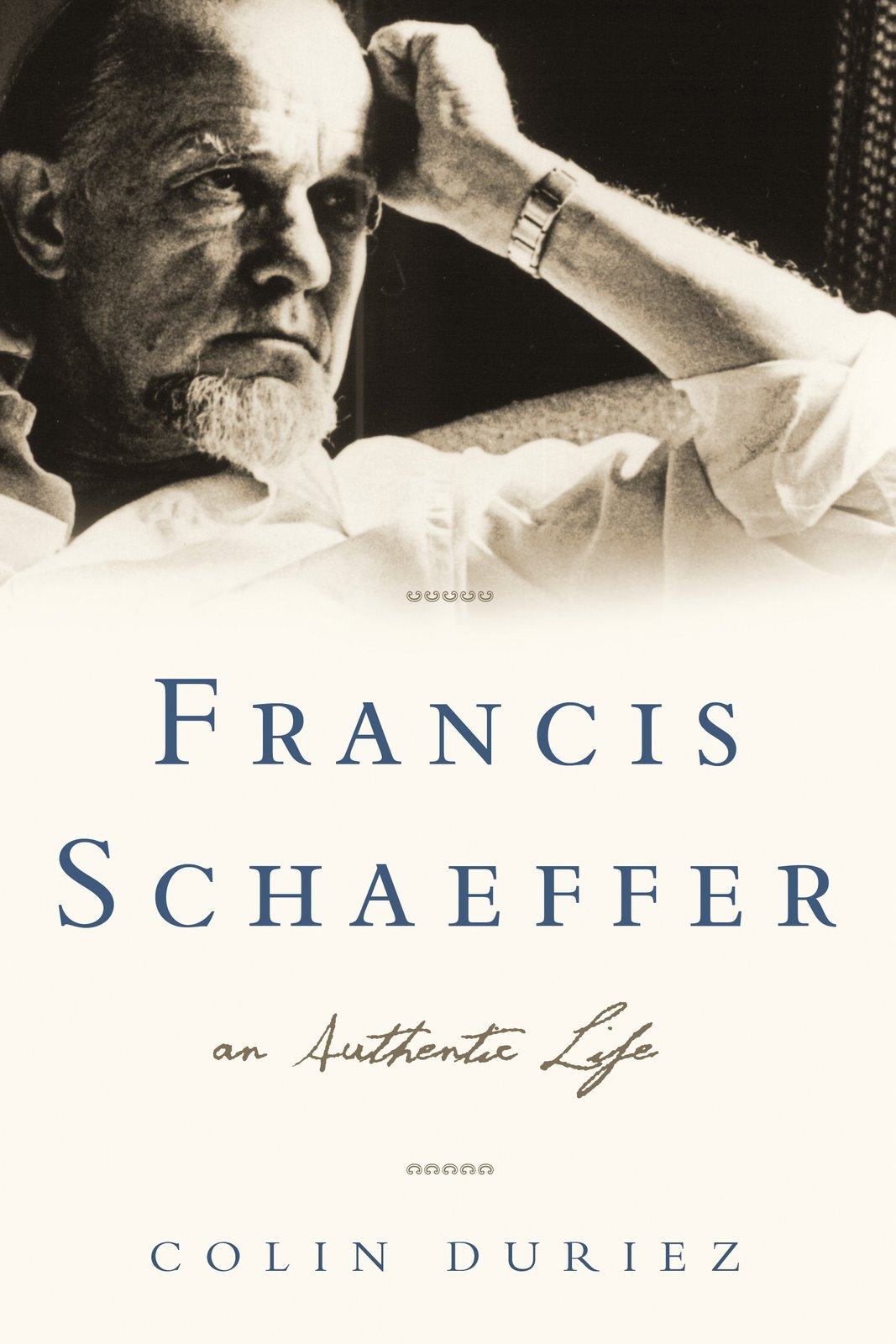
Category Archives: Francis Schaeffer

FRANCIS SCHAEFFER ANALYZES ART AND CULTURE Part 51 THE BEATLES (Part C, List of those on cover of Stg.Pepper’s ) (Feature on artist Raqib Shaw )


The Beatles in a press conference after their Return from the USA

Uploaded on Nov 29, 2010

The Beatles in a press conference after their Return from the USA.

The Beatles:


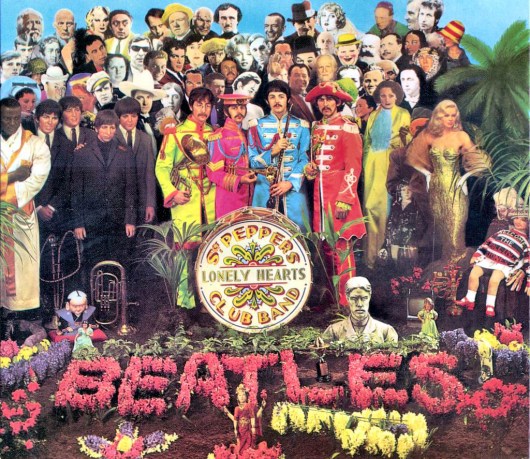
I have dedicated several posts to this series on the Beatles and I don’t know when this series will end because Francis Schaeffer spent a lot of time listening to the Beatles and talking and writing about them and their impact on the culture of the 1960’s. In this series we have looked at several areas in life where the Beatles looked for meaning and hope but also we have examined some of the lives of those  writers, artists, poets, painters, scientists, athletes, models, actors,  religious leaders, musicians, comedians, and philosophers  that were put on the cover of Sergeant Pepper’s Lonely Hearts Club Band album. We have discovered that many of these individuals on the cover have even taken a Kierkegaardian leap into the area of nonreason in order to find meaning for their lives and that is the reason I have included the 27 minute  episode THE AGE OF NONREASON by Francis Schaeffer. In that video Schaeffer noted,  ” Sergeant Pepper’s Lonely Hearts Club Band…for a time it became the rallying cry for young people throughout the world. It expressed the essence of their lives, thoughts and their feelings.”

 Sergeant Pepper’s Lonely Hearts Club Band Album really did look at every potential answer to meaning in life and to as many people as the Beatles could imagine had the answers to life’s big questions. One of the persons on the cover did have access to those answers and I am saving that person for last in this series on the Beatles. 

How Should We then Live Episode 7 small (Age of Nonreason)

I got this below off a message board from 2009 and notice how Francis Schaeffer how existentialism is described.  Here is what the message board said below:

I researched existentialism, and I’ll tell you what I learned about its complicated history. I’ll include a serious point as well.

There was a French existential philosopher named Jean Paul Sartre, who’s concept was that a finite point is absurd if it has no infinite reference point. This is best understood in the area of morals. If there is no absolute moral standard, then one cannot say in a final sense that anything is right or wrong. In other words, according to Sartre, he held that in the area of reason everything is absurd, but nonetheless a person can authenticate himself by an act of the will. On this basis of his teaching, you could authenticate yourself either by helping a poor old lady along the road at night or by speeding up your auto and running her down. Reason is not involved.

Martin Heidegger, a German philosopher, was an existentialist who set forth basically the same idea: that answers are separated from reason. Heidegger introduced angst (roughly meaning “anxiety”) as a word defining modern man’s stance before the world. This angst is not to be confused with fear. Angst is the general feeling of anxiety one experiences in the universe. It fear without a definite object. In Heidegger view this mood of anxiety gives people the certainty of existence. However, as an older man he changed his position, concluding that because man is a a being who speaks and verbalizes, one can hope that the universe has meaning. This view, however, is not prevalent today.

Karl Jaspers was another German existentialist. He thought that we may have a final experience . This is a technical term, but by it he meant that even though our mind tells us life is absurd, we may have some huge experience that encourages us to believe that there is a meaning to life. The dilemma of Jaspers existentialism can be understood clearly by the author’s example (my research is based on a volume on Western thought and culture). The author illustrates that a young man whom he knew subscribed to Jasper’s view, and he had an “experience” by watching a play called Green Pastures. This young man couldn’t give words or content to his own experience, for in the existential system reason is excluded from the experience. The young man was so overwhelmed that he was ready to commit suicide.

Aldous Huxley proposed drugs a solution to finding a “final experience.” He proposed that we give healthy people drugs, saying that people can then find truth inside their own heads. He emphasized this theoretical viewpoint in his novel, Brave New World. As a mentally ill person myself, I think that it’s barbarous to give healthy people drugs just so that they can have thrills, because that’s basically what Huxley’s theory amounts to. This emphasis on hallucinogenic drugs brought with it many rock groups, including Cream, who’s former member, Eric Clapton, later laments of losing his fellow band members to drugs. The Beatles’ Sergeant Pepper’s Lonely Hearts Club Band also fits here. This disc is a total unity, not just an isolated series of individual songs, and for a time it became the rallying cry for young people throughout the world. As a whole, music was the vehicle to carry the drug feeling.

The next accepted version in the West f life in the area of nonreason was the religious experience of Hinduism and Buddhism. This grasping for a nonrational meaning to life and values is the central reason that Eastern religions are so popular in the West today. Goethe, Wagner, and others had opened the door to Eastern thinking with their vague pantheism. But it came floodlike into the West with Huxley and the emphasis on drugs.

Although existentialism is growing less influential, more and more people are adopting this frame of thinking. They talk or act upon the idea that reason leads only to pessimism, saying, “let us try to find an answer in something totally separated from reason.” Humanistic man tried to make himself self-sufficient and demanded that one start from himself and the individual details and build his own universals. His great hope that he could begin from himself and produce a uniformity of knowledge led him, however, to the sad place where his mind told hi that he was only a machine, bundle of molecules. Then he tried desperately to find meaning in the area of non-reason, and flounders in his struggle to this day.

Note that I borrowed heavily from the book How Should We Then Live? by Francis A. Schaeffer, so most of the writing was not my own.

the making of sgt. pepper’s lonely hearts club band

Published on Apr 29, 2013

compiled video of The making of sgt. peppers lonely hearts club band from maccalennon.

________________________

Paul McCartney said at the 16:45 mark in the above video concerning the cover of Sgt. Pepper’s:

Everything about the album will be imagined from the perspective of these people. It doesn’t have to be us. It doesn’t have to be the kind of song you want to write. It can be the kind of song they would like to write.

What Paul was saying is very simple. There was a calculated effort to put  people on the cover of Sgt. Pepper’s Lonely Hearts Club Band Album for certain reasons and they wanted to address their concerns in the music.

List of images on the cover of Sgt. Pepper’s Lonely Hearts Club Band

From Wikipedia, the free encyclopedia

The Beatles‘ 1967 album Sgt. Pepper’s Lonely Hearts Club Band has a widely-recognized album cover which depicts several dozen celebrities and other images.

This album cover was created by Jann Haworth and Peter Blake. They won the Grammy Award for Best Album Cover, Graphic Arts in 1967 for their work on this cover.

Sgt. Pepper's Lonely Hearts Club Band.jpg

People on the cover[edit]

Top row[edit]

Second row[edit]

Third row[edit]

Front row[edit]

Props on the cover[edit]

People excluded from the cover[edit]

  • Leo Gorcey – was modelled and originally included to the left of Huntz Hall, but was subsequently removed when a fee of $400 was requested for the use of the actor’s likeness.[3][4]
  • Mohandas Gandhi – was modelled and originally included to the right of Lewis Carroll, but was subsequently removed.[3][4] According to McCartney, “Gandhi also had to go because the head of EMI, Sir Joe Lockwood, said that in India they wouldn’t allow the record to be printed”.[1]
  • Jesus Christ – was requested by Lennon,[1] but not modelled because the LP would be released only a few months after Lennon‘s Jesus statement.[5]
  • Adolf Hitler – was modelled and was visible in early photographs of the montage, positioned to the right of Larry Bell, but was eventually removed.[6][7]
  • Germán Valdés “Tin Tan”, Mexican comedian, was originally intended to appear on the cover, but at the last moment he declined and instead he gave the Metepec tree of life seen in the picture after Ringo Starr accepted the offer.[8][9]

How Should We then Live Episode 7 small (Age of Nonreason)

Francis Schaeffer pictured below:
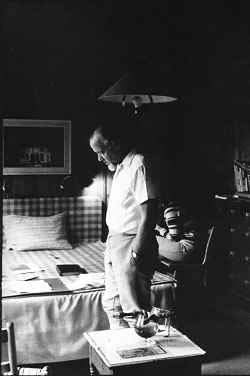
_______________-

Francis Schaeffer has written extensively on art and culture spanning the last 2000 years and here are some posts I have done on this subject before : Francis Schaeffer’s “How should we then live?” Video and outline of episode 10 “Final Choices” episode 9 “The Age of Personal Peace and Affluence”episode 8 “The Age of Fragmentation”episode 7 “The Age of Non-Reason” episode 6 “The Scientific Age” , episode 5 “The Revolutionary Age” episode 4 “The Reformation” episode 3 “The Renaissance”episode 2 “The Middle Ages,”, and  episode 1 “The Roman Age,” . My favorite episodes are number 7 and 8 since they deal with modern art and culture primarily.(Joe Carter rightly noted,Schaefferwho always claimed to be an evangelist and not a philosopher—was often criticized for the way his work oversimplified intellectual history and philosophy.” To those critics I say take a chill pill because Schaeffer was introducing millions into the fields of art and culture!!!! !!! More people need to read his works and blog about them because they show how people’s worldviews affect their lives!

J.I.PACKER WROTE OF SCHAEFFER, “His communicative style was not that of a cautious academic who labors for exhaustive coverage and dispassionate objectivity. It was rather that of an impassioned thinker who paints his vision of eternal truth in bold strokes and stark contrasts.Yet it is a fact that MANY YOUNG THINKERS AND ARTISTS…HAVE FOUND SCHAEFFER’S ANALYSES A LIFELINE TO SANITY WITHOUT WHICH THEY COULD NOT HAVE GONE ON LIVING.”

Francis Schaeffer’s works  are the basis for a large portion of my blog posts and they have stood the test of time. In fact, many people would say that many of the things he wrote in the 1960’s  were right on  in the sense he saw where our western society was heading and he knew that abortion, infanticide and youth enthansia were  moral boundaries we would be crossing  in the coming decades because of humanism and these are the discussions we are having now!)

There is evidence that points to the fact that the Bible is historically true as Schaeffer pointed out in episode 5 of WHATEVER HAPPENED TO THE HUMAN RACE? There is a basis then for faith in Christ alone for our eternal hope. This link shows how to do that.

Francis Schaeffer in Art and the Bible noted, “Many modern artists, it seems to me, have forgotten the value that art has in itself. Much modern art is far too intellectual to be great art. Many modern artists seem not to see the distinction between man and non-man, and it is a part of the lostness of modern man that they no longer see value in the work of art as a work of art.” 

Many modern artists are left in this point of desperation that Schaeffer points out and it reminds me of the despair that Solomon speaks of in Ecclesiastes.  Christian scholar Ravi Zacharias has noted, “The key to understanding the Book of Ecclesiastes is the term ‘under the sun.’ What that literally means is you lock God out of a closed system, and you are left with only this world of time plus chance plus matter.” THIS IS EXACT POINT SCHAEFFER SAYS SECULAR ARTISTS ARE PAINTING FROM TODAY BECAUSE THEY BELIEVED ARE A RESULT OF MINDLESS CHANCE.

________

The Beatles are featured in this episode below and Schaeffer noted,  ” Sergeant Pepper’s Lonely Hearts Club Band…for a time it became the rallying cry for young people throughout the world.”

How Should We then Live Episode 7 small (Age of Nonreason)
The best album ever?

Great Album

The Beatles- A Day in the Life

Lucy in the Sky with Diamonds- The Beatles

Getting Better- The Beatles

Uploaded on Jan 18, 2009

Getting Better
The Beatles
Sgt Peppers

It’s getting better all the time
I used to get mad at my school
The teachers who taught me weren’t cool
You’re holding me down, turning me round
Filling me up with your rules.
I’ve got to admit it’s getting better
A little better all the time
I have to admit it’s getting better
It’s getting better since you’ve been mine.
Me used to be a angry young man
Me hiding me head in the sand
You gave me the word
I finally heard
I’m doing the best that I can.
I’ve got to admit it’s getting better
I used to be cruel to my woman
I beat her and kept her apart from the things that she loved
Man I was mean but I’m changing my scene
And I’m doing the best that I can.
I admit it’s getting better
A little better all the time
Yes I admit it’s getting better
It’s getting better since you’ve been mine

the making of sgt. pepper’s lonely hearts club band

Published on Apr 29, 2013

compiled video of The making of sgt. peppers lonely hearts club band from maccalennon.

September 19, 2011

By Elvis Costello

I first heard of the Beatles when I was nine years old. I spent most of my holidays on Merseyside then, and a local girl gave me a bad publicity shot of them with their names scrawled on the back.

This was 1962 or ’63, before they came to America. The photo was badly lit, and they didn’t quite have their look down; Ringo had his hair slightly swept back, as if he wasn’t quite sold on the Beatles haircut yet.

I didn’t care about that; they were the band for me. The funny thing is that parents and all their friends from Liverpool were also curious and proud about this local group. Prior to that, the people in show business from the north of England had all been comedians. The Beatles even recorded for Parlophone, which was a comedy label, as if they believed they might be a passing novelty act.

I was exactly the right age to be hit by them full-on. My experience — seizing on every picture, saving money for singles and EPs, catching them on a local news show — was repeated over and over again around the world. It wasn’t the first time anything like this had happened, but the Beatles achieved a level of fame and recognition known previously only to Charlie Chaplin, Brigitte Bardot and Elvis Presley, along with a little of the airless exclusivity of astronauts, former presidents and other heavyweight champions.

Every record was a shock. Compared to rabid R&B evangelists like the Rolling Stones, the Beatles arrived sounding like nothing else. They had already absorbed Buddy Holly, the Everly Brothers and Chuck Berry, but they were also writing their own songs. They made writing your own material expected, rather than exceptional.

And John Lennon and Paul McCartney were exceptional songwriters; McCartney was, and is, a truly virtuoso musician; George Harrison wasn’t the kind of guitar player who tore off wild, unpredictable solos, but you can sing the melodies of nearly all of his breaks. Most important, they always fit right into the arrangement. Ringo Starr played the drums with an incredibly unique feel that nobody can really copy, although many fine drummers have tried and failed. Most of all, John and Paul were fantastic singers.

Lennon, McCartney and Harrison had stunningly high standards as writers. Imagine releasing a song like “Ask Me Why” or “Things We Said Today” as a B side. They made such fantastic records as “Paperback Writer” b/w “Rain” or “Penny Lane” b/w “Strawberry Fields Forever” and only put them out as singles. These records were events, and not just advance notice of an album. Then they started to really grow up: simple love lyrics to adult stories like “Norwegian Wood,” which spoke of the sour side of love, and on to bigger ideas than you would expect to find in catchy pop lyrics.

They were the first group to mess with the aural perspective of their recordings and have it be more than just a gimmick. Engineers like Geoff Emerick invented techniques that we now take for granted, in response to the group’s imagination. Before the Beatles, you had guys in lab coats doing recording experiments, but you didn’t have rockers deliberately putting things out of balance, like a quiet vocal in front of a loud track on “Strawberry Fields Forever.” You can’t exaggerate the license that this gave to everyone from Motown to Jimi Hendrix.

My absolute favorite albums are Rubber Soul and Revolver. On both records you can hear references to other music — R&B, Dylan, psychedelia — but it’s not done in a way that is obvious or dates the records. When you picked up Revolver, you knew it was something different. Heck, they are wearing sunglasses indoors in the picture on the back of the cover and not even looking at the camera . . . and the music was so strange and yet so vivid. If I had to pick a favorite song from those albums, it would be “And Your Bird Can Sing” . . . no, “Girl” . . . no, “For No One” . . . and so on, and so on. . . .

Their breakup album, Let It Be, contains songs both gorgeous and jagged. I suppose ambition and human frailty creeps into every group, but they delivered some incredible performances. I remember going to Leicester Square and seeing the film of Let It Be in 1970. I left with a melancholy feeling.

Someone recently gave me an assembly of newsreel footage, which illustrates how swiftly the band was drained of the bright and joyful wit presented as a public face.

In one early sequence, McCartney tells reporters that they will soon appear on The Ed Sullivan Show and then points into the camera: “There he is, hi, Ed, and Mrs. Ed” — “and Mr. Ed,” chimes Ringo. It might have been practiced, but it plays entirely off-the-cuff.

Just a year later, they are seen at a press conference in Los Angeles for their final tour. Suits and ties are a thing of the past. Staring down a series of dismal attempts at provocation from the press corps, they look exhausted and disenchanted.

When probed by one blowhard to respond to a Time magazine critique that “Day Tripper” was about a prostitute and “Norwegian Wood” about a lesbian, McCartney responds, “We were just trying to write songs about prostitutes and lesbians.” In the laughter that follows, he mutters, “Cut.” They were giving the impression that the game was up, but in truth, they were just getting started.

The word “Beatlesque” has been in the dictionary for quite a while now. You hear them in Harry Nilsson’s melodies; in Prince’s Around the World in a Day; in the hits of ELO and Crowded House and in Ron Sexsmith’s ballads. You can hear that Kurt Cobain listened to the Beatles and mixed their ideas with punk and metal. They can be heard in all sorts of one-off wonders from the Knickerbockers’ “Lies” and the Flamin’ Groovies’ “Shake Some Action.” The scope and license of the White Album has permitted everyone from OutKast to Radiohead to Green Day to Joanna Newsom to roll their picture out on a broader, bolder canvas.

Now, I’ll admit that I’ve stolen my share of Beatles licks, but around the turn of the Nineties, I got to co-write 12 songs with Paul McCartney and even dared to propose that he too reference some of the Beatles’ harmonic signatures — as, astonishingly, he had made up another musical vocabulary for Wings and during his solo career.

In 1999, a little time after Linda McCartney’s passing, Paul performed at the Concert for Linda, organized by Chrissie Hynde. During the rehearsal, I was singing harmony on a Ricky Nelson song with him, and Paul called out the next tune: “All My Loving.”

I said, “Do you want me to take the harmony line the second time round?” And he said, “Yeah, give it a try.” I’d only had 35 years to learn the part. There was inevitably a poignant feeling to this song, written long before he had even met Linda:

Close your eyes and I’ll kiss you
Tomorrow I’ll miss you
Remember I’ll always be true.

At the show, it was very different. The second Paul sang the opening lines, the crowd’s reaction was so intense that it all but drowned the song out. It was very thrilling, but also disconcerting.

Perhaps I understood in that moment one of the reasons why the Beatles had to stop performing. The songs weren’t theirs anymore. They belonged to everybody.

This is an updated version of an essay that appeared in RS 946.

The Ballad of John and Yoko – The Beatles

Uploaded on May 29, 2009

The Ballad of John and Yoko est une chanson des Beatles, composée par John Lennon, publiée en single le 30 mai 1969 avec Old Brown Shoe de George Harrison en face B. Elle fut enregistrée par John Lennon et Paul McCartney seuls et en un temps record, le 14 avril 1969. Rapidement propulsée en tête des charts britanniques, elle y succéda à Get Back.

Paroles:
Standing in the dock at Southampton,
Trying to get to Holland or France.
The man in the mac said, “You’ve got to turn back”.
You know they didn’t even give us a chance.

[Refrain] :
Christ you know it ain’t easy,
You know how hard it can be.
The way things are going
They’re going to crucify me.

Finally made the plane into Paris,
Honey mooning down by the Seine.
Peter Brown called to say,
“You can make it O.K.,
You can get married in Gibraltar, near Spain”.

[Refrain]

Drove from Paris to the Amsterdam Hilton,
Talking in our beds for a week.
The newspapers said, “Say what you doing in bed?”
I said, “We’re only trying to get us some peace”.

[Refrain]

Saving up your money for a rainy day,
Giving all your clothes to charity.
Last night the wife said,
“Oh boy, when you’re dead
You don’t take nothing with you
But your soul – think!”

Made a lightning trip to Vienna,
eating chocolate cake in a bag.
The newspapers said, “She’s gone to his head,
They look just like two gurus in drag”.

[Refrain]

Caught an early plane back to London.
Fifty acorns tied in a sack.
The men from the press said, “We wish you success,
It’s good to have the both of you back”.

[Refrain]

The way things are going
They’re going to crucify me.

48

‘The Ballad of John and Yoko’

the beatles 100 greatest songs
John Rodgers/Redferns

Main Writer: Lennon
Recorded: April 14, 1969
Released: June 4, 1969
9 weeks; No. 8

On March 16th, 1969, Lennon and Yoko Ono flew to Paris to get married, the first stop on a two-week odyssey that included visits to Gibraltar (where they had the ceremony), Amsterdam (where they held the first “Bed-In” for peace) and Vienna (where they gave a press conference from inside a white bag as a peace protest). Hostile reporters accused the couple of co-opting the peace movement as a publicity stunt. “The press came expecting to see us fucking in bed,” Lennon told Rolling Stone. “We were just sitting in our pajamas saying, ‘Peace, brother.'” The trip became the heart of “The Ballad of John and Yoko.” “We were having a very hard time,” said Ono, “but he made [the song] into a comedy rather than a tragedy.”

Lennon was in a hurry to release it, so he and McCartney overdubbed all of the instruments on April 14th. (Starr and Harrison were away.) “Paul knew that people were being nasty to John, and he just wanted to make it well for him,” said Ono. “Paul has a very brotherly side to him.”

Appears On: Past Masters

Related
Lennon’s Music: A Range of Genius
Photos: John Lennon and Yoko Ono in New York, The Last Years
Special Tribute: John Lennon’s Last Days

47

‘Things We Said Today’

the beatles 100 greatest songs
SSPL/Getty Images

Main Writer: McCartney
Recorded: June 2, 1964
Released: July 20, 1964
Not released as a single

In May 1964, McCartney and Jane Asher went yachting in the Virgin Islands along with Starr and his girlfriend, Maureen Cox. One day, McCartney wandered away from the rest of the group and wrote “Things We Said Today” about his relationship with the 18-year-old Asher, whom he had been seeing for a year.

“It was a slightly nostalgic thing already, a future nostalgia,” he said of the song, an uptempo track whose moody, minor-key melody sets it apart from other McCartney love songs of the era. “We’ll remember the things we said today sometime in the future, so the song projects itself into the future and then is nostalgic about the moment we’re living in now, which is quite a good trick.”

Though McCartney promises his love that “we’ll go on and on,” it wasn’t to be: McCartney and Asher were engaged in 1967 but broke up the next year. “We see each other, and we love each other, but it hasn’t worked out,” she told the London Evening Standard in October 1968. “Perhaps we’ll be childhood sweethearts and meet and get married when we’re about 70.”

Appears On: A Hard Day’s Night

Related
The 500 Greatest Albums of All Time: ‘A Hard Day’s Night’
Photos: Invasion of the Beatles
Paul McCartney on ‘Beatles 1,’ Losing Linda and Being in New York on September 11th

46

‘Don’t Let Me Down’

the beatles 100 greatest songs
Tom Hanley/Redferns

Main Writer: Lennon
Recorded: January 22, 28 and 30, 1969
Released: May 5, 1969
4 weeks; No. 35 (B side)

When the “Get Back”/”Don’t Let Me Down” single came out in May 1969, it was advertised as “The Beatles as nature intended . . . the first Beatles record which is as live as can be, in this electronic age. There’s no electronic whatchamacallit.” Both sides of the single were recorded live at Apple Studios, with the Beatles joined only by keyboardist Billy Preston, who was taking a break from Ray Charles’ band.

In 1980, Lennon summed up the inspiration for the song tersely: “That’s me, singing about Yoko.” McCartney later went into more detail: “It was a very tense period. John was with Yoko and had escalated to heroin and all the accompanying paranoias, and he was putting himself out on a limb. I think that as much as it excited and amused him, at the same time it secretly terrified him. So ‘Don’t Let Me Down’ was a genuine plea.”

Summoning the emotional intensity to sing it was also difficult for Lennon, who asked Starr to provide a cymbal crash just before his vocals to “give me the courage to come screaming in.”

Appears On: Past Masters

Related
Ringo Starr, Confident and Sober: Rolling Stone’s 1992 Feature Story
Video: John and Yoko Scene from Beatles Documentary
Paul McCartney and Billy Joel Rock Out at Yankee Stadium

45

‘No Reply’

the beatles 100 greatest songs
Michael Ochs Archives/Getty Images

Main Writer: Lennon
Recorded: September 30, 1964
Released: December 15, 1964
not released as a single

The second Beatles album of 1964, Beatles for Sale, was a rush job, recorded in seven days scattered between August and October 1964, when the Beatles were also busy touring North America and the U.K. Amid the whirlwind of Beatlemania, somehow Lennon found time to push his songwriting forward. “No Reply” was at first written for Tommy Quickly, who was also managed by Brian Epstein; a demo was made in June 1964. Luckily, the Beatles kept the song for themselves and recorded it the same day they finished “Every Little Thing.”

The germ of “No Reply” was a 1957 doo-wop song, “Silhouettes,” by the Rays, in which the singer sees a couple shadowed at a window and mistakenly thinks his girl is cheating on him. In “No Reply,” the girl is cheating. “I had that image of walking down the street and seeing her silhouetted in the window and not answering the phone,” Lennon said. “Although I never called a girl in my life — phones weren’t part of an English child’s life.”

Appears On: Beatles for Sale

44

‘All My Loving’

the beatles 100 greatest songs
Max Scheler/ K&K/Redferns

Main Writer: McCartney
Recorded: July 30, 1963
Released: January 20, 1964
not released as a single

“It was the first song I’d ever written the words first,” said McCartney of “All My Loving,” one of the Beatles’ most irresistible early rockers. He sketched out the lyrics one day on the bus while the band was touring with Roy Orbison. When they reached the venue, he didn’t have his guitar, so he found a piano backstage and set the words to music. “I had in my mind a little country & western song,” McCartney later said.

The sweet tale of yearning does have a bit of Nashville flair, especially evident in Harrison’s twangy, Carl Perkins-flavored guitar solo. Harrison was such a fan of the man who wrote “Blue Suede Shoes” that on one early Beatles tour, he took the stage name “Carl Harrison.” The band covered more Perkins songs than those of any other writer.

“All My Loving” became a staple of the Beatles’ live set and the first song they performed on The Ed Sullivan Show. “It’s a damn good piece of work,” Lennon once said in admiration of McCartney’s songwriting, “but I play a pretty mean guitar in back.”

Appears On: With the Beatles

Related
The 500 Greatest Albums of All Time: ‘With the Beatles’
Paul McCartney Revisits Beatles Classics, Solo Gems at Hollywood Bowl Marathon
Fifty Years Ago Today: The Beatles First Played Liverpool’s Cavern Club

43

‘Drive My Car’

the beatles 100 greatest songs
Keystone Features/Hulton Archive/Getty Images

Writers: McCartney-Lennon
Recorded: October 13, 1965
Released: June 15, 1966
Not released as a single

On his way to a writing session with Lennon in 1965, McCartney came up with a melody he liked — but lyrics that merely recycled the idea of buying a girl a diamond ring from “Can’t Buy Me Love.” Lennon suggested a sexual metaphor — “drive my car” — and the two devised a lyric about a fame-hungry wanna-be. “To me it was L.A. chicks — ‘You can be my chauffeur,'” said McCartney, who supplied the twist ending, when the girl admits she doesn’t have a car.

“Drive My Car” is one of the most overtly R&B-flavored songs in the Beatles’ catalog, thanks mostly to Harrison, who based the taut guitar lines and funky bass part on Otis Redding’s “Respect.”

“Drive My Car” was removed from the U.S. version of Rubber Soul: With the folk-rock craze at its height, Capitol Records tweaked the American album to focus more on acoustic songs. “Drive My Car” would show up six months later on the compilation LP Yesterday and Today, but for a whole generation of Americans, Rubber Soul was missing its most soulful cut.

Appears On: Rubber Soul

Related
The 500 Greatest Albums of All Time: ‘Rubber Soul’
Photos: Rare Beatles Pictures
Photos: Rolling Stone Readers Pick the Top 10 Beatles Albums

42

‘I Feel Fine’

the beatles 100 greatest songs
Ron Case/Getty Images

Main Writer: Lennon
Recorded: October 18, 1964
Released: November 23, 1964
11 weeks; No. 1

“I Feel Fine” opens with a brief, throaty growl from Lennon’s amplifier. The clipped distortion sounds polite next to the noise Pete Townshend and Jimi Hendrix would soon put on record, but the Beatles got there first. “I defy anybody to find a record — unless it’s some old blues record in 1922 — that uses feedback that way,” said Lennon. “I claim it for the Beatles.”

According to George Martin, feedback was a routine nuisance at Beatles sessions. “John always turned the [volume] knob up full,” the producer said. “It became kind of a joke. But he realized that he could do this to advantage.” The feedback on “I Feel Fine” was very much on purpose, existing on the master tapes from the first take.

“I Feel Fine” also showcased the Beatles’ evolving musicianship, with Starr chipping in a calypso-flavored dialogue between cymbal and tom-tom. “Ringo developed from a straight rock drummer into quite a musical thinker,” said Martin. “He was always trying out different ideas.”

Appears On: Past Masters

___________________

Featured artist today is Raqib Shaw

The Desublimation Of Modern Art: A Theological Task – Professor Ben Quash

image

__________

Raqib Shaw

From Wikipedia, the free encyclopedia
Jump to: navigation, search

Raqib Shaw (born 1974) is an Indian-born, London-based artist who shot to fame in the international art world at the age of just 33.[1] He is known for his opulent and intricately detailed paintings of imagined paradises, inlaid with vibrantly coloured jewels and enamel.[2] His paintings and sculptures evoke the work of Old Masters such as Holbein and Bosch,[1] whilst drawing on multifarious sources, from mythology and religion to poetry, literature, art history, textiles and decorative arts from both eastern and western traditions, all infused with the artist’s unique imagination.[3]

Raqib Shaw, 2010

image

Early life

Raqib Shaw was born in Calcutta on 4th February 1974, but spent his formative years in Kashmir where his family worked as merchants. [4]

In 1989 political unrest began to grow in Kashmir, eventually driving the Shaw family to relocate to New Delhi in 1992. [5] From 1992-1998 Shaw worked for his maternal uncle in the family business, an activity that ranged from interior design, architecture, to selling jewellery, antiques, carpets and fabrics. This opportunity brought him into contact with the many beautiful things that were being made in India. [5]

Family business brought Shaw to London in 1993, where he was able to see the paintings at the National Gallery for the first time. This encounter convinced him to spend the rest of his life in England as a practising artist. [6]

In 1998, Shaw moved to London where he studied for both his BA and MA at Central Saint Martins School of Art.[7] Having already worked as a professional for a number of years, Shaw was a very disciplined student. ‘…I was the first person to arrive in the morning, everyday, as soon as the doors opened, and the last person to leave in the evening.’ [5]

At the end of the 90’s, painting was not a fashionable pursuit at Central Saint Martins, but Shaw ignored his tutors’ and fellow students’ attempts to convert him to conceptual art. Though Shaw initially struggled with painting, his early experiments with a number of materials,[5] namely enamel, household and car paint, bought from a local branch of Leyland, were to set the foundation for his now infamous technique of manipulating pools of industrial paint with a porcupine quill. [8]

Artistic practice

Shaw’s gloriously opulent paintings suggest a fantastical world full of intricate detail, rich colour and jewel-like surfaces, all masking a collection of intensely violent and sexual images. Fused with an eco-system of vibrantly painted flora and fauna, half human/half animal creatures, with screaming mouths and engorged or bleeding eyes are characters in a dizzying scene of erotic hedonism, both explosive and gruesome in its debauchery. [9]

Shaw says these fantastical worlds are laden with satire and irony, and can be read ‘as a commentary on my own experience of living in this society, and of being alive’. [9]

A typical painting consists of many stages. Shaw starts with small drawings on paper, featuring characters, flora and fauna. These are then transferred to acetate, as individual elements. Shaw begins the composition of the painting by projecting these drawings onto the panel, starting from the centre and working outwards. Once the composition has been drawn out in pen, the panel is taken down from the wall and laid flat. Stained-glass liner is then applied, following the contours of the pen, to create tiny cofferdams. Using small plastic tubes with fine nozzles, paint is then poured into these dams and manipulated by a porcupine quill to suggest form. Glitter is added to specific parts providing extra ornamentation. Lastly, crystals are glued to highlight other areas. [10]

Selected works

Garden of Earthly Delights (2002-2006)

The inspiration for Shaw’s first major exhibition was Hieronymus Bosch’s Garden of Earthly Delights (1480-90). [11] In a fantastical, hedonistic, phantasmagoria, populated by creatures, part aquatic/part animal/part human, [12] Shaw describes an erotic underwater world clenched in perpetual orgasm. [13]

Jane, 2006

Holbein (2007)

In part a response to the Holbein in England exhibition held in 2006-2007 at Tate Britain, Shaw reinterprets some of German artist Hans Holbein the Younger’s (ca.1497-1543) English sitters. [14] Creatures both natural and fantastic in medieval dress, romp amid architectural settings based on Holbein’s designs for jewellery, stained glass, and book illustrations. [15]

Adam (2008)

A bird-headed man is engaged in an erotic battle with a giant blue lobster. With limbs frozen in a spasm of pain or ecstasy, bulbous toads swim in the slime contained in the bird-man’s open beak. The coupling of love and death in Adam, reference the German romantic idea of Liebestod, literally ‘love death’. [16]

Absence Of God (2007-2009)

Inspired by the Italian artist Giovanni Battista Piranesi, Shaw’s anthropomorphic creatures are framed within architectural renderings that are falling to ruin. [14] Winged warriors simultaneously perform acts of bondage, flagellation and ritual disembowelment, while screaming hominid faces explode mid-air and regal monkeys survey, from under parasols, a mutant striving to catch flocks of glittering butterflies with a broken net.[17]

Paradise Lost, 2001-2011

Paradise Lost (2001-2011)

An homage to John Milton’s epic poem, Paradise Lost is a visionary ode to the artist’s own childhood memories and imaginary paradise. Each painting depicts a lone or contemplative character attempting an impossible feat. One waits attentively for moonbeams to drop into an ornate chalice, while another swings from the trees randomly catching the falling blossoms. All these figures appear literally bound to a futile task while the wildlife actively seek and attack their prey. [18]

Narcissus (2011)

A bestial coupling of a swan and a bat-headed human, [19] Narcissus preserves post-Romantic art and literatures representation of the solitary, contemplative artist or poet, whilst referencing the classical myth of Leda seduced by Zeus disguised as a swan. It also alludes to the theme of Prometheus, who was bound to a rock, and had his liver pecked at each day by an eagle, an exemplar of the heroically suffering artist. [20]

Of Beasts and Super-Beasts (2012)

Inspired by the satirical short stories of Saki, from which the exhibition title was borrowed, lascivious and vengeful monkeys, enthusiastically indulge in games of S&M in boudoirs sumptuously furnished in Napoleonic Imperial Paris style. [21] Shaw’s accompanying bestiary, Whimsy Beasties, is a phantasmagoria of strange inventions. The exercise, akin to the Surrealist game of the exquisite corpse, entails splicing together familiar animals to create bizarre hybrids. [22]

After George Stubbs ‘Cheetah and Stag with Two Indians’ (2013)

For Manchester Art Gallery, Shaw re-activates George Stubb’s Cheetah and Stag with Two Indians (1765), as a site of personal fantasy. [9] Preserving the exact dimensions of the original, Shaw’s painting is a faithful mirroring. A leopard-headed man wearing Ludwig of Bavaria’s crown, and wielding Queen Victoria’s sceptre [23] rides the majestic cheetah like a regal huntsman, while cherubic monkeys torment the deer with parasols and nets inlaid with precious stones. [24]

Related posts:

Francis Schaeffer’s “How should we then live?” Video and outline of episode 10 “Final Choices” (Schaeffer Sundays)

E P I S O D E 1 0   Dr. Francis Schaeffer – Episode X – Final Choices 27 min FINAL CHOICES I. Authoritarianism the Only Humanistic Social Option One man or an elite giving authoritative arbitrary absolutes. A. Society is sole absolute in absence of other absolutes. B. But society has to be […]

Francis Schaeffer’s “How should we then live?” Video and outline of episode 9 “The Age of Personal Peace and Affluence” (Schaeffer Sundays)

E P I S O D E 9 Dr. Francis Schaeffer – Episode IX – The Age of Personal Peace and Affluence 27 min T h e Age of Personal Peace and Afflunce I. By the Early 1960s People Were Bombarded From Every Side by Modern Man’s Humanistic Thought II. Modern Form of Humanistic Thought Leads […]

Francis Schaeffer’s “How should we then live?” Video and outline of episode 8 “The Age of Fragmentation” (Schaeffer Sundays)

E P I S O D E 8 Dr. Francis Schaeffer – Episode VIII – The Age of Fragmentation 27 min I saw this film series in 1979 and it had a major impact on me. T h e Age of FRAGMENTATION I. Art As a Vehicle Of Modern Thought A. Impressionism (Monet, Renoir, Pissarro, Sisley, […]

Francis Schaeffer’s “How should we then live?” Video and outline of episode 7 “The Age of Non-Reason” (Schaeffer Sundays)

E P I S O D E 7 Dr. Francis Schaeffer – Episode VII – The Age of Non Reason I am thrilled to get this film series with you. I saw it first in 1979 and it had such a big impact on me. Today’s episode is where we see modern humanist man act […]

Francis Schaeffer’s “How should we then live?” Video and outline of episode 6 “The Scientific Age” (Schaeffer Sundays)

E P I S O D E 6 How Should We Then Live 6#1 Uploaded by NoMirrorHDDHrorriMoN on Oct 3, 2011 How Should We Then Live? Episode 6 of 12 ________ I am sharing with you a film series that I saw in 1979. In this film Francis Schaeffer asserted that was a shift in […]

Francis Schaeffer’s “How should we then live?” Video and outline of episode 5 “The Revolutionary Age” (Schaeffer Sundays)

E P I S O D E 5 How Should We Then Live? Episode 5: The Revolutionary Age I was impacted by this film series by Francis Schaeffer back in the 1970′s and I wanted to share it with you. Francis Schaeffer noted, “Reformation Did Not Bring Perfection. But gradually on basis of biblical teaching there […]

Francis Schaeffer’s “How should we then live?” Video and outline of episode 4 “The Reformation” (Schaeffer Sundays)

Dr. Francis Schaeffer – Episode IV – The Reformation 27 min I was impacted by this film series by Francis Schaeffer back in the 1970′s and I wanted to share it with you. Schaeffer makes three key points concerning the Reformation: “1. Erasmian Christian humanism rejected by Farel. 2. Bible gives needed answers not only as to […]

“Schaeffer Sundays” Francis Schaeffer’s “How should we then live?” Video and outline of episode 3 “The Renaissance”

Francis Schaeffer’s “How should we then live?” Video and outline of episode 3 “The Renaissance” Francis Schaeffer: “How Should We Then Live?” (Episode 3) THE RENAISSANCE I was impacted by this film series by Francis Schaeffer back in the 1970′s and I wanted to share it with you. Schaeffer really shows why we have so […]

Francis Schaeffer’s “How should we then live?” Video and outline of episode 2 “The Middle Ages” (Schaeffer Sundays)

  Francis Schaeffer: “How Should We Then Live?” (Episode 2) THE MIDDLE AGES I was impacted by this film series by Francis Schaeffer back in the 1970′s and I wanted to share it with you. Schaeffer points out that during this time period unfortunately we have the “Church’s deviation from early church’s teaching in regard […]

Francis Schaeffer’s “How should we then live?” Video and outline of episode 1 “The Roman Age” (Schaeffer Sundays)

Francis Schaeffer: “How Should We Then Live?” (Episode 1) THE ROMAN AGE   Today I am starting a series that really had a big impact on my life back in the 1970′s when I first saw it. There are ten parts and today is the first. Francis Schaeffer takes a look at Rome and why […]

By Everette Hatcher III | Posted in Francis Schaeffer | Edit | Comments (0)

____________

On 3-16-15 I found the first link between my spiritual heroes: Adrian Rogers and Francis Schaeffer!!!!!

______________

Whatever Happened To The Human Race? | Episode 2 | Slaughter of the Inno…

Whatever Happened To The Human Race? | Episode 1 | Abortion of the Human…

Francis and Edith Schaeffer pictured below:

_____________

Milton and Rose Friedman pictured with Ronald Reagan:

My heroes in 1980 were the economist Milton Friedman, the doctor C. Everett Koop, the politician Ronald Reagan, the Christian philosopher Francis Schaeffer, the evangelist Billy Graham, and my pastor Adrian Rogers. I have been amazed at how many of these men knew each other.

I only had once chance to correspond with Milton Friedman and he quickly answered my letter. It was a question concerning my favorite christian philosopher Francis Schaeffer. I had read  in the 1981 printing of The Tapestry: the Life and Times of Francis and Edith Schaeffer on page 644 that Edith mentioned “that the KUP SHOW (ran by Irv Kupcinet ) in Chicago, a talk show Francis was on twice, once with the economist Milton Friedman, whith whom he still has a good correspondence.”  I asked in a letter in the late 1990’s  if Friedman remembered the content of any of that correspondence and he said he did not.  Although I had an immense appreciation for Milton Friedman’s economic views sadly he took his agnostic views with him till his death in 2004.

JUDY GARLAND IRV KUPCINET Kup’s Show 1967

Published on Dec 3, 2013

1969 edit of Judy Garland’s 1967 appearance on Chicago based “Kup’s Show.”

_________________________________

The closest connection I have had to Francis Schaeffer personally was that my mother once met his good friend Audrey W. Johnson (1907-84) who was the founder of BIBLE STUDY FELLOWSHIP. My mother worked for Maryann Frazier who was the longtime Bible Study Fellowship teacher in Memphis.

Miss Johnson showed Mrs Frazier a picture of her hugging Francis and Edith Schaeffer and since she was taller than both of them she called them “my two small friends.”

__________

Dr. C. Everett Koop was picked by Ronald Reagan to be Surgeon General (pictured below)

___________

__________________

After being elected President of the Southern Baptist Convention in 1979, Adrian Rogers met with Presidents Jimmy Carter and Ronald Reagan.

____

________________

This was the average sanctuary crowd when I was growing up at Bellevue Baptist in Memphis.  Now take what you see and multiply it by three, because they had three morning services.  This photo was taken sometime in the early 1980’s

___________________

On 3-16-15 I found the first link between my spiritual heroes: Adrian Rogers and Francis Schaeffer!!!!! In this article below I read these words:

“If Schaeffer had still been alive, we would have had him come,” Richard Land said. He noted that Schaeffer was “close” to Adrian Rogers and “admired” by Bailey Smith, two conservative SBC presidents. Edith Schaeffer and Patterson’s wife Dorothy were close friends and travelled together in the early 1980s speaking on the importance of the home.

My family joined Bellevue Baptist in 1975 and every summer our pastor Adrian Rogers would come back from the annual Southern Baptist Convention meeting in June and he would share on the following Wednesday night about some of the troubling things that were happening in the Southern Baptist Seminaries because of the leftward swing in the theology. I knew that this was a big issue with him and I knew that Francis Schaeffer had fought the same battle in his seminary days 40 years earlier. HOWEVER, I DID NOT KNOW THAT THEY KNEW IT EACH OTHER AT THIS TIME IN THE 1970’S!!!!!!!

The same time in the 1970’s and 1980’s that I was a member of Bellevue Baptist in Memphis where Adrian Rogers was pastor, I also was a student at Evangelical Christian School from the 5th grade to the 12th grade where I was introduced to the books and films of Francis Schaeffer. At ECS my favorite teacher was Mark Brink who actually played both film series to us (WHATEVER HAPPENED TO THE HUMAN RACE? and HOW SHOULD WE THEN LIVE?) during our senior year and believe it or not after I graduated I would come back and join some of his future classes when the film was playing again because I couldn’t get enough of Schaeffer’s film series!!!!

During this time I was amazed at how many prominent figures in the world found their way into the works of both Adrian Rogers and Francis Schaeffer and I wondered what it would be like if these individuals were exposed to the Bible and the gospel. Therefore, over 20 years ago I began sending the messages of Adrian Rogers and portions of the works of Francis Schaeffer to many of the secular figures that they mentioned in their works. Let me give you some examples and tell you about some lessons that I have learned.

I have learned several things about atheists in the last 20 years while I have been corresponding with them. FIRST, they know in their hearts that God exists and they can’t live as if God doesn’t exist, but they will still search in some way in their life for a greater meaning. SECOND, many atheists will take time out of their busy lives to examine the evidence that I present to them. THIRD, there is hope that they will change their views.

Let’s go over again a few points I made at the first of this post. My FIRST point is backed up by Romans 1:18-19 (Amplified Bible) ” For God’s wrath and indignation are revealed from heaven against all ungodliness and unrighteousness of men, who in their wickedness REPRESS and HINDER the truth and make it inoperative. For that which is KNOWN about God is EVIDENT to them and MADE PLAIN IN THEIR INNER CONSCIOUSNESS, because God has SHOWN IT TO THEM,”(emphasis mine). I have discussed this many times on my blog and even have interacted with many atheists from CSICOP in the past. (I first heard this from my pastor Adrian Rogers back in the 1980’s.)

My SECOND point is that many atheists will take the time to consider the evidence that I have presented to them and will respond. The late Adrian Rogers was my pastor at Bellevue Baptist when I grew up and I sent his sermon on evolution and another on the accuracy of the Bible to many atheists to listen to and many of them did. I also sent many of the arguments from Francis Schaeffer also.

Many of these scholars have taken the time to respond back to me in the last 20 years and some of the names included are Ernest Mayr (1904-2005), George Wald (1906-1997), Carl Sagan (1934-1996), Robert Shapiro (1935-2011), Nicolaas Bloembergen (1920-), Brian Charlesworth (1945-), Francisco J. Ayala (1934-) Elliott Sober (1948-), Kevin Padian (1951-), Matt Cartmill (1943-) , Milton Fingerman (1928-), John J. Shea (1969-), , Michael A. Crawford (1938-), (Paul Kurtz (1925-2012), Sol Gordon (1923-2008), Albert Ellis (1913-2007), Barbara Marie Tabler (1915-1996), Renate Vambery (1916-2005), Archie J. Bahm (1907-1996), Aron S “Gil” Martin ( 1910-1997), Matthew I. Spetter (1921-2012), H. J. Eysenck (1916-1997), Robert L. Erdmann (1929-2006), Mary Morain (1911-1999), Lloyd Morain (1917-2010), Warren Allen Smith (1921-), Bette Chambers (1930-), Gordon Stein (1941-1996) , Milton Friedman (1912-2006), John Hospers (1918-2011), and Michael Martin (1932-).

THIRD, there is hope that an atheist will reconsider his or her position after examining more evidence. Twenty years I had the opportunity to correspond with two individuals that were regarded as two of the most famous atheists of the 20th Century, Antony Flew and Carl Sagan. I had read the books and seen the films of the Christian philosopher Francis Schaeffer and he had discussed the works of both of these men. I sent both of these gentlemen philosophical arguments from Schaeffer in these letters and in the first letter I sent a cassette tape of my pastor’s sermon IS THE BIBLE TRUE? You may have noticed in the news a few years that Antony Flew actually became a theist in 2004 and remained one until his death in 2010. Carl Sagan remained a skeptic until his dying day in 1996.Antony Flew wrote me back several times and in the June 1, 1994 letter he commented, “Thank you for sending me the IS THE BIBLE TRUE? tape to which I have just listened with great interest and, I trust, profit.” I later sent him Adrian Rogers’ sermon on evolution too.
The ironic thing is back in 2008 I visited the Bellevue Baptist Book Store and bought the book There Is A God – How the World’s Most Notorious Atheist Changed His Mind, by Antony Flew, and it is in this same store that I bought the message by Adrian Rogers in 1994 that I sent to Antony Flew. Although Antony Flew did not make a public profession of faith he did admit that the evidence for God’s existence was overwhelming to him in the last decade of his life. His experience has been used in a powerful way to tell others about Christ. Let me point out that while on airplane when I was reading this book a gentleman asked me about the book. I was glad to tell him the whole story about Adrian Rogers’ two messages that I sent to Dr. Flew and I gave him CD’s of the messages which I carry with me always. Then at McDonald’s at the Airport, a worker at McDonald’s asked me about the book and I gave him the same two messages from Adrian Rogers too.

Francis Schaeffer’s words would be quoted in many of these letters that I would send to famous skeptics and I would always include audio messages from Adrian Rogers. Perhaps Schaeffer’s most effective argument was concerning Romans 1 and how a person could say that he didn’t believe that the world had a purpose or meaning but he could not live that way in the world that God created and with the conscience that every person is born with.

Google “Adrian Rogers Francis Schaeffer” and the first 8 things that come up will be my blog posts concerning effort to reach these atheists. These two great men proved that the scriptures Hebrews 4:12 and Isaiah 55:11 are true, “For the word of God is alive and active. Sharper than any double-edged sword, it penetrates even to dividing soul and spirit, joints and marrow; it judges the thoughts and attitudes of the heart.” and “so is my word that goes out from my mouth: It will not return to me empty, but will accomplish what I desire and achieve the purpose for which I sent it.”

I noticed from audio tapes in the 1960’s that Francis Schaeffer was a close friends with former Southern Baptist Seminary Professor Clark Pinnock from New Orleans. My friend Sherwood Haisty actually got to hear Clark Pinnock speak in 1999 although Dr. Pinnock did take a liberal shift later in his life.

Francis Schaeffer ‘indispensable’ to SBC

NASHVILLE (BP) — The late Francis Schaeffer was known to pick up the phone during the early years of the Southern Baptist Convention’s conservative resurgence. Paige Patterson knew to expect a call from Schaeffer around Christmas with the question, “You’re not growing weary in well-doing are you?”

Francis Schaeffer & the SBC

Patterson, a leader in the movement to return the SBC to a high view of Scripture, would reply, “No, Dr. Schaeffer. I’m under fire, but I’m doing fine. And I’m trusting the Lord and proceeding on.”

To some it may seem strange that an international Presbyterian apologist and analyst of pop culture would take such interest in a Baptist controversy over biblical inerrancy.

But to Schaeffer it made perfect sense.

He believed churches were acquiescing to the world, abandoning their belief that the Bible is without error in everything it said. A watered-down theology left the SBC with decreased power to battle cultural evils. To Schaeffer the convention was the last major American denomination with hope for reversing this “great evangelical disaster,” as he put it.

Thirty years after Schaeffer’s death, Baptist leaders still remember how he took time from his speaking, writing and filmmaking schedule to quietly encourage Patterson; Paul Pressler, a judge from Texas with whom Patterson worked closely during the conservative resurgence; Adrian Rogers, a Memphis pastor who served three terms SBC president; and others.

By the early 1990s, conservatives had elected an unbroken string of convention presidents and moved in position to shift the balance of power on all convention boards and committees from the theologically moderate establishment. But at the time of Schaeffer’s annual calls, the outcome of the controversy was still in doubt.

“I strongly suspect that he was afraid I would not hold strong,” Patterson, now president of Southwestern Baptist Theological Seminary in Texas, told Baptist Press. “He had seen so many people fold up under pressure that he assumed we probably would too. So he would call and ask for a report.”

A worldwide ministry

Schaeffer was born in 1912 in Germantown, Pa., and was saved at age 18 through a combination of personal Bible reading and attending a tent revival meeting. Within months of his conversion he felt called to vocational ministry and eventually enrolled at Westminster Theological Seminary in Philadelphia, where he studied New Testament under J. Gresham Machen and apologetics under Cornelius Val Til.

Schaeffer withdrew from Westminster before he graduated to attend the more fundamentalist-leaning Faith Theological Seminary in Wilmington, Del. In keeping with early 20th-century fundamentalism, Schaeffer emphasized separation from the world and personal holiness. Among the practices he opposed were theater attendance and dancing. Schaeffer retained his fundamentalist commitments through 10 years of pastoring in the U.S. and then service as a Presbyterian missionary in Europe.

In the early 1950s, however, a crisis of faith led Schaeffer and his wife Edith to begin engaging culture with the Gospel rather than shunning it. They founded a retreat center in Switzerland called L’Abri — French for “the shelter” — where he studied culture from a Christian perspective and engaged young people with the claims of Christ.

L’Abri grew and was featured in TIME magazine in 1960. Soon Schaeffer emerged as a popular author and speaker, explaining how western civilization had departed from a Judeo-Christian worldview and setting forth Christianity as the only solution to societal ills.

Schaeffer “wakened the cultural consciousness of the evangelical community,” Bruce Little, director of the Francis Schaeffer Collection at Southeastern Baptist Theological Seminary, told BP. The Schaeffer Collection includes all of the apologist’s personal papers and has been digitized by the North Carolina seminary.

“He thought that man’s dilemma was that man was fighting against the evil of the day, but he wasn’t winning,” Little, who also serves as senior professor of philosophy at Southeastern, said. “Schaeffer thought the answer to this is found in the Scriptures.”

From a Christian worldview perspective, Schaeffer wrote and spoke about such topics as the environment, abortion, art, literature, music, intellectual history and denominational decline. In the 1970s and 1980s, audiences packed auditoriums across America to hear him speak. He died of cancer in 1984.

Southern Baptist connections

Schaeffer’s interest in engaging culture made him particularly appealing to Southern Baptist conservatives. He helped provide them with a “battle plan” to fight cultural evils and what they perceived as theological drift in their denomination, Richard Land, president of Southern Evangelical Seminary, told BP.

“The one thing I heard growing up in Southern Baptist churches that was just plain wrong went something like this,” Land, former president of the Ethics & Religious Liberty Commission, said. “We’re Southern Baptist. That means we don’t get involved in anything controversial. We just preach the Gospel.”

As a corrective to that notion, Schaeffer “made it very clear to us that the Bible is true seven days a week, 24 hours a day and its truth is to be applied to every area of life,” Land said.

Along with theologian Carl F.H. Henry, Schaeffer was the key intellectual influence on leaders of the conservative resurgence, Land said. When conservatives started to be elected as the executives of Baptist institutions, Henry spoke at Land’s inauguration at the Christian Life Commission (the ERLC’s precursor), R. Albert Mohler Jr.’s at Southern Baptist Theological Seminary in Kentucky and Timothy George’s at Beeson Divinity School in Alabama.

“If Schaeffer had still been alive, we would have had him come,” Land said. He noted that Schaeffer was “close” to Rogers and “admired” by Bailey Smith, two conservative SBC presidents. Edith Schaeffer and Patterson’s wife Dorothy were close friends and travelled together in the early 1980s speaking on the importance of the home.

Clark Pinnock, a former New Orleans Baptist Theological Seminary professor who mentored conservative resurgence leaders before taking a leftward theological turn in his own thinking, served on Schaeffer’s staff at L’Abri.

Another Southern Baptist to feel Schaeffer’s personal influence was James Parker, professor of worldview and culture at Southern Seminary. After reading works by Schaeffer and spending two months at L’Abri during his doctoral studies at Basel University in Switzerland, Parker decided he wanted to open a center for evangelism and discipleship like Schaeffer’s.

In 1992 Parker founded the Trinity Institute, a nonprofit study and retreat center near Waco, Texas, where he tutors individuals in the Christian faith and hosts conferences exploring the integration of Christianity to all areas of life.

Schaeffer was “a paradigm for the engagement of the mind for the faith, and so that was quite inspirational and encouraging to me,” Parker told BP.

Pro-life issues

The pro-life cause was one area in which Schaeffer strongly influenced evangelicals, including Southern Baptists. With his book and accompanying film series “Whatever Happened to the Human Race?” — coauthored with C. Everett Koop, who went on to become U.S. surgeon general — Schaeffer helped convince Southern Baptists that they had to protest abortion.

In a 1979 interview with BP editor Art Toalston, then-religion editor of the Jackson Daily News in Mississippi, Schaeffer said the Supreme Court’s 1973 Roe v. Wade ruling legalizing abortion was “completely arbitrary medically” in its assumption that “a human being is a person at one moment and not another.”

He added that the ruling “doesn’t conform to past rulings at all. It invalidated the abortion laws of almost every state in the union. In all these states, the people as a whole felt that abortion was wrong. But the Supreme Court says it’s right.

“Not having a Christian absolute that says the Supreme Court’s ruling is wrong because it breaks the ethic God has revealed, people took what the law says to be right,” Schaeffer said.

Prominent Southern Baptist conservatives, including W.A. Criswell of First Baptist Church in Dallas and Carl Henry, were not always pro-life, Land explained, but shifted their views as they saw the massive loss of life caused by abortion — a tragedy that Schaeffer highlighted.

Whatever Happened to the Human Race? was and is “devastating” to the abortion movement, Land said. “How anybody can read that book and not be motivated to take part in pro-life marches is beyond me.”

Finishing well

Little of Southeastern Seminary understands firsthand why Schaeffer was so influential. He remembers listening to him speak at Liberty University in April 1984, the month before he died. By that time Schaeffer was so weak that he was living on milkshakes and sometimes had to be carried to speaking engagements on a stretcher.

During a question-and-answer session, one student “stood to his feet and said, ‘Dr. Schaeffer, it seems to me that the church is in the 10th round. It’s bloody. It’s beaten. It’s on its knees. Is there any hope we can win?'” Little recounted.

“I can see Schaeffer now,” Little continued. “He leaned forward, brought the mic to his mouth and said, ‘Son, if you do it to win, you’ve lost already.'” Whether they win or lose, Christians fight the culture wars, Schaeffer said, “because our risen Lord has commanded us.”

David Roach is chief national correspondent for Baptist Press, the Southern Baptist Convention’s news service.
Get Baptist Press headlines and breaking news on Twitter (@BaptistPress), Facebook (Facebook.com/BaptistPress) and in your email (baptistpress.com/SubscribeBP).
__________
Pictured below Dr. C. Everett Koop and Billy Graham

______________

Ronald Reagan with Billy Graham:

_______________

The Bible and Archaeology – Is the Bible from God? (Kyle Butt 42 min)

Adrian Rogers on Darwinism

How Should We Then Live?: The Rise and Decline of Western Thought and Culture (2 hrs)

Francis Schaeffer “BASIS FOR HUMAN DIGNITY” Whatever…HTTHR

Francis Schaeffer Whatever Happened to the Human Race (Episode 1) ABORTION

Dr. Francis schaeffer – The flow of Materialism(from Part 4 of Whatever happened to human race?)

Dr. Francis Schaeffer – The Biblical flow of Truth & History (intro)

____________

Related posts:

Bellevue Baptist Church Singing Christmas Tree Pictures and Video Clips from 1976 to Present

___________ What a blessing to be a member of Bellevue Baptist from 1975 to 1983 and participate in many of those years in the Bellevue Baptist Singing Christmas Tree. Jim Whitmire always did a great job of planning and directing and Adrian Rogers always did a super job with the short concise presentation of the […]

Atheists confronted: How I confronted Carl Sagan the year before he died jh47

In today’s news you will read about Kirk Cameron taking on the atheist Stephen Hawking over some recent assertions he made concerning the existence of heaven. Back in December of 1995 I had the opportunity to correspond with Carl Sagan about a year before his untimely death. Sarah Anne Hughes in her article,”Kirk Cameron criticizes […]

My correspondence with George Wald and Antony Flew!!!

FRANCIS SCHAEFFER ANALYZES ART AND CULTURE Part 41 Sarvepalli Radhakrishnan (Featured artist is Marina Abramović)

FRANCIS SCHAEFFER ANALYZES ART AND CULTURE Part 40 Timothy Leary (Featured artist is Margaret Keane)

FRANCIS SCHAEFFER ANALYZES ART AND CULTURE Part 39 Tom Wolfe (Featured artist is Richard Serra)

FRANCIS SCHAEFFER ANALYZES ART AND CULTURE Part 38 Woody Allen and Albert Camus “There is but one truly serious philosophical problem, and that is suicide” (Feature on artist Hamish Fulton Photographer )

FRANCIS SCHAEFFER ANALYZES ART AND CULTURE Part 37 Mahatma Gandhi and “Relieving the Tension in the East” (Feature on artist Luc Tuymans)

FRANCIS SCHAEFFER ANALYZES ART AND CULTURE Part 36 Julian Huxley:”God does not in fact exist, but act as if He does!” (Feature on artist Barry McGee)

FRANCIS SCHAEFFER ANALYZES ART AND CULTURE Part 35 Robert M. Pirsig (Feature on artist Kerry James Marshall)

FRANCIS SCHAEFFER ANALYZES ART AND CULTURE Part 34 Aleksandr Solzhenitsyn (Feature on artist Shahzia Sikander)

FRANCIS SCHAEFFER ANALYZES ART AND CULTURE Part 33 Aldous Huxley (Feature on artist Matthew Barney )

FRANCIS SCHAEFFER ANALYZES ART AND CULTURE Part 32 Steven Weinberg and Woody Allen and “The Meaningless of All Things” (Feature on photographer Martin Karplus )

FRANCIS SCHAEFFER ANALYZES ART AND CULTURE Part 31 David Hume and “How do we know we know?” (Feature on artist William Pope L. )

FRANCIS SCHAEFFER ANALYZES ART AND CULTURE Part 30 Rene Descartes and “How do we know we know?” (Feature on artist Olafur Eliasson)

FRANCIS SCHAEFFER ANALYZES ART AND CULTURE Part 29 W.H. Thorpe and “The Search for an Adequate World-View: A Question of Method” (Feature on artist Jeff Koons)

FRANCIS SCHAEFFER ANALYZES ART AND CULTURE Part 28 Woody Allen and “The Mannishness of Man” (Feature on artist Ryan Gander)

FRANCIS SCHAEFFER ANALYZES ART AND CULTURE Part 27 Jurgen Habermas (Featured artist is Hiroshi Sugimoto)

FRANCIS SCHAEFFER ANALYZES ART AND CULTURE Part 26 Bettina Aptheker (Featured artist is Krzysztof Wodiczko)

FRANCIS SCHAEFFER ANALYZES ART AND CULTURE Part 25 BOB DYLAN (Part C) Francis Schaeffer comments on Bob Dylan’s song “Ballad of a Thin Man” and the disconnect between the young generation of the 60’s and their parents’ generation (Feature on artist Fred Wilson)

FRANCIS SCHAEFFER ANALYZES ART AND CULTURE Part 24 BOB DYLAN (Part B) Francis Schaeffer comments on Bob Dylan’s words from HIGHWAY 61 REVISITED!! (Feature on artist Susan Rothenberg)

FRANCIS SCHAEFFER ANALYZES ART AND CULTURE Part 23 BOB DYLAN (Part A) (Feature on artist Josiah McElheny)Francis Schaeffer on the proper place of rebellion with comments by Bob Dylan and Samuel Rutherford

FRANCIS SCHAEFFER ANALYZES ART AND CULTURE Part 22 “The School of Athens by Raphael” (Feature on the artist Sally Mann)

FRANCIS SCHAEFFER ANALYZES ART AND CULTURE Part 21 William B. Provine (Feature on artist Andrea Zittel)

FRANCIS SCHAEFFER ANALYZES ART AND CULTURE Part 20 Woody Allen and Materialistic Humanism: The World-View of Our Era (Feature on artist Ida Applebroog)

FRANCIS SCHAEFFER ANALYZES ART AND CULTURE Part 19 Movie Director Luis Bunuel (Feature on artist Oliver Herring)

FRANCIS SCHAEFFER ANALYZES ART AND CULTURE Part 18 “Michelangelo’s DAVID is the statement of what humanistic man saw himself as being tomorrow” (Feature on artist Paul McCarthy)

FRANCIS SCHAEFFER ANALYZES ART AND CULTURE Part 17 Francis Schaeffer discusses quotes of Andy Warhol from “The Observer June 12, 1966″ Part C (Feature on artist David Hockney plus many pictures of Warhol with famous friends)

FRANCIS SCHAEFFER ANALYZES ART AND CULTURE Part 16 Francis Schaeffer discusses quotes of Andy Warhol from “The Observer June 12, 1966″ Part B (Feature on artist James Rosenquist plus many pictures of Warhol with famous friends)

FRANCIS SCHAEFFER ANALYZES ART AND CULTURE Part 15 Francis Schaeffer discusses quotes of Andy Warhol from “The Observer June 12, 1966″ Part A (Feature on artist Robert Indiana plus many pictures of Warhol with famous friends)

FRANCIS SCHAEFFER ANALYZES ART AND CULTURE Part 14 David Friedrich Strauss (Feature on artist Roni Horn )

FRANCIS SCHAEFFER ANALYZES ART AND CULTURE Part 13 Jacob Bronowski and Materialistic Humanism: The World-View of Our Era (Feature on artist Ellen Gallagher )

FRANCIS SCHAEFFER ANALYZES ART AND CULTURE Part 12 H.J.Blackham and Materialistic Humanism: The World-View of Our Era (Feature on artist Arturo Herrera)

FRANCIS SCHAEFFER ANALYZES ART AND CULTURE Part 11 Thomas Aquinas and his Effect on Art and HOW SHOULD WE THEN LIVE? Episode 2: THE MIDDLES AGES (Feature on artist Tony Oursler )

FRANCIS SCHAEFFER ANALYZES ART AND CULTURE Part 10 David Douglas Duncan (Feature on artist Georges Rouault )

FRANCIS SCHAEFFER ANALYZES ART AND CULTURE Part 9 Jasper Johns (Feature on artist Cai Guo-Qiang )

FRANCIS SCHAEFFER ANALYZES ART AND CULTURE Part 8 “The Last Year at Marienbad” by Alain Resnais (Feature on artist Richard Tuttle and his return to the faith of his youth)

FRANCIS SCHAEFFER ANALYZES ART AND CULTURE Part 7 Jean Paul Sartre (Feature on artist David Hooker )

FRANCIS SCHAEFFER ANALYZES ART AND CULTURE Part 6 The Adoration of the Lamb by Jan Van Eyck which was saved by MONUMENT MEN IN WW2 (Feature on artist Makoto Fujimura)

FRANCIS SCHAEFFER ANALYZES ART AND CULTURE Part 5 John Cage (Feature on artist Gerhard Richter)

FRANCIS SCHAEFFER ANALYZES ART AND CULTURE Part 4 ( Schaeffer and H.R. Rookmaaker worked together well!!! (Feature on artist Mike Kelley Part B )

FRANCIS SCHAEFFER ANALYZES ART AND CULTURE Part 3 PAUL GAUGUIN’S 3 QUESTIONS: “Where do we come from? What art we? Where are we going? and his conclusion was a suicide attempt” (Feature on artist Mike Kelley Part A)

FRANCIS SCHAEFFER ANALYZES ART AND CULTURE Part 2 “A look at how modern art was born by discussing Monet, Renoir, Pissaro, Sisley, Degas,Cezanne, Van Gogh, Gauguin, Seurat, and Picasso” (Feature on artist Peter Howson)

FRANCIS SCHAEFFER ANALYZES ART AND CULTURE Part 1 HOW SHOULD WE THEN LIVE? “The Roman Age” (Feature on artist Tracey Emin)

_________________

_____________

RESPONDING TO HARRY KROTO’S BRILLIANT RENOWNED ACADEMICS!! PART 17 ( Steve Jones, biologist, University College London, Charles Darwin’s Implicit Faith in his own theory!!! )

_____________

Steve Jones (biologist)

From Wikipedia, the free encyclopedia
Professor Steve Jones
FRS
Steve Jones.png
Steve Jones (2012)

On November 21, 2014 I received a letter from Nobel Laureate Harry Kroto and it said:

…Please click on this URL http://vimeo.com/26991975

and you will hear what far smarter people than I have to say on this matter. I agree with them.

Harry Kroto

__________________________

There are 3 videos in this series and they have statements by 150 academics and scientists and I hope to respond to all of them. Wikipedia notes: John Stephen Jones FRS[2] (born 24 March 1944) is a Welsh geneticist and from 1995 to 1999 and 2008 to June 2010 was Head of the Department of Genetics, Evolution and Environment at University College London.[3][4] His studies are conducted in the Galton Laboratory. He is also a television presenter and a prize-winning author on the subject of biology, especially evolution. He is one of the contemporary popular writers on evolution. In 1996 his writing won him the Royal Society Michael Faraday Prize “for his numerous, wide ranging contributions to the public understanding of science in areas such as human evolution and variation, race, sex, inherited disease and genetic manipulation through his many broadcasts on radio and television, his lectures, popular science books, and his regular science column in The Daily Telegraph and contributions to other newspaper media”.

________________

His comments can be found on the 3rd video and the 102nd clip in this series. Below the videos you will find his words.

50 Renowned Academics Speaking About God (Part 1)

Another 50 Renowned Academics Speaking About God (Part 2)

A Further 50 Renowned Academics Speaking About God (Part 3)

_______________

I grew up at Bellevue Baptist Church under the leadership of our pastor Adrian Rogers and I read many books by the Evangelical Philosopher Francis Schaeffer and have had the opportunity to contact many of the evolutionists or humanistic academics that they have mentioned in their works. Many of these scholars have taken the time to respond back to me in the last 20 years and some of the names  included are  Ernest Mayr (1904-2005), George Wald (1906-1997), Carl Sagan (1934-1996),  Robert Shapiro (1935-2011), Nicolaas Bloembergen (1920-),  Brian Charlesworth (1945-),  Francisco J. Ayala (1934-) Elliott Sober (1948-), Kevin Padian (1951-), Matt Cartmill (1943-) , Milton Fingerman (1928-), John J. Shea (1969-), , Michael A. Crawford (1938-), Paul Kurtz (1925-2012), Sol Gordon (1923-2008), Albert Ellis (1913-2007), Barbara Marie Tabler (1915-1996), Renate Vambery (1916-2005), Archie J. Bahm (1907-1996), Aron S “Gil” Martin ( 1910-1997), Matthew I. Spetter (1921-2012), H. J. Eysenck (1916-1997), Robert L. Erdmann (1929-2006), Mary Morain (1911-1999), Lloyd Morain (1917-2010),  Warren Allen Smith (1921-), Bette Chambers (1930-),  Gordon Stein (1941-1996) , Milton Friedman (1912-2006), John Hospers (1918-2011), Michael Martin (1932-), John R. Cole  (1942-),   Wolf Roder,  Susan Blackmore (1951-),  Christopher C. French (1956-)  Walter R. Rowe Thomas Gilovich (1954-), Paul QuinceyHarry Kroto (1939-), Marty E. Martin (1928-), Richard Rubenstein (1924-), James Terry McCollum (1936-), Edward O. WIlson (1929-), Lewis Wolpert (1929), Gerald Holton (1922-), Martin Rees (1942-), Alan Macfarlane (1941-),  Roald Hoffmann (1937-), Herbert Kroemer (1928-), Thomas H. Jukes (1906-1999), Glenn BranchGeoff Harcourt (1931-) and  Ray T. Cragun (1976-).

_____________

Quote:

In all frankness I do think religion and science are in many ways antithetical. I know there’s endless argument about this particularly by the many scientists who are religious. But the problem is that religion is something that depends on faith and once a scientist starts depending on faith, he or she is finished as a scientist. You cannot believe that something is true in science without evidence. And you cannot study mystery which is of its very nature mysterious and that’s what religion is all about. It’s filled with mysteries of its own making, designed to be insoluble. The nature of the trinity. The indivisibility of the three parts of god. The father and the son, are they the same thing or are they different? There’s no answer to that question you can debate it endlessly, humankind spend a 1000 wasted years doing that. Science asks smaller, simpler questions and most of all questions that can be answered. So I think it’s actually antithetical to religion.”

Steve Jones. UCL Professor of Genetics.


_____________

Are Christians the only ones exercising faith? Francis Schaeffer points out that it was Charles Darwin’s own IMPLICIT FAITH in his own theory that caused him to ignore the evidence right in front of him that contradicted his own theory. I confronted Dr. Jones’ statement, “In all frankness I do think religion and science are in many ways antithetical,” in the following letter:

February 13, 2015

Dear Dr. Jones,

I have to say that I have read many of your articles online and watched many of the talks you have given on You Tube and I must say that you are one of the finest representatives of your secular humanist evolutionist point of view out there today.

I just finished reading the online addition of the book Darwin, Francis ed. 1892. Charles Darwin: his life told in an autobiographical chapter, and in a selected series of his published letters [abridged edition]. London: John Murray. There are several points that Charles Darwin makes in this book that were very wise, honest, logical, shocking and some that were not so wise. The Christian Philosopher Francis Schaeffer once said of Darwin’s writings, “Darwin in his autobiography and in his letters showed that all through his life he never really came to a quietness concerning the possibility that chance really explained the situation of the biological world. You will find there is much material on this [from Darwin] extended over many many years that constantly he was wrestling with this problem.”

Here is a quote I ran across recently from you:

“In all frankness I do think religion and science are in many ways antithetical. I know there’s endless argument about this particularly by the many scientists who are religious. But the problem is that religion is something that depends on faith and once a scientist starts depending on faith, he or she is finished as a scientist. You cannot believe that something is true in science without evidence. And you cannot study mystery which is of its very nature mysterious and that’s what religion is all about. It’s filled with mysteries of its own making, designed to be insoluble. The nature of the trinity. The indivisibility of the three parts of god. The father and the son, are they the same thing or are they different? There’s no answer to that question you can debate it endlessly, humankind spend a 1000 wasted years doing that. Science asks smaller, simpler questions and most of all questions that can be answered. So I think it’s actually antithetical to religion.” Steve Jones. UCL Professor of Genetics.
I want to agree with you that the view of evolutionary science in a closed system is  “actually antithetical to religion.” However, the vast majority of great scientists of the last 500 years did hold the view that we live in an open system and they did not hold the view of the uniformity of natural causes in a closed system. Recently I read the article ANSWERING THE NEW ATHEISTS, by  KerbyAnderson,  Sunday, January 30 th, 2011, and that article notes:

Are science and Christianity at odds with one another? Certainly there have been times in the past when that has been the case. But to only focus on those conflicts is to miss the larger point that modern science grew out of a Christian world view. In a previous radio program based upon the book Origin Science by Dr. Norman Geisler and me, I explain Christianity’s contribution to the rise of modern science.{27}

Sean McDowell and Jonathan Morrow also point out in their book that most scientific pioneers were theists. This includes such notable as Nicolas Copernicus, Robert Boyle, Isaac Newton, Blaise Pascal, Johannes Kepler, Louis Pasteur, Francis Bacon, and Max Planck. Many of these men actually pursued science because of their belief in the Christian God.

Alister McGrath challenges this idea that science and religion are in conflict with one another. He says, “Once upon a time, back in the second half of the nineteenth century, it was certainly possible to believe that science and religion were permanently at war. . . . This is now seen as a hopelessly outmoded historical stereotype that scholarship has totally discredited.”{28}

.Do religious people have a blind faith? Certainly some religious people exercise blind faith. But is this true of all religions, including Christianity? Of course not. The enormous number of Christian books on topics ranging from apologetics to theology demonstrate that the Christian faith is based upon evidence.

But we might turn the question around on the New Atheists. You say that religious faith is not based upon evidence. What is your evidence for that broad, sweeping statement? Where is the evidence for your belief that faith is blind?

Orthodox Christianity has always emphasized that faith and reason go together. Biblical faith is based upon historical evidence. It is not belief in spite of the evidence, but it is belief because of the evidence.

The Bible, for example, says that Jesus appeared to the disciples and provided “many convincing proofs, appearing to them over a period of forty days and speaking of ​​the things concerning the kingdom of God” (Acts 1:3).

Peter appealed to evidence and to eyewitnesses when he preached about Jesus as “a man attested to you by God with mighty works and wonders and signs that God did through him in your midst, as you yourselves know” (Acts 2:22).

The Christian faith is not a blind faith. It is a faith based upon evidence. In fact, some authors contend that it takes more faith to be an atheist than to believe in God.{7}

Francis Schaeffer also has discussed the nature of proper Christian faith with this story below:

Suppose we are climbing in the Alps and are very high on the bare rock, and suddenly the fog rolls in. The guide turns to us and says that the ice is forming and that there is no hope; before morning we will all freeze to death here on the shoulder of the mountain. Simply to keep warm the guide keeps us moving in the dense fog further out on the shoulder until none of us have any idea where we are. After an hour or so, someone says to the guide, “Suppose I dropped and hit a ledge ten feet down in the fog. What would happen then?” The guide would say that you might make it until the morning and thus live. So, with absolutely no knowledge or any reason to support his action, one of the group hangs and drops into the fog. This would be one kind of faith, a leap of faith.

Suppose, however, after we have worked out on the shoulder in the midst of the fog and the growing ice on the rock, we had stopped and we heard a voice which said, “You cannot see me, but I know exactly where you are from your voices.  I am on another ridge. I have lived in these mountains, man and boy, for over sixty years and I know every foot of them. I assure you that ten feet below you there is a ledge. If you hang and drop, you can make it through the night and I will get you in the morning.

I would not hang and drop at once, but would ask questions to try to ascertain if the man knew what he was talking about and it he was not my enemy. In the Alps, for example, I would ask him his name. If the name he gave me was the name of a family from that part of the mountains, it would count a great deal to me. In the Swiss Alps there are certain family names that indicate mountain families of that area. In my desperate situation, even though time would be running out, I would ask him what to me would be the adequate and sufficient questions, and when I became convinced by his answers, then I would hang and drop.

___________

DR. JONES ASK YOURSELF THIS SIMPLE QUESTION BEFORE YOU PUT YOUR FAITH IN THE ACCURACY OF THE SCRIPTURES: Is the Bible historically accurate and have I taken the time to examine the evidence? Here are some of the posts I have done in the past on the subject and if you like you could just google these subjects: 1. The Babylonian Chronicleof Nebuchadnezzars Siege of Jerusalem2. Hezekiah’s Siloam Tunnel Inscription. 3. Taylor Prism (Sennacherib Hexagonal Prism)4. Biblical Cities Attested Archaeologically. 5. The Discovery of the Hittites6.Shishak Smiting His Captives7. Moabite Stone8Black Obelisk of Shalmaneser III9A Verification of places in Gospel of John and Book of Acts., 9B Discovery of Ebla Tablets10. Cyrus Cylinder11. Puru “The lot of Yahali” 9th Century B.C.E.12. The Uzziah Tablet Inscription13. The Pilate Inscription14. Caiaphas Ossuary14 B Pontius Pilate Part 214c. Three greatest American Archaeologists moved to accept Bible’s accuracy through archaeology.,

AFTER ADEQUATE AND SUFFICIENT QUESTIONS OF YOURS BEING ANSWERED THEN YOU CAN BECOME CONVINCED AS SCHAEFFER’S STORY POINTS OUT IN THE SENTENCE.

Here is a quote from your famous talk May 29, 2006 talk Why creationism is wrong and evolution is right (found on You Tube) and covered by the London Newspapers in the article Top scientist gives up on creationists by , science correspondent:

There is another model that I have a little more  faith in which comes from this rather well known book by Charles Darwin called THE ORIGIN OF THE SPECIES and that sees evolution not as a matter of belief but as a matter of fact. Darwin called this book “one long argument,” and that is what it is. It is occasionally a rather dry read but it is well worth reading, and at the end of reading that I would find it hard to deny the truth of evolution. 

Let me make some observations on what you have said.  You have admitted that you do have faith in your first sentence. Also you say that Darwin’s book THE ORIGIN OF THE SPECIES is according to Darwin “one long argument.” Therefore, we have to look over his evidence then decide if it lines up with the real world and then we will either put our faith in that evidence or we will reject it. I do not believe in “blind faith” and it seems that is what you are describing in your statement about the mysteries that are insoluble. The evidence I have examined concerning the historical accuracy of the Bible has convinced me that the Bible is the word of God and therefore, my faith is based on evidence.

QUOTE; STEVE JONES OF EVIDENCE FOR EVOLUTION

From Royal Society Public lecture by Prof Steve Jones, 11 Apr 2006. Video 

Editorial Comment: Since Steve Jones is a professor of genetics at the University College of London UK, you would think that his “best evidence for evolution” would be from his own expertise of genetics, not fossils. However, after many years of debating evolutionists we have noticed they consistently claim the best evidence for evolution comes from branches of science other than their own. The creation versus evolution debate is commonly portrayed as being faith versus science, but Jones’ comment reminds us that belief in evolution is based, not on direct scientific observations made by experts in their field. It is based on one expert’s faith in the authority of other experts in different fields who willingly return the favour – and all hope the public never find out! If you can see the funny side of that – you’re right, it’s the Emperor’s new clothes all over again. Belief in Biblical creation also involves faith, but it is not faith in the expertise of human scientists and philosophers who weren’t there, instead it is a fact based faith in the Creator who was there. (Ref. belief, philosophy) Evidence News 24 June 2006 _

Is your faith in the evidence that supports the theory of evolution comparable to the faith I have in the Word of God being true and God creating the world? Recently I ran across the term “Implicit Faith” and I thought of your view that evolution must be true and we have to be living in a closed system. When I read the book  Charles Darwin: his life told in an autobiographical chapter, and in a selected series of his published letters, I also read  a commentary on it by Francis Schaeffer and by the way I DID NOT FIND CHARLES DARWIN’S WRITINGS  “A DRY READ” LIKE YOU SAID YOU DID EARLIER, BUT IT WAS VERY CAPTIVATING IN MANY WAYS!!!!!!!!!!!!!!!!!!!!!!!!!!! I wanted to both  quote some of Charles Darwin’s own words to you and then include the comments of Francis Schaeffer on those words. I have also enclosed a CD with two messages from Adrian Rogers and Bill Elliff concerning Darwinism.

The passages which here follow are extracts, somewhat abbreviated, from a part of the Autobiography, written in 1876, in which my father gives the history of his religious views:—

By further reflecting that the clearest evidence would be requisite to make any sane man believe in the miracles by which Christianity is supported,—and that the more we know of the fixed laws of nature the more incredible do miracles become,—that the men at that time were ignorant and credulous to a degree almost incomprehensible by us,”

Francis Schaeffer commented:

 He now says who can accept the miracles? But notice again this is an argument from presuppositions, because what this means is that he has accepted the uniformity of natural causes in a closed system which I say is the basic presupposition  of modern man. So therefore since he has accepted a closed system he assumes there is no miracle, but that doesn’t mean he has any evidence that there were no miracles. It doesn’t mean he  is at ease as a man because he has ruled these things out. Darwin is a man in tension. Does  the uniformity of natural causes in a closed system explain the wonder of the universe and secondly the mannishness of man? He himself feels caught on these two great hooks of the real world. In others I would say, “DARWIN your presuppositions don’t even satisfy you. You rule miracles on the basis of your presuppositions but your belief of the uniformity of natural causes in a closed system does not even satisfy you.” Darwin went to his death unsatisfied and yet  he was forced to give up his own presuppositions but he never gave them up. It seems to me you have the old man Darwin perspiring in his tension that you can only think of Paul’s conclusion in Romans 1, that when men deliberately turn away from the truth that is there, the external universe and the mannishness of man, God gives them up to an unsound mind. If there even was anybody that ever demonstrated this it was Darwin himself  at the end of his life. It is a position that Darwin holds with implicit faith. You must understand what the term IMPLICIT FAITH  means. In the old Roman Catholic Church when someone who became a Roman Catholic they had to promise implicit faith. That meant that you not only had to believe everything that Roman Catholic Church taught then but also everything it would teach in the future. It seems to me this is the kind of faith that these people have in the uniformity of natural causes in a closed system and they have accepted it no matter what it leads them into. 

I got on the BRITISH HUMANIST ASSOCIATION WEBSITE and read this article about you, Professor Steve Jones asks ‘Is Human Evolution Over?’ at BHA’s first annual Holyoake lecture, October 14th, 2009. Since you are associated with the British Humanist Association I wonder if you ever got to meet their former president H.J.Blackham (1903-2009)? Francis Schaeffer and Dr. C. Everett Koop quoted him in their book WHATEVER HAPPENED TO THE HUMAN RACE?

The humanist H. J. Blackham has expressed this with a dramatic illustration:

On humanist assumptions, life leads to nothing, and every pretense that it does not is a deceit.79

One does not have to be highly educated to understand this. It follows directly from the starting point of the humanists’ position, namely, that everything is just matter. That is, that which has existed forever and ever is only some form of matter or energy, and everything in our world now is this and only this in a more or less complex form.

To sum up Schaeffer is saying, “If man has been kicked up out of that which is only impersonal by chance , then those things that make him man-hope of purpose and significance, love, motions of morality and rationality, beauty and verbal communication-are ultimately unfulfillable and thus meaningless.” (Francis Schaeffer in THE GOD WHO IS THERE)

IF WE ARE LEFT WITH JUST THE MACHINE THEN WHAT IS THE FINAL CONCLUSION IF THERE WAS NO PERSONAL GOD THAT CREATED US? I sent you a CD that starts off with the song DUST IN THE WIND by Kerry Livgren of the group KANSAS which was a hit song in 1978 when it rose to #6 on the charts because so many people connected with the message of the song. It included these words, “All we do, crumbles to the ground though we refuse to see, Dust in the Wind, All we are is dust in the wind, Don’t hang on, Nothing lasts forever but the Earth and Sky, It slips away, And all your money won’t another minute buy.”

Kerry Livgren himself said that he wrote the song because he saw where man was without a personal God in the picture. Solomon pointed out in the Book of Ecclesiastes that those who believe that God doesn’t exist must accept three things. FIRST, death is the end and SECOND, chance and time are the only guiding forces in this life.  FINALLY, power reigns in this life and the scales are never balanced. The Christian can  face death and also confront the world knowing that it is not determined by chance and time alone and finally there is a judge who will balance the scales.

Both Kerry Livgren and the bass player Dave Hope of Kansas became Christians eventually. Kerry Livgren first tried Eastern Religions and Dave Hope had to come out of a heavy drug addiction. I was shocked and elated to see their personal testimony on The 700 Club in 1981 and that same  interview can be seen on You Tube today. Livgren lives in Topeka, Kansas today where he teaches “Diggers,” a Sunday school class at Topeka Bible ChurchDAVE HOPE is the head of Worship, Evangelism and Outreach at Immanuel Anglican Church in Destin, Florida.

The answer to find meaning in life is found in putting your faith and trust in Jesus Christ. The Bible is true from cover to cover and can be trusted.

Thank you again for your time and I know how busy you are.

Everette Hatcher, everettehatcher@gmail.com, http://www.thedailyhatch.org, cell ph 501-920-5733, Box 23416, LittleRock, AR 72221, United States


You can hear DAVE HOPE and Kerry Livgren’s stories from this youtube link:

(part 1 ten minutes)

(part 2 ten minutes)

Kansas – Dust in the Wind (Official Video)

Uploaded on Nov 7, 2009

Pre-Order Miracles Out of Nowhere now at http://www.miraclesoutofnowhere.com

About the film:
In 1973, six guys in a local band from America’s heartland began a journey that surpassed even their own wildest expectations, by achieving worldwide superstardom… watch the story unfold as the incredible story of the band KANSAS is told for the first time in the DVD Miracles Out of Nowhere.

The Bible and Archaeology – Is the Bible from God? (Kyle Butt 42 min)


Is the Christian Faith Evidentially Reasonable?

03Richard Dawkins, the famous evolutionary biologist, author and avid atheist, once said, “Faith is the great cop-out, the great excuse to evade the need to think and evaluate evidence. Faith is belief in spite of, even perhaps because of, the lack of evidence.” Is that true? Does Christianity call us to scorn or reject reason and evidence in an effort to have a faith that pleases God? Here at PleaseConvinceMe.com, we’re making every effort to demonstrate the relationship between faith, reason and evidence. Our site is filled with evidence that demonstrates the truth of Christianity, because the Christian faith is grounded in reason and evidence.

The God of the Bible does not call his children to obey blindly. The Bible itself serves as a piece of evidence, the testimony of eyewitnesses who provide us with reasons to believe. That’s why the scriptures repeatedly call us to have a “reasoned” belief in Jesus. Scripture tells us:

1. We should value reason so that we won’t be like “unreasoning animals” (Jude 4, 10)

2. We should love God with our “mind” as well as our heart and soul (Matthew 22:37-38)

3. We should remember that Jesus said that the miracles He performed were offered as evidence so we would “know and understand” that the Father was in Him and He was in the Father (John 10:37-38)

4. We should remember that God provided “proof” for all of us by raising Jesus from the grave (Acts 17:30-31)

5. We should remember that Jesus did not hesitate to provide additional “convincing proofs” (evidence) to the disciples, even after He had been resurrected from the tomb (Acts 1:2-3)

6. We should remember that Paul regularly “reasoned” with people as he provided evidence from the Scriptures and testified as an eyewitness to the resurrection (Acts 17:2-3)

7. We should use our minds to “examine everything” carefully (1 Thessalonians 5:19-21)

8. We should resist the temptation to have blind faith, and should instead “test the spirits” to see if they are from God (1 John 4:1)

9. We should examine what we believe until we are “fully convinced” (Romans 14:5, 2 Timothy 1:8-12, 2 Timothy 3:14)

When we use our minds, investigate the evidence and become convinced, something wonderful happens; we have the courage to defend what we believe. Jesus gave us more than enough evidence to believe that He was who he said he was, and He never asked us to believe blindly. When Jesus asked us to have faith in Him, he asked us to accept what he said on the basis of the evidence that He gave us. The Christian faith is a reasonable faith:

Unreasonable Faith
Believing in something IN SPITE of the evidence. We hold an unreasonable faith when we refuse to accept or acknowledge evidence that exists, is easily accessible and clearly refutes what we believe

Blind Faith
Believing in something WITHOUT any evidence. We hold a blind faith when we accept something even though there is no evidence to support our beliefs. We don’t search for ANY evidence that either supports or refutes what we are determined to believe

Reasonable Faith
Believing in something BECAUSE of the evidence. We hold a reasonable faith when we believe in something because it is the most reasonable conclusion from the evidence that exists

The Bible repeatedly makes evidential claims. It offers eyewitness accounts of historical events that can be verified archeologically, prophetically and even scientifically. We, as Christians are called to hold a reasonable faith that is grounded in this way.

J. Warner Wallace is a Cold-Case Detective, a Christian Case Maker, and the author of Cold-Case Christianity

Related posts:

Carl Sagan’s search for the of meaning of life

________________ Kansas – Dust In The Wind “Live” HD Rolling Stones: “Satisfaction!” U2 Still Haven’t Found (with lyrics) Carl Sagan appears on CBC to discuss the importance of SETI [Carl Sagan Archives] __________________________________________________ On December 5, 1995, I got a letter back from Carl Sagan and I was very impressed that he took time to answer […]

Taking on Ark Times Bloggers on various issues Part F “Carl Sagan’s views on how God should try and contact us” includes film “The Basis for Human Dignity”

I have gone back and forth and back and forth with many liberals on the Arkansas Times Blog on many issues such as abortion, human rights, welfare, poverty, gun control  and issues dealing with popular culture. Here is another exchange I had with them a while back. My username at the Ark Times Blog is Saline […]

Carl Sagan v. Nancy Pearcey

On March 17, 2013 at our worship service at Fellowship Bible Church, Ben Parkinson who is one of our teaching pastors spoke on Genesis 1. He spoke about an issue that I was very interested in. Ben started the sermon by reading the following scripture: Genesis 1-2:3 English Standard Version (ESV) The Creation of the […]

Review of Carl Sagan book (Part 4 of series on Evolution)

Review of Carl Sagan book (Part 4 of series on Evolution) The Long War against God-Henry Morris, part 5 of 6 Uploaded by FLIPWORLDUPSIDEDOWN3 on Aug 30, 2010 http://www.icr.org/ http://store.icr.org/prodinfo.asp?number=BLOWA2http://store.icr.org/prodinfo.asp?number=BLOWASGhttp://www.fliptheworldupsidedown.com/blog _______________________ I got this from a blogger in April of 2008 concerning candidate Obama’s view on evolution: Q: York County was recently in the news […]

Review of Carl Sagan book (Part 3 of series on Evolution)

Review of Carl Sagan book (Part 3 of series on Evolution) The Long War against God-Henry Morris, part 4 of 6 Uploaded by FLIPWORLDUPSIDEDOWN3 on Aug 30, 2010 http://www.icr.org/ http://store.icr.org/prodinfo.asp?number=BLOWA2http://store.icr.org/prodinfo.asp?number=BLOWASGhttp://www.fliptheworldupsidedown.com/blog______________________________________ I got this from a blogger in April of 2008 concerning candidate Obama’s view on evolution: Q: York County was recently in the news […]

Carl Sagan versus RC Sproul

At the end of this post is a message by RC Sproul in which he discusses Sagan. Over the years I have confronted many atheists. Here is one story below: I really believe Hebrews 4:12 when it asserts: For the word of God is living and active and sharper than any two-edged sword, and piercing as far as the […]

Review of Carl Sagan book (Part 4 of series on Evolution)jh68

Review of Carl Sagan book (Part 4 of series on Evolution) The Long War against God-Henry Morris, part 5 of 6 Uploaded by FLIPWORLDUPSIDEDOWN3 on Aug 30, 2010 http://www.icr.org/ http://store.icr.org/prodinfo.asp?number=BLOWA2http://store.icr.org/prodinfo.asp?number=BLOWASGhttp://www.fliptheworldupsidedown.com/blog _______________________ This is a review I did a few years ago. THE DEMON-HAUNTED WORLD: Science as a Candle in the Dark by Carl […]

Review of Carl Sagan book (Part 3 of series on Evolution)

Review of Carl Sagan book (Part 3 of series on Evolution) The Long War against God-Henry Morris, part 4 of 6 Uploaded by FLIPWORLDUPSIDEDOWN3 on Aug 30, 2010 http://www.icr.org/ http://store.icr.org/prodinfo.asp?number=BLOWA2http://store.icr.org/prodinfo.asp?number=BLOWASGhttp://www.fliptheworldupsidedown.com/blog______________________________________ I was really enjoyed this review of Carl Sagan’s book “Pale Blue Dot.” Carl Sagan’s Pale Blue Dot by Larry Vardiman, Ph.D. […]

Atheists confronted: How I confronted Carl Sagan the year before he died jh47

In today’s news you will read about Kirk Cameron taking on the atheist Stephen Hawking over some recent assertions he made concerning the existence of heaven. Back in December of 1995 I had the opportunity to correspond with Carl Sagan about a year before his untimely death. Sarah Anne Hughes in her article,”Kirk Cameron criticizes […]

My correspondence with George Wald and Antony Flew!!!

FRANCIS SCHAEFFER ANALYZES ART AND CULTURE Part 41 Sarvepalli Radhakrishnan (Featured artist is Marina Abramović)

FRANCIS SCHAEFFER ANALYZES ART AND CULTURE Part 40 Timothy Leary (Featured artist is Margaret Keane)

FRANCIS SCHAEFFER ANALYZES ART AND CULTURE Part 39 Tom Wolfe (Featured artist is Richard Serra)

FRANCIS SCHAEFFER ANALYZES ART AND CULTURE Part 38 Woody Allen and Albert Camus “There is but one truly serious philosophical problem, and that is suicide” (Feature on artist Hamish Fulton Photographer )

FRANCIS SCHAEFFER ANALYZES ART AND CULTURE Part 37 Mahatma Gandhi and “Relieving the Tension in the East” (Feature on artist Luc Tuymans)

FRANCIS SCHAEFFER ANALYZES ART AND CULTURE Part 36 Julian Huxley:”God does not in fact exist, but act as if He does!” (Feature on artist Barry McGee)

FRANCIS SCHAEFFER ANALYZES ART AND CULTURE Part 35 Robert M. Pirsig (Feature on artist Kerry James Marshall)

FRANCIS SCHAEFFER ANALYZES ART AND CULTURE Part 34 Aleksandr Solzhenitsyn (Feature on artist Shahzia Sikander)

FRANCIS SCHAEFFER ANALYZES ART AND CULTURE Part 33 Aldous Huxley (Feature on artist Matthew Barney )

FRANCIS SCHAEFFER ANALYZES ART AND CULTURE Part 32 Steven Weinberg and Woody Allen and “The Meaningless of All Things” (Feature on photographer Martin Karplus )

FRANCIS SCHAEFFER ANALYZES ART AND CULTURE Part 31 David Hume and “How do we know we know?” (Feature on artist William Pope L. )

FRANCIS SCHAEFFER ANALYZES ART AND CULTURE Part 30 Rene Descartes and “How do we know we know?” (Feature on artist Olafur Eliasson)

FRANCIS SCHAEFFER ANALYZES ART AND CULTURE Part 29 W.H. Thorpe and “The Search for an Adequate World-View: A Question of Method” (Feature on artist Jeff Koons)

FRANCIS SCHAEFFER ANALYZES ART AND CULTURE Part 28 Woody Allen and “The Mannishness of Man” (Feature on artist Ryan Gander)

FRANCIS SCHAEFFER ANALYZES ART AND CULTURE Part 27 Jurgen Habermas (Featured artist is Hiroshi Sugimoto)

FRANCIS SCHAEFFER ANALYZES ART AND CULTURE Part 26 Bettina Aptheker (Featured artist is Krzysztof Wodiczko)

FRANCIS SCHAEFFER ANALYZES ART AND CULTURE Part 25 BOB DYLAN (Part C) Francis Schaeffer comments on Bob Dylan’s song “Ballad of a Thin Man” and the disconnect between the young generation of the 60’s and their parents’ generation (Feature on artist Fred Wilson)

FRANCIS SCHAEFFER ANALYZES ART AND CULTURE Part 24 BOB DYLAN (Part B) Francis Schaeffer comments on Bob Dylan’s words from HIGHWAY 61 REVISITED!! (Feature on artist Susan Rothenberg)

FRANCIS SCHAEFFER ANALYZES ART AND CULTURE Part 23 BOB DYLAN (Part A) (Feature on artist Josiah McElheny)Francis Schaeffer on the proper place of rebellion with comments by Bob Dylan and Samuel Rutherford

FRANCIS SCHAEFFER ANALYZES ART AND CULTURE Part 22 “The School of Athens by Raphael” (Feature on the artist Sally Mann)

FRANCIS SCHAEFFER ANALYZES ART AND CULTURE Part 21 William B. Provine (Feature on artist Andrea Zittel)

FRANCIS SCHAEFFER ANALYZES ART AND CULTURE Part 20 Woody Allen and Materialistic Humanism: The World-View of Our Era (Feature on artist Ida Applebroog)

FRANCIS SCHAEFFER ANALYZES ART AND CULTURE Part 19 Movie Director Luis Bunuel (Feature on artist Oliver Herring)

FRANCIS SCHAEFFER ANALYZES ART AND CULTURE Part 18 “Michelangelo’s DAVID is the statement of what humanistic man saw himself as being tomorrow” (Feature on artist Paul McCarthy)

FRANCIS SCHAEFFER ANALYZES ART AND CULTURE Part 17 Francis Schaeffer discusses quotes of Andy Warhol from “The Observer June 12, 1966″ Part C (Feature on artist David Hockney plus many pictures of Warhol with famous friends)

FRANCIS SCHAEFFER ANALYZES ART AND CULTURE Part 16 Francis Schaeffer discusses quotes of Andy Warhol from “The Observer June 12, 1966″ Part B (Feature on artist James Rosenquist plus many pictures of Warhol with famous friends)

FRANCIS SCHAEFFER ANALYZES ART AND CULTURE Part 15 Francis Schaeffer discusses quotes of Andy Warhol from “The Observer June 12, 1966″ Part A (Feature on artist Robert Indiana plus many pictures of Warhol with famous friends)

FRANCIS SCHAEFFER ANALYZES ART AND CULTURE Part 14 David Friedrich Strauss (Feature on artist Roni Horn )

FRANCIS SCHAEFFER ANALYZES ART AND CULTURE Part 13 Jacob Bronowski and Materialistic Humanism: The World-View of Our Era (Feature on artist Ellen Gallagher )

FRANCIS SCHAEFFER ANALYZES ART AND CULTURE Part 12 H.J.Blackham and Materialistic Humanism: The World-View of Our Era (Feature on artist Arturo Herrera)

FRANCIS SCHAEFFER ANALYZES ART AND CULTURE Part 11 Thomas Aquinas and his Effect on Art and HOW SHOULD WE THEN LIVE? Episode 2: THE MIDDLES AGES (Feature on artist Tony Oursler )

FRANCIS SCHAEFFER ANALYZES ART AND CULTURE Part 10 David Douglas Duncan (Feature on artist Georges Rouault )

FRANCIS SCHAEFFER ANALYZES ART AND CULTURE Part 9 Jasper Johns (Feature on artist Cai Guo-Qiang )

FRANCIS SCHAEFFER ANALYZES ART AND CULTURE Part 8 “The Last Year at Marienbad” by Alain Resnais (Feature on artist Richard Tuttle and his return to the faith of his youth)

FRANCIS SCHAEFFER ANALYZES ART AND CULTURE Part 7 Jean Paul Sartre (Feature on artist David Hooker )

FRANCIS SCHAEFFER ANALYZES ART AND CULTURE Part 6 The Adoration of the Lamb by Jan Van Eyck which was saved by MONUMENT MEN IN WW2 (Feature on artist Makoto Fujimura)

FRANCIS SCHAEFFER ANALYZES ART AND CULTURE Part 5 John Cage (Feature on artist Gerhard Richter)

FRANCIS SCHAEFFER ANALYZES ART AND CULTURE Part 4 ( Schaeffer and H.R. Rookmaaker worked together well!!! (Feature on artist Mike Kelley Part B )

FRANCIS SCHAEFFER ANALYZES ART AND CULTURE Part 3 PAUL GAUGUIN’S 3 QUESTIONS: “Where do we come from? What art we? Where are we going? and his conclusion was a suicide attempt” (Feature on artist Mike Kelley Part A)

FRANCIS SCHAEFFER ANALYZES ART AND CULTURE Part 2 “A look at how modern art was born by discussing Monet, Renoir, Pissaro, Sisley, Degas,Cezanne, Van Gogh, Gauguin, Seurat, and Picasso” (Feature on artist Peter Howson)

FRANCIS SCHAEFFER ANALYZES ART AND CULTURE Part 1 HOW SHOULD WE THEN LIVE? “The Roman Age” (Feature on artist Tracey Emin)

_________________


______________

“Schaeffer Sunday” There is a difference between believing the Bible is true and the Bible contains truth

There is a difference between believing the Bible is true and the Bible contains truth

Dr. Francis schaeffer – The flow of Materialism(from Part 4 of Whatever happened to human race?)

Dr. Francis Schaeffer – The Biblical flow of Truth & History (intro)

Francis Schaeffer – The Biblical Flow of History & Truth (1)

Dr. Francis Schaeffer – The Biblical Flow of Truth & History (part 2)

__________

Francis Schaeffer Whatever Happened to the Human Race (Episode 1) ABORTION

I love the works of Francis Schaeffer and I have been on the internet reading several blogs that talk about Schaeffer’s work and the work below was really helpful. Schaeffer’s film series “How should we then live?  Wikipedia notes, “According to Schaeffer, How Should We Then Live traces Western history from Ancient Rome until the time of writing (1976) along three lines: the philosophic, scientific, and religious.[3] He also makes extensive references to art and architecture as a means of showing how these movements reflected changing patterns of thought through time. Schaeffer’s central premise is: when we base society on the Bible, on the infinite-personal God who is there and has spoken,[4] this provides an absolute by which we can conduct our lives and by which we can judge society.  Here are some posts I have done on this series: Francis Schaeffer’s “How should we then live?” Video and outline of episode 10 “Final Choices” episode 9 “The Age of Personal Peace and Affluence”episode 8 “The Age of Fragmentation”episode 7 “The Age of Non-Reason” episode 6 “The Scientific Age”  episode 5 “The Revolutionary Age” episode 4 “The Reformation” episode 3 “The Renaissance”episode 2 “The Middle Ages,”, and  episode 1 “The Roman Age,” .

In the film series “WHATEVER HAPPENED TO THE HUMAN RACE?” the arguments are presented  against abortion (Episode 1),  infanticide (Episode 2),   euthanasia (Episode 3), and then there is a discussion of the Christian versus Humanist worldview concerning the issue of “the basis for human dignity” in Episode 4 and then in the last episode a close look at the truth claims of the Bible.

Francis Schaeffer

__________________________

I truly believe that many of the problems we have today in the USA are due to the advancement of humanism in the last few decades in our society. Ronald Reagan appointed the evangelical Dr. C. Everett Koop to the position of Surgeon General in his administration. He partnered with Dr. Francis Schaeffer in making the video below. It is very valuable information for Christians to have.  Actually I have included a video below that includes comments from him on this subject.

Francis Schaeffer

Published on Oct 6, 2012 by 

Francis Schaeffer: “Whatever Happened to the Human Race” (Episode 4) THE BASIS FOR HUMAN DIGNITY

There is a difference between believing the Bible is true and the Bible contains truth.

Ideas Have Consequences

by Henry Morris III, D.Min. *

“Argument weak at this point. Thump podium and holler louder!”

This cliché is quoted derisively from time to time to demonstrate that all arguments have presuppositional beginnings that are logically and empirically “weak.” Every idea, all religions (belief systems)–even scientific theories–have foundational concepts that are unprovable by physical means and intellectual acumen.

This is so commonly understood and widely accepted that we rarely think about this ubiquitous condition. Everybody believes in something. Even the atheist believes that there is no God; there is certainly no way to “prove” such a concept. All men and women have faith that their particular presuppositions provide an adequate basis for their actions and lifestyles.

That broad set of presuppositions is also known as a worldview.

Dallas Willard relates a concept in his book Divine Conspiracy that he occasionally uses in his classes:

In our culture one is considered educated if one “knows the right answers.” That is, if one knows which answers are the correct ones. I sometimes joke with my students at the university where I teach by asking them if they believe what they wrote on their tests. They always laugh. They know belief is not required. Belief only controls life.1

Belief controls life. Now that piece of wisdom is important!

Jesus said it this way:

A good man out of the good treasure of his heart bringeth forth that which is good; and an evil man out of the evil treasure of his heart bringeth forth that which is evil: for of the abundance of the heart his mouth speaketh. (Luke 6:45)

Belief controls life. Ideas have consequences.

  • What you believe determines what you think.
  • What you think dictates what you do.
  • And what you do dominates your life.

In 1981, Francis Schaeffer wrote A Christian Manifesto as a response to a “new” Humanist Manifesto. As he opened his critique of the humanist’s thinking, Dr. Schaeffer noted the fundamental “change in the overall way people think and view the world and life as a whole. This shift has been away from a world view that was at least vaguely Christian in people’s memory (even if they were not individually Christian) toward something completely different–toward a world view based upon the idea that the final reality is impersonal matter or energy shaped into its present form by impersonal chance.”2

This wholesale shift in thinking has so permeated the evangelical church that most Christians struggle with the concept of an almighty, omniscient Creator to whom they must answer one day. The pervasive symptom of this change in thinking is the shift away from trusting the revealed Word of God as an absolute source of truth from the God who cannot lie (Titus 1:2).

Many evangelical churches believe that the Bible may “contain” truth, but that one can no longer be certain of its authority, accuracy, or applicability. Science has supposedly rendered the early chapters of Genesis either useless as history or downright deceptive. Scholars have uncovered so-called “new” secrets about the Lord Jesus and about the Bible. Famous preachers, politicians, and celebrities loudly proclaim allegiance to Jesus, only to be exposed in some scandal that would embarrass the heathen.

We have come far–but certainly not in the right direction! What, then, is the possibility or the potential for righteous correction?

Wherewithal shall a young man cleanse his way? by taking heed thereto according to thy word. With my whole heart have I sought thee: O let me not wander from thy commandments. Thy word have I hid in mine heart, that I might not sin against thee. (Psalm 119:9-11)

May the heart of the great Creator, whose word spoke the heavens into existence, draw us this day into a certainty about His inspired word of truth.

References

  1. Willard, D. 1998. The Divine Conspiracy: Rediscovering Our Hidden Life in God. San Francisco: HarperSanFrancisco, 317.
  2. Schaeffer, F. A. 1981. A Christian Manifesto. Westchester, IL: Crossway Books, 17-18.

* Dr. Morris is Chief Executive Officer of the Institute for Creation Research.

Cite this article: Morris III, H. 2009. Ideas Have Consequences. Acts & Facts. 38 (6): 22.

Related posts:

Francis Schaeffer’s “How should we then live?” Video and outline of episode 10 “Final Choices” (Schaeffer Sundays)

E P I S O D E 1 0   Dr. Francis Schaeffer – Episode X – Final Choices 27 min FINAL CHOICES I. Authoritarianism the Only Humanistic Social Option One man or an elite giving authoritative arbitrary absolutes. A. Society is sole absolute in absence of other absolutes. B. But society has to be […]

Francis Schaeffer’s “How should we then live?” Video and outline of episode 9 “The Age of Personal Peace and Affluence” (Schaeffer Sundays)

E P I S O D E 9 Dr. Francis Schaeffer – Episode IX – The Age of Personal Peace and Affluence 27 min T h e Age of Personal Peace and Afflunce I. By the Early 1960s People Were Bombarded From Every Side by Modern Man’s Humanistic Thought II. Modern Form of Humanistic Thought Leads […]

Francis Schaeffer’s “How should we then live?” Video and outline of episode 8 “The Age of Fragmentation” (Schaeffer Sundays)

E P I S O D E 8 Dr. Francis Schaeffer – Episode VIII – The Age of Fragmentation 27 min I saw this film series in 1979 and it had a major impact on me. T h e Age of FRAGMENTATION I. Art As a Vehicle Of Modern Thought A. Impressionism (Monet, Renoir, Pissarro, Sisley, […]

Francis Schaeffer’s “How should we then live?” Video and outline of episode 7 “The Age of Non-Reason” (Schaeffer Sundays)

E P I S O D E 7 Dr. Francis Schaeffer – Episode VII – The Age of Non Reason I am thrilled to get this film series with you. I saw it first in 1979 and it had such a big impact on me. Today’s episode is where we see modern humanist man act […]

Francis Schaeffer’s “How should we then live?” Video and outline of episode 6 “The Scientific Age” (Schaeffer Sundays)

E P I S O D E 6 How Should We Then Live 6#1 Uploaded by NoMirrorHDDHrorriMoN on Oct 3, 2011 How Should We Then Live? Episode 6 of 12 ________ I am sharing with you a film series that I saw in 1979. In this film Francis Schaeffer asserted that was a shift in […]

Francis Schaeffer’s “How should we then live?” Video and outline of episode 5 “The Revolutionary Age” (Schaeffer Sundays)

E P I S O D E 5 How Should We Then Live? Episode 5: The Revolutionary Age I was impacted by this film series by Francis Schaeffer back in the 1970′s and I wanted to share it with you. Francis Schaeffer noted, “Reformation Did Not Bring Perfection. But gradually on basis of biblical teaching there […]

Francis Schaeffer’s “How should we then live?” Video and outline of episode 4 “The Reformation” (Schaeffer Sundays)

Dr. Francis Schaeffer – Episode IV – The Reformation 27 min I was impacted by this film series by Francis Schaeffer back in the 1970′s and I wanted to share it with you. Schaeffer makes three key points concerning the Reformation: “1. Erasmian Christian humanism rejected by Farel. 2. Bible gives needed answers not only as to […]

“Schaeffer Sundays” Francis Schaeffer’s “How should we then live?” Video and outline of episode 3 “The Renaissance”

Francis Schaeffer’s “How should we then live?” Video and outline of episode 3 “The Renaissance” Francis Schaeffer: “How Should We Then Live?” (Episode 3) THE RENAISSANCE I was impacted by this film series by Francis Schaeffer back in the 1970′s and I wanted to share it with you. Schaeffer really shows why we have so […]

Francis Schaeffer’s “How should we then live?” Video and outline of episode 2 “The Middle Ages” (Schaeffer Sundays)

  Francis Schaeffer: “How Should We Then Live?” (Episode 2) THE MIDDLE AGES I was impacted by this film series by Francis Schaeffer back in the 1970′s and I wanted to share it with you. Schaeffer points out that during this time period unfortunately we have the “Church’s deviation from early church’s teaching in regard […]

Francis Schaeffer’s “How should we then live?” Video and outline of episode 1 “The Roman Age” (Schaeffer Sundays)

Francis Schaeffer: “How Should We Then Live?” (Episode 1) THE ROMAN AGE   Today I am starting a series that really had a big impact on my life back in the 1970′s when I first saw it. There are ten parts and today is the first. Francis Schaeffer takes a look at Rome and why […]

Francis Schaeffer: “Whatever Happened to the Human Race” (Episode 5) TRUTH AND HISTORY

Francis Schaeffer: “Whatever Happened to the Human Race” (Episode 5) TRUTH AND HISTORY Published on Oct 7, 2012 by AdamMetropolis This crucial series is narrated by the late Dr. Francis Schaeffer and former Surgeon General Dr. C. Everett Koop. Today, choices are being made that undermine human rights at their most basic level. Practices once […]

Francis Schaeffer: “Whatever Happened to the Human Race” (Episode 4) THE BASIS FOR HUMAN DIGNITY

The opening song at the beginning of this episode is very insightful. Francis Schaeffer: “Whatever Happened to the Human Race” (Episode 4) THE BASIS FOR HUMAN DIGNITY Published on Oct 7, 2012 by AdamMetropolis This crucial series is narrated by the late Dr. Francis Schaeffer and former Surgeon General Dr. C. Everett Koop. Today, choices […]

Francis Schaeffer: “Whatever Happened to the Human Race” (Episode 3) DEATH BY SOMEONE’S CHOICE

Francis Schaeffer: “Whatever Happened to the Human Race” (Episode 3) DEATH BY SOMEONE’S CHOICE Published on Oct 6, 2012 by AdamMetropolis This crucial series is narrated by the late Dr. Francis Schaeffer and former Surgeon General Dr. C. Everett Koop. Today, choices are being made that undermine human rights at their most basic level. Practices […]

Francis Schaeffer: “Whatever Happened to the Human Race?” (Episode 2) SLAUGHTER OF THE INNOCENTS

Francis Schaeffer: “Whatever Happened to the Human Race?” (Episode 2) SLAUGHTER OF THE INNOCENTS Published on Oct 6, 2012 by AdamMetropolis This crucial series is narrated by the late Dr. Francis Schaeffer and former Surgeon General Dr. C. Everett Koop. Today, choices are being made that undermine human rights at their most basic level. Practices […]

Francis Schaeffer: “Whatever Happened to the Human Race” (Episode 1) ABORTION OF THE HUMAN RACE

It is not possible to know where the pro-life evangelicals are coming from unless you look at the work of the person who inspired them the most. That person was Francis Schaeffer.  I do care about economic issues but the pro-life issue is the most important to me. Several years ago Adrian Rogers (past president of […]

The following essay explores the role that Francis Schaeffer played in the rise of the pro-life movement. It examines the place of How Should We Then Live?, Whatever Happened to the Human Race?, and A Christian Manifesto in that process.

This essay below is worth the read. Schaeffer, Francis – “Francis Schaeffer and the Pro-Life Movement” [How Should We Then Live?, Whatever Happened to the Human Race?, A Christian Manifesto] Editor note: <p> </p> [The following essay explores the role that Francis Schaeffer played in the rise of the pro-life movement.  It examines the place of […]

By Everette Hatcher III | Posted in Francis Schaeffer | Edit | Comments (0)

“Sanctity of Life Saturday” Debating Kermit Gosnell Trial, Abortion and infanticide with Ark Times Bloggers Part 12 Matthew Franck: “Kermit Gosnell has been the equivalent of the American slave-dealer—someone who has done work rendered absolutely necessary by the twisted laws of his regime, but who has nevertheless been ignored or regarded with unease, and even repulsion, by his fellow citizens”

C. Everett Koop, 1980s.jpg
Surgeon General of the United States
In office
January 21, 1982 – October 1, 1989
President Ronald Reagan
George H. W. Bush
Francis Schaeffer
Francis Schaeffer.jpg

Founder of the L’Abri community
Born Francis August Schaeffer
January 30, 1912

Died May 15, 1984 (aged 72)

I truly believe that many of the problems we have today in the USA are due to the advancement of humanism in the last few decades in our society. Ronald Reagan appointed the evangelical Dr. C. Everett Koop to the position of Surgeon General in his administration. He partnered with Dr. Francis Schaeffer in making the video below. It is very valuable information for Christians to have.  Actually I have included a video below that includes comments from him on this subject.

Dr. Francis schaeffer – The flow of Materialism(from Part 4 of Whatever happened to human race?)

Dr. Francis Schaeffer – The Biblical flow of Truth & History (intro)

Francis Schaeffer – The Biblical Flow of History & Truth (1)

Dr. Francis Schaeffer – The Biblical Flow of Truth & History (part 2)

__________

Francis Schaeffer Whatever Happened to the Human Race (Episode 1) ABORTION

I have gone back and forth and back and forth with many liberals on the Arkansas Times Blog on many issues such as abortionhuman rightswelfarepovertygun control  and issues dealing with popular culture . This time around I have discussed morality with the Ark Times Bloggers and particularly the trial of the abortionist Dr. Kermit Gosnell and through that we discuss infanticide, abortion and even partial birth abortion. Here are some of my favorite past posts on the subject of Gosnell: ,Abby Johnson comments on Dr. Gosnell’s guilty verdict, Does President Obama care about Kermit Gosnell verdict?Dr. Gosnell Trial mostly ignored by mediaKermit Gosnell is guilty of same crimes of abortion clinics are says Jennifer MasonDenny Burk: Is Dr. Gosnell the usual case or not?, Pro-life Groups thrilled with Kermit Gosnell guilty verdict,  Reactions to Dr. Gosnell guilty verdict from pro-life leaders,  Kermit Gosnell and Planned Parenthood supporting infanticide?, Owen Strachan on Dr. Gosnell Trial, Al Mohler on Kermit Gosnell’s abortion practice, Finally we get justice for Dr. Kermit Gosnell .

In July of 2013 I went back and forth with several bloggers from the Ark Times Blog concerning Dr. Kermit Gosnell’s abortion practice and his trial which had finished up in the middle of May:

Zatharus wrote:

When the proponents of state servitude imply a connection to slavery or the holocaust, they fail to comprehend depth of their misconception.

_______________________

Matthew J. Franck is Director of the William E. and Carol G. Simon Center on Religion and the Constitution at the Witherspoon Institute and he did assert “Kermit Gosnell has been the equivalent of the American slave-dealer—someone who has done work rendered absolutely necessary by the twisted laws of his regime, but who has nevertheless been ignored or regarded with unease, and even repulsion, by his fellow citizens.”

Franck went on to comment:

Barack Obama, on April 26, was the first sitting president of the United States to give a public address to a convention of the slave-dealers of our age. That morning he gave a twelve-minute speech to the annual conference of Planned Parenthood, an organization responsible for more abortions than any other provider in the country.

Evidently he is not afraid to come into contact with our own “class of native tyrants,” who carry on the despicable business of destroying hundreds of thousands of human lives each year, and have the audacity to say they are serving “women’s health.” But then this is, after all, the same politician who voted against an Illinois law to protect the lives of newborns who survived failed abortions.

There is a limit even to Obama’s audacity, though. The president mentioned the “right to choose” four times in his brief speech, but somehow this transitive verb never took an object. Choose what? He never uttered the word “abortion,” though it was plain that the entire speech was about the centrality of abortion to the president’s notion of women’s “health.” Is there any other constitutional right, real or invented, that does not go by its true name when its defenders speak of it?

And far be it from the president to utter the name of Kermit Gosnell, the abortionist now convicted of three counts of first-degree murder for “snipping” the necks of babies who survived their abortions, as well as manslaughter in the case of a pregnant woman who did not survive his ministrations.

Gosnell, whose clinic was shut down by the Philadelphia authorities who charged him with murder, is the ne plus ultra of the abortion trade. Not because of the filth, the squalor, the jars of amputated keepsake baby feet, the employment of unlicensed incompetents, the promiscuous use of narcotics on unwitting patients, or the poisonous racism of a physician who preyed upon women and babies of his own race—although all of these are no surprise at all in America’s most unregulated branch of medicine.

No, Gosnell is the “slave-dealer” par excellence because, even if he had run the cleanest, brightest, most professional clinic in the country, he was simply following out the remorseless logic of the abortion regime installed forty years ago by the Supreme Court.

Women came to him for the very latest of late-term abortions, and he made sure their children were dead. WHETHER HE ACCOMPLISHED THEIR DEATHS IN UTERO OR EX UTERO- BEFORE OR AFTER THEIR BIRTHS- DIDN’T REALLY MATTER TO GOSNELL. AND, AS WE HAVE HEARD FROM PLANNED PARENTHOOD OFFICIALS, FROM THEN-ILLINOIS STATE SENATOR BARACK OBAMA, and from “pro-choice” politicians like Senator Barbara Boxer, it doesn’t matter to them, either.

Their insouciance about infanticide, moreover, is given intellectual respectability when a leading academic publication like the Journal of Medical Ethics publishes a symposium on infanticide in which the majority of the contributing scholars cannot bring themselves to condemn it.

And there is something inexorably logical about this attitude. How can it really matter where an innocent human being’s life is deliberately snuffed out? If it’s a legally protected “baby” after birth at 24 weeks’ gestation, but only an unprotected “fetus” before birth at 25 weeks’ gestation, how does that make any sense? Yet this is the kind of gyration the law produces, just as it was shot through with contradictions and inanities under the regime that sanctioned slavery.

It mattered a great deal whether Gosnell’s tiny victims were born dead or alive to his defense counsel, attorney Jack McMahon, for it meant the difference between capital crimes and the facilitation of women’s “constitutional rights.”

http://www.thepublicdiscourse.com/2013/05/…

A Twin Lives Through an Abortion – CBN.com

Uploaded on Jan 7, 2011

My name is Claire Culwell, and I am an abortion survivor…

__________

“Everyone needs to hear Claire’s story! Often times at pro-life events or banquets we can forget who is at stake in abortion. Claire’s passion reminds the audience that every life lost due to abortion cannot be taken back but every life saved from abortion is a profound witness of God’s hope and love for every human life. Having seen her speak multiple times, I know that Claire’s story captures an audience at a pregnancy center event like no other story because she is living proof of what we stand for, life!” –Shawn Carney, Co-founder 40 Days for Life, Host of Being Human on EWTN

Claire’s Story:

I found out I was affected by abortion about 3 years ago. This changed my life. I had walked into the Coalition For Life wondering what their organization provided and 5 months later I met my birth mother who told me my life is a miracle.

My birth mother was 13 years old at the time she became pregnant with me. Her mother took her straight to an abortion clinic where she had a surgical abortion. After thinking she had “fixed the problem,” a few weeks later she realized her belly was still growing. Her mother took her back to the abortion clinic where she learned that she had been pregnant with twins…One was aborted; One survived.

My life is a miracle and I would be selfish to keep this GIFT of life to myself. I want to tell everyone what a gift I and even they have been given!! I want to encourage them to seek alternatives to abortion because I would never want any woman/man to go through the grief and the pain that my birth mother went through simply because she didn’t know she had any other option. I also want to be a vessel to offer God’s forgiveness to the men and women who have previously had abortions. I know healing is possible and I have been given the gift of surviving an abortion so that I can tell these men and women that they are forgiven…coming from an aborted child, I hope they know the power of forgiveness and healing through meeting me. My involvement in Coalition For Life transformed me, taught me how to stand up for life on the front lines, and how to share my story in a meaningful way. I have the staff at Coalition For Life to thank for encouraging me to get involved and to share my story not only on the sidewalk but in public (my biggest fear) because God is glorified when I publically proclaim that “I am here not because of anything I did, but ONLY because of God’s mercy and love for me.”

My life is a testimony that there are wonderful alternatives to abortion (such as adoption in my case) and an accident/unwanted child still deserves life…even a child with disabilities. I was born 2 1/2 months early, weighed 3 lbs 2 oz, had dislocated hips and club feet. I had to wear casts on my feet, a harness and eventually a body cast. The abortion still affects me today. All that to say, LIFE IS STILL WORTH IT.If my life can touch just one person who has had an abortion or considering an abortion or adoption, then I am fulfilling my purpose in the pro-life movement.

I will not be silent because each mother and child are in the same place my biological mother, my twin and I were in 22 years ago and I am here to say THERE IS HOPE and there are options!

Traveling and sharing my story was not something that I had planned for myself, but God proved to have better plans for me than I had for myself. Sharing my story is as much of a gift to MYSELF as it is to others.

GBCSUMC on Gosnell: What’s abortion got to do with it? #UMC

Many in the world today are taking a long look at the abortion industry because of the May 14, 2013 guilty verdict and life term penalty handed down by a jury (which included 9 out of 12 pro-choice jurors)  to Dr. Kermit Gosnell. During this time of reflection I wanted to put forth some of the […]

Kermit Gosnell and the irony of the coat hanger back alley argument

Many in the world today are taking a long look at the abortion industry because of the May 14, 2013 guilty verdict and life term penalty handed down by a jury (which included 9 out of 12 pro-choice jurors)  to Dr. Kermit Gosnell. During this time of reflection I wanted to put forth some of the […]

History’s Jury Is Out: Has Gosnell Rocked Our Conscience?

Many in the world today are taking a long look at the abortion industry because of the May 14, 2013 guilty verdict and life term penalty handed down by a jury (which included 9 out of 12 pro-choice jurors)  to Dr. Kermit Gosnell. During this time of reflection I wanted to put forth some of the […]

Evangelical Blogger Lists Eight Reasons the Media Are Ignoring the Gosnell Murder Trial

Many in the world today are taking a long look at the abortion industry because of the May 14, 2013 guilty verdict and life term penalty handed down by a jury (which included 9 out of 12 pro-choice jurors)  to Dr. Kermit Gosnell. During this time of reflection I wanted to put forth some of the […]

Cornerstone Executive Ashley Pratte on Gosnell Trial Verdict

Many in the world today are taking a long look at the abortion industry because of the May 14, 2013 guilty verdict and life term penalty handed down by a jury (which included 9 out of 12 pro-choice jurors)  to Dr. Kermit Gosnell. During this time of reflection I wanted to put forth some of the […]

Dr. Gosnell Trial ignored for a while by mainstream media

Many in the world today are taking a long look at the abortion industry because of the May 14, 2013 guilty verdict and life term penalty handed down by a jury (which included 9 out of 12 pro-choice jurors)  to Dr. Kermit Gosnell. During this time of reflection I wanted to put forth some of the […]

ANALYSIS: Will the Kermit Gosnell verdict change the abortion debate?

Many in the world today are taking a long look at the abortion industry because of the May 14, 2013 guilty verdict and life term penalty handed down by a jury (which included 9 out of 12 pro-choice jurors)  to Dr. Kermit Gosnell. During this time of reflection I wanted to put forth some of the […]

What’s So Bad About Kermit Gosnell?

Many in the world today are taking a long look at the abortion industry because of the May 14, 2013 guilty verdict and life term penalty handed down by a jury (which included 9 out of 12 pro-choice jurors)  to Dr. Kermit Gosnell. During this time of reflection I wanted to put forth some of the […]

Kermit Gosnell and the Gospel

Many in the world today are taking a long look at the abortion industry because of the May 14, 2013 guilty verdict and life term penalty handed down by a jury (which included 9 out of 12 pro-choice jurors)  to Dr. Kermit Gosnell. During this time of reflection I wanted to put forth some of the […]

VIDEO: Kermit Gosnell killings like ‘weeding your garden’

Many in the world today are taking a long look at the abortion industry because of the May 14, 2013 guilty verdict and life term penalty handed down by a jury (which included 9 out of 12 pro-choice jurors)  to Dr. Kermit Gosnell. During this time of reflection I wanted to put forth some of the […]

Gosnell: The Silence is Deafening

Many in the world today are taking a long look at the abortion industry because of the May 14, 2013 guilty verdict and life term penalty handed down by a jury (which included 9 out of 12 pro-choice jurors)  to Dr. Kermit Gosnell. During this time of reflection I wanted to put forth some of the […]

Five Thoughts on the Gosnell Conviction

Many in the world today are taking a long look at the abortion industry because of the May 14, 2013 guilty verdict and life term penalty handed down by a jury (which included 9 out of 12 pro-choice jurors)  to Dr. Kermit Gosnell. During this time of reflection I wanted to put forth some of the […]

Implications of the Kermit Gosnell Verdict

Many in the world today are taking a long look at the abortion industry because of the May 14, 2013 guilty verdict and life term penalty handed down by a jury (which included 9 out of 12 pro-choice jurors)  to Dr. Kermit Gosnell. During this time of reflection I wanted to put forth some of the […]

Godly comments on Dr. Kermit Gosnell

Many in the world today are taking a long look at the abortion industry because of the May 14, 2013 guilty verdict and life term penalty handed down by a jury (which included 9 out of 12 pro-choice jurors)  to Dr. Kermit Gosnell. During this time of reflection I wanted to put forth some of the […]

Dr. Gosnell Trial has prompted closer look at Albuquerque abortion clinic

Many in the world today are taking a long look at the abortion industry because of the May 14, 2013 guilty verdict and life term penalty handed down by a jury (which included 9 out of 12 pro-choice jurors)  to Dr. Kermit Gosnell. During this time of reflection I wanted to put forth some of the […]

Why won’t President Obama comment on Dr. Gosnell Trial?

Many in the world today are taking a long look at the abortion industry because of the May 14, 2013 guilty verdict and life term penalty handed down by a jury (which included 9 out of 12 pro-choice jurors)  to Dr. Kermit Gosnell. During this time of reflection I wanted to put forth some of the […]

Dr. Alveda King reacts to guilty verdict of Kermit Gosnell

Francis Schaeffer: “Whatever Happened to the Human Race” (Episode 1) ABORTION OF THE HUMAN RACE Published on Oct 6, 2012 by AdamMetropolis ________________ What a great article below: Dr. Alveda King: Guilty Gosnell Verdict May Spark More Justice for Women and Babies Contact: Eugene Vigil, King for America, 470-244-3302 PHILADELPHIA, May 13, 2013 /Christian Newswire/ […]

Kristen Hatten: Dr. Gosnell guilty verdict, but what about the rest?

Many in the world today are taking a long look at the abortion industry because of the May 14, 2013 guilty verdict and life term penalty handed down by a jury (which included 9 out of 12 pro-choice jurors)  to Dr. Kermit Gosnell. During this time of reflection I wanted to put forth some of the […]

Lila Rose of Live Action comments on Kermit Gosnell guilty verdict

Francis Schaeffer: “Whatever Happened to the Human Race” (Episode 1) ABORTION OF THE HUMAN RACE Published on Oct 6, 2012 by AdamMetropolis ________________ May 14, 2013 Murdered Thousands, Convicted for Three: The Kermit Gosnell Verdict By Drew Belsky Read more: http://www.americanthinker.com/2013/05/murdered_thousands_convicted_for_three_the_kermit_gosnell_verdict.html#ixzz2TMstLk1c Follow us: @AmericanThinker on Twitter | AmericanThinker on FacebookPhiladelphia abortionist Kermit Gosnell was convicted […]

Gerard M. Nadal: Dr. Gosnell Guilty, but now what?

Many in the world today are taking a long look at the abortion industry because of the May 14, 2013 guilty verdict and life term penalty handed down by a jury (which included 9 out of 12 pro-choice jurors)  to Dr. Kermit Gosnell. During this time of reflection I wanted to put forth some of the […]

Reince Priebus on Kermit Gosnell guilty verdict

Francis Schaeffer: “Whatever Happened to the Human Race” (Episode 1) ABORTION OF THE HUMAN RACE Published on Oct 6, 2012 by AdamMetropolis ________________ A Verdict Doesn’t End the Gosnell Story By: Chairman Reince Priebus (Diary)  |  May 13th, 2013 at 03:27 PM  |  28 RESIZE: AAA The horrors that unfolded in the clinic of Dr. […]

Kirsten Powers of USA Today on Dr. Gosnell Trial

Many in the world today are taking a long look at the abortion industry because of the May 14, 2013 guilty verdict and life term penalty handed down by a jury (which included 9 out of 12 pro-choice jurors)  to Dr. Kermit Gosnell. During this time of reflection I wanted to put forth some of the […]

Top 10 Revelations of Kermit Gosnell Trial

Francis Schaeffer: “Whatever Happened to the Human Race” (Episode 1) ABORTION OF THE HUMAN RACE Published on Oct 6, 2012 by AdamMetropolis ________________ All-American Horror Story: Top 10 Kermit Gosnell Trial Revelations by Kristan Hawkins | Washington, DC | LifeNews.com | 4/12/13 3:38 PM Since so many in the media have failed/refused to report on […]

Denny Burk: We have to learn from Dr. Gosnell’s Crimes

Many in the world today are taking a long look at the abortion industry because of the May 14, 2013 guilty verdict and life term penalty handed down by a jury (which included 9 out of 12 pro-choice jurors)  to Dr. Kermit Gosnell. During this time of reflection I wanted to put forth some of the […]

Tony Perkins on Kermit Gosnell Trial

Francis Schaeffer: “Whatever Happened to the Human Race” (Episode 1) ABORTION OF THE HUMAN RACE Published on Oct 6, 2012 by AdamMetropolis _____________ Tony Perkins: Gosnell Trial – FOX News Published on May 13, 2013 Tony Perkins: Gosnell Trial – FOX News ________________ Hey Obama, Kermit Gosnell Is What a Real War on Women Looks Like […]

Ross Douthat of NY Times on Dr. Gosnell

Many in the world today are taking a long look at the abortion industry because of the May 14, 2013 guilty verdict and life term penalty handed down by a jury (which included 9 out of 12 pro-choice jurors)  to Dr. Kermit Gosnell. During this time of reflection I wanted to put forth some of the […]

Family Research Council happy with Kermit Gosnell Guilty Verdict

Francis Schaeffer: “Whatever Happened to the Human Race” (Episode 1) ABORTION OF THE HUMAN RACE Published on Oct 6, 2012 by AdamMetropolis ___ _____________ Tony Perkins: Gosnell Trial – FOX News Published on May 13, 2013 Tony Perkins: Gosnell Trial – FOX News ________________ Family Research Council Praises Jury for Bringing Justice to Victims of Abortionist […]

Peter Jones on Infanticide and Dr. Gosnell

Many in the world today are taking a long look at the abortion industry because of the May 14, 2013 guilty verdict and life term penalty handed down by a jury (which included 9 out of 12 pro-choice jurors)  to Dr. Kermit Gosnell. During this time of reflection I wanted to put forth some of the […]

Is Dr. Gosnell a “one-of-a-kind anomaly”?

Many in the world today are taking a long look at the abortion industry because of the May 14, 2013 guilty verdict and life term penalty handed down by a jury (which included 9 out of 12 pro-choice jurors)  to Dr. Kermit Gosnell. During this time of reflection I wanted to put forth some of the […]

Kermit Gosnell and the Logic of “Pro-Choice”

Francis Schaeffer: “Whatever Happened to the Human Race” (Episode 1) ABORTION OF THE HUMAN RACE Published on Oct 6, 2012 by AdamMetropolis ________________ _____________ Tony Perkins: Gosnell Trial – FOX News Published on May 13, 2013 Tony Perkins: Gosnell Trial – FOX News ________________ Kermit Gosnell and the Logic of “Pro-Choice” by  Matthew J. Franck within […]

______________________

Do New York late term abortionists need more attention like Dr. Gosnell did?

Many in the world today are taking a long look at the abortion industry because of the May 14, 2013 guilty verdict and life term penalty handed down by a jury (which included 9 out of 12 pro-choice jurors)  to Dr. Kermit Gosnell. During this time of reflection I wanted to put forth some of the […]

Dr. Gosnell Trial has prompted Texas authorities to take closer look a Houston abortionist

Many in the world today are taking a long look at the abortion industry because of the May 14, 2013 guilty verdict and life term penalty handed down by a jury (which included 9 out of 12 pro-choice jurors)  to Dr. Kermit Gosnell. During this time of reflection I wanted to put forth some of the […]

Father Frank Pavone reacts to Kermit Gosnell guilty verdict

Francis Schaeffer: “Whatever Happened to the Human Race” (Episode 1) ABORTION OF THE HUMAN RACE Published on Oct 6, 2012 by AdamMetropolis ________________ Fr. Pavone: Right to choose must yield to right to life STATEN ISLAND, NY — Father Frank Pavone, National Director of Priests for Life, had the following comment on the verdict in […]

NAF reacts to Dr. Gosnell guilty verdict

Many in the world today are taking a long look at the abortion industry because of the May 14, 2013 guilty verdict and life term penalty handed down by a jury (which included 9 out of 12 pro-choice jurors)  to Dr. Kermit Gosnell. During this time of reflection I wanted to put forth some of the […]

Hope for Kermit Gosnell’s repentance?

Francis Schaeffer: “Whatever Happened to the Human Race” (Episode 1) ABORTION OF THE HUMAN RACE Published on Oct 6, 2012 by AdamMetropolis ________________ The truth of abortion … the hope for Gosnell’s repentance A conviction in the murder trial of Philadelphia abortionist Kermit Gosnell has boosted the efforts of pro-lifers to demonstrate what abortion really […]

The Selfishness of Chris Evert Part 5 (Includes videos and Pictures)

The Selfishness of Chris Evert Part 2 (Includes videos and Pictures) _________________________________ _____________________ _______________________ __________________________ Tennis – Wimbledon 1974 [ Official Film ] – 05/05 Published on May 1, 2012 John Newcombe, Ken Rosewall, Bjor Borg, Jimmy Connors, Cris Evert… ___________________ Jimmy Connors Reflects Published on May 13, 2013 Jimmy Connors visits “SportsCenter” to discuss his memoir, […]

By Everette Hatcher III | Posted in Current Events, Francis Schaeffer, Prolife | Tagged , | Edit | Comments (0)

FRANCIS SCHAEFFER ANALYZES ART AND CULTURE Part 50 THE BEATLES (Part B, The Psychedelic Music of the Beatles) (Feature on artist Peter Blake )

Francis Schaeffer noted, “In this flow there was also the period of psychedelic rock, an attempt to find this experience without drugs, by the use of a certain type of music. This was the period of the Beatles’ Revolver (1966) and Strawberry Fields Forever (1967)…The psychedelic began with their records REVOLVER, STRAWBERRY FIELDS FOREVER, AND PENNY LANE. This was developed with great expertness in their record SERGEANT PEPPER’S LONELY HEARTS CLUB BAND in which psychedelic music, with open statements concerning drug-taking, was knowingly presented as a religious answer.”

Beatles 1966 Last interview

I have dedicated several posts to this series on the Beatles and I don’t know when this series will end because Francis Schaeffer spent a lot of time listening to the Beatles and talking and writing about them and their impact on the culture of the 1960’s. In this series we have looked at several areas in life where the Beatles looked for meaning and hope but also we have examined some of the lives of those  writers, artists, poets, painters, scientists, athletes, models, actors,  religious leaders, musicians, comedians, and philosophers  that were put on the cover of Sergeant Pepper’s Lonely Hearts Club Band album. We have discovered that many of these individuals on the cover have even taken a Kierkegaardian leap into the area of nonreason in order to find meaning for their lives and that is the reason I have included the 27 minute  episode THE AGE OF NONREASON by Francis Schaeffer. In that video Schaeffer noted,  ” Sergeant Pepper’s Lonely Hearts Club Band…for a time it became the rallying cry for young people throughout the world.”

How Should We then Live Episode 7 small (Age of Nonreason)

Artist Peter Blake below:

Artist Peter Blake Reopens The Holburne Museum
In This Photo: Peter Blake

(Monitor) Pop Goes The Easel – Ken Russell 1962

Uploaded on Dec 1, 2011

(Monitor) Pop Goes The Easel – Ken Russell 1962

_________________

Artist Peter Blake poses for a photograph besides a copy of The Beatles Sgt Pepper LP album cover that he designed in 1967 as he reopens the Holburne Museum on May 12, 2011 in Bath, England. The new museum’s first exhibition – which opens to the public on Saturday – is Peter Blake: A Museum for Myself and will for the first time show extraordinary objects from Peter Blake’s own collection together with a number of important works by the artist himself. The new Holburne Museum includes the restoration of its Grade I listed building and the construction of a striking new extension by Eric Parry Architects. The Museum houses a collection of fine and decorative arts built around the remarkable art collection of Sir William Holburne, first assembled in 19th century Bath, including works by Gainsborough, Zoffany and Turner.

Great Album

The Beatles are featured in this episode below by Francis Schaeffer:

How Should We then Live Episode 7 small (Age of Nonreason)

I love the music of the Beatles, but I realize that they did not have a Christian Worldview and they did very often pointed their audiences to the empty answers the world usually gives. I would hope that both Ringo and Paul would turn to Christ like both Kerry Livgren and Dave Hope of the rock group KANSAS did. The answer to find meaning in life is found in putting your faith and trust in Jesus Christ. The Bible is true from cover to cover and can be trusted. Today we take a look at the psychedelic music of the Beatles. In the book THE GOD WHO IS THERE, Francis Schaeffer noted:

In this flow there was also the period of psychedelic rock, an attempt to find this experience without drugs, by the use of a certain type of music. This was the period of the Beatles’ Revolver (1966) and Strawberry Fields Forever (1967). In the same period and in the same direction was Blonde on Blond (1966) by Bob Dylan….No great illustration could be found of the way these concepts were carried to the masses than “pop” music and especially the work of the BEATLES. The Beatles moved through several stages, including the concept of the drug and psychedelic approach. The psychedelic began with their records REVOLVER, STRAWBERRY FIELDS FOREVER, AND PENNY LANE. This was developed with great expertness in their record SERGEANT PEPPER’S LONELY HEARTS CLUB BAND in which psychedelic music, with open statements concerning drug-taking, was knowingly presented as a religious answer. The religious form was the same vague pantheism which predominates much of the new mystical thought today. One indeed does not have to understand in a clear way the modern monolithic thought in order to be infiltrated by it. SERGEANT PEPPER’S LONELY HEARTS CLUB BAND was an ideal example of the manipulating power of the new forms of “total art.” This concept of total art increases the infiltrating power of the message involved.

Paul McCartney- Penny Lane (Live)

Here is an excerpt of a fine article about Schaeffer’s take on the Beatles’ album:

Soli Deo Gloria

Wednesday, January 8, 2014

Music and The General Culture’s Shift Away From Absolute Truth

By

Pastor Stephen Feinstein

Two days ago, I wrote about artists plunging below the line of despair soon after the philosophers. By way of reminder, the line of despair, according Francis Schaeffer, is when people abandon the idea of absolutes and instead see reality as being relative to each individual. Relativity makes sense in a godless, accidental universe. Since many philosophers and artists bought into the philosophy of atheism, they gave up absolute truth with it. The end result is everyone can make up their own truth since ultimately everyone is wrong anyway.

Well, after the artists went below the line of despair, music went next, and then the general culture was soon to follow. Thus, today I will talk about the plunge of music and general culture below the line. As I have said before, the things that Schaffer points out are even more relevant for our day than his.

Just as Hegel was the doorway for philosophy and Impressionism was the doorway for art, Debussy (1862-1918) was the doorway for music to drop below the line of despair. He abandoned traditional musical Musique Concrete. Sound was seriously and deliberately distorted. They would take real sounds, but break them up, rearrange the parts, and throw them back together in any chaotic way they chose. Their message was loud and clear. Everything is relative, all things are in change, and nothing (not even sound) is absolute. This seems to be the uniform message of postmodern man. They see us as arising by chance and chaos, and eventually all will return to that state. So in the meantime, they say we must reject all meaning since there is no purpose or plan that unifies all of the particulars in the universe. For those who are interested, Schaffer gives some very interesting examples on page 36 of The God Who is There, of real samples from these types of composers, scales, eschewed tone in unnatural ways, and utilized chromaticism to alter music’s basic diatonic organization. In other words, our ears naturally make sense out of patterned scales and predictable tones, but he decided to jumble these around allowing for nonsensical sounds. This opened the door for music composers to deliberately go below the line of despair, as seen by the first large movement to do so. That movement was, well, it did not stop with music. This progression below the line moved onto a fourth step—general culture. Schaeffer covers the different elements of general culture in this chapter to make his point. He begins with literature and claims that Henry Miller (1891-1980) started to move the general culture below the line. His writings were certainly pornographic, but his purpose was more philosophical than perverse. His goal was to smash everything, including sex. He rejected that there is any meaning, so his goal was to smash all traditional thoughts of meaning, and he even sought to show that sex is meaningless. Without meaning or standards, he can write about whatever he wants, no matter how perverse…

Next Schaeffer moves onto drama and focuses in on John Osborne (1929-1980). As brilliant as a playwright as this man was, he too was part of this movement towards absurdity. In his famous play Martin Luther, he deliberately distorts history to promote his view of truth. Luther was a man that was absolutely committed to truth and he was convinced that he was right in his doctrinal stances against the Roman Catholic Church. Well, in Osborne’s play, the story ends with one of Luther’s old Catholic mentors asking, “Martin, do you know you are right?” And contrary to all history, Osborne has Luther answer, “Let’s hope so.” The curtain rolls, and the audience is left with the mood that nothing is certain. What a moving way to end a play! If someone missed the point in a philosophy textbook, they certainly would have gotten it from the emotional pit in their stomach after watching the play. This is how drama works. It has the unique power, like music, to bypass the intellect and go straight for the emotions.

Poetry also fell below the line. Dylan Thomas (1914-1953) wrote a poem called Elegy, which is a depressing verbal expression of total meaningless. They are the words of a tortured soul. He put to poetic form the musings of the philosophers, and in so doing he capture the emotional torment caused by such a worldview. Once again, his poetic form could speak to more people than the philosophers could ever hope to.

Modern Cinema is no different. Good movies are not labeled as good because they are morally right, but instead because they are technically good with good camera shots, artistic flavor, and a philosophical message. It is much the same today. Often the movies that win the awards are the movies that the general public did not care for. The general public often likes to see a good guy overcome a bad guy amidst a two hour roller coaster of action and suspense. But in the opinion of the cultural elites, this is nothing more than bad writing and bad filming meant to appease the masses with romantic illusions of escape. The elites want none of that!  Instead, the films that are dubbed as “good” are almost always created by people who agree with the postmodern view of man. Their films have plots that ultimately blur morality, certainty, and truth. They are at their core existentialist.

If you were to explain the drift of modern thought to the average person, they probably would not understand what you are talking about, but as Schaeffer points out, it does not mean they are not influenced by the things they see and hear in movies and on TV, and what they sing along to in pop music. In fact, it is from these areas that the masses have probably been most influenced. It is in these areas that the average “Joe” fell below the line of despair, whether he realized it or not.

For example, the psychedelic music of the Beatles were a deliberate attempt to destroy antithesis, promote relativism, undermined the truths of Christianity, and promote New Age Spirituality and drug use. The musicians that followed them simply brought more of the wickedness. Since the message was set to catchy tunes and directed toward drug-battered minds, an entire generation bought into the counterculture movement of the 1960s, and we are still living in the ramifications of it today. Music has only become more relative and meaningless. It has only promoted more drug use, violence, and sexual promiscuity…

This all stems from the fact that fallen man rejects absolute truth because they reject the God of the Bible. In the past, they clung to idolatry so that they could appeal to some authority other than God in order to account for their absolute standards. But when the chief thinkers rejected any purpose or meaning to things, and instead insisted upon an atheistic existence, absolute standards were rejected. The philosophers wrote and articulated it, the artists painted it on canvas, the musicians promoted it with their new styles, and the general culture (literature, poetry, drama, cinema, TV, and pop music) unwittingly accepted it. Now this is the default mode of thinking for the people of Western Civilization. People reject absolutes even if they don’t know why. Most people would not call themselves atheists, but their entire view of truth and reality stems from an atheist worldview. It is amazing how the absurd ideas of a few philosophers were able to change the way of thought for the entire modern world.

So Christian, what is your view on truth? In a world where antithesis is rejected, we need to push the antithesis again and again until the culture understands they cannot escape it. There are ways to do this, and perhaps they will be shared in later posts. We know that it is impossible to live without absolutes. We know the universe does have meaning. Therefore we are not hypocritical or inconsistent when we live as such. But the culture is hypocritical and inconsistent when it rejects God’s absolutes and yet forms its own, while with the same breath claiming such absolutes do not really exist. We need to confront them with God’s absolute truth, which is the only absolute truth that exists.

_______

John Lennon, Eric Clapton, Keith Richards, Mitch Mitchell, Jimi Hendrix

Uploaded on Jul 1, 2010

John Lennon (Beatles), Eric Clapton (Cream), Keith Richards (Rolling Stones), Mitch Mitchell (Jimi Hendrix Experience) – Yer Blues

The Beatles:

______________________

The Beatles Strawberry Fields Forever

Sgt. Pepper’s Lonely Hearts Club Band – The Beatles

Published on Apr 25, 2013

Sgt. Pepper’s Lonely Hearts Club Band / With A Little Help From My Friends
“Sgt. Pepper’s Lonely Hearts Club Band” 1967

The Beatles- A Day in the Life

Lucy in the Sky with Diamonds- The Beatles

How Should We then Live Episode 7 small (Age of Nonreason)

Francis Schaeffer pictured below:

____________

______________

The Beatles-Revolver (Full Album) 1966

The Beatles Yellow Submarine

Revolver (Beatles album)

From Wikipedia, the free encyclopedia
“Revolver (album)” redirects here. For other albums of the same name, see Revolver (disambiguation).
Revolver
Studio album by The Beatles
Released 5 August 1966
Recorded 6 April – 21 June 1966
Studio EMI Studios, London
Genre Psychedelic rock
Length 35:13
Label Parlophone
Producer George Martin
The Beatles chronology
Rubber Soul
(1965)
Revolver
(1966)
A Collection of Beatles Oldies
(1966)
The Beatles North American chronology
Yesterday and Today
(1966)
Revolver
(1966)
Sgt. Pepper’s Lonely Hearts Club Band
(1967)
Singles from Revolver
  1. Yellow Submarine“/”Eleanor Rigby
    Released: 5 August 1966

Revolver is the seventh studio album by the English rock band the Beatles. It was released on 5 August 1966 in the United Kingdom and three days later in the United States. The album was produced byGeorge Martin and features many tracks with an electric guitar-rock sound that contrasts with their previous LP, the folk rock-inspired Rubber Soul (1965).

In the UK, Revolver ’​s 14 tracks were released to radio stations throughout July 1966, with the music signifying what author Ian MacDonald later described as “a radical new phase in the group’s recording career”.[1] The album spent 34 weeks on the UK Albums Chart, reaching the number one spot on 13 August.[2] It also topped the Billboard Top LPs listings in America, staying there for six weeks.

Revolver was ranked first in the book All-Time Top 1000 Albums and third in Rolling Stone magazine’s list of the 500 greatest albums of all time.[3] A remastered CD of the album was released on 9 September 2009. This was Revolver’s first remastering since its 1987 digital compact disc release. In 2013, after the British Phonographic Industry changed their sales award rules, the album was declared as having goneplatinum.[4]

Background[edit]

In December 1965 the Beatles‘ album Rubber Soul was released to wide critical acclaim.[5] According to author Robert Rodriguez, it was seen as a “major breakthrough beyond the Merseybeat sound of their previous five LPs”.[5] Early the following year, the band carried out overdubs on live recordings taken from their summer 1965 US tour,[6] for inclusion in the concert film The Beatles at Shea Stadium.[7] Aside from this activity, the four band members had no professional commitments for three full months – the longest period of leisure they had experienced since 1962.[8]

The group’s manager, Brian Epstein, had planned for the Beatles to begin work in April 1966 on what would be their third feature film, but when the band members failed to agree on a suitable script, the plans were scrapped in favour of recording a newLP.[9] While Epstein rushed to book touring dates for the summer months, in an effort to fill what had become an empty schedule, the extended layoff allowed the Beatles further time to prepare for their follow-up to Rubber Soul.[10] On 1 May they performed before a crowd of 10,000 during the NME ’​s annual Poll-Winners Concert at Empire Pool, in Wembley – their last concert before a paying audience in the United Kingdom.[11] Already one month into recording sessions for Revolver, the Beatles played a lacklustre set that conveyed their increasing lack of interest in live performance.[5] According to Rodriguez, there was an almost continuous series of rumours circulating in 1966 that they had decided to break up.[12]

John Lennon had been the Beatles’ dominant creative force through 1965, when Paul McCartney began to exert his influence in the group beyond sharing the songwriting, musical accompaniment and assisting with arrangement.[13] By 1966 McCartney had attained an approximately equal position with Lennon, who had to that point contributed the lead vocal for the majority of their singles, album openers, and closers.[14] The recording of Revolver marks the midpoint between the period of the Beatles’ career that was dominated by Lennon – who was by this time growing increasingly disinterested in his life as a Beatle – and the period dominated by McCartney, who would provide the group’s artistic direction for every post-Revolver project.[15] In addition,George Harrison‘s newfound interest in the music and culture of India had inspired him as a composer;[16] with the release of Revolver, author Nicholas Schaffner later wrote, “there were now three prolific songwriting Beatles”.[17]

Music and lyrics[edit]

In Rodriguez’s view, whereas Sgt. Pepper is a “period piece” that is “inextricably tied to its time”, Revolver is “crackling with potent immediacy”.[19] He credits the album with influencing the development of a diversity of music genres, including electronica,punk rock, and world music. In his opinion the album’s “eclecticism … is seen by many as its most appealing quality”.[19] Kenneth Womack identifies “I’m Only Sleeping“ ’​s preoccupation with dreams, and the references to death found in the lyric to “Tomorrow Never Knows” as examples of the Beatles’ exploration of “phenomenologies of consciousness” on Revolver.[20] The songs represent two important elements of the human life cycle that are “philosophical opposites”.[20]

In Womack’s opinion, Harrison’s overdubbed opening count-in of “Taxman” is deliberately off rhythm and out of tempo.[22] Riley credits the contrived atmosphere with establishing the “new studio aesthetic of Revolver“.[23] He describes Harrison’s vocals, which were treated with heavy compression and ADT, as “angry” and “poisoned with acridity”.[24] McCartney’s active bassline features glissandi that are reminiscent of Motown ’​s James Jamerson. He also performed the song’s Indian-styled lead guitar solo, which spans two octaves and uses the Dorian mode.[25] The track was intended as a protest against the high marginal tax rates paid by top earners like the Beatles, which were sometimes as much as 95 percent of their income; hence: “Should five percent appear too small, be thankful I don’t take it all.”[26] Lennon helped Harrison finish the song’s lyrics, contributing the line: “My advice for those who die: declare the pennies on your eyes.”[26] The lyric mentions “Mr Wilson” and “Mr Heath”, referring toHarold Wilson and Edward Heath, who were, respectively, the British Labour Prime Minister and Conservative Leader of the Opposition at the time.[27] Rodriguez credits “Taxman” as the first Beatles song written about “topical concerns”.[28] The author Shaugn O’Donnell describes it as a “frame or doorway, a boundary between reality and the mystical world” of the album.[22]

Womack describes “Eleanor Rigby” as a “narrative about the perils of loneliness”, including the track among the Beatles’ “most fully realized songs”.[29] The story involves the title character, who is an aging spinster, and a lonely priest named Father McKenzie who writes “sermon[s] that no one will hear”.[30] He presides over Rigby’s funeral and acknowledges that despite his efforts, “no one was saved”.[31]The lyric was the product of a group effort, with Harrison, Starr, and Lennon contributing to McCartney’s song.[32][nb 1] Martin arranged the track’s string octet, drawing inspiration from Bernard Herrmann‘s 1960 film score for Alfred Hitchcock‘s Psycho.[34]Everett describes the recording’s timbre as “dry” and “gritty”, which he finds “particularly effective when the cellos double the melody as the priest wipes dirt from his hands”.[35] McCartney added a vocal countermelody to the song’s last refrain that was treated with ADT and channelled through a Leslie speaker.[36] The musicologist Ian MacDonald notes that, because most pop songs avoid the topic of death, “Eleanor Rigby” ’​s embrace of the taboo subject “came as quite a shock” to listeners in 1966.[37] In Riley’s opinion, “the corruption of ‘Taxman’ and the utter finality of Eleanor’s fate makes the world of Revolver more ominous than any other pair of opening songs could.”[38][nb 2]

In the opinion of Beatles biographer Jonathan Gould, the backward guitar solo on “I’m Only Sleeping” seems to “suspend the laws of time and motion to simulate the half-coherence of the state between wakefulness and sleep”.[41] According to MacDonald, Lennon wanted his vocal to sound like a “papery old man’s voice”, so it was treated with ADT and subjected to varispeeding until a desirable sound was achieved, leaving the vocal at E minor, one semitone lower than the original.[40] Everett notes that the song’s unstructured melody never commits to the tonic, instead favouring the dominant.[42] He praises the recording’s “unusual timbres”, describing the song as a “particularly expressive text painting”.[42] Womack credits the combination of Lennon’s airy vocals, McCartney’s “pensive bassline”, and Harrison’s “otherworldly backward guitar solo” with “establish[ing] an appropriately ethereal mood” that urges the listener to embrace the “dreamworld of sleep”.[20] Riley identifies the song as Revolver ’​s first allusion toescapism.[38]

Love You To” marks Harrison’s first foray into Hindustani classical music. The song’s melody is based on the five highest notes of C minor in Dorian mode.[43] With minimal input from the other Beatles,[44]Harrison recorded the track with musicians from the north London-based Asian Music Circle, who provided instrumentation such as tabla, swarmandal and tambura.[45] While the identity of the sitarist on the track has been the subject of debate among commentators,[46] Peter Lavezzoli, author of The Dawn of Indian Music in the West, is among those who credit the part to Harrison. Lavezzoli describes Harrison’s playing as “the most accomplished performance on sitar by any rock musician” and recognises the song as “the first conscious attempt in pop to emulate a non-Western form of music in structure and instrumentation”.[47] Everett identifies the track’s change of metre as its most salient feature, a characteristic that was without precedent in the Beatles’ catalogue thus far, but would influence Lennon “within weeks” before going on to feature prominently on the band’s subsequent album, Sgt. Pepper.[48] Written during a period when Harrison was heavily influenced by his experimentation with the hallucinogenic drug LSD,[49][50] the lyrics to “Love You To” address the singer’s desire for “immediate sexual gratification”, Womack writes, and serve as a “rallying call to accept our inner hedonism and release our worldly inhibitions”.[51]

Here, There and Everywhere” was inspired by the Beach Boys‘ song “God Only Knows“.[51][nb 3] McCartney’s double-tracked vocal was treated with varispeeding, resulting in a higher pitch at playback than the original.[53] Womack notes the introductory vocals, which shift from 9/8 to 7/8 to 4/4 within the span of twelve words.[51] According to Everett, “nowhere else does a Beatles introduction so well prepare a listener for the most striking and expressive tonal events that lie ahead.”[54] Womack characterises the song as a romantic ballad “about living in the here and now” and “fully experiencing the conscious moment”.[51] He notes that, with the preceding track, “Love You To”, the album expresses “corresponding examinations of the human experience of physical and romantic love”.[51] Riley describes “Here, There and Everywhere” as “the most perfect song” that McCartney has ever written.[55] In his opinion, the track “domesticates” the “eroticisms” of “Love You To”, drawing comparison with the concise writing of Rodgers and Hart.[56] McCartney wrote the song in early June 1966, toward the end of the Revolver sessions, and as the Beatles were under pressure to complete the album before their scheduled flight to Germany on 23 June for a European tour.[57][nb 4]

Womack describes “Yellow Submarine” as “a simple tune about the joys of carefree living”.[59] McCartney wrote the song, which he characterises as a “kid’s story”, as a vehicle for Starr’s limited vocal range.[59] With the help of Martin and Emerick, as well asthe Rolling StonesBrian Jones, Mick Jagger and the roadies Neil Aspinall and Mal Evans, the Beatles attempted to create a nautical atmosphere by mixing the sounds of various instruments, including gongs, whistles, and bells with an assortment of Studio Two’s sound effect units.[59] Lennon recorded the track’s superimposed voices in Abbey Road’s echo chamber, recalling what Womack describes as “a forgotten vestige of a Liverpudlian, seafaring past”.[60] In Riley’s opinion, the juxtaposition of McCartney’s graceful tenor vocals in “Here, There and Everywhere” with Starr’s “throaty” baritone croon in “Yellow Submarine” provides an element of comic relief that only the Beatles could successfully achieve.[61] He describes the song as “exactly suited” to Starr’s “humble charm”, noting the track’s clever mix of comedy in the style of The Goon Show with satire inspired by Spike Jones.[62] According to Riley, “‘Yellow Submarine’ doesn’t subvert Revolver ’​s darker moods; it provides joyous distraction from them.”[62][nb 5]

The light atmosphere of “Yellow Submarine” is broken by what Riley describes as “the outwardly harnessed, but inwardly raging guitar” that introduces “She Said She Said“.[62] He praises the song’s expression of the “primal urge” for innocence, which imbues the lyric with “complexity”, as the speaker suffers through feelings of “inadequacy”, “helplessness” and “profound fear”.[62] In his opinion, the track’s “intensity is palpable” and “the music is a direct connection to [Lennon’s] psyche”.[62][nb 6] “She Said She Said” marks the second time that a Beatles arrangement used a shifting metre, as the foundation of 4/4 briefly switches to 3/4 with the lyrics: “when I was a boy, everything was right”, before settling back into 4/4.[65] Harrison later recalled that he helped Lennon finish the composition, which involved joining together three separate fragments of song.[66] The track was recorded during a single nine-hour session on 21 June, one day before the album’s completion deadline.[67] MacDonald characterises “She Said She Said” as “the antithesis of McCartney’s impeccable neatness” and “one of the most irregular things that Lennon ever wrote”.[68] Owing to an argument in the studio, McCartney did not contribute to the recording, leaving Harrison to perform the bassline in addition to the lead guitar and harmony vocals.[69] The lyric was inspired in part by a conversation that Lennon and Harrison had with actor Peter Fonda in Los Angeles in August 1965, while all three were under the influence of LSD.[49] During the conversation, Fonda commented: “I know what it’s like to be dead”, because as a child he had technically died during an operation.[58] Lennon, fearing that the sombre tone of the story might lead to a bad trip, asked Fonda to leave the party.[68] Riley notes that by ending the first side of Revolver with “She Said She Said”, the Beatles return to the ominous mood established by the album’s first two songs.[70]

Side two[edit]

Good Day Sunshine” was written mainly by McCartney. In a review of the song, for AllMusic, Richie Unterberger describes it as “an appropriate soundtrack” for “one of the first fine days of spring, just after you’ve fallen in love or started a vacation”. The verses reflect aspects of vaudeville, while McCartney has also acknowledged the influence of the Lovin’ Spoonful on the composition.[71]

The song “And Your Bird Can Sing” was written primarily by Lennon, with McCartney claiming to have helped on the lyric, estimating the song as “80–20” to Lennon.[72] Harrison and McCartney played the dual lead-guitar parts on the recording.[73]

For No One” is a melancholy song featuring McCartney playing piano and clavichord, accompanied by Starr on hi-hat and various percussion. The horn solo was played by Alan Civil, who recalled having to “busk” his part, with little guidance from McCartney or Martin at the overdubbing session.[73] While recognising McCartney’s “customary logic” in the song’s musical structure, MacDonald comments on the sense of detachment conveyed in the lyrics to this “curiously phlegmatic account of the end of an affair”. MacDonald suggests that McCartney was possibly attempting to employ in musical terms the same “dry cinematic eye” that director John Schlesinger had adopted in the 1965 film Darling.[74]

Doctor Robert” was written by Lennon and McCartney.[75] McCartney stated: “The song was a joke about this fellow who cured everyone of everything with all these pills and tranquilizers. Doctor Robert,” he added, “just kept New York high.[76] There’s some fellow in New York, and in the States we’d hear people say: ‘You can get everything off him; any pills you want.’ That’s what Dr. Robert is all about, just a pill doctor who sees you all right.”[77]

Harrison said he wrote “I Want to Tell You” about “the avalanche of thoughts” that he found hard to express in words.[78] The song opens with a descending guitar riff as the recording fades in, similar to the start of the Beatles’ 1964 track “Eight Days a Week“. Rolling Stone critic Mikal Gilmore has described Harrison’s incorporation of dissonance in the melody as being “revolutionary in popular music” in 1966, “and perhaps more originally creative than the avant-garde mannerisms that Lennon and McCartney borrowed from the music of Karlheinz Stockhausen, Luciano Berio, Edgar Varese and Igor Stravinsky in this same period”.[79] According to musicologist Dominic Pedler, the E7♭9 chord used in the song is “one of the most legendary in the entire Beatles catalogue”.[80]

McCartney’s “Got to Get You into My Life” was influenced by the Motown Sound[81] and used brass instrumentation extensively. Although cast in the form of a love song, McCartney described the song as an “ode to pot”.[82] It was released as a single in the US in 1976, ten years after Revolver, to promote the compilation album Rock ‘n’ Roll Music on which it appeared. (The vocal in the fade out at the end of the song is different on the mono version than on the stereo version. The last text line “What are you doing to my life?” is easier to hear on the mono version).

Rodriguez describes “Tomorrow Never Knows” as “the greatest leap into the future” that the Beatles “had yet taken”.[9] The group’s innovation in the recording studio reached its apex with the Lennon composition, which was an early example in the emerging counterculture genre of psychedelic music,[83] and included such groundbreaking techniques as reverse guitar, processed vocals, and looped tape effects. Musically, it is drone-like, with a strongly syncopated, repetitive drum-beat played over a single chord. The lyrics were inspired by Timothy Leary‘s book, The Psychedelic Experience: A Manual Based on The Tibetan Book of the Dead. The title was inspired by a Ringo Starr malapropism.[84] The song’s harmonic structure is derived from Indian music and is based upon a high volume C drone played by Harrison on a tamboura.[85] Much of the backing track consists of a series of prepared tape loops, stemming from Lennon’s and McCartney’s interest in and experiments with magnetic tape andmusique concrète techniques at that time. According to the Beatles’ session chronicler Mark Lewisohn,[86] Lennon and McCartney prepared a series of loops at home, and these then were added to the pre-recorded backing track. This was reportedly done live in a single take, with multiple tape recorders running simultaneously, some of the longer loops extending out of the control room and down the corridor. Lennon’s processed lead vocal was another innovation. Always in search of ways to enhance or alter the sound of his voice, he gave a directive to EMI engineer Geoff Emerick that he wanted to sound like he was the Dalai Lama singing from the top of a high mountain.[87] Emerick solved the problem by routing a signal from the recording console into the studio’s Leslie speaker, giving Lennon’s vocal its ethereal, filtered quality (Emerick was later reprimanded by the studio’s management for doing this).

Legacy[edit]

Revolver invented musical expressions and initiated trends and motifs that would chart the path not only of the Beatles and a cultural epoch, but of the subsequent history of rock and roll as well.[110]

—Russell Reising

According to Rodriguez, whereas Sgt. Pepper has been routinely identified as the Beatles’ greatest album – indeed, as arguably the finest rock album – Revolver has consistently contested and often surpassed it in lists of the group’s best work.[111] He characterises Revolver as “the Beatles’ artistic high-water mark”, and notes that unlike Sgt. Pepper, it was the product of a collaborative effort, with “the group as a whole being fully vested in creating Beatle music”.[18] In Riley’s view, Sgt. Pepper is the Beatles’ most notorious record for the wrong reasons – a flawed masterpiece that can only echo the strength of Revolver.”[112] In the opinion of the musicologist Russell Reising: “However one defines and wherever one ranksRevolver, no one can deny that Revolver ’​s impact was, by any standard of measurement, massive and transformative.”[110]

Rodriguez praises Martin and Emerick’s contribution to the album, suggesting that their talents were as essential to its success as the Beatles’.[113] He describes Revolver as the album that marks the group’s waning interest in live performance “in favor of creating soundscapes without limitation”.[114] In his opinion, whereas most contemporary music acts shy away from attempting a concept album in the vein of Sgt. Pepper, Revolver ’​s “eclectic collection of diverse songs” continues to influence modern popular music.[114] According to the music critic Jim DeRogatis, Revolver represents a relic “of the first era of psychedelic rock and shining testaments to what can be accomplished in the recording studio when folks are fuelled on the potent drug of rampant imagination.”[115] In the opinion of the musicologist Russell Reising, “Revolver remains a haunting, soothing, confusing, grandly complex and ambitious statement about the possibilities of popular music.”[116]

In 1997 Revolver was named the third greatest album of all time in a Music of the Millennium poll conducted in the United Kingdom by HMV Group, Channel 4, The Guardian and Classic FM. In 2000 Q magazine placed it at number 1 in its list of the 50 Greatest British Albums Ever.[117] In 2001, the TV network VH1 named it the greatest album of all time, a position it also achieved in the Virgin All Time Top 1,000 Albums.[118] In 2003, Rolling Stone magazine ranked Revolver third on its list of the “500 Greatest Albums of All Time”.[119] In 2006 the album was chosen by Time magazine as one of the 100 best albums of all time.[120] In 2006, Guitar World readers chose it as the tenth best guitar album of all time.[121] In 2010, Revolver was named the best pop album of all time by the official newspaper of the Holy See, L’Osservatore Romano.[122] In 2013, Entertainment Weekly named Revolver the greatest album of all time.[123]

Track listing[edit]

All songs written and composed by Lennon–McCartney, except “Taxman”, “Love You To” and “I Want to Tell You”, which were composed by George Harrison[124].

Side one
No. Title Lead vocals Length
1. Taxman Harrison 2:39
2. Eleanor Rigby McCartney 2:08
3. I’m Only Sleeping Lennon 3:02
4. Love You To Harrison 3:01
5. Here, There and Everywhere McCartney 2:26
6. Yellow Submarine Starr 2:40
7. She Said She Said Lennon 2:37
Side two
No. Title Lead vocals Length
8. Good Day Sunshine McCartney 2:10
9. And Your Bird Can Sing Lennon 2:02
10. For No One McCartney 2:01
11. Doctor Robert Lennon 2:15
12. I Want to Tell You Harrison 2:30
13. Got to Get You into My Life McCartney 2:31
14. Tomorrow Never Knows Lennon 2:57

Personnel[edit]

According to Mark Lewisohn:[86]

The Beatles
Additional musicians and production staff

________

The Beatles – Eleanor Rigby Lyrics

September 19, 2011

By Elvis Costello

My absolute favorite albums are Rubber Soul and Revolver. On both records you can hear references to other music — R&B, Dylan, psychedelia — but it’s not done in a way that is obvious or dates the records. When you picked up Revolver, you knew it was something different. Heck, they are wearing sunglasses indoors in the picture on the back of the cover and not even looking at the camera . . . and the music was so strange and yet so vivid. If I had to pick a favorite song from those albums, it would be “And Your Bird Can Sing” . . . no, “Girl” . . . no, “For No One” . . . and so on, and so on. . . .

Their breakup album, Let It Be, contains songs both gorgeous and jagged. I suppose ambition and human frailty creeps into every group, but they delivered some incredible performances. I remember going to Leicester Square and seeing the film of Let It Be in 1970. I left with a melancholy feeling.

The Beatles – Penny Lane

Uploaded on Mar 31, 2008

Band:The Beatles
Song:Penny Lane
Lyrics:
“Penny Lane there is a barber showing photographs
of every head he’s had the pleasure to know
And all the people that come and go stop to say hello
On the corner is a banker with a motor car
the little children laugh at him behind his back
And the banker never wears a “mac” in the pouring rain
Very strange

Penny Lane is in my ears and in my eyes
Wet beneath the blue suburban skies
I sit and meanwhile back in

Penny Lane there is a fireman with an hourglass
And in his pocket is a portrait of the Queen
He likes to keep his fire engine clean
It’s clean machine

Penny Lane is in my ears and in my eyes
Full of fish and finger pies
in summer meanwhile back

Behind the shelter in the middle of the roundabout
A pretty nurse is selling poppies from a tray
And though she feels as if she’s in a play
She is anyway
Penny Lane, the barber shaves another customer
We see the banker sitting waiting for a trim
And then the fireman rushes in from the pouring rain
very strange

Penny Lane is in my ears and in my eyes
Wet beneath the blue suburban skies
I sit and meanwhile back
Penny Lane is in my ears and in my eyes
There beneath the blue suburban skies
Penny Lane”

Penny Lane made famous by The Beatles
Brought to you my smilely Productions!
(see homepage for more vids!)

32

‘Penny Lane’

the beatles 100 greatest songs
Keystone-France/Gamma-Keystone via Getty Images

Main Writer: McCartney
Recorded: December 29 and 30, 1966; January 4-6, 9, 10, 12 and 17, 1967
Released: February 13, 1967
10 weeks; no. 1

“Penny Lane” was Paul McCartney’s ode to the Liverpool he knew as a child, but the song also had a hidden inspiration: His white-hot competitive streak. “The song was generated by a kind of ‘I can do just as well as you can, John,’ because we’d just recorded ‘Strawberry Fields,'” said George Martin. “It was such a knockout, I think Paul went back to perfect his idea. And they were both significant. They were both about their childhood.” The songs would be released together — opposite sides of the first single from the Sgt. Peppers Lonely Hearts Club Band sessions.

Many of the lyrics come straight from McCartney’s adolescence. Penny Lane is a Liverpool neighborhood where Lennon lived as a child and also the name of a bus depot McCartney would pass through on the way to Lennon’s house. A barbershop in the area, Bioletti’s, displayed pictures of different haircuts it offered — hence the lines “There is a barber showing photographs/Of every head he’s had the pleasure to know.” As McCartney put it, “The song is part fact, part nostalgia for a place which is a great place — blue suburban skies as we remember it.”

“Penny Lane” was striking not just for McCartney’s gorgeous melody but also for its complex arrangements. The Beatles “were avidly hungry for new sounds,” Martin said. With McCartney playing three piano parts, bass, harmonium and tambourine; his bandmates playing more piano, guitar, drums and a hand bell; and several horn sections, “Penny Lane” built a detailed wall of sound that achieved the force of a rock song without sounding anything like one.

The recording’s crowning touch was inspired by a televised performance of J.S. Bach’s “Brandenburg Concerto No. 2” that McCartney saw after the basic track for “Penny Lane” had been recorded. He arranged for the trumpet player he’d heard on the broadcast, David Mason, to come in and add a piccolo trumpet solo (as well as a brief coda, which appeared only on early promotional copies).

Besides giving the Beatles a chart-topping hit, “Penny Lane” gave Lennon’s old neighborhood a boost as well: The Penny Lane area became a significant tourist attraction, and Beatles fans quickly went about pilfering its street signs.

Appears On: Magical Mystery Tour

Related
The 500 Greatest Songs of All Time: “Penny Lane”
The 100 Greatest Singers of All Time: Paul McCartney
Listen to Paul McCartney Share Secrets of McCartney I and II

31

‘You’ve Got to Hide Your Love Away’

the beatles 100 greatest songs
Keystone-France/Gamma-Keystone via Getty Images

Main Writer: Lennon
Recorded: February 18, 1965
Released: August 13, 1965
Not released as a single

“That’s me in my Dylan period,” Lennon remarked about “You’ve Got to Hide Your Love Away.” “I am like a chameleon, influenced by whatever is going on. If Elvis can do it, I can do it. If the Everly Brothers can do it, me and Paul can. Same with Dylan.”

Just as the Beatles had inspired Bob Dylan to incorporate a tougher rock & roll sound into his music, Dylan’s example had pushed the Beatles — and Lennon in particular — to explore a more personal approach to writing songs. McCartney said that Dylan’s poetic lyrics “hit a chord in John. It was as if John felt, ‘That should have been me.’ And to that end, John did a Dylan impression” on “You’ve Got to Hide Your Love Away.” (The song’s opening lines are remarkably similar to Dylan’s 1964 track “I Don’t Believe You [She Acts Like We Have Never Met],” which begins, “I can’t understand/She let go of my hand/And left me here facing the wall.”)

Serendipity also helped in writing “Hide Your Love Away.” Lennon had originally written, “If she’s gone, I can’t go on/Feeling two foot tall,” but when he accidentally sang “two foot small” while showing the song to McCartney, they both realized that was better.

“Hide Your Love Away” was recorded in one day for the Help! soundtrack, and its performance in the film, with the Beatles relaxing in their house built for four, is one of the movie’s highlights. It was the first Beatles recording to feature all acoustic instruments, and it also marked one of the few times that Lennon, always painfully self-conscious about his singing, did not double-track his lead vocal, as he often did since discovering this studio trick.

The band brought in an outside musician for only the second time: For a six-pound fee (roughly $17 at the time) and no credit, Johnnie Scott recorded tenor and alto flute parts for the song. The Beatles gave Scott some general direction and let him sketch out the arrangement on his own. Scott did recall that the boys were in a fine mood at the time. “Ringo was full of marital joys,” he said. “He’d just got back from his honeymoon.”

Though the Beatles didn’t release it as a single (“It’s not commercial,” Lennon said), the English folk group the Silkie, who were signed to Brian Epstein’s management company, scored a Top 10 hit with it in the United States, and the Beach Boys covered it on 1965’s Beach Boys’ Party!album.

Appears On: Help!

Peter Blake’s artwork below:

Peter Blake (artist)

From Wikipedia, the free encyclopedia
For other people of the same name, see Peter Blake (disambiguation).
Sir Peter Blake
Blake, The First Real Target.jpg

The First Real Target, 1961, Tate Gallery
Born Peter Thomas Blake
25 June 1932 (age 82)
Dartford, Kent, England, UK
Nationality English
Education Royal College of Art
Known for Painting, Printmaking
Notable work(s) Self-Portrait With Badges, 1961
Movement Pop art

Sir Peter Thomas Blake, CBE, RDI, RA (born 25 June 1932) is an English pop artist, best known for co-creating the sleeve design for the Beatles‘ album Sgt. Pepper’s Lonely Hearts Club Band.

Early and personal life[edit]

Born in Dartford, Kent, he was educated at the Gravesend Technical College school of Art, and the Royal College of Art.

Blake lives in Chiswick, London.

Career[edit]

On the Balcony, 1955–1957, Tate Gallery

During the late 1950s, Blake became one of the best known British pop artists. His paintings from this time included imagery from advertisements, music hall entertainment, and wrestlers, often including collagedelements. Blake was included in group exhibitions at the Institute of Contemporary Arts and had his first solo exhibition in 1960. In the ‘Young Contemporaries’ exhibition of 1961 in which he exhibited alongsideDavid Hockney and R.B. Kitaj, he was first identified with the emerging British Pop Art movement. Blake won the (1961) John Moores junior award for Self Portrait with Badges. He came to wider public attention when, along with Pauline Boty, Derek Boshier and Peter Phillips, he featured in Ken Russell‘s Monitor film on pop art, Pop Goes the Easel, broadcast on BBC television in 1962. From 1963 Blake was represented by Robert Fraser placing him at the centre of swinging London and brought him into contact with leading figures of popular culture.

Work[edit]

On the Balcony (1955–57) is a significant early work which remains an iconic piece of British Pop Art, showing Blake’s interest in combining images from pop culture with fine art. The work, which appears to be a collage but is wholly painted, shows, among other things, a boy on the left of the composition holding Édouard Manet‘s The Balcony, badges and magazines. It was inspired by a painting by Honoré Sharrer depicting workers holding famous paintings, Workers and Paintings.

Blake has referred to the work of other artists many times. Another example, The First Real Target (1961) a standard archery target with the title written across the top is a play on paintings of targets by Kenneth Noland and Jasper Johns.

Blake painted several album sleeves. He designed the sleeve for Sgt. Pepper’s Lonely Hearts Club Band with his wife Jann Haworth, the American-born artist whom he married in 1963 and divorced in 1979. The Sgt. Pepper’s sleeve has become an iconic work of pop art, much imitated and Blake’s best-known work. Producing the collage necessitated the construction of a set with cut-out photographs and objects, such as flowers, centred on a drum (sold in auction in 2008) with the title of the album. Blake has subsequently complained about the one-off fee he received for the design (£200[1]), with no subsequent royalties. Blake made sleeves for the Band Aid single, “Do They Know It’s Christmas?” (1984), Paul Weller‘s Stanley Road (1995) and the Ian Dury tribute album Brand New Boots and Panties (2001; Blake was Dury’s tutor at the Royal College of Art in the mid-60s). He designed the sleeves for Pentangle‘s Sweet Child and The Who‘s Face Dances (1981), which features portraits of the band by a number of artists.

In 1969, Blake left London to live near Bath. His work changed direction to feature scenes based on English Folklore and characters from Shakespeare. In the early 1970s, he made a set of watercolour paintings to illustrate Lewis Carroll‘s Through the Looking-Glass using a young artist, Celia Wanless, as the model for Alice and in 1975 he was a founder of the Brotherhood of Ruralists. Blake moved back to London in 1979 and his work returned to earlier popular culture references.

In January 1992, Blake appeared on BBC2’s acclaimed “Arena” Masters of the Canvas documentary and painted the portrait of the wrestler Kendo Nagasaki.

In June 2006, as The Who returned to play Leeds University 36 years after recording their seminal Live at Leeds album in 1970, Blake unveiled a Live at Leeds 2 artwork to commemorate the event. The artist and The Who’s Pete Townshend signed an edition which will join the gallery’s collection.

More recently, Blake has created artist’s editions for the opening of the Pallant House Gallery which houses collections of his most famous paintings. The works are homages to his earlier work on the Stanley Road album cover and Babe Rainbow prints. He designed a series of deck chairs.

In 2006, Blake designed the cover for Oasis greatest hits album Stop the Clocks. According to Blake, he chose all of the objects in the picture at random, but the sleeves of Sgt. Pepper’s and Definitely Maybe were in the back of his mind. He claims, “It’s using the mystery of Definitely Maybe and running away with it.” Familiar cultural icons which can be seen on the cover include Dorothy from Wizard of Oz, Charles Manson (replacing the original image of Marilyn Monroe, which could not be used for legal reasons) and the seven dwarfs from Snow White and the Seven Dwarfs.

Blake revealed that the final cover wasn’t the original which featured an image of the shop ‘Granny Takes A Trip’ on the Kings Road in Chelsea, London.

Blake created an updated version of Sgt. Pepper—with famous figures from Liverpool history—for the campaign for Liverpool to become European Capital of Culture in 2008, and is created a series of prints to celebrate Liverpool’s status.[2]

In 2008, Blake painted a pig for the public art event King Bladud’s Pigs In Bath in the city of Bath.

A fan of Chelsea Football Club, Blake designed a collage to promote the team’s home kit in 2010. He also designed a shopping bag for the Lucky Brand Jeans company for the holiday season. As part of ‘The Big Egg Hunt’ February 2012 Sir Peter Blake designed an egg on behalf of Dorchester Collection. Blake created the carpet which runs through the Supreme Court of the United Kingdom‘s Middlesex Guildhall building.[3]

As he approached his 80th birthday, he undertook a project to recreate the Sgt. Pepper’s Lonely Hearts Club Band cover with images of friends and “great people” this time using desktop editing software rather than plywood cut-out images as used in the set created for the original album cover.[4]

To mark his 80th birthday, an exhibition was held at Pallant House Gallery in Chichester to celebrate the artist’s long associations with music called [Peter Blake and Pop Music] (23 June to 7 October 2012).[5]

In 2014, he exhibited his illustrations inspired by Under Milk Wood at National Museum Cardiff.[6]

Honors[edit]

Blake became a Royal Academician in 1981, and a CBE in 1983: in 2002 he was knighted as a Knight Bachelor for his services to art.[7] Retrospectives of Blake’s work were held at the Tate in 1983 and Tate Liverpool in 2008.[8] In February 2005, the Sir Peter Blake Music Art Gallery, located in the School of Music, University of Leeds, was opened by the artist. The permanent exhibition features 20 examples of Blake’s album sleeve art, including the only public showing of a signed print of his Sgt. Pepper’sartwork. In March 2011, Blake was awarded an honorary DMus from the University of Leeds, and marked by the public unveiling of his artwork for the Boogie For Stu album. On 18 July 2011, Blake was awarded an Honorary degree for Doctor of Art fromNottingham Trent University. In 2014 he was made an Honorary Academician at the Royal West of England Academy, Bristol.

Bibliography[edit]

________________

Related posts:

Francis Schaeffer’s “How should we then live?” Video and outline of episode 10 “Final Choices” (Schaeffer Sundays)

E P I S O D E 1 0   Dr. Francis Schaeffer – Episode X – Final Choices 27 min FINAL CHOICES I. Authoritarianism the Only Humanistic Social Option One man or an elite giving authoritative arbitrary absolutes. A. Society is sole absolute in absence of other absolutes. B. But society has to be […]

Francis Schaeffer’s “How should we then live?” Video and outline of episode 9 “The Age of Personal Peace and Affluence” (Schaeffer Sundays)

E P I S O D E 9 Dr. Francis Schaeffer – Episode IX – The Age of Personal Peace and Affluence 27 min T h e Age of Personal Peace and Afflunce I. By the Early 1960s People Were Bombarded From Every Side by Modern Man’s Humanistic Thought II. Modern Form of Humanistic Thought Leads […]

Francis Schaeffer’s “How should we then live?” Video and outline of episode 8 “The Age of Fragmentation” (Schaeffer Sundays)

E P I S O D E 8 Dr. Francis Schaeffer – Episode VIII – The Age of Fragmentation 27 min I saw this film series in 1979 and it had a major impact on me. T h e Age of FRAGMENTATION I. Art As a Vehicle Of Modern Thought A. Impressionism (Monet, Renoir, Pissarro, Sisley, […]

Francis Schaeffer’s “How should we then live?” Video and outline of episode 7 “The Age of Non-Reason” (Schaeffer Sundays)

E P I S O D E 7 Dr. Francis Schaeffer – Episode VII – The Age of Non Reason I am thrilled to get this film series with you. I saw it first in 1979 and it had such a big impact on me. Today’s episode is where we see modern humanist man act […]

Francis Schaeffer’s “How should we then live?” Video and outline of episode 6 “The Scientific Age” (Schaeffer Sundays)

E P I S O D E 6 How Should We Then Live 6#1 Uploaded by NoMirrorHDDHrorriMoN on Oct 3, 2011 How Should We Then Live? Episode 6 of 12 ________ I am sharing with you a film series that I saw in 1979. In this film Francis Schaeffer asserted that was a shift in […]

Francis Schaeffer’s “How should we then live?” Video and outline of episode 5 “The Revolutionary Age” (Schaeffer Sundays)

E P I S O D E 5 How Should We Then Live? Episode 5: The Revolutionary Age I was impacted by this film series by Francis Schaeffer back in the 1970′s and I wanted to share it with you. Francis Schaeffer noted, “Reformation Did Not Bring Perfection. But gradually on basis of biblical teaching there […]

Francis Schaeffer’s “How should we then live?” Video and outline of episode 4 “The Reformation” (Schaeffer Sundays)

Dr. Francis Schaeffer – Episode IV – The Reformation 27 min I was impacted by this film series by Francis Schaeffer back in the 1970′s and I wanted to share it with you. Schaeffer makes three key points concerning the Reformation: “1. Erasmian Christian humanism rejected by Farel. 2. Bible gives needed answers not only as to […]

“Schaeffer Sundays” Francis Schaeffer’s “How should we then live?” Video and outline of episode 3 “The Renaissance”

Francis Schaeffer’s “How should we then live?” Video and outline of episode 3 “The Renaissance” Francis Schaeffer: “How Should We Then Live?” (Episode 3) THE RENAISSANCE I was impacted by this film series by Francis Schaeffer back in the 1970′s and I wanted to share it with you. Schaeffer really shows why we have so […]

Francis Schaeffer’s “How should we then live?” Video and outline of episode 2 “The Middle Ages” (Schaeffer Sundays)

  Francis Schaeffer: “How Should We Then Live?” (Episode 2) THE MIDDLE AGES I was impacted by this film series by Francis Schaeffer back in the 1970′s and I wanted to share it with you. Schaeffer points out that during this time period unfortunately we have the “Church’s deviation from early church’s teaching in regard […]

Francis Schaeffer’s “How should we then live?” Video and outline of episode 1 “The Roman Age” (Schaeffer Sundays)

Francis Schaeffer: “How Should We Then Live?” (Episode 1) THE ROMAN AGE   Today I am starting a series that really had a big impact on my life back in the 1970′s when I first saw it. There are ten parts and today is the first. Francis Schaeffer takes a look at Rome and why […]

By Everette Hatcher III | Posted in Francis Schaeffer | Edit | Comments (0)

____________

RESPONDING TO HARRY KROTO’S BRILLIANT RENOWNED ACADEMICS!! PART 16 (Dr.Christof Koch, Neuroscientist, Cal Tech, Darwin and Determinism )

______________________________

Christof Koch pictured below:

Christof3

On November 21, 2014 I received a letter from Nobel Laureate Harry Kroto and it said:

…Please click on this URL http://vimeo.com/26991975

and you will hear what far smarter people than I have to say on this matter. I agree with them.

Harry Kroto

__________________________

There are 3 videos in this series and they have statements by 150 academics and scientists and I hope to respond to all of them. Wikipedia notes Christof Koch (/kɑːx/;[1] born November 13, 1956) is an American neuroscientist best known for his work on the neural bases of consciousness. He is the Chief Scientific Officer of the Allen Institute for Brain Science in Seattle. From 1986 until 2013, he was a professor at the California Institute of Technology.[2]

________________

His comments can be found on the 3rd video and the 149th clip in this series. Below the videos you will find his words.

50 Renowned Academics Speaking About God (Part 1)

Another 50 Renowned Academics Speaking About God (Part 2)

A Further 50 Renowned Academics Speaking About God (Part 3)

_______________

I grew up at Bellevue Baptist Church under the leadership of our pastor Adrian Rogers and I read many books by the Evangelical Philosopher Francis Schaeffer and have had the opportunity to contact many of the evolutionists or humanistic academics that they have mentioned in their works. Many of these scholars have taken the time to respond back to me in the last 20 years and some of the names  included are  Ernest Mayr (1904-2005), George Wald (1906-1997), Carl Sagan (1934-1996),  Robert Shapiro (1935-2011), Nicolaas Bloembergen (1920-),  Brian Charlesworth (1945-),  Francisco J. Ayala (1934-) Elliott Sober (1948-), Kevin Padian (1951-), Matt Cartmill (1943-) , Milton Fingerman (1928-), John J. Shea (1969-), , Michael A. Crawford (1938-), Paul Kurtz (1925-2012), Sol Gordon (1923-2008), Albert Ellis (1913-2007), Barbara Marie Tabler (1915-1996), Renate Vambery (1916-2005), Archie J. Bahm (1907-1996), Aron S “Gil” Martin ( 1910-1997), Matthew I. Spetter (1921-2012), H. J. Eysenck (1916-1997), Robert L. Erdmann (1929-2006), Mary Morain (1911-1999), Lloyd Morain (1917-2010),  Warren Allen Smith (1921-), Bette Chambers (1930-),  Gordon Stein (1941-1996) , Milton Friedman (1912-2006), John Hospers (1918-2011), Michael Martin (1932-).Harry Kroto (1939-), Marty E. Martin (1928-), Richard Rubenstein (1924-), James Terry McCollum (1936-), Edward O. WIlson (1929-), Lewis Wolpert (1929), Gerald Holton (1922-), Martin Rees (1942-), Alan Macfarlane (1941-),  Roald Hoffmann (1937-), Herbert Kroemer (1928-), Thomas H. Jukes (1906-1999), Glenn BranchGeoff Harcourt (1931-) and  Ray T. Cragun (1976-).

Quote:

I was raised as a Roman Catholic and I think a lot about it. Certainly it’s difficult to reconcile some of these ideas with a classical Roman Catholic doctrine of a really independent actor, and this relates to the question we haven’t talked about, the question of free will and volition; but neuroscience, of course, like all of science, throws some doubts on that, some “water” on the idea that I can really truly act like the unmoved mover, the uncaused cause. Because how would that be? If I can truly act independent, that means that something happens without there being any something happening before, and how is that supposed to work in real life? So, those are issues I’m profoundly interested in, to reconcile, to come to a single understanding of everything in the universe, including things outside the universe.

____________

If you believe that man is a product of blind chance plus time then I can see how you can believe in determinism. However, the Bible says otherwise.

“The Biblical position is clear — man cannot be explained as totally determined and conditioned — a position that built the concept of the dignity of man.  People today are trying to hang on to the dignity of man, and they do not know how to because they have lost the truth that man is made in the image of God.  He was an unprogrammed man, a significant man in a significant history, and he could change history.”

Francis A. Schaeffer, Escape from Reason

Here is a letter I recently wrote to Dr. Koch:

February 16, 2015

Dear Dr. Christof Koch,

Today I writing concerning an issue that was very dear to your mentor Francis Crick also and it is the subject of Determinism. I just finished reading the online addition of the book Darwin, Francis ed. 1892. Charles Darwin: his life told in an autobiographical chapter, and in a selected series of his published letters [abridged edition]. London: John Murray. There are several points that Charles Darwin makes in this book that were very wise, honest, logical, shocking and some that were not so wise. The Christian Philosopher Francis Schaeffer once said of Darwin’s writings, “Darwin in his autobiography and in his letters showed that all through his life he never really came to a quietness concerning the possibility that chance really explained the situation of the biological world. You will find there is much material on this [from Darwin] extended over many many years that constantly he was wrestling with this problem.”

Recently I noticed this comment by you:

I was raised as a Roman Catholic and I think a lot about it. Certainly it’s difficult to reconcile some of these ideas with a classical Roman Catholic doctrine of a really independent actor, and this relates to the question we haven’t talked about, the question of free will and volition; but neuroscience, of course, like all of science, throws some doubts on that, some “water” on the idea that I can really truly act like the unmoved mover, the uncaused cause. Because how would that be? If I can truly act independent, that means that something happens without there being any something happening before, and how is that supposed to work in real life? So, those are issues I’m profoundly interested in, to reconcile, to come to a single understanding of everything in the universe, including things outside the universe.

This quote from you made me think of you when I read the book Charles Darwin: his life told in an autobiographical chapter, and in a selected series of his published letters because of what Darwin said the phrase MAN MUST DO HIS DUTY. I am going to quote some of Charles Darwin’s own words and then include the comments of Francis Schaeffer on those words. I have also enclosed a CD with two messages from Adrian Rogers and Bill Elliff concerning Darwinism.

Darwin, C. R. to Doedes, N. D.2 Apr 1873

I am sure you will excuse my writing at length, when I tell you that I have long been much out of health, and am now staying away from my home for rest.It is impossible to answer your question briefly; and I am not sure that I could do so, even if I wrote at some length. But I may say that the impossibility of conceiving that this grand and wondrous universe, with our conscious selves, arose through chance, seems to me the chief argument for the existence of God; but whether this is an argument of real value, I have never been able to decide…….Nor can I overlook the difficulty from the immense amount of suffering through the world. I am, also, induced to defer to a certain extent to the judgment of the many able men who have fully believed in God; but here again I see how poor an argument this is. The safest conclusion seems to me that the whole subject is beyond the scope of man’s intellect;but man can do his duty.”

Francis Schaeffer commented:

What he is saying is that at this point I have no answer. You find Darwin already in a modern hell. On his own position ruling out an answer but yet not being able to live without an answer.  What he (Darwin) is saying is that at this point I have no answer, but the interesting thing is he puts a semicolon after that and then says, “but man can do his duty.” Darwin understands, he is a brilliant man,  what he has said undercuts all duty and all morals. So he adds as a faith sentence, “but man can do his duty.” It doesn’t fit really, but he adds it because he sees that he must say this because otherwise what happens to man? You can switch on further down the road and Darwin would be appalled to see where his own position has been taken, through Freud and Deterministic psychology. Modern Man has a dilemma because the word “duty” doesn’t have a meaning anymore. (Determinism: The doctrine that human action is not free, but results from such causes as psychological and chemical makeup which render free-will an illusion.)

You will remember the thing I have quoted to you about Richard Speck and the psychologists who would stand in the evolutionary stream of Freud. Let me read to you from Newsweek September 25, 1967, a review of the book by Marvin Ziporyn BORN TO RAISE HELL interestingly enough printed by Groth Press, which is this psychologist’s analysis of Richard Speck in Chicago who killed these nurses in Chicago. It runs like this:

Ziporyn who lost his post at Chicago for publishing his work with Speck, diagnosed his patient as a man unable to control himself as a result of his own medical and emotional past. You weren’t any more responsible for what you did than a man is responsible for sneezing. he said to Speck at one point.  That is Zoporyn’s biggest problem which is convincing Speck there is no difference in a sneeze and eight murders. Ziporyn admits he is a strict determinist and he is an adherent to Freud’s dictum that biology is destiny. He advocates rehabilitation. Determinists strive to change or regulate conditions rather than men but to avoid such tragedies as Richard Speck the scope of change it requires staggers the imagination.

The bigger dilemma is that man disappears. Who is hurt? The eight nurses are hurt, including their pain, terror and their sexual violation and it becomes nothing, zero in this type of analysis. Society has a terrible problem because there is no right and wrong in society, and that will deal with Darwin’s words “but man can do his duty” because those who take Darwin’s theory and extend it have eradicated the possibility of the word “duty.” …Darwin I think senses this but he doesn’t know how to handle it.

In Chapter 7, “THE MAN WITHOUT THE BIBLE,” of the book DEATH IN THE CITY, Schaeffer writes concerning Richard Speck and “Determinism”: 

This view raises three serious questions. First of all, what about the nurses who were killed, some of them in a very violent fashion? These must then be written off. With this kind of explanation they become zero. Second, what about society? Society and the problems of ordering it also are written off. In such a situation, order in society is merely like a big machine dealing on a machine level with little machines. Third, what about Speck himself? The psychologist’s explanation does the most harm to him, for as a man he disappears. He simply becomes a flow of consciousness. He, too, becomes a zero.

In our generation there is a constant tendency to explain sin lightly and think that such an explanation is more humanitarian. But it is not. It decreases the importance and significance of man. Consequently, we can be glad for the sake of man that the Bible’s explanation is so emphatic.
Paul repeats it in verse 25: “They exchanged the truth about God for a lie and worshipped and served the creature [that which has been created] rather than the Creator.” This is the second of the three repetitions.

Paul was thinking of the gods of silver and stone and also the worship of the universe or any part of it. He says men have made such gods rather than worshipping the living God. Even on the basis of what they know themselves to be, they should have known better. Isaiah said 700 years before, ‘Aren’t you silly to make gods that are less than yourself. You must carry them; they don’t carry you. Now isn’t it silly to make an integration point that is less than you yourself are.’ Paul used precisely the same argument on Mars Hill. Men who refuse to bow before God take the facts concerning the universe and man, push these facts through their own presuppositional grid, fail to carry their thinking to a reasonable conclusion, and so are faced with an overwhelming lie. Idols of stone are obvious lies because they are less than man, but so are non-Christian presuppositions such as the idea of the total uniformity of natural cause and effect in a closed system, the final explanation of the impersonal plus time plus chance, which ultimately makes man only a machine.

__________________

Below is the larger biblical passage of scripture that Schaeffer was referring to in Chapter 7, “THE MAN WITHOUT THE BIBLE,” of the book DEATH IN THE CITY:

Romans 1:18-32New American Standard Bible (NASB)

Unbelief and Its Consequences

18 For the wrath of God is revealed from heaven against all ungodliness and unrighteousness of men who suppress the truth in unrighteousness, 19 becausethat which is known about God is evident within them; for God made it evident to them. 20 For since the creation of the world His invisible attributes, His eternal power and divine nature, have been clearly seen, being understood through what has been made, so that they are without excuse. 21 For even though they knew God, they did not honor Him as God or give thanks, but they became futile in their speculations, and their foolish heart was darkened.22 Professing to be wise, they became fools, 23 and exchanged the glory of the incorruptible God for an image in the form of corruptible man and of birds and four-footed animals and crawling creatures.

24 Therefore God gave them over in the lusts of their hearts to impurity, so that their bodies would be dishonored among them. 25 For they exchanged the truth of God for a lie, and worshiped and served the creature rather than the Creator, who is blessed forever. Amen.

26 For this reason God gave them over to degrading passions; for their women exchanged the natural function for that which is unnatural, 27 and in the same way also the men abandoned the natural function of the woman and burned in their desire toward one another, men with men committing indecent acts and receiving in their own persons the due penalty of their error.

28 And just as they did not see fit to acknowledge God any longer, God gave them over to a depraved mind, to do those things which are not proper,29 being filled with all unrighteousness, wickedness, greed, evil; full of envy, murder, strife, deceit, malice; they are gossips, 30 slanderers, haters of God, insolent, arrogant, boastful, inventors of evil, disobedient to parents, 31 without understanding, untrustworthy, unloving, unmerciful; 32 and although they know the ordinance of God, that those who practice such things are worthy of death, they not only do the same, but also give hearty approval to those who practice them.

_______________________

In your article in SCIENTIFIC AMERICAN, How Physics and Neuroscience Dictate Your “Free” WillPhysics and neurobiology can help us understand whether we choose our own destiny, May 7, 2012 |By Christof Koch, you noted:

In a remote corner of the universe, on a small blue planet gravitating around a humdrum sun in the outer districts of the Milky Way, organisms arose from the primordial mud and ooze in an epic struggle for survival that spanned aeons.
Despite all evidence to the contrary, these bipedal creatures thought of themselves as extraordinarily privileged, occupying a unique place in a cosmos of a trillion trillion stars. Conceited as they were, they believed that they, and only they, could escape the iron law of cause and effect that governs everything. They could do this by virtue of something they called free will, which allowed them to do things without any material reason.

Can you truly act freely? The question of free will is no mere philosophical banter; it engages people in a way that few other metaphysical questions do. It is the bedrock of society’s notions of responsibility, praise and blame. Ultimately it is about the degree of control you exert over your life.

Let’s say you are living with a loving and lovely spouse. A chance meeting with a stranger turns this life utterly upside down. You begin talking for hours on the phone, you share your innermost secrets, you start an affaire de coeur. You realize perfectly well that this is all wrong from an ethical point of view; it will wreak havoc with many lives, with no guarantee of a happy and productive future. Yet something in you yearns for change.

Such gut-churning choices confront you with the question of how much say you really have in the matter. You feel that you could, in principle, break off the affair. Despite many attempts, you somehow never manage to do so.

In my thoughts on these matters of free will, I neglect millennia of learned philosophical debates and focus on what physics, neurobiology and psychology have to say, for they have provided partial answers to this ancient conundrum.

Shades of Freedom
I recently served on a jury in United States District Court in Los Angeles. The defendant was a heavily tattooed member of a street gang that smuggled and sold drugs. He was charged with murdering a fellow gang member with two shots to the head.

As the background to the crime was laid out by law enforcement, relatives, and present and past gang members—some of them testifying while handcuffed, shackled and dressed in bright orange prison jumpsuits—I thought about the individual and societal forces that had shaped the defendant. Did he ever have a choice? Did his violent upbringing make it inevitable that he would kill? Fortunately, the jury was not called on to answer these irresolvable questions or to determine his punishment. We only had to decide, beyond a reasonable doubt, whether he was guilty as charged, whether he had shot a particular person at a particular place and time. And this we did.

_________________

You can see easily why your comments reminded me of the Richard Speck case and Schaeffer’s comments concerning Darwin and Freud.

Why is determinism dangerous? Francis Schaeffer in his book HOW SHOULD WE THEN LIVE? tells why it is dangerous:

Modern determinists have not presented only abstract theories.  Rather, there have been two practical results.  First, and most important, as their ideas about what people are have been increasingly accepted, people consciously or unconsciously have opened themselves to being treated as machines and treating other people as machines.  Second, each theory of determinism has carried with it a method of manipulation.  So even though many — even most — people may reject the concept that man is totally a product of psychological, sociological, or chemical conditioning, manipulation by these methods is still very much a live possibility.  In fact, these techniques are all at the disposal of of authoritation states, and they are in some degree already being used.

Paul Chopan has rightly noted:

Naturalism takes for granted the following tenets:

  • Nature is all there is.
  • All reality is comprised of or rooted in matter.
  • There is no supernatural—no Creator, no miracles, no souls,
    no angels, no life after death.
  • Science becomes the only (or best) means of knowledge.

__________________

What is the answer to the problem of DETERMINISM? It is found in the Biblical view that the Bible is true and there was a place named THE GARDEN OF EDEN and the fact that God did create this world and it was not created by impersonal chance plus time. 

Francis A. Schaeffer on Human Free WillTHE GOD WHO IS THERE, (DOWNERS GROVE, IL: INTERVARSITY PRESS, 1968), P 131.

The historic Christian position is that man’s dilemma has a moral cause. God, being nondetermined, created man as a nondetermined person. This is a difficult idea for anyone thinking in twentieth-century terms because most twentieth-century thinking sees man as determined. He is determined either by chemical factors, as the Marquis de Sade held and Francis Crick is trying to prove, or by psychological factors, as Freud and others have suggested, or by sociological factors, such as B.F. Skinner holds. In these cases, or as a result of a fusion of them, man is considered to be programmed. If this is the case, then man is not the tremendous thing the Bible says he is, made in the image of God as a personality who can make a free first choice. Because God created a true universe outside of himself (or as an extension of his essence), there is a true history which exists, man as created in God’s image is therefore a significant man in a significant history, who can choose to obey the commandments of God and love him, or revolt against him.

THE CRUX OF THE ISSUE IS DID MAN HAVE A CHOICE AND IS MAN RESPONSIBLE FOR HIS CHOICES?

REMEMBER THAT GREAT PASSAGE FROM ROMANS CHAPTER ONE THAT I QUOTED EARLIER IN THIS LETTER AND DARWIN’S WORDS IN THE APRIL 2, 1873 LETTER TO  Doedes, N. D.?

Darwin noted, It is impossible to answer your question briefly; and I am not sure that I could do so, even if I wrote at some length. But I may say that the impossibility of conceiving that this grand and wondrous universe, with our conscious selves, arose through chance, seems to me the chief argument for the existence of God; but whether this is an argument of real value, I have never been able to decide……”

Franicis Schaeffer observed: 

So he sees here exactly the same that I would labor and what Paul gives in Romans chapter one, and that is first this tremendous universe [and it’s form] and the second thing, the mannishness of man and the concept of this arising from chance is very difficult for him to come to accept… You will notice that he divides it into the same exact two points that Paul does in Romans chapter one into and that Carl Gustav Jung (1875-1961) will in the problem of existence, the external universe, and man and his consciousness. Paul points out there are these two steps that man is confronted with, what I would call two things in the real world. The universe and it’s form and I usually quote Jean Paul Sartre here, and Sartre says the basic philosophic problem is that something is there rather than nothing is there and I then I add at the point the very thing that Darwin feels and that is it isn’t a bare universe that is out there, it is an universe in a specific form. I always bring in Einstein and the uniformity of the form of the universe and that it is constructed as a well formulated word puzzle or you have Carl Gustav Jung who says two things cut across a man’s will that he can not truly be autonomous, the external world and what Carl Gustav Jung would call his “collected unconsciousness.” It is the thing that churns up out of man, the mannishness of man. Darwin understood way back here this is a real problem. So he says “the impossibility of conceiving that this grand and wondrous  universe,” part one, the real world, the external universe, and part two “with our conscious selves arose through chance” and then he goes on and says this is not “an argument of real value.” 


Francis Schaeffer noted that in Darwin’s 1876 Autobiography that Darwin he is going to set forth two arguments for God in this and again you will find when he comes to the end of this that he is in tremendous tension. Darwin wrote, 

At the present day the most usual argument for the existence of an intelligent God is drawn from the deep inward conviction and feelings which are experienced by most persons.Formerly I was led by feelings such as those just referred to (although I do not think that the religious sentiment was ever strongly developed in me), to the firm conviction of the existence of God and of the immortality of the soul. In my Journal I wrote that whilst standing in the midst of the grandeur of a Brazilian forest, ‘it is not possible to give an adequate idea of the higher feelings of wonder, admiration, and devotion which fill and elevate the mind.’ I well remember my conviction that there is more in man than the mere breath of his body; but now the grandest scenes would not cause any such convictions and feelings to rise in my mind. It may be truly said that I am like a man who has become colour-blind.

Francis Schaeffer remarked:

Now Darwin says when I look back and when I look at nature I came to the conclusion that man can not be just a fly! But now Darwin has moved from being a younger man to an older man and he has allowed his presuppositions to enter in to block his logic. These things at the end of his life he had no intellectual answer for. To block them out in favor of his theory. Remember the letter of his that said he had lost all aesthetic senses when he had got older and he had become a clod himself. Now interesting he says just the same thing, but not in relation to the arts, namely music, pictures, etc, but to nature itself. Darwin said, “But now the grandest scenes would not cause any such convictions  and feelings to rise in my mind. It may be truly said that I am like a man who has become colour-blind…” So now you see that Darwin’s presuppositions have not only robbed him of the beauty of man’s creation in art, but now the universe. He can’t look at it now and see the beauty. The reason he can’t see the beauty is for a very, very , very simple reason: THE BEAUTY DRIVES HIM TO DISTRACTION. THIS IS WHERE MODERN MAN IS AND IT IS HELL. The art is hell because it reminds him of man and how great man is, and where does it fit in his system? It doesn’t. When he looks at nature and it’s beauty he is driven to the same distraction and so consequently you find what has built up inside him is a real death, not  only the beauty of the artistic but the beauty of nature. He has no answer in his logic and he is left in tension.  He dies and has become less than human because these two great things (such as any kind of art and the beauty of  nature) that would make him human  stand against his theory.

________________________

Dr. Koch can you still look at God’s beautiful creation and say that it just appears to be the work of an intellect? If so then you like Darwin  can say, “I am like a man who has become colour-blind.”

_______________________________________

IF WE ARE LEFT WITH JUST THE MACHINE THEN WHAT IS THE FINAL CONCLUSION IF THERE WAS NO PERSONAL GOD THAT CREATED US? I sent you a CD that starts off with the song DUST IN THE WIND by Kerry Livgren of the group KANSAS which was a hit song in 1978 when it rose to #6 on the charts because so many people connected with the message of the song. It included these words, “All we do, crumbles to the ground though we refuse to see, Dust in the Wind, All we are is dust in the wind, Don’t hang on, Nothing lasts forever but the Earth and Sky, It slips away, And all your money won’t another minute buy.”

Kerry Livgren himself said that he wrote the song because he saw where man was without a personal God in the picture. Solomon pointed out in the Book of Ecclesiastes that those who believe that God doesn’t exist must accept three things. FIRST, death is the end and SECOND, chance and time are the only guiding forces in this life.  FINALLY, power reigns in this life and the scales are never balanced. The Christian can  face death and also confront the world knowing that it is not determined by chance and time alone and finally there is a judge who will balance the scales.

Both Kerry Livgren and the bass player Dave Hope of Kansas became Christians eventually. Kerry Livgren first tried Eastern Religions and Dave Hope had to come out of a heavy drug addiction. I was shocked and elated to see their personal testimony on The 700 Club in 1981 and that same  interview can be seen on You Tube today. Livgren lives in Topeka, Kansas today where he teaches “Diggers,” a Sunday school class at Topeka Bible ChurchDAVE HOPE is the head of Worship, Evangelism and Outreach at Immanuel Anglican Church in Destin, Florida.

The answer to find meaning in life is found in putting your faith and trust in Jesus Christ. The Bible is true from cover to cover and can be trusted.

Thank you again for your time and I know how busy you are.

Everette Hatcher, everettehatcher@gmail.com, http://www.thedailyhatch.org, cell ph 501-920-5733, Box 23416, LittleRock, AR 72221, United States

Is the Bible historically accurate? Here are some of the posts I have done in the past on the subject: 1. The Babylonian Chronicleof Nebuchadnezzars Siege of Jerusalem2. Hezekiah’s Siloam Tunnel Inscription. 3. Taylor Prism (Sennacherib Hexagonal Prism)4. Biblical Cities Attested Archaeologically. 5. The Discovery of the Hittites6.Shishak Smiting His Captives7. Moabite Stone8Black Obelisk of Shalmaneser III9A Verification of places in Gospel of John and Book of Acts., 9B Discovery of Ebla Tablets10. Cyrus Cylinder11. Puru “The lot of Yahali” 9th Century B.C.E.12. The Uzziah Tablet Inscription13. The Pilate Inscription14. Caiaphas Ossuary14 B Pontius Pilate Part 214c. Three greatest American Archaeologists moved to accept Bible’s accuracy through archaeology.

You can hear DAVE HOPE and Kerry Livgren’s stories from this youtube link:

(part 1 ten minutes)

(part 2 ten minutes)

Kansas – Dust in the Wind (Official Video)

Uploaded on Nov 7, 2009

Pre-Order Miracles Out of Nowhere now at http://www.miraclesoutofnowhere.com

About the film:
In 1973, six guys in a local band from America’s heartland began a journey that surpassed even their own wildest expectations, by achieving worldwide superstardom… watch the story unfold as the incredible story of the band KANSAS is told for the first time in the DVD Miracles Out of Nowhere.

_____________________________

Adrian Rogers on Darwinism

Related posts:

Carl Sagan’s search for the of meaning of life

________________ Kansas – Dust In The Wind “Live” HD Rolling Stones: “Satisfaction!” U2 Still Haven’t Found (with lyrics) Carl Sagan appears on CBC to discuss the importance of SETI [Carl Sagan Archives] __________________________________________________ On December 5, 1995, I got a letter back from Carl Sagan and I was very impressed that he took time to answer […]

Taking on Ark Times Bloggers on various issues Part F “Carl Sagan’s views on how God should try and contact us” includes film “The Basis for Human Dignity”

I have gone back and forth and back and forth with many liberals on the Arkansas Times Blog on many issues such as abortion, human rights, welfare, poverty, gun control  and issues dealing with popular culture. Here is another exchange I had with them a while back. My username at the Ark Times Blog is Saline […]

Carl Sagan v. Nancy Pearcey

On March 17, 2013 at our worship service at Fellowship Bible Church, Ben Parkinson who is one of our teaching pastors spoke on Genesis 1. He spoke about an issue that I was very interested in. Ben started the sermon by reading the following scripture: Genesis 1-2:3 English Standard Version (ESV) The Creation of the […]

Review of Carl Sagan book (Part 4 of series on Evolution)

Review of Carl Sagan book (Part 4 of series on Evolution) The Long War against God-Henry Morris, part 5 of 6 Uploaded by FLIPWORLDUPSIDEDOWN3 on Aug 30, 2010 http://www.icr.org/ http://store.icr.org/prodinfo.asp?number=BLOWA2http://store.icr.org/prodinfo.asp?number=BLOWASGhttp://www.fliptheworldupsidedown.com/blog _______________________ I got this from a blogger in April of 2008 concerning candidate Obama’s view on evolution: Q: York County was recently in the news […]

Review of Carl Sagan book (Part 3 of series on Evolution)

Review of Carl Sagan book (Part 3 of series on Evolution) The Long War against God-Henry Morris, part 4 of 6 Uploaded by FLIPWORLDUPSIDEDOWN3 on Aug 30, 2010 http://www.icr.org/ http://store.icr.org/prodinfo.asp?number=BLOWA2http://store.icr.org/prodinfo.asp?number=BLOWASGhttp://www.fliptheworldupsidedown.com/blog______________________________________ I got this from a blogger in April of 2008 concerning candidate Obama’s view on evolution: Q: York County was recently in the news […]

Carl Sagan versus RC Sproul

At the end of this post is a message by RC Sproul in which he discusses Sagan. Over the years I have confronted many atheists. Here is one story below: I really believe Hebrews 4:12 when it asserts: For the word of God is living and active and sharper than any two-edged sword, and piercing as far as the […]

Review of Carl Sagan book (Part 4 of series on Evolution)jh68

Review of Carl Sagan book (Part 4 of series on Evolution) The Long War against God-Henry Morris, part 5 of 6 Uploaded by FLIPWORLDUPSIDEDOWN3 on Aug 30, 2010 http://www.icr.org/ http://store.icr.org/prodinfo.asp?number=BLOWA2http://store.icr.org/prodinfo.asp?number=BLOWASGhttp://www.fliptheworldupsidedown.com/blog _______________________ This is a review I did a few years ago. THE DEMON-HAUNTED WORLD: Science as a Candle in the Dark by Carl […]

Review of Carl Sagan book (Part 3 of series on Evolution)

Review of Carl Sagan book (Part 3 of series on Evolution) The Long War against God-Henry Morris, part 4 of 6 Uploaded by FLIPWORLDUPSIDEDOWN3 on Aug 30, 2010 http://www.icr.org/ http://store.icr.org/prodinfo.asp?number=BLOWA2http://store.icr.org/prodinfo.asp?number=BLOWASGhttp://www.fliptheworldupsidedown.com/blog______________________________________ I was really enjoyed this review of Carl Sagan’s book “Pale Blue Dot.” Carl Sagan’s Pale Blue Dot by Larry Vardiman, Ph.D. […]

Atheists confronted: How I confronted Carl Sagan the year before he died jh47

In today’s news you will read about Kirk Cameron taking on the atheist Stephen Hawking over some recent assertions he made concerning the existence of heaven. Back in December of 1995 I had the opportunity to correspond with Carl Sagan about a year before his untimely death. Sarah Anne Hughes in her article,”Kirk Cameron criticizes […]

My correspondence with George Wald and Antony Flew!!!

FRANCIS SCHAEFFER ANALYZES ART AND CULTURE Part 41 Sarvepalli Radhakrishnan (Featured artist is Marina Abramović)

FRANCIS SCHAEFFER ANALYZES ART AND CULTURE Part 40 Timothy Leary (Featured artist is Margaret Keane)

FRANCIS SCHAEFFER ANALYZES ART AND CULTURE Part 39 Tom Wolfe (Featured artist is Richard Serra)

FRANCIS SCHAEFFER ANALYZES ART AND CULTURE Part 38 Woody Allen and Albert Camus “There is but one truly serious philosophical problem, and that is suicide” (Feature on artist Hamish Fulton Photographer )

FRANCIS SCHAEFFER ANALYZES ART AND CULTURE Part 37 Mahatma Gandhi and “Relieving the Tension in the East” (Feature on artist Luc Tuymans)

FRANCIS SCHAEFFER ANALYZES ART AND CULTURE Part 36 Julian Huxley:”God does not in fact exist, but act as if He does!” (Feature on artist Barry McGee)

FRANCIS SCHAEFFER ANALYZES ART AND CULTURE Part 35 Robert M. Pirsig (Feature on artist Kerry James Marshall)

FRANCIS SCHAEFFER ANALYZES ART AND CULTURE Part 34 Aleksandr Solzhenitsyn (Feature on artist Shahzia Sikander)

FRANCIS SCHAEFFER ANALYZES ART AND CULTURE Part 33 Aldous Huxley (Feature on artist Matthew Barney )

FRANCIS SCHAEFFER ANALYZES ART AND CULTURE Part 32 Steven Weinberg and Woody Allen and “The Meaningless of All Things” (Feature on photographer Martin Karplus )

FRANCIS SCHAEFFER ANALYZES ART AND CULTURE Part 31 David Hume and “How do we know we know?” (Feature on artist William Pope L. )

FRANCIS SCHAEFFER ANALYZES ART AND CULTURE Part 30 Rene Descartes and “How do we know we know?” (Feature on artist Olafur Eliasson)

FRANCIS SCHAEFFER ANALYZES ART AND CULTURE Part 29 W.H. Thorpe and “The Search for an Adequate World-View: A Question of Method” (Feature on artist Jeff Koons)

FRANCIS SCHAEFFER ANALYZES ART AND CULTURE Part 28 Woody Allen and “The Mannishness of Man” (Feature on artist Ryan Gander)

FRANCIS SCHAEFFER ANALYZES ART AND CULTURE Part 27 Jurgen Habermas (Featured artist is Hiroshi Sugimoto)

FRANCIS SCHAEFFER ANALYZES ART AND CULTURE Part 26 Bettina Aptheker (Featured artist is Krzysztof Wodiczko)

FRANCIS SCHAEFFER ANALYZES ART AND CULTURE Part 25 BOB DYLAN (Part C) Francis Schaeffer comments on Bob Dylan’s song “Ballad of a Thin Man” and the disconnect between the young generation of the 60’s and their parents’ generation (Feature on artist Fred Wilson)

FRANCIS SCHAEFFER ANALYZES ART AND CULTURE Part 24 BOB DYLAN (Part B) Francis Schaeffer comments on Bob Dylan’s words from HIGHWAY 61 REVISITED!! (Feature on artist Susan Rothenberg)

FRANCIS SCHAEFFER ANALYZES ART AND CULTURE Part 23 BOB DYLAN (Part A) (Feature on artist Josiah McElheny)Francis Schaeffer on the proper place of rebellion with comments by Bob Dylan and Samuel Rutherford

FRANCIS SCHAEFFER ANALYZES ART AND CULTURE Part 22 “The School of Athens by Raphael” (Feature on the artist Sally Mann)

FRANCIS SCHAEFFER ANALYZES ART AND CULTURE Part 21 William B. Provine (Feature on artist Andrea Zittel)

FRANCIS SCHAEFFER ANALYZES ART AND CULTURE Part 20 Woody Allen and Materialistic Humanism: The World-View of Our Era (Feature on artist Ida Applebroog)

FRANCIS SCHAEFFER ANALYZES ART AND CULTURE Part 19 Movie Director Luis Bunuel (Feature on artist Oliver Herring)

FRANCIS SCHAEFFER ANALYZES ART AND CULTURE Part 18 “Michelangelo’s DAVID is the statement of what humanistic man saw himself as being tomorrow” (Feature on artist Paul McCarthy)

FRANCIS SCHAEFFER ANALYZES ART AND CULTURE Part 17 Francis Schaeffer discusses quotes of Andy Warhol from “The Observer June 12, 1966″ Part C (Feature on artist David Hockney plus many pictures of Warhol with famous friends)

FRANCIS SCHAEFFER ANALYZES ART AND CULTURE Part 16 Francis Schaeffer discusses quotes of Andy Warhol from “The Observer June 12, 1966″ Part B (Feature on artist James Rosenquist plus many pictures of Warhol with famous friends)

FRANCIS SCHAEFFER ANALYZES ART AND CULTURE Part 15 Francis Schaeffer discusses quotes of Andy Warhol from “The Observer June 12, 1966″ Part A (Feature on artist Robert Indiana plus many pictures of Warhol with famous friends)

FRANCIS SCHAEFFER ANALYZES ART AND CULTURE Part 14 David Friedrich Strauss (Feature on artist Roni Horn )

FRANCIS SCHAEFFER ANALYZES ART AND CULTURE Part 13 Jacob Bronowski and Materialistic Humanism: The World-View of Our Era (Feature on artist Ellen Gallagher )

FRANCIS SCHAEFFER ANALYZES ART AND CULTURE Part 12 H.J.Blackham and Materialistic Humanism: The World-View of Our Era (Feature on artist Arturo Herrera)

FRANCIS SCHAEFFER ANALYZES ART AND CULTURE Part 11 Thomas Aquinas and his Effect on Art and HOW SHOULD WE THEN LIVE? Episode 2: THE MIDDLES AGES (Feature on artist Tony Oursler )

FRANCIS SCHAEFFER ANALYZES ART AND CULTURE Part 10 David Douglas Duncan (Feature on artist Georges Rouault )

FRANCIS SCHAEFFER ANALYZES ART AND CULTURE Part 9 Jasper Johns (Feature on artist Cai Guo-Qiang )

FRANCIS SCHAEFFER ANALYZES ART AND CULTURE Part 8 “The Last Year at Marienbad” by Alain Resnais (Feature on artist Richard Tuttle and his return to the faith of his youth)

FRANCIS SCHAEFFER ANALYZES ART AND CULTURE Part 7 Jean Paul Sartre (Feature on artist David Hooker )

FRANCIS SCHAEFFER ANALYZES ART AND CULTURE Part 6 The Adoration of the Lamb by Jan Van Eyck which was saved by MONUMENT MEN IN WW2 (Feature on artist Makoto Fujimura)

FRANCIS SCHAEFFER ANALYZES ART AND CULTURE Part 5 John Cage (Feature on artist Gerhard Richter)

FRANCIS SCHAEFFER ANALYZES ART AND CULTURE Part 4 ( Schaeffer and H.R. Rookmaaker worked together well!!! (Feature on artist Mike Kelley Part B )

FRANCIS SCHAEFFER ANALYZES ART AND CULTURE Part 3 PAUL GAUGUIN’S 3 QUESTIONS: “Where do we come from? What art we? Where are we going? and his conclusion was a suicide attempt” (Feature on artist Mike Kelley Part A)

FRANCIS SCHAEFFER ANALYZES ART AND CULTURE Part 2 “A look at how modern art was born by discussing Monet, Renoir, Pissaro, Sisley, Degas,Cezanne, Van Gogh, Gauguin, Seurat, and Picasso” (Feature on artist Peter Howson)

FRANCIS SCHAEFFER ANALYZES ART AND CULTURE Part 1 HOW SHOULD WE THEN LIVE? “The Roman Age” (Feature on artist Tracey Emin)

_________________

“Schaeffer Sunday” Taking on Ark Times Bloggers on the “Absurdity of Life without God!!” Part 24 (Repenting and putting our faith in God is only way to find a lasting meaning to our lives)

Is the Bible historically accurate? Here are some of the posts I have done in the past on the subject: 1. The Babylonian Chronicleof Nebuchadnezzars Siege of Jerusalem2. Hezekiah’s Siloam Tunnel Inscription. 3. Taylor Prism (Sennacherib Hexagonal Prism)4. Biblical Cities Attested Archaeologically. 5. The Discovery of the Hittites6.Shishak Smiting His Captives7. Moabite Stone8Black Obelisk of Shalmaneser III9A Verification of places in Gospel of John and Book of Acts., 9B Discovery of Ebla Tablets10. Cyrus Cylinder11. Puru “The lot of Yahali” 9th Century B.C.E.12. The Uzziah Tablet Inscription13. The Pilate Inscription14. Caiaphas Ossuary14 B Pontius Pilate Part 214c. Three greatest American Archaeologists moved to accept Bible’s accuracy through archaeology.

The Bible and Archaeology – Is the Bible from God? (Kyle Butt 42 min)

Existentialism and the Meaningful Life [The Common Room]

Published on Jul 7, 2015

Torrey Common Room Discussion with Janelle Aijian, Matt Jenson, and Diane Vincent

Eastwooding Richard Dawkins’ Moral Argument Objections

Published on Oct 20, 2012

For more information and resources visit: http://www.reasonablefaith.org

On September 29th, 2012, William Lane Craig participated in the Contending with Christianity’s Critics Conference held at Watermark Community Church in Dallas, TX. In this short clip, Dr. Craig uses the technique of Eastwooding to deal with Richard Dawkins’ attempted refutations of the moral argument for God’s existence.

To view the entire video: http://youtu.be/_XZb8m7p8ng

The statements ascribed to Richard Dawkins in this presentation are statements actually made by Prof. Dawkins. The following is a list of the sources of such statements:

Dawkins, Richard. “Afterword.” In Lawrence Krauss, A Universe from Nothing. New York: Free Press, 2012.

_____. “Comment.” http://old.richarddawkins.net/comment….

_____. The God Delusion. New York: Houghton-Mifflin, 2006.

_____. River out of Eden: a Darwinian View of Life. New York: Basic Books, 1996.

_____. “The Ultraviolet Garden,” Lecture 4 of 7 Royal Institution Christmas Lectures (1992), http://physicshead.blogspot.com/2007/….

_____. “Why I Refuse to Debate William Lane Craig.” The Guardian 20 October 2011 http://old.richarddawkins.net/comment…

Citations of these statements with references may be found in:

“Richard Dawkins on Arguments for God.” In God Is Great, God Is Good, pp. 13-31. Ed. Wm. L Craig and Chad Meister. Downers Grove, Ill.: Inter-Varsity, 2009.

Citations in lecture format may be found at:

http://youtu.be/9HLmow850iE

We welcome your comments in the Reasonable Faith forums:
http://www.reasonablefaith.org/forums/

Be sure to also visit Reasonable Faith’s other channel: http://www.youtube.com/drcraigvideos

Follow Reasonable Faith On Twitter: http://twitter.com/rfupdates

Add Reasonable Faith On Facebook: http://www.facebook.com/reasonablefaith

Francis Schaeffer and  Gospel of Christ in the pages of the Bible

(The Bible is the key in understanding the universe in its form)

Francis and Edith Schaeffer pictured below:

_________________

Life without God in the picture is absurdity!!!. That was the view of King Solomon when he wrote the Book of Ecclesiastes 3000 years ago and it is the view of many of the modern philosophers todayModern man has tried to come up with a lasting meaning for life without God in the picture (life under the sun), but it is not possible. Without the infinite-personal God of the Bible to reveal moral absolutes then man is left to embrace moral relativism. In a time plus chance universe man is reduced to a machine and can not find a place for values such as love. Both of Francis Schaeffer’s film series have tackled these subjects and he shows how this is reflected in the arts.

Here are some posts I have done on the series “HOW SHOULD WE THEN LIVE? : Francis Schaeffer’s “How should we then live?” Video and outline of episode 10 “Final Choices” episode 9 “The Age of Personal Peace and Affluence”episode 8 “The Age of Fragmentation”episode 7 “The Age of Non-Reason” episode 6 “The Scientific Age”  episode 5 “The Revolutionary Age” episode 4 “The Reformation” episode 3 “The Renaissance”episode 2 “The Middle Ages,”, and  episode 1 “The Roman Age,” .

In the film series “WHATEVER HAPPENED TO THE HUMAN RACE?” the arguments are presented  against abortion (Episode 1),  infanticide (Episode 2),   euthenasia (Episode 3), and then there is a discussion of the Christian versus Humanist worldview concerning the issue of “the basis for human dignity” in Episode 4 and then in the last episode a close look at the truth claims of the Bible.

I have discussed many subjects with my liberal friends over at the Ark Times Blog in the past and I have taken them on now on the subject of the absurdity of life without God in the picture. Most of my responses included quotes from William Lane Craig’s book THE ABSURDITY OF LIFE WITHOUT GOD.  Here is the result of one of those encounters from June of 2013:

I wrote:

Doigotta, I know you were referring to something else entirely when you wrote, “I repent.” However, that is the key to finding a lasting meaning to life. Without God there is no meaning in life.

William Lane Craig notes:

First, the area of meaning. We saw that without God, life has no meaning. Yet philosophers continue to live as though life does have meaning. For example, Sartre argued that one may create meaning for his life by freely choosing to follow a certain course of action. Sartre himself chose Marxism.

Now this is utterly inconsistent. It is inconsistent to say that life is objectively absurd and then to say that one may create meaning for his life. If life is really absurd, then man is trapped in the lower story. To try to create meaning in life represents a leap to the upper story. But Sartre has no basis for this leap. Without God, there can be no objective meaning in life. Sartre’s program is actually an exercise in self-delusion. For the universe does not really acquire meaning just because I happen to give it one. This is easy to see: for suppose I give the universe one meaning, and you give it another. Who is right? The answer, of course, is neither one. For the universe without God remains objectively meaningless, no matter how we regard it. Sartre is really saying, “Let’s pretend the universe has meaning.” And this is just fooling ourselves.

The point is this: if God does not exist, then life is objectively meaningless; but man cannot live consistently and happily knowing that life is meaningless; so in order to be happy he pretends that life has meaning. But this is, of course, entirely inconsistent—for without God, man and the universe are without any real significance.

Related posts:

Francis Schaeffer’s “How should we then live?” Video and outline of episode 10 “Final Choices” (Schaeffer Sundays)

E P I S O D E 1 0   Dr. Francis Schaeffer – Episode X – Final Choices 27 min FINAL CHOICES I. Authoritarianism the Only Humanistic Social Option One man or an elite giving authoritative arbitrary absolutes. A. Society is sole absolute in absence of other absolutes. B. But society has to be […]

Francis Schaeffer’s “How should we then live?” Video and outline of episode 9 “The Age of Personal Peace and Affluence” (Schaeffer Sundays)

E P I S O D E 9 Dr. Francis Schaeffer – Episode IX – The Age of Personal Peace and Affluence 27 min T h e Age of Personal Peace and Afflunce I. By the Early 1960s People Were Bombarded From Every Side by Modern Man’s Humanistic Thought II. Modern Form of Humanistic Thought Leads […]

Francis Schaeffer’s “How should we then live?” Video and outline of episode 8 “The Age of Fragmentation” (Schaeffer Sundays)

E P I S O D E 8 Dr. Francis Schaeffer – Episode VIII – The Age of Fragmentation 27 min I saw this film series in 1979 and it had a major impact on me. T h e Age of FRAGMENTATION I. Art As a Vehicle Of Modern Thought A. Impressionism (Monet, Renoir, Pissarro, Sisley, […]

Francis Schaeffer’s “How should we then live?” Video and outline of episode 7 “The Age of Non-Reason” (Schaeffer Sundays)

E P I S O D E 7 Dr. Francis Schaeffer – Episode VII – The Age of Non Reason I am thrilled to get this film series with you. I saw it first in 1979 and it had such a big impact on me. Today’s episode is where we see modern humanist man act […]

Francis Schaeffer’s “How should we then live?” Video and outline of episode 6 “The Scientific Age” (Schaeffer Sundays)

E P I S O D E 6 How Should We Then Live 6#1 Uploaded by NoMirrorHDDHrorriMoN on Oct 3, 2011 How Should We Then Live? Episode 6 of 12 ________ I am sharing with you a film series that I saw in 1979. In this film Francis Schaeffer asserted that was a shift in […]

Francis Schaeffer’s “How should we then live?” Video and outline of episode 5 “The Revolutionary Age” (Schaeffer Sundays)

E P I S O D E 5 How Should We Then Live? Episode 5: The Revolutionary Age I was impacted by this film series by Francis Schaeffer back in the 1970′s and I wanted to share it with you. Francis Schaeffer noted, “Reformation Did Not Bring Perfection. But gradually on basis of biblical teaching there […]

Francis Schaeffer’s “How should we then live?” Video and outline of episode 4 “The Reformation” (Schaeffer Sundays)

Dr. Francis Schaeffer – Episode IV – The Reformation 27 min I was impacted by this film series by Francis Schaeffer back in the 1970′s and I wanted to share it with you. Schaeffer makes three key points concerning the Reformation: “1. Erasmian Christian humanism rejected by Farel. 2. Bible gives needed answers not only as to […]

“Schaeffer Sundays” Francis Schaeffer’s “How should we then live?” Video and outline of episode 3 “The Renaissance”

Francis Schaeffer’s “How should we then live?” Video and outline of episode 3 “The Renaissance” Francis Schaeffer: “How Should We Then Live?” (Episode 3) THE RENAISSANCE I was impacted by this film series by Francis Schaeffer back in the 1970′s and I wanted to share it with you. Schaeffer really shows why we have so […]

Francis Schaeffer’s “How should we then live?” Video and outline of episode 2 “The Middle Ages” (Schaeffer Sundays)

  Francis Schaeffer: “How Should We Then Live?” (Episode 2) THE MIDDLE AGES I was impacted by this film series by Francis Schaeffer back in the 1970′s and I wanted to share it with you. Schaeffer points out that during this time period unfortunately we have the “Church’s deviation from early church’s teaching in regard […]

Francis Schaeffer’s “How should we then live?” Video and outline of episode 1 “The Roman Age” (Schaeffer Sundays)

Francis Schaeffer: “How Should We Then Live?” (Episode 1) THE ROMAN AGE   Today I am starting a series that really had a big impact on my life back in the 1970′s when I first saw it. There are ten parts and today is the first. Francis Schaeffer takes a look at Rome and why […]

Francis Schaeffer: “Whatever Happened to the Human Race” (Episode 5) TRUTH AND HISTORY

Francis Schaeffer: “Whatever Happened to the Human Race” (Episode 5) TRUTH AND HISTORY Published on Oct 7, 2012 by AdamMetropolis This crucial series is narrated by the late Dr. Francis Schaeffer and former Surgeon General Dr. C. Everett Koop. Today, choices are being made that undermine human rights at their most basic level. Practices once […]

Francis Schaeffer: “Whatever Happened to the Human Race” (Episode 4) THE BASIS FOR HUMAN DIGNITY

The opening song at the beginning of this episode is very insightful. Francis Schaeffer: “Whatever Happened to the Human Race” (Episode 4) THE BASIS FOR HUMAN DIGNITY Published on Oct 7, 2012 by AdamMetropolis This crucial series is narrated by the late Dr. Francis Schaeffer and former Surgeon General Dr. C. Everett Koop. Today, choices […]

Francis Schaeffer: “Whatever Happened to the Human Race” (Episode 3) DEATH BY SOMEONE’S CHOICE

Francis Schaeffer: “Whatever Happened to the Human Race” (Episode 3) DEATH BY SOMEONE’S CHOICE Published on Oct 6, 2012 by AdamMetropolis This crucial series is narrated by the late Dr. Francis Schaeffer and former Surgeon General Dr. C. Everett Koop. Today, choices are being made that undermine human rights at their most basic level. Practices […]

Francis Schaeffer: “Whatever Happened to the Human Race?” (Episode 2) SLAUGHTER OF THE INNOCENTS

Francis Schaeffer: “Whatever Happened to the Human Race?” (Episode 2) SLAUGHTER OF THE INNOCENTS Published on Oct 6, 2012 by AdamMetropolis This crucial series is narrated by the late Dr. Francis Schaeffer and former Surgeon General Dr. C. Everett Koop. Today, choices are being made that undermine human rights at their most basic level. Practices […]

Francis Schaeffer: “Whatever Happened to the Human Race” (Episode 1) ABORTION OF THE HUMAN RACE

It is not possible to know where the pro-life evangelicals are coming from unless you look at the work of the person who inspired them the most. That person was Francis Schaeffer.  I do care about economic issues but the pro-life issue is the most important to me. Several years ago Adrian Rogers (past president of […]

Ecclesiastes, Purpose, Meaning, and the Necessity of God by Suiwen Liang (Quotes Will Durant, Madalyn Murray O’Hair, Stephen Jay Gould,Richard Dawkins, Jean-Paul Sartre,Bertrand Russell, Leo Tolstoy, Loren Eiseley,Aldous Huxley, G.K. Chesterton, Ravi Zacharias, and C.S. Lewis.)

Ecclesiastes 2-3 Published on Sep 19, 2012 Calvary Chapel Spring Valley | Sunday Evening | September 16, 2012 | Derek Neider _____________________________ I have written on the Book of Ecclesiastes and the subject of the meaning of our lives on several occasions on this blog. In this series on Ecclesiastes I hope to show how secular […]

Robert Leroe on Ecclesiastes (Mentions Thomas Aquinas, Princess Diana, Mother Teresa, King Solomon, King Rehoboam, Eugene Peterson, Chuck Swindoll, and John Newton.)

Ecclesiastes 1 Published on Sep 4, 2012 Calvary Chapel Spring Valley | Sunday Evening | September 2, 2012 | Pastor Derek Neider _____________________ I have written on the Book of Ecclesiastes and the subject of the meaning of our lives on several occasions on this blog. In this series on Ecclesiastes I hope to show how […]

Super Bowl, Black Eyed Peas, and the Meaning of Life and Ecclesiastes

Ecclesiastes 8-10 | Still Searching After All These Years Published on Oct 9, 2012 Calvary Chapel Spring Valley | Sunday Evening | October 7, 2012 | Pastor Derek Neider _______________________ Ecclesiastes 11-12 | Solomon Finds His Way Published on Oct 30, 2012 Calvary Chapel Spring Valley | Sunday Evening | October 28, 2012 | Pastor Derek Neider […]

Brian LePort on Ecclesiastes

Ecclesiastes 6-8 | Solomon Turns Over a New Leaf Published on Oct 2, 2012 Calvary Chapel Spring Valley | Sunday Evening | September 30, 2012 | Pastor Derek Neider _____________________ I have written on the Book of Ecclesiastes and the subject of the meaning of our lives on several occasions on this blog. In this series […]

J.W. Wartick on Ecclesiastes

Ecclesiastes 4-6 | Solomon’s Dissatisfaction Published on Sep 24, 2012 Calvary Chapel Spring Valley | Sunday Evening | September 23, 2012 | Pastor Derek Neider ___________________ I have written on the Book of Ecclesiastes and the subject of the meaning of our lives on several occasions on this blog. In this series on Ecclesiastes I hope […]

Overview of the Book of Ecclesiastes

Overview of the Book of Ecclesiastes Overview of the Book of EcclesiastesAuthor: Solomon or an unknown sage in the royal courtPurpose: To demonstrate that life viewed merely from a realistic human perspective must result in pessimism, and to offer hope through humble obedience and faithfulness to God until the final judgment.Date: 930-586 B.C. Ecclesiastes 2-3 Published on Sep 19, […]

Doy Moyer on the Book of Ecclesiastes and Apologetics

Ecclesiastes 1 Published on Sep 4, 2012 Calvary Chapel Spring Valley | Sunday Evening | September 2, 2012 | Pastor Derek Neider _____________________ I have written on the Book of Ecclesiastes and the subject of the meaning of our lives on several occasions on this blog. In this series on Ecclesiastes I hope to show how […]

Solomon was the author of Ecclesiastes

Ecclesiastes 8-10 | Still Searching After All These Years Published on Oct 9, 2012 Calvary Chapel Spring Valley | Sunday Evening | October 7, 2012 | Pastor Derek Neider _______________________ Ecclesiastes 11-12 | Solomon Finds His Way Published on Oct 30, 2012 Calvary Chapel Spring Valley | Sunday Evening | October 28, 2012 | Pastor Derek Neider […]

By Everette Hatcher III | Posted in Current Events | Edit | Comments (0)

“Sanctity of Life Saturday” Debating Kermit Gosnell Trial, Abortion and infanticide with Ark Times Bloggers Part 11 Representative Marvin Stuzman of Indiana and his moving story concerning his mother and abortion

C. Everett Koop, 1980s.jpg
Surgeon General of the United States
In office
January 21, 1982 – October 1, 1989
President Ronald Reagan
George H. W. Bush
Francis Schaeffer
Francis Schaeffer.jpg

Founder of the L’Abri community
Born Francis August Schaeffer
January 30, 1912

Died May 15, 1984 (aged 72)

I truly believe that many of the problems we have today in the USA are due to the advancement of humanism in the last few decades in our society. Ronald Reagan appointed the evangelical Dr. C. Everett Koop to the position of Surgeon General in his administration. He partnered with Dr. Francis Schaeffer in making the video below. It is very valuable information for Christians to have.  Actually I have included a video below that includes comments from him on this subject.

Dr. Francis schaeffer – The flow of Materialism(from Part 4 of Whatever happened to human race?)

Dr. Francis Schaeffer – The Biblical flow of Truth & History (intro)

Francis Schaeffer – The Biblical Flow of History & Truth (1)

Dr. Francis Schaeffer – The Biblical Flow of Truth & History (part 2)

__________

Francis Schaeffer Whatever Happened to the Human Race (Episode 1) ABORTION

I have gone back and forth and back and forth with many liberals on the Arkansas Times Blog on many issues such as abortionhuman rightswelfarepovertygun control  and issues dealing with popular culture . This time around I have discussed morality with the Ark Times Bloggers and particularly the trial of the abortionist Dr. Kermit Gosnell and through that we discuss infanticide, abortion and even partial birth abortion. Here are some of my favorite past posts on the subject of Gosnell: ,Abby Johnson comments on Dr. Gosnell’s guilty verdict, Does President Obama care about Kermit Gosnell verdict?Dr. Gosnell Trial mostly ignored by mediaKermit Gosnell is guilty of same crimes of abortion clinics are says Jennifer MasonDenny Burk: Is Dr. Gosnell the usual case or not?, Pro-life Groups thrilled with Kermit Gosnell guilty verdict,  Reactions to Dr. Gosnell guilty verdict from pro-life leaders,  Kermit Gosnell and Planned Parenthood supporting infanticide?, Owen Strachan on Dr. Gosnell Trial, Al Mohler on Kermit Gosnell’s abortion practice, Finally we get justice for Dr. Kermit Gosnell .

In July of 2013 I went back and forth with several bloggers from the Ark Times Blog concerning Dr. Kermit Gosnell’s abortion practice and his trial which had finished up in the middle of May:

Olphart you are right that pro-life advocates should promote marriage and adoption as solutions to abortion. Here is a very moving story below from Representative Marvin Stuzman of Indiana who is 38 years old and grateful that he was born!!!!

On a cold December night in 1975, a 17-year-old girl sobbed on the bedroom floor of a neighbor’s house. Her own home had just burned to the ground, destroying everything she had. But that wasn’t the only weight she carried that night. She had just discovered that she was a few weeks pregnant with her first child. In the dark, alone and terrified, she decided to find a way to Kalamazoo, Mich., 40 miles away, to “take care of her situation.”

That young girl was my mother, and if she had gone to Kalamazoo that night, you wouldn’t be reading this today. I would have been aborted.

Recently, after speaking on the House floor about the horrors of Dr. Kermit Gosnell’s abortion clinic in Philadelphia, I began wondering if my mother had ever thought about ending her unplanned pregnancy. My parents never gave any indication that it was ever a consideration, but was it?

I gave her a call. When she answered, I talked to her about my speech on the House floor and then asked gently, “Mom, did you ever think about .” There was a tense pause, and then, through tears she said, “Marlin, I’m so sorry!” As we cried together, I was no longer a congressman, but a son understanding for the first time the heartache and struggles my mom had gone through before I was born. As we talked about her fear of driving 40 miles alone, I had to think, “What if a ‘Gosnell‘ clinic was only four miles away instead of 40?”

She asked if I could forgive her. I answered, “Yes, with all my heart.” I said that I couldn’t imagine how scared she must have been, and how thankful I was for her and Dad’s strength to do the right thing and protect my life. It could have ended so differently. At home with my wife and two children that night, my heart ached at the thought that all of this might never have been.

For 40 years, our society has been unwilling to come to grips with the grim truth about abortion. We’ve raced down a dead-end street, willfully blind to the facts, only to find ourselves at 3801 Lancaster St. — Kermit Gosnell’s clinic in West Philadelphia. There, behind brick walls, he killed hundreds of babies by snipping their spinal cords just moments after delivery.

After hiding behind euphemisms like “choice” for so long, is it any wonder that Dr. Gosnell and his staff hid behind the euphemism of “snipping” to describe severing infants’ necks with scissors?

Right now, Americans ought to come together for an honest conversation about abortion. In the days and weeks ahead, let’s leave the euphemisms at the door, examine the facts and find our national conscience.

Kermit Gosnell, like every other abortionist in this country, sold lies to young women like my mother. Two years after Roe v. Wade, my young parents made the incredibly difficult decision to reject those lies and protect my life. The impactful conversation with my mom just a few weeks ago made me wonder how many more fathers, wives, business owners, doctors and public servants are missing today because of abortion?

Since 1973, more than 55 million children have been killed before birth. I was just 40 miles from being one of them.

http://www.washingtontimes.com/news/2013/m…

Part 1 of 2 Gianna Jessen, abortion survivor speaks at Queen’s Hall, Parliament House, Victoria. Australia – on the eve of the debate to decriminalize abortion in Victoria.
Gianna’s visit was sponsored by the Ad Hoc Interfaith Committee.

Gianna Jessen is an abortion survivor. She  was intervewed on Fox’s Hannity and Colmes, where she shared her personal story and also commented on Obama’s voting record. As an Illinois state senator, four times he voted “no” on the Illinois Born-Alive Infant Defined Act, which would protect babies born alive after failed abortions.
There is a lively discussion at the end about whether or not Obama, by his vote, was in fact denying born babies (abortion survivors now outside the womb), the right to live. Pay attention especially to Alan Combs who tries to defend his pro-life liberal president.
Sean Hannity show with Gianna Jessen
Did you see how difficult it was for Alan Combs to defend his liberal president from the charge of infanticide. Logically there is no escape but he tried the best he could.  President Obama was so intent on protecting Roe v Wade that he had to endorse a form of infanticide in order to protect Roe v Wade.
Liberals must acknowledge that hospitals are required to save lives. However, if a hospital is paid to perform an abortion and they botch the job then they must turn from trying to snuff out a life to trying to save it again. How ironic.
Part 2 of 2 Gianna Jessen, abortion survivor speaks at Queen’s Hall.

Related posts:

GBCSUMC on Gosnell: What’s abortion got to do with it? #UMC

Many in the world today are taking a long look at the abortion industry because of the May 14, 2013 guilty verdict and life term penalty handed down by a jury (which included 9 out of 12 pro-choice jurors)  to Dr. Kermit Gosnell. During this time of reflection I wanted to put forth some of the […]

Kermit Gosnell and the irony of the coat hanger back alley argument

Many in the world today are taking a long look at the abortion industry because of the May 14, 2013 guilty verdict and life term penalty handed down by a jury (which included 9 out of 12 pro-choice jurors)  to Dr. Kermit Gosnell. During this time of reflection I wanted to put forth some of the […]

History’s Jury Is Out: Has Gosnell Rocked Our Conscience?

Many in the world today are taking a long look at the abortion industry because of the May 14, 2013 guilty verdict and life term penalty handed down by a jury (which included 9 out of 12 pro-choice jurors)  to Dr. Kermit Gosnell. During this time of reflection I wanted to put forth some of the […]

Evangelical Blogger Lists Eight Reasons the Media Are Ignoring the Gosnell Murder Trial

Many in the world today are taking a long look at the abortion industry because of the May 14, 2013 guilty verdict and life term penalty handed down by a jury (which included 9 out of 12 pro-choice jurors)  to Dr. Kermit Gosnell. During this time of reflection I wanted to put forth some of the […]

Cornerstone Executive Ashley Pratte on Gosnell Trial Verdict

Many in the world today are taking a long look at the abortion industry because of the May 14, 2013 guilty verdict and life term penalty handed down by a jury (which included 9 out of 12 pro-choice jurors)  to Dr. Kermit Gosnell. During this time of reflection I wanted to put forth some of the […]

Dr. Gosnell Trial ignored for a while by mainstream media

Many in the world today are taking a long look at the abortion industry because of the May 14, 2013 guilty verdict and life term penalty handed down by a jury (which included 9 out of 12 pro-choice jurors)  to Dr. Kermit Gosnell. During this time of reflection I wanted to put forth some of the […]

ANALYSIS: Will the Kermit Gosnell verdict change the abortion debate?

Many in the world today are taking a long look at the abortion industry because of the May 14, 2013 guilty verdict and life term penalty handed down by a jury (which included 9 out of 12 pro-choice jurors)  to Dr. Kermit Gosnell. During this time of reflection I wanted to put forth some of the […]

What’s So Bad About Kermit Gosnell?

Many in the world today are taking a long look at the abortion industry because of the May 14, 2013 guilty verdict and life term penalty handed down by a jury (which included 9 out of 12 pro-choice jurors)  to Dr. Kermit Gosnell. During this time of reflection I wanted to put forth some of the […]

Kermit Gosnell and the Gospel

Many in the world today are taking a long look at the abortion industry because of the May 14, 2013 guilty verdict and life term penalty handed down by a jury (which included 9 out of 12 pro-choice jurors)  to Dr. Kermit Gosnell. During this time of reflection I wanted to put forth some of the […]

VIDEO: Kermit Gosnell killings like ‘weeding your garden’

Many in the world today are taking a long look at the abortion industry because of the May 14, 2013 guilty verdict and life term penalty handed down by a jury (which included 9 out of 12 pro-choice jurors)  to Dr. Kermit Gosnell. During this time of reflection I wanted to put forth some of the […]

Gosnell: The Silence is Deafening

Many in the world today are taking a long look at the abortion industry because of the May 14, 2013 guilty verdict and life term penalty handed down by a jury (which included 9 out of 12 pro-choice jurors)  to Dr. Kermit Gosnell. During this time of reflection I wanted to put forth some of the […]

Five Thoughts on the Gosnell Conviction

Many in the world today are taking a long look at the abortion industry because of the May 14, 2013 guilty verdict and life term penalty handed down by a jury (which included 9 out of 12 pro-choice jurors)  to Dr. Kermit Gosnell. During this time of reflection I wanted to put forth some of the […]

Implications of the Kermit Gosnell Verdict

Many in the world today are taking a long look at the abortion industry because of the May 14, 2013 guilty verdict and life term penalty handed down by a jury (which included 9 out of 12 pro-choice jurors)  to Dr. Kermit Gosnell. During this time of reflection I wanted to put forth some of the […]

Godly comments on Dr. Kermit Gosnell

Many in the world today are taking a long look at the abortion industry because of the May 14, 2013 guilty verdict and life term penalty handed down by a jury (which included 9 out of 12 pro-choice jurors)  to Dr. Kermit Gosnell. During this time of reflection I wanted to put forth some of the […]

Dr. Gosnell Trial has prompted closer look at Albuquerque abortion clinic

Many in the world today are taking a long look at the abortion industry because of the May 14, 2013 guilty verdict and life term penalty handed down by a jury (which included 9 out of 12 pro-choice jurors)  to Dr. Kermit Gosnell. During this time of reflection I wanted to put forth some of the […]

Why won’t President Obama comment on Dr. Gosnell Trial?

Many in the world today are taking a long look at the abortion industry because of the May 14, 2013 guilty verdict and life term penalty handed down by a jury (which included 9 out of 12 pro-choice jurors)  to Dr. Kermit Gosnell. During this time of reflection I wanted to put forth some of the […]

Dr. Alveda King reacts to guilty verdict of Kermit Gosnell

Francis Schaeffer: “Whatever Happened to the Human Race” (Episode 1) ABORTION OF THE HUMAN RACE Published on Oct 6, 2012 by AdamMetropolis ________________ What a great article below: Dr. Alveda King: Guilty Gosnell Verdict May Spark More Justice for Women and Babies Contact: Eugene Vigil, King for America, 470-244-3302 PHILADELPHIA, May 13, 2013 /Christian Newswire/ […]

Kristen Hatten: Dr. Gosnell guilty verdict, but what about the rest?

Many in the world today are taking a long look at the abortion industry because of the May 14, 2013 guilty verdict and life term penalty handed down by a jury (which included 9 out of 12 pro-choice jurors)  to Dr. Kermit Gosnell. During this time of reflection I wanted to put forth some of the […]

Lila Rose of Live Action comments on Kermit Gosnell guilty verdict

Francis Schaeffer: “Whatever Happened to the Human Race” (Episode 1) ABORTION OF THE HUMAN RACE Published on Oct 6, 2012 by AdamMetropolis ________________ May 14, 2013 Murdered Thousands, Convicted for Three: The Kermit Gosnell Verdict By Drew Belsky Read more: http://www.americanthinker.com/2013/05/murdered_thousands_convicted_for_three_the_kermit_gosnell_verdict.html#ixzz2TMstLk1c Follow us: @AmericanThinker on Twitter | AmericanThinker on FacebookPhiladelphia abortionist Kermit Gosnell was convicted […]

Gerard M. Nadal: Dr. Gosnell Guilty, but now what?

Many in the world today are taking a long look at the abortion industry because of the May 14, 2013 guilty verdict and life term penalty handed down by a jury (which included 9 out of 12 pro-choice jurors)  to Dr. Kermit Gosnell. During this time of reflection I wanted to put forth some of the […]

Reince Priebus on Kermit Gosnell guilty verdict

Francis Schaeffer: “Whatever Happened to the Human Race” (Episode 1) ABORTION OF THE HUMAN RACE Published on Oct 6, 2012 by AdamMetropolis ________________ A Verdict Doesn’t End the Gosnell Story By: Chairman Reince Priebus (Diary)  |  May 13th, 2013 at 03:27 PM  |  28 RESIZE: AAA The horrors that unfolded in the clinic of Dr. […]

Kirsten Powers of USA Today on Dr. Gosnell Trial

Many in the world today are taking a long look at the abortion industry because of the May 14, 2013 guilty verdict and life term penalty handed down by a jury (which included 9 out of 12 pro-choice jurors)  to Dr. Kermit Gosnell. During this time of reflection I wanted to put forth some of the […]

Top 10 Revelations of Kermit Gosnell Trial

Francis Schaeffer: “Whatever Happened to the Human Race” (Episode 1) ABORTION OF THE HUMAN RACE Published on Oct 6, 2012 by AdamMetropolis ________________ All-American Horror Story: Top 10 Kermit Gosnell Trial Revelations by Kristan Hawkins | Washington, DC | LifeNews.com | 4/12/13 3:38 PM Since so many in the media have failed/refused to report on […]

Denny Burk: We have to learn from Dr. Gosnell’s Crimes

Many in the world today are taking a long look at the abortion industry because of the May 14, 2013 guilty verdict and life term penalty handed down by a jury (which included 9 out of 12 pro-choice jurors)  to Dr. Kermit Gosnell. During this time of reflection I wanted to put forth some of the […]

Tony Perkins on Kermit Gosnell Trial

Francis Schaeffer: “Whatever Happened to the Human Race” (Episode 1) ABORTION OF THE HUMAN RACE Published on Oct 6, 2012 by AdamMetropolis _____________ Tony Perkins: Gosnell Trial – FOX News Published on May 13, 2013 Tony Perkins: Gosnell Trial – FOX News ________________ Hey Obama, Kermit Gosnell Is What a Real War on Women Looks Like […]

Ross Douthat of NY Times on Dr. Gosnell

Many in the world today are taking a long look at the abortion industry because of the May 14, 2013 guilty verdict and life term penalty handed down by a jury (which included 9 out of 12 pro-choice jurors)  to Dr. Kermit Gosnell. During this time of reflection I wanted to put forth some of the […]

Family Research Council happy with Kermit Gosnell Guilty Verdict

Francis Schaeffer: “Whatever Happened to the Human Race” (Episode 1) ABORTION OF THE HUMAN RACE Published on Oct 6, 2012 by AdamMetropolis ___ _____________ Tony Perkins: Gosnell Trial – FOX News Published on May 13, 2013 Tony Perkins: Gosnell Trial – FOX News ________________ Family Research Council Praises Jury for Bringing Justice to Victims of Abortionist […]

Peter Jones on Infanticide and Dr. Gosnell

Many in the world today are taking a long look at the abortion industry because of the May 14, 2013 guilty verdict and life term penalty handed down by a jury (which included 9 out of 12 pro-choice jurors)  to Dr. Kermit Gosnell. During this time of reflection I wanted to put forth some of the […]

Is Dr. Gosnell a “one-of-a-kind anomaly”?

Many in the world today are taking a long look at the abortion industry because of the May 14, 2013 guilty verdict and life term penalty handed down by a jury (which included 9 out of 12 pro-choice jurors)  to Dr. Kermit Gosnell. During this time of reflection I wanted to put forth some of the […]

Kermit Gosnell and the Logic of “Pro-Choice”

Francis Schaeffer: “Whatever Happened to the Human Race” (Episode 1) ABORTION OF THE HUMAN RACE Published on Oct 6, 2012 by AdamMetropolis ________________ _____________ Tony Perkins: Gosnell Trial – FOX News Published on May 13, 2013 Tony Perkins: Gosnell Trial – FOX News ________________ Kermit Gosnell and the Logic of “Pro-Choice” by  Matthew J. Franck within […]

______________________

Do New York late term abortionists need more attention like Dr. Gosnell did?

Many in the world today are taking a long look at the abortion industry because of the May 14, 2013 guilty verdict and life term penalty handed down by a jury (which included 9 out of 12 pro-choice jurors)  to Dr. Kermit Gosnell. During this time of reflection I wanted to put forth some of the […]

Dr. Gosnell Trial has prompted Texas authorities to take closer look a Houston abortionist

Many in the world today are taking a long look at the abortion industry because of the May 14, 2013 guilty verdict and life term penalty handed down by a jury (which included 9 out of 12 pro-choice jurors)  to Dr. Kermit Gosnell. During this time of reflection I wanted to put forth some of the […]

Father Frank Pavone reacts to Kermit Gosnell guilty verdict

Francis Schaeffer: “Whatever Happened to the Human Race” (Episode 1) ABORTION OF THE HUMAN RACE Published on Oct 6, 2012 by AdamMetropolis ________________ Fr. Pavone: Right to choose must yield to right to life STATEN ISLAND, NY — Father Frank Pavone, National Director of Priests for Life, had the following comment on the verdict in […]

NAF reacts to Dr. Gosnell guilty verdict

Many in the world today are taking a long look at the abortion industry because of the May 14, 2013 guilty verdict and life term penalty handed down by a jury (which included 9 out of 12 pro-choice jurors)  to Dr. Kermit Gosnell. During this time of reflection I wanted to put forth some of the […]

Hope for Kermit Gosnell’s repentance?

Francis Schaeffer: “Whatever Happened to the Human Race” (Episode 1) ABORTION OF THE HUMAN RACE Published on Oct 6, 2012 by AdamMetropolis ________________ The truth of abortion … the hope for Gosnell’s repentance A conviction in the murder trial of Philadelphia abortionist Kermit Gosnell has boosted the efforts of pro-lifers to demonstrate what abortion really […]

The Selfishness of Chris Evert Part 5 (Includes videos and Pictures)

The Selfishness of Chris Evert Part 2 (Includes videos and Pictures) _________________________________ _____________________ _______________________ __________________________ Tennis – Wimbledon 1974 [ Official Film ] – 05/05 Published on May 1, 2012 John Newcombe, Ken Rosewall, Bjor Borg, Jimmy Connors, Cris Evert… ___________________ Jimmy Connors Reflects Published on May 13, 2013 Jimmy Connors visits “SportsCenter” to discuss his memoir, […]

By Everette Hatcher III | Posted in Current Events, Francis Schaeffer, Prolife | Tagged , | Edit | Comments (0)

FRANCIS SCHAEFFER ANALYZES ART AND CULTURE Part 49 THE BEATLES (Part A, The Meaning of Stg. Pepper’s Cover) (Feature on artist Mika Tajima)

On the cover of SGT. PEPPER’S they are viewing the burial scene of the Beatles and  it represents according to  R. A. Sungenis the passing of idealistic innocence and the failure to find a rational answer and meaning to life, an answer to love, purpose, significance and morals. They instead were leaping into the irrational, whether it was by drugs, the occult, suicide, or the bizarre.


I have dedicated several posts to this series on the Beatles and I don’t know when this series will end because Francis Schaeffer spent a lot of time listening to the Beatles and talking and writing about them and their impact on the culture of the 1960’s. In this series we have looked at several areas in life where the Beatles looked for meaning and hope but also we have examined some of the lives of those  writers, artists, poets, painters, scientists, athletes, models, actors,  religious leaders, musicians, comedians, and philosophers  that were put on the cover of Sergeant Pepper’s Lonely Hearts Club Band album. We have discovered that many of these individuals on the cover have even taken a Kierkegaardian leap into the area of nonreason in order to find meaning for their lives and that is the reason I have included the 27 minute  episode THE AGE OF NONREASON by Francis Schaeffer. In that video Schaeffer noted,  ” Sergeant Pepper’s Lonely Hearts Club Band…for a time it became the rallying cry for young people throughout the world. It expressed the essence of their lives, thoughts and their feelings.”

 Sergeant Pepper’s Lonely Hearts Club Band Album really did look at every potential answer to meaning in life and to as many people as the Beatles could imagine had the answers to life’s big questions. One of the persons on the cover did have access to those answers and I am saving that person for last in this series on the Beatles. 

Great Album

The Beatles are featured in this episode below and Schaeffer noted,  ” Sergeant Pepper’s Lonely Hearts Club Band…for a time it became the rallying cry for young people throughout the world.”

How Should We then Live Episode 7 small (Age of Nonreason)

It Was 20 Years Ago Today Documentary

Published on Jun 8, 2012

The beginning of the 1987 documentary that examines the Beatles, Sgt. Pepper’s Lonely Hearts Club Band, released in 1967. This beginning is not included on the YouTube version that is already posted, so here it is.

_______________________

I really enjoyed this article by Dr. Robert A. Sungenis who was a personal friend of Francis Schaeffer and below I have included an excerpt he did on the Beatles. You want to know what the cover means? Sungenis tells us:

On the front cover are all the famous “Lonely Hearts” of the world who also could not find answers to life with reason and rationality, resorting to the existential leap into the dark (e.g ., Marlene Dietrich, Carl Jung, W.C. Fields, Bob Dylan, Marilyn Monroe, Sigmund Freud, Aleister Crowley, Edgar Allan Poe, Karl Marx, Oscar Wilde, Marlon Brando, Stan Laurel and Oliver Hardy, Lenny Bruce). They are all viewing the burial scene of the Beatles, which, in the
framework we are using here, represents the passing of idealistic innocence and the failure to find a rational answer and meaning
to life, an answer to love, purpose, significance and morals. They instead were leaping into the irrational, whether it was by drugs, the occult, suicide, or
the bizarre.
Robert A. Sungenis, Ph.D.
My thanks to Christian philosopher, Dr. Francis Schaeffer, for
much of the information contained herein, and with whom I personally communicated
on these topics before his death in 1984.
We see similar existential expressions in groups such as the
Beatles. Although like Debussy their early music is catchy, innocent and
very melodic, after they had been through the phases of philosophical thinking and felt a necessity to teach it to the world, their later music became mystical, openly advocating the use of drugs to make the leap into the irrational, for they found that the innocent world of the rational that they had frolicked in previously, provided no real answers to life.
Man was a machine in the rational world. This philosophy was expressed on a popular level in the famous
album Sergeant Pepper’s Lonely Hearts Club Band in which LSD was openly
promoted as a religious answer to life. It has been ranked as the greatest
album of all time, by the Rolling Stone.

(   In 1997 Sgt. Pepper was named the number 1 greatest album of all time in a ‘Music of the Millennium’ poll conducted by HMV, Channel 4,The Guardian and Classic FM. In 1998 Q magazine readers placed it at number 7, while in 2003 the TV network VH1 placed it at number 10;[26] In 2003, the album was ranked number 1 on Rolling Stone magazine’s list of the 500 greatest albums of all time.  )

On the front cover are all the famous “Lonely Hearts” of the world who also could not find answers to life with reason and rationality, resorting to the existential leap into the dark (e.g ., Marlene Dietrich, Carl Jung, W.C. Fields, Bob Dylan, Marilyn Monroe, Sigmund Freud, Aleister Crowley, Edgar Allan Poe, Karl Marx, Oscar Wilde, Marlon Brando, Stan Laurel and Oliver Hardy, Lenny Bruce).
They are all viewing the burial scene of the Beatles, which, in the
framework we are using here, represents the passing of idealistic
innocence and the failure to find a rational answer and meaning
to life, an answer to love, purpose, significance and morals. They instead
were leaping into the irrational, whether it was by drugs, the occult, suicide, or
the bizarre.
Another form of this same theme appeared in the Theatre of the Absurd
developed by Marshall McLuhan (d. 1980). It goes way beyond the expressions of absurdity in Sartre’s philosophy. It
deliberately uses abnormal syntax and a devaluation of words to express
all the more loudly that everything is absurd. It then tries to have the
participant leap into a mystical world, just as the existentialists tried to
do with their irrational “Final Experience.” Leonard Bernstein
was also part of this movement. His Third Symphony
with the New York Philharmonic, sought the same leap into the irrational.
Although like Debussy and the Beatles, Bernstein’s early works
were somewhat entertaining (e.g., 1957 play West Side Story
of which Bernstein wrote the musical score), others were very mystical in style,
such as his 1963 Kaddish Symphony. The Kaddish was an ancient prayer for the hallowing of God’s name and the coming of his kingdom.  Bernstein, who is Jewish, calls the music hall where he performed the  concert “the sacred house,” and claims that it will “create you, Father, and you, me,” as if somehow God and our knowledge of of him is created by his music.

Sgt. Pepper’s Lonely Hearts Club Band – The Beatles

Published on Apr 25, 2013

Sgt. Pepper’s Lonely Hearts Club Band / With A Little Help From My Friends
“Sgt. Pepper’s Lonely Hearts Club Band” 1967

The Beatles- A Day in the Life

Lucy in the Sky with Diamonds- The Beatles

__________________

T h e AGE OF NON-REASON

I. Optimism Of Older Humanist Philosophers:

The unity and true knowledge of reality defined as starting from Man alone.

II. Shift in Modern Philosophy

A. Eighteenth century as the vital watershed.

B. Rousseau: ideas and influence.

1. Rousseau and autonomous freedom.

2. Personal freedom and social necessity clash in Rousseau.

3. Rousseau’s influence.

a) Robespierre and the ideology of the Terror.

b) Gauguin, natural freedom, and disillusionment.

C. DeSade: If nature is the absolute, cruelty equals non-cruelty.

D. Impossible tension between autonomous freedom and autonomous reasons conclusion that the universe and people are a part of the total cosmic machine.

E. Kant, Hegel, and Kierkegaard and their followers sought for a unity but they did not solve the problem.

1. After these men and their followers, there came an absolute break between the area of meaning and values, and the area of reason.

2. Now humanistic philosophy sees reason as always leading to pessimism; any hope of optimism lies in non-reason.

III. Existentialism and Non-Reason

A. French existentialism.

1. Total separation of reason and will: Sartre.

2. Not possible to live consistently with this position.

B. German existentialism.

1. Jaspers and the “final experience.”

2. Heidegger and angst.

C. Influence of existentialism.

1. As a formal philosophy it is declining.

2. As a generalized attitude it dominates modern thought.

IV. Forms of Popularization of Nonrational Experience

A. Drug experience.

1. Aldous Huxley and “truth inside one’s head.”

2. Influence of rock groups in spreading the drug culture; psychedelic rock.

B. Eastern religious experience: from the drug trip to the Eastern religious trip.

C. The occult as a basis for “hope” in the area of non-reason.

V. Theological Liberalism and Existentialism

A. Preparation for theological existentialism.

1. Renaissance’s attempt to “synthesize” Greek philosophers and Christianity; religious liberals’ attempt to “synthesize” Enlightenment and Christianity.

2. Religious liberals denied supernatural but accepted reason.

3. Schweitzer’s demolition of liberal aim to separate the natural from the supernatural in the New Testament.

B. Theological existentialism.

1. Intellectual failure of rationalist theology opened door to theological existentialism.

2. Barth brought the existential methodology into theology.

a) Barth’s teaching led to theologians who said that the Bible is not true in the areas of science and history, but they nevertheless look for a religious experience from it.

b) For many adherents of this theology, the Bible does not give absolutes in regard to what is right or wrong in human behavior.

3. Theological existentialism as a cul-de-sac.

a) If Bible is divorced from its teaching concerning the cosmos and history, its values can’t be applied to a historic situation in either morals or law; theological pronouncements about morals or law are arbitrary.

b) No way to explain evil or distinguish good from evil. Therefore, these theologians are in same position as Hindu philosophers (as illustrated by Kali).

c) Tillich, prayer as reflection, and the deadness of “god.”

d) Religious words used for manipulation of society.

VI. Conclusion

With what Christ and the Bible teach, Man can have life instead of death—in having knowledge that is more than finite Man can have from himself.

Questions

1. What is the difference between theologians and philosophers of the rationalist tradition and those of the existentialist tradition?

2. “If the early church had embraced an existentialist theology, it would have been absorbed into the Roman pantheon.” It didn’t. Why not?

3. “It is true that existentialist theology is foreign to biblical religion. But biblical religion was the product of a particular culture and, though useful for societies in the same cultural stream, it is no longer suitable for an age in which an entire range of world cultures requires a common religious denominator. Religious existentialism provides that, without losing the universal instinct for the holy.” Study this statement carefully. What assumptions are betrayed by it?

4. Can you isolate attitudes and tendencies in yourself, your church, and your community which reflect the “existentialist methodology” described by Dr. Schaeffer?

Key Events and Persons

Rousseau: 1712-1778

Kant: 1724-1804

Marquis de Sade: 1740-1814

The Social Contract: 1762

Hegel: 1770-1831

Kierkegaard: 1813-1855

Paul Gauguin: 1848-1903

Whence, What Whither?: 1897-1898

Albert Schweitzer: 1875-1965

Quest for the Historical Jesus: 1906

Karl Jaspers: 1883-1969

Paul Tillich: 1886-1965

Karl Barth: 1886-1968

Martin Heidegger: 1889-1976

Aldous Huxley: 1894-1963

J.P. Sartre: 1905-1980

Beatles’ Sergeant Pepper: 1967

Further Study

Unless already familiar with them, take time to listen to the Beatles’ records, as well as to discs put out by other groups at the time.

Albert Camus, The Stranger (1942).

Aldous Huxley, The Doors of Perception (1954).

Rousseau, The Social Contract (1762).

J.P. Sartre, Nausea (1938).

Paul Tillich, The Courage to Be (1952).

Following Rousseau, the exaggeration of the delights and the pathos of nature and experience which marks Romanticism may be sampled in, for example, Wordsworth’s poems, Casper David Friedrich’s paintings, and Schubert’s songs.

J.G. Fichte, Addresses to the German Nation (1968).

J.W. von Goethe, The Sorrows of Young Werther (1962).

Erich Heller, The Disinherited Mind (1952).

The Beatles:

How Should We then Live Episode 7 small (Age of Nonreason)

She’s Leaving Home- The Beatles

Uploaded on Jan 19, 2009

She’s Leaving Home
The Beatles
Sgt. Pepper’s

Wednesday morning at five o’clock as the day begings
Silently closing her bedroom door
Leaving the note that she hoped would say more
She goes downstairs to the kitchen clutching her hankerchief
Quietly turing the backdoor key
Stepping outside she is free.
She (We gave her most of our lives)
is leaving (Sacraficed most of our lives)
home (We gave her everything money could buy)
She’s leaving home after living alone
For so many years. Bye, bye
Father snores as his wife gets into her dressing gown
Picks up the letter that’s lying there
Standing alone at the top of the stairs
She breaks down and cries to her husband
Daddy our baby’s gone.
Why would she treat us so thoughtlessly
How could she do this to me.
She (We never though of ourselves)
Is leaving (Never a thought for ourselves)
home (We struggled hard all our lives to get by)
She’s leaving home after living alone
For so many years. Bye, bye
Friday morning at nine o’clock she is far away
Waiting to keep the appointment she made
Meeting a man from the motor trade.
She What did we do that was wrong
Is having We didn’t know it was wrong
Fun Fun is the one thing that money can’t buy
Something inside that was always denied
For so many years. Bye, Bye
She’s leaving home bye bye

__________________

Francis Schaeffer pictured below:

_______________-

Francis Schaeffer has written extensively on art and culture spanning the last 2000 years and here are some posts I have done on this subject before : Francis Schaeffer’s “How should we then live?” Video and outline of episode 10 “Final Choices” episode 9 “The Age of Personal Peace and Affluence”episode 8 “The Age of Fragmentation”episode 7 “The Age of Non-Reason” episode 6 “The Scientific Age” , episode 5 “The Revolutionary Age” episode 4 “The Reformation” episode 3 “The Renaissance”episode 2 “The Middle Ages,”, and  episode 1 “The Roman Age,” . My favorite episodes are number 7 and 8 since they deal with modern art and culture primarily.(Joe Carter rightly noted,Schaefferwho always claimed to be an evangelist and not a philosopher—was often criticized for the way his work oversimplified intellectual history and philosophy.” To those critics I say take a chill pill because Schaeffer was introducing millions into the fields of art and culture!!!! !!! More people need to read his works and blog about them because they show how people’s worldviews affect their lives!

J.I.PACKER WROTE OF SCHAEFFER, “His communicative style was not that of a cautious academic who labors for exhaustive coverage and dispassionate objectivity. It was rather that of an impassioned thinker who paints his vision of eternal truth in bold strokes and stark contrasts.Yet it is a fact that MANY YOUNG THINKERS AND ARTISTS…HAVE FOUND SCHAEFFER’S ANALYSES A LIFELINE TO SANITY WITHOUT WHICH THEY COULD NOT HAVE GONE ON LIVING.”

Francis Schaeffer’s works  are the basis for a large portion of my blog posts and they have stood the test of time. In fact, many people would say that many of the things he wrote in the 1960’s  were right on  in the sense he saw where our western society was heading and he knew that abortion, infanticide and youth enthansia were  moral boundaries we would be crossing  in the coming decades because of humanism and these are the discussions we are having now!)

There is evidence that points to the fact that the Bible is historically true as Schaeffer pointed out in episode 5 of WHATEVER HAPPENED TO THE HUMAN RACE? There is a basis then for faith in Christ alone for our eternal hope. This link shows how to do that.

Francis Schaeffer in Art and the Bible noted, “Many modern artists, it seems to me, have forgotten the value that art has in itself. Much modern art is far too intellectual to be great art. Many modern artists seem not to see the distinction between man and non-man, and it is a part of the lostness of modern man that they no longer see value in the work of art as a work of art.” 

Many modern artists are left in this point of desperation that Schaeffer points out and it reminds me of the despair that Solomon speaks of in Ecclesiastes.  Christian scholar Ravi Zacharias has noted, “The key to understanding the Book of Ecclesiastes is the term ‘under the sun.’ What that literally means is you lock God out of a closed system, and you are left with only this world of time plus chance plus matter.” THIS IS EXACT POINT SCHAEFFER SAYS SECULAR ARTISTS ARE PAINTING FROM TODAY BECAUSE THEY BELIEVED ARE A RESULT OF MINDLESS CHANCE.

There is evidence that points to the fact that the Bible is historically true as Schaeffer pointed out in episode 5 of WHATEVER HAPPENED TO THE HUMAN RACEThere is a basis then for faith in Christ alone for our eternal hope. This link shows how to do that.

The Bible and Archaeology – Is the Bible from God? (Kyle Butt 42 min)

You want some evidence that indicates that the Bible is true? Here is a good place to start and that is taking a closer look at the archaeology of the Old Testament times. Is the Bible historically accurate? Here are some of the posts I have done in the past on the subject: 1. The Babylonian Chronicleof Nebuchadnezzars Siege of Jerusalem2. Hezekiah’s Siloam Tunnel Inscription. 3. Taylor Prism (Sennacherib Hexagonal Prism)4. Biblical Cities Attested Archaeologically. 5. The Discovery of the Hittites6.Shishak Smiting His Captives7. Moabite Stone8Black Obelisk of Shalmaneser III9A Verification of places in Gospel of John and Book of Acts., 9B Discovery of Ebla Tablets10. Cyrus Cylinder11. Puru “The lot of Yahali” 9th Century B.C.E.12. The Uzziah Tablet Inscription13. The Pilate Inscription14. Caiaphas Ossuary14 B Pontius Pilate Part 214c. Three greatest American Archaeologists moved to accept Bible’s accuracy through archaeology.

__________________________________

Lovely Rita- The Beatles

Uploaded on Jan 22, 2009

Lovely Rita
The Beatles
Sgt. Pepper’s

Lyrics
Lovely Rita meter maid

Lovely Rita meter maid,
Nothing can come between us.
When it gets dark I tow your heart away.

Standing by a parking meter,
When I caught a glimpse of Rita,
Filling in a ticket in her little white book.
In a cap she looked much older,
And the bag across her shoulder
Made her look a little like a military man.

Lovely Rita meter maid,
May I inquire discreetly,
When are you free to take some tea with me?
(Rita!)

Took her out and tried to win her.
Had a laugh and over dinner,
Told her I would really like to see her again.
Got the bill and Rita paid it.
Took her home I nearly made it,
Sitting on the sofa with a sister or two.

Oh, lovely Rita meter maid,
Where would I be without you?
Give us a wink and make me think of you.

September 19, 2011

By Elvis Costello

My absolute favorite albums are Rubber Soul and Revolver. On both records you can hear references to other music — R&B, Dylan, psychedelia — but it’s not done in a way that is obvious or dates the records. When you picked up Revolver, you knew it was something different. Heck, they are wearing sunglasses indoors in the picture on the back of the cover and not even looking at the camera . . . and the music was so strange and yet so vivid. If I had to pick a favorite song from those albums, it would be “And Your Bird Can Sing” . . . no, “Girl” . . . no, “For No One” . . . and so on, and so on. . . .

Their breakup album, Let It Be, contains songs both gorgeous and jagged. I suppose ambition and human frailty creeps into every group, but they delivered some incredible performances. I remember going to Leicester Square and seeing the film of Let It Be in 1970. I left with a melancholy feeling.

Sgt. Pepper’s Lonely Hearts Club Band- The Beatles

Uploaded on Jan 18, 2009

Title- Sgt. Pepper’s Lonely Hearts Club Band
Band- The Beatles
Album- Sgt. Pepper’s Lonely Hearts Club Band

Lyrics
It was twenty years ago today,
Sgt. Pepper taught the band to play
They’ve been going in and out of style
But they’re guaranteed to raise a smile.
So may I introduce to you
The act you’ve known for all these years,
Sgt. Pepper’s Lonely Hearts Club Band.
We’re Sgt. Pepper’s Lonely Hearts Club Band,
We hope you will enjoy the show,
We’re Sgt. Pepper’s Lonely Hearts Club Band,
Sit back and let the evening go.
Sgt. Pepper’s lonely, Sgt. Pepper’s lonely,
Sgt. Pepper’s Lonely Hearts Club Band.
It’s wonderful to be here,
It’s certainly a thrill.
You’re such a lovely audience,
We’d like to take you home with us,
We’d love to take you home.
I don’t really want to stop the show,
But I thought that you might like to know,
That the singer’s going to sing a song,
And he wants you all to sing along.
So let me introduce to you
The one and only Billy Shears
And Sgt. Pepper’s Lonely Hearts Club Band.

60

‘Sgt. Pepper’s Lonely Hearts Club Band’

the beatles 100 greatest songs
John Downing/Hulton Archive/Getty Images

Main Writer: McCartney
Recorded: February 1 and 2, March 3 and 6, 1967
Released: June 2, 1967
Not released as a single

The Beatles were looking for a way to kill their old Fab Four image altogether by late 1966, and McCartney had an idea: “I thought, ‘Let’s not be ourselves,'” he said, and suggested that they invent a fake band. “Everything about the album,” McCartney said, “will be imagined from the perspective of these people, so it doesn’t have to be the kind of song youwant to write, it could be the song they might want to write.” McCartney proposed the mock-Victorian-era “Sergeant Pepper’s Lonely Hearts Club Band” (the name came from a joke with roadie Mal Evans about salt and pepper packets), and he wrote a title song to introduce the premise at the album’s outset: a fiery piece of psychedelic hard rock. The Beatles were all fans of Jimi Hendrix; McCartney saw Hendrix play two nights before they recorded “Pepper.” Hendrix was paying attention right back: He played “Pepper” to open his live show in London two days after the album’s U.S. release.

Appears On: Sgt. Pepper’s Lonely Hearts Club Band

The Beatles-I Want You (She’s So Heavy) [HD]

Uploaded on Mar 15, 2010

The Beatles
I Want You (She’s So Heavy)
Abbey Road
Remastered 2009
The Beatles©

59

‘I Want You (She’s So Heavy)’

the beatles 100 greatest songs
Simpson/Express/Getty Images

Main Writer: Lennon
Recorded: February 22, April 18 and 20, August 8 and 11, 1969
Released: October 1, 1969
Not released as a single

“I Want You (She’s So Heavy)” was the first track started for Abbey Road and one of the last completed. It’s a mass of overdubbed guitars, with a slow-building wall of white noise generated by Harrison’s brand-new Moog synthesizer (“I had to have mine made specially,” he said, “because Mr. Moog had only just invented it”), supplemented with Starr spinning a wind machine found in the studio’s instrument closet.

Lennon’s lyrics were an experiment in minimalism — for much of the song, he just repeats the lines “I want you/I want you so bad” over and over. “‘She’s So Heavy’ was about Yoko,” he told Rolling Stone. “When you’re drowning, you don’t say, ‘I would be incredibly pleased if someone would have the foresight to notice me drowning and come and help me.’ You just scream.” At the mixing session, Lennon told stunned engineer Geoff Emerick to abruptly cut the tape in the middle of a bar, creating the startling end to the first side of Abbey Road.

Appears On: Abbey Road

58

‘I’ve Just Seen a Face’

the beatles 100 greatest songs
Michael Ochs Archives/Getty Images

Main Writer: McCartney
Recorded: June 14, 1965
Released: December 6, 1965
Not released as a single

McCartney once described “I’ve Just Seen a Face” as “a strange uptempo thing.” There’s no tune quite like it in the Beatles catalog. Just over two minutes long, it’s both a pretty love song and a breathless race to the finish, with an all-acoustic arrangement (McCartney, Lennon and Harrison on guitars, Starr on percussion) and Appalachian-style harmonies that give it an almost bluegrass feel.

Its lyrics sound effortless and conversational, but they also contain a complex sequence of cascading rhymes (“I have never known/The like of this/I’ve been alone/And I have missed”) that is responsible for the song’s irresistible propulsion. As McCartney noted, “The lyric works: It keeps dragging you forward, it keeps pulling you to the next line, there’s an insistent quality to it that I liked.”

McCartney wrote “I’ve Just Seen a Face” for the Help! soundtrack, but in the U.S. it appeared as the lead track on Rubber Soul — part of Capitol Records’ attempt to make that album more appealing to American folk-rock fans.

Appears On: Help!

Related
The 500 Greatest Albums of All Time: ‘Help!’
Paul McCartney on ‘Beatles 1,’ Losing Linda and Being in New York on September 11th
The Lost Beatles Photos: Rare Shots From 1964-1966

57

‘I’m Only Sleeping’

the beatles 100 greatest songs
Keystone Features/Getty Images

Main Writer: Lennon
Recorded: April 27 and 29, May 5 and 6, 1966
Released: June 20, 1966
Not released as a single

Though some hear “I’m Only Sleeping” as another drug ode, Lennon may have simply been expressing irritation at being woken up by McCartney for a songwriting session. Lennon was known to be a sedentary sort. In March 1966, he confessed that “sex is the only physical thing I can be bothered with anymore.”

Harrison’s eight-measure guitar solo on “I’m Only Sleeping” was inspired by a mistake — after an engineer threaded the multitrack tape incorrectly, the musicians heard that now-familiar blurred, slurping sound. McCartney recalled later that everyone was floored: “‘My God, that is fantastic! Can we do that for real?'”

Harrison played a line inspired by Indian music and asked George Martin to transcribe it in reverse. Martin had to conduct Harrison beat by beat, resulting in what engineer Geoff Emerick described as “an interminable day,” lasting nine hours. “I can still picture George hunched over his guitar for hours on end,” Emerick wrote in 2006, “headphones clamped on, brows furrowed in concentration.”

Appears On: Revolver

Related
The 500 Greatest Albums of All Time: ‘Revolver’
The 100 Greatest Guitarists of All Time: George Harrison
The Beatles’ Albums: From “Please Please Me” to “Let It Be”

56

‘I’m Down’

the beatles 100 greatest songs
Michael Ochs Archives/Getty Images

Main Writer: McCartney
Recorded: June 14, 1965
Released: July 19, 1965
Did not chart (b side)

“I’m Down” is one of the Beatles’ most energetic tracks, a simple rocker that they captured in three hours the same day they recorded “I’ve Just Seen a Face” and began recording “Yesterday” — a session that demonstrates McCartney’s extraordinary range. “I’m Down,” the B side to “Help!,” reflects McCartney’s fondness for Little Richard-style ravers. “I used to sing his stuff,” McCartney said, “but there came a point where I wanted one of my own, so I wrote ‘I’m Down.'”

The song became a live favorite, serving as the concert closer throughout the group’s 1965 American tour. The performance of “I’m Down” at Shea Stadium is a collage of indelible images: McCartney growing so excited that he starts to twirl; Lennon and Harrison laughing so much that they muff their background vocals; Starr bashing away — even though you can barely hear his drums amid the screams — and Lennon playing electric piano with his elbow. It’s the Beatles free of Beatlemania — four guys in a band, rocking their asses off and loving it.

Appears On: Past Masters

55

‘Taxman’

the beatles 100 greatest songs
Michael Ochs Archives/Getty Images

Writer: Harrison
Recorded: April 20-22, 1966
Released: August 8, 1966
Not released as a single

McCartney played the screeching-raga guitar solo, and Lennon contributed to the lyrics. But in its pithy cynicism, “Taxman” was strictly Harrison’s, a contagious blast of angry guitar rock. His slap at Her Majesty’s Government landed the prized position on Revolver: Side One, Track One.

“‘Taxman’ was when I first realized that even though we had started earning money, we were actually giving most of it away in taxes,” Harrison later wrote. “The government’s taking over 90 percent of all our money,” Starr once complained. “We’re left with one-ninth of a pound.”

“Taxman” represents a crucial link between the guitar-driven clang of the Beatles’ 1963-65 sound and the emerging splendor of the group’s experiments in psychedelia. The song is skeleton funk — Harrison’s choppy fuzz-toned guitar chords moving against an R&B dance beat, but the extra hours he and engineer Geoff Emerick spent on guitar tone onRevolver foreshadowed Harrison’s intense plunge into Indian music and the sitar on later songs such as “Within You Without You” and “The Inner Light.”

Appears On: Revolver

Related
The 500 Greatest Albums of All Time: ‘Revolver’
The 100 Greatest Guitarists of All Time: George Harrison
George Harrison Gets Back: Rolling Stone’s 1987 Cover Story

54

‘Two of Us’

the beatles 100 greatest songs
Keystone/Hulton Archive/Getty Images

Main Writer: McCartney
Recorded: January 31, 1969
Released: May 18, 1970
Not released as a single

This sweet, mostly acoustic number seems to be McCartney’s tribute to his long-standing friendship with Lennon — especially when you look at the rehearsal clip of the song that appears in the Let It Be movie, showing Lennon and McCartney reprising their old habit of singing into the same microphone. In fact, it’s about McCartney and Linda Eastman, who were married six weeks after the song was recorded. “We used to send a lot of postcards to each other,” she said. The two of them liked to go for long drives together, with McCartney’s sheepdog, Martha, in the back seat, heading off for nowhere in particular.

The session that yielded the album version of “Two of Us” (as well as the basic tracks for “Let It Be” and “The Long and Winding Road”) was held the day after the Beatles’ rooftop concert and wrapped up the Get Back experiment — a messy month of filming and recording. The “bass” part of “Two of Us” is actually played by Harrison on the low strings of an electric guitar, and the whistling at the end is provided by Lennon.

Appears On: Let It Be

Related
The 500 Greatest Albums of All Time: ‘Let It Be’
The 100 Greatest Artists of All Time: The Beatles
The Real Story Behind the Beatles’ Last Days

53

‘It Won’t Be Long’

the beatles 100 greatest songs
Michael Ward / Rex Features

Writers: Lennon-McCartney
Recorded: July 30, 1963
Released: January 20, 1964
Not released as a single

“It Won’t Be Long” is the kind of song Bob Dylan had in mind when he wrote that Beatles chords were “outrageous, just outrageous.” It was around the time the track was released that high-minded critics also began to realize how unique the Beatles were. “The guy in the London Times wrote about the ‘Aeolian cadences of our chords,'” Lennon said, “which started the intellectual bit about the Beatles.”

In addition to its unusual chord changes, the song also had a muscular aggression, storming out of the gate with call-and-response shouts of “yeah!” McCartney, though, was most proud of the lyrics. “I was doing literature at school, so I was interested in plays on words and onomatopoeia,” he said. “‘It won’t be long till I belong to you’ was the high spot of that particular song.”

Lennon’s assessment of the song was typically harsh. “It was my attempt at writing another single,” said Lennon, adding that “it never quite made it” — possibly because the “yeah-yeah” parts too closely recalled “She Loves You.”

Appears On: With the Beatles

Mika Tajima’s art below:

Behind the Scenes with Mika Tajima | “New York Close Up” | Art21

Published on Dec 6, 2013

What happens when back stage becomes front stage? At her Bushwick Brooklyn studio, artist Mika Tajima discusses the processes and ideas behind her two installational-performative works “Today is Not a Dress Rehearsal” (2009) and “The Pedestrians” (2011). Tajima describes how her fascination with the “immaterial labor” of film production—the constant behind the camera activity that’s not visible in a final film—led her to create a fully crewed, film set in the lobby of the San Francisco Museum of Modern Art. Collaborating with artist Charles Atlas and the New Humans collective, Tajima conceived of “Today is Not a Dress Rehearsal” (2009) as “production as performance.” A crew of cameramen, audio operators, production assistants, and Tajima herself were all on public view in the museum as they shot philosopher Judith Butler and the amateur public speaking group Golden Gate Toastmasters perform. For “The Pedestrians” (2011), Tajima and her collaborators created an even more ambitious project that featured a larger film crew and ten days of performances centered around the theme of walking. At the South London Gallery, a dollying cameraman circled the perimeter of the exhibition space, recording footage of the performers, crew, and viewers that was then live projected back into the space. For Tajima, these hybrid performance productions question conventional distinctions between talent and crew, artist and audience, and public and private space. Also featuring work from the exhibitions “Deal or No Deal” (2008), “The Double” (2008), and “The Architect’s Garden” (2011) and the ongoing series “The Extras” (2011).

Mika Tajima (b. 1975, Los Angeles, California, USA) lives and works in Brooklyn, New York. Learn more about the artist at:
http://www.art21.org/newyorkcloseup/a…

CREDITS | “New York Close Up” Created & Produced by: Wesley Miller & Nick Ravich. Editor: Mary Ann Toman. Cinematography: Don Edler, John Marton & Wesley Miller. Sound: Nicholas Lindner, Wesley Miller & Nick Ravich. Associate Producer: Ian Forster. Design & Graphics: Crux & Open. Artwork: Mika Tajima. Additional Camera & Sound: Jarred Alterman, Howie Chen, John Davis, Jim Granato & Eric Tsai. Thanks: Charles Atlas, Gina Basso, Andrew Bonacina, Judith Butler, Howie Chen, Joon Choi, Anne-Sophie Dinant, Eclipse Cheerleading Squad, Diana Gameros, Ben Gao, Golden Gate Toastmasters, Margot Heller, Vy Le, Carter McRee, Simon Parris, Beau Safken, San Francisco Museum of Modern Art, Frank Smigiel, John Smith, Kim Smith, South London Gallery, Southwark Volunteer Police Cadets, Alice Theobald & Eric Tsai. An Art21 Workshop Production. © Art21, Inc. 2013. All rights reserved.

“New York Close Up” is supported, in part, by the New York City Department of Cultural Affairs in partnership with the City Council; The Lambent Foundation; Toby Devan Lewis; the Dedalus Foundation, Inc., The Andy Warhol Foundation for the Visual Arts, and by individual contributors.

w. Mary Ping

____________________________
Related posts:

Francis Schaeffer’s “How should we then live?” Video and outline of episode 10 “Final Choices” (Schaeffer Sundays)

E P I S O D E 1 0   Dr. Francis Schaeffer – Episode X – Final Choices 27 min FINAL CHOICES I. Authoritarianism the Only Humanistic Social Option One man or an elite giving authoritative arbitrary absolutes. A. Society is sole absolute in absence of other absolutes. B. But society has to be […]

Francis Schaeffer’s “How should we then live?” Video and outline of episode 9 “The Age of Personal Peace and Affluence” (Schaeffer Sundays)

E P I S O D E 9 Dr. Francis Schaeffer – Episode IX – The Age of Personal Peace and Affluence 27 min T h e Age of Personal Peace and Afflunce I. By the Early 1960s People Were Bombarded From Every Side by Modern Man’s Humanistic Thought II. Modern Form of Humanistic Thought Leads […]

Francis Schaeffer’s “How should we then live?” Video and outline of episode 8 “The Age of Fragmentation” (Schaeffer Sundays)

E P I S O D E 8 Dr. Francis Schaeffer – Episode VIII – The Age of Fragmentation 27 min I saw this film series in 1979 and it had a major impact on me. T h e Age of FRAGMENTATION I. Art As a Vehicle Of Modern Thought A. Impressionism (Monet, Renoir, Pissarro, Sisley, […]

Francis Schaeffer’s “How should we then live?” Video and outline of episode 7 “The Age of Non-Reason” (Schaeffer Sundays)

E P I S O D E 7 Dr. Francis Schaeffer – Episode VII – The Age of Non Reason I am thrilled to get this film series with you. I saw it first in 1979 and it had such a big impact on me. Today’s episode is where we see modern humanist man act […]

Francis Schaeffer’s “How should we then live?” Video and outline of episode 6 “The Scientific Age” (Schaeffer Sundays)

E P I S O D E 6 How Should We Then Live 6#1 Uploaded by NoMirrorHDDHrorriMoN on Oct 3, 2011 How Should We Then Live? Episode 6 of 12 ________ I am sharing with you a film series that I saw in 1979. In this film Francis Schaeffer asserted that was a shift in […]

Francis Schaeffer’s “How should we then live?” Video and outline of episode 5 “The Revolutionary Age” (Schaeffer Sundays)

E P I S O D E 5 How Should We Then Live? Episode 5: The Revolutionary Age I was impacted by this film series by Francis Schaeffer back in the 1970′s and I wanted to share it with you. Francis Schaeffer noted, “Reformation Did Not Bring Perfection. But gradually on basis of biblical teaching there […]

Francis Schaeffer’s “How should we then live?” Video and outline of episode 4 “The Reformation” (Schaeffer Sundays)

Dr. Francis Schaeffer – Episode IV – The Reformation 27 min I was impacted by this film series by Francis Schaeffer back in the 1970′s and I wanted to share it with you. Schaeffer makes three key points concerning the Reformation: “1. Erasmian Christian humanism rejected by Farel. 2. Bible gives needed answers not only as to […]

“Schaeffer Sundays” Francis Schaeffer’s “How should we then live?” Video and outline of episode 3 “The Renaissance”

Francis Schaeffer’s “How should we then live?” Video and outline of episode 3 “The Renaissance” Francis Schaeffer: “How Should We Then Live?” (Episode 3) THE RENAISSANCE I was impacted by this film series by Francis Schaeffer back in the 1970′s and I wanted to share it with you. Schaeffer really shows why we have so […]

Francis Schaeffer’s “How should we then live?” Video and outline of episode 2 “The Middle Ages” (Schaeffer Sundays)

  Francis Schaeffer: “How Should We Then Live?” (Episode 2) THE MIDDLE AGES I was impacted by this film series by Francis Schaeffer back in the 1970′s and I wanted to share it with you. Schaeffer points out that during this time period unfortunately we have the “Church’s deviation from early church’s teaching in regard […]

Francis Schaeffer’s “How should we then live?” Video and outline of episode 1 “The Roman Age” (Schaeffer Sundays)

Francis Schaeffer: “How Should We Then Live?” (Episode 1) THE ROMAN AGE   Today I am starting a series that really had a big impact on my life back in the 1970′s when I first saw it. There are ten parts and today is the first. Francis Schaeffer takes a look at Rome and why […]

By Everette Hatcher III | Posted in Francis Schaeffer | Edit | Comments (0)

____________