Category Archives: Francis Schaeffer

Francis Schaeffer and Operation Mobilization

________________________________


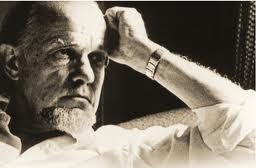
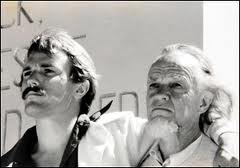
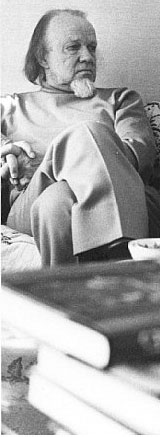
George Verwer pictured above and Francis Schaeffer below:

I got to take part in the Summer campaign of Operation Mobilization (OM) in 1979 in Manchester, England in an outreach to Muslims and Hindus, but before I went I spent a week in a similar campaign in Toronto, Canada and then I went to a OM conference in Belgium in June. We had some great speakers such as George Verwer, but I didn’t have an experience like Doug Nichols did in 1966.

Francis Schaeffer

http://thegospelcoalition.org/blogs/justintaylor/2012/11/27/no-little-person/

It was a long time ago, in the summer of 1966, that Doug [Nichols] was working for Operation Mobilization and was stationed in London during their big annual conference. He was assigned to the clean-up crew. One night at around 12:30 AM he was sweeping the steps at the conference center when an older gentleman approached him and asked if this was where the conference was being held. Doug said that it was, but that just about everyone had already gone to bed. This man was dressed very simply and had just a small bag with him. He said that he was attending the conference. Doug replied he would try to find him a place to sleep and led him to a room where about 50 people were bunked down on the floor. The older gentleman had nothing to sleep on, so Doug laid down some padding and a blanket and offered a towel for a pillow. The man said that would be just fine and that he appreciated it very much.

Doug asked the man if he had been able to eat dinner. It turns out that he hadn’t eaten since he had been travelling all day. Doug took him to the dining room but it was locked. He soon jimmied the lock and found some cornflakes and milk and bread and jam. As the man ate, the two began to talk. The man said that he and his wife had been working in Switzerland for several years, where he had a small ministry that served hippies and travellers. He spoke about his work and spoke about some of the people he had seen turn to Christ. When he finished eating, both men turned in for the night.

Doug woke up the next morning only to find out that he was in big trouble. The conference leaders came to him and said, “Don’t you know who it was that you put on the floor last night? That’s Francis Schaeffer! He’s the speaker for this conference! We had a whole room set aside for him!”

Doug had no idea that he was sleeping on the floor next to a celebrity, that he had told a man to sleep on the floor who had a profoundly important ministry. He had no idea that this man had helped shape the Christian church of that day, and really, the church of our day. And Schaeffer never let on. In humility he had accepted his lot and been grateful for it.


Related posts:

FRANCIS SCHAEFFER ANALYZES ART AND CULTURE Part 51 THE BEATLES (Part C, List of those on cover of Stg.Pepper’s ) (Feature on artist Raqib Shaw )

  The Beatles in a press conference after their Return from the USA Uploaded on Nov 29, 2010 The Beatles in a press conference after their Return from the USA. The Beatles:   I have dedicated several posts to this series on the Beatles and I don’t know when this series will end because Francis […]

FRANCIS SCHAEFFER ANALYZES ART AND CULTURE Part 50 THE BEATLES (Part B, The Psychedelic Music of the Beatles) (Feature on artist Peter Blake )

__________________   Beatles 1966 Last interview I have dedicated several posts to this series on the Beatles and I don’t know when this series will end because Francis Schaeffer spent a lot of time listening to the Beatles and talking and writing about them and their impact on the culture of the 1960’s. In this […]

FRANCIS SCHAEFFER ANALYZES ART AND CULTURE Part 49 THE BEATLES (Part A, The Meaning of Stg. Pepper’s Cover) (Feature on artist Mika Tajima)

_______________ The Beatles documentary || A Long and Winding Road || Episode 5 (This video discusses Stg. Pepper’s creation I have dedicated several posts to this series on the Beatles and I don’t know when this series will end because Francis Schaeffer spent a lot of time listening to the Beatles and talking and writing about […]

FRANCIS SCHAEFFER ANALYZES ART AND CULTURE PART 48 “BLOW UP” by Michelangelo Antonioni makes Philosophic Statement (Feature on artist Nancy Holt)

_______________ Francis Schaeffer pictured below: _____________________ Why am I doing this series FRANCIS SCHAEFFER ANALYZES ART AND CULTURE? John Fischer probably expressed it best when he noted: Schaeffer was the closest thing to a “man of sorrows” I have seen. He could not allow himself to be happy when most of the world was desperately lost […]

FRANCIS SCHAEFFER ANALYZES ART AND CULTURE Part 47 Woody Allen and Professor Levy and the death of “Optimistic Humanism” from the movie CRIMES AND MISDEMEANORS Plus Charles Darwin’s comments too!!! (Feature on artist Rodney Graham)

Crimes and Misdemeanors: A Discussion: Part 1 ___________________________________ Today I will answer the simple question: IS IT POSSIBLE TO BE AN OPTIMISTIC SECULAR HUMANIST THAT DOES NOT BELIEVE IN GOD OR AN AFTERLIFE? This question has been around for a long time and you can go back to the 19th century and read this same […]

FRANCIS SCHAEFFER ANALYZES ART AND CULTURE PART 46 Friedrich Nietzsche (Featured artist is Thomas Schütte)

____________________________________ Francis Schaeffer pictured below: ______________ Francis Schaeffer has written extensively on art and culture spanning the last 2000years and here are some posts I have done on this subject before : Francis Schaeffer’s “How should we then live?” Video and outline of episode 10 “Final Choices” , episode 9 “The Age of Personal Peace and Affluence”, episode 8 […]

FRANCIS SCHAEFFER ANALYZES ART AND CULTURE Part 45 Woody Allen “Reason is Dead” (Feature on artists Allora & Calzadilla )

Love and Death [Woody Allen] – What if there is no God? [PL] ___________ _______________ How Should We then Live Episode 7 small (Age of Nonreason) #02 How Should We Then Live? (Promo Clip) Dr. Francis Schaeffer 10 Worldview and Truth Two Minute Warning: How Then Should We Live?: Francis Schaeffer at 100 Francis Schaeffer […]

FRANCIS SCHAEFFER ANALYZES ART AND CULTURE Part 44 The Book of Genesis (Featured artist is Trey McCarley )

___________________________________ Francis Schaeffer pictured below: ____________________________ Francis Schaeffer “BASIS FOR HUMAN DIGNITY” Whatever…HTTHR Dr. Francis schaeffer – The flow of Materialism(from Part 4 of Whatever happened to human race?) Dr. Francis Schaeffer – The Biblical flow of Truth & History (intro) Francis Schaeffer – The Biblical Flow of History & Truth (1) Dr. Francis Schaeffer […]

FRANCIS SCHAEFFER ANALYZES ART AND CULTURE Part 43 “Freedom within Form” (Featured artist is Jan Fabre)

________________ Francis Schaeffer “BASIS FOR HUMAN DIGNITY” Whatever…HTTHR Dr. Francis schaeffer – The flow of Materialism(from Part 4 of Whatever happened to human race?) Dr. Francis Schaeffer – The Biblical flow of Truth & History (intro) Francis Schaeffer – The Biblical Flow of History & Truth (1) Dr. Francis Schaeffer – The Biblical Flow of […]

FRANCIS SCHAEFFER ANALYZES ART AND CULTURE Part 42 Historical Adam and Eve (Featured artist is Banks Violette)

_______________________________________________ Francis Schaeffer “BASIS FOR HUMAN DIGNITY” Whatever…HTTHR Dr. Francis schaeffer – The flow of Materialism(from Part 4 of Whatever happened to human race?) Dr. Francis Schaeffer – The Biblical flow of Truth & History (intro) Francis Schaeffer – The Biblical Flow of History & Truth (1) Dr. Francis Schaeffer – The Biblical Flow of […]


_____________

Roe Vs Wade: 40 Years Later (includes the film TRUTH AND HISTORY)

—-

I truly believe that many of the problems we have today in the USA are due to the advancement of humanism in the last few decades in our society. Ronald Reagan appointed the evangelical Dr. C. Everett Koop to the position of Surgeon General in his administration. He partnered with Dr. Francis Schaeffer in making the video below. It is very valuable information for Christians to have.  Actually I have included a video below that includes comments from him on this subject.

In the film series “WHATEVER HAPPENED TO THE HUMAN RACE?” the arguments are presented  against abortion (Episode 1),  infanticide (Episode 2),   euthenasia (Episode 3), and then there is a discussion of the Christian versus Humanist worldview concerning the issue of “the basis for human dignity” in Episode 4 and then in the last episode a close look at the truth claims of  

Francis Schaeffer is pictured above.

President Obama promised not to have Obamacare pay for anything to do with abortion in order to get it passed but then he changed his mind and wants now to have companies provide their employees  with health insurance that pays for abortion inducing drugs. The liberals at the Ark Times Blog may not see any problem with that but millions of Christians across this country do. This includes some large employers like Hobby Lobby.

This is from a youth pastor named Chris from Wichita Falls, TX:

Tuesday, January 22, 2013

Roe Vs Wade: 40 Years Later

40 years ago today, the Supreme Court ruled that abortion would become legal in this country. Abortion has been a dark stain in the United States that has cause division, anger, and even sorrow. To think that we, as nation, would uphold such a law to allow the slaughter of over 50 million unborn children just for the sake of a woman’s right because they do not want the “unexpected” child. While abortion remains legal in the United States, there is no reason for the church to be silent against it. Read the words of of R.C. Sproul Jr. from a recent post:Forty years ago US involvement in Vietnam was winding down. War in the Middle East broke out during Yom Kippur. But all was quiet on the evangelical front, when a graver, bloodier war was declared in the hallowed halls of the United States Supreme Court. January 22 the Supreme Court released their decision in Roe v. Wade. That decision, purportedly flowing from the unseen penumbra and emanations of the Constitution, ruled that no state could prevent a woman from destroying her unborn child up until the moment of birth.While the issue had been in the public eye since the beginning of the sexual revolution the evangelical church was not only less than outspoken, but less than certain on the issue. Two years before Roe the Southern Baptist Convention passed a resolution calling for legal abortion to protect the life of the mother, including her “emotional life.” Paul Jewett, professor of systematic theology at Fuller Seminary, was committed to the pro-abortion perspective.The evangelical pro-life movement began quietly in 1975 when Harold O.J. Brown, working with C. Everett Koop, opened the Christian Action Council. What woke the evangelical conscience, however, was Francis Schaeffer, also with Dr. Koop, releasing the video, Whatever Happened to the Human Race, in 1979. Over six million were already dead. In 1984 sitting President Ronald Reagan published Abortion and the Conscience of the Nation. Six million more were dead.In the mid 1980’s evangelicals began getting more aggressive, joining with Roman Catholics in “rescues” across the country, blocking access to abortion mills. Federal legislation, RICO and FACE, and perhaps Paul Hill put an end to rescues. Not long after the Crisis Pregnancy Center movement exploded, growing into the 1990s. By the time George W. Bush took office over thirty million babies had been murdered. Under President Bush the political planets aligned such that the White House, the House and the Senate were all under the control of Republicans. Seven of the nine Supreme Court judges were appointed under Republican presidents. Eight years into the new century and ten million more babies were dead.It is not my intent to challenge the effectiveness of any organization, any strategy, or any party. I have, in one way or another, been deeply involved in them all. Rather my intent is to highlight the deep gap between how we think about abortion forty years later, and the reality. We think in terms of strategies, movements, parties, and avert our eyes from the body parts. Strategies, movements, parties are all abstractions. The babies are real, and they are really dead. The anniversary is just a date on the calendar. The babies are dead, not fifty million of them, but one of them, fifty million times.We must be politically active. We must serve moms in crisis. We must speak prophetically to both the world and the church, remembering that one in six abortions is procured by an evangelical. First, however, we must weep. First, our hearts have to be broken, lest our pro-life activities lead us to forget. First we must repent because for a generation we have thought and acted like a movement, while every day babies are being murdered. First we must recognize that the problem isn’t how many were killed over the past forty years, but is instead how many will be killed in the next forty minutes. We must pledge not to not forget what has happened, but to not forget what is happening. Last we must remember that there is only one thing that can wash the blood from our hands, the blood from His.

_____________

___________

Related posts:

Francis Schaeffer’s prayer for us in USA

 Francis Schaeffer: “Whatever Happened to the Human Race” (Episode 1) ABORTION OF THE HUMAN RACE Published on Oct 6, 2012 by AdamMetropolis The 45 minute video above is from the film series created from Francis Schaeffer’s book “Whatever Happened to the Human Race?” with Dr. C. Everett Koop. This book  really helped develop my political views […]

Francis Schaeffer’s “How should we then live?” Video and outline of episode 10 “Final Choices” (Schaeffer Sundays)

E P I S O D E 1 0   Dr. Francis Schaeffer – Episode X – Final Choices 27 min FINAL CHOICES I. Authoritarianism the Only Humanistic Social Option One man or an elite giving authoritative arbitrary absolutes. A. Society is sole absolute in absence of other absolutes. B. But society has to be […]

Francis Schaeffer’s “How should we then live?” Video and outline of episode 9 “The Age of Personal Peace and Affluence” (Schaeffer Sundays)

E P I S O D E 9 Dr. Francis Schaeffer – Episode IX – The Age of Personal Peace and Affluence 27 min T h e Age of Personal Peace and Afflunce I. By the Early 1960s People Were Bombarded From Every Side by Modern Man’s Humanistic Thought II. Modern Form of Humanistic Thought Leads […]

Francis Schaeffer’s “How should we then live?” Video and outline of episode 8 “The Age of Fragmentation” (Schaeffer Sundays)

E P I S O D E 8 Dr. Francis Schaeffer – Episode VIII – The Age of Fragmentation 27 min I saw this film series in 1979 and it had a major impact on me. T h e Age of FRAGMENTATION I. Art As a Vehicle Of Modern Thought A. Impressionism (Monet, Renoir, Pissarro, Sisley, […]

Francis Schaeffer’s “How should we then live?” Video and outline of episode 7 “The Age of Non-Reason” (Schaeffer Sundays)

E P I S O D E 7 Dr. Francis Schaeffer – Episode VII – The Age of Non Reason I am thrilled to get this film series with you. I saw it first in 1979 and it had such a big impact on me. Today’s episode is where we see modern humanist man act […]

Francis Schaeffer’s “How should we then live?” Video and outline of episode 6 “The Scientific Age” (Schaeffer Sundays)

E P I S O D E 6 How Should We Then Live 6#1 Uploaded by NoMirrorHDDHrorriMoN on Oct 3, 2011 How Should We Then Live? Episode 6 of 12 ________ I am sharing with you a film series that I saw in 1979. In this film Francis Schaeffer asserted that was a shift in […]

Francis Schaeffer’s “How should we then live?” Video and outline of episode 5 “The Revolutionary Age” (Schaeffer Sundays)

E P I S O D E 5 How Should We Then Live? Episode 5: The Revolutionary Age I was impacted by this film series by Francis Schaeffer back in the 1970′s and I wanted to share it with you. Francis Schaeffer noted, “Reformation Did Not Bring Perfection. But gradually on basis of biblical teaching there […]

Francis Schaeffer’s “How should we then live?” Video and outline of episode 4 “The Reformation” (Schaeffer Sundays)

Dr. Francis Schaeffer – Episode IV – The Reformation 27 min I was impacted by this film series by Francis Schaeffer back in the 1970′s and I wanted to share it with you. Schaeffer makes three key points concerning the Reformation: “1. Erasmian Christian humanism rejected by Farel. 2. Bible gives needed answers not only as to […]

“Schaeffer Sundays” Francis Schaeffer’s “How should we then live?” Video and outline of episode 3 “The Renaissance”

Francis Schaeffer’s “How should we then live?” Video and outline of episode 3 “The Renaissance” Francis Schaeffer: “How Should We Then Live?” (Episode 3) THE RENAISSANCE I was impacted by this film series by Francis Schaeffer back in the 1970′s and I wanted to share it with you. Schaeffer really shows why we have so […]

Francis Schaeffer’s “How should we then live?” Video and outline of episode 2 “The Middle Ages” (Schaeffer Sundays)

  Francis Schaeffer: “How Should We Then Live?” (Episode 2) THE MIDDLE AGES I was impacted by this film series by Francis Schaeffer back in the 1970′s and I wanted to share it with you. Schaeffer points out that during this time period unfortunately we have the “Church’s deviation from early church’s teaching in regard […]

Francis Schaeffer’s “How should we then live?” Video and outline of episode 1 “The Roman Age” (Schaeffer Sundays)

Francis Schaeffer: “How Should We Then Live?” (Episode 1) THE ROMAN AGE   Today I am starting a series that really had a big impact on my life back in the 1970′s when I first saw it. There are ten parts and today is the first. Francis Schaeffer takes a look at Rome and why […]

Francis Schaeffer: “Whatever Happened to the Human Race” (Episode 5) TRUTH AND HISTORY

Francis Schaeffer: “Whatever Happened to the Human Race” (Episode 5) TRUTH AND HISTORY Published on Oct 7, 2012 by AdamMetropolis This crucial series is narrated by the late Dr. Francis Schaeffer and former Surgeon General Dr. C. Everett Koop. Today, choices are being made that undermine human rights at their most basic level. Practices once […]

Francis Schaeffer: “Whatever Happened to the Human Race” (Episode 4) THE BASIS FOR HUMAN DIGNITY

The opening song at the beginning of this episode is very insightful. Francis Schaeffer: “Whatever Happened to the Human Race” (Episode 4) THE BASIS FOR HUMAN DIGNITY Published on Oct 7, 2012 by AdamMetropolis This crucial series is narrated by the late Dr. Francis Schaeffer and former Surgeon General Dr. C. Everett Koop. Today, choices […]

Francis Schaeffer: “Whatever Happened to the Human Race” (Episode 3) DEATH BY SOMEONE’S CHOICE

Francis Schaeffer: “Whatever Happened to the Human Race” (Episode 3) DEATH BY SOMEONE’S CHOICE Published on Oct 6, 2012 by AdamMetropolis This crucial series is narrated by the late Dr. Francis Schaeffer and former Surgeon General Dr. C. Everett Koop. Today, choices are being made that undermine human rights at their most basic level. Practices […]

Francis Schaeffer: “Whatever Happened to the Human Race?” (Episode 2) SLAUGHTER OF THE INNOCENTS

Francis Schaeffer: “Whatever Happened to the Human Race?” (Episode 2) SLAUGHTER OF THE INNOCENTS Published on Oct 6, 2012 by AdamMetropolis This crucial series is narrated by the late Dr. Francis Schaeffer and former Surgeon General Dr. C. Everett Koop. Today, choices are being made that undermine human rights at their most basic level. Practices […]

Francis Schaeffer: “Whatever Happened to the Human Race” (Episode 1) ABORTION OF THE HUMAN RACE

It is not possible to know where the pro-life evangelicals are coming from unless you look at the work of the person who inspired them the most. That person was Francis Schaeffer.  I do care about economic issues but the pro-life issue is the most important to me. Several years ago Adrian Rogers (past president of […]

The following essay explores the role that Francis Schaeffer played in the rise of the pro-life movement. It examines the place of How Should We Then Live?, Whatever Happened to the Human Race?, and A Christian Manifesto in that process.

This essay below is worth the read. Schaeffer, Francis – “Francis Schaeffer and the Pro-Life Movement” [How Should We Then Live?, Whatever Happened to the Human Race?, A Christian Manifesto] Editor note: <p> </p> [The following essay explores the role that Francis Schaeffer played in the rise of the pro-life movement.  It examines the place of […]

Who was Francis Schaeffer? by Udo Middelmann

Great article on Schaeffer. Who was Dr. Francis A. Schaeffer? By Francis Schaeffer The unique contribution of Dr. Francis Schaeffer on a whole generation was the ability to communicate the truth of historic Biblical Christianity in a way that combined intellectual integrity with practical, loving care. This grew out of his extensive understanding of the Bible […]

Excerpt from Nancy Pearcey’s new book: “Why Evolutionary Theory Cannot Survive Itself”

______________

No one has been influenced more by Francis Schaeffer than Nancy Pearcey. No wonder I like her material so much!!!!

Excerpt from Nancy Pearcey’s new book: “Why Evolutionary Theory Cannot Survive Itself”

Here:

ENV is pleased to share the following excerpt from Nancy Pearcey’s new book,Finding Truth: Five Principles for Unmasking Atheism, Secularism, and Other God Substitutes. A Fellow of Discovery Institute’s Center for Science & Culture, Pearcey is a professor and scholar-in-residence at Houston Baptist University and editor-at-large of The Pearcey Report. She is author of the 2005 ECPA Gold Medallion Award winner Total Truth: Liberating Christianity from Its Cultural Captivity and other books.

A major way to test a philosophy or worldview is to ask: Is it logically consistent? Internal contradictions are fatal to any worldview because contradictory statements are necessarily false. “This circle is square” is contradictory, so it has to be false. An especially damaging form of contradiction is self-referential absurdity — which means a theory sets up a definition of truth that it itself fails to meet. Therefore it refutes itself….

An example of self-referential absurdity is a theory called evolutionary epistemology, a naturalistic approach that applies evolution to the process of knowing. The theory proposes that the human mind is a product of natural selection. The implication is that the ideas in our minds were selected for their survival value, not for their truth-value.

But what if we apply that theory to itself? Then it, too, was selected for survival, not truth — which discredits its own claim to truth. Evolutionary epistemology commits suicide.

Astonishingly, many prominent thinkers have embraced the theory without detecting the logical contradiction. Philosopher John Gray writes, “If Darwin’s theory of natural selection is true,… the human mind serves evolutionary success, not truth.” What is the contradiction in that statement?

Gray has essentially said, if Darwin’s theory is true, then it “serves evolutionary success, not truth.” In other words, if Darwin’s theory is true, then it is not true.

Self-referential absurdity is akin to the well-known liar’s paradox: “This statement is a lie.” If the statement is true, then (as it says) it is not true, but a lie.

Another example comes from Francis Crick. More.

But, of course, no intellectual consideration matters once the naturalists can hear the giant maw of the school system sucking it down. After a while, everyone believes what doesn’t make sense, and no one knows why or cares.

Follow UD News at Twitter!

(Visited 591 times, 6 visits today)

_________________

Interview with Nancy Pearcey; 23 February 2015

Published on Feb 23, 2015

In conjunction with WORLD Magazine, Patrick Henry College presents its interview with Nancy Pearcey as a part of the Newsmaker Interview Series with Marvin Olasky, editor-in-chief at WORLD and Distinguished Chair of Journalism and Public Policy at PHC. For more information on Patrick Henry College, visit our website here http://www.phc.edu.

Pearcey_FindingTruth

_______________

Related posts:

FRANCIS SCHAEFFER ANALYZES ART AND CULTURE Part 52 THE BEATLES (Part D, There is evidence that the Beatles may have been exposed to Francis Schaeffer!!!) (Feature on artist Anna Margaret Rose Freeman )

______________ I have dedicated several posts to this series on the Beatles and I don’t know when this series will end because Francis Schaeffer spent a lot of time talking and writing about them and their impact on the culture of the 1960’s. Lucy in the Sky with Diamonds- The Beatles The Beatles: The Beatles […]

FRANCIS SCHAEFFER ANALYZES ART AND CULTURE Part 51 THE BEATLES (Part C, List of those on cover of Stg.Pepper’s ) (Feature on artist Raqib Shaw )

________________ I have dedicated several posts to this series on the Beatles and I don’t know when this series will end because Francis Schaeffer spent a lot of time talking and writing about them and their impact on the culture of the 1960’s. The Beatles: The Beatles and their album St. Pepper’s Lonely Hearts Club […]

FRANCIS SCHAEFFER ANALYZES ART AND CULTURE Part 50 THE BEATLES (Part B, The Psychedelic Music of the Beatles) (Feature on artist Peter Blake )

__________________ I have dedicated several posts to this series on the Beatles and I don’t know when this series will end because Francis Schaeffer spent a lot of time talking and writing about them and their impact on the culture of the 1960’s. The Beatles are featured in this episode below and Schaeffer noted,  ” Sergeant Pepper’s […]

FRANCIS SCHAEFFER ANALYZES ART AND CULTURE Part 49 THE BEATLES (Part A, The Meaning of Stg. Pepper’s Cover) (Feature on artist Mika Tajima)

_______________ I have dedicated several posts to this series on the Beatles and I don’t know when this series will end because Francis Schaeffer spent a lot of time talking and writing about them and their impact on the culture of the 1960’s. Great Album The Beatles are featured in this episode below and Schaeffer […]

FRANCIS SCHAEFFER ANALYZES ART AND CULTURE PART 48 “BLOW UP” by Michelangelo Antonioni makes Philosophic Statement (Feature on artist Nancy Holt)

_______________ Francis Schaeffer pictured below: _____________________ Why am I doing this series FRANCIS SCHAEFFER ANALYZES ART AND CULTURE? John Fischer probably expressed it best when he noted: Schaeffer was the closest thing to a “man of sorrows” I have seen. He could not allow himself to be happy when most of the world was desperately lost […]

FRANCIS SCHAEFFER ANALYZES ART AND CULTURE Part 47 Woody Allen and Professor Levy and the death of “Optimistic Humanism” from the movie CRIMES AND MISDEMEANORS Plus Charles Darwin’s comments too!!! (Feature on artist Rodney Graham)

Crimes and Misdemeanors: A Discussion: Part 1 ___________________________________ Today I will answer the simple question: IS IT POSSIBLE TO BE AN OPTIMISTIC SECULAR HUMANIST THAT DOES NOT BELIEVE IN GOD OR AN AFTERLIFE? This question has been around for a long time and you can go back to the 19th century and read this same […]

FRANCIS SCHAEFFER ANALYZES ART AND CULTURE PART 46 Friedrich Nietzsche (Featured artist is Thomas Schütte)

____________________________________ Francis Schaeffer pictured below: ______________ Francis Schaeffer has written extensively on art and culture spanning the last 2000years and here are some posts I have done on this subject before : Francis Schaeffer’s “How should we then live?” Video and outline of episode 10 “Final Choices” , episode 9 “The Age of Personal Peace and Affluence”, episode 8 […]

FRANCIS SCHAEFFER ANALYZES ART AND CULTURE Part 45 Woody Allen “Reason is Dead” (Feature on artists Allora & Calzadilla )

Love and Death [Woody Allen] – What if there is no God? [PL] ___________   _______________ How Should We then Live Episode 7 small (Age of Nonreason) #02 How Should We Then Live? (Promo Clip) Dr. Francis Schaeffer 10 Worldview and Truth Two Minute Warning: How Then Should We Live?: Francis Schaeffer at 100 Francis […]

FRANCIS SCHAEFFER ANALYZES ART AND CULTURE Part 44 The Book of Genesis (Featured artist is Trey McCarley )

___________________________________ Francis Schaeffer pictured below: ____________________________ Francis Schaeffer “BASIS FOR HUMAN DIGNITY” Whatever…HTTHR Dr. Francis schaeffer – The flow of Materialism(from Part 4 of Whatever happened to human race?) Dr. Francis Schaeffer – The Biblical flow of Truth & History (intro) Francis Schaeffer – The Biblical Flow of History & Truth (1) Dr. Francis Schaeffer […]

FRANCIS SCHAEFFER ANALYZES ART AND CULTURE Part 43 “Freedom within Form” (Featured artist is Jan Fabre)

________________ Francis Schaeffer “BASIS FOR HUMAN DIGNITY” Whatever…HTTHR Dr. Francis schaeffer – The flow of Materialism(from Part 4 of Whatever happened to human race?) Dr. Francis Schaeffer – The Biblical flow of Truth & History (intro) Francis Schaeffer – The Biblical Flow of History & Truth (1) Dr. Francis Schaeffer – The Biblical Flow of […]

_________________

The Founding Fathers and Abortion in Colonial America

Francis Schaeffer Whatever Happened to the Human Race (Episode 1) ABOR

Dr. Francis schaeffer – The flow of Materialism(from Part 4 of Whatever happened to human race?)

Dr. Francis Schaeffer – The Biblical flow of Truth & History (intro)

Francis Schaeffer – The Biblical Flow of History & Truth (1)

Dr. Francis Schaeffer – The Biblical Flow of Truth & History (part 2)

________________

Friday, April 6, 2012

The Founding Fathers and Abortion in Colonial America

Few issues arouse as much passion as abortion.   This has not always been the case, however.  Following English law, abortion was legal in the American colonies until the time of “quickening” in the fetus, when the baby started to move, usually around the fourth month of pregnancy. Recipes for herbal potions including pennyroyal, savin and other plants capable of “bringing on the menses” were common in home medical guides of the period.

Our founding fathers actually wrote about the subject.  Benjamin Franklin’s views can be inferred from an incident that occurred in 1729 when his former employer, newspaper editor Samuel Keimer of Philadelphia, published an encyclopedia whose very first volume included a detailed article on abortion, including directions for ending an unwanted pregnancy (“immoderate Evacuations, violent Motions, sudden Passions, Frights … violent Purgatives and in the general anything that tends to promote the Menses.”)  Hoping to found his own newspaper to compete with Keimer, Franklin responded in print through the satiric voices of two fictional characters, “Celia Shortface” and “Martha Careful” who expressed mock outrage at Keimer for exposing “the secrets of our sex” which ought to be reserved “for the repository of the learned.”  One of the aggrieved ladies threatened to grab Keimer’s beard and pull it if she spotted him at the tavern!  Neither Franklin nor his prudish protagonists objected to abortion per se, but only to the immodesty of discussing such feminine mysteries in public.

Dr. Benjamin Rush, a well known physician who signed the Declaration of Independence, shared his views of the subject matter-of-factly in his book of Medical Inquiries and Observations (1805).  Discussing blood-letting as a possible treatment to prevent miscarriage during the third month of pregnancy, when he believed there was a special tendency to spontaneous abortion, Rush asked the question, “what is an abortion but a haemoptysis (if I may be allowed the expression) from the uterus?”  A hemoptysis is the clinical term for the expectoration of blood or bloody sputum from the lungs or larynx.  In Rush’s mind, apparently, what we would now call the three-month-old embryo was equivalent medically to what one might cough up when ill with the flu.

Thomas Jefferson put no moral judgment on abortion, either.  In his Notes on the State of Virginia, he observed that for Native American women, who accompanied their men in war and hunting parties, “childbearing becomes extremely inconvenient to them.  It is said, therefore, that they have learnt the practice of procuring abortion by the use of some vegetable, and that it even extends to prevent conception for some time after.”  Jefferson on the whole admired the native people and the Notes were intended in part to counter the views of the French naturalist Buffon, who accused the indigenous inhabitants of the New World of being degenerate and less virile than their European counterparts.  In extenuation, Jefferson cites “voluntary abortion” along with the hazards of the wilderness and famine as obstacles nature has placed in the way of increased multiplication among the natives.  Indian women married to white traders, he observes, produce abundant children and are excellent mothers.  The fact that they practice birth control and when necessary terminate their pregnancies does not lessen his respect for them, but appears to be in his mind simply one of the ingenious ways they have adapted to their challenging environment.

A different window into colonial attitudes toward abortion can be found in Corenlia Hughes Dayton’s “Taking the Trade: Abortion and Gender Relations in an Eighteenth Century New England Village.”  In her 1991 monograph which appeared in the William and Mary Quarterly, Dayton examined a case from 1742 that occurred in the village of Pomfret, Connecticut, where 19-year-old Sarah Grosvenor died in a bungled abortion urged on her by her 27-year-old lover Amasa Sessions.  Magistrates filed charges against both Sessions and the “doctor of physick” who mangled the operation, but Dayton points out the legal complaints were not for performing the abortion as such (which was legal) but for killing the mother.  The whole episode was surrounded with a hush of secrecy, in an era when “fornication” was not only illegal but culturally taboo.  Abortion, in the colonial context, carried a stigma of shame not because it ended the life of a fetus but because it was associated with illicit intercourse—helping to explain the outrage of Franklin’s two characters Celia Shortface and  Martha Careful when their private remedies for ending a pregnancy receive a public airing.

What can we learn from examining attitudes toward abortion in early America?  Perhaps only this, that positions which seem to both the pro-choice and pro-life camps to be eternal and absolute have in fact evolved over time.  An historic perspective should teach us humility if nothing else.

Posted by Revolutionary Spirits at 2:57 PM

Related posts:

Open letter to President Obama (Part 641) Pro-life atheist Nat Hentoff: With Obama you will get more abortions!!!

Open letter to President Obama (Part 641) (Emailed to White House on 6-12-13.) President Obama c/o The White House 1600 Pennsylvania Avenue NW Washington, DC 20500 Dear Mr. President, I know that you receive 20,000 letters a day and that you actually read 10 of them every day. I really do respect you for trying to get […]

“Schaeffer Sunday” Abortion debating with Ark Times Bloggers Part 13 “Is it a choice or a child?” and a Heritage Foundation article on 2013 March for Life (includes film THE BASIS FOR HUMAN DIGNITY and editorial cartoon)

I have debated with Ark Times Bloggers many times in the past on many different subjects. Abortion is probably the most often debated subject and I have noticed that many pro-life individuals are now surfacing on the Arkansas Times Blog.  Here are some examples. Arhogfan501 asserted: This is the beginning of the end for recreational abortion […]

Pro-life Pamphlet “ABORTION: AVENUES FOR ACTION ” was influenced by Koop and Schaeffer

Pro-life Pamphlet  “ABORTION: AVENUES FOR ACTION ” was influenced by Koop and Schaeffer Francis Schaeffer Whatever Happened to the Human Race (Episode 1) ABORTION Francis Schaeffer “BASIS FOR HUMAN DIGNITY” Whatever…HTTHR I read lots of Francis Schaeffer and Dr. C. Everett Koop’s books and watched their films in the late 1970’s and early 1980’s as did […]

Pro-life Pamphlet “The Crime Of Being Alive Abortion, Euthanasia, & Infanticide” was influenced by Koop and Schaeffer

Pro-life Pamphlet “The Crime of Being Alive: Abortion, Euthanasia, & Infanticide” was influenced by Koop and Schaeffer   Francis Schaeffer Whatever Happened to the Human Race (Episode 1) ABORTION Francis Schaeffer “BASIS FOR HUMAN DIGNITY” Whatever…HTTHR I read lots of Francis Schaeffer and Dr. C. Everett Koop’s books and watched their films in the late […]

“Schaeffer Sunday” Abortion debating with Ark Times Bloggers Part 12 “Is there a biological reason to be pro-life?” and the article “How Francis Schaeffer shaped Michele Bachman’s pro-life views” (includes the film TRUTH AND HISTORY and editorial cartoon)

I have debated with Ark Times Bloggers many times in the past on many different subjects. Abortion is probably the most often debated subject and I have noticed that many pro-life individuals are now surfacing on the Arkansas Times Blog.  Here are some examples. Arhogfan501 asserted: This is the beginning of the end for recreational abortion […]

“Sanctity of Life Saturday” Pro-life atheist Nat Hentoff quotes wise 9 yr kid concerning abortion, “It doesn’t matter what month. It still means killing the babies.”

The pro-life atheist Nat Hentoff wrote a fine article below I wanted to share with you. Nat Hentoff is an atheist, but he became a pro-life activist because of the scientific evidence that shows that the unborn child is a distinct and separate human being and even has a separate DNA. His perspective is a […]

Open letter to President Obama (Part 633) Pro-life atheist Nat Hentoff quotes wise 9 yr kid concerning abortion, “It doesn’t matter what month. It still means killing the babies.”

Open letter to President Obama (Part 633) (Emailed to White House on 6-12-13.) President Obama c/o The White House 1600 Pennsylvania Avenue NW Washington, DC 20500 Dear Mr. President, I know that you receive 20,000 letters a day and that you actually read 10 of them every day. I really do respect you for trying to get […]

“Schaeffer Sunday” Abortion debating with Ark Times Bloggers Part 11 “Abortion and the AMA” and the article “Abortion and infanticide” by David L. Skeen (includes video “Slaughter of the Innocents” and editorial cartoon)

I have debated with Ark Times Bloggers many times in the past on many different subjects. Abortion is probably the most often debated subject and I have noticed that many pro-life individuals are now surfacing on the Arkansas Times Blog.  Here are some examples. Arhogfan501 asserted: This is the beginning of the end for recreational abortion […]

“Schaeffer Sunday” Abortion debating with Ark Times Bloggers Part 10 “Abortion and Child Abuse and Quotes from Whatever happened to the human race?” (includes the film DEATH BY SOMEONE’S CHOICE and editorial cartoon)

I have debated with Ark Times Bloggers many times in the past on many different subjects. Abortion is probably the most often debated subject and I have noticed that many pro-life individuals are now surfacing on the Arkansas Times Blog.  Here are some examples. Arhogfan501 asserted: This is the beginning of the end for recreational abortion […]

Open letter to President Obama (Part 621) Pro-life Atheist Nat Hentoff on the 19 yr old Ana Rosa Rodriguez the survivor of an abortion attempt

Open letter to President Obama (Part 621) (Emailed to White House on 6-12-13.) President Obama c/o The White House 1600 Pennsylvania Avenue NW Washington, DC 20500 Dear Mr. President, I know that you receive 20,000 letters a day and that you actually read 10 of them every day. I really do respect you for trying to get […]

TRUE TRUTH: FRANCIS SCHAEFFER’S ENDURING LEGACY 24 SEP 2014 POSTED BY DONALD WILLIAMS

__________

Francis Schaeffer pictured below:

_________

___________________

Dr. Francis schaeffer – The flow of Materialism(from Part 4 of Whatever happened to human race?)

Dr. Francis Schaeffer – The Biblical flow of Truth & History (intro)

Francis Schaeffer – The Biblical Flow of History & Truth (1)

Dr. Francis Schaeffer – The Biblical Flow of Truth & History (part 2)

TRUE TRUTH: FRANCIS SCHAEFFER’S ENDURING LEGACY

3 COMMENTS

 24 SEP 2014   POSTED BY DONALD WILLIAMS


One of the men the regular contributors to this forum hold in high regard is Dr Francis Schaeffer. Much misunderstood by both followers and critics, and misjudged too often for his mistakes of detail, he was a prophet whose work is in many respects yet to be fully understood and rightly received. We are pleased to reprint here with permission an essay by Dr Donald T. Williams, who is one of the few evangelical writers who sees the true importance and abiding significance of Dr Schaeffer’s work, and does so with great fidelity and acuity. Of course, as with any guest writer, his opinions are his own and do not necessarily reflect those of TCI, nor ours, his. But on the merit of Dr Schaeffer we are are of one mind (we are always delighted to read statements like “Luther and Schaeffer were right”). That said, on to Dr Williams. – Peter Escalante 

This essay is excerpted from Reflections from Plato’s Cave: Essays in Evangelical Philosophy (Lynchburg: Lantern Hollow Press, 2012), and is used by permission. 


INTRODUCTION:  HOW SOON WE FORGET

“What?  Two months dead and not forgotten yet?  Why, then, there’s hope a great man’s memory may outlive him half a year!” – Hamlet.

I had a sobering moment on the second day of class in the spring of 2005.  I asked the group of 125 students in “Western Thought and Culture,” an interdisciplinary survey course thoroughly informed by Francis Schaeffer’s cultural apologetic, “How many of you had never heard of Schaeffer or L’Abri before taking this class?”  Almost every hand in the room went up.  This would not have happened ten or even five years before.  It did not even happen quite so obviously the previous year.  But the dramatic nature of the response that time, along with its continuation since, suggests that we have passed a threshold which does not bode well for the future.

Though Schaeffer has now been dead for more almost three decades, his legacy and his influence had lived on in the Christian movement—until now.   Past generations of Christian students might not have read Schaeffer, but many of them knew that he was a controversial intellectual guru of the Evangelical movement who was a stalwart champion of the inerrancy of Scripture and opponent of abortion.  Now suddenly we have a generation of Christian students for whom it is as if he never even existed.

Think for a moment about what the Christian movement, especially its Evangelical wing, was like before Schaeffer came upon the scene in the Sixties.  Most believers were unaware that there was such a thing as a “Biblical World View.”   They figured that, aside from Christians being a bit more honest and less immoral than the world and (for fundamentalists) abstaining from tobacco, alcohol, and movies, there did not need to be that much difference between them and non-believers in their whole approach to life.  They did not think the intellectual, social, and cultural issues of the day anything they needed to be concerned with.  And so they watched the Christian consensus they had come to take for granted evaporate to the point that our Supreme Court was able to legalize the mass murder of unborn children and, until it was too late, they had no idea that it was even happening.

It is hard today to remember how radical Francis Schaeffer was in the Sixties when his call for speaking historic Christianity into the Post-Christian world with intellectual integrity, his call for holistic world-view thinking, and his call for living out “the lordship of Christ over the total culture” were first sounded.  I do not claim that forgetting Schaeffer necessarily means forgetting these lessons.  Rather, my concern is over how well we ever really learned them.  Schaeffer has never been replaced by another voice of equal stature able to address these issues with equal clarity, equal power, equal doctrinal soundness, and equal biblical faithfulness, in a way that would speak to such a cross section of the Christian world.  We still need to hear that voice.  But now we must fear that it is growing very faint.

I would therefore like to highlight four elements of Schaeffer’s thought that we dare not forget, four themes that must continue to be (or become) hallmarks of faithful Christianity if it is to remain faithful, and therefore four emphases for which Schaeffer needs to continue to be remembered and honored.  Yes, he was a popularizer and therefore sometimes oversimplified certain issues.  Yes, his disciples sometimes mouthed glibly, harshly, and with even greater oversimplification ideas that for him were hard-won and held with compassion.  But no one in our time has maintained these four crucial theses all together with more clarity, force, and integrity.  Let’s hear them again:

  • Christianity is Truth.
  • Christian Truth touches all of life: “The lordship of Christ over the total culture.”
  • Christian life & witness must show the whole character of God: “holiness and love.”
  • The truth of Christianity must be demonstrated both intellectually and practically through a life of faith.

CHRISTIANITY IS TRUTH

Schaeffer often stressed Martin Luther’s observation that unless we are defending the faith at the point where it is being attacked in our generation, we are not defending the faith.

If I profess with the loudest voice and clearest exposition every portion of the truth of God except precisely that little point which the world and the devil are at that moment attacking, I am not confessing Christ, however boldly I may be professing Christ.  Where the battle rages, there the loyalty of the soldier is proved, and to be steady on all the battlefield besides is mere flight and disgrace if he flinches at that point. (The God Who is There 18)

Luther and Schaeffer were right.  There is a Scandal of the Cross for each generation and each people, but it changes as the shifting stratagems of the Enemy vary.  For the Greeks it was the resurrection of the body; for the Jews it was the loss of their status as a privileged people defined by their keeping the Mosaic Law; for the Modernist it was the supernatural, especially the miraculous; for all men at all times it is our absolute dependence on God’s grace, his unmerited favor, for salvation.

What is the specific sticking point for our own time?  A good case can be made that it is the existence of objective truth, or, more subtly, the ability of human beings to know objective truth, and hence to be held responsible for knowing it and accountable to God for what they do about it.  Schaeffer was one of the first to notice the rise of this particular Scandal and speak of it to a popular audience.  “The present chasm between the generations has been brought about almost entirely by a change in the concept of truth….This change in the concept of the way we come to knowledge about truth is the most crucial problem, as I understand it, facing Christianity today” (The God Who is There 13).  So important did Schaeffer consider this shift that he coined the awkward phrase “true truth” to make sure he was conveying the idea of a truth that was absolute and not relativistic, that acknowledged the presupposition that “if anything was true, the opposite was false” (Ibid. 14).  The Christian needed to be committed to “antithesis” rather than relativism and to understand that the world no longer was.  The only thing that has changed since Schaeffer wrote is that now the chasm is no longer between generations (for Schaeffer’s young generation are now grandparents) or between the church and the world, but has come to cut across the Christian movement itself.

Current “Post-Modern” pseudo-philosophies reduce all truth claims to personal perspectives and power plays, and people influenced by them refuse to participate in any discourse (“totalizing”; “logocentric”; “Eurocentric”) that does not acquiesce in those reductions.  There is therefore a strong temptation to think that we have to play by those rules in order to gain a hearing for the Gospel at all.  But if we yield to that temptation, are we still proclaiming the Gospel?  If I speak in such a way that I have already admitted by the form of discourse I adopt that the Gospel is and can be nothing more than my personal perspective on religion, have I not denied the faith, however much I may still mouth the prescribed formulae about Jesus dying for our sins?  For a Jesus who is lord only of my perspectives is not Lord of the cosmos and is therefore incapable of saving anyone.

It is good to be humble about our pretensions to knowledge and to admit that, while we know absolute truth, we do not know truth absolutely.  But in the current climate it is one small step from that admission to becoming intimidated about asserting that the truth claims Christ makes on our lives are absolute and come with God’s absolute authority.  That is ultimately the bottom line: is Christ Lord of all, whether any of us perceives or accepts it or not, or is He just one of my culturally bound opinions?

Are robust truth claims offensive to our generation?  No one can doubt that they are.  Should the soldiers of Christ then tiptoe away from that breach in our battle lines, or should they flood into it lest the entire phalanx of the Gospel message advancing into our culture be subverted and swept away?  The ancestors of modern theological liberalism began by downplaying and soft-peddling the supernatural elements of Christian truth, because they thought modern men could no longer accept them.  Their intentions were (at first) good and sincere, but they left their followers with only an impotent shell of the biblical faith.  Can we afford to repeat their mistake at an even more basic level, with the epistemic elements?  Schaeffer said no:

Once we begin to slip over into the other methodology—a failure to hold on to an absolute which can be known by the whole man, including what is logical and rational in him—historic Christianity is destroyed, even if it seems to keep going for a time.  We may not know it, but when this occurs, the marks of death are upon it, and it will soon be one more museum piece. (The God Who Is There 27)

Christ is the way, the truth, and the life.  His claims on our belief are absolute.  If we flinch at this point; if our trumpet gives an uncertain sound; if we present a Christ who is inoffensive because He is after all only one perspective among many; if we allow the enemies of truth to dictate the terms of engagement; if, in other words, we compromise on the issue of truth, then we betray the next generation to unrelieved darkness.  If we do this, then may God have mercy on their souls—and, even more, on ours.

Francis Schaeffer understood the crucial importance of this watershed.  Do we?

CHRISTIAN TRUTH TOUCHES ALL OF LIFE

If it is true truth—i.e., something corresponding to reality, not just to our finite and historically conditioned perspectives—that the world was created by the God of the Bible who has spoken to us in Scripture and entered our world through his incarnate Son, then Schaeffer’s second emphasis follows from the content as well as the nature of the truth claim being made.  If the God we worship in fact designed and created the entire space-time cosmos and has acted and spoken into it in history, then the beliefs and practices that derive from and describe that acting and speaking cannot be bottled up into some limited portion of our inner, private world that we call our “religion” or our “spirituality,” but must flow forth to touch, inform, and transform every aspect of life and every arena of culture.

This insight is the source of Schaeffer’s stress on “the lordship of Christ over the total culture,” his characteristic analyses of how changes in philosophical world view manifest themselves in art, music, literature, and popular culture, and the much misunderstood “turn” in his later years to an emphasis on political involvement.  In reality, it was no new departure at all, but rather a natural application of his earlier teaching to the crisis precipitated by Roe v. Wade.  The drive for integration and wholeness, which was applied in all these areas, was basic to Schaeffer’s mind, and it is a message we have not yet heard enough of.

The Lordship of Christ over the whole of life means that there are no platonic areas in Christianity, no dichotomy or hierarchy between the body and the soul….If Christianity is really true, then it involves the whole man, including his intellect and creativeness….A work of art has value in itself….The Christian is the one whose imagination should fly beyond the stars.  (Schaeffer, Art and the Bible  7, 9, 33, 5)

Christians do not live in quite the intellectual ghetto that they tended to occupy a generation ago, but whether we have increased our engagement with the world or just our accommodation to the world is an open question.  With the exception of a greater level of political involvement—often more shrill and less nuanced than what Schaeffer actually called for—we seem to have learned little.  A few scholars or artists may have moved on to greater engagement, but what effect do they have on the culture at large?  And flagship Evangelical magazines (like Christianity Today) that used to publish original poetry in the Seventies do so no more.  There is then as much evidence of retreat from culture as engagement with it. (See Williams, “Writers Cramped” for a treatment of Evangelicalism’s weakness in its engagement with one of the arts.)

Schaeffer’s message of holistic engagement is still a hard sell.  Many of my students are frustrated by Schaeffer’s critique of modern art, but for varying reasons.  Some of them don’t understand why he is giving so much attention to works that are clearly beyond the pale or just trivial and silly; after all, culture is just part of “the world” anyway.  Others vilify him for his negative view of kinds of expression they take for granted as part of their world—usually without really understanding what he was saying.  Schaeffer never says that abstraction or non-realism or dissonance in art are evil in themselves; he does say that the techniques of modern art and music became the vehicle for the expression of the modern world view with its loss of meaning and its consequent despair.  And they did.  After pointing out over and over the difference between these students’ misreading of Schaeffer and what he actually said, I am convinced that the problem is not in any lack of clarity on his part (see Art and the Bible for a finely balanced statement of those principles), but rather in the fact that there is a resistance on theirs to applying any kind of standard to their consumption of culture and media, a lack of comfort with any serious Christian critique that might threaten their own complacency as citizens of the (Post)Modern world.

Scholars are sometimes little different.  Instead of appreciating the comprehensiveness of Schaeffer’s vision, many Christian scholars find it fashionable to patronize him as overextended because he lacked the nuance their expertise gives them in their own narrow field.  Yes, sometimes he did.  But which of his critics can help us see the forest for the trees as Schaeffer did?  We continue to need his warning:

In our modern forms of specialized education there is a tendency to lose the whole in the parts, and in this sense we can say that our generation produces few truly educated men.  True education means thinking by association across the various disciplines, and not just being highly qualified in one field as a technician might be. (The God Who is There 19)

CHRISTIAN LIFE MUST SHOW THE WHOLE CHARACTER OF GOD: “HOLINESS AND LOVE”

Schaeffer was discipled and began his ministry in the Bible Presbyterian Church, surrounded by people who practiced what is called “secondary separation”:  they separated not only from liberal churches but also from their fellow believers who did not separate as far as they did.  Schaeffer later repudiated the harsh and legalistic judgmentalism of this group and joined the Reformed Presbyterian Church, Evangelical Synod, which eventually merged with the Presbyterian Church in America.  One of Schaeffer’s most important decisions was to refuse the lack of love that had characterized the fundamentalism of his youth without departing from its uncompromising commitment to biblical truth and godly living.  It was one of those points of balance that made his voice a rare and important one, in his own day and still in ours:

We must realize that love is not the end of the matter.  It [our approach to life and ministry] rests upon the character of God, and God is the God who is Holy and the God who is Love.  We would not choose between love and holiness, for to forget either is equally vicious….It is not that we do one and then the other, like keeping a ball in the air between two ping-pong paddles.  Both God’s holiness and his love must be exhibited simultaneously, or we have fallen off one cliff or the other. (The God Who Is There 96)

The end result was a powerful emphasis, lived out in practice, on speaking the truth in love.

“Speaking the truth in love” is a phrase we have come to parrot all too comfortably.  If we truly understood it, we would realize that the Apostle’s exhortation to do so in Eph. 4:15 impales the contemporary church on the horns of a dilemma designed to make its dependence on its own strength and wisdom self-destruct.  When we are thus impaled, we have the opportunity to discover, as Schaeffer did, how little we understand of either truth or love.

The truth in a fallen world is often harsh and always hostile to human pride.  When human beings–even redeemed ones–try in their own wisdom to combine that truth with love, their natural tendency is to blunt the edges and soften the blows of this terrible two-edged Sword.  Thus is born theological liberalism and political correctness.  But eschewing those betrayals of truth, some of us run the opposite way only to find ourselves not with Christ’s flock but with the cruel Pharisees.  Thus is born legalism and self-righteousness.  In neither case does either truth or love—love or holiness—really come through.

History is replete with illustrative examples.  The American Fundamentalist Movement and its Evangelical heirs have provided more than their fair share of them.  Carl MacIntyre and Bob Jones might have had a point when they argued in the 1950′s that Billy Graham was taking insufficient care to see that his converts ended up in churches that stood without compromise for the Gospel he preached.  But instead of a loving critique of a brother, they launched a savage attack on an enemy.  The cause of a balanced and biblical approach to ecclesiastical separation and theological integrity has still not recovered from the bad taste that episode left in our collective mouths.

Perhaps the most instructive recent example is Jerry Falwell’s infamous attribution of the Sept. 11 terrorist attacks to God’s judgment on America’s tolerance of homosexuality, pornography, and abortion.  As a factual statement, it may not have been so far wrong as many would like to assume.  Frustration with America’s decadence and its use of its media to disseminate what is perceived as moral filth is one of the explicit motivations that lie behind Islamic terrorism.  Islamic fundamentalists believe that our iniquity, like that of the Amorites, is full, and that therefore our destruction by Islam, like that of the Amorites by Israel in the Old Testament, is justified.  Had Falwell asked us to consider whether we might have given Islamic extremists more than a little excuse for holding this arrogant error, he might have performed a useful service. Instead, all that most people heard was anger, indignation, arrogance, and self-righteousness.  The apparent absence of compassion in his finger-pointing tone not only hindered and obscured, it buried and even twisted the grains of truth that really were there in his pronouncement.

The problem is not simply an insufficient grasp of either contemporary fact or biblical content (though no doubt there are many who do inadequate homework in both areas).  The problem is much deeper.  It is our failure to understand that truth is more than factual correctness; it is a Person, the eternal Logos, whose perspectives on those facts are essential to any truth that is whole and wholesome.  And love is more than just being nice; it is a willingness to die for one’s enemies that flows, like truth itself, from only one place:  that same Person.

As the descendants of the Fundamentalist Movement, Evangelicals continue to wrestle with the legacy of its failures, sometimes distancing themselves from it to the point that they forget what they owe to it.  If only we could avoid its vices without losing its virtues!  (That would not be a bad summary of Schaeffer’s achievement, by the way.) I’ve tried to summarize the history of those struggles in the following sonnet:

THE RISE AND FALL OF PROTESTANT FUNDAMENTALISM

Sonnet XCVI

“Christ’s Virgin Birth, his Deity, his Cross,

His Word, his Resurrection, his Return:

Could these be given up without the loss

Of Christian faith itself?” was the concern

Of those first known as “Fundamentalist.”

If their descendants’ words have proved uncouth

As if the mind had closed up like a fist,

At least they started caring for the Truth.

It’s one of mankind’s greatest tragedies

Beyond the power of the tongue to tell,

This hardening of mental arteries

Within a movement that began so well.

What they forgot should be like hand in glove:

Truth is not Truth unless we speak in love.

Yes: what they forgot, Schaeffer remembered.  Truth without love is truth distorted; it is ultimately deceptive.  And love without truth is love perverted; it is ultimately destructive.  This is so even when the truth is factually correct and the love emotionally sincere.  Thus are vitiated all merely human attempts either to speak or to serve.  Nevertheless, healing speech and true action become possible even for sinful human beings like us when–and only when–we are actively indwelt by the One who is both Logos and Love.  Then, speaking the truth in love, we may indeed grow up in all aspects unto Him who is the head, even Christ.

CHRISTIAN TRUTH MUST BE DEMONSTRATED BOTH INTELLECTUALLY AND PRACTICALLY THROUGH A LIFE OF FAITH

Francis Schaeffer did not just write and preach.  He was, before he ever became widely known as a writer or a thinker, the leader of a Christian community, L’Abri.  Its stated purpose was “To show forth, by demonstration in our life and work, the existence of God” (Church 175).  One of the things that made L’Abri powerful was the fact that it strove to overcome in its whole internal culture the typical dichotomy between the intellectual life and a life of practical faith.  At L’Abri one heard “honest answers to honest questions” and, just as importantly, pondered those answers as part of a community that lived by prayer.  They did no fundraising in any of the traditional ways; they simply brought their needs to God.  If God did not exist and answer prayer, they could not exist.  Yet there they were.  Their purpose was to demonstrate the existence of God, not by creating one more ivory tower for apologetic philosophizing, not by creating one more faith mission, but by bringing together these two emphases in a living community that was neither merely intellectual nor merely pietistic but whole.  It was the same drive for integration that caused Schaeffer’s apologetic to be known as “cultural” and drove his emphasis on living out both God’s holiness and his love, now applied to the practical business of life and ministry.

The effectiveness of Schaeffer’s apologetic arguments has been much discussed (from Brown to Burson & Walls).  Insufficient emphasis in many of those discussions has been given to what Schaeffer himself called “the final apologetic,” which joins those intellectual arguments with a life lived in accordance with their conclusions.

The final apologetic, along with the rational, logical defense and presentation, is what the world sees in the individual Christian and in our corporate relationships together….What we are called to do, upon the basis of the finished work of Christ in the power of the Holy Spirit through faith, is to exhibit a substantial healing, individual and then corporate, so that men may observe it.  Here too is a portion of the apologetic: a presentation which gives at least some demonstration that these things are neither theoretical nor a new dialectic but real; not perfect, yet substantial.  (The God Who is There 152-3; cf. Mark of the Christian)

Schaeffer’s “final apologetic” was effective with a generation because it was the culmination of his emphasis on truth, integration, and wholeness.  What can we say to this generation but “Go thou and do likewise”?

CONCLUSION

Christianity is truth.  As truth it touches all of life.  Our presentation of that truth must reflect the whole character of God, both his holiness and his love, and be demonstrated both through intellectual argument and a practical life of faith.  I don’t suppose most Christians would exactly deny any of these propositions today; but neither can we exactly be said to embody this set of emphases as a holistic package central and essential to real and faithful Christianity in the way that Francis Schaeffer did.  And for many of us, the very first proposition (“Christianity is truth”), from which that whole package flows, is rapidly dying the death of a thousand qualifications.

It is therefore nothing less than tragic to read that even in today’s L’Abri, “Those few students who have read any of Schaeffer’s books consider him largely obsolete” (Molly Worthen, “Not Your Father’s L’Abri,” Christianity Today, March 2008, 60-65).  Nothing could be more shortsighted, unless it be the fact that the current staff, according to the same report, seems itself to have largely acquiesced in the same judgment.  If the analysis in this essay has any validity at all, there is no greater need in the Christian world today than to reintroduce the upcoming generation to Francis Schaeffer.  Those of us in academic professorships or church leadership who have the opportunity to do so should seize it with all our might.

In doing so we should remember Schaeffer’s oft repeated assertion that The God Who is There was his most basic book and the foundation of all the others, and that people should read it first.  People sometimes form hasty judgments about Schaeffer from reading the more controversial and provocative A Christian Manifesto or The Great Evangelical Disaster or watching the more popularized and sometimes poorly produced film series How Should We Then Live without having laid that foundation.  These works read very differently as extensions and applications of the arguments in The God Who is There than they do on their own.  Schaeffer was no doubt naïve to think he could assume that people would approach his books in the order he preferred.  But friends of his work today will serve the next generation of readers well by encouraging them to read The God Who is There first and often.

Francis Schaeffer would be the first to say that he himself was not important.  The truths he stood for are what matter.  And he would be right, of course.  But precisely because those truths matter, he remains important as a man who embodied an essential set of emphases with earnest integrity in a way we have seldom seen.  Let us do what we can to ensure that his voice does not disappear.

Donald T. Williams holds a BA in English from Taylor University, an M.Div. from Trinity Evangelical Divinity School, and a PhD in Medieval and Renaissance Literature from the University of Georgia.  He is the author of nine books:  The Person and Work of the Holy Spirit (Broadman, 1994; reprint Wipf & Stock), Inklings of Reality: Essays toward a Christian Philosophy of Letters (Toccoa Falls College Press, 1996), The Disciple’s Prayer (Christian Publications, 1999; reprint Wipf & Stock), Mere Humanity: G. K. Chesterton, C. S. Lewis, and J. R. R. Tolkien on the Human Condition (Broadman, 2006), Credo: An Exposition of the Nicene Creed  (Chalice Press, 2007), The Devil’s Dictionary of the Christian Faith (Chalice Press, 2008), Stars through the Clouds: The collected Poetry of Donald T. Williams (Lynchburg: Lantern Hollow Press, 2011), Reflections from Plato’s Cave: Essays in Evangelical Philosophy (Lantern Hollow, 2012)and, with Jim Prothero, Gaining a Face: The Romanticism of C. S. Lewis (Cambridge Scholar’s Press, 2014).  He has also contributed essays, poems, and reviews to such journals as National Review, Christianity Today, Touchstone, Modern Reformation, The Journal of the Evangelical Theological Society, Philosophia Christi, Theology Today, Christianity and Literature, Christian Scholar’s Review, Mythlore, SEVEN: An Anglo-American Review, Christian Educator’s Journal, Preaching, and Christian Research Journal.  An ordained minister in the Evangelical Free Church of America with many years of pastoral experience, he has spent several summers in Africa and India training local pastors for Church Planting International, and currently serves as R. A. Forrest Scholar and Professor of English at Toccoa Falls College in the hills of NE Georgia.  Material on literature, theology, the Inklings, and other topics can be found at his website, http://doulomen.tripod.com.  He blogs at http://www.lanternhollowpress.com.

Related posts:

Series “FRANCIS SCHAEFFER ANALYZES ART AND CULTURE” traces Schaeffer’s comments on modern culture and can be found weekly on www.thedailyhatch.org !!!!!Andy Warhol, “I haven’t thought about my films. They just keep me busy!”

_________   This series of posts entitled  “FRANCIS SCHAEFFER ANALYZES ART AND CULTURE” touches things that affect our culture today. The first post took a look at the foundations of our modern society today that were set by the Roman Democracy 2000 years ago and then it related it to the art we see today. […]

“FRANCIS SCHAEFFER ANALYZES ART AND CULTURE” can be found weekly on www.thedailyhatch.org !   Secular man is left according to Woody Allen with “alienation, loneliness [and] emptiness verging on madness!”

  This series of posts entitled  “FRANCIS SCHAEFFER ANALYZES ART AND CULTURE” touches things that affect our culture today. The first post took a look at the foundations of our modern society today that were set by the Roman Democracy 2000 years ago and then it related it to the art we see today. The […]

Series “FRANCIS SCHAEFFER ANALYZES ART AND CULTURE” traces Schaeffer’s comments on modern culture and can be found weekly on www.thedailyhatch.org !!!!! Bob Dylan asked the right questions but did he have the right answers?

_________   This series of posts entitled  “FRANCIS SCHAEFFER ANALYZES ART AND CULTURE” touches things that affect our culture today. The first post took a look at the foundations of our modern society today that were set by the Roman Democracy 2000 years ago and then it related it to the art we see today. […]

Series “FRANCIS SCHAEFFER ANALYZES ART AND CULTURE” traces Schaeffer’s comments on modern culture and can be found weekly on www.thedailyhatch.org !!!!! Impressionism down to Modern Art examined!!

__________   Francis Schaeffer pictured below: ______________ Francis Schaeffer pictured below: _____________ This series of posts entitled  “FRANCIS SCHAEFFER ANALYZES ART AND CULTURE” touches things that affect our culture today. The first post took a look at the foundations of our modern society today that were set by the Roman Democracy 2000 years ago and […]

 “FRANCIS SCHAEFFER ANALYZES ART AND CULTURE” can be found weekly on www.thedailyhatch.org !  John Cage noted,  “I became aware that if I approached mushrooms in the spirit of my chance operations, I would die shortly!” 

__________   This series of posts entitled  “FRANCIS SCHAEFFER ANALYZES ART AND CULTURE” touches things that affect our culture today. The first post took a look at the foundations of our modern society today that were set by the Roman Democracy 2000 years ago and then it related it to the art we see today. […]

Series “FRANCIS SCHAEFFER ANALYZES ART AND CULTURE” traces Schaeffer’s comments on modern culture and can be found weekly on www.thedailyhatch.org !!!!! Paul Gauguin and his life questions!

___________ Francis Schaeffer pictured below: _____________ Series “FRANCIS SCHAEFFER ANALYZES ART AND CULTURE” traces Schaeffer’s comments on modern culture and can be found weekly onhttp://www.thedailyhatch.org !!!!! Paul Gauguin and his life questions! This series of posts entitled  “FRANCIS SCHAEFFER ANALYZES ART AND CULTURE” touches things that affect our culture today. The first post took […]

“FRANCIS SCHAEFFER ANALYZES ART AND CULTURE” can be found weekly on  www.thedailyhatch.org ! Filmmakers such as  Resnais, Bergman, Fellini, Antonioni, Bunuel,and  Bergman all attempted to show what it is like to live in the area of nonreason!!!

  This series of posts entitled  “FRANCIS SCHAEFFER ANALYZES ART AND CULTURE” touches things that affect our culture today. The first post took a look at the foundations of our modern society today that were set by the Roman Democracy 2000 years ago and then it related it to the art we see today. The […]

“FRANCIS SCHAEFFER ANALYZES ART AND CULTURE” can be found weekly on www.thedailyhatch.org ! Why Communism catches the attention of young people but never comes through!!!

____________________________________________  “FRANCIS SCHAEFFER ANALYZES ART AND CULTURE” can be found weekly onhttp://www.thedailyhatch.org !  Why Communism catches the attention of young people but never comes through!!! Dr. Francis Schaeffer – Episode 9 – The Age of Personal Peace and Affluence NoMirrorHDDHrorriMoN   This series of posts entitled  “FRANCIS SCHAEFFER ANALYZES ART AND CULTURE” touches things […]

Infanticide—An Expression of Oneism Posted by Dr. Peter Jones on Apr 12, 2013

Infanticide—An Expression of Oneism Posted by Dr. Peter Jones on Apr 12, 2013

_________________

E12 ATP: Peter Jones, the Beatles, and the Clash of Cosmologies

Published on May 30, 2014

In the Above the Paygrade segment Brian welcomes Dr. Peter Jones, Executive Director of truthXchange, a ministry dedicated to exposing and opposing the rise of paganism. They begin at Peter’s youth, running around causing trouble with his childhood friend, John Lennon (yes, that John Lennon) and then how their subsequent biographies map the current worldview clash between Eastern “One-ism” and historic Christian “Two-ism.” They delve deeply into how the current debate over human sexuality is an expression of this cosmological divide.

Posted by on Apr 12, 2013 in Blog, InsideOut | 2 comments

Infanticide—An Expression of Oneism

Infanticide—An Expression of Oneism

According to news reports, District Attorney Seth Williams will soon reveal the charges he will file against Kermit Gosnell, the 69-year-old abortion center owner who, after failed abortions, killed Karnamay Mongar and seven other infants with scissors. We have rarely seen such a grisly case of blood-letting, yet the mainstream media are not reporting it.

Even the somewhat liberal Kirsten Powers of USAToday states:

The deafening silence of too much of the media, once a force for justice in America, is a disgrace…When Rush Limbaugh attacked Sandra Fluke, there was non-stop media hysteria…Yet, accusations of babies having their heads severed — a major human rights story if there ever was one — doesn’t make the cut.

Had Kermit Gosnell killed dogs, we would be seeing wall-to-wall coverage, but  his filthy clinic and his ghoulish collection of aborted babies (dating back thirty years!) had never been checked by the “authorities.”

Why the inaction and deafening silence? It is a question of worldview, a Oneist worldview.

Most of you who read my Inside/Outs have concluded that our American/Western society is “awful.” But how do we analyze “awful” and what can we do about it?  Among the many offensive changes is the chilling holocaust of abortion.

Rare have been the times that biblical Christianity has been in such open conflict with its enemy, today calling itself by the innocuous term, “progressivism.” Elizabeth Fox-Genovese, the Marxist feminist PhD Harvard American Historian, observed about the Sixties, at the end of her life in 1998 “within a remarkably brief period …has occurred a cataclysmic transformation of the very nature of our society.”

There is a simple way to understand the deep conflict of contemporary worldviews. Don’t be intimidated by the word “worldview.” According to the Apostle Paul, there are only two: You worship creation or you worship the Creator (Rom 1:25). This is the ultimate “binary,” by which I mean things that are and remain distinct or different, and will never be fused into one.

The two irreconcilable worldviews may be described in the following ways:

Oneism

The world is self-creating and self-explanatory, and everything is made up of the same stuff, whether matter, spirit or a mixture. There is one basic kind of self-creating existence. In one way or another we worship evolving Nature as divine. Since everything shares in the same divine substance, all distinctions are eliminated and everything is god.

Twoism

The world is the work of an external Creator who caringly made it but is separate and different from it. There are two kinds of existence—the Creator who is uncreated, and everything else, which is created. This worldview celebrates two-ness. We worship as divine only the personal triune Creator, who defined distinctions as the essence of all existence.

If you can do the theological arithmetic of One or Two you will understand the deep conflict in our world. Present opposition to the Gospel is twofold: 1. The promotion of a Oneist view of all of reality, and, 2. The determined elimination of “the binary,” that is, all expressions of biblical Twoism, and especially the binary of the distinction between the Creator and the creation.

In forthcoming Inside/Outs I intend to show, in each area of life where we see conflict, how various social disagreements find their roots in the religious conflict of these two worldviews.

So let’s see how Oneism and Twoism are evident in the issue of abortionist Kermit Gosnell. Francis Schaeffer was right when he warned us a generation ago about the worldview known as secular humanism, which believed that since humanity is only the product of chance, then there are no moral reasons why we should treat fellow human beings as special, created in God’s image.

But there is now a further reason to explain this human tragedy—the “logic” of Oneism.  Pro-abortion advocates argue that the fetus is part of the woman’s body. She “owns” it and is thus free to get rid of it, as she might choose to have a face lift or a tummy tuck. (Biologists understand that the mother’s own body treats the fetus as a foreigner, as evidenced by morning sickness and the biological preparation for independent life.) Planned Parenthood recently stated, without embarrassment that the decision to kill the child who survives an abortion remains with the mother and her doctor! The binary is busted in this horrendous act of infanticide.

This is a noxious form of Oneism. The distinction between two human beings, each made individually in God’s image and deserving of utmost respect, is rejected in favor of the rights of one human being. The mother is important. The baby ultimately has no existence.

Oneism claims to unite us, but without the Twoist world of morals, Oneism leads to more than “awful.” It leads to total degradation and judgment.

Related posts:

FRANCIS SCHAEFFER ANALYZES ART AND CULTURE Part 59 THE BEATLES (Part K, Advocating drugs was reason Aldous Huxley was on cover of Stg. Pepper’s) (Feature on artist Aubrey Beardsley)

(HD) Paul McCartney & Ringo Starr – With a Little Help From My Friends (Live) John Lennon The Final Interview BBC Radio 1 December 6th 1980 A young Aldous Huxley pictured below: _______   Much attention in this post is given to the songs LUCY IN THE SKY WITH DIAMONDS and TOMORROW NEVER KNOWS which […]

FRANCIS SCHAEFFER ANALYZES ART AND CULTURE Part 58 THE BEATLES (Part J, Why was Carl Gustav Jung on the cover of Stg. Pepper’s?) (Feature on artist Richard Merkin)

______________ The Beatles documentary || A Long and Winding Road || Episode 5 (This video discusses Stg. Pepper’s creation   I have dedicated several posts to this series on the Beatles and I don’t know when this series will end because Francis Schaeffer spent a lot of time listening to the Beatles and talking and writing […]

FRANCIS SCHAEFFER ANALYZES ART AND CULTURE Part 57 THE BEATLES (Part I, Schaeffer loved the Beatles’ music and most of all SERGEANT PEPPER’S LONELY HEARTS CLUB BAND ) (Feature on artist Heinz Edelmann )

_______________________ When I’m Sixty-Four- The Beatles The Beatles first radio interview (10/27/1962) Published on Mar 3, 2013 The Beatles (John Lennon, Paul McCartney, George Harrison and Ringo Starr) with Monty Lister at their first radio interview, 27 October 1962. Before their fourth and final live appearance at the Hulme Hall in Birkenhead, The Beatles recorded […]

FRANCIS SCHAEFFER ANALYZES ART AND CULTURE Part 56 THE BEATLES (Part H, Stg. Pepper’s and Relativism) (Feature on artist Alberto Vargas )

Great Album   I have dedicated several posts to this series on the Beatles and I don’t know when this series will end because Francis Schaeffer spent a lot of time listening to the Beatles and talking and writing about them and their impact on the culture of the 1960’s. In this series we have […]

FRANCIS SCHAEFFER ANALYZES ART AND CULTURE Part 55 THE BEATLES (Part G, The Beatles and Rebellion) (Feature on artist Wallace Berman )

____________________________ The Beatles – Revolution (1968) Published on Sep 5, 2013 I have dedicated several posts to this series on the Beatles and I don’t know when this series will end because Francis Schaeffer spent a lot of time listening to the Beatles and talking and writing about them and their impact on the culture […]

FRANCIS SCHAEFFER ANALYZES ART AND CULTURE Part 54 THE BEATLES (Part F, Sgt Pepper’s & Eastern Religion) (Feature on artist Richard Lindner )

I have dedicated several posts to this series on the Beatles and I don’t know when this series will end because Francis Schaeffer spent a lot of time listening to the Beatles and talking and writing about them and their impact on the culture of the 1960’s. In this series we have looked at several […]

FRANCIS SCHAEFFER ANALYZES ART AND CULTURE Part 53 THE BEATLES (Part E, Stg. Pepper’s and John Lennon’s search in 1967 for truth was through drugs, money, laughter, etc & similar to King Solomon’s, LOTS OF PICTURES OF JOHN AND CYNTHIA) (Feature on artist Yoko Ono)

  John Lennon – Imagine HD JOHN LENNON AT THE TOMORROW SHOW Published on Mar 5, 2012 Possibly the last television interview with John Lennon I have dedicated several posts to this series on the Beatles and I don’t know when this series will end because Francis Schaeffer spent a lot of time listening to […]

FRANCIS SCHAEFFER ANALYZES ART AND CULTURE Part 52 THE BEATLES (Part D, There is evidence that the Beatles may have been exposed to Francis Schaeffer!!!) (Feature on artist Anna Margaret Rose Freeman )

______________   George Harrison Swears & Insults Paul and Yoko Lucy in the Sky with Diamonds- The Beatles The Beatles:   I have dedicated several posts to this series on the Beatles and I don’t know when this series will end because Francis Schaeffer spent a lot of time listening to the Beatles and talking […]

FRANCIS SCHAEFFER ANALYZES ART AND CULTURE Part 51 THE BEATLES (Part C, List of those on cover of Stg.Pepper’s ) (Feature on artist Raqib Shaw )

  The Beatles in a press conference after their Return from the USA Uploaded on Nov 29, 2010 The Beatles in a press conference after their Return from the USA. The Beatles:   I have dedicated several posts to this series on the Beatles and I don’t know when this series will end because Francis […]

FRANCIS SCHAEFFER ANALYZES ART AND CULTURE Part 50 THE BEATLES (Part B, The Psychedelic Music of the Beatles) (Feature on artist Peter Blake )

__________________   Beatles 1966 Last interview I have dedicated several posts to this series on the Beatles and I don’t know when this series will end because Francis Schaeffer spent a lot of time listening to the Beatles and talking and writing about them and their impact on the culture of the 1960’s. In this […]

_____________________

In part three of The God Who is There, Schaeffer addresses how historic Christianity differs from the new theology. Here, Schaeffer discusses three basic differences: 1.the personality of man, 2. the communication of God to man and 3. the dilemma that man finds himself in is moral failure

Francis-Schaeffer

In part three of The God Who is There, Schaeffer addresses how historic Christianity differs from the new theology. Here, Schaeffer discusses three basic differences: thepersonality of man, the communication of God to man and the dilemma that man finds himself in is moral failure. Below I will simply provide some quotes from Schaeffer on these issues.

The Personality of Man:

“The biblical Christian answer takes us back to the very beginning of everything and states that personality is intrinsic in what is; not in the pantheistic sense of the universe being the extension of God (or what is), but that a God who is personal on the high order of Trinity created all else.” (p. 93)

In response to the position of Sir Julian Huxley that God is dead but live as if He were alive because it is better for mankind, Schaeffer states: “These thinkers are saying in effect that man can only function as man for an extended period of time if he acts on the assumption that a lie (that the personal God of Christianity is there) is true. You cannot find any deeper despair than this for a sensitive person. this is not an optimistic, happy, reasonable or brilliant answer. It is darkness and death.” (p. 95)

On the centrality of personality to the Christian worldview: We tend to give the impression that we will hold on to the outward forms whatever happens, even if God is really not there. But the opposite ought to be true of us, so that people can see that we demand truth of what is there and that we are not dealing merely with platitudes. In other words, it should be understood that we take this question of truth and personality so seriously that if God were not there, we would be among the first to have the courage to step out of the queue.” (p. 96)

The Communication of God to Man:

” Why should God not communicate propositionally to the man, the verbalizing being, whom He made in such a way that we communicate propositionally to each other? Therefore, in the biblical position there is the possibility of verifiable facts involved: a personal God communicating in verbalized form propositionally to man – not only concerning those things man would call in our generation :religious truths,” but also down into the areas of history and science.” (p. 99-100)

“It is plain, therefore, that from the viewpoint of the Scriptures themselves there is a unity over the whole field of knowledge. God has spoken, in a linguistic propositional form, truth concerning Himself and truth concerning man, history and the universe. Here is an adequate basis for the unity of knowledge…..The unity is there because God has spoken truth into all areas of our knowledge….To say that God communicates trulydoes not mean that God communicates exhaustively……though the infinite God has said true things concerning the whole of what He has made, our knowledge is not thereby meant to be static. Created in His image, we are rational and, as such, we are able to, and intended to, explore and discover further truth concerning creation.” (p. 100)

The Dilemma of Man a Moral Failure:

In answering the new theologies answer to the dilemma of man in the world: “The new theology has no answer to the dilemma either. Its followers are caught equally in Camus’ problem and Baudelaire’s proposition. All that is reasonable in their position, based on observing the world as it is, says God is the devil. Nevertheless, because they do not want to live with this conclusion, by an act of blind faith they say God is good. This, they say, is what the ‘scandal of the cross” is – to believe that God is good against all the evidence open to reason. But this is emphatically not the ‘scandal of the cross.” The true scandal is that however faithfully and clearly one preaches the gospel, at a certain point the world, because of its rebellion, will turn from it. Men turn away in order not to bow before the God who is there. This is the “scandal of the cross.” (p. 111)

“God can know about things that are not actualized. For example, He knew all about Eve, but she was not actualized until He made her. The same thing can be true in the area of morals. When man sins, he brings forth what is contrary to the moral law of the universe and as a result he is morally and legally guilty. Because man is guilty before the Lawgiver of the universe, doing what is contrary to His character, his sin is significant and he is morally significant in a significant history. Man has true moral guilt.” (p. 115)

Crucial Answers from Great Minds: Francis A. Schaeffer, Part 1 of a 3-part series

Crucial Answers from Great Minds: Francis A. Schaeffer, Part 1 of a 3-part series

compiled by Daryl E. Witmer

During this final quarter of 1998 the PROCLAMATION is featuring excerpts from the teaching of three of the most highly revered definers and defenders of the Christian faith to have lived during the 20th century. This month’s answers by the late Dr. Francis A. Schaeffer are all sourced in Dr. Schaeffer’s classic work The God Who Is There (TGWIT), ©1968 IVP. For purposes of this series, Dr. Schaeffer’s writings are presented here in interview format although there was no actual exchange.

Dr. Francis A. Schaeffer (1912-1984) was an author, thinker, and speaker. TIME magazine once called him “a missionary to the intellectuals.” In 1955 he and his wife founded The L’Abri Fellowship, a community in the Swiss Alps intended to assist sincere seekers in arriving at a sound basis for the Christian faith. Dr. Schaeffer’s books have been translated into more than 25 languages, with over 3 million in print. For further information on L’Abri, call 508-481-6490.

OUR QUESTION Isn’t it possible that all religions point to the same God – one that is just perceived in different ways?

DR. SCHAEFFER’S ANSWER “The God who is there according to the Scriptures is the personal-infinite God. There is no other god like this God. It is ridiculous to say that all religions teach the same things when they disagree at the fundamental point as to what God is like. The gods of the East are infinite by definition – the definition being ‘god is all that is’. This is the pan-everything-ism god. The gods of the West have tended to be personal but limited; such were the gods of the Greeks, Romans and Germans. But the God of the Bible, Old and New Testaments alike, is the infinite-personal God.” -TGWIT, p94, ©1968 IVP

OUR QUESTION How is God related to Himself and to His creation?

DR. SCHAEFFER’S ANSWER “On the side of God’s infinity there is a break between God and the whole of His creation. I am as separated from God in the area of His being the Creator and infinite, and I being the creature and finite, as is the atom or energy particle. I am no closer to God on this side than the machine. However, on the side of God’s personality, the break comes between man and the rest of creation.” -TGWIT, pp94-95, ©1968 IVP

_________________________________________________

“A man can only love a God who exists and is personal and about whom he has knowledge.” -FAS _________________________________________________

OUR QUESTION What does it mean to believe on Jesus Christ, or to cast oneself on Christ?

DR. SCHAEFFER’S ANSWER “I would suggest there are four crucial aspects to be considered… [These] are not slogans to be repeated by rote and they do not have to be said in these words, but the individual must have come to a positive conclusion and affirmation concerning them, if he is to believe in the biblical sense:

1. Do you believe that God exists and that He is a personal God, and that Jesus Christ is God – remembering that we are not talking of the word or idea god, but of the infinite-personal God who is there?

2. Do you acknowledge that you are guilty in the presence of this God – remembering that we are not talking about guilt feelings, but true moral guilt?

3. Do you believe that Jesus Christ died in space and time in history on the cross, and that when He died His substitutional work of bearing God’s punishment against sin was fully accomplished and complete?

4. On the basis of God’s promises in His written communication to us, the Bible, do you (or have you) cast yourself on this Christ as your personal Saviour – not trusting in anything you yourself have ever done or ever will do?

This is what ‘believing on the Lord Jesus’ means. If a man has believed in this way he has God’s promise that he is a Christian.” -TGWIT, pp134-135, ©1968 IVP

All reprints from The God Who is There by Francis A. Schaeffer. ©1968 by L’Abri Fellowship, Switzerland. Used by permission of InterVarsity Press, P.O. Box 1400, Downers Grove, IL 60515.

Francis Schaeffer

______________________

In the film series “WHATEVER HAPPENED TO THE HUMAN RACE?” the arguments are presented  against abortion (Episode 1),  infanticide (Episode 2),   euthanasia (Episode 3), and then there is a discussion of the Christian versus Humanist worldview concerning the issue of “the basis for human dignity” in Episode 4 and then in the last episode a close look at the truth claims of the Bible.

Review of Francis Schaeffer’s work by Robbie Grayson

_______________

In the film series “WHATEVER HAPPENED TO THE HUMAN RACE?” the arguments are presented  against abortion (Episode 1),  infanticide (Episode 2),   euthanasia (Episode 3), and then there is a discussion of the Christian versus Humanist worldview concerning the issue of “the basis for human dignity” in Episode 4 and then in the last episode a close look at the truth claims of the Bible.


Part 1 on abortion runs from 00:00 to 39:50, Part 2 on Infanticide runs from 39:50 to 1:21:30, Part 3 on Youth Euthanasia runs from 1:21:30 to 1:45:40, Part 4 on the basis of human dignity runs from 1:45:40 to 2:24:45 and Part 5 on the basis of truth runs from 2:24:45 to 3:00:04

Tuesday, August 30, 2011

INTERPRETING FRANCIS SCHAEFFER FOR THE POMO


My first encounter with Francis Schaeffer was in the bathroom at a fundamentalist college. Inspecting the cleanliness of rooms on my hall one Saturday morning (a daily job that sophomore year), I came across a seditious-looking, oversized hardback, lying on the back of a bathroom toilet. In ridiculously large Courier font on the front cover of the white dust jacket it read Whatever Happened to the Human Race?


Feeling the aesthetic sensation that I was being shouted at, I picked up the book and turned it over. On the back were photos of two, interesting-looking characters (Amish versions of the founding fathers, I thought) whom I learned to be C. Everitt Koop (U.S. Surgeon General under Ronald Reagan) and an intriguing character simply named Francis A. Schaeffer. 


Not sure whether or not I would find history or nudity between its covers, I opened it to find the continuation of Courier font. I forgot about room inspections.


A theological argument that read like a Modern history book, I inquired of the owner to explain the meaning of it to me. In short order I left his room with a copy of an antiquated paperback of Schaeffer’s He is There and He Is Not Silent, spending the rest of that morning in my dorm room, lying on my back, trying to cipher his complicated arguments, tears streaming down my face.


Having read most of Schaeffer’s written work (and many of his books several times), having watched his popular documentary series dozens of times, and having listened to the high-pitched whine of his voice on cassette lectures for literally hundreds of hours over the past twenty years, I have developed a basic familiarity with Francis Schaeffer’s theological mindset and cultural perspective, albeit a basic one.


I later learned that the Calvinism I had been taught in Europe had been filtered through the influence of Francis Schaeffer and that some of his ideas for which I immediately felt a powerful affinity during my first readings had been taught to me in the little village of Mehlingen, Germany. However, years later I have learned that I learned about Francis Schaeffer in a backwards fashion. While many people were light years ahead of me in his documentary series How Should We Then Live (what I like to term “Commercial Schaeffer”), I wrestled with the abstraction of his thoughts before I ever knew about the motion flicks. That has resulted in my own emphasis on Schaeffer.


I am struck by how many times Schaeffer’s name comes up among evangelicals and the politically conservative, a group largely influenced by a smattering of Schaeffer. Usually citing Schaeffer’s political concerns in How Should We Then Live, I find discussion with many from these groups to be generic (they focus on the anti-Christian sentiment from American government) and short-lived (“Schaeffer was the greatest evangelical figure of the 20th century.” Period.) as well as disappointing (“Mmm, yes, Francis Schaeffer was a GREAT man of God.”). I have often wondered if we have been reading the same books. 


Much of Schaeffer’s overt legacy is his intellectual contribution to the anti-abortion movement and the consequent rallying together of the Moral Majority under his ideas. He is also known for the popular Schaefferism “All truth is God’s truth” which has in practice meant that playing John Lennon in church is allowable or that creating cheap, Christian facsimiles of “secular” originals is obligatory (I was recently in both a fundamentalist and a charismatic church, respectively, which parodied Schaeffer’s ideology, complete with a coffee shop, skate park, and a Border’s bookstore look-alike). Francis Schaeffer’s name is a talisman, a relic, a stamp of approval for religious, political action. His ideas have not changed much in the almost 30 years since his passing.


Were Schaeffer present in 2011, I am sure he would have already re-framed or rebranded himself in light of the new dominant world spirit (Call it what you may. Just don’t wrongly associate it with the Old Modernism). I would like to highlight a few ideas of Schaeffer’s (in no particular order) that I think relevant to the POMO (aka, post-modern).

Francis Schaeffer “BASIS FOR HUMAN DIGNITY” Whatever…HTTHR


1. Schaeffer was not a professional theologian; Schaeffer was an evangelist. Each of his works are best understood with this truth in mind. While Schaeffer used a theological framework and theological ideas, he did not see his main contribution to the world to be a theological one. He saw his main contribution to be cultural, aka, conversational. Schaeffer created a language unique to describing the anomaly of “Modern man.” That is one of the reasons Schaeffer’s influence (pre-Religious Right) was widely influential in the Woodstock community as well as in the university (each on either extreme spectrum of the “Evangelical” Schaeffer helped to shape). 


Using orthodox, theological constructs, Schaeffer created new categories that were culturally-specific and language-specific for the Modern. For example, Schaeffer describes Adam as an “unprogrammed man.” Elsewhere he describes the distinction between existential and orthodox theological expressions to hinge upon whether or not that individual believed in “Adam’s bones” (belief in the Bible’s Adam demanded a belief that the remains of his bones lay somewhere on or in the earth). 


Schaeffer even uses Einstein’s relativity language when he speaks of a literal creation “in space and time.” To distinguish Adam as human without the modern connotation of determinism, Schaeffer used the term “mannishness”, the sum of all that it means to be human.


Schaeffer did not create language for ivory tower enjoyment. He sought to encapsulate the ideas of a scientifically-infatuated culture in imagery that correlated to ancient Biblical truths and he tried to represent them in as Modern a way as possible. In The Church at the End of the 20th century, Schaeffer explains the schizophrenia of the Modern’s intellectual touting of an ideology the consequences of which he or she revolts against in areas of actual meaning. “Cage directed some of his own chance music and when it was over he thought he heard steam escaping from the steam pipes. Then he realized that the musicians were hissing…. They were hissing because they did not like the results of their own teaching when they heard it in the medium to which they were sensitive. They were hissing themselves.” (italics added) 

Dr. Francis schaeffer – The flow of Materialism(from Part 4 of Whatever happened to human race?)


2. Schaeffer did not parrot the traditional expression of a harsh Calvinism, and this caused him problems with his mentors. One need only to read of Van Til’s reprimanding Schaeffer’s cultural approach to Modern man to understand that while Schaeffer borrowed heavily from the Calvinistic greats, he made a distinction between what he considered a Modern, Calvinistic view of determinism (variants on fatalism at least in expression) and the “dynamic equivalence” of a true freedom of the will. 


Schaeffer makes it clear that God gave Adam the “unprogrammed man” an unprogrammed choice. The Old Calvinists flinched at this expression because they had no category to which they could popularly appeal save for the Modern concept of determinism: that man is “predestined” (read “determined”) to “this” or “that.” Schaeffer revolted against the modern concept of man’s will as robotic because man was made in the image of God and God is not programmed. Man is not a “machine.”


In his book How Should We Then Live, Schaeffer uses the analogy of ripples (as in ripples caused by a stone dropped into water). He says that the ripples are “real” and that these ripples move in ever-widening, concentric circles, referencing real causes and having real effects in the world around us.  Schaeffer’s emphasis on this latent Calvinistic view severed a great many relationships he had. For some, Schaeffer was seen to have crossed over to the very Aristotelian side against which he was speaking (Thomas Aquinas’ view of grace and nature).

Dr. Francis Schaeffer – The Biblical flow of Truth & History (intro)


3. Schaeffer advocated a serious “earthy” consideration of matter versus the exclusive “Platonic” idealization of the soul. In Pollution and the Death of Man, Schaeffer explains a critical aspect of his theology upon which the development of his entire cultural conversation hinged, explaining a lot of the reasons behind his interest in and commendation of the study of pop culture and other contemporary interests deemed useless by most of his peers. Schaeffer calls this idea the “covenant of creation.”


In this view Schaeffer says that all “covenants” (aka, relationships) are “fixed” because God entered into a relationship or a covenant with the “stuff’ (actual matter) that He created. In other words God swore to respect the material integrity of the things he created. So God will always deal with a tree like the tree that it is and not like, say, a man. Schaeffer uses the example of Moses and the burning bush. God suspended the normal, relational combination of a bush (wood) + fire = smoke for a specific reason: God was relating to Moses on the basis of his humanity. 


In other words, God, having created Moses as a man who aspires to reason, created an anomaly (a miracle) that He designed would lure Moses to the burning bush because Moses as a man had the aspiration that a bush on fire would result in smoke and ash. And this bush didn’t. Further, Schaeffer tells us that God kept the integrity of the bush and the fire because they were both recognizable as such to Moses.


We can go on further to say that when Moses threw down his staff in the pharaoh’s palace and it turned into a snake that it was a miracle (because snakes are not wood). However, when Moses picked it back up, it became wood once more. Had it remained a snake and slithered into the desert and died, that would have been magic and a breach of the material integrity. Further yet, Moses’ snake eats up the other magicians’ snakes when they performed the same miracle that Moses did. 


But there is no contradiction here either, because Moses’ snake ate up the other snakes (staffs) which became wood once more. Though Schaeffer does not say it, I guarantee you that he would argue that Moses’ staff was much larger after it “ate up” the magicians’ snakes than before simply because the material that now made up Moses’s staff was quantitatively larger. In this covenant of creation, Schaeffer was very careful to consider the minutest of details of the physical world around him as well as the details of historical events expressed through ideas.

Francis Schaeffer – The Biblical Flow of History & Truth (1)


4. In all of Schaeffer’s works, he mainly gave us a model for how to communicate to a culture. His focus was not merely on the facts of his generation. He taught us a cultural method of how to arrange facts. Schaeffer self-consciously lived in a transient world where things change, says he, because they are not the Infinite-Personal God Who does not change. So the more that the body of scientific knowledge grows, certain facts will “change.”


This “Infinite-finite” distinction led Schaeffer to believe in the fraternity of created things or matter. That is to say, Schaeffer believed that on the basis of ontology (the area of being) there is no qualitative differentiation of matter. On the basis of ontology you have the Infinite-Creator God and then you have everything else.  


In other words, he really believed that on the basis of ontology man was related to every other created thing. However, as man being made in the image of God (at God’s prerogative), Schaeffer believed that man was arbitrarily special and different than all other matter (Schaeffer calls this the “arbitrary” will of God because God chose to do so because He wanted to do it and not because he Had to do it. God is not programmed and did not have to refer to that which was greater than Himself). 


As touching man being made in the image of God, Schaeffer held no qualitative distinction between the genders, races, or even popular, modern cultural preferences like sexuality or religion. None whatsoever. You can read Schaeffer’s letters to members of the homosexual community, and you are amazed at the dignity with which he treated them and the seriousness with which he treated their emotions.

In Schaeffer’s Whatever Happened to the Human Race he clearly links the plight of the unborn child to the plight of the African-American slave. He speaks of how slavery and the sub-human view of race eventually morphed into the lawful extermination of unborn children of every race. Actually, one of the last things for which he was remembered was his becoming the apologist for the Religious Right and intellectual father of the anti-abortion movement.

Dr. Francis Schaeffer – The Biblical Flow of Truth & History (part 2)


It has been almost thirty years since Schaeffer passed, and still there is no significant reinterpretation of Schaeffer’s ideas to address the framework of our very own post-Cold War or post-modern era (or whatever you may wish to call it). What you often hear from the evangelical corner are the sound-bytes of Schaeffer from the early 1980’s largely leveled to bolster political interests. Schaeffer-loving is often times merely an addendum to the political resume.


I have the sneaking suspicion that, perhaps, many who use Schaeffer on their resume are probably a little confused about his fundamental beliefs that long preceded the abortion issue. For example, few people understand that Schaeffer’s theology drastically developed when he was sent abroad to study the state of the Christian Church in Europe following World War II. Europe was already despairing of Modernism and entering into the European post-modern blahs. Schaeffer’s ideology, then, can be understood to be the cultural differential of his trying to reconcile what was happening on both the European and American continents. But the simplistic analysis we hear in the States is the same intransigent idea of Schaeffer that offers no fresh perspective and no enlightening guidance about present times.


I am certain that Schaeffer would, were he alive, empathize with the POMO, ciphering his hard core, gangsta rap, and world music, sobbing at the hopelessness of Indie films, walking the aisles of Bonnaroo chatting with drifters. I cannot imagine him ridiculing the documentaries of Michael Moore (not that he would necessarily agree with him), or encouraging the disparagement of Ellen Degeneres (not that he would necessarily agree with her). 


He would have wept over the death of Kurt Cobain, rallied all Americans with steely resolve at 9/11, been an honorary member of the U.N, and been present at the inauguration of President Barack Obama. He would have taken time to fall asleep on the beach, babysit his grandchildren, and watch old reruns of The Cosby Show. He would have a smartphone (probably the iphone 4 and researching the iphone 5). I think he would have even had the Mac Air versus a Dell.


What is for certain is that he would not be lobbying in the ranks of the neo-cons, libertarians or progressives. He would not appreciate his name being used as political endorsement. He probably would not be writing political books, and he probably would not be taking interviews from neo-Christian radio personalities. For all I know he might have retreated to the hills of Switzerland once more (if they would have him) to a quiet chalet, reading the Harry Potter series for the fifth time, savoring tea, or snoring in his rocking chair. 


In only the way Schaeffer could, he would have created one hundred new conceptual amalgamations, one hundred new terms, and sixteen new perspectives about our current world situation that would allow us fresh enlightenment and even give us an edge on our ability to problem-solve new problems we don’t yet recognize because we are in love with the old ones.

7 comments:

  1. Insighful, practical reliving of a titan, who was unpackaged and committed to being the best Bible-believing Christian he could be. One concerned with making the big things, big things if you would. I’ve been shaped in many ways by his influence and stand committed to having a relevant, impactful faith as he lived.

    Reply

  2. Robbie….funny you thot u would find nudies in the book…HA. I have wrestled with Schaeffer for a long time. Part because I disagreed with him and God forbid you did that…it’s down right sacrilegious… like not liking C.S. Lewis’s writings. I am not a big fan of Tolkien either. Is there any hope for me?? The other reason I struggle is because of my peanut brain. I am glad you pointed out he was an evangelist. He has allot to say, allot to ponder and meditate on. I like writer that make you think. May you reason why you believe this or that…why you follow him or her. What you believe and why. I think you have challenged me to pick up the books again….no nudies in mine…and give him another opportunity to help me think. Well written my friend. I look forward to more insight.

    Reply

  3. @Dave What I like about Schaeffer is that he considered himself to be Modern, too. He wrestled with depression for a good part of his life, even considering suicide while a missionary. But he came through.

    @Pege Haha, both men looked like eclectic artists for which I had no reference. I remember browsing through second-hand bookstores in Europe with odd-looking books like Schaeffer’s, only to open them up to “surprises.” The way people speak about Schaeffer nowadays, he is criticized as a political figure. He realized well before he passed that he was being used. One of his last works THE GREAT EVANGELICAL DISASTER demonstrated his understanding that the people he helped to create got him all wrong. On the front cover the artist has drawn a picture of a traditional church with only a slither of an earthy foundation below it. Schaeffer speaks of such an ideology as having your feet planted firmly in midair. He is a good read!

    Reply

  4. Robbie, just read this… great synopsis. Helped my understanding of him more.

    Love the Muggeridge / Schaeffer sketch at the top. I first saw that on the over of Touchstone when I was working on Muggeridge for my graduate work.

    Reply

  5. Dale, thanks. Send me a brief on Muggeridge. I am curious.

    Reply

  6. Thanks for the analysis of Schaeffer and his work. I do somewhat disagree with your finishing paragraphs (perhaps because I am in my 70’s and have little regard for this age and its proclivities.) I consider Schaeffer my main mentor, having set under his teaching when first I became a Christian. Before my conversion, I was a militant atheist and Schaeffer’s historical sketch on how Western Society emerged into the “modern modern” helped me immensely. Thanks again for your work, I found it intriguing.

    Reply

  7. @JackLawrence Thank you, sir. I think my conclusion was somewhat cynical of the current political sentiment of Schaeffer (“commercial Schaeffer”, as I like to call it). I am surprised at times to hear Schaeffer’s ideas reduced to sound-bytes for political action. One part of Schaeffer’s intrigue to me is that he created a niche for theological conversation unlike any other figure of his day and that he displayed a toleration for long-term conversations he anticipated would take years to develop. I just turned 40, and no one like Schaeffer has ever caught my philosophical attention… ever.

____________

Dr. Francis Schaeffer – The Biblical Flow of Truth & History (part 2)

&nbsp;

_

&amp;nbsp;

__

__

__

__

__

__
&lt;h1 class=”title style-scope ytd-video-primary-info-renderer”&gt;How Should We Then Live – Episode Seven – 07 – Portuguese Subtitles&lt;/h1&gt;

___

_
<h1 class=”title style-scope ytd-video-primary-info-renderer”>Dr Francis Schaeffer – Whatever Happened to the Human Race – Episode 1</h1>

_
<h1 class=”title style-scope ytd-video-primary-info-renderer”>Francis Schaeffer “BASIS FOR HUMAN DIGNITY” Whatever…HTTHR</h1>

_
<h1 class=”title style-scope ytd-video-primary-info-renderer”>1984 SOUNDWORD LABRI CONFERENCE VIDEO – Q&amp;A With Francis &amp; Edith Schaeffer</h1>

_
<h1 class=”title style-scope ytd-video-primary-info-renderer”>A 700 Club Special! ~ Francis Schaeffer 1982</h1>

Related posts:.

Taking on Ark Times bloggers about abortion on the 40th anniversary date of Roe v. Wade (Part 7) “Poverty not good reason for abortion, why not give up for adoption?”

Dr Richard Land discusses abortion and slavery – 10/14/2004 – part 3 The best pro-life film I have ever seen below by Francis Schaeffer and Dr. C. Everett Koop “Whatever happened to the human race?” Over the years I have taken on the Ark Times liberal bloggers over and over and over concerning the issue […]

Taking on Ark Times bloggers about abortion on the 40th anniversary date of Roe v. Wade (Part 6) For many pro-abortionists ” …the problem is not determining when actual human life begins, but when the value of that life begins to out weigh other considerations”

The best pro-life film I have ever seen below by Francis Schaeffer and Dr. C. Everett Koop “Whatever happened to the human race?” Francis Schaeffer pictured above._________ The 45 minute video above is from the film series created from Francis Schaeffer’s book “Whatever Happened to the Human Race?” with Dr. C. Everett Koop. This book  really […]

Taking on Ark Times bloggers about abortion on the 40th anniversary date of Roe v. Wade (Part 5) “Slavery issue compared to rights of unborn child”

The best pro-life film I have ever seen below by Francis Schaeffer and Dr. C. Everett Koop “Whatever happened to the human race?” Over the years I have taken on the Ark Times liberal bloggers over and over and over concerning the issue of abortion. I asked over and over again for one liberal blogger […]

Taking on Ark Times bloggers about abortion on the 40th anniversary date of Roe v. Wade (Part 4) “How do pro-lifers react to the movie THE CIDER HOUSE RULES?”

Francis Schaeffer pictured above._________ The best pro-life film I have ever seen below by Francis Schaeffer and Dr. C. Everett Koop “Whatever happened to the human race?” Over the years I have taken on the Ark Times liberal bloggers over and over and over concerning the issue of abortion. I asked over and over again […]

Taking on Ark Times bloggers about abortion on the 40th anniversary date of Roe v. Wade (Part 3) “What should be the punishment for abortion doctors?”

The best pro-life film I have ever seen below by Francis Schaeffer and Dr. C. Everett Koop “Whatever happened to the human race?” On 1-24-13 I took on the child abuse argument put forth by Ark Times Blogger “Deathbyinches,” and the day before I pointed out that because the unborn baby has all the genetic code […]

Taking on Ark Times bloggers about abortion on the 40th anniversary date of Roe v. Wade (Part 2) “The pro-abortion child abuse argument destroyed here”

PHOTO BY STATON BREIDENTHAL from Pro-life march in Little Rock on 1-20-13. Tim Tebow on pro-life super bowl commercial. Over the years I have taken on the Ark Times liberal bloggers over and over and over concerning the issue of abortion. Here is another encounter below. On January 22, 2013 (on the 40th anniversary of the […]

Taking on Ark Times bloggers about abortion on the 40th anniversary date of Roe v. Wade (Part 1)

Dr Richard Land discusses abortion and slavery – 10/14/2004 – part 3 The best pro-life film I have ever seen below by Francis Schaeffer and Dr. C. Everett Koop “Whatever happened to the human race?” Over the years I have taken on the Ark Times liberal bloggers over and over and over concerning the issue […]

By Everette Hatcher III | Posted in Arkansas Times, Francis Schaeffer, Prolife | Edit | Comments (0)


Part 1 on abortion runs from 00:00 to 39:50, Part 2 on Infanticide runs from 39:50 to 1:21:30, Part 3 on Youth Euthanasia runs from 1:21:30 to 1:45:40, Part 4 on the basis of human dignity runs from 1:45:40 to 2:24:45 and Part 5 on the basis of truth runs from 2:24:45 to 3:00:04

Francis Schaeffer “BASIS FOR HUMAN DIGNITY” Whatever…HTTHR

Dr. Francis schaeffer – The flow of Materialism(from Part 4 of Whatever happened to human race?)

Dr. Francis Schaeffer – The Biblical flow of Truth & History (intro)

Francis Schaeffer – The Biblical Flow of History & Truth (1)

Dr. Francis Schaeffer – The Biblical Flow of Truth & History (part 2)

Related posts:

Francis Schaeffer’s prayer for us in USA

 Francis Schaeffer: “Whatever Happened to the Human Race” (Episode 1) ABORTION OF THE HUMAN RACE Published on Oct 6, 2012 by AdamMetropolis The 45 minute video above is from the film series created from Francis Schaeffer’s book “Whatever Happened to the Human Race?” with Dr. C. Everett Koop. This book  really helped develop my political views […]

Francis Schaeffer’s “How should we then live?” Video and outline of episode 10 “Final Choices” (Schaeffer Sundays)

E P I S O D E 1 0   Dr. Francis Schaeffer – Episode X – Final Choices 27 min FINAL CHOICES I. Authoritarianism the Only Humanistic Social Option One man or an elite giving authoritative arbitrary absolutes. A. Society is sole absolute in absence of other absolutes. B. But society has to be […]

Francis Schaeffer’s “How should we then live?” Video and outline of episode 9 “The Age of Personal Peace and Affluence” (Schaeffer Sundays)

E P I S O D E 9 Dr. Francis Schaeffer – Episode IX – The Age of Personal Peace and Affluence 27 min T h e Age of Personal Peace and Afflunce I. By the Early 1960s People Were Bombarded From Every Side by Modern Man’s Humanistic Thought II. Modern Form of Humanistic Thought Leads […]

Francis Schaeffer’s “How should we then live?” Video and outline of episode 8 “The Age of Fragmentation” (Schaeffer Sundays)

E P I S O D E 8 Dr. Francis Schaeffer – Episode VIII – The Age of Fragmentation 27 min I saw this film series in 1979 and it had a major impact on me. T h e Age of FRAGMENTATION I. Art As a Vehicle Of Modern Thought A. Impressionism (Monet, Renoir, Pissarro, Sisley, […]

Francis Schaeffer’s “How should we then live?” Video and outline of episode 7 “The Age of Non-Reason” (Schaeffer Sundays)

E P I S O D E 7 Dr. Francis Schaeffer – Episode VII – The Age of Non Reason I am thrilled to get this film series with you. I saw it first in 1979 and it had such a big impact on me. Today’s episode is where we see modern humanist man act […]

Francis Schaeffer’s “How should we then live?” Video and outline of episode 6 “The Scientific Age” (Schaeffer Sundays)

E P I S O D E 6 How Should We Then Live 6#1 Uploaded by NoMirrorHDDHrorriMoN on Oct 3, 2011 How Should We Then Live? Episode 6 of 12 ________ I am sharing with you a film series that I saw in 1979. In this film Francis Schaeffer asserted that was a shift in […]

Francis Schaeffer’s “How should we then live?” Video and outline of episode 5 “The Revolutionary Age” (Schaeffer Sundays)

E P I S O D E 5 How Should We Then Live? Episode 5: The Revolutionary Age I was impacted by this film series by Francis Schaeffer back in the 1970′s and I wanted to share it with you. Francis Schaeffer noted, “Reformation Did Not Bring Perfection. But gradually on basis of biblical teaching there […]

Francis Schaeffer’s “How should we then live?” Video and outline of episode 4 “The Reformation” (Schaeffer Sundays)

Dr. Francis Schaeffer – Episode IV – The Reformation 27 min I was impacted by this film series by Francis Schaeffer back in the 1970′s and I wanted to share it with you. Schaeffer makes three key points concerning the Reformation: “1. Erasmian Christian humanism rejected by Farel. 2. Bible gives needed answers not only as to […]

“Schaeffer Sundays” Francis Schaeffer’s “How should we then live?” Video and outline of episode 3 “The Renaissance”

Francis Schaeffer’s “How should we then live?” Video and outline of episode 3 “The Renaissance” Francis Schaeffer: “How Should We Then Live?” (Episode 3) THE RENAISSANCE I was impacted by this film series by Francis Schaeffer back in the 1970′s and I wanted to share it with you. Schaeffer really shows why we have so […]

Francis Schaeffer’s “How should we then live?” Video and outline of episode 2 “The Middle Ages” (Schaeffer Sundays)

  Francis Schaeffer: “How Should We Then Live?” (Episode 2) THE MIDDLE AGES I was impacted by this film series by Francis Schaeffer back in the 1970′s and I wanted to share it with you. Schaeffer points out that during this time period unfortunately we have the “Church’s deviation from early church’s teaching in regard […]

Francis Schaeffer’s “How should we then live?” Video and outline of episode 1 “The Roman Age” (Schaeffer Sundays)

Francis Schaeffer: “How Should We Then Live?” (Episode 1) THE ROMAN AGE   Today I am starting a series that really had a big impact on my life back in the 1970′s when I first saw it. There are ten parts and today is the first. Francis Schaeffer takes a look at Rome and why […]

Francis Schaeffer: “Whatever Happened to the Human Race” (Episode 5) TRUTH AND HISTORY

Francis Schaeffer: “Whatever Happened to the Human Race” (Episode 5) TRUTH AND HISTORY Published on Oct 7, 2012 by AdamMetropolis This crucial series is narrated by the late Dr. Francis Schaeffer and former Surgeon General Dr. C. Everett Koop. Today, choices are being made that undermine human rights at their most basic level. Practices once […]

Francis Schaeffer: “Whatever Happened to the Human Race” (Episode 4) THE BASIS FOR HUMAN DIGNITY

The opening song at the beginning of this episode is very insightful. Francis Schaeffer: “Whatever Happened to the Human Race” (Episode 4) THE BASIS FOR HUMAN DIGNITY Published on Oct 7, 2012 by AdamMetropolis This crucial series is narrated by the late Dr. Francis Schaeffer and former Surgeon General Dr. C. Everett Koop. Today, choices […]

Francis Schaeffer: “Whatever Happened to the Human Race” (Episode 3) DEATH BY SOMEONE’S CHOICE

Francis Schaeffer: “Whatever Happened to the Human Race” (Episode 3) DEATH BY SOMEONE’S CHOICE Published on Oct 6, 2012 by AdamMetropolis This crucial series is narrated by the late Dr. Francis Schaeffer and former Surgeon General Dr. C. Everett Koop. Today, choices are being made that undermine human rights at their most basic level. Practices […]

Francis Schaeffer: “Whatever Happened to the Human Race?” (Episode 2) SLAUGHTER OF THE INNOCENTS

Francis Schaeffer: “Whatever Happened to the Human Race?” (Episode 2) SLAUGHTER OF THE INNOCENTS Published on Oct 6, 2012 by AdamMetropolis This crucial series is narrated by the late Dr. Francis Schaeffer and former Surgeon General Dr. C. Everett Koop. Today, choices are being made that undermine human rights at their most basic level. Practices […]

Francis Schaeffer: “Whatever Happened to the Human Race” (Episode 1) ABORTION OF THE HUMAN RACE

It is not possible to know where the pro-life evangelicals are coming from unless you look at the work of the person who inspired them the most. That person was Francis Schaeffer.  I do care about economic issues but the pro-life issue is the most important to me. Several years ago Adrian Rogers (past president of […]

The following essay explores the role that Francis Schaeffer played in the rise of the pro-life movement. It examines the place of How Should We Then Live?, Whatever Happened to the Human Race?, and A Christian Manifesto in that process.

This essay below is worth the read. Schaeffer, Francis – “Francis Schaeffer and the Pro-Life Movement” [How Should We Then Live?, Whatever Happened to the Human Race?, A Christian Manifesto] Editor note: <p> </p> [The following essay explores the role that Francis Schaeffer played in the rise of the pro-life movement.  It examines the place of […]

Who was Francis Schaeffer? by Udo Middelmann

Great article on Schaeffer. Who was Dr. Francis A. Schaeffer? By Francis Schaeffer The unique contribution of Dr. Francis Schaeffer on a whole generation was the ability to communicate the truth of historic Biblical Christianity in a way that combined intellectual integrity with practical, loving care. This grew out of his extensive understanding of the Bible […]

By Everette Hatcher III | Posted in Francis Schaeffer | Edit | Comments (0)

Michele Bachmann’s pro-life views were influenced by the works of Francis Schaeffer!!!!

_________________

Michele Bachmann’s pro-life views were influenced by the works of Francis Schaeffer!!!!

A 2011 article from Life News noted:

Bachmann cites Christian writer Francis Schaeffer as an influence on her pro-life views.

In a campaign stop to speak to local residents at a church in Cedar Rapids, Iowa, Bachmann shared her testimony and talked about the Christian faith she and her husband share. That faith, which has matured thanks to the writings of Schaeffer, has led Bachman to a pro-life view that has seen her compile a 100% pro-life voting record in Congress and adopt dozens of foster children.

“One thing that Dr. Schaeffer said is that [God is] not just the God of theology. He’s not just the God of the Bible,” Bachmann said, according to the Des Moines Register. “Since he is the Creator God, he’s the father of biology, sociology, of political science, of you name the subject. … And that altered our way of thinking, that God had something to say about our career.”

“Francis Schaeffer also said that life is the watershed issue of our time, and how we come down on how we view human life will impact all other issues,” she said. “And so Marcus and I decided we didn’t want to be pro-life only, just as speaking… We wanted to live a life of being about pro-life.”

The Register indicates Bachmann told the audience that, upon the encouragement to put her pro-life views into action, she and her husband began counseling and praying with single mothers and helping them get to pregnancy and adoption centers to provide further practical support instead of abortion.

“This is not to condemn any woman who here has ever had an abortion or participated in one,” she said, according to the newspaper. “Because God is there also with grace and mercy in that situation, but to say that he is the life-giving only God who has answers in the midst of our trying times.”

Dave Andrusko, of the National Right to Life Committee, says he is not surprised Schaeffer helped shaped Bachmann’s faith and pro-life views.

“There are a couple of reasons it’s useful to talk about Congresswoman Bachmann’s talk—her testimony. Like almost all the GOP candidates current running, and most of the few who may still jump in, she is staunchly pro-life,” he says. “Schaeffer is perhaps best known to pro-life veterans for co-authoring with Dr. C. Everett Koop (later Surgeon General) the hugely influential “Whatever Happened to the Human Race?” Both as a book and a video series, the impact of “Whatever Happened to the Human Race” cannot be exaggerated. It awakened and mobilized Evangelical Protestants as nothing before had ever done.”

He called the Bachmanns “loving pro-lifers” who have expressed their Christian faith and pro-life views “through the hands and feet” of action.

Pro-Life Women’s Caucus Defends Life on House Floor – Part 2 of 2

Uploaded on Jun 17, 2009

Rep. Jean Schmidt (R-OH) and Rep. Michele Bachmann (R-MN) offer the pro-life women’s perspective on growing public support for the pro-life cause, the true impact of taxpayer funding for abortion in DC.

President Obama has proposed repealing the Dornan Amendment, legislation that currently prevents taxpayer funded abortion in the District of Columbia.

____________________________

Francis Schaeffer


______________________

In the film series “WHATEVER HAPPENED TO THE HUMAN RACE?” the arguments are presented  against abortion (Episode 1),  infanticide (Episode 2),   euthanasia (Episode 3), and then there is a discussion of the Christian versus Humanist worldview concerning the issue of “the basis for human dignity” in Episode 4 and then in the last episode a

Dr. Francis schaeffer – The flow of Materialism(from Part 4 of Whatever happened to human race?)

Dr. Francis Schaeffer – The Biblical flow of Truth & History (intro)

Francis Schaeffer – The Biblical Flow of History & Truth (1)

Dr. Francis Schaeffer – The Biblical Flow of Truth & History (part 2)

Related posts:

Francis Schaeffer’s prayer for us in USA

 Francis Schaeffer: “Whatever Happened to the Human Race” (Episode 1) ABORTION OF THE HUMAN RACE Published on Oct 6, 2012 by AdamMetropolis The 45 minute video above is from the film series created from Francis Schaeffer’s book “Whatever Happened to the Human Race?” with Dr. C. Everett Koop. This book  really helped develop my political views […]

Francis Schaeffer’s “How should we then live?” Video and outline of episode 10 “Final Choices” (Schaeffer Sundays)

E P I S O D E 1 0   Dr. Francis Schaeffer – Episode X – Final Choices 27 min FINAL CHOICES I. Authoritarianism the Only Humanistic Social Option One man or an elite giving authoritative arbitrary absolutes. A. Society is sole absolute in absence of other absolutes. B. But society has to be […]

Francis Schaeffer’s “How should we then live?” Video and outline of episode 9 “The Age of Personal Peace and Affluence” (Schaeffer Sundays)

E P I S O D E 9 Dr. Francis Schaeffer – Episode IX – The Age of Personal Peace and Affluence 27 min T h e Age of Personal Peace and Afflunce I. By the Early 1960s People Were Bombarded From Every Side by Modern Man’s Humanistic Thought II. Modern Form of Humanistic Thought Leads […]

Francis Schaeffer’s “How should we then live?” Video and outline of episode 8 “The Age of Fragmentation” (Schaeffer Sundays)

E P I S O D E 8 Dr. Francis Schaeffer – Episode VIII – The Age of Fragmentation 27 min I saw this film series in 1979 and it had a major impact on me. T h e Age of FRAGMENTATION I. Art As a Vehicle Of Modern Thought A. Impressionism (Monet, Renoir, Pissarro, Sisley, […]

Francis Schaeffer’s “How should we then live?” Video and outline of episode 7 “The Age of Non-Reason” (Schaeffer Sundays)

E P I S O D E 7 Dr. Francis Schaeffer – Episode VII – The Age of Non Reason I am thrilled to get this film series with you. I saw it first in 1979 and it had such a big impact on me. Today’s episode is where we see modern humanist man act […]

Francis Schaeffer’s “How should we then live?” Video and outline of episode 6 “The Scientific Age” (Schaeffer Sundays)

E P I S O D E 6 How Should We Then Live 6#1 Uploaded by NoMirrorHDDHrorriMoN on Oct 3, 2011 How Should We Then Live? Episode 6 of 12 ________ I am sharing with you a film series that I saw in 1979. In this film Francis Schaeffer asserted that was a shift in […]

Francis Schaeffer’s “How should we then live?” Video and outline of episode 5 “The Revolutionary Age” (Schaeffer Sundays)

E P I S O D E 5 How Should We Then Live? Episode 5: The Revolutionary Age I was impacted by this film series by Francis Schaeffer back in the 1970′s and I wanted to share it with you. Francis Schaeffer noted, “Reformation Did Not Bring Perfection. But gradually on basis of biblical teaching there […]

Francis Schaeffer’s “How should we then live?” Video and outline of episode 4 “The Reformation” (Schaeffer Sundays)

Dr. Francis Schaeffer – Episode IV – The Reformation 27 min I was impacted by this film series by Francis Schaeffer back in the 1970′s and I wanted to share it with you. Schaeffer makes three key points concerning the Reformation: “1. Erasmian Christian humanism rejected by Farel. 2. Bible gives needed answers not only as to […]

“Schaeffer Sundays” Francis Schaeffer’s “How should we then live?” Video and outline of episode 3 “The Renaissance”

Francis Schaeffer’s “How should we then live?” Video and outline of episode 3 “The Renaissance” Francis Schaeffer: “How Should We Then Live?” (Episode 3) THE RENAISSANCE I was impacted by this film series by Francis Schaeffer back in the 1970′s and I wanted to share it with you. Schaeffer really shows why we have so […]

Francis Schaeffer’s “How should we then live?” Video and outline of episode 2 “The Middle Ages” (Schaeffer Sundays)

  Francis Schaeffer: “How Should We Then Live?” (Episode 2) THE MIDDLE AGES I was impacted by this film series by Francis Schaeffer back in the 1970′s and I wanted to share it with you. Schaeffer points out that during this time period unfortunately we have the “Church’s deviation from early church’s teaching in regard […]

Francis Schaeffer’s “How should we then live?” Video and outline of episode 1 “The Roman Age” (Schaeffer Sundays)

Francis Schaeffer: “How Should We Then Live?” (Episode 1) THE ROMAN AGE   Today I am starting a series that really had a big impact on my life back in the 1970′s when I first saw it. There are ten parts and today is the first. Francis Schaeffer takes a look at Rome and why […]

Francis Schaeffer: “Whatever Happened to the Human Race” (Episode 5) TRUTH AND HISTORY

Francis Schaeffer: “Whatever Happened to the Human Race” (Episode 5) TRUTH AND HISTORY Published on Oct 7, 2012 by AdamMetropolis This crucial series is narrated by the late Dr. Francis Schaeffer and former Surgeon General Dr. C. Everett Koop. Today, choices are being made that undermine human rights at their most basic level. Practices once […]

Francis Schaeffer: “Whatever Happened to the Human Race” (Episode 4) THE BASIS FOR HUMAN DIGNITY

The opening song at the beginning of this episode is very insightful. Francis Schaeffer: “Whatever Happened to the Human Race” (Episode 4) THE BASIS FOR HUMAN DIGNITY Published on Oct 7, 2012 by AdamMetropolis This crucial series is narrated by the late Dr. Francis Schaeffer and former Surgeon General Dr. C. Everett Koop. Today, choices […]

Francis Schaeffer: “Whatever Happened to the Human Race” (Episode 3) DEATH BY SOMEONE’S CHOICE

Francis Schaeffer: “Whatever Happened to the Human Race” (Episode 3) DEATH BY SOMEONE’S CHOICE Published on Oct 6, 2012 by AdamMetropolis This crucial series is narrated by the late Dr. Francis Schaeffer and former Surgeon General Dr. C. Everett Koop. Today, choices are being made that undermine human rights at their most basic level. Practices […]

Francis Schaeffer: “Whatever Happened to the Human Race?” (Episode 2) SLAUGHTER OF THE INNOCENTS

Francis Schaeffer: “Whatever Happened to the Human Race?” (Episode 2) SLAUGHTER OF THE INNOCENTS Published on Oct 6, 2012 by AdamMetropolis This crucial series is narrated by the late Dr. Francis Schaeffer and former Surgeon General Dr. C. Everett Koop. Today, choices are being made that undermine human rights at their most basic level. Practices […]

Francis Schaeffer: “Whatever Happened to the Human Race” (Episode 1) ABORTION OF THE HUMAN RACE

It is not possible to know where the pro-life evangelicals are coming from unless you look at the work of the person who inspired them the most. That person was Francis Schaeffer.  I do care about economic issues but the pro-life issue is the most important to me. Several years ago Adrian Rogers (past president of […]

The following essay explores the role that Francis Schaeffer played in the rise of the pro-life movement. It examines the place of How Should We Then Live?, Whatever Happened to the Human Race?, and A Christian Manifesto in that process.

This essay below is worth the read. Schaeffer, Francis – “Francis Schaeffer and the Pro-Life Movement” [How Should We Then Live?, Whatever Happened to the Human Race?, A Christian Manifesto] Editor note: <p> </p> [The following essay explores the role that Francis Schaeffer played in the rise of the pro-life movement.  It examines the place of […]

Who was Francis Schaeffer? by Udo Middelmann

Great article on Schaeffer. Who was Dr. Francis A. Schaeffer? By Francis Schaeffer The unique contribution of Dr. Francis Schaeffer on a whole generation was the ability to communicate the truth of historic Biblical Christianity in a way that combined intellectual integrity with practical, loving care. This grew out of his extensive understanding of the Bible […]

.

Taking on Ark Times bloggers about abortion on the 40th anniversary date of Roe v. Wade (Part 7) “Poverty not good reason for abortion, why not give up for adoption?”

Dr Richard Land discusses abortion and slavery – 10/14/2004 – part 3 The best pro-life film I have ever seen below by Francis Schaeffer and Dr. C. Everett Koop “Whatever happened to the human race?” Over the years I have taken on the Ark Times liberal bloggers over and over and over concerning the issue […]

Taking on Ark Times bloggers about abortion on the 40th anniversary date of Roe v. Wade (Part 6) For many pro-abortionists ” …the problem is not determining when actual human life begins, but when the value of that life begins to out weigh other considerations”

The best pro-life film I have ever seen below by Francis Schaeffer and Dr. C. Everett Koop “Whatever happened to the human race?” Francis Schaeffer pictured above._________ The 45 minute video above is from the film series created from Francis Schaeffer’s book “Whatever Happened to the Human Race?” with Dr. C. Everett Koop. This book  really […]

Taking on Ark Times bloggers about abortion on the 40th anniversary date of Roe v. Wade (Part 5) “Slavery issue compared to rights of unborn child”

The best pro-life film I have ever seen below by Francis Schaeffer and Dr. C. Everett Koop “Whatever happened to the human race?” Over the years I have taken on the Ark Times liberal bloggers over and over and over concerning the issue of abortion. I asked over and over again for one liberal blogger […]

Taking on Ark Times bloggers about abortion on the 40th anniversary date of Roe v. Wade (Part 4) “How do pro-lifers react to the movie THE CIDER HOUSE RULES?”

Francis Schaeffer pictured above._________ The best pro-life film I have ever seen below by Francis Schaeffer and Dr. C. Everett Koop “Whatever happened to the human race?” Over the years I have taken on the Ark Times liberal bloggers over and over and over concerning the issue of abortion. I asked over and over again […]

Taking on Ark Times bloggers about abortion on the 40th anniversary date of Roe v. Wade (Part 3) “What should be the punishment for abortion doctors?”

The best pro-life film I have ever seen below by Francis Schaeffer and Dr. C. Everett Koop “Whatever happened to the human race?” On 1-24-13 I took on the child abuse argument put forth by Ark Times Blogger “Deathbyinches,” and the day before I pointed out that because the unborn baby has all the genetic code […]

Taking on Ark Times bloggers about abortion on the 40th anniversary date of Roe v. Wade (Part 2) “The pro-abortion child abuse argument destroyed here”

PHOTO BY STATON BREIDENTHAL from Pro-life march in Little Rock on 1-20-13. Tim Tebow on pro-life super bowl commercial. Over the years I have taken on the Ark Times liberal bloggers over and over and over concerning the issue of abortion. Here is another encounter below. On January 22, 2013 (on the 40th anniversary of the […]

Taking on Ark Times bloggers about abortion on the 40th anniversary date of Roe v. Wade (Part 1)

Dr Richard Land discusses abortion and slavery – 10/14/2004 – part 3 The best pro-life film I have ever seen below by Francis Schaeffer and Dr. C. Everett Koop “Whatever happened to the human race?” Over the years I have taken on the Ark Times liberal bloggers over and over and over concerning the issue […]

By Everette Hatcher III | Posted in Arkansas Times, Francis Schaeffer, Prolife | Edit | Comments (0)

Francis Schaeffer’s term the “Mannishness of Man” and how it relates to Woody Allen and Charles Darwin!!!

___________

Dr. Francis Schaeffer – The Naturalistic, Materialistic, World View

Francis Schaeffer and  Gospel of Christ in the pages of the Bible

Francis Schaeffer’s term the “Mannishness of Man” and how it relates to Woody Allen and Charles Darwin!!! Schaeffer noted that everyone has these two things constantly pulling at them. First, it is the universe and its form and second, it is the mannishness of man. If one does not realize that God created them in the image of God where they can know right and wrong and worship their Creator then they will be longing throughout their life and even though they may say that we are a product of chance, like Allen did in his recent film MAGIC IN THE MOONLIGHT, he still is left with an empty feeling. Furthermore, Paul in  Romans 1 brings out these same two factors. In this post I am not going to spend much time on the demonstration that Woody Allen has dealt with the issues for the simple reason that I have done that over and over again in my previous posts. However, I will look at what Schaeffer says about Allen but mostly what he says about Charles Darwin and I will be providing extensive quotes from Darwin’s own autobiography Darwin, Francis ed. 1892. Charles Darwin: his life told in an autobiographical chapter, and in a selected series of his published letters [abridged edition]. London: John Murray.

The Search for an Adequate World-View: A Question of Method
Before we consider various possibilities, we must settle the question of method. What is it we are expecting our “answer” to answer?
There are a number of things we could consider, but at this point we want to concentrate on just two. The first is what we will call “the universe and its form,” and the second is “the mannishness of man.” The first draws attention to the fact that the universe around us is like an amazing jigsaw puzzle. We see many details, and we want to know how they fit together. That is what science is all about. Scientists look at the details and try to find out how they all cohere. So the first question that has to be answered is: how did the universe get this way? How did it get this form, this pattern, this jigsawlike quality it now has?
Second, “the mannishness of man” draws attention to the fact that human beings are different from all other things in the world. Think, for example, of creativity. People in all cultures of all ages have created many kinds of things, from “High Art” to flower arrangements, from silver ornaments to high-technology supersonic aircraft. This is in contrast to the animals about us. People also fear death, and they have the aspiration to truly choose. Incidentally, even those who in their writings say we only think we choose quickly fall into words and phrases that only make sense if they are wrong and we do truly choose. Human beings are also unique in that they verbalize. That is, people put concrete and abstract concepts into words which communicate these concepts to other people. People also have an inner life of the mind; they remember the past and make projections into the future. One could name other factors, but these are enough to differentiate people from other things in the world.
What world-view adequately explains the remarkable phenomenon of the distinctiveness of human beings? There is one world-view which can explain the explain the existence of the universe, its form, and the uniqueness of people – the world-view given to us in the Bible. There is a remarkable parallel between the way scientists go about checking to see if what they think about reality does in fact correspond to it and the way the biblical world-view can be checked to see if it is true.
Many people, however, react strongly against this sort of claim. They see the problem – Where has everything come from and why is it the way it is? – but they do not want to consider a solution which involves God. God, they say, belongs to “religion,” and religious answers, they say, do not deal with facts. Only science deals with facts. Thus, they say, Christian answers are not real answers; they are “faith answers.”
This is a strange reaction, because modern people pride themselves on being open to new ideas, on being willing to consider opinions which contradict what has been believed for a long time. They think this is what “being scientific” necessitates. Suddenly, however, when one crosses into the area of the “big” and most basic questions (like those we are considering now) with an answer involving God, the shutters are pulled down, the open mind closes and a very different attitude, a dogmatic rationalism, takes over.80
This is curious -first, because few seem to notice that the humanist explanations of the big and most basic questions is just as much a “faith answer” as any could be. With the humanist world-view everything begins with only matter; whatever has developed has developed only within matter, a reordering of matter by chance.
Even though materialistic scientists have no scientific understanding of why things exist, nor any certain scientific understanding of how life began, and even though this world-view leaves them with vast problems – the problems Woody Allen has described of “alienation, loneliness [and] emptiness verging on madness” – many modern people still reject at once any solution which uses the word God, in favor of the materialistic humanist “answer” which answers nothing. This is simply prejudice at work.
We need to understand, however, that this prejudice is both recent and arbitrary. Professor Ernest Becker, who taught at the University of California at Berkeley and San Francisco State College, said that for the last half-million years people have always believed in two worlds – one that was visible and one that was invisible. The visible world was where they lived their everyday lives; the invisible world was more powerful, for the meaning and existence of the visible world was dependent on it. Suddenly in the last century and a half, as the ideas of the Enlightenment have spread to the whole of Western culture, we have been told quite arbitrarily that there is no invisible world. This has become dogma for many secular people today.
Christians try to answer prejudices like these by pointing out that the biblical system does not have to be accepted blindly, any more than the scientific hypotheses have to be accepted blindly. What a scientist does is to examine certain phenomena in the world. He then casts about for an explanation that will make sense of these phenomena. That is the hypothesis. But the hypothesis has to be checked. So a careful checking operation is set up, designed to see if there is, in fact, a correspondence between what has been observed and what has been hypothesized. If it does correspond, a scientist accepts the explanation as correct; if it does not, he rejects it as false and looks for an alternative explanation. Depending on how substantially the statement has been “verified,” it becomes accepted as a “law” within science, such as the law of gravity or the second law of thermodynamics.
What we should notice is the method. It is rather like trying to find the right key to fit a particular lock. We try the first key and then the next and the next until finally, if we are fortunate, one of them fits. The same principle applies, so Christians maintain, when we consider the big questions. Here are the phenomena. What key unlocks their meaning? What explanation is correct?
We may consider the materialistic humanist alternative, the Eastern religious alternative, and so on. But each of these leaves at least a part of these most basic questions unanswered. So we turn to examine the Christian alternative.
Obviously, Christians do not look on the Bible as simply an alternative. As Christians we consider it to be objectively true, because we have found that it does give the answers both in knowledge and in life. For the purposes of discussion, however, we invite non-Christians to consider it as an alternative – not to be accepted blindly, but for good and sufficient reasons.
But note this – the physical scientist does something very easy, compared to those who tackle the really important and central questions for mankind. He examines a tiny portion of the real world – a leaf, a cell, an atom, a particle – and, because these things are not personal and obey very precise laws, he is able to arrive at explanations with relative ease. C. F. A. Pantin, who was professor of zoology at Cambridge University, once said: “Very clever men are answering the relatively easy questions of the natural examination paper.” This is not to disparage physical science. It works consistently with its own principles of investigation, looking further and further into the material of the world around us. But it only looks at part of the world. As Professor W. H. Thorpe of Cambridge University says, it is “a deliberate restriction to certain areas of our total experience – a technique for understanding certain parts of that experience and achieving mastery over nature.”
We are not then moving from definite things to indefinite things, when we look at those aspects of our experience which are more central than the study of an individual physical thing such as a leaf, a cell, an atom, or a particle. Rather, we are turning from a small part of reality to a larger part of reality. Picture a scientist for a moment: he is looking at a particular detail and carrying out his scientific investigation according to the recognized procedures. We have already discussed the method he uses to find the answers. Now we need to draw back and consider the whole phenomenon we are looking at, that is, the scientist carrying out his experiment. When the scientist is seated at his desk, he is able to find answers to his questions only because he has made two colossal assumptions about his situation, in fact about the entire world. He is assuming first of all that the things he is looking at do fit together somehow, even if some areas – such as particle physics – cannot at this time be fitted into a simple explanation. If the scientist did not assume that the things he is studying somehow fit together, he would not be trying to find an answer. Second, he is assuming that he as a person is able to find answers.
In other words, the big questions constitute the very framework within which the scientist is operating. To quote Thorpe again, “I recently heard one of the most distinguished theoretical scientists state that his own scientific drive was based on two fundamental attitudes: a conviction of his own responsibility and an awe at the beauty and harmony of nature.” So we have to resist any suggestion that to be involved in answering the big questions is somehow to be getting further and further away from “the real world.”
The opposite is the case. It is as we come to these big questions that we approach the real world that every one of us is living in twenty-four hours a day – the world of real persons who can think and so work out problems such as how to get to the other side of town, persons who can love, persons who can make moral decisions. These are, in other words, the phenomena which cry out for an adequate explanation. These are the things we know best about ourselves and the world around us. What world-view can encompass them?
C. S. Lewis pointed out that there are only two alternatives to the Christian answer – the humanist philosophy of the West and the pantheist philosophy of the East. We would agree. We agree, too, with his observation that Eastern philosophy is an “opposite” to the Christian system, but we shall look at that later. For the present our attention is directed toward the materialistic world-view of the West.
From time to time we read in the press or hear on the radio that an oil tanker has run aground on rocks and that the crude oil is being driven by the wind and currents onto an otherwise beautiful coast. We can picture the problem of humanism in that way. There is a rock on which all humanist philosophy must run aground. It is the problem of relative knowledge and relative morality or, to put it another way, the problem of finiteness or limitation. Even if mankind now had perfect moral integrity regarding the world, people would still be finite. People are limited. This fact, coupled with the rejection of the possibility of having answers from God, leads humanists into the problem of relative knowledge. There has been no alternative to this relativity for the past 200 years, and there can be no alternative within the humanist world-view. That is what we want to show now.

Francis Schaeffer pictured below:

_________________

A nice parallel can be made between Woody Allen’s struggle with the issue of the mannishness of man and that of Charles Darwin. Below is something that Charles Darwin wrote looking back on his life:

“It is impossible to answer your question briefly; and I am not sure that I could do so, even if I wrote at some length. But I may say that the impossibility of conceiving that this grand and wondrous universe, with our conscious selves, arose through chance, seems to me the chief argument for the existence of God; but whether this is an argument of real value, I have never been able to decide.

Francis Schaeffer observed:

So he sees here exactly the same that I would labor and what Paul gives in Romans chapter one, and that is first this tremendous universe [and it’s form] and the second thing, the mannishness of man and the concept of this arising from chance is very difficult for him to come to accept and he is forced to leap into this, his own kind of Kierkegaardian leap, but he is forced to leap into this because of his presuppositions but when in reality the real world troubles him. He sees there is no third alternative. If you do not have the existence of God then you only have chance. In my own lectures I am constantly pointing out there are only two possibilities, a personal God or this concept of the impersonal plus time plus chance.  You will notice that he divides it into the same two points that Paul does in Romans into and that Carl Gustav Jung (1875-1961) will in the problem of existence, the external universe, and man and his consciousness. Paul points out there are these two things that man is confronted with. Two things is the real world, the universe and its form and I usually quote Jean Paul Sartre here, and Sartre says the basic philosophic problem is that something is there rather than nothing is there and I then I add at the point the very thing that Darwin feels and that is it isn’t a bare universe that is out there, it is an universe in a specific form. I always bring in Einstein and the uniformity of the form of the universe and that it is constructed as a well formulated word puzzle or you have Carl Gustav Jung who says two things cut across a man’s will that he can not truly be automous, the external world and what Carl Gustav Jung would call his “collected unconsciousness.” It is the thing that curns up out of man, the mannishness of man. Darwin understood way back here this is a real problem. So he says “the impossibility of conceiving that this grand and wondrouse universe,” part one, the real world, the external universe, and part two “with our conscious selves arose through chance” and then he goes on and says this is not “an argument of real value.” This only thing he has to put in its place is his faith in his own theory.

______________

Here below is the Romans passage that Schaeffer is referring to and verse 19 refers to what Schaeffer calls “the mannishness of man” and verse 20 refers to Schaeffer’s other point which is  “the universe and it’s form.”

Romans 1:18-22Amplified Bible (AMP)

18 For God’s [holy] wrath and indignation are revealed from heaven against all ungodliness and unrighteousness of men, who in their wickedness repress and hinder the truth and make it inoperative.

19 For that which is known about God is evident to them and made plain in their inner consciousness, because God [Himself] has shown it to them.

20 For ever since the creation of the world His invisible nature and attributes, that is, His eternal power and divinity, have been made intelligible and clearly discernible in and through the things that have been made (His handiworks). So [men] are without excuse [altogether without any defense or justification],

21 Because when they knew and recognized Him as God, they did not honor andglorify Him as God or give Him thanks. But instead they became futile andgodless in their thinking [with vain imaginings, foolish reasoning, and stupid speculations] and their senseless minds were darkened.

22 Claiming to be wise, they became fools [professing to be smart, they made simpletons of themselves].

Francis Schaeffer commented:

Now Darwin is going to set forth two arguments for God in this and again you will find when he comes to the end of this that he is in tremendous tension. Darwin wrote, 

“At the present day the most usual argument for the existence of an intelligent God is drawn from the deep inward conviction and feelings which are experienced by most persons. Formerly I was led by feelings such as those just referred to (although I do not think that the religious sentiment was ever strongly developed in me), to the firm conviction of the existence of God and of the immortality of the soul. In my Journal I wrote that whilst standing in the midst of the grandeur of a Brazilian forest, ‘it is not possible to give an adequate idea of the higher feelings of wonder, admiration, and devotion which fill and elevate the mind.’ I well remember my conviction that there is more in man than the mere breath of his body; but now the grandest scenes would not cause any such convictions and feelings to rise in my mind. It may be truly said that I am like a man who has become colour-blind,

Francis Schaeffer observed:

Now Darwin says when I look back and when I look at nature I came to the conclusion that man can not be just a fly! But now Darwin has moved from being a younger man to an older man and he has allowed his presuppositions to enter in to block his logic. These things at the end of his life he had no intellectual answer for. To block them out in favor of his theory. Remember the letter of his that said he had lost all aesthetic senses when he had got older and he had become a clod himself. Now interesting he says just the same thing, but not in relation to the arts, namely music, pictures, etc, but to nature itself. Darwin said, “But now the grandest scenes would not cause any such convictions  and feelings to rise in my mind. It may be truly said that I am like a man who has become colour-blind…” So now you see that his presuppositions have not only robbed him of the beauty of man’s creation in art, but now the universe. He can’t look at it now and see the beauty. The reason he can’t see the beauty is very simple: THE BEAUTY DRIVES HIM TO DISTRACTION. THIS IS WHERE MODERN MAN IS AND IT IS HELL. The art is hell because it reminds him of man and how great man is, and where does it fit in his system? It doesn’t. When he looks at nature and it’s beauty he is driven to the same distraction and so consequently you find what has built up inside him is a real death, not  only the beauty of the artistic but the beauty of nature. 

Darwin wrote:

…and the universal belief by men of the existence of redness makes my present loss of perception of not the least value as evidence. This argument would be a valid one if all men of all races had the same inward conviction of the existence of one God; but we know that this is very far from being the case. Therefore I cannot see that such inward convictions and feelings are of any weight as evidence of what really exists. The state of mind which grand scenes formerly excited in me, and which was intimately connected with a belief in God, did not essentially differ from that which is often called the sense of sublimity; and however difficult it may be to explain the genesis of this sense, it can hardly be advanced as an argument for the existence of God, any more than the powerful though vague and similar feelings excited by music.

Francis Schaeffer noted:

You notice that Darwin had already said he had lost his sense of music [appreciation]. However, he brings forth what I think is a false argument. I usually use it in the area of morality. I mention that anthropologists point out that different people have different moral [systems]  and this is perfectly true, but what the materialist anthropologist can never point out is why man has a sense of moral motion and that is the problem here. Therefore, it is perfectly true that men have different concepts of God and different concepts of moral motion, but Darwin himself is not satisfied in his own position and WHERE DO THEY [MORAL MOTIONS] COME FROM AT ALL? So you are wrestling with the same dilemma here in this reference as you do in the area of all things human. For these men it is not the distinction that raises the problem, but it is the overwhelming factor of the existence of the humanness of man, the mannishness of man. The simple fact is he saw that you are shut up to either God or chance, and he said basically “I don’t see how it could be chance” and at the same time he looks at a mountain or listens to a piece of music it is a testimony that really chance isn’t sufficient enough. So gradually with the sensitivity of his own inborn self conscience he kills it. He deliberately  kills the beauty so it doesn’t argue with his theory. Maybe I am being false to Darwin here. Who can say about Darwin’s subconscious thoughts? It seems to me though this is exactly the case. What you find is a man who can’t stand the argument of the external beauty and the mannishness of man so he just gives it up in this particular place.

The Best Art References in Woody Allen Films Image via Complex / APJAC Productions

Film: Play It Again, Sam (1972)

In 1972’s Play It Again, Sam, Allen plays a film critic trying to get over his wife’s leaving him by dating again. In one scene, Allen tries to pick up a depressive woman in front of the early Jackson Pollock work. This painting, because of its elusive title, has been the subject of much debate as to what it portrays. This makes for a nifty gag when Allen strolls up and asks the suicidal belle, “What does it say to you?”

______________

Woody Allen in Play It Again Sam

Uploaded on May 20, 2009

Scene from ‘Play it Again Sam’ (1972)

____________

Allan: That’s quite a lovely Jackson Pollock, isn’t it?

Museum Girl: Yes, it is.

Allan: What does it say to you?

Museum Girl: It restates the negativeness of the universe. The hideous lonely emptiness of existence. Nothingness. The predicament of Man forced to live in a barren, Godless eternity like a tiny flame flickering in an immense void with nothing but waste, horror and degradation, forming a useless bleak straitjacket in a black absurd cosmos.

Allan: What are you doing Saturday night?

Museum Girl: Committing suicide.

Allan: What about Friday night?

___________________________________

Woody Allen Contemplates God in “Hannah & Her Sisters”

_________

Woody Allen on insanity and Cate Blanchett

12 Questions for Woody Allen

__________________________________

____________

Related posts:

WOODY WEDNESDAY Woody Allen’s past movies and the subject of the Meaning of Life examined by Kyle Turner

____ Woody Allen’s past movies and the subject of the Meaning of Life examined!!! Out of the Past: Woody Allen, Nostalgia, the Meaning of Life, and Radio Days Kyle Turner Jul 25, 2014 Film, Twilight Time 1 Comment “I firmly believe, and I don’t say this as a criticism, that life is meaningless.” – Woody […]

WOODY WEDNESDAY Woody Allen said that “80% of success is showing up,” By that standard, President Obama is a failure when it comes to fighting jihadists!!!!

__________ I wrote on this yesterday and will continue to write on it for a while. Below is a very fine article by Mike Huckabee on the subject. American people have to take up the slack for absentee president. (Photo: Philippe Wojazer, AFP/Getty Images) 3237CONNECT 21TWEETLINKEDIN 35COMMENTEMAILMORE Woody Allen said that “80% of success is […]

WOODY WEDNESDAY 40 songs from Past Woody Films plus song I suggested for Woody Allen’s new film from Pee Wee Spitelera (Clarinetist at Al Hirts’ Club, New Orleans)

40 songs from Past Woody Films plus song I suggested for Woody Allen’s new film from Pee Wee Spitelera (Clarinetist at Al Hirts’ Club, New Orleans) ___________ Woody Allen – Songs from Woody Allen’s Films Published on Oct 7, 2013 Woody Allen – Songs from Woody Allen’s Films Upload the album here :http://bit.ly/17BenPD iTunes […]

God and Carpeting: The Theology of Woody Allen Details Written by David M. of the group “Jews for Jesus”

______________________ God and Carpeting: The Theology of Woody Allen Details Written by David M. of the group “Jews for Jesus” Woody Allen about meaning and truth of life on Earth Dick & Woody get semi-metaphysical Woody Allen interview 1971 PART 2/4 Woody Allen interview 1971 PART 1/4   God and Carpeting: The Theology of Woody […]

Woody Allen’s recent films have done very well!!!

_______ Woody Allen’s recent films have done very well!!! Below Allen discusses them. 12 Questions for Woody Allen Woody Allen: American Master The reluctant auteur opens up By Roger Friedman | 07/30/14 11:13am Would it kill you to know that Woody Allen is just like us? He’s got two teenage girls who listen to pop […]

WOODY WEDNESDAY Everything You Always Wanted To Know About Woody Allen’s 2015 Film September 26, 2014 · by William Miller

____________ Everything You Always Wanted To Know About Woody Allen’s 2015 Film September 26, 2014 · by William Miller · in Actors, Everything You Always Wanted To Know, Films In keeping with his decades old habit of a film a year, there will be a 2015 Film written and directed by Woody Allen. With production […]

Everything You Always Wanted To Know About Woody Allen’s 2015 Film September 26, 2014 · by William Miller

____________ Everything You Always Wanted To Know About Woody Allen’s 2015 Film September 26, 2014 · by William Miller · in Actors, Everything You Always Wanted To Know, Films In keeping with his decades old habit of a film a year, there will be a 2015 Film written and directed by Woody Allen. With production […]

WOODY WEDNESDAY Woody Allen’s recent films have done very well!!!

_______ Woody Allen’s recent films have done very well!!! Below Allen discusses them. 12 Questions for Woody Allen Woody Allen: American Master The reluctant auteur opens up By Roger Friedman | 07/30/14 11:13am Would it kill you to know that Woody Allen is just like us? He’s got two teenage girls who listen to pop […]

FRANCIS SCHAEFFER ANALYZES ART AND CULTURE Part 38 Woody Allen and Albert Camus “There is but one truly serious philosophical problem, and that is suicide” (Feature on artist Hamish Fulton Photographer )

____________________________________________________________________________________________________ Francis Schaeffer below pictured on cover of World Magazine:   __________________ Francis Schaeffer has written extensively on art and culture spanning the last 2000years and here are some posts I have done on this subject before : Francis Schaeffer’s “How should we then live?” Video and outline of episode 10 “Final Choices” , episode 9 “The Age […]

WOODY WEDNESDAY God and Carpeting: The Theology of Woody Allen Details Written by David M. of the group “Jews for Jesus”

______________________ God and Carpeting: The Theology of Woody Allen Details Written by David M. of the group “Jews for Jesus” Woody Allen about meaning and truth of life on Earth Dick & Woody get semi-metaphysical Woody Allen interview 1971 PART 2/4 Woody Allen interview 1971 PART 1/4 God and Carpeting: The Theology of Woody Allen […]

_______________