Category Archives: Francis Schaeffer

“Sanctity of Life Saturday” Debating Kermit Gosnell Trial, Abortion and infanticide with Ark Times Bloggers Part 4

_________

C. Everett Koop, 1980s.jpg
Surgeon General of the United States
In office
January 21, 1982 – October 1, 1989
President Ronald Reagan
George H. W. Bush
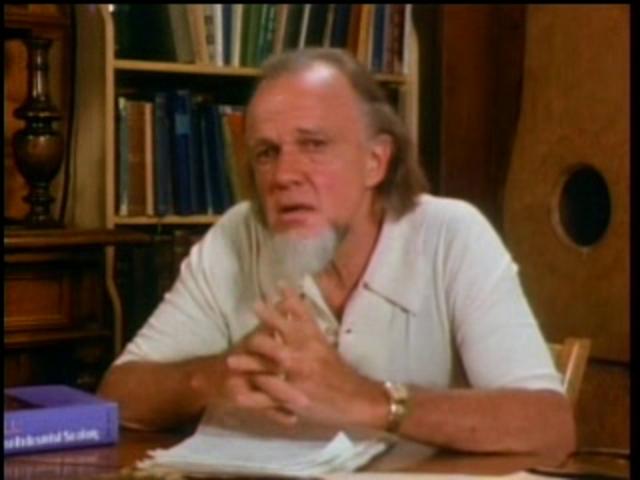
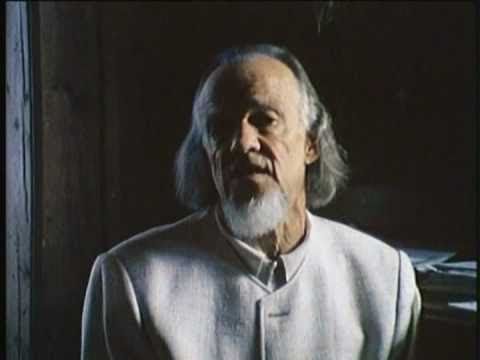
Francis Schaeffer
Francis Schaeffer.jpg

Founder of the L’Abri community
Born Francis August Schaeffer
January 30, 1912

Died May 15, 1984 (aged 72)

I truly believe that many of the problems we have today in the USA are due to the advancement of humanism in the last few decades in our society. Ronald Reagan appointed the evangelical Dr. C. Everett Koop to the position of Surgeon General in his administration. He partnered with Dr. Francis Schaeffer in making the video below. It is very valuable information for Christians to have.  Actually I have included a video below that includes comments from him on this subject.


Francis Schaeffer Whatever Happened to the Human Race (Episode 1) ABORTION

I have gone back and forth and back and forth with many liberals on the Arkansas Times Blog on many issues such as abortionhuman rightswelfarepovertygun control  and issues dealing with popular culture . This time around I have discussed morality with the Ark Times Bloggers and particularly the trial of the abortionist Dr. Kermit Gosnell and through that we discuss infanticide, abortion and even partial birth abortion. Here are some of my favorite past posts on the subject of Gosnell: ,Abby Johnson comments on Dr. Gosnell’s guilty verdict, Does President Obama care about Kermit Gosnell verdict?Dr. Gosnell Trial mostly ignored by mediaKermit Gosnell is guilty of same crimes of abortion clinics are says Jennifer MasonDenny Burk: Is Dr. Gosnell the usual case or not?, Pro-life Groups thrilled with Kermit Gosnell guilty verdict,  Reactions to Dr. Gosnell guilty verdict from pro-life leaders,  Kermit Gosnell and Planned Parenthood supporting infanticide?, Owen Strachan on Dr. Gosnell Trial, Al Mohler on Kermit Gosnell’s abortion practice, Finally we get justice for Dr. Kermit Gosnell .

In July of 2013 I went back and forth with several bloggers from the Ark Times Blog concerning Dr. Kermit Gosnell’s abortion practice and his trial which had finished up in the middle of May:

Zatharus wrote:

“The main issue” is the ownership of the reproductive organs.
If the state has ownership then forced birth, abortion, or sterilization are beyond the citizen’s legal control. Furthermore, if the state can claim ownership of females’ reproductive organs, then the state can claim ownership of other organs & of either sex.
____________________

Zatharus, YOUR SIDE WON IN THE LAST TWO ELECTIONS AND WE ARE GETTING THE SUPREME COURT JUSTICES THAT YOUR PRESIDENT IS CHOOSING!!!!

Murray Vasser who is a Physics Instructor at Biola University wrote:

If you really believe that late-term abortion is a victory for women, and if you really believe that laws which ban late-term abortions are a violation of reproductive rights, then you should like Dr. Gosnell. Maybe his clinic was a little too dirty, but aside from these janitorial concerns, he was a hero for freedom and choice.
All in all, the blustering moral outrage from American voters rings a little hollow, to say the least. In two landslide elections, you voted into office Barack Obama, a man who has stridently fought to keep late term abortion legal before, during, and after birth. (Click here if you do not believe me.)
You asked for it. Twice. Is this not what you wanted?

http://murrayvasser.blogspot.com/2013/04/w…

Related posts:

GBCSUMC on Gosnell: What’s abortion got to do with it? #UMC

Many in the world today are taking a long look at the abortion industry because of the May 14, 2013 guilty verdict and life term penalty handed down by a jury (which included 9 out of 12 pro-choice jurors)  to Dr. Kermit Gosnell. During this time of reflection I wanted to put forth some of the […]

Kermit Gosnell and the irony of the coat hanger back alley argument

Many in the world today are taking a long look at the abortion industry because of the May 14, 2013 guilty verdict and life term penalty handed down by a jury (which included 9 out of 12 pro-choice jurors)  to Dr. Kermit Gosnell. During this time of reflection I wanted to put forth some of the […]

History’s Jury Is Out: Has Gosnell Rocked Our Conscience?

Many in the world today are taking a long look at the abortion industry because of the May 14, 2013 guilty verdict and life term penalty handed down by a jury (which included 9 out of 12 pro-choice jurors)  to Dr. Kermit Gosnell. During this time of reflection I wanted to put forth some of the […]

Evangelical Blogger Lists Eight Reasons the Media Are Ignoring the Gosnell Murder Trial

Many in the world today are taking a long look at the abortion industry because of the May 14, 2013 guilty verdict and life term penalty handed down by a jury (which included 9 out of 12 pro-choice jurors)  to Dr. Kermit Gosnell. During this time of reflection I wanted to put forth some of the […]

Cornerstone Executive Ashley Pratte on Gosnell Trial Verdict

Many in the world today are taking a long look at the abortion industry because of the May 14, 2013 guilty verdict and life term penalty handed down by a jury (which included 9 out of 12 pro-choice jurors)  to Dr. Kermit Gosnell. During this time of reflection I wanted to put forth some of the […]

Dr. Gosnell Trial ignored for a while by mainstream media

Many in the world today are taking a long look at the abortion industry because of the May 14, 2013 guilty verdict and life term penalty handed down by a jury (which included 9 out of 12 pro-choice jurors)  to Dr. Kermit Gosnell. During this time of reflection I wanted to put forth some of the […]

ANALYSIS: Will the Kermit Gosnell verdict change the abortion debate?

Many in the world today are taking a long look at the abortion industry because of the May 14, 2013 guilty verdict and life term penalty handed down by a jury (which included 9 out of 12 pro-choice jurors)  to Dr. Kermit Gosnell. During this time of reflection I wanted to put forth some of the […]

What’s So Bad About Kermit Gosnell?

Many in the world today are taking a long look at the abortion industry because of the May 14, 2013 guilty verdict and life term penalty handed down by a jury (which included 9 out of 12 pro-choice jurors)  to Dr. Kermit Gosnell. During this time of reflection I wanted to put forth some of the […]

Kermit Gosnell and the Gospel

Many in the world today are taking a long look at the abortion industry because of the May 14, 2013 guilty verdict and life term penalty handed down by a jury (which included 9 out of 12 pro-choice jurors)  to Dr. Kermit Gosnell. During this time of reflection I wanted to put forth some of the […]

VIDEO: Kermit Gosnell killings like ‘weeding your garden’

Many in the world today are taking a long look at the abortion industry because of the May 14, 2013 guilty verdict and life term penalty handed down by a jury (which included 9 out of 12 pro-choice jurors)  to Dr. Kermit Gosnell. During this time of reflection I wanted to put forth some of the […]

Gosnell: The Silence is Deafening

Many in the world today are taking a long look at the abortion industry because of the May 14, 2013 guilty verdict and life term penalty handed down by a jury (which included 9 out of 12 pro-choice jurors)  to Dr. Kermit Gosnell. During this time of reflection I wanted to put forth some of the […]

Five Thoughts on the Gosnell Conviction

Many in the world today are taking a long look at the abortion industry because of the May 14, 2013 guilty verdict and life term penalty handed down by a jury (which included 9 out of 12 pro-choice jurors)  to Dr. Kermit Gosnell. During this time of reflection I wanted to put forth some of the […]

Implications of the Kermit Gosnell Verdict

Many in the world today are taking a long look at the abortion industry because of the May 14, 2013 guilty verdict and life term penalty handed down by a jury (which included 9 out of 12 pro-choice jurors)  to Dr. Kermit Gosnell. During this time of reflection I wanted to put forth some of the […]

Godly comments on Dr. Kermit Gosnell

Many in the world today are taking a long look at the abortion industry because of the May 14, 2013 guilty verdict and life term penalty handed down by a jury (which included 9 out of 12 pro-choice jurors)  to Dr. Kermit Gosnell. During this time of reflection I wanted to put forth some of the […]

Dr. Gosnell Trial has prompted closer look at Albuquerque abortion clinic

Many in the world today are taking a long look at the abortion industry because of the May 14, 2013 guilty verdict and life term penalty handed down by a jury (which included 9 out of 12 pro-choice jurors)  to Dr. Kermit Gosnell. During this time of reflection I wanted to put forth some of the […]

Why won’t President Obama comment on Dr. Gosnell Trial?

Many in the world today are taking a long look at the abortion industry because of the May 14, 2013 guilty verdict and life term penalty handed down by a jury (which included 9 out of 12 pro-choice jurors)  to Dr. Kermit Gosnell. During this time of reflection I wanted to put forth some of the […]

Dr. Alveda King reacts to guilty verdict of Kermit Gosnell

Francis Schaeffer: “Whatever Happened to the Human Race” (Episode 1) ABORTION OF THE HUMAN RACE Published on Oct 6, 2012 by AdamMetropolis ________________ What a great article below: Dr. Alveda King: Guilty Gosnell Verdict May Spark More Justice for Women and Babies Contact: Eugene Vigil, King for America, 470-244-3302 PHILADELPHIA, May 13, 2013 /Christian Newswire/ […]

Kristen Hatten: Dr. Gosnell guilty verdict, but what about the rest?

Many in the world today are taking a long look at the abortion industry because of the May 14, 2013 guilty verdict and life term penalty handed down by a jury (which included 9 out of 12 pro-choice jurors)  to Dr. Kermit Gosnell. During this time of reflection I wanted to put forth some of the […]

Lila Rose of Live Action comments on Kermit Gosnell guilty verdict

Francis Schaeffer: “Whatever Happened to the Human Race” (Episode 1) ABORTION OF THE HUMAN RACE Published on Oct 6, 2012 by AdamMetropolis ________________ May 14, 2013 Murdered Thousands, Convicted for Three: The Kermit Gosnell Verdict By Drew Belsky Read more: http://www.americanthinker.com/2013/05/murdered_thousands_convicted_for_three_the_kermit_gosnell_verdict.html#ixzz2TMstLk1c Follow us: @AmericanThinker on Twitter | AmericanThinker on FacebookPhiladelphia abortionist Kermit Gosnell was convicted […]

Gerard M. Nadal: Dr. Gosnell Guilty, but now what?

Many in the world today are taking a long look at the abortion industry because of the May 14, 2013 guilty verdict and life term penalty handed down by a jury (which included 9 out of 12 pro-choice jurors)  to Dr. Kermit Gosnell. During this time of reflection I wanted to put forth some of the […]

Reince Priebus on Kermit Gosnell guilty verdict

Francis Schaeffer: “Whatever Happened to the Human Race” (Episode 1) ABORTION OF THE HUMAN RACE Published on Oct 6, 2012 by AdamMetropolis ________________ A Verdict Doesn’t End the Gosnell Story By: Chairman Reince Priebus (Diary)  |  May 13th, 2013 at 03:27 PM  |  28 RESIZE: AAA The horrors that unfolded in the clinic of Dr. […]

Kirsten Powers of USA Today on Dr. Gosnell Trial

Many in the world today are taking a long look at the abortion industry because of the May 14, 2013 guilty verdict and life term penalty handed down by a jury (which included 9 out of 12 pro-choice jurors)  to Dr. Kermit Gosnell. During this time of reflection I wanted to put forth some of the […]

Top 10 Revelations of Kermit Gosnell Trial

Francis Schaeffer: “Whatever Happened to the Human Race” (Episode 1) ABORTION OF THE HUMAN RACE Published on Oct 6, 2012 by AdamMetropolis ________________ All-American Horror Story: Top 10 Kermit Gosnell Trial Revelations by Kristan Hawkins | Washington, DC | LifeNews.com | 4/12/13 3:38 PM Since so many in the media have failed/refused to report on […]

Denny Burk: We have to learn from Dr. Gosnell’s Crimes

Many in the world today are taking a long look at the abortion industry because of the May 14, 2013 guilty verdict and life term penalty handed down by a jury (which included 9 out of 12 pro-choice jurors)  to Dr. Kermit Gosnell. During this time of reflection I wanted to put forth some of the […]

Tony Perkins on Kermit Gosnell Trial

Francis Schaeffer: “Whatever Happened to the Human Race” (Episode 1) ABORTION OF THE HUMAN RACE Published on Oct 6, 2012 by AdamMetropolis _____________ Tony Perkins: Gosnell Trial – FOX News Published on May 13, 2013 Tony Perkins: Gosnell Trial – FOX News ________________ Hey Obama, Kermit Gosnell Is What a Real War on Women Looks Like […]

Ross Douthat of NY Times on Dr. Gosnell

Many in the world today are taking a long look at the abortion industry because of the May 14, 2013 guilty verdict and life term penalty handed down by a jury (which included 9 out of 12 pro-choice jurors)  to Dr. Kermit Gosnell. During this time of reflection I wanted to put forth some of the […]

Family Research Council happy with Kermit Gosnell Guilty Verdict

Francis Schaeffer: “Whatever Happened to the Human Race” (Episode 1) ABORTION OF THE HUMAN RACE Published on Oct 6, 2012 by AdamMetropolis ___ _____________ Tony Perkins: Gosnell Trial – FOX News Published on May 13, 2013 Tony Perkins: Gosnell Trial – FOX News ________________ Family Research Council Praises Jury for Bringing Justice to Victims of Abortionist […]

Peter Jones on Infanticide and Dr. Gosnell

Many in the world today are taking a long look at the abortion industry because of the May 14, 2013 guilty verdict and life term penalty handed down by a jury (which included 9 out of 12 pro-choice jurors)  to Dr. Kermit Gosnell. During this time of reflection I wanted to put forth some of the […]

Is Dr. Gosnell a “one-of-a-kind anomaly”?

Many in the world today are taking a long look at the abortion industry because of the May 14, 2013 guilty verdict and life term penalty handed down by a jury (which included 9 out of 12 pro-choice jurors)  to Dr. Kermit Gosnell. During this time of reflection I wanted to put forth some of the […]

Kermit Gosnell and the Logic of “Pro-Choice”

Francis Schaeffer: “Whatever Happened to the Human Race” (Episode 1) ABORTION OF THE HUMAN RACE Published on Oct 6, 2012 by AdamMetropolis ________________ _____________ Tony Perkins: Gosnell Trial – FOX News Published on May 13, 2013 Tony Perkins: Gosnell Trial – FOX News ________________ Kermit Gosnell and the Logic of “Pro-Choice” by  Matthew J. Franck within […]

______________________

Do New York late term abortionists need more attention like Dr. Gosnell did?

Many in the world today are taking a long look at the abortion industry because of the May 14, 2013 guilty verdict and life term penalty handed down by a jury (which included 9 out of 12 pro-choice jurors)  to Dr. Kermit Gosnell. During this time of reflection I wanted to put forth some of the […]

Dr. Gosnell Trial has prompted Texas authorities to take closer look a Houston abortionist

Many in the world today are taking a long look at the abortion industry because of the May 14, 2013 guilty verdict and life term penalty handed down by a jury (which included 9 out of 12 pro-choice jurors)  to Dr. Kermit Gosnell. During this time of reflection I wanted to put forth some of the […]

Father Frank Pavone reacts to Kermit Gosnell guilty verdict

Francis Schaeffer: “Whatever Happened to the Human Race” (Episode 1) ABORTION OF THE HUMAN RACE Published on Oct 6, 2012 by AdamMetropolis ________________ Fr. Pavone: Right to choose must yield to right to life STATEN ISLAND, NY — Father Frank Pavone, National Director of Priests for Life, had the following comment on the verdict in […]

NAF reacts to Dr. Gosnell guilty verdict

Many in the world today are taking a long look at the abortion industry because of the May 14, 2013 guilty verdict and life term penalty handed down by a jury (which included 9 out of 12 pro-choice jurors)  to Dr. Kermit Gosnell. During this time of reflection I wanted to put forth some of the […]

Hope for Kermit Gosnell’s repentance?

Francis Schaeffer: “Whatever Happened to the Human Race” (Episode 1) ABORTION OF THE HUMAN RACE Published on Oct 6, 2012 by AdamMetropolis ________________ The truth of abortion … the hope for Gosnell’s repentance A conviction in the murder trial of Philadelphia abortionist Kermit Gosnell has boosted the efforts of pro-lifers to demonstrate what abortion really […]

The Selfishness of Chris Evert Part 5 (Includes videos and Pictures)

The Selfishness of Chris Evert Part 2 (Includes videos and Pictures) _________________________________ _____________________ _______________________ __________________________ Tennis – Wimbledon 1974 [ Official Film ] – 05/05 Published on May 1, 2012 John Newcombe, Ken Rosewall, Bjor Borg, Jimmy Connors, Cris Evert… ___________________ Jimmy Connors Reflects Published on May 13, 2013 Jimmy Connors visits “SportsCenter” to discuss his memoir, […]

By Everette Hatcher III | Posted in Current Events, Francis Schaeffer, Prolife | Tagged , | Edit | Comments (0)

Pro-life Congresswoman has baby despite doctor’s wishes!!!!

In the film series “WHATEVER HAPPENED TO THE HUMAN RACE?” the arguments are presented  against abortion (Episode 1),  infanticide (Episode 2),   euthenasia (Episode 3), and then there is a discussion of the Christian versus Humanist worldview concerning the issue of “the basis for human dignity” in Episode 4 and then in the last episode a close look at the truth claims of the Bible.

I truly believe that many of the problems we have today in the USA are due to the advancement of humanism in the last few decades in our society. Ronald Reagan appointed the evangelical Dr. C. Everett Koop to the position of Surgeon General in his administration. He partnered with Dr. Francis Schaeffer in making the video below. It is very valuable information for Christians to have.  Actually I have included a video below that includes comments from him on this subject of abortion and I believe that those who hold to the Biblical view must align themselves with the pro-life movement.

Francis Schaeffer Whatever Happened to the Human Race (Episode 1) ABORTION

Published on Oct 6, 2012

since I’ve been reading his sermons & am on the last one tomorrow, I thought it’d be fitting to put up this video of Dr. Schaeffer & Dr. Everett Koop. his other video series which is highly entertaining is “How Should We Then Live”

___________

Congresswoman’s Miracle Baby Still Doing Well After Doctors Said She’d Die

by Steven Ertelt | Washington, DC | LifeNews.com | 9/6/13 12:24 PM

When she was pregnant with her daughter Abigail Rose Beutler, doctors told Congresswoman Jaime Herrera Beutler, a pro-life Republican from Washington state, that her baby had a potentially fatal diagnosis that would claim her life shortly after birth.

Beutler posted a message on Facebook in June saying her unborn child had been diagnosed with Potter’s Syndrome, a condition which prevents the child’s kidneys from developing properly and is typically fatal for the baby.

In Potter’s syndrome, the unborn baby has an atypical physical appearance as the result of oligohydramnios, a decrease in amniotic fluid volume that causes developmental problems and babies with Potter’s Syndrome typically die within a couple days of being born.

Then, in July, Beutler said Abigail was doing well two weeks following her birth.

Now, in a new interview with the Today show, the congresswoman gave another update about her little girl.

Abigail will need a kidney transplant in the year ahead, but her parents and doctors consider the child a miracle.

“She is doing amazing,” Jaime said. “In the last couple of days, we got to the point where we’re holding her. She’s playing. She will scream when her diaper is dirty. She is like any other baby. She has a few challenges, but man, she’s determined.”

Daniel said they hope their experience sends a message to other parents who may be in similar situations.

“There are no guaranteed solutions and there’s no necessarily magical cures, certainly for (Potter’s Syndrome), but don’t be satisfied with one opinion because there are a lot of intelligent doctors with different perspectives and experiences and opinions, so work to find one who will partner with you to find anything possible,” he said.

Jaime said they learned about the Johns Hopkins physician after another parent slipped her a name and said, “Here’s a doctor who might try.”

“We had more doctors tell us ‘no’ than tell us ‘yes,’ and there are other parents who have had similar experiences,” she said. “We’d like this to be part of the conversation when this diagnosis comes again, so these parents have an option.”

Related posts:

Francis Schaeffer’s prayer for us in USA

 Francis Schaeffer: “Whatever Happened to the Human Race” (Episode 1) ABORTION OF THE HUMAN RACE Published on Oct 6, 2012 by AdamMetropolis The 45 minute video above is from the film series created from Francis Schaeffer’s book “Whatever Happened to the Human Race?” with Dr. C. Everett Koop. This book  really helped develop my political views […]

Francis Schaeffer’s “How should we then live?” Video and outline of episode 10 “Final Choices” (Schaeffer Sundays)

E P I S O D E 1 0   Dr. Francis Schaeffer – Episode X – Final Choices 27 min FINAL CHOICES I. Authoritarianism the Only Humanistic Social Option One man or an elite giving authoritative arbitrary absolutes. A. Society is sole absolute in absence of other absolutes. B. But society has to be […]

Francis Schaeffer’s “How should we then live?” Video and outline of episode 9 “The Age of Personal Peace and Affluence” (Schaeffer Sundays)

E P I S O D E 9 Dr. Francis Schaeffer – Episode IX – The Age of Personal Peace and Affluence 27 min T h e Age of Personal Peace and Afflunce I. By the Early 1960s People Were Bombarded From Every Side by Modern Man’s Humanistic Thought II. Modern Form of Humanistic Thought Leads […]

Francis Schaeffer’s “How should we then live?” Video and outline of episode 8 “The Age of Fragmentation” (Schaeffer Sundays)

E P I S O D E 8 Dr. Francis Schaeffer – Episode VIII – The Age of Fragmentation 27 min I saw this film series in 1979 and it had a major impact on me. T h e Age of FRAGMENTATION I. Art As a Vehicle Of Modern Thought A. Impressionism (Monet, Renoir, Pissarro, Sisley, […]

Francis Schaeffer’s “How should we then live?” Video and outline of episode 7 “The Age of Non-Reason” (Schaeffer Sundays)

E P I S O D E 7 Dr. Francis Schaeffer – Episode VII – The Age of Non Reason I am thrilled to get this film series with you. I saw it first in 1979 and it had such a big impact on me. Today’s episode is where we see modern humanist man act […]

Francis Schaeffer’s “How should we then live?” Video and outline of episode 6 “The Scientific Age” (Schaeffer Sundays)

E P I S O D E 6 How Should We Then Live 6#1 Uploaded by NoMirrorHDDHrorriMoN on Oct 3, 2011 How Should We Then Live? Episode 6 of 12 ________ I am sharing with you a film series that I saw in 1979. In this film Francis Schaeffer asserted that was a shift in […]

Francis Schaeffer’s “How should we then live?” Video and outline of episode 5 “The Revolutionary Age” (Schaeffer Sundays)

E P I S O D E 5 How Should We Then Live? Episode 5: The Revolutionary Age I was impacted by this film series by Francis Schaeffer back in the 1970′s and I wanted to share it with you. Francis Schaeffer noted, “Reformation Did Not Bring Perfection. But gradually on basis of biblical teaching there […]

Francis Schaeffer’s “How should we then live?” Video and outline of episode 4 “The Reformation” (Schaeffer Sundays)

Dr. Francis Schaeffer – Episode IV – The Reformation 27 min I was impacted by this film series by Francis Schaeffer back in the 1970′s and I wanted to share it with you. Schaeffer makes three key points concerning the Reformation: “1. Erasmian Christian humanism rejected by Farel. 2. Bible gives needed answers not only as to […]

“Schaeffer Sundays” Francis Schaeffer’s “How should we then live?” Video and outline of episode 3 “The Renaissance”

Francis Schaeffer’s “How should we then live?” Video and outline of episode 3 “The Renaissance” Francis Schaeffer: “How Should We Then Live?” (Episode 3) THE RENAISSANCE I was impacted by this film series by Francis Schaeffer back in the 1970′s and I wanted to share it with you. Schaeffer really shows why we have so […]

Francis Schaeffer’s “How should we then live?” Video and outline of episode 2 “The Middle Ages” (Schaeffer Sundays)

  Francis Schaeffer: “How Should We Then Live?” (Episode 2) THE MIDDLE AGES I was impacted by this film series by Francis Schaeffer back in the 1970′s and I wanted to share it with you. Schaeffer points out that during this time period unfortunately we have the “Church’s deviation from early church’s teaching in regard […]

Francis Schaeffer’s “How should we then live?” Video and outline of episode 1 “The Roman Age” (Schaeffer Sundays)

Francis Schaeffer: “How Should We Then Live?” (Episode 1) THE ROMAN AGE   Today I am starting a series that really had a big impact on my life back in the 1970′s when I first saw it. There are ten parts and today is the first. Francis Schaeffer takes a look at Rome and why […]

Francis Schaeffer: “Whatever Happened to the Human Race” (Episode 5) TRUTH AND HISTORY

Francis Schaeffer: “Whatever Happened to the Human Race” (Episode 5) TRUTH AND HISTORY Published on Oct 7, 2012 by AdamMetropolis This crucial series is narrated by the late Dr. Francis Schaeffer and former Surgeon General Dr. C. Everett Koop. Today, choices are being made that undermine human rights at their most basic level. Practices once […]

Francis Schaeffer: “Whatever Happened to the Human Race” (Episode 4) THE BASIS FOR HUMAN DIGNITY

The opening song at the beginning of this episode is very insightful. Francis Schaeffer: “Whatever Happened to the Human Race” (Episode 4) THE BASIS FOR HUMAN DIGNITY Published on Oct 7, 2012 by AdamMetropolis This crucial series is narrated by the late Dr. Francis Schaeffer and former Surgeon General Dr. C. Everett Koop. Today, choices […]

Francis Schaeffer: “Whatever Happened to the Human Race” (Episode 3) DEATH BY SOMEONE’S CHOICE

Francis Schaeffer: “Whatever Happened to the Human Race” (Episode 3) DEATH BY SOMEONE’S CHOICE Published on Oct 6, 2012 by AdamMetropolis This crucial series is narrated by the late Dr. Francis Schaeffer and former Surgeon General Dr. C. Everett Koop. Today, choices are being made that undermine human rights at their most basic level. Practices […]

Francis Schaeffer: “Whatever Happened to the Human Race?” (Episode 2) SLAUGHTER OF THE INNOCENTS

Francis Schaeffer: “Whatever Happened to the Human Race?” (Episode 2) SLAUGHTER OF THE INNOCENTS Published on Oct 6, 2012 by AdamMetropolis This crucial series is narrated by the late Dr. Francis Schaeffer and former Surgeon General Dr. C. Everett Koop. Today, choices are being made that undermine human rights at their most basic level. Practices […]

Francis Schaeffer: “Whatever Happened to the Human Race” (Episode 1) ABORTION OF THE HUMAN RACE

It is not possible to know where the pro-life evangelicals are coming from unless you look at the work of the person who inspired them the most. That person was Francis Schaeffer.  I do care about economic issues but the pro-life issue is the most important to me. Several years ago Adrian Rogers (past president of […]

The following essay explores the role that Francis Schaeffer played in the rise of the pro-life movement. It examines the place of How Should We Then Live?, Whatever Happened to the Human Race?, and A Christian Manifesto in that process.

This essay below is worth the read. Schaeffer, Francis – “Francis Schaeffer and the Pro-Life Movement” [How Should We Then Live?, Whatever Happened to the Human Race?, A Christian Manifesto] Editor note: <p> </p> [The following essay explores the role that Francis Schaeffer played in the rise of the pro-life movement.  It examines the place of […]

Who was Francis Schaeffer? by Udo Middelmann

Great article on Schaeffer. Who was Dr. Francis A. Schaeffer? By Francis Schaeffer The unique contribution of Dr. Francis Schaeffer on a whole generation was the ability to communicate the truth of historic Biblical Christianity in a way that combined intellectual integrity with practical, loving care. This grew out of his extensive understanding of the Bible […]

.

RESPONDING TO HARRY KROTO’S BRILLIANT RENOWNED ACADEMICS!! (Dr. Hubert Dreyfus, Professor of Philosophy, University of California, Berkeley, WHY DO PEOPLE HAVE A DESIRE FOR GOD?)

___________

Philosophy Department
UC Berkeley College of Letters and Science

On November 21, 2014 I received a letter from Nobel Laureate Harry Kroto and it said:

…Please click on this URL http://vimeo.com/26991975

and you will hear what far smarter people than I have to say on this matter. I agree with them.

Harry Kroto

_____

Below you have picture of Dr. Harry Kroto:

_________________

__________________________

There are 3 videos in this series and they have statements by 150 academics and scientists and I hope to respond to all of them. Wikipedia notes

Hubert Lederer Dreyfus (born October 15, 1929) is an American philosopher and professor of philosophy at the University of California, Berkeley.

His main interests include phenomenology, existentialism and the philosophy of both psychology and literature, as well as the philosophical implications of artificial intelligence. Dreyfus is known for his exegesis of Martin Heidegger, which critics labeled “Dreydegger”. (I wish Dr. Dreyfus would take the time to read some of the works of Francis Schaeffer on Martin Heidegger.)

His comments can be found on the 1st video and the 43rd clip in this series. Below the videos you will find his words.

50 Renowned Academics Speaking About God (Part 1)

Another 50 Renowned Academics Speaking About God (Part 2)

A Further 50 Renowned Academics Speaking About God (Part 3)

_______________

I grew up at Bellevue Baptist Church under the leadership of our pastor Adrian Rogers and I read many books by the Evangelical Philosopher Francis Schaeffer and have had the opportunity to contact many of the evolutionists or humanistic academics that they have mentioned in their works. Many of these scholars have taken the time to respond back to me in the last 20 years and some of the names  included are  Ernest Mayr (1904-2005), George Wald (1906-1997), Carl Sagan (1934-1996),  Robert Shapiro (1935-2011), Nicolaas Bloembergen (1920-),  Brian Charlesworth (1945-),  Francisco J. Ayala (1934-) Elliott Sober (1948-), Kevin Padian (1951-), Matt Cartmill (1943-) , Milton Fingerman (1928-), John J. Shea (1969-), , Michael A. Crawford (1938-), Paul Kurtz (1925-2012), Sol Gordon (1923-2008), Albert Ellis (1913-2007), Barbara Marie Tabler (1915-1996), Renate Vambery (1916-2005), Archie J. Bahm (1907-1996), Aron S “Gil” Martin ( 1910-1997), Matthew I. Spetter (1921-2012), H. J. Eysenck (1916-1997), Robert L. Erdmann (1929-2006), Mary Morain (1911-1999), Lloyd Morain (1917-2010),  Warren Allen Smith (1921-), Bette Chambers (1930-),  Gordon Stein (1941-1996) , Milton Friedman (1912-2006), John Hospers (1918-2011), Michael Martin (1932-).Harry Kroto (1939-), Marty E. Martin (1928-), Richard Rubenstein (1924-), James Terry McCollum (1936-), Edward O. WIlson (1929-), Lewis Wolpert (1929), Gerald Holton (1922-),  and  Ray T. Cragun (1976-).

QUOTE OF DR. DREYFUS FROM THE VIDEO ABOVE:

“…talk about religious experience and we don’t need as you will see in a minute, so we don’t need God so we can go along with Nietzsche God is dead as far as culture is concerned. There is no longer a religious culture. It is a secular culture, yet there is religious experience and lots of need for religion in our culture taking weird forms, fanatical forms and phenomenology may be able to help with that and bring religion back into the form where it gave meaning to people’s lives and didn’t need an all powerful creator kind of God.”

______________________________

 IS DR. DREYFUS RIGHT ABOUT TRYING TO HELP OTHERS TO GET OVER THE “need an all powerful creator kind of God.” OR IS THERE A GOD THAT CREATED THE WORLD AND PUT THAT CONSCIENCE IN EVERYONE’S HEART THAT BEARS WITNESS THAT HE CREATED THEM FOR A PURPOSE?
Solomon wisely noted in Ecclesiastes 3:11 “God has planted eternity in the heart of men…” (Living Bible). No wonder Bertrand Russell wrote in his autobiography, “It is odd, isn’t it? I feel passionately for this world and many things and people in it, and yet…what is it all? There must be something more important, one feels, though I don’t believe there is. I am haunted. Some ghosts, for some extra mundane regions, seem always trying to tell me something that I am to repeat to the world, but I cannot understand that message.”

CSICOP experts commented 15 years ago on a lie-detector’s ability to detect one’s repressed belief in God!!!!

In the book, THE DEMON-HAUNTED WORLD: Science as a Candle in the Dark by Carl Sagan.  Sagan writes:

The Committee for the Scientific Investigation of Claims of the Paranormal is an organization of scientists, academics, magicians, and others dedicated to skeptical scrutiny of emerging or full-blown pseudo-sciences. It was founded by the University of Buffalo philosopher Paul Kurtz in 1976. I’ve been affiliated with it since its beginning. Its acronym, CSICOP, is pronounced sci-cop C as if it’s an organization of scientists performing a police function  CSICOP publishes a bimonthly periodical called The Skeptical Inquirer. On the day it arrives, I take it home from the office and pore through its pages, wondering what new misunderstandings will be revealed (p. 299).

Back in the late 1990’s I corresponded with many scholars from CSICOP concerning the lie-detector’s ability to detect one’s repressed belief in God. I have a good friend who is a street preacher who preaches on the Santa Monica Promenade in California and during the Q/A sessions he does have lots of atheists that enjoy their time at the mic. When this happens he  always quotes Romans 1:18-19 (Amplified Bible) ” For God’s wrath and indignation are revealed from heaven against all ungodliness and unrighteousness of men, who in their wickedness REPRESS and HINDER the truth and make it inoperative. For that which is KNOWN about God is EVIDENT to them and MADE PLAIN IN THEIR INNER CONSCIOUSNESS, because God  has SHOWN IT TO THEM,”(emphasis mine). Then he  tells the atheist that the atheist already knows that God exists but he has been suppressing that knowledge in unrighteousness. This usually infuriates the atheist.

My friend draws some large crowds at times and was thinking about setting up a lie detector test and see if atheists actually secretly believe in God. He discussed this project with me since he knew that I had done a lot of research on the idea about 20 years ago.

Nelson Price in THE EMMANUEL FACTOR (1987) tells the story about Brown Trucking Company in Georgia who used to give polygraph tests to their job applicants. However, in part of the test the operator asked, “Do you believe in God?” In every instance when a professing atheist answered “No,” the test showed the person to be lying. My pastor Adrian Rogers used to tell this same story to illustrate Romans 1:19 and it was his conclusion that “there is no such thing anywhere on earth as a true atheist. If a man says he doesn’t believe in God, then he is lying. God has put his moral consciousness into every man’s heart, and a man has to try to kick his conscience to death to say he doesn’t believe in God.”

It is true that polygraph tests for use in hiring were banned by Congress in 1988.  Mr and Mrs Claude Brown on Aug 25, 1994  wrote me a letter confirming that over 15,000 applicants previous to 1988 had taken the polygraph test and EVERY TIME SOMEONE SAID THEY DID NOT BELIEVE IN GOD, THE MACHINE SAID THEY WERE LYING.

It had been difficult to catch up to the Browns. I had heard about them from Dr. Rogers’ sermon but I did not have enough information to locate them. Dr. Rogers referred me to Dr. Nelson Price and Dr. Price’s office told me that Claude Brown lived in Atlanta. After writing letters to all 9 of the entries for Claude Brown in the Atlanta telephone book, I finally got in touch with the Browns.

Adrian Rogers also pointed out that the Bible does not recognize the theoretical atheist.  Psalms 14:1: The fool has said in his heart, “There is no God.”  Dr Rogers notes, “The fool is treating God like he would treat food he did not desire in a cafeteria line. ‘No broccoli for me!’ ” In other words, the fool just doesn’t want God in his life and is a practical atheist, but not a theoretical atheist. Charles Ryrie in the The Ryrie Study Bible came to the same conclusion on this verse.

Here are the conclusions of the experts I wrote in the secular world concerning the lie detector test and it’s ability to get at the truth:

Professor Frank Horvath of the School of Criminal Justice at Michigan State University has testified before Congress concerning the validity of the polygraph machine. He has stated on numerous occasions that “the evidence from those who have actually been affected by polygraph testing in the workplace is quite contrary to what has been expressed by critics. I give this evidence greater weight than I give to the most of the comments of critics” (letter to me dated October 6, 1994).

There was no better organization suited to investigate this claim concerning the lie detector test than the Committee for the Scientific Investigation of Claims of the Paranormal (CSICOP). This organization changed their name to the Committe for Skeptical Inquiry in 2006. This organization includes anyone who wants to help debunk the whole ever-expanding gamut of misleading, outlandish, and fraudulent claims made in the name of science.

I read The Skeptical Review(publication of CSICOP) for several years during the 90’s and I would write letters to these scientists about taking this project on and putting it to the test.  Below are some of  their responses (15 to 20 years old now):

1st Observation: Religious culture of USA could have influenced polygraph test results.
ANTONY FLEW  (formerly of Reading University in England, now deceased, in a letter to me dated 8-11-96) noted, “For all the evidence so far available seems to be of people from a culture in which people are either directly brought up to believe in the existence of God or at least are strongly even if only unconsciously influenced by those who do. Even if everyone from such a culture revealed unconscious belief, it would not really begin to show that — as Descartes maintained— the idea of God is so to speak the Creator’s trademark, stamped on human souls by their Creator at their creation.”

2nd Observation: Polygraph Machines do not work. JOHN R. COLE, anthropologist, editor, National Center for Science Education, Dr. WOLF RODER, professor of Geography, University of Cincinnati, Dr. SUSAN BLACKMORE,Dept of Psychology, University of the West of England, Dr. CHRISTOPHER C. FRENCH, Psychology Dept, Goldsmith’s College, University of London, Dr.WALTER F. ROWE, The George Washington University, Dept of Forensic Sciences, Graduate School of Arts and Sciences.

3rd Observation: The sample size probably was not large enough to apply statistical inference. (These gentlemen made the following assertion before I received the letter back from Claude Brown that revealed that the sample size was over 15,000.) JOHN GEOHEGAN, Chairman of New Mexicans for Science and Reason, Dr. WOLF RODER, and Dr WALTER F. ROWE (in a letter dated July 12, 1994) stated, “The polygraph operator for Brown Trucking Company has probably examined only a few hundred or a few thousand job applicants. I would surmise that only a very small number of these were actually atheists. It seems a statistically insignificant (and distinctly nonrandom) sampling of the 5 billion human beings currently inhabiting the earth. Dr. Nelson Price also seems to be impugning the integrity of anyone who claims to be an atheist in a rather underhanded fashion.”

4th Observation: The question (Do you believe in God?)  was out of place and it surprised the applicants. THOMAS GILOVICH, psychologist, Cornell Univ., Dr. ZEN FAULKES, professor of Biology, University of Victoria (Canada), ROBERT CRAIG, Head of Indiana Skeptics Organization, Dr. WALTER ROWE, 
 
5th Observation: Proof that everyone believes in God’s existence does not prove that God does in fact exist. PAUL QUINCEY, Nathional Physical Laboratory,(England), Dr. CLAUDIO BENSKI, Schneider Electric, CFEPP, (France),
6th Observation: Both the courts and Congress recognize that lie-detectors don’t work and that is why they were banned in 1988.  (Governments and the military still use them.)
Dr WALTER ROWE, KATHLEEN M. DILLION, professor of Psychology, Western New England College.
7th Observation:This information concerning Claude Brown’s claim has been passed on to us via a tv preacher and eveybody knows that they are untrustworthy– look at their history. WOLF RODER.
______________
Gene Emery, science writer for Providence Journal-Bulletin is a past winner of the CSICOP “Responsibility in Journalism Award” and he had the best suggestion of all when he suggested, “Actually, if you want to make a good case about whether Romans 1:19 is true, arrange to have a polygraph operator (preferably an atheist or agnostic) brought to the next CSICOP meeting. (I’m not a member of CSICOP, by the way, so I can’t give you an official invitation or anything.) If none of the folks at that meeting can convince the machine that they truly believe in God, maybe there is, in fact, an innate willingness to believe in God.”
_____________
____________
Let me share a story from a former atheist named Jamie Lash:

DOES GOD BELIEVE IN ATHEISTS?


I grew up as an atheist. I thought that the reason I didn’t believe was the lack of evidence that I could see or touch. I kept asking God to show me a sign if He was really there. He didn’t. Despite nine months of searching, I was just as alienated from God as I had ever been.

I remember the shock it was when God revealed to me that what I thought was the obstacle wasn’t the obstacle at all! The obstacle was pride and hardness of heart. It wasn’t a head problem; it was a heart problem. I had to come to the place where I was willing to let God be God over my life. Was I willing to confess (i.e. admit) that Jesus is Lord?

Years ago Adrian Rogers counseled with a NASA scientist and his severely depressed wife. The wife pointed to her husband and said, “My problem is him.” She went on to explain that her husband was a drinker, a liar, and an adulterer. Dr. Rogers asked the man if he were a Christian. “No!” the man laughed. “I’m an atheist.”

“Really?” Dr. Rogers replied. “That means you’re someone who knows that God does not exist.”

“That’s right,” said the man.

“Would it be fair to say that you don’t know all there is to know in the universe?”

“Of course.”

“Would it be generous to say you know half of all there is to know?”

“Yes.”

“Wouldn’t it be possible that God’s existence might be in the half you don’t know?”

“Okay, but I don’t think He exists.”

“Well then, you’re not an atheist; you’re an agnostic. You’re a doubter.”

“Yes, and I’m a big one.”

“It doesn’t matter what size you are. I want to know what kind you are.”

“What kinds are there?”

“There are honest doubters and dishonest doubters. An honest doubter is willing to search out the truth and live by the results; a dishonest doubter doesn’t want to know the truth. He can’t find God for the same reason a thief can’t find a policeman.”

“I want to know the truth.”

“Would you like to prove that God exists?”

“It can’t be done.”

“It can be done. You’ve just been in the wrong laboratory. Jesus said, ‘If any man’s will is to do His will, he will know whether my teaching is from God or whether I am speaking on my own authority’ (John 7:17). I suggest you read one chapter of the book of John each day, but before you do, pray something like this, ‘God, I don’t know if You’re there, I don’t know if the Bible is true, I don’t know if Jesus is Your Son. But if You show me that You are there, that the Bible is true, and that Jesus is Your Son, then I will follow You. My will is to do your will.”

The man agreed. About three weeks later he returned to Dr. Rogers’s office and invited Jesus Christ to be his Savior and Lord.

A man might be convinced that he’s being very sincere in his search for God, but until he humbles himself, he will never find Him.


— Jamie Lash  

A Brief Sample of Old Testament Archaeological Corroboration

A Brief Sample of Old Testament Archaeological CorroborationI’ve learned to test witnesses in my criminal investigations before trusting their testimony, and I evaluate them with the template we typically use in jury trials. One dimension of this template is corroboration: Is there any verifying evidence supporting the claims of the eyewitness? Corroborative evidence is what I refer to as “touch point” evidence. I don’t expect a surveillance video confirming every statement made by a witness, but I do expect small “touch point” corroborations. The authors of the Bible make a variety of historical claims, and many of these claims are corroborated by archaeological evidence. Archaeology is notoriously partial and incomplete, but it does offer us “touch point” verification of many Biblical claims. Here are just a few of the more impressive findings related to the Old Testament:

Related to the Customs of the Patriarchs
Critics of the Old Testament have argued against the historicity of the books of Moses, doubting the authenticity of many of the stories found in Genesis (and sometimes rejecting the authorship of Moses along the way). Skeptics doubted primitive people groups were capable of recording history with any significant detail, and they questioned the existence of many of the people and cities mentioned in the oldest of Biblical accounts. When the Ebla archive was discovered in Syria (modern Tell Mardikh) in the 1970′s, many of these criticisms became less reasonable. During the excavations of the Ebla palace in 1975, the excavators found a large library filled with tablets dating from 2400 -2300 BC. These tablets confirmed many of the personal titles and locations described in the patriarchal Old Testament accounts.

For years, critics also believed the name “Canaan” was used incorrectly in the early books of the Bible, doubting the term was used at this time in history and suspecting it was a late insertion (or evidence of late authorship). But “Canaan” appears in the Ebla tablets. The term was used in ancient Syria during the time in which the Old Testament was written. Critics were also skeptical of the word, “Tehom” (“the deep” in Genesis 1:2), believing it was also a late addition or evidence again of late authorship. But “Tehom” was also part of the vocabulary at Ebla, in use 800 years before Moses. In fact, there is a creation record in the Ebla Tablets remarkably similar to the Genesis account. In addition, the cities of Sodom and Gomorrah (once thought to be fictional) are also identified in the Ebla tablets, as well as the city of Haran. This latter city is described in Genesis as the city of Abram’s father, Terah. Prior to this discovery, critics doubted the existence of this ancient city. The Ebla discovery confirmed the locations of several ancient cities, corroborated the use of several terms and titles, and confirmed ancient people were capable of being eloquent and conscientious historians.

Related to the Hittites
The historicity and cultural customs of the Patriarchs have also been corroborated in clay tablets uncovered in the cities of Nuzi, Mari and Bogazkoy. Archaeological discoveries in these three cities have confirmed the existence of the Hittites. These findings also revealed an example of an ancient king with an incredible concentration of wealth. Prior to this discovery, skeptics doubted such ancient affluence was possible and considered the story of Solomon to be greatly exaggerated. This discovery provided an example of such a situation, however. Solomon’s prosperity is now considered to be entirely feasible.

Related to Sargon
The historicity of the Assyrian king, Sargon (recorded in Isaiah 20:1) has also been confirmed, in spite of the fact his name was not seen in any non-Biblical record. Archeology again proved the Biblical account to be true when Sargon’s palace was discovered in Khorsabad, Iraq. More importantly, the event mentioned in Isaiah 20, Sargon’s capture of Ashdod, was recorded on the palace walls, confirming the history recorded in Old Testament Scripture. Fragments of a stela (an inscribed stone pillar) were also found at Ashdod. This stela was originally carved to memorialize the victory of Sargon.

Related to Belshazzar
Belshazzar, king of Babylon, was another historic king doubted by critics. Belshazzar is named in Daniel 5, but according to the non-Biblical historic record, the last king of Babylon was Nabonidus. Tablets have been discovered, however, describing Belshazzar as Nabonidus’ son and documenting his service as coregent in Babylon. If this is the case, Belshazzar would have been able to appoint Daniel “third highest ruler in the kingdom” for reading the handwriting on the wall (as recorded in Daniel 5:16). This would have been the highest available position for Daniel. Here, once again, we see the historicity of the Biblical record has been confirmed by archaeology.

Related to Nebo-Sarsekim
It’s not just kings and well-known figures who have been verified by archeology over the years. There are thousands of “lesser known,” relatively unimportant characters in the Bible who would easily be overlooked if archeology did not continue to verify them. One such person is Nebo-Sarsekim. Nebo-Sarsekim is mentioned in the Bible in Chapter 39 of the Book of Jeremiah. According to Jeremiah, this man was Nebuchadnezzar II’s “chief officer” and was with him at the siege of Jerusalem in 587 BC, when the Babylonians overran the city. Many skeptics have doubted this claim, but in July of 2007, Michael Jursa, a visiting professor from Vienna, discovered Nebo-Sarsekim’s name (Nabu-sharrussu-ukin) written on an Assyrian cuneiform tablet. This tablet was used as a receipt acknowledging Nabu-sharrussu-ukin’s payment of 0.75 kg of gold to a temple in Babylon, and it described Nebo-Sarsekim as “the chief eunuch” of Nebuchadnezzar II, king of Babylon. The tablet is dated to the 10th year of the reign of Nebuchadnezzar II, 595BC, 12 years before the siege of Jerusalem, once again verifying the dating and record of the Old Testament.

Related to Nehemiah’s Wall
Skeptical historians once doubted the historicity of Nehemiah’s account of the restoration of Jerusalem that is found in the Bible. Nehemiah lived during the period when Judah was a province of the Persian Empire, and he arrived in Jerusalem as governor in 445 BC. With the permission of the Persian king, he decided to rebuild and restore the city after the destruction of the First Temple by the Babylonians (which occurred a century earlier, in 586 BC). The Book of Nehemiah records the completion of this wall in just 52 days, and many historians did not believe this to be true, since the wall itself was never discovered. But in November of 2007, the remnants of the wall were uncovered in an archaeological excavation in Jerusalem’s ancient City of David, strengthening concurrent claims King David’s palace was also found at the site. Experts now agree that the wall has been discovered along with the palace. Once again the Old Testament has been corroborated.

Archaeology is an ever-developing discipline, providing new insight into the past with every new discovery. Many of these findings are featured at the Biblical Archaeology Society and at other similar sources. The claims of Judaism and Christianity are more than proverbial insights; they are claims about the historic past. As such, they can be verified or falsified. Archeology is one way we can test the claims of the Old and New Testament, and this discipline continues to provide “touch point” corroborative evidence affirming the claims of the Bible.


Related Posts In This Series:

Establishing the Reliability of the Old Testament: A Trustworthy Process of Transmission
Establishing the Reliability of the Old Testament: A Timely Test of Transmission
Establishing the Reliability of the Old Testament: The Ardent Testimony of the Ancients
The Comparatively Rich Archaeological Corroboration of the Old Testament
From Reliable to Divine: Fulfilled Prophecy in the Old Testament


J. Warner Wallace is a Cold-Case Detective, a Christian Case Maker, and the author of Cold-Case Christianity

Comment or Subscribe to J. Warner’s Daily Email

– See more at: http://coldcasechristianity.com/2013/a-brief-sample-of-old-testament-archaeological-corroboration/#sthash.XYt8QHnn.dpuf

Related posts:

Carl Sagan’s search for the of meaning of life

________________ Kansas – Dust In The Wind “Live” HD Rolling Stones: “Satisfaction!” U2 Still Haven’t Found (with lyrics) Carl Sagan appears on CBC to discuss the importance of SETI [Carl Sagan Archives] __________________________________________________ On December 5, 1995, I got a letter back from Carl Sagan and I was very impressed that he took time to answer […]

Taking on Ark Times Bloggers on various issues Part F “Carl Sagan’s views on how God should try and contact us” includes film “The Basis for Human Dignity”

I have gone back and forth and back and forth with many liberals on the Arkansas Times Blog on many issues such as abortion, human rights, welfare, poverty, gun control  and issues dealing with popular culture. Here is another exchange I had with them a while back. My username at the Ark Times Blog is Saline […]

Carl Sagan v. Nancy Pearcey

On March 17, 2013 at our worship service at Fellowship Bible Church, Ben Parkinson who is one of our teaching pastors spoke on Genesis 1. He spoke about an issue that I was very interested in. Ben started the sermon by reading the following scripture: Genesis 1-2:3 English Standard Version (ESV) The Creation of the […]

Review of Carl Sagan book (Part 4 of series on Evolution)

Review of Carl Sagan book (Part 4 of series on Evolution) The Long War against God-Henry Morris, part 5 of 6 Uploaded by FLIPWORLDUPSIDEDOWN3 on Aug 30, 2010 http://www.icr.org/ http://store.icr.org/prodinfo.asp?number=BLOWA2http://store.icr.org/prodinfo.asp?number=BLOWASGhttp://www.fliptheworldupsidedown.com/blog _______________________ I got this from a blogger in April of 2008 concerning candidate Obama’s view on evolution: Q: York County was recently in the news […]

Review of Carl Sagan book (Part 3 of series on Evolution)

Review of Carl Sagan book (Part 3 of series on Evolution) The Long War against God-Henry Morris, part 4 of 6 Uploaded by FLIPWORLDUPSIDEDOWN3 on Aug 30, 2010 http://www.icr.org/ http://store.icr.org/prodinfo.asp?number=BLOWA2http://store.icr.org/prodinfo.asp?number=BLOWASGhttp://www.fliptheworldupsidedown.com/blog______________________________________ I got this from a blogger in April of 2008 concerning candidate Obama’s view on evolution: Q: York County was recently in the news […]

Carl Sagan versus RC Sproul

At the end of this post is a message by RC Sproul in which he discusses Sagan. Over the years I have confronted many atheists. Here is one story below: I really believe Hebrews 4:12 when it asserts: For the word of God is living and active and sharper than any two-edged sword, and piercing as far as the […]

Review of Carl Sagan book (Part 4 of series on Evolution)jh68

Review of Carl Sagan book (Part 4 of series on Evolution) The Long War against God-Henry Morris, part 5 of 6 Uploaded by FLIPWORLDUPSIDEDOWN3 on Aug 30, 2010 http://www.icr.org/ http://store.icr.org/prodinfo.asp?number=BLOWA2http://store.icr.org/prodinfo.asp?number=BLOWASGhttp://www.fliptheworldupsidedown.com/blog _______________________ This is a review I did a few years ago. THE DEMON-HAUNTED WORLD: Science as a Candle in the Dark by Carl […]

Review of Carl Sagan book (Part 3 of series on Evolution)

Review of Carl Sagan book (Part 3 of series on Evolution) The Long War against God-Henry Morris, part 4 of 6 Uploaded by FLIPWORLDUPSIDEDOWN3 on Aug 30, 2010 http://www.icr.org/ http://store.icr.org/prodinfo.asp?number=BLOWA2http://store.icr.org/prodinfo.asp?number=BLOWASGhttp://www.fliptheworldupsidedown.com/blog______________________________________ I was really enjoyed this review of Carl Sagan’s book “Pale Blue Dot.” Carl Sagan’s Pale Blue Dot by Larry Vardiman, Ph.D. […]

Atheists confronted: How I confronted Carl Sagan the year before he died jh47

In today’s news you will read about Kirk Cameron taking on the atheist Stephen Hawking over some recent assertions he made concerning the existence of heaven. Back in December of 1995 I had the opportunity to correspond with Carl Sagan about a year before his untimely death. Sarah Anne Hughes in her article,”Kirk Cameron criticizes […]

My correspondence with George Wald and Antony Flew!!!


FRANCIS SCHAEFFER ANALYZES ART AND CULTURE Part 41 Sarvepalli Radhakrishnan (Featured artist is Marina Abramović)

FRANCIS SCHAEFFER ANALYZES ART AND CULTURE Part 40 Timothy Leary (Featured artist is Margaret Keane)

FRANCIS SCHAEFFER ANALYZES ART AND CULTURE Part 39 Tom Wolfe (Featured artist is Richard Serra)

FRANCIS SCHAEFFER ANALYZES ART AND CULTURE Part 38 Woody Allen and Albert Camus “There is but one truly serious philosophical problem, and that is suicide” (Feature on artist Hamish Fulton Photographer )

FRANCIS SCHAEFFER ANALYZES ART AND CULTURE Part 37 Mahatma Gandhi and “Relieving the Tension in the East” (Feature on artist Luc Tuymans)

FRANCIS SCHAEFFER ANALYZES ART AND CULTURE Part 36 Julian Huxley:”God does not in fact exist, but act as if He does!” (Feature on artist Barry McGee)

FRANCIS SCHAEFFER ANALYZES ART AND CULTURE Part 35 Robert M. Pirsig (Feature on artist Kerry James Marshall)

FRANCIS SCHAEFFER ANALYZES ART AND CULTURE Part 34 Aleksandr Solzhenitsyn (Feature on artist Shahzia Sikander)

FRANCIS SCHAEFFER ANALYZES ART AND CULTURE Part 33 Aldous Huxley (Feature on artist Matthew Barney )

FRANCIS SCHAEFFER ANALYZES ART AND CULTURE Part 32 Steven Weinberg and Woody Allen and “The Meaningless of All Things” (Feature on photographer Martin Karplus )

FRANCIS SCHAEFFER ANALYZES ART AND CULTURE Part 31 David Hume and “How do we know we know?” (Feature on artist William Pope L. )

FRANCIS SCHAEFFER ANALYZES ART AND CULTURE Part 30 Rene Descartes and “How do we know we know?” (Feature on artist Olafur Eliasson)

FRANCIS SCHAEFFER ANALYZES ART AND CULTURE Part 29 W.H. Thorpe and “The Search for an Adequate World-View: A Question of Method” (Feature on artist Jeff Koons)

FRANCIS SCHAEFFER ANALYZES ART AND CULTURE Part 28 Woody Allen and “The Mannishness of Man” (Feature on artist Ryan Gander)

FRANCIS SCHAEFFER ANALYZES ART AND CULTURE Part 27 Jurgen Habermas (Featured artist is Hiroshi Sugimoto)

FRANCIS SCHAEFFER ANALYZES ART AND CULTURE Part 26 Bettina Aptheker (Featured artist is Krzysztof Wodiczko)

FRANCIS SCHAEFFER ANALYZES ART AND CULTURE Part 25 BOB DYLAN (Part C) Francis Schaeffer comments on Bob Dylan’s song “Ballad of a Thin Man” and the disconnect between the young generation of the 60’s and their parents’ generation (Feature on artist Fred Wilson)

FRANCIS SCHAEFFER ANALYZES ART AND CULTURE Part 24 BOB DYLAN (Part B) Francis Schaeffer comments on Bob Dylan’s words from HIGHWAY 61 REVISITED!! (Feature on artist Susan Rothenberg)

FRANCIS SCHAEFFER ANALYZES ART AND CULTURE Part 23 BOB DYLAN (Part A) (Feature on artist Josiah McElheny)Francis Schaeffer on the proper place of rebellion with comments by Bob Dylan and Samuel Rutherford

FRANCIS SCHAEFFER ANALYZES ART AND CULTURE Part 22 “The School of Athens by Raphael” (Feature on the artist Sally Mann)

FRANCIS SCHAEFFER ANALYZES ART AND CULTURE Part 21 William B. Provine (Feature on artist Andrea Zittel)

FRANCIS SCHAEFFER ANALYZES ART AND CULTURE Part 20 Woody Allen and Materialistic Humanism: The World-View of Our Era (Feature on artist Ida Applebroog)

FRANCIS SCHAEFFER ANALYZES ART AND CULTURE Part 19 Movie Director Luis Bunuel (Feature on artist Oliver Herring)

FRANCIS SCHAEFFER ANALYZES ART AND CULTURE Part 18 “Michelangelo’s DAVID is the statement of what humanistic man saw himself as being tomorrow” (Feature on artist Paul McCarthy)

FRANCIS SCHAEFFER ANALYZES ART AND CULTURE Part 17 Francis Schaeffer discusses quotes of Andy Warhol from “The Observer June 12, 1966″ Part C (Feature on artist David Hockney plus many pictures of Warhol with famous friends)

FRANCIS SCHAEFFER ANALYZES ART AND CULTURE Part 16 Francis Schaeffer discusses quotes of Andy Warhol from “The Observer June 12, 1966″ Part B (Feature on artist James Rosenquist plus many pictures of Warhol with famous friends)

FRANCIS SCHAEFFER ANALYZES ART AND CULTURE Part 15 Francis Schaeffer discusses quotes of Andy Warhol from “The Observer June 12, 1966″ Part A (Feature on artist Robert Indiana plus many pictures of Warhol with famous friends)

FRANCIS SCHAEFFER ANALYZES ART AND CULTURE Part 14 David Friedrich Strauss (Feature on artist Roni Horn )

FRANCIS SCHAEFFER ANALYZES ART AND CULTURE Part 13 Jacob Bronowski and Materialistic Humanism: The World-View of Our Era (Feature on artist Ellen Gallagher )

FRANCIS SCHAEFFER ANALYZES ART AND CULTURE Part 12 H.J.Blackham and Materialistic Humanism: The World-View of Our Era (Feature on artist Arturo Herrera)

FRANCIS SCHAEFFER ANALYZES ART AND CULTURE Part 11 Thomas Aquinas and his Effect on Art and HOW SHOULD WE THEN LIVE? Episode 2: THE MIDDLES AGES (Feature on artist Tony Oursler )

FRANCIS SCHAEFFER ANALYZES ART AND CULTURE Part 10 David Douglas Duncan (Feature on artist Georges Rouault )

FRANCIS SCHAEFFER ANALYZES ART AND CULTURE Part 9 Jasper Johns (Feature on artist Cai Guo-Qiang )

FRANCIS SCHAEFFER ANALYZES ART AND CULTURE Part 8 “The Last Year at Marienbad” by Alain Resnais (Feature on artist Richard Tuttle and his return to the faith of his youth)

FRANCIS SCHAEFFER ANALYZES ART AND CULTURE Part 7 Jean Paul Sartre (Feature on artist David Hooker )

FRANCIS SCHAEFFER ANALYZES ART AND CULTURE Part 6 The Adoration of the Lamb by Jan Van Eyck which was saved by MONUMENT MEN IN WW2 (Feature on artist Makoto Fujimura)

FRANCIS SCHAEFFER ANALYZES ART AND CULTURE Part 5 John Cage (Feature on artist Gerhard Richter)

FRANCIS SCHAEFFER ANALYZES ART AND CULTURE Part 4 ( Schaeffer and H.R. Rookmaaker worked together well!!! (Feature on artist Mike Kelley Part B )

FRANCIS SCHAEFFER ANALYZES ART AND CULTURE Part 3 PAUL GAUGUIN’S 3 QUESTIONS: “Where do we come from? What art we? Where are we going? and his conclusion was a suicide attempt” (Feature on artist Mike Kelley Part A)

FRANCIS SCHAEFFER ANALYZES ART AND CULTURE Part 2 “A look at how modern art was born by discussing Monet, Renoir, Pissaro, Sisley, Degas,Cezanne, Van Gogh, Gauguin, Seurat, and Picasso” (Feature on artist Peter Howson)

FRANCIS SCHAEFFER ANALYZES ART AND CULTURE Part 1 HOW SHOULD WE THEN LIVE? “The Roman Age” (Feature on artist Tracey Emin)

_________________

FRANCIS SCHAEFFER ANALYZES ART AND CULTURE Part 42 Historical Adam and Eve (Featured artist is Banks Violette)

_______________________________________________

Francis Schaeffer “BASIS FOR HUMAN DIGNITY” Whatever…HTTHR

Dr. Francis schaeffer – The flow of Materialism(from Part 4 of Whatever happened to human race?)

Dr. Francis Schaeffer – The Biblical flow of Truth & History (intro)

Francis Schaeffer – The Biblical Flow of History & Truth (1)

Dr. Francis Schaeffer – The Biblical Flow of Truth & History (part 2)

Francis Schaeffer pictured below:


_________________

Francis Schaeffer has written extensively on art and culture spanning the last 2000years and here are some posts I have done on this subject before : Francis Schaeffer’s “How should we then live?” Video and outline of episode 10 “Final Choices” episode 9 “The Age of Personal Peace and Affluence”episode 8 “The Age of Fragmentation”episode 7 “The Age of Non-Reason” episode 6 “The Scientific Age” , episode 5 “The Revolutionary Age” episode 4 “The Reformation” episode 3 “The Renaissance”episode 2 “The Middle Ages,”, and  episode 1 “The Roman Age,” . My favorite episodes are number 7 and 8 since they deal with modern art and culture primarily.(Joe Carter rightly noted,Schaefferwho always claimed to be an evangelist and not aphilosopher—was often criticized for the way his work oversimplifiedintellectual history and philosophy.” To those critics I say take a chill pillbecause Schaeffer was introducing millions into the fields of art andculture!!!! !!! More people need to read his works and blog about thembecause they show how people’s worldviews affect their lives!

J.I.PACKER WROTE OF SCHAEFFER, “His communicative style was not that of acautious academic who labors for exhaustive coverage and dispassionate objectivity. It was rather that of an impassioned thinker who paints his vision of eternal truth in bold strokes and stark contrasts.Yet it is a fact that MANY YOUNG THINKERS AND ARTISTS…HAVE FOUND SCHAEFFER’S ANALYSES A LIFELINE TO SANITY WITHOUT WHICH THEY COULD NOT HAVE GONE ON LIVING.”

Francis Schaeffer’s works  are the basis for a large portion of my blog posts andthey have stood the test of time. In fact, many people would say that many of the things he wrote in the 1960’s  were right on  in the sense he saw where ourwestern society was heading and he knew that abortion, infanticide and youthenthansia were  moral boundaries we would be crossing  in the coming decadesbecause of humanism and these are the discussions we are having now!)

There is evidence that points to the fact that the Bible is historically true asSchaeffer pointed out in episode 5 of WHATEVER HAPPENED TO THE HUMAN RACE? There is a basis then for faith in Christ alone for our eternal hope. This linkshows how to do that.

Francis Schaeffer in Art and the Bible noted, “Many modern artists, it seems to me, have forgotten the value that art has in itself. Much modern art is far too intellectual to be great art. Many modern artists seem not to see the distinction between man and non-man, and it is a part of the lostness of modern man that they no longer see value in the work of art as a work of art.” 

Many modern artists are left in this point of desperation that Schaeffer points out and it reminds me of the despair that Solomon speaks of in Ecclesiastes.  Christian scholar Ravi Zacharias has noted, “The key to understanding the Book of Ecclesiastes is the term ‘under the sun.’ What that literally means is you lock God out of a closed system, and you are left with only this world of time plus chanceplus matter.” THIS IS EXACT POINT SCHAEFFER SAYS SECULAR ARTISTSARE PAINTING FROM TODAY BECAUSE THEY BELIEVED ARE A RESULTOF MINDLESS CHANCE.

I discussed this issue on my blog several times before concerning the fall of man and Adam and Eve.  Here is what Schaeffer has to say about it:

The Personal Origin of Man
The Scriptures tell us that the universe exists and has form and meaning because it was created purposefully by a personal Creator. This being the case, we see that, as we are personal, we are not something strange and out of line with an otherwise impersonal universe. Since we are made in the image of God, we are in line with God. There is continuity, in other words, between ourselves, though finite, and the infinite Creator who stands behind the universe as its Creator and its final source of meaning.
Unlike the evolutionary concept of an impersonal beginning plus time plus chance, the Bible gives an account of man’s origin as a finite person make in God’s image, that is, like God. We see then how man can have personality and dignity and value. Our uniqueness is guaranteed, something which is impossible in the materialistic system. If there is no qualitative distinction between man and other organic life (animals or plants), why should we feel greater concern over the death of a human being than over the death of a laboratory rat? Is man in the end any higher?
Though this is the logical end of the materialistic system, men and women still usually in practice assume that people have some real value. All the way back to the dawn of our investigations in history, we find that man is still man. Wherever we turn, to the caves of the Pyrenees, to the Sumerians in Mesopotamia, and even further back to Neanderthal man’s burying his dead in flower petals, it makes no difference: men everywhere show by their art and their accomplishments that they have been and have considered themselves to be unique. They were unique, and people today are unique. What is wrong is a world-view which fails to explain that uniqueness. All people are unique because they are made in the image of God.
The Bible tells us also, however, that man is flawed. We see this to be the case both within ourselves and in our societies throughout the world. People are noble and people are cruel; people have heights of moral achievement and depths of moral depravity.
But this is not simply an enigma, nor is it explained in terms of “the animal in man.” The Bible explains how man is flawed, without destroying the uniqueness and dignity of man. Man is evil and experiences the results of evil, not because man is non-man but because man is fallen and thus is abnormal.
This is the significance of the third chapter of Genesis. Some time after the original Creation (we do not know how long), man rebelled against God. Being made in the image of God as persons, Adam and Eve were able to make real choices. They had true creativity, not just in the area we call “art” but also in the area of choice. And they used this choice to turn from God as their true integration point. Their ability to choose would have been equally validated if they had chosen not to turn away from God, as their true integration point, but instead they used their choice to try to make themselves autonomous. In doing this, they were acting against the moral absolute of the universe, namely, God’s character – and thus evil among people was born.
The Fall brought not only moral evil but also the abnormality of (1) each person divided from himself or herself; (2) people divided from other people; (3) mankind divided from nature; and (4) nature divided from nature. This was the consequence of the choice made by Adam and Eve some time after the Creation. It was not any original deformity that made them choose in this way. God had not made them robots, and so they had real choice. It is man, therefore, and not God, who is responsible for evil.
We have to keep pointing out, because the idea is strange to a society by which the Bible has been neglected or distorted, that Christianity does not begin with a statement of Christ as Savior. That comes later in its proper setting. Genesis 1:1 says, “In the beginning God created….” Christianity begins with the personal and infinite God who is the Creator. It goes on to show that man is made in God’s image but then tells us that man is now fallen. It is the rebellion of man that has made the world abnormal. So there is a broken line as we look back to the creation of man by God. A chasm stands there near the beginning, the chasm which is the Fall, the choice to go against God and His Word.
What follows from this is that not everything that happens in the world is “natural.” Unlike modern materialistic thought on both sides of the Iron Curtain, Christianity does not see everything in history as equally “normal.” Because of the abnormality brought about by man, not everything which occurs in history should be there. Thus, not all that history brings forth is right just because it happens, and not all personal drives and motives are equally good. Here, then, is a marked difference between Christianity and almost all other philosophies. Most other philosophies do not have the concept of a present abnormality. Therefore, they hold that everything now is normal; things are now as they always have been.
By contrast, Christians do not see things as if they always have been this way. This is of immense importance in understanding evil in the world. It is possible for Christians to speak of things as absolutely wrong, for they are not original in human society. They are derived from the Fall; they are in that sense “abnormal.” It also means we can stand against what is wrong and cruel without standing against God, for He did not make the world as it now is.
This understanding of the chasm between what mankind and history are now and what they could have been – and should have been, from the way they were made – gives us a real moral framework for life, one which is compatible with our nature and aspirations. So there are “rules for life,’ like the signs on cliff tops which read: DANGER – KEEP OUT. The signs are there to help, not hinder us. God has put them there because to live in this way, according to His rules, is the way for both safety and fulfillment. The God who made us and knows what is for our best good is the same God who gives us His commands. When we break these, it is not only wrong, it is also not for our best good; it is not for our fulfillment as unique persons made in the image of God.


__________________________________

For a more complete look at this subject then take a look at this post I did earlier at this link.

Christianity states man was born in sin is this not a negative religion?


If this was all it said that would be so. Fortunately it tells the way to remedy the situation by believing on the Lord Jesus Christ whose terrible death on Calvary’s cross gives the possibility for all to have the guilt, the power and the consequences of sin to be destroyed forever out of their lives.

Another way to look at it would also be to say that Christianity ‘tells it like it is.’ It not only speaks of the fact that man is born in sin, and tells where that came from originally, from a real and literal fall from a state where there was no sin, by man’s free choice. The pages of the Bible are full of demonstrations of the consequences of sin, from the first anger and resultant murder, (Genesis 4) right down to God’s final and terrible judgment on it in the book of Revelation.

Christianity is thus firmly anchored in explaining as the late philosopher Francis Schaeffer put it, ‘The world that is and the mannishness of man.’ In other words, it is firmly anchored in the awful reality of life as we have it, and this includes the reality of sin both in its origin and in its outworking in the lives of people. l Answer YES..

The Genesis 1 narrative begins with the creation of the universe and culminates with God’s special creation of Adam and Eve. Historic Christianity holds that Adam and Eve were the first two humans, uniquely made in God’s image, and that all humanity has descended from them. The biblical genealogies (both Old and NewTestament), Jesus’ teachings, and Paul’s epistles all refer to Adam as a real individual.

Genetic, linguistic and pathogen studies support a historical Adam and Eve. This research indicates that humanity arose 1) recently (within the last hundred thousand years or so), 2) at a single location (close to where Bible scholars place the Garden of Eden), and 3) from a small population, arguably as small as a single pair. Much scientific work remains to be done toward refining details, but ample evidence supports the historic Christian idea that all humanity descended from two historical persons, Adam and Eve.

In recent years, several self-proclaimed evangelicals, or those associated with evangelical institutions, have called into question the historicity of Adam and Eve. It is said that because of genomic research we can no longer believe in a first man called Adam from whom the entire human race has descended.

I’ll point to some books at the end which deal with the science end of the question, but the most important question is what does the Bible teach. Without detailing a complete answer to that question, let me suggest ten reasons why we should believe that Adam was a true historical person and the first human being.

1. The Bible does not put an artificial wedge between history and theology. Of course, Genesis is not a history textbook or a science textbook, but that is far from saying we ought to separate the theological wheat from the historical chaff. Such a division owes to the Enlightenment more than the Bible.

2. The biblical story of creation is meant to supplant other ancient creation stories more than imitate them. Moses wants to show God’s people “this is how things really happened.” The Pentateuch is full of warnings against compromise with the pagan culture. It would be surprising, then, for Genesis to start with one more mythical account of creation like the rest of the ANE.

3. The opening chapters of Genesis are stylized, but they show no signs of being poetry. Compare Genesis 1 with Psalm 104, for example, and you’ll see how different these texts are. It’s simply not accurate to call Genesis poetry. And even if it were, who says poetry has to be less historically accurate?

4. There is a seamless strand of history from Adam in Genesis 2 to Abraham in Genesis 12. You can’t set Genesis 1-11 aside as prehistory, not in the sense of being less than historically true as we normally understand those terms. Moses deliberately connects Abram with all the history that comes before him, all the way back to Adam and Eve in the garden.

5. The genealogies in 1 Chronicles 1 and Luke 3 treat Adam as historical.

6. Paul believed in a historical Adam (Rom. 5:12-21; 1 Cor. 15:21-22, 45-49). Even some revisionists are honest enough to admit this; they simply maintain that Paul (and Luke) were wrong.

7. The weight of the history of interpretation points to the historicity of Adam. The literature of second temple Judaism affirmed an historical Adam. The history of the church’s interpretation also assumes it.

8. Without a common descent we lose any firm basis for believing that all people regardless of race or ethnicity have the same nature, the same inherent dignity, the same image of God, the same sin problem, and that despite our divisions we are all part of the same family coming from the same parents.

9. Without a historical Adam, Paul’s doctrine of original sin and guilt does not hold together.

10. Without a historical Adam, Paul’s doctrine of the second Adam does not hold together.

Christians may disagree on the age of the earth, but whether Adam ever existed is a gospel issue. Tim Keller is right:

[Paul] most definitely wanted to teach us that Adam and Eve were real historical figures. When you refuse to take a biblical author literally when he clearly wants you to do so, you have moved away from the traditional understanding of the biblical authority. . . .If Adam doesn’t exist, Paul’s whole argument—that both sin and grace work ‘covenantally’—falls apart. You can’t say that ‘Paul was a man of his time’ but we can accept his basic teaching about Adam. If you don’t believe what he believes about Adam, you are denying the core of Paul’s teaching. (Christianity Today June 2011)

If you want to read more about the historical Adam debate, check out Did Adam and Eve Really Exist? by C. John Collins.

For more on the relationship between faith and science, you may want to look at one of the following:

_______________

Featured artist is Banks Violette

[ARTS 315] What’s Going on Today, part 1 – Jon Anderson

Published on Apr 5, 2012

Contemporary Art Trends [ARTS 315], Jon Anderson

What’s Going on Today, part 1

December 2, 2011

[ARTS 315] What’s Going on Today, part 2 – Jon Anderson

Published on Apr 5, 2012

Contemporary Art Trends [ARTS 315], Jon Anderson

What’s Going on Today, part 2

December 2, 2011

______________________

Banks Violette in Matt Black’s “Reflections” Series

Uploaded on Oct 26, 2011

http://www.nowness.com/day/2011/10/23…

Filmmaker Matt Black stole a rare interview with reclusive installation artist Banks Violette. Click the link above for more information.

______________________

Yet not titled:

Ribbon_129_0

Not Yet Titled (dwg09_06)
2009 graphite on paper 22 x 22 inches (image size)
Nyt(dwg09_05)_129_0

Not Yet Titled (dwg09_05)
2008-09 graphite on paper 22 x 22 inches (image size)
Nyt(dwg09_04)_129_0

Not Yet Titled (dwg09_04)
2008-09 graphite on paper 22 x 22 inches (image size)
Nyt(dwg09_03)_129_0

Not Yet Titled (dwg09_03)
2008-09 graphite on paper 22 x 22 inches (image size)
Nyt(dwg09_02)_129_0

Not Yet Titled (dwg09_02)
2008 graphite on paper 42 x 35 inches (framed)
Bvinstallweb05_129_0

ZODIAC (F.T.U.)/74 ironhead SXL
2008-09 cast salt and resin, loose salt, metal support rods 23 x 95 x 52 inches edition of two
Bvinstallweb01_675_450

Not Yet Titled

May 7th – June 20th 2009
83 Grand Street

Team is pleased to present an exhibition of new drawings, alongside one sculpture, by the New York-based Banks Violette. The exhibition will run from the 7th of May through the 20th of June 2009. Team Gallery is located at 83 Grand Street, between Wooster and Greene, on the ground floor.

Sculptor Banks Violette has always referred to his drawings as “film cells from the world’s slowest movie.” As with the cinema, meaning does not adhere solely to individual images but rather to their accretion over time. Viewed singly, these exquisitely rendered pictures seem miraculous transfigurations of realism, but when seen in groups they form a continuous landscape of memory, regret and melancholy.

The iconography on which Violette built this show includes the ace of spades, a grinning skull from a B-movie campaign, a famous Vietnam-era image of human suffering, a roadside death shrine, discarded party balloons, a theater spotlight, and the Crimson Ghost from the 1940s Republic film serial. When taken together, the drawings touch on themes of redemption and faith, death and transformation.

Central to the exhibition is a portrait of Bela Lugosi as Jesus Christ. Before coming to the U.S. to make his name as the cinema’s most famous vampire, the Hungarian actor made his living playing the lead in passion plays. Violette’s Dracula/Christ manages to take the perceived goodness and suffering of the Jesus figure and “confuse” them with the monstrous evil that Lugosi would so successfully embody as the Count. Lugosi’s well-documented drug addiction and late-period decline into poverty and obscurity are also clearly a part of what attracts Violette to this image. A seemingly benign religious portrait, in Violette’s hands, becomes a container for Hollywood’s lies, America’s morbid fascination with disposable celebrity, and our constant need to construct mythologies of total success and absolute failure.

Violette’s drawings are also, at their very core, terribly American works of art, a fact foregrounded here by an eight by four foot drawing of the U.S. flag rendered in black and white and mounted onto a slab of aluminum which is then simply propped against the wall. This monolith helps underline the physicality of Violette’s drawings – images struggle to the surface from a dense mass of graphite applied sometimes laboriously and vigorously; sometimes with a gentle and persuasive sensitivity.

The show’s lone sculpture is a motorcycle that has been cast entirely in resin and salt. The stark white presence will be paired with a drawing of a shrine left at a scene where someone had died in a motorcycle crash. The way in which the image has been rendered makes the drawing seem to appear and disappear as one looks at it. A very strange sense pervades that you are both looking at something specific and looking at nothing at all.

Violette’s drawings are always coming together and falling apart in the eye of the spectator. Soft edges, hardened into image through cognition, vanish into nothingness and slip from legibility. Violette’s work, sometimes crushingly monumental and brutally hard-edged, always so present, is actually, delicately, about the “after” of things. It is not the photo-realistic clarity of the drawings that gives them their power but rather the way in which they remain vague and unreal impressions with a ghost-like presence.

The commemorative and the evidentiary, posed as poetry and prose, have remained central in Violette’s work. The contradictory and the elusive are the continent of his travels. If one looks for the development in Violette’s work one finds a movement towards abstraction: from his earlier works, which sprang from specific social, usually criminal, phenomenon to his most recent investigations of staging and the spectacular as vessels of oblivion.

Violette has been exhibiting his work for the past ten years. This is his fifth solo show at Team. His work has been shown at, and collected by, major museums around the world, and he has been the subject of numerous articles. Recent solos include the Kunsthalle in Vienna; the Modern Art Museum in Forth Worth, Texas; the Kunsthalle in Bergen, Norway; and the Whitney Museum of American Art. He’s also participated in group shows at The Solomon R. Guggenheim Museum; the Migros Museum fur Gegenwartskunst; the Andy Warhol Museum; the Museum of Modern Art; the Frankfurter Kunstverein; the Palais de Tokyo; the Royal Academy; the Kunstmuseum St. Gallen; PS1; the Museum Boijmans van Beuningen, among others.

Team is open from Tuesday through Saturday, 10am to 6pm. For further information and/or photographs, please call 212.279.9219.

Bvinstallweb02_675_450

Bvinstallweb03_675_450

Bvinstallweb04_675_450

______________

Related posts:

Francis Schaeffer’s “How should we then live?” Video and outline of episode 10 “Final Choices” (Schaeffer Sundays)

E P I S O D E 1 0   Dr. Francis Schaeffer – Episode X – Final Choices 27 min FINAL CHOICES I. Authoritarianism the Only Humanistic Social Option One man or an elite giving authoritative arbitrary absolutes. A. Society is sole absolute in absence of other absolutes. B. But society has to be […]

Francis Schaeffer’s “How should we then live?” Video and outline of episode 9 “The Age of Personal Peace and Affluence” (Schaeffer Sundays)

E P I S O D E 9 Dr. Francis Schaeffer – Episode IX – The Age of Personal Peace and Affluence 27 min T h e Age of Personal Peace and Afflunce I. By the Early 1960s People Were Bombarded From Every Side by Modern Man’s Humanistic Thought II. Modern Form of Humanistic Thought Leads […]

Francis Schaeffer’s “How should we then live?” Video and outline of episode 8 “The Age of Fragmentation” (Schaeffer Sundays)

E P I S O D E 8 Dr. Francis Schaeffer – Episode VIII – The Age of Fragmentation 27 min I saw this film series in 1979 and it had a major impact on me. T h e Age of FRAGMENTATION I. Art As a Vehicle Of Modern Thought A. Impressionism (Monet, Renoir, Pissarro, Sisley, […]

Francis Schaeffer’s “How should we then live?” Video and outline of episode 7 “The Age of Non-Reason” (Schaeffer Sundays)

E P I S O D E 7 Dr. Francis Schaeffer – Episode VII – The Age of Non Reason I am thrilled to get this film series with you. I saw it first in 1979 and it had such a big impact on me. Today’s episode is where we see modern humanist man act […]

Francis Schaeffer’s “How should we then live?” Video and outline of episode 6 “The Scientific Age” (Schaeffer Sundays)

E P I S O D E 6 How Should We Then Live 6#1 Uploaded by NoMirrorHDDHrorriMoN on Oct 3, 2011 How Should We Then Live? Episode 6 of 12 ________ I am sharing with you a film series that I saw in 1979. In this film Francis Schaeffer asserted that was a shift in […]

Francis Schaeffer’s “How should we then live?” Video and outline of episode 5 “The Revolutionary Age” (Schaeffer Sundays)

E P I S O D E 5 How Should We Then Live? Episode 5: The Revolutionary Age I was impacted by this film series by Francis Schaeffer back in the 1970′s and I wanted to share it with you. Francis Schaeffer noted, “Reformation Did Not Bring Perfection. But gradually on basis of biblical teaching there […]

Francis Schaeffer’s “How should we then live?” Video and outline of episode 4 “The Reformation” (Schaeffer Sundays)

Dr. Francis Schaeffer – Episode IV – The Reformation 27 min I was impacted by this film series by Francis Schaeffer back in the 1970′s and I wanted to share it with you. Schaeffer makes three key points concerning the Reformation: “1. Erasmian Christian humanism rejected by Farel. 2. Bible gives needed answers not only as to […]

“Schaeffer Sundays” Francis Schaeffer’s “How should we then live?” Video and outline of episode 3 “The Renaissance”

Francis Schaeffer’s “How should we then live?” Video and outline of episode 3 “The Renaissance” Francis Schaeffer: “How Should We Then Live?” (Episode 3) THE RENAISSANCE I was impacted by this film series by Francis Schaeffer back in the 1970′s and I wanted to share it with you. Schaeffer really shows why we have so […]

Francis Schaeffer’s “How should we then live?” Video and outline of episode 2 “The Middle Ages” (Schaeffer Sundays)

  Francis Schaeffer: “How Should We Then Live?” (Episode 2) THE MIDDLE AGES I was impacted by this film series by Francis Schaeffer back in the 1970′s and I wanted to share it with you. Schaeffer points out that during this time period unfortunately we have the “Church’s deviation from early church’s teaching in regard […]

Francis Schaeffer’s “How should we then live?” Video and outline of episode 1 “The Roman Age” (Schaeffer Sundays)

Francis Schaeffer: “How Should We Then Live?” (Episode 1) THE ROMAN AGE   Today I am starting a series that really had a big impact on my life back in the 1970′s when I first saw it. There are ten parts and today is the first. Francis Schaeffer takes a look at Rome and why […]

By Everette Hatcher III | Posted in Francis Schaeffer | Edit | Comments (0)

“Schaeffer Sunday” Taking on Ark Times Bloggers on the “Absurdity of Life without God!!” Part 16 (If God does not exist then there is no objective purpose to human life and none of our pursuits has any objective significance)

The Bible and Science (Part 04)

Eastwooding Richard Dawkins’ Moral Argument Objections

Published on Oct 20, 2012

For more information and resources visit: http://www.reasonablefaith.org

On September 29th, 2012, William Lane Craig participated in the Contending with Christianity’s Critics Conference held at Watermark Community Church in Dallas, TX. In this short clip, Dr. Craig uses the technique of Eastwooding to deal with Richard Dawkins’ attempted refutations of the moral argument for God’s existence.

To view the entire video: http://youtu.be/_XZb8m7p8ng

The statements ascribed to Richard Dawkins in this presentation are statements actually made by Prof. Dawkins. The following is a list of the sources of such statements:

Dawkins, Richard. “Afterword.” In Lawrence Krauss, A Universe from Nothing. New York: Free Press, 2012.

_____. “Comment.” http://old.richarddawkins.net/comment….

_____. The God Delusion. New York: Houghton-Mifflin, 2006.

_____. River out of Eden: a Darwinian View of Life. New York: Basic Books, 1996.

_____. “The Ultraviolet Garden,” Lecture 4 of 7 Royal Institution Christmas Lectures (1992), http://physicshead.blogspot.com/2007/….

_____. “Why I Refuse to Debate William Lane Craig.” The Guardian 20 October 2011 http://old.richarddawkins.net/comment…

Citations of these statements with references may be found in:

“Richard Dawkins on Arguments for God.” In God Is Great, God Is Good, pp. 13-31. Ed. Wm. L Craig and Chad Meister. Downers Grove, Ill.: Inter-Varsity, 2009.

Citations in lecture format may be found at:

http://youtu.be/9HLmow850iE

We welcome your comments in the Reasonable Faith forums:
http://www.reasonablefaith.org/forums/

Be sure to also visit Reasonable Faith’s other channel: http://www.youtube.com/drcraigvideos

Follow Reasonable Faith On Twitter: http://twitter.com/rfupdates

Add Reasonable Faith On Facebook: http://www.facebook.com/reasonablefaith

Francis Schaeffer and  Gospel of Christ in the pages of the Bible

(The Bible is the key in understanding the universe in its form)

Francis and Edith Schaeffer pictured below:

_________________

Life without God in the picture is absurdity!!!. That was the view of King Solomon when he wrote the Book of Ecclesiastes 3000 years ago and it is the view of many of the modern philosophers todayModern man has tried to come up with a lasting meaning for life without God in the picture (life under the sun), but it is not possible. Without the infinite-personal God of the Bible to reveal moral absolutes then man is left to embrace moral relativism. In a time plus chance universe man is reduced to a machine and can not find a place for values such as love. Both of Francis Schaeffer’s film series have tackled these subjects and he shows how this is reflected in the arts.

Here are some posts I have done on the series “HOW SHOULD WE THEN LIVE? : Francis Schaeffer’s “How should we then live?” Video and outline of episode 10 “Final Choices” episode 9 “The Age of Personal Peace and Affluence”episode 8 “The Age of Fragmentation”episode 7 “The Age of Non-Reason” episode 6 “The Scientific Age”  episode 5 “The Revolutionary Age” episode 4 “The Reformation” episode 3 “The Renaissance”episode 2 “The Middle Ages,”, and  episode 1 “The Roman Age,” .

In the film series “WHATEVER HAPPENED TO THE HUMAN RACE?” the arguments are presented  against abortion (Episode 1),  infanticide (Episode 2),   euthenasia (Episode 3), and then there is a discussion of the Christian versus Humanist worldview concerning the issue of “the basis for human dignity” in Episode 4 and then in the last episode a close look at the truth claims of the Bible.

I have discussed many subjects with my liberal friends over at the Ark Times Blog in the past and I have taken them on now on the subject of the absurdity of life without God in the picture. Most of my responses included quotes from William Lane Craig’s book THE ABSURDITY OF LIFE WITHOUT GOD.  Here is the result of one of those encounters from June of 2013:

I wrote:

DeathByInches you do have a sense of humor when you stated, “Mankind will live forever if we can manage to shut down Monsanto and Exxon.”

If you seeking to be funny then you were successful but if you seriously do think that humankind will live forever in this universe then you are out there by yourself.

William Lane Craig rightly stated:

The outspoken atheist and Nobel Prize–winning physicist Steven Weinberg at the close of his much acclaimed popularization of contemporary cosmology The First Three Minutes, writes:

However all these problems may be solved, and whichever cosmological model proves correct, there is not much comfort in any of this. It is almost irresistible for humans to believe that we have some special relation to the universe, that human life is not just a more-or-less farcical outcome of a chain of accidents reaching back to the first three minutes, but that somehow we were built in from the beginning…. It is very hard to realize that this is all just a tiny part of an overwhelmingly hostile universe. It is even harder to realize that this present universe has evolved from an unspeakably unfamiliar early condition, and FACES A FUTURE EXTINCTION OF ENDLESS COLD OR INTOLERABLE HEAT. THE MORE THE UNIVERSE SEEMS COMPREHENSIBLE, THE MORE IT ALSO SEEMS POINTLESS.

But if there is no solace in the fruits of our research, there is at least some consolation in the research itself. Men and women are not content to comfort themselves with tales of gods and giants, or to confine their thoughts to the daily affairs of life; they also build telescopes and satellites and accelerators and sit at their desks for endless hours working out the meaning of the data they gather. The effort to understand the universe is one of the very few things that lifts human life a little above the level of farce, and gives it some of the grace of tragedy.27

There is something strange about Weinberg’s moving description of the human predicament: tragedy is an evaluative term. Weinberg sees the pursuit of scientific research as raising human life above the level of farce to the level of tragedy. But on naturalism, what is the basis for such an evaluative differentiation? Weinberg evidently sees a life devoted to scientific pursuits as truly meaningful, and therefore it’s too bad that so noble a pursuit should be extinguished. But why on naturalism should the pursuit of science be any different from slouching about doing nothing? Since there is no objective purpose to human life, none of our pursuits has any objective significance, however important and dear they may seem to us subjectively.

Related posts:

Francis Schaeffer’s “How should we then live?” Video and outline of episode 10 “Final Choices” (Schaeffer Sundays)

E P I S O D E 1 0   Dr. Francis Schaeffer – Episode X – Final Choices 27 min FINAL CHOICES I. Authoritarianism the Only Humanistic Social Option One man or an elite giving authoritative arbitrary absolutes. A. Society is sole absolute in absence of other absolutes. B. But society has to be […]

Francis Schaeffer’s “How should we then live?” Video and outline of episode 9 “The Age of Personal Peace and Affluence” (Schaeffer Sundays)

E P I S O D E 9 Dr. Francis Schaeffer – Episode IX – The Age of Personal Peace and Affluence 27 min T h e Age of Personal Peace and Afflunce I. By the Early 1960s People Were Bombarded From Every Side by Modern Man’s Humanistic Thought II. Modern Form of Humanistic Thought Leads […]

Francis Schaeffer’s “How should we then live?” Video and outline of episode 8 “The Age of Fragmentation” (Schaeffer Sundays)

E P I S O D E 8 Dr. Francis Schaeffer – Episode VIII – The Age of Fragmentation 27 min I saw this film series in 1979 and it had a major impact on me. T h e Age of FRAGMENTATION I. Art As a Vehicle Of Modern Thought A. Impressionism (Monet, Renoir, Pissarro, Sisley, […]

Francis Schaeffer’s “How should we then live?” Video and outline of episode 7 “The Age of Non-Reason” (Schaeffer Sundays)

E P I S O D E 7 Dr. Francis Schaeffer – Episode VII – The Age of Non Reason I am thrilled to get this film series with you. I saw it first in 1979 and it had such a big impact on me. Today’s episode is where we see modern humanist man act […]

Francis Schaeffer’s “How should we then live?” Video and outline of episode 6 “The Scientific Age” (Schaeffer Sundays)

E P I S O D E 6 How Should We Then Live 6#1 Uploaded by NoMirrorHDDHrorriMoN on Oct 3, 2011 How Should We Then Live? Episode 6 of 12 ________ I am sharing with you a film series that I saw in 1979. In this film Francis Schaeffer asserted that was a shift in […]

Francis Schaeffer’s “How should we then live?” Video and outline of episode 5 “The Revolutionary Age” (Schaeffer Sundays)

E P I S O D E 5 How Should We Then Live? Episode 5: The Revolutionary Age I was impacted by this film series by Francis Schaeffer back in the 1970′s and I wanted to share it with you. Francis Schaeffer noted, “Reformation Did Not Bring Perfection. But gradually on basis of biblical teaching there […]

Francis Schaeffer’s “How should we then live?” Video and outline of episode 4 “The Reformation” (Schaeffer Sundays)

Dr. Francis Schaeffer – Episode IV – The Reformation 27 min I was impacted by this film series by Francis Schaeffer back in the 1970′s and I wanted to share it with you. Schaeffer makes three key points concerning the Reformation: “1. Erasmian Christian humanism rejected by Farel. 2. Bible gives needed answers not only as to […]

“Schaeffer Sundays” Francis Schaeffer’s “How should we then live?” Video and outline of episode 3 “The Renaissance”

Francis Schaeffer’s “How should we then live?” Video and outline of episode 3 “The Renaissance” Francis Schaeffer: “How Should We Then Live?” (Episode 3) THE RENAISSANCE I was impacted by this film series by Francis Schaeffer back in the 1970′s and I wanted to share it with you. Schaeffer really shows why we have so […]

Francis Schaeffer’s “How should we then live?” Video and outline of episode 2 “The Middle Ages” (Schaeffer Sundays)

  Francis Schaeffer: “How Should We Then Live?” (Episode 2) THE MIDDLE AGES I was impacted by this film series by Francis Schaeffer back in the 1970′s and I wanted to share it with you. Schaeffer points out that during this time period unfortunately we have the “Church’s deviation from early church’s teaching in regard […]

Francis Schaeffer’s “How should we then live?” Video and outline of episode 1 “The Roman Age” (Schaeffer Sundays)

Francis Schaeffer: “How Should We Then Live?” (Episode 1) THE ROMAN AGE   Today I am starting a series that really had a big impact on my life back in the 1970′s when I first saw it. There are ten parts and today is the first. Francis Schaeffer takes a look at Rome and why […]

Francis Schaeffer: “Whatever Happened to the Human Race” (Episode 5) TRUTH AND HISTORY

Francis Schaeffer: “Whatever Happened to the Human Race” (Episode 5) TRUTH AND HISTORY Published on Oct 7, 2012 by AdamMetropolis This crucial series is narrated by the late Dr. Francis Schaeffer and former Surgeon General Dr. C. Everett Koop. Today, choices are being made that undermine human rights at their most basic level. Practices once […]

Francis Schaeffer: “Whatever Happened to the Human Race” (Episode 4) THE BASIS FOR HUMAN DIGNITY

The opening song at the beginning of this episode is very insightful. Francis Schaeffer: “Whatever Happened to the Human Race” (Episode 4) THE BASIS FOR HUMAN DIGNITY Published on Oct 7, 2012 by AdamMetropolis This crucial series is narrated by the late Dr. Francis Schaeffer and former Surgeon General Dr. C. Everett Koop. Today, choices […]

Francis Schaeffer: “Whatever Happened to the Human Race” (Episode 3) DEATH BY SOMEONE’S CHOICE

Francis Schaeffer: “Whatever Happened to the Human Race” (Episode 3) DEATH BY SOMEONE’S CHOICE Published on Oct 6, 2012 by AdamMetropolis This crucial series is narrated by the late Dr. Francis Schaeffer and former Surgeon General Dr. C. Everett Koop. Today, choices are being made that undermine human rights at their most basic level. Practices […]

Francis Schaeffer: “Whatever Happened to the Human Race?” (Episode 2) SLAUGHTER OF THE INNOCENTS

Francis Schaeffer: “Whatever Happened to the Human Race?” (Episode 2) SLAUGHTER OF THE INNOCENTS Published on Oct 6, 2012 by AdamMetropolis This crucial series is narrated by the late Dr. Francis Schaeffer and former Surgeon General Dr. C. Everett Koop. Today, choices are being made that undermine human rights at their most basic level. Practices […]

Francis Schaeffer: “Whatever Happened to the Human Race” (Episode 1) ABORTION OF THE HUMAN RACE

It is not possible to know where the pro-life evangelicals are coming from unless you look at the work of the person who inspired them the most. That person was Francis Schaeffer.  I do care about economic issues but the pro-life issue is the most important to me. Several years ago Adrian Rogers (past president of […]

Ecclesiastes, Purpose, Meaning, and the Necessity of God by Suiwen Liang (Quotes Will Durant, Madalyn Murray O’Hair, Stephen Jay Gould,Richard Dawkins, Jean-Paul Sartre,Bertrand Russell, Leo Tolstoy, Loren Eiseley,Aldous Huxley, G.K. Chesterton, Ravi Zacharias, and C.S. Lewis.)

Ecclesiastes 2-3 Published on Sep 19, 2012 Calvary Chapel Spring Valley | Sunday Evening | September 16, 2012 | Derek Neider _____________________________ I have written on the Book of Ecclesiastes and the subject of the meaning of our lives on several occasions on this blog. In this series on Ecclesiastes I hope to show how secular […]

Robert Leroe on Ecclesiastes (Mentions Thomas Aquinas, Princess Diana, Mother Teresa, King Solomon, King Rehoboam, Eugene Peterson, Chuck Swindoll, and John Newton.)

Ecclesiastes 1 Published on Sep 4, 2012 Calvary Chapel Spring Valley | Sunday Evening | September 2, 2012 | Pastor Derek Neider _____________________ I have written on the Book of Ecclesiastes and the subject of the meaning of our lives on several occasions on this blog. In this series on Ecclesiastes I hope to show how […]

Super Bowl, Black Eyed Peas, and the Meaning of Life and Ecclesiastes

Ecclesiastes 8-10 | Still Searching After All These Years Published on Oct 9, 2012 Calvary Chapel Spring Valley | Sunday Evening | October 7, 2012 | Pastor Derek Neider _______________________ Ecclesiastes 11-12 | Solomon Finds His Way Published on Oct 30, 2012 Calvary Chapel Spring Valley | Sunday Evening | October 28, 2012 | Pastor Derek Neider […]

Brian LePort on Ecclesiastes

Ecclesiastes 6-8 | Solomon Turns Over a New Leaf Published on Oct 2, 2012 Calvary Chapel Spring Valley | Sunday Evening | September 30, 2012 | Pastor Derek Neider _____________________ I have written on the Book of Ecclesiastes and the subject of the meaning of our lives on several occasions on this blog. In this series […]

J.W. Wartick on Ecclesiastes

Ecclesiastes 4-6 | Solomon’s Dissatisfaction Published on Sep 24, 2012 Calvary Chapel Spring Valley | Sunday Evening | September 23, 2012 | Pastor Derek Neider ___________________ I have written on the Book of Ecclesiastes and the subject of the meaning of our lives on several occasions on this blog. In this series on Ecclesiastes I hope […]

Overview of the Book of Ecclesiastes

Overview of the Book of Ecclesiastes Overview of the Book of EcclesiastesAuthor: Solomon or an unknown sage in the royal courtPurpose: To demonstrate that life viewed merely from a realistic human perspective must result in pessimism, and to offer hope through humble obedience and faithfulness to God until the final judgment.Date: 930-586 B.C. Ecclesiastes 2-3 Published on Sep 19, […]

Doy Moyer on the Book of Ecclesiastes and Apologetics

Ecclesiastes 1 Published on Sep 4, 2012 Calvary Chapel Spring Valley | Sunday Evening | September 2, 2012 | Pastor Derek Neider _____________________ I have written on the Book of Ecclesiastes and the subject of the meaning of our lives on several occasions on this blog. In this series on Ecclesiastes I hope to show how […]

Solomon was the author of Ecclesiastes

Ecclesiastes 8-10 | Still Searching After All These Years Published on Oct 9, 2012 Calvary Chapel Spring Valley | Sunday Evening | October 7, 2012 | Pastor Derek Neider _______________________ Ecclesiastes 11-12 | Solomon Finds His Way Published on Oct 30, 2012 Calvary Chapel Spring Valley | Sunday Evening | October 28, 2012 | Pastor Derek Neider […]

By Everette Hatcher III | Posted in Current Events | Edit | Comments (0)


“Sanctity of Life Saturday” Debating Kermit Gosnell Trial, Abortion and infanticide with Ark Times Bloggers Part 3

C. Everett Koop, 1980s.jpg
Surgeon General of the United States
In office
January 21, 1982 – October 1, 1989
President Ronald Reagan
George H. W. Bush
Francis Schaeffer
Francis Schaeffer.jpg

Founder of the L’Abri community
Born Francis August Schaeffer
January 30, 1912

Died May 15, 1984 (aged 72)

I truly believe that many of the problems we have today in the USA are due to the advancement of humanism in the last few decades in our society. Ronald Reagan appointed the evangelical Dr. C. Everett Koop to the position of Surgeon General in his administration. He partnered with Dr. Francis Schaeffer in making the video below. It is very valuable information for Christians to have.  Actually I have included a video below that includes comments from him on this subject.

Published on Oct 6, 2012 by 

Francis Schaeffer: “Whatever Happened to the Human Race” Part 4

I have gone back and forth and back and forth with many liberals on the Arkansas Times Blog on many issues such as abortionhuman rightswelfarepovertygun control  and issues dealing with popular culture . This time around I have discussed morality with the Ark Times Bloggers and particularly the trial of the abortionist Dr. Kermit Gosnell and through that we discuss infanticide, abortion and even partial birth abortion. Here are some of my favorite past posts on the subject of Gosnell: ,Abby Johnson comments on Dr. Gosnell’s guilty verdict, Does President Obama care about Kermit Gosnell verdict?Dr. Gosnell Trial mostly ignored by mediaKermit Gosnell is guilty of same crimes of abortion clinics are says Jennifer MasonDenny Burk: Is Dr. Gosnell the usual case or not?, Pro-life Groups thrilled with Kermit Gosnell guilty verdict,  Reactions to Dr. Gosnell guilty verdict from pro-life leaders,  Kermit Gosnell and Planned Parenthood supporting infanticide?, Owen Strachan on Dr. Gosnell Trial, Al Mohler on Kermit Gosnell’s abortion practice, Finally we get justice for Dr. Kermit Gosnell .

In July of 2013 I went back and forth with several bloggers from the Ark Times Blog concerning Dr. Kermit Gosnell’s abortion practice and his trial which had finished up in the middle of May:

Olphart you gave me some good advice recently. You suggested, “How about trying to convince people through the media that abortion is not the best, most efficient form of birth control?”

I agree that abortion should not be used that often either but things are not going that way lately. It seems the world is getting much more selfish as everyday goes by and that means that abortion is being used more and more than ever as a birth control.

Drew Belsky is American Thinker‘s deputy editor. He is also communications director for Live Action. Take a look at what he had to say recently:

Former president and famed re definer of words BILL CLINTON USED TO BLOVIATE THAT HE WOULD SEE ABORTION “SAFE, LEGAL, AND RARE” – AND HIS SYCOPHANTS RAN WITH THE SLOGAN. SINCE THEN, THE DEMOCRATIC PARTY HAVE GIVEN UP ON “RARE,” STRIKING IT FROM THEIR PLATFORM and replacing it with “regardless of ability to pay” (that is to say, forcibly funded by taxpayers). Meanwhile, the Gosnell trial, and the extensive documentation of other Gosnells yet unpunished, proves that no number of laws can make abortion “safe” — not for the woman, and certainly not for the dismembered, scissored, and suctioned innocent child. It might make sense, then, to finish off this insidious trifecta and do away with “legal.”

Yet our current president — a bloviator to rival Clinton — tries to invoke God’s blessing for Planned Parenthood, declaring that the abortion giant “is not going anywhere,” and gleefully tweets about free birth control on Mother’s Day.

Hopefully the horror-novel quality of the Gosnell trial and verdict will help Americans — even those who steadfastly refuse to look this evil in the face — see through the gesticulations of the most creepily pro-abortion president in our nation’s history and face facts.

http://www.americanthinker.com/2013/05/mur…

Related posts:

GBCSUMC on Gosnell: What’s abortion got to do with it? #UMC

Many in the world today are taking a long look at the abortion industry because of the May 14, 2013 guilty verdict and life term penalty handed down by a jury (which included 9 out of 12 pro-choice jurors)  to Dr. Kermit Gosnell. During this time of reflection I wanted to put forth some of the […]

Kermit Gosnell and the irony of the coat hanger back alley argument

Many in the world today are taking a long look at the abortion industry because of the May 14, 2013 guilty verdict and life term penalty handed down by a jury (which included 9 out of 12 pro-choice jurors)  to Dr. Kermit Gosnell. During this time of reflection I wanted to put forth some of the […]

History’s Jury Is Out: Has Gosnell Rocked Our Conscience?

Many in the world today are taking a long look at the abortion industry because of the May 14, 2013 guilty verdict and life term penalty handed down by a jury (which included 9 out of 12 pro-choice jurors)  to Dr. Kermit Gosnell. During this time of reflection I wanted to put forth some of the […]

Evangelical Blogger Lists Eight Reasons the Media Are Ignoring the Gosnell Murder Trial

Many in the world today are taking a long look at the abortion industry because of the May 14, 2013 guilty verdict and life term penalty handed down by a jury (which included 9 out of 12 pro-choice jurors)  to Dr. Kermit Gosnell. During this time of reflection I wanted to put forth some of the […]

Cornerstone Executive Ashley Pratte on Gosnell Trial Verdict

Many in the world today are taking a long look at the abortion industry because of the May 14, 2013 guilty verdict and life term penalty handed down by a jury (which included 9 out of 12 pro-choice jurors)  to Dr. Kermit Gosnell. During this time of reflection I wanted to put forth some of the […]

Dr. Gosnell Trial ignored for a while by mainstream media

Many in the world today are taking a long look at the abortion industry because of the May 14, 2013 guilty verdict and life term penalty handed down by a jury (which included 9 out of 12 pro-choice jurors)  to Dr. Kermit Gosnell. During this time of reflection I wanted to put forth some of the […]

ANALYSIS: Will the Kermit Gosnell verdict change the abortion debate?

Many in the world today are taking a long look at the abortion industry because of the May 14, 2013 guilty verdict and life term penalty handed down by a jury (which included 9 out of 12 pro-choice jurors)  to Dr. Kermit Gosnell. During this time of reflection I wanted to put forth some of the […]

What’s So Bad About Kermit Gosnell?

Many in the world today are taking a long look at the abortion industry because of the May 14, 2013 guilty verdict and life term penalty handed down by a jury (which included 9 out of 12 pro-choice jurors)  to Dr. Kermit Gosnell. During this time of reflection I wanted to put forth some of the […]

Kermit Gosnell and the Gospel

Many in the world today are taking a long look at the abortion industry because of the May 14, 2013 guilty verdict and life term penalty handed down by a jury (which included 9 out of 12 pro-choice jurors)  to Dr. Kermit Gosnell. During this time of reflection I wanted to put forth some of the […]

VIDEO: Kermit Gosnell killings like ‘weeding your garden’

Many in the world today are taking a long look at the abortion industry because of the May 14, 2013 guilty verdict and life term penalty handed down by a jury (which included 9 out of 12 pro-choice jurors)  to Dr. Kermit Gosnell. During this time of reflection I wanted to put forth some of the […]

Gosnell: The Silence is Deafening

Many in the world today are taking a long look at the abortion industry because of the May 14, 2013 guilty verdict and life term penalty handed down by a jury (which included 9 out of 12 pro-choice jurors)  to Dr. Kermit Gosnell. During this time of reflection I wanted to put forth some of the […]

Five Thoughts on the Gosnell Conviction

Many in the world today are taking a long look at the abortion industry because of the May 14, 2013 guilty verdict and life term penalty handed down by a jury (which included 9 out of 12 pro-choice jurors)  to Dr. Kermit Gosnell. During this time of reflection I wanted to put forth some of the […]

Implications of the Kermit Gosnell Verdict

Many in the world today are taking a long look at the abortion industry because of the May 14, 2013 guilty verdict and life term penalty handed down by a jury (which included 9 out of 12 pro-choice jurors)  to Dr. Kermit Gosnell. During this time of reflection I wanted to put forth some of the […]

Godly comments on Dr. Kermit Gosnell

Many in the world today are taking a long look at the abortion industry because of the May 14, 2013 guilty verdict and life term penalty handed down by a jury (which included 9 out of 12 pro-choice jurors)  to Dr. Kermit Gosnell. During this time of reflection I wanted to put forth some of the […]

Dr. Gosnell Trial has prompted closer look at Albuquerque abortion clinic

Many in the world today are taking a long look at the abortion industry because of the May 14, 2013 guilty verdict and life term penalty handed down by a jury (which included 9 out of 12 pro-choice jurors)  to Dr. Kermit Gosnell. During this time of reflection I wanted to put forth some of the […]

Why won’t President Obama comment on Dr. Gosnell Trial?

Many in the world today are taking a long look at the abortion industry because of the May 14, 2013 guilty verdict and life term penalty handed down by a jury (which included 9 out of 12 pro-choice jurors)  to Dr. Kermit Gosnell. During this time of reflection I wanted to put forth some of the […]

Dr. Alveda King reacts to guilty verdict of Kermit Gosnell

Francis Schaeffer: “Whatever Happened to the Human Race” (Episode 1) ABORTION OF THE HUMAN RACE Published on Oct 6, 2012 by AdamMetropolis ________________ What a great article below: Dr. Alveda King: Guilty Gosnell Verdict May Spark More Justice for Women and Babies Contact: Eugene Vigil, King for America, 470-244-3302 PHILADELPHIA, May 13, 2013 /Christian Newswire/ […]

Kristen Hatten: Dr. Gosnell guilty verdict, but what about the rest?

Many in the world today are taking a long look at the abortion industry because of the May 14, 2013 guilty verdict and life term penalty handed down by a jury (which included 9 out of 12 pro-choice jurors)  to Dr. Kermit Gosnell. During this time of reflection I wanted to put forth some of the […]

Lila Rose of Live Action comments on Kermit Gosnell guilty verdict

Francis Schaeffer: “Whatever Happened to the Human Race” (Episode 1) ABORTION OF THE HUMAN RACE Published on Oct 6, 2012 by AdamMetropolis ________________ May 14, 2013 Murdered Thousands, Convicted for Three: The Kermit Gosnell Verdict By Drew Belsky Read more: http://www.americanthinker.com/2013/05/murdered_thousands_convicted_for_three_the_kermit_gosnell_verdict.html#ixzz2TMstLk1c Follow us: @AmericanThinker on Twitter | AmericanThinker on FacebookPhiladelphia abortionist Kermit Gosnell was convicted […]

Gerard M. Nadal: Dr. Gosnell Guilty, but now what?

Many in the world today are taking a long look at the abortion industry because of the May 14, 2013 guilty verdict and life term penalty handed down by a jury (which included 9 out of 12 pro-choice jurors)  to Dr. Kermit Gosnell. During this time of reflection I wanted to put forth some of the […]

Reince Priebus on Kermit Gosnell guilty verdict

Francis Schaeffer: “Whatever Happened to the Human Race” (Episode 1) ABORTION OF THE HUMAN RACE Published on Oct 6, 2012 by AdamMetropolis ________________ A Verdict Doesn’t End the Gosnell Story By: Chairman Reince Priebus (Diary)  |  May 13th, 2013 at 03:27 PM  |  28 RESIZE: AAA The horrors that unfolded in the clinic of Dr. […]

Kirsten Powers of USA Today on Dr. Gosnell Trial

Many in the world today are taking a long look at the abortion industry because of the May 14, 2013 guilty verdict and life term penalty handed down by a jury (which included 9 out of 12 pro-choice jurors)  to Dr. Kermit Gosnell. During this time of reflection I wanted to put forth some of the […]

Top 10 Revelations of Kermit Gosnell Trial

Francis Schaeffer: “Whatever Happened to the Human Race” (Episode 1) ABORTION OF THE HUMAN RACE Published on Oct 6, 2012 by AdamMetropolis ________________ All-American Horror Story: Top 10 Kermit Gosnell Trial Revelations by Kristan Hawkins | Washington, DC | LifeNews.com | 4/12/13 3:38 PM Since so many in the media have failed/refused to report on […]

Denny Burk: We have to learn from Dr. Gosnell’s Crimes

Many in the world today are taking a long look at the abortion industry because of the May 14, 2013 guilty verdict and life term penalty handed down by a jury (which included 9 out of 12 pro-choice jurors)  to Dr. Kermit Gosnell. During this time of reflection I wanted to put forth some of the […]

Tony Perkins on Kermit Gosnell Trial

Francis Schaeffer: “Whatever Happened to the Human Race” (Episode 1) ABORTION OF THE HUMAN RACE Published on Oct 6, 2012 by AdamMetropolis _____________ Tony Perkins: Gosnell Trial – FOX News Published on May 13, 2013 Tony Perkins: Gosnell Trial – FOX News ________________ Hey Obama, Kermit Gosnell Is What a Real War on Women Looks Like […]

Ross Douthat of NY Times on Dr. Gosnell

Many in the world today are taking a long look at the abortion industry because of the May 14, 2013 guilty verdict and life term penalty handed down by a jury (which included 9 out of 12 pro-choice jurors)  to Dr. Kermit Gosnell. During this time of reflection I wanted to put forth some of the […]

Family Research Council happy with Kermit Gosnell Guilty Verdict

Francis Schaeffer: “Whatever Happened to the Human Race” (Episode 1) ABORTION OF THE HUMAN RACE Published on Oct 6, 2012 by AdamMetropolis ___ _____________ Tony Perkins: Gosnell Trial – FOX News Published on May 13, 2013 Tony Perkins: Gosnell Trial – FOX News ________________ Family Research Council Praises Jury for Bringing Justice to Victims of Abortionist […]

Peter Jones on Infanticide and Dr. Gosnell

Many in the world today are taking a long look at the abortion industry because of the May 14, 2013 guilty verdict and life term penalty handed down by a jury (which included 9 out of 12 pro-choice jurors)  to Dr. Kermit Gosnell. During this time of reflection I wanted to put forth some of the […]

Is Dr. Gosnell a “one-of-a-kind anomaly”?

Many in the world today are taking a long look at the abortion industry because of the May 14, 2013 guilty verdict and life term penalty handed down by a jury (which included 9 out of 12 pro-choice jurors)  to Dr. Kermit Gosnell. During this time of reflection I wanted to put forth some of the […]

Kermit Gosnell and the Logic of “Pro-Choice”

Francis Schaeffer: “Whatever Happened to the Human Race” (Episode 1) ABORTION OF THE HUMAN RACE Published on Oct 6, 2012 by AdamMetropolis ________________ _____________ Tony Perkins: Gosnell Trial – FOX News Published on May 13, 2013 Tony Perkins: Gosnell Trial – FOX News ________________ Kermit Gosnell and the Logic of “Pro-Choice” by  Matthew J. Franck within […]

______________________

Do New York late term abortionists need more attention like Dr. Gosnell did?

Many in the world today are taking a long look at the abortion industry because of the May 14, 2013 guilty verdict and life term penalty handed down by a jury (which included 9 out of 12 pro-choice jurors)  to Dr. Kermit Gosnell. During this time of reflection I wanted to put forth some of the […]

Dr. Gosnell Trial has prompted Texas authorities to take closer look a Houston abortionist

Many in the world today are taking a long look at the abortion industry because of the May 14, 2013 guilty verdict and life term penalty handed down by a jury (which included 9 out of 12 pro-choice jurors)  to Dr. Kermit Gosnell. During this time of reflection I wanted to put forth some of the […]

Father Frank Pavone reacts to Kermit Gosnell guilty verdict

Francis Schaeffer: “Whatever Happened to the Human Race” (Episode 1) ABORTION OF THE HUMAN RACE Published on Oct 6, 2012 by AdamMetropolis ________________ Fr. Pavone: Right to choose must yield to right to life STATEN ISLAND, NY — Father Frank Pavone, National Director of Priests for Life, had the following comment on the verdict in […]

NAF reacts to Dr. Gosnell guilty verdict

Many in the world today are taking a long look at the abortion industry because of the May 14, 2013 guilty verdict and life term penalty handed down by a jury (which included 9 out of 12 pro-choice jurors)  to Dr. Kermit Gosnell. During this time of reflection I wanted to put forth some of the […]

Hope for Kermit Gosnell’s repentance?

Francis Schaeffer: “Whatever Happened to the Human Race” (Episode 1) ABORTION OF THE HUMAN RACE Published on Oct 6, 2012 by AdamMetropolis ________________ The truth of abortion … the hope for Gosnell’s repentance A conviction in the murder trial of Philadelphia abortionist Kermit Gosnell has boosted the efforts of pro-lifers to demonstrate what abortion really […]

The Selfishness of Chris Evert Part 5 (Includes videos and Pictures)

The Selfishness of Chris Evert Part 2 (Includes videos and Pictures) _________________________________ _____________________ _______________________ __________________________ Tennis – Wimbledon 1974 [ Official Film ] – 05/05 Published on May 1, 2012 John Newcombe, Ken Rosewall, Bjor Borg, Jimmy Connors, Cris Evert… ___________________ Jimmy Connors Reflects Published on May 13, 2013 Jimmy Connors visits “SportsCenter” to discuss his memoir, […]

By Everette Hatcher III | Posted in Current Events, Francis Schaeffer, Prolife | Tagged , | Edit | Comments (0)

FRANCIS SCHAEFFER ANALYZES ART AND CULTURE Part 41 Sarvepalli Radhakrishnan (Featured artist is Marina Abramović)

______________________

Francis Schaeffer pictured below:


_________

How Should We then Live Episode 7 small (Age of Nonreason)

#02 How Should We Then Live? (Promo Clip) Dr. Francis Schaeffer

10 Worldview and Truth

Two Minute Warning: How Then Should We Live?: Francis Schaeffer at 100

Francis Schaeffer “BASIS FOR HUMAN DIGNITY” Whatever…HTTHR

Francis Schaeffer has written extensively on art and culture spanning the last 2000years and here are some posts I have done on this subject before : Francis Schaeffer’s “How should we then live?” Video and outline of episode 10 “Final Choices” episode 9 “The Age of Personal Peace and Affluence”episode 8 “The Age of Fragmentation”episode 7 “The Age of Non-Reason” episode 6 “The Scientific Age” , episode 5 “The Revolutionary Age” episode 4 “The Reformation” episode 3 “The Renaissance”episode 2 “The Middle Ages,”, and  episode 1 “The Roman Age,” . My favorite episodes are number 7 and 8 since they deal with modern art and culture primarily.(Joe Carter rightly noted,Schaefferwho always claimed to be an evangelist and not aphilosopher—was often criticized for the way his work oversimplifiedintellectual history and philosophy.” To those critics I say take a chill pillbecause Schaeffer was introducing millions into the fields of art andculture!!!! !!! More people need to read his works and blog about thembecause they show how people’s worldviews affect their lives!

J.I.PACKER WROTE OF SCHAEFFER, “His communicative style was not that of acautious academic who labors for exhaustive coverage and dispassionate objectivity. It was rather that of an impassioned thinker who paints his vision of eternal truth in bold strokes and stark contrasts.Yet it is a fact that MANY YOUNG THINKERS AND ARTISTS…HAVE FOUND SCHAEFFER’S ANALYSES A LIFELINE TO SANITY WITHOUT WHICH THEY COULD NOT HAVE GONE ON LIVING.”

Francis Schaeffer’s works  are the basis for a large portion of my blog posts andthey have stood the test of time. In fact, many people would say that many of the things he wrote in the 1960’s  were right on  in the sense he saw where ourwestern society was heading and he knew that abortion, infanticide and youthenthansia were  moral boundaries we would be crossing  in the coming decadesbecause of humanism and these are the discussions we are having now!)

There is evidence that points to the fact that the Bible is historically true asSchaeffer pointed out in episode 5 of WHATEVER HAPPENED TO THE HUMAN RACE? There is a basis then for faith in Christ alone for our eternal hope. This linkshows how to do that.

Francis Schaeffer in Art and the Bible noted, “Many modern artists, it seems to me, have forgotten the value that art has in itself. Much modern art is far too intellectual to be great art. Many modern artists seem not to see the distinction between man and non-man, and it is a part of the lostness of modern man that they no longer see value in the work of art as a work of art.” 

Many modern artists are left in this point of desperation that Schaeffer points out and it reminds me of the despair that Solomon speaks of in Ecclesiastes.  Christian scholar Ravi Zacharias has noted, “The key to understanding the Book of Ecclesiastes is the term ‘under the sun.’ What that literally means is you lock God out of a closed system, and you are left with only this world of time plus chanceplus matter.” THIS IS EXACT POINT SCHAEFFER SAYS SECULAR ARTISTSARE PAINTING FROM TODAY BECAUSE THEY BELIEVED ARE A RESULTOF MINDLESS CHANCE.


The Unveiling of Truth
The famous Hindu writer and statesman Sarvepalli Radhakrishnan once wrote, “The altars erected to the unknown gods in the Graeco-Roman world were but an expression of man’s ignorance of the divine nature. The sense of failure in man’s quest for the unseen is symbolized by them. When asked to define the nature of God, the seer of the Upanishad sat silent, and when pressed to answer claimed that the Absolute is silence.”
By contrast, the Apostle Paul, speaking in the context of the very same altars to unknown gods in Athens, said, “…Now what you worship as something unknown I am going to proclaim to you” (Acts 17:23). And again, writing to the Corinthians not far away, “However, as it is written: `No eye has seen, nor ear has heard, no mind has conceived …’ but God has revealed it to us …” (1 Corinthians 2:9,10). This claim is common to the whole Bible. God has not waited for us to stumble to Him in the dark (which would be impossible anyway), but has revealed Himself to us. The word revelation in Greek is apokalupsis which means literally “unveiling”; so God has “unveiled” to us the things we could not know because of our finiteness and sin.
This revelation or unveiling to finite and sinful people is the Bible as the written Word. This is the claim of the whole Bible. Moreover, through the Bible we learn of the life and teaching of the Second Person of the Trinity, who became man at a point in history and so became the Living Word of the Godhead: “For in Christ all the fullness of the Deity lives in bodily form” (Colossians 2:9).
In this claim the dilemma of all humanistic systems is overcome at a stroke. The infinite God has spoken. None of the many finite attempts to define truth, doomed to failure as we have seen, is necessary. God has communicated to man, the infinite to the finite. God has communicated, in addition, in words that are understandable to us. The One who made man capable of language in the first place has communicated to man in language. Also, God has communicated truth about both spiritual reality and physical reality, about both the nature of God and the nature of man, about both events in past history and events in the future. Where all humanistic systems of thought are unable to give an adequate explanation of things, the Bible as God’s statement is adequate.
It is equally important to note that the Bible’s answer does not have to be believed blindly. There are good and sufficient reasons for seeing that it is true. It is the key that fits into the lock of what we know best about ourselves and the universe around us.
To change the metaphor: Imagine a book which has been mutilated, leaving just one inch of printed matter on each page. Although it would obviously be impossible to piece together and understand the book’s story, few people would imagine that the printing which was left on those one-inch portions had come together by chance. However, if the torn pieces of each page were found in a trunk and were added in the right places, then the story could be read and would make sense.
So it is with Christianity. The ripped pages remaining in the book correspond to the universe and its form and to the mannishness of man. The parts of the pages discovered in the trunk correspond to the Scriptures, which are God’s propositional communication to mankind. Neither the universe nor personality can give the answer to the whole meaning of the created order. Yet both are important as a testimony in helping us know that the Scriptures, God’s communication to man, are what they claim to be. The question is whether the communication given by God completes and explains the portions we had before and especially whether it explains what was open to observation before (though without an explanation), that is, that the existence of the universe and its form and the mannishness of man are not just chance configurations of the printer’s scrambled type.
This illustration is important for several reasons. First, it emphasizes that Christians do not start out from themselves autonomously, as the humanists try to do. God gives the pages, and thus God gives the answers.
Second, it helps us see the proper place of man’s reason. Just as a scientist does not create the order in the universe but does recognize it, so reason does not create the answer but simply recognizes it. Of course this does not mean that reason will necessarily receive the answer. Each person has to choose to receive God’s truth. But God’s truth is clear. The individual must acknowledge that he (and mankind) is not autonomous, not the center of all things, and he must acknowledge that he has many times done what he knows to be wrong and thus needs the work of Christ for himself. Those who refuse to back down from the position of autonomy make it impossible for themselves to receive the truth, even though there are good and sufficient reasons for knowing that it is the truth.


______________

Sarvepalli Radhakrishnan Biography


Sarvepalli Radhakrishnan
Born: September 5, 1888
Died: April 17, 1975
Achievements: First Vice President and second President of India. Placed Indian philosophy on world map.Sarvepalli Radhakrishnan was first Vice President of India and second President of India. He was also a philosopher and introduced the thinking of western idealist philosophers into Indian thought. He was a famous teacher and his birthday is celebrated as Teacher’s Day in India.Sarvepalli Radhakrishnan was born on September 5, 1888 at Tirutani, Madras in a poor Brahmin family. As his father was poor Radhakrishnan supported most of his education through scholarships. Dr. Sarvepalli Radhakrishnan had his early education at Gowdie School, Tiruvallur and then went to the Lutheran Mission School in Tirupati for his high school. He joined the Voorhee’s College in Vellore and later switched to the Madras Christian College. He chose Philosophy as his major subject and did his B.A. and M.A. in it.

After completing his M.A., Sarvepalli Radhakrishnan, accepted an Assistant Lectureship at the Madras Presidency College in 1909. In college, he mastered the classics of Hindu philosophy, namely the Upanishads, Bhagvad Gita, Brahmasutra, and commentaries of Sankara, Ramunuja and Madhava. He also acquainted himself with Buddhist and Jain philosophy and philosophies of Western thinkers such as Plato, Plotinus, Kant, Bradley, and Bergson.

In 1918, Sarvepalli Radhakrishnan was selected as Professor of Philosophy by the University of Mysore. In 1921, Radhakrishnan was nominated as Professor of Philosophy at the Calcutta University, 1921. In 1923, Dr. Radhakrishnan’s book “Indian Philosophy” was published. The book was hailed as a “philosophical classic and a literary masterpiece.”

Sarvepalli Radhakrishnan was called to Oxford University, to deliver lectures on Hindu philosophy. He used his lectures as a platform to further India’s cause for freedom. He also argued that Western philosophers, despite all claims to objectivity, were biased by theological influences from their wider culture. He showed that Indian philosophy, once translated into standard academic jargon, is worthy of being called philosophy by Western standards. He thus placed Indian Philosophy on world map.

In 1931, Dr. Sarvepalli Radhakrishnan was elected Vice Chancellor of the Andhra University. In 1939, Radhakrishnan became the Vice Chancellor of the Benaras Hindu University. In 1946, he was appointed as Ambassador to UNESCO. After Independence Dr. Radhakrishnan was requested to Chair the University Education Commission in 1948. The Radhakrishnan Committee’s suggestions helped mould the education system for India’s needs.

In 1949, Dr. Sarvepalli Radhakrishnan was appointed ambassador to the Soviet Union. He helped laid the foundation for a strong relationship with Soviet Union. Radhakrishnan was elected first Vice-President of India in 1952. He was honored with the Bharat Ratna in 1954. After serving two terms as Vice-President, Sarvepalli Radhakrishnan was elected President of India in 1962. During his tenure as President India fought wars with China and Pakistan. As President he helped see India through those trying years safely. He retired as President in 1967 and settled in Madras.

Dr. Sarvepalli Radhakrishnan died on April 17, 1975.


Marina Abramović is the featured artist today:

The Future of Art: Marina Abramović, Part 11/21

Published on Jun 7, 2012

Ingo Niermann with Erik Niedling
The Future of Art: A Manual
http://www.amazon.com/gp/product/1934…

[ARTS 315] Course Introduction: Introducing the Avant-Garde – Jon Anderson

Published on Apr 5, 2012

Contemporary Art Trends [ARTS 315], Jon Anderson

Course Introduction: Introducing the Avant-Garde

August 26, 2011

____________________________

2nd in series

[ARTS 315] Postmodern Strategies: The Canvas as an Arena: Jackson Pollock – Jon Anderson

Published on Apr 5, 2012

Contemporary Art Trends [ARTS 315], Jon Anderson

The Canvas as an Arena: Jackson Pollock

August 26, 2011

Tom Wolfe on Modern Art in Sept of 2011

Uploaded on Oct 11, 2011

Washington and Lee University alumnus Tom Wolfe presented a lecture on Modern Art during the 60th reunion of his class, the Class of 1951, held on the campus in September 2011

__________________

The Desublimation Of Modern Art: A Theological Task – Professor Ben Quash

Published on Apr 26, 2012

Professor Ben Quash questions the place of ‘the sublime’, as defined by Immanuel Kant, in contemporary Christian art.

This talk was a part of the Gresham College conference, ‘Thinking Theologically about Modern Art’. The full conference can be accessed on the Gresham College website:
http://www.gresham.ac.uk/lectures-and…

Gresham College has been giving free public lectures since 1597. This tradition continues today with all of our five or so public lectures a week being made available for free download from our website.
http://www.gresham.ac.uk

Marina Abramović is mentioned at 40:00 point in the above video.

__________

Marina Abramović

From Wikipedia, the free encyclopedia
Jump to: navigation, search
Marina Abramović
Marina Abramović - The Artist Is Present - Viennale 2012.jpg

Born November 30, 1946 (age 66)
Belgrade, PR Serbia, FPR Yugoslavia
Field Performance Art, Body Art
Training Academy of Fine Arts, Belgrade
Academy of Fine Arts, Zagreb
Movement Conceptual art
Works Rhythm Series (1973–1974)
Works with Ulay (1976–1988)
Balkan Baroque (1997)
The Artist is Present (2010)

Marina Abramović (Serbian Cyrillic: Марина Абрамовић, Serbo-Croatian pronunciation: [marǐːna abrǎːmoʋitɕ]; born November 30, 1946) is a New York-based performance artist who began her career in the early 1970s. Active for over three decades, she has recently begun to describe herself as the “grandmother of performance art.” Abramović’s work explores the relationship between performer and audience, the limits of the body, and the possibilities of the mind.

Early life

Abramović was born in Belgrade, Serbia. Her great uncle was Patriarch Varnava of the Serbian Orthodox Church.[1] Both of her parents were Partisans[2] during the Second World War: her father Vojo was a commander who was acclaimed as a national hero after the War; her mother Danica was a major in the army and, in the 1960s, Director of the Museum of the Revolution and Art in Belgrade.

Abramović’s father left the family in 1964. In an interview published in 1998, Abramović described how her “mother took complete military-style control of me and my brother. I was not allowed to leave the house after 10 o’clock at night till I was 29 years old. … [A]ll the performances in Yugoslavia I did before 10 o’clock in the evening because I had to be home then. It’s completely insane, but all of my cutting myself, whipping myself, burning myself, almost losing my life in the firestar, everything was done before 10 in the evening.”[3]

Abramović was a student at the Academy of Fine Arts in Belgrade from 1965–70. She completed her post-graduate studies at the Academy of Fine Arts in Zagreb, SR Croatia in 1972. From 1973 to 1975, she taught at the Academy of Fine Arts at Novi Sad, while implementing her first solo performances.

From 1971 to 1976, she was married to Neša Paripović. In 1976, Abramović left Yugoslavia and moved to Amsterdam.

Selected early works

Rhythm 10, 1973

In her first performance, Abramović explored elements of ritual and gesture. Making use of twenty knives and two tape recorders, the artist played the Russian game, in which rhythmic knife jabs are aimed between the splayed fingers of one’s hand. Each time she cut herself, she would pick up a new knife from the row of twenty she had set up, and record the operation. After cutting herself twenty times, she replayed the tape, listened to the sounds, and tried to repeat the same movements, attempting to replicate the mistakes, merging past and present. She set out to explore the physical and mental limitations of the body – the pain and the sounds of the stabbing, the double sounds from the history and the replication. With this piece, Abramović began to consider the state of consciousness of the performer. “Once you enter into the performance state you can push your body to do things you absolutely could never normally do.”[4]

Rhythm 5, 1974

In this performance, Abramović sought to re-evoke the energy of extreme bodily pain, using a large petroleum-drenched star, which the artist lit on fire at the start of the performance. Standing outside the star, Abramović cut her nails, toenails, and hair. When finished with each, she threw the clippings into the flames, creating a burst of light each time. Burning the communist five-pointed star represented a physical and mental purification, while also addressing the political traditions of her past. In the final act of purification, Abramović leapt across the flames, propelling herself into the center of the large star. Due to the light and smoke given off by the fire, the observing audience did not realize that, once inside the star, the artist had lost consciousness from lack of oxygen. Some members of the audience realized what had occurred only when the flames came very near to her body and she remained inert. A doctor and several members of the audience intervened and extricated her from the star.

Abramović later commented upon this experience: “I was very angry because I understood there is a physical limit: when you lose consciousness you can’t be present; you can’t perform.”[5]

Rhythm 2, 1974

As an experiment testing whether a state of unconsciousness could be incorporated into a performance, Abramović devised a performance in two parts. In the first part, she took a pill prescribed for catatonia, a condition in which a person’s muscles are immobilized and remain in a single position for hours at a time. Being completely healthy, Abramović’s body reacted violently to the drug, and she experienced seizures and uncontrollable movements for the first half of the performance. Although she lacked any control over her body movements, her mind was lucid and she observed what was occurring.

Ten minutes after the effects of that drug had worn off, Abramović ingested another pill – this time one prescribed for aggressive and depressed people – which resulted in general immobility. Bodily she was present, yet mentally she was completely removed. (In fact, she has no memory of the lapsed time.) This project was an early component of her explorations of the connections between body and mind, which later took her to Tibet and the Australian desert. Following Rhythm 2, she set to develop the rest of the series of rhythm projects, continually testing her endurance.

Rhythm 0, 1974

To test the limits of the relationship between performer and audience, Abramović developed one of her most challenging (and best-known) performances. She assigned a passive role to herself, with the public being the force which would act on her. Abramović placed on a table 72 objects that people were allowed to use (a sign informed them) in any way that they chose. Some of these were objects that could give pleasure, while others could be wielded to inflict pain, or to harm her. Among them were a rose, a feather, honey, a whip, scissors, a scalpel, a gun and a single bullet. For six hours the artist allowed the audience members to manipulate her body and actions.

Initially, members of the audience reacted with caution and modesty, but as time passed (and the artist remained passive) people began to act more aggressively. As Abramović described it later: “What I learned was that… if you leave it up to the audience, they can kill you.” … “I felt really violated: they cut up my clothes, stuck rose thorns in my stomach, one person aimed the gun at my head, and another took it away. It created an aggressive atmosphere. After exactly 6 hours, as planned, I stood up and started walking toward the audience. Everyone ran away, to escape an actual confrontation.”[6]

Works with Ulay (Uwe Laysiepen)

In 1976, after moving to Amsterdam, Abramović met the West German performance artist Uwe Laysiepen, who went by the single name Ulay. When Abramović and Ulay began their collaboration, the main concepts they explored were the ego and artistic identity. This was the beginning of a decade of influential collaborative work. Each performer was interested in the traditions of their cultural heritages and the individual’s desire for ritual. Consequently, they decided to form a collective being called “the other”, and spoke of themselves as parts of a “two-headed body”.[7] They dressed and behaved like twins and created a relationship of complete trust. As they defined this phantom identity, their individual identities became less accessible. In an analysis of phantom artistic identities, Charles Green has noted that this allowed a deeper understanding of the artist as performer, for it revealed a way of “having the artistic self made available for self-scrutiny.”[8]

While some critics have explored the idea of a hermaphroditic state of being as a feminist statement, Abramović herself denies considering this as a conscious concept. Her body studies, she insists, have always been concerned primarily with the body as the unit of an individual, a tendency she traces to her parents’ military pasts. Rather than concern themselves with gender ideologies, Abramović/Ulay explored extreme states of consciousness and their relationship to architectural space. They devised a series of works in which their bodies created additional spaces for audience interaction. In “Relation in Space” (1976) they ran around the room – two bodies like two planets, mixing male and female energy into a third component called “that self.” “Relation in Movement” had the pair drive their car inside of a museum for 365 laps; a black liquid oozed from the car, forming a kind of sculpture, each lap representing a year. (After 365 laps they entered the New Millennium.)

In discussing this phase of her performance history, Abramović has said: “The main problem in this relationship was what to do with the two artists’ egos. I had to find out how to put my ego down, as did he, to create something like a hermaphroditic state of being that we called the death self.”[9] To create Breathing In/Breathing Out the two artists devised a piece in which they connected their mouths and took in each other’s exhaled breaths until they had used up all of the available oxygen. Seventeen minutes after the beginning of the performance they both fell to the floor unconscious, their lungs having filled with carbon dioxide. This personal piece explored the idea of an individual’s ability to absorb the life of another person, exchanging and destroying it. In Imponderabilia (1977, reenacted in 2010) two performers, both completely nude, stand in a doorway. The public must squeeze between them in order to pass, and in doing so choose which one of them to face.

In 1988, after several years of tense relations, Abramović and Ulay decided to make a spiritual journey which would end their relationship. Each of them walked the Great Wall of China, starting from the two opposite ends and meeting in the middle. As Abramović described it: “That walk became a complete personal drama. Ulay started from the Gobi Desert and I from the Yellow Sea. After each of us walked 2500 km, we met in the middle and said good-bye”.[10] Abramović conceived this walk in a dream, and it provided what she thought was an appropriate, romantic ending to a relationship full of mysticism, energy, and attraction. She later described the process: “We needed a certain form of ending, after this huge distance walking towards each other. It is very human. It is in a way more dramatic, more like a film ending … Because in the end you are really alone, whatever you do.”[10] Abramović reported that during her walk she was reinterpreting her connection to the physical world and to nature. She felt that the metals in the ground influenced her mood and state of being; she also pondered the Chinese myths in which the great wall has been described as a “dragon of energy.”

At her 2010 MoMa retrospective, Marina performed The Artist Is Present, in which she shared a period of silence with each stranger who sat in front of her. Although “They met and talked the morning of the opening”,[11] it seems that Marina experienced a strong emotional reaction while seeing Ulay’s arrival, reaching to him across the table between them.[12]

Seven Easy Pieces, November 2005

Abramović performing Bruce Nauman‘s “Body Pressure.” Guggenheim Museum, November 2005.

Beginning on November 9, 2005, Abramović presented Seven Easy Pieces at the Guggenheim Museum in New York City. On seven consecutive nights for seven hours she recreated the works of five artists first performed in the 60s and 70s, in addition to re-performing her own “Lips of Thomas” and introducing a new performance on the last night. The performances were arduous, requiring both the physical and the mental concentration of the artist. Included in Abramović’s performances were recreations of Gina Pane‘s Self-Portraits, which required lying on a bed frame suspended over a grid of lit candles, and of Vito Acconci‘s 1972 performance in which the artist masturbated under the floorboards of a gallery as visitors walked overhead. It is argued that Abramović re-performed these works as a series of homages to the past, though many of the performances were altered from their originals.[13]

Here is a full list of the works performed:

The Artist Is Present, March–May 2010

Abramović performing in “The Artist is Present” at the Museum of Modern Art, March 2010.

From March 14 to May 31, 2010, the Museum of Modern Art held a major retrospective and performance recreation of Abramović’s work, the biggest exhibition of performance art in MoMA’s history.[14] During the run of the exhibition, Abramović performed “The Artist is Present,” a 736-hour and 30-minute static, silent piece, in which she sat immobile in the museum’s atrium while spectators were invited to take turns sitting opposite her.[15] A support group for the “sitters”, “Sitting with Marina”, was established on Facebook[16] as was the blog “Marina Abramović made me cry”.[17] She said the show changed her life “completely” and claimed that the fact that Lady Gaga came to see it helped boost her popularity among a younger generation: “The public who normally don’t go to the museum, who don’t give a crap about performance art or don’t even know what it is, started coming because of Lady Gaga.” [18] Ulay made a surprise appearance at the opening night of the show.[19] In September 2011, a video game version of Abramović’s performance was released by Pippin Barr.[20]

2009-Present

In 2009, Abramović was featured in Chiara Clemente‘s documentary Our City Dreams and a book of the same name. The five featured artists – also including Swoon, Ghada Amer, Kiki Smith, and Nancy Spero – “each possess a passion for making work that is inseparable from their devotion to New York,” according to the publisher.[21] Abramović is also the subject of an independent feature documentary movie entitled Marina Abramović: The Artist is Present, which is based on her life and performance at her retrospective “The Artist is Present” at the Museum of Modern Art in 2010. The film was broadcast in the United States on HBO.[22] In January 2011, Abramović was on the cover of Serbian ELLE, photographed by Dušan Reljin. Kim Stanley Robinson‘s science fiction novel 2312 mentions a style of performance art pieces known as “abramovics”.

Abramović maintains a friendship with actor James Franco, who interviewed her for the Wall Street Journal in 2009.[23] Franco visited Abramović during “The Artist is Present” in 2010.[24] The two also attended the 2012 Metropolitan Costume Institute Gala together.[25]

As of July 2013, Abramović has been working with pop singer Lady Gaga on the singer’s third album/ project Artpop. Gaga’s work with Abramović, as well as artists Jeff Koons and Robert Wilson, will be displayed at an event titled “artRave” on November 10.[26] Furthermore, both have collaborated on projects supporting the Marina Abramović Institute, including Gaga’s participation in an ‘Abramović Method’ video and a non-stop reading of Stanisław Lem‘s sci-fi novel, Solaris.[27]

A world premiere installation by Abramović was featured at Toronto’s Trinity Bellwoods Park as part of the Luminato Festival in June 2013. Abramović is also co-creator of the theatrical production The Life and Death of Marina Abramović, which had its North American premiere at the festival.[citation needed]

Abramović is creating the “Marina Abramović Institute” (MAI) in a 33,000 square foot space in Hudson, New York.[28] Visitors to the institute will undergo mind and body cleansing exercises devised by Abramovic.[28] Abramović is a Patron of the London-based Live Art Development Agency.[29]

She recently appeared in Jay-Z’s HBO special, “Picasso Baby, A Performance Art Film”.

Prizes and awards

Bibliography

Works by Abramović and collaborators

  • Artist Body: Performances 1969–1998, artist, Abramović; authors Abramović, Toni Stooss, Thomas McEvilley, Bojana Pejic, Hans Ulrich Obrist, Chrissie Iles, Jan Avgikos, Thomas Wulffen, Velimir Abramović; English ed. (Charta, 1998) ISBN 978-88-8158-175-7.
  • The Bridge / El Puente, artist Abramović, authors Abramović, Pablo J. Rico, Thomas Wulffen (Charta, 1998) ISBN 978-84-482-1857-7.
  • Performing Body, artist Abramović, authors Abramović, Dobrila Denegri (Charta, 1998) ISBN 978-88-8158-160-3.
  • Balkan Baroque, (Pierre Coulibeuf, 1999)
  • Public Body: Installations and Objects 1965–2001, artist Abramović, authors Celant, Germano, Abramović (Charta, 2001) ISBN 978-88-8158-295-2.
  • Marina Abramović, fifteen artists, Fondazione Ratti; co-authors Abramović, Anna Daneri, Giacinto Di Pietrantonio, Lóránd Hegyi, Societas Raffaello Sanzio, Angela Vettese (Charta, 2002) ISBN 978-88-8158-365-2.
  • Student Body, artist Abramović, vari; authors Abramović, Miguel Fernandez-Cid, studenti; (Charta, 2002) ISBN 978-88-8158-449-9.
  • The House with the Ocean View, artist Abramović; authors Abramović, Sean Kelly, Thomas McEvilley, Cindy Carr, Chrissie Iles, RosaLee Goldberg, Peggy Phelan (Charta, 2004) ISBN 978-88-8158-436-9; the 2002 piece of the same name, in which Abramović lived on three open platforms in a gallery with only water for 12 days, was reenacted in Sex and the City in the HBO series’ sixth season.[31]
  • Marina Abramović: The Biography of Biographies, artist Abramović; co-authors Abramović, Michael Laub, Monique Veaute, Fabrizio Grifasi (Charta, 2004) ISBN 978-88-8158-495-6.
  • Balkan Epic, (Skira, 2006).
  • Balkan Erotic Epic, as producer and director, Destricted (Offhollywood Digital, 2006)
  • Seven Easy Pieces, artist, Abramović; authors Nancy Spector, Erika Fischer-Lichte, Sandra Umathum, Abramović; (Charta, 2007). ISBN 978-88-8158-626-4.
  • Marina Abramović, artist Abramović; authors Kristine Stiles, Klaus Biesenbach, Chrissie Iles, Abramović; (Phaidon, 2008). ISBN 978-07-1484-802-0.

_____________


_______________________

Related posts:

Francis Schaeffer’s “How should we then live?” Video and outline of episode 10 “Final Choices” (Schaeffer Sundays)

E P I S O D E 1 0   Dr. Francis Schaeffer – Episode X – Final Choices 27 min FINAL CHOICES I. Authoritarianism the Only Humanistic Social Option One man or an elite giving authoritative arbitrary absolutes. A. Society is sole absolute in absence of other absolutes. B. But society has to be […]

Francis Schaeffer’s “How should we then live?” Video and outline of episode 9 “The Age of Personal Peace and Affluence” (Schaeffer Sundays)

E P I S O D E 9 Dr. Francis Schaeffer – Episode IX – The Age of Personal Peace and Affluence 27 min T h e Age of Personal Peace and Afflunce I. By the Early 1960s People Were Bombarded From Every Side by Modern Man’s Humanistic Thought II. Modern Form of Humanistic Thought Leads […]

Francis Schaeffer’s “How should we then live?” Video and outline of episode 8 “The Age of Fragmentation” (Schaeffer Sundays)

E P I S O D E 8 Dr. Francis Schaeffer – Episode VIII – The Age of Fragmentation 27 min I saw this film series in 1979 and it had a major impact on me. T h e Age of FRAGMENTATION I. Art As a Vehicle Of Modern Thought A. Impressionism (Monet, Renoir, Pissarro, Sisley, […]

Francis Schaeffer’s “How should we then live?” Video and outline of episode 7 “The Age of Non-Reason” (Schaeffer Sundays)

E P I S O D E 7 Dr. Francis Schaeffer – Episode VII – The Age of Non Reason I am thrilled to get this film series with you. I saw it first in 1979 and it had such a big impact on me. Today’s episode is where we see modern humanist man act […]

Francis Schaeffer’s “How should we then live?” Video and outline of episode 6 “The Scientific Age” (Schaeffer Sundays)

E P I S O D E 6 How Should We Then Live 6#1 Uploaded by NoMirrorHDDHrorriMoN on Oct 3, 2011 How Should We Then Live? Episode 6 of 12 ________ I am sharing with you a film series that I saw in 1979. In this film Francis Schaeffer asserted that was a shift in […]

Francis Schaeffer’s “How should we then live?” Video and outline of episode 5 “The Revolutionary Age” (Schaeffer Sundays)

E P I S O D E 5 How Should We Then Live? Episode 5: The Revolutionary Age I was impacted by this film series by Francis Schaeffer back in the 1970′s and I wanted to share it with you. Francis Schaeffer noted, “Reformation Did Not Bring Perfection. But gradually on basis of biblical teaching there […]

Francis Schaeffer’s “How should we then live?” Video and outline of episode 4 “The Reformation” (Schaeffer Sundays)

Dr. Francis Schaeffer – Episode IV – The Reformation 27 min I was impacted by this film series by Francis Schaeffer back in the 1970′s and I wanted to share it with you. Schaeffer makes three key points concerning the Reformation: “1. Erasmian Christian humanism rejected by Farel. 2. Bible gives needed answers not only as to […]

“Schaeffer Sundays” Francis Schaeffer’s “How should we then live?” Video and outline of episode 3 “The Renaissance”

Francis Schaeffer’s “How should we then live?” Video and outline of episode 3 “The Renaissance” Francis Schaeffer: “How Should We Then Live?” (Episode 3) THE RENAISSANCE I was impacted by this film series by Francis Schaeffer back in the 1970′s and I wanted to share it with you. Schaeffer really shows why we have so […]

Francis Schaeffer’s “How should we then live?” Video and outline of episode 2 “The Middle Ages” (Schaeffer Sundays)

  Francis Schaeffer: “How Should We Then Live?” (Episode 2) THE MIDDLE AGES I was impacted by this film series by Francis Schaeffer back in the 1970′s and I wanted to share it with you. Schaeffer points out that during this time period unfortunately we have the “Church’s deviation from early church’s teaching in regard […]

Francis Schaeffer’s “How should we then live?” Video and outline of episode 1 “The Roman Age” (Schaeffer Sundays)

Francis Schaeffer: “How Should We Then Live?” (Episode 1) THE ROMAN AGE   Today I am starting a series that really had a big impact on my life back in the 1970′s when I first saw it. There are ten parts and today is the first. Francis Schaeffer takes a look at Rome and why […]

By Everette Hatcher III | Posted in Francis Schaeffer | Edit | Comments (0)

RESPONDING TO HARRY KROTO’S BRILLIANT RENOWNED ACADEMICS!! (PART 7 Professor Leonard Susskind, Physics Dept Stanford, WAS THE UNIVERSE DESIGNED?)

_________________

On November 21, 2014 I received a letter from Nobel Laureate Harry Kroto and it said:

…Please click on this URL http://vimeo.com/26991975

and you will hear what far smarter people than I have to say on this matter. I agree with them.

Harry Kroto

__________________________

There are 3 videos in this series and they have statements by 150 academics and scientists and I hope to respond to all of them.  Leonard Susskind is a Professor of Physics at Stanford and  his comments can be found on the 1st video and the 35th clip in this series. Below the videos you will find his words.

50 Renowned Academics Speaking About God (Part 1)

Another 50 Renowned Academics Speaking About God (Part 2)

A Further 50 Renowned Academics Speaking About God (Part 3)

_______________

I grew up at Bellevue Baptist Church under the leadership of our pastor Adrian Rogers and I read many books by the Evangelical Philosopher Francis Schaeffer and have had the opportunity to contact many of the evolutionists or humanistic academics that they have mentioned in their works. Many of these scholars have taken the time to respond back to me in the last 20 years and some of the names  included are  Ernest Mayr (1904-2005), George Wald (1906-1997), Carl Sagan (1934-1996),  Robert Shapiro (1935-2011), Nicolaas Bloembergen (1920-),  Brian Charlesworth (1945-),  Francisco J. Ayala (1934-) Elliott Sober (1948-), Kevin Padian (1951-), Matt Cartmill (1943-) , Milton Fingerman (1928-), John J. Shea (1969-), , Michael A. Crawford (1938-), Paul Kurtz (1925-2012), Sol Gordon (1923-2008), Albert Ellis (1913-2007), Barbara Marie Tabler (1915-1996), Renate Vambery (1916-2005), Archie J. Bahm (1907-1996), Aron S “Gil” Martin ( 1910-1997), Matthew I. Spetter (1921-2012), H. J. Eysenck (1916-1997), Robert L. Erdmann (1929-2006), Mary Morain (1911-1999), Lloyd Morain (1917-2010),  Warren Allen Smith (1921-), Bette Chambers (1930-),  Gordon Stein (1941-1996) , Milton Friedman (1912-2006), John Hospers (1918-2011), Michael Martin (1932-).Harry Kroto (1939-), Marty E. Martin (1928-), Richard Rubenstein (1924-), James Terry McCollum (1936-), Edward O. WIlson (1929-), Lewis Wolpert (1929), Gerald Holton (1922-),  and  Ray T. Cragun (1976-).

Quote from Professor Susskind:

I don’t believe that the universe was designed by an intelligence. I believe the universe was designed the same way the incredible human being was designed. It certainly looks – and before Darwin it looked like some designer must have….what else could possibly account for the complexity of a human being, the human brain and so forth, and we eventually found out what it was. It was random mutation, a bunch of carbon oxygen and other stuff for that mutation to work on, and a little bit of everything evolved. Some things did better than others. Those things are more populous than the things that didn’t do well and so it was basically randomness, statistics and the laws of physics that led to our own design.

I think the same is true of the universe. oh incidentally, in the process of designing us, it also designed a hell of a lot of stuff not nearly as intelligent as we are in fact most of the stuff out there is not intelligent. And so it wasn’t that there was an upward trend that just naturally led to intelligence, there was just, everything happened. Everything that could happen happened. Some of it’s still happening.
That seems to be the way, or at least according to one version of cosmology, and it’s by now the most popular version of cosmology, is the universe is exceedingly big, just like the bush or the tree of life, it has many different environments. So many different environments that a very small fraction of them are capable of supporting life and that small fraction of them happens to be the small fraction that ‘looks’ [Susskind’s emphasis] as if it were intelligently designed. Incidentally it’s the only fraction we can exist in which to ask the question. So that’s my view of it other people have different views.

____________________________

This statement above by Professor Susskind was similar to the statements that the former atheist Antony Flew used to make. Then finally Flew changed his mind.

“Yes, I now think it does . . . almost entirely because of DNA investigations.  What I think the DNA material has done is that it has shown, by the almost unbelievable complexity of the arrangements which are needed to produce (life), that intelligence must have been involved in getting these extraordinarily diverse elements to work together.  It’s the enormous complexity of the number of elements and the enormous subtlety of the ways they work together.  The meeting of these two parts at the right time by chance is simply minute.  It is all a matter of the enormous complexity by which the results were achieved, which looked to me like the work of intelligence.”  Page 74 – 75

I have more articles posted on my blog about the last few years of Antony Flew’s life more than any other website in the world probably. The reason is very simple. I had the opportunity to correspond with Antony Flew back in the middle 90’s and he said that he had the opportunity to listen to several of the cassette tapes that I sent him with messages from Adrian Rogers and he also responded to several of the points I put in my letters that I got from Francis Schaeffer’s materials. The ironic thing was that I purchased the sermon IS THE BIBLE TRUE? originally from the Bellevue Baptist Church Bookstore in 1992 and in the same bookstore in 2008 I bought the book THERE IS A GOD by Antony Flew. Back in 1993 I decided to contact some of the top secular thinkers of our time and I got my initial list of individuals from those scholars that were mentioned in the works of both Francis Schaeffer and Adrian Rogers. Schaeffer had quoted Flew in his book ESCAPE FROM REASON. It was my opinion after reviewing the evidence that Antony Flew was the most influential atheistic philosopher of the 20th century. Below is the finest article I have read on the reasons that Flew changed his mind. 

________________________________________


Among the world’s atheists there was hardly any with the intellectual stature of Anthony Flew.  He was a contemporary with C.S. Lewis and has been a thorn in the side of theists for more than fifty years.  Quite frankly Anthony Flew’s intellectual stature far transcends the squawking and loud atheists of today like Christopher Hitchens, Daniel Dennett, Richard Dawkins, Lewis Wolpert, Victor Stenger or Sam Harris.  These men couldn’t stand in the same room with Flew in true rigorous discussion.  I will have more on these loud mouths later, but I want to explore the recent book by Anthony Flew entitled There is A God (the A written over a scratched over NO).

First I wish to celebrate the intellect of Anthony Flew because it is to be admired for what path He put himself on that lead to God.   In his youth he adhered to the Socratic philosophy of “following the evidence wherever it leads.”  This is a powerful idea that most atheists would say that they adhere to, but actually fall far short on.  Many just follow the evidence to a pre-decided point and no further.

Anthony Flew was probably one of the most original thinkers in modern times in theological thinking or perhaps a-theological thinking.  In “Theology and Falsification”, God and Philosophy and The Presumption of Atheism he raised the question of how religious statements can make meaningful claims.  He claimed that no discussion of the concept of God can begin until the coherence of the concept of an omnipresent, omniscient and omnipotent spirit had been established.  In The Presumption of Atheism he argued that the burden of proof rests with theism and the atheism is the default position.  It was this reorientation of the frames of reference that eventually changed the whole nature of discussion.  This changed discussion eventually also lead to a revitalized theism as well.

His Youth

Son of a Methodist minister he traveled to Germany, as a child, prior to WWII.  He remembers the banners and signs outside villages proclaiming “Jews not wanted here”.  He saw the march of thousands of brown shirts in Bavaria and saw squads of Waffen-SS in the black uniforms with the skull and crossbones.  This was the face of evil and powerfully spoke to him that such evil seemed to preclude an all loving and all powerful God.

Always an avid reader and with no predilection to anything religious the young Flew read science and philosophy and gradually drew away from his religious upbringing.  He tried to hide it from His parents, but after service in the War in 1946 the word got out to his parents that he had become an atheist.   A brilliant young man, Flew, attended Oxford University in 1942 and graduated with his undergraduate degree in the summer of 1947.  He passed with top honors and arranged to pursue post graduate work in philosophy and metaphysical philosophy.  During his time at Oxford Flew joined the Socratic Club at Oxford which was headed by C.S. Lewis.  He and Lewis locked horns more than once in this club and the Socratic principle of going where the evidence leads became even more important and had a surprising impact in Flew’s a theological thought that even set the stage for his future theism.

What Makes an Atheist?

I wish to inject a truth here about the cause of atheism in our culture and especially in our church culture.  Flew is a bit unusual in his atheism direction, but we can see how the church still failed him in this though he never points out that truth.  He steps all around that truth saying that the church and religion held no interest for him and that very statement holds a profound truth.  In the preface of the book is a statement from Katharine Tait, Bertrand Russell’s daughter, from her book My Father, Bertrand Russell.  She indicated that her father would not even talk to her about religion or Christianity, which Katharine had accepted.  She said: “I could not even talk to him about religion.” Page XX.  She states later: “I would have liked to convince my father that I had found what he had been looking for, the ineffable something he had longed for all his life.  I would have liked to persuade him that the search for God does not have to be in vain.  But it was hopeless.  He had known too many blind Christians, bleak moralists who sucked the joy from life and persecuted their opponents; he would never have been able to see the truth they were hiding.” Page XXI

This is a stunning truth that I have seen in my personal debates with atheists and that I have seen in writings of some atheists.  It is that Christians in a mistaken legalistic, judgmental attitude have more to do with engendering and creating atheism than perhaps the secular humanism and the other faith killing philosophies.  Many atheists are atheists because of some encounter with a Christian somewhere that hammered the life out of them and hid the glory of a Lord who loved them.  We need to look at ourselves and become the person Jesus wants the world to really see.

Anthony Flew’s Early Impact

Flew’s first target in his incisive logic was not theology, but rather an atheistic philosophy called logical positivism.  Logical positivism was introduced by a European group called the Vienna Circle and was popularized by A. J. Ayer in his 1936 book Language, Truth and Logic.  Logical Positivists believed any statement that was truly meaningful were statements that could be only verified through the sense experience or were true simply by their form and the meaning of the words used.  This meant that a statement was only meaningful if it could be verified as true or false by empirical observations or science.   This resulted in only statements that were true or verified were statements used in science, logic or mathematics.

Anthony Flow considered his paper Theology and Falsification to be the final argument that sealed the fate of logical positivism.   In 1990 Flew stated:

“As an undergraduate I had become increasingly frustrated and exasperated by philosophical debates which always seemed to revert to, and never to move forward from, the logical positivism most brilliantly expounded in . . . Language, Truth and Logic. . . The intentions in both these papers (the versions of “Theology and Falsification” first presented in the Socratic Club and then published in University) was the same.  Instead of an arrogant announcement that everything which any believer might choose to say it to be ruled out of consideration a priori as allegedly constituting a violation of the supposedly sacrosanct verification principle – here curiously maintained as a secular revelation – I preferred to offer a more restrained challenge.  Let the believers speak for themselves, individually and severally.”  Page XIV

I will have to say that Flew’s thinking that logical positivism was utterly defeated is a little premature as the “New Atheism” has brought forth the logical positivism redux in all its illogical and arrogant glory.  Even A. J. Ayers has long abandoned logical positivism as anything worth a philosophical breath.  But is appears the new atheists have revived this errant philosophy to use in their tomes of unreason and illogic.

50 Years an Atheist

I would have to say that Anthony Flew, while a thorn in the side of Theology, with his impeccable and incisive logic and honorable ways was actually a worthy opponent as well.  His life was spent in many and varied places and his academic career spanned the continents.  The list of academic organizations at which Flew was a professor is simply astounding.  First was the University of Aberdeen in Scotland, he then became professor of philosophy at the University College of North Staffordshire.  Later he joined the philosophy department of the University of Keele and then moved to the University of Calgary in Alberta Canada.  He joined the University of Reading until the end of 1982, took an early retirement and taught at York University of Toronto.  Half way through that assignment he resigned and joined Bowling Green State University to be a part of the Social Philosophy and Policy Center for the next three years.  Three years later he retired and lives today in Reading.  It was a very long and distinguished career.

Following the Evidence

As I mentioned before the Socratic principle of following the evidence where it leads was a guiding principle of Anthony Flew and to his credit this principle lead him into many changes.  In 1966 Flew published God and Philosophy where he attempted to present a case for Christian theism where he challenged the theists to come up with a better idea.  Since that time many theists have done just that and in “following the evidence” Flew also changed his views.  He later stated: “What do I think about today about the arguments laid out in God and Philosophy?  In a 2004 letter toPhilosophy Now, I observed that I now consider God and Philosophy to be a historic relic (but of course, one cannot follow the evidence where it leads without giving others the chance to show you new perspectives you had not fully considered).” Page 52

Flew first looked at the concept of free will and determinism as propounded by Hume as the free will defense had often been put forth with the atheist “problem of evil” argument.  He tried to maintain a position that even though man could have a will that appeared free, he believed that the free choices were physically caused.  He called this system a compatibilism and later rejected this view by examining the idea of Hume’s causes.  Hume failed to properly understand the freedom of an independent person to make a choice that was not physically dependent on anything else.  Flew defined three notions of identity, one is being an agent, two is having a choice and three is being able to do something other than what we actually do.  This necessitated a distinction between the ideas of movings and motions that can explain the equally fundamental concept of action.  He states: “The nerve of the distinction between the movings involved in an action and the motions that constitute necessitated behavior is that the latter behavior is physically necessitated, whereas the sense, the direction, and the character of actions as such are that, as a matter of logic, they necessarily cannot be physically necessitated (and as a matter of brute face, they are not).  It therefore becomes impossible to maintain the doctrine of universal physically necessitating determinism, the doctrine that says all movement in the universe – including every human bodily movement, the movings as well as motions – area determined by physically necessitating physical causes.” Page 64 – 65   Flew viewed this philosophical change as just as radical as any change he made on the question of God.

Flew was one of the heavy hitters in the atheist world and in 2004 he made the change from atheism to theism, that rocked that world profoundly.  It was not a sudden change, but as presented above, a piece by piece revamping of Flew’s philosophy as he followed the evidence.

Flew had been in many debates with theists over the years and some proved to be profound in his later change.  Terry Miethe of the Oxford presented a “formidable version of the cosmological argument” in a debate with Flew.

Some limited, changing being(s) exist

The present existence of every limited, changing being is caused by another.

There cannot be an infinite regress of caused of being,

Because an infinite regress of finite beings would

Not cause the existence of anything.

Therefore, there is a first Cause of the present existence of these beings.

The first cause must be infinite, necessary eternal and one

The first uncaused Cause is identical with the God of the Judeo – Christian tradition.  Page 70 – 71

This argument by Miethe was based not on the principle of sufficient reason as most cosmological arguments of this type were, but upon the principle of existential causality.  Flew rejected this argument but it later came to him again in the idea of design in the universe and nature.

In 2004 Flew came to the last of his long line of public debates in a symposium at New York University.  In this debate about science and theology Flew, to the surprise of all announced that he had now accepted the existence of God.  This announcement has caused no small stir among those in the atheist world and those in the theist camp as well.  Many, harsh and strong statements have risen especially from those aforementioned loud mouthed, new atheists.  I will not go into these comments now, but suffice it to say they show no tolerance they so famously shout for their own ideas.

Finding the Divine

Anthony Flew in the above debate made the following statement when asked if the “recent work on the origin of life pointed to the activity of a creative Intelligence . . .

“Yes, I now think it does . . . almost entirely because of DNA investigations.  What I think the DNA material has done is that it has shown, by the almost unbelievable complexity of the arrangements which are needed to produce (life), that intelligence must have been involved in getting these extraordinarily diverse elements to work together.  It’s the enormous complexity of the number of elements and the enormous subtlety of the ways they work together.  The meeting of these two parts at the right time by chance is simply minute.  It is all a matter of the enormous complexity by which the results were achieved, which looked to me like the work of intelligence.”  Page 74 – 75

Flew has seen the very same things I and many others have observed to convince him of the divine in all creation and life.  Flew has had many writing debates with Richard Dawkins whom he has had some admiration in his earlier days, but drew, and continues to draw distinctions in Dawkin’s selfish-gene school of thought.  He says:

“In my book Darwinian Evolution, I pointed out that natural selection dies not positively produce anything.  It only eliminates, or tends to eliminate, whatever is not competitive.  A variation does not need to bestow any actual competitive advantage in order to avoid elimination; it is sufficient that is does not burden its owner with any competitive disadvantage.  To choose a rather silly illustration, suppose I have useless wings tucked away under my suit coat, wings that are too weak to lift my frame off the ground.  Useless as they are, these wings to not enable me to escape predators or gather food.  But as long as they don’t make me more vulnerable to predators, I will probably survive to reproduce and pass on my wings to my descendants. Darwin’s mistake in drawing too positive an inference with his suggestion that natural selection produces something was perhaps due to his employment of the expressions ‘natural selection’ or ‘survival of the fittest’ rather than his own ultimately preferred alternative, ‘natural preservation.’” Page 78 – 79

He goes on and continues to skewer Dawkins by saying: “Richard Dawkin’s The Selfish Gene was a major exercise in popular mystification.” Page 79   He also states that: “Dawkins on the other hand, labored to discount or depreciate the upshot of fifty or more years’ work in genetics – the discovery that the observable traits of organisms are for the most part conditioned by the interactions of many genes, while most genes have manifold effects on many such traits.  For Dawkins, the main means for producing human behavior is to attribute to genes characteristics that can significantly be attributed only to persons. Then after insisting that we are all the choiceless creatures of our genes, he infers that we cannot help but share the unlovely personal characteristics of those all-controlling monads.”  Page 79 – 80

Dawkin’s premise is that we are merely robots created by our genes to house them and spread them and we are totally subject to the physical laws of genetics.  Flew makes a final deadly thrust at Dawkins when he says: “If any of this were true, it would be no use to go on, as Dawkins does, to preach: ‘Let us try to teach generosity and altruism, because we are born selfish.’ No eloquence can move programmed robots.  But in fact none if it is true – or even faintly sensible.  Genes, as we have seen, do not and cannot necessitate our conduct. Nor are they capable of the calculation and understanding required to plot a course of either ruthless selfishness or sacrificial compassion.”  Page 80

Anthony Flew also takes aim at dogmatic atheism and it’s misapplication of science when the atheists let preconceived theories shape the way they see the evidence rather than letting the evidence shape their theories. About this he says: “And in this, it seems to me, lies the peculiar danger, the endemic evil, of dogmatic atheism.  Take such utterances as ‘We should not ask for an explanation of how it is that the world exists; it is here and that is all’ or ‘Since we cannot accept a transcendent source of life, we choose to believe the impossible: that life arose spontaneously by chance from matter’, or ‘The laws of physics are ‘lawless laws’ that arise from the void – end of discussion.’  They look at first sight like rational arguments that have special authority because they have a no-nonsense air about them.  Of course, this is no more sign that they are either rational or arguments.” Page 86 – 87

He also takes umbrage at the continuing effort of dogmatic atheism and militant evolutionists as couching every argument as their “science” confronting our “philosophy, religion and non-science.      He states: “You might ask how I, a philosopher, could speak to issues treated by scientists. The best way to answer this is with another question.  Are we engaging in science or philosophy here?  When you study the interaction of two physical bodies, for instance, two subatomic particles, you are engaged in science.  When you ask how it is that those subatomic particles – oranything physical – could exist and why, you are engaged in philosophy.  When you draw philosophical conclusions from scientific data, then you are thinking as a philosopher.” Page 89

Flew says that the three domains of scientific inquiry that he as a philosopher feels are especially important are; how did the laws of nature come to be, how did life originate from non-life, and how did the universe (all that is physical) come into being and why.  It is in this domain that Flew is so devastating to the pretend philosophers of evolution and atheism.

He goes on to point out that the God Aristotle believe in as presented in David Conway’s book The Recovery of Wisdom: From Here to Antiquity in Quest of Sophia.  Conway says and Flew agrees: “In sum, to the Being whom he considered to be the explanation of the world and its broad form, Aristotle ascribed the following attributes: immutability, immateriality,   omnipotence, omniscience, oneness or indivisibility, perfect goodness and necessary existence.  There is an impressive correspondence between this set of attributes and those traditionally ascribed to God within the Judaeo-Christian tradition.  It is one that fully justifies us in viewing Aristotle as having had the same Divine Being in mind as the cause of the world that is the object of worship of these two religions.”

Anthony Flew had correctly perceived that the universe and life itself had to have a vast intelligent designer behind it as it was impossible to have been self caused or uncaused.  He looks further into the laws of the universe and the concept of the first cause of all we see.  He quotes the physicist Paul Davies: “in his Templeton address, Paul Davies makes the point that ‘science can proceed only if the scientist adopts an essentially theological worldview.’  Nobody asks where the laws of physics come from, but ‘even the most atheistic scientist accepts as an act of faith the existence of a lawlike order in nature that is at least in part incomprehensible to us.” Page 107

Davies in again quoted: “Science is based on the assumption that the universe is thoroughly rational and logical at all levels.’ Writes Paul Davies, arguably the most influential contemporary expositor of modern science. ‘Atheists claim that the laws (of nature) exist reasonlessly and that the universe is absurd.  As a scientist, I find this hard to accept.  There must be an unchanging rational ground in which the logical, orderly nature of the universe is rooted.” Page 111

Flew examines the finely tuned universe or the idea of a man centered universe called the anthropic universe.  It appears that the constants in the universe from the cosmic to the quantum are all finely tuned to cause life to occur.  It appears that the universe was waiting for us.  Flew says: “In his book Infinite Minds, John Leslie, a leading anthropic theorist, argues that the fine tuning is best explained by divine design.  He says that he is impressed not by particular arguments for instances of fine tuning, but by the fact that these arguments exist in such profusion. ‘If, then, there were aspects of nature’s workings that appeared every fortunate and also entirely fundamental,’ he writes, ‘then there might well be seen as evidence specially favoring belief in God.” Page 115

Many physicists have explored the idea of ultra high density physics of multi-verses in hyper dimensions that are truly speculative and very hard to prove. In fact another universe outside of our universe would by our technology and any technology we can envision impossible to examine  Very few physicists actually hold to this multi-verse idea with the exception of those who do not want to believe in a intelligent creator.  Physicist Davies weighs in again: “It is trivially true that, in an infinite universe, anything that can happen will happen.’ But this is not an explanation at all.  If we are trying to understand why the universe if bio-friendly, we are not helped by being told that all possible universes exist. ‘Like a blunderbuss, it explains everything and nothing.”  Page 118   Physicist Richard Swineburne rejects the multi-verse and says: “It is crazy to postulate a trillion (causally unconnected) universes to explain the features of one universe, when postulating one entity (God) will do the job.”  Page 119   Flew likens the argument to a child coming to his teacher and saying “The dog ate my homework.”  When the teacher indicates unbelief the child changes his story to” “A whole pack of dogs ate my homework.”  It is an answer waiting for a question as it will not answer any current questions.

Anthony Flew, as mentioned before also saw the idea of biological life and the complex coding necessary for that life to be an insurmountable problem with atheism and evolution.  He perceived through is incisive logic that the age of the universe and the current theories of abiogenesis left too little time for life to happen in the random way that it had to occur.  He states: “A far more important consideration is the philosophical challenge facing origin-of-life studies.  Most studies on the origin of life are carried out by scientists who rarely attend to the philosophical dimension of their findings.  Philosophers, on the other hand, have said little on the nature and origin of life.  The philosophical question that has not been answered in origin-of- life studies is this: How can a universe of mindless matter produce beings with intrinsic ends, self-replication capabilities, and ‘coded chemistry’?  Here we are not dealing with biology, but an entirely different category of problem.”  Page 124   Flew understood the deep issues.  It is not what the current abiogenesis study is and how maybe a few amino acids can be formed in a test tube, but why does life depend on the hyper complex code even at all and what does it point out in the big picture of causality. Most evolutionists are utterly lost in the details of this missing link or that whale vestigial foot or whatever they can club the creationist over the head with.  They never raise their head like Flew did, and look at the big picture this code points too. One of the issues Flew raises is that life is teleological in nature, it posses intrinsic ends, goals and purposes.  We are self aware, we think, we plan, we love, we are alive in a profound teleological way.  The very origin of this life presents profound problems for the scientist who doesn’t understand the philosophy inherent in his work.  Flew says: “The origin of self-reproduction is a second key problem.  Distinguished philosopher John Haldane notes that origin-of-life theories ‘do not provide sufficient explanation, since they presuppose the existence at an early stage of self-reproduction, and it has not been shown that this can arise by natural means from a material base.”  Page 125   It is the profound problem of the biological scientist who wants to adhere to the evolutionist philosophy.  If you cannot start out life by abiogenesis then the rest tends to fall down and become irrelevant.  George Wald a Nobel Prize winning physiologist once said: “we choose to believe the impossible: that life arose spontaneously by chance.”  But years later he changed his belief to a preexisting mind.  He said: “How is it that, with so many other apparent options, we are in a universe that possesses just that peculiar nexus of properties that breeds life?  It has occurred to me lately – I must confess with some shock at first to my scientific sensibilities – that both questions might be brought into some degree of congruence.  This is with the assumption that mind, rather than emerging as a late outgrowth in the evolution of life, has existed always as the matrix, the source and condition of physical reality – that the stuff of which physical reality is constructed is mind-stuff.  It is mind that has composed a physical universe that breeds life, and so eventually evolves creature that know and create: science, art and technology making creatures.”  Page 131 – 132.

Flew in his paper The Presumption of Atheism argued that we had to take the universe and its most fundamental laws as ultimate.  But you see this is the materialist trap, if all is material and there can be nothing that is not material then God a priori doesn’t exist.  It blocks out the possibility of something that can transcend that universe.  The idea of the infinite and unending universe was the cosmology of Flew’s early years and that view allowed plenty of time and energy for the atheistic views.  But is has been fairly well documented that the universe had a beginning and this had a profound impact on Antony Flew.  It reminded him of the first sentence in the Bible: “In the beginning God created the heavens and the earth.”  He stated that while the universe was assumed to be eternal and unending then it was the ultimate by brute fact.  But a beginning postulated another something the caused the beginning.  This presented a problem.  Cosmologist were also disturbed by this problem and presented many ideas that would allow them to retain their nontheist status quo.  We have previously looked at those attempts.  But suffice it to know that if one universe requires an explanation for a beginning then multiverses will also require multiple explanations as well.  One of the troubles is that science has a severe problem with the cause of the universe.  Swineburne arguing about the Humean idea of a beginningless series of nonnecessary existent beings, being the sufficient cause for the universe as a whole said: “The whole infinite series will have no explanation at all, for there will be no causes of members of the series lying outside the series.  In that case, the existence of the universe over infinite time will be an inexplicable brute fact. There will be an explanation (in terms of laws) of why, once existent, it continues to exist.  But what will be inexplicable is it existence at all throughout infinite time.  The existence of a complex physical universe over finite or infinite time is something ‘too big’ for science to explain.”  Page 141  So we see that the, now known, finite universe is not the brute fact and ultimate thing and it is also too big for science to explain and certainly they cannot explain away that nothing never creates something.

Anthony Flew in his publications argued that the concept of God was not coherent because it presupposed the idea of an incorporeal omnipresent being.  Again this is the materialist trap and Flew finally found his way out.  Theologians were busy with their answers.  They stated that a body is necessary for being to exist; the condition for a being to be an agent is to be simply capable of intentional action.  God is spoken as being a personal being; this is to talk of Him as an agent to intentional action.

God also dwelling outside of space and time was entirely consistent with the theory of special relativity.  Brian Leftow in his book Time and Eternity showed that God could be transcendent of the universe and went on to explore what He would be like.  It is these studies that showed Flew that an incorporeal spirit could exist and have an impact in our world.  He says: “At the very least, the studies and Tracy and Leftow show that idea of an omnipresent Spirit is not intrinsically incoherent if we see such a Spirit as an agent outside space and time that uniquely executed His intentions in the spatio-temporal continuum. The question of whether such a Spirit exists, as we have seen, lies at the heart of the arguments for God’s existence.”  Page 154

Flew made the transition from atheist to theist.  It was a path of simply following the evidence to where it leads.  He says: “Science qua science cannot furnish an argument for God’s existence.  But the three items of evidence we have considered in this volume – the laws nature, life with its teleological organization, and the existence of the universe – can only be explained in the light of an Intelligence that explains both its own existence and that of the world.  Such a discovery of the Divine does not come through experiments and equations, but through the understanding of the structures they unveil and map.”  Page 155   Flew was willing to learn more and connect with others in their thoughts and was open to new ideas.   He now believes in an infinitely intelligent mind that created the universe.  He knows many who have claimed to have contacted that mind and remains hopeful that that mind may contact him.  His final statement is: “I have not (contacted the mind) yet.  But who knows what could happen next?  Someday I might hear a Voice that says, ‘Can you hear me now?”

I have no doubt that Anthony Flew with his humility will soon hear that wonderful voice of the Lord who loves him.

Evan Wiggs

______________________


Robert Jastrow on God and the Big Bang


Published on Jun 26, 2012


Henry “Fritz” Schaefer comments on a popular quote made by scientist Robert Jastrow. Jastrow (who Carl Sagan was too scared to debate) is an agnostic but believes that the Big Bang leaves room for the existence of God.


____________


Discussion (3 of 3): Antony Flew, N.T. Wright, and Gary Habermas


_____________


William Lane Craig vs Peter Atkins: “Does God Exist?”, University of Manchester, October 2011


Published on Apr 10, 2012


This debate on “Does God Exist?” took place in front of a capacity audience at the University of Manchester (including an overspill room). It was recorded on Wednesday 26th October 2011 as part of the UK Reasonable Faith Tour with William Lane Craig.

William Lane Craig is Research Professor of Philosophy at Talbot School of Theology, La Mirada, California and a leading philosopher of religion. Peter Atkins is former Professor of Chemistry at the University of Oxford and a Fellow of Lincoln College.

The debate was chaired by Christopher Whitehead, Head of Chemistry School at the University. Post-debate discussion was moderated by Peter S Williams, Philosopher in Residence at the Damaris Trust, UK.

_____________

Making Sense of Faith and Science

Uploaded on May 16, 2008

Dr. H. Fritz Schaefer confronts the assertion that one cannot believe in God and be a credible scientist. He explains that the theistic world view of Bacon, Kepler, Pascal, Boyle, Newton, Faraday and Maxwell was instrumental in the rise of modern science itself. Presented as part of the Let There be Light series. Series: Let There Be Light [5/2003] [Humanities] [Show ID: 7338]

________________


_____________

Related posts:

Antony Flew rightly noted that Richard Dawkins’ “monkey theorem was a load of rubbish”

________   Antony Flew rightly noted that Richard Dawkins’  ”monkey theorem was a load of rubbish.” Sunday, 9 September 2012 Why Richard Dawkins’ typing monkey theorem is a load of nonsense The infinite monkey theorem states that a monkey hitting keys at random on a typewriter keyboard for an infinite amount of time will almost surely type a […]

Article from 2005 indicated Antony Flew abandoned atheism because of Law of Biogenesis!!!!

___________ Article from 2005 indicated Antony Flew abandoned atheism because of Law of Biogenesis!!!! Weighing the Evidence An Atheist Abandons Atheism By Chuck Colson|Published Date: January 10, 2005 Antony Flew, the 81-year-old British philosophy professor who taught at Oxford and other leading universities, became an atheist at age 15. Throughout his long career he argued […]

The Christian influence on society is real and that is one of the reasons Antony Flew left Atheism!!!

The Christian influence on society is real and that is one of the reasons Antony Flew left Atheism!!! Beggar to Beggar Saved by Increments By Chuck Colson|Published Date: January 11, 2005 A leading intellectual elaborates on why he abandoned atheism. But, surprisingly, he says his reasons were not entirely intellectual. British philosophy professor Dr. Antony […]

Antony Flew, George Wald and David Noebel on the Origin of Life

In the below comment section David Noebel stated the following: Since writing my article on the origin of life I have read two books that basically make the same point and I will quote briefly from them, but encourage anyone interested in the subject to read both books from cover to cover: (1) John C. […]

The Fine Tuning Argument for the Existence of God from Antony Flew!

___________ The Fine Tuning Argument for the Existence of God from Antony Flew! Imagine entering a hotel room on your next vacation. The CD player on the bedside table is softly playing a track from your favorite recording. The framed print over the bed is identical to the image that hangs over the fireplace at […]

By Everette Hatcher III | Posted in Current Events | Tagged  | Edit | Comments (0)

Mark Oppenheimer of Time Magazine claims Antony Flew was convinced by PSEUDOSCIENCE that God exists!!!

_____________ Mark Oppenheimer of Time Magazine claims Antony Flew was convinced by PSEUDOSCIENCE that God exists!!! Below you will read:  ”There Is a God” is perhaps the handiest primer ever written on the science (many would say pseudoscience) of religious belief. Regis Nicoll does a good job of refuting the claim that Flew was manipulated by […]

A review of “There is a God” by Antony Flew March 31, 2012

________ During the 1990′s I actually made it a practice to write famous atheists and scientists that were mentioned by Adrian Rogers and Francis Schaeffer and challenge them with the evidence for the Bible’s historicity and the claims of the gospel. Usually I would send them a cassette tape of Adrian Rogers’ messages “6 reasons I […]

Review of Antony Flew Book: THERE IS A GOD Article by R.C. Sproul May 2008

During the 1990′s I actually made it a practice to write famous atheists and scientists that were mentioned by Adrian Rogers and Francis Schaeffer and challenge them with the evidence for the Bible’s historicity and the claims of the gospel. Usually I would send them a cassette tape of Adrian Rogers’ messages “6 reasons I know […]

The Death of a (Former) Atheist — Antony Flew, 1923-2010 Antony Flew’s rejection of atheism is an encouragement, but his rejection of Christianity is a warning. Rejecting atheism is simply not enough, by Al Mohler

________________________________ Discussion (1 of 3): Antony Flew, N.T. Wright, and Gary Habermas Uploaded on Sep 22, 2010 A discussion with Antony Flew, N.T. Wright, and Gary Habermas. This was held at Westminster Chapel March, 2008 ______________________ During the 1990′s I actually made it a practice to write famous atheists and scientists that were mentioned by Adrian […]

By Everette Hatcher III | Posted in Francis Schaeffer | Tagged  | Edit | Comments (0)

Antony Flew’s journey from Atheism to Theism

During the 1990′s I actually made it a practice to write famous atheists and scientists that were mentioned by Adrian Rogers and Francis Schaeffer and challenge them with the evidence for the Bible’s historicity and the claims of the gospel. Usually I would send them a cassette tape of Adrian Rogers’ messages “6 reasons I […]


FRANCIS SCHAEFFER ANALYZES ART AND CULTURE Part 35 Robert M. Pirsig (Feature on artist Kerry James Marshall)

FRANCIS SCHAEFFER ANALYZES ART AND CULTURE Part 34 Aleksandr Solzhenitsyn (Feature on artist Shahzia Sikander)

FRANCIS SCHAEFFER ANALYZES ART AND CULTURE Part 33 Aldous Huxley (Feature on artist Matthew Barney )

FRANCIS SCHAEFFER ANALYZES ART AND CULTURE Part 32 Steven Weinberg and Woody Allen and “The Meaningless of All Things” (Feature on photographer Martin Karplus )

FRANCIS SCHAEFFER ANALYZES ART AND CULTURE Part 31 David Hume and “How do we know we know?” (Feature on artist William Pope L. )

FRANCIS SCHAEFFER ANALYZES ART AND CULTURE Part 30 Rene Descartes and “How do we know we know?” (Feature on artist Olafur Eliasson)

FRANCIS SCHAEFFER ANALYZES ART AND CULTURE Part 29 W.H. Thorpe and “The Search for an Adequate World-View: A Question of Method” (Feature on artist Jeff Koons)

FRANCIS SCHAEFFER ANALYZES ART AND CULTURE Part 28 Woody Allen and “The Mannishness of Man” (Feature on artist Ryan Gander)

FRANCIS SCHAEFFER ANALYZES ART AND CULTURE Part 27 Jurgen Habermas (Featured artist is Hiroshi Sugimoto)

FRANCIS SCHAEFFER ANALYZES ART AND CULTURE Part 26 Bettina Aptheker (Featured artist is Krzysztof Wodiczko)

FRANCIS SCHAEFFER ANALYZES ART AND CULTURE Part 25 BOB DYLAN (Part C) Francis Schaeffer comments on Bob Dylan’s song “Ballad of a Thin Man” and the disconnect between the young generation of the 60’s and their parents’ generation (Feature on artist Fred Wilson)

FRANCIS SCHAEFFER ANALYZES ART AND CULTURE Part 24 BOB DYLAN (Part B) Francis Schaeffer comments on Bob Dylan’s words from HIGHWAY 61 REVISITED!! (Feature on artist Susan Rothenberg)

FRANCIS SCHAEFFER ANALYZES ART AND CULTURE Part 23 BOB DYLAN (Part A) (Feature on artist Josiah McElheny)Francis Schaeffer on the proper place of rebellion with comments by Bob Dylan and Samuel Rutherford

FRANCIS SCHAEFFER ANALYZES ART AND CULTURE Part 22 “The School of Athens by Raphael” (Feature on the artist Sally Mann)

FRANCIS SCHAEFFER ANALYZES ART AND CULTURE Part 21 William B. Provine (Feature on artist Andrea Zittel)

FRANCIS SCHAEFFER ANALYZES ART AND CULTURE Part 20 Woody Allen and Materialistic Humanism: The World-View of Our Era (Feature on artist Ida Applebroog)

FRANCIS SCHAEFFER ANALYZES ART AND CULTURE Part 19 Movie Director Luis Bunuel (Feature on artist Oliver Herring)

FRANCIS SCHAEFFER ANALYZES ART AND CULTURE Part 18 “Michelangelo’s DAVID is the statement of what humanistic man saw himself as being tomorrow” (Feature on artist Paul McCarthy)

FRANCIS SCHAEFFER ANALYZES ART AND CULTURE Part 17 Francis Schaeffer discusses quotes of Andy Warhol from “The Observer June 12, 1966″ Part C (Feature on artist David Hockney plus many pictures of Warhol with famous friends)

FRANCIS SCHAEFFER ANALYZES ART AND CULTURE Part 16 Francis Schaeffer discusses quotes of Andy Warhol from “The Observer June 12, 1966″ Part B (Feature on artist James Rosenquist plus many pictures of Warhol with famous friends)

FRANCIS SCHAEFFER ANALYZES ART AND CULTURE Part 15 Francis Schaeffer discusses quotes of Andy Warhol from “The Observer June 12, 1966″ Part A (Feature on artist Robert Indiana plus many pictures of Warhol with famous friends)

FRANCIS SCHAEFFER ANALYZES ART AND CULTURE Part 14 David Friedrich Strauss (Feature on artist Roni Horn )

FRANCIS SCHAEFFER ANALYZES ART AND CULTURE Part 13 Jacob Bronowski and Materialistic Humanism: The World-View of Our Era (Feature on artist Ellen Gallagher )

FRANCIS SCHAEFFER ANALYZES ART AND CULTURE Part 12 H.J.Blackham and Materialistic Humanism: The World-View of Our Era (Feature on artist Arturo Herrera)

FRANCIS SCHAEFFER ANALYZES ART AND CULTURE Part 11 Thomas Aquinas and his Effect on Art and HOW SHOULD WE THEN LIVE? Episode 2: THE MIDDLES AGES (Feature on artist Tony Oursler )

FRANCIS SCHAEFFER ANALYZES ART AND CULTURE Part 10 David Douglas Duncan (Feature on artist Georges Rouault )

FRANCIS SCHAEFFER ANALYZES ART AND CULTURE Part 9 Jasper Johns (Feature on artist Cai Guo-Qiang )

FRANCIS SCHAEFFER ANALYZES ART AND CULTURE Part 8 “The Last Year at Marienbad” by Alain Resnais (Feature on artist Richard Tuttle and his return to the faith of his youth)

FRANCIS SCHAEFFER ANALYZES ART AND CULTURE Part 7 Jean Paul Sartre (Feature on artist David Hooker )

FRANCIS SCHAEFFER ANALYZES ART AND CULTURE Part 6 The Adoration of the Lamb by Jan Van Eyck which was saved by MONUMENT MEN IN WW2 (Feature on artist Makoto Fujimura)

FRANCIS SCHAEFFER ANALYZES ART AND CULTURE Part 5 John Cage (Feature on artist Gerhard Richter)

FRANCIS SCHAEFFER ANALYZES ART AND CULTURE Part 4 ( Schaeffer and H.R. Rookmaaker worked together well!!! (Feature on artist Mike Kelley Part B )

FRANCIS SCHAEFFER ANALYZES ART AND CULTURE Part 3 PAUL GAUGUIN’S 3 QUESTIONS: “Where do we come from? What art we? Where are we going? and his conclusion was a suicide attempt” (Feature on artist Mike Kelley Part A)

FRANCIS SCHAEFFER ANALYZES ART AND CULTURE Part 2 “A look at how modern art was born by discussing Monet, Renoir, Pissaro, Sisley, Degas,Cezanne, Van Gogh, Gauguin, Seurat, and Picasso” (Feature on artist Peter Howson)

FRANCIS SCHAEFFER ANALYZES ART AND CULTURE Part 1 HOW SHOULD WE THEN LIVE? “The Roman Age” (Feature on artist Tracey Emin)

_________________

MUSIC MONDAY Christian review of songs about God by R.E.M., Smashing Pumpkins, Creed, Tori Amos, Sarah McLachlan, Madonna, and Lauryn Hill

Christian review of songs about God by R.E.M., Smashing Pumpkins, Creed, Tori Amos, Sarah McLachlan, Madonna, and Lauryn Hill

___________________________

Spirituality and Pop Music - from Tori Amos to Lauryn Hill spacer Spirituality and Pop Music – from Tori Amos to Lauryn Hill
BY: David John Seel, Jr.
spacer
Spirituality is hip and was omnipresent in pop music in 1998. From pop to hip-hop, Sanskrit to Scripture, popular culture displayed a renewed spiritual consciousness. At the year’s Video Music Awards, Madonna, the former Material Girl, performed “Shanti/Ashtangi,” a Sanskrit sloka off her award-winning album, Ray of Light. At the Grammy Awards, Lauryn Hill accepted the award for “Album of the Year” by reading a passage from Psalm 40, and adding “Know that God is great and he conquers all.”And the growth in spiritual interest is hardly limited to the universe of music. One could also point to the popularity of the angel-to-the-rescue dramas on TV, the apocalyptic blockbusters in theaters, and the bestsellers on the soul in bookstores. Some cultural analysts have even suggested that the 1990s may well be remembered in the publishing world as “the decade of the soul.”Is this simply a fad—a shallow fashion statement like wearing a crucifix or Tibetan mala beads? A reader responds in the April 1999 issue of Spin, “This current emphasis on spirituality is just another confirmation of the state of emptiness we all feel at times. But for a chic guru to flaunt it like the newest Tamagotchi is pretty pathetic.” And you too may want to explain this away to a crass commercialism of matters best left in private.Nevertheless, spirituality is going platinum in the music world and it may well portend to a deeper longing in the contemporary consciousness. It is to this possibility that my comments are addressed.

The Beat of the Heart
Music has a unique place within youth culture. Even more than fashion or entertainment choices, music is the identity trademark of teens. Historian Garry Wills once wrote, “Show me your leader and you have bared your soul.” Likewise, show me your CD collection and you have bared your soul. Tell me what music you most identify with, what posters hang in your dorm room, and you say a lot about the state of your heart. Whether you listen to pop, electronica, metal, Ska, grunge, Goth, hip-hop, country, Phish or the women of Lilith Fair, your choice says something about who you are. For example, if I were to tell you that my nineteen-year-old son who attends Colby College in Maine listens to Phish and my fifteen-year-old son who attends a boarding school in New York listens to Ska, then you would be able to place them in a particular social group within any college or prep school.

Music, then, is the beat of the heart and explores the most basic questions of identity: “Where do I find security?” and “How do I find significance?” Put differently, teens long to “find a home” and to “make a name” for themselves. In the parlance of hip-hop, identity is about “finding blood” and “getting big.” The New York Times Magazine editor Charles McGrath, commenting on a photo essay of American teens, observes, “The really powerful feeling here, the emotion animating almost all these pictures in one way or another, is not so much physical desire as simply the wish to connect: to belong, to fit in. It may not be too much to say that all these kids are looking for surrogate families, for people who will take them in and accept them without question, and what’s fascinating is how much the process is reduced to symbols and uniforms.”

“Will you be there for me?” is the central religious question for youth today, writes Tom Beaudoin, author of Virtual Faith: The Irreverent Spiritual Quest of Generation X. At its most basic, it is a relational rather than a philosophical question. It is personal rather than abstract. It is a question born of broken relationships, laced with realism, poignant with need. It unmasks the fear of abandonment as well as the loss of meaning. It is the cry for an embrace, the passion for intimacy, the longing for fidelity at the deepest levels of the heart. It is the longing for a love that will not leave in the morning light. Augustine, reflecting on his youth, admits in his Confessions that “The single desire that dominated my search for delight was simply to love and to be loved.” It is the desire expressed in Madonna’s 1998 song “Drowned World/Substitute for Love:” “I traveled round the world / Looking for a home / I found myself in crowded rooms / Feeling so alone.” The song ends, “My substitute for love / This is my religion.” Music is an experience that often speaks in a language more profound than words. Here we find expressed the soul’s longings and loves that we don’t often dare to express ourselves.

Spirituality is an important theme within pop music and music is an important vehicle through which teenage identity is expressed. We will look now at three frequent themes expressed through pop spirituality: a crisis of meaning, a critique of Christianity, and a celebration of paganism. This analysis will not examine explicitly gospel or Christian music, even though I am well aware of the popularity of such groups as Jars of Clay and DC Talk as well as artists such as Kirk Franklin. What is of particular interest to me is how spirituality is being expressed musically in venues where it is most unlikely.

Pop Spirituality Unplugged
1. Crisis of Meaning
In the summer of 1996, Rolling Stone magazine declared that the “Hot Mood” of 90s youth was confusion. In the article, Will Dana referred to a line in Yeats’ poem, “The Second Coming:” “Things fall apart; the center cannot hold.” Of contemporary youth culture, he wrote, “We used to think the center couldn’t hold. All of a sudden, there doesn’t seem to be a center at all.” Contemporary music does not simply speak of the loss of meaning, but the loss of the possibility of meaning. Michael Stipes of the rock group R.E.M. sings, “I can’t taste it / I’m tired and naked / I don’t know what I’m hungry for / I don’t know what I want anymore.” Or Smashing Pumpkin’s lead singer Billy Corgan’s shout “God is empty / just like me,” from the song “Zero.” Sheryl Crow asks, “If it makes you happy / Then why the hell are you so sad?” Grunge band, Creed’s My Own Prison album, asks pointedly, “What’s this life for?”

R.E.M. – Bittersweet Me (Video)

Uploaded on Oct 26, 2009

© 2007 WMG
Bittersweet Me (Video)

___________________

Zero-Smashing Pumpkins

Published on Feb 24, 2013

A video for my uni project on the negative side of technology, i focused on weaponry and war, nuclear war in particular. I used clips released by the American government during the Cold War to inform the public (and on the whole) mislead them, by suggesting procedures they could carry out to ensure their safety. Of course in a nuclear war situation, they would make little difference! I used the fantastic Zero by Smashing Pumpkins as the soundtrack.

______________________

Creed – What’s This Life For (Video 2009)

Uploaded on Dec 2, 2009

Music video by Creed performing What’s This Life For. (C) 2009 Wind-up Records, LLC

______________


Reality doesn’t leave many options. Most of the time our answer is simply whatever is fun—follow Jimmy Buffett’s “parrot-heads” to “Margaritaville.” Sometimes our answer is the freedom to have and do whatever we want, a freedom that comes with wealth and power—follow hip-hop’s Master P to the land of No Limit. On rarer occasions, we might think of helping out someone else—realizing with Jewel that the “ugly girl,” “faggot,” and “Jew” are all just “pieces of you.” Education for most people is just a means of delayed gratification for wealth, power, and pleasure. The getting of wisdom, it seems, inspires few songs. And that leaves spirituality. When everything else seems like a wild goose chase, when the diversions seem like dead-ends, some may stop and ask the deeper questions of the heart. There are many songs that explore these cul-de-sacs of meaning-when all our life’s aspirations seem out of synch with our life’s actualities.

Stuck in an abusive relationship, Tori Amos asks on her 1991 album, Little Earthquakes, “Why do we crucify ourselves / Every day I crucify myself / Nothing I do is good enough for you / Crucify myself every day / And my HEART is sick of being in chains.” Jewel explained on her 1998 album, Spirit, “When you’re standing in deep water / And you’re bailing yourself out with a straw / And when you’re drowning in deep water / And you wake up making love to a wall / Well it’s these little times that help to remind / It’s nothing without love.” But “Is love possible in a world like this?” Amos asks whether love is only a series of one-night stands where sex substitutes for intimacy. Is there more than sex? Can you hold what I hold dear? Will you be there for me?

Songs about sex, love, and relationships are essentially spiritual explorations about the meaning of life at heart-level. Listen to Tori Amos’ song “Leather,” to the poignancy of her questions. There is nothing theoretical or abstract about the fear, loneliness, and finally despair exposed in her music.

Tori Amos Leather

Uploaded on Jan 7, 2007

Tori Amos, Leather

________________


“Leather”
Tori Amos, Little Earthquakes (1991)

Look I’m standing naked before you
Don’t you want more than my sex
I can scream as loud as your last one
But I can’t claim innocence

Oh god could it be the weather
Oh god why am I here
If love isn’t forever
And it’s NOT THE WEATHER
Hand me my leather

I could just pretend that you love me
The night would lose all sense of fear
But why do I need you to love me
When you can’t hold what I hold dear

I almost ran over an angel
He had a nice big fat cigar
“IN A SENSE” he said
“You’re alone here
So if you jump you best jump far”…

The angel’s spiritual counsel is that you are, in fact, alone here, and so if you want a solution, you’d best jump far. Many are following Tori Amos’ lead by abandoning traditional religious answers for newer forms of spirituality. But in route, a few cheap shots at one’s upbringing are standard fare. This is the second theme of pop spirituality—a critique of Christianity.

2. Critique of Christianity
Tori Amos was born the daughter of a North Carolina Methodist minister. She long since abandoned Christianity for a mythical, pagan, fairy world. Amos is the “Anne Rice of rock,” or as another observer put it, “a moon child for lost souls and misfits.” Her hostility toward Christianity—in part explainable to her experience of rape—is legendary. (Listen to her song, “Me and a Gun,” on Little Earthquakes.) Rolling Stone’s Steven Daly says of Amos, “The woman has few peers in the God-baiting stakes. Compared with the Amos oeuvre, Madonna’s blasphemous stunts look positively devout; and when this little minister’s daughter starts exorcising the ‘shame’ of her ‘Victorian Christian’ upbringing, she makes soi-disant Satanist Marilyn Manson seem cartoonish and ineffectual.”

“Yes, I do have a mission,” Amos says bluntly, “To expose the dark side of Christianity.” Of her song, “God,” on the 1996 album, Boys For Pele, she comments, “Why don’t people want to hear about God getting a blow job? I thought those born-again Christians would love that.”

Emily Saliers of Indigo Girls is also a preacher’s kid. In her 1989 song, “Closer To Fine,” she proclaims her liberation from moral absolutes, “The less I seek my source for some definitive / The closer I am to fine.” On R.E.M.’s 1991 Out of Time album, Michael Stipes sings about “Losing My Religion.” Alanis Morisette, on her 1995 Jagged Little Pill album, takes aim at her Catholic upbringing in her song, “Forgiven:” “We all had delusions in our heads / We all had our minds made up for us / We had to believe in something / So we did.”

Pop spirituality is largely spirituality without God, if God is understood as the transcendent God of the Bible. Sarah McLachlan in her 1997 cover of XTC’s song “Dear God,” sings a cosmic “Dear John” letter blaming God for all the evil and disease in the world. Listen to her musical testimony to the rejection of God.

Sarah McLachlan Dear God

Uploaded on Dec 19, 2010

Heartwrenching cover of the XTC song…a commentary on the authenticity of the traditional portrayal of the universal construction which shockingly retains its creationist ideologies. To question is to illuminate.

________________________


“Dear God”
Sarah McLachlan, Sampler (1997)

Dear God,
Hope you got the letter down here.
I don’t mean a big reduction in the price of beer
But all the people that you made in your image,
See them starving on their feet
‘Cause they don’t get enough to eat
From God
I can’t believe in you.

Dear God,
Sorry to disturb you, but
I feel that I should be heard loud and clear.
We all need a big reduction in the amount of tears
And all the people that you made in your image,
See them fighting in the street
‘Cause they can’t make opinions meet
About God,
I can’t believe in you.

Did you make disease, and the diamond blue?
Did you make mankind after we made you?
And the devil, too?!

Dear God,
Don’t know if you notice, but…
Your name is on a lot of quotes in this book,
Us crazy humans wrote it, you should take a look,
And all the people that you made in your image,
Still believing that junk is true
Well I know it ain’t, and so do you

Dear God,
I can’t believe in…
I don’t believe in…

I won’t believe in heaven and hell.
No saints, no sinners, no devil as well.
No pearly gates, no thorny crown.
You’re always letting us humans down.
The wars you bring, the babes you drown.
And it’s the same the whole world ‘round.
The hurt I see helps to compound
That Father, Son, and Holy Ghost
Is just somebody’s unholy hoax
And if you’re up there you’d perceive
That my heart’s here upon my sleeve.
If there’s one thing I don’t believe in….

It’s you…
Dear God.

There are many people who may still use “god-talk,” but in more and more cases the meaning has changed. The immanent gods of Nature are replacing the historic transcendent Creator God of Christianity. This is the third trend in pop spirituality: the celebration of paganism.

3. Celebration of Paganism
With a few notable exceptions, God is largely dead in pop spirituality. Instead we are offered a design-it-yourself, cafeteria approach to religion that is non-institutional, individualist, subjective, and syncretistic. The cover of July-August 1998 UTNE Reader reads, “Designer God: In a mix-and-match world, why not create your own religion?” Pop spirituality is infused with an eclectic array of Eastern and neopagan spiritualities. “Contemporary American spirituality is largely a cut-and-paste affair,” writes Spin’s Erik Davis, “perfectly in tune with today’s musical mixology.”

The central characteristic of contemporary spirituality is an “inner pluralism.” All of the world religions are found in a single psyche. Traditional boundaries between religion dissolve and individuals hold multiple citizenship in a number of separate faiths with no complete allegiance to any. Princeton sociologist Robert Wuthnow recently interviewed a 26-year-old disabilities counselor for a study on American spirituality. She described her religious preference as “Methodist-Taoist-Native American-Quaker-Russian Orthodox-Buddhist-Jew.” Spirituality today is a divine deli where consumers of meaning pick and choose among increasingly exotic pagan alternatives. Art historian Camille Paglia argues that “Popular culture is an eruption of paganism… Judeo-Christianity never defeated paganism but rather drove it underground, from which it constantly erupts in all kinds of ways.”

The rebirth of paganism is a return to varieties of pantheism, the worship of nature. Pantheism, C.S. Lewis observed, is “humanity’s natural religion.” Here one doesn’t get “saved,” one gets “connected.” Pagan wisdom consists in the attempt to understand how our lives are to be properly placed and perceived within the forces of Nature. The aim is to open one’s heart to these unseen realities. “Consumed with how much you get,” Madonna chides, “you’re frozen when your heart is not open.” Pop spirituality combines personal autonomy with cosmic meaning. “You hold the key,” Madonna explains. Everyone follows their own road as they follow the signs of their heart. Listen to Madonna’s techno-influenced “Sky Fits Heaven” on the 1998 Grammy Pop Album of the Year, Ray of Light.

Madonna – 07. Sky Fits Heaven

Uploaded on Apr 27, 2011

Sky Fits Heaven
Madonna
Ray Of Light [1998]

_________________


“Sky Fits Heaven”
Madonna, Ray of Light (1998)

Sky fits heaven so fly it
That’s what the prophet said to me
Child fits mother so hold your baby tight
That’s what my future could see

Fate fits karma so use it
That’s what the wise man said to me
Love fits virtue so hold on to the light
That’s what our future will be

Traveling down this road
Watching the signs as I go
I think I’ll follow the sun
Isn’t everyone just

Traveling down their own road
Watching the signs as they go
I think I’ll follow my heart
It’s a very good place to start

Traveling down my own road
Watching the signs as they go
Traveling down my own road
Watching the signs as I go
Traveling, traveling
Watching the signs as I go

Hand fits giving so do it
That’s what the Gospel said to me
Life fits living so let your judgments go
That’s how our future should be

Traveling down this road
Watching the signs as I go
Think I’ll follow the sun
Isn’t everyone just

Traveling down their own road
Watching the signs as they go
Think I’ll follow my heart
It’s a very good place to start

Traveling down my own road
Watching the signs as they go

Just in case anyone misses her religious direction, “Sky Fits Heaven” flows seamlessly into the next song, Madonna’s Sanskrit version of a Hindu prayer.

Examined more closely, however, theoretical pantheism quickly degenerates into practical “metheism.” The worship of nature becomes the worship of one’s own nature, even the spiritualizing of one’s instincts, bordering on autoeroticism.

Neale Donald Walsch’s book series Conversations With God is a multi-year run-away best seller. What is it that makes these books so popular? Walsch’s central argument is simply that God is me. Listen to these excerpts: “Blessed are the Self-centered, for they shall know God… The highest good is that which produces the highest good for you… A thing is only right or wrong because you say it is. A thing is not right or wrong intrinsically… So be ready, kind soul. For you will be vilified and spat upon…from the moment you accept and adopt your holy cause—the realization of Self.”

G. K. Chesterton was right to warn, “That Jones shall worship the god within him turns out ultimately to mean that Jones shall worship Jones.” Again Spin’s Erik Davis observes of the current music scene, “Mystical options such as yoga and pop cabala offer direct access to deeper essence, without the pesky moral codes of conventional religion. Unfortunately, this search can easily degenerate into another American cult of the self, a cult that already enshrines celebrities as the closest thing mortals come to being realized beings.” Likewise, Princeton theologian Thomas Molnar concludes, “A good case can be made for the proposition that what attracts members of a weakened Christian civilization to Oriental creeds and occult doctrines is not Buddhism, the Tantra, the Tao, the Zen, Brahmanism, or shamanism. Much more important, is the presence in each of these new religions…of the hope of self-divination.”

This is consumer spirituality well suited for the celebrity limelight and lifestyle. Paganism is spirituality attuned to the postmodern zeitgeist; for in the end, it celebrates self and sex. Whenever meaning is sought in Nature its practice takes a predictable course—and it has been this way from the beginning of time: a personal deity offers a personal morality reinforced by a personal power, which ends in the worship of the person and their passions. Paganism always ends in that which is violent and orgiastic. Chesterton again observes, “A man loves Nature in the morning for her innocence and amiability, and at nightfall, if he is loving her still, it is for her darkness and her cruelty.” Paganism is a theology of hubris and hedonism.

Pop spirituality, then, quickly becomes the highest form of self-worship—the divination of ego, the spiritualizing of desire. This is religion adapted to therapeutic consumerism: cosmic meaning without personal morality, self-affirmation without self-constraint. Jewel, whose debut 1995 album Pieces of You sold over 10 million copies, asks, “Who will save your soul, if you won’t save your own?” Who’s my savior in pop spirituality? In the final analysis, I am. God is me and what I want is god.

The Miseducation of Spirituality Lite
But the story doesn’t end here. Enter Lauryn Hill. In her truly remarkable debut solo hip-hop album, The Miseducation of Lauryn Hill, she raises the stakes on pop spirituality lite. Here is a 23-year-old with spiritual unction. “There is always a spiritual war, but there’s a battle for the souls of black folk, and just folk in general, and the music has a lot to do with it,” she says. In interviews, Hill unequivocally describes herself as Christian (tinged with Rastafarian influences). Locating her prophetic message within the Christian narrative gives her words an unusual gravity and grace. Life is lived not for personal freedom, but personal responsibility. One’s choices are made before the face of God. In her song, “Final Hour,” she challenges the avarice of hip-hop: “You could get the money / You could get the power / But keep your eyes on the final hour.” In “Superstar,” Hill warns that no one—not even hip-hop superstars—can live above spiritual laws: “Now tell me your philosophy / On exactly what an artist should be / Should they be someone with prosperity / And no concept of reality? / Now who you know without any flaws / That lives above the spiritual laws / And does anything they feel just because / There’s always someone there who’ll applaud.”

The significance of Lauryn Hill’s accomplishments—10 Grammy Award nominations, 5 Grammy Awards (more than any other artist in history), a triple-platinum album—cannot be appreciated without understanding hip-hop. Mall America has become hip-hop. Hip-hop is pop style. No other musical genre has as much influence today in youth culture than rap. “Hip-hop is the rock of today,” boasts MC Jean Wyclef. “It is the folk music of this generation,” says Beck. Music critic Nelson George writes, “Now we know that rap music, and hip-hop style as a whole, has utterly broken through from its ghetto roots to assert a lasting influence on American clothing, magazine publication, television, language, sexuality, and social policy as well as its obvious presence in records and movies.” In 1998, for the first time ever, rap out-sold what previously had been America’s top-selling format, country music. White kids purchase more than 70% of hip-hop albums. There is an increasing influence of white rap artist such as the Beastie Boys, Everlast, and the artist Eminen, (a.k.a. Marshall Mathers) a white 19-year-old rapper from Detroit backed by Dr. Dre.

Nor is hip-hop known for its positive message. “Hip-hop is the rebellious voice of youth. It’s what people want to hear,” explains MC Jay-Z in Time’s cover story, “Hip-Hop Nation.” “Kids don’t want to be like Mike anymore. Their heroes are rappers,” claims MC Sean (Puffy) Combs. The central tenets of hip-hop are rebellion, aggression, and materialism. It is pop culture’s answer to commodified rebellion. “Hip-hop is perhaps the only art form that celebrates capitalism openly…. Rappers make money without remorse,” writes Time’s Christopher Farley. Hip-hop is hoppin’, writes Nelson George, because “materialism replaced spirituality as the definer of life’s worth…. A voracious appetite for ‘goods,’ not good.”

Hip-hop is the most image-driven part of pop music and has spawned a revolution in fashion. By 1996, Tommy Hilfiger had become the leading apparel company traded on the New York Stock Exchange largely due to its embrace of hip-hop. Finally, hip-hop promotes an in-your-face aggressive attitude toward others. Hip-hop rules the world of youth culture for a reason. It reflects what kids are thinking, an uncaring attitude about rules or responsibility.

Not so Lauryn Hill. She is on a mission to change the world for the good. Change will come, she argues, from the inside out. “How you gon’ win / When you ain’t right within?” she asks in her hot single, “Doo Wop That Thing.” Hers is a message of hope and optimism like Jewel. But unlike Jewel, her confidence is in a God who is more than a New Age dream or a neopagan natural force. She sings of our responsibility to plant the seeds of change. Hill does not have a Polyannaish faith in faith, but a realistic confidence that everything is in God’s hands. It is because she is adjacent to the King that she fears no human being and believes that after winter comes the spring. Here is “Everything Is Everything,” where Hill addresses the hopelessness of urban youth and the possibility that their dreams will one day find their place.

Lauryn Hill – Everything Is Everything

Uploaded on Jun 23, 2010

Music video by Lauryn Hill performing Everything Is Everything. (C) 1998 Sony BMG Music Entertainment

_____________________________


“Everything Is Everything”
Lauryn Hill, The Miseducation of Lauryn Hill (1998)

Everything is everything
What is meant to be, will be
After winter, must come spring
Change, it comes eventually

I wrote these words for everyone
Who struggles in their youth
Who won’t accept deception
Instead of what is truth
It seems we lose the game
Before we even start to play
Who made these rules? We’re so confused
Easily led astray
Let me tell ya that
I philosophy
Possibly speak tongues
Beat drums, Abyssinian, street Baptist
Rap this in fine linen
From the beginning

My practice extending across the atlas
I begat this
Flippin’ in the ghetto on a dirty mattress
You can’t match this rapper/actress
More powerful than two Cleopatras
Bomb graffiti on the tomb of Nefertiti
MCs ain’t ready to take it to the Serengeti
My rhymes is heavy like the mind of Sister Betty
L. Boogie spars with stars and constellations
Then came down for a little conversation
Adjacent to the king, fear no human being
Roll with cherubims to Nassau Coliseum
Now hear this mixture
Where hip hop meets scripture
Develop a negative into a positive picture

Sometimes it seems
We’ll touch that dream
But things come slow or not at all
And the ones on top, won’t make it stop
So convinced that they might fall
Let’s love ourselves then we can’t fail
To make a better situation
Tomorrow, our seed will grow
All we need is dedication

Lauryn Hill portrays a traditional spiritual search in the most unlikely of musical forms. A point not lost on Hill herself. Accepting the Grammy she beamed, “Wow, ya know what, this is amazing. I thank you God. Thank you Father, so much. This is crazy ‘cause this is hip-hop music.” Hill is larger than life, because unlike Amos, McLachlan, Madonna, and Jewel her spiritual resources are finally outside herself.

Pop Spirituality Assessed
We began with the question what is pop spirituality? And I’ve explored three dominant themes. Its depiction of the crisis of meaning; its conscious critique of Christianity; and its celebration of paganism. I have also suggested that Lauryn Hill stands alone in the music world today speaking like the Old Testament prophetess Deborah. But more important than what is pop spirituality, is the more personal question, what does it say about us?

The popularity of pop spirituality says that many are stopping the distractions long enough to ask the deeper questions of life. In this way, this trend in pop music is a significant spiritual accomplishment. Here is an honest look at the deeper longings of the heart. Here is a critique of the unreflective life. Here is an admission of the vanity of fame, fashion, and fortune. We all live cluttered lives. Pop spirituality challenges the distractions that fill our hours and indifference that fill our hearts with the honest seeker’s question: “There must be something more?” “Hell is not populated mainly by passionate rebels,” writes philosopher Peter Kreeft, “but by nice, bland, indifferent, respectable people who simply never gave a damn.” For the Mod Squad soundtrack, Lauryn Hill wrote these lyrics: “There ain’t no excuse / ‘Cause in every situation man chooses / His own plate / His own fate / His own date at redemption / And only fools and babies get exemptions / In the hereafter school / See, we all stay for detention / And, uh, did I mention / It’s either ascension or descension / No third dimension / So pay attention.”

Paganism may offer spirituality without morality, a religion that celebrates self and sex. But even paganism—with all its talk of fairies and spirits—puts to the lie the arrogant materialism that rules out the inner realities of the soul. C. S. Lewis observed, “Christians and pagans had much more in common with each other than either has with a post-Christian. The gap between those who worship different gods is not so wide as that between those who worship and those who do not.” The discerning question is not “whether spirits,” but “which spirits.” In pop spirituality there is the recognition that we are not human beings having a spiritual experience, but spiritual beings having a human experience. The spiritual is our highest and natural environment: life lived at its fullest. As Augustine concluded after years of hard partying and intellectual seeking, “You have formed us for yourself, and our hearts are restless until they find their rest in you.” Pop spirituality is the outer voice of this inner search.

Celtic scholar John O’Donohue has written a new book entitled, Eternal Echoes: Exploring Our Yearning to Belong. Our heart’s longings to belong are, in fact, eternal echoes. O’Donohue said recently, “Maybe divinity is actually that secret tissue which links everything that is—matter, spirit, future, past, possibility, fact, question, quest. Maybe the divine is the great belonging.” The Apostle John says, “Perfect love drives out fear.” It is for this love that we long.

This is beautifully captured in Jewel’s song, “Absence of Fear.” Listen to her haunting lyrics and music and ask yourself this question: For what are you wanting and waiting?

“Absence of Fear”
Jewel, Spirit (1998)

Inside my skin there is this space
It twists and turns
It bleeds and aches
Inside my heart there’s an empty room
It’s waiting for lightning
It’s waiting for you

And I am wanting
And I am needing you here

Inside the absence of fear

Muscle and sinew
Velvet and stone
This vessel is haunted
It creaks and moans
My bones call to you
In their separate skin
I make myself translucent
To let you in, for

I am wanting
And I am needing you here
Inside the absence of fear

There is this hunger
This restlessness inside of me
And it knows that you’re no stranger
You’re my gravity
My hands will adore you though all darkness aim
They will lay you out in moonlight
And reinvent your name

For I am wanting you
And I am needing you here
I need you near
Inside the absence of fear

image

Questions:
1. When Dr. Seel gave this address at Chatham Hall, he played the five songs, “Leather,” “Dear God,” “Sky Fits Heaven,” “Everything is Everything,” and “Absence of Fear” so the students could listen to them with him. We recommend that you do the same, especially if you meet with friends in a small group to discuss this article—something we also highly recommend. (If you are not familiar with this music, listen to each song more than once. It would also be wise to take the time to listen to some—or preferably all—of the rest of the songs on each album.) 2. “Spirituality in Pop Music” is an example of a Christian using pop music as a window of insight into our culture. How does Dr. Seel go about accomplishing this? To what extent are you developing skill in finding windows of insight into the surrounding culture? What plans should you make? 3. Because this was a talk given to a group of college students, it is also an example of how believers can use pop culture as a point of contact with non-Christians to prompt discussion about the Big Questions of life. (What Francis Schaeffer called pre-evangelism.) How does Dr. Seel go about accomplishing this? 4. To what extent are you developing skill in finding points of contact in the surrounding culture to prompt discussion with non-Christians? What plans should you make? 5. “Show me your CD collection,” Dr. Seel says, “and you have bared your soul. Tell me what music you most identify with, what posters hang in your dorm room, and you say a lot about the state of your heart.” What does your CD collection say about you? 6. Some Christians would raise questions—or serious objections—to purchasing, listening to, or displaying some (or all) of the albums Dr. Seel mentions. What might their questions / objections consist of? What passages of Scripture might they raise? How would you respond to their questions / objections? 7. To what extent is the Christian community prepared for the interest in spirituality which is occurring on post-modern culture? What reading (or listening) might you plan to do in order to better understand this cultural shift? If you are involved in either home-schooling or Christian schooling—especially with junior- or senior-high students—to what extent is that schooling preparing your children with the discernment skills Dr. Seel models in this article? To what extent is that schooling introducing your children to this cultural shift? To what extent is that schooling teaching your children to think Christianly about pop music so they can listen to it with discernment?

Source:

spacer
spacer
spacer
about the author
spacer
David John Seel, Jr.
John Seel is a cultural renewal entrepreneur, film producer, and educational reformer. He is a Senior Fellow at the Work Research Foundation and adjunct professor at Gordon-Conwell Theological Seminary. He and his wife, Kathryn, live in Cohasset, Massachusetts. He can be reached at djsjr@earthlink.net.

__________________

Related posts:

ith Everette Hatcher

Search Results for: ‘music monday francis schaeffer’

Francis Schaeffer’s wife Edith passes away on Easter weekend 2013 Part 23 (includes pro-life editorial cartoon)

The Francis and Edith Schaeffer Story Pt.1 – Today’s Christian Videos The Francis and Edith Schaeffer Story – Part 3 of 3 Francis Schaeffer: “Whatever Happened to the Human Race” (Episode 1) ABORTION OF THE HUMAN RACE Published on Oct 6, 2012 by AdamMetropolis ________________ Mrs. Schaeffer became a missionary in Switzerland. Associated Press / April 4, […]

“Music Monday” Chris Martin’s favorite song has a deep meaning

Uploaded by emimusic on Feb 28, 2009 Pre-VEVO play count: 22,581,204 Music video by The Verve performing Bitter Sweet Symphony. ________ At the 4.40 mark in the clip below Chris Martin identifies the best song ever written in his estimation: What does the song mean? Here is a thought off the internet: This song is […]

Music Monday:Religion and Chris Martin part 4

Coldplay – In My Place (Live in Dallas) June 22 2012 Published on Jun 24, 2012 by maimiaa Coldplay performing at American Airlines Center in Dallas, TX Coldplay brought confetti, lights and thousands of fans to the American Airlines Center; see photos from their colorful show Photo Gallery News Sports Lifestyles Comments (0)   7/11 […]

Music Monday:Religion and Chris Martin part 2

Coldplay – Mylo Xyloto/Hurts Like Heaven (Live) @ American Airlines Center Coldplay brought confetti, lights and thousands of fans to the American Airlines Center; see photos from their colorful show Photo Gallery News Sports Lifestyles   Comments (0)   2/11   Published on Jun 24, 2012 by Crwdickerson Coldplay Performing Mylo Xyloto/Hurts Like Heaven @ […]

Nico’s sad story of drugs and her interaction with Jim Morrison

Nico’s sad story of drugs and her interaction with Jim Morrison Nico – These Days The Doors (1991) – Movie Trailer / Best Parts The Doors Movie – Back Door Man/When The Music’s Over/Arrest of Jim Morrison Uploaded on Jul 30, 2009 A clip from “The Doors” movie with “Back Door Man”, “When The Music’s […]

Pictures and Videos of Edie Sedgwick and the story of her losing battle against drugs and alcohol Part 2

Pictures and Videos of Edie Sedgwick and the story of her losing battle against drugs and alcohol Part 2 Drugs and alcohol have taken the life of many people and I have posted many times about their unfortunate deaths. Whitney Houston, Amy Winehouse, Gary Thain, Janis Joplin, Jimi Hendrix, Brian Jones, Kurt Cobain, and Jim […]

Pictures and Videos of Edie Sedgwick and the story of her losing battle against drugs and alcohol Part 1

Pictures and Videos of Edie Sedgwick and the story of her losing battle against drugs and alcohol Part 1 Factory Girl – The Real Edie Uploaded on Aug 30, 2011 Friends and family of Edie Sedgwick discuss what the factory girl was really like, and the battles and relationships she went through _____________ Edie Sedgwick Excerpt […]

Actress from movie SAVANNAH SMILES lived from 1975 to 1997 and lost a battle to drugs

I really enjoyed the movie “Savannah Smiles” last night and afterwards I looked up what happened to Bridgette Andersen and where she is today. IMDB notes: Bridgette Andersen was born on July 11, 1975 to Frank Glass and Teresa Andersen in Inglewood, California and grew up in Malibu. She always considered it good luck to […]

Tim Todd’s amazing story of deliverance from drugs

Today I heard Tim Todd’s testimony about drugs. Related posts: Whitney Houston dead at 48, long history of drugs and alcohol February 11, 2012 – 8:31 pm Sad news about Whitney Houston’s death tonight. I have included some earlier posts about drugs and alcohol and rock stars. LOS ANGELES (AP) — Whitney Houston, who ruled as […]

The most popular posts concerning Rock and Rollers and Drugs on www.thedailyhatch.org

I have written about the “27 Club” several times in the past and I have got a lot of hits in the last 30 days on these blog posts below that deal with Rock and Rollers and drugs. Keith Richards’ wife is a bible believing christian Pete de Freitas of Echo and the Bunnymen is a […]

Whitney Houston dead at 48, long history of drugs and alcohol

Sad news about Whitney Houston’s death tonight. I have included some earlier posts about drugs and alcohol and rock stars. LOS ANGELES (AP) — Whitney Houston, who ruled as pop music’s queen until her majestic voice and regal image were ravaged by drug use, erratic behavior and a tumultuous marriage to singer Bobby Brown, has […]

Aaron Douglas played for Vols and Bama before dying because of drugs jh39

Aaron Douglas played for Vols and Bama before dying because of drugs jh39 Aaron Douglas was a lineman for Alabama and I have already written about another Bama lineman by the name of Barrett Jones who was a teammate of Aaron’s. Here are the two links below: Barrett Jones of Alabama Crimson Tide (Part 1 […]

Dave Hope and Kerry Livgren of Kansas: Their story of deliverance from drugs jh16c

The recent events in Little Rock concerning KARK TV’s top weatherman Brett Cummins and his experience of drinking alcohol and snorting coke has left a lot of people asking questions. Since the evening ended in the tragic death of one of Brett’s friends, Dexter Williams, many questions have centered on the use of illegal drugs. […]

Brett Cummins turns to drugs instead of God jh15c

Brett Cummins has risen to be the top tv weatherman in the evening at KARK News 4. However, something is missing in his life. (I wish Brett would just take the time to read the story by Marvin A. McMickle | Senior Pastor, Antioch Baptist Church, Cleveland, Ohio at the end of this post). I […]

By Everette Hatcher III | Posted in Current Events | Tagged , , , , | Edit | Comments (6)

“Schaeffer Sunday” Taking on Ark Times Bloggers on the “Absurdity of Life without God!!” Part 15 (Robert Lewis of Men’s Fraternity suggested too many are focused on things that will pass away and not on making an eternal difference in others lives)

The Bible and Science (Part 03)

There Is A Difference Between Absolute and Objective Moral Values

Published on Dec 6, 2012

For more resources visit: http://www.reasonablefaith.org

The Bethinking National Apologetics Day Conference: “Countering the New Atheism” took place during the UK Reasonable Faith Tour in October 2011. Christian academics William Lane Craig, John Lennox, Peter J Williams and Gary Habermas lead 600 people in training on how to defend and proclaim the credibility of Christianity against the growing tide of secularism and New Atheist popular thought in western society.

In this session, William Lane Craig delivers his critique of Richard Dawkins’ objections to arguments for the existence of God, followed by questions and answers from the audience. In this clip, Dr Craig addresses a question about objective moral values and distinguishes them from absolute moral values.

Dr. Francis Schaeffer – The Biblical Flow of Truth & History (part 2)

Francis Schaeffer pictured below:

______________________________

_________________

Life without God in the picture is absurdity!!!. That was the view of King Solomon when he wrote the Book of Ecclesiastes 3000 years ago and it is the view of many of the modern philosophers todayModern man has tried to come up with a lasting meaning for life without God in the picture (life under the sun), but it is not possible. Without the infinite-personal God of the Bible to reveal moral absolutes then man is left to embrace moral relativism. In a time plus chance universe man is reduced to a machine and can not find a place for values such as love. Both of Francis Schaeffer’s film series have tackled these subjects and he shows how this is reflected in the arts.

Here are some posts I have done on the series “HOW SHOULD WE THEN LIVE? : Francis Schaeffer’s “How should we then live?” Video and outline of episode 10 “Final Choices” episode 9 “The Age of Personal Peace and Affluence”episode 8 “The Age of Fragmentation”episode 7 “The Age of Non-Reason” episode 6 “The Scientific Age”  episode 5 “The Revolutionary Age” episode 4 “The Reformation” episode 3 “The Renaissance”episode 2 “The Middle Ages,”, and  episode 1 “The Roman Age,” .

In the film series “WHATEVER HAPPENED TO THE HUMAN RACE?” the arguments are presented  against abortion (Episode 1),  infanticide (Episode 2),   euthenasia (Episode 3), and then there is a discussion of the Christian versus Humanist worldview concerning the issue of “the basis for human dignity” in Episode 4 and then in the last episode a close look at the truth claims of the Bible.

I have discussed many subjects with my liberal friends over at the Ark Times Blog in the past and I have taken them on now on the subject of the absurdity of life without God in the picture. Most of my responses included quotes from William Lane Craig’s book THE ABSURDITY OF LIFE WITHOUT GOD.  Here is the result of one of those encounters from June of 2013:

DeathByInches asserted, “You are doomed to die Saline, get used to it.”

It is funny that you said that last night I was at church and heard Ecclesiastes 7:2 read,
“It is better to go to a house of mourning than to go to a house of feasting, for death is the destiny of everyone; the living should take this to heart.”

Robert Lewis the founder of “Men’s Fraternity” quoted this verse last night at Fellowship Bible Church in a meeting I attended. He noted that many people spend so much time on their careers that it is very interesting that usually the things mentioned at their funerals have very little to do with how much they accomplished in their careers but what impact they had on close friends and family members. Lewis suggested that many are out of balance today because they are focused on things that will pass away and not on making an eternal difference in others lives.

I THINK THAT ROBERT LEWIS IS RIGHT ABOUT THE IMPORTANCE OF MAKING AN ETERNAL IMPACT, BUT IF YOU, DEATHBYINCHES, ARE RIGHT ABOUT DEATH BEING THE ABSOLUTE END THEN WHO CARES HOW WE ACT IN THIS LIFE.

On this subject William Lane Craig noted:

If life ends at the grave, then it makes no difference whether one has lived as a Stalin or as a saint. Since one’s destiny is ultimately unrelated to one’s behavior, you may as well just live as you please. As Dostoyevsky put it: “If there is no immortality, then all things are permitted.” On this basis, a writer like Ayn Rand is absolutely correct to praise the virtues of selfishness. Live totally for self; no one holds you accountable! Indeed, it would be foolish to do anything else, for life is too short to jeopardize it by acting out of anything but pure self-interest. Sacrifice for another person would be stupid. Kai Nielsen, an atheist philosopher who attempts to defend the viability of ethics without God, in the end admits,

We have not been able to show that reason requires the moral point of view, or that all really rational persons, unhoodwinked by myth or ideology, need not be individual egoists or classical amoralists. Reason doesn’t decide here. The picture I have painted for you is not a pleasant one. Reflection on it depresses me…. Pure practical reason, even with a good knowledge of the facts, will not take you to morality.8

But the problem becomes even worse. For, regardless of immortality, if there is no God, then any basis for objective standards of right and wrong seems to have evaporated. All we are confronted with is, in Jean-Paul Sartre’s words, the bare, valueless fact of existence. Moral values are either just expressions of personal taste or the by-products of socio-biological evolution and conditioning. In the words of one humanist philosopher, “The moral principles that govern our behavior are rooted in habit and custom, feeling and fashion.”9 In a world without God, who is to say which actions are right and which are wrong? Who is to judge that the values of Adolf Hitler are inferior to those of a saint? The concept of morality loses all meaning in a universe without God. As one contemporary atheistic ethicist points out, “To say that something is wrong because … it is forbidden by God, is … perfectly understandable to anyone who believes in a law-giving God. But to say that something is wrong … even though no God exists to forbid it, is not understandable….” “The concept of moral obligation [is] unintelligible apart from the idea of God. The words remain but their meaning is gone.”10 In a world without a divine lawgiver, there can be no objective right and wrong, only our culturally and personally relative, subjective judgments. This means that it is impossible to condemn war, oppression, or crime as evil. Nor can one praise brotherhood, equality, and love as good. For in a universe without God, good and evil do not exist—there is only the bare valueless fact of existence, and there is no one to say that you are right and I am wrong.

Related posts:

Francis Schaeffer’s “How should we then live?” Video and outline of episode 10 “Final Choices” (Schaeffer Sundays)

E P I S O D E 1 0   Dr. Francis Schaeffer – Episode X – Final Choices 27 min FINAL CHOICES I. Authoritarianism the Only Humanistic Social Option One man or an elite giving authoritative arbitrary absolutes. A. Society is sole absolute in absence of other absolutes. B. But society has to be […]

Francis Schaeffer’s “How should we then live?” Video and outline of episode 9 “The Age of Personal Peace and Affluence” (Schaeffer Sundays)

E P I S O D E 9 Dr. Francis Schaeffer – Episode IX – The Age of Personal Peace and Affluence 27 min T h e Age of Personal Peace and Afflunce I. By the Early 1960s People Were Bombarded From Every Side by Modern Man’s Humanistic Thought II. Modern Form of Humanistic Thought Leads […]

Francis Schaeffer’s “How should we then live?” Video and outline of episode 8 “The Age of Fragmentation” (Schaeffer Sundays)

E P I S O D E 8 Dr. Francis Schaeffer – Episode VIII – The Age of Fragmentation 27 min I saw this film series in 1979 and it had a major impact on me. T h e Age of FRAGMENTATION I. Art As a Vehicle Of Modern Thought A. Impressionism (Monet, Renoir, Pissarro, Sisley, […]

Francis Schaeffer’s “How should we then live?” Video and outline of episode 7 “The Age of Non-Reason” (Schaeffer Sundays)

E P I S O D E 7 Dr. Francis Schaeffer – Episode VII – The Age of Non Reason I am thrilled to get this film series with you. I saw it first in 1979 and it had such a big impact on me. Today’s episode is where we see modern humanist man act […]

Francis Schaeffer’s “How should we then live?” Video and outline of episode 6 “The Scientific Age” (Schaeffer Sundays)

E P I S O D E 6 How Should We Then Live 6#1 Uploaded by NoMirrorHDDHrorriMoN on Oct 3, 2011 How Should We Then Live? Episode 6 of 12 ________ I am sharing with you a film series that I saw in 1979. In this film Francis Schaeffer asserted that was a shift in […]

Francis Schaeffer’s “How should we then live?” Video and outline of episode 5 “The Revolutionary Age” (Schaeffer Sundays)

E P I S O D E 5 How Should We Then Live? Episode 5: The Revolutionary Age I was impacted by this film series by Francis Schaeffer back in the 1970′s and I wanted to share it with you. Francis Schaeffer noted, “Reformation Did Not Bring Perfection. But gradually on basis of biblical teaching there […]

Francis Schaeffer’s “How should we then live?” Video and outline of episode 4 “The Reformation” (Schaeffer Sundays)

Dr. Francis Schaeffer – Episode IV – The Reformation 27 min I was impacted by this film series by Francis Schaeffer back in the 1970′s and I wanted to share it with you. Schaeffer makes three key points concerning the Reformation: “1. Erasmian Christian humanism rejected by Farel. 2. Bible gives needed answers not only as to […]

“Schaeffer Sundays” Francis Schaeffer’s “How should we then live?” Video and outline of episode 3 “The Renaissance”

Francis Schaeffer’s “How should we then live?” Video and outline of episode 3 “The Renaissance” Francis Schaeffer: “How Should We Then Live?” (Episode 3) THE RENAISSANCE I was impacted by this film series by Francis Schaeffer back in the 1970′s and I wanted to share it with you. Schaeffer really shows why we have so […]

Francis Schaeffer’s “How should we then live?” Video and outline of episode 2 “The Middle Ages” (Schaeffer Sundays)

  Francis Schaeffer: “How Should We Then Live?” (Episode 2) THE MIDDLE AGES I was impacted by this film series by Francis Schaeffer back in the 1970′s and I wanted to share it with you. Schaeffer points out that during this time period unfortunately we have the “Church’s deviation from early church’s teaching in regard […]

Francis Schaeffer’s “How should we then live?” Video and outline of episode 1 “The Roman Age” (Schaeffer Sundays)

Francis Schaeffer: “How Should We Then Live?” (Episode 1) THE ROMAN AGE   Today I am starting a series that really had a big impact on my life back in the 1970′s when I first saw it. There are ten parts and today is the first. Francis Schaeffer takes a look at Rome and why […]

Francis Schaeffer: “Whatever Happened to the Human Race” (Episode 5) TRUTH AND HISTORY

Francis Schaeffer: “Whatever Happened to the Human Race” (Episode 5) TRUTH AND HISTORY Published on Oct 7, 2012 by AdamMetropolis This crucial series is narrated by the late Dr. Francis Schaeffer and former Surgeon General Dr. C. Everett Koop. Today, choices are being made that undermine human rights at their most basic level. Practices once […]

Francis Schaeffer: “Whatever Happened to the Human Race” (Episode 4) THE BASIS FOR HUMAN DIGNITY

The opening song at the beginning of this episode is very insightful. Francis Schaeffer: “Whatever Happened to the Human Race” (Episode 4) THE BASIS FOR HUMAN DIGNITY Published on Oct 7, 2012 by AdamMetropolis This crucial series is narrated by the late Dr. Francis Schaeffer and former Surgeon General Dr. C. Everett Koop. Today, choices […]

Francis Schaeffer: “Whatever Happened to the Human Race” (Episode 3) DEATH BY SOMEONE’S CHOICE

Francis Schaeffer: “Whatever Happened to the Human Race” (Episode 3) DEATH BY SOMEONE’S CHOICE Published on Oct 6, 2012 by AdamMetropolis This crucial series is narrated by the late Dr. Francis Schaeffer and former Surgeon General Dr. C. Everett Koop. Today, choices are being made that undermine human rights at their most basic level. Practices […]

Francis Schaeffer: “Whatever Happened to the Human Race?” (Episode 2) SLAUGHTER OF THE INNOCENTS

Francis Schaeffer: “Whatever Happened to the Human Race?” (Episode 2) SLAUGHTER OF THE INNOCENTS Published on Oct 6, 2012 by AdamMetropolis This crucial series is narrated by the late Dr. Francis Schaeffer and former Surgeon General Dr. C. Everett Koop. Today, choices are being made that undermine human rights at their most basic level. Practices […]

Francis Schaeffer: “Whatever Happened to the Human Race” (Episode 1) ABORTION OF THE HUMAN RACE

It is not possible to know where the pro-life evangelicals are coming from unless you look at the work of the person who inspired them the most. That person was Francis Schaeffer.  I do care about economic issues but the pro-life issue is the most important to me. Several years ago Adrian Rogers (past president of […]

Ecclesiastes, Purpose, Meaning, and the Necessity of God by Suiwen Liang (Quotes Will Durant, Madalyn Murray O’Hair, Stephen Jay Gould,Richard Dawkins, Jean-Paul Sartre,Bertrand Russell, Leo Tolstoy, Loren Eiseley,Aldous Huxley, G.K. Chesterton, Ravi Zacharias, and C.S. Lewis.)

Ecclesiastes 2-3 Published on Sep 19, 2012 Calvary Chapel Spring Valley | Sunday Evening | September 16, 2012 | Derek Neider _____________________________ I have written on the Book of Ecclesiastes and the subject of the meaning of our lives on several occasions on this blog. In this series on Ecclesiastes I hope to show how secular […]

Robert Leroe on Ecclesiastes (Mentions Thomas Aquinas, Princess Diana, Mother Teresa, King Solomon, King Rehoboam, Eugene Peterson, Chuck Swindoll, and John Newton.)

Ecclesiastes 1 Published on Sep 4, 2012 Calvary Chapel Spring Valley | Sunday Evening | September 2, 2012 | Pastor Derek Neider _____________________ I have written on the Book of Ecclesiastes and the subject of the meaning of our lives on several occasions on this blog. In this series on Ecclesiastes I hope to show how […]

Super Bowl, Black Eyed Peas, and the Meaning of Life and Ecclesiastes

Ecclesiastes 8-10 | Still Searching After All These Years Published on Oct 9, 2012 Calvary Chapel Spring Valley | Sunday Evening | October 7, 2012 | Pastor Derek Neider _______________________ Ecclesiastes 11-12 | Solomon Finds His Way Published on Oct 30, 2012 Calvary Chapel Spring Valley | Sunday Evening | October 28, 2012 | Pastor Derek Neider […]

By Everette Hatcher III | Posted in Current Events | Edit | Comments (0)