Ernest Hemingway, author and the original, literary self-created image of a macho man, killed himself July 2, 1961. Yet after fifty years it’s still unclear why Hemingway — dressed in a favorite robe for his final exit — fulfilled a kind of predestined end for himself.
For months his wife, Mary, publicly claimed he accidentally shot himself cleaning guns at six in the morning. Others knew better: He offered a much more likely warning to those who partied with him: “I spend a hell of a lot of time killing animals and fish,” he told Ava Gardner, “so I won’t kill myself.”
When the written word finally failed him, he was devastated. He could not compose a single sentence for a presentation volume for Kennedy’s inauguration in January, 1961. His fear of failure contributed a creeping sense of illness — the edges of dementia have been suggested over the years since his death — but specific causes have been a mystery.
A new, full examination of Hemingway’s ultimate decision appeared in the Independent,UK, based on psychological research indicating Hemingway’s bipolar mood disorder, depression, chronic alcoholism, repetitive traumatic brain injuries, the onset of psychosis. The twentieth century’s most celebrated literary tough guy had a death wish, instilled at an early age from a doting mother and a bullying father.
Here’s an excerpt from the lengthy article by correspondent John Walsh, in which he identifies Papa Ernest’s restlessness and macho personality as “a galloping parody of masculinity”:
… Some answers were offered in 2006 by a long article in the American Psychiatry magazine, called “Ernest Hemingway: A Psychological Autopsy of a Suicide”. It was by Christopher D. Martin, whose official title is Instructor and Staff Psychiatrist at the Menninger Department of Psychiatry and Behavioural Sciences at Baylor College of Medicine in Houston Texas. …
He had no trouble in diagnosing the author as suffering from “bipolar disorder, alcohol dependence, traumatic brain injury, and probably borderline and narcissistic personality traits”. He notes that many in the Hemingway family –- his father and mother, their siblings, his own son and his grand-daughter Margaux -– were prone to manic-depression (Margaux’s was the fifth, or possibly sixth, suicide in four generations) and suggests that it was Ernest’s manic episodes that drove him to his astonishing feats of creativity. But he locates the writer’s trauma in two childhood experiences.
It seems that it was his mother Grace’s habit to dress him, as a child, in long white frocks and fashion his hair like a little girl’s. It was a 19th-century custom to dress infants alike, but she took it to extremes. She referred to him, in his cute lacy dress, as “Dutch dolly”. She said she was his Sweetie, or, as he pronounced it, “Fweetee”. Once, when Ernest was two, Grace called him a doll once too often. He replied, “I not a Dutch dolly … Bang, I shoot Fweetee”.
But she also praised him for being good at hunting in the woods and fishing in the stream in boys’ clothes. It was too confusing for a sensitive kid. He always hated her, and her controlling ways. He always referred to her as “that bitch”. He’d spend the rest of his life in a galloping parody of masculinity. Dutch dolly indeed. He’d show the bitch there was no confusion in his head.
“I shoot Fweetee.” The trouble was, he also wanted to shoot his father. Clarence Hemingway was a barrel-chested, six-foot bully, a disciplinarian who beat his son with a razor strop. Ernest didn’t retaliate directly. He bottled it up and subsumed it into a ritual, in which he’d hide in a shed in the family backyard with a loaded shotgun and take aim at his father’s head.
Martin speculates that, when Clarence shot himself, Hemingway, aged 29, felt terrible guilt that he’d fantasised about killing him. Unable to handle this, he took to blaming his mother for his father’s death. “I hate her guts and she hates mine,” he wrote in 1949. “She forced my father to suicide.”
After Clarence’s death, Hemingway told a friend, “My life was more or less shot out from under me, and I was drinking much too much entirely through my own fault”. …
(Photo by George Karger, Time Life/Getty)
“The pure products of America go crazy”: William Carlos Williams’ pronouncement — though not specifically aimed at Hemingway — is a good analysis of the psychodrama of Hemingway’s life, and the highwire act he performed in the glare of the camera lights. It’s a supreme irony that at the end, as the river of creativity dried up, Hemingway couldn’t handle the ultimate silence that echoed in his thoughts.
As with some other writers who try to silence that deafening roar with drugs, alcohol, and obsession, the sound Hemingway was trying to erase with the sound of a shotgun blast was the ultimate tolling of a single bell. At the end, it was the only sound Hemingway could really hear.
If it weren’t for the fact that Ernest Hemingway has been a cultural icon since the 1920s, one could say that he has had something of a resurgence in popularity during the past couple of years. From Woody Allen’s caricature in “Midnight in Paris” to the more developed portrayal in HBO’s “Hemingway & Gellhorn,” he remains a pop-culture icon. Ernest Hemingway is, of course, one of the more famous authors in American history. But he was more than a writer — he was a character of his own creation. He portrayed himself and his world in the most vivid ways. Both his writing and his life remain powerful in our culture’s imagination.
Born in Oak Park, Ill., in 1899, Hemingway began his writing career in 1917 as a reporter for the The Kansas City Star and continued as a European correspondent for the Toronto Star. Within a decade, he had earned an international reputation as a writer. His journalistic pieces were well-known, and he even wrote some poetry on occasion, but it was for literature that Hemingway became famous.
Hemingway’s specialties were short stories and stark, punchy novels. His first successful collection of short stories was “In Our Time” (1925), and his first novel, “The Sun Also Rises” (1926), was widely regarded as a literary masterpiece immediately after publication. From that time until his suicide in Idaho in 1961, Hemingway wrote 10 novels and dozens of short stories, toured the globe, reported on wars, met world leaders, won the Pulitzer for “The Old Man and the Sea” (1952), and was awarded the Nobel Prize for Literature (1954). All his major works remain in print — in fact, annual sales of his works have increased steadily since his death and now top 1 million books per year.
In terms of style, Hemingway is considered to be one of the more influential English-language writers of all time. The official biography used by his publisher, Scribner & Sons, describes him as having done “more to change the style of English prose than any other writer in the twentieth century … [He] wrote in short, declarative sentences and was known for his tough, terse prose.” Hemingway described his own writing using the metaphor of an iceberg: The words on the page are only part of the story. The rest, “the underwater part of the iceberg,” is always just beneath the surface, giving life and depth to what is written. Numerous other authors, including Jack Kerouac, J.D. Salinger, and Hunter S. Thompson, have credited Hemingway as an influence.
For Christians, perhaps the most interesting thing about Hemingway’s writings is how they so vividly portray his worldview, which can be summed up in two words: truth and tragedy. Everything he wrote reflects those two ideas in some way.
Writing as an Exercise in Truth
Hemingway described all writing — fiction or nonfiction, it makes no difference — as a struggle to describe people, places, experiences, and ideas as truly as they could possibly be expressed.
“Good writing is true writing. If a man is making a story up it will be true in proportion to the amount of knowledge of life that he has and how conscientious he is; so that when he makes something up it is as it would truly be” (“By-Line: Ernest Hemingway,” p. 215).
“Sometimes when I was starting a new story and I could not get it going, I would sit in front of the fire and squeeze the peel of the little oranges into the edge of the flame and watch the sputter of blue that they made. I would stand and look out over the roofs of Paris and think, ‘Do not worry. You have always written before and you will write now. All you have to do is write one true sentence. Write the truest sentence that you know.’ So finally I would write one true sentence, and then go on from there. It was easy then because there was always one true sentence that I knew or had seen or heard someone say. If I started to write elaborately, or like someone introducing or presenting something, I found that I could cut that scrollwork or ornament out and throw it away and start with the first true simple declarative sentence I had written” (“A Moveable Feast,” p. 12).
“All good books are alike in that they are truer than if they had really happened and after you are finished reading one you will feel that all that happened to you and afterwards it all belongs to you; the good and the bad, the ecstasy, the remorse and sorrow, the people and the places and how the weather was” (“By-Line: Ernest Hemingway,” p. 184).
“The hardest thing in the world to do is to write straight honest prose on human beings. First you have to know the subject; then you have to know how to write. Both take a lifetime to learn” (“By-Line: Ernest Hemingway,” p. 183).
Hemingway demanded this kind of truthfulness not just in writing, but in all of life. His combination of an unusual perceptiveness and exceptional writing skill enables his readers to see the world as he saw it. Many of his written works — which range in subject matter from war in Europe to bullfighting in Spain, skiing in Switzerland, the people of Paris and Key West, hunting in Africa, and fishing in Michigan and the Gulf Stream — consequently resonate as genuine and honest. They may not always be honorable or lovely, but they ring true because Hemingway is able to capture in words the world as he saw it.
Hemingway’s most memorable characters are often based on real people; they reveal how he perceived the people he met. Some are deep and dynamic, like Frederic Henry in “A Farewell to Arms” or Nick Adams, the hero of numerous short stories. Others are shallow caricatures meant to mock the people they represent, like the Bimini brawler in “Islands in the Stream” (1970) or the laughing lady in “To Have and Have Not” (1937). His descriptions of children can be particularly moving, as in the short story “A Day’s Wait.”
One of Hemingway’s editors, Maxwell Perkins, said of him, “If the function of a writer is to reveal reality, no one ever so completely performed it.” Unfortunately, Hemingway’s insistence on telling the truth does not provide his reader with many happy endings. As Hemingway saw it, life is ultimately always tragic.
Life as an Exercise in Tragedy
In his short story “Big Two-Hearted River,” Hemingway refers to swamp fishing as a “tragic adventure.” Sadly, the phrase also aptly describes the majority of Hemingway’s life. He certainly understood his profession to be tragic:
“Dostoevsky was made by being sent to Siberia. Writers are forged in injustice as a sword is forged” (“Green Hills of Africa,” p. 71).
“Madame, all stories, if continued far enough, end in death, and he is no true-story teller who would keep that from you” (“Death in the Afternoon,” p. 122).
Hemingway’s tragic adventure was not confined to his writing. His favorite pastimes also inevitably ended in tragedy: In hunting and fishing, either the animal dies or the hunter or fisherman experiences the tragedy of failure and loss. In bullfighting, either the bull is killed or the torero is gored.
Hemingway seemed bent on extending his tragic adventures into his personal life as well. He was married four times, with numerous other women along the way. According to one story, his last wife, Mary, threatened to kill one of Ernest’s lady friends if she caught them together. His relationships with his three sons were typically strained, past the point of reconciliation in at least one case.
Thus death and loss were ways of life for Hemingway, and he lived out his tragic adventure to the end. After several years of depression and mental deterioration caused by his lifestyle and genetics, Ernest Hemingway shot himself in the head with his favorite shotgun in his Ketchum, Idaho, home on the morning of July 2, 1961.
What does Ernest Hemingway have to do with the gospel?
The ideas of truth and tragedy encapsulate Hemingway’s life, writings, and worldview — or perhaps truth as tragedy is a better way of putting it, for Hemingway saw tragedy as the message that he was truthfully telling. And concerning the tragedy of this life, Hemingway was right. This world is utterly and completely fallen; that fallenness spares no one and extends itself to every area of our lives.
The saddest thing about Hemingway — the shortfall of his worldview — is that he understood the truth of tragedy so deeply but failed to understand the redemption that comes in Jesus. Without the hope that comes from that redemption, it is no surprise that he sought relief in such things as drink, dalliance, sport, and suicide but found no lasting satisfaction in them. The real surprise is that he was so driven to communicate the truth of tragedy to others, diligently writing starting at dawn each day. By his writing he became an apostle of a grim gospel.
Sadder still is the fact that Hemingway’s worldview is shared by so many in our world. Even those who talk themselves into optimism or distract themselves by one means or another are only temporarily avoiding the reality that a world without Jesus is just as Hemingway describes it:
“What did he fear? It was not fear or dread. It was a nothing that he knew too well. It was all a nothing and a man was nothing too. … [H]e knew it all was nada y pues nada y nada y pues nada. Our nada who art in nada, nada be thy name thy kingdom nada thy will be nada in nada as it is in nada. Give us this nada our daily nada and nada us our nada as we nada our nadas and nada us not into nada but deliver us from nada; pues nada. Hail nothing full of nothing, nothing is with thee. …
“Now, without thinking further, he would go home to his room. He would lie in the bed and finally, with daylight, he would go to sleep. After all, he said to himself, it is probably only insomnia. Many must have it.” (“A Clean, Well-Lighted Place,” written by Hemingway in 1926 at age 27. “The Complete Short Stories of Ernest Hemingway: The Finca Vigia Edition,” p. 288.)
The first reason Christians should know about Ernest Hemingway is because they regularly meet people who share his worldview, whose hearts and lives reflect the hopelessness that he wrote about. Hemingway’s writing gives us a better understanding of exactly how such people see the world. Christians will find some of his work to be offensive, but it should not surprise anyone when the lost act lost. We need to temper our offense and respond with compassion and love, for our world can learn only from us that “everyone who believes in him will not be put to shame” and that “everyone who calls on the name of the Lord will be saved.” Every time we are confronted with a worldview like Hemingway’s, it is an opportunity to respond with the world-transforming power of the true gospel.
A second reason why Christians should read Ernest Hemingway is to learn how to write better. Above all other people, Christians know the power of words. Every Christian has experienced the power of God’s Word to change lives, and that same Word commands every Christian to be ready to articulate his faith. Learning to speak and write as well as possible is part of taking that command seriously. Few authors in history have been such a keen observer of people, such a vivid and moving reporter of life, and such a master of words as Hemingway, and he had much to say about developing the skill and style of writing. Who better to learn from than such a man? No one would say that we should ignore such unbelievers as Monet when learning about art or Jefferson when learning about politics. Why would we not learn how to write better from Hemingway?
That said, Hemingway is sometimes a challenging read. His major novels in particular use complicated structures and literary devices that have sustained decades of analysis. A reader new to Hemingway might be better off starting with his short stories, which are more accessible and perhaps best showcase his skill as a writer. For example, the short story “A Clean, Well-Lighted Place,” which is among the finest pieces Hemingway ever wrote, is four pages long, while “The Short Happy Life of Francis Macomber” presents his anthropology in just 24 pages. Both stories can be found in “The Complete Short Stories of Ernest Hemingway: The Finca Vigia Edition” (1987), which is a thorough, but not quite complete collection as it has some notable missing pieces. The collection “Hemingway on Writing” (1999) is also helpful for those who want to focus on his philosophy of writing.
Hemingway is not the only writer who can teach us to write better while revealing something of how our neighbor understands life. He is particularly skilled at doing those two things, but other authors have useful perspectives as well, however true or good they might be. We must be alert to the worldviews they express in each case, be able to examine and interact with them, and by whatever means improve our ability to speak the gospel in response. Judging by our culture’s continuing interest in Ernest Hemingway, his worldview is still influential. This fact presents us with an opportunity to proclaim the truth that Jesus will redeem our tragic world.
Brian Douglas grew up in the Miami, Fla., area and now lives in Boise, Idaho. His interest in Ernest Hemingway began when he read “The Old Man and the Sea” while an undergraduate at Stetson University. He has since studied at Knox Theological Seminary (M.Div. & M.A.) and the University of Sussex. He serves as a ruling elder at All Saints Presbyterian Church (PCA) and teaches at The Ambrose School and Boise State University.
Chris Martin talks with Kevin & Bean about the new Coldplay album, ‘A Head Full of Dreams,’ their upcoming show at the Belasco Theater, working with Beyonce, Noel Gallagher, and more.
KROQ features videos of live in-studio performances and interviews with some of today’s biggest bands and celebrities, as well as Weenie Roast, Almost Acoustic Christmas and festival coverage.
Coldplay – Amazing Day (new song) (lyric) testo + traduzione (lyrics)
_________ Coldplay – Midnight At the bottom of this post are links to other articles about the spiritual implications of some Coldplay songs. Midnight (Coldplay song) From Wikipedia, the free encyclopedia “Midnight” Song by Coldplay Recorded 2013 at The Bakery and The Beehive (London, England) Genre Ambient, experimental rock,electronic[1] Label Parlophone, Atlantic Writer Guy Berryman, Jonny Buckland, Will Champion, Jon Hopkins, Chris Martin Producer […]
These are some of the most popular posts in the last 30 days about the spiritual quest of Chris Martin of Coldplay that can be found on http://www.thedailyhatch.org: Chris Martin of Coldplay unknowingly lives out his childhood Christian beliefs (Part 3 of notes from June 23, 2012 Dallas Coldplay Concert, Martin left Christianity because of […]
_________________________ (If you want to check out other posts I have done about about Steve Jobs:Some say Steve Jobs was an atheist , Steve Jobs and Adoption , What is the eternal impact of Steve Jobs’ life? ,Steve Jobs versus President Obama: Who created more jobs? ,Steve Jobs’ view of death and what the Bible has to say about it ,8 things you might not know about […]
Coldplay Live 2003 Backstage Chris Martin revealed in his interview with Howard Stern that he was rasied an evangelical Christian but he has left the church. I believe that many words that he puts in his songs today are generated from the deep seated Christian beliefs from his childhood that find their way out in […]
I wrote this article a couple of years ago. Are Gwyneth Paltrow and Chris Martin looking for Spiritual Answers? Just like King Solomon’s predicament in the Book of Ecclesiastes, both of these individuals are very wealthy, famous, and successful, but they still are seeking satisfying answers to life’s greatest questions even though it seems […]
Coldplay seeks to corner the market on earnest and expressive rock music that currently appeals to wide audiences Here is an article I wrote a couple of years ago about Chris Martin’s view of hell. He says he does not believe in it but for some reason he writes a song that teaches that it […]
Views:2 By waymedia Coldplay Coldplay – Life In Technicolor ii Back in 2008 I wrote a paper on the spiritual themes of Coldplay’s album Viva La Vida and I predicted this spiritual search would continue in the future. Below is the second part of the paper, “Coldplay’s latest musical lyrics indicate a Spiritual Search for the […]
Peter Millican attended Borden Grammar School in Kent, United Kingdom. He read Mathematics and then Philosophy and Theology at Lincoln College, Oxford from 1976–1980. Staying at Lincoln College, Millican took the Philosophy B.Phil in 1982 (with a thesis in Philosophical Logic). Millican later obtained his PhD with a thesis on Hume, Induction and Probability, and also a research MSc in Computer Science, while employed at Leeds.[2]
After teaching at the University of Glasgow from 1983, Millican was appointed in 1985 to a permanent Lectureship at Leeds University, teaching both Computing and Philosophy. After 20 years at Leeds, in 2005 Millican was appointed as Gilbert Ryle Fellow in Philosophy at Hertford College, Oxford, promoted to Reader in Early Modern Philosophy in 2007, and Professor of Philosophy in 2010.[2] In 2009, he was appointed as the first “David Hume Illumni Fellow” at Edinburgh University, a visiting position that he occupied during 2010–11.[3]
Millican is best known for his research on David Hume, notably on the development of Hume’s philosophy, and on the interpretation of his writings on induction and causation. In a 1995 paper,[4] Millican gave a detailed analysis of Hume’s famous argument concerning induction, aiming to reconcile its apparent sceptical thrust with Hume’s clear endorsement of inductive science: the previous interpretations that he was attacking had either condemned Hume as an inconsistent sceptic, or denied the scepticism entirely. His 2002 collection included a paper refining his analysis, and arguing against recent revisionary non-sceptical interpretations (particularly those proposed by Don Garrett and David Owen)—this debate is still ongoing in his 2012 paper. The collection also emphasised the distinctive importance of Hume’s work in the 1748 Enquiry,[5] with the controversial implication that the Enquiry, rather than the Treatise, should be taken as presenting Hume’s definitive perspective on the main topics that it covers.
More recently, Millican has published a series of substantial papers with the aim of deciding the so-called “New Hume” debate, which has been the most prominent controversy in Hume scholarship over the last 20 years (“New Humeans” take Hume to be a believer in a form of causation that goes beyond the constraints of his famous “two definitions of cause”). The first of these appeared in a 2007 collection on the debate,[6] the second in the July 2009 issue of Mind, and the third (responding to replies) in a 2010 collection on causation.[7] The Mind paper concludes that “the New Hume interpretation is not just wrong in detail—failing in the many ways documented above—but fundamentally misrepresents the basis, core, point and spirit of Hume’s philosophy of causation”.[8] A reviewer of the third paper judges that “Millican convincingly argues that none of his opponents’ attempts to is plausible. I am not alone in thinking the New Hume debate has run its course; as Millican says at the end of his essay, ‘it is time to call it a day’ (p. 158).”
Much of Millican’s other research, while not itself historical, has focused on Humean topics such as induction, probability, and philosophy of religion, but also on philosophy of language. His most significant non-Humean papers are on the logic of definite descriptions (1990), the morality of abortion (1992), and Anselm’s Ontological Argument (2004).”.[9]
As an educator, Millican’s most distinctive contributions have been on the interface between Computing and philosophy, devoting most of his career at Leeds to developing the teaching of Computer Science and programming to students in the Humanities.[2] More recently, he has championed a new degree in Computer Science and Philosophy at Oxford University (see Degrees of the University of Oxford), which started in 2012. To encourage students in the Humanities to get involved in Computing, Millican developed a number of user-friendly software teaching systems.
In 2008 and 2009, some Republican commentators advanced claims that US President Barack Obama‘s autobiography, Dreams from My Father was written or ghost-written by Bill Ayers. In a series of articles in American Thinker and WorldNetDaily, authorJack Cashill claimed that his own analysis of the book showed Ayers’ writing style, and backed this up citing analyses by American researchers using Millican’s Signature software. In late October 2008, shortly before the US Presidential election, US CongressmanChris Cannon and his brother-in-law attempted to hire Millican to prove Ayers’ authorship using computer analysis. Millican refused after they would not assure him in advance that his results would be published regardless of the outcome.[10][11][12][13] After some analysis Millican later criticised the claim, saying variously that he had “found no evidence for Cashill’s ghostwriting hypothesis”, that it was “unlikely”[14] and that he felt “totally confident that it is false”.[12]
Millican played chess over-the-board in his youth, and captained Oxford University to victory in the National Chess Club Championship in 1983.[15] He later turned to correspondence chess, becoming British Champion in 1990.[16] This brought him the British Master title, and he then became an International Master in 1993 by winning his Semi-final group in the 19th World Correspondence Championship. With an international rating of 2610 (ranked 31 in the world), Millican was invited to play in the NPSF-50 “super tournament” (the first-ever Category 15 tournament, with an average rating over 2600).[17] By coming fifth—after Ulf Andersson, Gert Jan Timmerman, Joop van Oosterom, and Hans-Marcus Elwert, Millican qualified in 1997 as anInternational Correspondence Chess Grandmaster.[18] He analysed the Double Muziochess opening in detail, asserting equality.[19]
In the third video below in the 105th clip in this series are his words and my response is below them.
50 Renowned Academics Speaking About God (Part 1)
Another 50 Renowned Academics Speaking About God (Part 2)
A Further 50 Renowned Academics Speaking About God (Part 3)
Quote from Peter Millican:
“If God is an omnipotent omniscient agent he can do what he likes. Okay, so what kind of world world would you expect Him to create/ What is the kind of evidence that would indicate that one kind of divine being is at work rather than another? Well its the goodness. That is the crucial thing. The problem of evil shouldn’t be called the problem of evil, but the problem of the empirical evidence. The world doesn’t match up to what you would expect from a perfect God.”
Below is my response to Dr. Millican:
October 9, 2015
Dr. Peter Millican, c/o Faculty of Philosophy, Radcliffe Humanities,
Dear Dr. Millican,
I really enjoyed your debate with William Craig and I noticed you make this assertion in that debate:
“If God is an omnipotent omniscient agent he can do what he likes. Okay, so what kind of world world would you expect Him to create/ What is the kind of evidence that would indicate that one kind of divine being is at work rather than another? Well its the goodness. That is the crucial thing. The problem of evil shouldn’t be called the problem of evil, but the problem of the empirical evidence. The world doesn’t match up to what you would expect from a perfect God.”
Their thinking is that either God is not powerful enough to prevent evil or else God is not good. He is often blamed for tragedy. “Where was God when I went through this, or when that happened.” God is blamed for natural disasters, Even my insurance company describes them as “acts of God.” How to handle this one- (O.N.E.) a. Origin of evil— man’s choice- God created a perfect world… b. Nature of God—He forgives, I John 1:9—He uses tragedy to bring us to Himself, C.S. Lewis, “God whispers to us in our pleasures, speaks in our conscience, but shouts in our pains: it is His megaphone to arouse a deaf world.” c. End of it all—Bible teaches that God will one day put an end to all evil, and pain and death. “God will wipe away every tear from their eyes; there shall be no more death, nor sorrow, nor crying. There shall be no more pain, for the former things have passed away” (Rev. 21:4).As Christians we have this hope of Heaven and eternity. Share how it has made a tremendous difference in your life and that you know for sure that when you die you are going to spend eternity in Heaven. Ask the person, “May I ask you a question? Do you have this hope? Do you know for certain that when you die you are going to Heaven, or is that something you would say you’re still working on?”How could a loving God send people to Hell? (O.N.E.) a. Origin of hell—never intended for people. Created for Satan and his demons. Jesus said, “Depart from Me, you cursed, into everlasting fire prepared for the devil and his angels” (Matt 25:41). Man chooses to sin and ignore God. The penalty is death (eternal separation from God) and, yes, Hell. But God doesn’t send anyone to Hell, we choose it by refusing or ignoring God in attitude and action. b. Nature of God—“ God is not willing that any should perish, but that all should come to repentance” (2 Peter 3:9). He is so loving that He sent His own Son to die and pay the penalty for our sin so that we could avoid Hell and have the assurance of Heaven. No one in Hell will be able to blame God. He doesn’t send people there, it’s our own choice. We must choose to repent, to stop ignoring God in attitude and action, accepting His salvation and yielding to His leadership.c. End of it all—Bible teaches that God will one day put an end to all evil, pain, death, and penalty of Hell. “God will wipe away every tear from their eyes; there shall be no more death, nor sorrow, nor crying. There shall be no more pain, for the former things have passed away” (Rev. 21:4).As Christians , we need not worry about Hell. The Bible says, “these things have been written . . . so that you may know you have eternal life” (1 John 5:13). I have complete confidence that when I die, I’m going to Heaven.
The problem of evil is a significant moral issue in the atheist’s arsenal. We talk about a God of goodness, but what we see around us is suffering, and a lot of it apparently unjustifiable. Stephanie said, “Disbelief in a personal, loving God as an explanation of the way the world works is reasonable–especially when one considers natural disasters that can’t be blamed on free will and sin.”{17}
One response to the problem of evil is that God sees our freedom to choose as a higher value than protecting people from harm; this is the freewill defense. Stephanie said, however, that natural disasters can’t be blamed on free will and sin. What about this? Is it true that natural disasters can’t be blamed on sin? I replied that they did come into existence because of sin (Genesis 3). We’re told in Romans 8 that creation will one day “be set free from its slavery to corruption,” that it “groans and suffers the pains of childbirth together until now.” The Fall caused the problem, and, in the consummation of the ages, the problem will be fixed.
Second, I noted that on a naturalistic basis, it’s hard to even know what evil is. But the reality of God explains it. As theologian Henri Blocher said,
The sense of evil requires the God of the Bible. In a novel by Joseph Heller, “While rejecting belief in God, the characters in the story find themselves compelled to postulate his existence in order to have an adequate object for their moral indignation.” . . . When you raise this standard objection against God, to whom do you say it, other than this God? Without this God who is sovereign and good, what is the rationale of our complaints? Can we even tell what is evil? Perhaps the late John Lennon understood: “God is a concept by which we measure our pain,” he sang. Might we be coming to the point where the sense of evil is a proof of the existence of God?{18}
So,… if there is no God, there really is no problem of evil. Does the atheist ever find herself shaking her fist at the sky after some catastrophe and demanding an explanation? If there is no God, no one is listening.
________________________________________
Thank you again for your time and I know how busy you are.
Theistic philosopher of religion William Lane Craig recently debated Atheistic Philosopher Peter Millican on the topic “Does God exist?” I daresay this was one of the most interesting debates I’ve heard. Millican came in with a clear strategy, and the debate covered an extreme range of topics. The friendly nature of the debate was also quite rewarding to hear. Clearly, we can have such discussions without attacking each other. Anyway, to the outline and analysis.
Craig Opening
Craig began by outlining the topic: Does God exist? The topic can be answered as yes or no. Craig argued for the former, and left the latter to Millican.
First, he argued philosophically against an infinite past. This argument would become quite important throughout the debate so I’ll outline it briefly. If we had an infinite number of coins, each with a number upon them, and took away ten, the number of coins would still be infinite. If we took away all the even coins, we’d have subtracted an infinite number of coins, and still, there would be an infinite number of coins. If, however, we subtracted all the coins above 3, we’d have subtracted infinite from infinite, and be left with 3 coins, not infinite coins. Craig argued that this is obviously a contradiction because despite subtracting the same amount (or different amounts) we can come up with two different answers (or the same answer). Therefore the past cannot be infinite.
Craig also argued scientifically that the universe began by bringing up the Borde, Guth, and Vilenkin theory which shows that irregardless of theories about the multiverse, bubble universes, and the like, the universe had a beginning.
He then presented the Kalam cosmological argument, though with a slight twist. He instead presented it as “The universe began to exist; if the universe began to exist, then it has a transcendent cause; therefore, the universe has a transcendent cause.”
He then argued the fine-tuning argument. There are a number of conditions of the universe which have been fine-tuned within a narrow range for the existence of life. Because of this, argued Craig, we can conclude the universe was designed.
Objective morality also necessitates the existence of God, argued Craig. The argument was based upon two major conditions: that objective morals exist, and that they cannot if there is no God. He quoted atheist philosopher Michael Ruse who said (in part): “morality is just an aid to survival” on naturalism.
Yet our moral experience leads us to believe that morality is indeed objective, and we know that, on naturalism, there is no ontological basis for morals. Thus, God exists.
Three facts must be explained by those who argue Jesus did not rise from the dead, and any theory must answer all of them: 1) the empty tomb; 2) on different occasions and settings to different people, Jesus appeared alive; 3) disciples showed a sudden belief that Jesus had risen, despite every predisposition to the contrary.
Craig noted that these three facts are agreed upon by New Testament scholars–both theists and non.
Finally, Craig argued for the experiential awareness of God.
Millican Opening
Millican used a different strategy here. Rather than immediately rebutting Craig’s arguments, as most have done in debates with Craig (although, notably, Stephen Law did not either in his debate with Craig), Millican argued against the method used first.
Christianity, he stated, is a hypothesis about reality. It makes a claim about what reality is. Therefore, the burden of proof lands squarely upon the theist.
He argued that people are primed for belief in gods. They have a “permiscuous teleology” which seeks for design. Furthermore, the dominant determinant of religious orientation is place of birth.
Before one could accuse Millican of the genetic fallacy (I actually wrote this on the side of my notes), he stated that he was not arguing these disprove God. Rather, he argued that if a method leads to variant beliefs, then it should discredit the method.
He then turned to rebutting Craig’s arguments. He said that quantum mechanics has shown that particles can come into existence out of nothing (note that he did indeed use the word “nothing” here). He furthermore argued that in our experience, we only see physical things being rearranged, not coming into existence ex nihilo. He argued that our experience must establish these truths.
He also cited Vilenkin, in a letter, stating that his theorem did not show the universe had a beginning.
Regarding the moral argument, he asked “what is objective?” He said that based upon how one defines this, one could have different answers about objective morality.
Craig First Rebuttal
Craig noted that Millican’s attempt to put all burden of proof on the theist didn’t work, because they also make a claim about reality: “There is no God.” This claim needs support as well, and Millican did not support it.
Regarding Millican’s claim about method, Craig responded that his method is logic, evidence, and personal experience–the same things which the scientific method relies upon. Thus, if the method yields God’s existence, it is not to be distrusted but embraced by those who value the latter method.
Not only that, but Millican’s argument seemed to suggest that religions all used the same methodology in reaching their truth claims, which is highly contentious and definitely untrue. Religions use a broad array of methods in how they discover truth.
Craig argued that absence of evidence is not evidence of absence. Only if we should expect more proof than there is should we be in doubt of the existence of something due to absence of evidence. Furthermore, argued Craig, he presented a great wealth of evidence already.
Craig then quoted Vilenkin’s letter in context. Vilenkin wrote that the beginning could be avoided only if one allowed for a contracting universe, but that this was highly unlikely and would have prevented the expansion of the universe. Thus, Vilenkin said, if he were to give a short answer to the question “Does your theory imply the beginning of the universe?” the answer would be yes. I should note that Millican dropped Vilenkin faster than Dawkins runs from Craig after this quote was read.
Craig then argued that the unembodied mind is hinted at our own experience. Furthermore, epiphenominalism simply cannot ground reality as we experience it.
Finally, regarding the moral argument, Craig asked why we should value humans and not chimps.
Millican First Rebuttal
Millican responded to the fine-tuning argument by saying that perhaps we may explain these evidences later. Further, we can’t base it all upon current physics, which may change. He also argued that there is difficulty with using the probability argument because our only sample is our current universe. God, argued Millican, would have been greatly inefficient if he made the universe as he did.
He briefly touched on the evil god thesis (as seen in the Law debate) and argued that the evidences could work for an evil deity.
Millican also suggested we should expect more evidence–why can’t there be more evidence for the existence of God?
Regarding the philosophical argument about the beginning of the universe, Millican noted that transfinite math does not allow for subtraction or addition because it yields diverse answers. Thus, he stated, Craig’s argument is confused.
He also conceded that the quantum vaccuum is not nothing, which was interesting considering he had literally used that word for it in his opening statement. He pressed his point, however, by stating that it is the closest we can come to nothing in our experience.
Unfortunately, Millican ran short on time and couldn’t respond to all Craig’s points.
Craig Second Rebuttal
Craig argued there are still no good reasons to support the contention “there is no God.” Furthermore, Millican’s response to the “absence of evidence” argument was just a personal opinion: ‘I think there should be more.’
God’s ‘inefficiency’ presupposes a God-as-engineer, argued Craig. One would have to be limited on time or resources in order to be compelled towards efficiency–limits God obviously does not have. God might be better compared to an artist or chef–enjoying the creation and beauty as he designed the universe.
The philosophical argument about infinites is problematic for Millican, argued Craig. The reason is because while we can slap the hand of a mathematician who tries to do so with abstract math, we can’t do the same thing in real life. If we literally had infinite coins, we couldn’t prevent someone from taking one away, and leading to the absurdities. In fact, Millican essentially demonstrated the point: such things are excluded in transfinite math because they are absurd, and so can’t happen in the real world.
Millican’s argument that the fine-tuning argument depends only on current physics illustrates Craig’s point exactly, countered Craig. Namely, that current physics supports the existence of God.
Millican Second Rebuttal
Millican argued that it doesn’t follow that if epiphenominalism is false, dualism is true. I think it’s really unfortunate the debate was so short–it would be interesting to see their views on this matter face off. He argued statistically that there are many moral realists who are not theists.
Why shouldn’t an atheist believe in objective moral values? asked Millican. There’s no good reason they can’t detect them and experience them. Further, we can value humans because they’re rational, and the same species.
Finally, he argued that scholars like Bart Ehrman had undermined the evidence for the resurrection by showing that the Gospels weren’t independent and unreliable.
Craig Conclusion
Craig noted there still was no good argument for atheism and that he’d presented good arguments for theism.
Bart Ehrman and the others Millican cited actually agree with the three facts Craig used to support the resurrection, so there was still no counter to that argument.
Craig noted that rationality doesn’t serve as an objective cut off point for morals. Sam Harris argued that sentience is. On atheism, argued Craig, there is no non-arbitrary line at which to base morality. Why should we value rationality? Why value humans more than chimps? Again, the line is arbitrary. The fact that many atheistic philosophers believe in realism of morality doesn’t show that it has grounds ontologically in atheism.
Millican Conclusion
Millican said there are many theories of how objective reality can be established on atheism.
He argued that physics may change and so we can’t base the existence of God upon current physics.
Finally, regarding evil, Millican said that our empirical evidence should lead us to doubt whether God exists. What should we see if there is a God? Certainly not this much suffering.
[Millican also argued throughout that there is no experiential evidence for things coming into being out of nothing, so that the causal premise of the Kalam is undermined. I forgot to write down where he started this argument, but wanted to make note of it here.]
Analysis
The debate was great. There were so many topics covered, it was a whirlwind.
Millican’s refutations of the Kalam were dramatically undercut by Craig. His citation of Vilenkin was just utterly demolished when Craig read the rest of the passage. His arguments about how we can’t add or subtract from infinity merely demonstrated Craig’s point: that it is absurd to suppose actual infinites exist. Regarding the causal premise, Craig argued in the debate that Millican would have to hold there was no essential or material cause for the universe, an argument to which Millican never had a response. To be fair, this may have been due to time.
I thought Millican’s response the fine-tuning argument was quite strange. Certainly, physics may change, but that doesn’t mean we can’t trust what we know now. As Craig argued, physicists today are quite convinced of the trustworthiness of physics. Further, Craig responded to the probabilistic argument by showing that we do indeed know the probability–despite the sample size. There is simply a life-permitting range for the values cited, so we can be justified in holding the fine-tuning argument to be true.
The moral argument was another point of contention. I don’t think Millican really undermined it. He merely referenced that atheists think they can have objective moral values, and questioned the meaning of the word “objective.” Interestingly, in the Q&A, Craig responded to Millican’s confusion: “That’s why I defined it.”
The resurrection definitely didn’t get defeated. Millican’s deferment to Ehrman and the like actually justified Craig’s 3 facts approach, because the scholars he cited affirmed the three facts.
Overall, I think Millican did much better than Law and definitely better than Harris or Krauss in those debates which I reviewed. That said, Craig still established the existence of God–at least as best can be done in under an hour to speak. Millican’s objections were interesting, but ultimately defeated by Craig. I think it’s fair to say that this debate showed, once more, that in the forum of rational inquiry, theism has an upper hand.
How Atheists Take Alexander Vilenkin (& the BVG Theorem) Out Of Context – William Lane Craig
Uploaded on Dec 28, 2011
http://reasonablefaith.org – It seems that some atheists are doing everything they can to prove the universe had NO beginning – even if it means taking someone out of context! The Borde-Guth-Vilenkin Theorem has proven the universe had a beginning NO MATTER WHAT KIND OF SCIENTIFIC MODEL ONE PROPOSES (which include oscillating models, multiverses, etc.). In an effort to scramble for a refutation, atheists (like Peter Millican) have claimed that Alexander Vilenkin (a co-author of the BVG Theorem) himself said there is a way to undermine his theorem. William Lane Craig has shown that Peter Millican actually took Vilenkin out of context. Furthermore, Alan Guth (another co-author of the BVG Theorem) said that there is an actual and unique beginning to the universe.
The John Lennon and the Beatles really were on a long search for meaning and fulfillment in their lives just like King Solomon did in the Book of Ecclesiastes. Solomon looked into learning (1:12-18, 2:12-17), laughter, ladies, luxuries, and liquor (2:1-2, 8, 10, 11), and labor (2:4-6, 18-20). He fount that without God in the picture all […]
______________ George Harrison Swears & Insults Paul and Yoko Lucy in the Sky with Diamonds- The Beatles The Beatles: I have dedicated several posts to this series on the Beatles and I don’t know when this series will end because Francis Schaeffer spent a lot of time listening to the Beatles and talking […]
The Beatles in a press conference after their Return from the USA Uploaded on Nov 29, 2010 The Beatles in a press conference after their Return from the USA. The Beatles: I have dedicated several posts to this series on the Beatles and I don’t know when this series will end because Francis […]
__________________ Beatles 1966 Last interview I have dedicated several posts to this series on the Beatles and I don’t know when this series will end because Francis Schaeffer spent a lot of time listening to the Beatles and talking and writing about them and their impact on the culture of the 1960’s. In this […]
_______________ The Beatles documentary || A Long and Winding Road || Episode 5 (This video discusses Stg. Pepper’s creation I have dedicated several posts to this series on the Beatles and I don’t know when this series will end because Francis Schaeffer spent a lot of time listening to the Beatles and talking and writing about […]
_______________ Francis Schaeffer pictured below: _____________________ I have included the 27 minute episode THE AGE OF NONREASON by Francis Schaeffer. In that video Schaeffer noted, ” Sergeant Pepper’s Lonely Hearts Club Band…for a time it became the rallying cry for young people throughout the world. It expressed the essence of their lives, thoughts and their feelings.” How Should […]
Crimes and Misdemeanors: A Discussion: Part 1 ___________________________________ Today I will answer the simple question: IS IT POSSIBLE TO BE AN OPTIMISTIC SECULAR HUMANIST THAT DOES NOT BELIEVE IN GOD OR AN AFTERLIFE? This question has been around for a long time and you can go back to the 19th century and read this same […]
____________________________________ Francis Schaeffer pictured below: __________ Francis Schaeffer has written extensively on art and culture spanning the last 2000years and here are some posts I have done on this subject before : Francis Schaeffer’s “How should we then live?” Video and outline of episode 10 “Final Choices” , episode 9 “The Age of Personal Peace and Affluence”, episode 8 […]
Love and Death [Woody Allen] – What if there is no God? [PL] ___________ _______________ How Should We then Live Episode 7 small (Age of Nonreason) #02 How Should We Then Live? (Promo Clip) Dr. Francis Schaeffer 10 Worldview and Truth Two Minute Warning: How Then Should We Live?: Francis Schaeffer at 100 Francis Schaeffer […]
___________________________________ Francis Schaeffer pictured below: ____________________________ Francis Schaeffer “BASIS FOR HUMAN DIGNITY” Whatever…HTTHR Dr. Francis schaeffer – The flow of Materialism(from Part 4 of Whatever happened to human race?) Dr. Francis Schaeffer – The Biblical flow of Truth & History (intro) Francis Schaeffer – The Biblical Flow of History & Truth (1) Dr. Francis Schaeffer […]
and you will hear what far smarter people than I have to say on this matter. I agree with them.
Harry Kroto
_________________
Below you have picture of 1996 Chemistry Nobel Prize Winner Dr. Harry Kroto:
_____________
Biography
An internationally renowned molecular biologist and expert on biomedical ethics, legal issues, and the societal challenges posed by advances in biotechnology, Silver is the author of many publications, including Mouse Genetics: Concepts and Practice, and Remaking Eden: Cloning and Beyond in a Brave New World, which has been published in 14 languages since its initial publication in 1997. The primary focus of that book is the ethical concerns and legal issues that arise from the technological advances that were, until recently, found only in science fiction. These issues form the basis for Silver’s new Woodrow Wilson School undergraduate course “Human Genetics, Reproduction, and Public Policy.” Silver is the coeditor of the official journal of the International Mammalian Genome Society. He is a fellow of the American Association for the Advancement of Science and was a member of the New Jersey Bioethics Commission Task Force, formed to recommend reproductive policy positions for the New Jersey State Legislature. He has testified on reproductive and genetic technologies before U.S. Congressional and New York State Senate committees. Ph.D. Harvard University.
“Lee Silver” redirects here. For Leon Theodore “Lee” Silver, geologist, see Leon Silver.
This biographical articleneeds additional citations for verification. Please help by adding reliable sources. Contentious material about living persons that is unsourced or poorly sourced must be removed immediately, especially if potentially libelous or harmful.(February 2013)
This article includes a list of references, related reading or external links, but its sources remain unclear because it lacks inline citations. Please improve this article by introducing more precise citations.(February 2013)
Silver is the author of the book Remaking Eden: How Genetic Engineering and Cloning Will Transform the American Family (1998). In the book he takes a positive view on human cloning, designer babies and similar prospects. In this book he coined the termreprogenetics to describe the prospective fusion of reproductive technologies and genetics, which will allow positive eugenic actions on an individual level.
His most recent book, Challenging Nature: The Clash of Science and Spirituality at the New Frontiers of Life, was released in June 2006.
Silver is the co-founder of GenePeeks, a genetic research company which owns a simulation for screening genetic disorders.[1]
In the second video below in the 92nd clip in this series are his words and my response is below them.
50 Renowned Academics Speaking About God (Part 1)
Another 50 Renowned Academics Speaking About God (Part 2)
A Further 50 Renowned Academics Speaking About God (Part 3)
___________
Human cloning: why is there a fuss? (Lee Silver)
QUOTE from Lee Silver speaking about a Ghanaian Witch Doctor:
If you look at empirical facts this kind of religion really works. He is a priest and people come to him when they are sick or when their children are sick and he gives them special potions and the special potions actually work very often because he had gone to the city to buy medicines and he comes back to this town and he has things like antibiotics. The kids have inflammation and he goes and gives them a potion. The potions work often and then he gets a lot of wives and that is what he gets out of this the people get better. So it is hard to argue against this system. It works. He is taking advantage of these people but he is making them better. It is fuzzy here whether religion is good or bad. My own personal opinion is that is a lot of what religion is about witch doctors that come who actually figure out how to help.
Here is my response to Dr. Silver below:
October 15, 2015
Professor Lee Silver, Princeton University,
Dr. Lee Silver,
In the popular You Tube video “Renowned Academics Speaking About God” you made the following statement:
QUOTE from Lee Silver speaking about a Ghanaian Witch Doctor:
If you look at empirical facts this kind of religion really works. He is a priest and people come to him when they are sick or when their children are sick and he gives them special potions and the special potions actually work very often because he had gone to the city to buy medicines and he comes back to this town and he has things like antibiotics. The kids have inflammation and he goes and gives them a potion. The potions work often and then he gets a lot of wives and that is what he gets out of this the people get better. So it is hard to argue against this system. It works. He is taking advantage of these people but he is making them better. It is fuzzy here whether religion is good or bad. My own personal opinion is that is a lot of what religion is about witch doctors that come who actually figure out how to help.
I would agree with you that many people have done evil things in the name of religion, and let me make a few points about that. My view is that of evangelical Christianity. The crusades were done by Catholics. However, the point could be made that atheists and those who hold their views have killed far more in the last 100 years than all the Catholics through all the centuries. Take a look at this article by Ravi Zacharias below.
One of the great blind spots of a philosophy that attempts to disavow God is its unwillingness to look into the face of the monster it has begotten and own up to being its creator. It is here that living without God meets its first insurmountable obstacle, the inability to escape the infinite reach of a moral law. Across scores of campuses in our world I have seen outraged students or faculty members waiting with predatorial glee to pounce upon religion, eager to make the oft-repeated but ill-understood charge: What about the thousands who have been killed in the name of religion?
The emotion-laden question is not nearly as troublesome to answer if the questioner first explains all the killing that has resulted from those who have lived without God, such as Hitler, Stalin, Mussolini, Mao, et al. The antitheist is quick to excoriate all religious belief by generically laying the blame at the door of all who claim to be religious, without distinction. By the same measure, why is there not an equal enthusiasm to distribute blame for violence engendered by some of the irreligious?
But the rub goes even deeper than that. The attackers of religion have forgotten that these large-scale slaughters at the hands of antitheists were the logical outworking of their God-denying philosophy. Contrastingly, the violence spawned by those who killed in the name of Christ would never have been sanctioned by the Christ of the Scriptures. Those who killed in the name of God were clearly self-serving politicizers of religion, an amalgam Christ ever resisted in His life and teaching. Their means and their message were in contradiction to the gospel. Atheism, on the other hand provides the logical basis for an autonomous, domineering will, expelling morality. Darwin himself predicted this slippery slope of violence if evolutionary theory were translated into a philosophy of life. Nietzche talked of the enshrouding darkness that had fallen over mankind–he saw its ramifications. The Russian novelist Fyodor Dostoevski repeatedly wrote of the hell that is let loose when man comes adrift from his Creators moorings and himself becomes god–he understood the consequences. Now, asproof positive, we witness our culture as a whole in a mindless drift toward lawlessness–we live with the inexorable result of autonomies in collision.
In case you fear that I am carrying this too far, I present the following for your consideration. It is not always easy in life to pinpoint moments that dramatically change you for the future. Sometimes, however, in retrospect we are able to look back upon such a moment and say, “For me, that was it.” Let me introduce you to one such experience for me.
A few years ago when I was speaking in Poland I was taken to the Nazi death camps of Auschwitz and Birkenau. I shall never be the same. Many, many times in silence I have reflected upon my first visit there, where the words of Hitler envisioning a generation of young people without a conscience are aptly hung on a wall, grimly reminding the visitor of the hell unleashed when his goal was realized.
I freed Germany from the stupid and degrading fallacies of conscience and morality…. We will train young people before whom the world will tremble. I want young people capable of violence–imperious, relentless and cruel.
On display for all to behold are thousands of pounds of women’s hair, retrieved and marketed as a commodity by the Nazi exterminators, architects of the final solution that sent multitudes to the gas ovens. The incredible reminders–from rooms filled with pictures of abused and castrated children to the toiletries and clothing that are stacked to the ceiling–cast an overwhelming pall of somberness upon the visitor.
That this was conceived and nurtured in the mind of the most educated nation at that time in history and brought forth on the soil that had also given birth to the Enlightenment almost defies belief. But it was atheism’s legitimate offspring. Man was beginning to live without God.
________
As a scientist you don’t accept anything on “blind faith” and I don’t blame you at all. Let me further respond with the words of Francis Schaeffer from his book HE IS THERE AND HE IS NOT SILENT (the chapter is entitled, “Is Propositional Revelation Nonsense?”
Of course, if the infinite uncreated Personal communicated to the finite created personal, he would not exhaust himself in his communication; but two things are clear here:
1. Even communication between once created person and another is not exhaustive, but that does not mean that for that reason it is not true.
2. If the uncreated Personal really cared for the created personal, it could not be thought unexpected for him to tell the created personal things of a propositional nature; otherwise as a finite being the created personal would have numerous things he could not know if he just began with himself as a limited, finite reference point. In such a case, there is no intrinsic reason why the uncreated Personal could communicate some vaguely true things, but could not communicate propositional truth concerning the world surrounding the created personal – for fun, let’s call that science. Or why he could not communicate propositional truth to the created personal concerning the sequence that followed the uncreated Personal making everything he made – let’s call thathistory. There is no reason we could think of why he could not tell these two types of propositional things truly. They would not be exhaustive; but could we think of any reason why they would not be true? The above is, of course, what the Bible claims for itself in regard to propositional revelation.
Recently I had the opportunity to come across a very interesting article by Michael Polanyi,LIFE TRANSCENDING PHYSICS AND CHEMISTRY, in the magazine CHEMICAL AND ENGINEERING NEWS, August 21, 1967, and I also got hold of a 1968 talk by Francis Schaeffer based on this article. Polanyi’s son John actually won the 1986 Nobel Prize for Chemistry. This article by Michael Polanyi concerns Francis Crick and James Watson and their discovery of DNA in 1953. Polanyi noted:
Mechanisms, whether man-made or morphological, are boundary conditions harnessing the laws of in animate nature, being themselves irreducible to those laws. The pattern of organic bases in DNA which functions as a genetic code is a boundary condition irreducible to physics and chemistry. Further controlling principles of life may be represented as a hierarchy of boundary conditions extending, in the case of man, to consciousness and responsibility.
I would like to send you a CD copy of this talk because I thought you may find it very interesting. It includes references to not only James D. Watson, and Francis Crick but also Maurice Wilkins, Erwin Schrodinger, J.S. Haldane (his son was the famous J.B.S. Haldane), Peter Medawar, and Barry Commoner. I WONDER IF YOU EVER HAD THE OPPORTUNITY TO RUN ACROSS THESE MEN OR ANY OF THEIR FORMER STUDENTS?
Below is a portion of the transcript from the CD and Michael Polanyi’s words are in italics while Francis Schaeffer’s words are not:
During the past 15 years, I have worked on these questions, achieving gradually stages of the argument presented in this paper. These are:
Machines are not formed by physical and chemical equilibration.
The functional terms needed for characterizing a machine cannot for defined in terms of physics and chemistry.
Polanyi is talking about specific machines but I would include the great cause and effect machine of the external universe that functions on a cause and effect basis. So if this is true of the watch, then you have to ask the same question about the total machine that Sartre points out that is there, and that is the cause and effect universe.Polanyi doesn’t touch on this and he doesn’t have an answer, and I know people who know him. Yet nevertheless he sees the situation exactly as it is. And I would point out what Alfred North Whitehead (1861–1947) and J. Robert Oppenheimer (1904–1967) said and that it needed a Christian consensus to produce modern science because it was the Christian consensus that gave the concept that the world being created by a reasonable God and that it could be found out and discovered by reason. So the modern science when it began with Copernicus and Galileo and all these men conceived that the cause and effect system of the universe would be there on the basis that it was created by a reasonable God, and that is Einstein’s big dilemma and that is why he became a mystic at the end of life…What Polanyi says here can be extended to the watch, and the bridge and the automobile but also to the big cause and effect universe.You have to give some kind of answer to this too and I would say this to Michael Polanyi if Iever have a chance to talk to him.You need another explanation too Polanyi.
3. No physical chemical topography will tell us that we have a machine before us and what its functions are.
In other words, if you only know the chemicals and the physics you don’t know if you have a machine. It may just be junk. So nobody in the world could tell if it was a machine from merely the “physical chemical-topography.” You have to look at the machineness of the machine to say it is a machine. You could take an automobile and smash it into a small piece of metal with a giant press and it would have the same properties of the automobile, but the automobile would have disappeared. The automobile-ness of the automobile is something else than the physical chemical-topography.
4. Such a topography can completely identify one particular specimen of a machine, but can tell us nothing about a class of machines.
5. And if we are asked how the same solid system can be subject to control by two independent principles, the answer is: The boundary conditions of the system are free of control by physics and can be controlled therefore by nonphysical, purely technical, principles.
In other words you have to explain the engineering by something other than merely physical principles and of course it is. You can’t explain the watchness of the watch merely by this. You can explain it on the basis of engineering principles in which the human mind conceives of a use for the machine and produces the machine. But notice where Polanyi is and that is in our argument of a need of personality in the universe though Polanyi doesn’t draw this final conclusion, though I thought that is the only explanation.
If you look at the watch a man has made it for the purpose of telling time. When you see the automobile a man has made it for the purpose of locomotion and the explanation of the difference is not in the chemical and physical properties but in the personality of a man to make these two different machines for two different purposes out of the same material. So what you are left here is the need of personality in the universe.
____
Thank you for your time. I know how busy you are and I want to thank you for taking the time to read this letter.
Sincerely,
Everette Hatcher,
P.O. Box 23416, Little Rock, AR 72221, United States, cell ph 501-920-5733, everettehatcher@gmail.com
Big Think Interview with Lee Silver
Published on Apr 23, 2012
ADRIAN ROGERS ON DARWINISM
The Bible and Archaeology – Is the Bible from God? (Kyle Butt 42 min)
The John Lennon and the Beatles really were on a long search for meaning and fulfillment in their lives just like King Solomon did in the Book of Ecclesiastes. Solomon looked into learning (1:12-18, 2:12-17), laughter, ladies, luxuries, and liquor (2:1-2, 8, 10, 11), and labor (2:4-6, 18-20). He fount that without God in the picture all […]
______________ George Harrison Swears & Insults Paul and Yoko Lucy in the Sky with Diamonds- The Beatles The Beatles: I have dedicated several posts to this series on the Beatles and I don’t know when this series will end because Francis Schaeffer spent a lot of time listening to the Beatles and talking […]
The Beatles in a press conference after their Return from the USA Uploaded on Nov 29, 2010 The Beatles in a press conference after their Return from the USA. The Beatles: I have dedicated several posts to this series on the Beatles and I don’t know when this series will end because Francis […]
__________________ Beatles 1966 Last interview I have dedicated several posts to this series on the Beatles and I don’t know when this series will end because Francis Schaeffer spent a lot of time listening to the Beatles and talking and writing about them and their impact on the culture of the 1960’s. In this […]
_______________ The Beatles documentary || A Long and Winding Road || Episode 5 (This video discusses Stg. Pepper’s creation I have dedicated several posts to this series on the Beatles and I don’t know when this series will end because Francis Schaeffer spent a lot of time listening to the Beatles and talking and writing about […]
_______________ Francis Schaeffer pictured below: _____________________ I have included the 27 minute episode THE AGE OF NONREASON by Francis Schaeffer. In that video Schaeffer noted, ” Sergeant Pepper’s Lonely Hearts Club Band…for a time it became the rallying cry for young people throughout the world. It expressed the essence of their lives, thoughts and their feelings.” How Should […]
Crimes and Misdemeanors: A Discussion: Part 1 ___________________________________ Today I will answer the simple question: IS IT POSSIBLE TO BE AN OPTIMISTIC SECULAR HUMANIST THAT DOES NOT BELIEVE IN GOD OR AN AFTERLIFE? This question has been around for a long time and you can go back to the 19th century and read this same […]
____________________________________ Francis Schaeffer pictured below: __________ Francis Schaeffer has written extensively on art and culture spanning the last 2000years and here are some posts I have done on this subject before : Francis Schaeffer’s “How should we then live?” Video and outline of episode 10 “Final Choices” , episode 9 “The Age of Personal Peace and Affluence”, episode 8 […]
Love and Death [Woody Allen] – What if there is no God? [PL] ___________ _______________ How Should We then Live Episode 7 small (Age of Nonreason) #02 How Should We Then Live? (Promo Clip) Dr. Francis Schaeffer 10 Worldview and Truth Two Minute Warning: How Then Should We Live?: Francis Schaeffer at 100 Francis Schaeffer […]
___________________________________ Francis Schaeffer pictured below: ____________________________ Francis Schaeffer “BASIS FOR HUMAN DIGNITY” Whatever…HTTHR Dr. Francis schaeffer – The flow of Materialism(from Part 4 of Whatever happened to human race?) Dr. Francis Schaeffer – The Biblical flow of Truth & History (intro) Francis Schaeffer – The Biblical Flow of History & Truth (1) Dr. Francis Schaeffer […]
Yujin Nagasawa is Professor of Philosophy and Co-Director of the John Hick Centre for Philosophy of Religion at the University of Birmingham. He was educated as an undergraduate at the State University of New York at Stony Brook and received his PhD from the Australian National University (ANU) in 2004. From 2004 to 2005 he was Izaak Walton Killam Memorial Postdoctoral Fellow in the Department of Philosophy at the University of Alberta, Canada and Research Fellow at the Centre for Applied Philosophy and Public Ethics (CAPPE) at ANU. He was awarded the Philosophical Quarterly Essay Prize in 2007, the John Templeton Award for Theological Promise in 2008, and the Excellence in Philosophy of Religion Prize in 2011.
_____________________________
In the third video below in the 1o3rd clip in this series are his words and my response is below them.
50 Renowned Academics Speaking About God (Part 1)
Another 50 Renowned Academics Speaking About God (Part 2)
A Further 50 Renowned Academics Speaking About God (Part 3)
___________
Quote from Yujin Nagasawa:
They might say that heaven is different from earth because in heaven the environment is different so maybe people are not tempted to commit sin in heaven, but then you wonder why on earth is not like that, why we don’t live in this kind of environment where we are not tempted to perform morally wrong.
March 12, 2015
Professor Yujin Nagasawa, ERI Building 147, University of Birmingham, Edgbaston, Birmingham, B15 2TT, UK
I just finished reading the online addition of the book Darwin, Francis ed. 1892. Charles Darwin: his life told in an autobiographical chapter, and in a selected series of his published letters [abridged edition]. London: John Murray. There are several points that Charles Darwin makes in this book that were very wise, honest, logical, shocking and some that were not so wise. The Christian Philosopher Francis Schaeffer once said of Darwin’s writings, “Darwin in his autobiography and in his letters showed that all through his life he never really came to a quietness concerning the possibility that chance really explained the situation of the biological world. You will find there is much material on this [from Darwin] extended over many many years that constantly he was wrestling with this problem.”
Here is a quote I ran across from you recently:
They might say that heaven is different from earth because in heaven the environment is different so maybe people are not tempted to commit sin in heaven, but then you wonder why on earth is not like that, why we don’t live in this kind of environment where we are not tempted to perform morally wrong.
The problem of evil and suffering hit this world in a big way because of Adam and what happened in Genesis Chapter 3, and even though Adam and Eve were in a great environment they chose to rebel against God and fell morally and spiritually. Christians know that God can use all things for His glory and his purpose (Romans 8:28).
On February 15, 2015 at our church service at FELLOWSHIP BIBLE CHURCH in Little Rock, Arkansas, our teaching pastor Brandon Barnard told the story of my good friends Roger and Terrie Cheuvront and the tragic death of their 19 year daughter Danaea on April 15, 2007 in a traffic accident. I was at the Funeral Home when the minister came in that very day, and I found the words of the pastor as a great comfort because we knew Danaea was in heaven. The sermon on 2-15-15 was about the time that Jesus wept at sight of his friend Lazarus’ tomb, and this 11th chapter of John had comforted Terrie Cheuvront because she knew that Jesus had felt the same pain that we have and he will eventually raise us too from the dead and her daughter Danaea is even now in heaven with Christ.
Rev Barnard actually read these words from Terri at our service: “God never intended us to experience sin and death, but sin brought about this consequence. I could be mad at death and all that it meant but the amazing thing was when I realized God’s plan then God took the anger and replaced it with His grace. It made me realize at a deeper level what God had truly done for me on the cross. He conquered sin and death for me. What amazing glorious hope he gives us. We live because He lives. Yes I am separated from my daughter now but there will be a glorious reunion.”
Let me make three points concerning the problem of evil and suffering.First, the problem of evil and suffering hit this world in a big way because of Adam and what happened in Genesis Chapter 3. Second, if there is no God then there is no way to distinguish good from evil and there will be no ultimate punishment for Hitler and Josef Mengele. (By the way Mengele never faced punishment and lived his long life out in peace.) Third. Christ came and suffered and will destroy all evil from this world eventually forever.
“I am sure you will excuse my writing at length, when I tell you that I have long been much out of health, and am now staying away from my home for rest. It is impossible to answer your question briefly; and I am not sure that I could do so, even if I wrote at some length. But I may say that the impossibility of conceiving that this grand and wondrous universe, with our conscious selves, arose through chance, seems to me the chief argument for the existence of God; but whether this is an argument of real value, I have never been able to decide…....Nor can I overlook the difficulty from the immense amount of suffering through the world.”
Francis Schaeffer observed:
This of course is a valid problem. The only answer to the problem of evil is the biblical answer of the fall. Darwin has a problem because he never had a high view of revelation, so he doesn’t have the answer any more than the liberal theologian has the answer. If you don’t have a space-time fall then you don’t have an answer to suffering. If you have a very, very significant man at the beginning, Darwin did not have that, but if you had a very significant, wonderful man at the beginning and can change history then the fall is the possible answer that can be given to Darwin’s 2nd argument.
“But passing over the endless beautiful adaptations which we everywhere meet with, it may be asked how can the generally beneficent arrangement of the world be accounted for? Some writers indeed are so much impressed with the amount of suffering in the world, that they doubt, if we look to all sentient beings, whether there is more of misery or of happiness; whether the world as a whole is a good or a bad one. According to my judgment happiness decidedly prevails, though this would be very difficult to prove.”
Francis Schaeffer commented:
We come now to a funny situation where Darwin is arguing there is more happiness than sorry in the world. In this I think he is right. What he is saying if you could have a balance of 51% of happiness then it would open the door to thinking God is good, but I would never argue this way because it is not 51% of happiness versus 49% of unhappiness in the universe but how could a good God make unhappiness at all. The answer is in the [space time fall in Genesis].
“If the truth of this conclusion be granted, it harmonizes well with the effects which we might expect from natural selection. If all the individuals of any species were habitually to suffer to an extreme degree, they would neglect to propagate their kind; but we have no reason to believe that this has ever, or at least often occurred. Some other considerations, moreover, lead to the belief that all sentient begins have been formed so as to enjoy, as a general rule, happiness. Every one who believes, as I do, that all the corporeal and mental organs (excepting those which are neither advantageous nor disadvantageous to the possessor) of all beings have been developed through natural selection, or the survival of the fittest, together with use or habit, will admit that these organs have been formed so that their possessors may compete successfully with other beings, and thus increase in number.”
Francis Schaeffer noted:
What he is saying here is that from his own view he needs to hold that suffering is less than happiness otherwise what would drive the creatures on toward natural selection. The Christian of course does not have this problem. The Christian says everything is in agony because the whole has been thrown out of joint and there has been an reordering of the universe because of the fall. We don’t have to find such a balance as he was grappling with here.
“The sum of such pleasures as these, which are habitual or frequently recurrent, give, as I can hardly doubt, to most sentient beings an excess of happiness over misery, although many occasionally suffer much. Such suffering is quite compatible with the belief in Natural Selection, which is not perfect in its action, but tends only to render each species as successful as possible in the battle for life with other species, in wonderfully complex and changing circumstances.That there is much suffering in the world no one disputes. Some have attempted to explain this with reference to man by imagining that it serves for his moral improvement. But the number of men in the world is as nothing compared with that of all other sentient beings, and they often suffer greatly without any moral improvement. This very old argument from the existence of suffering against the existence of an intelligent First Cause seems to me a strong one; whereas, as just remarked, the presence of much suffering agrees well with the view that all organic beings have been developed through variation and natural selection.”
Francis Schaeffer :
He has to argue this otherwise what drove the creatures on. He has to have a 51% or 52% happiness. Then he says what does this do to God. We would answer if there is no space time fall it makes God if He exists the devil, on the other hand with a space time fall you have another answer.
_____________
Here is a portion of the text from the CD I sent you today on DARWINISM from Adrian Rogers:
I was in Israel, I was a guest, there, of the Israeli government. They gave me the best guide that they had in Israel. And, that man in Israel—I’ll not call his name, because, thank God, I believe he listens to this program; and, I’m grateful he does, because I’m still trying to witness to him—but this man—a brilliant man, the curator of the Rockefeller Museum there—became a friend. We sat up, one night, late, talking. I said, “Sir, do you believe in God?” He said, “No, I do not.” I said, “Why don’t you believe—why don’t you believe—in God?” He said, “The Holocaust. What kind of a God would allow that to happen?” That deals with the message I preached this morning.
Because of the Holocaust. I said, “Then Hitler has caused you not to believe in God?” He said, “Yes, I detest Hitler.” I said, “Well, you’re on the same side as Hitler. Hitler didn’t believe in God, as such; you don’t believe in God. Hitler believed in evolution; you believe in evolution. Evolution is the survival of the fittest; you believe in the survival of the fittest. And, Hitler had his gas ovens, because he thought that the Aryan race was superior to your people, sir. You’ve become very much like the thing that you fight.” It’s only a short step from believing in evolution to the gas ovens, or whatever.
You see, folks, if there is no God, you can choose what you want. I said to this man, “Sir, if you don’t believe in God, then let me give you a proposition: If there’s a sick baby and a healthy dog, which one would you choose?” In a moment of honesty, he said, “If it were my dog, I would choose the dog.” Let the baby die; let the dog live—why? There’s no God, no creation. Man is not distinct from the animals. All we are is an animal with a thumb juxtaposed to five fingers, with a knee that causes him to stand upright, with the ability to articulate and to think abstractly. If that’s all the difference there is, I submit to you, the man was right. And, who can say what is right, or who can say what is wrong?
Therefore, I reject—I reject—evolution on the moral basis. And, I want to tell you, folks, the battle lines are being drawn today. Over what? Euthanasia. Over what? Genetic engineering. Over what? Abortion. Over what? A basic sense of right or wrong. Now, if evolution is true, then all of these things are up for grabs. We have morality by majority—whatever a person wishes to believe or think. Self-autonomous man wants to have it his way.
I reject evolution for moral reasons—for moral reasons. Now, there were two atheists, who lived in the time of Darwin, who believed Darwin’s teaching and locked onto it. One was a man named Nietzsche, and the other was a man named Karl Marx. From Nietzsche we got Nazism. Hitler was a student of Nietzsche, who was a student of Charles Darwin. The other was Karl Marx. Karl Marx was the father of Communism—also a student of Darwin. And, you see, it’s easy to understand, if there is no God, how something like Communism, which is based on Godlessness, and Nazism, which is based on raw brutality, could come. People talk about all those who’ve died in religious wars—and many have, and that’s tragic. But, I want to say that far more—multiplied many more; millions, and millions, and multiplied millions—have died—not because of religion, but because of anti-godly evolution.
You think of those who were destroyed by Nazi Germany. Think of the gas camps. Think of the multiplied millions that were put to death under Stalin and the others, the atrocity of Communism. Well, why that? Why these immoral things? Well, if you believe that you came from animals, if you believe that everything is an accident, ultimately, there can be no standard of right or wrong. You teach people that they’ve come from animals; and, after a while, they’ll begin to live like animals. It follows as night follows day. What do animals live for? Self-gratification, self-preservation, self-propagation. And, that’s what the average American is living for.
Peter Singer, who is an ethicist—so-called—at Princeton, believes that we ought to be able to kill little babies, if we don’t like them, if they’re not perfect enough for us. Now, I’m not talking about babies in the womb; I’m talking about pure infanticide. He believes that a live chimpanzee is of more value, if that chimpanzee is healthy, than an unhealthy baby.
___________
FINALLY WE MUST ADMIT IF WE WERE NOT CREATED BY GOD THEN WE HAVE NO HOPE FOR OUR ETERNAL FUTURES. I sent you a CD that starts off with the song DUST IN THE WIND by Kerry Livgren of the group KANSAS which was a hit song in 1978 when it rose to #6 on the charts because so many people connected with the message of the song. It included these words, “All we do, crumbles to the ground though we refuse to see, Dust in the Wind, All we are is dust in the wind, Don’t hang on, Nothing lasts forever but the Earth and Sky, It slips away, And all your money won’t another minute buy.”
Kerry Livgren himself said that he wrote the song because he saw where man was without a personal God in the picture. Solomon pointed out in the Book of Ecclesiastes that those who believe that God doesn’t exist must accept three things. FIRST, death is the end and SECOND, chance and time are the only guiding forces in this life. FINALLY, power reigns in this life and the scales are never balanced. The Christian can face death and also confront the world knowing that it is not determined by chance and time alone and finally there is a judge who will balance the scales.
Both Kerry Livgren and the bass player Dave Hope of Kansas became Christians eventually. Kerry Livgren first tried Eastern Religions and Dave Hope had to come out of a heavy drug addiction. I was shocked and elated to see their personal testimony on The 700 Club in 1981 and that same interview can be seen on You Tube today. Livgren lives in Topeka, Kansas today where he teaches “Diggers,” a Sunday school class at Topeka Bible Church. DAVE HOPE is the head of Worship, Evangelism and Outreach at Immanuel Anglican Church in Destin, Florida.
About the film:
In 1973, six guys in a local band from America’s heartland began a journey that surpassed even their own wildest expectations, by achieving worldwide superstardom… watch the story unfold as the incredible story of the band KANSAS is told for the first time in the DVD Miracles Out of Nowhere.
The John Lennon and the Beatles really were on a long search for meaning and fulfillment in their lives just like King Solomon did in the Book of Ecclesiastes. Solomon looked into learning (1:12-18, 2:12-17), laughter, ladies, luxuries, and liquor (2:1-2, 8, 10, 11), and labor (2:4-6, 18-20). He fount that without God in the picture all […]
______________ George Harrison Swears & Insults Paul and Yoko Lucy in the Sky with Diamonds- The Beatles The Beatles: I have dedicated several posts to this series on the Beatles and I don’t know when this series will end because Francis Schaeffer spent a lot of time listening to the Beatles and talking […]
The Beatles in a press conference after their Return from the USA Uploaded on Nov 29, 2010 The Beatles in a press conference after their Return from the USA. The Beatles: I have dedicated several posts to this series on the Beatles and I don’t know when this series will end because Francis […]
__________________ Beatles 1966 Last interview I have dedicated several posts to this series on the Beatles and I don’t know when this series will end because Francis Schaeffer spent a lot of time listening to the Beatles and talking and writing about them and their impact on the culture of the 1960’s. In this […]
_______________ The Beatles documentary || A Long and Winding Road || Episode 5 (This video discusses Stg. Pepper’s creation I have dedicated several posts to this series on the Beatles and I don’t know when this series will end because Francis Schaeffer spent a lot of time listening to the Beatles and talking and writing about […]
_______________ Francis Schaeffer pictured below: _____________________ I have included the 27 minute episode THE AGE OF NONREASON by Francis Schaeffer. In that video Schaeffer noted, ” Sergeant Pepper’s Lonely Hearts Club Band…for a time it became the rallying cry for young people throughout the world. It expressed the essence of their lives, thoughts and their feelings.” How Should […]
Crimes and Misdemeanors: A Discussion: Part 1 ___________________________________ Today I will answer the simple question: IS IT POSSIBLE TO BE AN OPTIMISTIC SECULAR HUMANIST THAT DOES NOT BELIEVE IN GOD OR AN AFTERLIFE? This question has been around for a long time and you can go back to the 19th century and read this same […]
____________________________________ Francis Schaeffer pictured below: __________ Francis Schaeffer has written extensively on art and culture spanning the last 2000years and here are some posts I have done on this subject before : Francis Schaeffer’s “How should we then live?” Video and outline of episode 10 “Final Choices” , episode 9 “The Age of Personal Peace and Affluence”, episode 8 […]
Love and Death [Woody Allen] – What if there is no God? [PL] ___________ _______________ How Should We then Live Episode 7 small (Age of Nonreason) #02 How Should We Then Live? (Promo Clip) Dr. Francis Schaeffer 10 Worldview and Truth Two Minute Warning: How Then Should We Live?: Francis Schaeffer at 100 Francis Schaeffer […]
___________________________________ Francis Schaeffer pictured below: ____________________________ Francis Schaeffer “BASIS FOR HUMAN DIGNITY” Whatever…HTTHR Dr. Francis schaeffer – The flow of Materialism(from Part 4 of Whatever happened to human race?) Dr. Francis Schaeffer – The Biblical flow of Truth & History (intro) Francis Schaeffer – The Biblical Flow of History & Truth (1) Dr. Francis Schaeffer […]
“KEITH was a bit mad that one. He was always slightly off the wall. I caught him doing some very funny things,” said former Rolling Stone bass guitarist Bill Wyman of his famous bandmate, who was one of many subjects he photographed over the last 50 years.
Keith Richards photographed by Bill Wyman
“Mick got fed up of my camera. He’d tell me to knock it off and to give it rest. The others never minded, so I focused on them. He lost out in the end. Charlie [Watts] was the really photogenic one, but I got some nice shots of Brian [Jones] too. There’s a really lovely one of Ronnie [Wood] hugging his little daughter. It’s my job to look back at my life, with all these exhibitions now. Of course, there was a lot going on though back then.”
Mick Jagger photographed by Bill Wyman and reworked by Pam Glew
Wyman’s photography is currently on show at the Rook & Raven gallery in London – juxtaposed with a selection of artists’ interpretations of his work. His love of photography came even before his interest in music, which eventually led to his 57-year-long stint playing with the Stones. His uncle gave him his first camera when he was 11, an item he’d swapped his cigarette ration for during the war. He first started taking pictures of “strange bits and pieces” – mainly local scenery. He still loves wildlife and nature photography.
Keith Richards photographed by Bill Wyman
“I never took pictures of my brothers and sisters – I don’t know why,” he said. “After a while I lost interest in it – buying film was expensive and I couldn’t afford it, but after I’d been in the Stones three years the money started coming in. I was in wonderland – I could photograph how I wanted. If I was high up in a hotel, I’d take pictures of the street, so you could see people’s heads like dots. It was how I filled my time.”
Mick Jagger photographed by Bill Wyman
He became acutely aware of how others framed their shots and is rarely seen in pictures.
“I was with Dylan [Bob] and I thought it might nice to capture it, but I had to ask someone else to take it. I made sure I set it up so that it was exactly how it should be,” he recalled.
Jerry Hall photographed by Bill Wyman andreworked by James Mylne
Although he prefers film, Wyman uses digital now because of his poor eyesight. His attitude towards this more recent medium is much like his feelings about digital vs analogue music.
“It’s very similar,” he said. “With digital music you get that hard, sharp, exact sound. It’s not as warm and it doesn’t have as much humanity to it – it’s exactly the same with digital cameras. I’ve just learnt to take pictures in a different way – I take things off focus to soften it.”
The Rolling Stones photographed by Bill Wyman reworked by Penny & Apple Studios
And his words of advice to aspiring photographers?
“I don’t like taking posed pictures,” he said. “I prefer to keep out the way and get them when they’re not looking. You’re not going to get their character if they’re smiling or posing for you. There’s this picture I took of Charlie Watts were he’s looking straight at the camera pretty bored. Then someone asked him a bit later, ‘What’s it like being in the Rolling Stones?’ And he replied, ‘there’s about five years playing and the other 15 have been about waiting around.’ I think that photo says that.”
Charlie Watts photographed by Bill Wyman
Bill Wyman: Reworked is on display from now until March 31 at the Rook & Raven Gallery, 7 Rathbone Place, London.
One would think that the young people of the 1960’s thought little of death but is that true? The most successful song on the SGT PEPPER’S album was about the sudden death of a close friend and the album cover was pictured in front of a burial scene. Francis Schaeffer’s favorite album was SGT. […]
_________ I think it is revolutionary for a 18 year old Paul McCartney to write a song about an old person nearing death. This demonstrates that the Beatles did really think about the process of life and its challenges from birth to day in a complete way and the possible answer. Solomon does that too […]
_____________ Karlheinz Stockhausen was friends with both Lennon and McCartney and he influenced some of their music. Today we will take a close look at his music and his views and at some of the songs of the Beatles that he influenced. Dr. Francis Schaeffer: How Should We Then Live? Episode 9 (Promo Clip) […]
Mia and Prudence Farrow both joined the Beatles in their trip to India to check out Eastern Religions. Francis Schaeffer noted, ” The younger people and the older ones tried drug taking but then turned to the eastern religions. Both drugs and the eastern religions seek truth inside one’s own head, a negation of reason. […]
Dylan Thomas was included on SGT PEPPER’S cover because of words like this, “Too proud to cry, too frail to check the tears, And caught between two nights, blindness and death.” Francis Schaeffer noted: This is sensitivity crying out in darkness. But it is not mere emotion; the problem is not on this […]
John Lennon was writing about a drug trip when he wrote the song LUCY IN THE SKY WITH DIAMONDS and Paul later confirmed that many years later. Francis Schaeffer correctly noted that the Beatles’ album Sgt. Pepper’s brought the message of drugs and Eastern Religion to the masses like no other means of communication could. Today […]
______________ Why was William S. Burroughs put on the cover of Sgt. Pepper’s Lonely Hearts Club Band? Burroughs was challenging the norms of the 1960’s but at the same time he was like the Beatles in that he was also searching for values and he never found the solution. (In the last post in this […]
The Beatles were “inspired by the musique concrète of German composer and early electronic music pioneer Karlheinz Stockhausen…” as SCOTT THILL has asserted. Francis Schaeffer noted that ideas of “Non-resolution” and “Fragmentation” came down German and French streams with the influence of Beethoven’s last Quartets and then the influence of Debussy and later Schoenberg’s non-resolution which is in total contrast […]
It was the famous atheist Bertrand Russell who pointed out to Paul McCartney early on that the Beatles needed to bring more attention to the Vietnam war protests and Paul promptly went back to the group and reported Russell’s advice. We will take a closer look at some of Russell’s views and break them down […]
Francis Schaeffer correctly noted: In this flow there was also the period of psychedelic rock, an attempt to find this experience without drugs, by the use of a certain type of music. This was the period of the Beatles’ Revolver (1966) and Strawberry Fields Forever (1967). In the same period and in the same direction […]
Rolling Stones guitarist Ronnie Wood could be in for some satisfaction after putting one of his paintings of the band up for sale for £300,000.
The rock ‘n’ roll legend’s painting of his band is 1.5 metres by two metres in size and on display at Castle Fine Art, at the ICC, in Birmingham City Centre.
The 66-year-old, who listens to Mozart at his easel and whose first love was art, took formal training at Ealing College of Art, London.
Star treatment: This painting by Rolling Stones guitarist Ronnie Wood of the band has gone on sale for £300,000
Talent: Ronnie Wood (in front of a previous painting he put on display) took formal training at Ealing College of Art in London
Wood said: ‘When I get inspired, I get almost possessed and I just have to paint.
‘There is no kind of therapy like the one you have from starting and seeing a picture through to the end.’
It was as a child Wood showed early signs of artistic skill.
At school, he was pulled out of science classes to paint murals. When he was 14, his music teacher paid him £4 for a snow scene.
Wood said: ‘My dad used to slave away all week for that. I gave half to my mum.’
‘He could have been a professional artist’: Beth McCarthy, gallery manager at Castle Fine Art at the ICC Birmingham, with some of Wood’s other works
I can get a lot of satisfaction: Prices for Wood’s Raw Instinct collection range from £1,500 for a signed limited edition print
Prices for Wood’s Raw Instinct collection range from £1,500 for a signed limited edition print.
Gallery manager Beth McCarthy said of the 40 original works, about 20 were still available.
She said the art gave an insight into Wood’s mind.
‘His life has been very well documented,’ she said. ‘He could have been a professional artist.
‘If you’re not necessarily a singer, but a musician, someone who creates music and writes songs, that gives people a sort of poetic sensibility.
Prolific: Gallery manager Beth McCarthy said of the 40 original works, about 20 were still available
‘They’re also, just by virtue of doing that, quite brave. It’s a similar thing with painting.’
The exhibition runs until August 9.
It will be followed by never-before-seen works by Bob Dylan in his Drawn Blank 2013 Collection. Beth said Dylan told the gallery he found art relaxing.
She said: ‘It’s physically hard work touring night after night.
‘For Ronnie Wood and Bob Dylan it’s almost like meditation making a drawing. Hours and hours go by without you noticing.’
One would think that the young people of the 1960’s thought little of death but is that true? The most successful song on the SGT PEPPER’S album was about the sudden death of a close friend and the album cover was pictured in front of a burial scene. Francis Schaeffer’s favorite album was SGT. […]
_________ I think it is revolutionary for a 18 year old Paul McCartney to write a song about an old person nearing death. This demonstrates that the Beatles did really think about the process of life and its challenges from birth to day in a complete way and the possible answer. Solomon does that too […]
_____________ Karlheinz Stockhausen was friends with both Lennon and McCartney and he influenced some of their music. Today we will take a close look at his music and his views and at some of the songs of the Beatles that he influenced. Dr. Francis Schaeffer: How Should We Then Live? Episode 9 (Promo Clip) […]
Mia and Prudence Farrow both joined the Beatles in their trip to India to check out Eastern Religions. Francis Schaeffer noted, ” The younger people and the older ones tried drug taking but then turned to the eastern religions. Both drugs and the eastern religions seek truth inside one’s own head, a negation of reason. […]
Dylan Thomas was included on SGT PEPPER’S cover because of words like this, “Too proud to cry, too frail to check the tears, And caught between two nights, blindness and death.” Francis Schaeffer noted: This is sensitivity crying out in darkness. But it is not mere emotion; the problem is not on this […]
John Lennon was writing about a drug trip when he wrote the song LUCY IN THE SKY WITH DIAMONDS and Paul later confirmed that many years later. Francis Schaeffer correctly noted that the Beatles’ album Sgt. Pepper’s brought the message of drugs and Eastern Religion to the masses like no other means of communication could. Today […]
______________ Why was William S. Burroughs put on the cover of Sgt. Pepper’s Lonely Hearts Club Band? Burroughs was challenging the norms of the 1960’s but at the same time he was like the Beatles in that he was also searching for values and he never found the solution. (In the last post in this […]
The Beatles were “inspired by the musique concrète of German composer and early electronic music pioneer Karlheinz Stockhausen…” as SCOTT THILL has asserted. Francis Schaeffer noted that ideas of “Non-resolution” and “Fragmentation” came down German and French streams with the influence of Beethoven’s last Quartets and then the influence of Debussy and later Schoenberg’s non-resolution which is in total contrast […]
It was the famous atheist Bertrand Russell who pointed out to Paul McCartney early on that the Beatles needed to bring more attention to the Vietnam war protests and Paul promptly went back to the group and reported Russell’s advice. We will take a closer look at some of Russell’s views and break them down […]
Francis Schaeffer correctly noted: In this flow there was also the period of psychedelic rock, an attempt to find this experience without drugs, by the use of a certain type of music. This was the period of the Beatles’ Revolver (1966) and Strawberry Fields Forever (1967). In the same period and in the same direction […]
A Head Full of Dreams is the seventh studio album by British rock band Coldplay. It was released on 4 December 2015 by Parlophone and Atlantic Records.[1] It is the second album by the band in North America under Atlantic, after Coldplay were transferred from Capitol Records America in 2013.
Coldplay began working on A Head Full of Dreams in the summer of 2014 while they were promoting their sixth album Ghost Stories. In an interview with Radio 2 DJ Jo Whileyin December 2014, bassist Guy Berryman and guitarist Jonny Buckland gave a hint as to the difference between A Head Full of Dreams and its predecessor – Buckland called it the “night to the day”, comparing the style of Ghost Stories to the expected uplifting theme of A Head Full of Dreams. Frontman Chris Martin hinted at the style of the album by saying that the band was trying to make something colourful and uplifting. He also stated that it would be something to “shuffle your feet” to.
On 26 September 2015, the band performed at the Global Citizen Festival 2015 in New York City, playing a six-song set, including a new song called “Amazing Day”.[5] The band’s producer Rik Simpson confirmed that the song would be on the new album.[6]
The album has been produced by Rik Simpson (the band’s longterm collaborator) and Norwegian duo Stargate (Tor Hermansen and Mikkel Eriksen). Mixing duties were carried out predominately by Rik Simpson. Stargate executive produced the album. The album has a very electronic rock sound with neon soul vocal strategy from Chris Martin.
Compared to the sparse tour dates of the Ghost Stories era, Coldplay are expected to announce a larger global tour, resembling rather the Mylo Xyloto Tour than the Ghost Stories Tour, to promote both A Head Full of Dreams and Ghost Stories. It is rumoured that the band will perform in locations such as India and South America[7] – more specifically, they are rumoured to tour Argentina, Brazil, Chile and Colombia in the first half of 2016.[8] They have since confirmed that pre-production on the tour has started and that the official tour is planned to start next year.[7] In 20 November 2015, they announced the A Head Full of Dreams Tour, with shows inSouth America starting at 31 March 2016, Buenos Aires and a European leg is also announced for summer 2016. They will play in Peru for the first time, on April 5th, 2016.
Around 30 October 2015, anonymous posters were pinned up on the London Underground showing a geometric pattern, known as the Flower of Life, along with a note “December 4”.[9][10][11][12][13] Coldplay fans claimed that the symbol resembled the design on a T-shirt worn by Coldplay frontman Chris Martin at the Global Citizen Festival in New York. On 2 November, Coldplay posted the same piece of artwork as an animated GIF on their Twitter account, seemingly confirming that it would be the album cover and 4 December was the album’s release date.[11] One day later, they published another animated image of which the former was a detailed view.[citation needed]
At the Global Citizen Festival in New York, they performed a six song setlist, which concluded with the live debut of their new song, “Amazing Day”. They also ended up playing it during the encore of TFI Friday, where they also gave the live debut of “Adventure of a Lifetime“. They concluded their TFI performance with “Amazing Day”, “Clocks” and “A Sky Full of Stars“. During their exclusive concert at the Belasco Theater in Los Angeles, they performed 4 songs from the new album including previously played songs “Adventure of a Lifetime” and “Amazing Day” as well as the live debut of songs “A Head Full of Dreams” and “Up&Up.” On November 24th, Coldplay started releasing 10-15 second snippets of each song on the new album via Instagram in an hourly interval.[14]
“Everglow” was released as the first and only promotional single from the album on November 26, 2015. The song was premiered by Zane Lowe on his radio show Beats 1.[16]
A Head Full of Dreams has received mixed reviews from music critics. At Metacritic, which assigns a normalized rating out of 100 to reviews from mainstream critics, the album received a score of 57 out of 100, indicating “mixed or average” reviews from 11 critics.[24]
“Kaleidoscope” contains elements of the poem “The Guesthouse” written by Jellaludin Rumi, and elements of “Amazing Grace” (written by John Newton and performed by Barack Obama).
_________ Coldplay – Midnight At the bottom of this post are links to other articles about the spiritual implications of some Coldplay songs. Midnight (Coldplay song) From Wikipedia, the free encyclopedia “Midnight” Song by Coldplay Recorded 2013 at The Bakery and The Beehive (London, England) Genre Ambient, experimental rock,electronic[1] Label Parlophone, Atlantic Writer Guy Berryman, Jonny Buckland, Will Champion, Jon Hopkins, Chris Martin Producer […]
These are some of the most popular posts in the last 30 days about the spiritual quest of Chris Martin of Coldplay that can be found on http://www.thedailyhatch.org: Chris Martin of Coldplay unknowingly lives out his childhood Christian beliefs (Part 3 of notes from June 23, 2012 Dallas Coldplay Concert, Martin left Christianity because of […]
_________________________ (If you want to check out other posts I have done about about Steve Jobs:Some say Steve Jobs was an atheist , Steve Jobs and Adoption , What is the eternal impact of Steve Jobs’ life? ,Steve Jobs versus President Obama: Who created more jobs? ,Steve Jobs’ view of death and what the Bible has to say about it ,8 things you might not know about […]
Coldplay Live 2003 Backstage Chris Martin revealed in his interview with Howard Stern that he was rasied an evangelical Christian but he has left the church. I believe that many words that he puts in his songs today are generated from the deep seated Christian beliefs from his childhood that find their way out in […]
I wrote this article a couple of years ago. Are Gwyneth Paltrow and Chris Martin looking for Spiritual Answers? Just like King Solomon’s predicament in the Book of Ecclesiastes, both of these individuals are very wealthy, famous, and successful, but they still are seeking satisfying answers to life’s greatest questions even though it seems […]
Coldplay seeks to corner the market on earnest and expressive rock music that currently appeals to wide audiences Here is an article I wrote a couple of years ago about Chris Martin’s view of hell. He says he does not believe in it but for some reason he writes a song that teaches that it […]
Views:2 By waymedia Coldplay Coldplay – Life In Technicolor ii Back in 2008 I wrote a paper on the spiritual themes of Coldplay’s album Viva La Vida and I predicted this spiritual search would continue in the future. Below is the second part of the paper, “Coldplay’s latest musical lyrics indicate a Spiritual Search for the […]
So we were confused when Beats 1 host Zane Lowe premiered Everglow, Coldplay’s song with Gwynne’s vocals, last week.
Because while the song’s lyrics certainly seem inspired by Martin and Paltrow’s relationship…
But when I’m cold, cold
You alone are the sun
And I know that you’re with me, in a way it’ll show
And you’re with me wherever I go
But you give me this feeling, this everglow
…the actual song is mighty light on Gwyneth, save for one shadowy vocal sample. A Martin/Paltrow duet this most certainly isn’t.
Everglow
oh they say people come, say people go
this particular diamond was extra special
and though you might be gone, and the world may not know
still I see you, celestial
like a lion you ran, a goddess you rolled
like an eagle you circled, in perfect purple
so how come things move on, how come cars don’t slow
when it feels like the end of my world
when I should but I can’t let you go?
but when I’m cold, cold
oh when I’m cold, cold
there’s a light that you give me when I’m in shadow
there’s a feeling you give me, an everglow
like brothers in blood, sisters who ride
and we swore on that night we’d be friends til we die
but the changing of winds, and the way waters flow life as short as the falling of snow
and now I’m gonna miss you I know
but when I’m cold, cold
in water rolled, salt
I know that you’re with me and the way you will show
and you’re with me wherever I go
and you give me this feeling this everglow
oh- I I I I
what I wouldn’t give for just a moment to hold
yeah I live for this feeling this everglow
so if you love someone, you should let them know
oh the light that you left me will everglow
“Everglow” is a song by English rock band Coldplay. It was released on 26 November 2015 as promotional single from their upcoming seventh studio album, A Head Full of Dreams.[1] The song features uncredited guest vocals by Gwyneth Paltrow, the ex-wife of Chris Martin.[2]
Martin came up with the idea for the title of the song from a slang word he heard from a surfer. In an interview with Zane Lowe, he explained the origin of the phrase: “I was in the ocean one day with this surfer guy, who spoke just like you’d imagine a surfer guy to speak … This guy spoke like Sean Penn‘s character from Fast Times at Ridgemont High. He was like, ‘Yo dude, I was doing this thing the other day man, it gave me this total everglow!'”.[3]
“Everglow” revolves around a heartfelt piano riff. The track is written in the key of C-sharp minor at 73 BPM and a chord progression that alternates between C#m-A-E-G#m7 and C#m-A-E-B. [4]
_________ Coldplay – Midnight At the bottom of this post are links to other articles about the spiritual implications of some Coldplay songs. Midnight (Coldplay song) From Wikipedia, the free encyclopedia “Midnight” Song by Coldplay Recorded 2013 at The Bakery and The Beehive (London, England) Genre Ambient, experimental rock,electronic[1] Label Parlophone, Atlantic Writer Guy Berryman, Jonny Buckland, Will Champion, Jon Hopkins, Chris Martin Producer […]
These are some of the most popular posts in the last 30 days about the spiritual quest of Chris Martin of Coldplay that can be found on http://www.thedailyhatch.org: Chris Martin of Coldplay unknowingly lives out his childhood Christian beliefs (Part 3 of notes from June 23, 2012 Dallas Coldplay Concert, Martin left Christianity because of […]
_________________________ (If you want to check out other posts I have done about about Steve Jobs:Some say Steve Jobs was an atheist , Steve Jobs and Adoption , What is the eternal impact of Steve Jobs’ life? ,Steve Jobs versus President Obama: Who created more jobs? ,Steve Jobs’ view of death and what the Bible has to say about it ,8 things you might not know about […]
Coldplay Live 2003 Backstage Chris Martin revealed in his interview with Howard Stern that he was rasied an evangelical Christian but he has left the church. I believe that many words that he puts in his songs today are generated from the deep seated Christian beliefs from his childhood that find their way out in […]
I wrote this article a couple of years ago. Are Gwyneth Paltrow and Chris Martin looking for Spiritual Answers? Just like King Solomon’s predicament in the Book of Ecclesiastes, both of these individuals are very wealthy, famous, and successful, but they still are seeking satisfying answers to life’s greatest questions even though it seems […]
Coldplay seeks to corner the market on earnest and expressive rock music that currently appeals to wide audiences Here is an article I wrote a couple of years ago about Chris Martin’s view of hell. He says he does not believe in it but for some reason he writes a song that teaches that it […]
Views:2 By waymedia Coldplay Coldplay – Life In Technicolor ii Back in 2008 I wrote a paper on the spiritual themes of Coldplay’s album Viva La Vida and I predicted this spiritual search would continue in the future. Below is the second part of the paper, “Coldplay’s latest musical lyrics indicate a Spiritual Search for the […]

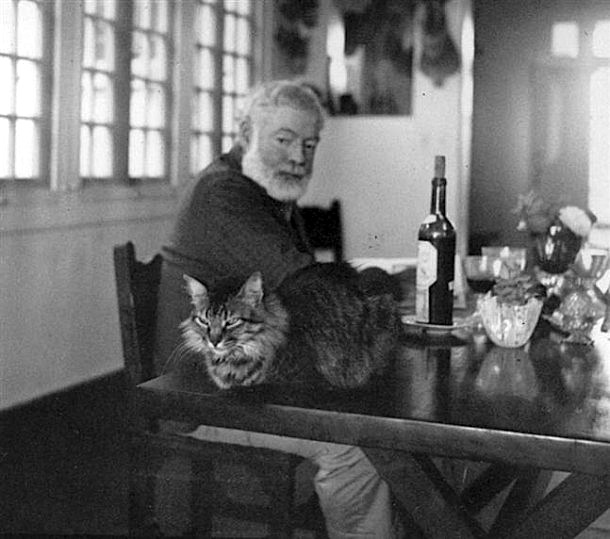
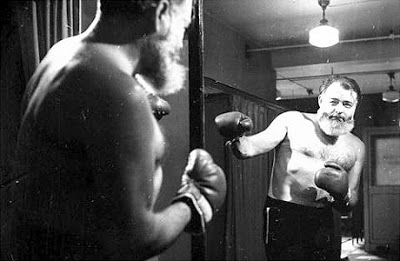


 The Daily Hatch