Category Archives: Biblical Archaeology

17 Important Biblical Archaeology Finds!!!


_______

16 Importance Biblical Archaeological Finds!!!


_______

17 Importance Biblical Archaeological Finds


_______

Statue of Tirhakah discovered in Sudan Posted on January 10, 2010

_______________

Statue of Tirhakah discovered in Sudan

Owen Jarus reports in The Independent the discovery of a massive statue of Pharaoh Taharqa [English Bible: Tirhakah] deep in Sudan.

No statue of a pharaoh has ever been found further south of Egypt than this one. At the height of his reign, King Taharqa controlled an empire stretching from Sudan to the Levant.

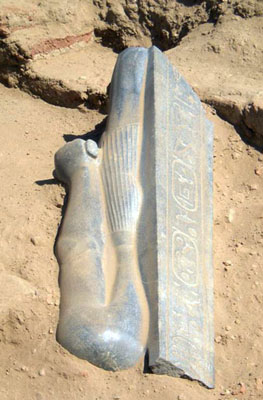
A massive, one ton, statue of Taharqa that was found deep in Sudan. Taharqa was a pharaoh of the 25th dynasty of Egypt and came to power ca. 690 BC, controlling an empire stretching from Sudan to the Levant. The pharaohs of this dynasty were from Nubia – a territory located in modern day Sudan and southern Egypt.

Taharqa statue. Photo: Berber-Abidiya Archaeological Project.

The Nubian pharaohs tried to incorporate Egyptian culture into their own. They built pyramids in Sudan – even though pyramid building in Egypt hadn’t been practised in nearly 800 years. Taharqa’s rule was a high water mark for the 25th dynasty. By the end of his reign a conflict with the Assyrians had forced him to retreat south, back into Nubia – where he died in 664 BC. Egypt became an Assyrian vassal – eventually gaining independence during the 26th dynasty. Taharqa’s successors were never able to retake Egypt.

In addition to Taharqa’s statue, those of two of his successors – Senkamanisken and Aspelta – were found alongside. These two rulers controlled territory in Sudan, but not Egypt.

. . .

While this is the furthest south that a pharaoh’s statue has been found, it doesn’t necessarily mean that Dangeil is the southern border of Taharqa’s empire. It’s possible that he controlled territory further up the Nile.

The statue of Taharqa is truly monumental. “It’s a symbol of royal power,” said Dr. Anderson, an indicator that Dangeil was an “important royal city.”

It’s made of granite and weighs more than one ton. It stood about 2.6 meters (8.5 feet) when it had its head. In ancient times it was smashed into several pieces on purpose. This was also done to the two other statues. It’s not known who did this or why. It happened “a long time after Taharqa,” said Anderson.

. . .

The largest piece of Taharqa’s statue is the torso and base. This part of the statue is so heavy that the archaeological team had to use 18 men to move it onto a truck.

“We had trouble moving him a couple hundred meters,” said Anderson. The move was “extremely well planned,” with the team spending eight to nine days figuring out how to accomplish it without the statue (or the movers) getting damaged.

The full account from The Independent may be read here. A longer article by Jarus, with several photos, may be found in Heritage Key.

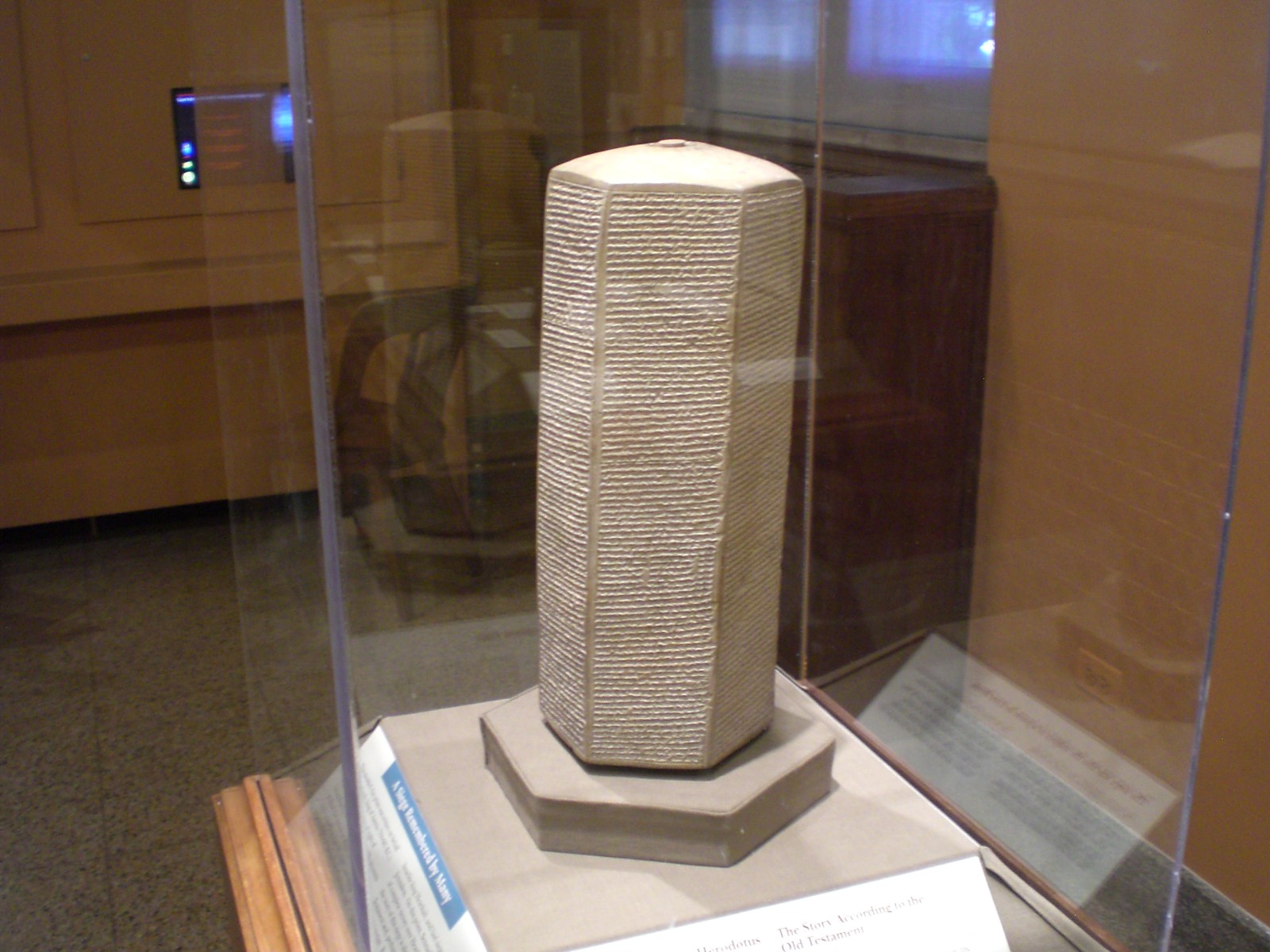
After the Assyrian king Sennacherib captured Lachish, he headed for Jerusalem. On the way he heard that King Tirhakah of Ethiopia (Cush) had come out to fight against him.

The king heard that King Tirhakah of Ethiopia was marching out to fight him. He again sent messengers to Hezekiah, ordering them: “Tell King Hezekiah of Judah this: ‘Don’t let your God in whom you trust mislead you when he says, “Jerusalem will not be handed over to the king of Assyria.” Certainly you have heard how the kings of Assyria have annihilated all lands. Do you really think you will be rescued? (2 Kings 19:9-11 NET; cf. Isaiah 37:9)

Hezekiah was king of Judah from 716/15 – 687/86 B.C. (Thiele). The events recorded in the Bible took place shortly before 700 B.C. Tirhakah evidently came to power before 690 B.C., was already a leading commander of the army, or there may be another solution to the problem.

HT: Biblical Paths.


_______


______________

50 People in the Bible Confirmed Archaeologically

________________

50 People in the Bible Confirmed Archaeologically

A web-exclusive supplement to Lawrence Mykytiuk’s “Archaeology Confirms 50 Real People in the Bible” feature in the March/April 2014 issue of BAR

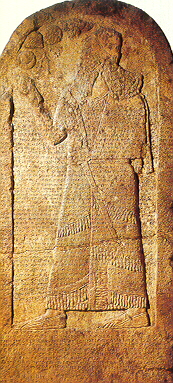
1.-Sargon-II-Khorsabad-Bridgeman

In “Archaeology Confirms 50 Real People in the Bible” in the March/April 2014 issue of Biblical Archaeology Review, Purdue University scholar Lawrence Mykytiuk lists 50 figures from the Hebrew Bible who have been confirmed archaeologically. The 50-person chart in BAR includes Israelite kings and Mesopotamian monarchs as well as lesser-known figures.Mykytiuk writes that “at least 50 people mentioned in the Bible have been identified in the archaeological record. Their names appear in inscriptions written during the period described by the Bible and in most instances during or quite close to the lifetime of the person identified.” The extensive Biblical and archaeological documentation supporting the BAR study is published here in a web-exclusive collection of endnotes detailing the Biblical references and inscriptions referring to each of the 50 figures.

Guide to the Endnotes

50 Bible People Confirmed in Authentic Inscriptions Chart

50 Figures: The Biblical and Archaeological Evidence

“Almost Real” Box on p. 50: The Biblical and Archaeological Evidence

Symbols & Abbreviations

Date Sources


Our free eBook Ten Top Biblical Archaeology Discoveries brings together the exciting worlds of archaeology and the Bible! Learn the fascinating insights gained from artifacts and ruins, like the Pool of Siloam in Jerusalem, where the Gospel of John says Jesus miraculously restored the sight of the blind man, and the Tel Dan inscription—the first historical evidence of King David outside the Bible.


50 Bible People Confirmed in Authentic Inscriptions

For a timeline and better view of this chart, see pp.46-47 of the March/April 2014 issue of BAR.

Egypt

Name

Who was He?

When He reigned or Flourished B.C.E.

Where in the Bible?

1

Shishak (= Shoshenq I)

pharaoh

945–924

1 Kings 11:40, etc.

2

So (= Osorkon IV)

pharaoh

730–715

2 Kings 17:4

3

Tirhakah (= Taharqa)

pharaoh

690–664

2 Kings 19:9, etc.

4

Necho II (= Neco II)

pharaoh

610–595

2 Chronicles 35:20, etc.

5

Hophra (= Apries)

pharaoh

589–570

Jeremiah 44:30

Moab

6

Mesha

king

early to mid-ninth century

2 Kings 3:4–27

Aram-Damascus

7

Hadadezer

king

early ninth century to 844/842

1 Kings 11:23, etc.

8

Ben-hadad, son of Hadadezer

king

844/842

2 Kings 6:24, etc.

9

Hazael

king

844/842–c. 800

1 Kings 19:15, etc.

10

Ben-hadad, son of Hazael

king

early eighth century

2 Kings 13:3, etc.

11

Rezin

king

mid-eighth century to 732

2 Kings 15:37, etc.

Northern Kingdom of Israel

12

Omri

king

884–873

1 Kings 16:16, etc.

13

Ahab

king

873–852

1 Kings 16:28, etc.

14

Jehu

king

842/841–815/814

1 Kings 19:16, etc.

15

Joash (= Jehoash)

king

805–790

2 Kings 13:9, etc.

16

Jeroboam II

king

790–750/749

2 Kings 13:13, etc.

17

Menahem

king

749–738

2 Kings 15:14, etc.

18

Pekah

king

750(?)–732/731

2 Kings 15:25, etc.

19

Hoshea

king

732/731–722

2 Kings 15:30, etc.

20

Sanballat “I”

governor of Samaria under Persian rule

c. mid-fifth century

Nehemiah 2:10, etc.

Southern Kingdom of Judah

21

David

king

c. 1010–970

1 Samuel 16:13, etc.

22

Uzziah (= Azariah)

king

788/787–736/735

2 Kings 14:21, etc.

23

Ahaz (= Jehoahaz)

king

742/741–726

2 Kings 15:38, etc.

24

Hezekiah

king

726–697/696

2 Kings 16:20, etc.

25

Manasseh

king

697/696–642/641

2 Kings 20:21, etc.

26

Hilkiah

high priest during Josiah’s reign

within 640/639–609

2 Kings 22:4, etc.

27

Shaphan

scribe during Josiah’s reign

within 640/639–609

2 Kings 22:3, etc.

28

Azariah

high priest during Josiah’s reign

within 640/639–609

1 Chronicles 5:39, etc.

29

Gemariah

official during Jehoiakim’s reign

within 609–598

Jeremiah 36:10, etc.

30

Jehoiachin (= Jeconiah = Coniah)

king

598–597

2 Kings 24:6, etc.

31

Shelemiah

father of Jehucal the royal official

late seventh century

Jeremiah 37:3, etc.

32

Jehucal (= Jucal)

official during Zedekiah’s reign

within 597–586

Jeremiah 37:3, etc.

33

Pashhur

father of Gedaliah the royal official

late seventh century

Jeremiah 38:1

34

Gedaliah

official during Zedekiah’s reign

within 597–586

Jeremiah 38:1

Assyria

35

Tiglath-pileser III (= Pul)

king

744–727

2 Kings 15:19, etc.

36

Shalmaneser V

king

726–722

2 Kings 17:3, etc.

37

Sargon II

king

721–705

Isaiah 20:1

38

Sennacherib

king

704–681

2 Kings 18:13, etc.

39

Adrammelech (= Ardamullissu = Arad-mullissu)

son and assassin of Sennacherib

early seventh century

2 Kings 19:37, etc.

40

Esarhaddon

king

680–669

2 Kings 19:37, etc.

Babylonia

41

Merodach-baladan II

king

721–710 and 703

2 Kings 20:12, etc.

42

Nebuchadnezzar II

king

604–562

2 Kings 24:1, etc.

43

Nebo-sarsekim

official of Nebuchadnezzar II

early sixth century

Jeremiah 39:3

44

Evil-merodach (= Awel Marduk = Amel Marduk)

king

561–560

2 Kings 25:27,etc.

45

Belshazzar

son and co-regent of Nabonidus

c. 543?–540

Daniel 5:1, etc.

Persia

46

Cyrus II (= Cyrus the Great)

king

559–530

2 Chronicles 36:22, etc.

47

Darius I (= Darius the Great)

king

520–486

Ezra 4:5, etc.

48

Xerxes I (= Ahasuerus)

king

486–465

Esther 1:1, etc.

49

Artaxerxes I Longimanus

king

465-425/424

Ezra 4:7, etc.

50

Darius II Nothus

king

425/424-405/404

Nehemiah 12:22


BAS Library Members: Read “Archaeology Confirms 50 Real People in the Bible” by Lawrence Mykytiuk as it appears in the March/April 2014 issue of Biblical Archaeology Review.Not a BAS Library member yet? Join the BAS Library today.


50 Figures: The Biblical and Archaeological Evidence

EGYPT

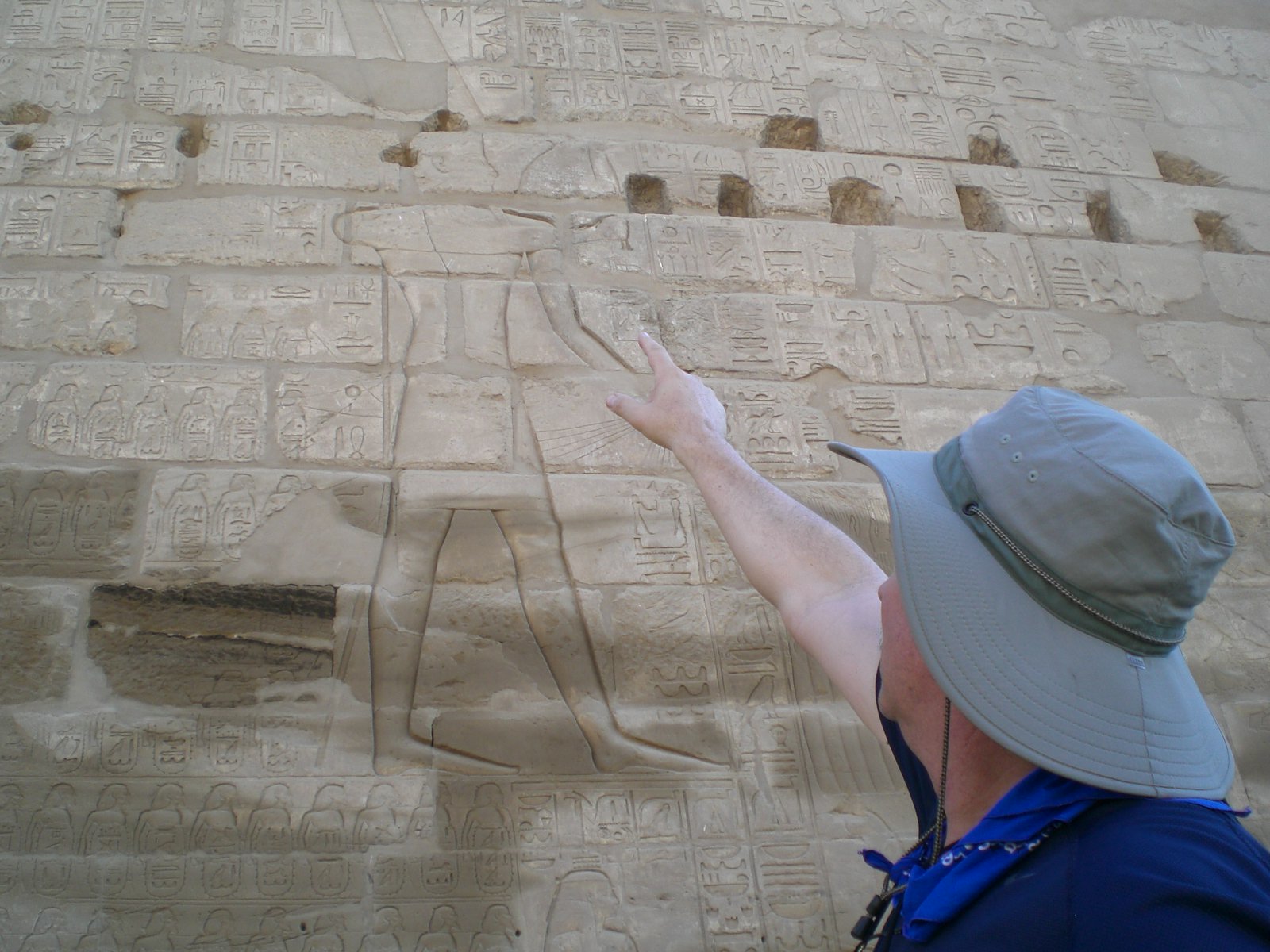
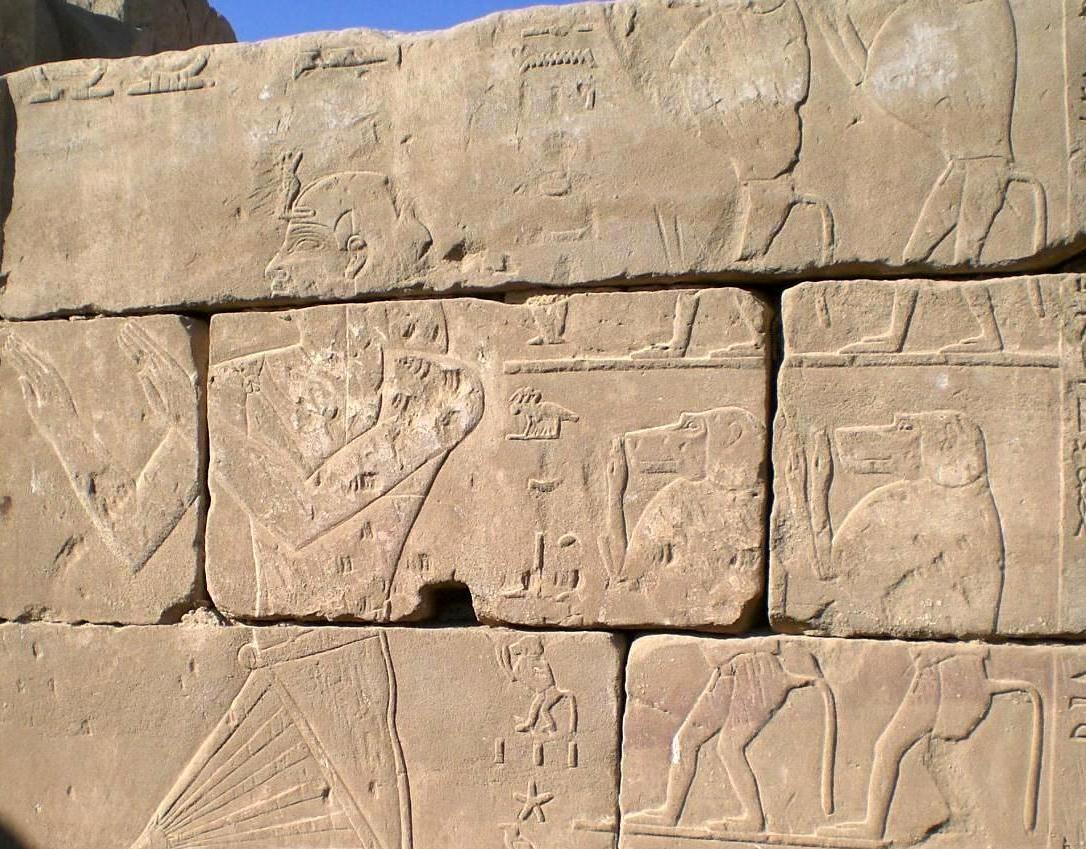
1. Shishak (= Shoshenq I), pharaoh, r. 945–924, 1 Kings 11:40 and 14:25, in his inscriptions, including the record of his military campaign in Palestine in his 924 B.C.E. inscription on the exterior south wall of the Temple of Amun at Karnak in Thebes. See OROT, pp. 10, 31–32, 502 note 1; many references to him in Third, indexed on p. 520; Kenneth A. Kitchen, review of IBP, SEE-J Hiphil 2 (2005),www.see-j.net/index.php/hiphil/article/viewFile/19/17, bottom of p. 3, which is briefly mentioned in “Sixteen,” p. 43 n. 22 (where the Egyptian name Shoshenq is incorrectly transcribed).
Shoshenq is also referred to in a fragment of his victory stele discovered at Megiddo containing his cartouche. See Robert S. Lamon and Geoffrey M. Shipton, Megiddo I: Seasons of 1925–34, Strata I–V.(Oriental Institute Publications no. 42; Chicago: University of Chicago Press, 1939), pp. 60–61, fig. 70; Graham I. Davies, Megiddo (Cities of the Biblical World; Cambridge: Lutterworth Press, 1986), pp. 89 fig. 18, 90; OROT, p. 508 n. 68; IBP, p. 137 n. 119 (in which the Egyptian name Shoshenq is incorrectly transcribed).

2. So (= Osorkon IV), pharaoh, r. 730–715, 2 Kings 17:4 only, which calls him “So, king of Egypt” (OROT, pp. 15–16). K. A. Kitchen makes a detailed case for So being Osorkon IV in Third, pp. 372–375. SeeRaging Torrent, p. 106 under “Shilkanni.”

3. Tirhakah (= Taharqa), pharaoh, r. 690–664, 2 Kings 19:9, etc. in many Egyptian hieroglyphic inscriptions; Third, pp. 387–395. For mention of Tirhakah in Assyrian inscriptions, see those of Esarhaddon and Ashurbanipal in Raging Torrent, pp. 138–143, 145, 150–153, 155, 156; ABC, p. 247 under “Terhaqah.” The Babylonian chronicle also refers to him (Raging Torrent, p. 187). On Tirhakah as prince, see OROT, p. 24.

4. Necho II (= Neco II), pharaoh, r. 610–595, 2 Chronicles 35:20, etc., in inscriptions of the Assyrian king, Ashurbanipal (ANET, pp. 294–297) and the Esarhaddon Chronicle (ANET, p. 303). See alsoRaging Torrent, pp. 189–199, esp. 198; OROT, p. 504 n. 26; Third, p. 407; ABC, p. 232.

5. Hophra (= Apries = Wahibre), pharaoh, r. 589–570, Jeremiah 44:30, in Egyptian inscriptions, such as the one describing his being buried by his successor, Aḥmose II (= Amasis II) (Third, p. 333 n. 498), with reflections in Babylonian inscriptions regarding Nebuchadnezzar’s defeat of Hophra in 572 and replacing him on the throne of Egypt with a general, Aḥmes (= Amasis), who later rebelled against Babylonia and was suppressed (Raging Torrent, p. 222). See OROT, pp. 9, 16, 24; Third, p. 373 n. 747, 407 and 407 n. 969; ANET, p. 308; D. J. Wiseman, Chronicles of Chaldaean Kings (626–556 B.C.) in the British Museum (London: The Trustees of the British Museum, 1956), pp. 94-95. Cf. ANEHST, p. 402. (The index of Third, p. 525, distinguishes between an earlier “Wahibre i” [Third, p. 98] and the 26th Dynasty’s “Wahibre ii” [= Apries], r. 589–570.)

MOAB

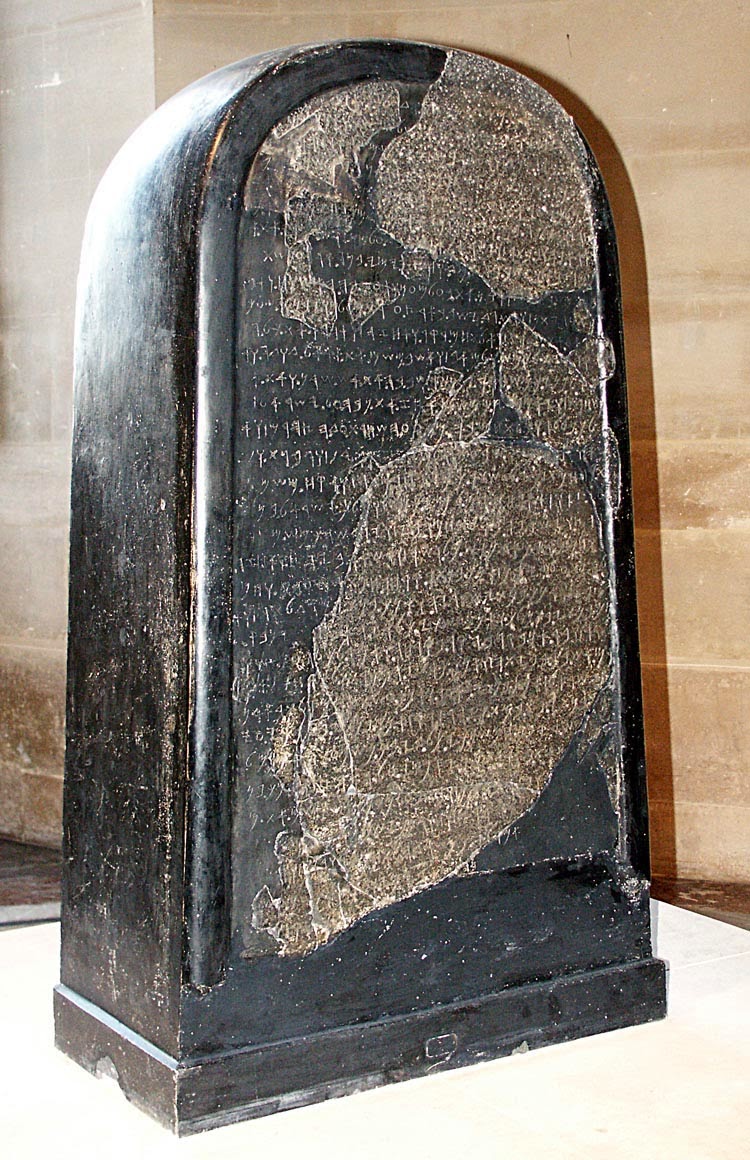
6. Mesha, king, r. early to mid-9th century, 2 Kings 3:4–27, in the Mesha Inscription, which he caused to be written, lines 1–2; Dearman, Studies, pp. 97, 100–101; IBP, pp. 95–108, 238; “Sixteen,” p. 43.

ARAM-DAMASCUS

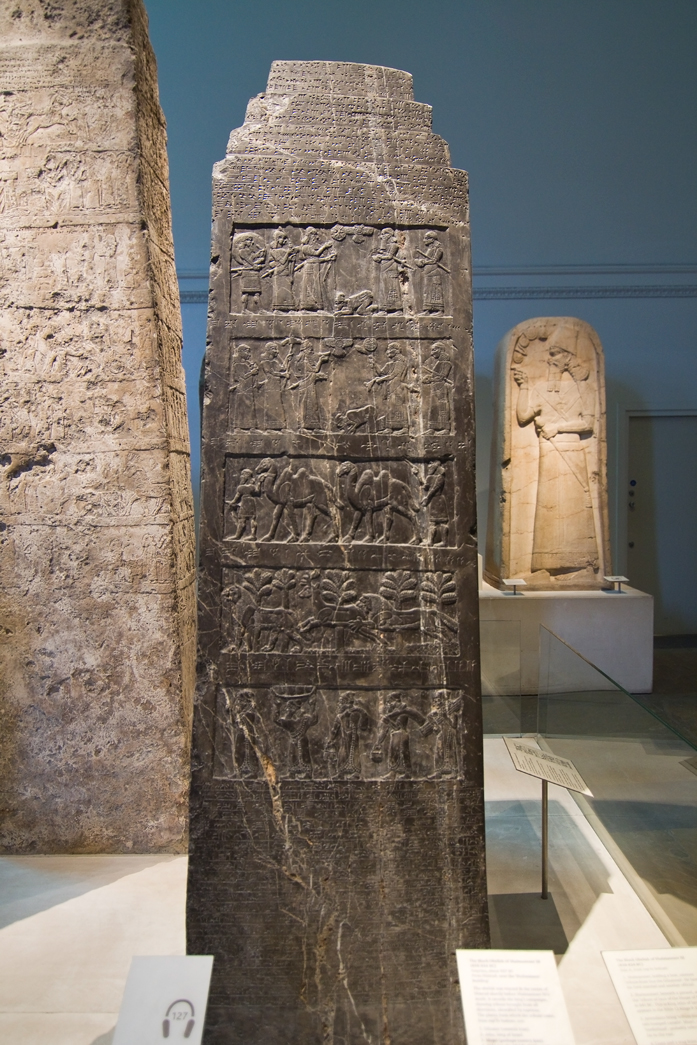
7. Hadadezer, king, r. early 9th century to 844/842, 1 Kings 22:3, etc., in Assyrian inscriptions of Shalmaneser III and also, I am convinced, in the Melqart stele. The Hebrew Bible does not name him, referring to him only as “the King of Aram” in 1 Kings 22:3, 31; 2 Kings chapter 5, 6:8–23. We find out this king’s full name in some contemporaneous inscriptions of Shalmaneser III, king of Assyria (r. 858–824), such as the Black Obelisk (Raging Torrent, pp. 22–24). At Kurkh, a monolith by Shalmaneser III states that at the battle of Qarqar (853 B.C.E.), he defeated “Adad-idri [the Assyrian way of saying Hadadezer] the Damascene,” along with “Ahab the Israelite” and other kings (Raging Torrent, p. 14; RIMA 3, p. 23, A.0.102.2, col. ii, lines 89b–92). “Hadadezer the Damascene” is also mentioned in an engraving on a statue of Shalmaneser III at Aššur (RIMA 3, p. 118, A.0.102.40, col. i, line 14). The same statue engraving later mentions both Hadadezer and Hazael together (RIMA 3, p. 118, col. i, lines 25–26) in a topical arrangement of worst enemies defeated that is not necessarily chronological.
On the long-disputed readings of the Melqart stele, which was discovered in Syria in 1939, see “Corrections,” pp. 69–85, which follows the closely allied readings of Frank Moore Cross and Gotthard G. G. Reinhold. Those readings, later included in “Sixteen,” pp. 47–48, correct the earlier absence of this Hadadezer in IBP (notably on p. 237, where he is not to be confused with the tenth-century Hadadezer, son of Rehob and king of Zobah).

8. Ben-hadad, son of Hadadezer, r. or served as co-regent 844/842, 2 Kings 6:24, etc., in the Melqart stele, following the readings of Frank Moore Cross and Gotthard G. G. Reinhold and Cross’s 2003 criticisms of a different reading that now appears in COS, vol. 2, pp. 152–153 (“Corrections,” pp. 69–85). Several kings of Damascus bore the name Bar-hadad (in their native Aramaic, which is translated as Ben-hadad in the Hebrew Bible), which suggests adoption as “son” by the patron deity Hadad. This designation might indicate that he was the crown prince and/or co-regent with his father Hadadezer. It seems likely that Bar-hadad/Ben-hadad was his father’s immediate successor as king, as seems to be implied by the military policy reversal between 2 Kings 6:3–23 and 6:24. It was this Ben-Hadad, the son of Hadadezer, whom Hazael assassinated in 2 Kings 8:7–15 (quoted in Raging Torrent, p. 25). The mistaken disqualification of this biblical identification in the Melqart stele in IBP, p. 237, is revised to a strong identification in that stele in “Corrections,” pp. 69–85; “Sixteen,” p. 47.

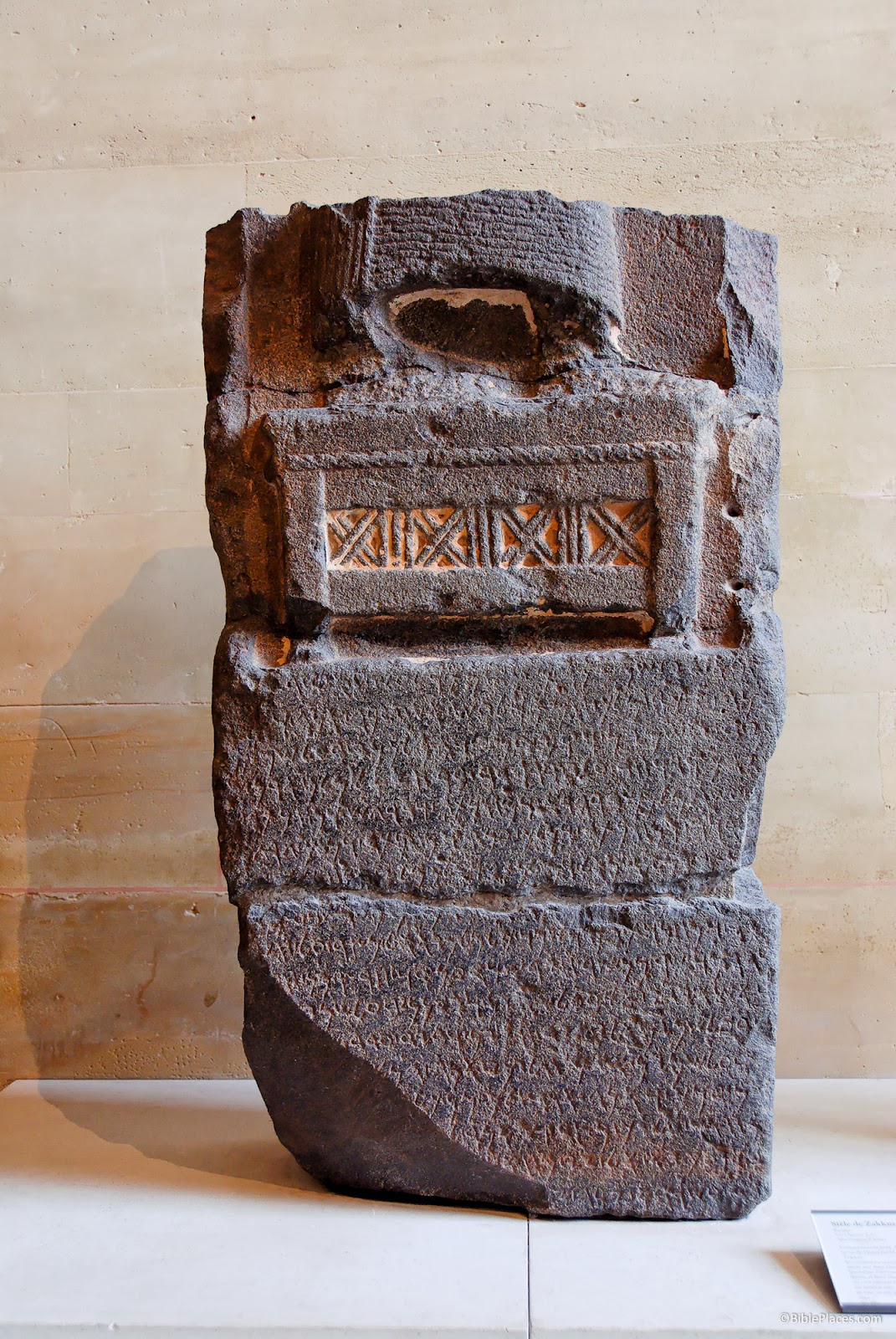
9. Hazael, king, r. 844/842–ca. 800, 1 Kings 19:15, 2 Kings 8:8, etc., is documented in four kinds of inscriptions: 1) The inscriptions of Shalmaneser III call him “Hazael of Damascus” (Raging Torrent, pp. 23–26, 28), for example the inscription on the Kurbail Statue (RIMA 3, p. 60, line 21). He is also referred to in 2) the Zakkur stele from near Aleppo, in what is now Syria, and in 3) bridle inscriptions, i.e., two inscribed horse blinders and a horse frontlet discovered on Greek islands, and in 4) inscribed ivories seized as Assyrian war booty (Raging Torrent, p. 35). All are treated in IBP, pp. 238–239, and listed in “Sixteen,” p. 44. Cf. “Corrections,” pp. 101–103.

10. Ben-hadad, son of Hazael, king, r. early 8th century, 2 Kings 13:3, etc., in the Zakkur stele from near Aleppo. In lines 4–5, it calls him “Bar-hadad, son of Hazael, the king of Aram” (IBP, p. 240; “Sixteen,” p. 44; Raging Torrent, p. 38; ANET, p. 655: COS, vol. 2, p. 155). On the possibility of Ben-hadad, son of Hazael, being the “Mari” in Assyrian inscriptions, see Raging Torrent, pp. 35–36.

11. Rezin (= Raḥianu), king, r. mid-8th century to 732, 2 Kings 15:37, etc., in the inscriptions of Tiglath-pileser III, king of Assyria (in these inscriptions, Raging Torrent records frequent mention of Rezin in  pp. 51–78); OROT, p. 14. Inscriptions of Tiglath-pileser III refer to “Rezin” several times, “Rezin of Damascus” in Annal 13, line 10 (ITP, pp. 68–69), and “the dynasty of Rezin of Damascus” in Annal 23, line 13 (ITP, pp. 80–81). Tiglath-pileser III’s stele from Iran contains an explicit reference to Rezin as king of Damascus in column III, the right side, A: “[line 1] The kings of the land of Hatti (and of) the Aramaeans of the western seashore . . .  [line 4] Rezin of Damascus”  (ITP, pp. 106–107).


BAS Library Members: Read “Archaeology Confirms 50 Real People in the Bible” by Lawrence Mykytiuk as it appears in the March/April 2014 issue of Biblical Archaeology Review.Not a BAS Library member yet? Join the BAS Library today.


NORTHERN KINGDOM OF ISRAEL

12. Omri, king, r. 884–873, 1 Kings 16:16, etc., in Assyrian inscriptions and in the Mesha Inscription. Because he founded a famous dynasty which ruled the northern kingdom of Israel, the Assyrians refer not only to him as a king of Israel (ANET, pp. 280, 281), but also to the later rulers of that territory as kings of “the house of Omri” and that territory itself literally as “the house of Omri” (Raging Torrent, pp. 34, 35;ANET, pp. 284, 285). Many a later king of Israel who was not his descendant, beginning with Jehu, was called “the son of Omri” (Raging Torrent, p. 18). The Mesha Inscription also refers to Omri as “the king of Israel” in lines 4–5, 7 (Dearman, Studies, pp. 97, 100–101; COS, vol. 2, p. 137; IBP, pp. 108–110, 216; “Sixteen,” p. 43.

13. Ahab, king, r. 873–852, 1 Kings 16:28, etc., in the Kurkh Monolith by his enemy, Shalmaneser III of Assyria. There, referring to the battle of Qarqar (853 B.C.E.), Shalmaneser calls him “Ahab the Israelite” (Raging Torrent, pp. 14, 18–19; RIMA 3, p. 23, A.0.102.2, col. 2, lines 91–92; ANET, p. 279; COS, vol. 2, p. 263).

14. Jehu, king, r. 842/841–815/814, 1 Kings 19:16, etc., in inscriptions of Shalmaneser III. In these, “son” means nothing more than that he is the successor, in this instance, of Omri (Raging Torrent, p. 20 under “Ba’asha . . . ” and p. 26). A long version of Shalmaneser III’s annals on a stone tablet in the outer wall of the city of Aššur refers to Jehu in col. 4, line 11, as “Jehu, son of Omri” (Raging Torrent, p. 28; RIMA 3, p. 54, A.0.102.10, col. 4, line 11; cf. ANET, p. 280, the parallel “fragment of an annalistic text”). Also, on the Kurba’il Statue, lines 29–30 refer to “Jehu, son of Omri” (RIMA 3, p. 60, A.0.102.12, lines 29–30).

In Shalmaneser III’s Black Obelisk, current scholarship regards the notation over relief B, depicting payment of tribute from Israel, as referring to “Jehu, son of Omri” (Raging Torrent, p. 23; RIMA 3, p. 149, A.0. 102.88), but cf. P. Kyle McCarter, Jr., “‘Yaw, Son of ’Omri’: A Philological Note on Israelite Chronology,” Bulletin of the American Schools of Oriental Research 216 (1974): pp. 5–7.

15. Joash (= Jehoash), king, r. 805–790, 2 Kings 13:9, etc., in the Tell al-Rimaḥ inscription of Adad-Nirari III, king of Assyria (r. 810–783), which mentions “the tribute of Joash [= Iu’asu] the Samarian” (Stephanie Page, “A Stela of Adad-Nirari III and Nergal-Ereš from Tell Al Rimaḥ,” Iraq 30 [1968]: pp. 142–145, line 8, Pl. 38–41; RIMA 3, p. 211, line 8 of A.0.104.7; Raging Torrent, pp. 39–41).

16. Jeroboam II, king, r. 790–750/749, 2 Kings 13:13, etc., in the seal of his royal servant Shema, discovered at Megiddo (WSS, p. 49 no. 2;  IBP, pp. 133–139, 217; “Sixteen,” p. 46).

17. Menahem, king, r. 749–738, 2 Kings 15:14, etc., in the Calah Annals of Tiglath-pileser III. Annal 13, line 10 refers to “Menahem of Samaria” in a list of kings who paid tribute (ITP, pp. 68–69, Pl. IX). Tiglath-pileser III’s stele from Iran, his only known stele, refers explicitly to Menahem as king of Samaria in column III, the right side, A: “[line 1] The kings of the land of Hatti (and of) the Aramaeans of the western seashore . . .  [line 5] Menahem of Samaria.”  (ITP, pp. 106–107). See also Raging Torrent, pp. 51, 52, 54, 55, 59; ANET, p. 283.

18. Pekah, king, r. 750(?)–732/731, 2 Kings 15:25, etc., in the inscriptions of Tiglath-pileser III. Among various references to “Pekah,” the most explicit concerns the replacement of Pekah in Summary Inscription 4, lines 15–17: “[line 15] . . . The land of Bit-Humria . . . . [line 17] Peqah, their king [I/they killed] and I installed Hoshea [line 18] [as king] over them” (ITP, pp. 140–141; Raging Torrent, pp. 66–67).

19. Hoshea, king, r. 732/731–722, 2 Kings 15:30, etc., in Tiglath-pileser’s Summary Inscription 4, described in preceding note 18, where Hoshea is mentioned as Pekah’s immediate successor.

20. Sanballat “I”, governor of Samaria under Persian rule, ca. mid-fifth century, Nehemiah 2:10, etc., in a letter among the papyri from the Jewish community at Elephantine in Egypt (A. E. Cowley, ed., Aramaic Papyri of the Fifth Century B.C. (Oxford: Clarendon, 1923; reprinted Osnabrück, Germany: Zeller, 1967), p. 114 English translation of line 29, and p. 118 note regarding line 29; ANET, p. 492.

Also, the reference to “[  ]ballat,” most likely Sanballat, in Wadi Daliyeh bulla WD 22 appears to refer to the biblical Sanballat as the father of a governor of Samaria who succeeded him in the first half of the fourth century. As Jan Dušek shows, it cannot be demonstrated that any Sanballat II and III existed, which is the reason for the present article’s quotation marks around the “I” in Sanballat “I”; see Jan Dušek, “Archaeology and Texts in the Persian Period: Focus on Sanballat,” in Martti Nissinen, ed., Congress Volume: Helsinki 2010 (Boston: Brill. 2012), pp. 117–132.

SOUTHERN KINGDOM OF JUDAH

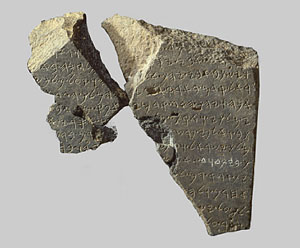
21. David, king, r. ca. 1010–970, 1 Samuel 16:13, etc. in three inscriptions. Most notable is the victory stele in Aramaic known as the “house of David” inscription, discovered at Tel Dan; Avraham Biran and Joseph Naveh, “An Aramaic Stele from Tel Dan,” IEJ 43 (1993), pp. 81–98, and idem, “The Tel Dan Inscription: A New Fragment,” IEJ 45 (1995), pp. 1–18. An ancient Aramaic word pattern in line 9 designates David as the founder of the dynasty of Judah in the phrase “house of David” (2 Sam 2:11 and 5:5; Gary A. Rendsburg, “On the Writing ביתדיד [BYTDWD] in the Aramaic Inscription from Tel Dan,” IEJ45 [1995], pp. 22–25; Raging Torrent, p. 20, under “Ba’asha . . .”; IBP, pp. 110–132, 265–77; “Sixteen,” pp. 41–43).

In the second inscription, the Mesha Inscription, the phrase “house of David” appears in Moabite in line 31 with the same meaning: that he is the founder of the dynasty. There David’s name appears with only its first letter destroyed, and no other letter in that spot makes sense without creating a very strained, awkward reading (André Lemaire, “‘House of David’ Restored in Moabite Inscription,” BAR 20, no. 3 [May/June 1994]: pp. 30–37. David’s name also appears in line 12 of the Mesha Inscription (Anson F. Rainey, “Mesha‘ and Syntax,” in J. Andrew Dearman and M. Patrick Graham, eds., The Land That I Will Show You: Essays on the History and Archaeology of the Ancient Near East in Honor of J. Maxwell Miller. (JSOT Supplement series, no. 343; Sheffield, England:Sheffield Academic, 2001), pp. 287–307;IBP, pp. 265–277; “Sixteen,” pp. 41–43).

The third inscription, in Egyptian, mentions a region in the Negev called “the heights of David” after King David (Kenneth A. Kitchen, “A Possible Mention of David in the Late Tenth Century B.C.E., and Deity *Dod as Dead as the Dodo?” Journal for the Study of the Old Testament 76 [1997], pp. 39–41; IBP, p. 214 note 3, which is revised in “Corrections,” pp. 119–121; “Sixteen,” p. 43).

In the table on p. 46 of BAR, David is listed as king of Judah. According to 2 Samuel 5:5, for his first seven years and six months as a monarch, he ruled only the southern kingdom of Judah. We have no inscription that refers to David as king over all Israel (that is, the united kingdom) as also stated in 2 Sam 5:5.

22. Uzziah (= Azariah), king, r. 788/787–736/735, 2 Kings 14:21, etc., in the inscribed stone seals of two of his royal servants: Abiyaw and Shubnayaw (more commonly called Shebanyaw); WSS, p. 51 no. 4 and p. 50 no. 3, respectively; IBP, pp. 153–159 and 159–163, respectively, and p. 219 no. 20 (a correction toIBP is that on p. 219, references to WSS nos. 3 and 4 are reversed); “Sixteen,” pp. 46–47. Cf. also his secondary burial inscription from the Second Temple era (IBP, p. 219 n. 22).

23. Ahaz (= Jehoahaz), king, r. 742/741–726, 2 Kings 15:38, etc., in Tiglath-pileser III’s Summary Inscription 7, reverse, line 11, refers to “Jehoahaz of Judah” in a list of kings who paid tribute (ITP, pp. 170–171; Raging Torrent, pp. 58–59). The Bible refers to him by the shortened form of his full name, Ahaz, rather than by the full form of his name, Jehoahaz, which the Assyrian inscription uses.
Cf. the unprovenanced seal of ’Ushna’, more commonly called ’Ashna’, the name Ahaz appears (IBP, pp. 163–169, with corrections from Kitchen’s review of IBP as noted in “Corrections,” p. 117; “Sixteen,” pp. 38–39 n. 11). Because this king already stands clearly documented in an Assyrian inscription, documentation in another inscription is not necessary to confirm the existence of the biblical Ahaz, king of Judah.

24. Hezekiah, king, r. 726–697/696, 2 Kings 16:20, etc., initially in the Rassam Cylinder of Sennacherib (in this inscription, Raging Torrent records frequent mention of Hezekiah in pp. 111–123;COS, pp. 302–303). It mentions “Hezekiah the Judahite” (col. 2 line 76 and col. 3 line 1 in Luckenbill,Annals of Sennacherib, pp. 31, 32) and “Jerusalem, his royal city” (ibid., col. 3 lines 28, 40; ibid., p. 33) Other, later copies of the annals of Sennacherib, such as the Oriental Institute prism and the Taylor prism, mostly repeat the content of the Rassam cylinder, duplicating its way of referring to Hezekiah and Jerusalem (ANET, pp. 287, 288). The Bull Inscription from the palace at Nineveh (ANET, p. 288; Raging Torrent, pp. 126–127) also mentions “Hezekiah the Judahite” (lines 23, 27 in Luckenbill, Annals of Sennacherib, pp. 69, 70) and “Jerusalem, his royal city” (line 29; ibid., p. 33).

25. Manasseh, king, r. 697/696–642/641, 2 Kings 20:21, etc., in the inscriptions of Assyrian kings Esarhaddon (Raging Torrent, pp. 131, 133, 136) and Ashurbanipal (ibid., p. 154). “Manasseh, king of Judah,” according to Esarhaddon (r. 680–669), was among those who paid tribute to him (Esarhaddon’s Prism B, column 5, line 55; R. Campbell Thompson, The Prisms of Esarhaddon and Ashurbanipal[London: Trustees of the British Museum, 1931], p. 25; ANET, p. 291). Also, Ashurbanipal (r. 668–627) records that “Manasseh, king of Judah” paid tribute to him (Ashurbanipal’s Cylinder C, col. 1, line 25; Maximilian Streck, Assurbanipal und die letzten assyrischen Könige bis zum Untergang Niniveh’s, [Vorderasiatische Bibliothek 7; Leipzig: J. C. Hinrichs, 1916], vol. 2, pp. 138–139; ANET, p. 294.

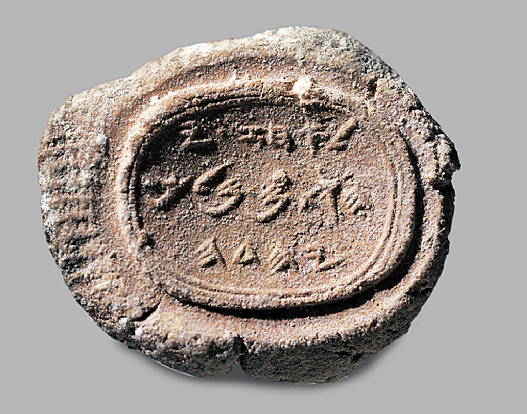
26. Hilkiah, high priest during Josiah’s reign, within 640/639–609, 2 Kings 22:4, etc., in the City of David bulla of Azariah, son of Hilkiah (WSS, p. 224 no. 596; IBP, pp. 148–151; 229 only in [50] City of David bulla; “Sixteen,” p. 49).

The oldest part of Jerusalem, called the City of David, is the location where the Bible places all four men named in the bullae covered in the present endnotes 26 through 29.

Analysis of the clay of these bullae shows that they were produced in the locale of Jerusalem (Eran Arie, Yuval Goren, and Inbal Samet, “Indelible Impression: Petrographic Analysis of Judahite Bullae,” in The Fire Signals of Lachish: Studies in the Archaeology and History of Israel in the Late Bronze Age, Iron Age, and Persian Period in Honor of David Ussishkin [ed. Israel Finkelstein and Nadav Na’aman; Winona Lake, Ind.: Eisenbrauns, 2011], p. 10, quoted in “Sixteen,” pp. 48–49 n. 34).

27. Shaphan, scribe during Josiah’s reign, within 640/639–609, 2 Kings 22:3, etc., in the City of David bulla of Gemariah, son of Shaphan (WSS, p. 190 no. 470; IBP, pp. 139–146, 228). See endnote 26 above regarding “Sixteen,” pp. 48–49 n. 34.

28. Azariah, high priest during Josiah’s reign, within 640/639–609, 1 Chronicles 5:39, etc., in the City of David bulla of Azariah, son of Hilkiah (WSS, p. 224 no. 596; IBP, pp. 151–152; 229). See endnote 26 above regarding “Sixteen,” pp. 48–49 n. 34.

29. Gemariah, official during Jehoiakim’s reign, within 609–598, Jeremiah 36:10, etc., in the City of David bulla of Gemariah, son of Shaphan (WSS, p. 190 no. 470; IBP, pp. 147, 232). See endnote 26 above regarding “Sixteen,” pp. 48–49 n. 34.

30. Jehoiachin (= Jeconiah = Coniah), king, r. 598–597, 2 Kings 24:5, etc., in four Babylonian administrative tablets regarding oil rations or deliveries, during his exile in Babylonia (Raging Torrent, p. 209; ANEHST, pp. 386–387). Discovered at Babylon, they are dated from the tenth to the thirty-fifth year of Nebuchadnezzar II, king of Babylonia and conqueror of Jerusalem. One tablet calls Jehoiachin “king” (Text Babylon 28122, obverse, line 29; ANET, p. 308). A second, fragmentary text mentions him as king in an immediate context that refers to “[. . . so]ns of the king of Judah” and “Judahites” (Text Babylon 28178, obverse, col. 2, lines 38–40; ANET, p. 308). The third tablet calls him “the son of the king of Judah” and refers to “the five sons of the king of Judah” (Text Babylon 28186, reverse, col. 2, lines 17–18; ANET, p. 308). The fourth text, the most fragmentary of all, confirms “Judah” and part of Jehoiachin’s name, but contributes no data that is not found in the other texts.

31. Shelemiah, father of Jehucal the official, late 7th century, Jeremiah 37:3; 38:1
and
32. Jehucal (= Jucal), official during Zedekiah’s reign, fl. within 597–586, Jeremiah 37:3; 38:1 only, both referred to in a bulla discovered in the City of David in 2005 (Eilat Mazar, “Did I Find King David’s Palace?” BAR 32, no. 1 [January/February 2006], pp. 16–27, 70; idem, Preliminary Report on the City of David Excavations 2005 at the Visitors Center Area [Jerusalem and New York: Shalem, 2007], pp. 67–69; idem, “The Wall that Nehemiah Built,” BAR 35, no. 2 [March/April 2009], pp. 24–33,66; idem, The Palace of King David: Excavations at the Summit of the City of David: Preliminary Report of Seasons 2005-2007 [Jerusalem/New York: Shoham AcademicResearch and Publication, 2009], pp. 66–71). Only the possibility of firm identifications is left open in “Corrections,” pp. 85–92; “Sixteen,” pp. 50–51; this article is my first affirmation of four identifications, both here in notes 31 and 32 and below in notes 33 and 34.

After cautiously observing publications and withholding judgment for several years, I am now affirming the four identifications in notes 31 through 34, because I am now convinced that this bulla is a remnant from an administrative center in the City of David, a possibility suggested in “Corrections,” p. 100 second-to-last paragraph, and “Sixteen,” p. 51. For me, the tipping point came by comparing the description and pictures of the nearby and immediate archaeological context in Eilat Mazar, “Palace of King David,” pp. 66–70,  with the administrative contexts described in Eran Arie, Yuval Goren, and Inbal Samet, “Indelible Impression: Petrographic Analysis of Judahite Bullae,” in Israel Finkelstein and Nadav Na’aman, eds., The Fire Signals of Lachish: Studies in the Archaeology and History of Israel in the Late Bronze Age, Iron Age, and Persian Period in Honor of David Ussishkin (Winona Lake, Ind.: Eisenbrauns, 2011), pp. 12–13 (the section titled “The Database: Judahite Bullae from Controlled Excavations”) and pp. 23–24. See alsoNadav Na’aman, “The Interchange between Bible and Archaeology: The Case of David’s Palace and the Millo,” BAR 40, no. 1 (January/February 2014), pp. 57–61, 68–69, which is drawn from idem, “Biblical and Historical Jerusalem in the Tenth and Fifth-Fourth Centuries B.C.E.,” Biblica 93 (2012): pp. 21–42. See also idem, “Five Notes on Jerusalem in the First and Second Temple Periods,” Tel Aviv 39 (2012): p. 93.

33. Pashhur, father of Gedaliah the official, late 7th century, Jeremiah 38:1
and
34. Gedaliah, official during Zedekiah’s reign, fl. within 597–586, Jeremiah 38:1 only, both referred to in a bulla discovered in the City of David in 2008. See “Corrections,” pp. 92–96; “Sixteen,” pp. 50–51; and the preceding endnote 31 and 32 for bibliographic details on E. Mazar, “Wall,” pp. 24–33, 66; idem, Palace of King David, pp. 68–71) and for the comments in the paragraph that begins, “After cautiously . . . .”


As the point where three of the world’s major religions converge, Israel’s history is one of the richest and most complex in the world. Sift through the archaeology and history of this ancient land in the free eBookIsrael: An Archaeological Journey, and get a view of these significant Biblical sites through an archaeologist’s lens.


ASSYRIA

35. Tiglath-pileser III (= Pul), king, r. 744–727, 2 Kings 15:19, etc., in his many inscriptions. SeeRaging Torrent, pp. 46–79; COS, vol. 2, pp. 284–292; ITP; Mikko Lukko, The Correspondence of Tiglath-pileser III and Sargon II from Calah/Nimrud (State Archives of Assyria, no. 19; Assyrian Text Corpus Project; Winona Lake, Ind.: Eisenbrauns, 2013); ABC, pp. 248–249. On Pul as referring to Tiglath-pileser III, which is implicit in ABC, p. 333 under “Pulu,” see ITP, p. 280 n. 5 for discussion and bibliography.

On the identification of Tiglath-pileser III in the Aramaic monumental inscription honoring Panamu II, in Aramaic monumental inscriptions 1 and 8 of Bar-Rekub (now in Istanbul and Berlin, respectively), and in the Ashur Ostracon, see IBP, p. 240; COS, pp. 158–161.

36. Shalmaneser V (= Ululaya), king, r. 726–722, 2 Kings 17:2, etc., in chronicles, in king-lists, and in rare remaining inscriptions of his own (ABC, p. 242; COS, vol. 2, p. 325). Most notable is the Neo-Babylonian Chronicle series, Chronicle 1, i, lines 24–32.  In those lines, year 2 of the Chronicle mentions his plundering the city of Samaria (Raging Torrent, pp. 178, 182; ANEHST, p. 408). (“Shalman” in Hosea 10:14 is likely a historical allusion, but modern lack of information makes it difficult to assign it to a particular historical situation or ruler, Assyrian or otherwise. See below for the endnotes to the box at the top of p. 50.)

37. Sargon II, king, r. 721–705, Isaiah 20:1, in many inscriptions, including his own. See Raging Torrent, pp. 80–109, 176–179, 182; COS, vol. 2, pp. 293–300; Mikko Lukko, The Correspondence of Tiglath-pileser III and Sargon II from Calah/Nimrud (State Archives of Assyria, no. 19; Assyrian Text Corpus Project; Winona Lake, Ind.: Eisenbrauns, 2013); ABC, pp. 236–238; IBP, pp. 240–241 no. (74).

38. Sennacherib, king, r. 704–681, 2 Kings 18:13, etc., in many inscriptions, including his own. SeeRaging Torrent, pp. 110–129; COS, vol. 2, pp. 300–305; ABC, pp. 238–240; ANEHST, pp. 407–411, esp. 410; IBP, pp. 241–242.

39. Adrammelech (= Ardamullissu = Arad-mullissu), son and assassin of Sennacherib, fl. early 7th century, 2 Kings 19:37, etc., in a letter sent to Esarhaddon, who succeeded Sennacherib on the throne of Assyria. See Raging Torrent, pp. 111, 184, and COS, vol. 3, p. 244, both of which describe and cite with approval Simo Parpola, “The Murderer of Sennacherib,” in Death in Mesopotamia: Papers Read at the XXVie Rencontre Assyriologique Internationale, ed. Bendt Alster (Copenhagen: Akademisk Forlag, 1980), pp. 171–182. See also ABC, p. 240.

An upcoming scholarly challenge is the identification of Sennacherib’s successor, Esarhaddon, as a more likely assassin in Andrew Knapp’s paper, “The Murderer of Sennacherib, Yet Again,” to be read in a February 2014 Midwest regional conference in Bourbonnais, Ill. (SBL/AOS/ASOR).

On various renderings of the neo-Assyrian name of the assassin, see RlA s.v. “Ninlil,” vol. 9, pp. 452–453 (in German). On the mode of execution of those thought to have been  conspirators in the assassination, see the selection from Ashurbanipal’s Rassam cylinder in ANET, p. 288.

40. Esarhaddon, king, r. 680–669, 2 Kings 19:37, etc., in his many inscriptions. See Raging Torrent, pp. 130–147; COS, vol. 2, p. 306; ABC, pp. 217–219. Esarhaddon’s name appears in many cuneiform inscriptions (ANET, pp. 272–274, 288–290, 292–294, 296, 297, 301–303, 426–428, 449, 450, 531, 533–541, 605, 606), including his Succession Treaty (ANEHST, p. 355).

BABYLONIA

41. Merodach-baladan II (=Marduk-apla-idinna II), king, r. 721–710 and 703, 2 Kings 20:12, etc., in the inscriptions of Sennacherib and the Neo-Babylonian Chronicles (Raging Torrent, pp. 111, 174, 178–179, 182–183. For Sennacherib’s account of his first campaign, which was against Merodach-baladan II, see COS, vol. 2, pp. 300-302. For the Neo-Babylonian Chronicle series, Chronicle 1, i, 33–42, seeANEHST, pp. 408–409. This king is also included in the Babylonian King List A (ANET, p. 271), and the latter part of his name remains in the reference to him in the Synchronistic King List (ANET, pp. 271–272), on which see ABC, pp. 226, 237.

42. Nebuchadnezzar II, king, r. 604–562, 2 Kings 24:1, etc., in many cuneiform tablets, including his own inscriptions. See Raging Torrent, pp. 220–223; COS, vol. 2, pp. 308–310; ANET, pp. 221, 307–311; ABC, p. 232. The Neo-Babylonian Chronicle series refers to him in Chronicles 4 and 5 (ANEHST, pp. 415, 416–417, respectively). Chronicle 5, reverse, lines 11–13, briefly refers to his conquest of Jerusalem (“the city of Judah”) in 597 by defeating “its king” (Jehoiachin), as well as his appointment of “a king of his own choosing” (Zedekiah) as king of Judah.

43. Nebo-sarsekim, chief official of Nebuchadnezzar II, fl. early 6th century, Jeremiah 39:3, in a cuneiform inscription on Babylonian clay tablet BM 114789 (1920-12-13, 81), dated to 595 B.C.E. The time reference in Jeremiah 39:3 is very close, to the year 586. Since it is extremely unlikely that two individuals having precisely the same personal name would have been, in turn, the sole holders of precisely this unique position within a decade of each other, it is safe to assume that the inscription and the book of Jeremiah refer to the same person in different years of his time in office. In July 2007 in the British Museum, Austrian researcher Michael Jursa discovered this Babylonian reference to the biblical “Nebo-sarsekim, the Rab-saris” (rab ša-rēši, meaning “chief official”) of Nebuchadnezzar II (r. 604–562). Jursa identified this official in his article, “Nabu-šarrūssu-ukīn, rab ša-rēši, und ‘Nebusarsekim’ (Jer. 39:3),”Nouvelles Assyriologiques Breves et Utilitaires2008/1 (March): pp. 9–10 (in German). See also Bob Becking, “Identity of Nabusharrussu-ukin, the Chamberlain: An Epigraphic Note on Jeremiah 39,3. With an Appendix on the Nebu(!)sarsekim Tablet by Henry Stadhouders,” Biblische Notizen NF 140 (2009): pp. 35–46; “Corrections,” pp. 121–124; “Sixteen,” p. 47 n. 31. On the correct translation of ráb ša-rēši (and three older, published instances of it having been incorrect translated as rab šaqê), see ITP, p. 171 n. 16.

44. Evil-merodach (= Awel Marduk, = Amel Marduk), king, r. 561–560, 2 Kings 25:27, etc., in various inscriptions (ANET, p. 309; OROT, pp. 15, 504 n. 23). See especially Ronald H. Sack, Amel-Marduk: 562-560 B.C.; A Study Based on Cuneiform, Old Testament, Greek, Latin and Rabbinical Sources (Alter Orient und Altes Testament, no. 4; Kevelaer, Butzon & Bercker, and Neukirchen-Vluyn, Neukirchener, 1972).

45. Belshazzar, son and co-regent of Nabonidus, fl. ca. 543?–540, Daniel 5:1, etc., in Babylonian administrative documents and the “Verse Account” (Muhammed A. Dandamayev, “Nabonid, A,” RlA, vol. 9, p. 10; Raging Torrent, pp. 215–216; OROT, pp. 73–74). A neo-Babylonian text refers to him as “Belshazzar the crown prince” (ANET, pp. 309–310 n. 5).

PERSIA

46. Cyrus II (=Cyrus the great), king, r. 559–530, 2 Chronicles 36:22, etc., in various inscriptions (including his own), for which and on which see ANEHST, pp. 418–426, ABC, p. 214. For Cyrus’ cylinder inscription, see Raging Torrent, pp. 224–230; ANET, pp. 315–316; COS, vol. 2, pp. 314–316; ANEHST, pp. 426–430; P&B, pp. 87–92. For larger context and implications in the biblical text, seeOROT, pp. 70-76.

47. Darius I (=Darius the Great), king, r. 520–486, Ezra 4:5, etc., in various inscriptions, including his own trilingual cliff inscription at Behistun, on which see P&B, pp. 131–134. See also COS, vol. 2, p. 407, vol. 3, p. 130; ANET, pp. 221, 316, 492; ABC, p. 214; ANEHST, pp. 407, 411. On the setting, seeOROT, pp. 70–75.

48. Xerxes I (= Ahasuerus), king, r. 486–465, Esther 1:1, etc., in various inscriptions, including his own (P&B, p. 301; ANET, pp. 316–317), and in the dates of documents from the time of his reign (COS, vol. 2, p. 188, vol. 3, pp. 142, 145. On the setting, see OROT, pp. 70–75.

49. Artaxerxes I Longimanus, king, r. 465-425/424, Ezra 4:6, 7, etc., in various inscriptions, including his own (P&B, pp. 242–243), and in the dates of documents from the time of his reign (COS, vol. 2, p. 163, vol. 3, p. 145; ANET, p. 548).

50. Darius II Nothus, king, r. 425/424-405/404, Nehemiah 12:22, in various inscriptions, including his own (for example, P&B, pp. 158–159) and in the dates of documents from the time of his reign (ANET, p. 548; COS, vol. 3, pp. 116–117).



_______

______________

Hazor and the Historicity of Joshua by Dr. Thomas S. McCall

______


Dr. Thomas McCallby Thomas S. McCall, Th.D.

Dr. Thomas McCall, the Senior Theologian of our ministry, has written many articles for the Levitt Letter. He holds a Th.M. in Old Testament studies and a Th.D. in Semitic languages and Old Testament. He has served as Zola’s co-author, mentor, pastor, and friend for nearly 30 years.

This article appeared originally in the September 1996 Levitt Letter.

Introduction

Recent discoveries at Hazor in northern Israel may go a long way toward proving to the world the accuracy of the biblical account of Joshua’s conquest of Canaan.

Most evangelical Christians are amazed to learn how the majority of modern archaeologist/historians approach the history of ancient Israel. They do not accept the record of events in the Bible as factual. From their point of view, there was no Davidic dynasty. In fact, there was no King David, no Joshua, and no Moses. They tell us there was no exodus from Egypt under Moses, no conquest of the land under Joshua, and all of the events described in the Pentateuch and the book of Joshua were imaginative stories that were written after the Babylonian captivity. For these historians, David and his exploits were also just further inventions by Jewish mythologists who felt a need to create national heroes apart from accurate history. They think that Moses, Joshua and David in Israel’s ancient writings are not true historical persons, but are rather the equivalent of Hercules in Greek mythology.

Modern Archaeology Accepts Only What Can Be Proven

In effect, most modern historians assume from the start that the Bible is not historically accurate. They will only accept as authentic history what may be seen in the excavations of archaeology. As far as they are concerned, if they cannot find evidence of a historic event or person in the mounds of the ancient civilizations that they have uncovered, then that person or event never existed. They think it is unscientific to conduct archaeology otherwise, and that it is beneath the dignity of science to try to “prove the Bible” through archaeological discoveries.

Thus, these scholars have developed a “history” of Israel and the Bible lands that bears little resemblance to the history written in the Scriptures. One critical discrepancy is that they do not believe that there ever was a massive Jewish army under Joshua that crossed the Jordan and conquered the land of Canaan in a great sweep during a few years’ time. Instead, the modern historians have constructed a scenario in which the Jews never had such an army, but rather slipped into Canaan in nomadic fashion and gradually took over the country through population growth during a period of centuries. A recent Jerusalem Post article concerning the ancient site of Hazor illustrates these two competing views of the early history of Israel:

An archive would shed light on the highly developed Canaanite civilization which the primitive Israelites overwhelmed — whether by the sword, as the Bible tells us, or by slow infiltration, which has become the scholarly consensus in recent years.

Not all archaeologists agree with the scholarly consensus. During the hundred or so years of the development of archaeological science, there have been several Christians and Jews who have approached their work from a biblical perspective. They accept the basic historical framework of the Bible and endeavor to place whatever discoveries are made within that general structure, rather than try to impose some new framework upon the evidence.

The Minimalists and the Maximalists

This has resulted in two approaches to archaeology in Bible lands: the majority minimalist view, which accepts only the minimal amount of biblical material as authentic history; and the minority maximalist view, which accepts most, if not all, of the Bible as accurate in its historical references.

Gradually over the years, the minimalists have grudgingly had to accept more and more of the Bible as accurate, since every new archaeological find has tended to substantiate the biblical account. The great discoveries of the Herodian structures in Jerusalem and Caesarea, for instance, and the Dead Sea Scrolls at Qumran, have demonstrated even to the greatest skeptic the authenticity of many of the New Testament descriptions of the Second Temple era.

In more recent times, excavations in Jerusalem and Megiddo (to name just a couple) have uncovered strong evidence concerning the First Temple period, and discoveries in Syria and Egypt have confirmed many of the conditions described in the patriarchal era of Abraham, Isaac and Jacob. In the last few years, stunning evidence has come to light that establishes the historicity of King David and his royal dynasty. The “House of David” stone that was discovered in Dan (and which was featured in our TV series of the same name), proves to all but a few diehard minimalists that there really was a King David who founded a long-lasting dynasty in Jerusalem.

The Historians Fight the Battle of Joshua

The remaining historical battleground is the crucial period spanning the Exodus from Egypt, the Joshua conquest, and the time of the Judges. The maximalists accept all of the above as history but have not been able to produce much evidence to support this view. The minimalists do think that the book of Judges is somewhat historical. They actually believe that it is an alternative, and more correct, description of how the Jewish people came to possess the land of Canaan, rather than the account presented in the book of Joshua. One problem with this theory is that the Scriptures indicate that the period of the Judges was about 400 years (1400–1000 B.C.), while the minimalists try to compress this entire period into about 250 years (1250–1000 B.C).

At any rate, very little evidence has come to light in Israel regarding this segment of time. I think the main reason for this is that under Joshua, Israel destroyed most of the Canaanite cities and did not occupy them. The Israelis were agricultural people and for the most part spread out into the countryside. They did not try to rebuild the old Canaanite cities until after the monarchies of Judah and Israel were established. Thus, there is a gap in time between the evidence for the Canaanite occupation of some of these cities and the later Israeli occupation.

Hazor and Joshua

This brings us to Hazor, one of the main Canaanite cities in the far north of the land that Joshua conquered. It is located by the fertile, well-watered area of the Huleh Valley, about nine miles north of the Sea of Galilee and fifteen miles south of Dan. Jabin was the King of the city-state of Hazor at the time of Joshua, and he dominated the entire area of northern Canaan. King Jabin organized a huge resistance to the army of Joshua:

“And it came to pass, when Jabin, king of Hazor, had heard those things, that he sent to … the kings that were on the north … and they went out, they and all their hosts with them, many people, even as the sand that is upon the seashore in multitude, with horses and chariots very many. And when all these kings were met together, they came and pitched together at the waters of Merom, to fight against Israel.” (Josh. 11:1–5)

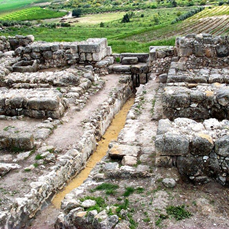
This organized resistance was not successful, however, and Joshua’s army, empowered by the Lord, was able to defeat King Jabin: “and he burned Hazor with fire” (Josh. 11:11). Archaeologists have been excavating the tel (archaeological site) of Hazor for several decades, but only recently have they located the palace of the king. The building is marked by its great size (about 90 feet x 120 feet), and a layer of charred wood suggests that there was a parquet-type floor in the palace that was burned, probably when Joshua destroyed the city.

The Possibility of Archives in Hazor

The Israeli archaeologist in charge, Amnon Ben-Tor, has discovered several clay-tablet inscriptions in Hazor. He is on the verge of excavating the royal palace, where he hopes to find archives, as indicated in a recent AP story:

Hebrew University professor Amnon Ben-Tor, head of the excavation, said Monday that the tablets and other evidence point to the existence of two royal archives at the site in as-yet unexcavated palace rooms.

The discovery of such archives would be unprecedented in the Holy Land and would provide a wealth of information about life in the Canaanite period.

They have not yet found or penetrated the archives, but hope to do so in the next season. What gives the workers optimism is the fact that archives have been discovered in the palaces of similar ancient cities in the Middle East that have been excavated. In a Jerusalem Post article, Ben-Tor explains this correlation between the palace at Hazor and the palaces found in other ancient cities:

The map Amnon Ben-Tor held in one hand was that of the royal palace of Hatzor being excavated around him. His other hand gripped the map of a palace excavated elsewhere in the Middle East.

“The buildings are identical,” he said, pointing out the similarity of room layout to a visiting colleague and a journalist last week. One of the rooms of the other palace was marked with a star. “That’s where they found their archive,” he said. The equivalent room in the Hatzor palace lay just a few meters from him, still unexcavated.

The clay inscriptions already discovered in Hazor prove that the city being excavated is, indeed, Hazor. They also show the political and economic commerce that existed between Hazor and the other major cities of Canaan and Mesopotamia, such as Mari.

Up to this point, the discovery of archives and inscriptions has been rare in Israel, so if the archaeologists do find a trove of inscriptions in Hazor, it will truly be a breakthrough. The more of this kind of discovery that comes to light, the harder it will be for the world to deny the historicity of the Joshua invasion of Canaan in particular, and the truthfulness of the Bible in general.

Related posts:

The Critics’ Admissions Concerning Daniel

The Bible and Archaeology (1/5) I have been amazed at the prophecies in the Bible that have been fulfilled in history. John MacArthur went through every detail of the prophecy concerning Tyre and how history shows the Bible prophecy was correct.   I love the Book of Daniel and I am starting a series today […]

Book of Mormon is not historically accurate, but Bible is (Part 25)

Several names of Bible characters are verified by secular documents in this video clip below. From time to time you will read articles in the Arkansas press by  such writers as  John Brummett, Max Brantley and Gene Lyons that poke fun at those that actually believe the Bible is historically accurate when in fact the […]

Is the Bible historically accurate?(Part 18)

The Bible and Archaeology (3/5) The Bible maintains several characteristics that prove it is from God. One of those is the fact that the Bible is accurate in every one of its details. The field of archaeology brings to light this amazing accuracy From time to time you will read articles in the Arkansas press […]

Is the Bible historically accurate?(Part 14C)(The Conspirator Part 7)

Critics – Part 1 By Dr In my ongoing debate with other bloggers on the Arkansas Times Blog, I had an interesting response from Dobert: You can’t have it both ways. If the Gospel writers were allowed to adapt their message to a particular audience then it can’t be claimed that God literally took their […]

Is the Bible historically accurate? (Part 13)

Many Kings and important people in the Bible are also verified by secular documents. From time to time you will read articles in the Arkansas press by  such writers as  John Brummett, Max Brantley and Gene Lyons that poke fun at those that actually believe the Bible is historically accurate when in fact the Bible […]

Is the Bible historically accurate? (Part 12)(Johnny Cash, Famous Arkansan pt C)

Dr Price, who directs excavations at the Qumran plateau in Israel, the site of the community that produced the dead sea scrolls some 2,000 years ago, expertly guides you through the latest archaeological finds that have changed the way we understand the world of the bible. (Part 6 of 6 in the film series The Stones […]

Is the Bible historically accurate? (Part 8)

Today I was sad to hear Elizabeth Taylor died. My sons are in Los Angeles today and they said they will get copies of the LA Times tomorrow to bring home to give my wife. We both love Taylor’s performance in  her movie “Giant” from 1956 with Rock Hudson. I also love the performance in […]

What I learned from the film PATTERNS OF EVIDENCE:THE EXODUS!!!

_____________ What I learned from the film  PATTERNS OF EVIDENCE:THE EXODUS!!! WND EXCLUSIVE STATUE OF BIBLE’S JOSEPH DISCOVERED? New film challenges archaeology’s claim there’s ‘no evidence’ of Exodus Published: 3 days ago image: http://www.wnd.com/files/2011/12/Drew-Zahn_avatar.jpg DREW ZAHN About | Email | Archive 1.6K On the sandy shores of the Red Sea, visitors still flock to hear […]

The experts I was most impressed by in the film PATTERNS OF EVIDENCE:THE EXODUS

Is this a film about science or religion? Published on Jun 14, 2014 Director Timothy P. Mahoney shares his thoughts about his film, Patterns of Evidence: The Exodus. Is this a scientific or religious film? _________________________________ I went to see the film PATTERNS OF EVIDENCE: THE EXODUS and I enjoyed it very much. It stars Charles Alin,Manfred […]

RESPONDING TO HARRY KROTO’S BRILLIANT RENOWNED ACADEMICS!! (Dr. David J. Gross, Nobel Laureate, UC Santa Barbara Physics Department, DOES SCIENCE HAVE RELIGION ON THE RUN, OR DID CHRISTIANITY ENCOURAGE SCIENCE?)

RESPONDING TO HARRY KROTO’S BRILLIANT RENOWNED ACADEMICS!! (Dr. Roald Hoffmann, Cornell University, American theoretical chemist who won the 1981 Nobel Prize in Chemistry, WHY DO PEOPLE HAVE A DESIRE FOR GOD?)

___________ Frank H. T. Rhodes Professor  of Humane Letters Emeritus _____________ On November 21, 2014 I received a letter from Nobel Laureate Harry Kroto and it said: …Please click on this URLhttp://vimeo.com/26991975 and you will hear what far smarter people than I have to say on this matter. I agree with them. Harry Kroto __________________________ […]

RESPONDING TO HARRY KROTO’S BRILLIANT RENOWNED ACADEMICS!! (Dr. Marvin Minsky, co-founder of MIT,”…if there are questions science can’t yet answer, why knock yourself out? I regard religion as a wonderful way to save people’s time”)

______________ Dr. Marvin Minsky pictured below: On November 21, 2014 I received a letter from Nobel Laureate Harry Kroto and it said: …Please click on this URL http://vimeo.com/26991975 and you will hear what far smarter people than I have to say on this matter. I agree with them. Harry Kroto __________________________ There are 3 videos in […]

RESPONDING TO HARRY KROTO’S BRILLIANT RENOWNED ACADEMICS!! ( Dr. Marcus du Sautoy, Professor of Mathematics, Oxford University, IS THERE EVIDENCE THAT SHOWS THE BIBLE IS ACCURATE or just a lot of talk of souls, and spirits and things? )

  _________________ On November 21, 2014 I received a letter from Nobel Laureate Harry Kroto and it said: …Please click on this URLhttp://vimeo.com/26991975 and you will hear what far smarter people than I have to say on this matter. I agree with them. Harry Kroto __________________________ There are 3 videos in this series and they […]

Eight of the northern kingdom’s kings—including the notorious Ahab and Jeroboam II, whose reign was denounced by Hosea and Amos—have been verified archaeologically!

____________ Archaeology keeps on confirming the Bible’s accuracy over and over again!!! Archaeology and the Bible By: Eric Metaxas|Published: April 3, 2014 12:30 AM Speaking of facts, in the LATEST ISSUE of BIBLICAL ARCHAEOLOGY REVIEW, Lawrence Mykytiuk of Purduedaily_commentary_04_03_14 asks and answers the question “HOW MANY PEOPLE IN THE HEBREW BIBLE HAVE BEEN CONFIRMED ARCHAEOLOGICALLY?’ […]

Lots of evidence points to the Bible being historically accurate, for instance, King David existed!!

______________ Lots of evidence points to the Bible being historically accurate, for instance, King David existed!! House of David Inscription The current issue of Biblical Archaeology Review has an article entitled, “Archaeology Confirms 50 Real People in the Bible,” by Lawrence Mykytiuk. The first in his list is King David, whose name was found in the Tel Dan Stela, […]

Book of Daniel written in 6th century B.C.? (Part 4 )

The Bible and Archaeology (4/5) I have been amazed at the prophecies in the Bible that have been fulfilled in history, and also many of the historical details in the Bible have been confirmed by archaeology too. ( I have put a list below of several posts I have made in the past about this.) […]

Evidence for the Bible (Updated)

The Bible and Archaeology (1/5) The Bible maintains several characteristics that prove it is from God. One of those is the fact that the Bible is accurate in every one of its details. The field of archaeology brings to light this amazing accuracy. _________________________- Many people have questioned the accuracy of the Bible, but I […]

Answers to historical problems in the Book of Daniel (Part 2)

The Bible and Archaeology (1/5) For many more archaeological evidences in support of the Bible, see Archaeology and the Bible . (There are some great posts on this too at the bottom of this post.)   Till Is Batting Around .250 on Daniel by Everette Hatcher III 1999 / March-April  Let me address three of the […]

Was Daniel an Eyewitness of 6th-Century B.C. Events? (part 2) (Plus Six Pieces of Archaeological Evidence that Support the 6th Century View and video of John MacArthur on Daniel 4)

The Bible and Archaeology (3/5) For many more archaeological evidences in support of the Bible, see Archaeology and the Bible . (There are some great posts on this too at the bottom of this post.) I believe the evidence points to Daniel writing the Book of Daniel in the 6th century B.C. Below is a sermon […]

Was Daniel an Eyewitness of 6th-Century B.C.Events? (part 1)

The Bible and Archaeology (2/5) There is evidence pointing to the accuracy of the Bible. Here is some below. For many more archaeological evidences in support of the Bible, see Archaeology and the Bible . (There are some great posts on this too at the bottom of this post.) Was Daniel an Eyewitness of 6th-Century B. […]

Top Ten Biblical Discoveries in Archaeology – #10 Assyrian Lachish Reliefs JULY 4, 2010 by Tim Kimberley

_____________

Top Ten Biblical Discoveries in Archaeology – #10 Assyrian Lachish Reliefs

Setting the Stage

In 930 BC the unified country of Israel split into two kingdoms.  The northern kingdom is known as Israel.  The southern kingdom is known as Judah.  200 years later, in 720 BC, Israel is destroyed by Assyria (modern day Iraq).

With Israel destroyed Assyria turns its gaze toward destroying Judah.  2 Kings 18:13 says, “In the fourteenth year of King Hezekiah’s reign, Sennacherib king of Assyria attacked all the fortified cities of Judah and captured them.”

2 Kings 18:17 states, “The king of Assyria sent his supreme commander, his chief officer and his field commander with a large army, from Lachish to King Hezekiah at Jerusalem.”  The prize of Judah would be the destruction of Jerusalem.  Conquering Boston would be a victory but defeating Washington, D.C. would be even greater. Sennacherib drives one of the most powerful armies of all human history toward Jerusalem.  The Assyrian commander tells the people of Jerusalem, “Do not listen to Hezekiah, for he is misleading you when he says, ‘The Lord will deliver us.’ Has the god of any nation ever delivered his land from the hand of the king of Assyria?”

Hezekiah prays fervently for deliverance.  He sends a delegation to Isaiah the prophet for counsel.  Isaiah tells him not to worry Jerusalem will NOT be destroyed by the leading world power, God will intervene.  This is just one of the myriad stories found in the Bible.  Is this story accurate?  How can a story from nearly 3,000 years ago be trusted as completely true?  Does archaeology support or deny the accuracy of 2 Kings 18 and 19?

The Discovery

We know from Assyrian history, outside the Bible, there was a king named Sennacherib.  His reign was from 704-681 BC.  We know Sennacherib moved the capital of the Assyrian empire from a city named Dur Sharrukin to Nineveh.  He then built an amazing palace.  He actually named his palace, “The Palace without Rival.”  John Malcolm Russell explains, “The walls of some seventy rooms in this structure were lined with limestone slabs carved in low relief with scenes commemorating Sennacherib’s royal exploits.”  For nearly 2,500 years the palace lay buried and forgotten.

In 1847 Sennacherib’s palace was discovered by the British diplomat and amateur archaeologist Austin Henry Layard.  Layard’s discovery drew a huge amount of attention.  Inscriptions discovered within the palace removed any doubt this was indeed Sennacherib’s famous palace.   The finds were magnificent.  The main focus of the excitement came from a room archaeologists labeled, “Room XXVI.”

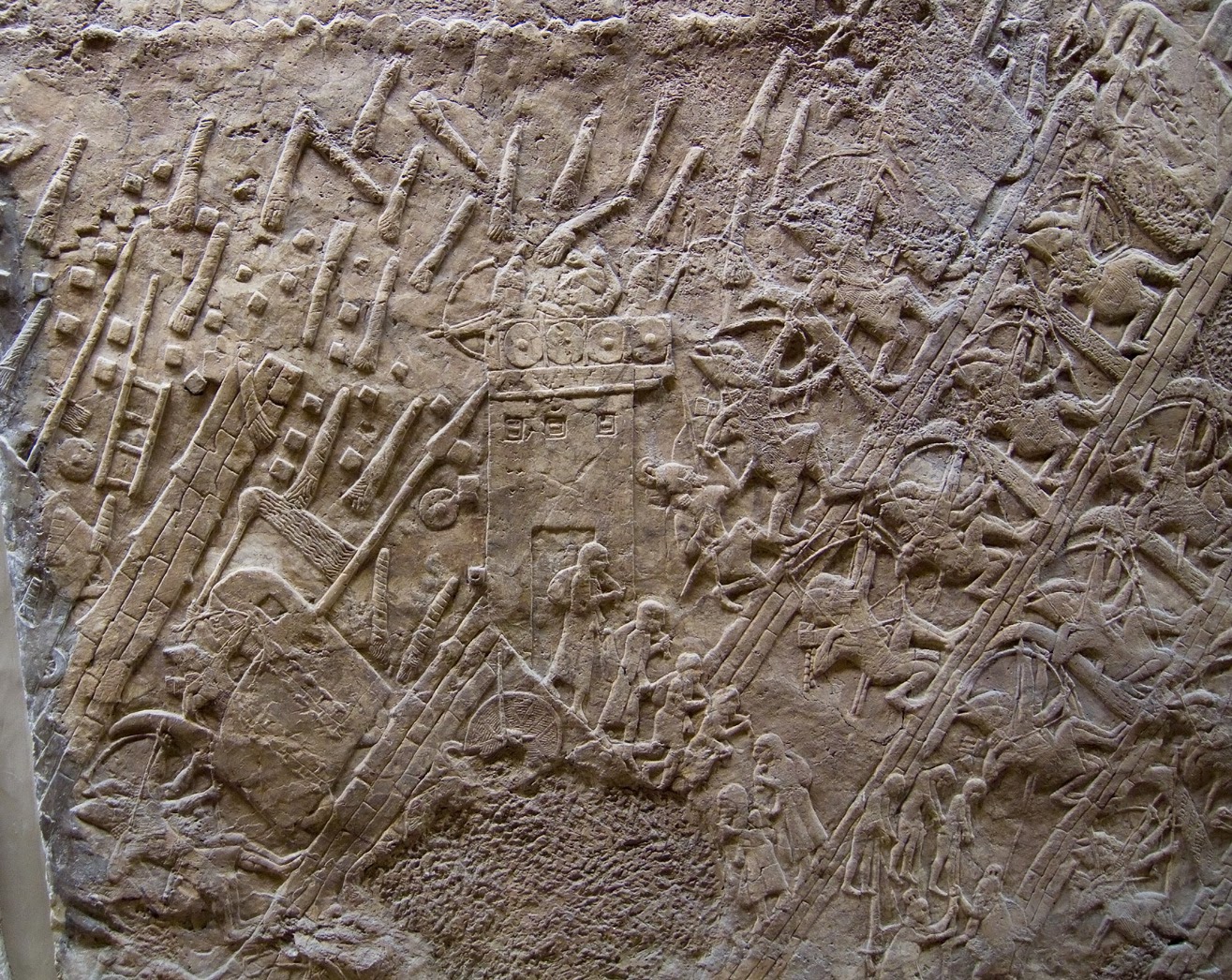
Layard found the walls of this room covered with limestone 8 feet tall and 80 feet long wrapping around all four walls.  Every inch of the room’s walls powerfully depicted only one scene in history, Sennacherib’s defeat of the southern kingdom city of Lachish.  Remember in 2 Kings 18:17, “The king of Assyria sent his supreme commander, his chief officer and his field commander with a large army, from Lachish to King Hezekiah at Jerusalem.”

The piece of art identifies itself as the battle of Lachish and provides detailed chronological information about the battle.  Some women are seen walking down siege ramps; while possibly their husbands are being impaled by the Assyrians.  We see what the women of Lachish were wearing the day of the battle; we see the type of facial hair worn by the men.  We see the type of military equipment and military techniques the Assyrians used to defeat Lachish and threaten Jerusalem.  The relief gives us stunning play-by-play detail of the destruction of Lachish.

Do you see all the little dome-shaped objects in the background?  What are they?  Each one represents a soldier’s helmet.  They are depicting in art a vast sea of soldier’s helmets, representing the immensity of the Assyrian army.

Provenance

The Provenance, or history, of the Lachish Relief is without dispute.  The relief did not appear mysteriously on the black market.  The dig of Sennacherib’s palace was well-documented and the relief clearly discovered from within the city of Nineveh and specifically in Room XXVI of Sennacherib’s palace.   Even though Austin Henry Layard was an amateur archaeologist at the time of the discovery, the discovery has a strong provenance.  Furthermore, leading archaeologists have been able to examine the relief and confirm its authenticity and importance.

Significance

Why would Sennacherib cover a room in his palace with scenes from this one battle?  That’s where it gets really interesting.  Archaeologists have been able to determine this room was a waiting room for people getting ready to see Sennacherib.  Many of the people getting ready to see the emperor were kings or dignitaries in their own land.  These powerful people, as they waited to meet with Sennacherib, would be able to see the power of the king and the fate of those who would resist his rule.

The discovery is significant on many levels, here are but a few:

  1. The discovery confirms Israel as a powerful/important nation in the 8thcentury BC.  If you want to show yourself as powerful to other kings/dignitaries you will mention someone powerful whom you defeated.  No one is impressed if you steal candy from a baby.  Yet if you steel candy from an Ultimate Fighting Champion, you have my attention.  Many critics argue the nation of Israel was not great during the time of the kings (David, Solomon, etc…).  Critics will say Israel was a sparsely populated country full of poor farmers.  The Assyrian relief, in support of the Bible, proves Israel was a powerful country during the period of the kings.
  2. Sennacherib uses 8 feet-by-80 feet of wall space to brag about destroying Lachish.  Why didn’t he instead use that prime real estate to brag about destroying Jerusalem?  Jerusalem would have been the ultimate prize to brag about, Lachish is generally regarded as the second most important city of Judah behind Jerusalem.  Destroying Jerusalem would have meant destroying the temple of the God of Israel.  A message would be sent throughout the world telling people the god of Assyria is greater than the God of Israel.  Since the relief depicts Lachish instead of Jerusalem it is obvious Sennacherib did not destroy Jerusalem.  The biblical account is accurate; Lachish was destroyed not Jerusalem.  In additional support to my first point, Sennacherib is boasting to other kings about destroying the second most influential city in Judah.
  3. The destruction of Lachish is the most widely documented event from the Old Testament.  The story is explained in four independent sources from the same era: 1) In the Bible; 2) In Assyrian cuneiform prisms (another discovery shown in picture at left) accounting the same events, 3) In archaeological excavations at the site of Lachish; and 4) In the monumental reliefs discovered in Nineveh.
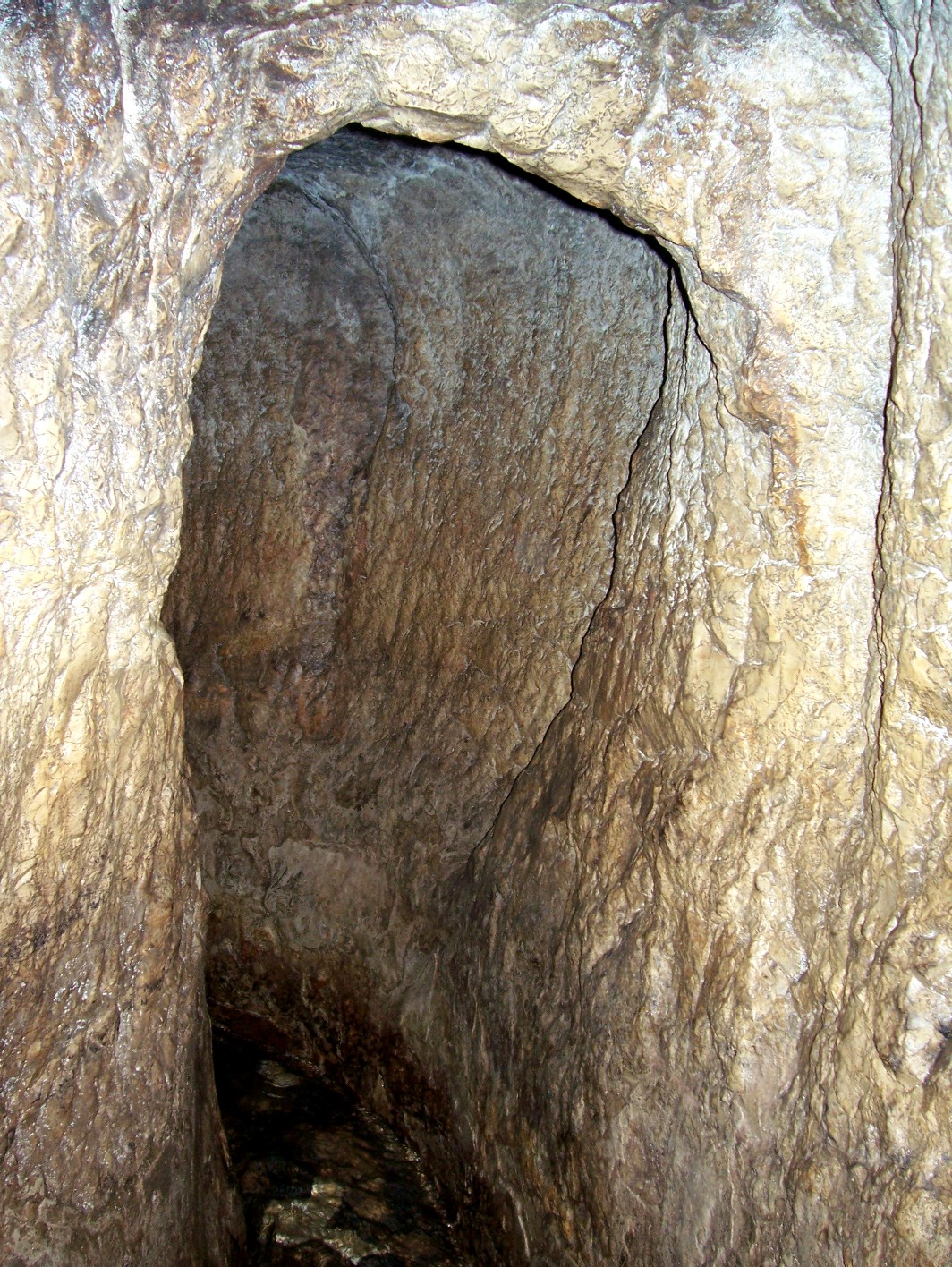
  4. The discovery supports the construction of another archaeological marvel: Hezekiah’s Tunnel.  Sennacherib’s army thought they had cut off all sources of water to Jerusalem.  It would be a matter of a couple weeks until the people fled Jerusalem in need of water.  The joke was on them.  Hezekiah, without modern tools, had constructed a tunnel inside Jerusalem through 1750 feet of solid rock in order to reach an underground water supply.  The tunnel wasn’t discovered in modern times until 1837.  I have had the amazing privilege, with water up to my knees, of walking through all 1750 feet of the tunnel constructed to survive Sennacherib’s siege.

The Assyrian Lachish Relief is the 8th century BC’s equivalent of finding an HD video taken during a war that occurred during the Old Testament.  The HD video completely supports the biblical account making this one of the ten most significant biblical discoveries in archaeology of all time.

As we continue down our Top Ten list the significance of our discoveries only grow.  What do you think of the Assyrian Lachish reliefs?  Feel free to join the conversation by commenting on this discovery.


_______

RESPONDING TO HARRY KROTO’S BRILLIANT RENOWNED ACADEMICS!! PART 18 (Brian Harrison, Historian, Oxford University, Charles Darwin also wrestled with the issue of Biblical Archaeology and the accuracy of the Bible)

_____________

Brian Harrison (historian)

Brian HarrisonEmeritus Fellow of Corpus Christi College

On November 21, 2014 I received a letter from Nobel Laureate Harry Kroto and it said:

…Please click on this URL http://vimeo.com/26991975

and you will hear what far smarter people than I have to say on this matter. I agree with them.

Harry Kroto

__________________________

There are 3 videos in this series and they have statements by 150 academics and scientists and I hope to respond to all of them. Wikipedia notes: Professor Sir Brian Howard Harrison, FBA (born 9 July 1937) is a British historian and academic. He was the editor of Oxford Dictionary of National Biography from January 2000 to September 2004 (succeeded by Lawrence Goldman) and professor of Modern Historyat the University of Oxford. He is an emeritus fellow of Corpus Christi College, Oxford. He was appointed knight bachelor in the 2005 New Year’s Honours for “services to scholarship”, and was elected a fellow of the British Academy on 30 July 2005.

Harrison has published extensively on British social and political history from the 1790s to the present. His first book was Drink and the Victorians. The Temperance Question England 1815–1872 (1971, 2nd. ed. 1994). His most recent publications are two volumes in the New Oxford History of England series covering British history from 1951: Seeking a Role: The United Kingdom 1951–1970 (2009, paperback with revisions 2011) and Finding a Role? The United Kingdom 1970–1990 (2010, paperback with revisions 2011).[dated info]

________________

His comments can be found on the 3rd video and the 119th clip in this series. Below the videos you will find his words.

50 Renowned Academics Speaking About God (Part 1)

Another 50 Renowned Academics Speaking About God (Part 2)

A Further 50 Renowned Academics Speaking About God (Part 3)

An interview of the historian Sir Brian Harrison – part one

Published on Jun 30, 2014

Filmed and interviewed by Alan Macfarlane on 22 June 2012

An interview of the historian Sir Brian Harrison – part two

_______________

I grew up at Bellevue Baptist Church under the leadership of our pastor Adrian Rogers and I read many books by the Evangelical Philosopher Francis Schaeffer and have had the opportunity to contact many of the evolutionists or humanistic academics that they have mentioned in their works. Many of these scholars have taken the time to respond back to me in the last 20 years and some of the names  included are  Ernest Mayr (1904-2005), George Wald (1906-1997), Carl Sagan (1934-1996),  Robert Shapiro (1935-2011), Nicolaas Bloembergen (1920-),  Brian Charlesworth (1945-),  Francisco J. Ayala (1934-) Elliott Sober (1948-), Kevin Padian (1951-), Matt Cartmill (1943-) , Milton Fingerman (1928-), John J. Shea (1969-), , Michael A. Crawford (1938-), Paul Kurtz (1925-2012), Sol Gordon (1923-2008), Albert Ellis (1913-2007), Barbara Marie Tabler (1915-1996), Renate Vambery (1916-2005), Archie J. Bahm (1907-1996), Aron S “Gil” Martin ( 1910-1997), Matthew I. Spetter (1921-2012), H. J. Eysenck (1916-1997), Robert L. Erdmann (1929-2006), Mary Morain (1911-1999), Lloyd Morain (1917-2010),  Warren Allen Smith (1921-), Bette Chambers (1930-),  Gordon Stein (1941-1996) , Milton Friedman (1912-2006), John Hospers (1918-2011), Michael Martin (1932-), John R. Cole  (1942-),   Wolf Roder,  Susan Blackmore (1951-),  Christopher C. French (1956-)  Walter R. Rowe Thomas Gilovich (1954-), Paul QuinceyHarry Kroto (1939-), Marty E. Martin (1928-), Richard Rubenstein (1924-), James Terry McCollum (1936-), Edward O. WIlson (1929-), Lewis Wolpert (1929), Gerald Holton (1922-), Martin Rees (1942-), Alan Macfarlane (1941-),  Roald Hoffmann (1937-), Herbert Kroemer (1928-), Thomas H. Jukes (1906-1999), Glenn BranchGeoff Harcourt (1931-) and  Ray T. Cragun (1976-).

_____________

QUOTE:

I have always remained an agnostic and not an atheist. I am not militant about it. I have never seen any evidence for it, and if anything, being a historian has turned me the other way.

________________

IS THERE ANY EVIDENCE POINTING TO THE ACCURACY OF THE BIBLE FROM HISTORY OR ARCHAEOLOGY? BELOW IS MY RESPONSE TO DR. HARRISON IN THE FORM OF A LETTER MAILED LAST MONTH:

February 12, 2015

Dear Dr. Harrison,

I just finished reading the online addition of the book Darwin, Francis ed. 1892. Charles Darwin: his life told in an autobiographical chapter, and in a selected series of his published letters [abridged edition]. London: John Murray. There are several points that Charles Darwin makes in this book that were very wise, honest, logical, shocking and some that were not so wise. The Christian Philosopher Francis Schaeffer once said of Darwin’s writings, “Darwin in his autobiography and in his letters showed that all through his life he never really came to a quietness concerning the possibility that chance really explained the situation of the biological world. You will find there is much material on this [from Darwin] extended over many many years that constantly he was wrestling with this problem.”

Here is a quote I ran across recently from you in your wonderful in depth interview with Alan Macfarlane :

I have always remained an agnostic and not an atheist. I am not militant about it. I have never seen any evidence for it, and if anything, being a historian has turned me the other way. 

YOU MAY FIND IT INTERESTING THAT CHARLES DARWIN WAS ALSO INTERESTED IN THE HISTORICAL ASPECT OF THE BIBLE. When I read the book  Charles Darwin: his life told in an autobiographical chapter, and in a selected series of his published letters, I also read  a commentary on it by Francis Schaeffer and I wanted to both  quote some of Charles Darwin’s own words to you and then include the comments of Francis Schaeffer on those words. I have also enclosed a CD with two messages from Adrian Rogers and Bill Elliff concerning Darwinism.

In 1879 Charles Darwin was applied to by a German student, in a similar manner. The letter was answered by a member of my father’s family, who wrote:–

“Mr. Darwin begs me to say that he receives so many letters, that he cannot answer them all.He considers that the theory of Evolution is quite compatible with the belief in a God; but that you must remember that different persons have different definitions of what they mean by God.” 

Francis Schaeffer commented:

You find a great confusion in his writings although there is a general structure in them. Here he says the word “God” is alright but you find later what he doesn’t take is a personal God. Of course, what you open is the whole modern linguistics concerning the word “God.” is God a pantheistic God? What kind of God is God? Darwin says there is nothing incompatible with the word “God.”

This, however, did not satisfy the German youth, who again wrote to my father, and received from him the following reply:—

“I am much engaged, an old man, and out of health, and I cannot spare time to answer your questions fully,—nor indeed can they be answered. Science has nothing to do with Christ, except in so far as the habit of scientific research makes a man cautious in admitting evidence. For myself, I do not believe that there ever has been any revelation.As for a future life, every man must judge for himself between conflicting vague probabilities.”

Francis Schaeffer observed:

So he has come to the place as an old man that he doesn’t believe there has been any revelation. In his younger years he held a different position. He lost his position not on the basis of reason but simply that it disagreed with his theory and his presuppositions and he was forced to give it up.

The passages which here follow are extracts, somewhat abbreviated, from a part of the Autobiography, written in 1876, in which my father gives the history of his religious views:—“During these two years* (ft note *October 1836 to January 1839.) I was led to think much about religion. Whilst on board the Beagle I was quite orthodox, and I remember being heartily laughed at by several of the officers (though themselves orthodox) for quoting the Bible as an unanswerable authority on some point of morality.

Francis Schaeffer noted:

So you find that as a younger man he did accept the Bible. As an older man he has given up revelation but he is not satisfied with his own answers. He is caught in the tension that modern man is caught in. He is a prefiguration  of the modern man and he himself contributed to. Then Darwin goes on and tells us why he gave up the Bible.

Darwin went to write:

I suppose it was the novelty of the argument that amused them. But I had gradually come by this time, i.e. 1836 to 1836, to see that the Old Testament was no more to be trusted than the sacred books of the Hindoos. The question then continually rose before my mind and would not be banished,—is it credible that if God were now to make a revelation to the Hindoos, he would permit it to be connected with the belief in Vishnu, Siva, &c., as Christianity is connected with the Old Testament? This appeared to me utterly incredible.

Francis Schaeffer asserted:

Darwin is saying that he gave up the New Testament because it was connected to the Old Testament. He gave up the Old Testament because it conflicted with his own theory. Did he have a real answer himself and the answer is no. At the end of his life we see that he is dehumanized by his position and on the other side we see that he never comes to the place of intellectual satisfaction for himself that his answers were sufficient.

Darwin continued:

“But I was very unwilling to give up my belief; I feel sure of this, for I can well remember often and often inventing day-dreams of old letters between distinguished Romans, and manuscripts being discovered at Pompeii or elsewhere, which confirmed in the most striking manner all that was written in the Gospels.

Francis Schaeffer commented:

This is very sad. He lies on his bunk and the Beagle tosses and turns and he makes daydreams, and his dreams and hopes are that someone would find in Pompeii or some place like this, an old manuscript by a distinguished Roman that would put his stamp of authority on it, which would be able to show that Christ existed. This is undoubtedly what he is talking about. Darwin gave up this hope with great difficulty. I think he didn’t want to come to the position where his accepted presuppositions were driving him. He didn’t want to give it up, just as an older man he understood where it would lead and “man can do his duty.” Instinctively this of brains understood where this whole thing was going to eventually go…

SINCE CHARLES DARWIN’S DEATH WE NOW HAVE LOTS OF HISTORICAL RECORDS AND MUCH EVIDENCE FROM THE FIELD OF ARCHAEOLOGY THAT SHOW THE BIBLE IS HISTORICALLY ACCURATE.

**************TAKE TIME TO CONSIDER THIS EVIDENCE BELOW********************

I  have been amazed at the prophecies in the Bible that have been fulfilled in history, and also many of the historical details in the Bible have been confirmed by archaeology too. One of the most amazing is the prediction that the Jews would be brought back and settle in Jerusalem again. Another prophecy in Psalms 22 describes the Messiah dying on a cross  almost 1000 years before the Romans came up with this type of punishment.

Many times it has been alleged that the author of the Book of Daniel was from a later period but how did a later author know these 5 HISTORICAL FACTS? How did he know [1] that Belshazzar was ruling during the last few years of the Babylonian Empire when the name “Belshazzar” was lost to history until 1853 when it was uncovered in the monuments? [2] The author also knew that the Babylonians executed individuals by casting them into fire, and that the Persians threw the condemned to the lions. [3] He knew  the practice in the 6th Century was to mention first the Medes, then the Persians and not the other way around. [4] Plus he knew the laws made by Persian kings could not be revoked and [5] he knew that in the sixth century B.C., Susa was in the province of Elam (Dan. 8:2). Of course, the Book of Daniel (2:37-42) clearly predicted the rise of the 4 world empires in the correct order of Babylon, Medo-Persia, Greece, and Rome.

One of the top 10 posts on my blog on this next subject concerning Tyre.   John MacArthur went through every detail of the prophecy concerning Tyre and how history shows the Bible prophecy was correct.  Sagan said he had taken a look at Old Testament prophecy and it did not impress him because it was too vague.

HOW CAN ANYONE SAY THAT THIS FOLLOWING PROPHECY CONCERNING TYRE IS “TOO VAGUE?”

Below is an outline from a sermon from Dr. John MacArthur

Photo of John MacArthur


________________

John MacArthur on the amazing fulfilled prophecy on Tyre and how it was fulfilled by historical events.

LESSON

I. BIBLICAL PROPHECY CONCERNING TYRE (Ezekiel 26:1–28:19)

A. The Forecast

1. The specifics

a) That King Nebuchadnezzar of Babylon would destroy the mainland city of Tyre (26:7-8).

b) That many nations would rise up against Tyre. These nations would come like waves of the sea, one after another (26:3- 4).

c) That Tyre will be made like a flat rock (26:4, 14).

d) That fisherman will dry their nets there (26:5, 14).

e) That the rubble of the city would be cast into the sea (26:12).

f) That Tyre would never be rebuilt (26:14).

2. The setting

Tyre was a great city. It was one of the largest and most powerful cities of Phoenicia, which is modern day Lebanon.

It was well fortified. A great wall protected the city from land attacks while their world-renowned fleet protected them from attack by sea.

Tyre was a flourishing city during the time when Joshua led Israel into the Promised Land. King Hiram, who began his reign during the rule of David, offered David cedars from Tyre to build his palace. He also loaned David his artisans to craft parts of the great palace (1 Chron. 14:1). Hiram also helped Solomon build the Temple by floating cedars down the shoreline to be picked up and hauled to Jerusalem (2 Chron. 2:16). So Tyre was a great city, and both David and Solomon looked to it for aid.


B. The Fulfillment

1. The prophetic call

a) To Nebuchadnezzar

Not long after the prophecy given by Ezekiel, Nebuchadnezzar did exactly what had been predicted–he laid siege against the city in 585 B.C. For thirteen years Nebuchadnezzar cut off the flow of supplies into the city. In 537 B.C. he finally succeeded in breaking the gates down, but found the city almost empty.

During the thirteen-year siege, the people of Tyre moved all their possessions by ship to an island one-half mile offshore. So Nebuchadnezzar gained no plunder (Ezek. 29:17- 20). Although he destroyed the mainland city (Ezek. 26:8), the new city offshore continued to flourish for 250 years. The prophecy of Ezekiel 26:12–“they shall lay thy stones and thy timber and thy dust in the midst of the water”–remained unfulfilled.


b) To Alexander the Great

At age twenty-two, Alexander the Great came east conquering the known world with an army of between thirty and forty thousand men. Having defeated the Persians under Darius III, Alexander was on the march toward Egypt.

(1) The dilemma

Alexander arrived in the Phoenician territory and demanded that the cities open their gates to him. The citizens of Tyre refused, feeling they were secure on their island with their superior fleet.


(2) The decision

Realizing he did not have a fleet that could match Tyre’s, Alexander decided to build a causeway to the island using the ruins from the mainland city. It was about two hundred feet wide. The prophet said that the city would be thrown into the water, and that’s exactly what happened.


(3) The details

Arrian, a Greek historian, wrote about the overthrow of Tyre and how it was accomplished (The Campaigns of Alexander [New York: Penquin, 1958], pp. 132-43). The fortification of Tyre resembled Alcatraz. The city sat offshore like a rock with walls that came down to the edge of the water. Alexander set out to build the only means to approach the city–a land peninsula. Soldiers started pitching rubble into the water, leveling it off as they went so they could march on it. The water got deeper as they approached the island, and to make their task even more difficult, the people of Tyre bombarded them with missiles.

Werner Keller in The Bible as History tells us that to safeguard the operation, Alexander built mobile shields called “tortoises” (New York: Bantam, 1956], p. 361). Knowing that when they reached the city they would have to scale the walls, Alexander built “Hele-poleis,” which were mobile siege towers 160 foot high. The idea was to roll these structures across the causeway and push them up against the walls. A drawbridge on the front of the towers enabled the soldiers to march across the top of the walls and into the city.

Alexander’s men were under constant attack from people within the city and from the Tyrian navy. Realizing that he needed ships to defend his flanks, Alexander returned to the cities he had conquered and demanded their assistance. That fulfilled the prophecy that God “will cause many nations to come up against thee, as the sea causeth its waves to come up” (Ezek. 26:3).

(4) The destruction

Alexander’s plan succeeded. Eight thousand people were slain and thirty thousand were sold into slavery. It took Alexander seven months to conquer Tyre. The causeway he built can be seen to this day.


2. The prophetic result

How did Ezekiel know all those things would happen? The only explanation is he expressed the mind of God. Historian Philip Myers said, “Alexander the Great reduced it [Tyre] to ruins (332 B.C.). She recovered in a measure from this blow, but never regained the place she had previously held in the world. The larger part of the site … is now as bare as the top of a rock–a place where the fishermen that still frequent the spot spread their nets to dry” (General History for Colleges and High Schools [Boston: Ginn and Co., 1889], p. 55). That fulfills the prophecies of Ezekiel 26:4-5, 14. The island city was repopulated, later to be destroyed by the Moslems in A.D. 1281. However, God said the mainland city would never be rebuilt–and it never has. Jerusalem has been rebuilt many times but Tyre will never be rebuilt because a prophet in Babylon said twenty-five centuries ago, “Thou shalt be built no more” (Ezek. 26:14).


___________________

AS A HISTORIAN YOU HAVE ACCESS TO ALL OF THESE RECORDS. WHY NOT TAKE A FEW MOMENTS AND CHECK OUT THESE FACTS YOURSELF?

I Corinthians 15 asserts:

12 But if it is preached that Christ has been raised from the dead, how can some of you say that there is no resurrection of the dead? 13 If there is no resurrection of the dead, then not even Christ has been raised. 14 And if Christ has not been raised, our preaching is useless and so is your faith. 15 More than that, we are then found to be false witnesses about God, for we have testified about God that he raised Christ from the dead. But he did not raise him if in fact the dead are not raised. 16 For if the dead are not raised, then Christ has not been raised either. 17 And if Christ has not been raised, your faith is futile; you are still in your sins. 18 Then those also who have fallen asleep in Christ are lost. 19 If only for this life we have hope in Christ, we are of all people most to be pitied.

I sent you a CD that starts off with the song DUST IN THE WIND by Kerry Livgren of the group KANSAS which was a hit song in 1978 when it rose to #6 on the charts because so many people connected with the message of the song. It included these words, “All we do, crumbles to the ground though we refuse to see, Dust in the Wind, All we are is dust in the wind, Don’t hang on, Nothing lasts forever but the Earth and Sky, It slips away, And all your money won’t another minute buy.”

Kerry Livgren himself said that he wrote the song because he saw where man was without a personal God in the picture. Solomon pointed out in the Book of Ecclesiastes that those who believe that God doesn’t exist must accept three things. FIRST, death is the end and SECOND, chance and time are the only guiding forces in this life.  FINALLY, power reigns in this life and the scales are never balanced. The Christian can  face death and also confront the world knowing that it is not determined by chance and time alone and finally there is a judge who will balance the scales.

Both Kerry Livgren and the bass player Dave Hope of Kansas became Christians eventually. Kerry Livgren first tried Eastern Religions and Dave Hope had to come out of a heavy drug addiction. I was shocked and elated to see their personal testimony on The 700 Club in 1981 and that same  interview can be seen on You Tube today. Livgren lives in Topeka, Kansas today where he teaches “Diggers,” a Sunday school class at Topeka Bible ChurchDAVE HOPE is the head of Worship, Evangelism and Outreach at Immanuel Anglican Church in Destin, Florida.

The answer to find meaning in life is found in putting your faith and trust in Jesus Christ. The Bible is true from cover to cover and can be trusted.

Thank you again for your time and I know how busy you are.

Everette Hatcher, everettehatcher@gmail.com, http://www.thedailyhatch.org, cell ph 501-920-5733, Box 23416, LittleRock, AR 72221, United States

The Bible and Archaeology – Is the Bible from God? (Kyle Butt 42 min)

Is the Bible historically accurate and have I taken the time to examine the evidence? Here are some of the posts I have done in the past on the subject and if you like you could just google these subjects: 1. The Babylonian Chronicleof Nebuchadnezzars Siege of Jerusalem2. Hezekiah’s Siloam Tunnel Inscription. 3. Taylor Prism (Sennacherib Hexagonal Prism)4. Biblical Cities Attested Archaeologically. 5. The Discovery of the Hittites6.Shishak Smiting His Captives7. Moabite Stone8Black Obelisk of Shalmaneser III9A Verification of places in Gospel of John and Book of Acts., 9B Discovery of Ebla Tablets10. Cyrus Cylinder11. Puru “The lot of Yahali” 9th Century B.C.E.12. The Uzziah Tablet Inscription13. The Pilate Inscription14. Caiaphas Ossuary14 B Pontius Pilate Part 214c. Three greatest American Archaeologists moved to accept Bible’s accuracy through archaeology.,

DEC

The Case for the Reliability of the Old Testament (Free Bible Insert)

The Case for the Reliability of the Old Testament (Bible Insert)We’ve been investigating the case for the reliability of the Old Testament by examining the process of transmission, the verification of archaeology and the appearance of fulfilled prophecy in the text. The ancient scribes employed atrustworthy system of checks and balances as they copied the original texts, and the accuracy of transmission process was successfully tested with the discovery of the Isaiah text in the Dead Sea Scroll collection. The ancient Jewish believers and Church Fathers also embraced the Old Testament as the Word of God. In addition, archeological discoveries have since confirmed many of the Old Testament accounts, and these archaeological evidences are rich compared to other written claims about the ancient past. Finally, the Old Testament Scriptures contain fulfilled prophecies  (including amazing prophecies about the coming Messiah), establishing the Divine nature of the texts. Based on this evidence, the following summary can be created related to the case for the reliability of the Old Testament:

(1) The Old Testament Has Been Faithfully Transmitted

(a) Careful Masoretes Subscribed to an Incredibly High Standard
(b) The Dead Sea Scrolls Confirm the Transmission Process
(c) Ancient Sources Confirm the Early Canon of the Old Testament

i. Prologue to Ecclesiasticus
ii. Philo
iii. Jamnia
iv. The Early Church Fathers
v. Josephus

(2) The Old Testament Has Been Verified with Archeology

(a) Findings from Neighboring Cultures

i. The Ebla Tablet
ii. Archaeological digs in the city of Bogazkoy, Turkey
iii. Archeological Digs in Sargon’s Palace in Khorsabad
iv. The Belshazar Tablet
v. The Nebo-Sarsekim Tablet

(b) Extra-Biblical confirmation of Biblical events

i. The campaign into Israel by Pharaoh Shishak
ii. The revolt of Moab against Israel
iii. The fall of Samaria
iv. The defeat of Ashdod by Sargon II
v. The campaign of Sennacherib against Judah
vi. The siege of Lachish by Sennacherib
vii. The assassination of Sennacherib by his own sons
viii. The fall of Nineveh as predicted by the prophets
ix. The fall of Jerusalem to Nebuchadnezzar
x. The captivity of Jehoiachin, king of Judah, in Babylon

(3) The Old Testament Has Been Confirmed by Prophecy

(a) Accurate Predictions of Ancient Historical Events

i. Babylon Will Rule Over Judah for 70 Years
ii. Babylon’s Gates Will Open for Cyrus
iii. Babylon’s Kingdom Will Be Permanently Overthrown
iv. Babylon Will Be Reduced to Swampland
v. The Jews Will Survive Babylonian Rule and Return
vi. The Ninevites Will Be Drunk in Their Final Hours
vii. Nineveh Will Be Destroyed By Fire
viii. Tyre Will Be Attacked By Many Nations
ix. Tyre’s Stones, Timber and Soil Will Be Cast Into Sea
x. The Jews Will Avenge the Edomites

(b) The Old Testament Accurately Predicts The Coming Messiah

i. Daniel 9:25
ii. Nehemiah 2:5,6

This brief summary has been re-created in the form of a Bible Insert and is available on our Home Page from the link in the right tool bar. Download the insert (along with the inserts from prior months) and start collecting these resources related to the case for the Christian worldview. We hope to encourage and equip you to be a better Christian Case Maker.

J. Warner Wallace is a Cold-Case Detective, a Christian Case Maker, and the author of Cold-Case Christianity

______________

Related posts:

Carl Sagan’s search for the of meaning of life

________________ Kansas – Dust In The Wind “Live” HD Rolling Stones: “Satisfaction!” U2 Still Haven’t Found (with lyrics) Carl Sagan appears on CBC to discuss the importance of SETI [Carl Sagan Archives] __________________________________________________ On December 5, 1995, I got a letter back from Carl Sagan and I was very impressed that he took time to answer […]

Taking on Ark Times Bloggers on various issues Part F “Carl Sagan’s views on how God should try and contact us” includes film “The Basis for Human Dignity”

I have gone back and forth and back and forth with many liberals on the Arkansas Times Blog on many issues such as abortion, human rights, welfare, poverty, gun control  and issues dealing with popular culture. Here is another exchange I had with them a while back. My username at the Ark Times Blog is Saline […]

Carl Sagan v. Nancy Pearcey

On March 17, 2013 at our worship service at Fellowship Bible Church, Ben Parkinson who is one of our teaching pastors spoke on Genesis 1. He spoke about an issue that I was very interested in. Ben started the sermon by reading the following scripture: Genesis 1-2:3 English Standard Version (ESV) The Creation of the […]

Review of Carl Sagan book (Part 4 of series on Evolution)

Review of Carl Sagan book (Part 4 of series on Evolution) The Long War against God-Henry Morris, part 5 of 6 Uploaded by FLIPWORLDUPSIDEDOWN3 on Aug 30, 2010 http://www.icr.org/ http://store.icr.org/prodinfo.asp?number=BLOWA2http://store.icr.org/prodinfo.asp?number=BLOWASGhttp://www.fliptheworldupsidedown.com/blog _______________________ I got this from a blogger in April of 2008 concerning candidate Obama’s view on evolution: Q: York County was recently in the news […]

Review of Carl Sagan book (Part 3 of series on Evolution)

Review of Carl Sagan book (Part 3 of series on Evolution) The Long War against God-Henry Morris, part 4 of 6 Uploaded by FLIPWORLDUPSIDEDOWN3 on Aug 30, 2010 http://www.icr.org/ http://store.icr.org/prodinfo.asp?number=BLOWA2http://store.icr.org/prodinfo.asp?number=BLOWASGhttp://www.fliptheworldupsidedown.com/blog______________________________________ I got this from a blogger in April of 2008 concerning candidate Obama’s view on evolution: Q: York County was recently in the news […]

Carl Sagan versus RC Sproul

At the end of this post is a message by RC Sproul in which he discusses Sagan. Over the years I have confronted many atheists. Here is one story below: I really believe Hebrews 4:12 when it asserts: For the word of God is living and active and sharper than any two-edged sword, and piercing as far as the […]

Review of Carl Sagan book (Part 4 of series on Evolution)jh68

Review of Carl Sagan book (Part 4 of series on Evolution) The Long War against God-Henry Morris, part 5 of 6 Uploaded by FLIPWORLDUPSIDEDOWN3 on Aug 30, 2010 http://www.icr.org/ http://store.icr.org/prodinfo.asp?number=BLOWA2http://store.icr.org/prodinfo.asp?number=BLOWASGhttp://www.fliptheworldupsidedown.com/blog _______________________ This is a review I did a few years ago. THE DEMON-HAUNTED WORLD: Science as a Candle in the Dark by Carl […]

Review of Carl Sagan book (Part 3 of series on Evolution)

Review of Carl Sagan book (Part 3 of series on Evolution) The Long War against God-Henry Morris, part 4 of 6 Uploaded by FLIPWORLDUPSIDEDOWN3 on Aug 30, 2010 http://www.icr.org/ http://store.icr.org/prodinfo.asp?number=BLOWA2http://store.icr.org/prodinfo.asp?number=BLOWASGhttp://www.fliptheworldupsidedown.com/blog______________________________________ I was really enjoyed this review of Carl Sagan’s book “Pale Blue Dot.” Carl Sagan’s Pale Blue Dot by Larry Vardiman, Ph.D. […]

Atheists confronted: How I confronted Carl Sagan the year before he died jh47

In today’s news you will read about Kirk Cameron taking on the atheist Stephen Hawking over some recent assertions he made concerning the existence of heaven. Back in December of 1995 I had the opportunity to correspond with Carl Sagan about a year before his untimely death. Sarah Anne Hughes in her article,”Kirk Cameron criticizes […]

My correspondence with George Wald and Antony Flew!!!

FRANCIS SCHAEFFER ANALYZES ART AND CULTURE Part 41 Sarvepalli Radhakrishnan (Featured artist is Marina Abramović)

FRANCIS SCHAEFFER ANALYZES ART AND CULTURE Part 40 Timothy Leary (Featured artist is Margaret Keane)

FRANCIS SCHAEFFER ANALYZES ART AND CULTURE Part 39 Tom Wolfe (Featured artist is Richard Serra)

FRANCIS SCHAEFFER ANALYZES ART AND CULTURE Part 38 Woody Allen and Albert Camus “There is but one truly serious philosophical problem, and that is suicide” (Feature on artist Hamish Fulton Photographer )

FRANCIS SCHAEFFER ANALYZES ART AND CULTURE Part 37 Mahatma Gandhi and “Relieving the Tension in the East” (Feature on artist Luc Tuymans)

FRANCIS SCHAEFFER ANALYZES ART AND CULTURE Part 36 Julian Huxley:”God does not in fact exist, but act as if He does!” (Feature on artist Barry McGee)

FRANCIS SCHAEFFER ANALYZES ART AND CULTURE Part 35 Robert M. Pirsig (Feature on artist Kerry James Marshall)

FRANCIS SCHAEFFER ANALYZES ART AND CULTURE Part 34 Aleksandr Solzhenitsyn (Feature on artist Shahzia Sikander)

FRANCIS SCHAEFFER ANALYZES ART AND CULTURE Part 33 Aldous Huxley (Feature on artist Matthew Barney )

FRANCIS SCHAEFFER ANALYZES ART AND CULTURE Part 32 Steven Weinberg and Woody Allen and “The Meaningless of All Things” (Feature on photographer Martin Karplus )

FRANCIS SCHAEFFER ANALYZES ART AND CULTURE Part 31 David Hume and “How do we know we know?” (Feature on artist William Pope L. )

FRANCIS SCHAEFFER ANALYZES ART AND CULTURE Part 30 Rene Descartes and “How do we know we know?” (Feature on artist Olafur Eliasson)

FRANCIS SCHAEFFER ANALYZES ART AND CULTURE Part 29 W.H. Thorpe and “The Search for an Adequate World-View: A Question of Method” (Feature on artist Jeff Koons)

FRANCIS SCHAEFFER ANALYZES ART AND CULTURE Part 28 Woody Allen and “The Mannishness of Man” (Feature on artist Ryan Gander)

FRANCIS SCHAEFFER ANALYZES ART AND CULTURE Part 27 Jurgen Habermas (Featured artist is Hiroshi Sugimoto)

FRANCIS SCHAEFFER ANALYZES ART AND CULTURE Part 26 Bettina Aptheker (Featured artist is Krzysztof Wodiczko)

FRANCIS SCHAEFFER ANALYZES ART AND CULTURE Part 25 BOB DYLAN (Part C) Francis Schaeffer comments on Bob Dylan’s song “Ballad of a Thin Man” and the disconnect between the young generation of the 60’s and their parents’ generation (Feature on artist Fred Wilson)

FRANCIS SCHAEFFER ANALYZES ART AND CULTURE Part 24 BOB DYLAN (Part B) Francis Schaeffer comments on Bob Dylan’s words from HIGHWAY 61 REVISITED!! (Feature on artist Susan Rothenberg)

FRANCIS SCHAEFFER ANALYZES ART AND CULTURE Part 23 BOB DYLAN (Part A) (Feature on artist Josiah McElheny)Francis Schaeffer on the proper place of rebellion with comments by Bob Dylan and Samuel Rutherford

FRANCIS SCHAEFFER ANALYZES ART AND CULTURE Part 22 “The School of Athens by Raphael” (Feature on the artist Sally Mann)

FRANCIS SCHAEFFER ANALYZES ART AND CULTURE Part 21 William B. Provine (Feature on artist Andrea Zittel)

FRANCIS SCHAEFFER ANALYZES ART AND CULTURE Part 20 Woody Allen and Materialistic Humanism: The World-View of Our Era (Feature on artist Ida Applebroog)

FRANCIS SCHAEFFER ANALYZES ART AND CULTURE Part 19 Movie Director Luis Bunuel (Feature on artist Oliver Herring)

FRANCIS SCHAEFFER ANALYZES ART AND CULTURE Part 18 “Michelangelo’s DAVID is the statement of what humanistic man saw himself as being tomorrow” (Feature on artist Paul McCarthy)

FRANCIS SCHAEFFER ANALYZES ART AND CULTURE Part 17 Francis Schaeffer discusses quotes of Andy Warhol from “The Observer June 12, 1966″ Part C (Feature on artist David Hockney plus many pictures of Warhol with famous friends)

FRANCIS SCHAEFFER ANALYZES ART AND CULTURE Part 16 Francis Schaeffer discusses quotes of Andy Warhol from “The Observer June 12, 1966″ Part B (Feature on artist James Rosenquist plus many pictures of Warhol with famous friends)

FRANCIS SCHAEFFER ANALYZES ART AND CULTURE Part 15 Francis Schaeffer discusses quotes of Andy Warhol from “The Observer June 12, 1966″ Part A (Feature on artist Robert Indiana plus many pictures of Warhol with famous friends)

FRANCIS SCHAEFFER ANALYZES ART AND CULTURE Part 14 David Friedrich Strauss (Feature on artist Roni Horn )

FRANCIS SCHAEFFER ANALYZES ART AND CULTURE Part 13 Jacob Bronowski and Materialistic Humanism: The World-View of Our Era (Feature on artist Ellen Gallagher )

FRANCIS SCHAEFFER ANALYZES ART AND CULTURE Part 12 H.J.Blackham and Materialistic Humanism: The World-View of Our Era (Feature on artist Arturo Herrera)

FRANCIS SCHAEFFER ANALYZES ART AND CULTURE Part 11 Thomas Aquinas and his Effect on Art and HOW SHOULD WE THEN LIVE? Episode 2: THE MIDDLES AGES (Feature on artist Tony Oursler )

FRANCIS SCHAEFFER ANALYZES ART AND CULTURE Part 10 David Douglas Duncan (Feature on artist Georges Rouault )

FRANCIS SCHAEFFER ANALYZES ART AND CULTURE Part 9 Jasper Johns (Feature on artist Cai Guo-Qiang )

FRANCIS SCHAEFFER ANALYZES ART AND CULTURE Part 8 “The Last Year at Marienbad” by Alain Resnais (Feature on artist Richard Tuttle and his return to the faith of his youth)

FRANCIS SCHAEFFER ANALYZES ART AND CULTURE Part 7 Jean Paul Sartre (Feature on artist David Hooker )

FRANCIS SCHAEFFER ANALYZES ART AND CULTURE Part 6 The Adoration of the Lamb by Jan Van Eyck which was saved by MONUMENT MEN IN WW2 (Feature on artist Makoto Fujimura)

FRANCIS SCHAEFFER ANALYZES ART AND CULTURE Part 5 John Cage (Feature on artist Gerhard Richter)

FRANCIS SCHAEFFER ANALYZES ART AND CULTURE Part 4 ( Schaeffer and H.R. Rookmaaker worked together well!!! (Feature on artist Mike Kelley Part B )

FRANCIS SCHAEFFER ANALYZES ART AND CULTURE Part 3 PAUL GAUGUIN’S 3 QUESTIONS: “Where do we come from? What art we? Where are we going? and his conclusion was a suicide attempt” (Feature on artist Mike Kelley Part A)

FRANCIS SCHAEFFER ANALYZES ART AND CULTURE Part 2 “A look at how modern art was born by discussing Monet, Renoir, Pissaro, Sisley, Degas,Cezanne, Van Gogh, Gauguin, Seurat, and Picasso” (Feature on artist Peter Howson)

FRANCIS SCHAEFFER ANALYZES ART AND CULTURE Part 1 HOW SHOULD WE THEN LIVE? “The Roman Age” (Feature on artist Tracey Emin)

_________________

Top Ten Biblical Discoveries in Archaeology – #9 Jehu’s Tribute to Shalmaneser III JULY 8, 2010 by Tim Kimberley

____________

Top Ten Biblical Discoveries in Archaeology – #9 Jehu’s Tribute to Shalmaneser III

This post is a continuation of our Top Ten Biblical Discoveries in Archaeology series. To see the complete series please click here.

Setting the Stage

In 1846 archaeologist Henry Layard led a dig of a site in modern day Iraq named Kalhu. Layard, who also discovered #10 on our list, was fast becoming one of the world’s leading experts on the ancient Assyrians. Kalhu was once the capital of the ancient Assyrian Empire. Assyria was the leading world-power for a few hundred years (roughly 900-650BC). Many of the people and events in the Old Testament took place during this time of history.

Kalhu, also known as Nimrud, is located south of Nineveh on the river Tigris. The city covered an area of around 16 square miles. The ruins of the city are located only 19 miles southeast of current-day Mosul.

Layard discovered something in Kalhu shocking the archaeological world. Kalhu’s discovery centered on an Assyrian king named Shalmaneser III. You’ve probably never heard of King Shalmaneser III. He ruled Assyria from 859-824 BC.  His long reign of 35 years consisted of constant military campaigns against eastern tribes such as the Babylonians, the nations Mesopotamia, Syria, etc…

Things are getting Interesting

In 853BC a coalition was formed to try to kick Shalmaneser’s buttocks. The coalition consisted of some leading kingdoms of the time. The Kurkh Monolith, which is an amazing archaeological discovery in its own right, explains the coalition fighting against Shalmaneser. The Kurkh Monolith lists the coalition as the kingdoms of Egypt, Hamath, Arvand, the Ammonites, “Ahab of Israel” and other neighboring states, under the leadership of king Hadadezer of Damascus. The coalition in 853BC defeats Shalmaneser at the Battle of Qarqar.Shalmaneser loses the battle but is determined to win the overall war.

Ahab and Jezebel

Did you catch one of those coalition names? Yes, I’m talking about, “Ahab of Israel.” Ahab and Jezebel are the Bonnie and Clyde of the Old Testament. No married couple did more to lead people away from God than Jezebel and Ahab. Their pathetic exploits take up a surprisingly large portion of the Old Testament. 1 Kings 16 through 2 Kings 10 describe their lives.

God raises up several people to prophecy against and destroy the evil works of Ahab and Jezebel. One of the greatest prophets in the Bible, Elijah, spends his entire prophetic career speaking against Ahab and Jezebel. The Kurkh Monolith confirms the reign of Ahab and also his coalition with the Syrian king Hadadezer of Damascus.

Enter Jehu on the Scene

God raises up a man who would absolutely destroy the royal line of Ahab. In 2 Kings 9 Jehu is anointed the new king of Israel. God then uses Jehu to destroy the evil kings of Israel and Judah. Jehu drives his chariot to a city named Jezreel. 2 Kings 9:30 takes it from here, “When Jehu came to Jezreel, Jezebel heard of it. And she painted her eyes and adorned her head and looked out of the window. And as Jehu entered the gate, she said, “Is it peace, you Zimri, murderer of your master?” And he lifted up his face to the window and said, “Who is on my side? Who? “Two or three eunuchs looked out at him. He said, “Throw her down.” So they threw her down. And some of her blood spattered on the wall and on the horses, and they trampled on her.”

Yes, I admit, the previous verse paints a grotesque scene. If you feel any sympathy for Jezebel you have wasted your sympathy. She was evil to the core. If you read the accounts in 1 and 2 Kings you will see what I mean. She makes people like Osama Bin Laden look like members of the junior varsity team of evil leadership.

The Discovery

As Henry Layard’s team, in 1846, excavated the sandy world of Kahu they encountered a large black object taking them quickly back to the time of Shalmaneser III, Ahab and Jehu. The large black object is known as an obelisk. The word obelisk simply refers to the shape of the object. 21st century Americans are most familiar with a white obelisk known as the Washington monument. This black obelisk is not as big as the Washington monument, it’s only 6 feet tall, but for an archaeological find in the middle of a desert…a black carved object 6 feet tall is a substantial discovery.

We know the obelisk was erected as a public monument in 825 BC at a time of civil war. The relief sculptures surrounding all sides of the obelisk glorify the military achievements of King Shalmaneser III and his chief minister. The king thought the obelisk would help inspire the people toward greater national patriotism and unity thereby helping to end the civil war. The Obelisk lists military campaigns of thirty-one years and the tribute they exacted from their neighbours: including camels, monkeys, an elephant and a rhinoceros. Assyrian kings often collected exotic animals and plants as an expression of their power.

The obelisk contains five different scenes on five different rows.  Each row depicts the tribute of a foreign king. A tribute would usually entail a foreign king coming before Shalmaneser and bowing down before him showing Shalmaneser to be the ultimate king of his land.

Guess what? The second row of pictures on the Obelisk depicts the tribute of one particular king whom we know. When the ancient Assyrian Cuneiform inscription was translated the biblical world was shocked. The inscription reads, “The tribute of Jehu, son of Omri: I received from him silver, gold, a golden bowl, a golden vase with pointed bottom, golden tumblers, golden buckets, tin, a staff for a king [and] spears.”

Significance

  1. This is the ONLY, to my knowledge,contemporaryartistic depiction of anyone mentioned in the Bible. What do I mean by contemporary? This is the only artistic depiction of someone in the Bible done by a person who actually lived during the same time. The Obelisk you see before you was created while Jehu was still the king sitting on his throne in Israel. The people knew what Jehu looked like. History outside of the Bible tells us Jehu and Shalmaneser were kings at the same time. When the Obelisk was created Jehu still had 10 years left of his reign in Israel.
  2. The black obelisk fully supports every detail of the Bible. It makes perfect sense for Jehu to be paying tribute to Shalmaneser. Here are some reasons:
  • Jehu was the mortal enemy of Ahab. Who was one of Ahab’s allies? Hadadezer the king of Damascus. It would be natural for the king of Damascus to hate Jehu.  A man named Hazael assassinated Hadadezer and became the new king of Damascus. We learn from 2 Kings 10:32, “In those days the Lord began to cut off parts of Israel. Hazael defeated them throughout the territory of Israel.” Jehu was being routed by Hazael, he needed some help to try to keep the country alive.
  • You may be thinking, “Why in the world would a king of Israel, especially someone like Jehu who was being used by God in powerful ways, ever pay tribute to the King of Assyria?”  Why didn’t Jehu just pray to God and allow God to rescue him from Hazael? We learn from 2 Kings 10:31, “But Jehu was not careful to walk in the law of the Lord, the God of Israel, with all his heart. He did not turn from the sins of Jeroboam, which he made Israel to sin.” Jehu had some amazing moments being zealous for God, but had other times in his reign when he wasn’t walking with God. It would make perfect sense for Jehu, instead of praying, to be looking for the Assyrian King to rescue him from King Hazael.
  • Don’t forget the coalition defeating Shalmaneser at the battle of Qarqar in 853BC. Shalmaneser would have never forgotten that battle. Two of the people in that coalition: the king of Damascus and Ahab. Jehu and Shalmaneser shared common enemies. It would be natural for Shalmaneser and Jehu to join forces.

The black obelisk depicting Jehu’s tribute to Shalmaneser is such an amazing archaeological discovery. We are brought right into the time frame of the 9th century BC. The discovery provides such rich evidence for the accuracy of many events mentioned in 1st and 2nd Kings. The cherry on the top from the discovery is being able to see the real life depiction of one of the important kings of Israel.

As we continue down our Top Ten list the significance of our discoveries continue to grow. What do you think of the discovery?  Feel free to join the conversation by commenting on this discovery.


_______

Top Ten Biblical Discoveries in Archaeology – #8 Caiaphas Ossuary JULY 14, 2010 Tim Kimberley

_____

Top Ten Biblical Discoveries in Archaeology – #8 Caiaphas Ossuary


_______