Category Archives: Atheists Confronted

RESPONDING TO HARRY KROTO’S BRILLIANT RENOWNED ACADEMICS!! Part 149 FF Sir Bertrand Russell

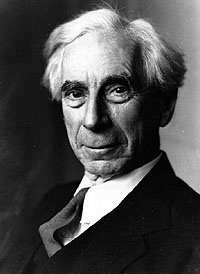
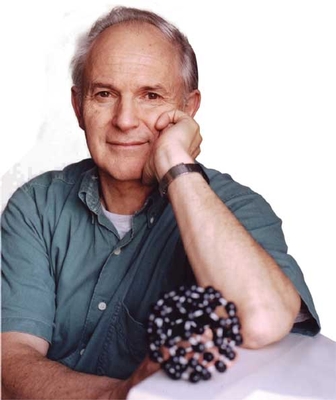
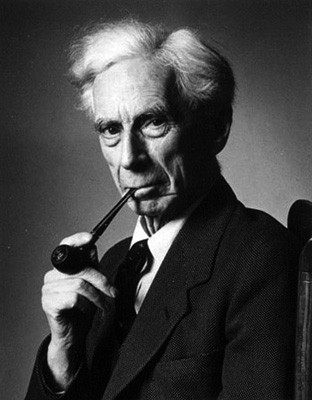
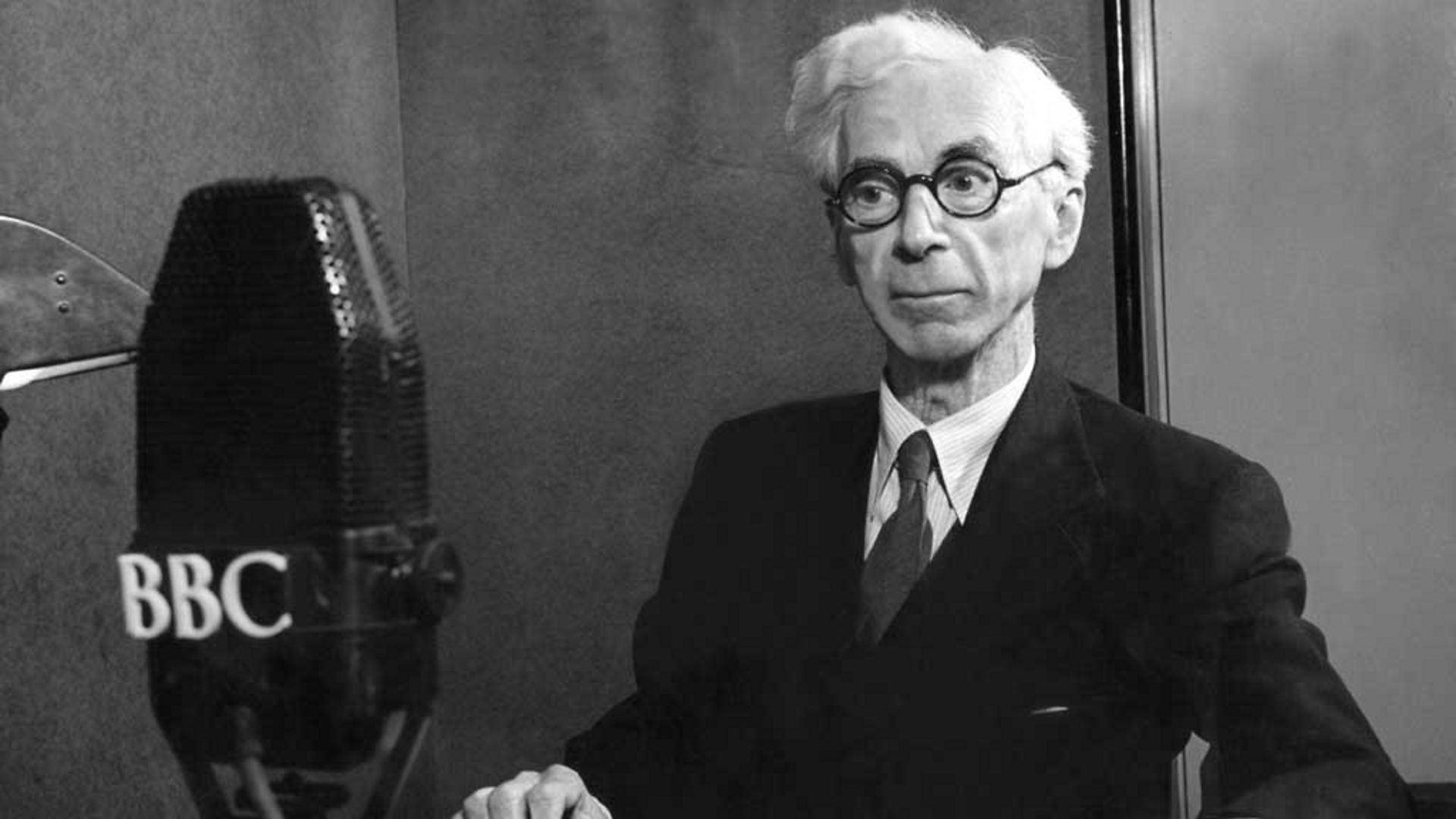
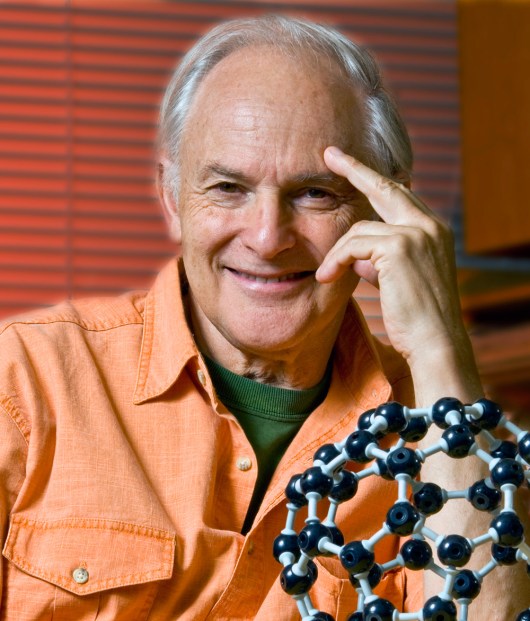
RESPONDING TO HARRY KROTO’S BRILLIANT RENOWNED ACADEMICS!! Part 149 FF Sir Bertrand Russell(Bertrand Russell in 1920 on BBC)Image result for bertrand russellOn November 21, 2014 I received a letter from Nobel Laureate Harry Kroto and it said:…Please click on this URL http://vimeo.com/26991975and you will hear what far smarter people than I have to say on this matter. I agree with them.Harry KrotoImage result for harry krotoI have attempted to respond to all of Dr. Kroto’s friends arguments and I have posted my responses one per week for over a year now. Here are some of my earlier posts:Arif Ahmed, Sir David AttenboroughMark Balaguer, Horace Barlow, Michael BatePatricia ChurchlandAaron CiechanoverNoam Chomsky,Alan DershowitzHubert Dreyfus, Bart Ehrman, Stephan FeuchtwangDavid Friend,  Riccardo GiacconiIvar Giaever , Roy GlauberRebecca GoldsteinDavid J. Gross,  Brian Greene, Susan GreenfieldStephen F Gudeman,  Alan Guth, Jonathan HaidtTheodor W. Hänsch, Brian Harrison,  Hermann HauserRoald Hoffmann,  Bruce HoodHerbert Huppert,  Gareth Stedman Jones, Steve JonesShelly KaganMichio Kaku,  Stuart Kauffman,  Lawrence KraussHarry Kroto, George LakoffElizabeth Loftus,  Alan MacfarlanePeter MillicanMarvin MinskyLeonard Mlodinow,  Yujin NagasawaAlva NoeDouglas Osheroff,  Jonathan Parry,  Saul PerlmutterHerman Philipse,  Carolyn PorcoRobert M. PriceLisa RandallLord Martin Rees,  Oliver Sacks, John SearleMarcus du SautoySimon SchafferJ. L. Schellenberg,   Lee Silver Peter Singer,  Walter Sinnott-ArmstrongRonald de Sousa, Victor StengerBarry Supple,   Leonard Susskind, Raymond TallisNeil deGrasse Tyson,  .Alexander Vilenkin, Sir John WalkerFrank WilczekSteven Weinberg, and  Lewis Wolpert,In  the first video below in the 14th clip in this series are his words and I will be responding to them in the next few weeks since Sir Bertrand Russell is probably the most quoted skeptic of our time, unless it was someone like Carl Sagan or Antony Flew.  
50 Renowned Academics Speaking About God (Part 1)

Another 50 Renowned Academics Speaking About God (Part 2)

A Further 50 Renowned Academics Speaking About God (Part 3)

__

Quote from Bertrand Russell:

Q: Why are you not a Christian?Russell: Because I see no evidence whatever for any of the Christian dogmas. I’ve examined all the stock arguments in favor of the existence of God, and none of them seem to me to be logically valid.Q: Do you think there’s a practical reason for having a religious belief, for many people?Russell: Well, there can’t be a practical reason for believing what isn’t true. That’s quite… at least, I rule it out as impossible. Either the thing is true, or it isn’t. If it is true, you should believe it, and if it isn’t, you shouldn’t. And if you can’t find out whether it’s true or whether it isn’t, you should suspend judgment. But you can’t… it seems to me a fundamental dishonesty and a fundamental treachery to intellectual integrity to hold a belief because you think it’s useful, and not because you think it’s true.__

Why I Am Not a Christian

From Wikipedia, the free encyclopedia

Why I Am Not a Christianbook cover

Why I Am Not a Christian is an essay by the British philosopher Bertrand Russell. Originally a talk given 6 March 1927 at Battersea Town Hall, under the auspices of the South London Branch of the National Secular Society, it was published that year as a pamphlet and has been republished several times in English and in translation.[1]Contents

Contents[edit]

Russell begins by defining what he means by the term Christian and sets out to explain why he does not “believe in God and in immortality” and why he does not “think that Christ was the best and wisest of men”, the two things he identifies as “essential to anybody calling himself a Christian”. He considers a number of logicalarguments for the existence of God and goes into specifics about Christian theology. He argues ad absurdum against the “argument from design“, and favors Darwin’s theories.

Russell also expresses doubt over the historical existence of Jesus and questions the morality of religion, which is, in his view, predominantly based on fear.

History[edit]

The first German edition was published in 1932 by Kreis der Freunde monistischen Schrifttums, a monist association in Dresden inspired by Ernst Haeckel. In 1957 Paul Edwardspreferred Russell over the then more trendy Ludwig Wittgenstein and published the essay and further texts referring to the background of The Bertrand Russell Case. Russell had been denied a professorship in New York for his political and secular views and his tolerance for the gay till graduation version of homosexuality. Some countries banned the book, including South Africa.[2] The enhanced version has been republished in various editions since the 1960s. The New York Public Library listed it among the most influential books of the 20th century.[3]The title has inspired other books in a snowclone fashion. William E. Connolly‘s Why I Am Not a Secularist (2000) deals directly with various aspects of Russell’s argument. He sees Russell’s approach as an attempt to exchange a previous center of gravity in public life, based on a Jewish-Christian heritage, with another that is secular-minded. Connolly doubts this exchange of one one-fits-all authoritative approach to public ethics and public reason for a new one that all “reasonable” citizens should abide by.[4] He asks instead for new forms of public engagement that allow for more and more varied perspectives to interact (and restrain) each other. He counts on various important philosophers, from NietzscheFreud, and Judith Butler to Michael J. Shapiro and Michel Foucault to have provided such views. Connolly argues that Russell-style secularism, although admirable in its values, may undercut its own goals of freedom and diversity as a result of a narrow and intolerant understanding of the public sphere and reason.[4]Bertrand Russell died on February 2, 1970.

FAITH AND KNOWLEDGE
by
David L. Lipe, Ph.D.
INTRODUCTION
The topics of faith and knowledge, and their relationship to each other, often present considerable
difficulties to serious Bible students. It is the purpose of this paper to discuss a number of matters relating
to both faith and knowledge, in an effort to increase our understanding of these two important, and related,
concepts.
FAITH AND BELIEF
The relationship of faith to belief is a very complex study and, admittedly, it is not likely that the exact
relationship between the two will be settled, to the reader’s satisfaction, in a paper as brief as this one.
The word “faith” is used in various ways that make it even more difficult to arrive at a clear understanding
of it. We must concede that words can have different meanings, and that each of the different meanings
may be legitimate. For example, one might say, “It is better to be red than dead.” Here, “red” obviously
does not refer to a particular color in a scheme of colors, but is intended to convey notions of communism.
It would be improper to say that “red” cannot be used in such a way.
The same kind of thing is true with the word “faith.” Often people say of some belief that cannot be
established as true, “After all, it is just a matter of faith.” Again, someone who is uncertain of taking a
particular course of action might be advised, “Just launch out on faith.” I do not suggest that “faith” cannot
be used this way for, obviously it is so used; however, I do contend that such is not a biblical usage of
“faith.”
The complexity of the matter is even greater when one considers the ambiguity of the notion of “belief.”
Consider the difference in the meaning of “believe” in the following propositions: “I believe it will
rain tomorrow” and “I believe 2 + 2 = 4.” Most would agree that the word “think” could be substituted for
“believe” in the first proposition, but few would say “I think 2 + 2 = 4.”
– 2 –
Faith is a kind of belief. There is no distinction in the Greek between faith and belief. Perhaps faith’s
relationship to belief can be better ascertained by considering the noun “faith” (pistis), and the verb “believe”
(pisteuo). W.E. Vine has defined faith as “primarily firm persuasion, a conviction based upon hearing…used
in the New Testament always of faith in God or Christ, or things spiritual” (1940). He defined
the word “believe” as “to believe, also to be persuaded of, and hence, to place confidence in, to
trust…reliance upon, not mere credence” (1940). Both include elements of reliance and trust.
The definitions do not help a great deal in getting at the distinction between faith and belief. Perhaps
we can understand the true significance of faith by attempting to unfold the nature of belief. “Belief” refers
primarily to a judgment that something is true. If I say “I believe that all nuclear weapons one day
will be destroyed,” I am speaking about myself—not the state of the world. I am giving information about
my judgment concerning nuclear weapons. The only way in which my judgment might be false is that I
am lying—i.e., I do not believe what I say I believe. If I say “All nuclear weapons one day will be destroyed,”
then I state a belief. But the truth or falsity of my belief in no way depends upon what I believe
or disbelieve. Whether the belief is true or false depends upon the course of history.*
Our beliefs may be weak or strong. Suppose I am asked, “Will it rain tomorrow?” If I say, “I believe
it will rain tomorrow,” I am emphasizing that I merely believe it will rain since I do not know with certainty
that it will. I could have said just as easily, “I think it will rain tomorrow.” If it did not rain the next
day, I would not be devastated to find that my belief was a false belief. If someone afterward said they
relied on my judgment and subsequently cancelled a picnic, I would say, “Don’t blame me, I only said I
believe it will rain tomorrow.” This sort of belief is one in which I merely hold an opinion about something.
I hope that it is true and thus believe it to be true, but I cannot prove it—I merely accept it. Belief in
this sense has little to do with biblical faith.
Belief in a strong sense refers to a belief for which we are prepared to give good reasons. Thus, I
might say, “I believe it will rain tomorrow” and be prepared to give reasons for my belief. Note that the
difference in these two types of belief turns on the causes of the beliefs. Walter Kaufmann, in Critique of
– 3 –
Religion and Philosophy (1958, pp. 132-34), listed what he perceived to be the seven causes of belief. A
statement may be believed because:
1. Arguments have been offered in its support.
2. It was encountered (in a book, paper, etc.) and nothing was spoken against it.
3. Numerous factors may be working in its behalf. (It may be a common belief in one’s environment and
hence accepted by “osmosis.”)
4. The new belief fits well by our prior beliefs.
5. There may be penalties for not accepting a belief (ostracism, disappointing our parents, torture).
6. There may be positive rewards for accepting a belief.
7. The belief may be accepted because it gratifies us or answers a psychological need.
The first item in the above list is the kind of thing that makes a belief strong, whereas items 2-7
would be “grounds” for considering a belief weak. The weak and strong sense of belief that I have suggested
corresponds generally to Frye and Levi’s irrational and rational belief (1941, p. 216). Rational
belief is “reasoned belief based upon adequate evidence” (1941, p. 323). Irrational beliefs are: (a) beliefs
not produced by a “reason” per se, but instead by some non-rational cause such as emotion, prejudice,
vested interest, authority, habit, and the tendency to accept what one has been told; and (b) beliefs that are
produced by inadequate or insufficient reasons.
Biblical faith shares the basic element of strong (rational) belief in that one is prepared to give reasons
for his faith. 1 Peter 3:15 makes it clear that biblical faith must be based on good reasoning. Biblical
faith, however, includes more than just being prepared to give reasons. Faith includes the notion of trust,
which evidences itself in acting upon that which we believe. Faith requires belief (in the sense of intellectual
assent); thus faith could include weak belief (where mere intellectual assent is offered) and strong
belief (where one is prepared to give reasons for his intellectual assent). Yet faith is more than this. Samuel
Thompson wrote:
The distinctive feature of faith, in contrast with mere belief, is the element in it of will to action. Belief is
an act of the intellect, and faith has been described as “an act of the intellect commanded by the will.” But
faith is more than an act of the intellect, and the will does more than command. Faith is not merely the as
*
See Samuel Thompson’s, A Modern Philosophy of Religion, 1955, p. 44 for this kind of reasoning.
– 4 –
sent that something is true, it is our readiness to act on what we believe true. Faith is will lured by value
into action. Faith is decision (1955, p. 74).
Faith, then, includes what might be referred to as a “belief that,” but it also includes action (putting trust
in or believing in).
We should not conclude from this that the concept of trust may be substituted in every case for the
concept of belief. In many cases such a substitution may be made. Thus, when Jesus said in Mark 5:36,
“Be not afraid, only believe,” we could say “Be not afraid, only have faith,” or “Be not afraid, only trust.”
Again, when Jesus said in Mark 11:22, “Have faith in God,” we could say “Believe in God,” or “Trust in
God.” Some occurrences of belief will not allow such a substitution. In John 12:42-43, many of the chief
rulers believed on Jesus but because they loved the praise of men and did not want to be put out of the
synagogue they did not confess Him. These chief rulers had belief (an act of the intellect), but we would
not say they had a biblical faith since they were unwilling to act on what they believed. Thus, we would
not say they trusted in Jesus (cf. James 2:18-19).
The clearest example of both elements of faith in the same context is Hebrews 11. Verse 6 says, “he
that cometh to God must believe that he is…” (emp. added). Beginning with verse 7, the writer observed
that a number of notable Old Testament characters trusted in that about which they believed. They acted
on their belief. Note the words indicating action—e.g., “prepared” (vs. 7) and “obeyed” (vs. 8).
FAITH AND EVIDENCE
It is false to say that faith means the absence of evidence. God does not want us to accept anything as
true for which there is not sufficient evidence. This claim is disputed by Christian and non-Christian alike.
Some have suggested that if a claim rests on sufficient evidence, then such a claim is a matter of knowledge,
while faith has to do with considerations lacking evidence of their claim. According to this, knowledge
begins where evidence begins, and ends where evidence ends. Faith begins after the evidence ends.
Thus, if one wishes to hold to doctrine X, and the evidence is such that the doctrine may or may not be
true, one may take a “leap of faith” (i.e., a leap beyond the evidence) and espouse doctrine X even though
– 5 –
there is not sufficient evidence for the doctrine. Richard Robinson, an atheistic thinker, charged that the
above picture of faith is representative of Christian faith. According to him, such faith is
…believing that there is a god no matter what the evidence on the question may be. “Have faith,” in the
Christian sense, means “make yourself believe that there is a god without regard to evidence.” Christian
faith is a habit of flouting reason in forming and maintaining one’s answer to the question whether there
is a god (1964, p. 121).
This may be the view of faith for some, but it is not biblical faith. Biblical faith is a reasonable faith.
Nothing in the Bible teaches that faith is unreasonable. On the contrary, everything concerning faith is
reasonable. Thus, if biblical faith is to be reasonable, one must recognize the Law of Rationality, which
demands that we draw only such conclusions as are warranted by adequate evidence. Bertrand Russell
stated it this way: “Give to any hypothesis that is worth your while to consider just that degree of confidence
which the evidence warrants” (1945, p. 816).
By “evidence” I mean a statement (or statements) used in an effort to support the view that a given
conclusion is true. Thompson wrote: “By evidence we mean what the term literally suggests, that which
‘shows’ or ‘exhibits’ or ‘brings into view.’ The evidence shows or brings into view the basis upon which
the claim of truth rests” (1955, p. 44). On the same page, Thompson further pointed out that evidence includes
statements which imply the statement(s) in question: If a conclusion is implied by a statement, and
this statement is true, then the implied statement also must be true. Evidence may be said to be “adequate
when it is as good or convincing as it can be, when further investigation into the truth of the proposition
in question is pointless” (Davis, 1978, p. 19).
The Bible (a body of factual information about God and His will for man) constitutes adequate evidence.
Since God cannot lie, the integrity of the Scriptures cannot be disputed successfully. Faith comes
after knowledge of the Word of God (Romans 10:17). Thus, faith is based on evidence. Nowhere in the
Scriptures is anyone called upon to have faith without evidence. John said that the signs in his Gospel
were in order “that ye might believe that Jesus is the Christ, the Son of God; and that believing ye might
have life through his name” (John 20:30-31). Furthermore, John wrote: “These things have I written unto
you that believe on the name of the Son of God; that ye may know that ye have eternal life, and that ye
– 6 –
may believe on the name of the Son of God” (1 John 5:13). In the first recorded sermon following the
resurrection of Christ (Acts 2:22-40), Peter appealed to four kinds of evidence: (1) miracles (22); (2)
prophecy (25-28); (3) the resurrection (27-32); and (4) the events of the day (33). Peter continued by saying,
“Therefore let all the house of Israel know assuredly, that God hath made that same Jesus, whom ye
have crucified, both Lord and Christ” (Acts 2:36).
Our supreme example, Jesus, documented the necessity of gathering evidence. In every instance, He
met the temptations of the devil with an “it is written.” The second temptation is particularly interesting.
Satan quoted Psalm 91:11 in challenging Jesus to throw Himself from the pinnacle of the temple. Jesus
responded by quoting Deuteronomy 6:16, thus emphasizing that the totality of biblical teaching on a particular
subject should be considered.
If biblical faith is to be reasonable, one not only must gather the evidence on a particular question,
but must handle that evidence correctly. To be rational is to draw only warranted conclusions, which
means that we must use principles of valid reasoning. To do otherwise is to espouse the view that biblical
faith may “out run” the evidence, which is to say that faith is a “leap into the dark.” This is a false view of
the Christian faith. Examine and study carefully 1 Peter 3:15, 1 Thessalonians 5:21, and 1 John 4:1.
Someone might object that there are occasions when Jesus appealed to people to believe without sufficient
evidence. Jesus said to one disciple in John 20:29: “Thomas, because thou hast seen me, thou hast
believed: blessed are they that have not seen, and yet have believed.” The claim could be made that Jesus
is pronouncing a blessing on those who believe without evidence since “seeing” is a means by which to
gather evidence; yet, in the passage Jesus commended those who believe without seeing. Though Jesus
commended people for believing without seeing, it does not follow that He commended people for believing
without sufficient evidence. Thomas should have had reason enough to believe the resurrection of
Jesus from the dead based on Christ’s own statements and the testimony of the rest of the apostles; however,
he would not believe without seeing firsthand (John 20:25). The Samaritans believed (without hearing
or seeing for themselves) because of the evidence of the Samaritan woman’s testimony (John 4:39).
– 7 –
After hearing Jesus firsthand, they believed, not because of the woman’s testimony, but because they
heard Him with their own ears.
FAITH AND DOUBT
It is false to say that doubt is an integral part of the nature of faith. Much evidence in the Bible attests
to the false nature of such a claim. Paul noted in Romans 14:23: “And he that doubteth (diakrinomenos) is
damned if he eat, because he eateth not of faith: for whatsoever is not of faith is sin.” Further, James
wrote: “But let him ask in faith, nothing wavering (diakrinomenos). For he that wavereth (diakrinomenos)
is like a wave of the sea driven with the wind and tossed” (1:6). The RSV makes the matter even clearer:
“But let him ask in faith with no doubting, for he who doubts is like a wave of the sea that is driven and
tossed by the wind.” Concerning Abraham’s faith, Paul stated: “He staggered (diekrithe) not at the promise
of God through unbelief; but was strong in faith, giving glory to God; and being fully persuaded that,
what he had promised, he was able also to perform” (Romans 4:20-21). The word “staggered” is from the
same root word as that expressed by the KJV’s “wavereth” (James 1:6) or the RSV’s “doubting.” Further
evidence that Abraham’s faith was not one of doubt is seen in the expression “being fully persuaded”
(from plerophoretheis, which describes the reason for his trust in God). Abraham was fully convinced,
(i.e., certain) that God would do what He had promised.
Someone might object that Abraham’s faith contained an element of doubt (based on Hebrews 11:8
where it is said of Abraham, “By faith, Abraham…went out, not knowing [emp. added] whither he
went”). That Abraham was not “fully persuaded” as to his destination in no way argues against Abraham’s
faith. It is consistent to say that Abraham’s faith contained no element of doubt insofar as he was
convinced that God would keep His promise, although he did not know other things—namely, where
God intended him to go. Obviously, since Abraham did not know where he was going, he had doubt as to
where he was going; however, concerning what God would do, Abraham’s faith was unshakable. He believed
God and acted on what God said.
It is important to note that there is nothing wrong with one raising doubts about his faith. Thompson
observed that “doubt does not destroy faith; doubt tests faith…. Faith has its own response to doubt, for
– 8 –
doubt is the occasion for faith to examine itself and its cause” (1955, p. 78). Sometimes we find that our
faith is unfounded. For example, a child may be taught by his parents that baptism is essential to salvation.
The child believes what the parents say and perhaps acts on the parents’ teaching. Only later does
the child (now older) begin to question his belief and the action that followed. There is nothing improper
about this, since it is the case that human testimony many times can be called into question. Thus, the
young adult begins to raise questions about a certain belief and action. He discovers that what he has been
taught is in harmony with the Word of God and thus he still has the right to hold onto his faith. After this
doubting process, he can be certain of his faith since that faith now is not based merely on the testimony
of his parents but on certain propositions from the Word of God. Since God exists and is perfect in integrity,
then the Word of God must be true. Thus, any faith based upon the Word of God must be true and
reliable and no longer a matter of doubt.
This concept of biblical faith is the antithesis of the teachings of some who hold that faith is just a
step removed from certainty—i.e., that faith involves a kind of “leap” into the uncertain. Such a concept
can be avoided if we will keep in mind that faith must be preceded by knowledge. Admittedly this is not a
popular view in contemporary society.

Image result for francis schaeffer

Francis Schaeffer noted: “Knowledge precedes faith, this is crucial
in understanding the Bible. To say, as a Christian should, that only faith which believes God on the basis
of knowledge is true faith, is to say something which causes an explosion in the Twentieth Century
world” (1968, p. 142).
Image result for francis schaeffer
FAITH AND TESTIMONY
Faith may be based on the testimony of others. Although some have failed to recognize this fact, the
Bible teaches that one may have faith (and knowledge) based on the testimony of another. It simply is not
the case that one cannot be sure of something unless one experiences it firsthand. Thomas Paine, in The
Age of Reason, wrote that something revealed to one person and “revealed to any other person is a revelation
to that person only.” That which is revealed ceases to be a revelation when it is told to other individuals,
and thus others are not under obligation to believe it. A careful study of the Bible shows that this
is not the case.
– 9 –
After the Lord appeared to Mary Magdalene, she related her experience to the others who had been
with the Lord, but they “believed not” (Mark 16:9-11). Later the Lord appeared to two of the disciples
and they then told the rest, but “neither believed they them” (Mark 16:12-13). When the Lord appeared
later to the eleven He, “upbraided them with their unbelief and hardness of heart, because they believed
not them which had seen him after he was risen” (Mark 16:14).
Thus, Jesus rejected the view that one can know only what one witnesses personally and established
as a general principle that knowledge can be attained based on credible testimony. This raises the issue as
to when testimony is credible. Obviously, there is such a thing as false testimony. Any belief based on
false testimony would necessarily be a false belief, and in no way can such a belief be likened to biblical
faith. As surely as God cannot lie (1 Samuel 15:29; Hebrews 6:18), and as surely as God has spoken
through holy men of God (2 Timothy 3:16-17; 2 Peter 1:20-21), then we can accept the testimony of the
Bible as unfaltering. If we can do this, then we can both believe and know the truth.
FAITH AND KNOWLEDGE
Men have long taken sides on the issue of faith and knowledge. This is inevitable as long as they are
set in contrast to one another. Tertullian made this bifurcation clear when he asked, “What has Athens to
do with Jerusalem?” Philosophy for him was antagonistic to Christianity. Augustine and Anselm followed
this tradition in their plea to believe in order to understand. Faith in this sense was regarded as the initial
(and perhaps only) way of arriving at truth. Interestingly enough, in the Islamic religion, reason reigned
supreme. Avicenna and Averroes, in the Middle Ages, insisted that reason led to absolute truth and that
faith was but a shortcut for the mentally inept. Aquinas attempted a kind of harmony between these extremes
by arguing that faith and knowledge are both avenues to truth; however, he contended that the
same truth could not be both believed and known via natural reason by the same person at the same time.
Thus, even in Aquinas’ thinking there was a gap between faith and knowledge. The Thomist does not
wish to believe what he can know and does not pretend to know what can only be believed.
Efforts to take sides with faith or knowledge still (and likely will) continue—with unfortunate consequences.
Thompson observed:
– 10 –
Those who align themselves with knowledge, in opposition to faith, are inclined to assume that when
faith comes in conflict with what they themselves take to be knowledge, the error lies with claims of
faith. Those who side with faith, in opposition to knowledge, tend to regard as spurious any claim of
knowledge which does not fit their own scheme of faith (1955, pp. 76-77).
The problem with all attempts to set faith and knowledge in contrast stems from a failure to understand
proper biblical teaching. The Bible teaches that faith and knowledge are complementary and wherever
they appear to be antagonistic, something is wrong either with what is taken to be as faith, or with what is
alleged to be knowledge, or with both. This is the case because both are concerned with truth (though not
in the same way), and truth is absolute in its self-consistency. If knowledge and faith are not to be separated,
it must be because they are relevant in some way. The intellect (knowledge) and will (faith) are
complementary. Knowledge without faith leads to speculation.*
The Bible clearly teaches in different ways that faith and knowledge are not to be set in contradistinction.
(1) Faith and knowledge never are contrasted in the New Testament. Faith is contrasted with
sight—not knowledge or reason. In Hebrews 11:1 we read: “Now faith is the substance of things hoped
for, the evidence of things not seen.” Further, Paul wrote in 2 Corinthians 5:7: “For we walk by faith, not
by sight.” These verses make it clear that faith is set in contrast to “walking by sight.” Sight is a type of
sense perception, and therefore a means of attaining knowledge. Thus, faith, instead of being contrasted
with knowledge, is contrasted with a means of attaining knowledge. This does not mean faith and sight
cannot function together. Jesus said: “Thomas, because thou hast seen me, thou hast believed” (John
20:29). Thomas’ faith was based on the evidence of his senses—namely, his sense of sight. Again, Jesus
said to Thomas: “Blessed are they that have not seen, and yet have believed” (John 20:29, emp. added).
This shows that there can be faith where there is no sight, but note that the verse does not say there can be
faith where there is no knowledge.
Some believed in Jesus not because they saw Him but because of other evidence. A case in point is
the Samaritans who “believed on him for the saying of the woman, which testified, he told me all that
ever I did” (John 4:39). The Samaritan woman believed because she saw Jesus herself and thus she would

*
see Thompson, 1955, pp. 76-79 for further remarks on this.
– 11 –
fall into the same category as Thomas (who believed based on his sight). However, the Samaritans believed
based on the testimony of the woman and thus would fall into the category of those who believed
and yet who had not seen. These Samaritans, along with “many more,” after believing based on the
woman’s testimony, “believed because of his own word; and said unto the woman, Now we believe, not
because of thy saying: for we have heard him ourselves, and know that this is indeed the Christ, the Saviour
of the world” (John 4:41-42).
These examples show that walking by faith and walking by sight are two different things. One may
believe and know things that cannot be seen, as did the Samaritans who believed at first without seeing.
Their belief was based on personal testimony. Walking by sight means accepting only those truths that
can be seen or demonstrated (perhaps even by some other sense). It is, in short, to be guided by that which
can be seen directly. There are many things that may be known which are not seen directly, e.g. the existence
of God (Romans 1:20-21). Further, I may know and believe Noah built an ark, that Jonah was swallowed
by a great fish, etc., even though I never have “seen” any of these events. But, since faith comes by
hearing and hearing by the Word of God (Romans 10:17), I can walk by faith—i.e., take God at His word
and believe what the Scriptures teach.
(2) Faith and knowledge may have the same object. Consider, for example, the following:
(a) God can be both known and believed. “Ye are my witnesses, saith the Lord, and my servant
whom I have chosen: that ye may know and believe me, and understand that I am he: before
me there was no God formed, neither shall there be after me” (Isaiah 43:10).
(b) The truth can be both known and believed. “Forbidding to marry, and commanding to abstain
from meats, which God hath created to be received with thanksgiving of them which
believe and know the truth” (1 Timothy 4:3).
(c) The deity of Christ can be both known and believed. “And we believe and are sure that thou
art that Christ, the Son of the living (John 6:69; cf. 4:42).
(d) Jesus said one could know and believe the same thing. “But if I do, though ye believe not
me, believe the works: that ye may know, and believe that the Father is in me, and I in him”
(John 10:38).
(e) Paul said, “I know whom I have believed” (2 Timothy 1:12).
– 12 –
(3) Knowledge precedes faith. Faith never precedes knowledge but instead is a commitment to
knowledge. According to Romans 10:17, faith comes after men have a knowledge of the Word of God.
For biblical faith, where there is no word, there can be no faith. Where there is no evidence, there can be
no faith.
The Bereans were more noble than the Thessalonians in that they: (a) received the word with readiness
of mind; and (b) searched the Scriptures daily to determine whether what was being taught was, in
fact, the case (Acts 17:11). The result of their attitude and action was belief (Acts 17:12). Note that they
believed only after they had knowledge of the Word of God. The Jews on Pentecost believed they had
killed the very Messiah for whom they looked, and knew they were guilty of such actions based on
“knowing assuredly” that Jesus was both Lord and Christ (Acts 2:22-36).
Someone might object that the view of faith and knowledge I have presented is erroneous, since to
maintain that if S knows P, S must have justified true belief of P. Thus, if S knows P, S believes P but it
does not follow necessarily that if S believes P, S knows P. Most philosophers, including myself, would
accept this view of knowledge. Does this not then contradict the view I have outlined—that knowledge
precedes faith?
The issue turns on the difference in “belief ” and “faith” as discussed earlier. To hold a belief means
to give assent to the truthfulness of some proposition that may, in fact, be false; thus, some beliefs do not
amount to knowledge. However, to have faith means not only to have a “belief ” in the sense of a “belief
that” (which must be true), but also in the sense of a “belief in” (which is trust). As far as biblical faith is
concerned, this can only be had based upon the testimony of the Word of God. Where there is no testimony,
there can be no faith. One can walk by faith only when one knows the Word of God. If one can
know that God exists, that He is perfect in integrity, that the Bible is the Word of God, and that the Bible
teaches a particular truth, then one can know that truth. Knowing this, one can give himself over to that
truth—i.e., trust one’s life to that truth. This is to say, he can walk by faith and live a life of taking God at
His word.
– 13 –
REFERENCES
Davis, Stephen T. (1978), Faith, Skepticism, and Evidence (Cranbury, NJ: Associated University).
Frye and Levi (1941), Rational Belief (New York: Harcourt and Brace).
Kaufmann, Walter (1958), Critique of Religion and Philosophy (Princeton, NJ: Princeton University Press).
Robinson, Richard (1964), An Atheist’s Values (Oxford: Basil Blackwell).
Russell, Bertrand (1945), A History of Western Philosophy (New York: Simon & Schuster).
Schaeffer, Francis (1968), The God Who Is There (Downer’s Grove, IL: Inter-Varsity Press).
Thompson, Samuel (1955), A Modern Philosophy of Religion (Chicago, IL: Regnery).
Vine, W.E. (1940), An Expository Dictionary of New Testament Words (Old Tappan, NJ: Revell).

Related posts:

RESPONDING TO HARRY KROTO’S BRILLIANT RENOWNED ACADEMICS!! Pausing to take a look at the life of HARRY KROTO Part C (Kroto’s admiration of Bertrand Russell examined)

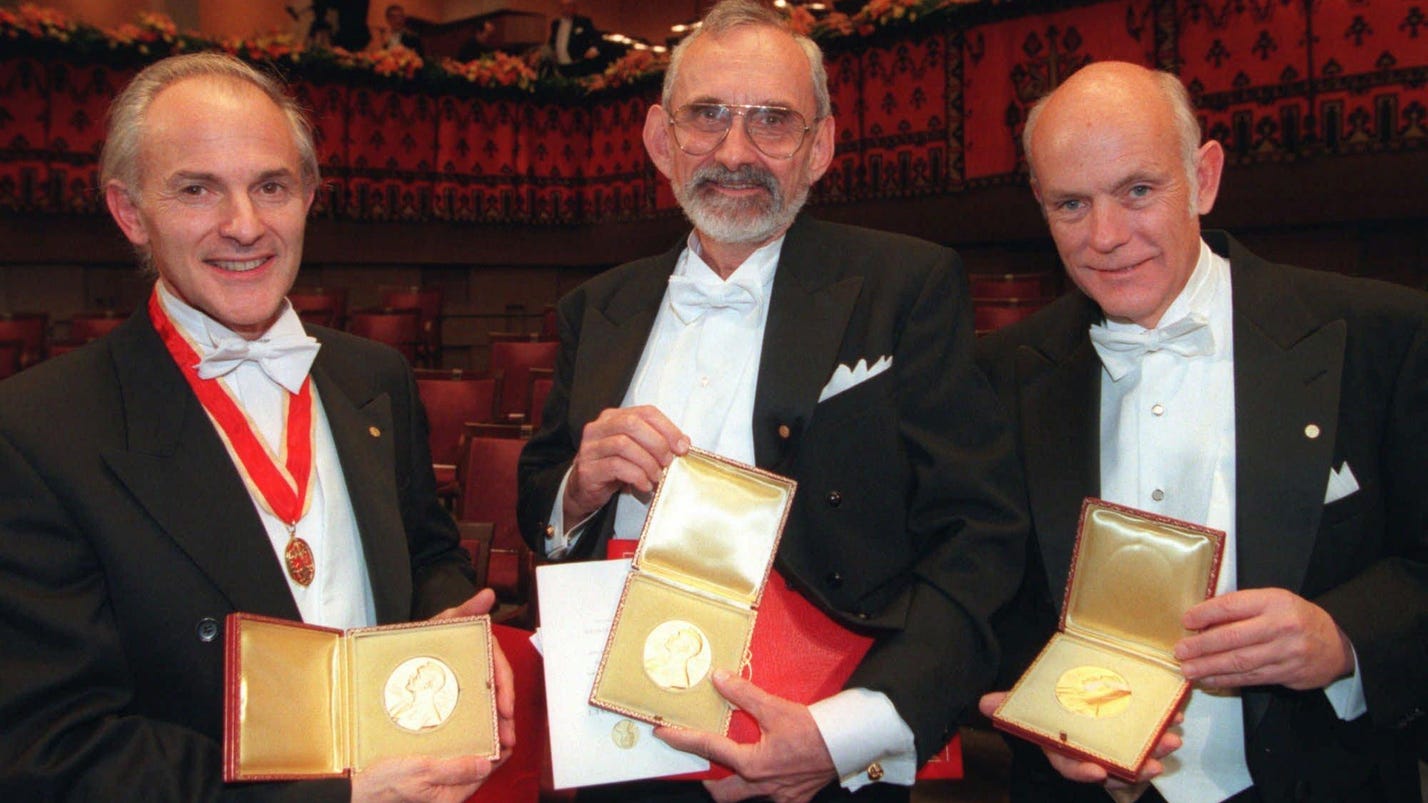
Today we look at the 3rd letter in the Kroto correspondence and his admiration of Bertrand Russell. (Below The Nobel chemistry laureates Harold Kroto, Robert Curl and Richard Smalley) It is with sadness that I write this post having learned of the death of Sir Harold Kroto on April 30, 2016 at the age of […]

RESPONDING TO HARRY KROTO’S BRILLIANT RENOWNED ACADEMICS!! Part 52 The views of Hegel and Bertrand Russell influenced Gareth Stedman Jones of Cambridge!!

On November 21, 2014 I received a letter from Nobel Laureate Harry Kroto and it said: …Please click on this URL http://vimeo.com/26991975 and you will hear what far smarter people than I have to say on this matter. I agree with them. Harry Kroto _________________ Below you have picture of Dr. Harry Kroto:   Gareth Stedman […]

WOODY WEDNESDAY John Piippo makes the case that Bertrand Russell would have loved Woody Allen because they both were atheists who don’t deny the ramifications of atheism!!!

Top 10 Woody Allen Movies __________ John Piippo makes the case that Bertrand Russell would have loved Woody Allen because they both were  atheists who don’t deny the ramifications of atheism!!! Monday, August 06, 2012 (More On) Woody Allen’s Atheism As I wrote in a previous post, I like Woody Allen. I have long admired his […]

John Piippo makes the case that Bertrand Russell would have loved Woody Allen because they both were two atheists who don’t deny the ramifications of atheism!!!

______ Top 10 Woody Allen Movies PBS American Masters – Woody Allen A Documentary 01 PBS American Masters – Woody Allen A Documentary 02 __________ John Piippo makes the case that Bertrand Russell would have loved Woody Allen because they both were two atheists who don’t deny the ramifications of atheism!!! Monday, August 06, 2012 […]

Bertrand Russell v. Frederick Copleston debate transcript (Part 4)

THE MORAL ARGUMENT     BERTRAND RUSSELL But aren’t you now saying in effect, I mean by God whatever is good or the sum total of what is good — the system of what is good, and, therefore, when a young man loves anything that is good he is loving God. Is that what you’re […]

Bertrand Russell v. Frederick Copleston debate transcript (Part 3)

Great debate Fr. Frederick C. Copleston vs Bertrand Russell – Part 1 Uploaded by riversonthemoon on Jul 15, 2009 BBC Radio Third Programme Recording January 28, 1948. BBC Recording number T7324W. This is an excerpt from the full broadcast from cassette tape A303/5 Open University Course, Problems of Philosophy Units 7-8. Older than 50 years, […]

Bertrand Russell v. Frederick Copleston debate transcript and audio (Part 2)

Uploaded by riversonthemoon on Jul 15, 2009 BBC Radio Third Programme Recording January 28, 1948. BBC Recording number T7324W. This is an excerpt from the full broadcast from cassette tape A303/5 Open University Course, Problems of Philosophy Units 7-8. Older than 50 years, out of UK/BBC copyright. Pardon the hissy audio. It was recorded 51 […]

Bertrand Russell v. Frederick Copleston debate transcript and audio (Part 1)

Fr. Frederick C. Copleston vs Bertrand Russell – Part 1 Uploaded by riversonthemoon on Jul 15, 2009 BBC Radio Third Programme Recording January 28, 1948. BBC Recording number T7324W. This is an excerpt from the full broadcast from cassette tape A303/5 Open University Course, Problems of Philosophy Units 7-8. Older than 50 years, out of […]

Bertrand Russell v. Frederick Copleston debate transcript (Part 4)

THE MORAL ARGUMENT     BERTRAND RUSSELL But aren’t you now saying in effect, I mean by God whatever is good or the sum total of what is good — the system of what is good, and, therefore, when a young man loves anything that is good he is loving God. Is that what you’re […]

Bertrand Russell v. Frederick Copleston debate transcript (Part 3)

Fr. Frederick C. Copleston vs Bertrand Russell – Part 1 Uploaded by riversonthemoon on Jul 15, 2009 BBC Radio Third Programme Recording January 28, 1948. BBC Recording number T7324W. This is an excerpt from the full broadcast from cassette tape A303/5 Open University Course, Problems of Philosophy Units 7-8. Older than 50 years, out of […]

RESPONDING TO HARRY KROTO’S BRILLIANT RENOWNED ACADEMICS!! Part 149 EE Sir Bertrand Russell


RESPONDING TO HARRY KROTO’S BRILLIANT RENOWNED ACADEMICS!! Part 149 EE Sir Bertrand Russell

Image result for bertrand russell

On November 21, 2014 I received a letter from Nobel Laureate Harry Kroto and it said:

…Please click on this URL http://vimeo.com/26991975

and you will hear what far smarter people than I have to say on this matter. I agree with them.

Harry Kroto

Image result for harry kroto

I have attempted to respond to all of Dr. Kroto’s friends arguments and I have posted my responses one per week for over a year now. Here are some of my earlier posts:

Arif Ahmed, Sir David AttenboroughMark Balaguer, Horace Barlow, Michael BatePatricia ChurchlandAaron CiechanoverNoam Chomsky,Alan DershowitzHubert Dreyfus, Bart Ehrman, Stephan FeuchtwangDavid Friend,  Riccardo GiacconiIvar Giaever , Roy GlauberRebecca GoldsteinDavid J. Gross,  Brian Greene, Susan GreenfieldStephen F Gudeman,  Alan Guth, Jonathan HaidtTheodor W. Hänsch, Brian Harrison,  Hermann HauserRoald Hoffmann,  Bruce HoodHerbert Huppert,  Gareth Stedman Jones, Steve JonesShelly KaganMichio Kaku,  Stuart Kauffman,  Lawrence KraussHarry Kroto, George LakoffElizabeth Loftus,  Alan MacfarlanePeter MillicanMarvin MinskyLeonard Mlodinow,  Yujin NagasawaAlva NoeDouglas Osheroff,  Jonathan Parry,  Saul PerlmutterHerman Philipse,  Carolyn PorcoRobert M. PriceLisa RandallLord Martin Rees,  Oliver Sacks, John SearleMarcus du SautoySimon SchafferJ. L. Schellenberg,   Lee Silver Peter Singer,  Walter Sinnott-ArmstrongRonald de Sousa, Victor StengerBarry Supple,   Leonard Susskind, Raymond TallisNeil deGrasse Tyson,  .Alexander Vilenkin, Sir John WalkerFrank WilczekSteven Weinberg, and  Lewis Wolpert,

In  the first video below in the 14th clip in this series are his words and I will be responding to them in the next few weeks since Sir Bertrand Russell is probably the most quoted skeptic of our time, unless it was someone like Carl Sagan or Antony Flew.  

50 Renowned Academics Speaking About God (Part 1)

Another 50 Renowned Academics Speaking About God (Part 2)

A Further 50 Renowned Academics Speaking About God (Part 3)

__

Quote from Bertrand Russell:

Q: Why are you not a Christian?

Russell: Because I see no evidence whatever for any of the Christian dogmas. I’ve examined all the stock arguments in favor of the existence of God, and none of them seem to me to be logically valid.

Q: Do you think there’s a practical reason for having a religious belief, for many people?

Russell: Well, there can’t be a practical reason for believing what isn’t true. That’s quite… at least, I rule it out as impossible. Either the thing is true, or it isn’t. If it is true, you should believe it, and if it isn’t, you shouldn’t. And if you can’t find out whether it’s true or whether it isn’t, you should suspend judgment. But you can’t… it seems to me a fundamental dishonesty and a fundamental treachery to intellectual integrity to hold a belief because you think it’s useful, and not because you think it’s true.

__

title
scripture

For many people the above is a magnanimous and noble sounding string of words — the notion of a communion of humanity bounded only by our shared humanity, unburdened by the notion of God. For them it brings hope and freedom. However, implicit in this statement is the notion that humanity is valuable in and of itself — that humanity is valuable for no other reason than being human. The Grandpa and babyessence of this humanist statement is relationship; that a relationship solely between human beings is preferable over a relationship between God and humanity. Relationship at its core is first a valuing of the person; it is to consider the person worth the effort a relationship involves. Or, in the case of this humanistic statement, it is to consider humanity worthy of the effort and sacrifice required for such a communal relationship to exist.

Humanists argue for a communal relationship between humans alone as better than a communal relationship with God. This idea starts with the facts that they value one over the other and that human life is worthy of the effort involved. But if atheistic beliefs such as humanism are true, why should any human being value their own life, let alone that of a fellow human being? Without God can atheistic beliefs claim and sustain notions such as value, let alone that humanity is valuable? While the answer to many Christians will seem intuitive, we should be able to articulate arguments in order to respond to these questions and beliefs. Human experience argues that human beings value themselves and cannot separate themselves from value. If so, it can be argued that these atheistic beliefs are inadequate foundations for such a deep-seated need on two fronts. One, it can be shown that they are philosophically motivated statements of faith. Two, it is arguable that without God, humanity simply has no legitimate claim to value.

Image result for bertrand russell

Philosopher Bertrand Russell wrote in 1902, “That Man is the product of causes which had no pre-vision of the end they were achieving; that his origin, his growth, his hopes and fears, his loves and his beliefs, are but the outcome of accidental collocations of atoms; that no fire, no heroism, no intensity of thought and feeling, can preserve an individual life beyond the grave; that all the labors of the ages, all the devotion, all the inspiration, all the noonday brightness of human genius, are destined to extinction in the vast death of the solar system, and that the whole temple of Man’s achievement must inevitably be buried beneath the debris of a universe in ruins — all these things, if not quite beyond dispute, are yet so nearly certain that no philosophy which rejects them can hope to stand.” Then, stunningly, Russell concludes, “Only within the scaffolding of these truths, only on the firm foundation of unyielding despair, can the soul’s habitation henceforth be safely built” (Russell, p. 3). In 1971, Biochemist Jacques Monod wrote, “Man must at last wake out of his millenary dream and discover his total solitude, his fundamental isolation. He must realize that, like a gypsy, he lives on the boundary of an alien world; a world that is deaf to his music, and is indifferent to his hopes as it is to his sufferings or his crimes” (quoted in Colson, p. 225).

CoupleThe dark tone of these atheistic pronouncements is undeniable. These men hold to a belief they acknowledge as futile. In the end all human endeavor, struggle, and advancement ends in meaningless extinction. It is utterly void of value that transcends this existence. Many people will say this end is in the too distant future to be relevant to them. But death is not far off for any of us and if this belief is true the death of a person may as well be the final end of all things. The majority of people are not remembered past one or two generations before their “person” vanishes from the human landscape altogether. All that is left is the impersonal and voiceless effects of their life that may linger for a few more generations or, at best, ripple down through the ages to end in the futility of universal extinction. This is why intuition causes many of us to ask, “With all human activity set against ultimate futility, what value is there in any human activity whether it is remembered or advancing humanity?” Unquestionably, these apostles of atheism recognize the utter futility in their belief, but they are willing to accept it. Are the rest of us willing to do so? If the atheists own testimonies are so bleak, should we accept that their testimonies are true on blind faith?

The first premise of the argument is that atheism is a philosophically motivated statement of faith. To be sure these folks seethe at the very mention of such suggestions. They emphatically deny their belief is, in any way, a faith. But notice, importantly the quotes lack scientific fact. Such quotes are often said by respected scientists and thus, almost unperceived by the audience, the nod of scientific authority is attached to these statements. In his autobiography on his journey from atheism to Christianity, C. S. Lewis writes, “You will understand that my rationalism (naturalism/atheism) was inevitably based on what I believed to be the findings of the sciences and those findings, not being a scientist, I had to take on trust — in fact, on authority” (Lewis, Surprised, p. 97). Lewis is saying that someone whom he considered an authority on the subject told him science has all but proven naturalism, thus by implication disproven supernaturalism, religion, and spirituality. Thus as a reasoning person he had to accept their testimony on the subject as authoritative. C. S. Lewis went on to discover that these authorities were masquerading philosophy for science and such claims are simply unjustified posturing. The persuasive power of their argument can be great on an unsuspecting public when well-credentialled, respected atheists unjustly usurp science to overstate their case. Arguably the most damaging fact against those who push the view that science has all but disproven the supernatural is the fact that many scientists, including a lengthy list of Nobel Prize recipients, adopt beliefs of faith over naturalism.

Understanding that atheism is a faith is important. If atheism were true that could not be debated, the question of humanity having value without God (the second premise of this argument) would be moot. On the other hand, if atheism is a faith competing with other faiths, the question of God and value is an extremely relevant question. The few quotes given adequately lay a foundation that the fathers of atheism understand the implications of their philosophy. They understand and embrace with a kind of dark foreboding mentality, the fact that humanity has no ultimate value if naturalism is true. Given this foundation, the question becomes, “Does humanity have any claim to value at all if we do not have ultimate value?”

Naturally one would expect such pessimism to lead to a nihilistic view of life — that life has no meaning or purpose. But Dr. Richard Dawkins, an evolutionary biologist and leading atheist seems to think this should not be the case. He writes, “The universe we observe has precisely the properties we should expect if there is, at bottom, no design, no purpose, no evil and no good, nothing but blind, pitiless indifference” (Dawkins, p. 133). Such a view is apparently no reason to see life as valueless and pointless for Dr. Dawkins. Skeptic magazine hosted an interview with Dr. Dawkins. The interviewer referenced the above quote and likened it to Shakespeare’s “a tale told by an idiot, filled with sound and fury, signifying nothing.” Dawkins’ responded, “Yes, at a sort of cosmic level, it is. But what I want to guard against is people therefore getting nihilistic in their personal lives. I do not see any reason for that at all. You can have a very happy and fulfilled personal life even if you think that the universe at large is a tale told by an idiot” (Miele, p. 5). Although I’ve since validated these quotes, I am indebted to Jill Carattini for her article “First A Story” where I first saw them together.

If atheistic humanism is true, a few questions arise concerning Dr. Dawkins conclusions. Dawkins makes the assumption that to have a “very happy and fulfilled personal life” is better then nihilism. But what warrants such an assumption in such a bleak view of the universe? Dr. Dawkins’ assumption is derived from value judgments about human life — that life “ought” to be valuable and is thus worthy to be happy and fulfilled. But a purposeless universe simply has no regard for such “oughts” and values. Dawkins acknowledges this fact only a few sentences before when he writes the universe has “at bottom, no design, no purpose, no evil and no good, nothing but blind, pitiless indifference.” There is no free lunch. If the universe is an accident, has no purpose and is indifferent to all things, it follows that the universe is indifferent to distinctions of value, i.e. it is valueless. In a valueless universe what grounds are there for value statements like “life is valuable” and “life is not valuable” or “good is better than evil?” In Dawkins and company’s view of the universe we simply have no grounds to appeal to a fundamental principle that anything, let alone human life, “ought” to be valuable. Notice this is not asking, “Why do we value?” It asks a very different question, “Why should we value?” This is the crux of the problem with atheistic philosophies. Dawkins believes there is no reason to give into nihilism in the face of a pitiless, indifferent universe. But in his valueless universe why determine one state of mind as “better than” another state of mind? Why do we know which one is really better than the other? If we say it is because we feel one way or the other, truth becomes predominantly a function of emotion and is extraordinarily subjective. No matter how adamantly the atheist denies it, for such questions to be answered with any legitimacy and authority the universe must fundamentally possess value and purpose, something an accident simply cannot bestow. If the universe is nothing more than a mere accident, then we, being part of it, are also nothing more than mere accidents. No matter how grand the accident, there simply is no rational judgment for or against assuming nihilism is better or worse then being happy and fulfilled. To say it is a grand and miraculous accident is ludicrous. What is cognizant life apart from value, meaning, and purpose?

Mother and daughterThe question is not, “Why do we make value judgments?” Simply put, no human being can escape making them. If naturalism is true, the question is why valuing anything is so deeply human. It is the very notion of a valueless universe that Dr. Dawkins’ mind simply will not accept. In the face of his utterly hopeless universe he manufactures purpose and meaning for his being. He manufactures value for himself. It takes very little attention to see that such value and purpose is truly subjective and meaningless. If naturalism is true, cognizant life is the cruelest joke ever played. It is this “oughtness” that is fundamentally woven into nature and existence — that human life ought to be valuable — that demands both an intellectual and emotionally satisfying answer. What would life be like if we, at our most fundamental levels, did not think life is valuable? Why do we fight for human rights? Why is it our tendency to elevate the value of animal life to be equal with humanity instead of devaluing humanity to be equal with animal life? If naturalism is true there is no rational judgment for thinking the cloud of atoms making up a person is more or less valuable then a cloud of atoms making up the rock the person may be sitting on.

The opening sentence of this essay is the title of an article that states 12 tenets of Humanism. The first two tenets are, “First, that Nature or the universe makes up the totality of existence and is completely self-operating according to natural law, with no need for a God or gods to keep it functioning. This cosmos, unbounded in space and infinite in time, consists fundamentally of a constantly changing system of matter and energy, and is neutral in regard to man’s well-being and values. Second, Humanism holds that the race of man is the present culmination of a time-defying evolutionary woman and landscapeprocess on this planet that has lasted billions of years; that each human being exists as an inseparable unity of mind and body, and that therefore after death there can be no personal immortality or survival of consciousness” (Lamont, p. 1). The fathers of atheism understand the bankruptcy in these elegant and lofty sounding words. Jean-Paul Sartre expresses, “Atheism is a cruel, long-term business; I believe I have gone through it to the end” (quoted in Guinness, p. 134). However, my experience leads me to believe that the majority of people hold a more uninformed acceptance of such notions. One of my most telling experiences occurred when I attended an invitation-only lecture on the evolutionary rise of morals hosted by North Carolina State. The presenter was a world renowned researcher in his field of study. The room was full of Ph.D’s from the related fields. A question and answer period followed the presentation in which I asked why I should accept such a view when it is dependent on Supervenience. To the presenter’s credit, he knew what Supervenience is. But this world renowned leader in evolutionary theory anticipated something about his colleague’s knowledge, because he asked the room if they knew what Supervenience meant. To my astonishment the vast majority had never heard the term. Yet Supervenience is the leading explanation for human personality and mind in evolutionary thought. The best that evolutionary thought has delivered to date to explain humanity’s very personhood is a tenuously held and likely unprovable hypothesis that is apparently little known among evolutionary academics.

Man contemplatingImage result for francis schaeffer

After completing a survey of western society and thought, the twentieth-century theologian and philosopher Francis Schaeffer wrote, “Man beginning with his proud, proud humanism, tried to make himself autonomous, but rather than becoming great, he had found himself ending up as only a collection of molecules — and nothing more.” He then goes on to say, “Beginning only from man himself, people affirm that man is only a machine” (Schaeffer, p. 164). This truth was profoundly personal for C. S. Lewis. He wrote of his struggles and emotions caused by the death of his wife, Helen Joy, from cancer, “If H. ‘is not’ (now that she is dead), then she never was. I mistook a cloud of atoms for a person. There aren’t, and never were, any people” (Lewis, A Grief, p. 28). I close with a quote from my own book, “This is the dichotomy in our existence. We rail against God to be our own, rejecting His claim to us. In so doing, we also give up His higher purpose and reason for humanity, leaving us free to claim ourselves, yet we cannot live coherently with the hopelessness of that rejection. In short it states, ‘I am my own,’ and then relentlessly asks, ‘But what am I?’ ” (Billington, p. 25).

Works Cited.
Billington, John. An Account of Hope: Christian Faith in an Age of Relative Truth and Religious Pluralism. Mustang: Tate, 2007.
Colson, Charles, and Nancy Pearcey. How Now Shall We Live? Wheaton: Tyndale, 1999.
Dawkins, Richard. River Out of Eden: A Darwinian View of Life. New York: Basic Books, 1995.
Guinness, Os. Unspeakable: Facing Up to Evil in an Age of Genocide and Terror. New York: HarperCollins, 2005.
Lamont, Corliss. The Humanist. 1971. “Humanism Promotes Communing with Humanity, Not God”.
Lewis, C. S. A Grief Observed. New York: HarperCollins, 1996.
Lewis, C. S. “Surprised by Joy”. The Beloved Works of C.S. Lewis: Surprised by Joy/ Reflections on the Psalms/ The Four Loves/ The Business of Heaven, The Inspirational Christian Library.
Miele, Frank. “Darwin’s Dangerous Disciple.” Skeptic 1995: 4-5. Academic Search Premier. EBSCO. Eva H. Perry Regional Lib. Apex NC. 19 Mar.
Randall, John. The Making of the Modern Mind: Fiftieth Anniversary Edition. New York: Columbia University Press, 1976.
Russell, Bertrand. “A Free Man’s Worship” Philosophical Society.com. Tim Ruggiero, 24 Mar. 2009.
Schaeffer, Francis. The Three Essential Books in One Volume Trilogy: The God Who Is There, Escape from Reason, He Is There and He Is Not Silent. Wheaton: Crossway Books, 1990.
Schmidt, Mark Ray. Constructing a Life Philosophy (Opposing Viewpoints Series). San Diego: Greenhaven Press, 2002. Opposing Viewpoints Resource Center. Gale. Central Carolina Community College Lib. 6 Apr. 2009.


Back to Contents Does God Exist?, MarApr12.

Related posts:


RESPONDING TO HARRY KROTO’S BRILLIANT RENOWNED ACADEMICS!! Pausing to take a look at the life of HARRY KROTO Part C (Kroto’s admiration of Bertrand Russell examined)

Today we look at the 3rd letter in the Kroto correspondence and his admiration of Bertrand Russell. (Below The Nobel chemistry laureates Harold Kroto, Robert Curl and Richard Smalley) It is with sadness that I write this post having learned of the death of Sir Harold Kroto on April 30, 2016 at the age of […]

RESPONDING TO HARRY KROTO’S BRILLIANT RENOWNED ACADEMICS!! Part 52 The views of Hegel and Bertrand Russell influenced Gareth Stedman Jones of Cambridge!!

On November 21, 2014 I received a letter from Nobel Laureate Harry Kroto and it said: …Please click on this URL http://vimeo.com/26991975 and you will hear what far smarter people than I have to say on this matter. I agree with them. Harry Kroto _________________ Below you have picture of Dr. Harry Kroto:   Gareth Stedman […]

WOODY WEDNESDAY John Piippo makes the case that Bertrand Russell would have loved Woody Allen because they both were atheists who don’t deny the ramifications of atheism!!!

Top 10 Woody Allen Movies __________ John Piippo makes the case that Bertrand Russell would have loved Woody Allen because they both were  atheists who don’t deny the ramifications of atheism!!! Monday, August 06, 2012 (More On) Woody Allen’s Atheism As I wrote in a previous post, I like Woody Allen. I have long admired his […]

John Piippo makes the case that Bertrand Russell would have loved Woody Allen because they both were two atheists who don’t deny the ramifications of atheism!!!

______ Top 10 Woody Allen Movies PBS American Masters – Woody Allen A Documentary 01 PBS American Masters – Woody Allen A Documentary 02 __________ John Piippo makes the case that Bertrand Russell would have loved Woody Allen because they both were two atheists who don’t deny the ramifications of atheism!!! Monday, August 06, 2012 […]

Bertrand Russell v. Frederick Copleston debate transcript (Part 4)

THE MORAL ARGUMENT     BERTRAND RUSSELL But aren’t you now saying in effect, I mean by God whatever is good or the sum total of what is good — the system of what is good, and, therefore, when a young man loves anything that is good he is loving God. Is that what you’re […]

Bertrand Russell v. Frederick Copleston debate transcript (Part 3)

Great debate Fr. Frederick C. Copleston vs Bertrand Russell – Part 1 Uploaded by riversonthemoon on Jul 15, 2009 BBC Radio Third Programme Recording January 28, 1948. BBC Recording number T7324W. This is an excerpt from the full broadcast from cassette tape A303/5 Open University Course, Problems of Philosophy Units 7-8. Older than 50 years, […]

Bertrand Russell v. Frederick Copleston debate transcript and audio (Part 2)

Uploaded by riversonthemoon on Jul 15, 2009 BBC Radio Third Programme Recording January 28, 1948. BBC Recording number T7324W. This is an excerpt from the full broadcast from cassette tape A303/5 Open University Course, Problems of Philosophy Units 7-8. Older than 50 years, out of UK/BBC copyright. Pardon the hissy audio. It was recorded 51 […]

Bertrand Russell v. Frederick Copleston debate transcript and audio (Part 1)

Fr. Frederick C. Copleston vs Bertrand Russell – Part 1 Uploaded by riversonthemoon on Jul 15, 2009 BBC Radio Third Programme Recording January 28, 1948. BBC Recording number T7324W. This is an excerpt from the full broadcast from cassette tape A303/5 Open University Course, Problems of Philosophy Units 7-8. Older than 50 years, out of […]

Bertrand Russell v. Frederick Copleston debate transcript (Part 4)

THE MORAL ARGUMENT     BERTRAND RUSSELL But aren’t you now saying in effect, I mean by God whatever is good or the sum total of what is good — the system of what is good, and, therefore, when a young man loves anything that is good he is loving God. Is that what you’re […]

Bertrand Russell v. Frederick Copleston debate transcript (Part 3)

Fr. Frederick C. Copleston vs Bertrand Russell – Part 1 Uploaded by riversonthemoon on Jul 15, 2009 BBC Radio Third Programme Recording January 28, 1948. BBC Recording number T7324W. This is an excerpt from the full broadcast from cassette tape A303/5 Open University Course, Problems of Philosophy Units 7-8. Older than 50 years, out of […]

RESPONDING TO HARRY KROTO’S BRILLIANT RENOWNED ACADEMICS!! Part 149 DD Sir Bertrand Russell. The article “Francis Schaeffer and Purpose in the Universe” by Win Corduan


RESPONDING TO HARRY KROTO’S BRILLIANT RENOWNED ACADEMICS!! Part 149 DD Sir Bertrand Russell

Image result for bertrand russell

On November 21, 2014 I received a letter from Nobel Laureate Harry Kroto and it said:

…Please click on this URL http://vimeo.com/26991975

and you will hear what far smarter people than I have to say on this matter. I agree with them.

Harry Kroto

Image result for harry kroto

I have attempted to respond to all of Dr. Kroto’s friends arguments and I have posted my responses one per week for over a year now. Here are some of my earlier posts:

Arif Ahmed, Sir David AttenboroughMark Balaguer, Horace Barlow, Michael BatePatricia ChurchlandAaron CiechanoverNoam Chomsky,Alan DershowitzHubert Dreyfus, Bart Ehrman, Stephan FeuchtwangDavid Friend,  Riccardo GiacconiIvar Giaever , Roy GlauberRebecca GoldsteinDavid J. Gross,  Brian Greene, Susan GreenfieldStephen F Gudeman,  Alan Guth, Jonathan HaidtTheodor W. Hänsch, Brian Harrison,  Hermann HauserRoald Hoffmann,  Bruce HoodHerbert Huppert,  Gareth Stedman Jones, Steve JonesShelly KaganMichio Kaku,  Stuart Kauffman,  Lawrence KraussHarry Kroto, George LakoffElizabeth Loftus,  Alan MacfarlanePeter MillicanMarvin MinskyLeonard Mlodinow,  Yujin NagasawaAlva NoeDouglas Osheroff,  Jonathan Parry,  Saul PerlmutterHerman Philipse,  Carolyn PorcoRobert M. PriceLisa RandallLord Martin Rees,  Oliver Sacks, John SearleMarcus du SautoySimon SchafferJ. L. Schellenberg,   Lee Silver Peter Singer,  Walter Sinnott-ArmstrongRonald de Sousa, Victor StengerBarry Supple,   Leonard Susskind, Raymond TallisNeil deGrasse Tyson,  .Alexander Vilenkin, Sir John WalkerFrank WilczekSteven Weinberg, and  Lewis Wolpert,

In  the first video below in the 14th clip in this series are his words and I will be responding to them in the next few weeks since Sir Bertrand Russell is probably the most quoted skeptic of our time, unless it was someone like Carl Sagan or Antony Flew.  

50 Renowned Academics Speaking About God (Part 1)

Another 50 Renowned Academics Speaking About God (Part 2)

A Further 50 Renowned Academics Speaking About God (Part 3)

__

Quote from Bertrand Russell:

Q: Why are you not a Christian?

Russell: Because I see no evidence whatever for any of the Christian dogmas. I’ve examined all the stock arguments in favor of the existence of God, and none of them seem to me to be logically valid.

Q: Do you think there’s a practical reason for having a religious belief, for many people?

Russell: Well, there can’t be a practical reason for believing what isn’t true. That’s quite… at least, I rule it out as impossible. Either the thing is true, or it isn’t. If it is true, you should believe it, and if it isn’t, you shouldn’t. And if you can’t find out whether it’s true or whether it isn’t, you should suspend judgment. But you can’t… it seems to me a fundamental dishonesty and a fundamental treachery to intellectual integrity to hold a belief because you think it’s useful, and not because you think it’s true.

__

Image result for francis schaeffer

Franics Schaeffer and Purpose in the Universe

Win Corduan

This little essay and dialogue started out as an answer to a simple question, but it kind of grew more than I had intended at first. I guess in the end it pretty much ran away from me.

With regard to Francis Schaeffer and the need for purpose in the universe: I remember when I was majoring in zoology as an undergraduate, I had it drilled it into my head that teleological questions were illegitimate in science, particularly in biology. Theoretically the professors abided by that point of view in their work. Bertrand Russell’s essay “A Free Man’s Worship” is a rather bleak celebration of the purposelessness of a materialist atheism. Presumably it’s possible on a purely theoretical level to maintain that the universe has no purpose and, without committing the fallacy of division, that, consequently, parts of the universe that look as though they have a purpose do so only from a subjective, ephemeral point of view. So, if at first glance it appears that Schaeffer overstates his argument by bringing in the need for a purposive universe prior to positing God, that critique seems to be true. However, we can make a good case that he’s still right on target.

In order to understand Francis Schaeffer, we have to realize that >viability< was just as important a criterion for him as >logical consistency.< Or, let me put it this way, for Schaeffer, true consistency always included viability as well, viz. that asserting one world view conceptually while living according to another world view counts against the one that’s being asserted theoretically. Schaeffer’s approach was often to respond with practical reminders rather than abstract arguments.

Here are some examples:

–When a student said, “We’re not communicating,” Schaeffer did not say, “That’s a self-refuting statement,” but he barked at him, “Pour me some tea,” and the student complied. They had communicated.

–When a young man insisted that nothing was real, Schaeffer eventually got him to see the unacceptability of his assertion by saying something like, “Just keep that notion in mind when you take your beloved into your arms tonight.” The young man swore at him; he had gotten the point.

–Even allowing for more of a tongue-in-cheek interpretation of John Cage than Schaeffer did, he was still right that with his music, Cage was expressing a world view of randomness that he certainly ignored with his hobby of mushroom hunting.

Schaeffer diagramSo, it’s not just rational inconsistency per se that drives people into the “upper story” of irrational escape, it can also be a theoretically consistent world view, which is impossible to live out. Now, when I’m saying that it is impossible to live out, i.e. the world view is inviable, I don’t just mean that it’s really, really hard. When I’ve brought up this point at other times, some students have responded by asking whether on that criterion Christianity isn’t also inviable because, supposedly, it’s impossible for anyone to live a perfect Christian life. But that’s not the same thing. Theoretically, someone could do just that. It’s logically possible. But nobody can live their lives according to such principles as that nothing exists, there is no truth, the consequences of actions do not matter, etc.

So, then, though not as clear-cut as, say, a pure materialism, an ateleological universe is also impossible to maintain. Now, keep in mind that I don’t have to know everything about a subject in order to have knowledge about something on that subject. If you ask the question, “Okay, so then, what’s the purpose of the universe?” we’re running way ahead of the investigation. It would be much better here to say that the universe exhibits “puposiveness” or “teleology,” than to say that “it has a purpose” because the fomer expressions speak to the parts as well as the whole, while the latter requires more of a framework than might be accessible at that point.

Now, I’m tempted to go the Thomist route and provide a metaphysical justification for my assertions, but let’s try the Schaefferian route and imagine a dialog that might be in his spirit. I couldn’t claim that this is how Schaeffer would respond, and I’m not attributing this imaginary dialog to him, but I hope I’m catching the essence of the first part of his methodology, which he has labeled as “blowing the roof off.” I’ll put myself into the role of the Christian and take all the blame for deficiencies. So, Win (W) and a student (S) have reached a crucial point in a rather intense discussion.
W: “So, you’re saying that there is no order behind our lives. Then tell me: Why are you here and not somewhere else?”

S: “There’s no reason. It just happened to come about by chance.”

W: “Ah, so you just materialized here a moment ago.”

S: “No, you know I didn’t. I walked here. You saw me come in.”

W: “That’s right. I did. But your walking in here was just the result of chance?”

S: “Yes. The molecules of my body and brain simply arranged themselves into an alignment that led to my walking here.”

W: “Oh, good. That’s interesting. So, if the molecules align themselves in one way, you come here; if they align themselves in another way, you’d be going somewhere else.”

S: “That’s right. That’s it. That’s all there is to it. There is no further answer to a “why” or a greater purpose, but it just all comes down to random molecular configurations.”

W: “I see. But I notice something interesting in your assertion. If you have molecular arrangement A, action 1 will result; arrangement B results in action 2, and so forth. Doesn’t that mean that there is a system here that functions on the basis of some regular principles?”

S: “Well, just because it worked out that way this time, doesn’t mean that it would work out the same way next time.”

W: “Do you mean that at some other point in time, arrangement A could result in action 2, and arrangement B could result in action 1?”

S: “Exactly.”

W: “Hmm, that would certainly be something that we aren’t in a position to verify at this point. Nevertheless, you are committing yourself to the idea that our actions are the result of certain molecular arrangements in our bodies.”

S: “Yes, and that’s all they are.”

W: “And would that be true just for you, or for everybody?”

S: “I can’t say. I don’t know what other people are experiencing.”

W: “Now wait! Experience has nothing to do with this. You don’t have any perception of your own molecules’ arrangements or their causal efficacy either.”

S: “No, I just know that things happen that way.”

W: “Okay, I won’t push you on that point. But when you say that ‘things happen that way,’ aren’t you establishing a general rule?”

S: “Sure, I’m establishing the general rule that there aren’t any general rules.”

W: “Indeed. I must have misheard you then when you seemed to have made the general point that our actions are always the result of random configurations of molecules.”

S: “That’s not a rule. That’s just an observation.”

W: “But how did you observe it? And on what basis can you state it as a truth that one should accept?”

S: “I’m not saying it’s a basic truth. It just happens to be true.”

W: “To be honest I’m getting a little confused, but I think I get what you’re trying to say. But now I’d like to ask you to really think carefully about this: Isn’t it the case that, as you think about what exactly you experienced a little while ago, that you decided to come and see me, and then you put your body into action in order to accomplish that purpose?”

S: “That’s only what I experienced; that’s not what actually happened.”

W: “Well, we could talk about how one would go about deciding what ‘actually happened,’ but it seems to me that you’re leaving a pretty large gap between your philosophy and what you actually experience in your life.”

S: “Maybe; most peple are more naive about what they think is true in their lives than what really is the case.”

W: “No doubt, we often deceive ourselves on various items. But if I understand what you’re saying, we’re not just looking at a minor inconsistency in self-perception; we’re dealing with an entire understanding of the world. As we live in it, we perceive regularity and chaos, cause and effect, intent and outcome, purpose and chance, true and false, right and wrong, even beautiful and ugly, and we learn to distinguish between them. If we did not, we’d be just as likely as not drinking poison, walking into an oncoming train, dying of hypothermia, or putting ourselves into one or more of innumerable potential jeopardies. There are some categories according to which we intentionally live our lives; our implementation of them cannot be accounted for by molecules in our bodies taking on random configurations apart from some form of causal uniformity.”

S: “Maybe, but, if so, those distinctions arose when human beings recognized that certain configurations, which arose out of pure chaos, were more favorable than others, and people adapted themselves to them.”

W: “If so, than the entire process cries out ‘Purpose!’ If people adapted themselves to regularities, which supposedly had their only basis in chance–and I’m not sure how that could be–, then we see them manifesting a clear intent of achieving a purpose in their lives. Furthermore, at a minimum, we have a universe that is constructed in such a way that purposive actions have meaning in it, and we can count on this feature of the universe in all of our actions every day.”

S: “Sure, okay. Yeah, I get it. I now see what you’re saying. That’s where spirituality comes into play. Since the universe is ultimately spiritual and we’re one with the universe, everything will ultimately result in cosmic bliss.”

W: (with a big sigh) “I think we should talk about this some more at some other time.”

I hope that was helpful.

Related posts:


RESPONDING TO HARRY KROTO’S BRILLIANT RENOWNED ACADEMICS!! Pausing to take a look at the life of HARRY KROTO Part C (Kroto’s admiration of Bertrand Russell examined)

Today we look at the 3rd letter in the Kroto correspondence and his admiration of Bertrand Russell. (Below The Nobel chemistry laureates Harold Kroto, Robert Curl and Richard Smalley) It is with sadness that I write this post having learned of the death of Sir Harold Kroto on April 30, 2016 at the age of […]

RESPONDING TO HARRY KROTO’S BRILLIANT RENOWNED ACADEMICS!! Part 52 The views of Hegel and Bertrand Russell influenced Gareth Stedman Jones of Cambridge!!

On November 21, 2014 I received a letter from Nobel Laureate Harry Kroto and it said: …Please click on this URL http://vimeo.com/26991975 and you will hear what far smarter people than I have to say on this matter. I agree with them. Harry Kroto _________________ Below you have picture of Dr. Harry Kroto:   Gareth Stedman […]

WOODY WEDNESDAY John Piippo makes the case that Bertrand Russell would have loved Woody Allen because they both were atheists who don’t deny the ramifications of atheism!!!

Top 10 Woody Allen Movies __________ John Piippo makes the case that Bertrand Russell would have loved Woody Allen because they both were  atheists who don’t deny the ramifications of atheism!!! Monday, August 06, 2012 (More On) Woody Allen’s Atheism As I wrote in a previous post, I like Woody Allen. I have long admired his […]

John Piippo makes the case that Bertrand Russell would have loved Woody Allen because they both were two atheists who don’t deny the ramifications of atheism!!!

______ Top 10 Woody Allen Movies PBS American Masters – Woody Allen A Documentary 01 PBS American Masters – Woody Allen A Documentary 02 __________ John Piippo makes the case that Bertrand Russell would have loved Woody Allen because they both were two atheists who don’t deny the ramifications of atheism!!! Monday, August 06, 2012 […]

Bertrand Russell v. Frederick Copleston debate transcript (Part 4)

THE MORAL ARGUMENT     BERTRAND RUSSELL But aren’t you now saying in effect, I mean by God whatever is good or the sum total of what is good — the system of what is good, and, therefore, when a young man loves anything that is good he is loving God. Is that what you’re […]

Bertrand Russell v. Frederick Copleston debate transcript (Part 3)

Great debate Fr. Frederick C. Copleston vs Bertrand Russell – Part 1 Uploaded by riversonthemoon on Jul 15, 2009 BBC Radio Third Programme Recording January 28, 1948. BBC Recording number T7324W. This is an excerpt from the full broadcast from cassette tape A303/5 Open University Course, Problems of Philosophy Units 7-8. Older than 50 years, […]

Bertrand Russell v. Frederick Copleston debate transcript and audio (Part 2)

Uploaded by riversonthemoon on Jul 15, 2009 BBC Radio Third Programme Recording January 28, 1948. BBC Recording number T7324W. This is an excerpt from the full broadcast from cassette tape A303/5 Open University Course, Problems of Philosophy Units 7-8. Older than 50 years, out of UK/BBC copyright. Pardon the hissy audio. It was recorded 51 […]

Bertrand Russell v. Frederick Copleston debate transcript and audio (Part 1)

Fr. Frederick C. Copleston vs Bertrand Russell – Part 1 Uploaded by riversonthemoon on Jul 15, 2009 BBC Radio Third Programme Recording January 28, 1948. BBC Recording number T7324W. This is an excerpt from the full broadcast from cassette tape A303/5 Open University Course, Problems of Philosophy Units 7-8. Older than 50 years, out of […]

Bertrand Russell v. Frederick Copleston debate transcript (Part 4)

THE MORAL ARGUMENT     BERTRAND RUSSELL But aren’t you now saying in effect, I mean by God whatever is good or the sum total of what is good — the system of what is good, and, therefore, when a young man loves anything that is good he is loving God. Is that what you’re […]

Bertrand Russell v. Frederick Copleston debate transcript (Part 3)

Fr. Frederick C. Copleston vs Bertrand Russell – Part 1 Uploaded by riversonthemoon on Jul 15, 2009 BBC Radio Third Programme Recording January 28, 1948. BBC Recording number T7324W. This is an excerpt from the full broadcast from cassette tape A303/5 Open University Course, Problems of Philosophy Units 7-8. Older than 50 years, out of […]

RESPONDING TO HARRY KROTO’S BRILLIANT RENOWNED ACADEMICS!! Part 149 CC Sir Bertrand Russell


RESPONDING TO HARRY KROTO’S BRILLIANT RENOWNED ACADEMICS!! Part 149 CC Sir Bertrand Russell

Image result for bertrand russell

On November 21, 2014 I received a letter from Nobel Laureate Harry Kroto and it said:

…Please click on this URL http://vimeo.com/26991975

and you will hear what far smarter people than I have to say on this matter. I agree with them.

Harry Kroto

Image result for harry kroto

I have attempted to respond to all of Dr. Kroto’s friends arguments and I have posted my responses one per week for over a year now. Here are some of my earlier posts:

Arif Ahmed, Sir David AttenboroughMark Balaguer, Horace Barlow, Michael BatePatricia ChurchlandAaron CiechanoverNoam Chomsky,Alan DershowitzHubert Dreyfus, Bart Ehrman, Stephan FeuchtwangDavid Friend,  Riccardo GiacconiIvar Giaever , Roy GlauberRebecca GoldsteinDavid J. Gross,  Brian Greene, Susan GreenfieldStephen F Gudeman,  Alan Guth, Jonathan HaidtTheodor W. Hänsch, Brian Harrison,  Hermann HauserRoald Hoffmann,  Bruce HoodHerbert Huppert,  Gareth Stedman Jones, Steve JonesShelly KaganMichio Kaku,  Stuart Kauffman,  Lawrence KraussHarry Kroto, George LakoffElizabeth Loftus,  Alan MacfarlanePeter MillicanMarvin MinskyLeonard Mlodinow,  Yujin NagasawaAlva NoeDouglas Osheroff,  Jonathan Parry,  Saul PerlmutterHerman Philipse,  Carolyn PorcoRobert M. PriceLisa RandallLord Martin Rees,  Oliver Sacks, John SearleMarcus du SautoySimon SchafferJ. L. Schellenberg,   Lee Silver Peter Singer,  Walter Sinnott-ArmstrongRonald de Sousa, Victor StengerBarry Supple,   Leonard Susskind, Raymond TallisNeil deGrasse Tyson,  .Alexander Vilenkin, Sir John WalkerFrank WilczekSteven Weinberg, and  Lewis Wolpert,

In  the first video below in the 14th clip in this series are his words and I will be responding to them in the next few weeks since Sir Bertrand Russell is probably the most quoted skeptic of our time, unless it was someone like Carl Sagan or Antony Flew.  

50 Renowned Academics Speaking About God (Part 1)

Another 50 Renowned Academics Speaking About God (Part 2)

A Further 50 Renowned Academics Speaking About God (Part 3)

__

Quote from Bertrand Russell:

Q: Why are you not a Christian?

Russell: Because I see no evidence whatever for any of the Christian dogmas. I’ve examined all the stock arguments in favor of the existence of God, and none of them seem to me to be logically valid.

Q: Do you think there’s a practical reason for having a religious belief, for many people?

Russell: Well, there can’t be a practical reason for believing what isn’t true. That’s quite… at least, I rule it out as impossible. Either the thing is true, or it isn’t. If it is true, you should believe it, and if it isn’t, you shouldn’t. And if you can’t find out whether it’s true or whether it isn’t, you should suspend judgment. But you can’t… it seems to me a fundamental dishonesty and a fundamental treachery to intellectual integrity to hold a belief because you think it’s useful, and not because you think it’s true.

__

Why I’m not Bertrand Russell (or an atheist)

In 1957 Bertrand Russell published his essay Why I Am Not a Christian which is still cited to this day as a popular anti-Christian apologetic. Briefly here is why I, unlike Russell, am unwaveringly Christian.

I could make a plea to my supernatural experiences, which have certainly contributed to my stance. Yet for me rational reasons came first and continue to be the backbone behind my worldview.

1. Logic and math

Only monotheism makes sense of what logic and math is. Pleading evolutionary origins of logic reduces the use of logic to nonsensical. If logic and math are merely the result of naturalistic processes, then how can they be trusted to lead us to truth at all? Even truth itself becomes absurd. As Pilate said famously ‘What is truth?’

However I see that math is objective, it comes from outside of ourselves, and that is internally consistent. Gödel saw the same thing and noted that because numbers are uncountable (infinite) and well-ordered there must be an intelligence behind them that is not human.

Logic is intrinsically true, not because it works in practice (saying that is circular reasoning—logic works because it works) yet because it must have come from the author of truth outside of time and space. Merely assuming universal, invariant, immaterial laws is no explanation and they demand an explanation.

Instead of the God of the Gaps, God is inferred as the properties of God match these universal laws. Infinite, eternal, height of intelligence, constant, non-contradictory.

Logic and math contain His fingerprints all over them.

2. Morality as a system

The major arguments against God are often moral, yet I find morality existing in itself as a great argument for God. There must be some higher standard for humans to attain to—a Moral Law. A Moral Law transcends humanity, this universal law requires a universal lawgiver.

If right and wrong are what we decide for ourselves as humans, then morality is reduced to mere whims and wishful thinking. Justice and injustice cannot exist in such a system, as what is unjust to one person (like robbing you) might not be unjust to someone else (as the robber I might legitimately feel I deserve your money). So who really is right without a higher moral standard than our own opinions?

When people say that God is immoral, what are they judging Him by? What standard? God cannot be immoral though if you factor in eternity. If there is an eternity wrongs will be righted and have a purpose. Proving the injustices in this world matter immensely to God. God being just can be seen not by what we observe in this world, but what happens in eternity.

The moral system in Christianity is undoubtedly the highest system of all. Being unique as it makes us accountable for our thoughts and intentions as well as what we do.

3. The inadequacy of other worldviews

Logic matters. Now that I’ve got that axiom to rest on, I can evaluate all other world systems as being logically consistent or inconsistent. Given that every touted inconsistency about the Bible has been answered by scholars as being due to cultural and linguistic misunderstandings, I can see that Christianity is logically coherent. But what about the other worldviews?

James Sire’s The Universe Next Door has long been the text for examining worldviews up against the Christian system. This book has shown the other views to be woefully inadequate. While it doesn’t assess the cults, there are numerous other materials out there defeating cultic writings.

Naturalism must necessarily lead to nihilism unless you become an existentialist or postmodernist and both those views take an illogical ‘upper story leap’ to use the words of Francis Schaeffer. No one can live consistently upbeat when noticing the lack of purpose and certain death they face. New Age is eclectic, it borrows from a vast range of ideas, which means that you can get no unified, coherent system.

Image result for francis schaeffer

Reason cannot be separated from God

Those three points are pretty solid reasons to believe. The coup de grace to Christianity has not been issued, and I can’t see that it ever will be based on the points above. If you must use logic to defeat God, you must make an ontological account for logic. If you can’t account for it your worldview falls apart.

If you have a worldview that says logic does not exist, then absolutely everything human falls apart—math, science, health, technology and all other human endeavours. The Christian God of love, justice and rationality allows us to keep our reason.

I prefer to be reasonable, hence I believe in God.

Bridget Brenton has been researching apologetics, philosophy and the paranormal for years. You can check her apologetic effort out at 101arguments.com

Bridget Brenton’s previous articles may be viewed at www.pressserviceinternational.org/bridget-brenton.html

Related posts:


RESPONDING TO HARRY KROTO’S BRILLIANT RENOWNED ACADEMICS!! Pausing to take a look at the life of HARRY KROTO Part C (Kroto’s admiration of Bertrand Russell examined)

Today we look at the 3rd letter in the Kroto correspondence and his admiration of Bertrand Russell. (Below The Nobel chemistry laureates Harold Kroto, Robert Curl and Richard Smalley) It is with sadness that I write this post having learned of the death of Sir Harold Kroto on April 30, 2016 at the age of […]

RESPONDING TO HARRY KROTO’S BRILLIANT RENOWNED ACADEMICS!! Part 52 The views of Hegel and Bertrand Russell influenced Gareth Stedman Jones of Cambridge!!

On November 21, 2014 I received a letter from Nobel Laureate Harry Kroto and it said: …Please click on this URL http://vimeo.com/26991975 and you will hear what far smarter people than I have to say on this matter. I agree with them. Harry Kroto _________________ Below you have picture of Dr. Harry Kroto:   Gareth Stedman […]

WOODY WEDNESDAY John Piippo makes the case that Bertrand Russell would have loved Woody Allen because they both were atheists who don’t deny the ramifications of atheism!!!

Top 10 Woody Allen Movies __________ John Piippo makes the case that Bertrand Russell would have loved Woody Allen because they both were  atheists who don’t deny the ramifications of atheism!!! Monday, August 06, 2012 (More On) Woody Allen’s Atheism As I wrote in a previous post, I like Woody Allen. I have long admired his […]

John Piippo makes the case that Bertrand Russell would have loved Woody Allen because they both were two atheists who don’t deny the ramifications of atheism!!!

______ Top 10 Woody Allen Movies PBS American Masters – Woody Allen A Documentary 01 PBS American Masters – Woody Allen A Documentary 02 __________ John Piippo makes the case that Bertrand Russell would have loved Woody Allen because they both were two atheists who don’t deny the ramifications of atheism!!! Monday, August 06, 2012 […]

Bertrand Russell v. Frederick Copleston debate transcript (Part 4)

THE MORAL ARGUMENT     BERTRAND RUSSELL But aren’t you now saying in effect, I mean by God whatever is good or the sum total of what is good — the system of what is good, and, therefore, when a young man loves anything that is good he is loving God. Is that what you’re […]

Bertrand Russell v. Frederick Copleston debate transcript (Part 3)

Great debate Fr. Frederick C. Copleston vs Bertrand Russell – Part 1 Uploaded by riversonthemoon on Jul 15, 2009 BBC Radio Third Programme Recording January 28, 1948. BBC Recording number T7324W. This is an excerpt from the full broadcast from cassette tape A303/5 Open University Course, Problems of Philosophy Units 7-8. Older than 50 years, […]

Bertrand Russell v. Frederick Copleston debate transcript and audio (Part 2)

Uploaded by riversonthemoon on Jul 15, 2009 BBC Radio Third Programme Recording January 28, 1948. BBC Recording number T7324W. This is an excerpt from the full broadcast from cassette tape A303/5 Open University Course, Problems of Philosophy Units 7-8. Older than 50 years, out of UK/BBC copyright. Pardon the hissy audio. It was recorded 51 […]

Bertrand Russell v. Frederick Copleston debate transcript and audio (Part 1)

Fr. Frederick C. Copleston vs Bertrand Russell – Part 1 Uploaded by riversonthemoon on Jul 15, 2009 BBC Radio Third Programme Recording January 28, 1948. BBC Recording number T7324W. This is an excerpt from the full broadcast from cassette tape A303/5 Open University Course, Problems of Philosophy Units 7-8. Older than 50 years, out of […]

Bertrand Russell v. Frederick Copleston debate transcript (Part 4)

THE MORAL ARGUMENT     BERTRAND RUSSELL But aren’t you now saying in effect, I mean by God whatever is good or the sum total of what is good — the system of what is good, and, therefore, when a young man loves anything that is good he is loving God. Is that what you’re […]

Bertrand Russell v. Frederick Copleston debate transcript (Part 3)

Fr. Frederick C. Copleston vs Bertrand Russell – Part 1 Uploaded by riversonthemoon on Jul 15, 2009 BBC Radio Third Programme Recording January 28, 1948. BBC Recording number T7324W. This is an excerpt from the full broadcast from cassette tape A303/5 Open University Course, Problems of Philosophy Units 7-8. Older than 50 years, out of […]

RESPONDING TO HARRY KROTO’S BRILLIANT RENOWNED ACADEMICS!! Part 149AA Harry Kroto’s admiration for Sir Bertrand Russell

Bertrand Russell 1950 Nobel Prize

Published on Jan 7, 2007

This is video of Bertrand Russell accepting the Nobel Prize for Literature in 1950. I wish I could find the film of his speech.

Bertrand Russell – Nobel Prize Acceptance Speech (1950)

Published on May 27, 2010

Two short clips from Russell’s 1950 Nobel Prize Acceptance speech. Unfortunately, the whole clip is not accessible on the Internet. The full text is available at http://nobelprize.org/nobel_prizes/li….

Bertrand Russell like Harry Kroto was a winner of the Nobel Prize.

Image result for bertrand russell nobel prize

_

Image result for bertrand russell nobel prize


_____

Image result for bertrand russell

On November 21, 2014 I received a letter from Nobel Laureate Harry Kroto and it said:

…Please click on this URL http://vimeo.com/26991975

and you will hear what far smarter people than I have to say on this matter. I agree with them.

Harry Kroto

Image result for bertrand russell nobel prize

__


Image result for harry kroto

I have attempted to respond to all of Dr. Kroto’s friends arguments and I have posted my responses one per week for over a year now. Here are some of my earlier posts:

Arif Ahmed, Sir David AttenboroughMark Balaguer, Horace Barlow, Michael BatePatricia ChurchlandAaron CiechanoverNoam Chomsky,Alan DershowitzHubert Dreyfus, Bart Ehrman, Stephan FeuchtwangDavid Friend,  Riccardo GiacconiIvar Giaever , Roy GlauberRebecca GoldsteinDavid J. Gross,  Brian Greene, Susan GreenfieldStephen F Gudeman,  Alan Guth, Jonathan HaidtTheodor W. Hänsch, Brian Harrison,  Hermann HauserRoald Hoffmann,  Bruce HoodHerbert Huppert,  Gareth Stedman Jones, Steve JonesShelly KaganMichio Kaku,  Stuart Kauffman,  Lawrence KraussHarry Kroto, George LakoffElizabeth Loftus,  Alan MacfarlanePeter MillicanMarvin MinskyLeonard Mlodinow,  Yujin NagasawaAlva NoeDouglas Osheroff,  Jonathan Parry,  Saul PerlmutterHerman Philipse,  Carolyn PorcoRobert M. PriceLisa RandallLord Martin Rees,  Oliver Sacks, John SearleMarcus du SautoySimon SchafferJ. L. Schellenberg,   Lee Silver Peter Singer,  Walter Sinnott-ArmstrongRonald de Sousa, Victor StengerBarry Supple,   Leonard Susskind, Raymond TallisNeil deGrasse Tyson,  .Alexander Vilenkin, Sir John WalkerFrank WilczekSteven Weinberg, and  Lewis Wolpert,

_


In  the first video below in the 14th clip in this series are his words and I will be responding to them in the next few weeks since Sir Bertrand Russell is probably the most quoted skeptic of our time, unless it was someone like Carl Sagan or Antony Flew.  

50 Renowned Academics Speaking About God (Part 1)

Another 50 Renowned Academics Speaking About God (Part 2)

A Further 50 Renowned Academics Speaking About God (Part 3)

__

Quote from Bertrand Russell:

Q: Why are you not a Christian?

Russell: Because I see no evidence whatever for any of the Christian dogmas. I’ve examined all the stock arguments in favor of the existence of God, and none of them seem to me to be logically valid.

Q: Do you think there’s a practical reason for having a religious belief, for many people?

Russell: Well, there can’t be a practical reason for believing what isn’t true. That’s quite… at least, I rule it out as impossible. Either the thing is true, or it isn’t. If it is true, you should believe it, and if it isn’t, you shouldn’t. And if you can’t find out whether it’s true or whether it isn’t, you should suspend judgment. But you can’t… it seems to me a fundamental dishonesty and a fundamental treachery to intellectual integrity to hold a belief because you think it’s useful, and not because you think it’s true._

Home » HistoryLibraryResourcesReviews » Lessons from Bertrand Russell – by way of his daughter

Today we look at the 3rd letter in the Kroto correspondence and his admiration of Bertrand Russell.


Harry Kroto had a great admiration of Bertrand Russell (see below).

I did not know Harry Kroto personally but I did have the opportunity to correspond with him in 2014. I sent him a letter in the spring and two in the summer and he responded with an email on 9-18-14  and I thanked him for responding in an email and then he emailed me again and even sent me a letter on 11-21-14. In that 11-21-14 letter he referred me to the You Tube film series Renowned Academics Speaking About God which has over 300,000 views on You Tube and that prompted me on 11-29-14 to start my blog series RESPONDING TO HARRY KROTO’S BRILLIANT RENOWNED ACADEMICS!! Below are the links to the posts I have already done on previous Tuesdays in this series:

Arif AhmedHaroon Ahmed,Sir David AttenboroughMark Balaguer, Horace Barlow, Michael BateSir Patrick Bateson,Patricia ChurchlandAaron CiechanoverNoam Chomsky,Alan DershowitzHubert Dreyfus, Bart Ehrman, Stephan FeuchtwangDavid Friend,  Riccardo GiacconiIvar Giaever , Roy GlauberRebecca GoldsteinDavid J. Gross,  Brian Greene, Susan GreenfieldStephen F Gudeman,  Alan Guth, Jonathan HaidtTheodor W. Hänsch, Brian Harrison,  Hermann HauserRoald Hoffmann,  Bruce HoodHerbert Huppert,  Gareth Stedman Jones, Steve JonesShelly KaganMichio Kaku,  Stuart Kauffman,  Lawrence KraussHarry Kroto, George LakoffElizabeth Loftus,  Alan MacfarlanePeter MillicanMarvin MinskyLeonard Mlodinow,  Yujin NagasawaAlva NoeDouglas Osheroff,  Jonathan Parry,  Saul PerlmutterHerman Philipse,  Carolyn PorcoRobert M. PriceLisa RandallLord Martin ReesAlison Richard,  Oliver Sacks, John SearleMarcus du SautoySimon SchafferJ. L. Schellenberg,   Lee Silver Peter Singer,  Walter Sinnott-ArmstrongRonald de Sousa, Victor StengerJohn SulstonBarry Supple,   Leonard Susskind, Raymond TallisNeil deGrasse Tyson,  C.J. van RijsbergenAlexander Vilenkin, Sir John WalkerFrank WilczekSteven Weinberg, and  Lewis Wolpert,

39. Sir Harold Kroto – Beyond Belief 2008

At the 14:35 mark in the above video Harry Kroto said, “As Bertrand Russell and really of course anytime I read anything [of his] I think it is fantastic and he said this about INTELLECTUAL INTEGRITY:

I mean by intellectual integrity the habit of deciding vexed questions in accordance with the evidence, or of leaving them undecided where the evidence is inconclusive.
Bertrand Russell, “Can Religion Cure Our Troubles?” (1954)

To Harry Kroto, Dept of Chemistry and Biochemistry, c/o Florida State Univ,

6-26-14

Just the other day I sent you the CD called “Dust in the Wind, Darwin and Disbelief.” I know you may not have time to listen to the CD but on the first 2 1/2 minutes of that CD is the hit song “Dust in the Wind” by the rock group KANSAS and was written by Kerry Livgren in 1978. Would you be kind enough to read these words of that song given below and refute the idea that accepting naturalistic evolution with the exclusion of God must lead to the nihilistic message of the song! Or maybe you agree with Richard Dawkins and other scholars below?

DUST IN THE WIND:

I close my eyes only for a moment, and the moment’s gone

All my dreams pass before my eyes, a curiosity

Dust in the wind, all they are is dust in the wind

Same old song, just a drop of water in an endless sea

All we do crumbles to the ground, though we refuse to see

Dust in the wind, all we are is dust in the wind

Now, don’t hang on, nothing lasts forever but the earth and sky

It slips away, and all your money won’t another minute buy

_________________________________

Humans have always wondered about the meaning of life…life has no higher purpose than to perpetuate the survival of DNA…life has no design, no purpose, no evil and no good, nothing but blind pitiless indifference. —Richard Dawkins

______________

The vast majority of people believe there is a design or force in the universe; that it works outside the ordinary mechanics of cause and effect; that it is somehow responsible for both the visible and the moral order of the world. Modern biology has undermined this assumption…But beginning with Darwin, biology has undermined that tradition. Darwin in effect asserted that all living organisms had been created by a combination of chance and necessity–natural selection… First, God has no role in the physical world…Second, except for the laws of probability and cause and effect, there is no organizing principle in the world, and no purpose.  (William B. Provine, “The End of Ethics?” in HARD CHOICES ( a magazine companion to the television series HARD CHOICES, Seattle: KCTS-TV, channel 9, University of Washington, 1980, pp. 2-3).

That Man is the product of causes which had no prevision of the end they were achieving; that his origin, his growth, his hopes and fears, his loves and his beliefs, are but the outcome of accidental collocations of atoms; …that all the labors of the ages, all the devotion, all the inspiration, all the noonday brightness of human genius, are destined to extinction in the vast death of the solar system, and that the whole temple of Man’s achievement must inevitably be buried beneath the debris of a universe in ruins—all these things, if not quite beyond dispute, are yet so nearly certain, that no philosophy which rejects them can hope to stand. Bertrand Russell

The British humanist H. J. Blackham (1903-2009) put it very plainly: On humanist assumptions, life leads to nothing, and every pretense that it does not is a deceit. If there is a bridge over a gorge which spans only half the distance and ends in mid-air, and if the bridge is crowded with human beings pressing on, one after the other they fall into the abyss. The bridge leads nowhere, and those who are pressing forward to cross it are going nowhere….It does not matter where they think they are going, what preparations for the journey they may have made, how much they may be enjoying it all. The objection merely points out objectively that such a situation is a model of futility“( H. J. Blackham, et al., Objections to Humanism (Riverside, Connecticut: Greenwood Press, 1967).

In the 1986 debate on the John Ankerberg show between Paul Kurtz (1925-2012) and Norman Geisler, Kurtz reacted to the point Blackham was making by asserting:

I think you may be quoting Blackham out of context because I’ve heard Blackham speak, and read much of what he said, but Blackham has argued continuously that life is full of meaning; that there are points. The fact that one doesn’t believe in God does not deaden the appetite or the lust for living. On the contrary; great artists and scientists and poets and writers have affirmed the opposite.

I read the book FORBIDDEN FRUIT by Paul Kurtz and I had the opportunity to correspond with him but I still reject his view that optimistic humanism withstand the view of nihilism if one accepts there is no God. Christian philosopher R.C. Sproul put it best:

Nihilism has two traditional enemies–Theism and Naive Humanism. The theist contradicts the nihilist because the existence of God guarantees that ultimate meaning and significance of personal life and history. Naive Humanism is considered naive by the nihilist because it rhapsodizes–with no rational foundation–the dignity and significance of human life. The humanist declares that man is a cosmic accident whose origin was fortuitous and entrenched in meaningless insignificance. Yet in between the humanist mindlessly crusades for, defends, and celebrates the chimera of human dignity…Herein is the dilemma: Nihilism declares that nothing really matters ultimately…In my judgment, no philosophical treatise has ever surpassed or equaled the penetrating analysis of the ultimate question of meaning versus vanity that is found in the Book of Ecclesiastes. 

________________

Kerry Livgren is the writer of the song “Dust in the Wind” and he said concerning that song in 1981 and then in 2006:

 1981: “When I wrote “Dust in the Wind” I was  writing about a yearning emptiness that I felt which millions of people identified with because the song was very popular.” 2006:“Dust In the Wind” was certainly the most well-known song, and the message was out of Ecclesiastes. I never ceased to be amazed at how the message resonates with people, from the time it came out through now. The message is true and we have to deal with it, plus the melody is memorable and very powerful. It disturbs me that there’s only part of the [Christian] story told in that song. It’s about someone yearning for some solution, but if you look at the entire body of my work, there’s a solution to the dilemma.”

Ecclesiastes reasons that chance and time have determined the past and will determine the future (9:11-13), and power reigns in this life and the scales are not balanced(4:1). Is that how you see the world? Solomon’s experiment was a search for meaning to life “under the sun.” Then in last few words in Ecclesiastes he looks above the sun and brings God back into the picture: “The conclusion, when all has been heard, is: Fear God and keep His commandments, because this applies to every person. For God will bring every act to judgment.”

END OF LETTER NUMBER 3

(Kerry Livgren)

In 2006 in the publication CROSSWALK Livgren noted:

Dust In the Wind” was certainly the most well-known song, and the message was out of Ecclesiastes. I never ceased to be amazed at how the message resonates with people, from the time it came out through now. The message is true and we have to deal with it, plus the melody is memorable and very powerful. It disturbs me that there’s only part of the [Christian] story told in that song. It’s about someone yearning for some solution, but if you look at the entire body of my work, there’s a solution to the dilemma.


Sir Harry Kroto (1939–2016)

Harry KrotoThe British Humanist Association (BHA) reacted with sadness this weekend to news that its patron of many years, Professor Sir Harry Kroto, had died.

Harry began life in Cambridge in 1939, the child of German refugees fleeing the horrors of war. He spent his childhood further north, in Bolton, before deciding to study chemistry at the University of Sheffield, in 1961. By the 1990s, Harry was a distinguished chemist whose work had won him international recognition. In 1996, he was given a knighthood, and later that year he also won the Nobel Prize for Chemistry for his role in the discovery of C60 Buckminsterfullerene, a new form of carbon.

Harry was an ardent supporter of the humanist cause, and he dedicated a great deal of effort to campaigns to see a secular state in Britain. As a patron of the BHA, he supported numerous campaigns for a fairer society, particularly in education. He was a robust critic of ‘faith’ schools in particular, which he saw as corrosive to community cohesion and inimical to the aims of education.

In 2011, Harry helped to launch the BHA’s successful ‘Teach evolution, not creationism!’ campaign. In 2014, Harry was among the famous names who called out the Prime Minister for his divisive ‘Christian country’ rhetoric, and later wrote to the Department for Education in the midst of the Birmingham schools controversy to call for a review of the place of religion in schools. Outside education, he also championed ethical causes such as the right to die, and was among those figures urging the Scottish Parliament to legalise assisted dying in 2015.

Discussing his reasons for supporting the BHA, Harry said:

‘I fully support the aims of the Association and am happy to do what I can to further them as I feel they focus on some of the serious issues that confront us now and will continue to confront us in the 21st century.

‘In these disturbing times in which the political leaders of the USA, UK, and Germany (Blair, Bush and Merkel) as well as countless organisations, using massive financial resources, strive to drag us all back towards the mind-set in which the Dark Ages were mired, the Champions of the Enlightenment are the freethinking Humanists. The challenge is however to maintain our democratic secular values, firmly set in doubt and rational argument, but still remain tolerant and steadfast in interactions with those who seek to undermine these values.’

BHA Chief Executive Andrew Copson commented:

‘Harry Kroto was someone who helped to change the face of science, but here at the BHA we knew him as a friend, and as someone who brought laughter and inspiration to our trustees and staff, with whom he was in regular contact. Harry Kroto’s legacy is one which will stand the test of time and I am confident that future generations will be able to look back on him as one of the greats, and as a standard-bearer for the values of the Enlightenment. We will all miss him dearly.’

Notes

The British Humanist Association is the national charity working on behalf of non-religious people who seek to live ethical and fulfilling lives on the basis of reason and humanity. It promotes a secular state and equal treatment in law and policy of everyone, regardless of religion or belief.

The BHA has well over 150 patrons who support its work in various ways through their expertise and prominence in various fields. Existing patrons include significant figures from the spheres of science, philosophy, human rights activism, politics, the arts, and broadcasting. The BHA’s President is the writer and comedian Shappi Khorsandi, who is supported by Vice Presidents Professor Jim Al-Khalili, Professor A C Grayling, and Polly Toynbee. For a full list of patrons, see https://humanism.org.uk/about/our-people/patrons.

dadnmeinboat jpg

Related posts:

RESPONDING TO HARRY KROTO’S BRILLIANT RENOWNED ACADEMICS!! John Dunn, political theorist, Cambridge, “I am interested in how religious belief works and what it has meant but it is not [my] belief”

On November 21, 2014 I received a letter from Nobel Laureate Harry Kroto and it said: …Please click on this URL http://vimeo.com/26991975 and you will hear what far smarter people than I have to say on this matter. I agree with them. Harry Kroto I have attempted to respond to all of Dr. Kroto’s friends arguments […]

RESPONDING TO HARRY KROTO’S BRILLIANT RENOWNED ACADEMICS!! Pausing to take a look at the life of HARRY KROTO Part A

Communication at the The Royal Society Featuring: Professor Sir Harry Kroto, Alexei Leonov, Dr Richard Dawkins, Dr Brian May, Professor Stephen Hawking   It is with sadness that I write this post having learned of the death of Sir Harold Kroto on April 30, 2016 at the age of 76. He was a scientist of […]

RESPONDING TO HARRY KROTO’S BRILLIANT RENOWNED ACADEMICS!! Haroon Ahmed, Physics Dept, Cambridge “I decided then as a thinking child that religion was not good for one”


____


Related posts:


RESPONDING TO HARRY KROTO’S BRILLIANT RENOWNED ACADEMICS!! Pausing to take a look at the life of HARRY KROTO Part C (Kroto’s admiration of Bertrand Russell examined)

Today we look at the 3rd letter in the Kroto correspondence and his admiration of Bertrand Russell. (Below The Nobel chemistry laureates Harold Kroto, Robert Curl and Richard Smalley) It is with sadness that I write this post having learned of the death of Sir Harold Kroto on April 30, 2016 at the age of […]

RESPONDING TO HARRY KROTO’S BRILLIANT RENOWNED ACADEMICS!! Part 52 The views of Hegel and Bertrand Russell influenced Gareth Stedman Jones of Cambridge!!

On November 21, 2014 I received a letter from Nobel Laureate Harry Kroto and it said: …Please click on this URL http://vimeo.com/26991975 and you will hear what far smarter people than I have to say on this matter. I agree with them. Harry Kroto _________________ Below you have picture of Dr. Harry Kroto:   Gareth Stedman […]

WOODY WEDNESDAY John Piippo makes the case that Bertrand Russell would have loved Woody Allen because they both were atheists who don’t deny the ramifications of atheism!!!

Top 10 Woody Allen Movies __________ John Piippo makes the case that Bertrand Russell would have loved Woody Allen because they both were  atheists who don’t deny the ramifications of atheism!!! Monday, August 06, 2012 (More On) Woody Allen’s Atheism As I wrote in a previous post, I like Woody Allen. I have long admired his […]

John Piippo makes the case that Bertrand Russell would have loved Woody Allen because they both were two atheists who don’t deny the ramifications of atheism!!!

______ Top 10 Woody Allen Movies PBS American Masters – Woody Allen A Documentary 01 PBS American Masters – Woody Allen A Documentary 02 __________ John Piippo makes the case that Bertrand Russell would have loved Woody Allen because they both were two atheists who don’t deny the ramifications of atheism!!! Monday, August 06, 2012 […]

Bertrand Russell v. Frederick Copleston debate transcript (Part 4)

THE MORAL ARGUMENT     BERTRAND RUSSELL But aren’t you now saying in effect, I mean by God whatever is good or the sum total of what is good — the system of what is good, and, therefore, when a young man loves anything that is good he is loving God. Is that what you’re […]

Bertrand Russell v. Frederick Copleston debate transcript (Part 3)

Great debate Fr. Frederick C. Copleston vs Bertrand Russell – Part 1 Uploaded by riversonthemoon on Jul 15, 2009 BBC Radio Third Programme Recording January 28, 1948. BBC Recording number T7324W. This is an excerpt from the full broadcast from cassette tape A303/5 Open University Course, Problems of Philosophy Units 7-8. Older than 50 years, […]

Bertrand Russell v. Frederick Copleston debate transcript and audio (Part 2)

Uploaded by riversonthemoon on Jul 15, 2009 BBC Radio Third Programme Recording January 28, 1948. BBC Recording number T7324W. This is an excerpt from the full broadcast from cassette tape A303/5 Open University Course, Problems of Philosophy Units 7-8. Older than 50 years, out of UK/BBC copyright. Pardon the hissy audio. It was recorded 51 […]

Bertrand Russell v. Frederick Copleston debate transcript and audio (Part 1)

Fr. Frederick C. Copleston vs Bertrand Russell – Part 1 Uploaded by riversonthemoon on Jul 15, 2009 BBC Radio Third Programme Recording January 28, 1948. BBC Recording number T7324W. This is an excerpt from the full broadcast from cassette tape A303/5 Open University Course, Problems of Philosophy Units 7-8. Older than 50 years, out of […]

Bertrand Russell v. Frederick Copleston debate transcript (Part 4)

THE MORAL ARGUMENT     BERTRAND RUSSELL But aren’t you now saying in effect, I mean by God whatever is good or the sum total of what is good — the system of what is good, and, therefore, when a young man loves anything that is good he is loving God. Is that what you’re […]

Bertrand Russell v. Frederick Copleston debate transcript (Part 3)

Fr. Frederick C. Copleston vs Bertrand Russell – Part 1 Uploaded by riversonthemoon on Jul 15, 2009 BBC Radio Third Programme Recording January 28, 1948. BBC Recording number T7324W. This is an excerpt from the full broadcast from cassette tape A303/5 Open University Course, Problems of Philosophy Units 7-8. Older than 50 years, out of […]

RESPONDING TO HARRY KROTO’S BRILLIANT RENOWNED ACADEMICS!! Part 149Z Sir Bertrand Russell


_

Image result for bertrand russell

On November 21, 2014 I received a letter from Nobel Laureate Harry Kroto and it said:

…Please click on this URL http://vimeo.com/26991975

and you will hear what far smarter people than I have to say on this matter. I agree with them.

Harry Kroto

__


Harold W. Kroto (left) receives the Nobel Prize in chemistry from Swedish King Carl XVI Gustaf in Stockholm, in 1996.

Soren Andersson/AP

Image result for harry kroto nobel prize


__

Image result for harry kroto

I have attempted to respond to all of Dr. Kroto’s friends arguments and I have posted my responses one per week for over a year now. Here are some of my earlier posts:

Arif Ahmed, Sir David AttenboroughMark Balaguer, Horace Barlow, Michael BatePatricia ChurchlandAaron CiechanoverNoam Chomsky,Alan DershowitzHubert Dreyfus, Bart Ehrman, Stephan FeuchtwangDavid Friend,  Riccardo GiacconiIvar Giaever , Roy GlauberRebecca GoldsteinDavid J. Gross,  Brian Greene, Susan GreenfieldStephen F Gudeman,  Alan Guth, Jonathan HaidtTheodor W. Hänsch, Brian Harrison,  Hermann HauserRoald Hoffmann,  Bruce HoodHerbert Huppert,  Gareth Stedman Jones, Steve JonesShelly KaganMichio Kaku,  Stuart Kauffman,  Lawrence KraussHarry Kroto, George LakoffElizabeth Loftus,  Alan MacfarlanePeter MillicanMarvin MinskyLeonard Mlodinow,  Yujin NagasawaAlva NoeDouglas Osheroff,  Jonathan Parry,  Saul PerlmutterHerman Philipse,  Carolyn PorcoRobert M. PriceLisa RandallLord Martin Rees,  Oliver Sacks, John SearleMarcus du SautoySimon SchafferJ. L. Schellenberg,   Lee Silver Peter Singer,  Walter Sinnott-ArmstrongRonald de Sousa, Victor StengerBarry Supple,   Leonard Susskind, Raymond TallisNeil deGrasse Tyson,  .Alexander Vilenkin, Sir John WalkerFrank WilczekSteven Weinberg, and  Lewis Wolpert,

_

Bertrand Russell

 Birthday: 
 Birthplace: 
 Star Sign: 
 Profession: 
 Died: 

Bertrand Russell was a British philosopher, mathematician, logician, social activist, writer, critic, pacifist, and intellectual. He owned a huge fame for his works on analytical philosophy, mathematical logic, linguistics, anti-imperialism, human rights and so on. In the academic fields of mathematics and logic, he is famous for his great works including ‘Principia Mathematica’.

Bertrand Russell born on May 18, 1872, in Monmouthshire, UK. He got an influential and intellectual family by birth. His parents, Lord and Lady Amberly supported Birth control when many people thought it as blasphemous. Lord Amberly was an atheist, which influenced child Russell very much. Russell lost his parents at childhood. After that, his grandmother started to look after Russell and his two siblings; Frank and Rachel. Russell’s education started at home with the help of his brother, Frank and some tutors. Frank taught him euclidean geometry, which changed his life.

 Bertrand Russell
Bertrand Russell

Russell went to Trinity College of Cambridge University in 1890. In 1895, he became wrangler and obtained a first class with distinction in philosophy. The college authority elected him as a fellow. After leaving college, he worked as an attache in the British embassy in France. Later he worked as an academician and lecturer in different Universities in Europe. He also America including Cambridge and Harvard.

Russell’s early works began with his affection on mathematics and logic. Although his outlook towards social and political theories led him to publish ‘German Social Democracy’. He wrote many articles on logic and foundation of mathematics, such as ‘An Essay on the foundations of Geometry’, ‘The Principles of Mathematics’, ‘An introduction to the Mathematical Philosophy’, ‘Mysticism and logic’, ‘Our Knowledge about External World’ and so on. His later works were on political and social activism, which led him to swim against the current of traditional belief systems. ‘Marriage and Morals’, ‘Why I am not a Christian’, ‘war crimes in Vietnam’, ‘Unarmed Victory’, ‘Religion and Science’, ‘Theory and Practice of Bolshevism in Russia’, ‘Problems of China’ are his renowned works. He also achieved Nobel prize in literature in 1950.

Read Biography of:   Elon Musk

Russell married four times. His first wife was Alys Pearsall Smith. Dora Russell, Patricia Spence, and Edith Finch Russell were his wives in his later part of life. Bertrand Russell died on February 2 in 1970. The present world still recognizes him as one of the greatest thinkers of the modern time.

Born: May 18, 1872, Trellech, United Kingdom
Died: February 2, 1970, Penrhyndeudraeth, United Kingdom
Influenced: Sidney Hook, Noam Chomsky, Isaac Asimov, More

In  the first video below in the 14th clip in this series are his words and I will be responding to them in the next few weeks since Sir Bertrand Russell is probably the most quoted skeptic of our time, unless it was someone like Carl Sagan or Antony Flew.  

50 Renowned Academics Speaking About God (Part 1)

Another 50 Renowned Academics Speaking About God (Part 2)

A Further 50 Renowned Academics Speaking About God (Part 3)

__

Quote from Bertrand Russell:

Q: Why are you not a Christian?

Russell: Because I see no evidence whatever for any of the Christian dogmas. I’ve examined all the stock arguments in favor of the existence of God, and none of them seem to me to be logically valid.

Q: Do you think there’s a practical reason for having a religious belief, for many people?

Russell: Well, there can’t be a practical reason for believing what isn’t true. That’s quite… at least, I rule it out as impossible. Either the thing is true, or it isn’t. If it is true, you should believe it, and if it isn’t, you shouldn’t. And if you can’t find out whether it’s true or whether it isn’t, you should suspend judgment. But you can’t… it seems to me a fundamental dishonesty and a fundamental treachery to intellectual integrity to hold a belief because you think it’s useful, and not because you think it’s true._

Bertrand Russell’s View of Jesus Christ

From the first century up to the present day, the Sonship and divinity of Jesus have been attacked with amazingly and seemingly unending vigor and venom. One of the modern-day leaders in this attack against Christianity would certainly be Bertrand Russell, who was one of the most influential, and often outspoken, philosophers of the twentieth century. He was born in England in 1872 and continued to write and lecture in both Europe and the United States until not long before his death in 1970. His parents were freethinkers and close friends with John Stuart Mill, a pioneer in modern scientific thinking who devised rules for inductive scientific reasoning and was a leader of ethical utilitarianism (“Russell” 235). For the purposes of this article, Russell and his criticisms will be used as a model for skeptics in general. First, it will be succinctly shown that this discussion is still relevant and important as popular culture continues to disseminate false information concerning Christ and Christianity. Second, Russell’s arguments presented in Why I Am Not A Christian will be examined and then exposed as being untenable and false. Third, some basic proofs and evidences will be given in support of the claim that Jesus is divine.

Even while Jesus walked this Earth, many of His contemporaries refused to acknowledge the fact that He was divine. Consider, for example, the account of the blind man who was given his sight by Jesus (cf. John 9). The attitude displayed by the Pharisees is quite remarkable. For some, their first reaction upon hearing about the miracle was disbelief (John 9:16, 18). They had reached agreement that anyone confessing Jesus to be the Christ would be put out of the synagogue (John 9:22). Even after the man’s parents confirmed the fact that he was indeed born blind they still refused to believe. They even went so far at to attack his character as they claimed to “know” that Jesus was a sinner (John 9:24, 29).

The attitudes displayed by the Pharisees in the first century can be easily seen and readily recognized as attitudes that are popular today. Take for example the commotion stirred up by the book by Simcha Jacobovici and the subsequent film on the Discovery Channel by James Cameron. In The Jesus Family Tomb: The Discovery, the Investigation, and the Evidence that Could Change History, the claim is made that a tomb in Jerusalem has been found that not only contains the bones of Jesus, but also proves that He was married and had children. If such were to be the case, Christianity would be a sham to be avoided. As evidence to the contrary is presented, showing the tomb to be a hoax, the scholars who appeared in the film are backing off of the strong comments they made (Habermas). Then there is Dan Brown and his best-seller The DaVinci Code. Among other claims, such as Christ being married to Mary Magdalene, it is asserted that the Council of Nicea in AD 325 was used to invent the reality that Jesus was divine. It is further stated that everyone knew Jesus was just a “great and powerful man” at this point and it took a vote by contemporaries of Constantine to “make” Jesus the Son of God (Brown 253). Though damage has been done, scores of books and papers have been written which clearly refute the erroneous claims made by Brown (cf. “Truth”).

Skeptics such as Brown and Jacobovici stand in a long line of those seeking to discredit the claims that Jesus was divine. Eighty years ago, Bertrand Russell mounted a head-on attack of the existence of God and the divinity of Jesus in his speech that was later published under the title, Why I Am Not A Christian. This lecture was delivered on March 6, 1927, at Battersea Town Hall, under the auspices of the South London Branch of the National Secular Society (Egner 585). This particular work has been highly influential since the day it was presented and continues to be so. Proof of its continued influence is found in the numerous websites that persist in lauding the efforts of Russell as they discuss the merits of his work. Typing, “Bertrand Russell, Why I Am Not A Christian” on any internet search engine will literally return hundreds of thousands of hits. From research papers to personal blogs, this important work remains a serious topic for discussion and consideration.

The lecture/essay by the famous skeptic is divided into two parts: first, an attack against God and second, an attack against Jesus. Russell begins by giving his own definition of a Christian. He contends that to be a Christian one must believe in God and immortality and then also have some kind of belief about Christ (Egner 585). This two-part definition for a Christian leads Russell to say, “Therefore I take it that when I tell you why I am not a Christian I have to tell you two different things; first, why I do not believe in God and in immortality; and, secondly, why I do not think that Christ was the best and wisest of men, although I grant Him a very high degree of moral goodness” (586).

Discussion about the traditional arguments for the existence of God (cosmological, teleological, et. al.) and Russell’s attack on them is outside the scope of this article. Our task is limited to Jesus being the Christ. Specifically concerning Jesus, Russell attacks two things: His teaching and His moral character. It is easy to see how Russell, just like the Pharisees of John 9, has chosen to be blind to the evidence and available information. For example:

. . . I do not believe that one can grant either the superlative wisdom or the superlative goodness of Christ as depicted in the Gospels; and here I may say that one is not concerned with the historical question. Historically it is quite doubtful whether Christ ever existed at all, and if He did we do not know anything about Him, so that I am not concerned with the historical question, which is a very difficult one. I am concerned with Christ as He appears in the Gospels, taking the Gospel narrative as it stands, and there one does find some things that do not seem to be very wise. (qtd. in Egner 592)

It seems hard to believe that a man as intelligent as Russell, with all of his academic credentials and obvious ability to do research, would choose to be blind to the overwhelming facts. He believes the “historical question” is difficult to answer and that Christ probably never existed. What about the testimony of ancient writers who were antagonistic to the Christian faith such as Pliny, Tacitus, Suetonius, Cerinthus, Celsus, Porphyry, Thallaus, and Josephus (just to name a few)? Each of these men, in different ways and for different reasons, all offer proof that Jesus was a real man and an historical figure. Often they were attempting to prove that Christ was not divine, but in so doing, proved that He was historical. How could Russell have missed such compelling evidence? Obviously, if he can be wrong about the historicity of Christ, he can be wrong about the divinity of Christ.

First, Russell attacks the wisdom and teaching of Christ. Russell contends that Jesus taught that the Second Coming would “occur in clouds of glory before the death of all the people who were living at that time” (593). In fact, Jesus explicitly said that no one knew the time of His coming back (Matthew 24:36; Acts 1:7). Thus, it is contrary to His very teaching to understand Him as telling an audience when He would return.

By saying Jesus predicted He would return within forty years (one generation) indicates at least two major problems. One, Jesus was ignorant (not superlatively wise). Two, Jesus was a false teacher. Neither one of these ideas is compatible with the idea that Jesus was God on Earth (John 1:1, 14; Matthew 1:23; etc.). On the contrary, the Bible portrays Jesus as one who was omniscient by such statements as He, “needed not that any should testify of man: for He knew what was in man” (John 2:25). Even the Samaritan woman recognized His amazing knowledge when she proclaimed, “Come, see a man, who told me all things that ever I did. Could this be the Christ?” (John 4:29). And, being God on Earth, it would be impossible for Jesus to tell a lie (Titus 1:2; Hebrews 6:18).

One major factor contributing to the misunderstanding is that Russell confuses the coming of  the kingdom (the church) with the second coming and judgment. Only a basic understanding of the Bible is needed to clearly see Russell’s blunder. Just prior to His death on the cross, Jesus stated that His kingdom, the church, would be established very soon. “And I also say to you that you art Peter, and on this rock I will build My church, and the gates of Hades shall not prevail against it” (Matthew 16:18). To which He further stated, “And He said to them, ‘Assuredly, I say to you that there are some standing here who will not taste death, till they see the kingdom of God present with power’” (Mark 9:1). These statements are completely and perfectly fulfilled on the first Pentecost after the ascension of Jesus into heaven, “[P]raising God, and having favor with all the people. And the Lord added to the church daily those who were being saved” (Acts 2:47). Thus Christ was predicting that the church would be established in the very near future, not when He would return.

To claim the Christ had a “defect” in his teaching is quite disturbing. Some Bible scholars have studied the available evidence and come to the conclusion that Jesus was unmatched and should be considered the greatest teacher of all time. Consider the thoughts of Thomas B. Warren who wrote that Jesus was the incomparable teacher because:
1. The circumstances of His teaching.
2. His perfect knowledge of the subject matter He taught.
3. He had perfect knowledge of the people whom He taught.
4. His methods were clear and concrete.
5. The overall purpose of His mission to the Earth.
6. He practiced perfectly what He taught.
7. His attitude toward truth.
8. The breadth of His vision.
9. No teacher could ever compare with Jesus in the moral standard He set out.
10. No teacher ever taught a message which could have as far-reaching effects for good as that taught by Jesus.
11. No one ever loved his students as Jesus loved His.
12. He spoke with incomparable authority. (108-13)

Warren concludes the section of Jesus as a teacher by saying, “Jesus was the incomparable teacher. This fact is compelling evidence in favor of the conclusion that He is the Son of the only true God. He was so marvelously unique as a teacher that He simply could not have been merely a human being. We are driven to the conclusion that He was Divine” (114).

Second, Russell attacks the morality and character of Christ. He says, “There is one very serious defect to my mind in Christ’s moral character, and that is that He believed in hell” (Egner 593). Does belief in hell constitute a moral defect? Note the comparison between Hell and the Jewish holocaust by Norman Geisler who said, “The fact that Jesus believed in hell does not make him any more inhumane than someone who believes in the Jewish holocaust. Certainly, if the holocaust happened, then it is not inhumane to believe in it. Likewise, if hell is real, then one is not inhumane for believing it is real. The question is one of truth, not of humanity” (679).

Russell feels that no humane individual can believe in everlasting punishment, but how can one who advocates moral relativity make such a claim? When the standard of authority is subjective in nature (feelings, emotions, majority, situations, et. al.) it is very easy to say, “I don’t see how such a thing as hell could be possible.” Subjectivity leads to inconsistency and Russell had an inconsistent view of sin. He denied its validity, reducing everything to the desirable or undesirable. Yet he seemed to have no doubt that belief in hell was really and truly cruel, unmerciful, and inhumane. Such are moral absolutist positions. If morality is merely the desirable or undesirable, then there are no real moral grounds to say anything is cruel or wrong. It is counter intuitive to say that God is unjust in punishing the unjust. Thus one can see that when the standard of authority comes from outside of your personal beliefs or feelings, the situation is much different. The basis for religious knowledge is stated as such: (1) If God exists, (2) The Bible is the inspired word of God, (3) The Bible teaches that there is a place of eternal life as well as a place of eternal punishment, then (4) I can know that there is a place of eternal punishment (cf. Matthew 25:46; 2 Timothy 3:16-17; 2 Peter 1:3; John 8:31-32; et al.).

R. C. Oliver has made note of the fact that both friends and enemies alike attested to the perfect moral character of Jesus: “The character of Jesus is revealed in the first four books of the New Testament by: (1) what he did, (2) what he said, and (3) what others said about him. And in all of this evidence not the least flaw can be found against him. Even the testimony by his enemies, by which they were hoping to show a fault, revealed instead a virtue, one example of which is their accusation that Jesus was ‘a friend of publicans and sinners’ (Luke 7:34)” (5).

A logical inconsistency arises from one saying about Jesus on the one hand, “I grant Him a very high degree of moral goodness,” but on the other hand, “There is one very serious defect to my mind in Christ’s moral character.” Can both statements be rationally made? It would appear to be illogical to say someone held a high degree of moral goodness if they claimed to be the Son of God when, in fact, they were not the Son of God. Jesus certainly made such claims (Matthew 26:64; Mark 14:61-2). As Josh McDowell has written, “You cannot put him on the shelf as a great moral teacher. That is not a valid option. He is either a liar, a lunatic, or Lord and God. You must make a choice” (34). Echoing the thoughts of McDowell, Peter Kreeft has written:

Nearly every non-Christian who ever lived has believed that Jesus was neither God nor a bad man but just a good man. But just a good man is the one thing he could not possibly have been. If he was the God he claimed to be, then he was not just a good man but more than a man. And if he was not the God he claimed to be, then he was not a good man at all but a bad man. A man who claims to be God and is not cannot be called “a good man.” He is either insane (if he believes that he is God) or a blasphemous liar (if he does not believe he is God but claims that he is). (229)

Russell also accuses Jesus of being vindictive and intolerant (Egner 593). Did Christ simply wish for the punishment and destruction of any and all who would not listen to Him and accept His teaching? Yes, according to Russell. No, according to the Bible. “. ..God our Savior, who desires all men to be saved and to come to the knowledge of the truth. For there is one God and one mediator between God and men, the Man Christ Jesus, who gave Himself a ransom for all, to be testified in due time” (1 Timothy 2:3-6). Jesus specifically taught His followers not to be vindictive (Matthew 5:39, 44). What objective student of the Bible could describe the attitude displayed on the cross as vindictive? After a brutal beating and cruel mocking, Jesus still displayed amazing love and mercy from the cross. Notice the Scriptures say, “And when they had come to the place called Calvary, there they crucified Him, and the criminals, one on the right hand and the other on the left. Then Jesus said, ‘Father, forgive them, for they do not know what they do.’ And they divided His garments and cast lots” (Luke 23:33-34). It broke Jesus’ heart when His audiences would refuse to hear the truth (Matthew 23:37; Mark 6:34). He wanted their loving obedience. He drew no pleasure from the punishment of others.

Russell further accuses Jesus of using fear tactics to force people into following him. Referring to Hell and the sin against the Holy Spirit, he said, “I really do not think that a person with a proper degree of kindliness in his nature would have put fears and terrors of that sort into the world” (qtd. in Egner 594). Is the person who warns the residents of a seacoast town that a hurricane is coming guilty of using fear tactics? The key lies in the truth of the statement. Fear can be perfectly rational if the thing to be feared is real. If hell is real, as Jesus says that it is
(Matthew 25:41), then the only loving and kind thing to do would be to warn others of its existence so that all who listen might avoid such a destination.

Almost in passing, Russell mentions the account of demons being cast into swine and that of Jesus cursing the fig tree as further evidence of character flaws (594). These biblical accounts are found in Matthew 8:28-34; Mark 5:1-17; Luke 8:27-34 and Matthew 21:18-20; Mark 11:12-22,
respectively. What is significant about these stories? Was Jesus unkind to animals? Was Jesus unkind to the tree and the environment? Of course not. As God, Jesus was sovereign over all life. He created it, and He had the right to take it (Deuteronomy 32:39; Job 1:21). The key is to look for the lesson being taught. The fig tree illustrates the fact that Israel’s rejection of the Messiah will lead to disaster. Casting the demons into the swine proved that Jesus was more powerful than Satan and his angels.

Finally, some basic proofs and evidences will be given in support of the claim that Jesus is Divine. If the particular characteristics of the person and work of Jesus Christ are such as to be beyond those of mere men, then Jesus is the Son of God and those like Russell will have been defeated. Such will be proven when it is shown that Jesus fulfilled prophecy, performed miracles, and was raised from the dead (Gardner 55-70).

First, Jesus uniquely fulfilled Old Testament prophecy.

From Genesis through Malachi, the history of Jesus is foretold in minute detail. Bible critics who wish to disprove Christ’s deity must refute fulfilled prophecy. To accomplish this, one would have to contend that Jesus did not fulfill the prophecies genuinely; rather, He only appeared to fulfill them. Yet with over 300 prophecies relating to Christ–none of which can be dismissed flippantly–this is an impossible task. (Thompson 254-55)

Just a few of the more notable fulfilled prophecies would be: the Messiah would be conceived of a virgin and called Immanuel (Isaiah 7:14; Matthew 1:18-23); He would be born in Bethlehem (Micah 5:2; Matthew 2.1); would be buried in a rich man’s tomb (Isaiah 53:9; Matthew 27:57-60); would be betrayed for thirty pieces of silver (Zechariah 11:12; Matthew 26:15); and His side would be pierced (Zechariah 12:10; John 19:34, 37).

Second, Jesus proved He was the Son of God by the miracles He performed. This is exactly the point Peter was driving home to the Jewish audience in Acts 2:22, “Ye men of Israel, hear these words; Jesus of Nazareth, a man approved of God among you by miracles and wonders and signs, which God did by Him in the midst of you, as ye yourselves also know.” The evidence that Jesus authenticated His claim to being God by performing miracles can be demonstrated through six points: (1) the reliability of the New Testament, (2) the inclusion of historical details lends credibility, (3) Jewish leaders and Jesus’ opponents admitted He performed miracles, (4) antagonistic sources outside the Bible confirm Jesus’ miracles, (5) the miraculous resurrection is one of the best-attested events in the ancient world, and (6) alternative explanations fall short (Zacharias 89-93). Jim McGuiggan has suggested three positive reasons for holding that the miracles of Jesus Christ really happened: 1) the reputation of Jesus Christ, 2) the powerful testimony of history, and 3) the subsequent miracles of the apostolic group (63-73).

Third, Jesus proved He was the Son of God when He walked out of the tomb on the third day after He was nailed to the cross. John Stott points out that this event was both dateable and physical (46-8). In other words, it was testable. It was a dateable historical event and actually
involved the body of Jesus. In The Case for Christ, Lee Strobel records Craig’s affirmative case for the empty tomb:
1. The empty tomb is definitely implicit in the early tradition that is passed along by Paul in 1 Corinthians 15, which is a very old and reliable source of historical information about Jesus.
2. The site of Jesus’ tomb was known to Christian and Jew alike.
3. We can tell from the language, grammar, and style that Mark got His empty tomb story from an earlier source.
4. The simplicity of the empty tomb story in Mark.
5. The unanimous testimony that the empty tomb was discovered by women argues for the authenticity of the story, because this would have been embarrassing for the disciples to admit and most certainly would have been covered up if this were a legend.
6. The earliest Jewish polemic presupposes the historicity of the empty tomb. (220-21)

Thus it has been shown that Jesus fulfilled prophecy, performed miracles, and was raised from the dead. Based upon the evidence, it is therefore clear that the particular characteristics of the person and work of Jesus Christ are such as to be beyond those of mere men. Therefore, Jesus is the Son of God.

Whether it be the Pharisees, Dan Brown, or Bertrand Russell, one can see that from AD 30 to the present day, the divinity of Jesus has been attacked repeatedly. However, time and time again the biblical claims are vindicated. Jesus is always proven to be the Divine Son of God. Such is the case because we have the evidence upon which to build our faith and can be assured that Jesus is who He claimed to be (Hebrews 11:1; Titus 2:11-12; 1 Timothy 2:3-5; 1 Thessalonians 5:11; 1 Peter 3:15). Shall we choose to be blind or shall we choose to see clearly (cf. John 9:35-39)?


Works Cited

Brown, Dan. The DaVinci Code. New York: Anchor, 2003.

Egner, Robert E. and Lester E. Denonn, eds. The Basic Writings of Bertrand Russell. New York: Touchstone, 1961.

Gardner, Lynn. Christianity Stands True: A Common Sense Look at the Evidence. Joplin: College, 1994.

Geisler, Norman L. Baker Encyclopedia of Christian Apologetics. Grand Rapids: Baker, 1999.

Habermas, Gary. “12 Major Problems for the ‘Jesus Tomb’ Theory.” GaryHabermas.com 20 June 207. Web. 19 April 2010.

Jacobovici, Simcha and Charles Pellegrino. The Jesus Family Tomb: The Discovery, the Investigation, and the Evidence that Could Change History. San Francisco: Harper, 2007.

Kreeft, Peter. “Why I Believe Jesus is the Son of God.” Why I Am A Christian: Leading Thinkers Explain Why They Believe. Eds. Norman L. Geisler and Paul K. Hoffman. Grand Rapids: Baker, 2001.

McDowell, Josh. More Than A Carpenter. Wheaton: Living, 1985.

McDowell, Josh and Bart Larson. Jesus: A Biblical Defense of His Deity. San Bernardino: Here’s Life, 1983.

McGuiggan, Jim. If God Came. Lubbock: Montex, 1980.

Oliver, R. C. “The Perfect Character of Christ.” The Spiritual Sword 1.3 (1970): 4-8.

“Russell, Bertrand Arthur William.” The Encyclopedia of Philosophy. Vol. 7. New York: Macmillan, 1972.

Stott, John R. W. The Authentic Jesus: The Certainty of Christ in a Skeptical World. Downers Grove: InterVarsity, 1985.

Strobel, Lee. The Case For Christ. Grand Rapids: Zondervan, 1998.

Thompson, Bert. Rock-Solid Faith: How to Build it. Montgomery: Apologetics Press, 2000.

Truth About DaVinci.com. 20 June 2007 < http://www.thetruthaboutdavinci.com/resources/&gt;.

Warren, Thomas B. Jesus: The Lamb Who Is a Lion. Jonesboro: National Christian, 1988.

Zacharias, Ravi and Norman Geisler, eds. Who Made God? Grand Rapids: Zondervan, 2003.

Image result for bertrand russell

Bertrand Russell pictured above and Francis Schaeffer below:

Image result for francis schaeffer

Francis Schaeffer noted in his book HOW SHOULD WE THEN LIVE? (p. 182 in Vol 5 of Complete Works) in the chapter The Breakdown in Philosophy and Science:

In his lecture at Acapulco, George Wald finished with only one final value. It was the same one with which English philosopher Bertrand Russell (1872-1970) was left. For Wald and Russell and for many other modern thinkers, the final value is the biological continuity of the human race. If this is the only final value, one is left wondering why this then has importance. 

Now having traveled from the pride of man in the High Renaissance and the Enlightenment down to the present despair, we can understand where modern people are. They have no place for a personal God. But equally they have no place for man as man, or for love, or for freedom, or for significance. This brings a crucial problem. Beginning only from man himself, people affirm that man is only a machine. But those who hold this position cannot live like machines! If they could, there would have been no tensions in their intellectual position or in their lives. But even people who believe they are machines cannot live like machines, and thus they must “leap upstairs” against their reason and try to find something which gives meaning to life, even though to do so they have to deny their reason. 

Francis Schaeffer in another place worded it like this:

The universe was created by an infinite personal God and He brought it into existence by spoken word and made man in His own image. When man tries to reduce [philosophically in a materialistic point of view] himself to less than this [less than being made in the image of God] he will always fail and he will always be willing to make these impossible leaps into the area of nonreason even though they don’t give an answer simply because that isn’t what he is. He himself testifies that this infinite personal God, the God of the Old and New Testament is there. 

Instead of making a leap into the area of nonreason the better choice would be to investigate the claims that the Bible is a historically accurate book and that God created the universe and reached out to humankind with the Bible.

Schaeffer then points to the historical accuracy of the Bible in Chapter 5 of the book WHATEVER HAPPENED TO THE HUMAN RACE?

The Bible and Archaeology – Is the Bible from God? (Kyle Butt 42 min)

You want some evidence that indicates that the Bible is true? Here is a good place to start and that is taking a closer look at the archaeology of the Old Testament times. Is the Bible historically accurate? Here are some of the posts I have done in the past on the subject: 1. The Babylonian Chronicleof Nebuchadnezzars Siege of Jerusalem2. Hezekiah’s Siloam Tunnel Inscription. 3. Taylor Prism (Sennacherib Hexagonal Prism)4. Biblical Cities Attested Archaeologically. 5. The Discovery of the Hittites6.Shishak Smiting His Captives7. Moabite Stone8Black Obelisk of Shalmaneser III9A Verification of places in Gospel of John and Book of Acts., 9B Discovery of Ebla Tablets10. Cyrus Cylinder11. Puru “The lot of Yahali” 9th Century B.C.E.12. The Uzziah Tablet Inscription13. The Pilate Inscription14. Caiaphas Ossuary14 B Pontius Pilate Part 214c. Three greatest American Archaeologists moved to accept Bible’s accuracy through archaeology.

____


Related posts:


RESPONDING TO HARRY KROTO’S BRILLIANT RENOWNED ACADEMICS!! Pausing to take a look at the life of HARRY KROTO Part C (Kroto’s admiration of Bertrand Russell examined)

Today we look at the 3rd letter in the Kroto correspondence and his admiration of Bertrand Russell. (Below The Nobel chemistry laureates Harold Kroto, Robert Curl and Richard Smalley) It is with sadness that I write this post having learned of the death of Sir Harold Kroto on April 30, 2016 at the age of […]

RESPONDING TO HARRY KROTO’S BRILLIANT RENOWNED ACADEMICS!! Part 52 The views of Hegel and Bertrand Russell influenced Gareth Stedman Jones of Cambridge!!

On November 21, 2014 I received a letter from Nobel Laureate Harry Kroto and it said: …Please click on this URL http://vimeo.com/26991975 and you will hear what far smarter people than I have to say on this matter. I agree with them. Harry Kroto _________________ Below you have picture of Dr. Harry Kroto:   Gareth Stedman […]

WOODY WEDNESDAY John Piippo makes the case that Bertrand Russell would have loved Woody Allen because they both were atheists who don’t deny the ramifications of atheism!!!

Top 10 Woody Allen Movies __________ John Piippo makes the case that Bertrand Russell would have loved Woody Allen because they both were  atheists who don’t deny the ramifications of atheism!!! Monday, August 06, 2012 (More On) Woody Allen’s Atheism As I wrote in a previous post, I like Woody Allen. I have long admired his […]

John Piippo makes the case that Bertrand Russell would have loved Woody Allen because they both were two atheists who don’t deny the ramifications of atheism!!!

______ Top 10 Woody Allen Movies PBS American Masters – Woody Allen A Documentary 01 PBS American Masters – Woody Allen A Documentary 02 __________ John Piippo makes the case that Bertrand Russell would have loved Woody Allen because they both were two atheists who don’t deny the ramifications of atheism!!! Monday, August 06, 2012 […]

Bertrand Russell v. Frederick Copleston debate transcript (Part 4)

THE MORAL ARGUMENT     BERTRAND RUSSELL But aren’t you now saying in effect, I mean by God whatever is good or the sum total of what is good — the system of what is good, and, therefore, when a young man loves anything that is good he is loving God. Is that what you’re […]

Bertrand Russell v. Frederick Copleston debate transcript (Part 3)

Great debate Fr. Frederick C. Copleston vs Bertrand Russell – Part 1 Uploaded by riversonthemoon on Jul 15, 2009 BBC Radio Third Programme Recording January 28, 1948. BBC Recording number T7324W. This is an excerpt from the full broadcast from cassette tape A303/5 Open University Course, Problems of Philosophy Units 7-8. Older than 50 years, […]

Bertrand Russell v. Frederick Copleston debate transcript and audio (Part 2)

Uploaded by riversonthemoon on Jul 15, 2009 BBC Radio Third Programme Recording January 28, 1948. BBC Recording number T7324W. This is an excerpt from the full broadcast from cassette tape A303/5 Open University Course, Problems of Philosophy Units 7-8. Older than 50 years, out of UK/BBC copyright. Pardon the hissy audio. It was recorded 51 […]

Bertrand Russell v. Frederick Copleston debate transcript and audio (Part 1)

Fr. Frederick C. Copleston vs Bertrand Russell – Part 1 Uploaded by riversonthemoon on Jul 15, 2009 BBC Radio Third Programme Recording January 28, 1948. BBC Recording number T7324W. This is an excerpt from the full broadcast from cassette tape A303/5 Open University Course, Problems of Philosophy Units 7-8. Older than 50 years, out of […]

Bertrand Russell v. Frederick Copleston debate transcript (Part 4)

THE MORAL ARGUMENT     BERTRAND RUSSELL But aren’t you now saying in effect, I mean by God whatever is good or the sum total of what is good — the system of what is good, and, therefore, when a young man loves anything that is good he is loving God. Is that what you’re […]

Bertrand Russell v. Frederick Copleston debate transcript (Part 3)

Fr. Frederick C. Copleston vs Bertrand Russell – Part 1 Uploaded by riversonthemoon on Jul 15, 2009 BBC Radio Third Programme Recording January 28, 1948. BBC Recording number T7324W. This is an excerpt from the full broadcast from cassette tape A303/5 Open University Course, Problems of Philosophy Units 7-8. Older than 50 years, out of […]

RESPONDING TO HARRY KROTO’S BRILLIANT RENOWNED ACADEMICS!! Part 149Y Sir Bertrand Russell


_

Seen below is William Faulkner and Bertrand Russell receiving Nobel Prize in 1950. My grandparents grew up in Oxford, Mississippi and knew William Faulkner. My grandfather, John Murphey, (born 1910) grew up in Oxford, Mississippi and knew both Johncy and “Bill” Faulkner. He told me that Bill was a very bashful shy man. Johncy was outgoing and would be very friendly and would love to stop and visit.

My grandfather was in the moving business and he had moved Johncy several times, but Johncy still had several outstanding bills. Then one day Johncy told my grandfather to take the bills to his brother and he would pay them in full. I don’t know the exact date, but my grandfather was told that Faulkner had got his first big check from a publisher and I am guessing that it was  in the early 1930’s.

Image result for bertrand russell nobel prize

On November 21, 2014 I received a letter from Nobel Laureate Harry Kroto and it said:

…Please click on this URL http://vimeo.com/26991975

and you will hear what far smarter people than I have to say on this matter. I agree with them.

Harry Kroto

__


Harold W. Kroto (left) receives the Nobel Prize in chemistry

_

Image result for harry kroto

I have attempted to respond to all of Dr. Kroto’s friends arguments and I have posted my responses one per week for over a year now. Here are some of my earlier posts:

Arif Ahmed, Sir David AttenboroughMark Balaguer, Horace Barlow, Michael BatePatricia ChurchlandAaron CiechanoverNoam Chomsky,Alan DershowitzHubert Dreyfus, Bart Ehrman, Stephan FeuchtwangDavid Friend,  Riccardo GiacconiIvar Giaever , Roy GlauberRebecca GoldsteinDavid J. Gross,  Brian Greene, Susan GreenfieldStephen F Gudeman,  Alan Guth, Jonathan HaidtTheodor W. Hänsch, Brian Harrison,  Hermann HauserRoald Hoffmann,  Bruce HoodHerbert Huppert,  Gareth Stedman Jones, Steve JonesShelly KaganMichio Kaku,  Stuart Kauffman,  Lawrence KraussHarry Kroto, George LakoffElizabeth Loftus,  Alan MacfarlanePeter MillicanMarvin MinskyLeonard Mlodinow,  Yujin NagasawaAlva NoeDouglas Osheroff,  Jonathan Parry,  Saul PerlmutterHerman Philipse,  Carolyn PorcoRobert M. PriceLisa RandallLord Martin Rees,  Oliver Sacks, John SearleMarcus du SautoySimon SchafferJ. L. Schellenberg,   Lee Silver Peter Singer,  Walter Sinnott-ArmstrongRonald de Sousa, Victor StengerBarry Supple,   Leonard Susskind, Raymond TallisNeil deGrasse Tyson,  .Alexander Vilenkin, Sir John WalkerFrank WilczekSteven Weinberg, and  Lewis Wolpert,

About 

BERTRAND RUSSELL 

As a philosopher, mathematician, educator, social critic and political activist, Bertrand Russell authored over 70 books and thousands of essays and letters addressing a myriad of topics. Awarded the Nobel Prize in Literature in 1950, Russell was a fine literary stylist, one of the foremost logicians ever, and a gadfly for improving the lives of men and women.Born in 1872 into the British aristocracy and educated at Cambridge University, Russell gave away much of his inherited wealth. But in 1931 he inherited and kept an earldom. His multifaceted career centered on work as a philosophy professor, writer, and public lecturer.(Here is a detailed chronology of Russell’s life, an overview of his analytic philosophy, and a complete bibliography of all his publications.)

Russell was an author of diverse scope. His first books were German Social DemocracyAn Essay on the Foundations of Geometry, and A Critical Exposition of the Philosophy of Leibniz. His last books were War Crimes in Vietnam and The Autobiography of Bertrand Russell. Other noteworthy books include Principles of MathematicsPrincipia Mathematica (with A.N. Whitehead), Anti-Suffragist AnxietiesThe Problems of PhilosophyIntroduction to Mathematical PhilosophySceptical EssaysWhy I Am Not a Christian, and A History of Western Philosophy.

He was arguably the greatest philosopher of the 20th century and the greatest logician since Aristotle. Analytic philosophy, the dominant philosophy of the twentieth century, owes its existence more to Russell than to any other philosopher. And the system of logic developed by Russell and A.N. Whitehead, based on earlier work by Dedekind, Cantor, Frege, and Peano, broke logic out of its Aristotelian straitjacket. He was also one of the century’s leading public intellectuals and won the Nobel Prize for Literature in 1950 “in recognition of his varied and significant writings in which he champions humanitarian ideals and freedom of thought.”

Russell was involved, often passionately, in numerous social and political controversies of his time. For example, he supported suffragists, free thought in religion and morals, and world government; he opposed World War I and the Vietnam War, nationalism, and political persecution. He was jailed in 1918 for anti-war views and in 1961 for his anti-nuclear weapons stance.

He was married 4 times and had 3 children. With Dora Russell, he founded the experimental Beacon Hill School. He knew or worked with many of the most prominent figures in late 19th and 20th century philosophy, mathematics, science, literature, and politics.

Active as a political and social critic until his end, Russell died in 1970 at the age of 97.

In  the first video below in the 14th clip in this series are his words and I will be responding to them in the next few weeks since Sir Bertrand Russell is probably the most quoted skeptic of our time, unless it was someone like Carl Sagan or Antony Flew.  

50 Renowned Academics Speaking About God (Part 1)

Another 50 Renowned Academics Speaking About God (Part 2)

A Further 50 Renowned Academics Speaking About God (Part 3)

__

Quote from Bertrand Russell:

Q: Why are you not a Christian?

Russell: Because I see no evidence whatever for any of the Christian dogmas. I’ve examined all the stock arguments in favor of the existence of God, and none of them seem to me to be logically valid.

Q: Do you think there’s a practical reason for having a religious belief, for many people?

Russell: Well, there can’t be a practical reason for believing what isn’t true. That’s quite… at least, I rule it out as impossible. Either the thing is true, or it isn’t. If it is true, you should believe it, and if it isn’t, you shouldn’t. And if you can’t find out whether it’s true or whether it isn’t, you should suspend judgment. But you can’t… it seems to me a fundamental dishonesty and a fundamental treachery to intellectual integrity to hold a belief because you think it’s useful, and not because you think it’s true._

EXTRAORDINARY CLAIMS, EXTRAORDINARY EVIDENCE


EXTRAORDINARY CLAIMS, EXTRAORDINARY EVIDENCE

Written by  on July 20, 2014

Extraordinary Claims, Extraordinary Evidence

“Not enough evidence, God! Not enough evidence!”

That’s how renowned philosopher Bertrand Russell said he would answer God’s question, “Why didn’t you believe in me?” if ever he were to find himself before God on judgment day.

Russell was not the first, and certainly not the last, to make such a claim. Before him were the likes of David Hume and Pierre-Simon Laplace, who argued that the weight of evidence for an extraordinary claim—like the belief that Jesus rose from the dead, for example—must match the strangeness of the claim. Or as Carl Sagan famously restated, “Extraordinary claims require extraordinary evidence.”

What Counts as Extraordinary?

Strictly speaking, there’s nothing wrong with the idea that ‘extraordinary claims require extraordinary evidence.’ Big claims require big proof. So far, so good.

But there are two problems with how that idea is sometimes misused. For some people, ‘extraordinary claims require extraordinary evidence’ is merely a way to dismiss the issue without further investigation. “I wouldn’t believe in Jesus unless he appeared to me personally, because extraordinary claims require extraordinary evidence!” Such people have no interest in examining an actual case for Jesus. They have already made up their minds beforehand, instead of letting the evidence speak for itself.

The other problem is that extraordinary things do happen in our world, which means that if we want to determine the truthfulness of an historical event, we cannot only consider the likelihood of the event itself. We must also consider the likelihood of the historical evidence surrounding the event being just as it is even if the event in question had never taken place. In other words, it may be that ‘extraordinary evidence’ for an extraordinary claim is found in a constellation of seemingly ordinary events that happened in such a way that an extraordinary event is the most plausible explanation. That’s a mouthful, but all we’re saying is this: the extraordinary claims of Christianity are backed up with several streams of evidence for which the only sensible explanation is that Jesus, in fact, rose from the dead (just as he said he would do).

The Extraordinary Evidence for the Resurrection of Jesus

Not the Jewish Hope – Jews, as Jesus’ followers all were, did not believe in a resurrection in the middle of history, and they didn’t expect for their Messiah to be killed either. In fact, they held these beliefs so strongly that even though Jesus told them ahead of time that he would be killed and resurrected, they still didn’t believe him until after he returned from the grave! In other words, it’s highly unlikely that twelve people would change their minds about strongly held beliefs concerning the death of the Messiah and his resurrection in the middle of history, unless those things actually occurred and forced them to change their beliefs.

Not Just His Friends – Jesus did not live a secret life. His teachings and his miracles were all done in public in the presence of both friends and enemies. Similarly, Jesus was seen after his death by hundreds of people in different times and places. In fact, one man who had formerly made a name for himself by killing Jesus’ followers became a follower of Jesus upon encountering him after his resurrection. It may not take much to convince close friends, but it takes a mountain evidence to convince one’s enemies.

Not the Right Witnesses – If Jesus’ followers had wanted to make up a story about the resurrection of their Messiah, they picked the “wrong” people to be the first witnesses. The New Testament tells us the first people to see Jesus after he rose from the grave were women, whose testimonies in that society were not regarded. So, it’s more likely that Jesus did rise and first appear to a couple of women than it is to think that some men in a patriarchal society would have thought to make women the first eye-witnesses.

No Shrine in Sight – The tombs of famous Jewish figures, especially martyrs, almost always became shrines that were visited by their followers. But this did not happen with Jesus, as it did for the previous Messiah-claimants before him. The question we should ask is, “Why did all of those other tombs become shrines while Jesus’ tomb did not?” Instead of the people randomly snubbing Jesus’ tomb, it’s more likely that his tomb never became a shrine precisely because his body was no longer there.

No Turning Back – Of the eleven remaining disciples (Judas killed himself over the grief of what he had done), ten of them were killed for their refusal to recant their beliefs in Jesus, and the last was exiled to live on a remote island. When on trial, not one of these men said, “You know, this whole thing about Jesus is actually a lie. We took the body from the tomb, and made up a cool story. But now that you are threatening me with death, well, it’s time I come clean.” It’s highly unlikely that eleven men would independently refuse to recant their faith in Jesus, unless they were utterly certain that it was true.

Not the Right Day – For over one and a half thousand years, the Jewish people had worshipped God on the Sabbath, or Saturday, the seventh day of the week. But after the resurrection of Jesus, suddenly Jews began worshipping God on Sunday. What would make a deeply traditional culture shift their sacred day of worship? It would take something so remarkable, so significant, that they felt it was acceptable to change. That something was the resurrection of Jesus, which occurred on a Sunday.

When you put all of those together—(1) that the Messiah’s death and resurrection were not the Jewish expectation, (2) that Jesus’ followers were not just his friends but even former enemies, (3) that the first witnesses were women in a patriarchal society, (4) that Jesus’ tomb never became a shrine, as did the tombs of other martyrs, (5) that Jesus’ disciples all suffered and died for what they believed to be true, and (6) that thousands of Jews were convinced to switch their sacred day of worship from Saturday to Sunday—these semi-ordinary events combine to form a tapestry of extraordinary evidence.

Not a Problem of Evidence

When you consider the teachings of Jesus in light of the evidence for his resurrection, all signs point in the same direction. Jesus truly was who he claimed to be: the Son of God, the Lord of creation, the long-awaited Messiah, the Savior of the world.

But why do some still not believe? If the evidence is so clear, how can anyone resist it?

We all have the same set of evidence, so it’s not that this person has more, thus they believe, while that person has less, so they don’t believe. No, the answer is found deep within our own hearts. So long as someone does not want Jesus to be who he claimed to be, they will continue to find an excuse to dismiss the evidence. In other words, there is enough evidence to convince those who are open to being convinced, but there will never be enough evidence to coerce someone who doesn’t want the gospel to be true.

Blaise Pascal, a brilliant Christian thinker in the 17th century, put it like this: “God so regulates the knowledge of himself that he has given indications of himself which are visible to those who seek him and not to those who do not seek him. There is enough light for those to see who desire to see, and enough obscurity for those who have a contrary disposition.”

This seems unfair, but it’s actually just God giving people what they want. He says to those who are open to him, “You will seek me and find me, when you seek me with all your heart.” (Jeremiah 29:13) And Jesus adds, “Seek and you will find, knock and the door shall be opened, ask and it will be given you. For he who seeks finds, and to him who knocks it shall be opened, and to him who asks it shall be given.” (Matt. 7:7)

Meanwhile those who have already made up their mind, who are closed-minded and convinced in themselves, cannot be persuaded so long as they remain in that state. It’s not an evidence problem; it’s a desire problem. It’s not that there is no case for Jesus; it’s that they do not want any of it to be true. As atheist author Thomas Nagel confesses in his book, The Last Word, “I want atheism to be true and am made uneasy by the fact that some of the most intelligent and well-informed people I know are religious believers. It isn’t just that I don’t believe in God and, naturally, hope that I’m right in my belief. It’s that I hope there is no God! I don’t want there to be a God” (emphasis mine).

Ironic, isn’t it? An atheist author talks about what he wants to be true and what he hopes to be true, when usually it’s the religious folks who are accused of wishful thinking.

If you’re reading this and you’re not a convinced follower of Jesus, ask yourself: Are you open, truly open, to being wrong about Jesus? Have you considered the multiple streams of evidence that point to him? Are you honest enough to confess, like Thomas Nagel, that some part of you doesn’t want Jesus to be Lord? And finally, do you really think it’s wise to base on your life on what you want to be true, instead of giving the evidence a fair hearing?

Extraordinary claims require extraordinary evidence. But I think the evidence surrounding Jesus matches the claims about him, and he says to you now, “Seek and you will find.”


Doug Ponder is one of the founding pastors of Remnant Church in Richmond, VA, where he serves in many of the church’s teaching ministries. He has contributed to several published works and is the author of Rethink Marriage & Family. His interests include the intersection of theology, ethics, and the Christian life. Follow him on Twitter @dougponder.

Bertrand Russell pictured above and Francis Schaeffer below:

Image result for francis schaeffer

Francis Schaeffer noted in his book HOW SHOULD WE THEN LIVE? (p. 182 in Vol 5 of Complete Works) in the chapter The Breakdown in Philosophy and Science:

In his lecture at Acapulco, George Wald finished with only one final value. It was the same one with which English philosopher Bertrand Russell (1872-1970) was left. For Wald and Russell and for many other modern thinkers, the final value is the biological continuity of the human race. If this is the only final value, one is left wondering why this then has importance. 

Now having traveled from the pride of man in the High Renaissance and the Enlightenment down to the present despair, we can understand where modern people are. They have no place for a personal God. But equally they have no place for man as man, or for love, or for freedom, or for significance. This brings a crucial problem. Beginning only from man himself, people affirm that man is only a machine. But those who hold this position cannot live like machines! If they could, there would have been no tensions in their intellectual position or in their lives. But even people who believe they are machines cannot live like machines, and thus they must “leap upstairs” against their reason and try to find something which gives meaning to life, even though to do so they have to deny their reason. 

Francis Schaeffer in another place worded it like this:

The universe was created by an infinite personal God and He brought it into existence by spoken word and made man in His own image. When man tries to reduce [philosophically in a materialistic point of view] himself to less than this [less than being made in the image of God] he will always fail and he will always be willing to make these impossible leaps into the area of nonreason even though they don’t give an answer simply because that isn’t what he is. He himself testifies that this infinite personal God, the God of the Old and New Testament is there. 

Instead of making a leap into the area of nonreason the better choice would be to investigate the claims that the Bible is a historically accurate book and that God created the universe and reached out to humankind with the Bible. Below is a piece of that evidence given by Francis Schaeffer concerning the accuracy of the Bible.

TRUTH AND HISTORY (chapter 5 of WHATEVER HAPPENED TO THE HUMAN RACE?, under footnotes #97 and #98)

A common assumption among liberal scholars is that because the Gospels are theologically motivated writings–which they are–they cannot also be historically accurate. In other words, because Luke, say (when he wrote the Book of Luke and the Book of Acts), was convinced of the deity of Christ, this influenced his work to the point where it ceased to be reliable as a historical account. The assumption that a writing cannot be both historical and theological is false.

Image result for sir william ramsay archaeologist

The experience of the famous classical archaeologist Sir William Ramsay illustrates this well. When he began his pioneer work of exploration in Asia Minor, he accepted the view then current among the Tubingen scholars of his day that the Book of Acts was written long after the events in Paul’s life and was therefore historically inaccurate. However, his travels and discoveries increasingly forced upon his mind a totally different picture, and he became convinced that Acts was minutely accurate in many details which could be checked.

What is even more interesting is the way “liberal” modern scholars today deal with Ramsay’s discoveries and others like them. In the NEW TESTAMENT : THE HISTORY OF THE INVESTIGATION OF ITS PROBLEMS, the German scholar Werner G. Kummel made no reference at all to Ramsay. This provoked a protest from British and American scholars, whereupon in a subsequent edition Kummel responded. His response was revealing. He made it clear that it was his deliberate intention to leave Ramsay out of his work, since “Ramsay’s apologetic analysis of archaeology [in other words, relating it to the New Testament in a positive way] signified no methodologically essential advance for New Testament research.” This is a quite amazing assertion. Statements like these reveal the philosophic assumptions involved in much liberal scholarship.

A modern classical scholar, A.N.Sherwin-White, says about the Book of Acts: “For Acts the confirmation of historicity is overwhelming…Any attempt to reject its basic historicity, even in matters of detail, must not appear absurd. Roman historians have long taken this for granted.”

When we consider the pages of the New Testament, therefore, we must remember what it is we are looking at. The New Testament writers themselves make abundantly clear that they are giving an account of objectively true events.

(Under footnote #98)

Acts is a fairly full account of Paul’s journeys, starting in Pisidian Antioch and ending in Rome itself. The record is quite evidently that of an eyewitness of the events, in part at least. Throughout, however, it is the report of a meticulous historian. The narrative in the Book of Acts takes us back behind the missionary journeys to Paul’s famous conversion on the Damascus Road, and back further through the Day of Pentecost to the time when Jesus finally left His disciples and ascended to be with the Father.

But we must understand that the story begins earlier still, for Acts is quite explicitly the second part of a continuous narrative by the same author, Luke, which reaches back to the birth of Jesus.

Luke 2:1-7 New American Standard Bible (NASB)

Now in those days a decree went out from Caesar Augustus, that a census be taken of all [a]the inhabited earth. [b]This was the first census taken while[c]Quirinius was governor of Syria. And everyone was on his way to register for the census, each to his own city. Joseph also went up from Galilee, from the city of Nazareth, to Judea, to the city of David which is called Bethlehem, because he was of the house and family of David, in order to register along with Mary, who was engaged to him, and was with child. While they were there, the days were completed for her to give birth. And she gave birth to her firstborn son; and she wrapped Him in cloths, and laid Him in a [d]manger, because there was no room for them in the inn.

In the opening sentences of his Gospel, Luke states his reason for writing:

Luke 1:1-4 New American Standard Bible (NASB)

Inasmuch as many have undertaken to compile an account of the things[a]accomplished among us, just as they were handed down to us by those whofrom the beginning [b]were eyewitnesses and [c]servants of the [d]word, it seemed fitting for me as well, having [e]investigated everything carefully from the beginning, to write it out for you in consecutive order, most excellentTheophilus; so that you may know the exact truth about the things you have been [f]taught.

In Luke and Acts, therefore, we have something which purports to be an adequate history, something which Theophilus (or anyone) can rely on as its pages are read. This is not the language of “myths and fables,” and archaeological discoveries serve only to confirm this.

For example, it is now known that Luke’s references to the titles of officials encountered along the way are uniformly accurate. This was no mean achievement in those days, for they varied from place to place and from time to time in the same place. They were proconsuls in Corinth and Cyprus, asiarchs at Ephesus, politarches at Thessalonica, and protos or “first man” in Malta. Back in Palestine, Luke was careful to give Herod Antipas the correct title of tetrarch of Galilee. And so one. The details are precise.

The mention of Pontius Pilate as Roman governor of Judea has been confirmed recently by an inscription discovered at Caesarea, which was the Roman capital of that part of the Roman Empire. Although Pilate’s existence has been well known for the past 2000 years by those who have read the Bible, now his governorship has been clearly attested outside the Bible.

____


Related posts:


RESPONDING TO HARRY KROTO’S BRILLIANT RENOWNED ACADEMICS!! Pausing to take a look at the life of HARRY KROTO Part C (Kroto’s admiration of Bertrand Russell examined)

Today we look at the 3rd letter in the Kroto correspondence and his admiration of Bertrand Russell. (Below The Nobel chemistry laureates Harold Kroto, Robert Curl and Richard Smalley) It is with sadness that I write this post having learned of the death of Sir Harold Kroto on April 30, 2016 at the age of […]

RESPONDING TO HARRY KROTO’S BRILLIANT RENOWNED ACADEMICS!! Part 52 The views of Hegel and Bertrand Russell influenced Gareth Stedman Jones of Cambridge!!

On November 21, 2014 I received a letter from Nobel Laureate Harry Kroto and it said: …Please click on this URL http://vimeo.com/26991975 and you will hear what far smarter people than I have to say on this matter. I agree with them. Harry Kroto _________________ Below you have picture of Dr. Harry Kroto:   Gareth Stedman […]

WOODY WEDNESDAY John Piippo makes the case that Bertrand Russell would have loved Woody Allen because they both were atheists who don’t deny the ramifications of atheism!!!

Top 10 Woody Allen Movies __________ John Piippo makes the case that Bertrand Russell would have loved Woody Allen because they both were  atheists who don’t deny the ramifications of atheism!!! Monday, August 06, 2012 (More On) Woody Allen’s Atheism As I wrote in a previous post, I like Woody Allen. I have long admired his […]

John Piippo makes the case that Bertrand Russell would have loved Woody Allen because they both were two atheists who don’t deny the ramifications of atheism!!!

______ Top 10 Woody Allen Movies PBS American Masters – Woody Allen A Documentary 01 PBS American Masters – Woody Allen A Documentary 02 __________ John Piippo makes the case that Bertrand Russell would have loved Woody Allen because they both were two atheists who don’t deny the ramifications of atheism!!! Monday, August 06, 2012 […]

Bertrand Russell v. Frederick Copleston debate transcript (Part 4)

THE MORAL ARGUMENT     BERTRAND RUSSELL But aren’t you now saying in effect, I mean by God whatever is good or the sum total of what is good — the system of what is good, and, therefore, when a young man loves anything that is good he is loving God. Is that what you’re […]

Bertrand Russell v. Frederick Copleston debate transcript (Part 3)

Great debate Fr. Frederick C. Copleston vs Bertrand Russell – Part 1 Uploaded by riversonthemoon on Jul 15, 2009 BBC Radio Third Programme Recording January 28, 1948. BBC Recording number T7324W. This is an excerpt from the full broadcast from cassette tape A303/5 Open University Course, Problems of Philosophy Units 7-8. Older than 50 years, […]

Bertrand Russell v. Frederick Copleston debate transcript and audio (Part 2)

Uploaded by riversonthemoon on Jul 15, 2009 BBC Radio Third Programme Recording January 28, 1948. BBC Recording number T7324W. This is an excerpt from the full broadcast from cassette tape A303/5 Open University Course, Problems of Philosophy Units 7-8. Older than 50 years, out of UK/BBC copyright. Pardon the hissy audio. It was recorded 51 […]

Bertrand Russell v. Frederick Copleston debate transcript and audio (Part 1)

Fr. Frederick C. Copleston vs Bertrand Russell – Part 1 Uploaded by riversonthemoon on Jul 15, 2009 BBC Radio Third Programme Recording January 28, 1948. BBC Recording number T7324W. This is an excerpt from the full broadcast from cassette tape A303/5 Open University Course, Problems of Philosophy Units 7-8. Older than 50 years, out of […]

Bertrand Russell v. Frederick Copleston debate transcript (Part 4)

THE MORAL ARGUMENT     BERTRAND RUSSELL But aren’t you now saying in effect, I mean by God whatever is good or the sum total of what is good — the system of what is good, and, therefore, when a young man loves anything that is good he is loving God. Is that what you’re […]

Bertrand Russell v. Frederick Copleston debate transcript (Part 3)

Fr. Frederick C. Copleston vs Bertrand Russell – Part 1 Uploaded by riversonthemoon on Jul 15, 2009 BBC Radio Third Programme Recording January 28, 1948. BBC Recording number T7324W. This is an excerpt from the full broadcast from cassette tape A303/5 Open University Course, Problems of Philosophy Units 7-8. Older than 50 years, out of […]

RESPONDING TO HARRY KROTO’S BRILLIANT RENOWNED ACADEMICS!! Part 149X Sir Bertrand Russell

_


Image result for bertrand russell

__

Image result for bertrand russell

Person(s) in Photograph: Bertrand Russell, Albert Schweitzer, unidentified persons

__

Image result for bertrand russell

On November 21, 2014 I received a letter from Nobel Laureate Harry Kroto and it said:

…Please click on this URL http://vimeo.com/26991975

and you will hear what far smarter people than I have to say on this matter. I agree with them.

Harry Kroto

Nick Gathergood, David-Birkett, Harry-Kroto

I have attempted to respond to all of Dr. Kroto’s friends arguments and I have posted my responses one per week for over a year now. Here are some of my earlier posts:

Arif Ahmed, Sir David AttenboroughMark Balaguer, Horace Barlow, Michael BatePatricia ChurchlandAaron CiechanoverNoam Chomsky,Alan DershowitzHubert Dreyfus, Bart Ehrman, Stephan FeuchtwangDavid Friend,  Riccardo GiacconiIvar Giaever , Roy GlauberRebecca GoldsteinDavid J. Gross,  Brian Greene, Susan GreenfieldStephen F Gudeman,  Alan Guth, Jonathan HaidtTheodor W. Hänsch, Brian Harrison,  Hermann HauserRoald Hoffmann,  Bruce HoodHerbert Huppert,  Gareth Stedman Jones, Steve JonesShelly KaganMichio Kaku,  Stuart Kauffman,  Lawrence KraussHarry Kroto, George LakoffElizabeth Loftus,  Alan MacfarlanePeter MillicanMarvin MinskyLeonard Mlodinow,  Yujin NagasawaAlva NoeDouglas Osheroff,  Jonathan Parry,  Saul PerlmutterHerman Philipse,  Carolyn PorcoRobert M. PriceLisa RandallLord Martin Rees,  Oliver Sacks, John SearleMarcus du SautoySimon SchafferJ. L. Schellenberg,   Lee Silver Peter Singer,  Walter Sinnott-ArmstrongRonald de Sousa, Victor StengerBarry Supple,   Leonard Susskind, Raymond TallisNeil deGrasse Tyson,  .Alexander Vilenkin, Sir John WalkerFrank WilczekSteven Weinberg, and  Lewis Wolpert,

Bertrand Russellin full Bertrand Arthur William Russell, 3rd Earl Russell of Kingston Russell, Viscount Amberley of Amberley and of Ardsalla (born May 18, 1872, Trelleck, MonmouthshireWales—died Feb. 2, 1970, Penrhyndeudraeth, Merioneth), British philosopher, logician, and social reformer, founding figure in the analytic movement in Anglo-American philosophy, and recipient of the Nobel Prize for Literature in 1950. Russell’s contributions to logicepistemology, and the philosophy of mathematics established him as one of the foremost philosophers of the 20th century. To the general public, however, he was best known as a campaigner for peace and as a popular writer on social, political, and moral subjects. During a long, productive, and often turbulent life, he published more than 70 books and about 2,000 articles, married four times, became involved in innumerable public controversies, and was honoured and reviled in almost equal measure throughout the world. Russell’s article on the philosophical consequences of relativity appeared in the 13th edition of the Encyclopædia Britannica.

In  the first video below in the 14th clip in this series are his words and I will be responding to them in the next few weeks since Sir Bertrand Russell is probably the most quoted skeptic of our time, unless it was someone like Carl Sagan or Antony Flew.  

50 Renowned Academics Speaking About God (Part 1)

Another 50 Renowned Academics Speaking About God (Part 2)

A Further 50 Renowned Academics Speaking About God (Part 3)

__

Quote from Bertrand Russell:

Q: Why are you not a Christian?

Russell: Because I see no evidence whatever for any of the Christian dogmas. I’ve examined all the stock arguments in favor of the existence of God, and none of them seem to me to be logically valid.

Q: Do you think there’s a practical reason for having a religious belief, for many people?

Russell: Well, there can’t be a practical reason for believing what isn’t true. That’s quite… at least, I rule it out as impossible. Either the thing is true, or it isn’t. If it is true, you should believe it, and if it isn’t, you shouldn’t. And if you can’t find out whether it’s true or whether it isn’t, you should suspend judgment. But you can’t… it seems to me a fundamental dishonesty and a fundamental treachery to intellectual integrity to hold a belief because you think it’s useful, and not because you think it’s true.

Image result for bertrand russell

Bertrand Russell, the 19th century British atheist philosopher, mathematician, and Nobel laureate was once asked what he would say if he found himself standing before God on the judgement day and God asked him, “Why didn’t you believe in Me?” Bertrand, without blinking an eye blurted out this response: “I will look God in the eye and tell him that he did not give me enough evidence. Not enough evidence, God! Not enough evidence!” What is interesting about Bertrand’s response is his sheer audacity to think that he can look God in the eyes. “God is like the sun,” G.K. Chesterton asserted, “You cannot look at it, but without it, you cannot look at anything else.”

Bertrand’s admittance that he chose the atheistic path because he couldn’t get enough evidence to the contrary is most unjustifiable and unfounded. My people have a maxim that challenges the tenets of this assertion. To wit: “One does not teach a child the nature of God.” Even people in the secular realm, without prior knowledge in scriptures know for sure that there is a God. Like other religions, their only shortcoming is the means by which they reach God. Jesus stated emphatically:“I am the Way, the Truth, and the Life. No one comes to the Father except through me” (John 14:6).

The Psalmist declares: “The heavens proclaim the glory of God. The skies display his craftsmanship. Day after day they continue to speak; night after night they make him known. They speak without a sound or word; their voice is never heard. Yet their message has gone throughout the earth, and their words to all the world”(Psalm 19 : 1 – 4, NLT). That is why the Apostle Paul, through the inspiration of the Holy Spirit stated in no uncertain terms that, no single human being has an excuse for not knowing God: “But God shows his anger from heaven against all sinful, wicked people who suppress the truth by their wickedness. They know the truth about God because he has made it obvious to them. For ever since the world was created, people have seen the earth and sky. Through everything God made, they can clearly see his invisible qualities – his eternal power and divine nature. So they have no excuse for not knowing God” (Romans 1:18 – 20, NLT).

As a result, it can be stated unequivocally that, it is not the absence of evidence that is causing some to doubt the existence of God but rather the suppression of it. I am a lover of science (especially biology), though I did not read science in high school. I believe one’s study of science and other body of knowledge should not lead one to think that all the wonderful things one sees in the world just happened with a big bang. That man evolved from apes, or amoeba or some primordial slime. Our study of science and nature should rather hold us spellbound about the nature of God and deepen our reverence for God. The hymnist could not have expressed this sense of wonder any better:

There is, beyond the azure blue, a God, concealed from human sight,

He tinted skies with heav’nly hue and framed the worlds with His great might

There is a God, He is alive, in Him we live, and we survive;

From dust our God created man, He is our God, the great I AM.

A. W. Dicus

_

Image result for bertrand russell

__

Image result for bertrand russell

___

Image result for francis schaeffer


_

Image result for francis schaeffer

Image result for francis schaeffer

__


Francis Schaeffer on pages 178 to 179 of volume 1 THE GOD WHO IS THERE asserted:

I do not believe that there is a leap of faith needed; there are good and sufficient reasons to know why Christianity is true–and more than that, that is the Bible’s insistence. The Bible’s emphasis is that there are good and sufficient reasons to know Christianity is true, so much so that we are disobedient and guilty if we do not believe it.

The Christian system (what is taught in the whole Bible) is a unity of thought. Christianity is not just a lot of bits and pieces–there is a beginning and an end, a whole system of truth, and this system is the only system that will stand up to all the questions that are presented to us as we face the reality of existence. Some of the other systems answer some of the questions but leave others unanswered. I believe it is only Christianity that gives the answers to all the crucial questions.

What are those questions? The questions are those which are presented to us as we face the reality of existence. God shuts us up to reality. We cannot escape the reality of what is, no matter what we say we believe or think.

This reality of which I speak falls into two parts: the fact that the universe truly exists and it has form, and then what I would call the “mannishness” of man–which is my own term for meaning that man is unique. People have certain qualities that must be explained.

God has shut up all people to these things, and I always like to go back to the statement of Jean-Paul Sartre, though he had no answer for his own statement, and that is that the basic philosophic question is that something is there. Things do exist, and this demands an explanation for their existence. I would then go beyond Sartre’s statement to one by Albert Einstein. Einstein said that the most amazing thing about the universe is that we can know something truly about it.In other words, it has a form that is comprehensible, even though we cannot exhaust it. And then I would say beyond that–no matter what people say they are, they are what they are, that is, man is unique as made in the image of God. Any system of thought, to be taken seriously, has to at least try to explain these two great phenomena of the universe and man. In other words, we are talking about objective truth related to reality and not just something within our own heads.

Now I would like to add a corollary to this: in WHATEVER HAPPENED TO THE HUMAN RACE?, and especially the extensive notes of the fifth chapter, there is a third thing and that is the way the Bible measures up to history. Once we say that, this is very exciting. It is very exciting because other religions are not founded in history, they are “out there” somewhere, or you can think of them as inside of your own head–whichever way you are looking at it. On the other hand, the Bible claims to be rooted in history. Whether we are considering the history of the Old Testament, whether we are considering the history of Christ, including the resurrection, or Paul’s journeys, it is insisted on as real history. So now we have three interwoven parts. Usually I have dealt with the twentieth-century person, but the third is also there. We have to face the reality of the universe and its having an existence and having a form. We have to face the reality in the uniqueness of man. We are able to discuss the fact that the Bible is rooted in history.

____

Schaeffer then points to the historical accuracy of the Bible:

The Bible and Archaeology – Is the Bible from God? (Kyle Butt 42 min)

You want some evidence that indicates that the Bible is true? Here is a good place to start and that is taking a closer look at the archaeology of the Old Testament times. Is the Bible historically accurate? Here are some of the posts I have done in the past on the subject: 1. The Babylonian Chronicleof Nebuchadnezzars Siege of Jerusalem2. Hezekiah’s Siloam Tunnel Inscription. 3. Taylor Prism (Sennacherib Hexagonal Prism)4. Biblical Cities Attested Archaeologically. 5. The Discovery of the Hittites6.Shishak Smiting His Captives7. Moabite Stone8Black Obelisk of Shalmaneser III9A Verification of places in Gospel of John and Book of Acts., 9B Discovery of Ebla Tablets10. Cyrus Cylinder11. Puru “The lot of Yahali” 9th Century B.C.E.12. The Uzziah Tablet Inscription13. The Pilate Inscription14. Caiaphas Ossuary14 B Pontius Pilate Part 214c. Three greatest American Archaeologists moved to accept Bible’s accuracy through archaeology.

____


Related posts:


RESPONDING TO HARRY KROTO’S BRILLIANT RENOWNED ACADEMICS!! Pausing to take a look at the life of HARRY KROTO Part C (Kroto’s admiration of Bertrand Russell examined)

Today we look at the 3rd letter in the Kroto correspondence and his admiration of Bertrand Russell. (Below The Nobel chemistry laureates Harold Kroto, Robert Curl and Richard Smalley) It is with sadness that I write this post having learned of the death of Sir Harold Kroto on April 30, 2016 at the age of […]

RESPONDING TO HARRY KROTO’S BRILLIANT RENOWNED ACADEMICS!! Part 52 The views of Hegel and Bertrand Russell influenced Gareth Stedman Jones of Cambridge!!

On November 21, 2014 I received a letter from Nobel Laureate Harry Kroto and it said: …Please click on this URL http://vimeo.com/26991975 and you will hear what far smarter people than I have to say on this matter. I agree with them. Harry Kroto _________________ Below you have picture of Dr. Harry Kroto:   Gareth Stedman […]

WOODY WEDNESDAY John Piippo makes the case that Bertrand Russell would have loved Woody Allen because they both were atheists who don’t deny the ramifications of atheism!!!

Top 10 Woody Allen Movies __________ John Piippo makes the case that Bertrand Russell would have loved Woody Allen because they both were  atheists who don’t deny the ramifications of atheism!!! Monday, August 06, 2012 (More On) Woody Allen’s Atheism As I wrote in a previous post, I like Woody Allen. I have long admired his […]

John Piippo makes the case that Bertrand Russell would have loved Woody Allen because they both were two atheists who don’t deny the ramifications of atheism!!!

______ Top 10 Woody Allen Movies PBS American Masters – Woody Allen A Documentary 01 PBS American Masters – Woody Allen A Documentary 02 __________ John Piippo makes the case that Bertrand Russell would have loved Woody Allen because they both were two atheists who don’t deny the ramifications of atheism!!! Monday, August 06, 2012 […]

Bertrand Russell v. Frederick Copleston debate transcript (Part 4)

THE MORAL ARGUMENT     BERTRAND RUSSELL But aren’t you now saying in effect, I mean by God whatever is good or the sum total of what is good — the system of what is good, and, therefore, when a young man loves anything that is good he is loving God. Is that what you’re […]

Bertrand Russell v. Frederick Copleston debate transcript (Part 3)

Great debate Fr. Frederick C. Copleston vs Bertrand Russell – Part 1 Uploaded by riversonthemoon on Jul 15, 2009 BBC Radio Third Programme Recording January 28, 1948. BBC Recording number T7324W. This is an excerpt from the full broadcast from cassette tape A303/5 Open University Course, Problems of Philosophy Units 7-8. Older than 50 years, […]

Bertrand Russell v. Frederick Copleston debate transcript and audio (Part 2)

Uploaded by riversonthemoon on Jul 15, 2009 BBC Radio Third Programme Recording January 28, 1948. BBC Recording number T7324W. This is an excerpt from the full broadcast from cassette tape A303/5 Open University Course, Problems of Philosophy Units 7-8. Older than 50 years, out of UK/BBC copyright. Pardon the hissy audio. It was recorded 51 […]

Bertrand Russell v. Frederick Copleston debate transcript and audio (Part 1)

Fr. Frederick C. Copleston vs Bertrand Russell – Part 1 Uploaded by riversonthemoon on Jul 15, 2009 BBC Radio Third Programme Recording January 28, 1948. BBC Recording number T7324W. This is an excerpt from the full broadcast from cassette tape A303/5 Open University Course, Problems of Philosophy Units 7-8. Older than 50 years, out of […]

Bertrand Russell v. Frederick Copleston debate transcript (Part 4)

THE MORAL ARGUMENT     BERTRAND RUSSELL But aren’t you now saying in effect, I mean by God whatever is good or the sum total of what is good — the system of what is good, and, therefore, when a young man loves anything that is good he is loving God. Is that what you’re […]

Bertrand Russell v. Frederick Copleston debate transcript (Part 3)

Fr. Frederick C. Copleston vs Bertrand Russell – Part 1 Uploaded by riversonthemoon on Jul 15, 2009 BBC Radio Third Programme Recording January 28, 1948. BBC Recording number T7324W. This is an excerpt from the full broadcast from cassette tape A303/5 Open University Course, Problems of Philosophy Units 7-8. Older than 50 years, out of […]

RESPONDING TO HARRY KROTO’S BRILLIANT RENOWNED ACADEMICS!! Part 149W Sir Bertrand Russell


_

Image result for bertrand russell

On November 21, 2014 I received a letter from Nobel Laureate Harry Kroto and it said:

…Please click on this URL http://vimeo.com/26991975

and you will hear what far smarter people than I have to say on this matter. I agree with them.

Harry Kroto

__


Image result for harry kroto

I have attempted to respond to all of Dr. Kroto’s friends arguments and I have posted my responses one per week for over a year now. Here are some of my earlier posts:

Arif Ahmed, Sir David AttenboroughMark Balaguer, Horace Barlow, Michael BatePatricia ChurchlandAaron CiechanoverNoam Chomsky,Alan DershowitzHubert Dreyfus, Bart Ehrman, Stephan FeuchtwangDavid Friend,  Riccardo GiacconiIvar Giaever , Roy GlauberRebecca GoldsteinDavid J. Gross,  Brian Greene, Susan GreenfieldStephen F Gudeman,  Alan Guth, Jonathan HaidtTheodor W. Hänsch, Brian Harrison,  Hermann HauserRoald Hoffmann,  Bruce HoodHerbert Huppert,  Gareth Stedman Jones, Steve JonesShelly KaganMichio Kaku,  Stuart Kauffman,  Lawrence KraussHarry Kroto, George LakoffElizabeth Loftus,  Alan MacfarlanePeter MillicanMarvin MinskyLeonard Mlodinow,  Yujin NagasawaAlva NoeDouglas Osheroff,  Jonathan Parry,  Saul PerlmutterHerman Philipse,  Carolyn PorcoRobert M. PriceLisa RandallLord Martin Rees,  Oliver Sacks, John SearleMarcus du SautoySimon SchafferJ. L. Schellenberg,   Lee Silver Peter Singer,  Walter Sinnott-ArmstrongRonald de Sousa, Victor StengerBarry Supple,   Leonard Susskind, Raymond TallisNeil deGrasse Tyson,  .Alexander Vilenkin, Sir John WalkerFrank WilczekSteven Weinberg, and  Lewis Wolpert,

_

Bertrand Russell – Biographical

Bertrand Arthur William Russell was born at Trelleck on 18th May, 1872. His parents were Viscount Amberley and Katherine, daughter of 2nd Baron Stanley of Alderley. At the age of three he was left an orphan. His father had wished him to be brought up as an agnostic; to avoid this he was made a ward of Court, and brought up by his grandmother. Instead of being sent to school he was taught by governesses and tutors, and thus acquired a perfect knowledge of French and German. In 1890 he went into residence at Trinity College, Cambridge, and after being a very high Wrangler and obtaining a First Class with distinction in philosophy he was elected a fellow of his college in 1895. But he had already left Cambridge in the summer of 1894 and for some months was attaché at the British embassy at Paris.

In December 1894 he married Miss Alys Pearsall Smith. After spending some months in Berlin studying social democracy, they went to live near Haslemere, where he devoted his time to the study of philosophy. In 1900 he visited the Mathematical Congress at Paris. He was impressed with the ability of the Italian mathematician Peano and his pupils, and immediately studied Peano’s works. In 1903 he wrote his first important book, The Principles of Mathematics, and with his friend Dr. Alfred Whitehead proceeded to develop and extend the mathematical logic of Peano and Frege. From time to time he abandoned philosophy for politics. In 1910 he was appointed lecturer at Trinity College. After the first World War broke out, he took an active part in the No Conscription fellowship and was fined £ 100 as the author of a leaflet criticizing a sentence of two years on a conscientious objector. His college deprived him of his lectureship in 1916. He was offered a post at Harvard university, but was refused a passport. He intended to give a course of lectures (afterwards published in America as Political Ideals, 1918) but was prevented by the military authorities. In 1918 he was sentenced to six months’ imprisonment for a pacifistic article he had written in the Tribunal. His Introduction to Mathematical Philosophy (1919) was written in prison. His Analysis of Mind (1921) was the outcome of some lectures he gave in London, which were organized by a few friends who got up a subscription for the purpose.

In 1920 Russell had paid a short visit to Russia to study the conditions of Bolshevism on the spot. In the autumn of the same year he went to China to lecture on philosophy at the Peking university. On his return in Sept. 1921, having been divorced by his first wife, he married Miss Dora Black. They lived for six years in Chelsea during the winter months and spent the summers near Lands End. In 1927 he and his wife started a school for young children, which they carried on until 1932. He succeeded to the earldom in 1931. He was divorced by his second wife in 1935 and the following year married Patricia Helen Spence. In 1938 he went to the United States and during the next years taught at many of the country’s leading universities. In 1940 he was involved in legal proceedings when his right to teach philosophy at the College of the City of New York was questioned because of his views on morality. When his appointment to the college faculty was cancelled, he accepted a five-year contract as a lecturer for the Barnes foundation, Merion, Pa., but the cancellation of this contract was announced in Jan. 1943 by Albert C. Barnes, director of the foundation.

Russell was elected a fellow of the Royal Society in 1908, and re-elected a fellow of Trinity College in 1944. He was awarded the Sylvester medal of the Royal Society, 1934, the de Morgan medal of the London Mathematical Society in the same year, the Nobel Prize for Literature, 1950.

In a paper “Logical Atomism” (Contemporary British Philosophy. Personal Statements, First series. Lond. 1924) Russell exposed his views on his philosophy, preceded by a few words on historical development.1

Principal publications
German Social Democracy, 1896
Foundations of Geometry, 1897
A Critical Exposition of the Philosophy of Leibniz, 1900
Principles of Mathematics, vol. 1, 1903
Philosophical Essays, 1910
(with Dr. A. N. Whitehead) Principia mathematica, 3 vols, 1910-13
The Problems of Philosophy, 1912
Our Knowledge of the External World as a Field for Scientific Method in Philosophy, 1944
Principles of Social Reconstruction, 1916
Mysticism and Logic and Other Essays, 1918
Roads to Freedom: Socialism, Anarchism and Syndicalism, 1918
Introduction to Mathematical Philosophy, 1919
The Practice and Theory of Bolshevism, 1920
The Analysis of Mind, 1921
The Problem of China, 1922
The ABC of Atoms, 1923
(with Dora Russell) The Prospects of Industrial Civilisation, 1923
Logical Atomism, 1924
The ABC of Relativity, 1925
On Education, 1926
The Analysis of Matter, 1927
An Outline of Philosophy, 1927
Sceptical Essays, 1928
Marriage and Morals, 1929
The Conquest of Happiness, 1930
The Freedom and Organisation 1814-1914, 1934
In Praise of Idleness, 1935
Which Way to Peace?, 1936
(with Patricia Russell editor of) The Amberley Papers, 2 vols, 1937
Power: a new Social Introduction to its Study, 1938
An Inquiry into Meaning and Truth, 1941
History of Western Philosophy, 1946
Human Knowledge, its Scope and Limits, 1948
Authority and the Individual, 1949
Unpopular Essays, 1950

1) The matter for this sketch is taken from general English reference books.

From Les Prix Nobel en 1950, Editor Arne Holmberg, [Nobel Foundation], Stockholm, 1951

This autobiography/biography was written at the time of the award and later published in the book series Les Prix Nobel/ Nobel Lectures/The Nobel Prizes. The information is sometimes updated with an addendum submitted by the Laureate.

For more updated biographical information, see:
Russell, Bertrand, The Autobiography of Bertrand Russell. (3 vols.) Allen & Unwin: London, 1967-1969.

Bertrand Russell died on February 2, 1970.

In  the first video below in the 14th clip in this series are his words and I will be responding to them in the next few weeks since Sir Bertrand Russell is probably the most quoted skeptic of our time, unless it was someone like Carl Sagan or Antony Flew.  

50 Renowned Academics Speaking About God (Part 1)

Another 50 Renowned Academics Speaking About God (Part 2)

A Further 50 Renowned Academics Speaking About God (Part 3)

__

Quote from Bertrand Russell:

Q: Why are you not a Christian?

Russell: Because I see no evidence whatever for any of the Christian dogmas. I’ve examined all the stock arguments in favor of the existence of God, and none of them seem to me to be logically valid.

Q: Do you think there’s a practical reason for having a religious belief, for many people?

Russell: Well, there can’t be a practical reason for believing what isn’t true. That’s quite… at least, I rule it out as impossible. Either the thing is true, or it isn’t. If it is true, you should believe it, and if it isn’t, you shouldn’t. And if you can’t find out whether it’s true or whether it isn’t, you should suspend judgment. But you can’t… it seems to me a fundamental dishonesty and a fundamental treachery to intellectual integrity to hold a belief because you think it’s useful, and not because you think it’s true._

Home » HistoryLibraryResourcesReviews » Lessons from Bertrand Russell – by way of his daughter

Lessons from Bertrand Russell – by way of his daughter

Among the pantheon of world-famous atheists of the 20th century we must admit two of the most intellectual were Anthony Flew and Bertrand Russell. Both were trained in philosophy from Britain’s best universities. Dr. Flew studied at Oxford while Russell was a Cambridge man. Flew renounced his atheism and Russell remained steadfast in his unbelief until his death in 1970. I don’t know much about Flew’s personal life but Russell produced an autobiography in 1975. His daughter, Katharine Tait, told her side of the story in her book, “My Father, Bertrand Russell”, also published in 1975.

It is to her story I’d like to turn. She seems to have a very mature understanding of her life with her father and his four wives. Though we tend to distort of our own past by selective memory, she realizes this tendency and balances her initial judgments with more balanced introspection.

I’ll not bore you with the details of their relationship and her memories of her father. Rather, I think you can gather from her thoughts how things went down. I am specifically interested in her recollections of how God played into (and out of) his and her life.

Bertrand Russell and his wife established the Beacon Hill School in 1927 and their two children, John and Katharine, were among its students. It was a progressive education fostered by Bertrand’s belief that children should be presented all the options of a subject and be left to determine their own minds about it. Stuffy textbooks were not to be found at Beacon Hill (the math text was the only exception).

She recalls, “Besides being difficult, the material was often controversial. My father did not intend his education to be propaganda; he always wanted us to consider both sides and then make up our minds… In practice, at Beacon Hill, ‘making up our own minds’ usually meant agreeing with my father, because he knew so much more and could argue so much better; also because we heard ‘the other side’ only from people who disagreed with it. There was never a cogent presentation of the Christian faith, for instance, from someone who really believed in it.”

Regarding her father’s four marriages, she offers:

Tongue in cheek, my father later claimed his four marriages as proof that he approved of the institution of marriage…All his life he sought perfection: perfect mathematical truth, perfect philosophical clarify, certainty of God’s existence, a perfect formula for society, a perfect woman to live with in a perfect human relationship. And although he never found them anywhere, he never stopped looking.”

Her thoughts on good and evil:

I believe that good and evil are essential to one another, that neither of them can exist alone and that there is envy, fear, anger, resentment, in every human heart, no matter how well brought up. My father did not believe this. Though these ugly things exited in our hearts, their existence was always denied in our family relations and they were left to fester like hidden wounds.”

Later, while in college at Radcliffe, she was asked by a fellow student about her thoughts on God. She remembers the incident and recalls:

One day I sat in he library talking to a handsome young man who was a fellow student in one of my German classes. ‘Don’t you believe in any kind of God?’ he asked, knowing who my father was. ‘No,’ I said, ‘I don’t. It doesn’t seem to me necessary. ‘Then what is the point of living?’ ‘Well, I’ve been born now. I have little choice. Might as well go ahead and make the best of it.’ ‘That seems so bleak. How can you bear it?’ ‘Does it? Maybe. It’s just the way life is, the way the world happens to have developed. Not much use wishing it were otherwise.’ My godless world looked as desolate to him as a lifeless world would to me, but I was used to its impersonal freedom, never having known any other. At the same time, I was well aware that my existential despair was mere self-indulgence and that, God or no God, I would have to return someday to the humdrum world of doing good, helping individuals and mankind to the full extent of my rational benevolence, as I had been taught.”

On her marriage and nagging frustration with life’s big questions:

I was the fortunate wife of a promising young civil servant with two charming children. I had everything I wanted, yet I was not happy. What was wrong with me? In those years, the constant mental dialogue I carry on with my father took the form of reading The Conquest of Happiness,in the hope that it might help me.

The book promised a cure for ‘the ordinary day-to-day unhappiness from which most people in civilized countries suffer, and which is all the more unbearable because, having no obvious external cause, it appears inescapable.’ It seemed made to order for me, until I discovered that he considered puritan morals the cause of such unhappiness and their rejection its cure. What help was that to me, who had been brought up without this burden? How was I to explain or excuse my steady misery?…I must be a sad failure as a human being. Either that, or my father was mistaken… What could my father tell me about the purpose of living?… I read [my father’s] Sceptical Essays and Unpopular Essays, In Praise of Idleness and Marriage and Morals, but they all offered the same solutions: reason, progress, unselfishness, a wide historical perspective, expansiveness, generosity, enlightened self-interest. I had heard it all my life, and it filled me with despair.”

On her father’s religious upbringing…

In Grandmother Russell’s religion, the only form of Christianity my father knew well, the life of this world was no more than a gloomy testing ground for future bliss. All hope, all joy, were centered on the life after death and were to be achieved only by unceasing warfare against evil in oneself and others. My father threw this morbid belief out the window…

I believe myself that his whole life was a search for God, or, for those who prefer less personal terms, for absolute certainty…Somewhere at the back of my father’s mind, at the bottom of his heart, in the depths of his soul, there was an empty space that had once been filled by God, and he never found anything else to put in it…

The religion my parents had grown up in was a dry morality without grace, a series of impossible demands that left them defeated and depressed. They escaped from it joyfully into a free life that affirmed their own goodness and expected their children’s. And yet they passed on to us the same impossible demands from which they had suffered…

On her conversion to Christianity (Surprise, surprise!)

Before I started going to church, I had been running about the world, like Christian in Pilgrim’s Progress, looking for a way to escape the burden of my sin, and neither my father nor psychiatry had been able to help me…I remained ‘weary of earth and laden with my sin,’ just like my father in his youth.”

She and her husband began going to church and “as we went on going, Sunday by Sunday, I listened attentively to the hymns, the prayer book, the words of the Bible, even the sermons. As I listened, I began to think that what I heard made sense out of everything…And I found it easier to believe in a universe created by an eternal God than in one that had ‘just happened.’ For me, the belief in forgiveness and grace was like sunshine after long days of rain. No matter what I did, no matter how low I fell, God would be there to forgive, to pick me up and set me on my feet again. Though I could not earn his love, neither could I lose it. It was absolute, not conditional…

On her desire to share her faith with her father:

I would have liked to convince my father that I had found what he had been looking for, the ineffable something he had longed for all his life. I would have liked to persuade him that the search for God does not have to be vain. But it was hopeless. He had known too many blind Christians, bleak moralists who sucked the joy from life and persecuted their opponents; he would never have been able to see the truth they were hiding…All I could do was trust him to God’s care, knowing that God loved him more than I did and would do what was best for him.”

Wow. Powerful stuff. No commentary needed. As Jesus said, “He that has ears to hear, let him hear.”

For more of her story, you can find her book on Amazon.

Image result for bertrand russell

Bertrand Russell pictured above and Francis Schaeffer below:

Image result for francis schaeffer

Francis Schaeffer noted in his book HOW SHOULD WE THEN LIVE? (p. 182 in Vol 5 of Complete Works) in the chapter The Breakdown in Philosophy and Science:

In his lecture at Acapulco, George Wald finished with only one final value. It was the same one with which English philosopher Bertrand Russell (1872-1970) was left. For Wald and Russell and for many other modern thinkers, the final value is the biological continuity of the human race. If this is the only final value, one is left wondering why this then has importance. 

Now having traveled from the pride of man in the High Renaissance and the Enlightenment down to the present despair, we can understand where modern people are. They have no place for a personal God. But equally they have no place for man as man, or for love, or for freedom, or for significance. This brings a crucial problem. Beginning only from man himself, people affirm that man is only a machine. But those who hold this position cannot live like machines! If they could, there would have been no tensions in their intellectual position or in their lives. But even people who believe they are machines cannot live like machines, and thus they must “leap upstairs” against their reason and try to find something which gives meaning to life, even though to do so they have to deny their reason. 

Francis Schaeffer in another place worded it like this:

The universe was created by an infinite personal God and He brought it into existence by spoken word and made man in His own image. When man tries to reduce [philosophically in a materialistic point of view] himself to less than this [less than being made in the image of God] he will always fail and he will always be willing to make these impossible leaps into the area of nonreason even though they don’t give an answer simply because that isn’t what he is. He himself testifies that this infinite personal God, the God of the Old and New Testament is there. 

Instead of making a leap into the area of nonreason the better choice would be to investigate the claims that the Bible is a historically accurate book and that God created the universe and reached out to humankind with the Bible. Below is a piece of that evidence given by Francis Schaeffer concerning the accuracy of the Bible.

TRUTH AND HISTORY (chapter 5 of WHATEVER HAPPENED TO THE HUMAN RACE?)

Now we should Now we should turn to one of the most spectacular of modern archaeological discoveries, Ebla. While digging on an extensive mound forty-four miles south of Aleppo in Syria in 1974/75, an Italian archaeological expedition came across another of the vast libraries to which we referred earlier. A small room within the palace suddenly yielded up a thousand tablets and fragments, while another not far away a further fourteen thousand. There lay row upon row, just where they had fallen from the burning wooden shelves when the palace was destroyed about 2250 B.C.

What secrets did these tablets reveal? Without wishing to seem unnecessarily repetitive, we can say immediately that Ebla represents yet another discovery from the ancient past which does not make it harder for us to believe the Bible, but quite the opposite. And remember, these tablets date from well before the time of Abraham. The implications of this discovery will not be exhausted by even the turn of this century. The translation and publication of such a vast number of tablets will take years and years. It is important to understand that the information we now have from Ebla does not bear directly upon the Bible. As far as has been discovered, there is no certain reference to individuals mentioned in the Bible, though many names are similar, for example, Ishmael, Israel, and so forth. Biblical place names like Megiddo, Hazor, Lachish are also referred to. What is clear, however, is that certain individuals outside the Bible who previously had been considered fictitious by the critical scholars, simply because of their antiquity, are now quite definitely historic characters.

For example, the Assyrian King Tudiya (approximately 2500 B.C.) had already been known from the Assyrian king list composed about 1000 B.C. His name appeared at the head of the list, but his reality was dismissed by many scholars as “free invention, or a corruption.”  In fact, he was very much a real king of Ebla. Thus, the genealogical tradition of the earlier parts of the Assyrian king list has been vindicated. It preserves faithfully, over a period of 1,500 years, the memory of real, early people who were Assyrian rulers. What we must learn from this is that when we find similar material in the Old Testament, such as the genealogical list in Genesis 7 or the patriarchal stories, we should be careful not to reject them out of hand, as the scholars have so often done. We must remember that these ancient cultures were just as capable of recording their histories as we are.

The most important aspect of the Ebla discoveries is undoubtedly their language. This has been found to be ancient West-Semitic language to which such languages as Hebrew, Canaanite, Ugaritic, Aramaic, and Moabite are related. Thus we have now, for the first time, the whole “tradition” of West-Semitic language stretching over 2,500 years–something which was previously true only of Egyptian and Akkadian, to which Babylonian and Assyrian belong.

Up until quite recently, therefore, this meant that scholars could argue that many words which appeared in the Hebrew Old Testament were what they called “late.” What they meant by this was that these words indicated a much later authorship than the time stated by the text itself. It would be as if one of us pretended to write a sixteenth-century  book using such modern words as AUTOMOBILE and COMPUTER. In the case of the Pentateuch, for example, this was one of the arguments which led some scholars to suggest that it was not Moses who wrote these books, as the Bible says, but anonymous scribes from approximately 1,000 years later. The discoveries at Ebla have shown that many of these words were not late, but very early. Here is yet another example of a claimed “scientific” approach that merely reflects the philosophical prejudices of the scholars involved.

____


Related posts:


RESPONDING TO HARRY KROTO’S BRILLIANT RENOWNED ACADEMICS!! Pausing to take a look at the life of HARRY KROTO Part C (Kroto’s admiration of Bertrand Russell examined)

Today we look at the 3rd letter in the Kroto correspondence and his admiration of Bertrand Russell. (Below The Nobel chemistry laureates Harold Kroto, Robert Curl and Richard Smalley) It is with sadness that I write this post having learned of the death of Sir Harold Kroto on April 30, 2016 at the age of […]

RESPONDING TO HARRY KROTO’S BRILLIANT RENOWNED ACADEMICS!! Part 52 The views of Hegel and Bertrand Russell influenced Gareth Stedman Jones of Cambridge!!

On November 21, 2014 I received a letter from Nobel Laureate Harry Kroto and it said: …Please click on this URL http://vimeo.com/26991975 and you will hear what far smarter people than I have to say on this matter. I agree with them. Harry Kroto _________________ Below you have picture of Dr. Harry Kroto:   Gareth Stedman […]

WOODY WEDNESDAY John Piippo makes the case that Bertrand Russell would have loved Woody Allen because they both were atheists who don’t deny the ramifications of atheism!!!

Top 10 Woody Allen Movies __________ John Piippo makes the case that Bertrand Russell would have loved Woody Allen because they both were  atheists who don’t deny the ramifications of atheism!!! Monday, August 06, 2012 (More On) Woody Allen’s Atheism As I wrote in a previous post, I like Woody Allen. I have long admired his […]

John Piippo makes the case that Bertrand Russell would have loved Woody Allen because they both were two atheists who don’t deny the ramifications of atheism!!!

______ Top 10 Woody Allen Movies PBS American Masters – Woody Allen A Documentary 01 PBS American Masters – Woody Allen A Documentary 02 __________ John Piippo makes the case that Bertrand Russell would have loved Woody Allen because they both were two atheists who don’t deny the ramifications of atheism!!! Monday, August 06, 2012 […]

Bertrand Russell v. Frederick Copleston debate transcript (Part 4)

THE MORAL ARGUMENT     BERTRAND RUSSELL But aren’t you now saying in effect, I mean by God whatever is good or the sum total of what is good — the system of what is good, and, therefore, when a young man loves anything that is good he is loving God. Is that what you’re […]

Bertrand Russell v. Frederick Copleston debate transcript (Part 3)

Great debate Fr. Frederick C. Copleston vs Bertrand Russell – Part 1 Uploaded by riversonthemoon on Jul 15, 2009 BBC Radio Third Programme Recording January 28, 1948. BBC Recording number T7324W. This is an excerpt from the full broadcast from cassette tape A303/5 Open University Course, Problems of Philosophy Units 7-8. Older than 50 years, […]

Bertrand Russell v. Frederick Copleston debate transcript and audio (Part 2)

Uploaded by riversonthemoon on Jul 15, 2009 BBC Radio Third Programme Recording January 28, 1948. BBC Recording number T7324W. This is an excerpt from the full broadcast from cassette tape A303/5 Open University Course, Problems of Philosophy Units 7-8. Older than 50 years, out of UK/BBC copyright. Pardon the hissy audio. It was recorded 51 […]

Bertrand Russell v. Frederick Copleston debate transcript and audio (Part 1)

Fr. Frederick C. Copleston vs Bertrand Russell – Part 1 Uploaded by riversonthemoon on Jul 15, 2009 BBC Radio Third Programme Recording January 28, 1948. BBC Recording number T7324W. This is an excerpt from the full broadcast from cassette tape A303/5 Open University Course, Problems of Philosophy Units 7-8. Older than 50 years, out of […]

Bertrand Russell v. Frederick Copleston debate transcript (Part 4)

THE MORAL ARGUMENT     BERTRAND RUSSELL But aren’t you now saying in effect, I mean by God whatever is good or the sum total of what is good — the system of what is good, and, therefore, when a young man loves anything that is good he is loving God. Is that what you’re […]

Bertrand Russell v. Frederick Copleston debate transcript (Part 3)

Fr. Frederick C. Copleston vs Bertrand Russell – Part 1 Uploaded by riversonthemoon on Jul 15, 2009 BBC Radio Third Programme Recording January 28, 1948. BBC Recording number T7324W. This is an excerpt from the full broadcast from cassette tape A303/5 Open University Course, Problems of Philosophy Units 7-8. Older than 50 years, out of […]

RESPONDING TO HARRY KROTO’S BRILLIANT RENOWNED ACADEMICS!! Part 149V Sir Bertrand Russell


_

Image result for bertrand russell

Person(s) in Photograph: Bertrand Russell, Albert Schweitzer, unidentified persons

__

Image result for bertrand russell

On November 21, 2014 I received a letter from Nobel Laureate Harry Kroto and it said:

…Please click on this URL http://vimeo.com/26991975

and you will hear what far smarter people than I have to say on this matter. I agree with them.

Harry Kroto

Nick Gathergood, David-Birkett, Harry-Kroto

I have attempted to respond to all of Dr. Kroto’s friends arguments and I have posted my responses one per week for over a year now. Here are some of my earlier posts:

Arif Ahmed, Sir David AttenboroughMark Balaguer, Horace Barlow, Michael BatePatricia ChurchlandAaron CiechanoverNoam Chomsky,Alan DershowitzHubert Dreyfus, Bart Ehrman, Stephan FeuchtwangDavid Friend,  Riccardo GiacconiIvar Giaever , Roy GlauberRebecca GoldsteinDavid J. Gross,  Brian Greene, Susan GreenfieldStephen F Gudeman,  Alan Guth, Jonathan HaidtTheodor W. Hänsch, Brian Harrison,  Hermann HauserRoald Hoffmann,  Bruce HoodHerbert Huppert,  Gareth Stedman Jones, Steve JonesShelly KaganMichio Kaku,  Stuart Kauffman,  Lawrence KraussHarry Kroto, George LakoffElizabeth Loftus,  Alan MacfarlanePeter MillicanMarvin MinskyLeonard Mlodinow,  Yujin NagasawaAlva NoeDouglas Osheroff,  Jonathan Parry,  Saul PerlmutterHerman Philipse,  Carolyn PorcoRobert M. PriceLisa RandallLord Martin Rees,  Oliver Sacks, John SearleMarcus du SautoySimon SchafferJ. L. Schellenberg,   Lee Silver Peter Singer,  Walter Sinnott-ArmstrongRonald de Sousa, Victor StengerBarry Supple,   Leonard Susskind, Raymond TallisNeil deGrasse Tyson,  .Alexander Vilenkin, Sir John WalkerFrank WilczekSteven Weinberg, and  Lewis Wolpert,

_

Bertrand Russell

 Birthday: 
 Birthplace: 
 Star Sign: 
 Profession: 
 Died: 

Bertrand Russell was a British philosopher, mathematician, logician, social activist, writer, critic, pacifist, and intellectual. He owned a huge fame for his works on analytical philosophy, mathematical logic, linguistics, anti-imperialism, human rights and so on. In the academic fields of mathematics and logic, he is famous for his great works including ‘Principia Mathematica’.

Bertrand Russell born on May 18, 1872, in Monmouthshire, UK. He got an influential and intellectual family by birth. His parents, Lord and Lady Amberly supported Birth control when many people thought it as blasphemous. Lord Amberly was an atheist, which influenced child Russell very much. Russell lost his parents at childhood. After that, his grandmother started to look after Russell and his two siblings; Frank and Rachel. Russell’s education started at home with the help of his brother, Frank and some tutors. Frank taught him euclidean geometry, which changed his life.

 Bertrand Russell
Bertrand Russell

Russell went to Trinity College of Cambridge University in 1890. In 1895, he became wrangler and obtained a first class with distinction in philosophy. The college authority elected him as a fellow. After leaving college, he worked as an attache in the British embassy in France. Later he worked as an academician and lecturer in different Universities in Europe. He also America including Cambridge and Harvard.

Russell’s early works began with his affection on mathematics and logic. Although his outlook towards social and political theories led him to publish ‘German Social Democracy’. He wrote many articles on logic and foundation of mathematics, such as ‘An Essay on the foundations of Geometry’, ‘The Principles of Mathematics’, ‘An introduction to the Mathematical Philosophy’, ‘Mysticism and logic’, ‘Our Knowledge about External World’ and so on. His later works were on political and social activism, which led him to swim against the current of traditional belief systems. ‘Marriage and Morals’, ‘Why I am not a Christian’, ‘war crimes in Vietnam’, ‘Unarmed Victory’, ‘Religion and Science’, ‘Theory and Practice of Bolshevism in Russia’, ‘Problems of China’ are his renowned works. He also achieved Nobel prize in literature in 1950.

Read Biography of:   Elon Musk

Russell married four times. His first wife was Alys Pearsall Smith. Dora Russell, Patricia Spence, and Edith Finch Russell were his wives in his later part of life. Bertrand Russell died on February 2 in 1970. The present world still recognizes him as one of the greatest thinkers of the modern time.

Born: May 18, 1872, Trellech, United Kingdom
Died: February 2, 1970, Penrhyndeudraeth, United Kingdom
Influenced: Sidney Hook, Noam Chomsky, Isaac Asimov, More

In  the first video below in the 14th clip in this series are his words and I will be responding to them in the next few weeks since Sir Bertrand Russell is probably the most quoted skeptic of our time, unless it was someone like Carl Sagan or Antony Flew.  

50 Renowned Academics Speaking About God (Part 1)

Another 50 Renowned Academics Speaking About God (Part 2)

A Further 50 Renowned Academics Speaking About God (Part 3)

__

Quote from Bertrand Russell:

Q: Why are you not a Christian?

Russell: Because I see no evidence whatever for any of the Christian dogmas. I’ve examined all the stock arguments in favor of the existence of God, and none of them seem to me to be logically valid.

Q: Do you think there’s a practical reason for having a religious belief, for many people?

Russell: Well, there can’t be a practical reason for believing what isn’t true. That’s quite… at least, I rule it out as impossible. Either the thing is true, or it isn’t. If it is true, you should believe it, and if it isn’t, you shouldn’t. And if you can’t find out whether it’s true or whether it isn’t, you should suspend judgment. But you can’t… it seems to me a fundamental dishonesty and a fundamental treachery to intellectual integrity to hold a belief because you think it’s useful, and not because you think it’s true.

Image result for bertrand russell

_

THE BREAKDOWN IN PHILOSOPHY AND SCIENCE

THEME: IF THERE ARE NO ABSOLUTES, THEN THE PARTICULARS, THE INDIVIDUAL THINGS, HAVE NO MEANING.

What is meant by universal?  What is meant by particular? Examples?

Francis Schaeffer | This Bread Always

Francis Schaeffer | This Bread Always

Clear place we see this is in morals: “Who are you to be judge over us?”  If no universal giving meaning to marriage and sex, then each man defines marriage and sex according to what is right in his own eyes.

Why is that the result?

If there is no absolute beyond man’s ideas, then there is no final appeal to judge between individuals and groups whose moral judgments conflict. We are merely left with conflicting opinions.

Schaeffer, F. A. (1982). The complete works of Francis A. Schaeffer: a Christian worldview (Vol. 5, p. 166). Westchester, IL: Crossway Books.

Schaeffer makes the point that it is not just morality that takes a hit without absolutes, meaning in existence itself, knowing that we know what we know, takes a hit without absolutes.

What were the characteristics of the non-Christian philosophers before the shift he describes in this chapter?

  1. Rationalists – man (though he is finite and limited) can begin from himself and gather enough particulars to make his own universals.
  2. Serious about reason – thought in terms of antithesis. A is A, and A is not non-A.
  3. Optimistic that man could find an absolute to give meaning starting with himself.

What were the shifts that came?

Shifts in science, shifts in philosophy and shift in theology.

SCIENCE

Move from the uniformity of natural causes in an open system to a uniformity of natural causes in a closed system.  Everything within the cause-and-effect machine, including psychology and sociology.

Notice especially that the scientists who gave birth to the earlier great breakthroughs of science would not have accepted this concept. It arose not because of that which could be demonstrated by science, but because the scientists who took this new view had accepted a different philosophic base. The findings of science, as such, did not bring them to accept this view; rather, their world-view brought them to this place. They became naturalistic or materialistic in their presuppositions.

Schaeffer, F. A. (1982). The complete works of Francis A. Schaeffer: a Christian worldview (Vol. 5, p. 168). Westchester, IL: Crossway Books.

What is the effect of this presupposition?

Man becomes part of the machine.  Life is pointless and devoid of meaning.

In moving to a completely closed system, Schaeffer says that “man disappears”?  Why?

Everything is a part of the cosmic machine, including people. To say this another way: prior to the rise of modern modern science (that is, naturalistic science, or materialistic science), the laws of cause and effect were applied to physics, astronomy, and chemistry. Today the mechanical cause-and-effect perspective is applied equally to psychology and sociology.

Schaeffer, F. A. (1982). The complete works of Francis A. Schaeffer: a Christian worldview (Vol. 5, pp. 167–168). Westchester, IL: Crossway Books.

What does this totally mechanized system do to the concept of freedom of choice?

“Love dies, there is no place for love in a totally closed cause-and-effect system.”

How is this different from a worldview where God determines all things according to the counsel of His will?


The mechanized cause-and-effect world led to another principle called “survival of the fittest.”  What has been the logical conclusion of that concept?

Abortion of black babies.  Abortion of only the girls or the boys.  Social engineering is a more subtle gas chamber.  As is socialized medicine…

PHILOSOPHY

The trend was from optimism to pessimism.  Why?

Move from reason is king to feeling is king.  Happiness is the trutha…

You see the tension between “lower story” – reason leads to the closed system, but we can’t live that way.  So, gradual movement to the “upper story” – irrational “leap of faith” to give the basis for meaning without reason.

It became clear that those who held the rationalistic position on the sole basis of their own reason increasingly were forced to conclude that everything, including man, is a machine. But one could not hold simultaneously the concept of everything’s being a machine and the ideal of a person’s having freedom. Thus, the concept of a unified knowledge of what reality is (on the basis of reason alone)—which almost all previous thinkers had as their aspiration—was under great strain. By the time of Rousseau and his followers there was a tendency for the concepts (everything as a machine and man’s autonomous freedom) to split apart and go marching off in divergent directions.

Schaeffer, F. A. (1982). The complete works of Francis A. Schaeffer: a Christian worldview (Vol. 5, p. 177). Westchester, IL: Crossway Books.

There was discussion of making nature the moral basis, the idea of Natural Law.  What’s the problem with that?

Nature is both cruel and non-cruel.  “What is is right.”  Leads to Sadism.

What was Hegel’s solution to the tension?

Synthesis rather than antithesis.  Truth in both thesis and antithesis, so synthesize them.  Another contradiction in the new synthesis and whole process starts again.  Thus the universe and man’s understanding of it unfolds in a series of teachable moments.  “In short, the universe with its consciousness – man – evolves.”

Man is the consciousness of the universe?

Is this not the mentality of our day?  “Only the Sith deal in absolutes.”

Here, then, becomes the synthesis of the “upper story” and the “lower story”:

This equation of the impersonal plus time plus chance producing the total configuration of the universe and all that is in it, modern people hold by faith. And if one does in faith accept this, with what final value is he left? In his lecture at Acapulco, George Wald finished with only one final value. It was the same one with which English philosopher Bertrand Russell (1872–1970) was left. For Wald and Russell and for many other modern thinkers, the final value is the biological continuity of the human race. If this is the only final value, one is left wondering why this then has importance.

Schaeffer, F. A. (1982). The complete works of Francis A. Schaeffer: a Christian worldview (Vol. 5, pp. 181–182). Westchester, IL: Crossway Books.

The unifying principle is biological continuity of the human race.

_

Image result for bertrand russell

___

Image result for francis schaeffer

Image result for francis schaeffer

__


Francis Schaeffer on pages 178 to 179 of volume 1 THE GOD WHO IS THERE asserted:

I do not believe that there is a leap of faith needed; there are good and sufficient reasons to know why Christianity is true–and more than that, that is the Bible’s insistence. The Bible’s emphasis is that there are good and sufficient reasons to know Christianity is true, so much so that we are disobedient and guilty if we do not believe it.

The Christian system (what is taught in the whole Bible) is a unity of thought. Christianity is not just a lot of bits and pieces–there is a beginning and an end, a whole system of truth, and this system is the only system that will stand up to all the questions that are presented to us as we face the reality of existence. Some of the other systems answer some of the questions but leave others unanswered. I believe it is only Christianity that gives the answers to all the crucial questions.

What are those questions? The questions are those which are presented to us as we face the reality of existence. God shuts us up to reality. We cannot escape the reality of what is, no matter what we say we believe or think.

This reality of which I speak falls into two parts: the fact that the universe truly exists and it has form, and then what I would call the “mannishness” of man–which is my own term for meaning that man is unique. People have certain qualities that must be explained.

God has shut up all people to these things, and I always like to go back to the statement of Jean-Paul Sartre, though he had no answer for his own statement, and that is that the basic philosophic question is that something is there. Things do exist, and this demands an explanation for their existence. I would then go beyond Sartre’s statement to one by Albert Einstein. Einstein said that the most amazing thing about the universe is that we can know something truly about it.In other words, it has a form that is comprehensible, even though we cannot exhaust it. And then I would say beyond that–no matter what people say they are, they are what they are, that is, man is unique as made in the image of God. Any system of thought, to be taken seriously, has to at least try to explain these two great phenomena of the universe and man. In other words, we are talking about objective truth related to reality and not just something within our own heads.

Now I would like to add a corollary to this: in WHATEVER HAPPENED TO THE HUMAN RACE?, and especially the extensive notes of the fifth chapter, there is a third thing and that is the way the Bible measures up to history. Once we say that, this is very exciting. It is very exciting because other religions are not founded in history, they are “out there” somewhere, or you can think of them as inside of your own head–whichever way you are looking at it. On the other hand, the Bible claims to be rooted in history. Whether we are considering the history of the Old Testament, whether we are considering the history of Christ, including the resurrection, or Paul’s journeys, it is insisted on as real history. So now we have three interwoven parts. Usually I have dealt with the twentieth-century person, but the third is also there. We have to face the reality of the universe and its having an existence and having a form. We have to face the reality in the uniqueness of man. We are able to discuss the fact that the Bible is rooted in history.

____

Schaeffer then points to the historical accuracy of the Bible:

The Bible and Archaeology – Is the Bible from God? (Kyle Butt 42 min)

You want some evidence that indicates that the Bible is true? Here is a good place to start and that is taking a closer look at the archaeology of the Old Testament times. Is the Bible historically accurate? Here are some of the posts I have done in the past on the subject: 1. The Babylonian Chronicleof Nebuchadnezzars Siege of Jerusalem2. Hezekiah’s Siloam Tunnel Inscription. 3. Taylor Prism (Sennacherib Hexagonal Prism)4. Biblical Cities Attested Archaeologically. 5. The Discovery of the Hittites6.Shishak Smiting His Captives7. Moabite Stone8Black Obelisk of Shalmaneser III9A Verification of places in Gospel of John and Book of Acts., 9B Discovery of Ebla Tablets10. Cyrus Cylinder11. Puru “The lot of Yahali” 9th Century B.C.E.12. The Uzziah Tablet Inscription13. The Pilate Inscription14. Caiaphas Ossuary14 B Pontius Pilate Part 214c. Three greatest American Archaeologists moved to accept Bible’s accuracy through archaeology.

____


Related posts:


RESPONDING TO HARRY KROTO’S BRILLIANT RENOWNED ACADEMICS!! Pausing to take a look at the life of HARRY KROTO Part C (Kroto’s admiration of Bertrand Russell examined)

Today we look at the 3rd letter in the Kroto correspondence and his admiration of Bertrand Russell. (Below The Nobel chemistry laureates Harold Kroto, Robert Curl and Richard Smalley) It is with sadness that I write this post having learned of the death of Sir Harold Kroto on April 30, 2016 at the age of […]

RESPONDING TO HARRY KROTO’S BRILLIANT RENOWNED ACADEMICS!! Part 52 The views of Hegel and Bertrand Russell influenced Gareth Stedman Jones of Cambridge!!

On November 21, 2014 I received a letter from Nobel Laureate Harry Kroto and it said: …Please click on this URL http://vimeo.com/26991975 and you will hear what far smarter people than I have to say on this matter. I agree with them. Harry Kroto _________________ Below you have picture of Dr. Harry Kroto:   Gareth Stedman […]

WOODY WEDNESDAY John Piippo makes the case that Bertrand Russell would have loved Woody Allen because they both were atheists who don’t deny the ramifications of atheism!!!

Top 10 Woody Allen Movies __________ John Piippo makes the case that Bertrand Russell would have loved Woody Allen because they both were  atheists who don’t deny the ramifications of atheism!!! Monday, August 06, 2012 (More On) Woody Allen’s Atheism As I wrote in a previous post, I like Woody Allen. I have long admired his […]

John Piippo makes the case that Bertrand Russell would have loved Woody Allen because they both were two atheists who don’t deny the ramifications of atheism!!!

______ Top 10 Woody Allen Movies PBS American Masters – Woody Allen A Documentary 01 PBS American Masters – Woody Allen A Documentary 02 __________ John Piippo makes the case that Bertrand Russell would have loved Woody Allen because they both were two atheists who don’t deny the ramifications of atheism!!! Monday, August 06, 2012 […]

Bertrand Russell v. Frederick Copleston debate transcript (Part 4)

THE MORAL ARGUMENT     BERTRAND RUSSELL But aren’t you now saying in effect, I mean by God whatever is good or the sum total of what is good — the system of what is good, and, therefore, when a young man loves anything that is good he is loving God. Is that what you’re […]

Bertrand Russell v. Frederick Copleston debate transcript (Part 3)

Great debate Fr. Frederick C. Copleston vs Bertrand Russell – Part 1 Uploaded by riversonthemoon on Jul 15, 2009 BBC Radio Third Programme Recording January 28, 1948. BBC Recording number T7324W. This is an excerpt from the full broadcast from cassette tape A303/5 Open University Course, Problems of Philosophy Units 7-8. Older than 50 years, […]

Bertrand Russell v. Frederick Copleston debate transcript and audio (Part 2)

Uploaded by riversonthemoon on Jul 15, 2009 BBC Radio Third Programme Recording January 28, 1948. BBC Recording number T7324W. This is an excerpt from the full broadcast from cassette tape A303/5 Open University Course, Problems of Philosophy Units 7-8. Older than 50 years, out of UK/BBC copyright. Pardon the hissy audio. It was recorded 51 […]

Bertrand Russell v. Frederick Copleston debate transcript and audio (Part 1)

Fr. Frederick C. Copleston vs Bertrand Russell – Part 1 Uploaded by riversonthemoon on Jul 15, 2009 BBC Radio Third Programme Recording January 28, 1948. BBC Recording number T7324W. This is an excerpt from the full broadcast from cassette tape A303/5 Open University Course, Problems of Philosophy Units 7-8. Older than 50 years, out of […]

Bertrand Russell v. Frederick Copleston debate transcript (Part 4)

THE MORAL ARGUMENT     BERTRAND RUSSELL But aren’t you now saying in effect, I mean by God whatever is good or the sum total of what is good — the system of what is good, and, therefore, when a young man loves anything that is good he is loving God. Is that what you’re […]

Bertrand Russell v. Frederick Copleston debate transcript (Part 3)

Fr. Frederick C. Copleston vs Bertrand Russell – Part 1 Uploaded by riversonthemoon on Jul 15, 2009 BBC Radio Third Programme Recording January 28, 1948. BBC Recording number T7324W. This is an excerpt from the full broadcast from cassette tape A303/5 Open University Course, Problems of Philosophy Units 7-8. Older than 50 years, out of […]