Author Archives: Everette Hatcher III

My name is Everette Hatcher III. I am a businessman in Little Rock and have been living in Bryant since 1993. My wife Jill and I have four kids (Rett 24, Hunter 22, Murphey 16, and Wilson 14).

Dan Mitchell article: The Simple Solution to America’s Horrific Long-Run Fiscal Crisis

The Simple Solution to America’s Horrific Long-Run Fiscal Crisis

Yesterday’s column analyzed some depressing datain the new long-run fiscal forecast from the Congressional Budget Office.

Simply stated, if we leave fiscal policy on auto-pilot, government spending is going to consume an ever-larger share of America’s economy. Which means some combination of more taxes, more debt, and more reckless monetary policy.

Today, let’s show how that problem can be solved.

My final chart yesterday showed that the fundamental problem is that government spending is projected to grow faster than the private economy, thus violating the “golden rule” of fiscal policy.

Here’s a revised version of that chart. I have added a bar showing how fast tax revenues are expected to grow over the next 30 years, as well as a bar showing the projection for population plus inflation.
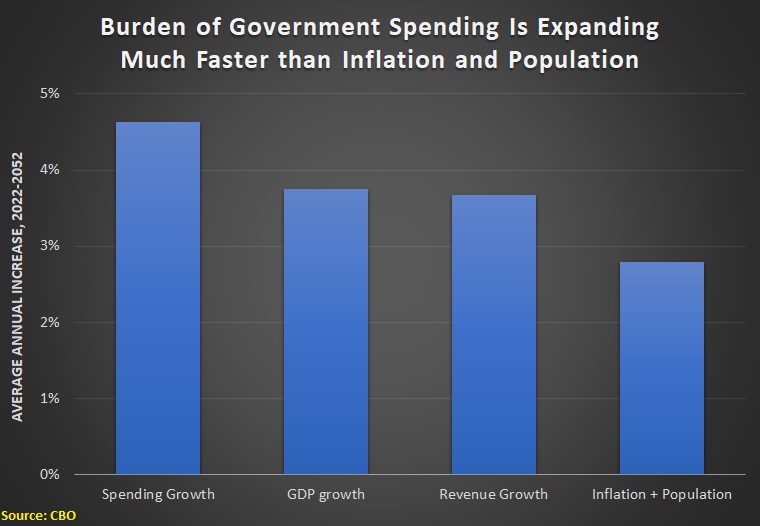
As already stated, it’s a big problem that government spending is growing faster (an average of 4.63 percent per year) than the growth of the private economy (an average of 3.75 percent per years.

But the goal of fiscal policy should not be to maintain the bloated budget that currently exists. That would lock in all the reckless spending we got under Bush, Obama, and Trump. Not to mention the additional waste approved under Biden.

Ideally, fiscal policy should seek to reduce the burden of federal spending.

Which is why this next chart is key. It shows what would happen if the federal government adopted a TABOR-style spending cap, modeled after the very successful fiscal rule in Colorado.

If government spending can only grow as fast as inflation plus population, we avoid giant future deficits. Indeed, we eventually get budget surpluses.
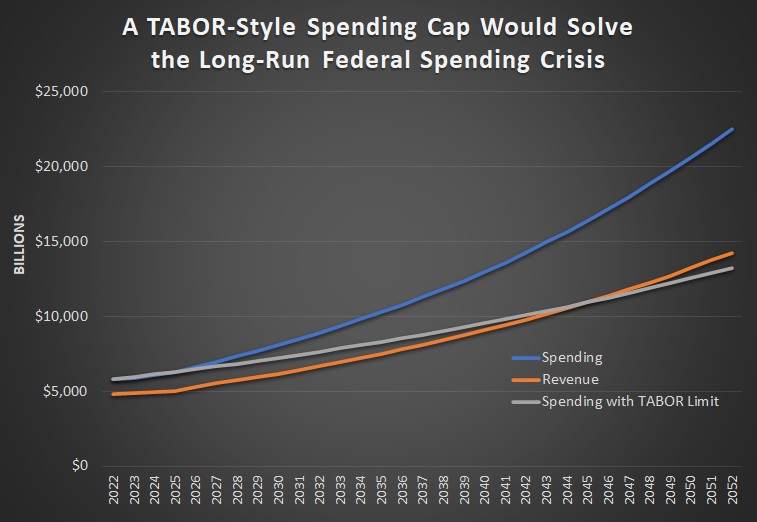
But I’m not overly concerned with fiscal balance. The proper goal should be to reduce the burden of spending, regardless of how it is financed.

And a spending cap linked to population plus inflation over the next 30 years would yield impressive results. Instead of the federal government consuming more than 30 percent of the economy’s output, only 17.8 percent of GDP would be diverted by federal spending in 2052.

P.S. A spending cap also could be modeled on Switzerland’s very successful “debt brake.”

P.P.S. Some of my left-leaning friends doubtlessly will think a federal budget that consumes “only” 17.8 percent of GDP is grossly inadequate. Yet that was the size of the federal government, relative to economic output, at the end of Bill Clinton’s presidency.

The Optimum Level of Government Spending

Echoing remarks earlier this month to a group in Nigeria, I spoke today about fiscal economics to the 2022 Africa Liberty Camp in Entebbe, Uganda.

During the Q&A session, I was asked to specify the ideal amount of government spending. I addressed that issue in an April interview while visiting Spain.

You’ll notice that I didn’t give a specific number in the above video. Just like I didn’t give a specific number to the audience in Uganda.

That’s because there is not an exact answer. The only thing we can definitively state is that government in most nations should be far smaller than it is today.

This is illustrated by the “Rahn Curve,” which I discussed both in the interview and in my speech today.

What is the Rahn Curve? Here’s some of what I wrote back in 2015.

…it shows the non-linear relationship between the size of government and economic performance. Simply stated, some government spending presumably enables growth by creating the conditions (such as rule of law and property rights) for commerce. But as politicians learn to buy votes and enhance their power by engaging in redistribution, then government spending is associated with weaker economic performance because of perverse incentives and widespread misallocation of resources.

And here’s a visual depiction of the Rahn Curve. The upward-sloping part of the curve shows that spending on genuine public goods is associated with more prosperity. But once government budgets exceed a certain level, additional spending means weaker economic performance.

In the above graph, I show that growth is maximized when government consumes about 15 percent-20 percent of economic output.

But I actually think prosperity would be maximized if government was a smaller burden, perhaps about 5 percent-10 percent of GDP.

In 2017, I explained the appropriate role of government in a libertarian society. My analysis was based on my “minarchist” views, which imply government only spends money for national defense and rule of law.

By contrast, my anarcho-capitalist friends would say we don’t need any government.

Meanwhile, moderate libertarians (or conservative Republicans) might be amenable to having state and local governments play a role in education and infrastructure.

The bottom line is that I think growth would be maximized if government consumes – at most – 10 percent of economic output (which was the size of government in the 1800s when the Western world became rich).

But I will be happy with any progress (particularly since government is projected to become an even bigger burden if left on autopilot).

If you want to watch more videos related to the Rahn curve, there are many options.

P.S. Here’s my response to a critic from the left.

P.P.S. Interestingly, some normally left-leaning international bureaucracies have acknowledged you get more prosperity with smaller government. Check out the analysis from the IMF, ECB, World Bank, and OECD.Thanks

Dan Mitchell does a great job explaining the Laffer Curve

Free-market economics meets free-market policies at The Heritage Foundation’s Tenth Anniversary dinner in 1983. Nobel Laureate Milton Friedman and his wife Rose with President Ronald Reagan and Heritage President Ed Feulner.

Free-market economics meets free-market policies at The Heritage Foundation’s Tenth Anniversary dinner in 1983. Nobel Laureate Milton Friedman and his wife Rose with President Ronald Reagan and Heritage President Ed Feulner.

Since the passing of Milton Friedman who was my favorite economist, I have been reading the works of Daniel Mitchell and he quotes Milton Friedman a lot, and you can reach Dan’s website here.

Mitchell in February 2011.
Wikipedia noted concerning Dan:

Mitchell’s career as an economist began in the United States Senate, working for Oregon Senator Bob Packwood and the Senate Finance Committee. He also served on the transition team of President-Elect Bush and Vice President-Elect Quayle in 1988. In 1990, he began work at the Heritage Foundation. At Heritage, Mitchell worked on tax policy issues and began advocating for income tax reform.[1]

In 2007, Mitchell left the Heritage Foundation, and joined the Cato Institute as a Senior Fellow. Mitchell continues to work in tax policy, and deals with issues such as the flat tax and international tax competition.[2]

In addition to his Cato Institute responsibilities, Mitchell co-founded the Center for Freedom and Prosperity, an organization formed to protect international tax competition.[1]

President Biden c/o The White House
1600 Pennsylvania Avenue NW
Washington, DC 20500

Dear Mr. President,

I enjoyed this article below because it demonstrates that the Laffer Curve has been working for almost 100 years now when it is put to the test in the USA. I actually got to hear Arthur Laffer speak in person in 1981 and he told us in advance what was going to happen the 1980’s and it all came about as he said it would when Ronald Reagan’s tax cuts took place. I wish we would lower taxes now instead of looking for more revenue through raised taxes. We have to grow the economy:

What Mitt Romney Said Last Night About Tax Cuts And The Deficit Was Absolutely Right. And What Obama Said Was Absolutely Wrong.

Mitt Romney repeatedly said last night that he would not allow tax cuts to add to the deficit.  He repeatedly said it because over and over again Obama blathered the liberal talking point that cutting taxes necessarily increased deficits.

Romney’s exact words: “I want to underline that — no tax cut that adds to the deficit.”

Meanwhile, Obama has promised to cut the deficit in half during his first four years – but instead gave America the highest deficits in the history of the entire human race.

I’ve written about this before.  Let’s replay what has happened every single time we’ve ever cut the income tax rate.

The fact of the matter is that we can go back to Calvin Coolidge who said very nearly THE EXACT SAME THING to his treasury secretary: he too would not allow any tax cuts that added to the debt.  Andrew Mellon – quite possibly the most brilliant economic mind of his day – did a great deal of research and determined what he believed was the best tax rate.  And the Coolidge administration DID cut income taxes and MASSIVELY increased revenues.  Coolidge and Mellon cut the income tax rate 67.12 percent (from 73 to 24 percent); and revenues not only did not go down, but they went UP by at least 42.86 percent (from $700 billion to over $1 billion).

That’s something called a documented fact.  But that wasn’t all that happened: another incredible thing was that the taxes and percentage of taxes paid actually went UP for the rich.  Because as they were allowed to keep more of the profits that they earned by investing in successful business, they significantly increased their investments and therefore paid more in taxes than they otherwise would have had they continued sheltering their money to protect themselves from the higher tax rates.  Liberals ignore reality, but it is simply true.  It is a fact.  It happened.

Then FDR came along and raised the tax rates again and the opposite happened: we collected less and less revenue while the burden of taxation fell increasingly on the poor and middle class again.  Which is exactly what Obama wants to do.

People don’t realize that John F. Kennedy, one of the greatest Democrat presidents, was a TAX CUTTER who believed the conservative economic philosophy that cutting tax rates would in fact increase tax revenues.  He too cut taxes, and he too increased tax revenues.

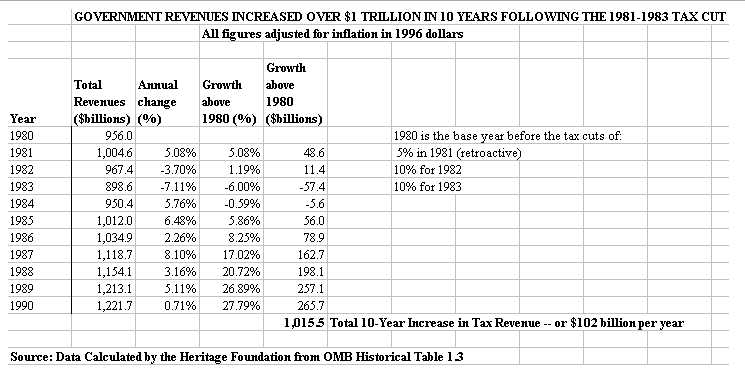
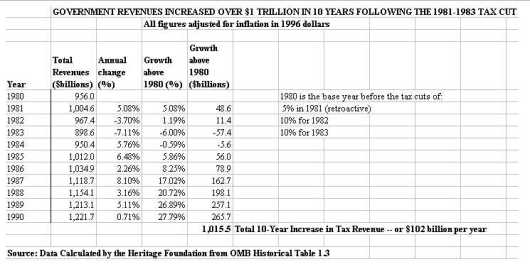
So we get to Ronald Reagan, who famously cut taxes.  And again, we find that Reagan cut that godawful liberal tax rate during an incredibly godawful liberal-caused economic recession, and he increased tax revenue by 20.71 percent (with revenues increasing from $956 billion to $1.154 trillion).  And again, the taxes were paid primarily by the rich:

“The share of the income tax burden borne by the top 10 percent of taxpayers increased from 48.0 percent in 1981 to 57.2 percent in 1988. Meanwhile, the share of income taxes paid by the bottom 50 percent of taxpayers dropped from 7.5 percent in 1981 to 5.7 percent in 1988.”

So we get to George Bush and the Bush tax cuts that liberals and in particular Obama have just demonized up one side and demagogued down the other.  And I can simply quote the New York Times AT the time:

Sharp Rise in Tax Revenue to Pare U.S. Deficit By EDMUND L. ANDREWS Published: July 13, 2005

WASHINGTON, July 12 – For the first time since President Bush took office, an unexpected leap in tax revenue is about to shrink the federal budget deficit this year, by nearly $100 billion.

A Jump in Corporate Payments On Wednesday, White House officials plan to announce that the deficit for the 2005 fiscal year, which ends in September, will be far smaller than the $427 billion they estimated in February.

Mr. Bush plans to hail the improvement at a cabinet meeting and to cite it as validation of his argument that tax cuts would stimulate the economy and ultimately help pay for themselves.

Based on revenue and spending data through June, the budget deficit for the first nine months of the fiscal year was $251 billion, $76 billion lower than the $327 billion gap recorded at the corresponding point a year earlier.

The Congressional Budget Office estimated last week that the deficit for the full fiscal year, which reached $412 billion in 2004, could be “significantly less than $350 billion, perhaps below $325 billion.”

The big surprise has been in tax revenue, which is running nearly 15 percent higher than in 2004. Corporate tax revenue has soared about 40 percent, after languishing for four years, and individual tax revenue is up as well
.

And of course the New York Times, as reliable liberals, use the adjective whenever something good happens under conservative policies and whenever something bad happens under liberal policies: ”unexpected.”   But it WASN’T ”unexpected.”  It was EXACTLY what Republicans had said would happen and in fact it was exactly what HAD IN FACT HAPPENED every single time we’ve EVER cut income tax rates.

The truth is that conservative tax policy has a perfect track record: every single time it has ever been tried, we have INCREASED tax revenues while not only exploding economic activity and creating more jobs, but encouraging the wealthy to pay more in taxes as well.  And liberals simply dishonestly refuse to acknowledge documented history.

Meanwhile, liberals also have a perfect record … of FAILUREThey keep raising taxes and keep not understanding why they don’t get the revenues they predicted.

The following is a section from my article, “Tax Cuts INCREASE Revenues; They Have ALWAYS Increased Revenues“, where I document every single thing I said above:

The Falsehood That Tax Cuts Increase The Deficit

Now let’s take a look at the utterly fallacious view that tax cuts in general create higher deficits.

Let’s take a trip back in time, starting with the 1920s.  From Burton Folsom’s book, New Deal or Raw Deal?:

In 1921, President Harding asked the sixty-five-year-old [Andrew] Mellon to be secretary of the treasury; the national debt [resulting from WWI] had surpassed $20 billion and unemployment had reached 11.7 percent, one of the highest rates in U.S. history.  Harding invited Mellon to tinker with tax rates to encourage investment without incurring more debt. Mellon studied the problem carefully; his solution was what is today called “supply side economics,” the idea of cutting taxes to stimulate investment.  High income tax rates, Mellon argued, “inevitably put pressure upon the taxpayer to withdraw this capital from productive business and invest it in tax-exempt securities. . . . The result is that the sources of taxation are drying up, wealth is failing to carry its share of the tax burden; and capital is being diverted into channels which yield neither revenue to the Government nor profit to the people” (page 128).

Mellon wrote, “It seems difficult for some to understand that high rates of taxation do not necessarily mean large revenue to the Government, and that more revenue may often be obtained by lower taxes.”  And he compared the government setting tax rates on incomes to a businessman setting prices on products: “If a price is fixed too high, sales drop off and with them profits.”

And what happened?

“As secretary of the treasury, Mellon promoted, and Harding and Coolidge backed, a plan that eventually cut taxes on large incomes from 73 to 24 percent and on smaller incomes from 4 to 1/2 of 1 percent.  These tax cuts helped produce an outpouring of economic development – from air conditioning to refrigerators to zippers, Scotch tape to radios and talking movies.  Investors took more risks when they were allowed to keep more of their gains.  President Coolidge, during his six years in office, averaged only 3.3 percent unemployment and 1 percent inflation – the lowest misery index of any president in the twentieth century.

Furthermore, Mellon was also vindicated in his astonishing predictions that cutting taxes across the board would generate more revenue.  In the early 1920s, when the highest tax rate was 73 percent, the total income tax revenue to the U.S. government was a little over $700 million.  In 1928 and 1929, when the top tax rate was slashed to 25 and 24 percent, the total revenue topped the $1 billion mark.  Also remarkable, as Table 3 indicates, is that the burden of paying these taxes fell increasingly upon the wealthy” (page 129-130).

Now, that is incredible upon its face, but it becomes even more incredible when contrasted with FDR’s antibusiness and confiscatory tax policies, which both dramatically shrunk in terms of actual income tax revenues (from $1.096 billion in 1929 to $527 million in 1935), and dramatically shifted the tax burden to the backs of the poor by imposing huge new excise taxes (from $540 million in 1929 to $1.364 billion in 1935).  See Table 1 on page 125 of New Deal or Raw Deal for that information.

FDR both collected far less taxes from the rich, while imposing a far more onerous tax burden upon the poor.

It is simply a matter of empirical fact that tax cuts create increased revenue, and that those [Democrats] who have refused to pay attention to that fact have ended up reducing government revenues even as they increased the burdens on the poorest whom they falsely claim to help.

Let’s move on to John F. Kennedy, one of the most popular Democrat presidents ever.  Few realize that he was also a supply-side tax cutter.

Kennedy said:

“It is a paradoxical truth that tax rates are too high and tax revenues are too low and the soundest way to raise the revenues in the long run is to cut the rates now … Cutting taxes now is not to incur a budget deficit, but to achieve the more prosperous, expanding economy which can bring a budget surplus.”

– John F. Kennedy, Nov. 20, 1962, president’s news conference


“Lower rates of taxation will stimulate economic activity and so raise the levels of personal and corporate income as to yield within a few years an increased – not a reduced – flow of revenues to the federal government.”

– John F. Kennedy, Jan. 17, 1963, annual budget message to the Congress, fiscal year 1964

“In today’s economy, fiscal prudence and responsibility call for tax reduction even if it temporarily enlarges the federal deficit – why reducing taxes is the best way open to us to increase revenues.”

– John F. Kennedy, Jan. 21, 1963, annual message to the Congress: “The Economic Report Of The President”


“It is no contradiction – the most important single thing we can do to stimulate investment in today’s economy is to raise consumption by major reduction of individual income tax rates.”

– John F. Kennedy, Jan. 21, 1963, annual message to the Congress: “The Economic Report Of The President”


“Our tax system still siphons out of the private economy too large a share of personal and business purchasing power and reduces the incentive for risk, investment and effort – thereby aborting our recoveries and stifling our national growth rate.”

– John F. Kennedy, Jan. 24, 1963, message to Congress on tax reduction and reform, House Doc. 43, 88th Congress, 1st Session.


“A tax cut means higher family income and higher business profits and a balanced federal budget. Every taxpayer and his family will have more money left over after taxes for a new car, a new home, new conveniences, education and investment. Every businessman can keep a higher percentage of his profits in his cash register or put it to work expanding or improving his business, and as the national income grows, the federal government will ultimately end up with more revenues.”

– John F. Kennedy, Sept. 18, 1963, radio and television address to the nation on tax-reduction bill

Which is to say that modern Democrats are essentially calling one of their greatest presidents a liar when they demonize tax cuts as a means of increasing government revenues.

So let’s move on to Ronald Reagan.  Reagan had two major tax cutting policies implemented: the Economic Recovery Tax Act (ERTA) of 1981, which was retroactive to 1981, and the Tax Reform Act of 1986.

Did Reagan’s tax cuts decrease federal revenues?  Hardly:

We find that 8 of the following 10 years there was a surplus of revenue from 1980, prior to the Reagan tax cuts.  And, following the Tax Reform Act of 1986, there was a MASSIVE INCREASEof revenue.

So Reagan’s tax cuts increased revenue.  But who paid the increased tax revenue?  The poor?  Opponents of the Reagan tax cuts argued that his policy was a giveaway to the rich (ever heard that one before?) because their tax payments would fall.  But that was exactly wrong.  In reality:

“The share of the income tax burden borne by the top 10 percent of taxpayers increased from 48.0 percent in 1981 to 57.2 percent in 1988. Meanwhile, the share of income taxes paid by the bottom 50 percent of taxpayers dropped from 7.5 percent in 1981 to 5.7 percent in 1988.”

So Ronald Reagan a) collected more total revenue, b) collected more revenue from the rich, while c) reducing revenue collected by the bottom half of taxpayers, and d) generated an economic powerhouse that lasted – with only minor hiccups – for nearly three decades.  Pretty good achievement considering that his predecessor was forced to describe his own economy as a “malaise,” suffering due to a “crisis of confidence.” Pretty good considering that President Jimmy Carter responded to a reporter’s question as to what he would do about the problem of inflation by answering, “It would be misleading for me to tell any of you that there is a solution to it.”

Reagan whipped inflation.  Just as he whipped that malaise and that crisis of confidence.

________

Thank you so much for your time. I know how valuable it is. I also appreciate the fine family that you have and your commitment as a father and a husband.

Sincerely,

Everette Hatcher III, 13900 Cottontail Lane, Alexander, AR 72002, ph 501-920-5733

________

The Laffer Curve, Part III: Dynamic Scoring

Related posts:

Milton Friedman’s Free to Choose (1980), episode 3 – Anatomy of a Crisis. part 1

“The Power of the Market” episode of Free to Choose in 1990 by Milton Friedman (Part 5)

Milton Friedman The Power of the Market 5-5 How can we have personal freedom without economic freedom? That is why I don’t understand why socialists who value individual freedoms want to take away our economic freedoms.  I wanted to share this info below with you from Milton Friedman who has influenced me greatly over the […]

“The Power of the Market” episode of Free to Choose in 1990 by Milton Friedman (Part 4)

Milton Friedman The Power of the Market 4-5 How can we have personal freedom without economic freedom? That is why I don’t understand why socialists who value individual freedoms want to take away our economic freedoms.  I wanted to share this info below with you from Milton Friedman who has influenced me greatly over the […]

“The Power of the Market” episode of Free to Choose in 1990 by Milton Friedman (Part 3)

Milton Friedman The Power of the Market 3-5 How can we have personal freedom without economic freedom? That is why I don’t understand why socialists who value individual freedoms want to take away our economic freedoms.  I wanted to share this info below with you from Milton Friedman who has influenced me greatly over the […]

“The Power of the Market” episode of Free to Choose in 1990 by Milton Friedman (Part 2)

Milton Friedman The Power of the Market 2-5 How can we have personal freedom without economic freedom? That is why I don’t understand why socialists who value individual freedoms want to take away our economic freedoms.  I wanted to share this info below with you from Milton Friedman who has influenced me greatly over the […]

“The Power of the Market” episode of Free to Choose in 1990 by Milton Friedman (Part 1)

Milton Friedman The Power of the Market 1-5 How can we have personal freedom without economic freedom? That is why I don’t understand why socialists who value individual freedoms want to take away our economic freedoms.  I wanted to share this info below with you from Milton Friedman who has influenced me greatly over the […]

Open letter to President Obama (Part 282, How the Laffer Curve worked in the 20th century over and over again!!!)

Dan Mitchell does a great job explaining the Laffer Curve President Obama c/o The White House 1600 Pennsylvania Avenue NW Washington, DC 20500 Dear Mr. President, I know that you receive 20,000 letters a day and that you actually read 10 of them every day. I really do respect you for trying to get a […]

President Obama ignores warnings about Laffer Curve

The Laffer Curve – Explained Uploaded by Eddie Stannard on Nov 14, 2011 This video explains the relationship between tax rates, taxable income, and tax revenue. The key lesson is that the Laffer Curve is not an all-or-nothing proposition, where we have to choose between the exaggerated claim that “all tax cuts pay for themselves” […]

The Laffer Curve Wreaks Havoc in the United Kingdom

I got to hear Arthur Laffer speak back in 1981 and he predicted what would happen in the next few years with the Reagan tax cuts and he was right with every prediction. The Laffer Curve Wreaks Havoc in the United Kingdom July 1, 2012 by Dan Mitchell Back in 2010, I excoriated the new […]

Open letter to President Obama (Part 197)

  President Obama c/o The White House 1600 Pennsylvania Avenue NW Washington, DC 20500 Dear Mr. President, I know that you receive 20,000 letters a day and that you actually read 10 of them every day. I really do respect you for trying to get a pulse on what is going on out here. David […]

Open letter to President Obama (Part 123)

President Obama c/o The White House 1600 Pennsylvania Avenue NW Washington, DC 20500 Dear Mr. President, I know that you receive 20,000 letters a day and that you actually read 10 of them every day. I really do respect you for trying to get a pulse on what is going on out here. I got […]

Open letter to President Obama (Part 111)

President Obama c/o The White House 1600 Pennsylvania Avenue NW Washington, DC 20500 Dear Mr. President, I know that you receive 20,000 letters a day and that you actually read 10 of them every day. I really do respect you for trying to get a pulse on what is going on out here. If our […]

Open letter to President Obama (Part 103)

President Obama c/o The White House 1600 Pennsylvania Avenue NW Washington, DC 20500 Dear Mr. President, I know that you receive 20,000 letters a day and that you actually read 10 of them every day. I really do respect you for trying to get a pulse on what is going on out here. I personally […]

High taxes are self-defeating

We got to lower taxes in order to encourage job growth and if we go down the road of higher taxes then we will go further into a recession. Debating Whether States Should Impose Class-Warfare Tax Policy June 4, 2012 by Dan Mitchell I wrote last week about the destructive and self-defeating impact of high state […]

California has forgotten the lessons of Ronald Reagan

If our country is the grow the economy and get our budget balanced it will not be by raising taxes!!! The recipe for success was followed by Ronald Reagan in the 1980′s when he cut taxes and limited spending. As far as limiting spending goes only Bill Clinton (with his Republican Congress) were ability to […]

Some liberal economics want top tax rate above 70% but economy would be crushed

I got to see Arthur Laffer speak in 1981 in Memphis and he predicted what would happen the next few years with tax revenue as a result of the Reagan Tax Cuts and he was right on every prediction. Alan Reynolds Dismantles the Silly Claim that Top Tax Rates Should be 70 Percent (or Higher!) May […]

Spain raises tax rates and revenues fall!!!!

The way to grow the economy is to cut taxes. Last night in the State of the Union address President Obama said he wanted to close tax loopholes which is another way of saying that he is not through raising taxes yet. The Laffer Curve Strikes Again: Revenues Falling in Spite of (or Perhaps Because […]

Ronald Wilson Reagan Part 13

President Reagan and Nancy Reagan greeting Billy Graham at the National Prayer Breakfast held at the Washington Hilton Hotel. 2/5/81. HALT:HaltingArkansasLiberalswithTruth.com Recently on my series on Ronald Reagan (part 10), a gentleman by the name of Elwood who a regular on the Ark Times Blog site, rightly noted, “Ray-gun created the highest unemployment rate we […]

July 29, 2022 READING A PROVERB A DAY (PROVERBS 29) THE PROBLEM WITH PRIDE (chapters 16, 21, 28, 29) Proverbs 29:23 “Pride ends in humiliation, while humility brings honor.”

Proverbs 29New Living Translation

29 Whoever stubbornly refuses to accept criticism
    will suddenly be destroyed beyond recovery.

When the godly are in authority, the people rejoice.
    But when the wicked are in power, they groan.

The man who loves wisdom brings joy to his father,
    but if he hangs around with prostitutes, his wealth is wasted.

A just king gives stability to his nation,
    but one who demands bribes destroys it.

To flatter friends
    is to lay a trap for their feet.

Evil people are trapped by sin,
    but the righteous escape, shouting for joy.

The godly care about the rights of the poor;
    the wicked don’t care at all.

Mockers can get a whole town agitated,
    but the wise will calm anger.

If a wise person takes a fool to court,
    there will be ranting and ridicule but no satisfaction.

10 The bloodthirsty hate blameless people,
    but the upright seek to help them.[a]

11 Fools vent their anger,
    but the wise quietly hold it back.

12 If a ruler pays attention to liars,
    all his advisers will be wicked.

13 The poor and the oppressor have this in common—
    the Lord gives sight to the eyes of both.

14 If a king judges the poor fairly,
    his throne will last forever.

15 To discipline a child produces wisdom,
    but a mother is disgraced by an undisciplined child.

16 When the wicked are in authority, sin flourishes,
    but the godly will live to see their downfall.

17 Discipline your children, and they will give you peace of mind
    and will make your heart glad.

18 When people do not accept divine guidance, they run wild.
    But whoever obeys the law is joyful.

19 Words alone will not discipline a servant;
    the words may be understood, but they are not heeded.

20 There is more hope for a fool
    than for someone who speaks without thinking.

21 A servant pampered from childhood
    will become a rebel.

22 An angry person starts fights;
    a hot-tempered person commits all kinds of sin.

23 Pride ends in humiliation,
    while humility brings honor.

24 If you assist a thief, you only hurt yourself.
    You are sworn to tell the truth, but you dare not testify.

25 Fearing people is a dangerous trap,
    but trusting the Lord means safety.

26 Many seek the ruler’s favor,
    but justice comes from the Lord.

27 The righteous despise the unjust;
    the wicked despise the godly.

The Problem With Pride

February 11, 2016 Save Article

Proverbs 16:18 (Program: 2223, Air date: 11.9.2014)

  1. WHAT PRIDE IS NOT: 
    1. Pride is not a good self-image.
      1. Humility is not thinking lowly of ourselves; it is not thinking of ourselves.
        1. Luke 18:9-14
        2. John 13:3-5
    2. Pride is not gratefulness for a job well done.
  2. WHAT IS PRIDE? 
    1. An attitude of independence from God
    2. A spirit of ungratefulness to God
    3. Esteeming ourselves better than others
  3. INDICATORS OF A PROUD PERSON
    1. A proud person becomes irritated when corrected for mistakes.
    2. A proud person accepts praise for things over which he or she has no control (i.e. beauty, talents, abilities).
    3. A proud person has an ungrateful spirit for all that God has done.
    4. A proud person often finds himself in competition with others.
  4. PRIDE DEFIES GOD. (Proverbs 6:16-19)
    1. Proverbs 16:5
      1. Why does God hate pride?
        1. It was pride that made the devil the devil.
          1. Isaiah 14:13-16
          2. 1 Timothy 3:6
        2. Pride ruined the human race.
          1. Genesis 3:5
          2. 1 Peter 5:5
  5. PRIDE DEFILES MAN. (Proverbs 16:5)
    1. Proverbs 21:4
    2. Mark 7:21-22
      1. Pride comes from within our human nature.
  6. PRIDE DIVIDES SOCIETY. (Proverbs 13:10)
    1. There’s never been a war, argument, divorce or church split in which pride was not a major factor.
    2. Proverbs 28:25
      1. Pride puts us out of fellowship with God and others.
  7. PRIDE DISHONORS LIFE. (Proverbs 11:2)
    1. A proud person wants honor and esteem, but pride only brings dishonor.
      1. Proverbs 15:33
      2. Proverbs 18:12
      3. Proverbs 29:23
    2. Pride turned the devil into the devil.
      1. Isaiah 14:13-16
        1. Satan is going to be brought down, and Jesus will be exalted.
          1. Philippians 2:5-9
  8. PRIDE DESTROYS SOULS. (Proverbs 15:25)
    1. Pride is the road to ruin and destruction.
      1. Proverbs 16:18-19
      2. Proverbs 18:12
        1. National ruin
          1. 2 Chronicles 7:14
        2. Domestic ruin
        3. Financial ruin
        4. Emotional ruin
        5. Spiritual ruin
    2. There is no one too bad that they can’t be saved. 
    3. There is no one too good that they don’t need to be saved.

—-

Lifestory: Full circle for Melody Green but still “no compromise” in her ministry KEITH GREEN PASSED 40 YEARS AGO TODAY!! Plus 25 things you didn’t know about Keith!

ASSIST News Service

Despite suffering a terrible tragedy when she lost her husband, the wonderful composer-singer, Keith Green, and two young children in a plane crash, Melody Green is continuing to keep Keith’s music and ministry alive and available, while moving forward with her own messages, similar to her shared vision with Keith, but in a new season, with her own unique style of wit and wisdom.

Now back in Hollywood, California, her birthplace, she has the chance, as she says, to “sow as I go,” serving whoever God puts in her path, whether they are wealthy and successful, or homeless and addicted.

Melody Green

“I wasn’t bitter but I was very mad at Keith for taking the kids and I think that was probably a deflected anger at the Lord. I don’t remember consciously being mad at the Lord. It’s just one step at a time. I was glad that I had the Lord because for quite a while, I wanted to die and might have done something about it if I wouldn’t have known Jesus and had supportive friends.”

– Melody Green, speaking about the loss of her husband Keith and two children in a 1982 plane crash

Melody has continued Last Days Ministries (LDM), which she began with Keith. Much of her time is taken up by speaking and writing, but she always looks for chances wherever she is, to bring comfort to the homeless and needy of Tinsel Town, many of whom had moved there to seek fame and fortune.

She certainly understands pain, as she suffered a terrible blow in her own life when tragically, along with eleven others, Keith Green died at the age of 28, on 28th July, 1982, when the Cessna 414 leased by Last Days Ministries crashed after takeoff from the private airstrip located on the LDM property in Lindale, East Texas.

The small two-engine plane was carrying twelve passengers and the pilot, Don Burmeister, for an aerial tour of the LDM in Lindale, Texas, property and the surrounding area.

Green and two of his children, three-year-old Josiah and two-year-old Bethany, were on board the plane, along with visiting church planters, John and Dede Smalley and their six children. Green’s wife Melody was at home with one year old Rebekah and six weeks pregnant with their fourth child, Rachel, born in March 1983.

In late June, I caught up with Melody the night before she appeared at The Upper Room, a Christian Coffee House in Mission Viejo, California, to share about her life and plans for the future, and I began my interview for my Front Page radio show by asking her to recount that terrible experience of losing both her husband and two of her children.

She said that they had two friends from a Vineyard church in California, John and Dede Smalley and their six children, who were visiting their huge 500 acre LDM ranch, and Keith called their pilot, Don Alan Burmeister, who had been a member of the United States Marine Corps and was the pilot, to prepare the small, two engine plane for takeoff.

“Our old farmhouse was across the road from the ranch property, and Keith came to get me and wanted me to go up with them,” she recalled. “I was six weeks pregnant at the time, and I didn’t want to join them, and I also felt uncomfortable taking the kids – Bethany, two and Josiah, three – up in the plane unless we were really going somewhere.”

Her other child, daughter Rebekah, who just turned one, stayed at home with Melody. “Then Josiah and Bethany ran out the door after Keith before I could stop them,” she said.

Did she watch the plane take off? “No, we lived down the hill from the airstrip so I didn’t,” she told me.

Not long afterwards, she received a phone call from the LDM office, saying that the plane had gone down.

“I didn’t know what it meant so I ran out there and discovered for myself, that all had died,” she said.

In a few short minutes, Melody had gone from being the wife of one of the Christian world’s most famous musicians, and the mother of their three young children, to a widow, with one child left and another on the way.

I asked her how she had been able to deal with such a tragedy, and if she was bitter at God for allowing such a thing to occur.

“I wasn’t bitter,” she said, “but I was very mad at Keith for taking the kids and I think that was probably a deflected anger at the Lord. I don’t remember consciously being mad at the Lord. It’s just one step at a time. I was glad that I had the Lord because for quite a while, I wanted to die and might have done something about it if I wouldn’t have known Jesus and had supportive friends.

“It would have been selfish too, with Rebekah grieving in her one-year-old way, and two more of her family gone  – me and her unborn sister – both girls a remaining gift from Keith and God.

“It has taken years to get through it. It’s not light; it’s not a small thing.”

Courageously, Melody was able to participate in the memorial service at the Agape Force property nearby, for all those who died in the crash, and so I asked her how she was able to do so.

“It was because of the sheer grace of God,” said Melody. “I felt like I was supposed to speak and I did. The Lord just really he helped me and has continued to do so for all these years since.

“A day later, there was a private burial service at a small church cemetery near the Last Days Ministries property.

Has she been able to get over what happened?

“You never get over it,” she replied. “I don’t cry every day and I don’t think of it every day like I did during the first two or three years, but progressively, the Lord’s helped me to go on. Sometimes, I can’t help but wonder what it would have been like if Keith was still here, especially when I watch four grandkids and I see so much of Keith in them. I know he’d just have been bananas over them and his own beautiful daughters that never got to know him, yet are so much like him”

Both Melody and Keith Green are Jewish followers of Jesus, and she told me that they had first met at a video tape recording studio where she worked and he arrived to look around it, sporting a huge beard and a long hair ponytail.

“I gave him the tour and that was that. He just kind of chased me down really,” she laughed.

She said that at that time, neither of them were believers in Jesus, the Messiah.

“We were searching,” she revealed. “Keith had a little cross around his neck – he decided that since most religions thought Jesus was OK in some way, he thought he’d read the Red Letters only to see what Jesus had to say, and I trailed along with him. We did get married and then about a year and a half later we gave our lives to Jesus.

Melody Green with husband Keith.

“We both changed dramatically. It was just insane. It was so exciting and we had been looking and searching through everything for so long and both of us, even before we met, had been through all kinds of spiritual stuff – mostly New Age. Knowing Jesus was like getting shot out of a cannon.”

– Melody Green, speaking about the change Jesus brought into the lives of Keith and herself.

It was at an early Vineyard Bible study led by Kenn Gulliksen in a home they were house-sitting in the Beverly Hills area.

Later on, this became Bob Dylan’s church, but Melody said, “It was pre-Dylan and we just walked in and Keith raised his hand the first night and I raised my hand the next week. We both changed dramatically. It was just insane. It was so exciting and we had been looking and searching through everything for so long and both of us, even before we met, had been through all kinds of spiritual stuff – mostly New Age. Knowing Jesus was like getting shot out of a cannon.”

It wasn’t long before both of them were composing incredible new worship music, and Melody’s most well-known songs were There Is a Redeemer, and Make My Life A Prayer. Keith recorded both of them. Overall they co-wrote about 40 songs.

Hit after hit came from Keith, including You Put This Love In My Heart, Soften Your Heart, Oh Lord, You’re Beautiful, Your Love Broke Through, Asleep In The Light, My Eyes Are Dry, So You Wanna Go Back To Egypt, Grace By Which I Stand, Easter Song (written by Annie Herring) and He’ll Take Care Of The Rest, to name just a few of them.

Soon, Keith was performing to huge crowds around the country, with Melody joining him as she operated the sound board until he moved from churches and theaters to arenas when a professional soundman was brought in.

I told Melody that Keith had been described as a prophet by many and I wondered what he thought about that.

“He didn’t like the word prophet and he wouldn’t use it, and he didn’t like it when people used it; he didn’t like that label,” she said. He just wanted to be known as a regular follower of Jesus. “But obviously, looking back, he was very prophetic. Way ahead of his time. There are things I remember he said that have since come to pass. Like the fledgling Christian music industry of that day. He once said, ‘Mark my words. In 25 years Christian music companies will become like every other big music business’. Basically run by the bottom line, is what he meant.”

To start with, the couple began their Last Days Ministries, with seven houses in Woodland Hills, California, which they filled up with some 75 people off the streets that were bikers and pregnant girls, as well as kids coming off of drugs. After leading them to Jesus, they began to disciple them.

“But we felt that it was too tempting for them to do that right in the Valley, so we were looking for land outside the temptation zone and found a log ranch house and barn on 120 acres near Lindale, Texas. We moved, and began discipleship schools and also produced huge amounts of free literature,” she said.

Melody recalled it was quite an area where many Christian ministries, leaders, and musicians, were based.

“We had David Wilkerson and his ranch, Leonard Ravenhill, two very large YWAM properties, one becoming Mercy Ships, Dallas Holm and Praise, Barry McGuire, and Agape Force where Winkie Pratney lived half of the year. 2nd Chapter of Acts even bought land adjoining ours. It was an amazing amount of fun and formed lifelong friendships.”

But then came the plane crash that changed Melody’s life forever, and for a time she moved to Kansas City, but has now returned to Hollywood, where she was born

My favorite Christian music artist of all time is Keith Green.

Keith Green passed away on July 28th, 1982 almost 39 years ago to the day!!! I want to remember him with a series of posts!!!

Sunday, May 5, 2013

Keith Green – (talks about) Jesus Commands Us To Go! (live)

Uploaded on May 26, 2008

Keith Green talks about “Jesus Commands Us To Go!” live at Jesus West Coast ’82

You can find more info on http://www.keithgreen.com

If you want to buy this DVD go to the online shop on his website.

And if you want to know more about this man and why he followed Jesus look at my profile for the video about his life.

______________________________________________________

You are called to go
Keith’s concerts were evangelistic and exhortational. He was the Lecrae of the 70’s. Here is what he has to say about the great commission:

“The world isn’t being won today because we’re not doing it. It’s our fault. This generation of Christians is responsible for this generation of souls on the earth. And no where in the world is the gospel so plentiful as here in the United States. No where. And I don’t want to see us stand before God on that day ans say, ‘but God I didn’t hear you call me.’ Here is something for all you to chew on, you don’t need to hear a call, you’re already called. In fact, if you stay home from going into all nations you had better be able to say to God, ‘You called me to stay home God, I know that as a fact.'”

Keith Green – Asleep In The Light (live)

Uploaded on May 26, 2008

Keith Green performing “Asleep In The Light” live at Jesus West Coast ’82

You can find more info on http://www.keithgreen.com

_________________________

Keith wasn’t messing around, watch his biography and see how he backed up what he said with his life:

The Keith Green Story (FULL)

Uploaded on May 14, 2009

Keith Green was an intense and radical man of God. He was taken from this Earth at a relatively young age. His legacy lives on through his music and his sermons. This video is about his life.

25 Things You Never Knew About Keith Green

Wayne and I were very close to Keith from 1978-1982. We both served on the leadership of Last Days Ministries, and have many wonderful memories of Keith and those developing years of Last Days Ministries. Here are some inside Keith-facts.

1. Did you know that Keith wore flip flopseverywhere he went?

2. Did you know that Keith always had to share his food with everyone, because if he liked it, he knew you would too? It was the Jewish mother in him.

3. Did you know Keith was a real family man? He couldn’t stand to be separated from Melody or his kids for long.

4. Did you know that Keith was very soul searchingand could be harder on himself then he was on others?

5. Did you know Keith would sometimes cut his own hair; and even played barber shop with some of the other brothers at the ministry?

6. Did you know that Keith was a real night owl? He often got his best revelation late at night and would commonly call people at 2-3am to share his fresh insights.

7. Did you know that Keith used to mow the grassin Texas on a big tractor as a way to relax and to clear his head?

8. Did you know that Keith invited so many family and friends to witness the birth of his children, that it nearly became a public event?

9. Did you know that he always had a team of people praying while he was in the studio? Along with his talent, there were hours and hours of intercession that went into each album.

10. Did you know that Keith had a deep love for people and would get really involved with people he was ministering to?

11. Did you know that Keith would read the bible in the bathroom and got some of his best revelation in there?

12. Did you know that he loved to play racket ball? He also played tennis and ping pong, and was very competitive.

13. Did you know he loved to try new things? He learned to milk a cow, drive a tractor and run a printing press.

14. Did you know that he loved to go to auctions, and was able to furnish our facilities in East Texas saving thousands of dollars?

15. Did you know Keith shaved his beard when we moved to East Texas from California, to avoid offending the locals.

16. Did you know that Keith could type faster with 2 fingers than most of us can with 10?

17. Did you know Keith was really close friends with the famous revivalist, Leonard Ravenhill, and often went to him for counsel and advice?

18. Did you know he was the same off stage as he was on stage? With Keith, what you saw was who he was, he was genuine, sincere and real in all he did.

19 Did you know that Keith once drove the bus off the road in Hell’s Canyon, Utah leaving it dangling over a 2000 foot cliff? It took 2 bulldozers to lift it back onto the road.

20. Did you know Keith borrowed money on his house to sponsor the “So You Wanna Go back To Egypt”album so we could make them available to people for whatever they could afford?

21. Did you know Keith never received a salaryfrom the ministry?

22. Did you know that in spite of his success and popularity Keith lived a very simple life?

23. Did you know Keith loved to walk when he prayed? He could often be seen in an animated prayer walk going along the edge of our ministry property.

24. Did you know Keith led worship every Friday night at a prayer meeting led by Leonard Ravenhill near our ministry in East Texas?

25. Did you know Keith had a vision to do a restaurant that would offer food for whatever you could afford as a ministry outreach to the community?

Did you know Keith wasn’t perfect, but he held nothing back in serving Jesus and bringing others into God’s Kingdom.

Related posts:

My favorite Christian music artist of all time is Keith Green.

My favorite Christian music artist of all time is Keith Green. Sunday, May 5, 2013 You Are Celled To Go – Keith Green Keith Green – (talks about) Jesus Commands Us To Go! (live) Uploaded on May 26, 2008 Keith Green talks about “Jesus Commands Us To Go!” live at Jesus West Coast ’82 You can find […]

Keith Green’s article “Grumbling and Complaining–So You Wanna Go Back to Egypt?” (Part 4)

Keith Green – So You Wanna Go Back To Egypt (live) Uploaded by monum on May 25, 2008 Keith Green performing “So You Wanna Go Back To Egypt” live at West Coast 1980 ____________ This song really shows Keith’s humor, but it really has great message. Keith also had a great newsletter that went out […]

Keith Green’s article “Grumbling and Complaining–So You Wanna Go Back to Egypt?” (Part 3)

Keith Green – So You Wanna Go Back To Egypt (live) Uploaded by monum on May 25, 2008 Keith Green performing “So You Wanna Go Back To Egypt” live at West Coast 1980 ____________ This song really shows Keith’s humor, but it really has great message. Keith also had a great newsletter that went out […]

Keith Green’s article “Grumbling and Complaining–So You Wanna Go Back to Egypt?” (Part 2)

Keith Green – So You Wanna Go Back To Egypt (live) Uploaded by monum on May 25, 2008 Keith Green performing “So You Wanna Go Back To Egypt” live at West Coast 1980 ____________ This song really shows Keith’s humor, but it really has great message. Keith also had a great newsletter that went out […]

Keith Green’s article “Grumbling and Complaining–So You Wanna Go Back to Egypt?” (Part 1)

Keith Green – So You Wanna Go Back To Egypt (live) Uploaded by monum on May 25, 2008 Keith Green performing “So You Wanna Go Back To Egypt” live at West Coast 1980 ____________ This song really shows Keith’s humor, but it really has great message. Keith also had a great newsletter that went out […]

Keith Green Story (Part 9)

Keith Green – Easter Song (live) Uploaded by monum on May 25, 2008 Keith Green performing “Easter Song” live from The Daisy Club — LA (1982) ____________________________ Keith Green was a great song writer and performer.  Here is his story below: The Lord had taken Keith from concerts of 20 or less — to stadiums […]

Keith Green Story, includes my favorite song (Part 8)

Keith Green – Asleep In The Light Uploaded by keithyhuntington on Jul 23, 2006 keith green performing Asleep In The Light at Jesus West Coast 1982 __________________________ Keith Green was a great song writer and performer and the video clip above includes my favorite Keith Green song. Here is his story below: “I repent of […]

Keith Green Story (Part 7)

Keith Green – Your Love Broke Through Here is something I got off the internet and this website has lots of Keith’s great songs: Keith Green: His Music, Ministry, and Legacy My mom hung up the phone and broke into tears. She had just heard the news of Keith Green’s death. I was only ten […]

Keith Green Story (Part 6)

The Keith Green Story pt 7/7 I remember when I first Keith Green. He had a great impact on me. Below are some quotes on Keith: Quotes   “It’s time to quit playing church and start being the Church (Matt. 18:20)” — Keith Green, as quoted by Melody Green in the introduction to A Cry […]

Keith Green Story (Part 5)

The Keith Green Story pt 6/7 When I first heard Keith Green in 1978 it had a major impact on my life. Below is his story: LEGEND   Keith Green CBN.com – When musician Keith Green died in a plane crash on July 28, 1982, the world lost a special man whose heart was aflame […]

So-Called Inflation Reduction Act Would Make Stagflation Worse

Sen. Joe Manchin, pictured paying respects to World War II veteran and Medal of Honor recipient Hershel “Woody” Williams in the Capitol Rotunda on July 14, has signed off on a massive tax and spending bill that would push prices for working families even higher.  (Photo: Tom Williams/Pool/Getty Images)

After more than a year of expressing his concerns about the impact of inflation, Sen. Joe Manchin, D-W.Va., has signed off on a massive tax and spending bill that only would push prices for working families even higher.

The deal, which Manchin made with Senate Majority Leader Chuck Schumer, D-N.Y., was reached only hours before the Department of Commerce announced that the economy shrank for the second quarter in a row, which most economists consider a recession.

With inflation hitting 9.1% in June, this is a stagflationary economy.  Inflation-adjusted wages for the average American worker have fallen by nearly $3,400 since President Joe Biden took office.

Inflation happens when too much money is chasing too few goods and services.  The government’s policies over the last two years have been a perfect recipe for the highest inflation in four decades: trillions of dollars in government spending financed by the Federal Reserve’s printing presses coupled with lockdowns, new regulations, a war on energy, and anti-work programs that drove down supply.

Biden’s $1.9 trillion American Rescue Plan Act, a stimulus spending bill in March 2021, proved to be the match that lit the inflationary fire.

Biden and his big-spending allies in Congress are now back for more.

The so-called Inflation Reduction Act of 2022, in reality, only would add to the inflationary pain families are already feeling thanks to hundreds of billions in new government spending and job- destroying tax hikes.

The legislation’s proponents will argue that over the next decade the bill’s higher taxes would offset the new spending and reduce budget deficits and thus inflationary pressures on net over the 2022 to 2031 budget window.

It is true that the recent massive deficits financed by the Federal Reserve and driven by excessive government spending have resulted in crippling inflation.

Unfortunately, the Inflation Reduction Act doubles down on the same irresponsible fiscal policy that has caused inflation: All of the new government spending is upfront, while the deficit-reducing revenues are backloaded.

The result would be higher short-term deficits and higher inflation. So, it is fitting that Section 1 of the bill, the misleading title, will be struck down by a point of order as extraneous for violating the reconciliation budget process’s Byrd Rule. The same point of order cut the title of the 2017 Tax Cuts and Jobs Act because every provision in a budget reconciliation bill must be directly related to changing fiscal outcomes.

In 2010, Manchin said, “I don’t think during a time of recession you mess with any of the taxes, or increase any taxes.”

That’s common sense. Higher taxes drive up consumer prices, depress wages, and stifle needed investment, hitting families when it hurts the most.

But the legislation Manchin now supports reportedly would increase taxes by more than $450 billion over the next decade—climbing to three-quarters of a trillion dollars when the drug price controls that work like business taxes are counted.

Businesses would face a complicated new alternative minimum tax based on different accounting methods than are normally used for calculating taxes.  This would increase the tax burdens on employers even if they are following the tax laws already on the books.

The reality is that corporations—as in the buildings and logos often associated with them—can’t pay taxes. Only the workers inside corporations, the savers and investors who own their stock, and the customers who consume their goods and services can bear the burden of the higher tax.

Those ordinary Americans would be the ones who take home smaller paychecks, have smaller savings and retirement accounts, and who pay more for the products they buy. A National Bureau of Economic Research study, published in April 2020, found that the price increases after a corporate tax hike “are larger for lower-price items and products purchased by low-income households.”

The proposal also includes a new $78.9 billion slush fund for the Internal Revenue Service, allowing the agency that has dubious history of political corruption to add thousands of new agents with little accountability.

It would impose price controls on prescription drugs that would result in reduced access for patients in need. Obamacare subsidies would be expanded “temporarily,” sending billions of taxpayer dollars to insurance companies.

The Inflation Reduction Act would even advance the radical Green New Deal agenda, spending an astonishing $369 billion in the name of “decarbonizing all sectors of the economy.” Biden’s anti-fossil fuel policies have already cost us dearly, driving up prices.

However, these subsidies would have a far greater impact than this on-paper price tag implies. These $369 billion would be used to manipulate the market into shifting trillions of dollars of investment out of good productive uses and into these politically motivated green dead ends.

All of this on the heels of the Senate passing another massive $280 billion corporate welfare bill—paid for with more inflation, falling real incomes, and a further declining economy.

Americans are already hurting. To turn the tide on stagflation, Congress must first stop the spending.

Have an opinion about this article? To sound off, please emailletters@DailySignal.com and we’ll consider publishing your edited remarks in our regular “We Hear You” feature. Remember to include the url or headline of the article plus your name and town and/or state.

Dan Mitchell does a great job explaining the Laffer Curve

Free-market economics meets free-market policies at The Heritage Foundation’s Tenth Anniversary dinner in 1983. Nobel Laureate Milton Friedman and his wife Rose with President Ronald Reagan and Heritage President Ed Feulner.

Free-market economics meets free-market policies at The Heritage Foundation’s Tenth Anniversary dinner in 1983. Nobel Laureate Milton Friedman and his wife Rose with President Ronald Reagan and Heritage President Ed Feulner.

Since the passing of Milton Friedman who was my favorite economist, I have been reading the works of Daniel Mitchell and he quotes Milton Friedman a lot, and you can reach Dan’s website here.

Mitchell in February 2011.
Wikipedia noted concerning Dan:

Mitchell’s career as an economist began in the United States Senate, working for Oregon Senator Bob Packwood and the Senate Finance Committee. He also served on the transition team of President-Elect Bush and Vice President-Elect Quayle in 1988. In 1990, he began work at the Heritage Foundation. At Heritage, Mitchell worked on tax policy issues and began advocating for income tax reform.[1]

In 2007, Mitchell left the Heritage Foundation, and joined the Cato Institute as a Senior Fellow. Mitchell continues to work in tax policy, and deals with issues such as the flat tax and international tax competition.[2]

In addition to his Cato Institute responsibilities, Mitchell co-founded the Center for Freedom and Prosperity, an organization formed to protect international tax competition.[1]

President Biden c/o The White House
1600 Pennsylvania Avenue NW
Washington, DC 20500

Dear Mr. President,

I enjoyed this article below because it demonstrates that the Laffer Curve has been working for almost 100 years now when it is put to the test in the USA. I actually got to hear Arthur Laffer speak in person in 1981 and he told us in advance what was going to happen the 1980’s and it all came about as he said it would when Ronald Reagan’s tax cuts took place. I wish we would lower taxes now instead of looking for more revenue through raised taxes. We have to grow the economy:

What Mitt Romney Said Last Night About Tax Cuts And The Deficit Was Absolutely Right. And What Obama Said Was Absolutely Wrong.

Mitt Romney repeatedly said last night that he would not allow tax cuts to add to the deficit.  He repeatedly said it because over and over again Obama blathered the liberal talking point that cutting taxes necessarily increased deficits.

Romney’s exact words: “I want to underline that — no tax cut that adds to the deficit.”

Meanwhile, Obama has promised to cut the deficit in half during his first four years – but instead gave America the highest deficits in the history of the entire human race.

I’ve written about this before.  Let’s replay what has happened every single time we’ve ever cut the income tax rate.

The fact of the matter is that we can go back to Calvin Coolidge who said very nearly THE EXACT SAME THING to his treasury secretary: he too would not allow any tax cuts that added to the debt.  Andrew Mellon – quite possibly the most brilliant economic mind of his day – did a great deal of research and determined what he believed was the best tax rate.  And the Coolidge administration DID cut income taxes and MASSIVELY increased revenues.  Coolidge and Mellon cut the income tax rate 67.12 percent (from 73 to 24 percent); and revenues not only did not go down, but they went UP by at least 42.86 percent (from $700 billion to over $1 billion).

That’s something called a documented fact.  But that wasn’t all that happened: another incredible thing was that the taxes and percentage of taxes paid actually went UP for the rich.  Because as they were allowed to keep more of the profits that they earned by investing in successful business, they significantly increased their investments and therefore paid more in taxes than they otherwise would have had they continued sheltering their money to protect themselves from the higher tax rates.  Liberals ignore reality, but it is simply true.  It is a fact.  It happened.

Then FDR came along and raised the tax rates again and the opposite happened: we collected less and less revenue while the burden of taxation fell increasingly on the poor and middle class again.  Which is exactly what Obama wants to do.

People don’t realize that John F. Kennedy, one of the greatest Democrat presidents, was a TAX CUTTER who believed the conservative economic philosophy that cutting tax rates would in fact increase tax revenues.  He too cut taxes, and he too increased tax revenues.

So we get to Ronald Reagan, who famously cut taxes.  And again, we find that Reagan cut that godawful liberal tax rate during an incredibly godawful liberal-caused economic recession, and he increased tax revenue by 20.71 percent (with revenues increasing from $956 billion to $1.154 trillion).  And again, the taxes were paid primarily by the rich:

“The share of the income tax burden borne by the top 10 percent of taxpayers increased from 48.0 percent in 1981 to 57.2 percent in 1988. Meanwhile, the share of income taxes paid by the bottom 50 percent of taxpayers dropped from 7.5 percent in 1981 to 5.7 percent in 1988.”

So we get to George Bush and the Bush tax cuts that liberals and in particular Obama have just demonized up one side and demagogued down the other.  And I can simply quote the New York Times AT the time:

Sharp Rise in Tax Revenue to Pare U.S. Deficit By EDMUND L. ANDREWS Published: July 13, 2005

WASHINGTON, July 12 – For the first time since President Bush took office, an unexpected leap in tax revenue is about to shrink the federal budget deficit this year, by nearly $100 billion.

A Jump in Corporate Payments On Wednesday, White House officials plan to announce that the deficit for the 2005 fiscal year, which ends in September, will be far smaller than the $427 billion they estimated in February.

Mr. Bush plans to hail the improvement at a cabinet meeting and to cite it as validation of his argument that tax cuts would stimulate the economy and ultimately help pay for themselves.

Based on revenue and spending data through June, the budget deficit for the first nine months of the fiscal year was $251 billion, $76 billion lower than the $327 billion gap recorded at the corresponding point a year earlier.

The Congressional Budget Office estimated last week that the deficit for the full fiscal year, which reached $412 billion in 2004, could be “significantly less than $350 billion, perhaps below $325 billion.”

The big surprise has been in tax revenue, which is running nearly 15 percent higher than in 2004. Corporate tax revenue has soared about 40 percent, after languishing for four years, and individual tax revenue is up as well
.

And of course the New York Times, as reliable liberals, use the adjective whenever something good happens under conservative policies and whenever something bad happens under liberal policies: ”unexpected.”   But it WASN’T ”unexpected.”  It was EXACTLY what Republicans had said would happen and in fact it was exactly what HAD IN FACT HAPPENED every single time we’ve EVER cut income tax rates.

The truth is that conservative tax policy has a perfect track record: every single time it has ever been tried, we have INCREASED tax revenues while not only exploding economic activity and creating more jobs, but encouraging the wealthy to pay more in taxes as well.  And liberals simply dishonestly refuse to acknowledge documented history.

Meanwhile, liberals also have a perfect record … of FAILUREThey keep raising taxes and keep not understanding why they don’t get the revenues they predicted.

The following is a section from my article, “Tax Cuts INCREASE Revenues; They Have ALWAYS Increased Revenues“, where I document every single thing I said above:

The Falsehood That Tax Cuts Increase The Deficit

Now let’s take a look at the utterly fallacious view that tax cuts in general create higher deficits.

Let’s take a trip back in time, starting with the 1920s.  From Burton Folsom’s book, New Deal or Raw Deal?:

In 1921, President Harding asked the sixty-five-year-old [Andrew] Mellon to be secretary of the treasury; the national debt [resulting from WWI] had surpassed $20 billion and unemployment had reached 11.7 percent, one of the highest rates in U.S. history.  Harding invited Mellon to tinker with tax rates to encourage investment without incurring more debt. Mellon studied the problem carefully; his solution was what is today called “supply side economics,” the idea of cutting taxes to stimulate investment.  High income tax rates, Mellon argued, “inevitably put pressure upon the taxpayer to withdraw this capital from productive business and invest it in tax-exempt securities. . . . The result is that the sources of taxation are drying up, wealth is failing to carry its share of the tax burden; and capital is being diverted into channels which yield neither revenue to the Government nor profit to the people” (page 128).

Mellon wrote, “It seems difficult for some to understand that high rates of taxation do not necessarily mean large revenue to the Government, and that more revenue may often be obtained by lower taxes.”  And he compared the government setting tax rates on incomes to a businessman setting prices on products: “If a price is fixed too high, sales drop off and with them profits.”

And what happened?

“As secretary of the treasury, Mellon promoted, and Harding and Coolidge backed, a plan that eventually cut taxes on large incomes from 73 to 24 percent and on smaller incomes from 4 to 1/2 of 1 percent.  These tax cuts helped produce an outpouring of economic development – from air conditioning to refrigerators to zippers, Scotch tape to radios and talking movies.  Investors took more risks when they were allowed to keep more of their gains.  President Coolidge, during his six years in office, averaged only 3.3 percent unemployment and 1 percent inflation – the lowest misery index of any president in the twentieth century.

Furthermore, Mellon was also vindicated in his astonishing predictions that cutting taxes across the board would generate more revenue.  In the early 1920s, when the highest tax rate was 73 percent, the total income tax revenue to the U.S. government was a little over $700 million.  In 1928 and 1929, when the top tax rate was slashed to 25 and 24 percent, the total revenue topped the $1 billion mark.  Also remarkable, as Table 3 indicates, is that the burden of paying these taxes fell increasingly upon the wealthy” (page 129-130).

Now, that is incredible upon its face, but it becomes even more incredible when contrasted with FDR’s antibusiness and confiscatory tax policies, which both dramatically shrunk in terms of actual income tax revenues (from $1.096 billion in 1929 to $527 million in 1935), and dramatically shifted the tax burden to the backs of the poor by imposing huge new excise taxes (from $540 million in 1929 to $1.364 billion in 1935).  See Table 1 on page 125 of New Deal or Raw Deal for that information.

FDR both collected far less taxes from the rich, while imposing a far more onerous tax burden upon the poor.

It is simply a matter of empirical fact that tax cuts create increased revenue, and that those [Democrats] who have refused to pay attention to that fact have ended up reducing government revenues even as they increased the burdens on the poorest whom they falsely claim to help.

Let’s move on to John F. Kennedy, one of the most popular Democrat presidents ever.  Few realize that he was also a supply-side tax cutter.

Kennedy said:

“It is a paradoxical truth that tax rates are too high and tax revenues are too low and the soundest way to raise the revenues in the long run is to cut the rates now … Cutting taxes now is not to incur a budget deficit, but to achieve the more prosperous, expanding economy which can bring a budget surplus.”

– John F. Kennedy, Nov. 20, 1962, president’s news conference


“Lower rates of taxation will stimulate economic activity and so raise the levels of personal and corporate income as to yield within a few years an increased – not a reduced – flow of revenues to the federal government.”

– John F. Kennedy, Jan. 17, 1963, annual budget message to the Congress, fiscal year 1964

“In today’s economy, fiscal prudence and responsibility call for tax reduction even if it temporarily enlarges the federal deficit – why reducing taxes is the best way open to us to increase revenues.”

– John F. Kennedy, Jan. 21, 1963, annual message to the Congress: “The Economic Report Of The President”


“It is no contradiction – the most important single thing we can do to stimulate investment in today’s economy is to raise consumption by major reduction of individual income tax rates.”

– John F. Kennedy, Jan. 21, 1963, annual message to the Congress: “The Economic Report Of The President”


“Our tax system still siphons out of the private economy too large a share of personal and business purchasing power and reduces the incentive for risk, investment and effort – thereby aborting our recoveries and stifling our national growth rate.”

– John F. Kennedy, Jan. 24, 1963, message to Congress on tax reduction and reform, House Doc. 43, 88th Congress, 1st Session.


“A tax cut means higher family income and higher business profits and a balanced federal budget. Every taxpayer and his family will have more money left over after taxes for a new car, a new home, new conveniences, education and investment. Every businessman can keep a higher percentage of his profits in his cash register or put it to work expanding or improving his business, and as the national income grows, the federal government will ultimately end up with more revenues.”

– John F. Kennedy, Sept. 18, 1963, radio and television address to the nation on tax-reduction bill

Which is to say that modern Democrats are essentially calling one of their greatest presidents a liar when they demonize tax cuts as a means of increasing government revenues.

So let’s move on to Ronald Reagan.  Reagan had two major tax cutting policies implemented: the Economic Recovery Tax Act (ERTA) of 1981, which was retroactive to 1981, and the Tax Reform Act of 1986.

Did Reagan’s tax cuts decrease federal revenues?  Hardly:

We find that 8 of the following 10 years there was a surplus of revenue from 1980, prior to the Reagan tax cuts.  And, following the Tax Reform Act of 1986, there was a MASSIVE INCREASEof revenue.

So Reagan’s tax cuts increased revenue.  But who paid the increased tax revenue?  The poor?  Opponents of the Reagan tax cuts argued that his policy was a giveaway to the rich (ever heard that one before?) because their tax payments would fall.  But that was exactly wrong.  In reality:

“The share of the income tax burden borne by the top 10 percent of taxpayers increased from 48.0 percent in 1981 to 57.2 percent in 1988. Meanwhile, the share of income taxes paid by the bottom 50 percent of taxpayers dropped from 7.5 percent in 1981 to 5.7 percent in 1988.”

So Ronald Reagan a) collected more total revenue, b) collected more revenue from the rich, while c) reducing revenue collected by the bottom half of taxpayers, and d) generated an economic powerhouse that lasted – with only minor hiccups – for nearly three decades.  Pretty good achievement considering that his predecessor was forced to describe his own economy as a “malaise,” suffering due to a “crisis of confidence.” Pretty good considering that President Jimmy Carter responded to a reporter’s question as to what he would do about the problem of inflation by answering, “It would be misleading for me to tell any of you that there is a solution to it.”

Reagan whipped inflation.  Just as he whipped that malaise and that crisis of confidence.

________

Thank you so much for your time. I know how valuable it is. I also appreciate the fine family that you have and your commitment as a father and a husband.

Sincerely,

Everette Hatcher III, 13900 Cottontail Lane, Alexander, AR 72002, ph 501-920-5733

________

The Laffer Curve, Part III: Dynamic Scoring

Related posts:

Milton Friedman’s Free to Choose (1980), episode 3 – Anatomy of a Crisis. part 1

“The Power of the Market” episode of Free to Choose in 1990 by Milton Friedman (Part 5)

Milton Friedman The Power of the Market 5-5 How can we have personal freedom without economic freedom? That is why I don’t understand why socialists who value individual freedoms want to take away our economic freedoms.  I wanted to share this info below with you from Milton Friedman who has influenced me greatly over the […]

“The Power of the Market” episode of Free to Choose in 1990 by Milton Friedman (Part 4)

Milton Friedman The Power of the Market 4-5 How can we have personal freedom without economic freedom? That is why I don’t understand why socialists who value individual freedoms want to take away our economic freedoms.  I wanted to share this info below with you from Milton Friedman who has influenced me greatly over the […]

“The Power of the Market” episode of Free to Choose in 1990 by Milton Friedman (Part 3)

Milton Friedman The Power of the Market 3-5 How can we have personal freedom without economic freedom? That is why I don’t understand why socialists who value individual freedoms want to take away our economic freedoms.  I wanted to share this info below with you from Milton Friedman who has influenced me greatly over the […]

“The Power of the Market” episode of Free to Choose in 1990 by Milton Friedman (Part 2)

Milton Friedman The Power of the Market 2-5 How can we have personal freedom without economic freedom? That is why I don’t understand why socialists who value individual freedoms want to take away our economic freedoms.  I wanted to share this info below with you from Milton Friedman who has influenced me greatly over the […]

“The Power of the Market” episode of Free to Choose in 1990 by Milton Friedman (Part 1)

Milton Friedman The Power of the Market 1-5 How can we have personal freedom without economic freedom? That is why I don’t understand why socialists who value individual freedoms want to take away our economic freedoms.  I wanted to share this info below with you from Milton Friedman who has influenced me greatly over the […]

Open letter to President Obama (Part 282, How the Laffer Curve worked in the 20th century over and over again!!!)

Dan Mitchell does a great job explaining the Laffer Curve President Obama c/o The White House 1600 Pennsylvania Avenue NW Washington, DC 20500 Dear Mr. President, I know that you receive 20,000 letters a day and that you actually read 10 of them every day. I really do respect you for trying to get a […]

President Obama ignores warnings about Laffer Curve

The Laffer Curve – Explained Uploaded by Eddie Stannard on Nov 14, 2011 This video explains the relationship between tax rates, taxable income, and tax revenue. The key lesson is that the Laffer Curve is not an all-or-nothing proposition, where we have to choose between the exaggerated claim that “all tax cuts pay for themselves” […]

The Laffer Curve Wreaks Havoc in the United Kingdom

I got to hear Arthur Laffer speak back in 1981 and he predicted what would happen in the next few years with the Reagan tax cuts and he was right with every prediction. The Laffer Curve Wreaks Havoc in the United Kingdom July 1, 2012 by Dan Mitchell Back in 2010, I excoriated the new […]

Open letter to President Obama (Part 197)

  President Obama c/o The White House 1600 Pennsylvania Avenue NW Washington, DC 20500 Dear Mr. President, I know that you receive 20,000 letters a day and that you actually read 10 of them every day. I really do respect you for trying to get a pulse on what is going on out here. David […]

Open letter to President Obama (Part 123)

President Obama c/o The White House 1600 Pennsylvania Avenue NW Washington, DC 20500 Dear Mr. President, I know that you receive 20,000 letters a day and that you actually read 10 of them every day. I really do respect you for trying to get a pulse on what is going on out here. I got […]

Open letter to President Obama (Part 111)

President Obama c/o The White House 1600 Pennsylvania Avenue NW Washington, DC 20500 Dear Mr. President, I know that you receive 20,000 letters a day and that you actually read 10 of them every day. I really do respect you for trying to get a pulse on what is going on out here. If our […]

Open letter to President Obama (Part 103)

President Obama c/o The White House 1600 Pennsylvania Avenue NW Washington, DC 20500 Dear Mr. President, I know that you receive 20,000 letters a day and that you actually read 10 of them every day. I really do respect you for trying to get a pulse on what is going on out here. I personally […]

High taxes are self-defeating

We got to lower taxes in order to encourage job growth and if we go down the road of higher taxes then we will go further into a recession. Debating Whether States Should Impose Class-Warfare Tax Policy June 4, 2012 by Dan Mitchell I wrote last week about the destructive and self-defeating impact of high state […]

California has forgotten the lessons of Ronald Reagan

If our country is the grow the economy and get our budget balanced it will not be by raising taxes!!! The recipe for success was followed by Ronald Reagan in the 1980′s when he cut taxes and limited spending. As far as limiting spending goes only Bill Clinton (with his Republican Congress) were ability to […]

Some liberal economics want top tax rate above 70% but economy would be crushed

I got to see Arthur Laffer speak in 1981 in Memphis and he predicted what would happen the next few years with tax revenue as a result of the Reagan Tax Cuts and he was right on every prediction. Alan Reynolds Dismantles the Silly Claim that Top Tax Rates Should be 70 Percent (or Higher!) May […]

Spain raises tax rates and revenues fall!!!!

The way to grow the economy is to cut taxes. Last night in the State of the Union address President Obama said he wanted to close tax loopholes which is another way of saying that he is not through raising taxes yet. The Laffer Curve Strikes Again: Revenues Falling in Spite of (or Perhaps Because […]

Ronald Wilson Reagan Part 13

President Reagan and Nancy Reagan greeting Billy Graham at the National Prayer Breakfast held at the Washington Hilton Hotel. 2/5/81. HALT:HaltingArkansasLiberalswithTruth.com Recently on my series on Ronald Reagan (part 10), a gentleman by the name of Elwood who a regular on the Ark Times Blog site, rightly noted, “Ray-gun created the highest unemployment rate we […]

Dan Mitchell: Welfare reform under Bill Clinton was a good idea!

_

A.F. Branco for Oct 21, 2021


Everything You Need to Know about Federal Handouts for State and Local Governments

Ideally, the federal government should be limited to the functions specified by the Founders in Article 1, Section 8, of the Constitution.

If we are to have any hope of getting back to that system, it may require two practical steps.

  1. If Washington is operating a program, the first step may be to replace it with block grants and let state and local governments decide how to spend the money.
  2. If Washington is providing block grants, the second step may be to phase out that funding and let state and local governments figure out if they want to pick up the cost.

To elaborate, programs that are both funded by Washington and operated by Washington not only suffer from waste (common to all government activities), but also produce the inefficiency and stagnation common to a one-size-fits-all approach.

This is why welfare reform under Bill Clinton was a good idea.

Taxpayers saved some money because the block grant was capped. But the best outcome was that states then could use their flexibility to innovate and find approaches that actually helped poor people by encouraging employment and reducing dependency.

In an ideal world, however, there should not be block grants. State and local governments should decide not only how to operate welfare programs, but also how to finance them.

To understand the problems associated with block grants, let’s look at a new study published by the National Bureau of Economic Research. Authored by Jeffrey Clemens, Philip G. Hoxie & Stan Veuger, it finds that pandemic grants were grotesquely inefficient.

We use an instrumental-variables estimator reliant on variation in congressional representation to analyze the effects of federal aid to state and local governments across all four major pieces of COVID-19 response legislation.Through September 2021, we estimate that the federal government allocated $855,000 for each state or local government job-year preserved. Our baseline confidence interval allows us to rule out estimates of less than $433,000. Our estimates of effects on aggregate income and output are centered on zero and imply modest if any spillover effects onto the broader economy.

Needless to say, it’s absurd to spend $433,000-$855,000 to save a job that pays an average of $100,000. Or less.

On net, that’s going to reduce total employmentwhen you count the private-sector jobs that are foregone because politicians are diverting so much money from the economy’s productive sector.

And if you want to know how much money was diverted specifically for state and local governments, Figure 3 shows both Trump’s pandemic boondoggle in 2020 and Biden’s pandemic boondoggle in 2021.

In a column for the Foundation for Economic Education, Peter Jacobsen discusses the new study.

The authors find that federal aid to state and local governments to save jobs was incredibly ineffective. In fact, this program was even more inefficient than the notoriously inefficient Paycheck Protection Program (PPP). …The PPP was estimated to have cost somewhere from $169,000 to $258,000 per job each year.This program to save state and local government jobs cost in the range of $433,000 to $855,000 per job each year. This is as much as 5x more waste! …So how did the government spend more than $800,000 per job to save jobs which normally pay five figures? …a business engaging in an ineffective and wasteful policy like this would make a loss on each worker and go out of business. …government is particularly prone to generating these wasteful jobs. …Without a mechanism like profit and loss to evaluate the value of alternative options, we are left with a policy which spends nearly a million dollars to preserve a single job with a salary less than one tenth of that.

I’ll conclude with the should-be-obvious observation that politicians don’t actually care about net job creation. They care about buying votes with other people’s money.

So the state and local bureaucrats who directly benefited (by keeping their over-compensated jobs) presumably will remember and reward the politicians who supported for the boondoggles.

P.S. The rest of us also should care – and oppose spendthrift politicians, but most of us don’t pay enough attention to recognize the “unseen.”

Sadly last night the Democrats won control of Senate!

2021 Democrats control Government but has our National Debt reached a Tipping Point?

Is America Approaching the Tipping Point of Too Much Debt?

Yesterday, the Congressional Budget Office released updated budget projections. The most important numbers in that report show what’s happening with the overall fiscal burden of government – measured by both taxes and spending.

As you can see, there’s a big one-time spike in coronavirus-related spending this year. That’s not good news, but more worrisome is the the longer-run trend of government spending gradually climbing as a share of economic output (and the numbers are significantly worse if you look at CBO’s 30-year projection).

Most reporters and fiscal wonks overlooked the spending data, however, and instead focused on the CBO’s projection for government debt.

Since government spending is the problem and borrowing is merely a symptom of that problem, I think it’s a mistake to fixate on red ink.

That being said, Figure 3 from the CBO report shows that there’s also an upward-spike in federal debt.

And it is true (remember Greece) that high levels of debt can, by themselves, produce a crisis. This happens when investors suddenly stop buying government bonds because they think there’s a risk of default (which happens when a government is incapable or unwilling to make promised payments to lenders).

I think some nations are on the verge of having that kind of crisis, most notably Italy.

But what about the United States? Or Japan? And how’s the outlook for Europe’s welfare states?

In other words, what nations are approaching a tipping point?

A new study from the European Central Bank may help answer these questions. Authored by Pablo Burriel, Cristina Checherita-Westphal, Pascal Jacquinot, Matthias Schön, and Nikolai Stähler, it uses several economic models to measure the downside risks of excessive debt.

The 2009 global financial and economic crisis left a legacy of historically high levels of public debt in advanced economies, at a scale unseen during modern peace time. …The coronavirus (COVID-19) pandemic is a different type of shock that has dramatically affected global economic activity… Fiscal positions are projected to be strongly hit by the crisis…once the crisis is over and the recovery firmly sets in, keeping public debt at high levels over the medium term is a source of vulnerability… The main objective of this paper is to contribute to the stabilisation vs. sustainability debate in the euro area by reviewing through the lens of large scale DSGE models the economic risks associated with regimes of high public debt.

Here’s what they found, none of which should be a surprise.

…we evaluate the economic consequences of high public debt using simulations with three DSGE models… Our DSGE simulations also suggest that high-debt economies…can lose more output in a crisis…have less scope for counter-cyclical fiscal policy and…are adversely affected in terms of potential (long-term) output, with a significant impairment in case of large sovereign risk premia reaction and use of most distortionary type of taxation to finance the additional public debt burden in the future.

Here’s a useful chart from the study. It shows some sort of shock on the left (2008 financial crisis or coronavirus being obvious examples), which then produces a recession (lower GDP) and rising debt.

That outcome isn’t good for nations with “low” levels of debt, but it can be really bad for nations with “high” debt burdens because they have to deal with much higher interest payments, much bigger tax increases, and much bigger reductions in economic output.

For what it’s worth, I don’t think the study actually gives us any way of determining which nations are near the tipping point. That’s because “low” and “high” are subjective. Japan has an enormous amount of debt, yet investors don’t think there’s any meaningful risk that Japan’s government will default, so it is a “low” debt nation for purposes of the above illustration.

By contrast, there’s a much lower level of debt in Argentina, but investors have almost no trust in that nation’s especially venal politicians, so it’s a “high” debt nation for purposes of this analysis.

The United States, in my humble opinion, is more like Japan. As I wrote last year, “We probably won’t even have a crisis in the next 10 years or 20 years.” And that’s still my view, even after all the spending and debt for coronavirus.

The study concludes with some common-sense advice about using spending restraint and pro-market reforms to create buffers (some people refer to this as “fiscal space“).

Overall, once the COVID-19 crisis is over and the economic recovery firmly re-established, further efforts to build fiscal buffers in good times and mitigate fiscal risks over the medium term are needed at the national level. Such efforts should be guided by risks to debt sustainability. High debt countries, in particular, should implement a mix of fiscal discipline and wide-ranging growth-enhancing reforms.

Needless to say, there’s an obvious and successful way of achieving this goal.

P.S. Here’s another chart from the ECB study that is worth sharing because it confirms that not all tax increases do the same amount of economic damage.

We see that consumption taxes (red line) are bad, but income taxes on workers (green line) are even worse.

And if the study included an estimate of what would happen if there were higher income taxes on saving and investment, there would be another line showing even more economic damage.

P.P.S. History shows that nations can reduce very large debt burdens if they follow my Golden Rule.

P.P.P.S. There’s a related study from the IMF that shows how excessive spending is a major warning sign that nations will be vulnerable to fiscal crisis.

Great article below from Daniel Mitchell!!

Positive Rights vs Negative Rights

Back in 2017, I compared the welfare state vision of “positive rights” with the classical liberal vision of “negative rights.”

To elaborate, here’s a video from Learn Liberty that compares these visions.

For what it’s worth, I don’t like the terms “positive rights” and “negative rights” for the simple reason that an uninformed person understandably might conclude that “positive” is good and “negative” is bad.

Needless to say, I don’t think it’s good for people to think they have a right to other people’s money.

That’s why I prefer Professor Skoble’s use of the terms “liberties” and “entitlements,” which we also find in this slide from Professor Imran Ahmad Sajid of the University of Pakistan.

As you might expect, there are plenty of politicians who try to buy votes with an agenda of “positive rights.” Bernie Sanders, for instance, constantly argued that people have a “right” to all sorts of goodies.

But he wasn’t the first to make the case for unlimited entitlements.

Franklin Roosevelt was one of America’s worst presidents, in part because his policies deepened and lengthened the Great Depression. But also because he pushed the idea that people have the right to get all sorts of taxpayer-financed handouts.

Let’s see what some other people have to say about this topic.

In his National Review column, Kevin Williamson looks at the logical fallacy of positive rights.

Positive rights run into some pretty obvious problems if you think about them for a minute, which is why so much of our political discourse is dedicated to moralistic thundering specifically designed to prevent such thinking. Consider, in the American context, the notion that health care is a right. Declaring a right in a scarce good such as health care is intellectually void, because moral declarations about rights do not change material facts.If you have five children and three apples and then declare that every child has a right to an apple of his own, then you have five children and three apples and some meaningless posturing — i.e., nothing in reality has changed, and you have added only rhetoric instead of adding apples. In the United States, we have so many doctors, so many hospitals and clinics, so many MRI machines, etc. This imposes real constraints on the provision of health care. If my doctor works 40 hours a week, does my right to health care mean that a judge can order him to work extra hours to accommodate my rights? For free? If I have a right to health care, how can a clinic or a physician charge me for exercising my right? If doctors and hospitals have rights of their own — for example, property rights in their labor and facilities — how is it that my rights supersede those rights?

And here’s what he says about “negative rights.”

A negative right is a right to not be constrained. The right to free speech, for example, implies only non-interference. The right to freedom of the press doesn’t mean the government has to give you a press. The good of negative freedom is, in the economic sense, not rivalrous — your exercise of free speech doesn’t leave less freedom of speech out there for others to enjoy

And Larry Reed opines on the issue for the Foundation for Economic Education.

America is a nation founded on the notion of rights. …Despite the centrality of rights in American history, it’s readily apparent todaythat Americans are of widely different views on what a right is, how many we have, where rights come from, or why we have any in the first place. …if you need something, does that mean you have a right to it? If I require a kidney, do I have a right to one of yours? Is a right something that can or should be granted or denied by majority vote?

He helpfully provides a list of negative rights (a.k.a., liberties).

And he argues that positive rights (a.k.a., entitlements) are not real rights.

The bottom line, he explains, is that so-called positive rights impose obligations on other people.

Indeed, they can only be provided by coercion.

The first list comprises what are often called both “natural rights” and “negative rights”—natural because they derive from our essential nature as unique, sensate individuals and negative because they don’t impose obligations on others beyond a commitment to not violate them. The items in the second are called “positive rights” because others must give them to you or be coerced into doing so if they decline. …while I believe neither you nor I have a right to any of those disparate things in the second list, I hasten to add that we certainly have the right to seek them, to create them, to receive them as gifts from willing benefactors, or to trade for them. We just don’t have a right to compel anyone to give them to us or pay for them.

There’s not much I can add to this issue, given the wisdom contained in the video and in the articles by Williamson and Reed.

So I’ll close with the should-be-obvious point that a system based on entitlements only works if there are enough people pulling the wagon to support all the people riding in the wagon.

But that kind of society contains the seeds of its own downfall(think Greece or Venezuela) because it subsidizes dependency and penalizes production.

Which means, as Margaret Thatcher warned us, that positive rights can’t be provided when politicians run out of other people’s money.

-_

Free-market economics meets free-market policies at The Heritage Foundation’s Tenth Anniversary dinner in 1983. Nobel Laureate Milton Friedman and his wife Rose with President Ronald Reagan and Heritage President Ed Feulner.

Free-market economics meets free-market policies at The Heritage Foundation’s Tenth Anniversary dinner in 1983. Nobel Laureate Milton Friedman and his wife Rose with President Ronald Reagan and Heritage President Ed Feulner.

Since the passing of Milton Friedman who was my favorite economist, I have been reading the works of Daniel Mitchell and he quotes Milton Friedman a lot, and you can reach Dan’s website here.

Mitchell in February 2011.
Wikipedia noted concerning Dan:

Mitchell’s career as an economist began in the United States Senate, working for Oregon Senator Bob Packwood and the Senate Finance Committee. He also served on the transition team of President-Elect Bush and Vice President-Elect Quayle in 1988. In 1990, he began work at the Heritage Foundation. At Heritage, Mitchell worked on tax policy issues and began advocating for income tax reform.[1]

In 2007, Mitchell left the Heritage Foundation, and joined the Cato Institute as a Senior Fellow. Mitchell continues to work in tax policy, and deals with issues such as the flat tax and international tax competition.[2]

In addition to his Cato Institute responsibilities, Mitchell co-founded the Center for Freedom and Prosperity, an organization formed to protect international tax competition.[1]

January 29, 2020

President Biden, c/o The White House 1600 Pennsylvania Avenue NW Washington, DC 20500

Dear Mr. President,

The FOUNDERS never intended the government to get into the welfare business!!!!

The federal government debt is growing so much that it is endangering us because if things keep going like they are now we will not have any money left for the national defense because we are so far in debt as a nation. We have been spending so much on our welfare state through food stamps and other programs that I am worrying that many of our citizens are becoming more dependent on government and in many cases they are losing their incentive to work hard because of the welfare trap the government has put in place. Other nations in Europe have gone down this road and we see what mess this has gotten them in. People really are losing their faith in big government and they want more liberty back. It seems to me we have to get back to the founding  principles that made our country great.  We also need to realize that a big government will encourage waste and corruptionThe recent scandals in our government have proved my point. In fact, the jokes you made at Ohio State about possibly auditing them are not so funny now that reality shows how the IRS was acting more like a monster out of control. Also raising taxes on the job creators is a very bad idea too. The Laffer Curve clearly demonstrates that when the tax rates are raised many individuals will move their investments to places where they will not get taxed as much.

______________________

One is the growing welfare state. I have posted an article below about what the welfare state is doing to England because we need to learn from their mistakes.

Welfare state may drag England down the tubes!!!!

I’ve shared this bit of political incorrect terrorism humor from England, as well asthis somewhat un-PC bit of tax humor.

But perhaps motivated by the scandal of giving welfare to terrorists, this new video is the most amusing thing I’ve seen from across the ocean.

I almost didn’t post this because it singles out immigrants from the developing world, but since I’ve shared horror stories from home-grown moochers in the U.K., as well as examples of scroungers from Europe who are robbing British taxpayers, I think I’ve covered all the bases.

But in the spirit of inclusiveness, here are other satirical videos worth sharing.

My all-time favorite video satire is from Iowahawk, featuring the Pelosimobile.

And I’ve always thought this left-wing attack against libertarianism is very funny.

And this Tim Hawkins video on the government Candyman is great, as isanother version of the song.

Speaking of Tim Hawkins, his home-schooling video is superb.

This spoof of the Chevy Volt also is extremely well done.

Last but not least, here are two brutal Obama teleprompter videos.

_____________

Related posts:

Milton Friedman’s Free to Choose (1980), episode 3 – Anatomy of a Crisis. part 1

“The Power of the Market” episode of Free to Choose in 1990 by Milton Friedman (Part 5)

Milton Friedman The Power of the Market 5-5 How can we have personal freedom without economic freedom? That is why I don’t understand why socialists who value individual freedoms want to take away our economic freedoms.  I wanted to share this info below with you from Milton Friedman who has influenced me greatly over the […]
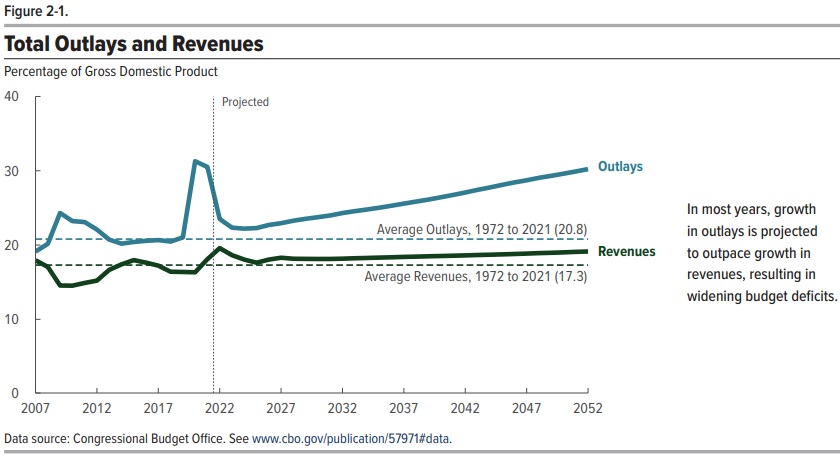
“The Power of the Market” episode of Free to Choose in 1990 by Milton Friedman (Part 4)

Milton Friedman The Power of the Market 4-5 How can we have personal freedom without economic freedom? That is why I don’t understand why socialists who value individual freedoms want to take away our economic freedoms.  I wanted to share this info below with you from Milton Friedman who has influenced me greatly over the […]
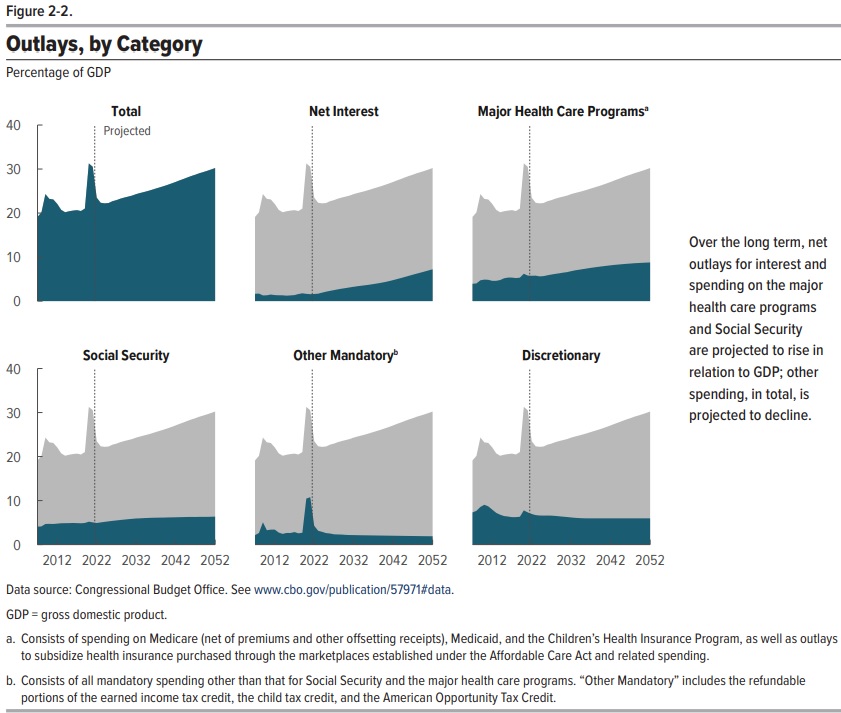
“The Power of the Market” episode of Free to Choose in 1990 by Milton Friedman (Part 3)

Milton Friedman The Power of the Market 3-5 How can we have personal freedom without economic freedom? That is why I don’t understand why socialists who value individual freedoms want to take away our economic freedoms.  I wanted to share this info below with you from Milton Friedman who has influenced me greatly over the […]
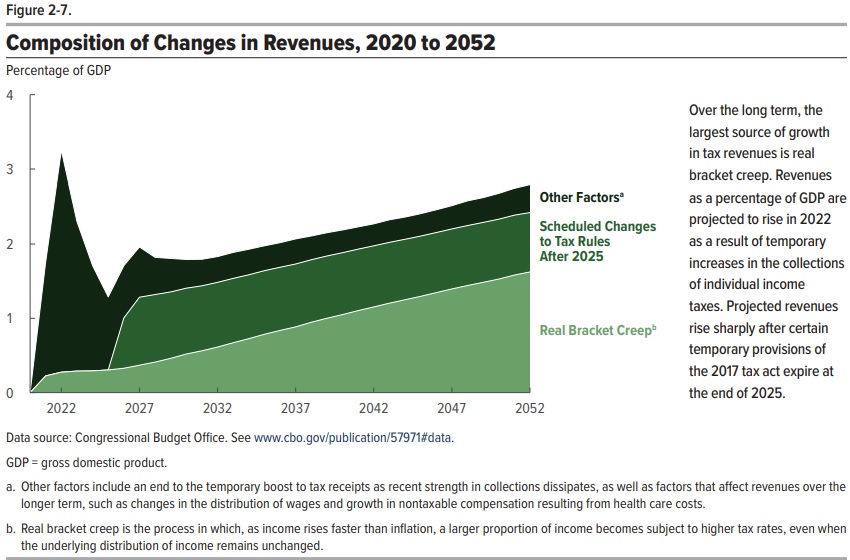
“The Power of the Market” episode of Free to Choose in 1990 by Milton Friedman (Part 2)

Milton Friedman The Power of the Market 2-5 How can we have personal freedom without economic freedom? That is why I don’t understand why socialists who value individual freedoms want to take away our economic freedoms.  I wanted to share this info below with you from Milton Friedman who has influenced me greatly over the […]
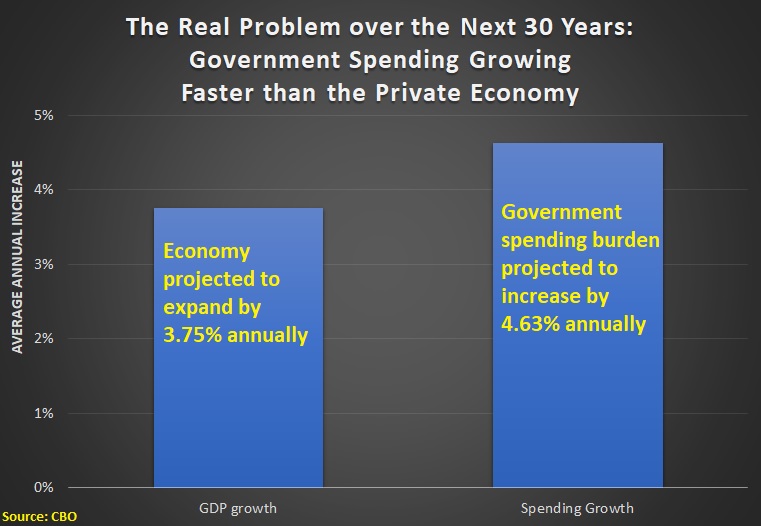
“The Power of the Market” episode of Free to Choose in 1990 by Milton Friedman (Part 1)

Milton Friedman The Power of the Market 1-5 How can we have personal freedom without economic freedom? That is why I don’t understand why socialists who value individual freedoms want to take away our economic freedoms.  I wanted to share this info below with you from Milton Friedman who has influenced me greatly over the […]

Washington is lecturing us about eating too much when they are spending addicts!!!!

Washington is lecturing us about eating too much when they are spending addicts!!!! Let’s Fix the Real Obesity Problem in Washington May 11, 2013 by Dan Mitchell Whenever someone proposes that we need more intervention from the federal government, I always go to the Constitution and check Article I, Section VIII. This is because I’m old fashioned and […]

Dan Mitchell of the Cato Institute:HUD has to go!!!! (includes political cartoon)

You want a suggestion on how to cut the government then start at HUD. I would prefer to eliminate all of it. Here are Dan Mitchell’s thoughts below: Sequestration’s Impact on HUD: Just 358 More Days and Mission Accomplished March 12, 2013 by Dan Mitchell As part of my “Question of the Week” series, I had […]

Open letter to President Obama (Part 138 B)

Real Time with Bill Maher March 16 2012 – Alexandra Pelosi Interviews Welfare Recipients in NYC Published on Mar 18, 2012 by vclubscenedotcom Real Time with Bill Maher March 16 2012 – Alexandra Pelosi Interviews Welfare Recipients __________ President Obama c/o The White House 1600 Pennsylvania Avenue NW Washington, DC 20500 Dear Mr. President, I […]

Are conservatives generous or are liberals?

Real Time with Bill Maher March 16 2012 – Alexandra Pelosi Interviews Welfare Recipients in NYC Published on Mar 18, 2012 by vclubscenedotcom Real Time with Bill Maher March 16 2012 – Alexandra Pelosi Interviews Welfare Recipients __________ Liberals like the idea of the welfare state while conservatives suggest charity through private organizations serve the […]

Democrats lied about spending cuts in 1982 and 1990

Washington Could Learn a Lot from a Drug Addict What kind of intervention does Congress need to get it to spend with its spending addiction? Back in 1982 Reagan was promised $3 in cuts for every $1 in tax increases but the cuts never came. In 1990 Bush was promised 2 for 1 but they […]

Senator Pryor asks for Spending Cut Suggestions! Here are a few!(Part 1) (Al Green, Famous Arkansan)

  Senator Mark Pryor wants our ideas on how to cut federal spending. Take a look at this video clip below: Senator Pryor has asked us to send our ideas to him at cutspending@pryor.senate.gov and I have done so (at 4:04 pm CST on April 7th, 2011, and will continue to do so in the […]

When Clinton, Biden and Schumer Defended Marriage Against Ted Kennedy

—-

A.F. Branco for Jan 12, 2022


When Clinton, Biden and Schumer Defended Marriage Against Ted Kennedy

Terence Jeffrey  @TerryJeffrey / July 28, 2022

Former President Bill Clinton was one of several prominent Democrats to defend traditional marriage in 1996. Pictured: Clinton presents Empire Building Playbook on April 21 in New York City, New York. (Photo: John Lamparski/Getty Images)

COMMENTARY BY

Terence Jeffrey@TerryJeffrey

Terence P. Jeffrey is the editor in chief of CNSNews.com.

When Democratic Sen. Ted Kennedy of Massachusetts led the fight in 1996 to stop a federal law that would define marriage as the union of one man and one woman, he faced some prominent opponents in his own party.

They included then-Rep. Chuck Schumer of New York, then-Sen. Joe Biden of Delaware and then-President Bill Clinton.

The marriage issue came up that year because of a case working its way through the state courts in Hawaii. The issue there was whether the Hawaiian constitution protected a right to same-sex marriage.

If Hawaii’s Supreme Court were to rule that this was the case, the other 49 states could have been forced by Article IV, Section 1 of the Constitution to recognize those marriages. That section says: “Full faith and credit shall be given in each state to the public acts, records, and judicial proceedings of every other state. And the Congress may by general laws prescribe the manner in which such acts, records, and proceedings shall be proved, and the effect thereof.”

To stop a few state judges from effectively legalizing same-sex marriage nationwide, Republican Rep. Bob Barr of Georgia introduced the Defense of Marriage Act.

This bill was simple and straightforward. It would amend “the Federal judicial code to provide that no State, territory, or possession of the United States or Indian tribe shall be required to give effect to any marriage between persons of the same sex under the laws of any other such jurisdiction or to any right or claim arising from such relationship,” said its official congressional summary.

It would establish, said the summary, “a Federal definition of: (1) ‘marriage’ as only a legal union between one man and one woman as husband and wife; and (2) ‘spouse’ as only a person of the opposite sex who is a husband or wife.”

On July 9, 1996, the House Judiciary Committee submitted its report on the Defense of Marriage Act to the full House.

“The effort to redefine ‘marriage’ to extend to homosexual couples is a truly radical proposal that would fundamentally alter the institution of marriage,” said the committee’s report. “To understand why marriage should be preserved in its current form, one need only ask why it is that society recognizes the institution of marriage and grants married persons preferred legal status.”

“At bottom,” said the report, “civil society has an interest in maintaining and protecting the institution of heterosexual marriage because it has a deep and abiding interest in encouraging responsible procreation and child-rearing.

“Simply put,” it said, “government has an interest in marriage because it has an interest in children.”

Nor did the committee ignore the moral significance of the debate.

“Civil laws that permit only heterosexual marriage reflect and honor a collective moral judgment about human sexuality,” said the committee report.

“It is both inevitable and entirely appropriate that the law should reflect such moral judgments,” it said. “H.R. 3396 serves the government’s legitimate interest in protecting the traditional moral teachings reflected in heterosexual-only marriage laws.”

When the Defense of Marriage Act came up for a vote on the House floor on July 12, 1996, Democratic Rep. Bill Lipinski, who was from Chicago, argued for it.

“The issue of homosexual marriage is a major concern to many Americans, and I feel that the time has come for Congress to take a stand,” said Lipinski. “What we say today and how we vote on this bill (will) have both legal and moral ramifications for years to come. We cannot sit by and do nothing.”

“Marriage is the foundation of our society; families are built on it and values are passed on through it,” said Lipinski.

“Our Nation’s moral fabric is based on this sacred institution,” he said. “Homosexual marriages would destroy thousands of years of tradition which has upheld our society. Marriage has already been undermined by no-fault divorce, pregnancies out of wedlock, and sexual promiscuity. Allowing for gay marriages would be the final straw, it would devalue the love between a man and a woman and weaken us as a Nation.”

After Lipinski and others had expressed their views on the Defense of Marriage Act, the House voted 342-67 to approve it. The House Democratic caucus itself voted 118-65 in its favor.

One of those 118 Democrats voting for it was Schumer, who two years later would win a seat in the Senate.

When the Senate took up the Defense of Marriage Act on Sept. 10, 1996, Democratic Sen. Ted Kennedy of Massachusetts led the opposition.

“I oppose the so-called Defense of Marriage Act, and I regret that the Senate is allocating scarce time at the end of this Congress to consider this unconstitutional, unnecessary, and divisive legislation,” Kennedy said.

“We all know what is going on here,” said Kennedy. “I regard this bill as a mean-spirited form of Republican legislative gay-bashing cynically calculated to try to inflame the public 8 weeks before the November 5 election.”

“It is a cynical election year gimmick,” Kennedy said, “and it deserves to be rejected by all who deplore the intolerance and incivility that have come to dominate our national debate.”

Kennedy was unpersuasive. The Senate voted 85-14 to approve the act. One of the 85 who voted for it was Biden.

Clinton signed the bill at almost 1 a.m. on Saturday, Sept. 21, 1996. Then his reelection campaign began broadcasting a radio ad.

The Associated Press reported that “the Clinton campaign in its radio ad lists Clinton’s signing of the Defense of Marriage Act as evidence that ‘President Clinton has fought for our values and America is better for it.”

In the 2015 case of Obergefell v. Hodges, Justice Anthony Kennedy wrote an absurd 5-4 Supreme Court opinion arguing that the 14th Amendment, ratified in 1868, had created a constitutional right to same-sex marriage.

Fearing the Supreme Court might reverse this opinion and adopt the position that Clinton, Biden and Schumer held in 1996, the House last week voted 267-157 to approve the so-called Respect for Marriage Act.

It essentially repeals the Defense of Marriage Act, removing “provisions that define, for purposes of federal law, marriage as between a man and a woman” and “provisions that do not require states to recognize same-sex marriages from other states.”

It has now been sent to the Senate, whose Democratic leader is Schumer—and, who like Clinton and Biden, once acted to defend traditional marriage.

COPYRIGHT 2022 CREATORS.COM

The Daily Signal publishes a variety of perspectives. Nothing written here is to be construed as representing the views of The Heritage Foundation.

Have an opinion about this article? To sound off, please email letters@DailySignal.com and we’ll consider publishing your edited remarks in our regular “We Hear You” feature. Remember to include the url or headline of the article plus your name and town and/or state.

Want to keep up with the 24/7 news cycle? Want to know the most important stories of the day for conservatives? Need news you can trust? Subscribe to The Daily Signal’s email newsletter. Learn more >>

A Proclamation on Transgender Day Of Visibility, 2022

MARCH 30, 2022PRESIDENTIAL ACTIONS

BY THE PRESIDENT OF THE UNITED STATES OF AMERICA

A PROCLAMATION

In the past year, hundreds of anti-transgender bills in States were proposed across America, most of them targeting transgender kids.  The onslaught has continued this year.  These bills are wrong.  Efforts to criminalize supportive medical care for transgender kids, to ban transgender children from playing sports, and to outlaw discussing LGBTQI+ people in schools undermine their humanity and corrode our Nation’s values.  Studies have shown that these political attacks are damaging to the mental health and well-being of transgender youth, putting children and their families at greater risk of bullying and discrimination.

Transgenderism: Why Stop There?

Deroy Murdock  / April 01, 2022

 width=

LGBT activists rally on the steps of New York City Hall in support of transgender people on Oct. 24, 2018. (Photo: Drew Angerer/Getty Images)

COMMENTARY BY

Deroy Murdock

Deroy Murdock is a Manhattan-based Fox News contributor, a contributing editor with National Review Online, and a senior fellow with the London Center for Policy Research.

“Identifying” as someone who one is not has become all the rage. If you think you’re somebody you’re not, the whole world is expected to nod its collective head, if not stand up and cheer.

This is especially true for gender identity, as William “Lia” Thomas has demonstrated so vividly in collegiate swimming pools. Unheralded male swimmer William Thomas became NCAA champion female swimmer Lia Thomas—Shazam!—just by saying so.

What a cool magic trick.

Gone are the days when a guy had to put some skin in the game to pull this off. Or, more accurately, pull something off to get some skin out of the game; namely, his penis. The old carving-station requirement for gender transition has gone the way of the rotary telephone. Today, mere affirmations will suffice.

“Hey, I’m a girl!” And you are.

As Yogi Berra might say, if he were alive and not in shock: “Only in America.”

Since simple declarations of identity can change people more swiftly than scalpels, what’s next after the triumph of transgenderism?

Why not transnationalism?

Visualize Lupita Martinez. She lives in poverty in Honduras. The mean streets of Tegucigalpa keep her at wits’ end. A crime surge on public transportation is the last macaw that breaks the branch of her patience.

So, Martinez joins a caravan and heads north, to the U.S.-Mexican frontier.

When she comes face to face with a Border Patrol agent, Martinez says the magic words: “I identify as an American.”

“Welcome home, Lupita!” the federal agent says with a warm smile, as he waves this Honduran American citizen back where she belongs.

And why not transracialism?

Picture Ludwig Von Thannhausen, age 18. He lives in suburban Chicago with his native German parents who brought him to America as a baby. He has blond hair, blue eyes, and looks like a young man born in Oberpfaffenhofen who also happens to be white.

But Von Thannhausen can’t get enough of things black.

He is obsessed with the Harlem Renaissance. He knows the literature of Langston Hughes better than Johann Wolfgang von Goethe, the paintings of Aaron Douglas more than Max Ernst, and the music of Duke Ellington deeper than Richard Wagner.

His heroes stretch from Frederick Douglass to the Tuskegee Airmen to Denzel Washington. He listens to everything from Motown to Parliament Funkadelic to Prince to Kanye West.

He dreams of majoring in black studies at Howard University in Washington, D.C., a historically black college. In fact, he’s applying as a black student and seeks scholarships intended for black applicants.

Von Thannhausen resembles a recruit for the Aryan Nation, but he said the secret words: “I identify as black.”

Who are we to disagree? If that’s his identity, that’s his identity.

And if his good grades, decent SAT scores, and impressive baseball record land him a spot at Howard, plus a $50,000 minority scholarship, then who are we to say that he is not really black?

But what would we say to the kid who actually is black (you know: dark skin, dark hair, etc.), applies to Howard, and misses out on admission, a scholarship, or both? If not for Von Thannhausen, those blessings would be hers.

Why not transindividualism?

Imagine that Bob Glenwood has multiple-personality disorder. He identifies as Bob Glenwood, but also as Steve Jones, Myron Shapiro, Jackie Washington, and Concepcion Gomez.

So, he fills out five voter registration applications and requests five absentee ballots.

Who are we to say that Glenwood deserves just one ballot? How dare we disenfranchise the other four people who live inside his brain? That would be Jim Crow 3.0.

As these (for now) fictional scenarios show, America will plunge into ever deeper chaos if we simply let people “identify” as those they are not and then deprive others of goods and benefits meant for people who legitimately embody those identities.

I identify as Walter Cronkite, and that’s the way it is.

The Daily Signal publishes a variety of perspectives. Nothing written here is to be construed as representing the views of The Heritage Foundation.

Have an opinion about this article? To sound off, please email letters@DailySignal.com and we’ll consider publishing your edited remarks in our regular “We Hear You” feature. Remember to include the url or headline of the article plus your name and town and/or state.

SOCIETYNEWS

The Equal Rights of Female Athletes Are Being Infringed’: Women’s Group Files Civil Rights Complaint Over Transgender Swimmer

Maggie Hroncich  / March 18, 2022

 width=

Female swimmers (from left) Emma Weyant, Erica Sullivan, and Brooke Forde place behind Lia Thomas (left), the biologically male transgender swimmer who won the NCAA Division 1 women’s 500-yard freestyle on Thursday. (Photo: Justin Casterline/Getty Images)

Concerned Women for America filed a formal civil rights complaint against the University of Pennsylvania on Thursday, contending the school is violating Title IX requirements designed to protect the rights of female student athletes. 

The complaint came the same day transgender University of Pennsylvania swimmer Lia Thomas, a biological male, won the 500-yard freestyle at the NCAA’s Division 1 Women’s Swimming and Diving Championships in Atlanta. Thomas is set to compete in the 100-yard and 200-yard freestyles today and tomorrow.

Thomas, who had previously competed on the men’s team, has been dominating women’s competitions and shattering records since switching to the women’s team in 2020.

“Thomas is anatomically and biologically a male with physical capacities that are different from anatomically and biologically female athletes, which extends an unfair advantage and strips female student athletes of opportunities afforded to them by law,” according to a statement from Concerned Women for America, a Christian conservative public policy organization. 

The complaint cites federal Title IX requirements for schools to provide equal educational opportunities, including in athletics, to receive federal funding. 

The future of women’s sports is at risk, and the equal rights of female athletes are being infringed,” said Penny Nance, CEO and president of Concerned Women for America. “Any school that defies federal civil rights law by denying women equal opportunities in athletic programs, forcing women to compete against athletes who are biologically male, must be held accountable.”

Jay Richards, a senior research fellow at The Heritage Foundation’s DeVos Center for Religion and Civil Society, expressed support for Concerned Women for America’s complaint against the University of Pennsylvania. (The Daily Signal is the news outlet of The Heritage Foundation.)

“The case of Lia (formerly Will) Thomas at the University of Pennsylvania is a highly visible example of how gender ideology is already wreaking havoc in our schools,” Richards said. “And it’s clearly a violation of the spirit and letter of Title IX. I just hope that courts have the courage to recognize that. If justice is to be served, then CWA should prevail.” 

Before I show the clip from AFTER LIFE let me show you how inconsistent humanists can be with this article below. Humanist claim to be the biggest supporters of women’s rights!!

A.F. Branco for Jan 12, 2022

By Canceling Richard Dawkins, the American Humanist Association Has Betrayed Its Values

The drive to punish dissenters from various orthodoxies is itself illiberal.

ROBBY SOAVE | 4.26.2021 1:00 PM

zumaamericastwentyone381050

(Katja Ogrin/Empics Entertainment/ZUMA Press/Newscom)

Last week, the American Humanist Association (AHA) stripped British author Richard Dawkins of his 1996 Humanist of the Year award after he made a comment on Twitter that offended some in the transgender community.

“Regrettably, Richard Dawkins has over the past several years accumulated a history of making statements that use the guise of scientific discourse to demean marginalized groups, an approach antithetical to humanist values,” said the AHA. “His latest statement implies that the identities of transgender individuals are fraudulent, while also simultaneously attacking Black identity as one that can be assumed when convenient.”

This is nonsense: Dawkins had raised a point that it is perfectly worthy of discussion, in accordance with the rationalist philosophy of the humanist movement. But it would also have been ridiculous for the organization to punish Dawkins even if the remark had been offensive, given that many of its past awardees have espoused controversial views, and even said insensitive things on Twitter.

Here was Dawkins’ tweet, which concerned Rachel Dolezal, a chapter president of the NAACP who engendered controversy for identifying as black even though she was a white woman:

If it’s disqualifying to express confusion about progressives’ simultaneous embrace of transgender people and vehement rejection of transracial people, I suppose that I will never win a Humanist of the Year award. I wrote the following in my 2019 book, Panic Attack: Young Radicals in the Age of Trump:

If we accept, as many on the left do, that people can identify as female even though they were born male, why is it unthinkable for people to identify as black when they were born white? How can the left embrace transgender people without even considering the possibility that there could be transracial people? (Race, after all, is more obviously socially constructed than gender. While our conception of gender is at least partly based on biological differences between the sexes, the same is not true for race.)

The point is not to demean transgender people, but to question why people like Dolezal instantly warranted pariah status. Dawkins subsequently clarified that it was not his intention “to ally in any way with Republican bigots in US now exploiting this issue.”

But according to the AHA, this clarification evinced “neither sensitivity nor sincerity.” Dawkins’ name is no longer listed on the website’s awardees page.

Perusing this page reveals something interesting: There are far more controversial past winners than Dawkins. The AHA gave Humanist of the Year awards to the author and activist Alice Walker—who promoted anti-Semitic conspiracy theories—and also to Margaret Sanger, the founder of Planned Parenthood who promoted eugenics and white supremacy. Sanger’s legacy is so complicated that her own organization is currently disowning her.

The AHA has also given lesser awards to several individuals with a history of provocative statements and bad tweets: Jessica ValentiCenk Uygur, and others. To be clear, the AHA is within its rights to give or rescind awards to anyone it wishes, for any reason. But people who support the organization’s mission have the same right to criticize it for hypocrisy.

Two such critics are Rebecca Goldstein and Steven Pinker, who won the Humanist of the Year award in 2011 and 2006, respectively. Goldstein and Pinker wrote an open letter to the AHA calling on it to reverse course:

Dawkins did not call for discrimination against or marginalization of any individual or group. And he explicitly denied any intention to disparage anyone or to lend support to transphobic or racist political movements.  Now, it would still be completely appropriate for those of you who objected to the substance of his tweets to criticize them in The Humanist or other forums, explaining the nature of their objections. But to seek to punish, dishonor, or humiliate a writer rather than engage with his words is a betrayal of humanism.

The Humanist Manifesto III declares that “the lifestance of humanism [is] guided by reason.” Since no one is infallible, reason requires that a diverse range of ideas be expressed and debated openly, including ones that some people find unfamiliar or uncomfortable. To demonize a writer rather than address the writer’s arguments is a confession that one has no rational response to them.

This illiberal response is all the more damaging to an organization that claims to repudiate the repressive practices of religion. It has not been lost on commentators that an association of “freethinkers” has deemed certain thoughts unthinkable, nor that it is enforcing dogmas and catechisms by excommunicating a heretic. The AHA is turning itself into a laughingstock.

Goldstein and Pinker are quite right. The AHA’s own values require tolerance of difficult conversations around public policy subjects, rather than a knee-jerk drive to punish dissenters from orthodoxies.

—-


After Life #1 Trailer

—-

I listened to this question and answer session at Harvard in 1992 on cassette tapes and was captivated with Ravi Zacharias. His responses were so much better than Kath’s responses to Tony in AFTER LIFE. I have referenced work by Ravi many times in the past and Especially moving was Ravi’s own spiritual search which started in a hospital bed after a failed suicide attempt. I also want you to check out his talk at Princeton and the question and answer time afterwards which are both on YOU TUBEat these two links: Link for talk, Link for Q/A.

After Life 2 Trailer

On Saturday April 18, 2020 at 6pm in London and noon in Arkansas, I had a chance to ask Ricky Gervais a question on his Twitter Live broadcast which was  “Is Tony a Nihilist?” At the 20:51 mark Ricky answers my question. Below is the video:

—-

—-

If Death is the end then what is the point Kath asks below:

——

Francis Schaeffer passed away on May 15, 1984 and on the 10th anniversary of that date I wrote many skeptics such as Carl Sagan and corresponded with them on the big questions covered by the Book of Ecclesiastes.

Kath: You are an atheist?

—-

Adrian Rogers on Evolution

—-
Ravi Zacharias  (March 26, 1946 – May 19, 2020) 

Francis Schaeffer (January 30, 1912 – May 15, 1984[1]

Francis Schaeffer.jpg


I grew up at Bellevue Baptist Church under the leadership of our pastor Adrian Rogers and I read many books by the Evangelical Philosopher Francis Schaeffer and in 1992 I heard cassette tapes of Ravi Zacharias in all his brilliance in his sessions at Harvard and have had the opportunity to contact many of the evolutionists or humanistic academics that they have mentioned in their works. Many of these scholars have taken the time to respond back to me in the last 20 years and some of the names  included are  Ernest Mayr (1904-2005), George Wald (1906-1997), Carl Sagan (1934-1996),  Robert Shapiro (1935-2011), Nicolaas Bloembergen (1920-),  Brian Charlesworth (1945-),  Francisco J. Ayala (1934-) Elliott Sober (1948-), Kevin Padian (1951-), Matt Cartmill (1943-) , Milton Fingerman (1928-), John J. Shea (1969-), , Michael A. Crawford (1938-), Paul Kurtz (1925-2012), Sol Gordon (1923-2008), Albert Ellis (1913-2007), Barbara Marie Tabler (1915-1996), Renate Vambery (1916-2005), Archie J. Bahm (1907-1996), Aron S “Gil” Martin ( 1910-1997), Matthew I. Spetter (1921-2012), H. J. Eysenck (1916-1997), Robert L. Erdmann (1929-2006), Mary Morain (1911-1999), Lloyd Morain (1917-2010),  Warren Allen Smith (1921-), Bette Chambers (1930-),  Gordon Stein (1941-1996) , Milton Friedman (1912-2006), John Hospers (1918-2011), Michael Martin (1932-).Harry Kroto (1939-), Marty E. Martin (1928-), Richard Rubenstein (1924-), James Terry McCollum (1936-), Edward O. WIlson (1929-), Lewis Wolpert (1929), Gerald Holton(1922-), Martin Rees (1942-), Alan Macfarlane (1941-),  Roald Hoffmann (1937-), Herbert Kroemer (1928-), Thomas H. Jukes(1906-1999) and  Ray T. Cragun (1976-).

 Adrian Rogers (September 12, 1931 – November 15, 2005) 

Adrian Rogers.jpg

Charles Darwin Autobiography


Francis Schaeffer “The Age of NONREASON”

——-

—-

(Above) Tony and Anne on the bench at the graveyard where their spouses are buried.

July 9, 2020 
Ricky Gervais 


Dear Ricky,  

This is the 83rd day in a row that I have written another open letter to you to comment on some of your episodes of AFTER LIFE, and then I wanted to pass along some evidence that indicates the Bible is historically accurate from Francis Schaeffer and Dr. C. Everett Koop Book WHATEVER HAPPENED TO THE HUMAN RACE?

In the 6th episode of the second season of AFTERLIFE Tony and Lenny interview a 50 year old person who pretends to be a 8 year old little girl when everyone in his family knows this person has been around for 50 years. 

Just pretending something is true does not make it true. This was true too for Jean Paul Sartre. The atheist Sartre said that this Godless universe has no meaning but “Let’s pretend the universe has meaning.” But this is just fooling ourselves. 

Let me share a portion of an article by William Lane Craig with you.

The Absurdity of Life without God

William Lane Craig

SUMMARY

Why on atheism life has no ultimate meaning, value, or purpose, and why this view is unlivable.

Francis Schaeffer has explained this point well. Modern man, says Schaeffer, resides in a two-story universe. In the lower story is the finite world without God; here life is absurd, as we have seen. In the upper story are meaning, value, and purpose. Now modern man lives in the lower story because he believes there is no God. But he cannot live happily in such an absurd world; therefore, he continually makes leaps of faith into the upper story to affirm meaning, value, and purpose, even though he has no right to, since he does not believe in God.

Let’s look again, then, at each of the three areas in which we saw life was absurd without God, to show how man cannot live consistently and happily with his atheism.

Meaning of Life

First, the area of meaning. We saw that without God, life has no meaning. Yet philosophers continue to live as though life does have meaning. For example, Sartre argued that one may create meaning for his life by freely choosing to follow a certain course of action. Sartre himself chose Marxism.

Now this is utterly inconsistent. It is inconsistent to say life is objectively absurd and then to say one may create meaning for his life. If life is really absurd, then man is trapped in the lower story. To try to create meaning in life represents a leap to the upper story. But Sartre has no basis for this leap. Without God, there can be no objective meaning in life. Sartre’s program is actually an exercise in self-delusion. Sartre is really saying, “Let’s pretend the universe has meaning.” And this is just fooling ourselves.

The point is this: if God does not exist, then life is objectively meaningless; but man cannot live consistently and happily knowing that life is meaningless; so in order to be happy he pretends life has meaning. But this is, of course, entirely inconsistent—for without God, man and the universe are without any real significance.

Value of Life

Turn now to the problem of value. Here is where the most blatant inconsistencies occur. First of all, atheistic humanists are totally inconsistent in affirming the traditional values of love and brotherhood. Camus has been rightly criticized for inconsistently holding both to the absurdity of life and the ethics of human love and brotherhood. The two are logically incompatible. Bertrand Russell, too, was inconsistent. For though he was an atheist, he was an outspoken social critic, denouncing war and restrictions on sexual freedom. Russell admitted that he could not live as though ethical values were simply a matter of personal taste, and that he therefore found his own views “incredible.” “I do not know the solution,” he confessed.” [7] The point is that if there is no God, then objective right and wrong cannot exist. As Dostoyevsky said, “All things are permitted.”

But Dostoyevsky also showed that man cannot live this way. He cannot live as though it is perfectly all right for soldiers to slaughter innocent children. He cannot live as though it is all right for dictators like Pol Pot to exterminate millions of their own countrymen. Everything in him cries out to say these acts are wrong—really wrong. But if there is no God, he cannot. So he makes a leap of faith and affirms values anyway. And when he does so, he reveals the inadequacy of a world without God.

The horror of a world devoid of value was brought home to me with new intensity a few years ago as I viewed a BBC television documentary called “The Gathering.” It concerned the reunion of survivors of the Holocaust in Jerusalem, where they rediscovered lost friendships and shared their experiences. One woman prisoner, a nurse, told of how she was made the gynecologist at Auschwitz. She observed that pregnant women were grouped together by the soldiers under the direction of Dr. Mengele and housed in the same barracks. Some time passed, and she noted that she no longer saw any of these women. She made inquiries. “Where are the pregnant women who were housed in that barracks?” “Haven’t you heard?” came the reply. “Dr. Mengele used them for vivisection.”

Another woman told of how Mengele had bound up her breasts so that she could not suckle her infant. The doctor wanted to learn how long an infant could survive without nourishment. Desperately this poor woman tried to keep her baby alive by giving it pieces of bread soaked in coffee, but to no avail. Each day the baby lost weight, a fact that was eagerly monitored by Dr. Mengele. A nurse then came secretly to this woman and told her, “I have arranged a way for you to get out of here, but you cannot take your baby with you. I have brought a morphine injection that you can give to your child to end its life.” When the woman protested, the nurse was insistent: “Look, your baby is going to die anyway. At least save yourself.” And so this mother took the life of her own baby. Dr. Mengele was furious when he learned of it because he had lost his experimental specimen, and he searched among the dead to find the baby’s discarded corpse so that he could have one last weighing.

My heart was torn by these stories. One rabbi who survived the camp summed it up well when he said that at Auschwitz it was as though there existed a world in which all the Ten Commandments were reversed. Mankind had never seen such a hell.

And yet, if God does not exist, then in a sense, our world is Auschwitz: there is no absolute right and wrong; all things are permitted. But no atheist, no agnostic, can live consistently with such a view. Nietzsche himself, who proclaimed the necessity of living beyond good and evil, broke with his mentor Richard Wagner precisely over the issue of the composer’s anti-Semitism and strident German nationalism. Similarly Sartre, writing in the aftermath of the Second World War, condemned anti-Semitism, declaring that a doctrine that leads to extermination is not merely an opinion or matter of personal taste, of equal value with its opposite. [8] In his important essay “Existentialism Is a Humanism,” Sartre struggles vainly to elude the contradiction between his denial of divinely pre-established values and his urgent desire to affirm the value of human persons. Like Russell, he could not live with the implications of his own denial of ethical absolutes.

A second problem is that if God does not exist and there is no immortality, then all the evil acts of men go unpunished and all the sacrifices of good men go unrewarded. But who can live with such a view? Richard Wurmbrand, who has been tortured for his faith in communist prisons, says,

The cruelty of atheism is hard to believe when man has no faith in the reward of good or the punishment of evil. There is no reason to be human. There is no restraint from the depths of evil which is in man. The communist torturers often said, ‘There is no God, no Hereafter, no punishment for evil. We can do what we wish.’ I have heard one torturer even say, ‘I thank God, in whom I don’t believe, that I have lived to this hour when I can express all the evil in my heart.’ He expressed it in unbelievable brutality and torture inflicted on prisoners. [9]

And the same applies to acts of self-sacrifice. A number of years ago, a terrible mid-winter air disaster occurred in which a plane leaving the Washington, D.C., airport smashed into a bridge spanning the Potomac River, plunging its passengers into the icy waters. As the rescue helicopters came, attention was focused on one man who again and again pushed the dangling rope ladder to other passengers rather than be pulled to safety himself. Six times he passed the ladder by. When they came again, he was gone. He had freely given his life that others might live. The whole nation turned its eyes to this man in respect and admiration for the selfless and good act he had performed. And yet, if the atheist is right, that man was not noble—he did the stupidest thing possible. He should have gone for the ladder first, pushed others away if necessary in order to survive. But to die for others he did not even know, to give up all the brief existence he would ever have—what for? For the atheist there can be no reason. And yet the atheist, like the rest of us, instinctively reacts with praise for this man’s selfless action. Indeed, one will probably never find an atheist who lives consistently with his system. For a universe without moral accountability and devoid of value is unimaginably terrible.

The Success of Biblical Christianity

But if atheism fails in this regard, what about biblical Christianity? According to the Christian world view, God does exist, and man’s life does not end at the grave. In the resurrection body man may enjoy eternal life and fellowship with God. Biblical Christianity therefore provides the two conditions necessary for a meaningful, valuable, and purposeful life for man: God and immortality. Because of this, we can live consistently and happily. Thus, biblical Christianity succeeds precisely where atheism breaks down.

Conclusion

Now I want to make it clear that I have not yet shown biblical Christianity to be true. But what I have done is clearly spell out the alternatives. If God does not exist, then life is futile. If the God of the Bible does exist, then life is meaningful. Only the second of these two alternatives enables us to live happily and consistently. Therefore, it seems to me that even if the evidence for these two options were absolutely equal, a rational person ought to choose biblical Christianity. It seems to me positively irrational to prefer death, futility, and destruction to life, meaningfulness, and happiness. As Pascal said, we have nothing to lose and infinity to gain.

  • [1]Kai Nielsen, “Why Should I Be Moral?” American Philosophical Quarterly 21 (1984): 90.
  • [2]Richard Taylor, Ethics, Faith, and Reason (Englewood Cliffs, NJ: Prentice Hall, 1985), 90, 84.
  • [3]H.G. Wells, The Time Machine (New York: Berkeley, 1957), chap. 11.
  • [4]W.E. Hocking, Types of Philosophy (New York: Scribner’s, 1959), 27.
  • [5]Friedrich Nietzsche, “The Gay Science,” in The Portable Nietzsche, ed. and trans. W. Kaufmann (New York: Viking, 1954), 95.
  • [6]Bertrand Russell, “A Free Man’s Worship,” in Why I Am Not a Christian, ed. P. Edwards (New York: Simon & Schuster, 1957), 107.
  • [7]Bertrand Russell, Letter to the Observer, 6 October, 1957.
  • [8]Jean Paul Sartre, “Portrait of the Antisemite,” in Existentialism from Dostoyevsky to Satre, rev. ed., ed. Walter Kaufmann (New York: New Meridian Library, 1975), p. 330.
  • [9]Richard Wurmbrand, Tortured for Christ (London: Hodder & Stoughton, 1967), 34.
  • [10]Ernst Bloch, Das Prinzip Hoffnung, 2d ed., 2 vols. (Frankfurt am Main: Suhrkamp Verlag, 1959), 2:360-1.
  • [11]Loyal D. Rue, “The Saving Grace of Noble Lies,” address to the American Academy for the Advancement of Science, February, 1991.

—-

This reminds me of an illustration from Francis Schaeffer of what existentialism means: 

When we speak of irrationalism or existentialism or the existential methodology, we are pointing to a quite simple idea. It may have been expressed in a variety of complicated ways by philosophers, but it is not a difficult concept.
Imagine that you are at the movies watching a suspense film. As the story unfolds, the tension increases until finally the hero is trapped in some impossible situation and everyone is groaning inwardly, wondering how he is going to get out of the mess. The suspense is heightened by the knowledge (of the audience, not the hero) that help is on the way in the form of the good guys. The only question is: will the good guys arrive in time?
Now imagine for a moment that the audience is slipped the information that there are no good guys, that the situation of the hero is not just desperate, but completely hopeless. Obviously, the first thing that would happen is that the suspense would be gone. You and the entire audience would simply be waiting for the axe to fall.
If the hero faced the end with courage, this would be morally edifying, but the situation itself would be tragic. If, however, the hero acted as if help were around the corner and kept buoying himself up with this thought (“Someone is on the way!” – “Help is at hand!”), all you could feel for him would be pity. It would be a means to keep hope alive within a hopeless situation. The hero’s hope would change nothing on the outside; it would be unable to manufacture, out of nothing, good guys coming to the rescue. All it would achieve would the hero’s own mental state of hopefulness rather than hopelessness.
The hopefulness itself would rest on a lie or an illusion and thus, viewed objectively, would be finally absurd. And if the hero really knew what the situation was, but consciously used the falsehood to buoy up his feelings and go whistling along, we would either say, “Poor guy!” or “He’s a fool.” It is this kind of conscious deceit that someone like Woody Allen has looked full in the face and will have none of.
Now this is what the existential methodology is about. If the universe we are living in is what the materialistic humanists say it is, then with our reason (when we stop to think about it) we could find absolutely no way to have meaning or morality or hope or beauty. This would plunge us into despair. We would have to take seriously the challenge of Albert Camus (1913-1960) in the first sentence of The Myth of Sisyphus: “There is but one truly serious philosophical problem, and that is suicide.”92 Why stay alive in an absurd universe? Ah! But that is not where we stop. We say to ourselves – “There is hope!” (even though there is no help). “We shall overcome!” (even though nothing is more certain than that we shall be destroyed, both individually at death and cosmically with the end of all conscious life). This is what confronts us on all sides today: the modern irrationalism.

Francis Schaeffer has correctly argued:

The universe was created by an infinite personal God and He brought it into existence by spoken word and made man in His own image. When man tries to reduce [philosophically in a materialistic point of view] himself to less than this [less than being made in the image of God] he will always fail and he will always be willing to make these impossible leaps into the area of nonreason even though they don’t give an answer simply because that isn’t what he is. He himself testifies that this infinite personal God, the God of the Old and New Testament is there. 

Instead of making a leap into the area of nonreason the better choice would be to investigate the claims that the Bible is a historically accurate book and that God created the universe and reached out to humankind with the Bible. Below is a piece of that evidence given by Francis Schaeffer concerning the accuracy of the Bible.

TRUTH AND HISTORY (chapter 5 of WHATEVER HAPPENED TO THE HUMAN RACE?)

We now take a jump back in time to the middle of the ninth century before Christ, that is, about 850 B.C. Most people have heard of Jezebel. She was the wife of Ahab, the king of the northern kingdom of Israel. Her wickedness has become so proverbial that we talk about someone as a “Jezebel.” She urged her husband to have Naboth killed, simply because Ahab had expressed his liking for a piece of land owned by Naboth, who would not sell it. The Bible tells us also that she introduced into Israel the worship of her homeland, the Baal worship of Tyre. This led to the opposition of Elijah the Prophet and to the famous conflict on Mount Carmel between Elijah and the priests of Baal.

Here again one finds archaeological confirmations of what the Bible says. Take for example: “As for the other events of Ahab’s reign, including all he did, the palace he built and inlaid with ivory, and the cities he fortified, are they not written in the book of the annals of the kings of Israel?” (I Kings 22:39).

This is a very brief reference in the Bible to events which must have taken a long time: building projects which probably spanned decades. Archaeological excavations at the site of Samaria, the capital, reveal something of the former splendor of the royal citadel. Remnants of the “ivory house” were found and attracted special attention (Palestinian Archaeological Museum, Jerusalem). This appears to have been a treasure pavilion in which the walls and furnishings had been adorned with colored ivory work set with inlays giving a brilliant too, with the denunciations revealed by the prophet Amos:

“I will tear down the winter house along with the summer house; the houses adorned with ivory will be destroyed and the mansions will be demolished,” declares the Lord. (Amos 3:15)

Other archaeological confirmation exists for the time of Ahab. Excavations at Hazor and Megiddo have given evidence of the the extent of fortifications carried out by Ahab. At Megiddo, in particular, Ahab’s works were very extensive including a large series of stables formerly assigned to Solomon’s time.

On the political front, Ahab had to contend with danger from the Aramacaus king of Syria who besieged Samaria, Ahab’s capital. Ben-hadad’s existence is attested by a stela (a column with writing on it) which has been discovered with his name written on it (Melquart Stela, Aleppo Museum, Syria). Again, a detail of history given in the Bible is shown to be correct.

This brings me to the message of Solomon in ECCLESIASTES and below are comments by Francis Schaeffer:

Ecclesiastes 9:7-12

Go, eat your bread with joy, and drink your wine with a merry heart, for God has already approved what you do.

Let your garments be always white. Let not oil be lacking on your head.

Enjoy life with the wife whom you love, (DOES IT SOUND OPTIMISTIC? NOW COMES THE BACKLASH) all the days of your vain life that he has given you under the sun, because that is your portion in life and in your toil at which you toil under the sun. 10 Whatever your hand finds to do, do it with your might, for there is no work or thought or knowledge or wisdom in Sheol, to which you are going.

11 Again I saw that under the sun the race is not to the swift, nor the battle to the strong, nor bread to the wise, nor riches to the intelligent, nor favor to those with knowledge, but time and chance happen to them all. 12 For man does not know his time. Like fish that are taken in an evil net, and like birds that are caught in a snare, so the children of man are snared at an evil time, when it suddenly falls upon them.

Solomon when at work takes off his hat and he stands by the grave of man and he says, “ALAS. ALAS. ALAS.”

But interestingly enough the story of Ecclesiastes does not end its message here because in two places in the New Testament it is picked up and carried along and put in its proper perspective.

Luke 12:16-21

16 And he told them a parable, saying, “The land of a rich man produced plentifully, 17 and he thought to himself, ‘What shall I do, for I have nowhere to store my crops?’ 18 And he said, ‘I will do this: I will tear down my barns and build larger ones, and there I will store all my grain and my goods. 19 And I will say to my soul, “Soul, you have ample goods laid up for many years; relax,eat, drink, be merry.”’ [ALMOST EVERYONE WHO HAS PROCEEDED HERE HAS FELT CERTAINLY THAT JESUS IS DELIBERATELY REFERRING TO SOLOMON’S SOLUTION.]20 But God said to him, ‘Fool! This night your soul is required of you, and the things you have prepared, whose will they be?’ 21 So is the one who lays up treasure for himself and is not rich toward God.”

Christ here points out the reason for the failure of the logic that is involved. He points out why it fails in logic and then why it fails in reality. This view of Solomon must end in failure philosophically and also in emotional desperation.

We are not made to live in the shortened environment of UNDER THE SUN in this life only!!! Neither are we made to live only in the environment of a bare concept of afterlife [ignoring trying to make this life better]. We are made to live in the environment of a God who exists and who is the judge. This is the difference and that is what Jesus is setting forth here.

I Corinthians 15:32

32 What do I gain if, humanly speaking, I fought with beasts at Ephesus? If the dead are not raised, “Let us eat and drink, for tomorrow we die.

There is no doubt here he is reaching back to Solomon again and he is just saying if there isn’t a resurrection of the dead then let’s just follow Solomon and let’s just eat and drink for tomorrow we die!!!! If there isn’t this full structure [including the resurrection of the dead] then just have the courage to follow Solomon and we can eat and drink because tomorrow we die and that is all we have. If the full structure isn’t there then pick up the cup and drink it dry! You can say it a different way in the 20th century: If the full structure is not there then go ahead and be an EXISTENTIALIST, but don’t cheat. Drink the cup to the end. Drink it dry! That is what Paul says. Paul  the educated man. Paul the man who knew his Greek philosophy. Paul the man who understood Solomon and the dilemma. Paul said it one way or the other. There is no room for a middle ground. IF CHRISTIANS AREN’T RAISED FROM THE DEAD THEN SOLOMON IS RIGHT IN ECCLESIASTES, BUT ONLY THEN. But if he is right then you should accept all of Solomon’s despair and his conclusions. 


The answer to find meaning in life is found in putting your faith and trust in Jesus Christ. The Bible is true from cover to cover and can be trusted.

Thank you again for your time and I know how busy you are.

Sincerely,

Everette Hatcher, everettehatcher@gmail.comhttp://www.thedailyhatch.org, cell ph 501-920-5733, 13900 Cottontail Lane, Alexander, AR 72002

PS: What is the meaning of life? Find it in the end of the open letter I wrote to you on April 23, 2020. 

Below is the workforce of THE TAMBURY GAZETTE 

Seen below is the third episode of AFTERLIFE (season 1) when Matt takes Tony to a comedy club with front row seats to cheer him up but it turns into disaster!!!

——

—-

Part 1 “Why have integrity in Godless Darwinian Universe where Might makes Right?”

Part 2 “My April 14, 2016 Letter to Ricky mentioned Book of Ecclesiastes and the Meaninglessness of Life”

Part 3 Letter about Brandon Burlsworth concerning suffering and pain and evil in the world.  “Why didn’t Jesus save her [from cancer]?” (Tony’s 10 year old nephew George in episode 2)

Part 4 Letter on Solomon on Death Tony in episode one, “It should be everyone’s moral duty to kill themselves.”

Part 5 Letter on subject of Learning in Ecclesiastes “I don’t read books of fiction but mainly science and philosophy”

Part 6 Letter on Luxuries in Ecclesiastes Part 6, The Music of AFTERLIFE (Part A)

Part 7 Letter on Labor in Ecclesiastes My Letter to Ricky on Easter in 2017 concerning Book of Ecclesiastes and the legacy of a person’s life work

Part 8 Letter on Liquor in Ecclesiastes Tony’s late wife Lisa told him, “Don’t get drunk all the time alright? It will only make you feel worse in the log run!”

Part 9 Letter on Laughter in Ecclesiastes , I said of laughter, “It is foolishness;” and of mirth, “What does it accomplish?” Ecclesiastes 2:2

Part 10 Final letter to Ricky on Ladies in Ecclesiastes “I gathered a chorus of singers to entertain me with song, and—most exquisite of all pleasures— voluptuous maidens for my bed…behold, all was vanity and a striving after wind, and there was nothing to be gained under the sun” Ecclesiastes 2:8-11.

Part 11 Letter about Daniel Stanhope and optimistic humanism  “If man has been kicked up out of that which is only impersonal by chance , then those things that make him man-hope of purpose and significance, love, motions of morality and rationality, beauty and verbal communication-are ultimately unfulfillable and thus meaningless.” (Francis Schaeffer)

Part 12 Letter on how pursuit of God is only way to get Satisfaction Dan Jarrell “[In Ecclesiastes] if one seeks satisfaction they will never find it. In fact, every pleasure will be fleeting and can not be sustained, BUT IF ONE SEEKS GOD THEN ONE FINDS SATISFACTION”

Part 13 Letter to Stephen Hawking on Solomon realizing he will die just as a dog will die “For men and animals both breathe the same air, and both die. So mankind has no real advantage over the beasts; what an absurdity!” Ecclesiastes

Part 14 Letter to Stephen Hawking on 3 conclusions of humanism and Bertrand Russell destruction of optimistic humanism. “That Man is the product of causes which had no prevision of the end they were achieving; that his origin, his growth, his hopes and fears, his loves and his beliefs, are but the outcome of accidental collocations of atoms—no philosophy which rejects them can hope to stand. Only within the scaffolding of these truths, only on the firm foundation of unyielding despair, can the soul’s habitation henceforth be safely built.”(Bertrand Russell, Free Man’s Worship)

Part 15 Letter to Stephen Hawking on Leonardo da Vinci and Solomon and Meaningless of life “I hate life. As far as I can see, what happens on earth is a bad business. It’s smoke—and spitting into the wind” Ecclesiastes Book of Ecclesiastes Part 15 “I hate life. As far as I can see, what happens on earth is a bad business. It’s smoke—and spitting into the wind” Ecclesiastes 2:17

Part 16 Letter to Stephen Hawking on Solomon’s longing for death but still fear of death and 5 conclusions of humanism on life UNDER THE SUN. Francis Schaeffer “Life is just a series of continual and unending cycles and man is stuck in the middle of the cycle. Youth, old age, Death. Does Solomon at this point embrace nihilism? Yes!!! He exclaims that the hates life (Ecclesiastes 2:17), he longs for death (4:2-3) Yet he stills has a fear of death (2:14-16)”

Mandeep Dhillon as Sandy on her first assignment in ‘After Life’. (Twitter)

A still from ‘After Life’ that captures the vibe of the Tambury Gazette. (Twitter)

Michael Scott of THE OFFICE (USA) with Ricky Gervais 

After Life on Netflix

After Life on Netflix stars Ricky Gervais as a bereaved husband (Image: Netflix)

—-

Psychiatrist played by Paul Kaye seen below.

The sandy beach walk

Tony Johnson with his dog Brandi seen below:

—-

Taking on Ark Times Bloggers on various issues Part I “Old Testament Bible Prophecy” includes the film TRUTH AND HISTORY and article ” Jane Roe became pro-life”

April 12, 2013 – 5:45 am

I have gone back and forth and back and forth with many liberals on the Arkansas Times Blog on many issues such as abortion, human rights, welfare, poverty, gun control  and issues dealing with popular culture. Here is another exchange I had with them a while back. My username at the Ark Times Blog is Saline […]By Everette Hatcher III | Posted in Biblical ArchaeologyFrancis SchaefferProlife | Edit|Comments (0)

John MacArthur on fulfilled prophecy from the Bible Part 2

August 8, 2013 – 1:28 am

I have posted many of the sermons by John MacArthur. He is a great bible teacher and this sermon below is another great message. His series on the Book of Proverbs was outstanding too.  I also have posted several of the visits MacArthur made to Larry King’s Show. One of two most popular posts I […]By Everette Hatcher III | Posted in Adrian RogersCurrent Events | Edit|Comments (0)

John MacArthur on fulfilled prophecy from the Bible Part 1

August 6, 2013 – 1:24 am

I have posted many of the sermons by John MacArthur. He is a great bible teacher and this sermon below is another great message. His series on the Book of Proverbs was outstanding too.  I also have posted several of the visits MacArthur made to Larry King’s Show. One of two most popular posts I […]By Everette Hatcher III | Posted in Adrian RogersCurrent Events |Tagged Bible Prophecyjohn macarthur | Edit|Comments (0)

John MacArthur: Fulfilled prophecy in the Bible? (Ezekiel 26-28 and the story of Tyre, video clips)

April 5, 2012 – 10:39 am

Prophecy–The Biblical Prophesy About Tyre.mp4 Uploaded by TruthIsLife7 on Dec 5, 2010 A short summary of the prophecy about Tyre and it’s precise fulfillment. Go to this link and watch the whole series for the amazing fulfillment from secular sources. http://www.youtube.com/watch?v=qvt4mDZUefo________________ John MacArthur on the amazing fulfilled prophecy on Tyre and how it was fulfilled […]By Everette Hatcher III | Posted in Biblical Archaeology | Edit|Comments (1)

John MacArthur on the Bible and Science (Part 2)

August 1, 2013 – 12:10 am

John MacArthur on the Bible and Science (Part 2) I have posted many of the sermons by John MacArthur. He is a great bible teacher and this sermon below is another great message. His series on the Book of Proverbs was outstanding too.  I also have posted several of the visits MacArthur made to Larry […]By Everette Hatcher III | Posted in Current Events | Edit|Comments (0)

John MacArthur on the Bible and Science (Part 1)

July 30, 2013 – 1:32 am

John MacArthur on the Bible and Science (Part 1) I have posted many of the sermons by John MacArthur. He is a great bible teacher and this sermon below is another great message. His series on the Book of Proverbs was outstanding too.  I also have posted several of the visits MacArthur made to Larry […]By Everette Hatcher III | Posted in Current Events | Edit|Comments (0)

Adrian Rogers: “Why I believe the Bible is true”

July 9, 2013 – 8:38 am

Adrian Rogers – How you can be certain the Bible is the word of God Great article by Adrian Rogers. What evidence is there that the Bible is in fact God’s Word? I want to give you five reasons to affirm the Bible is the Word of God. First, I believe the Bible is the […]By Everette Hatcher III | Posted in Adrian RogersBiblical Archaeology | Edit|Comments (0)

The Old Testament is Filled with Fulfilled Prophecy by Jim Wallace

June 24, 2013 – 9:47 am

Is there any evidence the Bible is true? Articles By PleaseConvinceMe Apologetics Radio The Old Testament is Filled with Fulfilled Prophecy Jim Wallace A Simple Litmus Test There are many ways to verify the reliability of scripture from both internal evidences of transmission and agreement, to external confirmation through archeology and science. But perhaps the […]By Everette Hatcher III | Posted in Biblical ArchaeologyCurrent Events | Edit|Comments (0)

Taking on Ark Times Bloggers on various issues Part M “Old Testament prophecy fulfilled?”Part 3(includes film DEATH BY SOMEONE’S CHOICE)

April 19, 2013 – 1:52 am

  I have gone back and forth and back and forth with many liberals on the Arkansas Times Blog on many issues such as abortion, human rights, welfare, poverty, gun control  and issues dealing with popular culture. Here is another exchange I had with them a while back. My username at the Ark Times Blog is […]By Everette Hatcher III | Posted in Francis SchaefferProlife | Edit|Comments (0)

Evidence for the Bible

March 27, 2013 – 9:43 pm

Here is some very convincing evidence that points to the view that the Bible is historically accurate. Archaeological and External Evidence for the Bible Archeology consistently confirms the Bible! Archaeology and the Old Testament Ebla tablets—discovered in 1970s in Northern Syria. Documents written on clay tablets from around 2300 B.C. demonstrate that personal and place […]By Everette Hatcher III | Posted in Biblical Archaeology | E

——

—-


—-

—-

—-


—-

—-

—-


—-

Dan Mitchell: The real problem is government spending. And that’s true whether the spending burden is financed by taxes, borrowing, or printing money.

A.F. Branco for Oct 21, 2021

America’s Horrific Long-Run Fiscal Forecast

The Congressional Budget Office has released its new long-run fiscal forecast. Like I did last year (and the year before, and the year before, etc), let’s look at some very worrisome data.

We’ll start with projections over the next three decades for taxes and spending, measured as a share of economic output (gross domestic product). As you can see, the tax burden is increasing, but the spending burden is increasing even faster.

By the way, some people think America’s main fiscal problem is the gap between the two lines. In other words, they worry about deficits and debt.

But the real problem is government spending. And that’s true whether the spending burden is financed by taxes, borrowing, or printing money.

So why is the burden of government spending projected to get larger?

As you can see from Figure 2-2, entitlement programs deserve the lion’s share of the blame. Social Security spending is expanding as a share of GDP, and health entitlements (Medicare, Medicaid, and Obamacare) are expanding even faster.

Now let’s confirm that the problem is not on the revenue side.

As you can see from Figure 2-7, taxation is expected to consume an ever-larger share of economic output in future decades. And that’s true even if the Trump tax cuts are made permanent.

Having shared three charts from CBO’s report, it’s now time for a chart that I created using CBO’s long-run data.

My chart shows that America’s main fiscal problem is that we are not abiding by fiscal policy’s Golden Rule. To be more specific, the burden of government is projected to grow faster than the economy.

So long as the burden of government is expanding faster than the private sector, that’s a recipe for higher taxes, more debt, and reckless monetary policy.

All of those options lead to the same bad outcome.

March 31, 2021

President Biden  c/o The White House
1600 Pennsylvania Avenue NW
Washington, DC 20500

Dear Mr. President,

Please explain to me if you ever do plan to balance the budget while you are President? I have written these things below about you and I really do think that you don’t want to cut spending in order to balance the budget. It seems you ever are daring the Congress to stop you from spending more.

President Barack Obama speaks about the debt limit in the East Room of the White House in Washington. | AP Photo

“The credit of the United States ‘is not a bargaining chip,’ Obama said on 1-14-13. However, President Obama keeps getting our country’s credit rating downgraded as he raises the debt ceiling higher and higher!!!!

Washington Could Learn a Lot from a Drug Addict

Just spend more, don’t know how to cut!!! Really!!! That is not living in the real world is it?

Making more dependent on government is not the way to go!!

Why is our government in over 16 trillion dollars in debt? There are many reasons for this but the biggest reason is people say “Let’s spend someone else’s money to solve our problems.” Liberals like Max Brantley have talked this way for years. Brantley will say that conservatives are being harsh when they don’t want the government out encouraging people to be dependent on the government. The Obama adminstration has even promoted a plan for young people to follow like Julia the Moocher.  

David Ramsey demonstrates in his Arkansas Times Blog post of 1-14-13 that very point:

Arkansas Politics / Health Care Arkansas’s share of Medicaid expansion and the national debt

Posted by on Mon, Jan 14, 2013 at 1:02 PM

Baby carrot Arkansas Medicaid expansion image

Imagine standing a baby carrot up next to the 25-story Stephens building in Little Rock. That gives you a picture of the impact on the national debt that federal spending in Arkansas on Medicaid expansion would have, while here at home expansion would give coverage to more than 200,000 of our neediest citizens, create jobs, and save money for the state.

Here’s the thing: while more than a billion dollars a year in federal spending would represent a big-time stimulus for Arkansas, it’s not even a drop in the bucket when it comes to the national debt.

Currently, the national debt is around $16.4 trillion. In fiscal year 2015, the federal government would spend somewhere in the neighborhood of $1.2 billion to fund Medicaid expansion in Arkansas if we say yes. That’s about 1/13,700th of the debt.

It’s hard to get a handle on numbers that big, so to put that in perspective, let’s get back to the baby carrot. Imagine that the height of the Stephens building (365 feet) is the $16 trillion national debt. That $1.2 billion would be the length of a ladybug. Of course, we’re not just talking about one year if we expand. Between now and 2021, the federal government projects to contribute around $10 billion. The federal debt is projected to be around $25 trillion by then, so we’re talking about 1/2,500th of the debt. Compared to the Stephens building? That’s a baby carrot.

______________

Here is how it will all end if everyone feels they should be allowed to have their “baby carrot.”

How sad it is that liberals just don’t get this reality.

Here is what the Founding Fathers had to say about welfare. David Weinberger noted:

While living in Europe in the 1760s, Franklin observed: “in different countries … the more public provisions were made for the poor, the less they provided for themselves, and of course became poorer. And, on the contrary, the less was done for them, the more they did for themselves, and became richer.”

Alexander Fraser Tytler, Lord Woodhouselee (15 October 1747 – 5 January 1813) was a Scottish lawyer, writer, and professor. Tytler was also a historian, and he noted, “A democracy cannot exist as a permanent form of government. It can only exist until the majority discovers it can vote itself largess out of the public treasury. After that, the majority always votes for the candidate promising the most benefits with the result the democracy collapses because of the loose fiscal policy ensuing, always to be followed by a dictatorship, then a monarchy.”

Thomas Jefferson to Joseph Milligan

April 6, 1816

[Jefferson affirms that the main purpose of society is to enable human beings to keep the fruits of their labor. — TGW]

To take from one, because it is thought that his own industry and that of his fathers has acquired too much, in order to spare to others, who, or whose fathers have not exercised equal industry and skill, is to violate arbitrarily the first principle of association, “the guarantee to every one of a free exercise of his industry, and the fruits acquired by it.” If the overgrown wealth of an individual be deemed dangerous to the State, the best corrective is the law of equal inheritance to all in equal degree; and the better, as this enforces a law of nature, while extra taxation violates it.

[From Writings of Thomas Jefferson, ed. Albert E. Bergh (Washington: Thomas Jefferson Memorial Association, 1904), 14:466.]

_______

Jefferson pointed out that to take from the rich and give to the poor through government is just wrong. Franklin knew the poor would have a better path upward without government welfare coming their way. Milton Friedman’s negative income tax is the best method for doing that and by taking away all welfare programs and letting them go to the churches for charity.

_____________

_________

Thank you so much for your time. I know how valuable it is. I also appreciate the fine family that you have and your commitment as a father and a husband.

Sincerely,

Everette Hatcher III, 13900 Cottontail Lane, Alexander, AR 72002, ph 501-920-5733

Williams with Sowell – Minimum Wage

Thomas Sowell

Thomas Sowell – Reducing Black Unemployment

By WALTER WILLIAMS

—-

Ronald Reagan with Milton Friedman
Milton Friedman The Power of the Market 2-5

Related posts:

Welfare Spending Shattering All-Time Highs

  We got to act fast and get off this path of socialism. Morning Bell: Welfare Spending Shattering All-Time Highs Robert Rector and Amy Payne October 18, 2012 at 9:03 am It’s been a pretty big year for welfare—and a new report shows welfare is bigger than ever. The Obama Administration turned a giant spotlight […]

We need more brave souls that will vote against Washington welfare programs

We need to cut Food Stamp program and not extend it. However, it seems that people tell the taxpayers back home they are going to Washington and cut government spending but once they get up there they just fall in line with  everyone else that keeps spending our money. I am glad that at least […]

Welfare programs are not the answer for the poor

Government Must Cut Spending Uploaded by HeritageFoundation on Dec 2, 2010 The government can cut roughly $343 billion from the federal budget and they can do so immediately. __________ Liberals argue that the poor need more welfare programs, but I have always argued that these programs enslave the poor to the government. Food Stamps Growth […]

Private charities are best solution and not government welfare

Milton Friedman – The Negative Income Tax Published on May 11, 2012 by LibertyPen In this 1968 interview, Milton Friedman explained the negative income tax, a proposal that at minimum would save taxpayers the 72 percent of our current welfare budget spent on administration. http://www.LibertyPen.com Source: Firing Line with William F Buckley Jr. ________________ Milton […]

The book “After the Welfare State”

Dan Mitchell Commenting on Obama’s Failure to Propose a Fiscal Plan Published on Aug 16, 2012 by danmitchellcato No description available. ___________ After the Welfare State Posted by David Boaz Cato senior fellow Tom G. Palmer, who is lecturing about freedom in Slovenia and Tbilisi this week, asked me to post this announcement of his […]

President Obama responds to Heritage Foundation critics on welfare reform waivers

Is President Obama gutting the welfare reform that Bill Clinton signed into law? Morning Bell: Obama Denies Gutting Welfare Reform Amy Payne August 8, 2012 at 9:15 am The Obama Administration came out swinging against its critics on welfare reform yesterday, with Press Secretary Jay Carney saying the charge that the Administration gutted the successful […]

Welfare reform part 3

Thomas Sowell – Welfare Welfare reform was working so good. Why did we have to abandon it? Look at this article from 2003. The Continuing Good News About Welfare Reform By Robert Rector and Patrick Fagan, Ph.D. February 6, 2003 Six years ago, President Bill Clinton signed legislation overhauling part of the nation’s welfare system. […]

Welfare reform part 2

Uploaded by ForaTv on May 29, 2009 Complete video at: http://fora.tv/2009/05/18/James_Bartholomew_The_Welfare_State_Were_In Author James Bartholomew argues that welfare benefits actually increase government handouts by ‘ruining’ ambition. He compares welfare to a humane mousetrap. —– Welfare reform was working so good. Why did we have to abandon it? Look at this article from 2003. In the controversial […]

Why did Obama stop the Welfare Reform that Clinton put in?

Thomas Sowell If the welfare reform law was successful then why change it? Wasn’t Bill Clinton the president that signed into law? Obama Guts Welfare Reform Robert Rector and Kiki Bradley July 12, 2012 at 4:10 pm Today, the Obama Department of Health and Human Services (HHS) released an official policy directive rewriting the welfare […]

“Feedback Friday” Letter to White House generated form letter response July 10,2012 on welfare, etc (part 14)

I have been writing President Obama letters and have not received a personal response yet.  (He reads 10 letters a day personally and responds to each of them.) However, I did receive a form letter in the form of an email on July 10, 2012. I don’t know which letter of mine generated this response so I have […]

Dan Mitchell: The good news is that all these arguments helped produce a tax bill that dropped America’s federal corporate tax rate by 14 percentage points, from 35 percent to 21 percent!

I

Evidence for Lower Corporate Tax Rates, Part III

To begin Part III of this series (here’s Part I and Part II), let’s dig into the archives for this video I narrated back in 2007.

At the risk of patting myself on the back, all of the points hold up very well. Indeed, the past 15 years have produced more evidence that my main arguments were correct.

The good news is that all these arguments helped produce a tax bill that dropped America’s federal corporate tax rate by 14 percentage points, from 35 percent to 21 percent.

The bad news is that Biden and most Democrats in Congress want to raise the corporate rate.

In a column for CapX, Professor Tyler Goodspeed explains why higher corporate tax rates are a bad idea. He’s writing about what’s happening in the United Kingdom, but his arguments equally apply in the United States.

…the more you tax something, the less of it you get. …plans to raise Corporation Tax and end relief on new plant and machinery will result in less business investment – and steep costs for households. …Treasury’s current plans to raise the corporate income tax rate to 25% and end a temporary 130% ‘super-deduction’ for new investment in qualifying plant and machinery would lower UK investment by nearly 8%, and reduce the size of the UK economy by more than 2%, compared to making the current rules permanent. …because the economic costs of corporate taxation are ultimately borne both by shareholders and workers, raising the rate to 25% would permanently lower average household wages by £2,500. …the macroeconomic effects of raising the Corporation Tax rate to 25% would alone offset 40% of the static revenue gain over a 10-year period, and as much as 90% over the long run.

To bolster his argument for good policy on that side of the Atlantic Ocean, he then explains that America’s lower corporate tax rate has been a big success.

Critics of corporate tax reform should look to the recent experience of the United States… At the time, I predicted that these changes would raise business investment in new plant and equipment by 9%, and raise average household earnings by $4,000 in real, inflation-adjusted terms. …By the end of 2019, investment had risen to 9.4% above its pre-2017 level. Investment by corporate businesses specifically was up even more, rising to 14.2% above its pre-2017 trend in real, inflation-adjusted terms. Meanwhile, in 2018 and 2019 real median household income in the United States rose by $5,000 – a bigger increase in just two years than in the entire 20 preceding years combined. …What about corporate income tax revenues? …corporate tax revenue as a share of the US economy was substantially higher than projected, at 1.7% versus 1.4%.

If you want more evidence about what happened to corporate tax revenue in America after the Trump tax reform, click here.

Another victory for the Laffer Curve.

Not that we should be surprised. Even pro-tax bureaucracies such as the International Monetary Fund and Organization for Economic Cooperation and Development have found that lower corporate rates produce substantial revenue feedback.

So let’s hope neither the United States nor the United Kingdom make the mistake of undoing progress.

P.S. The specter of a higher corporate tax in the United Kingdom is especially bizarre. Voters chose Brexit in part to give the nation a chance to break free of the European Union’s dirigiste approach. But instead of adopting pro-growth policies (the Singapore-on-Thames approach), former Prime Minister Boris Johnson opted to increase the burden of taxes and spending. Hopefully the Conservative Party will return to Thatcherism with a new Prime Minister (and hopefully American Republicans will return to Reaganism!).

Evidence for Lower Corporate Tax Rates, Part I

Here is the argument why corporate tax rates should be as low as possible.

In an ideal world, there would be no corporate income tax (or any income tax).

But I’ll gladly accept any movement in the right direction, which is why the reduction in the corporate tax rate was the crown jewel of Trump’s 2017 tax plan.

The bad news is that Biden wants to undo much of that progress.

Today, let’s look at some new academic evidence on the issue. A new study from the National Bureau of Economic Research, authored by Professors James Cloyne, Joseba Martinez, Haroon Mumtaz, and Paolo Surico, finds that lower corporate rates are especially beneficial for long-run prosperity.

We use…post-WWII U.S. data on output, taxes, productivity and R&D spending to estimate the dynamic effects of income tax changes…and focus on personal and corporate income tax changes separately. …In Figure 1, we present our first set of main results. The figure contains two columns. On the left, we show the IRFs to a reduction in the average corporate tax rate. On the right, we show the results for a reduction in the average personal tax rate. …The first row in Figure 1 reveals that, following a shock to corporate and personal income taxes,the average tax rates decline temporarily. …The second row in Figure 1 shows the impulse response functions for the percentage response of real GDP. … Looking at the first column it is clear that, despite the transitory nature of the corporate tax reduction, there are very persistent effects on real GDP, whose short-run increase of 0.5% persists throughout the ten year period shown in the figure. In other words, the corporate income tax cut has disappeared after 5 years, but the effect on the level of economic activity is still sizable and significant after 8 years. …A similar picture emerges for productivity, as shown in the third row of Figure 1. Both tax rate cuts boost productivity on impact, with the size of the initial response to a personal income tax cut being much larger than for a cut to corporate taxes. On the other hand, the effects of corporate tax cuts grow over time and remain significant even after 10 years.

Here’s the aforementioned Figure 1 from their research.

I’ll conclude by noting that permanent tax cuts are much better than temporary tax cuts.

But if taxes are being cut, regardless of duration, the goal should be to get the most bang for the buck. And there’s plenty of evidence (from the United States, AustraliaCanadaGermany, and the United Kingdom) that lowering corporate tax rates is a smart place to start.

P.S. It’s unfortunate that Biden wants a higher corporate tax burden in the United States. It’s even more disturbing that he wants a global tax cartel so the entire world has to follow in his footsteps. But he apparently does not understand the topic.

I have put up lots of cartoons from Dan Mitchell’s blog before and they have got lots of hits before. Many of them have dealt with the economy, eternal unemployment benefits, socialism,  Greece,  welfare state or on gun control.

Concerning the French overspending problem Dan Mitchell states, “There are obvious lessons from Europe for the United States. If politicians don’t reform entitlement programs, we’re doomed to have our own fiscal crisis at some point in the not-too-distant future.”

This is very true. President Obama has overspent so much that our national debt will double under him and it will ruin our future. WHO WILL WE SEND OUR BILL TO? GERMANY WILL NOT PAY IT.

Having written several times about crazy French statism, you will understand why I like this cartoon.

Though, to be fair, France hasn’t gotten to the point where it’s being bailed out (it’s probably just a matter of time).

If you want some good analysis of the situation in Europe, Veronique de Rugy of the Mercatus Center hits the nail on the head in her column in today’s Washington Examiner.

France has yet to cut spending. In fact, to the extent that the French are frustrated with “budget cuts,” it’s only because the increase in future spending won’t be as large as they had planned. The same can be said about the United Kingdom. Spain, Italy and Greece have had no choice to cut some spending. However, in the case of these particular countries, the cuts were implemented alongside large tax increases. …This approach to austerity, also known in the United States as the “balanced approach,” has unfortunately proven a recipe for disaster. In a 2009 paper, Harvard University’s Alberto Alesina and Silvia Ardagna looked at 107 attempts to reduce the ratio of debt to gross domestic product over 30 years in countries in the Organisation for Economic Co-operation and Development. They found fiscal adjustments consisting of both tax increases and spending cuts generally failed to stabilize the debt and were also more likely to cause economic contractions. On the other hand, successful austerity packages resulted from making spending cuts without tax increases. They also found this form of austerity is more likely associated with economic expansion rather than with recession. …While the debate over austerity continues, the evidence seems to point to the conclusion that austerity can be successful, if it isn’t modeled after the “balanced approach.” It’s a lesson for the French and other European countries, as well as for American lawmakers who often seem tempted by the lure of closing budget gaps with higher taxes.

This is similar to my recent analysis, and Veronique also is kind enough to cite my analysis of how the Baltic nations have done the right thing and cut spending.

There are obvious lessons from Europe for the United States. If politicians don’t reform entitlement programs, we’re doomed to have our own fiscal crisis at some point in the not-too-distant future.

Only there won’t be anybody there to bail us out.

Related posts:

Cartoons from Dan Mitchell’s blog that demonstrate what Obama is doing to our economy Part 2

Max Brantley is wrong about Tom Cotton’s accusation concerning the rise of welfare spending under President Obama. Actually welfare spending has been increasing for the last 12 years and Obama did nothing during his first four years to slow down the rate of increase of welfare spending. Rachel Sheffield of the Heritage Foundation has noted: […]

Cartoons from Dan Mitchell’s blog that demonstrate what Obama is doing to our economy Part 1

  I have put up lots of cartoons from Dan Mitchell’s blog before and they have got lots of hits before. Many of them have dealt with the economy, eternal unemployment benefits, socialism,  Greece,  welfare state or on gun control. I think Max Brantley of the Arkansas Times Blog was right to point out on 2-6-13 that Hillary […]

Great cartoon from Dan Mitchell’s blog on government moochers

I thought it was great when the Republican Congress and Bill Clinton put in welfare reform but now that has been done away with and no one has to work anymore it seems. In fact, over 40% of the USA is now on the government dole. What is going to happen when that figure gets over […]

Gun Control cartoon hits the internet

Again we have another shooting and the gun control bloggers are out again calling for more laws. I have written about this subject below  and on May 23, 2012, I even got a letter back from President Obama on the subject. Now some very interesting statistics below and a cartoon follows. (Since this just hit the […]

“You-Didn’t-Build-That” comment pictured in cartoons!!!

watch?v=llQUrko0Gqw] The federal government spends about 10% on roads and public goods but with the other money in the budget a lot of harm is done including excessive regulations on business. That makes Obama’s comment the other day look very silly. A Funny Look at Obama’s You-Didn’t-Build-That Comment July 28, 2012 by Dan Mitchell I made […]

Cartoons about Obama’s class warfare

I have written a lot about this in the past and sometimes you just have to sit back and laugh. Laughing at Obama’s Bumbling Class Warfare Agenda July 13, 2012 by Dan Mitchell We know that President Obama’s class-warfare agenda is bad economic policy. We know high tax rates undermine competitiveness. And we know tax increases […]

Cartoons on Obama’s budget math

Dan Mitchell Discussing Dishonest Budget Numbers with John Stossel Uploaded by danmitchellcato on Feb 11, 2012 No description available. ______________ Dan Mitchell of the Cato Institute has shown before how excessive spending at the federal level has increased in recent years. A Humorous Look at Obama’s Screwy Budget Math May 31, 2012 by Dan Mitchell I’ve […]

Funny cartoon from Dan Mitchell’s blog on Greece

Sometimes it is so crazy that you just have to laugh a little. The European Mess, Captured by a Cartoon June 22, 2012 by Dan Mitchell The self-inflicted economic crisis in Europe has generated some good humor, as you can see from these cartoons by Michael Ramirez and Chuck Asay. But for pure laughter, I don’t […]

Obama on creating jobs!!!!(Funny Cartoon)

Another great cartoon on President Obama’s efforts to create jobs!!! A Simple Lesson about Job Creation for Barack Obama December 7, 2011 by Dan Mitchell Even though leftist economists such as Paul Krugman and Larry Summers have admitted that unemployment insurance benefits are a recipe for more joblessness, the White House is arguing that Congress should […]

Get people off of government support and get them in the private market place!!!!(great cartoon too)

Dan Mitchell hits the nail on the head and sometimes it gets so sad that you just have to laugh at it like Conan does. In order to correct this mess we got to get people off of government support and get them in the private market place!!!! Chuck Asay’s New Cartoon Nicely Captures Mentality […]

2 cartoons illustrate the fate of socialism from the Cato Institute

Cato Institute scholar Dan Mitchell is right about Greece and the fate of socialism: Two Pictures that Perfectly Capture the Rise and Fall of the Welfare State July 15, 2011 by Dan Mitchell In my speeches, especially when talking about the fiscal crisis in Europe (or the future fiscal crisis in America), I often warn that […]

Cartoon demonstrates that guns deter criminals

John Stossel report “Myth: Gun Control Reduces Crime Sheriff Tommy Robinson tried what he called “Robinson roulette” from 1980 to 1984 in Central Arkansas where he would put some of his men in some stores in the back room with guns and the number of robberies in stores sank. I got this from Dan Mitchell’s […]

Gun control posters from Dan Mitchell’s blog Part 2

I have put up lots of cartons and posters from Dan Mitchell’s blog before and they have got lots of hits before. Many of them have dealt with the economy, eternal unemployment benefits, socialism,  Greece,  welfare state or on gun control. Amusing Gun Control Picture – Circa 1999 April 3, 2010 by Dan Mitchell Dug this gem out […]

We got to cut spending and stop raising the debt ceiling!!!

  We got to cut spending and stop raising the debt ceiling!!! When Governments Cut Spending Uploaded on Sep 28, 2011 Do governments ever cut spending? According to Dr. Stephen Davies, there are historical examples of government spending cuts in Canada, New Zealand, Sweden, and America. In these cases, despite popular belief, the government spending […]

Gun control posters from Dan Mitchell’s blog Part 1

I have put up lots of cartons and posters from Dan Mitchell’s blog before and they have got lots of hits before. Many of them have dealt with the economy, eternal unemployment benefits, socialism,  Greece,  welfare state or on gun control. On 2-6-13 the Arkansas Times Blogger “Sound Policy” suggested,  “All churches that wish to allow concealed […]

Taking on Ark Times bloggers on the issue of “gun control” (Part 3) “Did Hitler advocate gun control?”

Gun Free Zones???? Stalin and gun control On 1-31-13 ”Arkie” on the Arkansas Times Blog the following: “Remember that the biggest gun control advocate was Hitler and every other tyrant that every lived.” Except that under Hitler, Germany liberalized its gun control laws. __________ After reading the link  from Wikipedia that Arkie provided then I responded: […]

Taking on Ark Times bloggers on the issue of “gun control” (Part 2) “Did Hitler advocate gun control?”

On 1-31-13 I posted on the Arkansas Times Blog the following: I like the poster of the lady holding the rifle and next to her are these words: I am compensating for being smaller and weaker than more violent criminals. __________ Then I gave a link to this poster below: On 1-31-13 also I posted […]

Remembering A Friend by Steve Camp KEITH GREEN PASSED 40 YEARS AGO TODAY!! Plus 25 things you didn’t know about Keith!

Remembering A Friend
…25 years ago today Keith Green went home to be with the Lord

I was at Carman’s apartment in Tulsa, OK visiting with some friends when the news came that Keith had died in a plane crash at Last Days Ministry. All that I remember was falling back into a chair weeping in disbelief.

I had just been with Keith a month earlier visiting with he and Melody at LDM. Leonard Ravenhill, Keith and I also enoyed a tremendous time of fellowship together.

I flew down that week for the memorial service…

Keith’s music still to this day remains powerful and influential. He rejected the CCM industry and didn’t charge for his records (something I adopted due to his encouragement in the early 1990’s). He was concerned about the entrance of secular ownership of Christian ministry – something he would be outraged by today. He and I shared a passion on those issues and much of my burden for ministry in evangelicalism today can be traced back to those earlier conversations with him.

Though Keith was severely influenced by the writings and life of Charles Finney; his music remained for the most part doctrinally sound and untouched by Finney’s Pelagistic convictions (Finney was heretic who denied original sin, justification by faith, the doctrine of imputation, penal substitutionary atonement, the authority of Scripture, etc.)

My favorite song of Keith’s was “Asleep in the Light” – IMHO, the most passionate missions song ever written. Keith and I were working that summer on an arrangement of that song for my “Fire and Ice” record. Sadly, that session never happened. I always try to include, even to this day, a few of Keith’s songs in every concert I minister. Not so much to pay homage to my brother, but to honor the Lord through lyrics that exalted the Lord Jesus Christ.

Keith was characterized as a “voice in the wilderness” for most of his ministry. By spiritual gift, he was an exhorter. No question his zeal for the Lord was undying and his love for evangelism unfettered. Keith, as I, was a product of the Jesus Movement. Though his ministry in song began after the movement had ended, Keith remained a strong voice for encouraging the church to send missionaries abroad and for the American church to return to holiness and Christlikeness once again.

Here we are 25 years later recalling what the Lord Jesus Christ did through our brother’s life. Though his time in ministry was brief, he impacted a generation for the cause of Christ. May his tribe increase once again in Christian music.

I miss my friend greatly.

My favorite Christian music artist of all time is Keith Green.

Keith Green passed away on July 28th, 1982 almost 39 years ago to the day!!! I want to remember him with a series of posts!!!

Sunday, May 5, 2013

Keith Green – (talks about) Jesus Commands Us To Go! (live)

Uploaded on May 26, 2008

Keith Green talks about “Jesus Commands Us To Go!” live at Jesus West Coast ’82

You can find more info on http://www.keithgreen.com

If you want to buy this DVD go to the online shop on his website.

And if you want to know more about this man and why he followed Jesus look at my profile for the video about his life.

______________________________________________________

You are called to go
Keith’s concerts were evangelistic and exhortational. He was the Lecrae of the 70’s. Here is what he has to say about the great commission:

“The world isn’t being won today because we’re not doing it. It’s our fault. This generation of Christians is responsible for this generation of souls on the earth. And no where in the world is the gospel so plentiful as here in the United States. No where. And I don’t want to see us stand before God on that day ans say, ‘but God I didn’t hear you call me.’ Here is something for all you to chew on, you don’t need to hear a call, you’re already called. In fact, if you stay home from going into all nations you had better be able to say to God, ‘You called me to stay home God, I know that as a fact.'”

Keith Green – Asleep In The Light (live)

Uploaded on May 26, 2008

Keith Green performing “Asleep In The Light” live at Jesus West Coast ’82

You can find more info on http://www.keithgreen.com

_________________________

Keith wasn’t messing around, watch his biography and see how he backed up what he said with his life:

The Keith Green Story (FULL)

Uploaded on May 14, 2009

Keith Green was an intense and radical man of God. He was taken from this Earth at a relatively young age. His legacy lives on through his music and his sermons. This video is about his life.

25 Things You Never Knew About Keith Green

Wayne and I were very close to Keith from 1978-1982. We both served on the leadership of Last Days Ministries, and have many wonderful memories of Keith and those developing years of Last Days Ministries. Here are some inside Keith-facts.

1. Did you know that Keith wore flip flopseverywhere he went?

2. Did you know that Keith always had to share his food with everyone, because if he liked it, he knew you would too? It was the Jewish mother in him.

3. Did you know Keith was a real family man? He couldn’t stand to be separated from Melody or his kids for long.

4. Did you know that Keith was very soul searchingand could be harder on himself then he was on others?

5. Did you know Keith would sometimes cut his own hair; and even played barber shop with some of the other brothers at the ministry?

6. Did you know that Keith was a real night owl? He often got his best revelation late at night and would commonly call people at 2-3am to share his fresh insights.

7. Did you know that Keith used to mow the grassin Texas on a big tractor as a way to relax and to clear his head?

8. Did you know that Keith invited so many family and friends to witness the birth of his children, that it nearly became a public event?

9. Did you know that he always had a team of people praying while he was in the studio? Along with his talent, there were hours and hours of intercession that went into each album.

10. Did you know that Keith had a deep love for people and would get really involved with people he was ministering to?

11. Did you know that Keith would read the bible in the bathroom and got some of his best revelation in there?

12. Did you know that he loved to play racket ball? He also played tennis and ping pong, and was very competitive.

13. Did you know he loved to try new things? He learned to milk a cow, drive a tractor and run a printing press.

14. Did you know that he loved to go to auctions, and was able to furnish our facilities in East Texas saving thousands of dollars?

15. Did you know Keith shaved his beard when we moved to East Texas from California, to avoid offending the locals.

16. Did you know that Keith could type faster with 2 fingers than most of us can with 10?

17. Did you know Keith was really close friends with the famous revivalist, Leonard Ravenhill, and often went to him for counsel and advice?

18. Did you know he was the same off stage as he was on stage? With Keith, what you saw was who he was, he was genuine, sincere and real in all he did.

19 Did you know that Keith once drove the bus off the road in Hell’s Canyon, Utah leaving it dangling over a 2000 foot cliff? It took 2 bulldozers to lift it back onto the road.

20. Did you know Keith borrowed money on his house to sponsor the “So You Wanna Go back To Egypt”album so we could make them available to people for whatever they could afford?

21. Did you know Keith never received a salaryfrom the ministry?

22. Did you know that in spite of his success and popularity Keith lived a very simple life?

23. Did you know Keith loved to walk when he prayed? He could often be seen in an animated prayer walk going along the edge of our ministry property.

24. Did you know Keith led worship every Friday night at a prayer meeting led by Leonard Ravenhill near our ministry in East Texas?

25. Did you know Keith had a vision to do a restaurant that would offer food for whatever you could afford as a ministry outreach to the community?

Did you know Keith wasn’t perfect, but he held nothing back in serving Jesus and bringing others into God’s Kingdom.

Related posts:

My favorite Christian music artist of all time is Keith Green.

My favorite Christian music artist of all time is Keith Green. Sunday, May 5, 2013 You Are Celled To Go – Keith Green Keith Green – (talks about) Jesus Commands Us To Go! (live) Uploaded on May 26, 2008 Keith Green talks about “Jesus Commands Us To Go!” live at Jesus West Coast ’82 You can find […]

Keith Green’s article “Grumbling and Complaining–So You Wanna Go Back to Egypt?” (Part 4)

Keith Green – So You Wanna Go Back To Egypt (live) Uploaded by monum on May 25, 2008 Keith Green performing “So You Wanna Go Back To Egypt” live at West Coast 1980 ____________ This song really shows Keith’s humor, but it really has great message. Keith also had a great newsletter that went out […]

Keith Green’s article “Grumbling and Complaining–So You Wanna Go Back to Egypt?” (Part 3)

Keith Green – So You Wanna Go Back To Egypt (live) Uploaded by monum on May 25, 2008 Keith Green performing “So You Wanna Go Back To Egypt” live at West Coast 1980 ____________ This song really shows Keith’s humor, but it really has great message. Keith also had a great newsletter that went out […]

Keith Green’s article “Grumbling and Complaining–So You Wanna Go Back to Egypt?” (Part 2)

Keith Green – So You Wanna Go Back To Egypt (live) Uploaded by monum on May 25, 2008 Keith Green performing “So You Wanna Go Back To Egypt” live at West Coast 1980 ____________ This song really shows Keith’s humor, but it really has great message. Keith also had a great newsletter that went out […]

Keith Green’s article “Grumbling and Complaining–So You Wanna Go Back to Egypt?” (Part 1)

Keith Green – So You Wanna Go Back To Egypt (live) Uploaded by monum on May 25, 2008 Keith Green performing “So You Wanna Go Back To Egypt” live at West Coast 1980 ____________ This song really shows Keith’s humor, but it really has great message. Keith also had a great newsletter that went out […]

Keith Green Story (Part 9)

Keith Green – Easter Song (live) Uploaded by monum on May 25, 2008 Keith Green performing “Easter Song” live from The Daisy Club — LA (1982) ____________________________ Keith Green was a great song writer and performer.  Here is his story below: The Lord had taken Keith from concerts of 20 or less — to stadiums […]

Keith Green Story, includes my favorite song (Part 8)

Keith Green – Asleep In The Light Uploaded by keithyhuntington on Jul 23, 2006 keith green performing Asleep In The Light at Jesus West Coast 1982 __________________________ Keith Green was a great song writer and performer and the video clip above includes my favorite Keith Green song. Here is his story below: “I repent of […]

Keith Green Story (Part 7)

Keith Green – Your Love Broke Through Here is something I got off the internet and this website has lots of Keith’s great songs: Keith Green: His Music, Ministry, and Legacy My mom hung up the phone and broke into tears. She had just heard the news of Keith Green’s death. I was only ten […]

Keith Green Story (Part 6)

The Keith Green Story pt 7/7 I remember when I first Keith Green. He had a great impact on me. Below are some quotes on Keith: Quotes   “It’s time to quit playing church and start being the Church (Matt. 18:20)” — Keith Green, as quoted by Melody Green in the introduction to A Cry […]

Keith Green Story (Part 5)

The Keith Green Story pt 6/7 When I first heard Keith Green in 1978 it had a major impact on my life. Below is his story: LEGEND   Keith Green CBN.com – When musician Keith Green died in a plane crash on July 28, 1982, the world lost a special man whose heart was aflame […]

Heroes of Christian Worship: J.S. Bach & Keith Green KEITH GREEN PASSED 40 YEARS AGO TODAY!! Plus 25 things you didn’t know about Keith!

This weekend, I honored the anniversaries of the deaths of the two musicians I consider most formative in my understanding of worship: Johann Sebastian Bach (July 28, 1750) and Keith Green (July 28, 1982).

The Bible refers to singing more than 400 times and has 50 direct commands for us to sing to God. Its longest book, the Psalms, is exclusively a book of worship. Moreover, it’s virtually impossible to imagine Church history without music. Martin Luther’s view of music as the synchronization of sound and theology led him to believe that, “Next to theology, music deserves the highest praise.” The chants, hymns, and worship songs sung through the ages serve as the hallmark of many services and have uniquely drawn billions of people closer to Christ. Just as God is multifaceted, singing multidimensionalizes our theology. It mysteriously imbues our words with emotion. Both Bach and Green used their musical talents to powerfully engage the politics and the culture of their times.

Johann Sebastian Bach is enshrined as one of the greatest musicians in history. The Baroque composer’s music beautifully exemplifies the dualism of the luxurious majesty of royal society and the intricate calculation of the Age of Science. His crowning genius was his amalgamation of devilish melodic structures to develop sublime harmony. He stunningly portrayed God as high above the heavens reaching down to care for His creation and, in doing so, built a cornerstone of many worship traditions.

Orphaned at age 10, he fought continually and often bitterly with town councils that claimed he was a stubborn loon who refused to relinquish his obsolete music. He died in obscurity, foregoing fame in pursuit of fidelity. It’s all the more astounding that Bach, a liturgist in his own rite, wrote his greatest music in his most trying surroundings. A sustaining Lutheran faith and love of the Lord is displayed in most of his chorales that are heavily influenced by a lifelong study of Scripture. Friedrich Nietzche, one of Christianity’s harshest critics, confessed that upon listening to Bach, “One who has completely forgotten Christianity truly hears it hear as Gospel.”

Keith Green was a hippy vegetarian recovering from a youth of drugged disillusionment and cultural chaos. A classically trained child prodigy, he spent the majority of his years on a troubled quest for spiritual significance that culminated in an abounding love for Jesus Christ. Convicted by the evangelist Charles Finney’s calls for  devotion and action, Green confrontationally and often controversially rebuked the Church for its lazy complacency in the cultural malaise of 1970s America.

Green modeled what he prayed for by housing prostitutes, the homeless, biker gangs, and pregnant women considering abortion. His wife, Melody, was an instrumental part of his success, and together, they proclaimed the Gospel as urgently and often as possible.

His countless compositions have pierced thousands of hearts. Traveling across the nation, he challenged Christians to follow Jesus and to give their lives in service of missions. Several leaders of Operation Mobilization and YWAM have stated that he was a primary motivation of thousands of missionaries that joined these organizations. A leader of the charismatic Jesus Movement of his decade, he’s widely regarded as a father of contemporary worship. Many Christian artists today cite him as a foundational inspiration. His raw anointing and spontaneous sermons never fail to convict me and strengthen my relationship with Jesus. He died as he lived when his plane crashed at the tragic age of 28 while showing church planters the facilities of his ministry.

When we think of the heroes of our faith, we list missionaries, theologians, and pastors, but often overlook musicians. Christian history is deeply indebted to both men and will forever be enriched by their transcendent legacies. They redeemed the complexities of their times and offered themselves as sacrifices of praise. Below are excerpts from some of their classics. I can’t wait for the day when we harmonize together around the Throne. Until then, I’ll keep singing here below.

Bach Cantata 39

Break your bread for the hungry, and those who are in misery, bring into your house!
If you see a naked person, then clothe him, and do not recoil from your flesh.
Thereupon will your light burst forth as the red dawn of morning,
and your betterment will quickly grow, and your righteousness go before you,
and the glory of the Lord will embrace you.

The bounteous God casts His abundance on us, we who without Him do not even have breath.
He gives only the use, although not so that we alone are refreshed by His treasures.
They are the touchstone whereby He makes known that He has dispensed poverty,
We need not return, for His loaned good, interest into His storehouse;
mercy that is shown to one’s neighbors can reach His heart more surely than any gift.

Keith Green, “Oh Lord, You’re Beautiful”

Oh, Lord You’re beautiful, your face is all I seek,
For when Your eyes are on this child. Your Love abounds to me.

Oh Lord my body is tired, but You keep reminding me,
Of many holy tireless men who spilled their blood for Thee.

I want to take Your word and shine it all around, but first help me just to live it Lord.
And if I’m doing well, help me to never make a sound, except to give all the glory to You.

Oh Lord my faith is small and I need a touch from you,
Your Book of books lies undisturbed, and the prayers from me too few.

Oh Lord please light the fire, that once burned bright and clear.
Replace the lamp of my first love that’s fueled with holy fear.

My favorite Christian music artist of all time is Keith Green.

Keith Green passed away on July 28th, 1982 almost 39 years ago to the day!!! I want to remember him with a series of posts!!!

Sunday, May 5, 2013

Keith Green – (talks about) Jesus Commands Us To Go! (live)

Uploaded on May 26, 2008

Keith Green talks about “Jesus Commands Us To Go!” live at Jesus West Coast ’82

You can find more info on http://www.keithgreen.com

If you want to buy this DVD go to the online shop on his website.

And if you want to know more about this man and why he followed Jesus look at my profile for the video about his life.

______________________________________________________

You are called to go
Keith’s concerts were evangelistic and exhortational. He was the Lecrae of the 70’s. Here is what he has to say about the great commission:

“The world isn’t being won today because we’re not doing it. It’s our fault. This generation of Christians is responsible for this generation of souls on the earth. And no where in the world is the gospel so plentiful as here in the United States. No where. And I don’t want to see us stand before God on that day ans say, ‘but God I didn’t hear you call me.’ Here is something for all you to chew on, you don’t need to hear a call, you’re already called. In fact, if you stay home from going into all nations you had better be able to say to God, ‘You called me to stay home God, I know that as a fact.'”

Keith Green – Asleep In The Light (live)

Uploaded on May 26, 2008

Keith Green performing “Asleep In The Light” live at Jesus West Coast ’82

You can find more info on http://www.keithgreen.com

_________________________

Keith wasn’t messing around, watch his biography and see how he backed up what he said with his life:

The Keith Green Story (FULL)

Uploaded on May 14, 2009

Keith Green was an intense and radical man of God. He was taken from this Earth at a relatively young age. His legacy lives on through his music and his sermons. This video is about his life.

25 Things You Never Knew About Keith Green

Wayne and I were very close to Keith from 1978-1982. We both served on the leadership of Last Days Ministries, and have many wonderful memories of Keith and those developing years of Last Days Ministries. Here are some inside Keith-facts.

1. Did you know that Keith wore flip flopseverywhere he went?

2. Did you know that Keith always had to share his food with everyone, because if he liked it, he knew you would too? It was the Jewish mother in him.

3. Did you know Keith was a real family man? He couldn’t stand to be separated from Melody or his kids for long.

4. Did you know that Keith was very soul searchingand could be harder on himself then he was on others?

5. Did you know Keith would sometimes cut his own hair; and even played barber shop with some of the other brothers at the ministry?

6. Did you know that Keith was a real night owl? He often got his best revelation late at night and would commonly call people at 2-3am to share his fresh insights.

7. Did you know that Keith used to mow the grassin Texas on a big tractor as a way to relax and to clear his head?

8. Did you know that Keith invited so many family and friends to witness the birth of his children, that it nearly became a public event?

9. Did you know that he always had a team of people praying while he was in the studio? Along with his talent, there were hours and hours of intercession that went into each album.

10. Did you know that Keith had a deep love for people and would get really involved with people he was ministering to?

11. Did you know that Keith would read the bible in the bathroom and got some of his best revelation in there?

12. Did you know that he loved to play racket ball? He also played tennis and ping pong, and was very competitive.

13. Did you know he loved to try new things? He learned to milk a cow, drive a tractor and run a printing press.

14. Did you know that he loved to go to auctions, and was able to furnish our facilities in East Texas saving thousands of dollars?

15. Did you know Keith shaved his beard when we moved to East Texas from California, to avoid offending the locals.

16. Did you know that Keith could type faster with 2 fingers than most of us can with 10?

17. Did you know Keith was really close friends with the famous revivalist, Leonard Ravenhill, and often went to him for counsel and advice?

18. Did you know he was the same off stage as he was on stage? With Keith, what you saw was who he was, he was genuine, sincere and real in all he did.

19 Did you know that Keith once drove the bus off the road in Hell’s Canyon, Utah leaving it dangling over a 2000 foot cliff? It took 2 bulldozers to lift it back onto the road.

20. Did you know Keith borrowed money on his house to sponsor the “So You Wanna Go back To Egypt”album so we could make them available to people for whatever they could afford?

21. Did you know Keith never received a salaryfrom the ministry?

22. Did you know that in spite of his success and popularity Keith lived a very simple life?

23. Did you know Keith loved to walk when he prayed? He could often be seen in an animated prayer walk going along the edge of our ministry property.

24. Did you know Keith led worship every Friday night at a prayer meeting led by Leonard Ravenhill near our ministry in East Texas?

25. Did you know Keith had a vision to do a restaurant that would offer food for whatever you could afford as a ministry outreach to the community?

Did you know Keith wasn’t perfect, but he held nothing back in serving Jesus and bringing others into God’s Kingdom.

Related posts:

My favorite Christian music artist of all time is Keith Green.

My favorite Christian music artist of all time is Keith Green. Sunday, May 5, 2013 You Are Celled To Go – Keith Green Keith Green – (talks about) Jesus Commands Us To Go! (live) Uploaded on May 26, 2008 Keith Green talks about “Jesus Commands Us To Go!” live at Jesus West Coast ’82 You can find […]

Keith Green’s article “Grumbling and Complaining–So You Wanna Go Back to Egypt?” (Part 4)

Keith Green – So You Wanna Go Back To Egypt (live) Uploaded by monum on May 25, 2008 Keith Green performing “So You Wanna Go Back To Egypt” live at West Coast 1980 ____________ This song really shows Keith’s humor, but it really has great message. Keith also had a great newsletter that went out […]

Keith Green’s article “Grumbling and Complaining–So You Wanna Go Back to Egypt?” (Part 3)

Keith Green – So You Wanna Go Back To Egypt (live) Uploaded by monum on May 25, 2008 Keith Green performing “So You Wanna Go Back To Egypt” live at West Coast 1980 ____________ This song really shows Keith’s humor, but it really has great message. Keith also had a great newsletter that went out […]

Keith Green’s article “Grumbling and Complaining–So You Wanna Go Back to Egypt?” (Part 2)

Keith Green – So You Wanna Go Back To Egypt (live) Uploaded by monum on May 25, 2008 Keith Green performing “So You Wanna Go Back To Egypt” live at West Coast 1980 ____________ This song really shows Keith’s humor, but it really has great message. Keith also had a great newsletter that went out […]

Keith Green’s article “Grumbling and Complaining–So You Wanna Go Back to Egypt?” (Part 1)

Keith Green – So You Wanna Go Back To Egypt (live) Uploaded by monum on May 25, 2008 Keith Green performing “So You Wanna Go Back To Egypt” live at West Coast 1980 ____________ This song really shows Keith’s humor, but it really has great message. Keith also had a great newsletter that went out […]

Keith Green Story (Part 9)

Keith Green – Easter Song (live) Uploaded by monum on May 25, 2008 Keith Green performing “Easter Song” live from The Daisy Club — LA (1982) ____________________________ Keith Green was a great song writer and performer.  Here is his story below: The Lord had taken Keith from concerts of 20 or less — to stadiums […]

Keith Green Story, includes my favorite song (Part 8)

Keith Green – Asleep In The Light Uploaded by keithyhuntington on Jul 23, 2006 keith green performing Asleep In The Light at Jesus West Coast 1982 __________________________ Keith Green was a great song writer and performer and the video clip above includes my favorite Keith Green song. Here is his story below: “I repent of […]

Keith Green Story (Part 7)

Keith Green – Your Love Broke Through Here is something I got off the internet and this website has lots of Keith’s great songs: Keith Green: His Music, Ministry, and Legacy My mom hung up the phone and broke into tears. She had just heard the news of Keith Green’s death. I was only ten […]

Keith Green Story (Part 6)

The Keith Green Story pt 7/7 I remember when I first Keith Green. He had a great impact on me. Below are some quotes on Keith: Quotes   “It’s time to quit playing church and start being the Church (Matt. 18:20)” — Keith Green, as quoted by Melody Green in the introduction to A Cry […]

Keith Green Story (Part 5)

The Keith Green Story pt 6/7 When I first heard Keith Green in 1978 it had a major impact on my life. Below is his story: LEGEND   Keith Green CBN.com – When musician Keith Green died in a plane crash on July 28, 1982, the world lost a special man whose heart was aflame […]