
Interview of Paul Rabinow, part one
Mailed Venter on 3-18-18
To Professor Rabinow, From Everette Hatcher, I enjoyed this book on the life of Craig Venter & thought it would interest you too since it is filled with the names of scientists who you probably know
CRAIG VENTER, JOHN SULSTON, FRANCIS COLLINS, HAMILTON SMITH AND JEAN WEISSENBACH

I recently enjoyed reading about several of your friends in the book A LIFE DECODED BY J. Craig Venter. Venter talks about those who were involved with the Wellcome Trust, the Sanger Centre, Celera Genomics and the National Institutes of Health because they all were involved in the Human Genome Project. Venter started off the book with a quote from someone you hold in high esteem.
We must, however, acknowledge, as it seems to me, that man with
all his noble qualities . . . still bears in his bodily frame the indelible
stamp of his lowly origin.
—Charles Darwin
Did you know that Charles Darwin struggled his whole life attempting to get to a place where he was at peace with the idea that all this was a result of just time and chance, but he never was satisfied on that point.
Another person mentioned in that book is Ham Smithand I actually had the opportunity to correspond with him back in 1994 when I sent him a recorded message, and I have enclosed the letter Smith wrote back to me in 1994. Did you know that Ham Smith’s son is an evangelical? On the tenth anniversary of Francis Schaeffer’s passing, May 15, 1994, I sent out to several hundred prominent skeptics an evangelistic letter that told about Schaeffer’s life. This same letter included the audio recording entitled “Dust, Darwin, and Disbelief,” by Adrian Rogers and Bill Elliff. That recording started off with the song DUST IN THE WIND by the group KANSAS for the simple reason that if we accept that we are the result of chance then all we are is DUST IN THE WIND.
Let start off by quoting Francis Schaeffer from his talk In the spring of 1968 which centered on the Autobiography of Charles Darwin:
Darwin in his autobiography Darwin, Francis ed. 1892. Charles Darwin: his life told in an autobiographical chapter, and in a selected series of his published letters [abridged edition]. London: John Murray, and in his letters showed that all through his life he NEVER really came to a QUIETNESS concerning the possibility that chance really explained the situation of the biological world. You will find there is much material on this [from Darwin] extended over many many years that constantly he was wrestling with this problem. Darwin never came to a place of satisfaction.
Darwin, C. R. to Graham, William 3 July 1881:
Nevertheless you have EXPRESSED MY INWARD CONVICTION, though far more vividly and clearly than I could have done, that the Universe is NOT THE RESULT OF CHANCE.* But THEN with me the HORRID DOUBT ALWAYS ARISES whether the convictions of man’s mind, which has been developed from the mind of the lower animals, are of any value or at all trustworthy. Would any one trust in the convictions of a monkey’s mind, if there are any convictions in such a mind?
Francis Schaeffer comments:
Can you feel this man? He is in real agony. You can feel the whole of modern man in this tension with Darwin. My mind can’t accept that ultimate of chance, that the universe is a result of chance. He has said 3 or 4 times now that he can’t accept that it all happened by chance and then he will write someone else and say something different. How does he say this (about the mind of a monkey) and then put forth this grand theory?… But how can he say you can’t think, you come from a monkey’s mind, and you can’t trust a monkey’s mind, and you can’t trust a monkey’s conviction, so how can you trust me? Trust me here, but not there is what Darwin is saying. In other words it is very selective.
Evidently Darwin was telling his friends that he was an agnostic and that he did not think that God had anything to do with it but it was all left to the hands of chance. Is that the way you are reading this?
The answer to find meaning in life is found in putting your faith and trust in Jesus Christ. The Bible is true from cover to cover and can be trusted. The world is not a result of blind chance, but we all were put here for a purpose by God. If you want to investigate the evidence concerning the accuracy of the Bible then I suggest you read Psalms 22 which was written about a thousand years before the crucifixion events it described. Furthermore, when King David wrote those words the practice of stoning was the primary way of executing someone in Israel.
Sincerely, Everette Hatcher, everettehatcher@gmail.com, http://www.thedailyhatch.org, cell ph 501-920-5733, Box 23416, LittleRock, AR 72221, United States
XXXXXXXXXXX
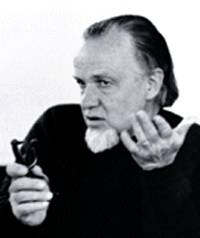
Francis Schaeffer above
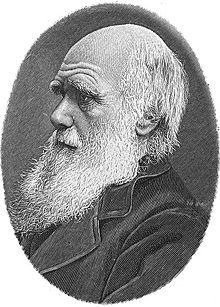
Charles Darwin

Adrian Rogers

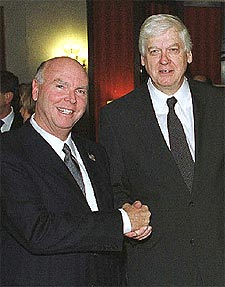
Hamilton Smith above, and Craig Venter with Smith below
__
XXXXXXXXX
RESPONDING TO HARRY KROTO’S BRILLIANT RENOWNED ACADEMICS!! Part 144 Paul Rabinow, Professor of Anthropology at the University of California (Berkeley), “I am not a believer or a theist,…never felt the need to go [into that debate]” POSTED ON 8-22-17
Quote from Paul Rabinow:
In other words I am not a believer or a theist, but I am not also a militant atheist. I think that debate leads into a range of different and diverse existential corners that I don’t want to go to and never felt the need to go to.
More lengthy quote from Paul Rabinow:
on religious belief – don’t believe in God; there are passages in Levi-Strauss’ ‘Tristes Tropiques’ on Buddhism which are relatively close to what I felt much more strongly as a younger person; this question is interesting because in recent years I have been working with a student who has just finished a degree in theology and is now doing a degree in anthropology; he is a practising Christian and we get along remarkably well, discussing ethics etc., but it is clear that the larger theist dimensions are radically disparate; this is an interesting anthropological dimension where ethically this seems to not cause any problem; I frequently related to people with strong but quiet religious beliefs; Michel de Certeau was a Jesuit and I had a number of other Jesuit friends; I think it is the fact that they care about the world and other people, are thoughtful, committed and concerned, and I don’t have to share other parts of their belief system while finding them worthy of friendship; I am uninterested in the Dawkins’ argument of science disproving religion, I am not a positivist, there is a big difference between this form of nineteenth century militant positivism and a Weberian position in which science does not answer ultimate questions; when science becomes a world view, a cosmology, it seems to part company with its deep critical functions; I may not be a believer or theist, but I am not a militant atheist; I also part company with people like Jurgen Habermas or Charles Taylor who feel that unless we have sure foundations for our ethical life that we flounder, which seems wrong; no one has ever proved the ultimate foundations of anything to everyone’s satisfaction yet ethical life and decent human relations seem to me not all that common, but not impossible either; I am not looking for ultimate stopping points, and there is some anthropological dimension to that through respect for the complexity of different commitments; cosmopolitan enlightenment sense that we have to live with difference which can be a good thing, and that intolerance –even in the name of tolerance — is not so admirable
On November 21, 2014 I received a letter from Nobel Laureate Harry Kroto and it said:
…Please click on this URL http://vimeo.com/26991975
and you will hear what far smarter people than I have to say on this matter. I agree with them.
Harry Kroto

Nick Gathergood, David-Birkett, Harry-Kroto
I have attempted to respond to all of Dr. Kroto’s friends arguments and I have posted my responses one per week for over a year now. Here are some of my earlier posts:
Arif Ahmed, Sir David Attenborough, Mark Balaguer, Horace Barlow, Michael Bate, Patricia Churchland, Aaron Ciechanover, Noam Chomsky,Alan Dershowitz, Hubert Dreyfus, Bart Ehrman, Stephan Feuchtwang, David Friend, Riccardo Giacconi, Ivar Giaever , Roy Glauber, Rebecca Goldstein, David J. Gross, Brian Greene, Susan Greenfield, Stephen F Gudeman, Alan Guth, Jonathan Haidt, Theodor W. Hänsch, Brian Harrison, Hermann Hauser, Roald Hoffmann, Bruce Hood, Herbert Huppert, Gareth Stedman Jones, Steve Jones, Shelly Kagan, Michio Kaku, Stuart Kauffman, Lawrence Krauss, Harry Kroto, George Lakoff, Elizabeth Loftus, Alan Macfarlane, Peter Millican, Marvin Minsky, Leonard Mlodinow, Yujin Nagasawa, Alva Noe, Douglas Osheroff, Jonathan Parry, Saul Perlmutter, Herman Philipse, Carolyn Porco, Robert M. Price, Lisa Randall, Lord Martin Rees, Oliver Sacks, John Searle, Marcus du Sautoy, Simon Schaffer, J. L. Schellenberg, Lee Silver, Peter Singer, Walter Sinnott-Armstrong, Ronald de Sousa, Victor Stenger, Barry Supple, Leonard Susskind, Raymond Tallis, Neil deGrasse Tyson, .Alexander Vilenkin, Sir John Walker, Frank Wilczek, Steven Weinberg, and Lewis Wolpert,
His comments can be found on the 3rd video and the 118th clip in this series. Below the videos you will find his words.
50 Renowned Academics Speaking About God (Part 1)
Another 50 Renowned Academics Speaking About God (Part 2)
A Further 50 Renowned Academics Speaking About God (Part 3)
___________________
Quote from Paul Rabinow:
In other words I am not a believer or a theist, but I am not also a militant atheist. I think that debate leads into a range of different and diverse existential corners that I don’t want to go to and never felt the need to go to.
More lengthy quote from Paul Rabinow:
on religious belief – don’t believe in God; there are passages in Levi-Strauss’ ‘Tristes Tropiques’ on Buddhism which are relatively close to what I felt much more strongly as a younger person; this question is interesting because in recent years I have been working with a student who has just finished a degree in theology and is now doing a degree in anthropology; he is a practising Christian and we get along remarkably well, discussing ethics etc., but it is clear that the larger theist dimensions are radically disparate; this is an interesting anthropological dimension where ethically this seems to not cause any problem; I frequently related to people with strong but quiet religious beliefs; Michel de Certeau was a Jesuit and I had a number of other Jesuit friends; I think it is the fact that they care about the world and other people, are thoughtful, committed and concerned, and I don’t have to share other parts of their belief system while finding them worthy of friendship; I am uninterested in the Dawkins’ argument of science disproving religion, I am not a positivist, there is a big difference between this form of nineteenth century militant positivism and a Weberian position in which science does not answer ultimate questions; when science becomes a world view, a cosmology, it seems to part company with its deep critical functions; I may not be a believer or theist, but I am not a militant atheist; I also part company with people like Jurgen Habermas or Charles Taylor who feel that unless we have sure foundations for our ethical life that we flounder, which seems wrong; no one has ever proved the ultimate foundations of anything to everyone’s satisfaction yet ethical life and decent human relations seem to me not all that common, but not impossible either; I am not looking for ultimate stopping points, and there is some anthropological dimension to that through respect for the complexity of different commitments; cosmopolitan enlightenment sense that we have to live with difference which can be a good thing, and that intolerance –even in the name of tolerance — is not so admirable.
______________
________
Related posts:
FRANCIS SCHAEFFER ANALYZES ART AND CULTURE Part 53 THE BEATLES (Part E, Stg. Pepper’s and John Lennon’s search in 1967 for truth was through drugs, money, laughter, etc & similar to King Solomon’s, LOTS OF PICTURES OF JOHN AND CYNTHIA) (Feature on artist Yoko Ono)
The John Lennon and the Beatles really were on a long search for meaning and fulfillment in their lives just like King Solomon did in the Book of Ecclesiastes. Solomon looked into learning (1:12-18, 2:12-17), laughter, ladies, luxuries, and liquor (2:1-2, 8, 10, 11), and labor (2:4-6, 18-20). He fount that without God in the picture all […]
FRANCIS SCHAEFFER ANALYZES ART AND CULTURE Part 52 THE BEATLES (Part D, There is evidence that the Beatles may have been exposed to Francis Schaeffer!!!) (Feature on artist Anna Margaret Rose Freeman )
______________ George Harrison Swears & Insults Paul and Yoko Lucy in the Sky with Diamonds- The Beatles The Beatles: I have dedicated several posts to this series on the Beatles and I don’t know when this series will end because Francis Schaeffer spent a lot of time listening to the Beatles and talking […]
FRANCIS SCHAEFFER ANALYZES ART AND CULTURE Part 51 THE BEATLES (Part C, List of those on cover of Stg.Pepper’s ) (Feature on artist Raqib Shaw )
The Beatles in a press conference after their Return from the USA Uploaded on Nov 29, 2010 The Beatles in a press conference after their Return from the USA. The Beatles: I have dedicated several posts to this series on the Beatles and I don’t know when this series will end because Francis […]
FRANCIS SCHAEFFER ANALYZES ART AND CULTURE Part 50 THE BEATLES (Part B, The Psychedelic Music of the Beatles) (Feature on artist Peter Blake )
__________________ Beatles 1966 Last interview I have dedicated several posts to this series on the Beatles and I don’t know when this series will end because Francis Schaeffer spent a lot of time listening to the Beatles and talking and writing about them and their impact on the culture of the 1960’s. In this […]
FRANCIS SCHAEFFER ANALYZES ART AND CULTURE Part 49 THE BEATLES (Part A, The Meaning of Stg. Pepper’s Cover) (Feature on artist Mika Tajima)
_______________ The Beatles documentary || A Long and Winding Road || Episode 5 (This video discusses Stg. Pepper’s creation I have dedicated several posts to this series on the Beatles and I don’t know when this series will end because Francis Schaeffer spent a lot of time listening to the Beatles and talking and writing about […]
FRANCIS SCHAEFFER ANALYZES ART AND CULTURE PART 48 “BLOW UP” by Michelangelo Antonioni makes Philosophic Statement (Feature on artist Nancy Holt)
_______________ Francis Schaeffer pictured below: _____________________ I have included the 27 minute episode THE AGE OF NONREASON by Francis Schaeffer. In that video Schaeffer noted, ” Sergeant Pepper’s Lonely Hearts Club Band…for a time it became the rallying cry for young people throughout the world. It expressed the essence of their lives, thoughts and their feelings.” How Should […]
FRANCIS SCHAEFFER ANALYZES ART AND CULTURE Part 47 Woody Allen and Professor Levy and the death of “Optimistic Humanism” from the movie CRIMES AND MISDEMEANORS Plus Charles Darwin’s comments too!!! (Feature on artist Rodney Graham)
Crimes and Misdemeanors: A Discussion: Part 1 ___________________________________ Today I will answer the simple question: IS IT POSSIBLE TO BE AN OPTIMISTIC SECULAR HUMANIST THAT DOES NOT BELIEVE IN GOD OR AN AFTERLIFE? This question has been around for a long time and you can go back to the 19th century and read this same […]
FRANCIS SCHAEFFER ANALYZES ART AND CULTURE PART 46 Friedrich Nietzsche (Featured artist is Thomas Schütte)
____________________________________ Francis Schaeffer pictured below: __________ Francis Schaeffer has written extensively on art and culture spanning the last 2000years and here are some posts I have done on this subject before : Francis Schaeffer’s “How should we then live?” Video and outline of episode 10 “Final Choices” , episode 9 “The Age of Personal Peace and Affluence”, episode 8 […]
FRANCIS SCHAEFFER ANALYZES ART AND CULTURE Part 45 Woody Allen “Reason is Dead” (Feature on artists Allora & Calzadilla )
Love and Death [Woody Allen] – What if there is no God? [PL] ___________ _______________ How Should We then Live Episode 7 small (Age of Nonreason) #02 How Should We Then Live? (Promo Clip) Dr. Francis Schaeffer 10 Worldview and Truth Two Minute Warning: How Then Should We Live?: Francis Schaeffer at 100 Francis Schaeffer […]
FRANCIS SCHAEFFER ANALYZES ART AND CULTURE Part 44 The Book of Genesis (Featured artist is Trey McCarley )
___________________________________ Francis Schaeffer pictured below: ____________________________ Francis Schaeffer “BASIS FOR HUMAN DIGNITY” Whatever…HTTHR Dr. Francis schaeffer – The flow of Materialism(from Part 4 of Whatever happened to human race?) Dr. Francis Schaeffer – The Biblical flow of Truth & History (intro) Francis Schaeffer – The Biblical Flow of History & Truth (1) Dr. Francis Schaeffer […]
__


 The Daily Hatch