
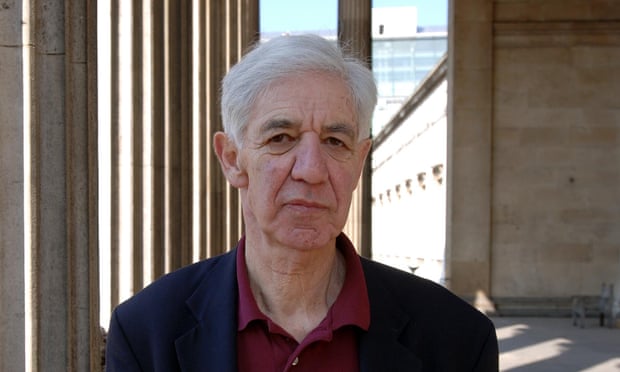
 Show caption
How does a single fertilised egg divide and morph into an embryo with head, tail, limbs and organs? That question was an inexhaustible source of fascination to the biologist Lewis Wolpert, who has died aged 91. With a twinkle in his eye, he told audiences it was not birth, marriage or death, but gastrulation – the stage in which a uniform ball of cells folds to become differentiated layers with the beginnings of a gut – that was “truly the most important time in your life”.
Wolpert combined his interest in fundamental problems of development with a parallel career as a science communicator. He enjoyed performing in public, and brooked no compromise in his quest to persuade people that “science is the best way to understand the world”. He broadcast frequently on BBC radio and TV, and wrote a number of popular books. The best known of these, Malignant Sadness (1999), was a fiercely objective attempt to understand his own experience of a severe depression that he suffered at the age of 65. He gave the Royal Institution Christmas lectures in 1986, chaired the Committee on the Public Understanding of Science from 1994 until 1998, and won the Royal Society’s Michael Faraday prize (for science communication) in 2000.
He was not afraid to court controversy, dismissing bioethical concerns about embryo research and human cloning as “a gross load of nonsense”. An avowed atheist, he engaged in public debates about science and religion. However, he distanced himself from more militant atheists in acknowledging that some people benefit from religious experience. For many years he was vice-president and later patron of the British Humanist Association (now Humanists UK).
Wolpert re-established the central importance of pattern formation in embryonic development, a subject that had fallen into neglect. In a key paper of 1969 he proposed that the way an embryonic cell interprets its genetic instructions ultimately to become bone or cartilage, or part of an elbow or a finger, depends on its position. According to this model, the cell “knows” where it is in relation to sources of chemical signals called morphogens, because the strength of the signals varies with distance from the source.
The idea was not instantly accepted. Wolpert vividly remembered a meeting at the Marine Biological Laboratory at Woods Hole in Massachusetts, in the US, where American participants cold-shouldered him after he gave his paper. The next morning the molecular biologist (and later Nobel prize winner) Sydney Brenner – whom Wolpert had known as an undergraduate at Witwatersrand University, Johannesburg – found him standing in the sea in despair. Brenner told him to take no notice, and that he had been thinking along the same lines. “He totally saved me,” said Wolpert.
He had worked initially with experimentally tractable sea urchin embryos and the freshwater invertebrate Hydra, which can regenerate from a damaged stump. But after taking up the chair in biology as applied to medicine at the Middlesex hospital medical school in 1966 he switched to limb development in chick embryos: how you make a hand, he thought, would be a question more relevant to medicine. For the rest of his career he continued to design experiments to test his model. He credited his technician, Amata Hornbruch, with being his “hands” in the laboratory work, for which he had no interest and not much aptitude.
Another collaborator was Cheryll Tickle, who joined him as a postdoctoral researcher and went on to be a leader in the field. She cites him as a mentor who “allowed me the freedom to develop and did not put me down”. Wolpert was not directly involved in identifying individual morphogens, but discoveries relating to the genetic control of pattern formation have largely borne out his theories. As lead author of the definitive textbook Principles of Development, now in its sixth edition, his influence on the field was immense. In 2018 the Royal Society awarded him its highest honour, the Royal Medal.
Wolpert was born in Johannesburg, South Africa, the only surviving child of William, a manager in a newsagent and bookshop, and his wife, Sarah (nee Suzman). In a frank interview for the British Library’s National Life Stories collection, he remembered his parents with little warmth: his father would tolerate no contradiction, and his mother cared only for appearances in their Jewish social circle. He felt more positively about other relatives: one of his uncles, a distinguished doctor, was married to the anti-apartheid politician Helen Suzman, and he spent some time living in their home.
He studied civil engineering at the University of the Witwatersrand, where he became involved in progressive politics, helping to distribute communist literature in the townships; in 1952 he met Nelson Mandela. After two years working on soil mechanics as assistant to the director of the Building Research Institute in Pretoria, he hitchhiked to Europe, working briefly for the water planning board in Israel before studying soil mechanics at Imperial College London.
Wolpert was born in Johannesburg, South Africa, the only surviving child of William, a manager in a newsagent and bookshop, and his wife, Sarah (nee Suzman). In a frank interview for the British Library’s National Life Stories collection, he remembered his parents with little warmth: his father would tolerate no contradiction, and his mother cared only for appearances in their Jewish social circle. He felt more positively about other relatives: one of his uncles, a distinguished doctor, was married to the anti-apartheid politician Helen Suzman, and he spent some time living in their home.
He studied civil engineering at the University of the Witwatersrand, where he became involved in progressive politics, helping to distribute communist literature in the townships; in 1952 he met Nelson Mandela. After two years working on soil mechanics as assistant to the director of the Building Research Institute in Pretoria, he hitchhiked to Europe, working briefly for the water planning board in Israel before studying soil mechanics at Imperial College London.
His life was changed when a friend in South Africa, Wilfred Stein, wrote to suggest he apply his knowledge of mechanics to the study of dividing cells. The biophysicist James Danielli at King’s College London accepted him as a PhD student, and with a Swedish colleague, Trygve Gustafson, he went on to measure the mechanical forces involved in cell division. He was promoted to lecturer and reader (in zoology) at King’s before taking up the chair of biology as applied to medicine at the Middlesex (transferred to University College London after the two institutions merged), where he remained until he retired aged 74.
He began broadcasting regularly on BBC Radio 3 and 4 in the early 1980s. A series of broadcast conversations with scientists was published in book form as A Passion for Science in 1988. Further popular books included How We Live and Why We Die: The Secret Lives of Cells (2009), The Triumph of the Embryo (1991), and an investigation into religious belief, Six Impossible Things Before Breakfast (2006). Still writing in his 80s, Wolpert fell victim to the perils of online research when his last two books, You’re Looking Very Well (2011; on ageing) and Why Can’t a Woman Be More Like a Man? (2014) proved to contain unattributed passages from other writers’ works. Wolpert apologised, saying the apparent plagiarism was “totally inadvertent and due to carelessness”.
Wolpert married Elizabeth Brownstein, whom he had known in South Africa, in 1961, and they had four children, two of whom, Daniel and Miranda, also became at different times professors at UCL, in neuroscience and clinical psychology, respectively.
The marriage to Elizabeth ended in divorce, and in 1993 Wolpert married the Australian writer Jill Neville. It was when his working and home lives were at their most secure and harmonious that a suicidal episode led to him spending three weeks in hospital. He recovered after treatment with antidepressants and cognitive behavioural therapy. Jill died suddenly of cancer in 1997.
In 2016 he married Alison Hawkes, after a longstanding relationship. She survives him, along with his children, Miranda, Daniel, Jessica and Matthew, two stepchildren, Judy and Luke, and six grandchildren.
• Lewis Wolpert, biologist, born 19 October 1929; died 28 January 2021
A message from Betsy Reed, editor of the Guardian US
I hope you appreciated this article. Before you move on, I wanted to ask if you would consider supporting the Guardian’s journalism as we enter one of the most consequential news cycles of our lifetimes in 2024.
From Elon Musk to the Murdochs, a small number of billionaire owners have a powerful hold on so much of the information that reaches the public about what’s happening in the world. The Guardian is different. We have no billionaire owner or shareholders to consider. Our journalism is produced to serve the public interest – not profit motives.
And we avoid the trap that befalls much US media: the tendency, born of a desire to please all sides, to engage in false equivalence in the name of neutrality. We always strive to be fair. But sometimes that means calling out the lies of powerful people and institutions – and making clear how misinformation and demagoguery can damage democracy.
From threats to election integrity, to the spiralling climate crisis, to complex foreign conflicts, our journalists contextualise, investigate and illuminate the critical stories of our time. As a global news organisation with a robust US reporting staff, we’re able to provide a fresh, outsider perspective – one so often missing in the American media bubble.
Around the world, readers can access the Guardian’s paywall-free journalism because of our unique reader-supported model. That’s because of people like you. Our readers keep us independent, beholden to no outside influence and accessible to everyone – whether they can afford to pay for news, or not.
If you can, please consider supporting us just once from $1, or better yet, support us every month with a little more. Thank you.
On November 21, 2014 I received a letter from Nobel Laureate Harry Kroto and it said:
…Please click on this URL http://vimeo.com/26991975
and you will hear what far smarter people than I have to say on this matter. I agree with them.
Harry Kroto

Nick Gathergood, David-Birkett, Harry-Kroto
I have attempted to respond to all of Dr. Kroto’s friends arguments and I have posted my responses one per week for over a year now. Here are some of my earlier posts:
Arif Ahmed, Sir David Attenborough, Mark Balaguer, Horace Barlow, Michael Bate, Patricia Churchland, Aaron Ciechanover, Noam Chomsky,Alan Dershowitz, Hubert Dreyfus, Bart Ehrman, Stephan Feuchtwang, David Friend, Riccardo Giacconi, Ivar Giaever , Roy Glauber, Rebecca Goldstein, David J. Gross, Brian Greene, Susan Greenfield, Stephen F Gudeman, Alan Guth, Jonathan Haidt, Theodor W. Hänsch, Brian Harrison, Hermann Hauser, Roald Hoffmann, Bruce Hood, Herbert Huppert, Gareth Stedman Jones, Steve Jones, Shelly Kagan, Michio Kaku, Stuart Kauffman, Lawrence Krauss, Harry Kroto, George Lakoff, Elizabeth Loftus, Alan Macfarlane, Peter Millican, Marvin Minsky, Leonard Mlodinow, Yujin Nagasawa, Alva Noe, Douglas Osheroff, Jonathan Parry, Saul Perlmutter, Herman Philipse, Carolyn Porco, Robert M. Price, Lisa Randall, Lord Martin Rees, Oliver Sacks, John Searle, Marcus du Sautoy, Simon Schaffer, J. L. Schellenberg, Lee Silver, Peter Singer, Walter Sinnott-Armstrong, Ronald de Sousa, Victor Stenger, Barry Supple, Leonard Susskind, Raymond Tallis, Neil deGrasse Tyson, .Alexander Vilenkin, Sir John Walker, Frank Wilczek, Steven Weinberg, and Lewis Wolpert,
In the second video below in the 64th clip in this series are his words and my response is below them.
50 Renowned Academics Speaking About God (Part 1)
Another 50 Renowned Academics Speaking About God (Part 2)
A Further 50 Renowned Academics Speaking About God (Part 3)
_________________________________
Lewis Wolpert Quote:
I am not against people being religious. I think it helps you a great deal. I am against religion when it interferes in the lives of other people…If you believe for example that the fertilized egg is really a human being which some people in your religious organizations believe then I am very hostile to you because it is nonsense and this is one of my subjects developmental biology or if you are against contraception for religious reason then therefore AIDS can become more common. So I am not against people having a belief in God. I do believe that believe is false. Whatever arguments I give you I have no delusion that I will persuade you to change your minds.
Dr. Lewis Wolpert, Emeritus Professor in Cell and Developmental Biology.University College London, Gower Street
London WC1E 6BT, United Kingdom
May 15, 2014 (66th anniversary of rebirth of Israel)
Dear Dr. Wolpert
I really enjoyed watching your debate with William Lane Craig. I also appreciated your humor.
Today I am writing you for two reasons. First, I wanted to appeal to your Jewish Heritage and ask you to take a closer look at some Old Testament scriptures dealing with the land of Israel. Second, I wanted to point out some scientific evidence that caused Antony Flew to switch from an atheist (as you are now) to a theist. Twenty years I had the opportunity to correspond with two individuals that were regarded as two of the most famous atheists of the 20th Century, Antony Flew and Carl Sagan. (I have enclosed some of those letters between us.) I had read the books and seen the films of the Christian philosopher Francis Schaeffer and he had discussed the works of both of these men. I sent both of these gentlemen philosophical arguments from Schaeffer in these letters and in the first letter I sent a cassette tape of my pastor’s sermon IS THE BIBLE TRUE? (CD is enclosed also.) You may have noticed in the news a few years ago that Antony Flew actually became a theist in 2004 and remained one until his death in 2010. Carl Sagan remained a skeptic until his dying day in 1996.
You will notice in the enclosed letter from June 1, 1994 that Dr. Flew commented, “Thank you for sending me the IS THE BIBLE TRUE? tape to which I have just listened with great interest and, I trust, profit.” It would be a great honor for me if you would take time and drop me a note and let me know what your reaction is to this same message.
Robert Lewis noted that many orthodox Jews believed through the centuries that God would honor the ancient prophecies that predicted that the Jews would be restored to the land of Israel, but then I notice the latest film series on the Jews done by an orthodox Jew seemed to ignore many of these scriptures. Recently I watched the 5 part PBS series Simon Schama’s THE STORY OF THE JEWS, and in the last episode Schama calls Israel “a miracle” but he is hoping that Israel can get along with the non-Jews in the area. Schama noted, “I’ve always thought that Israel is the consummation of some of the highest ethical values of Jewish traditional history, but creating a place of safety and defending it has sometimes challenged those same ethics and values”. There is an ancient book that sheds light on Israel’s plight today, and it is very clear about the struggles between the Jews and their cousins that surround them. It all comes down to what the Book of Genesis had to say concerning Abraham’s son by Hagar.
Genesis 16:11-12 (NIV)
11 The angel of the Lord also said to her:
“You are now pregnant
and you will give birth to a son.
You shall name him Ishmael,
for the Lord has heard of your misery.
12 He will be a wild donkey of a man;
his hand will be against everyone
and everyone’s hand against him,
and he will live in hostility
toward all his brothers.”
14 And I will bring back the exiles of My people Israel, and they shall build the waste cities and inhabit them; and they shall plant vineyards and drink the wine from them; they shall also make gardens and eat the fruit of them.
15 And I will plant them upon their land, and they shall no more be torn up out of their land which I gave them, says the Lord your God.
Some people think the Amos prophecy was referring to the return of Israel after their Babylonian captitvity in 586 B.C. But the nation was uprooted in 70 A.D. And notice God said they would “NEVER AGAIN TO BE UPROOTED.”
Even the preservation of their language is a miracle. For centuries, Hebrew was a dead language spoken nowhere in the world. But within the last century, this dead language has been resurrected and now millions of Israelis speak Hebrew...Have you noticed how often Israel is in the news? They are only a small nation about the size of New Jersey.
I have checked out some of the details that David O. Dykes has provided and they check out. Philip Lieberman is a cognitive scientist at Brown University, and in a letter dated in 1995 he told me that only a few other languages besides Hebrew have ever been revived including some American Indian ones along with Celtic.
Also Zechariah 12:3 also verifies the newsworthiness of Israel now: And in that day I will make Jerusalem a burdensome stone for all peoples; all who lift it or burden themselves with it shall be sorely wounded. And all the nations of the earth shall come and gather together against it.
I do think that Isaiah also predicted the Jews would come from all over the earth back to their homeland Israel. Isaiah 11:11-12 states, “And in that day the Lord shall again lift up His hand a second time to recover (acquire and deliver) the remnant of His people which is left, from Assyria, from Lower Egypt, from Pathros, from Ethiopia, from Elam [in Persia], from Shinar [Babylonia], from Hamath [in Upper Syria], and from the countries ordering on the [Mediterranean] Sea. And He will raise up a signal for the nations and will assemble the outcasts of Israel and will gather together the dispersed of Judah from the four corners of the earth. (Amplified Bible)
I was reading THE BOOK OF DANIEL COMMENTARY (Cambridge University Press, 1900) by the Bible critic Samuel Rolles Driver, and on page 100 Dr. Driver commented that the country of Israel is obviously a thing of the past and has no place in prophecy in the future and the prophet Daniel was definitely wrong about that. I wonder what Dr. Driver would say if he lived to see the newspapers today?
In fact, my former pastor Robert Lewis at Fellowship Bible Church in his sermon “Let the Prophets Speak” on 1-31-99 noted that even the great Princeton Theologian Charles Hodge erred in 1871 when he stated:
The argument from the ancient prophecies is proved to be invalid because it would prove too much. If those prophecies foretell a literal restoration, they foretell that the temple is to be rebuilt, the priesthood restored, sacrifices again offered, and that the whole Mosaic ritual is to be observed in all its details, (Systematic Theology. [New York: Charles Scribner & Sons, 1871; reprint Grand Rapids, Michigan: Eerdman’s Publishing Co., 1949], 3:807).__
Robert Lewis went on to point out that the prophet Amos 2700 years ago predicted the destruction of Aram, Philistia, Tyre, Edom, Ammon, Moab and Israel, but at the end of the Book he said Israel would one day be returned to their land and never removed. We saw from Isaiah 11:11-12 that the Lord “will assemble the outcasts of Israel and will gather together the dispersed of Judah from the four corners of the earth.” And that certainly did happen after World War II. I corresponded with some secular Jewish Scholars on this back in the 1990’s such as Irving Kristol and Daniel Bell but they dismissed these type of Old Testament prophecies. In his letter of September 23, 1995, Daniel Bell wrote, “As to the survival of the Jewish people, I think of the remark of Samuel Johnson that there is nothing stronger than the knowledge that one may be hanged the next day to concentrate the mind–or the will.”
After looking at the accuracy of Old Testament, I want to turn my attention to the accuracy of the New Testament. Recently I was reading the book GOD’S NOT DEAD by Rick Broocks and in it he quotes Sir William Ramsay who was a scholar who originally went to Palestine to disprove the Book of Luke. Below is some background info on Ramsay followed by his story.
Sir William Mitchell Ramsay (15 March 1851, Glasgow –20 April 1939) was a Scottish archaeologist and New Testament scholar. By his death in 1939 he had become the foremost authority of his day on the history of Asia Minor and a leading scholar in the study of the New Testament. From the post of Professor of Classical Art and Architecture at Oxford, he was appointed Regius Professor of Humanity (the Latin Professorship) at Aberdeen. Knighted in 1906 to mark his distinguished service to the world of scholarship, Ramsay also gained three honorary fellowships from Oxford colleges, nine honorary doctorates from British, Continental and North American universities and became an honorary member of almost every association devoted to archaeology and historical research. He was one of the original members of the British Academy, was awarded the Gold Medal of Pope Leo XIII in 1893 and the Victorian Medal of the Royal Geographical Society in 1906.

William Mitchell Ramsay was born on March 15, 1851 in Glasgow, Scotland. His father was a lawyer, but died when William was just six. Through the hard work of other family members, William attended the University of Aberdeen, achieving honors. Through means of a scholarship, he was then able to go to Oxford University and attend the college there named for St. John. His family resource also allowed him to study abroad, notably in Germany. It was under one of his professors that his love of history began. After receiving a new scholarship from another college at Oxford, he traveled to Asia Minor.
William, however, is most noted for beliefs pertaining to the Bible, not his early life. Originally, he labeled it as a ‘Book of Fables,’ having only third-hand knowledge. He neither read nor studied it, skeptically believing it to be of fiction and not historical fact. His interest in history would lead him on a search that would radically redefine his thoughts on that Ancient Book…
Some argue that Ramsay was originally just a product of his time. For example, the general consensus on the Acts of the Apostles (and its alleged writer Luke) was almost humorous:
“… [A]bout 1880 to 1890 the book of the Acts was regarded as the weakest part of the New Testament. No one that had any regard for his reputation as a scholar cared to say a word in its defence. The most conservative of theological scholars, as a rule, thought the wisest plan of defence for the New Testament as a whole was to say as little as possible about the Acts.”[1]
It was his dislike for Acts that launched him into a Mid-East adventure. With Bible-in-hand, he made a trip to the Holy Land. What William found, however, was not what he expected…
As it turns out, ‘ole Willy’ changed his mind. After his extensive study he concluded that Luke was one of the world’s greatest historians:
The more I have studied the narrative of the Acts, and the more I have learned year after year about Graeco-Roman society and thoughts and fashions, and organization in those provinces, the more I admire and the better I understand. I set out to look for truth on the borderland where Greece and Asia meet, and found it here [in the Book of Acts—KB]. You may press the words of Luke in a degree beyond any other historian’s, and they stand the keenest scrutiny and the hardest treatment, provided always that the critic knows the subject and does not go beyond the limits of science and of justice.[2]
Skeptics were strikingly shocked. In ‘Evidence that Demands a Verdict’ Josh Mcdowell writes,
“The book caused a furor of dismay among the skeptics of the world. Its attitude was utterly unexpected because it was contrary to the announced intention of the author years before…. for twenty years more, book after book from the same author came from the press, each filled with additional evidence of the exact, minute truthfulness of the whole New Testament as tested by the spade on the spot. The evidence was so overwhelming that many infidels announced their repudiation of their former unbelief and accepted Christianity. And these books have stood the test of time, not one having been refuted, nor have I found even any attempt to refute them.”[3]
The Bible has always stood the test of time. Renowned archaeologist Nelson Glueck put it like this:
“It may be stated categorically that no archaeological discovery has ever controverted a Biblical reference. Scores of archaeological findings have been made which conform in clear outline or exact detail historical statements in the Bible.”[4]
1) The Bearing of Recent Discovery on the Trustworthiness of the New Testament (1915)
2) Ibid
3) See page 366
4) See page 31 of: Rivers in the Desert: A History of the Negev (1959)
Thank you again for your time and I know how busy you are.
Everette Hatcher, everettehatcher@gmail.com, http://www.thedailyhatch.org, cell ph 501-920-5733, Box 23416, LittleRock, AR 72221
__________________
________
Related posts:
FRANCIS SCHAEFFER ANALYZES ART AND CULTURE Part 53 THE BEATLES (Part E, Stg. Pepper’s and John Lennon’s search in 1967 for truth was through drugs, money, laughter, etc & similar to King Solomon’s, LOTS OF PICTURES OF JOHN AND CYNTHIA) (Feature on artist Yoko Ono)
The John Lennon and the Beatles really were on a long search for meaning and fulfillment in their lives just like King Solomon did in the Book of Ecclesiastes. Solomon looked into learning (1:12-18, 2:12-17), laughter, ladies, luxuries, and liquor (2:1-2, 8, 10, 11), and labor (2:4-6, 18-20). He fount that without God in the picture all […]
FRANCIS SCHAEFFER ANALYZES ART AND CULTURE Part 52 THE BEATLES (Part D, There is evidence that the Beatles may have been exposed to Francis Schaeffer!!!) (Feature on artist Anna Margaret Rose Freeman )
______________ George Harrison Swears & Insults Paul and Yoko Lucy in the Sky with Diamonds- The Beatles The Beatles: I have dedicated several posts to this series on the Beatles and I don’t know when this series will end because Francis Schaeffer spent a lot of time listening to the Beatles and talking […]
FRANCIS SCHAEFFER ANALYZES ART AND CULTURE Part 51 THE BEATLES (Part C, List of those on cover of Stg.Pepper’s ) (Feature on artist Raqib Shaw )
The Beatles in a press conference after their Return from the USA Uploaded on Nov 29, 2010 The Beatles in a press conference after their Return from the USA. The Beatles: I have dedicated several posts to this series on the Beatles and I don’t know when this series will end because Francis […]
FRANCIS SCHAEFFER ANALYZES ART AND CULTURE Part 50 THE BEATLES (Part B, The Psychedelic Music of the Beatles) (Feature on artist Peter Blake )
__________________ Beatles 1966 Last interview I have dedicated several posts to this series on the Beatles and I don’t know when this series will end because Francis Schaeffer spent a lot of time listening to the Beatles and talking and writing about them and their impact on the culture of the 1960’s. In this […]
FRANCIS SCHAEFFER ANALYZES ART AND CULTURE Part 49 THE BEATLES (Part A, The Meaning of Stg. Pepper’s Cover) (Feature on artist Mika Tajima)
_______________ The Beatles documentary || A Long and Winding Road || Episode 5 (This video discusses Stg. Pepper’s creation I have dedicated several posts to this series on the Beatles and I don’t know when this series will end because Francis Schaeffer spent a lot of time listening to the Beatles and talking and writing about […]
FRANCIS SCHAEFFER ANALYZES ART AND CULTURE PART 48 “BLOW UP” by Michelangelo Antonioni makes Philosophic Statement (Feature on artist Nancy Holt)
_______________ Francis Schaeffer pictured below: _____________________ I have included the 27 minute episode THE AGE OF NONREASON by Francis Schaeffer. In that video Schaeffer noted, ” Sergeant Pepper’s Lonely Hearts Club Band…for a time it became the rallying cry for young people throughout the world. It expressed the essence of their lives, thoughts and their feelings.” How Should […]
FRANCIS SCHAEFFER ANALYZES ART AND CULTURE Part 47 Woody Allen and Professor Levy and the death of “Optimistic Humanism” from the movie CRIMES AND MISDEMEANORS Plus Charles Darwin’s comments too!!! (Feature on artist Rodney Graham)
Crimes and Misdemeanors: A Discussion: Part 1 ___________________________________ Today I will answer the simple question: IS IT POSSIBLE TO BE AN OPTIMISTIC SECULAR HUMANIST THAT DOES NOT BELIEVE IN GOD OR AN AFTERLIFE? This question has been around for a long time and you can go back to the 19th century and read this same […]
FRANCIS SCHAEFFER ANALYZES ART AND CULTURE PART 46 Friedrich Nietzsche (Featured artist is Thomas Schütte)
____________________________________ Francis Schaeffer pictured below: __________ Francis Schaeffer has written extensively on art and culture spanning the last 2000years and here are some posts I have done on this subject before : Francis Schaeffer’s “How should we then live?” Video and outline of episode 10 “Final Choices” , episode 9 “The Age of Personal Peace and Affluence”, episode 8 […]
FRANCIS SCHAEFFER ANALYZES ART AND CULTURE Part 45 Woody Allen “Reason is Dead” (Feature on artists Allora & Calzadilla )
Love and Death [Woody Allen] – What if there is no God? [PL] ___________ _______________ How Should We then Live Episode 7 small (Age of Nonreason) #02 How Should We Then Live? (Promo Clip) Dr. Francis Schaeffer 10 Worldview and Truth Two Minute Warning: How Then Should We Live?: Francis Schaeffer at 100 Francis Schaeffer […]
FRANCIS SCHAEFFER ANALYZES ART AND CULTURE Part 44 The Book of Genesis (Featured artist is Trey McCarley )
___________________________________ Francis Schaeffer pictured below: ____________________________ Francis Schaeffer “BASIS FOR HUMAN DIGNITY” Whatever…HTTHR Dr. Francis schaeffer – The flow of Materialism(from Part 4 of Whatever happened to human race?) Dr. Francis Schaeffer – The Biblical flow of Truth & History (intro) Francis Schaeffer – The Biblical Flow of History & Truth (1) Dr. Francis Schaeffer […]
__


 The Daily Hatch