Monthly Archives: October 2023

REVIEW OF “Bibi: My Story – by Benjamin Netanyahu” Part 13 BIBI  BELIEVED PEACE THROUGH STRENGTH IS PAST TENSE IN USA with PRESIDENT OBAMA TAKING OVER!!

family)


tuti netanyahu

——


tuti netanyahu


tuti netanyahu

Ter


—-


tuti netanyahu

Kos_data on Twitter: “Trump on the phone with @netanyahu after the 🇽🇰 – 🇷🇸 meeting “…between you and the Palestinians was peanuts compared… These guys [Kosovo & Serbia] fought for years and

tuti netanyahu

201907201330005075_Netanyahu-becomes-Israels-longestserving-PM_
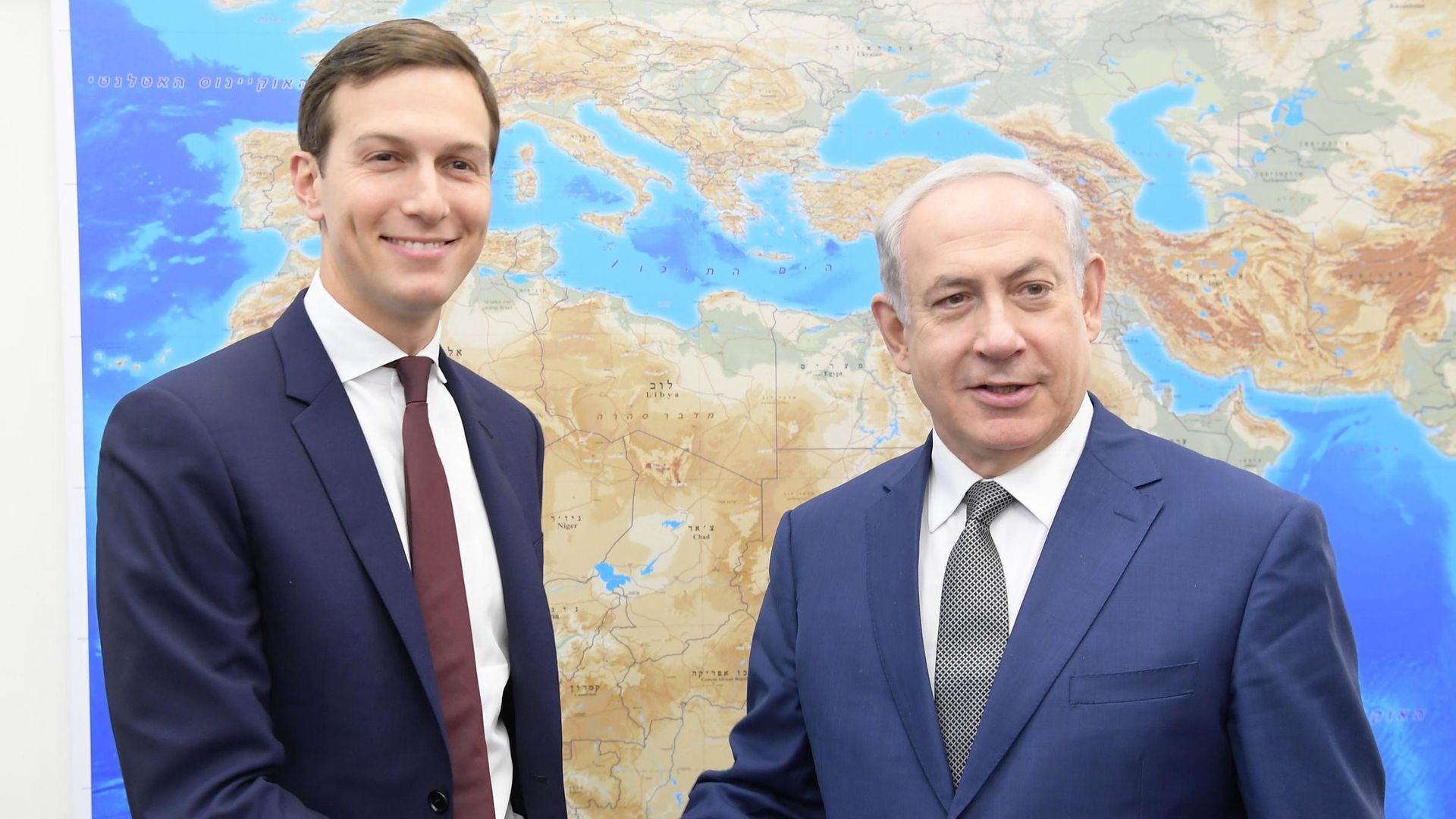
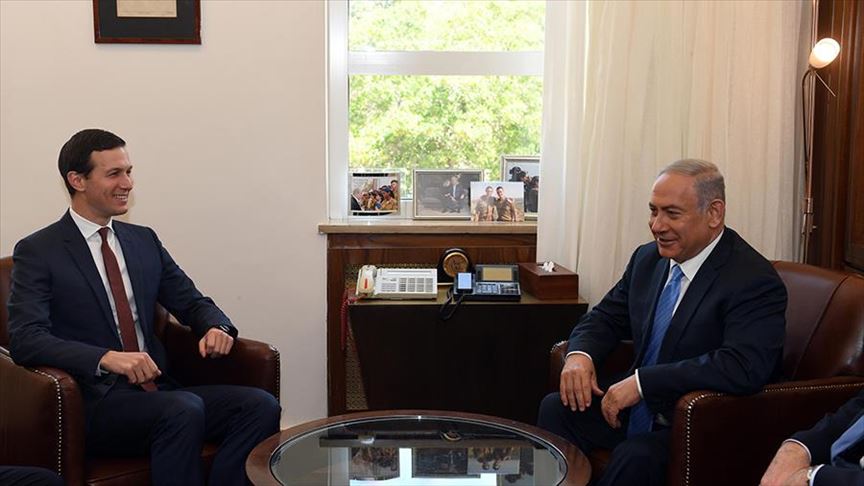
Kusher and Netanyahu at an earlier meeting last August. Photo: Israeli Prime Ministry/Handout/Anadolu Agency/Getty Images

BIBI  BELIEVED PEACE THROUGH STRENGTH IS PAST TENSE IN USA with PRESIDENT OBAMA TAKING OVER!!


The Russian military was in Syria to shore up the Assad regime and protect Russian assets in Syria, such as the strategic Russian naval base in Latakia. That was a fact we could do little to change. But Putin shared with us and the United States a desire to prevent chemical weapons from falling into the hands of Islamic terrorists who posed a threat to Russia, too.

“Why don’t you get the Russians with your approval to take out the chemical stockpiles from Syria?” I suggested to the president. “We would back that decision.” This is in fact what transpired in the coming months, though some materials for chemical weapons were still left in Syria.

Yet, despite these positive results, the lingering effect of Obama’s last-minute turn to Congress was the impression that red lines can be crossed with impunity and that Obama would not employ America’s massive airpower even when the situation warranted it. I should have expected this.

The second important and telling exchange between Obama and me during his visit to Israel happened in private, and gave me a heads-up on how he viewed the use of American power. The day after the intimate dinner at the prime minister’s residence we met at a King David Hotel suite overlooking the Old City of Jerusalem. I argued again for an American strike on Iran’s nuclear facilities. America could still stop Iran from developing atomic bombs that would endanger America, Israel and the peace of the entire world. An American action now would give an enormous boost to the standing of the US and its president.

Obama’s response floored me and Itzik Molcho, who sat beside me. “Bibi,” he said, “Nobody likes Goliath. I don’t want to be an eight-hundred-pound gorilla strutting on the world stage. For too long we acted that way. We need to lead in a different way.”I was stunned. In the Middle East as I knew it, with Iran racing to nuclear weapons, and with the shifting geopolitical balance toward Asia, I would want to be a 1,200-pound gorilla, not an 800-pound one.

https://www.nationalreview.com/2023/10/the-hamas-attack-changes-everything/amp/

The Hamas Attack Changes Everything

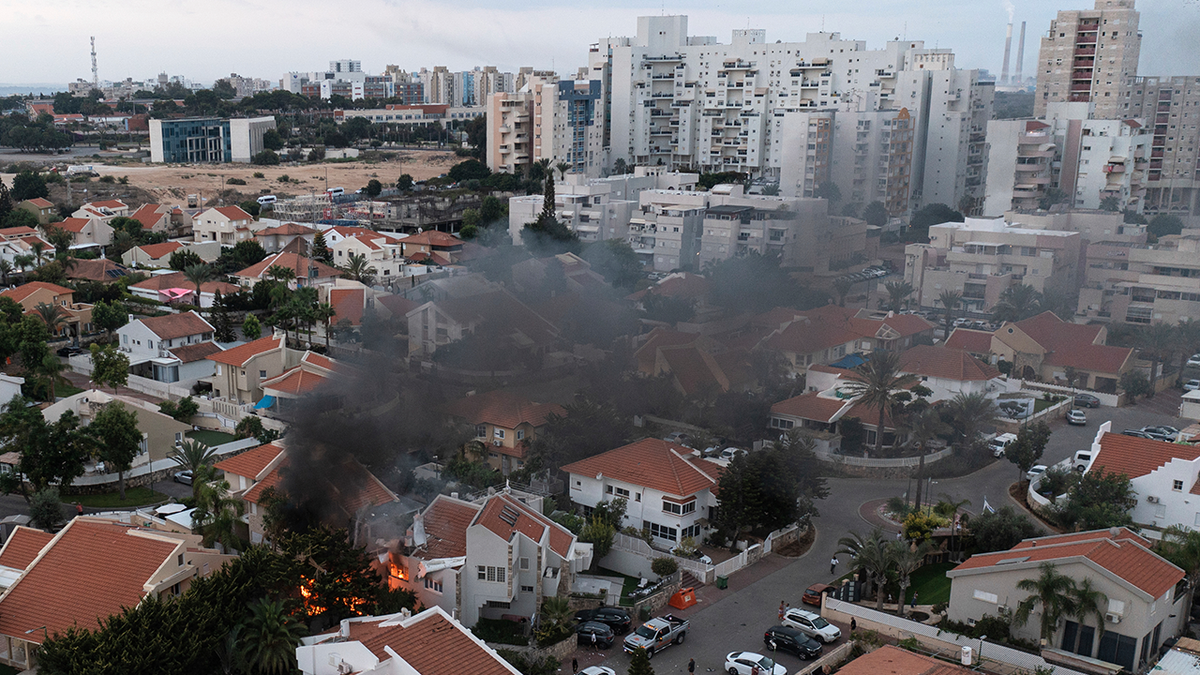
Palestinians react as an Israeli military vehicle burns after it was hit by Palestinian gunmen who infiltrated areas of southern Israel, at the Israeli side of Israel-Gaza border, October 7, 2023. (Mohammed Fayq Abu Mostafa/Reuters)
Israel now faces extremely difficult choices.


The  Hamas surprise attack on Israeli civilians changes what had been the recent rules of the game between Hamas and Israel, and it may change much more in the Middle East.

For several years, and especially in the last year, it seemed that Hamas had decided to seek calm in Gaza, where it governs, while supporting violence and terror in the West Bank. And in the West Bank, terrorist attacks increased each month. Meanwhile, Israel allowed 17,000 workers to enter Israel from Gaza each day, and there was talk of raising that number to 30,000. It seemed that there was a silent agreement between Israel and Hamas to keep things quiet in Gaza.

But that view assumed that Hamas cared about the lives of the Gaza population, and the new attacks have proved yet again that it does not. Recent accounts of the Yom Kippur War of 1973 have noted the problem of the “conception” back then. Israeli security officials came to believe that after the crushing Arab defeat in the Six-Day War, an attack so few years afterward was inconceivable. Then it happened. In this case, the “conception” was that Israel could reach a modus vivendi with Hamas — because Hamas valued calm in its base, Gaza. Obviously, it does not.

Why did Hamas attack now? No recent event in Gaza explains the timing — nor do recent visits to the Temple Mount by Israelis. What seems obvious is true: The attack was timed for the 50th anniversary of the surprise attack in 1973. No doubt Hamas must be hoping as well to delay and even prevent the Israeli–Saudi rapprochement that is being discussed, but this attack has been in the planning for many months. When the planning began, Hamas had no way to know where a Saudi–Israeli negotiation would stand in October. What it did know was that the 50th anniversary of the Yom Kippur attack would occur this year on a sabbath and during Jewish holy days (the last two days of the Sukkot festival). The possible delay in a Saudi–Israeli deal was surely a happy addition for Hamas but was an add-on, not the original motive.

One can see other motives. This attack shows the world and shows Palestinians that Hamas is strong, while the Palestinian Authority and PLO are weak. And it shows Iran the same thing, perhaps giving hope to Hamas leaders that Iran will give them even more support.

This attack is different from the “usual” Hamas use of rockets and missiles over the border. This was a ground attack meant to capture dozens of Israelis and murder many more. The rocket attacks — and there were thousands — seem like a diversion, while the murders of civilians and captures of hostages were the goal. Hamas’s success means that Israel will surely appoint another national commission to investigate the failures of planning, defense, and intelligence, as it did after the 1973 war. That war led to a discrediting not only of several individual leaders but also of the entire establishment that had ruled Israel since 1948. It is reasonable to draw a direct line from the 1973 war to the defeat of the Labor Party, for the first time, in 1977 when it was beaten by Menachem Begin.


That’s a warning to Prime Minister Netanyahu. Bibi has often been presented to voters as “Mr. Security,” a reputation that is not likely to survive this week. In the short run, Israelis will unify. There will be no more Saturday-night demonstrations against judicial reform for a while, and a government of national unity is almost certain. Opposition leader Yair Lapid has already called for one. The other key opposition leader, former IDF commander Benny Gantz, had said he would not join a Netanyahu government but would support it on matters like a Saudi deal — from the outside. But Israel, and Israeli politics, are different today.


Yet even a period of great national unity will not, I think, protect Netanyahu and those who have been his colleagues in the current government, or protect the intelligence agencies that completely failed to pick up clues that this major assault was coming. A reckoning will come, though it may be delayed until the commission of investigation can report in six or twelve months.

Israel now faces extremely difficult choices. The idea of a modus vivendi with Hamas is dead. Gaza will now need to be treated like Hezbollah-controlled Lebanon or like Iran itself. The border will obviously need greater fortification. But should Israel seek to reoccupy Gaza? That seems to me a very unlikely outcome — for all the practical reasons Prime Minister Sharon took Israeli forces out of there in 2005. What then can be done? Create large buffer zones on the Gaza side of the border? Destroy more of Hamas’s own infrastructure in Gaza? Restrict further the dual-use materials Hamas is able to import?

If one assumes that Hamas plans to use all the Israelis it captured (and the bodies of Israelis whom it killed and then brought to Gaza) as negotiating assets, Israel needs to counter those assets with moves of its own. Hamas must be very badly hurt in the coming weeks. For example, if buffer zones are created on the Gaza side of the border, Gazans will pay a price (for example in homes and buildings that must be abandoned), but Hamas will pay a price in seeing its small kingdom reduced further in size. There is no way around the fact that Hamas has new assets and that future negotiations over the captured Israelis will be excruciating. That is one reason a government of national unity is called for — to stop opposition parties from politicizing tough decisions by making them partly responsible for Israeli policy in the coming months.

Anything Israel does will affect the civilian population of Gaza. And given the size and nature of the Hamas attack, the Israeli response will be very powerful. Hamas does not care; we know from previous wars that it uses hospitals and schools as safe houses, weapons warehouses, and headquarters. That this brings civilians into danger obviously does not matter to the Hamas leadership. But history proves that as soon as Israel begins to strike, world opinion starts to change. Already, the Archbishop of Canterbury called, on Saturday, for “restraint on all sides, and renewed efforts toward a just peace for all.” He condemned the Hamas attacks, but that was of course not enough; moral equivalency followed a sentence later. It will follow in the words of many governments soon, and every day.

I recall vividly the 2006 Lebanon War between Israel and Hezbollah; I was serving on the White House staff. Hezbollah began it with a surprise attack across the border into Israel, where three Israelis were killed. For a few days the world condemned Hezbollah. But it didn’t take a week for the calls for “restraint” to be heard — demanding an end to the war Hezbollah had started before Israel had the chance to do real damage to that terrorist organization. Worse yet, the Bush administration was itself split: The president backed Israel, while the State Department, after about two weeks, joined the pressure on Israel to stop its actions.
 

On the first day of this 2023 war, the Biden administration was solidly on Israel’s side. “My Administration’s support for Israel’s security is rock solid and unwavering,” Biden said in a statement. We shall see. “Rock solid” means that U.S. diplomats get instructions to push back against all efforts, at the U.N. or in Europe, to stop Israel from striking Hamas in the coming weeks. “Unwavering” means the word goes down from the top that Biden doesn’t want to hear about undercutting Israel, and demands that his whole administration get in line. I will, sadly, be surprised if “rock solid and unwavering” lasts as long as two weeks.

On the Republican side there is a healthy tendency already to note the role of Iran. Hamas depends heavily on Iranian funding. Iran was broke when Donald Trump left office but is now pretty flush in cash. That’s not just because of the recent deal that paid billions for U.S. hostages but more because the Biden administration has not been enforcing U.S. oil sanctions with any energy. Iranian oil sales and income have risen, and there can be no question that some of Iran’s money is spent on Hamas. The more money Iran receives, the more it makes available to terrorist groups. It is also healthy to note Iran’s role more generally — for example, in supplying drones to Putin for use in Ukraine and in supporting Hezbollah.

But there’s an unhealthy tendency as well: to argue that U.S. support for Ukraine will limit our ability to help Israel. There is no evidence for that claim. Certainly, diplomatic support for Israel, which will soon need our help as world opinion starts to turn against her (as it always does), has nothing to do with Ukraine. If Israel after a few weeks is short of any weaponry, it is very unlikely to be the kind of thing we supply to Ukraine. Take Javelins, for example; Russia has tanks, Hamas does not, so Ukraine needs those, but Israel won’t ask for them. And the kinds of things we supply the Israeli air force will not be exhausted by Ukraine’s tiny air fleet. It would be far better to see Republicans, and Democrats, realize and say the obvious: The world is a very dangerous place, and when our friends and allies are attacked, we will have their backs. That’s the message we want Hamas, Hezbollah, their backers in Iran, and their partners in Russia and China to receive. And to receive from Republicans and Democrats alike.


The Bible and Archaeology (4/5)

I have been amazed at the prophecies in the Bible that have been fulfilled in history, and also many of the historical details in the Bible have been confirmed by archaeology too. ( I have put a list below of several posts I have made in the past about this.) One of the most amazing is the prediction that the Jews would be brought back and settle in Jerusalem again. Another prophecy in Psalms 22 describes messiah dying on a cross  almost 1000 years before the Romans came up with this type of punishment.  One of the top 10 posts on this concerns the city of Tyre.  John MacArthur went through every detail of the prophecy concerning Tyre and how history shows the Bible prophecy was correct.

Below is an article on the Dead Sea Scrolls and it talks some about the dating of the Book of Daniel.

The Dead Sea Scrolls and Biblical Integrity

by Garry K. Brantley, M.A., M.Div.

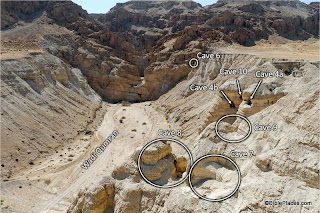
Bible believers often are confronted with the charge that the Bible is filled with mistakes. These alleged mistakes can be placed into two major categories: (1) apparent internal inconsistencies among revealed data; and (2) scribal mistakes in the underlying manuscripts themselves. The former category involves those situations in which there are apparent discrepancies between biblical texts regarding a specific event, person, place, etc. [For a treatment of such difficulties see Archer, 1982; Geisler and Brooks, 1989, pp. 163-178]. The latter category involves a much more fundamental concern—the integrity of the underlying documents of our English translations. Some charge that the Hebrew, Aramaic, and Greek manuscripts, having been copied and recopied by hand over many years, contain a plethora of scribal errors that have altered significantly the information presented in the original documents. As such, we cannot be confident that our English translations reflect the information initially penned by biblical writers. However, the materials discovered at Qumran, commonly called the Dead Sea Scrolls, have provided impressive evidence for both the integrity of the Hebrew and Aramaic manuscripts of the Old Testament and the authenticity of the books themselves.

DATE OF THE MATERIALS

When the scrolls first were discovered in 1947, scholars disputed their dates of composition. Scholars now generally agree that although some materials are earlier, the Qumran materials date primarily to the Hasmonean (152-63 B.C.) and early Roman periods (63 B.C.-A.D. 68). Several strands of evidence corroborate these conclusions. First, archaeological evidence from the ruins of the Qumran community supports these dates. After six major seasons of excavations, archaeologists have identified three specific phases of occupation at the ancient center of Qumran. Coinage discovered in the first stratum dates from the reign of Antiochus VII Sidetes (138-129 B.C.). Such artifacts also indicate that the architecture associated with the second occupational phase dates no later than the time of Alexander Jannaeus (103-76 B.C.). Also reflected in the material remains of the site is the destruction of its buildings in the earthquake reported by the first-century Jewish historian, Josephus (Antiquities of the Jews, 15.5.2). Apparently, this natural disaster occurred around 31 B.C. a position that prompted the occupants to abandon the site for an indeterminate time. Upon reoccupation of the area—the third phase—the buildings were repaired and rebuilt precisely on the previous plan of the old communal complex. The community flourished until the Romans, under the military direction of Vespasian, occupied the site by force (see Cross, 1992, pp. 21-22). Such evidence is consistent with the second century B.C. to first-century A.D. dates for the scrolls.

The second strand of evidence is that the generally accepted dates for the scrolls are corroborated by palaeographical considerations. Palaeography is the study of ancient writing and, more specifically, the shape and style of letters. Characteristic of ancient languages, the manner in which Hebrew and Aramaic letters were written changed over a period of time. The trained eye can determine, within certain boundaries, the time frame of a document based upon the shape of its letters. This is the method by which scholars determine the date of a text on palaeographical grounds. According to this technique, the scripts at Qumran belong to three periods of palaeographical development: (1) a small group of biblical texts whose archaic style reflects the period between about 250-150 B.C.; (2) a large cache of manuscripts, both biblical and non-biblical, that is consistent with a writing style common to the Hasmonean period (c. 150-30 B.C.); and (3) a similarly large number of texts that evinces a writing style characteristic of the Herodian period (30 B.C.-A.D. 70). This linguistic information also is consistent with the commonly accepted dates of the Qumran materials.

Finally, as an aside, the carbon-14 tests done on both the cloth in which certain scrolls were wrapped, and the scrolls themselves, generally correspond to the palaeographic dates. There are, however, some considerable differences. Due to the inexact nature of carbon-14 dating techniques (see Major, 1993), and the possibility of chemical contamination, scholars place greater confidence in the historically corroborated palaeographic dates (see Shanks, 1991, 17[6]:72). At any rate, the archaeological and linguistic data provide scholars with reasonable confidence that the scrolls date from 250 B.C. to A.D. 70.

THE IMPORTANCE OF THE SCROLLS

While the importance of these documents is multifaceted, one of their principle contributions to biblical studies is in the area of textual criticism. This is the field of study in which scholars attempt to recreate the original content of a biblical text as closely as possible. Such work is legitimate and necessary since we possess only copies (apographs), not the original manuscripts (autographs) of Scripture. The Dead Sea Scrolls are of particular value in this regard for at least two reasons: (1) every book of the traditional Hebrew canon, except Esther, is represented (to some degree) among the materials at Qumran (Collins, 1992, 2:89); and (2) they have provided textual critics with ancient manuscripts against which they can compare the accepted text for accuracy of content.

THE SCROLLS AND THE MASORETIC TEXT

This second point is of particular importance since, prior to the discovery of the Qumran manuscripts, the earliest extant Old Testament texts were those known as the Masoretic Text (MT), which dated from about A.D. 980. The MT is the result of editorial work performed by Jewish scribes known as the Masoretes. The scribes’ designation was derived from the Hebrew word masora, which refers collectively to the notes entered on the top, bottom, and side margins of the MT manuscripts to safeguard traditional transmission. Hence, the Masoretes, as their name suggests, were the scribal preservers of the masora (Roberts, 1962, 3:295). From the fifth to the ninth century A.D., the Masoretes labored to introduce both these marginal notes and vowel points to the consonantal text—primarily to conserve correct pronunciation and spelling (see Seow, 1987, pp. 8-9).

Critical scholars questioned the accuracy of the MT, which formed the basis of our English versions of the Old Testament, since there was such a large chronological gap between it and the autographs. Because of this uncertainty, scholars often “corrected” the text with considerable freedom. Qumran, however, has provided remains of an early Masoretic edition predating the Christian era on which the traditional MT is based. A comparison of the MT to this earlier text revealed the remarkable accuracy with which scribes copied the sacred texts. Accordingly, the integrity of the Hebrew Bible was confirmed, which generally has heightened its respect among scholars and drastically reduced textual alteration.

Most of the biblical manuscripts found at Qumran belong to the MT tradition or family. This is especially true of the Pentateuch and some of the Prophets. The well-preserved Isaiah scroll from Cave 1 illustrates the tender care with which these sacred texts were copied. Since about 1700 years separated Isaiah in the MT from its original source, textual critics assumed that centuries of copying and recopying this book must have introduced scribal errors into the document that obscured the original message of the author.

The Isaiah scrolls found at Qumran closed that gap to within 500 years of the original manuscript. Interestingly, when scholars compared the MT of Isaiah to the Isaiah scroll of Qumran, the correspondence was astounding. The texts from Qumran proved to be word-for-word identical to our standard Hebrew Bible in more than 95 percent of the text. The 5 percent of variation consisted primarily of obvious slips of the pen and spelling alterations (Archer, 1974, p. 25). Further, there were no major doctrinal differences between the accepted and Qumran texts (see Table 1 below). This forcibly demonstrated the accuracy with which scribes copied sacred texts, and bolstered our confidence in the Bible’s textual integrity (see Yamauchi, 1972, p. 130). The Dead Sea Scrolls have increased our confidence that faithful scribal transcription substantially has preserved the original content of Isaiah.

TABLE 1. QUMRAN VS. THE MASORETES
______________________________________
Of the 166 Hebrew words in Isaiah 53, only
seventeen letters in Dead Sea Scroll 1QIsb
differ from the Masoretic Text (Geisler and
Nix, 1986, p. 382).

10 letters = spelling differences

4 letters = stylistic changes

3 letters = added word for “light” (vs. 11)
______________________________________
17 letters = no affect on biblical teaching

CRITICAL SCHOLARSHIP, DANIEL, AND THE SCROLLS

The Qumran materials similarly have substantiated the textual integrity and authenticity of Daniel. Critical scholarship, as in the case of most all books of the Old Testament, has attempted to dismantle the authenticity of the book of Daniel. The message of the book claims to have originated during the Babylonian exile, from the first deportation of the Jews into captivity (606 B.C.; Daniel 1:1-2) to the ascension of the Persian Empire to world dominance (c. 536 B.C.; Daniel 10:1). This date, however, has been questioned and generally dismissed by critical scholars who date the final composition of the book to the second century B.C. Specifically, it is argued that the tales in chapters 1-6 as they appear in their present form can be no earlier than the Hellenistic age (c. 332 B.C.). Also, the four-kingdom outline, explicitly stated in chapter 2, allegedly requires a date after the rise of the Grecian Empire. Further, these scholars argue that since there is no explicit reference to Antiochus Epiphanes IV (175-164 B.C.), a Seleucid king clearly under prophetic consideration in chapter 11, a date in the late third or early second century B.C. is most likely (see Collins, 1992a, 2:31; Whitehorne, 1992, 1:270).

The apparent reason for this conclusion among critical scholars is the predictive nature of the book of Daniel. It speaks precisely of events that transpired several hundred years removed from the period in which it claims to have been composed. Since the guiding principles of the historical-critical method preclude a transcendent God’s intervening in human affairs (see Brantley, 1994), the idea of inspired predictive prophecy is dismissed a priori from the realm of possibility. Accordingly, Daniel could not have spoken with such precision about events so remote from his day. Therefore, critical scholars conclude that the book was written actually as a historical record of events during the Maccabean period, but couched in apocalyptic or prophetic language. Such conclusions clearly deny that this book was the authentic composition of a Daniel who lived in the sixth century B.C., that the Bible affirms.

The Dead Sea Scrolls have lifted their voice in this controversy. Due to the amount of Daniel fragments found in various caves near Qumran, it appears that this prophetic book was one of the most treasured by that community. Perhaps the popularity of Daniel was due to the fact that the people of Qumran lived during the anxious period in which many of these prophecies actually were being fulfilled. For whatever reason, Daniel was peculiarly safeguarded to the extent that we have at our disposal parts of all chapters of Daniel, except chapters 9 and 12. However, one manuscript (4QDanc; 4 = Cave 4; Q = Qumran; Danc = one of the Daniel fragments arbitrarily designated “c” for clarification), published in November 1989, has been dated to the late second century B.C. (see Hasel, 1992, 5[2]:47). Two other major documents (4QDanb, 4QDana) have been published since 1987, and contribute to scholarly analysis of Daniel. These recently released fragments have direct bearing on the integrity and authenticity of the book of Daniel.

INTEGRITY OF THE TEXT

As in the case of Isaiah, before Qumran there were no extant manuscripts of Daniel that dated earlier than the late tenth century A.D. Accordingly, scholars cast suspicion on the integrity of Daniel’s text. Also, as with Isaiah, this skepticism about the credibility of Daniel’s contents prompted scholars to take great freedom in adjusting the Hebrew text. One reason for this suspicion is the seemingly arbitrary appearance of Aramaic sections within the book. Some scholars had assumed from this linguistic shift that Daniel was written initially in Aramaic, and then some portions were translated into Hebrew. Further, a comparison of the Septuagint translation (Greek translation of the Hebrew Bible) with the MT revealed tremendous disparity in length and content between the two texts. Due to these and other considerations, critical scholars assigned little value to the MT rendition of Daniel.

Once again, however, the findings at Qumran have confirmed the integrity of Daniel’s text. Gerhard Hasel listed several strands of evidence from the Daniel fragments found at Qumran that support the integrity of the MT (see 1992, 5[2]:50). First, for the most part, the Dead Sea Scroll manuscripts of Daniel are very consistent in content among themselves, containing very few variants. Second, the Qumran fragments conform very closely to the MT overall, with only a few rare variants in the former that side with the Septuagint version. Third, the transitions from Hebrew to Aramaic are preserved in the Qumran fragments. Based on such overwhelming data, it is evident that the MT is a well-preserved rendition of Daniel. In short, Qumran assures us that we can be reasonably confident that the Daniel text on which our English translations are based is one of integrity. Practically speaking, this means that we have at our disposal, through faithful translations of the original, the truth God revealed to Daniel centuries ago.

DATE OF THE BOOK

The Daniel fragments found at Qumran also speak to the issue of Daniel’s authenticity. As mentioned earlier, conventional scholarship generally places the final composition of Daniel during the second century B.C. Yet, the book claims to have been written by a Daniel who lived in the sixth century B.C. However, the Dead Sea fragments of Daniel present compelling evidence for the earlier, biblical date of this book.

The relatively copious remains of Daniel indicate the importance of this book to the Qumran community. Further, there are clear indications that this book was considered “canonical” for the community, which meant it was recognized as an authoritative book on a par with other biblical books (e.g., Deuteronomy, Kings, Isaiah, Psalms). The canonicity of Daniel at Qumran is indicated, not only by the prolific fragments, but by the manner in which it is referenced in other materials. One fragment employs the quotation, “which was written in the book of Daniel the prophet.” This phrase, similar to Jesus’ reference to “Daniel the prophet” (Matthew 24:15), was a formula typically applied to quotations from canonical Scripture at Qumran (see Hasel, 1992, 5[2]:51).

The canonical status of Daniel at Qumran is important to the date and authenticity of the book. If, as critical scholars allege, Daniel reached its final form around 160 B.C., how could it have attained canonical status at Qumran in a mere five or six decades? While we do not know exactly how long it took for a book to reach such authoritative status, it appears that more time is needed for this development (see Bruce, 1988, pp. 27-42). Interestingly, even before the most recent publication of Daniel fragments, R.K. Harrison recognized that the canonical status of Daniel at Qumran militated against its being a composition of the Maccabean era, and served as confirmation of its authenticity (1969, p. 1126-1127).

Although Harrison made this observation in 1969, over three decades before the large cache of Cave 4 documents was made available to the general and scholarly public, no new evidence has refuted it. On the contrary, the newly released texts from Qumran have confirmed this conclusion. The canonical acceptance of Daniel at Qumran indicates the antiquity of the book’s composition—certainly much earlier than the Maccabean period. Hence, the most recent publications of Daniel manuscripts offer confirmation of Daniel’s authenticity; it was written when the Bible says it was written.

A final contribution from Qumran to the biblically claimed date for Daniel’s composition comes from linguistic considerations. Though, as we mentioned earlier, critical scholars argue that the Aramaic sections in Daniel indicate a second-century B.C. date of composition, the Qumran materials suggest otherwise. In fact, a comparison of the documents at Qumran with Daniel demonstrates that the Aramaic in Daniel is a much earlier composition than the second-century B.C. Such a comparison further demonstrates that Daniel was written in a region different from that of Judea. For example, the Genesis Apocryphon found in Cave 1 is a second-century B.C. document written in Aramaic—the same period during which critical scholars argue that Daniel was composed. If the critical date for Daniel’s composition were correct, it should reflect the same linguistic characteristics of the Genesis Apocryphon. Yet, the Aramaic of these two books is markedly dissimilar.

The Genesis Apocryphon, for example, tends to place the verb toward the beginning of the clause, whereas Daniel tends to defer the verb to a later position in the clause. Due to such considerations, linguists suggest that Daniel reflects an Eastern type Aramaic, which is more flexible with word order, and exhibits scarcely any Western characteristics at all. In each significant category of linguistic comparison (i.e., morphology, grammar, syntax, vocabulary), the Genesis Apocryphon (admittedly written in the second century B.C.) reflects a much later style than the language of Daniel (Archer, 1980, 136:143; cf. Yamauchi, 1980). Interestingly, the same is true when the Hebrew of Daniel is compared with the Hebrew preserved in the Qumran sectarian documents (i.e., those texts composed by the Qumran community reflecting their peculiar societal laws and religious customs). From such linguistic considerations provided by Qumran, Daniel hardly could have been written by a Jewish patriot in Judea during the early second-century B.C., as the critics charge.

CONCLUSION

There are, of course, critical scholars who, despite the evidence, continue to argue against the authenticity of Daniel and other biblical books. Yet, the Qumran texts have provided compelling evidence that buttresses our faith in the integrity of the manuscripts on which our translations are based. It is now up to Bible believers to allow these texts to direct our attention to divine concerns and become the people God intends us to be.

REFERENCES

Archer, Gleason, Jr. (1974), A Survey of Old Testament Introduction (Chicago, IL: Moody).

Archer, Gleason, Jr. (1980), “Modern Rationalism and the Book of Daniel,” Bibliotheca Sacra, 136:129-147, April-June.

Archer, Gleason, Jr. (1982), Encyclopedia of Bible Difficulties (Grand Rapids, MI: Baker).

Brantley, Garry K. (1994), “Biblical Miracles: Fact or Fiction?,” Reason and Revelation, 14:33-38, May.

Bruce, F.F. (1988), The Canon of Scriptures (Downers Grove, IL: InterVarsity Press).

Collins, John J. (1992a), “Daniel, Book of,” The Anchor Bible Dictionary, ed. David Noel Freedman (New York: Doubleday), 2:29-37.

Collins, John J. (1992b), “Dead Sea Scrolls,” The Anchor Bible Dictionary, ed. David Noel Freedman (New York: Doubleday), 2:85-101.

Cross, Frank Moore (1992), “The Historical Context of the Scrolls,” Understanding the Dead Sea Scrolls, ed. Hershel Shanks (New York: Random House).

Geisler, Norman and Ronald Brooks (1989), When Skeptics Ask (Wheaton, IL: Victor).

Geisler, Norman and William Nix (1986), A General Intorduction to the Bible (Chicago, IL: Moody).

Harrison, R.K. (1969), Introduction to the Old Testament (Grand Rapids, MI: Eerdmans).

Hasel, Gerhard (1992), “New Light on the Book of Daniel from the Dead Sea Scrolls,” Archaeology and Biblical Research, 5[2]:45-53, Spring.

Josephus, “Antiquities of the Jews,” The Life and Works of Flavius Josephus, (Chicago, IL: John C. Winston; translated by William Whiston).

Major, Trevor (1993), “Dating in Archaeology: Radiocarbon and Tree-Ring Dating,” Reason and Revelation, 13:73-77, October.

Roberts, B.J. (1962), “Masora,” The Interpreter’s Dictionary of the Bible (Nashville, TN: Abingdon), 3:295.

Seow, C.L. (1987), A Grammar for Biblical Hebrew (Nashville, TN: Abingdon).

Shanks, Hershel (1991), “Carbon-14 Tests Substantiate Scroll Dates,” Biblical Archaeology Review, 17[6]:72, November/December.

Whitehorne, John (1992), “Antiochus,” The Anchor Bible Dictionary, ed. David Noel Freedman (New York: Doubleday), 1:269-272.

Yamauchi, Edwin (1972), The Stones and the Scriptures: An Evangelical Perspective (New York: Lippincott).

Yamauchi, Edwin (1980), “The Archaeological Background of Daniel,” Bibliotheca Sacra, 137:3-16, January-March.


Copyright © 1995 Apologetics Press, Inc. All rights reserved.

We are happy to grant permission for items in the “Inspiration of the Bible” section to be reproduced in their entirety, as long as the following stipulations are observed: (1) Apologetics Press must be designated as the original publisher; (2) the specific Apologetics Press Web site URL must be noted; (3) the author’s name must remain attached to the materials; (4) any references, footnotes, or endnotes that accompany the article must be included with any written reproduction of the article; (5) alterations of any kind are strictly forbidden (e.g., photographs, charts, graphics, quotations, etc. must be reproduced exactly as they appear in the original); (6) serialization of written material (e.g., running an article in several parts) is permitted, as long as the whole of the material is made available, without editing, in a reasonable length of time; (7) articles, in whole or in part, may not be offered for sale or included in items offered for sale; and (8) articles may be reproduced in electronic form for posting on Web sites pending they are not edited or altered from their original content and that credit is given to Apologetics Press, including the web location from which the articles were taken.

For catalog, samples, or further information, contact:

Apologetics Press
230 Landmark Drive
Montgomery, Alabama 36117
U.S.A.
Phone (334) 272-8558

http://www.apologeticspress.org

Related posts:

Robert Dick Wilson’s talk “Is the Higher Criticism Scholarly?” (part 3 of transcript) (Wilson looks at the Book of Daniel)

The Bible and Archaeology (4/5) For many more archaeological evidences in support of the Bible, see Archaeology and the Bible . (There are some great posts on this too at the bottom of this post.)   Robert Dick Wilson at the Grove City Bible Conference in 1909. IS THE HIGHER CRITICISM SCHOLARLY?Clearly attested facts showing that […]

Hanukkah celebrates Maccabean Revolt: Was the Book of Daniel written then or when the Bible claims?

Bible Prophecy vs. History (Daniel 11:1-19) _____________________________ Wikipedia notes: Hanukkah (Hebrew: חֲנֻכָּה‎, Tiberian: Ḥănukkāh, usually spelled חנוכה pronounced [χanuˈka] in Modern Hebrew, also romanized as Chanukah, Chanukkah, or Chanuka), also known as the Festival of Lights, is an eight-day Jewish holiday commemorating the rededication of the Holy Temple (the Second Temple) in Jerusalem at the time […]

Was Daniel an Eyewitness of 6th-Century B.C. Events? (part 2) (Plus Six Pieces of Archaeological Evidence that Support the 6th Century View and video of John MacArthur on Daniel 4)

The Bible and Archaeology (3/5) For many more archaeological evidences in support of the Bible, see Archaeology and the Bible . (There are some great posts on this too at the bottom of this post.) I believe the evidence points to Daniel writing the Book of Daniel in the 6th century B.C. Below is a sermon […]

Was Daniel an Eyewitness of 6th-Century B.C.Events? (part 1)

The Bible and Archaeology (2/5) There is evidence pointing to the accuracy of the Bible. Here is some below. For many more archaeological evidences in support of the Bible, see Archaeology and the Bible . (There are some great posts on this too at the bottom of this post.) Was Daniel an Eyewitness of 6th-Century B. […]

The Critics’ Admissions Concerning Daniel

The Bible and Archaeology (1/5) I have been amazed at the prophecies in the Bible that have been fulfilled in history. John MacArthur went through every detail of the prophecy concerning Tyre and how history shows the Bible prophecy was correct.   I love the Book of Daniel and I am starting a series today […]

Is the Bible historically accurate? Here are some of the posts I have done in the past on the subject:


1. 
The Babylonian Chronicle
of Nebuchadnezzars Siege of Jerusalem

This clay tablet is a Babylonian chronicle recording events from 605-594BC. It was first translated in 1956 and is now in the British Museum. The cuneiform text on this clay tablet tells, among other things, 3 main events: 1. The Battle of Carchemish (famous battle for world supremacy where Nebuchadnezzar of Babylon defeated Pharoah Necho of Egypt, 605 BC.), 2. The accession to the throne of Nebuchadnezzar II, the Chaldean, and 3. The capture of Jerusalem on the 16th of March, 598 BC.

2. Hezekiah’s Siloam Tunnel Inscription.

King Hezekiah of Judah ruled from 721 to 686 BC. Fearing a siege by the Assyrian king, Sennacherib, Hezekiah preserved Jerusalem’s water supply by cutting a tunnel through 1,750 feet of solid rock from the Gihon Spring to the Pool of Siloam inside the city walls (2 Kings 20; 2 Chron. 32). At the Siloam end of the tunnel, an inscription, presently in the archaeological museum at Istanbul, Turkey, celebrates this remarkable accomplishment.

3. Taylor Prism (Sennacherib Hexagonal Prism)

It contains the victories of Sennacherib himself, the Assyrian king who had besieged Jerusalem in 701 BC during the reign of king Hezekiah, it never mentions any defeats. On the prism Sennacherib boasts that he shut up “Hezekiah the Judahite” within Jerusalem his own royal city “like a caged bird.” This prism is among the three accounts discovered so far which have been left by the Assyrian king Sennacherib of his campaign against Israel and Judah.

4. Biblical Cities Attested Archaeologically.

In addition to Jericho, places such as Haran, Hazor, Dan, Megiddo, Shechem, Samaria, Shiloh, Gezer, Gibeah, Beth Shemesh, Beth Shean, Beersheba, Lachish, and many other urban sites have been excavated, quite apart from such larger and obvious locations as Jerusalem or Babylon. Such geographical markers are extremely significant in demonstrating that fact, not fantasy, is intended in the Old Testament historical narratives;

5. The Discovery of the Hittites

Most doubting scholars back then said that the Hittites were just a “mythical people that are only mentioned in the Bible.” Some skeptics pointed to the fact that the Bible pictures the Hittites as a very big nation that was worthy of being coalition partners with Egypt (II Kings 7:6), and these bible critics would assert that surely we would have found records of this great nation of Hittites.  The ironic thing is that when the Hittite nation was discovered, a vast amount of Hittite documents were found. Among those documents was the treaty between Ramesses II and the Hittite King.

6.Shishak Smiting His Captives

The Bible mentions that Shishak marched his troops into the land of Judah and plundered a host of cities including Jerusalem,  this has been confirmed by archaeologists. Shishak’s own record of his campaign is inscribed on the south wall of the Great Temple of Amon at Karnak in Egypt. In his campaign he presents 156 cities of Judea to his god Amon.

7. Moabite Stone

The Moabite Stone also known as the Mesha Stele is an interesting story. The Bible says in 2 Kings 3:5 that Mesha the king of Moab stopped paying tribute to Israel and rebelled and fought against Israel and later he recorded this event. This record from Mesha has been discovered.

8Black Obelisk of Shalmaneser III

The tribute of Jehu, son of Omri, silver, gold, bowls of gold, chalices of gold, cups of gold, vases of gold, lead, a sceptre for the king, and spear-shafts, I have received.”

View from the dome of the Capitol!9A Verification of places in Gospel of John and Book of Acts.

Sir William Ramsay, famed archaeologist, began a study of Asia Minor with little regard for the book of Acts. He later wrote:

I found myself brought into contact with the Book of Acts as an authority for the topography, antiquities and society of Asia Minor. It was gradually borne upon me that in various details the narrative showed marvelous truth.

9B Discovery of Ebla TabletsWhen I think of discoveries like the Ebla Tablets that verify  names like Adam, Eve, Ishmael, David and Saul were in common usage when the Bible said they were, it makes me think of what amazing confirmation that is of the historical accuracy of the Bible.

10. Cyrus Cylinder

There is a well preserved cylinder seal in the Yale University Library from Cyrus which contains his commands to resettle the captive nations.

11. Puru “The lot of Yahali” 9th Century B.C.E.

This cube is inscribed with the name and titles of Yahali and a prayer: “In his year assigned to him by lot (puru) may the harvest of the land of Assyria prosper and thrive, in front of the gods Assur and Adad may his lot (puru) fall.”  It provides a prototype (the only one ever recovered) for the lots (purim) cast by Haman to fix a date for the destruction of the Jews of the Persian Empire, ostensibly in the fifth century B.C.E. (Esther 3:7; cf. 9:26).

12. The Uzziah Tablet Inscription

The Bible mentions Uzziah or Azariah as the king of the southern kingdom of Judah in 2 Kings 15. The Uzziah Tablet Inscription is a stone tablet (35 cm high x 34 cm wide x 6 cm deep) with letters inscribed in ancient Hebrew text with an Aramaic style of writing, which dates to around 30-70 AD. The text reveals the burial site of Uzziah of Judah, who died in 747 BC.

13. The Pilate Inscription

The Pilate Inscription is the only known occurrence of the name Pontius Pilate in any ancient inscription. Visitors to the Caesarea theater today see a replica, the original is in the Israel Museum in Jerusalem. There have been a few bronze coins found that were struck form 29-32 AD by Pontius Pilate

14. Caiaphas Ossuary

This beautifully decorated ossuary found in the ruins of Jerusalem, contained the bones of Caiaphas, the first century AD. high priest during the time of Jesus.

14 B Pontius Pilate Part 2      

In June 1961 Italian archaeologists led by Dr. Frova were excavating an ancient Roman amphitheatre near Caesarea-on-the-Sea (Maritima) and uncovered this interesting limestone block. On the face is a monumental inscription which is part of a larger dedication to Tiberius Caesar which clearly says that it was from “Pontius Pilate, Prefect of Judea.”

14c. Three greatest American Archaeologists moved to accept Bible’s accuracy through archaeology.

Despite their liberal training, it was archaeological research that bolstered their confidence in the biblical text:Albright said of himself, “I must admit that I tried to be rational and empirical in my approach [but] we all have presuppositions of a philosophical order.” The same statement could be applied as easily to Gleuck and Wright, for all three were deeply imbued with the theological perceptions which infused their work.


REVIEW OF “Bibi: My Story – by Benjamin Netanyahu” Part 12 BIBI BELIEVED JOHN KERRY DOESNT HAVE A GOOD GRASP AND Afghanistan is a perfect example!!!’

___

Yoni, Bibi and Iddo Netanyahu (Courtesy Netanyahu family)

Yoni, Bibi and Iddo Netanyahu (Courtesy Netanyahu family)

https://www.youtube.com/live/rQaiPuBYaNY?si=GfJc-6SNK_PEdPRL

tuti netanyahu

——

tuti netanyahu

JOHN KERRY DOESNT HAVE A GOOD GRASP AND Afghanistan is a perfect example!!!’

In my discussions with the secretary, I repeatedly focused on the need to have Israel control our eastern border along the Jordan. I also insisted that we maintain the right of the IDF and Shin Bet to root out terror cells and armament production within the Palestinian-controlled areas. “The Palestinians,” I said, “simply do not and will not do the job.” Kerry brought in US general John Allen to suggest an alternative. I called in Boogie Yaalon, whom I had recently appointed as defense minister, to hear the American proposal with me. Allen laid out a presentation of US technological monitors that would be placed along the border. He said this would obviate the need for permanently stationed Israeli forces along the Jordan. As for the internal policing against terrorism within the Palestinian areas, the US would train the Palestinian security forces to do the job. I responded that shortly after Israel left Gaza, those same Palestinian Authority security forces caved to Hamas terrorists. “This is different,” Kerry said. “These forces would be trained by us.” He then made an extraordinary proposal. “Bibi, I want to arrange a clandestine visit for you to Afghanistan. You’ll see with your own eyes what a great job we did there to prepare the Afghan army to take over the country once we leave.” Yaalon and I looked at each other. Our glances said everything. “John,” I said, “the minute you leave Afghanistan the Taliban will mop up the force you trained in no time.” Boogie concurred completely. In 2021, that is exactly what happened. Once the US withdrew its last forces, the US-trained Afghan military crumbled into dust in a matter of days. I remembered a similar discussion with another secretary of state, George Shultz, who made the same argument to encourage our withdrawal from Lebanon. The US was training the Lebanese Army to take over the country. I argued that once we left Lebanon, radical forces would grab control. Lacking the cohesive zealotry of the radicals, the American-trained forces would collapse or become irrelevant. That’s exactly what happened when we withdrew from Lebanon in May 2000. Hezbollah took over the country in no time. The United States could afford to leave Afghanistan, albeit with tragic consequences for the Afghan people, who would again be subjugated by the Taliban, because that country was thousands of miles away from America. But an Israeli withdrawal from large areas in Judea and Samaria would place the Islamists a few thousand meters from all of our major cities. We would hand the hills around Jerusalem and Tel Aviv to Hamas. A terrorist organization supported by Iran and committed to our destruction would take over the heart of our homeland and threaten our survival. US officials repeatedly underestimated the power of the Islamists and overestimated the power of their non-Islamist allies. Unless you have forces with an equal commitment to fight and die to defend their country, the Islamists eventually win. As long as Israeli forces held on to territories adjoining Israel, the Islamists would be kept at bay. The minute we vacated those territories, the Islamists would take over, as did Hezbollah in Lebanon and Hamas in Gaza.

The Single Best Article (So Far) on the Hamas-Israel War

|

It’s by perhaps Israel’s best national security journalist, Haviv Rettig Gur:

Theories abound about Hamas’s reasons for the assault. Many suggested it was an Iranian-ordered disruption of Israeli-Saudi normalization. Others focused on internal Palestinian politics and suggested Hamas was positioning itself, even at the cost of an inevitable and crushing Israeli retaliation, as the unquestioned leader of the Palestinian struggle after Mahmoud Abbas’s death. Still others said the reasons were simpler: The two Hamas leaders in Gaza who prepared and launched the operation were military chief Muhammad Deif and political head Yahye Sinwar. The first lost his family to an Israeli airstrike aimed at him, the second sat for 22 years in an Israeli prison. Neither needed an overwrought geopolitical rationale to piece together such an operation.

There is probably some truth in all these theories. All make sense. But none are how Hamas itself explained the operation in real-time.

Here lies a part of Palestinian thinking and discourse that many of Palestine’s Western defenders ignore, both because it’s a hard sell to Western audiences and because they don’t really understand it themselves. Palestinian “resistance,” as conceived by Hamas, is about much more than settlements, occupation or the Green Line. A larger theory of Islamic renewal is at work.

This reclamation of Islamic dignity through the ultimate defeat of the Jews occupies a great deal of Hamas’s political thought, permeates its rhetoric and profoundly shapes its thinking about Israeli Jews and its strategy in facing Israel. Israel is more than a mere occupier or oppressor in this narrative, it is a rebellion against God and the divinely ordained trajectory of history. And by showing Israelis in their weakness, the thinking goes, Israelis are somehow actually made weak. Redemption requires only the faith of its believers to be fulfilled, and seeing is believing….

Israelis can handle humiliation; they are less moved by the politics of honor than are their enemies. But these heirs of a collective memory forged in the fires of the 20th century cannot handle the experience of defenselessness Hamas has imposed on them. Hamas seemed to do everything possible to shift Israeli psychology from a comfortable faith in their own strength to a sense of dire vulnerability.

And it will soon learn the scale of that miscalculation. A strong Israel may tolerate a belligerent Hamas on its border; a weaker one cannot. A safe Israel can spend much time and resources worrying about the humanitarian fallout from a Gaza ground war; a more vulnerable Israel cannot.

A wounded, weakened Israel is a fiercer Israel.

Hamas was once a tolerable threat. It just made itself an intolerable one, all while convincing Israelis they are too vulnerable and weak to respond with the old restraint.

Read the whole thing.

___

______

Archaeology keeps on confirming the Bible’s accuracy over and over again!!!

Archaeology and the Bible

By: Eric Metaxas|Published: April 3, 2014 12:30 AM

Speaking of facts, in the LATEST ISSUE of BIBLICAL ARCHAEOLOGY REVIEW, Lawrence Mykytiuk of Purduedaily_commentary_04_03_14 asks and answers the question “HOW MANY PEOPLE IN THE HEBREW BIBLE HAVE BEEN CONFIRMED ARCHAEOLOGICALLY?’

The conservative answer is AT LEAST FIFTY.
The most famous of these is KING DAVID who, until relatively recently was believed by many scholars to either be a “shadowy, perhaps mythical ancestor” or a “literary creation of later biblical authors and editors.”

All of this changed, however, in 1993 when archaeologists found a stele dating from the ninth century B.C., commissioned by the king of Damascus with the inscription “House of David.” The issue of David’s historicity was laid to rest.

In addition to David, archeologists have been able to independently corroborate the existence of kings such as Hezekiah. The water tunnel he used during the Assyrian siege, described in both 2 Kings and 2 Chronicles, has been discovered in Jerusalem.
Confirmation isn’t limited to those described as doing what was right in the sight of the Lord. Eight of the northern kingdom’s kings—including the notorious Ahab and Jeroboam II, whose reign was denounced by Hosea and Amos—have been verified archaeologically.
Nor is independent corroboration limited to the kings of Judah and Israel. The existence of numerous pagan kings mentioned in the Bible has been verified by archeologists. Some of them, such as Nebuchadnezzar of Babylon and Cyrus the Great of Persia, are prominent figures in world history.
Others are not. Second Kings and Isaiah both mention Adrammelech, the son and murderer of Sennacherib, the king of Assyria. The Bible tells us he then fled and never took over as king. Cuneiform inscriptions confirm the biblical tale.
Even the Iron Age equivalents of middle-level bureaucrats mentioned in Scripture have been independently verified.
Make no bones about it: The Bible is easily the most verified book of antiquity—and not just its historical figures, but the copies of the manuscripts themselves. It’s not even close. For instance, the oldest surviving copies of works we have by Herodotus, Plato and even Homer only date back to the early middle ages—some 800 and 1,300 hundred years after they were written.
In contrast, as Frederick Kenyon of the British Museum put it, “the interval … between the dates of the original composition [of the New Testament] and the earliest extant evidence [is] so small as to be in fact negligible.”

The Bible and Archaeology (1/5)

The Bible maintains several characteristics that prove it is from God. One of those is the fact that the Bible is accurate in every one of its details. The field of archaeology brings to light this amazing accuracy and Kyle Butt does a great job of showing that in this film series he did on “The Bible and Archaeology.”

_________________________-

Is the Bible historically accurate? Here are some of the posts I have done in the past on the subject:


1. 
The Babylonian Chronicle
of Nebuchadnezzars Siege of Jerusalem

This clay tablet is a Babylonian chronicle recording events from 605-594BC. It was first translated in 1956 and is now in the British Museum. The cuneiform text on this clay tablet tells, among other things, 3 main events: 1. The Battle of Carchemish (famous battle for world supremacy where Nebuchadnezzar of Babylon defeated Pharoah Necho of Egypt, 605 BC.), 2. The accession to the throne of Nebuchadnezzar II, the Chaldean, and 3. The capture of Jerusalem on the 16th of March, 598 BC.

2. Hezekiah’s Siloam Tunnel Inscription.

King Hezekiah of Judah ruled from 721 to 686 BC. Fearing a siege by the Assyrian king, Sennacherib, Hezekiah preserved Jerusalem’s water supply by cutting a tunnel through 1,750 feet of solid rock from the Gihon Spring to the Pool of Siloam inside the city walls (2 Kings 20; 2 Chron. 32). At the Siloam end of the tunnel, an inscription, presently in the archaeological museum at Istanbul, Turkey, celebrates this remarkable accomplishment.

3. Taylor Prism (Sennacherib Hexagonal Prism)

It contains the victories of Sennacherib himself, the Assyrian king who had besieged Jerusalem in 701 BC during the reign of king Hezekiah, it never mentions any defeats. On the prism Sennacherib boasts that he shut up “Hezekiah the Judahite” within Jerusalem his own royal city “like a caged bird.” This prism is among the three accounts discovered so far which have been left by the Assyrian king Sennacherib of his campaign against Israel and Judah.

4. Biblical Cities Attested Archaeologically.

In addition to Jericho, places such as Haran, Hazor, Dan, Megiddo, Shechem, Samaria, Shiloh, Gezer, Gibeah, Beth Shemesh, Beth Shean, Beersheba, Lachish, and many other urban sites have been excavated, quite apart from such larger and obvious locations as Jerusalem or Babylon. Such geographical markers are extremely significant in demonstrating that fact, not fantasy, is intended in the Old Testament historical narratives;

5. The Discovery of the Hittites

Most doubting scholars back then said that the Hittites were just a “mythical people that are only mentioned in the Bible.” Some skeptics pointed to the fact that the Bible pictures the Hittites as a very big nation that was worthy of being coalition partners with Egypt (II Kings 7:6), and these bible critics would assert that surely we would have found records of this great nation of Hittites.  The ironic thing is that when the Hittite nation was discovered, a vast amount of Hittite documents were found. Among those documents was the treaty between Ramesses II and the Hittite King.

6.Shishak Smiting His Captives

The Bible mentions that Shishak marched his troops into the land of Judah and plundered a host of cities including Jerusalem,  this has been confirmed by archaeologists. Shishak’s own record of his campaign is inscribed on the south wall of the Great Temple of Amon at Karnak in Egypt. In his campaign he presents 156 cities of Judea to his god Amon.

7. Moabite Stone

The Moabite Stone also known as the Mesha Stele is an interesting story. The Bible says in 2 Kings 3:5 that Mesha the king of Moab stopped paying tribute to Israel and rebelled and fought against Israel and later he recorded this event. This record from Mesha has been discovered.

8Black Obelisk of Shalmaneser III

The tribute of Jehu, son of Omri, silver, gold, bowls of gold, chalices of gold, cups of gold, vases of gold, lead, a sceptre for the king, and spear-shafts, I have received.”

________________

The Bible and Archaeology (2/5)

9A Verification of places in Gospel of John and Book of Acts.

Sir William Ramsay, famed archaeologist, began a study of Asia Minor with little regard for the book of Acts. He later wrote:

I found myself brought into contact with the Book of Acts as an authority for the topography, antiquities and society of Asia Minor. It was gradually borne upon me that in various details the narrative showed marvelous truth.

9B Discovery of Ebla TabletsWhen I think of discoveries like the Ebla Tablets that verify  names like Adam, Eve, Ishmael, David and Saul were in common usage when the Bible said they were, it makes me think of what amazing confirmation that is of the historical accuracy of the Bible.

10. Cyrus Cylinder

There is a well preserved cylinder seal in the Yale University Library from Cyrus which contains his commands to resettle the captive nations.

11. Puru “The lot of Yahali” 9th Century B.C.E.

This cube is inscribed with the name and titles of Yahali and a prayer: “In his year assigned to him by lot (puru) may the harvest of the land of Assyria prosper and thrive, in front of the gods Assur and Adad may his lot (puru) fall.”  It provides a prototype (the only one ever recovered) for the lots (purim) cast by Haman to fix a date for the destruction of the Jews of the Persian Empire, ostensibly in the fifth century B.C.E. (Esther 3:7; cf. 9:26).

12. The Uzziah Tablet Inscription

The Bible mentions Uzziah or Azariah as the king of the southern kingdom of Judah in 2 Kings 15. The Uzziah Tablet Inscription is a stone tablet (35 cm high x 34 cm wide x 6 cm deep) with letters inscribed in ancient Hebrew text with an Aramaic style of writing, which dates to around 30-70 AD. The text reveals the burial site of Uzziah of Judah, who died in 747 BC.

13. The Pilate Inscription

The Pilate Inscription is the only known occurrence of the name Pontius Pilate in any ancient inscription. Visitors to the Caesarea theater today see a replica, the original is in the Israel Museum in Jerusalem. There have been a few bronze coins found that were struck form 29-32 AD by Pontius Pilate

14. Caiaphas Ossuary

This beautifully decorated ossuary found in the ruins of Jerusalem, contained the bones of Caiaphas, the first century AD. high priest during the time of Jesus.

14 B Pontius Pilate Part 2      

In June 1961 Italian archaeologists led by Dr. Frova were excavating an ancient Roman amphitheatre near Caesarea-on-the-Sea (Maritima) and uncovered this interesting limestone block. On the face is a monumental inscription which is part of a larger dedication to Tiberius Caesar which clearly says that it was from “Pontius Pilate, Prefect of Judea.”

14c. Three greatest American Archaeologists moved to accept Bible’s accuracy through archaeology.

Despite their liberal training, it was archaeological research that bolstered their confidence in the biblical text:Albright said of himself, “I must admit that I tried to be rational and empirical in my approach [but] we all have presuppositions of a philosophical order.” The same statement could be applied as easily to Gleuck and Wright, for all three were deeply imbued with the theological perceptions which infused their work.

The Bible and Archaeology (3/5)

Related posts:

Despite what Lidar Sapir-Hen and Erez Ben-Yosef of Tel Aviv University say CAMELS DID EXIST DURING THE TIME OF THE OLD TESTAMENT!!!!

The Bible and Archaeology (1/5) The Bible maintains several characteristics that prove it is from God. One of those is the fact that the Bible is accurate in every one of its details. The field of archaeology brings to light this amazing accuracy and Kyle Butt does a great job of showing that in this […]

John MacArthur on fulfilled prophecy from the Bible Part 2

I have posted many of the sermons by John MacArthur. He is a great bible teacher and this sermon below is another great message. His series on the Book of Proverbs was outstanding too.  I also have posted several of the visits MacArthur made to Larry King’s Show. One of two most popular posts I […]

John MacArthur on fulfilled prophecy from the Bible Part 1

I have posted many of the sermons by John MacArthur. He is a great bible teacher and this sermon below is another great message. His series on the Book of Proverbs was outstanding too.  I also have posted several of the visits MacArthur made to Larry King’s Show. One of two most popular posts I […]

Adrian Rogers: “Why I believe the Bible is true”

Adrian Rogers – How you can be certain the Bible is the word of God Great article by Adrian Rogers. What evidence is there that the Bible is in fact God’s Word? I want to give you five reasons to affirm the Bible is the Word of God. First, I believe the Bible is the […]

Easter weekend 2013, List of posts on series: Is the Bible historically accurate? (Updated 1 through 14C)

“In Christ Alone” music video featuring scenes from “The Passion of the Christ”. It is sung by Lou Fellingham of Phatfish and the writer of the hymn is Stuart Townend. On this Easter weekend 2013 there is no other better time to take a look at the truth and accuracy of the Bible.    Is the […]

Evidence for the Bible (Updated)

The Bible and Archaeology (1/5) The Bible maintains several characteristics that prove it is from God. One of those is the fact that the Bible is accurate in every one of its details. The field of archaeology brings to light this amazing accuracy. _________________________- Many people have questioned the accuracy of the Bible, but I […]

John MacArthur on Larry King Live Part 4 The Bible on War

Larry King – Dr. John MacArthur vs. “father” Manning Uploaded on Sep 26, 2011 GotoThisSite.org ___________ I have seen John MacArthur on Larry King Show many times and I thought you would like to see some of these episodes. I have posted several of John MacArthur’s sermons in the past and my favorite is his […]

Book of Mormon is not historically accurate, but Bible is (Part 33)

The Book of Mormon vs The Bible, Part 7 of an indepth study of Latter Day Saints Archeology The Book of Mormon verses The Bible, Part 7 of an indepth study With the great vast amounts of evidence we find in the Bible through archeology, why is there no evidence for anything written in the […]

“Is God Enough?” Fellowship Bible sermon outline by Mark Henry July 8, 2012

Many times as Christians we look at the world and we notice that many of the righteous are suffering and many of the wicked are prospering. It may cause a believer to question that there is a just God. It really gets us back to the basics. What is true success? Is God enough for […]

Book of Mormon is not historically accurate, but Bible is (Part 32) (What are the Dead Sea Scrolls?)

The Book of Mormon vs The Bible, Part 6 of an indepth study of Latter Day Saints Archeology The Book of Mormon verses The Bible, Part 6 of an indepth study With the great vast amounts of evidence we find in the Bible through archeology, why is there no evidence for anything writte in the Book […]

Book of Mormon is not historically accurate, but Bible is (Part 31)

The Book of Mormon vs The Bible, Part 5 of an indepth study of Latter Day Saints Archeology The Book of Mormon verses The Bible, Part 5 of an indepth study With the great vast amounts of evidence we find in the Bible through archeology, why is there no evidence for anything writte in the […]

REVIEW OF “Bibi: My Story – by Benjamin Netanyahu” Part 11 BIBI BELIEVED A FENCE WOULD STOP ILLEGAL IMMIGRATION AND STOP TERRORISTS FROM GETTING IN

tuti netanyahu

A FENCE WOULD STOP ILLEGAL IMMIGRATION AND STOP TERRORISTS FROM GETTING IN

Convening a special cabinet meeting with the army’s leadership and various experts, I announced my intention to build a barrier along the Israeli-Egyptian border to prevent illegal migration from Africa. I wanted the IDF Engineering Corps to do it. The military objected. Chief of Staff Gabi Ashkenazi and his Deputy Benny Gantz explained that the fence would not work.

“Why not?” I asked. “It worked pretty well for the Chinese.” “This is different,” a staff officer explained. “They could tunnel under the barrier, as in Gaza.” “I doubt it,” I said. You need buildings to hide entry and exit points. This was barren desert with no buildings in sight for many kilometers. “So they’ll climb over it,” came the retort. “Then we’ll figure out how to make sure they won’t be able to,” I said in exasperation. This barrier would not just be a fence. We could use drones, mobile forces, fire hoses. “Just get the job done,” I said. “Prime Minister,” Ashkenazi said in a last-ditch effort, “we should build a virtual fence.” “What’s that?” I asked. “We’ll have a physical barrier in the south and in the north of the border, but in between there’ll be forces using visual means to intercept infiltrators.” “Yeah,” I said, “you’ll need half the army to monitor and seal two hundred kilometers. I want a real fence, not a virtual one.”

The next obstacle the army put before me was cost. Showing diagrams of an enormously complicated multilayered barrier, they said the cost would run into many billions of shekels. “I think it could be much cheaper,” I said. I instructed the cabinet secretary to bring to the next cabinet meeting a competing bid from the Public Works Department of the Transportation Ministry. Faced with competition, the army cut its costs estimate for the fence by roughly half. I drafted a proposal to build the barrier. The cabinet approved the resolution in March 2010. Once the order was given, the chief of staff, to his credit, went into high gear. He appointed Colonel Eran Ophir, an exceptional project leader whom I later called “Herod” because he built on a scale worthy of that famed builder-king. Every three months I would fly to the Egyptian-Israeli border to monitor the work in progress. Invariably Eran’s deliverables came in ahead of schedule and under budget. During the construction, in August 2011, an incident occurred that underscored an additional reason to erect the barrier. Several terrorists from the Sinai crossed the border near Eilat and murdered six Israeli civilians and two soldiers. It was a reminder that building the fence was not only vital to stopping illegal job migrants.

It would also block the growing number of terrorists coming in from the Sinai. Less than two years after the beginning of its construction, the fence was complete. Like the Great Wall of China that inspired it, it went up and down gullies and chasms and closed the border. The rate of illegal infiltration into Israel went down to zero! Israel was thus the first Western country to effectively seal its borders.


Jewish Democrat slams ‘Squad’ members over calls to end Israel assistance

A Jewish House Democrat slammed two members of the socialist “Squad” after they called to end U.S. aid to Israel amid the country’s war with the Palestinian terrorist group Hamas. 

Fox News Digital obtained comments from New Jersey Democrat Rep. Josh Gottheimer torching Democratic Reps. Rashida Tlaib of Michigan and Cori Bush of Missouri over their comments following the outbreak of the war in Israel.

In their statements, Tlaib and Bush — both progressives — called for U.S. assistance to Israel to end amid the war.

Gottheimer, who is Jewish, noted that two of his “colleagues called for America to end assistance to Israel, despite the countless images of Israeli children, women, men, and elderly, including Americans, murdered by radical Iranian-backed Hamas terrorists.”

“Families were violently pulled from their homes as hostages,” Gottheimer said. “This is a deliberate and coordinated terrorist attack, savagely targeting innocent civilians.”

“It sickens me that while Israelis clean the blood of their family members shot in their homes, they believe Congress should strip U.S. funding to our democratic ally and allow innocent civilians to suffer,” Gottheimer said.

Fox News’ Houston Keene contributed to this update.

Posted by Chris Pandolfo


——


Great article by Adrian Rogers.

What evidence is there that the Bible is in fact God’s Word?

I want to give you five reasons to affirm the Bible is the Word of God.

First, I believe the Bible is the Word of God because of its scientific accuracy. The Truth of the Word of God tells us that God “hangeth the earth upon nothing” (Job 26:7). How did Job know that the earth hung in space before the age of modern astronomy and space travel? The Holy Spirit told him. The scientists of Isaiah’s day didn’t know the topography of the earth, but Isaiah said, “It is [God] that sitteth upon the circle of the earth” (Isaiah 40:22). The word for “circle” here means a globe or sphere. How did Isaiah know that God say upon the circle of the earth? By divine inspiration.

Secondly, the Bible is affirmed through historical accuracy. Do you remember the story about the handwriting on the wall that is found in the fifth chapter of Daniel? Belshazzar hosted a feast with a thousand of his lords and ladies. Suddenly, a gruesome hand appeared out of nowhere and began to write on a wall. The king was disturbed and asked for someone to interpret the writing. Daniel was found and gave the interpretation. After the interpretation, “Then commanded Belshazzar, and they clothed Daniel with scarlet, and put a chain of gold about his neck, and made a proclamation concerning him, that he should be the third ruler in the kingdom.” (Daniel 5:29). Basing their opinion on Babylonian records, the historians claim this never happened. According to the records, the last king of Babylon was not Belshazzar, but a man named Nabonidas. And so, they said, the Bible is in error. There wasn’t a record of a king named Belshazzar. Well, the spades of archeologists continued to do their work. In 1853, an inscription was found on a cornerstone of a temple built by Nabonidas, to the god Ur, which read: “May I, Nabonidas, king of Babylon, not sin against thee. And may reverence for thee dwell in the heart of Belshazzar, my first-born favorite son.” From other inscriptions, it was learned that Belshazzar and Nabonidas were co-regents. Nabonidas traveled while Belshazzar stayed home to run the kingdom. Now that we know that Belshazzar and Nabonidas were co-regents, it makes sense that Belshazzar would say that Daniel would be the third ruler. What a marvelous nugget of truth tucked away in the Word of God!

Third, from Genesis to Revelation, the Bible reads as one book. And there is incredible unity to the Bible. The Bible is one book, and yet it is made up of 66 books, was written by at least 40 different authors over a period of about 1600 years, in 13 different countries and on three different continents. It was written in at least three different languages by people in all professions. The Bible forms one beautiful temple of truth that does not contradict itself theologically, morally, ethically, doctrinally, scientifically, historically, or in any other way.

Fourth, did you know the Bible is the only book in the world that has accurate prophecy? When you read the prophecies of the Bible, you simply have to stand back in awe. There are over 300 precise prophecies that deal with the Lord Jesus Christ in the Old Testament that are fulfilled in the New Testament. To say that these are fulfilled by chance is an astronomical impossibility.

Finally, the Bible is not a book of the month, but the Book of the Ages. First Peter 1:25 says: “But the word of the Lord endureth for ever. And this is the Word which by the gospel is preached unto you.” No book has ever had as much opposition as the Bible. Men have laughed at it, scorned it, burned it, ridiculed it, and made laws against it. But the Word of God has survived. And it is applicable today as much as it was yesterday and will be tomorrow.

It’s so majestically deep that scholars could swim and never touch the bottom. Yet so wonderfully shallow that a little child could come and get a drink of water without fear of drowning. That is God’s precious, holy Word. The Word of God. Know it. Believe it. It is True.

WHETHER WE LIVE OR DIE

Dr. W. A. Criswell

Message to the Pastors’ Conference

Southern Baptist Convention, Dallas, Texas

6-10-85    7:30 p.m.

Not in all of my life have I ever prepared an address as minutely and meticulously as I have this one tonight.  I have been a pastor fifty-eight years.  I began preaching at this pastor’s conference at the invitation of Dr. M. E. Dodd when he founded it something like fifty years ago.  And I would think more than thirty times have I spoken to this assembly of God’s anointed undershepherds.  But I have never, ever approached a moment like this.  And the message tonight, entitled Whether We Live or Die, is delivered, prepared in view of the convocation of our assembled messengers beginning in the morning.

The outline of the address, of the study, is this:

            The Pattern of Death for a Denomination; then

            The Pattern of Death for an Institution; then

            The Pattern of Death for a Preacher, a Professor; and then finally,

            The Promise of Renascence, and Resurrection, and Revival.

So we begin: The Pattern of Death for a Denomination.

 In the middle of the last century, a great storm arose in the Baptist denomination in Great Britain.  Opposition to evangelical truths sprang from two sources: one, the publication in 1859 of Darwin’s Origin of Species, which made the Genesis account of creation a myth; and second, the vast inroads of German higher criticism and rationalism that explained away the miracles of the Bible and reduced the inspired Word to merely a human book.

This fungal attack on the Scripture brought forth open and militant opposition from the mighty preacher Charles Haddon Spurgeon.  He urged the Baptist Union of England to speak out against the heresy.  They refused, saying Baptists believe in the priesthood of every believer, and further avowed that Baptists could believe their own way so long as they baptize by immersion.  Spurgeon then published what he called “The Downgrade in the Churches.”  He wrote, “Instead of submission to God’s Word [James 4:4-10], higher criticism urges accommodation to human wisdom.  It sets human thought above God’s revelation and constitutes man the supreme judge of what ought to be true.”

He wrote, “Believers in Holy Scripture are in confederacy with those who deny plenary inspiration.  Those who hold evangelical doctrine are in open alliance with those who call the Genesis fall a myth.”

He wrote, “A chasm is opening between the men who believe their Bibles and those who are prepared for an advance upon the Scripture . . . The house is being robbed, its very walls are being digged down, but the good people who are in bed are too fond of the warmth . . . to go downstairs to meet the burglars.”  “Inspiration and speculation cannot long abide side by side . . . We cannot hold the inspiration of the Word [2 Timothy 3:16], and yet reject it.  We cannot hold the doctrine of the Fall [Romans 5:12-21; 1 Corinthians 15:22], and yet talk of evolution of spiritual life from human nature.  One or the other must go.”  “Compromise there can be none.”

Dr. John Clifford, London pastor and president of the British Baptist Union and later the first president of the Baptist World Alliance, declared in 1888, quote, “It pains me unspeakably to see this eminent [preacher Spurgeon] rousing the energies of thousands of Christians to engage in personal wrangling and strife, instead of inspiring them to . . . herioc effort to carry the . . . Gospel to our fellow-countrymen.”  Sounds kind of familiar, doesn’t it?

Dr. John Clifford had embraced the higher critical new theology.  He believed that evangelicalism and higher criticism could be combined.  Dr. Clifford presided over the Council of the Baptist Union that met in session January 18, 1888.  They voted to recommend to the plenary session of the Union a vote to censure Spurgeon.  Dr. John Clifford did his work well.  The Baptist Union met in assembly April 23, 1888, in the City Temple of London—Dr. Joseph Parker’s Congregational church, himself a critic of Spurgeon—and the recommendation of council for censure was placed before the full body.  The official vote was two thousand for the motion to censure Spurgeon, and seven against.

A godly man, Henry Oakley, who was present in the Baptist Union assembly that day, wrote these words in later memory concerning the tragic meeting.  Quote:

I was present at the City Temple when the motion to censure Spurgeon was moved, seconded, and carried.  The City Temple was as full as it could be.  I was there early but found only a standing place in the aisle at the back of the gallery.  I listened to the speeches.  The only one of which I have a distinct remembrance was that of Mr. Charles Williams.  He quoted Tennyson in favor of a liberal theology.  The moment of voting came.  Only those members of the assembly were qualified to vote.  When the motion of censure was put, a forest of hands went up.  “Against,” called the chairman, Dr. John Clifford.  I did not see any hands, but history records there were seven.  Before any announcement of the censure number was made by Dr. John Clifford, the vast assembly broke into tumultuous cheering, and cheering, and cheering yet.  From some of the older men their pent-up hostility found vent.  From many of the younger men wild resistance of “any obscurantist trammels,”—Spurgeon’s preaching—as they said, broke loose.  It was a strange scene.  I viewed it with tears.  I stood near a man I knew well.  He went wild with delight at the censure.  I say, it was a strange scene, that that vast assembly should so outrageously be delighted at the condemnation of the greatest, noblest, and grandest leader of their faith.

An English writer said of that downgrade controversy against Spurgeon that it quote, “entailed one of the most bitter persecutions any minister of the gospel has ever endured in this country.”  Spurgeon’s wife Susanna said that the controversy cost him his life.  He died at the age of fifty-seven.  Spurgeon himself said to a friend in May, 1891, “Goodbye.  You will never see me again.  This tragic fight is killing me.”  But Spurgeon also said, “The distant future will vindicate me.”

All that Mr. Spurgeon saw and said, and much more, came to pass.  Baptist witness in Great Britain began to die.  The Baptist Union in their minutes recognized the presence of higher criticism in their midst, but they said it would do no harm.  Spurgeon answered that the future would witness a lifeless and fruitless church.  As he foretold, with the accommodation of the higher critical approach to the Scriptures—which is universal among us—with the accommodation of the higher critical approach to the Scriptures, church attendance fell off, prayer meetings ceased, miracles of conversion were witnessed less and less, the number of baptisms began to decline—and for years they’ve been in decline with us—and the churches began to die out.  The numerical graph of the British Baptists since the halcyon days of Spurgeon, their mighty champion, is down, and ever down, and for a century has been going down.

I was in India years ago when English Baptists were closing down their mission stations on the Ganges River, stations founded by William Carey.  Some say the position taken by Spurgeon hurt the mission movement.  My brother, if the higher critical approach to the Scriptures dominates our institutions and our denominations, there will be no missionaries to hurt!  They will cease to exist!

A comment on the sad condition of Baptist churches in England is found in the latest biography of Spurgeon written by Dr. Arnold Dallimore, entitled: C. H. Spurgeon, a New Biography, published this last year.  The comment concerning English Baptists is this, quote: “Where there is no acceptance of the Bible as inerrant; there is no true Christianity.  The preaching is powerless, and what Spurgeon declared to his generation a hundred years ago is the outcome.”

And that statement is followed by this paragraph:

The failure of the new theology or higher criticism, call it what we will, is forcefully brought out by E. J. Poole-Conner in his Evangelicalism in England.  He tells of a conversation between the editor of an agnostic magazine and a neo-orthodox minister.  The editor told the minister that despite their different vocations, they had much in common.  “I don’t believe the Bible,” said the agnostic, “but neither do you.  I don’t believe the story about creation, but you don’t either.  I don’t believe any of these things, but neither do you.  I am as much of a Christian as you, and you are as much of an infidel as I.”

As with the Baptists of Great Britain, whether we continue to live or ultimately die lies in our dedication to the infallible Word of God [2 Timothy 3:16-17].

Number two: The Pattern of Death for an Institution.

 An institution can be like a great tree which in times past withstood the rain, and the wind, and the storm, and the lightning, but finally fell because the heart had rotted out.  Insects, termites destroyed the great monarch of the woods.  This is the unspeakably tragic thing that happens to many of our Christian institutions, and eventually threatens them all.  They are delivered to secularism and infidelity, not because of a bitter frontal attack from without, but because of a slow, gradual permeation of the rot and curse of unbelief from within.  The tragic and traumatic example of that decay is the University of Chicago.

The faithful devout Baptist people of the North set about to build, in their words, and I quote, “a great Christian university to counteract the materialism of the Middle West.”  God greatly, immediately blessed their effort.  In May 1889, the electric news was announced to the Baptists gathered in a national meeting in Boston that Rockefeller had offered six hundred thousand dollars for the building of the Christian school if the Baptist churches would give four hundred thousand dollars.  When the announcement was made, the entire assembly arose with a doxology on its lips.  And Dr. Henson exclaimed, “I scarcely dare trust myself to speak.  I feel like Simeon when he said, ‘Now, Lord, lettest now Thy servant depart in peace . . . for mine eyes have seen Thy salvation’” [Luke 2:29, 30].

Appeals were sent to twelve hundred Baptist pastors in the Middle West.  The second Sunday in April 1890 was made University Day.  The humble, faithful loyal Baptist people in all the churches gave prayerfully and sacrificially.  Their splendid school for preachers, the Baptist Theological Seminary at Morgan Park in Chicago was, under the terms of the Rockefeller gift, to be the center of the university and to become the divinity school.  The university was to be built around the seminary, and all of it was to be dedicated to the evangelization of the heartland of America.  It was done gloriously, victoriously.  The university was built.  The divinity school was opened, and they prepared preachers to win the Middle West for Christ.

Then the infiltration began.  The curse, the rot, the virus, the corruption of a higher critical approach to the gospel began to work.  What are the ultimate results of this almost universal higher critical teaching?  Here are some of the professors who taught the preachers in that divinity school during the course of the years.  Professor G. B. Smith, systematic theology, who wrote, “The spirit of democracy protests against such an idea as that God has the right to insist on a rigid plan of salvation.”  Professor Soares, who said, “Redemption is an absolute fancy.  Revelation is self-deception.  We refuse the idea that the principle business of the church is to get people converted and committed to the Christian life.”  And Professor G. B. Foster, Baptist teacher in the seminary, and pastor of a Unitarian Church wrote, “An intelligent man who now affirms his faith in miracles can hardly know what intellectual honesty means.  The hypothesis of God has become superfluous in every science, even that of religion itself.  Jesus did not transcend the limits of the purely human.”

We cannot but find ourselves in sympathy with an editorial of a great Chicago newspaper which said:

We are struck with the hypocrisy and treachery of these attacks on Christianity.  This is a free country and a free age and men can say what they choose about religion, but this is not what we arraign these divinity professors for.  Is there no place in which to assail the Bible but a divinity school?  Is there no one to write infidel books except professors of Christian theology?  Is a theological seminary an appropriate place for a general massacre of Christian doctrines?  We are not championing either Christianity or infidelity but only condemning infidels masquerading as men of God and Christian teachers.

A friend of mine, a teacher, went to the University of Chicago to gain a Ph.D. in pedagogy.  While there, he made the friendship of a student in the divinity school.  Upon the young theolog’s graduation, the budding preacher said to my teacher friend, quote, “I am in a great quandary.  I have been called to the pastorate of a Presbyterian church in the Midwest, but it is one of those old-fashioned Presbyterian churches that believes the Bible.  And I don’t believe the Bible, and I don’t know what to do.”  My teacher friend replied, “I can tell you exactly what you ought to do.”  Eagerly, the young preacher asked, “What?”  And my teacher friend replied, “I think that if you don’t believe the Bible, you ought to quit the ministry!”

But not only in the North have we lost our Baptist institutions such as the University of Chicago; such as Brown University; such as Crozer Theological Seminary, practically all of them.  But in the South—where we live—in the South we are beginning to witness the same loss.  Within these last few years, two of our senior Baptist universities in the Southern states have been removed from Baptist control.  Give it another century, and the loss will be unspeakably tragic.

John Wesley at one time wrote, “I am not afraid that the people called Methodists should ever cease to exist in Europe or America.  But I am afraid lest they should exist as a dead sect, having the form of religion without the power.”  This fear that troubled the heart of John Wesley no less troubles the hearts of believing Christians everywhere who take time to see what higher criticism can do to their institutions.

If neo-orthodoxy were a separate movement in itself, built its own churches, launched its own institutions, projected its own denomination, then we could look at it as just another of the many sects that appear on the surface of history.  But neo-orthodoxy in itself builds nothing.  It is a parasite that grows on institutions already built.

If these higher critical semi-Unitarians won the lost to Christ, built up the churches, sent out missionaries, ministered to the needs of the people, then we could abandon our Bibles, rest at ease in Zion, and watch the kingdom of God advance from our ivory towers.  The trouble is, these self-styled superior religionists do nothing but preside over a dying church, and a dying witness, and a dying denomination.

No minister who has embraced a higher critical approach to the gospel has ever built a great church, held a mighty revival, or won a city to the Lord.  They live off the labor and sacrifice of those who paid the price of devoted service before them.  Their message, which they think is new and modern, is as old as the first lie, “Yea, hath God said?”  [Genesis 3:1].

Let the true pastor never turn aside from his great high calling to preach the whole counsel of God, warn men of their sins and the judgment of God upon them, baptize their converts in the name of the triune Lord, and build up the congregation in the love and wisdom of Christ Jesus.  If he does that he will have completed the work for which the Holy Spirit did choose him.  Do not be deterred or be discouraged by what others say about you.  Just keep on winning souls to Jesus!

Number three: The Pattern of Death for a Preacher, a Pulpiteer, a Professor

 There came to the Southern Seminary in 1869 a scholarly young man by the name of Crawford H. Toy.  He was the first addition to the original faculty of four, and gave every promise of becoming the greatest of them all.  He knew more Hebrew than his teacher, Dr. Basil Manley.  Literally, he was the pride and joy of the school.  He was brilliant beyond compare.

However, through studying German higher criticism and rationalism, he drifted away from the revealed truth of the Scriptures and began to teach in the seminary the pentateuchal-destructive attacks of Keunen, Wellhausen, and a host of others.  It broke the hearts of President James P. Boyce and Professor John A. Broadus, but the dismissal had to come.

When Dr. Toy left, Boyce and Broadus accompanied him to the railroad station.  Just before the train took him away, President Boyce placed his left arm around the shoulders of the young man, and lifting up his right hand to heaven, said, “Crawford, I would give my right arm if you were back as you were when you first came to us.”

Dr. Toy went to be professor of Hebrew at Harvard University.  He went into the Unitarian church and finally, never went to church at all.  He was a world-famous scholar.  In my library, I have Hebrew books written by Dr. Toy.  He was a world-famous scholar, internationally known author, and a lovable man, but the virus of higher criticism destroyed his spiritual life and work.

This is the young man who first taught in Albemarle Female Institute in Charlottesville, Virginia, before joining the faculty of Southern Seminary.  This is the young man who taught in the school attended by a most vivacious and brilliant student, Miss Lottie Moon.  This is the young man with whom Lottie Moon fell in love.  This is the young man to whom Lottie Moon returned from China to America to marry.  This is the young man the foreign mission board of the Southern Baptist Convention in 1860 appointed a missionary to the Orient, the War Between the States preventing his going.  This is the young man, Crawford H. Toy, who was idolized by the Baptist academic and religious world.

But Lottie Moon was shattered and grief-stricken by the new theology and liberal beliefs of the man she so deeply admired and so beautifully loved.  She returned to China heartbroken, never to return to home in America, never to marry, and died there in the Orient, lonely in soul and pouring her very life into a ministry for her starving Chinese people.

In the current issue of Review and Expositor, the theological journal of Southern Seminary, there is an extended article on Crawford H. Toy.  It is filled with lavish and extravagant praise for the Unitarian.  Here are the closing sentences in the review; I quote, “So far as his critical trends developed within the ten years of his membership on the faculty, his views today would not be regarded as sufficiently revolutionary to call for drastic action.  Toy’s research and views were too advanced for his contemporaries.”  That is, if he lived and taught today, his higher-critical, destructive approach to the Word of God would be perfectly acceptable, condoned, and defended!

However much our hearts may yearn over those who are victims and carriers of modernistic fallacy, if we are to survive as a people of God we must wage a war against the disease that, more than any other, will ruin our missionary, evangelistic, and soul-winning commitment.

And last: The Possibility and Promise of Resurrection, Renascence, Revival.

 If, if we will receive the Scriptures as of God, and be true to them as to the Holy Spirit, the Lord will use Southern Baptists to evangelize the world.  Revelation 14:6 says, “And I saw an angel fly in the midst of the heaven, having the everlasting gospel to preach unto them that dwell on the earth.”  That angelos, having the everlasting euangelion to euangelisai the whole world, can be Southern Baptists.  We can experience in our very midst great revival, the outpouring of the saving power of the Holy Spirit upon our churches, upon our preachers, and upon our mission fields.

The way of God is always onward, forward, and upward.  The Holy Spirit always announces that there is a greater day coming.  The burden of the prophets and the marvelous beckoning light of biblical revelation are ever and always the same.  Our mighty God is marching on.  It is the message of the first page of the Bible.  It is the message of the second page of the Bible.  It is the message of the first book of the Bible.  It is the message of the second book of the Bible.  It is the message of the last page and the last book of the Bible.  A glorious triumph is coming.  The Lord never recedes.  He necessarily advances.  His creation is followed by redemption.  His redemption is followed by sanctification.  His sanctification is followed by glorification.

There is no formal conclusion to the Book of Acts.  It is open-ended.  God means for the story of Pentecostal power and revival to be prolonged after the same manner.  God does not do a great thing and then an increasingly smaller thing.  God does not build a portico of marble and finish the temple with decaying brick.  Our greatest days are yet to come.  There was a time when the Holy Spirit as a heavenly fire was a mysterious presence flashing like lightning from the skies, we knew not whence or whither; coming now upon a Moses and again upon an Elijah, sometimes appearing in the burning bush in Horeb [Exodus 3:2], sometimes falling in awesome mystery upon the altar of sacrifice of Mount Carmel [1 Kings 18:32-39], sometimes striking out in Israel’s camp in destroying fury [Numbers 11:1], sometimes appearing as the Shekinah glory in the temple’s Holy of Holies [2 Chronicles 7:1-3], the strange sign and symbol of Jehovah’s presence and power.

Since Christ’s ascension [Acts 1:9], and in the fulfillment of the prophecy of Joel 2:28-32, the Holy Spirit has been poured out upon all flesh [Acts 2:1-4, 16-33].  John 3:34 confirms that God giveth not the Spirit by measure.  He is with us, within us, for us, for power, for conquest, for glory.  Since Pentecost, there is no age, no century, no era, no time without the marvelous outpouring of the Holy Spirit.  The soul-saving experience continues.  Darkness and death and decay may reign in one place, but always light, life, and salvation will reign and vigorously abound in another.

The church at Jerusalem fell into Ebionitic legalism, but the church at Antioch experienced the greatest revival of Gentile converts the first century ever knew.  When waning of piety began to empty the churches at Antioch, the churches at Ephesus and Rome and at Milan were waxing mighty in the work of the Lord.  When the churches of Alexandria and Carthage were falling into empty philosophical dissertations, the churches of Gaul were winning all western continental Europe to the Lord.

While Rome was pursuing vain and sterile rituals, the churches of Ireland were baptizing the whole nation and their many tribes into the faith.  While Mohammed was destroying the faith in North Africa, the Middle East, and Asia Minor, the scholars of Iona were going forth to evangelize the Northumbrians, the Scots, the Picts, the Anglo-Saxons, our ancestors.

While the pontifical court of Avignon was engrossed in seeking political power, the cities of Germany were learning the heavenly ways of the Lord Jesus.  When the darkness of night and superstition were covering the churches of France, the morning stars of the Reformation were rising in England.  When Italian fields were turning into useless stubble, Bohemia was alive with the converting Spirit of Christ.

When the Unitarian defection destroyed the evangelizing spirit of the congregations of New England, the pioneer preachers were advancing beyond the Alleghenies to build churches and Christian institutions in the heartland of America.  And while elitism, and liberalism, and spiritual indifference are decimating the churches in the West, great revival is being experienced in Korea, in South America, and in central Africa.  Why not America, and why not now?

Our own and our ultimate destiny lies in the offing—and with us, the world.  Seemingly, we stand at the continental divide of history, at the very watershed of civilization.  Changes of colossal nature are sweeping the world.

In years past, the French Revolution signalized a political change.  The Renaissance brought intellectual change.  The industrial revolution introduced economic change.  The Reformation encompassed religious change.  But today, we face every kind and category of change, mostly defined by the flood tides of materialism, secularism, and liberalism.  In my lifetime, for the first time in world history, governments are statedly and blatantly atheistic.  No ancient Greek would ever make a destiny-determining decision without first consulting the oracle at Delphi.  No Roman general would go to war without first propitiating the gods.  But these bow at no altar, call upon the name of no deity, and they seem to be possessing the world.

Whether we live or die lies in the imponderables of Almighty God [Psalm 33:8-19].  Will God not judge atheistic, communistic Russia?  Will He not also judge secularistic, heathenistic, humanistic, materialistic America?  What is the difference at the judgment bar of Christ between a God-denying Russian communist atheist and a God-denying American liberal humanist?  Can God judge Sodom, and Gomorrah, and Nineveh, and Babylon, and not judge Moscow, and Peking, and San Francisco, and Dallas?

Our mission frontiers run down every street and village, through every house, home, and classroom.  The whole globe today is small, compact, and shrunken.  We see, hear, watch, read, follow what happens moment by moment around the world.  The interdependence and the interlinking of all mankind is an actual modern fact.  We all ride this planet together.  Our nation is one in a dependent family of nations.  Romans 14:7 avows, “For none of us lives to himself, and not one of us dieth to himself.”

As Baptist churches, and as a Baptist people, we need each other.  One segment of our community cannot do our work, our task, alone.  Our strength lies in a common determination and a common dedication.  One church can build a Sunday school, but a Sunday school movement must be launched by an association of churches through a Sunday school board.  One church can send a missionary, but a vast missionary movement must be engineered by a denomination of churches through a foreign mission board.  One church can have a revival, but a revival movement must be prayed for, and prayed down, and lifted up by a community of churches through an evangelistic director.

Years ago, I saw a pathetic picture in Lifemagazine.  A little boy had been lost in a horizon-to-horizon Kansas wheat field, had wandered away from the house, and had lost his way in the vast sea of standing stalks.  Frantically, the parents had searched for the small child to no avail.  The sympathizing neighbors helped, but without success.  Finally, someone suggested they join hands and comb the fields by sections.  The picture I saw was the sorrowing neighbors with the family standing over the dead body of the little boy, and the cry of the father printed as the caption below: “Oh, if only we had joined hands before!”

United in prayer, preaching, witnessing, working, not around the higher-critical denial of Scripture, but around the infallible Word of God in Christ Jesus, we cannot fail.  If we join hands with the blessed Savior, and deliver the message of the inerrant Word of God, God will rise to meet us.

And the Lord God whispered and said to me,

These things shall be, these things shall be.

No help shall come from the scarlet skies

Till My people rise.

Till My people rise, My arm is weak.

I cannot speak till My people speak.

When men are dumb, My voice is dumb.

I cannot come till My people come.

From over the flaming earth and sea,

The cry of My people must come to Me.

Not till their spirit break the curse

May I claim My own in the universe.

But if My people rise, if My people rise,

I will answer them from the swarming skies.

[excerpts from “God Prays: Answer, World! Angela Morgan, 1917]

No battle was ever won by retreat, or submission, or surrender.  When Alexander the Great lay dying, they asked him, “Whose is the kingdom?”  And he replied, “It is for him who can take it!”  It will be we, or somebody else.

Bring me my bow of burning gold:

Bring me my arrows of desire:

Bring me my spear; O clouds unfold!

Bring me my chariot of fire.

We shall not cease from battle strife,

Nor shall the sword sleep in our hand

Till we have built Jerusalem

In this fair and pleasant land.

[Adapted from “Jerusalem,” by William Blake]

God grant it!  Amen.


Adrian Rogers – How you can be certain the Bible is the word of God

https://www.youtube.com/watch?v=LhlG_r1GDyM

Great article by Adrian Rogers.

What evidence is there that the Bible is in fact God’s Word?

I want to give you five reasons to affirm the Bible is the Word of God.

First, I believe the Bible is the Word of God because of its scientific accuracy. The Truth of the Word of God tells us that God “hangeth the earth upon nothing” (Job 26:7). How did Job know that the earth hung in space before the age of modern astronomy and space travel? The Holy Spirit told him. The scientists of Isaiah’s day didn’t know the topography of the earth, but Isaiah said, “It is [God] that sitteth upon the circle of the earth” (Isaiah 40:22). The word for “circle” here means a globe or sphere. How did Isaiah know that God say upon the circle of the earth? By divine inspiration.

Secondly, the Bible is affirmed through historical accuracy. Do you remember the story about the handwriting on the wall that is found in the fifth chapter of Daniel? Belshazzar hosted a feast with a thousand of his lords and ladies. Suddenly, a gruesome hand appeared out of nowhere and began to write on a wall. The king was disturbed and asked for someone to interpret the writing. Daniel was found and gave the interpretation. After the interpretation, “Then commanded Belshazzar, and they clothed Daniel with scarlet, and put a chain of gold about his neck, and made a proclamation concerning him, that he should be the third ruler in the kingdom.” (Daniel 5:29). Basing their opinion on Babylonian records, the historians claim this never happened. According to the records, the last king of Babylon was not Belshazzar, but a man named Nabonidas. And so, they said, the Bible is in error. There wasn’t a record of a king named Belshazzar. Well, the spades of archeologists continued to do their work. In 1853, an inscription was found on a cornerstone of a temple built by Nabonidas, to the god Ur, which read: “May I, Nabonidas, king of Babylon, not sin against thee. And may reverence for thee dwell in the heart of Belshazzar, my first-born favorite son.” From other inscriptions, it was learned that Belshazzar and Nabonidas were co-regents. Nabonidas traveled while Belshazzar stayed home to run the kingdom. Now that we know that Belshazzar and Nabonidas were co-regents, it makes sense that Belshazzar would say that Daniel would be the third ruler. What a marvelous nugget of truth tucked away in the Word of God!

Third, from Genesis to Revelation, the Bible reads as one book. And there is incredible unity to the Bible. The Bible is one book, and yet it is made up of 66 books, was written by at least 40 different authors over a period of about 1600 years, in 13 different countries and on three different continents. It was written in at least three different languages by people in all professions. The Bible forms one beautiful temple of truth that does not contradict itself theologically, morally, ethically, doctrinally, scientifically, historically, or in any other way.

Fourth, did you know the Bible is the only book in the world that has accurate prophecy? When you read the prophecies of the Bible, you simply have to stand back in awe. There are over 300 precise prophecies that deal with the Lord Jesus Christ in the Old Testament that are fulfilled in the New Testament. To say that these are fulfilled by chance is an astronomical impossibility.

Finally, the Bible is not a book of the month, but the Book of the Ages. First Peter 1:25 says: “But the word of the Lord endureth for ever. And this is the Word which by the gospel is preached unto you.” No book has ever had as much opposition as the Bible. Men have laughed at it, scorned it, burned it, ridiculed it, and made laws against it. But the Word of God has survived. And it is applicable today as much as it was yesterday and will be tomorrow.

It’s so majestically deep that scholars could swim and never touch the bottom. Yet so wonderfully shallow that a little child could come and get a drink of water without fear of drowning. That is God’s precious, holy Word. The Word of God. Know it. Believe it. It is True.

Related posts:

Easter weekend 2013, List of posts on series: Is the Bible historically accurate? (Updated 1 through 14C)

“In Christ Alone” music video featuring scenes from “The Passion of the Christ”. It is sung by Lou Fellingham of Phatfish and the writer of the hymn is Stuart Townend. On this Easter weekend 2013 there is no other better time to take a look at the truth and accuracy of the Bible.    Is the […]

Evidence for the Bible

Here is some very convincing evidence that points to the view that the Bible is historically accurate. Archaeological and External Evidence for the Bible Archeology consistently confirms the Bible! Archaeology and the Old Testament Ebla tablets—discovered in 1970s in Northern Syria. Documents written on clay tablets from around 2300 B.C. demonstrate that personal and place […]

John MacArthur on Larry King Live Part 4 The Bible on War

Larry King – Dr. John MacArthur vs. “father” Manning Uploaded on Sep 26, 2011 GotoThisSite.org ___________ I have seen John MacArthur on Larry King Show many times and I thought you would like to see some of these episodes. I have posted several of John MacArthur’s sermons in the past and my favorite is his […]

Evidence can be found in Archaeology that supports the historical accuracy of the Bible and here are some links posted here at www.thedailyhatch.org

The Bible and Archaeology (1/5) The Bible maintains several characteristics that prove it is from God. One of those is the fact that the Bible is accurate in every one of its details. The field of archaeology brings to light this amazing accuracy. _________________________- Many people have questioned the accuracy of the Bible, but I […]


Part 2 Adrian Rogers on Proverbs “How To Be The Father Of A Wise Child” (video too)

I have been reading Proverbs almost every day for many years with my family in the evening and there is lots of wisdom in it. Take a look at the second part of this message from Adrian Rogers. How to Be the Father of a Wise Child Another great sermon outline from Adrian Rogers. Adrian Rogers […]

Part 1 Adrian Rogers on Proverbs “How To Be The Father Of A Wise Child” (video too)

Picture of Adrian Rogers above from 1970′s while pastor of Bellevue Baptist of Memphis, and president of Southern Baptist Convention. (Little known fact, Rogers was the starting quarterback his senior year of the Palm Beach High School football team that won the state title and a hero to a 7th grader at the same school named […]

What Adrian Rogers said to pro-abortion activist at the U.S. Senate in the 1990′s

Leadership Crisis in America Published on Jul 11, 2012 Picture of Adrian Rogers above from 1970′s while pastor of Bellevue Baptist of Memphis, and president of Southern Baptist Convention. (Little known fact, Rogers was the starting quarterback his senior year of the Palm Beach High School football team that won the state title and a hero […]

John McArthur and Adrian Rogers on Proverbs and Alcohol (Eddie Sutton and Ryan Dunn used as examples)

Same old story it seems. Kentucky pulls out another close victory over the Vols. This is not the only story I am talking about today. Kentucky’s Alex Poythress (22) shoots between Tennessee’s Josh Richardson, left, and Yemi Makanjuola during the first half of an NCAA college basketball game at Rupp Arena in Lexington, Ky., Tuesday, […]

The Life and Ministry of Adrian Rogers (Part 3)

7 years ago on November 15, 2005 Adrian Rogers passed away. This is a series of posts about the life and ministry of Adrian Rogers. Adrian Rogers Memorial – Come To Jesus Uploaded by jonwhisner on Jan 20, 2011 This video is from Adrian Roger’s Memorial Service held at Bellevue Baptist Church in Memphis, TN in […]

Adrian Rogers and John MacArthur on wisdom from Proverbs on alcohol

(My pastor growing up was Adrian Rogers and he died 7 years ago today. He would have been 82 if he was still living. ) I love the Book of Proverbs and every day I read one chapter of Proverbs. Since there are 31 chapters, I start the 1st of ever month and read chapter […]

Adrian Rogers on evolution

  Picture of Adrian Rogers above from 1970′s while pastor of Bellevue Baptist of Memphis, and president of Southern Baptist Convention. (Little known fact, Rogers was the starting quarterback his senior year of the Palm Beach High School football team that won the state title and a hero to a 7th grader at the same school […]

The Life and Ministry of Adrian Rogers (Part 2)

7 years ago on November 15, 2005 Adrian Rogers passed away. This is a series of posts about the life and ministry of Adrian Rogers. Adrian Rogers Memorial – Come To Jesus Uploaded by jonwhisner on Jan 20, 2011 This video is from Adrian Roger’s Memorial Service held at Bellevue Baptist Church in Memphis, TN in […]

The Life and Ministry of Adrian Rogers (Part 1)

7 years ago on November 15, 2005 Adrian Rogers passed away. This is a series of posts about the life and ministry of Adrian Rogers. Adrian Rogers Memorial – Come To Jesus Uploaded by jonwhisner on Jan 20, 2011 This video is from Adrian Roger’s Memorial Service held at Bellevue Baptist Church in Memphis, TN in […]

Terri Blackstock’s husband led to Christ while listening to Adrian Rogers on AFR

Picture of Adrian Rogers above from 1970′s while pastor of Bellevue Baptist of Memphis, and president of Southern Baptist Convention. (Little known fact, Rogers was the starting quarterback his senior year of the Palm Beach High School football team that won the state title and a hero to a 7th grader at the same school named […]

FRANCIS SCHAEFFER ANALYZES ART AND CULTURE PART 497 My Correspondence with Edward O.Wilson from 1994 to 2021 In my 5/28/17 letter I quoted The ENLIGHTENMENT quest was driven by the belief that entirely on their own, human beings can know all that needs to be known, and in knowing understand and in understanding gain the power to choose more wisely than ever before. By the early 1800s, however, the dream faltered… (THE MEANING OF HUMAN EXISTENCE, p. 38.) FEATURED ARTIST IS ERNST

E.O. Wilson: Science, Not Philosophy, Will Explain the Meaning of Existence

The Social Conquest of Earth | Edward O. Wilson

Edward O. Wilson The Meaning of Human Existence Audiobook


Professor E.O. Wilson in his office, at a table in front of a bookshelf, at Harvard University in Cambridge, Massachusetts, USA.

Harvard University Professor E.O. Wilson in his office at Harvard University in Cambridge, MA. USACredit: Rick Friedman/Corbis via Getty.


Francis A. Schaeffer
Founder of the L’Abri community

C. Everett Koop, 1980s.jpg


Francis Schaeffer mentioned Edward O. Wilson in his book WHATEVER HAPPENED TO THE HUMAN RACE? co-authored by C.Everett Koop on pages 289-291 (ft note 6 0n page 504). That was when I was first introduced to Dr. Wilson’s work. Wikipedia notes, Edward Osborne Wilson (June 10, 1929 – December 26, 2021) was an American biologistnaturalist, and writer. His specialty was myrmecology, the study of ants, on which he was called the world’s leading expert,[3][4] and he was nicknamed Ant Man.[5][6][7][8]

I was honored to correspond with Dr. Wilson from 1994 to 2021!!

Review of 6 L words

In Ecclesiastes 2:2 he starts this quest but he concludes it is not productive to be laughing the whole time and not considering the serious issues of life. “I said of laughter, “It is foolishness;” and of mirth, “What does it accomplish?” (2:2).   Then Solomon  asserted the nihilistic statement in Ecclesiastes 2:17: “So I hated life, because the work that is done under the sun was grievous to me. All of it is meaningless, a chasing after the wind.”

Woody Allen the comedian said, “Life is divided into the horrible and the miserable.”

Eccl 12 Conclusion,

Telephone call to Madrid and Old Testament prophecies Jesus fulfilled

SONG: Yours will be 

__

__________

The sermon WHO IS JESUS? was preached by Adrian Rogers (pictured below)  and my good friend Larry Speaks (pictured above) gave out hundreds of CD copies of it before he died on April 7, 2017 at the age of 69.

Dr Keith Krell and his family pictured below:

Woody Allen  and Mariel Hemingway pictured below: 

Image result for woody allen

__

Image result for francis schaeffer c. everett koop

__

Image result for francis schaeffer c. everett koop

__

The Visit of the Queen of Sheba to King Solomon’, oil on canvas painting by Edward Poynter, 1890

Related image

____

Image result for adrian rogers family

On the left are David and Kelly Rogers and their sons Jonathan and Stephen Rogers. During the sermon illustration in WHO IS JESUS? Adrian Rogers told of calling little Jonathan when his family was missionaries in Madrid, Spain.

The band Big Daddy Weave pictured below:

Image result for Big Daddy Weave:

__

Your friend Richard Dawkins with comedian Ricky Gervais

Image result for Ricky Gervais richard dawkins

_

May 28, 2017

Dr. Edward O. Wilson, Museum of Comparative Zoology Faculty Emeritus
Pellegrino University Professor, Emeritus c/o Museum of Comparative Zoology
Harvard University
26 Oxford Street
Cambridge, MA 02138

Dear Dr. Wilson,

I have had some time to reflect on Larry Speaks’ funeral service and I wanted to share a few thoughts with you.

When I think of the 34 years I knew Larry it reminds me of all the laughs we had together. Larry’s funeral was a happy occasion as we laughed at the many stories about Larry’s life.

There was the occasion that Larry gave a  neighbor of his a chance to work at Larry’s SOUTHERN FRUIT AND GROCERY STORE  because his neighbor had nothing to do and that would keep him busy. We will call him Barry. Barry was a little strange but tried to be very helpful. There was the time Barry was trying to kill a fly with a fly swatter and accidentally busted the electric OPEN sign near the front window. Also Barry would ignore Larry’s instructions not  to talk politics with the customers and  get into arguments with the customers. Eventually Larry had to tell Barry that his help was no longer needed after a while. Larry said probably the first hint he got that Barry couldn’t handle the job was when Barry filled up his car tank with gas and he shook his car because Barry said that allowed more gas to get into the tank!!!

As you know I am writing you a series of letters on Solomon’s efforts to find a meaning and purpose to life. In the Book of Ecclesiastes what are all of the 6 “L” words that Solomon looked into? He looked into  learning (1:16-18), laughter,ladies, luxuries,  and liquor (2:1-3, 8, 10, 11), and labor (2:4-6, 18-20).

Probing the area of LAUGHTER was one of Solomon’s first places to start. In Ecclesiastes 2:2 he starts this quest but he concludes it is not productive to be laughing the whole time and not considering the serious issues of life. “I said of laughter, “It is foolishness;” and of mirth, “What does it accomplish?” (2:2).   Then Solomon  asserted the nihilistic statement in Ecclesiastes 2:17: “So I hated life, because the work that is done under the sun was grievous to me. All of it is meaningless, a chasing after the wind.”

Keith Krell in his article, 3. Trivial Pursuits (Ecclesiastes 1:12-2:26), notes:

What would it take to make you happy? What if you had the wealth of Bill Gates or Donald Trump? Would this make you happy? What if you had the success of Oprah or Martha Stewart? Do you think you could be happy? What if you had the brains of Carl Sagan or Stephen Hawking? Do you think you could be happy? Let me guess. Your answer is, “I don’t know, but I’d sure like to give it a try.”

A few people have been able to possess wealth, success, and intelligence just as I described. Solomon, the third king of Israel, was one of them. In some ways he had everything. He had a thousand wives and concubines, enormous wealth, international respect, and unparalleled wisdom. What he didn’t always have, however, was a reason for living. He didn’t always have happiness. He fits the pattern of the highly gifted, extremely ambitious person who climbs the ladder of success—only to contemplate jumping off once he’s reached the top.39

In the first eleven verses of Ecclesiastes chapter one, Solomon examined three broad categories in his search for the key to life: human history, physical nature, and human nature. Now in 1:12-2:26, he narrows his search to his own personal experience.40 In a sense he takes us on his own spiritual sojourn as he searches for satisfaction in life. In the memoirs that follow Solomon informs us that he sought satisfaction in four broad categories, but wound up empty-handed.

  • Humor (2:2). Solomon writes, “I said to myself, ‘Come now, I will test you with pleasure. So enjoy yourself.’ And behold, it too was futility. I said of laughter, ‘It is madness,’ and of pleasure, ‘What does it accomplish?’”57 Solomon mocks “laughter” as “madness.” I’m not surprised he labeled it “madness.” Do you really think the leading comedians of our day are sincerely satisfied with life? Has humor given them an inside track on human happiness? Hardly.58It is easy to seek to lose ourselves in comedy and entertainment whether it is in a theater, in front of our TV, or on-line. Although it can seem like a great escape, it leaves us empty in the end.

_____

Francis Schaeffer quoted Woody Allen in his book WHATEVER HAPPENED TO THE HUMAN RACE? (co-authored by Dr. C. Everett Koop):

One of the most striking developments in the last half-century is the growth of a profound pessimism among both the well-educated and less-educated people. The thinkers in our society have been admitting for a long time that they have no final answers at all.
Take Woody Allen, for example. Most people know his as a comedian, but he has thought through where mankind stands after the “religious answers” have been abandoned. In an article in Esquire (May 1977), he says that man is left with:
… alienation, loneliness [and] emptiness verging on madness…. The fundamental thing behind all motivation and all activity is the constant struggle against annihilation and against death. It’s absolutely stupefying in its terror, and it renders anyone’s accomplishments meaningless.
Allen sums up his view in his film Annie Hall with these words: “Life is divided into the horrible and the miserable.”
Many would like to dismiss this sort of statement as coming from one who is merely a pessimist by temperament, one who sees life without the benefit of a sense of humorWoody Allen does not allow us that luxury. He speaks as a human being who has simply looked life in the face and has the courage to say what he sees. If there is no personal God, nothing beyond what our eyes can see and our hands can touch, then Woody Allen is right: life is both meaningless and terrifying.

__

Solomon’s experiment was a search for meaning to life “under the sun.” Then in last few words in the Book of Ecclesiastes he looks above the sun and brings God back into the picture: “The conclusion, when all has been heard, is: Fear God and keep His commandments, because this applies to every person. For God will bring every act to judgment, everything which is hidden, whether it is good or evil.”

_____

In your book you noted:

The ENLIGHTENMENT quest was driven by the belief that entirely on their own, human beings can know all that needs to be known, and in knowing understand and in understanding gain the power to choose more wisely than ever before. By the early 1800s, however, the dream faltered… (THE MEANING OF HUMAN EXISTENCE, p. 38.

Francis Schaeffer in his film series HOW SHOULD WE THEN LIVE? (Episode 7) seems to agree with this assessment of yours:

The history of the nonchristian Philosophers up until the 18th century went like this:

Here is a circle which stands for what the unified and true knowledge of the universe is. The next man would say “No,” and cross out the circle. He then would say “Here is the circle.” Then the next man would say “No,”and cross out that circle. Then he would make his circle and the next man would cross it out and make his circle. This continued through the centuries. They never found the circle, but they optimistically thought someone would beginning with man himself and on the basis of man’s reasoning alone.

Then the endless rows of circles through the and the crossing out were broken and a drastic shift came because the humanist ideal had failed. Humanist man gave up his optimism for pessimism. He gave up the hope of an unified answer and this makes modern man who he is….Humanist man beginning only from himself has concluded that he is only a machine. Humanist man has no place for a personal God, but there is also no place for man’s significance as man and no place for love, no place for freedom.

Man is only a machine, but the men who hold this position could not and can not live like machines. If they could then modern man would not have his tensions either in his intellectual position or in his life, but he can’t. So they must leap away from reason to try to find something that gives meaning to their lives, to life itself, even though to do so they deny their reason.

Once this is done any type of thing could be put there. Because in the area of nonreason, reason gives no basis for a choice. This is the hallmark of modern man. How did it happen? It happened because proud humanist man, though he was finite, insisted in beginning only from himself and only from what he could learn and not from other knowledge, he did not succeed. Perhaps the best known of existentialist philosophers was Jean Paul Sartre. He used to spend much of his time here in Paris at the Les Deux Magots.

Sartre’s position is in the area of reason everything is absurd, but one can authenticate himself, that is give validity to his existence by an act of the willWithSartre’s position one could equally help an old woman across the street or run her down.

Reason was not involved, and there was nothing to show the direction this authentication by an act of the will should take. But Sartre himself could live consistently with his own position. At a certain point he signed the Algerian Manifestowhich declared that the Algerian war was a dirty war. This action meant that man could use his reason to decide that some things were right and some things were wrong and so he destroyed his own system.

Karl Jaspers, German  existentialist, tended to have the greatest impact on the thought and life form which followed existential thought.  According to him we may have some huge experience which gives us the hope that perhaps there is a meaning to life even though our reason tells us that life is absurd. He calls this a final experience. Martin Heidegger, was another  existential philosopher who said the answer was in the area of nonreason. The German philosopher said there is something he called“Angst,” a general feeling of anxiety one feels in the universe, this feeling, this mood of anxiety revealed existence and this imposes on us a call for decision out of  this mood comes meaning to life and to choice even against one’s reason, meaning which rests on nothing more than this vague feeling of anxiety so nebulous it doesn’t have a specific object. As Martin Heidegger grew older this view became too weak for him so he changed his position.

Martin Heidegger (1889-1976)

Existentialism as a form of philosophy has all but disappeared but more and more people are thinking this way even if they don’t know the name Existentialism. To them reason leads to pessimism so they try to find an answer in something totally separated from reason.

Aldous Huxley the English philosopher and writer proposed drugs as a solution. We should, he said, give healthy people drugs and they can then find truth inside their own heads. All that was left for Aldous Huxley and those who followed him was truth inside a person’s own head. With Huxley’s idea, what began with the existential philosophers – man’s individual subjectivity attempting to give order as well as meaning, in contrast to order being shaped by what is objective or external to oneself – came to its logical conclusion. Truth is in one’s own head. The ideal of objective truth was gone.

Aldous Huxley featured on cover of Beatles’ album SGT PEPPER’S LONELY HEARTS CLUB BAND

The drug culture and the mentality that went with it had it’s own vehicle that crossed the frontiers of the world which were otherwise almost impassible by other means of communication. This record,  Sergeant Pepper’s Lonely Hearts Club Band, became the rallying cry for young people throughout the world. It expressed the essence of their lives, thoughts and their feelings. Later came psychedelic rock an attempt to find this experience without drugs. The younger people and the older ones tried drug taking but then turned to the eastern religions. Both drugs and the eastern religions seek truth inside one’s own head, a negation of reason. The central reason of the popularity of eastern religions in the west is a hope for a non-rational meaning to life and values. The reason the young people turn to eastern religions is simply the fact as we have said and that is that man having moved into the area of non-reason could put anything up there and the heart of the eastern religions  is a denial of reason just exactly as the idealistic drug taking was. So the turning to the eastern religions today fits exactly into the modern existential  methodology, the existential thinking of modern man, of trying to find some optimistic hope in the area of nonreason when he has given up hope on a humanistic basis of finding any kind of unifying answer to life, any meaning to life in the answer of reason.

Beatles in India

__

The answer to find meaning in life is found in putting your faith and trust in Jesus Christ. Just two days ago I attended a U2 concert in Dallas and I heard them sing the song I STILL HAVEN’T FOUND WHAT I’M LOOKING FOR. That  song was perplexing to me because in the song they claim to be believers in Christ, but they are still looking for satisfaction and meaning to their lives outside of Christ. This morning in his sermon, Brandon Barnard, one of our teaching pastors at FELLOWSHIP BIBLE CHURCH noted concerning Hebrews 12:1-3:

We have to look to Jesus , the Founder and Perfecter of our faith. Jesus is the one who completes us. The problem is that many of us are looking to other things to give us joy, peace, hope, meaning and purpose in life. We are looking to relationships, leisure, hobbies and all these other places to fulfill us, but we should look to Jesus. 

Thanks for your time.

Sincerely,

Everette Hatcher, everettehatcher@gmail.comhttp://www.thedailyhatch.org, cell ph 501-920-5733, Box 23416, LittleRock, AR 72221

WANT SHOW EVIDENCE?

The Bible and Archaeology – Is the Bible from God? (Kyle Butt)


FEATURED ARTIST IS ERNST

Max Ernst - 1968

MAX ERNST (1891-1976)

Halfway between Surrealism and Dadaism appears Max Ernst, important in both movements. Ernst was a brave artistic explorer thanks in part to the support of his wife and patron, Peggy Guggenheim.

Edward O Wilson has passed away 💔|| his last moment before death so touc…

Remembering the life of renowned biologist and Alabama native E.O. Wilson

Related posts:

Taking on Ark Times Bloggers on various issues Part F “Carl Sagan’s views on how God should try and contact us” includes film “The Basis for Human Dignity”

April 8, 2013 – 7:07 am

I have gone back and forth and back and forth with many liberals on the Arkansas Times Blog on many issues such as abortion, human rights, welfare, poverty, gun control  and issues dealing with popular culture. Here is another exchange I had with them a while back. My username at the Ark Times Blog is Saline […]

By Everette Hatcher III|Posted in Francis SchaefferProlife|Edit|Comments (0)

Carl Sagan v. Nancy Pearcey

March 18, 2013 – 9:11 am

On March 17, 2013 at our worship service at Fellowship Bible Church, Ben Parkinson who is one of our teaching pastors spoke on Genesis 1. He spoke about an issue that I was very interested in. Ben started the sermon by reading the following scripture: Genesis 1-2:3 English Standard Version (ESV) The Creation of the […]

By Everette Hatcher III|Posted in Adrian RogersAtheists ConfrontedCurrent Events|TaggedBen ParkinsonCarl Sagan|Edit|Comments (0)

Review of Carl Sagan book (Part 4 of series on Evolution)

May 24, 2012 – 1:47 am

Review of Carl Sagan book (Part 4 of series on Evolution) The Long War against God-Henry Morris, part 5 of 6 Uploaded by FLIPWORLDUPSIDEDOWN3 on Aug 30, 2010 http://www.icr.org/ http://store.icr.org/prodinfo.asp?number=BLOWA2http://store.icr.org/prodinfo.asp?number=BLOWASGhttp://www.fliptheworldupsidedown.com/blog _______________________ I got this from a blogger in April of 2008 concerning candidate Obama’s view on evolution: Q: York County was recently in the news […]

By Everette Hatcher III|Posted in Atheists ConfrontedCurrent EventsPresident Obama|Edit|Comments (0)

Review of Carl Sagan book (Part 3 of series on Evolution)

May 23, 2012 – 1:43 am

Review of Carl Sagan book (Part 3 of series on Evolution) The Long War against God-Henry Morris, part 4 of 6 Uploaded by FLIPWORLDUPSIDEDOWN3 on Aug 30, 2010 http://www.icr.org/ http://store.icr.org/prodinfo.asp?number=BLOWA2http://store.icr.org/prodinfo.asp?number=BLOWASGhttp://www.fliptheworldupsidedown.com/blog______________________________________ I got this from a blogger in April of 2008 concerning candidate Obama’s view on evolution: Q: York County was recently in the news […]

By Everette Hatcher III|Posted in Atheists ConfrontedCurrent EventsPresident Obama|Edit|Comments (0)

Carl Sagan versus RC Sproul

January 9, 2012 – 2:44 pm

At the end of this post is a message by RC Sproul in which he discusses Sagan. Over the years I have confronted many atheists. Here is one story below: I really believe Hebrews 4:12 when it asserts: For the word of God is living and active and sharper than any two-edged sword, and piercing as far as the […]

By Everette Hatcher III|Posted in Adrian RogersAtheists ConfrontedCurrent EventsFrancis Schaeffer|Tagged Bill ElliffCarl SaganJodie FosterRC Sproul|Edit|Comments (0)

Review of Carl Sagan book (Part 4 of series on Evolution)jh68

November 8, 2011 – 12:01 am

Review of Carl Sagan book (Part 4 of series on Evolution) The Long War against God-Henry Morris, part 5 of 6 Uploaded by FLIPWORLDUPSIDEDOWN3 on Aug 30, 2010 http://www.icr.org/ http://store.icr.org/prodinfo.asp?number=BLOWA2http://store.icr.org/prodinfo.asp?number=BLOWASGhttp://www.fliptheworldupsidedown.com/blog _______________________ This is a review I did a few years ago. THE DEMON-HAUNTED WORLD: Science as a Candle in the Dark by Carl […]

By Everette Hatcher III|Posted in Atheists ConfrontedCurrent Events|Edit|Comments (0)

Review of Carl Sagan book (Part 3 of series on Evolution)

November 4, 2011 – 12:57 am

Review of Carl Sagan book (Part 3 of series on Evolution) The Long War against God-Henry Morris, part 4 of 6 Uploaded by FLIPWORLDUPSIDEDOWN3 on Aug 30, 2010 http://www.icr.org/ http://store.icr.org/prodinfo.asp?number=BLOWA2http://store.icr.org/prodinfo.asp?number=BLOWASGhttp://www.fliptheworldupsidedown.com/blog______________________________________ I was really enjoyed this review of Carl Sagan’s book “Pale Blue Dot.” Carl Sagan’s Pale Blue Dot by Larry Vardiman, Ph.D. […]

By Everette Hatcher III|Posted in Atheists ConfrontedCurrent Events|Edit|Comments (0)

Atheists confronted: How I confronted Carl Sagan the year before he died jh47

May 19, 2011 – 10:30 am

In today’s news you will read about Kirk Cameron taking on the atheist Stephen Hawking over some recent assertions he made concerning the existence of heaven. Back in December of 1995 I had the opportunity to correspond with Carl Sagan about a year before his untimely death. Sarah Anne Hughes in her article,”Kirk Cameron criticizes […]

By Everette Hatcher III|Posted in Atheists Confronted|Edit|Comments (2)

My correspondence with George Wald and Antony Flew!!!

May 12, 2014 – 1:14 am

January 8, 2015 – 5:23 am

January 1, 2015 – 4:14 am

December 25, 2014 – 5:04 am

FRANCIS SCHAEFFER ANALYZES ART AND CULTURE Part 38 Woody Allen and Albert Camus “There is but one truly serious philosophical problem, and that is suicide” (Feature on artist Hamish Fulton Photographer )

December 18, 2014 – 4:30 am

FRANCIS SCHAEFFER ANALYZES ART AND CULTURE Part 37 Mahatma Gandhi and “Relieving the Tension in the East” (Feature on artist Luc Tuymans)

December 11, 2014 – 4:19 am

FRANCIS SCHAEFFER ANALYZES ART AND CULTURE Part 36 Julian Huxley:”God does not in fact exist, but act as if He does!” (Feature on artist Barry McGee)

December 4, 2014 – 4:10 am

REVIEW OF “Bibi: My Story – by Benjamin Netanyahu” Part 10 “I summed up, by waiting we were giving Iran time to harden the targets, which would make any attack in the future much more difficult. Better to act now against an existential threat than face it later on worse terms, when we could do little or nothing about it.”

______

tuti netanyahu

—-

tuti netanyahu

tuti netanyahu

Ter

In that case, they argued that the delay to the Iranian nuclear program that would result from a strike would only be a few years and that in any case we could not operate without the prior consent of the United States. I disagreed. “They said the same thing about our attack on the Osirak reactor,” I said, repeating the argument I had made to Robert Gates. “Yet thirty years later it hasn’t been rebuilt. No one can take into account the psychological and political effects of a powerful strike. Imagine an Iranian attack on one of our key installations. Even if we could rebuild it quickly, we’d think again and again about how to protect the new installation from an enemy determined to destroy it. That could add many years of delay.” I also argued that the mere fact that we were willing to risk retaliation for an attack would communicate to the Iranian regime how dangerous it would be to continue threatening us with nuclear weapons. It would ingrain in their minds that such an attack would mean the destruction of Iran and their own deaths. Without an attack on their facilities, that wasn’t at all obvious. Third, I said, asking for prior American agreement and coordination was tantamount to killing the strike. Most of the American public overwhelmingly supported Israel and overwhelmingly opposed Iran. If Israel acted alone to safeguard its existence, I believed we could mobilize American public and congressional opinion to support us and this would in all likelihood induce the administration to support us after the fact, or at least not oppose us. In any case, I summed up, by waiting we were giving Iran time to harden the targets, which would make any attack in the future much more difficult. Better to act now against an existential threat than face it later on worse terms, when we could do little or nothing about it.

——

Some Democratic Senators are joining Republicans in calling on the Biden administration to refreeze the $6 billion in Iranian assets that were released last month, after Hamas attacked Israel.

Sen. Jon Tester, D-Mont, posted about his support of freezing the $6 billion in Iranian assets to the social media platform X on Tuesday.

“As American intelligence officials continue to investigate the terrorist attacks carried out by Hamas, we should review our options to hold Iran accountable for any support they may have provided,” the senator said. “At a minimum, we should immediately freeze the $6 billion in Iranian assets and explore other financial tools we have at our disposal.”

REPUBLICANS BLAST BIDEN FOR RELEASING $6B IN FROZEN IRAN FUNDS AHEAD OF HAMAS ATTACK ON ISRAEL

Another Democrat, Sen. Joe Manchin, D-W.Va, told Politico on Tuesday he, too, supported refreezing the $6 billion in assets.

“I wasn’t supportive of the initial $6 billion transfer,” he told the publication. “We should absolutely freeze theseIranian assets while we also consider additional sanctions.”

Manchin did not immediately respond to inquiries from Fox News Digital on the matter.

AT LEAST 100 DEAD AS HAMAS LAUNCHES UNPRECEDENTED ATTACK ON ISRAEL, NETANYAHU SAYS NATION IS ‘AT WAR’ 

Jon Tester

Sen. Jon Tester, D-Mont. (Ting Shen/Bloomberg via Getty Images)

In September, the Biden administration made a deal with Iran to swap prisoners and release $6 billion in frozen Iranian funds.

As part of the deal, Iran released five American citizens detained in Iran and the U.S. released five Iranian citizens being held in the U.S. The deal also created a blanket waiver to transfer $6 billion in frozen Iranian funds from South Korea to Qatar without fear of violating U.S. sanctions.

None of the money went directly to Iran and no U.S. taxpayer funds were reportedly used.

ISRAELI PM NETANYAHU DECLARES ‘WAR AFTER HAMAS TERRORISTS LAUNCH MASSIVE ATTACK: LIVE UPDATES

Democratic West Virginia Sen. Joe Manchin

Sen. Joe Manchin, D-W.Va. (Win McNamee/Getty Images)

The unfreezing of the money took place nearly a month before Hamas terrorists launched a massive, deadly attack on Israel on Saturday, and Republicans in the House and Senate are tearing into the Biden administration, calling the move “false and misleading.”

“Just weeks ago, the Biden administration handed over $6 billion to Iran, and today, innocent Israelis were murdered by Iran-backed terrorists,” Sen. Marsha Blackburn, R-Tenn., said in a statement shortly after the attacks. “We must continue to support our strongest ally in the Middle East and their right to defend themselves against these unprovoked, horrific attacks.”

The administration says the money can only be used for humanitarian purposes and the U.S. will have oversight on how and when the funds are used.

Jake Sullivan, the White House National Security Advisor, told reporters “not a dollar” of the money has been spent.

Still, critics argue the funds can be diverted to other places. Iran is a known backer of Hamas and praised the attacks on Israel. The State Department has stated in the past the Iran provides some $100 million a year to Palestinian armed groups, including Hamas and Islamic Jihad.

Fox News Digital’s Adam Shaw and Bradford Betz contributed to this report.

______

The Walls of Jericho

When one hears the name “Jericho” one naturally thinks of Israelites marching, trumpets sounding and walls falling. It is a wonderful story of faith and victory that we enjoy reading and telling in Sunday School class, but did it really happen? The skeptic would say no, it is merely a folk tale to explain the ruins at Jericho. The reason for this negative outlook is the excavation carried out at the site in the 1950s under the direction of British archaeologist Kathleen Kenyon. She concluded,

It is a sad fact that of the town walls of the Late Bronze Age, within which period the attack by the Israelites must fall by any dating, not a trace remains.…The excavation of Jericho, therefore, has thrown no light on the walls of Jericho of which the destruction is so vividly described in the Book of Joshua (Kenyon 1957: 261–62).

Thomas A. Holland, who was editor and co-author of Kenyon’s excavation reports, summarized the apparent results as follows:

Kenyon concluded, with reference to the military conquest theory and the L[ate] B[ronze Age] walls, that there was no archaeological data to support the thesis that the town had been surrounded by a wall at the end of LB I (ca. 1400 BCE…) (Holland 1997: 223).

H.J. Franken, a member of the Jericho excavation staff, stated,

Miss Kenyon’s work has presented scholars with the hard fact that if Joshua was active with the incoming Israelites either c. 1400 or c. 1200 B.C. he would not have been able to capture a great walled city of Jericho, because there was no city of Jericho in these periods…the huge ruins of the Hyksos city gave rise to the folktale attached to the hero Joshua (1965: 190, 200).

According to Kenyon’s dating, there was no city for the Israelites to conquer at the end of the 15th century BC, the Biblical date for the event. The Jericho of Joshua’s time could not be found-it was lost! Through our research, however, we have found the lost city of Jericho, the Jericho attacked by the Israelites.
 

Aerial view of Jericho, looking south. The trenches and squares visible today are from Kathleen Kenyon’s excavations in the 1950s and the more recent Italian-Palestinian excavation which began in 1997.

Fortifications of Jericho

Before the Israelites entered the promised land Moses told them, “You are now about to cross the Jordan to go in and dispossess nations greater and stronger than you, with large cities that have walls up to the sky” (Dt 9:1). The meticulous work of Kenyon showed that Jericho was indeed heavily fortified and that it had been burned by fire. Unfortunately, she misdated her finds, resulting in what seemed to be a discrepancy between the discoveries of archaeology and the Bible. She concluded that the Bronze Age city of Jericho was destroyed about 1550 BC by the Egyptians. An in-depth analysis of the evidence, however, reveals that the destruction took place at the end of the 15th century BC (end of the Late Bronze I period), exactly when the Bible says the Conquest occurred (Wood 1990).


Pottery found at Jericho by John Garstang. This distinctive pottery, decorated with red and black geometric patterns, was in use only in the 15th century BC, the time of the Israelite Conquest according to Biblical chronology.

The mound, or “tell,” of Jericho was surrounded by a great earthen rampart, or embankment, with a stone retaining wall at its base. The retaining wall was some 12–15 ft high. On top of that was a mudbrick wall 6 ft thick and about 20–26 ft high (Sellin and Watzinger 1973: 58). At the crest of the embankment was a similar mudbrick wall whose base was roughly 46 ft above the ground level outside the retaining wall. This is what loomed high above the Israelites as they marched around the city each day for seven days. Humanly speaking, it was impossible for the Israelites to penetrate the impregnable bastion of Jericho.

Plan of the ruins of Jericho. A-area excavated by John Garstang where he found evidence for the destruction of Jericho by the Israelites which he dated to ca. 1400 BC. B-Two 8×8 m squares excavated by Kathleen Kenyon where she found similar evidence for destruction, but misdated it to 1550 BC and attributed it to the Egyptians.
Within the upper wall was an area of approximately 6 acres, while the total area of the upper city and fortification system together was half again as large, or about 9 acres. Based on the archaeologist’s rule of thumb of 100 persons per acre, the population of the upper city would have been about 600. From excavations carried out by a German team in the first decade of this century, we know that people were also living on the embankment between the upper and lower city walls. In addition, those Canaanites living in surrounding villages would have fled to Jericho for safety. Thus, we can assume that there were several thousand people inside the walls when the Israelites came against the city.
 

Schematic cross-section of the fortification system at Jericho.

The Fallen Walls

The citizens of Jericho were well prepared for a siege. A copious spring which provided water for ancient, as well as modern, Jericho lay inside the city walls. At the time of the attack, the harvest had just been taken in (Jos 3:15), so the citizens had an abundant supply of food. This has been borne out by many large jars full of grain found in the Canaanite homes by John Garstang in his excavation in the 1930s and also by Kenyon. With a plentiful food supply and ample water, the inhabitants of Jericho could have held out for several years.

After the seventh trip around the city on the seventh day, Scripture tells us that the wall “fell flat” (Jos 6:20). A more accurate rendering of the Hebrew word here would be “fell beneath itself.” Is there evidence for such an event at Jericho? It turns out that there is ample evidence that the mudbrick city wall collapsed and was deposited at the base of the stone retaining wall at the time the city met its end.


Section drawing of Kenyon’s west trench, showing the fallen mud bricks from the collapsed city wall (red area to the left of retaining wall KD).

Kenyon’s work was the most detailed. On the west side of the tell, at the base of the retaining, or revetment, wall, she found,

fallen red bricks piling nearly to the top of the revetment. These probably came from the wall on the summit of the bank [and/or]…the brickwork above the revetment (Kenyon 1981: 110).

In other words, she found a heap of bricks from the fallen city walls! The renewed Italian-Palestinian excavations found exactly the same thing at the southern end of the mound in 1997.


Excavations at the outer (lower) fortification wall by the three major expeditions to Jericho. At the north end (numbers 1–5), a portion of the mud brick wall (red) atop the stone retaining wall survived, demonstrating that the city wall did not fall in this area. Nothing remains of the mud brick city wall at other points investigated, showing that it had collapsed everywhere else (numbers 6–13). Remnants of the collapsed city wall (red) were actually found still in place in three places at Jericho: number 11 (German excavation), number 12 (Kenyon’s excavation), and the 1997 Italian-Palestinian excavation extending Kenyon’s south trench at number 8.

According to the Bible, Rahab’s house was incorporated into the fortification system (Jos 2:15). If the walls fell, how was her house spared? As you recall, the spies had instructed Rahab to bring her family into her house and they would be rescued. When the Israelites stormed the city, Rahab and her family were saved as promised (Jos 6:17, 22–23). At the north end of the tell of Jericho, archaeologists made some astounding discoveries that seem to relate to Rahab.

The German excavation of 1907-1909 found that on the north a short stretch of the lower city wall did not fall as everywhere else. A portion of that mudbrick wall was still standing to a height of 8 ft (Sellin and Watzinger 1973: 58). What is more, there were houses built against the wall! It is quite possible that this is where Rahab’s house was located. Since the city wall formed the back wall of the houses, the spies could have readily escaped. From this location on the north side of the city, it was only a short distance to the hills of the Judean wilderness where the spies hid for three days (Jos 2:16, 22). Real estate values must have been low here, since the houses were positioned on the embankment between the upper and lower city walls. Not the best place to live in time of war! This area was no doubt the overflow from the upper city and the poor part of town, perhaps even a slum district.

After the city walls fell, how could the Israelites surmount the 12–15 foot high retaining wall at the base of the tell? Excavations have shown that the bricks from the collapsed walls fell in such a way as to form a ramp against the retaining wall. The Israelites could merely climb up over the pile of rubble, up the embankment, and enter the city. The Bible is very precise in its description of how the Israelites entered the city: “The people went up into the city, every man straight before him” (Jos 6:20, KJV). The Israelites had to go up, and that is what archaeology has revealed. They had to go from ground level at the base of the tell to the top of the rampart in order to enter the city.


Dr. Wood points to collapsed mud bricks from the city wall that fell to the base of the retaining wall at Jericho. His left foot rests on part of the fallen wall. (Italian-Palestinian excavation, 1997, location 8.)

Destruction by Fire

The Israelites “burned the whole city and everything in it” (Jos 6: 24). Once again, the discoveries of archaeology have verified the truth of this record. A portion of the city destroyed by the Israelites was excavated on the east side of the tell. Wherever the archaeologists reached this level they found a layer of burned ash and debris about 3 ft thick. Kenyon described the massive devastation:

The destruction was complete. Walls and floors were blackened or reddened by fire, and every room was filled with fallen bricks, timbers, and household utensils; in most rooms the fallen debris was heavily burnt, but the collapse of the walls of the eastern rooms seems to have taken place before they were affected by the fire (Kenyon 1981: 370).


Excavations of John Garstang at Jericho showing the remains of the city destroyed by the Israelites in about 1400 BC.


Exterior of the retaining wall in Kenyon’s west trench.


Section drawing of Kenyon’s excavation showing house walls from the city destroyed by the Israelites and the thick burn layer (lower red layer).

Both Garstang and Kenyon found many storage jars full of grain that had been caught in the fiery destruction. This is a unique find in the annals of archaeology. Grain was valuable, not only as a source of food, but also as a commodity which could be bartered. Under normal circumstances, valuables such as grain would have been plundered by the conquerors. Why was the grain left to be burned at Jericho? The Bible provides the answer. Joshua commanded the Israelites:

The city and all that is in it are to be devoted to the Lord. Only Rahab the prostitute and all who are with her in her house shall be spared, because she hid the spies we sent. But keep away from the devoted things, so that you will not bring about your own destruction by taking any of them. Otherwise you will make the camp of Israel liable to destruction and bring trouble on it. All the silver and gold and the articles of bronze and iron are sacred to the Lord and must go into His treasury (Jos 6:17–19).


Jars full of grain found by John Garstang at Jericho. They were charred in the fire that the Israelites set to destroy the Canaanite city.

The grain left at Jericho and found by archaeologists in modern times gives graphic testimony to the obedience of the Israelites nearly three and a half millennia ago. Only Achan disobeyed, leading to the debacle at Ai described in Joshua 7.

Such a large quantity of grain left untouched gives silent testimony to the truth of yet another aspect of the Biblical account. A heavily fortified city with an abundant supply of food and water would normally take many months, even years, to subdue. The Bible says that Jericho fell after only seven days. The jars found in the ruins of Jericho were full, showing that the siege was short since the people inside the walls consumed very little of the grain.

Lessons of Jericho

Jericho was once thought to be a “Bible problem” because of the seeming disagreement between archaeology and the Bible. When the archaeology is correctly interpreted, however, the opposite is the case. The archaeological evidence supports the historical accuracy of the Biblical account in every detail. Every aspect of the story that could possibly be verified by the findings of archaeology is, in fact, verified.

There are a number of theories as to how the walls of Jericho came down. Both Garstang and Kenyon found evidence of earthquake activity at the time the city met its end. If God did use an earthquake to accomplish His purposes that day, it was still a miracle since it happened at precisely the right moment, and was manifested in such a way as to protect Rahab’s house. No matter what agency God used, it was ultimately the faith of the Israelites that brought the walls down: “By faith the walls of Jericho fell, after the people had marched around them for seven days” (Heb 11:30).

The example of Jericho is a wonderful spiritual lesson for God’s people yet today. There are times when we find ourselves facing enormous “walls” that are impossible to break down by human strength. If we put our faith in God and follow His commandments, even when they seem foolish to us, He will perform “great and awesome deeds” (Dt 4:34) and give us the victory.

See Dr. Wood discuss the evidence in this cutting edge video, Jericho Unearthed.

The Bible and Archaeology (1/5)

The Bible maintains several characteristics that prove it is from God. One of those is the fact that the Bible is accurate in every one of its details. The field of archaeology brings to light this amazing accuracy and Kyle Butt does a great job of showing that in this film series he did on “The Bible and Archaeology.”

_________________________-

Is the Bible historically accurate? Here are some of the posts I have done in the past on the subject:


1. 
The Babylonian Chronicle
of Nebuchadnezzars Siege of Jerusalem

This clay tablet is a Babylonian chronicle recording events from 605-594BC. It was first translated in 1956 and is now in the British Museum. The cuneiform text on this clay tablet tells, among other things, 3 main events: 1. The Battle of Carchemish (famous battle for world supremacy where Nebuchadnezzar of Babylon defeated Pharoah Necho of Egypt, 605 BC.), 2. The accession to the throne of Nebuchadnezzar II, the Chaldean, and 3. The capture of Jerusalem on the 16th of March, 598 BC.

2. Hezekiah’s Siloam Tunnel Inscription.

King Hezekiah of Judah ruled from 721 to 686 BC. Fearing a siege by the Assyrian king, Sennacherib, Hezekiah preserved Jerusalem’s water supply by cutting a tunnel through 1,750 feet of solid rock from the Gihon Spring to the Pool of Siloam inside the city walls (2 Kings 20; 2 Chron. 32). At the Siloam end of the tunnel, an inscription, presently in the archaeological museum at Istanbul, Turkey, celebrates this remarkable accomplishment.

3. Taylor Prism (Sennacherib Hexagonal Prism)

It contains the victories of Sennacherib himself, the Assyrian king who had besieged Jerusalem in 701 BC during the reign of king Hezekiah, it never mentions any defeats. On the prism Sennacherib boasts that he shut up “Hezekiah the Judahite” within Jerusalem his own royal city “like a caged bird.” This prism is among the three accounts discovered so far which have been left by the Assyrian king Sennacherib of his campaign against Israel and Judah.

4. Biblical Cities Attested Archaeologically.

In addition to Jericho, places such as Haran, Hazor, Dan, Megiddo, Shechem, Samaria, Shiloh, Gezer, Gibeah, Beth Shemesh, Beth Shean, Beersheba, Lachish, and many other urban sites have been excavated, quite apart from such larger and obvious locations as Jerusalem or Babylon. Such geographical markers are extremely significant in demonstrating that fact, not fantasy, is intended in the Old Testament historical narratives;

5. The Discovery of the Hittites

Most doubting scholars back then said that the Hittites were just a “mythical people that are only mentioned in the Bible.” Some skeptics pointed to the fact that the Bible pictures the Hittites as a very big nation that was worthy of being coalition partners with Egypt (II Kings 7:6), and these bible critics would assert that surely we would have found records of this great nation of Hittites.  The ironic thing is that when the Hittite nation was discovered, a vast amount of Hittite documents were found. Among those documents was the treaty between Ramesses II and the Hittite King.

6.Shishak Smiting His Captives

The Bible mentions that Shishak marched his troops into the land of Judah and plundered a host of cities including Jerusalem,  this has been confirmed by archaeologists. Shishak’s own record of his campaign is inscribed on the south wall of the Great Temple of Amon at Karnak in Egypt. In his campaign he presents 156 cities of Judea to his god Amon.

7. Moabite Stone

The Moabite Stone also known as the Mesha Stele is an interesting story. The Bible says in 2 Kings 3:5 that Mesha the king of Moab stopped paying tribute to Israel and rebelled and fought against Israel and later he recorded this event. This record from Mesha has been discovered.

8Black Obelisk of Shalmaneser III

The tribute of Jehu, son of Omri, silver, gold, bowls of gold, chalices of gold, cups of gold, vases of gold, lead, a sceptre for the king, and spear-shafts, I have received.”

________________

The Bible and Archaeology (2/5)

9A Verification of places in Gospel of John and Book of Acts.

Sir William Ramsay, famed archaeologist, began a study of Asia Minor with little regard for the book of Acts. He later wrote:

I found myself brought into contact with the Book of Acts as an authority for the topography, antiquities and society of Asia Minor. It was gradually borne upon me that in various details the narrative showed marvelous truth.

9B Discovery of Ebla TabletsWhen I think of discoveries like the Ebla Tablets that verify  names like Adam, Eve, Ishmael, David and Saul were in common usage when the Bible said they were, it makes me think of what amazing confirmation that is of the historical accuracy of the Bible.

10. Cyrus Cylinder

There is a well preserved cylinder seal in the Yale University Library from Cyrus which contains his commands to resettle the captive nations.

11. Puru “The lot of Yahali” 9th Century B.C.E.

This cube is inscribed with the name and titles of Yahali and a prayer: “In his year assigned to him by lot (puru) may the harvest of the land of Assyria prosper and thrive, in front of the gods Assur and Adad may his lot (puru) fall.”  It provides a prototype (the only one ever recovered) for the lots (purim) cast by Haman to fix a date for the destruction of the Jews of the Persian Empire, ostensibly in the fifth century B.C.E. (Esther 3:7; cf. 9:26).

12. The Uzziah Tablet Inscription

The Bible mentions Uzziah or Azariah as the king of the southern kingdom of Judah in 2 Kings 15. The Uzziah Tablet Inscription is a stone tablet (35 cm high x 34 cm wide x 6 cm deep) with letters inscribed in ancient Hebrew text with an Aramaic style of writing, which dates to around 30-70 AD. The text reveals the burial site of Uzziah of Judah, who died in 747 BC.

13. The Pilate Inscription

The Pilate Inscription is the only known occurrence of the name Pontius Pilate in any ancient inscription. Visitors to the Caesarea theater today see a replica, the original is in the Israel Museum in Jerusalem. There have been a few bronze coins found that were struck form 29-32 AD by Pontius Pilate

14. Caiaphas Ossuary

This beautifully decorated ossuary found in the ruins of Jerusalem, contained the bones of Caiaphas, the first century AD. high priest during the time of Jesus.

14 B Pontius Pilate Part 2      

In June 1961 Italian archaeologists led by Dr. Frova were excavating an ancient Roman amphitheatre near Caesarea-on-the-Sea (Maritima) and uncovered this interesting limestone block. On the face is a monumental inscription which is part of a larger dedication to Tiberius Caesar which clearly says that it was from “Pontius Pilate, Prefect of Judea.”

14c. Three greatest American Archaeologists moved to accept Bible’s accuracy through archaeology.

Despite their liberal training, it was archaeological research that bolstered their confidence in the biblical text:Albright said of himself, “I must admit that I tried to be rational and empirical in my approach [but] we all have presuppositions of a philosophical order.” The same statement could be applied as easily to Gleuck and Wright, for all three were deeply imbued with the theological perceptions which infused their work.
The Bible and Archaeology (3/5)

Related posts:

Despite what Lidar Sapir-Hen and Erez Ben-Yosef of Tel Aviv University say CAMELS DID EXIST DURING THE TIME OF THE OLD TESTAMENT!!!!

The Bible and Archaeology (1/5) The Bible maintains several characteristics that prove it is from God. One of those is the fact that the Bible is accurate in every one of its details. The field of archaeology brings to light this amazing accuracy and Kyle Butt does a great job of showing that in this […]

John MacArthur on fulfilled prophecy from the Bible Part 2

I have posted many of the sermons by John MacArthur. He is a great bible teacher and this sermon below is another great message. His series on the Book of Proverbs was outstanding too.  I also have posted several of the visits MacArthur made to Larry King’s Show. One of two most popular posts I […]

John MacArthur on fulfilled prophecy from the Bible Part 1

I have posted many of the sermons by John MacArthur. He is a great bible teacher and this sermon below is another great message. His series on the Book of Proverbs was outstanding too.  I also have posted several of the visits MacArthur made to Larry King’s Show. One of two most popular posts I […]

Adrian Rogers: “Why I believe the Bible is true”

Adrian Rogers – How you can be certain the Bible is the word of God Great article by Adrian Rogers. What evidence is there that the Bible is in fact God’s Word? I want to give you five reasons to affirm the Bible is the Word of God. First, I believe the Bible is the […]

Easter weekend 2013, List of posts on series: Is the Bible historically accurate? (Updated 1 through 14C)

“In Christ Alone” music video featuring scenes from “The Passion of the Christ”. It is sung by Lou Fellingham of Phatfish and the writer of the hymn is Stuart Townend. On this Easter weekend 2013 there is no other better time to take a look at the truth and accuracy of the Bible.    Is the […]

Evidence for the Bible (Updated)

The Bible and Archaeology (1/5) The Bible maintains several characteristics that prove it is from God. One of those is the fact that the Bible is accurate in every one of its details. The field of archaeology brings to light this amazing accuracy. _________________________- Many people have questioned the accuracy of the Bible, but I […]

John MacArthur on Larry King Live Part 4 The Bible on War

Larry King – Dr. John MacArthur vs. “father” Manning Uploaded on Sep 26, 2011 GotoThisSite.org ___________ I have seen John MacArthur on Larry King Show many times and I thought you would like to see some of these episodes. I have posted several of John MacArthur’s sermons in the past and my favorite is his […]

REVIEW OF “Bibi: My Story – by Benjamin Netanyahu” Part 9 “These twin issues, Iran and the Palestinians, were the focus of my upcoming annual visit to New York in September 2009, where I would meet Obama and address the UN General Assembly. As usual Obama pushed for a settlement freeze. As usual I pushed on Iran!”

US President Donald J Trump, left, and White House senior adviser Jared Kushner, center, meet with Israel Prime Minister Benjamin Netanyahu, right, at the King David Hotel May 22, 2017 in Jerusalem, Israel. Kobi Gideon/GPO via Getty Images

These twin issues, Iran and the Palestinians, were the focus of my upcoming annual visit to New York in September 2009, where I would meet Obama and address the UN General Assembly. As usual Obama pushed for a settlement freeze. As usual I pushed on Iran. We agreed to work together to see if we could advance negotiations with the Palestinians. Obama conducted a ceremonial meeting with Mahmoud Abbas and me at the UN in which we all declared our intentions to resume negotiations. In the General Assembly, I went straight at Iran’s President Ahmadinejad, a systemic Holocaust denier who had said a few days earlier from the UN podium that “the Holocaust was a lie fabricated by the Zionists.” Few outside Iran knew that the regime held, every year, an official conference in Tehran of Holocaust denial. I held in my hand the protocols of the notorious Wannsee Conference, in which Nazi officials planned the Final Solution. “Is this a lie?” I asked. I then produced the original building plans of the Auschwitz concentration camp, signed by Hitler’s deputy Heinrich Himmler, which had been given to me during a recent visit I made to Berlin by the Axel Springer media group, which was proudly and unabashedly pro-Israel. “Is this a lie, too?” I asked. I commended the delegates who walked out of Ahmadinejad’s speech and I attacked the delegates who stayed. How could they not call him out on his monstrous lie, one designed to facilitate a new Holocaust, this time to exterminate the six million Jews of Israel? “Have you no shame? Have you no decency?” I railed at them. Rare for a conservative Israeli leader at the UN, I received sustained applause at the end of the speech. But the annual Holocaust denial festival continues in Iran to this day. OBAMA WAGED A relentless campaign against the possibility of an independent Israeli attack on Iran’s nuclear facility. “An Israeli attack would endanger US military aid to Israel,” an administration spokesman briefed the UPA news agency on April 24, 2009.12

tuti netanyahu

——

tuti netanyahu

https://www.foxnews.com/media/biden-ca

MARC THIESSEN: I can’t believe we waited two days for that. He gave that entire statement and didn’t mention Iran once. Not once. Let’s be clear. Hamas is a wholly-owned subsidiary of the Iranian regime. Iran arms them. Iran funds them. Iran trains them. They could not carry out an attack like this without the arms, training and support of the Iranian regime, putting aside any question of the coordination of this specific attack. 

KAMALA HARRIS ALLIES FURIOUS OVER DISRESPECT FROM DEMOCRATS: ‘CUT THE BULLS—‘

Som this is an Iranian attack that has resulted now in the death of 14 Americans and 20 are missing. When Donald Trump was president, he drew a red line with Iran. He said, if you touch the hair of a single hair on the head of an American citizen, we will respond militarily and we do not draw any distinction between you and your terrorist proxies and when Iran crossed that red line, when one of their militias in Iraq killed an American citizen and set fire to our embassy, he killed Qassem Soleimani and he warned the Iranian regime, if you retaliate, the next strike will be in Iran and they backed down because that’s what bullies do when they back down.

Joe Biden can’t even mention the ultimate perpetrator of the attack that now killed 14 Americans. That was over one dead American. 14 dead Americans at the hands of a terrorist group that is completely controlled and operated by the Iranian regime. Iran needs to pay a price for this or they’re going to be emboldened and are going to do more and he needs … to put a cost on the Iranian regime for what they did. 

For more Culture, Media, Education, Opinion, and channel coverage, visit foxnews.com/media.

Shout Out | Jack Sternberg | A Fellow Physician Began Attending Church – and He was Jewish

https://www.youtube.com/watch?v=R1ykuLkpDzY

Published on Jan 6, 2014

Welcome to our weekly podcast of Jewish stories of faith from doubters to doctors to the devoutly Orthodox. We release a new, incredible life journey each Monday. For more information go to jewsforjesus.org/shoutout!

This is the story of Dr. Jack Sternberg. “I was Content in My Orthodox Life in London”

To check out more of Jack’s story, check out these links:
http://www.jewsforjesus.org/files/pdf…
http://store.jewsforjesus.org/jewish-…

________________


A Jewish Doctor Speaks Out:

Why I Believe that
Jesus is the
Jewish Messiah
by Dr. Jack J. Sternberg
Board Certified Physician
sternberg.jpg (12120 bytes)
     My Jewish parents were not “religious” although my mother spoke to God spontaneously, even personally. She spoke as though he heard regardless of where she was or whether she prayed from the siddur (prayer book). My father did not appear to believe in God and had little patience for religious institutions.     Nevertheless, when the High Holy Days came around, we donned new suits and ties, put on new shoes and walked the mile or so to the local Conservative synagogue. We didn’t go because we were religious; we went because we were Jews. Those September days in New York City were sunny and hot, and the new shoes pinched. I particularly remember the Yom Kippur services — by the time we arrived, my stomach was growling from the fast. I told myself that when I grew up, I would not suffer through these rituals.     My favorite tradition was our weekly family get-togethers. Every Sunday we gathered at a restaurant with the aunts, uncles and cousins from my mother’s family. We’d spend the afternoon together and enjoy a big meal — usually Chinese, though occasionally it was Italian. I remember the laughter and how we loved being together, everyone telling the same stories over and over.     Regarding my Jewish identity, a couple of things happened when I was nine. I saw The Ten Commandments, starring Charlton Heston. Suddenly, I was impressed with my heritage. Moses was one of our guys, and he had an amazing relationship with God. I thought I’d try going to the synagogue to see what it was all about. However, as with the High Holy Days, most of the service was in Hebrew, and I could not understand what was said and done. That spark of excitement about God quickly died.     About that time my parents attempted to enroll me in Hebrew school. To their dismay, they could not afford the bar mitzvah training. We had been members of a congregation for three years. Yet when my parents disclosed their financial situation, all they received was a suggestion to defer my lessons until such time as they could pay. Incensed, my parents never sent me back to that synagogue, nor did we ever attend holiday services there again.     Religious or not, when I was twelve I began anticipating my bar mitzvah. My father’s business was doing better, and my parents hired a tutor to help me memorize and learn to sing my Haf Torah portion. He arranged for me to be bar mitzvah at a Conservative synagogue that I had never been to before nor have I attended since. I did not know the rabbi. I could not translate Hebrew to English. But I knew how to pronounce the words well enough to sing in Hebrew for some forty minutes. Other than the cracking of my puberty-stricken voice, I sounded good. And because I sounded good, everyone congratulated me and told me how proud I’d made them.

     I did not know how to respond to all the admiration that was heaped on me that day. I’d felt my performance was hollow. Didn’t anyone care that I did not know the meaning of the words or the importance of the book from which I’d read? I didn’t understand why people were proud of me. Yet I understood that I was Jewish, and I was proud of that.

     As a teen, I began to question the existence of God. It wasn’t a pressing question; it’s just that I hadn’t seen much (in my young estimation) to indicate he was real. When I was sixteen, my uncle was quite ill, and I asked God to let him live. Soon after, my uncle died. It struck me that the only time I spoke to God was to ask for something. I was embarrassed by my selfishness, but I didn’t know how else to regard God. I didn’t know who God was or even if God was. I reasoned that it was hypocritical to continue petitioning him and silly to expect an answer. So at the age of sixteen, I stopped communicating with a God I didn’t know or trust.

     I was seventeen when I left NYC to be a pre-med student at the State University of New York at Buffalo. I’d wanted to be a dentist from as early as I can remember and was accepted into dental school when I was a college junior. Yet when the door opened, I changed my mind.

     Somewhere along the line, I decided what I really wanted was to save lives. To me, that meant being a doctor. I got work as a hospital orderly to make sure that I really wanted to enter the field — and I was hooked.

     I lived in Buffalo for eight years. During college and medical school, I more or less floated in a sea of agnosticism. The more I saw, the less I believed in God. The question of suffering — specifically, why bad things happen to good people — distressed me. According to Reform Judaism, death (I was told) ended our existence. There was no heaven, no hell, no judgment. I began to wonder about the meaning of life in general, but I especially wondered why it was supposed to be such a blessing to be born Jewish. What could it mean if nothing awaited us beyond the pain and persecution we endured simply for being Jews?

     “Religious” answers made no sense to me. Rabbis exhorted me to be proud of being Jewish but never gave concrete reasons or explanations of what that meant. I was told that we suffered persecution because the goyim (non-Jews) were jealous of us. They were jealous because we tended to strive more and achieve more, and (the rabbis hinted) we had higher standards. I found these answers unacceptable and flatly rejected the Jewish religion. Paradoxically, I was still proud to be a Jew and clung to my Jewish identity in a cultural sense.

     After graduating from medical school, I went to Cleveland, Ohio for three years and completed my internship, residency and chief residency at Mt. Sinai Hospital. I also met and married Marilyn Meckler. Marilyn, also Jewish, was like me — we had similar values but were not religious.

     Following my chief residency we moved to Houston, Texas, where I did my medical oncology fellowship at M. D. Anderson Cancer Center. The two years in Houston affected me radically. I had seen enough suffering to wonder about God before, but specializing in cancer was even more intense. The hospital where I worked had 300 beds — every one of them occupied by a cancer patient.

     At one point I decided to empty myself of as much emotion as possible — both professionally and personally. I joked about emulating Spock, a fictional character from the old Star Trek television series. Like him, I exalted logic and deemed emotions a hindrance to clear thinking. I resented feelings as an impediment to my ability to cope. I thought if I could feel only when and what I chose to feel, I would attain a sense of calmness — and control.

     Ridiculous as that might sound, you must understand what was happening. The same skills that enabled me to help save lives forced me to watch other lives slip away. The work that enabled me to provide so well for my family was a constant reminder of those patients and families for whom I could do nothing. I did not want to be at the mercy of those painful feelings. I longed to feel in control — even if it was just an illusion.

     I saw an opportunity to switch gears, to go into private practice, and I seized it. Soon after I gave notice at the hospital, the new job fell through. Before I even had a moment to despair, I ran into a doctor from Little Rock, Arkansas. He informed me that Little Rock needed a cancer specialist. Would I consider the move? After a quick trip to check things out, Marilyn and I decided that we would make Little Rock our home.

     We decided we would take advantage of the move to purchase the kind of home we’d dreamed of having. It was little more than a skeleton of two-by-fours when we first saw it, but it was on a beautiful lot with more than seventy-five trees. We quickly bought the house and made changes to suit our taste (150 in all). When the house was done, it truly was our dream home. We would soon have a swimming pool in the backyard and two new cars in the garage. Our marriage was good, and we had two beautiful children — a girl and a boy.

     Marilyn and I had our concerns about how we would fare in a city that probably only had 1,200 Jews at most. The answer turned out to be, “very well.” We soon felt accepted and appreciated in our social circle. Our “success story” seemed complete. All the hard work had paid off, and we were as happy as any couple we knew. So why did we keep asking each other, “Is this all there is?” We could not explain why we were not completely happy, nor could we imagine what could possibly be missing. We only knew we would be forever restless without it, whatever “it” was.

     We understood that material things alone would not satisfy us, so we involved ourselves in the social life of the medical community. We joined the Little Rock Medical Society and found friends who felt as we did: that despite every appearance of success, something was missing. For lack of a better word, we called it happiness. Our friends seemed to feel that they would “get happy” by having more fun. They invited us to join them drinking, disco dancing, and in pursuit of “kicks.”

     Marilyn and I (always eager to do well at whatever we tried!) took dancing lessons and jumped right into the world of disco along with its associated night life. Several months later we tired of the distraction — for that’s all it was — and felt emptier than ever.

     That’s when it occurred to us to “try something spiritual.” We decided to get back to our Jewish roots, reasoning that we might be missing a sense of identity, of belonging to our own people. Marilyn threw herself into volunteer work with the Jewish community, the preschool, the day school — wherever she was needed. She was very active in Hadassah (a Jewish women’s organization).

     We joined the Reform temple, but the plethora of organizations and activities had us bouncing back and forth between the Reform and the Conservative synagogue. There was the men’s Sunday brunch, Hadassah, Ati Day Y’Isroel preschools, and many other activities.

     These organizations were very cause oriented and seemed to do a lot of good, but frankly, I found they left me empty and unsatisfied. It bothered me that people I met considered themselves good Jews because of what they did. Somehow, I knew (and I don’t know how I knew) that a good Jew ought to be defined by a relationship with the God of Judaism rather than a position in the Jewish community. It was certainly admirable to do good deeds. But one could do good deeds, tzedacka, without even believing in God.

     Most of the activities fell to my wife as I was busy building the practice. Nevertheless, I attended all the fund-raising events, and Marilyn prevailed upon me to attend services at least twice a year. These were no more meaningful to me as an adult than they had been in my childhood. Marilyn had to nudge me occasionally, as I tended to fall asleep. To my annoyance, the only thing our rabbi communicated to me outside of the pulpit was how much I owed for either the building fund or monthly dues. This irritated me to the point that I eventually wrote a letter to the rabbi stating, “We hereby drop our temple membership because it has not met our spiritual needs.”

     In fairness to that rabbi, I did not really understand my own complaint. I did not know what my needs were, much less what he could or couldn’t do about them. Frankly, he could not have made Jewish traditions meaningful to me because I felt hypocritical practicing the religion. I didn’t know who or what God was — and could not even say with certainty that he existed. I don’t know what kind of spiritual benefit I expected to receive when I doubted the very source of all things spiritual. My doubt occasionally gave way to resentment; that is, I couldn’t say whether God existed, but if he did, I was angry with him.

     I had seen too much pain, suffering and death. I felt elated over each life we helped save, but that elation quickly gave way to depression as I watched other patients suffer and die. I could do nothing to save them, and I had no comfort or hope to offer. I often worked twelve to fourteen hours a day, seven days a week. I was forever making life-changing decisions. Exhausted and drained, I was furious with God for allowing cancer to inflict so much pain, suffering and death.

     I was about to take my subspecialty boards in medical oncology when I developed pain behind my right eye. I thought it was sinusitis and treated myself accordingly. Four days after the boards, I was walking down a hospital corridor when I realized the vision in my right eye was blurred. It turned out to be optic neuritis. I lost most of the vision in my right eye overnight. The pain persisted for months.

     If the condition spread to my left eye, I would be blind. My medical career would be over, and life as I knew it would cease. I was afraid — afraid and angry. I cursed God, figuring if he existed, he deserved it. I informed him — or was it the air? — that I would never believe in him until I understood his ways. “Who are you? What are you like? Why are you doing this when so many people you have allowed to have cancer depend on me? You must not exist!”

     I never imagined that God would answer my angry questions. But then, I didn’t realize that in my anger I had actually uttered a prayer: Who are you?

     Life and health stabilized. I did not regain the vision in my right eye, but my left eye remained sound.

     As I continued my practice, several patients tried to tell me about Jesus Christ. I simply explained that I was Jewish and that Jews do not believe in Jesus. Most reluctantly accepted that as the end of the conversation. If they didn’t, my immediate reaction was to take offense. I found that quite effective because most Christians seemed to think it was a sin to offend. However, in a few special cases, I felt I had to take out the hard artillery.

     I once asked a well-meaning, persistent patient, “Let’s see if I understand Christianity. Do you Christians believe that Jesus is the Son of God, and he is the Jewish Messiah?” The person replied in the affirmative and I continued, “Then if he was the Son of God, or God himself, and if he was the Jewish Messiah, why didn’t he simply get off the cross and bring in the messianic Kingdom?” That person was unable to answer me. She was not accustomed to having to explain her faith — especially to someone whose tone was as hostile as mine.

     The head nurse of the oncology unit in one of my major hospitals was also a Christian. I later learned that she had specifically taken that job because she felt that God wanted her to tell me, a Jew, about Jesus. I was surrounded!

     I knew how to stop a conversation, and I intimidated more than one person into silence. No one knew it was just bluster. I didn’t know anything about Jesus except that I wasn’t supposed to believe in him. But although I could stop a conversation, I could not stop the love others had for Jesus. And that love seemed somehow to extend to me. I could see that their hearts were pure and that they wished only the best for me, no matter how I rejected their overtures. I couldn’t ignore that love. Nor could I ignore the difference in the way that my Jesus-believing patients handled life’s tragedies.

     One woman with terminal breast cancer was in her early thirties — with a husband and a young child whom she would soon leave widowed and motherless. Yet she seemed more concerned about my spiritual welfare — in my knowing Jesus Christ — than the fact that she was dying. She saw my lostness, my separation from God as a greater tragedy than her own illness. She trusted this Jesus, then and for eternity. God had allowed illnesses to ravage her, yet she still loved, worshipped and followed him. She seemed confident about her future and genuinely concerned about mine. That overwhelmed me.

     When she and others tried to tell me about Jesus, I told myself their beliefs were ridiculous. Yet, over time, I became envious of their faith. I shrugged off those feelings as irrelevant and told myself that Jesus is not for Jews and therefore he is not for me. Case closed.

     I suppose a basic belief in God had survived my years of cynicism and grief. I was disappointed that the God my mother had prayed to during my childhood did not seem real to me, yet I truly wanted to believe in God. I never looked into any other religion because I knew that if there was a God, it was the God of Israel. I was open to knowing the truth about him but never supposed it was my responsibility to seek out that truth. I didn’t see how it was possible to understand God. I desperately needed answers but didn’t know the right questions to ask.

     My wife was going through a similar process, but I was unaware of her struggle. Who ever talked about such things? Who even knew the words to frame a discussion of holy things? It was going to take something a little closer to home to jar us into action.

     One Saturday evening, our eleven-year-old, Jennifer, mentioned that her friend Allison had begun attending church with her family. I knew Allison’s father. He was a physician — and he was Jewish.

     I was outraged. From my perspective, the man had turned his back on Judaism. (By this time my family and I had quit the temple and all Jewish organizations — still, I considered myself a loyal Jew.) I immediately called to confront Dr. Barg. I had no difficulty finding words for this discussion. Didn’t he understand that as a Jew he was obligated to resist the Christians? Didn’t he see that we Jews had no business going to churches where we would be swallowed up, assimilated . . . no longer Jews? Didn’t he know that when you are in the minority, every family counts? Didn’t he feel any kind of responsibility to our people?

     Dr. Barg kindly told me that he had found his Jewish identity and the God of Israel at this church. He said that for the first time, he was truly proud and excited to be Jewish. I was shocked but intrigued. I happened to know that when Dr. Barg married, his gentile wife went through religious training, went through the mikvah (ritual immersion necessary for conversion to Orthodox Judaism), became an Orthodox Jew and did her best to keep a kosher home. After all that, he had to go to church to understand what being Jewish was all about?

     My curiosity outweighed my anger and I asked if we could attend church with him the following day. He gladly extended an invitation for me to meet him at Fellowship Bible Church. “You better be there,” I warned him. “Don’t you dare get there late, because I do not intend for us to be the only Jews in that church.” I remember that Sunday morning, October 19, 1980, vividly. I remember my discomfort as I walked into the worship service. It was a new church, and they were meeting in a school gymnasium, so it didn’t seem as “churchy” as I expected. Charles Barg was as good as his word, and we quickly found each other. Still, I imagined that we would somehow stand out from the crowd — that people would identify us as Jews and would know we did not belong there. As impressed as I’d been with Christians I’d met at work, I suppose deep down I suspected that church somehow made Christians dislike Jews. I was surprised that those who noticed us were delighted that we were visiting.

     The service began with a baby dedication. I was startled to hear the words, “Hear O Israel, the Lord our God, the Lord is One.” What was the Sh’ma, the holiest of Jewish prayers, doing in a Christian church? When the minister began his sermon, I was even more startled. His text was Psalm 73, which posed the question of why evil seems to triumph over good — and if it does, why bother to keep God’s laws and his ways? The minister explained that a pious Jew, Asaph, was asking God why righteous people suffer while the wicked prosper.

     My heart was pounding. How did he know that I wrestled with those very questions? My attention was riveted as the pastor spoke about the seeming paradox. He said that God sees everything from an eternal perspective while we see everything from an immediate, finite viewpoint. He said that those who believe God and put their faith in him will enjoy him for eternity and that knowledge enables them to trust him and to endure present hardships. Those who do not care for God may enjoy whatever they amass for themselves now but will spend eternity without God.

     I walked into that church an agnostic/atheist/skeptic and left knowing that God is real, good and worthy to be loved and worshipped. I cannot explain how that happened in the course of one church service. It had to be supernatural.

     It was as though a light had been switched on. I knew that God was exactly what Marilyn and I had been missing. Not religion, but God. Marilyn knew it, too. We did not want to be without him any longer, in this life or in the life to come. There was no turning back. I had to discover who God was and what I needed to do to have him in my life.

     I finally knew the right questions and could only hope that the answers would not lead to Jesus. I wanted to know God and was determined to follow him no matter where he took me. It would just be so much easier if I didn’t have to become a Christian. I wanted desperately to discover that the God I now sought could somehow be found in mainstream Judaism.

     After church we spent the next three hours with our Jewish Christian physician friend and his wife. They told us how the Jewish Bible and the “New Testament” fit together. They suggested that if Yeshua (Jesus) fulfilled the Hebrew prophecies concerning the Messiah, then Christians are worshipping the Jewish Messiah.

     The Bargs also pointed out a concept we knew nothing about: sin. The only Judaism I knew had long since stopped teaching that sin separates people from God. After all, that’s what Christians believe. The Bargs showed us that throughout the Jewish Bible, God was quite intolerant when it came to sin, yet merciful to the sinners who acknowledged that they had offended God’s righteousness. They showed us from Scripture how God had provided explicit ways and means to cleanse our people from sin.

     Separation from God caused a malignant sickness of the soul and the God-given means of atonement alone could reconcile us to God and make us whole. Judaism had survived the loss of the Temple by evolving into a basically humanistic religion. The emphasis on good deeds was noble, but not a solution to our separation from God. The Bargs believed that the Jewish Bible pointed beyond the sacrificial system to one who would personify God’s plan of atonement. They believed that Jesus was that one.

     The logic and scriptural basis of Dr. Barg’s presentation astounded us. Marilyn and I continued to visit Fellowship Bible Church weekly for the next five weeks. We took an introductory course called “One to One” so that we could understand what Christianity was about.

     It all seemed to make sense — so much sense that I spent three hours at an Orthodox synagogue one Saturday morning trying to counteract what I was learning. I hoped that with my newly acquired belief in God, my eyes would be opened and the service would shed light on my search. I would have been thrilled had that been the case. It was not.

     Undaunted, I visited with rabbis, hoping that they could show me the fallacies of the case for Jesus. I went to two local rabbis, one Orthodox and one Reform. Marilyn and I met with each one for hours. Each effort we made to hear something to dissuade us seemed to strengthen the growing belief that Jesus truly was the answer.

     I’m not sure if the rabbis we consulted had any particular belief about separation from God or how to be reconciled to him. They did not tell us what they believed. They felt duty bound to prevent us from believing in Jesus without interacting with those beliefs or offering others as superior. They mostly questioned our motives and talked a great deal about Jews who had been persecuted by Christians.

     One rabbi opened up a New Testament and poked a finger at the pages, telling me that for every single word in that book there was a Jew who was killed in the name of Christ. I did not doubt the truth of that, but I asked what that had to do with the fact or fallacy of Jesus Christ. I was not looking to minimize the suffering of our people, but I didn’t feel that bringing up those sufferings was an appropriate answer to my questions. This so infuriated the wife of one rabbi that she actually started hitting me. Of course I was much bigger than she was, but I didn’t feel I could defend myself, and the rabbi had to pull her off. I was stunned by this reaction and amazed that no one addressed the issue of God’s plan for the Jewish Messiah and whether it was fulfilled in Jesus.

     I knew that I was supposed to feel guilty, and I did feel guilty — but not for the reasons the rabbis had in mind. I felt guilty because I knew that I had sinned and I knew that God was holy. I felt guilty for disappointing my God. I was not going to allow anyone to make me feel guilty for seeking reconciliation. I didn’t want to be considered disloyal to my people — but if my questions and determination to find answers made me appear disloyal, then so be it.

     When we heard that an ultra-Orthodox rabbi from Memphis, Tennessee was coming to dissuade Dr. Barg from belief in Jesus, Marilyn and I decided we ought to be there as well.

     Dr. Barg had been a believer for two or three months when we first started to believe in Jesus, but it had taken a while for him to tell his father. His father’s reaction was to send a chauffeured limousine to pick up this rabbi in Memphis and drive him to Little Rock, two and a half hours away.

     All four of us (husbands and wives) met with him from 8 at night till 2 in the morning. Most of his arguments centered around guilt and why we should feel ashamed for betraying our people, but we refused this approach. We kept bringing him back to the Bible and asked him not only to dispute Jesus from there but also to explain modern Judaism as it pertains to written Scripture. He became very frustrated because these were not the issues he had come to discuss. In response to some rather direct questions from me, he admitted that he found us all to be sane, intelligent people with good marriages, fine children, and success in business. He went on to add that we were different from other Jewish Christian converts he had met. The irony was that although Marilyn and I had argued the case for Christianity, neither of us had made up our minds yet about Jesus.

     Meanwhile, we continued attending the five-week course where we spent many hours with a pastor going through the “Old” and “New” Testaments. We questioned him into the wee hours of the morning, and his answers were always based on what the Bible said.

     The more we studied, the more we read and the more we spoke to Christians, the more we wanted the fellowship with God that they had. They told us that what we were seeking was only possible through Jesus Christ. They told us that God had taken the form of a man, Jesus, had lived a perfect life and was therefore able to offer his blood as an atonement for our sin. If we recognized the truth of that, we needed to ask Jesus to be the center of our lives. We needed to ask that he change us, by the power of his spirit, into the men and women he wanted us to be. It meant entrusting our lives to him — forever.

     After much reading, prayer and internal turmoil, I finally came to believe in Jesus as my Jewish Messiah. I was unable to actually articulate my decision until a visit with a very sweet patient by the name of Mildred. Mildred was dying. As I was talking to her during her examination, she suddenly looked up at me and said, “Dr. Sternberg, there is something different about you over the last month. What is it?” Her simple observation brought me face to face with the fact that God had already begun to change me, and I found myself explaining to Mildred that I had become a believer in Jesus Christ as my Jewish Messiah, Lord, and Savior. She simply nodded and said, “I thought so.”

     In December 1980, Marilyn and I finally (and separately) made our personal decisions to follow Jesus.

     News travels fast in the Jewish community of a small city like Little Rock. I won’t minimize the pain of being rejected by the community and especially by my fellow Jewish physicians. Nevertheless, I remembered my own outrage on first hearing of Dr. Barg’s beliefs, and I understood how others felt. My anger was overcome by a profound desire to understand what he claimed to have discovered. I can only pray that the same might prove true for some of my colleagues.

     Nevertheless, the Christian community has accepted us wholeheartedly, and has welcomed opportunities to learn more about the Jewish roots of their faith. Instead of losing my Jewishness in a sea of Christianity, I’ve met with respect and appreciation for my heritage and my identity as a Jew. Today, I feel more Jewish than ever.

     Knowing Jesus has changed every area of our lives, not the least of which is my professional life. I am a full-time private practicing medical oncologist, board certified in both internal medicine and medical oncology. My average day begins at 5:15, which is when I wake up so that I can leave the house at 6:30 and start rounds at the hospital at 7. I arrive at my office at about 10 and see patients until 6 at night, diagnosing their problems and giving them different therapies, including chemotherapy.

     When I tried to keep that kind of schedule before, I was continually exhausted — physically and emotionally — and felt I had less and less to give to my patients and my family. I had entered the field because I wanted to save lives and help people. The field had shown me my limitations. Knowing that life and death are not in my hands but in the hands of my God, who is entirely trustworthy, has changed everything. It has freed me to be more sensitive, loving and compassionate, which was not part of my basic personality. God is continuing to work on these areas of my life.

     My relationship with the living God gives my life meaning and fulfillment. It brings contentment, despite the painful realities of life and death. Faith does not anesthetize me to the pain and suffering I encounter in my practice, but now I can pray for my patients — even as many prayed for me — that they will find peace and rest in Jesus.

     I am grateful for opportunities to tell cancer patients the good news of Jesus Christ and his offer of eternal life. I can give patients who are willing to hear life-giving hope for eternity when there seems to be no hope for the present. Even my Christian patients have benefited, knowing that their physician believes as they do and can pray with them and for them.

     Jesus filled the void that possessions, position and power never could and never would fill. Jesus was the answer, is the answer and always will be the answer to our deepest needs and desires. He is your answer, too. Please don’t reject the answer before you ask God the question that he is waiting to hear.


     Dr. Sternberg is a diplomat of the American Board of Internal Medicine and is board certified in Medical Oncology. He practices in Little Rock, Arkansas.

There are over 200,000 Jewish believers in Messiah Yeshua in the USA alone,
with thousands more in Israel and other countries. We love and cherish our
beautiful Jewish culture and heritage, and part of that heritage is God’s
promise to us of a Messiah, a promise fulfilled in Yeshua.

From the website:   www.MessianicAssociation.org
E-mail:  Mottel@MessianicAssociation.org

_______________

Adrian Rogers: An Old Testament Portrait of Christ

https://www.youtube.com/watch?v=FnX6P5XNh38

Published on Jan 27, 2014

I own nothing, all the rights belong to Adrian Rogers (R.I.P.) & his website http://www.lwf.org. Story of Abraham is told.

______________________________________

Adrian Rogers: Why I Believe in Jesus Christ

https://www.youtube.com/watch?v=lTIvy58bl1E

Adrian Rogers: The Biography of the King

https://www.youtube.com/watch?v=Adhm9JX0CXI

Related posts:

Simon Schama’s lack of faith in Old Testament Prophecy (Plus Gervais and Dawkins on Religion)

Richard Dawkins & Ricky Gervais on Religion Trailer | The Story of the Jews | PBS ____________________________ Robert Lewis noted that many orthodox Jews believed through the centuries that God would honor the ancient prophecies that predicted that the Jews would be restored to the land of Israel, but then I notice the latest film […]

Adrian Rogers on Revelation 12 and the Country of Israel!!!

____________ __________________________________   ___________________________________ In light of recent developments in the news the future fulfillment of Revelation chapter 12 does not look so far-fetched. Obviously Israel is the mother that produced the Messiah (verse 1) and Satan is the dragon that dragged 1/3 of the angels out of heaven with him. Jesus is the child who […]

Who are the good guys: Hamas or Israel?

Zechariah 12:3 (KJV) notes, “And in that day will I make Jerusalem a burdensome stone for all people: all that burden themselves with it shall be cut in pieces, though all the people of the earth be gathered together against it.” It is amazing how up to date the Bible can be in many ways. […]

My correspondence with Daniel Bell and Irving Kristol about the rebirth of Israel!!!!

Irving Kristol pictured below: In 1980 I read the books HOW SHOULD WE THEN LIVE? by Francis Schaeffer and WHATEVER HAPPENED TO THE HUMAN RACE? by both Schaeffer and Dr. C. Everett Koop and I saw the film series by the same names. In those two books Daniel Bell was quoted. In HOW SHOULD WE […]

The nation of Israel and Genesis 12:3 (Series on Israel part 1)

The Birth Of Israel (2008) – Part 1/8 I can’t say I agree with every word from Chuck Colson’s words below but it is a good article though. Covenant and Conflict Israel’s Place in the World Today By Chuck Colson|Published Date: February 18, 2003 When our BreakPoint Managing Editor Jim Tonkowich returned from this year’s […]

Candidate #8 Michele Bachmann , Republican Presidential Hopefuls (“Obama…a betrayal of our friend Israel.″ ,Part 3)

One News Now reports on Friday Obama’s comments a ‘gross error’ GOP lawmaker and Tea Party Caucus founder Michele Bachmann says President Obama has defined his Middle East policy: “blame Israel first.” Supporters of Israel are expressing outrage over President Barack Obama’s call yesterday that Israel give back territory it gained when attacked by Arabs […]

Candidate #8 Michele Bachmann , Republican Presidential Hopefuls (“America has stood with Israel since 1948″ ,Part 2)

  Michele Bachmann released this statement yesterday: Washington, May 19 – Congresswoman Michele Bachmann (MN-06) released the following response after President Obama’s speech today on his Middle East policy, which included a dramatic shift away from support of Israel: “Today President Barack Obama has again indicated that his policy towards Israel is to blame Israel first. […]

Candidate #8 Michele Bachmann , Republican Presidential Hopefuls (“We will do well to…support ..Israel..”,Part 1)

“Drink Your Energy Drink & Away We Go!” Michele Bachmann Federal Spending & Jobs Summit Michele Bachmann Wikipedia notes: She married Marcus Bachmann in 1978.[17] They have five children (Lucas, Harrison, Elisa, Caroline, and Sophia), and have also provided foster care for 23 other children.[18][19] Bachmann and her husband own a Christian counseling practice in […]

Transcript of President Obama’s speech of May 19, 2011 on Israel

President Barack Obama addresses an audience during a campaign fundraising event, in Boston, May 18, 2011.  (AP Photo/Steven Senne)     Secretary of State Hillary Rodham Clinton greets President Obama before his speech at the State Department. Clinton introduced Obama, who joked that she has been accruing quite a few frequent-flier miles.   Below is […]

Jesus Christ in the Old Testament by Adrian Rogers

Adrian Rogers: An Old Testament Portrait of Christ Published on Jan 27, 2014 I own nothing, all the rights belong to Adrian Rogers (R.I.P.) & his websitehttp://www.lwf.org. Story of Abraham is told. ______________________________________ Adrian Rogers: The Biography of the King Published on Dec 19, 2012 Series: What Child is This? Who on earth has […]

REVIEW OF “Bibi: My Story – by Benjamin Netanyahu” Part 8 BIBI KNOWS PRESIDENT OBAMA HAD A DIFFERENT ATTITUDE TOWARDS ISRAEL THAN BUSH!!!

tuti netanyahu

——

tuti netanyahu

BIBI KNOWS PRESIDENT OBAMA HAD A DIFFERENT ATTITUDE TOWARDS ISRAEL THAN BUSH!!!

“Prime Minister,” said the caller, “there’s been a botch-up. Our forces met resistance from Turkish militants armed with iron bars and knives. One of them grabbed a weapon from one of the commandos. Our guys barely extricated themselves, and they killed nine Turks in the process.” I called my staff. “Pack up. We’re going back to Israel.” I apologized to Harper and asked our embassy in Washington to apologize to President Obama, whom I had hoped to see briefly after my visit to Canada. I would call him from the plane. That turned out to be mission impossible. The plane I was flying was dilapidated and lacked proper means of communication. So much so that in one of our repeatedly interrupted calls, Obama quipped, “Bibi, why don’t you guys buy a new plane and I’ll pay for the communication gear.” When we finally were able to talk, it was far from amusing. The conversation occurred on a secure call in a hangar while on a refueling stopover in Toronto. I asked Ron Dermer to join me. The UN Security Council was rushing to judgment. They were about to issue a presidential statement directed against Israel and calling for an investigation of the incident, just hours after it took place and well before any reliable information reached it. The IDF video showing the IHH attack on our forces made no impression on them. I urged Obama to ask the Security Council members to wait until the facts were established. If they didn’t agree, I asked him to veto the resolution. Obama said he couldn’t apply the veto. “If I do that, America will be isolated,” said the president. I looked at Ron. We were both thinking the same thing. When a heavy fog descended over the English Channel, cutting off Britain from Europe, Churchill declared, “The continent is isolated.” Now we heard the leader of the greatest superpower the world has ever known expressing the reverse sentiment. The US had traditionally vetoed outrageous UN resolutions against Israel and was seldom concerned that it would be “isolated” as a result. It shielded Israel from UN excesses not only because they were patently absurd, but also because it believed that those taking potshots at Israel were also attacking America. Now that American shield was removed as a result of Obama’s concern over America’s international legitimacy. He didn’t see the US as taking a leading position and having the other nations follow. Rather, he felt that America should “lead from behind.” I decided on two courses of action. The first was to establish our own independent inquiry, led by former Supreme Court justice Jacob Turkel and staffed by respected Israeli legal scholars and notable figures from abroad, including the Irish Nobel Peace Prize laureate David Trimble and the former Canadian military judge advocate general Ken Watkin. The committee’s three-hundred-page report exonerated Israel and helped defuse some of the slander. It found that the actions of the Israeli Navy in the raid and Israel’s naval blockade of Gaza were both legal under international law,1 and accused the “IHH activists” of having armed themselves and conducting hostilities “in an organized manner.”2 My second course of action was to speak confidentially to Ban Ki-moon, the secretary-general of the United Nations. Meeting in his office at UN headquarters in New York, he sought to reassure me.

REVIEW OF “Bibi: My Story – by Benjamin Netanyahu” Part 6 Obama administration didn’t understand that BIBI was looking out for the security of Israel first and foremost!!!!

https://thefederalist.com/2023/10/10/the-specter-of-barack-obamas-deeply-held-anti-israel-ideology-hovers-over-israeli-attacks/

The Specter Of Barack Obama’s Deeply Held Anti-Israel Ideology Hovers Over Israeli Attacks

Obama embraced antisemites, steeped himself in anti-American ideas, and cozied up to Iran — and now he leaves a violent legacy.

As of Monday morning, two days after Hamas committed horrible atrocities across Israel, the worst single attack in the country’s history, former President Barack Obama had yet to issue any statement about the attacks. There could be any number of benign reasons for that, but it’s also true that Obama’s relationship with Israel would lead one to speculate about some not-so-benign motivations.

Certainly, there are many legitimate questions to ask about the government of Israel’s behavior, the limits of America’s national interest in the region, and whether Protestant America’s fetishization of the “Holy Land” keeps us from seeing issues in the region with moral clarity. However, any fair-minded critique of Israel is a far cry from Obama’s well-established and radical views on the Middle East that stem, by his own admission, from his affinity for radicals such as Frantz Fanon, whose brain-dead swagger produced such sentiments as “decolonization reeks of red-hot cannonballs and bloody knives.”

And it’s probably time to admit that, while attempting to bury their aims under layers of academic sophistication, Obama and his acolytes used his presidency to destabilize the Middle East in the service of a left-wing ideology that excuses antisemitism and justifies terrorist violence.

In August, Tablet magazine published a much-discussed, comprehensive interview between David Samuels and Obama biographer David Garrow. The biggest headlines that emerged from that interview had to do with Garrow uncovering letters where Obama wrote in detail about his gay sex fantasies. But buried beneath that revelation was a substantial discussion of Obama’s anti-Israel politics. Or as Tablet’s David Samuels put it, “Obama’s hostility to American exceptionalism also seemed linked to his hostility to Israel, or more specifically to America’s identification with Israel.” As Samuels went on to note, the inexplicable fixation Obama had with making Iran — the world’s leading state sponsor of terror attacks, and the same country behind Hamas’ atrocities in Israel over the weekend — a regional hegemon in spite of Israeli (and Saudi) objections is ample proof of that.

But historically, it’s worth noting his animus is deeply personal, and not some misguided policy objective. In his biography, Dreams of My Father, he told a very self-serving version of how he came to break up with an early girlfriend, Sheila Miyoshi Jager — essentially, she rejected Obama’s “incipient embrace of Black racial consciousness” in favor of her own “white-identified liberal universalism.” However, Garrow tracked down Jager, who’s now a respected professor at Oberlin, and she told a very different version of events.

At the time they were dating, a Chicago mayoral aide named Steve Cokely, in conjunction with notorious Nation of Islam founder Louis Farrakhan, had “accused Jewish doctors in Chicago of infecting Black babies with AIDS as part of a genocidal plot against African Americans,” and she broke up with Obama after he pointedly refused to condemn Cokely’s obvious antisemitism. (Obama would later meet up with the execrable Farrakhan when he was a senator and take a smiling photo with him; the photo was taken in 2005 and mysteriously was never released until 2018.)

Three more controversies that stem from his 2008 presidential run stand out here. First was the Jeremiah Wright controversy — Obama had long attended a church in Chicago where the pastor, the aforementioned Wright, had said a lot of controversial left-wing things from the pulpit, including that America invited the attacks of 9/11 on itself, and he dabbled in antisemitism. The controversy forced Obama to distance himself from Wright, and a few months after Obama was elected, Wright blamed “them Jews” for keeping him from Obama. After years of exposure to Wright’s incendiary rhetoric, the idea Obama didn’t realize he was antisemitic until he ran for president is preposterous.

Then there was the issue of Obama’s friendship with Rashid Khalidi, who is now a professor at Columbia University, though he formerly worked at the University of Chicago with the future president. Khalidi is cited in press reports as a spokesman for the Palestinian Liberation Organization (PLO) terror group in the early ’80s, though Khalidi claims this characterization is inaccurate. It’s undeniable, however, that Khalidi has made numerous controversial remarks over the years justifying Palestinian violence.

Eventually, as Obama’s 2008 campaign was heating up, The Los Angeles Times wrote a story headlined “Allies of Palestinians see a friend in Obama,” noting Obama’s especially close and warm relationship with Khalidi. The Los Angeles Times had a videotape of Obama speaking at an event honoring Khalidi where many of the speakers attacked Israel. However, despite calls to release the video of the event with Khalidi, the Times never released the video publicly, noting that “Obama publicly expresses a pro-Israel viewpoint that pleases many Jewish leaders.” Obama’s track record would certainly put that disingenuous assumption to the test.

Finally, there was Obama’s embrace of Robert Malley. In December of 2007, the Obama campaign put out a press release listing Malley as a campaign adviser. Malley had previously worked on Middle East issues for the Clinton administration, though he was not well-liked by the Jewish community because his father, journalist Simon Malley, was a friend and sympathizer of Yasser Arafat, the head of the PLO terror group. Robert Malley himself had also written a series of essays for the New York Review of Books on Middle East issues that led prominent Jewish commentator and the former owner of The New Republic, Marty Peretz, to call him “a rabid hater of Israel. No question about it.”

After the backlash to Malley, the Obama campaign issued a statement saying Malley was not officially on the campaign and he was only providing “informal advice.” Despite supposedly not working on the Obama campaign, in May the Times of London reported that Malley had been ejected from the campaign’s Middle East advisory group after they learned he had meetings with Hamas. After supposedly being sacked from the campaign twice, shortly after Obama was elected it was revealed Malley had been dispatched to“Egypt and Syria over the last few weeks to outline the Democratic candidate’s policy on the Middle East.”

I confess I hadn’t thought much about Malley in the last 15 years, other than to assume he was up to no good. This summer I learned he was the Biden administration’s special envoy to Iran and that he had been fired once again, and this time it was serious enough that he lost his security clearance and was being accused of mishandling classified info. Only in the past few weeks have the real facts come into sharper relief: “Robert Malley helped to fund, support, and direct an Iranian intelligence operation designed to influence the United States and allied governments, according to a trove of purloined Iranian government emails.”

Iran, of course, was actively involved in funding and coordinating Hamas’ atrocities this past weekend. At the same time this was all being planned, the apparently traitorous Malley was working on Iran issues in an administration that made the questionable decision to give Iran billions of dollars in a desperate attempt to jumpstart Obama’s Iran nuclear deal.

Indeed, many have observed that Iran’s role in the attack seems motivated by a desire to force Israel to aggressively defend itself. A violent response from Israel would then be exploited to drive a wedge between Israel and the Sunni gulf states that had engaged in reproachment under the successful Abraham Accords of the Trump administration. That the Biden administration, which is essentially functioning as Obama’s third term and involves many of the same personnel, also had the same goal of blowing up the Abraham Accords to focus on empowering Iran as the regional hegemon, threatening Israel, is not a coincidence.

Speaking of coincidences, did I mention that America’s feckless secretary of state, Antony Blinken, is an old high school pal of Robert Malley? On Sunday, Blinken tweeted out that he was pushing a “ceasefire” between Israel and Hamas before deleting it. The idea that Iran would be behind the most successful attack on Israel in history and the U.S. would be against Israel fighting back… weird how everything keeps breaking Tehran’s way, huh?

Indeed, Obama is hardly the only tenured radical in our political establishment that shares these radical left-wing foreign policy views, a toxic combination of self-righteousness and self-loathing, that views our national interests and America’s relationship with Israel as inherently suspicious.

“The sheer amount of political capital and focus Obama put into achieving the [Iran nuclear deal] during his second term, to the near-exclusion of other goals, suggests that the deal was central to his politics. It also carries more than a whiff of the kind of politics in which the American Empire is seen not just as unexceptional, but also, in some ways, as actively evil,” observed Samuels. “It was a politics born out of the confluence of the Vietnam War and the civil rights movement, which saw a racist war abroad being used to protect a racist power structure at home. That old alliance of civil rights, anti-imperialism, and identity politics made the Democratic Party that Obama positioned himself to lead — college-educated, corporate-controlled — seem cool, allowing it to use post-1960s radical ideology as a language to sell stuff.”

I hardly believe Obama is such a monster he secretly roots for atrocities in Israel, even if it seems he’s never met an antisemite he would willingly disown. Regardless, there’s no doubt that these horrifying nationwide terror attacks in Israel are Obama’s legacy, a result of his arrogant anti-American ideology put into practice. But after the weekend, even Democratic partisans are scrambling to distance themselves from the Biden and Obama administrations’ ill-advised cozying up to Iran. Now we need to follow through and make sure the Obama-Biden foreign policy legacy, and the dangerous ideology that motivated it, is rejected and held up for the failure that it is.


Who was Jesus? (Larry King Live with John MacArthur)

Published on Jul 17, 2012

___________

I have seen John MacArthur on Larry King Show many times and I thought you would like to see some of these episodes. I have posted several of John MacArthur’s sermons in the past and my favorite is his sermon on the Tyre prophecy.

Photo of John MacArthur

John MacArthur

Related posts:

Atheist says “It’s not about having a purpose in life..” (Arkansas Atheist, Part 1)jh69

The Bible and Archaeology (1/5) The Bible maintains several characteristics that prove it is from God. One of those is the fact that the Bible is accurate in every one of its details. The field of archaeology brings to light this amazing accuracy. _________________________- I want to make two points today. 1. There is no […]

Book of Mormon is not historically accurate, but Bible is (Part 32) (What are the Dead Sea Scrolls?)

The Book of Mormon vs The Bible, Part 6 of an indepth study of Latter Day Saints Archeology The Book of Mormon verses The Bible, Part 6 of an indepth study With the great vast amounts of evidence we find in the Bible through archeology, why is there no evidence for anything writte in the Book […]

Book of Mormon is not historically accurate, but Bible is (Part 31)

The Book of Mormon vs The Bible, Part 5 of an indepth study of Latter Day Saints Archeology The Book of Mormon verses The Bible, Part 5 of an indepth study With the great vast amounts of evidence we find in the Bible through archeology, why is there no evidence for anything writte in the […]

Book of Mormon is not historically accurate, but Bible is (Part 29)

The Book of Mormon vs The Bible, Part 3 of an indepth study of Latter Day Saints Archeology The Book of Mormon verses The Bible, Part 1 of an indepth study With the great vast amounts of evidence we find in the Bible through archeology, why is there no evidence for anything writte in the […]

Book of Mormon is not historically accurate, but Bible is (Part 28)

The Book of Mormon vs The Bible, Part 2 of an indepth study of Latter Day Saints Archeology The Book of Mormon verses The Bible, Part 2 of an indepth study With the great vast amounts of evidence we find in the Bible through archeology, why is there no evidence for anything writte in the […]

Easter Morning April 24, 2011,List of posts on series: Is the Bible historically accurate? (Updated 1 through 14C)

“In Christ Alone” music video featuring scenes from “The Passion of the Christ”. It is sung by Lou Fellingham of Phatfish and the writer of the hymn is Stuart Townend. On this Easter Morning April 24, 2011 there is no other better time to take a look at the truth and accuracy of the Bible.  […]

Is the Bible historically accurate?(Part 14C)(The Conspirator Part 7)

Critics – Part 1 By Dr In my ongoing debate with other bloggers on the Arkansas Times Blog, I had an interesting response from Dobert: You can’t have it both ways. If the Gospel writers were allowed to adapt their message to a particular audience then it can’t be claimed that God literally took their […]

Is the Bible historically accurate?(Part 14B)(The Conspirator Part 5)

The Institute for Creation Research equips believers with evidences of the Bible’s accuracy and authority through scientific research, educational programs, and media presentations, all conducted within a thoroughly biblical framework. info@icr.org http://www.icr.org Last night I had the opportunity to go back and forth with a couple of bloggers on the Arkansas Times Blog and this […]

Is the Bible historically accurate? (part 14)(The Conspirator part 3)

This is a quick summary of the Bible’s reliability by a famous and well-respected former atheist. Please check out his website (http://www.leestrobel.com) for hundreds of FREE high quality videos investigating the critical aspects of our faith. Todd Tyszka http://www.toddtyszka.com On April 19, 2011 on the Arkansas Blog an entry of mine got this response from […]

Is the Bible historically accurate? (Part 13)

Many Kings and important people in the Bible are also verified by secular documents. From time to time you will read articles in the Arkansas press by  such writers as  John Brummett, Max Brantley and Gene Lyons that poke fun at those that actually believe the Bible is historically accurate when in fact the Bible […]

Is the Bible historically accurate? (Part 12)(Johnny Cash, Famous Arkansan pt C)

Dr Price, who directs excavations at the Qumran plateau in Israel, the site of the community that produced the dead sea scrolls some 2,000 years ago, expertly guides you through the latest archaeological finds that have changed the way we understand the world of the bible. (Part 6 of 6 in the film series The Stones […]

Is the Bible historically accurate? (Part 11)

My sons Wilson  and Hunter  went to California and visited Yosemite National Park with our friend Sherwood Haisty Jr. (Sherwood on left) March 21-27. Here you can see all the snow they had to deal with. Dr Price, who directs excavations at the Qumran plateau in Israel, the site of the community that produced the […]

Is the Bible historically accurate? (Part 10)

Dr Price, who directs excavations at the Qumran plateau in Israel, the site of the community that produced the dead sea scrolls some 2,000 years ago, expertly guides you through the latest archaeological finds that have changed the way we understand the world of the bible. (Part 4 of 6 in the film series The Stones […]

REVIEW OF “Bibi: My Story – by Benjamin Netanyahu” Part 7 BIBI KNOWS THE TRUE ROOT CAUSE OF ISRAELI-ARAB CONFLICT

_________

Israeli PM meets top US officials amid political crisis

JERUSALEM  

Israeli Prime Minister Benjamin Netanyahu on Thursday met with Jared Kushner, U.S. President Donald Trump’s senior adviser (and son-in-law), and Jason Greenblatt, Trump’s Mideast envoy.

Israel Prime Minister Binyamin Netanyahu (C) meets with Jared Kushner (2-L), Senior Advisor to the President of the United States, and Jason Greenblatt (2-R), Assistant to the US President and Special Representative for International Negotiations. (dpa)

——

Jared Kushner (c), líder del equipo que logró los Acuerdos de Abraham y su esposa Ivanka Trump (d), yerno e hija del expresidente estadounidense Donald Trump, bajo cuyo gobierno se firmaron esos históricos pactos.

Ivanka and Jared get a hero’s welcome in Jerusalem to celebrate Trump’s signing of the Abraham Accords: Kushner tells the Knesset the Middle East is ‘changing’ after meeting former prime minister Netanyahu at glitzy reception

By Katelyn Caralle, U.S. Political Reporter For Dailymail.com14:42 11 Oct 2021, updated 02:02 13 Feb 2022

tuti netanyahu

Elephants in the Room – Foreign Policy

tuti netanyahu

B

BIBI KNOWS THE TRUE ROOT CAUSE OF ISRAELI-ARAB CONFLICT

Arab propaganda systematically covered up the true root cause of the Israeli-Arab conflict—the persistent Arab refusal to recognize a Jewish state, whatever its borders. It covered up the fact that the PLO, the Palestine Liberation Organization, was established in 1964, three years before Israel’s victory in the Six-Day War, during which Israel seized control of Judea, Samaria and Gaza.5 Where exactly was the Palestine that the PLO sought to liberate before the Six-Day War in 1967? Judea, Samaria, the Golan and the Sinai were in Arab hands when the war broke out. There were no “occupied territories” to liberate when the PLO was established. Its goal was to annihilate Israel, pure and simple. Retroactively erasing this simple historical fact in the minds of many in the West was a tremendous victory for Arab propaganda. It was a truly Orwellian inversion, achieved through what I later called the reversal of causality, turning the results of Arab aggression against Israel in 1967 into its cause.

This echoed a similar ploy used after Israel’s War of Independence in 1948, when the Arab states turned one of the war’s results, Arab refugees, into its cause. But there wasn’t a single Arab refugee when six Arab armies set out to destroy fledgling Israel at its birth. In fact, the Arab-initiated war on Israel resulted in two refugee problems, not one—a great number of Jewish refugees were expelled from Arab countries after the war. After the War of Independence, Arab propaganda turned history on its head. These and other fictions were used by the Arab world to mobilize international pressure on Israel to withdraw from the territories of Judea, Samaria, the Golan and the Sinai, which it took in legitimate wars of self-defense.

Arab propaganda was not limited to falsifying modern history. It sought to falsify ancient history as well, beginning with its appropriation of the term Palestine, a term whose complex history was deliberately obfuscated for political purposes. The name Palestine is derived from the Philistines, a seafaring people from Crete who invaded the coast of present-day Israel around 1200 BCE, shortly after the Israelite conquest. The main Philistine dominions never extended much beyond the coastal strip between Gaza and today’s Tel Aviv, and the Philistines disappeared as a people under the Babylonian conquest in the sixth century BCE. It was the Roman Empire, bent on destroying every vestige of Jewish attachment to their land after two successive Jewish rebellions, that invented the name Palestina to replace Judea, the original name of the country, with the intention of obliterating its historic Jewish identity.6

https://www.foxnews.com/politics/harvard-law-student-linked-statement-blaming-israel-denounces-contents-says-she-didnt-read-it

A Harvard law student claims she resigned from her post on the board of a student group that co-signed a statement solely blaming Israel for the horrific attackscarried out by Hamas terrorists.

Danielle Mikaelian, a Harvard law student involved in multiple campus groups according to information she has posted online, announced Tuesday that she had stepped down from her role as a board member of one of the student groups that co-signed the controversial statement, calling it “egregious.” She also claimed the group subsequently removed its name from the list.

She also claimed that she didn’t read the statement before her group signed on because of a lack of a “formal process” for approval.

“I am sorry for the pain this caused. My organization did not have a formal process and I didn’t even see the statement until we had signed on,” Mikaelian stated on X Tuesday evening.

BIDEN SHUNS CALLS TO DE-ESCALATE, VOWS US ‘HAS ISRAEL’S BACK’ AS IT PREPARES FOR GROUND WAR WITH HAMAS

Harvard sign

A man looks at his mobile phone beside a sign for Harvard University in Cambridge, Massachusetts, U.S. (REUTERS/Brian Snyder)

The statement, which was released Sunday evening just a day following the terror that resulted in the deadliest day for Jewish people since the Holocaust, said that Hamas’ killing, torturing, and abduction of Israeli’s “did not occur in a vacuum.”

“For the last two decades, millions of Palestinians in Gaza have been forced to live in an open-air prison. Israeli officials promise to “open the gates of hell,” and the massacres in Gaza have already commenced. Palestinians in Gaza have no shelters for refuge and nowhere to escape. In the coming days, Palestinians will be forced to bear the full brunt of Israel’s violence,” the statement signed by two-dozen Harvard student groups read.

“The apartheid regime is the only one to blame,” the statement read.

“Israeli violence has structured every aspect of Palestinian existence for 75 years. From systematized land seizures to routine airstrikes, arbitrary detentions to military checkpoints, and enforced family separations to targeted killings, Palestinians have been forced to live in a state of death, both slow and sudden,” it said.

ISRAEL LAUNCHES MASSIVE AIRSTRIKES ON DOWNTOWN GAZA CITY, NETANYAHU SAYS: ‘WE HAVE ONLY STARTED

Harvard banners

Harvard banners hang outside Memorial Church on the Harvard University campus. (Photo by Michael Fein/Bloomberg via Getty Images)

Today, the Palestinian ordeal enters into uncharted territory. The coming days will require a firm stand against colonial retaliation. We call on the Harvard community to take action to stop the ongoing annihilation of Palestinians,” it concluded.

Mikaelian claimed that she “prevented another student group I remain on the board of from signing on when I saw the statement” and that the statement, “is not representative of my values and my heart is with those impacted.”

Mikaelian’s comments come roughly 48 hours after the statement was released.

The centuries-old university came under sharp criticism when the university didn’t immediately condemn the statement. And when Harvard president Claudine Gay issued an official statement Monday condemning the attacks and that “no student group — not even 30 student groups — speaks for Harvard University or its leadership,”one of its top alumni said it was too little too late.

“Why can’t we find anything approaching the moral clarity of Harvard statements after George Floyd’s death or Russia’s invasion of Ukraine when terrorists kill, rape and take hostage hundreds of Israelis attending a music festival?” questioned Lawrence H. Summers, president emeritus of Harvard.

“Why can’t we give reassurance that the University stands squarely against Hamas terror to frightened students when 35 groups of their fellow students appear to be blaming all the violence on Israel?” Summers, who served in senior leadership posts under Presidents Clinton and Obama, asked in a post on X on Tuesday.

CAUSALITIES, KIDNAPPED AND MORE NUMBERS SINCE HAMAS’ ATTACK ON ISRAEL

Smoke rises after a rocket fired from the Gaza Strip hit a house in southern Israel

Smoke rises after a rocket fired from the Gaza Strip hit a house in Ashkelon, southern Israel, Saturday, Oct. 7, 2023. The rockets were fired as Hamas announced a new operation against Israel. (AP)

Several CEOs of major companies like Delta Airlines and Hewlett Packard Enterprises, vocalized their support for Israel and offered support.

JPMorgan Chase CEO Jamie Dimon said that all employees working in Israel and traveling in the region are safe and that the bank supports the country.

“This past weekend’s attack on Israel and its people and the resulting war and bloodshed are a terrible tragedy,” Dimon said Sunday in an internal memo obtained by CNN. “We stand with our employees, their families and the people of Israel during this time of great suffering and loss.”

Tuesday afternoon, Bill Ackman, CEO of Pershing Square, posted on X that “a number of CEOs” have asked if Harvard “would release a list of the members of each of the Harvard organizations that have issued the letter assigning sole responsibility for Hamas’ heinous acts to Israel, so as to insure that none of us inadvertently hire any of their members.”

“If, in fact, their members support the letter they have released, the names of the signatories should be made public so their views are publicly known. One should not be able to hide behind a corporate shield when issuing statements supporting the actions of terrorists, who, we now learn, have beheaded babies, among other inconceivably despicable acts,” Ackman said.

As of Tuesday evening, the original Google document of the signatory groups had been edited to remove the names of the groups that signed it.

Earlier on Tuesday, Chicago law firm Winston & Strawn announced they rescinded an employment offer from a New York University (NYU) law student and NYU Student Bar Association president after she issued a statement saying she “would not condemn Palestinian violence” and that “Israel bears full responsibility for this tremendous loss of life.”

CLICK TO GET THE FOX NEWS APP

On Tuesday, Israeli media reported Israel’s military has discovered unspeakable horrors in an Israeli communitythat was attacked by Hamas on Saturday, including the bodies dozens of babies who were beaded by the terrorists.

According to local Israeli outlet i24News, Israeli Defense Forces (IDF) soldiers moved into Kfar Aza, one of the communities Hamas terrorists invaded early Saturday morning, and discovered about 40 dead babies, some decapitated — highlighting the brutality of the invading forces.

IDF were removing the bodies of victims found in the area when they found the children’s remains. Israeli soldiers are attempting to use bones to identify the victims, according to the report.

Fox News Digital’s Danielle Genovese contributed to this report. 

_______

Picture of a Jew praying at the Wailing Wall:

_______

I thought of you last Sunday when I heard the sermon at Fellowship Bible Church since the passage  John 5:18-47 was about Jesus talking to the religious Jews of his day who were skeptical about his claims that he was the Messiah.

When I was 15 I joined my family on an amazing trip with our pastor Adrian Rogers to the land of Israel in 1976 and the most notable event to me was our visit to the Western Wall (or Wailing Wall) where hundreds of orthodox Jews were praying and kissing the wall. At the time we were visiting the wall I noticed that Dr. Rogers was visibly moved to tears because he knew that these Jews had missed the true messiah who had come and died on a cross almost 2000 years before. They were still looking for the messiah to come for the first time sometime in the future.

That one event encouraged my interest in presenting the gospel to the Jews.  At about the same time in Little Rock two Jews by the names of Dr. Charles Barg and Dr. Jack Sternberg were encountering that gospel message.   I have posted before about their life stories and how they both embraced Christ as the Messiah and also joined our church here in Little Rock.

On 10-16-14 our teaching pastor Brandon Bernard at Fellowship Bible Church in Little Rock taught on Jesus’ message to those Jewish skeptics of his day. After hearing this message I went straight to our church bookstore and asked for any books that deal with Jewish skeptics and I bought the books BETWEEN TWO FATHERS by Dr. Charles Barg and CHRISTIANITY: IT’S JEWISH ROOTS by Dr. Jack Sternberg.  I highly recommend both of these books.

If  someone is truly interested in investigating the Old Testament Scriptures then all they have to do is click on these links and the evidence is there showing that Christ is the Messiah predicted in the Old Testament. Here are some of my past posts on this subject, My correspondence with Daniel Bell and Irving Kristol about the rebirth of Israel!!!!My personal visit with Bill Kristol on 7-18-14 in Hot Springs, Arkansas!!!!Simon Schama’s lack of faith in Old Testament ProphecyWho are the good guys: Hamas or Israel?“A Jewish Doctor Speaks Out: Why I Believe that Jesus is the Jewish Messiah” written by Dr. Jack Sternberg (author of the book CHRISTIANITY: THE JEWISH ROOTS), and  Jesus Christ in the Old Testament by Adrian Rogers,

I am not going to make this  any longer than it needs to be, but I did want to encourage you to at least take a few minutes and consider the words of Christ that Brandon quoted in his sermon and you can find them at this link. 

The answer to finding out more about God is found in putting your faith and trust in Jesus Christ. The Bible is true from cover to cover and can be trusted. Please consider taking time to read Isaiah chapter 53 and if you have any interest then watch the You Tube clip “The Biography of the King” by Adrian Rogers which discusses that chapter in depth.

Thank you for your time.

Everette Hatcher, everettehatcher@gmail.com, 13900 Cottontail Lane, Alexander, AR 72002

Dancing at the Wailing Wall in 1967:

Picture of Wailing Wall from 1863


Source: Earthly Footsteps of the Man of Galilee, p. 147.

Dr. Charles Barg’s book below:

Dr. Jack Sternberg below:

____

Adrian Rogers: An Old Testament Portrait of Christ

https://www.youtube.com/watch?v=FnX6P5XNh38

Published on Jan 27, 2014

I own nothing, all the rights belong to Adrian Rogers (R.I.P.) & his website http://www.lwf.org. Story of Abraham is told.

______________________________________

Adrian Rogers: Why I Believe in Jesus Christ

https://www.youtube.com/watch?v=lTIvy58bl1E

Adrian Rogers: The Biography of the King

_____

Brandon Barnard pictured below:

________________

Related posts:

Simon Schama’s lack of faith in Old Testament Prophecy (Plus Gervais and Dawkins on Religion)

Richard Dawkins & Ricky Gervais on Religion Trailer | The Story of the Jews | PBS ____________________________ Robert Lewis noted that many orthodox Jews believed through the centuries that God would honor the ancient prophecies that predicted that the Jews would be restored to the land of Israel, but then I notice the latest film […]

Adrian Rogers on Revelation 12 and the Country of Israel!!!

____________ __________________________________   ___________________________________ In light of recent developments in the news the future fulfillment of Revelation chapter 12 does not look so far-fetched. Obviously Israel is the mother that produced the Messiah (verse 1) and Satan is the dragon that dragged 1/3 of the angels out of heaven with him. Jesus is the child who […]

Who are the good guys: Hamas or Israel?

Zechariah 12:3 (KJV) notes, “And in that day will I make Jerusalem a burdensome stone for all people: all that burden themselves with it shall be cut in pieces, though all the people of the earth be gathered together against it.” It is amazing how up to date the Bible can be in many ways. […]

My correspondence with Daniel Bell and Irving Kristol about the rebirth of Israel!!!!

Irving Kristol pictured below: In 1980 I read the books HOW SHOULD WE THEN LIVE? by Francis Schaeffer and WHATEVER HAPPENED TO THE HUMAN RACE? by both Schaeffer and Dr. C. Everett Koop and I saw the film series by the same names. In those two books Daniel Bell was quoted. In HOW SHOULD WE […]

The nation of Israel and Genesis 12:3 (Series on Israel part 1)

The Birth Of Israel (2008) – Part 1/8 I can’t say I agree with every word from Chuck Colson’s words below but it is a good article though. Covenant and Conflict Israel’s Place in the World Today By Chuck Colson|Published Date: February 18, 2003 When our BreakPoint Managing Editor Jim Tonkowich returned from this year’s […]

Candidate #8 Michele Bachmann , Republican Presidential Hopefuls (“Obama…a betrayal of our friend Israel.″ ,Part 3)

One News Now reports on Friday Obama’s comments a ‘gross error’ GOP lawmaker and Tea Party Caucus founder Michele Bachmann says President Obama has defined his Middle East policy: “blame Israel first.” Supporters of Israel are expressing outrage over President Barack Obama’s call yesterday that Israel give back territory it gained when attacked by Arabs […]

Candidate #8 Michele Bachmann , Republican Presidential Hopefuls (“America has stood with Israel since 1948″ ,Part 2)

  Michele Bachmann released this statement yesterday: Washington, May 19 – Congresswoman Michele Bachmann (MN-06) released the following response after President Obama’s speech today on his Middle East policy, which included a dramatic shift away from support of Israel: “Today President Barack Obama has again indicated that his policy towards Israel is to blame Israel first. […]

Candidate #8 Michele Bachmann , Republican Presidential Hopefuls (“We will do well to…support ..Israel..”,Part 1)

“Drink Your Energy Drink & Away We Go!” Michele Bachmann Federal Spending & Jobs Summit Michele Bachmann Wikipedia notes: She married Marcus Bachmann in 1978.[17] They have five children (Lucas, Harrison, Elisa, Caroline, and Sophia), and have also provided foster care for 23 other children.[18][19] Bachmann and her husband own a Christian counseling practice in […]

Transcript of President Obama’s speech of May 19, 2011 on Israel

President Barack Obama addresses an audience during a campaign fundraising event, in Boston, May 18, 2011.  (AP Photo/Steven Senne)     Secretary of State Hillary Rodham Clinton greets President Obama before his speech at the State Department. Clinton introduced Obama, who joked that she has been accruing quite a few frequent-flier miles.   Below is […]

Jesus Christ in the Old Testament by Adrian Rogers

Adrian Rogers: An Old Testament Portrait of Christ Published on Jan 27, 2014 I own nothing, all the rights belong to Adrian Rogers (R.I.P.) & his websitehttp://www.lwf.org. Story of Abraham is told. ______________________________________ Adrian Rogers: The Biography of the King Published on Dec 19, 2012 Series: What Child is This? Who on earth has […]

_______________________

REVIEW OF “Bibi: My Story – by Benjamin Netanyahu” Part 6 Obama administration didn’t understand that BIBI was looking out for the security of Israel first and foremost!!!!

________

tuti netanyahu

New film examines life of Yoni Netanyahu

Benzion Netanyahu, father of prime minister, dies at 102

Prime Minister Benjamin Netanyahu with his father, Benzion, during a memorial ceremony for Yoni Netanyahu at Mount Herzl military cemetery, Jerusalem, 2007 (photo credit: Michal Fattal/Flash90)

tuti netanyahu

Yonathan Netanyahu –

Obama administration didn’t understand that BIBI was looking out for the security of Israel first and foremost!!!!

“And now it falls on my shoulders as the prime minister of Israel at a time of extraordinary instability and uncertainty in the Middle East to work with you to fashion a peace that will ensure Israel’s security and will not jeopardize its survival. Mr. President, history will not give the Jewish people another chance.” Obama remained aloof but his staff was furious.

Rahm Emanuel was no longer chief of staff but William Daley, who took over, was standing behind Dermer and squeezed his shoulder. “Does your boss always lecture people in their office?” he whispered angrily to Ron. “Only when they kick his country in their teeth,” Ron replied.

My Oval Office remarks were given on Friday, May 20, and the following Monday I met with Vice President Biden in the Roosevelt Room of the White House. “We’re a proud country,” he said sternly. “And no one, but no one, has the right to humiliate the president of the United States.” I explained that no humiliation was intended. I had merely clarified the elements critical for Israel’s survival. “To you, Joe, it’s an important matter,” I said. “To us it’s a matter of life and death.” Biden lightened up. “That reminds me of the story of the chicken and the pig,” he said. “The chicken suggested to the pig that they please the farmer by preparing a breakfast of bacon and eggs for him. The pig objects, saying to the chicken, ‘For you it’s a contribution, for me it’s a lifetime commitment.’ ” Our delegation burst out laughing.

Notwithstanding his frustration with my “lecture,” Obama pulled back somewhat on his 1967 borders formula after my speech, saying that any final peace settlement between Israel and the Palestinians would have to take into account “developments on the ground,” a clear nod that the Jewish settlement blocs would stay in place in his envisioned plan. When I spoke to AIPAC I said, “Israel is not what’s wrong in the Middle East, Israel is what’s right in the Middle East.” I repeated this theme the next day in my second speech to a joint meeting of Congress.

Yoni, Bibi and Iddo Netanyahu (Courtesy Netanyahu family)

Yoni, Bibi and Iddo Netanyahu (Courtesy Netanyahu family)

Blinken deletes social media post calling for Israel-Hamas ‘cease-fire’

State Department said nine Americans have been killed so far in the attacks by Hamas

Secretary of State Antony Blinken took to social media Sunday regarding Hamas’ deadly strikes on Israel, but one post was taken down following some online backlash.

“Turkish Foreign Minister @HakanFidan and I spoke further on Hamas’ terrorist attacks on Israel. I encouraged Türkiye’s advocacy for a cease-fire and the release of all hostages held by Hamas immediately,” read Blinken’s post on X, formerly Twitter, according to the New York Post.

Pandemonium broke out over the internet while the post was up.

“The Biden Administration is showing its true colors. Once Israel indicated it was going on offense into Gaza, Blinken encourage a cease-fire,” Rep. Mike Waltz, R-Fla., tweeted in response with a screenshot of the now-deleted post.

NETANYAHU TELLS BIDEN ‘WE HAVE TO GO IN’ TO GAZA FOLLOWING HAMAS ATTACKS: REPORT

“Anyone demanding Israel not ‘escalate’ or calling for a ‘cease-fire’ is either out of touch with this unfortunate reality or sympathizes with Hamas,” Sen. Marco Rubio, R-Fla., tweeted.

“It seems that US Secretary of State #Blinken deleted yesterday’s tweet where he ‘encouraged’ Hamas-supporting Turkey arranging a cease-fire between Hamas and Israel. Are there any actual adults in charge in Foggy Bottom? #IsraelUnderAttack,” retired U.S. diplomat Alberto Miguel Fernandez said.

The State Department said nine Americans have been killed so far in the attacks by Hamas, which began on Saturday.

Fox News Digital reached out to the State Departmentregarding Blinken’s tweet, but they did not go on record with a comment.

Rep. Alexandria Ocasio-Cortez, D-N.Y., also responded to the violence in Israel with a call for a cease-fire.

“Today is devastating for all those seeking a lasting peace and respect for human rights in Israel and Palestine. I condemn Hamas’ attack in the strongest possible terms. No child and family should ever endure this kind of violence and fear, and this violence will not solve the ongoing oppression and occupation in the region. An immediate ceasefire and de-escalation is needed urgently to save lives,” a statement released Saturday on X said.

LIVE UPDATES: HAMAS ATTACKS ON ISRAEL 

Strike on Ashkelon, Israel causes car fire

Israeli firefighters extinguish fire at a site struck by a rocket fired from the Gaza Strip in Ashkelon, Israel, on Monday. (AP/Tsafrir Abayov)

CLICK HERE TO GET THE FOX NEWS APP

Israeli media is reporting Monday that at least 800 Israelis have been killed, while the Palestinian Ministry of Health is reporting more than 550 deaths in the Gaza Strip.

Fox News’ Greg Norman contributed to this report. 

______

Lots of evidence points to the Bible being historically accurate, for instance, King David existed!!

House of David Inscription

The current issue of Biblical Archaeology Review has an article entitled, “Archaeology Confirms 50 Real People in the Bible,” by Lawrence Mykytiuk. The first in his list is King David, whose name was found in the Tel Dan Stela, found in Tel Dan in July, 1993. Mykytiuk writes:

According to the Bible, David ruled in the tenth century B.C.E., using the traditional chronology. Until 1993, however, the personal name David had never appeared in the archaeological record, let alone a reference to King David. That led some scholars to doubt his very existence. According to this speculation David was either a shadowy, perhaps mythical, ancestor or a literary creation of later Biblical authors and editors. In 1993, however, the now-famous Tel Dan inscription was found in an excavation led by Avraham Biran. Actually, it was the team’s surveyor, Gila Cook, who noticed the inscription on a basalt stone in secondary use in the lower part of a wall. Written in ninth-century B.C.E. Aramaic, it was part of a victory stele commissioned by a non-Israelite king mentioning his victory over “the king of Israel” and the “House of David.” [See BAR 20:02, Mar-Apr 1994] Whether or not the foreign king’s claim to victory was true, it is clear that a century after he had died, David was still remembered as the founder of a dynasty.

This past October I had the occasion to photograph this important stela, which is housed in the Israel Museum in Jerusalem."House of David" Inscription. Discovered 1993. Photo by Leon MauldinGary Byers suggests that the stela “most likely memorializes the victory of Hazael, king of Aram, over Joram, king of Israel, and Ahaziah, king of Judah, at Ramoth Gilead recorded in 2 Kings 8:28–29″ (Bible and Spade 16:4, p. 121).For more information on the House of David see Ferrell Jenkins’ post illustrating Isaiah 7 here.

____________

The Bible and Archaeology (1/5)

The Bible maintains several characteristics that prove it is from God. One of those is the fact that the Bible is accurate in every one of its details. The field of archaeology brings to light this amazing accuracy and Kyle Butt does a great job of showing that in this film series he did on “The Bible and Archaeology.”

_________________________-

Is the Bible historically accurate? Here are some of the posts I have done in the past on the subject:


1. 
The Babylonian Chronicle
of Nebuchadnezzars Siege of Jerusalem

This clay tablet is a Babylonian chronicle recording events from 605-594BC. It was first translated in 1956 and is now in the British Museum. The cuneiform text on this clay tablet tells, among other things, 3 main events: 1. The Battle of Carchemish (famous battle for world supremacy where Nebuchadnezzar of Babylon defeated Pharoah Necho of Egypt, 605 BC.), 2. The accession to the throne of Nebuchadnezzar II, the Chaldean, and 3. The capture of Jerusalem on the 16th of March, 598 BC.

2. Hezekiah’s Siloam Tunnel Inscription.

King Hezekiah of Judah ruled from 721 to 686 BC. Fearing a siege by the Assyrian king, Sennacherib, Hezekiah preserved Jerusalem’s water supply by cutting a tunnel through 1,750 feet of solid rock from the Gihon Spring to the Pool of Siloam inside the city walls (2 Kings 20; 2 Chron. 32). At the Siloam end of the tunnel, an inscription, presently in the archaeological museum at Istanbul, Turkey, celebrates this remarkable accomplishment.

3. Taylor Prism (Sennacherib Hexagonal Prism)

It contains the victories of Sennacherib himself, the Assyrian king who had besieged Jerusalem in 701 BC during the reign of king Hezekiah, it never mentions any defeats. On the prism Sennacherib boasts that he shut up “Hezekiah the Judahite” within Jerusalem his own royal city “like a caged bird.” This prism is among the three accounts discovered so far which have been left by the Assyrian king Sennacherib of his campaign against Israel and Judah.

4. Biblical Cities Attested Archaeologically.

In addition to Jericho, places such as Haran, Hazor, Dan, Megiddo, Shechem, Samaria, Shiloh, Gezer, Gibeah, Beth Shemesh, Beth Shean, Beersheba, Lachish, and many other urban sites have been excavated, quite apart from such larger and obvious locations as Jerusalem or Babylon. Such geographical markers are extremely significant in demonstrating that fact, not fantasy, is intended in the Old Testament historical narratives;

5. The Discovery of the Hittites

Most doubting scholars back then said that the Hittites were just a “mythical people that are only mentioned in the Bible.” Some skeptics pointed to the fact that the Bible pictures the Hittites as a very big nation that was worthy of being coalition partners with Egypt (II Kings 7:6), and these bible critics would assert that surely we would have found records of this great nation of Hittites.  The ironic thing is that when the Hittite nation was discovered, a vast amount of Hittite documents were found. Among those documents was the treaty between Ramesses II and the Hittite King.

6.Shishak Smiting His Captives

The Bible mentions that Shishak marched his troops into the land of Judah and plundered a host of cities including Jerusalem,  this has been confirmed by archaeologists. Shishak’s own record of his campaign is inscribed on the south wall of the Great Temple of Amon at Karnak in Egypt. In his campaign he presents 156 cities of Judea to his god Amon.

7. Moabite Stone

The Moabite Stone also known as the Mesha Stele is an interesting story. The Bible says in 2 Kings 3:5 that Mesha the king of Moab stopped paying tribute to Israel and rebelled and fought against Israel and later he recorded this event. This record from Mesha has been discovered.

8Black Obelisk of Shalmaneser III

The tribute of Jehu, son of Omri, silver, gold, bowls of gold, chalices of gold, cups of gold, vases of gold, lead, a sceptre for the king, and spear-shafts, I have received.”

________________

The Bible and Archaeology (2/5)

9A Verification of places in Gospel of John and Book of Acts.

Sir William Ramsay, famed archaeologist, began a study of Asia Minor with little regard for the book of Acts. He later wrote:

I found myself brought into contact with the Book of Acts as an authority for the topography, antiquities and society of Asia Minor. It was gradually borne upon me that in various details the narrative showed marvelous truth.

9B Discovery of Ebla TabletsWhen I think of discoveries like the Ebla Tablets that verify  names like Adam, Eve, Ishmael, David and Saul were in common usage when the Bible said they were, it makes me think of what amazing confirmation that is of the historical accuracy of the Bible.

10. Cyrus Cylinder

There is a well preserved cylinder seal in the Yale University Library from Cyrus which contains his commands to resettle the captive nations.

11. Puru “The lot of Yahali” 9th Century B.C.E.

This cube is inscribed with the name and titles of Yahali and a prayer: “In his year assigned to him by lot (puru) may the harvest of the land of Assyria prosper and thrive, in front of the gods Assur and Adad may his lot (puru) fall.”  It provides a prototype (the only one ever recovered) for the lots (purim) cast by Haman to fix a date for the destruction of the Jews of the Persian Empire, ostensibly in the fifth century B.C.E. (Esther 3:7; cf. 9:26).

12. The Uzziah Tablet Inscription

The Bible mentions Uzziah or Azariah as the king of the southern kingdom of Judah in 2 Kings 15. The Uzziah Tablet Inscription is a stone tablet (35 cm high x 34 cm wide x 6 cm deep) with letters inscribed in ancient Hebrew text with an Aramaic style of writing, which dates to around 30-70 AD. The text reveals the burial site of Uzziah of Judah, who died in 747 BC.

13. The Pilate Inscription

The Pilate Inscription is the only known occurrence of the name Pontius Pilate in any ancient inscription. Visitors to the Caesarea theater today see a replica, the original is in the Israel Museum in Jerusalem. There have been a few bronze coins found that were struck form 29-32 AD by Pontius Pilate

14. Caiaphas Ossuary

This beautifully decorated ossuary found in the ruins of Jerusalem, contained the bones of Caiaphas, the first century AD. high priest during the time of Jesus.

14 B Pontius Pilate Part 2      

In June 1961 Italian archaeologists led by Dr. Frova were excavating an ancient Roman amphitheatre near Caesarea-on-the-Sea (Maritima) and uncovered this interesting limestone block. On the face is a monumental inscription which is part of a larger dedication to Tiberius Caesar which clearly says that it was from “Pontius Pilate, Prefect of Judea.”

14c. Three greatest American Archaeologists moved to accept Bible’s accuracy through archaeology.

Despite their liberal training, it was archaeological research that bolstered their confidence in the biblical text:Albright said of himself, “I must admit that I tried to be rational and empirical in my approach [but] we all have presuppositions of a philosophical order.” The same statement could be applied as easily to Gleuck and Wright, for all three were deeply imbued with the theological perceptions which infused their work.

The Bible and Archaeology (3/5)

Related posts:

Despite what Lidar Sapir-Hen and Erez Ben-Yosef of Tel Aviv University say CAMELS DID EXIST DURING THE TIME OF THE OLD TESTAMENT!!!!

The Bible and Archaeology (1/5) The Bible maintains several characteristics that prove it is from God. One of those is the fact that the Bible is accurate in every one of its details. The field of archaeology brings to light this amazing accuracy and Kyle Butt does a great job of showing that in this […]

John MacArthur on fulfilled prophecy from the Bible Part 2

I have posted many of the sermons by John MacArthur. He is a great bible teacher and this sermon below is another great message. His series on the Book of Proverbs was outstanding too.  I also have posted several of the visits MacArthur made to Larry King’s Show. One of two most popular posts I […]

John MacArthur on fulfilled prophecy from the Bible Part 1

I have posted many of the sermons by John MacArthur. He is a great bible teacher and this sermon below is another great message. His series on the Book of Proverbs was outstanding too.  I also have posted several of the visits MacArthur made to Larry King’s Show. One of two most popular posts I […]

Adrian Rogers: “Why I believe the Bible is true”

Adrian Rogers – How you can be certain the Bible is the word of God Great article by Adrian Rogers. What evidence is there that the Bible is in fact God’s Word? I want to give you five reasons to affirm the Bible is the Word of God. First, I believe the Bible is the […]

Easter weekend 2013, List of posts on series: Is the Bible historically accurate? (Updated 1 through 14C)

“In Christ Alone” music video featuring scenes from “The Passion of the Christ”. It is sung by Lou Fellingham of Phatfish and the writer of the hymn is Stuart Townend. On this Easter weekend 2013 there is no other better time to take a look at the truth and accuracy of the Bible.    Is the […]

Evidence for the Bible (Updated)

The Bible and Archaeology (1/5) The Bible maintains several characteristics that prove it is from God. One of those is the fact that the Bible is accurate in every one of its details. The field of archaeology brings to light this amazing accuracy. _________________________- Many people have questioned the accuracy of the Bible, but I […]

John MacArthur on Larry King Live Part 4 The Bible on War

Larry King – Dr. John MacArthur vs. “father” Manning Uploaded on Sep 26, 2011 GotoThisSite.org ___________ I have seen John MacArthur on Larry King Show many times and I thought you would like to see some of these episodes. I have posted several of John MacArthur’s sermons in the past and my favorite is his […]

FRANCIS SCHAEFFER ANALYZES ART AND CULTURE Part 549 Second letter I wrote to HUGH HEFNER Featured Artist is Ruby Sky Stiler

October 21, 2015

Hugh Hefner
Playboy Mansion  
10236 Charing Cross Road
Los Angeles, CA 90024-1815

Dear Mr. Hefner,

I watched with great interest your interview with PIERS MORGAN TONIGHT which aired on February 27, 2011 and in that interview the love and respect that you and your son Cooper share was very evident. Here is a just a portion of that transcript:

MORGAN: I’m back now with Hugh Hefner and his fiancee, Crystal Harris. We’ve been joined now by Hef’s son, Cooper Hefner.

MORGAN: What’s it like being Hugh Hefner’s son?

C. HEFNER: It’s — again, I don’t have anything else to base it off of. So it’s — I guess it’s a little surreal when you compare it to other people’s lives. But, I mean, he’s just dad to me.

MORGAN: What kind of dad is he?

C. HEFNER: He’s a good dad. He’s very good. He’s supportive. I look up to him. He’s incredible.

MORGAN: Hef, what kind of son has Cooper been? It can’t be easy being your son? So how’s he dealt with the pressures of — so many kids of famous people deal with it badly. How’s he done?

HEFNER: He’s a fantastic son.

HARRIS: He’s great. He’s going to college. He’s a filmmaker. He’s awesome. I love —

HEFNER: Got his own band.

MORGAN: You must be very popular with your band mates?

C. HEFNER: Yeah.

MORGAN: When the Midsummer Night’s Dream party comes around, it’s like, lads, good news, I’ve got some tickets.

C. HEFNER: That’s right. That’s right.

HARRIS: They’re kind of used to it too.

HEFNER: It doesn’t get better than this.

MORGAN: Could you imagine going into the business?

C. HEFNER: Absolutely.

MORGAN: Do you think you will?

C. HEFNER: We’ve talked about it. And I definitely would love to be involved when I’m older.

MORGAN: What is life like in the mansion for you?

C. HEFNER: Well, I have a girlfriend. So I’m very happy. Life at the mansion, I don’t know. It’s good.

MORGAN: Cooper, what do you think of the old man? When push comes to shove and you have to assess him as a cultural figure in America, how do you think he’ll rate?

C. HEFNER: I think that he’s done incredible things. And I mean, things that people dream of doing. And he’s accomplished so much that I was not aware of when I was younger.

______________

Hef, I have 3 sons and 1 daughter just like you do. I know how much you love your son Cooper, and I have a son in his mid-twenties too. It seemed in my family that Dad got a lot smarter when they hit that age (LOL). Isn’t it great to have a son that respects you enough to take your advice! That puts the burden of you to give him wise advice. Maybe you should consult the wisest person ever mentioned in the Old Testament and that is Solomon. The funny thing is that Solomon knew more about your path of sexual revolution that anyone else in the Bible.  He wrote THE SONG OF SOLOMON which was about love and young lovers and ECCLESIASTES which was about looking back at life and examining what brings satisfaction under the sun (which means without God in the picture),and PROVERBS which was about passing wisdom down from a father to a son.

In the first letter I sent you I referenced the sermon “THE PLAYBOY’S PAYDAY,” by Adrian Rogers which was delivered in 1984 and based on Proverbs 5. I wanted to quote from that sermon the following words:

Proverbs Chapter 5 

My son, give attention to my wisdom,
Incline your ear to my understanding;
That you may observe discretion
And your lips may reserve knowledge.
For the lips of an adulteress drip honey
And smoother than oil is her speech;
But in the end she is bitter as wormwood,
Sharp as a two-edged sword.
Her feet go down to death,
Her steps take hold of Sheol.
She does not ponder the path of life;
Her ways are unstable, she does not know it.

Now, the third thing I want you to notice is what I’m going to callthe distance that we should keep.  Go back to chapter 5 and look if you will in verse 7 and 8: “Hear me now therefore, 0 ye children, and depart not from the words of my mouth.  Remove thy way far from her, and come not nigh to the door of her house.”  Are you listening to me? 

This sin of immorality is not a sin we’re told to fight in the Bible.  It is a sin that we’re told to flee.  The Bible says, “Flee fornication.”  The Bible says, “Flee youthful lusts.” You just get out of that compromising situation.  If there is a person that works in the office where you work, and that person is flirting with you, and you feel that lust and that attraction, if you find something happening that’s ugly and impure in your heart, it would be better for you to quit than to stay in that office.  Just resign. You say, But my job!  Your purity! If you’re walking down the street, just go all the way around the block just to miss it.   That’s exactly what he’s saying here. 

Listen.  Listen.  “Remove thy way from her and come not nigh the door of her house.” Just get away! Don’t see how close you can come to the edge without falling over.  See how far that you can stay away. Flee fornication!  Flee fornication! I know what you young men feel.  I felt it.  When I was in college, well, know they say that what a man thinks about, he becomes.   I almost turned into a girl.  Man! It’s real! But I’ll tell you what, I had a motto on my desk.  And this is what it said.  I put it right on my desk where I studied.  “He who would not fall down, ought not to walk in slippery places.” Amen.   He who would not fall down, ought not to walk in slippery places.  The distance that we should keep! 

You don’t put all this garbage and this filth and this immorality and this nudity in your mind! Don’t go to those movies! Don’t read those magazines! Don’t watch that program! Don’t do it! Don’t do it.  “Can a man take a fire in his bosom and be not burned?  You’re not smarter than God! You’re not going to outsmart God.  And you put it in your mind, it’s going to come out in your life, “for out of the heart are the issues of life,” and we’re going to talk about that, and I’m going to be bringing a message on the poison of pornography before we get out of this series in the Book of Proverbs because the Proverbs have a lot to say about that.  God willing, I will do that. But notice here the distance that we should keep!

Now, the message is over, but let me just tell you one or two or three things.   Number one, if you’re not saved, you get saved.  Listen to me now.  Don’t put things off.  Just listen.  If you’re not saved, you get saved.  You’re not going to make it without Jesus in this sex-saturated society.   If you’re not saved, you get saved!

The answer to find meaning in life is found in putting your faith and trust in Jesus Christ. The Bible is true from cover to cover and can be trusted.

THE FIRST STEP TO FINDING OUT IF THE BIBLE IS TRUE TO  INVESTIGATE ITS HISTORICAL CLAIMS. God created the universe and reached out to humankind with the Bible. Below is a piece of that evidence given by Francis Schaeffer and Dr. C. Everett Koop in their book WHATEVER HAPPENED TO THE HUMAN RACE? Chapter 5 concerning the accuracy of the Bible:

A much more dramatic story surrounds the discovery of the Dead Sea Scrolls in the present century. The Dead Sea Scrolls, some of which relate to the text of the Bible, were found at Qumran, about fifteen miles from Jerusalem.

Most of the Old Testament was originally written in Hebrew, and the New Testament in Greek. Many people have been troubled  by the length of time that has elapsed between the original writing of the documents and the present translations. How could the originals be copied from generation to generation and not be grossly distorted in the process? There is, however, much to reassure confidence in the text we have.

In the case of the New Testament, there are codes of the whole New Testament (that is, manuscripts in book form, like the Codes Sinaiticus and Codex Alexandrinus, dated around the fourth and fifth centuries respectively) and also thousands of fragments, some of them dating back to the second century. The earliest known so far is kept in the John Rylands Library in Manchester, England. It is only a small fragment, containing on one side John 18:31-33 and on the reverse, verses 37 and 38. It is important, however, both for its early date (about A.D.125) and for the place where it was discovered, namely Egypt. This shows that John’s Gospel was known and read in Egypt at that early time. There are thousands of such New Testament texts in Greek from the early centuries after Christ’s death and resurrection.

In the case of the Old Testament, however, there was once a problem. There were no copies of the Hebrew Old Testament in existence which dated from before the ninth century after Christ. This did not mean that there was no way to check the Old Testament, for there were other translations in existence, such as the Syriac and the Septuagint (a translation into Greek from several centuries before Christ). However, there was no Hebrew version of the Old Testament from earlier than the ninth century after Christ–because to the Jews the Scripture was so holy it was the common practice to destroy the copies of the Old Testament when they wore out, so that they would not fall into disrespectful use.

Then in 1947, a Bedouin Arab made a discovery not far from Qumran, which changed everything. While looking for sheep, he came across a cave in which he discovered some earthenware jars containing a number of scrolls. (There jars are now in the Israeli Shrine of the Book in Jerusalem.) Since that time at least ten other caves in the same vicinity have yielded up other scrolls and fragments. Copies of all the Old Testament books except Esther have been discovered (in part or complete) among these remains. One of the most dramatic single pieces was a copy of the Book of Isaiah dated approximately a hundred years before Christ. What was particularly striking about this is the great closeness of the discovered text tothe Hebrew text, whicch we previously had, a text written about a thousand years later!

On the issue of text, the Bible is unique as ancient documents go. No other book from that long ago exists in even a small percentage of the copies we have of the Greek and Hebrew texts which make up the Bible. We can be satisfied that we have a copy in our hands which closely approximates the original. Of course, there have been some mistakes in copying, and all translation lose something of the original language. That is inevitable. But the fact that most of us use translations into French, German, Chinise, English, and so on does not mean that we have an inadequate idea of what was written originally. We lose some of the nuances of the language, even when the translation is good, but we do not lose the essential content and communication.

________________________

Thank you again for your time and I know how busy you are.

Everette Hatcher, everettehatcher@gmail.comhttp://www.thedailyhatch.org, cell ph 501-920-5733, Box 23416, LittleRock, AR 72221

PS: I plan to write you again and will be responding to your past statements like I did today. It is obvious that you care deeply about your son Cooper and you want the best for his future. Proverbs say to stay away from the path leading close to the loose woman and I just think it would be wise to listen to the wisest king in the history of the world. I bet your mother Grace Hefner would agree with that!!!

__

XXXXXXXXXXXXXXXXXXX

Ruby sky stiler

Featured artist is Ruby Sky Stiler

Ruby Sky Stiler was born in 1979 in Portland, Maine, and lives and works in New York City. Her monochromatic sculptures and reliefs draw upon a wide range of cultural references, evoking the forms of classical antiquities and the fractured aesthetic of Cubist painting and collage. Rather than using marble, stone, or ceramic, Stiler works with foam core, acrylic resin, plaster, and discarded elements from her studio, incorporating both the monumental and the cast-off and exploring questions of authenticity, authority, value, and taste.

Links:
Artist’s website

__

Related posts:

Ecclesiastes 2 — The Quest For Meaning and the failed examples of Howard Hughes and Hugh Hefner

June 27, 2013 – 12:49 am

Ecclesiastes 2-3 Published on Sep 19, 2012 Calvary Chapel Spring Valley | Sunday Evening | September 16, 2012 | Derek Neider _____________________________ I have written on the Book of Ecclesiastes and the subject of the meaning of our lives on several occasions on this blog. In this series on Ecclesiastes I hope to show how secular […] By Everette Hatcher III | Posted in Current Events | Edit | Comments (0)

May 4, 2017 – 1:40 am

 Is Love All You Need? Jesus v. Lennon Posted on January 19, 2011 by Jovan Payes 0 On June 25, 1967, the Beatles participated in the first worldwide TV special called “Our World”. During this special, the Beatles introduced “All You Need is Love”; one of their most famous and recognizable songs. In it, John Lennon […] By Everette Hatcher III | Posted in Francis Schaeffer | Edit | Comments (0)

April 6, 2017 – 12:25 am

___________________ Something happened to the Beatles in their journey through the 1960’s and although they started off wanting only to hold their girlfriend’s hand it later evolved into wanting to smash all previous sexual standards. The Beatles: Why Don’t We Do It in the Road? _______ Beatle Ringo Starr, and his girlfriend, later his wife, […] By Everette Hatcher III | Posted in Current Events | Edit | Comments (0)

December 15, 2016 – 7:18 am

__________ Marvin Minsky __ I was sorry recently  to learn of the passing of one of the great scholars of our generation. I have written about Marvin Minsky several times before in this series and today I again look at a letter I wrote to him in the last couple of years. It is my […] By Everette Hatcher III | Posted in Adrian RogersFrancis Schaeffer | Edit | Comments (0)

FRANCIS SCHAEFFER ANALYZES ART AND CULTURE Part 118 THE BEATLES (Why was Tony Curtis on cover of SGT PEP?) (Feature on artist Jeffrey Gibson )

June 30, 2016 – 5:35 am

Why was Tony Curtis on the cover of SGT PEPPERS? I have no idea but if I had to hazard a guess I would say that probably it was because he was in the smash hit SOME LIKE IT HOT.  Above from the  movie SOME LIKE IT HOT __ __ Jojo was a man who […] By Everette Hatcher III | Posted in Current Events | Edit | Comments (0)

March 3, 2016 – 12:21 am