“‘ If I don’t come back, raise Rebekah to be woman of God'”…
“‘What about this one?’ I [Melody] said with a slight laugh, patting my just-pregnant tummy.’
”If it’s a boy, name him Daniel!’
‘You mean you don’t want me to name him after you?’
I said it playfully, but suddenly I really felt like I needed to know what Keith wanted. The conversation was starting to take on serious tones.
“Okay if it’s a boy, you can name it after me’ Keith said with a grin.”
–Keith’s last conversation with Melody (Green, 1989; pg 431-432)
Keith had a wife, Melody, four kids, Josiah, Bethany, Rebekah and unborn Rachel, and he was a successful Christian musician, one of the first contemporary Christian artists too. The Smalleys, a missionary family, promised their kids a plane ride so Keith helped them out since LDM now had its own plane. Before entering the car that would go to the plane Keith brought Josiah and Bethany because they wanted to come, even though Melody was against them going and she herself refused to get on the plane but rather stayed behind with their baby daughter Rebekah. Keith and Melody had one last conversation which was about if Keith didn’t make it back though they both doubted that possibility highly.
Melody went back to house when Keith left in the car and a few minutes late she received a phone call. The girl who called wanted to tell Keith that their plane had just gone down and in response Melody ran out her door with the car keys. When she came to the air strip she could see the smoke high above the woods and she prayed “Jesus… Jesus… Jesus… this can’t be happening” (Green,1989; pg 433) as she ran to the the smokey area. At first she thought everyone was fin since she hadn’t heard any screaming or anything and figured that must mean because no one was hurt. Everyone was quiet but Melody kept denying the fact, scared of what had just happened. Melody realized everyone on the plane, Keith, Josiah, Bethany, the Smalleys, and their pilot, Don had been killed instantly when the plane crashed. The Cessna, their plane, had only been designed to hold seven people and in that plane ride they had brought 12 people.
Melody was crying as she felt “Like my [Melody’s] insides had been ripped out” and felt an unbelievable amount of pain. Many friends helped out Melody in that time including Leonard and Martha Ravenhill, Leland Paris, Jimmy and Carol Owens, Chris and Carole Beatty, John Dawson, and pretty much all of Keith’s friends. On July 30, 1982, Melody heard a voice from the Lord in her mind ‘A Grain of Wheat’ and immediately looked it up. John 12:24 (NASB): “Unless a grain of wheat falls into the earth and dies, it remains by itself alone; but if it dies, it bears much fruit”
On July 31st they had Keith’s funeral.
Keith & Melody during “Songs for the Shepherd” 1982
Despite suffering a terrible tragedy when she lost her husband, the wonderful composer-singer, Keith Green, and two young children in a plane crash, Melody Green is continuing to keep Keith’s music and ministry alive and available, while moving forward with her own messages, similar to her shared vision with Keith, but in a new season, with her own unique style of wit and wisdom.
Now back in Hollywood, California, her birthplace, she has the chance, as she says, to “sow as I go,” serving whoever God puts in her path, whether they are wealthy and successful, or homeless and addicted.
Melody Green
“I wasn’t bitter but I was very mad at Keith for taking the kids and I think that was probably a deflected anger at the Lord. I don’t remember consciously being mad at the Lord. It’s just one step at a time. I was glad that I had the Lord because for quite a while, I wanted to die and might have done something about it if I wouldn’t have known Jesus and had supportive friends.”
– Melody Green, speaking about the loss of her husband Keith and two children in a 1982 plane crash
Melody has continued Last Days Ministries (LDM), which she began with Keith. Much of her time is taken up by speaking and writing, but she always looks for chances wherever she is, to bring comfort to the homeless and needy of Tinsel Town, many of whom had moved there to seek fame and fortune.
She certainly understands pain, as she suffered a terrible blow in her own life when tragically, along with eleven others, Keith Green died at the age of 28, on 28th July, 1982, when the Cessna 414 leased by Last Days Ministries crashed after takeoff from the private airstrip located on the LDM property in Lindale, East Texas.
The small two-engine plane was carrying twelve passengers and the pilot, Don Burmeister, for an aerial tour of the LDM in Lindale, Texas, property and the surrounding area.
Green and two of his children, three-year-old Josiah and two-year-old Bethany, were on board the plane, along with visiting church planters, John and Dede Smalley and their six children. Green’s wife Melody was at home with one year old Rebekah and six weeks pregnant with their fourth child, Rachel, born in March 1983.
In late June, I caught up with Melody the night before she appeared at The Upper Room, a Christian Coffee House in Mission Viejo, California, to share about her life and plans for the future, and I began my interview for my Front Page radio show by asking her to recount that terrible experience of losing both her husband and two of her children.
She said that they had two friends from a Vineyard church in California, John and Dede Smalley and their six children, who were visiting their huge 500 acre LDM ranch, and Keith called their pilot, Don Alan Burmeister, who had been a member of the United States Marine Corps and was the pilot, to prepare the small, two engine plane for takeoff.
“Our old farmhouse was across the road from the ranch property, and Keith came to get me and wanted me to go up with them,” she recalled. “I was six weeks pregnant at the time, and I didn’t want to join them, and I also felt uncomfortable taking the kids – Bethany, two and Josiah, three – up in the plane unless we were really going somewhere.”
Her other child, daughter Rebekah, who just turned one, stayed at home with Melody. “Then Josiah and Bethany ran out the door after Keith before I could stop them,” she said.
Did she watch the plane take off? “No, we lived down the hill from the airstrip so I didn’t,” she told me.
Not long afterwards, she received a phone call from the LDM office, saying that the plane had gone down.
“I didn’t know what it meant so I ran out there and discovered for myself, that all had died,” she said.
In a few short minutes, Melody had gone from being the wife of one of the Christian world’s most famous musicians, and the mother of their three young children, to a widow, with one child left and another on the way.
I asked her how she had been able to deal with such a tragedy, and if she was bitter at God for allowing such a thing to occur.
“I wasn’t bitter,” she said, “but I was very mad at Keith for taking the kids and I think that was probably a deflected anger at the Lord. I don’t remember consciously being mad at the Lord. It’s just one step at a time. I was glad that I had the Lord because for quite a while, I wanted to die and might have done something about it if I wouldn’t have known Jesus and had supportive friends.
“It would have been selfish too, with Rebekah grieving in her one-year-old way, and two more of her family gone – me and her unborn sister – both girls a remaining gift from Keith and God.
“It has taken years to get through it. It’s not light; it’s not a small thing.”
Courageously, Melody was able to participate in the memorial service at the Agape Force property nearby, for all those who died in the crash, and so I asked her how she was able to do so.
“It was because of the sheer grace of God,” said Melody. “I felt like I was supposed to speak and I did. The Lord just really he helped me and has continued to do so for all these years since.
“A day later, there was a private burial service at a small church cemetery near the Last Days Ministries property.
Has she been able to get over what happened?
“You never get over it,” she replied. “I don’t cry every day and I don’t think of it every day like I did during the first two or three years, but progressively, the Lord’s helped me to go on. Sometimes, I can’t help but wonder what it would have been like if Keith was still here, especially when I watch four grandkids and I see so much of Keith in them. I know he’d just have been bananas over them and his own beautiful daughters that never got to know him, yet are so much like him”
Both Melody and Keith Green are Jewish followers of Jesus, and she told me that they had first met at a video tape recording studio where she worked and he arrived to look around it, sporting a huge beard and a long hair ponytail.
“I gave him the tour and that was that. He just kind of chased me down really,” she laughed.
She said that at that time, neither of them were believers in Jesus, the Messiah.
“We were searching,” she revealed. “Keith had a little cross around his neck – he decided that since most religions thought Jesus was OK in some way, he thought he’d read the Red Letters only to see what Jesus had to say, and I trailed along with him. We did get married and then about a year and a half later we gave our lives to Jesus.
Melody Green with husband Keith.
“We both changed dramatically. It was just insane. It was so exciting and we had been looking and searching through everything for so long and both of us, even before we met, had been through all kinds of spiritual stuff – mostly New Age. Knowing Jesus was like getting shot out of a cannon.”
– Melody Green, speaking about the change Jesus brought into the lives of Keith and herself.
It was at an early Vineyard Bible study led by Kenn Gulliksen in a home they were house-sitting in the Beverly Hills area.
Later on, this became Bob Dylan’s church, but Melody said, “It was pre-Dylan and we just walked in and Keith raised his hand the first night and I raised my hand the next week. We both changed dramatically. It was just insane. It was so exciting and we had been looking and searching through everything for so long and both of us, even before we met, had been through all kinds of spiritual stuff – mostly New Age. Knowing Jesus was like getting shot out of a cannon.”
It wasn’t long before both of them were composing incredible new worship music, and Melody’s most well-known songs were There Is a Redeemer, and Make My Life A Prayer. Keith recorded both of them. Overall they co-wrote about 40 songs.
Hit after hit came from Keith, including You Put This Love In My Heart, Soften Your Heart, Oh Lord, You’re Beautiful, Your Love Broke Through, Asleep In The Light, My Eyes Are Dry, So You Wanna Go Back To Egypt, Grace By Which I Stand, Easter Song (written by Annie Herring) and He’ll Take Care Of The Rest, to name just a few of them.
Soon, Keith was performing to huge crowds around the country, with Melody joining him as she operated the sound board until he moved from churches and theaters to arenas when a professional soundman was brought in.
I told Melody that Keith had been described as a prophet by many and I wondered what he thought about that.
“He didn’t like the word prophet and he wouldn’t use it, and he didn’t like it when people used it; he didn’t like that label,” she said. He just wanted to be known as a regular follower of Jesus. “But obviously, looking back, he was very prophetic. Way ahead of his time. There are things I remember he said that have since come to pass. Like the fledgling Christian music industry of that day. He once said, ‘Mark my words. In 25 years Christian music companies will become like every other big music business’. Basically run by the bottom line, is what he meant.”
To start with, the couple began their Last Days Ministries, with seven houses in Woodland Hills, California, which they filled up with some 75 people off the streets that were bikers and pregnant girls, as well as kids coming off of drugs. After leading them to Jesus, they began to disciple them.
“But we felt that it was too tempting for them to do that right in the Valley, so we were looking for land outside the temptation zone and found a log ranch house and barn on 120 acres near Lindale, Texas. We moved, and began discipleship schools and also produced huge amounts of free literature,” she said.
Melody recalled it was quite an area where many Christian ministries, leaders, and musicians, were based.
“We had David Wilkerson and his ranch, Leonard Ravenhill, two very large YWAM properties, one becoming Mercy Ships, Dallas Holm and Praise, Barry McGuire, and Agape Force where Winkie Pratney lived half of the year. 2nd Chapter of Acts even bought land adjoining ours. It was an amazing amount of fun and formed lifelong friendships.”
But then came the plane crash that changed Melody’s life forever, and for a time she moved to Kansas City, but has now returned to Hollywood, where she was born
My favorite Christian music artist of all time is Keith Green.
Keith Green passed away on July 28th, 1982 almost 39 years ago to the day!!! I want to remember him with a series of posts!!!
You are called to go Keith’s concerts were evangelistic and exhortational. He was the Lecrae of the 70’s. Here is what he has to say about the great commission:
“The world isn’t being won today because we’re not doing it. It’s our fault. This generation of Christians is responsible for this generation of souls on the earth. And no where in the world is the gospel so plentiful as here in the United States. No where. And I don’t want to see us stand before God on that day ans say, ‘but God I didn’t hear you call me.’ Here is something for all you to chew on, you don’t need to hear a call, you’re already called. In fact, if you stay home from going into all nations you had better be able to say to God, ‘You called me to stay home God, I know that as a fact.'”
Keith Green – Asleep In The Light (live)
Uploaded on May 26, 2008
Keith Green performing “Asleep In The Light” live at Jesus West Coast ’82
Keith Green was an intense and radical man of God. He was taken from this Earth at a relatively young age. His legacy lives on through his music and his sermons. This video is about his life.
Wayne and I were very close to Keith from 1978-1982. We both served on the leadership of Last Days Ministries, and have many wonderful memories of Keith and those developing years of Last Days Ministries. Here are some inside Keith-facts.
1. Did you know that Keith wore flip flopseverywhere he went?
2. Did you know that Keith always had to share his food with everyone, because if he liked it, he knew you would too? It was the Jewish mother in him.
3. Did you know Keith was a real family man? He couldn’t stand to be separated from Melody or his kids for long.
4. Did you know that Keith was very soul searchingand could be harder on himself then he was on others?
5. Did you know Keith would sometimes cut his own hair; and even played barber shop with some of the other brothers at the ministry?
6. Did you know that Keith was a real night owl? He often got his best revelation late at night and would commonly call people at 2-3am to share his fresh insights.
7. Did you know that Keith used to mow the grassin Texas on a big tractor as a way to relax and to clear his head?
8. Did you know that Keith invited so many family and friends to witness the birth of his children, that it nearly became a public event?
9. Did you know that he always had a team of people praying while he was in the studio? Along with his talent, there were hours and hours of intercession that went into each album.
10. Did you know that Keith had a deep love for people and would get really involved with people he was ministering to?
11. Did you know that Keith would read the bible in the bathroom and got some of his best revelation in there?
12. Did you know that he loved to play racket ball? He also played tennis and ping pong, and was very competitive.
13. Did you know he loved to try new things? He learned to milk a cow, drive a tractor and run a printing press.
14. Did you know that he loved to go to auctions, and was able to furnish our facilities in East Texas saving thousands of dollars?
15. Did you know Keith shaved his beard when we moved to East Texas from California, to avoid offending the locals.
16. Did you know that Keith could type faster with 2 fingers than most of us can with 10?
17. Did you know Keith was really close friends with the famous revivalist, Leonard Ravenhill, and often went to him for counsel and advice?
18. Did you know he was the same off stage as he was on stage? With Keith, what you saw was who he was, he was genuine, sincere and real in all he did.
19 Did you know that Keith once drove the bus off the road in Hell’s Canyon, Utah leaving it dangling over a 2000 foot cliff? It took 2 bulldozers to lift it back onto the road.
20. Did you know Keith borrowed money on his house to sponsor the “So You Wanna Go back To Egypt”album so we could make them available to people for whatever they could afford?
21. Did you know Keith never received a salaryfrom the ministry?
22. Did you know that in spite of his success and popularity Keith lived a very simple life?
23. Did you know Keith loved to walk when he prayed? He could often be seen in an animated prayer walk going along the edge of our ministry property.
24. Did you know Keith led worship every Friday night at a prayer meeting led by Leonard Ravenhill near our ministry in East Texas?
25. Did you know Keith had a vision to do a restaurant that would offer food for whatever you could afford as a ministry outreach to the community?
Did you know Keith wasn’t perfect, but he held nothing back in serving Jesus and bringing others into God’s Kingdom.
My favorite Christian music artist of all time is Keith Green. Sunday, May 5, 2013 You Are Celled To Go – Keith Green Keith Green – (talks about) Jesus Commands Us To Go! (live) Uploaded on May 26, 2008 Keith Green talks about “Jesus Commands Us To Go!” live at Jesus West Coast ’82 You can find […]
Keith Green – So You Wanna Go Back To Egypt (live) Uploaded by monum on May 25, 2008 Keith Green performing “So You Wanna Go Back To Egypt” live at West Coast 1980 ____________ This song really shows Keith’s humor, but it really has great message. Keith also had a great newsletter that went out […]
Keith Green – So You Wanna Go Back To Egypt (live) Uploaded by monum on May 25, 2008 Keith Green performing “So You Wanna Go Back To Egypt” live at West Coast 1980 ____________ This song really shows Keith’s humor, but it really has great message. Keith also had a great newsletter that went out […]
Keith Green – So You Wanna Go Back To Egypt (live) Uploaded by monum on May 25, 2008 Keith Green performing “So You Wanna Go Back To Egypt” live at West Coast 1980 ____________ This song really shows Keith’s humor, but it really has great message. Keith also had a great newsletter that went out […]
Keith Green – So You Wanna Go Back To Egypt (live) Uploaded by monum on May 25, 2008 Keith Green performing “So You Wanna Go Back To Egypt” live at West Coast 1980 ____________ This song really shows Keith’s humor, but it really has great message. Keith also had a great newsletter that went out […]
Keith Green – Easter Song (live) Uploaded by monum on May 25, 2008 Keith Green performing “Easter Song” live from The Daisy Club — LA (1982) ____________________________ Keith Green was a great song writer and performer. Here is his story below: The Lord had taken Keith from concerts of 20 or less — to stadiums […]
Keith Green – Asleep In The Light Uploaded by keithyhuntington on Jul 23, 2006 keith green performing Asleep In The Light at Jesus West Coast 1982 __________________________ Keith Green was a great song writer and performer and the video clip above includes my favorite Keith Green song. Here is his story below: “I repent of […]
Keith Green – Your Love Broke Through Here is something I got off the internet and this website has lots of Keith’s great songs: Keith Green: His Music, Ministry, and Legacy My mom hung up the phone and broke into tears. She had just heard the news of Keith Green’s death. I was only ten […]
The Keith Green Story pt 7/7 I remember when I first Keith Green. He had a great impact on me. Below are some quotes on Keith: Quotes “It’s time to quit playing church and start being the Church (Matt. 18:20)” — Keith Green, as quoted by Melody Green in the introduction to A Cry […]
The Keith Green Story pt 6/7 When I first heard Keith Green in 1978 it had a major impact on my life. Below is his story: LEGEND Keith Green CBN.com – When musician Keith Green died in a plane crash on July 28, 1982, the world lost a special man whose heart was aflame […]
But if you don’t want to spend eight minutes watching the video (or 14 minutes watching this video), here’s a visual that summarizes why high tax rates discourage people from engaging in productive behavior.
The most important thing to understand is that a high marginal tax rate (i.e., the tax rate on earning more money) has a big effect on incentives to work, save, invest, and be entrepreneurial.
But how big is that effect?
Let’s review some new research from Professor Charles Jones.
The classic tradeoff in the optimal income tax literature is between redistribution and the incentive effects that determine the “size of the pie.” …However, what is in some ways the most natural effect on the size of the pie has not been adequately explored. …To the extent that top income taxation distorts…innovation, it can impact not only the income of the innovator but also the incomes of everyone else in the economy. …High incomes are a prize that partly motivates entrepreneurs to turn basic insights into a product or process that ultimately benefits consumers. High marginal tax rates deter this effort and therefore reduce innovation and overall GDP. …For example, consider raising the top marginal tax rate from 50% to 75%. …the change raises about 2.5% of GDP in revenue before the behavioral response. In the baseline calibration…, this increase in the top tax rate reduces innovation and lowers GDP per person in the long run by around 7 percent. …even redistributing the 2.5% of GDP to the bottom half of the population would leave them worse off on average: the 7% decline in their incomes is not offset by the 5% increase from redistribution. In other words, raising the top marginal rate from 50% to 75% reduces social welfare…the rate that incorporates innovation and maximizes the welfare of workers is much lower: the benchmark value is just 9%.
Here’s a table from the study showing how the optimum tax rate is very low if the goal is to help workers and society rather than politicians.
I’m thinking of inventing a game, sort of a fiscal version of Pin the Tail on the Donkey.
Only the way it will work is that there will be a map of the world and the winner will be the blindfolded person who puts their pin closest to a nation such asAustralia or Switzerland that has a relatively low risk of long-run fiscal collapse.
That won’t be an easy game to win since we have data from the BIS, OECD, and IMF showing that government is growing far too fast in the vast majority of nations.
We also know that many states and cities suffer from the same problems.
A handful of local governments already have hit the fiscal brick wall, with many of them (gee, what a surprise) from California.
The most spectacular mess, though, is about to happen in Michigan.
After decades of sad and spectacular decline, it has come to this for Detroit: The city is $19 billion in debt and on the edge of becoming the nation’s largest municipal bankruptcy. An emergency manager says the city can make good on only a sliver of what it owes — in many cases just pennies on the dollar.
I could continue with a long list of profligate governments, but you get the idea. Some of these governments are collapsing at a quicker pace and some at a slower pace. But all of them are in deep trouble because they don’t follow my Golden Rule about restraining the burden of government spending so that it grows slower than the private sector.
Detroit obviously is an example of a government that is collapsing sooner rather than later.
Why? Simply stated, as the size and scope of the public sector increased, that created very destructive economic and political dynamics.
More and more people got lured into the wagon of government dependency, which puts an ever-increasing burden on a shrinking pool of producers.
Meanwhile, organized interest groups such as government bureaucrats used their political muscle to extract absurdly excessive compensation packages, putting an even larger burden of the dwindling supply of taxpayers.
But that’s not the main focus of this post. Instead, I want to highlight a particular excerpt from the article and make a point about how too many people are blindly – perhaps willfully – ignorant of the Laffer Curve.
Check out this sentence.
Property tax collections are down 20 percent and income tax collections are down by more than a third in just the past five years — despite some of the highest tax rates in the state.
This is a classic “Fox Butterfield mistake,” which occurs when someone fails to recognize a cause-effect relationship. In this case, the reporter should have recognized that tax collections are down because Detroit has very high tax rates.
The city has a lot more problems than just high tax rates, of course, but can there be any doubt that productive people have very little incentive to earn and report taxable income in Detroit?
And that’s the essential insight of the Laffer Curve. Politicians can’t – or at least shouldn’t – assume that a 20 percent increase in tax rates will lead to a 20 percent increase in tax revenue. They also have to consider the degree to which a higher tax rate will cause a change in taxable income.
In some cases, higher tax rates will discourage people from earning more taxable income.
In some cases, higher tax rates will discourage people from reporting all the income they earn.
In some cases, higher tax rates will encourage people to utilize tax loopholes to shrink their taxable income.
In some cases, higher tax rates will encourage migration, thus causing taxable income to disappear.
The Laffer Curve charts a relationship between tax rates and tax revenue. While the theory behind the Laffer Curve is widely accepted, the concept has become very controversial because politicians on both sides of the debate exaggerate. This video shows the middle ground between those who claim “all tax cuts pay for themselves” and those who claim tax policy has no impact on economic performance. This video, focusing on the theory of the Laffer Curve, is Part I of a three-part series. Part II reviews evidence of Laffer-Curve responses. Part III discusses how the revenue-estimating process in Washington can be improved. For more information please visit the Center for Freedom and Prosperity’s web site: http://www.freedomandprosperity.org
Thank you so much for your time. I know how valuable it is. I also appreciate the fine family that you have and your commitment as a father and a husband.
Sincerely,
Everette Hatcher III, 13900 Cottontail Lane, Alexander, AR 72002, ph 501-920-5733,
We got to cut spending or we will be in a fiscal crisis like Greece!!! Question of the Week: Has the European Fiscal Crisis Ended? January 12, 2013 by Dan Mitchell I’ve frequently commented on Europe’s fiscal mess and argued that excessive government spending is responsible for both the sovereign debt crisis and the economic stagnation […]
The Flat Tax: How it Works and Why it is Good for America Uploaded by afq2007 on Mar 29, 2010 This Center for Freedom and Prosperity Foundation video shows how the flat tax would benefit families and businesses, and also explains how this simple and fair system would boost economic growth and eliminate the special-interest […]
I have put up lots of cartoons from Dan Mitchell’s blog before and they have got lots of hits before. Many of them have dealt with the economy, eternal unemployment benefits, socialism, Greece, welfare state or on gun control. President Obama really does think that all his answers lie in raising taxes on the rich when the […]
__________ President Reagan, Nancy Reagan, Tom Selleck, Dudley Moore, Lucille Ball at a Tribute to Bob Hope’s 80th birthday at the Kennedy Center. 5/20/83. __________________________ Dan Mitchell is very good at giving speeches and making it very simple to understand economic policy and how it affects a nation. Mitchell also talks about slowing the growth […]
The Laffer Curve – Explained Uploaded by Eddie Stannard on Nov 14, 2011 This video explains the relationship between tax rates, taxable income, and tax revenue. The key lesson is that the Laffer Curve is not an all-or-nothing proposition, where we have to choose between the exaggerated claim that “all tax cuts pay for themselves” […]
President Obama c/o The White House 1600 Pennsylvania Avenue NW Washington, DC 20500 Dear Mr. President, I know that you receive 20,000 letters a day and that you actually read 10 of them every day. I really do respect you for trying to get a pulse on what is going on out here. The way […]
Dan Mitchell does a great job explaining the Laffer Curve President Obama c/o The White House 1600 Pennsylvania Avenue NW Washington, DC 20500 Dear Mr. President, I know that you receive 20,000 letters a day and that you actually read 10 of them every day. I really do respect you for trying to get a […]
I have put up lots of cartoons from Dan Mitchell’s blog before and they have got lots of hits before. Many of them have dealt with the economy, eternal unemployment benefits, socialism, Greece, welfare state or on gun control. Today’s cartoon deals with the Laffer curve. Revenge of the Laffer Curve…Again and Again and Again March 27, 2013 […]
I have put up lots of cartoons from Dan Mitchell’s blog before and they have got lots of hits before. Many of them have dealt with the sequester, economy, eternal unemployment benefits, socialism, minimum wage laws, tax increases, social security, high taxes in California, Obamacare, Greece, welfare state or on gun control. President Obama’s favorite state must be California because […]
Class Warfare just don’t pay it seems. Why can’t we learn from other countries’ mistakes? Class Warfare Tax Policy Causes Portugal to Crash on the Laffer Curve, but Will Obama Learn from this Mistake? December 31, 2012 by Dan Mitchell Back in mid-2010, I wrote that Portugal was going to exacerbate its fiscal problems by raising […]
Republicans would be stupid to raise taxes. Don’t Get Bamboozled by the Fiscal Cliff: Five Policy Reasons and Five Political Reasons Why Republicans Should Keep their No-Tax-Hike Promises December 6, 2012 by Dan Mitchell The politicians claim that they are negotiating about how best to reduce the deficit. That irks me because our fiscal problem is […]
The Laffer Curve – Explained Uploaded by Eddie Stannard on Nov 14, 2011 This video explains the relationship between tax rates, taxable income, and tax revenue. The key lesson is that the Laffer Curve is not an all-or-nothing proposition, where we have to choose between the exaggerated claim that “all tax cuts pay for themselves” […]
Dan Mitchell’s article and the video from his organization takes a hard look at President Obama’s tax record. Dissecting Obama’s Record on Tax Policy October 30, 2012 by Dan Mitchell The folks at the Center for Freedom and Prosperity have been on a roll in the past few months, putting out an excellent series of videos […]
The Laffer Curve, Part I: Understanding the Theory Uploaded by afq2007 on Jan 28, 2008 The Laffer Curve charts a relationship between tax rates and tax revenue. While the theory behind the Laffer Curve is widely accepted, the concept has become very controversial because politicians on both sides of the debate exaggerate. This video shows […]
I got to hear Arthur Laffer speak back in 1981 and he predicted what would happen in the next few years with the Reagan tax cuts and he was right with every prediction. The Laffer Curve Wreaks Havoc in the United Kingdom July 1, 2012 by Dan Mitchell Back in 2010, I excoriated the new […]
You can’t blame someone for leaving one state for another if they have a better an opportunity to make money. Maryland to Texas, but Not Okay to Move from the United States to Singapore? July 12, 2012 by Dan Mitchell I’ve commented before about entrepreneurs, investors, and small business owners migrating from high tax states such […]
Raising taxes will not work. Liberals act like the Laffer Curve does not exist. The Laffer Curve Shows that Tax Increases Are a Very Bad Idea – even if They Generate More Tax Revenue April 10, 2012 by Dan Mitchell The Laffer Curve is a graphical representation of the relationship between tax rates, tax revenue, and […]
Dan Mitchell of the Cato Institute shows why Obama’s plan to tax the rich will not solve our deficit problem. Explaining in the New York Post Why Obama’s Soak-the-Rich Tax Policy Is Doomed to Failure April 17, 2012 by Dan Mitchell I think high tax rates on certain classes of citizens are immoral and discriminatory. If the […]
You want the rich to pay more? Dan Mitchell observed:I explained that “rich” taxpayers declared much more income and paid much higher taxes after Reagan reduced the top tax rate from 70 percent to 28 percent. Liberals don’t understand good tax policies. Against 3-1 Odds, Promoting Good Tax Policy on Government TV April 12, 2012 by […]
Class warfare again from President Obama. Rejecting the Buffett Rule and Fighting Obama’s Class Warfare on CNBC April 10, 2012 by Dan Mitchell I’ve already explained why Warren Buffett is either dishonest or clueless about tax policy. Today, on CNBC, I got to debate the tax scheme that President Obama has named after the Omaha investor. […]
Back when he was campaigning for the office he now occupies, Joe Biden asked in the rhetorical, no b.s., tough guy pose he likes to assume, “When did Milton Friedman die and become king?”
Later in the campaign, he got in another shot, telling his audience, “Milton Friedman isn’t running the show anymore.”
Well, Biden went on to win the election and, now that he is running the show, one looks around and thinks, “You know, wouldn’t it be better if Milton Friedman were still alive and running the show.”
Milton Friedman was an economist whose work ranged from the densely theoretical to the immensely popular and accessible. His book Capitalism and Freedom has sold more than a million copies since it was published in 1962. In 1980, Friedman and his wife, Rose, hosted the immensely popular PBS series Free to Choose and published a companion book with the same title. It was the best-selling non-fiction book of that year.
Lots of kings never enjoyed that kind of influence.
So, to use the kind of locutions Biden prefers, what is his beef with Milton Friedman?
One suspects that it can be summed up in one word … inflation.
Friedman told people in politics and government something they didn’t want to hear. Namely, that “there is no such thing as a free lunch.” (He used that phrase as the title for another of his books.)
Government spending comes at a price in the form of taxes, debt, and inflation. One suspects that Friedman’s thinking on the matter of inflation is what peeves Joe Biden.
There is no hiding the fact of inflation, which is to say, an increase in prices and a decrease in the value of money. Which amounts to the same thing.
There is a reason that people who are on Social Security can expect their benefits to increase by almost six percent next year. That’s because those benefits are, broadly speaking, indexed to the cost of living. So everything is now more expensive by six percent.
And why is that?
Well, Milton Friedman studied that problem a lot more seriously, one thinks, than Joe Biden ever has and his answer was, “too much money chasing too few goods.”
Or, as he memorably put it, “Inflation is always and everywhere a monetary phenomenon.”
President Biden is indifferent to the economics but no doubt intensely interested in the politics of inflation. He is old enough to remember Jimmy Carter and, in fact, was first elected to the Senate in 1972. So Biden witnessed – or should have – what rampant inflation did not only to Carter’s ambitions but to the nation’s morale.
Inflation was brought under control during the administration of Ronald Reagan who, like most of his economic team, was a follower of King Milton Friedman.
President Biden and his team seem to believe that inflation is either not a problem or something that affects only the wealthy. “High class problems,” in the words of his Chief-of-Staff, Ron Clain.
Well, to be fair, Clain lives and works in Washington, D.C. and can’t really be expected to understand what life is like for ordinary Americans in the lands out there “beyond the beltway.”
Many of those people drive to and from work every day and the price of gas is something to which they pay close attention. The phrase “pain at the pump” has real meaning for them.
And those cars that people drive to and from work are increasingly expensive.
And, then, there is food. The kind that people buy at the grocery store, the prices of which are higher than they have been in a decade.
Eating and getting to and from work are not what most people would call “high class problems.”
President Biden’s poll numbers seem to move inversely with the cost of living. The more expensive everything gets, the more his popularity decreases. And having, evidently, not learned the lessons of the Carter years, he seems determined to repeat them. (To include presiding over a military debacle in a far-off, Islamic country. But that is another matter.)
The Biden administration is committed to a domestic agenda that the President claims if “fully paid for.” By which he means that … taxes will be raised to cover the expense. Well, tax revenues are already at a historic high but that, evidently, is not enough.
It never is.
But there is always the ultimate stealth tax … inflation.
Joe Biden may be President and Milton Friedman may not be King. But Friedman’s ideas and insights are still true. And much as President Biden and his team may wish it were not so (and insist that it is not) there is still “no such thing as a free lunch.”
Geoffrey Norman is a former editor of Esquire magazine and is a regular contributor to the Wall Street Journal, Weekly Standard and National Review. He has authored more than 15 books and remains active shaping public policy discussions. He lives in Vermont.
Milton Friedman’s FREE TO CHOOSE “How to cure inflation” Transcript and Video (60 Minutes)
In 1980 I read the book FREE TO CHOOSE by Milton Friedman and it really enlightened me a tremendous amount. I suggest checking out these episodes and transcripts of Milton Friedman’s film series FREE TO CHOOSE: “The Failure of Socialism” and “What is wrong with our schools?” and “Created Equal” and From Cradle to Grave, and – Power of the Market.“If we could just stop the printing presses, we would stop inflation,” Milton Friedman says in “How to Cure Inflation” from the Free To Choose series. Now as then, there is only one cause of inflation, and that is when governments print too much money. Milton explains why it is that politicians like inflation, and why wage and price controls are not solutions to the problem.
http://www.freetochoosemedia.org/freetochoose/detail_ftc1980_transcript.php?page=9While many people have a fairly good grasp of what inflation is, few really understand its fundamental cause. There are many popular scapegoats: labor unions, big business, spendthrift consumers, greed, and international forces. Dr. Friedman explains that the actual cause is a government that has exclusive control of the money supply. Friedman says that the solution to inflation is well known among those who have the power to stop it: simply slow down the rate at which new money is printed. But government is one of the primary beneficiaries of inflation. By inflating the currency, tax revenues rise as families are pushed into higher income tax brackets. Thus, inflation transfers wealth and resources from the private to the public sector. In short, inflation is attractive to government because it is a way of increasing taxes without having to pass new legislation to raise tax rates. Inflation is in fact taxation without representation. Wage and price controls are not the cure for inflation because they treat only the symptom (rising prices) and not the disease (monetary expansion). History records that such controls do not work; instead, they have perverse effects on both prices and economic growth and undermine the fundamental productivity of the economy. There is only one cure for inflation: slow the printing presses. But the cure produces the painful side effects of a temporary increase in unemployment and reduced economic growth. It takes considerable political courage to undergo the cure. Friedman cites the example of Japan, which successfully underwent the cure in the mid-seventies but took five years to squeeze inflation out of the system. Inflation is a social disease that has the potential for destroying a free society if it is unchecked. Prolonged inflation undermines belief in the basic equity of the free market system because it tends to destroy the link between effort and reward. And it tears the social fabric because it divides society into winners and losers and sets group against group.(Taxation without representation: Getting knocked up to higher tax brackets because of inflation pt 1)http://www.youtube.com/watch?v=b1dTWDNKH3c
Volume 9 – How to Cure Inflation
Transcript:
Friedman: The Sierra Nevada’s in California 10,000 feet above sea level, in the winter temperatures drop to 40 below zero, in the summer the place bakes in the thin mountain air. In this unlikely spot the town of Body sprang up. In its day Body was filled with prostitutes, drunkards and gamblers part of a colorful history of the American West.
A century ago, this was a town of 10,000 people. What brought them here? Gold. If this were real gold, people would be scrambling for it. The series of gold strikes throughout the West brought people from all over the world, all kinds of people. They came here for one purpose and one purpose only, to strike it rich, quick. But in the process, they built towns, cities, in places where nobody would otherwise have dreamed of building a city. Gold built these cities and when the gold was exhausted, the cities collapsed and became ghost towns. Many of the people who came here ended up the way they began, broke and unhappy. But a few struck it rich. For them, gold was real wealth. But was it for the world as a whole. People couldn’t eat the gold, they couldn’t wear the gold, they couldn’t live in houses made of gold. Because there was more gold, they had to pay a little more gold to buy goods and services. The prices of things in terms of gold went up.
At tremendous cost, at sacrifice of lives, people dug gold out of the bowels of the earth. What happened to that gold? Eventually, at long last, it was transported to distant places only to be buried again under the ground. This time in the vaults of banks throughout the world. There is hardly anything that hasn’t been used for money; rock salt in Ethiopia, brass rings in West Africa, Calgary shells in Uganda, even a toy cannon. Anything can be used as money. Crocodile money in Malaysia, absurd isn’t it?
That beleaguered minority of the population that still smokes may recognize this stuff as the raw material from which their cigarettes are made. But in the early days of the colonies, long before the U.S. was established, this was money. It was the common money of Virginia, Maryland and the Carolinas. It was used for all sorts of things. The legislature voted that it could be used legally to pay taxes. It was used to buy food, clothing and housing. Indeed, one of the most interesting sites was to see the husky young fellows at that time, lug 100 pounds of it down to the docks to pay the costs of the passage of the beauteous young ladies who had come over from England to be their brides.
Now you know how money is. There’s a tendency for it to grow, for more and more of it to be produced and that’s what happened with this tobacco. As more tobacco was produced, there was more money. And as always when there’s more money, prices went up. Inflation. Indeed, at the very end of the process, prices were 40 times as high in terms of tobacco as they had been at the beginning of the process. And as always when inflation occurs, people complained. And as always, the legislature tried to do something. And as always, to very little avail. They prohibited certain classes of people from growing tobacco. They tried to reduce the total amount of tobacco grown, they required people to destroy part of their tobacco. But it did no good. Finally, many people took it into their own hands and they went around destroying other people’s tobacco fields. That was too much. Then they passed a law making it a capital offense, punishable by death, to destroy somebody else’s tobacco. Grecian’s Law, one of the oldest laws in economics, was well illustrated. That law says that cheap money drives out dear money and so it was with tobacco. Anybody who had a debt to pay, of course, tried to pay it in the worst quality of tobacco he had. He saved the good tobacco to sell overseas for hard money. The result was that bad money drove out good money.
Finally, almost a century after they had started using tobacco as money, they established warehouses in which tobacco was deposited in barrels, certified by an inspector according to his views as to it’s quality and quantity. And they issued warehouse certificates which people gave from one to another to pay for the bills that they accumulated.
These pieces of green printed paper are today’s counterparts of those tobacco certificates. Except that they bear no relation to any commodity. In this program I want to take you to Britain to see how inflation weakens the social fabric of society. Then to Tokyo, where the Japanese have the courage to cure inflation. To Berlin, where there is a lesson to be learned from the West Germans and how so called cures are often worse than the disease. And to Washington where our government keeps these machines working overtime. And I am going to show you how inflation can be cured.
The fact is that most people enjoy the early stages of the inflationary process. Britain, in the swinging 60’s, there was plenty of money around, business was brisk, jobs were plentiful and prices had not yet taken off. Everybody seemed happy at first. But by the early 70’s, as the good times rolled along, prices started to rise more and more rapidly. Soon, some of these people are going to lose their jobs. The party was coming to an end.
The story is much the same in the U.S. Only the process started a little later. We’ve had one inflationary party after another. Yet we still can’t seem to avoid them. How come?
Before every election our representatives would like to make us think we are getting a tax break. When they are able to do it, while at the same time actually raising our taxes because of a bit of magic they have in their kit bag. That magic is inflation. They reduced the tax rates but the taxes we have to pay go up because we are automatically shoved into higher brackets by the effective inflation. A neat trick. Taxation without representation.
_________________________________________
Pt 2 Many a political leader has been tempted to turn to wage and price controls despite their repeated failure in practice. On this subject they never seem to learn. But some lessons may be learned. That happened to British P
Bob Crawford: The more I work, it seems like the more they take off me. I know if I work an extra day or two extra days, what they take in federal income tax alone is almost doubled because apparently it puts you in a higher income tax bracket and it takes more off you.
Friedman: Bob Crawford lives with his wife and three children in a suburb of Pittsburgh. They’re a fairly average American family.
Mrs. Crawford: Don’t slam the door Daphne. Okay. Alright. What are you doing? Making your favorite dish.
Friedman: We went to the Crawford’s home after he had spent a couple of days working out his federal and state income taxes for the year. For our benefit, he tried to estimate all the other taxes he had paid as well. In the end, though, he didn’t discover much that would surprise anybody.
Bob Crawford: Inflation is going up, everything is getting more expensive. No matter what you do, as soon as you walk out of the house, everything went up. Your gas bills keep going up, electric bills, your gasoline, you can name a thousand things that are going up. Everything is going sky high. Your food. My wife goes to the grocery store. We used to live on say, $60 or $50 every two weeks just for our basic food. Now it’s $80 or $90 every two weeks. Things are just going out of sight as far as expense to live on. Like I say it’s getting tough. It seems like every month it gets worse and worse. And I don’t know where it’s going to end. At the end of the day that I spend nearly $6,000 of my earnings on taxes. That leaves me with a total of $12,000 to live on. It might seem like a lot of money, but five, six years ago I was earning $12,000.
Friedman: How does taxation without representation really effect how much the Crawford family has left to spend after it’s paid its income taxes. Well in 1972 Bob Crawford earned $12,000. Some of that income was not subject to income tax. After paying income tax on the rest he had this much left to spend. Six years later he was earning $18,000 a year. By 1978 the amount free from tax was larger. But he was now in a higher tax bracket so his taxes went up by a larger percentage than his income. However, those dollars weren’t worth anything like as much. Even his wages, let alone his income after taxes, hadn’t kept up with inflation. His buying power was lower than before. That is taxation without representation in practice.
Unnamed Individual: We have with us today you brothers that are sitting here today that were with us on that committee and I’d like to tell you….
Friedman: There are many traditional scapegoats blamed for inflation. How often have you heard inflation blamed on labor unions for pushing up wages. Workers, of course, don’t agree.
Unnamed Individual: But fellows this is not true. This is subterfuge. This is a myth. Your wage rates are not creating inflation.
Friedman: And he’s right. Higher wages are mostly a result of inflation rather than a cause of it. Indeed, the impression that unions cause inflation arises partly because union wages are slow to react to inflation and then there is pressure to catch up.
Worker: On a day to day basis, try to represent our own numbers. But that in fact is not the case. Not only can we not play catch up, we can’t even maintain a wage rate commensurate with the cost of living that’s gone up in this country.
Friedman: Another scapegoat for inflation is the cost of goods coming from abroad. Inflation, we’re told, is imported. Higher prices abroad driving up prices at home. It’s another way government can blame someone else for inflation. But this argument, too, is wrong. The prices of imports and the countries from which they come are not in terms of dollars, they are in terms of lira or yen or other foreign currencies. What happens to their prices in dollars depends on exchange rates which in turn reflect inflation in the United States.
Since 1973 some governments have had a field day blaming the Arabs for inflation. But if high oil prices were the cause of inflation, how is it that inflation has been less here in Germany, a country that must import every drop of oil and gas that it uses on the roads and in industry, then for example it is in the U.S. which produces half of its own oil. Japan has no oil of its own at all. Yet at the very time the Arabs were quadrupling oil prices, the Japanese people were bringing inflation down from 30 to less than 5% a year. The fallacy is to confuse particular prices like the price of oil, with prices in general. Back at home, President Nixon understood this.
Nixon: “Now here’s what I will not do. I will not take this nation down the road of wage and price controls however politically expedient that may seem. The pros of rationing may seem like an easy way out, but they are really an easy way in for more trouble. To the explosion that follows when you try to clamp a lid on a rising head of steam without turning down the fire under the pot, wage and price controls only postpone the day of reckoning. And in so doing, they rob every American of a very important part of his freedom.
Friedman: Now listen to this:
Nixon: “The time has come for decisive action. Action that will break the vicious circle of spiraling prices and costs. I am today ordering a freeze on all prices and wages throughout the United States for a period of 90 days. In addition, I call upon corporations to extend the wage price freeze to all dividends.”
Friedman: Many a political leader has been tempted to turn to wage and price controls despite their repeated failure in practice. On this subject they never seem to learn. But some lessons may be learned. That happened to British Prime Minister James Callahan who finally discovered that a very different economic myth was wrong. He told the Labor Party Conference about it in 1976.
James Callahan: “We used to think that you could use, spend your way out of a recession and increase employment by cutting taxes and boosting government spending. I tell you in all candor that option no longer exists. It only works on each occasion since the war by injecting a bigger dose of inflation into the economy followed by a higher level of unemployment as the next step. That’s the history of the last 20 years.”
Friedman: Well, it’s one thing to say it. One reason why inflation does so much harm is because it effects different groups differently. Some benefit and of course they attribute that to their own cleverness. Some are hurt, but of course they attribute that to the evil actions of other people. And the whole problem is made far worse by the false cures which government adopts, particularly wage and price control.
The garbage collectors in London felt justifiably aggrieved because their wages had not been permitted to keep pace with the cost of living. They struck, hurting not the people who impose the controls, but their friends and neighbors who had to live with mounting piles of rat infested garbage. Hospital attendants felt justifiably aggrieved because their wages had not been permitted to keep up with the cost of living. They struck, hurting not the people who impose the controls, but cancer patients who were turned out of hospital beds. The attendants behaved as a group in a way they never would have behaved as individuals. One group is set against another group. The social fabric of society is torn apart inflicting scars that it will take decades to heal and all to no avail because wage and price controls, far from being a cure for inflation, only make inflation worse.
Within the memory of most of our political leaders, there’s one vivid example of how economic ruin can be magnified by controls. And the classic demonstration of what to do when it happens.
_______________________________________________
(Wage and Price Controls don’t work)
Inflation is just like alcoholism. In both cases when you start drinking or when you start printing too much money, the good effects come first. The bad effects only come later.
That’s why in both cases there is a strong temptation to overdo it. To drink too much and to print too much money. When it comes to the cure, it’s the other way around. When you stop drinking or when you stop printing money, the bad effects come first and the good effects only come later.
Pt 3
Germany, 1945, a devastated country. A nation defeated in war. The new governing body was the Allied Control Commission, representing the United States, Britain, France and the Soviet Union. They imposed strict controls on practically every aspect of life including wages and prices. Along with the effects of war, the results were tragic. The basic economic order of the country began to collapse. Money lost its value. People reverted to primitive barter where they used cameras, fountain pens, cigarettes, whiskey as money. That was less than 40 years ago.
This is Germany as we know it today. Transformed into a place a lot of people would like to live in. How did they achieve their miraculous recovery? What did they know that we don’t know?
Early one Sunday morning, it was June 20, 1948, the German Minister of Economics, Ludwig Earhardt, a professional economist, simultaneously introduced a new currency, today’s Deutsche Mark, and in one fell swoop, abolished almost all controls on prices and wages. Why did he do it on a Sunday morning? It wasn’t as you might suppose because the Stock Markets were closed on that day, it was, as he loved to confess, because the offices of the American, the British, and the French occupation authorities were closed that day. He was sure that if he had done it when they open they would have countermanded the order. It worked like a charm. Within days, the shops were full of goods. Within months, the German economy was humming along at full steam. Economists weren’t surprised at the results, after all, that’s what a price system is for. But to the rest of the world it seemed an economic miracle that a defeated and devastated country could in little more than a decade become the strongest economy on the continent of Europe.
In a sense this city, West Berlin, is something of a unique economic test tube. Set as it is deep in Communist East Germany. Two fundamentally different economic systems collide here in Europe. Ours and theirs, separated by political philosophies, definitions of freedom and a steel and concrete wall.
To digress from inflation, economic freedom does not stand alone. It is part of a wider order. I wanted to show you how much difference it makes by letting you see how the people live on the other side of that Berlin Wall. But the East German authorities wouldn’t let us. The people over there speak the same language as the people over here. They have the same culture. They have the same for bearers. They are the same people. Yet you don’t need me to tell you how differently they live. There is one simple explanation. The political system over there cannot tolerate economic freedom. The political system over here could not exist without it.
But political freedom cannot be preserved unless inflation is kept in bounds. That’s the responsibility of government which has a monopoly over places like this. The reason we have inflation in the United States or for that matter anywhere in the world is because these pieces of paper and the accompanying book entry or their counterparts in other nations are growing more rapidly than the quantity of goods and services produced. The truth is inflation is made in one place and in one place only. Here in Washington. This is the only place were there are presses like this that turn out these pieces of paper we call money. This is the place where the power resides to determine how rapidly the amount of money shall increase.
What happened to all that noise? That’s what would happen to inflation if we stop letting the amount of money grow so rapidly. This is not a new idea. It’s not a new cure. It’s not a new problem. It’s happened over and over again in history. Sometimes inflation has been cured this way on purpose. Sometimes it’s happened by accident. During the Civil War the North, late in the Civil War, overran the place in the South where the printing presses were sitting up, where the pieces of paper were being turned out. Prior to that point, the South had a very rapid inflation. If my memory serves me right, something like 4% a month. It took the Confederacy something over two weeks to find a new place where they could set up their printing presses and start them going again. During that two week period, inflation came to a halt. After the two week period, when the presses started running again, inflation started up again. It’s that clear, that straightforward. More recently, there’s another dramatic example of the only effective way to deal with rampant inflation.
In 1973, Japanese housewives going to market were faced with an unpleasant fact. The cash in their purses seemed to be losing its value. Prices were starting to sore as the awful story of inflation began to unfold once again. The Japanese government knew what to do. What’s more, they were prepared to do it. When it was all over, economists were able to record precisely what had happened. In 1971 the quantity of money started to grow more rapidly. As always happens, inflation wasn’t affected for a time. But by late 1972 it started to respond. In early 73 the government reacted. It started to cut monetary growth. But inflation continued to soar for a time. The delayed reaction made 1973 a very tough year of recession. Inflation tumbled only when the government demonstrated its determination to keep monetary growth in check. It took five years to squeeze inflation out of the system. Japan attained relative stability. Unfortunately, there’s no way to avoid the difficult road the Japanese had to follow before they could have both low inflation and a healthy economy. First they had to live through a recession until slow monetary growth had its delayed effect on inflation.
Inflation is just like alcoholism. In both cases when you start drinking or when you start printing too much money, the good effects come first. The bad effects only come later.
That’s why in both cases there is a strong temptation to overdo it. To drink too much and to print too much money. When it comes to the cure, it’s the other way around. When you stop drinking or when you stop printing money, the bad effects come first and the good effects only come later. That’s why it’s so hard to persist with the cure. In the United States, four times in the 20 years after 1957, we undertook the cure. But each time we lacked the will to continue. As a result, we had all the bad effects and none of the good effects. Japan on the other hand, by sticking to a policy of slowing down the printing presses for five years, was by 1978 able to reap all the benefits, low inflation and a recovering economy. But there is nothing special about Japan. Every country that has had the courage to persist in a policy of slow monetary growth has been able to cure inflation and at the same time achieve a healthy economy.
___________________________________
Pt 4
The job of the Federal Reserve is not to run government spending; it’s not to run government taxation. The job of the Federal Reserve is to control the money supply and I believe, frankly, I have always believed as you know, that these are excuses and not reasons for the performance.
DISCUSSION
Participants: Robert McKenzie, Moderator; Milton Friedman; Congressman Clarence J. Brown; William M. Martin, Chairman of Federal Reserve 1951_1970; Beryl W. Sprinkel, Executive Vice President, Harris Bank, Chicago; Otmar Emminger, President, Ieutsche Bundesbank, Frankfurt West Germany
MCKENZIE: And here at the Harper Library of the University of Chicago, our distinguished guests have their own ideas, too. So, lets join them now.
BROWN: If you could control the money supply, you can certainly cut back or control the rate of inflation. I’d have to say that that prescription is a little bit easier to write than it is to fill. I think there are some other ways to do it and I would relate the money supply __ I think inflation is a measure of the relationship between money and the goods and services that money is meant to cover. And so if you can stimulate the goods, the production of goods and services, it’s helpful. It’s a little tougher to control the money supply, although I think it can be done, than just saying that you should control it, because we’ve got the growth of credit cards, which is a form of money; created, in effect, by the free enterprise system. It isn’t all just printed in Washington, but that may sound too defensive. I think he was right in saying that the inflation is Washington based.
MCKENZIE: Mr. Martin, nobody has been in the firing line longer than you, 17 years head of the Fed. Could you briefly comment on that and we’ll go around the group.
MARTIN: I want to say 19 years.
(Laughter)
MARTIN: I wouldn’t be out here if it weren’t for Milton Friedman, today. He came down and gave us advice from time to time.
FRIEDMAN: You’ve never taken it.
(Laughter)
MCKENZIE: He’s going to do some interviewing later, I warn you.
MARTIN: And I’m rather glad we didn’t take it __
(Laughter)
MARTIN: __ all the time.
SPRINKEL: In your 19 years as Chairman of the Federal Reserve, Bill, the average growth in the money supply was 3.1 percent per year. The inflation rate was 2.2 percent. Since you left, the money supply has exactly doubled. The inflation rate is average over 7 percent, and, of course, in recent times the money supply has been growing in double-digit territory as has our inflation rate.
EMMINGER: May I, first of all, confirm two facts which have been so vividly brought out in the film of Professor Friedman; namely, that at the basis of the relatively good performance of Western Germany were really two events. One, the establishment of a new sound money which we try to preserve sound afterwards. And, secondly, the jump overnight into a free market economy without any controls over prices and wages. These are the two fundamental facts. We have tried to preserve monetary stability by just trying to follow this prescription of Professor Friedman; namely, monetary discipline. Keeping monetary growth relatively moderate. I must, however, warn you it’s not so easy as it looks. If you just say, governments have to have the courage to persist in that course.
FRIEDMAN: Nobody does disagree with the proposition that excessive growth in money supply is an essential element in the inflationary process and that the real problem is not what to do, but how to have the courage and the will to do it. And I want to go and start, if I may, on that subject; because I think that’s what we ought to explore. Why is it we haven’t had the courage and don’t, and under what circumstances will we? And I want to start with Bill Martin because his experience is a very interesting experience. His 19 years was divided into different periods. In the first period, that average that Beryl Sprinkel spoke about, averaged two very different periods. An early period of very slow growth and slow inflation; a later period of what at the time was regarded as creeping inflation __ now we’d be delighted to get back to it. People don’t remember that at the time that Mr. Nixon introduced price and wage controls in 1971 to control an outrageous inflation, the rate of inflation was four-and-a-half percent per year. Today we’d regard that as a major achievement; but the part of the period when you were Chairman, was a period when the inflation rate was starting to creep up and money growth rate was also creeping up. Now if I go from your period, you were eloquent in your statements to the public, to the press, to everyone, about the evils of inflation, and about the determination on the Federal Reserve not to be the architect of inflation. Your successor, Arthur Burns, was just as eloquent. Made exactly the same kinds of statements as effectively, and again over and over again said the Federal Reserve will not be the architect of inflation. His successor, Mr. G. William Miller, made the same speeches, and the same statements, and the same protestations. His successor, Paul Volcker, he is making the same statements. Now my question to you is: Why is it that there has been such a striking difference between the excellent pronouncements of all Chairmen of the Fed, therefore it’s not personal on you. You have a lot of company, unfortunately for the country. Why is it that there has been such a wide diversion between the excellent pronouncements on the one hand and what I regard as a very poor performance on the other?
MARTIN: Because monetary policy is not the only element. Fiscal policy is equally important.
FRIEDMAN: You’re shifting the buck to the Treasury.
MARTIN: Yes.
FRIEDMAN: To the Congress. We’ll get to Mr. Brown, don’t worry.
MARTIN: Yeah, that’s right.
(Laughter)
MARTIN: The relationship of fiscal policy to monetary policy is one of the important things.
MCKENZIE: Would you remind us, the general audience, when you say “fiscal policy”, what you mean in distinction to “monetary policy”?
MARTIN: Well, taxation.
MCKENZIE: Yeah.
MARTIN: The raising revenue.
FRIEDMAN: And spending.
MARTIN: And spending.
FRIEDMAN: And deficits.
MARTIN: And deficits, yes, exactly. And I think that you have to realize that when I’ve talked for a long time about the independence of the Federal Reserve. That’s independence within the government, not independence of the government. And I’ve worked consistently with the Treasury to try to see that the government is financed. Now this gets back to spending. The government says they’re gonna spend a certain amount, and then it turns out they don’t spend that amount. It doubles.
FRIEDMAN: The job of the Federal Reserve is not to run government spending; it’s not to run government taxation. The job of the Federal Reserve is to control the money supply and I believe, frankly, I have always believed as you know, that these are excuses and not reasons for the performance.
MARTIN: Well that’s where you and I differ, because I think we would be irresponsible if we didn’t take into account the needs and what the government is saying and doing. I think if we just went on our own, irresponsibly, I say it on this, because I was in the Treasury before I came to this __
FRIEDMAN: I know. I know.
MARTIN: __ go to the Fed; and I know the other side of the picture. I think we’d be rightly condemned by the American people and by the electorate.
FRIEDMAN: Every central bank in this world, including the German Central Bank, including the Federal Reserve System, has the technical capacity to make the money supply do over a period of two or three or four months, not daily, but over a period, has the technical capacity to control it.
(Several people talking at once.)
FRIEDMAN: I cannot explain the kind of excessive money creation that has occurred, in terms of the technical incapacity of the Federal Reserve System or of the German Central Bank, or of the Bank of England, or any other central bank in the world.
EMMINGER: I wouldn’t say technically we are incapable of doing that, although we have never succeeded in controlling the money supply month that way. But I would say we can, technically, control it half yearly, from one half-year period to the next and that would be sufficient __
FRIEDMAN: That would be sufficient.
EMMINGER: __ for controlling inflation. But however I __
VOICE OFF SCREEN: It doesn’t move.
FRIEDMAN: I’m an economic scientist, and I’m trying to observe phenomena, and I observe that every Federal Reserve Chairman says one thing and does another. I don’t mean he does, the system does.
MCKENZIE: Yeah. How different is your setup in Germany? You’ve heard this problem of governments getting committed to spending and the Fed having, one way or the other, to accommodate itself to it. Now what’s your position on this very interesting problem?
EMMINGER: We are very independent of the government, from the government, but, on the other hand, we are an advisor of the government. Also on the budget deficits and they would not easily go before Parliament with a deficit which much of it is openly criticized and disapproved by the same bank. Why because we have a tradition in our country that we can also publicly criticize the government on his account. And second, as if happened in our case too, the government goes beyond what is tolerable for the sake of moral equilibrium. We have let it come through in the capital markets. That is to say they have enough interest rates that has drawn public criticism and that has had some effect on their attitude.
_________________________________________
Pt 5
I think that is a very important point that Dr. Emminger just made because there is not a one-to-one relationship between government deficits and what happens to the money supply at all. The pressure on the Federal Reserve comes indirectly. It comes because large government deficits, if they are financed in the general capital market, will drive up interest rates and then we have the right patents in Congress and their successors pressuring the Federal Reserve to enter in and finance the deficit by printing money as a way of supposedly holding down interest rates. Now before I turn to Mr. Brown and ask him that, I just want to make one point which is very important. The Federal Reserve’s activities in trying to hold down interest rates have put us in a position where we have the highest interest rates in history. It’s another example of how, of the difference between the announced intentions of a policy, and the actual results. But now I want to come to Clarence Brown and ask him, shift the buck to him, and put him on the hot seat for a bit. The government spending has been going up rapidly, Republican administration or Democratic administration. This is a nonpartisan issue, it doesn’t matter. Government deficits have been going up rapidly. Republican administration or Democratic administration. Why is it that here again you have the difference between pronouncements and performance? There is no Congressman, no Senator, who will come out and say, “I am in favor of inflation.” There is not a single one who will say, “I am in favor of big deficits.” They’ll all say we want to balance the budget, we want to hold down spending, we want an economical government. How do you explain the difference between performance and talk on the side of Congress?
BROWN:
FRIEDMAN: I think that is a very important point that Dr. Emminger just made because there is not a one-to-one relationship between government deficits and what happens to the money supply at all. The pressure on the Federal Reserve comes indirectly. It comes because large government deficits, if they are financed in the general capital market, will drive up interest rates and then we have the right patents in Congress and their successors pressuring the Federal Reserve to enter in and finance the deficit by printing money as a way of supposedly holding down interest rates. Now before I turn to Mr. Brown and ask him that, I just want to make one point which is very important. The Federal Reserve’s activities in trying to hold down interest rates have put us in a position where we have the highest interest rates in history. It’s another example of how, of the difference between the announced intentions of a policy, and the actual results. But now I want to come to Clarence Brown and ask him, shift the buck to him, and put him on the hot seat for a bit. The government spending has been going up rapidly, Republican administration or Democratic administration. This is a nonpartisan issue, it doesn’t matter. Government deficits have been going up rapidly. Republican administration or Democratic administration. Why is it that here again you have the difference between pronouncements and performance? There is no Congressman, no Senator, who will come out and say, “I am in favor of inflation.” There is not a single one who will say, “I am in favor of big deficits.” They’ll all say we want to balance the budget, we want to hold down spending, we want an economical government. How do you explain the difference between performance and talk on the side of Congress?
BROWN: Well, first I think we have to make one point. I’m not so much with the government as I am against it.
FRIEDMAN: I understand.
BROWN: As you know, I’m a minority member of Congress.
FRIEDMAN: Again, I’m not __ I’m not directing this at you personally.
BROWN: I understand, of course; and while the administrations, as you’ve mentioned, Republican and Democratic administrations, have both been responsible for increases in spending, at least in terms of their recommendations. It is the Congress and only the Congress that appropriates the funds and determines what the taxes are. The President has no authority to do that and so one must lay it at the feet of the U.S. Congress. Now, I guess we’d have to concede that it’s a little bit more fun to give away things than it is to withhold them. And this is the reason that the Congress responds to a general public that says, “I want you to cut everybody else’s program but the one in which I am most particularly interested. Save money, but incidentally, my wife is taking care of the orphanages and so lets try to help the orphanages,” or whatever it is. Let me try to make a point, if I can, however, on what I think is a new spirit moving within the Congress and that is that inflation, as a national affliction, is beginning to have an impact on the political psychology of many Americans. Now the Germans, the Japanese and others have had this terrific postwar inflation. The Germans have been through it twice, after World War I and World War II, and it’s a part of their national psyche. But we are affected in this country by the depression. Our whole tax structure is built on the depression. The idea of the tax structure in the past has been to get the money out of the mattress where it went after the banks failed in this country and jobs were lost, and out of the woodshed or the tin box in the back yard, get it out of there and put it into circulation. Get it moving, get things going. And one of the ways to do that was to encourage inflation. Because if you held on to it, the money would depreciate; and the other way was to tax it away from people and let the government spend it. Now there’s a reaction to that and people are beginning to say, “Wait just a minute. We’re not afflicted as much as we were by depression. We’re now afflicted by inflation, and we’d like for you to get it under control.” Now you can do that in another way and that without reducing the money supply radically. I think the Joint Economic Committee has recommended that we do it gradually. But the way that you can do it is to reduce taxes and the impact of government, that is the weight of government and increase private savings so that the private savings can finance some of the debt that you have.
FRIEDMAN: There is no way you can do it without reducing, in my opinion, the rate of monetary growth. And I, recognizing the facts, even though they ought not to be that way, I wonder whether you can reduce the rate of monetary growth unless Congress actually does reduce government spending as well as government taxes.
BROWN: The problem is that every time we use demand management, we get into a kind of an iron maiden kind of situation. We twist this way and one of the spikes grabs us here, so we twist that way and a spike over here gets us. And every recession has had higher basic unemployment rates than the previous recession in the last several years and every inflation has had higher inflation. We’ve got to get that tilt out of the society.
MCKENZIE: Wouldn’t it be fair to say, though, that a fundamental difference is the Germans are more deeply fearful of a return to inflation, having had the horrifying experience between the wars, especially. We tend to be more afraid of recession turning into depression.
EMMINGER: I think there is something in it and in particular in Germany the government would have to fear very much in their electoral prospects if they went into such an election period with a high inflation rate. But there is another important difference.
MARTIN: We fear unemployment more than inflation it seems.
EMMINGER: You fear unemployment, but unemployment is feared with us, too, but inflation is just as much feared. But there is another difference; namely, once you have got into that escalating inflation, every time the base, the plateau is higher, it’s extremely difficult to get out of it. You must avoid getting into that, now that’s very cheap advice from me because you are now.
(Laughing)
EMMINGER: But we had, for the last fifteen, twenty years, always studied foreign experiences, and told ourselves we never must get into this vicious circle. Once you are in, it takes a long time to get out of it. That is what I am preaching now, that we should avoid at all costs to get again into this vicious circle as we had it already in ’73_’74. It took us, also, four years to get out of it, although we were only at eight percent inflation. Four years to get down to three percent. So you __
MCKENZIE: Those were __ yes.
EMMINGER: You have, I think, the question of whether you can do if in a gradualist way over many, many years, or whether you don’t need a sort of shock treatment.
____________________________________
her we go into a period of still higher unemployment later on and have it to do all over again. That’s the only choice we face. And when the public at large recognizes that, they will then elect people to Congress, and a President to office who is committed to less government spending and to less government printing of money and until that happens we will not cure inflation
Pt 6
SPRINKEL: The film said it took the Japanese _ what _ four years?
FRIEDMAN: Five years.
SPRINKEL: Five years. But one of my greatest concerns is that we haven’t suffered enough yet. Most of the nations that have finally got their inflations __
BROWN: Bad election speech.
SPRINKEL: __ well, I’m not running for office, Clarence.
(Laughter)
SPRINKEL: Most countries that finally got their inflation under control had 20, 30 percent or worse inflation. Germany had much worse and the public supports them. We live in a Democracy, and we’re getting constituencies that gain from inflation. You look at people that own real estate, they’ve done very well.
MCKENZIE: Yes.
SPRINKEL: And how can we get there without going through even more pain, and I doubt that we will.
FRIEDMAN: If you ask who are the constituencies that have benefited most from inflation there are no doubt, it is the homeowners.
SPRINKEL: Yes.
FRIEDMAN: But it’s also the __ it’s also the Congressmen who have been able to vote higher spending without having to vote higher taxes. They have in fact __
BROWN: That’s right.
FRIEDMAN: __ Congress has in fact voted for inflation. But you have never had a Congressman on record to that effect. It’s the government civil servants who have their own salaries are indexed and tied to inflation. They have a retirement benefit, a retirement pension that’s tied to inflation. They qualify, a large fraction of them, for Social Security as well, which is tied to inflation. So that the beneficial __
BROWN: Labor contracts that are indexed and many pricing things that are tied to it.
FRIEDMAN: But the one thing that isn’t tied to inflation and here I want to come back and ask why Congress has been so __ so bad in this area, is our taxes. It has been impossible to get Congress to index the tax system so that you don’t have the present effect where every one percent increase in inflation pushes people up into higher brackets and forces them to pay higher taxes.
BROWN: Well, as you know, I’m an advocate of that.
FRIEDMAN: I know you are.
MCKENZIE: Some countries do that, of course.
FRIEDMAN: Oh, of course.
MCKENZIE: Canada does that. Indexes the __
BROWN: And I went up to Canada on a little weekend seminar program on indexing and came back an advocate of indexing because I found out that the people who are delighted with indexing are the taxpayers.
FRIEDMAN: Absolutely.
BROWN: Because as the inflation rate goes up their tax level either maintains at the same level or goes down. The people who are least __ well, the people who are very unhappy with it are the people who have to plan government spending because it is reducing the amount of money that the government has rather than watching it go up by ten or twelve billion. You get a little dividend to spend in this country, the bureaucrats do every year, but the politicians are unhappy with it too, as Dr. Friedman points out because, you see, politicians don’t get to vote a tax reduction, it happens automatically.
MCKENZIE: Yeah.
BROWN: And so you can’t go back and in a praiseworthy way tell your constituents that I am for you, I voted a tax reduction. And I think we ought to be able to index the tax system so that tax reduction is automatic, rather than have what we’ve had in the past, and that is an automatic increase in the taxes. And the politicians say, “Well, we’re sorry about inflation, but __”.
FRIEDMAN: You’re right and I want to __ I want to go and make a very different point. I sit here and berate you and you as government officials, and so on, but I understand very well that the real culprits are not the politicians, are not the central bankers, but it’s I and my fellow citizens. I always say to people when I talk about this, “If you want to know who’s responsible for inflation, look in the mirror.” It’s not because of the way you spend you money. Inflation doesn’t arise because you got consumers who are spendthrifts; they’ve always been spendthrifts. It doesn’t arise because you’ve got businessmen who are greedy. They’ve always been greedy. Inflation arises because we as citizens have been asking you as politicians to perform an impossible task. We’ve been asking you to spend somebody else’s money on us, but not to spend our money on anybody else.
BROWN: You don’t want us to cut back those dollars for education, right?
FRIEDMAN: Right. And, therefore, __ well, no, I do.
MCKENZIE: We’ve already had a program on that.
FRIEDMAN: We’ve already had a program on that and there’s no viewer of these programs who will be in any doubt about my position on that. But the public at large has not and this is where we come to the political will that Dr. Emminger quite properly talked about. It is __ everybody talks against inflation, but what he means is that he wants the prices of the things he sells to go up and the prices of the things he buys to go down. But, sooner or later, we come to the point where it will be politically profitable to end inflation. This is the point that __
SPRINKEL: Yes.
FRIEDMAN: __ I think you were making.
SPRINKEL: The suffering idea.
FRIEDMAN: Where do you think the __ you know, what do you think the rate of inflation has to be and judged by the experience of other countries before we will be in that position and when do you think that will happen?
SPRINKEL: Well, the evidence says it’s got to be over 20 percent. Now you would think we could learn from others rather than have to repeat mistakes.
FRIEDMAN: Apparently nobody can learn from history.
SPRINKEL: But at the present time we’re going toward higher and not lower inflation.
MCKENZIE: You said earlier, if you want to see who causes inflation look in the mirror.
FRIEDMAN: Right.
MCKENZIE: Now, for everybody watching and taking part in this, there must be some moral to that. What does need __ what has to be the change of attitude of the man in the mirror you’re looking at before we can effectively implement what you call a tough policy that takes courage?
FRIEDMAN: I think that the man in the mirror has to come to recognize that inflation is the most destructive disease known to modern society. There is nothing which will destroy a society so thoroughly and so fully as letting inflation run riot. He must come to recognize that he doesn’t have any good choices. That there are no easy answers. That once you get in this situation where the economy is sick of this insidious disease, there’s gonna be no miracle drug which will enable them to be well tomorrow. That the only choices he has, do I go through a tough period for four or five years of relatively high unemployment, relatively low growth or do I try to push it off by taking some more of the hair of the dog that bit me and get around it now at the cost of still higher unemployment, as Clarence Brown said, later on. The only choice this country faces, is whether we have temporary unemployment for a short period, as a side effect of curling inflation or whether we go into a period of still higher unemployment later on and have it to do all over again. That’s the only choice we face. And when the public at large recognizes that, they will then elect people to Congress, and a President to office who is committed to less government spending and to less government printing of money and until that happens we will not cure inflation.
____________________________________
FRIEDMAN: And therefore the crucial thing is to cut down total government spending from the point of view of inflation. From the point of view of productivity, some of the other measures you were talking about are far more important.
BROWN
Pt 7
BROWN: But, Dr. Friedman, let me __
(Applause)
BROWN: Let me differ with you to this extent. I think it is important that at the time you are trying to get inflation out of the economy that you also give the man in the street, the common man, the opportunity to have a little bit more of his own resources to spend. And if you can reduce his taxes at that time and then reduce government in that process, you give him his money to spend rather than having to yield up all that money to government. If you cut his taxes in a way to encourage it, to putting that money into savings, you can encourage the additional savings in a private sense to finance the debt that you have to carry, and you can also encourage the stimulation of growth in the society, that is the investment into the capital improvements of modernization of plant, make the U.S. more competitive with other countries. And we can try to do it without as much painful unemployment as we can get by with. Don’t you think that has some merit?
FRIEDMAN: The only way __ I am all in favor, as you know, of cutting government spending. I am all in favor of getting rid of the counterproductive government regulation that reduces productivity and disrupts investment. But __
BROWN: And we do that, we can cut taxes some, can we not?
FRIEDMAN: We should __ taxes __ but you are introducing a confusion that has confused the American people. And that is the confusion between spending and taxes. The real tax on the American people is not what you label taxes. It’s total spending. If Congress spends fifty billion dollars more than it takes in, if government spends fifty billion dollars, who do you suppose pays that fifty billion dollars?
BROWN: Of course, of course.
FRIEDMAN: The Arab Sheiks aren’t paying it. Santa Claus isn’t paying it. The Tooth Fairy isn’t paying it. You and I as taxpayers are paying it indirectly through hidden taxation.
MCKENZIE: Your view __
FRIEDMAN: And therefore the crucial thing is to cut down total government spending from the point of view of inflation. From the point of view of productivity, some of the other measures you were talking about are far more important.
BROWN: But if you concede that inflation and taxes are both part and parcel of the same thing, and if you cut spending __
FRIEDMAN: They’re not part and parcel of the same thing.
BROWN: If you cut spending you __ well, but, you take the money from them in one way or another. The average citizen.
FRIEDMAN: Absolutely.
BROWN: To finance the growth of government.
FRIEDMAN: That’s right.
BROWN: So if you cut back the size of government, you can cut both their inflation and their taxes.
FRIEDMAN: That’s right.
BROWN: If you __
FRIEDMAN: I am all in favor of that.
BROWN: All right.
FRIEDMAN: All I am saying is don’t kid yourself into thinking that there is some painless way to do it. There just is not.
BROWN: One other way is productivity. If you can __ if you can increase production, then the impact of inflation is less because you have more goods chasing __
FRIEDMAN: Absolutely, but you have to have a sense of proportion. From the point of view of the real income of the American people, nothing is more important than increasing productivity. But from the point of view of inflation, it’s a bit actor. It would be a miracle if we could raise our productivity from three to five percent a year, that would reduce inflation by two percent.
BROWN: No question, it won’t happen overnight, but it’s part of the __ it’s part of a long range squeezing out of inflation.
FRIEDMAN: There is only one way to ease the __ in my opinion there is only one way to ease the pains of curing inflation and that way is not available. That way is to make it credible to the American people that you are really going to follow the policy you say you’re going to follow. Unfortunately I don’t see any way we can do that.
(Several people talking at once.)
EMMINGER: Professor Friedman, that’s exactly the point which I wanted to illustrate by our own experience. We also had to squeeze out inflation and there was a painful time of one-and-a-half years, but after that we had a continuous lowering of the inflation rate with a slow upward movement in the economy since 1975. Year by year inflation went down and we had a moderate growth rate which has led us now to full employment.
FRIEDMAN: That’s what __
EMMINGER: So you can shorten this period by just this credibility and by a consensus you must have, also with the trade unions, with the whole population that they acknowledge that policy and also play their part in it. Then the pains will be much less.
SPRINKEL: You see in our case, expectations are that inflation’s going to get worse because it always has. This means we must disappoint in a very painful way those expectations and it’s likely to take longer, at least the first time around. Now our real problem has not been that we haven’t tried. We have tried and brought inflation down. Our real problem was, we didn’t stick to it. And then you have it all to do over.
BROWN: Well I would __ I would concede that psychology plays a great, perhaps even the major part, but I do believe that if you have private savings stimulated by your tax system, rather than discouraged by your tax system, you can finance some of that public debt by private savings rather than by inflation and the result will be to ease to some degree the paint of that heavy unemployment that you seem to suggest is the only way to deal with the problem.
FRIEDMAN: The talk is fine, but the problem is that it’s used to evade the key issue: How do you make it credible to the public that you are really going to stick to a policy? Four times we’ve tried it and four times we’ve stopped before we’ve run the course.
(Several people talking at once.)
MCKENZIE: There we leave the matter for tonight, and next week’s concluding program in this series is not to be missed.
Milton Friedman The Power of the Market 1-5 How can we have personal freedom without economic freedom? That is why I don’t understand why socialists who value individual freedoms want to take away our economic freedoms. I wanted to share this info below with you from Milton Friedman who has influenced me greatly over the […]
Milton Friedman: Free To Choose – The Failure Of Socialism With Ronald Reagan (Full) Published on Mar 19, 2012 by NoNationalityNeeded Milton Friedman’s writings affected me greatly when I first discovered them and I wanted to share with you. We must not head down the path of socialism like Greece has done. Abstract: Ronald Reagan […]
Worse still, America’s depression was to become worldwide because of what lies behind these doors. This is the vault of the Federal Reserve Bank of New York. Inside is the largest horde of gold in the world. Because the world was on a gold standard in 1929, these vaults, where the U.S. gold was stored, […]
George Eccles: Well, then we called all our employees together. And we told them to be at the bank at their place at 8:00 a.m. and just act as if nothing was happening, just have a smile on their face, if they could, and me too. And we have four savings windows and we […]
Milton Friedman’s Free to Choose (1980), episode 3 – Anatomy of a Crisis. part 1 FREE TO CHOOSE: Anatomy of Crisis Friedman Delancy Street in New York’s lower east side, hardly one of the city’s best known sites, yet what happened in this street nearly 50 years ago continues to effect all of us today. […]
Friedman Friday” Free to Choose by Milton Friedman: Episode “What is wrong with our schools?” (Part 3 of transcript and video) Here is the video clip and transcript of the film series FREE TO CHOOSE episode “What is wrong with our schools?” Part 3 of 6. Volume 6 – What’s Wrong with our Schools Transcript: If it […]
Here is the video clip and transcript of the film series FREE TO CHOOSE episode “What is wrong with our schools?” Part 2 of 6. Volume 6 – What’s Wrong with our Schools Transcript: Groups of concerned parents and teachers decided to do something about it. They used private funds to take over empty stores and they […]
Here is the video clip and transcript of the film series FREE TO CHOOSE episode “What is wrong with our schools?” Part 1 of 6. Volume 6 – What’s Wrong with our Schools Transcript: Friedman: These youngsters are beginning another day at one of America’s public schools, Hyde Park High School in Boston. What happens when […]
Friedman Friday” Free to Choose by Milton Friedman: Episode “Created Equal” (Part 3 of transcript and video) Liberals like President Obama want to shoot for an equality of outcome. That system does not work. In fact, our free society allows for the closest gap between the wealthy and the poor. Unlike other countries where free enterprise and other […]
Free to Choose by Milton Friedman: Episode “Created Equal” (Part 2 of transcript and video) Liberals like President Obama want to shoot for an equality of outcome. That system does not work. In fact, our free society allows for the closest gap between the wealthy and the poor. Unlike other countries where free enterprise and other freedoms are […]
Milton Friedman and Ronald Reagan Liberals like President Obama (and John Brummett) want to shoot for an equality of outcome. That system does not work. In fact, our free society allows for the closest gap between the wealthy and the poor. Unlike other countries where free enterprise and other freedoms are not present. This is a seven part series. […]
I am currently going through his film series “Free to Choose” which is one the most powerful film series I have ever seen. PART 3 OF 7 Worse still, America’s depression was to become worldwide because of what lies behind these doors. This is the vault of the Federal Reserve Bank of New York. Inside […]
I am currently going through his film series “Free to Choose” which is one the most powerful film series I have ever seen. For the past 7 years Maureen Ramsey has had to buy food and clothes for her family out of a government handout. For the whole of that time, her husband, Steve, hasn’t […]
Friedman Friday:(“Free to Choose” episode 4 – From Cradle to Grave, Part 1 of 7) Volume 4 – From Cradle to Grave Abstract: Since the Depression years of the 1930s, there has been almost continuous expansion of governmental efforts to provide for people’s welfare. First, there was a tremendous expansion of public works. The Social Security Act […]
_________________________ Pt3 Nowadays there’s a considerable amount of traffic at this border. People cross a little more freely than they use to. Many people from Hong Kong trade in China and the market has helped bring the two countries closer together, but the barriers between them are still very real. On this side […]
Aside from its harbor, the only other important resource of Hong Kong is people __ over 4_ million of them. Like America a century ago, Hong Kong in the past few decades has been a haven for people who sought the freedom to make the most of their own abilities. Many of them are […]
“FREE TO CHOOSE” 1: The Power of the Market (Milton Friedman) Free to Choose ^ | 1980 | Milton Friedman Posted on Monday, July 17, 2006 4:20:46 PM by Choose Ye This Day FREE TO CHOOSE: The Power of the Market Friedman: Once all of this was a swamp, covered with forest. The Canarce Indians […]
Milton Friedman: Free To Choose – The Failure Of Socialism With Ronald Reagan (Full) Published on Mar 19, 2012 by NoNationalityNeeded Milton Friedman’s writings affected me greatly when I first discovered them and I wanted to share with you. We must not head down the path of socialism like Greece has done. Abstract: Ronald Reagan […]
5 Listen to me, my son! I know what I am saying; listen!2 Watch yourself, lest you be indiscreet and betray some vital information. 3 For the lips of a prostitute[a] are as sweet as honey, and smooth flattery is her stock-in-trade. 4 But afterwards only a bitter conscience is left to you,[b] sharp as a double-edged sword. 5 She leads you down to death and hell. 6 For she does not know the path to life. She staggers down a crooked trail and doesn’t even realize where it leads.
7 Young men, listen to me, and never forget what I’m about to say: 8 Run from her! Don’t go near her house,9 lest you fall to her temptation and lose your honor, and give the remainder of your life to the cruel and merciless;[c]10 lest strangers obtain your wealth, and you become a slave of foreigners. 11 Lest afterwards you groan in anguish and in shame when syphilis[d] consumes your body, 12 and you say, “Oh, if only I had listened! If only I had not demanded my own way! 13 Oh, why wouldn’t I take advice? Why was I so stupid? 14 For now I must face public disgrace.”
15 Drink from your own well, my son—be faithful and true to your wife. 16 Why should you beget children with women of the street? 17 Why share your children with those outside your home? 18 Be happy, yes, rejoice in the wife of your youth. 19 Let her breasts and tender embrace[e] satisfy you. Let her love alone fill you with delight. 20 Why delight yourself with prostitutes, embracing what isn’t yours? 21 For God is closely watching you, and he weighs carefully everything you do.
22 The wicked man is doomed by his own sins; they are ropes that catch and hold him. 23 He shall die because he will not listen to the truth; he has let himself be led away into incredible folly.
I started this series on my letters and postcards to Hugh Hefner back in September when I read of the passing of Mr. Hefner. There are many more to come. It is my view that he may have taken time to look at glance at one or two of them since these postcards were short and from one of Hef’s favorite cities!!!!
Playboy founder Hugh Hefner, his son Marston Hefner, and his girlfriend, October 2010 Playboy Playmate of the Month Claire Sinclair, pose with a group of Playboy Playmates as they celebrate Hugh Hefner‘s 85th birthday and Marston Hefner’s 21st birthday at the Palms Casino Resort April 9, 2011 in Las Vegas, Nevada.
__
__
Below is the postcard I sent:
_
___
8-28-16
Dear Hugh,
While in Las Vegas I always try to go to church and my favorite church is HOPE COMMUNITY CHURCH where I heard the message THE TALK:AN HONEST CONVERSATION ABOUT GOD’S DESIGN FOR SEX just last September. The pastor Vance Pittman is from Memphis where I grew up. You can google this message and listen to it yourself. I thought of you when Vance said:
How has the GREAT SEXUAL REVOLUTION OF THE 1960’s brought great transformation to our society? Why do so many even in our secular society look back to the 1950’s as the GOOD OLE DAYS! It is because of all the HURT, PAIN and SCARS since then. Proverbs 5:18-19 says:
18 Let your fountain be blessed, and rejoice in the wife of your youth, 19 a lovely deer, a graceful doe. Let her breasts fill you at all times with delight; be intoxicated[a] always in her love.
Andy Stanley in his book THE NEW RULES FOR LOVE, SEX AND DATING wrote: When we ignore God’s relational purpose for sex…when we rip sex out of its divinely designed relational context…we hurt ourselves.
From Everette Hatcher, P.O.Box 23416, Little Rock, AR 72221, PS: Jesus loves you Hugh and I do too! If your mother GRACE was here she would be telling the same thing too!!!!!
__________________
I wrote to Hefner in an earlier letter these words:
Don’t you see that Solomon was right when he observed life UNDER THE SUN without God in the picture and he then concluded in Ecclesiastes 2:11:
“All was vanity and a striving after wind, and there was nothing to be gained UNDER THE SUN.”
Notice this phrase UNDER THE SUN since it appears about 30 times in Ecclesiastes. Francis Schaeffer noted that Solomon took a look at the meaning of life on the basis of human life standing alone between birth and death “under the sun.” This phrase UNDER THE SUN appears over and over in Ecclesiastes. The Christian Scholar Ravi Zacharias noted, “The key to understanding the Book of Ecclesiastes is the term UNDER THE SUN — What that literally means is you lock God out of a closed system and you are left with only this world of Time plus Chance plus matter.”
Sinful Solomon: “……..Let us hear the conclusion of the whole matter: Fear God, and keep his commandments: for this is the whole duty of man.” [Ecclesiastes 12:13]
“…….Rejoice, O young man, in thy youth; and let thy heart cheer thee in the days of thy youth, and walk in the ways of thine heart, and in the sight of thine eyes: but know thou, that for all these things God will bring thee into judgment……” [Ecclesiastes 9:11]
The God / Man Holy Christ:“………For whosoever will save his life shall lose it; but whosoever shall lose his life for my sake and the gospel’s, the same shall save it.
For what shall it profit a man, if he shall gain the whole world, and lose his own soul?
As I began to delve once again into God’s Word, I recognized three steps I should have taken when faced with the temptation.
by Judy Starr
In her book, The Enticement of the Forbidden, Judy Starr tells about the intense attraction she felt toward another man during a mission trip in the Caribbean. She and her husband, Stottler, had begun the mission trip together, and she stayed on after he left because of other responsibilities. Her story here begins at the point when she returned home from the project.
My decision before God to remain faithful and return home came solely from my will, because my heart ached to stay with Eric. As I moved through the motions of boarding the plane home, numbness overtook my senses. Nothing seemed real.
The plane finally touched down in California. The grace of God, along with the counsel and prayers of others, had brought me home. It was one of the hardest things I’d ever done. As if moving through a haze, I staggered down the ramp to meet my husband. The weight of despondency dragged at every step. I had phoned Stottler, revealing part of the story, and I told him I was coming home. Now it was time to face him. By God’s grace there had been nothing physical between Eric and me, but emotional infidelity seemed equally as painful.
When we arrived at our house, Stottler and I sat tensely on the couch, my legs shaking with fear, anticipation, and exhaustion. Weary of the battle against God, I yearned for His fellowship again. I missed having a tender heart that could sense His leading. I also hurt over the anguish I had caused my sweet husband. But the healing of my relationships with God and Stottler was only possible if I began making right choices.
When we choose to sin, problems and sufferings will drag behind us like a ball and chain. The only way to break the chain is to deal with the root cause—confess the sin. So I told Stottler how I felt about Eric. I told him that I had seriously considered staying in the Caribbean. Then I asked for his forgiveness.
I am enormously blessed to have a godly husband. We cried together many times, and we began the process of rebuilding what I had so quickly torn down. Yet for a time, my emotions continued to bleed.
Addiction and withdrawal
Much like a drug addict in isolation, I experienced withdrawal symptoms from Eric. In many ways, an affair is similar to an alcohol or drug addiction. The process of breaking free brings intense feelings of pain, anxiety, and depression. For several months I longed to be with Eric, and a continual dull throb lodged in my heart. Life often seemed bleak, and the future uninviting.
Although I don’t remember having thoughts of suicide, they are not uncommon for people mired in affairs. A woman can’t imagine life without her lover, yet she also recognizes the grief she is causing her family. Suicide may seem the only way out. But time does heal wounds. As the days wore into months, my internal hemorrhaging slowed to a drip, then finally began to close.
It was a slow process back. I had constructed a brick wall between God, Stottler, and myself through one bad choice at a time. Now I needed to make good choices one at a time to tear down that wall. Although the process was painful, each day became a little easier—as long as I stayed away from Eric.
What I should have done
As I began to delve once again into God’s Word, the Lord clearly showed me three steps I should have taken when faced with the temptation toward Eric. These steps also apply to any woman who chooses to rebuild her marriage after making poor choices.
Step 1: Be honest with yourself. Looking back on my entire scenario in the Caribbean, I wondered if the romance with Eric was unavoidable. I alone was responsible for the preparations and daily operations of the boat project. Therefore, each day I had to work closely with a charming captain while being surrounded by an enticing, seductive setting. Was all the heartache avoidable? The answer: absolutely! I could have stopped myself before the infatuation ever began.
Through my disastrous choices, I learned a very important truth: Never underestimate the power of attraction! When attracted to a man, it’s easy to convince ourselves that the feelings could never really grow, so we try to rationalize them away.
Yet we can so quickly begin daydreaming about this attraction: I wonder where he is right now. I really enjoyed our conversation yesterday. When can we talk again? Of course, this friendship is harmless. I would never want anything to happen—I just enjoy his company.
I had those thoughts. They are an open door to a roomful of deadly cobras. The enemy wants you to believe those little lies so that he can slowly ease you into the room. And once you’re in, you will be bitten. Playing with poison will ruin your life.
As we begin toying with an attraction, by necessity we hide our feelings and actions from our husband. The Lord says, “Deceit is in the heart of those who devise evil” (Proverbs 12:20). Deceit always leads to further deceit as sin takes us further and further into danger. It’s so much easier to close the door and never step into the snake pit in the first place!
Step 2: Be honest with God. I believe that what made me the most vulnerable for my involvement with Eric was my lack of daily time in God’s presence. Nothing in my life has had the consistent power to transform me more than my daily times of reading the Bible and praying.
For several months previous to the Caribbean project, I had been ignoring God’s daily call to come away with Him for a time of refreshment and renewal. By the time I arrived on the boat and met the captain, I had a wall of poor choices blocking my sensitivity to the Lord. Because I had allowed my heart to become spiritually insensitive, I refused to bring my feelings toward Eric to the Lord. I refused to acknowledge His conviction, seek His perspective, and rely on His strength to resist my wandering emotions. It was a recipe for disaster.
I am convinced that the most critical element in protecting your marriage is your personal time alone with God. It is irreplaceable. There are no substitutes—not listening to Christian music or Christian radio, not going to church or attending Bible studies. Only as we spend regular one-on-one time in prayer with the Father and time reading His Word will we keep our heart sensitive to obeying His voice in the face of temptation.
Step 3: Be honest with your husband.Once Stottler and I were aboard the boat, it was only a matter of days before I knew a strong attraction existed between Eric and me. But I failed to use the protection that God had provided to help me lock the door on temptation—honesty with my husband.
As soon as I felt that excitement of attraction toward Eric, I should have told Stottler. Telling your husband is a marvelous way to dispel the mystery of a secret intrigue. As long as no one knows, you nurture that attraction, create romantic scenarios in your mind, and dream the fantasy. But as soon as you invite your husband into the fantasy bubble, it bursts. Its ugliness is exposed. And though revealing the temptation to your husband may feel uncomfortable at the time, doing so will save you both from incredible long-term heartache.
God gives our husbands to us as an umbrella of protection. Their prayers for us are God-ordained coverings of shelter. If I had told Stottler immediately upon sensing my attraction to Eric, my thoughts would have been exposed and Stottler could have prayed for me. His prayers and wisdom could have strengthened me to remain sensitive to God’s leading throughout my dealings with Eric. My accountability friends should have been told as well. Giving an account to others is a wonderful deterrent to disobedience.
I also should have determined never to be alone with Eric and sought Stottler’s accountability on this as well. When the need arose to work with Eric, my husband or one of the team members should have been included.
No secrets
Upon returning home to California, I developed a “No Secrets Policy” toward Stottler. What a relief it was to have the closet door opened and all the darkness exposed! My No Secrets Policy relates to any area of my marriage or my walk with God that will affect my relationship with Stottler. For example, feelings of attraction to another man, past moral indiscretions, impure fantasies, and a stagnant fellowship with the Lord can all create a wedge in a marriage if not dealt with immediately.
Honesty, however, is not an excuse for a lack of restraint in our words. The No Secrets Policy does not give me the right to say anything to my husband that pops into my head, especially on those days when I feel like spitting nails. Spewing every negative thought I may have toward Stottler in a moment of anger or physical depression is a sure way to drive a wedge into our relationship. Those moments require self-control.
Honesty protects both our husbands and us. It helps our husbands know our predisposition toward certain temptations so that they can help us face those challenges. By revealing to Stottler any current temptation I may be facing, he can help me to avoid further disasters. And if I continue pursuing the temptation, I will have to tell him. What a wonderful deterrent that is! It’s easier to just resist the temptation in the first place than to reveal my failure to my husband after the fact.
If establishing honesty in your marriage means exposing an affair from your past, proceed carefully. Make sure you have confessed your sin to the Lord and that your heart is broken over your wrongdoing. Then think through how to reveal this news, knowing that it will most likely elicit strong emotions.
When you reveal a previous or current indiscretion, your husband will very likely be upset. Therefore, you may want to talk with a pastor or a Christian counselor first to receive his wisdom on how to share a dark secret. If your husband has been known to be abusive, ask someone to accompany you. Although building a foundation of honesty may be frightening, keep in mind the words of Dr. Willard Harley: “As painful as it is to discover an affair, very few ever divorce because of it. In most cases, both spouses make adjustments that help avoid a repeat. But without the truth, there is little assurance that it will not happen again.”
Ecclesiastes 2-3 Published on Sep 19, 2012 Calvary Chapel Spring Valley | Sunday Evening | September 16, 2012 | Derek Neider _____________________________ I have written on the Book of Ecclesiastes and the subject of the meaning of our lives on several occasions on this blog. In this series on Ecclesiastes I hope to show how secular […]
Is Love All You Need? Jesus v. Lennon Posted on January 19, 2011 by Jovan Payes 0 On June 25, 1967, the Beatles participated in the first worldwide TV special called “Our World”. During this special, the Beatles introduced “All You Need is Love”; one of their most famous and recognizable songs. In it, John Lennon […]
___________________ Something happened to the Beatles in their journey through the 1960’s and although they started off wanting only to hold their girlfriend’s hand it later evolved into wanting to smash all previous sexual standards. The Beatles: Why Don’t We Do It in the Road? _______ Beatle Ringo Starr, and his girlfriend, later his wife, […]
__________ Marvin Minsky __ I was sorry recently to learn of the passing of one of the great scholars of our generation. I have written about Marvin Minsky several times before in this series and today I again look at a letter I wrote to him in the last couple of years. It is my […]
Why was Tony Curtis on the cover of SGT PEPPERS? I have no idea but if I had to hazard a guess I would say that probably it was because he was in the smash hit SOME LIKE IT HOT. Above from the movie SOME LIKE IT HOT __ __ Jojo was a man who […]
__ Francis Schaeffer did not shy away from appreciating the Beatles. In fact, SERGEANT PEPPER’S LONELY HEARTS CLUB BAND album was his favorite and he listened to it over and over. I am a big fan of Francis Schaeffer but there are detractors that attack him because he did not have all the degrees that they […]
On 11-15-05 Adrian Rogers passed over to glory and since it is the 10th anniversary of that day I wanted to celebrate his life in two ways. First, I wanted to pass on some of the material from Adrian Rogers’ sermons I have sent to prominent atheists over the last 20 years. Second, I wanted […]
Looking back on his life as a Beatle Paul said at a certain age you start to think “Wow, I have to get serious. I can’t just be a playboy all of my life.” It is true that the Beatles wrote a lot about girls!!!!!! The Beatles – I Want To Hold your Hand [HD] Although […]
“I think retaliatory conduct against whistleblowers is unacceptable. They serve a very, very important role in our system,” FBI Director Christopher Wray testifies Thursday during a Senate Judiciary Committee hearing on Capitol Hill. (Photo: Alex Wong/Getty Images)
FBI Director Christopher Wray referred to “malign foreign influence with, potentially, public corruption” during a Senate committee hearing Thursday where participants described Hunter Biden’s alleged misconduct in overseas business dealings in a hypothetical manner.
When asked specifically about the case of President Joe Biden’s son, Wray described it as an “ongoing investigation that I expect our folks to pursue aggressively.”
Sen. Charles Grassley, R-Iowa, ranking member of the Senate Judiciary Committee, raised the Hunter Biden issue early in the hearing by talking about efforts—reported by FBI whistleblowers—to close down an investigation into the president’s son ahead of the 2020 presidential election.
“In August 2020, the FBI supervisory intelligence analysts opened an assessment. This August 2020 assessment served as a vehicle by which the FBI headquarters team falsely labeled Hunter Biden information as you-know-what disinformation,” Grassley said, referring to partisan Democrats’ claim of Russian interference in the election.
“In October 2020, an avenue of reporting on Hunter Biden was ordered closed,” the Iowa Republican added. “That Hunter Biden information related to potential criminal activity. According to whistleblowers, the reporting was either verified or verifiable, via criminal search warrants. But it was shut down on the basis of it being at risk of disinformation.”
Grassley asked Wray about “politically exposed” individuals involved with allegedly improper or illegal foreign financial transactions.
“I’m not asking about a case here. … If the FBI received information that foreign persons had evidence of improper or unlawful financial payments paid to elected officials or other politically exposed persons, would that pose a national security concern?” Grassley asked the FBI director.
Wray stressed that it would depend on the facts and circumstances of the individual case.
“The kind of conduct you’re describing is typically something we would look at very closely through our efforts at malign foreign influence. It starts to shade into a blend of what we call malign foreign influence with, potentially, public corruption, and it’s something we take seriously,” Wray said.
The hearing came a week after Grassley wrote a letter to Wray and his boss, Attorney General Merrick Garland, about reports from whistleblowers who reported on politicized efforts by the FBI to suppress a probe of Hunter Biden, and falsely characterize anything negative about the president’s son as “Russian disinformation.”
U.S. Attorney for Delaware David Weiss is leading an investigation into Hunter Biden’s foreign business deals, conducted both while his father was vice president and afterward. Federal prosecutors are looking at possible charges over taxes and lying to investigators, according to recent news reports.
“What steps should the FBI take to vet or more fully investigate evidence of improper or unlawful financial payment paid to elected officials and other politically exposed persons?” Grassley asked.
Wray replied: “There could be an assessment. There could be an investigation. There could be any number of steps that would be taken to make sure that there is not a national security risk.”
To date, the younger Biden has not been charged with anything.
During the question-and-answer session between Grassley and Wray, both seemed to support protecting whistleblowers.
“Do you agree that any retaliatory conduct against whistleblowers must be disciplined?” the Iowa lawmaker said.
Wray responded: “I think retaliatory conduct against whistleblowers is unacceptable. They serve a very, very important role in our system.”
After information about Hunter Biden’s foreign business activities in Ukraine, Russia, China, and other countries surfaced in 2019, two Senate committee chairmen at the time—Sen. Ron Johnson, R-Wis., on the Homeland Security and Governmental Affairs Committee and Grassley on Judiciary—opened an investigation in 2020.
“In August 2020, Sen. Johnson and I received an unsolicited and unnecessary briefing from the FBI. This briefing reportedly was related to our [Hunter] Biden investigation. In the end, the briefing had nothing to do with it,” Grassley said, adding:
The briefing was instituted after the FBI received pressure from my Democrat colleagues to do just that. The content of that briefing [was] later leaked in order to falsely paint the Grassley-Johnson investigation as advancing you-know-what Russian disinformation.
That briefing was held the very same month the FBI opened the assessment that was used to label Hunter Biden’s information as you-know-what disinformation. Considering the timing of events, the timing draws very serious concern. The FBI’s credibility is on the line.
By contrast, Grassley said, the FBI greenlighted a long investigation into then-President Donald Trump and “Russian collusion” with his presidential campaign based on scant evidence. Yet the bureau closed down a probe of Hunter Biden, he said.
Later in the hearing, Sen. Marsha Blackburn, R-Tenn., asked about the two cases.
“Americans look at what they perceive to be, and I think rightly so, a ton of money that was wasted on the Russia collusion investigation. So, do you agree that the allegation of secret collusion between President Trump and Russia was a hoax?”
Wray responded, “I don’t think that’s the terminology I would use.”
Blackburn then asked, “Do you agree that the Hunter Biden laptop was not Russia disinformation?”
Wray replied: “Now you are asking about an ongoing investigation that I expect our folks to pursue aggressively, and I can’t comment on that.”
Have an opinion about this article? To sound off, please email letters@DailySignal.com and we’ll consider publishing your edited remarks in our regular “We Hear You” feature. Remember to include the url or headline of the article plus your name and town and/or state.
The left praises democracy when elected but claims the right will destroy democracy when it loses. Pictured: Former presidential candidate Hillary Clinton discusses the 2016 election during her 2017 book tour. (Photo: Bastiaan Slabbers, NurPhoto/Getty Images)
Recently, Democrats have been despondent over President Joe Biden’s sinking poll numbers. His policies on the economy, energy, foreign policy, the border, and COVID-19 all have lost majority support.
As a result, the left now variously alleges that either in 2022, when it expects to lose the Congress, or in 2024, when it fears losing the presidency, Republicans will “destroy democracy” or stage a coup.
A cynic might suggest that those on the left praise democracy when they get elected, only to claim it is broken when they lose. Or they hope to avoid their defeat by trying to terrify the electorate. Or they mask their own revolutionary propensities by projecting them onto their opponents.
After all, who is trying to federalize election laws in national elections contrary to the spirit of the Constitution? Who wishes to repeal or circumvent the Electoral College? Who wishes to destroy the more than 180-year-old Senate filibuster, the over 150-year-old nine-justice Supreme Court, and the more than 60-year-old 50-state union?
Who is attacking the founding constitutional idea of two senators per state?
The Constitution also clearly states that “When the President of the United States is tried, the Chief Justice shall preside.” Who slammed through the impeachment of former President Donald Trump without a presiding chief justice?
Never had a president been either impeached twice or tried in the Senate as a private citizen. Who did both?
The left further broke prior precedent by impeaching Trump without a special counsel’s report, formal hearings, witnesses, and cross-examinations.
Who exactly is violating federal civil rights legislation?
New York City’s Department of Health and Mental Hygiene in December decided to ration new potentially lifesaving COVID-19 medicines, partially on the basis of race, in the name of “equity.”
The agency also allegedly used racial preferences to determine who would be first tested for COVID-19. Yet such racial discrimination seems in direct violation of various title clauses of the 1964 Civil Rights Act.
That law makes it clear that no public agency can use race to deny “equal utilization of any public facility which is owned, operated, or managed by or on behalf of any State or subdivision thereof.” Who is behind the new racial discrimination?
In summer 2020, many local- and state-mandated quarantines and bans on public assemblies were simply ignored with impunity—if demonstrators were associated with Black Lives Matter or protesting the police.
Currently, the Biden administration is also flagrantly embracing the neo-Confederate idea of nullifying federal law.
The Biden administration has allowed nearly 2 million foreign nationals to enter the United States illegally across the southern border—in hopes they will soon be loyal constituents.
The administration has not asked illegal entrants either to be tested for or vaccinated against COVID-19. Yet all U.S. citizens in the military and employed by the federal government are threatened with dismissal if they fail to become vaccinated.
Such selective exemption of lawbreaking non-U.S. citizens, but not millions of U.S. citizens, seems in conflict with the equal protection clause of the 14th Amendment.
After entering the United States illegally, millions of immigrants are protected by some 550 “sanctuary city” jurisdictions. These revolutionary areas all brazenly nullify immigration law by refusing to allow federal immigration authorities to deport illegal immigrant lawbreakers.
At various times in our nation’s history—1832, 1861-65, and 1961-63—America was either racked by internal violence or fought a civil war over similar state nullification of federal laws.
In the last five years, we have indeed seen many internal threats to democracy.
Hillary Clinton hired a foreign national to concoct a dossier of dirt against her presidential opponent. She disguised her own role by projecting her efforts to use Russian sources onto Trump. She used her contacts in government and media to seed the dossier to create a national hysteria about “Russian collusion.” Clinton urged Biden not to accept the 2020 result if he lost, and herself claimed Trump was not a legitimately elected president.
The chairman of the Joint Chiefs of Staff has violated laws governing the chain of command. Some retired officers violated Article 88 of the Uniform Code of Military Justice by slandering their commander in chief. Others publicly were on record calling for the military to intervene to remove an elected president.
Some of the nation’s top officials in the FBI and intelligence committee have misled or lied under oath either to federal investigators or the U.S. Congress, again, mostly with impunity.
All these sustained revolutionary activities were justified as necessary to achieve the supposedly noble ends of removing Trump.
The result is Third World-like jurisprudence in America aimed at rewarding friends and punishing enemies, masked by service to social justice.
We are in a dangerous revolutionary cycle. But the threat is not so much from loud, buffoonish, one-day rioters on Jan. 6. Such clownish characters did not for 120 days loot, burn, attack courthouses and police precincts, cause over 30 deaths, injure 2,000 policemen, and destroy at least $2 billion in property—all under the banner of revolutionary justice.
Even more ominously, stone-cold sober elites are systematically waging an insidious revolution in the shadows that seeks to dismantle America’s institutions and the rule of law as we have known them.
(C)2022 Tribune Content Agency, LLC.
The Daily Signal publishes a variety of perspectives. Nothing written here is to be construed as representing the views of The Heritage Foundation.
Have an opinion about this article? To sound off, please email letters@DailySignal.com and we’ll consider publishing your edited remarks in our regular “We Hear You” feature. Remember to include the URL or headline of the article plus your name and town and/or state.
The Honorable Representative Adam Kinzinger of Illinois, Washington D.C.
Dear Representative Adam Kinzinger,
I noticed that you are a pro-life representative that has a long record of standing up for unborn babies! It was in the 1970’s when I was first introduced to the works of Francis Schaeffer and Dr. C. Everett Koop and I wanted to commend their writings and films to you.
Washington, DC – Today, Congressman Adam Kinzinger (IL-16) joined his House Republican colleagues in a press conference urging Democratic leadership to allow a vote on the Born Alive protections. The proposal would protect babies who survive abortion and provide them with the same medical care that any other premature baby would receive. Yesterday, the Democrats blocked the proposed legislation—for the 17th time—from coming before the House for a vote.
Joining the Congressman and House Republican leaders at the press conference this morning was Jill Stanek, an Illinois nurse and pro-life advocate who has witnessed the devastating realities of these pro-abortion laws. The Illinois legislature is currently debating two abortion bills, similar to the extreme pro-abortion agendas in New York and Virginia.
It seems you have a grudge against President Trump while our freedoms under President Biden are being taken away. I recommend to you the article below:
Roger Kimball Editor and Publisher, The New Criterion
Mr. Kimball concludes his article with these words:
That’s one melancholy lesson of the January 6 insurrection hoax: that America is fast mutating from a republic, in which individual liberty is paramount, into an oligarchy, in which conformity is increasingly demanded and enforced.
Another lesson was perfectly expressed by Donald Trump when he reflected on the unremitting tsunami of hostility that he faced as President. “They’re after you,” he more than once told his supporters. “I’m just in the way.”
There were a few Republicans Thursday who surprised observers when they voted in support of holding former Trump adviser Steve Bannon in contempt of Congress and referring him to the Justice Department for criminal prosecution.
Prior to the vote, four Republicans were considered a lock to approve the criminal referral, according to Capitol Hill sources: Reps. Liz Cheney of Wyoming, Adam Kinzinger of Illinois, Fred Upton of Michigan and Anthony Gonzalez of Ohio.
Cheney and Kinzinger are on the House select committee investigating the Jan. 6 insurrection at the U.S. Capitol, and have for months stood alone as the only two House Republicans willing to speak out against former President Donald Trump’s continued lies about the 2020 election. They were the only two House Republicans to vote for the formation of the select committee on June 30.
House Speaker Nancy Pelosi formed the select committee after Republicans rejected a bipartisan commission that would have been evenly split between five Democrats and five Republicans. Only 35 Republicans voted for that measure when itpassed the House of Representatives, and it was defeated by a GOP filibuster in the Senate.
From left: Reps. Jamie Raskin of Maryland, a Democrat, and Liz Cheney of Wyoming and Adam Kinzinger of Illinois arrive for the House Select Committee hearing investigating the Jan. 6 attack on the U.S. Capitol. (Drew Angerer/Getty Images)
More
Upton has served in the House for more than three decades, since 1987, and will face a primary challenge next year because of his willingness to stand up to Trump.
Gonzalez is retiring from Congress next year, after only four years in the House. “While my desire to build a fuller family life is at the heart of my decision, it is also true that the current state of our politics, especially many of the toxic dynamics inside our own party, is a significant factor in my decision,” Gonzalez said in September when heannounced he would not seek another term.
The remaining five Republicans included three who voted for impeachment — Peter Meijer of Michigan, John Katko of New York and Jaime Herrera Beutler of Washington — and two House Republicans who did not vote to impeach Trump: Nancy Mace of South Carolina and Brian Fitzpatrick of Pennsylvania.
Trump seems never to have discerned what a viper’s nest our politics has become for anyone who is not a paid-up member of The Club.
Maybe Trump understands this now. I have no insight into that question. I am pretty confident, though, that the 74 plus million people who voted for him understand it deeply. It’s another reason that The Club should be wary of celebrating its victory too expansively.
Friedrich Hayek took one of the two epigraphs for his book, The Road to Serfdom, from the philosopher David Hume. “It is seldom,” Hume wrote, “that liberty of any kind is lost all at once.” Much as I admire Hume, I wonder whether he got this quite right. Sometimes, I would argue, liberty is erased almost instantaneously.
I’d be willing to wager that Joseph Hackett, confronted with Hume’s observation, would express similar doubts. I would be happy to ask Mr. Hackett myself, but he is inaccessible. If the ironically titled “Department of Justice” has its way, he will be inaccessible for a long, long time—perhaps as long as 20 years.
Joseph Hackett, you see, is a 51-year-old Trump supporter and member of an organization called the Oath Keepers, a group whose members have pledged to “defend the Constitution against all enemies foreign and domestic.” The FBI does not like the Oath Keepers—agents arrested its leader in January and have picked up many other members in the months since. Hackett traveled to Washington from his home in Florida to join the January 6 rally. According to court documents, he entered the Capitol at 2:45 that afternoon and left some nine minutes later, at 2:54. The next day, he went home. On May 28, he was apprehended by the FBI and indicted on a long list of charges, including conspiracy, obstruction of an official proceeding, destruction of government property, and illegally entering a restricted building.
As far as I have been able to determine, no evidence of Hackett destroying property has come to light. According to his wife, it is not even clear that he entered the Capitol. But he certainly was in the environs. He was a member of the Oath Keepers. He was a supporter of Donald Trump. Therefore, he must be neutralized.
Joseph Hackett is only one of hundreds of citizens who have beenbranded as “domestic terrorists” trying to “overthrow the government” and who are now languishing, in appalling conditions, jailed as political prisoners of an angry state apparat.
Let me recommend that you read this letter below from Senator Ron Johnson and his colleagues:
WASHINGTON — U.S. Sen. Ron Johnson (R-Wis.), along with senators Tommy Tuberville (R-Ala.), Mike Lee (R-Utah), Rick Scott (R-Fla.), and Ted Cruz (R-Texas), sent a letter on Monday to Attorney General Merrick Garland requesting information on the unequal application of justice between the individuals who breached the Capitol on Jan. 6, and those involved in the unrest during the spring and summer of 2020. The senators sent 18 questions to the attorney general on what steps the DOJ has taken to prosecute individuals who committed crimes during both events, and requested a response by June 21.
“Americans have the constitutional right to peaceably assemble and petition the government for a redress of grievances,” the senators wrote. “This constitutional right should be cherished and protected. Violence, property damage, and vandalism of any kind should not be tolerated and individuals that break the law should be prosecuted. However, the potential unequal administration of justice with respect to certain protestors is particularly concerning.”
The full text of the letter can be found here and below.
June 7, 2021
The Honorable Merrick B. Garland
Attorney General
U.S. Department of Justice
950 Pennsylvania Avenue, NW
Washington, DC 20530
Dear Attorney General Garland:
The U.S. Department of Justice (DOJ) is currently dedicating enormous resources and manpower to investigating and prosecuting the criminals who breached the U.S. Capitol on January 6, 2021. We fully support and appreciate the efforts by the DOJ and its federal, state and local law enforcement partners to hold those responsible fully accountable.
We join all Americans in the expectation that the DOJ’s response to the events of January 6 will result in rightful criminal prosecutions and accountability. As you are aware, the mission of the DOJ is, among other things, to ensure fair and impartial administration of justice for all Americans. Today, we write to request information about our concerns regarding potential unequal justice administered in response to other recent instances of mass unrest, destruction, and loss of life throughout the United States.
During the spring and summer of 2020, individuals used peaceful protests across the country to engage in rioting and other crimes that resulted in loss of life, injuries to law enforcement officers, and significant property damage.[1] A federal court house in Portland, Oregon, has been effectively under siege for months.[2] Property destruction stemming from the 2020 social justice protests throughout the country will reportedly result in at least $1 billion to $2 billion in paid insurance claims.[3]
In June 2020, the DOJ reportedly compiled the following information regarding last year’s unrest:
“One federal officer [was] killed, 147 federal officers [were] injured and 600 local officers [were] injured around the country during the protests, frequently from projectiles.”[4]
According to the Bureau of Alcohol, Tobacco, Firearms and Explosives (ATF), “since the start of the unrest there has been 81 Federal Firearms License burglaries of an estimated loss of 1,116 firearms; 876 reported arsons; 76 explosive incidents; and 46 ATF arrests[.]”[5]
Despite these numerous examples of violence occurring during these protests, it appears that individuals charged with committing crimes at these events may benefit from infrequent prosecutions and minimal, if any, penalties. According to a recent article, “prosecutors have approved deals in at least half a dozen federal felony cases arising from clashes between protesters and law enforcement in Oregon last summer. The arrangements — known as deferred resolution agreements — will leave the defendants with a clean criminal record if they stay out of trouble for a period of time and complete a modest amount of community service, according to defense attorneys and court records.”[6]
DOJ’s apparent unwillingness to punish these individuals who allegedly committed crimes during the spring and summer 2020 protests stands in stark contrast to the harsher treatment of the individuals charged in connection with the January 6, 2021 breach of the U.S. Capitol Building in Washington, D.C. To date, DOJ has charged 510 individuals stemming from Capitol breach.[7] DOJ maintains and updates a webpage that lists the defendants charged with crimes committed at the Capitol. This database includes information such as the defendant’s name, charge(s), case number, case documents, location of arrest, case status, and informs readers when the entry was last updated.[8] No such database exists for alleged perpetrators of crimes associated with the spring and summer 2020 protests. It is unclear whether any defendants charged with crimes in connection with the Capitol breach have received deferred resolution agreements.
Americans have the constitutional right to peaceably assemble and petition the government for a redress of grievances. This constitutional right should be cherished and protected. Violence, property damage, and vandalism of any kind should not be tolerated and individuals that break the law should be prosecuted. However, the potential unequal administration of justice with respect to certain protestors is particularly concerning. In order to assist Congress in conducting its oversight work, we respectfully request answers to the following questions by June 21, 2021:
Spring and Summer 2020 Unrest:
Did federal law enforcement utilize geolocation data from defendants’ cell phones to track protestors associated with the unrest in the spring and summer of 2020? If so, how many times and for which locations/riots?
How many individuals who may have committed crimes associated with protests in the spring and summer of 2020 were arrested by law enforcement using pre-dawn raids and SWAT teams?
How many individuals were incarcerated for allegedly committing crimes associated with protests in the spring and summer of 2020?
How many of these individuals are or were placed in solitary confinement? What was the average amount of consecutive days such individuals were in solitary confinement?
How many of these individuals have been released on bail?
How many of these individuals were released on their own recognizance or without being required to post bond?
How many of these individuals were offered deferred resolution agreements?[9]
How many DOJ prosecutors were assigned to work on cases involving defendants who allegedly committed crimes associated with protests in the spring and summer of 2020?
How many FBI personnel were assigned to work on cases involving defendants who allegedly committed crimes associated with protests in the spring and summer of 2020?
January 6, 2021 U.S. Capitol Breach:
Did federal law enforcement utilize geolocation data from defendants’ cell phones to track protestors associated with the January 6, 2021 protests and Capitol breach? If so, how many times and how many additional arrests resulted from law enforcement utilizing geolocation information?
How many individuals who may have committed crimes associated with the Capitol breach were arrested by law enforcement using pre-dawn raids and SWAT teams?
How many individuals are incarcerated for allegedly committing crimes associated with the Capitol breach?
How many of these individuals are or were placed in solitary confinement? What was the average amount of consecutive days such individuals were in solitary confinement?
How many of these individuals have been released on bail?
How many of these individuals have been released on their own recognizance or without being required to post bond?
How many of these individuals were offered deferred resolution agreements?
How many DOJ prosecutors have been assigned to work on cases involving defendants who allegedly committed crimes associated with the Capitol breach?
How many FBI personnel were assigned to work on cases involving defendants who allegedly committed crimes associated with the Capitol breach?
I want to recommend to you a video on YOU TUBE that runs 28 minutes and 39 seconds by Francis Schaeffer entitled because it discusses the founding of our nation and what the FOUNDERS believed:
Edith Schaeffer with her husband, Francis Schaeffer, in 1970 in Switzerland, where they founded L’Abri, a Christian commune.
________________
______________________
March 23, 2021
President Biden c/o The White House 1600 Pennsylvania Avenue NW Washington, DC 20500
Dear Mr. President,
I really do respect you for trying to get a pulse on what is going on out here. I know that you don’t agree with my pro-life views but I wanted to challenge you as a fellow Christian to re-examine your pro-choice view. Although we are both Christians and have the Bible as the basis for our moral views, I did want you to take a close look at the views of the pro-life atheist Nat Hentoff too. Hentoff became convinced of the pro-life view because of secular evidence that shows that the unborn child is human. I would ask you to consider his evidence and then of course reverse your views on abortion.
___________________
The pro-life atheist Nat Hentoff wrote a fine article below I wanted to share with you.
Nat Hentoff is an atheist, but he became a pro-life activist because of the scientific evidence that shows that the unborn child is a distinct and separate human being and even has a separate DNA. His perspective is a very intriguing one that I thought you would be interested in. I have shared before many cases (Bernard Nathanson, Donald Trump, Paul Greenberg, Kathy Ireland) when other high profile pro-choice leaders have changed their views and this is just another case like those. I have contacted the White House over and over concerning this issue and have even received responses. I am hopeful that people will stop and look even in a secular way (if they are not believers) at this abortion debate and see that the unborn child is deserving of our protection.That is why the writings of Nat Hentoff of the Cato Institute are so crucial.
I truly believe that many of the problems we have today in the USA are due to the advancement of humanism in the last few decades in our society. Ronald Reagan appointed the evangelical Dr. C. Everett Koop to the position of Surgeon General in his administration. He partnered with Dr. Francis Schaeffer in making the video below. It is very valuable information for Christians to have. Actually I have included a video below that includes comments from him on this subject.
Francis Schaeffer Whatever Happened to the Human Race (Episode 1) ABORTION
_____________________________________
Dr. Francis schaeffer – from Part 5 of Whatever happened to human race?) Whatever Happened To The Human Race? | Episode 5 | Truth and History
Dr. Francis Schaeffer – A Christian Manifesto – Dr. Francis Schaeffer Lecture
Francis Schaeffer – A 700 Club Special! ~ Francis Schaeffer 1982
Dr. Francis Schaeffer – 1984 SOUNDWORD LABRI CONFERENCE VIDEO – Q&A With Francis & Edith Schaeffer
http://www.NewsandOpinion.com | A longtime friend of mine is married to a doctor who also performs abortions. At the dinner table one recent evening, their 9-year-old son — having heard a word whose meaning he didn’t know — asked, “What is an abortion?” His mother, choosing her words carefully, described the procedure in simple terms.
“But,” said her son, “that means killing the baby.” The mother then explained that there are certain months during which an abortion cannot be performed, with very few exceptions. The 9-year-old shook his head. “But,” he said, “it doesn’t matter what month. It still means killing the babies.”
Hearing the story, I wished it could be repeated to the justices of the Supreme Court, in the hope that at least five of them might act on this 9-year-old’s clarity of thought and vision.
The boy’s spontaneous insistence on the primacy of life also reminded me of a powerful pro-life speaker and writer who, many years ago, helped me become a pro-lifer. He was a preacher, a black preacher. He said: “There are those who argue that the right to privacy is of a higher order than the right to life.
“That,” he continued, “was the premise of slavery. You could not protest the existence or treatment of slaves on the plantation because that was private and therefore out of your right to be concerned.”
This passionate reverend used to warn: “Don’t let the pro-choicers convince you that a fetus isn’t a human being. That’s how the whites dehumanized us … The first step was to distort the image of us as human beings in order to justify what they wanted to do — and not even feel they’d done anything wrong.”
That preacher was Jesse Jackson. Later, he decided to run for the presidency — and it was a credible campaign that many found inspiring in its focus on what still had to be done on civil rights. But Jackson had by now become “pro-choice” — much to the appreciation of most of those in the liberal base.
The last time I saw Jackson was years later, on a train from Washington to New York. I told him of a man nominated, but not yet confirmed, to a seat on a federal circuit court of appeals. This candidate was a strong supporter of capital punishment — which both the Rev. Jackson and I oppose, since it involves the irreversible taking of a human life by the state.
I asked Jackson if he would hold a press conference in Washington, criticizing the nomination, and he said he would. The reverend was true to his word; the press conference took place; but that nominee was confirmed to the federal circuit court. However, I appreciated Jackson’s effort.
On that train, I also told Jackson that I’d been quoting — in articles, and in talks with various groups — from his compelling pro-life statements. I asked him if he’d had any second thoughts on his reversal of those views.
Usually quick to respond to any challenge that he is not consistent in his positions, Jackson paused, and seemed somewhat disquieted at my question. Then he said to me, “I’ll get back to you on that.” I still patiently await what he has to say.
As time goes on, my deepening concern with the consequences of abortion is that its validation by the Supreme Court, as a constitutional practice, helps support the convictions of those who, in other controversies — euthanasia, assisted suicide and the “futility doctrine” by certain hospital ethics committees — believe that there are lives not worth continuing.
Around the time of my conversation with Jackson on the train, I attended a conference on euthanasia at Clark College in Worcester, Mass. There, I met Derek Humphry, the founder of the Hemlock Society, and already known internationally as a key proponent of the “death with dignity” movement.
He told me that for some years in this country, he had considerable difficulty getting his views about assisted suicide and, as he sees it, compassionate euthanasia into the American press.
“But then,” Humphry told me, “a wonderful thing happened. It opened all the doors for me.”
“What was that wonderful thing?” I asked.
“Roe v. Wade,” he answered.
The devaluing of human life — as the 9-year-old at the dinner table put it more vividly — did not end with making abortion legal, and therefore, to some people, moral. The word “baby” does not appear in Roe v. Wade — let alone the word “killing.”
And so, the termination of “lives not worth living” goes on.
______________________
Thank you so much for your time. I know how valuable it is. I also appreciate the fine family that you have and your commitment as a father and a husband. Now after presenting the secular approach of Nat Hentoff I wanted to make some comments concerning our shared Christian faith. I respect you for putting your faith in Christ for your eternal life. I am pleading to you on the basis of the Bible to please review your religious views concerning abortion. It was the Bible that caused the abolition movement of the 1800’s and it also was the basis for Martin Luther King’s movement for civil rights and it also is the basis for recognizing the unborn children.
Sincerely,
Everette Hatcher III, 13900 Cottontail Lane, Alexander, AR 72002, ph 501-920-5733,
Francis Schaeffer: “Whatever Happened to the Human Race” (Episode 1) ABORTION OF THE HUMAN RACE Published on Oct 6, 2012 by AdamMetropolis ________________ Picture of Francis Schaeffer and his wife Edith from the 1930′s above. I was sad to read about Edith passing away on Easter weekend in 2013. I wanted to pass along this fine […]
I have gone back and forth and back and forth with many liberals on the Arkansas Times Blog on many issues such as abortion, human rights, welfare, poverty, gun control and issues dealing with popular culture. Here is another exchange I had with them a while back. My username at the Ark Times Blog is Saline […]
I have gone back and forth and back and forth with many liberals on the Arkansas Times Blog on many issues such as abortion, human rights, welfare, poverty, gun control and issues dealing with popular culture. Here is another exchange I had with them a while back. My username at the Ark Times Blog is Saline […]
It is truly sad to me that liberals will lie in order to attack good Christian people like state senator Jason Rapert of Conway, Arkansas because he headed a group of pro-life senators that got a pro-life bill through the Arkansas State Senate the last week of January in 2013. I have gone back and […]
I have gone back and forth and back and forth with many liberals on the Arkansas Times Blog on many issues such as abortion, human rights, welfare, poverty, gun control and issues dealing with popular culture. Here is another exchange I had with them a while back. My username at the Ark Times Blog is Saline […]
I have gone back and forth and back and forth with many liberals on the Arkansas Times Blog on many issues such as abortion, human rights, welfare, poverty, gun control and issues dealing with popular culture. Here is another exchange I had with them a while back. My username at the Ark Times Blog is Saline […]
I have gone back and forth and back and forth with many liberals on the Arkansas Times Blog on many issues such as abortion, human rights, welfare, poverty, gun control and issues dealing with popular culture. Here is another exchange I had with them a while back. My username at the Ark Times Blog is Saline […]
Sometimes you can see evidences in someone’s life of how content they really are. I saw something like that on 2-8-13 when I confronted a blogger that goes by the name “AngryOldWoman” on the Arkansas Times Blog. See below. Leadership Crisis in America Published on Jul 11, 2012 Picture of Adrian Rogers above from 1970′s […]
In the film series “WHATEVER HAPPENED TO THE HUMAN RACE?” the arguments are presented against abortion (Episode 1), infanticide (Episode 2), euthenasia (Episode 3), and then there is a discussion of the Christian versus Humanist worldview concerning the issue of “the basis for human dignity” in Episode 4 and then in the last episode a close […]
I have gone back and forth and back and forth with many liberals on the Arkansas Times Blog on many issues such as abortion, human rights, welfare, poverty, gun control and issues dealing with popular culture. Here is another exchange I had with them a while back. My username at the Ark Times Blog is Saline […]
I have gone back and forth and back and forth with many liberals on the Arkansas Times Blog on many issues such as abortion, human rights, welfare, poverty, gun control and issues dealing with popular culture. Here is another exchange I had with them a while back. My username at the Ark Times Blog is Saline […]
I have gone back and forth and back and forth with many liberals on the Arkansas Times Blog on many issues such as abortion, human rights, welfare, poverty, gun control and issues dealing with popular culture. Here is another exchange I had with them a while back. My username at the Ark Times Blog is Saline […]
E P I S O D E 1 0 Dr. Francis Schaeffer – Episode X – Final Choices 27 min FINAL CHOICES I. Authoritarianism the Only Humanistic Social Option One man or an elite giving authoritative arbitrary absolutes. A. Society is sole absolute in absence of other absolutes. B. But society has to be […]
E P I S O D E 9 Dr. Francis Schaeffer – Episode IX – The Age of Personal Peace and Affluence 27 min T h e Age of Personal Peace and Afflunce I. By the Early 1960s People Were Bombarded From Every Side by Modern Man’s Humanistic Thought II. Modern Form of Humanistic Thought Leads […]
E P I S O D E 8 Dr. Francis Schaeffer – Episode VIII – The Age of Fragmentation 27 min I saw this film series in 1979 and it had a major impact on me. T h e Age of FRAGMENTATION I. Art As a Vehicle Of Modern Thought A. Impressionism (Monet, Renoir, Pissarro, Sisley, […]
E P I S O D E 7 Dr. Francis Schaeffer – Episode VII – The Age of Non Reason I am thrilled to get this film series with you. I saw it first in 1979 and it had such a big impact on me. Today’s episode is where we see modern humanist man act […]
E P I S O D E 6 How Should We Then Live 6#1 Uploaded by NoMirrorHDDHrorriMoN on Oct 3, 2011 How Should We Then Live? Episode 6 of 12 ________ I am sharing with you a film series that I saw in 1979. In this film Francis Schaeffer asserted that was a shift in […]
E P I S O D E 5 How Should We Then Live? Episode 5: The Revolutionary Age I was impacted by this film series by Francis Schaeffer back in the 1970′s and I wanted to share it with you. Francis Schaeffer noted, “Reformation Did Not Bring Perfection. But gradually on basis of biblical teaching there […]
Dr. Francis Schaeffer – Episode IV – The Reformation 27 min I was impacted by this film series by Francis Schaeffer back in the 1970′s and I wanted to share it with you. Schaeffer makes three key points concerning the Reformation: “1. Erasmian Christian humanism rejected by Farel. 2. Bible gives needed answers not only as to […]
Francis Schaeffer’s “How should we then live?” Video and outline of episode 3 “The Renaissance” Francis Schaeffer: “How Should We Then Live?” (Episode 3) THE RENAISSANCE I was impacted by this film series by Francis Schaeffer back in the 1970′s and I wanted to share it with you. Schaeffer really shows why we have so […]
Francis Schaeffer: “How Should We Then Live?” (Episode 2) THE MIDDLE AGES I was impacted by this film series by Francis Schaeffer back in the 1970′s and I wanted to share it with you. Schaeffer points out that during this time period unfortunately we have the “Church’s deviation from early church’s teaching in regard […]
Francis Schaeffer: “How Should We Then Live?” (Episode 1) THE ROMAN AGE Today I am starting a series that really had a big impact on my life back in the 1970′s when I first saw it. There are ten parts and today is the first. Francis Schaeffer takes a look at Rome and why […]
Elisabeth Hasselbeck returned to The View as if no time had passed, sparring with Whoopi Goldberg and Joy Behar over abortion rights on Wednesday.
Kansas voting to protect abortion rights in the state constitution was a “Hot Topic” — and Hasselbeck, known for her conservative voice when co-hosting from 2003 to 2013, used the popular right-wing argument of making adoption the solution to abortion restrictions.
“I believe our creator assigns value to life, and that those lives have plan and purpose over them as designed by God that are not limited to the circumstances of conception, nor the situations they’re born into,” Hasselbeck began. “But I do think there are options out there. There are thousands of agencies that wrap around women that might not be able to care for the baby once born … that will come around at no cost.”
Referencing her own infertility woes while she was a co-host, Hasselbeck — who shares Grace, 17, and Isaiah, 12, with former NFL quarterback Tim Hasselbeck — acknowledged, “I might not change your minds, but I hope women out there know to look for the nonprofits and … the agencies that help you create a birth plan and match you with an adoptive family who may have suffered miscarriage after miscarriage and may want to care for the baby. I don’t believe in giving women half the information out there.”
Elisabeth Hasselbeck returned to The View on Wednesday. (Screenshot: The View/ABC)
Using religion in her response, Goldberg said, “As you know, God doesn’t make mistakes. God made us smart enough to know when it wasn’t going to work for us. That’s the beauty of giving us freedom of choice.”
“No… No,” Hasselbeck replied, eventually hold up an embroidered dishtowel she had brought that read: “I’d agree with you but then we would both be wrong.”
For her part, Behar pointed to the “117,000 children waiting to be adopted right now. It’s not such a snap thing: ‘I’ll have the baby and it’ll be put up for adoption.’ There are other children waiting out there.”
Sara Haines weighed in, talking about how the system often fails children in that position.
Sunny Hostin, who’s against abortion as a Catholicbut has resolved not to force her religious beliefs on others, asked Hasselbeck, “What if people don’t believe in your God and you are then taking that decision away from them?”
Hasselbeck insisted, “I don’t force religion,” but then said the decision should be made “according to God.”
“I think oftentimes we get caught in the ‘right’ legislatively,” she said. “Like, we’re getting caught in the law. Just because something is a right, doesn’t make it right. We need to be able to have these conversations about what is really ethical and according to God. I don’t force religion, and I also think sometimes in Christianity we need to offer more mercy.”
There were lighter moments, as well, with Goldberg praising Hasselbeck, saying she had “some of the best conversations” in her time on the show with her.
“It was great to have you, for me, as my first conservative … in terms of having these kinds of conversations,” the moderator said.
Hasselbeck also urged the audience and the co-hosts to try to see things from both sides, saying, “Hold your position in one hand, and your friend in another. If we can’t do that as a society, we’re teaching our kids the wrong way to talk about hard things.”
Hasselbeck was there tocelebrate 25 seasons of The View ahead of the season ending. A new season starts in September.
And there will be a new co-host for Season 26. On Thursday, the show is expected to officially announce its new co-host and conservative voice on the show, filling Megan McCain’s spot, vacated last year. According to reports, it will be Alyssa Farah Griffin — former White House Director of Strategic Communications and assistant to former President Trump — taking the seat alongside Goldberg, Behar, Haines and Hostin.
Dr. Francis schaeffer – The flow of Materialism(from Part 4 of Whatever happened to human race? Co-authored by Francis Schaeffer and Dr. C. Everett Koop)
Edith Schaeffer with her husband, Francis Schaeffer, in 1970 in Switzerland, where they founded L’Abri, a Christian commune.
________________
______________________
September 25, 2021
President Biden c/o The White House 1600 Pennsylvania Avenue NW Washington, DC 20500
Dear Mr. President,
I really do respect you for trying to get a pulse on what is going on out here. I know that you don’t agree with my pro-life views but I wanted to challenge you as a fellow Christian to re-examine your pro-choice view.
I truly believe that many of the problems we have today in the USA are due to the advancement of humanism in the last few decades in our society. Ronald Reagan appointed the evangelical Dr. C. Everett Koop to the position of Surgeon General in his administration. He partnered with Dr. Francis Schaeffer in making the video WHATEVER HAPPENED TO THE HUMAN RACE? which can be found on You Tube. It is very valuable information for Christians to have.
Today I want to respond to your letter to me on July 9, 2021. Here it is below:
THE WHITE HOUSE
WASHINGTON
July 9, 2021
Mr. Everette Hatcher III
Alexander, AR
Dear Mr. Hatcher,
Thank you for taking your time to share your thoughts on abortion. Hearing from passionate individuals like me inspires me every day, and I welcome the opportunity to respond to your letter
Our country faces many challenges, and the road we will travel together will be one of the most difficult in our history. Despite these tough times, I have never been more optimistic for the future of America. I believe we are better positioned than any country in the world to lead in the 21st century not just by the example of our power but by the power of our example.
As we move forward to address the complex issues of our time, I encourage you to remain an active participant in helping write the next great chapter of the American story. We need your courage and dedication at this critical time, and we must meet this moment together as the United States of America. If we do that, I believe that our best days still lie ahead.
Sincerely
Joe Biden
Mr. President, my wife was born in JEFFERSON MEMORIAL HOSPITAL in Pine Bluff, Arkansas and Adrian Rogers tells a story about another lady that was born in that same hospital: “They took that grocery sack and Maria home and one hour passed and two hours passed and that baby was still crying and panting for his life in that grocery sack. They took that little baby down to the hospital there in Pine Bluff, Arkansas, and they called an obstetrician and he called a pediatrician and they called nurses and they began to work on that little baby. Today that baby is alive and well and healthy, that little mass of protoplasm. That little thing that wasn’t a human being is alive and well. I want to tell you they spent $150,000 to save the life of that baby. NOW CAN YOU EXPLAIN TO ME HOW THEY CAN SPEND $150,000 TO SAVE THE LIFE OF SOMETHING THAT SOMEBODY WAS PAYING ANOTHER DOCTOR TO TAKE THE LIFE OF?”
Thanks for your recent letter about evolution and abortion. The correlation is hardly one to one; there are evolutionists who are anti-abortion and anti-evolutionists who are pro-abortion.You argue that God exists because otherwise we could not understand the world in our consciousness. But if you think God is necessary to understand the world, then why do you not ask the next question of where God came from? And if you say “God was always here,” why not say that the universe was always here? On abortion, my views are contained in the enclosed article (Sagan, Carl and Ann Druyan {1990}, “The Question of Abortion,” Parade Magazine, April 22.)
I was blessed with the opportunity to correspond with Dr. Sagan, and in his December 5, 1995 letter Dr. Sagan went on to tell me that he was enclosing his article “The Question of Abortion: A Search for Answers”by Carl Sagan and Ann Druyan. I am going to respond to several points made in that article. Here is a portion of Sagan’s article (here is a link to the whole article):
(both Adrian Rogers and Francis Schaeffer mentioned Carl Sagan in their books and that prompted me to write Sagan and expose him to their views.
For the complete text, including illustrations, introductory quote, footnotes, and commentary on the reaction to the originally published article see Billions and Billions.
The issue had been decided years ago. The court had chosen the middle ground. You’d think the fight was over. Instead, there are mass rallies, bombings and intimidation, murders of workers at abortion clinics, arrests, intense lobbying, legislative drama, Congressional hearings, Supreme Court decisions, major political parties almost defining themselves on the issue, and clerics threatening politicians with perdition. Partisans fling accusations of hypocrisy and murder. The intent of the Constitution and the will of God are equally invoked. Doubtful arguments are trotted out as certitudes. The contending factions call on science to bolster their positions. Families are divided, husbands and wives agree not to discuss it, old friends are no longer speaking. Politicians check the latest polls to discover the dictates of their consciences. Amid all the shouting, it is hard for the adversaries to hear one another. Opinions are polarized. Minds are closed.
Is it wrong to abort a pregnancy? Always? Sometimes? Never? How do we decide? We wrote this article to understand better what the contending views are and to see if we ourselves could find a position that would satisfy us both. Is there no middle ground? We had to weigh the arguments of both sides for consistency and to pose test cases, some of which are purely hypothetical. If in some of these tests we seem to go too far, we ask the reader to be patient with us–we’re trying to stress the various positions to the breaking point to see their weaknesses and where they fail.
In contemplative moments, nearly everyone recognizes that the issue is not wholly one-sided. Many partisans of differing views, we find, feel some disquiet, some unease when confronting what’s behind the opposing arguments. (This is partly why such confrontations are avoided.) And the issue surely touches on deep questions: What are our responses to one another? Should we permit the state to intrude into the most intimate and personal aspects of our lives? Where are the boundaries of freedom? What does it mean to be human?
Of the many actual points of view, it is widely held–especially in the media, which rarely have the time or the inclination to make fine distinctions–that there are only two: “pro-choice” and “pro-life.” This is what the two principal warring camps like to call themselves, and that’s what we’ll call them here. In the simplest characterization, a pro-choicer would hold that the decision to abort a pregnancy is to be made only by the woman; the state has no right to interfere. And a pro-lifer would hold that, from the moment of conception, the embryo or fetus is alive; that this life imposes on us a moral obligation to preserve it; and that abortion is tantamount to murder. Both names–pro-choice and pro-life–were picked with an eye toward influencing those whose minds are not yet made up: Few people wish to be counted either as being against freedom of choice or as opposed to life. Indeed, freedom and life are two of our most cherished values, and here they seem to be in fundamental conflict.
Let’s consider these two absolutist positions in turn. A newborn baby is surely the same being it was just before birth. There ‘s good evidence that a late-term fetus responds to sound–including music, but especially its mother’s voice. It can suck its thumb or do a somersault. Occasionally, it generates adult brain-wave patterns. Some people claim to remember being born, or even the uterine environment. Perhaps there is thought in the womb. It’s hard to maintain that a transformation to full personhood happens abruptly at the moment of birth. Why, then, should it be murder to kill an infant the day after it was born but not the day before?
As a practical matter, this isn’t very important: Less than 1 percent of all tabulated abortions in the United States are listed in the last three months of pregnancy (and, on closer investigation, most such reports turn out to be due to miscarriage or miscalculation). But third-trimester abortions provide a test of the limits of the pro-choice point of view. Does a woman’s “innate right to control her own body” encompass the right to kill a near-term fetus who is, for all intents and purposes, identical to a newborn child?
——-
End of Sagan Excerpt
When I was in high school the book and film series named WHATEVER HAPPENED TO THE HUMAN RACE? came out and it featured Doctor C. Everett Koop and Francis Schaeffer and they looked at the issues of abortion, infanticide, and youth euthanasia and they looked at comments from such scholars as Peter Singer and James D. Watson.
C. Everett Koop pictured above and Peter Singer below
Peter Singer, an endowed chair at Princeton’s Center for Human Values, said, “Killing a disabled infant is not morally equivalent to killing a person. Very often it is not wrong at all.”
James D.Watson
In May 1973, James D. Watson, the Nobel Prize laureate who discovered the double helix of DNA, granted an interview to Prism magazine, then a publication of the American Medical Association. Time later reported the interview to the general public, quoting Watson as having said, “If a child were not declared alive until three days after birth, then all parents could be allowed the choice only a few are given under the present system. The doctor could allow the child to die if the parents so choose and save a lot of misery and suffering. I believe this view is the only rational, compassionate attitude to have.”
Carl Sagan
On August 30, 1995 I mailed a letter to Carl Sagan that probably prompted this discussion on abortion and it enclosed a lengthy story from Adrian Rogers about an abortion case in Pine Bluff, Arkansas that almost became an infanticide case:
An excerpt from the Sunday morning message (11-6-83) by Adrian Rogers in Memphis, TN.
I want to tell you that secular humanism and so-called abortion rights are inseparably linked together. We have been taught that our bodies and our children are the products of the evolutionary process, and so therefore human life may not be all that valuable to begin with. We have come today to where it is legal and even considered to be a good thing to put little babies to death…15 million little babies put to death since 1973 because of this philosophy of Secular Humanism.
How did the court make that type of decision? You would think it would be so obvious. You can’t do that! You can’t kill little babies! Why? Because the Bible says! Friend, they don’t give a hoot what the Bible says! There used to be a time when they talked about what the Bible says because there was a time that we as a nation had a constitution that was based in the Judeo-Christian ethic, but today if we say “The Bible says” or “God says “Separation of Church and State. Don’t tell us what the Bible says or what God says. We will tell you what we think!” Therefore, they look at the situation and they decide if it is right or wrong purely on the humanistic philosophy that right and wrong are relative and the situation says what is right or what is wrong.
This little girl just 19 years old went into the doctor’s office and he examined her. He said, “We can take take of you.” He gave her an injection in her arm that was to cause her to go into labor and to get rid of that protoplasm, that feud, that little mass that was in her, but she wasn’t prepared for the sound she was about to hear. It was a little baby crying. That little baby weighed 13 ounces. His hand the size of my thumbnail. You know what the doctor did. The doctor put that little baby in a grocery sack and gave it to Maria’s two friends who were with her in that doctor office and Said, “It will stop making those noises after a while.”
(Adrian Rogers pictured above)
Pine Bluff, ArkansasMy wife was born in main hospital in Pine Bluff, Arkansas
They took that grocery sack and Maria home and one hour passed and two hours passed and that baby was still crying and panting for his life in that grocery sack. They took that little baby down to the hospital there in Pine Bluff, Arkansas, and they called an obstetrician and he called a pediatrician and they called nurses and they began to work on that little baby. Today that baby is alive and well and healthy, that little mass of protoplasm. That little thing that wasn’t a human being is alive and well. I want to tell you they spent $150,000 to save the life of that baby. NOW CAN YOU EXPLAIN TO ME HOW THEY CAN SPEND $150,000 TO SAVE THE LIFE OF SOMETHING THAT SOMEBODY WAS PAYING ANOTHER DOCTOR TO TAKE THE LIFE OF? The same life!!! Are you going to tell me that is not a baby? Are you going to tell me that if that baby had been put to death it would not have been murder? You will never convince me of that. What has happened to us in America? We have been sold a bill of goods by the Secular Humanists!
Carl Sagan was elected the HUMANIST OF THE YEAR in 1982 by the AMERICAN HUMANIST ASSOCIATION
Carl Sagan asked, “Does a woman’s “innate right to control her own body” encompass the right to kill a near-term fetus who is, for all intents and purposes, identical to a newborn child?”
This message “A Christian Manifesto” was given in 1982 by the late Christian Philosopher Francis Schaeffer when he was age 70 at D. James Kennedy’s Corral Ridge Presbyterian Church.
Listen to this important message where Dr. Schaeffer says it is the duty of Christians to disobey the government when it comes in conflict with God’s laws. So many have misinterpreted Romans 13 to mean unconditional obedience to the state. When the state promotes an evil agenda and anti-Christian statues we must obey God rather than men. Acts
I use to watch James Kennedy preach from his TV pulpit with great delight in the 1980’s. Both of these men are gone to be with the Lord now. We need new Christian leaders to rise up in their stead.
To view Part 2 See Francis Schaeffer Lecture- Christian Manifesto Pt 2 of 2 video
The religious and political freedom’s we enjoy as Americans was based on the Bible and the legacy of the Reformation according to Francis Schaeffer. These freedoms will continue to diminish as we cast off the authority of Holy Scripture.
In public schools there is no other view of reality but that final reality is shaped by chance.
Likewise, public television gives us many things that we like culturally but so much of it is mere propaganda shaped by a humanistic world and life view.
_____________________________
I was able to watch Francis Schaeffer deliver a speech on a book he wrote called “A Christian Manifesto” and I heard him in several interviews on it in 1981 and 1982. I listened with great interest since I also read that book over and over again. Below is a portion of one of Schaeffer’s talks on a crucial subject that is very important today too.
A great talk by Francis Schaeffer:A Christian Manifesto by Dr. Francis A. SchaefferThis address was delivered by the late Dr. Schaeffer in 1982 at the Coral Ridge Presbyterian Church, Fort Lauderdale, Florida. It is based on one of his books, which bears the same title._________
Infanticide and youth enthansia ———So what we find then, is that the medical profession has largely changed — not all doctors. I’m sure there are doctors here in the audience who feel very, very differently, who feel indeed that human life is important and you wouldn’t take it, easily, wantonly. But, in general, we must say (and all you have to do is look at the TV programs), all you have to do is hear about the increased talk about allowing the Mongoloid child — the child with Down’s Syndrome — to starve to death if it’s born this way. Increasingly, we find on every side the medical profession has changed its views.
The view now is, “Is this life worth saving?”I look at you… You’re an older congregation than I am usually used to speaking to. You’d better think, because — this — means — you! It does not stop with abortion and infanticide. It stops at the question, “What about the old person? Is he worth hanging on to?” Should we, as they are doing in England in this awful organization, EXIT, teach older people to commit suicide? Should we help them get rid of them because they are an economic burden, a nuisance? I want to tell you, once you begin chipping away the medical profession…
The intrinsic value of the human life is founded upon the Judeo-Christian concept that man is unique because he is made in the image of God, and not because he is well, strong, a consumer, a sex object or any other thing. That is where whatever compassion this country has is, and certainly it is far from perfect and has never been perfect. Nor out of the Reformation has there been a Golden Age, but whatever compassion there has ever been, it is rooted in the fact that our culture knows that man is unique, is made in the image of God. Take it away, and I just say gently, the stopper is out of the bathtub for all human life.
______________________________________
Thank you so much for your time. I know how valuable it is. I also appreciate the fine family that you have and your commitment as a father and a husband. Now I wanted to make some comments concerning our shared Christian faith. I respect you for putting your faith in Christ for your eternal life. I am pleading to you on the basis of the Bible to please review your religious views concerning abortion. It was the Bible that caused the abolition movement of the 1800’s and it also was the basis for Martin Luther King’s movement for civil rights and it also is the basis for recognizing the unborn children.
Sincerely,
Everette Hatcher III, 13900 Cottontail Lane, Alexander, AR 72002, ph 501-920-5733,
Francis Schaeffer: “Whatever Happened to the Human Race” (Episode 1) ABORTION OF THE HUMAN RACE Published on Oct 6, 2012 by AdamMetropolis ________________ Picture of Francis Schaeffer and his wife Edith from the 1930′s above. I was sad to read about Edith passing away on Easter weekend in 2013. I wanted to pass along this fine […]
ABORTION – THE SILENT SCREAM 1 / Extended, High-Resolution Version (with permission from APF). Republished with Permission from Roy Tidwell of American Portrait Films as long as the following credits are shown: VHS/DVDs Available American Portrait Films Call 1-800-736-4567 http://www.amport.com The Hand of God-Selected Quotes from Bernard N. Nathanson, M.D., Unjust laws exist. Shall we […]
I have been writing President Obama letters and have not received a personal response yet. (He reads 10 letters a day personally and responds to each of them.) However, I did receive a form letter in the form of an email on April 16, 2011. First you will see my letter to him which was mailed around April 9th(although […]
ABORTION – THE SILENT SCREAM 1 / Extended, High-Resolution Version (with permission from APF). Republished with Permission from Roy Tidwell of American Portrait Films as long as the following credits are shown: VHS/DVDs Available American Portrait Films Call 1-800-736-4567 http://www.amport.com The Hand of God-Selected Quotes from Bernard N. Nathanson, M.D., Unjust laws exist. Shall we […]
When I think of the things that make me sad concerning this country, the first thing that pops into my mind is our treatment of unborn children. Donald Trump is probably going to run for president of the United States. Tony Perkins of the Family Research Council recently had a conversation with him concerning the […]
I have gone back and forth and back and forth with many liberals on the Arkansas Times Blog on many issues such as abortion, human rights, welfare, poverty, gun control and issues dealing with popular culture. Here is another exchange I had with them a while back. My username at the Ark Times Blog is Saline […]
I have gone back and forth and back and forth with many liberals on the Arkansas Times Blog on many issues such as abortion, human rights, welfare, poverty, gun control and issues dealing with popular culture. Here is another exchange I had with them a while back. My username at the Ark Times Blog is Saline […]
It is truly sad to me that liberals will lie in order to attack good Christian people like state senator Jason Rapert of Conway, Arkansas because he headed a group of pro-life senators that got a pro-life bill through the Arkansas State Senate the last week of January in 2013. I have gone back and […]
I have gone back and forth and back and forth with many liberals on the Arkansas Times Blog on many issues such as abortion, human rights, welfare, poverty, gun control and issues dealing with popular culture. Here is another exchange I had with them a while back. My username at the Ark Times Blog is Saline […]
I have gone back and forth and back and forth with many liberals on the Arkansas Times Blog on many issues such as abortion, human rights, welfare, poverty, gun control and issues dealing with popular culture. Here is another exchange I had with them a while back. My username at the Ark Times Blog is Saline […]
I have gone back and forth and back and forth with many liberals on the Arkansas Times Blog on many issues such as abortion, human rights, welfare, poverty, gun control and issues dealing with popular culture. Here is another exchange I had with them a while back. My username at the Ark Times Blog is Saline […]
Sometimes you can see evidences in someone’s life of how content they really are. I saw something like that on 2-8-13 when I confronted a blogger that goes by the name “AngryOldWoman” on the Arkansas Times Blog. See below. Leadership Crisis in America Published on Jul 11, 2012 Picture of Adrian Rogers above from 1970′s […]
In the film series “WHATEVER HAPPENED TO THE HUMAN RACE?” the arguments are presented against abortion (Episode 1), infanticide (Episode 2), euthenasia (Episode 3), and then there is a discussion of the Christian versus Humanist worldview concerning the issue of “the basis for human dignity” in Episode 4 and then in the last episode a close […]
I have gone back and forth and back and forth with many liberals on the Arkansas Times Blog on many issues such as abortion, human rights, welfare, poverty, gun control and issues dealing with popular culture. Here is another exchange I had with them a while back. My username at the Ark Times Blog is Saline […]
I have gone back and forth and back and forth with many liberals on the Arkansas Times Blog on many issues such as abortion, human rights, welfare, poverty, gun control and issues dealing with popular culture. Here is another exchange I had with them a while back. My username at the Ark Times Blog is Saline […]
I have gone back and forth and back and forth with many liberals on the Arkansas Times Blog on many issues such as abortion, human rights, welfare, poverty, gun control and issues dealing with popular culture. Here is another exchange I had with them a while back. My username at the Ark Times Blog is Saline […]
E P I S O D E 1 0 Dr. Francis Schaeffer – Episode X – Final Choices 27 min FINAL CHOICES I. Authoritarianism the Only Humanistic Social Option One man or an elite giving authoritative arbitrary absolutes. A. Society is sole absolute in absence of other absolutes. B. But society has to be […]
E P I S O D E 9 Dr. Francis Schaeffer – Episode IX – The Age of Personal Peace and Affluence 27 min T h e Age of Personal Peace and Afflunce I. By the Early 1960s People Were Bombarded From Every Side by Modern Man’s Humanistic Thought II. Modern Form of Humanistic Thought Leads […]
E P I S O D E 8 Dr. Francis Schaeffer – Episode VIII – The Age of Fragmentation 27 min I saw this film series in 1979 and it had a major impact on me. T h e Age of FRAGMENTATION I. Art As a Vehicle Of Modern Thought A. Impressionism (Monet, Renoir, Pissarro, Sisley, […]
E P I S O D E 7 Dr. Francis Schaeffer – Episode VII – The Age of Non Reason I am thrilled to get this film series with you. I saw it first in 1979 and it had such a big impact on me. Today’s episode is where we see modern humanist man act […]
E P I S O D E 6 How Should We Then Live 6#1 Uploaded by NoMirrorHDDHrorriMoN on Oct 3, 2011 How Should We Then Live? Episode 6 of 12 ________ I am sharing with you a film series that I saw in 1979. In this film Francis Schaeffer asserted that was a shift in […]
E P I S O D E 5 How Should We Then Live? Episode 5: The Revolutionary Age I was impacted by this film series by Francis Schaeffer back in the 1970′s and I wanted to share it with you. Francis Schaeffer noted, “Reformation Did Not Bring Perfection. But gradually on basis of biblical teaching there […]
Dr. Francis Schaeffer – Episode IV – The Reformation 27 min I was impacted by this film series by Francis Schaeffer back in the 1970′s and I wanted to share it with you. Schaeffer makes three key points concerning the Reformation: “1. Erasmian Christian humanism rejected by Farel. 2. Bible gives needed answers not only as to […]
Francis Schaeffer’s “How should we then live?” Video and outline of episode 3 “The Renaissance” Francis Schaeffer: “How Should We Then Live?” (Episode 3) THE RENAISSANCE I was impacted by this film series by Francis Schaeffer back in the 1970′s and I wanted to share it with you. Schaeffer really shows why we have so […]
Francis Schaeffer: “How Should We Then Live?” (Episode 2) THE MIDDLE AGES I was impacted by this film series by Francis Schaeffer back in the 1970′s and I wanted to share it with you. Schaeffer points out that during this time period unfortunately we have the “Church’s deviation from early church’s teaching in regard […]
Francis Schaeffer: “How Should We Then Live?” (Episode 1) THE ROMAN AGE Today I am starting a series that really had a big impact on my life back in the 1970′s when I first saw it. There are ten parts and today is the first. Francis Schaeffer takes a look at Rome and why […]
But, as explained in this video clip, the insult added to injury is that the resuscitated “Build Back Better” is being sold as the “Inflation Reduction Act.”
If a private company said that candy bars help you lose weight or that it is okay to stick your hand under a running lawnmower, it would be dragged into court for false and/or dangerous advertising.
But when politicians make utterly dishonest claims about legislation, we have to grit our teeth and endure their lies.
So why, then, did Biden, Schumer, and Manchin decide to affix such an inaccurate label to their tax-and-spend package?
The answer presumably is political. Inflation is a problem for the incumbent party, so why not pretend the budget plan will somehow reduce inflation. Heck, if they could get away with it, they would probably call it the “Inflation Reduction and Cancer Elimination Act.”
But, to be fair, perhaps some of them actually believe a big-government plan will have an impact on inflation. For instance, the misguided but honestfolks at the Committee for a Responsible Federal Budget released an endorsement letter from 55 supposed experts based on the assumption that higher taxes will lead to lower prices.
Here are some excerpts.
With inflation at a 40-year high…, we are writing to encourage you to pass legislation to reduce budget deficits in a manner that would help counter inflation… As President Biden has explained, “bringing down the deficit is one way to ease inflationary pressures.” …Given the current state of the economy, we believe passing deficit reduction would send an important message to the American people that their leaders are serious about tackling inflation.
There are two big problems with the letter.
First, it is based on Keynesian economics, which assumes higher prices are caused by excessive “aggregate demand” and that deficit reduction (whether from tax increases or spending restraint) can help by slowing the economy.
Yet this is the theory that also told us that it was impossible to have rising prices and rising unemployment, like we saw in the 1970s. And Keynesians also said we couldn’t have falling unemployment and falling inflation, like we enjoyedin the 1980s.
Second, even if one believes in the fairy tale of Keynesian economics, all of the alleged deficit reduction occurs in future years.
And even that is nonsense since every sentient adult knows that the massive expansion of the IRS’s budget is not going to generate a windfall of new tax revenue. And every honest person also knows that lawmakers plan on extending the new Obamacare handouts in the bill.
These tweets summarize why even Keynesians should realize the legislation is fraudulent.
P.S. It is very disappointing (but perhaps not entirely surprising) that former Indiana Governor Mitch Daniels signed the CRFB letter. And it also is disappointing that a couple of people from the American Enterprise Institute added their names as well. They all deserve the Charlie Brown Award.
P.P.S. As I noted in the video, deficit spending can lead to inflation if a central bank buys government bonds in order to help finance additional government spending (the crazy Modern Monetary Theory agenda). Perhaps I am being too charitable, but I don’t think that’s the reason for the Federal Reserve’s big mistake (though I fear it may be happening with the European Central Bank).
This past article below from Dan Mitchell tells the story of Ronald Reagan’s successful strategy against inflation. I had a front row seat since I got to read the book and see the film FREE TO CHOOSE by Milton Friedman in 1980 who Reagan agreed with on this issue and I have included below the episode on inflation!
He also restored America’s national defenses and reoriented foreign policy, both of which led to the collapse of the Soviet Empire, a stupendous achievement that makes Reagan worthy of Mount Rushmore.
But he also has another great achievement, one that doesn’t receive nearly the level of appreciation that it deserves. President Reagan demolished the economic cancer of inflation.
Even Paul Krugman has acknowledged that reining in double-digit inflation was a major positive achievement. Because of his anti-Reagan bias, though, he wants to deny the Gipper any credit.
Robert Samuelson, in a column for the Washington Post, corrects the historical record.
Krugman recently wrote acolumnarguing that the decline of double-digit inflation in the 1980s was the decade’s big economic event, not the cuts in tax rates usually touted by conservatives. Actually, I agree with Krugman on this. But then he asserted that Ronald Reagan had almost nothing to do with it. That’s historically incorrect. Reagan was crucial. …Krugman’s error is so glaring.
Samuelson first provides the historical context.
For those too young to remember, here’s background. From 1960 to 1980, inflation — the general rise of retail prices —marched relentlessly upward. It went from 1.4 percent in 1960 to 5.9 percent in 1969 to 13.3 percent in 1979. The higher it rose, the more unpopular it became. …Worse, government seemed powerless to defeat it. Presidents deployed complex wage and price controls and guidelines. They didn’t work. The Federal Reserve — custodian of credit policies — veered between easy money and tight money, striving both to subdue inflation and to maintain “full employment” (taken as a 4 percent to 5 percent unemployment rate). It achieved neither. From the late 1960s to the early 1980s, there werefour recessions. Inflation became a monster, destabilizing the economy.
The column then explains that there was a dramatic turnaround in the early 1980s, as Fed Chairman Paul Volcker adopted a tight-money policy and inflation was squeezed out of the system much faster than almost anybody thought was possible.
But Krugman wants his readers to think that Reagan played no role in this dramatic and positive development.
Samuelson says this is nonsense. Vanquishing inflation would have been impossible without Reagan’s involvement.
What Reagan provided was political protection. The Fed’s previous failures to stifle inflation reflected its unwillingness to maintain tight-money policies long enough… Successive presidents preferred a different approach: the wage-price policies built on the pleasing (but unrealistic) premise that these could quell inflation without jeopardizing full employment. Reagan rejected this futile path. As the gruesome social costs of Volcker’s policies mounted — the monthly unemployment rate would ultimately rise to a post-World War II high of10.8 percent— Reagan’s approval ratings plunged. In May 1981, they were at 68 percent; by January 1983, 35 percent. Still, he supported the Fed. …It’s doubtful that any other plausible presidential candidate, Republican or Democrat, would have been so forbearing.
What’s the bottom line?
What Volcker and Reagan accomplished was an economic and political triumph. Economically, ending double-digit inflation set the stage for a quarter-century of near-automatic expansion… Politically, Reagan and Volcker showed that leaders can take actions that, though initially painful and unpopular, served the country’s long-term interests. …There was no explicit bargain between them. They had what I’ve called a “compact of conviction.”
By the way, Krugman then put forth a rather lame response to Samuelson, including the rather amazing claim that “[t]he 1980s were a triumph of Keynesian economics.”
As preached and practiced since the 1960s, Keynesian economics promised to stabilize the economy at levels of low inflation and high employment. By the early 1980s, this vision was in tatters, and many economists were fatalistic about controlling high inflation. Maybe it could be contained. It couldn’t be eliminated, because the social costs (high unemployment, lost output) would be too great. …This was a clever rationale for tolerating high inflation, and the Volcker-Reagan monetary onslaught demolished it. High inflation was not an intrinsic condition of wealthy democracies. It was the product of bad economic policies. This was the 1980s’ true lesson, not the contrived triumph of Keynesianism.
If anything, Samuelson is being too kind.
One of the key tenets of Keynesian economics is that there’s a tradeoff between inflation and unemployment (the so-called Phillips Curve).
Yet in the 1970s we had rising inflation and rising unemployment.
While in the 1980s, we had falling inflation and falling unemployment.
But if you’re Paul Krugman and you already have a very long list of mistakes (see here, here, here, here,here,here,here, here, andherefor a few examples), then why not go for the gold and try to give Keynes credit for the supply-side boom of the 1980s
P.S. Since today’s topic is Reagan, it’s a good opportunity to share my favorite poll of the past five years.
P.P.S. Here are some great videos of Reagan in action. And here’s one more if you need another Reagan fix.
Milton Friedman’s FREE TO CHOOSE “How to cure inflation” Transcript and Video (60 Minutes)
In 1980 I read the book FREE TO CHOOSE by Milton Friedman and it really enlightened me a tremendous amount. I suggest checking out these episodes and transcripts of Milton Friedman’s film series FREE TO CHOOSE: “The Failure of Socialism” and “What is wrong with our schools?” and “Created Equal” and From Cradle to Grave, and – Power of the Market.“If we could just stop the printing presses, we would stop inflation,” Milton Friedman says in “How to Cure Inflation” from the Free To Choose series. Now as then, there is only one cause of inflation, and that is when governments print too much money. Milton explains why it is that politicians like inflation, and why wage and price controls are not solutions to the problem.
http://www.freetochoosemedia.org/freetochoose/detail_ftc1980_transcript.php?page=9While many people have a fairly good grasp of what inflation is, few really understand its fundamental cause. There are many popular scapegoats: labor unions, big business, spendthrift consumers, greed, and international forces. Dr. Friedman explains that the actual cause is a government that has exclusive control of the money supply. Friedman says that the solution to inflation is well known among those who have the power to stop it: simply slow down the rate at which new money is printed. But government is one of the primary beneficiaries of inflation. By inflating the currency, tax revenues rise as families are pushed into higher income tax brackets. Thus, inflation transfers wealth and resources from the private to the public sector. In short, inflation is attractive to government because it is a way of increasing taxes without having to pass new legislation to raise tax rates. Inflation is in fact taxation without representation. Wage and price controls are not the cure for inflation because they treat only the symptom (rising prices) and not the disease (monetary expansion). History records that such controls do not work; instead, they have perverse effects on both prices and economic growth and undermine the fundamental productivity of the economy. There is only one cure for inflation: slow the printing presses. But the cure produces the painful side effects of a temporary increase in unemployment and reduced economic growth. It takes considerable political courage to undergo the cure. Friedman cites the example of Japan, which successfully underwent the cure in the mid-seventies but took five years to squeeze inflation out of the system. Inflation is a social disease that has the potential for destroying a free society if it is unchecked. Prolonged inflation undermines belief in the basic equity of the free market system because it tends to destroy the link between effort and reward. And it tears the social fabric because it divides society into winners and losers and sets group against group.(Taxation without representation: Getting knocked up to higher tax brackets because of inflation pt 1)http://www.youtube.com/watch?v=b1dTWDNKH3c
Volume 9 – How to Cure Inflation
Transcript:
Friedman: The Sierra Nevada’s in California 10,000 feet above sea level, in the winter temperatures drop to 40 below zero, in the summer the place bakes in the thin mountain air. In this unlikely spot the town of Body sprang up. In its day Body was filled with prostitutes, drunkards and gamblers part of a colorful history of the American West.
A century ago, this was a town of 10,000 people. What brought them here? Gold. If this were real gold, people would be scrambling for it. The series of gold strikes throughout the West brought people from all over the world, all kinds of people. They came here for one purpose and one purpose only, to strike it rich, quick. But in the process, they built towns, cities, in places where nobody would otherwise have dreamed of building a city. Gold built these cities and when the gold was exhausted, the cities collapsed and became ghost towns. Many of the people who came here ended up the way they began, broke and unhappy. But a few struck it rich. For them, gold was real wealth. But was it for the world as a whole. People couldn’t eat the gold, they couldn’t wear the gold, they couldn’t live in houses made of gold. Because there was more gold, they had to pay a little more gold to buy goods and services. The prices of things in terms of gold went up.
At tremendous cost, at sacrifice of lives, people dug gold out of the bowels of the earth. What happened to that gold? Eventually, at long last, it was transported to distant places only to be buried again under the ground. This time in the vaults of banks throughout the world. There is hardly anything that hasn’t been used for money; rock salt in Ethiopia, brass rings in West Africa, Calgary shells in Uganda, even a toy cannon. Anything can be used as money. Crocodile money in Malaysia, absurd isn’t it?
That beleaguered minority of the population that still smokes may recognize this stuff as the raw material from which their cigarettes are made. But in the early days of the colonies, long before the U.S. was established, this was money. It was the common money of Virginia, Maryland and the Carolinas. It was used for all sorts of things. The legislature voted that it could be used legally to pay taxes. It was used to buy food, clothing and housing. Indeed, one of the most interesting sites was to see the husky young fellows at that time, lug 100 pounds of it down to the docks to pay the costs of the passage of the beauteous young ladies who had come over from England to be their brides.
Now you know how money is. There’s a tendency for it to grow, for more and more of it to be produced and that’s what happened with this tobacco. As more tobacco was produced, there was more money. And as always when there’s more money, prices went up. Inflation. Indeed, at the very end of the process, prices were 40 times as high in terms of tobacco as they had been at the beginning of the process. And as always when inflation occurs, people complained. And as always, the legislature tried to do something. And as always, to very little avail. They prohibited certain classes of people from growing tobacco. They tried to reduce the total amount of tobacco grown, they required people to destroy part of their tobacco. But it did no good. Finally, many people took it into their own hands and they went around destroying other people’s tobacco fields. That was too much. Then they passed a law making it a capital offense, punishable by death, to destroy somebody else’s tobacco. Grecian’s Law, one of the oldest laws in economics, was well illustrated. That law says that cheap money drives out dear money and so it was with tobacco. Anybody who had a debt to pay, of course, tried to pay it in the worst quality of tobacco he had. He saved the good tobacco to sell overseas for hard money. The result was that bad money drove out good money.
Finally, almost a century after they had started using tobacco as money, they established warehouses in which tobacco was deposited in barrels, certified by an inspector according to his views as to it’s quality and quantity. And they issued warehouse certificates which people gave from one to another to pay for the bills that they accumulated.
These pieces of green printed paper are today’s counterparts of those tobacco certificates. Except that they bear no relation to any commodity. In this program I want to take you to Britain to see how inflation weakens the social fabric of society. Then to Tokyo, where the Japanese have the courage to cure inflation. To Berlin, where there is a lesson to be learned from the West Germans and how so called cures are often worse than the disease. And to Washington where our government keeps these machines working overtime. And I am going to show you how inflation can be cured.
The fact is that most people enjoy the early stages of the inflationary process. Britain, in the swinging 60’s, there was plenty of money around, business was brisk, jobs were plentiful and prices had not yet taken off. Everybody seemed happy at first. But by the early 70’s, as the good times rolled along, prices started to rise more and more rapidly. Soon, some of these people are going to lose their jobs. The party was coming to an end.
The story is much the same in the U.S. Only the process started a little later. We’ve had one inflationary party after another. Yet we still can’t seem to avoid them. How come?
Before every election our representatives would like to make us think we are getting a tax break. When they are able to do it, while at the same time actually raising our taxes because of a bit of magic they have in their kit bag. That magic is inflation. They reduced the tax rates but the taxes we have to pay go up because we are automatically shoved into higher brackets by the effective inflation. A neat trick. Taxation without representation.
_________________________________________
Pt 2 Many a political leader has been tempted to turn to wage and price controls despite their repeated failure in practice. On this subject they never seem to learn. But some lessons may be learned. That happened to British P
Bob Crawford: The more I work, it seems like the more they take off me. I know if I work an extra day or two extra days, what they take in federal income tax alone is almost doubled because apparently it puts you in a higher income tax bracket and it takes more off you.
Friedman: Bob Crawford lives with his wife and three children in a suburb of Pittsburgh. They’re a fairly average American family.
Mrs. Crawford: Don’t slam the door Daphne. Okay. Alright. What are you doing? Making your favorite dish.
Friedman: We went to the Crawford’s home after he had spent a couple of days working out his federal and state income taxes for the year. For our benefit, he tried to estimate all the other taxes he had paid as well. In the end, though, he didn’t discover much that would surprise anybody.
Bob Crawford: Inflation is going up, everything is getting more expensive. No matter what you do, as soon as you walk out of the house, everything went up. Your gas bills keep going up, electric bills, your gasoline, you can name a thousand things that are going up. Everything is going sky high. Your food. My wife goes to the grocery store. We used to live on say, $60 or $50 every two weeks just for our basic food. Now it’s $80 or $90 every two weeks. Things are just going out of sight as far as expense to live on. Like I say it’s getting tough. It seems like every month it gets worse and worse. And I don’t know where it’s going to end. At the end of the day that I spend nearly $6,000 of my earnings on taxes. That leaves me with a total of $12,000 to live on. It might seem like a lot of money, but five, six years ago I was earning $12,000.
Friedman: How does taxation without representation really effect how much the Crawford family has left to spend after it’s paid its income taxes. Well in 1972 Bob Crawford earned $12,000. Some of that income was not subject to income tax. After paying income tax on the rest he had this much left to spend. Six years later he was earning $18,000 a year. By 1978 the amount free from tax was larger. But he was now in a higher tax bracket so his taxes went up by a larger percentage than his income. However, those dollars weren’t worth anything like as much. Even his wages, let alone his income after taxes, hadn’t kept up with inflation. His buying power was lower than before. That is taxation without representation in practice.
Unnamed Individual: We have with us today you brothers that are sitting here today that were with us on that committee and I’d like to tell you….
Friedman: There are many traditional scapegoats blamed for inflation. How often have you heard inflation blamed on labor unions for pushing up wages. Workers, of course, don’t agree.
Unnamed Individual: But fellows this is not true. This is subterfuge. This is a myth. Your wage rates are not creating inflation.
Friedman: And he’s right. Higher wages are mostly a result of inflation rather than a cause of it. Indeed, the impression that unions cause inflation arises partly because union wages are slow to react to inflation and then there is pressure to catch up.
Worker: On a day to day basis, try to represent our own numbers. But that in fact is not the case. Not only can we not play catch up, we can’t even maintain a wage rate commensurate with the cost of living that’s gone up in this country.
Friedman: Another scapegoat for inflation is the cost of goods coming from abroad. Inflation, we’re told, is imported. Higher prices abroad driving up prices at home. It’s another way government can blame someone else for inflation. But this argument, too, is wrong. The prices of imports and the countries from which they come are not in terms of dollars, they are in terms of lira or yen or other foreign currencies. What happens to their prices in dollars depends on exchange rates which in turn reflect inflation in the United States.
Since 1973 some governments have had a field day blaming the Arabs for inflation. But if high oil prices were the cause of inflation, how is it that inflation has been less here in Germany, a country that must import every drop of oil and gas that it uses on the roads and in industry, then for example it is in the U.S. which produces half of its own oil. Japan has no oil of its own at all. Yet at the very time the Arabs were quadrupling oil prices, the Japanese people were bringing inflation down from 30 to less than 5% a year. The fallacy is to confuse particular prices like the price of oil, with prices in general. Back at home, President Nixon understood this.
Nixon: “Now here’s what I will not do. I will not take this nation down the road of wage and price controls however politically expedient that may seem. The pros of rationing may seem like an easy way out, but they are really an easy way in for more trouble. To the explosion that follows when you try to clamp a lid on a rising head of steam without turning down the fire under the pot, wage and price controls only postpone the day of reckoning. And in so doing, they rob every American of a very important part of his freedom.
Friedman: Now listen to this:
Nixon: “The time has come for decisive action. Action that will break the vicious circle of spiraling prices and costs. I am today ordering a freeze on all prices and wages throughout the United States for a period of 90 days. In addition, I call upon corporations to extend the wage price freeze to all dividends.”
Friedman: Many a political leader has been tempted to turn to wage and price controls despite their repeated failure in practice. On this subject they never seem to learn. But some lessons may be learned. That happened to British Prime Minister James Callahan who finally discovered that a very different economic myth was wrong. He told the Labor Party Conference about it in 1976.
James Callahan: “We used to think that you could use, spend your way out of a recession and increase employment by cutting taxes and boosting government spending. I tell you in all candor that option no longer exists. It only works on each occasion since the war by injecting a bigger dose of inflation into the economy followed by a higher level of unemployment as the next step. That’s the history of the last 20 years.”
Friedman: Well, it’s one thing to say it. One reason why inflation does so much harm is because it effects different groups differently. Some benefit and of course they attribute that to their own cleverness. Some are hurt, but of course they attribute that to the evil actions of other people. And the whole problem is made far worse by the false cures which government adopts, particularly wage and price control.
The garbage collectors in London felt justifiably aggrieved because their wages had not been permitted to keep pace with the cost of living. They struck, hurting not the people who impose the controls, but their friends and neighbors who had to live with mounting piles of rat infested garbage. Hospital attendants felt justifiably aggrieved because their wages had not been permitted to keep up with the cost of living. They struck, hurting not the people who impose the controls, but cancer patients who were turned out of hospital beds. The attendants behaved as a group in a way they never would have behaved as individuals. One group is set against another group. The social fabric of society is torn apart inflicting scars that it will take decades to heal and all to no avail because wage and price controls, far from being a cure for inflation, only make inflation worse.
Within the memory of most of our political leaders, there’s one vivid example of how economic ruin can be magnified by controls. And the classic demonstration of what to do when it happens.
_______________________________________________
(Wage and Price Controls don’t work)
Inflation is just like alcoholism. In both cases when you start drinking or when you start printing too much money, the good effects come first. The bad effects only come later.
That’s why in both cases there is a strong temptation to overdo it. To drink too much and to print too much money. When it comes to the cure, it’s the other way around. When you stop drinking or when you stop printing money, the bad effects come first and the good effects only come later.
Pt 3
Germany, 1945, a devastated country. A nation defeated in war. The new governing body was the Allied Control Commission, representing the United States, Britain, France and the Soviet Union. They imposed strict controls on practically every aspect of life including wages and prices. Along with the effects of war, the results were tragic. The basic economic order of the country began to collapse. Money lost its value. People reverted to primitive barter where they used cameras, fountain pens, cigarettes, whiskey as money. That was less than 40 years ago.
This is Germany as we know it today. Transformed into a place a lot of people would like to live in. How did they achieve their miraculous recovery? What did they know that we don’t know?
Early one Sunday morning, it was June 20, 1948, the German Minister of Economics, Ludwig Earhardt, a professional economist, simultaneously introduced a new currency, today’s Deutsche Mark, and in one fell swoop, abolished almost all controls on prices and wages. Why did he do it on a Sunday morning? It wasn’t as you might suppose because the Stock Markets were closed on that day, it was, as he loved to confess, because the offices of the American, the British, and the French occupation authorities were closed that day. He was sure that if he had done it when they open they would have countermanded the order. It worked like a charm. Within days, the shops were full of goods. Within months, the German economy was humming along at full steam. Economists weren’t surprised at the results, after all, that’s what a price system is for. But to the rest of the world it seemed an economic miracle that a defeated and devastated country could in little more than a decade become the strongest economy on the continent of Europe.
In a sense this city, West Berlin, is something of a unique economic test tube. Set as it is deep in Communist East Germany. Two fundamentally different economic systems collide here in Europe. Ours and theirs, separated by political philosophies, definitions of freedom and a steel and concrete wall.
To digress from inflation, economic freedom does not stand alone. It is part of a wider order. I wanted to show you how much difference it makes by letting you see how the people live on the other side of that Berlin Wall. But the East German authorities wouldn’t let us. The people over there speak the same language as the people over here. They have the same culture. They have the same for bearers. They are the same people. Yet you don’t need me to tell you how differently they live. There is one simple explanation. The political system over there cannot tolerate economic freedom. The political system over here could not exist without it.
But political freedom cannot be preserved unless inflation is kept in bounds. That’s the responsibility of government which has a monopoly over places like this. The reason we have inflation in the United States or for that matter anywhere in the world is because these pieces of paper and the accompanying book entry or their counterparts in other nations are growing more rapidly than the quantity of goods and services produced. The truth is inflation is made in one place and in one place only. Here in Washington. This is the only place were there are presses like this that turn out these pieces of paper we call money. This is the place where the power resides to determine how rapidly the amount of money shall increase.
What happened to all that noise? That’s what would happen to inflation if we stop letting the amount of money grow so rapidly. This is not a new idea. It’s not a new cure. It’s not a new problem. It’s happened over and over again in history. Sometimes inflation has been cured this way on purpose. Sometimes it’s happened by accident. During the Civil War the North, late in the Civil War, overran the place in the South where the printing presses were sitting up, where the pieces of paper were being turned out. Prior to that point, the South had a very rapid inflation. If my memory serves me right, something like 4% a month. It took the Confederacy something over two weeks to find a new place where they could set up their printing presses and start them going again. During that two week period, inflation came to a halt. After the two week period, when the presses started running again, inflation started up again. It’s that clear, that straightforward. More recently, there’s another dramatic example of the only effective way to deal with rampant inflation.
In 1973, Japanese housewives going to market were faced with an unpleasant fact. The cash in their purses seemed to be losing its value. Prices were starting to sore as the awful story of inflation began to unfold once again. The Japanese government knew what to do. What’s more, they were prepared to do it. When it was all over, economists were able to record precisely what had happened. In 1971 the quantity of money started to grow more rapidly. As always happens, inflation wasn’t affected for a time. But by late 1972 it started to respond. In early 73 the government reacted. It started to cut monetary growth. But inflation continued to soar for a time. The delayed reaction made 1973 a very tough year of recession. Inflation tumbled only when the government demonstrated its determination to keep monetary growth in check. It took five years to squeeze inflation out of the system. Japan attained relative stability. Unfortunately, there’s no way to avoid the difficult road the Japanese had to follow before they could have both low inflation and a healthy economy. First they had to live through a recession until slow monetary growth had its delayed effect on inflation.
Inflation is just like alcoholism. In both cases when you start drinking or when you start printing too much money, the good effects come first. The bad effects only come later.
That’s why in both cases there is a strong temptation to overdo it. To drink too much and to print too much money. When it comes to the cure, it’s the other way around. When you stop drinking or when you stop printing money, the bad effects come first and the good effects only come later. That’s why it’s so hard to persist with the cure. In the United States, four times in the 20 years after 1957, we undertook the cure. But each time we lacked the will to continue. As a result, we had all the bad effects and none of the good effects. Japan on the other hand, by sticking to a policy of slowing down the printing presses for five years, was by 1978 able to reap all the benefits, low inflation and a recovering economy. But there is nothing special about Japan. Every country that has had the courage to persist in a policy of slow monetary growth has been able to cure inflation and at the same time achieve a healthy economy.
___________________________________
Pt 4
The job of the Federal Reserve is not to run government spending; it’s not to run government taxation. The job of the Federal Reserve is to control the money supply and I believe, frankly, I have always believed as you know, that these are excuses and not reasons for the performance.
DISCUSSION
Participants: Robert McKenzie, Moderator; Milton Friedman; Congressman Clarence J. Brown; William M. Martin, Chairman of Federal Reserve 1951_1970; Beryl W. Sprinkel, Executive Vice President, Harris Bank, Chicago; Otmar Emminger, President, Ieutsche Bundesbank, Frankfurt West Germany
MCKENZIE: And here at the Harper Library of the University of Chicago, our distinguished guests have their own ideas, too. So, lets join them now.
BROWN: If you could control the money supply, you can certainly cut back or control the rate of inflation. I’d have to say that that prescription is a little bit easier to write than it is to fill. I think there are some other ways to do it and I would relate the money supply __ I think inflation is a measure of the relationship between money and the goods and services that money is meant to cover. And so if you can stimulate the goods, the production of goods and services, it’s helpful. It’s a little tougher to control the money supply, although I think it can be done, than just saying that you should control it, because we’ve got the growth of credit cards, which is a form of money; created, in effect, by the free enterprise system. It isn’t all just printed in Washington, but that may sound too defensive. I think he was right in saying that the inflation is Washington based.
MCKENZIE: Mr. Martin, nobody has been in the firing line longer than you, 17 years head of the Fed. Could you briefly comment on that and we’ll go around the group.
MARTIN: I want to say 19 years.
(Laughter)
MARTIN: I wouldn’t be out here if it weren’t for Milton Friedman, today. He came down and gave us advice from time to time.
FRIEDMAN: You’ve never taken it.
(Laughter)
MCKENZIE: He’s going to do some interviewing later, I warn you.
MARTIN: And I’m rather glad we didn’t take it __
(Laughter)
MARTIN: __ all the time.
SPRINKEL: In your 19 years as Chairman of the Federal Reserve, Bill, the average growth in the money supply was 3.1 percent per year. The inflation rate was 2.2 percent. Since you left, the money supply has exactly doubled. The inflation rate is average over 7 percent, and, of course, in recent times the money supply has been growing in double-digit territory as has our inflation rate.
EMMINGER: May I, first of all, confirm two facts which have been so vividly brought out in the film of Professor Friedman; namely, that at the basis of the relatively good performance of Western Germany were really two events. One, the establishment of a new sound money which we try to preserve sound afterwards. And, secondly, the jump overnight into a free market economy without any controls over prices and wages. These are the two fundamental facts. We have tried to preserve monetary stability by just trying to follow this prescription of Professor Friedman; namely, monetary discipline. Keeping monetary growth relatively moderate. I must, however, warn you it’s not so easy as it looks. If you just say, governments have to have the courage to persist in that course.
FRIEDMAN: Nobody does disagree with the proposition that excessive growth in money supply is an essential element in the inflationary process and that the real problem is not what to do, but how to have the courage and the will to do it. And I want to go and start, if I may, on that subject; because I think that’s what we ought to explore. Why is it we haven’t had the courage and don’t, and under what circumstances will we? And I want to start with Bill Martin because his experience is a very interesting experience. His 19 years was divided into different periods. In the first period, that average that Beryl Sprinkel spoke about, averaged two very different periods. An early period of very slow growth and slow inflation; a later period of what at the time was regarded as creeping inflation __ now we’d be delighted to get back to it. People don’t remember that at the time that Mr. Nixon introduced price and wage controls in 1971 to control an outrageous inflation, the rate of inflation was four-and-a-half percent per year. Today we’d regard that as a major achievement; but the part of the period when you were Chairman, was a period when the inflation rate was starting to creep up and money growth rate was also creeping up. Now if I go from your period, you were eloquent in your statements to the public, to the press, to everyone, about the evils of inflation, and about the determination on the Federal Reserve not to be the architect of inflation. Your successor, Arthur Burns, was just as eloquent. Made exactly the same kinds of statements as effectively, and again over and over again said the Federal Reserve will not be the architect of inflation. His successor, Mr. G. William Miller, made the same speeches, and the same statements, and the same protestations. His successor, Paul Volcker, he is making the same statements. Now my question to you is: Why is it that there has been such a striking difference between the excellent pronouncements of all Chairmen of the Fed, therefore it’s not personal on you. You have a lot of company, unfortunately for the country. Why is it that there has been such a wide diversion between the excellent pronouncements on the one hand and what I regard as a very poor performance on the other?
MARTIN: Because monetary policy is not the only element. Fiscal policy is equally important.
FRIEDMAN: You’re shifting the buck to the Treasury.
MARTIN: Yes.
FRIEDMAN: To the Congress. We’ll get to Mr. Brown, don’t worry.
MARTIN: Yeah, that’s right.
(Laughter)
MARTIN: The relationship of fiscal policy to monetary policy is one of the important things.
MCKENZIE: Would you remind us, the general audience, when you say “fiscal policy”, what you mean in distinction to “monetary policy”?
MARTIN: Well, taxation.
MCKENZIE: Yeah.
MARTIN: The raising revenue.
FRIEDMAN: And spending.
MARTIN: And spending.
FRIEDMAN: And deficits.
MARTIN: And deficits, yes, exactly. And I think that you have to realize that when I’ve talked for a long time about the independence of the Federal Reserve. That’s independence within the government, not independence of the government. And I’ve worked consistently with the Treasury to try to see that the government is financed. Now this gets back to spending. The government says they’re gonna spend a certain amount, and then it turns out they don’t spend that amount. It doubles.
FRIEDMAN: The job of the Federal Reserve is not to run government spending; it’s not to run government taxation. The job of the Federal Reserve is to control the money supply and I believe, frankly, I have always believed as you know, that these are excuses and not reasons for the performance.
MARTIN: Well that’s where you and I differ, because I think we would be irresponsible if we didn’t take into account the needs and what the government is saying and doing. I think if we just went on our own, irresponsibly, I say it on this, because I was in the Treasury before I came to this __
FRIEDMAN: I know. I know.
MARTIN: __ go to the Fed; and I know the other side of the picture. I think we’d be rightly condemned by the American people and by the electorate.
FRIEDMAN: Every central bank in this world, including the German Central Bank, including the Federal Reserve System, has the technical capacity to make the money supply do over a period of two or three or four months, not daily, but over a period, has the technical capacity to control it.
(Several people talking at once.)
FRIEDMAN: I cannot explain the kind of excessive money creation that has occurred, in terms of the technical incapacity of the Federal Reserve System or of the German Central Bank, or of the Bank of England, or any other central bank in the world.
EMMINGER: I wouldn’t say technically we are incapable of doing that, although we have never succeeded in controlling the money supply month that way. But I would say we can, technically, control it half yearly, from one half-year period to the next and that would be sufficient __
FRIEDMAN: That would be sufficient.
EMMINGER: __ for controlling inflation. But however I __
VOICE OFF SCREEN: It doesn’t move.
FRIEDMAN: I’m an economic scientist, and I’m trying to observe phenomena, and I observe that every Federal Reserve Chairman says one thing and does another. I don’t mean he does, the system does.
MCKENZIE: Yeah. How different is your setup in Germany? You’ve heard this problem of governments getting committed to spending and the Fed having, one way or the other, to accommodate itself to it. Now what’s your position on this very interesting problem?
EMMINGER: We are very independent of the government, from the government, but, on the other hand, we are an advisor of the government. Also on the budget deficits and they would not easily go before Parliament with a deficit which much of it is openly criticized and disapproved by the same bank. Why because we have a tradition in our country that we can also publicly criticize the government on his account. And second, as if happened in our case too, the government goes beyond what is tolerable for the sake of moral equilibrium. We have let it come through in the capital markets. That is to say they have enough interest rates that has drawn public criticism and that has had some effect on their attitude.
_________________________________________
Pt 5
I think that is a very important point that Dr. Emminger just made because there is not a one-to-one relationship between government deficits and what happens to the money supply at all. The pressure on the Federal Reserve comes indirectly. It comes because large government deficits, if they are financed in the general capital market, will drive up interest rates and then we have the right patents in Congress and their successors pressuring the Federal Reserve to enter in and finance the deficit by printing money as a way of supposedly holding down interest rates. Now before I turn to Mr. Brown and ask him that, I just want to make one point which is very important. The Federal Reserve’s activities in trying to hold down interest rates have put us in a position where we have the highest interest rates in history. It’s another example of how, of the difference between the announced intentions of a policy, and the actual results. But now I want to come to Clarence Brown and ask him, shift the buck to him, and put him on the hot seat for a bit. The government spending has been going up rapidly, Republican administration or Democratic administration. This is a nonpartisan issue, it doesn’t matter. Government deficits have been going up rapidly. Republican administration or Democratic administration. Why is it that here again you have the difference between pronouncements and performance? There is no Congressman, no Senator, who will come out and say, “I am in favor of inflation.” There is not a single one who will say, “I am in favor of big deficits.” They’ll all say we want to balance the budget, we want to hold down spending, we want an economical government. How do you explain the difference between performance and talk on the side of Congress?
BROWN:
FRIEDMAN: I think that is a very important point that Dr. Emminger just made because there is not a one-to-one relationship between government deficits and what happens to the money supply at all. The pressure on the Federal Reserve comes indirectly. It comes because large government deficits, if they are financed in the general capital market, will drive up interest rates and then we have the right patents in Congress and their successors pressuring the Federal Reserve to enter in and finance the deficit by printing money as a way of supposedly holding down interest rates. Now before I turn to Mr. Brown and ask him that, I just want to make one point which is very important. The Federal Reserve’s activities in trying to hold down interest rates have put us in a position where we have the highest interest rates in history. It’s another example of how, of the difference between the announced intentions of a policy, and the actual results. But now I want to come to Clarence Brown and ask him, shift the buck to him, and put him on the hot seat for a bit. The government spending has been going up rapidly, Republican administration or Democratic administration. This is a nonpartisan issue, it doesn’t matter. Government deficits have been going up rapidly. Republican administration or Democratic administration. Why is it that here again you have the difference between pronouncements and performance? There is no Congressman, no Senator, who will come out and say, “I am in favor of inflation.” There is not a single one who will say, “I am in favor of big deficits.” They’ll all say we want to balance the budget, we want to hold down spending, we want an economical government. How do you explain the difference between performance and talk on the side of Congress?
BROWN: Well, first I think we have to make one point. I’m not so much with the government as I am against it.
FRIEDMAN: I understand.
BROWN: As you know, I’m a minority member of Congress.
FRIEDMAN: Again, I’m not __ I’m not directing this at you personally.
BROWN: I understand, of course; and while the administrations, as you’ve mentioned, Republican and Democratic administrations, have both been responsible for increases in spending, at least in terms of their recommendations. It is the Congress and only the Congress that appropriates the funds and determines what the taxes are. The President has no authority to do that and so one must lay it at the feet of the U.S. Congress. Now, I guess we’d have to concede that it’s a little bit more fun to give away things than it is to withhold them. And this is the reason that the Congress responds to a general public that says, “I want you to cut everybody else’s program but the one in which I am most particularly interested. Save money, but incidentally, my wife is taking care of the orphanages and so lets try to help the orphanages,” or whatever it is. Let me try to make a point, if I can, however, on what I think is a new spirit moving within the Congress and that is that inflation, as a national affliction, is beginning to have an impact on the political psychology of many Americans. Now the Germans, the Japanese and others have had this terrific postwar inflation. The Germans have been through it twice, after World War I and World War II, and it’s a part of their national psyche. But we are affected in this country by the depression. Our whole tax structure is built on the depression. The idea of the tax structure in the past has been to get the money out of the mattress where it went after the banks failed in this country and jobs were lost, and out of the woodshed or the tin box in the back yard, get it out of there and put it into circulation. Get it moving, get things going. And one of the ways to do that was to encourage inflation. Because if you held on to it, the money would depreciate; and the other way was to tax it away from people and let the government spend it. Now there’s a reaction to that and people are beginning to say, “Wait just a minute. We’re not afflicted as much as we were by depression. We’re now afflicted by inflation, and we’d like for you to get it under control.” Now you can do that in another way and that without reducing the money supply radically. I think the Joint Economic Committee has recommended that we do it gradually. But the way that you can do it is to reduce taxes and the impact of government, that is the weight of government and increase private savings so that the private savings can finance some of the debt that you have.
FRIEDMAN: There is no way you can do it without reducing, in my opinion, the rate of monetary growth. And I, recognizing the facts, even though they ought not to be that way, I wonder whether you can reduce the rate of monetary growth unless Congress actually does reduce government spending as well as government taxes.
BROWN: The problem is that every time we use demand management, we get into a kind of an iron maiden kind of situation. We twist this way and one of the spikes grabs us here, so we twist that way and a spike over here gets us. And every recession has had higher basic unemployment rates than the previous recession in the last several years and every inflation has had higher inflation. We’ve got to get that tilt out of the society.
MCKENZIE: Wouldn’t it be fair to say, though, that a fundamental difference is the Germans are more deeply fearful of a return to inflation, having had the horrifying experience between the wars, especially. We tend to be more afraid of recession turning into depression.
EMMINGER: I think there is something in it and in particular in Germany the government would have to fear very much in their electoral prospects if they went into such an election period with a high inflation rate. But there is another important difference.
MARTIN: We fear unemployment more than inflation it seems.
EMMINGER: You fear unemployment, but unemployment is feared with us, too, but inflation is just as much feared. But there is another difference; namely, once you have got into that escalating inflation, every time the base, the plateau is higher, it’s extremely difficult to get out of it. You must avoid getting into that, now that’s very cheap advice from me because you are now.
(Laughing)
EMMINGER: But we had, for the last fifteen, twenty years, always studied foreign experiences, and told ourselves we never must get into this vicious circle. Once you are in, it takes a long time to get out of it. That is what I am preaching now, that we should avoid at all costs to get again into this vicious circle as we had it already in ’73_’74. It took us, also, four years to get out of it, although we were only at eight percent inflation. Four years to get down to three percent. So you __
MCKENZIE: Those were __ yes.
EMMINGER: You have, I think, the question of whether you can do if in a gradualist way over many, many years, or whether you don’t need a sort of shock treatment.
____________________________________
her we go into a period of still higher unemployment later on and have it to do all over again. That’s the only choice we face. And when the public at large recognizes that, they will then elect people to Congress, and a President to office who is committed to less government spending and to less government printing of money and until that happens we will not cure inflation
Pt 6
SPRINKEL: The film said it took the Japanese _ what _ four years?
FRIEDMAN: Five years.
SPRINKEL: Five years. But one of my greatest concerns is that we haven’t suffered enough yet. Most of the nations that have finally got their inflations __
BROWN: Bad election speech.
SPRINKEL: __ well, I’m not running for office, Clarence.
(Laughter)
SPRINKEL: Most countries that finally got their inflation under control had 20, 30 percent or worse inflation. Germany had much worse and the public supports them. We live in a Democracy, and we’re getting constituencies that gain from inflation. You look at people that own real estate, they’ve done very well.
MCKENZIE: Yes.
SPRINKEL: And how can we get there without going through even more pain, and I doubt that we will.
FRIEDMAN: If you ask who are the constituencies that have benefited most from inflation there are no doubt, it is the homeowners.
SPRINKEL: Yes.
FRIEDMAN: But it’s also the __ it’s also the Congressmen who have been able to vote higher spending without having to vote higher taxes. They have in fact __
BROWN: That’s right.
FRIEDMAN: __ Congress has in fact voted for inflation. But you have never had a Congressman on record to that effect. It’s the government civil servants who have their own salaries are indexed and tied to inflation. They have a retirement benefit, a retirement pension that’s tied to inflation. They qualify, a large fraction of them, for Social Security as well, which is tied to inflation. So that the beneficial __
BROWN: Labor contracts that are indexed and many pricing things that are tied to it.
FRIEDMAN: But the one thing that isn’t tied to inflation and here I want to come back and ask why Congress has been so __ so bad in this area, is our taxes. It has been impossible to get Congress to index the tax system so that you don’t have the present effect where every one percent increase in inflation pushes people up into higher brackets and forces them to pay higher taxes.
BROWN: Well, as you know, I’m an advocate of that.
FRIEDMAN: I know you are.
MCKENZIE: Some countries do that, of course.
FRIEDMAN: Oh, of course.
MCKENZIE: Canada does that. Indexes the __
BROWN: And I went up to Canada on a little weekend seminar program on indexing and came back an advocate of indexing because I found out that the people who are delighted with indexing are the taxpayers.
FRIEDMAN: Absolutely.
BROWN: Because as the inflation rate goes up their tax level either maintains at the same level or goes down. The people who are least __ well, the people who are very unhappy with it are the people who have to plan government spending because it is reducing the amount of money that the government has rather than watching it go up by ten or twelve billion. You get a little dividend to spend in this country, the bureaucrats do every year, but the politicians are unhappy with it too, as Dr. Friedman points out because, you see, politicians don’t get to vote a tax reduction, it happens automatically.
MCKENZIE: Yeah.
BROWN: And so you can’t go back and in a praiseworthy way tell your constituents that I am for you, I voted a tax reduction. And I think we ought to be able to index the tax system so that tax reduction is automatic, rather than have what we’ve had in the past, and that is an automatic increase in the taxes. And the politicians say, “Well, we’re sorry about inflation, but __”.
FRIEDMAN: You’re right and I want to __ I want to go and make a very different point. I sit here and berate you and you as government officials, and so on, but I understand very well that the real culprits are not the politicians, are not the central bankers, but it’s I and my fellow citizens. I always say to people when I talk about this, “If you want to know who’s responsible for inflation, look in the mirror.” It’s not because of the way you spend you money. Inflation doesn’t arise because you got consumers who are spendthrifts; they’ve always been spendthrifts. It doesn’t arise because you’ve got businessmen who are greedy. They’ve always been greedy. Inflation arises because we as citizens have been asking you as politicians to perform an impossible task. We’ve been asking you to spend somebody else’s money on us, but not to spend our money on anybody else.
BROWN: You don’t want us to cut back those dollars for education, right?
FRIEDMAN: Right. And, therefore, __ well, no, I do.
MCKENZIE: We’ve already had a program on that.
FRIEDMAN: We’ve already had a program on that and there’s no viewer of these programs who will be in any doubt about my position on that. But the public at large has not and this is where we come to the political will that Dr. Emminger quite properly talked about. It is __ everybody talks against inflation, but what he means is that he wants the prices of the things he sells to go up and the prices of the things he buys to go down. But, sooner or later, we come to the point where it will be politically profitable to end inflation. This is the point that __
SPRINKEL: Yes.
FRIEDMAN: __ I think you were making.
SPRINKEL: The suffering idea.
FRIEDMAN: Where do you think the __ you know, what do you think the rate of inflation has to be and judged by the experience of other countries before we will be in that position and when do you think that will happen?
SPRINKEL: Well, the evidence says it’s got to be over 20 percent. Now you would think we could learn from others rather than have to repeat mistakes.
FRIEDMAN: Apparently nobody can learn from history.
SPRINKEL: But at the present time we’re going toward higher and not lower inflation.
MCKENZIE: You said earlier, if you want to see who causes inflation look in the mirror.
FRIEDMAN: Right.
MCKENZIE: Now, for everybody watching and taking part in this, there must be some moral to that. What does need __ what has to be the change of attitude of the man in the mirror you’re looking at before we can effectively implement what you call a tough policy that takes courage?
FRIEDMAN: I think that the man in the mirror has to come to recognize that inflation is the most destructive disease known to modern society. There is nothing which will destroy a society so thoroughly and so fully as letting inflation run riot. He must come to recognize that he doesn’t have any good choices. That there are no easy answers. That once you get in this situation where the economy is sick of this insidious disease, there’s gonna be no miracle drug which will enable them to be well tomorrow. That the only choices he has, do I go through a tough period for four or five years of relatively high unemployment, relatively low growth or do I try to push it off by taking some more of the hair of the dog that bit me and get around it now at the cost of still higher unemployment, as Clarence Brown said, later on. The only choice this country faces, is whether we have temporary unemployment for a short period, as a side effect of curling inflation or whether we go into a period of still higher unemployment later on and have it to do all over again. That’s the only choice we face. And when the public at large recognizes that, they will then elect people to Congress, and a President to office who is committed to less government spending and to less government printing of money and until that happens we will not cure inflation.
____________________________________
FRIEDMAN: And therefore the crucial thing is to cut down total government spending from the point of view of inflation. From the point of view of productivity, some of the other measures you were talking about are far more important.
BROWN
Pt 7
BROWN: But, Dr. Friedman, let me __
(Applause)
BROWN: Let me differ with you to this extent. I think it is important that at the time you are trying to get inflation out of the economy that you also give the man in the street, the common man, the opportunity to have a little bit more of his own resources to spend. And if you can reduce his taxes at that time and then reduce government in that process, you give him his money to spend rather than having to yield up all that money to government. If you cut his taxes in a way to encourage it, to putting that money into savings, you can encourage the additional savings in a private sense to finance the debt that you have to carry, and you can also encourage the stimulation of growth in the society, that is the investment into the capital improvements of modernization of plant, make the U.S. more competitive with other countries. And we can try to do it without as much painful unemployment as we can get by with. Don’t you think that has some merit?
FRIEDMAN: The only way __ I am all in favor, as you know, of cutting government spending. I am all in favor of getting rid of the counterproductive government regulation that reduces productivity and disrupts investment. But __
BROWN: And we do that, we can cut taxes some, can we not?
FRIEDMAN: We should __ taxes __ but you are introducing a confusion that has confused the American people. And that is the confusion between spending and taxes. The real tax on the American people is not what you label taxes. It’s total spending. If Congress spends fifty billion dollars more than it takes in, if government spends fifty billion dollars, who do you suppose pays that fifty billion dollars?
BROWN: Of course, of course.
FRIEDMAN: The Arab Sheiks aren’t paying it. Santa Claus isn’t paying it. The Tooth Fairy isn’t paying it. You and I as taxpayers are paying it indirectly through hidden taxation.
MCKENZIE: Your view __
FRIEDMAN: And therefore the crucial thing is to cut down total government spending from the point of view of inflation. From the point of view of productivity, some of the other measures you were talking about are far more important.
BROWN: But if you concede that inflation and taxes are both part and parcel of the same thing, and if you cut spending __
FRIEDMAN: They’re not part and parcel of the same thing.
BROWN: If you cut spending you __ well, but, you take the money from them in one way or another. The average citizen.
FRIEDMAN: Absolutely.
BROWN: To finance the growth of government.
FRIEDMAN: That’s right.
BROWN: So if you cut back the size of government, you can cut both their inflation and their taxes.
FRIEDMAN: That’s right.
BROWN: If you __
FRIEDMAN: I am all in favor of that.
BROWN: All right.
FRIEDMAN: All I am saying is don’t kid yourself into thinking that there is some painless way to do it. There just is not.
BROWN: One other way is productivity. If you can __ if you can increase production, then the impact of inflation is less because you have more goods chasing __
FRIEDMAN: Absolutely, but you have to have a sense of proportion. From the point of view of the real income of the American people, nothing is more important than increasing productivity. But from the point of view of inflation, it’s a bit actor. It would be a miracle if we could raise our productivity from three to five percent a year, that would reduce inflation by two percent.
BROWN: No question, it won’t happen overnight, but it’s part of the __ it’s part of a long range squeezing out of inflation.
FRIEDMAN: There is only one way to ease the __ in my opinion there is only one way to ease the pains of curing inflation and that way is not available. That way is to make it credible to the American people that you are really going to follow the policy you say you’re going to follow. Unfortunately I don’t see any way we can do that.
(Several people talking at once.)
EMMINGER: Professor Friedman, that’s exactly the point which I wanted to illustrate by our own experience. We also had to squeeze out inflation and there was a painful time of one-and-a-half years, but after that we had a continuous lowering of the inflation rate with a slow upward movement in the economy since 1975. Year by year inflation went down and we had a moderate growth rate which has led us now to full employment.
FRIEDMAN: That’s what __
EMMINGER: So you can shorten this period by just this credibility and by a consensus you must have, also with the trade unions, with the whole population that they acknowledge that policy and also play their part in it. Then the pains will be much less.
SPRINKEL: You see in our case, expectations are that inflation’s going to get worse because it always has. This means we must disappoint in a very painful way those expectations and it’s likely to take longer, at least the first time around. Now our real problem has not been that we haven’t tried. We have tried and brought inflation down. Our real problem was, we didn’t stick to it. And then you have it all to do over.
BROWN: Well I would __ I would concede that psychology plays a great, perhaps even the major part, but I do believe that if you have private savings stimulated by your tax system, rather than discouraged by your tax system, you can finance some of that public debt by private savings rather than by inflation and the result will be to ease to some degree the paint of that heavy unemployment that you seem to suggest is the only way to deal with the problem.
FRIEDMAN: The talk is fine, but the problem is that it’s used to evade the key issue: How do you make it credible to the public that you are really going to stick to a policy? Four times we’ve tried it and four times we’ve stopped before we’ve run the course.
(Several people talking at once.)
MCKENZIE: There we leave the matter for tonight, and next week’s concluding program in this series is not to be missed.
Milton Friedman The Power of the Market 1-5 How can we have personal freedom without economic freedom? That is why I don’t understand why socialists who value individual freedoms want to take away our economic freedoms. I wanted to share this info below with you from Milton Friedman who has influenced me greatly over the […]
Milton Friedman: Free To Choose – The Failure Of Socialism With Ronald Reagan (Full) Published on Mar 19, 2012 by NoNationalityNeeded Milton Friedman’s writings affected me greatly when I first discovered them and I wanted to share with you. We must not head down the path of socialism like Greece has done. Abstract: Ronald Reagan […]
Worse still, America’s depression was to become worldwide because of what lies behind these doors. This is the vault of the Federal Reserve Bank of New York. Inside is the largest horde of gold in the world. Because the world was on a gold standard in 1929, these vaults, where the U.S. gold was stored, […]
George Eccles: Well, then we called all our employees together. And we told them to be at the bank at their place at 8:00 a.m. and just act as if nothing was happening, just have a smile on their face, if they could, and me too. And we have four savings windows and we […]
Milton Friedman’s Free to Choose (1980), episode 3 – Anatomy of a Crisis. part 1 FREE TO CHOOSE: Anatomy of Crisis Friedman Delancy Street in New York’s lower east side, hardly one of the city’s best known sites, yet what happened in this street nearly 50 years ago continues to effect all of us today. […]
Friedman Friday” Free to Choose by Milton Friedman: Episode “What is wrong with our schools?” (Part 3 of transcript and video) Here is the video clip and transcript of the film series FREE TO CHOOSE episode “What is wrong with our schools?” Part 3 of 6. Volume 6 – What’s Wrong with our Schools Transcript: If it […]
Here is the video clip and transcript of the film series FREE TO CHOOSE episode “What is wrong with our schools?” Part 2 of 6. Volume 6 – What’s Wrong with our Schools Transcript: Groups of concerned parents and teachers decided to do something about it. They used private funds to take over empty stores and they […]
Here is the video clip and transcript of the film series FREE TO CHOOSE episode “What is wrong with our schools?” Part 1 of 6. Volume 6 – What’s Wrong with our Schools Transcript: Friedman: These youngsters are beginning another day at one of America’s public schools, Hyde Park High School in Boston. What happens when […]
Friedman Friday” Free to Choose by Milton Friedman: Episode “Created Equal” (Part 3 of transcript and video) Liberals like President Obama want to shoot for an equality of outcome. That system does not work. In fact, our free society allows for the closest gap between the wealthy and the poor. Unlike other countries where free enterprise and other […]
Free to Choose by Milton Friedman: Episode “Created Equal” (Part 2 of transcript and video) Liberals like President Obama want to shoot for an equality of outcome. That system does not work. In fact, our free society allows for the closest gap between the wealthy and the poor. Unlike other countries where free enterprise and other freedoms are […]
Milton Friedman and Ronald Reagan Liberals like President Obama (and John Brummett) want to shoot for an equality of outcome. That system does not work. In fact, our free society allows for the closest gap between the wealthy and the poor. Unlike other countries where free enterprise and other freedoms are not present. This is a seven part series. […]
I am currently going through his film series “Free to Choose” which is one the most powerful film series I have ever seen. PART 3 OF 7 Worse still, America’s depression was to become worldwide because of what lies behind these doors. This is the vault of the Federal Reserve Bank of New York. Inside […]
I am currently going through his film series “Free to Choose” which is one the most powerful film series I have ever seen. For the past 7 years Maureen Ramsey has had to buy food and clothes for her family out of a government handout. For the whole of that time, her husband, Steve, hasn’t […]
Friedman Friday:(“Free to Choose” episode 4 – From Cradle to Grave, Part 1 of 7) Volume 4 – From Cradle to Grave Abstract: Since the Depression years of the 1930s, there has been almost continuous expansion of governmental efforts to provide for people’s welfare. First, there was a tremendous expansion of public works. The Social Security Act […]
_________________________ Pt3 Nowadays there’s a considerable amount of traffic at this border. People cross a little more freely than they use to. Many people from Hong Kong trade in China and the market has helped bring the two countries closer together, but the barriers between them are still very real. On this side […]
Aside from its harbor, the only other important resource of Hong Kong is people __ over 4_ million of them. Like America a century ago, Hong Kong in the past few decades has been a haven for people who sought the freedom to make the most of their own abilities. Many of them are […]
“FREE TO CHOOSE” 1: The Power of the Market (Milton Friedman) Free to Choose ^ | 1980 | Milton Friedman Posted on Monday, July 17, 2006 4:20:46 PM by Choose Ye This Day FREE TO CHOOSE: The Power of the Market Friedman: Once all of this was a swamp, covered with forest. The Canarce Indians […]
Milton Friedman: Free To Choose – The Failure Of Socialism With Ronald Reagan (Full) Published on Mar 19, 2012 by NoNationalityNeeded Milton Friedman’s writings affected me greatly when I first discovered them and I wanted to share with you. We must not head down the path of socialism like Greece has done. Abstract: Ronald Reagan […]
4 My children,[a] listen when your father corrects you. Pay attention and learn good judgment, 2 for I am giving you good guidance. Don’t turn away from my instructions. 3 For I, too, was once my father’s son, tenderly loved as my mother’s only child.
4 My father taught me, “Take my words to heart. Follow my commands, and you will live. 5 Get wisdom; develop good judgment. Don’t forget my words or turn away from them. 6 Don’t turn your back on wisdom, for she will protect you. Love her, and she will guard you. 7 Getting wisdom is the wisest thing you can do! And whatever else you do, develop good judgment. 8 If you prize wisdom, she will make you great. Embrace her, and she will honor you. 9 She will place a lovely wreath on your head; she will present you with a beautiful crown.”
10 My child,[b] listen to me and do as I say, and you will have a long, good life. 11 I will teach you wisdom’s ways and lead you in straight paths. 12 When you walk, you won’t be held back; when you run, you won’t stumble. 13 Take hold of my instructions; don’t let them go. Guard them, for they are the key to life.
14 Don’t do as the wicked do, and don’t follow the path of evildoers. 15 Don’t even think about it; don’t go that way. Turn away and keep moving. 16 For evil people can’t sleep until they’ve done their evil deed for the day. They can’t rest until they’ve caused someone to stumble. 17 They eat the food of wickedness and drink the wine of violence!
18 The way of the righteous is like the first gleam of dawn, which shines ever brighter until the full light of day. 19 But the way of the wicked is like total darkness. They have no idea what they are stumbling over.
20 My child, pay attention to what I say. Listen carefully to my words. 21 Don’t lose sight of them. Let them penetrate deep into your heart, 22 for they bring life to those who find them, and healing to their whole body.
23 Guard your heart above all else, for it determines the course of your life.
24 Avoid all perverse talk; stay away from corrupt speech.
25 Look straight ahead, and fix your eyes on what lies before you. 26 Mark out a straight path for your feet; stay on the safe path. 27 Don’t get sidetracked; keep your feet from following evil.
Ecclesiastes 8-10 | Still Searching After All These Years Published on Oct 9, 2012 Calvary Chapel Spring Valley | Sunday Evening | October 7, 2012 | Pastor Derek Neider _______________________ Ecclesiastes 11-12 | Solomon Finds His Way Published on Oct 30, 2012 Calvary Chapel Spring Valley | Sunday Evening | October 28, 2012 | Pastor Derek Neider […]By Everette Hatcher III | Posted in Current Events | Edit | Comments (0)
Over and over in Proverbs you hear the words “fear the Lord.” In fact, some of he references are Proverbs 1:7, 29; 2:5; 8:13; 9:10;14:26,27; 15:16 and many more. Below is a sermon by John MacArthur from the Book of Luke on 3 reasons we should fear the Lord. (I have posted John MacArthur’s amazing […]By Everette Hatcher III | Posted in Adrian Rogers, Current Events | Edit | Comments (0)
Over and over in Proverbs you hear the words “fear the Lord.” In fact, some of he references are Proverbs 1:7, 29; 2:5; 8:13; 9:10;14:26,27; 15:16 and many more. Below is a sermon by John MacArthur from the Book of Luke on 3 reasons we should fear the Lord. (I have posted John MacArthur’s amazing […]By Everette Hatcher III | Posted in Adrian Rogers, Current Events | Edit | Comments (0)
Over and over in Proverbs you hear the words “fear the Lord.” In fact, some of he references are Proverbs 1:7, 29; 2:5; 8:13; 9:10;14:26,27; 15:16 and many more. Below is a sermon by John MacArthur from the Book of Luke on 3 reasons we should fear the Lord. (I have posted John MacArthur’s amazing […]By Everette Hatcher III | Posted in Adrian Rogers, Current Events | Edit | Comments (0)
Over and over in Proverbs you hear the words “fear the Lord.” In fact, some of he references are Proverbs 1:7, 29; 2:5; 8:13; 9:10;14:26,27; 15:16 and many more. Below is a sermon by John MacArthur from the Book of Luke on 3 reasons we should fear the Lord. (I have posted John MacArthur’s amazing […]By Everette Hatcher III | Posted in Adrian Rogers, Current Events | Edit | Comments (0)
Over and over in Proverbs you hear the words “fear the Lord.” In fact, some of he references are Proverbs 1:7, 29; 2:5; 8:13; 9:10;14:26,27; 15:16 and many more. Below is a sermon by John MacArthur from the Book of Luke on 3 reasons we should fear the Lord. (I have posted John MacArthur’s amazing […]By Everette Hatcher III | Posted in Adrian Rogers, Current Events | Tagged Gene Bartow, John Wooden | Edit | Comments (0)
Over and over in Proverbs you hear the words “fear the Lord.” In fact, some of he references are Proverbs 1:7, 29; 2:5; 8:13; 9:10;14:26,27; 15:16 and many more. Below is a sermon by John MacArthur from the Book of Luke on 3 reasons we should fear the Lord. (I have posted John MacArthur’s amazing […]By Everette Hatcher III | Posted in Adrian Rogers, Current Events | Edit | Comments (0)
Over and over in Proverbs you hear the words “fear the Lord.” In fact, some of he references are Proverbs 1:7, 29; 2:5; 8:13; 9:10;14:26,27; 15:16 and many more. Below is a sermon by John MacArthur from the Book of Luke on 3 reasons we should fear the Lord. (I have posted John MacArthur’s amazing […]By Everette Hatcher III | Posted in Adrian Rogers, Current Events | Edit | Comments (0)
Over and over in Proverbs you hear the words “fear the Lord.” In fact, some of he references are Proverbs 1:7, 29; 2:5; 8:13; 9:10;14:26,27; 15:16 and many more. Below is a sermon by John MacArthur from the Book of Luke on 3 reasons we should fear the Lord. It is tough to guard your […]By Everette Hatcher III | Posted in Adrian Rogers, Current Events | Edit | Comments (0)
Over and over in Proverbs you hear the words “fear the Lord.” In fact, some of he references are Proverbs 1:7, 29; 2:5; 8:13; 9:10;14:26,27; 15:16 and many more. Below is a sermon by John MacArthur from the Book of Luke on 3 reasons we should fear the Lord. What does it mean to fear […]By Everette Hatcher III | Posted in Current Events, Uncategorized | Edit | Comments (0)
Ecclesiastes 6-8 | Solomon Turns Over a New Leaf Published on Oct 2, 2012 Calvary Chapel Spring Valley | Sunday Evening | September 30, 2012 | Pastor Derek Neider _____________________ I have written on the Book of Ecclesiastes and the subject of the meaning of our lives on several occasions on this blog. In this series on Ecclesiastes I […]By Everette Hatcher III | Posted in Current Events | Edit | Comments (0)
Ecclesiastes 1 Published on Sep 4, 2012 Calvary Chapel Spring Valley | Sunday Evening | September 2, 2012 | Pastor Derek Neider _____________________ I have written on the Book of Ecclesiastes and the subject of the meaning of our lives on several occasions on this blog. In this series on Ecclesiastes I hope to show how […]By Everette Hatcher III | Posted in Current Events | Edit | Comments (0)
Ecclesiastes 1 Published on Sep 4, 2012 Calvary Chapel Spring Valley | Sunday Evening | September 2, 2012 | Pastor Derek Neider _____________________ I have written on the Book of Ecclesiastes and the subject of the meaning of our lives on several occasions on this blog. In this series on Ecclesiastes I hope to show how […]By Everette Hatcher III | Posted in Current Events | Edit | Comments (0)
Ecclesiastes 8-10 | Still Searching After All These Years Published on Oct 9, 2012 Calvary Chapel Spring Valley | Sunday Evening | October 7, 2012 | Pastor Derek Neider _______________________ Ecclesiastes 11-12 | Solomon Finds His Way Published on Oct 30, 2012 Calvary Chapel Spring Valley | Sunday Evening | October 28, 2012 | Pastor Derek Neider […]By Everette Hatcher III | Posted in Current Events | Edit | Comments (0)
Ecclesiastes 6-8 | Solomon Turns Over a New Leaf Published on Oct 2, 2012 Calvary Chapel Spring Valley | Sunday Evening | September 30, 2012 | Pastor Derek Neider _____________________ I have written on the Book of Ecclesiastes and the subject of the meaning of our lives on several occasions on this blog. In this series […]By Everette Hatcher III | Posted in Current Events | Edit | Comments (0)
Ecclesiastes 4-6 | Solomon’s Dissatisfaction Published on Sep 24, 2012 Calvary Chapel Spring Valley | Sunday Evening | September 23, 2012 | Pastor Derek Neider ___________________ I have written on the Book of Ecclesiastes and the subject of the meaning of our lives on several occasions on this blog. In this series on Ecclesiastes I hope […]By Everette Hatcher III | Posted in Current Events | Edit | Comments (0)
Ecclesiastes 8-10 | Still Searching After All These Years Published on Oct 9, 2012 Calvary Chapel Spring Valley | Sunday Evening | October 7, 2012 | Pastor Derek Neider _______________________ Ecclesiastes 11-12 | Solomon Finds His Way Published on Oct 30, 2012 Calvary Chapel Spring Valley | Sunday Evening | October 28, 2012 | Pastor Derek Neider […]By Everette Hatcher III | Posted in Current Events | Edit | Comments (0)
Ecclesiastes 8-10 | Still Searching After All These Years Published on Oct 9, 2012 Calvary Chapel Spring Valley | Sunday Evening | October 7, 2012 | Pastor Derek Neider _______________________ Ecclesiastes 11-12 | Solomon Finds His Way Published on Oct 30, 2012 Calvary Chapel Spring Valley | Sunday Evening | October 28, 2012 | Pastor Derek Neider […]By Everette Hatcher III | Posted in Current Events | Edit | Comments (0)
Tom Brady “More than this…” Uploaded by EdenWorshipCenter on Jan 22, 2008 EWC sermon illustration showing a clip from the 2005 Tom Brady 60 minutes interview. _______________________ Tom Brady ESPN Interview Tom Brady has famous wife earned over 76 million dollars last year. However, has Brady found lasting satifaction in his life? It does not […]By Everette Hatcher III | Posted in Current Events | Edit | Comments (0)
Adrian Rogers: How to Be a Child of a Happy Mother Published on Nov 13, 2012 Series: Fortifying Your Family (To read along turn on the annotations.) Adrian Rogers looks at the 5th commandment and the relationship of motherhood in the commandment to honor your father and mother, because the faith that doesn’t begin at home, […]By Everette Hatcher III | Posted in Adrian Rogers, Current Events | Edit | Comments (0)
Ecclesiastes 1 Published on Sep 4, 2012 Calvary Chapel Spring Valley | Sunday Evening | September 2, 2012 | Pastor Derek Neider _____________________ I have written on the Book of Ecclesiastes and the subject of the meaning of our lives on several occasions on this blog. In this series on Ecclesiastes I hope to show how secular humanist man […]By Everette Hatcher III | Posted in Current Events | Edit | Comments (0)
Adrian Rogers – How to Cultivate a Marriage Another great article from Adrian Rogers. Are fathers necessary? “Artificial insemination is the ideal method of producing a pregnancy, and a lesbian partner should have the same parenting rights accorded historically to biological fathers.” Quoted from the United Nations Fourth World Conference on Women, summer of 1995. […]By Everette Hatcher III | Posted in Adrian Rogers, Current Events | Edit | Comments (0)
Tom Brady “More than this…” Uploaded by EdenWorshipCenter on Jan 22, 2008 EWC sermon illustration showing a clip from the 2005 Tom Brady 60 minutes interview. To Download this video copy the URL to http://www.vixy.net ________________ Obviously from the video clip above, Tom Brady has realized that even though he has won many Super Bowls […]
I have read articles for years from Dan Barker, but recently I just finished the book Barker wrote entitled LIFE DRIVEN PURPOSE which was prompted by Rick Warren’s book PURPOSE DRIVEN LIFE which I also read several years ago.
Dan Barker is the Co-President of the Freedom From Religion Foundation, And co-host of Freethought Radio and co-founder of The Clergy Project.
On March 19, 2022, I got an email back from Dan Barker that said:
Thanks for the insights.
Have you read my book Life Driven Purpose? To say there is no purpose OF life is not to say there is no purpose IN life. Life is immensely meaningful when you stop looking for external purpose.
Ukraine … we’ll, we can no longer blame Russian aggression on “godless communism.” The Russian church, as far as I know, has not denounced the war.
db
—
In the next few weeks I will be discussing the book LIFE DRIVEN PURPOSE which I did enjoy reading. Here is an assertion that Barker makes that I want to discuss:
Think about abortion…Those of us who affirm a woman’s freedom to decide her own reproductive future equate a human life with personhood, seeing the earlier stages of development within a spectrum leading up to a precious baby whose arrival and existence we do cherish. —
Silent Scream, The Hand of God is “semi-autobiographical…for the study of…the…demise of one system of morality…and the painful acquisition of another more coherent, more reliable [morality]…[with] the backdrop …of abortion. p. 3.
“We live in an age of fulsome nihilism; an age of death; an age in which, as author Walker Percy (a fellow physician, a pathologist who specializes in autopsying Western civilization) argued, “compassion leads to the gas chamber,” or the abortion clinic, or the euthanist’s office.” p. 4.
“I worked hard to make abortion legal, affordable, and available on demand. In 1968, I was one of the three founders of the National Abortion Rights Action League. I ran the largest abortion clinic …and oversaw tens of thousands of abortions. I have performed thousands myself.” p. 5.
“The Hippocratic Oath states the following,
I will give no deadly medicine to anyone if asked, nor suggest any such counsel; and in like manner, I will not give to a woman a pessary [a device inserted in the vagina, thought erroneously to initiate an abortion] to produce an abortion.
The oath is unambiguous on these matters.” p. 48.
“The World Medical Association meeting at Geneva, in 1948, in the aftermath of the revelations of the Nazi medical experiments, revised the oath marginally to include the pledge, “I will retain the utmost respect for Human Life from conception.”…in 1964 restated the theme : “The health of my patient will be my first consideration.” p.50. The unborn baby in an abortion procedure is not considered a patient.
Christopher Hitchens was a celebrated essayist, debater, and social critic. A self-professed contrarian known for his dry wit, Hitchens is perhaps the best-known proponent of the “New Atheism.” He died in 2011 at the age of 63.
Editor’s note: This article first appeared in the January 1988 print edition of Crisis Magazine. It has been edited for brevity.
I really couldn’t bring myself to accept the so-called “social clause.” I had a queasy feeling about the disposability of the fetus. This queasy feeling has not gone away.
What about the feminist claim that abortion is an issue of a woman’s right to control her own body?
Look, once you allow that the occupant of the womb is even potentially a life, it cuts athwart any glib invocation of “the woman’s right to choose.” If the unborn is a candidate member of the next generation, it means that it is society’s responsibility. I used to argue that if this is denied, you might as well permit abortion in the third trimester. I wasn’t as surprised as perhaps I ought to have been when some feminists—only some, and partly to annoy—said yes to that. They at least were prepared to accept their own logic, and say that the unborn is nobody’s business but theirs. That is a very reactionary and selfish position, and it stems from this original evasion about the fetus being “merely” an appendage.
But it’s only an evasion if we have some firm grounds for suspecting that the fetus is a human being.
True. But I think that by now we know where babies come from. And dialectics will tell you that you can’t be meaningfully inhuman unless you are actually or potentially human as well. Pointless to describe a rat or a snake, say, as behaving in an inhuman fashion. I put the question like this. You see a woman kicked in the stomach. Your instinct is properly one of revulsion. You learn that the woman is pregnant. Who will reply that this discovery does not multiply their revulsion? And who will say that this is only because it makes it worse for the woman? I don’t think this is just an instinctive or an emotional reaction (not that we should always distrust our instincts and emotions either). We are stuck with a basic reverence for life.
—
I was saddened to learn of the passing of Dr. Nicolaas Bloembergen and this is the third post showing my interaction with Dr. B. over the last 3 decades.
An excerpt from phone call I received from Dr. Nicolaas Bloembergen on July 1, 2016 went something like this:
Dr. B said, I wanted to call you since it is so hard to write letters. I fell and broke my hip 6 months ago. I responded, “I very humbled that you took the time to call me. It is a real honor to speak with you.” Dr. B said Thank you for writing me….Next I pointed out that we corresponded way back on September 6, 1995 on the subject of abortion and religious wars but even though he didn’t doubt that it happened, Dr. B had no memory of that….
Back in 1995 I had the opportunity to correspond with Nobel Prize Winner Nicolaas Bloembergen concerning the issue of abortion.
In his September 6, 1995 letter to me he wrote:
I respect your anti-abortion views, but do not attempt to impose your views on others. It is more important to be concerned with the fate of already born children than that of the unborn.
Less zealotry and more compassion for those who have different concepts of the world from yours would help make this world more livable.
I wrote him back on October 24, 1995 that I read a work by Professor J. Beckwith, Dept of Philosophy, Univ of Nevada, Las Vegas that seemed to address the issue he brought up in his letter. Here is what Dr. Beckwith wrote:
Some abortion-rights advocates, in response to pro-life arguments, emote such bumper-sticker slogans as: “Pro-choice, but personally opposed,” or “Abortion is against my beliefs, but I would never dream of imposing my beliefs on others.” These slogans attempt to articulate in a simple way a common avenue taken by politicians and others who want to avoid the slings and arrows that naturally follow a firm position on abortion. It is an attempt to find “a compromise” or “a middle ground”; it’s a way to avoid being labeled “an extremist” of either camp.
During the 1984 presidential campaign — when questions of Geraldine Ferraro’s Catholicism and its apparent conflict with her abortion-rights stance were prominent in the media — New York Governor Mario Cuomo, in a lecture delivered at the University of Notre Dame, attempted to give this “middle ground” intellectual respectability. He tried to provide a philosophical foundation for his friend’s position, but failed miserably. For one cannot appeal to the fact that we live in a pluralistic society (characterized by moral pluralism/relativism) when the very question of who is part of that society (that is, whether it includes unborn children) is itself the point under dispute. Cuomo begged the question and lost the argument.
The pro-abortionist’s unargued assumption of moral relativism to solve the abortion debate reveals a tremendous ignorance of the pro-life position. For the fact is that if one believes that the unborn are fully human (persons), then the unborn carried in the wombs of pro-choice women are just as human as those carried in the wombs of pro-life women. For the pro-lifer, an unborn child is no less a human person simply because the child happens to be living inside Whoopi Goldberg or Cybil Shepherd. Ideology does not change identity.
Pro-choicers ought to put at least some effort into understanding the pro-life position. When they tell pro-lifers (as they often do) that they have a right to believe what they want to believe, they are unwittingly promoting the radical tactics of Operation Rescue (OR). Think about it. If you believed that a class of persons were being murdered by methods that include dismemberment, suffocation, and burning — resulting in excruciating pain in many cases — wouldn’t you be perplexed if someone tried to ease your outrage by telling you that you didn’t have to participate in the murders if you didn’t want to? That is exactly what pro-lifers hear when abortion-rights supporters tell them, “Don’t like abortion, don’t have one,” or “I’m pro-choice, but personally opposed.” In the mind of the pro-lifer, this is like telling an abolitionist, “Don’t like slavery, don’t own one,” or telling Dietrich Bonhoffer, “Don’t like the holocaust, don’t kill a Jew.”Consequently, to request that pro-lifers “shouldn’t force their pro-life belief on others” while at the same time claiming that “they have a right to believe what they want to believe” is to reveal an incredible ignorance of their position.
Contrary to popular belief, the so-called “pro-choice” position is not neutral. The abortion-rights activist’s claim that women should have the “right to choose” to kill their unborn fetuses amounts to denying the pro-life position that the unborn are worthy of protection. And the pro-lifer’s affirmation that the unborn are fully human with a “right to life” amounts to denying the abortion-rights position that women have a fundamental right to terminate their pregnancies, since such a termination would result in a homicide. It seems, then, that appealing to moral relativism (or moral pluralism ala Mario Cuomo) to “solve” the abortion debate is an intellectual impossibility and solves nothing.
____________________________________
We can say that we want a society where no one forces their view on others, but if we are discussing who is a part of that society (that is, whether it includes unborn children) then we have to settle that question first.
Take a look at this piece of evidence from the book WHATEVER HAPPENED TO THE HUMAN RACE? by Francis Schaeffer and C. Everett Koop at this link!
Millet Biography from Goodbye-Art Academy
FEATURED ARTIST IS MILLET
JEAN.FRANÇOIS MILLET (1814-1875)
One of the main figures of the Barbizon School, creator of one of the most emotive paintings of the 19th century: The “Angelus”.
—
Francis Schaeffer
How Should We Then Live | Season 1 | Episode 7 | The Age of Non-Reason
How Should We Then Live | Season 1 | Episode 8 | The Age of Fragmentation
Whatever Happened To The Human Race? | Episode 1 | Abortion of the Human…
Whatever Happened To The Human Race? | Episode 4 | The Basis for Human D…
1984 SOUNDWORD LABRI CONFERENCE VIDEO – Q&A With Francis & Edith Schaefer
I have gone back and forth and back and forth with many liberals on the Arkansas Times Blog on many issues such as abortion, human rights, welfare, poverty, gun control and issues dealing with popular culture. Here is another exchange I had with them a while back. My username at the Ark Times Blog is Saline […]
On March 17, 2013 at our worship service at Fellowship Bible Church, Ben Parkinson who is one of our teaching pastors spoke on Genesis 1. He spoke about an issue that I was very interested in. Ben started the sermon by reading the following scripture: Genesis 1-2:3 English Standard Version (ESV) The Creation of the […]
At the end of this post is a message by RC Sproul in which he discusses Sagan. Over the years I have confronted many atheists. Here is one story below: I really believe Hebrews 4:12 when it asserts: For the word of God is living and active and sharper than any two-edged sword, and piercing as far as the […]
In today’s news you will read about Kirk Cameron taking on the atheist Stephen Hawking over some recent assertions he made concerning the existence of heaven. Back in December of 1995 I had the opportunity to correspond with Carl Sagan about a year before his untimely death. Sarah Anne Hughes in her article,”Kirk Cameron criticizes […]
In this post we are going to see that through the years humanist thought has encouraged artists like Michelangelo to think that the future was extremely bright versus the place today where many artist who hold the humanist and secular worldview are very pessimistic. In contrast to Michelangelo’s DAVID when humanist man thought he […]
_________ Antony Flew on God and Atheism Published on Feb 11, 2013 Lee Strobel interviews philosopher and scholar Antony Flew on his conversion from atheism to deism. Much of it has to do with intelligent design. Flew was considered one of the most influential and important thinker for atheism during his time before his death […]
Let’s consider how it discourages investment. People earn money, pay tax on that money, and then need to decide what to do with the remaining (after-tax) income.
If they save and invest, they can be hit with all sorts of additional taxes. Such as the capital gains tax.
If you want to be wonky, a capital gain occurs when an asset (like shares of stock) climbs in value between when it is purchased and when it is sold.
But stocks rise in value when the market expects a company will generate more income in the future.
Yet that income gets hit by both the corporate income tax and the personal income tax (the infamous double tax on dividends).
Now that I’ve whined about capital gains taxation, let’s see what happens when a country moves in the right direction.
Professor Terry Moon, from the University of British Columbia, authored a study on the impact of a partial cut in South Korea’s capital gains tax. His abstract succinctly summarizes the results.
This paper assesses the effects of capital gains taxes on investment in the Republic of Korea (hereafter, Korea), where capital gains tax rates vary at the firm level by firm size. Following a reform in 2014, firms with a tax cut increased investment by 34 log points and issued more equity by 9 cents per dollar of lagged revenue, relative to unaffected firms. Additionally, the effects were larger for firms that appeared more cash constrained or went public after the reform. Taken together, these findings are consistent with the “traditional view” predicting that lower payout taxes spur equity-financed investment by increasing marginal returns on investment.
There are several interesting charts and graphs in the study.
But this one is particularly enlightening since we can see big positive results for the firms that were eligible for lower tax rates compared to the ones that still faced higher tax rates.
Richard Rahn wrote about capital gains taxation late last year.
Here are some excerpts from his column in the Washington Times.
Would you vote for a tax that frequently taxes people at an effective rate of 100% or more, misallocates investment, reduces economic growth and job creation, often becomes almost impossible to calculate, and in many cases reduces, rather than increases, revenue for the government?…So-called “capital gains” are price changes most often caused by inflation, which, of course, is caused by incompetent or corrupt governments. …Some countries explicitly allow for the indexing of a capital gain for inflation. Other countries have no capital gains tax at all because they recognize what a destructive tax it is. …The current maximum federal capital gains tax is 23.8%. …“Build Back Better” (BBB) bill would push the top rate to 31.8%…and…citizens of states with high state income tax rates like California, New York, and New Jersey would find themselves paying destructive rates from 43 to 45%.
Needless to say, it is a bad idea to impose a 43 percent-45 percent tax on any type of productive behavior.
But it is downright crazy to impose that type of tax on economic activity (investment) that also gets hit by other forms of tax.
Let’s close with this map from the Tax Foundation. As you can see, some European nations have punitive rates, but countries such as Belgium, Slovakia, Luxembourg, the Czech Republic, and Switzerland wisely have chosen not to impose a capital gains tax..
P.S. For more information, I invite people to watch the video I narrated on the topic. And this editorialfrom the Wall Street Journal also is a good summary of the issue.
P.P.S. Biden wants America to have the world’s worst capital gains tax. To learn why that’s a bad idea, click here and here.
Even worse, he wants to expand the capital gains tax so that it functions as an additional form of death tax.
And that tax would be imposed even if assets aren’t sold. In other words, it would a tax on capital gains that only exist on paper (a nutty idea associated with Sens. Ron Wyden and Elizabeth Warren).
I’m not joking. In an article for National Review, Ryan Ellis explains why Biden’s proposal is so misguided.
The Biden administration proposes that on top of the old death tax, which is assessed on estates, the federal government should add a new tax on the deceased’s last 1040 personal-income-tax return. This new, second tax would apply to tens of millions of Americans. …the year someone died, all of their unrealized capital gains (gains on unsold real estate, family farms and businesses, stocks and other investments, artwork, collectibles, etc.) would be subject to taxation as if the assets in question had been sold that year. …In short, what the Biden administration is proposing is to tax the capital gains on a person’s property when they die, even if the assets that account for those gains haven’t actually been sold. …to make matters worse, the administration also supports raising the top tax rate on long-term capital gains from 23.8 percent to 43.4 percent. When state capital-gains-tax rates are factored in, this would make the combined rate at or above 50 percent in many places — the highest capital-gains-tax rate in the world, and the highest in American history.
This sounds bad (and it is bad).
But there’s more bad news.
…that’s not all. After these unrealized, unsold, phantom gains are subject to the new 50 percent double death tax, there is still the matter of the old death tax to deal with. Imagine a 50 percent death tax followed by a 40 percent death tax on what is left, and you get the idea. Karl Marx called for the confiscation of wealth at death, but even he probably never dreamed this big. …Just like the old death tax, the double death tax would be a dream for the estate-planning industry, armies of actuaries and attorneys, and other tax professionals. But for the average American, it would be a nightmare. The death tax we have is bad enough. A second death tax would be a catastrophic mistake.
Hank Adler and Madison Spach also wrote about this topic last month for the Wall Street Journal.
Here’s some of what they wrote.
Mr. Biden’s American Families Plan would subject many estates worth far less than $11.7 million to a punishing new death tax. The plan would raise the total top rate on capital gains, currently 23.8% for most assets, to 40.8%—higher than the 40% maximum estate tax. It would apply the same tax to unrealized capital gains at death…The American Families Plan would result in negative value at death for many long-held leveraged real-estate assets. …Scenarios in which the new death tax would significantly reduce, nearly eliminate or even totally eliminate the net worth of decedents who invested and held real estate for decades wouldn’t be uncommon. …The American Families Plan would discourage long-term investment. That would be particularly true for those with existing wealth who would begin focusing on cash flow rather than long-term investment. The combination of the new death tax plus existing estate tax rates would change risk-reward ratios.
P.S. Keep in mind that there’s no “indexing,” which means investors often are being taxed on gains that merely reflect inflation.
P.P.S. Rather than increasing the tax burden on capital gains, we should copy Belgium, Chile, Costa Rica, Czech Republic, Hungary, Luxembourg, New Zealand, Singapore, Slovenia, Switzerland, and Turkey. What do they have in common? A capital gains tax rate of zero.
This means Joe Biden and Democrats need to make a choice: What matters most, their desire to make government bigger, or their promise not to impose higher taxes on families making less than $400K per year?
We now have the answer to that question, and I hope nobody is surprised to learn that they picked government over taxpayers.
Here are some excerpts from a report by the New York Times.
Democrats have agreed to include a tax on imports from nations that lack aggressive climate change policies as part of a sweeping $3.5 trillion budget plan… The move to tax imports was made public Wednesday, the same day that the European Union outlined its own proposal for a similar carbon border tax, a novel tool that is designed to protect domestic manufacturing.…skeptics caution that a carbon border tax, which has yet to be implemented by any country, would be difficult to carry out, and could anger trading partners and face a challenge at the World Trade Organization. Unlike the Europeans, who outlined their plan in a 291-page document, Democrats released no details about their tax proposal on Wednesday. Calling it simply a “polluter import fee,” the framework does not explain what would be taxed, at what rate or how much revenue it would expect to generate. …verifying the amount of carbon…produced by foreign manufacturing is tricky, experts say.
It’s always a bad idea to give politicians a new source of revenue.
But it’s a worse idea to give them a new source of revenue that will require bureaucrats to measure the amount of carbon produced by every imported good. As I pointed out a few days ago when discussing the European Union’s version of this protectionist scheme, that’s a huge recipe for cronyism and favoritism.
P.S. I’ll be very curious to see how different international bureaucracies react to these anti-trade proposals. The OECD and IMF, while usually bad on fiscal issues, historically have favored unfettered trade. And the World Trade Organizationexists specifically to protect global commerce. But will these organizations now change their position to curry favor with the nations that control their purse strings?
The theory of “public choice” suggests we shouldn’t be optimistic.
I asked yesterday for readers to weigh in on why they support (or don’t support) the Second Amendment. The poll is getting lots of responses, though some folks have complained that I should have included more answers, such as “To protect the rights of hunters.”
And I even had a few left-wing friends tell me I should have included more options for them, such as “The Second Amendment doesn’t mean military-style weapons” or “The Second Amendment doesn’t guarantee individual gun ownership.”
Speaking of our friends on the left, Vice President Joe Biden is overseeing an Administration effort to concoct new gun laws. In the interests of being helpful, I suggest the Veep’s team look at these four videos.
The good news, as I wrote earlier this year, is that he probably isn’t serious about some of his worst ideas.
Biden is a statist, but not overly ideological. His support for bigger government is largely a strategy of catering to the various interest groups that dominate the Democratic Party. The good news is that he’s an incrementalist and won’t aggressively push for a horrifying FDR-style agenda if he gets to the White House.
But what if Joe Biden’s health deteriorates and Kamala Harris – sooner or later – winds up in charge?
And it doesn’t appear that being Biden’s choice for Vice President has led her to moderate her views. Consider this campaign ad, where she openly asserted that “equitable treatment means we all end up at the same place.”
The notion that we should strive for equality of outcomes rather than equality of opportunity is horrifying.
For all intents and purposes,Harris has embraced a harsh version of redistributionism where everyone above average is punished and everyone below average is rewarded.
This goes way beyond a safety net and it’s definitely a recipe for economic misery since people on both sides of the equationhave less incentive to be productive.
I’m not the only one to be taken aback by Harris’ dogmatic leftism.
Robby Soave, writing for Reason, is very critical of her radical outlook.
Harris gives voice to a leftist-progressive narrative about the importance of equity—equal outcomes—rather than mere equality before the law. …Harris contrasted equal treatment—all people getting the same thing—with equitable treatment,which means “we all end up at the same place.” …This may seem like a trivial difference, but when it comes to public policy, the difference matters. A government shouldbe obligated to treat all citizens equally, giving them the same access to civil rights and liberties like voting, marriage, religious freedom, and gun ownership. …A mandate to foster equity, though, would give the government power to violate these rights in order to achieve identical social results for all people.
And, in a column for National Review, Brad Polumbo expresses similar reservations about her views.
Whether she embraces the label “socialist” or not, Harris’s stated agenda and Senate record both reveal her to be positioned a long way to the left on matters of economic policy. From health care to the environment to housing, Harris thinks the answer to almost every problem we face is simply more government and more taxpayer money — raising taxes and further indebting future generations in the process.…Harris…supports an astounding $40 trillion in new spending over the next decade. In a sign of just how far left the Democratic Party has shifted on economics, Harris backs more than 20 times as much spending as Hillary Clinton proposed in 2016. …And this is not just a matter of spending. During her failed presidential campaign, Harris supported a federal-government takeover of health care… The senator jumped on the “Green New Deal” bandwagon as well. She co-sponsored the Green New Deal resolution in the Senate that called for a “new national, social, industrial, and economic mobilization on a scale not seen since World War II and the New Deal era.” …she supports enacting price controls on housing across the country. …The left-wing group Progressive Punch analyzed Harris’s voting record and found that she is the fourth-most liberal senator, more liberal even than Massachusetts senator Elizabeth Warren. Similarly, the nonpartisan organization GovTrack.us deemed Harris the furthest-left member of the Senate for the 2019 legislative year. (Spoiler alert: If your voting record is to the left of Bernie Sanders, you might be a socialist.)
To be fair, Harris is simply a politician, so we have no idea what she really believes. Her hard-left agenda might simply be her way of appealing to Democratic voters, much as Republicans who run for president suddenly decide they support big tax cuts and sweeping tax reform.
But whether she’s sincere or insincere, it’s troubling that she actually says it’s the role of government to make sure we all “end up at the same place.”
Let’s close with a video clip from Milton Friedman. At the risk of understatement, he has a different perspective than Ms. Harris.
Since we highlighted Harris’ key quote, let’s also highlight the key quote from Friedman.
Amen.
P.S. It appears Republicans will hold the Senate, which presumably (hopefully?) means that any radical proposals would be dead on arrival, regardless of whether they’re proposed by Biden or Harris.
After Barack Obama took office (and especially after he was reelected), there was a big uptick in the number of rich people who chose to emigrate from the United States.
There are many reasons wealthy people choose to move from one nation to another, but Obama’s embrace of class-warfare tax policy (including FATCA) was seen as a big factor.
Joe Biden’s tax agenda is significantly more punitive than Obama’s, so we may see something similar happen if he wins the 2020 election.
Given the economic importance of innovators, entrepreneurs, and inventors, this would be not be good news for the American economy.
The New York Timesreported late last year that the United States could be shooting itself in the foot by discouraging wealthy residents.
…a different group of Americans say they are considering leaving — people of both parties who would be hit by the wealth tax… Wealthy Americans often leave high-tax states like New York and California for lower-tax ones like Florida and Texas. But renouncing citizenship is a far more permanent, costly and complicated proposition. …“America’s the most attractive destination for capital, entrepreneurs and people wanting to get a great education,” said Reaz H. Jafri, a partner and head of the immigration practice at Withers, an international law firm. “But in today’s world, when you have other economic centers of excellence — like Singapore, Switzerland and London — people don’t view the U.S. as the only place to be.” …now, the price may be right to leave. While the cost of expatriating varies depending on a person’s assets, the wealthiest are betting that if a Democrat wins…, leaving now means a lower exit tax. …The wealthy who are considering renouncing their citizenship fear a wealth tax less than the possibility that the tax on capital gains could be raised to the ordinary income tax rate, effectively doubling what a wealthy person would pay… When Eduardo Saverin, a founder of Facebook…renounced his United States citizenship shortly before the social network went public, …several estimates said that renouncing his citizenship…saved him $700 million in taxes.
Here are some excerpts from a 2017 Bloomberg story.
Australia is luring increasing numbers of global millionaires, helping make it one of the fastest growing wealthy nations in the world… Over the past decade, total wealth held in Australia has risen by 85 percent compared to 30 percent in the U.S. and 28 percent in the U.K… As a result, the average Australian is now significantly wealthier than the average American or Briton. …Given its relatively small population, Australia also makes an appearance on a list of average wealth per person. This one is, however, dominated by small tax havens.
Here’s one of the charts from the story.
As you can see, Australia is doing very well, though the small tax havens like Monaco are world leaders.
I’m mystified, however, that the Cayman Islands isn’t listed.
But I’m digressing.
Let’s get back to our main topic. It’s worth noting that even Greece is seeking to attract rich foreigners.
The new tax law is aimed at attracting fresh revenues into the country’s state coffers – mainly from foreigners as well as Greeks who are taxed abroad – by relocating their tax domicile to Greece, as it tries to woo “high-net-worth individuals” to the Greek tax register.The non-dom model provides for revenues obtained abroad to be taxed at a flat amount… Having these foreigners stay in Greece for at least 183 days a year, as the law requires, will also entail expenditure on accommodation and everyday costs that will be added to the Greek economy. …most eligible foreigners will be able to considerably lighten their tax burden if they relocate to Greece…nevertheless, the amount of 500,000 euros’ worth of investment in Greece required of foreigners and the annual flat tax of 100,000 euros demanded (plus 20,000 euros per family member) may keep many of them away.
The system is too restrictive, but it will make the beleaguered nation an attractive destination for some rich people. After all, they don’t even have to pay a flat tax, just a flat fee.
Italy has enjoyed some success with a similar regime to entice millionaires.
Last but not least, an article published last year has some fascinating details on the where rich people move and why they move.
The world’s wealthiest people are also the most mobile. High net worth individuals (HNWIs) – persons with wealth over US$1 million – may decide to pick up and move for a number of reasons. In some cases they are attracted by jurisdictions with more favorable tax laws… Unlike the middle class, wealthy citizens have the means to pick up and leave when things start to sideways in their home country. An uptick in HNWI migration from a country can often be a signal of negative economic or societal factors influencing a country. …Time-honored locations – such as Switzerland and the Cayman Islands – continue to attract the world’s wealthy, but no country is experiencing HNWI inflows quite like Australia. …The country has a robust economy, and is perceived as being a safe place to raise a family. Even better, Australia has no inheritance tax
Here’s a map from the article.
The good news is that the United States is attracting more millionaires than it’s losing (perhaps because of the EB-5 program).
The bad news is that this ratio could flip after the election. Indeed, it may already be happening even though recent data on expatriation paints a rosy picture.
The bottom line is that the United States should be competing to attract millionaires, not repel them. Assuming, of course, politicians care about jobs and prosperity for the rest of the population.
P.S. American politicians, copying laws normally imposed by the world’s most loathsome regimes, have imposed an “exit tax” so they can grab extra cash from rich people who choose to become citizens elsewhere.
P.P.S. I’ve argued that Australia is a good place to emigrate even for those of us who aren’t rich.
While acknowledging that Social Security and Medicare also are in desperate need of modernization, I wrote that Medicaid reformshould be the first priority.
But I’d be happy if we made progress on any type of entitlement reform, so I don’t think there are right or wrong answers to this kind of question.
We have the same type of question this week. A reader sent an email to ask “Which federal department should be abolished first?”
I guess this is what is meant when people talk about a target-rich environment. We have an abundance of candidates:
Simply stated, there is no legitimate argument for HUD. And I think there would be the least political resistance.
As with the answer to the question about entitlements, this is a judgment call. I’d be happy to be proven wrong if it meant that politicians were aggressively going after another department. Anything that reduces the burden of government spending is a step in the right direction
I identified four heroes from the “Battle of Ideas” video I shared in late August – Friedrich Hayek, Milton Friedman, Ronald Reagan, and Margaret Thatcher. Here’s one of those heroes, Milton Friedman, explaining what’s needed to control big government.
Libertarians and others are often torn about school choice. They may wish to see the government schooling monopoly weakened, but they may resist supporting choice mechanisms, like vouchers and education savings accounts, because they don’t go far enough. Indeed, most current choice programs continue to rely on taxpayer funding of education and don’t address the underlying compulsory nature of elementary and secondary schooling.
Skeptics may also have legitimate fears that taxpayer-funded education choice programs will lead to over-regulation of previously independent and parochial schooling options, making all schooling mirror compulsory mass schooling, with no substantive variation.
Friedman Challenged Compulsory Schooling Laws
Milton Friedman had these same concerns. The Nobel prize-winning economist is widely considered to be the one to popularize the idea of vouchers and school choice beginning with his 1955 paper, “The Role of Government in Education.” His vision continues to be realized through the important work of EdChoice, formerly the Friedman Foundation for Education Choice, that Friedman and his economist wife, Rose, founded in 1996.
July 31 is Milton Friedman’s birthday. He died in 2006 at the age of 94, but his ideas continue to have an impact, particularly in education policy.
Friedman saw vouchers and other choice programs as half-measures. He recognized the larger problems of taxpayer funding and compulsion, but saw vouchers as an important starting point in allowing parents to regain control of their children’s education. In their popular book, Free To Choose, first published in 1980, the Friedmans wrote:
We regard the voucher plan as a partial solution because it affects neither the financing of schooling nor the compulsory attendance laws. We favor going much farther. (p.161)
They continued:
The compulsory attendance laws are the justification for government control over the standards of private schools. But it is far from clear that there is any justification for the compulsory attendance laws themselves. (p. 162)
The Friedmans admitted that their “own views on this have changed over time,” as they realized that “compulsory attendance at schools is not necessary to achieve that minimum standard of literacy and knowledge,” and that “schooling was well-nigh universal in the United States before either compulsory attendance or government financing of schooling existed. Like most laws, compulsory attendance laws have costs as well as benefits. We no longer believe the benefits justify the costs.” (pp. 162-3)
Still, they felt that vouchers would be the essential starting point toward chipping away at monopoly mass schooling by putting parents back in charge. School choice, in other words, would be a necessary but not sufficient policy approach toward addressing the underlying issue of government control of education.
Vouchers as a First Step
In their book, the Friedmans presented the potential outcomes of their proposed voucher plan, which would give parents access to some or all of the average per-pupil expenditures of a child enrolled in public school. They believed that vouchers would help create a more competitive education market, encouraging education entrepreneurship. They felt that parents would be more empowered with greater control over their children’s education and have a stronger desire to contribute some of their own money toward education. They asserted that in many places “the public school has fostered residential stratification, by tying the kind and cost of schooling to residential location” and suggested that voucher programs would lead to increased integration and heterogeneity. (pp. 166-7)
To the critics who said, and still say, that school choice programs would destroy the public schools, the Friedmans replied that these critics fail to
explain why, if the public school system is doing such a splendid job, it needs to fear competition from nongovernmental, competitive schools or, if it isn’t, why anyone should object to its “destruction.” (p. 170)
What I appreciate most about the Friedmans discussion of vouchers and the promise of school choice is their unrelenting support of parents. They believed that parents, not government bureaucrats and intellectuals, know what is best for their children’s education and well-being and are fully capable of choosing wisely for their children—when they have the opportunity to do so.
They wrote:
Parents generally have both greater interest in their children’s schooling and more intimate knowledge of their capacities and needs than anyone else. Social reformers, and educational reformers in particular, often self-righteously take for granted that parents, especially those who are poor and have little education themselves, have little interest in their children’s education and no competence to choose for them. That is a gratuitous insult. Such parents have frequently had limited opportunity to choose. However, U.S. history has demonstrated that, given the opportunity, they have often been willing to sacrifice a great deal, and have done so wisely, for their children’s welfare. (p. 160).
Today, school voucher programs exist in 15 states plus the District of Columbia. These programs have consistently shown that when parents are given the choice to opt-out of an assigned district school, many will take advantage of the opportunity. In Washington, D.C., low-income parents who win a voucher lottery send their children to private schools.
The most recent three-year federal evaluationof voucher program participants found that while student academic achievement was comparable to achievement for non-voucher students remaining in public schools, there were statistically significant improvements in other important areas. For instance, voucher participants had lower rates of chronic absenteeism than the control groups, as well as higher student satisfaction scores. There were also tremendous cost-savings.
In Wisconsin, the Milwaukee Parental Choice Program has served over 28,000 low-income students attending 129 participating private schools.
According to Corey DeAngelis, Director of School Choice at the Reason Foundation and a prolific researcher on the topic, the recent analysis of the D.C. voucher program “reveals that private schools produce the same academic outcomes for only a third of the cost of the public schools. In other words, school choice is a great investment.”
In Wisconsin, the Milwaukee Parental Choice Program was created in 1990 and is the nation’s oldest voucher program. It currently serves over 28,000 low-income students attending 129 participating private schools. Like the D.C. voucher program, data on test scores of Milwaukee voucher students show similar results to public school students, but non-academic results are promising.
Increased Access and Decreased Crime
Recent research found voucher recipients had lower crime rates and lower incidences of unplanned pregnancies in young adulthood. On his birthday, let’s celebrate Milton Friedman’s vision of enabling parents, not government, to be in control of a child’s education.
According to Howard Fuller, an education professor at Marquette University, founder of the Black Alliance for Educational Options, and one of the developers of the Milwaukee voucher program, the key is parent empowerment—particularly for low-income minority families.
In an interview with NPR, Fuller said: “What I’m saying to you is that there are thousands of black children whose lives are much better today because of the Milwaukee parental choice program,” he says. “They were able to access better schools than they would have without a voucher.”
Putting parents back in charge of their child’s education through school choice measures was Milton Friedman’s goal. It was not his ultimate goal, as it would not fully address the funding and compulsion components of government schooling; but it was, and remains, an important first step. As the Friedmans wrote in Free To Choose:
The strong American tradition of voluntary action has provided many excellent examples that demonstrate what can be done when parents have greater choice. (p. 159).
On his birthday, let’s celebrate Milton Friedman’s vision of enabling parents, not government, to be in control of a child’s education.
Michael Harrington: If you don’t have the expertise, the knowledge technology today, you’re out of the debate. And I think that we have to democratize information and government as well as the economy and society. FRIEDMAN: I am sorry to say Michael Harrington’s solution is not a solution to it. He wants minority rule, I […]
By Everette Hatcher III | Posted in Current Events, Milton Friedman | Edit | Comments (0)
PETERSON: Well, let me ask you how you would cope with this problem, Dr. Friedman. The people decided that they wanted cool air, and there was tremendous need, and so we built a huge industry, the air conditioning industry, hundreds of thousands of jobs, tremendous earnings opportunities and nearly all of us now have air […]
By Everette Hatcher III | Posted in Current Events, Milton Friedman | Edit | Comments (0)
Part 5 Milton Friedman: I do not believe it’s proper to put the situation in terms of industrialist versus government. On the contrary, one of the reasons why I am in favor of less government is because when you have more government industrialists take it over, and the two together form a coalition against the ordinary […]
By Everette Hatcher III | Posted in Current Events, Milton Friedman | Edit | Comments (0)
The fundamental principal of the free society is voluntary cooperation. The economic market, buying and selling, is one example. But it’s only one example. Voluntary cooperation is far broader than that. To take an example that at first sight seems about as far away as you can get __ the language we speak; the words […]
By Everette Hatcher III | Posted in Current Events, Milton Friedman | Edit | Comments (0)
_________________________ Pt3 Nowadays there’s a considerable amount of traffic at this border. People cross a little more freely than they use to. Many people from Hong Kong trade in China and the market has helped bring the two countries closer together, but the barriers between them are still very real. On this side […]
By Everette Hatcher III | Posted in Current Events, Milton Friedman | Edit | Comments (0)
Aside from its harbor, the only other important resource of Hong Kong is people __ over 4_ million of them. Like America a century ago, Hong Kong in the past few decades has been a haven for people who sought the freedom to make the most of their own abilities. Many of them are […]
By Everette Hatcher III | Posted in Current Events, Milton Friedman | Edit | Comments (0)
“FREE TO CHOOSE” 1: The Power of the Market (Milton Friedman) Free to Choose ^ | 1980 | Milton Friedman Posted on Monday, July 17, 2006 4:20:46 PM by Choose Ye This Day FREE TO CHOOSE: The Power of the Market Friedman: Once all of this was a swamp, covered with forest. The Canarce Indians […]
If you would like to see the first three episodes on inflation in Milton Friedman’s film series “Free to Choose” then go to a previous post I did. Ep. 9 – How to Cure Inflation [4/7]. Milton Friedman’s Free to Choose (1980) Uploaded by investbligurucom on Jun 16, 2010 While many people have a fairly […]
Charlie Rose interview of Milton Friedman My favorite economist: Milton Friedman : A Great Champion of Liberty by V. Sundaram Milton Friedman, the Nobel Prize-winning economist who advocated an unfettered free market and had the ear of three US Presidents – Nixon, Ford and Reagan – died last Thursday (16 November, 2006 ) in San Francisco […]
By Everette Hatcher III | Posted in Milton Friedman | Edit | Comments (0)
Stearns Speaks on House Floor in Support of Balanced Budget Amendment Uploaded by RepCliffStearns on Nov 18, 2011 Speaking on House floor in support of Balanced Budget Resolution, 11/18/2011 ___________ Below are some of the main proposals of Milton Friedman. I highly respected his work. David J. Theroux said this about Milton Friedman’s view concerning […]
By Everette Hatcher III | Posted in Milton Friedman | Edit | Comments (0)
Milton Friedman: Free To Choose – The Failure Of Socialism With Ronald Reagan (Full) Published on Mar 19, 2012 by NoNationalityNeeded Milton Friedman’s writings affected me greatly when I first discovered them and I wanted to share with you. We must not head down the path of socialism like Greece has done. Abstract: Ronald Reagan […]
By Everette Hatcher III | Posted in Milton Friedman, President Obama | Edit | Comments (1)
What a great defense of Milton Friedman!!!! Defaming Milton Friedman by Johan Norberg This article appeared in Reason Online on September 26, 2008 PRINT PAGE CITE THIS Sans Serif Serif Share with your friends: ShareThis In the future, if you tell a student or a journalist that you favor free markets and limited government, there is […]

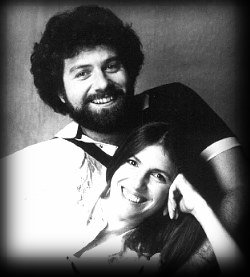 Keith & Melody during “Songs for the Shepherd” 1982


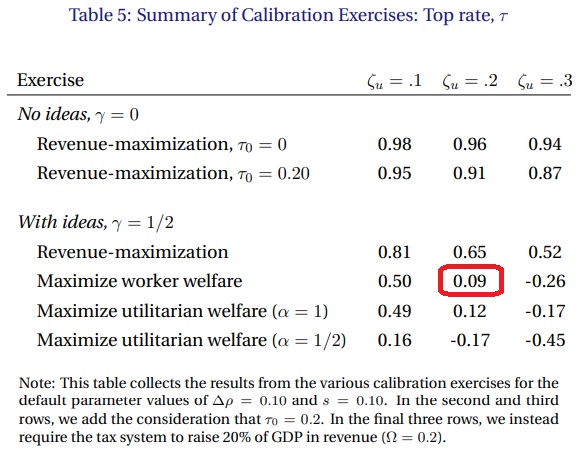



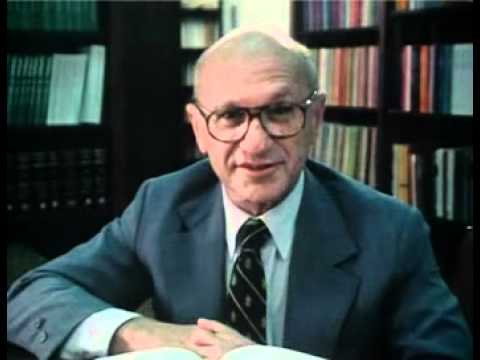



















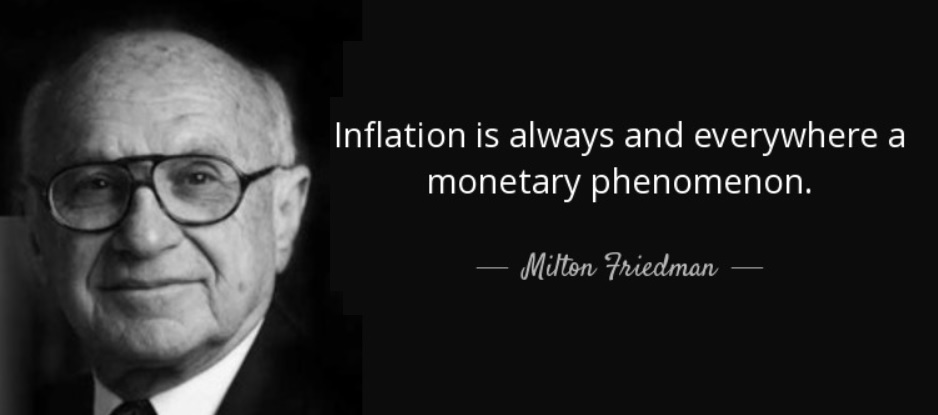
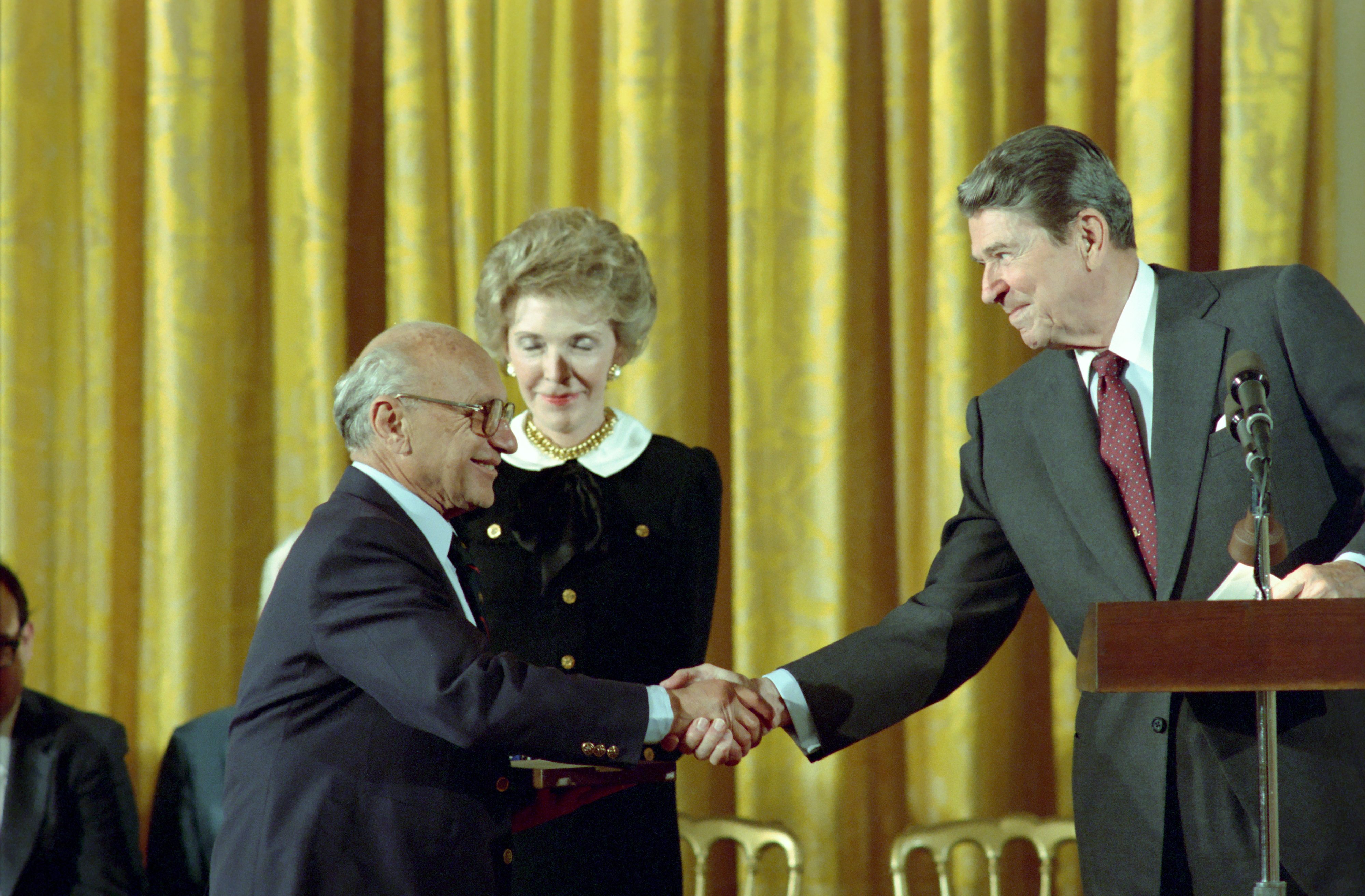





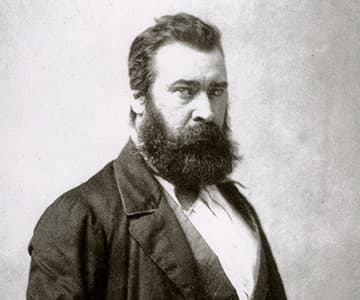


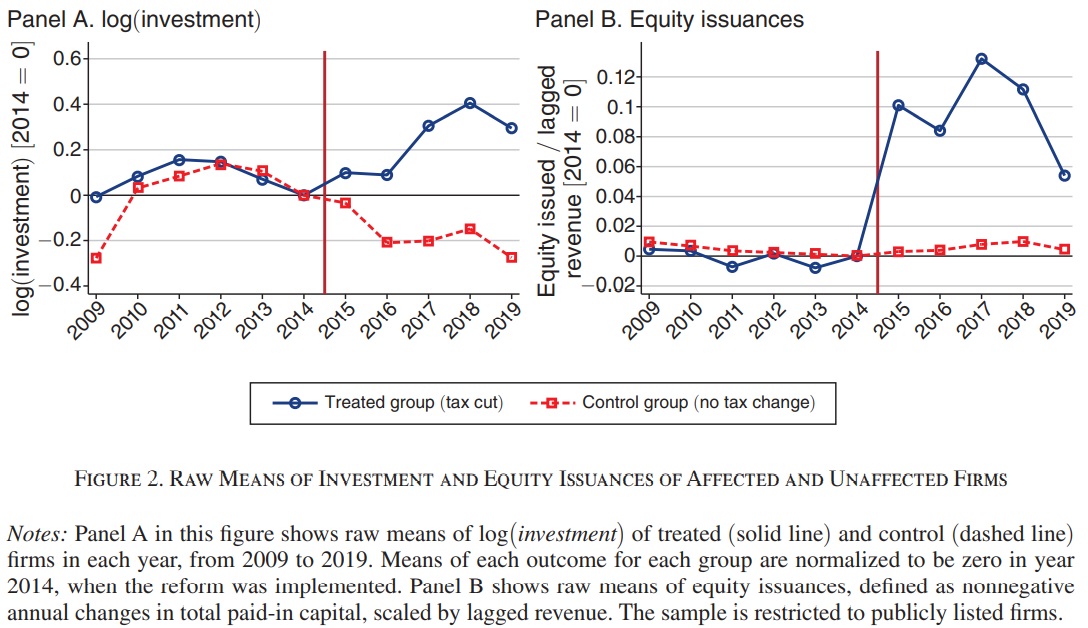




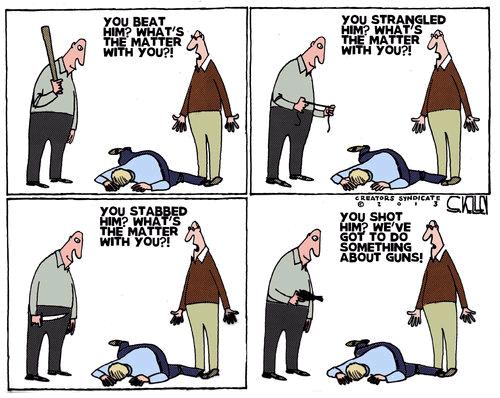
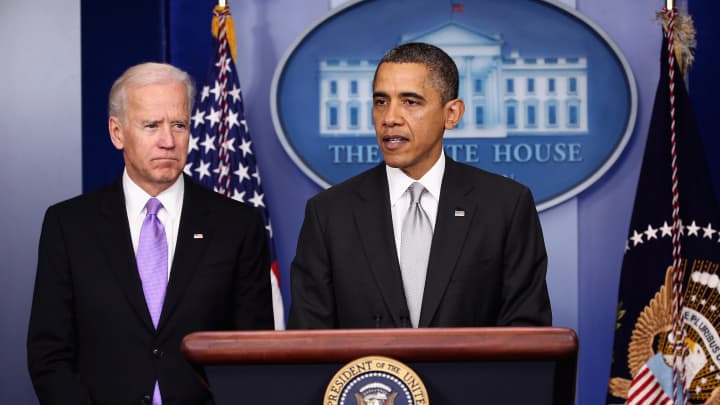


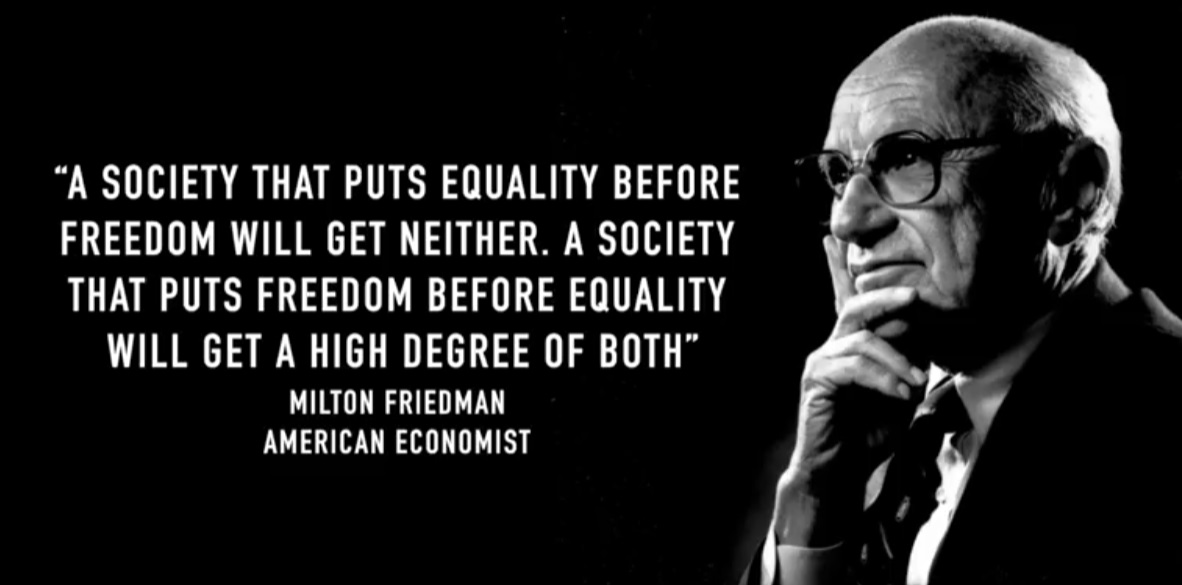



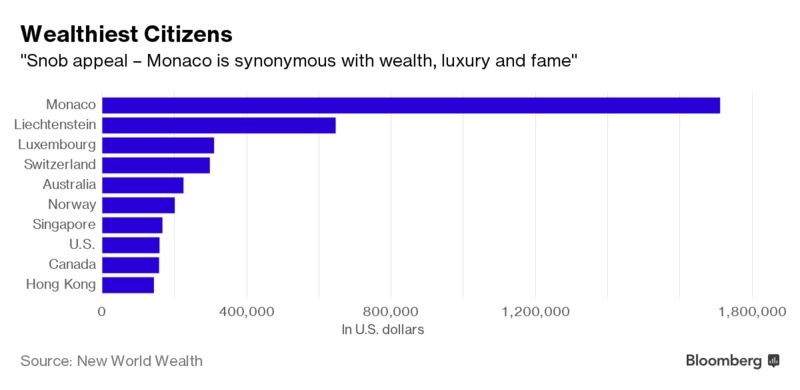





 The Daily Hatch