Some left-wing journalists have called for cable companies to deny subscribers access to the Fox News Channel, Newsmax, and other channels they don’t like. (Photo: Rafael Henrique/SOPA Images/LightRocket/Getty Images)
As President Joe Biden took office Jan. 20 with calls for unity, his allies in the mainstream media are beating the drum for squashing political dissent, large or small, and keeping it from being heard by the American people.
It’s amazing how “Resist”—once the proud motto of progressive activists—has instantly been turned on its head with the changing political winds.
It seems that “resistance” is now “insurrection,” to be smashed by any means necessary. And these calls are being led not just by liberal activists, but also by journalists, people who should be expected to be champions of free speech.
MSNBC host Nicolle Wallace suggested, without irony, that perhaps more needs to be done by tech companies to suppress news outlets that peddle content that—and here she was quoting New York Times columnist Thomas Friedman—“divides and enrages” over “more authoritative news sources.”
The Left has declared war on our culture, but we should never back down, nor compromise our principles. Learn more now >>
“If we can protect against counterfeit dollar bills, we should be able to protect against fake news that we now know has the potential to kill people,” Wallace said.
Oliver Darcy, a journalist at CNN, wrote in a column that news outlets such as One America News Network, Newsmax, and the Fox News Channel should have their plugs pulled by cable companies for “disseminating disinformation about the November election results to audiences of millions.”
Calls to effectively silence media competitors is seemingly becoming commonplace at CNN.
“We are going to have to figure out the OANN and Newsmax problem,” Alex Stamos, a former chief security officer at Facebook, told CNN’s Brian Stelter on Sunday. “These companies have freedom of speech, but I’m not sure we need Verizon, AT&T, Comcast, and such bringing them into tens of millions of homes.”
Perhaps it shouldn’t be surprising to see a big tech executive call for suppressing speech. After all, a cabal of social media companies effectively erased then-President Donald Trump from their platforms after the Jan. 6 rioting at the Capitol.
Not only that, but they effectively shut down Parler, a Twitter alternative, for what they said was a violation of their terms of service. That may be so, but it’s hard not to see these actions as aheavy-handed attempt to crush even the slightest opposition to their control of the messages the American people can see and hear.
As I wrote at the time, the Jan. 6 violence at the Capitol is being used as an excuse to call for muzzling political opposition and to label all supporters of Trump—and right-leaning Americans in general—as a danger to the republic.
It’s bad enough to see powerful companies use such methods, but it’s even more disconcerting to see journalists cheerleading them on.
And some in the media weren’t just calling for private companies to eradicate conservative speech.
Washington Post columnist Max Boot—another CNN commentator—not only echoed those calls for cable companies to shut down speech he doesn’t like, he floated the idea of using government power to do it.
“CNN (where I’m a global affairs analyst) notes that the United Kingdom doesn’t have its own version of Fox News, because it has a government regulator that metes out hefty fines to broadcasters that violate minimal standards of impartiality and accuracy,” Boot wrote. “The United States hasn’t had that since the Federal Communications Commission stopped enforcing the ‘fairness’ doctrine in the 1980s. As president, Biden needs to reinvigorate the FCC. Or else the terrorism we saw on Jan. 6 may be only the beginning, rather than the end, of the plot against America.”
The so-called “fairness” doctrine that Boot is suggesting is a throwback to the last time Democrats held control of both Congress and the executive branch after the election of President Barack Obama in 2008.
The Reagan administration, as Boot wrote, ended the Fairness Doctrine in the 1980s, paving the way to the explosion of conservative talk radio.
Clearly, there was a huge audience waiting to hear a different message than what the mainstream media were delivering. To the left, that was intolerable.
After Obama’s election, left-wing commentators and political leaders made an aggressive push for the FCC to effectively silence talk radio, a medium that conservatives continue to dominate.
The Fairness Doctrine, a relic of the New Deal era,forced radio stations to give equal airtime to both sides of the political spectrum. There might have been some justification for the law when radio was the primary medium of mass communication, but from the very beginning, the Fairness Doctrine was used as a stealthy way to suppress political dissent.
It was particularly telling that those calling for a return to the Fairness Doctrine wanted it to apply specifically to talk radio, and not, say, the media the left dominated.
And what would giving “equal time” to views even look like in 2021?
The progressive elite’s idea of political balance is giving some airtime to nominal “conservatives” like Boot and his fellow Washington Post columnist Jennifer Rubin, who use most of their time telling their readers why conservatives and Republicans are bad.
When Democrats tried to revive the Fairness Doctrine in 2008, the naked attempt to neuter conservative talk radio was as thinly veiled as the “robe” worn by the fabled emperor with no clothes. The movement fizzled out as conservatives were roused to oppose it, and Democrats were crushed in the 2010 midterm elections, in which they lost 63 House seats and six in the Senate.
That effort to muzzle speech failed more than a decade ago, but would a renewed and more ruthless attempt to silence critics really be a surprise? The media landscape has changed since 2008, with social media and other online platforms becoming even more dominant.
The result of this is that many media gatekeepers feel even more threatened by their loss of control of the “narrative” and their waning credibility in the eyes of many Americans.
This time, it might not just be conservative talk radio on the chopping block, but all other forms of right-leaning or generally anti-establishment media, too.
It’s a disturbing, albeit predictable, trend unlikely to bring more unity to a deeply divided nation.
Have an opinion about this article? To sound off, please email letters@DailySignal.com and we will consider publishing your remarks in our regular “We Hear You” feature.
—
—-
—-
—-
January 13, 2021
Office of Barack and Michelle Obama P.O. Box 91000 Washington, DC 20066
Dear President Obama,
I wrote you over 700 letters while you were President and I mailed them to the White House and also published them on my blog http://www.thedailyhatch.org .I received several letters back from your staff and I wanted to thank you for those letters.
I have been reading your autobiography A PROMISED LAND and I have been enjoying it.
Let me make a few comments on it, and here is the first quote of yours I want to comment on:
I can provide the exact quote here, because in the audience that night was a freelance writer who was recording me. To her mind, my answer risked reinforcing negative stereotypes some Californians already had about working-class white voters and was therefore worth blogging about on Huffington Post. (It’s a decision I respect, by the way, though I wish she had talked to me about it before writing the story. This is what separates even the most liberal writers from their conservative counterparts—the willingness to flay politicians on their own side.)
—
If liberal writers hold Democrats feet to the fire then why did the liberal media delay reporting the news on Hunter Biden?
Tapper was the first anchor on CNN to address the statement released by the president-elect’s son revealing his “tax affairs” were being investigated by the Delaware U.S. Attorney’s Office.
Tapper shared a CNN report about the investigation on Twitter, which caught Grenell’s attention.
“This story broke in October. You didn’t do it then,” said Grenell, who then asked Tapper point-blank: “Were you instructed to ignore it until after the election?”
CNN did not immediately respond to Fox News’ request for comment.
Grenell’s question appears to be valid after recordings leaked by Project Veritas last week revealed that CNN President Jeff Zucker and Political Director David Chalian urged staff back in October not to cover the explosive New York Post report that shed light on Hunter Biden’s shady business dealings overseas.
“Obviously, we’re not going with the New York Post story right now on Hunter Biden,” Chalian is heard saying during a conference call on Oct. 14, the same day the Post published its first Hunter Biden story.
“The Trump media, you know, moves immediately from — OK, well, never mind — the [Michael Flynn] unmasking was, you know, found to be completely nonsensical to the latest alleged scandal and expects everybody to just follow suit,” Zucker told his staff on Oct. 16. “So, I don’t think that we should be repeating unsubstantiated smears just because the right-wing media suggests that we should.”
Chalian and Zucker’s messages appeared to have later resonated with Tapper, who said Oct. 22 that the allegations against Biden’s son were “too disgusting” to repeat on air and that the “right wing is going crazy.”
However, since the election, Tapper has struck a vastly different tone when it comes to Hunter Biden’s potential business conflicts. Last week, the CNN anchor even asked Joe Biden about it during an interview.
“When your son came under scrutiny during the campaign, you vowed ‘No one in my family or associated with me will be involved in any foreign operations whatsoever. Period. End of story,’” Tapper began. “Will your brothers, will your son take leave from any business interests, not just foreign but any business interests, that might create any even an appearance of impropriety?”
“My son, my family will not be involved in any business, any enterprise that is in conflict with or appears to be in conflict with an appropriate distance from the presidency and government,” Biden responded.
Tapper quickly moved on to another topic without any follow-up questions.
On Twitter, however, Tapper scolded the Biden transition team over Wednesday’s press release, apparently spoiling CNN’s own reporting about the younger Biden’s legal troubles in the process.
“CNN’s @evanperez was working on the story about the US [sic] Attorney investigation and reached out to Hunter’s legal team for comment Monday. They spoke on Tuesday and said they would get back to him today. They didn’t. Instead the transition team issued a press release,” Tapper tweeted.
He later wrote, “Note to Biden transition team: if your strategy to deal with bad news is to falsely promise a comment to journalists operating in good faith then issue a press release, you will end up getting called late in the process.”
Francis Schaeffer in 1982 on the 700 Club noted:
The liberal newspapers dominated by this humanist view carried reams of material trying to get poor ole Dr. C.Everett Koop, who had been my friend for 30 years, tried to get him not accepted as the Surgeon General of the United States. When he was accepted the Washington Post ran one inch on the 3rd page. That is all.
Dr. Koop is one of the foremost pediatric surgeons in the United States, and among other honors, he was given the highest honor of the French government for his pioneering work in pediatric surgery. He also has experience in the direction of the care of public health. He was shut off not because he didn’t have the qualifications but because he stood for the value of human life and behind it the Christian view.
The newspapers are supposed to make the distinction between news and the editorial page. If they want to be against us on the editorial page that is their privilege and it is our privilege not to buy their newspaper. But when they begin to have a hidden censorship on the news page that is tyranny!!
Sincerely,
Everette Hatcher III, 13900 Cottontail Lane, Alexander, AR 72002, ph 501-920-5733 everettehatcher@gmail.com
President Obama c/o The White House 1600 Pennsylvania Avenue NW Washington, DC 20500 Dear Mr. President, I know that you receive 20,000 letters a day and that you actually read 10 of them every day. I really do respect you for trying to get a pulse on what is going on out here. There have […]By Everette Hatcher III | Posted in David Barton, Founding Fathers, President Obama | Edit |Comments (0)
There have been many articles written by evangelicals like me who fear that our founding fathers would not recognize our country today because secular humanism has rid our nation of spiritual roots. I am deeply troubled by the secular agenda of those who are at war with religion in our public life. Lillian Kwon quoted somebody […]By Everette Hatcher III | Posted in David Barton, Founding Fathers | Edit | Comments (0)
There have been many articles written by evangelicals like me who fear that our founding fathers would not recognize our country today because secular humanism has rid our nation of spiritual roots. I am deeply troubled by the secular agenda of those who are at war with religion in our public life. Lillian Kwon quoted somebody […]By Everette Hatcher III | Posted in David Barton, Founding Fathers | Edit | Comments (0)
There have been many articles written by evangelicals like me who fear that our founding fathers would not recognize our country today because secular humanism has rid our nation of spiritual roots. I am deeply troubled by the secular agenda of those who are at war with religion in our public life. Lillian Kwon quoted somebody […]By Everette Hatcher III | Posted in David Barton, Founding Fathers | Edit | Comments (0)
There have been many articles written by evangelicals like me who fear that our founding fathers would not recognize our country today because secular humanism has rid our nation of spiritual roots. I am deeply troubled by the secular agenda of those who are at war with religion in our public life. Lillian Kwon quoted somebody […]By Everette Hatcher III | Posted in David Barton, Founding Fathers | Edit | Comments (0)
There have been many articles written by evangelicals like me who fear that our founding fathers would not recognize our country today because secular humanism has rid our nation of spiritual roots. I am deeply troubled by the secular agenda of those who are at war with religion in our public life. Lillian Kwon quoted somebody […]By Everette Hatcher III | Posted in Founding Fathers | Edit | Comments (0)
President Obama Speaks at The Ohio State University Commencement Ceremony Published on May 5, 2013 President Obama delivers the commencement address at The Ohio State University. May 5, 2013. You can learn a lot about what President Obama thinks the founding fathers were all about from his recent speech at Ohio State. May 7, 2013, […]By Everette Hatcher III | Posted in Founding Fathers, President Obama | Edit | Comments (0)
Dr. C. Everett Koop with Bill Graham. Francis Schaeffer: “Whatever Happened to the Human Race” (Episode 4) THE BASIS FOR HUMAN DIGNITY Published on Oct 7, 2012 by AdamMetropolis The 45 minute video above is from the film series created from Francis Schaeffer’s book “Whatever Happened to the Human Race?” with Dr. C. Everett Koop. This […]By Everette Hatcher III | Posted in Founding Fathers, Francis Schaeffer, Prolife | Edit |Comments (1)
America’s Founding Fathers Deist or Christian? – David Barton 4/6 There have been many articles written by evangelicals like me who fear that our founding fathers would not recognize our country today because secular humanism has rid our nation of spiritual roots. I am deeply troubled by the secular agenda of those who are at […]By Everette Hatcher III | Posted in David Barton, Founding Fathers | Tagged governor of connecticut, john witherspoon, jonathan trumbull | Edit | Comments (1)
3 Of 5 / The Bible’s Influence In America / American Heritage Series / David Barton There were 55 gentlemen who put together the constitution and their church affliation is of public record. Greg Koukl notes: Members of the Constitutional Convention, the most influential group of men shaping the political foundations of our nation, were […]By Everette Hatcher III | Posted in Founding Fathers | Edit | Comments (0)
I do not think that John Quincy Adams was a founding father in the same sense that his father was. However, I do think he was involved in the early days of our government working with many of the founding fathers. Michele Bachmann got into another history-related tussle on ABC’s “Good Morning America” today, standing […]By Everette Hatcher III | Posted in David Barton, Founding Fathers | Edit | Comments (0)
I have gone back and forth and back and forth with many liberals on the Arkansas Times Blog on many issues such as abortion, human rights, welfare, poverty, gun control and issues dealing with popular culture. Here is another exchange I had with them a while back. My username at the Ark Times Blog is Saline […]By Everette Hatcher III | Posted in Arkansas Times, Francis Schaeffer, Prolife | Edit |Comments (0)
I truly believe that many of the problems we have today in the USA are due to the advancement of humanism in the last few decades in our society. Ronald Reagan appointed the evangelical Dr. C. Everett Koop to the position of Surgeon General in his administration. He partnered with Dr. Francis Schaeffer in making the […]By Everette Hatcher III | Posted in Adrian Rogers, Francis Schaeffer | Edit | Comments (0)
Francis Schaeffer: “Whatever Happened to the Human Race” (Episode 4) THE BASIS FOR HUMAN DIGNITY Published on Oct 7, 2012 by AdamMetropolis ____________ The 45 minute video above is from the film series created from Francis Schaeffer’s book “Whatever Happened to the Human Race?” with Dr. C. Everett Koop. This book really helped develop my political […]By Everette Hatcher III | Posted in Francis Schaeffer | Edit | Comments (0)
He said: “She made the mistake of having them in one by one ‒ if she’d brought them in together, they’d have probably lacked the guts to stand up to her.
“A lot of them told her they would support her but that she couldn’t win. And basically, overnight, she was done for.”
In the Netflix drama, Mrs Thatcher then turns to the only person she knows who can stop this from happening ‒ the Queen.
She goes to Buckingham Palace and asks Her Majesty to dissolve Parliament to prevent her ousting so that she can deal with the crisis in the Gulf.
The Gulf War, which took place from August 1990 to February 1991, was a war waged by coalition forces from 35 nations led by the US against Iraq in response to Iraq’s invasion and annexation of Kuwait.
However, according to Mr Sandbrook, the suggestion that Mrs Thatcher asked the Queen to intervene is “a colossal invention”.
He said: “This is total nonsense. There was no meeting with the Queen after Thatcher’s ministers told her to go.
“Actually, this distorts the true drama of events, which is that in the night her ministers told her to go, then the next morning they came to Cabinet and she told them she was resigning, reading the statement in tears; then, when it was over, she went to the Commons and destroyed Neil Kinnock in probably her most famous parliamentary performance.
RARE Friedman Footage – On Keys to Reagan and Thatcher’s Success
Margaret Thatcher and Milton Friedman were two of my heroes.
His theory that inflation resulted from too much money chasing too few goods inspired a generation of central bankers and played a pivotal role in forming the governing philosophies of Lady Thatcher and President Ronald Reagan in the US.
Lady Thatcher said last night: “Milton Friedman revived the economics of liberty when it had been all but forgotten. He was an intellectual freedom fighter. Never was there a less dismal practitioner of a dismal science.
“I shall greatly miss my old friend’s lucid wisdom and mordant humour.”
Mr Friedman, winner of a 1976 Nobel Prize, died in hospital in San Francisco of heart failure, according to his family. He was born in Brooklyn on July 31 1912, the son of a merchant and a seamstress who were immigrants from Austria-Hungary.
His teachings at the University of Chicago helped foster the “Chicago School” of economics, known for theories associated with free-market libertarianism.
When he first came to prominence in the late 1940s, he was one of a tiny minority who ventured to question the prevailing wisdom of Keynesianism, that economies could and should be managed by manipulation of taxes and government spending.
But by the mid-1970s — as inflation took off and state-dominated economies slid into decline — Friedman’s ideas influenced Sir Keith Joseph, who advised the new Tory leader, Margaret Thatcher, to reject the interventionist policies of her predecessor Edward Heath.
He served as an adviser to the Thatcher government from 1979 to 1990 as it developed a free-market economy, low taxation, and the sale of state-owned industries.
Mr Friedman believed that tax-funded government spending was appropriate only to the most limited set of “public goods”, such as national defence.
Remembering Margaret Thatcher, 1925-2013 Published on Apr 8, 2013 The world lost one of its greatest champions of freedom in Lady Margaret Thatcher. Ed Feulner, Edwin Meese III, and Becky Norton Dunlop remember her contributions as a great leader and friend of The Heritage Foundation. ________________ Great post from the Heritage Foundation on Margaret Thatcher’s legacy. […]
The stimulus program was a failure here in America and President Obama should have known better than to try that. He should have been a better student of history like Margaret Thatcher was. APRIL 9, 2013 3:24PM Margaret Thatcher and the Battle of the 364 Keynesians By STEVE H. HANKE SHARE With the death of Margaret […]
Margaret Thatcher was right about socialism when she said, “The problem with socialism is that you eventually run out of other people’s money.” That is exactly what we are seeing in Europe now and it will happen to the USA too if we don’t cut back on excessive government spending. April 8, 2013 12:32PM Thatcher: Anecdotes From […]
Very well said by Dan Mitchell. A Tribute to Margaret Thatcher April 8, 2013 by Dan Mitchell The woman who saved the United Kingdom has died. A Great Woman I got to meet Margaret Thatcher a couple of times and felt lucky each time that I was in the presence of someone who put her nation’s […]
Margaret Thatcher was a great lady. Jim DeMint on Margaret Thatcher: “The World Has Lost One of Its Greatest Champions of Freedom” Jim DeMint April 8, 2013 at 9:05 am Heritage has lost one of her greatest friends, and the world has lost one of its greatest champions of freedom. Margaret Thatcher led Great […]
Great speech by Margaret Thatcher on socialism. It was not helpful to the people of eastern europe and it will not be helpful to us today. Defining Socialism Marion Smith December 10, 2012 at 5:25 pm Margaret Thatcher on Socialism For those who failed to recognize the ideological stakes of the recent election, […]
Uploaded by mynameiswhatever on Jan 18, 2009 Margaret Thatcher’s last House of Commons Speech on November 22, 1990. ________________ Prime Minister Margaret Thatcher: People on all levels of income are better off than they were in 1979. The hon. Gentleman is saying that he would rather that the poor were poorer, provided that the rich […]
Unfortunately Hollywood has their own agenda many times. Great article from the Heritage Foundation. Morning Bell: The Real ‘Iron Lady’ Theodore Bromund January 11, 2012 at 9:24 am Streep referred to the challenge of portraying Lady Thatcher as “daunting and exciting,” and as requiring “as much zeal, fervour and attention to detail as the real […]
Margaret Thatcher is one of my heroes and I have a three part series on her I am posting. “What We Can Learn from Margaret Thatcher,”By Sir Rhodes Boyson and Antonio Martino, Heritage Foundation, November 24, 1999, is an excellent article and here is a portion of it below: What Can We Learn from Thatcher? […]
Margaret Thatcher is one of my heroes and I have a three part series on her I am posting. “What We Can Learn from Margaret Thatcher,”By Sir Rhodes Boyson and Antonio Martino, Heritage Foundation, November 24, 1999, is an excellent article and here is a portion of it below: Thatcher This was the background […]
Margaret Thatcher is one of my heroes and I have a three part series on her I am posting. “What We Can Learn from Margaret Thatcher,”By Sir Rhodes Boyson and Antonio Martino, Heritage Foundation, November 24, 1999, is an excellent article and here is a portion of it below: The Role of Ideas 6 The […]
Margaret Thatcher (Part 2) Margaret Thatcher is one of my heroes and I have a three part series on her I am posting. “What We Can Learn from Margaret Thatcher,”By Sir Rhodes Boyson and Antonio Martino, Heritage Foundation, November 24, 1999, is an excellent article and here is a portion of it below: Foreign Policy […]
Margaret Thatcher (Part 1) Margaret Thatcher is one of my heroes and I have a three part series on her I am posting. “What We Can Learn from Margaret Thatcher,”By Sir Rhodes Boyson and Antonio Martino, Heritage Foundation, November 24, 1999, is an excellent article and here is a portion of it below: Margaret Thatcher […]
Charlie Rose interview of Milton Friedman My favorite economist: Milton Friedman : A Great Champion of Liberty by V. Sundaram Milton Friedman, the Nobel Prize-winning economist who advocated an unfettered free market and had the ear of three US Presidents – Nixon, Ford and Reagan – died last Thursday (16 November, 2006 ) in San Francisco […]
Stearns Speaks on House Floor in Support of Balanced Budget Amendment Uploaded by RepCliffStearns on Nov 18, 2011 Speaking on House floor in support of Balanced Budget Resolution, 11/18/2011 ___________ Below are some of the main proposals of Milton Friedman. I highly respected his work. David J. Theroux said this about Milton Friedman’s view concerning […]
Milton Friedman: Free To Choose – The Failure Of Socialism With Ronald Reagan (Full) Published on Mar 19, 2012 by NoNationalityNeeded Milton Friedman’s writings affected me greatly when I first discovered them and I wanted to share with you. We must not head down the path of socialism like Greece has done. Abstract: Ronald Reagan […]
What a great defense of Milton Friedman!!!! Defaming Milton Friedman by Johan Norberg This article appeared in Reason Online on September 26, 2008 PRINT PAGE CITE THIS Sans Serif Serif Share with your friends: ShareThis In the future, if you tell a student or a journalist that you favor free markets and limited government, there is […]
Milton Friedman on Hayek’s “Road to Serfdom” 1994 Interview 2 of 2 Uploaded by PenguinProseMedia on Oct 26, 2011 2nd half of 1994 interview. ________________ I have a lot of respect for the Friedmans.Two Lucky People by Milton and Rose Friedman reviewed by David Frum — October 1998. However, I liked this review below better. It […]
Milton Friedman on Hayek’s “Road to Serfdom” 1994 Interview 1 of 2 Uploaded by PenguinProseMedia on Oct 25, 2011 Says Federal Reserve should be abolished, criticizes Keynes. One of Friedman’s best interviews, discussion spans Friedman’s career and his view of numerous political figures and public policy issues. ___________________ Here is a review of “Two Lucky People.” […]
Charlie Rose interview of Milton Friedman My favorite economist: Milton Friedman : A Great Champion of Liberty by V. Sundaram Milton Friedman, the Nobel Prize-winning economist who advocated an unfettered free market and had the ear of three US Presidents – Nixon, Ford and Reagan – died last Thursday (16 November, 2006 ) in San Francisco […]
Milton Friedman: Free To Choose – The Failure Of Socialism With Ronald Reagan (Full) Published on Mar 19, 2012 by NoNationalityNeeded Milton Friedman’s writings affected me greatly when I first discovered them and I wanted to share with you. We must not head down the path of socialism like Greece has done. Abstract: Ronald Reagan […]
Massachusetts Gov. Charlie Baker, seen here on Dec. 22 in Boston, vetoed a bill that expanded the availability of later-term abortions and permitted minors age 16 and 17 to get an abortion without the consent of a parent or guardian. It was too extreme even for the pro-choice Republican governor, but his veto was overridden. (Photo: Stuart Cahill/MediaNews Group/Boston Herald/Getty Images)
How low can a nation sink?
The history of the past century offers any number of examples.
Radical governments of the right and left have engaged in mass killings of their citizens. Acts of terrorism have taken the lives of innocent men, women, and children—even while they were dancing at weddings, sitting in cafes, visiting a hotel, or enjoying a nightclub.
Such acts are a heinous injustice, and so, too, is the most prosperous country on Earth declaring as a matter of law that the lives of its infant boys and girls are utterly worthless.
The Left has declared war on our culture, but we should never back down, nor compromise our principles. Learn more now >>
That was the news—again—out of Massachusetts over the Christmas break as the Bay State adopted a law that erased the lives of children up to, and likely through, the time of birth.
Massachusetts—founded as a haven of freedom by settlers who committed themselves to “just and equal laws” in the Mayflower Compact—passed a bill that nullifies justice and equality, ignoring all precedents of that great state.
So noxious was the measure that the state’s Republican governor, Charlie Baker, who supports the 1973 Supreme Court abortion ruling in Roe v. Wade, felt compelled to veto it.
In his letter on Christmas Eve, he wrote the Legislature: “I cannot support the sections of this proposal that expand the availability of later-term abortions and permit minors age 16 and 17 to get an abortion without the consent of a parent or guardian.”
Even Baker’s last-minute offer to support alternate language allowing abortion to full term when there is risk to the mother’s mental health was rebuffed.
Essentially, abortion law in Massachusetts now is such that the tiny being in the womb is a legal nullity. That accomplishment is cloaked by its advocates with the euphemisms of “reproductive freedom” and “abortion access.”
But if taking the life of a child days from its birth is “reproductive freedom,” how is taking that same life a day after its birth not also “reproductive freedom”?
If absolute liberty to take life at such a stage is “access” to health care, how is it also not “reproductive freedom” for parents of a newborn to have “access” to a cliff from which to cast their young?
Of course, our nation hasn’t reached this nadir without a long approach. This week, the 48th anniversary of Roe v. Wade will arrive with its toll of more than 62 million lives lost and millions more damaged or destroyed.
The enormity of it all no longer strikes an anguished chord among many Americans. Abortion has seeped its blood-stained reality into every corner of American life.
Over the past 20 months, members of Congress, mostly Republicans, have attempted to awaken the conscience of a nation by marking a limit on when we will accept the killing of the near-born.
These members introduced in Congress the Born-Alive Abortion Survivors Protection Act. Opponents contend they oppose the measure because it isn’t necessary. That’s evident legal and medical nonsense, however. Massachusetts’ draconian new law, joining those of New York, Vermont, and other states, clearly proves that.
So do new data from Texas. The Lone Star State revamped its abortion reporting law in 2013 to require the collection of statistics on infants born alive after abortion. Keep in mind that abortionists, wary of what has been called that “dreaded complication,” take steps to end the baby’s life in the womb so that it cannot be born alive, regardless of his or her health or stage of development.
The new numbers from Texas indicate that 10 infants were born alive after abortion in 2018 and 2019. Texas officials, thankfully, say they are investigating.
There’s even more reason to think tragedies like this are happening in states where, unlike Texas, no legal limits exist on abortion. These horrors are not what our nation is about.
The trampling of the little guy—a boy or girl on the threshold of birth, living, breathing, able to curl a fist, suck his or her thumb, wrinkle a nose, sneeze—is not who the Democratic Party once was.
The Republican Party, said to be home to society’s elite, no longer turns its back on these vulnerable children.
Some 205 members of the House—13 short of the number needed—have signed a discharge petition to force bringing the bill to the House floor.
It’s time that Congress take the next step and tell every baby, rich or poor, black or white, native-born or immigrant, that he or she will not be left on the cold steel of an abortion clinic table. It’s time to join hands across the aisle and make this protection national law.
The Daily Signal publishes a variety of perspectives. Nothing written here is to be construed as representing the views of The Heritage Foundation.
Dr. Francis schaeffer – The flow of Materialism(from Part 4 of Whatever happened to human race? Co-authored by Francis Schaeffer and Dr. C. Everett Koop)
I truly believe that many of the problems we have today in the USA are due to the advancement of humanism in the last few decades in our society. Ronald Reagan appointed the evangelical Dr. C. Everett Koop to the position of Surgeon General in his administration. He partnered with Dr. Francis Schaeffer in making the video below. It is very valuable information for Christians to have. Actually I have included a video below that includes comments from him on this subject.
Francis Schaeffer: “Whatever Happened to the Human Race” (Episode 1) ABORTION OF THE HUMAN RACE
Thus says the LORD, “A voice is heard in Ramah, Lamentation and bitter weeping. Rachel is weeping for her children; She refuses to be comforted for her children, Because they are no more.”
Jeremiah 31:14-16
Sanctity of Human Life Sunday is held on the Sunday in January that falls closest to the day on which the Roe v. Wade and Doe v. Bolton decisions were handed down by the U.S. Supreme Court on January 22, 1973.
Sanctity of Life Sunday began in 1983 when the Christian Action Council (now known as Care Net), founded with the help of Francis Schaeffer and former Surgeon General C. Everett Koop, “asked President Ronald Reagan to create a special day to focus on the intrinsic value of human life.” [Source]
President Reagan issued this proclamation:
Since 1973, however, more than 15 million unborn children have died in legalized abortions — a tragedy of stunning dimensions that stands in sad contrast to our belief that each life is sacred. These children, over tenfold the number of Americans lost in all our Nation’s wars, will never laugh, never sing, never experience the joy of human love; nor will they strive to heal the sick, or feed the poor, or make peace among nations. Abortion has denied them the first and most basic of human rights, and we are infinitely poorer for their loss.
We are poorer not simply for lives not led and for contributions not made, but also for the erosion of our sense of the worth and dignity of every individual. To diminish the value of one category of human life is to diminish us all. Slavery, which treated Blacks as something less than human, to be bought and sold if convenient, cheapened human life and mocked our dedication to the freedom and equality of all men and women. Can we say that abortion — which treats the unborn as something less than human, to be destroyed if convenient — will be less corrosive to the values we hold dear?
It has now been 40 years since the Supreme Court Roe v. Wade decision that made abortion on demand legal in all 50 states. Since that time, the 15 million babies referred to by President Reagan has become 55 million babies.
Abortion is the greatest evil in American history and dwarfs the genocide of many other nations throughout history.
And served their idols,
Which became a snare to them.
They even sacrificed their sons and their daughters to the demons,
And shed innocent blood,
The blood of their sons and their daughters,
Whom they sacrificed to the idols of Canaan;
And the land was polluted with the blood.
Psalm 106:36–38
___________
Thank you so much for your time. I know how valuable it is. I also appreciate the fine family that you have and your commitment as a father and a husband.
Sincerely,
Everette Hatcher III, 13900 Cottontail Lane, Alexander, AR 72002, ph 501-920-5733
Francis Schaeffer: “Whatever Happened to the Human Race” (Episode 1) ABORTION OF THE HUMAN RACE Published on Oct 6, 2012 by AdamMetropolis The 45 minute video above is from the film series created from Francis Schaeffer’s book “Whatever Happened to the Human Race?” with Dr. C. Everett Koop. This book really helped develop my political views […]
E P I S O D E 1 0 Dr. Francis Schaeffer – Episode X – Final Choices 27 min FINAL CHOICES I. Authoritarianism the Only Humanistic Social Option One man or an elite giving authoritative arbitrary absolutes. A. Society is sole absolute in absence of other absolutes. B. But society has to be […]
E P I S O D E 9 Dr. Francis Schaeffer – Episode IX – The Age of Personal Peace and Affluence 27 min T h e Age of Personal Peace and Afflunce I. By the Early 1960s People Were Bombarded From Every Side by Modern Man’s Humanistic Thought II. Modern Form of Humanistic Thought Leads […]
E P I S O D E 8 Dr. Francis Schaeffer – Episode VIII – The Age of Fragmentation 27 min I saw this film series in 1979 and it had a major impact on me. T h e Age of FRAGMENTATION I. Art As a Vehicle Of Modern Thought A. Impressionism (Monet, Renoir, Pissarro, Sisley, […]
E P I S O D E 7 Dr. Francis Schaeffer – Episode VII – The Age of Non Reason I am thrilled to get this film series with you. I saw it first in 1979 and it had such a big impact on me. Today’s episode is where we see modern humanist man act […]
E P I S O D E 6 How Should We Then Live 6#1 Uploaded by NoMirrorHDDHrorriMoN on Oct 3, 2011 How Should We Then Live? Episode 6 of 12 ________ I am sharing with you a film series that I saw in 1979. In this film Francis Schaeffer asserted that was a shift in […]
E P I S O D E 5 How Should We Then Live? Episode 5: The Revolutionary Age I was impacted by this film series by Francis Schaeffer back in the 1970′s and I wanted to share it with you. Francis Schaeffer noted, “Reformation Did Not Bring Perfection. But gradually on basis of biblical teaching there […]
Dr. Francis Schaeffer – Episode IV – The Reformation 27 min I was impacted by this film series by Francis Schaeffer back in the 1970′s and I wanted to share it with you. Schaeffer makes three key points concerning the Reformation: “1. Erasmian Christian humanism rejected by Farel. 2. Bible gives needed answers not only as to […]
Francis Schaeffer’s “How should we then live?” Video and outline of episode 3 “The Renaissance” Francis Schaeffer: “How Should We Then Live?” (Episode 3) THE RENAISSANCE I was impacted by this film series by Francis Schaeffer back in the 1970′s and I wanted to share it with you. Schaeffer really shows why we have so […]
Francis Schaeffer: “How Should We Then Live?” (Episode 2) THE MIDDLE AGES I was impacted by this film series by Francis Schaeffer back in the 1970′s and I wanted to share it with you. Schaeffer points out that during this time period unfortunately we have the “Church’s deviation from early church’s teaching in regard […]
Francis Schaeffer: “How Should We Then Live?” (Episode 1) THE ROMAN AGE Today I am starting a series that really had a big impact on my life back in the 1970′s when I first saw it. There are ten parts and today is the first. Francis Schaeffer takes a look at Rome and why […]
Francis Schaeffer: “Whatever Happened to the Human Race” (Episode 5) TRUTH AND HISTORY Published on Oct 7, 2012 by AdamMetropolis This crucial series is narrated by the late Dr. Francis Schaeffer and former Surgeon General Dr. C. Everett Koop. Today, choices are being made that undermine human rights at their most basic level. Practices once […]
The opening song at the beginning of this episode is very insightful. Francis Schaeffer: “Whatever Happened to the Human Race” (Episode 4) THE BASIS FOR HUMAN DIGNITY Published on Oct 7, 2012 by AdamMetropolis This crucial series is narrated by the late Dr. Francis Schaeffer and former Surgeon General Dr. C. Everett Koop. Today, choices […]
Francis Schaeffer: “Whatever Happened to the Human Race” (Episode 3) DEATH BY SOMEONE’S CHOICE Published on Oct 6, 2012 by AdamMetropolis This crucial series is narrated by the late Dr. Francis Schaeffer and former Surgeon General Dr. C. Everett Koop. Today, choices are being made that undermine human rights at their most basic level. Practices […]
Francis Schaeffer: “Whatever Happened to the Human Race?” (Episode 2) SLAUGHTER OF THE INNOCENTS Published on Oct 6, 2012 by AdamMetropolis This crucial series is narrated by the late Dr. Francis Schaeffer and former Surgeon General Dr. C. Everett Koop. Today, choices are being made that undermine human rights at their most basic level. Practices […]
It is not possible to know where the pro-life evangelicals are coming from unless you look at the work of the person who inspired them the most. That person was Francis Schaeffer. I do care about economic issues but the pro-life issue is the most important to me. Several years ago Adrian Rogers (past president of […]
This essay below is worth the read. Schaeffer, Francis – “Francis Schaeffer and the Pro-Life Movement” [How Should We Then Live?, Whatever Happened to the Human Race?, A Christian Manifesto] Editor note: <p> </p> [The following essay explores the role that Francis Schaeffer played in the rise of the pro-life movement. It examines the place of […]
Great article on Schaeffer. Who was Dr. Francis A. Schaeffer? By Francis Schaeffer The unique contribution of Dr. Francis Schaeffer on a whole generation was the ability to communicate the truth of historic Biblical Christianity in a way that combined intellectual integrity with practical, loving care. This grew out of his extensive understanding of the Bible […]
On its first day in office, President Joe Biden committed to removing the 1776 Commission’s report, issued Monday, and to disband the commission. Pictured: President Joe Biden prepares to sign a series of executive orders in the Oval Office just hours after his inauguration on Jan. 20. (Photo: Chip Somodevilla/Getty Images)
All Americans should wish President Joe Biden well. To do otherwise would be churlish and self-defeating. It beggars belief, though, that one of his first intended acts was for his White House to take down the report issued Monday by the 1776 Commission, and on his first day as president, to disband the commission.
Is that really the priority? As one of the commissioners, I guess I’m flattered. But is the baying from the woke left so furious that dissolving a commission named after our nation’s founding, and deleting a report calling for teaching objective history, makes the top of the list?
The symbolism alone should give pause. But maybe the symbolism is the thing, and our new president wants to demonstrate his bona fides to the creators of the 1619 Project and their hard-left allies.
For the record, we commissioners intend to continue meeting and fulfilling the charges of our two-year remit. The Heritage Foundation will also continue to host the report, which you can henceforth find here.
The Left has declared war on our culture, but we should never back down, nor compromise our principles. Learn more now >>
The 1776 Commission’s chairman, Larry P. Arnn, president of Hillsdale College and member of The Heritage Board of Trustees, issued a statement along with Vice Chair Carol Swain and Executive Director Matthew Spalding, pointing out that the report merely called for
a return to the unifying ideas stated in the Declaration of Independence. It quotes the greatest Americans, black and white, men and women, in devotion to these ideas. The Commission may be abolished, but these principles cannot be. We will all continue to work together to teach and to defend them.
If we are to take the words of our new president at his inauguration seriously, as we must, the nation’s cup runneth over with challenges. “Few people in our nation’s history have been more challenged or found a time more challenging or difficult than the time we’re in now,” he said, before reeling off our litany of woes.
What would help us fend off these demons, he said, was unity: “We have never, ever, ever, ever failed in America when we’ve acted together.”
Lofty words, but as one of his predecessors used to say: trust, but verify.
By abolishing the commission, and banishing the report, Biden threw in his lot with critics that from the moment the report was issued covered themselves with ignominy as they raced each other to denigrate our work.
One of the worst examples of the media “coverage,” was a CNN report whose headline actually screamed this libel: “Trump administration issues racist school curriculum report on MLK day.” In a breach of journalistic ethics (if those two words can still be written together), the body of the story did not bother to explain where in the report was there a hint of racism.
Ditto for USA Today, which had a straight up news report—not an opinion piece—with the breathless accusation that the report was a “document that excuses America’s history of slavery, derides the legacy of the civil rights movement and equates progressivism with totalitarianism.”
Ibram X. Kendi, the Boston University activist/professor who insists that racism on behalf of people he deems marginalized is not just welcome, but necessary and not actually racism, said this in a tweet: “This report makes it seems as if slave-holding Founding Fathers were abolitionists.”
It is not hard to understand why Kendi is so allergic to the Founders. He proposes a federal department of “anti-racism” that bars political appointees, and thus therefore believes in separating government from the consent of the governed, one of the key touchstones of the Founding.
On what the Founders believed, and more importantly what their contemporaries thought, I would rather rely on the words of the man who took up their work seven score and ten years later.
“In the way our fathers originally left the slavery question, the institution was in the course of ultimate extinction, and the public mind rested on the belief that it was in the course of ultimate extinction,” Abraham Lincoln told Stephen Douglas on their famous Third Debate in 1858. “When this government was originally established, nobody expected the institution of slavery would last until this day.”
That is the work we recommended in the 1776 report, for historians to look at primary sources, analyze what they meant in the context of the time, debate that meaning in good faith, without an agenda, and be ready to correct the record when proven wrong.
To twist history to fit a political project is to write lies, which is why so many historians have criticized the 1619 Project, whose agenda is to make our America an object of contempt. The people who do this understand that Edmund Burke was ultimately right when he wrote, “To make us love our country, our country ought to be lovely.” And they want to do the opposite.
In pursuing the opposite from what Kendi and the others want, we in the commission prefer to heed Biden’s words, when he called in his inaugural address to “reject the culture in which facts are manipulated and even manufactured.”
This is why serious intellectuals on the 1776 Commission, such as Charles Kesler, Matthew Spalding, Dr. Swain, and Dr. Arnn, felt so strongly about our work, and why we will continue to carry it out.
Have an opinion about this article? To sound off, please email letters@DailySignal.com and we will consider publishing your remarks in our regular “We Hear You” feature.
Left-wingers, including some at The New York Times, seek to discredit the President’s Advisory 1776 Commission report, which aims to rebut the narrative that America is a “systemically racist” nation. (Photo: Avalon/Universal Images Group/Getty Images)
The political left is criticizing the President’s Advisory 1776 Commission report, which aims to bring clarity about the facts of America’s founding.
The report—released Monday on Martin Luther King Jr. Day—aims to create “consensus on what [the] historical facts” of America’s founding are, said Mike Gonzalez, a member of the 1776 Commission and a senior fellow at The Heritage Foundation, in a phone interview Tuesday with The Daily Signal.
President Donald Trump named Gonzalez and 17 others to the 1776 Commission in December. The group was tasked with creating a report that would “better enable a rising generation to understand the history and principles of the founding of the United States in 1776,” according to the White House press release announcing the commission.
“The 1776 Report” uses historical facts and key principles found in the Declaration of Independence and U.S. Constitution to refute the progressive claims argued in The New York Times’ controversial 1619 Project and other left-wing curriculums.
The Left has declared war on our culture, but we should never back down, nor compromise our principles. Learn more now >>
“The core assertion of the Declaration, and the basis of the Founders’ political thought, is that ‘all men are created equal,’ the report states. “From the principle of equality, the requirement for consent naturally follows: If all men are equal, then none may by right rule another without his consent.”
The 18 commissioners address slavery directly in the new report, arguing that the Founders intentionally inserted the truth that “all men are created equal” into the declaration in order to provide a means for slavery to one day be abolished.
Many on the political left quickly discounted “The 1776 Report,” contending that it makes false assertions about the Founding Fathers and the nation’s past.
Ibram X. Kendi, author of the book “How to Be an Antiracist,” criticized the report in a thread of tweets Monday, writing, “This report makes it seem as if slaveholding founding fathers were abolitionists; that Americans were the early beacon of the global abolitionist movement; that the demise of slavery in the United States was inevitable … .”
Kendi’s statement misses the key points that the Founders were deeply troubled by slavery even while participating in the ‘peculiar institution,’” Carol Swain, a retired political science professor, author, and the vice chairwoman of the commission, told The Daily Signal in an email Tuesday.
Swain, who is black, added that the men who signed the “Declaration of Independence and [the] U.S. Constitution … laid the groundwork for the abolition of slavery in the very language of the documents.”
CNN was also quick to criticize the work of the 1776 Commission.
“A commission stood up by President Donald Trump as a rebuttal to schools applying a more accurate history curriculum around slavery in the U.S. issued its inflammatory report on Monday, Martin Luther King Jr. Day,” CNN reporter Maegan Vazquez’s wrote in a piece, “Trump administration issues racist school curriculum report on MLK day.”
Gonzalez called the CNN article “an embarrassment to journalism,” noting that the headline falsely calls the report “racist,” but then did “not even bother to back that up” with any evidence.
The New York Times also assailed Monday’s report, writing that the 18-member commission “includes no professional historians, but a number of conservative activists, politicians, and intellectuals.”
The New York Times failed to recognize at least three historians who sit on the commission, including Larry Arnn, the president of Hillsdale College and the author of several historical books, including “The Founders’ Key: The Divine and Natural Connection Between the Declaration and the Constitution, and What We Risk by Losing It”; Victor Davis Hanson, a senior fellow at the Hoover Institute and the author of a number of historical books, including “The Second World Wars: How the First Global Conflict Was Fought and Won”; and Charles Kesler, a senior fellow at the Claremont Institute, editor of the Claremont Review of Books, and the editor of “Saving the Revolution: The Federalist Papers and the American Founding.”
The attacks on America’s history are deeply troubling because the “left does not believe in absolute truth or transcendent truth,” Gonzalez said, adding that many on the left think that history can be changed and used as a tool “to gain power, erase what has happened, and … change the future.”
The left is seeking ultimately to change the future of America by changing our understanding of the past, Gonzalez said.
Gonzalez and Swain told The Daily Signal they are proud to have played a role in the creation of “The 1776 Report.“
“It was an honor to participate in the creation of a report that documents key elements of our shared history and offers Americans a road map for digging deeper into original documents and the events that have shaped our shared history,” Swain said.
She added that while America is an imperfect nation, “we have made tremendous progress in becoming a fairer and more inclusive society, despite the fact some would like to take us backwards when it comes to race relations.”
A commission formed by President Donald Trump to promote “patriotic education” issued its final report, criticizing how American students are taught about the country’s formation, as well as the history of slavery and racial discrimination.
The 1776 Commission released a 45-page report Monday that offered “a definitive chronicle of the American founding,” according to the White House.
“States and school districts should reject any curriculum that promotes one-sided partisan opinions, activist propaganda, or factional ideologies that demean America’s heritage, dishonor our heroes, or deny our principles,” the report said per the New York Post.
Trump established the commission last year partly in response to a national movement in which statues of slaveholders or colonial figures were removed or defaced. The statues involved Founding Fathers and people long admired for their accomplishments.
In its report, the commission said students should not be taught that slavery is a haunting sin of the founders.
“The most common charge leveled against the founders, and hence against our country itself, is that they were hypocrites who didn’t believe in their stated principles, and therefore the country they built rests on a lie,” the report said. “This charge is untrue, and has done enormous damage, especially in recent years, with a devastating effect on our civic unity and social fabric.”
In fact, the “foundation of our Republic planted the seeds of the death of slavery in America,” the report said.
The commission said the creation of the U.S. could not have happened without compromise on the issue of slavery.
“Is it reasonable to believe that slavery could have been abolished sooner had the slave states not been in a union with the free? Perhaps,” the report said. “But what is momentous is that a people that included slaveholders founded their nation on the proposition that ‘all men are created equal.'”
The report further explained the Founding Fathers did not abolish slavery at the birth of the nation so that the principle of consent would become a basis of “all political legitimacy.”
“Patriotic education must have at its center a respect for the rule of law, including the Declaration and the Constitution, so that we have what John Adams called ‘a government of laws, and not of men,'” the report said.
The report blamed the education system for adversely affecting society.
“Deliberately destructive scholarship shatters the civic bonds that unite all Americans,” the report said. “It silences the discourse essential to a free society by breeding division, distrust, and hatred among citizens.
“And it is the intellectual force behind so much of the violence in our cities, suppression of free speech in our universities, and defamation of our treasured national statues and symbols.”
Wallbuilders’ Founder and President David Barton joins Glenn Beck on the Fox News Channel for the full hour to discuss our Godly heritage and how faith was the foundational principle upon which America was built.
Wallbuilders’ Founder and President David Barton joins Glenn Beck on the Fox News Channel for the full hour to discuss our Godly heritage and how faith was the foundational principle upon which America was built.
Wallbuilders’ Founder and President David Barton joins Glenn Beck on the Fox News Channel for the full hour to discuss our Godly heritage and how faith was the foundational principle upon which America was built.
Wallbuilders’ Founder and President David Barton joins Glenn Beck on the Fox News Channel for the full hour to discuss our Godly heritage and how faith was the foundational principle upon which America was built.
Wallbuilders’ Founder and President David Barton joins Glenn Beck on the Fox News Channel for the full hour to discuss our Godly heritage and how faith was the foundational principle upon which America was built.
In his 1989 book Myth of Separation, WallBuilders’ founder David Barton argued that the Founding Fathers would be appalled by the government-enforced secularization of the public square that became widespread in the latter half of the twentieth-century. In the course of making his argument, he utilized a number of quotations from America’s Founders that he found in secondary sources on the subject. He carefully cited each quotation. However, he subsequently realized that some of the quotations he used for Myth of Separation came from sources other than original ones.
Scholars and popular historians routinely utilize secondary sources or take quotations from these sources, 1 but when David returned to this subject for his 1996 book Original Intent, he decided to only rely on quotations that could be found in original primary source material. In an effort to be thoroughly transparent, he placed the handful of secondary quotations from Myth of Separation on an “Unconfirmed Quotations” list which he posted on WallBuilders’ website. At that time, he challenged writers on all sides of the debate over religion in the Founding Era to stop relying on secondary sources and quotations from later eras and instead to utilize original sources.
Although many people, including several respected academics, have told David that they admire his honesty and transparency, others have attempted to use this practice against him. For instance, in a recent critique of David’s work, Professor Gregg Frazer of The Master’s College writes:
Having been confronted over the use of false quotes, Barton was forced to acknowledge their illegitimacy in some way on his website. There, he describes them as “unconfirmed” – as if there is some doubt about their legitimacy. In a computer age with search capabilities, we know that these quotes are false – the fact that they are listed as “unconfirmed” reflects a stubborn attempt to hold onto them and to suggest to followers that they might be true. That is made worse by the fact that under these “unconfirmed” quotes are paragraphs maintaining that the bogus quote is something that the person might have said. 2
What an interesting reward for trying to be honest and transparent.
As stated in the piece “Taking on the Critics,” David was not confronted by any individual or group about these quotes. To the contrary, he was the first to step forward and challenge all sides in the historical debate over religion in the Founding to “raise the bar” and use only quotations that could be verified by primary sources.
Calling these unconfirmed quotes “bogus” implies that they were simply made up by David. Yet each and every one of them can be found in secondary sources, which David cited in his earlier works; and many academics, especially on the secularist side, continue to rely on secondary sources for their authorities. But Frazer and others suggest that David and WallBuilders live in a fantasy world where they stubbornly engage in wishful thinking that these unconfirmed quotations are accurate. However, Frazer ignores the fact that WallBuilders has been able to confirm some quotations on our original list. The now Confirmed Quotations are listed below, followed by those that remain unconfirmed in original documents. Original sources for these latter quotes may yet be found. After all, James Madison’s detached memoranda, much beloved by secularists, did not surface until 1946. And original letters and documents from Founders are still being discovered today in dusty archives, private estates, and other uncatalogued sources. Additionally, existing collections are still being digitized and regularly added to the web, thus steadily increasing the field of searchable materials for these unconfirmed quotes. While WallBuilders has now located original sources for several of the quotes (see below), we continue to recommend that individuals refrain from using those that still remain on the Unconfirmed list until such time that an original primary source may be found; or if using these quotes, clearly identify that they come from a secondary and not a primary source.
ConfirmedQuotations
#1: Benjamin Franklin
“Whosoever shall introduce into public affairs the principles of primitive Christianity will change the face of the world.”
– Benjamin Franklin
This particular quote has been used in many works since the 1970s that seek to remind Americans of our religious heritage. 3 It originally appeared on WallBuilders’ “Unconfirmed” list, but we are now able to report that we have found an early primary source that attributes this message to Franklin.
In initial attempts to document this quote, David found it in George Bancroft’s 1866 History of the United States, which stated:
He [Franklin] remarked to those in Paris who learned of him the secret of statesmanship: “He who shall introduce into public affairs the principles of primitive Christianity will change the face of the world.” 4
This is no insignificant source, for Bancroft is considered “The Father of American History.” He is most famous for his thorough, systematic history of the nation published in ten volumes from 1854-1878. Contrary to the claims of Gregg Frazer and other critics, David did not simply invent this quote. It appeared in one of the greatest histories of the United States ever written! But adhering to his own standards, David stopped using this quote until it could be confirmed in an original source. However, such a source was recently discovered.
Before turning to the quotation, it may be useful to provide some context. In 1776 Franklin was sent by America as an ambassador to France, a position he held until 1785. He was beloved by the French, and he offered them many useful and friendly recommendations, including political advice for those who would listen. 5 Shortly after Franklin’s death in 1790, Jacques Mallet Du Pan, a French journalist and political leader, published his historical memoirs, in which he reported:
Franklin often told his disciples in Paris that whoever should introduce the principles of primitive Christianity into the political state would change the whole order of society. 6
While this 1793 work does not contain the word-for-word quotation regularly cited today, its similarity is obvious and it clearly communicates the main idea in the quotation. One reason for the difference may be that because the work was written in French, there are variations in how a particular translator renders that statement into English. 7
It may be objected that a second-hand account of what someone said is not as reliable as, say, a letter clearly penned by Franklin in which he writes the same quotation. We agree. And yet students of the American founding repeatedly utilize such sources. For instance, speeches made in the Federal Convention of 1787 are regularly quoted as if they were directly spoken by particular delegates, although in most (but not all) cases what is being quoted is James Madison’s notes of those speeches.
Those who wish to deny America’s Christian heritage will undoubtedly brush off Du Pan’s account of Franklin’s views. Yet those interested in an accurate account of religion in the American Founding cannot afford to be so dismissive of this important find.
ConfirmedQuotations
#2: Thomas Jefferson
“I have always said and always will say that the studious perusal of the Sacred Volume will make us better citizens.”
– Thomas Jefferson
This quote, also used in numerous modern works, 8 appears in an 1869 book edited by Samuel W. Bailey; 9 but because it did not appear in Jefferson’s works or writings, and because the occasion in which it might have been spoken by him could not be identified, it was left as unconfirmed. Its source, however, has now been found: the writings of the great Daniel Webster (1782-1852).
Webster was part of the second generation of American statesmen. Born at the end of the American Revolution, he grew up with the speeches of Presidents George Washington, John Adams, Thomas Jefferson, and James Madison. Following his own entry into politics, he became a leading national figure, serving almost a decade in the U. S. House, nearly two decades in the U. S. Senate, and being Secretary of State for three different Presidents.
Webster gained a reputation as an exceptional orator. He was considered the greatest attorney in his generation and personally argued and won numerous cases before the U. S. Supreme Court. 10 His strong commitment to the principles of law and the Constitution earned him the title “The Defender of the Constitution.”
In 1852, Webster described a conversation he had with Thomas Jefferson, reporting:
Many years ago I spent a Sabbath with Thomas Jefferson at his residence in Virginia. It was in the month of June, and the weather was delightful. While engaged in discussing the beauties of the Bible, the sound of the bell broke upon our ears, when, turning to the sage of Monticello, I remarked, “How sweetly – how very sweetly sounds that Sabbath bell!” The distinguished statesman for a moment seemed lost in thought, and then replied: “Yes, my dear Webster; yes, it melts the heart, it calms the passions, and makes us boys again.” . . . “[British statesman Edmund] Burke,” said he, “never uttered a more important truth than when he exclaimed that a ‘religious education was the cheap defense of nations’.” “Raikes [the founder of the Sunday School movement in England],” said Mr. Jefferson, “has done more for our country than the present generation will acknowledge. Perhaps when I am cold, he will obtain his reward. I hope so – earnestly hope so. I am considered by many, Mr. Webster, to have little religion; but now is not the time to correct errors of this sort. I have always said, and always will say, that the studious perusal of the Sacred Volume will make better citizens, better fathers, and better husbands.” 11
So, while the quote is not found in Thomas Jefferson’s personal writings, it was recorded by a respected eye-witness. Because this quote fits well with Jefferson’s numerous attempts to promote the study of the Bible (thoroughly documented in The Jefferson Lies), it seems reasonable to attribute it to him.
ConfirmedQuotations
#3: John Quincy Adams
“The highest glory of the American Revolution was this: it connected, in one indissoluble bond, the principles of civil government with the principles of Christianity.”
– John Quincy Adams
This quote has also had wide circulation in recent decades. 12 It appeared as early as 1860 in John Wingate Thornton’s The Pulpit of the American Revolution, which reprinted a number of sermons preached during the Revolution. In that work, Thornton stated:
Thus the church polity [form of government] of New England begat like principles in the state. The pew and the pulpit had been educated to self-government. They were accustomed “TO CONSIDER.” The highest glory of the American Revolution, said John Quincy Adams, was this: it connected, in one indissoluble bond, the principles of civil government with the principles of Christianity. 13
Initially, this quote was not found in any of Adams’ own writings; and it seemed unlikely that Thornton was reporting what Adams had personally told him, so we therefore placed it on the Unconfirmed list. We have now found the origin of this quote. It turns out that Thornton had simply, but accurately, summarized an opening section from one of Adams’ famous published orations: his 1837 Fourth of July address at Newburyport, Massachusetts.
Adams began that discourse by observing that Christmas and the Fourth of July were America’s two most-celebrated holidays, and that the two were connected. He queried of his audience that day:
Why is it that next to the birthday of the Savior of the World, your most joyous and most venerated festival returns on this day [July 4th]? . . . Is it not that in the chain of human events, the birthday of the nation is indissolubly linked with the birthday of the Savior? That it forms a leading event in the progress of the Gospel dispensation? Is it not that the Declaration of Independence first organized the social compact on the foundation of the Redeemer’s mission upon earth? That it laid the corner stone of human government upon the first precepts of Christianity, and gave to the world the first irrevocable pledge of the fulfillment of the prophecies, announced directly from Heaven at the birth of the Savior and predicted by the greatest of the Hebrew prophets six hundred years before? 14
Comparing Adams’ original 1837 quotation with Thornton’s 1860 summation of it, one immediately sees the origin of Thornton’s statement. He had accurately related the essence of Adams’ message; and while he never presented his statement as being an exact quotation from Adams, those who used Thornton’s work in subsequent generations assumed that it was. Consequently, this Unconfirmed Quotation originally attributed to Adams can now be replaced with his exact statement as delivered in his 1837 speech.
ConfirmedQuotations
#4: Supreme Court
“Our laws and our institutions must necessarily be based upon and embody the teachings of the Redeemer of mankind. It is impossible that it should be otherwise. In this sense and to this extent, our civilizations and our institutions are emphatically Christian.”
– Supreme Court
This quotation, too, appeared in numerous modern works 15 and was identified as being a quote from the “Supreme Court.” Those who used the quote assumed that it was from the U. S. Supreme Court, but when searching the Court’s opinions, it was not found, even though it was consistent with the tone and rhetoric of the U. S. Supreme Court’s “Christian nation” decision in Church of the Holy Trinity v. United States (1892). 16 Not finding the quote in that case, the next thought was that it perhaps appeared in Supreme Court Justice David Brewer’s book subsequently written on the same subject after he had penned the language in the Court’s unanimous decision in the Holy Trinity case. While he definitely used phrases similar to this quotation, 17 it did not appear in his work. But after more than a decade of searching, this quote was finally found; and it definitely was from a ruling by a “Supreme Court” – the 1883 Illinois Supreme Court! 18 This quote is now authenticated and can be cited, providing that it is attributed to the proper court.
ConfirmedQuotations
#5: Samuel Adams
“A general dissolution of principles and manners will more surely overthrow the liberties of America than the whole force of the common enemy. While the people are virtuous they cannot be subdued; but when once they lose their virtue they will be ready to surrender their liberties to the first external or internal invader.”
– Samuel Adams
This quote was found in multiple modern works about the Founding Fathers and the Founding Era. 19 But because it lacked primary source documentation, this statement was held as suspect. But eventually this exact quote was found in a letter from Samuel Adams to fellow patriot James Warren on February 12, 1779, 20 and thus it has been removed from the Unconfirmed list and placed it on the Confirmed list.
Unconfirmed Quotations
#1: George Washington
“It is impossible to rightly govern the world without God and the Bible.”
– George Washington
This quotation, used in numerous modern works, 21 also appeared in a number of books in the 1800s and early 1900s. 22 It is not found in any modern, critical edition of Washington’s writings, but it appears as early as 1835, when James K. Paulding (a Secretary of the Navy) reports Washington as saying:
It is impossible to account for the creation of the universe without the agency of a Supreme Being. It is impossible to govern the universe without the aid of a Supreme Being. 23
The similarity between this and the unconfirmed quotation is obvious, and a subsequent paraphrase of these words could have generated the quote in question. It is unlikely that Paulding actually heard Washington say these words, but this early record should not be lightly dismissed. And the tone and rhetoric of this currently unconfirmed quotation is consistent with Washington’s numerous statements on religion. For an extensive selection of his religious sayings, see:
Maxims of Washington: Political, Social, Moral, and Religious, John F. Schroeder, editor (New York: D. Appleton and Company, 1855). This work has been reprinted multiple times since 1855, including by The Mount Vernon Ladies Association in 1942. However, due to unwise editorial changes made by the modern editor, John Riley, in the most recent edition, the current version is considered unreliable. We therefore highly recommend older versions.
William J. Johnson, George Washington The Christian (New York: The Abingdon Press, 1919; reprinted in 1976 by Mott Media, and in 1992 by Christian Liberty Press).
George Washington, The Writings of George Washington, Jared Sparks, editor (Boston: Hilliard, Gray and Co., 1837), Vol. 12, pp. 399-411, “The Religious Opinions and Habits of Washington.”
There are numerous indications of Washington’s lifelong conviction concerning the inseparability of God, and specifically Christianity, from both private and public life. Notice some of the many examples in which he expressed this belief:
I was favored with your epistle [letter] wrote on a certain 25th of July when you ought to have been at church, praying as becomes every good Christian man who has as much to answer for as you have. Strange it is that you will be so blind to truth that the enlightening sounds of the Gospel cannot reach your ear, nor no examples awaken you to a sense of goodness. Could you but behold with what religious zeal I hye [i.e., hie – that is, hasten] me to church on every Lord’s Day, it would do your heart good, and fill it, I hope, with equal fervency. 24
While we are zealously performing the duties of good citizens and soldiers, we certainly ought not to be inattentive to the higher duties of religion. To the distinguished character of Patriot, it should be our highest glory to add the more distinguished character of Christian. 25
I readily join with you, that “while just government protects all in their religious rights, true religion affords to government its surest support.” 26
Of all the dispositions and habits which lead to political prosperity, religion and morality are indispensable supports. In vain would that man claim the tribute of patriotism who should labor to subvert these great pillars of human happiness – these firmest props of the duties of man and citizens. The mere politician, equally with the pious man, ought to respect and to cherish them. A volume could not trace all their connections with private and public felicity. 27
There is certainly abundant evidence to support thesis of the quotation in question as generally consistent with Washington’s beliefs, although the exact wording of this quotation currently remains unconfirmed.
Unconfirmed Quotations
#2: Patrick Henry
“It cannot be emphasized too strongly or too often that this great nation was founded, not by religionists, but by Christians; not on religions, but on the gospel of Jesus Christ!”
– Patrick Henry
This quote, which has been utilized in numerous works over recent decades; 28 seems to have first appeared in The Virginia magazine in 1956. 29 Few could dispute that this quotation is consistent with Henry’s life and character.
Henry’s dedication to the Christian faith, and even his use of what today would be considered evangelical rhetoric, is seen repeatedly throughout his life. For example, on one occasion when attacked by critics who attempted to weaken his standing by publicly diminishing his religiosity, he told his daughter:
Amongt other strange things said of me, I hear it is said by the deists that I am one of their number; and, indeed, that some good people think I am no Christian. This thought gives me much more pain than the appellation of Tory [i.e., being called a traitor]; because I think religion of infinitely higher importance than politics; and I find much cause to reproach myself that I have lived so long and have given no decided and public proofs of my being a Christian. But, indeed, my dear child, this is a character which I prize far above all this world has, or can boast. 30
Henry repeatedly demonstrated his firm commitment to Christianity. For example, not only did he distribute Soame Jennings’ 1776 book, View of the Internal Evidence of Christianity31 but he also made clear that he “looked to the restraining and elevating principles of Christianity as the hope of his country’s institutions.” 32 And when Thomas Paine penned his Age of Reason attacking religion in general and Christianity and the Bible in particular, Henry wrote a refutation of what he described as “the puny efforts of Paine.” 33 But after reading Bishop Richard Watson’s Apology for the Bible written against Paine, Henry deemed that work sufficient and decided not to publish his own. 34
When Henry passed away in 1799, his personal legal documents and his will were opened and publicly read by his executors. Included with his will was an original copy of the 1765 Stamp Act Resolutions (early precursors to the American Revolution) passed by the Virginia Legislature, of which Henry had been a member. On the back of those resolutions Henry penned a handwritten message, knowing it would be read at his death. He recounted the early colonial resistance to British policy that eventually resulted in the American Revolution, and then concluded with this warning:
Whether this [the American War for Independence] will prove a blessing or a curse will depend upon the use our people make of the blessings which a gracious God hath bestowed on us. If they are wise, they will be great and happy. If they are of a contrary character, they will be miserable. Righteousness alone can exalt them as a nation [Proverbs 14:34]. Reader! – whoever thou art, remember this! – and in thy sphere practice virtue thyself and encourage it in others. P. Henry 35
And in his will, after having dispersed his earthy possessions to his family, he told them:
This is all the inheritance I can give my dear family. The religion of Christ can give them one which will make them rich indeed. 36
There are many similar quotes; so while the specific statement above is currently unconfirmed, it is certainly consistent with the tone and rhetoric of other of Henry’s declarations about Christianity.
Unconfirmed Quotations
#3: James Madison
“We have staked the whole future of American civilization, not upon the power of government, far from it. We have staked the future of all of our political institutions upon the capacity of each and all of us to govern ourselves . . . according to the Ten Commandments of God.”
– James Madison
This quotation, like the others in this list, has been used in numerous modern works as well as works dating back to 1939. 37 These words have not been found in any of Madison’s writings. However, the key thought of the necessity of individual self-government according to a Biblical standard is reflective of Madison’s expressed beliefs.
For example, in Federalist #39, Madison speaks of “that honorable determination which animates every votary of freedom to rest all our political experiments on the capacity of mankind for self-government.” 38 He also spoke of Christianity as “the religion which we believe to be of Divine origin” 39 and as “the best and purest religion.” 40 It is consistent that he would favorably view God’s standards as the measure for the governance and guidance of society. In fact, he declared:
[T]he belief in a God All-Powerful, wise, and good is so essential to the moral order of the world and to the happiness of man that arguments which enforce it cannot be drawn from too many sources nor adapted with too much solicitude to the different characters and capacities to be impressed with it. 41
Despite other quotations consistent with the emphasis of the one in question above, this specific quotation remains unconfirmed, and it should not be used unless it can be verified in an original primary source document.
Summary
Christians, of all people, should be known for their honesty. In David’s early works on religion and the Founders, he used quotations that he had every reason to believe were accurate. When he began to have questions about the validity of a few of these quotations, he publically acknowledged that they may not be accurate. Since 1996 he has been able to confirm some of these quotations, and has ceased to use those that he has not been able to confirm.
As the historical debates continue over the relation of church and state and the faith of the Founding Fathers, all involved should pursue the highest standard of scholarship. Anyone writing on this subject is encouraged to document their sources, and to always take quotations from primary rather than secondary sources.
Endnotes
1. See, for instance, Mark A. Noll, Nathan O. Hatch, and George M. Marsden, The Search for Christian America (Westchester: Crossway Books, 1983), passim and especially p. 73 (citing various secondary source to support the profoundly erroneous assertion that “The God of the founding fathers was a benevolent deity, not far removed from the God of eighteenth-century Deists or nineteenth century Unitarians.”); John Fea, Was America Founded as a Christian Nation: A Historical Introduction (Louisville: Westminster John Knox Press, 2011),118-19, 258 (quoting John Calvin from Gregg Frazer’s 2004 doctoral dissertation rather than the readily available Institutes of the Christian Religion); and, worst of all, Isaac Kramnick and R. Laurence Moore, The Godless Constitution: The Case Against Religious Correctness (New York: W.W. Norton, 1996) (within which the authors do not feel compelled to cite any sources whatsoever!). (Return)
2. From a hostile written review of David Barton and WallBuilders written by Gregg Frazer at the request of Jay Richards. That written critique was subsequently passed on to David Barton on August 13, 2012, by the Rev. James Robison, to whom Jay Richards had distributed it. (Return)
3. See, for example, Peter Marshall and David Manuel, The Light and the Glory (NJ: Fleming H. Revell Co., 1977), p. 370; Stephen McDowell, America’s Providential History (Charlottesville, VA: Providence Foundation, 1989), p. 1;William Federer, America’s God and Country: Encyclopedia of Quotations (Coppell, TX: Fame Publishing, Inc., 1994), p. 246; Martin H. Manser, Westminster Collection of Christian Quotations (Westminster: John Knox Press, 2001), p. 151; Classics of American Political and Constitutional Thought, Scott J. Hammond, Kevin R. Hardwick, Howard L. Lubert, editors (Indianapolis: Hackett Publishing Company, 2007), Vol. II, p. 228. (Return)
4. George Bancroft, History of the United States, From the Discovery of the American Continent (Boston: Little, Brown and Company, 1866), Vol. IX, p. 492. (Return)
5. See, for example, Benjamin Franklin, Two Tracts: Information to Those Who Would Remove to America. And, Remarks Concerning the Savages of North America (London: 1784), pp. 3-24, “Information to Those Who Would Remove to America.” (Return)
6. M. Mallet Du Pan, Considerations on the Nature of the French Revolution, and on the Causes which Prolong its Duration Translated from the French (London: J. Owen, 1793), p. 31. (Return)
7. The original reads: “Francklin répéta plus d’une fois à ses éleves de Paris, que celui qui transporteroit dans l’état politique les principes du christianisme primitif, changeroit la face de la société.” Jacques Mallet du Pan, Considerations Sur La Nature De La Révolution De France (Londres: Chez Emm. Flon, 1793), 28. (Return)
8. See, for example, Stephen McDowell, America’s Providential History (Charlottesville, VA: Providence Foundation, 1989), p. 178; John Vernon McGee, Thru the Bible (Nashville, TN: Thomas Nelson, 1991; originally printed in 1975), no page number; Dag Heward-Mills, BASIC Theology (Florida: Xulon Press, 2011), p. 29. (Return)
9. Homage of Eminent Persons to The Book, Samuel W. Bailey, editor (New York: Rand, Avery, & Frye, 1869), p. 67. (Return)
10. See, for example, Joseph Banvard, Daniel Webster: His Life and Public Services (Chicago: The Werner Co, 1895), pp. 131-132. (Return)
11. Daniel Webster, The Writings and Speeches of Daniel Webster Hitherto Uncollected (Boston: Little, Brown, & Company, 1903), Vol. IV, pp. 656-657, to Professor Pease on June 15, 1852; originally appearing in The National Magazine: Devoted to Literature, Art, and Religion. July to December, 1858, James Floy, editor (New York: Carolton & Porter, 1858), Vol. XIII, August, 1858, pp. 178-179. (Return)
12. See, for example, Stephen McDowell, America’s Providential History (Charlottesville, VA: Providence Foundation, 1989), p. 146; William Federer, America’s God and Country: Encyclopedia of Quotations (Coppell, TX: Fame Publishing, Inc., 1994), p. 18; William Federer, Treasury of Presidential Quotes (St. Louis, MO: Amerisearch, 2004), p. 459; D. James Kennedy and Jerry Newcombe, How Would Jesus Vote? A Christian Perspective on the Issues (New York: Random House, 2010), p. 28. (Return)
13. John Wingate Thornton, The Pulpit of the American Revolution (Boston: Gould And Lincoln, 1860), p. xxix. (Return)
14. John Quincy Adams, An Oration Delivered Before the Inhabitants of the Town of Newburyport, at Their Request, on the Sixty-first Anniversary of the Declaration of Independence, July 4th, 1837 (Newburyport: Charles Whipple, 1837), pp. 5-6. (Return)
15. See, for example, Stephen McDowell, America’s Providential History (Charlottesville, VA: Providence Foundation, 1989), p. 178; William Federer, America’s God and Country: Encyclopedia of Quotations (Coppell, TX: Fame Publishing, Inc., 1994), p. 72; Joseph P. Hester, Ten Commandments: A Handbook of Religious, Legal and Social Issues (Jefferson, NC: McFarland & Company, 2002), p. 138l. (Return)
16. For example, “These, and many other matters which might be noticed, add a volume of unofficial declarations to the mass of organic utterances that this is a Christian nation.” Church of the Holy Trinity v. United States, 143 U. S. 457, 471 (1892). (Return)
17. Justice David J. Brewer, author of the 1892 Holy Trinity opinion, wrote a 1905 book, The United States: A Christian Nation. Brewer opened his work with these words: “This republic [the United States] is classified among the Christian nations of the world. It was so formally declared by the Supreme Court of the United States. . . . Nevertheless, we constantly speak of this republic as a Christian nation – in fact, as the leading Christian nation of the world.” David J. Brewer, The United States A Christian Nation (Philadelphia: John C. Winston Company, 1905), pp. 11-12. (Return)
18. Richmond v. Moore, 107 Ill. 429, 1883 WL 10319 (Ill.), 47 Am.Rep. 445 (Ill. 1883). (Return)
19. See, for example, Stephen McDowell, America’s Providential History (Charlottesville, VA: Providence Foundation, 1989), p. 179; Stephen McDowell and Mark Beliles, Liberating the Nations: Biblical Principles of Government, Education, Economics, & Politics (Charlottesville, VA: Providence Foundation, 1995), p. 14; William Federer, America’s God and Country: Encyclopedia of Quotations (Coppell, TX: Fame Publishing, Inc., 1994), p. 23; Peter Marshall and David B. Manuel, Jr., The Light and the Glory: 1492-1793 (Grand Rapids, MI: Fleming H. Revell, 1977; revised 2009), p. 11; Ira Stoll, Samuel Adams: A Life (New York: Simon and Schuster, 2008), p. 203. (Return)
20. Samuel Adams, The Writings of Samuel Adams, Harry Alonzo Cushing, editor (New York: G. P. Putnam’s Sons, 1905), Vol. IV, p. 124, to James Warren on February 12, 1779. (Return)
21. See, for example, William J. Federer, America’s God and Country: Encyclopedia of Quotations (Coppell, TX: Fame Publishing Inc., 1994), p. 660; Henry H. Halley, Halley’s Bible Handbook (Grand Rapids: Zondervan, 2008; originally printed 1927), p. 18, “Notable Sayings About the Bible”; Martin H. Manser, Westminster Collection of Christian Quotations (Westminster: John Knox Press, 2001) p. 152. (Return)
22. See, for example, Howard H. Russell, A Lawyer’s Examination of the Bible (New York: Fleming H. Revell, 1893), p. 40, The Bible in New York. A Quarterly Review of the New York Bible Society (New York: November 1910), Vol. III, No. 9, p. 8, “What Some Men Have Said About the Bible,” Samuel Strahl Lappin, The Training of the Church: A Series of Thirty-Five Lessons Designed to Aid Those Who Would Know More, Do More and Be More in the Services of Jesus Christ (Cincinnati: Standard Publishing Company, 1911), p. 26, The Bible Champion, Jay Benson Hamilton, editor (New York: Bible League of North America, 1914), Vol. XVII, No. 2, February 1914, p. 85, Thomas M. Iden, The Upper Room Bulleton: 1920-1921 (Ann Arbor, MI: Ann Arbor Press, 1921), Vol. VII, No. 3, October 23, 1920, p. 35,”United States Presidents and the Bible,” John Calvin Leonard, Herald and Presbyter (Cincinnati: 1921), Vol. XCII, No. 38, September 21, 1921, p. 3. (Return)
23. James K. Paulding, A Life of Washington (New York: Harper & Brothers, 1835), Vol. II, p. 209. (Return)
24. George Washington, The Writings of George Washington, John C. Fitzpatrick, editor (Washington, D. C.: U. S. Government Printing Office, 1940), Vol. 37, p. 484, to Burwell Bassett, August 28, 1762. (Return)
25. George Washington, The Writings of George Washington, John C. Fitzpatrick, editor (Washington, D. C.: U. S. Government Printing Office, 1934), Vol. 11, pp. 342-343, General Orders of May 2, 1778. (Return)
26. George Washington, The Writings of George Washington, John C. Fitzpatrick, editor (Washington, D. C.: U. S. Government Printing Office, 1939), Vol. 30, p. 432 n., from his address to the Synod of the Dutch Reformed Church in North America in October, 1789. (Return)
27. George Washington, Address of George Washington, President of the United States . . . Preparatory to His Declination (Baltimore: George and Henry S. Keatinge, 1796), pp. 22-23. (Return)
28. See, for example, Stephen McDowell, America’s Providential History (Charlottesville, VA: Providence Foundation, 1989), p. 184; William Federer, America’s God and Country: Encyclopedia of Quotations (Coppell, TX: Fame Publishing, Inc., 1994), p. 289; Joseph P. Hester, The Ten Commandments: A Handbook of Religious, Legal and Social Issues (NC: McFarland & Company, Inc., 2003), p. 137; Newt Gingrich, Vince Haley, A Nation Like No Other: Why American Exceptionalism Matters (Houston: Regency Publishing, 2011), p. 76. (Return)
30. S. G. Arnold, The Life of Patrick Henry (Auburn: Miller, Orton & Mulligan, 1854), p. 250, to his daughter Betsy on August 20, 1796. (Return)
31. Patrick Henry, Life, Correspondence and Speeches, William Wirt Henry, editor (New York: Charles Scribner’s Sons, 1891), Vol. II, p. 490. (Return)
32. Patrick Henry, Life, Correspondence and Speeches, William Wirt Henry, editor (New York: Charles Scribner’s Sons, 1891), Vol. II, p. 621. (Return)
33. S. G. Arnold, The Life of Patrick Henry of Virginia (Auburn and Buffalo: Miller, Orton and Mulligan, 1854), p. 250, to his daughter Betsy on August 20, 1796. (Return)
34. George Morgan, The True Patrick Henry (Philadelphia: J. B. Lippincott Company, 1907), p. 366 n. See also, Bishop William Meade, Old Churches, Ministers, and Families of Virginia (Philadelphia: J. B. Lippincott Company, 1857), Vol. II, p. 12. (Return)
35. Patrick Henry, Patrick Henry: Life, Correspondence and Speeches, William Wirt Henry, editor (New York: Charles Scribner’s Sons, 1891), Vol. I, pp. 81-82, from a handwritten endorsement on the back of the paper containing the resolutions of the Virginia Assembly in 1765 concerning the Stamp Act. (Return)
36. From a copy of Henry’s Last Will and Testament, dated November 20, 1798, obtained from Patrick Henry Memorial Foundation, Red Hill, Brookneal, VA. (Return)
37. See, for example, Harold K. Lane, Liberty! Cry Liberty! (Boston: Lamb and Lamb Tractarian Society, 1939), pp. 32-33; Frederick Nyneyer, First Principles in Morality and Economics: Neighborly Love and Ricardo’s Law of Association (South Holland; Libertarian Press, 1958), p. 31; Rus Walton, Biblical Principles of Importance to Godly Christians (New Hampshire: Plymouth Rock Foundation, 1984), p. 361; Stephen McDowell and Mark Beliles, Principles for the Reformation of the Nations (Charlottesville: Providence Press, 1988), p. 102; Stephen McDowell and Mark Beliles, The Spirit of the Constitution (Charlottesville: Providence Press, n.d.); Stephen McDowell and Mark Beliles, America’s Providential History (Charlottesville: Providence Press, 1989), pp. 263-264; William Federer, America’s God and Country: Encyclopedia of Quotations (Coppell, TX: Fame Publishing, Inc., 1994), p. 411; Gary DeMar, God and Government: A Biblical and Historical Study (Atlanta: American Vision Press, 1982), Vol. 1, pp. 137-138. (Return)
38. Alexander Hamilton, John Jay, and James Madison, The Federalist, on the New Constitution Written in 1788 (Philadelphia: Benjamin Warner, 1818), pp. 203-204, James Madison, Number 39. (Return)
39. James Madison, A Memorial and Remonstrance, on the Religious Rights of Man; Written in 1784-5, At the Request of the Religious Society of Baptists in Virginia (Washington City: S. C Ustick, 1828), pp. 5-6. (Return)
40. Religion and Politics in the Early Republic: Jasper Adams and the Church-State Debate, Daniel L. Dreisbach, editor (Kentucky: University Press of Kentucky, 1996), p. 117, letter from James Madison, September, 1833. (Return)
HALT:HaltingArkansasLiberalswithTruth.com Part 5 David Barton: Were the Founding Fathers Deists? First Bible printed in USA was printed by our founding fathers for use in the public schools. 20,000 Bibles. 10 commandments hanging in our courthouses. The last few days I have been looking at this issue of unconfirmed quotes that people think that the Founding […]
Many inauthentic quotes attributed to the Founding Fathers have been in circulation for much of the 20th century. These are still being used frequently, especially by those in the religious right. Fortunately we have many of the letters, diaries, and notes written by the Founding Fathers. Thomas Jefferson wrote many letters daily. John Quincy […]
On the Arkansas Times Blog on June 17, 2012 I noted: Google the phrase ” David Barton fabricated quotes” and you will get many websites that claim this is true and Rob Boston’s 1996 article “consumer alert” in the Church and State Magazine is what prompted this reaction throughout the country. As a journalist you […]
HALT:HaltingArkansasLiberalswithTruth.com Part 6 David Barton:Were the Founding Fathers Deists? In 1988 only 25% of Christians voted but that doubled in 1994. Christians are the salt of the world. The last few days I have been looking at this issue of unconfirmed quotes that people think that the Founding Fathers actually said and the historical evidence […]
HALT:HaltingArkansasLiberalswithTruth.com Part 4 David Barton: Were Founding Fathers Deists? Only 5% of the original 250 founding fathers were not Christians (Ben Franklin, Thomas Jefferson, Aaron Burr, Thomas Paine, Ethan Allen, Joe Barlow, Charles Lee, Henry Dearborn, ect) In the next few weeks I will be looking at this issue of unconfirmed quotes that people think […]
HALT:HaltingArkansasLiberalswithTruth.com Part 3 David Barton: Were Founding Fathers Deists? American Bible Society filled with Founding Fathers Here is another in the series of unconfirmed quotes that people think that the Founding Fathers actually said and the historical evidence concerning them. David Barton has collected these quotes and tried to confirm them over the last 20 […]
HALT:HaltingArkansasLiberalswithTruth.com Part 2 David Barton on Founding Fathers were they deists? Not James Wilson and William Samuel Johnson In the next few weeks I will be looking at this issue of unconfirmed quotes that people think that the Founding Fathers actually said and the historical evidence concerning them. David Barton has collected these quotes and […]
HALT: HaltingArkansasLiberalswithTruth.com Part 1 David Barton: Were the Founding Fathers Deists? Religious holidays, Court cases, punishing kids in school for praying in Jesus name In the next few weeks I will be looking at this issue of unconfirmed quotes that people think that the Founding Fathers actually said and the historical evidence concerning them. David […]
HALT: HaltingArkansasLiberalswith Truth ___ I wanted to thank Gene Lyons for bringing this issue of fake quotes of the Founding Fathers to our attention because it should be addressed. In April 8, 2010 article “Facts Drowning in Disinformation,” he rightly notes that Thomas Jefferson never said, “The democracy will cease to exist when you […]
Many inauthentic quotes attributed to the Founding Fathers have been in circulation for much of the 20th century. These are still being used frequently, especially by those in the religious right. Fortunately we have many of the letters, diaries, and notes written by the Founding Fathers. Thomas Jefferson wrote many letters daily. John Quincy […]
On the Arkansas Times Blog on June 17, 2012 I noted: Google the phrase ” David Barton fabricated quotes” and you will get many websites that claim this is true and Rob Boston’s 1996 article “consumer alert” in the Church and State Magazine is what prompted this reaction throughout the country. As a journalist you […]
___________ Gregg Frazier in his recent message at the Shepherds Conference attacks David Barton’s view that the 8 major founding fathers were traditional evangelical Christians (message can be heard at this link, Barton attacked at 26 min mark, http://www.shepherdsconference.org/media/details/?mediaID=8462 ). That message made me back off some of my earlier views, but there is still some […]
_________ Coldplay – Midnight At the bottom of this post are links to other articles about the spiritual implications of some Coldplay songs. Midnight (Coldplay song) From Wikipedia, the free encyclopedia “Midnight” Song by Coldplay Recorded 2013 at The Bakery and The Beehive (London, England) Genre Ambient, experimental rock,electronic[1] Label Parlophone, Atlantic Writer Guy Berryman, Jonny Buckland, Will Champion, Jon Hopkins, Chris Martin Producer […]
______ 115. Filosofia: Richard Dawkins Vs Alister McGrath Published on Dec 21, 2012 Neste vídeo: Richard Dawkins Vs Alister McGrath Curta nossa página no facebook: https://www.facebook.com/multiversosp… ____________________ At the 40 minute mark Richard Dawkins and Alister McGrath discuss Deena Burnett’s assertion that her husband Tom was an instrument carrying out God’s will in stopping the plane […]
America’s Founding Fathers Deist or Christian? – David Barton 4/6 David Barton provided an excellent response to President Obama’s assertion: “We do not consider ourselves a Christian nation.” Here it is: Is President Obama Correct: Is America No Longer a Christian Nation? Over the past several years, President Barack Obama has repeatedly claimed that America […]
America’s Founding Fathers Deist or Christian? – David Barton 2/6 Is President Obama Correct: Is America No Longer a Christian Nation? Over the past several years, President Barack Obama has repeatedly claimed that America is not a Christian nation. He asserted that while a U. S. Senator, 1 repeated it as a presidential candidate, 2 and on a recent […]
Uploaded by audotorg on May 13, 2009 Rob Boston of AU debates and defeats Bill Donahue on Obama’s invitation to speak at Notre Dame University. _________________ Rude Rob Boston favored President Obama speaking at Notre Dame but it turned out that after President Obama got the honorary degree he went out and now is going […]
On the Arkansas Times Blog on June 17, 2012 I noted: Google the phrase ” David Barton fabricated quotes” and you will get many websites that claim this is true and Rob Boston’s 1996 article “consumer alert” in the Church and State Magazine is what prompted this reaction throughout the country. As a journalist you […]
Uploaded by audotorg on Aug 16, 2007 Rob Boston of Americans United debates the Family Research Council’s Sharmane Yost over teaching creationism in public school science courses on CNN’s “Anderson Cooper 360.” _______________ I saw this interview a few years ago and it reminded me of my run in with Rob Boston and how rude […]
America’s Founding Fathers Deist or Christian? – DavidBarton 3/6 There have been many articles written by evangelicals like me who fear that our founding fathers would not recognize our country today because secular humanism has rid our nation of spiritual roots. I am deeply troubled by the secular agenda of those who are at war […]
3 Of 5 / The Bible’s Influence In America / American Heritage Series / David Barton Evangelical leader Ken Ham rightly has noted, “Most of the founding fathers of this nation … built the worldview of this nation on the authority of the Word of God.” I strongly agree with this statement by Ham. Dr. […]
1 Of 5 / The Bible’s Influence In America / American Heritage Series / David Barton Evangelical leader Ken Ham rightly has noted, “Most of the founding fathers of this nation … built the worldview of this nation on the authority of the Word of God.” I strongly agree with this statement by Ham. Dr. […]
4 Of 5 / The Bible’s Influence In America / American Heritage Series / David Barton Evangelical leader Ken Ham rightly has noted, “Most of the founding fathers of this nation … built the worldview of this nation on the authority of the Word of God.” I strongly agree with this statement by Ham. Dr. […]
National Sanctity of Human Life Day on Jan. 22 will be observed as a protest of the anniversary of the Supreme Court’s Jan. 22, 1973, Roe v. Wade decision legalizing abortion nationwide. Pictured: Charissa DiCamillo of Glenmore, Pa., participates in the annual March for Life anti-abortion demonstration on Jan. 24, 2020, in Washington. (Photo: Tom Williams/CQ-Roll Call/Getty Images)
January 22 is National Sanctity of Human Life Day in America, as designated by President Donald Trump in one of his final acts before leaving office this week. While that may not mean much to some, it resonates deeply with others.
There are many individuals and organizations that advocate for the needs of human beings, from children to senior citizens. However, there remains an urgent need for more Americans to advocate for our most vulnerable population, the preborn—especially on Jan. 22, the 48thanniversary of the Supreme Court’s infamous 1973 Roe v. Wade decision, which effectively legalized abortion nationwide.
America remains one of just a handful of countries that permits elective abortions throughout pregnancy. Consider:
• 1 out of every 5 preborn American babies is aborted.
The Left has declared war on our culture, but we should never back down, nor compromise our principles. Learn more now >>
• About 2,500 abortions are performed each day in the U.S.
• 60,000,000 American children have been aborted since 1973.
As tragic as those numbers are, abortion’s impact on black Americans is even more alarming.
As part of the Douglass Leadership Institute’s Strengthening the Family initiative, we’ve launched our new Jeremiah 1:5 Project. It derives directly from the Bible verse Jeremiah 1:5, which says:
I knew you before I formed you in your mother’s womb. Before you were born, I set you apart and appointed you as my prophet to the nations.
In that verse, there are three life-affirming principles:
1) The purview of God (God saw and knew Jeremiah, even in the womb.)
2) Personhood even in the womb (Preborn lives matter to Him.)
3) God assigns purpose in the womb. (We are each created to do something special.)
The goals of the Jeremiah 1:5 Project are to increase awareness of abortion and its impact on the black community and to decrease the support for abortion in the black community.
Building on the Douglass Leadership Institute’s success with its strategic partner, the Church of God in Christ, which recently passed a historic resolution affirming the sanctity of life, the institute has secured the signatures of more than 500 black pastors choosing to boldly, unapologetically, and compassionately stand up and speak up for life.
They are doing so in the spirit of Proverbs 24:11 (NIV): “Rescue those being led away to death; hold back those staggering toward slaughter.”
The project’s focus is primarily—though not exclusively—geared toward black pastors in response to Planned Parenthood founder Margaret Sanger’s desire to control the birth rate of black Americans.
In 1939, Sanger wrote in a historic and infamous letter to Dr. Clarence Gamble (of the Procter & Gamble fortune):
We should hire three or four colored ministers, preferably with social-service backgrounds, and with engaging personalities. The most successful educational approach to the Negro is through a religious appeal.
We don’t want the word to go out that we want to exterminate the Negro population, and the minister is the man who can straighten out that idea if it ever occurs to any of their more rebellious members.
Conversely, the Douglass Leadership Institute believes the black pastors who have joined its project will be key to ending abortion’s toll on the black community.
But while the primary audience is black pastors, many pastors of other races and ethnicities have also chosen to join this pivotal project. Each of these clergymen and clergywomen have courageously committed to affirm the dignity and value of all human life, regardless of gestational age.
They have also committed to pray, preach, and teach the sanctity of human life from the pulpit, and to invite their pastoral peers to do likewise.
Life is a gift, and it is precious. It must be protected, and the Douglass Leadership Institute’s Jeremiah 1:5 Project is positioned to do just that.
A new administration has entered the White House and may not be committed to protect our vulnerable preborn citizens. For that reason, it is critically important that those who value life in all of its phases and stages remain vigilant.
We must continue to diligently stand up, speak up, and most of all, never give up in the battle, because lives depend on it, born and preborn alike.
The Daily Signal publishes a variety of perspectives. Nothing written here is to be construed as representing the views of The Heritage Foundation.
Have an opinion about this article? To sound off, please email letters@DailySignal.com and we will consider publishing your remarks in our regular “We Hear You” feature.
We are a coalition of Black Christian ministers who, like you, feel called by God to preach the Bible, advocate for justice and fight against societal evils. We applaud your commendable effortsto share Christ while pursuing political solutions to our most pressing problems today. But precisely because we share so much in common with you, we feel compelled to confront your most recent statements concerning abortion. You have gone on the record saying that you are a “ pro-choice pastor ” who will “always fight for reproductive justice.” You have publicly expressed your views that abortion is an exercise of “human agency and freedom” that is fully consistent with your role as a shepherd of God’s people.
We believe these statements represent grave errors of judgment and a lapse in pastoral responsibility, and we entreat you to reconsider them. As a Christian pastor and as a Black leader, you have a duty to denounce the evil of abortion, which kills a disproportionate number of Black children. Your open advocacy of abortion is a scandal to the faith and to the Black community.
Abortion is fundamentally in conflict with the plain reading of the Bible. The Bible clearly teaches that human life is created by God beginning at conception. As Psalm 139 proclaims: “You knitted me together in my mother’s womb. I praise you, for I am wonderfully and fearfullymade.” What human being could possibly have the right to blot out an innocent life that God has wonderfully and fearfully made?
Abortion prematurely thwarts God’s providential and loving plan for a promising human life. And by terminating an innocent unborn life in the womb, abortion directly violates the seventh commandment: “Thou shalt not kill.” God demands that every faithful Christian protect and uphold the sanctity of innocent human life, at every stage of life. Supporting abortion represents a serious abdication of and a transgression against that responsibility, just like the disrespect of the poor, the disabled, or the elderly.
Couching abortion in the language of “reproductive justice” may be savvy marketing, but killing an innocent human life has nothing to do either with reproduction or with justice. Do American adults really need another public voice urging them to put their own short-term desires ahead of the needs of their children? As a pastor who speaks for the Christian community, we implore youto speak the plain truth about a practice as barbaric and destructive as abortion.
And then there is the uniquely devastating impact that abortion has on the Black communities you serve. The pro-abortion movement in America has been characterized by racism and white supremacy since its inception. And to this day, abortion continues to unequally and disproportionately harm Black lives, perpetuating systemic racism. Despite making up only 13% of the female population, Black women represent 36% of all abortions, and Black women are almost five times more likely than their white counterparts to receive an abortion. In some cities across the country, more Black children are aborted every year than are born alive.
Can you in good conscience defend abortion, knowing that abortion kills 474 Black babies for every 1000 live births? Abortion decimates Black communities, disrupts Black families and inflicts untold harm on Black women. Black women and Black families need your advocacy; they need your protection, and they need your support. But they do not need Black pastors making excuses for the racism in the abortion industry. Killing Black lives, especially killing unborn Black lives, does nothing but brutalize and scar vulnerable Black communities who are already suffering so much.
For all of the above reasons, we entreat you to reconsider your public advocacy for abortion. Unborn Black, brown and white lives are so much more than clumps of cells, burdensome inconveniences, or health problems. They are sacred human persons endowed by God with inalienable dignity and worth. We implore you to uphold the Biblical defense of life and to fight against the systemic racism of abortion.
Sincerely,
Bishop Garland HuntFather’s House Norcross, GA
Bishop Wellington BooneFellowship of International ChurchesAtlanta, GA
Bishop Flynn JohnsonMetro City ChurchAtlanta, GA
Bishop Michael PadenGA Metro Ecclesiastical Jurisdiction COGICAtlanta, GA
Bishop John ReidJohn Reid MinistriesCumming, GA
pastor Frankie VegaAwakening Reformation Center Smyrna, GA
Pastor Everett Spencer New Dimensions Church Newnan, GA
Pastor Stacy FrisonGrace Christian FellowshipSugar Hill, GA
Pastor Arnold MurrayGeorgia
Pastors Network Cumming, GA
Pastor James Leak Georgia Pastors Network Lawrenceville, GA
Evangelist Alveda KingAlveda King MinistriesAtlanta, GA
Rev. Harriet BradleyDemocrats for LifeAtlanta, GA
Gerard HenryFormer Host of BET’s Lift Every VoiceAlpharetta, GA
Min. Catherine DavisRestoration ProjectStone Mountain, GA
Min.Michael Lancaster Frederick Douglass Foundation of GASuwanee, GA
Bishop Jim LoweGuiding Light ChurchBirmingham, AL
Bishop Aubrey ShinesConservative Clergy of Color Tampa, FL
Rev. AD Lenoir Westfield Baptist ChurchMiami, FL
Rev. Lorenzo Nea New Bethel AME ChurchJackson, MSRev. Dean NelsonHuman Coalition ActionLawrenceville, GARev. Joseph Parker Bethlehem AME ChurchWinona, MSRev. Arnold CulbreathDirector Douglass Leadership InstituteCincinnati, OHRev. Marc LittleCURE America ActionWashington, DCRev. Kevrick McKainDouglass Leadership InstituteGreensboro, NCRev. Walter HoyeIssues 4 LifeUnion City, CABishop Vincent MathewsCOGIC World MissionsMemphis, TNApostle Terrell MurpheyLife Center InternationalMarietta, GADr. Dwayne HardinThe Embassy (church)Atlanta, G
Former NFL coach Tony Dungy is a man who takes his Christian faith very seriously, and when it comes to Rev. Raphael Warnock, who is running for U.S. Senate in Georgia, he wasn’t so sure about him.
Warnock, a Democrat and pastor at Ebenezer Baptist Church, is in the middle of a runoff election against Sen. Kelly Loeffler, R-Ga.
Warnock tweeted Tuesday he was a “pro-choice pastor,” which inherently goes against the pro-life views of most Christians.
When a Twitter user pointed out on Wednesday that “pro-choice pastors” do exist, the Super Bowl champion head coach appeared skeptical.
“Rev Warner may be a pastor. My question would be ‘Is he a Christian?’ That is, does he follow the teachings of Jesus and does he believe that the Bible is the absolute word of God?” tweeted, who is a football commentaror for NBC.
He added: “I would think it would be difficult for someone who believes that God sees us when we are in the womb (Psalm 139:13-16) to think that it is OK to choose not to bring that life to fruition.”
On Thursday, another Twitter user said being pro-choice didn’t mean that a person was pro-abortion. Dungy replied, “Please read Psalm 139:13-16. Then tell me if you think God puts babies in the womb or man does? If you believe they randomly get there then I have no argument. But if you believe God puts them there, then how does anyone have a right to ‘choose’ which ones survive?”
“What if I was advocating for the right to kill someone who was already born? Would that be morally OK? Of course not. The only question in this debate is what we think of the unborn baby? Is it a life or is it not?”
Dungy is not one to shy away from his faith. In 2006, it was noted that Dungy nearly put his football career on pause to join the prison ministry. And over the course of his career he worked in community service organizations and was a public speaker for the Fellowship of Christian Athletes.
Everyone has an opportunity to influence others. We all need to lo0k at what kind of impact we are having on those closest to us.(My father got his picture taken with Tony Dungy and Ken Whitten at a golf tournament in Memphis when Dungy spoke to a group at Bellevue Baptist a few years ago.)
WISDOM Tony Dungy, host of NBC’s “Football Night in America,” and member of Central Baptist Church in Tampa, joins Ken Whitten, senior pastor of Idlewild Baptist Church in Tampa, where he was formerly a member, and Mac Brunsoon, senior pastor of First Baptist Church in Jacksonville, for an Impact for Living men’s conference at First Baptist April 20-21. Photo courtesy Sarah Orgunov/FBC
JACKSONVILLE (FBW)—More than 2,000 men gathered at Jacksonville’s First Baptist Church April 20-21 to hear football coaching legend Tony Dungy and host of “The NFL Today” James Brown talk about how they hope to finish strong—“Living a Legacy of Eternal Impact.”
Another local sport’s personality Tony Boselli, former NFL Jaguar and broadcast analyst, joined the church’s senior pastor, Mac Brunson; Ken Whitten senior pastor of Idlewild Baptist Church in Lutz; Daniel Crews, popular vocalist in residence from First Baptist Church in Atlanta; and others for the two-day Impact for Living conference.
Dungy, a member of Central Tampa Baptist Church and host of NBC’s “Football Night in America,” asked participants, “What is your platform?”
While it might be tempting to wish for a large platform like those of megachurch pastors like Brunson or Whitten, or to be on television like James Brown—or to have a voice like Daniel Crews—Dungy told the men each has a platform.
“Your platform may not be like theirs, but you certainly have one already,” Dungy said, asking who has family, job or friends. “God has given you one.”
Figuring out your own platform is important, he said, as is asking yourself whom you impact and how you impact them. If you are a Christian, your platform is “huge,” he said.
“It really is—God expects big things,” Dungy said.
Quoting from Acts 1:8, Dungy said Jesus was telling the disciples what would happen once He left the earth. “You will receive power when the Holy Spirit comes on you. You will be my witnesses,” Dungy quoted.
The disciples’ platform can be referenced by a modern day comparison to Jerusalem, Judea, Samaria, and the ends of the earth, Dungy said.
Jerusalem for Dungy was his like home. “My father made a tremendous impact on me,” he recalled, describing the older Dungy as an example of James 1. He was slow to get angry and he advised his son to not complain, but instead to solve problems. Dungy said he didn’t know his father was a Tuskeegee Airman until his funeral. “He has a Ph.D in biology, but he seldom talked.”
Dungy said words matter, and told of getting into a debate with a colleague a few years ago who uses profanity. “I agree to disagree on this point,” Dungy said. “When I get mad, I say, ‘You got to be kidding.’”
Dungy recalled an incident when his 11-year-old son was upset about a Hot Wheel car and sputtered, “You’ve GOT to be kidding!”
“I was so pleased. Why did he say that? He thinks that’s what you are supposed to say when you get mad,” Dungy laughed.
Reminiscing about another sweet family moment, Dungy said one of his biggest thrills came after watching his son Eric throw a touchdown pass at the University of Oregon last year. Responding to a newspaper reporter for this school who asked him what was the best thing his dad ever told him about football, Dungy said Eric told the reporter, “What does it profit a man to gain the whole world and forfeit his soul.”
“How well are you doing in Jerusalem, in your home? You have a platform. What will your kids say 40 years from now?” Dungy asked.
Judea is your surrounding area, your neighborhood, Dungy told the men. Naming people in his life who encouraged him when he was raising young children, Dungy said he was too focused on himself earlier in his life, but has since begun teaching a Bible study for couples in his home. “I feel better about what I am doing in Judea right now.”
Since both political parties have sent good and bad people to the White House, I don’t think it makes much sense to compare all Democratic presidents vs all Republican presidents.
But we can learn a lot by looking at the track record of specific presidents. I’ve done that with several past chief executives (Wilson, Hoover, FDR, Nixon, Reagan, Bush I, Clinton, Bush II, and Obama), and today we’re going to assess Trump’s performance.
The bottom line, as you can see from the chart, is that he did really well in some areas and really poorly in other areas, so his overall record was flat. Or perhaps slightly negative.
The bottom line is that Trump was good on taxes and bad on spending and trade.
By the way, I’d like to give Trump a negative grade for his failure to address entitlements, but, in the interest of fairness, I only include actual policy changes.
Having given my big-picture assessment, here are some columns and articles that offer interesting insights.
We’ll start with some pro-Trump analysis. Professor Casey Mulligan opined in the Wall Street Journal that he restored growth (until the coronavirus, of course).
The Obama administration promulgated hundreds of new federal regulations that protected certain special interests from market competition. The beneficiaries included large banks, trial lawyers, big tech, major health-insurance companies, labor unions and foreign drug manufacturers. President Trump promised to undo all that, and in many cases succeeded, sometimes with the help of a Republican Congress. …Mr. Trump also helped remove government obstacles to innovation and competition in health care. Democrats will tell you that the first calendar-year drop in retail prescription drug prices in 46 years was mere coincidence, not the result of deregulation. …The Fed and the Obama economic team overpredicted growth almost every year from 2010-16. When growth failed to meet their rosy predictions, Mr. Obama’s advisers blamed the poor economic performance on America itself. …No one in Washington predicted that small business optimism would skyrocket to record levels when Mr. Trump was elected, that real wages would grow again (especially for blue-collar workers), that business formation would hit 20th-century highs, or that poverty and unemployment rates would quickly fall to record lows for Hispanics and African-Americans. …Although Mr. Trump’s economic policy was imperfect, it was preferable by a long shot to Mr. Obama’s, which punished work, hiring and success rather than rewarding them.
And here’s a chart that definitely makes Trump look good compared to Obama.
Those numbers will look much worse once 2020 numbers are included, but I won’t blame Trump for coronavirus-caused economic havoc (though I also don’t give him full credit for the good data in 2019).
Now let’s look at some less-than-flattering analysis.
Jeffrey Tucker of the American Institute for Economic Research lists some of Trump’s statist policies.
From 2015, even from his first public speeches following his presidential run, it was clear that Donald Trump was not a conservative in the Reagan tradition… This is not an American ideal. It’s not about freedom, rights, the rule of law, much less the limits on government.…Trump’s first year began with a more traditional Republican agenda of tax cuts, deregulation, and non-progressive court appointments. …That all changed on January 22, 2018. …This was the beginning of the trade war that would expand to Europe, Canada, Mexico, most of Asia, and ultimately the entire world. …What he ended up seeking was nothing short of trade autarky. …In addition to this calamity, US government spending soared 47% while the money supply registered record increases as measured by M1. The effects of this debt and money printing will be felt through next year.
Rick Newman wrote for Yahoo that Trump’s fiscal performance makes him an honorary Democrat.
Trump’s last-second objection to the $900 billion coronavirus relief bill Congress approved after eight months of negotiation is an unexpected Christmas gift for Democrats. Trump says the $600 direct payment to most Americans contained in the bill is too small.He wants $2,000. Trump could have insisted on this while Congress was drafting the bill… Democrats are gleeful. They’d happily accept a supersized stimulus payment, and even better, they now get to watch Republicans battle each other as they try to figure out what to do about Trump. Some Congressional Republicans think $2,000 is too generous, and there’s no chance of that getting into the bill unless other provisions come out.
Newman was focusing on Trump’s spending proclivities during the pandemic, but the assertion that “maybe Trump’s a Democrat” applies to his fiscal record during his first three years as well.
P.S. I didn’t rank Trump on monetary policy for the same reason I didn’t rank Obama on that issue. Simply stated, I think both of them pursued a misguided Keynesian approach of easy moneyand artificially low interest rates, but we don’t have firm evidence (yet) of negative consequences.
P.P.S. I also didn’t give Trump a grade, positive or negative, regarding coronavirus. The federal government failed, but those failures largely were independent of the White House.
A commission formed by President Donald Trump to promote “patriotic education” issued its final report, criticizing how American students are taught about the country’s formation, as well as the history of slavery and racial discrimination.
The 1776 Commission released a 45-page report Monday that offered “a definitive chronicle of the American founding,” according to the White House.
“States and school districts should reject any curriculum that promotes one-sided partisan opinions, activist propaganda, or factional ideologies that demean America’s heritage, dishonor our heroes, or deny our principles,” the report said per the New York Post.
Trump established the commission last year partly in response to a national movement in which statues of slaveholders or colonial figures were removed or defaced. The statues involved Founding Fathers and people long admired for their accomplishments.
In its report, the commission said students should not be taught that slavery is a haunting sin of the founders.
“The most common charge leveled against the founders, and hence against our country itself, is that they were hypocrites who didn’t believe in their stated principles, and therefore the country they built rests on a lie,” the report said. “This charge is untrue, and has done enormous damage, especially in recent years, with a devastating effect on our civic unity and social fabric.”
In fact, the “foundation of our Republic planted the seeds of the death of slavery in America,” the report said.
The commission said the creation of the U.S. could not have happened without compromise on the issue of slavery.
“Is it reasonable to believe that slavery could have been abolished sooner had the slave states not been in a union with the free? Perhaps,” the report said. “But what is momentous is that a people that included slaveholders founded their nation on the proposition that ‘all men are created equal.'”
The report further explained the Founding Fathers did not abolish slavery at the birth of the nation so that the principle of consent would become a basis of “all political legitimacy.”
“Patriotic education must have at its center a respect for the rule of law, including the Declaration and the Constitution, so that we have what John Adams called ‘a government of laws, and not of men,'” the report said.
The report blamed the education system for adversely affecting society.
“Deliberately destructive scholarship shatters the civic bonds that unite all Americans,” the report said. “It silences the discourse essential to a free society by breeding division, distrust, and hatred among citizens.
“And it is the intellectual force behind so much of the violence in our cities, suppression of free speech in our universities, and defamation of our treasured national statues and symbols.”
Wallbuilders’ Founder and President David Barton joins Glenn Beck on the Fox News Channel for the full hour to discuss our Godly heritage and how faith was the foundational principle upon which America was built.
Wallbuilders’ Founder and President David Barton joins Glenn Beck on the Fox News Channel for the full hour to discuss our Godly heritage and how faith was the foundational principle upon which America was built.
Wallbuilders’ Founder and President David Barton joins Glenn Beck on the Fox News Channel for the full hour to discuss our Godly heritage and how faith was the foundational principle upon which America was built.
Wallbuilders’ Founder and President David Barton joins Glenn Beck on the Fox News Channel for the full hour to discuss our Godly heritage and how faith was the foundational principle upon which America was built.
Wallbuilders’ Founder and President David Barton joins Glenn Beck on the Fox News Channel for the full hour to discuss our Godly heritage and how faith was the foundational principle upon which America was built.
In his 1989 book Myth of Separation, WallBuilders’ founder David Barton argued that the Founding Fathers would be appalled by the government-enforced secularization of the public square that became widespread in the latter half of the twentieth-century. In the course of making his argument, he utilized a number of quotations from America’s Founders that he found in secondary sources on the subject. He carefully cited each quotation. However, he subsequently realized that some of the quotations he used for Myth of Separation came from sources other than original ones.
Scholars and popular historians routinely utilize secondary sources or take quotations from these sources, 1 but when David returned to this subject for his 1996 book Original Intent, he decided to only rely on quotations that could be found in original primary source material. In an effort to be thoroughly transparent, he placed the handful of secondary quotations from Myth of Separation on an “Unconfirmed Quotations” list which he posted on WallBuilders’ website. At that time, he challenged writers on all sides of the debate over religion in the Founding Era to stop relying on secondary sources and quotations from later eras and instead to utilize original sources.
Although many people, including several respected academics, have told David that they admire his honesty and transparency, others have attempted to use this practice against him. For instance, in a recent critique of David’s work, Professor Gregg Frazer of The Master’s College writes:
Having been confronted over the use of false quotes, Barton was forced to acknowledge their illegitimacy in some way on his website. There, he describes them as “unconfirmed” – as if there is some doubt about their legitimacy. In a computer age with search capabilities, we know that these quotes are false – the fact that they are listed as “unconfirmed” reflects a stubborn attempt to hold onto them and to suggest to followers that they might be true. That is made worse by the fact that under these “unconfirmed” quotes are paragraphs maintaining that the bogus quote is something that the person might have said. 2
What an interesting reward for trying to be honest and transparent.
As stated in the piece “Taking on the Critics,” David was not confronted by any individual or group about these quotes. To the contrary, he was the first to step forward and challenge all sides in the historical debate over religion in the Founding to “raise the bar” and use only quotations that could be verified by primary sources.
Calling these unconfirmed quotes “bogus” implies that they were simply made up by David. Yet each and every one of them can be found in secondary sources, which David cited in his earlier works; and many academics, especially on the secularist side, continue to rely on secondary sources for their authorities. But Frazer and others suggest that David and WallBuilders live in a fantasy world where they stubbornly engage in wishful thinking that these unconfirmed quotations are accurate. However, Frazer ignores the fact that WallBuilders has been able to confirm some quotations on our original list. The now Confirmed Quotations are listed below, followed by those that remain unconfirmed in original documents. Original sources for these latter quotes may yet be found. After all, James Madison’s detached memoranda, much beloved by secularists, did not surface until 1946. And original letters and documents from Founders are still being discovered today in dusty archives, private estates, and other uncatalogued sources. Additionally, existing collections are still being digitized and regularly added to the web, thus steadily increasing the field of searchable materials for these unconfirmed quotes. While WallBuilders has now located original sources for several of the quotes (see below), we continue to recommend that individuals refrain from using those that still remain on the Unconfirmed list until such time that an original primary source may be found; or if using these quotes, clearly identify that they come from a secondary and not a primary source.
ConfirmedQuotations
#1: Benjamin Franklin
“Whosoever shall introduce into public affairs the principles of primitive Christianity will change the face of the world.”
– Benjamin Franklin
This particular quote has been used in many works since the 1970s that seek to remind Americans of our religious heritage. 3 It originally appeared on WallBuilders’ “Unconfirmed” list, but we are now able to report that we have found an early primary source that attributes this message to Franklin.
In initial attempts to document this quote, David found it in George Bancroft’s 1866 History of the United States, which stated:
He [Franklin] remarked to those in Paris who learned of him the secret of statesmanship: “He who shall introduce into public affairs the principles of primitive Christianity will change the face of the world.” 4
This is no insignificant source, for Bancroft is considered “The Father of American History.” He is most famous for his thorough, systematic history of the nation published in ten volumes from 1854-1878. Contrary to the claims of Gregg Frazer and other critics, David did not simply invent this quote. It appeared in one of the greatest histories of the United States ever written! But adhering to his own standards, David stopped using this quote until it could be confirmed in an original source. However, such a source was recently discovered.
Before turning to the quotation, it may be useful to provide some context. In 1776 Franklin was sent by America as an ambassador to France, a position he held until 1785. He was beloved by the French, and he offered them many useful and friendly recommendations, including political advice for those who would listen. 5 Shortly after Franklin’s death in 1790, Jacques Mallet Du Pan, a French journalist and political leader, published his historical memoirs, in which he reported:
Franklin often told his disciples in Paris that whoever should introduce the principles of primitive Christianity into the political state would change the whole order of society. 6
While this 1793 work does not contain the word-for-word quotation regularly cited today, its similarity is obvious and it clearly communicates the main idea in the quotation. One reason for the difference may be that because the work was written in French, there are variations in how a particular translator renders that statement into English. 7
It may be objected that a second-hand account of what someone said is not as reliable as, say, a letter clearly penned by Franklin in which he writes the same quotation. We agree. And yet students of the American founding repeatedly utilize such sources. For instance, speeches made in the Federal Convention of 1787 are regularly quoted as if they were directly spoken by particular delegates, although in most (but not all) cases what is being quoted is James Madison’s notes of those speeches.
Those who wish to deny America’s Christian heritage will undoubtedly brush off Du Pan’s account of Franklin’s views. Yet those interested in an accurate account of religion in the American Founding cannot afford to be so dismissive of this important find.
ConfirmedQuotations
#2: Thomas Jefferson
“I have always said and always will say that the studious perusal of the Sacred Volume will make us better citizens.”
– Thomas Jefferson
This quote, also used in numerous modern works, 8 appears in an 1869 book edited by Samuel W. Bailey; 9 but because it did not appear in Jefferson’s works or writings, and because the occasion in which it might have been spoken by him could not be identified, it was left as unconfirmed. Its source, however, has now been found: the writings of the great Daniel Webster (1782-1852).
Webster was part of the second generation of American statesmen. Born at the end of the American Revolution, he grew up with the speeches of Presidents George Washington, John Adams, Thomas Jefferson, and James Madison. Following his own entry into politics, he became a leading national figure, serving almost a decade in the U. S. House, nearly two decades in the U. S. Senate, and being Secretary of State for three different Presidents.
Webster gained a reputation as an exceptional orator. He was considered the greatest attorney in his generation and personally argued and won numerous cases before the U. S. Supreme Court. 10 His strong commitment to the principles of law and the Constitution earned him the title “The Defender of the Constitution.”
In 1852, Webster described a conversation he had with Thomas Jefferson, reporting:
Many years ago I spent a Sabbath with Thomas Jefferson at his residence in Virginia. It was in the month of June, and the weather was delightful. While engaged in discussing the beauties of the Bible, the sound of the bell broke upon our ears, when, turning to the sage of Monticello, I remarked, “How sweetly – how very sweetly sounds that Sabbath bell!” The distinguished statesman for a moment seemed lost in thought, and then replied: “Yes, my dear Webster; yes, it melts the heart, it calms the passions, and makes us boys again.” . . . “[British statesman Edmund] Burke,” said he, “never uttered a more important truth than when he exclaimed that a ‘religious education was the cheap defense of nations’.” “Raikes [the founder of the Sunday School movement in England],” said Mr. Jefferson, “has done more for our country than the present generation will acknowledge. Perhaps when I am cold, he will obtain his reward. I hope so – earnestly hope so. I am considered by many, Mr. Webster, to have little religion; but now is not the time to correct errors of this sort. I have always said, and always will say, that the studious perusal of the Sacred Volume will make better citizens, better fathers, and better husbands.” 11
So, while the quote is not found in Thomas Jefferson’s personal writings, it was recorded by a respected eye-witness. Because this quote fits well with Jefferson’s numerous attempts to promote the study of the Bible (thoroughly documented in The Jefferson Lies), it seems reasonable to attribute it to him.
ConfirmedQuotations
#3: John Quincy Adams
“The highest glory of the American Revolution was this: it connected, in one indissoluble bond, the principles of civil government with the principles of Christianity.”
– John Quincy Adams
This quote has also had wide circulation in recent decades. 12 It appeared as early as 1860 in John Wingate Thornton’s The Pulpit of the American Revolution, which reprinted a number of sermons preached during the Revolution. In that work, Thornton stated:
Thus the church polity [form of government] of New England begat like principles in the state. The pew and the pulpit had been educated to self-government. They were accustomed “TO CONSIDER.” The highest glory of the American Revolution, said John Quincy Adams, was this: it connected, in one indissoluble bond, the principles of civil government with the principles of Christianity. 13
Initially, this quote was not found in any of Adams’ own writings; and it seemed unlikely that Thornton was reporting what Adams had personally told him, so we therefore placed it on the Unconfirmed list. We have now found the origin of this quote. It turns out that Thornton had simply, but accurately, summarized an opening section from one of Adams’ famous published orations: his 1837 Fourth of July address at Newburyport, Massachusetts.
Adams began that discourse by observing that Christmas and the Fourth of July were America’s two most-celebrated holidays, and that the two were connected. He queried of his audience that day:
Why is it that next to the birthday of the Savior of the World, your most joyous and most venerated festival returns on this day [July 4th]? . . . Is it not that in the chain of human events, the birthday of the nation is indissolubly linked with the birthday of the Savior? That it forms a leading event in the progress of the Gospel dispensation? Is it not that the Declaration of Independence first organized the social compact on the foundation of the Redeemer’s mission upon earth? That it laid the corner stone of human government upon the first precepts of Christianity, and gave to the world the first irrevocable pledge of the fulfillment of the prophecies, announced directly from Heaven at the birth of the Savior and predicted by the greatest of the Hebrew prophets six hundred years before? 14
Comparing Adams’ original 1837 quotation with Thornton’s 1860 summation of it, one immediately sees the origin of Thornton’s statement. He had accurately related the essence of Adams’ message; and while he never presented his statement as being an exact quotation from Adams, those who used Thornton’s work in subsequent generations assumed that it was. Consequently, this Unconfirmed Quotation originally attributed to Adams can now be replaced with his exact statement as delivered in his 1837 speech.
ConfirmedQuotations
#4: Supreme Court
“Our laws and our institutions must necessarily be based upon and embody the teachings of the Redeemer of mankind. It is impossible that it should be otherwise. In this sense and to this extent, our civilizations and our institutions are emphatically Christian.”
– Supreme Court
This quotation, too, appeared in numerous modern works 15 and was identified as being a quote from the “Supreme Court.” Those who used the quote assumed that it was from the U. S. Supreme Court, but when searching the Court’s opinions, it was not found, even though it was consistent with the tone and rhetoric of the U. S. Supreme Court’s “Christian nation” decision in Church of the Holy Trinity v. United States (1892). 16 Not finding the quote in that case, the next thought was that it perhaps appeared in Supreme Court Justice David Brewer’s book subsequently written on the same subject after he had penned the language in the Court’s unanimous decision in the Holy Trinity case. While he definitely used phrases similar to this quotation, 17 it did not appear in his work. But after more than a decade of searching, this quote was finally found; and it definitely was from a ruling by a “Supreme Court” – the 1883 Illinois Supreme Court! 18 This quote is now authenticated and can be cited, providing that it is attributed to the proper court.
ConfirmedQuotations
#5: Samuel Adams
“A general dissolution of principles and manners will more surely overthrow the liberties of America than the whole force of the common enemy. While the people are virtuous they cannot be subdued; but when once they lose their virtue they will be ready to surrender their liberties to the first external or internal invader.”
– Samuel Adams
This quote was found in multiple modern works about the Founding Fathers and the Founding Era. 19 But because it lacked primary source documentation, this statement was held as suspect. But eventually this exact quote was found in a letter from Samuel Adams to fellow patriot James Warren on February 12, 1779, 20 and thus it has been removed from the Unconfirmed list and placed it on the Confirmed list.
Unconfirmed Quotations
#1: George Washington
“It is impossible to rightly govern the world without God and the Bible.”
– George Washington
This quotation, used in numerous modern works, 21 also appeared in a number of books in the 1800s and early 1900s. 22 It is not found in any modern, critical edition of Washington’s writings, but it appears as early as 1835, when James K. Paulding (a Secretary of the Navy) reports Washington as saying:
It is impossible to account for the creation of the universe without the agency of a Supreme Being. It is impossible to govern the universe without the aid of a Supreme Being. 23
The similarity between this and the unconfirmed quotation is obvious, and a subsequent paraphrase of these words could have generated the quote in question. It is unlikely that Paulding actually heard Washington say these words, but this early record should not be lightly dismissed. And the tone and rhetoric of this currently unconfirmed quotation is consistent with Washington’s numerous statements on religion. For an extensive selection of his religious sayings, see:
Maxims of Washington: Political, Social, Moral, and Religious, John F. Schroeder, editor (New York: D. Appleton and Company, 1855). This work has been reprinted multiple times since 1855, including by The Mount Vernon Ladies Association in 1942. However, due to unwise editorial changes made by the modern editor, John Riley, in the most recent edition, the current version is considered unreliable. We therefore highly recommend older versions.
William J. Johnson, George Washington The Christian (New York: The Abingdon Press, 1919; reprinted in 1976 by Mott Media, and in 1992 by Christian Liberty Press).
George Washington, The Writings of George Washington, Jared Sparks, editor (Boston: Hilliard, Gray and Co., 1837), Vol. 12, pp. 399-411, “The Religious Opinions and Habits of Washington.”
There are numerous indications of Washington’s lifelong conviction concerning the inseparability of God, and specifically Christianity, from both private and public life. Notice some of the many examples in which he expressed this belief:
I was favored with your epistle [letter] wrote on a certain 25th of July when you ought to have been at church, praying as becomes every good Christian man who has as much to answer for as you have. Strange it is that you will be so blind to truth that the enlightening sounds of the Gospel cannot reach your ear, nor no examples awaken you to a sense of goodness. Could you but behold with what religious zeal I hye [i.e., hie – that is, hasten] me to church on every Lord’s Day, it would do your heart good, and fill it, I hope, with equal fervency. 24
While we are zealously performing the duties of good citizens and soldiers, we certainly ought not to be inattentive to the higher duties of religion. To the distinguished character of Patriot, it should be our highest glory to add the more distinguished character of Christian. 25
I readily join with you, that “while just government protects all in their religious rights, true religion affords to government its surest support.” 26
Of all the dispositions and habits which lead to political prosperity, religion and morality are indispensable supports. In vain would that man claim the tribute of patriotism who should labor to subvert these great pillars of human happiness – these firmest props of the duties of man and citizens. The mere politician, equally with the pious man, ought to respect and to cherish them. A volume could not trace all their connections with private and public felicity. 27
There is certainly abundant evidence to support thesis of the quotation in question as generally consistent with Washington’s beliefs, although the exact wording of this quotation currently remains unconfirmed.
Unconfirmed Quotations
#2: Patrick Henry
“It cannot be emphasized too strongly or too often that this great nation was founded, not by religionists, but by Christians; not on religions, but on the gospel of Jesus Christ!”
– Patrick Henry
This quote, which has been utilized in numerous works over recent decades; 28 seems to have first appeared in The Virginia magazine in 1956. 29 Few could dispute that this quotation is consistent with Henry’s life and character.
Henry’s dedication to the Christian faith, and even his use of what today would be considered evangelical rhetoric, is seen repeatedly throughout his life. For example, on one occasion when attacked by critics who attempted to weaken his standing by publicly diminishing his religiosity, he told his daughter:
Amongt other strange things said of me, I hear it is said by the deists that I am one of their number; and, indeed, that some good people think I am no Christian. This thought gives me much more pain than the appellation of Tory [i.e., being called a traitor]; because I think religion of infinitely higher importance than politics; and I find much cause to reproach myself that I have lived so long and have given no decided and public proofs of my being a Christian. But, indeed, my dear child, this is a character which I prize far above all this world has, or can boast. 30
Henry repeatedly demonstrated his firm commitment to Christianity. For example, not only did he distribute Soame Jennings’ 1776 book, View of the Internal Evidence of Christianity31 but he also made clear that he “looked to the restraining and elevating principles of Christianity as the hope of his country’s institutions.” 32 And when Thomas Paine penned his Age of Reason attacking religion in general and Christianity and the Bible in particular, Henry wrote a refutation of what he described as “the puny efforts of Paine.” 33 But after reading Bishop Richard Watson’s Apology for the Bible written against Paine, Henry deemed that work sufficient and decided not to publish his own. 34
When Henry passed away in 1799, his personal legal documents and his will were opened and publicly read by his executors. Included with his will was an original copy of the 1765 Stamp Act Resolutions (early precursors to the American Revolution) passed by the Virginia Legislature, of which Henry had been a member. On the back of those resolutions Henry penned a handwritten message, knowing it would be read at his death. He recounted the early colonial resistance to British policy that eventually resulted in the American Revolution, and then concluded with this warning:
Whether this [the American War for Independence] will prove a blessing or a curse will depend upon the use our people make of the blessings which a gracious God hath bestowed on us. If they are wise, they will be great and happy. If they are of a contrary character, they will be miserable. Righteousness alone can exalt them as a nation [Proverbs 14:34]. Reader! – whoever thou art, remember this! – and in thy sphere practice virtue thyself and encourage it in others. P. Henry 35
And in his will, after having dispersed his earthy possessions to his family, he told them:
This is all the inheritance I can give my dear family. The religion of Christ can give them one which will make them rich indeed. 36
There are many similar quotes; so while the specific statement above is currently unconfirmed, it is certainly consistent with the tone and rhetoric of other of Henry’s declarations about Christianity.
Unconfirmed Quotations
#3: James Madison
“We have staked the whole future of American civilization, not upon the power of government, far from it. We have staked the future of all of our political institutions upon the capacity of each and all of us to govern ourselves . . . according to the Ten Commandments of God.”
– James Madison
This quotation, like the others in this list, has been used in numerous modern works as well as works dating back to 1939. 37 These words have not been found in any of Madison’s writings. However, the key thought of the necessity of individual self-government according to a Biblical standard is reflective of Madison’s expressed beliefs.
For example, in Federalist #39, Madison speaks of “that honorable determination which animates every votary of freedom to rest all our political experiments on the capacity of mankind for self-government.” 38 He also spoke of Christianity as “the religion which we believe to be of Divine origin” 39 and as “the best and purest religion.” 40 It is consistent that he would favorably view God’s standards as the measure for the governance and guidance of society. In fact, he declared:
[T]he belief in a God All-Powerful, wise, and good is so essential to the moral order of the world and to the happiness of man that arguments which enforce it cannot be drawn from too many sources nor adapted with too much solicitude to the different characters and capacities to be impressed with it. 41
Despite other quotations consistent with the emphasis of the one in question above, this specific quotation remains unconfirmed, and it should not be used unless it can be verified in an original primary source document.
Summary
Christians, of all people, should be known for their honesty. In David’s early works on religion and the Founders, he used quotations that he had every reason to believe were accurate. When he began to have questions about the validity of a few of these quotations, he publically acknowledged that they may not be accurate. Since 1996 he has been able to confirm some of these quotations, and has ceased to use those that he has not been able to confirm.
As the historical debates continue over the relation of church and state and the faith of the Founding Fathers, all involved should pursue the highest standard of scholarship. Anyone writing on this subject is encouraged to document their sources, and to always take quotations from primary rather than secondary sources.
Endnotes
1. See, for instance, Mark A. Noll, Nathan O. Hatch, and George M. Marsden, The Search for Christian America (Westchester: Crossway Books, 1983), passim and especially p. 73 (citing various secondary source to support the profoundly erroneous assertion that “The God of the founding fathers was a benevolent deity, not far removed from the God of eighteenth-century Deists or nineteenth century Unitarians.”); John Fea, Was America Founded as a Christian Nation: A Historical Introduction (Louisville: Westminster John Knox Press, 2011),118-19, 258 (quoting John Calvin from Gregg Frazer’s 2004 doctoral dissertation rather than the readily available Institutes of the Christian Religion); and, worst of all, Isaac Kramnick and R. Laurence Moore, The Godless Constitution: The Case Against Religious Correctness (New York: W.W. Norton, 1996) (within which the authors do not feel compelled to cite any sources whatsoever!). (Return)
2. From a hostile written review of David Barton and WallBuilders written by Gregg Frazer at the request of Jay Richards. That written critique was subsequently passed on to David Barton on August 13, 2012, by the Rev. James Robison, to whom Jay Richards had distributed it. (Return)
3. See, for example, Peter Marshall and David Manuel, The Light and the Glory (NJ: Fleming H. Revell Co., 1977), p. 370; Stephen McDowell, America’s Providential History (Charlottesville, VA: Providence Foundation, 1989), p. 1;William Federer, America’s God and Country: Encyclopedia of Quotations (Coppell, TX: Fame Publishing, Inc., 1994), p. 246; Martin H. Manser, Westminster Collection of Christian Quotations (Westminster: John Knox Press, 2001), p. 151; Classics of American Political and Constitutional Thought, Scott J. Hammond, Kevin R. Hardwick, Howard L. Lubert, editors (Indianapolis: Hackett Publishing Company, 2007), Vol. II, p. 228. (Return)
4. George Bancroft, History of the United States, From the Discovery of the American Continent (Boston: Little, Brown and Company, 1866), Vol. IX, p. 492. (Return)
5. See, for example, Benjamin Franklin, Two Tracts: Information to Those Who Would Remove to America. And, Remarks Concerning the Savages of North America (London: 1784), pp. 3-24, “Information to Those Who Would Remove to America.” (Return)
6. M. Mallet Du Pan, Considerations on the Nature of the French Revolution, and on the Causes which Prolong its Duration Translated from the French (London: J. Owen, 1793), p. 31. (Return)
7. The original reads: “Francklin répéta plus d’une fois à ses éleves de Paris, que celui qui transporteroit dans l’état politique les principes du christianisme primitif, changeroit la face de la société.” Jacques Mallet du Pan, Considerations Sur La Nature De La Révolution De France (Londres: Chez Emm. Flon, 1793), 28. (Return)
8. See, for example, Stephen McDowell, America’s Providential History (Charlottesville, VA: Providence Foundation, 1989), p. 178; John Vernon McGee, Thru the Bible (Nashville, TN: Thomas Nelson, 1991; originally printed in 1975), no page number; Dag Heward-Mills, BASIC Theology (Florida: Xulon Press, 2011), p. 29. (Return)
9. Homage of Eminent Persons to The Book, Samuel W. Bailey, editor (New York: Rand, Avery, & Frye, 1869), p. 67. (Return)
10. See, for example, Joseph Banvard, Daniel Webster: His Life and Public Services (Chicago: The Werner Co, 1895), pp. 131-132. (Return)
11. Daniel Webster, The Writings and Speeches of Daniel Webster Hitherto Uncollected (Boston: Little, Brown, & Company, 1903), Vol. IV, pp. 656-657, to Professor Pease on June 15, 1852; originally appearing in The National Magazine: Devoted to Literature, Art, and Religion. July to December, 1858, James Floy, editor (New York: Carolton & Porter, 1858), Vol. XIII, August, 1858, pp. 178-179. (Return)
12. See, for example, Stephen McDowell, America’s Providential History (Charlottesville, VA: Providence Foundation, 1989), p. 146; William Federer, America’s God and Country: Encyclopedia of Quotations (Coppell, TX: Fame Publishing, Inc., 1994), p. 18; William Federer, Treasury of Presidential Quotes (St. Louis, MO: Amerisearch, 2004), p. 459; D. James Kennedy and Jerry Newcombe, How Would Jesus Vote? A Christian Perspective on the Issues (New York: Random House, 2010), p. 28. (Return)
13. John Wingate Thornton, The Pulpit of the American Revolution (Boston: Gould And Lincoln, 1860), p. xxix. (Return)
14. John Quincy Adams, An Oration Delivered Before the Inhabitants of the Town of Newburyport, at Their Request, on the Sixty-first Anniversary of the Declaration of Independence, July 4th, 1837 (Newburyport: Charles Whipple, 1837), pp. 5-6. (Return)
15. See, for example, Stephen McDowell, America’s Providential History (Charlottesville, VA: Providence Foundation, 1989), p. 178; William Federer, America’s God and Country: Encyclopedia of Quotations (Coppell, TX: Fame Publishing, Inc., 1994), p. 72; Joseph P. Hester, Ten Commandments: A Handbook of Religious, Legal and Social Issues (Jefferson, NC: McFarland & Company, 2002), p. 138l. (Return)
16. For example, “These, and many other matters which might be noticed, add a volume of unofficial declarations to the mass of organic utterances that this is a Christian nation.” Church of the Holy Trinity v. United States, 143 U. S. 457, 471 (1892). (Return)
17. Justice David J. Brewer, author of the 1892 Holy Trinity opinion, wrote a 1905 book, The United States: A Christian Nation. Brewer opened his work with these words: “This republic [the United States] is classified among the Christian nations of the world. It was so formally declared by the Supreme Court of the United States. . . . Nevertheless, we constantly speak of this republic as a Christian nation – in fact, as the leading Christian nation of the world.” David J. Brewer, The United States A Christian Nation (Philadelphia: John C. Winston Company, 1905), pp. 11-12. (Return)
18. Richmond v. Moore, 107 Ill. 429, 1883 WL 10319 (Ill.), 47 Am.Rep. 445 (Ill. 1883). (Return)
19. See, for example, Stephen McDowell, America’s Providential History (Charlottesville, VA: Providence Foundation, 1989), p. 179; Stephen McDowell and Mark Beliles, Liberating the Nations: Biblical Principles of Government, Education, Economics, & Politics (Charlottesville, VA: Providence Foundation, 1995), p. 14; William Federer, America’s God and Country: Encyclopedia of Quotations (Coppell, TX: Fame Publishing, Inc., 1994), p. 23; Peter Marshall and David B. Manuel, Jr., The Light and the Glory: 1492-1793 (Grand Rapids, MI: Fleming H. Revell, 1977; revised 2009), p. 11; Ira Stoll, Samuel Adams: A Life (New York: Simon and Schuster, 2008), p. 203. (Return)
20. Samuel Adams, The Writings of Samuel Adams, Harry Alonzo Cushing, editor (New York: G. P. Putnam’s Sons, 1905), Vol. IV, p. 124, to James Warren on February 12, 1779. (Return)
21. See, for example, William J. Federer, America’s God and Country: Encyclopedia of Quotations (Coppell, TX: Fame Publishing Inc., 1994), p. 660; Henry H. Halley, Halley’s Bible Handbook (Grand Rapids: Zondervan, 2008; originally printed 1927), p. 18, “Notable Sayings About the Bible”; Martin H. Manser, Westminster Collection of Christian Quotations (Westminster: John Knox Press, 2001) p. 152. (Return)
22. See, for example, Howard H. Russell, A Lawyer’s Examination of the Bible (New York: Fleming H. Revell, 1893), p. 40, The Bible in New York. A Quarterly Review of the New York Bible Society (New York: November 1910), Vol. III, No. 9, p. 8, “What Some Men Have Said About the Bible,” Samuel Strahl Lappin, The Training of the Church: A Series of Thirty-Five Lessons Designed to Aid Those Who Would Know More, Do More and Be More in the Services of Jesus Christ (Cincinnati: Standard Publishing Company, 1911), p. 26, The Bible Champion, Jay Benson Hamilton, editor (New York: Bible League of North America, 1914), Vol. XVII, No. 2, February 1914, p. 85, Thomas M. Iden, The Upper Room Bulleton: 1920-1921 (Ann Arbor, MI: Ann Arbor Press, 1921), Vol. VII, No. 3, October 23, 1920, p. 35,”United States Presidents and the Bible,” John Calvin Leonard, Herald and Presbyter (Cincinnati: 1921), Vol. XCII, No. 38, September 21, 1921, p. 3. (Return)
23. James K. Paulding, A Life of Washington (New York: Harper & Brothers, 1835), Vol. II, p. 209. (Return)
24. George Washington, The Writings of George Washington, John C. Fitzpatrick, editor (Washington, D. C.: U. S. Government Printing Office, 1940), Vol. 37, p. 484, to Burwell Bassett, August 28, 1762. (Return)
25. George Washington, The Writings of George Washington, John C. Fitzpatrick, editor (Washington, D. C.: U. S. Government Printing Office, 1934), Vol. 11, pp. 342-343, General Orders of May 2, 1778. (Return)
26. George Washington, The Writings of George Washington, John C. Fitzpatrick, editor (Washington, D. C.: U. S. Government Printing Office, 1939), Vol. 30, p. 432 n., from his address to the Synod of the Dutch Reformed Church in North America in October, 1789. (Return)
27. George Washington, Address of George Washington, President of the United States . . . Preparatory to His Declination (Baltimore: George and Henry S. Keatinge, 1796), pp. 22-23. (Return)
28. See, for example, Stephen McDowell, America’s Providential History (Charlottesville, VA: Providence Foundation, 1989), p. 184; William Federer, America’s God and Country: Encyclopedia of Quotations (Coppell, TX: Fame Publishing, Inc., 1994), p. 289; Joseph P. Hester, The Ten Commandments: A Handbook of Religious, Legal and Social Issues (NC: McFarland & Company, Inc., 2003), p. 137; Newt Gingrich, Vince Haley, A Nation Like No Other: Why American Exceptionalism Matters (Houston: Regency Publishing, 2011), p. 76. (Return)
30. S. G. Arnold, The Life of Patrick Henry (Auburn: Miller, Orton & Mulligan, 1854), p. 250, to his daughter Betsy on August 20, 1796. (Return)
31. Patrick Henry, Life, Correspondence and Speeches, William Wirt Henry, editor (New York: Charles Scribner’s Sons, 1891), Vol. II, p. 490. (Return)
32. Patrick Henry, Life, Correspondence and Speeches, William Wirt Henry, editor (New York: Charles Scribner’s Sons, 1891), Vol. II, p. 621. (Return)
33. S. G. Arnold, The Life of Patrick Henry of Virginia (Auburn and Buffalo: Miller, Orton and Mulligan, 1854), p. 250, to his daughter Betsy on August 20, 1796. (Return)
34. George Morgan, The True Patrick Henry (Philadelphia: J. B. Lippincott Company, 1907), p. 366 n. See also, Bishop William Meade, Old Churches, Ministers, and Families of Virginia (Philadelphia: J. B. Lippincott Company, 1857), Vol. II, p. 12. (Return)
35. Patrick Henry, Patrick Henry: Life, Correspondence and Speeches, William Wirt Henry, editor (New York: Charles Scribner’s Sons, 1891), Vol. I, pp. 81-82, from a handwritten endorsement on the back of the paper containing the resolutions of the Virginia Assembly in 1765 concerning the Stamp Act. (Return)
36. From a copy of Henry’s Last Will and Testament, dated November 20, 1798, obtained from Patrick Henry Memorial Foundation, Red Hill, Brookneal, VA. (Return)
37. See, for example, Harold K. Lane, Liberty! Cry Liberty! (Boston: Lamb and Lamb Tractarian Society, 1939), pp. 32-33; Frederick Nyneyer, First Principles in Morality and Economics: Neighborly Love and Ricardo’s Law of Association (South Holland; Libertarian Press, 1958), p. 31; Rus Walton, Biblical Principles of Importance to Godly Christians (New Hampshire: Plymouth Rock Foundation, 1984), p. 361; Stephen McDowell and Mark Beliles, Principles for the Reformation of the Nations (Charlottesville: Providence Press, 1988), p. 102; Stephen McDowell and Mark Beliles, The Spirit of the Constitution (Charlottesville: Providence Press, n.d.); Stephen McDowell and Mark Beliles, America’s Providential History (Charlottesville: Providence Press, 1989), pp. 263-264; William Federer, America’s God and Country: Encyclopedia of Quotations (Coppell, TX: Fame Publishing, Inc., 1994), p. 411; Gary DeMar, God and Government: A Biblical and Historical Study (Atlanta: American Vision Press, 1982), Vol. 1, pp. 137-138. (Return)
38. Alexander Hamilton, John Jay, and James Madison, The Federalist, on the New Constitution Written in 1788 (Philadelphia: Benjamin Warner, 1818), pp. 203-204, James Madison, Number 39. (Return)
39. James Madison, A Memorial and Remonstrance, on the Religious Rights of Man; Written in 1784-5, At the Request of the Religious Society of Baptists in Virginia (Washington City: S. C Ustick, 1828), pp. 5-6. (Return)
40. Religion and Politics in the Early Republic: Jasper Adams and the Church-State Debate, Daniel L. Dreisbach, editor (Kentucky: University Press of Kentucky, 1996), p. 117, letter from James Madison, September, 1833. (Return)
HALT:HaltingArkansasLiberalswithTruth.com Part 5 David Barton: Were the Founding Fathers Deists? First Bible printed in USA was printed by our founding fathers for use in the public schools. 20,000 Bibles. 10 commandments hanging in our courthouses. The last few days I have been looking at this issue of unconfirmed quotes that people think that the Founding […]
Many inauthentic quotes attributed to the Founding Fathers have been in circulation for much of the 20th century. These are still being used frequently, especially by those in the religious right. Fortunately we have many of the letters, diaries, and notes written by the Founding Fathers. Thomas Jefferson wrote many letters daily. John Quincy […]
On the Arkansas Times Blog on June 17, 2012 I noted: Google the phrase ” David Barton fabricated quotes” and you will get many websites that claim this is true and Rob Boston’s 1996 article “consumer alert” in the Church and State Magazine is what prompted this reaction throughout the country. As a journalist you […]
HALT:HaltingArkansasLiberalswithTruth.com Part 6 David Barton:Were the Founding Fathers Deists? In 1988 only 25% of Christians voted but that doubled in 1994. Christians are the salt of the world. The last few days I have been looking at this issue of unconfirmed quotes that people think that the Founding Fathers actually said and the historical evidence […]
HALT:HaltingArkansasLiberalswithTruth.com Part 4 David Barton: Were Founding Fathers Deists? Only 5% of the original 250 founding fathers were not Christians (Ben Franklin, Thomas Jefferson, Aaron Burr, Thomas Paine, Ethan Allen, Joe Barlow, Charles Lee, Henry Dearborn, ect) In the next few weeks I will be looking at this issue of unconfirmed quotes that people think […]
HALT:HaltingArkansasLiberalswithTruth.com Part 3 David Barton: Were Founding Fathers Deists? American Bible Society filled with Founding Fathers Here is another in the series of unconfirmed quotes that people think that the Founding Fathers actually said and the historical evidence concerning them. David Barton has collected these quotes and tried to confirm them over the last 20 […]
HALT:HaltingArkansasLiberalswithTruth.com Part 2 David Barton on Founding Fathers were they deists? Not James Wilson and William Samuel Johnson In the next few weeks I will be looking at this issue of unconfirmed quotes that people think that the Founding Fathers actually said and the historical evidence concerning them. David Barton has collected these quotes and […]
HALT: HaltingArkansasLiberalswithTruth.com Part 1 David Barton: Were the Founding Fathers Deists? Religious holidays, Court cases, punishing kids in school for praying in Jesus name In the next few weeks I will be looking at this issue of unconfirmed quotes that people think that the Founding Fathers actually said and the historical evidence concerning them. David […]
HALT: HaltingArkansasLiberalswith Truth ___ I wanted to thank Gene Lyons for bringing this issue of fake quotes of the Founding Fathers to our attention because it should be addressed. In April 8, 2010 article “Facts Drowning in Disinformation,” he rightly notes that Thomas Jefferson never said, “The democracy will cease to exist when you […]
Many inauthentic quotes attributed to the Founding Fathers have been in circulation for much of the 20th century. These are still being used frequently, especially by those in the religious right. Fortunately we have many of the letters, diaries, and notes written by the Founding Fathers. Thomas Jefferson wrote many letters daily. John Quincy […]
On the Arkansas Times Blog on June 17, 2012 I noted: Google the phrase ” David Barton fabricated quotes” and you will get many websites that claim this is true and Rob Boston’s 1996 article “consumer alert” in the Church and State Magazine is what prompted this reaction throughout the country. As a journalist you […]
___________ Gregg Frazier in his recent message at the Shepherds Conference attacks David Barton’s view that the 8 major founding fathers were traditional evangelical Christians (message can be heard at this link, Barton attacked at 26 min mark, http://www.shepherdsconference.org/media/details/?mediaID=8462 ). That message made me back off some of my earlier views, but there is still some […]
_________ Coldplay – Midnight At the bottom of this post are links to other articles about the spiritual implications of some Coldplay songs. Midnight (Coldplay song) From Wikipedia, the free encyclopedia “Midnight” Song by Coldplay Recorded 2013 at The Bakery and The Beehive (London, England) Genre Ambient, experimental rock,electronic[1] Label Parlophone, Atlantic Writer Guy Berryman, Jonny Buckland, Will Champion, Jon Hopkins, Chris Martin Producer […]
______ 115. Filosofia: Richard Dawkins Vs Alister McGrath Published on Dec 21, 2012 Neste vídeo: Richard Dawkins Vs Alister McGrath Curta nossa página no facebook: https://www.facebook.com/multiversosp… ____________________ At the 40 minute mark Richard Dawkins and Alister McGrath discuss Deena Burnett’s assertion that her husband Tom was an instrument carrying out God’s will in stopping the plane […]
America’s Founding Fathers Deist or Christian? – David Barton 4/6 David Barton provided an excellent response to President Obama’s assertion: “We do not consider ourselves a Christian nation.” Here it is: Is President Obama Correct: Is America No Longer a Christian Nation? Over the past several years, President Barack Obama has repeatedly claimed that America […]
America’s Founding Fathers Deist or Christian? – David Barton 2/6 Is President Obama Correct: Is America No Longer a Christian Nation? Over the past several years, President Barack Obama has repeatedly claimed that America is not a Christian nation. He asserted that while a U. S. Senator, 1 repeated it as a presidential candidate, 2 and on a recent […]
Uploaded by audotorg on May 13, 2009 Rob Boston of AU debates and defeats Bill Donahue on Obama’s invitation to speak at Notre Dame University. _________________ Rude Rob Boston favored President Obama speaking at Notre Dame but it turned out that after President Obama got the honorary degree he went out and now is going […]
On the Arkansas Times Blog on June 17, 2012 I noted: Google the phrase ” David Barton fabricated quotes” and you will get many websites that claim this is true and Rob Boston’s 1996 article “consumer alert” in the Church and State Magazine is what prompted this reaction throughout the country. As a journalist you […]
Uploaded by audotorg on Aug 16, 2007 Rob Boston of Americans United debates the Family Research Council’s Sharmane Yost over teaching creationism in public school science courses on CNN’s “Anderson Cooper 360.” _______________ I saw this interview a few years ago and it reminded me of my run in with Rob Boston and how rude […]
America’s Founding Fathers Deist or Christian? – DavidBarton 3/6 There have been many articles written by evangelicals like me who fear that our founding fathers would not recognize our country today because secular humanism has rid our nation of spiritual roots. I am deeply troubled by the secular agenda of those who are at war […]
3 Of 5 / The Bible’s Influence In America / American Heritage Series / David Barton Evangelical leader Ken Ham rightly has noted, “Most of the founding fathers of this nation … built the worldview of this nation on the authority of the Word of God.” I strongly agree with this statement by Ham. Dr. […]
1 Of 5 / The Bible’s Influence In America / American Heritage Series / David Barton Evangelical leader Ken Ham rightly has noted, “Most of the founding fathers of this nation … built the worldview of this nation on the authority of the Word of God.” I strongly agree with this statement by Ham. Dr. […]
4 Of 5 / The Bible’s Influence In America / American Heritage Series / David Barton Evangelical leader Ken Ham rightly has noted, “Most of the founding fathers of this nation … built the worldview of this nation on the authority of the Word of God.” I strongly agree with this statement by Ham. Dr. […]
Ibram X. Kendi visits Build to discuss the book “Stamped: Racism, Antiracism, and You” at Build Studio March 10, 2020, in New York City. (Photo: Michael Loccisano/Getty Images)
Dennis Prager is a columnist for The Daily Signal, nationally syndicated radio host, and creator of PragerU.
Let us begin with this fact: The left always suppresses speech. Since Vladimir Lenin and the Bolshevik Revolution in Russia in 1917, there has been no example of the left in control and not crushing dissent.
That is one of the important differences between liberal and left: Liberalism and liberals believe in free speech.
(The present leftist threat to freedom in America, the greatest threat to freedom in American history, is made possible because liberals think they have more to fear from conservatives than from the left. Liberals do not understand that the left regards liberals as their useful idiots.)
The left controls universities. There is little or no dissent allowed at universities.
The Left has declared war on our culture, but we should never back down, nor compromise our principles. Learn more now >>
The left controls nearly every “news” medium. There is little or no dissent in the mainstream media—not in the “news” sections and not in the opinion sections.
The left controls Hollywood. No dissent is allowed in Hollywood.
That is why we have “cancel culture”—the silencing and firing of anyone who publicly dissents from the left, and even “publicly” is no longer necessary.
The National Association of Realtors has just announced that if you express dissenting views (on race, especially) in private, you may be fined and lose your membership in the organization—which effectively ends your career as a realtor.
So, we return to the opening question: Why does the left need to crush all dissent? This is a question made all the more stark because there is no parallel on the right: Conservatives do not shut down dissent or debate.
The answer, though the left will not acknowledge it, is the left fears dissent. And it does so for good reason. Leftism is essentially a giant balloon filled with nothing but hot air. Therefore, no matter how big the balloon—the Democratic Party, The New York Times, Yale University—all it takes is a mere pin to burst it.
Leftism is venerated by intellectuals. But there is little intellectual substance to leftism. It is a combination of doctrine and emotion. The proof? Those with intellectual depth do not stifle dissent; they welcome it.
That is why universities are so opposed to conservatives coming to speak on campus. One articulate conservative can undo years of left-wing indoctrination in a one-hour talk or Q&A. I know this from personal experience on campuses. You can, too.
Watch the speeches given by any conservatives allowed to speak on a campus—many of these talks are still on YouTube—and you will see large halls filled with students yearning to hear something other than left-wing pablum. Look at their faces, filled with rapt attention to ideas they never heard that are clearly having an impact.
Universities are entirely right to fear our coming to speak. We come with the pin that bursts their $50,000-a-year balloon.
That is also why it is so hard to get any of them to debate any of us. In 35 years of radio, I have never mistreated or bullied a guest. I was unfailingly polite to an icon of the left, Howard Zinn, the America-hating author of the America-hating “A People’s History of the United States.”
I even invited a UCLA political science professor and violinist, one of seven members of the Santa Monica Symphony Orchestra who refused to play when I conducted the orchestra in a Joseph Haydn symphony in the Disney Concert Hall—solely because I’m a conservative.
Despite his public letter, in which he accused me of holding “horribly bigoted positions” and wrote, “Please urge your friends to not attend this concert, which helps normalize bigotry in our community,” I nevertheless invited him on my national radio show. He agreed.
I had him in studio for an entire hour and treated him and his wife (who accompanied him) with great respect, despite my contempt for his false accusations and his advocacy of the cancel culture. Every American should hear that hour.
Unfortunately for the emotional and intellectual health of our society, he, Zinn, and a few others were anomalies. Of the 100 or so left-wing authors, professors, and columnists invited to appear on my show, almost none has responded in the affirmative. They prefer NPR, where they are never challenged.
The opposite, however, is not true: Every conservative intellectual I know says yes to every one of the (very few) left-wing invitations we receive. Of course, we are almost never invited. We regularly invite leftists. Leftists almost never invite us.
They claim it’s because we are not up to their intellectual level and they have no desire to waste their time. One would think that the opportunity to publicly show how vapid we conservatives really are would be too good to pass up.
Leftists do not debate us or appear as guests on our shows and prevent us from speaking whenever possible, because they (correctly) fear conservatives.
Race-baiters such as Ibram X. Kendi or Ta-Nehisi Coates or “White Fragility” author Robin DiAngelo would never debate Larry Elder, for example.
Why won’t they? Because they would be shown to be the intellectually shallow purveyors of hate they are. Deep down, they know it. Elder is one of many conservative black intellectuals who left-wing blacks (and whites) refuse to debate.
Now you know why the left suppresses free speech: because it has to. If there is free speech, there is dissent. And if there is dissent, there is no more left.
COPYRIGHT 2021 CREATORS.COM
The Daily Signal publishes a variety of perspectives. Nothing written here is to be construed as representing the views of The Heritage Foundation.
—-
—
—
—-
—-
—-
January 13, 2021
Office of Barack and Michelle Obama P.O. Box 91000 Washington, DC 20066
Dear President Obama,
I wrote you over 700 letters while you were President and I mailed them to the White House and also published them on my blog http://www.thedailyhatch.org .I received several letters back from your staff and I wanted to thank you for those letters.
I have been reading your autobiography A PROMISED LAND and I have been enjoying it.
Let me make a few comments on it, and here is the first quote of yours I want to comment on:
I can provide the exact quote here, because in the audience that night was a freelance writer who was recording me. To her mind, my answer risked reinforcing negative stereotypes some Californians already had about working-class white voters and was therefore worth blogging about on Huffington Post. (It’s a decision I respect, by the way, though I wish she had talked to me about it before writing the story. This is what separates even the most liberal writers from their conservative counterparts—the willingness to flay politicians on their own side.)
—
If liberal writers hold Democrats feet to the fire then why did the liberal media delay reporting the news on Hunter Biden?
Tapper was the first anchor on CNN to address the statement released by the president-elect’s son revealing his “tax affairs” were being investigated by the Delaware U.S. Attorney’s Office.
Tapper shared a CNN report about the investigation on Twitter, which caught Grenell’s attention.
“This story broke in October. You didn’t do it then,” said Grenell, who then asked Tapper point-blank: “Were you instructed to ignore it until after the election?”
CNN did not immediately respond to Fox News’ request for comment.
Grenell’s question appears to be valid after recordings leaked by Project Veritas last week revealed that CNN President Jeff Zucker and Political Director David Chalian urged staff back in October not to cover the explosive New York Post report that shed light on Hunter Biden’s shady business dealings overseas.
“Obviously, we’re not going with the New York Post story right now on Hunter Biden,” Chalian is heard saying during a conference call on Oct. 14, the same day the Post published its first Hunter Biden story.
“The Trump media, you know, moves immediately from — OK, well, never mind — the [Michael Flynn] unmasking was, you know, found to be completely nonsensical to the latest alleged scandal and expects everybody to just follow suit,” Zucker told his staff on Oct. 16. “So, I don’t think that we should be repeating unsubstantiated smears just because the right-wing media suggests that we should.”
Chalian and Zucker’s messages appeared to have later resonated with Tapper, who said Oct. 22 that the allegations against Biden’s son were “too disgusting” to repeat on air and that the “right wing is going crazy.”
However, since the election, Tapper has struck a vastly different tone when it comes to Hunter Biden’s potential business conflicts. Last week, the CNN anchor even asked Joe Biden about it during an interview.
“When your son came under scrutiny during the campaign, you vowed ‘No one in my family or associated with me will be involved in any foreign operations whatsoever. Period. End of story,’” Tapper began. “Will your brothers, will your son take leave from any business interests, not just foreign but any business interests, that might create any even an appearance of impropriety?”
“My son, my family will not be involved in any business, any enterprise that is in conflict with or appears to be in conflict with an appropriate distance from the presidency and government,” Biden responded.
Tapper quickly moved on to another topic without any follow-up questions.
On Twitter, however, Tapper scolded the Biden transition team over Wednesday’s press release, apparently spoiling CNN’s own reporting about the younger Biden’s legal troubles in the process.
“CNN’s @evanperez was working on the story about the US [sic] Attorney investigation and reached out to Hunter’s legal team for comment Monday. They spoke on Tuesday and said they would get back to him today. They didn’t. Instead the transition team issued a press release,” Tapper tweeted.
He later wrote, “Note to Biden transition team: if your strategy to deal with bad news is to falsely promise a comment to journalists operating in good faith then issue a press release, you will end up getting called late in the process.”
Francis Schaeffer in 1982 on the 700 Club noted:
The liberal newspapers dominated by this humanist view carried reams of material trying to get poor ole Dr. C.Everett Koop, who had been my friend for 30 years, tried to get him not accepted as the Surgeon General of the United States. When he was accepted the Washington Post ran one inch on the 3rd page. That is all.
Dr. Koop is one of the foremost pediatric surgeons in the United States, and among other honors, he was given the highest honor of the French government for his pioneering work in pediatric surgery. He also has experience in the direction of the care of public health. He was shut off not because he didn’t have the qualifications but because he stood for the value of human life and behind it the Christian view.
The newspapers are supposed to make the distinction between news and the editorial page. If they want to be against us on the editorial page that is their privilege and it is our privilege not to buy their newspaper. But when they begin to have a hidden censorship on the news page that is tyranny!!
Sincerely,
Everette Hatcher III, 13900 Cottontail Lane, Alexander, AR 72002, ph 501-920-5733 everettehatcher@gmail.com
President Obama c/o The White House 1600 Pennsylvania Avenue NW Washington, DC 20500 Dear Mr. President, I know that you receive 20,000 letters a day and that you actually read 10 of them every day. I really do respect you for trying to get a pulse on what is going on out here. There have […]By Everette Hatcher III | Posted in David Barton, Founding Fathers, President Obama | Edit |Comments (0)
There have been many articles written by evangelicals like me who fear that our founding fathers would not recognize our country today because secular humanism has rid our nation of spiritual roots. I am deeply troubled by the secular agenda of those who are at war with religion in our public life. Lillian Kwon quoted somebody […]By Everette Hatcher III | Posted in David Barton, Founding Fathers | Edit | Comments (0)
There have been many articles written by evangelicals like me who fear that our founding fathers would not recognize our country today because secular humanism has rid our nation of spiritual roots. I am deeply troubled by the secular agenda of those who are at war with religion in our public life. Lillian Kwon quoted somebody […]By Everette Hatcher III | Posted in David Barton, Founding Fathers | Edit | Comments (0)
There have been many articles written by evangelicals like me who fear that our founding fathers would not recognize our country today because secular humanism has rid our nation of spiritual roots. I am deeply troubled by the secular agenda of those who are at war with religion in our public life. Lillian Kwon quoted somebody […]By Everette Hatcher III | Posted in David Barton, Founding Fathers | Edit | Comments (0)
There have been many articles written by evangelicals like me who fear that our founding fathers would not recognize our country today because secular humanism has rid our nation of spiritual roots. I am deeply troubled by the secular agenda of those who are at war with religion in our public life. Lillian Kwon quoted somebody […]By Everette Hatcher III | Posted in David Barton, Founding Fathers | Edit | Comments (0)
There have been many articles written by evangelicals like me who fear that our founding fathers would not recognize our country today because secular humanism has rid our nation of spiritual roots. I am deeply troubled by the secular agenda of those who are at war with religion in our public life. Lillian Kwon quoted somebody […]By Everette Hatcher III | Posted in Founding Fathers | Edit | Comments (0)
President Obama Speaks at The Ohio State University Commencement Ceremony Published on May 5, 2013 President Obama delivers the commencement address at The Ohio State University. May 5, 2013. You can learn a lot about what President Obama thinks the founding fathers were all about from his recent speech at Ohio State. May 7, 2013, […]By Everette Hatcher III | Posted in Founding Fathers, President Obama | Edit | Comments (0)
Dr. C. Everett Koop with Bill Graham. Francis Schaeffer: “Whatever Happened to the Human Race” (Episode 4) THE BASIS FOR HUMAN DIGNITY Published on Oct 7, 2012 by AdamMetropolis The 45 minute video above is from the film series created from Francis Schaeffer’s book “Whatever Happened to the Human Race?” with Dr. C. Everett Koop. This […]By Everette Hatcher III | Posted in Founding Fathers, Francis Schaeffer, Prolife | Edit |Comments (1)
America’s Founding Fathers Deist or Christian? – David Barton 4/6 There have been many articles written by evangelicals like me who fear that our founding fathers would not recognize our country today because secular humanism has rid our nation of spiritual roots. I am deeply troubled by the secular agenda of those who are at […]By Everette Hatcher III | Posted in David Barton, Founding Fathers | Tagged governor of connecticut, john witherspoon, jonathan trumbull | Edit | Comments (1)
3 Of 5 / The Bible’s Influence In America / American Heritage Series / David Barton There were 55 gentlemen who put together the constitution and their church affliation is of public record. Greg Koukl notes: Members of the Constitutional Convention, the most influential group of men shaping the political foundations of our nation, were […]By Everette Hatcher III | Posted in Founding Fathers | Edit | Comments (0)
I do not think that John Quincy Adams was a founding father in the same sense that his father was. However, I do think he was involved in the early days of our government working with many of the founding fathers. Michele Bachmann got into another history-related tussle on ABC’s “Good Morning America” today, standing […]By Everette Hatcher III | Posted in David Barton, Founding Fathers | Edit | Comments (0)
I have gone back and forth and back and forth with many liberals on the Arkansas Times Blog on many issues such as abortion, human rights, welfare, poverty, gun control and issues dealing with popular culture. Here is another exchange I had with them a while back. My username at the Ark Times Blog is Saline […]By Everette Hatcher III | Posted in Arkansas Times, Francis Schaeffer, Prolife | Edit |Comments (0)
I truly believe that many of the problems we have today in the USA are due to the advancement of humanism in the last few decades in our society. Ronald Reagan appointed the evangelical Dr. C. Everett Koop to the position of Surgeon General in his administration. He partnered with Dr. Francis Schaeffer in making the […]By Everette Hatcher III | Posted in Adrian Rogers, Francis Schaeffer | Edit | Comments (0)
Francis Schaeffer: “Whatever Happened to the Human Race” (Episode 4) THE BASIS FOR HUMAN DIGNITY Published on Oct 7, 2012 by AdamMetropolis ____________ The 45 minute video above is from the film series created from Francis Schaeffer’s book “Whatever Happened to the Human Race?” with Dr. C. Everett Koop. This book really helped develop my political […]By Everette Hatcher III | Posted in Francis Schaeffer | Edit | Comments (0)
Victims of progressivism will be the very people who benefited from Trump’s policies: the poor, the working class and minorities
We were all told that 2021 would be a better year for the country, but the first two weeks could hardly have been worse.
The left is out to discredit not just President Trumpand his indefensible behavior since the election but also his ideas.
They are triumphantly saying that free-market conservatism is dead and that the era of big government is back with a vengeance. Not so fast.
I’ve lived through two major Democratic takeovers of Washington in my 35 years inside the Capital Beltway.
The first was in 1993 when Bill Clinton and the “new Democrats” seized complete control of power, and the second was in 2009, with the Barack Obama “hope and change” liberal agenda.
In both cases, Democrats and their liberal allies outran their mandate from voters with “Hillarycare” and then “ObamaCare,” obscenely obese spending bills, and a regulatory vice grip on American businesses large and small.
In both cases, within two years of unchecked liberal mischief, voters had had it and pummeled the Democrats with massive Republican victories from coast to coast from local dogcatcher races to congressional seats and governorships.
My prediction is that this is precisely what Democrats will do.
The dominant far-left wing of the party will feel uncaged. The “squad” in the House, led by Rep. Alexandria Ocasio-Cortez, D-N.Y., will be demanding a take-no-prisoners rush to socialist policies on health care, education, student loans and climate change.
President-elect Joe Biden has already announced that, right out of the gate, the Democrats will ram through a $2 to $3 trillion stimulus bill with the debt careening past the $30 trillion mark.
Yes, they will try to jerry-rig the rules in Washington to sidestep every check and balance that was installed by our Founding Fathers and nearly 230 years of speed bumps to protect the rights of the minority.
This means saying adios to the Senate filibuster and hello to court-packing schemes. The House Democrats have already canceled the “pay as you go” budget rules requiring new spending to be offset with other deficit-reduction measures.
This whole leftist power agenda has a name: the “Great Reset,” which is a repudiation of capitalism and free markets and a grand tilt toward re-empowering the elites and the ruling class.
The globalists are all for it. So is the pope. Putting America first is to be replaced with globalism.
As sure as the sun rises in the east and sets in the west, Americans will be repulsed by this anti-freedom agenda.
The nation voted against Trump’s antics and his bombastic personality, not his policies — which were a spectacular success, particularly on the economy.
Let’s not forget that right before the November elections, almost 6 of 10 Americans said the country was better off today than four years ago — i.e., the end of the Obama-Biden regime.
Biden promised that the agenda of Ocasio-Cortez and Sen. Bernie Sanders would be kicked to the side of the road, but that’s not where the party in Washington is. That’s not where last year’s most liberal senator, Kamala Harris, is at.
Democrats will concentrate power in Washington and refill the swamp. Most voters still want it drained.
To save the country from socialism — which voters in 2020 said they clearly do NOT want — Republicans need to do what former Rep. Newt Gingrich did in 1993 and 1994 and the “young guns” in the House did in 2009 and 2010: play defense like it’s fourth down on the one-yard line and lay out an alternative vision for America based on opportunity, freedom, free markets, choices and, yes, making America great again.
Conservatives may have lost the reins of power in Washington, but they won nearly everywhere else coast to coast in November.
Meanwhile, the GOP’s corps of superstar governors, from Ron DeSantis of Florida to Pete Ricketts of Nebraska to Kristi Noem in South Dakota, among others, must show to the country the alternative and superior vision to progressivism.
The Biden-Pelosi-Schumer juggernaut is going to be like tanks streaming over the border. Of course, the victims of progressivism and redistributionism, as always, will be the very people who benefited the most from Trump policies: the poor, the working class and minorities.
Liberalism has been unleashed, but it has also been put on trial in 2021 and 2022.
I’d bet high odds that voters will convict it two years from now.
Stephen Moore is a senior fellow at the Heritage Foundation and an economic consultant with FreedomWorks. He is the co-author of “Trumponomics: Inside the America First Plan to Revive the American Economy.”
—-
Republican presidents besides Reagan have done a bad job of slowing the growth of spending.
President Obama wrote in his autobiography on page 415 in A PROMISED LAND:
There was a reason I told Valerie, why Republicans tended to do the opposite—why Ronald Reagan could preside over huge increases in the federal budget, and federal workforce and still be lionized by the GOP faithful as the guy who successfully shrank the federal government.
Take a look at Daniel Mitchell analysis of Presidents’ spending restraints!!!
—
Spending Restraint, Part I: Lessons from Ronald Reagan and Bill Clinton
Ronald Reagan and Bill Clinton both reduced the relative burden of government, largely because they were able to restrain the growth of domestic spending. The mini-documentary from the Center for Freedom and Prosperity uses data from the Historical Tables of the Budget to show how Reagan and Clinton succeeded and compares their record to the fiscal profligacy of the Bush-Obama years.
___________________
Ronald Reagan was my hero and he did slow the growth of federal spending. In this post I did want to admit that Republicans have spent way too much in the past too, but we do have some spending cut heroes too. I have a lot of respect for Tea Party heroes like Tim Huelskamp and Justin Amash who are willing to propose deep spending cuts so we can eventually balance our budget.
John Brummett wrote in the online addition of the Arkansas Democrat-Gazette on May 30, 2012:
Obama did indeed run up the deficit with a stimulus measure to keep the economy from collapsing as he entered office…But in regard to budgets that he actually has proposed as president, beginning with the one for the fiscal year starting nearly a year after his election, Obama has raised spending at a slower rate than Clinton…
Republicans simply are more effective than Democrats at declaring a simple untruth loudly and repetitively through a pliable and powerful echo chamber of talk radio and cable news, thus embedding that untruth beneath the superficial consciousness of people otherwise disengaged.
__________
Now the truth of the matter is that Obama has spent around 25% of GDP when Clinton and most of the other presidents spent 20% or less. This fact allow disproves Brummett’s assertions listed above, but I will admit the Republicans have been guilty of spending too much also.
Dan Mitchell of the Cato Institute sets the record straight concerning the Republican’s spending which has been excessive too at times:
In a post last week, I explained that Obama has been a big spender, but noted his profligacy is disguised because TARP outlays caused a spike in spending during Bush’s last fiscal year (FY2009, which began October 1, 2008). Meanwhile, repayments from banks in subsequent years count as “negative spending,” further hiding the underlying trend in outlays.
When you strip away those one-time factors, it turns out that Obama has allowed domestic spending to increase at the fastest rate since Richard Nixon.
President George W. Bush, for instance, scores below both Clinton and Jimmy Carter, regardless of whether defense outlays are included in the calculations. That’s not a fiscally conservative record, even if you’re grading on a generous curve.
Here’s a simple suggestion for Mitt Romney: Admit that the Democrats have a point. Right before the Memorial Day weekend, Washington was consumed by a debate over how much Barack Obama has spent as president, and it looks like it’s picking up again. …all of these numbers are a sideshow: Republicans in Washington helped create the problem, and Romney should concede the point. Focused on fighting a war, Bush — never a tightwad to begin with — handed the keys to the Treasury to Tom DeLay and Denny Hastert, and they spent enough money to burn a wet mule. On Bush’s watch, education spending more than doubled, the government enacted the biggest expansion in entitlements since the Great Society (Medicare Part D), and we created a vast new government agency (the Department of Homeland Security). …Nearly every problem with spending and debt associated with the Bush years was made far worse under Obama. The man campaigned as an outsider who was going to change course before we went over a fiscal cliff. Instead, when he got behind the wheel, as it were, he hit the gas instead of the brakes — and yet has the temerity to claim that all of the forward momentum is Bush’s fault. …Romney is under no obligation to defend the Republican performance during the Bush years. Indeed, if he’s serious about fixing what’s wrong with Washington, he has an obligation not to defend it. This is an argument that the Tea Party — which famously dealt Obama’s party a shellacking in 2010 — and independents alike are entirely open to. Voters don’t want a president to rein in runaway Democratic spending; they want one to rein in runaway Washington spending.
Jonah’s point about “fixing what’s wrong with Washington” is not a throwaway line. Romney has pledged to voters that he won’t raise taxes. He also has promised to bring the burden of federal spending down to 20 percent of GDP by the end of a first term.
But even those modest commitments will be difficult to achieve if he isn’t willing to gain credibility with the American people by admitting that Republicans helped create the fiscal mess in Washington. Especially since today’s GOP leaders in the House and Senate were all in office last decade and voted for Bush’s wasteful spending.
It actually doesn’t even take much to move fiscal policy in the right direction. All that’s required is to restrain spending so that is grows more slowly than the private sector (with the kind of humility you only find in Washington, I call this “Mitchell’s Golden Rule“). The entitlement reforms in the Ryan budget would be a good start, along with some much-needed pruning of discretionary spending.
Left-wingers, including some at The New York Times, seek to discredit the President’s Advisory 1776 Commission report, which aims to rebut the narrative that America is a “systemically racist” nation. (Photo: Avalon/Universal Images Group/Getty Images)
The political left is criticizing the President’s Advisory 1776 Commission report, which aims to bring clarity about the facts of America’s founding.
The report—released Monday on Martin Luther King Jr. Day—aims to create “consensus on what [the] historical facts” of America’s founding are, said Mike Gonzalez, a member of the 1776 Commission and a senior fellow at The Heritage Foundation, in a phone interview Tuesday with The Daily Signal.
President Donald Trump named Gonzalez and 17 others to the 1776 Commission in December. The group was tasked with creating a report that would “better enable a rising generation to understand the history and principles of the founding of the United States in 1776,” according to the White House press release announcing the commission.
“The 1776 Report” uses historical facts and key principles found in the Declaration of Independence and U.S. Constitution to refute the progressive claims argued in The New York Times’ controversial 1619 Project and other left-wing curriculums.
The Left has declared war on our culture, but we should never back down, nor compromise our principles. Learn more now >>
“The core assertion of the Declaration, and the basis of the Founders’ political thought, is that ‘all men are created equal,’ the report states. “From the principle of equality, the requirement for consent naturally follows: If all men are equal, then none may by right rule another without his consent.”
The 18 commissioners address slavery directly in the new report, arguing that the Founders intentionally inserted the truth that “all men are created equal” into the declaration in order to provide a means for slavery to one day be abolished.
Many on the political left quickly discounted “The 1776 Report,” contending that it makes false assertions about the Founding Fathers and the nation’s past.
Ibram X. Kendi, author of the book “How to Be an Antiracist,” criticized the report in a thread of tweets Monday, writing, “This report makes it seem as if slaveholding founding fathers were abolitionists; that Americans were the early beacon of the global abolitionist movement; that the demise of slavery in the United States was inevitable … .”
Kendi’s statement misses the key points that the Founders were deeply troubled by slavery even while participating in the ‘peculiar institution,’” Carol Swain, a retired political science professor, author, and the vice chairwoman of the commission, told The Daily Signal in an email Tuesday.
Swain, who is black, added that the men who signed the “Declaration of Independence and [the] U.S. Constitution … laid the groundwork for the abolition of slavery in the very language of the documents.”
CNN was also quick to criticize the work of the 1776 Commission.
“A commission stood up by President Donald Trump as a rebuttal to schools applying a more accurate history curriculum around slavery in the U.S. issued its inflammatory report on Monday, Martin Luther King Jr. Day,” CNN reporter Maegan Vazquez’s wrote in a piece, “Trump administration issues racist school curriculum report on MLK day.”
Gonzalez called the CNN article “an embarrassment to journalism,” noting that the headline falsely calls the report “racist,” but then did “not even bother to back that up” with any evidence.
The New York Times also assailed Monday’s report, writing that the 18-member commission “includes no professional historians, but a number of conservative activists, politicians, and intellectuals.”
The New York Times failed to recognize at least three historians who sit on the commission, including Larry Arnn, the president of Hillsdale College and the author of several historical books, including “The Founders’ Key: The Divine and Natural Connection Between the Declaration and the Constitution, and What We Risk by Losing It”; Victor Davis Hanson, a senior fellow at the Hoover Institute and the author of a number of historical books, including “The Second World Wars: How the First Global Conflict Was Fought and Won”; and Charles Kesler, a senior fellow at the Claremont Institute, editor of the Claremont Review of Books, and the editor of “Saving the Revolution: The Federalist Papers and the American Founding.”
The attacks on America’s history are deeply troubling because the “left does not believe in absolute truth or transcendent truth,” Gonzalez said, adding that many on the left think that history can be changed and used as a tool “to gain power, erase what has happened, and … change the future.”
The left is seeking ultimately to change the future of America by changing our understanding of the past, Gonzalez said.
Gonzalez and Swain told The Daily Signal they are proud to have played a role in the creation of “The 1776 Report.“
“It was an honor to participate in the creation of a report that documents key elements of our shared history and offers Americans a road map for digging deeper into original documents and the events that have shaped our shared history,” Swain said.
She added that while America is an imperfect nation, “we have made tremendous progress in becoming a fairer and more inclusive society, despite the fact some would like to take us backwards when it comes to race relations.”
A commission formed by President Donald Trump to promote “patriotic education” issued its final report, criticizing how American students are taught about the country’s formation, as well as the history of slavery and racial discrimination.
The 1776 Commission released a 45-page report Monday that offered “a definitive chronicle of the American founding,” according to the White House.
“States and school districts should reject any curriculum that promotes one-sided partisan opinions, activist propaganda, or factional ideologies that demean America’s heritage, dishonor our heroes, or deny our principles,” the report said per the New York Post.
Trump established the commission last year partly in response to a national movement in which statues of slaveholders or colonial figures were removed or defaced. The statues involved Founding Fathers and people long admired for their accomplishments.
In its report, the commission said students should not be taught that slavery is a haunting sin of the founders.
“The most common charge leveled against the founders, and hence against our country itself, is that they were hypocrites who didn’t believe in their stated principles, and therefore the country they built rests on a lie,” the report said. “This charge is untrue, and has done enormous damage, especially in recent years, with a devastating effect on our civic unity and social fabric.”
In fact, the “foundation of our Republic planted the seeds of the death of slavery in America,” the report said.
The commission said the creation of the U.S. could not have happened without compromise on the issue of slavery.
“Is it reasonable to believe that slavery could have been abolished sooner had the slave states not been in a union with the free? Perhaps,” the report said. “But what is momentous is that a people that included slaveholders founded their nation on the proposition that ‘all men are created equal.'”
The report further explained the Founding Fathers did not abolish slavery at the birth of the nation so that the principle of consent would become a basis of “all political legitimacy.”
“Patriotic education must have at its center a respect for the rule of law, including the Declaration and the Constitution, so that we have what John Adams called ‘a government of laws, and not of men,'” the report said.
The report blamed the education system for adversely affecting society.
“Deliberately destructive scholarship shatters the civic bonds that unite all Americans,” the report said. “It silences the discourse essential to a free society by breeding division, distrust, and hatred among citizens.
“And it is the intellectual force behind so much of the violence in our cities, suppression of free speech in our universities, and defamation of our treasured national statues and symbols.”
Wallbuilders’ Founder and President David Barton joins Glenn Beck on the Fox News Channel for the full hour to discuss our Godly heritage and how faith was the foundational principle upon which America was built.
Wallbuilders’ Founder and President David Barton joins Glenn Beck on the Fox News Channel for the full hour to discuss our Godly heritage and how faith was the foundational principle upon which America was built.
Wallbuilders’ Founder and President David Barton joins Glenn Beck on the Fox News Channel for the full hour to discuss our Godly heritage and how faith was the foundational principle upon which America was built.
Wallbuilders’ Founder and President David Barton joins Glenn Beck on the Fox News Channel for the full hour to discuss our Godly heritage and how faith was the foundational principle upon which America was built.
Wallbuilders’ Founder and President David Barton joins Glenn Beck on the Fox News Channel for the full hour to discuss our Godly heritage and how faith was the foundational principle upon which America was built.
In his 1989 book Myth of Separation, WallBuilders’ founder David Barton argued that the Founding Fathers would be appalled by the government-enforced secularization of the public square that became widespread in the latter half of the twentieth-century. In the course of making his argument, he utilized a number of quotations from America’s Founders that he found in secondary sources on the subject. He carefully cited each quotation. However, he subsequently realized that some of the quotations he used for Myth of Separation came from sources other than original ones.
Scholars and popular historians routinely utilize secondary sources or take quotations from these sources, 1 but when David returned to this subject for his 1996 book Original Intent, he decided to only rely on quotations that could be found in original primary source material. In an effort to be thoroughly transparent, he placed the handful of secondary quotations from Myth of Separation on an “Unconfirmed Quotations” list which he posted on WallBuilders’ website. At that time, he challenged writers on all sides of the debate over religion in the Founding Era to stop relying on secondary sources and quotations from later eras and instead to utilize original sources.
Although many people, including several respected academics, have told David that they admire his honesty and transparency, others have attempted to use this practice against him. For instance, in a recent critique of David’s work, Professor Gregg Frazer of The Master’s College writes:
Having been confronted over the use of false quotes, Barton was forced to acknowledge their illegitimacy in some way on his website. There, he describes them as “unconfirmed” – as if there is some doubt about their legitimacy. In a computer age with search capabilities, we know that these quotes are false – the fact that they are listed as “unconfirmed” reflects a stubborn attempt to hold onto them and to suggest to followers that they might be true. That is made worse by the fact that under these “unconfirmed” quotes are paragraphs maintaining that the bogus quote is something that the person might have said. 2
What an interesting reward for trying to be honest and transparent.
As stated in the piece “Taking on the Critics,” David was not confronted by any individual or group about these quotes. To the contrary, he was the first to step forward and challenge all sides in the historical debate over religion in the Founding to “raise the bar” and use only quotations that could be verified by primary sources.
Calling these unconfirmed quotes “bogus” implies that they were simply made up by David. Yet each and every one of them can be found in secondary sources, which David cited in his earlier works; and many academics, especially on the secularist side, continue to rely on secondary sources for their authorities. But Frazer and others suggest that David and WallBuilders live in a fantasy world where they stubbornly engage in wishful thinking that these unconfirmed quotations are accurate. However, Frazer ignores the fact that WallBuilders has been able to confirm some quotations on our original list. The now Confirmed Quotations are listed below, followed by those that remain unconfirmed in original documents. Original sources for these latter quotes may yet be found. After all, James Madison’s detached memoranda, much beloved by secularists, did not surface until 1946. And original letters and documents from Founders are still being discovered today in dusty archives, private estates, and other uncatalogued sources. Additionally, existing collections are still being digitized and regularly added to the web, thus steadily increasing the field of searchable materials for these unconfirmed quotes. While WallBuilders has now located original sources for several of the quotes (see below), we continue to recommend that individuals refrain from using those that still remain on the Unconfirmed list until such time that an original primary source may be found; or if using these quotes, clearly identify that they come from a secondary and not a primary source.
ConfirmedQuotations
#1: Benjamin Franklin
“Whosoever shall introduce into public affairs the principles of primitive Christianity will change the face of the world.”
– Benjamin Franklin
This particular quote has been used in many works since the 1970s that seek to remind Americans of our religious heritage. 3 It originally appeared on WallBuilders’ “Unconfirmed” list, but we are now able to report that we have found an early primary source that attributes this message to Franklin.
In initial attempts to document this quote, David found it in George Bancroft’s 1866 History of the United States, which stated:
He [Franklin] remarked to those in Paris who learned of him the secret of statesmanship: “He who shall introduce into public affairs the principles of primitive Christianity will change the face of the world.” 4
This is no insignificant source, for Bancroft is considered “The Father of American History.” He is most famous for his thorough, systematic history of the nation published in ten volumes from 1854-1878. Contrary to the claims of Gregg Frazer and other critics, David did not simply invent this quote. It appeared in one of the greatest histories of the United States ever written! But adhering to his own standards, David stopped using this quote until it could be confirmed in an original source. However, such a source was recently discovered.
Before turning to the quotation, it may be useful to provide some context. In 1776 Franklin was sent by America as an ambassador to France, a position he held until 1785. He was beloved by the French, and he offered them many useful and friendly recommendations, including political advice for those who would listen. 5 Shortly after Franklin’s death in 1790, Jacques Mallet Du Pan, a French journalist and political leader, published his historical memoirs, in which he reported:
Franklin often told his disciples in Paris that whoever should introduce the principles of primitive Christianity into the political state would change the whole order of society. 6
While this 1793 work does not contain the word-for-word quotation regularly cited today, its similarity is obvious and it clearly communicates the main idea in the quotation. One reason for the difference may be that because the work was written in French, there are variations in how a particular translator renders that statement into English. 7
It may be objected that a second-hand account of what someone said is not as reliable as, say, a letter clearly penned by Franklin in which he writes the same quotation. We agree. And yet students of the American founding repeatedly utilize such sources. For instance, speeches made in the Federal Convention of 1787 are regularly quoted as if they were directly spoken by particular delegates, although in most (but not all) cases what is being quoted is James Madison’s notes of those speeches.
Those who wish to deny America’s Christian heritage will undoubtedly brush off Du Pan’s account of Franklin’s views. Yet those interested in an accurate account of religion in the American Founding cannot afford to be so dismissive of this important find.
ConfirmedQuotations
#2: Thomas Jefferson
“I have always said and always will say that the studious perusal of the Sacred Volume will make us better citizens.”
– Thomas Jefferson
This quote, also used in numerous modern works, 8 appears in an 1869 book edited by Samuel W. Bailey; 9 but because it did not appear in Jefferson’s works or writings, and because the occasion in which it might have been spoken by him could not be identified, it was left as unconfirmed. Its source, however, has now been found: the writings of the great Daniel Webster (1782-1852).
Webster was part of the second generation of American statesmen. Born at the end of the American Revolution, he grew up with the speeches of Presidents George Washington, John Adams, Thomas Jefferson, and James Madison. Following his own entry into politics, he became a leading national figure, serving almost a decade in the U. S. House, nearly two decades in the U. S. Senate, and being Secretary of State for three different Presidents.
Webster gained a reputation as an exceptional orator. He was considered the greatest attorney in his generation and personally argued and won numerous cases before the U. S. Supreme Court. 10 His strong commitment to the principles of law and the Constitution earned him the title “The Defender of the Constitution.”
In 1852, Webster described a conversation he had with Thomas Jefferson, reporting:
Many years ago I spent a Sabbath with Thomas Jefferson at his residence in Virginia. It was in the month of June, and the weather was delightful. While engaged in discussing the beauties of the Bible, the sound of the bell broke upon our ears, when, turning to the sage of Monticello, I remarked, “How sweetly – how very sweetly sounds that Sabbath bell!” The distinguished statesman for a moment seemed lost in thought, and then replied: “Yes, my dear Webster; yes, it melts the heart, it calms the passions, and makes us boys again.” . . . “[British statesman Edmund] Burke,” said he, “never uttered a more important truth than when he exclaimed that a ‘religious education was the cheap defense of nations’.” “Raikes [the founder of the Sunday School movement in England],” said Mr. Jefferson, “has done more for our country than the present generation will acknowledge. Perhaps when I am cold, he will obtain his reward. I hope so – earnestly hope so. I am considered by many, Mr. Webster, to have little religion; but now is not the time to correct errors of this sort. I have always said, and always will say, that the studious perusal of the Sacred Volume will make better citizens, better fathers, and better husbands.” 11
So, while the quote is not found in Thomas Jefferson’s personal writings, it was recorded by a respected eye-witness. Because this quote fits well with Jefferson’s numerous attempts to promote the study of the Bible (thoroughly documented in The Jefferson Lies), it seems reasonable to attribute it to him.
ConfirmedQuotations
#3: John Quincy Adams
“The highest glory of the American Revolution was this: it connected, in one indissoluble bond, the principles of civil government with the principles of Christianity.”
– John Quincy Adams
This quote has also had wide circulation in recent decades. 12 It appeared as early as 1860 in John Wingate Thornton’s The Pulpit of the American Revolution, which reprinted a number of sermons preached during the Revolution. In that work, Thornton stated:
Thus the church polity [form of government] of New England begat like principles in the state. The pew and the pulpit had been educated to self-government. They were accustomed “TO CONSIDER.” The highest glory of the American Revolution, said John Quincy Adams, was this: it connected, in one indissoluble bond, the principles of civil government with the principles of Christianity. 13
Initially, this quote was not found in any of Adams’ own writings; and it seemed unlikely that Thornton was reporting what Adams had personally told him, so we therefore placed it on the Unconfirmed list. We have now found the origin of this quote. It turns out that Thornton had simply, but accurately, summarized an opening section from one of Adams’ famous published orations: his 1837 Fourth of July address at Newburyport, Massachusetts.
Adams began that discourse by observing that Christmas and the Fourth of July were America’s two most-celebrated holidays, and that the two were connected. He queried of his audience that day:
Why is it that next to the birthday of the Savior of the World, your most joyous and most venerated festival returns on this day [July 4th]? . . . Is it not that in the chain of human events, the birthday of the nation is indissolubly linked with the birthday of the Savior? That it forms a leading event in the progress of the Gospel dispensation? Is it not that the Declaration of Independence first organized the social compact on the foundation of the Redeemer’s mission upon earth? That it laid the corner stone of human government upon the first precepts of Christianity, and gave to the world the first irrevocable pledge of the fulfillment of the prophecies, announced directly from Heaven at the birth of the Savior and predicted by the greatest of the Hebrew prophets six hundred years before? 14
Comparing Adams’ original 1837 quotation with Thornton’s 1860 summation of it, one immediately sees the origin of Thornton’s statement. He had accurately related the essence of Adams’ message; and while he never presented his statement as being an exact quotation from Adams, those who used Thornton’s work in subsequent generations assumed that it was. Consequently, this Unconfirmed Quotation originally attributed to Adams can now be replaced with his exact statement as delivered in his 1837 speech.
ConfirmedQuotations
#4: Supreme Court
“Our laws and our institutions must necessarily be based upon and embody the teachings of the Redeemer of mankind. It is impossible that it should be otherwise. In this sense and to this extent, our civilizations and our institutions are emphatically Christian.”
– Supreme Court
This quotation, too, appeared in numerous modern works 15 and was identified as being a quote from the “Supreme Court.” Those who used the quote assumed that it was from the U. S. Supreme Court, but when searching the Court’s opinions, it was not found, even though it was consistent with the tone and rhetoric of the U. S. Supreme Court’s “Christian nation” decision in Church of the Holy Trinity v. United States (1892). 16 Not finding the quote in that case, the next thought was that it perhaps appeared in Supreme Court Justice David Brewer’s book subsequently written on the same subject after he had penned the language in the Court’s unanimous decision in the Holy Trinity case. While he definitely used phrases similar to this quotation, 17 it did not appear in his work. But after more than a decade of searching, this quote was finally found; and it definitely was from a ruling by a “Supreme Court” – the 1883 Illinois Supreme Court! 18 This quote is now authenticated and can be cited, providing that it is attributed to the proper court.
ConfirmedQuotations
#5: Samuel Adams
“A general dissolution of principles and manners will more surely overthrow the liberties of America than the whole force of the common enemy. While the people are virtuous they cannot be subdued; but when once they lose their virtue they will be ready to surrender their liberties to the first external or internal invader.”
– Samuel Adams
This quote was found in multiple modern works about the Founding Fathers and the Founding Era. 19 But because it lacked primary source documentation, this statement was held as suspect. But eventually this exact quote was found in a letter from Samuel Adams to fellow patriot James Warren on February 12, 1779, 20 and thus it has been removed from the Unconfirmed list and placed it on the Confirmed list.
Unconfirmed Quotations
#1: George Washington
“It is impossible to rightly govern the world without God and the Bible.”
– George Washington
This quotation, used in numerous modern works, 21 also appeared in a number of books in the 1800s and early 1900s. 22 It is not found in any modern, critical edition of Washington’s writings, but it appears as early as 1835, when James K. Paulding (a Secretary of the Navy) reports Washington as saying:
It is impossible to account for the creation of the universe without the agency of a Supreme Being. It is impossible to govern the universe without the aid of a Supreme Being. 23
The similarity between this and the unconfirmed quotation is obvious, and a subsequent paraphrase of these words could have generated the quote in question. It is unlikely that Paulding actually heard Washington say these words, but this early record should not be lightly dismissed. And the tone and rhetoric of this currently unconfirmed quotation is consistent with Washington’s numerous statements on religion. For an extensive selection of his religious sayings, see:
Maxims of Washington: Political, Social, Moral, and Religious, John F. Schroeder, editor (New York: D. Appleton and Company, 1855). This work has been reprinted multiple times since 1855, including by The Mount Vernon Ladies Association in 1942. However, due to unwise editorial changes made by the modern editor, John Riley, in the most recent edition, the current version is considered unreliable. We therefore highly recommend older versions.
William J. Johnson, George Washington The Christian (New York: The Abingdon Press, 1919; reprinted in 1976 by Mott Media, and in 1992 by Christian Liberty Press).
George Washington, The Writings of George Washington, Jared Sparks, editor (Boston: Hilliard, Gray and Co., 1837), Vol. 12, pp. 399-411, “The Religious Opinions and Habits of Washington.”
There are numerous indications of Washington’s lifelong conviction concerning the inseparability of God, and specifically Christianity, from both private and public life. Notice some of the many examples in which he expressed this belief:
I was favored with your epistle [letter] wrote on a certain 25th of July when you ought to have been at church, praying as becomes every good Christian man who has as much to answer for as you have. Strange it is that you will be so blind to truth that the enlightening sounds of the Gospel cannot reach your ear, nor no examples awaken you to a sense of goodness. Could you but behold with what religious zeal I hye [i.e., hie – that is, hasten] me to church on every Lord’s Day, it would do your heart good, and fill it, I hope, with equal fervency. 24
While we are zealously performing the duties of good citizens and soldiers, we certainly ought not to be inattentive to the higher duties of religion. To the distinguished character of Patriot, it should be our highest glory to add the more distinguished character of Christian. 25
I readily join with you, that “while just government protects all in their religious rights, true religion affords to government its surest support.” 26
Of all the dispositions and habits which lead to political prosperity, religion and morality are indispensable supports. In vain would that man claim the tribute of patriotism who should labor to subvert these great pillars of human happiness – these firmest props of the duties of man and citizens. The mere politician, equally with the pious man, ought to respect and to cherish them. A volume could not trace all their connections with private and public felicity. 27
There is certainly abundant evidence to support thesis of the quotation in question as generally consistent with Washington’s beliefs, although the exact wording of this quotation currently remains unconfirmed.
Unconfirmed Quotations
#2: Patrick Henry
“It cannot be emphasized too strongly or too often that this great nation was founded, not by religionists, but by Christians; not on religions, but on the gospel of Jesus Christ!”
– Patrick Henry
This quote, which has been utilized in numerous works over recent decades; 28 seems to have first appeared in The Virginia magazine in 1956. 29 Few could dispute that this quotation is consistent with Henry’s life and character.
Henry’s dedication to the Christian faith, and even his use of what today would be considered evangelical rhetoric, is seen repeatedly throughout his life. For example, on one occasion when attacked by critics who attempted to weaken his standing by publicly diminishing his religiosity, he told his daughter:
Amongt other strange things said of me, I hear it is said by the deists that I am one of their number; and, indeed, that some good people think I am no Christian. This thought gives me much more pain than the appellation of Tory [i.e., being called a traitor]; because I think religion of infinitely higher importance than politics; and I find much cause to reproach myself that I have lived so long and have given no decided and public proofs of my being a Christian. But, indeed, my dear child, this is a character which I prize far above all this world has, or can boast. 30
Henry repeatedly demonstrated his firm commitment to Christianity. For example, not only did he distribute Soame Jennings’ 1776 book, View of the Internal Evidence of Christianity31 but he also made clear that he “looked to the restraining and elevating principles of Christianity as the hope of his country’s institutions.” 32 And when Thomas Paine penned his Age of Reason attacking religion in general and Christianity and the Bible in particular, Henry wrote a refutation of what he described as “the puny efforts of Paine.” 33 But after reading Bishop Richard Watson’s Apology for the Bible written against Paine, Henry deemed that work sufficient and decided not to publish his own. 34
When Henry passed away in 1799, his personal legal documents and his will were opened and publicly read by his executors. Included with his will was an original copy of the 1765 Stamp Act Resolutions (early precursors to the American Revolution) passed by the Virginia Legislature, of which Henry had been a member. On the back of those resolutions Henry penned a handwritten message, knowing it would be read at his death. He recounted the early colonial resistance to British policy that eventually resulted in the American Revolution, and then concluded with this warning:
Whether this [the American War for Independence] will prove a blessing or a curse will depend upon the use our people make of the blessings which a gracious God hath bestowed on us. If they are wise, they will be great and happy. If they are of a contrary character, they will be miserable. Righteousness alone can exalt them as a nation [Proverbs 14:34]. Reader! – whoever thou art, remember this! – and in thy sphere practice virtue thyself and encourage it in others. P. Henry 35
And in his will, after having dispersed his earthy possessions to his family, he told them:
This is all the inheritance I can give my dear family. The religion of Christ can give them one which will make them rich indeed. 36
There are many similar quotes; so while the specific statement above is currently unconfirmed, it is certainly consistent with the tone and rhetoric of other of Henry’s declarations about Christianity.
Unconfirmed Quotations
#3: James Madison
“We have staked the whole future of American civilization, not upon the power of government, far from it. We have staked the future of all of our political institutions upon the capacity of each and all of us to govern ourselves . . . according to the Ten Commandments of God.”
– James Madison
This quotation, like the others in this list, has been used in numerous modern works as well as works dating back to 1939. 37 These words have not been found in any of Madison’s writings. However, the key thought of the necessity of individual self-government according to a Biblical standard is reflective of Madison’s expressed beliefs.
For example, in Federalist #39, Madison speaks of “that honorable determination which animates every votary of freedom to rest all our political experiments on the capacity of mankind for self-government.” 38 He also spoke of Christianity as “the religion which we believe to be of Divine origin” 39 and as “the best and purest religion.” 40 It is consistent that he would favorably view God’s standards as the measure for the governance and guidance of society. In fact, he declared:
[T]he belief in a God All-Powerful, wise, and good is so essential to the moral order of the world and to the happiness of man that arguments which enforce it cannot be drawn from too many sources nor adapted with too much solicitude to the different characters and capacities to be impressed with it. 41
Despite other quotations consistent with the emphasis of the one in question above, this specific quotation remains unconfirmed, and it should not be used unless it can be verified in an original primary source document.
Summary
Christians, of all people, should be known for their honesty. In David’s early works on religion and the Founders, he used quotations that he had every reason to believe were accurate. When he began to have questions about the validity of a few of these quotations, he publically acknowledged that they may not be accurate. Since 1996 he has been able to confirm some of these quotations, and has ceased to use those that he has not been able to confirm.
As the historical debates continue over the relation of church and state and the faith of the Founding Fathers, all involved should pursue the highest standard of scholarship. Anyone writing on this subject is encouraged to document their sources, and to always take quotations from primary rather than secondary sources.
Endnotes
1. See, for instance, Mark A. Noll, Nathan O. Hatch, and George M. Marsden, The Search for Christian America (Westchester: Crossway Books, 1983), passim and especially p. 73 (citing various secondary source to support the profoundly erroneous assertion that “The God of the founding fathers was a benevolent deity, not far removed from the God of eighteenth-century Deists or nineteenth century Unitarians.”); John Fea, Was America Founded as a Christian Nation: A Historical Introduction (Louisville: Westminster John Knox Press, 2011),118-19, 258 (quoting John Calvin from Gregg Frazer’s 2004 doctoral dissertation rather than the readily available Institutes of the Christian Religion); and, worst of all, Isaac Kramnick and R. Laurence Moore, The Godless Constitution: The Case Against Religious Correctness (New York: W.W. Norton, 1996) (within which the authors do not feel compelled to cite any sources whatsoever!). (Return)
2. From a hostile written review of David Barton and WallBuilders written by Gregg Frazer at the request of Jay Richards. That written critique was subsequently passed on to David Barton on August 13, 2012, by the Rev. James Robison, to whom Jay Richards had distributed it. (Return)
3. See, for example, Peter Marshall and David Manuel, The Light and the Glory (NJ: Fleming H. Revell Co., 1977), p. 370; Stephen McDowell, America’s Providential History (Charlottesville, VA: Providence Foundation, 1989), p. 1;William Federer, America’s God and Country: Encyclopedia of Quotations (Coppell, TX: Fame Publishing, Inc., 1994), p. 246; Martin H. Manser, Westminster Collection of Christian Quotations (Westminster: John Knox Press, 2001), p. 151; Classics of American Political and Constitutional Thought, Scott J. Hammond, Kevin R. Hardwick, Howard L. Lubert, editors (Indianapolis: Hackett Publishing Company, 2007), Vol. II, p. 228. (Return)
4. George Bancroft, History of the United States, From the Discovery of the American Continent (Boston: Little, Brown and Company, 1866), Vol. IX, p. 492. (Return)
5. See, for example, Benjamin Franklin, Two Tracts: Information to Those Who Would Remove to America. And, Remarks Concerning the Savages of North America (London: 1784), pp. 3-24, “Information to Those Who Would Remove to America.” (Return)
6. M. Mallet Du Pan, Considerations on the Nature of the French Revolution, and on the Causes which Prolong its Duration Translated from the French (London: J. Owen, 1793), p. 31. (Return)
7. The original reads: “Francklin répéta plus d’une fois à ses éleves de Paris, que celui qui transporteroit dans l’état politique les principes du christianisme primitif, changeroit la face de la société.” Jacques Mallet du Pan, Considerations Sur La Nature De La Révolution De France (Londres: Chez Emm. Flon, 1793), 28. (Return)
8. See, for example, Stephen McDowell, America’s Providential History (Charlottesville, VA: Providence Foundation, 1989), p. 178; John Vernon McGee, Thru the Bible (Nashville, TN: Thomas Nelson, 1991; originally printed in 1975), no page number; Dag Heward-Mills, BASIC Theology (Florida: Xulon Press, 2011), p. 29. (Return)
9. Homage of Eminent Persons to The Book, Samuel W. Bailey, editor (New York: Rand, Avery, & Frye, 1869), p. 67. (Return)
10. See, for example, Joseph Banvard, Daniel Webster: His Life and Public Services (Chicago: The Werner Co, 1895), pp. 131-132. (Return)
11. Daniel Webster, The Writings and Speeches of Daniel Webster Hitherto Uncollected (Boston: Little, Brown, & Company, 1903), Vol. IV, pp. 656-657, to Professor Pease on June 15, 1852; originally appearing in The National Magazine: Devoted to Literature, Art, and Religion. July to December, 1858, James Floy, editor (New York: Carolton & Porter, 1858), Vol. XIII, August, 1858, pp. 178-179. (Return)
12. See, for example, Stephen McDowell, America’s Providential History (Charlottesville, VA: Providence Foundation, 1989), p. 146; William Federer, America’s God and Country: Encyclopedia of Quotations (Coppell, TX: Fame Publishing, Inc., 1994), p. 18; William Federer, Treasury of Presidential Quotes (St. Louis, MO: Amerisearch, 2004), p. 459; D. James Kennedy and Jerry Newcombe, How Would Jesus Vote? A Christian Perspective on the Issues (New York: Random House, 2010), p. 28. (Return)
13. John Wingate Thornton, The Pulpit of the American Revolution (Boston: Gould And Lincoln, 1860), p. xxix. (Return)
14. John Quincy Adams, An Oration Delivered Before the Inhabitants of the Town of Newburyport, at Their Request, on the Sixty-first Anniversary of the Declaration of Independence, July 4th, 1837 (Newburyport: Charles Whipple, 1837), pp. 5-6. (Return)
15. See, for example, Stephen McDowell, America’s Providential History (Charlottesville, VA: Providence Foundation, 1989), p. 178; William Federer, America’s God and Country: Encyclopedia of Quotations (Coppell, TX: Fame Publishing, Inc., 1994), p. 72; Joseph P. Hester, Ten Commandments: A Handbook of Religious, Legal and Social Issues (Jefferson, NC: McFarland & Company, 2002), p. 138l. (Return)
16. For example, “These, and many other matters which might be noticed, add a volume of unofficial declarations to the mass of organic utterances that this is a Christian nation.” Church of the Holy Trinity v. United States, 143 U. S. 457, 471 (1892). (Return)
17. Justice David J. Brewer, author of the 1892 Holy Trinity opinion, wrote a 1905 book, The United States: A Christian Nation. Brewer opened his work with these words: “This republic [the United States] is classified among the Christian nations of the world. It was so formally declared by the Supreme Court of the United States. . . . Nevertheless, we constantly speak of this republic as a Christian nation – in fact, as the leading Christian nation of the world.” David J. Brewer, The United States A Christian Nation (Philadelphia: John C. Winston Company, 1905), pp. 11-12. (Return)
18. Richmond v. Moore, 107 Ill. 429, 1883 WL 10319 (Ill.), 47 Am.Rep. 445 (Ill. 1883). (Return)
19. See, for example, Stephen McDowell, America’s Providential History (Charlottesville, VA: Providence Foundation, 1989), p. 179; Stephen McDowell and Mark Beliles, Liberating the Nations: Biblical Principles of Government, Education, Economics, & Politics (Charlottesville, VA: Providence Foundation, 1995), p. 14; William Federer, America’s God and Country: Encyclopedia of Quotations (Coppell, TX: Fame Publishing, Inc., 1994), p. 23; Peter Marshall and David B. Manuel, Jr., The Light and the Glory: 1492-1793 (Grand Rapids, MI: Fleming H. Revell, 1977; revised 2009), p. 11; Ira Stoll, Samuel Adams: A Life (New York: Simon and Schuster, 2008), p. 203. (Return)
20. Samuel Adams, The Writings of Samuel Adams, Harry Alonzo Cushing, editor (New York: G. P. Putnam’s Sons, 1905), Vol. IV, p. 124, to James Warren on February 12, 1779. (Return)
21. See, for example, William J. Federer, America’s God and Country: Encyclopedia of Quotations (Coppell, TX: Fame Publishing Inc., 1994), p. 660; Henry H. Halley, Halley’s Bible Handbook (Grand Rapids: Zondervan, 2008; originally printed 1927), p. 18, “Notable Sayings About the Bible”; Martin H. Manser, Westminster Collection of Christian Quotations (Westminster: John Knox Press, 2001) p. 152. (Return)
22. See, for example, Howard H. Russell, A Lawyer’s Examination of the Bible (New York: Fleming H. Revell, 1893), p. 40, The Bible in New York. A Quarterly Review of the New York Bible Society (New York: November 1910), Vol. III, No. 9, p. 8, “What Some Men Have Said About the Bible,” Samuel Strahl Lappin, The Training of the Church: A Series of Thirty-Five Lessons Designed to Aid Those Who Would Know More, Do More and Be More in the Services of Jesus Christ (Cincinnati: Standard Publishing Company, 1911), p. 26, The Bible Champion, Jay Benson Hamilton, editor (New York: Bible League of North America, 1914), Vol. XVII, No. 2, February 1914, p. 85, Thomas M. Iden, The Upper Room Bulleton: 1920-1921 (Ann Arbor, MI: Ann Arbor Press, 1921), Vol. VII, No. 3, October 23, 1920, p. 35,”United States Presidents and the Bible,” John Calvin Leonard, Herald and Presbyter (Cincinnati: 1921), Vol. XCII, No. 38, September 21, 1921, p. 3. (Return)
23. James K. Paulding, A Life of Washington (New York: Harper & Brothers, 1835), Vol. II, p. 209. (Return)
24. George Washington, The Writings of George Washington, John C. Fitzpatrick, editor (Washington, D. C.: U. S. Government Printing Office, 1940), Vol. 37, p. 484, to Burwell Bassett, August 28, 1762. (Return)
25. George Washington, The Writings of George Washington, John C. Fitzpatrick, editor (Washington, D. C.: U. S. Government Printing Office, 1934), Vol. 11, pp. 342-343, General Orders of May 2, 1778. (Return)
26. George Washington, The Writings of George Washington, John C. Fitzpatrick, editor (Washington, D. C.: U. S. Government Printing Office, 1939), Vol. 30, p. 432 n., from his address to the Synod of the Dutch Reformed Church in North America in October, 1789. (Return)
27. George Washington, Address of George Washington, President of the United States . . . Preparatory to His Declination (Baltimore: George and Henry S. Keatinge, 1796), pp. 22-23. (Return)
28. See, for example, Stephen McDowell, America’s Providential History (Charlottesville, VA: Providence Foundation, 1989), p. 184; William Federer, America’s God and Country: Encyclopedia of Quotations (Coppell, TX: Fame Publishing, Inc., 1994), p. 289; Joseph P. Hester, The Ten Commandments: A Handbook of Religious, Legal and Social Issues (NC: McFarland & Company, Inc., 2003), p. 137; Newt Gingrich, Vince Haley, A Nation Like No Other: Why American Exceptionalism Matters (Houston: Regency Publishing, 2011), p. 76. (Return)
30. S. G. Arnold, The Life of Patrick Henry (Auburn: Miller, Orton & Mulligan, 1854), p. 250, to his daughter Betsy on August 20, 1796. (Return)
31. Patrick Henry, Life, Correspondence and Speeches, William Wirt Henry, editor (New York: Charles Scribner’s Sons, 1891), Vol. II, p. 490. (Return)
32. Patrick Henry, Life, Correspondence and Speeches, William Wirt Henry, editor (New York: Charles Scribner’s Sons, 1891), Vol. II, p. 621. (Return)
33. S. G. Arnold, The Life of Patrick Henry of Virginia (Auburn and Buffalo: Miller, Orton and Mulligan, 1854), p. 250, to his daughter Betsy on August 20, 1796. (Return)
34. George Morgan, The True Patrick Henry (Philadelphia: J. B. Lippincott Company, 1907), p. 366 n. See also, Bishop William Meade, Old Churches, Ministers, and Families of Virginia (Philadelphia: J. B. Lippincott Company, 1857), Vol. II, p. 12. (Return)
35. Patrick Henry, Patrick Henry: Life, Correspondence and Speeches, William Wirt Henry, editor (New York: Charles Scribner’s Sons, 1891), Vol. I, pp. 81-82, from a handwritten endorsement on the back of the paper containing the resolutions of the Virginia Assembly in 1765 concerning the Stamp Act. (Return)
36. From a copy of Henry’s Last Will and Testament, dated November 20, 1798, obtained from Patrick Henry Memorial Foundation, Red Hill, Brookneal, VA. (Return)
37. See, for example, Harold K. Lane, Liberty! Cry Liberty! (Boston: Lamb and Lamb Tractarian Society, 1939), pp. 32-33; Frederick Nyneyer, First Principles in Morality and Economics: Neighborly Love and Ricardo’s Law of Association (South Holland; Libertarian Press, 1958), p. 31; Rus Walton, Biblical Principles of Importance to Godly Christians (New Hampshire: Plymouth Rock Foundation, 1984), p. 361; Stephen McDowell and Mark Beliles, Principles for the Reformation of the Nations (Charlottesville: Providence Press, 1988), p. 102; Stephen McDowell and Mark Beliles, The Spirit of the Constitution (Charlottesville: Providence Press, n.d.); Stephen McDowell and Mark Beliles, America’s Providential History (Charlottesville: Providence Press, 1989), pp. 263-264; William Federer, America’s God and Country: Encyclopedia of Quotations (Coppell, TX: Fame Publishing, Inc., 1994), p. 411; Gary DeMar, God and Government: A Biblical and Historical Study (Atlanta: American Vision Press, 1982), Vol. 1, pp. 137-138. (Return)
38. Alexander Hamilton, John Jay, and James Madison, The Federalist, on the New Constitution Written in 1788 (Philadelphia: Benjamin Warner, 1818), pp. 203-204, James Madison, Number 39. (Return)
39. James Madison, A Memorial and Remonstrance, on the Religious Rights of Man; Written in 1784-5, At the Request of the Religious Society of Baptists in Virginia (Washington City: S. C Ustick, 1828), pp. 5-6. (Return)
40. Religion and Politics in the Early Republic: Jasper Adams and the Church-State Debate, Daniel L. Dreisbach, editor (Kentucky: University Press of Kentucky, 1996), p. 117, letter from James Madison, September, 1833. (Return)
HALT:HaltingArkansasLiberalswithTruth.com Part 5 David Barton: Were the Founding Fathers Deists? First Bible printed in USA was printed by our founding fathers for use in the public schools. 20,000 Bibles. 10 commandments hanging in our courthouses. The last few days I have been looking at this issue of unconfirmed quotes that people think that the Founding […]
Many inauthentic quotes attributed to the Founding Fathers have been in circulation for much of the 20th century. These are still being used frequently, especially by those in the religious right. Fortunately we have many of the letters, diaries, and notes written by the Founding Fathers. Thomas Jefferson wrote many letters daily. John Quincy […]
On the Arkansas Times Blog on June 17, 2012 I noted: Google the phrase ” David Barton fabricated quotes” and you will get many websites that claim this is true and Rob Boston’s 1996 article “consumer alert” in the Church and State Magazine is what prompted this reaction throughout the country. As a journalist you […]
HALT:HaltingArkansasLiberalswithTruth.com Part 6 David Barton:Were the Founding Fathers Deists? In 1988 only 25% of Christians voted but that doubled in 1994. Christians are the salt of the world. The last few days I have been looking at this issue of unconfirmed quotes that people think that the Founding Fathers actually said and the historical evidence […]
HALT:HaltingArkansasLiberalswithTruth.com Part 4 David Barton: Were Founding Fathers Deists? Only 5% of the original 250 founding fathers were not Christians (Ben Franklin, Thomas Jefferson, Aaron Burr, Thomas Paine, Ethan Allen, Joe Barlow, Charles Lee, Henry Dearborn, ect) In the next few weeks I will be looking at this issue of unconfirmed quotes that people think […]
HALT:HaltingArkansasLiberalswithTruth.com Part 3 David Barton: Were Founding Fathers Deists? American Bible Society filled with Founding Fathers Here is another in the series of unconfirmed quotes that people think that the Founding Fathers actually said and the historical evidence concerning them. David Barton has collected these quotes and tried to confirm them over the last 20 […]
HALT:HaltingArkansasLiberalswithTruth.com Part 2 David Barton on Founding Fathers were they deists? Not James Wilson and William Samuel Johnson In the next few weeks I will be looking at this issue of unconfirmed quotes that people think that the Founding Fathers actually said and the historical evidence concerning them. David Barton has collected these quotes and […]
HALT: HaltingArkansasLiberalswithTruth.com Part 1 David Barton: Were the Founding Fathers Deists? Religious holidays, Court cases, punishing kids in school for praying in Jesus name In the next few weeks I will be looking at this issue of unconfirmed quotes that people think that the Founding Fathers actually said and the historical evidence concerning them. David […]
HALT: HaltingArkansasLiberalswith Truth ___ I wanted to thank Gene Lyons for bringing this issue of fake quotes of the Founding Fathers to our attention because it should be addressed. In April 8, 2010 article “Facts Drowning in Disinformation,” he rightly notes that Thomas Jefferson never said, “The democracy will cease to exist when you […]
Many inauthentic quotes attributed to the Founding Fathers have been in circulation for much of the 20th century. These are still being used frequently, especially by those in the religious right. Fortunately we have many of the letters, diaries, and notes written by the Founding Fathers. Thomas Jefferson wrote many letters daily. John Quincy […]
On the Arkansas Times Blog on June 17, 2012 I noted: Google the phrase ” David Barton fabricated quotes” and you will get many websites that claim this is true and Rob Boston’s 1996 article “consumer alert” in the Church and State Magazine is what prompted this reaction throughout the country. As a journalist you […]
___________ Gregg Frazier in his recent message at the Shepherds Conference attacks David Barton’s view that the 8 major founding fathers were traditional evangelical Christians (message can be heard at this link, Barton attacked at 26 min mark, http://www.shepherdsconference.org/media/details/?mediaID=8462 ). That message made me back off some of my earlier views, but there is still some […]
_________ Coldplay – Midnight At the bottom of this post are links to other articles about the spiritual implications of some Coldplay songs. Midnight (Coldplay song) From Wikipedia, the free encyclopedia “Midnight” Song by Coldplay Recorded 2013 at The Bakery and The Beehive (London, England) Genre Ambient, experimental rock,electronic[1] Label Parlophone, Atlantic Writer Guy Berryman, Jonny Buckland, Will Champion, Jon Hopkins, Chris Martin Producer […]
______ 115. Filosofia: Richard Dawkins Vs Alister McGrath Published on Dec 21, 2012 Neste vídeo: Richard Dawkins Vs Alister McGrath Curta nossa página no facebook: https://www.facebook.com/multiversosp… ____________________ At the 40 minute mark Richard Dawkins and Alister McGrath discuss Deena Burnett’s assertion that her husband Tom was an instrument carrying out God’s will in stopping the plane […]
America’s Founding Fathers Deist or Christian? – David Barton 4/6 David Barton provided an excellent response to President Obama’s assertion: “We do not consider ourselves a Christian nation.” Here it is: Is President Obama Correct: Is America No Longer a Christian Nation? Over the past several years, President Barack Obama has repeatedly claimed that America […]
America’s Founding Fathers Deist or Christian? – David Barton 2/6 Is President Obama Correct: Is America No Longer a Christian Nation? Over the past several years, President Barack Obama has repeatedly claimed that America is not a Christian nation. He asserted that while a U. S. Senator, 1 repeated it as a presidential candidate, 2 and on a recent […]
Uploaded by audotorg on May 13, 2009 Rob Boston of AU debates and defeats Bill Donahue on Obama’s invitation to speak at Notre Dame University. _________________ Rude Rob Boston favored President Obama speaking at Notre Dame but it turned out that after President Obama got the honorary degree he went out and now is going […]
On the Arkansas Times Blog on June 17, 2012 I noted: Google the phrase ” David Barton fabricated quotes” and you will get many websites that claim this is true and Rob Boston’s 1996 article “consumer alert” in the Church and State Magazine is what prompted this reaction throughout the country. As a journalist you […]
Uploaded by audotorg on Aug 16, 2007 Rob Boston of Americans United debates the Family Research Council’s Sharmane Yost over teaching creationism in public school science courses on CNN’s “Anderson Cooper 360.” _______________ I saw this interview a few years ago and it reminded me of my run in with Rob Boston and how rude […]
America’s Founding Fathers Deist or Christian? – DavidBarton 3/6 There have been many articles written by evangelicals like me who fear that our founding fathers would not recognize our country today because secular humanism has rid our nation of spiritual roots. I am deeply troubled by the secular agenda of those who are at war […]
3 Of 5 / The Bible’s Influence In America / American Heritage Series / David Barton Evangelical leader Ken Ham rightly has noted, “Most of the founding fathers of this nation … built the worldview of this nation on the authority of the Word of God.” I strongly agree with this statement by Ham. Dr. […]
1 Of 5 / The Bible’s Influence In America / American Heritage Series / David Barton Evangelical leader Ken Ham rightly has noted, “Most of the founding fathers of this nation … built the worldview of this nation on the authority of the Word of God.” I strongly agree with this statement by Ham. Dr. […]
4 Of 5 / The Bible’s Influence In America / American Heritage Series / David Barton Evangelical leader Ken Ham rightly has noted, “Most of the founding fathers of this nation … built the worldview of this nation on the authority of the Word of God.” I strongly agree with this statement by Ham. Dr. […]
“In America, we don’t insist on absolute conformity or enforce rigid orthodoxies and punitive speech codes,” says President Donald Trump, pictured here Nov. 24 speaking to reporters at the White House. (Photo: Chip Somodevilla/Getty Images)
In a farewell address on his last full day in office, President Donald Trump defended free speech, wished “luck” to his successor, and thanked his vice president, whom he has criticized in recent weeks.
As with other outgoing presidents, Trump talked in his videotaped message, released Tuesday afternoon, about the achievements of his administration as he prepared to leave the White House early Wednesday without attending the noon inauguration of Joe Biden as the nation’s 46th president.
Weeks after a fiercely disputed election, Trump talked about the need for Americans to unite behind a common set of values. His comments come as many on the left push to silence dissenting viewpoints.
“At the center of this heritage is also a robust belief in free expression, free speech, and open debate,” Trump said, adding:
The Left has declared war on our culture, but we should never back down, nor compromise our principles. Learn more now >>
Only if we forget who we are, and how we got here, could we ever allow political censorship and blacklisting to take place in America.
It’s not even thinkable. Shutting down free and open debate violates our core values and most enduring traditions. In America, we don’t insist on absolute conformity or enforce rigid orthodoxies and punitive speech codes. We just don’t do that.
America is not a timid nation of tame souls who need to be sheltered and protected from those with whom we disagree. That’s not who we are. It will never be who we are.
After contesting the November election for weeks, Trump acknowledged that a new administration is about to begin. However, he didn’t mention Biden by name.
“This week, we inaugurate a new administration and pray for its success in keeping America safe and prosperous,” Trump said. “We extend our best wishes, and we also want them to have luck, a very important word.”
It was not clear what the president referred to in the mention of luck.
Trump also made a reference to the Jan. 6 riot at the Capitol, which led to the House of Representatives’ impeaching him last week for “incitement to insurrection”:
All Americans were horrified by the assault on our Capitol. Political violence is an attack on everything we cherish as Americans. It can never be tolerated. Now more than ever, we must unify around our shared values and rise above the partisan rancor and forge our common destiny.
Trump and some of his lawyers asserted Jan. 6 that Vice President Mike Pence, in his role as president of the Senate, had the authority to not count electoral votes from some states if the votes were in question.
When Pence did not follow the president’s apparent order, Trump attacked him on Twitter. Some rioters chanted, “Hang Mike Pence.”
In a section of the farewell in which he expressed gratitude to family members, staff, Secret Service, and the military, Trump said: “I also want to thank Vice President Mike Pence, his wonderful wife Karen, and the entire Pence family.”
Trump also talked about entering office four years ago after winning the sharply contested 2016 election.
“I came to Washington as the only true outsider ever to win the presidency,” he said.
The outsider status, the president said, brought a different perspective than that of politicians who held the office before him:
Above all, we have reasserted the sacred idea that, in America, the government answers to the people. Our guiding light, our North Star, our unwavering conviction has been that we are here to serve the noble, everyday citizens of America. Our allegiance is not to the special interests, corporations, or global entities; it’s to our children, our citizens, and to our nation itself.
Trump hailed achieving the tax reform packagepassed by Congress in 2017; rolling back regulations; forging new trade deals, including the U.S.-Mexico-Canada Agreement to replace the North American Free Trade Agreement; pulling the United States out of the Paris accord on climate change; and creating the Space Force.
He also mentioned his appointment of three Supreme Court justices who pledged to interpret the Constitution as written.
Trump also noted progress toward Middle East peace.
“As a result of our bold diplomacy and principled realism, we achieved a series of historic peace deals in the Middle East. Nobody believed it could happen,” the president said. “The Abraham Accords opened the doors to a future of peace and harmony, not violence and bloodshed. It is the dawn of a new Middle East, and we are bringing our soldiers home. … I am especially proud to be the first president in decades who has started no new wars.”
Trump said his tariffs on China forced a new trade deal with the communist regime. He also noted that the booming U.S. economy reversed after COVID-19 spread from Wuhan, China, across the world.
“Before the ink was even dry, we and the whole world got hit with the China virus,” Trump said. “Our trade relationship was rapidly changing, billions and billions of dollars were pouring into the U.S., but the virus forced us to go in a different direction.”
In response, he noted, the U.S. pushed new vaccines to combat the deadly virus:
When our nation was hit with the terrible pandemic, we produced not one, but two vaccines with record-breaking speed, and more will quickly follow. They said it couldn’t be done, but we did it. They call it a medical miracle. … Another administration would have taken three, four, five, maybe even up to 10 years to develop a vaccine. We did it in nine months. We grieve for every life lost, and we pledge in their memory to wipe out this horrible pandemic once and for all.
—-
Whatever Happened To The Human Race? | Episode 1 | Abortion of the Human…
January 13, 2021 (one week after the terrible Washington riot) The Honorable Representative Tom Rice Washington D.C.
Dear Representative Rice,
I noticed that you are a pro-life representative that has a long record of standing up for unborn babies! It was in the 1970’s when I was first introduced to the works of Francis Schaeffer and Dr. C. Everett Koop and I wanted to commend their writings and films to you.
No family planning assistance that includes abortion. (Mar 2013)
No taxpayer funding of abortions via ObamaCare. (Jan 2015)
Ban abortion after 20 weeks, except for maternal life. (May 2015)
Sponsored bill to protect infant survivors of abortion. (Feb 2019)
The reason I wanted to compliment you on something very good about your record is to encourage you to listen to my criticism of you and hopefully you will judge what I am saying on its merit.
President Trump condemned the violence the very same day as it happened and even today gave a fine speech saying again how he condemns violence. I listened to his speech today and thought it was excellent and would help bring about a peaceful transition of power.
Do you remember when news got out that Joe Biden won the election? Was there violent protests in the streets? Do you think it would have peaceful if Trump had won?
You decided to vote to impeach President Trump for inciting a riot when he did no such thing. I have listened to his speech on January 6th and he used the word peaceful and did not at any point ask anyone to do anything illegal or rude.
This is in stark contrast to Representative Maxine Waters who encouraged people to get in the face of anyone like Sarah Huckabee Sanders associated with Trump or Vice President Harris who encouraged those involved in violent riots in 2020 which destroyed inner city businesses and on top of that she arranged for many of these lawbreakers to get bailed out of jail so they could attend the next violent protest!
Thank you for your time, and again I want to thank you for your support of the unborn little babies!
In the press accounts, Red Hen co-owner Stephanie Wilkinson was polite in asking Sanders, part of a bigger family group, to leave because she didn’t like Trump’s policies. “I explained that the restaurant has certain standards that I feel it has to uphold, such as honesty, and compassion, and cooperation,” she said.
Sanders, in her new book Speaking for Myself, already Amazon’s No. 13 best seller, tells a very different story. She said Wilkinson told her, “You’re a terrible person. You are not welcome here, and I would like you to leave.”
A stunned Sanders and her husband Bryan decided to go home, but the others went across the street to a restaurant called the Southern Inn. There, she wrote, Wilkinson and others followed to “protest and harass” her group, who were, ironically, mostly liberal Democrats.
That prompted her brother-in-law to walk outside, where he told the Red Hen owner, “Sarah and her husband aren’t here. Nearly everyone you’re harassing right now voted for Hillary Clinton. What you’re doing is uncalled-for.”
Carl Sagan asserted, “Is it wrong to abort a pregnancy? Always? Sometimes?”
Carl Sagan has to depend on his own humanistic relativism.
Francis Schaeffer observed, “There is no possible way to heal the relativistic thinking of our own day, if indeed all there is is a universe out there that is silent about any values.”
We are now losing those freedoms and we can expect to continue to lose them if this other world view continues to take increased force and power in our county. We can be sure of this. I would say it again — inevitably, mathematically, all of these things will come forth. There is no possible way to heal the relativistic thinking of our own day, if indeed all there is is a universe out there that is silent about any values. None, whatsoever! It is not possible. It is a loss of values and it is a loss of freedom which we may be sure will continually grow.
A good illustration is in the public schools. This view is taught in our public schools exclusively — by law. There is no other view that can be taught. I’ll mention it a bit later, but by law there is no other view that can be taught. By law, in the public schools, the United States of America in 1982, legally there is only one view of reality that can be taught. I’ll mention it a bit later, but there is only one view of reality that can be taught, and that is that the final reality is only material or energy shaped by pure chance.
It is the same with the television programs. Public television gives us many things that many of us like culturally, but is also completely committed to a propaganda position that the last reality is only material / energy shaped by pure chance. Clark’s Civilization, Brunowski, The Ascent of Man, Carl Sagan’s Cosmos — they all say it. There is only one final view of reality that’s possible and that is that the final reality is material or energy shaped by pure chance.
It is about us on every side, and especially the government and the courts have become the vehicle to force this anti-God view on the total population. It’s exactly where we are.
The abortion ruling is a very clear one. The abortion ruling, of course, is also a natural result of this other world view because with this other world view, human life — your individual life — has no intrinsic value. You are a wart upon the face of an absolutely impersonal universe. Your aspirations have no fulfillment in the “what-isness” of what is. Your aspirations damn you. Many of the young people who come to us understand this very well because their aspirations as Humanists have no fulfillment, if indeed the final reality is only material or energy shaped by pure chance.
The universe cannot fulfill anything that you say when you say, “It is beautiful”; “I love”; “It is right”; “It is wrong.” These words are meaningless words against the backdrop of this other world view. So what we find is that the abortion case should not have been a surprise because it boiled up out of, quite naturally, (I would use the word again) mathematically, this other world view. In this case, human life has no distinct value whatsoever, and we find this Supreme Court in one ruling overthrew the abortion laws of all 50 states, and they made this form of killing human life (because that’s what it is) the law. The law declared that this form of killing human life was to be accepted, and for many people, because they had no set ethic, when the Supreme Court said that it was legal, in the intervening years, it has become ethical.
The courts of this country have forced this view and its results on the total population. What we find is that as the courts have done this, without any longer that which the founding fathers comprehended of law (A man like Blackstone, with his Commentaries, understood, and the other lawgivers in this country in the beginning): That there is a law of God which gives foundation. It becomes quite natural then, that they would also cut themselves loose from a strict constructionism concerning the Constitution.
Everything is relative. So as you cut yourself loose from the Law of God, in any concept whatsoever, you also soon are cutting yourself loose from a strict constructionism and each ruling is to be seen as an arbitrary choice by a group of people as to what they may honestly think is for the sociological good of the community, of the country, for the given moment.
Now, along with that is the fact that the courts are increasingly making law and thus we find that the legislatures’ powers are increasingly diminished in relationship to the power of the courts. Now the pro-abortion people have been very wise about this in the last, say, 10 years, and Christians very silly. I wonder sometimes where we’ve been because the pro-abortion people have used the courts for their end rather than the legislatures — because the courts are not subject to the people’s thinking, nor their will, either by election nor by a re-election. Consequently, the courts have been the vehicle used to bring this whole view and to force it on our total population. It has not been largely the legislatures. It has been rather, the courts.
The result is a relativistic value system. A lack of a final meaning to life — that’s first. Why does human life have any value at all, if that is all that reality is? Not only are you going to die individually, but the whole human race is going to die, someday. It may not take the falling of the atom bombs, but someday the world will grow too hot, too cold. That’s what we are told on this other final reality, and someday all you people not only will be individually dead, but the whole conscious life on this world will be dead, and nobody will see the birds fly. And there’s no meaning to life.
As you know, I don’t speak academically, shut off in some scholastic cubicle, as it were. I have lots of young people and older ones come to us from the ends of the earth. And as they come to us, they have gone to the end of this logically and they are not living in a romantic setting. They realize what the situation is. They can’t find any meaning to life. It’s the meaning to the black poetry. It’s the meaning of the black plays. It’s the meaning of all this. It’s the meaning of the words “punk rock.” And I must say, that on the basis of what they are being taught in school, that the final reality is only this material thing, they are not wrong. They’re right! On this other basis there is no meaning to life and not only is there no meaning to life, but there is no value system that is fixed, and we find that the law is based then only on a relativistic basis and that law becomes purely arbitrary.
And this is brought to bear, specifically, and perhaps most clearly, in the public schools (I’ll come to that now) in this country. In the courts of this country, they are saying that it’s absolutely illegal, from the lowest grades up through university, for the public schools of this country to teach any other world view except this world view of final material or energy. Now this is done, no matter what the parents may wish. This is done regardless of what those who pay the taxes for their schools may wish. I’m giving you an illustration, as well as making a point. The way the courts force their view, and this false view of reality on the total population, no matter what the total population wants.
We find that in the January 18 — just recently — Time magazine, there was an article that said there was a poll that pointed out that about 76% of the people in this country thought it would be a good idea to have both creation and evolution taught in the public schools. I don’t know if the poll was accurate, but assuming that the poll was accurate, what does it mean? It means that your public schools are told by the courts that they cannot teach this, even though 76% of the people in the United States want it taught. I’ll give you a word. It’s TYRANNY. There is no other word that fits at such a point.
And at the same time we find the medical profession has radically changed. Dr. Koop, in our seminars for Whatever Happened to the Human Race, often said that (speaking for himself), “When I graduated from medical school, the idea was ‘how can I save this life?’ But for a great number of the medical students now, it’s not, ‘How can I save this life?’, but ‘Should I save this life?’”
Believe me, it’s everywhere. It isn’t just abortion. It’s infanticide. It’s allowing the babies to starve to death after they are born. If they do not come up to some doctor’s concept of a quality of life worth living. I’ll just say in passing — and never forget it – it takes about 15 days, often, for these babies to starve to death. And I’d say something else that we haven’t stressed enough. In abortion itself, there is no abortion method that is not painful to the child — just as painful that month before birth as the baby you see a month after birth in one of these cribs down here that I passed — just as painful.
So what we find then, is that the medical profession has largely changed — not all doctors. I’m sure there are doctors here in the audience who feel very, very differently, who feel indeed that human life is important and you wouldn’t take it, easily, wantonly. But, in general, we must say (and all you have to do is look at the TV programs), all you have to do is hear about the increased talk about allowing the Mongoloid child — the child with Down’s Syndrome — to starve to death if it’s born this way. Increasingly, we find on every side the medical profession has changed its views. The view now is, “Is this life worth saving?”
I look at you… You’re an older congregation than I am usually used to speaking to. You’d better think, because — this — means — you! It does not stop with abortion and infanticide. It stops at the question, “What about the old person? Is he worth hanging on to?” Should we, as they are doing in England in this awful organization, EXIT, teach older people to commit suicide? Should we help them get rid of them because they are an economic burden, a nuisance? I want to tell you, once you begin chipping away the medical profession… The intrinsic value of the human life is founded upon the Judeo-Christian concept that man is unique because he is made in the image of God, and not because he is well, strong, a consumer, a sex object or any other thing. That is where whatever compassion this country has is, and certainly it is far from perfect and has never been perfect. Nor out of the Reformation has there been a Golden Age, but whatever compassion there has ever been, it is rooted in the fact that our culture knows that man is unique, is made in the image of God. Take it away, and I just say gently, the stopper is out of the bathtub for all human life.
Pt 1 of 2 Listen to this Important Message by Francis Schaeffer
Published on Sep 30, 2013
This message “A Christian Manifesto” was given in 1982 by the late Christian Philosopher Francis Schaeffer when he was age 70 at D. James Kennedy’s Corral Ridge Presbyterian Church. Listen to this important message where Dr. Schaeffer says it is the duty of Christians to disobey the government when it comes in conflict with God’s laws. So many have misinterpreted Romans 13 to mean unconditional obedience to the state. When the state promotes an evil agenda and anti-Christian statues we must obey God rather than men. Acts I use to watch James Kennedy preach from his TV pulpit with great delight in the 1980’s. Both of these men are gone to be with the Lord now. We need new Christian leaders to rise up in their stead. To view Part 2 See Francis Schaeffer Lecture- Christian Manifesto Pt 2 of 2 video The religious and political freedom’s we enjoy as Americans was based on the Bible and the legacy of the Reformation according to Francis Schaeffer. These freedoms will continue to diminish as we cast off the authority of Holy Scripture. In public schools there is no other view of reality but that final reality is shaped by chance. Likewise, public television gives us many things that we like culturally but so much of it is mere propaganda shaped by a humanistic world and life view.
_____________________________ I was able to watch Francis Schaeffer deliver a speech on a book he wrote called “A Christian Manifesto” and I heard him in several interviews on it in 1981 and 1982. I listened with great interest since I also read that book over and over again. Below is a portion of one of Schaeffer’s talks on a crucial subject that is very important today too.
A Christian Manifesto by Dr. Francis A. Schaeffer The following address was delivered by the late Dr. Schaeffer in 1982 at the Coral Ridge Presbyterian Church, Fort Lauderdale, Florida. It is based on one of his books, which bears the same title.
Christians, in the last 80 years or so, have only been seeing things as bits and pieces which have gradually begun to trouble them and others, instead of understanding that they are the natural outcome of a change from a Christian World View to a Humanistic one; things such as over permissiveness, pornography, the problem of the public schools, the breakdown of the family, abortion, infanticide (the killing of newborn babies), increased emphasis upon the euthanasia of the old and many, many other things.
All of these things and many more are only the results. We may be troubled with the individual thing, but in reality we are missing the whole thing if we do not see each of these things and many more as only symptoms of the deeper problem. And that is the change in our society, a change in our country, a change in the Western world from a Judeo-Christian consensus to a Humanistic one. That is, instead of the final reality that exists being the infinite creator God; instead of that which is the basis of all reality being such a creator God, now largely, all else is seen as only material or energy which has existed forever in some form, shaped into its present complex form only by pure chance.
I want to say to you, those of you who are Christians or even if you are not a Christian and you are troubled about the direction that our society is going in, that we must not concentrate merely on the bits and pieces. But we must understand that all of these dilemmas come on the basis of moving from the Judeo-Christian world view — that the final reality is an infinite creator God — over into this other reality which is that the final reality is only energy or material in some mixture or form which has existed forever and which has taken its present shape by pure chance.
The word Humanism should be carefully defined. We should not just use it as a flag, or what younger people might call a “buzz” word. We must understand what we are talking about when we use the word Humanism. Humanism means that the man is the measure of all things. Man is the measure of all things. If this other final reality of material or energy shaped by pure chance is the final reality, it gives no meaning to life. It gives no value system. It gives no basis for law, and therefore, in this case, man must be the measure of all things. So, Humanism properly defined, in contrast, let us say, to the humanities or humanitarianism, (which is something entirely different and which Christians should be in favor of) being the measure of all things, comes naturally, mathematically, inevitably, certainly. If indeed the final reality is silent about these values, then man must generate them from himself.
So, Humanism is the absolute certain result, if we choose this other final reality and say that is what it is. You must realize that when we speak of man being the measure of all things under the Humanist label, the first thing is that man has only knowledge from himself. That he, being finite, limited, very faulty in his observation of many things, yet nevertheless, has no possible source of knowledge except what man, beginning from himself, can find out from his own observation. Specifically, in this view, there is no place for any knowledge from God.
But it is not only that man must start from himself in the area of knowledge and learning, but any value system must come arbitrarily from man himself by arbitrary choice. More frightening still, in our country, at our own moment of history, is the fact that any basis of law then becomes arbitrary — merely certain people making decisions as to what is for the good of society at the given moment.
Now this is the real reason for the breakdown in morals in our country. It’s the real reason for the breakdown in values in our country, and it is the reason that our Supreme Court now functions so thoroughly upon the fact of arbitrary law. They have no basis for law that is fixed, therefore, like the young person who decides to live hedonistically upon their own chosen arbitrary values, society is now doing the same thing legally. Certain few people come together and decide what they arbitrarily believe is for the good of society at the given moment, and that becomes law.
The world view that the final reality is only material or energy shaped by pure chance, inevitably, (that’s the next word I would bring to you ) mathematically — with mathematical certainty — brings forth all these other results which are in our country and in our society which have led to the breakdown in the country — in society — and which are its present sorrows. So, if you hold this other world view, you must realize that it is inevitable that we will come to the very sorrows of relativity and all these other things that are so represented in our country at this moment of history.
It should be noticed that this new dominant world view is a view which is exactly opposite from that of the founding fathers of this country. Now, not all the founding fathers were individually, personally, Christians. That certainly is true. But, nevertheless, they founded the country on the base that there is a God who is the Creator (now I come to the next central phrase) who gave the inalienable rights.
We must understand something very thoroughly. If society — if the state gives the rights, it can take them away — they’re not inalienable. If the states give the rights, they can change them and manipulate them. But this was not the view of the founding fathers of this country. They believed, although not all of them were individual Christians, that there was a Creator and that this Creator gave the inalienable rights — this upon which our country was founded and which has given us the freedoms which we still have — even the freedoms which are being used now to destroy the freedoms.
The reason that these freedoms were there is because they believed there was somebody who gave the inalienable rights. But if we have the view that the final reality is material or energy which has existed forever in some form, we must understand that this view never, never, never would have given the rights which we now know and which, unhappily, I say to you (those of you who are Christians) that too often you take all too much for granted. You forget that the freedoms which we have in northern Europe after the Reformation (and the United States is an extension of that, as would be Australia or Canada, New Zealand, etc.) are absolutely unique in the world.
Occasionally, some of you who have gone to universities have been taught that these freedoms are rooted in the Greek city-states. That is not the truth. All you have to do is read Plato’s Republic and you understand that the Greek city-states never had any concept of the freedoms that we have. Go back into history. The freedoms which we have (the form / freedom balance of government) are unique in history and they are also unique in the world at this day.
A fairly recent poll of the 150 some countries that now constitute the world shows that only 25 of these countries have any freedoms at all. What we have, and take so poorly for granted, is unique. It was brought forth by a specific world view and that specific world view was the Judeo-Christian world view especially as it was refined in the Reformation, putting the authority indeed at a central point — not in the Church and the state and the Word of God, but rather the Word of God alone. All the benefits which we know — I would repeat — which we have taken so easily and so much for granted, are unique. They have been grounded on the certain world view that there was a Creator there to give inalienable rights. And this other view over here, which has become increasingly dominant, of the material-energy final world view (shaped by pure chance) never would have, could not, has, no basis of values, in order to give such a balance of freedom that we have known so easily and which we unhappily, if we are not careful, take so for granted.
We are now losing those freedoms and we can expect to continue to lose them if this other world view continues to take increased force and power in our county. We can be sure of this. I would say it again — inevitably, mathematically, all of these things will come forth. There is no possible way to heal the relativistic thinking of our own day, if indeed all there is is a universe out there that is silent about any values. None, whatsoever! It is not possible. It is a loss of values and it is a loss of freedom which we may be sure will continually grow.
A good illustration is in the public schools. This view is taught in our public schools exclusively — by law. There is no other view that can be taught. I’ll mention it a bit later, but by law there is no other view that can be taught. By law, in the public schools, the United States of America in 1982, legally there is only one view of reality that can be taught. I’ll mention it a bit later, but there is only one view of reality that can be taught, and that is that the final reality is only material or energy shaped by pure chance.
It is the same with the television programs. Public television gives us many things that many of us like culturally, but is also completely committed to a propaganda position that the last reality is only material / energy shaped by pure chance. Clark’s Civilization, Brunowski, The Ascent of Man, Carl Sagan’s Cosmos — they all say it. There is only one final view of reality that’s possible and that is that the final reality is material or energy shaped by pure chance.
It is about us on every side, and especially the government and the courts have become the vehicle to force this anti-God view on the total population. It’s exactly where we are.
The abortion ruling is a very clear one. The abortion ruling, of course, is also a natural result of this other world view because with this other world view, human life — your individual life — has no intrinsic value. You are a wart upon the face of an absolutely impersonal universe. Your aspirations have no fulfillment in the “what-isness” of what is. Your aspirations damn you. Many of the young people who come to us understand this very well because their aspirations as Humanists have no fulfillment, if indeed the final reality is only material or energy shaped by pure chance.
The universe cannot fulfill anything that you say when you say, “It is beautiful”; “I love”; “It is right”; “It is wrong.” These words are meaningless words against the backdrop of this other world view. So what we find is that the abortion case should not have been a surprise because it boiled up out of, quite naturally, (I would use the word again) mathematically, this other world view. In this case, human life has no distinct value whatsoever, and we find this Supreme Court in one ruling overthrew the abortion laws of all 50 states, and they made this form of killing human life (because that’s what it is) the law. The law declared that this form of killing human life was to be accepted, and for many people, because they had no set ethic, when the Supreme Court said that it was legal, in the intervening years, it has become ethical.
The courts of this country have forced this view and its results on the total population. What we find is that as the courts have done this, without any longer that which the founding fathers comprehended of law (A man like Blackstone, with his Commentaries, understood, and the other lawgivers in this country in the beginning): That there is a law of God which gives foundation. It becomes quite natural then, that they would also cut themselves loose from a strict constructionism concerning the Constitution.
Everything is relative. So as you cut yourself loose from the Law of God, in any concept whatsoever, you also soon are cutting yourself loose from a strict constructionism and each ruling is to be seen as an arbitrary choice by a group of people as to what they may honestly think is for the sociological good of the community, of the country, for the given moment.
Now, along with that is the fact that the courts are increasingly making law and thus we find that the legislatures’ powers are increasingly diminished in relationship to the power of the courts. Now the pro-abortion people have been very wise about this in the last, say, 10 years, and Christians very silly. I wonder sometimes where we’ve been because the pro-abortion people have used the courts for their end rather than the legislatures — because the courts are not subject to the people’s thinking, nor their will, either by election nor by a re-election. Consequently, the courts have been the vehicle used to bring this whole view and to force it on our total population. It has not been largely the legislatures. It has been rather, the courts.
The result is a relativistic value system. A lack of a final meaning to life — that’s first. Why does human life have any value at all, if that is all that reality is? Not only are you going to die individually, but the whole human race is going to die, someday. It may not take the falling of the atom bombs, but someday the world will grow too hot, too cold. That’s what we are told on this other final reality, and someday all you people not only will be individually dead, but the whole conscious life on this world will be dead, and nobody will see the birds fly. And there’s no meaning to life.
As you know, I don’t speak academically, shut off in some scholastic cubicle, as it were. I have lots of young people and older ones come to us from the ends of the earth. And as they come to us, they have gone to the end of this logically and they are not living in a romantic setting. They realize what the situation is. They can’t find any meaning to life. It’s the meaning to the black poetry. It’s the meaning of the black plays. It’s the meaning of all this. It’s the meaning of the words “punk rock.” And I must say, that on the basis of what they are being taught in school, that the final reality is only this material thing, they are not wrong. They’re right! On this other basis there is no meaning to life and not only is there no meaning to life, but there is no value system that is fixed, and we find that the law is based then only on a relativistic basis and that law becomes purely arbitrary.
And this is brought to bear, specifically, and perhaps most clearly, in the public schools (I’ll come to that now) in this country. In the courts of this country, they are saying that it’s absolutely illegal, from the lowest grades up through university, for the public schools of this country to teach any other world view except this world view of final material or energy. Now this is done, no matter what the parents may wish. This is done regardless of what those who pay the taxes for their schools may wish. I’m giving you an illustration, as well as making a point. The way the courts force their view, and this false view of reality on the total population, no matter what the total population wants.
We find that in the January 18 — just recently — Time magazine, there was an article that said there was a poll that pointed out that about 76% of the people in this country thought it would be a good idea to have both creation and evolution taught in the public schools. I don’t know if the poll was accurate, but assuming that the poll was accurate, what does it mean? It means that your public schools are told by the courts that they cannot teach this, even though 76% of the people in the United States want it taught. I’ll give you a word. It’s TYRANNY. There is no other word that fits at such a point.
And at the same time we find the medical profession has radically changed. Dr. Koop, in our seminars for Whatever Happened to the Human Race, often said that (speaking for himself), “When I graduated from medical school, the idea was ‘how can I save this life?’ But for a great number of the medical students now, it’s not, ‘How can I save this life?’, but ‘Should I save this life?’”
Believe me, it’s everywhere. It isn’t just abortion. It’s infanticide. It’s allowing the babies to starve to death after they are born. If they do not come up to some doctor’s concept of a quality of life worth living. I’ll just say in passing — and never forget it – it takes about 15 days, often, for these babies to starve to death. And I’d say something else that we haven’t stressed enough. In abortion itself, there is no abortion method that is not painful to the child — just as painful that month before birth as the baby you see a month after birth in one of these cribs down here that I passed — just as painful.
So what we find then, is that the medical profession has largely changed — not all doctors. I’m sure there are doctors here in the audience who feel very, very differently, who feel indeed that human life is important and you wouldn’t take it, easily, wantonly. But, in general, we must say (and all you have to do is look at the TV programs), all you have to do is hear about the increased talk about allowing the Mongoloid child — the child with Down’s Syndrome — to starve to death if it’s born this way. Increasingly, we find on every side the medical profession has changed its views. The view now is, “Is this life worth saving?”
I look at you… You’re an older congregation than I am usually used to speaking to. You’d better think, because — this — means — you! It does not stop with abortion and infanticide. It stops at the question, “What about the old person? Is he worth hanging on to?” Should we, as they are doing in England in this awful organization, EXIT, teach older people to commit suicide? Should we help them get rid of them because they are an economic burden, a nuisance? I want to tell you, once you begin chipping away the medical profession… The intrinsic value of the human life is founded upon the Judeo-Christian concept that man is unique because he is made in the image of God, and not because he is well, strong, a consumer, a sex object or any other thing. That is where whatever compassion this country has is, and certainly it is far from perfect and has never been perfect. Nor out of the Reformation has there been a Golden Age, but whatever compassion there has ever been, it is rooted in the fact that our culture knows that man is unique, is made in the image of God. Take it away, and I just say gently, the stopper is out of the bathtub for all human life.
The January 11 Newsweek has an article about the baby in the womb. The first 5 or 6 pages are marvelous. If you haven’t seen it, you should see if you can get that issue. It’s January 11 and about the first 5 or 6 pages show conclusively what every biologist has known all along, and that is that human life begins at conception. There is no other time for human life to begin, except at conception. Monkey life begins at conception. Donkey life begins at conception. And human life begins at conception. Biologically, there is no discussion — never should have been — from a scientific viewpoint. I am not speaking of religion now. And this 5 or 6 pages very carefully goes into the fact that human life begins at conception. But you flip the page and there is this big black headline, “But is it a person?” And I’ll read the last sentence, “The problem is not determining when actual human life begins, but when the value of that life begins to out weigh other considerations, such as the health or even the happiness of the mother.”
We are not just talking about the health of the mother (it’s a propaganda line), or even the happiness of the mother. Listen! Spell that out! It means that the mother, for her own hedonistic happiness — selfish happiness — can take human life by her choice, by law. Do you understand what I have said? By law, on the basis of her individual choice of what makes her happy. She can take what has been declared to be, in the first five pages [of the article], without any question, human life. In other words, they acknowledge that human life is there, but it is an open question as to whether it is not right to kill that human life if it makes the mother happy.
And basically that is no different than Stalin, Mao, or Hitler, killing who they killed for what they conceived to be the good of society. There is absolutely no line between the two statements — no absolute line, whatsoever. One follows along: Once that it is acknowledged that it is human life that is involved (and as I said, this issue of Newsweek shows conclusively that it is) the acceptance of death of human life in babies born or unborn, opens the door to the arbitrary taking of any human life. From then on, it’s purely arbitrary.
It was this view that opened the door to all that followed in Germany prior to Hitler. It’s an interesting fact here that the only Supreme Court in the Western World that has ruled against easy abortion is the West German Court. The reason they did it is because they knew, and it’s clear history, that this view of human life in the medical profession and the legal profession combined, before Hitler came on the scene, is what opened the way for everything that happened in Hitler’s Germany. And so, the German Supreme Court has voted against easy abortion because they know — they know very well where it leads.
I want to say something tonight. Not many of you are black in this audience. I can’t tell if you are Puerto Rican. But if I were in the minority group in this country, tonight, I would be afraid. I’ve had big gorgeous blacks stand up in our seminars and ask, “Sir, do you think there is a racial twist to all this?” And I have to say, “Right on! You’ve hit it right on the head!” Once this door is opened, there is something to be afraid of. Christians should be deeply concerned, and I cannot understand why the liberal lawyer of the Civil Liberties Union is not scared to death by this open door towards human life. Everyone ought to be frightened who knows anything about history — anything about the history of law, anything about the history of medicine. This is a terrifying door that is open.
Abortion itself would be worth spending much of our lifetimes to fight against, because it is the killing of human life, but it’s only a symptom of the total. What we are facing is Humanism: Man, the measure of all things — viewing final reality being only material or energy shaped by chance — therefore, human life having no intrinsic value — therefore, the keeping of any individual life or any groups of human life, being purely an arbitrary choice by society at the given moment.
The flood doors are wide open. I fear both they, and too often the Christians, do not have just relativistic values (because, unhappily, Christians can live with relativistic values) but, I fear, that often such people as the liberal lawyers of the Civil Liberties Union and Christians, are just plain stupid in regard to the lessons of history. Nobody who knows his history could fail to be shaken at the corner we have turned in our culture. Remember why: because of the shift in the concept of the basic reality!
Now, we cannot be at all surprised when the liberal theologians support these things, because liberal theology is only Humanism using theological terms, and that’s all it ever was, all the way back into Germany right after the Enlightenment. So when they come down on the side of easy abortion and infanticide, as some of these liberal denominations as well as theologians are doing, we shouldn’t be surprised. It follows as night after day.
I have a question to ask you, and that is: Where have the Bible-believing Christians been in the last 40 years? All of this that I am talking about has only come in the last 80 years (I’m 70… I just had my birthday, so just 10 years older than I am). None of this was true in the United States. None of it! And the climax has all come within the last 40 years, which falls within the intelligent scope of many of you sitting in this room. Where have the Bible-believing Christians been? We shouldn’t be surprised the liberal theologians have been no help — but where have we been as we have changed to this other consensus and all the horrors and stupidity of the present moment has come down on out culture? We must recognize that this country is close to being lost. Not, first of all , because of the Humanist conspiracy — I believe that there are those who conspire, but that is not the reason this country is almost lost. This country is almost lost because the Bible-believing Christians, in the last 40 years, who have said that they know that the final reality is this infinite-personal God who is the Creator and all the rest, have done nothing about it as the consensus has changed. There has been a vast silence!
Christians of this country have simply been silent. Much of the Evangelical leadership has not raised a voice. As a matter of fact, it was almost like sticking pins into the Evangelical constituency in most places to get them interested in the issue of human life while Dr. Koop and Franky and I worked on Whatever Happened to the Human Race, a vast, vast silence.
I wonder what God has to say to us? All these freedoms we have. All the secondary blessings we’ve had out of the preaching of the Gospel and we have let it slip through our fingers in the lifetime of most of you here. Not a hundred years ago — it has been in our lifetime in the last 40 years that these things have happened.
It’s not only the Christian leaders. Where have the Christian lawyers been? Why haven’t they been challenging this change in the view of what the First Amendment means, which I’ll deal with in a second. Where have the Christian doctors been — speaking out against the rise of the abortion clinics and all the other things? Where have the Christian businessmen been — to put their lives and their work on the line concerning these things which they would say as Christians are central to them? Where have the Christian educators been — as we have lost our educational system? Where have we been? Where have each of you been? What’s happened in the last 40 years?
This country was founded on a Christian base with all its freedom for everybody. Let me stress that. This country was founded on a Christian base with all its freedom for everybody, not just Christians, but all its freedom for everyone. And now, this is being largely lost. We live not ten years from now, but tonight, in a Humanistic culture and we are rapidly moving at express train speed into a totally Humanistic culture. We’re close to it. We are in a Humanistic culture, as I point out in the public schools and these other things, but we are moving toward a TOTALLY Humanistic culture and moving very quickly.
I would repeat at this place about our public schools because it’s worth saying. Most people don’t realize something. Communism, you know, is not basically an economic theory. It’s materialistic communism, which means that at the very heart of the Marx, Engels, Lenin kind of communism (because you have to put all three together to really understand) is the materialistic concept of the final reality. That is the base for all that occurs in the communist countries.
I am wearing a Solidarity pin — in case you wonder what this is on my lapel. We had two young men from L’Abri take in an 8 ton truck of food into Poland — very bad weather — they almost were killed on the roads. They got in just three days before the crackdown. We, of L’Abri, have taken care of small numbers of each successive wave of Europeans who have been persecuted in the communist nations, the Hungarians, Czechoslovakians, now the Poles. A dear wonderful Christian schoolteacher that we love very much (she’s a wonderful, wonderful Christian young woman, brilliant as brilliant, and she studied at L’Abri for a long time and she was one of the contact points for the destination of the food) — thought that the crackdown might come. So she sent me out this Solidarity pin. This wasn’t made in Newark! This came from Poland. I have a hope. I hope I can wear it until I can hand it back to her and she can wear it again in Poland. That’s my hope! But all the oppression you have ever heard of in Mao’s China, Stalin’s day, Poland, Czechoslovakia — any place that you can name it — Afghanistan — all the oppression is the automatic, the mechanical certainty, that comes from having this other world view of the final reality only being material or energy shaped by pure chance. That’s where it comes from.
And what about our schools? I think I should stress again! By law, you are no more allowed to teach religious values and religious views in our public schools than you are in the schools of Russia tonight. We don’t teach Marxism over here in most of our schools, but as far as all religious teaching (except the religion of Humanism, which is a different kind of a thing) it is just as banned by law from our schools, and our schools are just as secular as the schools in Soviet Russia — just exactly! Not ten years from now. Tonight!
Congress opens with prayer. Why? Because Congress always is opened with prayer. Back there, the founding fathers didn’t consider the 13 provincial congresses that sent representatives to form our country in Philadelphia really open until there was prayer. The Congress in Washington, where Edith and I have just been, speaking to various men in political areas and circles — that Congress is not open until there is prayer. It’s illegal, in many places, for youngsters to merely meet and pray on the geographical location of the public schools. I would repeat, we are not only immoral, we’re stupid. I mean that. I don’t know which is the worst: being immoral or stupid on such an issue. We are not only immoral, we are stupid for the place we have allowed ourselves to come to without noticing.
I would now repeat again the word I used before. There is no other word we can use for our present situation that I have just been describing, except the word TYRANNY! TYRANNY! That’s what we face! We face a world view which never would have given us our freedoms. It has been forced upon us by the courts and the government — the men holding this other world view, whether we want it or not, even though it’s destroying the very freedoms which give the freedoms for the excesses and for the things which are wrong.
We, who are Christians, and others who love liberty, should be acting in our day as the founding fathers acted in their day. Those who founded this country believed that they were facing tyranny. All you have to do is read their writings. That’s why the war was fought. That’s why this country was founded. They believed that God never, never, never wanted people to be under tyrannical governments. They did it not as a pragmatic or economic thing, though that was involved too, I guess, but for principle. They were against tyranny, and if the founding fathers stood against tyranny, we ought to recognize, in this year 1982, if they were back here and one of them was standing right here, he would say the same thing — what you are facing is tyranny. The very kind of tyranny we fought, he would say, in order that we might escape.
And we face a very hidden censorship. Every once in a while, as soon as we begin to talk about the need of re-entering Christian values into the discussion, someone shouts “Khomeni.” Someone says that what you are after is theocracy. Absolutely not! We must make absolutely plain, we are not in favor of theocracy, in name or in fact. But, having said that, nevertheless, we must realize that we already face a hidden censorship — a hidden censorship in which it is impossible to get the other world view presented in something like public television. It’s absolutely impossible.
I could give you a couple of examples. I’ll give you one because it’s so close to me. And that is, that after we made Whatever Happened to the Human Race, Franky made an 80 minute cutting for TV of the first 3 episodes (and people who know television say that it’s one of the best television films they have ever seen technically, so that’s not a problem). Their representative presented it to a director of public television, and as soon as she heard (It happened to be a woman. I’m sure that’s incidental.) that it was against abortion, she said, “We can’t show that. We only shoe things that give both sides.” And, at exactly the same time, they were showing that abominable Hard Choices, which is just straight propaganda for abortion. As I point out, the study guide that went with it (as I quote it in Christian Manifesto [the book] with a long quote) was even worse. It was saying that the only possible view of reality was this material thing — this material reality. They spelled it out in that study guide more clearly than I have tonight as to what the issue is. They said, “that’s it!” What do you call that? That’s hidden censorship.
Dr. Koop, one of the great surgeons of the world, when he was nominated as Surgeon General, much of the press (printed) great swelling things against him — a lot of them not true, a lot of them twisted. Certainly though, lots of space was made for trying to not get his nomination accepted. When it was accepted though, I looked like mad in some of the papers, and in most of them what I found was about one inch on the third page that said that Dr. Koop had been accepted. What do you call that? Just one thing: hidden censorship.
You must realize that this other view is totally intolerant. It is totally intolerant. I do not think we are going to get another opportunity if we do not take it now in this country. I would repeat, we are a long way down the road. I do not think we are going to get another opportunity. If the Christians, specifically, but others also, who love liberty, do not do something about it now, I don’t believe your grandchildren are going to get a chance. In the present so-called conservative swing in the last election, we have an opportunity, but we must remember this, and I would really brand this into your thinking: A conservative Humanism is no better than a liberal Humanism. It’s the Humanism that is wrong, not merely the coloration. And therefore, at the present moment, what we must insist on, to people in our government who represent us, is that we do not just end with words. We must see, at the present opportunity, if it continues, a real change. We mustn’t allow it to just drift off into mere words.
Now I want to say something with great force, right here. What I have been talking about, whether you know it or not, is true spirituality. This is true spirituality. Spirituality, after you are a Christian and have accepted Christ as your Savior, means that Christ is the Lord of ALL your life — not just your religious life, and if you make a dichotomy in these things, you are denying your Lord His proper place. I don’t care how many butterflies you have in your stomach, you are poor spiritually. True spirituality means that the Lord Jesus Christ is the Lord of all of life, and except for the things that He has specifically told us in the Bible are sinful and we’ve set them aside — all of life is spiritual and all of life is equally spiritual. That includes (as our forefathers did) standing for these things of freedom and standing for these things of human life and all these other matters that are so crucial, if indeed, this living God does exist as we know that He does exist.
We have forgotten our heritage. A lot of the evangelical complex like to talk about the old revivals and they tell us we ought to have another revival. We nee[d] another revival — you and I need revival. We need another revival in our hearts. But they have forgotten something. Most of the Christians have forgotten and most of the pastors have forgotten something. That is the factor that every single revival that has ever been a real revival, whether it was the great awakening before the American Revolution; whether it was the great revivals of Scandinavia; whether it was Wesley and Whitefield; wherever you have found a great revival, it’s always had three parts. First, it has called for the individual to accept Christ as Savior, and thankfully, in all of these that I have named, thousands have been saved. Then, it has called upon the Christians to bow their hearts to God and really let the Holy Spirit have His place in fullness in their life. But there has always been, in every revival, a third element. It has always brought SOCIAL CHANGE!
Cambridge historians who aren’t Christians would tell you that if it wasn’t for the Wesley revival and the social change that Wesley’s revival had brought, England would have had its own form of the French Revolution. It was Wesley saying people must be treated correctly and dealing down into the social needs of the day that made it possible for England to have its bloodless revolution in contrast to France’s bloody revolution.
The Wall Street Journal, not too long ago, and I quote it again in A Christian Manifesto, pointed out that it was the Great Awakening, that great revival prior to the founding of the United States, that opened the way and prepared for the founding of the United States. Every one of the great revivals had tremendous social implications. What I am saying is, that I am afraid that we have forgotten our heritage, and we must go on even when the cost is high.
I think the Church has failed to meet its obligation in these last 40 years for two specific reasons. The first is this false, truncated view of spirituality that doesn’t see true spirituality touching all of life. The other thing is that too many Christians, whether they are doctors, lawyers, pastors, evangelists — whatever they are — too many of them are afraid to really speak out because they did not want to rock the boat for their own project. I am convinced that these two reasons, both of which are a tragedy and really horrible for the Christian, are an explanation of why we have walked the road we have walked in the last 40 years.
We must understand, it’s going to cost you to take a stand on these things. There are doctors who are going to get kicked out of hospitals because they refuse to perform abortions; there are nurses that see a little sign on a crib that says, “Do not feed,” and they feed and they are fired. There’s a cost, but I’d ask you, what is loyalty to Christ worth to you? How much do you believe this is true? Why are you a Christian? Are you a Christian for some lesser reason, or are you a Christian because you know that this is the truth of reality? And then, how much do you love the Lord Jesus Christ? How much are you willing to pay the price for loyalty to the Lord Jesus?
We must absolutely set out to smash the lie of the new and novel concept of the separation of religion from the state which most people now hold and which Christians have just bought a bill of goods. This is new and this is novel. It has no relationship to the meaning of the First Amendment. The First Amendment was that the state would never interfere with religion. THAT’S ALL THE MEANING THERE WAS TO THE FIRST AMENDMENT. Just read Madison and the Spectator Papers if you don’t think so. That’s all it was!
Now we have turned it over and we have put it on its head and what we must do is absolutely insist that we return to what the First Amendment meant in the first place — not that religion can’t have an influence into society and into the state — not that. But we must insist that there’s a freedom that the First Amendment really gave. Now with this we must emphasize, and I said it, but let me say it again, we do not want a theocracy! I personally am opposed to a theocracy. On this side of the New Testament I do not believe there is a place for a theocracy ’till Jesus the King comes back. But that’s a very different thing while saying clearly we are not in favor of a theocracy in name or in fact, from where we are now, where all religious influence is shut out of the processes of the state and the public schools. We are only asking for one thing. We are asking for the freedom that the First Amendment guaranteed. That’s what we should be standing for. All we ask for is what the founding fathers of this country stood and fought and died for, and at the same time, very crucial in all this is standing absolutely for a high view of human life against the snowballing low view of human life of which I have been talking. This thing has been presented under the hypocritical name of choice. What does choice equal? Choice, as I have already shown, means the right to kill for your own selfish desires. To kill human life! That’s what the choice is that we’re being presented with on this other basis.
Now, I come toward the close, and that is that we must recognize something from the Scriptures, and that’s why I had that Scripture read that I had read tonight. When the government negates the law of God, it abrogates its authority. God has given certain offices to restrain chaos in this fallen world, but it does not mean that these offices are autonomous, and when a government commands that which is contrary to the Law of God, it abrogates its authority.
Throughout the whole history of the Christian Church, (and again I wish people knew their history. In A Christian Manifesto I stress what happened in the Reformation in reference to all this) at a certain point, it is not only the privilege but it is the duty of the Christian to disobey the government. Now that’s what the founding fathers did when they founded this country. That’s what the early Church did. That’s what Peter said. You heard it from the Scripture: “Should we obey man?… rather than God?” That’s what the early Christians did.
Occasionally — no, often, people say to me, “But the early Church didn’t practice civil disobedience.” Didn’t they? You don’t know your history again. When those Christians that we all talk about so much allowed themselves to be thrown into the arena, when they did that, from their view it was a religious thing. They would not worship anything except the living God. But you must recognize from the side of the Roman state, there was nothing religious about it at all — it was purely civil. The Roman Empire had disintegrated until the only unity it had was its worship of Caesar. You could be an atheist; you could worship the Zoroastrian religion… You could do anything. They didn’t care. It was a civil matter, and when those Christians stood up there and refused to worship Caesar, from the side of the state, they were rebels. They were in civil disobedience and they were thrown to the beasts. They were involved in civil disobedience, as much as your brothers and sisters in the Soviet Union are. When the Soviet Union says that, by law, they cannot tell their children, even in their home about Jesus Christ, they must disobey and they get sent off to the mental ward or to Siberia. It’s exactly the same kind of civil disobedience that’s represented in a very real way by the thing I am wearing on my lapel tonight.
Every appropriate legal and political governmental means must be used. “The final bottom line”– I have invented this term in A Christian Manifesto. I hope the Christians across this country and across the world will really understand what the Bible truly teaches: The final bottom line! The early Christians, every one of the reformers (and again, I’ll say in A Christian Manifesto I go through country after country and show that there was not a single place with the possible exception of England, where the Reformation was successful, where there wasn’t civil disobedience and disobedience to the state), the people of the Reformation, the founding fathers of this country, faced and acted in the realization that if there is no place for disobeying the government, that government has been put in the place of the living God. In such a case, the government has been made a false god. If there is no place for disobeying a human government, [t]hat government has been made GOD.
Caesar, under some name, thinking of the early Church, has been put upon the final throne. The Bible’s answer is NO! Caesar is not to be put in the place of God and we as Christians, in the name of the Lordship of Christ, and all of life, must so think and act on the appropriate level. It should always be on the appropriate level. We have lots of room to move yet with our court cases, with the people we elect — all the things that we can do in this country. If, unhappily, we come to that place, the appropriate level must also include a disobedience to the state.
If you are not doing that, you haven’t thought it through. Jesus is not really on the throne. God is not central. You have made a false god central. Christ must be the final Lord and not society and not Caesar.
May I repeat the final sentence again? CHRIST MUST BE THE FINAL LORD AND NOT CAESAR AND NOT SOCIETY.
May we pray together?
Our heavenly Father, we come together, and we have no illusions that these things are serious, but have no illusions, either, that they were serious to the early Church when they watched their loved ones dragged off and thrown to their death when all they had to do was say that they worshipped Caesar.
We have no illusions that it was easy for Peter to stand and say that he would obey God rather than the Sanhedrin. We have no illusion that for our Reformation forefathers who won the liberties that we have, not only in the church but in state, that it was easy for them in those hard and difficult days.
And, our heavenly Father, we would ask tonight that you will forgive the Christians of the United States. May we be repentant for the silence of the last forty years, when we have denied what we say we believe by our silence.
We ask Thee, that you will stir the Church of the Lord Jesus, across this country, across northern Europe, across other places. Give us that which, our heavenly Father, Wesley really understood, and Finney, the evangelist that most people know in this country and Whitefield and many of the others. A call for the individual to accept Christ as Savior and come under the shed blood of Christ and pass from death to life. A call for those of us who are Christians, oh God, to bow our hearts more completely and not let other things get in the way — to let the Holy Spirit have His place under the teaching of Scripture and within the circle of the teaching of Scripture, and then, Heavenly Father, to realize that everything belongs to the Lord Jesus. That He died not only to take our souls to heaven — but that our bodies will be raised one day from the dead.
The one day, as Peter said, just right after His ascension, “He’s going to heaven until He comes back to restore all things.” That His death there on Calvary’s cross is for us individually, but it’s not egotistically individualistic. Our individual salvation will one day be a portion of the restoration of all things. It is our calling until He comes back again that happy day, to do all we can — while it won’t be perfect as when He comes back — to see substantial healing in every area that He will then perfectly heal, and that Wesley did understand. Finney understood. Men like Blanchard, who founded Wheaton College, understood that if there is a true preaching of the Gospel, it carries with it then an action out into the social life around us into the world. That the Church is to preach the Gospel, but it is also to live the Good News — that there are answers to these horrendous questions, and that we might see a turning back from the absolute tragedy and tyranny which we face in our Western culture and in this country tonight. Help us! Forgive us! Use us!
And Father, as we just think of the number of people sitting here from so many backgrounds and different churches and different levels of life: If only these things were carried out into something in the power of the Holy Spirit… into the totality of life, as salt and light… that we might make a change and save this country from utter tragedy. Help Thou us, so we ask, and we ask it in no lesser name than the Lord Jesus Christ, our Lamb and our God.
(Carl Sagan (President and founder of The Planetary Society), Raúl Colomb (former director of the Instituto Argentino de Radioastronomía) and Paul Horowitz (Harvard University) during The Planetary Society SETI Conference, held in Toronto in October 7-8, 1988, where the agreement for the construction of META II was established.)
850 × 667Images may be subject to copyright. Learn More
Francis Schaeffer talked quite a lot about the works of Carl Sagan and that is why I think Carl Sagan took the time to write me back.
Carl Sagan on C-Span
_
_
_
_
Carl Sagan and other participants of SETI conference in 1971
503 × 336Images may be subject to copyright. Learn More
(Conference on Extraterrestrial Civilizations and Problems of Contact with Them, held on September 6-11, 1971, in Byurakan, Armenia, Ed. Carl Sagan,)
Thanks for your recent letter about evolution and abortion. The correlation is hardly one to one; there are evolutionists who are anti-abortion and anti-evolutionists who are pro-abortion.You argue that God exists because otherwise we could not understand the world in our consciousness. But if you think God is necessary to understand the world, then why do you not ask the next question of where God came from? And if you say “God was always here,” why not say that the universe was always here? On abortion, my views are contained in the enclosed article (Sagan, Carl and Ann Druyan {1990}, “The Question of Abortion,” Parade Magazine, April 22.)
898 × 324Images may be subject to copyright. Learn More
I mentioned earlier that I was blessed with the opportunity to correspond with Dr. Sagan. In his December 5, 1995 letter Dr. Sagan went on to tell me that he was enclosing his article “The Question of Abortion: A Search for Answers”by Carl Sagan and Ann Druyan. I am going to respond to several points made in that article. Here is a portion of Sagan’s article (here is a link to the whole article):
Carl Sagan and Ann Druyan pictured above
Astronomer Carl Sagan Speaks at a news conference where NASA made available the last pictures taken by Voyager 1, which show the solar system as viewed from the outside.
For the complete text, including illustrations, introductory quote, footnotes, and commentary on the reaction to the originally published article see Billions and Billions.
The issue had been decided years ago. The court had chosen the middle ground. You’d think the fight was over. Instead, there are mass rallies, bombings and intimidation, murders of workers at abortion clinics, arrests, intense lobbying, legislative drama, Congressional hearings, Supreme Court decisions, major political parties almost defining themselves on the issue, and clerics threatening politicians with perdition. Partisans fling accusations of hypocrisy and murder. The intent of the Constitution and the will of God are equally invoked. Doubtful arguments are trotted out as certitudes. The contending factions call on science to bolster their positions. Families are divided, husbands and wives agree not to discuss it, old friends are no longer speaking. Politicians check the latest polls to discover the dictates of their consciences. Amid all the shouting, it is hard for the adversaries to hear one another. Opinions are polarized. Minds are closed.
Is it wrong to abort a pregnancy? Always? Sometimes? Never? How do we decide? We wrote this article to understand better what the contending views are and to see if we ourselves could find a position that would satisfy us both. Is there no middle ground? We had to weigh the arguments of both sides for consistency and to pose test cases, some of which are purely hypothetical. If in some of these tests we seem to go too far, we ask the reader to be patient with us–we’re trying to stress the various positions to the breaking point to see their weaknesses and where they fail.
In contemplative moments, nearly everyone recognizes that the issue is not wholly one-sided. Many partisans of differing views, we find, feel some disquiet, some unease when confronting what’s behind the opposing arguments. (This is partly why such confrontations are avoided.) And the issue surely touches on deep questions: What are our responses to one another? Should we permit the state to intrude into the most intimate and personal aspects of our lives? Where are the boundaries of freedom? What does it mean to be human?
Of the many actual points of view, it is widely held–especially in the media, which rarely have the time or the inclination to make fine distinctions–that there are only two: “pro-choice” and “pro-life.” This is what the two principal warring camps like to call themselves, and that’s what we’ll call them here. In the simplest characterization, a pro-choicer would hold that the decision to abort a pregnancy is to be made only by the woman; the state has no right to interfere. And a pro-lifer would hold that, from the moment of conception, the embryo or fetus is alive; that this life imposes on us a moral obligation to preserve it; and that abortion is tantamount to murder. Both names–pro-choice and pro-life–were picked with an eye toward influencing those whose minds are not yet made up: Few people wish to be counted either as being against freedom of choice or as opposed to life. Indeed, freedom and life are two of our most cherished values, and here they seem to be in fundamental conflict.
Let’s consider these two absolutist positions in turn. A newborn baby is surely the same being it was just before birth. There ‘s good evidence that a late-term fetus responds to sound–including music, but especially its mother’s voice. It can suck its thumb or do a somersault. Occasionally, it generates adult brain-wave patterns. Some people claim to remember being born, or even the uterine environment. Perhaps there is thought in the womb. It’s hard to maintain that a transformation to full personhood happens abruptly at the moment of birth. Why, then, should it be murder to kill an infant the day after it was born but not the day before?
As a practical matter, this isn’t very important: Less than 1 percent of all tabulated abortions in the United States are listed in the last three months of pregnancy (and, on closer investigation, most such reports turn out to be due to miscarriage or miscalculation). But third-trimester abortions provide a test of the limits of the pro-choice point of view. Does a woman’s “innate right to control her own body” encompass the right to kill a near-term fetus who is, for all intents and purposes, identical to a newborn child?
We believe that many supporters of reproductive freedom are troubled at least occasionally by this question. But they are reluctant to raise it because it is the beginning of a slippery slope. If it is impermissible to abort a pregnancy in the ninth month, what about the eighth, seventh, sixth … ? Once we acknowledge that the state can interfere at any time in the pregnancy, doesn’t it follow that the state can interfere at all times?
Abortion and the slippery slope argument above
This conjures up the specter of predominantly male, predominantly affluent legislators telling poor women they must bear and raise alone children they cannot afford to bring up; forcing teenagers to bear children they are not emotionally prepared to deal with; saying to women who wish for a career that they must give up their dreams, stay home, and bring up babies; and, worst of all, condemning victims of rape and incest to carry and nurture the offspring of their assailants. Legislative prohibitions on abortion arouse the suspicion that their real intent is to control the independence and sexuality of women…
And yet, by consensus, all of us think it proper that there be prohibitions against, and penalties exacted for, murder. It would be a flimsy defense if the murderer pleads that this is just between him and his victim and none of the government’s business. If killing a fetus is truly killing a human being, is it not the duty of the state to prevent it? Indeed, one of the chief functions of government is to protect the weak from the strong.
If we do not oppose abortion at some stage of pregnancy, is there not a danger of dismissing an entire category of human beings as unworthy of our protection and respect? And isn’t that dismissal the hallmark of sexism, racism, nationalism, and religious fanaticism? Shouldn’t those dedicated to fighting such injustices be scrupulously careful not to embrace another?
(Adrian Rogers pictured above in his youth)
Adrian Rogers’ sermon on animal rights refutes Sagan here
There is no right to life in any society on Earth today, nor has there been at any former time… : We raise farm animals for slaughter; destroy forests; pollute rivers and lakes until no fish can live there; kill deer and elk for sport, leopards for the pelts, and whales for fertilizer; entrap dolphins, gasping and writhing, in great tuna nets; club seal pups to death; and render a species extinct every day. All these beasts and vegetables are as alive as we. What is (allegedly) protected is not life, but human life.
Genesis 3 defines being human
And even with that protection, casual murder is an urban commonplace, and we wage “conventional” wars with tolls so terrible that we are, most of us, afraid to consider them very deeply… That protection, that right to life, eludes the 40,000 children under five who die on our planet each day from preventable starvation, dehydration, disease, and neglect.
Those who assert a “right to life” are for (at most) not just any kind of life, but for–particularly and uniquely—human life. So they too, like pro-choicers, must decide what distinguishes a human being from other animals and when, during gestation, the uniquely human qualities–whatever they are–emerge.
The Bible talks about the differences between humans and animals
Despite many claims to the contrary, life does not begin at conception: It is an unbroken chain that stretches back nearly to the origin of the Earth, 4.6 billion years ago. Nor does human life begin at conception: It is an unbroken chain dating back to the origin of our species, hundreds of thousands of years ago. Every human sperm and egg is, beyond the shadow of a doubt, alive. They are not human beings, of course. However, it could be argued that neither is a fertilized egg.
In some animals, an egg develops into a healthy adult without benefit of a sperm cell. But not, so far as we know, among humans. A sperm and an unfertilized egg jointly comprise the full genetic blueprint for a human being. Under certain circumstances, after fertilization, they can develop into a baby. But most fertilized eggs are spontaneously miscarried. Development into a baby is by no means guaranteed. Neither a sperm and egg separately, nor a fertilized egg, is more than a potential baby or a potential adult. So if a sperm and egg are as human as the fertilized egg produced by their union, and if it is murder to destroy a fertilized egg–despite the fact that it’s only potentially a baby–why isn’t it murder to destroy a sperm or an egg?
Hundreds of millions of sperm cells (top speed with tails lashing: five inches per hour) are produced in an average human ejaculation. A healthy young man can produce in a week or two enough spermatozoa to double the human population of the Earth. So is masturbation mass murder? How about nocturnal emissions or just plain sex? When the unfertilized egg is expelled each month, has someone died? Should we mourn all those spontaneous miscarriages? Many lower animals can be grown in a laboratory from a single body cell. Human cells can be cloned… In light of such cloning technology, would we be committing mass murder by destroying any potentially clonable cells? By shedding a drop of blood?
All human sperm and eggs are genetic halves of “potential” human beings. Should heroic efforts be made to save and preserve all of them, everywhere, because of this “potential”? Is failure to do so immoral or criminal? Of course, there’s a difference between taking a life and failing to save it. And there’s a big difference between the probability of survival of a sperm cell and that of a fertilized egg. But the absurdity of a corps of high-minded semen-preservers moves us to wonder whether a fertilized egg’s mere “potential” to become a baby really does make destroying it murder.
Opponents of abortion worry that, once abortion is permissible immediately after conception, no argument will restrict it at any later time in the pregnancy. Then, they fear, one day it will be permissible to murder a fetus that is unambiguously a human being. Both pro-choicers and pro-lifers (at least some of them) are pushed toward absolutist positions by parallel fears of the slippery slope.
(Gerard Kuiper and Carl Sagan)
Another slippery slope is reached by those pro-lifers who are willing to make an exception in the agonizing case of a pregnancy resulting from rape or incest. But why should the right to live depend on the circumstances of conception? If the same child were to result, can the state ordain life for the offspring of a lawful union but death for one conceived by force or coercion? How can this be just? And if exceptions are extended to such a fetus, why should they be withheld from any other fetus? This is part of the reason some pro-lifers adopt what many others consider the outrageous posture of opposing abortions under any and all circumstances–only excepting, perhaps, when the life of the mother is in danger.
By far the most common reason for abortion worldwide is birth control. So shouldn’t opponents of abortion be handing out contraceptives and teaching school children how to use them? That would be an effective way to reduce the number of abortions. Instead, the United States is far behind other nations in the development of safe and effective methods of birth control–and, in many cases, opposition to such research (and to sex education) has come from the same people who oppose abortions.continue on to Part 3
(Carl Sagan on set filming a documentary about Mars for NASA)
850 × 682Images may be subject to copyright.Learn More
For the complete text, including illustrations, introductory quote, footnotes, and commentary on the reaction to the originally published article see Billions and Billions.
The attempt to find an ethically sound and unambiguous judgment on when, if ever, abortion is permissible has deep historical roots. Often, especially in Christian tradition, such attempts were connected with the question of when the soul enters the body–a matter not readily amenable to scientific investigation and an issue of controversy even among learned theologians. Ensoulment has been asserted to occur in the sperm before conception, at conception, at the time of “quickening” (when the mother is first able to feel the fetus stirring within her), and at birth. Or even later.
Different religions have different teachings. Among hunter-gatherers, there are usually no prohibitions against abortion, and it was common in ancient Greece and Rome. In contrast, the more severe Assyrians impaled women on stakes for attempting abortion. The Jewish Talmud teaches that the fetus is not a person and has no rights. The Old and New Testaments–rich in astonishingly detailed prohibitions on dress, diet, and permissible words–contain not a word specifically prohibiting abortion. The only passage that’s remotely relevant (Exodus 21:22) decrees that if there’s a fight and a woman bystander should accidentally be injured and made to miscarry, the assailant must pay a fine.
Neither St. Augustine nor St. Thomas Aquinas considered early-term abortion to be homicide (the latter on the grounds that the embryo doesn’t look human). This view was embraced by the Church in the Council of Vienne in 1312, and has never been repudiated. The Catholic Church’s first and long-standing collection of canon law (according to the leading historian of the Church’s teaching on abortion, John Connery, S.J.) held that abortion was homicide only after the fetus was already “formed”–roughly, the end of the first trimester.
But when sperm cells were examined in the seventeenth century by the first microscopes, they were thought to show a fully formed human being. An old idea of the homunculus was resuscitated–in which within each sperm cell was a fully formed tiny human, within whose testes were innumerable other homunculi, etc., ad infinitum. In part through this misinterpretation of scientific data, in 1869 abortion at any time for any reason became grounds for excommunication. It is surprising to most Catholics and others to discover that the date was not much earlier.
(Here is a previously unpublished photo that shows Carl Sagan, Ray Bradbury, and a third person (whose name is unknown to me, but is, I believe, a network reporter) at a press conference on the occasion of the Viking Mars Landing in July 1976. The original 35 mm Ektachrome image was taken by Mr. Richard A. Sweetsir, a gifted teacher and science writer in his own right.)
800 × 543Images may be subject to copyright.Learn More
From colonial times to the nineteenth century, the choice in the United States was the woman’s until “quickening.” An abortion in the first or even second trimester was at worst a misdemeanor. Convictions were rarely sought and almost impossible to obtain, because they depended entirely on the woman’s own testimony of whether she had felt quickening, and because of the jury’s distaste for prosecuting a woman for exercising her right to choose. In 1800 there was not, so far as is known, a single statute in the United States concerning abortion. Advertisements for drugs to induce abortion could be found in virtually every newspaper and even in many church publications–although the language used was suitably euphemistic, if widely understood.
But by 1900, abortion had been banned at any time in pregnancy by every state in the Union, except when necessary to save the woman’s life. What happened to bring about so striking a reversal? Religion had little to do with it.Drastic economic and social conversions were turning this country from an agrarian to an urban-industrial society. America was in the process of changing from having one of the highest birthrates in the world to one of the lowest. Abortion certainly played a role and stimulated forces to suppress it.
One of the most significant of these forces was the medical profession. Up to the mid-nineteenth century, medicine was an uncertified, unsupervised business. Anyone could hang up a shingle and call himself (or herself) a doctor. With the rise of a new, university-educated medical elite, anxious to enhance the status and influence of physicians, the American Medical Association was formed. In its first decade, the AMA began lobbying against abortions performed by anyone except licensed physicians. New knowledge of embryology, the physicians said, had shown the fetus to be human even before quickening.
Their assault on abortion was motivated not by concern for the health of the woman but, they claimed, for the welfare of the fetus. You had to be a physician to know when abortion was morally justified, because the question depended on scientific and medical facts understood only by physicians. At the same time, women were effectively excluded from the medical schools, where such arcane knowledge could be acquired. So, as things worked out, women had almost nothing to say about terminating their own pregnancies. It was also up to the physician to decide if the pregnancy posed a threat to the woman, and it was entirely at his discretion to determine what was and was not a threat. For the rich woman, the threat might be a threat to her emotional tranquillity or even to her lifestyle. The poor woman was often forced to resort to the back alley or the coathanger.
This was the law until the 1960s, when a coalition of individuals and organizations, the AMA now among them, sought to overturn it and to reinstate the more traditional values that were to be embodied in Roe v. Wade.continue on to Part 4
If you deliberately kill a human being, it’s called murder. If you deliberately kill a chimpanzee–biologically, our closest relative, sharing 99.6 percent of our active genes–whatever else it is, it’s not murder. To date, murder uniquely applies to killing human beings. Therefore, the question of when personhood (or, if we like, ensoulment) arises is key to the abortion debate. When does the fetus become human? When do distinct and characteristic human qualities emerge?
Section 8 Sperm journey to becoming Human
We recognize that specifying a precise moment will overlook individual differences. Therefore, if we must draw a line, it ought to be drawn conservatively–that is, on the early side. There are people who object to having to set some numerical limit, and we share their disquiet; but if there is to be a law on this matter, and it is to effect some useful compromise between the two absolutist positions, it must specify, at least roughly, a time of transition to personhood.
Every one of us began from a dot. A fertilized egg is roughly the size of the period at the end of this sentence. The momentous meeting of sperm and egg generally occurs in one of the two fallopian tubes. One cell becomes two, two become four, and so on—an exponentiation of base-2 arithmetic. By the tenth day the fertilized egg has become a kind of hollow sphere wandering off to another realm: the womb. It destroys tissue in its path. It sucks blood from capillaries. It bathes itself in maternal blood, from which it extracts oxygen and nutrients. It establishes itself as a kind of parasite on the walls of the uterus.By the third week, around the time of the first missed menstrual period, the forming embryo is about 2 millimeters long and is developing various body parts. Only at this stage does it begin to be dependent on a rudimentary placenta. It looks a little like a segmented worm.By the end of the fourth week, it’s about 5 millimeters (about 1/5 inch) long. It’s recognizable now as a vertebrate, its tube-shaped heart is beginning to beat, something like the gill arches of a fish or an amphibian become conspicuous, and there is a pronounced tail. It looks rather like a newt or a tadpole. This is the end of the first month after conception.By the fifth week, the gross divisions of the brain can be distinguished. What will later develop into eyes are apparent, and little buds appear—on their way to becoming arms and legs.By the sixth week, the embryo is 13 millimeteres (about ½ inch) long. The eyes are still on the side of the head, as in most animals, and the reptilian face has connected slits where the mouth and nose eventually will be.By the end of the seventh week, the tail is almost gone, and sexual characteristics can be discerned (although both sexes look female). The face is mammalian but somewhat piglike.By the end of the eighth week, the face resembles that of a primate but is still not quite human. Most of the human body parts are present in their essentials. Some lower brain anatomy is well-developed. The fetus shows some reflex response to delicate stimulation.By the tenth week, the face has an unmistakably human cast. It is beginning to be possible to distinguish males from females. Nails and major bone structures are not apparent until the third month.By the fourth month, you can tell the face of one fetus from that of another. Quickening is most commonly felt in the fifth month. The bronchioles of the lungs do not begin developing until approximately the sixth month, the alveoli still later.
So, if only a person can be murdered, when does the fetus attain personhood? When its face becomes distinctly human, near the end of the first trimester? When the fetus becomes responsive to stimuli–again, at the end of the first trimester? When it becomes active enough to be felt as quickening, typically in the middle of the second trimester? When the lungs have reached a stage of development sufficient that the fetus might, just conceivably, be able to breathe on its own in the outside air?
The trouble with these particular developmental milestones is not just that they’re arbitrary. More troubling is the fact that none of them involves uniquely humancharacteristics–apart from the superficial matter of facial appearance. All animals respond to stimuli and move of their own volition. Large numbers are able to breathe. But that doesn’t stop us from slaughtering them by the billions. Reflexes and motion are not what make us human.
Sagan’s conclusion based on arbitrary choice of the presence of thought by unborn baby
Other animals have advantages over us–in speed, strength, endurance, climbing or burrowing skills, camouflage, sight or smell or hearing, mastery of the air or water. Our one great advantage, the secret of our success, is thought–characteristically human thought. We are able to think things through, imagine events yet to occur, figure things out. That’s how we invented agriculture and civilization. Thought is our blessing and our curse, and it makes us who we are.
Thinking occurs, of course, in the brain–principally in the top layers of the convoluted “gray matter” called the cerebral cortex. The roughly 100 billion neurons in the brain constitute the material basis of thought. The neurons are connected to each other, and their linkups play a major role in what we experience as thinking. But large-scale linking up of neurons doesn’t begin until the 24th to 27th week of pregnancy–the sixth month.
By placing harmless electrodes on a subject’s head, scientists can measure the electrical activity produced by the network of neurons inside the skull. Different kinds of mental activity show different kinds of brain waves. But brain waves with regular patterns typical of adult human brains do not appear in the fetus until about the 30th week of pregnancy–near the beginning of the third trimester. Fetuses younger than this–however alive and active they may be–lack the necessary brain architecture. They cannot yet think.
Acquiescing in the killing of any living creature, especially one that might later become a baby, is troublesome and painful. But we’ve rejected the extremes of “always” and “never,” and this puts us–like it or not–on the slippery slope. If we are forced to choose a developmental criterion, then this is where we draw the line: when the beginning of characteristically human thinking becomes barely possible.
It is, in fact, a very conservative definition: Regular brain waves are rarely found in fetuses. More research would help… If we wanted to make the criterion still more stringent, to allow for occasional precocious fetal brain development, we might draw the line at six months. This, it so happens, is where the Supreme Court drew it in 1973–although for completely different reasons.
Its decision in the case of Roe v. Wade changed American law on abortion. It permits abortion at the request of the woman without restriction in the first trimester and, with some restrictions intended to protect her health, in the second trimester. It allows states to forbid abortion in the third trimester, except when there’s a serious threat to the life or health of the woman. In the 1989 Webster decision, the Supreme Court declined explicitly to overturn Roe v. Wade but in effect invited the 50 state legislatures to decide for themselves.
What was the reasoning in Roe v. Wade? There was no legal weight given to what happens to the children once they are born, or to the family. Instead, a woman’s right to reproductive freedom is protected, the court ruled, by constitutional guarantees of privacy. But that right is not unqualified. The woman’s guarantee of privacy and the fetus’s right to life must be weighed–and when the court did the weighing’ priority was given to privacy in the first trimester and to life in the third. The transition was decided not from any of the considerations we have been dealing with so far…–not when “ensoulment” occurs, not when the fetus takes on sufficient human characteristics to be protected by laws against murder. Instead, the criterion adopted was whether the fetus could live outside the mother. This is called “viability” and depends in part on the ability to breathe. The lungs are simply not developed, and the fetus cannot breathe–no matter how advanced an artificial lung it might be placed in—until about the 24th week, near the start of the sixth month. This is why Roe v. Wade permits the states to prohibit abortions in the last trimester. It’s a very pragmatic criterion.
If the fetus at a certain stage of gestation would be viable outside the womb, the argument goes, then the right of the fetus to life overrides the right of the woman to privacy. But just what does “viable” mean? Even a full-term newborn is not viable without a great deal of care and love. There was a time before incubators, only a few decades ago, when babies in their seventh month were unlikely to be viable. Would aborting in the seventh month have been permissible then? After the invention of incubators, did aborting pregnancies in the seventh month suddenly become immoral? What happens if, in the future, a new technology develops so that an artificial womb can sustain a fetus even before the sixth month by delivering oxygen and nutrients through the blood–as the mother does through the placenta and into the fetal blood system? We grant that this technology is unlikely to be developed soon or become available to many. But if it were available, does it then become immoral to abort earlier than the sixth month, when previously it was moral? A morality that depends on, and changes with, technology is a fragile morality; for some, it is also an unacceptable morality.
And why, exactly, should breathing (or kidney function, or the ability to resist disease) justify legal protection? If a fetus can be shown to think and feel but not be able to breathe, would it be all right to kill it? Do we value breathing more than thinking and feeling? Viability arguments cannot, it seems to us, coherently determine when abortions are permissible. Some other criterion is needed. Again, we offer for consideration the earliest onset of human thinking as that criterion.
Since, on average, fetal thinking occurs even later than fetal lung development, we find Roe v. Wade to be a good and prudent decision addressing a complex and difficult issue. With prohibitions on abortion in the last trimester–except in cases of grave medical necessity–it strikes a fair balance between the conflicting claims of freedom and life.What do you think? What have others said about Carl Sagan’s thoughts on
END OF SAGAN’S ARTICLE
Carl Sagan with his wife Ann in the 1990’s
I grew up in Memphis as a member of Bellevue Baptist Church under our pastor Adrian Rogers and attended ECS High School where the books and films of Francis Schaeffer were taught. Both men dealt with current issues in the culture such as the film series COSMOS by Carl Sagan. I personally read several of Sagan’s books. (Francis and Edith Schaeffer pictured below in their home at L’ Abri in Switzerland where Francis taught students for 3 decades.
630 × 414Images may be subject to copyright.
Xxxxxxxxxxxxx
576 × 576Images may be subject to copyright.Learn More
I have gone back and forth and back and forth with many liberals on the Arkansas Times Blog on many issues such as abortion, human rights, welfare, poverty, gun control and issues dealing with popular culture. Here is another exchange I had with them a while back. My username at the Ark Times Blog is Saline […] By Everette Hatcher III | Posted in Francis Schaeffer, Prolife | Edit | Comments (0)
On March 17, 2013 at our worship service at Fellowship Bible Church, Ben Parkinson who is one of our teaching pastors spoke on Genesis 1. He spoke about an issue that I was very interested in. Ben started the sermon by reading the following scripture: Genesis 1-2:3 English Standard Version (ESV) The Creation of the […] By Everette Hatcher III | Posted in Adrian Rogers, Atheists Confronted, Current Events | TaggedBen Parkinson, Carl Sagan | Edit | Comments (0)


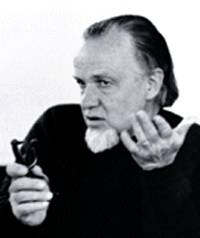


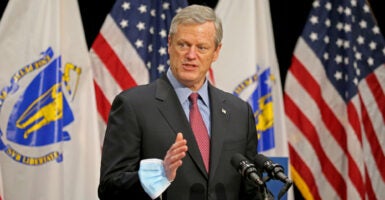


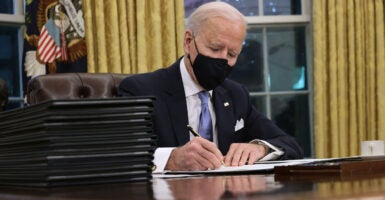


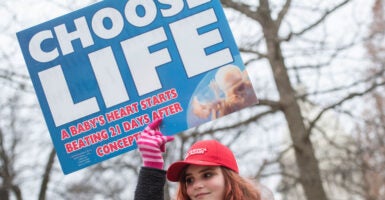


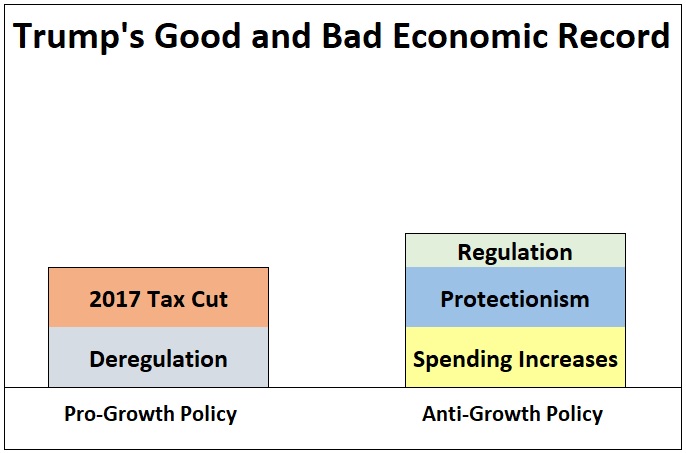







 © Provided by Washington Examiner41RON9E+KLL._SX327_BO1,204,203,200_.jpg
















 The Daily Hatch