Dr. Francis schaeffer – The flow of Materialism(from Part 4 of Whatever happened to human race? Co-authored by Francis Schaeffer and Dr. C. Everett Koop)
Edith Schaeffer with her husband, Francis Schaeffer, in 1970 in Switzerland, where they founded L’Abri, a Christian commune.
________________
______________________
March 19, 2021
President Biden c/o The White House 1600 Pennsylvania Avenue NW Washington, DC 20500
Dear Mr. President,
I really do respect you for trying to get a pulse on what is going on out here. I know that you don’t agree with my pro-life views but I wanted to challenge you as a fellow Christian to re-examine your pro-choice view.
___________________
Many in the world today are taking a long look at the abortion industry because of the May 14, 2013 guilty verdict and life term penalty handed down by a jury (which included 9 out of 12 pro-choice jurors) to Dr. Kermit Gosnell. During this time of reflection I wanted to put forth some of the pro-life’s best arguments.
I truly believe that many of the problems we have today in the USA are due to the advancement of humanism in the last few decades in our society. Ronald Reagan appointed the evangelical Dr. C. Everett Koop to the position of Surgeon General in his administration. He partnered with Dr. Francis Schaeffer in making the video below. It is very valuable information for Christians to have. Actually I have included a video below that includes comments from him on this subject.
Francis Schaeffer Whatever Happened to the Human Race (Episode 1) ABORTION
_____________________________________
Dr. Francis schaeffer – The flow of Materialism(from Part 4 of Whatever happened to human race?)
Dr. Francis Schaeffer – The Biblical flow of Truth & History (intro)
Francis Schaeffer – The Biblical Flow of History & Truth (1)
Dr. Francis Schaeffer – The Biblical Flow of Truth & History (part 2)
The Kermit Gosnell Verdict: Implications for Pro-Life Lutheran Christians
A statement by LCMS Life Ministries
May 13, 2013
After a nine-week trial, which included weeks of graphic testimony, a Pennsylvania jury found Dr. Kermit Gosnell guilty of three of four counts of first-degree murder in the deaths of babies who were born alive, but who died after their spinal cords were severed in procedures Gosnell called “abortions.” He was acquitted on the fourth murder charge. Gosnell also was convicted of involuntary manslaughter in the botched abortion death of one mother. He faced 258 counts total, including 24 counts of performing abortions after 24 weeks gestation, which is illegal in Pennsylvania, and hundreds of charges of violating Pennsylvania’s informed consent and 24-hour waiting period laws. The jury is now in the penalty phase.
Gosnell’s murder trial became the subject of much debate nationally after pro-life activists and others criticized the mainstream media for ignoring the trial early on.
As pro-life Christians devoted to the biblical understanding of the sanctity of human life, we grieve over the tragic loss of these lives and the thousands of other children and mothers who die daily as a result of abortion. Today’s conviction of Gosnell brings justice for the many victims of this horrific abortion facility and demonstrates that abortion is clearly a slippery slope that seeks to deprive the most helpless of their basic human right: life.
The LCMS develops and promotes resources and support for pregnant women so they can avoid seeking abortions. Abortion doesn’t solve — but only masks — problems many women face and leaves many of them grieving the death of a child.
The Gosnell case generated a larger debate and rightly caused people to consider the philosophical issue of why an abortion procedure performed in utero is legal, but also how a similar act a few minutes later, outside the womb, is considered homicide.
Clearly, the case was about the death of five persons and no one can argue against the personhood of these four smaller humans. This case has exposed the ugly underbelly of the pro-abortion movement and it has brought the humanity of unborn children before the public conscience.
We call upon legislators and citizens to examine the brutality of abortion, which takes the lives of 1.2 million children every year, and the mothers who die as well. (The Center for Disease Control reports that about 400 women have died as a result of legal abortions since 1973, and 12 died in 2008, the last time such research was gathered.)
Our church aims to be a place of forgiveness, mercy and healing for all people as we continue to proclaim Christ’s comfort and truth in love. As we move forward following this ruling, we offer up our prayers for women and children in need, for families, that those still participating in the abortion industry would stop, and for our nation.
Thank you so much for your time. I know how valuable it is. I also appreciate the fine family that you have and your commitment as a father and a husband. I also respect you for putting your faith in Christ for your eternal life. I am pleading to you on the basis of the Bible to please review your religious views concerning abortion. It was the Bible that caused the abolition movement of the 1800’s and it also was the basis for Martin Luther King’s movement for civil rights and it also is the basis for recognizing the unborn children.
Sincerely,
Everette Hatcher III, 13900 Cottontail Lane, Alexander, AR 72002, ph 501-920-5733,
Francis Schaeffer: “Whatever Happened to the Human Race” (Episode 1) ABORTION OF THE HUMAN RACE Published on Oct 6, 2012 by AdamMetropolis ________________ Picture of Francis Schaeffer and his wife Edith from the 1930′s above. I was sad to read about Edith passing away on Easter weekend in 2013. I wanted to pass along this fine […]
I have gone back and forth and back and forth with many liberals on the Arkansas Times Blog on many issues such as abortion, human rights, welfare, poverty, gun control and issues dealing with popular culture. Here is another exchange I had with them a while back. My username at the Ark Times Blog is Saline […]
I have gone back and forth and back and forth with many liberals on the Arkansas Times Blog on many issues such as abortion, human rights, welfare, poverty, gun control and issues dealing with popular culture. Here is another exchange I had with them a while back. My username at the Ark Times Blog is Saline […]
It is truly sad to me that liberals will lie in order to attack good Christian people like state senator Jason Rapert of Conway, Arkansas because he headed a group of pro-life senators that got a pro-life bill through the Arkansas State Senate the last week of January in 2013. I have gone back and […]
I have gone back and forth and back and forth with many liberals on the Arkansas Times Blog on many issues such as abortion, human rights, welfare, poverty, gun control and issues dealing with popular culture. Here is another exchange I had with them a while back. My username at the Ark Times Blog is Saline […]
I have gone back and forth and back and forth with many liberals on the Arkansas Times Blog on many issues such as abortion, human rights, welfare, poverty, gun control and issues dealing with popular culture. Here is another exchange I had with them a while back. My username at the Ark Times Blog is Saline […]
I have gone back and forth and back and forth with many liberals on the Arkansas Times Blog on many issues such as abortion, human rights, welfare, poverty, gun control and issues dealing with popular culture. Here is another exchange I had with them a while back. My username at the Ark Times Blog is Saline […]
Sometimes you can see evidences in someone’s life of how content they really are. I saw something like that on 2-8-13 when I confronted a blogger that goes by the name “AngryOldWoman” on the Arkansas Times Blog. See below. Leadership Crisis in America Published on Jul 11, 2012 Picture of Adrian Rogers above from 1970′s […]
In the film series “WHATEVER HAPPENED TO THE HUMAN RACE?” the arguments are presented against abortion (Episode 1), infanticide (Episode 2), euthenasia (Episode 3), and then there is a discussion of the Christian versus Humanist worldview concerning the issue of “the basis for human dignity” in Episode 4 and then in the last episode a close […]
I have gone back and forth and back and forth with many liberals on the Arkansas Times Blog on many issues such as abortion, human rights, welfare, poverty, gun control and issues dealing with popular culture. Here is another exchange I had with them a while back. My username at the Ark Times Blog is Saline […]
I have gone back and forth and back and forth with many liberals on the Arkansas Times Blog on many issues such as abortion, human rights, welfare, poverty, gun control and issues dealing with popular culture. Here is another exchange I had with them a while back. My username at the Ark Times Blog is Saline […]
I have gone back and forth and back and forth with many liberals on the Arkansas Times Blog on many issues such as abortion, human rights, welfare, poverty, gun control and issues dealing with popular culture. Here is another exchange I had with them a while back. My username at the Ark Times Blog is Saline […]
E P I S O D E 1 0 Dr. Francis Schaeffer – Episode X – Final Choices 27 min FINAL CHOICES I. Authoritarianism the Only Humanistic Social Option One man or an elite giving authoritative arbitrary absolutes. A. Society is sole absolute in absence of other absolutes. B. But society has to be […]
E P I S O D E 9 Dr. Francis Schaeffer – Episode IX – The Age of Personal Peace and Affluence 27 min T h e Age of Personal Peace and Afflunce I. By the Early 1960s People Were Bombarded From Every Side by Modern Man’s Humanistic Thought II. Modern Form of Humanistic Thought Leads […]
E P I S O D E 8 Dr. Francis Schaeffer – Episode VIII – The Age of Fragmentation 27 min I saw this film series in 1979 and it had a major impact on me. T h e Age of FRAGMENTATION I. Art As a Vehicle Of Modern Thought A. Impressionism (Monet, Renoir, Pissarro, Sisley, […]
E P I S O D E 7 Dr. Francis Schaeffer – Episode VII – The Age of Non Reason I am thrilled to get this film series with you. I saw it first in 1979 and it had such a big impact on me. Today’s episode is where we see modern humanist man act […]
E P I S O D E 6 How Should We Then Live 6#1 Uploaded by NoMirrorHDDHrorriMoN on Oct 3, 2011 How Should We Then Live? Episode 6 of 12 ________ I am sharing with you a film series that I saw in 1979. In this film Francis Schaeffer asserted that was a shift in […]
E P I S O D E 5 How Should We Then Live? Episode 5: The Revolutionary Age I was impacted by this film series by Francis Schaeffer back in the 1970′s and I wanted to share it with you. Francis Schaeffer noted, “Reformation Did Not Bring Perfection. But gradually on basis of biblical teaching there […]
Dr. Francis Schaeffer – Episode IV – The Reformation 27 min I was impacted by this film series by Francis Schaeffer back in the 1970′s and I wanted to share it with you. Schaeffer makes three key points concerning the Reformation: “1. Erasmian Christian humanism rejected by Farel. 2. Bible gives needed answers not only as to […]
Francis Schaeffer’s “How should we then live?” Video and outline of episode 3 “The Renaissance” Francis Schaeffer: “How Should We Then Live?” (Episode 3) THE RENAISSANCE I was impacted by this film series by Francis Schaeffer back in the 1970′s and I wanted to share it with you. Schaeffer really shows why we have so […]
Francis Schaeffer: “How Should We Then Live?” (Episode 2) THE MIDDLE AGES I was impacted by this film series by Francis Schaeffer back in the 1970′s and I wanted to share it with you. Schaeffer points out that during this time period unfortunately we have the “Church’s deviation from early church’s teaching in regard […]
Francis Schaeffer: “How Should We Then Live?” (Episode 1) THE ROMAN AGE Today I am starting a series that really had a big impact on my life back in the 1970′s when I first saw it. There are ten parts and today is the first. Francis Schaeffer takes a look at Rome and why […]
Not in all of my life have I ever prepared an address as minutely and meticulously as I have this one tonight. I have been a pastor fifty-eight years. I began preaching at this pastor’s conference at the invitation of Dr. M. E. Dodd when he founded it something like fifty years ago. And I would think more than thirty times have I spoken to this assembly of God’s anointed undershepherds. But I have never, ever approached a moment like this. And the message tonight, entitled Whether We Live or Die, is delivered, prepared in view of the convocation of our assembled messengers beginning in the morning.
The outline of the address, of the study, is this:
The Pattern of Death for a Denomination; then
The Pattern of Death for an Institution; then
The Pattern of Death for a Preacher, a Professor; and then finally,
The Promise of Renascence, and Resurrection, and Revival.
So we begin: The Pattern of Death for a Denomination.
In the middle of the last century, a great storm arose in the Baptist denomination in Great Britain. Opposition to evangelical truths sprang from two sources: one, the publication in 1859 of Darwin’s Origin of Species, which made the Genesis account of creation a myth; and second, the vast inroads of German higher criticism and rationalism that explained away the miracles of the Bible and reduced the inspired Word to merely a human book.
This fungal attack on the Scripture brought forth open and militant opposition from the mighty preacher Charles Haddon Spurgeon. He urged the Baptist Union of England to speak out against the heresy. They refused, saying Baptists believe in the priesthood of every believer, and further avowed that Baptists could believe their own way so long as they baptize by immersion. Spurgeon then published what he called “The Downgrade in the Churches.” He wrote, “Instead of submission to God’s Word [James 4:4-10], higher criticism urges accommodation to human wisdom. It sets human thought above God’s revelation and constitutes man the supreme judge of what ought to be true.”
He wrote, “Believers in Holy Scripture are in confederacy with those who deny plenary inspiration. Those who hold evangelical doctrine are in open alliance with those who call the Genesis fall a myth.”
He wrote, “A chasm is opening between the men who believe their Bibles and those who are prepared for an advance upon the Scripture . . . The house is being robbed, its very walls are being digged down, but the good people who are in bed are too fond of the warmth . . . to go downstairs to meet the burglars.” “Inspiration and speculation cannot long abide side by side . . . We cannot hold the inspiration of the Word [2 Timothy 3:16], and yet reject it. We cannot hold the doctrine of the Fall [Romans 5:12-21; 1 Corinthians 15:22], and yet talk of evolution of spiritual life from human nature. One or the other must go.” “Compromise there can be none.”
Dr. John Clifford, London pastor and president of the British Baptist Union and later the first president of the Baptist World Alliance, declared in 1888, quote, “It pains me unspeakably to see this eminent [preacher Spurgeon] rousing the energies of thousands of Christians to engage in personal wrangling and strife, instead of inspiring them to . . . herioc effort to carry the . . . Gospel to our fellow-countrymen.” Sounds kind of familiar, doesn’t it?
Dr. John Clifford had embraced the higher critical new theology. He believed that evangelicalism and higher criticism could be combined. Dr. Clifford presided over the Council of the Baptist Union that met in session January 18, 1888. They voted to recommend to the plenary session of the Union a vote to censure Spurgeon. Dr. John Clifford did his work well. The Baptist Union met in assembly April 23, 1888, in the City Temple of London—Dr. Joseph Parker’s Congregational church, himself a critic of Spurgeon—and the recommendation of council for censure was placed before the full body. The official vote was two thousand for the motion to censure Spurgeon, and seven against.
A godly man, Henry Oakley, who was present in the Baptist Union assembly that day, wrote these words in later memory concerning the tragic meeting. Quote:
I was present at the City Temple when the motion to censure Spurgeon was moved, seconded, and carried. The City Temple was as full as it could be. I was there early but found only a standing place in the aisle at the back of the gallery. I listened to the speeches. The only one of which I have a distinct remembrance was that of Mr. Charles Williams. He quoted Tennyson in favor of a liberal theology. The moment of voting came. Only those members of the assembly were qualified to vote. When the motion of censure was put, a forest of hands went up. “Against,” called the chairman, Dr. John Clifford. I did not see any hands, but history records there were seven. Before any announcement of the censure number was made by Dr. John Clifford, the vast assembly broke into tumultuous cheering, and cheering, and cheering yet. From some of the older men their pent-up hostility found vent. From many of the younger men wild resistance of “any obscurantist trammels,”—Spurgeon’s preaching—as they said, broke loose. It was a strange scene. I viewed it with tears. I stood near a man I knew well. He went wild with delight at the censure. I say, it was a strange scene, that that vast assembly should so outrageously be delighted at the condemnation of the greatest, noblest, and grandest leader of their faith.
An English writer said of that downgrade controversy against Spurgeon that it quote, “entailed one of the most bitter persecutions any minister of the gospel has ever endured in this country.” Spurgeon’s wife Susanna said that the controversy cost him his life. He died at the age of fifty-seven. Spurgeon himself said to a friend in May, 1891, “Goodbye. You will never see me again. This tragic fight is killing me.” But Spurgeon also said, “The distant future will vindicate me.”
All that Mr. Spurgeon saw and said, and much more, came to pass. Baptist witness in Great Britain began to die. The Baptist Union in their minutes recognized the presence of higher criticism in their midst, but they said it would do no harm. Spurgeon answered that the future would witness a lifeless and fruitless church. As he foretold, with the accommodation of the higher critical approach to the Scriptures—which is universal among us—with the accommodation of the higher critical approach to the Scriptures, church attendance fell off, prayer meetings ceased, miracles of conversion were witnessed less and less, the number of baptisms began to decline—and for years they’ve been in decline with us—and the churches began to die out. The numerical graph of the British Baptists since the halcyon days of Spurgeon, their mighty champion, is down, and ever down, and for a century has been going down.
I was in India years ago when English Baptists were closing down their mission stations on the Ganges River, stations founded by William Carey. Some say the position taken by Spurgeon hurt the mission movement. My brother, if the higher critical approach to the Scriptures dominates our institutions and our denominations, there will be no missionaries to hurt! They will cease to exist!
A comment on the sad condition of Baptist churches in England is found in the latest biography of Spurgeon written by Dr. Arnold Dallimore, entitled: C. H. Spurgeon, a New Biography, published this last year. The comment concerning English Baptists is this, quote: “Where there is no acceptance of the Bible as inerrant; there is no true Christianity. The preaching is powerless, and what Spurgeon declared to his generation a hundred years ago is the outcome.”
And that statement is followed by this paragraph:
The failure of the new theology or higher criticism, call it what we will, is forcefully brought out by E. J. Poole-Conner in his Evangelicalism in England. He tells of a conversation between the editor of an agnostic magazine and a neo-orthodox minister. The editor told the minister that despite their different vocations, they had much in common. “I don’t believe the Bible,” said the agnostic, “but neither do you. I don’t believe the story about creation, but you don’t either. I don’t believe any of these things, but neither do you. I am as much of a Christian as you, and you are as much of an infidel as I.”
As with the Baptists of Great Britain, whether we continue to live or ultimately die lies in our dedication to the infallible Word of God [2 Timothy 3:16-17].
Number two: The Pattern of Death for an Institution.
An institution can be like a great tree which in times past withstood the rain, and the wind, and the storm, and the lightning, but finally fell because the heart had rotted out. Insects, termites destroyed the great monarch of the woods. This is the unspeakably tragic thing that happens to many of our Christian institutions, and eventually threatens them all. They are delivered to secularism and infidelity, not because of a bitter frontal attack from without, but because of a slow, gradual permeation of the rot and curse of unbelief from within. The tragic and traumatic example of that decay is the University of Chicago.
The faithful devout Baptist people of the North set about to build, in their words, and I quote, “a great Christian university to counteract the materialism of the Middle West.” God greatly, immediately blessed their effort. In May 1889, the electric news was announced to the Baptists gathered in a national meeting in Boston that Rockefeller had offered six hundred thousand dollars for the building of the Christian school if the Baptist churches would give four hundred thousand dollars. When the announcement was made, the entire assembly arose with a doxology on its lips. And Dr. Henson exclaimed, “I scarcely dare trust myself to speak. I feel like Simeon when he said, ‘Now, Lord, lettest now Thy servant depart in peace . . . for mine eyes have seen Thy salvation’” [Luke 2:29, 30].
Appeals were sent to twelve hundred Baptist pastors in the Middle West. The second Sunday in April 1890 was made University Day. The humble, faithful loyal Baptist people in all the churches gave prayerfully and sacrificially. Their splendid school for preachers, the Baptist Theological Seminary at Morgan Park in Chicago was, under the terms of the Rockefeller gift, to be the center of the university and to become the divinity school. The university was to be built around the seminary, and all of it was to be dedicated to the evangelization of the heartland of America. It was done gloriously, victoriously. The university was built. The divinity school was opened, and they prepared preachers to win the Middle West for Christ.
Then the infiltration began. The curse, the rot, the virus, the corruption of a higher critical approach to the gospel began to work. What are the ultimate results of this almost universal higher critical teaching? Here are some of the professors who taught the preachers in that divinity school during the course of the years. Professor G. B. Smith, systematic theology, who wrote, “The spirit of democracy protests against such an idea as that God has the right to insist on a rigid plan of salvation.” Professor Soares, who said, “Redemption is an absolute fancy. Revelation is self-deception. We refuse the idea that the principle business of the church is to get people converted and committed to the Christian life.” And Professor G. B. Foster, Baptist teacher in the seminary, and pastor of a Unitarian Church wrote, “An intelligent man who now affirms his faith in miracles can hardly know what intellectual honesty means. The hypothesis of God has become superfluous in every science, even that of religion itself. Jesus did not transcend the limits of the purely human.”
We cannot but find ourselves in sympathy with an editorial of a great Chicago newspaper which said:
We are struck with the hypocrisy and treachery of these attacks on Christianity. This is a free country and a free age and men can say what they choose about religion, but this is not what we arraign these divinity professors for. Is there no place in which to assail the Bible but a divinity school? Is there no one to write infidel books except professors of Christian theology? Is a theological seminary an appropriate place for a general massacre of Christian doctrines? We are not championing either Christianity or infidelity but only condemning infidels masquerading as men of God and Christian teachers.
A friend of mine, a teacher, went to the University of Chicago to gain a Ph.D. in pedagogy. While there, he made the friendship of a student in the divinity school. Upon the young theolog’s graduation, the budding preacher said to my teacher friend, quote, “I am in a great quandary. I have been called to the pastorate of a Presbyterian church in the Midwest, but it is one of those old-fashioned Presbyterian churches that believes the Bible. And I don’t believe the Bible, and I don’t know what to do.” My teacher friend replied, “I can tell you exactly what you ought to do.” Eagerly, the young preacher asked, “What?” And my teacher friend replied, “I think that if you don’t believe the Bible, you ought to quit the ministry!”
But not only in the North have we lost our Baptist institutions such as the University of Chicago; such as Brown University; such as Crozer Theological Seminary, practically all of them. But in the South—where we live—in the South we are beginning to witness the same loss. Within these last few years, two of our senior Baptist universities in the Southern states have been removed from Baptist control. Give it another century, and the loss will be unspeakably tragic.
John Wesley at one time wrote, “I am not afraid that the people called Methodists should ever cease to exist in Europe or America. But I am afraid lest they should exist as a dead sect, having the form of religion without the power.” This fear that troubled the heart of John Wesley no less troubles the hearts of believing Christians everywhere who take time to see what higher criticism can do to their institutions.
If neo-orthodoxy were a separate movement in itself, built its own churches, launched its own institutions, projected its own denomination, then we could look at it as just another of the many sects that appear on the surface of history. But neo-orthodoxy in itself builds nothing. It is a parasite that grows on institutions already built.
If these higher critical semi-Unitarians won the lost to Christ, built up the churches, sent out missionaries, ministered to the needs of the people, then we could abandon our Bibles, rest at ease in Zion, and watch the kingdom of God advance from our ivory towers. The trouble is, these self-styled superior religionists do nothing but preside over a dying church, and a dying witness, and a dying denomination.
No minister who has embraced a higher critical approach to the gospel has ever built a great church, held a mighty revival, or won a city to the Lord. They live off the labor and sacrifice of those who paid the price of devoted service before them. Their message, which they think is new and modern, is as old as the first lie, “Yea, hath God said?” [Genesis 3:1].
Let the true pastor never turn aside from his great high calling to preach the whole counsel of God, warn men of their sins and the judgment of God upon them, baptize their converts in the name of the triune Lord, and build up the congregation in the love and wisdom of Christ Jesus. If he does that he will have completed the work for which the Holy Spirit did choose him. Do not be deterred or be discouraged by what others say about you. Just keep on winning souls to Jesus!
Number three: The Pattern of Death for a Preacher, a Pulpiteer, a Professor
There came to the Southern Seminary in 1869 a scholarly young man by the name of Crawford H. Toy. He was the first addition to the original faculty of four, and gave every promise of becoming the greatest of them all. He knew more Hebrew than his teacher, Dr. Basil Manley. Literally, he was the pride and joy of the school. He was brilliant beyond compare.
However, through studying German higher criticism and rationalism, he drifted away from the revealed truth of the Scriptures and began to teach in the seminary the pentateuchal-destructive attacks of Keunen, Wellhausen, and a host of others. It broke the hearts of President James P. Boyce and Professor John A. Broadus, but the dismissal had to come.
When Dr. Toy left, Boyce and Broadus accompanied him to the railroad station. Just before the train took him away, President Boyce placed his left arm around the shoulders of the young man, and lifting up his right hand to heaven, said, “Crawford, I would give my right arm if you were back as you were when you first came to us.”
Dr. Toy went to be professor of Hebrew at Harvard University. He went into the Unitarian church and finally, never went to church at all. He was a world-famous scholar. In my library, I have Hebrew books written by Dr. Toy. He was a world-famous scholar, internationally known author, and a lovable man, but the virus of higher criticism destroyed his spiritual life and work.
This is the young man who first taught in Albemarle Female Institute in Charlottesville, Virginia, before joining the faculty of Southern Seminary. This is the young man who taught in the school attended by a most vivacious and brilliant student, Miss Lottie Moon. This is the young man with whom Lottie Moon fell in love. This is the young man to whom Lottie Moon returned from China to America to marry. This is the young man the foreign mission board of the Southern Baptist Convention in 1860 appointed a missionary to the Orient, the War Between the States preventing his going. This is the young man, Crawford H. Toy, who was idolized by the Baptist academic and religious world.
But Lottie Moon was shattered and grief-stricken by the new theology and liberal beliefs of the man she so deeply admired and so beautifully loved. She returned to China heartbroken, never to return to home in America, never to marry, and died there in the Orient, lonely in soul and pouring her very life into a ministry for her starving Chinese people.
In the current issue of Review and Expositor, the theological journal of Southern Seminary, there is an extended article on Crawford H. Toy. It is filled with lavish and extravagant praise for the Unitarian. Here are the closing sentences in the review; I quote, “So far as his critical trends developed within the ten years of his membership on the faculty, his views today would not be regarded as sufficiently revolutionary to call for drastic action. Toy’s research and views were too advanced for his contemporaries.” That is, if he lived and taught today, his higher-critical, destructive approach to the Word of God would be perfectly acceptable, condoned, and defended!
However much our hearts may yearn over those who are victims and carriers of modernistic fallacy, if we are to survive as a people of God we must wage a war against the disease that, more than any other, will ruin our missionary, evangelistic, and soul-winning commitment.
And last: The Possibility and Promise of Resurrection, Renascence, Revival.
If, if we will receive the Scriptures as of God, and be true to them as to the Holy Spirit, the Lord will use Southern Baptists to evangelize the world. Revelation 14:6 says, “And I saw an angel fly in the midst of the heaven, having the everlasting gospel to preach unto them that dwell on the earth.” That angelos, having the everlasting euangelion to euangelisai the whole world, can be Southern Baptists. We can experience in our very midst great revival, the outpouring of the saving power of the Holy Spirit upon our churches, upon our preachers, and upon our mission fields.
The way of God is always onward, forward, and upward. The Holy Spirit always announces that there is a greater day coming. The burden of the prophets and the marvelous beckoning light of biblical revelation are ever and always the same. Our mighty God is marching on. It is the message of the first page of the Bible. It is the message of the second page of the Bible. It is the message of the first book of the Bible. It is the message of the second book of the Bible. It is the message of the last page and the last book of the Bible. A glorious triumph is coming. The Lord never recedes. He necessarily advances. His creation is followed by redemption. His redemption is followed by sanctification. His sanctification is followed by glorification.
There is no formal conclusion to the Book of Acts. It is open-ended. God means for the story of Pentecostal power and revival to be prolonged after the same manner. God does not do a great thing and then an increasingly smaller thing. God does not build a portico of marble and finish the temple with decaying brick. Our greatest days are yet to come. There was a time when the Holy Spirit as a heavenly fire was a mysterious presence flashing like lightning from the skies, we knew not whence or whither; coming now upon a Moses and again upon an Elijah, sometimes appearing in the burning bush in Horeb [Exodus 3:2], sometimes falling in awesome mystery upon the altar of sacrifice of Mount Carmel [1 Kings 18:32-39], sometimes striking out in Israel’s camp in destroying fury [Numbers 11:1], sometimes appearing as the Shekinah glory in the temple’s Holy of Holies [2 Chronicles 7:1-3], the strange sign and symbol of Jehovah’s presence and power.
Since Christ’s ascension [Acts 1:9], and in the fulfillment of the prophecy of Joel 2:28-32, the Holy Spirit has been poured out upon all flesh [Acts 2:1-4, 16-33]. John 3:34 confirms that God giveth not the Spirit by measure. He is with us, within us, for us, for power, for conquest, for glory. Since Pentecost, there is no age, no century, no era, no time without the marvelous outpouring of the Holy Spirit. The soul-saving experience continues. Darkness and death and decay may reign in one place, but always light, life, and salvation will reign and vigorously abound in another.
The church at Jerusalem fell into Ebionitic legalism, but the church at Antioch experienced the greatest revival of Gentile converts the first century ever knew. When waning of piety began to empty the churches at Antioch, the churches at Ephesus and Rome and at Milan were waxing mighty in the work of the Lord. When the churches of Alexandria and Carthage were falling into empty philosophical dissertations, the churches of Gaul were winning all western continental Europe to the Lord.
While Rome was pursuing vain and sterile rituals, the churches of Ireland were baptizing the whole nation and their many tribes into the faith. While Mohammed was destroying the faith in North Africa, the Middle East, and Asia Minor, the scholars of Iona were going forth to evangelize the Northumbrians, the Scots, the Picts, the Anglo-Saxons, our ancestors.
While the pontifical court of Avignon was engrossed in seeking political power, the cities of Germany were learning the heavenly ways of the Lord Jesus. When the darkness of night and superstition were covering the churches of France, the morning stars of the Reformation were rising in England. When Italian fields were turning into useless stubble, Bohemia was alive with the converting Spirit of Christ.
When the Unitarian defection destroyed the evangelizing spirit of the congregations of New England, the pioneer preachers were advancing beyond the Alleghenies to build churches and Christian institutions in the heartland of America. And while elitism, and liberalism, and spiritual indifference are decimating the churches in the West, great revival is being experienced in Korea, in South America, and in central Africa. Why not America, and why not now?
Our own and our ultimate destiny lies in the offing—and with us, the world. Seemingly, we stand at the continental divide of history, at the very watershed of civilization. Changes of colossal nature are sweeping the world.
In years past, the French Revolution signalized a political change. The Renaissance brought intellectual change. The industrial revolution introduced economic change. The Reformation encompassed religious change. But today, we face every kind and category of change, mostly defined by the flood tides of materialism, secularism, and liberalism. In my lifetime, for the first time in world history, governments are statedly and blatantly atheistic. No ancient Greek would ever make a destiny-determining decision without first consulting the oracle at Delphi. No Roman general would go to war without first propitiating the gods. But these bow at no altar, call upon the name of no deity, and they seem to be possessing the world.
Whether we live or die lies in the imponderables of Almighty God [Psalm 33:8-19]. Will God not judge atheistic, communistic Russia? Will He not also judge secularistic, heathenistic, humanistic, materialistic America? What is the difference at the judgment bar of Christ between a God-denying Russian communist atheist and a God-denying American liberal humanist? Can God judge Sodom, and Gomorrah, and Nineveh, and Babylon, and not judge Moscow, and Peking, and San Francisco, and Dallas?
Our mission frontiers run down every street and village, through every house, home, and classroom. The whole globe today is small, compact, and shrunken. We see, hear, watch, read, follow what happens moment by moment around the world. The interdependence and the interlinking of all mankind is an actual modern fact. We all ride this planet together. Our nation is one in a dependent family of nations. Romans 14:7 avows, “For none of us lives to himself, and not one of us dieth to himself.”
As Baptist churches, and as a Baptist people, we need each other. One segment of our community cannot do our work, our task, alone. Our strength lies in a common determination and a common dedication. One church can build a Sunday school, but a Sunday school movement must be launched by an association of churches through a Sunday school board. One church can send a missionary, but a vast missionary movement must be engineered by a denomination of churches through a foreign mission board. One church can have a revival, but a revival movement must be prayed for, and prayed down, and lifted up by a community of churches through an evangelistic director.
Years ago, I saw a pathetic picture in Lifemagazine. A little boy had been lost in a horizon-to-horizon Kansas wheat field, had wandered away from the house, and had lost his way in the vast sea of standing stalks. Frantically, the parents had searched for the small child to no avail. The sympathizing neighbors helped, but without success. Finally, someone suggested they join hands and comb the fields by sections. The picture I saw was the sorrowing neighbors with the family standing over the dead body of the little boy, and the cry of the father printed as the caption below: “Oh, if only we had joined hands before!”
United in prayer, preaching, witnessing, working, not around the higher-critical denial of Scripture, but around the infallible Word of God in Christ Jesus, we cannot fail. If we join hands with the blessed Savior, and deliver the message of the inerrant Word of God, God will rise to meet us.
And the Lord God whispered and said to me,
These things shall be, these things shall be.
No help shall come from the scarlet skies
Till My people rise.
Till My people rise, My arm is weak.
I cannot speak till My people speak.
When men are dumb, My voice is dumb.
I cannot come till My people come.
From over the flaming earth and sea,
The cry of My people must come to Me.
Not till their spirit break the curse
May I claim My own in the universe.
But if My people rise, if My people rise,
I will answer them from the swarming skies.
[excerpts from “God Prays: Answer, World! Angela Morgan, 1917]
No battle was ever won by retreat, or submission, or surrender. When Alexander the Great lay dying, they asked him, “Whose is the kingdom?” And he replied, “It is for him who can take it!” It will be we, or somebody else.
Bring me my bow of burning gold:
Bring me my arrows of desire:
Bring me my spear; O clouds unfold!
Bring me my chariot of fire.
We shall not cease from battle strife,
Nor shall the sword sleep in our hand
Till we have built Jerusalem
In this fair and pleasant land.
[Adapted from “Jerusalem,” by William Blake]
God grant it! Amen.
Adrian Rogers – How you can be certain the Bible is the word of God
I want to give you five reasons to affirm the Bible is the Word of God.
First, I believe the Bible is the Word of God because of its scientific accuracy. The Truth of the Word of God tells us that God “hangeth the earth upon nothing” (Job 26:7). How did Job know that the earth hung in space before the age of modern astronomy and space travel? The Holy Spirit told him. The scientists of Isaiah’s day didn’t know the topography of the earth, but Isaiah said, “It is [God] that sitteth upon the circle of the earth” (Isaiah 40:22). The word for “circle” here means a globe or sphere. How did Isaiah know that God say upon the circle of the earth? By divine inspiration.
Secondly, the Bible is affirmed through historical accuracy. Do you remember the story about the handwriting on the wall that is found in the fifth chapter of Daniel? Belshazzar hosted a feast with a thousand of his lords and ladies. Suddenly, a gruesome hand appeared out of nowhere and began to write on a wall. The king was disturbed and asked for someone to interpret the writing. Daniel was found and gave the interpretation. After the interpretation, “Then commanded Belshazzar, and they clothed Daniel with scarlet, and put a chain of gold about his neck, and made a proclamation concerning him, that he should be the third ruler in the kingdom.” (Daniel 5:29). Basing their opinion on Babylonian records, the historians claim this never happened. According to the records, the last king of Babylon was not Belshazzar, but a man named Nabonidas. And so, they said, the Bible is in error. There wasn’t a record of a king named Belshazzar. Well, the spades of archeologists continued to do their work. In 1853, an inscription was found on a cornerstone of a temple built by Nabonidas, to the god Ur, which read: “May I, Nabonidas, king of Babylon, not sin against thee. And may reverence for thee dwell in the heart of Belshazzar, my first-born favorite son.” From other inscriptions, it was learned that Belshazzar and Nabonidas were co-regents. Nabonidas traveled while Belshazzar stayed home to run the kingdom. Now that we know that Belshazzar and Nabonidas were co-regents, it makes sense that Belshazzar would say that Daniel would be the third ruler. What a marvelous nugget of truth tucked away in the Word of God!
Third, from Genesis to Revelation, the Bible reads as one book. And there is incredible unity to the Bible. The Bible is one book, and yet it is made up of 66 books, was written by at least 40 different authors over a period of about 1600 years, in 13 different countries and on three different continents. It was written in at least three different languages by people in all professions. The Bible forms one beautiful temple of truth that does not contradict itself theologically, morally, ethically, doctrinally, scientifically, historically, or in any other way.
Fourth, did you know the Bible is the only book in the world that has accurate prophecy? When you read the prophecies of the Bible, you simply have to stand back in awe. There are over 300 precise prophecies that deal with the Lord Jesus Christ in the Old Testament that are fulfilled in the New Testament. To say that these are fulfilled by chance is an astronomical impossibility.
Finally, the Bible is not a book of the month, but the Book of the Ages. First Peter 1:25 says: “But the word of the Lord endureth for ever. And this is the Word which by the gospel is preached unto you.” No book has ever had as much opposition as the Bible. Men have laughed at it, scorned it, burned it, ridiculed it, and made laws against it. But the Word of God has survived. And it is applicable today as much as it was yesterday and will be tomorrow.
It’s so majestically deep that scholars could swim and never touch the bottom. Yet so wonderfully shallow that a little child could come and get a drink of water without fear of drowning. That is God’s precious, holy Word. The Word of God. Know it. Believe it. It is True.
“In Christ Alone” music video featuring scenes from “The Passion of the Christ”. It is sung by Lou Fellingham of Phatfish and the writer of the hymn is Stuart Townend. On this Easter weekend 2013 there is no other better time to take a look at the truth and accuracy of the Bible. Is the […]
Here is some very convincing evidence that points to the view that the Bible is historically accurate. Archaeological and External Evidence for the Bible Archeology consistently confirms the Bible! Archaeology and the Old Testament Ebla tablets—discovered in 1970s in Northern Syria. Documents written on clay tablets from around 2300 B.C. demonstrate that personal and place […]
Larry King – Dr. John MacArthur vs. “father” Manning Uploaded on Sep 26, 2011 GotoThisSite.org ___________ I have seen John MacArthur on Larry King Show many times and I thought you would like to see some of these episodes. I have posted several of John MacArthur’s sermons in the past and my favorite is his […]
The Bible and Archaeology (1/5) The Bible maintains several characteristics that prove it is from God. One of those is the fact that the Bible is accurate in every one of its details. The field of archaeology brings to light this amazing accuracy. _________________________- Many people have questioned the accuracy of the Bible, but I […]
I have been reading Proverbs almost every day for many years with my family in the evening and there is lots of wisdom in it. Take a look at the second part of this message from Adrian Rogers. How to Be the Father of a Wise Child Another great sermon outline from Adrian Rogers. Adrian Rogers […]
Picture of Adrian Rogers above from 1970′s while pastor of Bellevue Baptist of Memphis, and president of Southern Baptist Convention. (Little known fact, Rogers was the starting quarterback his senior year of the Palm Beach High School football team that won the state title and a hero to a 7th grader at the same school named […]
Leadership Crisis in America Published on Jul 11, 2012 Picture of Adrian Rogers above from 1970′s while pastor of Bellevue Baptist of Memphis, and president of Southern Baptist Convention. (Little known fact, Rogers was the starting quarterback his senior year of the Palm Beach High School football team that won the state title and a hero […]
Same old story it seems. Kentucky pulls out another close victory over the Vols. This is not the only story I am talking about today. Kentucky’s Alex Poythress (22) shoots between Tennessee’s Josh Richardson, left, and Yemi Makanjuola during the first half of an NCAA college basketball game at Rupp Arena in Lexington, Ky., Tuesday, […]
7 years ago on November 15, 2005 Adrian Rogers passed away. This is a series of posts about the life and ministry of Adrian Rogers. Adrian Rogers Memorial – Come To Jesus Uploaded by jonwhisner on Jan 20, 2011 This video is from Adrian Roger’s Memorial Service held at Bellevue Baptist Church in Memphis, TN in […]
(My pastor growing up was Adrian Rogers and he died 7 years ago today. He would have been 82 if he was still living. ) I love the Book of Proverbs and every day I read one chapter of Proverbs. Since there are 31 chapters, I start the 1st of ever month and read chapter […]
Picture of Adrian Rogers above from 1970′s while pastor of Bellevue Baptist of Memphis, and president of Southern Baptist Convention. (Little known fact, Rogers was the starting quarterback his senior year of the Palm Beach High School football team that won the state title and a hero to a 7th grader at the same school […]
7 years ago on November 15, 2005 Adrian Rogers passed away. This is a series of posts about the life and ministry of Adrian Rogers. Adrian Rogers Memorial – Come To Jesus Uploaded by jonwhisner on Jan 20, 2011 This video is from Adrian Roger’s Memorial Service held at Bellevue Baptist Church in Memphis, TN in […]
7 years ago on November 15, 2005 Adrian Rogers passed away. This is a series of posts about the life and ministry of Adrian Rogers. Adrian Rogers Memorial – Come To Jesus Uploaded by jonwhisner on Jan 20, 2011 This video is from Adrian Roger’s Memorial Service held at Bellevue Baptist Church in Memphis, TN in […]
Picture of Adrian Rogers above from 1970′s while pastor of Bellevue Baptist of Memphis, and president of Southern Baptist Convention. (Little known fact, Rogers was the starting quarterback his senior year of the Palm Beach High School football team that won the state title and a hero to a 7th grader at the same school named […]
Sen. Ted Cruz, R-Texas, pictured Oct. 15 during a Judiciary Committee meeting, says that he and 10 other senators “are acting not to thwart the democratic process, but rather to protect it.” (Photo: Greg Nash/Getty Images)
In a move that isn’t without precedent, 11 Senate Republicans are pushing for a special panel to investigate questions of fraud arising from the presidential election.
Some conservatives oppose such objections to the election outcome, in which former Vice President Joe Biden, the Democratic nominee, claimed an Electoral College victory of 306 votes to the 232 garnered by President Donald Trump, the Republican nominee.
Other Republican lawmakers who are Trump’s allies haven’t indicated how they will vote when a joint session of Congress convenes Wednesday to certify the Electoral College totals.
With objections from members of both the House and Senate, the two chambers are required by law to adjourn the joint session and separately debate the objections. Lawmakers potentially could present new evidence of fraud.
The left is actively working to undermine the integrity of our elections. Read the plan to stop them now. Learn more now >>
Sen. Ted Cruz, R-Texas, and the 10 other GOP senators are asking for an audit of election resultsto be completed by an Electoral Commission in 10 days—which would be Jan. 16, four days before Inauguration Day. If Congress doesn’t agree to an audit, the senators say, they will vote against certifying the election.
“We are acting not to thwart the democratic process, but rather to protect it,” Cruz and the 10 other senators said in a joint statement released Saturday. “And every one of us should act together to ensure that the election was lawfully conducted under the Constitution and to do everything we can to restore faith in our Democracy.”
Joining Cruz were Wisconsin’s Ron Johnson, Oklahoma’s James Lankford, Montana’s Steve Daines, Louisiana’s John Kennedy, Tennessee’s Marsha Blackburn and Bill Hagerty, Indiana’s Mike Braun, Wyoming’s Cynthia Lummis, Kansas’ Roger Marshall, and Alabama’s Tommy Tuberville.
Questions of voter fraud, as well as evidence of illegitimate procedures, occurred in Arizona, Georgia, Michigan, Nevada, Pennsylvania, and Wisconsin.
More than one-third of Americans, or 39%, say they believe the “election was rigged,” according to a Reuters/Ipsos poll. Broken down by party, that’s two-thirds of Republicans surveyed, 17% of Democrats, and almost a third of independent voters.
Rep. Mo Brooks, R-Ala., is leading a group of House Republicans who intend to object to certifying the Electoral College outcome, in which a total of 270 votes is needed to win the presidency.
About 140 House Republicans are expected to vote against certifying the results in six contested states for Biden.
Sen. Josh Hawley, R-Mo., announced last weekthat he would sign on to objections from House members. His move guarantees, under the Electoral Count Act of 1887, that the House and Senate will have to debate the objection separately for two hours, where members intend to present evidence.
Here are three key points to understand about the proposed audit by an Electoral Commission going into Wednesday’s joint session.
1. Could an Electoral Commission Overturn the Results?
Whether such a commission would turn the tide in favor of Trump is a big question that isn’t answered by the Republicans asking for the panel.
The joint statement from the 11 GOP senators says:“Congress should immediately appoint an Electoral Commission, with full investigatory and fact-finding authority, to conduct an emergency 10-day audit of the election returns in the disputed states.”
In the long-shot chance that Congress votes to establish the commission, the earliest it could wrap up a 10-day audit would be just four days before the Jan. 20 inauguration.
Under their proposal, the findings of the commission would go back to the states, the senators said:
Once completed, individual states would evaluate the Commission’s findings and could convene a special legislative session to certify a change in their vote, if needed. Accordingly, we intend to vote on January 6 to reject the electors from disputed states as not ‘regularly given’ and ‘lawfully certified’ (the statutory requisite), unless and until that emergency 10-day audit is completed.
The Trump legal team and Trump allies have lost several court cases, but many of those losses were on procedural grounds or about standing.
Sen. Lindsey Graham, R-S.C., usually a Trump ally, tweeted that empaneling an Electoral Commission at this late date could not result in an adequate determination. Graham also said the bar would have to be high for lawmakers to vote against certifying the election.
Meanwhile, Senate Majority Leader Mitch McConnell, R-Ky., has called Biden “president-elect” after the Electoral College voted.
2. Is This Uncharted Territory?
As with so many events politicians and pundits call “unprecedented,” there is precedent all around.
In 1969 and 2005, objections from House and Senate members forced both chambers to debate separately how the Electoral College votes were awarded.
The 1969 debate was over a technical matter regarding a faithless elector in the 1968 presidential election; the 2005 debate, over Ohio’s electoral votes, had the potential to reverse the results of the 2004 election.
With regard to the Electoral Commission that Cruz and the other GOP senators seek, the one and only precedent occurred in 1877. It was in the aftermath of the disputed 1876 election between Republican Rutherford B. Hayes and Democrat Samuel Tilden.
The joint statement from the senators asks that Congress stick with this precedent:
The most direct precedent on this question arose in 1877, following serious allegations of fraud and illegal conduct in the Hayes-Tilden presidential race. Specifically, the elections in three states—Florida, Louisiana, and South Carolina—were alleged to have been conducted illegally.
In 1877, Congress did not ignore those allegations, nor did the media simply dismiss those raising them as radicals trying to undermine democracy. Instead, Congress appointed an Electoral Commission—consisting of five Senators, five House Members, and five Supreme Court Justices—to consider and resolve the disputed returns.
We should follow that precedent.
The 11 senators’ statement doesn’t specify whether they are seeking the same makeup for an Electoral Commission, with members from Congress and the Supreme Court, but that seems unlikely at this juncture.
Congress created the original Electoral Commission, in legislation signed into law by outgoing President Ulysses S. Grant, in late January 1887. In those days, the president wasn’t inaugurated until March 4. That left significantly longer to make a determination.
The commission voted 8-7 along party lines in favor of Hayes for each of the contested states, and sent their recommendation to Congress to certify the results.
“In 1876, there were two slates of electors recognized by state officials and both had claim under the color of law,” Ross told The Daily Signal. “In 2020, the GOP electors met on their own. They can’t claim to be certified by the state. So, Congress would have no grounds in accepting those electors.”
3. What’s the Likelihood of an Audit Being Done?
Even proponents concede that an Electoral Commission to investigate the 2020 election is not likely to happen.
“We are not naïve. We fully expect most if not all Democrats, and perhaps more than a few Republicans, to vote otherwise,” Cruz and the other senators said in their joint statement. “But support of election integrity should not be a partisan issue.”
“A fair and credible audit—conducted expeditiously and completed well before January 20—would dramatically improve Americans’ faith in our electoral process and would significantly enhance the legitimacy of whoever becomes our next President. We owe that to the People.”
A mix of conservative and centrist Republicans are joining Democrats in objecting to objections in general.
They include seven House Republicans led by Rep. Chip Roy, R-Texas, who released a joint statement Sunday critical of election procedures but expressing concern about the precedent of Congress doing the deciding.
“We, like most Americans, are outraged at the significant abuses in our election system resulting from the reckless adoption of mail-in ballots and the lack of safeguards maintained to guarantee that only legitimate votes are cast and counted,” the seven House Republicans said. “… Congress has one job here: to count electoral votes that have in fact been cast by any state, as designated by those authorized to do so under state law.”
The seven lawmakers’ statement continues:
The elections held in at least six battleground states raise profound questions, and it is a legal, constitutional, and moral imperative that they be answered.
But only the states have authority to appoint electors, in accordance with state law. Congress has only a narrow role in the presidential election process. Its job is to count the electors submitted by the states, not to determine which electors the states should have sent.
The text of the United States Constitution, and the Twelfth Amendment in particular, is clear. With respect to presidential elections, there is no authority for Congress to make value judgments in the abstract regarding any state’s election laws or the manner in which they have been implemented.
Trump tweeted Monday that Republicans who don’t back him are part of the “surrender caucus” who will “go down in infamy as weak and ineffective.”
The House Republicans’ statement added that state legislatures determine when fraud affects the outcome of an election, and it is their job to send that information to Congress.
Sen. Tom Cotton, R-Ark., called for a commission to investigate the 2020 election, but warned about a risky precedent should Congress intervene now since its power “is limited to counting electoral votes submitted by the states.”
“If Congress purported to overturn the results of the Electoral College, it would not only exceed that power, but also establish unwise precedents,” Cotton said. “First, Congress would take away the power to choose the president from the people, which would essentially end presidential elections and place that power in the hands of whichever party controls Congress.”
Cotton added:
Second, Congress would imperil the Electoral College, which gives small states like Arkansas a voice in presidential elections. Democrats could achieve their long-standing goal of eliminating the Electoral College in effect by refusing to count electoral votes in the future for a Republican president-elect. Third, Congress would take another big step toward federalizing election law, another long-standing Democratic priority that Republicans have consistently opposed.
Trump also went after Cotton in a tweet, promising a speech and new evidence. The president, who was set to hold a rally Monday evening in Georgia, tweeted: “Republicans have pluses & minuses, but one thing is sure, THEY NEVER FORGET!”
“All challenges through recounts and appeals have been exhausted. At this point, further attempts to cast doubt on the legitimacy of the 2020 presidential election are contrary to the clearly expressed will of the American people and only serve to undermine Americans’ confidence in the already determined election results,” the senators said in a joint statement.
They include Mitt Romney, R-Utah; Joe Manchin, D-W.V.; Susan Collins, R-Maine; Mark Warner, D-Va.; Bill Cassidy, R-La.; Jeanne Shaheen, D-N.H.; Lisa Murkowski, R-Alaska; Maggie Hassan, D-N.H.; Dick Durbin, D-Il.; and Angus King, I-Maine, who caucuses with Democrats.
“The voters have spoken, and Congress must now fulfill its responsibility to certify the election results,” the senators added. “In two weeks, we will begin working with our colleagues and the new Administration on bipartisan, commonsense solutions to the enormous challenges facing our country. It is time to move forward.”
Supporters of the president gather Friday outside the Supreme Court, which later declined to hear a case seeking to overturn the election results in four states. (Photo: Stefani Reynolds/Getty Images)
In a dramatic blow to President Donald Trump’s attempts to challenge the unofficial election results, the Supreme Court on Friday evening rejected a Texas lawsuit seeking to overturn the outcome in four battleground states.
The high court’s one-page opinion said Texas did not have standing to sue over election procedures in Georgia, Michigan, Pennsylvania, and Wisconsin, four closely contested states that Trump won in 2016 but that his Democratic challenger, former Vice President Joe Biden, appeared to win five weeks ago.
Justices Clarence Thomas and Samuel Alito made a nominal dissent in holding that any state has the standing to sue another state, but made clear that doesn’t mean they would rule in favor of Texas.
The left is actively working to undermine the integrity of our elections. Read the plan to stop them now. Learn more now >>
The Trump campaign had filed multiple lawsuits challenging the outcome in the four states as well as in Nevada and Arizona.
By Friday, 18 other states had joined Texas’ lawsuit through friend-of-the-court briefs filed at the Supreme Court. The Trump campaign also supported Texas, as did House Minority Leader Kevin McCarthy, R-Calif., and at least 120 other House Republicans.
In an unsigned opinion, the high court said:
The State of Texas’s motion for leave to file a bill of complaint is denied for lack of standing under Article III of the Constitution. Texas has not demonstrated a judicially cognizable interest in the manner in which another state conducts its elections. All other pending motions are dismissed as moot.
Alito issued a statement, which Thomas joined:
In my view, we do not have discretion to deny the filing of a bill of complaint in a case that falls within our original jurisdiction. See Arizona v. California, 589 U. S. ___ (Feb. 24, 2020) (Thomas, J., dissenting). I would therefore grant the motion to file the bill of complaint but would not grant other relief, and I express no view on any other issue.
Texas Attorney General Ken Paxton, a Republican, announced Tuesday that his state was seeking to take the four states to the Supreme Court. Each of the four went for Trump in 2016.
The 18 states that joined Texas in the case include Alabama, Arizona, Arkansas, Florida, Indiana, Kansas, Louisiana, Mississippi, Missouri, Montana, Nebraska, North Dakota, Oklahoma, South Carolina, South Dakota, Tennessee, Utah, and West Virginia.
Earlier Friday, Trump had tweeted about the case.
The Texas-led lawsuit was an attempt to “disregard the will of the people” and “tear at the fabric of our Constitution,” Michigan Attorney General Dana Nessel, Pennsylvania Attorney General Josh Shapiro, and Wisconsin Attorney General Josh Kaul, all Democrats, said in a joint statement.
Texas alleged that Georgia, Michigan, Pennsylvania, and Wisconsin violated the rights of Texas voters when they changed election ruleswithout authorization by their respective state legislatures.
The suit argued that each of the four states violated the Electors Clause of the Constitution (Article II, Section 1, Clause 2), which Texas argued vests “state legislatures with plenary authority regarding the appointment of presidential electors.”
The lawsuit asked the Supreme Court for a declaratory judgment that Pennsylvania, Michigan, Georgia, and Wisconsin violated election law and thus their electoral votes—as they currently stand—should not be counted.
TITUSVILLE, FL – Placing three justices on the U.S. Supreme Court is among President Trump’s greatest accomplishments during his first term in office, according to Father Frank Pavone, National Director of Priests for Life.
“Tonight’s confirmation of Justice Amy Coney Barrett was a highlight of the most successful four years in office for any U.S. president,” Father Pavone said. “Justice Barrett is a brilliant scholar and will be another vital originalist voice on the Court.”
Father Pavone said that after the confirmation of President Trump’s second nominee, Justice Brett Kavanaugh, in 2018, the name that came up most frequently among pro-life Americans for candidates they would like to see nominated to fill the next vacancy on the court was Amy Coney Barrett.
“Justice Barrett is literally a dream that today became a reality,” he said.
Priests for Life (EndAbortion.US) is the world’s largest Catholic pro-life organization dedicated exclusively to ending abortion.
The issue of Abortion is a very central one in our culture today and I will do a series of posts on my correspondence with Carl Sagan concerning this issue.
Unplanned Official Trailer – In Theaters March 29
___________
I wrote Carl Sagan a letter on 8-30-95 about abortion and he responded by sending me a copy of his article on abortion. In my letter I included this article below by Greg Koukl.
What makes a person a person? Does a fetus qualify?
I’m asking for people just to work hard to get some clarity on this issue. It’s not that hard. If I’ve heard this once, I’ve heard it a dozen times: “This is a difficult issue. It’s a confusing issue. It’s hard to come to a real, proper understanding.” The abortion issue is not a difficult issue. It is not a confusing issue. It is a very simple issue when it comes to the facts themselves. And I’m trying to urge people to have some clarity based on what is true here and what is moral and right; not based on what we want for ourselves. That’s what makes these kind of issues complicated. The truth is self-evident but we don’t like what is true because it makes a moral demand upon us, and that moral demand frequently is uncomfortable and inconveniencing. When we face discomfort and inconvenience, then we want to change the rules; and we try to change the rules by using contorted, disfigured arguments and we claim that it’s a difficult issue. It’s not difficult at all.
I talked with a young lady last night who made the point that she
thinks that. She used the illustration of snapshots. If you took a photo
of the developing fetus at every stage of development you would see
something different; therefore the fetus is a different thing at each
different stage of development. Well, that’s an idea, I guess. That’s a
way of looking at it but it doesn’t make any sense whatsoever. It
doesn’t mean because you can take a picture of me at six, and ten, and
twelve, and twenty-four, and forty-four that I am somehow a different
being. I’m the same being talking on this show right now that graduated
from Simon Greenleaf University two weeks ago, and graduated from York
High School in 1968, even though I don’t look the same as I did back
then. I still have my girlish figure, but I look different.
Does that mean I’m a different person? I’m a different being? All
these gradualism arguments fail because they don’t have a clear fix on
what it means for a thing to be a thing. It sounds like double talk, but
it’s not double talk at all. It’s very simple. A thing is itself and
not something else, and it remains itself as long as it exists.
I am Greg Koukl. I was Greg Koukl when I was born, and I’ll be Greg
Koukl when I die. I am Greg Koukl from beginning to end. I am Greg Koukl
the whole time through even though my body changes form. Beings don’t
transform into different beings. They are what they are.
When does an acorn become an oak? Well, no one knows for sure. Of course we do! An acorn never becomes an oak. An acorn is
an oak. Period. That’s what an acorn is. It’s an oak in immature form.
It can become a mature oak tree. But young or old, it’s an oak. This is
not a matter of opinion, folks. When we get down to it, acorn doesn’t
describe what a thing is, in a sense; it describes the stage of
development of that particular thing. It’s kind of like asking what is a
teenager? Well, a teenager isn’t a particular thing, like there is a
being called teenager. What a teenager is a description of the stage of
development of the human being. It is a human at a certain age. An acorn
is an oak at a certain age. And a fetus is a human being at a certain
age.
Now some people try to get around this by saying, “Okay, I’ll give
in. An unborn child is a human being, but it’s not a person.” And I have
a very simple Columbo for you in that situation. It’s very, very easy
to use. When someone lays this on you, ask them a very fair question:
What’s the difference? They will say absolutely nothing. There will be a
long, embarrassing silence and don’t you dare open your mouth because
what this person has just said is that they are willing to sacrifice the
life of a human child because it’s not a person, yet they are not in
any position whatsoever to tell you the difference between the two.
It’s kind of like saying why are you killing those children? “Well, it’s because they don’t have a high enough I.Q.” Well, how high of an I.Q. do you have to have to live? “Frankly, I don’t have the faintest idea, but I know these kids are pretty dumb.” What is that? That is exactly what this response implies. Nonpersons shouldn’t be allowed to live. What’s a nonperson? “I don’t know, but they’re not one of them.” If a person is willing to sacrifice the life of a child based on its nonpersonhood, it seems to me they ought to have a fairly clear idea of what personhood actually is. But of course nobody does in a clear fashion. It becomes arbitrary at that point.
(Frank Beckwith has written many good pro-life articles)
The fact is that human beings are persons. They are personal kinds of beings whether they are in an early stage of development or a later stage of development. That’s what a human is and it remains itself from the beginning to end. It’s very simple. It’s not hard. It’s not complex. We’ve known it for ages. This personhood argument is only 10-20 years old, since Roe vs. Wade, Frank Beckwithsays. Before then there was never a personhood argument. It was introduced after Roe v. Wade to make the decision to have an abortion a little more palatable. The same thing happened with Dred Scott. He’s not a person, he’s black. He’s not a person, though he’s a human technically; but that’s just a little detail. It’s not significant.
For the complete text, including illustrations, introductory quote,
footnotes, and commentary on the reaction to the originally published
article see Billions and Billions.
The issue had been decided years ago. The court had chosen the middle
ground. You’d think the fight was over. Instead, there are mass
rallies, bombings and intimidation, murders of workers at abortion
clinics, arrests, intense lobbying, legislative drama, Congressional
hearings, Supreme Court decisions, major political parties almost
defining themselves on the issue, and clerics threatening politicians
with perdition. Partisans fling accusations of hypocrisy and murder. The
intent of the Constitution and the will of God are equally invoked.
Doubtful arguments are trotted out as certitudes. The contending
factions call on science to bolster their positions. Families are
divided, husbands and wives agree not to discuss it, old friends are no
longer speaking. Politicians check the latest polls to discover the
dictates of their consciences. Amid all the shouting, it is hard for the
adversaries to hear one another. Opinions are polarized. Minds are
closed.
Is it wrong to abort a pregnancy? Always? Sometimes? Never? How do we
decide? We wrote this article to understand better what the contending
views are and to see if we ourselves could find a position that would
satisfy us both. Is there no middle ground? We had to weigh the
arguments of both sides for consistency and to pose test cases, some of
which are purely hypothetical. If in some of these tests we seem to go
too far, we ask the reader to be patient with us–we’re trying to stress
the various positions to the breaking point to see their weaknesses and
where they fail.
In contemplative moments, nearly everyone recognizes that the issue
is not wholly one-sided. Many partisans of differing views, we find,
feel some disquiet, some unease when confronting what’s behind the
opposing arguments. (This is partly why such confrontations are
avoided.) And the issue surely touches on deep questions: What are our
responses to one another? Should we permit the state to intrude into the
most intimate and personal aspects of our lives? Where are the
boundaries of freedom? What does it mean to be human?
Of the many actual points of view, it is widely held–especially in
the media, which rarely have the time or the inclination to make fine
distinctions–that there are only two: “pro-choice” and “pro-life.” This
is what the two principal warring camps like to call themselves, and
that’s what we’ll call them here. In the simplest characterization, a
pro-choicer would hold that the decision to abort a pregnancy is to be
made only by the woman; the state has no right to interfere. And a
pro-lifer would hold that, from the moment of conception, the embryo or
fetus is alive; that this life imposes on us a moral obligation to
preserve it; and that abortion is tantamount to murder. Both
names–pro-choice and pro-life–were picked with an eye toward influencing
those whose minds are not yet made up: Few people wish to be counted
either as being against freedom of choice or as opposed to life. Indeed,
freedom and life are two of our most cherished values, and here they
seem to be in fundamental conflict.
Let’s consider these two absolutist positions in turn. A newborn baby
is surely the same being it was just before birth. There ‘s good
evidence that a late-term fetus responds to sound–including music, but
especially its mother’s voice. It can suck its thumb or do a somersault.
Occasionally, it generates adult brain-wave patterns. Some people claim
to remember being born, or even the uterine environment. Perhaps there
is thought in the womb. It’s hard to maintain that a transformation to
full personhood happens abruptly at the moment of birth. Why, then,
should it be murder to kill an infant the day after it was born but not
the day before?
As a practical matter, this isn’t very important: Less than 1 percent
of all tabulated abortions in the United States are listed in the last
three months of pregnancy (and, on closer investigation, most such
reports turn out to be due to miscarriage or miscalculation). But
third-trimester abortions provide a test of the limits of the pro-choice
point of view. Does a woman’s “innate right to control her own body”
encompass the right to kill a near-term fetus who is, for all intents
and purposes, identical to a newborn child?
We believe that many supporters of reproductive freedom are troubled
at least occasionally by this question. But they are reluctant to raise
it because it is the beginning of a slippery slope. If it is
impermissible to abort a pregnancy in the ninth month, what about the
eighth, seventh, sixth … ? Once we acknowledge that the state can
interfere at any time in the pregnancy, doesn’t it follow that the state can interfere at all times?
This conjures up the specter of predominantly male, predominantly
affluent legislators telling poor women they must bear and raise alone
children they cannot afford to bring up; forcing teenagers to bear
children they are not emotionally prepared to deal with; saying to women
who wish for a career that they must give up their dreams, stay home,
and bring up babies; and, worst of all, condemning victims of rape and
incest to carry and nurture the offspring of their assailants.
Legislative prohibitions on abortion arouse the suspicion that their
real intent is to control the independence and sexuality of women…
And yet, by consensus, all of us think it proper that there be
prohibitions against, and penalties exacted for, murder. It would be a
flimsy defense if the murderer pleads that this is just between him and
his victim and none of the government’s business. If killing a fetus is
truly killing a human being, is it not the duty of the state to prevent it? Indeed, one of the chief functions of government is to protect the weak from the strong.
If we do not oppose abortion at some stage of pregnancy, is
there not a danger of dismissing an entire category of human beings as
unworthy of our protection and respect? And isn’t that dismissal the
hallmark of sexism, racism, nationalism, and religious fanaticism?
Shouldn’t those dedicated to fighting such injustices be scrupulously
careful not to embrace another?
For the complete text, including illustrations, introductory quote,
footnotes, and commentary on the reaction to the originally published
article see Billions and Billions.
There is no right to life in any society on Earth today, nor has
there been at any former time… : We raise farm animals for slaughter;
destroy forests; pollute rivers and lakes until no fish can live there;
kill deer and elk for sport, leopards for the pelts, and whales for
fertilizer; entrap dolphins, gasping and writhing, in great tuna nets;
club seal pups to death; and render a species extinct every day. All
these beasts and vegetables are as alive as we. What is (allegedly)
protected is not life, but human life.
And even with that protection, casual murder is an urban commonplace,
and we wage “conventional” wars with tolls so terrible that we are,
most of us, afraid to consider them very deeply… That protection, that
right to life, eludes the 40,000 children under five who die on our
planet each day from preventable starvation, dehydration, disease, and
neglect.
Those who assert a “right to life” are for (at most) not just any
kind of life, but for–particularly and uniquely—human life. So they too,
like pro-choicers, must decide what distinguishes a human being from
other animals and when, during gestation, the uniquely human
qualities–whatever they are–emerge.
Despite many claims to the contrary, life does not begin at
conception: It is an unbroken chain that stretches back nearly to the
origin of the Earth, 4.6 billion years ago. Nor does human life
begin at conception: It is an unbroken chain dating back to the origin
of our species, hundreds of thousands of years ago. Every human sperm
and egg is, beyond the shadow of a doubt, alive. They are not human
beings, of course. However, it could be argued that neither is a
fertilized egg.
In some animals, an egg develops into a healthy adult without benefit
of a sperm cell. But not, so far as we know, among humans. A sperm and
an unfertilized egg jointly comprise the full genetic blueprint for a
human being. Under certain circumstances, after fertilization, they can
develop into a baby. But most fertilized eggs are spontaneously
miscarried. Development into a baby is by no means guaranteed. Neither a
sperm and egg separately, nor a fertilized egg, is more than a potential baby or a potential adult.
So if a sperm and egg are as human as the fertilized egg produced by
their union, and if it is murder to destroy a fertilized egg–despite the
fact that it’s only potentially a baby–why isn’t it murder to destroy a sperm or an egg?
Hundreds of millions of sperm cells (top speed with tails lashing:
five inches per hour) are produced in an average human ejaculation. A
healthy young man can produce in a week or two enough spermatozoa to
double the human population of the Earth. So is masturbation mass
murder? How about nocturnal emissions or just plain sex? When the
unfertilized egg is expelled each month, has someone died? Should we
mourn all those spontaneous miscarriages? Many lower animals can be
grown in a laboratory from a single body cell. Human cells can be
cloned… In light of such cloning technology, would we be committing mass
murder by destroying any potentially clonable cells? By shedding a drop
of blood?
All human sperm and eggs are genetic halves of “potential” human
beings. Should heroic efforts be made to save and preserve all of them,
everywhere, because of this “potential”? Is failure to do so immoral or
criminal? Of course, there’s a difference between taking a life and
failing to save it. And there’s a big difference between the probability
of survival of a sperm cell and that of a fertilized egg. But the
absurdity of a corps of high-minded semen-preservers moves us to wonder
whether a fertilized egg’s mere “potential” to become a baby really does
make destroying it murder.
Opponents of abortion worry that, once abortion is permissible
immediately after conception, no argument will restrict it at any later
time in the pregnancy. Then, they fear, one day it will be permissible
to murder a fetus that is unambiguously a human being. Both pro-choicers
and pro-lifers (at least some of them) are pushed toward absolutist
positions by parallel fears of the slippery slope.
Another slippery slope is reached by those pro-lifers who are willing
to make an exception in the agonizing case of a pregnancy resulting
from rape or incest. But why should the right to live depend on the
circumstances of conception? If the same child were to result, can the
state ordain life for the offspring of a lawful union but death for one
conceived by force or coercion? How can this be just? And if exceptions
are extended to such a fetus, why should they be withheld from any other
fetus? This is part of the reason some pro-lifers adopt what many
others consider the outrageous posture of opposing abortions under any
and all circumstances–only excepting, perhaps, when the life of the
mother is in danger.
By far the most common reason for abortion worldwide is birth
control. So shouldn’t opponents of abortion be handing out
contraceptives and teaching school children how to use them? That would
be an effective way to reduce the number of abortions. Instead, the
United States is far behind other nations in the development of safe and
effective methods of birth control–and, in many cases, opposition to
such research (and to sex education) has come from the same people who
oppose abortions.continue on to Part 3
For the complete text, including illustrations, introductory quote,
footnotes, and commentary on the reaction to the originally published
article see Billions and Billions.
The attempt to find an ethically sound and unambiguous judgment on
when, if ever, abortion is permissible has deep historical roots. Often,
especially in Christian tradition, such attempts were connected with
the question of when the soul enters the body–a matter not readily
amenable to scientific investigation and an issue of controversy even
among learned theologians. Ensoulment has been asserted to occur in the
sperm before conception, at conception, at the time of “quickening”
(when the mother is first able to feel the fetus stirring within her),
and at birth. Or even later.
Different religions have different teachings. Among hunter-gatherers,
there are usually no prohibitions against abortion, and it was common
in ancient Greece and Rome. In contrast, the more severe Assyrians
impaled women on stakes for attempting abortion. The Jewish Talmud
teaches that the fetus is not a person and has no rights. The Old and
New Testaments–rich in astonishingly detailed prohibitions on dress,
diet, and permissible words–contain not a word specifically prohibiting
abortion. The only passage that’s remotely relevant (Exodus 21:22)
decrees that if there’s a fight and a woman bystander should
accidentally be injured and made to miscarry, the assailant must pay a
fine.
Neither St. Augustine nor St. Thomas Aquinas considered early-term
abortion to be homicide (the latter on the grounds that the embryo
doesn’t look human). This view was embraced by the Church in
the Council of Vienne in 1312, and has never been repudiated. The
Catholic Church’s first and long-standing collection of canon law
(according to the leading historian of the Church’s teaching on
abortion, John Connery, S.J.) held that abortion was homicide only after
the fetus was already “formed”–roughly, the end of the first trimester.
But when sperm cells were examined in the seventeenth century by the
first microscopes, they were thought to show a fully formed human being.
An old idea of the homunculus was resuscitated–in which within each
sperm cell was a fully formed tiny human, within whose testes were
innumerable other homunculi, etc., ad infinitum. In part
through this misinterpretation of scientific data, in 1869 abortion at
any time for any reason became grounds for excommunication. It is
surprising to most Catholics and others to discover that the date was
not much earlier.
From colonial times to the nineteenth century, the choice in the
United States was the woman’s until “quickening.” An abortion in the
first or even second trimester was at worst a misdemeanor. Convictions
were rarely sought and almost impossible to obtain, because they
depended entirely on the woman’s own testimony of whether she had felt
quickening, and because of the jury’s distaste for prosecuting a woman
for exercising her right to choose. In 1800 there was not, so far as is
known, a single statute in the United States concerning abortion.
Advertisements for drugs to induce abortion could be found in virtually
every newspaper and even in many church publications–although the
language used was suitably euphemistic, if widely understood.
But by 1900, abortion had been banned at any time in pregnancy by
every state in the Union, except when necessary to save the woman’s
life. What happened to bring about so striking a reversal? Religion had
little to do with it. Drastic economic and social conversions were
turning this country from an agrarian to an urban-industrial society.
America was in the process of changing from having one of the highest
birthrates in the world to one of the lowest. Abortion certainly played a
role and stimulated forces to suppress it.
One of the most significant of these forces was the medical
profession. Up to the mid-nineteenth century, medicine was an
uncertified, unsupervised business. Anyone could hang up a shingle and
call himself (or herself) a doctor. With the rise of a new,
university-educated medical elite, anxious to enhance the status and
influence of physicians, the American Medical Association was formed. In
its first decade, the AMA began lobbying against abortions performed by
anyone except licensed physicians. New knowledge of embryology, the
physicians said, had shown the fetus to be human even before quickening.
Their assault on abortion was motivated not by concern for the health
of the woman but, they claimed, for the welfare of the fetus. You had
to be a physician to know when abortion was morally justified, because
the question depended on scientific and medical facts understood only by
physicians. At the same time, women were effectively excluded from the
medical schools, where such arcane knowledge could be acquired. So, as
things worked out, women had almost nothing to say about terminating
their own pregnancies. It was also up to the physician to decide if the
pregnancy posed a threat to the woman, and it was entirely at his
discretion to determine what was and was not a threat. For the rich
woman, the threat might be a threat to her emotional tranquillity or
even to her lifestyle. The poor woman was often forced to resort to the
back alley or the coat hanger.
This was the law until the 1960s, when a coalition of individuals and
organizations, the AMA now among them, sought to overturn it and to
reinstate the more traditional values that were to be embodied in Roe v. Wade.continue on to Part 4
If you deliberately kill a human being, it’s called murder. If you
deliberately kill a chimpanzee–biologically, our closest relative,
sharing 99.6 percent of our active genes–whatever else it is, it’s not
murder. To date, murder uniquely applies to killing human beings.
Therefore, the question of when personhood (or, if we like, ensoulment)
arises is key to the abortion debate. When does the fetus become human?
When do distinct and characteristic human qualities emerge?
We recognize that specifying a precise moment will overlook
individual differences. Therefore, if we must draw a line, it ought to
be drawn conservatively–that is, on the early side. There are people who
object to having to set some numerical limit, and we share their
disquiet; but if there is to be a law on this matter, and it is to
effect some useful compromise between the two absolutist positions, it
must specify, at least roughly, a time of transition to personhood.
Every one of us began from a dot. A fertilized egg is roughly the
size of the period at the end of this sentence. The momentous meeting of
sperm and egg generally occurs in one of the two fallopian tubes. One
cell becomes two, two become four, and so on—an exponentiation of base-2
arithmetic. By the tenth day the fertilized egg has become a kind of
hollow sphere wandering off to another realm: the womb. It destroys
tissue in its path. It sucks blood from capillaries. It bathes itself in
maternal blood, from which it extracts oxygen and nutrients. It
establishes itself as a kind of parasite on the walls of the uterus.By
the third week, around the time of the first missed menstrual period,
the forming embryo is about 2 millimeters long and is developing various
body parts. Only at this stage does it begin to be dependent on a
rudimentary placenta. It looks a little like a segmented worm.By the end
of the fourth week, it’s about 5 millimeters (about 1/5 inch) long.
It’s recognizable now as a vertebrate, its tube-shaped heart is
beginning to beat, something like the gill arches of a fish or an
amphibian become conspicuous, and there is a pronounced tail. It looks
rather like a newt or a tadpole. This is the end of the first month
after conception.By the fifth week, the gross divisions of the brain can
be distinguished. What will later develop into eyes are apparent, and
little buds appear—on their way to becoming arms and legs.By the sixth
week, the embryo is 13 millimeteres (about ½ inch) long. The eyes are
still on the side of the head, as in most animals, and the reptilian
face has connected slits where the mouth and nose eventually will be.By
the end of the seventh week, the tail is almost gone, and sexual
characteristics can be discerned (although both sexes look female). The
face is mammalian but somewhat piglike.By the end of the eighth week,
the face resembles that of a primate but is still not quite human. Most
of the human body parts are present in their essentials. Some lower
brain anatomy is well-developed. The fetus shows some reflex response to
delicate stimulation.By the tenth week, the face has an unmistakably
human cast. It is beginning to be possible to distinguish males from
females. Nails and major bone structures are not apparent until the
third month.By the fourth month, you can tell the face of one fetus from
that of another. Quickening is most commonly felt in the fifth month.
The bronchioles of the lungs do not begin developing until approximately
the sixth month, the alveoli still later.
So, if only a person can be murdered, when does the fetus attain
personhood? When its face becomes distinctly human, near the end of the
first trimester? When the fetus becomes responsive to stimuli–again, at
the end of the first trimester? When it becomes active enough to be felt
as quickening, typically in the middle of the second trimester? When
the lungs have reached a stage of development sufficient that the fetus
might, just conceivably, be able to breathe on its own in the outside
air?
The trouble with these particular developmental milestones is not
just that they’re arbitrary. More troubling is the fact that none of
them involves uniquely humancharacteristics–apart from the
superficial matter of facial appearance. All animals respond to stimuli
and move of their own volition. Large numbers are able to breathe. But
that doesn’t stop us from slaughtering them by the billions. Reflexes
and motion are not what make us human.
Other animals have advantages over us–in speed, strength, endurance,
climbing or burrowing skills, camouflage, sight or smell or hearing,
mastery of the air or water. Our one great advantage, the secret of our
success, is thought–characteristically human thought. We are able to
think things through, imagine events yet to occur, figure things out.
That’s how we invented agriculture and civilization. Thought is our
blessing and our curse, and it makes us who we are.
Thinking occurs, of course, in the brain–principally in the top
layers of the convoluted “gray matter” called the cerebral cortex. The
roughly 100 billion neurons in the brain constitute the material basis
of thought. The neurons are connected to each other, and their linkups
play a major role in what we experience as thinking. But large-scale
linking up of neurons doesn’t begin until the 24th to 27th week of
pregnancy–the sixth month.
By placing harmless electrodes on a subject’s head, scientists can
measure the electrical activity produced by the network of neurons
inside the skull. Different kinds of mental activity show different
kinds of brain waves. But brain waves with regular patterns typical of
adult human brains do not appear in the fetus until about the 30th week
of pregnancy–near the beginning of the third trimester. Fetuses younger
than this–however alive and active they may be–lack the necessary brain
architecture. They cannot yet think.
Acquiescing in the killing of any living creature, especially one
that might later become a baby, is troublesome and painful. But we’ve
rejected the extremes of “always” and “never,” and this puts us–like it
or not–on the slippery slope. If we are forced to choose a developmental
criterion, then this is where we draw the line: when the beginning of
characteristically human thinking becomes barely possible.
It is, in fact, a very conservative definition: Regular brain waves
are rarely found in fetuses. More research would help… If we wanted to
make the criterion still more stringent, to allow for occasional
precocious fetal brain development, we might draw the line at six
months. This, it so happens, is where the Supreme Court drew it in
1973–although for completely different reasons.
Its decision in the case of Roe v. Wade changed American law
on abortion. It permits abortion at the request of the woman without
restriction in the first trimester and, with some restrictions intended
to protect her health, in the second trimester. It allows states to
forbid abortion in the third trimester, except when there’s a serious
threat to the life or health of the woman. In the 1989 Webster decision,
the Supreme Court declined explicitly to overturn Roe v. Wade but in effect invited the 50 state legislatures to decide for themselves.
What was the reasoning in Roe v. Wade? There was no legal
weight given to what happens to the children once they are born, or to
the family. Instead, a woman’s right to reproductive freedom is
protected, the court ruled, by constitutional guarantees of privacy. But
that right is not unqualified. The woman’s guarantee of privacy and the
fetus’s right to life must be weighed–and when the court did the
weighing’ priority was given to privacy in the first trimester and to
life in the third. The transition was decided not from any of the
considerations we have been dealing with so far…–not when “ensoulment”
occurs, not when the fetus takes on sufficient human characteristics to
be protected by laws against murder. Instead, the criterion adopted was
whether the fetus could live outside the mother. This is called
“viability” and depends in part on the ability to breathe. The lungs are
simply not developed, and the fetus cannot breathe–no matter how
advanced an artificial lung it might be placed in—until about the 24th
week, near the start of the sixth month. This is why Roe v. Wade permits the states to prohibit abortions in the last trimester. It’s a very pragmatic criterion.
If the fetus at a certain stage of gestation would be viable outside
the womb, the argument goes, then the right of the fetus to life
overrides the right of the woman to privacy. But just what does “viable”
mean? Even a full-term newborn is not viable without a great deal of
care and love. There was a time before incubators, only a few decades
ago, when babies in their seventh month were unlikely to be viable.
Would aborting in the seventh month have been permissible then? After
the invention of incubators, did aborting pregnancies in the seventh
month suddenly become immoral? What happens if, in the future, a new
technology develops so that an artificial womb can sustain a fetus even
before the sixth month by delivering oxygen and nutrients through the
blood–as the mother does through the placenta and into the fetal blood
system? We grant that this technology is unlikely to be developed soon
or become available to many. But if it were available, does it
then become immoral to abort earlier than the sixth month, when
previously it was moral? A morality that depends on, and changes with,
technology is a fragile morality; for some, it is also an unacceptable
morality.
And why, exactly, should breathing (or kidney function, or the
ability to resist disease) justify legal protection? If a fetus can be
shown to think and feel but not be able to breathe, would it be all
right to kill it? Do we value breathing more than thinking and feeling?
Viability arguments cannot, it seems to us, coherently determine when
abortions are permissible. Some other criterion is needed. Again, we
offer for consideration the earliest onset of human thinking as that
criterion.
Since, on average, fetal thinking occurs even later than fetal lung development, we find Roe v. Wade to be a good and prudent decision addressing a complex and difficult issue. With prohibitions on abortion in the last trimester–except in cases of grave medical necessity–it strikes a fair balance between the conflicting claims of freedom and life.What do you think? What have others said about Carl Sagan’s thoughts on
___________________ ______________ Katha Pollitt gives it her
best try to portray abortion in a positive light while Scott Klusendorf
has pointed that “…when the pro-life debate has faltered, it’s because
the focus has been shifted from the real issue: What is the unborn?”
Katha Pollitt “Pro: Reclaiming Abortion Rights” Published on Nov 4, 2014
http://www.politics-prose.com/event/b… […]
By Everette Hatcher III
|
Posted in Francis Schaeffer
|
Edit
|
Comments (0)
SGT. PEPPER’S had a lot of sad stories on it and many of the
stories including people addicted to drugs and alcohol. Who are the
alcoholics on the cover of Sgt. Pepper’s Lonely Hearts Club Band Album
cover? James Joyce, W.C. Fields, and Tony Curtis are three we can start
off with. W.C.Fields’ said, “I only have […]
By Everette Hatcher III
|
Posted in Current Events
|
Edit
|
Comments (0)
I just wanted to note that I have spoken on the phone several
times and corresponded with Dr. Paul D. Simmons who is very much
pro-choice. (He is quoted in the article below.) He actually helped me
write an article to submit to Americans United for the Separation of
Church and State back in the […]
Dr. Milton Friedman appears at a Washington news conference in the Mayflower Hotel in Washington in connection with the American Conservative Political Action Conference, Feb. 14, 1976. (AP Photo/Peter Bregg)
Joe Biden came out of his hibernation basement and launched a blistering attack on a public figure.
Guess who! Donald Trump? No. Mike Pence? Try again. Mitch McConnell? Not even close. Any other Republican politician? No way. A Democratic office holder, maybe one who is not progressive enough to suit his new-found sharp leftism? Nope.
You had better be sitting down for this one, or you’re going to keel right over. None other than Milton Friedman is Joe Biden’s target.
Here is what the possible next president of these United States has snarked: “When did Milton Friedman die and become king?” Nor was this a one-off; instead, doubling down, Biden promised that under his administration should he be elected: “Milton Friedman isn’t running the show anymore …”
Say what?
Milton Friedman never “ran the show” nor “became king” of the economy.
Lord knows he valiantly tried to promote economic freedom, and did indeed to some degree change public policy, both by his own eloquence, his logic, his scholarly demeanor, the vast amount of empirical evidence he offered, and, also, indirectly, via his many, many students.
America would be a much different place if Milton Friedman was ever in charge.
If Milton Friedman were in charge, the U.S. would never have entered into flawed international trade agreements. Instead, our country would have made a unilateral declaration of free trade with every other jurisdiction on the planet.
That is, U.S. policy would be, with respect to all other nations, essentially: “If you are stupid or malevolent enough to impose tariffs, quantity restrictions on our exports or any other constraints on full free trade, that is your business; good luck to you. But we will not shoot yet another hole in the row boat that supports the world economy. There will be no taxes on imports to the U.S. despite your foolish protectionism.”
If Milton Friedman were in charge, the IRS would be disbanded, and replaced with a 10 percent flat tax on all incomes. The very limited U.S. government would have to live within those financial bounds, since deficits would be a thing of the past, and a 3 percent monetary increase rule would be imposed upon the Fed. His goal was no more inflation, quantitative easing, etc. No more topsy-turvy ups and downs.
If Milton Friedman were in charge, health care would truly operate in a free market system. Doctors would no longer be licensed. Instead, they would be certified by a competitive industry in charge of evaluating their skills and abilities. Think certified public accountant as the model. This in one fell swoop would have eliminated the supposed felt need for socialized medicine, for it was Friedman’s analysis that the present system limits the supply of physicians, catapulting their salaries into the stratosphere.
With more modest competitive compensation for them, medical services would be far cheaper. No one calls for car socialism, clothing socialism, not even Bernie. These are relatively competitive industries with low costs. So would this apply to health care, if Friedman had “run things.”
If Milton Friedman were in charge, there would be no subsidies for higher education. True, in his book, “Capitalism and Freedom” this author once supported that precise policy. He did so on the ground that universities offered positive spillover or neighborhood effects, which benefited the entire society, but could not charge for them. But later in an act of great courage Friedman changed his mind on this matter; he saw that colleges morphed into breeding grounds for far-left ideological fixations.
Milton Friedman was a staunch opponent of the minimum wage law, reasoning that it hurt those at the bottom of the economic pyramid the most: the young, the poor, the unskilled, and in particular members of the Black community. Yet, instead of this malevolent legislation being repealed, it is now being raised, enhanced and strengthened.
Here are some other “failures” of Friedman. Government budgets have gone up, not down both in absolute terms and as a proportion of the GDP. Similarly, the total number of pages in the U.S. Code of Federal Regulations have blown up, not receded. Government spending on health care has risen, not fallen. Apart from monetarism, one of the most heart-felt passions of his was education. Yet, charter schools comprise less than 5 percent of total enrollment, and even fewer are enrolled in voucher plans. So much for Milton Friedman running things.
There is no doubt that this one-man band for capitalism made enormous contributions in the direction of freeing up the economy. Thanks in great part to his good works, airline deregulation has occurred and we no long have a military draft. It is only a slight exaggeration to say that the Fed is a totally owned subsidiary of Milton Friedman’s. Due to his sterling efforts, tariffs and the minimum wage are lower than they otherwise would have been, and rent controls are less onerous and oppressive. Quite an accomplishment for any one person. But to say that he is “running the show” or being a “king” is a wild-eyed overestimate of his achievements.
Milton Friedman is hated with a purple passion in part because he once had the audacity to address the Chilean dictator, Augusto Pinochet. The University of Chicago professor’s message: If you want to end poverty and attain prosperity, here is what you should do: lower taxes, respect private property rights and the rule of law, free the economy of regulations. Oh, the horror.
But this long-time economist gave the same advice to scores of other countries, including China. Not a peep of criticism was ever made of his visits to these other nations by our friends on the left, although they then seethed with anger at the substance of his advice, and as this latest episode attests, still do.
I do not agree with every stance taken by this splendid scholar. To wit, he and I part company with his support for anti-trust law, school vouchers, the Fed, his critique of anarchism, of the gold standard; but these are relatively minor points.
We would all be far better off in a free market economy of the sort favored by Milton Friedman than anything else likely to occur. If Biden had even a modicum of good sense, he would embrace these policies, not sneeringly reject them out of hand.
Walter E. Block is the Harold E. Wirth Eminent Scholar Endowed Chair and Professor of Economics at Loyola University New Orleans. He is a libertarian and a member of the Austrian School of Economics.
—-
March 7, 2021
President Biden c/o The White House 1600 Pennsylvania Avenue NW Washington, DC 20500
I have written about 66 heroes of mine in the House of Representatives that voted “no” on the Obama/Biden debt ceiling increase request in 2011. I believe we must have representatives that will vote to restore our freedom and that means voting to cut spending and lower taxes like the Patriots of long ago wanted. Today the Tea Party represented my views the most closely. Lord knows I have written a lot about that in the past. . I have praised over and over and over the 66 House Republicans that voted no on that before. If they did not raise the debt ceiling then we would have a balanced budget instantly. I agree that the Tea Party has made a difference and I have personally posted 49 posts on my blog on different Tea Party heroes of mine.
THIS BRINGS ME TO ONE OF MY BIGGEST ECONOMIC HEROES AND IT IS THE LATE MILTON FRIEDMAN. Friedman had such revolutionary policies such as eliminating welfare and instituting the negative income tax and putting in school vouchers.
The problem in Washington is not lack of revenue but our lack of spending restraint. This video below makes that point.
Though there are currently more students participating in scholarship tax credit (STC) programs than voucher programs nationwide (about151,000 to 104,000), the former have not received nearly as much attention as the latter. That has begun to change in recent years as growth in the number of STC programs has outpaced growth in voucher programs.
Over the past week, I have enjoyed engaging in a spirited debate over STC programs with Professor Kevin Welner of the University of Colorado at Boulder. The debate was sparked by Valerie Strauss’blog postat the Washington Post, which contained several significant errors that I addressedhere. Welner thenrespondedat Strauss’ blog and we continued to sparhereandhere. It is my sincere hope that readers who have followed the debate have found it illuminating.
Though I suspect that Welner might not share my aspiration for universal educational choice, we have a least found common ground in the belief that, given limited resources, such programs should first aid those most in need. I also agree that our three primary areas of contention are: 1) the differences between STC programs and vouchers and their significance; 2) the fiscal impact of STC programs; and 3) who receives tax-credit scholarships. I will address Welner’s latest arguments on these matters below.
First, however, I must make two important corrections to Welner’s last post. In explaining why he did not provide context for some of his remarks, Welner wrote: “Much of this change happened in the aftermath of the 2010 midterm elections, when Republicans swept into state offices in very large numbers.” Actually,only five out of the fourteen STC programs(in Louisiana, New Hampshire, Oklahoma, Virginia and one of the two in Pennsylvania) were adopted in the wake of the 2010 midterm elections. Moreover, there was strong support among Democrats in two of those states. Pennsylvania’s 2012 STC legislation passed with thesupportof 15 of 20 Democrats in the Senate andunanimous supportin the House. In Louisiana, thelegislation passedwith the support of 11 of 15 Senate Democrats (32-7 total) and 32 of 45 House Democrats (66-37 total).
Scholarship Tax Credits vs. Vouchers
Welner wonders why I did not use the term he invented to describe scholarship tax credit programs. “Neovouchers” is a confusing term that appears nowhere in any of the fourteen STC laws. It also blurs the distinctions between STCs and vouchers, which I have described previously. I have likewise avoided the term “opportunity scholarships” because it is essentially meaningless as well. The terms “scholarship tax credits” or “education tax credits” accurately describe a program in which individuals or corporations receive tax credits for donating to scholarship organizations that fund low- and middle-income students attending nonpublic schools. I don’t begrudge Welner for using the term that shares a name with his book, but I also don’t see why he should expect that others should adopt.
In my previous posts, I argued that these two policies have similar ends but very different means and therefore should be called by different names. I then explained how the means are different, particularly their funding (public vs. private money) and administration (government-run/centralized/uniform vs. privately-run/decentralized/diverse). Welner then responds, essentially, “Yes, but their ends are nearly identical!” I would suggest that he misses the point.
Welner also takes issue with the examples I gave of courts that decided the question of whether tax credits constitute public or private money. Welner noted correctly that some of those cases did not pertain directly to scholarship tax credit programs. What he misses is that this fact strengthens my point. State courts have ruled that tax credits do not constitute “public funds” both with regard to STC programs and other forms of tax credits. This consistency shows that STC programs are not merely a legal loophole or “money laundering”, as Welner called it. The freedom of citizens to direct their own money makes such tax credit programs qualitatively different in policy terms and this difference is reflected in the law, not arbitrarily invented by it.
Credible Evidence of Savings
Welner points out that I overinterpreted his statement that he would not be surprised if Florida’s STC program generates savings. Instead, he holds that the available evidence does not support that conclusion. He argues that we do not have all the data necessary for a conclusive determination so he throws up his hands. In fact, there is credible evidence of savings.
The best available estimate of any STC program’s fiscal impact is from Florida’s Office of Program Policy Analysis and Government Accountability (OPPAGA). This is important since Florida’s STC program is the least likely candidate for realizing savings (with the possible exception of Georgia’s). Florida offers the maximum possible tax credit (100%) whereas programs inseven of the other ten statesoffer only partial credits, as low as 50% in Indiana and Oklahoma. Florida has the largest average scholarship size and the highest ratio of scholarship size to average public school operating per pupil expenditures, as shown in the table below. (Note that the National Center for Education Statistics’ calculation of total per pupil expenditures excludes unfunded pension liabilities. Moreover, low-income students generally cost the state more money than average to educate.)
[This chart excludes Arizona’s STC program for special needs students and the STC programs in Louisiana, New Hampshire, Oklahoma, Virginia and Pennsylvania’s corporate program, which were only recently launched or have yet to launch. Table includes the most recent data available in each category.]
Now Welner is certainly correct that savings depend on the ratio of switchers to stayers, but the data I’ve provided thus far indicates that the percentage of switchers does not have to be very high to realize savings in most states. Welner was rightly skeptical of OPPAGA’s2008 report, which made an educated guess that 90% of scholarship recipients were switchers. However, OPPAGA’s2010 reportand2012 revenue estimating conferencerelied on U.S. Census data and found that their previous estimate of switchers had beentoo low, since 94.6% of scholarship-eligible low-income students were attending public schools in the year before the STC program took effect. As Jon East explained inRedefinED, “The estimating conference went even further, combining American Community Survey data from 2005-09 with private school enrollment data to make projections about the actual number of low-income students enrolled in each grade level in private schools in 2012.” The more recent report projected savings of $57.9 million for Florida in 2012-13.
Welner is also correct that the analysis of the total fiscal impact of STC programs should not stop there. States that offer less than Florida’s 100% tax credit should also account for the impact of the deduction of non-credit eligible portion of the donation, as well as the caps on deductions. A complete fiscal analysis would also have to include other government programs or tax credits that are available in a given state. I agree with Welner that in most states, we need more data. However, the evidence of savings in Florida is strong, even accounting for Welner’s caveats. And if there are savings in the least likeliest of states, then there are likely savings elsewhere.
Clear Benefit to Low-Income Families
In my previous posts, I criticized Strauss for claiming that low-income families do not benefit from tax-credit scholarships. Welner admits that STC programs “provide financial assistance to many lower-income families” but says that he “didn’t read [Strauss’] statement to be saying that zero low-income families receive neovouchers. ” Once again, Strauss correctly noted that tax-credit scholarships do not cover the full cost of tuition, then incorrectly concluded: “Poor families can’t make up the difference. Guess who can.” That’s a fairly unambiguous statement. Strauss didn’t even qualify her claim by referring to “most” or “some” low-income families, let alone provide any evidence to support her claim. If she wants to be taken seriously as a responsible commentator, she should correct the record.
Likewise, Strauss has not yet rescinded her fallacious charge that STC programs are “welfare for the rich” because the donors somehow benefit from the tax credits. As I have demonstrated, the donors break even at most. Even Welner abandoned that line of argument in his latest post. Again, Strauss has a duty to correct the record.
In his latest post, Welner conceded that all of the STC programs are means-tested but for Georgia’s and one of Arizona’s two programs. However, Welner expressed skepticism about the organization that issued thestudyshowing that two-thirds of scholarship recipients in Arizona fall under 185% of the federal poverty line. He also noted correctly that the income thresholds in some states allow some middle-income families to qualify as well. That said, it is unclear why he ignored the evidence I provided from state governments showing that the average income of scholarship recipients is far below the means-testing thresholds. For example, the average income of recipient families inPennsylvaniawas only $29,000, just under half of the state’s income threshold at the time. Welner has not explained why we should assume that recipients in other states look significantly different, especially when there is evidence of similar patterns.
Welner calls for more a more comprehensive state-level reporting system. I am sympathetic to this suggestion, though I believe that states should proceed with caution. Scholarship organizations are already more regulated than ordinary nonprofits, like the Salvation Army or Red Cross. While regulations vary by state, STC programs generally have more stringent accounting standards, reporting requirements, and some states even require background checks for employees. Every STC program requires that scholarship organizations spend no more than 10% on administrative costs, the exceptions being Florida’s 3% maximum and Pennsylvania’s unnecessarily high 20% maximum. (It’s important to note that agovernment studyfound that 62% of Pennsylvania scholarship organizations disbursed 100% of their collected funds while only 5% used the maximum administrative expenses.)
Our education system should empower families to choose the education that best meets their kids’ individual needs. Scholarship tax credit programs move our education system toward that goal. As with all government programs, we should constantly reassess whether STC programs are achieving their desired ends and make any necessary changes. I would like to thank Professor Welner for taking the time to discuss this important matter.
[Update: An earlier version of this post incorrectly labeled total per pupil expenditures as operating per pupil expenditures.]
Thank you so much for your time. I know how valuable it is. I also appreciate the fine family that you have and your commitment as a father and a husband.
Sincerely,
Everette Hatcher III, 13900 Cottontail Lane, Alexander, AR 72002, ph 501-920-5733,
Sixty Six who resisted “Sugar-coated Satan Sandwich” Debt Deal (Part 49) This post today is a part of a series I am doing on the 66 Republican Tea Party favorites that resisted eating the “Sugar-coated Satan Sandwich” Debt Deal. Actually that name did not originate from a representative who agrees with the Tea Party, but […]
Sixty Six who resisted “Sugar-coated Satan Sandwich” Debt Deal (Part 48) This post today is a part of a series I am doing on the 66 Republican Tea Party favorites that resisted eating the “Sugar-coated Satan Sandwich” Debt Deal. Actually that name did not originate from a representative who agrees with the Tea Party, but […]
Sixty Six who resisted “Sugar-coated Satan Sandwich” Debt Deal (Part 47) This post today is a part of a series I am doing on the 66 Republican Tea Party favorites that resisted eating the “Sugar-coated Satan Sandwich” Debt Deal. Actually that name did not originate from a representative who agrees with the Tea Party, but […]
Sixty Six who resisted “Sugar-coated Satan Sandwich” Debt Deal (Part 46) This post today is a part of a series I am doing on the 66 Republican Tea Party favorites that resisted eating the “Sugar-coated Satan Sandwich” Debt Deal. Actually that name did not originate from a representative who agrees with the Tea Party, […]
Sixty Six who resisted “Sugar-coated Satan Sandwich” Debt Deal (Part 45) This post today is a part of a series I am doing on the 66 Republican Tea Party favorites that resisted eating the “Sugar-coated Satan Sandwich” Debt Deal. Actually that name did not originate from a representative who agrees with the Tea Party, but […]
Sixty Six who resisted “Sugar-coated Satan Sandwich” Debt Deal (Part 44) This post today is a part of a series I am doing on the 66 Republican Tea Party favorites that resisted eating the “Sugar-coated Satan Sandwich” Debt Deal. Actually that name did not originate from a representative who agrees with the Tea Party, but […]
Sixty Six who resisted “Sugar-coated Satan Sandwich” Debt Deal (Part 43) This post today is a part of a series I am doing on the 66 Republican Tea Party favorites that resisted eating the “Sugar-coated Satan Sandwich” Debt Deal. Actually that name did not originate from a representative who agrees with the Tea Party, but […]
Sixty Six who resisted “Sugar-coated Satan Sandwich” Debt Deal (Part 42) This post today is a part of a series I am doing on the 66 Republican Tea Party favorites that resisted eating the “Sugar-coated Satan Sandwich” Debt Deal. Actually that name did not originate from a representative who agrees with the Tea Party, but […]
Sixty Six who resisted “Sugar-coated Satan Sandwich” Debt Deal (Part 41) This post today is a part of a series I am doing on the 66 Republican Tea Party favorites that resisted eating the “Sugar-coated Satan Sandwich” Debt Deal. Actually that name did not originate from a representative who agrees with the Tea Party, but […]
Sixty Six who resisted “Sugar-coated Satan Sandwich” Debt Deal (Part 40) This post today is a part of a series I am doing on the 66 Republican Tea Party favorites that resisted eating the “Sugar-coated Satan Sandwich” Debt Deal. Actually that name did not originate from a representative who agrees with the Tea Party, but […]
Sixty Six who resisted “Sugar-coated Satan Sandwich” Debt Deal (Part 39) This post today is a part of a series I am doing on the 66 Republican Tea Party favorites that resisted eating the “Sugar-coated Satan Sandwich” Debt Deal. Actually that name did not originate from a representative who agrees with the Tea Party, but […]
Sixty Six who resisted “Sugar-coated Satan Sandwich” Debt Deal (Part 38) This post today is a part of a series I am doing on the 66 Republican Tea Party favorites that resisted eating the “Sugar-coated Satan Sandwich” Debt Deal. Actually that name did not originate from a representative who agrees with the Tea Party, but […]
Sixty Six who resisted “Sugar-coated Satan Sandwich” Debt Deal (Part 37) This post today is a part of a series I am doing on the 66 Republican Tea Party favorites that resisted eating the “Sugar-coated Satan Sandwich” Debt Deal. Actually that name did not originate from a representative who agrees with the Tea Party, but […]
Sixty Six who resisted “Sugar-coated Satan Sandwich” Debt Deal (Part 36) This post today is a part of a series I am doing on the 66 Republican Tea Party favorites that resisted eating the “Sugar-coated Satan Sandwich” Debt Deal. Actually that name did not originate from a representative who agrees with the Tea Party, but […]
Sixty Six who resisted “Sugar-coated Satan Sandwich” Debt Deal (Part 35) This post today is a part of a series I am doing on the 66 Republican Tea Party favorites that resisted eating the “Sugar-coated Satan Sandwich” Debt Deal. Actually that name did not originate from a representative who agrees with the Tea Party, but […]
Sixty Six who resisted “Sugar-coated Satan Sandwich” Debt Deal (Part 34) This post today is a part of a series I am doing on the 66 Republican Tea Party favorites that resisted eating the “Sugar-coated Satan Sandwich” Debt Deal. Actually that name did not originate from a representative who agrees with the Tea Party, but […]
Sixty Six who resisted “Sugar-coated Satan Sandwich” Debt Deal (Part 33) This post today is a part of a series I am doing on the 66 Republican Tea Party favorites that resisted eating the “Sugar-coated Satan Sandwich” Debt Deal. Actually that name did not originate from a representative who agrees with the Tea Party, but […]
Sixty Six who resisted “Sugar-coated Satan Sandwich” Debt Deal (Part 32) This post today is a part of a series I am doing on the 66 Republican Tea Party favorites that resisted eating the “Sugar-coated Satan Sandwich” Debt Deal. Actually that name did not originate from a representative who agrees with the Tea Party, but […]
Congressmen Tim Huelskamp on the debt ceiling Sixty Six who resisted “Sugar-coated Satan Sandwich” Debt Deal (Part 31) This post today is a part of a series I am doing on the 66 Republican Tea Party favorites that resisted eating the “Sugar-coated Satan Sandwich” Debt Deal. Actually that name did not originate from a representative […]
Sixty Six who resisted “Sugar-coated Satan Sandwich” Debt Deal (Part 30) This post today is a part of a series I am doing on the 66 Republican Tea Party favorites that resisted eating the “Sugar-coated Satan Sandwich” Debt Deal. Actually that name did not originate from a representative who agrees with the Tea Party, but […]
Sixty Six who resisted “Sugar-coated Satan Sandwich” Debt Deal (Part 29) This post today is a part of a series I am doing on the 66 Republican Tea Party favorites that resisted eating the “Sugar-coated Satan Sandwich” Debt Deal. Actually that name did not originate from a representative who agrees with the Tea Party, but […]
The Sixty Six who resisted “Sugar-coated Satan Sandwich” Debt Deal (Part 28) This post today is a part of a series I am doing on the 66 Republican Tea Party favorites that resisted eating the “Sugar-coated Satan Sandwich” Debt Deal. Actually that name did not originate from a representative who agrees with the Tea Party, […]
The Sixty Six who resisted “Sugar-coated Satan Sandwich” Debt Deal (Part 27) This post today is a part of a series I am doing on the 66 Republican Tea Party favorites that resisted eating the “Sugar-coated Satan Sandwich” Debt Deal. Actually that name did not originate from a representative who agrees with the Tea Party, […]
The Sixty Six who resisted “Sugar-coated Satan Sandwich” Debt Deal (Part 26) This post today is a part of a series I am doing on the 66 Republican Tea Party favorites that resisted eating the “Sugar-coated Satan Sandwich” Debt Deal. Actually that name did not originate from a representative who agrees with the Tea Party, […]
Uploaded by RepJoeWalsh on Jun 14, 2011 Our country’s debt continues to grow — it’s eating away at the American Dream. We need to make real cuts now. We need Cut, Cap, and Balance. The Sixty Six who resisted “Sugar-coated Satan Sandwich” Debt Deal (Part 25) This post today is a part of a series […]
The Sixty Six who resisted “Sugar-coated Satan Sandwich” Debt Deal (Part 24) This post today is a part of a series I am doing on the 66 Republican Tea Party favorites that resisted eating the “Sugar-coated Satan Sandwich” Debt Deal. Actually that name did not originate from a representative who agrees with the Tea Party, […]
The Sixty Six who resisted “Sugar-coated Satan Sandwich” Debt Deal (Part 23) This post today is a part of a series I am doing on the 66 Republican Tea Party favorites that resisted eating the “Sugar-coated Satan Sandwich” Debt Deal. Actually that name did not originate from a representative who agrees with the Tea Party, […]
The Sixty Six who resisted “Sugar-coated Satan Sandwich” Debt Deal (Part 22) This post today is a part of a series I am doing on the 66 Republican Tea Party favorites that resisted eating the “Sugar-coated Satan Sandwich” Debt Deal. Actually that name did not originate from a representative who agrees with the Tea Party, […]
The Sixty Six who resisted “Sugar-coated Satan Sandwich” Debt Deal (Part 21) This post today is a part of a series I am doing on the 66 Republican Tea Party favorites that resisted eating the “Sugar-coated Satan Sandwich” Debt Deal. Actually that name did not originate from a representative who agrees with the Tea Party, […]
The Sixty Six who resisted “Sugar-coated Satan Sandwich” Debt Deal (Part 20) This post today is a part of a series I am doing on the 66 Republican Tea Party favorites that resisted eating the “Sugar-coated Satan Sandwich” Debt Deal. Actually that name did not originate from a representative who agrees with the Tea Party, […]
The Sixty Six who resisted “Sugar-coated Satan Sandwich” Debt Deal (Part 19) This post today is a part of a series I am doing on the 66 Republican Tea Party favorites that resisted eating the “Sugar-coated Satan Sandwich” Debt Deal. Actually that name did not originate from a representative who agrees with the Tea Party, […]
The Sixty Six who resisted “Sugar-coated Satan Sandwich” Debt Deal (Part 18) This post today is a part of a series I am doing on the 66 Republican Tea Party favorites that resisted eating the “Sugar-coated Satan Sandwich” Debt Deal. Actually that name did not originate from a representative who agrees with the Tea Party, […]
The Sixty Six who resisted “Sugar-coated Satan Sandwich” Debt Deal (Part 17) This post today is a part of a series I am doing on the 66 Republican Tea Party favorites that resisted eating the “Sugar-coated Satan Sandwich” Debt Deal. Actually that name did not originate from a representative who agrees with the Tea Party, […]
The Sixty Six who resisted “Sugar-coated Satan Sandwich” Debt Deal (Part 16) This post today is a part of a series I am doing on the 66 Republican Tea Party favorites that resisted eating the “Sugar-coated Satan Sandwich” Debt Deal. Actually that name did not originate from a representative who agrees with the Tea Party, […]
Sen Obama in 2006 Against Raising Debt Ceiling The Sixty Six who resisted “Sugar-coated Satan Sandwich” Debt Deal (Part 15) This post today is a part of a series I am doing on the 66 Republican Tea Party favorites that resisted eating the “Sugar-coated Satan Sandwich” Debt Deal. Actually that name did not originate from […]
Trump was a big spender before coronavirus and he became an even-bigger spender once the pandemic began.
But the White House generally didn’t add insult to injury by citing Keynesian economic theory to justify the president’s profligacy .
Prior to the pandemic, the excuse was that more money was needed for defense and that required (from a political perspective) more money for domestic programs.
And once the coronavirus hit, the excuse was that people and businesses needed to be compensated because of government-mandated lockdowns.
I thought the pre-pandemic excuse was pathetic and I’ve been skeptical of the post-pandemic excuse (why, for instance, are bureaucrats getting checks when their comfy jobs aren’t at risk?).
Well, Trump in on the way out and Biden is on the way in, which means one big spender is being replaced by another.
But there will be one difference, at least stylistically. Biden will copy Obama by citing Keynesian theory to justify his spending binges.
To begin, Andy Kessler opines about so-called stimulus in his Wall Street Journalcolumn.
…get ready for the “multipliers.” You know, the idea that a government dollar spent magically turns into multiple dollars in the economy. …Expect more multiplier mumbo jumbo as the Biden administration begins its tax-and-spend fiesta. …during the early days of the Obama administration. The financial crisis team…were “carrying around this list of multipliers”…Every dollar spent extending unemployment insurance benefits would, the fairy tale went, boost the economy by $1.64. …every dollar spent on food stamps would spur a $1.73 increase in gross domestic product. …“bang for the buck”—the proverbial free lunch. It’s more like “dud for the dollar” because it didn’t work. It never does. Multipliers are a canard, a Keynesian conceit. …The theory of multipliers is based on the Keynesian view that poorer consumers tend to spend a large amount of increased income, and the rich less so. But multipliers are half a story. Someone has to put up the original money that allegedly gets multiplied, taking it away from the private sector and negating whatever dwindling chain of transactions are hypothesized.
Amen.
Kessler is making many of the same points I made in my 2008 video about Keynesian economics, so I obviously agree
Since Kessler’s column poked holes in the theory, now let’s look at some new evidence.
Former Senator Phil Gramm has a column on this topic in today’s WSJ, co-authored by Mike Solon.
The main takeaway is that Obama did a Keynesian “stimulus” and the economy suffered a weaker-than-normal recovery.
Between the start of the subprime mortgage crisis and the end of the recession in mid-2009, net new spending of $1.6 trillion was enacted. In 2009, federal spending as a share of gross domestic product surged by an unprecedented 4.2 percentage points to reach 24.4%, the highest level since World War II. Spending was 23.3% of GDP in 2010.…what happened after 2010? …some six months into the Obama administration, the Office of Management and Budget and the Congressional Budget Office both confidently predicted an economic boom, with real GDP growing an average of 3.6% from 2010-13. …Yet…growth from 2010-13 averaged less than 2.1%, half the 4.2% average growth rates in the four-year periods following the previous 10 postwar recessions. The Obama recovery didn’t falter for lack of sustained stimulus; it was shackled from the beginning by his economic program.
I think it’s especially instructive to compare the economy’s weak performance under Obama with the strong recovery we enjoyed under Reagan.
By the way, I think it’s possible to artificially and temporarily boost consumption with so-called stimulus spending, but increasing consumer spending with borrowed money is not the same as boosting national income.
Anyhow, what’s the moral of this story?
Because Mr. Biden’s proposed program is little more than Mr. Obama’s tax, spend and regulate agenda on steroids, and because his appointees are merely grayer retreads of the Obama administration, it is excessively optimistic to believe that his stimulus will do any more good for the economy than Mr. Obama’s did. …How does it end? …it isn’t a question of if government is going to run out of other people’s money, but when.
For what it’s worth, I think the United States could be profligate for decades before we reach some sort of fiscal crisis.
But Gramm and Solon are correct to cite Thatcher’s warning that statists eventually run out of other people’s money.
P.S. My fingers are crossed that Biden is more like Bill Clintonrather than Barack Obama, but I’m not overly hopeful.
P.P.S. We have a very recent example of Paul Krugman being wrong about Keynesian economics.
The House and Senate are considering farm bill legislation this week whose costs should raise red flags for all Americans. In fact, the House and Senate versions of the bill would cost far more than the Obama stimulus package.
The costs are just one example of how the farm bill ignores taxpayers, consumers, and virtually all Americans.
First of all, the “farm bill” is a misleading title. It’s more appropriately called the food stamp bill, since nearly 80 percent of the costs are connected to food stamps. By combining agriculture programs with food stamps, legislators have turned the food stamp bill into a political game where, every five years, Congress rubberstamps legislation that helps special interests at the expense of most Americans.
It’s well past time that the politics is taken out of the food stamp bill. There should be a separate food stamp bill and a separate agriculture-only farm bill. The legislation that the House and Senate are considering this week should concern all Americans. Massive new subsidies are added, and old subsidies are maintained or made even worse. The effect will be high costs to taxpayers and higher food prices for consumers.
Further, the government’s interference into farming and ranching practices will undermine the freedom that farmers should have when making critical agriculture decisions.
(Emailed to White House on 3-15-13.) President Obama c/o The White House 1600 Pennsylvania Avenue NW Washington, DC 20500 Dear Mr. President, I know that you receive 20,000 letters a day and that you actually read 10 of them every day. I really do respect you for trying to get a pulse on what is […]
Senator Pryor pictured below: Why do I keep writing and email Senator Pryor suggestions on how to cut our budget? I gave him hundreds of ideas about how to cut spending and as far as I can tell he has taken none of my suggestions. You can find some of my suggestions here, here, here, here, here, here, here, here, here, here, here, here, here, here, here, here, here, here, here, here, and here, and they […]
(Emailed to White House on 3-15-13.) President Obama c/o The White House 1600 Pennsylvania Avenue NW Washington, DC 20500 Dear Mr. President, I know that you receive 20,000 letters a day and that you actually read 10 of them every day. I really do respect you for trying to get a pulse on what is […]
The Dysfunction in Washington is Republicans and Democrats that are unwilling to cut spending in order to vote for more programs (Democrats want more food stamps etc but Republicans vote for their pet programs and wars too like No Child Left Behind Act, the Iraq war, the prescription drug entitlement, and the TARP bailout). If […]
Senator Pryor pictured below: Why do I keep writing and email Senator Pryor suggestions on how to cut our budget? I gave him hundreds of ideas about how to cut spending and as far as I can tell he has taken none of my suggestions. You can find some of my suggestions here, here, here, here, here, here, here, here, here, here, here, here, here, here, here, here, here, here, here, here, and here, and they […]
If you want to cut wasteful spending then the disability program must be reformed radically!!! October 7, 2013 1:19PM 60 Minutes Disability Investigation By Chris Edwards Share The abuse and overspending in government disability programs is so bad that even National Public Radio and 60 Minutes have taken notice. On the heels of this excellent […]
If you really want to cut wasteful spending then why not shut down Dept of Housing and Urban Development, Dept of Education and SBA? There are many other areas that should be cut but these should be shut down!!! October 7, 2013 4:57PM Close Washington to Dismantle the Welfare-Warfare State By Doug Bandow Share […]
Senator Pryor pictured below: Why do I keep writing and email Senator Pryor suggestions on how to cut our budget? I gave him hundreds of ideas about how to cut spending and as far as I can tell he has taken none of my suggestions. You can find some of my suggestions here, here, here, here, here, here, here, here, here, here, here, here, here, here, here, here, here, here, here, here, and here, and they […]
We need to stop wasteful government spending by privatizing the post office!! Postal Service Won’t Shut Down but Will Default on Its Debt James Gattuso October 1, 2013 at 9:30 am Newscom The U.S. Postal Service (USPS) defaulted on its debt last night. No, it has nothing to do with the partial shutdown of the […]
We need to stop the stupid spending by Bureaucrats!!! Bureaucrats Gone Wild: Government Spends Recklessly as Fiscal Year Ends Rob Bluey September 29, 2013 at 1:55 pm Credit: Tetra Images/Newscom Washington’s reckless spending is driving America into debt — and yet federal bureaucrats continue their wasteful and frivolous ways. The latest example comes courtesy […]
Office of Barack and Michelle Obama P.O. Box 91000 Washington, DC 20066
Dear President Obama,
I wrote you over 700 letters while you were President and I mailed them to the White House and also published them on my blog http://www.thedailyhatch.org .I received several letters back from your staff and I wanted to thank you for those letters.
I have been reading your autobiography A PROMISED LAND and I have been enjoying it.
Let me make a few comments on it, and here is the first quote of yours I want to comment on:
On page 286 you talk about speaking at the 2009 National Prayer Breakfast and in fact you spoke at 2 of those in 2009 and one each February you were President!! Let me quote from one of those speeches of yours below!
June 19, 2009 REMARKS BY THE PRESIDENT AT THE ESPERANZA NATIONAL HISPANIC PRAYER BREAKFASTJ.W. Marriott Washington, D.C: “At a time when there’s no shortage of challenges to occupy our time, it’s even more important to step back, and to give thanks, and to seek guidance from each other — but most importantly, from God. That’s what we’ve come here to do.”
ARE YOU LOOKING FOR GUIDANCE FROM GOD’S WORD OR FROM OTHER SOURCES LIKE LIBERAL THEOLOGIANS DO?
As a Christian I accept that the Bible is the word of God and inerrant. I understand that you take a much more liberal view of the Bible. Your church denomination includes very liberal theologians and Paul Tillich is probably the most prominent in the past.
Schaeffer went on to analyze how neo-orthodoxy ultimately gives way to radical mysticism:
Karl Barth opened the door to the existentialistic leap in theology… He has been followed by many more, men like Reinhold Niebuhr, Paul Tillich, Bishop John Robinson, Alan Richardson and all the new theologians. They may differ in details, but their struggle is still the same—it is the struggle of modern man who has given up [rationality]. As far as the theologians are concerned … their new system is not open to verification, it must simply be believed.10
Bringing in a Hindu name and calling upon that false deity is against everything taught by the Bible and how a Methodist minister can even consider praying to a false deity escapes me. As an Bible believing Christian I reject the liberal views of Paul Tillich and Emanuel Cleaver!!! I wish you would take the time to examine the Bible and it’s historical claims!!
H.L. Mencken died when I was a young man and I read some of the stuff he wrote and he came at just the point of the total collapse of the American consensus back in the 1930’s or a little before. H.L.Mencken was very destructive to the American consensus and he was way out. It is he who said the famous thing about Dr. J. Gresham Machen. Dr. Machen was the man who was fighting the battle for historic Christianity against the liberals in the big denominations and expressly the Presbyterian denomination and the liberals were trying to laugh Machen out of court. But H.L. Mencken said a remarkable thing, “Well, if you really want to be a Christian there is only one kind of Christian to be and that is the Machen kind.” This is wonderful. This is exactly where the battlefield is. When you take Christianity and chip away at it like the liberals wanted to do then you don’t have anything left. This is no halfway war. If you are going to be a Christian you have to be a biblical Christian. Machen and Mencken understood this and this is my position too.
Sincerely,
Everette Hatcher III, 13900 Cottontail Lane, Alexander, AR 72002, ph 501-920-5733 everettehatcher@gmail.com
President Obama c/o The White House 1600 Pennsylvania Avenue NW Washington, DC 20500 Dear Mr. President, I know that you receive 20,000 letters a day and that you actually read 10 of them every day. I really do respect you for trying to get a pulse on what is going on out here. There have […]By Everette Hatcher III | Posted in David Barton, Founding Fathers, President Obama | Edit |Comments (0)
There have been many articles written by evangelicals like me who fear that our founding fathers would not recognize our country today because secular humanism has rid our nation of spiritual roots. I am deeply troubled by the secular agenda of those who are at war with religion in our public life. Lillian Kwon quoted somebody […]By Everette Hatcher III | Posted in David Barton, Founding Fathers | Edit | Comments (0)
There have been many articles written by evangelicals like me who fear that our founding fathers would not recognize our country today because secular humanism has rid our nation of spiritual roots. I am deeply troubled by the secular agenda of those who are at war with religion in our public life. Lillian Kwon quoted somebody […]By Everette Hatcher III | Posted in David Barton, Founding Fathers | Edit | Comments (0)
There have been many articles written by evangelicals like me who fear that our founding fathers would not recognize our country today because secular humanism has rid our nation of spiritual roots. I am deeply troubled by the secular agenda of those who are at war with religion in our public life. Lillian Kwon quoted somebody […]By Everette Hatcher III | Posted in David Barton, Founding Fathers | Edit | Comments (0)
There have been many articles written by evangelicals like me who fear that our founding fathers would not recognize our country today because secular humanism has rid our nation of spiritual roots. I am deeply troubled by the secular agenda of those who are at war with religion in our public life. Lillian Kwon quoted somebody […]By Everette Hatcher III | Posted in David Barton, Founding Fathers | Edit | Comments (0)
There have been many articles written by evangelicals like me who fear that our founding fathers would not recognize our country today because secular humanism has rid our nation of spiritual roots. I am deeply troubled by the secular agenda of those who are at war with religion in our public life. Lillian Kwon quoted somebody […]By Everette Hatcher III | Posted in Founding Fathers | Edit | Comments (0)
President Obama Speaks at The Ohio State University Commencement Ceremony Published on May 5, 2013 President Obama delivers the commencement address at The Ohio State University. May 5, 2013. You can learn a lot about what President Obama thinks the founding fathers were all about from his recent speech at Ohio State. May 7, 2013, […]By Everette Hatcher III | Posted in Founding Fathers, President Obama | Edit | Comments (0)
Dr. C. Everett Koop with Bill Graham. Francis Schaeffer: “Whatever Happened to the Human Race” (Episode 4) THE BASIS FOR HUMAN DIGNITY Published on Oct 7, 2012 by AdamMetropolis The 45 minute video above is from the film series created from Francis Schaeffer’s book “Whatever Happened to the Human Race?” with Dr. C. Everett Koop. This […]By Everette Hatcher III | Posted in Founding Fathers, Francis Schaeffer, Prolife | Edit |Comments (1)
America’s Founding Fathers Deist or Christian? – David Barton 4/6 There have been many articles written by evangelicals like me who fear that our founding fathers would not recognize our country today because secular humanism has rid our nation of spiritual roots. I am deeply troubled by the secular agenda of those who are at […]By Everette Hatcher III | Posted in David Barton, Founding Fathers | Tagged governor of connecticut, john witherspoon, jonathan trumbull | Edit | Comments (1)
3 Of 5 / The Bible’s Influence In America / American Heritage Series / David Barton There were 55 gentlemen who put together the constitution and their church affliation is of public record. Greg Koukl notes: Members of the Constitutional Convention, the most influential group of men shaping the political foundations of our nation, were […]By Everette Hatcher III | Posted in Founding Fathers | Edit | Comments (0)
I do not think that John Quincy Adams was a founding father in the same sense that his father was. However, I do think he was involved in the early days of our government working with many of the founding fathers. Michele Bachmann got into another history-related tussle on ABC’s “Good Morning America” today, standing […]By Everette Hatcher III | Posted in David Barton, Founding Fathers | Edit | Comments (0)
I have gone back and forth and back and forth with many liberals on the Arkansas Times Blog on many issues such as abortion, human rights, welfare, poverty, gun control and issues dealing with popular culture. Here is another exchange I had with them a while back. My username at the Ark Times Blog is Saline […]By Everette Hatcher III | Posted in Arkansas Times, Francis Schaeffer, Prolife | Edit |Comments (0)
I truly believe that many of the problems we have today in the USA are due to the advancement of humanism in the last few decades in our society. Ronald Reagan appointed the evangelical Dr. C. Everett Koop to the position of Surgeon General in his administration. He partnered with Dr. Francis Schaeffer in making the […]By Everette Hatcher III | Posted in Adrian Rogers, Francis Schaeffer | Edit | Comments (0)
Francis Schaeffer: “Whatever Happened to the Human Race” (Episode 4) THE BASIS FOR HUMAN DIGNITY Published on Oct 7, 2012 by AdamMetropolis ____________ The 45 minute video above is from the film series created from Francis Schaeffer’s book “Whatever Happened to the Human Race?” with Dr. C. Everett Koop. This book really helped develop my political […]By Everette Hatcher III | Posted in Francis Schaeffer | Edit | Comments (0)
Harry Edward Nilsson III (June 15, 1941 – January 15, 1994[2]), usually credited as Nilsson, was an American singer-songwriter who achieved the peak of his commercial success in the early 1970s. His work is characterized by pioneering overdub experiments, returns to the Great American Songbook, and fusions of Caribbean sounds.[3]
A tenor with a three-and-a-half octave range, Nilsson was one of the few major pop-rock recording artists of his era to achieve significant commercial success without ever performing major public concerts or undertaking regular tours. He is known for the charting singles “Everybody’s Talkin’” (1969), “Without You” (1971), and “Coconut” (1972). Nilsson also wrote the song “One” (1968), made famous by the rock band Three Dog Night.[3]
His honors include Grammy Awards for two of his recordings; Best Contemporary Vocal Performance, Male in 1970 for “Everybody’s Talkin'”, a prominent song in the 1969 film Midnight Cowboy, and Best Pop Vocal Performance, Male in 1973 for “Without You”. In 2015, he was voted No. 62 in Rolling Stone‘s list of “The 100 Greatest Songwriters of All Time”.[4]
Nilsson was born in Bedford Stuyvesant, Brooklyn in 1941. His paternal grandparents were Swedish circus performers and dancers, especially known for their “aerial ballet” (which is the title of one of Nilsson’s albums). His father, Harry Edward Nilsson Jr., abandoned the family when Harry was three years old. An autobiographical reference to this is found in the opening to Nilsson’s song “1941”:
Well, in 1941, the happy father had a son
And in 1944, the father walked right out the door
Nilsson’s “Daddy’s Song” also refers to this period in Nilsson’s childhood.[5] He grew up with his mother Bette and his younger half-sister. His younger half-brother Drake was left with family or friends during their moves betweenCalifornia and New York, sometimes living with a succession of relatives and stepfathers. His uncle, a mechanic in San Bernardino, California, helped Nilsson improve his vocal and musical abilities.[6] As well as his half-brother and a half-sister through his mother he also had three half-sisters and one half-brother through his father.[5]
Because of the poor financial situation of his family, Nilsson worked from an early age, including a job at the Paramount Theatre in Los Angeles. When the theatre closed in 1960, he applied for a job at a bank, falsely claiming he was a high school graduate on his application (he only completed ninth grade).[6] He had an aptitude for computers, which were beginning to be employed by banks at the time. He performed so well the bank retained him even after uncovering his deception regarding being a high school graduate. He worked on bank computers at night, and in the daytime pursued his songwriting and singing career.[6]
By 1958, Nilsson was intrigued by emerging forms of popular music, especially rhythm and blues artists like Ray Charles. He had made early attempts at performing while he was working at the Paramount, forming a vocal duo with his friend Jerry Smith and singing close harmonies in the style of the Everly Brothers. The manager at a favorite hangout gave Nilsson a plastic ukulele, which he learned to play, and he later learned to play the guitar and piano. In the 2006 documentary Who Is Harry Nilsson (And Why Is Everybody Talkin’ About Him)?, Nilsson recalled that when he could not remember lyrics or parts of the melodies to popular songs, he created his own, which led to writing original songs.
Uncle John’s singing lessons, along with Nilsson’s natural talent, helped when he got a job singing demos for songwriter Scott Turner in 1962. Turner paid Nilsson five dollars for each track they recorded. (When Nilsson became famous, Turner decided to release these early recordings, and contacted Nilsson to work out a fair payment. Nilsson replied that he had already been paid – five dollars a track.).[5]
In 1963, Nilsson began to have some early success as a songwriter, working with John Marascalco on a song for Little Richard. Upon hearing Nilsson sing, Little Richard reportedly remarked: “My! You sing good for a white boy!”[6]Marascalco also financed some independent singles by Nilsson. One, “Baa Baa Blacksheep”, was released under the pseudonym “Bo Pete” to some small local airplay. Another recording, “Donna, I Understand”, convinced Mercury Records to offer Nilsson a contract, and release recordings by him under the name “Johnny Niles.”[6]
In 1964, Nilsson worked with Phil Spector, writing three songs with him. He also established a relationship with songwriter and publisher Perry Botkin, Jr., who began to find a market for Nilsson’s songs. Botkin also gave Nilsson a key to his office, providing another place to write after hours.[5] Through his association with Botkin, Nilsson met and became friends with musician, composer and arranger George Tipton, who was at the time working for Botkin as a music copyist. During 1964 Tipton invested his life savings – $2500 – to finance the recording of four Nilsson songs, which he arranged; they were able to sell the completed recordings to the Tower label, a recently established subsidiary of Capitol Records, and the tracks were subsequently included on Nilsson’s debut album. The fruitful association between Nilsson and Tipton continued after Nilsson signed with RCA Records – Tipton went on to create the arrangements for nearly all of Nilsson’s RCA recordings between 1967 and 1971 but their association ended in the 1970s when the two fell out for unknown reasons. Whatever the cause, it was evidently a source of lingering resentment for Tipton, who was one of the few significant collaborators who refused to participate in the 2010 documentary on Nilsson’s life and career.
Nilsson’s recording contract was picked up by Tower Records, which in 1966 released the first singles actually credited to him by name, as well as the debut album Spotlight on Nilsson. None of Nilsson’s Tower releases charted or gained much critical attention, although his songs were being recorded by Glen Campbell, Fred Astaire, The Shangri-Las, The Yardbirds, and others. Despite his growing success, Nilsson remained on the night shift at the bank.[5]
Nilsson signed with RCA Records in 1966 and released an album the following year, Pandemonium Shadow Show, which was a critical (if not commercial) success. Music industry insiders were impressed both with the songwriting and with Nilsson’s pure-toned, multi-octave vocals. One such insider was Beatles press officer Derek Taylor, who bought an entire box of copies of the album to share this new sound with others. With a major-label release, and continued songwriting success (most notably with The Monkees, who had a hit with Nilsson’s “Cuddly Toy”[7] after meeting him through their producer Chip Douglas), Nilsson finally felt secure enough in the music business to quit his job with the bank. Monkees member Micky Dolenz maintained a close friendship until Nilsson’s death in 1994.
Some of the albums from Derek Taylor’s box eventually ended up with the Beatles themselves,[8] who quickly became Nilsson fans. This may have been helped by the track “You Can’t Do That”, in which Nilsson covered one Beatles song but added 22 others in the multi-tracked background vocals. When John Lennon and Paul McCartney held a press conference in 1968 to announce the formation of Apple Corps, Lennon was asked to name his favorite American artist. He replied, “Nilsson”. McCartney was then asked to name his favorite American group. He replied, “Nilsson”.[5]
Aided by the Beatles’ praise, “You Can’t Do That” became a minor hit in the US, and a top 10 hit in Canada.[5]
When RCA had asked if there was anything special he wanted as a signing premium, Nilsson asked for his own office at RCA, being used to working out of one. In the weeks after the Apple press conference, Nilsson’s office phone began ringing constantly, with offers and requests for interviews and inquiries about his performing schedule. Nilsson usually answered the calls himself, surprising the callers, and answered questions candidly. (He recalled years later the flow of a typical conversation: “When did you play last?” “I didn’t.” “Where have you played before?” “I haven’t.” “When will you be playing next?” “I don’t.”) Nilsson acquired a manager, who steered him into a handful of TV guest appearances, and a brief run of stage performances in Europe set up by RCA. He disliked the experiences he had, though, and decided to stick to the recording studio. He later admitted this was a huge mistake on his part.[5]
Once Lennon called and praised Pandemonium Shadow Show, which he had listened to in a 36-hour marathon.[6] McCartney called the following day, also expressing his admiration. Eventually a message came, inviting him to London to meet the Beatles, watch them at work, and possibly sign with Apple Corps.
Pandemonium Shadow Show was followed in 1968 by Aerial Ballet, an album that included Nilsson’s rendition of Fred Neil‘s song “Everybody’s Talkin’“. A minor US hit at the time of release (and a top 40 hit in Canada), the song would become extremely popular a year later when it was featured in the film Midnight Cowboy, and it would earn Nilsson his first Grammy Award.[7] The song would also become Nilsson’s first US top 10 hit, reaching #6, and his first Canadian #1.
Aerial Ballet also contained Nilsson’s version of his own composition “One”, which was later taken to the top 5 of the US charts by Three Dog Night and also successfully covered in Australia by John Farnham. Nilsson was also commissioned at this time to write and perform the theme song for the ABC television series The Courtship of Eddie’s Father. The result, “Best Friend”, was very popular, but Nilsson never released the song on record; the original version of the song (entitled “Girlfriend”) was recorded during the making of Aerial Ballet but not included on that LP, and it eventually appeared on the 1995 Personal Best anthology, and as a bonus track on a later release of Aerial Ballet. Late in 1968, The Monkees‘ notorious experimental film Head premiered, featuring a memorable song-and-dance sequence with Davy Jones and Toni Basil performing Nilsson’s composition “Daddy’s Song.” (This is followed by Frank Zappa‘s cameo as “The Critic,” who dismisses the 1920s-style tune as “pretty white.”)[5]
With the success of Nilsson’s RCA recordings, Tower re-issued or re-packaged many of their early Nilsson recordings in various formats. All of these re-issues failed to chart, including a 1969 single “Good Times”.[5]
Nilsson’s next album, Harry (1969), was his first to hit the charts, and also provided a Top 40 single with “I Guess the Lord Must Be in New York City” (written as a contender for the theme to Midnight Cowboy), used in the Sophia Loren movie La Mortadella (1971) (US title: Lady Liberty). While the album still presented Nilsson as primarily a songwriter, his astute choice of cover material included, this time, a song by then-little-known composer Randy Newman, “Simon Smith and the Amazing Dancing Bear“. Nilsson was so impressed with Newman’s talent that he devoted his entire next album to Newman compositions, with Newman himself playing piano behind Nilsson’s multi-tracked vocals.[6] The result, Nilsson Sings Newman (1970), was commercially disappointing but was named Record of the Year by Stereo Review magazine and provided momentum to Newman’s career.[6] The self-produced Nilsson Sings Newman also marked the end of his collaboration with RCA staff producer Rick Jarrard, who recounted in the Nilsson documentary that the partnership was terminated by a telegram from Nilsson, who abruptly informed Jarrard that he wanted to work with other producers, and the two never met or spoke again.[5]
Nilsson’s next project was an animated film, The Point! (aka Oblio), created with animation director Fred Wolf, and broadcast on ABC television on February 2, 1971, as an “ABC Movie of the Week“. Nilsson’s self-produced album of songs from The Point! was well received and it spawned a hit single, “Me and My Arrow”.[5]
Later that year, Nilsson went to England with producer Richard Perry to record what became the most successful album of his career. Nilsson Schmilsson yielded three very stylistically different hit singles. The first was a cover ofBadfinger‘s song “Without You” (by Pete Ham and Tom Evans), featuring a highly emotional arrangement and soaring vocals to match – recorded, according to Perry, in a single take.[5] His superb performance was rewarded with Nilsson’s second Grammy Award.[7]
The second single was “Coconut“, a novelty calypso number featuring four characters (the narrator, the brother, the sister, and the doctor) all sung (at Perry’s suggestion[5]) in different voices by Nilsson. The song is best remembered for its chorus lyric (“Put de lime in de coconut, and drink ’em both up”). Also notable is that the entire song is played using one chord, C7th.
Nilsson followed quickly with Son of Schmilsson (1972), released while its predecessor was still in the charts. Besides the problem of competing with himself, Nilsson was by then ignoring most of Perry’s production advice[5] and his decision to give free rein to his bawdiness and bluntness on this release alienated some of his earlier, more conservative fan base. With lyrics like “I sang my balls off for you, baby”, “Roll the world over / And give her a kiss and a feel”, and the notorious “You’re breaking my heart / You’re tearing it apart / So fuck you” (a reference to his ongoing divorce), Nilsson had traveled far afield from his earlier work. The album nevertheless reached #12 on the Billboard200, and the single “Spaceman” was a Top 40 hit in October 1972. The follow-up single “Remember (Christmas)”, however, stalled at #53. A third single, the tongue-in-cheek C&W send up “Joy”, was issued on RCA’s country imprint Green and credited to Buck Earle, but it failed to chart.[5]
Nilsson’s disregard for commercialism in favor of artistic satisfaction showed itself in his next release, A Little Touch of Schmilsson in the Night (1973). Performing a selection of pop standardsby the likes of Berlin, Kalmar and Ruby, Nilsson sang in front of an orchestra arranged and conducted by veteran Gordon Jenkins in sessions produced by Derek Taylor. This musical endeavor did not do well commercially. The session was filmed, and broadcast as a television special by the BBC in the UK.[5]
1973 found Nilsson back in California, and when John Lennon moved there during his separation from Yoko Ono, the two musicians rekindled their earlier friendship. Lennon was intent upon producing Nilsson’s next album, much to Nilsson’s delight. However, their time together in California became known much more for heavy drinking than it did for musical collaboration. In a widely publicized incident, the two were ejected from the Troubadour nightclub in West Hollywood for drunken heckling of the Smothers Brothers.[9] Both men caused property damage during binges, with Lennon trashing a bedroom in Lou Adler‘s house, and Nilsson throwing a bottle through a 30-foot-high hotel window.[citation needed]
To make matters worse, at a late night party and jam session during the recording of the album, attended by Lennon, McCartney, Danny Kortchmar, and other musicians,[10] Nilsson ruptured avocal cord, but he hid the injury for fear that Lennon would call a halt to the production. The resulting album was Pussy Cats. In an effort to clean up, Lennon, Nilsson and Ringo Starr first rented a house together, then Lennon and Nilsson left for New York.[5] After the relative failure of his latest two albums, RCA Records considered dropping Nilsson’s contract. In a show of friendship, Lennon accompanied Nilsson to negotiations, and both intimated to RCA that Lennon and Starr might want to sign with them, once their Apple Records contracts with EMI expired in 1975, but would not be interested if Nilsson were no longer with the label.[6] RCA took the hint and re-signed Nilsson (adding a bonus clause, to apply to each new album completed), but neither Lennon nor Starr signed with RCA.
Nilsson’s voice had mostly recovered by his next release, Duit on Mon Dei (1975), but neither it nor its follow-ups, Sandman and …That’s the Way It Is (both 1976), met with chart success. Finally, Nilsson recorded what he later considered to be his favorite album Knnillssonn (1977). With his voice strong again, and his songs exploring musical territory reminiscent of Harry or The Point!, Nilsson anticipated Knnillssonn to be a comeback album. RCA seemed to agree, and promised Nilsson a substantial marketing campaign for the album. However, the death of Elvis Presley caused RCA to ignore everything except meeting demand for Presley’s back catalog, and the promised marketing push never happened.[11] This, combined with RCA releasing a Nilsson Greatest Hits collection without consulting him, prompted Nilsson to leave the label.[5]
9 Curzon Square, London in 2012; flat on 4th floor, at top right was Nilsson’s, the site of both Cass Elliot‘s and Keith Moon‘s deaths.
Nilsson’s 1970s London flat, at Flat 12, 9 Curzon Street on the edge of Mayfair, was a two-bedroom apartment decorated by the ROR (“Ringo or Robin”) design company owned by Starr and interior designer Robin Cruikshank. Nilsson cumulatively spent several years at the flat, which was located near Apple Records, the Playboy Club, Tramp and the homes of friends and business associates. Nilsson’s work and interests took him to the US for extended periods, and while he was away he lent his place to numerous musician friends. During one of his absences, formerThe Mamas & the Papas singer Cass Elliot and a few members of her tour group stayed at the flat while she performed solo at the London Palladium, headlining with her torch songs and “Don’t Call Me Mama Anymore“. Following a strenuous performance with encores on July 29, 1974, Elliot was discovered in one of the bedrooms, dead of heart failure at 32.[6]
On September 7, 1978, The Who‘s drummer Keith Moon returned to the same room in the flat after a night out, and died at 32 from an overdose of Clomethiazole, a prescribed anti-alcohol drug.[6] Nilsson, distraught over another friend’s death in his flat, and having little need for the property, sold it to Moon’s bandmate Pete Townshend and consolidated his life in Los Angeles.[citation needed]
Nilsson’s musical work after leaving RCA Victor was sporadic. He wrote a musical, Zapata, with Perry Botkin Jr. and libretto by Allan Katz, which was produced and directed by longtime friendBert Convy. The show was mounted at the Goodspeed Opera House in East Haddam, Connecticut, but never had another production. He wrote all the songs for Robert Altman‘s movie-musicalPopeye (1980),[6] the score of which met with unfavorable reviews. Nilsson’s Popeye compositions included several songs that were representative of Nilsson’s acclaimed Point era, such as “Everything Is Food” and “Sweethaven”. The song “He Needs Me” featured years later in the film Punch-Drunk Love. Nilsson recorded one more album, Flash Harry, co-produced by Bruce Robb and Steve Cropper, which was released in the UK but not in the US. From this point onward, Nilsson increasingly began referring to himself as a “retired musician”.
After a long hiatus from the studio, Nilsson started recording sporadically once again in the mid to late 1980s. Most of these recordings were commissioned songs for movies or television shows. One notable exception was his work on a Yoko Ono Lennon tribute album, Every Man Has A Woman (1984) (Polydor); another was a cover of “Zip-A-Dee-Doo-Dah” recorded for Hal Willner‘s 1988 tribute albumStay Awake: Various Interpretations of Music from Vintage Disney Films. Nilsson donated his performance royalties from the song to the Coalition to Stop Gun Violence.[5]
In 1985 Nilsson set up a production company, Hawkeye, to oversee various film, TV and multimedia projects for which he was involved. He appointed his friend, satirist and screenwriter Terry Southern, as one of the principals. They collaborated on a number of screenplays including Obits (a Citizen Kane-style story about a journalist investigating an obituary notice) and The Telephone, a comedy about an unhinged unemployed actor.[5]
The Telephone was virtually the only Hawkeye project that made it to the screen. It had been written with Robin Williams in mind but he turned it down; comedian-actress Whoopi Goldberg then signed on, with Southern’s friend Rip Torn directing, but the project was troubled. Torn battled with Goldberg, who interfered in the production and constantly digressed from the script during shooting, and Torn was forced to plead with her to perform takes that stuck to the screenplay. Torn, Southern and Nilsson put together their own version of the film, which screened at the Sundance Film Festival in early 1988, but it was overtaken by the “official” version from the studio, and this version premiered to poor reviews in late January 1988. The project reportedly had some later success when adapted as a theatre piece in Germany.[12]
In 1990, Hawkeye floundered and Nilsson found himself in a dire financial situation after it was discovered that his financial adviser Cindy Sims had embezzled all the funds he had earned as a recording artist. The Nilssons were left with $300 in the bank and a mountain of debt, while Sims served less than two years and was released from prison in 1994 without making restitution.[13]
In 1991, the Disney CD For Our Children, a compilation of children’s music performed by celebrities to benefit the Elizabeth Glaser Pediatric AIDS Foundation, included Nilsson’s original composition “Blanket for a Sail,” recorded at the Shandaliza Recording Studio in Los Angeles.[5]
Nilsson made his last concert appearance September 1, 1992, when he joined Ringo Starr & His All-Starr Band on stage at Caesar’s Palace in Las Vegas, Nevada to sing “Without You” with Todd Rundgren handling the high notes. Afterwards, an emotional Starr embraced Nilsson on stage.[5]
Nilsson suffered a massive heart attack on February 14, 1993.[14] After surviving that, he began pressing his old label, RCA, to release a boxed-set retrospective of his career, and resumed recording, attempting to complete one final album. He finished the vocal tracks for the album with producer Mark Hudson, who has the tapes of that session.[citation needed] Nilsson died of heart failure on January 15, 1994 in his Agoura Hills, California home.[14] In 1995, the 2-CD anthology he worked on with RCA, Personal Best, was released.[5]
Nilsson is interred in Pierce Brothers Valley Oaks Memorial Park.[citation needed]
The filmmakers re-edited the film with rare found footage of Nilsson, further interviews, and family photographs, and finally released it on September 17, 2010 at selected theaters in the United States. A DVD, including additional footage not in the theatrical release, was released on October 26, 2010.[5]
Nilsson’s final album, tentatively titled Papa’s Got a Brown New Robe (produced by Mark Hudson) was not released, though several demos from the album were available on promotional CDs and online.[5]
The musical Everyday Rapture features three songs by Nilsson and, similarly, the film A Good Year starring Russell Crowe and Marion Cotillard features “Gotta get up”, “Jump into the fire” and “How can I be sure of you”.
On July 30, 2013, Sony released a definitive box-set of his RCA era albums, The RCA Albums Collection.[15] Each of the albums in the 17-CD set had additional bonus tracks, along with 3 of the 17 discs which contained rarities and outtakes spanning his entire career. Additionally, several weeks later on August 13, Flash Harry was finally issued on CD[16] also featuring additional material. Completing the two CD releases, the first book written about Nilsson was published covering his life story.[17]
This list (which may have dates, numbers, etc.) may be better in a sortable table format.Please help improve this list or discuss it on the talk page.(March 2016)
I Spy (1965 TV Series) – In 1966 Episode Sparrowhawk “Untitled Composition” sung by Nilsson in background of a conversation scene.
Skidoo (1968) songs written and performed, soundtrack music composer, actor (bit role)
The Ghost & Mrs. Muir (1969 TV Series) acted and sang – He appeared in the episode “The Music Maker”, and his character name was Tim Seagirt. He sang “Without Her” and “If Only I Could Touch Your Hand.”
Epic brandy binges. Guns in the studio. The famous ‘Lost Weekend’. How Harry Nilsson, the hellraising singer of Without You, befriended and bewitched the Fab Four – and drove himself into an early grave
One long party: During the infamous ‘lost weekend’ Harry Nilsson with John Lennon and May Pang. Nilsson always slightly hero-worshipped Lennon, and there was a shared love of the outrageous
Somewhere between three and four o’clock on a Monday morning in April 1968, the telephone rang in the little office at RCA Records in Los Angeles where an obscure singer-songwriter named Harry Nilsson was keeping his usual nocturnal hours.
‘I was half asleep,’ Nilsson recalled. ‘A voice says: “Hello, Harry. This is John. Man you’re too f***ing much, you’re just great. We’ve got to get together and do something.”
‘I said, “Who is this?”
‘“John Lennon.”
‘I said: “Yeah, right, who is this?”
‘“It’s John Lennon. I’m just trying to say you’re fantastic. Have a good night’s sleep. Speak to you soon. Goodbye.”
‘I thought, “Was that a dream?”’ Not a dream, but the start of an association that would change Nilsson’s life.
The year before, Nilsson recorded The Beatles’ You Can’t Do That, cleverly using quotes from 14 other Beatles songs.
That had led to an invitation to a party at George Harrison’s rented house in the Hollywood Hills.
Harry recalled that the Beatle, ‘in a white windblown robe with a beard and long hair, looking like Christ with a camcorder’, had listened to his songs and been ‘very complimentary’.
Nilsson was described as ‘the finest white male singer on the planet’, and was an accomplished songwriter who happened to have huge hits with two songs he did not write: Everybody’s Talkin’ and Without You
Harrison took Nilsson’s demos away and played them to the other Beatles, who were now calling Harry in the middle of the night.
The Monday after Lennon’s call, Paul McCartney rang. ‘Hello, Harry. Yeah, this is Paul. Just wanted to say you’re great, man! John gave me the album. It’s great; you’re terrific. Look forward to seeing you.’
The next Monday, Nilsson dressed and waited for a four o’clock call from Ringo. It didn’t come. But on May 14, Lennon and McCartney appeared at a press conference in New York.
Asked to name their favourite American artist, Lennon replied ‘Nilsson’. The two gave the same response when asked their favourite group.
Later that day, when a journalist wondered what they thought about American music, Lennon replied, ‘Nilsson! Nilsson for president!’
A unique relationship would form between Nilsson and The Beatles. He would write a song for McCartney, make films and party through the 1970s with Ringo Starr, and record and raise hell with Lennon in the notorious 18-month ‘lost weekend’ period in 1973 and 1974, when John left Yoko Ono for a wild life in Los Angeles.
There was, it should be said, much more to Nilsson than his Beatles associations.
He was described by his producer Richard Perry as ‘the finest white male singer on the planet’, and was an accomplished songwriter who happened to have huge hits with two songs he did not write: Everybody’s Talkin’ and Without You.
Not long after Lennon and McCartney returned from New York, Derek Taylor, The Beatles’ press officer at Apple, made a call to Harry.
‘Derek says: “The lads, the boys, the Fabs would like you to come over and join them at a session,”’ Nilsson remembered. ‘“They’re recording at Abbey Road. They’re dying to see you.”’
Nilsson with Ringo Starr and Lynsey de Paul. ‘When he got to make records with John Lennon and be friends with Ringo Starr, his life was complete,’ said legendary songwriter Jimmy Webb
Within a few days, Nilsson was sitting on a plane crossing the Atlantic.
Arriving at Heathrow, he found that Ringo had kindly left his Daimler limousine at the airport for him.
Suddenly famous, having been endorsed by the world’s biggest band, Nilsson went straight to a reception for his own record, where the other three Beatles were the stars of a guest list that included everybody who was anybody in swinging London.
That afternoon, another limo arrived to take Harry out to Lennon’s home in the Surrey commuter belt.
Nilsson was greeted warmly by Lennon, and a single look between them was the start of a lifelong friendship.
‘We spent the entire night talking until dawn,’ said Nilsson.
‘Yoko ended up like a kitten at John’s feet, curled up. And John and I are on about marriage, life, death, divorce, women. And I’m thinking, “This is it! This is truthful. This is good. This is honest. This is exciting. It’s inspirational.”’
Lennon gave Nilsson an Indian gold braided jacket with fur trim lining he had worn in Magical Mystery Tour.
The following day McCartney announced he was coming over to Nilsson’s hotel, and he ran through rough versions of several of his newly written songs.
Nilsson sent down for a bottle or two of the best wine on the hotel’s room service list, and they carried on singing songs for one another into the small hours, until there was a thunderous banging on the door from the occupants of the room next door: ‘What the hell do you people think you’re doing? Don’t you know some people work for a living? Some people have to get up in the morning!’
Nilsson calmly introduced them to his visitors, and Paul gently apologised. The neighbours were impressed to find that the disturbance had been created by so famous a guest and made no further complaints. The evening ended with McCartney driving Nilsson around London in his Aston Martin.
It laid the groundwork for future collaborations between Nilsson and all four members of the group.
The song Everybody’s Talkin’ had made Nilsson a star in his own right by the time his friendship with Ringo – soon to be one of the cornerstones of Nilsson’s life – blossomed in the early 1970s.
‘Ringo and I spent a thousand hours laughing,’ said Nilsson.
Lennon and Nilsson are thrown out of the Troubador in LA on March 13, 1974, for heckling
Ringo, often sporting mirrored sunglasses that disguised the effects of the night before, was at the heart of a social set that enjoyed late nights, exclusive bars, nightclubs and brandy.
Along with Nilsson and Ringo, there would be Marc Bolan of T Rex, Keith Moon, and Graham Chapman of Monty Python.
When in London, they would meet in the afternoon, drinking brandy and swapping yarns, each new arrival dropping in with the catchphrase: ‘I hope I’m not interrupting anything?’
‘We would drink until 9pm,’ Nilsson recalled. ‘That’s six hours of brandy. Then between 9 and 10, we would usually end up at Tramp, the most uproarious, exclusive disco-restaurant in the world.
‘Royalty, movie stars, world champions all frequented the place. It was a ride, meeting luminaries and having blow-outs every night.’
Nilsson was back in Los Angeles by the time of John Lennon’s arrival in the city in the autumn of 1973.
Ever since their time together at Lennon’s home, there had been a strong bond of friendship between the two of them.
However, unlike the camaraderie he enjoyed with Ringo, Nilsson always slightly hero-worshipped Lennon, and there was a shared love of the outrageous. This could, and often did, prove to be a destructive force.
Lennon was at a crossroads. His album Mind Games would be released in October to indifferent reviews, and in June he had split from Yoko. He and Ono’s former personal assistant, May Pang, eloped to the West Coast, where Lennon planned to make an album of rock classics, to be produced by Phil Spector.
Lennon’s drinking was under control in New York, but in Los Angeles, away from Yoko, it increased dramatically as he began socialising with Nilsson.
As she watched Lennon match Nilsson’s intake of brandy and cocaine, May Pang felt powerless: ‘(Nilsson) had charm. We loved him. But he went to extremes.’
Nilsson and Micky Dolenz at the Rainbow
According to Spector, Nilsson was a hindrance to the sessions, and one of his more extreme pranks involved suggesting holding up a 7-Eleven store.Spector was no less outrageous.
He started arriving at the studio dressed up in various costumes, first as a doctor, then a karate instructor, and finally a cowboy, complete with loaded revolver.
Trying to assert his authority, Spector fired the gun into the air.
Covering his ears, Lennon quipped, ‘Listen Phil, if you’re going to kill me, kill me. But don’t f*** with me ears – I need ’em.’
The sessions broke down, leaving Lennon to spend more time with Nilsson, who introduced him to all his nocturnal haunts.
These included the Rainbow Bar and Grill in Hollywood, where the upstairs room still has a plaque on the wall commemorating their late-night drinking club, ‘the Hollywood Vampires’, which included Micky Dolenz of The Monkees, Keith Moon and Alice Cooper.
On March 13, 1974, Nilsson took his friend to see comedians the Smothers Brothers at the Troubadour club. Lennon proceeded to get seriously drunk on Brandy Alexanders.
The press the next day reported: ‘Customers in the jammed nightclub complained Lennon made sarcastic comments and shouted obscenities during the show.
Said the Smothers’ manager, Ken Fritz: ‘I went over and asked Harry to try to shut up Lennon. Harry said: “I’m trying – don’t blame me!”
‘When Lennon continued, I told him to keep quiet. He swung and hit me in the jaw.’
The bouncers had Lennon out in seconds.
Photographer Brenda Mary Perkins tried to snap him, but the enraged Lennon took a swing and his fist allegedly hit her right eye.
The Nixon administration had tried to have Lennon returned to Britain because of an ancient drug charge. When Perkins filed charges at the sheriff’s office, a Nilsson cover-up and charm campaign quelled an investigation that could have got Lennon deported.
Lennon and Nilsson agreed they had to do something more positive than going out on wild benders. John announced his intention of producing an album for Nilsson, and they decided they and the musicians should rent a beach house close to Santa Monica.
The sessions yielded the disappointing Pussy Cats, but were notable for a rare reunion of the principal Beatles.
Round midnight on the first night, McCartney appeared with Stevie Wonder. Lennon was passing cocaine around, and his offer of a ‘toot’ to Stevie gave the subsequent bootleg album its title: A Toot And A Snore In ’74. It was the last time the two ex-Beatles would ever play together in a studio.
On December 8, 1980, Nilsson was in the studio when he heard Lennon had been shot – it brought his professional life to a complete stop.
He would never make another completed studio album of his own. But by the early 1990s, his weight, his drinking, and the years of cocaine intake had taken a serious toll on his wellbeing.
A business venture resulted in bankruptcy, and Ringo had to step in to provide Harry and his family with a house and spending money. Beset by ill health, Nilsson died on January 15, 1994, aged 52.
In most obituaries, Nilsson’s career was summed up by his two Grammy-winning records, with the suggestion that the rest was an inexorable downturn into self-destruction.
Nilsson seemed to agree: ‘Being relegated to Everybody’s Talkin’ and Without You ain’t exactly what I set out to do.’
‘When he got to make records with John Lennon and be friends with Ringo Starr, his life was complete,’ said close friend and legendary songwriter Jimmy Webb.
‘That’s all he ever wanted. He wanted to know those people, to be admired by them. Everything else was the small print.’
From ‘Nilsson’ by Alyn Shipton, published by OUP USA, £18.99.
To order at a special price of £14.99 with free p&p, please call the Mail Book Shop on 0844 472 4157 or visit mailbookshop.co.uk
‘Apple gave me advice’: Coldplay’s Chris Martin turned to 11-year-old daughter for words of wisdom ahead of Superbowl 50 By DAILYMAIL.COM REPORTER PUBLISHED: 00:58 EST, 2 February 2016 | UPDATED: 17:20 EST, 2 February 2016 n Facebook They’ve sold 80 million records and been around for 20 years. But Coldplay’s lead singer Chris Martin, 38, […]
__________ Chris Martin, Lead Singer of Coldplay: 5 Fast Facts You Need to Know Published 3:44 pm EDT, February 7, 2016 Updated 3:44 pm EDT, February 7, 2016 Comment By Lauren Weigle 17.6k (Getty) Chris Martin has been the front-man of the band Coldplay for about 20 years, though the band changed its name a […]
Christian Rock Pioneer Larry Norman’s Songs Part 14 I posted a lot in the past about my favorite Christian musicians such as Keith Green (I enjoyed reading Green’s monthly publications too), and 2nd Chapter of Acts and others. Today I wanted to talk about one of Larry Norman’s songs. David Rogers introduced me to Larry […]
Christian Rock Pioneer Larry Norman’s Songs Part 13 I posted a lot in the past about my favorite Christian musicians such as Keith Green (I enjoyed reading Green’s monthly publications too), and 2nd Chapter of Acts and others. Today I wanted to talk about one of Larry Norman’s songs. David Rogers introduced me to Larry […]
Christian Rock Pioneer Larry Norman’s Songs Part 12 I posted a lot in the past about my favorite Christian musicians such as Keith Green (I enjoyed reading Green’s monthly publications too), and 2nd Chapter of Acts and others. Today I wanted to talk about one of Larry Norman’s songs. David Rogers introduced me to Larry […]
Christian Rock Pioneer Larry Norman’s Songs Part 11 I posted a lot in the past about my favorite Christian musicians such as Keith Green (I enjoyed reading Green’s monthly publications too), and 2nd Chapter of Acts and others. Today I wanted to talk about one of Larry Norman’s songs. David Rogers introduced me to Larry […]
Christian Rock Pioneer Larry Norman’s Songs Part 10 more on Album “Only Visiting This Planet” I posted a lot in the past about my favorite Christian musicians such as Keith Green (I enjoyed reading Green’s monthly publications too), and 2nd Chapter of Acts and others. Today I wanted to talk about one of Larry Norman’s […]
The essence of what Milton Friedman is saying in this episode is found in this statement:
“The situation of immigration restrictions really has to do with the question of a welfare state. As I say in the film, I would favor completely free immigration in a society which does not have a welfare system. With a welfare system of the kind we have, you have the problem that people immigrate in order to get welfare, not in order to get employment. You know, it’s a very interesting thing, if you would ask anybody before 1914 the U.S. had no immigration restrictions whatsoever, I’m exaggerating a little bit, there were some immigration restrictions on orientals, but it was essentially, mainly free. If you ask anybody, any American economic historian was that a good thing for America, everybody will say yes it was a wonderful thing for America that we had free immigration. If you ask anybody today, should we have free immigration today, everybody will __ almost everybody will say no. What’s the difference? I think there’s only one difference and that is that when we had free immigration it was immigration of jobs in which everybody benefited. The people who were already here benefited because they got complementary workers, workers who could work with them, make their productivity better, enable them to develop and use the resources of the country better, but today, if you have a system under which you have essentially a governmental guarantee of relief in case of distress, you have a very, very real problem.”
Pt 5
L. WILLIAMS: Dr. Friedman and Walter Williams go back in history and they take a look at a situation where America was empty, where we didn’t have anything like the sophisticated industrial economy we have today, but had a much more agricultural and rural kind of economy and of course when the __ when the impoverished peasants of Europe, my ancestors and most of our ancestors, except for the slaves, which is another situation, but when these people came from Europe and came to a wide open continent with the most fertile soil then available to anyone in the world, naturally there was progress; and I or any of us would be mad to deny progress. But as that developed and as population increased and as we moved into a much more sophisticated industrial economy, we moved then into the situation in the 1930s, or earlier than that , at the end of the century. As some of the more skilled jobs came along, the labor movement didn’t happen by accident. Didn’t happen because there wasn’t a need there. The results of this development, even with all the wealth available in America, the results of this development was that many working people were not having anything like, by standards of civilization or whatever, anything like their fair share in this progress.
MCKENZIE: Now you’re arguing that in a free market, for labor, everyone benefits. Does that mean that you would favor abolition of all immigration restrictions?
FRIEDMAN: The situation of immigration restrictions really has to do with the question of a welfare state. As I say in the film, I would favor completely free immigration in a society which does not have a welfare system. With a welfare system of the kind we have, you have the problem that people immigrate in order to get welfare, not in order to get employment. You know, it’s a very interesting thing, if you would ask anybody before 1914 the U.S. had no immigration restrictions whatsoever, I’m exaggerating a little bit, there were some immigration restrictions on orientals, but it was essentially, mainly free. If you ask anybody, any American economic historian was that a good thing for America, everybody will say yes it was a wonderful thing for America that we had free immigration. If you ask anybody today, should we have free immigration today, everybody will __ almost everybody will say no. What’s the difference? I think there’s only one difference and that is that when we had free immigration it was immigration of jobs in which everybody benefited. The people who were already here benefited because they got complementary workers, workers who could work with them, make their productivity better, enable them to develop and use the resources of the country better, but today, if you have a system under which you have essentially a governmental guarantee of relief in case of distress, you have a very, very real problem.
MCKENZIE: But this is true of every western industrialized country.
FRIEDMAN: That’s right and that’s why today __
MCKENZIE: Yeah.
FRIEDMAN: __ under current circumstances you cannot, unfortunately have free immigration. Not because there’s anything wrong with free immigration, but because we have other policies which make it impossible to adopt free immigration.
MCKENZIE: Well I’d like other reactions. Is it at all feasible to open the door of the labor market internationally now? Bill Brady?
BRADY: I would __ I would say yes providing they open the door to us. I think that the door to not only the labor market, the door to all markets should be __ should be open. That is the product markets.
W. WILLIAMS: My feelings about the undocumented workers of Mexican-Americans are inscribed at the foot of the Statue of Liberty. I think that the people should have the right to come to this country. Now, those who would say, you know, I hear a number of people saying that, well the immigrants are contributing to our unemployment problem. And I point this out to some people, I said, “look, you know, this is the same rhetoric that the Irish used when the blacks were coming up from the north, ” you know, they’re using blacks as scapegoats. They’re saying, “get those people back where they came from so that our members can get jobs, ” you know. Unions were as well doing this, you know, they called them scabs, strikebreakers, etcetera, etcetera. So I do not wish for Mexican-Americans to become the new scapegoats of our particular national problems. They are not the problem, and our nation benefits to the extent that these people come here and work. And to that extent __ to that extent__ so it’s kind of good for them to remain illegal aliens as opposed to being legal aliens where they’re subject to our welfare programs, so that we don’t want them to come here to __
(Several people talking at once.)
GREEN: I think that this country cannot have a group of workers to remain outside the framework of our laws and our protection. And as long as we have workers who are attracted to the United States because of the standards of living; and I think minimum wages play a part in that as part of that attraction. But it seems to me to have undocumented workers without providing either a means of protection for them and it seems to me that we’ve got to go to the question of providing the amnesty for those generations of workers who have come here over a period of time, now two, three, maybe four generations. We have to see that they have the same rights and protection of all other workers. And as it stands now, large numbers of them live outside the framework of the laws and statutes that we have on the __ on our books.
MCKENZIE: Comment Milton.
FRIEDMAN: They do and the tragedy of the situation, as what Walter Williams point out, that as long as they are undocumented and illegal they are a clear net gain, the nation benefits and they benefit. They wouldn’t be here if they didn’t. The tragedy is that we’ve adopted all these other policies so that if we convert them into legal residents it’s no longer clear that we benefit. They may benefit, but it’s no longer clear that we do. What Lynn Williams said before is again a travesty on what was actually going on. The real boost to the trade union movement came after the Great Depression of the 1930s; that Great Depression was not a failure of capitalism; it was not a failure of the private market system as we pointed out in another one of the programs in this series; it was a failure of government. It was not the case that somehow or other there was a decline in the conditions of the working class that produced a great surge of unionism. On the contrary __ unions have never accounted for more than one out of four or one out of five of American workers. The American worker benefited not out of unions, he benefited in spite of unions. He benefited because there was greater opportunity because there were people who were willing to invest their money because there was an opportunity for people to work, to save, to invest. That’s still the case today. You say, we have to provide them with something or other Ernest. Who are the “we”?
GREEN: We the people.
FRIEDMAN: How do we the people __ but how do we the people do it?
GREEN: And it seems __ we the people provide them the protection by seeing that their safety __
MCKENZIE: You’re talking about the immigration population now.
GREEN: __ and occupational health codes that protects the environment that they work in, see that they have civil rights laws that protect their own person. See that they have civil liberties laws that protect them further. We the people of this country provide that protection.
W. WILLIAMS: Why are they coming here it’s so bad? If they don’t have, you know, you’re kind of painting an image, you know. Why are these people coming? We’re not pulling them here by chains.
GREEN: It’s obvious why people come here; it’s one of the wealthiest nations in the world.
(Several talking at once.)
MCKENZIE: Gentlemen, don’t all talk at once. Lynn, and then __
W. WILLIAMS: So what are you talking about protecting them?
GREEN: Why did you leave Little Rock, Arkansas to go to Philadelphia? It seems to point__
L. WILLIAMS: It seems to me that it’s obvious __
W. WILLIAMS: Would you extend the courtesy to finish. Look, look, first thing, look, let me say the following things: There’s some basic things that we need to know.
L. WILLIAMS: Well now are you going to say the thing I was interrupting and then say five more things. I mean there isn’t all afternoon.
W. WILLIAMS: You know, labor unions, and minimum wages for that case cannot improve the condition of the working people of the country.
L. WILLIAMS: We do it everyday.
W. WILLIAMS: Because if__ are you suggesting __
L. WILLIAMS: We improve the working conditions of working people in countries all around the world, everyday.
W. WILLIAMS: Well you know this __ you know what you’re telling the audience, you’re saying that you can solve the problems in Bangladesh. You can make them a rich country if you tell them to unionize like we are __
L. WILLIAMS: I didn’t say that.
W. WILLIAMS: __and demand high wages.
L. WILLIAMS: No, I didn’t say anything remotely like that.
W. WILLIAMS: It’s productivity that keeps income low.
MCKENZIE: Lynn, let him finish.
BRADY: I come back to my initial question: why are so many leaving the union?
L. WILLIAMS: There aren’t very many leaving the union.
BRADY: Oh, there are too. I’ve given you the statistics.
L. WILLIAMS: Ah, now, do you think I’m __ you grind off some percentages. I live in the labor movement.
BRADY: You __ do you have other percentages?
FRIEDMAN: In or on?
L. WILLIAMS: In, with and on. And of course they pay me, of course, and I don’t have any objection to that at all.
FRIEDMAN: Neither do I.
L. WILLIAMS: At least we got you a few minutes ago __ we got you to get the labor movement up into this century. And I agree with the observation you made __
(Laughter)
L. WILLIAMS: I agree with the observation you made that the industrial union movement __ that there was a union movement came out of the, out of the dirty ’30s and out of the depression and grew and that was essentially and industrial union movement. But I wonder if __ I wonder when I hear your commentary on the film and so on about unions and restricting practices and restricting access to industry and all of this, I really __ I don’t mean it disrespectfully, but I really wonder __
FRIEDMAN: Don’t mind being disrespectful, it’s all right. I’m used to it.
L. WILLIAMS: I really wonder if you, if you do understand how the industrial union movement, which is __ the more recent part of the union, how it really operates. We’re not telling anybody who they have to hire.
FRIEDMAN: (Laughing)
___________________________
Thank you so much for your time. I know how valuable it is. I also appreciate the fine family that you have and your commitment as a father and a husband.
Sincerely,
Everette Hatcher III, 13900 Cottontail Lane, Alexander, AR 72002, ph 501-920-5733,
Milton Friedman The Power of the Market 1-5 How can we have personal freedom without economic freedom? That is why I don’t understand why socialists who value individual freedoms want to take away our economic freedoms. I wanted to share this info below with you from Milton Friedman who has influenced me greatly over the […]
Milton Friedman: Free To Choose – The Failure Of Socialism With Ronald Reagan (Full) Published on Mar 19, 2012 by NoNationalityNeeded Milton Friedman’s writings affected me greatly when I first discovered them and I wanted to share with you. We must not head down the path of socialism like Greece has done. Abstract: Ronald Reagan […]
Worse still, America’s depression was to become worldwide because of what lies behind these doors. This is the vault of the Federal Reserve Bank of New York. Inside is the largest horde of gold in the world. Because the world was on a gold standard in 1929, these vaults, where the U.S. gold was stored, […]
George Eccles: Well, then we called all our employees together. And we told them to be at the bank at their place at 8:00 a.m. and just act as if nothing was happening, just have a smile on their face, if they could, and me too. And we have four savings windows and we […]
Milton Friedman’s Free to Choose (1980), episode 3 – Anatomy of a Crisis. part 1 FREE TO CHOOSE: Anatomy of Crisis Friedman Delancy Street in New York’s lower east side, hardly one of the city’s best known sites, yet what happened in this street nearly 50 years ago continues to effect all of us today. […]
Friedman Friday” Free to Choose by Milton Friedman: Episode “What is wrong with our schools?” (Part 3 of transcript and video) Here is the video clip and transcript of the film series FREE TO CHOOSE episode “What is wrong with our schools?” Part 3 of 6. Volume 6 – What’s Wrong with our Schools Transcript: If it […]
Here is the video clip and transcript of the film series FREE TO CHOOSE episode “What is wrong with our schools?” Part 2 of 6. Volume 6 – What’s Wrong with our Schools Transcript: Groups of concerned parents and teachers decided to do something about it. They used private funds to take over empty stores and they […]
Here is the video clip and transcript of the film series FREE TO CHOOSE episode “What is wrong with our schools?” Part 1 of 6. Volume 6 – What’s Wrong with our Schools Transcript: Friedman: These youngsters are beginning another day at one of America’s public schools, Hyde Park High School in Boston. What happens when […]
Friedman Friday” Free to Choose by Milton Friedman: Episode “Created Equal” (Part 3 of transcript and video) Liberals like President Obama want to shoot for an equality of outcome. That system does not work. In fact, our free society allows for the closest gap between the wealthy and the poor. Unlike other countries where free enterprise and other […]
Free to Choose by Milton Friedman: Episode “Created Equal” (Part 2 of transcript and video) Liberals like President Obama want to shoot for an equality of outcome. That system does not work. In fact, our free society allows for the closest gap between the wealthy and the poor. Unlike other countries where free enterprise and other freedoms are […]
Milton Friedman and Ronald Reagan Liberals like President Obama (and John Brummett) want to shoot for an equality of outcome. That system does not work. In fact, our free society allows for the closest gap between the wealthy and the poor. Unlike other countries where free enterprise and other freedoms are not present. This is a seven part series. […]
I am currently going through his film series “Free to Choose” which is one the most powerful film series I have ever seen. PART 3 OF 7 Worse still, America’s depression was to become worldwide because of what lies behind these doors. This is the vault of the Federal Reserve Bank of New York. Inside […]
I am currently going through his film series “Free to Choose” which is one the most powerful film series I have ever seen. For the past 7 years Maureen Ramsey has had to buy food and clothes for her family out of a government handout. For the whole of that time, her husband, Steve, hasn’t […]
Friedman Friday:(“Free to Choose” episode 4 – From Cradle to Grave, Part 1 of 7) Volume 4 – From Cradle to Grave Abstract: Since the Depression years of the 1930s, there has been almost continuous expansion of governmental efforts to provide for people’s welfare. First, there was a tremendous expansion of public works. The Social Security Act […]
_________________________ Pt3 Nowadays there’s a considerable amount of traffic at this border. People cross a little more freely than they use to. Many people from Hong Kong trade in China and the market has helped bring the two countries closer together, but the barriers between them are still very real. On this side […]
Aside from its harbor, the only other important resource of Hong Kong is people __ over 4_ million of them. Like America a century ago, Hong Kong in the past few decades has been a haven for people who sought the freedom to make the most of their own abilities. Many of them are […]
“FREE TO CHOOSE” 1: The Power of the Market (Milton Friedman) Free to Choose ^ | 1980 | Milton Friedman Posted on Monday, July 17, 2006 4:20:46 PM by Choose Ye This Day FREE TO CHOOSE: The Power of the Market Friedman: Once all of this was a swamp, covered with forest. The Canarce Indians […]
Milton Friedman: Free To Choose – The Failure Of Socialism With Ronald Reagan (Full) Published on Mar 19, 2012 by NoNationalityNeeded Milton Friedman’s writings affected me greatly when I first discovered them and I wanted to share with you. We must not head down the path of socialism like Greece has done. Abstract: Ronald Reagan […]
Milton Friedman: Free To Choose – The Failure Of Socialism With Ronald Reagan (Full) Published on Mar 19, 2012 by NoNationalityNeeded Milton Friedman’s writings affected me greatly when I first discovered them and I wanted to share with you. We must not head down the path of socialism like Greece has done. Abstract: Ronald Reagan […]
Office of Barack and Michelle Obama P.O. Box 91000 Washington, DC 20066
Dear President Obama,
I wrote you over 700 letters while you were President and I mailed them to the White House and also published them on my blog http://www.thedailyhatch.org .I received several letters back from your staff and I wanted to thank you for those letters.
I have been reading your autobiography A PROMISED LAND and I have been enjoying it.
Let me make a few comments on it, and here is the first quote of yours I want to comment on:
The story of how this postwar consensus broke down—starting with LBJ’s signing of the Civil Rights Act of 1964 and his prediction that it would lead to the South’s wholesale abandonment of the Democratic Party—has been told many times before. The realignment Johnson foresaw ended up taking longer than he had expected. But steadily, year by year—through Vietnam, riots… and Nixon’s southern strategy; through busing, Roe v. Wade, urban crime, and WHITE FLIGHT: through affirmative action, the Moral Majority, union busting, and Robert Bork; through assault weapons bans and the rise of Newt Gingrich…and the Clinton impeachment—America’s voters and their representatives became more and more polarized.
I have put many posts up on my blog about school vouchers and how they would lower the cost of good education and give inner city children the chance to go to better schools since their parents would have real school choice!!! Why do you think inner city schools have the worst schools? The answer is those kids are trapped in schools where those educators know their students are trapped!
I think the real reason that people want to move their children to better schools is that they care about their children. Many black people are upset at inner city schools and are doing just that. For years the Memphis City School officials have claimed they have been victims of white flight. However, it appears the last ten years they have been victims of “everybody flight.” Over and over we have had to listen to all the allegations of racism leveled at those who leave the city limits to take their kids to schools that perform better. Maybe it is not about demographics but about discipline and demanding more of the students? Take a look at this article from the Commercial Appeal:
City officials across DeSoto County on Friday were relishing 2010 Census figures that showed sharp population increases — and signaled economic and service opportunities.
And while the overall growth came as no surprise, analysts at the University of Mississippi said there was one myth-busting figure: “Black flight” was a large factor in countywide growth. African-Americans make up nearly half of DeSoto’s 54,000-person population increase from the last census.
In Hernando, which more than doubled from 6,838 in the 2000 tally to 14,090, city Planning Director Bob Barber said: “The figures aren’t unexpected, but when it all becomes official it takes things out of the realm of speculation.
“By going to 10,000-plus, we register on more radar screens of private investors and developers looking for that threshold. As to the public sector, there now are things that we will be eligible for as a city that we weren’t previously.”
Hernando Mayor Chip Johnson said, “We’re always looking for new opportunities” in grants and enhancements to boost services.”
Southaven soared 69 percent in population to 48,982, and is now Mississippi’s third-largest city after Jackson and Gulfport. Olive Branch grew from 21,054 to 33,484; Horn Lake from 14,099 to 16,066; and rural Walls surged from a 2005 estimate of 452 to 1,162.
As a whole, DeSoto County’s population rose 50 percent, adding more than 54,000 for a total population of 161,252. That moves DeSoto from fifth to the state’s third-largest county, jumping over Rankin and Katrina-battered Jackson counties, said Clifford Holley, interim director of the Center for Population Studies at Ole Miss. Hinds, site of Jackson, is still the largest county, with coastal Harrison second.
But what struck Holley as interesting was that while notions are popular of white outflow from Shelby County feeding DeSoto’s growth, the census figures show that of the 54,000-person growth, 23,050 are listed as black residents.
“In 2000 there were only about 12,000 black people in DeSoto; now the figure nearly triples to 35,266 of the total population,” said Holley. Much of the black share, he said, must come from shifts from Shelby and even within Mississippi — people looking for higher-paying jobs, better schools, a safer place to live.
That makes sense to Hernando Mayor Johnson.
“It’s incredible — the jobs, schools, medical facilities and infrastructure that are such a draw to everyone,” he said. DeSoto’s growth “is just due to high standards that have been set — and people realize that. Here in our city, we really didn’t plan all this growth, we just set out to make Hernando a great place to live.”
HOW DO YOU MAKE SCHOOLS BETTER? The answer is vouchers according to Milton Friedman:
LA: Although you discuss many policy issues in Free to Choose, you have turned much of your attention to education, and to vouchers as a method of education reform. Why is that your focus?
MF: I don’t see how we can maintain a decent society if we have a world split into haves and have-nots, with the haves subsidizing the have-nots. In our current educational system, close to 30 percent of the youngsters who start high school never finish. They are condemned to low-income jobs. They are condemned to a situation in which they are going to be at the bottom. That leads in turn to a divisive society; it leads to a stratified society rather than one of general cooperation and general understanding. The effective literacy rate in the United States today is almost surely less than it was 100 years ago. Before government had any involvement in education, the majority of youngsters were schooled, literate, and able to learn. It is a disgrace that in a country like the United States, 30 percent of youngsters never graduate from high school. And I haven’t even mentioned those who drop out in elementary school. It’s a disgrace that there are so many people who can’t read and write. It’s hard for me to see how we can continue to maintain a decent and free society if a large subsection of that society is condemned to poverty and to handouts.
LA: Do you think the voucher campaign is going well?
MF: No. I think it’s going much too slowly. What success we have had is almost entirely in the area of income-limited vouchers. There are two kinds of vouchers: One is a charity voucher that is limited to people below a certain income level. The other is an education voucher, which, if you think of vouchers as a way of transforming the educational industry, is available to everybody. How can we make vouchers available to everybody? First, education ought to be a state and local matter, not a federal matter. The 1994 Contract with America called for the elimination of the Department of Education. Since then, the budget for the Department of Education has tripled. This trend must be reversed. Next, education ought to be a parental matter. The responsibility for educating children is with parents. But in order to make it a parental matter, we must have a situation in which parents are Free to Choose the schools their children attend. They aren’t free to do that now. Today the schools pick the children. Children are assigned to schools by geography—by where they live. By contrast, I would argue that if the government is going to spend money on education, the money ought to travel with the children. The objective of such an expenditure ought to be educated children, not beautiful buildings. The way to accomplish this is to have a universal voucher. As I said in 1955, we should take the amount of money that we’re now spending on education, divide it by the number of children, and give that amount of money to each parent. After all, that’s what we’re spending now, so we might as well let parents spend it in the form of vouchers.
Sincerely,
Everette Hatcher III, 13900 Cottontail Lane, Alexander, AR 72002, ph 501-920-5733 everettehatcher@gmail.com
President Obama c/o The White House 1600 Pennsylvania Avenue NW Washington, DC 20500 Dear Mr. President, I know that you receive 20,000 letters a day and that you actually read 10 of them every day. I really do respect you for trying to get a pulse on what is going on out here. There have […]By Everette Hatcher III | Posted in David Barton, Founding Fathers, President Obama | Edit |Comments (0)
There have been many articles written by evangelicals like me who fear that our founding fathers would not recognize our country today because secular humanism has rid our nation of spiritual roots. I am deeply troubled by the secular agenda of those who are at war with religion in our public life. Lillian Kwon quoted somebody […]By Everette Hatcher III | Posted in David Barton, Founding Fathers | Edit | Comments (0)
There have been many articles written by evangelicals like me who fear that our founding fathers would not recognize our country today because secular humanism has rid our nation of spiritual roots. I am deeply troubled by the secular agenda of those who are at war with religion in our public life. Lillian Kwon quoted somebody […]By Everette Hatcher III | Posted in David Barton, Founding Fathers | Edit | Comments (0)
There have been many articles written by evangelicals like me who fear that our founding fathers would not recognize our country today because secular humanism has rid our nation of spiritual roots. I am deeply troubled by the secular agenda of those who are at war with religion in our public life. Lillian Kwon quoted somebody […]By Everette Hatcher III | Posted in David Barton, Founding Fathers | Edit | Comments (0)
There have been many articles written by evangelicals like me who fear that our founding fathers would not recognize our country today because secular humanism has rid our nation of spiritual roots. I am deeply troubled by the secular agenda of those who are at war with religion in our public life. Lillian Kwon quoted somebody […]By Everette Hatcher III | Posted in David Barton, Founding Fathers | Edit | Comments (0)
There have been many articles written by evangelicals like me who fear that our founding fathers would not recognize our country today because secular humanism has rid our nation of spiritual roots. I am deeply troubled by the secular agenda of those who are at war with religion in our public life. Lillian Kwon quoted somebody […]By Everette Hatcher III | Posted in Founding Fathers | Edit | Comments (0)
President Obama Speaks at The Ohio State University Commencement Ceremony Published on May 5, 2013 President Obama delivers the commencement address at The Ohio State University. May 5, 2013. You can learn a lot about what President Obama thinks the founding fathers were all about from his recent speech at Ohio State. May 7, 2013, […]By Everette Hatcher III | Posted in Founding Fathers, President Obama | Edit | Comments (0)
Dr. C. Everett Koop with Bill Graham. Francis Schaeffer: “Whatever Happened to the Human Race” (Episode 4) THE BASIS FOR HUMAN DIGNITY Published on Oct 7, 2012 by AdamMetropolis The 45 minute video above is from the film series created from Francis Schaeffer’s book “Whatever Happened to the Human Race?” with Dr. C. Everett Koop. This […]By Everette Hatcher III | Posted in Founding Fathers, Francis Schaeffer, Prolife | Edit |Comments (1)
America’s Founding Fathers Deist or Christian? – David Barton 4/6 There have been many articles written by evangelicals like me who fear that our founding fathers would not recognize our country today because secular humanism has rid our nation of spiritual roots. I am deeply troubled by the secular agenda of those who are at […]By Everette Hatcher III | Posted in David Barton, Founding Fathers | Tagged governor of connecticut, john witherspoon, jonathan trumbull | Edit | Comments (1)
3 Of 5 / The Bible’s Influence In America / American Heritage Series / David Barton There were 55 gentlemen who put together the constitution and their church affliation is of public record. Greg Koukl notes: Members of the Constitutional Convention, the most influential group of men shaping the political foundations of our nation, were […]By Everette Hatcher III | Posted in Founding Fathers | Edit | Comments (0)
I do not think that John Quincy Adams was a founding father in the same sense that his father was. However, I do think he was involved in the early days of our government working with many of the founding fathers. Michele Bachmann got into another history-related tussle on ABC’s “Good Morning America” today, standing […]By Everette Hatcher III | Posted in David Barton, Founding Fathers | Edit | Comments (0)
I have gone back and forth and back and forth with many liberals on the Arkansas Times Blog on many issues such as abortion, human rights, welfare, poverty, gun control and issues dealing with popular culture. Here is another exchange I had with them a while back. My username at the Ark Times Blog is Saline […]By Everette Hatcher III | Posted in Arkansas Times, Francis Schaeffer, Prolife | Edit |Comments (0)
I truly believe that many of the problems we have today in the USA are due to the advancement of humanism in the last few decades in our society. Ronald Reagan appointed the evangelical Dr. C. Everett Koop to the position of Surgeon General in his administration. He partnered with Dr. Francis Schaeffer in making the […]By Everette Hatcher III | Posted in Adrian Rogers, Francis Schaeffer | Edit | Comments (0)
Francis Schaeffer: “Whatever Happened to the Human Race” (Episode 4) THE BASIS FOR HUMAN DIGNITY Published on Oct 7, 2012 by AdamMetropolis ____________ The 45 minute video above is from the film series created from Francis Schaeffer’s book “Whatever Happened to the Human Race?” with Dr. C. Everett Koop. This book really helped develop my political […]By Everette Hatcher III | Posted in Francis Schaeffer | Edit | Comments (0)
Unfortunately, there’s no reason to think Biden will try to reverse those mistakes.
Indeed, he wants expand the burden of federal spending. And, regarding monetary policy, appointing Janet Yellen as Secretary of Treasury certainly suggests he is comfortable with the current approach.
And to make matters worse, he definitely wants a more punitive tax system. We will shortly learn whether Democratstake control of the Senate, which presumably would give Biden more leeway to enact his class-warfare tax agenda.
P.S. I mentioned in the interview that we have “three Americas” with regards to coronavirus. I’m not sure I was completely clear, so here’s what I was trying to get across.
Tourism-reliant states – They are going to be in bad shape until coronavirus is in the rear-view mirror and people feel comfortable with traveling and socializing.
Lock-down states – They have higher unemployment rates because more businesses are shut down.
Laissez-faire states – These are the states that generally allow businesses to remain open and have lower unemployment rates.
For what it’s worth, I think it’s best to let businesses stay open and to allow them and their customers to assess safety risks. It will be interesting to see whether any link is discovered between state policy and coronavirus rates.
I’m (unfortunately) not a rich person, but that doesn’t stop me from opposing punitive taxes on successful entrepreneurs, investors, and small business owners.
Likewise, I’m not a gun aficionado, but that doesn’t stop me from opposing efforts to restrict the rights of law-abiding people to own and bear arms.
In part, my views on guns are driven by cost-benefit analysis. Simply stated, the evidence is fairly clear that there is less crime when bad people have to worry that potential victims have the ability to defend themselves.
Interestingly, it seems that more folks on the left are coming to their senses on the issue of gun control, generally for practical reasons rather than philosophical reasons.
In 2012, I shared some important observations from Jeffrey Goldberg, a left-leaning writer for The Atlantic. In his column, he basically admitted his side was wrong about gun control.
Then, in 2013, I wrote about a column by Justin Cronin in the New York Times. He self-identified as a liberal, but explained how real-world events have led him to become a supporter of private gun ownership.
In 2015, I shared a column by Jamelle Bouie in Slate, who addressed the left’s fixation on trying to ban so-called assault weapons and explains that such policies are meaningless.
More recently, in 2017, Leah Libresco wrote in the Washington Post that advocates of gun control are driven by emotion rather empirical research and evidence.
Last but not least, Alex Kingsbury in 2019 acknowledged the futility of gun control in a column for the New York Times.
Today, we’re going to add to the collection.
Charles Blow of the New York Times recently wrote about how he has become more understanding of why fellow blacks want to own guns.
Growing up in rural northern Louisiana, everyone I knew, at least every household, seemed to have guns. …Gun ownership was the norm in those parts, including in the Black community. It was not associated with danger but with safety. …Indeed, one could argue that the right to bear arms in this country has never been so brazenly and openly abridged as it has against Black people. Many state codes prohibited Black gun ownership before the Civil War and allowed for the disarmament of Black people after. …When I moved north, first to Detroit and then to New York, I moved into a mental space of more stringent gun control. …city dwellers simply didn’t have the same need for weapons as the people in the rural community where I was raised… I, like many, were convinced that fewer guns in the Black community would make it safer. But, for many Black people, that sentiment has turned. …gun sales to Black people are surging. …I, as much as anyone, would like to live in a society in which all citizens felt safe without the need of personal firearms. America could have created such a society. However, it chose not to. …many Black people feel the need to defend themselves from their own country.
To be sure, Mr. Blow can’t be considered a full convert to the 2nd Amendment. That being said, I think it’s nonetheless remarkable that even a committed, hard-core leftist has (partially) seen the light.
Though I can’t resist quibbling with one point in his column.He wrote, “America could have created” a society where gun control would be desirable because no guns would be needed, but “it chose not to.”
I would replace “it chose not to” with “our government is not sufficiently competent.”
Heck, I would probably add “or trustworthy” as well. Given the unsavory history of gun control, Mr. Blow should be among the first to appreciate that argument.
P.S. In 2018, I shared the story of Ryan Moore, another leftist who changed his mind on gun control. But since he also evolved away from being a leftist, I don’t include him
—-
President Barack Obama announces the creation of an interagency task force for guns as as Vice President Joseph Biden listens on.Getty Images
From an economic perspective, one major goal is to change the cost-benefit analysis for criminals. If bad guys have to worry that good guys may be armed, that significantly increases the potential cost of illegal behavior.
A well-functioning system of law enforcement can help, of course, but that’s not a description of how things work in some communities – even in normal times, much less when there’s civil unrest.
But all this evidence and analysis doesn’t seem to matter for Joe Biden. A look at his campaign website shows support for a wide range of gun-control laws from the soon-to-be Democratic nominee.
…gun violence is a public health epidemic. …In 1994, Biden – along with Senator Dianne Feinstein – secured the passage of 10-year bans on assault weapons and high-capacity magazines. As president, Joe Biden will defeat the NRA again. …As president, Biden will: …Ban the manufacture and sale of assault weapons and high-capacity magazines. …Regulate possession of existing assault weapons under the National Firearms Act. …Biden supports legislation restricting the number of firearms an individual may purchase per month to one. …End the online sale of firearms and ammunitions. …Give states incentives to set up gun licensing programs.
What’s especially discouraging is that Biden apparently hasn’t learned anything about so-called assault weapons since 1994.
In a 2019 column for Reason, Jacob Sullum dissected Biden’s incoherent views on the topic.
Joe Biden…is still proud of the ban on “assault weapons”… Biden argues that it made mass shootings less common…, citing a study reported in The Journal of Trauma and Acute Care Surgery last January. But that is not what the researchers, led by New York University epidemiologist Charles DiMaggio, actually found.…The study…looked not at the number of mass shootings, as Biden claims, but the number of mass-shooting deaths as a share of all firearm homicides. The difference in total fatalities during the period when the ban was in effect amounted to 15 fewer deaths over a decade, or 1.5 a year on average, including mass shootings that did not involve weapons covered by the ban. …The causal mechanism imagined by Biden is even harder to figure out. He describes “assault weapons” as “military-style firearms designed to fire rapidly.” But they do not fire any faster than any other semi-automatic. …Under the 1994 ban, removing “military-style” features such as folding stocks, flash suppressors, or bayonet mounts transformed forbidden “assault weapons” into legal firearms, even though the compliant models fired the same ammunition at the same rate with the same muzzle velocity as the ones targeted by the law.
I wonder if Biden understands the policy he’s advocating.
Does he think that “assault weapons” are actual machine guns, capable of firing multiple rounds with one pull on the trigger (a remarkably common misconception among gun-control advocates)?
Or, if he understands that a so-called assault weapon is just like any other gun (firing one round each time the trigger is pulled), then why would he think anything would be achieved by banning some guns and leaving others (that work the same way) legal?
The bottom line is that people are “voting with their dollars” for gun ownership for the simple reason that they know it’s unwise to trust government (either to protect them from crime or to respect their rights).
But that doesn’t mean their constitutional freedoms will be secure if Biden wins the 2020 election.
But the main goal of that column was to explain that the internal revenue code already is heavily weighted against investors, entrepreneurs, business owners and other upper-income taxpayers.
And to underscore that point, I shared two charts from Brian Riedl’s chartbook to show that the “rich” are now paying a much larger share of the tax burden – notwithstanding the Reagan tax cuts, Bush tax cuts, and Trump tax cuts – than they were 40 years ago.
Not only that, but the United States has a tax system that is more “progressive” than all other developed nations (all of whom also impose heavy tax burdens on upper-income taxpayers, but differ from the United States in that they also pillage lower-income and middle-class residents).
In other words, Biden’s class-warfare tax plan is bad policy.
Today’s column, by contrast, will point out that his tax increases are impractical. Simply stated, they won’t collect much revenue because people change their behavior when incentives to earn and report income are altered.
This is especially true when looking at upper-income taxpayers who – compared to the rest of us – have much greater ability to change the timing, level, and composition of their income.
This helps to explain why rich people paid five times as much tax to the IRS during the 1980s when Reagan slashed the top tax rate from 70 percent to 28 percent.
When writing about this topic, I normally use the Laffer Curve to help people understand why simplistic assumptions about tax policy are wrong (that you can double tax revenue by doubling tax rates, for instance). And I point out that even folks way on the left, such as Paul Krugman, agree with this common-sense view (though it’s also worth noting that some people on the right discredit the concept by making silly assertions that “all tax cuts pay for themselves”).
But instead of showing the curve again, I want to go back to Brian Riedl’s chartbook and review his data on of revenue changes during the eight years of the Obama Administration.
It shows that Obama technically cut taxes by $822 billion (as further explained in the postscript, most of that occurred when some of the Bush tax cuts were made permanent by the “fiscal cliff” deal in 2012) and raised taxes by $1.32 trillion (most of that occurred as a result of the Obamacare legislation).
If we do the math, that means Obama imposed a cumulative net tax increase of about $510 billion during his eight years in office
But, if you look at the red bar on the chart, you’ll see that the government didn’t wind up with more money because of what the number crunchers refer to as “economic and technical reestimates.”
Indeed, those reestimates resulted in more than $3.1 trillion of lost revenue during the Obama years.
I don’t want the politicians and bureaucrats in Washington to have more tax revenue, but I obviously don’t like it when tax revenues shrink simply because the economy is stagnant and people have less taxable income.
Yet that’s precisely what we got during the Obama years.
To be sure, it would be inaccurate to assert that revenues declined solely because of Obama’s tax increase. There were many other bad policies that also contributed to taxable income falling short of projections.
Heck, maybe there was simply some bad luck as well.
But even if we add lots of caveats, the inescapable conclusion is that it’s not a good idea to adopt policies – such as class-warfare tax rates – that discourage people from earning and reporting taxable income.
The bottom line is that we should hope Biden’s proposed tax increases die a quick death.
P.S. The “fiscal cliff” was the term used to describe the scheduled expiration of the 2001 and 2003 Bush tax cuts. According to the way budget data is measured in Washington, extending some of those provisions counted as a tax cut even though the practical impact was to protect people from a tax increase.
P.P.S. Even though Biden absurdly asserted that paying higher taxes is “patriotic,” it’s worth pointing out that he engaged in very aggressive tax avoidance to protect his family’s money.
The good news, as I wrote earlier this year, is that he probably isn’t serious about some of his worst ideas.
Biden is a statist, but not overly ideological. His support for bigger government is largely a strategy of catering to the various interest groups that dominate the Democratic Party. The good news is that he’s an incrementalist and won’t aggressively push for a horrifying FDR-style agenda if he gets to the White House.
But what if Joe Biden’s health deteriorates and Kamala Harris – sooner or later – winds up in charge?
And it doesn’t appear that being Biden’s choice for Vice President has led her to moderate her views. Consider this campaign ad, where she openly asserted that “equitable treatment means we all end up at the same place.”
The notion that we should strive for equality of outcomes rather than equality of opportunity is horrifying.
For all intents and purposes,Harris has embraced a harsh version of redistributionism where everyone above average is punished and everyone below average is rewarded.
This goes way beyond a safety net and it’s definitely a recipe for economic misery since people on both sides of the equationhave less incentive to be productive.
I’m not the only one to be taken aback by Harris’ dogmatic leftism.
Robby Soave, writing for Reason, is very critical of her radical outlook.
Harris gives voice to a leftist-progressive narrative about the importance of equity—equal outcomes—rather than mere equality before the law. …Harris contrasted equal treatment—all people getting the same thing—with equitable treatment,which means “we all end up at the same place.” …This may seem like a trivial difference, but when it comes to public policy, the difference matters. A government shouldbe obligated to treat all citizens equally, giving them the same access to civil rights and liberties like voting, marriage, religious freedom, and gun ownership. …A mandate to foster equity, though, would give the government power to violate these rights in order to achieve identical social results for all people.
And, in a column for National Review, Brad Polumbo expresses similar reservations about her views.
Whether she embraces the label “socialist” or not, Harris’s stated agenda and Senate record both reveal her to be positioned a long way to the left on matters of economic policy. From health care to the environment to housing, Harris thinks the answer to almost every problem we face is simply more government and more taxpayer money — raising taxes and further indebting future generations in the process.…Harris…supports an astounding $40 trillion in new spending over the next decade. In a sign of just how far left the Democratic Party has shifted on economics, Harris backs more than 20 times as much spending as Hillary Clinton proposed in 2016. …And this is not just a matter of spending. During her failed presidential campaign, Harris supported a federal-government takeover of health care… The senator jumped on the “Green New Deal” bandwagon as well. She co-sponsored the Green New Deal resolution in the Senate that called for a “new national, social, industrial, and economic mobilization on a scale not seen since World War II and the New Deal era.” …she supports enacting price controls on housing across the country. …The left-wing group Progressive Punch analyzed Harris’s voting record and found that she is the fourth-most liberal senator, more liberal even than Massachusetts senator Elizabeth Warren. Similarly, the nonpartisan organization GovTrack.us deemed Harris the furthest-left member of the Senate for the 2019 legislative year. (Spoiler alert: If your voting record is to the left of Bernie Sanders, you might be a socialist.)
To be fair, Harris is simply a politician, so we have no idea what she really believes. Her hard-left agenda might simply be her way of appealing to Democratic voters, much as Republicans who run for president suddenly decide they support big tax cuts and sweeping tax reform.
But whether she’s sincere or insincere, it’s troubling that she actually says it’s the role of government to make sure we all “end up at the same place.”
Let’s close with a video clip from Milton Friedman. At the risk of understatement, he has a different perspective than Ms. Harris.
Since we highlighted Harris’ key quote, let’s also highlight the key quote from Friedman.
Amen.
P.S. It appears Republicans will hold the Senate, which presumably (hopefully?) means that any radical proposals would be dead on arrival, regardless of whether they’re proposed by Biden or Harris.
After Barack Obama took office (and especially after he was reelected), there was a big uptick in the number of rich people who chose to emigrate from the United States.
There are many reasons wealthy people choose to move from one nation to another, but Obama’s embrace of class-warfare tax policy (including FATCA) was seen as a big factor.
Joe Biden’s tax agenda is significantly more punitive than Obama’s, so we may see something similar happen if he wins the 2020 election.
Given the economic importance of innovators, entrepreneurs, and inventors, this would be not be good news for the American economy.
The New York Timesreported late last year that the United States could be shooting itself in the foot by discouraging wealthy residents.
…a different group of Americans say they are considering leaving — people of both parties who would be hit by the wealth tax… Wealthy Americans often leave high-tax states like New York and California for lower-tax ones like Florida and Texas. But renouncing citizenship is a far more permanent, costly and complicated proposition. …“America’s the most attractive destination for capital, entrepreneurs and people wanting to get a great education,” said Reaz H. Jafri, a partner and head of the immigration practice at Withers, an international law firm. “But in today’s world, when you have other economic centers of excellence — like Singapore, Switzerland and London — people don’t view the U.S. as the only place to be.” …now, the price may be right to leave. While the cost of expatriating varies depending on a person’s assets, the wealthiest are betting that if a Democrat wins…, leaving now means a lower exit tax. …The wealthy who are considering renouncing their citizenship fear a wealth tax less than the possibility that the tax on capital gains could be raised to the ordinary income tax rate, effectively doubling what a wealthy person would pay… When Eduardo Saverin, a founder of Facebook…renounced his United States citizenship shortly before the social network went public, …several estimates said that renouncing his citizenship…saved him $700 million in taxes.
Here are some excerpts from a 2017 Bloomberg story.
Australia is luring increasing numbers of global millionaires, helping make it one of the fastest growing wealthy nations in the world… Over the past decade, total wealth held in Australia has risen by 85 percent compared to 30 percent in the U.S. and 28 percent in the U.K… As a result, the average Australian is now significantly wealthier than the average American or Briton. …Given its relatively small population, Australia also makes an appearance on a list of average wealth per person. This one is, however, dominated by small tax havens.
Here’s one of the charts from the story.
As you can see, Australia is doing very well, though the small tax havens like Monaco are world leaders.
I’m mystified, however, that the Cayman Islands isn’t listed.
But I’m digressing.
Let’s get back to our main topic. It’s worth noting that even Greece is seeking to attract rich foreigners.
The new tax law is aimed at attracting fresh revenues into the country’s state coffers – mainly from foreigners as well as Greeks who are taxed abroad – by relocating their tax domicile to Greece, as it tries to woo “high-net-worth individuals” to the Greek tax register.The non-dom model provides for revenues obtained abroad to be taxed at a flat amount… Having these foreigners stay in Greece for at least 183 days a year, as the law requires, will also entail expenditure on accommodation and everyday costs that will be added to the Greek economy. …most eligible foreigners will be able to considerably lighten their tax burden if they relocate to Greece…nevertheless, the amount of 500,000 euros’ worth of investment in Greece required of foreigners and the annual flat tax of 100,000 euros demanded (plus 20,000 euros per family member) may keep many of them away.
The system is too restrictive, but it will make the beleaguered nation an attractive destination for some rich people. After all, they don’t even have to pay a flat tax, just a flat fee.
Italy has enjoyed some success with a similar regime to entice millionaires.
Last but not least, an article published last year has some fascinating details on the where rich people move and why they move.
The world’s wealthiest people are also the most mobile. High net worth individuals (HNWIs) – persons with wealth over US$1 million – may decide to pick up and move for a number of reasons. In some cases they are attracted by jurisdictions with more favorable tax laws… Unlike the middle class, wealthy citizens have the means to pick up and leave when things start to sideways in their home country. An uptick in HNWI migration from a country can often be a signal of negative economic or societal factors influencing a country. …Time-honored locations – such as Switzerland and the Cayman Islands – continue to attract the world’s wealthy, but no country is experiencing HNWI inflows quite like Australia. …The country has a robust economy, and is perceived as being a safe place to raise a family. Even better, Australia has no inheritance tax
Here’s a map from the article.
The good news is that the United States is attracting more millionaires than it’s losing (perhaps because of the EB-5 program).
The bad news is that this ratio could flip after the election. Indeed, it may already be happening even though recent data on expatriation paints a rosy picture.
The bottom line is that the United States should be competing to attract millionaires, not repel them. Assuming, of course, politicians care about jobs and prosperity for the rest of the population.
P.S. American politicians, copying laws normally imposed by the world’s most loathsome regimes, have imposed an “exit tax” so they can grab extra cash from rich people who choose to become citizens elsewhere.
P.P.S. I’ve argued that Australia is a good place to emigrate even for those of us who aren’t rich.
While acknowledging that Social Security and Medicare also are in desperate need of modernization, I wrote that Medicaid reformshould be the first priority.
But I’d be happy if we made progress on any type of entitlement reform, so I don’t think there are right or wrong answers to this kind of question.
We have the same type of question this week. A reader sent an email to ask “Which federal department should be abolished first?”
I guess this is what is meant when people talk about a target-rich environment. We have an abundance of candidates:
Simply stated, there is no legitimate argument for HUD. And I think there would be the least political resistance.
As with the answer to the question about entitlements, this is a judgment call. I’d be happy to be proven wrong if it meant that politicians were aggressively going after another department. Anything that reduces the burden of government spending is a step in the right direction
I identified four heroes from the “Battle of Ideas” video I shared in late August – Friedrich Hayek, Milton Friedman, Ronald Reagan, and Margaret Thatcher. Here’s one of those heroes, Milton Friedman, explaining what’s needed to control big government.
Libertarians and others are often torn about school choice. They may wish to see the government schooling monopoly weakened, but they may resist supporting choice mechanisms, like vouchers and education savings accounts, because they don’t go far enough. Indeed, most current choice programs continue to rely on taxpayer funding of education and don’t address the underlying compulsory nature of elementary and secondary schooling.
Skeptics may also have legitimate fears that taxpayer-funded education choice programs will lead to over-regulation of previously independent and parochial schooling options, making all schooling mirror compulsory mass schooling, with no substantive variation.
Friedman Challenged Compulsory Schooling Laws
Milton Friedman had these same concerns. The Nobel prize-winning economist is widely considered to be the one to popularize the idea of vouchers and school choice beginning with his 1955 paper, “The Role of Government in Education.” His vision continues to be realized through the important work of EdChoice, formerly the Friedman Foundation for Education Choice, that Friedman and his economist wife, Rose, founded in 1996.
July 31 is Milton Friedman’s birthday. He died in 2006 at the age of 94, but his ideas continue to have an impact, particularly in education policy.
Friedman saw vouchers and other choice programs as half-measures. He recognized the larger problems of taxpayer funding and compulsion, but saw vouchers as an important starting point in allowing parents to regain control of their children’s education. In their popular book, Free To Choose, first published in 1980, the Friedmans wrote:
We regard the voucher plan as a partial solution because it affects neither the financing of schooling nor the compulsory attendance laws. We favor going much farther. (p.161)
They continued:
The compulsory attendance laws are the justification for government control over the standards of private schools. But it is far from clear that there is any justification for the compulsory attendance laws themselves. (p. 162)
The Friedmans admitted that their “own views on this have changed over time,” as they realized that “compulsory attendance at schools is not necessary to achieve that minimum standard of literacy and knowledge,” and that “schooling was well-nigh universal in the United States before either compulsory attendance or government financing of schooling existed. Like most laws, compulsory attendance laws have costs as well as benefits. We no longer believe the benefits justify the costs.” (pp. 162-3)
Still, they felt that vouchers would be the essential starting point toward chipping away at monopoly mass schooling by putting parents back in charge. School choice, in other words, would be a necessary but not sufficient policy approach toward addressing the underlying issue of government control of education.
Vouchers as a First Step
In their book, the Friedmans presented the potential outcomes of their proposed voucher plan, which would give parents access to some or all of the average per-pupil expenditures of a child enrolled in public school. They believed that vouchers would help create a more competitive education market, encouraging education entrepreneurship. They felt that parents would be more empowered with greater control over their children’s education and have a stronger desire to contribute some of their own money toward education. They asserted that in many places “the public school has fostered residential stratification, by tying the kind and cost of schooling to residential location” and suggested that voucher programs would lead to increased integration and heterogeneity. (pp. 166-7)
To the critics who said, and still say, that school choice programs would destroy the public schools, the Friedmans replied that these critics fail to
explain why, if the public school system is doing such a splendid job, it needs to fear competition from nongovernmental, competitive schools or, if it isn’t, why anyone should object to its “destruction.” (p. 170)
What I appreciate most about the Friedmans discussion of vouchers and the promise of school choice is their unrelenting support of parents. They believed that parents, not government bureaucrats and intellectuals, know what is best for their children’s education and well-being and are fully capable of choosing wisely for their children—when they have the opportunity to do so.
They wrote:
Parents generally have both greater interest in their children’s schooling and more intimate knowledge of their capacities and needs than anyone else. Social reformers, and educational reformers in particular, often self-righteously take for granted that parents, especially those who are poor and have little education themselves, have little interest in their children’s education and no competence to choose for them. That is a gratuitous insult. Such parents have frequently had limited opportunity to choose. However, U.S. history has demonstrated that, given the opportunity, they have often been willing to sacrifice a great deal, and have done so wisely, for their children’s welfare. (p. 160).
Today, school voucher programs exist in 15 states plus the District of Columbia. These programs have consistently shown that when parents are given the choice to opt-out of an assigned district school, many will take advantage of the opportunity. In Washington, D.C., low-income parents who win a voucher lottery send their children to private schools.
The most recent three-year federal evaluationof voucher program participants found that while student academic achievement was comparable to achievement for non-voucher students remaining in public schools, there were statistically significant improvements in other important areas. For instance, voucher participants had lower rates of chronic absenteeism than the control groups, as well as higher student satisfaction scores. There were also tremendous cost-savings.
In Wisconsin, the Milwaukee Parental Choice Program has served over 28,000 low-income students attending 129 participating private schools.
According to Corey DeAngelis, Director of School Choice at the Reason Foundation and a prolific researcher on the topic, the recent analysis of the D.C. voucher program “reveals that private schools produce the same academic outcomes for only a third of the cost of the public schools. In other words, school choice is a great investment.”
In Wisconsin, the Milwaukee Parental Choice Program was created in 1990 and is the nation’s oldest voucher program. It currently serves over 28,000 low-income students attending 129 participating private schools. Like the D.C. voucher program, data on test scores of Milwaukee voucher students show similar results to public school students, but non-academic results are promising.
Increased Access and Decreased Crime
Recent research found voucher recipients had lower crime rates and lower incidences of unplanned pregnancies in young adulthood. On his birthday, let’s celebrate Milton Friedman’s vision of enabling parents, not government, to be in control of a child’s education.
According to Howard Fuller, an education professor at Marquette University, founder of the Black Alliance for Educational Options, and one of the developers of the Milwaukee voucher program, the key is parent empowerment—particularly for low-income minority families.
In an interview with NPR, Fuller said: “What I’m saying to you is that there are thousands of black children whose lives are much better today because of the Milwaukee parental choice program,” he says. “They were able to access better schools than they would have without a voucher.”
Putting parents back in charge of their child’s education through school choice measures was Milton Friedman’s goal. It was not his ultimate goal, as it would not fully address the funding and compulsion components of government schooling; but it was, and remains, an important first step. As the Friedmans wrote in Free To Choose:
The strong American tradition of voluntary action has provided many excellent examples that demonstrate what can be done when parents have greater choice. (p. 159).
On his birthday, let’s celebrate Milton Friedman’s vision of enabling parents, not government, to be in control of a child’s education.
Michael Harrington: If you don’t have the expertise, the knowledge technology today, you’re out of the debate. And I think that we have to democratize information and government as well as the economy and society. FRIEDMAN: I am sorry to say Michael Harrington’s solution is not a solution to it. He wants minority rule, I […]
By Everette Hatcher III | Posted in Current Events, Milton Friedman | Edit | Comments (0)
PETERSON: Well, let me ask you how you would cope with this problem, Dr. Friedman. The people decided that they wanted cool air, and there was tremendous need, and so we built a huge industry, the air conditioning industry, hundreds of thousands of jobs, tremendous earnings opportunities and nearly all of us now have air […]
By Everette Hatcher III | Posted in Current Events, Milton Friedman | Edit | Comments (0)
Part 5 Milton Friedman: I do not believe it’s proper to put the situation in terms of industrialist versus government. On the contrary, one of the reasons why I am in favor of less government is because when you have more government industrialists take it over, and the two together form a coalition against the ordinary […]
By Everette Hatcher III | Posted in Current Events, Milton Friedman | Edit | Comments (0)
The fundamental principal of the free society is voluntary cooperation. The economic market, buying and selling, is one example. But it’s only one example. Voluntary cooperation is far broader than that. To take an example that at first sight seems about as far away as you can get __ the language we speak; the words […]
By Everette Hatcher III | Posted in Current Events, Milton Friedman | Edit | Comments (0)
_________________________ Pt3 Nowadays there’s a considerable amount of traffic at this border. People cross a little more freely than they use to. Many people from Hong Kong trade in China and the market has helped bring the two countries closer together, but the barriers between them are still very real. On this side […]
By Everette Hatcher III | Posted in Current Events, Milton Friedman | Edit | Comments (0)
Aside from its harbor, the only other important resource of Hong Kong is people __ over 4_ million of them. Like America a century ago, Hong Kong in the past few decades has been a haven for people who sought the freedom to make the most of their own abilities. Many of them are […]
By Everette Hatcher III | Posted in Current Events, Milton Friedman | Edit | Comments (0)
“FREE TO CHOOSE” 1: The Power of the Market (Milton Friedman) Free to Choose ^ | 1980 | Milton Friedman Posted on Monday, July 17, 2006 4:20:46 PM by Choose Ye This Day FREE TO CHOOSE: The Power of the Market Friedman: Once all of this was a swamp, covered with forest. The Canarce Indians […]
If you would like to see the first three episodes on inflation in Milton Friedman’s film series “Free to Choose” then go to a previous post I did. Ep. 9 – How to Cure Inflation [4/7]. Milton Friedman’s Free to Choose (1980) Uploaded by investbligurucom on Jun 16, 2010 While many people have a fairly […]
Charlie Rose interview of Milton Friedman My favorite economist: Milton Friedman : A Great Champion of Liberty by V. Sundaram Milton Friedman, the Nobel Prize-winning economist who advocated an unfettered free market and had the ear of three US Presidents – Nixon, Ford and Reagan – died last Thursday (16 November, 2006 ) in San Francisco […]
By Everette Hatcher III | Posted in Milton Friedman | Edit | Comments (0)
Stearns Speaks on House Floor in Support of Balanced Budget Amendment Uploaded by RepCliffStearns on Nov 18, 2011 Speaking on House floor in support of Balanced Budget Resolution, 11/18/2011 ___________ Below are some of the main proposals of Milton Friedman. I highly respected his work. David J. Theroux said this about Milton Friedman’s view concerning […]
By Everette Hatcher III | Posted in Milton Friedman | Edit | Comments (0)
Milton Friedman: Free To Choose – The Failure Of Socialism With Ronald Reagan (Full) Published on Mar 19, 2012 by NoNationalityNeeded Milton Friedman’s writings affected me greatly when I first discovered them and I wanted to share with you. We must not head down the path of socialism like Greece has done. Abstract: Ronald Reagan […]
By Everette Hatcher III | Posted in Milton Friedman, President Obama | Edit | Comments (1)
What a great defense of Milton Friedman!!!! Defaming Milton Friedman by Johan Norberg This article appeared in Reason Online on September 26, 2008 PRINT PAGE CITE THIS Sans Serif Serif Share with your friends: ShareThis In the future, if you tell a student or a journalist that you favor free markets and limited government, there is […]













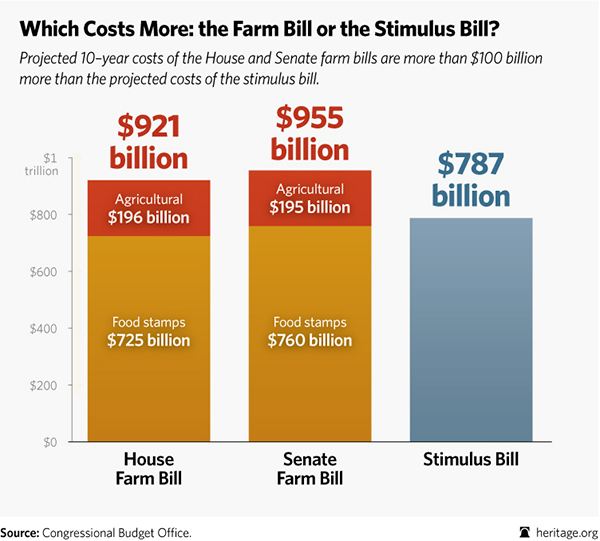


_(tall).png)


 President Barack Obama announces the creation of an interagency task force for guns as as Vice President Joseph Biden listens on.Getty Images




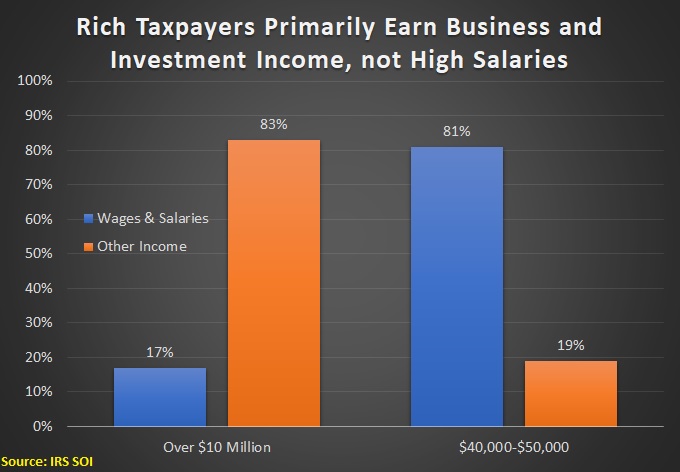
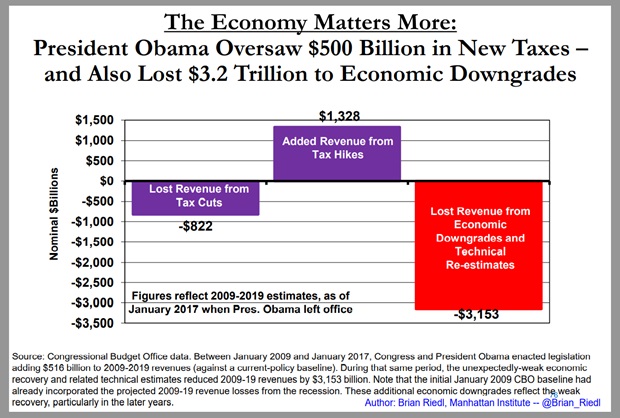


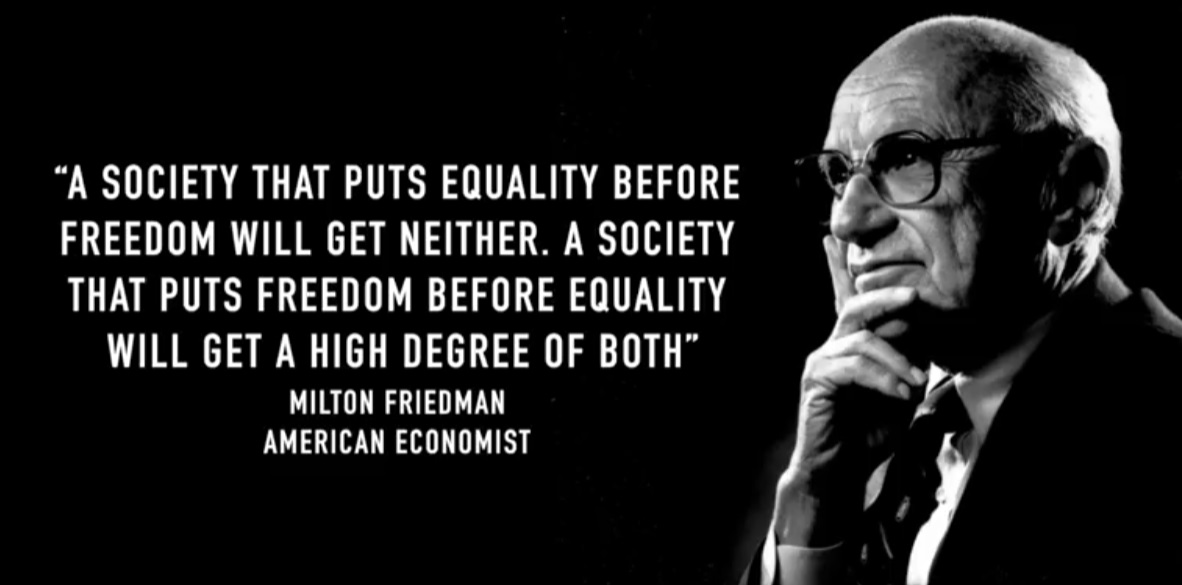









 The Daily Hatch
