Francis Schaeffer pictured below in 1971 at L Abri
_
_
Dr. Francis Schaeffer at L’Abri Conference, Urbana, 1981
_
Punk tells us that “there is no future”… I’m fed up There’s no hope I wanna puke I’m a worm man Gonna crawl in a hole Nobody’s my friend I’m no good to anyone I want some dirt ‘ll never be happy I hate myself I wish I was dead I wish I was dead I wish I was dead (Worm Man, 1987)
Blondie grew up with punk, which began in the mid‐70’s as a loose movement of bands wanting to recycle the raw, high‐powered energy of 50’s and early 60’s rock‐and‐roll. They were reacting against the overproduced, too‐slick sound of most pop music — the mindless, repetitive rhythms of disco and the bland creaminess of studio‐created pop, both of which monopolized the airwaves.
Bands like the Ramones toured England, where their punk attitude — they behaved onstage like truculent street toughs — was adopted by English pub bands as a vehicle for the political outrage expressed by the theater’s “Angry Young Men” two decades earlier. Punk music was minimalist, some said chaotic; its lyrics emphasized alternating currents of nihilism and sentimentality. When more musicianly and cerebral groups, such as Talking Heads, came onto the scene, English music writers invented the umbrella term “new wave” to encompass all late‐70’s groups, however disparate, which were aiming to restore gut feeling to rock‐and‐roll.
—
–
Francis Schaeffer taught young people at L Abri in Switzerland in the 1950’s till the 1980’s (pictured below)
Francis Schaeffer noted:
They can’t find any meaning to life. It’s the meaning of the words “punk rock.”
Francis Schaeffer pictured
—-
—
“They are the natural outcome of a change from a Christian World View to a Humanistic one… The result is a relativistic value system. A lack of a final meaning to life — that’s first. Why does human life have any value at all, if that is all that reality is? Not only are you going to die individually, but the whole human race is going to die, someday. It may not take the falling of the atom bombs, but someday the world will grow too hot, too cold. That’s what we are told on this other final reality, and someday all you people not only will be individually dead, but the whole conscious life on this world will be dead, and nobody will see the birds fly. And there’s no meaning to life.
As you know, I don’t speak academically, shut off in some scholastic cubicle, as it were. I have lots of young people and older ones come to us from the ends of the earth. And as they come to us, they have gone to the end of this logically and they are not living in a romantic setting. They realize what the situation is. They can’t find any meaning to life. It’s the meaning to the black poetry. It’s the meaning of the black plays. It’s the meaning of all this. It’s the meaning of the words “punk rock.” And I must say, that on the basis of what they are being taught in school, that the final reality is only this material thing, they are not wrong. They’re right! On this other basis there is no meaning to life and not only is there no meaning to life, but there is no value system that is fixed, and we find that the law is based then only on a relativistic basis and that law becomes purely arbitrary.
—-
JOSÉ DE SEGOVIA The Ramones, 40 years on It would be a mistake to think that their story was nothing more than the nihilism of hopeless youth. Their rage was a cry of rebellion against an empty life. BETWEEN THE LINES AUTHOR José de Segovia TRANSLATOR Esther Barrett 19 OCTOBER 2016 11:50 h GMT+1 It is now forty years since the Ramones published their first album. None of them are now left following the death of the four founding members of the band that gave rise to punk in the New York of 1974. Ramon wasn’t their real name, but they pretended that they were brothers, wearing the same clothes and getting their hair cut in the same style. One of the values that young people at that time most admired was the sense of belonging that brought these lads together into a kind brotherhood. Rock music has often given expression to these kinds of feelings, but never so clearly as in the music of the Ramones. For Spanish people who lived through the “Movida Madrileña”[1], the Ramones’ music was a point of reference. Their short hectic songs, based on a couple of chords and insistent choruses, were the inspiration of many Spanish bands. Popular culture was deeply affected by the punk movement that was born in England in 1976, but which in reality had its origins in New York. Bands like the Sex Pistols and the Clash drew inspiration from the provocation of Iggy Pop and the Stooges, the scandalous New York Dolls, but above all, from the sound of the Ramones. In those days, not only did people make their hair stand on end and paint themselves in colours, but anyone could be a “rock and roll” star. Boys like the Ramones were proud of the fact that, although they had never been taught to play, they could nevertheless play their guitars at high speed, singing infectious songs like Gabba Gabba Hey, which got stuck in your head, repeating itself over and over again. 40 years ago the Ramons published their first album. THE LAST SURVIVOR The dirty, fast and furious sound of the Ramones was not born out of the margins of society, but was the product of a bunch of fairly well educated boys, who lived in the well-to-do area of Queens. They started out in a club of legendary fame, the CBGB, which is close to the street that bears the name of the singer, Joey Ramone. Joey died of cancer in 2001; the base player, Dee-Dee died of an overdose the year after; and the guitar player, Johnny, died of cancer in 2004. Tommy was of Jewish origins, like Joey, the only one to be born outside the United States, in Budapest. He was the band’s first drummer and later became their producer, using his real name, Erdelyi. His successor, Marky, left the band, to return just before the Sao Paolo tragedy, when three people died and another thirty people were injured in a shooting at the Ramones’ concert. Punk tells us that “there is no future”… I’m fed up There’s no hope I wanna puke I’m a worm man Gonna crawl in a hole Nobody’s my friend I’m no good to anyone I want some dirt ‘ll never be happy I hate myself I wish I was dead I wish I was dead I wish I was dead (Worm Man, 1987) APPEARANCES CAN BE MISLEADING Johnny Ramone’s effigy plays his guitar in a cemetery in Hollywood. The band finally broke up in 1996. Behind their façade of brotherhood, they were continually falling out. Johnny stopped speaking to Joey after he stole his girlfriend in 1980, and then got married to her. As a result, he didn’t visit him before he died. He thought that it would have been hypocritical, even though they both trod the same stage for 22 years, with the same haircut, the same leather jackets and the same surname. There is no doubt that appearances can be misleading. It’s not me It’s not me It’s not me Don’t wanna die for your sins Got no special powers Sacrifice and sacrilege Hey man, I wanna live I’m not Jesus I can’t heal you (I Am Not Jesus, 1987) It is clear that neither the Ramones, nor any other music, can save anyone. What’s more, punk was inevitably destined to have a very short life, as it is impossible to be so destructive, without ending up self-destructing. But it would be a mistake to think that their story was nothing more than the nihilism of hopeless youth. Their rage was a cry of rebellion against an empty life. ROCK AS RELIGION The music of the Ramones was something more than just a means of entertainment at a time when rock had become mainstream. Their songs were a true expression of their dreams and frustrations. Behind their studied boredom, the Ramones showed a passion that truly saw rock as their only means of redemption. Stiv Bators – the singer of Lords of the New Church, a band that brought together what remained of four of the last punk bands in England – once said that young people no longer had anything to believe in. In his opinion you could believe in rock’n’roll with the passion that people felt for football or religion. For them, let’s not forget it, music was a spiritual experience. Joey Ramone is buried in a Jewish cemetery in New Jersey. He saw a parallel to gospel music in that it also established a spiritual link: “rock’n’roll is the Western’s civilization voodoo”. The Ramones, however, remind us that music cannot heal us, as it has no special powers. There is only one sacrifice that can save us. And that is the sacrifice of He who died for our sins. In that light, who would want to live for music? [1] A hedonistic counter-cultural movement that took place mainly in Madrid during the Spanish transition after Francisco Franco’s death in 1975. See more: http://evangelicalfocus.com/blogs/2007/The_Ramones_40_years_on
Francis Schaeffer also observed:
The peak of the drug culture of the hippie movement was well symbolized by the movie Woodstock.Woodstock was a rock festival held in northeastern United States in the summer of 1969. The movie about that rock festival was released in the spring of 1970. Many young people thought that Woodstock was the beginning of a newand wonderful age.
Jimi Hendrix (1942–1970) himself was soon to become a symbol of the end. Black, extremely talented, inhumanly exploited, he overdosed in September 1970 and drowned in his own vomit, soon after the claim that the culture of which he was a symbol was a new beginning. In the late sixties the ideological hopes based on drug-taking died.
After Woodstock two events “ended the age of innocence,” to use the expression of Rolling Stone magazine. The first occurred at Altamont, California, where the Rolling Stones put on a festival and hired the Hell’s Angels (for several barrels of beer) to police the grounds. Instead, the Hell’s Angels killed people without any cause, and it was a bad scene indeed. But people thought maybe this was a fluke, maybe it was just California! It took a second event to be convincing. On the Isle of Wight, 450,000 people assembled, and it was totally ugly. A number of people from L’Abri were there, and I know a man closely associated with the rock world who knows the organizer of this festival. Everyone agrees that the situation was just plain hideous.
In his book HOW SHOULD WE THEN LIVE? Francis Schaeffer noted:
This emphasis on hallucinogenic drugs brought with it many rock groups–for example, Cream, Jefferson Airplane, Grateful Dead, Incredible String Band, Pink Floyd, and Jimi Hendrix. Most of their work was from 1965-1958. The Beatles’Sergeant Pepper’s Lonely Hearts Club Band (1967) also fits here. This disc is a total unity, not just an isolated series of individual songs, and for a time it became the rallying cry for young people throughout the world. As a whole, this music was the vehicle to carry the drug culture and the mentality which went with it across frontiers which were almost impassible by other means of communication.
Together with the advent of the “drug Age” was the increased interest in the West in the religious experience of Hinduism and Buddhism. Schaeffer tells us that: “This grasping for a nonrational meaning to life and values is the central reason that these Eastern religions are so popular in the West today.” Drugs and Eastern religions came like a flood into the Western world. They became the way that people chose to find meaning and values in life. By themselves or together, drugs and Eastern religion became the way that people searched inside themselves for ultimate truth.
Along with drugs and Eastern religions there has been a remarkable increase “of the occult appearing as an upper-story hope.” As modern man searches for answers it “many moderns would rather have demons than be left with the idea that everything in the universe is only one big machine.” For many people having the “occult in the upper story of nonreason in the hope of having meaning” is better than leaving the upper story of nonreason empty. For them horror or the macabre are more acceptable than the idea that they are just a machine.
Francis Schaeffer has correctly argued:
The universe was created by an infinite personal God and He brought it into existence by spoken word and made man in His own image. When man tries to reduce [philosophically in a materialistic point of view] himself to less than this [less than being made in the image of God] he will always fail and he will always be willing to make these impossible leaps into the area of nonreason even though they don’t give an answer simply because that isn’t what he is. He himself testifies that this infinite personal God, the God of the Old and New Testament is there.
Instead of making a leap into the area of nonreason the better choice would be to investigate the claims that the Bible is a historically accurate book and that God created the universe and reached out to humankind with the Bible. Below is a piece of that evidence given by Francis Schaeffer concerning the accuracy of the Bible.
TRUTH AND HISTORY (chapter 5 of WHATEVER HAPPENED TO THE HUMAN RACE?, under footnotes #97 and #98)
A common assumption among liberal scholars is that because the Gospels are theologically motivated writings–which they are–they cannot also be historically accurate. In other words, because Luke, say (when he wrote the Book of Luke and the Book of Acts), was convinced of the deity of Christ, this influenced his work to the point where it ceased to be reliable as a historical account. The assumption that a writing cannot be both historical and theological is false.
The experience of the famous classical archaeologist Sir William Ramsay illustrates this well. When he began his pioneer work of exploration in Asia Minor, he accepted the view then current among the Tubingen scholars of his day that the Book of Acts was written long after the events in Paul’s life and was therefore historically inaccurate. However, his travels and discoveries increasingly forced upon his mind a totally different picture, and he became convinced that Acts was minutely accurate in many details which could be checked.
What is even more interesting is the way “liberal” modern scholars today deal with Ramsay’s discoveries and others like them. In the NEW TESTAMENT : THE HISTORY OF THE INVESTIGATION OF ITS PROBLEMS, the German scholar Werner G. Kummel made no reference at all to Ramsay. This provoked a protest from British and American scholars, whereupon in a subsequent edition Kummel responded. His response was revealing. He made it clear that it was his deliberate intention to leave Ramsay out of his work, since “Ramsay’s apologetic analysis of archaeology [in other words, relating it to the New Testament in a positive way] signified no methodologically essential advance for New Testament research.” This is a quite amazing assertion. Statements like these reveal the philosophic assumptions involved in much liberal scholarship.
A modern classical scholar, A.N.Sherwin-White, says about the Book of Acts: “For Acts the confirmation of historicity is overwhelming…Any attempt to reject its basic historicity, even in matters of detail, must not appear absurd. Roman historians have long taken this for granted.”
When we consider the pages of the New Testament, therefore, we must remember what it is we are looking at. The New Testament writers themselves make abundantly clear that they are giving an account of objectively true events.
(Under footnote #98)
Acts is a fairly full account of Paul’s journeys, starting in Pisidian Antioch and ending in Rome itself. The record is quite evidently that of an eyewitness of the events, in part at least. Throughout, however, it is the report of a meticulous historian. The narrative in the Book of Acts takes us back behind the missionary journeys to Paul’s famous conversion on the Damascus Road, and back further through the Day of Pentecost to the time when Jesus finally left His disciples and ascended to be with the Father.
But we must understand that the story begins earlier still, for Acts is quite explicitly the second part of a continuous narrative by the same author, Luke, which reaches back to the birth of Jesus.
Luke 2:1-7 New American Standard Bible (NASB)
2 Now in those days a decree went out from Caesar Augustus, that a census be taken of all [a]the inhabited earth. 2 [b]This was the first census taken while[c]Quirinius was governor of Syria. 3 And everyone was on his way to register for the census, each to his own city. 4 Joseph also went up from Galilee, from the city of Nazareth, to Judea, to the city of David which is called Bethlehem, because he was of the house and family of David, 5 in order to register along with Mary, who was engaged to him, and was with child. 6 While they were there, the days were completed for her to give birth. 7 And she gave birth to her firstborn son; and she wrapped Him in cloths, and laid Him in a [d]manger, because there was no room for them in the inn.
In the opening sentences of his Gospel, Luke states his reason for writing:
Luke 1:1-4 New American Standard Bible (NASB)
1 Inasmuch as many have undertaken to compile an account of the things[a]accomplished among us, 2 just as they were handed down to us by those whofrom the beginning [b]were eyewitnesses and [c]servants of the [d]word, 3 it seemed fitting for me as well, having [e]investigated everything carefully from the beginning, to write it out for you in consecutive order, most excellentTheophilus; 4 so that you may know the exact truth about the things you have been[f]taught.
In Luke and Acts, therefore, we have something which purports to be an adequate history, something which Theophilus (or anyone) can rely on as its pages are read. This is not the language of “myths and fables,” and archaeological discoveries serve only to confirm this.
For example, it is now known that Luke’s references to the titles of officials encountered along the way are uniformly accurate. This was no mean achievement in those days, for they varied from place to place and from time to time in the same place. They were proconsuls in Corinth and Cyprus, asiarchs at Ephesus, politarchesat Thessalonica, and protosor “first man” in Malta. Back in Palestine, Luke was careful to give Herod Antipas the correct title of tetrarch of Galilee. And so one. The details are precise.
The mention of Pontius Pilate as Roman governor of Judea has been confirmed recently by an inscription discovered at Caesarea, which was the Roman capital of that part of the Roman Empire. Although Pilate’s existence has been well known for the past 2000 years by those who have read the Bible, now his governorship has been clearly attested outside the Bible.
Office of Barack and Michelle Obama P.O. Box 91000 Washington, DC 20066
Dear President Obama,
I wrote you over 700 letters while you were President and I mailed them to the White House and also published them on my blog http://www.thedailyhatch.org .I received several letters back from your staff and I wanted to thank you for those letters.
I have been reading your autobiography A PROMISED LAND and I have been enjoying it.
Let me make a few comments on it, and here is the first quote of yours I want to comment on:
That night, Michelle and I motorcaded over to the Washington Hilton, took pictures with various VIPs, and sat on a dais for a couple of hours, making small talk while guests like Rupert Murdoch, Sean Penn, John Boehner, and Scarlett Johansson mingled over wine and overcooked steaks. I kept my face fixed in an accommodating smile, as I quietly balanced on a mental high wire, my thoughts thousands of miles away. When it was my turn to speak, I stood up and started my routine. About halfway through, I turned my attention directly to Trump. “Now, I know that he’s taken some flak lately,” I said, “but no one is happier, no one is prouder to put this birth certificate matter to rest than the Donald. And that’s because he can finally get back to focusing on the issues that matter—like, Did we fake the moon landing? What really happened in Roswell? And where are Biggie and Tupac?” As the audience broke into laughter, I continued in this vein, noting his “credentials and breadth of experience” as host of Celebrity Apprentice and congratulating him for how he’d handled the fact that “at the steakhouse, the men’s cooking team did not impress the judges from Omaha Steaks….These are the kinds of decisions that would keep me up at night. Well handled, sir. Well handled.” The audience howled as Trump sat in silence, cracking a tepid smile. I couldn’t begin to guess what went through his mind during the few minutes I spent publicly ribbing him. What I knew was that he was a spectacle, and in the United States of America in 2011, that was a form of power. Trump trafficked in a currency that, however shallow, seemed to gain more purchase with each passing day. The same reporters who laughed at my jokes would continue to give him airtime. Their publishers would vie to have him sit at their tables.
—-
President Trump may have been silly in his criticism of your citizenship (I knew you were born in USA), but he has been a great pro-life president. Meanwhile, both you and Joe Biden have been great for the pro-choice cause!!!!
Biden has “given us reason to believe that he will support policies that attack some fundamental values we hold dear as Catholics,” said Archbishop José Gomez of Los Angeles, the president of the USCCB.
Great pro-life article by Rev. James A. DeCamp of from Presbyterians USA Pro-Life
by Rev. James A. DeCamp Common Ground – Occasional papers from Presbyterians Pro-Life No. 3 – May 1988The unborn are gaining visibility Members of the Presbyterian Church (USA) continue to think hard thoughts about their denomination’s pro-abortion advocacy which has been around for almost two decades now (1).Discomfort has grown as such publications as Life, Newsweek, and Families feature cover photographs of perfectly formed unborn children (2) and articles run under headlines like “Surgery in the Womb” (3).The unborn child enjoys a greater visibility in our society. For instance, Williams Obstetrics, a standard textbook, remarks in its preface, “Happily, we have entered an era in which the fetus can be rightly considered and treated as our second patient” (4) (emphasis added). Objective, scientific data continue to bear eloquent witness to the citizenship held by these little ones in the human family.Unborn babies experience pain in abortion One subject which has been the center of a long and volatile discussion carries within it the potential for changing our most basic commitments in this issue of abortion: the subject of pain.Vincent J. Collins, Professor of Anesthesiology at the University of Illinois College of Medicine, writes:The prospect of fetal pain–pain that results from abortion–cuts through philosophical abstractions and scientific nomenclature, proceeding directly to the heart. A being that feels pain makes an urgent demand for recognition (5).The issue of fetal pain received national exposure first when President Ronald Reagan gave a speech to the National Religious Broadcasters on January 30, 1984. President Reagan said, “…doctors confirm that when the lives of the unborn are snuffed out, they often feel pain, pain that is long and agonizing” (6).This statement raised a storm of protest from pro-abortion activists who claimed that the President’s comments about fetal pain were unfounded scientifically, and were an inexcusable form of emotional blackmail. Yet, it became clear to all who watched the debate that the President had done his homework; fetal pain is real.Dr. Collins writes that the unborn child’s ability to feel pain comes quite early in pregnancy:Functioning neurological structures necessary for pain sensation are in place as early as 8 weeks, but certainly by 13-1/2 weeks…By 13-1/2 weeks, the entire sensory nervous system functions as a whole in all parts of the body (except in the skin or the back of the head) (7).Fetal experiments performed on 12 to 16 week in utero subjects indicate the ability of the unborn child to experience acute pain (8).The clearest and strongest support for the President came from a group of 26 physicians, including pain specialists and two past presidents of the American College of Obstetrics and Gynecology, who released this statement on February 13, 1984: “Mr. President, in drawing attention to the capability of the human fetus to feel pain, you stand on firmly established ground” (9).What implications are there here for the current debate over abortion in our denomination? Can we continue to support abortion when we read of the suffering and pain which different abortion techniques cause?Fetal pain associated with methods of abortion John T. Noonan, Jr., professor in the Boalt Hall School of Law at the University of California at Berkeley, and a judge on the U.S. 9th Circuit Court of Appeals, points out that,…as soon as a pain mechanism is present in the fetus–possibly as early as day 56–the methods used will cause pain. The pain is more substantial and lasts longer the later the abortion is…Whatever the method used, the unborn…are undergoing the death agony (10).Dilatation and evacuation abortions (D & E) are performed after the 12th week when fetal bones are too large and brittle to be removed by earlier procedures. Pioneer embryologist Landrum Shettles describes a D & E: “Death and dismemberment do not come in a `moment,’ but over a matter of minutes. Limbs may be torn off and the body lacerated well before the brain itself is crushed” (11).Doctors performing a saline abortion inject a highly concentrated salt solution into the amniotic sac. During the death agony of these children their upper skin layers are burned, and internal poisoning is caused by the child swallowing the solution. It is well-known that the fetus reacts with aversive responses when saline is introduced into amniotic fluid. The aborting mother can feel her baby thrashing in the uterus…” (12).Saline abortions are employed from the 14th week of pregnancy through the time of fetal viability (13).Abortions induced by prostaglandin drugs kill the child by reducing blood circulation and/or restricting the function of the heart. “Pain analogous to that of a person experiencing a heart attack can be assumed” (14).Even the youngest babies aren’t safe from suffering. “To the extent that the fetus between eight and 13-1/2 weeks of gestations feels pain, the suction curettage method of abortion–the usual method of abortion used during that time, which tears the fetus from the womb, often part by part, by vacuum aspiration–is certainly capable of causing pain in a manner analogous to D & E abortion” (15).No symbol has so dramatically captured this specter of fetal pain as the real-time ultrasound “The Silent Scream,” released in 1984. This film depicts a twelve-week unborn baby undergoing death by dismemberment in a suction abortion. The doctor who performed the abortion recorded for this film, Dr. Jay Kelinson, reviewed the film and commented afterwards, “There was no manipulation of that tape, there was no misrepresentation. I was horrified at what I had seen…That was the last time I walked into an abortion clinic” (16).Informed consent: pain and the “right to know” Thinking of the pain caused to these little ones is enough to convince a reasonable person that abortion should be illegal, and surely, at the least, those mothers who are aborting their unborn children should know the suffering they are putting their babies through. Shouldn’t the woman’s “right to choose” carry with it a “right to know” about this pain her child will feel?On November 30, 1982, the U.S. Supreme Court heard arguments concerning an Akron, Ohio city ordinance requiring the attending physician of a mother seeking an abortion to inform her of, among other things, “the development of her fetus.” This ordinance was intended “to insure that the consent for an abortion is truly informed consent” (17).Yet, apparently this is one place where ignorance is bliss, since measures requiring informed consent to abortion have been consistently opposed. The 195th General Assembly of the Presbyterian Church (USA), meeting in 1983, adopted a major abortion policy paper which referred to “Akron-type ordinances” as “harassment legislation” (18).What are we to make of this response to the evidence?Objective, scientific data pertaining to the humanity of the unborn including their capacity to feel pain is, apparently, so damning to the pro-choice position that its proponents are willing to attack such data at the peril of their own intellectual standing and conscience.The protection from pain provided for animals is not extended to the unborn human Empathy for pain in animals has produced responses that have no counterpart in the treatment of unborn babies by abortionists. In 1986, United Action for Animals, Inc. (UAA) publicized 62 experiments allegedly in violation of the Animal Welfare Act of 1966 because “the institutions involved did not justify withholding anesthetics, analgesics, and tranquilizers.” UAA is also seeking to expand the number of species covered by this act (19). The youngest members of our own species, however, are not counted worthy of the same respect.The Christian call for mercy The Bible tells us that all members of the human family have intrinsic worth since we are “made in the image of God” (20). The unborn’s capacity to feel pain does not add to their worth, but their pain does provide us with a point of common experience and it should lead us to feel empathy for their plight. Our goal, however, should be to stop the killing, not merely to institute prenatal euthanasia through pain-deadening drugs administered shortly before the abortion.Syndicated columnist Joseph Sobran has written,Abortion advocates are going to have to make up their minds whether a fetus suffers or whether they just don’t care. Until now they have had it both ways. But now they must either face the evidence or say stoutly that the evidence doesn’t move them. The evidence itself is clear enough (21).Abortion is a social justice issue, a human rights issue, and a flesh and blood issue. The pro-choice myth that the unborn are merely products of conception who can be kept at a safe scientific and emotional distance is collapsing under the weight of the evidence.Adrian Lee, a columnist for the Philadelphia Daily News, wrote on March 6, 1984,Since pain, the abortion debate has changed. The Pro-Choicers can refuse to debate photographs of unborn fetuses–apparently, the pictures are too lifelike…but they can’t shut out that cry from the womb. They can hold their ears until the only thing they hear is the singing of their own pulses and the thudding of their own hearts but they’ll never escape it (22).Meanwhile, the command of God’s Word, for those of us who claim Jesus Christ as our Savior and Lord, is clear:Speak up for those who cannot speak for themselves, for the rights of all who are destitute. (Proverbs 31:8)The Presbyterian Church (USA) must choose between two paths: one of darkness and one of light. The path of light is the path of repentance for our complicity, direct and indirect, in the silent screams from mothers’ wombs which have surrounded us at the rate of 1,500,000 per year since 1973. The path of darkness is the path our denomination has walked with respect to abortion for close to two decades, now, as we continue to advocate a woman’s right to choose a painful death for her unborn baby.EndnotesBoth former denominations departed from their historic sanctity of life positions in 1970. See the Minutes of the 110th General Assembly of the Presbyterian Church in the United States, Part I (Atlanta: The Office of the General Assembly, 1970), pp.124-126; and the Minutes of the 182nd General Assembly of the United Presbyterian Church in the United States of America, Part I (New York: The Office of the General Assembly, 1970) pp.888-926.“Life Before Birth,” reprinted from Life, April 30,1965 (Pinebluff, North Carolina: Life Education Reprints, 1979), p.1. Newsweek, January 11, 1982. Families, February, 1982.Newsweek, October 31, 1983.Jack A. Pritchard and Paul C. MacDonald, Williams Obstetrics, 16th ed. (New York: Appleton-Century-Crofts, 1980), p.vii.Vincent J. Collins, Steven R. Zielinski, and Thomas J. Marzen, Fetal Pain and Abortion: The Medical Evidence, Studies in Law and Medicine, no. 18 (Chicago: American United for Life, Inc., 1984),p.3.Ibid., p. i.Ibid., p. 7.B. Westin, R. Nyberg and G. Enhoring, “A Technique for the Perfusion of the Previable Fetus,” Acta Paediatrica, 47 (1958):339, quoted in Collins, Zielinski, and Marzen, Fetal Pain, p. 7.Ibid., p. 1.John T. Noonan, Jr., “The Experience of Pain by the Unborn,” in New Perspectives on Human Abortion, ed. Thomas Hilgers, Dennis Horan and David Mall (Frederick, Maryland: University Publications of America, 1981), p.213.Landrum Shettles and David Rorvik, Rites of Life: The Scientific Evidence for Life Before Birth (Grand Rapids: Zondervan, 1983), p.69.W. Edminson, “A Report on the Abortion Capital of the Country”: The New York Times Magazine, March 11, 1971, quoted in Collins, Zielinski, and Marzen, Fetal Pain, p.9.“Second Trimester Abortion: A Symposium by Correspondence,” Journal of Reproductive Medicine 16 (1976): 47 ,56, quoted in Collins, Zielinski, and Marzen, Fetal Pain, p.8.A.I. Caspo, “Termination of Pregnancy with Double Prostaglandin Input,” American Journal of Obstetrics and Gynecology 124 (1976): 1, quoted in Collins, Zielinski, and Marzen, Fetal Pain, p.9.Collins, Zielinski, and Marzen, Fetal Pain, p.9.Taken from the film, “The Answer,” released in 1987 by Bernadell, Inc., P.O. Box 1897, Old Chelsea Station, New York, NY 10011.The United States LAW WEEK, June 14, 1983, pp. 4767, 4769.Advisory Council on Church and Society, Presbyterian Church (USA), “The Covenant of Life and the Caring Community: Theological Reflections on Contraception and Abortion” (New York and Atlanta: The Office of the General Assembly, 1983), p.57.Animal Welfare Act: Unreported Crimes? (New York: United Action for Animals, Inc., 1986), p.2.Genesis 1:26.Dallas Times Herald, June 14, 1984.As quoted in the Human Life Review, 10 (Spring, 1984):117.
Sincerely,
Everette Hatcher III, 13900 Cottontail Lane, Alexander, AR 72002, ph 501-920-5733 everettehatcher@gmail.com
President Obama c/o The White House 1600 Pennsylvania Avenue NW Washington, DC 20500 Dear Mr. President, I know that you receive 20,000 letters a day and that you actually read 10 of them every day. I really do respect you for trying to get a pulse on what is going on out here. There have […]By Everette Hatcher III | Posted in David Barton, Founding Fathers, President Obama | Edit |Comments (0)
There have been many articles written by evangelicals like me who fear that our founding fathers would not recognize our country today because secular humanism has rid our nation of spiritual roots. I am deeply troubled by the secular agenda of those who are at war with religion in our public life. Lillian Kwon quoted somebody […]By Everette Hatcher III | Posted in David Barton, Founding Fathers | Edit | Comments (0)
There have been many articles written by evangelicals like me who fear that our founding fathers would not recognize our country today because secular humanism has rid our nation of spiritual roots. I am deeply troubled by the secular agenda of those who are at war with religion in our public life. Lillian Kwon quoted somebody […]By Everette Hatcher III | Posted in David Barton, Founding Fathers | Edit | Comments (0)
There have been many articles written by evangelicals like me who fear that our founding fathers would not recognize our country today because secular humanism has rid our nation of spiritual roots. I am deeply troubled by the secular agenda of those who are at war with religion in our public life. Lillian Kwon quoted somebody […]By Everette Hatcher III | Posted in David Barton, Founding Fathers | Edit | Comments (0)
There have been many articles written by evangelicals like me who fear that our founding fathers would not recognize our country today because secular humanism has rid our nation of spiritual roots. I am deeply troubled by the secular agenda of those who are at war with religion in our public life. Lillian Kwon quoted somebody […]By Everette Hatcher III | Posted in David Barton, Founding Fathers | Edit | Comments (0)
There have been many articles written by evangelicals like me who fear that our founding fathers would not recognize our country today because secular humanism has rid our nation of spiritual roots. I am deeply troubled by the secular agenda of those who are at war with religion in our public life. Lillian Kwon quoted somebody […]By Everette Hatcher III | Posted in Founding Fathers | Edit | Comments (0)
President Obama Speaks at The Ohio State University Commencement Ceremony Published on May 5, 2013 President Obama delivers the commencement address at The Ohio State University. May 5, 2013. You can learn a lot about what President Obama thinks the founding fathers were all about from his recent speech at Ohio State. May 7, 2013, […]By Everette Hatcher III | Posted in Founding Fathers, President Obama | Edit | Comments (0)
Dr. C. Everett Koop with Bill Graham. Francis Schaeffer: “Whatever Happened to the Human Race” (Episode 4) THE BASIS FOR HUMAN DIGNITY Published on Oct 7, 2012 by AdamMetropolis The 45 minute video above is from the film series created from Francis Schaeffer’s book “Whatever Happened to the Human Race?” with Dr. C. Everett Koop. This […]By Everette Hatcher III | Posted in Founding Fathers, Francis Schaeffer, Prolife | Edit |Comments (1)
America’s Founding Fathers Deist or Christian? – David Barton 4/6 There have been many articles written by evangelicals like me who fear that our founding fathers would not recognize our country today because secular humanism has rid our nation of spiritual roots. I am deeply troubled by the secular agenda of those who are at […]By Everette Hatcher III | Posted in David Barton, Founding Fathers | Tagged governor of connecticut, john witherspoon, jonathan trumbull | Edit | Comments (1)
3 Of 5 / The Bible’s Influence In America / American Heritage Series / David Barton There were 55 gentlemen who put together the constitution and their church affliation is of public record. Greg Koukl notes: Members of the Constitutional Convention, the most influential group of men shaping the political foundations of our nation, were […]By Everette Hatcher III | Posted in Founding Fathers | Edit | Comments (0)
I do not think that John Quincy Adams was a founding father in the same sense that his father was. However, I do think he was involved in the early days of our government working with many of the founding fathers. Michele Bachmann got into another history-related tussle on ABC’s “Good Morning America” today, standing […]By Everette Hatcher III | Posted in David Barton, Founding Fathers | Edit | Comments (0)
I have gone back and forth and back and forth with many liberals on the Arkansas Times Blog on many issues such as abortion, human rights, welfare, poverty, gun control and issues dealing with popular culture. Here is another exchange I had with them a while back. My username at the Ark Times Blog is Saline […]By Everette Hatcher III | Posted in Arkansas Times, Francis Schaeffer, Prolife | Edit |Comments (0)
I truly believe that many of the problems we have today in the USA are due to the advancement of humanism in the last few decades in our society. Ronald Reagan appointed the evangelical Dr. C. Everett Koop to the position of Surgeon General in his administration. He partnered with Dr. Francis Schaeffer in making the […]By Everette Hatcher III | Posted in Adrian Rogers, Francis Schaeffer | Edit | Comments (0)
Francis Schaeffer: “Whatever Happened to the Human Race” (Episode 4) THE BASIS FOR HUMAN DIGNITY Published on Oct 7, 2012 by AdamMetropolis ____________ The 45 minute video above is from the film series created from Francis Schaeffer’s book “Whatever Happened to the Human Race?” with Dr. C. Everett Koop. This book really helped develop my political […]By Everette Hatcher III | Posted in Francis Schaeffer | Edit | Comments (0)
I have written about 66 heroes of mine in the House of Representatives that voted “no” on the Obama/Biden debt ceiling increase request in 2011. I believe we must have representatives that will vote to restore our freedom and that means voting to cut spending and lower taxes like the Patriots of long ago wanted. Today the Tea Party represented my views the most closely. Lord knows I have written a lot about that in the past. . I have praised over and over and over the 66 House Republicans that voted no on that before. If they did not raise the debt ceiling then we would have a balanced budget instantly. I agree that the Tea Party has made a difference and I have personally posted 49 posts on my blog on different Tea Party heroes of mine.
THIS BRINGS ME TO ONE OF MY BIGGEST ECONOMIC HEROES AND IT IS THE LATE MILTON FRIEDMAN. Friedman had such revolutionary policies such as eliminating welfare and instituting the negative income tax and putting in school vouchers.
The problem in Washington is not lack of revenue but our lack of spending restraint. This video below makes that point.
Milton Friedman did not favor free immigration with existing welfare state in USA
Milton Friedman – Illegal Immigration – PT 2
Uploaded on Dec 18, 2009
(2 of 2) Professor Friedman fields a question on the dynamics of illegal immigration
The Heritage Foundation has issued the following statement in response to Senator Marco Rubio’s (R-FL) comments about our new study on the cost of amnesty.
Senator Rubio’s family story is a testament to the American Dream. His parents’ ability to scrimp and save and sacrifice for their children is something in which we all take pride. The story of the Rubios, in fact, makes the point we make with our study. They represent the immigration model that worked for America for centuries and one we need to get back to.
Senator Rubio’s parents came here in 1956, almost a decade before the introduction of the Great Society programs that laid the foundation of the modern welfare state. Over the following four and a half decades, our government has added layer upon layer of government involvement in our lives, creating a dependency that undermines self-respect and self-reliance.
That dependency has been devastating to our society; it has shattered communities, families, and individuals. It is now threatening the American Dream. This is true for all—native and immigrant alike, lawful or unlawful. We do not blame immigrants for being entrapped by that system; we blame the people who created that system. We especially blame people who now seek to expand it.
This is why Heritage has been leading the fight on the need to recreate upward mobility for low-income and middle-income Americans. The current welfare and entitlement systems lower opportunity and make it all but impossible for people to climb the ladder of success.
Heritage has worked with Senator Rubio on numerous issues, and we admire him. He is right: Our study is “an argument for welfare reform and entitlement reform.” He cannot pretend, however, that this already herculean task will be made easier after we have added millions of new people to a failing entitlement system. The time to fix it is now. We are ready to work with him and any man and woman of either party who realizes the urgency of our plight.
As Milton Friedman, the Nobel Prize-winning economist, once said:
It is one thing to have free immigration to jobs. It is another thing to have free immigration to welfare. You cannot have both. If you have a welfare state, if you have a state in which a resident is promised certain minimum level of income or a minimum subsistence regardless of whether he works or not produces it or not. Well then it really is an impossibility.
Thank you so much for your time. I know how valuable it is. I also appreciate the fine family that you have and your commitment as a father and a husband.
Sincerely,
Everette Hatcher III, 13900 Cottontail Lane, Alexander, AR 72002, ph 501-920-5733,
I like Milton Friedman’s comments on this issue of immigration and Ron Paul and Dan Mitchell do well on the issue too. Question of the Week: What’s Your Take on the Immigration Debate? April 7, 2013 by Dan Mitchell A reader from overseas wonders about my views on immigration, particularly amnesty. I confess that this is one of […]
Two very wise men below: Milton Friedman – Illegal Immigration – PT 1 (1 of 2) Professor Friedman looks at the dynamics of illegal immigration. See part two:http://www.youtube.com/watch?v=NfU9Fqah-f4http://Libertypen.com_______________________________________ Back in 1980 I read the book “Free to Choose” by Milton and Rose Friedman. I noticed that Milton made it clear both in […]
Part 5 Milton Friedman: I do not believe it’s proper to put the situation in terms of industrialist versus government. On the contrary, one of the reasons why I am in favor of less government is because when you have more government industrialists take it over, and the two together form a coalition against the ordinary […]
Where the USA’s economic success come from? An Amazing Story of Economic Success May 5, 2013 by Dan Mitchell I’ve written before about the remarkable vitality of Hong Kong and Singapore, two jurisdictions that deserve praise for small government and free markets. Pretending to be a jet-setter in Monaco I have also praised Switzerland because of policies such as genuine federalism […]
Why are despicable people sometimes subsidized by taxpayers? Are You Happy that Your Tax Dollars Subsidized the Tsarnaev Family? April 28, 2013 by Dan Mitchell The bad news is that there are despicable and evil people seeking to kill innocents. The worse news is that some of these pathetic excuses for protoplasm are subsidized by […]
Obama is up to his old tricks again and here comes the White House’s political motivated chicanery with the FAA Privatization Is the Best Response to the FAA’s Deliberate Attempt to Inconvenience Air Passengers April 24, 2013 by Dan Mitchell In an interview with Neil Cavuto earlier this month, I mocked proponents of big government for […]
Sad case indeed. Immigration, Terrorism, and Welfare Tourism April 24, 2013 by Dan Mitchell So we’ve now learned that the Boston Marathon terrorists were welfare bums. Why am I not surprised? “Thanks for the handouts, suckers!” Heck, it was only a couple of days ago that I announced the Moocher Hall of Fame and included terrorists from theUnited Kingdom and Australia (and […]
President Obama is from Illinois and he is running our nation like the politicians of Illinois run their state with lots of wasteful spending and too many high taxes. It’s Tax Freedom Day, So Congratulations (if You Don’t Live in New York, California, New Jersey, Illinois, etc) April 18, 2013 by Dan Mitchell It’s time to celebrate. […]
The IRS agents are as well thought of as Zacchaeus who was the tax collector that only Jesus was nice to. Here is a fine article by Dan Mitchell of the Cato Institute. Some Good Cartoons if You’re Suffering from Post-Tax Return Traumatic Stress Disorder April 16, 2013 by Dan Mitchell For the past 30 or so […]
Sad that the government wastes so much of our money and it wants more from us under President Obama. An Aggravating Reminder of Government Waste on Tax Day April 15, 2013 by Dan Mitchell Remember the Spending Quiz from 2010, which asked people to guess whether absurd examples of government waste were true or false? Well, […]
President Donald Trump’s administration has been all about protecting and fighting for the right to life, Vice President Mike Pence said Wednesday at an event at the White House. Pictured: Pence attends a rally in support of Sen. David Perdue, R-Ga., and Sen. Kelly Loeffler, R-Ga., Dec. 4, 2020, in Savannah, Georgia. (Photo: Spencer Platt/Getty Images)
President Donald Trump’s administration has been focused on protecting and fighting for the right to life, Vice President Mike Pence said Wednesday.
“President Trump said early in our administration, and I quote, ‘Every person is worth protecting. Every human life, born and unborn, is made in the holy image of Almighty God,’” Pence said.
“And this administration has always been about life. And that’s been evident in the last year as our nation has passed through this challenging time of a global pandemic.”
Pence’s remarks were delivered at a “Life Is Winning Event,” where the vice president highlighted the Trump administration’s pro-life accomplishments with leaders of the pro-life movement, including Marjorie Dannenfelser of the Susan B. Anthony List, Tom McClusky of the March for Life, David Daleiden of the Center for Medical Progress, and Abby Johnson of And Then There Were None.
The left is actively working to undermine the integrity of our elections. Read the plan to stop them now. Learn more now >>
Pence touted the administration’s reinstating of the Mexico City policy, which ended government funding for abortions globally.
He also said he was proud of making history with Trump, who gave him “the great privilege in our very first month in office to be the first vice president in history to ever address the March for Life on the National Mall,” Pence said.
“And this last January, he did it himself,” he added.
The vice president also said he was proud of the administration’s work to remove Title X funding.
Title X is a program that offers family planning and related services to low-income Americans at minimal or no cost.
“Before we took office, as you all know, that the largest abortion provider in America was also the largest recipient of federal funding under Title X,” Pence said.
Pence said the Trump administration witnessed, “along with the American people, … the undercover videos that showed horrific conversations about the sale and transfer of parts of aborted babies,” Pence said, alluding to the videos released by Daleiden and the Center for Medical Progress.
In 2015, Eric Ferrero, vice president of communications at Planned Parenthood Federation of America, issued a statementaddressing fetal tissue, stating:
There is no financial benefit for tissue donation for either the patient or for Planned Parenthood. In some instances, actual costs, such as the cost to transport tissue to leading research centers, are reimbursed, which is standard across the medical field.
“It’s just unconscionable,” Pence said. “But thanks to President Trump’s leadership, in March 2017, I had the honor of casting the tie-breaking vote in the United States Senate to allow every state in America to defund Planned Parenthood and President Trump signed it into law.”
On March 30, 2017, Pence, serving in his role as president of the Senate, cast a tie-breaking vote for a measure that rolled back a regulation, instituted during President Barack Obama’s presidency, that did not allow states to exclude abortion providers from Title X funds. Trump signed the measure into law in April of 2017.
Pence also said Trump’s commitment to the judiciary is another accomplishment the administration is proud of.
“President Trump promised the American people, he said, quote, ‘I will protect life. And the biggest way you can protect it is through the Supreme Court and putting people in the court,’ he said,” Pence said. “And he promised, ‘I will appoint judges that will be pro-life.’ And that’s just what he’s done.”
“With yesterday’s confirmation of the judge [that] will fill the seat of the newest justice on the Supreme Court, President Trump has appointed more than 220 conservatives to our federal courts at every level, including Justice Neil Gorsuch, Justice Brett Kavanaugh, and Justice Amy Coney Barrett,” he added.
On Tuesday, the Senate confirmed Thomas Kirsch 51-44 to a seat on the U.S. Court of Appeals for the 7th Circuit. The seat was left vacant when Barrett joined the Supreme Court.
Pence was joined at the event in the Eisenhower Executive Office Building by Brooke Rollins, assistant to the president and director of the White House Domestic Policy Council; Russell Vought, director of the Office of Management and Budget; Alex Azar, secretary of the Department of Health and Human Services; Bill Steiger, chief of staff of the United States Agency for International Development; and Kayleigh McEnany, White House press secretary.
McEnany shared a personal memory of Trump that she said illustrated his personal commitment to and support of life.
“I’ll tell you what this president did when he first offered me the job,” McEnany said.
“He said, ‘Is your daughter going to be OK?’ because he is a president that supports moms,” she said, adding:
He’s a president that supports life. And there’s been no greater partner for him in that endeavor than Vice President Pence, who’s been an unmistakable voice for life from the very beginning.
Pence asked the pro-life leaders to continue in their mission.
“So do not grow weary of doing well, because in the last four years we’ve shown when men and women of faith and conviction come together to stand up, … to speak out for the voiceless, life can win in America,” Pence said. “And with your help and God’s help, life will keep on winning in the United States of America.”
Barrett, who will now take the seat of the late Justice Ruth Bader Ginsburg, is a staunch conservative whose vote could be the deciding one on upcoming cases involving the Affordable Care Act, abortion rights, and voting rights. Her confirmation solidifies a 6-3 conservative majority on the high court, and is likely to affect its skew for decades.
Ultimately, every Republican senator except Susan Collins (R-ME) voted in favor of Barrett’s confirmation, while no Democrats did. Collins voted against Barrett because she disagreed with the process used for her nomination, something Democrats had objected to as well. Democrats had also expressed concerns about the conservative slant of Barrett’s past writings and opinions.
Overall, Barrett’s nomination has been controversial for many reasons including its timing: In 2016, Senate Republicans refused for months to consider a Supreme Court nominee until after the general election, because they argued that the American people — through their votes — should have a voice in the decision-making process. This year, however, with less than two months to go until the election, Republicans moved to expedite Barrett’s confirmation.Supreme Court nominee Amy Coney Barrett is sworn in during the Senate Judiciary Committee confirmation hearing on October 12, 2020. Kevin Dietsch/Getty Images
To do so, Republicans made approving Barrett’s nomination their absolute priority, even as multiple lawmakers were diagnosed with coronavirus and as stimulus talks remained at an impasse. “Nothing about this is normal,” Sen. Cory Booker (D-NJ) emphasized at the start of Barrett’s confirmation hearing. “Instead of doing anything to help people who are struggling right now, we are here.”
Check out the quote below by Kamala Harris in the debate concerning President Lincoln stating that the reason he put off nominating a Supreme Court replacement after the election was because Lincoln wanted the winner of the the 1864 election to make the pick, and then see that debunked. Yet liberal fact checkers likePlanned Parenthood do not put in the false category but only say it “may be a little bit of a stretch.”
Sen. Kamala Harris told Pence. “In 1864… Abraham Lincoln was up for reelection. And it was 27 days before the election. And a seat became open on the United States Supreme Court. Abraham Lincoln’s party was in charge not only of the White House but the Senate. But Honest Abe said, ‘It’s not the right thing to do. The American people deserve to make the decision about who will be the next president of the United States, and then that person will be able to select who will serve on the highest court of the land.”
Michael Burlingame, the distinguished chair in Lincoln studies at the University of Illinois-Springfield, told PolitiFact, “I’ve never seen anything like that quote in all my 36 years of Lincoln research.”
“Lincoln, of course, said no such thing,” Dan McLaughlin of THE NATIONAL REVIEW refuted the Democrat Wednesday night. “He sent no nominee to the Senate in October 1864 because the Senate was out of session until December.”
Gillian Brockell of the WASHINGTON POST also made the same point as McLaughlin:
Congress was in recess until early December, so there would have been no point in naming a man before the election anyway. Lincoln shrewdly used that to his advantage. If he had lost the election, there is no evidence he wouldn’t have filled the spot in the lame-duck session.
Claim: In 1864, 27 days before the election, President Abraham Lincoln decided not to nominate an appointment to a vacant seat on the U.S. Supreme Court because he believed the people should decide.
Context: In a discussion of Trump’s recent nomination of Amy Coney Barrett to the supreme court just weeks before the November Election, Harris recalled a moment in political history when Abraham Lincoln chose to defer the nomination of a justice to the court following a Justice’s death less than a month before the election. Harris tied this story to the current moment, as most voters across the country would like for the winner of the November election to appoint the next justice to the Supreme Court.
Fact-check: Lincoln did wait to appoint a justice in 1864 until December, a month after the presidential election. His decision to do so may or may not have been politically motivated, as many potential candidates were eager to campaign for his reelection with the hope that he would return the favor with a nomination to the court. Harris’s claim that Lincoln waited so that the people could decide on the president and the court appointment may be a little bit of a stretch, but it is also not necessarily representative of the position we’re in today, given that during Abraham Lincoln’s presidency, only white men were allowed to vote.
The Washington Post offered a sharp rebuke to the “little history lesson” Sen. Kamala Harris shared during Wednesday night’s vice presidential debate, which apparently “wasn’t exactly true.”
During an exchange with Vice President Mike Penceon the confirmation of Judge Amy Coney Barrett to the Supreme Court, Harris suggested that one of the most revered Republican presidents would be in favor of allowing a newly elected president to fill a vacant seat instead of rushing a confirmation in the heat of an election.
She made her argument in response to Pence saying that President Trump‘s appointment is following precedent.
“I’m so glad we went through a little history lesson. Let’s do that a little more,” Harris told Pence. “In 1864… Abraham Lincoln was up for reelection. And it was 27 days before the election. And a seat became open on the United States Supreme Court. Abraham Lincoln’s party was in charge not only of the White House but the Senate. But Honest Abe said, ‘It’s not the right thing to do. The American people deserve to make the decision about who will be the next president of the United States, and then that person will be able to select who will serve on the highest court of the land.”
Well, according to a report from The Washington Post on Thursday, Harris did not accurately describe what took place under Lincoln when filling the vacant seat of Chief Justice Roger B. Taney.
“Harris is correct that a seat became available 27 days before the election. And that Lincoln didn’t nominate anyone until after he won,” the Post wrote. “But there is no evidence he thought the seat should be filled by the winner of the election. In fact, he had other motives for the delay.”
According to Lincoln historian Michael Burlingame, Lincoln told his aides he wanted to delay his Supreme Court confirmation process because he was “waiting to receive expressions of public opinion from the country,” though the Post noted, “that didn’t mean he was waiting for ballots so much as the mail.”
“The overarching effect of the delay is that it held Lincoln’s broad but shaky coalition of conservative and radical Republicans together,” the Post explained. “Congress was in recess until early December, so there would have been no point in naming a man before the election anyway. Lincoln shrewdly used that to his advantage. If he had lost the election, there is no evidence he wouldn’t have filled the spot in the lame-duck session.”
The Post concluded, “So Harris is mistaken about Lincoln’s motivations in this regard.”
National Review senior writer Dan McLaughin went even further, accusing Harris of “dishonesty” with her Lincoln anecdote.
“Lincoln, of course, said no such thing,” McLaughlin refuted the Democrat Wednesday night. “He sent no nominee to the Senate in October 1864 because the Senate was out of session until December.”
He added, “Kamala Harris is simply inventing history.”
During the vice presidential debate Wednesday night, Sen. Kamala Harris, D-Calif., and Vice President Mike Pence sparred over a variety of policies, revealing significant differences on several issues.
The debate, which was moderated by USA Today Washington bureau chief Susan Page, featured the two contenders discussing issues ranging from climate change and COVID-19 to abortion and the Supreme Court.
Here are six highlights from the debate:
1) COVID-19
Harris aggressively attacked the Trump administration’s handling of the COVID-19 pandemic. After the opening question, she laid out what could be called a prosecutor’s case. How are socialists deluding a whole generation? Learn more now >>
“The American people have witnessed what is the greatest failure of any presidential administration in the history of our country,” the California senator said. “And here are the facts: 210,000 dead people in our country in just the last several months, over 7 million people who have contracted this disease, 1 in 5 businesses closed. We are looking at frontline workers treated like sacrificial workers. We are looking at 30 million people who in the last several months had to file for unemployment.”
That was in response to a question from Page about what the Biden administration would have done differently than Trump to address the COVID-19 pandemic. Harris then went on to summarize the Biden-Harris plan.
“Our plan is about what we need to do around a national strategy, for contact tracing, for testing, for administration of a vaccine, and make sure it’s free,” Harris said.
Pence, who headed the White House coronavirus task force, defended the administration’s record.
“I want the American people to know that from the very first day, President Donald Trump has put the health of America first,” the vice president said. “Before there were more than five cases in the United States—all people who had returned from China—President Donald Trump did what no other American had ever done. That was, he suspended all travel from China, the second-largest economy in the world.”
Pence added: “Joe Biden opposed that decision.”
“He said it was xenophobic and hysterical. I can tell you, having led the White House coronavirus task force that decision alone by President Trump gave us invaluable time to set up the greatest mobilization since World War II,” Pence said. “I believe it saved hundreds of thousands of American lives.”
As for the Biden plan, Pence said, the Trump administration was already doing much of what it recommends. He also took a shot at a Biden scandal that effectively ended his 1988 presidential bid.
“The reality is, when you look at the Biden plan, it looks an awful lot like what President Trump and I and our task force have been doing every step of the way,” he said. “ … It looks a little bit like plagiarism, something Joe Biden knows a little bit about.”
In September 1987, Biden came in for withering criticism for borrowing lines from a speech by then-British Labor Party leader Neil Kinnock without attribution, knocking him out of the race when it was subsequently revealed to be part of a larger pattern of borrowing lines from other politicians without credit.
Asked about the race to develop a vaccine, Harris said she wouldn’t trust a Trump-endorsed vaccine, but would take one approved by Dr. Anthony Fauci, the director of the National Institutes of Allergy and Infectious Diseases.
“If the public health professionals, if Dr. Fauci, if the doctors tell us that we should take it, I’ll be the first in line to take it. Absolutely,” Harris said. “But if Donald Trump tells us that we should take it, I’m not taking it.”
Pence fired back that the California senator was politicizing the vaccine.
“The fact that you continue to undermine public confidence in a vaccine, if a vaccine emerges during the Trump administration, I think, is unconscionable,” the vice president said. “Senator, I just ask you, stop playing politics with people’s lives. The reality is, we will have a vaccine by the end of this year, and it will continue to save countless American lives.”
2) Taxes and the Economy
Harris and Pence sparred over the tax cuts passed by Congress in 2017 and debated Biden’s tax plan.
Harris said that the Biden administration would repeal the 2017 tax cuts “on Day One,” and that they were passed to benefit the “rich.”
“Joe Biden believes you measure the health and strength of America’s economy based on the health and strength of the American worker and the American family,” Harris said. “On the other hand, you have Donald Trump, who measures the strength of the economy based on how rich people are doing.”
Pence defended the tax cuts and said: “Joe Biden said twice in the debate last week that he’s going to repeal the Trump tax cuts,” Pence said. “That was tax cuts that gave the average working family $2,000 with a tax break.”
In 2017, Congress passed the Tax Cuts and Jobs Act, which reduced federal income taxes and made various other changes to the U.S. tax code.
Following the tax cut, the American economy experienced record low unemployment, wage growth, and an overall increase in business investment, according to Adam Michel, a specialist on tax policy and the federal budget as a policy analyst in the Thomas A. Roe Institute for Economic Policy Studies at The Heritage Foundation.
Harris said that Biden’s tax plan would end tax breaks for the wealthy but wouldn’t raise taxes on American making under $400,000.
“He has been very clear about that,” Harris said, adding, “Joe Biden is the one who, during the Great Recession, was responsible for the Recovery Act that brought America back, and now the Trump and Pence administration wants to take credit for Joe Biden’s success for the economy that they had at the beginning of their term.”
According to The Washington Post, “most Americans received a tax” cut in 2017, not just the rich.
Biden’s tax proposal would raise taxes about $3 trillion over the next decade, according to the nonpartisan Tax Foundation.
“… The Biden tax plan would reduce [gross domestic product] by 1.47 percent over the long term,” according to the Tax Foundation’s General Equilibrium Model. “On a conventional basis, the Biden tax plan by 2030 would lead to about 6.5 percent less after-tax income for the top 1 percent of taxpayers and about a 1.7 percent decline in after-tax income for all taxpayers on average.”
According to the left-leaning Tax Policy Center, Biden’s proposal “would increase taxes on average on all income groups, but the highest-income households would see substantially larger increases, both in dollar amounts and as a share of their incomes.”
3) Climate Change and Fracking
Harris said a Biden administration would grow the economy through green energy, but she also denied past support for banning fracking.
“Joe Biden will not ban fracking. That is a fact. I will repeat that Joe Biden has been very clear that he thinks about growing jobs,” Harris said, adding, “Part of those jobs that will be created by Joe Biden are going to be about clean energy and renewable energy, because Joe understands that the West Coast of our country is burning, including my home state of California.”
Harris also spoke about climate-related problems in the Southeast and in the Midwest.
“Joe sees what is happening in the Gulf states, which are being battered by storms. Joe has seen and talked with the farmers in Iowa, whose entire crops have been destroyed because of floods,” she said. “So, Joe believes again in science. … We have seen a pattern with this administration, which is, they don’t believe in science. Joe’s plan is about saying we are going to deal with it, but we are going to create jobs.”
Pence addressed the issue of climate change, but also attacked the Biden campaign’s promises for the environment.
“As I said, Susan, the climate is changing. We’ll follow the science,” he said.
“With regard to banning fracking, I just recommend people look at the record. You yourself said repeatedly you would ban fracking,” Pence said of Harris. “You were the first Senate co-sponsor of the Green New Deal.
“While Joe Biden denied support for the Green New Deal, Susan, thank you for pointing out the Green New Deal is on [the Biden-Harris] website. As USA Today said, it’s essentially the same plan as you co-sponsored with AOC.”
That was a reference to Rep. Alexandria Ocasio-Cortez, D-N.Y., the main sponsor of the Green New Deal in the House.
“You just heard the senator say she was going to resubmit America to the Paris Climate Accord. The American people have always cherished our environment, and we’ll continue to cherish it,” Pence said. “We’ve made great progress reducing [carbon dioxide] emissions through American innovation and the development of natural gas through fracking.
“We don’t need a massive $2 trillion Green New Deal that would impose all new mandates on American businesses and American families. … It makes no sense. It will cost jobs.”
4) China
Pence and Harris sparred over U.S. relations with China, including its role in the outbreak of the COVID-19 pandemic.
“China and the World Health Organization did not play straight with the American people,” Pence said. “They did not let our personnel into China … until the middle of February.”
The vice president defended the administration’s aggressive trade policy with Beijing. “But China has been taking advantage of the United States for decades, in the wake of Biden cheerleading for China,” he said.
Harris said that the Trump administration had “lost” the trade war with China. “What ended up happening because of a so-called “trade war” with China? America lost 300,000 manufacturing jobs,” she said.
Pence countered that a Biden administration would go soft on the communist country.
“Joe Biden has been a cheerleader for communist China over the last several decades,” he said.
The vice president criticized the record of the administration of Biden’s boss, President Barack Obama, saying that it had dismissed the idea that manufacturing jobs could ever come back to America.
“In our first three years, this administration saw 500,000 manufacturing jobs created, and that’s the type of growth we’re going to see,” Pence said.
5) Supreme Court and Abortion
With the nomination of federal appeals court Judge Amy Coney Barrett to the Supreme Court, Page asked both candidates what they would want their respective states of Indiana and California to do if the high court were to overturn the 1973 Roe v. Wade decision that legalized abortion nationwide and sent the matter back to the states to decide for themselves.
Neither candidate directly addressed the question, but both spoke of the abortion issue in the context of the Supreme Court.
“The issues before us couldn’t be more serious,” Harris said. “There is the issue of choice, and I will always fight for a woman’s right to make a decision about her own body. It should be her decision and not that of Donald Trump and the vice president, Michael Pence.”
Pence reiterated his pro-life stance, and called out the Biden-Harris ticket.
“I couldn’t be more proud to serve as vice president to a president who stands unapologetically for the sanctity of human life. I will not apologize for it,” he said. “This is another one of those cases where there is such a dramatic contrast. Joe Biden and Kamala Harris support taxpayer funding of abortion all the way up to the moment of birth, late-term abortion.”
Pence asked Harris at one point if she would support packing the courts, meaning increasing the number of Supreme Court justices to 10 or more, and then he accused her of not answering the question.
“Once again you gave a non-answer, Joe Biden gave a non-answer,” Pence said. “The American people deserve a straight answer.”
In his remarks, Pence noted the Supreme Court has had nine justices for the past 150 years.
6) Race Relations
The vice presidential candidates also had a heated exchange on race relations amid social unrest in major American cities.
Harris called out Trump for what she claimed was his reluctance to condemn white supremacists, referring to last week’s presidential debate between Trump and Biden.
“Last week, the president of the United States took a debate stage in front of 70 million Americans and refused to condemn white supremacists,” Harris said. “It wasn’t like he wasn’t given a chance. He didn’t do it, and then he doubled down. Then he said, when pressed, ‘Stand back, stand by.’ This is part of a pattern with Donald Trump.”
She also cited the deadly 2017 Charlottesville, Va., Unite the Right rally.
Pence countered by citing Trump’s comments regarding the Charlottesville violence.
“This is one of the things that makes people dislike the media so much in this country, that you selectively edit so much,” Pence said, arguing that the media had distorted what Trump had said about there being “very fine people” on both sides in Charlottesville.
“After President Trump made comments about people on either side of the debate over monuments, he condemned the KKK, neo-Nazis and white supremacists,” the vice president said.
“He has done so repeatedly. Your concern that he doesn’t condemn neo-Nazis, President Trump has Jewish grandchildren. His daughter and son-in-law are Jewish. This is a president who respects and cherishes all of the American people.”
Pence then went on offense about Harris’ prosecution record as a district attorney in San Francisco.
“When you were D.A. in San Francisco, African Americans were 19 times more likely to be prosecuted for minor drug offenses than whites and Hispanics,” Pence said to Harris. “You increased the disproportionate incarceration. You did nothing on criminal justice reform in California. You didn’t lift a finger to pass the First Step Act on Capitol Hill.”
The First Step Act is a bipartisan criminal justice reform bill signed into law by Trump in December 2018.
Harris didn’t directly defend her record as district attorney of San Francisco, but pivoted to her record as California attorney general.
“Having served as the attorney general of California, the work I did is a model of what our nation needs to do and what we will be able to do,” she said, adding, “I was the first statewide officer to institute a requirement that my agents would wear body cameras and keep them on full time. We were the first to initiate that there would be training for law enforcement on implicit bias.”
——
I grew up and went to EVANGELICAL CHRISTIAN SCHOOL in Memphis and ran some of our track meets at RHODES COLLEGE and I know that campus well and I even was contacted by a official at Rhodes with some recruiting material after a good performance in my sophomore year in my mile run there in 1978. Also during the late 1970’s I helped my friends Byron Tyler and David Rogers in a Christian Rock Saturday morning show on Rhodes’s radio station!!! My brother-in-law graduated from Rhodes but I graduated from University of Memphis in 1982.
President Trump is going to announce his nomination for the Supreme Court later this week, and all the talk is about Amy Coney Barrett, currently a Notre Dame professor of law and a judge on the Seventh Circuit Court of Appeals. As it happens, Amy was a classmate of mine at Rhodes College, a small (1,400 students at the time) liberal-arts school in Memphis. I didn’t know her well, but she was a friend of other friends, and we were acquainted a bit through being in a club together.
I can tell you a few things about her, though. For one thing, she did not have a wild reputation, so I think that if she’s nominated, the Senate hearings will have to find something else to complain about. She was an English major and served on the Honor Council, a student body that enforced our honor code against lying and cheating (a great feature of academics at Rhodes that allowed us take-home tests in many classes). We were both in Mortar Board, an honor society. She wasn’t a political activist and was never a member of the College Republicans (I was, and we had a much larger membership than the College Democrats).Amy at the homecoming game senior year
Popular, as far as I knew, and by our senior year, she shows up in the yearbook’s candid photos taken around campus.Candid photo in the social room (the ironing board refers to another picture)
I hadn’t thought about her for a long time, until three years ago when friends were pointing out she’d been nominated for the Seventh Circuit, and Sen. Dianne Feinstein grilled her over her religion, proclaiming that “the dogma lives loudly within you.” At the time, I thought that was a rough Senate hearing.
My daughter was a Notre Dame student, and two years ago, I stopped by to visit Amy at her home in South Bend and catch up. She had been listed as being on the president’s shortlist for a Supreme Court seat, and Kavanaugh was going through his own nomination process at that time.L to R: Me, Amy Barrett, and my daughter
My daughter had been treating the accusations against him as probably true by default and took an unconcerned view towards the behavior of the press. Amy knows Kavanaugh, spoke well of him, and described what it was like seeing the press contacting her and digging through rumors about him. That changed my daughter’s opinion of how these things go, she told me. I meant to ask her if she were named to the Supreme Court if she’d be willing to go through all of the hatred and attacks on her reputation that would surely be a part of it. But I can’t remember if I did. I reckon we’ll all find out soon enough, though.
As a footnote, if Amy is confirmed to the court, she would be the second Supreme Court justice to come from Rhodes. Our first was Abe Fortas (class of 1930), who was named by President Johnson in 1965. Fortas resigned in 1969 after a series of ethics scandals, but the college gives out the Abe Fortas Award for Excellence in Legal Studies each year. Quite understandable; we’re a small school, and we should still be proud one of our own was elevated to the Supreme Court. May Amy Barrett bring us more honor.Published in LawTags: SCOTUS; SUPREME COURT; Amy Coney Barrett
Barrett was born in New Orleans, Louisiana, in 1972.[2] She is the eldest of seven children, with five sisters and a brother. Her father Michael Coney worked as an attorney for Shell Oil Company, and her mother Linda was a homemaker. Barrett grew up in Metairie, a suburb of New Orleans, and graduated from St. Mary’s Dominican High School in 1990.[9]
From 1999 to 2002, she practiced law at Miller, Cassidy, Larroca & Lewin in Washington, D.C.[11][14]
Teaching and scholarship
Barrett served as a visiting associate professor and John M. Olin Fellow in Law at George Washington University Law School for a year before returning to her alma mater, Notre Dame Law School in 2002.[15]At Notre Dame she taught federal courts, constitutional law, and statutory interpretation. Barrett was named a Professor of Law in 2010, and from 2014 to 2017 held the Diane and M.O. Miller Research Chair of Law.[16] Her scholarship focuses on constitutional law, originalism, statutory interpretation, and stare decisis.[12] Her academic work has been published in journals such as the Columbia, Cornell, Virginia, Notre Dame, and TexasLaw Reviews.[15] Some of her most significant publications are Suspension and Delegation, 99 Cornell L. Rev. 251 (2014), Precedent and Jurisprudential Disagreement, 91 Tex. L. Rev. 1711 (2013), The Supervisory Power of the Supreme Court, 106 Colum. L. Rev. 101 (2006), and Stare Decisis and Due Process, 74 U. Colo. L. Rev. 1011 (2003).
At Notre Dame, Barrett received the “Distinguished Professor of the Year” award three times.[15] She taught Constitutional Law, Civil Procedure, Evidence, Federal Courts, Constitutional Theory Seminar, and Statutory Interpretation Seminar.[15] Barrett has continued to teach seminars as a sitting judge.[17]
A hearing on Barrett’s nomination before the Senate Judiciary Committee was held on September 6, 2017.[20] During the hearing, Senator Dianne Feinstein questioned Barrett about a law review article Barrett co-wrote in 1998 with Professor John H. Garvey in which she argued that Catholic judges should in some cases recuse themselves from death penalty cases due to their moral objections to the death penalty. The article concluded that the trial judge should recuse herself instead of entering the order. Asked to “elaborate on the statements and discuss how you view the issue of faith versus fulfilling the responsibility as a judge today,” Barrett said that she had participated in many death-penalty appeals while serving as law clerk to Scalia, adding, “My personal church affiliation or my religious belief would not bear on the discharge of my duties as a judge”[21][22] and “It is never appropriate for a judge to impose that judge’s personal convictions, whether they arise from faith or anywhere else, on the law.”[23] Worried that Barrett would not uphold Roe v. Wade given her Catholic beliefs, Feinstein followed Barrett’s response by saying, “the dogma lives loudly within you, and that is a concern.”[24][25][26] The hearing made Barrett popular with religious conservatives,[11] and in response, the conservative Judicial Crisis Network began to sell mugs with Barrett’s photo and Feinstein’s “dogma” remark.[27]Feinstein’s and other senators’ questioning was criticized by some Republicans and other observers, such as university presidents John I. Jenkins and Christopher Eisgruber, as improper inquiry into a nominee’s religious belief that employed an unconstitutional “religious test” for office;[23][28][29]others, such as Nan Aron, defended Feinstein’s line of questioning.[29]
Lambda Legal, an LGBT civil rights organization, co-signed a letter with 26 other gay rights organizations opposing Barrett’s nomination. The letter expressed doubts about her ability to separate faith from her rulings on LGBT matters.[30][31] During her Senate confirmation hearing, Barrett was questioned about landmark LGBTQ legal precedents such as Obergefell v. Hodges, United States v. Windsor, and Lawrence v. Texas. Barrett said these cases are “binding precedents” that she intended to “faithfully follow if confirmed” to the appeals court, as required by law.[30] The letter co-signed by Lambda Legal said “Simply repeating that she would be bound by Supreme Court precedent does not illuminate—indeed, it obfuscates—how Professor Barrett would interpret and apply precedent when faced with the sorts of dilemmas that, in her view, ‘put Catholic judges in a bind.'”[30] Carrie Severino of the Judicial Crisis Network later said that warnings from LGBT advocacy groups about shortlisted nominees to replace Justice Anthony Kennedy, including Barrett, were “very much overblown” and called them “mostly scare tactics.”[30]
In 2015, Barrett signed a letter in support of the Ordinary Synod of Bishops on the Family that endorsed the Catholic Church’s teachings on human sexuality and its definition of marriage as between one man and one woman. When asked about the letter, she testified that the Church’s definition of marriage is legally irrelevant.[32][33]
Barrett’s nomination was supported by every law clerk she had worked with and all of her 49 faculty colleagues at Notre Dame Law school. 450 former students signed a letter to the Senate Judiciary Committee supporting Barrett’s nomination.[34][35]
On October 5, 2017, the Senate Judiciary Committee voted 11–9 on party lines to recommend Barrett and report her nomination to the full Senate.[36][37] On October 30, the Senate invoked cloture by a vote of 54–42.[38] It confirmed her by a vote of 55–43 on October 31, with three Democrats—Joe Donnelly, Tim Kaine, and Joe Manchin—voting for her.[10] She received her commission two days later.[2] Barrett is the first and to date only woman to occupy an Indiana seat on the Seventh Circuit.[39]
Notable cases
Title IX
In Doe v. Purdue University, 928 F.3d 652 (7th Cir. 2019), the court, in a unanimous decision written by Barrett, reinstated a suit brought by a male Purdue University student (John Doe) who had been found guilty of sexual assault by Purdue University, which resulted in a one-year suspension, loss of his Navy ROTC scholarship, and expulsion from the ROTC affecting his ability to pursue his chosen career in the Navy.[40] Doe alleged the school’s Advisory Committee on Equity discriminated against him on the basis of his sex and violated his rights to due process by not interviewing the alleged victim, not allowing him to present evidence in his defense, including an erroneous statement that he confessed to some of the alleged assault, and appearing to believe the victim instead of the accused without hearing from either party or having even read the investigation report. The court found that Doe had adequately alleged that the university deprived him of his occupational liberty without due process in violation of the Fourteenth Amendment and had violated his Title IX rights “by imposing a punishment infected by sex bias,” and remanded to the District Court for further proceedings.[41][42][43]
Title VII
In EEOC v. AutoZone, the Seventh Circuit considered the federal government’s appeal from a ruling in a suit brought by the Equal Employment Opportunity Commission against AutoZone; the EEOC argued that the retailer’s assignment of employees to different stores based on race (e.g., “sending African American employees to stores in heavily African American neighborhoods”) violated Title VII of the Civil Rights Act. The panel, which did not include Barrett, ruled in favor of AutoZone. An unsuccessful petition for rehearing en banc was filed. Three judges—Chief Judge Diane Wood and Judges Ilana Rovner and David Hamilton—voted to grant rehearing, and criticized the panel decision as upholding a “separate-but-equal arrangement”; Barrett and four other judges voted to deny rehearing.[11]
Immigration
In Cook County v. Wolf, 962 F.3d 208 (7th Cir. 2020), Barrett wrote a 40-page dissent from the majority’s decision to uphold a preliminary injunction on the Trump administration’s controversial “public charge rule“, which heightened the standard for obtaining a green card. In her dissent, she argued that any noncitizens who disenrolled from government benefits because of the rule did so due to confusion about the rule itself rather than from its application, writing that the vast majority of the people subject to the rule are not eligible for government benefits in the first place. On the merits, Barrett departed from her colleagues Wood and Rovner, who held that DHS’s interpretation of that provision was unreasonable under Chevron Step Two. Barrett would have held that the new rule fell within the broad scope of discretion granted to the Executive by Congress through the Immigration and Nationality Act.[44][45][46] The public charge issue is the subject of a circuit split.[44][46][47]
In Yafai v. Pompeo, 924 F.3d 969 (7th Cir. 2019), the court considered a case brought by a Yemeni citizen, Ahmad, and her husband, a U.S. citizen, who challenged a consular officer’s decision to twice deny Ahmad’s visa application under the Immigration and Nationality Act. Yafai, the U.S. citizen, argued that the denial of his wife’s visa application violated his constitutional right to live in the United States with his spouse.[48] In an 2-1 majority opinion authored by Barrett, the court held that the plaintiff’s claim was properly dismissed under the doctrine of consular nonreviewability. She declined to address whether Yafai had been denied a constitutional right (or whether a constitutional right to live in the United States with his spouse existed) because even if a constitutional right was implicated, the court lacked authority to disturb the consular officer’s decision to deny Ahmad’s visa application because that decision was facially legitimate and bona fide. Following the panel’s decision, Yafai filed a petition for rehearing en banc; the petition was denied, with eight judges voting against rehearing and three in favor, Wood, Rovner and Hamilton. Barrett and Judge Joel Flaumconcurred in the denial of rehearing.[48][49]
Second Amendment
In Kanter v. Barr, 919 F.3d 437 (7th Cir. 2019), Barrett dissented when the court upheld a law prohibiting convicted nonviolent felons from possessing firearms. The plaintiffs had been convicted of mail fraud. The majority upheld the felony dispossession statutes as “substantially related to an important government interest in preventing gun violence.” In her dissent, Barrett argued that while the government has a legitimate interest in denying gun possession to felons convicted of violent crimes, there is no evidence that denying guns to nonviolent felons promotes this interest, and that the law violates the Second Amendment.[50][51]
Fourth Amendment
In Rainsberger v. Benner, 913 F.3d 640 (7th Cir. 2019), the panel, in an opinion by Barrett, affirmed the district court’s ruling denying the defendant’s motion for summary judgment and qualified immunity in a 42 U.S.C. § 1983 case. The defendant, Benner, was a police detective who knowingly provided false and misleading information in a probable cause affidavit that was used to obtain an arrest warrant against Rainsberger. (The charges were later dropped and Rainsberger was released.) The court found the defendant’s lies and omissions violated “clearly established law” and thus Benner was not shielded by qualified immunity.[52]
The case United States v. Watson, 900 F.3d 892 (7th Cir. 2018) involved police responding to an anonymous tip that people were “playing with guns” in a parking lot. The police arrived and searched the defendant’s vehicle, taking possession of two firearms; the defendant was later charged with being a felon in possession of a firearm. The district court denied the defendant’s motion to suppress. On appeal, the Seventh Circuit, in a decision by Barrett, vacated and remanded, determining that the police lacked probable cause to search the vehicle based solely upon the tip, when no crime was alleged. Barrett distinguished Navarette v. California and wrote, “the police were right to respond to the anonymous call by coming to the parking lot to determine what was happening. But determining what was happening and immediately seizing people upon arrival are two different things, and the latter was premature…Watson’s case presents a close call. But this one falls on the wrong side of the Fourth Amendment.”[53]
In a 2013 Texas Law Review article, Barrett included as one of only seven Supreme Court “superprecedents“, Mapp vs Ohio (1961); the seminal case where the court found through the doctrine of selective incorporation that the 4th Amendment’s protections against unreasonable searches and seizures was binding on state and local authorities in the same way it historically applied to the federal government.
Civil procedure and standing
In Casillas v. Madison Ave. Associates, Inc., 926 F.3d 329 (7th Cir. 2019), the plaintiff brought a class-action lawsuit against Madison Avenue, alleging that the company violated the Fair Debt Collection Practices Act (FDCPA) when it sent her a debt-collection letter that described the FDCPA process for verifying a debt but failed to specify that she was required to respond in writing to trigger the FDCPA protections. Casillas did not allege that she had tried to verify her debt and trigger the statutory protections under the FDCPA, or that the amount owed was in any doubt. In a decision written by Barrett, the panel, citing the Supreme Court’s decision in Spokeo, Inc. v. Robins, found that the plaintiff’s allegation of receiving incorrect or incomplete information was a “bare procedural violation” that was insufficiently concrete to satisfy the Article III‘s injury-in-fact requirement. Wood dissented from the denial of rehearing en banc. The issue created a circuit split.[54][55][56]
Judicial philosophy and political views
Barrett considers herself an originalist. She is a constitutional scholar with expertise in statutory interpretation.[10] Reuters described Barrett as a “a favorite among religious conservatives,” and said that she has supported expansive gun rights and voted in favor of one of the Trump administration’s anti-immigration policies.[57]
Barrett was one of Justice Antonin Scalia‘s law clerks. She has spoken and written of her admiration of his close attention to the text of statutes. She has also praised his adherence to originalism.[58]
In 2013, Barrett wrote a Texas Law Review article on the doctrine of stare decisis wherein she listed seven cases that should be considered “superprecedents”—cases that the court would never consider overturning. The list included Brown v. Board of Education but specifically excluded Roe v. Wade. In explaining why it was not included, Barrett referenced scholarship agreeing that in order to qualify as “superprecedent” a decision must enjoy widespread support from not only jurists but politicians and the public at large to the extent of becoming immune to reversal or challenge. She argued the people must trust the validity of a ruling to such an extent the matter has been taken “off of the court’s agenda,” with lower courts no longer taking challenges to them seriously. Barrett pointed to Planned Parenthood v. Casey as specific evidence Roe had not yet attained this status.[59] The article did not include any pro-Second Amendment or pro-LGBT cases as “Super-Precedent”.[30][31] When asked during her confirmation hearings why she did not include any pro-LGBT cases as “superprecedent”, Barrett explained that the list contained in the article was collected from other scholars and not a product of her own independent analysis on the subject.[32][33]
Barrett has never ruled directly on a case pertaining to abortion rights, but she did vote to rehear a successful challenge to Indiana’s parental notification law in 2019. In 2018, Barrett voted against striking down another Indiana law requiring burial or cremation of fetal remains. In both cases, Barrett voted with the minority. The Supreme Court later reinstated the fetal remains law and in July 2020 it ordered a rehearing in the parental notification case.[57] At a 2013 event reflecting on the 40th anniversary of Roe v. Wade, she described the decision—in Notre Dame Magazine‘s paraphrase—as “creating through judicial fiat a framework of abortion on demand.”[60][61] She also remarked that it was “very unlikely” the court would overturn the core of Roe v. Wade: “The fundamental element, that the woman has a right to choose abortion, will probably stand. The controversy right now is about funding. It’s a question of whether abortions will be publicly or privately funded.”[62][63] NPR said that those statements were made before the election of Donald Trump and the changing composition of the Supreme Court to the right subsequent to his election, which could make Barrett’s vote pivotal in overturning Roe v. Wade.[64]
Barrett was critical of Chief JusticeJohn Roberts’opinion in the 5–4 decision that upheld the constitutionality of the central provision in the Affordable Care Act (Obamacare) in NFIB vs. Sebelius. Roberts’s opinion defended the constitutionality of the individual mandate of the Affordable Care Act by characterizing it as a “tax.” Barrett disapproved of this approach, saying Roberts pushed the ACA “beyond it’s plausible limit to save it.”[64][65][66][67] She criticized the Obama administration for providing employees of religious institutions the option of obtaining birth controlwithout having the religious institutions pay for it.[65]
Potential Supreme Court nomination
Barrett has been on President Trump’s list of potential Supreme Court nominees since 2017, almost immediately after her court of appeals confirmation. In July 2018, after Anthony Kennedy‘s retirement announcement, she was reportedly one of three finalists Trump considered, along with Judge Raymond Kethledge and Judge Brett Kavanaugh.[16][68] Trump chose Kavanaugh.[69]Reportedly, although Trump liked Barrett, he was concerned about her lack of experience on the bench.[70] In the Republican Party, Barrett was favored by social conservatives.[70]
After Kavanaugh’s selection, Barrett was viewed as a possible Trump nominee for a future Supreme Court vacancy.[71] Trump was reportedly “saving” Ruth Bader Ginsburg‘s seat for Barrett if Ginsburg retired or died during his presidency.[72] Ginsburg died on September 18, 2020, and Barrett has been widely mentioned as the front-runner to succeed her.[73][74][75][76]
Personal life
Judge Barrett with her husband, Jesse
Since 1999, Barrett has been married to fellow Notre Dame Law graduate Jesse M. Barrett, a partner at SouthBank Legal in South Bend, Indiana. Previously, Jesse Barrett worked as an Assistant U.S. Attorneyfor the Northern District of Indiana for 13 years.[77][78][79] They live in South Bend and have seven children, ranging in age from 8-19.[80] Two of the Barrett children are adopted from Haiti. Their youngest biological child has special needs.[79][2][81]Barrett is a practicing Catholic.[82][83]
Amy Coney Barrett was appointed to the U.S. Court of Appeals for the Seventh Circuit in November 2017. She serves on the faculty of the Notre Dame Law School, teaching on constitutional law, federal courts, and statutory interpretation, and previously served on the Advisory Committee for the Federal Rules of Appellate Procedure. She earned her bachelor’s degree from Rhodes College in 1994 and her J.D. from Notre Dame Law School in 1997. Following law school, Barrett clerked for Judge Laurence Silberman of the U.S. Court of Appeals for the D.C. Circuit and for Associate Justice Antonin Scalia of the U.S. Supreme Court. She also practiced law with Washington, D.C. law firm Miller, Cassidy, Larroca & Lewin.
I have gone back and forth and back and forth with many liberals on the Arkansas Times Blog on many issues such as abortion, human rights, welfare, poverty, gun control and issues dealing with popular culture. Here is another exchange I had with them a while back. My username at the Ark Times Blog is Saline […]By Everette Hatcher III | Posted in Francis Schaeffer, Prolife | Edit | Comments (0)
I have gone back and forth and back and forth with many liberals on the Arkansas Times Blog on many issues such as abortion, human rights, welfare, poverty, gun control and issues dealing with popular culture. Here is another exchange I had with them a while back. My username at the Ark Times Blog is Saline […]By Everette Hatcher III | Posted in Francis Schaeffer, President Obama, Prolife | Edit | Comments (0)
I have gone back and forth and back and forth with many liberals on the Arkansas Times Blog on many issues such as abortion, human rights, welfare, poverty, gun control and issues dealing with popular culture. Here is another exchange I had with them a while back. My username at the Ark Times Blog is Saline […]By Everette Hatcher III | Posted in Francis Schaeffer, President Obama, Prolife | Edit | Comments (0)
I have gone back and forth and back and forth with many liberals on the Arkansas Times Blog on many issues such as abortion, human rights, welfare, poverty, gun control and issues dealing with popular culture. Here is another exchange I had with them a while back. My username at the Ark Times Blog is Saline […]By Everette Hatcher III | Posted in Francis Schaeffer, Prolife | Edit | Comments (0)
I have gone back and forth and back and forth with many liberals on the Arkansas Times Blog on many issues such as abortion, human rights, welfare, poverty, gun control and issues dealing with popular culture. Here is another exchange I had with them a while back. My username at the Ark Times Blog is Saline […]By Everette Hatcher III | Posted in Francis Schaeffer, Prolife | Edit | Comments (0)
I have gone back and forth and back and forth with many liberals on the Arkansas Times Blog on many issues such as abortion, human rights, welfare, poverty, gun control and issues dealing with popular culture. Here is another exchange I had with them a while back. My username at the Ark Times Blog is Saline […]By Everette Hatcher III | Posted in Francis Schaeffer, Prolife | Edit | Comments (3)
I have gone back and forth and back and forth with many liberals on the Arkansas Times Blog on many issues such as abortion, human rights, welfare, poverty, gun control and issues dealing with popular culture. Here is another exchange I had with them a while back. My username at the Ark Times Blog is Saline […]By Everette Hatcher III | Posted in Francis Schaeffer, Prolife | Edit | Comments (2)
It is truly sad to me that liberals will lie in order to attack good Christian people like state senator Jason Rapert of Conway, Arkansas because he headed a group of pro-life senators that got a pro-life bill through the Arkansas State Senate the last week of January in 2013. I have gone back and […]By Everette Hatcher III | Posted in Arkansas Times, Francis Schaeffer, Max Brantley, Prolife | Edit | Comments (0)
I have gone back and forth and back and forth with many liberals on the Arkansas Times Blog on many issues such as abortion, human rights, welfare, poverty, gun control and issues dealing with popular culture. Here is another exchange I had with them a while back. My username at the Ark Times Blog is Saline […]By Everette Hatcher III | Posted in Francis Schaeffer, Prolife | Edit | Comments (0)
“On the day I die, I’d like to have taught a class,” my dad told one of his best friends, Thomas Sowell. (Photo: The Heritage Foundation)
In the late 1980s, when telemarketing was at it is peak, a company called our home during dinner. I picked up the phone and handed it to my dad. This is what we heard him say:
“I’m not interested.”
“No. No, thank you.”
“Well … I’m not ever going to die.”
The left is actively working to undermine the integrity of our elections. Read the plan to stop them now. Learn more now >>
And then he hung up. My mom and I looked at each other, and then him, with looks of incredulity. He explained that it was a company selling life insurance.
For a long time, I believed just that—that he was not going to die. That he would be here dropping knowledge on me, my family, and the rest of the world forever.
I have always understood my father to be a teacher, a college professor. And, at the core of it, that’s what he was: a teacher. And he loved being one.
So, why, in the days that followed my father’s death have things felt surreal?
I’ve spoken about my dad to reporters from The New York Times, The Washington Post, and The Wall Street Journal. I’ve spoken to one of the greatest minds and prolific writers this country has to offer: Thomas Sowell. I’ve heard from Supreme Court Justice Clarence Thomas, real estate developer Harlan Crow, and businessman Charles Koch. I’ve read hundreds of tweets, posts, and emails from his students, politicians, educators, philanthropists, authors, and reporters.
You might intuit that hearing from all these people demonstrates that maybe Dr. Walter E. Williams wasn’t just a professor. That maybe, because of his profound effect on so many people, he was something more.
I would argue that the essence of my father was that of an educator. In fact, many years ago, my dad told Sowell, “On the day I die, I’d like to have taught a class.” Teaching was his passion. It was his gift. It was, second only to his family, his greatest love.
Some of the obituaries I have read have called my dad a giant. He was. Literally. He stood at 6 foot, 5 inches tall. My mom and I used to joke that it was always easy to find Dad in a crowd: We just needed to look up.
An athlete well into his 70s, he took advantage of his stature and long limbs and played tennis and basketball, but his favorite activity was cycling. My mom would pack him snacks the night before, and he would set out for a 30- to 50-mile ride around 5 a.m. (when she and I were still sound asleep).
I think that he enjoyed the time alone with his thoughts and his bike. Often, after a ride, he would shower and get straight to work on his syndicated column or his classwork for the week—clearheaded and ready to go.
Not only, however, was he physically a giant but he was an intellectual giant. In his lifetime, he wrote 10 books, hundreds of articles, book reviews, scholarly journal articles, and more than a thousand weekly columns. And, while proud of his accomplishments, with every book, he’d tell me, “I still don’t think I’ll catch up to Tom [Sowell] … he writes with both hands.”
He also gave hundreds of lectures around the world—Johannesburg, Cambridge, London, Tokyo, Hong Kong, and many more nationally. Additionally, you could find him on TV and radio. He called these venues his “big classroom.”
Economics is a challenging and abstract discipline that includes sophisticated analysis and calculus. But my dad had a supernatural ability to break down complex ideas and make them digestible for everyone.
As a father, he was also a teacher. My dad taught me that hard work eclipses talent or natural gifts every day of the week and twice on Sunday. He taught me how to drive like a Philadelphia cabbie and how to parallel park in a space equal to the length of my vehicle. He taught me that the best time to look for a job is when you already have one and that opportunities are often masked as disappointments.
He taught me that play is necessary, but that it’s more fun when your work is finished. He taught me to love my life and the people in it. He taught me to drink the wine and not to save it for a special occasion. And he taught me that family is always my safe place to land.
When my dad was in Philadelphia and not with us in D.C., he would call me and ask, “How’s my baby?” I would tell him, “I’m just fine, Dad,” knowing full well that he was asking about my son. They shared a special bond, and it pains me greatly to know that they only shared six years together.
We will all miss Dr. Walter Edward Williams. But I’d like to think that through his dedication to his teaching, the reach of his students, and profound effect he had on so many that, maybe, his statement to the life insurance salesman was true.
Conservative author and economist Walter Williams has died, ending the illustrious career of one of liberty’s fiercest yet most soft-spoken advocates.
He was 84.
Many conservatives know Williams from his years of subbing for talk radio host Rush Limbaugh. Others know Williams from his appearances on the 10-part 1980 PBS television series Free to Choose, featuring Nobel Prize-winning economist Milton Friedman.
Williams “was the author of over 150 publications which have appeared in scholarly journals,” Economic Policy Journal recalls in its memoriam. His work appeared in Economic Inquiry, American Economic Review, Georgia Law Review, Journal of Labor Economics, Social Science Quarterly, and Cornell Journal of Law and Public Policy and popular publications such as Newsweek, Ideas on Liberty, National Review, Reader’s Digest, Cato Journal, andPolicy Review.
The man also wrote ten books: America: A Minority Viewpoint, The State Against Blacks, All It Takes Is Guts, South Africa’s War Against Capitalism, Do the Right Thing: The People’s Economist Speaks, More Liberty Means Less Government, Liberty vs. the Tyranny of Socialism, Up From The Projects: An Autobiography, Race and Economics: How Much Can Be Blamed On Discrimination?, and American Contempt for Liberty.
To his friends, Williams, who was born both poor and fatherless in Philadelphia and spent much of his childhood in public housing projects, was known as an uncompromising lover of liberty.
“Walter liked smoking and he also hated the TSA,” economist David Henderson recalled this week after learning of Williams’s death. “Some years ago, the combination of no-smoking [regulations] on planes and intrusive groping by the TSA caused him to vow never to fly by commercial airline again. When he received offers to give speeches that were far enough away that driving was infeasible, he negotiated for a private airplane to take him there.”
John J. Miller likewise recalls in National Review the time that Williams’s exerted his independence and fought racial prejudice after being drafted into the U.S. Army in 1959 to fight in Korea.
“Although the military had desegregated, he bristled at institutional prejudice — and demonstrated his willingness to challenge racial orthodoxy,” Miller wrote in 2011. “He complained constantly about discrimination, even writing a letter about it to his commander-in-chief, President Kennedy.”
“When he stepped off the plane for a posting in Korea,” Miller continues, “he was told to fill out a paper with personal information. In the box for his race, he claimed to be white. ‘No, you’re not,’ said a warrant officer who reviewed the form. ‘Yes, I am,’ replied Williams, who knew perfectly well that he couldn’t pass for a white guy. Williams explained his choice to the officer: ‘If I checked off ‘Negro,’ I’d get the worst job over here.”
Williams’s first assignment ended up being a relatively easy one, far away from the front lines.
But as he was known for his sharp mind, he was also known for his keen wit, his dry sense of humor, and his kindness.
Personally, however, Williams will be remembered best as the soft-spoken conservative economist who frequently clowned on his late wife, Connie, who died in 2007.
As Marymount University economics professor Brian Hollar recalled after her death, “Professor Williams used to make a lot of jokes in class about making his wife shovel snow, how much he spoiled her, used her bad behavior for illustrating downward-sloping demand curves, etc. You could always tell through his teasing that he loved her deeply.”
Indeed, the Connie anecdotes were indicative not only of Williams’s dry sense of humor, and they acted not only as excellent examples to explain complex economic theories, but they displayed well his humanity. The stories always revealed his clear and deep love for his wife of 47 years.
He will be missed. Rest in peace, Walter Williams
Dr. Walter Williams Highlights from – Testing Milton Friedman
Milton Friedman PBS Free to Choose 1980 Vol 8 of 10 Who Protects the Worker
Walter E Williams – A Discussion About Fairness & Redistribution
Testing Milton Friedman: Equality of Opportunity – Full Video
I’ve been fortunate to know Walter Williams ever since I began my Ph.D. studies at George Mason University in the mid-1980s. He is a very good economist, but his real value is as a public intellectual.
He also has a remarkable personal story, which he tells in his new autobiography,Up from the Projects. I’ve read the book and urge you to do the same. It’s very interesting and, like his columns, crisply written.
To get a flavor for Walter’s strong principles and blunt opinions, watch this video from Reason TV. I won’t spoil things, but the last couple of minutes are quite sobering.
Walter Williams: Up From the Projects
I suppose a personal story might be appropriate at this point. My ex also was at George Mason University, and she was Walter’s research assistant. Walter would give multiple-choice tests to students taking his entry-level classes and she was responsible for grading them by sending them through a machine that would “click” for every wrong answer. For almost every student, it sounded like a machine gun was going off. Suffice to say, Walter’s classes were not easy.
So while I’m glad to say he’s my friend, I’m also happy I never took one of his classes.
Milton Friedman’s FREE TO CHOOSE “The Tyranny of Control” Transcript and Video (60 Minutes) In 1980 I read the book FREE TO CHOOSE by Milton Friedman and it really enlightened me a tremendous amount. I suggest checking out these episodes and transcripts of Milton Friedman’s film series FREE TO CHOOSE: “The Failure of Socialism” and […]
In 1980 I read the book FREE TO CHOOSE by Milton Friedman and it really enlightened me a tremendous amount. I suggest checking out these episodes and transcripts of Milton Friedman’s film series FREE TO CHOOSE: “The Failure of Socialism” and “What is wrong with our schools?” and “Created Equal” and From Cradle to Grave, […]
In 1980 I read the book FREE TO CHOOSE by Milton Friedman and it really enlightened me a tremendous amount. I suggest checking out these episodes and transcripts of Milton Friedman’s film series FREE TO CHOOSE: “The Failure of Socialism” and “What is wrong with our schools?” and “Created Equal” and From Cradle to Grave, […]
In 1980 I read the book FREE TO CHOOSE by Milton Friedman and it really enlightened me a tremendous amount. I suggest checking out these episodes and transcripts of Milton Friedman’s film series FREE TO CHOOSE: “The Failure of Socialism” and “What is wrong with our schools?” and “Created Equal” and From Cradle to Grave, […]
In 1980 I read the book FREE TO CHOOSE by Milton Friedman and it really enlightened me a tremendous amount. I suggest checking out these episodes and transcripts of Milton Friedman’s film series FREE TO CHOOSE: “The Failure of Socialism” and “What is wrong with our schools?” and “Created Equal” and From Cradle to Grave, […]
In 1980 I read the book FREE TO CHOOSE by Milton Friedman and it really enlightened me a tremendous amount. I suggest checking out these episodes and transcripts of Milton Friedman’s film series FREE TO CHOOSE: “The Failure of Socialism” and “What is wrong with our schools?” and “Created Equal” and From Cradle to Grave, […]
In 1980 I read the book FREE TO CHOOSE by Milton Friedman and it really enlightened me a tremendous amount. I suggest checking out these episodes and transcripts of Milton Friedman’s film series FREE TO CHOOSE: “The Failure of Socialism” and “What is wrong with our schools?” and “Created Equal” and From Cradle to Grave, […]
In 1980 I read the book FREE TO CHOOSE by Milton Friedman and it really enlightened me a tremendous amount. I suggest checking out these episodes and transcripts of Milton Friedman’s film series FREE TO CHOOSE: “The Failure of Socialism” and “What is wrong with our schools?” and “Created Equal” and From Cradle to Grave, […]
Open letter to President Obama (Part 654) (Emailed to White House on July 22, 2013) President Obama c/o The White House 1600 Pennsylvania Avenue NW Washington, DC 20500 Dear Mr. President, I know that you receive 20,000 letters a day and that you actually read 10 of them every day. I really do respect you […]
Open letter to President Obama (Part 650) (Emailed to White House on July 22, 2013) President Obama c/o The White House 1600 Pennsylvania Avenue NW Washington, DC 20500 Dear Mr. President, I know that you receive 20,000 letters a day and that you actually read 10 of them every day. I really do respect you […]
David Barton is the Founder of WallBuilders, a national pro- family organization that presents America’s forgotten history and heroes, with an emphasis on our moral, religious and constitutional heritage.
WallBuilders is a name taken from the Old Testament writings of Nehemiah, who led a grassroots movement to rebuild the walls of Jerusalem and restore its strength and honor. In the
same way, WallBuilders seeks to energize the grassroots today to become involved in strengthening their communities, states, and nation.
David is the author of numerous best-selling books, with the subjects being drawn largely from his massive library of tens of thousands of original writings from the Founding Era. He also addresses well over 400 groups each year.
His exhaustive research has rendered him an expert in historical and constitutional issues and he serves as a consultant to state and federal legislators, has participated in several cases at the Supreme Court, was involved in the development of the History/Social Studies standards for states such as Texas and California, and has helped produce history textbooks now used in schools across the nation.
A national news organization has described him as “America’s historian,” and Time Magazine called him “a hero to millions – including some powerful politicians.” In fact, Newsmax named him as one of America’s top 100 most influential evangelicals, and Time Magazine named him as one of America’s 25.
David has received numerous national and international awards, including Who’s Who in Education, DAR’s Medal of Honor, and the George Washington Honor Medal from the Freedoms Foundation at Valley Forge. His work in media has merited several Angel Awards, Telly Awards, and the Dove Foundation Seal of Approval.
David and his wife Cheryl reside in Aledo, Texas, they have three grown, married children (Damaris, Timothy, and Stephen), and four grandchildren.
(David Barton on Glenn Beck Show above)
David Barton: America’s Religious Heritage as demonstrated in Presidential Inaugurations (part 3)
Wallbuilders’ Founder and President David Barton joins Glenn Beck on the Fox News Channel for the full hour to discuss our Godly heritage and how faith was the foundational principle upon which America was built.
February 27, 2021
President Biden c/o The White House
1600 Pennsylvania Avenue NW
Washington, DC 20500
Dear Mr. President,
There have been many articles written by evangelicals like me who fear that our founding fathers would not recognize our country today because secular humanism has rid our nation of spiritual roots. I am deeply troubled by the secular agenda of those who are at war with religion in our public life. I know that you are a professing Christian, but I want to know if your understanding of American History is different than mine?
America once stood on the foundation of God’s Word. But that foundation is crumbling – even in the church – and being replaced by man’s word, observed one Christian apologist.
“Whatever we (America) once were, we are no longer. We have changed,” said Ken Ham, president of Answers in Genesis, in his second State of the Nation address on Tuesday.
The Young Earth creationist was citing President Obama’s well-known mantra that America is no longer just a Christian nation as he delivered an hour-long speech outlining where America and Christianity stand today – just weeks after Obama’s State of the Union address.
He sees Christianity being thrown out of the public sector and mocked and generations of Americans building their worldview on secular humanism.
“Most of the founding fathers of this nation … built the worldview of this nation on the authority of the Word of God,” he said. “Because of that, there have been reminders in this culture concerning God’s Word, the God of creation.”
America’s Religious Heritage As Demonstrated in Presidential InaugurationsReligious activities at presidential inaugurations have become the target of criticism in recent years, 1 with legal challenges being filed to halt activities as simple as inaugural prayers and the use of “so help me God” in the presidential oath. 2 These critics – evidently based on a deficient education – wrongly believe that the official governmental arena is to be aggressively secular and religion-free. The history of inaugurations provides some of the most authoritative proof of the fallacy of these modern arguments.Subsequent presidents made similar acknowledgments:
HERBERT HOOVER: This occasion is not alone the administration of the most sacred oath which can be assumed by an American citizen. It is a dedication and consecration under God to the highest office in service of our people. 15
FRANKLIN DELANO ROOSEVELT: As I stand here today, having taken the solemn oath of office in the presence of my fellow countrymen – in the presence of our God . . . 16
JOHN F. KENNEDY: For I have sworn before you and Almighty God the same solemn oath our forebears prescribed nearly a century and three quarters ago. 17
RICHARD NIXON: I have taken an oath today in the presence of God and my countrymen to uphold and defend the Constitution of the United States. 18
There were others as well. 19 The taking of the presidential oath is a religious action – or what Founding Father John Witherspoon had called “an act of worship.” 20
Returning to Washington’s inauguration, following the taking of the oath on the Bible, Washington and the officials then departed the balcony and went inside Federal Hall to the Senate Chamber where Washington delivered his Inaugural Address. From the outset of that first-ever presidential address, Washington – as his first very official act – set a religious tone by expressing his own heartfelt prayer to God:
Such being the impressions under which I have – in obedience to the public summons – repaired to [arrived at] the present station, it would be peculiarly improper to omit in this first official act my fervent supplications to that Almighty Being Who rules over the universe, Who presides in the councils of nations, and Whose providential aids can supply every human defect – that His benediction may consecrate to the liberties and happiness of the people of the United States a government instituted by themselves for these essential purposes. 21
The remainder of Washington’s address was no less strongly religious; he even called on his listeners to remember and acknowledge God:
In tendering this homage [act of worship] to the Great Author of every public and private good, I assure myself that it expresses your sentiments not less than my own, nor those of my fellow-citizens at large less than either. No people can be bound to acknowledge and adore the Invisible Hand which conducts the affairs of men more than those of the United States. Every step by which they have advanced to the character of an independent nation seems to have been distinguished by some token of Providential Agency; and in the important revolution just accomplished in the system of their united government [i.e., the creation and adoption of the Constitution] . . . cannot be compared with the means by which most governments have been established without some return of pious gratitude. . . .
These reflections, arising out of the present crisis, have forced themselves too strongly on my mind to be suppressed. . . . [T]he foundation of our national policy will be laid in the pure and immutable principles of private morality . . . since there is no truth more thoroughly established than that there exists in the economy and course of nature an indissoluble union between virtue and happiness – between duty and advantage – between the genuine maxims of an honest and magnanimous policy and the solid rewards of public prosperity and felicity; since we ought to be no less persuaded that the propitious [favorable] smiles of Heaven can never be expected on a nation that disregards the eternal rules of order and right which Heaven itself has ordained. . . .
Having thus imparted to you my sentiments as they have been awakened by the occasion which brings us together, I shall take my present leave; but not without resorting once more to the benign Parent of the Human Race in humble supplication that . . . His divine blessing may be equally conspicuous in the enlarged views, the temperate consultations, and the wise measures on which the success of this government must depend. 22
Washington and the Members of Congress then marched in a procession to St. Paul’s Church for Divine Service. That Congress should have gone to church en masse as part of the inauguration was no surprise, for Congress had itself scheduled these inaugural services.
That is, while the new Constitution had established the presidency, it stipulated nothing specific about the inaugural activities. It was therefore within the authority of Congress to help direct those activities. The Senate therefore acted:
Resolved, That after the oath shall have been administered to the President, he – attended by the Vice-President and members of the Senate and House of Representatives – proceed to St. Paul’s Chapel to hear Divine service. 23
The House quickly approved the same resolution. 24 Once the presidential oath had been administered and the inaugural address delivered, according to official congressional records:
The President, the Vice-President, the Senate, and House of Representatives, &c., then proceeded to St. Paul’s Chapel, where Divine Service was performed by the chaplain of Congress. 25
The service at St. Paul’s was conducted by The Right Reverend Samuel Provoost – the Episcopal Bishop of New York, who had been chosen chaplain of the Senate the week preceding the inauguration. The service was performed according to The Book of Common Prayer, and included a number of prayers taken from Psalms 144-150 as well as Scripture readings and lessons from the book of Acts, I Kings, and the Third Epistle of John. 26
– – – ◊ ◊ ◊ – – –
The very first inauguration – conducted under the watchful eye of those who had framed our government and written its Constitution – incorporated numerous religious activities and expressions. That first inauguration set the constitutional precedent for all other inaugurations; and the activities from that original inauguration that have been repeated in whole or part in every subsequent inauguration include: (1) the use of the Bible to administer the oath; (2) the religious nature of the oath and including “So help me God”; (3) inaugural prayers by the president; (4) religious content in the inaugural addresses; (5) the president calling the people to pray or acknowledge God; (6) inaugural worship services; and (7) clergy-led inaugural prayers.
Endnotes
15. Public Papers of the Presidents, Herbert Hoover, 1929, p.1, March 4th, 1929. See also Herbert Hoover, “Inaugural Address,” The American Presidency Project, March 4, 1929 (at: http://www.presidency.ucsb.edu/ws/?pid=21804).(Return)
16. < i>Public Papers of the Presidents, F. D. Roosevelt, 1944, Item 7, January 20th, 1945. See also Franklin D. Roosevelt, “Inaugural Address,” The American Presidency Project, January 20, 1945 (at:http://www.presidency.ucsb.edu/ws/?pid=1660). (Return)
17. Public Papers of the Presidents, J. F. Kennedy, 1961, p.1, January 20th, 1961. See also John F. Kennedy, “Inaugural Address,” The American Presidency Project, January 20, 1961 (at:http://www.presidency.ucsb.edu/ws/?pid=8032). (Return)
18. Public Papers of the Presidents, Nixon, 1969, p.3-4, January 20th, 1969.See also Richard Nixon, “Inaugural Address,” The American Presidency Project, January 20, 1969 (at: http://www.presidency.ucsb.edu/ws/?pid=1941).(Return)
19. See, for example, Warren G. Harding, Inaugural Address, March 4, 1921; and Public Papers of the Presidents, Jimmy Carter, 1977, p.1, January 20th, 1977. See also Warren G. Harding, “Inaugural Address,” The American Presidency Project, March 4, 1921 (at: http://www.presidency.ucsb.edu/ws/?pid=25833); Jimmy Carter, “Inaugural Address,” The American Presidency Project, January 20, 1977 (at: http://www.presidency.ucsb.edu/ws/?pid=6575). (Return)
20. John Witherspoon, The Works of John Witherspoon (Edinburgh: J. Ogle, 1815), Vol. VII, p. 139, from his “Lectures on Moral Philosophy,” Lecture 16 on Oaths and Vows. (Return)
21. The Debates and Proceedings in the Congress of the United States, Joseph Gales, editor (Washington: Gales & Seaton, 1834), Vol. I, p. 27. See alsoGeorge Washington, Messages and Papers of the Presidents, James D. Richardson, editor (Washington, D.C.: 1899), Vol. 1, pp. 44-45, April 30, 1789. (Return)
22. Debates and Proceedings (1834) Vol. I, pp. 27-29, April 30, 1789. (Return)
23. Debates and Proceedings (1834), Vol. I, p. 25, April 27, 1789. (Return)
24. Debates and Proceedings (1834), Vol. I, p. 241, April 29, 1789. (Return)
25. Debates and Proceedings (1834) Vol. I, p. 29, April 30, 1789. (Return)
26. Book of Common Prayer (Oxford: W. Jackson & A. Hamilton, 1784), s.v., April 30th. (Return)
Thank you so much for your time. I know how valuable it is. I also appreciate the fine family that you have and your commitment as a father and a husband.
Sincerely,
Everette Hatcher III, 13900 Cottontail Lane, Alexander, AR 72002, ph 501-920-5733
David Barton
1 Of 5 / The Bible’s Influence In America / American Heritage Series / David Barton
2 Of 5 / The Bible’s Influence In America / American Heritage Series / David Barton
barton videos
4 Of 5 / The Bible’s Influence In America / American Heritage Series / David Barton
HALT:HaltingArkansasLiberalswithTruth.com Part 5 David Barton: Were the Founding Fathers Deists? First Bible printed in USA was printed by our founding fathers for use in the public schools. 20,000 Bibles. 10 commandments hanging in our courthouses. The last few days I have been looking at this issue of unconfirmed quotes that people think that the Founding […]
Many inauthentic quotes attributed to the Founding Fathers have been in circulation for much of the 20th century. These are still being used frequently, especially by those in the religious right. Fortunately we have many of the letters, diaries, and notes written by the Founding Fathers. Thomas Jefferson wrote many letters daily. John Quincy Adams […]
On the Arkansas Times Blog on June 17, 2012 I noted: Google the phrase ” David Barton fabricated quotes” and you will get many websites that claim this is true and Rob Boston’s 1996 article “consumer alert” in the Church and State Magazine is what prompted this reaction throughout the country. As a journalist you […]
HALT:HaltingArkansasLiberalswithTruth.com Part 6 David Barton:Were the Founding Fathers Deists? In 1988 only 25% of Christians voted but that doubled in 1994. Christians are the salt of the world. The last few days I have been looking at this issue of unconfirmed quotes that people think that the Founding Fathers actually said and the historical evidence […]
HALT:HaltingArkansasLiberalswithTruth.com Part 4 David Barton: Were Founding Fathers Deists? Only 5% of the original 250 founding fathers were not Christians (Ben Franklin, Thomas Jefferson, Aaron Burr, Thomas Paine, Ethan Allen, Joe Barlow, Charles Lee, Henry Dearborn, ect) In the next few weeks I will be looking at this issue of unconfirmed quotes that people think […]
HALT:HaltingArkansasLiberalswithTruth.com Part 3 David Barton: Were Founding Fathers Deists? American Bible Society filled with Founding Fathers Here is another in the series of unconfirmed quotes that people think that the Founding Fathers actually said and the historical evidence concerning them. David Barton has collected these quotes and tried to confirm them over the last 20 […]
HALT:HaltingArkansasLiberalswithTruth.com Part 2 David Barton on Founding Fathers were they deists? Not James Wilson and William Samuel Johnson In the next few weeks I will be looking at this issue of unconfirmed quotes that people think that the Founding Fathers actually said and the historical evidence concerning them. David Barton has collected these quotes and […]
HALT: HaltingArkansasLiberalswithTruth.com Part 1 David Barton: Were the Founding Fathers Deists? Religious holidays, Court cases, punishing kids in school for praying in Jesus name In the next few weeks I will be looking at this issue of unconfirmed quotes that people think that the Founding Fathers actually said and the historical evidence concerning them. David […]
HALT: HaltingArkansasLiberalswith Truth ___ I wanted to thank Gene Lyons for bringing this issue of fake quotes of the Founding Fathers to our attention because it should be addressed. In April 8, 2010 article “Facts Drowning in Disinformation,” he rightly notes that Thomas Jefferson never said, “The democracy will cease to exist when you […]
Uploaded by audotorg on May 13, 2009 Rob Boston of AU debates and defeats Bill Donahue on Obama’s invitation to speak at Notre Dame University. _________________ Rob Boston favored President Obama speaking at Notre Dame but it turned out that after President Obama got the honorary degree he went out and now is going to […]
On the Arkansas Times Blog on June 17, 2012 I noted: Google the phrase ” David Barton fabricated quotes” and you will get many websites that claim this is true and Rob Boston’s 1996 article “consumer alert” in the Church and State Magazine is what prompted this reaction throughout the country. As a journalist you […]
Uploaded by audotorg on Aug 16, 2007 Rob Boston of Americans United debates the Family Research Council’s Sharmane Yost over teaching creationism in public school science courses on CNN’s “Anderson Cooper 360.” _______________ I saw this interview a few years ago and it reminded me of my run in with Rob Boston and how rude […]
Office of Barack and Michelle Obama P.O. Box 91000 Washington, DC 20066
Dear President Obama,
I wrote you over 700 letters while you were President and I mailed them to the White House and also published them on my blog http://www.thedailyhatch.org .I received several letters back from your staff and I wanted to thank you for those letters.
I have been reading your autobiography A PROMISED LAND and I have been enjoying it.
Let me make a few comments on it, and here is the first quote of yours I want to comment on:
To some degree, the release of my long-form birth certificate and my scolding of the press in the White House briefing room had yielded the desired effect: Donald Trump had grudgingly acknowledged that he now believed I was born in Hawaii, while taking full credit for having forced me—on behalf of the American people—to certify my status. Still, the whole birther controversy remained on everybody’s mind, as became clear that Saturday, when I met with Jon Favreau and the team of writers who’d prepared my remarks—none of whom were aware of the operation about to take place. They’d come up with an inspired monologue, though I paused on a line that poked fun at the birthers by suggesting that Tim Pawlenty, the former Republican governor of Minnesota, who was exploring a run for president, had been hiding the fact that his full name was actually “Tim bin Laden Pawlenty.” I asked Favs to change “bin Laden” to “Hosni,” suggesting that given Mubarak’s recent turn in the news, it would be more current. I could tell he didn’t see my edit as an improvement, but he didn’t argue the point. At the end of the afternoon, I placed a last call to McRaven, who let me know that due to some foggy weather in Pakistan, his intention was to wait until Sunday night to commence the operation. He assured me that everything was in place and his team was ready. I told him that wasn’t the main reason for my call. “Tell everyone on the team how much I appreciate them,” I said. “Yes, sir.” “Bill,” I said, not having the words at that moment to convey how I felt. “I mean it. Tell them this.” “I will, Mr. President,” he said. That night, Michelle and I motorcaded over to the Washington Hilton, took pictures with various VIPs, and sat on a dais for a couple of hours, making small talk while guests like Rupert Murdoch, Sean Penn, John Boehner, and Scarlett Johansson mingled over wine and overcooked steaks. I kept my face fixed in an accommodating smile, as I quietly balanced on a mental high wire, my thoughts thousands of miles away. When it was my turn to speak, I stood up and started my routine. About halfway through, I turned my attention directly to Trump. “Now, I know that he’s taken some flak lately,” I said, “but no one is happier, no one is prouder to put this birth certificate matter to rest than the Donald. And that’s because he can finally get back to focusing on the issues that matter—like, Did we fake the moon landing? What really happened in Roswell? And where are Biggie and Tupac?” As the audience broke into laughter, I continued in this vein, noting his “credentials and breadth of experience” as host of Celebrity Apprentice and congratulating him for how he’d handled the fact that “at the steakhouse, the men’s cooking team did not impress the judges from Omaha Steaks….These are the kinds of decisions that would keep me up at night. Well handled, sir. Well handled.” The audience howled as Trump sat in silence, cracking a tepid smile. I couldn’t begin to guess what went through his mind during the few minutes I spent publicly ribbing him. What I knew was that he was a spectacle, and in the United States of America in 2011, that was a form of power. Trump trafficked in a currency that, however shallow, seemed to gain more purchase with each passing day. The same reporters who laughed at my jokes would continue to give him airtime. Their publishers would vie to have him sit at their tables. Far from being ostracized for the conspiracies he’d peddled, he in fact had never been bigger.
Al Mohler, president of Southern Baptist Theological Seminary in Louisville, Ky., and a leading spokesman for Southern Baptists, published a lengthy essay Oct. 26 explaining why he voted for Trump.
Faith leaders gather in the Oval Office to pray for President Donald Trump.
Mohler offered up a strong and well-reasoned defense of Trump, while acknowledging he doesn’t like the president’s personality and wouldn’t choose him for a neighbor. “In terms of presidential action, Donald Trump has been the most effective and consequential pro-life president of the modern age,” he wrote. “Furthermore, in both executive actions and court appointments, President Trump has gone far beyond what would have been politically necessary to secure his base. He has staked his place in history and has defied the accommodationist temptation and has given pro-life Americans more than any other president.”
I have often wondered why we got to this point in our country’s life and we allow abortion. The answer is found in the words of Schaffer.Philosopher and Theologian, Francis A. Schaeffer has argued, “If there are no absolutes by which to judge society, then society is absolute.” Francis Schaeffer, How Shall We Then Live? (Old Tappan NJ: Fleming H Revell Company, 1976), p. 224.
The Arkansas Times article, “Putting the fetus first: Pro-lifers keep up attack on access, but pro-choice advocates fend off the end to abortion right” by Leslie Newell Peacock is very lengthy but I want to deal with all of it in this new series.
ROSE MIMMS: Arkansas Right to Life director unswayed by fears of return of illegal abortion.
Rita Sklar, director of the American Civil Liberties Union of Arkansas, said,”Women’s bodies are used as a political football and it’s time that stopped.”
___________________________
Is this debate really about the woman’s body? Does the woman even have the same blood type as the unborn baby? Or is this about a life being snuffed out? Take a look at this moving story that Arkansas abortionist Dr. William Harrison told below about the lady that will soon “finish her doctorate at the University of California at San Francisco.”
I used to write letters to the editor a whole lot back in the 1990’s. I am pro-life and many times my letters would discuss current political debates, and I got to know several names of people that would often write in response letters to my published letters. One of those individuals was a Dr. William F. Harrison from Fayetteville. Later I found out from reading an article by David Sanders that Dr. Harrison was an abortionist. Dr Harrison died from leukemia on September 24, 2010. Here is a post from Jason Tolbert from July of 2010:
KFSM in Fayetteville is reporting that abortist William Harrison is closing the doors to his abortion clinic in nothwest Arkansas for health reasons. In an ABC News story a few year ago, Harrison said he had performed over 10,000 abortions and was comfortable with the taking of life.
I now write a column for Stephen Media in a spot once held by conservative David J. Sanders who is currently running for the Arkansas House of Representatives. Sanders shadowed Harrison in his abortion clinic and wrote of series of columns on the experience. I think these are prehaps Sanders’ best work…
Harrison is sure that what he does is right, but he confessed to the enormous costs that come in his line of work. There were threats against his wife and children and staff. He commented that if he “had known” everything – the threats, the risks – that would take place over the years, he might not have decided to provide abortions.
Some years ago, a 16-year-old daughter of a close friend of the family had gotten pregnant. “Their Baptist minister had advised her parents that she shouldn’t have an abortion and that (if she did) she would regret it the rest of her life. But had I had the choice, at the time, I would have advised (the mother of the teenager) to have that child aborted,” he said as he stared at his desktop.
“Well, she had her baby. She’s as smart as a whip,” he said. Now, years later, that baby is grown and about to finish her doctorate at the University of California at San Francisco.
I asked him if that sent chills up his spine. His response: “Absolutely.”
If you would like to know my the #1 abortionist in the world changed to a pro-life advocate then check out these posts:
ABORTION – THE SILENT SCREAM 1 / Extended, High-Resolution Version (with permission from APF). Republished with Permission from Roy Tidwell of American Portrait Films as long as the following credits are shown: VHS/DVDs Available American Portrait Films Call 1-800-736-4567http://www.amport.com The Hand of God-Selected Quotes from Bernard N. Nathanson, M.D., Unjust laws exist. Shall we […]By Everette Hatcher III | Posted in Prolife | Edit | Comments (0)
Dr. Bernard N. Nathanson, a leading pro-life advocate and convert to Catholicism, died at the age of 84 on Monday a week ago in his New York home, after a long struggle with cancer. The Hand of God-Selected Quotes from Bernard N. Nathanson, M.D., Chapter 12 is titled To The Thanatoriums, an allusion the Walker […]By Everette Hatcher III | Posted in Prolife | Edit | Comments (0)
The pro-life position is very important to a great many of the freshmen members of the House of Representatives. As you can see above in the clip from the film series Whatever Happened to the Human Race? by Francis Schaeffer and C. Everett Koop, the unborn baby is a child, but we are treating many […]By Everette Hatcher III | Posted in Francis Schaeffer, Prolife | Edit | Comments (0)
When I think of the things that make me sad concerning this country, the first thing that pops into my mind is our treatment of unborn children. Donald Trump is probably going to run for president of the United States. Tony Perkins of the Family Research Council recently had a conversation with him concerning the […]By Everette Hatcher III | Posted in Prolife | Edit | Comments (0)
My sons Wilson (on left) and Hunter (on right) went to California and visited Yosemite National Park with our friend Sherwood Haisty Jr. March 21-27. Here they are standing in front of the tallest waterfall in North America. The only surviving founding member of NARAL, Dr. Bernard Nathanson gives his testimony of NARAL’s foundation of […]By Everette Hatcher III | Posted in Prolife | Edit | Comments (0)
“Jane Roe” or Roe v Wade is now a prolife Christian. She’s recently has done a commercial about it. _______________________________ I have often wondered why we got to this point in our country’s life and we allow abortion. The answer is found in the words of Schaffer. Philosopher and Theologian, Francis A. Schaeffer has […]By Everette Hatcher III | Posted in Francis Schaeffer, Prolife | Edit | Comments (0)
Modern man’s humanist thought has brought us to the point now that many people realize that they could not find final answers and that would lead to despair. Many people then took leaps into the area of non-reason to find some kind of meaning in life. Some people actually tried to look at communism and […]By Everette Hatcher III | Posted in Francis Schaeffer, Prolife | Edit | Comments (0)
Modern man’s humanist thought has brought us to the point now that many people realize that they could not find final answers and that would lead to despair. Many people then turned to trying to find answers in the area of non-reason. There were no fixed values and they just held on to the two […]By Everette Hatcher III | Posted in Francis Schaeffer, Prolife | Edit | Comments (0)
Richard Land on Abortion part 3 On the Arkansas Times Blog this morning I posted a short pro-life piece and it received this response: We have been over this time and again SalineRepublican, and I think we all know the issue: when does the right of a woman to control her own body yield to […]By Everette Hatcher III | Posted in Prolife | Edit | Comments (0)
Vice Admiral C. Everett Koop, USPHS Surgeon General of the United States Francis Schaeffer Main page Francis Schaeffer and Dr. C. Everett Koop put together this wonderful film series “Whatever happened to the human race?” and my senior class teacher Mark Brink taught us a semester long course on it in 1979. I was so
This is such a great video series “The Silent Scream.” I have never seen it until now and I wish I had seen it 30 years ago. Take a look at the video clip below. I wanted to pass along a portion of the excellent article “Bernard Nathanson: A Life Transformed by the Truth about […]By Everette Hatcher III | Posted in Prolife, Ronald Reagan| Edit | Comments (0)
Sherwood Haisty is taking my sons Hunter and Wilson to Grace Community Church in the Los Angeles area this morning where Dr. John MacArthur is pastor. They will be attending both Sunday School and Worship. I wanted to pass along a portion of the excellent article “Bernard Nathanson: A Life Transformed by the Truth about
Sincerely,
Everette Hatcher III, 13900 Cottontail Lane, Alexander, AR 72002, ph 501-920-5733 everettehatcher@gmail.com
President Obama c/o The White House 1600 Pennsylvania Avenue NW Washington, DC 20500 Dear Mr. President, I know that you receive 20,000 letters a day and that you actually read 10 of them every day. I really do respect you for trying to get a pulse on what is going on out here. There have […]By Everette Hatcher III | Posted in David Barton, Founding Fathers, President Obama | Edit |Comments (0)
There have been many articles written by evangelicals like me who fear that our founding fathers would not recognize our country today because secular humanism has rid our nation of spiritual roots. I am deeply troubled by the secular agenda of those who are at war with religion in our public life. Lillian Kwon quoted somebody […]By Everette Hatcher III | Posted in David Barton, Founding Fathers | Edit | Comments (0)
There have been many articles written by evangelicals like me who fear that our founding fathers would not recognize our country today because secular humanism has rid our nation of spiritual roots. I am deeply troubled by the secular agenda of those who are at war with religion in our public life. Lillian Kwon quoted somebody […]By Everette Hatcher III | Posted in David Barton, Founding Fathers | Edit | Comments (0)
There have been many articles written by evangelicals like me who fear that our founding fathers would not recognize our country today because secular humanism has rid our nation of spiritual roots. I am deeply troubled by the secular agenda of those who are at war with religion in our public life. Lillian Kwon quoted somebody […]By Everette Hatcher III | Posted in David Barton, Founding Fathers | Edit | Comments (0)
There have been many articles written by evangelicals like me who fear that our founding fathers would not recognize our country today because secular humanism has rid our nation of spiritual roots. I am deeply troubled by the secular agenda of those who are at war with religion in our public life. Lillian Kwon quoted somebody […]By Everette Hatcher III | Posted in David Barton, Founding Fathers | Edit | Comments (0)
There have been many articles written by evangelicals like me who fear that our founding fathers would not recognize our country today because secular humanism has rid our nation of spiritual roots. I am deeply troubled by the secular agenda of those who are at war with religion in our public life. Lillian Kwon quoted somebody […]By Everette Hatcher III | Posted in Founding Fathers | Edit | Comments (0)
President Obama Speaks at The Ohio State University Commencement Ceremony Published on May 5, 2013 President Obama delivers the commencement address at The Ohio State University. May 5, 2013. You can learn a lot about what President Obama thinks the founding fathers were all about from his recent speech at Ohio State. May 7, 2013, […]By Everette Hatcher III | Posted in Founding Fathers, President Obama | Edit | Comments (0)
Dr. C. Everett Koop with Bill Graham. Francis Schaeffer: “Whatever Happened to the Human Race” (Episode 4) THE BASIS FOR HUMAN DIGNITY Published on Oct 7, 2012 by AdamMetropolis The 45 minute video above is from the film series created from Francis Schaeffer’s book “Whatever Happened to the Human Race?” with Dr. C. Everett Koop. This […]By Everette Hatcher III | Posted in Founding Fathers, Francis Schaeffer, Prolife | Edit |Comments (1)
America’s Founding Fathers Deist or Christian? – David Barton 4/6 There have been many articles written by evangelicals like me who fear that our founding fathers would not recognize our country today because secular humanism has rid our nation of spiritual roots. I am deeply troubled by the secular agenda of those who are at […]By Everette Hatcher III | Posted in David Barton, Founding Fathers | Tagged governor of connecticut, john witherspoon, jonathan trumbull | Edit | Comments (1)
3 Of 5 / The Bible’s Influence In America / American Heritage Series / David Barton There were 55 gentlemen who put together the constitution and their church affliation is of public record. Greg Koukl notes: Members of the Constitutional Convention, the most influential group of men shaping the political foundations of our nation, were […]By Everette Hatcher III | Posted in Founding Fathers | Edit | Comments (0)
I do not think that John Quincy Adams was a founding father in the same sense that his father was. However, I do think he was involved in the early days of our government working with many of the founding fathers. Michele Bachmann got into another history-related tussle on ABC’s “Good Morning America” today, standing […]By Everette Hatcher III | Posted in David Barton, Founding Fathers | Edit | Comments (0)
I have gone back and forth and back and forth with many liberals on the Arkansas Times Blog on many issues such as abortion, human rights, welfare, poverty, gun control and issues dealing with popular culture. Here is another exchange I had with them a while back. My username at the Ark Times Blog is Saline […]By Everette Hatcher III | Posted in Arkansas Times, Francis Schaeffer, Prolife | Edit |Comments (0)
I truly believe that many of the problems we have today in the USA are due to the advancement of humanism in the last few decades in our society. Ronald Reagan appointed the evangelical Dr. C. Everett Koop to the position of Surgeon General in his administration. He partnered with Dr. Francis Schaeffer in making the […]By Everette Hatcher III | Posted in Adrian Rogers, Francis Schaeffer | Edit | Comments (0)
Francis Schaeffer: “Whatever Happened to the Human Race” (Episode 4) THE BASIS FOR HUMAN DIGNITY Published on Oct 7, 2012 by AdamMetropolis ____________ The 45 minute video above is from the film series created from Francis Schaeffer’s book “Whatever Happened to the Human Race?” with Dr. C. Everett Koop. This book really helped develop my political […]By Everette Hatcher III | Posted in Francis Schaeffer | Edit | Comments (0)
“Administrative changes in Wisconsin election put tens of thousands of votes in question. From allowing clerks to fix spoiled ballots to permitting voters to escape ID rules, Wisconsin election officials took actions that were not authorized by legislature.”...Just The News Nov 8
“We are called upon to declare what the law is. See Marbury v. Madison, 5 U.S. (1 Cranch) 137, 177 (1803) (“It is emphatically the province and duty of the judicial department to say what the law is.”). Once again, in an all too familiar pattern, four members of this court abdicate their responsibility to do so. They refuse to even consider the uniquely Wisconsin, serious legal issues presented.”...Wisconsin Supreme Court Justice Annette Ziegler
Trump, et al v Biden, et al was dismissed by the Wisconsin Supreme Court on December 14, 2020.
Justices Brian Hagedorn, Ann Bradley, Rebecca Dallet and Jill Karofsky concurred in the majority opinion of 4 to 3.
They must know the law but for whatever reason chose to ignore it.
The following dissenting opinions highlight that.
Patience Drake Roggensack (dissenting)
Ҧ61 PATIENCE DRAKE ROGGENSACK, C.J. (dissenting). Elections have consequences. One candidate wins and the other loses, but in every case, it is critical that the public perceive that the election was fairly conducted.
¶62 In the case now before us, a significant portion of the public does not believe that the November 3, 2020, presidential election was fairly conducted. Once again, four justices on this court cannot be bothered with addressing what the statutes require to assure that absentee ballots are lawfully cast. I respectfully dissent from that decision. I write separately to address the merits of the claims presented.1
¶63 The Milwaukee County Board of Canvassers and the Dane County Board of Canvassers based their decisions on erroneous advice when they concluded that changes clerks made to defective witness addresses were permissible. And, the Dane County Board of Canvassers erred again when it approved the 200 locations for ballot collection that comprised Democracy in the Park. The majority does not bother addressing what the boards of canvassers did or should have done, and instead, four members of this court throw the cloak of laches over numerous problems that will be repeated again and again, until this court has the courage to correct them. The electorate expects more of us, and we are capable of providing it.2 Because we do not, I respectfully dissent. ”
“III. CONCLUSION ¶105 The Milwaukee County Board of Canvassers and the Dane County Board of Canvassers based their decisions on erroneous advice when they concluded that changes clerks made to defective witness addresses were permissible. And, the Dane County Board of Canvassers erred again when it approved the 200 locations for ballot collection that comprised Democracy in the Park. The majority does not bother addressing what the boards of canvassers did or should have done, and instead, four members of this court throw the cloak of laches over numerous problems that will be repeated again and again, until this court has the courage to correct them. The electorate expects more of us, and we are capable of providing it. Because we do not, I respectfully dissent.”
Annette Kingsland Ziegler (dissenting)
“We are called upon to declare what the law is. See Marbury v. Madison, 5 U.S. (1 Cranch) 137, 177 (1803) (“It is emphatically the province and duty of the judicial department to say what the law is.”). Once again, in an all too familiar pattern, four members of this court abdicate their responsibility to do so. They refuse to even consider the uniquely Wisconsin, serious legal issues presented. The issues presented in this case, unlike those in other cases around the United States, are based on Wisconsin statutory election law. Make no mistake, the majority opinion fails to even mention, let alone analyze, the pertinent Wisconsin statutes. Passing reference to other states’ decisionmaking is of little relevance given the Wisconsin legal issues at stake. See Roggensack, C.J., dissent, supra; Rebecca Grassl Bradley, J., dissent, infra. The people of Wisconsin deserve an answer——if not for this election, then at least to protect the integrity of elections in the future. Instead of providing clarity, the majority opinion is, once again, dismissive of the pressing legal issues presented.”
Ҧ136 Despite the fact that the majority relies on laches to not declare the law in nearly all respects of the challenges raised, it nonetheless segregates out the indefinitely confined voter claim to analyze. Notably absent is any explanation why this claim is not treated like the other challenges.
¶137 Therefore, the majority’s application of laches here is unfortunate and doomed to create chaos, uncertainty, undermine confidence and spawn needless litigation. Instead of declaring what the law is, the majority is legislating its preferred policy. It disenfranchises those that followed the law in favor of those who acted in contravention to it. This is not the rule of law; it is the rule of judicial activism through inaction.
III. CONCLUSION ¶138 As I would not apply laches in the case at issue and instead would analyze the statutes and available remedies as well as the actions of the Wisconsin Elections Commission, I respectfully dissent.”
Rebecca Grassl Bradley (dissenting)
“Once again, the majority of the Wisconsin Supreme Court wields the discretionary doctrine of laches as a mechanism to avoid answering questions of law the people of Wisconsin elected us to decide. Although nothing in the law compels its application, this majority routinely hides behind laches in election law cases no matter when a party asserts its claims. Whether election officials complied with Wisconsin law in administering the November 3, 2020 election is of fundamental importance to the voters, who should be able to rely on the advice they are given when casting their ballots. Rather than fulfilling its duty to say what the law is, a majority of this court unconstitutionally converts the Wisconsin Elections Commission’s mere advice into governing “law,” thereby supplanting the actual election laws enacted by the people’s elected representatives in the legislature and defying the will of Wisconsin’s citizens. When the state’s highest court refuses to uphold the law, and stands by while an unelected body of six commissioners rewrites it, our system of representative government is subverted.”
You are strongly urged to completely read the dissenting opinions.
They are powerful and should be spread throughout the land.
Supporters of the president gather Friday outside the Supreme Court, which later declined to hear a case seeking to overturn the election results in four states. (Photo: Stefani Reynolds/Getty Images)
In a dramatic blow to President Donald Trump’s attempts to challenge the unofficial election results, the Supreme Court on Friday evening rejected a Texas lawsuit seeking to overturn the outcome in four battleground states.
The high court’s one-page opinion said Texas did not have standing to sue over election procedures in Georgia, Michigan, Pennsylvania, and Wisconsin, four closely contested states that Trump won in 2016 but that his Democratic challenger, former Vice President Joe Biden, appeared to win five weeks ago.
Justices Clarence Thomas and Samuel Alito made a nominal dissent in holding that any state has the standing to sue another state, but made clear that doesn’t mean they would rule in favor of Texas.
The left is actively working to undermine the integrity of our elections. Read the plan to stop them now. Learn more now >>
The Trump campaign had filed multiple lawsuits challenging the outcome in the four states as well as in Nevada and Arizona.
By Friday, 18 other states had joined Texas’ lawsuit through friend-of-the-court briefs filed at the Supreme Court. The Trump campaign also supported Texas, as did House Minority Leader Kevin McCarthy, R-Calif., and at least 120 other House Republicans.
In an unsigned opinion, the high court said:
The State of Texas’s motion for leave to file a bill of complaint is denied for lack of standing under Article III of the Constitution. Texas has not demonstrated a judicially cognizable interest in the manner in which another state conducts its elections. All other pending motions are dismissed as moot.
Alito issued a statement, which Thomas joined:
In my view, we do not have discretion to deny the filing of a bill of complaint in a case that falls within our original jurisdiction. See Arizona v. California, 589 U. S. ___ (Feb. 24, 2020) (Thomas, J., dissenting). I would therefore grant the motion to file the bill of complaint but would not grant other relief, and I express no view on any other issue.
Texas Attorney General Ken Paxton, a Republican, announced Tuesday that his state was seeking to take the four states to the Supreme Court. Each of the four went for Trump in 2016.
The 18 states that joined Texas in the case include Alabama, Arizona, Arkansas, Florida, Indiana, Kansas, Louisiana, Mississippi, Missouri, Montana, Nebraska, North Dakota, Oklahoma, South Carolina, South Dakota, Tennessee, Utah, and West Virginia.
Earlier Friday, Trump had tweeted about the case.
The Texas-led lawsuit was an attempt to “disregard the will of the people” and “tear at the fabric of our Constitution,” Michigan Attorney General Dana Nessel, Pennsylvania Attorney General Josh Shapiro, and Wisconsin Attorney General Josh Kaul, all Democrats, said in a joint statement.
Texas alleged that Georgia, Michigan, Pennsylvania, and Wisconsin violated the rights of Texas voters when they changed election ruleswithout authorization by their respective state legislatures.
The suit argued that each of the four states violated the Electors Clause of the Constitution (Article II, Section 1, Clause 2), which Texas argued vests “state legislatures with plenary authority regarding the appointment of presidential electors.”
The lawsuit asked the Supreme Court for a declaratory judgment that Pennsylvania, Michigan, Georgia, and Wisconsin violated election law and thus their electoral votes—as they currently stand—should not be counted.
TITUSVILLE, FL – Placing three justices on the U.S. Supreme Court is among President Trump’s greatest accomplishments during his first term in office, according to Father Frank Pavone, National Director of Priests for Life.
“Tonight’s confirmation of Justice Amy Coney Barrett was a highlight of the most successful four years in office for any U.S. president,” Father Pavone said. “Justice Barrett is a brilliant scholar and will be another vital originalist voice on the Court.”
Father Pavone said that after the confirmation of President Trump’s second nominee, Justice Brett Kavanaugh, in 2018, the name that came up most frequently among pro-life Americans for candidates they would like to see nominated to fill the next vacancy on the court was Amy Coney Barrett.
“Justice Barrett is literally a dream that today became a reality,” he said.
Priests for Life (EndAbortion.US) is the world’s largest Catholic pro-life organization dedicated exclusively to ending abortion.
The issue of Abortion is a very central one in our culture today and I will do a series of posts on my correspondence with Carl Sagan concerning this issue.
Unplanned Official Trailer – In Theaters March 29
___________
I wrote Carl Sagan a letter on 8-30-95 about abortion and he responded by sending me a copy of his article on abortion. In my letter I included this article below by Greg Koukl.
What makes a person a person? Does a fetus qualify?
I’m asking for people just to work hard to get some clarity on this issue. It’s not that hard. If I’ve heard this once, I’ve heard it a dozen times: “This is a difficult issue. It’s a confusing issue. It’s hard to come to a real, proper understanding.” The abortion issue is not a difficult issue. It is not a confusing issue. It is a very simple issue when it comes to the facts themselves. And I’m trying to urge people to have some clarity based on what is true here and what is moral and right; not based on what we want for ourselves. That’s what makes these kind of issues complicated. The truth is self-evident but we don’t like what is true because it makes a moral demand upon us, and that moral demand frequently is uncomfortable and inconveniencing. When we face discomfort and inconvenience, then we want to change the rules; and we try to change the rules by using contorted, disfigured arguments and we claim that it’s a difficult issue. It’s not difficult at all.
I talked with a young lady last night who made the point that she
thinks that. She used the illustration of snapshots. If you took a photo
of the developing fetus at every stage of development you would see
something different; therefore the fetus is a different thing at each
different stage of development. Well, that’s an idea, I guess. That’s a
way of looking at it but it doesn’t make any sense whatsoever. It
doesn’t mean because you can take a picture of me at six, and ten, and
twelve, and twenty-four, and forty-four that I am somehow a different
being. I’m the same being talking on this show right now that graduated
from Simon Greenleaf University two weeks ago, and graduated from York
High School in 1968, even though I don’t look the same as I did back
then. I still have my girlish figure, but I look different.
Does that mean I’m a different person? I’m a different being? All
these gradualism arguments fail because they don’t have a clear fix on
what it means for a thing to be a thing. It sounds like double talk, but
it’s not double talk at all. It’s very simple. A thing is itself and
not something else, and it remains itself as long as it exists.
I am Greg Koukl. I was Greg Koukl when I was born, and I’ll be Greg
Koukl when I die. I am Greg Koukl from beginning to end. I am Greg Koukl
the whole time through even though my body changes form. Beings don’t
transform into different beings. They are what they are.
When does an acorn become an oak? Well, no one knows for sure. Of course we do! An acorn never becomes an oak. An acorn is
an oak. Period. That’s what an acorn is. It’s an oak in immature form.
It can become a mature oak tree. But young or old, it’s an oak. This is
not a matter of opinion, folks. When we get down to it, acorn doesn’t
describe what a thing is, in a sense; it describes the stage of
development of that particular thing. It’s kind of like asking what is a
teenager? Well, a teenager isn’t a particular thing, like there is a
being called teenager. What a teenager is a description of the stage of
development of the human being. It is a human at a certain age. An acorn
is an oak at a certain age. And a fetus is a human being at a certain
age.
Now some people try to get around this by saying, “Okay, I’ll give
in. An unborn child is a human being, but it’s not a person.” And I have
a very simple Columbo for you in that situation. It’s very, very easy
to use. When someone lays this on you, ask them a very fair question:
What’s the difference? They will say absolutely nothing. There will be a
long, embarrassing silence and don’t you dare open your mouth because
what this person has just said is that they are willing to sacrifice the
life of a human child because it’s not a person, yet they are not in
any position whatsoever to tell you the difference between the two.
It’s kind of like saying why are you killing those children? “Well, it’s because they don’t have a high enough I.Q.” Well, how high of an I.Q. do you have to have to live? “Frankly, I don’t have the faintest idea, but I know these kids are pretty dumb.” What is that? That is exactly what this response implies. Nonpersons shouldn’t be allowed to live. What’s a nonperson? “I don’t know, but they’re not one of them.” If a person is willing to sacrifice the life of a child based on its nonpersonhood, it seems to me they ought to have a fairly clear idea of what personhood actually is. But of course nobody does in a clear fashion. It becomes arbitrary at that point.
(Frank Beckwith has written many good pro-life articles)
The fact is that human beings are persons. They are personal kinds of beings whether they are in an early stage of development or a later stage of development. That’s what a human is and it remains itself from the beginning to end. It’s very simple. It’s not hard. It’s not complex. We’ve known it for ages. This personhood argument is only 10-20 years old, since Roe vs. Wade, Frank Beckwithsays. Before then there was never a personhood argument. It was introduced after Roe v. Wade to make the decision to have an abortion a little more palatable. The same thing happened with Dred Scott. He’s not a person, he’s black. He’s not a person, though he’s a human technically; but that’s just a little detail. It’s not significant.
For the complete text, including illustrations, introductory quote,
footnotes, and commentary on the reaction to the originally published
article see Billions and Billions.
The issue had been decided years ago. The court had chosen the middle
ground. You’d think the fight was over. Instead, there are mass
rallies, bombings and intimidation, murders of workers at abortion
clinics, arrests, intense lobbying, legislative drama, Congressional
hearings, Supreme Court decisions, major political parties almost
defining themselves on the issue, and clerics threatening politicians
with perdition. Partisans fling accusations of hypocrisy and murder. The
intent of the Constitution and the will of God are equally invoked.
Doubtful arguments are trotted out as certitudes. The contending
factions call on science to bolster their positions. Families are
divided, husbands and wives agree not to discuss it, old friends are no
longer speaking. Politicians check the latest polls to discover the
dictates of their consciences. Amid all the shouting, it is hard for the
adversaries to hear one another. Opinions are polarized. Minds are
closed.
Is it wrong to abort a pregnancy? Always? Sometimes? Never? How do we
decide? We wrote this article to understand better what the contending
views are and to see if we ourselves could find a position that would
satisfy us both. Is there no middle ground? We had to weigh the
arguments of both sides for consistency and to pose test cases, some of
which are purely hypothetical. If in some of these tests we seem to go
too far, we ask the reader to be patient with us–we’re trying to stress
the various positions to the breaking point to see their weaknesses and
where they fail.
In contemplative moments, nearly everyone recognizes that the issue
is not wholly one-sided. Many partisans of differing views, we find,
feel some disquiet, some unease when confronting what’s behind the
opposing arguments. (This is partly why such confrontations are
avoided.) And the issue surely touches on deep questions: What are our
responses to one another? Should we permit the state to intrude into the
most intimate and personal aspects of our lives? Where are the
boundaries of freedom? What does it mean to be human?
Of the many actual points of view, it is widely held–especially in
the media, which rarely have the time or the inclination to make fine
distinctions–that there are only two: “pro-choice” and “pro-life.” This
is what the two principal warring camps like to call themselves, and
that’s what we’ll call them here. In the simplest characterization, a
pro-choicer would hold that the decision to abort a pregnancy is to be
made only by the woman; the state has no right to interfere. And a
pro-lifer would hold that, from the moment of conception, the embryo or
fetus is alive; that this life imposes on us a moral obligation to
preserve it; and that abortion is tantamount to murder. Both
names–pro-choice and pro-life–were picked with an eye toward influencing
those whose minds are not yet made up: Few people wish to be counted
either as being against freedom of choice or as opposed to life. Indeed,
freedom and life are two of our most cherished values, and here they
seem to be in fundamental conflict.
Let’s consider these two absolutist positions in turn. A newborn baby
is surely the same being it was just before birth. There ‘s good
evidence that a late-term fetus responds to sound–including music, but
especially its mother’s voice. It can suck its thumb or do a somersault.
Occasionally, it generates adult brain-wave patterns. Some people claim
to remember being born, or even the uterine environment. Perhaps there
is thought in the womb. It’s hard to maintain that a transformation to
full personhood happens abruptly at the moment of birth. Why, then,
should it be murder to kill an infant the day after it was born but not
the day before?
As a practical matter, this isn’t very important: Less than 1 percent
of all tabulated abortions in the United States are listed in the last
three months of pregnancy (and, on closer investigation, most such
reports turn out to be due to miscarriage or miscalculation). But
third-trimester abortions provide a test of the limits of the pro-choice
point of view. Does a woman’s “innate right to control her own body”
encompass the right to kill a near-term fetus who is, for all intents
and purposes, identical to a newborn child?
We believe that many supporters of reproductive freedom are troubled
at least occasionally by this question. But they are reluctant to raise
it because it is the beginning of a slippery slope. If it is
impermissible to abort a pregnancy in the ninth month, what about the
eighth, seventh, sixth … ? Once we acknowledge that the state can
interfere at any time in the pregnancy, doesn’t it follow that the state can interfere at all times?
This conjures up the specter of predominantly male, predominantly
affluent legislators telling poor women they must bear and raise alone
children they cannot afford to bring up; forcing teenagers to bear
children they are not emotionally prepared to deal with; saying to women
who wish for a career that they must give up their dreams, stay home,
and bring up babies; and, worst of all, condemning victims of rape and
incest to carry and nurture the offspring of their assailants.
Legislative prohibitions on abortion arouse the suspicion that their
real intent is to control the independence and sexuality of women…
And yet, by consensus, all of us think it proper that there be
prohibitions against, and penalties exacted for, murder. It would be a
flimsy defense if the murderer pleads that this is just between him and
his victim and none of the government’s business. If killing a fetus is
truly killing a human being, is it not the duty of the state to prevent it? Indeed, one of the chief functions of government is to protect the weak from the strong.
If we do not oppose abortion at some stage of pregnancy, is
there not a danger of dismissing an entire category of human beings as
unworthy of our protection and respect? And isn’t that dismissal the
hallmark of sexism, racism, nationalism, and religious fanaticism?
Shouldn’t those dedicated to fighting such injustices be scrupulously
careful not to embrace another?
For the complete text, including illustrations, introductory quote,
footnotes, and commentary on the reaction to the originally published
article see Billions and Billions.
There is no right to life in any society on Earth today, nor has
there been at any former time… : We raise farm animals for slaughter;
destroy forests; pollute rivers and lakes until no fish can live there;
kill deer and elk for sport, leopards for the pelts, and whales for
fertilizer; entrap dolphins, gasping and writhing, in great tuna nets;
club seal pups to death; and render a species extinct every day. All
these beasts and vegetables are as alive as we. What is (allegedly)
protected is not life, but human life.
And even with that protection, casual murder is an urban commonplace,
and we wage “conventional” wars with tolls so terrible that we are,
most of us, afraid to consider them very deeply… That protection, that
right to life, eludes the 40,000 children under five who die on our
planet each day from preventable starvation, dehydration, disease, and
neglect.
Those who assert a “right to life” are for (at most) not just any
kind of life, but for–particularly and uniquely—human life. So they too,
like pro-choicers, must decide what distinguishes a human being from
other animals and when, during gestation, the uniquely human
qualities–whatever they are–emerge.
Despite many claims to the contrary, life does not begin at
conception: It is an unbroken chain that stretches back nearly to the
origin of the Earth, 4.6 billion years ago. Nor does human life
begin at conception: It is an unbroken chain dating back to the origin
of our species, hundreds of thousands of years ago. Every human sperm
and egg is, beyond the shadow of a doubt, alive. They are not human
beings, of course. However, it could be argued that neither is a
fertilized egg.
In some animals, an egg develops into a healthy adult without benefit
of a sperm cell. But not, so far as we know, among humans. A sperm and
an unfertilized egg jointly comprise the full genetic blueprint for a
human being. Under certain circumstances, after fertilization, they can
develop into a baby. But most fertilized eggs are spontaneously
miscarried. Development into a baby is by no means guaranteed. Neither a
sperm and egg separately, nor a fertilized egg, is more than a potential baby or a potential adult.
So if a sperm and egg are as human as the fertilized egg produced by
their union, and if it is murder to destroy a fertilized egg–despite the
fact that it’s only potentially a baby–why isn’t it murder to destroy a sperm or an egg?
Hundreds of millions of sperm cells (top speed with tails lashing:
five inches per hour) are produced in an average human ejaculation. A
healthy young man can produce in a week or two enough spermatozoa to
double the human population of the Earth. So is masturbation mass
murder? How about nocturnal emissions or just plain sex? When the
unfertilized egg is expelled each month, has someone died? Should we
mourn all those spontaneous miscarriages? Many lower animals can be
grown in a laboratory from a single body cell. Human cells can be
cloned… In light of such cloning technology, would we be committing mass
murder by destroying any potentially clonable cells? By shedding a drop
of blood?
All human sperm and eggs are genetic halves of “potential” human
beings. Should heroic efforts be made to save and preserve all of them,
everywhere, because of this “potential”? Is failure to do so immoral or
criminal? Of course, there’s a difference between taking a life and
failing to save it. And there’s a big difference between the probability
of survival of a sperm cell and that of a fertilized egg. But the
absurdity of a corps of high-minded semen-preservers moves us to wonder
whether a fertilized egg’s mere “potential” to become a baby really does
make destroying it murder.
Opponents of abortion worry that, once abortion is permissible
immediately after conception, no argument will restrict it at any later
time in the pregnancy. Then, they fear, one day it will be permissible
to murder a fetus that is unambiguously a human being. Both pro-choicers
and pro-lifers (at least some of them) are pushed toward absolutist
positions by parallel fears of the slippery slope.
Another slippery slope is reached by those pro-lifers who are willing
to make an exception in the agonizing case of a pregnancy resulting
from rape or incest. But why should the right to live depend on the
circumstances of conception? If the same child were to result, can the
state ordain life for the offspring of a lawful union but death for one
conceived by force or coercion? How can this be just? And if exceptions
are extended to such a fetus, why should they be withheld from any other
fetus? This is part of the reason some pro-lifers adopt what many
others consider the outrageous posture of opposing abortions under any
and all circumstances–only excepting, perhaps, when the life of the
mother is in danger.
By far the most common reason for abortion worldwide is birth
control. So shouldn’t opponents of abortion be handing out
contraceptives and teaching school children how to use them? That would
be an effective way to reduce the number of abortions. Instead, the
United States is far behind other nations in the development of safe and
effective methods of birth control–and, in many cases, opposition to
such research (and to sex education) has come from the same people who
oppose abortions.continue on to Part 3
For the complete text, including illustrations, introductory quote,
footnotes, and commentary on the reaction to the originally published
article see Billions and Billions.
The attempt to find an ethically sound and unambiguous judgment on
when, if ever, abortion is permissible has deep historical roots. Often,
especially in Christian tradition, such attempts were connected with
the question of when the soul enters the body–a matter not readily
amenable to scientific investigation and an issue of controversy even
among learned theologians. Ensoulment has been asserted to occur in the
sperm before conception, at conception, at the time of “quickening”
(when the mother is first able to feel the fetus stirring within her),
and at birth. Or even later.
Different religions have different teachings. Among hunter-gatherers,
there are usually no prohibitions against abortion, and it was common
in ancient Greece and Rome. In contrast, the more severe Assyrians
impaled women on stakes for attempting abortion. The Jewish Talmud
teaches that the fetus is not a person and has no rights. The Old and
New Testaments–rich in astonishingly detailed prohibitions on dress,
diet, and permissible words–contain not a word specifically prohibiting
abortion. The only passage that’s remotely relevant (Exodus 21:22)
decrees that if there’s a fight and a woman bystander should
accidentally be injured and made to miscarry, the assailant must pay a
fine.
Neither St. Augustine nor St. Thomas Aquinas considered early-term
abortion to be homicide (the latter on the grounds that the embryo
doesn’t look human). This view was embraced by the Church in
the Council of Vienne in 1312, and has never been repudiated. The
Catholic Church’s first and long-standing collection of canon law
(according to the leading historian of the Church’s teaching on
abortion, John Connery, S.J.) held that abortion was homicide only after
the fetus was already “formed”–roughly, the end of the first trimester.
But when sperm cells were examined in the seventeenth century by the
first microscopes, they were thought to show a fully formed human being.
An old idea of the homunculus was resuscitated–in which within each
sperm cell was a fully formed tiny human, within whose testes were
innumerable other homunculi, etc., ad infinitum. In part
through this misinterpretation of scientific data, in 1869 abortion at
any time for any reason became grounds for excommunication. It is
surprising to most Catholics and others to discover that the date was
not much earlier.
From colonial times to the nineteenth century, the choice in the
United States was the woman’s until “quickening.” An abortion in the
first or even second trimester was at worst a misdemeanor. Convictions
were rarely sought and almost impossible to obtain, because they
depended entirely on the woman’s own testimony of whether she had felt
quickening, and because of the jury’s distaste for prosecuting a woman
for exercising her right to choose. In 1800 there was not, so far as is
known, a single statute in the United States concerning abortion.
Advertisements for drugs to induce abortion could be found in virtually
every newspaper and even in many church publications–although the
language used was suitably euphemistic, if widely understood.
But by 1900, abortion had been banned at any time in pregnancy by
every state in the Union, except when necessary to save the woman’s
life. What happened to bring about so striking a reversal? Religion had
little to do with it. Drastic economic and social conversions were
turning this country from an agrarian to an urban-industrial society.
America was in the process of changing from having one of the highest
birthrates in the world to one of the lowest. Abortion certainly played a
role and stimulated forces to suppress it.
One of the most significant of these forces was the medical
profession. Up to the mid-nineteenth century, medicine was an
uncertified, unsupervised business. Anyone could hang up a shingle and
call himself (or herself) a doctor. With the rise of a new,
university-educated medical elite, anxious to enhance the status and
influence of physicians, the American Medical Association was formed. In
its first decade, the AMA began lobbying against abortions performed by
anyone except licensed physicians. New knowledge of embryology, the
physicians said, had shown the fetus to be human even before quickening.
Their assault on abortion was motivated not by concern for the health
of the woman but, they claimed, for the welfare of the fetus. You had
to be a physician to know when abortion was morally justified, because
the question depended on scientific and medical facts understood only by
physicians. At the same time, women were effectively excluded from the
medical schools, where such arcane knowledge could be acquired. So, as
things worked out, women had almost nothing to say about terminating
their own pregnancies. It was also up to the physician to decide if the
pregnancy posed a threat to the woman, and it was entirely at his
discretion to determine what was and was not a threat. For the rich
woman, the threat might be a threat to her emotional tranquillity or
even to her lifestyle. The poor woman was often forced to resort to the
back alley or the coat hanger.
This was the law until the 1960s, when a coalition of individuals and
organizations, the AMA now among them, sought to overturn it and to
reinstate the more traditional values that were to be embodied in Roe v. Wade.continue on to Part 4
If you deliberately kill a human being, it’s called murder. If you
deliberately kill a chimpanzee–biologically, our closest relative,
sharing 99.6 percent of our active genes–whatever else it is, it’s not
murder. To date, murder uniquely applies to killing human beings.
Therefore, the question of when personhood (or, if we like, ensoulment)
arises is key to the abortion debate. When does the fetus become human?
When do distinct and characteristic human qualities emerge?
We recognize that specifying a precise moment will overlook
individual differences. Therefore, if we must draw a line, it ought to
be drawn conservatively–that is, on the early side. There are people who
object to having to set some numerical limit, and we share their
disquiet; but if there is to be a law on this matter, and it is to
effect some useful compromise between the two absolutist positions, it
must specify, at least roughly, a time of transition to personhood.
Every one of us began from a dot. A fertilized egg is roughly the
size of the period at the end of this sentence. The momentous meeting of
sperm and egg generally occurs in one of the two fallopian tubes. One
cell becomes two, two become four, and so on—an exponentiation of base-2
arithmetic. By the tenth day the fertilized egg has become a kind of
hollow sphere wandering off to another realm: the womb. It destroys
tissue in its path. It sucks blood from capillaries. It bathes itself in
maternal blood, from which it extracts oxygen and nutrients. It
establishes itself as a kind of parasite on the walls of the uterus.By
the third week, around the time of the first missed menstrual period,
the forming embryo is about 2 millimeters long and is developing various
body parts. Only at this stage does it begin to be dependent on a
rudimentary placenta. It looks a little like a segmented worm.By the end
of the fourth week, it’s about 5 millimeters (about 1/5 inch) long.
It’s recognizable now as a vertebrate, its tube-shaped heart is
beginning to beat, something like the gill arches of a fish or an
amphibian become conspicuous, and there is a pronounced tail. It looks
rather like a newt or a tadpole. This is the end of the first month
after conception.By the fifth week, the gross divisions of the brain can
be distinguished. What will later develop into eyes are apparent, and
little buds appear—on their way to becoming arms and legs.By the sixth
week, the embryo is 13 millimeteres (about ½ inch) long. The eyes are
still on the side of the head, as in most animals, and the reptilian
face has connected slits where the mouth and nose eventually will be.By
the end of the seventh week, the tail is almost gone, and sexual
characteristics can be discerned (although both sexes look female). The
face is mammalian but somewhat piglike.By the end of the eighth week,
the face resembles that of a primate but is still not quite human. Most
of the human body parts are present in their essentials. Some lower
brain anatomy is well-developed. The fetus shows some reflex response to
delicate stimulation.By the tenth week, the face has an unmistakably
human cast. It is beginning to be possible to distinguish males from
females. Nails and major bone structures are not apparent until the
third month.By the fourth month, you can tell the face of one fetus from
that of another. Quickening is most commonly felt in the fifth month.
The bronchioles of the lungs do not begin developing until approximately
the sixth month, the alveoli still later.
So, if only a person can be murdered, when does the fetus attain
personhood? When its face becomes distinctly human, near the end of the
first trimester? When the fetus becomes responsive to stimuli–again, at
the end of the first trimester? When it becomes active enough to be felt
as quickening, typically in the middle of the second trimester? When
the lungs have reached a stage of development sufficient that the fetus
might, just conceivably, be able to breathe on its own in the outside
air?
The trouble with these particular developmental milestones is not
just that they’re arbitrary. More troubling is the fact that none of
them involves uniquely humancharacteristics–apart from the
superficial matter of facial appearance. All animals respond to stimuli
and move of their own volition. Large numbers are able to breathe. But
that doesn’t stop us from slaughtering them by the billions. Reflexes
and motion are not what make us human.
Other animals have advantages over us–in speed, strength, endurance,
climbing or burrowing skills, camouflage, sight or smell or hearing,
mastery of the air or water. Our one great advantage, the secret of our
success, is thought–characteristically human thought. We are able to
think things through, imagine events yet to occur, figure things out.
That’s how we invented agriculture and civilization. Thought is our
blessing and our curse, and it makes us who we are.
Thinking occurs, of course, in the brain–principally in the top
layers of the convoluted “gray matter” called the cerebral cortex. The
roughly 100 billion neurons in the brain constitute the material basis
of thought. The neurons are connected to each other, and their linkups
play a major role in what we experience as thinking. But large-scale
linking up of neurons doesn’t begin until the 24th to 27th week of
pregnancy–the sixth month.
By placing harmless electrodes on a subject’s head, scientists can
measure the electrical activity produced by the network of neurons
inside the skull. Different kinds of mental activity show different
kinds of brain waves. But brain waves with regular patterns typical of
adult human brains do not appear in the fetus until about the 30th week
of pregnancy–near the beginning of the third trimester. Fetuses younger
than this–however alive and active they may be–lack the necessary brain
architecture. They cannot yet think.
Acquiescing in the killing of any living creature, especially one
that might later become a baby, is troublesome and painful. But we’ve
rejected the extremes of “always” and “never,” and this puts us–like it
or not–on the slippery slope. If we are forced to choose a developmental
criterion, then this is where we draw the line: when the beginning of
characteristically human thinking becomes barely possible.
It is, in fact, a very conservative definition: Regular brain waves
are rarely found in fetuses. More research would help… If we wanted to
make the criterion still more stringent, to allow for occasional
precocious fetal brain development, we might draw the line at six
months. This, it so happens, is where the Supreme Court drew it in
1973–although for completely different reasons.
Its decision in the case of Roe v. Wade changed American law
on abortion. It permits abortion at the request of the woman without
restriction in the first trimester and, with some restrictions intended
to protect her health, in the second trimester. It allows states to
forbid abortion in the third trimester, except when there’s a serious
threat to the life or health of the woman. In the 1989 Webster decision,
the Supreme Court declined explicitly to overturn Roe v. Wade but in effect invited the 50 state legislatures to decide for themselves.
What was the reasoning in Roe v. Wade? There was no legal
weight given to what happens to the children once they are born, or to
the family. Instead, a woman’s right to reproductive freedom is
protected, the court ruled, by constitutional guarantees of privacy. But
that right is not unqualified. The woman’s guarantee of privacy and the
fetus’s right to life must be weighed–and when the court did the
weighing’ priority was given to privacy in the first trimester and to
life in the third. The transition was decided not from any of the
considerations we have been dealing with so far…–not when “ensoulment”
occurs, not when the fetus takes on sufficient human characteristics to
be protected by laws against murder. Instead, the criterion adopted was
whether the fetus could live outside the mother. This is called
“viability” and depends in part on the ability to breathe. The lungs are
simply not developed, and the fetus cannot breathe–no matter how
advanced an artificial lung it might be placed in—until about the 24th
week, near the start of the sixth month. This is why Roe v. Wade permits the states to prohibit abortions in the last trimester. It’s a very pragmatic criterion.
If the fetus at a certain stage of gestation would be viable outside
the womb, the argument goes, then the right of the fetus to life
overrides the right of the woman to privacy. But just what does “viable”
mean? Even a full-term newborn is not viable without a great deal of
care and love. There was a time before incubators, only a few decades
ago, when babies in their seventh month were unlikely to be viable.
Would aborting in the seventh month have been permissible then? After
the invention of incubators, did aborting pregnancies in the seventh
month suddenly become immoral? What happens if, in the future, a new
technology develops so that an artificial womb can sustain a fetus even
before the sixth month by delivering oxygen and nutrients through the
blood–as the mother does through the placenta and into the fetal blood
system? We grant that this technology is unlikely to be developed soon
or become available to many. But if it were available, does it
then become immoral to abort earlier than the sixth month, when
previously it was moral? A morality that depends on, and changes with,
technology is a fragile morality; for some, it is also an unacceptable
morality.
And why, exactly, should breathing (or kidney function, or the
ability to resist disease) justify legal protection? If a fetus can be
shown to think and feel but not be able to breathe, would it be all
right to kill it? Do we value breathing more than thinking and feeling?
Viability arguments cannot, it seems to us, coherently determine when
abortions are permissible. Some other criterion is needed. Again, we
offer for consideration the earliest onset of human thinking as that
criterion.
Since, on average, fetal thinking occurs even later than fetal lung development, we find Roe v. Wade to be a good and prudent decision addressing a complex and difficult issue. With prohibitions on abortion in the last trimester–except in cases of grave medical necessity–it strikes a fair balance between the conflicting claims of freedom and life.What do you think? What have others said about Carl Sagan’s thoughts on
___________________ ______________ Katha Pollitt gives it her
best try to portray abortion in a positive light while Scott Klusendorf
has pointed that “…when the pro-life debate has faltered, it’s because
the focus has been shifted from the real issue: What is the unborn?”
Katha Pollitt “Pro: Reclaiming Abortion Rights” Published on Nov 4, 2014
http://www.politics-prose.com/event/b… […]
By Everette Hatcher III
|
Posted in Francis Schaeffer
|
Edit
|
Comments (0)
SGT. PEPPER’S had a lot of sad stories on it and many of the
stories including people addicted to drugs and alcohol. Who are the
alcoholics on the cover of Sgt. Pepper’s Lonely Hearts Club Band Album
cover? James Joyce, W.C. Fields, and Tony Curtis are three we can start
off with. W.C.Fields’ said, “I only have […]
By Everette Hatcher III
|
Posted in Current Events
|
Edit
|
Comments (0)
I just wanted to note that I have spoken on the phone several
times and corresponded with Dr. Paul D. Simmons who is very much
pro-choice. (He is quoted in the article below.) He actually helped me
write an article to submit to Americans United for the Separation of
Church and State back in the […]
David Barton is the Founder of WallBuilders, a national pro- family organization that presents America’s forgotten history and heroes, with an emphasis on our moral, religious and constitutional heritage.
WallBuilders is a name taken from the Old Testament writings of Nehemiah, who led a grassroots movement to rebuild the walls of Jerusalem and restore its strength and honor. In the same way, WallBuilders seeks to energize the grassroots today to become involved in strengthening their communities, states, and nation.
David is the author of numerous best-selling books, with the subjects being drawn largely from his massive library of tens of thousands of original writings from the Founding Era. He also addresses well over 400 groups each year.
His exhaustive research has rendered him an expert in historical and constitutional issues and he serves as a consultant to state and federal legislators, has participated in several cases at the Supreme Court, was involved in the development of the History/Social Studies standards for states such as Texas and California, and has helped produce history textbooks now used in schools across the nation.
A national news organization has described him as “America’s historian,” and Time Magazine called him “a hero to millions – including some powerful politicians.” In fact, Newsmax named him as one of America’s top 100 most influential evangelicals, and Time Magazine named him as one of America’s 25.
David has received numerous national and international awards, including Who’s Who in Education, DAR’s Medal of Honor, and the George Washington Honor Medal from the Freedoms Foundation at Valley Forge. His work in media has merited several Angel Awards, Telly Awards, and the Dove Foundation Seal of Approval.
David and his wife Cheryl reside in Aledo, Texas, they have three grown, married children (Damaris, Timothy, and Stephen), and four grandchildren.
(David Barton on Glenn Beck Show above)
February 26, 2021
President Biden c/o The White House 1600 Pennsylvania Avenue NW Washington, DC 20500
Dear Mr. President,
There have been many articles written by evangelicals like me who fear that our founding fathers would not recognize our country today because secular humanism has rid our nation of spiritual roots. I am deeply troubled by the secular agenda of those who are at war with religion in our public life. WERE OUR FOUNDING FATHERS BELIEVERS IN CHRISTIANITY OR SECULAR HUMANISTS THEMSELVES?
I had a chance to take my kids to hear Ken Ham speak one time in Little Rock because I really respect him a lot. Evangelical leader Ken Ham rightly has noted, “Most of the founding fathers of this nation … built the worldview of this nation on the authority of the Word of God.”
Dr. Michael Davis of California has asserted that he has no doubts that our President is a professing Christian, but his policies are those of a secular humanist. I share these same views. However, our founding fathers were anything but secular humanists in their views. John Adams actually wrote in a letter, “There is no authority, civil or religious – there can be no legitimate government – but that which is administered by this Holy Ghost.”
David Barton has put together a great collection of quotes from the founding fathers about their faith in Christ:
Jonathan Trumbull Sr. Governor of Connecticut, Patriot
Principally and first of all, I bequeath my soul to God the Creator and Giver thereof, and body to the Earth . . . nothing doubting but that I shall receive the same again at the General Resurrection thro the power of Almighty God; believing and hoping for eternal life thro the merits of my dear, exalted Redeemer Jesus Christ.
Will of Jonathan Trumbull
John Witherspoon Signer of the Declaration of Independence
I entreat you in the most earnest manner to believe in Jesus Christ, for there is no salvation in any other [Acts 4:12]. . . . [I]f you are not reconciled to God through Jesus Christ, if you are not clothed with the spotless robe of His righteousness, you must forever perish.
John Witherspoon, The Works of John Witherspoon (Edinburgh: J. Ogle, 1815), Vol. V, pp. 276, 278, The Absolute Necessity of Salvation Through Christ, January 2, 1758.
Thank you so much for your time. I know how valuable it is. I also appreciate the fine family that you have and your commitment as a father and a husband.
Sincerely,
Everette Hatcher III, 13900 Cottontail Lane, Alexander, AR 72002, ph 501-920-5733
David Barton
1 Of 5 / The Bible’s Influence In America / American Heritage Series / David Barton
2 Of 5 / The Bible’s Influence In America / American Heritage Series / David Barton
barton videos
4 Of 5 / The Bible’s Influence In America / American Heritage Series / David Barton
HALT:HaltingArkansasLiberalswithTruth.com Part 5 David Barton: Were the Founding Fathers Deists? First Bible printed in USA was printed by our founding fathers for use in the public schools. 20,000 Bibles. 10 commandments hanging in our courthouses. The last few days I have been looking at this issue of unconfirmed quotes that people think that the Founding […]
Many inauthentic quotes attributed to the Founding Fathers have been in circulation for much of the 20th century. These are still being used frequently, especially by those in the religious right. Fortunately we have many of the letters, diaries, and notes written by the Founding Fathers. Thomas Jefferson wrote many letters daily. John Quincy Adams […]
On the Arkansas Times Blog on June 17, 2012 I noted: Google the phrase ” David Barton fabricated quotes” and you will get many websites that claim this is true and Rob Boston’s 1996 article “consumer alert” in the Church and State Magazine is what prompted this reaction throughout the country. As a journalist you […]
HALT:HaltingArkansasLiberalswithTruth.com Part 6 David Barton:Were the Founding Fathers Deists? In 1988 only 25% of Christians voted but that doubled in 1994. Christians are the salt of the world. The last few days I have been looking at this issue of unconfirmed quotes that people think that the Founding Fathers actually said and the historical evidence […]
HALT:HaltingArkansasLiberalswithTruth.com Part 4 David Barton: Were Founding Fathers Deists? Only 5% of the original 250 founding fathers were not Christians (Ben Franklin, Thomas Jefferson, Aaron Burr, Thomas Paine, Ethan Allen, Joe Barlow, Charles Lee, Henry Dearborn, ect) In the next few weeks I will be looking at this issue of unconfirmed quotes that people think […]
HALT:HaltingArkansasLiberalswithTruth.com Part 3 David Barton: Were Founding Fathers Deists? American Bible Society filled with Founding Fathers Here is another in the series of unconfirmed quotes that people think that the Founding Fathers actually said and the historical evidence concerning them. David Barton has collected these quotes and tried to confirm them over the last 20 […]
HALT:HaltingArkansasLiberalswithTruth.com Part 2 David Barton on Founding Fathers were they deists? Not James Wilson and William Samuel Johnson In the next few weeks I will be looking at this issue of unconfirmed quotes that people think that the Founding Fathers actually said and the historical evidence concerning them. David Barton has collected these quotes and […]
HALT: HaltingArkansasLiberalswithTruth.com Part 1 David Barton: Were the Founding Fathers Deists? Religious holidays, Court cases, punishing kids in school for praying in Jesus name In the next few weeks I will be looking at this issue of unconfirmed quotes that people think that the Founding Fathers actually said and the historical evidence concerning them. David […]
HALT: HaltingArkansasLiberalswith Truth ___ I wanted to thank Gene Lyons for bringing this issue of fake quotes of the Founding Fathers to our attention because it should be addressed. In April 8, 2010 article “Facts Drowning in Disinformation,” he rightly notes that Thomas Jefferson never said, “The democracy will cease to exist when you […]
Uploaded by audotorg on May 13, 2009 Rob Boston of AU debates and defeats Bill Donahue on Obama’s invitation to speak at Notre Dame University. _________________ Rob Boston favored President Obama speaking at Notre Dame but it turned out that after President Obama got the honorary degree he went out and now is going to […]
On the Arkansas Times Blog on June 17, 2012 I noted: Google the phrase ” David Barton fabricated quotes” and you will get many websites that claim this is true and Rob Boston’s 1996 article “consumer alert” in the Church and State Magazine is what prompted this reaction throughout the country. As a journalist you […]
Uploaded by audotorg on Aug 16, 2007 Rob Boston of Americans United debates the Family Research Council’s Sharmane Yost over teaching creationism in public school science courses on CNN’s “Anderson Cooper 360.” _______________ I saw this interview a few years ago and it reminded me of my run in with Rob Boston and how rude […]
Office of Barack and Michelle Obama P.O. Box 91000 Washington, DC 20066
Dear President Obama,
I wrote you over 700 letters while you were President and I mailed them to the White House and also published them on my blog http://www.thedailyhatch.org .I received several letters back from your staff and I wanted to thank you for those letters.
I have been reading your autobiography A PROMISED LAND and I have been enjoying it.
Let me make a few comments on it, and here is the first quote of yours I want to comment on:
MICHELLE WAS HARDLY oblivious to what was happening. At first she simply ignored the fuss. She stopped watching political news shows and waved off all the overeager questions from friends and co-workers about whether I planned to run. When one evening at home I mentioned the conversation I’d had with Harry, she just shrugged, and I did not press the issue. As the summer wore on, though, the chatter began to seep through the cracks and crevices of our home life. Our evenings and weekends appeared normal so long as Malia and Sasha were swirling about, but I felt the tension whenever Michelle and I were alone. Finally, one night after the girls were asleep, I came into the den where she was watching TV and muted the sound. “You know I didn’t plan any of this,” I said, sitting down next to her on the couch. Michelle stared at the silent screen. “I know,” she said. “I realize we’ve barely had time to catch our breath. And until a few months ago, the idea of me running seemed crazy.” “Yep.” “But given everything that’s happened, I feel like we have to give the idea a serious look. I’ve asked the team to put together a presentation. What a campaign schedule would look like. Whether we could win. How it might affect the family. I mean, if we were ever going to do this—” Michelle cut me off, her voice choked with emotion. “Did you say we?” she said. “You mean you, Barack. Not we. This is your thing. I’ve supported you the whole time, because I believe in you, even though I hate politics. I hate the way it exposes our family. You know that. And now, finally, we have some stability…even if it’s still not normal, not the way I’d choose for us to live…and now you tell me you’re going to run for president?” I reached for her hand. “I didn’t say I am running, honey. I just said we can’t dismiss the possibility. But I can only consider it if you’re on board.” I paused, seeing that none of her anger was dissipating. “If you don’t think we should, then we won’t. Simple as that. You get the final say.” Michelle lifted her eyebrows as if to suggest she didn’t believe me. “If that’s really true, then the answer is no,” she said. “I don’t want you to run for president, at least not now.” She gave me a hard look and got up from the couch. “God, Barack…When is it going to be enough?” Before I could answer, she’d gone into the bedroom and closed the door. How could I blame her for feeling this way? By even suggesting the possibility of a run, by involving my staff before I’d asked for her blessing, I had put her in an impossible spot. For years now, I’d asked Michelle for fortitude and forbearance when it came to my political endeavors, and she’d given it—reluctantly but with love. And then each time I’d come back again, asking for more. Why would I put her through this? Was it just vanity? Or perhaps something darker—a raw hunger, a blind ambition wrapped in the gauzy language of service? Or was I still trying to prove myself worthy to a father who had abandoned me, live up to my mother’s starry-eyed expectations of her only son, and resolve whatever self-doubt remained from being born a child of mixed race? “It’s like you have a hole to fill,” Michelle had told me early in our marriage, after a stretch in which she’d watched me work myself to near exhaustion. “That’s why you can’t slow down.” In truth, I thought I’d resolved those issues long ago, finding affirmation in my work, security and love in my family. But I wondered now if I could ever really escape whatever it was in me that needed healing, whatever kept me reaching for more. Maybe it was impossible to disentangle one’s motives. I recalled a sermon by Dr. Martin Luther King, Jr., called “The Drum Major Instinct.” In it, he talks about how, deep down, we all want to be first, celebrated for our greatness; we all want “to lead the parade.” He goes on to point out that such selfish impulses can be reconciled by aligning that quest for greatness with more selfless aims. You can strive to be first in service, first in love. For me, it seemed a satisfying way to square the circle when it came to one’s baser and higher instincts. Except now I was also confronting the obvious fact that the sacrifices were never mine alone. Family got dragged along for the ride, put in the line of fire. Dr. King’s cause, and his gifts, might have justified such sacrifice. But could mine? I didn’t know. Whatever the nature of my faith, I couldn’t take refuge in the notion of God calling me to run for president. I couldn’t pretend to be simply responding to some invisible pull of the universe. I couldn’t claim I was indispensable to the cause of freedom and justice, or deny responsibility for the burden I’d be placing on my family. Circumstances may have opened the door to a presidential race, but nothing during these months had prevented me from closing it. I could easily close the door still. And the fact that I hadn’t, that instead I had allowed the door to open wider, was all Michelle needed to know. If one of the qualifications of running for the most powerful office in the world was megalomania, it appeared I was passing the test.
—-
Magalomania means obsession with the exercise of power, especially in the domination of others. You are a graduate of Harvard Law School and you are an intelligent gentleman, but do you consider yourself as wise as Solomon? This was his conclusion when he examined all the accomplishments he had UNDER THE SUN in ECCLESIASTES 2:11 11 Then I considered all that my hands had done and the toil I had expended in doing it, and behold, all was vanity and a striving after wind, and there was nothing to be gained under the sun
Ecclesiastes 2:4-11English Standard Version (ESV)
4 I made great works. I built houses and planted vineyards for myself. 5 I made myself gardens and parks, and planted in them all kinds of fruit trees. 6 I made myself pools from which to water the forest of growing trees. 7 I bought male and female slaves, and had slaves who were born in my house. I had also great possessions of herds and flocks, more than any who had been before me in Jerusalem. 8I also gathered for myself silver and gold and the treasure of kings and provinces. I got singers, both men and women, and many concubines,[a]the delight of the sons of man.
9 So I became great and surpassed all who were before me in Jerusalem. Also my wisdom remained with me. 10 And whatever my eyes desired I did not keep from them. I kept my heart from no pleasure, for my heart found pleasure in all my toil, and this was my reward for all my toil. 11 Then I considered all that my hands had done and the toil I had expended in doing it, and behold, all was vanity and a striving after wind, and there was nothing to be gained under the sun.
John Lennon later wrote the song “Watching the Wheels” that indicated he did not care that people thought he was crazy for dropping out of the money-making music business in 1976 to help raise his son. That demonstrated to me that Lennon had discovered how empty a pursuit of building wealth is while ignoring your family.In the article “Alistair Begg on The Beatles,” April 1, 2003, Begg noted:
The Beatles first said money was everything (in the song “Money“), then they said that love could give you anything you want on “From Me to You“, and then they record “Can’t Buy Me Love“. What do you see in this progression?
(Francis Schaeffer pictured below)
Francis Schaeffer noted that Solomon in the Book of Ecclesiastes took a look at the meaning of life on the basis of human life standing alone between birth and death “under the sun.” This phrase UNDER THE SUN appears over and over in Ecclesiastes. The Christian Scholar Ravi Zacharias noted, “The key to understanding the Book of Ecclesiastes is the term UNDER THE SUN — What that literally means is you lock God out of a closed system and you are left with only this world of Time plus Chance plus matter.”
If you are an atheist then you have a naturalistic materialistic worldview, and this short book of Ecclesiastes should interest you because the wisest man who ever lived in the position of King of Israel came to THREE CONCLUSIONS that will affect you.
FIRST, chance and time have determined the past, and they will determine the future. (Ecclesiastes 9:11-13)
These two verses below take the 3 elements mentioned in a naturalistic materialistic worldview (time, chance and matter) and so that is all the unbeliever can find “under the sun” without God in the picture. You will notice that these are the three elements that evolutionists point to also.
Ecclesiastes 9:11-12 is following: I have seen something else under the sun: The race is not to the swift or the battle to the strong, nor does food come to the wise or wealth to the brilliant or favor to the learned; but time and chance happen to them all. Moreover, no one knows when their hour will come: As fish are caught in a cruel net, or birds are taken in a snare, so people are trapped by evil times that fall unexpectedly upon them.
SECOND, Death is the great equalizer (Eccl 3:20, “All go to the same place; all come from dust, and to dust all return.”)
THIRD, Power reigns in this life, and the scales are not balanced(Eccl 4:1, 8:15)
Ecclesiastes 4:1-2: “Next I turned my attention to all the outrageous violence that takes place on this planet—the tears of the victims, no one to comfort them; the iron grip of oppressors, no one to rescue the victims from them.” Ecclesiastes 8:14; “Here’s something that happens all the time and makes no sense at all: Good people get what’s coming to the wicked, and bad people get what’s coming to the good. I tell you, this makes no sense. It’s smoke.”
Solomon had all the resources (and luxuries) in the world and he found himself still searching for meaning in life and trying to come up with answers concerning the afterlife. However, it seems every door he tries to open is locked. Today men try to find satisfaction in learning, liquor, ladies, luxuries, laughter, and labor and that is exactly what Solomon tried to do too. None of those were able to “fill the God-sized vacuum in his heart” (quote from famous mathematician and philosopher Blaise Pascal). You have to wait to the last chapter in Ecclesiastes to find what Solomon’s final conclusion is
In 1978 I heard the song “Dust in the Wind” by Kansas when it rose to #6 on the charts. That song told me that Kerry Livgren the writer of that song and a member of Kansas had come to the same conclusion that Solomon had. I remember mentioning to my friends at church that we may soon see some members of Kansas become Christians because their search for the meaning of life had obviously come up empty even though they had risen from being an unknown band to the top of the music business and had all the wealth and fame that came with that. Furthermore, Solomon realized death comes to everyone and there must be something more.
Livgren wrote:
“All we do, crumbles to the ground though we refuse to see, Dust in the Wind, All we are is dust in the wind, Don’t hang on, Nothing lasts forever but the Earth and Sky, It slips away, And all your money won’t another minute buy.”
Take a minute and compare Kerry Livgren’s words to that of the late British humanist H.J. Blackham:
“On humanist assumptions, life leads to nothing, and every pretense that it does not is a deceit. If there is a bridge over a gorge which spans only half the distance and ends in mid-air, and if the bridge is crowded with human beings pressing on, one after the other they fall into the abyss. The bridge leads nowhere, and those who are pressing forward to cross it are going nowhere….It does not matter where they think they are going, what preparations for the journey they may have made, how much they may be enjoying it all. The objection merely points out objectively that such a situation is a model of futility“( H. J. Blackham, et al., Objections to Humanism (Riverside, Connecticut: Greenwood Press, 1967).
_____________________________________
Both Kerry Livgren and the bass player DAVE HOPE of Kansas became Christians eventually. Kerry Livgren first tried Eastern Religions and DAVE HOPE had to come out of a heavy drug addiction. I was shocked and elated to see their personal testimony on The 700 Club in 1981 and that same interview can be seen on youtube today. Livgren lives in Topeka, Kansas today where he teaches “Diggers,” a Sunday school class at Topeka Bible Church. DAVE HOPE is the head of Worship, Evangelism and Outreach at Immanuel Anglican Church in Destin, Florida.
Those who reject God must accept three realities of their life UNDER THE SUN. FIRST, death is the end and SECOND, chance and time are the only guiding forces in this life. FINALLY, power reigns in this life and the scales are never balanced. In contrast, Dave Hope and Kerry Livgren believe death is not the end and the Christian can face death and also confront the world knowing that it is not determined by chance and time alone and finally there is a judge who will balance the scales.
Solomon’s experiment was a search for meaning to life “under the sun.” Then in last few words in the Book of Ecclesiastes he looks above the sun and brings God back into the picture: “The conclusion, when all has been heard, is: Fear God and keep His commandments, because this applies to every person. For God will bring every act to judgment, everything which is hidden, whether it is good or evil.”
Kansas, circa 1973 (Phil Ehart, Kerry Livgren, Steve Walsh, Rich Williams, Robby Steinhardt, Dave Hope) (photo credit: DON HUNSTEIN)
____________
You can hear DAVE HOPE and Kerry Livgren’s stories from this youtube link:
(part 1 ten minutes)
Kerry Livgren
—
—
Sincerely,
Everette Hatcher III, 13900 Cottontail Lane, Alexander, AR 72002, ph 501-920-5733 everettehatcher@gmail.com
President Obama c/o The White House 1600 Pennsylvania Avenue NW Washington, DC 20500 Dear Mr. President, I know that you receive 20,000 letters a day and that you actually read 10 of them every day. I really do respect you for trying to get a pulse on what is going on out here. There have […]By Everette Hatcher III | Posted in David Barton, Founding Fathers, President Obama | Edit |Comments (0)
There have been many articles written by evangelicals like me who fear that our founding fathers would not recognize our country today because secular humanism has rid our nation of spiritual roots. I am deeply troubled by the secular agenda of those who are at war with religion in our public life. Lillian Kwon quoted somebody […]By Everette Hatcher III | Posted in David Barton, Founding Fathers | Edit | Comments (0)
There have been many articles written by evangelicals like me who fear that our founding fathers would not recognize our country today because secular humanism has rid our nation of spiritual roots. I am deeply troubled by the secular agenda of those who are at war with religion in our public life. Lillian Kwon quoted somebody […]By Everette Hatcher III | Posted in David Barton, Founding Fathers | Edit | Comments (0)
There have been many articles written by evangelicals like me who fear that our founding fathers would not recognize our country today because secular humanism has rid our nation of spiritual roots. I am deeply troubled by the secular agenda of those who are at war with religion in our public life. Lillian Kwon quoted somebody […]By Everette Hatcher III | Posted in David Barton, Founding Fathers | Edit | Comments (0)
There have been many articles written by evangelicals like me who fear that our founding fathers would not recognize our country today because secular humanism has rid our nation of spiritual roots. I am deeply troubled by the secular agenda of those who are at war with religion in our public life. Lillian Kwon quoted somebody […]By Everette Hatcher III | Posted in David Barton, Founding Fathers | Edit | Comments (0)
There have been many articles written by evangelicals like me who fear that our founding fathers would not recognize our country today because secular humanism has rid our nation of spiritual roots. I am deeply troubled by the secular agenda of those who are at war with religion in our public life. Lillian Kwon quoted somebody […]By Everette Hatcher III | Posted in Founding Fathers | Edit | Comments (0)
President Obama Speaks at The Ohio State University Commencement Ceremony Published on May 5, 2013 President Obama delivers the commencement address at The Ohio State University. May 5, 2013. You can learn a lot about what President Obama thinks the founding fathers were all about from his recent speech at Ohio State. May 7, 2013, […]By Everette Hatcher III | Posted in Founding Fathers, President Obama | Edit | Comments (0)
Dr. C. Everett Koop with Bill Graham. Francis Schaeffer: “Whatever Happened to the Human Race” (Episode 4) THE BASIS FOR HUMAN DIGNITY Published on Oct 7, 2012 by AdamMetropolis The 45 minute video above is from the film series created from Francis Schaeffer’s book “Whatever Happened to the Human Race?” with Dr. C. Everett Koop. This […]By Everette Hatcher III | Posted in Founding Fathers, Francis Schaeffer, Prolife | Edit |Comments (1)
America’s Founding Fathers Deist or Christian? – David Barton 4/6 There have been many articles written by evangelicals like me who fear that our founding fathers would not recognize our country today because secular humanism has rid our nation of spiritual roots. I am deeply troubled by the secular agenda of those who are at […]By Everette Hatcher III | Posted in David Barton, Founding Fathers | Tagged governor of connecticut, john witherspoon, jonathan trumbull | Edit | Comments (1)
3 Of 5 / The Bible’s Influence In America / American Heritage Series / David Barton There were 55 gentlemen who put together the constitution and their church affliation is of public record. Greg Koukl notes: Members of the Constitutional Convention, the most influential group of men shaping the political foundations of our nation, were […]By Everette Hatcher III | Posted in Founding Fathers | Edit | Comments (0)
I do not think that John Quincy Adams was a founding father in the same sense that his father was. However, I do think he was involved in the early days of our government working with many of the founding fathers. Michele Bachmann got into another history-related tussle on ABC’s “Good Morning America” today, standing […]By Everette Hatcher III | Posted in David Barton, Founding Fathers | Edit | Comments (0)
I have gone back and forth and back and forth with many liberals on the Arkansas Times Blog on many issues such as abortion, human rights, welfare, poverty, gun control and issues dealing with popular culture. Here is another exchange I had with them a while back. My username at the Ark Times Blog is Saline […]By Everette Hatcher III | Posted in Arkansas Times, Francis Schaeffer, Prolife | Edit |Comments (0)
I truly believe that many of the problems we have today in the USA are due to the advancement of humanism in the last few decades in our society. Ronald Reagan appointed the evangelical Dr. C. Everett Koop to the position of Surgeon General in his administration. He partnered with Dr. Francis Schaeffer in making the […]By Everette Hatcher III | Posted in Adrian Rogers, Francis Schaeffer | Edit | Comments (0)
Francis Schaeffer: “Whatever Happened to the Human Race” (Episode 4) THE BASIS FOR HUMAN DIGNITY Published on Oct 7, 2012 by AdamMetropolis ____________ The 45 minute video above is from the film series created from Francis Schaeffer’s book “Whatever Happened to the Human Race?” with Dr. C. Everett Koop. This book really helped develop my political […]By Everette Hatcher III | Posted in Francis Schaeffer | Edit | Comments (0)

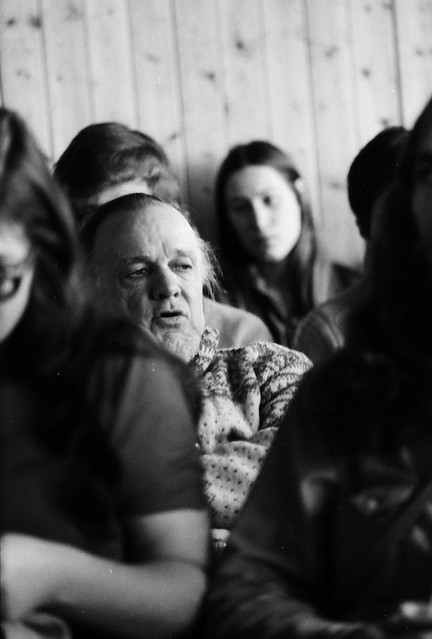
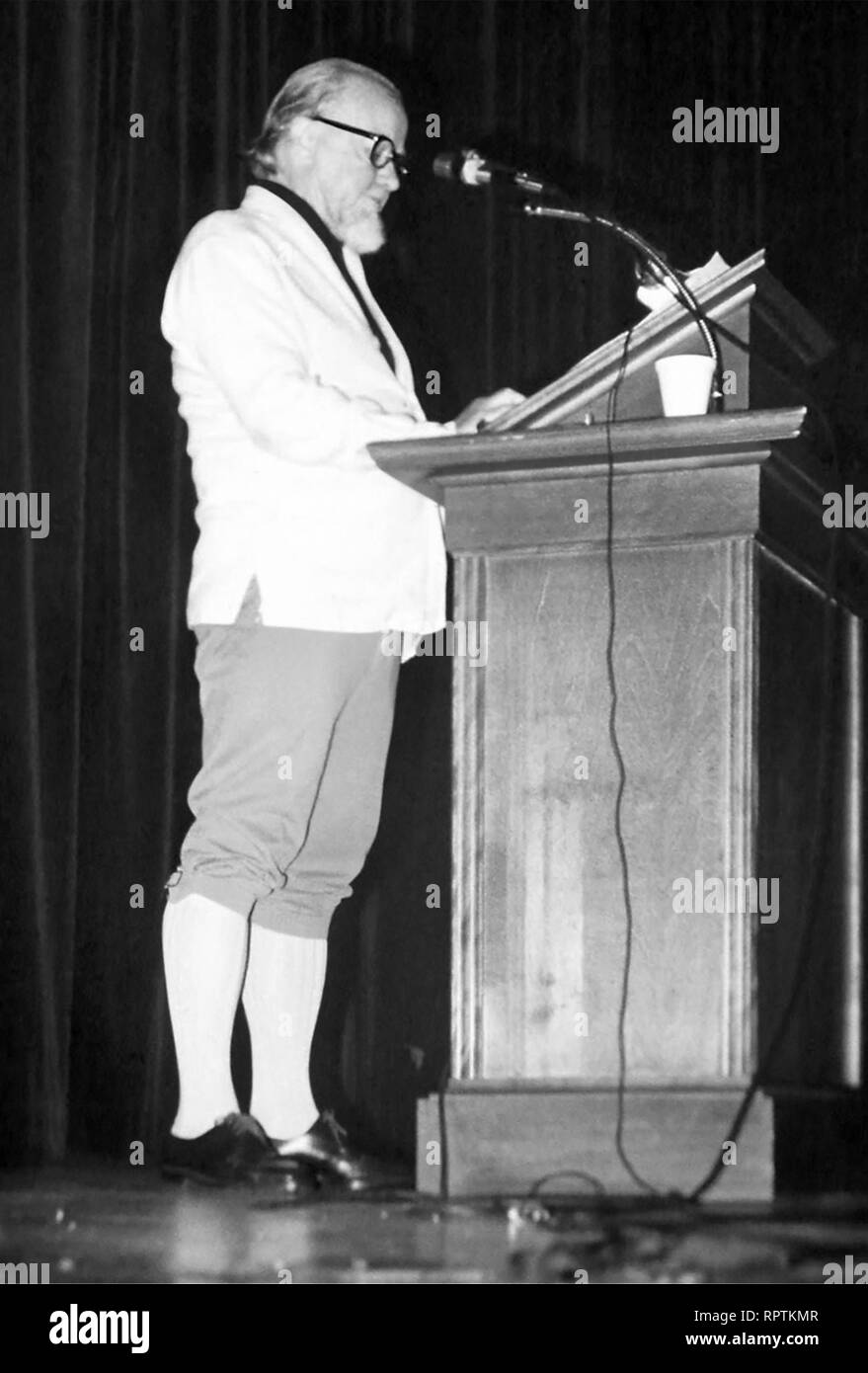





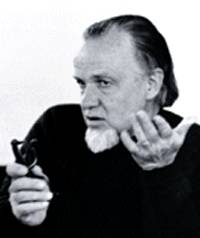


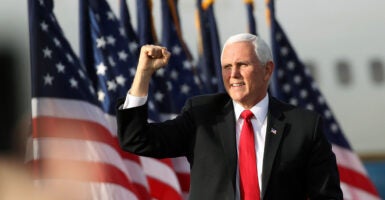
:no_upscale()/cdn.vox-cdn.com/uploads/chorus_image/image/67693069/GettyImages_1228823063t.0.jpg) Judge Amy Coney Barrett on Capitol Hill on October 1. Anna Moneymaker/Getty Images
Judge Amy Coney Barrett on Capitol Hill on October 1. Anna Moneymaker/Getty Images/cdn.vox-cdn.com/uploads/chorus_asset/file/21990596/GettyImages_1229033436t.jpg) Supreme Court nominee Amy Coney Barrett is sworn in during the Senate Judiciary Committee confirmation hearing on October 12, 2020. Kevin Dietsch/Getty Images
Supreme Court nominee Amy Coney Barrett is sworn in during the Senate Judiciary Committee confirmation hearing on October 12, 2020. Kevin Dietsch/Getty Images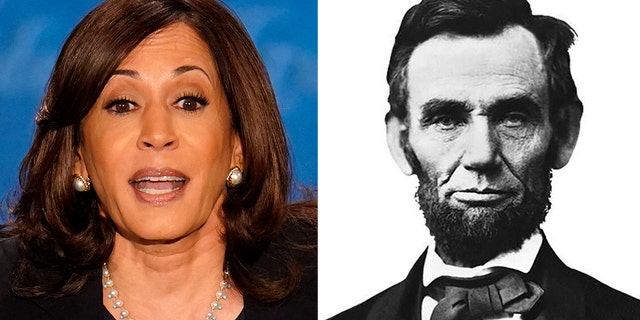


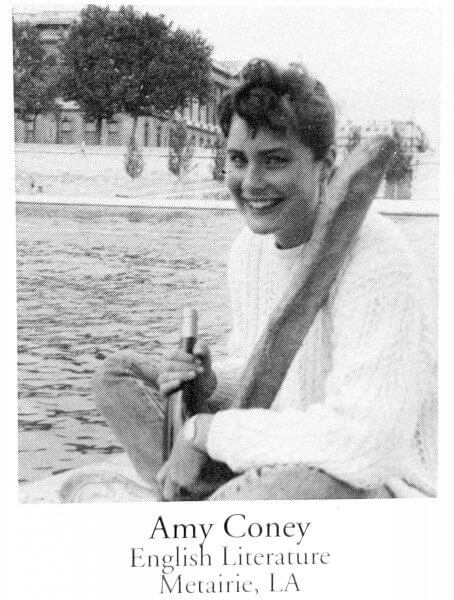 I can tell you a few things about her, though. For one thing, she did not have a wild reputation, so I think that if she’s nominated, the Senate hearings will have to find something else to complain about. She was an English major and served on the Honor Council, a student body that enforced our honor code against lying and cheating (a great feature of academics at Rhodes that allowed us take-home tests in many classes). We were both in Mortar Board, an honor society. She wasn’t a political activist and was never a member of the College Republicans (I was, and we had a much larger membership than the College Democrats).
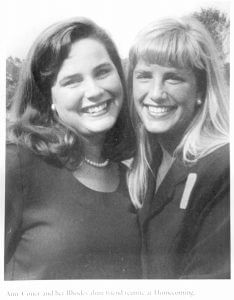 Amy at the homecoming game senior year
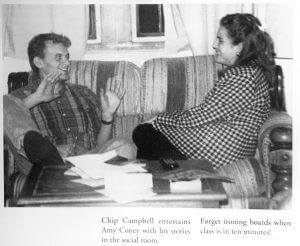 Candid photo in the social room (the ironing board refers to another picture)
 L to R: Me, Amy Barrett, and my daughter


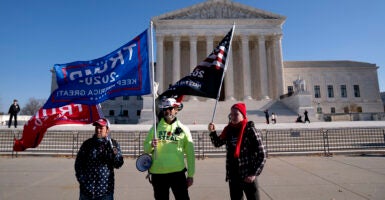




 The Daily Hatch


