Monthly Archives: January 2015

RESPONDING TO HARRY KROTO’S BRILLIANT RENOWNED ACADEMICS!! (Nobel Laureate Dr. Aaron Ciechanover, Does he think that HITLER GOT OFF HOOK OR NOT? )

_______________

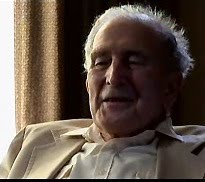
Aaron Ciechanover
Flickr - Government Press Office (GPO) - Nobel Laureate Aaron Ciechanover.jpg

___________

Below you have picture of 1996 Chemistry Nobel Prize Winner Dr. Harry Kroto:

_______

On November 21, 2014 I received a letter from Nobel Laureate Harry Kroto and it said:

…Please click on this URL http://vimeo.com/26991975

and you will hear what far smarter people than I have to say on this matter. I agree with them.

Harry Kroto

__________________________

There are 3 videos in this series and they have statements by 150 academics and scientists and I hope to respond to all of them. Nobel Laureate Dr. Aaron Ciechanover is found in the 114th video clip in the third video below and his quote is found below in this post and my response is after that.

50 Renowned Academics Speaking About God (Part 1)

Another 50 Renowned Academics Speaking About God (Part 2)

A Further 50 Renowned Academics Speaking About God (Part 3)

_______________

I grew up at Bellevue Baptist Church under the leadership of our pastor Adrian Rogers and I read many books by the Evangelical Philosopher Francis Schaeffer and have had the opportunity to contact many of the evolutionists or humanistic academics that they have mentioned in their works. Many of these scholars have taken the time to respond back to me in the last 20 years and some of the names  included are  Ernest Mayr (1904-2005), George Wald (1906-1997), Carl Sagan (1934-1996),  Robert Shapiro (1935-2011), Nicolaas Bloembergen (1920-),  Brian Charlesworth (1945-),  Francisco J. Ayala (1934-) Elliott Sober (1948-), Kevin Padian (1951-), Matt Cartmill (1943-) , Milton Fingerman (1928-), John J. Shea (1969-), , Michael A. Crawford (1938-), Paul Kurtz (1925-2012), Sol Gordon (1923-2008), Albert Ellis (1913-2007), Barbara Marie Tabler (1915-1996), Renate Vambery (1916-2005), Archie J. Bahm (1907-1996), Aron S “Gil” Martin ( 1910-1997), Matthew I. Spetter (1921-2012), H. J. Eysenck (1916-1997), Robert L. Erdmann (1929-2006), Mary Morain (1911-1999), Lloyd Morain (1917-2010),  Warren Allen Smith (1921-), Bette Chambers (1930-),  Gordon Stein (1941-1996) , Milton Friedman (1912-2006), John Hospers (1918-2011), Michael Martin (1932-).Harry Kroto (1939-), Marty E. Martin (1928-), Richard Rubenstein (1924-), James Terry McCollum (1936-), Edward O. WIlson (1929-), Lewis Wolpert (1929), Gerald Holton (1922-),  and  Ray T. Cragun (1976-).

What did Dr. Aaron Ciechanover say in this film series that Harry Kroto wanted me to watch? 

______________________________

Quote from Dr. Aaron Ciechanover:

YOU DON’T THEN BELIEVE IN ANY KIND OF AFTERLIFE THEN OR CONSCIOUSNESS OR GOD? “My Israeli purse contains a certificate from the Israeli organ organization that says if I die they can take all the organs give them to whoever they want, I don’t believe in anything that is beyond life… Once we are born we are going to die. Nevertheless, I am a strong religious Jew. Maybe religious Jews will not accept what I am saying…Maybe they feel different about God and the services and prayer and obedience, For me it is a cultural thing.”

__________________________________

It is true that the view that there is no afterlife is very widespread today and in fact, many people have left the Christian worldview because they did not understand why God had created a place called HELL. My simple question to them would be does he think that HITLER GOT OFF HOOK OR NOT? :

On the popular show MODERN FAMILY Jay has a talk with his grandson Manny:

Manny: So you are not worried about getting in trouble you know with God ?
Jay:oh I think He has bigger things on his plate
Manny: so you are not worried about hell?
Jay : let me let you in on a little secret kid, there is no hell
Manny: seriously no hell!!! That is fantastic!!so everyone goes to heaven?
Jay: yep!! End of story!!
Manny: even bad people?
Jay: yeah they are in another section.
Manny: I was thinking about this heaven of yours that is filled with bad people.
Jay: it is not full, it is the tiniest fraction and they are walled in.
Manny: what if they break out?
Jay: they are surrounded by a lake of fire.
Manny: there are fiery lakes in heaven?  This is turning into hell!!!——–
___________________

What do you do with Hitler? There are three posts I have done in the past that deal this subject in an emphatic way. On my blog I have two posts that thousands of people have read over the last 18 months and they are in my all-time top ten list of most viewed and the ironic thing is that both deal with hell and what do you do with a guy like Hitler if you don’t believe in hell.

The first one post dealt with Chris Martin of Coldplay and his life journey of being raised as an evangelical but leaving during his college years because of his rejection of the idea of hell. Then when he writes his best selling song of all-time  “Viva La Vida” he writes that the evil king pictured in the song  is “eternally damned,” and Saint Peter will not be calling his name.

In the  second one Mike Huckabee caused quite a stir when he said that Osama bin Laden was in hell right now. In this post I include a portion of an article I wrote for our online church magazine back in 1999 that discusses this same subject. It goes like this:

___________________


Woody Allen’s movie Crimes and Misdemeanors does a great job of showing that if God does not exist then people like Stalin and Hitler were “home free” in that they were never going to be punished for what they did. 

“Existential subjects to me are still the only subjects worth dealing with. I don’t think that one can aim more deeply than at the so-called existential themes, the spiritual themes.” WOODY ALLEN

Woody Allen’s 1989 movie, CRIMES AND MISDEMEANORS , is an excellent icebreaker concerning the need of God while making decisions in the area of personal morality. In this film, Allen attacks his own atheistic view of morality. Martin Landau plays a Jewish eye doctor named Judah Rosenthal raised by a religious father who always told him, “The eyes of God are always upon you.” However, Judah later concludes that God doesn’t exist. He has his mistress (played in the film by Anjelica Huston) murdered because she continually threatened to blow the whistle on his past questionable, probably illegal, business activities. She also attempted to break up Judah ‘s respectable marriage by going public with their two-year affair. Judah struggles with his conscience throughout the remainder of the movie. He continues to be haunted by his father’s words: “The eyes of God are always upon you.” This is a very scary phrase to a young boy, Judah observes. He often wondered how penetrating God’s eyes are.

Later in the film, Judah reflects on the conversation his religious father had with Judah ‘s unbelieving Aunt May at the dinner table many years ago:

“Come on Sol, open your eyes. Six million Jews burned to death by the Nazis, and they got away with it because might makes right,” says aunt May

Sol replies, “May, how did they get away with it?”

Judah asks, “If a man kills, then what?”

Sol responds to his son, “Then in one way or another he will be punished.”

Aunt May comments, “I say if he can do it and get away with it and he chooses not to be bothered by the ethics, then he is home free.”

Judah ‘s final conclusion was that might did make right. He observed that one day, because of this conclusion, he woke up and the cloud of guilt was gone. He was, as his aunt said, “home free.”

Woody Allen has exposed a weakness in his own humanistic view that God is not necessary as a basis for good ethics. There must be an enforcement factor in order to convince Judah not to resort to murder. Otherwise, it is fully to Judah ‘s advantage to remove this troublesome woman from his life.

The Bible tells us, “{God} has also set eternity in the hearts of men…” (Ecclesiastes 3:11 NIV). The secularist calls this an illusion, but the Bible tells us that the idea that we will survive the grave was planted in everyone’s heart by God Himself. Romans 1:19-21 tells us that God has instilled a conscience in everyone that points each of them to Him and tells them what is right and wrong (also Romans 2:14 -15).

It’s no wonder, then, that one of Allen’s fellow humanists would comment, “Certain moral truths — such as do not kill, do not steal, and do not lie — do have a special status of being not just ‘mere opinion’ but bulwarks of humanitarian action. I have no intention of saying, ‘I think Hitler was wrong.’ Hitler WAS wrong.” (Gloria Leitner, “A Perspective on Belief,” THE HUMANIST, May/June 1997, pp. 38-39)

Here Leitner is reasoning from her God-given conscience and not from humanist philosophy. It wasn’t long before she received criticism. Humanist Abigail Ann Martin responded, “Neither am I an advocate of Hitler; however, by whose criteria is he evil?” (THE HUMANIST, September/October 1997, p. 2)

The secularist can only give incomplete answers to these questions: How could you have convinced Judah not to kill? On what basis could you convince Judah it was wrong for him to murder?

As Christians, we would agree with Judah ‘s father that “The eyes of God are always upon us.” Proverbs 5:21 asserts, “For the ways of man are before the eyes of the Lord, and He ponders all his paths.” Revelation 20:12 states, “…And the dead were judged (sentenced) by what they had done (their whole way of feeling and acting, their aims and endeavors) in accordance with what was recorded in the books” (Amplified Version). The Bible is revealed truth from God. It is the basis for our morality. Judah inherited the Jewish ethical values of the Ten Commandments from his father, but, through years of life as a skeptic, his standards had been lowered. Finally, we discover that Judah ‘s secular version of morality does not resemble his father’s biblically-based morality.

Woody Allen’s CRIMES AND MISDEMEANORS forces unbelievers to grapple with the logical conclusions of a purely secular morality. It opens a door for Christians to find common ground with those whom they attempt to share Christ; we all have to deal with personal morality issues. However, the secularist has no basis for asserting that Judah is wrong.

Larry King actually mentioned on his show, LARRY KING LIVE, that Chuck Colson had discussed the movie CRIMES AND MISDEMEANORS with him. Colson asked King if life was just a Darwinian struggle where the ruthless come out on top. Colson continued, “When we do wrong, is that our only choice? Either live tormented by guilt, or else kill our conscience and live like beasts?” (BREAKPOINT COMMENTARY, “Finding Common Ground,” September 14, 1993)

Later, Colson noted that discussing the movie CRIMES AND MISDEMEANORS with King presented the perfect opportunity to tell him about Christ’s atoning work on the cross. Colson believes the Lord is working on Larry King.

(Caution: CRIMES AND MISDEMEANORS is rated PG-13. It does include some adult themes.)
___________________________
In the third post I mention that I had the unique opportunity to discuss this very issue with Robert Lester Mondale and his wife Rosemary  on April 14, 1996 at his cabin in Fredricktown, Missouri , and my visit was very enjoyable and informative. Mr. Mondale had the distinction of being the only person to sign all three of the Humanist Manifestos in 1933, 1973 and 2003. I asked him which signers of Humanist Manifesto Number One did he know well and he said that Raymond B. Bragg, and Edwin H. Wilson  and him were known as “the three young radicals of the group.”  Harold P. Marley used to have a cabin near his and they used to take long walks together, but Marley’s wife got a job in Hot Springs, Arkansas and they moved down there.

Roy Wood Sellars was a popular professor of philosophy that he knew. I asked if he knew John Dewey and he said he did not, but Dewey did contact him one time to ask him some questions about an article he had written, but Mondale could not recall anything else about that.

Mondale told me some stories about his neighbors and we got to talking about some of his church members when he was an Unitarian pastor. Once during the 1930’s he was told by one of his wealthier Jewish members that he shouldn’t continue to be critical of the Nazis. This member had just come back from Germany and according to him Hitler had done a great job of getting the economy moving and things were good.

Of course, just a few years later after World War II was over Mondale discovered on a second hand basis what exactly had happened over there when he visited with a Lutheran pastor friend who had just returned from Germany. This Lutheran preacher was one of the first to be allowed in after the liberation of the concentration camps in 1945, and he told Mondale what level of devastation and destruction of  innocent lives went on inside these camps. As Mondale listened to his friend he could feel his own face turning pale.

I asked, “If those Nazis escaped to Brazil or Argentina and lived out their lives in peace would they face judgment after they died?”

Mondale responded, “I don’t think there is anything after death.”

I told Mr. Mondale that there is sense in me that says  justice will be given eventually and God will judge those Nazis even if they evade punishment here on earth. I did point out that in Ecclesiastes 4:1 Solomon did note that without God in the picture  the scales may not be balanced in this life and power could reign, but at the same time the Bible teaches that all  must face the ultimate Judge.

Then I asked him if he got to watch the O.J. Simpson trial and he said that he did and he thought that the prosecution had plenty of evidence too. Again I asked Mr. Mondale the same question concerning O.J. and he responded, “I don’t think there is a God that will intervene and I don’t believe in the afterlife.”

When It Comes to the Meaning of Life, the Question is Not “What”, But “Why”

150I’ve written before about the importance of recognizing the role of the Creator in determining life’s purpose, but as a non-believer, I had little problem determining the purpose of my life. As a man who rejected God’s existence, I was comfortable assigning meaning to my life. What was the purpose of life? Well, for me, it was to live nobly and enforce the laws as a police officer, to be a faithful husband to my wife and a good father for my kids. I had no problem answering the “what” question. I failed to recognize, however, that the more important questions did not begin with “what”. When it comes to the meaning of life, the most important questions begin with “why”.

Why is it noble to enforce the law and be a good husband and father? Why is my standard of good and evil the correct standard? Why do I think my ideas about purpose and meaning are important or honorable in the first place? Are my ideas about purpose and meaning simply a matter of opinion, or do I think I’m living a life that is objectively valuable and meaningful? I first discovered the importance of these “why” questions as I became saturated in the subcultures of our society. As a patrol officer, a member of the gang detail and then a member of the career criminal team, I found that the offenders I investigated had no problem assigning meaning to their lives; these folks lived contentedly within the purposes they had constructed for themselves. The gangsters I worked with for two years lived within a world of values and mores that were quite different from my own. Their goals and desires were influenced by their status within the gang and this status was achieved as they rejected much of what I valued in my own life. The more they misbehaved, the more stature they achieved within their own group. They definitely had their own ideas related to purpose and meaning, and they retained these values throughout their lives, both in and out of custody.

As a police officer, I rejected the values held by the people I arrested. I disagreed dramatically with their definitions related to the purpose of life. But why did I think my beliefs related to purpose were more valid than theirs? If everyone gets to assign their own meaning, who are we to judge those who select an evil (or even benignly contrary) purpose? Why should we even think anything is good or bad related to life’s meaning? There are gang neighborhoods in Los Angeles County in which people are living with an idea of purpose and meaning that is very different than my own. Are they wrong about the meaning of life? If so, why? Some would say it simply comes down to whether or not any harm is being done to others; if someone’s purpose in life involves harming others, we ought to be able to appropriately judge that purpose as misguided and wrong.

But I bet you would attempt to re-direct your son or daughter if they told you they decided the purpose of their life was to watch Hulu and Netflix all day. Even though this behavior would have no negative impact on the lives of others, I think you would invest some time trying to convince them to adopt a “better” or more productive purpose for their lives. But why should they listen to you? Why should they come to believe that your ideas about purpose and meaning are more valid than their own? Why isn’t the meaning they’ve chosen for themselves good enough? Why should they accept what you have to say in the first place? It’s a times like these, when we find ourselves evaluating two competing ideas about meaning and purpose that we confront the impotence of our subjective choices. If there is no transcendent, objective meaning to our lives, it’s all really a matter of opinion. If that’s the case, good luck trying to get your kids to stop watching videos. If, however, we have been designed by a Creator God for a purpose that transcends our own limited desire and perspective, we can begin to help our kids understand that we are arguing for more than an opinion. When we address the “why” questions, the “what” questions are much easier to answer and defend.

J. Warner Wallace is a Cold-Case Detective, a Christian Case Maker, and the author of Cold-Case Christianity

Comment or Subscribe to J. Warn

Related posts:

The Glaring Weakness of the Humanist Manifestos (Plus video of Ricky Gervais on the lack of an afterlife)

  Ricky Gervais act outs atheist bewilderment and frustration in the face of nice Christian nonsense Carl Sagan – Parents Carl Sagan said that he missed his parents terribly and he wished he could believe in the afterlife but he was not convinced because of the lack of proof. I had the opportunity to correspond […]

My correspondence with the famous evolutionist Ernst Mayr!!!

________ Ernst Mayr 1904-2005 Bill Gates, John Grisham, James Michener, E. O. Wilson, Ernst Mayr, George Lucas… Published on May 19, 2012 Bill Gates, John Grisham, James Michener, E. O. Wilson, Ernst Mayr, George Lucas, James Cameron, Larry King, Ian Wilmut, Jane Goodall, Stephen Jay Gould, Tim D. White, Leon Lederman, Timothy Berners-Lee and Bill […]

Atheists confronted: How I confronted Carl Sagan the year before he died jh47

In today’s news you will read about Kirk Cameron taking on the atheist Stephen Hawking over some recent assertions he made concerning the existence of heaven. Back in December of 1995 I had the opportunity to correspond with Carl Sagan about a year before his untimely death. Sarah Anne Hughes in her article,”Kirk Cameron criticizes […]

_________________

FRIEDMAN FRIDAY “How to Cure Inflation” in Milton Friedman’s FREE TO CHOOSE Part 1 of 7 Taxation without representation: Getting knocked up to higher tax brackets because of inflation!!!!

In 1980 I read the book FREE TO CHOOSE by Milton Friedman and it really enlightened me a tremendous amount.  I suggest checking out these episodes and transcripts of Milton Friedman’s film series FREE TO CHOOSE: “The Failure of Socialism” and “What is wrong with our schools?”  and “Created Equal”  and  From Cradle to Grave, and – Power of the Market.“If we could just stop the printing presses, we would stop inflation,” Milton Friedman says in “How to Cure Inflation” from the Free To Choose series. Now as then, there is only one cause of inflation, and that is when governments print too much money. Milton explains why it is that politicians like inflation, and why wage and price controls are not solutions to the problem.

In this episode Friedman talks about taxation without representation: Getting knocked up to higher tax brackets because of inflation!!!!

Videos are good, Fw: Vol 9 How to cure inflation FREE TO CHOOSE Episode 9 Videos and transcripts

http://www.freetochoosemedia.org/freetochoose/detail_ftc1980_transcript.php?page=9

While many people have a fairly good grasp of what inflation is, few really understand its fundamental cause. There are many popular scapegoats: labor unions, big business, spendthrift consumers, greed, and international forces. Dr. Friedman explains that the actual cause is a government that has exclusive control of the money supply. Friedman says that the solution to inflation is well known among those who have the power to stop it: simply slow down the rate at which new money is printed. But government is one of the primary beneficiaries of inflation. By inflating the currency, tax revenues rise as families are pushed into higher income tax brackets. Thus, inflation transfers wealth and resources from the private to the public sector. In short, inflation is attractive to government because it is a way of increasing taxes without having to pass new legislation to raise tax rates. Inflation is in fact taxation without representation. Wage and price controls are not the cure for inflation because they treat only the symptom (rising prices) and not the disease (monetary expansion). History records that such controls do not work; instead, they have perverse effects on both prices and economic growth and undermine the fundamental productivity of the economy. There is only one cure for inflation: slow the printing presses. But the cure produces the painful side effects of a temporary increase in unemployment and reduced economic growth. It takes considerable political courage to undergo the cure. Friedman cites the example of Japan, which successfully underwent the cure in the mid-seventies but took five years to squeeze inflation out of the system. Inflation is a social disease that has the potential for destroying a free society if it is unchecked. Prolonged inflation undermines belief in the basic equity of the free market system because it tends to destroy the link between effort and reward. And it tears the social fabric because it divides society into winners and losers and sets group against group.http://www.youtube.com/watch?v=b1dTWDNKH3c

Volume 9 How to Cure Inflation

Transcript:
Friedman: The Sierra Nevada’s in California 10,000 feet above sea level, in the winter temperatures drop to 40 below zero, in the summer the place bakes in the thin mountain air. In this unlikely spot the town of Body sprang up. In its day Body was filled with prostitutes, drunkards and gamblers part of a colorful history of the American West.
A century ago, this was a town of 10,000 people. What brought them here? Gold. If this were real gold, people would be scrambling for it. The series of gold strikes throughout the West brought people from all over the world, all kinds of people. They came here for one purpose and one purpose only, to strike it rich, quick. But in the process, they built towns, cities, in places where nobody would otherwise have dreamed of building a city. Gold built these cities and when the gold was exhausted, the cities collapsed and became ghost towns. Many of the people who came here ended up the way they began, broke and unhappy. But a few struck it rich. For them, gold was real wealth. But was it for the world as a whole. People couldn’t eat the gold, they couldn’t wear the gold, they couldn’t live in houses made of gold. Because there was more gold, they had to pay a little more gold to buy goods and services. The prices of things in terms of gold went up.
At tremendous cost, at sacrifice of lives, people dug gold out of the bowels of the earth. What happened to that gold? Eventually, at long last, it was transported to distant places only to be buried again under the ground. This time in the vaults of banks throughout the world. There is hardly anything that hasn’t been used for money; rock salt in Ethiopia, brass rings in West Africa, Calgary shells in Uganda, even a toy cannon. Anything can be used as money. Crocodile money in Malaysia, absurd isn’t it?
That beleaguered minority of the population that still smokes may recognize this stuff as the raw material from which their cigarettes are made. But in the early days of the colonies, long before the U.S. was established, this was money. It was the common money of Virginia, Maryland and the Carolinas. It was used for all sorts of things. The legislature voted that it could be used legally to pay taxes. It was used to buy food, clothing and housing. Indeed, one of the most interesting sites was to see the husky young fellows at that time, lug 100 pounds of it down to the docks to pay the costs of the passage of the beauteous young ladies who had come over from England to be their brides.
Now you know how money is. There’s a tendency for it to grow, for more and more of it to be produced and that’s what happened with this tobacco. As more tobacco was produced, there was more money. And as always when there’s more money, prices went up. Inflation. Indeed, at the very end of the process, prices were 40 times as high in terms of tobacco as they had been at the beginning of the process. And as always when inflation occurs, people complained. And as always, the legislature tried to do something. And as always, to very little avail. They prohibited certain classes of people from growing tobacco. They tried to reduce the total amount of tobacco grown, they required people to destroy part of their tobacco. But it did no good. Finally, many people took it into their own hands and they went around destroying other people’s tobacco fields. That was too much. Then they passed a law making it a capital offense, punishable by death, to destroy somebody else’s tobacco. Grecian’s Law, one of the oldest laws in economics, was well illustrated. That law says that cheap money drives out dear money and so it was with tobacco. Anybody who had a debt to pay, of course, tried to pay it in the worst quality of tobacco he had. He saved the good tobacco to sell overseas for hard money. The result was that bad money drove out good money.
Finally, almost a century after they had started using tobacco as money, they established warehouses in which tobacco was deposited in barrels, certified by an inspector according to his views as to it’s quality and quantity. And they issued warehouse certificates which people gave from one to another to pay for the bills that they accumulated.
These pieces of green printed paper are today’s counterparts of those tobacco certificates. Except that they bear no relation to any commodity. In this program I want to take you to Britain to see how inflation weakens the social fabric of society. Then to Tokyo, where the Japanese have the courage to cure inflation. To Berlin, where there is a lesson to be learned from the West Germans and how so called cures are often worse than the disease. And to Washington where our government keeps these machines working overtime. And I am going to show you how inflation can be cured.
The fact is that most people enjoy the early stages of the inflationary process. Britain, in the swinging 60’s, there was plenty of money around, business was brisk, jobs were plentiful and prices had not yet taken off. Everybody seemed happy at first. But by the early 70’s, as the good times rolled along, prices started to rise more and more rapidly. Soon, some of these people are going to lose their jobs. The party was coming to an end.
The story is much the same in the U.S. Only the process started a little later. We’ve had one inflationary party after another. Yet we still can’t seem to avoid them. How come?
Before every election our representatives would like to make us think we are getting a tax break. When they are able to do it, while at the same time actually raising our taxes because of a bit of magic they have in their kit bag. That magic is inflation. They reduced the tax rates but the taxes we have to pay go up because we are automatically shoved into higher brackets by the effective inflation. A neat trick. Taxation without representation.

Related posts:

“The Power of the Market” episode of Free to Choose in 1990 by Milton Friedman (Part 1)

Milton Friedman The Power of the Market 1-5 How can we have personal freedom without economic freedom? That is why I don’t understand why socialists who value individual freedoms want to take away our economic freedoms.  I wanted to share this info below with you from Milton Friedman who has influenced me greatly over the […]

“Friedman Friday,” EPISODE “The Failure of Socialism” of Free to Choose in 1990 by Milton Friedman (Part 1)

Milton Friedman: Free To Choose – The Failure Of Socialism With Ronald Reagan (Full) Published on Mar 19, 2012 by NoNationalityNeeded Milton Friedman’s writings affected me greatly when I first discovered them and I wanted to share with you. We must not head down the path of socialism like Greece has done. Abstract: Ronald Reagan […]

________________

“Friedman Friday” (“Free to Choose” episode 3 – Anatomy of a Crisis. part 3 of 7)

Worse still, America’s depression was to become worldwide because of what lies behind these doors. This is the vault of the Federal Reserve Bank of New York. Inside is the largest horde of gold in the world. Because the world was on a gold standard in 1929, these vaults, where the U.S. gold was stored, […]

“Friedman Friday” (Part 16) (“Free to Choose” episode 3 – Anatomy of a Crisis. part 2 of 7)

  George Eccles: Well, then we called all our employees together. And we told them to be at the bank at their place at 8:00 a.m. and just act as if nothing was happening, just have a smile on their face, if they could, and me too. And we have four savings windows and we […]

“Friedman Friday” (“Free to Choose” episode 3 – Anatomy of a Crisis. part 1of 7)

Milton Friedman’s Free to Choose (1980), episode 3 – Anatomy of a Crisis. part 1 FREE TO CHOOSE: Anatomy of Crisis Friedman Delancy Street in New York’s lower east side, hardly one of the city’s best known sites, yet what happened in this street nearly 50 years ago continues to effect all of us today. […]

By Everette Hatcher III | Also posted in Current Events | Edit | Comments (0)

____________________________

_____________


________________________________________________

_____________________________________________

Friedman Friday” Free to Choose by Milton Friedman: Episode “What is wrong with our schools?” (Part 3 of transcript and video)

Friedman Friday” Free to Choose by Milton Friedman: Episode “What is wrong with our schools?” (Part 3 of transcript and video) Here is the video clip and transcript of the film series FREE TO CHOOSE episode “What is wrong with our schools?” Part 3 of 6.   Volume 6 – What’s Wrong with our Schools Transcript: If it […]

Friedman Friday” Free to Choose by Milton Friedman: Episode “What is wrong with our schools?” (Part 2 of transcript and video)

Here is the video clip and transcript of the film series FREE TO CHOOSE episode “What is wrong with our schools?” Part 2 of 6.   Volume 6 – What’s Wrong with our Schools Transcript: Groups of concerned parents and teachers decided to do something about it. They used private funds to take over empty stores and they […]

By Everette Hatcher III | Also posted in Vouchers | Edit | Comments (1)

Friedman Friday” Free to Choose by Milton Friedman: Episode “What is wrong with our schools?” (Part 1 of transcript and video)

Here is the video clip and transcript of the film series FREE TO CHOOSE episode “What is wrong with our schools?” Part 1 of 6.   Volume 6 – What’s Wrong with our Schools Transcript: Friedman: These youngsters are beginning another day at one of America’s public schools, Hyde Park High School in Boston. What happens when […]

By Everette Hatcher III | Also posted in Vouchers | Tagged , , , , | Edit | Comments (0)

Friedman Friday” Free to Choose by Milton Friedman: Episode “Created Equal” (Part 3 of transcript and video)

Friedman Friday” Free to Choose by Milton Friedman: Episode “Created Equal” (Part 3 of transcript and video) Liberals like President Obama want to shoot for an equality of outcome. That system does not work. In fact, our free society allows for the closest gap between the wealthy and the poor. Unlike other countries where free enterprise and other […]

Free to Choose by Milton Friedman: Episode “Created Equal” (Part 2 of transcript and video)

Free to Choose by Milton Friedman: Episode “Created Equal” (Part 2 of transcript and video) Liberals like President Obama want to shoot for an equality of outcome. That system does not work. In fact, our free society allows for the closest gap between the wealthy and the poor. Unlike other countries where free enterprise and other freedoms are […]

Free to Choose by Milton Friedman: Episode “Created Equal” (Part 1 of transcript and video)

 Milton Friedman and Ronald Reagan Liberals like President Obama (and John Brummett) want to shoot for an equality of outcome. That system does not work. In fact, our free society allows for the closest gap between the wealthy and the poor. Unlike other countries where free enterprise and other freedoms are not present.  This is a seven part series. […]

Milton Friedman Friday: (“Free to Choose” episode 4 – From Cradle to Grave, Part 3 of 7)

 I am currently going through his film series “Free to Choose” which is one the most powerful film series I have ever seen. PART 3 OF 7 Worse still, America’s depression was to become worldwide because of what lies behind these doors. This is the vault of the Federal Reserve Bank of New York. Inside […]

By Everette Hatcher III | Edit | Comments (0)

Milton Friedman Friday:(“Free to Choose” episode 4 – From Cradle to Grave, Part 2 of 7)

 I am currently going through his film series “Free to Choose” which is one the most powerful film series I have ever seen. For the past 7 years Maureen Ramsey has had to buy food and clothes for her family out of a government handout. For the whole of that time, her husband, Steve, hasn’t […]

Friedman Friday:(“Free to Choose” episode 4 – From Cradle to Grave, Part 1 of 7)

Friedman Friday:(“Free to Choose” episode 4 – From Cradle to Grave, Part 1 of 7) Volume 4 – From Cradle to Grave Abstract: Since the Depression years of the 1930s, there has been almost continuous expansion of governmental efforts to provide for people’s welfare. First, there was a tremendous expansion of public works. The Social Security Act […]

By Everette Hatcher III | Edit | Comments (0)

“Friedman Friday” (“Free to Choose” episode 1 – Power of the Market. part 3 of 7)

  _________________________   Pt3  Nowadays there’s a considerable amount of traffic at this border. People cross a little more freely than they use to. Many people from Hong Kong trade in China and the market has helped bring the two countries closer together, but the barriers between them are still very real. On this side […]

“Friedman Friday” (“Free to Choose” episode 1 – Power of the Market. part 2 of 7)

  Aside from its harbor, the only other important resource of Hong Kong is people __ over 4_ million of them. Like America a century ago, Hong Kong in the past few decades has been a haven for people who sought the freedom to make the most of their own abilities. Many of them are […]

“Friedman Friday” (“Free to Choose” episode 1 – Power of the Market. part 1of 7)

“FREE TO CHOOSE” 1: The Power of the Market (Milton Friedman) Free to Choose ^ | 1980 | Milton Friedman Posted on Monday, July 17, 2006 4:20:46 PM by Choose Ye This Day FREE TO CHOOSE: The Power of the Market Friedman: Once all of this was a swamp, covered with forest. The Canarce Indians […]

By Everette Hatcher III | Posted in Current Events, Milton Friedman | Edit | Comments (0)

“Friedman Friday,” EPISODE “The Failure of Socialism” of Free to Choose in 1990 by Milton Friedman (Part 1)

Milton Friedman: Free To Choose – The Failure Of Socialism With Ronald Reagan (Full) Published on Mar 19, 2012 by NoNationalityNeeded Milton Friedman’s writings affected me greatly when I first discovered them and I wanted to share with you. We must not head down the path of socialism like Greece has done. Abstract: Ronald Reagan […]

By Everette Hatcher III | Posted in Milton FriedmanPresident Obama | Edit | Comments (1)

RESPONDING TO HARRY KROTO’S BRILLIANT RENOWNED ACADEMICS!! (Dr. Leonard Mlodinow , Professor of Physics, Cal Tech, CAN SCIENCE CONFLICT WITH RELIGIOUS BELIEF AND STILL BOTH BE TRUE? )

_

Caltech professor Leonard Mlodinow has coauthored a l book with Stephen Hawking on the creation of the universe.

_________________

On November 21, 2014 I received a letter from Nobel Laureate Harry Kroto and it said:

…Please click on this URL http://vimeo.com/26991975

and you will hear what far smarter people than I have to say on this matter. I agree with them.

Harry Kroto

___

Below you have picture of 1996 Chemistry Nobel Prize Winner Dr. Harry Kroto:

__________________________________________________

There are 3 videos in this series and they have statements by 150 academics and scientists and I hope to respond to all of them. Wikipedia notes Leonard Mlodinow  is an American physicist, author and screenwriter.[2]

Mlodinow was born in Chicago, Illinois, of parents who were both Holocaust survivors.[1] His father, who spent more than a year in the Buchenwald concentration camp, had been a leader in the Jewish resistance under Nazi rule in his hometown of Częstochowa, Poland [1] then Generalgouvernement (für die besetzten polnischen Gebiete). As a child, Mlodinow was interested in both mathematics and chemistry, and while in high school was tutored in organic chemistry by a professor from the University of Illinois.

As recounted in his book, Feynman’s Rainbow, his interest turned to physics during a semester he took off from college to spend on a kibbutz in Israel, during which he had little to do at night beside reading The Feynman Lectures on Physics, which was one of the few English books he found in the kibbutz library…Apart from his research and books on popular science, he also co-wrote the screenplay for the 2009 film Beyond the Horizon[3] and has been a screenwriter for television series, including Star Trek: The Next Generation and MacGyver.[1] He co-authored (with Matt Costello) a children’s chapter book series entitled The Kids of Einstein Elementary.

Between 2008 and 2010, Mlodinow worked on a book with Stephen Hawking, entitled The Grand Design.[1] A step beyond Hawking’s other titles, The Grand Design is said to explore both the question of the existence of the universe and the issue of why the laws of physics are what they are.

It is so exciting for me to get a chance to write on Leonard Mlodinow today. As you probably know he has co-authored several books with Stephen Hawking who I have posted about over and over and over and over and over and over and over and over and over and over and over and over  again. In  the third video below in the 112th clip in this series are his words. I also enjoyed seeing the movie about Stephen Hawking recently and here is the trailer:

50 Renowned Academics Speaking About God (Part 1)

Another 50 Renowned Academics Speaking About God (Part 2)

A Further 50 Renowned Academics Speaking About God (Part 3)

I grew up at Bellevue Baptist Church under the leadership of our pastor Adrian Rogers and I read many books by the Evangelical Philosopher Francis Schaeffer and have had the opportunity to contact many of the evolutionists or humanistic academics that they have mentioned in their works. Many of these scholars have taken the time to respond back to me in the last 20 years and some of the names  included are  Ernest Mayr (1904-2005), George Wald (1906-1997), Carl Sagan (1934-1996),  Robert Shapiro (1935-2011), Nicolaas Bloembergen (1920-),  Brian Charlesworth (1945-),  Francisco J. Ayala (1934-) Elliott Sober (1948-), Kevin Padian (1951-), Matt Cartmill (1943-) , Milton Fingerman (1928-), John J. Shea (1969-), , Michael A. Crawford (1938-), Paul Kurtz (1925-2012), Sol Gordon (1923-2008), Albert Ellis (1913-2007), Barbara Marie Tabler (1915-1996), Renate Vambery (1916-2005), Archie J. Bahm (1907-1996), Aron S “Gil” Martin ( 1910-1997), Matthew I. Spetter (1921-2012), H. J. Eysenck (1916-1997), Robert L. Erdmann (1929-2006), Mary Morain (1911-1999), Lloyd Morain (1917-2010),  Warren Allen Smith (1921-), Bette Chambers (1930-),  Gordon Stein (1941-1996) , Milton Friedman (1912-2006), John Hospers (1918-2011), Michael Martin (1932-).Harry Kroto (1939-), Marty E. Martin (1928-), Richard Rubenstein (1924-), James Terry McCollum (1936-), Edward O. WIlson (1929-), Lewis Wolpert (1929), Gerald Holton (1922-),  and  Ray T. Cragun (1976-).

_______________________

Quote from Leonard Mlodinow taken from the video found above:

I am not one who believes in the Bible. I find it very hard to see how people could believe in the Bible, but on the other hand I am somewhat religious. I go to synagogue sometimes. I am more of what you would call an agnostic, but I see science as being separate and religious belief as being separate, and one doesn’t affect the other.

My simple question is this?

CAN SCIENCE CONFLICT WITH RELIGIOUS BELIEF AND STILL BOTH BE TRUE? 

A long list of great Christian thinkers given by J. Warner Wallace and these great scientists were men of faith and they would have disagreed with the statement by Leonard Mlodinow, “but I see science as being separate and religious belief as being separate, and one doesn’t affect the other.” 

~/Media/Default/Article/tugowar.jpg

Are We Irrational?
Have you ever had someone in the culture tell you that ‘people of faith’ are simple minded folks who blindly believe that God exists in spite of overwhelming evidence to the contrary? Secularists often portray Christians as both ‘unreasonable’ and ‘unreasoning’. They simply believe that we have no idea what the evidence demonstrates related to the existence of God. They think we have blind faith, and they think we are comfortable with our blind obedience to the traditions of religion. Well I, for one, have never seen my faith in this way. I was an atheist for thirty five years because I believed that there was sufficient evidence to support naturalism. I will confess to you that I also thought that naturalism was the more reasonable worldview and that naturalists in general were more thoughtful and evidential. I thought that secularists and philosophical naturalists (I was both) were more committed to a rational examination of the evidence.

I found plenty of skepticism amongst naturalists and other historic thinkers who have questioned the reasoning ability of believers. Many well respected writers have challenged the rationality of ‘blind faith’ and (along with it) Christian Theism:

Thomas Jefferson
“Question with boldness even the existence of a God; because, if there be one, he must more approve of the homage of reason, than that of blind-folded fear”

Anais Nin
“When we blindly adopt a religion, a political system, a literary dogma, we become automatons. We cease to grow.”

Francis Bacon
“Atheism leaves a man to sense, to philosophy, to natural piety, to laws, to reputation; all of which may be guides to an outward moral virtue, even if religion vanished; but religious superstition dismounts all these and erects an absolute monarchy in the minds of men.”

Sir Julian Huxley
“Today the god hypothesis has ceased to be scientifically tenable … and its abandonment often brings a deep sense of relief. Many people assert that this abandonment of the god hypothesis means the abandonment of all religion and all moral sanctions. This is simply not true. But it does mean, once our relief at jettisoning an outdated piece of ideological furniture is over, that we must construct some thing to take its place”

But is this criticism valid? Are these observations true? Are those who believe in the existence of God truly holding on to an “outdated piece of ideological furniture”? Is it possible to be ‘reasonable’ and a theist at the same time? Is faith truly ‘blind’ or is it the result of a rational examination of the evidence? One thing is for sure, the concept of ‘blind faith’ is completely foreign to the Christian Worldview.

A Rational God
The God of the Bible does not call his children to obey blindly. The Bible itself serves as a piece of evidence, the testimony of eyewitnesses who are providing us with reasons to believe. That’s why the scriptures repeatedly call us to have a reasoned belief in Christ, and not to resort to the behavior of unreasoning animals:

Jude 4, 10
For certain persons have crept in unnoticed, those who were long beforehand marked out for this condemnation, ungodly persons who turn the grace of our God into licentiousness and deny our only Master and Lord, Jesus Christ…But these men revile the things which they do not understand; and the things which they know by instinct, like unreasoning animals, by these things they are destroyed.

The Bible uses this word for ‘unreasoning’ in a pejorative manner; to be unreasoning is to act like an animal. God clearly wants us to use our heads! In fact, God wants us to examine all the evidence that is at our disposal and to study the things of God with great intensity. When we do this, we truly begin to worship Him with our mind:

Matthew 22:37-38
“You shall love the Lord your God with all your heart, and with all your soul, and with all your mind. This is the great and foremost commandment.”

Believe it or not, our God is in the business of providing us with evidence. He wants us to be convinced after we examine the proof. Look at how Jesus dealt with the disciples following His resurrection:

Acts 1:2-3
…until the day when He was taken up, after He had by the Holy Spirit given orders to the apostles whom He had chosen. To these He also presented Himself alive, after His suffering, by many convincing proofs, appearing to them over a period of forty days, and speaking of the things concerning the kingdom of God.

Paul apparently took this high view of evidence very seriously. Just listen to this portion of Paul’s message to the Athenians:

Acts 17:30-31
“Therefore having overlooked the times of ignorance, God is now declaring to men that all everywhere should repent, because He has fixed a day in which He will judge the world in righteousness through a Man whom He has appointed, having furnished proof to all men by raising Him from the dead.”

The earliest of Christians understood the connection between reason, logic and faith, and they did not see these concepts as mutually exclusive. In fact, Paul often used reason to make his case for Christianity and he valued those who would also use reason to investigate the evidence that he offered:

Acts 17:2-3
And according to Paul’s custom, he went to them, and for three Sabbaths reasoned with them from the Scriptures, explaining and giving evidence that the Christ had to suffer and rise again from the dead

Acts 17:10-11
And the brethren immediately sent Paul and Silas away by night to Berea; and when they arrived, they went into the synagogue of the Jews. Now these were more noble-minded than those in Thessalonica, for they received the word with great eagerness, examining the Scriptures daily, to see whether these things were so.

As Christians, we are encouraged to examine the evidence and test what we observe and what we have been told:

1 Thessalonians 5:19-21
Do not quench the Spirit; do not despise prophetic utterances. But examine everything carefully; hold fast to that which is good…

1 John 4:1
Beloved, do not believe every spirit, but test the spirits to see whether they are from God; because many false prophets have gone out into the world.

In the end, God wants us to be convinced of the truth in such a way as to allow this truth to change our lives. God wants us to be convinced:

Romans 14:5
Let each man be fully convinced in his own mind.

2 Timothy 1:8-12
Therefore do not be ashamed of the testimony of our Lord, or of me His prisoner; but join with me in suffering for the gospel according to the power of God, who has saved us, and called us with a holy calling, not according to our works, but according to His own purpose and grace which was granted us in Christ Jesus from all eternity, but now has been revealed by the appearing of our Savior Christ Jesus, who abolished death, and brought life and immortality to light through the gospel, for which I was appointed a preacher and an apostle and a teacher. For this reason I also suffer these things, but I am not ashamed; for I know whom I have believed and I am convinced that He is able to guard what I have entrusted to Him until that day.

2 Timothy 3:14
You, however, continue in the things you have learned and become convinced of, knowing from whom you have learned them…

When believers use their minds, investigate the evidence and become convinced, something wonderful happens; they have the courage to defend what they believe using the same logic and reasoning power that assisted them to faith in the first place:

1 Peter 3:15
…but sanctify Christ as Lord in your hearts, always being ready to make a defense to everyone who asks you to give an account for the hope that is in you, yet with gentleness and reverence…

Over the centuries, Christians in all disciplines of inquiry and discovery have used their reasoning powers to investigate the evidence. Christians are not irrational by nature and many Christians have been world leaders in their use of reason and rationality.

Great Christian Thinkers
While there may be 150 years worth of great atheist thinkers that can be paraded in front of us to justify the possible truth of naturalism and humanism, there are thousands of year’s worth of great Christian scientists and writers and thinkers who have reasoned to just the opposite conclusion. These were rational and reasonable CHRISTIANS who saw no conflict between the rational process of thoughtful examination and their belief in the existence of God. They saw no conflict between the pursuit of science and the pursuit of theology. In fact, they saw the two endeavors as inextricably connected. Let’s take a look at just a few great Christian thinkers throughout history:

John Philoponus (c.490 to c.570)
He theorized about the nature of light and stars and criticized Aristotelian physics

Bede, the Venerable (c.672 to 735)
He wrote two volumes on “Time and its Reckoning” that revealed a new understanding of the “progress wave-like” nature of tides

Pope Silvester II (c.950 to 1003)
He influenced and shaped the teaching of math and astronomy in Christian schools

Hermannus Contractus (1013 to 1054)
He wrote on geometry, mathematics, and the astrolabe (a historical astronomical instrument used by classical astronomers and navigators)

Robert Grosseteste (c.1175 to 1253)
He is considered the founder of scientific thought in Oxford. He wrote books on the mathematical sciences of optics, astronomy and geometry. He believed that experiments should be used in order to verify a theory

Pope John XXI (1215 to 1277)
He wrote the “Thesaurus Pauperum” (a widely used medical text)

Albertus Magnus (c.1193 to 1280)
He was a scientist who may have been the first to isolate arsenic. He wrote “Natural science does not consist in ratifying what others have said, but in seeking the causes of phenomena”

Roger Bacon (c.1214 to 1294)
He contributed in areas of optics, mechanics and geography; he promoted empiricism and was one of the earliest advocates of the modern scientific method. He was also responsible for promoting the concept of the “laws of nature”

Theodoric of Freiberg (c.1250 to c.1310)
He gave the first correct explanation for the rainbow in “De Iride et Radialibus Impressionibus” (or “On the Rainbow”)

Thomas Bradwardine (c.1290 to 1349)
He was called “the Profound Doctor”and his studies lead to important developments in mechanics

Jean Buridan (1300 to 1358)
He developed a theory known as ‘impetus’; an important step toward the modern concept of ‘inertia’

Nicole Oresme (c.1323 to 1382)
He was one of the early founders and promoters of ‘modern sciences’. He made many scientific discoveries, including the discovery of curvature of light through atmospheric refraction

Nicholas of Cusa (1401 to 1464)
He made contributions to the field of mathematics and developed the concepts of the ‘infinitesimal’ and of ‘relative motion’

Otto Brunfels (1488 to 1534)
He was a botanist and his “Herbarum Vivae Icones” was a formative work in the field of botany

Nicolaus Copernicus (1473 to 1543)
He introduced the ‘heliocentric’ world view, discovering hat earth and the solar system planets revolved around the sun

William Turner (c.1508 to 1568)
He is the “father of English botany” and was also an ornithologist

Ignazio Danti (1536 to 1586)
He was a mathematician who wrote about Euclid (an astronomer, and a designer of mechanical devices)

Giordano Bruno (1548 to 1600)
He was an Italian cosmologist who argued that the Earth revolved around the Sun and that other worlds also revolved around other suns

Bartholomaeus Pitiscus (1561 to 1613)
He was a mathematician who may have coined the word trigonometry in the English and French Languages

John Napier (1550 to 1617)
He was a Scottish mathematician renowned for inventing logarithms and his promotion of the use of decimals

Johannes Kepler (1571 to 1630)
He invented “Kepler’s Laws of Planetary Motion” based on data he got from Tycho Brahe’s astronomical observations

Laurentius Gothus (1565 to 1646)
He was a professor of astronomy who wrote many books on the topic

Galileo Galilei (1564 to 1642)
He was a renowned scientist defended ‘heliocentrism’ (to his own peril

Marin Mersenne (1588 to 1648)
He was a mathematician who communicated with other mathematicians related to concepts concerning what are now known as “Mersenne primes”

René Descartes (1596 to 1650)
He was one of the key thinkers of the “Scientific Revolution” and the Cartesian coordinate system (used in plane geometry and algebra) was named after him. He did formative work on invariants and geometry.

Blaise Pascal (1623 to 1662)
He was a great thinker, known now for “Pascal’s Law” (physics), “Pascal’s Theorem” (math), and “Pascal’s Wager” (theology).

Nicolas Steno (1638 to 1686)
He was considered a pioneer in both anatomy and geology

Seth Ward (1617 to 1689)
He was the Savilian Chair of Astronomy and wrote the foundational volumes, “Ismaelis Bullialdi Astro-Nomiae Philolaicae Fundamenta Inquisitio Brevis” and “Astronomia Geometrica”

Robert Boyle (1627 to 1691)
He was a scientist and theologian who proposed that the study of science was not in conflict with the study of God but could actually glorify God

John Wallis (1616 to 1703)
He was a mathematician who wrote “Arithmetica Infinitorumis” and introduced the term “Continued Fraction” He also worked in areas of cryptography and helped develop calculus

Gottfried Leibniz (1646 to 1716)
He was a “polymath” who did work on determinants and the development of a calculating machine

Isaac Newton (1643 to 1727)
He is still considered to be one of the greatest scientists and mathematicians in history. He founded the principles and theories of “Newtonian Physics”

Carolus Linnaeus (1707 to 1778)
He is known as the “Father of Modern Taxonomy”, but he also made contributions to ecology

Leonhard Euler (1707 to 1783)
He was an important and substantial mathematician and physicist

Maria Gaetana Agnesi (1718 to 1799)
She was a mathematician who was eventually appointed to a position within the Vatican by Pope Benedict XIV

Isaac Milner (1750 to 1820)
He was a “Lucasian Professor of Mathematics” and he developed a process to fabricate Nitrous Acid

Olinthus Gregory (1774 to 1841)
He wrote “Lessons Astronomical and Philosophical” and as a mathematician he became the mathematical master at the Royal Military Academy

William Buckland (1784 to 1856)
He was a geologist who wrote “Vindiciae Geologiae” (The Connexion of Geology with Religion Explained)

Lars Levi Læstadius (1800 to 1861)
He was a botanist who wrote proficiently and discovered four species

Edward Hitchcock (1793 to 1864)
He was a geologist and paleontologist who wrote on the topics of “Natural Theology” and fossilized tracks

William Whewell (1794 to 1866)
He was a professor of mineralogy who wrote “An Elementary Treatise on Mechanics” and “Astronomy and General Physics Considered with Reference to Natural Theology”

Charles Babbage (1791 to 1871)
He was a mathematician, philosopher and mechanical engineer who wrote “The Difference Engine” and the “Ninth Bridgewater Treatise”

Adam Sedgwick (1785 to 1873)
He was a geologist who won both Copley Medal and the Wollaston Medal.

John Bachman (1790 to 1874)
He was an American naturalist who wrote many scientific articles and named several species of animals

Robert Main (1808 to 1878)
He was an astronomer who won the Gold Medal of the Royal Astronomical Society

James Clerk Maxwell (1831 to 1879)
He was a mathematician and theoretical physicist who developed the classical electromagnetic theory (he was able to synthesize all prior unrelated observations, experiments and equations of electricity, magnetism and optics into a consistent theory)

Gregor Mendel (1822 to 1884)
He is considered the “Father of Modern Genetics” for his studies related to the inheritance of traits in pea plants

Philip Henry Gosse (1810 to 1888)
He was a marine biologist who wrote “Aquarium” and “A Manual of Marine Zoology”

Asa Gray (1810 to 1888)
He was a botanist and wrote what is now known as “Gray’s Manual” (which is still an important botanical book). He also wrote “Darwiniana” in which he wrote about the relationship between Evolution and Theology

Francesco Faà di Bruno (1825 to 1888)
He was an Italian mathematician who is famous for “Faà di Bruno’s Formula”

Julian Tenison Woods (1832 to 1889)
He was a geologist who wrote “Geological Observations in South Australia” and “History of the Discovery and Exploration of Australia”

Armand David (1826 to 1900)
He was a botanist and a zoologist who described several species new to the West

George Stokes (1819 to 1903)
He was a mathematician and physicist who was a President of the Royal Society and made contributions to “Fluid Dynamics”, optics and mathematical physics

George Salmon (1819 to 1904)
He was a mathematician who won the Copley Medal for his work in mathematics

Henry Baker Tristram (1822 to 1906)
He was an ornithologist and a founding member of the British Ornithologists’ Union. He wrote “The Fauna and Flora of Palestine”

Lord Kelvin (1824 to 1907)
He was a mathematical physicist and engineer who won the Copley Medal, the Royal Medal, and made important contributions in the field of Thermodynamics.

Pierre Duhem (1861 to 1916)
He was a physicist, a mathematician and a philosopher of science who contributed to the field of “Thermodynamic Potentials”

Dmitri Egorov (1869 to 1931)
He was a Russian mathematician who made important contributions in the area of “differential geometry”

Max Planck (1858 to 1947)
He was a physicist who is considered to be the founder of Quantum Mechanics. He won the 1918 Nobel Prize in Physics

Robert Millikan (1868 to 1953)
He was a physicist who won the 1923 Nobel Prize in Physics. He wrote about the important relationship between faith and reason in “Evolution in Science and Religion”

E. T. Whittaker (1873 to 1956)
He was a mathematician who contributed to the fields of applied mathematics, mathematical physics and the theory of “Special Functions” He was a member of the Pontifical Academy of Sciences and he wrote “Theories of the Universe and the Arguments for the Existence of God”. He also received the Copley Medal

Arthur Compton (1892 to 1962)
He was a physicist who won a Nobel Prize in Physics

Georges Lemaître (1894 to 1966)
He was a professor of physics and an astronomer who first proposed the Big Bang theory

David Lack (1910 to 1973)
He was an ornithologist and the Director of the Edward Grey Institute of Field Ornithology. He wrote “Evolutionary Theory and Christian Belief” and was known for his study of the genus Euplectes

Charles Coulson (1910 to 1974)
He was a prominent researcher in the field of theoretical chemistry who won the Davy Medal.

Theodosius Dobzhansky (1900 to 1975)
He was a geneticist who was critical of young Earth creationism. He argued that science and faith did not conflict

Michael Polanyi (1891 to 1976)
He was a ‘polymath’ who was active in physical chemistry, economics, and philosophy. He wrote “Science, Faith, and Society”

Aldert van der Ziel (1910 to 1991)
He was a physicist who researched “Flicker Noise”. He wrote more than 15 books and 500 scientific papers. The Institute of Electrical and Electronics Engineers named an award after him

Carlos Chagas Filho (1910 to 2000)
He was a neuroscientist who led the Pontifical Academy of Sciences and wrote “The Origin of the Universe”, “The Origin of Life”, and “The Origin of Man”

Sir Robert Boyd (1922 to 2004)
He was a pioneer in British space science and was Vice President of the Royal Astronomical Society.

Arthur Peacocke (1924 to 2006)
He was a biochemist who worked in areas related to the theory of Evolution. He won the Templeton Prize.

C. F. von Weizsäcker (1912 to 2007)
He was a nuclear physicist who co-discovered the “Bethe-Weizsäcker Formula” He wrote “The Relevance of Science: Creation and Cosmogony” and led the Max Planck Society

Charles Hard Townes
He is a physicist who won the Nobel Prize in Physics and wrote “The Convergence of Science and Religion”

Ian Barbour
He is a physicist who wrote “Christianity and the Scientists” and “When Science Meets Religion”

Stanley Jaki
He is a professor of physics at Seton Hall University who won a Templeton Prize and promotes the idea that modern science could only have arisen in a Christian society

Allan Sandage
He is an astronomer who made several discoveries concerning the “Cigar Galaxy” and wrote the article “A Scientist Reflects on Religious Belief”

John Polkinghorne
He is a particle physicist who wrote “Science and the Trinity” and won the Templeton Prize.

Owen Gingerich
He is an astronomer who teaches the History of Science at Harvard and is a member of the American Academy of Arts and Sciences, the American Philosophical Society, and the International Academy of the History of Science

R. J. Berry
He is geneticist and a former president of the Linnean Society of London who wrote “God and the Biologist: Personal Exploration of Science and Faith”

Michał Heller
He is a mathematical physicist who writes on “Relativistic Physics” and “Non-Commutative Geometry”. He also wrote “Creative Tension: Essays on Science and Religion” and won the Templeton Prize

Ghillean Prance
He is a botanist involved in the “Eden Project” and current President of “Christians in Science”

Donald Knuth
He is a renowned computer scientist and is known as the “Father of the Analysis of Algorithms”. He wrote “The Art of Computer Programming”

Eric Priest
He is a mathematician and an authority on Solar Magnetohydrodynamics who won the George Ellery Hale Prize

Robert T. Bakker
He is a paleontologist who was an important player in the “Dinosaur Renaissance” and an advocate for the theory that some dinosaurs were warm-blooded

Joan Roughgarden
She is a biologist and Stanford professor who wrote “Evolution and Christian Faith: Reflections of an Evolutionary Biologist”

Kenneth R. Miller
He is a biology professor at Brown University who wrote “Finding Darwin’s God”

Francis Collins
He is the director of the US National Human Genome Research Institute who wrote “The Language of God: A Scientist Presents Evidence for Belief”

Simon C. Morris
He is a British paleontologist who studied the Burgess Shale fossils and was the co-winner of a Charles Doolittle Walcott Medal and also won a Lyell Medal

John T. Houghton
He is a professor of atmospheric physics and is co-chair of the Intergovernmental Panel on Climate Change. He won a gold medal from the Royal Astronomical Society

Christopher Isham
He is a theoretical physicist who developed “HPO Formalism” and wrote “Physics, Philosophy and Theology”

Stephen C. Meyer
He is a geologist with a PhD in history and philosophy of science from Cambridge who confounded the Discovery Center and co-wrote “Science and Evidence of Design in the Universe” and “Darwinism, Design, and Public Education”

Michael J. Behe
He is a biochemist and a professor at Lehigh University in Pennsylvania who coined the term “irreducible complexity” in his study of cellular structures. He wrote (or co-wrote) “Darwin’s Black Box”, “Science and Evidence for Design in the Universe” and the “The Edge of Evolution”

William Albert Dembski
He is a mathematician and statistician who taught at Baylor University and wrote “The Design Inference: Eliminating Chance through Small Probabilities” and “No Free Lunch: Why Specified Complexity Cannot Be Purchased without Intelligence”

Charles B. Thaxton
He is a physical chemist who holds a doctorate degree in the history of science from Harvard University. He wrote “The Mystery of Life’s Origin” and “The Soul of Science”.

Guillermo Gonzalez
He is an astrophysicist who studies the late stages of stellar evolution using spectroscopy, and he is also doing research on extrasolar planets. He wrote “The Privileged Planet: How Our Place in the Cosmos Is Designed for Discovery”

Paul Kwan Chien
He is a biologist known for his research on the physiology and ecology of intertidal organisms. He is a professor at the University of San Francisco where his research is centered on the transport of amino acids and metal ions across cell membranes as well as the detoxification mechanisms of metal ions. He wrote “The Cambrian Explosion: Biology’s Big Bang” in “Darwinism, Design and Public Education”

Cornelius G. Hunter
He is a professor of biophysics at Biola University whose research is centered on nonlinear systems and molecular biophysics. He wrote “Darwin’s God: Evolution and the Problem of Evil”, “Darwin’s Proof: The Triumph of Religion Over Science”, and “Science’s Blindspot: The Unseen Religion of Scientific Naturalism”

Scott Minnich
He is a microbiologist who is studying the temperature regulation of Yestis enterocolitca gene expression and coordinate reciprocal expression of flagellar and virulence genes. He co-wrote and presented a paper to the Second International Conference on Design & Nature, entitled “Genetic Analysis of Coordinate Flagellar and Type III Regulatory Circuits”

Henry F. Schaefer, III
He is a computational and theoretical chemist who studied at the Massachusetts Institute of Technology and Stanford University. He is a member of the International Academy of Quantum Molecular Science and is the Professor of Chemistry, Emeritus, at UC Berkeley

Geoffrey Simmons
He is a medical doctor and wrote “What Darwin Didn’t Know: A Doctor Dissects the Theory of Evolution” and “Billions of Missing Links: A Rational Look at the Mysteries Evolution Can’t Explain”

Wolfgang Smith
He is a mathematician, physicist, and a philosopher of science who has written extensively in the field of “Differential Geometry”. He has either written or contributed to “Cosmos and Transcendence: Breaking Through the Barrier of Scientistic Belief” and “The Wisdom of Ancient Cosmology: Contemporary Science in Light of Tradition”

Marcus R. Ross
He is a vertebrate paleontologist who contributed “The Cambrian Explosion: Biology’s Big Bang” in “Darwinism, Design and Public Education”

That’s quite a list of great thinkers, and it is only a very small representation of theists who have managed to retain a belief in God while deeply exploring the truths they have learned through reason and scientific observation. But these great thinkers have done more than simply hold on to their faith; it was their faith in the existence of an orderly and all-powerful God that established the foundation from which they knew that science could be done in the first place!

Theists hold that our universe is the product of an orderly and rational God and as such, must certainly follow the laws of this orderly and rational law giver. For this reason, we should expect the universe to submit to certain universal constants that can be observed and tested. Perhaps this is why so many great scientific thinkers have been Christians. And these Christians certainly understand the connection between faith and reason.

Jesus Understood the Connection
And the greatest of theistic thinkers was, of course, Jesus Himself. We don’t tend to think of him as the smartest man who ever lived, but (as God Himself) that is exactly what he was (and is). Jesus understood the relationship between reason and faith. Over and over again he offered EVIDENCE that he was God and asked those who were watching to use their reason to connect the evidence to the truth.

John 10:37-38
“If I do not do the works of My Father, do not believe Me; but if I do them, though you do not believe Me, believe the works, so that you may know and understand that the Father is in Me, and I in the Father.”

Jesus gave us more than enough REASON to believe that He was who he said he was, and He never asked us to believe blindly. It’s important for us to understand that when Jesus asks us to have faith in Him, he is asking us to accept what he says on the basis of the evidence that He has given us. The Christian Faith is a reasonable faith:

  • Unreasonable Faith: Believing in something IN SPITE of the evidence. We hold an unreasonable faith when we refuse to accept or acknowledge evidence that exists, is easily accessible and clearly refutes what we believe.
  • Blind Faith: Believing in something WITHOUT any evidence. We hold a blind faith when we accept something even though there is no evidence to support our beliefs. We don’t search for ANY evidence that either supports or refutes what we are so determined to believe.
  • Reasonable Faith: Believing in something BECAUSE of the evidence. We hold a reasonable faith when we believe in something because it is the most reasonable conclusion from the evidence that exists. The Bible repeatedly makes evidential claims. It offers eyewitness accounts of historical events that can be verified archeologically, prophetically and even scientifically. We, as Christians are called to hold a REASONABLE FAITH that is grounded in this evidence.

How Reason and Faith Co-Exist
Now it’s important to realize that theists are not the only people who employ ‘faith’ as they sort through and accept truth claims. All of us are comfortable accepting many propositions without clear or tangible definitive evidence. Trusting when you don’t have perfect evidence; this is the substance of ‘faith’, this is what it means to move and rely on ‘faith’. And all of us trust in something we cannot observe, or cannot confirm from direct physical evidence. As an example, both the theist and the atheist must trust in something they cannot see or confirm in order to explain the origin of life in the universe. Both sides may have good theories, both sides may build their case from the best circumstantial evidence available to them, but at the end of the day, both the theist and the atheist are going to have to place their confidence in something that cannot be observed or confirmed with direct physical evidence. Neither group was present at the point at which life began to observe the moment evidentially as eyewitnesses.

If we think of ‘faith’ in this way (as trusting in something that we cannot observe, confirm or demonstrate evidentially, even though other circumstantial evidence may make trusting ‘reasonable’), then all of us exert some form of faith to accept and live within our worldviews. With this notion of ‘faith’ in mind, it is clear that we exercise both reason AND faith in order to come to a belief in ANYTHING:

Reason (Rationality)
The rational process by which we examine the direct and circumstantial evidence that is before us as we build a case toward any potential conclusion

  +

Faith (Reasonable Trust)
The act by which we trust in something that cannot be observed or confirmed from direct physical evidence, but does happen to be the best conclusion from the circumstantial evidence

  =

Belief
The conclusion we reach with as much certainty as is humanly possible given our utilization of rationality and reasonable trust

Reason and faith are not enemies, they are essential partners as we do our best to observe, make sense of, and live in the world around us.

But, Can Fallen Humans Really Trust Their Own Rationality?
Many Christians take a very different view of reason and ‘faith’ than I have offered here. After all, doesn’t the Bible teach that humans, in our fallen natural condition, will always deny the truth of the evidence they see related to the existence of God? Doesn’t the Bible clearly teach that the ‘natural man’ is wicked and cannot apprehend the things of God? Look at some sample verses that are often used to make this case:

Romans 8:5-8
For those who are according to the flesh set their minds on the things of the flesh, but those who are according to the Spirit, the things of the Spirit. For the mind set on the flesh is death, but the mind set on the Spirit is life and peace, because the mind set on the flesh is hostile toward God; for it does not subject itself to the law of God, for it is not even able to do so; and those who are in the flesh cannot please God.

Romans 1:18-24
The wrath of God is being revealed from heaven against all the godlessness and wickedness of men who suppress the truth by their wickedness, since what may be known about God is plain to them, because God has made it plain to them. For since the creation of the world God’s invisible qualities-his eternal power and divine nature-have been clearly seen, being understood from what has been made, so that men are without excuse. For although they knew God, they neither glorified him as God nor gave thanks to him, but their thinking became futile and their foolish hearts were darkened. Although they claimed to be wise, they became fools and exchanged the glory of the immortal God for images made to look like mortal man and birds and animals and reptiles.

1 Corinthians 2:12-14
We have not received the spirit of the world but the Spirit who is from God, that we may understand what God has freely given us. This is what we speak, not in words taught us by human wisdom but in words taught by the Spirit, expressing spiritual truths in spiritual words. The man without the Spirit does not accept the things that come from the Spirit of God, for they are foolishness to him, and he cannot understand them, because they are spiritually discerned.

John 6:44
“No one can come to me unless the Father who sent me draws him, and I will raise him up at the last day”

Isn’t the natural mind too depraved to understand the things of God? Aren’t humans incapable of understanding the truth of God’s existence unless God first acts to remove the intellectual barriers so they can see the truth? And if this is the case, isn’t it futile for us to be sharing evidence with people who, in their ‘natural’ condition, are going to reject the truth anyway?

Well let’s think about that for a second. While it is clear that no one comes to the Son unless the Father first draws them, and it is clear that our minds must first be renewed by God so that they can understand spiritual truths, it is also clear that these truths were delivered EVIDENTIALLY to eyewitnesses who then testified about them in the special revelation of the scriptures, and these truths are also available to us EVIDENTIALLY through the natural world that we live in. We observe and listen to the eyewitness accounts of scripture and to natural revelation using our empirical senses, and we appraise the evidence using our rational minds. Yes, God does ‘flip the switch’ and remove barriers that we construct to deny the truth, but He expects us to reason through the evidence once the switch has been flipped.

Live Above the Lies
When non-believers try to paint Christians as unthinking and irrational, they are simply trying to demonize those with whom they disagree. The truth is that while we may not agree on the conclusions reached by atheists, we theists HAVE used our reasoning powers in a rational way to look at the evidence. Not all atheists are rational, and not all Christians have been rational in their examination of the evidence either. But for rational, evidential theists who are committed to studying the truth of their worldview, reason and rationality have been essential to our faith.

_______________

Stand to Reason Speaker

J. Warner Wallace

J. Warner Wallace

I was an atheist for 35 years. I was passionate in my opposition to Christianity, and I enjoyed debating my Christian friends. I seldom found them to be prepared to defend what they believed. I became a Police Officer and eventually advanced to Detective; I spent twelve years working cold-case homicides. Along the way, I developed a healthy respect for the role of evidence in discerning truth, and my profession gave me ample opportunity to press into practice what I learned about the nature and power of evidence. Throughout all of this, I remained an “angry atheist,” hostile to Christianity and largely dismissive of Christians.

But I have to admit that I never took the time to examine the evidence for the Christian Worldview without the bias and presupposition of naturalism. I never gave the case for Christianity a fair shake. When I finally examined the evidence fairly using the tools I learned as a detective, I found it difficult to deny, especially if I hoped to retain my respect for the way evidence is utilized to determine truth. I found the evidence for Christianity to be as convincing as any cold case I’d ever investigated.

From angry atheist, to skeptic, to believer, to seminarian, to pastor, to podcaster and author, my journey has been assisted by my experience as a detective. I want to help you understand how evidence is used to make a case and then show you the evidential strength of the case for Christianity. I’ll teach you the principles of cold-case investigations and help you to utilize these investigative tools to make the case to others.

_______________

Bethinking 2/6: John Lennox on Stephen Hawking’s “The Grand Design”

As a scientist I’m certain Stephen Hawking is wrong. You can’t explain the universe without God

According to Stephen Hawking, the laws of physics, not the will of God, provide the real explanation as to how life on Earth came into being

According to Stephen Hawking, the laws of physics, not the will of God, provide the real explanation as to how life on Earth came into being

There’s no denying that Stephen Hawking is intellectually bold as well as physically heroic. And in his latest book, the renowned physicist mounts an audacious challenge to the traditional religious belief in the divine creation of the universe.

According to Hawking, the laws of physics, not the will of God, provide the real explanation as to how life on Earth came into being. The Big Bang, he argues, was the inevitable consequence of these laws ‘because there is a law such as gravity, the universe can and will create itself from nothing.’

Unfortunately, while Hawking’s argument is being hailed as controversial and ground-breaking, it is hardly new.

For years, other scientists have made similar claims, maintaining that the awesome, sophisticated creativity of the world around us can be interpreted solely by reference to physical laws such as gravity.

It is a simplistic approach, yet in our secular age it is one that seems to have resonance with a sceptical public.

But, as both a scientist and a Christian, I would say that Hawking’s claim is misguided. He asks us to choose between God and the laws of physics, as if they were necessarily in mutual conflict.

But contrary to what Hawking claims, physical laws can never provide a complete explanation of the universe. Laws themselves do not create anything, they are merely a description of what happens under certain conditions.

What Hawking appears to have done is to confuse law with agency. His call on us to choose between God and physics is a bit like someone demanding that we choose between aeronautical engineer Sir Frank Whittle and the laws of physics to explain the jet engine.

That is a confusion of category. The laws of physics can explain how the jet engine works, but someone had to build the thing, put in the fuel and start it up. The jet could not have been created without the laws of physics on their own  –  but the task of development and creation needed the genius of Whittle as its agent.

Similarly, the laws of physics could never have actually built the universe. Some agency must have been involved.

To use a simple analogy, Isaac Newton’s laws of motion in themselves never sent a snooker ball racing across the green baize. That can only be done by people using a snooker cue and the actions of their own arms.

Hawking’s argument appears to me even more illogical when he says the existence of gravity means the creation of the universe was inevitable. But how did gravity exist in the first place? Who put it there? And what was the creative force behind its birth?

Similarly, when Hawking argues, in support of his theory of spontaneous creation, that it was only necessary for ‘the blue touch paper’ to be lit to ‘set the universe going’, the question must be: where did this blue touch paper come from? And who lit it, if not God?

Much of the rationale behind Hawking’s argument lies in the idea that there is a deep-seated conflict between science and religion. But this is not a discord I recognise.

For me, as a Christian believer, the beauty of the scientific laws only reinforces my faith in an intelligent, divine creative force at work. The more I understand science, the more I believe in God because of my wonder at the breadth, sophistication and integrity of his creation.

The very reason science flourished so vigorously in the 16th and 17th centuries was precisely because of the belief that the laws of nature which were then being discovered and defined reflected the influence of a divine law-giver.

One of the fundamental themes of Christianity is that the universe was built according to a rational , intelligent design. Far from being at odds with science, the Christian faith actually makes perfect scientific sense.

Some years ago, the scientist Joseph Needham made an epic study of technological development in China. He wanted to find out why China, for all its early gifts of innovation, had fallen so far behind Europe in the advancement of science.

He reluctantly came to the conclusion that European science had been spurred on by the widespread belief in a rational creative force, known as God, which made all scientific laws comprehensible.

Despite this, Hawking, like so many other critics of religion, wants us to believe we are nothing but a random collection of molecules, the end product of a mindless process.

This, if true, would undermine the very rationality we need to study science. If the brain were really the result of an unguided process, then there is no reason to believe in its capacity to tell us the truth.

We live in an information age. When we see a few letters of the alphabet spelling our name in the sand, our immediate response is to recognise the work of an intelligent agent. How much more likely, then, is an intelligent creator behind the human DNA, the colossal biological database that contains no fewer than 3.5 billion ‘letters’?

It is fascinating that Hawking, in attacking religion, feels compelled to put so much emphasis on the Big Bang theory. Because, even if the non-believers don’t like it, the Big Bang fits in exactly with the Christian narrative of creation.

That is why, before the Big Bang gained currency, so many scientists were keen to dismiss it, since it seemed to support the Bible story. Some clung to Aristotle’s view of the ‘eternal universe’ without beginning or end; but this theory, and later variants of it, are now deeply discredited.

But support for the existence of God moves far beyond the realm of science. Within the Christian faith, there is also the powerful evidence that God revealed himself to mankind through Jesus Christ two millennia ago. This is well-documented not just in the scriptures and other testimony but also in a wealth of archaeological findings.

Moreover, the religious experiences of millions of believers cannot lightly be dismissed. I myself and my own family can testify to the uplifting influence faith has had on our lives, something which defies the idea we are nothing more than a random collection of molecules.

Just as strong is the obvious reality that we are moral beings, capable of understanding the difference between right and wrong. There is no scientific route to such ethics.

Physics cannot inspire our concern for others, or the spirit of altruism that has existed in human societies since the dawn of time.

The existence of a common pool of moral values points to the existence of transcendent force beyond mere scientific laws. Indeed, the message of atheism has always been a curiously depressing one, portraying us as selfish creatures bent on nothing more than survival and self-gratification.

Hawking also thinks that the potential existence of other lifeforms in the universe undermines the traditional religious conviction that we are living on a unique, God-created planet. But there is no proof that other lifeforms are out there, and Hawking certainly does not present any.

It always amuses me that atheists often argue for the existence of extra-terrestrial intelligence beyond earth. Yet they are only too eager to denounce the possibility that we already have a vast, intelligent being out there: God.

Hawking’s new fusillade cannot shake the foundations of a faith that is based on evidence.

God’s Undertaker: Has science Buried God? by John Lennox is out now (Lion Hudson, £8.99).

_______

Related posts:

FRANCIS SCHAEFFER ANALYZES ART AND CULTURE Part 35 Robert M. Pirsig (Feature on artist Kerry James Marshall)

FRANCIS SCHAEFFER ANALYZES ART AND CULTURE Part 34 Aleksandr Solzhenitsyn (Feature on artist Shahzia Sikander)

FRANCIS SCHAEFFER ANALYZES ART AND CULTURE Part 33 Aldous Huxley (Feature on artist Matthew Barney )

FRANCIS SCHAEFFER ANALYZES ART AND CULTURE Part 32 Steven Weinberg and Woody Allen and “The Meaningless of All Things” (Feature on photographer Martin Karplus )

FRANCIS SCHAEFFER ANALYZES ART AND CULTURE Part 31 David Hume and “How do we know we know?” (Feature on artist William Pope L. )

FRANCIS SCHAEFFER ANALYZES ART AND CULTURE Part 30 Rene Descartes and “How do we know we know?” (Feature on artist Olafur Eliasson)

FRANCIS SCHAEFFER ANALYZES ART AND CULTURE Part 29 W.H. Thorpe and “The Search for an Adequate World-View: A Question of Method” (Feature on artist Jeff Koons)

FRANCIS SCHAEFFER ANALYZES ART AND CULTURE Part 28 Woody Allen and “The Mannishness of Man” (Feature on artist Ryan Gander)

FRANCIS SCHAEFFER ANALYZES ART AND CULTURE Part 27 Jurgen Habermas (Featured artist is Hiroshi Sugimoto)

FRANCIS SCHAEFFER ANALYZES ART AND CULTURE Part 26 Bettina Aptheker (Featured artist is Krzysztof Wodiczko)

FRANCIS SCHAEFFER ANALYZES ART AND CULTURE Part 25 BOB DYLAN (Part C) Francis Schaeffer comments on Bob Dylan’s song “Ballad of a Thin Man” and the disconnect between the young generation of the 60’s and their parents’ generation (Feature on artist Fred Wilson)

FRANCIS SCHAEFFER ANALYZES ART AND CULTURE Part 24 BOB DYLAN (Part B) Francis Schaeffer comments on Bob Dylan’s words from HIGHWAY 61 REVISITED!! (Feature on artist Susan Rothenberg)

FRANCIS SCHAEFFER ANALYZES ART AND CULTURE Part 23 BOB DYLAN (Part A) (Feature on artist Josiah McElheny)Francis Schaeffer on the proper place of rebellion with comments by Bob Dylan and Samuel Rutherford

FRANCIS SCHAEFFER ANALYZES ART AND CULTURE Part 22 “The School of Athens by Raphael” (Feature on the artist Sally Mann)

FRANCIS SCHAEFFER ANALYZES ART AND CULTURE Part 21 William B. Provine (Feature on artist Andrea Zittel)

FRANCIS SCHAEFFER ANALYZES ART AND CULTURE Part 20 Woody Allen and Materialistic Humanism: The World-View of Our Era (Feature on artist Ida Applebroog)

FRANCIS SCHAEFFER ANALYZES ART AND CULTURE Part 19 Movie Director Luis Bunuel (Feature on artist Oliver Herring)

FRANCIS SCHAEFFER ANALYZES ART AND CULTURE Part 18 “Michelangelo’s DAVID is the statement of what humanistic man saw himself as being tomorrow” (Feature on artist Paul McCarthy)

FRANCIS SCHAEFFER ANALYZES ART AND CULTURE Part 17 Francis Schaeffer discusses quotes of Andy Warhol from “The Observer June 12, 1966″ Part C (Feature on artist David Hockney plus many pictures of Warhol with famous friends)

FRANCIS SCHAEFFER ANALYZES ART AND CULTURE Part 16 Francis Schaeffer discusses quotes of Andy Warhol from “The Observer June 12, 1966″ Part B (Feature on artist James Rosenquist plus many pictures of Warhol with famous friends)

FRANCIS SCHAEFFER ANALYZES ART AND CULTURE Part 15 Francis Schaeffer discusses quotes of Andy Warhol from “The Observer June 12, 1966″ Part A (Feature on artist Robert Indiana plus many pictures of Warhol with famous friends)

FRANCIS SCHAEFFER ANALYZES ART AND CULTURE Part 14 David Friedrich Strauss (Feature on artist Roni Horn )

FRANCIS SCHAEFFER ANALYZES ART AND CULTURE Part 13 Jacob Bronowski and Materialistic Humanism: The World-View of Our Era (Feature on artist Ellen Gallagher )

FRANCIS SCHAEFFER ANALYZES ART AND CULTURE Part 12 H.J.Blackham and Materialistic Humanism: The World-View of Our Era (Feature on artist Arturo Herrera)

FRANCIS SCHAEFFER ANALYZES ART AND CULTURE Part 11 Thomas Aquinas and his Effect on Art and HOW SHOULD WE THEN LIVE? Episode 2: THE MIDDLES AGES (Feature on artist Tony Oursler )

FRANCIS SCHAEFFER ANALYZES ART AND CULTURE Part 10 David Douglas Duncan (Feature on artist Georges Rouault )

FRANCIS SCHAEFFER ANALYZES ART AND CULTURE Part 9 Jasper Johns (Feature on artist Cai Guo-Qiang )

FRANCIS SCHAEFFER ANALYZES ART AND CULTURE Part 8 “The Last Year at Marienbad” by Alain Resnais (Feature on artist Richard Tuttle and his return to the faith of his youth)

FRANCIS SCHAEFFER ANALYZES ART AND CULTURE Part 7 Jean Paul Sartre (Feature on artist David Hooker )

FRANCIS SCHAEFFER ANALYZES ART AND CULTURE Part 6 The Adoration of the Lamb by Jan Van Eyck which was saved by MONUMENT MEN IN WW2 (Feature on artist Makoto Fujimura)

FRANCIS SCHAEFFER ANALYZES ART AND CULTURE Part 5 John Cage (Feature on artist Gerhard Richter)

FRANCIS SCHAEFFER ANALYZES ART AND CULTURE Part 4 ( Schaeffer and H.R. Rookmaaker worked together well!!! (Feature on artist Mike Kelley Part B )

FRANCIS SCHAEFFER ANALYZES ART AND CULTURE Part 3 PAUL GAUGUIN’S 3 QUESTIONS: “Where do we come from? What art we? Where are we going? and his conclusion was a suicide attempt” (Feature on artist Mike Kelley Part A)

FRANCIS SCHAEFFER ANALYZES ART AND CULTURE Part 2 “A look at how modern art was born by discussing Monet, Renoir, Pissaro, Sisley, Degas,Cezanne, Van Gogh, Gauguin, Seurat, and Picasso” (Feature on artist Peter Howson)

FRANCIS SCHAEFFER ANALYZES ART AND CULTURE Part 1 HOW SHOULD WE THEN LIVE? “The Roman Age” (Feature on artist Tracey Emin)

_________________

Links to articles on Antony Flew’s conversion from Atheism to Theism from March and April 2014 on www.thedailyhatch.org !!!!


______

Discussion (2 of 3): Antony Flew, N.T. Wright, and Gary Habermas

______________

7News Web Extra: Ricky Gervais on God

Published on Mar 23, 2014

He’s not shy about sharing his opinion with 5 million social media followers so Ricky Gervais was happy to clear a few things up for us too.

______________

The Bible and Science (Part 02)

The Kalam Cosmological Argument (Scientific Evidence) (Henry Schaefer, PhD)

Published on Jun 11, 2012

Scientist Dr. Henry “Fritz” Schaefer gives a lecture on the cosmological argument and shows how contemporary science backs it up.

______________

__________________

I have learned several things about atheists in the last 20 years while I have been corresponding with them. First, they know in their hearts that God exists and they can’t live as if God doesn’t exist, but they will still search in some way in their life for a greater meaning. Second, many atheists will take time out of their busy lives to examine the evidence that I present to them. Third, there is hope that they will change their views.

At the bottom of this post I have listed every post from March and April 2014 that is about Antony Flew, who was arguably the most famous atheist philosopher of the 20th century and his conversion from atheism to theism.

Let’s go over again a few points I made at the first of this post.  My first point is backed up by  Romans 1:18-19 (Amplified Bible) ” For God’s wrath and indignation are revealed from heaven against all ungodliness and unrighteousness of men, who in their wickedness REPRESS and HINDER the truth and make it inoperative. For that which is KNOWN about God is EVIDENT to them and MADE PLAIN IN THEIR INNER CONSCIOUSNESS, because God  has SHOWN IT TO THEM,”(emphasis mine). I have discussed this many times on my blog and even have interacted with many atheists from CSICOP in the past.

My second point is that many atheists will take the time to consider the evidence that I have presented to them and will respond. The late Adrian Rogers was my pastor at Bellevue Baptist when I grew up and I sent his sermon on evolution and another on the accuracy of the Bible to many atheists to listen to and many of them did. I also sent many of the arguments from Francis Schaeffer also.

______
Adrian Rogers and his wife Joyce pictured above with former President George Bush at Union University in Tennessee.
_______________
Many of these scholars have taken the time to respond back to me in the last 20 years and some of the names  included are  Ernest Mayr (1904-2005), George Wald (1906-1997), Carl Sagan (1934-1996),  Robert Shapiro (1935-2011), Nicolaas Bloembergen (1920-),  Brian Charlesworth (1945-),  Francisco J. Ayala (1934-) Elliott Sober (1948-), Kevin Padian (1951-), Matt Cartmill (1943-) , Milton Fingerman (1928-), John J. Shea (1969-), , Michael A. Crawford (1938-), (Paul Kurtz (1925-2012), Sol Gordon (1923-2008), Albert Ellis (1913-2007), Barbara Marie Tabler (1915-1996), Renate Vambery (1916-2005), Archie J. Bahm (1907-1996), Aron S “Gil” Martin ( 1910-1997), Matthew I. Spetter (1921-2012), H. J. Eysenck (1916-1997), Robert L. Erdmann (1929-2006), Mary Morain (1911-1999), Lloyd Morain (1917-2010),  Warren Allen Smith (1921-), Bette Chambers (1930-),  Gordon Stein (1941-1996) , Milton Friedman (1912-2006), John Hospers (1918-2011), and Michael Martin (1932-).
Third, there is hope that an atheist will reconsider his or her position after examining more evidence. Twenty years I had the opportunity to correspond with two individuals that were regarded as two of the most famous atheists of the 20th Century, Antony Flew and Carl Sagan.  I had read the books and seen the films of the Christian philosopher Francis Schaeffer and he had discussed the works of both of these men. I sent both of these gentlemen philosophical arguments from Schaeffer in these letters and in the first letter I sent a cassette tape of my pastor’s sermon IS THE BIBLE TRUE? You may have noticed in the news a few years that Antony Flew actually became a theist in 2004 and remained one until his death in 2010. Carl Sagan remained a skeptic until his dying day in 1996.Antony Flew wrote me back several times and in the  June 1, 1994 letter he  commented, “Thank you for sending me the IS THE BIBLE TRUE? tape to which I have just listened with great interest and, I trust, profit.” I later sent him Adrian Rogers’ sermon on evolution too. 
______________


The New Atheism, Norman Geisler

Uploaded on Nov 12, 2011

This video was produced by and downloaded from:http://www.youtube.com/user/rfvidz

________________

Tuesday, May 1, 2012

Dr. Norman Geisler on even Atheists long for God…


John Paul Sarte –

“I need God…I reached out for religion, I longed for it, it was the remedy. Had it been denied me, I would have invented it myself.” (words, 102, 97).

“Atheism is a cruel, long-term business: I believe that I have gone through it to the end.” – Jean-Paul Sartre.

Before Sartre’s death he is recorded as saying,

“I do not feel that I am the product of chance, a speck of dust in the universe, but someone who was expected, prepared, prefigured. In short, a being whom only a Creator could put here” (National Review, 11 June, 1982, p. 677).
Sigmund Freud speaking of God admitted that

“It would be very nice indeed if there was a God.” There is “a sense of man’s insignificance or impotence in the face of the universe.”

.

Friedrich Nietzsche –

“God is dead. God remains dead. And we have killed him. How shall we, the murderers, of all murderers, comfort ourselves?”

“I hold up before myself the images of Dante and Spinoza (believers), who were better at accepting the lot of solitude….My life now consists in the wish that it might be otherwise…And that somebody might make my ‘truths’ appear incredible to me…”

Thus Spake Zarathustra:

“Unknown one! Speak. What wilt thou, unknown-god?… Do come back With all thy tortures! To the last of all that are lonely, Oh, come back!…
“And the last flame of my heart Up it gloweth unto thee! Oh, come back, Mine unknown God, my pain! My last happiness!…”

David Hume—

“Most fortunately it happens, that since reason is incapable of dispelling these colds, nature herself suffices to that purpose, and cures me of this philosophical melancholy and delirium. I din, I play a game of backgammon, I converse, and am merry with my friends; and when after three or four hour’s amusement, I would return to these speculations, they appear so cold and strained and ridiculous, that I cannot find in my heart to enter into them any farther.”

Walter Kauffman, German American Philosopher,

“Religion is rooted in man’s aspirations to transcend himself…Whether he worships idols or strives to perfect himself, man is the god-intoxicated ape.”

Will Durant, an American writer, historian and philosopher was interviewed by the Chicago Sun-Times.

I survive morally because I was taught the moral code along with religion, while I have discarded the religion, which was Roman Catholicism. You and I are living on a shadow…because we are operating on the Christian ethical code which was given us, unfused with Christian faith…but what will happen with our children…? We are not giving them an ethics warmed up with Christian faith. They are living on the shadow of a shadow.”

Alber Camus

For anyone who is alone, without God and without a master, the weight of days is dreadful” (The Fall, 133).

“… Despite the fact that there is no God, at least the Church must be built” (The Rebel, 147).

Bertrand Russell

“Even when one feels nearest to other people, something in one seems obstinately to belong to God…–at least that is how I should express it if I thought there was a God. It is odd, isn’t it? I care passionately for this world and many things and people in it, and yet…what is it all?” There must be something more important one feels, though I don’t believe there is”

The British Humanist Magazine charged that Humanism is almost “clinically detached from life.” It recommends they develop a humanist Bible, a humanist hymnal, Ten Commandments for humanists, and even confessional practices! In addition,

“the use of hypnotic techniques–music and other psychological devices–during humanist services would give the audience that deep spiritual experience and they would emerge refreshed and inspired with their humanist faith…” (1964).

Jesus felt the sadness too:

“O Jerusalem, Jerusalem, you who kill the prophets and stone those sent to you, how often I have longed to gather your children together, as a hen gathers her chicks under her wings, but you were not willing.” (Matthew 23:37)

Thanks to Norman Geisler:

http://www.youtube.com/watch?v=_LVM3GQ41vk

thanks to:

Ken Probst

http://blogs.nazarene.org/kpprobst/tag/john-paul-sarte/

___________________


Links to articles on Antony Flew’s conversion from Atheism to Theism from March and April 2014 on http://www.thedailyhatch.org !!!!

Former atheist Antony Flew: “Although I was once sharply critical of the argument to design, I have since come to see that, when correctly formulated, this argument constitutes a persuasive case for the existence of God!”

Discussion (1 of 3): Antony Flew, N.T. Wright, and Gary Habermas Uploaded on Sep 22, 2010 A discussion with Antony Flew, N.T. Wright, and Gary Habermas. This was held at Westminster Chapel March, 2008 Debate – William Lane Craig vs Christopher Hitchens – Does God Exist? Uploaded on Jan 27, 2011 April 4, 2009 – Craig vs. […]

Former atheist Antony Flew said, “I was particularly impressed with Gerry Schroeder’s point-by-point refutation of what I call the MONKEY THEOREM!”

____________ Discussion (1 of 3): Antony Flew, N.T. Wright, and Gary Habermas Uploaded on Sep 22, 2010 A discussion with Antony Flew, N.T. Wright, and Gary Habermas. This was held at Westminster Chapel March, 2008 Is Goodness Without God is Good Enough? William Lane Craig vs. Paul Kurtz Published on Jul 29, 2013 Date: October 24, 2001 […]

The argument from design led former atheist Antony Flew to assert: “I must say again that the journey to my discovery of the Divine has thus far been a pilgrimage of reason, and it has led me to accept the existence of a self-existent, immutable, immaterial, omnipotent, and omniscient Being!”

  ____________ Jesus’ Resurrection: Atheist, Antony Flew, and Theist, Gary Habermas, Dialogue Published on Apr 7, 2012 http://www.veritas.org/talks – Did Jesus die, was he buried, and what happened afterward? Join legendary atheist Antony Flew and Christian historian and apologist Gary Habermas in a discussion about the facts surrounding the death and resurrection of Jesus Christ. Join […]

Former atheist Antony Flew pointed out that natural selection can’t explain the origin of first life and in every other case, information necessarily points to an intelligent source!

______________ Does God Exist? Thomas Warren vs. Antony Flew Published on Jan 2, 2014 Date: September 20-23, 1976 Location: North Texas State University Christian debater: Thomas B. Warren Atheist debater: Antony G.N. Flew For Thomas Warren: http://www.warrenapologeticscenter.org/ ______________________ Antony Flew and his conversion to theism Uploaded on Aug 12, 2011 Antony Flew, a well known spokesperson […]

Former Atheist Antony Flew noted that Evolutionists failed to show “Where did a living, self-reproducing organism come from in the first place?”

____   Does God Exist? Thomas Warren vs. Antony Flew Published on Jan 2, 2014 Date: September 20-23, 1976 Location: North Texas State University Christian debater: Thomas B. Warren Atheist debater: Antony G.N. Flew For Thomas Warren: http://www.warrenapologeticscenter.org/ ______________________ Antony Flew and his conversion to theism Uploaded on Aug 12, 2011 Antony Flew, a well known […]

(BP)–Antony Flew, a legendary British philosopher and atheist, has changed his mind about the existence of God in light of recent scientific evidence.Flew –

_____________ Famed atheist sees evidence for God, cites recent discoveries Antony Flew NASHVILLE, Tenn. (BP)–Antony Flew, a legendary British philosopher and atheist, has changed his mind about the existence of God in light of recent scientific evidence.Flew — a prolific author who has argued against the existence of God and the claims of Christianity for […]

Antony Flew in his book THERE IS A GOD talks about his “notoriety” as an atheist! ( also 7 News : Web Extra: Ricky Gervais on God)

  7News : Web Extra: Ricky Gervais on God Published on Mar 23, 2014 He’s not shy about sharing his opinion with 5 million social media followers so Ricky Gervais was happy to clear a few things up for us too. __________________________________ Discussion (2 of 3): Antony Flew, N.T. Wright, and Gary Habermas Atheist Lawrence Krauss loses debate […]

Was Antony Flew the most prominent atheist of the 20th century?

_________ Antony Flew on God and Atheism Published on Feb 11, 2013 Lee Strobel interviews philosopher and scholar Antony Flew on his conversion from atheism to deism. Much of it has to do with intelligent design. Flew was considered one of the most influential and important thinker for atheism during his time before his death […]

Why the world’s most famous atheist (Antony Flew) now believes in God by James A. Beverley

____________ Antony Flew on God and Atheism Published on Feb 11, 2013 Lee Strobel interviews philosopher and scholar Antony Flew on his conversion from atheism to deism. Much of it has to do with intelligent design. Flew was considered one of the most influential and important thinker for atheism during his time before his death […]

The Death of a (Former) Atheist — Antony Flew, 1923-2010 Antony Flew’s rejection of atheism is an encouragement, but his rejection of Christianity is a warning. Rejecting atheism is simply not enough, by Al Mohler

Discussion (1 of 3): Antony Flew, N.T. Wright, and Gary Habermas Uploaded on Sep 22, 2010 A discussion with Antony Flew, N.T. Wright, and Gary Habermas. This was held at Westminster Chapel March, 2008 ______________________ Making Sense of Faith and Science Uploaded on May 16, 2008 Dr. H. Fritz Schaefer confronts the assertion that one cannot believe […]

RESPONDING TO HARRY KROTO’S BRILLIANT RENOWNED ACADEMICS!! (Dr. Herbert Huppert, Professor of Theoretical Geophysics, Cambridge University, IS MAINTAINING THE FAITH JUST MAINTAINING THE CULTURE? )

Interview of the scientist Herbert Huppert – part one

Uploaded on Jul 22, 2010

An Interview on the life and work of Herbert Huppert, made on 25th May 2009 by Alan Macfarlane and edited by Sarah Harrison. For a higher quality, downloadable version with detailed summary, please see http://www.alanmacfarlane.com

_________________

Herbert Huppert pictured below:

On November 21, 2014 I received a letter from Nobel Laureate Harry Kroto and it said:

…Please click on this URL http://vimeo.com/26991975

and you will hear what far smarter people than I have to say on this matter. I agree with them.

Harry Kroto

__________________________

There are 3 videos in this series and they have statements by 150 academics and scientists and I hope to respond to all of them. Wikipedia notes Herbert Huppert  (born 26 November 1943) is an Australian-born geophysicist living in Britain. He has been Professor of Theoretical Geophysics and Foundation Director, Institute of Theoretical Geophysics, Cambridge University, since 1989 and Fellow of King’s College, Cambridge, since 1970.

He was born in Sydney, Australia and he received his early education at Sydney Boys High School (1956–59).[1] He graduated in Applied Mathematics from Sydney University with first class Honours, a University medal and the Baker Travelling Fellowship in 1964. He then completed a Ph.D. under John W. Miles at the University of California, San Diego,[2] and came as an ICI Post-doctoral Fellow to DAMTP in Cambridge in 1968….His wife, Felicia Huppert, is a Professor of Psychology and a fellow of Darwin College, Cambridge.[4] His sons, Julian and Rowan, studied at Cambridge University. Julian Huppert is Member of Parliament for Cambridge.

In  the third video below in the 115th clip in this series are his words.

50 Renowned Academics Speaking About God (Part 1)

Another 50 Renowned Academics Speaking About God (Part 2)

A Further 50 Renowned Academics Speaking About God (Part 3)

interview of Herbert Huppert – part two

I grew up at Bellevue Baptist Church under the leadership of our pastor Adrian Rogers and I read many books by the Evangelical Philosopher Francis Schaeffer and have had the opportunity to contact many of the evolutionists or humanistic academics that they have mentioned in their works. Many of these scholars have taken the time to respond back to me in the last 20 years and some of the names  included are  Ernest Mayr (1904-2005), George Wald (1906-1997), Carl Sagan (1934-1996),  Robert Shapiro (1935-2011), Nicolaas Bloembergen (1920-),  Brian Charlesworth (1945-),  Francisco J. Ayala (1934-) Elliott Sober (1948-), Kevin Padian (1951-), Matt Cartmill (1943-) , Milton Fingerman (1928-), John J. Shea (1969-), , Michael A. Crawford (1938-), Paul Kurtz (1925-2012), Sol Gordon (1923-2008), Albert Ellis (1913-2007), Barbara Marie Tabler (1915-1996), Renate Vambery (1916-2005), Archie J. Bahm (1907-1996), Aron S “Gil” Martin ( 1910-1997), Matthew I. Spetter (1921-2012), H. J. Eysenck (1916-1997), Robert L. Erdmann (1929-2006), Mary Morain (1911-1999), Lloyd Morain (1917-2010),  Warren Allen Smith (1921-), Bette Chambers (1930-),  Gordon Stein (1941-1996) , Milton Friedman (1912-2006), John Hospers (1918-2011), Michael Martin (1932-).Harry Kroto (1939-), Marty E. Martin (1928-), Richard Rubenstein (1924-), James Terry McCollum (1936-), Edward O. WIlson (1929-), Lewis Wolpert (1929), Gerald Holton (1922-),  and  Ray T. Cragun (1976-).

30:19:07 Quote from video above: Mine was not a religious household; my mother’s parents were observant and Kosher but she rebelled against it; we did keep Shabbat on Friday nights and went to Synagogue two or three times a year; I am Jewish, but not in a religious way; it means culture to me, I was Bar Mitzvahed by a wonderful man, Cantor Deutsch, who also did the same for my children; I would not have considered marrying a non-Jewish woman; I have been the treasurer of the Jewish community here but none of the dogma means anything to me; it is very much cultural, although I do feel rather uncomfortable going into the Chapel as a Jew; I am Jewish and also Australian and have found more anti-Australianism than anti-Semitism in England.

___________

The obvious problem with Simon Schaffer’s quote is very apparent. Jews were told by Jehovah in the Old Testament that the Messiah would come and they were to follow him. Therefore, maintaining the faith meant actually following the evidence from the Old Testament where it leads to the Messiah and then following him. 

It really comes down to if someone is willing to follow the evidence or not. Let me pass a story I read on a blog recently aout my former pastor Adrian Rogers. Here is how the story goes:

Years ago Adrian Rogers counseled with a NASA scientist and his severely depressed wife. The wife pointed to her husband and said, “My problem is him.” She went on to explain that her husband was a drinker, a liar, and an adulterer. Dr. Rogers asked the man if he were a Christian. “No!” the man laughed. “I’m an atheist.”

“Really?” Dr. Rogers replied. “That means you’re someone who knows that God does not exist.”

“That’s right,” said the man.

“Would it be fair to say that you don’t know all there is to know in the universe?”

“Of course.”

“Would it be generous to say you know half of all there is to know?”

“Yes.”

“Wouldn’t it be possible that God’s existence might be in the half you don’t know?”

“Okay, but I don’t think He exists.”

“Well then, you’re not an atheist; you’re an agnostic. You’re a doubter.”

“Yes, and I’m a big one.”

“It doesn’t matter what size you are. I want to know what kind you are.”

“What kinds are there?”

“There are honest doubters and dishonest doubters. An honest doubter is willing to search out the truth and live by the results; a dishonest doubter doesn’t want to know the truth. He can’t find God for the same reason a thief can’t find a policeman.”

“I want to know the truth.”

“Would you like to prove that God exists?”

“It can’t be done.”

“It can be done. You’ve just been in the wrong laboratory. Jesus said, ‘If any man’s will is to do His will, he will know whether my teaching is from God or whether I am speaking on my own authority’ (John 7:17). I suggest you read one chapter of the book of John each day, but before you do, pray something like this, ‘God, I don’t know if You’re there, I don’t know if the Bible is true, I don’t know if Jesus is Your Son. But if You show me that You are there, that the Bible is true, and that Jesus is Your Son, then I will follow You. My will is to do your will.”

The man agreed. About three weeks later he returned to Dr. Rogers’s office and invited Jesus Christ to be his Savior and Lord.

When I was 15 I joined my family on an amazing trip with our pastor Adrian Rogers to the land of Israel in 1976 and the most notable event to me was our visit to the Western Wall (or Wailing Wall) where hundreds of orthodox Jews were praying and kissing the wall. At the time we were visiting the wall I noticed that Dr. Rogers was visibly moved to tears because he knew that these Jews had missed the true messiah who had come and died on a cross almost 2000 years before. They were still looking for the messiah to come for the first time sometime in the future.

That one event encouraged my interest in presenting the gospel to the Jews.  At about the same time in Little Rock two Jews by the names of Dr. Charles Barg and Dr. Jack Sternberg were encountering that gospel message.   I have posted before about their life stories and they can be easily found on the internet.

Below is the message intended for any Jew who is willing to investigate the evidence that Jesus was the Messiah that the Old Testament pointed to: 

I THOUGHT OF YOU ON  10-16-14 WHEN OUR TEACHING PASTOR BRANDON BARNARD AT FELLOWSHIP BIBLE CHURCH IN LITTLE ROCK TAUGHT ON JESUS’ MESSAGE TO THOSE JEWS SKEPTICAL OF HIS CLAIMS TO BE THE MESSIAH AND THE SON OF GOD.  After hearing this message I went straight to our church bookstore and asked for any books that deal with Jewish skeptics and I bought the books BETWEEN TWO FATHERS by Dr. Charles Barg and CHRISTIANITY: IT’S JEWISH ROOTS by Dr. Jack Sternberg.  I highly recommend both of these books.

If  someone is truly interested in investigating the Old Testament Scriptures then all they have to do is google “Bible Evidence Archaeology” or  click on the links on my blog http://www.thedailyhatch.org and the evidence is there showing that Christ is the Messiah predicted in the Old Testament. Here are some of my past posts on this subject, 1. My correspondence with Daniel Bell and Irving Kristol about the rebirth of Israel!!!!, 2. My personal visit with Bill Kristol on 7-18-14 in Hot Springs, Arkansas!!!!, 3. Simon Schama’s lack of faith in Old Testament Prophecy, 4. Who are the good guys: Hamas or Israel?, 5. “A Jewish Doctor Speaks Out: Why I Believe that Jesus is the Jewish Messiah” written by Dr. Jack Sternberg (author of the book CHRISTIANITY: THE JEWISH ROOTS), and 6.  Jesus Christ in the Old Testament by Adrian Rogers,

Brandon’s sermon started with these words from Jesus to the Jewish skeptics of his day:

John 5:18-47 New American Standard Bible (NASB)

Jesus’ Equality with God

18 For this reason therefore the Jews were seeking all the more to kill Him, because He not only was breaking the Sabbath, but also was calling God His own Father, making Himself equal with God.

19 Therefore Jesus answered and was saying to them, “Truly, truly, I say to you, the Son can do nothing of Himself, unless it is something He sees the Father doing; for whatever[a]the Father does, these things the Son also does in like manner. 20 For the Father loves the Son, and shows Him all things that He Himself is doing; and the Father will show Himgreater works than these, so that you will marvel. 21 For just as the Father raises the dead and gives them life, even so the Son also gives life to whom He wishes. 22 For not even the Father judges anyone, but He has given all judgment to the Son, 23 so that all will honor the Son even as they honor the Father. He who does not honor the Son does not honor the Father who sent Him.

24 “Truly, truly, I say to you, he who hears My word, and believes Him who sent Me, has eternal life, and does not come into judgment, but has passed out of death into life.

Two Resurrections

25 Truly, truly, I say to you, an hour is coming and now is, when the dead will hear the voice of the Son of God, and those who hear will live. 26 For just as the Father has life in Himself, even so He gave to the Son also to have life in Himself; 27 and He gave Him authority to execute judgment, because He is [b]the Son of Man. 28 Do not marvel at this; for an hour is coming, in which all who are in the tombs will hear His voice, 29 and will come forth; those who did the good deeds to a resurrection of life, those who committed the evil deeds to a resurrection of judgment.

30 “I can do nothing on My own initiative. As I hear, I judge; and My judgment is just, because I do not seek My own will, but the will of Him who sent Me.

31 “If I alone testify about Myself, My testimony is not [c]true. 32 There is another who testifies of Me, and I know that the testimony which He gives about Me is true.

Witness of John

33 You have sent to John, and he has testified to the truth. 34 But the testimony which I receive is not from man, but I say these things so that you may be saved. 35 He was the lamp that was burning and was shining and you were willing to rejoice for [d]a while in his light.

Witness of Works

36 But the testimony which I have is greater than the testimony of John; for the works which the Father has given Me to accomplish—the very works that I do—testify about Me, that the Father has sent Me.

Witness of the Father

37 And the Father who sent Me, He has testified of Me. You have neither heard His voice at any time nor seen His form. 38 You do not have His word abiding in you, for you do not believe Him whom He sent.

Witness of the Scripture

39 [e]You search the Scriptures because you think that in them you have eternal life; it isthese that testify about Me; 40 and you are unwilling to come to Me so that you may have life. 41 I do not receive glory from men; 42 but I know you, that you do not have the love of God in yourselves. 43 I have come in My Father’s name, and you do not receive Me; if another comes in his own name, you will receive him. 44 How can you believe, when youreceive [f]glory from one another and you do not seek the [g]glory that is from the one andonly God? 45 Do not think that I will accuse you before the Father; the one who accuses you is Moses, in whom you have set your hope. 46 For if you believed Moses, you would believe Me, for he wrote about Me. 47 But if you do not believe his writings, how will you believe My words?”

Then Brandon gave the quote below from C.S. Lewis:

I am trying here to prevent anyone saying the really foolish thing that people often say about Him: ‘I’m ready to accept Jesus as a great moral teacher, but I don’t accept His claim to be God.’ That is the one thing we must not say. A man who was merely a man and said the sort of things Jesus said would not be a great moral teacher. He would either be a lunatic—on a level with the man who says he is a poached egg—or else he would be the Devil of Hell. You must make your choice.  Either this man was, and is, the Son of God: or else a madman or something worse. You can shut Him up for a fool, you can spit at Him and kill Him as a demon; or you can fall at His feet and call Him Lord and God. But let us not come with any patronising nonsense about His being a great human teacher. He has not left that open to us. He did not intend to.
     We are faced, then, with a frightening alternative. This man we are talking about either was (and is) just what He said or else a lunatic, or something worse. Now it seems to me obvious that He was neither a lunatic nor a fiend: and consequently, however strange or terrifying or unlikely it may seem, I have to accept the view that He was and is God. God has landed on this enemy-occupied world in human form.

Quotes from Mere Christianity, Part 20
For enquiring minds, see the Wikipedia article: Lewis’s trilemma
C.S. Lewis, Mere Christianity (1952; Harper Collins: 2001) 52-53.

In this passage from John Jesus gives his identity (Son of God verse 25) and his authority (v.27-28 to judge and give life). It also discusses the four witnesses in Christ behalf. Then Brandon asked, “How does the identity and authority of Jesus affect you? He asserted, “It is impossible to honor God apart from honoring Jesus Christ.”

Brandon’s last point of the sermon was this:

PEOPLE DON’T DESIRE THE GLORY OF GOD BECAUSE THEY WANT IT FOR THEMSELVES.

______________

If someone truly wants to worship the Jewish Messiah of the Old Testament then they should take a close look at what the Old Testament says about that Messiah. Both Dr. Barg and Dr. Sternberg found the Old Testament prophecies very convincing and they both are now members of my church in Little Rock which is Fellowship Bible Church. Take a look at some of these verses which are mentioned in Adrian Rogers’ short article below.

Jesus Christ in the Old Testament

Acts 10:43

“Digging Deeper” into Scripture, you’re going to find that all of the Bible—Old Testament as well as New—is about Jesus Christ.  Yes, He appears in the Old Testament—if you know how to find Him there. The Lord Jesus, the Second Person of the Trinity, is found throughout the Old Testament in prophecy, types and shadows.

In this study we’ll see how that occurs.

Did you know there are about 300 prophecies in the Old Testament about the coming Messiah? Professor Peter Stoner was chairman of the mathematics and astronomy departments at Pasadena City College until 1953, then was Chairman of the Science Department at Westmont College in Santa Barbara, California. He wrote a book titled Science Speaks. He proved that it is impossible, by the law of mathematical probability, for Jesus Christ not to be the one true Messiah of Israel and the Son of God

Later in this study we’re going to look at that, so keep reading.

But first let’s begin with something the apostle Peter said, confirming Jesus’ presence in the Old Testament:

1. Turn to Acts 10:43.  Peter, testifying in the household of Cornelius about Jesus, says:       “To Him,” [to Jesus,] “give all the prophets witness.”

When Peter made this statement, the New Testament had not yet been written. So when Peter says “the prophets,” who is he talking about?

Peter wanted Cornelius, a Roman officer, to know that throughout the Old Testament, the prophets were looking ahead, predicting and proclaiming the arrival of the Messiah.

When we get to the New Testament, we find the fulfillment.

  • In the gospels, we see Jesus as the Prophet preaching the kingdom of God.
  • In the epistles and Acts you see Jesus Christ, the ascended Priest, interceding for the people of God.
  • In the book of Revelation, you see Jesus Christ as the King, coming to rule and reign.

Each of these offices is a portrait of Jesus Christ.
All of the Old Testament pictures Jesus as prophet, priest, and king.
All of the New Testament shows Jesus as the fulfillment.
He is the Prophet, Priest, and King.

Portraits of Jesus in the Old Testament:

Jesus is the second Adam because the first Adam prophesied Him.
Jesus is a beloved, rejected, exalted son and world bread supplier like Joseph.
Jesus is that root out of dry ground, born of a virgin. (Is. 53:2)
Jesus is a priest like Aaron and Melchizedek because they prefigured Him.
Jesus is the fulfillment of the offering of Isaac on Mount Moriah (the same
mount as Mt. Calvary, where Jesus literally died.)
Jesus is the Passover lamb.
Jesus is a prophet like Moses because Moses typified Him.
Jesus is the water that came from the rock in the wilderness.
Jesus is the manna that fell from the sky.
Jesus is the brazen serpent lifted up in the wilderness.
Jesus is the scapegoat bearing away the sins of the people.
Jesus is pictured in the Ark of the Covenant.
Jesus is the mercy seat where the shekinah glory of God dwells.
Jesus is the sacrifice upon the brazen altar in the tabernacle and the temple.
Jesus is a champion like Joshua, whose name literally means “Jesus.”
Jesus is a king like David.
Jesus is a wise counselor like Solomon.
Jesus is the lion of Judah.
Jesus is the good shepherd, “The Lord is my shepherd.”
Jesus is the fruitful branch.
Jesus is that one without form or comeliness yet altogether lovely. (Is 53:2)

_________

Prophecies of Jesus in the Old Testament

Fulfilled prophecy is one of the great proofs of the Deity of Jesus Christ.

God began to prepare the world for the coming of Jesus with a multitude of prophecies in the Old Testament concerning Him. There can be no mistake that Jesus is the Messiah. As Professor Peter Stoner pointed out, the law of mathematical probability makes it totally impossible that anyone other than Jesus else could be the Messiah.

The law of probability is not an abstract law. Life insurance policies, for example, are based on mathematical probability.

Let’s look at just 8 out of 108 Old Testament prophecies Jesus fulfilled.

1. The Messiah will be born in Bethlehem. (Micah 5:2)
Fulfillment: Luke chapter 2 and Matthew 2:1

2. The Messiah will have a forerunner. (Malachi 3:1)
“Behold, I am going to send My messenger, and he will clear the way before Me. And the Lord, whom you seek, will suddenly come to His temple…”

Fulfillment: Matthew 3:1-3 “In those days came John the Baptist, preaching in the wilderness of Judea, and saying, Repent ye: for the kingdom of heaven is at hand. For this is he that was spoken of by the prophet Esaias [Isaiah], saying, ‘The voice of one crying in the wilderness, Prepare ye the way of the Lord, make His paths straight.’”

3. The Messiah would make His triumphant entry riding on a donkey (now what king does that?)
Zechariah 9:9 “Behold, your king is coming to you; He is just and endowed with salvation, Humble, and mounted on a ___________, Even on a colt, the foal of a ___________.

Fulfillment: Matthew 21:7, John 12:14-16

4. The Messiah would die by crucifixion. (Psalm 22, especially vv. 11-18)
“…for dogs have compassed me; the assembly of the wicked have enclosed me; they have pierced  my hands  and feet.”

Fulfillment: Luke 23:33, Matthew 27:35, Mark 15:24 John 19:23

5. Those who arrested Him would cast lots for His garments (Psalm 22:18)
“They part my garments among them, and _______ ______ upon my vesture.

Fulfillment: Luke 23:34
34 “Then said Jesus, Father, forgive them; for they know not what they do. And they parted His raiment, and cast lots.” Also John 19:23, Mark 15:24, and
Matthew 27:35, “and parted His garments, casting lots.”

6. Messiah would be betrayed by one of His own friends. (Zechariah 11:6)
6 “And one will say to him, ‘What are these wounds between your arms?’ Then he will say, ‘Those with which I was wounded in the house of my ___________.’

Fulfillment: Matthew 26:14-16, “14 Then ____ of the __________, called Judas Iscariot, went unto the chief priests…” Also Mark 14:10-11, John 18:2

7. Messiah would be betrayed for 30 pieces of silver (Zechariah 11:12)

Fulfillment: Matthew 26:15-16
15 And said unto them, What will ye give me, and I will deliver Him unto you? And they covenanted with him for _________ pieces of _________. 16 And from that time he sought opportunity to betray Him.

8. The Messiah will remain silent when He is accused and afflicted. (Isaiah 53:7)
“He was oppressed, and He was afflicted, yet He opened not his mouth: He is brought as a lamb to the slaughter, and as a sheep before her shearers is dumb, so He openeth not His mouth.”

Fulfillment: Mark 14:61, 61 But He held his peace, and answered nothing.”
1 Peter 2:23 23 Who, when He was reviled, reviled not again; when He suffered, He threatened not; but committed Himself to Him that judgeth righteously:”

These are just 8 examples of Old Testament prophecies Jesus fulfilled. There are at least 108, many of which He had no control over, if He were only a human being (such as the place of His birth and the prophesied “flight to Egypt” when He was a child.)

The odds of any one person being able by accident to fulfill even 8 of the 108 prophecies is a number so astronomical, our minds cannot conceive of it. Professor Stoner calculated it to be 1in 1017 or 1 in 100 quadrillion.

Is Jesus Christ found in the Old Testament? He is found in type and shadow in every book of the Old Testament.

Thank you for taking time to read this and feel free to contact me back at everettehatcher@gmail.com or 13900 Cottontail Lane, Alexander, AR 72002

__________________________________

Brandon Barnard pictured below:

Dr. Charles Barg’s book below:

Dr. Jack Sternberg below:

 _________________________

Dancing at the Wailing Wall in 1967:

Picture of Wailing Wall from 1863


Source: Earthly Footsteps of the Man of Galilee, p. 147.

President Carter with Adrian and Joyce Rogers in 1979 at the White House:
____

Adrian Rogers in the White House pictured with President Ronald Reagan below:

________

Adrian and Joyce Rogers with President Bush at Union University in Jackson, TN:

________________________________________________

Adrian Rogers pictured below on national day of prayer with President Bush.

_____

Related posts:

Simon Schama’s lack of faith in Old Testament Prophecy (Plus Gervais and Dawkins on Religion)

Richard Dawkins & Ricky Gervais on Religion Trailer | The Story of the Jews | PBS ____________________________ Robert Lewis noted that many orthodox Jews believed through the centuries that God would honor the ancient prophecies that predicted that the Jews would be restored to the land of Israel, but then I notice the latest film […]

Adrian Rogers on Revelation 12 and the Country of Israel!!!

____________ __________________________________   ___________________________________ In light of recent developments in the news the future fulfillment of Revelation chapter 12 does not look so far-fetched. Obviously Israel is the mother that produced the Messiah (verse 1) and Satan is the dragon that dragged 1/3 of the angels out of heaven with him. Jesus is the child who […]

Who are the good guys: Hamas or Israel?

Zechariah 12:3 (KJV) notes, “And in that day will I make Jerusalem a burdensome stone for all people: all that burden themselves with it shall be cut in pieces, though all the people of the earth be gathered together against it.” It is amazing how up to date the Bible can be in many ways. […]

My correspondence with Daniel Bell and Irving Kristol about the rebirth of Israel!!!!

Irving Kristol pictured below: In 1980 I read the books HOW SHOULD WE THEN LIVE? by Francis Schaeffer and WHATEVER HAPPENED TO THE HUMAN RACE? by both Schaeffer and Dr. C. Everett Koop and I saw the film series by the same names. In those two books Daniel Bell was quoted. In HOW SHOULD WE […]

The nation of Israel and Genesis 12:3 (Series on Israel part 1)

The Birth Of Israel (2008) – Part 1/8 I can’t say I agree with every word from Chuck Colson’s words below but it is a good article though. Covenant and Conflict Israel’s Place in the World Today By Chuck Colson|Published Date: February 18, 2003 When our BreakPoint Managing Editor Jim Tonkowich returned from this year’s […]

Candidate #8 Michele Bachmann , Republican Presidential Hopefuls (“Obama…a betrayal of our friend Israel.″ ,Part 3)

One News Now reports on Friday Obama’s comments a ‘gross error’ GOP lawmaker and Tea Party Caucus founder Michele Bachmann says President Obama has defined his Middle East policy: “blame Israel first.” Supporters of Israel are expressing outrage over President Barack Obama’s call yesterday that Israel give back territory it gained when attacked by Arabs […]

Candidate #8 Michele Bachmann , Republican Presidential Hopefuls (“America has stood with Israel since 1948″ ,Part 2)

  Michele Bachmann released this statement yesterday: Washington, May 19 – Congresswoman Michele Bachmann (MN-06) released the following response after President Obama’s speech today on his Middle East policy, which included a dramatic shift away from support of Israel: “Today President Barack Obama has again indicated that his policy towards Israel is to blame Israel first. […]

Candidate #8 Michele Bachmann , Republican Presidential Hopefuls (“We will do well to…support ..Israel..”,Part 1)

“Drink Your Energy Drink & Away We Go!” Michele Bachmann Federal Spending & Jobs Summit Michele Bachmann Wikipedia notes: She married Marcus Bachmann in 1978.[17] They have five children (Lucas, Harrison, Elisa, Caroline, and Sophia), and have also provided foster care for 23 other children.[18][19] Bachmann and her husband own a Christian counseling practice in […]

Transcript of President Obama’s speech of May 19, 2011 on Israel

President Barack Obama addresses an audience during a campaign fundraising event, in Boston, May 18, 2011.  (AP Photo/Steven Senne)     Secretary of State Hillary Rodham Clinton greets President Obama before his speech at the State Department. Clinton introduced Obama, who joked that she has been accruing quite a few frequent-flier miles.   Below is […]

Jesus Christ in the Old Testament by Adrian Rogers

Adrian Rogers: An Old Testament Portrait of Christ Published on Jan 27, 2014 I own nothing, all the rights belong to Adrian Rogers (R.I.P.) & his websitehttp://www.lwf.org. Story of Abraham is told. ______________________________________ Adrian Rogers: The Biography of the King Published on Dec 19, 2012 Series: What Child is This? Who on earth has […]

FRANCIS SCHAEFFER ANALYZES ART AND CULTURE Part 35 Robert M. Pirsig (Feature on artist Kerry James Marshall)

FRANCIS SCHAEFFER ANALYZES ART AND CULTURE Part 34 Aleksandr Solzhenitsyn (Feature on artist Shahzia Sikander)

FRANCIS SCHAEFFER ANALYZES ART AND CULTURE Part 33 Aldous Huxley (Feature on artist Matthew Barney )

FRANCIS SCHAEFFER ANALYZES ART AND CULTURE Part 32 Steven Weinberg and Woody Allen and “The Meaningless of All Things” (Feature on photographer Martin Karplus )

FRANCIS SCHAEFFER ANALYZES ART AND CULTURE Part 31 David Hume and “How do we know we know?” (Feature on artist William Pope L. )

FRANCIS SCHAEFFER ANALYZES ART AND CULTURE Part 30 Rene Descartes and “How do we know we know?” (Feature on artist Olafur Eliasson)

FRANCIS SCHAEFFER ANALYZES ART AND CULTURE Part 29 W.H. Thorpe and “The Search for an Adequate World-View: A Question of Method” (Feature on artist Jeff Koons)

FRANCIS SCHAEFFER ANALYZES ART AND CULTURE Part 28 Woody Allen and “The Mannishness of Man” (Feature on artist Ryan Gander)

FRANCIS SCHAEFFER ANALYZES ART AND CULTURE Part 27 Jurgen Habermas (Featured artist is Hiroshi Sugimoto)

FRANCIS SCHAEFFER ANALYZES ART AND CULTURE Part 26 Bettina Aptheker (Featured artist is Krzysztof Wodiczko)

FRANCIS SCHAEFFER ANALYZES ART AND CULTURE Part 25 BOB DYLAN (Part C) Francis Schaeffer comments on Bob Dylan’s song “Ballad of a Thin Man” and the disconnect between the young generation of the 60’s and their parents’ generation (Feature on artist Fred Wilson)

FRANCIS SCHAEFFER ANALYZES ART AND CULTURE Part 24 BOB DYLAN (Part B) Francis Schaeffer comments on Bob Dylan’s words from HIGHWAY 61 REVISITED!! (Feature on artist Susan Rothenberg)

FRANCIS SCHAEFFER ANALYZES ART AND CULTURE Part 23 BOB DYLAN (Part A) (Feature on artist Josiah McElheny)Francis Schaeffer on the proper place of rebellion with comments by Bob Dylan and Samuel Rutherford

FRANCIS SCHAEFFER ANALYZES ART AND CULTURE Part 22 “The School of Athens by Raphael” (Feature on the artist Sally Mann)

FRANCIS SCHAEFFER ANALYZES ART AND CULTURE Part 21 William B. Provine (Feature on artist Andrea Zittel)

FRANCIS SCHAEFFER ANALYZES ART AND CULTURE Part 20 Woody Allen and Materialistic Humanism: The World-View of Our Era (Feature on artist Ida Applebroog)

FRANCIS SCHAEFFER ANALYZES ART AND CULTURE Part 19 Movie Director Luis Bunuel (Feature on artist Oliver Herring)

FRANCIS SCHAEFFER ANALYZES ART AND CULTURE Part 18 “Michelangelo’s DAVID is the statement of what humanistic man saw himself as being tomorrow” (Feature on artist Paul McCarthy)

FRANCIS SCHAEFFER ANALYZES ART AND CULTURE Part 17 Francis Schaeffer discusses quotes of Andy Warhol from “The Observer June 12, 1966″ Part C (Feature on artist David Hockney plus many pictures of Warhol with famous friends)

FRANCIS SCHAEFFER ANALYZES ART AND CULTURE Part 16 Francis Schaeffer discusses quotes of Andy Warhol from “The Observer June 12, 1966″ Part B (Feature on artist James Rosenquist plus many pictures of Warhol with famous friends)

FRANCIS SCHAEFFER ANALYZES ART AND CULTURE Part 15 Francis Schaeffer discusses quotes of Andy Warhol from “The Observer June 12, 1966″ Part A (Feature on artist Robert Indiana plus many pictures of Warhol with famous friends)

FRANCIS SCHAEFFER ANALYZES ART AND CULTURE Part 14 David Friedrich Strauss (Feature on artist Roni Horn )

FRANCIS SCHAEFFER ANALYZES ART AND CULTURE Part 13 Jacob Bronowski and Materialistic Humanism: The World-View of Our Era (Feature on artist Ellen Gallagher )

FRANCIS SCHAEFFER ANALYZES ART AND CULTURE Part 12 H.J.Blackham and Materialistic Humanism: The World-View of Our Era (Feature on artist Arturo Herrera)

FRANCIS SCHAEFFER ANALYZES ART AND CULTURE Part 11 Thomas Aquinas and his Effect on Art and HOW SHOULD WE THEN LIVE? Episode 2: THE MIDDLES AGES (Feature on artist Tony Oursler )

FRANCIS SCHAEFFER ANALYZES ART AND CULTURE Part 10 David Douglas Duncan (Feature on artist Georges Rouault )

FRANCIS SCHAEFFER ANALYZES ART AND CULTURE Part 9 Jasper Johns (Feature on artist Cai Guo-Qiang )

FRANCIS SCHAEFFER ANALYZES ART AND CULTURE Part 8 “The Last Year at Marienbad” by Alain Resnais (Feature on artist Richard Tuttle and his return to the faith of his youth)

FRANCIS SCHAEFFER ANALYZES ART AND CULTURE Part 7 Jean Paul Sartre (Feature on artist David Hooker )

FRANCIS SCHAEFFER ANALYZES ART AND CULTURE Part 6 The Adoration of the Lamb by Jan Van Eyck which was saved by MONUMENT MEN IN WW2 (Feature on artist Makoto Fujimura)

FRANCIS SCHAEFFER ANALYZES ART AND CULTURE Part 5 John Cage (Feature on artist Gerhard Richter)

FRANCIS SCHAEFFER ANALYZES ART AND CULTURE Part 4 ( Schaeffer and H.R. Rookmaaker worked together well!!! (Feature on artist Mike Kelley Part B )

FRANCIS SCHAEFFER ANALYZES ART AND CULTURE Part 3 PAUL GAUGUIN’S 3 QUESTIONS: “Where do we come from? What art we? Where are we going? and his conclusion was a suicide attempt” (Feature on artist Mike Kelley Part A)

FRANCIS SCHAEFFER ANALYZES ART AND CULTURE Part 2 “A look at how modern art was born by discussing Monet, Renoir, Pissaro, Sisley, Degas,Cezanne, Van Gogh, Gauguin, Seurat, and Picasso” (Feature on artist Peter Howson)

FRANCIS SCHAEFFER ANALYZES ART AND CULTURE Part 1 HOW SHOULD WE THEN LIVE? “The Roman Age” (Feature on artist Tracey Emin)

_________________

C.S.Lewis started off as an atheist then a Christian who clung to some secular beliefs then finally a much orthodox Christian near the end of his life!!!!

______________

C.S.Lewis started off as an atheist then a Christian who clung to some secular beliefs then finally a much orthodox Christian near the end of his life!!!!

C.S. Lewis and evolution

by

Credit: genvessel http://www.flickr.com.

C.S. Lewis

C.S. Lewis

There would be a strong case for the assertion that C.S. Lewis (1898–1963) has been the most celebrated Christian apologist of the second half of the twentieth century. Even into the twenty-first century Lewis’s popularity shows no sign of diminishing. His war-time radio broadcasts, which aired in 1942–1944, were published in book form as Mere Christianity, which has proved enormously influential. His other books have also found themselves onto the bookshelves of many Christians, notably The Problem of Pain, The Screwtape Letters, Miracles,The Four Loves, The Abolition of Man, and Letters to Malcolm, as well as the seven Chronicles of Narnia and his science fiction trilogy (Out of the Silent Planet,Perelandra, That Hideous Strength). Even The Pilgrim’s Regress, which Lewis later came to regret somewhat, is applauded by J. I. Packer as ‘the freshest and liveliest of all his books’, and the one that Packer has reread more often than any other.1 For logic, beauty of expression, command of the English language, honesty, earthy wit, and imagination, few writers can equal Lewis—or come near him.

C.S. Lewis as theologian

Theologically, Lewis described himself as an Anglican who was ‘not especially “high,” nor especially “low,” nor especially anything else.’2 He is often regarded as suspect in his views, especially regarding the doctrines of revelation and the atonement. Certainly, Lewis retained some liberal elements in his thinking. For example, he was open on the possibility of persons of other religions belonging to Christ without knowing it.3 Regarding revelation, he declared in an interview conducted in 1944 that ‘The Old Testament contains fabulous elements.’ He considered that the accounts of Jonah and of Noah were ‘fabulous’, whereas the court history of King David was probably as reliable as the court history of King Louis XIV. ‘Then, in the New Testament the thing really happens.’4 It is the sort of view that rightly needs to be criticized by evangelical believers. Lewis held quite a high view of Scripture, but it remained somewhat vague and elusive in places. Not long before his death, he commented that as Christians ‘we still believe (as I do) that all Holy Scripture is in some sense—though not all parts of it in the same sense—the Word of God.’5

Regarding the atonement, Lewis was equally as vague and disappointing. He declared that what matters is that it works, not how it works: ‘The central Christian belief is that Christ’s death has somehow put us right with God and given us a fresh start. Theories as to how it did this are another matter. A good many different theories have been held as to how it works; what all Christians are agreed on is that it does work.’6

Later in life, Lewis appears to have shifted in a direction that was more biblically orthodox.

Later in life, Lewis appears to have shifted in a direction that was more biblically orthodox. One of his last essays, Fern-seeds and Elephants, is quite a devastating critique of the acceptance of Modernist theology in the Church of England. Lewis’s final sentence is particularly barbed: ‘Missionary to the priests of one’s own church is an embarrassing role; though I have a horrid feeling that if such mission work is not soon undertaken, the future history of the Church of England is likely to be short.’7 Overall, Lewis never regarded himself as a theologian; his strengths lay in his wonderful command of prose and in his clarity of thought.

C.S. Lewis as an atheist

Only in 1929 did Lewis become what he called ‘perhaps the most dejected and reluctant convert in all England’.8 This was a conversion to theism, but it was followed two years later by the acceptance, while being driven to the zoo, that Jesus was the Son of God. Until his conversion, Lewis was a rabid unbeliever, being not simply indifferent to Christianity but decidedly hostile—not unlike Richard Dawkins today. Indeed, Lewis was to refer to this period of his life as ‘the days when I still hated Christianity’.9 He used the traditional argument that the state of the world shows that it is not governed by a good God. In October 1916 he wrote to one who was to be his lifelong friend, Arthur Greeves: ‘I believe in no religion. There is absolutely no proof for any of them, and from a philosophical standpoint Christianity is not even the best. All religions, that is, all mythologies, to give them their proper name, are merely man’s own invention, Christ as much as Loki.’10

Lewis was more philosophical than scientific in his outlook, and so he rarely referred to the evolutionary hypothesis in his rejection of Christianity. One of the few references comes in 1925 when Lewis recorded that Mrs Moore’s daughter, Maureen, had asked him about the theory of evolution. Lewis’s response was straightforward: ‘I explained that the Biblical and scientific accounts were alternatives. She asked me which I believed. I said the scientific. She said “I suppose if one believes in it then, one doesn’t believe in God.” I said one could believe in God without believing in all the things said about him in the Old Testament. Here the matter ended.’11

C.S. Lewis’ early attitude to evolution as a Christian

When Lewis became a Christian, he felt no immediate need to renounce any belief in evolution. In the meantime, Bernard Acworth (a retired Royal Navy captain), Douglas Dewar, and Sir Ambrose Fleming launched the Evolution Protest Movement. Acworth came to seek to enlist the pen of Lewis on the side of the anti-evolutionary creationists. Lewis, however, was reluctant to come on board. On 9 December 1944 he wrote to Acworth: ‘I can’t have made my position clear. I am not either attacking or defending Evolution. I believe that Christianity can still be believed, even if Evolution is true. This is where you and I differ. Thinking as I do, I can’t help regarding your advice (that I henceforth include arguments against Evolution in all my Christian apologetics) as a temptation to fight the battle on what is really a false issue: and also on terrain very unsuitable for the only weapon I have.’12

At this time, Lewis was not convinced that it was wise for Christians to declare war on evolution, and in any case he did not possess enough biological knowledge to make any contribution to the cause of creationism. In The Problem of Pain, written in 1940, Lewis showed his willingness to accept virtually any view of evolution provided the biblical doctrine of the Fall was retained.13

C.S. Lewis’s growing questioning of evolution

However, by 1951 that tone was changing, and Lewis wrote to the same Captain Acworth: ‘What inclines me now to think you may be right in regarding [evolution] as the central and radical lie in the whole web of falsehood that now governs our lives is not so much your arguments against it as the fanatical and twisted attitudes of its defenders.’14 Lewis rarely intruded into the area of science as such but he was impressed by Acworth’s arguments, and wrote: ‘The point that the whole economy of nature demands simultaneity of at least a v[ery] great many species is a v[ery] sticky one.’14

For all that, Lewis refused to write a preface for an anti-evolutionary work on the grounds that he was known to be no scientist. He argued that ‘When a man has become a popular Apologist he must watch his step. Everyone is on the look out for things that might discredit him.’14He was somewhat gleeful that Piltdown Man had been proved to be a hoax in 1953, but warned that Christians had been guilty too of forged decretals and faked miracles. He had no time for the rhapsodies of Teilhard de Chardin in The Phenomenon of Man, which he regarded as ‘evolution run mad’.14

It was sometime in this period when, at a dinner party where the guests included Helen Gardner, the topic was raised as to whom one would like to meet in heaven. One guest suggested Shakespeare while another suggested the apostle Paul, but Lewis said that he would like to meet Adam. He gave as his reasons:

Adam was, from the first, a man in knowledge as well as in stature. He alone of all men ‘had been in Eden, in the garden of God, he had walked up and down in the midst of the stones of fire’. He was endowed, says Athanasius, with ‘a vision of God so far-reaching that he could contemplate the eternity of the Divine Essence and the coming operation of His Word’. He was ‘a heavenly being’ according to St. Ambrose, who breathed the aether and was accustomed to converse with God ‘face to face’.

Helen Gardner, a church-goer with a deep interest in the seventeenth century English metaphysical poets, ventured to suggest that Adam, if he existed, would be a Neanderthal ape-like figure whose conversation would hardly be interesting. Apparently, Lewis responded in a gruff voice: ‘I see we have a Darwinian in our midst.’15

In a letter to Dorothy Sayers on 4 March 1954 Lewis penned a satirical poem entitled Evolutionary Hymn. Christians with no sense of mockery have sometime asked whether it was meant to be serious, and to be dated from his unbelieving days. Lewis, however, had a well developed sense of satire, and this effort is particularly biting. Its opening stanza is:

Lead us, Evolution, lead us
Up the future’s endless stair:
Chop us, change us, prod us, weed us
For stagnation is despair:
Groping, guessing, yet progressing,
Lead us nobody knows where.

Significantly, this attacks the claims of evolution as a philosophy rather than as a science.

As early as Mere Christianity, C.S. Lewis had mocked creative evolution as espoused by George Bernard Shaw and Henri Bergson: ‘The Life-Force is a sort of tame God. You can switch it on when you want, but it will not bother you. All the thrills of religion and none of the cost.’16Lewis’s interests were more philosophical than scientific, although that should not be interpreted to mean that he espoused a brand of Idealism. Lewis’s views on evolution provide an interesting insight into his questing intellect. Ultimately, they stop short of the full-orbed Christian view, but we can be thankful that he came to see that the evolutionary hypothesis made for bad philosophy, and increasingly came to view its scientific underpinning, in so far as he understood it, as equally as flawed. One wonders what he might have said had his vague acceptance of evolution been shaken earlier. There is a wealth of suggestive possibilities in his 1951 lament: ‘I wish I were younger.’14

C.S. Lewis on materialistic thoughts

‘If the solar system was brought about by an accidental collision, then the appearance of organic life on this planet was also an accident, and the whole evolution of Man was an accident too. If so, then all our present thoughts are mere accidents—the accidental by-product of the movement of atoms. And this holds for the thoughts of the materialists and astronomers as well as for anyone else’s. But if their thoughts—i.e. of materialism and astronomy—are merely accidental by-products, why should we believe them to be true? I see no reason for believing that one accident should be able to give me a correct account of all the other accidents. It’s like expecting that the accidental shape taken by the splash when you upset a milkjug should give you a correct account of how the jug was made and why it was upset.’

C.S. Lewis (1898–1963), The Business of Heaven, Fount Paperbacks, U.K., p. 97, 1984.

References

  1. J. I. Packer, ‘Still Surprised by Lewis’ in Christianity Today, vol. 42, 7 September 1998. Return to Text
  2. C.S. Lewis, Mere Christianity, Glasgow: Fontana, 1975, p.6. Return to Text
  3. Ref. 2, p.173. Return to Text
  4. C.S. Lewis, ‘Answers to Questions on Christianity’, in God in the Dock, ed. by Walter Hooper, Michigan: Eerdmans, 1970, pp.57–58. Return to Text
  5. C.S. Lewis, Reflections on the Psalms, London and Glasgow: Collins, 1974, p.22. Return to Text
  6. Ref. 2, p.54. Return to Text
  7. C.S. Lewis, ‘Fern-seeds and Elephants’ in Christian Reflections, ed. by Walter Hooper, Glasgow: Collins, 1983. Return to Text
  8. C.S. Lewis, Surprised by Joy, London and Glasgow: Fontana, 1953, p.182. Return to Text
  9. C.S. Lewis, ‘On the Reading of Old Books’, in God in the Dock, ed. by Walter Hooper, Michigan: Eerdmans, 1970, p.203. Return to Text
  10. Cited in J. Ryan Duncan, The Magic Never Ends, Nashville, 2001, p.27. Return to Text
  11. C.S. Lewis, All My Road Before Me: The Diary of C.S. Lewis, 1922–1927, ed. by Walter Hooper, London: HarperCollins, 1991, p.361. Return to Text
  12. C.S. Lewis on Creation and Evolution: The Acworth Letters, 1944–1960’, www.asa3.org/aSA/PSCF/1996/PSCF3-96Ferngren.html Gary Ferngren and Ronald L. Numbers have put together a most helpful treatment of Lewis’ views on evolution. Return to Text
  13. C.S. Lewis, The Problem of Pain, London and Glasgow: Fontana, 1975, especially pp.57–76. Return to Text
  14. C.S. Lewis on Creation and Evolution: The Acworth Letters, 1944–1960’, www.asa3.org/aSA/PSCF/1996/PSCF3-96Ferngren.html Return to Text
  15. Cited in A. N. Wilson, C.S. Lewis: A Biography, London; Collins, 1990, p.210. Return to Text
  16. Ref. 2, p.34. Return to Text
Published: 27 April 2007 (GMT+10)


_____________

Related posts:

Examples of Adrian Rogers and Francis Schaeffer Confronting Modern Culture With The Bible! Part 1 (Atheists Abandon Atheism)

__________ Adrian Rogers – How you can be certain the Bible is the word of God   In the 1970’s and 1980’s I was a member of Bellevue Baptist in Memphis where Adrian Rogers was pastor and was a student at ECS from the 5th grade to the 12th grade where I was introduced to […]

My correspondence with Daniel Bell and Irving Kristol about the rebirth of Israel!!!!

Irving Kristol pictured below: In 1980 I read the books HOW SHOULD WE THEN LIVE? by Francis Schaeffer and WHATEVER HAPPENED TO THE HUMAN RACE? by both Schaeffer and Dr. C. Everett Koop and I saw the film series by the same names. In those two books Daniel Bell was quoted. In HOW SHOULD WE […]

RESPONDING TO HARRY KROTO’S BRILLIANT RENOWNED ACADEMICS!! (PART 7 Professor Leonard Susskind, Physics Dept Stanford)

_________________ On November 21, 2014 I received a letter from Nobel Laureate Harry Kroto and it said: …Please click on this URLhttp://vimeo.com/26991975 and you will hear what far smarter people than I have to say on this matter. I agree with them. Harry Kroto __________________________ There are 3 videos in this series and they have […]

Links to articles on Antony Flew’s conversion from Atheism to Theism from March and April 2014 on www.thedailyhatch.org !!!!

_____________ Discussion (1 of 3): Antony Flew, N.T. Wright, and Gary Habermas Uploaded on Sep 22, 2010 A discussion with Antony Flew, N.T. Wright, and Gary Habermas. This was held at Westminster Chapel March, 2008 Is Goodness Without God is Good Enough? William Lane Craig vs. Paul Kurtz Published on Jul 29, 2013 Date: October 24, 2001 […]

Frank Turek answers Eddie Tabash’s question: “My mother was a survivor of the holocaust. She lived a terrible life. And she was offered the gospel and she rejected it. Is she in Hell right now?”

_____________ I touched on this same subject with a signer of Humanist Manifesto 1, 2, and 3 and I posted that earlier.  Frank Turek vs David Silverman – The Reality Debate April 25, 2013 Moderator: If God is all-powerful why does he not remove evil, if he is not all-powerful why call him God? Mr. Turek: […]

‘Cosmos’ vs. ‘Master Designer’ BY JOHN STONESTREET, CHRISTIAN POST GUEST COLUMNIST March 18, 2014|1:11 pm

________________ ‘Cosmos’ vs. ‘Master Designer’ BY JOHN STONESTREET, CHRISTIAN POST GUEST COLUMNIST March 18, 2014|1:11 pm “The cosmos is all that is, all there ever was, and all there ever will be.” Those opening words from Carl Sagan’s 1980s TV series, “The Cosmos” are a succinct statement of what’s become the driving philosophy behind much […]

THE INVISIBLE VS. THE CONSTANT GARDENER: PARABLES FOR AND AGAINST ATHEISM

__________ Contributors Justin Taylor THE INVISIBLE VS. THE CONSTANT GARDENER: PARABLES FOR AND AGAINST ATHEISM August 22, 2011 1 Comments 15 0 British philosopher of religion Antony Flew (1923-2010), writing as an atheist in 1955, expanded upon a parable designed to show that there is no difference between (God as) an “invisible gardener” and there […]

“When Science Points To God” by Dinesh D’Souza | Nov 24, 2008

________________________ When Science Points To God Dinesh D’Souza | Nov 24, 2008 Recommend this article Recommend Contemporary atheism marches behind the banner of science. It is perhaps no surprise that several leading atheists—from biologist Richard Dawkins to cognitive psychologist Steven Pinker to physicist Victor Stenger—are also leading scientists. The central argument of these scientific atheists […]

The Folly of Denying God by Hank Hanegraaff

_____________ The Folly of Denying God Hank Hanegraaff Beyond a doubt, the most significant question to ever penetrate the human mind is that of the existence of God. More consequences for humanity hinge on the denial or affirmation of God’s existence than any other issue. Countless numbers of Christian families have sent their children off […]

“Religion for Atheists: A Nonbelievers Guide to the Uses of Religion” Alain de Botton reviewed by Douglas Groothuis, Ph.D. Professor of Philosophy Denver Seminary

______________ Religion for Atheists: A Nonbelievers Guide to the Uses of Religion Alain de Botton Jan 24, 2013 Series: Volume 16 – 2013 Alain de Botton Religion for Atheists: A Nonbelievers Guide to the Uses of Religion. New York: Pantheon Books, 2012. Hardback. $26.95. 320 pages. ISBN-10: 0307379108; ISBN-13: 978-0307379108. Cultural critic and popular atheistic philosopher, Alain de […]

SKEPTIC MAGAZINE article “The Remarkable Story of Professor Antony Flew — The World’s Most Notorious Atheist Who Changed His Mind”

________ The Great Debate: Dinesh D’Souza v. Michael Shermer (part 1) Uploaded on Apr 26, 2011 In this debate on what are arguably two of the most important questions in the culture wars today — Is Religion a Force for Good or Evil? and Can you be Good without God? — the conservative Christian author […]

Links to articles on Antony Flew’s conversion from Atheism to Theism from March and April 2014 on www.thedailyhatch.org !!!!

___ _________ Jesus’ Resurrection: Atheist, Antony Flew, and Theist, Gary Habermas, Dialogue Published on Apr 7, 2012 http://www.veritas.org/talks – Did Jesus die, was he buried, and what happened afterward? Join legendary atheist Antony Flew and Christian historian and apologist Gary Habermas in a discussion about the facts surrounding the death and resurrection of Jesus Christ. […]

FRANCIS SCHAEFFER ANALYZES ART AND CULTURE Part 41 Sarvepalli Radhakrishnan (Featured artist is Marina Abramović)

______________________

Francis Schaeffer pictured below:


_________

How Should We then Live Episode 7 small (Age of Nonreason)

#02 How Should We Then Live? (Promo Clip) Dr. Francis Schaeffer

10 Worldview and Truth

Two Minute Warning: How Then Should We Live?: Francis Schaeffer at 100

Francis Schaeffer “BASIS FOR HUMAN DIGNITY” Whatever…HTTHR

Francis Schaeffer has written extensively on art and culture spanning the last 2000years and here are some posts I have done on this subject before : Francis Schaeffer’s “How should we then live?” Video and outline of episode 10 “Final Choices” episode 9 “The Age of Personal Peace and Affluence”episode 8 “The Age of Fragmentation”episode 7 “The Age of Non-Reason” episode 6 “The Scientific Age” , episode 5 “The Revolutionary Age” episode 4 “The Reformation” episode 3 “The Renaissance”episode 2 “The Middle Ages,”, and  episode 1 “The Roman Age,” . My favorite episodes are number 7 and 8 since they deal with modern art and culture primarily.(Joe Carter rightly noted,Schaefferwho always claimed to be an evangelist and not aphilosopher—was often criticized for the way his work oversimplifiedintellectual history and philosophy.” To those critics I say take a chill pillbecause Schaeffer was introducing millions into the fields of art andculture!!!! !!! More people need to read his works and blog about thembecause they show how people’s worldviews affect their lives!

J.I.PACKER WROTE OF SCHAEFFER, “His communicative style was not that of acautious academic who labors for exhaustive coverage and dispassionate objectivity. It was rather that of an impassioned thinker who paints his vision of eternal truth in bold strokes and stark contrasts.Yet it is a fact that MANY YOUNG THINKERS AND ARTISTS…HAVE FOUND SCHAEFFER’S ANALYSES A LIFELINE TO SANITY WITHOUT WHICH THEY COULD NOT HAVE GONE ON LIVING.”

Francis Schaeffer’s works  are the basis for a large portion of my blog posts andthey have stood the test of time. In fact, many people would say that many of the things he wrote in the 1960’s  were right on  in the sense he saw where ourwestern society was heading and he knew that abortion, infanticide and youthenthansia were  moral boundaries we would be crossing  in the coming decadesbecause of humanism and these are the discussions we are having now!)

There is evidence that points to the fact that the Bible is historically true asSchaeffer pointed out in episode 5 of WHATEVER HAPPENED TO THE HUMAN RACE? There is a basis then for faith in Christ alone for our eternal hope. This linkshows how to do that.

Francis Schaeffer in Art and the Bible noted, “Many modern artists, it seems to me, have forgotten the value that art has in itself. Much modern art is far too intellectual to be great art. Many modern artists seem not to see the distinction between man and non-man, and it is a part of the lostness of modern man that they no longer see value in the work of art as a work of art.” 

Many modern artists are left in this point of desperation that Schaeffer points out and it reminds me of the despair that Solomon speaks of in Ecclesiastes.  Christian scholar Ravi Zacharias has noted, “The key to understanding the Book of Ecclesiastes is the term ‘under the sun.’ What that literally means is you lock God out of a closed system, and you are left with only this world of time plus chanceplus matter.” THIS IS EXACT POINT SCHAEFFER SAYS SECULAR ARTISTSARE PAINTING FROM TODAY BECAUSE THEY BELIEVED ARE A RESULTOF MINDLESS CHANCE.


The Unveiling of Truth
The famous Hindu writer and statesman Sarvepalli Radhakrishnan once wrote, “The altars erected to the unknown gods in the Graeco-Roman world were but an expression of man’s ignorance of the divine nature. The sense of failure in man’s quest for the unseen is symbolized by them. When asked to define the nature of God, the seer of the Upanishad sat silent, and when pressed to answer claimed that the Absolute is silence.”
By contrast, the Apostle Paul, speaking in the context of the very same altars to unknown gods in Athens, said, “…Now what you worship as something unknown I am going to proclaim to you” (Acts 17:23). And again, writing to the Corinthians not far away, “However, as it is written: `No eye has seen, nor ear has heard, no mind has conceived …’ but God has revealed it to us …” (1 Corinthians 2:9,10). This claim is common to the whole Bible. God has not waited for us to stumble to Him in the dark (which would be impossible anyway), but has revealed Himself to us. The word revelation in Greek is apokalupsis which means literally “unveiling”; so God has “unveiled” to us the things we could not know because of our finiteness and sin.
This revelation or unveiling to finite and sinful people is the Bible as the written Word. This is the claim of the whole Bible. Moreover, through the Bible we learn of the life and teaching of the Second Person of the Trinity, who became man at a point in history and so became the Living Word of the Godhead: “For in Christ all the fullness of the Deity lives in bodily form” (Colossians 2:9).
In this claim the dilemma of all humanistic systems is overcome at a stroke. The infinite God has spoken. None of the many finite attempts to define truth, doomed to failure as we have seen, is necessary. God has communicated to man, the infinite to the finite. God has communicated, in addition, in words that are understandable to us. The One who made man capable of language in the first place has communicated to man in language. Also, God has communicated truth about both spiritual reality and physical reality, about both the nature of God and the nature of man, about both events in past history and events in the future. Where all humanistic systems of thought are unable to give an adequate explanation of things, the Bible as God’s statement is adequate.
It is equally important to note that the Bible’s answer does not have to be believed blindly. There are good and sufficient reasons for seeing that it is true. It is the key that fits into the lock of what we know best about ourselves and the universe around us.
To change the metaphor: Imagine a book which has been mutilated, leaving just one inch of printed matter on each page. Although it would obviously be impossible to piece together and understand the book’s story, few people would imagine that the printing which was left on those one-inch portions had come together by chance. However, if the torn pieces of each page were found in a trunk and were added in the right places, then the story could be read and would make sense.
So it is with Christianity. The ripped pages remaining in the book correspond to the universe and its form and to the mannishness of man. The parts of the pages discovered in the trunk correspond to the Scriptures, which are God’s propositional communication to mankind. Neither the universe nor personality can give the answer to the whole meaning of the created order. Yet both are important as a testimony in helping us know that the Scriptures, God’s communication to man, are what they claim to be. The question is whether the communication given by God completes and explains the portions we had before and especially whether it explains what was open to observation before (though without an explanation), that is, that the existence of the universe and its form and the mannishness of man are not just chance configurations of the printer’s scrambled type.
This illustration is important for several reasons. First, it emphasizes that Christians do not start out from themselves autonomously, as the humanists try to do. God gives the pages, and thus God gives the answers.
Second, it helps us see the proper place of man’s reason. Just as a scientist does not create the order in the universe but does recognize it, so reason does not create the answer but simply recognizes it. Of course this does not mean that reason will necessarily receive the answer. Each person has to choose to receive God’s truth. But God’s truth is clear. The individual must acknowledge that he (and mankind) is not autonomous, not the center of all things, and he must acknowledge that he has many times done what he knows to be wrong and thus needs the work of Christ for himself. Those who refuse to back down from the position of autonomy make it impossible for themselves to receive the truth, even though there are good and sufficient reasons for knowing that it is the truth.


______________

Sarvepalli Radhakrishnan Biography


Sarvepalli Radhakrishnan
Born: September 5, 1888
Died: April 17, 1975
Achievements: First Vice President and second President of India. Placed Indian philosophy on world map.Sarvepalli Radhakrishnan was first Vice President of India and second President of India. He was also a philosopher and introduced the thinking of western idealist philosophers into Indian thought. He was a famous teacher and his birthday is celebrated as Teacher’s Day in India.Sarvepalli Radhakrishnan was born on September 5, 1888 at Tirutani, Madras in a poor Brahmin family. As his father was poor Radhakrishnan supported most of his education through scholarships. Dr. Sarvepalli Radhakrishnan had his early education at Gowdie School, Tiruvallur and then went to the Lutheran Mission School in Tirupati for his high school. He joined the Voorhee’s College in Vellore and later switched to the Madras Christian College. He chose Philosophy as his major subject and did his B.A. and M.A. in it.

After completing his M.A., Sarvepalli Radhakrishnan, accepted an Assistant Lectureship at the Madras Presidency College in 1909. In college, he mastered the classics of Hindu philosophy, namely the Upanishads, Bhagvad Gita, Brahmasutra, and commentaries of Sankara, Ramunuja and Madhava. He also acquainted himself with Buddhist and Jain philosophy and philosophies of Western thinkers such as Plato, Plotinus, Kant, Bradley, and Bergson.

In 1918, Sarvepalli Radhakrishnan was selected as Professor of Philosophy by the University of Mysore. In 1921, Radhakrishnan was nominated as Professor of Philosophy at the Calcutta University, 1921. In 1923, Dr. Radhakrishnan’s book “Indian Philosophy” was published. The book was hailed as a “philosophical classic and a literary masterpiece.”

Sarvepalli Radhakrishnan was called to Oxford University, to deliver lectures on Hindu philosophy. He used his lectures as a platform to further India’s cause for freedom. He also argued that Western philosophers, despite all claims to objectivity, were biased by theological influences from their wider culture. He showed that Indian philosophy, once translated into standard academic jargon, is worthy of being called philosophy by Western standards. He thus placed Indian Philosophy on world map.

In 1931, Dr. Sarvepalli Radhakrishnan was elected Vice Chancellor of the Andhra University. In 1939, Radhakrishnan became the Vice Chancellor of the Benaras Hindu University. In 1946, he was appointed as Ambassador to UNESCO. After Independence Dr. Radhakrishnan was requested to Chair the University Education Commission in 1948. The Radhakrishnan Committee’s suggestions helped mould the education system for India’s needs.

In 1949, Dr. Sarvepalli Radhakrishnan was appointed ambassador to the Soviet Union. He helped laid the foundation for a strong relationship with Soviet Union. Radhakrishnan was elected first Vice-President of India in 1952. He was honored with the Bharat Ratna in 1954. After serving two terms as Vice-President, Sarvepalli Radhakrishnan was elected President of India in 1962. During his tenure as President India fought wars with China and Pakistan. As President he helped see India through those trying years safely. He retired as President in 1967 and settled in Madras.

Dr. Sarvepalli Radhakrishnan died on April 17, 1975.


Marina Abramović is the featured artist today:

The Future of Art: Marina Abramović, Part 11/21

Published on Jun 7, 2012

Ingo Niermann with Erik Niedling
The Future of Art: A Manual
http://www.amazon.com/gp/product/1934…

[ARTS 315] Course Introduction: Introducing the Avant-Garde – Jon Anderson

Published on Apr 5, 2012

Contemporary Art Trends [ARTS 315], Jon Anderson

Course Introduction: Introducing the Avant-Garde

August 26, 2011

____________________________

2nd in series

[ARTS 315] Postmodern Strategies: The Canvas as an Arena: Jackson Pollock – Jon Anderson

Published on Apr 5, 2012

Contemporary Art Trends [ARTS 315], Jon Anderson

The Canvas as an Arena: Jackson Pollock

August 26, 2011

Tom Wolfe on Modern Art in Sept of 2011

Uploaded on Oct 11, 2011

Washington and Lee University alumnus Tom Wolfe presented a lecture on Modern Art during the 60th reunion of his class, the Class of 1951, held on the campus in September 2011

__________________

The Desublimation Of Modern Art: A Theological Task – Professor Ben Quash

Published on Apr 26, 2012

Professor Ben Quash questions the place of ‘the sublime’, as defined by Immanuel Kant, in contemporary Christian art.

This talk was a part of the Gresham College conference, ‘Thinking Theologically about Modern Art’. The full conference can be accessed on the Gresham College website:
http://www.gresham.ac.uk/lectures-and…

Gresham College has been giving free public lectures since 1597. This tradition continues today with all of our five or so public lectures a week being made available for free download from our website.
http://www.gresham.ac.uk

Marina Abramović is mentioned at 40:00 point in the above video.

__________

Marina Abramović

From Wikipedia, the free encyclopedia
Jump to: navigation, search
Marina Abramović
Marina Abramović - The Artist Is Present - Viennale 2012.jpg

Born November 30, 1946 (age 66)
Belgrade, PR Serbia, FPR Yugoslavia
Field Performance Art, Body Art
Training Academy of Fine Arts, Belgrade
Academy of Fine Arts, Zagreb
Movement Conceptual art
Works Rhythm Series (1973–1974)
Works with Ulay (1976–1988)
Balkan Baroque (1997)
The Artist is Present (2010)

Marina Abramović (Serbian Cyrillic: Марина Абрамовић, Serbo-Croatian pronunciation: [marǐːna abrǎːmoʋitɕ]; born November 30, 1946) is a New York-based performance artist who began her career in the early 1970s. Active for over three decades, she has recently begun to describe herself as the “grandmother of performance art.” Abramović’s work explores the relationship between performer and audience, the limits of the body, and the possibilities of the mind.

Early life

Abramović was born in Belgrade, Serbia. Her great uncle was Patriarch Varnava of the Serbian Orthodox Church.[1] Both of her parents were Partisans[2] during the Second World War: her father Vojo was a commander who was acclaimed as a national hero after the War; her mother Danica was a major in the army and, in the 1960s, Director of the Museum of the Revolution and Art in Belgrade.

Abramović’s father left the family in 1964. In an interview published in 1998, Abramović described how her “mother took complete military-style control of me and my brother. I was not allowed to leave the house after 10 o’clock at night till I was 29 years old. … [A]ll the performances in Yugoslavia I did before 10 o’clock in the evening because I had to be home then. It’s completely insane, but all of my cutting myself, whipping myself, burning myself, almost losing my life in the firestar, everything was done before 10 in the evening.”[3]

Abramović was a student at the Academy of Fine Arts in Belgrade from 1965–70. She completed her post-graduate studies at the Academy of Fine Arts in Zagreb, SR Croatia in 1972. From 1973 to 1975, she taught at the Academy of Fine Arts at Novi Sad, while implementing her first solo performances.

From 1971 to 1976, she was married to Neša Paripović. In 1976, Abramović left Yugoslavia and moved to Amsterdam.

Selected early works

Rhythm 10, 1973

In her first performance, Abramović explored elements of ritual and gesture. Making use of twenty knives and two tape recorders, the artist played the Russian game, in which rhythmic knife jabs are aimed between the splayed fingers of one’s hand. Each time she cut herself, she would pick up a new knife from the row of twenty she had set up, and record the operation. After cutting herself twenty times, she replayed the tape, listened to the sounds, and tried to repeat the same movements, attempting to replicate the mistakes, merging past and present. She set out to explore the physical and mental limitations of the body – the pain and the sounds of the stabbing, the double sounds from the history and the replication. With this piece, Abramović began to consider the state of consciousness of the performer. “Once you enter into the performance state you can push your body to do things you absolutely could never normally do.”[4]

Rhythm 5, 1974

In this performance, Abramović sought to re-evoke the energy of extreme bodily pain, using a large petroleum-drenched star, which the artist lit on fire at the start of the performance. Standing outside the star, Abramović cut her nails, toenails, and hair. When finished with each, she threw the clippings into the flames, creating a burst of light each time. Burning the communist five-pointed star represented a physical and mental purification, while also addressing the political traditions of her past. In the final act of purification, Abramović leapt across the flames, propelling herself into the center of the large star. Due to the light and smoke given off by the fire, the observing audience did not realize that, once inside the star, the artist had lost consciousness from lack of oxygen. Some members of the audience realized what had occurred only when the flames came very near to her body and she remained inert. A doctor and several members of the audience intervened and extricated her from the star.

Abramović later commented upon this experience: “I was very angry because I understood there is a physical limit: when you lose consciousness you can’t be present; you can’t perform.”[5]

Rhythm 2, 1974

As an experiment testing whether a state of unconsciousness could be incorporated into a performance, Abramović devised a performance in two parts. In the first part, she took a pill prescribed for catatonia, a condition in which a person’s muscles are immobilized and remain in a single position for hours at a time. Being completely healthy, Abramović’s body reacted violently to the drug, and she experienced seizures and uncontrollable movements for the first half of the performance. Although she lacked any control over her body movements, her mind was lucid and she observed what was occurring.

Ten minutes after the effects of that drug had worn off, Abramović ingested another pill – this time one prescribed for aggressive and depressed people – which resulted in general immobility. Bodily she was present, yet mentally she was completely removed. (In fact, she has no memory of the lapsed time.) This project was an early component of her explorations of the connections between body and mind, which later took her to Tibet and the Australian desert. Following Rhythm 2, she set to develop the rest of the series of rhythm projects, continually testing her endurance.

Rhythm 0, 1974

To test the limits of the relationship between performer and audience, Abramović developed one of her most challenging (and best-known) performances. She assigned a passive role to herself, with the public being the force which would act on her. Abramović placed on a table 72 objects that people were allowed to use (a sign informed them) in any way that they chose. Some of these were objects that could give pleasure, while others could be wielded to inflict pain, or to harm her. Among them were a rose, a feather, honey, a whip, scissors, a scalpel, a gun and a single bullet. For six hours the artist allowed the audience members to manipulate her body and actions.

Initially, members of the audience reacted with caution and modesty, but as time passed (and the artist remained passive) people began to act more aggressively. As Abramović described it later: “What I learned was that… if you leave it up to the audience, they can kill you.” … “I felt really violated: they cut up my clothes, stuck rose thorns in my stomach, one person aimed the gun at my head, and another took it away. It created an aggressive atmosphere. After exactly 6 hours, as planned, I stood up and started walking toward the audience. Everyone ran away, to escape an actual confrontation.”[6]

Works with Ulay (Uwe Laysiepen)

In 1976, after moving to Amsterdam, Abramović met the West German performance artist Uwe Laysiepen, who went by the single name Ulay. When Abramović and Ulay began their collaboration, the main concepts they explored were the ego and artistic identity. This was the beginning of a decade of influential collaborative work. Each performer was interested in the traditions of their cultural heritages and the individual’s desire for ritual. Consequently, they decided to form a collective being called “the other”, and spoke of themselves as parts of a “two-headed body”.[7] They dressed and behaved like twins and created a relationship of complete trust. As they defined this phantom identity, their individual identities became less accessible. In an analysis of phantom artistic identities, Charles Green has noted that this allowed a deeper understanding of the artist as performer, for it revealed a way of “having the artistic self made available for self-scrutiny.”[8]

While some critics have explored the idea of a hermaphroditic state of being as a feminist statement, Abramović herself denies considering this as a conscious concept. Her body studies, she insists, have always been concerned primarily with the body as the unit of an individual, a tendency she traces to her parents’ military pasts. Rather than concern themselves with gender ideologies, Abramović/Ulay explored extreme states of consciousness and their relationship to architectural space. They devised a series of works in which their bodies created additional spaces for audience interaction. In “Relation in Space” (1976) they ran around the room – two bodies like two planets, mixing male and female energy into a third component called “that self.” “Relation in Movement” had the pair drive their car inside of a museum for 365 laps; a black liquid oozed from the car, forming a kind of sculpture, each lap representing a year. (After 365 laps they entered the New Millennium.)

In discussing this phase of her performance history, Abramović has said: “The main problem in this relationship was what to do with the two artists’ egos. I had to find out how to put my ego down, as did he, to create something like a hermaphroditic state of being that we called the death self.”[9] To create Breathing In/Breathing Out the two artists devised a piece in which they connected their mouths and took in each other’s exhaled breaths until they had used up all of the available oxygen. Seventeen minutes after the beginning of the performance they both fell to the floor unconscious, their lungs having filled with carbon dioxide. This personal piece explored the idea of an individual’s ability to absorb the life of another person, exchanging and destroying it. In Imponderabilia (1977, reenacted in 2010) two performers, both completely nude, stand in a doorway. The public must squeeze between them in order to pass, and in doing so choose which one of them to face.

In 1988, after several years of tense relations, Abramović and Ulay decided to make a spiritual journey which would end their relationship. Each of them walked the Great Wall of China, starting from the two opposite ends and meeting in the middle. As Abramović described it: “That walk became a complete personal drama. Ulay started from the Gobi Desert and I from the Yellow Sea. After each of us walked 2500 km, we met in the middle and said good-bye”.[10] Abramović conceived this walk in a dream, and it provided what she thought was an appropriate, romantic ending to a relationship full of mysticism, energy, and attraction. She later described the process: “We needed a certain form of ending, after this huge distance walking towards each other. It is very human. It is in a way more dramatic, more like a film ending … Because in the end you are really alone, whatever you do.”[10] Abramović reported that during her walk she was reinterpreting her connection to the physical world and to nature. She felt that the metals in the ground influenced her mood and state of being; she also pondered the Chinese myths in which the great wall has been described as a “dragon of energy.”

At her 2010 MoMa retrospective, Marina performed The Artist Is Present, in which she shared a period of silence with each stranger who sat in front of her. Although “They met and talked the morning of the opening”,[11] it seems that Marina experienced a strong emotional reaction while seeing Ulay’s arrival, reaching to him across the table between them.[12]

Seven Easy Pieces, November 2005

Abramović performing Bruce Nauman‘s “Body Pressure.” Guggenheim Museum, November 2005.

Beginning on November 9, 2005, Abramović presented Seven Easy Pieces at the Guggenheim Museum in New York City. On seven consecutive nights for seven hours she recreated the works of five artists first performed in the 60s and 70s, in addition to re-performing her own “Lips of Thomas” and introducing a new performance on the last night. The performances were arduous, requiring both the physical and the mental concentration of the artist. Included in Abramović’s performances were recreations of Gina Pane‘s Self-Portraits, which required lying on a bed frame suspended over a grid of lit candles, and of Vito Acconci‘s 1972 performance in which the artist masturbated under the floorboards of a gallery as visitors walked overhead. It is argued that Abramović re-performed these works as a series of homages to the past, though many of the performances were altered from their originals.[13]

Here is a full list of the works performed:

The Artist Is Present, March–May 2010

Abramović performing in “The Artist is Present” at the Museum of Modern Art, March 2010.

From March 14 to May 31, 2010, the Museum of Modern Art held a major retrospective and performance recreation of Abramović’s work, the biggest exhibition of performance art in MoMA’s history.[14] During the run of the exhibition, Abramović performed “The Artist is Present,” a 736-hour and 30-minute static, silent piece, in which she sat immobile in the museum’s atrium while spectators were invited to take turns sitting opposite her.[15] A support group for the “sitters”, “Sitting with Marina”, was established on Facebook[16] as was the blog “Marina Abramović made me cry”.[17] She said the show changed her life “completely” and claimed that the fact that Lady Gaga came to see it helped boost her popularity among a younger generation: “The public who normally don’t go to the museum, who don’t give a crap about performance art or don’t even know what it is, started coming because of Lady Gaga.” [18] Ulay made a surprise appearance at the opening night of the show.[19] In September 2011, a video game version of Abramović’s performance was released by Pippin Barr.[20]

2009-Present

In 2009, Abramović was featured in Chiara Clemente‘s documentary Our City Dreams and a book of the same name. The five featured artists – also including Swoon, Ghada Amer, Kiki Smith, and Nancy Spero – “each possess a passion for making work that is inseparable from their devotion to New York,” according to the publisher.[21] Abramović is also the subject of an independent feature documentary movie entitled Marina Abramović: The Artist is Present, which is based on her life and performance at her retrospective “The Artist is Present” at the Museum of Modern Art in 2010. The film was broadcast in the United States on HBO.[22] In January 2011, Abramović was on the cover of Serbian ELLE, photographed by Dušan Reljin. Kim Stanley Robinson‘s science fiction novel 2312 mentions a style of performance art pieces known as “abramovics”.

Abramović maintains a friendship with actor James Franco, who interviewed her for the Wall Street Journal in 2009.[23] Franco visited Abramović during “The Artist is Present” in 2010.[24] The two also attended the 2012 Metropolitan Costume Institute Gala together.[25]

As of July 2013, Abramović has been working with pop singer Lady Gaga on the singer’s third album/ project Artpop. Gaga’s work with Abramović, as well as artists Jeff Koons and Robert Wilson, will be displayed at an event titled “artRave” on November 10.[26] Furthermore, both have collaborated on projects supporting the Marina Abramović Institute, including Gaga’s participation in an ‘Abramović Method’ video and a non-stop reading of Stanisław Lem‘s sci-fi novel, Solaris.[27]

A world premiere installation by Abramović was featured at Toronto’s Trinity Bellwoods Park as part of the Luminato Festival in June 2013. Abramović is also co-creator of the theatrical production The Life and Death of Marina Abramović, which had its North American premiere at the festival.[citation needed]

Abramović is creating the “Marina Abramović Institute” (MAI) in a 33,000 square foot space in Hudson, New York.[28] Visitors to the institute will undergo mind and body cleansing exercises devised by Abramovic.[28] Abramović is a Patron of the London-based Live Art Development Agency.[29]

She recently appeared in Jay-Z’s HBO special, “Picasso Baby, A Performance Art Film”.

Prizes and awards

Bibliography

Works by Abramović and collaborators

  • Artist Body: Performances 1969–1998, artist, Abramović; authors Abramović, Toni Stooss, Thomas McEvilley, Bojana Pejic, Hans Ulrich Obrist, Chrissie Iles, Jan Avgikos, Thomas Wulffen, Velimir Abramović; English ed. (Charta, 1998) ISBN 978-88-8158-175-7.
  • The Bridge / El Puente, artist Abramović, authors Abramović, Pablo J. Rico, Thomas Wulffen (Charta, 1998) ISBN 978-84-482-1857-7.
  • Performing Body, artist Abramović, authors Abramović, Dobrila Denegri (Charta, 1998) ISBN 978-88-8158-160-3.
  • Balkan Baroque, (Pierre Coulibeuf, 1999)
  • Public Body: Installations and Objects 1965–2001, artist Abramović, authors Celant, Germano, Abramović (Charta, 2001) ISBN 978-88-8158-295-2.
  • Marina Abramović, fifteen artists, Fondazione Ratti; co-authors Abramović, Anna Daneri, Giacinto Di Pietrantonio, Lóránd Hegyi, Societas Raffaello Sanzio, Angela Vettese (Charta, 2002) ISBN 978-88-8158-365-2.
  • Student Body, artist Abramović, vari; authors Abramović, Miguel Fernandez-Cid, studenti; (Charta, 2002) ISBN 978-88-8158-449-9.
  • The House with the Ocean View, artist Abramović; authors Abramović, Sean Kelly, Thomas McEvilley, Cindy Carr, Chrissie Iles, RosaLee Goldberg, Peggy Phelan (Charta, 2004) ISBN 978-88-8158-436-9; the 2002 piece of the same name, in which Abramović lived on three open platforms in a gallery with only water for 12 days, was reenacted in Sex and the City in the HBO series’ sixth season.[31]
  • Marina Abramović: The Biography of Biographies, artist Abramović; co-authors Abramović, Michael Laub, Monique Veaute, Fabrizio Grifasi (Charta, 2004) ISBN 978-88-8158-495-6.
  • Balkan Epic, (Skira, 2006).
  • Balkan Erotic Epic, as producer and director, Destricted (Offhollywood Digital, 2006)
  • Seven Easy Pieces, artist, Abramović; authors Nancy Spector, Erika Fischer-Lichte, Sandra Umathum, Abramović; (Charta, 2007). ISBN 978-88-8158-626-4.
  • Marina Abramović, artist Abramović; authors Kristine Stiles, Klaus Biesenbach, Chrissie Iles, Abramović; (Phaidon, 2008). ISBN 978-07-1484-802-0.

_____________


_______________________

Related posts:

Francis Schaeffer’s “How should we then live?” Video and outline of episode 10 “Final Choices” (Schaeffer Sundays)

E P I S O D E 1 0   Dr. Francis Schaeffer – Episode X – Final Choices 27 min FINAL CHOICES I. Authoritarianism the Only Humanistic Social Option One man or an elite giving authoritative arbitrary absolutes. A. Society is sole absolute in absence of other absolutes. B. But society has to be […]

Francis Schaeffer’s “How should we then live?” Video and outline of episode 9 “The Age of Personal Peace and Affluence” (Schaeffer Sundays)

E P I S O D E 9 Dr. Francis Schaeffer – Episode IX – The Age of Personal Peace and Affluence 27 min T h e Age of Personal Peace and Afflunce I. By the Early 1960s People Were Bombarded From Every Side by Modern Man’s Humanistic Thought II. Modern Form of Humanistic Thought Leads […]

Francis Schaeffer’s “How should we then live?” Video and outline of episode 8 “The Age of Fragmentation” (Schaeffer Sundays)

E P I S O D E 8 Dr. Francis Schaeffer – Episode VIII – The Age of Fragmentation 27 min I saw this film series in 1979 and it had a major impact on me. T h e Age of FRAGMENTATION I. Art As a Vehicle Of Modern Thought A. Impressionism (Monet, Renoir, Pissarro, Sisley, […]

Francis Schaeffer’s “How should we then live?” Video and outline of episode 7 “The Age of Non-Reason” (Schaeffer Sundays)

E P I S O D E 7 Dr. Francis Schaeffer – Episode VII – The Age of Non Reason I am thrilled to get this film series with you. I saw it first in 1979 and it had such a big impact on me. Today’s episode is where we see modern humanist man act […]

Francis Schaeffer’s “How should we then live?” Video and outline of episode 6 “The Scientific Age” (Schaeffer Sundays)

E P I S O D E 6 How Should We Then Live 6#1 Uploaded by NoMirrorHDDHrorriMoN on Oct 3, 2011 How Should We Then Live? Episode 6 of 12 ________ I am sharing with you a film series that I saw in 1979. In this film Francis Schaeffer asserted that was a shift in […]

Francis Schaeffer’s “How should we then live?” Video and outline of episode 5 “The Revolutionary Age” (Schaeffer Sundays)

E P I S O D E 5 How Should We Then Live? Episode 5: The Revolutionary Age I was impacted by this film series by Francis Schaeffer back in the 1970′s and I wanted to share it with you. Francis Schaeffer noted, “Reformation Did Not Bring Perfection. But gradually on basis of biblical teaching there […]

Francis Schaeffer’s “How should we then live?” Video and outline of episode 4 “The Reformation” (Schaeffer Sundays)

Dr. Francis Schaeffer – Episode IV – The Reformation 27 min I was impacted by this film series by Francis Schaeffer back in the 1970′s and I wanted to share it with you. Schaeffer makes three key points concerning the Reformation: “1. Erasmian Christian humanism rejected by Farel. 2. Bible gives needed answers not only as to […]

“Schaeffer Sundays” Francis Schaeffer’s “How should we then live?” Video and outline of episode 3 “The Renaissance”

Francis Schaeffer’s “How should we then live?” Video and outline of episode 3 “The Renaissance” Francis Schaeffer: “How Should We Then Live?” (Episode 3) THE RENAISSANCE I was impacted by this film series by Francis Schaeffer back in the 1970′s and I wanted to share it with you. Schaeffer really shows why we have so […]

Francis Schaeffer’s “How should we then live?” Video and outline of episode 2 “The Middle Ages” (Schaeffer Sundays)

  Francis Schaeffer: “How Should We Then Live?” (Episode 2) THE MIDDLE AGES I was impacted by this film series by Francis Schaeffer back in the 1970′s and I wanted to share it with you. Schaeffer points out that during this time period unfortunately we have the “Church’s deviation from early church’s teaching in regard […]

Francis Schaeffer’s “How should we then live?” Video and outline of episode 1 “The Roman Age” (Schaeffer Sundays)

Francis Schaeffer: “How Should We Then Live?” (Episode 1) THE ROMAN AGE   Today I am starting a series that really had a big impact on my life back in the 1970′s when I first saw it. There are ten parts and today is the first. Francis Schaeffer takes a look at Rome and why […]

By Everette Hatcher III | Posted in Francis Schaeffer | Edit | Comments (0)

A review of the movie WHITE LIGHTNING made in Arkansas in 1973 ( with pictures) Part 2

_______________

White Lightning 1973 

I wrote about this yesterday too. 

Burt Reynolds in White Lightning

Posted on the 12 June 2013 by Nguzan

Burt Reynolds as Burt Reynolds as “Gator” McKlusky in White Lightning.

Vitals

Burt Reynolds as Bobby “Gator” McKlusky, paroled moonshine runner

Bogan County, Arkansas, Summer 1973

Background

This was the first of the “hick flicks”, a series of films that became popular in the ’70s. The story was usually the same, an anti-hero would use his muscle car to face off against a corrupt, and usually fat, Southern lawman with illegal booze as the story’s MacGuffin. Burt Reynolds himself would be associated with this subgenre, with his appearance in White Lightning, the more lighthearted sequel Gator, and the wildly popular Smokey and the Bandit. This first, 1973′s White Lightning, is the most gritty of the trio.

Additional hick flicks include low budget fare such as Macon County Line and Moonrunners, the latter of which would go on to inspire The Dukes of Hazzard.

Now, while my personal dream is to own a 1969 Dodge Charger R/T – the Dukes’ choice – the pants in that show are a little too painted-on to warrant a BAMF Style entry for my first car week series. I may give in in the future, as a Charger is a tempting vehicle to write about.

White Lightning is set in the fictional Bogan County, Arkansas, run by the corrupt sheriff J.C. Connors. Connors was played by Ned Beatty, in one of his first films since his debut a year earlier in DeliverenceThe film was shot on location in Arkansas, with many local landmarks visible on screen.

Burt plays Gator McKlusky, a former moonshine runner serving time in an Arkansas prison. His brother is killed during the opening credits by Connors, sending McKlusky on a personal mission to get even.

What’d He Wear?

After ditching his ultra-’70s white suit and polyester shirt, Gator arrives at the old McKlusky homestead in his staple outfit throughout the film, a blue work shirt and dark jeans with boots. There are slight variations on each one as the plot thickens, but the core remains the same.

Gator’s first shirt is a sky blue polyester snap-down. It is a very typical shirt as seen in these types of movies, with Western-style single-pointed shoulder yokes in the front and a rear pointed yoke. Since it is the mid-’70s, the shirt has long point collars. Not quite disco collars, but still on the large side.

A mustache-free Burt takes some getting used to.A mustache-free Burt takes some getting used to.

Burt wears the shirt with the double-snapped cuffs unfastened and rolled up his sleeves to his elbows, as he does with all of his shirts. There is a white button worn unfastened at the collar and five silver-rimmed pearl snaps down a front placket. There are two chest pockets, each with a flap that closes with a single snap.

The shirt is worn with a pair of dark blue denim jeans. They are a standard pair with five pockets and belt loops. Thankfully, they are boot cut and roomy throughout the leg. As the decade progressed and Burt slid into the role of the Bandit, jeans became tighter, lighter, and flared. I wasn’t around in the mid-’70s deep South, but I’d guess that most good ol’ boys scoffed at any man in a pair of painted-on jeans. The jeans have rounded rear pockets with a brown “X” stitched at the top corners of each pocket.

2013-06-08 02.14.19 pm s1mOh, so that’s why they call it “sky” blue!

Burt’s belt is black canvas with two prongs. There are two rows of silver-rimmed holes across the whole belt. A large silver rectangular clasp fastens the belt in the front. This is sometimes switched up for a brown or black solid leather belt, but the canvas is Gator’s go-to.

Gator wears two sets of plain-toe boots during the film as well, a black pair and a brown pair. We don’t see much of them, since Gator almost always has his jeans over them, but they appear to have button-fastened sides and travel a substantial length up each leg. Underneath, he wears a pair of white tube socks.

For a brief scene where Burt romances the middle-aged county clerk, Gator wears a dark blue polyester version of his first shirt. It is the same cut, with the snaps appearing to be more of a blue pearl, although that could just be the shading of the shirt having an effect. Like the first, he wears the top button and top snap unfastened and rolls the sleeves to his elbows. This shirt is also worn with the dark blue jeans. However, he wears the jeans with a brown leather belt with a rounded brass clasp.

WL-s2

Burt’s final shirt, worn for the final half of the film, is a blue chambray utility shirt. Unlike the others, this has buttons instead of snaps, with six blue buttons fastening down from his collar to his waist. The top button, worn unfastened, closes on an extended tab.

The last shirt has shoulder seams instead of the large Western-style yokes. It slightly resembles a darker version of a U.S. Navy utility shirt and may indicate Gator’s military history. The collars are large and soft, but not quite as imposing as those on his polyester snap-downs.

Burt, hard at work on the script for Gator.Burt, hard at work on the script for Gator.

It has two chest pockets with straight button-down flaps. Gator utilizes each pocket, keeping his cigarettes in his right and his green-covered notebook (for his “life story”) with a pencil in his left.

Gator’s jeans with the last shirt are also a different pair. They are more of a medium-dark wash with squared pockets. Thankfully, they are also a roomy boot cut. Burt wears the jeans with both his black canvas belt and a solid black leather belt. Both pairs of boots are also seen with this outfit.

Burt is pretty much attached at the hip to his car in this one. And every other movie he's made.Burt is pretty much attached at the hip to his car in this one. And every other movie he’s made.

Gator’s single accessory is a large, unexplained pinky ring, worn on his right hand. The ring is gold with a flat, square face that appears to be engraved.

Maybe the ring gives him mystical driving ability?Maybe the ring gives him mystical driving ability?

Go Big or Go Home

White Lightning, filmed in 1973, is something of an anomaly of its genre. It is what many of the later similar films of the ’70s should have been, an updated version of the Thunder Road type story. Instead, studios and family audiences stepped in the way and ruined the verisimilitude of the gritty chain-smoking whiskey runners who cursed and stole each other’s women while facing off against deadly corrupt lawmen. Instead, we were given clean-cut jokesters who let out a few “Aw, hecks” before speeding off from the bumbling sheriff who can’t seem to get his hat off the ground.

(It may seem like I’m taking a lot of digs at The Dukes of Hazzard. In fact, the show was/is a favorite of mine while growing up and I have all seven seasons on DVD. It just doesn’t quite classify as BAMF-y as White Lightning does.)

Gator does seem to break one inviolable rule of the South though: Never steal a man's gun.Gator does break one inviolable rule of the South though: Never steal a man’s gun.

Like Don Draper and many of our fathers and grandfathers, Gator is loyal to his Lucky Strike unfiltered cigarettes, always keeping a pack handy in his pocket and lighting up with a match in his downtime. He’s also not opposed to drinking, with Lone Star beer seeming to be his drink of choice.

Lone Star, the “official beer of Texas”, was first brewed by Adolphus Busch in 1884. Twenty years later, the Lone Star Brewery was built on Jones Avenue in San Antonio. It closed for Prohibition in 1918 but opened its doors instantly when the law was repealed fifteen years later. The first beer to be called “Lone Star” in its present formula was first brewed in 1940. The logo seen throughout White Lightning, boasting of the “pure artisan water”  used in the brewing process, was first printed in 1967. This would be short-lived, as the beer was acquired by Olympia Brewing Company in Washington by 1976 and, after a series of acquisitions, the Texas brewery was phased out. In 1999, Pabst purchased Lone Star and announced its re-introduction , keeping the brewing local to Texas. Now, you can again drink like Gator McKlusky with the shield-and-star logo on the Lone Star labels. However, I wouldn’t recommend his method of drinking a tall boy while driving.

Drinking in a bar is fine, though.Drinking in a bar is fine, though.

Not only was Gator a BAMF, but it goes without saying that Burt Reynolds is also. During the filming of the chase sequence that ends with Gator’s Ford flying onto floating barge, stunt driver Hal Needham accidentally landed the car just a bit too short, landing on the barge’s stern with the rear of the car dipping into the water. Burt, who had been watching from behind the camera, instantly dove into the water, swam to the barge, and helped pull Needham from the car. Needham recovered and enjoyed a long, successful partnership with Burt Reynolds, directing him in hit films such as HooperThe Cannonball RunStroker Ace, and – of course – Smokey and the Bandit. Burt paid tribute to Needham by making sure to mention him during his guest appearance on a third season episode of Archer.

How to Get the Look

Gator has a revolving wardrobe of similar clothes throughout the film. The base look is a blue snap-down long-sleeve shirt, dark jeans, black boots, and a black canvas belt.

WL-s1cropThe shirts:

  • Sky blue Western-style polyester snap-down shirt with two snap-flapped chest pockets
  • Dark blue Western-style polyester snap-down shirt with two snap-flapped chest pockets
  • Medium blue chambray button-down utility shirt with two button-flapped chest pockets

The jeans:

  • Dark wash 5-pocket boot cut denim jeans
  • Medium-dark wash 5-pocket boot cut denim jeans

Footwear:

  • Black leather boots with button-fastened sides
  • Dark brown leather boots with button-fastened sides
  • White tube socks

Other:

  • Black canvas belt with two rows of silver-rimmed holes and a large silver rectangular clasp
  • Brown leather belt with a rounded brass clasp
  • Black leather belt with a rounded silver clasp
  • Gold pinky ring with a flat, square, engraved face

Also, if you’re trying to channel Burt Reynolds, you may be tempted to wear a mustache. In 1973, Burt’s epic mustache wasn’t yet a part of his image. Sorry.

The Car

For his “mission”, the authorities give Gator a car that impresses him and us, a brown 1971 Ford Custom 500 four-door sedan with a blue interior and a 429 Police Interceptor engine. The car, as the G-men explain, is built for running moonshine and is fitted with a four-speed Hurst manual transmission and a set of Cooper Tire Wide Runner polyglas tires on black steel wheels.

I would do just about anything to spend one day as Hal Needham.I would do just about anything to spend one day as Hal Needham.

We see shots of both a four-speed manual and the three-speed column-shift automatic, which was the actual standard transmission with the ’71 Custom 500, but the film emphasizes the four-speed.

And how!And how!

At this time, most Customs and Custom 500s were fitted with either the base inline six-cylinder engine or a small-block 289 ci or 351 ci V8. If a customer, whether police or civilian, wanted a larger engine, Ford’s full range of large-block V8s, including the 427 ci and the 429 ci, were available with transmissions from overdrive and four-speed manual to the SelectShift automatic three-speed. By 1972, the three-speed SelectShift had been made standard on all V8-powered engines. 1972 was also the last year for the base Custom, with the Custom 500 continuing for a few more years, mostly for fleet sales, ending U.S. production in 1978.

One of Ford’s top-of-the-line engines in 1971 was the 429 Cobra Jet, a version of the Ford 385 engine (named for the 3.85″ crankshaft stroke). The Ford 385 was offered as a 429 ci or a 460 ci for most production cars, with additional options for trucks and utility vehicles. The engine in Gator’s Custom 500, the 429 Police Interceptor, was a slightly enhanced version of the 429 Cobra Jet with 11-1 compression. It was rated at 375 horsepower and accompanied a Holley 4-barrel carburetor. With an engine like that, averaging less than 9 mpg, the 1971 Ford Custom 500 could pass anything… except a gas station.

A day in the life.A day in the life.

1971 Ford Custom 500

Body Style: 4-door sedan

Engine: 429 cu. in. (7.0 L) Ford 385 V8 “Police Interceptor” with a Holley 4-barrel carburetor

Power: 375 bhp (279 kW)

Transmission: 4-speed manual

Wheelbase: 121 inches (2700 mm)

Length: 216.2 inches (4660 mm)

Width: 79.2 inches (1800 mm)

Interestingly, a 1971 Custom 500 was also chosen in an early episode of The Dukes of Hazzard (Episode 5, “High Octane”) as Uncle Jesse’s old moonshine runner. He fuels the car on the Dukes’ trademark whiskey and runs until he is out of gas to avoid revenue agents.

Music to Drive By

While the film’s theme song is perfect for the eerie opening, it doesn’t do much for fast driving through the dirty back roads of Arkansas. Tarantino liked it enough to use it in Inglourious Basterds though, and that film’s soundtrack is now one of the few places it can be heard.

Instead, this would be the time to listen to great tracks from the Outlaw Country movement of the ’70s, particularly led by Waylon Jennings, Johnny Cash, Merle Haggard, and Willie Nelson. Musicians like those guys felt country was getting too soft and wanted to bring back the authentic outlaw sound of Hank Williams and Jimmie Rodgers.

Of course, another option would be to download Jerry Reed, a friend of Burt’s who later starred with him (in Smokey and the Bandit) and against him (in Gator), who provided plenty of music for these Southern flicks of the ’70s.

____________________

In light of the Paris attacks who are the good guys in the middle east? (Hamas or Israel)

Who are the good guys: Hamas or Israel?
___________________
Zechariah 12:3 (KJV) notes, “And in that day will I make Jerusalem a burdensome stone for all people: all that burden themselves with it shall be cut in pieces, though all the people of the earth be gathered together against it.”
It is amazing how up to date the Bible can be in many ways.
Mike Huckabee opened up his 8-2-14 Fox news show up with these words:
“You bet it is tragic that many civilians in Gaza have died, but when Palestinians pack their population around their military hardware and weaponry and then they fail to heed the leaflets, radio transmissions, dud warning bombs, phone calls and text messages, the results will be tragic. One MSNBC reporter blamed Israel for an attack on a school that turned out to be a misguided Hamas rocket.  I wonder if the Jew-haters would feel better if Israel was terrible at protecting and there were thousands of dead Jewish children?,,,,Every single agreed to cease-fire agreement pushed for by President Obama has resulted in Hamas violating it by firing more rockets right into civilian targets in Israel.”
Furthermore, Bible believers are not surprised that Israel doesn’t get along with their cousins in the Middle East because Genesis 16:12 notes concerning Israel’s neighbors “…he will live in hostility towards all his brothers.” Also we were not surprised when the Jews returned to the Holy Land after War World II because Isaiah 11:12 asserts, “And He will … gather together the dispersed of Judah from the four corners of the earth.”
Amos 9:14-15 : “And I will bring back the exiles of My people Israel, and they shall build the waste cities and inhabit them; and they shall plant vineyards and drink the wine from them; they shall also make gardens and eat the fruit of them. And I will plant them upon their land, and they shall no more be torn up out of their land which I gave them, says the Lord your God.”
I visited Israel in 1976 and our tour guide was my pastor Adrian Rogers. During the trip he asserted  that the Jews had a divine right to be in the land, but they would never have peace until Christ came back.
Rogers also made 4 other points concerning the young nation of Israel.
First, the Old Testament predicted that the Jews would regather from all over the world and form a new reborn nation of Israel.  (Isaiah 11:11-12)
Second, it was also predicted that the nation of Israel would become a stumbling block to the whole world. (Zechariah 12:3)
Third, it was predicted that the Hebrew language would be used again as the Jews’ first language even though we know in 1948 that Hebrew at that time was a dead language! (Zeph 3:9; 2 Thess 2:3-4).
Fourth, it was predicted that the Jews would never again be removed from their land.(Amos 9:14-15)
I was fascinated to read a few years later these groundbreaking words by a famous columnist who happened to be a Jew. Irving Kristol in his article, “The Political Dilemma of American Jews,” COMMENTARY MAGAZINE, 7/1/84 , wrote:

The rise of the Moral Majority is another new feature of the American landscape that baffles Jews…One of the reasons—perhaps the main reason—they do not know what to do about it is the fact that the Moral Majority is strongly pro-Israel. Some Jews, enmeshed in the liberal time warp, refuse to take this mundane fact seriously. They are wrong. Just how wrong they are can be seen by asking the question: how significant would it be for American Jews if the Moral Majority were anti-Israel? The answer is easy and inescapable: it would be of major significance. Indeed, it would generally be regarded by Jews as a very alarming matter. So it is ironic, and puzzling, that American Jews appear to be not all that interested in, and certainly not enthusiastic about, the fact that the Moral Majority is unequivocally pro-Israel… In short, is it not time for an agonizing reappraisal?

I later corresponded with Mr. Kristol and his good friend Daniel Bell and shared with them some of these same Old Testament Prophecies concerning the Jews returning to the promised land once again.

Daniel Bell responded in a letter dated September 23, 1995:

Dear Mr. Hatcher, Thank you for your thoughtful letter. I don’t know whether or not the prophecies of the Ezekiel are being fulfilled. The very nature of such prophecy, or the parables of Jesus, are inherently ambiguous, and so always opaque. As to the survival of the Jewish people, I think of the remark of Samuel Johnson that there is nothing stronger than the knowledge that one may be hanged the next day to concentrate the mind–or the will. Sincerely, Daniel Bell

On September 21, 1995 his good friend Irving Kristol added this comment, “I am leery of taking Biblical prophecies too literally. They always seem to get fulfilled, some way or other, whatever happens. They are inspiring, of course, which enough for me.”

Jesus spoke to the skeptical Jews of his day with his words from John 7 :16-17, “My doctrine is not mine, but his that sent me. If any man will do his will, he shall know of the doctrine, whether it be of God, or whether I speak of myself.” In other words, if you are an honest doubter and are willing to search out the truth and live by the results then God will reveal to you that Christ is his son. However, if you are a dishonest doubter then you are just unwilling to serve God and that is the core problem. You can’t find God for the same reason a thief can’t find a policeman.

Just recently I got to visit with Irving Kristol’s son Bill in a political meeting in Hot Springs, Arkansas on July 18, 2014.  I gave him copies of letters I had received from both his father and their family friend Daniel Bell. He was amazed. He read the letters on the spot and thanked me for them. I told that Old Testament prophecies concerning Israel was the subject of the letters. Then I told him how much I respected his mother’s historical work and asked how she was doing.

Embedded image permalink

_____________________

The existence of the state of Israel today is powerful evidence that many Old Testament prophecies have already been fulfilled but there are many pieces of evidence from archaeology that indicates the Bible is historically accurate.  Here are some of the posts I have done in the past on the subject: 1. The Babylonian Chronicleof Nebuchadnezzars Siege of Jerusalem2. Hezekiah’s Siloam Tunnel Inscription. 3. Taylor Prism (Sennacherib Hexagonal Prism)4. Biblical Cities Attested Archaeologically. 5. The Discovery of the Hittites6.Shishak Smiting His Captives7. Moabite Stone8Black Obelisk of Shalmaneser III9A Verification of places in Gospel of John and Book of Acts., 9B Discovery of Ebla Tablets10. Cyrus Cylinder11. Puru “The lot of Yahali” 9th Century B.C.E.12. The Uzziah Tablet Inscription13. The Pilate Inscription14. Caiaphas Ossuary14 B Pontius Pilate Part 214c. Three greatest American Archaeologists moved to accept Bible’s accuracy through archaeology.

The Bible and Archaeology (1/5)

The Bible maintains several characteristics that prove it is from God. One of those is the fact that the Bible is accurate in every one of its details. The field of archaeology brings to light this amazing accuracy and Kyle Butt does a great job of showing that in this film series he did on “The Bible and Archaeology.”

_________________________-

The Bible and Archaeology (2/5)

Adrian Rogers – How you can be certain the Bible is the word of God

Great article by Adrian Rogers.

What evidence is there that the Bible is in fact God’s Word?

I want to give you five reasons to affirm the Bible is the Word of God.

First, I believe the Bible is the Word of God because of its scientific accuracy. The Truth of the Word of God tells us that God “hangeth the earth upon nothing” (Job 26:7). How did Job know that the earth hung in space before the age of modern astronomy and space travel? The Holy Spirit told him. The scientists of Isaiah’s day didn’t know the topography of the earth, but Isaiah said, “It is [God] that sitteth upon the circle of the earth” (Isaiah 40:22). The word for “circle” here means a globe or sphere. How did Isaiah know that God say upon the circle of the earth? By divine inspiration.

Secondly, the Bible is affirmed through historical accuracy. Do you remember the story about the handwriting on the wall that is found in the fifth chapter of Daniel? Belshazzar hosted a feast with a thousand of his lords and ladies. Suddenly, a gruesome hand appeared out of nowhere and began to write on a wall. The king was disturbed and asked for someone to interpret the writing. Daniel was found and gave the interpretation. After the interpretation, “Then commanded Belshazzar, and they clothed Daniel with scarlet, and put a chain of gold about his neck, and made a proclamation concerning him, that he should be the third ruler in the kingdom.” (Daniel 5:29). Basing their opinion on Babylonian records, the historians claim this never happened. According to the records, the last king of Babylon was not Belshazzar, but a man named Nabonidas. And so, they said, the Bible is in error. There wasn’t a record of a king named Belshazzar. Well, the spades of archeologists continued to do their work. In 1853, an inscription was found on a cornerstone of a temple built by Nabonidas, to the god Ur, which read: “May I, Nabonidas, king of Babylon, not sin against thee. And may reverence for thee dwell in the heart of Belshazzar, my first-born favorite son.” From other inscriptions, it was learned that Belshazzar and Nabonidas were co-regents. Nabonidas traveled while Belshazzar stayed home to run the kingdom. Now that we know that Belshazzar and Nabonidas were co-regents, it makes sense that Belshazzar would say that Daniel would be the third ruler. What a marvelous nugget of truth tucked away in the Word of God!

Third, from Genesis to Revelation, the Bible reads as one book. And there is incredible unity to the Bible. The Bible is one book, and yet it is made up of 66 books, was written by at least 40 different authors over a period of about 1600 years, in 13 different countries and on three different continents. It was written in at least three different languages by people in all professions. The Bible forms one beautiful temple of truth that does not contradict itself theologically, morally, ethically, doctrinally, scientifically, historically, or in any other way.

Fourth, did you know the Bible is the only book in the world that has accurate prophecy? When you read the prophecies of the Bible, you simply have to stand back in awe. There are over 300 precise prophecies that deal with the Lord Jesus Christ in the Old Testament that are fulfilled in the New Testament. To say that these are fulfilled by chance is an astronomical impossibility.

Finally, the Bible is not a book of the month, but the Book of the Ages. First Peter 1:25 says: “But the word of the Lord endureth for ever. And this is the Word which by the gospel is preached unto you.” No book has ever had as much opposition as the Bible. Men have laughed at it, scorned it, burned it, ridiculed it, and made laws against it. But the Word of God has survived. And it is applicable today as much as it was yesterday and will be tomorrow.

It’s so majestically deep that scholars could swim and never touch the bottom. Yet so wonderfully shallow that a little child could come and get a drink of water without fear of drowning. That is God’s precious, holy Word. The Word of God. Know it. Believe it. It is True.

Related posts:

Easter weekend 2013, List of posts on series: Is the Bible historically accurate? (Updated 1 through 14C)

“In Christ Alone” music video featuring scenes from “The Passion of the Christ”. It is sung by Lou Fellingham of Phatfish and the writer of the hymn is Stuart Townend. On this Easter weekend 2013 there is no other better time to take a look at the truth and accuracy of the Bible.    Is the […]

Evidence for the Bible

Here is some very convincing evidence that points to the view that the Bible is historically accurate. Archaeological and External Evidence for the Bible Archeology consistently confirms the Bible! Archaeology and the Old Testament Ebla tablets—discovered in 1970s in Northern Syria. Documents written on clay tablets from around 2300 B.C. demonstrate that personal and place […]

John MacArthur on Larry King Live Part 4 The Bible on War

Larry King – Dr. John MacArthur vs. “father” Manning Uploaded on Sep 26, 2011 GotoThisSite.org ___________ I have seen John MacArthur on Larry King Show many times and I thought you would like to see some of these episodes. I have posted several of John MacArthur’s sermons in the past and my favorite is his […]

Evidence can be found in Archaeology that supports the historical accuracy of the Bible and here are some links posted here at www.thedailyhatch.org

The Bible and Archaeology (1/5) The Bible maintains several characteristics that prove it is from God. One of those is the fact that the Bible is accurate in every one of its details. The field of archaeology brings to light this amazing accuracy. _________________________- Many people have questioned the accuracy of the Bible, but I […]

My correspondence with Daniel Bell and Irving Kristol about the rebirth of Israel!!!!

Irving Kristol pictured below: In 1980 I read the books HOW SHOULD WE THEN LIVE? by Francis Schaeffer and WHATEVER HAPPENED TO THE HUMAN RACE? by both Schaeffer and Dr. C. Everett Koop and I saw the film series by the same names. In those two books Daniel Bell was quoted. In HOW SHOULD WE […]

My personal visit with Bill Kristol on 7-18-14 in Hot Springs, Arkansas!!!!

______________ Bill Kristol Published on Jul 20, 2014 The Weekly Standard editor and publisher Bill Kristol discusses Clintons, Pryor-Cotton and 2016. _____________________________________________________________________ On Friday July 18, 2014 I had the opportunity to visit personally with Bill Kristol who is the founder of THE WEEKLY STANDARD MAGAZINE. I told him that I had the privilege to […]

Simon Schama’s lack of faith in Old Testament Prophecy (Plus Gervais and Dawkins on Religion)

Richard Dawkins & Ricky Gervais on Religion Trailer | The Story of the Jews | PBS ____________________________ Robert Lewis noted that many orthodox Jews believed through the centuries that God would honor the ancient prophecies that predicted that the Jews would be restored to the land of Israel, but then I notice the latest film […]

A review of the movie WHITE LIGHTNING made in Arkansas in 1973 ( with pictures) Part 1

A review of the movie WHITE LIGHTNING made in Arkansas in 1973 ( with pictures) Part 1


_

Burt Reynolds White Lightning Review

__

Published on Jul 7, 2013

This video is for entertainment only. Attached is a review (with comments) of the 1973 Burt Reynolds movie “White Lightning”. I hope viewers enjoy taking another look at this early 70’s American classic.

________________

_______________

_______________

Burt Reynolds Week : White Lightning

Welcome one and all to the week of Burt Reynolds.  Now I will be going over his earliest movies as we already covered him being in Gunsmoke for 4 years.   This time around we have a guanine time line movie for you.  It’s all about stilling shine, bribes and a bit unorthodox police brutality.  So strap on your seat belts, keep a look out of smokeys and brace yourselves.  This is White Lightning.

Silly smokeys think I am gonna pull over.

You damn peanuthead, you don’t know your spoiler from second base, you know that?

Bobby”Gator” McKlusky (Burt Reynolds of Navajo Joe, Gunsmoke, Shamus, The Longest Yard, Hooper, Starting Over and City Heat) is doing a nickel stretch in Arkansas corrections for running moonshine when he finds out his younger brother Donny was murdered.  He believes that the sheriff of the county he grew up in is responsible.  He knows that Sheriff J.C. Conners (Ned Beatty of Deliverance, The Thief Who Came to Dinner, The Last American Hero, Gator, Superman, Midnight Crossing and Homicide: Life on the Street)is more crooked than a white fence and agrees to go undercover for the Feds to expose the sheriff for the dubious, heartless bastard that he is.  To do that, the Feds outfit Gator with a ’71 LTD with a V8 big block so he can tear ass around the county and sign up to run moonshine or “White Lightning” as it is called in these here parts.   Yikes, talking like that is contagious.

Ladies dig the burns, fellas. Remember that.

Gator hooks up with an ex-con mechanic name of Dude Watson (Matt Clark of In the Heat of the Night, The Outlaw Josey Wales and Back to the Future Part III) to bring Gator into the shine business.  Reluctant as hell but knows when he is whipped, Dude links Gator up with Roy (Bo Hopkins of the Wild Bunch, American Graffiti, Midnight Express and Cowboy Up) a good ole boy that needs a blocker to mess with the cops between deliveries.  Gator starts jotting down how much gets delivered and to whom, in the hopes this will tighten the noose around J.C.’s neck.  A bit of side action from Roy’s ladyfriend Lou (Jennifer Billingsley of General Hospital, Lady in a Cage and The Thirsty Dead) who could not outwit a stuffed iguana but is easy on the eyes.

I have just a few points to make about the film.  This flick was shot in 35mm Spherical and sadly recorded in Mono.  Stereo was a trifle expensive.   As the cops are chasing Gator down a dirt path I noticed the rear window in his car was indeed missing but prior to the chase he leapt in the car and it had a rear window.  Continuity people!!!!   We had a few six shooters fire more than their fare share of rounds than the revolver carried but again this tiny oversight can be ignored.

Best be good, boy or I make you squeal like me.

This film has street brawling, car chases, shoot outs and more action in just one film that I have seen in a while.  Yes fellas, you get to see a fair amount of Billingsley; now move on.  All in all it was a fun flick.

________________

Saline County Courthouse (Arkansas)

From Wikipedia, the free encyclopedia
Saline County Courthouse
Bentonpic.jpg

Saline County Courthouse (Arkansas) is located in Arkansas

Saline County Courthouse (Arkansas)
Location Courthouse Sq., Benton, Arkansas
Coordinates 34°33′53″N92°35′15″WCoordinates: 34°33′53″N 92°35′15″W
Built 1901
Architect Thompson,Charles L.
Architectural style Romanesque
Governing body Local
NRHP Reference # 76000465[1]
Added to NRHP November 22, 1976

The Saline County Courthouse in Benton, Arkansas is the county courthouse of Saline County. Built in 1901, the courthouse was the third built in the county. Architect Charles L. Thompson designed the building in theRomanesque Revival style, an uncommon design choice in Arkansas. The two-story brick building features a four-story clock tower at one corner, smaller towers at the other three corners, dentillated cornices, and rounded arch entrances. The courthouse has served as Saline County’s seat of government since its construction.[2]

Saline County Courthouse, Sevier & Main, Benton, AR.JPG

The building was listed on the National Register of Historic Places in 1976.[1]

References[edit]

  1. ^ Jump up to:a b “National Register Information System”. National Register of Historic Places. National Park Service. 2009-03-13.
  2. Jump up^ “Saline County Courthouse, Benton, Saline County”. Arkansas Historic Preservation Program. Retrieved May 17, 2013.

_______________