Discussion (3 of 3): Antony Flew, N.T. Wright, and Gary Habermas
David Brent on Guitar – Free Love Freeway – The Office – BBC
The Kalam Cosmological Argument (Scientific Evidence) (Henry Schaefer, PhD)
Published on Jun 11, 2012
Scientist Dr. Henry “Fritz” Schaefer gives a lecture on the cosmological argument and shows how contemporary science backs it up.
______________
_____________
____________
FLEW, LOGICAL POSITIVISM, AND THE REBIRTH
OF RATIONAL THEISM
Here’s the paradox. By defending the legitimacy of discuss-
ing theological claims and challenging philosophers of
reli-gion to elucidate their assertions, Flew facilitated the
rebirth of rational theism in analytic philosophy after the dark days
of logical positivism. A little background information will
be of value here.
Logical positivism, as some might remember, was the
philosophy introduced by a European group called the
Vienna Circle in the early 1920s and popularized by A. J.
Ayer in the English-speaking world with his 1936 work Lan-
guage, Truth and Logic. According to the logical positivists,
the only meaningful statements were those capable of being
verified through sense experience or true simply by virtue
of their form and the meaning of the words used. Thus a
statement was meaningful if its truth or falsehood could
be verifi ed by empirical observation (e.g., scientifi c study).
The statements of logic and pure mathematics were tautol-
ogies; that is, they were true by definition and were simply
ways of using symbols that did not express any truth about
the world. There was nothing else that could be known
or coherently discussed. At the heart of logical positivism
was the verification principle, the claim that the meaning
of a proposition consists in its verification. The result was
that the only meaningful statements were those used in
science, logic, or mathematics. Statements in metaphysics,
religion, aesthetics, and ethics were literally meaningless,
because they could not be verified by empirical methods.
They were neither valid nor invalid. Ayer said that it was
just as absurd to be an atheist as to be a theist, since the
statement “God exists” simply has no meaning.
Today many introductory works of philosophy associ-
ate Flew’s approach in “Theology and Falsification” with
Ayer’s kind of logical positivist assault on religion, since
both question the meaningfulness of religious statements.
The problem with this picture is that it does not in any
way reflect Flew’s own understanding of the matter then or
now. In fact, far from buttressing the positivist view of reli-
gion, Flew considered his paper as a final nail in the coffin
of that particular way of doing philosophy.
In a 1990 presentation I organized on the fortieth anni-
versary of the publication of “Theology and Falsification,”
Flew stated:
As an undergraduate I had become increasingly
frustrated and exasperated by philosophical debates
which seemed always to revert to, and never to move
forward from, the logical positivism most brilliantly
expounded in . . .Language, Truth and Logic
. . . . The intention in both these papers [the versions of “The-
ology and Falsification” first presented at the Socrat-
ic Club and then published in University] was the
same. Instead of an arrogant announcement that
everything which any believer might choose to say is
to be ruled out of consideration a priori as allegedly
constituting a violation of the supposedly sacrosanct
verification principle—here curiously
maintained as a secular revelation—I preferred to offer a more
restrained challenge. Let the believers speak for
themselves, individually and severally.
The story is taken up in the present work, where Flew com-
ments again on the provenance of his celebrated paper:
During my last term at the University of Oxford, the
publication of A. J. Ayer’s book Language, Truth and
Logic had persuaded many members of the Socratic
Club that the Ayerian heresy of logical positivism—
the contention that all religious propositions are
without cognitive significance—had to be refuted.
The first and only paper I ever read to the Socratic
Club, “Theology and Falsification,” provided what I
then considered to be a sufficient refutation. I be-
lieved I had achieved a total victory and there was
no room for further debate.
As any history of philosophy will show, logical positiv-
ism did indeed come to grief by the 1950s because of its
internal inconsistencies. In fact, Sir Alfred Ayer himself,
in a contribution to an anthology I edited, stated: “Logi-
cal positivism died a long time ago. I don’t think much of
Language, Truth and Logic is true. I think it is full of mis-
takes. I think it was an important book in its time because
it had a kind of cathartic effect. . . .But when you get down
to detail, I think it’s full of mistakes which I spent the last
fifty years correcting or trying to correct.”1
At any rate, the departure of logical positivism and Flew’s
new rules of engagement gave a fresh impetus to philosophi-
cal theism. Numerous major works of theism in the analytic
tradition have since been written by Richard Swinburne,
Alvin Plantinga, Peter Geach, William P. Alston, George
Mavrodes, Norman Kretzmann, James F. Ross, Peter Van
Inwagen, Eleonore Stump, Brian Leftow, John Haldane,
and many others over the last three decades. Not a few of
these address issues such as the meaningfulness of asser-
tions about God, the logical coherence of the divine attri-
butes, and the question of whether belief in God is properly
basic—precisely the issues raised by Flew in the discussion
he sought to stimulate. The turn toward theism was high-
lighted in a Time magazine cover story in April 1980: “In a
quiet revolution in thought and argument that hardly any-
one would have foreseen only two decades ago, God is mak-
ing a comeback. Most intriguingly this is happening . . . in
the crisp intellectual circles of academic philosophers.”
Does God Exist?: William Lane Craig vs Antony Flew
Uploaded on Dec 16, 2010
http://drcraigvideos.blogspot.com – William Lane Craig and Antony Flew met in 1998 on the 50th anniversary of the famous Copleston/Russell debate to discuss the question of God’s existence in a public debate. Unlike Richard Dawkins, Flew was one of the most respected atheist thinkers of the 20th and early 21st century (his scholarly works on David Hume are still studied today, and his “presumption of atheism” argument is still used by atheists). He became a deist* shortly before he died in April, 2010 (although he was an atheist when he debated Craig). The debate was transcribed into a book: http://www.amazon.com/Does-God-Exist-…
____________ Jesus’ Resurrection: Atheist, Antony Flew, and Theist, Gary Habermas, Dialogue Published on Apr 7, 2012 http://www.veritas.org/talks – Did Jesus die, was he buried, and what happened afterward? Join legendary atheist Antony Flew and Christian historian and apologist Gary Habermas in a discussion about the facts surrounding the death and resurrection of Jesus Christ. Join the […]
_______ ________ Does God Exist?: William Lane Craig vs Antony Flew Uploaded on Dec 16, 2010 http://drcraigvideos.blogspot.com – William Lane Craig and Antony Flew met in 1998 on the 50th anniversary of the famous Copleston/Russell debate to discuss the question of God’s existence in a public debate. Unlike Richard Dawkins, Flew was one of the most […]
_________________ Antony Flew on God and Atheism Published on Feb 11, 2013 Lee Strobel interviews philosopher and scholar Antony Flew on his conversion from atheism to deism. Much of it has to do with intelligent design. Flew was considered one of the most influential and important thinker for atheism during his time before his […]
____ Does God Exist? Thomas Warren vs. Antony Flew Published on Jan 2, 2014 Date: September 20-23, 1976 Location: North Texas State University Christian debater: Thomas B. Warren Atheist debater: Antony G.N. Flew For Thomas Warren: http://www.warrenapologeticscenter.org/ ______________________ Antony Flew and his conversion to theism Uploaded on Aug 12, 2011 Antony Flew, a well known […]
__________ Discussion (1 of 3): Antony Flew, N.T. Wright, and Gary Habermas Uploaded on Sep 22, 2010 A discussion with Antony Flew, N.T. Wright, and Gary Habermas. This was held at Westminster Chapel March, 2008 Debate – William Lane Craig vs Christopher Hitchens – Does God Exist? Uploaded on Jan 27, 2011 April 4, 2009 – Craig […]
________ William Lane Craig versus Eddie Tabash Debate Uploaded on Feb 6, 2012 Secular Humanism versus Christianity, Lawyer versus Theologian. Evangelical Christian apologist William Lane Craig debates humanist atheist lawyer Eddie Tabash at Pepperdine University, February 8, 1999. Visit http://www.Infidels.org andhttp://www.WilliamLaneCraig.com ________________ Antony Flew on God and Atheism Published on Feb 11, 2013 Lee […]
___________ Does God Exist? Thomas Warren vs. Antony Flew Published on Jan 2, 2014 Date: September 20-23, 1976 Location: North Texas State University Christian debater: Thomas B. Warren Atheist debater: Antony G.N. Flew For Thomas Warren: http://www.warrenapologeticscenter.org/ ______________________ Antony Flew and his conversion to theism Uploaded on Aug 12, 2011 Antony Flew, a well known […]
_____________ Antony Flew on God and Atheism Published on Feb 11, 2013 Lee Strobel interviews philosopher and scholar Antony Flew on his conversion from atheism to deism. Much of it has to do with intelligent design. Flew was considered one of the most influential and important thinker for atheism during his time before his death […]
___________ Does God Exist?: William Lane Craig vs Antony Flew Uploaded on Dec 16, 2010 http://drcraigvideos.blogspot.com – William Lane Craig and Antony Flew met in 1998 on the 50th anniversary of the famous Copleston/Russell debate to discuss the question of God’s existence in a public debate. Unlike Richard Dawkins, Flew was one of the most respected […]
___________ ________ Jesus’ Resurrection: Atheist, Antony Flew, and Theist, Gary Habermas, Dialogue Published on Apr 7, 2012 http://www.veritas.org/talks –Did Jesus die, was he buried, and what happened afterward? Join legendary atheist Antony Flew and Christian historian and apologist Gary Habermas in a discussion about the facts surrounding the death and resurrection of Jesus Christ. Join […]
___________ ________ Antony Flew – World’s Most Famous Atheist Accepts Existence of God Uploaded on Nov 28, 2008 Has Science Discovered God? A half-century ago, in 1955, Professor Antony Flew set the agenda for modern atheism with his Theology and Falsification, a paper presented in a debate with C.S. Lewis. This work became the most […]
________ Antony Flew on God and Atheism Published on Feb 11, 2013 Lee Strobel interviews philosopher and scholar Antony Flew on his conversion from atheism to deism. Much of it has to do with intelligent design. Flew was considered one of the most influential and important thinker for atheism during his time before his death […]
Discussion (2 of 3): Antony Flew, N.T. Wright, and Gary Habermas ______________ Atheist Lawrence Krauss loses debate to wiser Christian Published on Sep 13, 2013 http://www.reasonablefaith.org More of this here The Bible and Science (Part 02) The Kalam Cosmological Argument (Scientific Evidence) (Henry Schaefer, PhD) Published on Jun 11, 2012 Scientist Dr. Henry “Fritz” Schaefer gives a lecture […]
Discussion (1 of 3): Antony Flew, N.T. Wright, and Gary Habermas Uploaded on Sep 22, 2010 A discussion with Antony Flew, N.T. Wright, and Gary Habermas. This was held at Westminster Chapel March, 2008 ______________________ Making Sense of Faith and Science Uploaded on May 16, 2008 Dr. H. Fritz Schaefer confronts the assertion that one cannot believe […]
__________ Robert Jastrow on God and the Big Bang Published on Jun 26, 2012 Henry “Fritz” Schaefer comments on a popular quote made by scientist Robert Jastrow. Jastrow (who Carl Sagan was too scared to debate) is an agnostic but believes that the Big Bang leaves room for the existence of God. ____________ William Lane Craig […]
Is Richard Dawkins a secular bigot? Maybe the best person to address this was the famous atheist Antony Flew who left his atheism in 2004. Flew Slams Dawkins… Labels: Books, Religion & Society By Regis Nicoll|Published Date: August 25, 2008 …as a “secular bigot.” After the world’s most influential atheist stunned the atheist community with his book There Is a […]
Today I am going to look at H.J. Blackham and the artist featured today is Arturo Herrera. Herrera’s art interests me because it is based on the idea that accidental chance can bring about something beautiful and that is the same place that materialistic modern men like Blackham have turned to when they have concluded […]
“Distance” is a song by American singer-songwriter Christina Perri. The new version of the track featuring Jason Mraz is the third official single taken from the deluxe version of her debut studio album “Lovestrong” (2011) released on March 20, 2012. It was written by Perri and co-written and produced by David Hodges. It is a midtempo ballad about “loving someone at the wrong time in your life” and “being around that one whom your heart longs for without being able to show your true feelings”.
The song received generally favorable reviews from music critics, with most praising their “emotional vulnerability and engagement” and their chemistry. The original version of the song is the official theme for the ABCTV series “Revenge” whose music video was released April 12, 2012. The official music video featuring Mraz was released on June 30, 2012. It has reached number 20 on the Adult Pop Songs chart.
“Distance” was written by Christina Perri and co-written and produced by David Hodges.[1] It is a midtempo ballad about loving someone at the wrong time in your life. Maybe it’s too soon, maybe it’s too late, but nevertheless it’s about being around that one whom your heart longs for without being able to show your true feelings, without being able to tell them.[2] A new version of the track featuring her good friend Jason Mraz was recorded and released as a single.[3][4] Perri said: “It’s very hard to keep love a secret, and I wrote this song about the one time I had to.”[2] With lyrics like, “Please don’t stand so close to me, I’m having trouble breathing, I’m afraid of what you’ll see right now,” it reflects reality for anyone who has ever fallen in love.[5]
A 30 second sample of “Distance”, where Perri and Mraz sing about being around that one whom your heart longs for without being about to show your true feelings.
Jason Mraz is featured on the new version, released as a single.
Talking to Artist Direct, Perri further explained the track:
“I wrote it about being in love with someone and not being able to tell them. All of my songs are so specific. They’re a story in my life or something I went through which I pull from. I wrote this about the summer of 2010. I fell in love with someone, and we had to work pretty closely together. I had to pretend I didn’t like him which was the hardest thing for me because I’m not good at lying [Laughs]. The song is about the feelings and swimming in that kind of tension when you’re around someone and trying to keep it cool. That’s what it means for me. Instead of telling him I loved him, I wrote it to him in a song. That’s where I go.”[6]
Perri also talked about the experience of working with Jason Mraz on the new version:
“When a song is born, there’s one thing it’s about or one feeling it gives for the artist. There’s one feeling ‘Distance’ has given me which is stitched up on my heart, but I think it’s always up for interpretation from the listener’s perspective. Jason and I performed it together one time because we were doing a radio show and we thought, ‘Let’s sing a duet!’ He said, ‘How about ‘Distance’?’ He liked it on my album so I was like, ‘Sure.’ We sang it together in San Diego last December. Something happened. Everyone in the audience felt it. My band felt it. Our managers felt it. It was like, “What was that?” There was a three-and-a-half minute journey we went on that was pretty magical. I’m a huge Jason fan so, of course, I felt it. The fact everyone else did probably proved it was something special. We decided to do it again at some other function we were playing together. I was going to put out as a single anyway, and the idea began to get dreamed up. Now, when we perform it, we still go there. With Jason, when we sing this song, we go to this magical place. It feels really good to sing with him. I can’t wait to perform it every night together all summer.”[6]
The song received generally favorable reviews from music critics. Rolling Stone gave the song a positive review, commending the duet between Perri and Mraz, writing: “The song’s bittersweet message and haunting duet vocals from Perri and Mraz carry the clip with plenty of emotional vulnerability and engagement.”[2] Becky Bain of Idolator praised the duet, writing: “In addition to having two complimentary voices, Perri and Mraz have undeniable chemistry.”[7] Kyle Dowling of “Pop Crush” commented: “While melancholy, the song is beautifully done and floods with emotion.”[8] Jenna Hally Rubestein of MTV Buzzworthy praised the song, writing: “It’s the type of song poignant enough to leave you blubbering and snot-crying into an empty pint of ice cream (since Lady Antebellum‘s “Need You Now“), because that’s just what happens when you add one amazing singer-songwriter to another amazing singer-songwriter.[9] On his music site The Re-View, Nick Bassett called it “quite beautiful on the ears. It sounds like a much more restrained performance from the ‘Jar Of Hearts’ singer and the emotionally engaging combination of her and Mraz really does connect with some resonance.”[10]
A music video featuring scenes of the ABC‘s TV series Revenge was released.
The original version of the song is the official theme for the ABCTV series “Revenge” whose music video was released on April 12, 2012. [3] The video begins with a 20 second clip of Jack Porter revealing his feelings for Emily Thorne played by Nick Wechsler and Emily VanCamp, respectively.[13] In the poignant scene, Jack tells Emily he’s in love with her. Alongside Perri’s slowed vocals and fitting lyrics a montage of Revenge‘s last season is played.[13] Directed by Elliott Sellers, Perri’s music video was shot on the Revenge set in Los Angeles. With clips from the show, Emily’s love triangle is showcased between her childhood friend Jack and Hamptons’ Daniel Grayson played by Joshua Bowman. It also features shots of Daniel in jail being comforted by a photo of Emily while Emily is at home consoled by Jack.[13] The video also shows Perri interacting with actor Wechsler.[13]
The official video featuring Jason Mraz was released on June 30, 2012. Set in a house, the video features Perri dressed in a white dress, soft makeup, and loose waves, while she walks about the house singing before viewers catch a glimpse of Mraz strumming his guitar in presumably, a different location. The two never actually appear on screen together, but the last scene of Perri stripping down pictures and tearing through a wall may leave an impression that she and he will eventually reunite.[14]
“There’s something about the simplicity of the lyrics, with the openness of my heart, I just didn’t want anything dramatic,” she told InStyle of her look, a relaxed little white dress and bare feet. “I wanted classy and simple.” “I wanted to look exactly the way I look right now in this video, in a dress I would wear at home or on stage, in my jewelry, with the minimal makeup I actually wear, and just being me”, she said. “This video is supposed to take you into my reality, not a dream, a real life experience of mine.”[5]
David Hodges is a Grammy award-winning writer/producer/artist hailing from Little Rock, AR.
As the former writer and keyboardist of the band Evanescence, he and his band mates took home Best New Artist as well as the Best Hard Rock Performance trophy for their hit “Bring Me To Life” in 2004. Evanescence’s debut album Fallen has sold over 15 million copies worldwide.
David went on to write and produce Kelly Clarkson’s biggest worldwide single to date, “Because Of You”, which appeared on Clarkson’s 11 million-selling album Breakaway and garnered him the 2007 BMI Song Of The Year honor. The song was covered by Reba McEntire as the first single off her Duets album, and quickly rose up the country charts in 2007 becoming McEntire’s 30th Top 2 country single.
Hodges also penned the single, “What About Now”, which appears on American Idol Chris Daughtry’s debut album Daughtry. The 4x platinum Daughtry to date is credited as the fastest selling debut rock album in Soundscan history. “What About Now” also happens to be the first single on Westlife’s album “Who We Are.” David also won a BMI Pop award for this song.
David wrote the first single “Crush” for American Idol’s David Archuleta, which had the highest chart debut of any single since January 2007. David has since written songs for & released by Carrie Underwood, Train, Christina Perri, Celine Dion, David Cook, Lauren Alaina, The Cab, & many others.
In less than 10 years, David Hodges has been nominated for 6 Grammys & 1 Golden Globe, has won 5 BMI pop awards & 1 BMI country award, has had at least one album in the Billboard 200 for the last 8 consecutive years, and has written on albums that have sold over 50 million copies worldwide.
Christina Perri ‘Safe Haven’ Interview- New Album Coming! Published on Feb 6, 2013 http://bit.ly/ClevverMusic – Subscribe to ClevverMusic! We caught up with “Jar of Hearts” singer Christina Perri at the Safe Haven movie premiere where her song “Arms” is featured on the soundtrack. We chatted with her on the red carpet about the song, and […]
David Hodges is a graduate of Arkansas Baptist High School in Little Rock and he co-wrote the song “A Thousand Years,”with Christina Perri. It was featured in the movie “Breaking Dawn Part 2.” David is one of the three founding members of Evanescence and he has written for Kelly Clarkson, Celine Dion, Reba McEntire, Carrie Underwood, […]
The “American Idol” contestant-turned-actress is getting positive reviews for her role in “Smash.” The singer plays an actress who is competing for the part of Marilyn Monroe in a Broadway show. The Hollywood Reporter calls it “‘Glee’ for grownups” and Entertainment Weekly calls McPhee “mediocre” but “very likable.” Great song: Uploaded by KatharineMcPheeVEVO on Nov […]
Little Rock native and Arkansas Baptist High School graduate David Hodges co-wrote a song for the blockbuster movie “Breaking Dawn” that comes out this Friday. Interview: Breaking Dawn’s Christina Perri Twi’s Hard, Dreams Big By Leah Collins, Dose.ca Nov 1, 2011 More Images » OMG. Christina Perri went from a […]
On June 28, 2013 Underwood was back on top with a song that Little Rock native David Hodges who graduated at Arkansas Baptist High School help write. Carrie Underwood “Sees” No. 1 Again onTop 20 By Sarah Wyland | Leave a Comment Carrie Underwood photo courtesy of Sony Music Nashville. Carrie Underwood current single title is prophetic. She makes […]
I truly believe that many of the problems we have today in the USA are due to the advancement of humanism in the last few decades in our society. Ronald Reagan appointed the evangelical Dr. C. Everett Koop to the position of Surgeon General in his administration. He partnered with Dr. Francis Schaeffer in making the video below. It is very valuable information for Christians to have. Actually I have included a video below that includes comments from him on this subject.
Picture of Francis Schaeffer and his wife from the 1930’s above.
Francis Schaeffer: “Whatever Happened to the Human Race” (Episode 1) ABORTION OF THE HUMAN RACE
Editor’s Note: For decades, professing Christians have been advocating the use of governmental power to achieve goals they desire, regardless of what the Bible says about the propriety of those goals or the proper function of government. Christians have supported public education, zoning ordinances, civil rights laws, unions, and government welfare programs. Now the chickens are coming home to roost. Churches and Christian schools are under attack from a government made powerful by the help of professing Christians. What follows is an account of the chickens’ homecoming.
Over the past decade the Christian community has found itself engaged in a continuous battle, legal and otherwise, with the government. The issues involved in this struggle are varied. This paper will focus on the current key areas of Christian concern.
Abortion
On June 30, 1980, in the companion cases of Harris v. McRae and Williams v. Zbaraz, the United States Supreme Court held in a 5-4 decision that neither the states nor the federal government must fund abortions through programs which subsidize other medical procedures. Justice Potter Stewart, in writing for the majority, stated: “Abortion is inherently different from other medical procedures, because no other procedure involves the purposeful termination of a potential life.” Stewart was joined in his opinion by Chief Justice Burger and Associate Justices White, Rehnquist, and Powell. Justices Brennan, Marshall, Blackmun, and Stevens each filed dissents. In specific, the court in Harris v. McRae ruled:
The Medicaid Act does not oblige states to pay for abortions;
The right to choose abortion does not create a right to have abortions paid for with public funds;
The Hyde amendment4 does not effect an establishment of religion; and,
The Hyde amendment does not violate the equal protection clause of the Fifth Amendment.
Harris
v. McRae is significant in its holding that the so-called “right” to abortion does not carry with it a collateral right to government financing of the exercise of that right. The fact that is not altered in McRae, however, is the Supreme Court’s declaration in 1973 in Roe v. Wade that in effect unborn children are not “persons” protected under the Constitution. Roe v. Wade remains to this date the most destructive decision any judicial body has ever made. Since that decision, more than eight million abortions have been committed-that is an average of 2,700 each and every day since 1973. Today there are three abortions for each live birth in Washington, D. C.
The importance of a proper Christian response to the abortion issue cannot be underscored. One’s position on abortion is in essence a statement on one’s position on the general sanctity of human life. It will also determine in many ways how the humanistic society we live in will respond to what the pre-World War II Nazis referred to as “useless eaters.” Logically, since life is being destroyed before birth, why not tamper with it on the other end of the spectrum? As Francis Schaeffer and C. Everett Koop have asked:
Will a society which has assumed the right to kill infants in the womb-because they are unwanted, imperfect, or merely inconvenient-have difficulty in assuming the right to kill other human beings, especially older adults who are judged unwanted, deemed imperfect physically or mentally, or considered a possible social nuisance? The next candidates for arbitrary classification as non-persons are the elderly…. As the demand for affluence continues and the economic crunch gets greater, the amount of compassion that the legislature and the courts will have for the old does not seem likely to be significant considering the precedent of the non protection given to unborn and newborn.
Finally, a proper Christian response to this issue will determine how God judges a nation (e.g., 2 Chronicles 7:14). As of this date, the church has failed to respond effectively to this issue. The United States is presently under the judgment of God; and if the church does not act on and resist the wholesale slaughter of the innocent, then there will be little hope for a true Christian future.
Church Autonomy
The right of the church to remain free from government interference is a freedom that was guaranteed from this country’s inception. It was once unthinkable that this concept could be challenged. In recent years, however, this fundamental principle has been brought into question.
Several illustrations point up this fact. First, on January 3, 1979, without prior notice or warning of any kind, an armed task force of the State of California descended on the headquarters complex of the Worldwide Church of God in Pasadena, California. It forcibly seized possession of and took over control of the church. The task force consisted of a court-appointed receiver, representatives of the California Attorney General, state investigators, and law enforcement officers. The property and assets of the church and its related ministries were summarily taken over; the offices and records were seized and their contents rifled; cartons and files of records were taken and carried off (without receipt, inventory, or accounting) by government officials. The church’s administrator was replaced with the receiver and his deputies so that the State of California technically became the head of the church. The State’s actions to date have been unsuccessfully contested in court by the church. As of this writing, the church has filed several appeals before the United States Supreme Court which have been unsuccessful.
Second, on March 16, 1980, Pastor Herman Fountain was arrested while conducting the worship service at Bethel Baptist Church in Lucedale, Mississippi, by a local sheriff who was accompanied by a female agent of the state Health, Education and Welfare Department. Pastor Fountain was immediately taken to jail and booked on assault and battery charges because, as director of the church’s children’s home for incorrigible youth, he had spanked a fifteen-year-old resident of the church home. Several ministers who attempted to continue the worship service were arrested for disorderly conduct because of their refusal to terminate the service when ordered to do so by the sheriff. Furthermore, “[t]he Sheriff’s Department also demanded the records of the Children’s Home which are church records. After finding these records, they confiscated them.” The charges brought in court were later dropped.
There are, of course, other cases along this line which give one cause for alarm. For example, a pastor of an independent Bible church in Texas was jailed in February 1980 by a federal district judge. The offense? The pastor refused to surrender church records to the Internal Revenue Service. The I. R. S. had demanded that the church surrender all its records and the names and addresses of church members and contributors for an administrative examination. The church was also required to complete an extensive questionnaire. On appeal, a United States Circuit Court of Appeals, in United States v. Holmes, ruled in favor of the church. The court, however, in denying the I. R. S. the authority to issue a blanket summons for information from the church, held that the church, in order to retain its tax-exempt status, “must allow the government access to information.”
In a case with very similar facts, United States v. Freedom Church, an I. R. S. summons seeking to require the pastor of a church to produce church records was held by a United States Circuit Court of Appeals to be within constitutional parameters and, therefore, not an infringement of the First Amendment. The question, therefore, of the I. R. S.’ power to compel the disclosure of the private records of churches is yet undecided.
In Walker v. First Orthodox Presbyterian Church of San Francisco, a significant decision, church autonomy was reaffirmed. In Walker, a church discharged its organist when it was discovered he was a practicing homosexual. The homosexual in turn sued the church under the authority of a provision of the San Francisco Police Code which prohibits discrimination in employment based upon “sexual orientation.” Having a practicing homosexual on the church staff, the church argued, was in violation of its religious beliefs (based on the Bible) and church documents. The church, therefore, urged that the Police Code be held unconstitutional as applied to it. A Superior Court in San Francisco ruled in favor of the church, stating that “[f]reedom of religion is so fundamental to American history that it must be preserved even at the expense of other rights which have become institutionalized by the democratic process.”
The cases discussed illustrate very clearly the growing mentality that it takes very little to justify attempted government invasions of the church. This trend must be reversed or in the very near future government regulations will entangle themselves further into the internal operation of the church.
Private Education
The private religious school is a traditional American institution which was established in this country some years before the public education system. With the arrival of the government-controlled public education system, private education dwindled drastically. In recent years, however, religious schools-primarily fundamentalist Christian schools-have expressed growth at a phenomenal rate, and this movement has been called the Christian school “explosion.” It has been predicted, if the present trend continues, that by 1990 over fifty percent of the school age children in the United States will be educated in private religious schools. 14 This movement has been accompanied by a growing number of confrontations with the government.
In 1925, in upholding parents’ rights to send their children to private schools, the United States Supreme Court proclaimed that the “child is not the mere creature of the state.” This conclusion was subsequently buttressed by the Supreme Court’s decision in Wisconsin v. Yoder in1972. In Yoder, the Court held that a school attendance law requiring parents to send their children to school until the age of sixteen violated Amish parents’ freedom of religion and infringed upon their right to direct the religious upbringing of their children.
In light of Yoder, one would have thought that the government would have accommodated private education. However, subsequent to Yoder, parents in Vermont were prosecuted criminally for truancy because their children were enrolled in a Christian school not approved by the state. In Ohio, parents, too, were prosecuted criminally for truancy for sending their children to a Christian school which refused to submit to the state’s “minimum standards” for educational institutions-the school argued that the standards were violative of its religious beliefs. In State of Michigan v. Peter and Ruth Nobel, parents who were teaching their children in the home and refused to accept state certification for their program were prosecuted criminally for truancy. In Kentucky, parents who had enrolled their children in Christian schools “unapproved” by the government were prosecuted criminally.21 Although these cases were decided favorably for the parents and schools involved (upon religious liberty grounds), it is indicative of the statist mentality concerning attempted control of private education.
Unionization and Unemployment Taxation
In N. L. R. B. v. Catholic Bishops of Chicago, a significant decision in 1978, the United States Supreme Court addressed the issue of the forced unionization of private religious schools by the government. 22 The National Labor Relations Board asserted jurisdiction over parochial schools for the purpose of deciding labor disputes. The schools protested on constitutional grounds, and the Court upheld the right of private religious schools to be free from such government regulation. The Court noted that there was no congressional statutory intent that allowed the N. L. R. B. to assume jurisdiction over such schools, and, even if such legislative intent were present, serious constitutional questions would be raised.
In another area of conflict, various state governmental agencies have, at the urging of the United States Department of Labor, attempted to levy an unemployment compensation tax on teachers who teach in private religious schools. The schools have argued that as integral ministries of the church, they cannot be taxed because such a tax would be a direct levy on the church itself. To date, the schools have generally been successful in the courts.
The Internal Revenue Service
The Internal Revenue Service has also viewed the rising private school movement with some consternation. By 1978, the I. R. S. had decided that its procedures for identifying schools with racially discriminatory policies were inadequate and that, despite having pledged an open admissions policy, many schools allegedly still practiced racial discrimination. Thereafter, the I. R. S. announced a proposed revenue procedure designed to identify these racially discriminatory schools and to deny such schools tax exempt status. 24 Because eighty percent of all private schools are religious and are integral parts of the Church, 25 the proposed regulation was met with substantial opposition from the religious community-primarily Christian school administrators who saw the proposed procedure as government interference with the Church. 26 Following this confrontation, the I. R. S. issued a revised proposed procedure in February 1979. 27 Opposition, however, remained unabated. Moreover, the issues raised by the religious opposition to the procedure did not concern the right of racially discriminatory schools to retain tax exemptions but concerned the method by which the I. R. S. sought to implement its policy and the fear of the growing trend toward government intervention in church affairs. 28
That the battle between the I. R. S. and private schools will continue is evidenced by a federal court’s decision on May 5, 1980, in Green v. Miller. 29 In this case, the court held that the United States Secretary of the Treasury was enjoined from according tax-exempt status to all Mississippi private schools which have been determined to be racially discriminatory in adversary proceedings or where a present inference of discrimination against blacks exists in such schools. 30 Moreover, in order to ensure that the government can gather information on the schools, the court required that all schools must print newspaper notices of nondiscriminatory intent four times annually and schools that advertise over radio must notify the I. R. S. of times and dates of transmission as well as a written transcript of suchannouncements. 31 Detailed information on the schools’ operations, the court held, must be supplied to the I. R. S. annually for three years. 32 It is interesting to note that “church-related schools” were specially mentioned and that the government must take “all reasonable steps” to determine if Christian schools are discriminatory and, if so, revoke their tax-exempt status. 33 As a consequence of Green v. Miller, the I. R. S. has mailed questionnaires requesting information from various private schools in Mississippi. The Christian schools to date have refused on First Amendment grounds to supply the information.
Zoning Laws
Zoning ordinances have long been a nemesis to one’s enjoyment of private property. In recent years, zoning ordinances have been utilized in various instances to exclude churches or Christian schools from various areas. In City of Concord v. New Testament Baptist Church, 34 a church appealed a denial of a permit to operate a school which was an integral part of it. It was finally held that the school was a permitted use under the city’s zoning ordinance and to require the school to obtain a permit separate from the church was a denial of the free exercise of religion.
An opposite result was reached in Damascus Community Church v. Clackamas County 35 where the Oregon Court of Appeals reversed a lower court’s opinion that the school was an integral part of the church and, therefore, that the use permit of the church was sufficient to encompass its school ministry. The court of appeals rejected the City of Concord case in stating that the ordinance was worded more broadly than the Oregon ordinance. The court also rejected the church’s argument that the ordinance applied to it interfered with its right to free exercise.
In a recent California case, a group of persons living communally in a residential district while operating a church were enjoined from doing so. 36 Although the church group argued religious liberty before the appeals court, the zoning ordinance was upheld.
It is obvious that governmental attempts to regulate Christian schools will continue for some time. The issue to be decided may rest on the right to private property itself. In any event, the right of parents to control the education of their children is fundamental, and the Christian education movement will be confronted by continuing governmental interference with its operation.
Parental Rights
Parental rights concerning their children have been called into question in recent years by a humanistic society that has forsaken the biblical absolutes upon which it was founded. In this respect, the courts have in the area of abortion rights and related issues curtailed the rights of parents to control the destiny of their children.
Tinker and Roe v. Wade
A signal case of concern was the decision rendered by the United States Supreme Court in the 1969 decision of Tinker v. Des Moines Independent School District. 37 In Tinker, the Court recognized that students have rights comparable to adults and that school officials do not have absolute control and authority over students. Implications for parental rights arise from Tinker in that the school historically has been and should be but an extension of the family. Logically, if the student can resist and challenge school officials, then the next step would be challenges to parental authority. The great breakthrough for individual autonomy, a foundation of secular humanism, 38 was the Supreme Court’s abortion-on-demand decision in Roe v. Wade.39 The implications of Roe v. Wade have been extended to other areas, and this decision is now a foundation for weakening the traditional family structure.
The Minor’s “Rights” to Abortion and Contraceptives
In Planned Parenthood v. Danforth, 40 the Supreme Court ruled, based upon the “right” to abortion discovered in Roe v. Wade, that a state statute was unconstitutional which required written consent of a parent or guardian to an abortion during the first twelve weeks of pregnancy with respect to an unmarried woman under the age of eighteen. Likewise, in Bellotti v. Baird, 41 the Court found unconstitutional a state statute requiring parental written consent before an abortion could be performed on an unmarried minor woman but providing that an abortion could be obtained under court order upon a showing of good cause if one or both parents refused consent.
The Supreme Court has now held in Carey v. Population Services International42 that a state statute which restricts the sale of contraceptives to those over sixteen years of age, and then only by a licensed pharmacist, is contrary to the right of privacy of minors and is, therefore, unconstitutional. Even more disturbing is the decision in Doe v. Irwin 43 where parents sought to prohibit the distribution of contraceptives to their children without notice to the parents. The federal court involved held that minors possess aright of privacy which includes the right to obtain contraceptives without having to consult their parents. Although acknowledging that parents are interested in contraceptives being distributed to their children, the court held there is no duty on the part of a family planning center to notify the parents concerned.
The Implications for Parental Rights
The concern with these decisions lies in what they are saying about parental rights as a whole. First, the rights of parents are subordinate to the rights of privacy of their children to have abortions and sex. Second, the family is no longer the basic institution for determining values for children-instead, that is the government’s province in and through its various agencies. In Wisconsin v. Yoder, Justice William O. Douglas in his dissent remarked:
If the parents in this case are allowed a religious exemption, the inevitable effect is to impose the parents’ notions of religious duty upon their children. Where the child is mature enough to express potentially conflicting desires, it would be invasion of the child’s rights to permit such an imposition without canvassing his views…. As the child has no other effective forum, it is in this litigation that his rights should be considered. And, if an Amish child desires to attend high school, and is mature enough to have that desire respected, the State may well be able to override the parents’ religiously motivated objections. 44
In reply to Douglas’ dissent in upholding the right of the Amish to withhold their children from school, the majority of justices stated: “The dissent argues that a child who expresses a desire to attend public high school in conflict with the wishes of the parents should not be prevented from doing so. There is no reason for the Court to consider that point since it is not an issue in the case.”
Therefore, the Supreme Court has left a question mark concerning whether or not a child has a constitutional right to refuse to attend a Christian school when his parents so direct. In light of the abortion and contraceptive cases, all decided since Yoder, the question mark looms even larger than originally thought. In fact, Harvard law professor Lawrence Tribe argues that when the parents “threaten the autonomous growth and expression of [family] members [i.e., children]…” then there is no longer any reason to continue to protect family authority. 46 Who, however, is going to exercise the authority to determine when children are threatened by the family? In the humanistic society, the government will then become the parent.
Public Education
Since the Supreme Court’s decisions in the early 1960’s banning state-mandated prayer and Bible reading from the public schools, 47 in one area after another the right of Christians to express themselves in public education has been challenged. This trend, however, seems to be slowing in light of several recent cases.
In Florey v. Sioux Falls School District, 48 a federal court of appeals held that the observance of religious holidays does not, if properly administered and construed, violate the First Amendment’s establishment or free exercises clauses. The court ruled that religious themes can be presented in holiday programs, such as Christmas pageants, if such themes are presented in a “prudent and objective manner” and as a traditional part of the cultural and religious heritage of the particular holiday.
The right of Christian students to meet on state university campuses has met with resistance over the past decade. 49 The rights of students to associate in furtherance of religious expression on the university campus were recently advanced in a federal court of appeals decision in Chess v. Widmar. 50 The facts in Chess concerned a recognized student religious group that had met on the campus of the University of Missouri at Kansas City for four years. Thereafter, the university terminated the group’s practice of meeting on the campus “on the ground that [the] meetings violated regulations adopted by the Board of Curators [of the university]” which prohibited university buildings or grounds from being used for purposes of religious worship or religious teaching by either student or non-student groups. 51 In voiding the university’s regulation, the court stated:
UMKC has the right, as do all public universities, to recognize student groups that seek to associate for the advancement of any and all ideas. It has exercised this right and has opened certain of its facilities to recognized student groups for lectures, discussions, symposiums, meetings, events and programs. But UMKC has denied access to these facilities to one such recognized student group based solely on its conclusion that the group’s meetings include either religious worship or religious teaching. This denial clearly burdens the constitutional rights of the group’s members and is not justified by a compelling state interest in avoiding an establishment of religion. A neutral accommodation of the many student groups active at UMKC would not constitute an establishment of religion even though some student groups may use the University’s facilities for religious worship or religious teaching. Therefore, UMKC’s regulation which prohibits religious worship and religious teaching in the University’s buildings or on its grounds is not required by the Establishment Clause. Because of the burden it imposes on the rights guaranteed to the appellants by the First and Fourteenth Amendments of the federal Constitution, the regulation is invalid. 52
The troubling aspect of Chess v. Widmar came from the court’s discussion of the rights of high school students to meet and discuss religious topics. The court stated:
This case is also distinguishable from those that involved the requested use of classrooms for prayer or Bible study by high school student groups. See, e.g., Brandon v. Board of Educ., 487 F. Supp. 1219 (N. D. N. Y. 1980); Hunt v. Board of Educ., 321 F. Supp. 1263 (S. D. W. Va. 1971). First, high school students necessarily require more supervision than do young adults of college age and this supervision necessarily poses a greater risk of entangling governmental authority in religious issues. Teachers ordinarily assigned to assist and supervise high school student groups may be thrust into an untenable position when assigned to supervise a prayer group. Even their presence in the room may suggest governmental approval of the religious activities of the group. There is no evidence in the record before us, however, that Cornerstone or any other student group at UMKC receives supervision or assistance from any member of the University’s faculty. 53
It should follow as a matter of course that students, regardless of age, should have the right to voluntarily meet and discuss their religious beliefs. If this is denied, then the most important form of knowledge is denied. To deny this knowledge is to deny reality.
Conclusion
Francis Schaeffer has aptly pointed out that contemporary society is characterized by its reliance on arbitrary absolutes: “This means that tremendous changes of direction can be made and the majority of the people tend to accept them without question-no matter how arbitrary the changes are or how big a break they make with past law or consensus.” Modern society is thus ripe for control from the top-an imposed order by an authoritarian government. The time to act is now. This means that those who hold to Biblical absolutes must reinsert themselves into society and confront the humanistic culture. If not, then we can only expect authoritarian control by the government.
1. 48 L. W. 4941 (1980).
2. 48 L. W. 4957 (1980).
3. 48 L. W. at 4949.
4. The Hyde amendment states: “[N]one of the funds provided by this joint resolution shall be used to perform abortions except where the life of the mother would be endangered if the fetus were carried to term; or except for such medical procedures necessary for the victims of rape or incest when such rape or incest has been reported promptly to a law enforcement agency or public health service (P. L. No. 96-123, & 109, 93 Stat. 926).
5. 410 U.S. 113 (1973).
6. Francis Schaeffer and C. Everett Koop, Whatever Happened to the Human Race? (Revell, 1979) 89-90.
13. Barton and Whitehead, Schools on Fire (Tyndale House, 1980) 45.
14. Kienel, ed., The Philosophy of Christian School Education (Western Association of Christian Schools, et al., 1977) 1.
15. Pierce v. Society of Sisters, 268 U. S. 510, 534 (1925).
16. 406 U. S. 205 (1972).
17. Id. at 214.
18. State of Vermont v. LaBarge 134 Vt. 276 (1976).
19. State of Ohio v. Whisner, 47 Ohio St. 2d 181 (176).
20. Nos. S-791-0114A, S-719-0115A (57th D. Ct. for the City of Allegan, Mich., filed Dec. 12, 1979).
21. Hinton v. Kentucky State Board of Education, aff’d. in part, rev’d in par tsub. nom., Kentucky Board of Education for Elementary and Secondary Education, et al. v. Rudasill, 589 S. W. 2d 877 (1979). A year earlier, however, in a similar fact situation, it was found by a court that the state’s actions were not in violation of religious liberty. North Carolina v. Columbus Christian Academy, et al., No. 78-CUS-1678 (Gen. Ct. of Justice, Super. Ct. Div., filed Sept. 1, 1978).Also, recently in State of North Dakota v. Shaver & Steinwand (N. D. S. Ct., Mem.Op., Nos. 705 and 706, June 20, 1980) the North Dakota Supreme Court held a statute which required state approval for private schools did not unconstitutionally infringe on the free exercise rights of the Christian school involved in the case.
22. 440 U. S. 490 (1978).
23. See generally Comment, “Bringing Christian Schools Within the Scope of the Unemployment Compensation Laws: Statutory and Free Exercise Issues,”25 Villanova Law Review 69 (1979-80).
25. Tax Exempt Status of Private Schools: Hearings Before the Subcommittee on Oversight of the House Committee on Ways and Means, 96th Congress, 1st Sess. (1979) 252.
26. Id. at 294-95, 511, 912.
27. The revenue procedure-with the stated purpose to identify certain private elementary and secondary schools that are racially discriminatory-is directed to two classifications of schools: those adjudicated to be discriminatory and those found to be reviewable. If a school is in either category, the I. R. S. will commence proceedings to revoke any previously granted tax exemption or to deny any pending application for such an exemption. Announcement 79-38, 1979-11 I. R. B. 204. The revenue procedure requires the I. R. S. to consider a school nondiscriminatory if the school can show either of the following: (1) that the school has a significant minority enrollment, or (2) that it has endeavored in good faith “to attract minority students on a continuing basis.” Id. at 4.01(a) and (b). However, in the latter case an adjudicated school must enroll some minority students to obtain a non-discriminatory rating from the I. R. S. Id. at 4.01(b).
28. Neuberger and Crumplar, “Tax Exempt Religious Schools Under Attack: Conflicting Goals of Religious Freedom and Racial Integration.” 48 Fordham Law Review 229, 232 (1979). In response to the furor raised, Congress voted in September of 1979 to amend a Treasury Department appropriations bill to deny the I. R. S.funding to implement the proposed procedure. Treasury, Postal Service, and General Government Appropriations Act, 1980, Pub. L. No. 96-74, & 615, 93 Stat. 559 (1979). This may be an illusory victory, even if the measure is reinstituted in1980, in that the appropriations limitation will remain in effect for only one year, after which the I. R. S. will have the opportunity to review attempts to put the revised procedure into effect.
29. Mem. Op. (C. A. 69-1355) May 5, 1980.
30. Id. at 2.
31. Id. at 3.
32. Id.
33. Id. at 5.
34. 382 A. 2d 377 (1978).
35. No. 78-10-182.
36. City of Chula Vista v. Pagard, 159 Cal. Rptr. 29 (1979). However, in City of Santa Barbara v. Adamson 97 Cal. App. 3d 627 (1980), the California Supreme Court held that the city of Santa Barbara did not demonstrate a sufficient compelling state interest to warrant its restrictions on communal living in face of fundamental constitutional rights to privacy. This ruling could have a positive effect on the Chula Vista case which is currently on appeal.
37. 393 U. S. 503 (1969).
38. See Whitehead and Conlan, “The Establishment of the Religion of Secular Humanism and Its First Amendment Implications,” 10 Texas Tech Law Review 1(1978).
39. 410 U. S. 113 (1973).
40. 428 U. S. 52 (1976).
41. 99 S. Ct. 3035 (1979). In H. L. v. Matheson, ____ P. 2d ____ (Dec. 6,1979), prob. juris. noted, No. 79-5903, 48 U. S. L. W. 3550, 3554 (U. S. S. Ct., Feb. 26, 1980), a statute requiring doctors to notify parents before performing an abortion on a minor was held unconstitutional.
42. 431 U. S. 678 (1977).
43. No. 78-1056, ____ F. 2d ____ (6th Cir. 1900).
44. 406 U. S. 205, 242 (1972).
45. Id. at 230-31.
46. Tribe, “Childhood, Suspect Classifications, and Conclusion Presumptions: Three Linked Riddles,” 39 Law & Contemporary Problems 8, 35, n. 85. See also Comment, “Adjudicating What Yoder Left Unresolved: Religious Rights For Minor Children After Danforth and Carey,” 26 University of Pennsylvania Law Review 1135 (1978).
47. Engel v. Vitale, 370 U.S. 421 (1962), and School District of Abington Township, Pa. v. Schempp, 374 U.S. 203 (1963).
48. _____ F. 2d _____ (8th Cir. 1980).
49. Toms and Whitehead, “The Religious Student in Public Education: Resolving a Constitutional Dilemma,” 27 Emory Law Journal 3 (1978).
51. Id. at 5. On the university’s request form, the student group stated that its purpose was to “promote a knowledge of Jesus Christ among students” and listed the subject of the proposed meetings to be “various topics relating to Christianity and the Bible.” Id. at 6.
52. Id. at 24-25.
53. Id. at 22-23.
54. Francis Schaeffer, How Should We Then Live? (Revell, 1976) 218
Francis Schaeffer: “Whatever Happened to the Human Race” (Episode 1) ABORTION OF THE HUMAN RACE Published on Oct 6, 2012 by AdamMetropolis The 45 minute video above is from the film series created from Francis Schaeffer’s book “Whatever Happened to the Human Race?” with Dr. C. Everett Koop. This book really helped develop my political views […]
E P I S O D E 1 0 Dr. Francis Schaeffer – Episode X – Final Choices 27 min FINAL CHOICES I. Authoritarianism the Only Humanistic Social Option One man or an elite giving authoritative arbitrary absolutes. A. Society is sole absolute in absence of other absolutes. B. But society has to be […]
E P I S O D E 9 Dr. Francis Schaeffer – Episode IX – The Age of Personal Peace and Affluence 27 min T h e Age of Personal Peace and Afflunce I. By the Early 1960s People Were Bombarded From Every Side by Modern Man’s Humanistic Thought II. Modern Form of Humanistic Thought Leads […]
E P I S O D E 8 Dr. Francis Schaeffer – Episode VIII – The Age of Fragmentation 27 min I saw this film series in 1979 and it had a major impact on me. T h e Age of FRAGMENTATION I. Art As a Vehicle Of Modern Thought A. Impressionism (Monet, Renoir, Pissarro, Sisley, […]
E P I S O D E 7 Dr. Francis Schaeffer – Episode VII – The Age of Non Reason I am thrilled to get this film series with you. I saw it first in 1979 and it had such a big impact on me. Today’s episode is where we see modern humanist man act […]
E P I S O D E 6 How Should We Then Live 6#1 Uploaded by NoMirrorHDDHrorriMoN on Oct 3, 2011 How Should We Then Live? Episode 6 of 12 ________ I am sharing with you a film series that I saw in 1979. In this film Francis Schaeffer asserted that was a shift in […]
E P I S O D E 5 How Should We Then Live? Episode 5: The Revolutionary Age I was impacted by this film series by Francis Schaeffer back in the 1970′s and I wanted to share it with you. Francis Schaeffer noted, “Reformation Did Not Bring Perfection. But gradually on basis of biblical teaching there […]
Dr. Francis Schaeffer – Episode IV – The Reformation 27 min I was impacted by this film series by Francis Schaeffer back in the 1970′s and I wanted to share it with you. Schaeffer makes three key points concerning the Reformation: “1. Erasmian Christian humanism rejected by Farel. 2. Bible gives needed answers not only as to […]
Francis Schaeffer’s “How should we then live?” Video and outline of episode 3 “The Renaissance” Francis Schaeffer: “How Should We Then Live?” (Episode 3) THE RENAISSANCE I was impacted by this film series by Francis Schaeffer back in the 1970′s and I wanted to share it with you. Schaeffer really shows why we have so […]
Francis Schaeffer: “How Should We Then Live?” (Episode 2) THE MIDDLE AGES I was impacted by this film series by Francis Schaeffer back in the 1970′s and I wanted to share it with you. Schaeffer points out that during this time period unfortunately we have the “Church’s deviation from early church’s teaching in regard […]
Francis Schaeffer: “How Should We Then Live?” (Episode 1) THE ROMAN AGE Today I am starting a series that really had a big impact on my life back in the 1970′s when I first saw it. There are ten parts and today is the first. Francis Schaeffer takes a look at Rome and why […]
Francis Schaeffer: “Whatever Happened to the Human Race” (Episode 5) TRUTH AND HISTORY Published on Oct 7, 2012 by AdamMetropolis This crucial series is narrated by the late Dr. Francis Schaeffer and former Surgeon General Dr. C. Everett Koop. Today, choices are being made that undermine human rights at their most basic level. Practices once […]
The opening song at the beginning of this episode is very insightful. Francis Schaeffer: “Whatever Happened to the Human Race” (Episode 4) THE BASIS FOR HUMAN DIGNITY Published on Oct 7, 2012 by AdamMetropolis This crucial series is narrated by the late Dr. Francis Schaeffer and former Surgeon General Dr. C. Everett Koop. Today, choices […]
Francis Schaeffer: “Whatever Happened to the Human Race” (Episode 3) DEATH BY SOMEONE’S CHOICE Published on Oct 6, 2012 by AdamMetropolis This crucial series is narrated by the late Dr. Francis Schaeffer and former Surgeon General Dr. C. Everett Koop. Today, choices are being made that undermine human rights at their most basic level. Practices […]
Francis Schaeffer: “Whatever Happened to the Human Race?” (Episode 2) SLAUGHTER OF THE INNOCENTS Published on Oct 6, 2012 by AdamMetropolis This crucial series is narrated by the late Dr. Francis Schaeffer and former Surgeon General Dr. C. Everett Koop. Today, choices are being made that undermine human rights at their most basic level. Practices […]
It is not possible to know where the pro-life evangelicals are coming from unless you look at the work of the person who inspired them the most. That person was Francis Schaeffer. I do care about economic issues but the pro-life issue is the most important to me. Several years ago Adrian Rogers (past president of […]
This essay below is worth the read. Schaeffer, Francis – “Francis Schaeffer and the Pro-Life Movement” [How Should We Then Live?, Whatever Happened to the Human Race?, A Christian Manifesto] Editor note: <p> </p> [The following essay explores the role that Francis Schaeffer played in the rise of the pro-life movement. It examines the place of […]
Great article on Schaeffer. Who was Dr. Francis A. Schaeffer? By Francis Schaeffer The unique contribution of Dr. Francis Schaeffer on a whole generation was the ability to communicate the truth of historic Biblical Christianity in a way that combined intellectual integrity with practical, loving care. This grew out of his extensive understanding of the Bible […]
I have debated with Ark Times Bloggers many times in the past on many different subjects. Abortion is probably the most often debated subject and I have noticed that many pro-life individuals are now surfacing on the Arkansas Times Blog. Here are some examples. Arhogfan501 asserted: This is the beginning of the end for recreational abortion in Arkansas. Songbird777 noted: Babies have a right to live and not be chopped up for someone else’s convenience. The person using the username “baker” commented: Planned Parenthood (PPA) does not nor cannot provide mammograms, indeed no affiliate has the necessary license. PPA is an abortion provider and at some 900 plus killings a day rather prolific.
Here is another debate I got into recently on the Arkansas Times Blog and I go by the username “Saline Republican”:
The day was summed up for me by one sentence, spoken by the beautiful and eloquent Joyce Elliott. “This battle is not about abortion, it is about choice.”
Expert: Kermit Gosnell’s Ineptitude Led to Woman’s Abortion Death
by Steven Ertelt | Philadelphia, PA | LifeNews.com | 3/21/13 3:58 PM
PrintEmail
State 347 Share
Abortion practitioner Kermit Gosnell was so inept as to the proper use of anesthesia during an abortion procedure that his shoddy clinic standards led to one woman dying from a legal abortion.
That’s the conclusion of a Pittsburgh anesthesiologist, who told a jury today during is trial for eight counts of murder that the amount of anesthesia given to one woman during her abortion was enough to kill her.
Gosnell has been charged with eight counts of murder and several of his staff at the abortion center, including his wife and sister-in-law, have been charged as well in the case with assisting in botched abortions, practicing medicine without a license or covering up the actions of those who did. The counts include grisly infanticidesthat involved Gosnell snipping the spines with scissors of babies who had purposefully been prematurely born so they could be killed moments later.
Gosnell has also been charged with third-degree murder in the death of 41-year-old Karnamaya Mongar(right) and the national controversy that has erupted over Gosnell’s abortion business. The details are now coming up in court.
“The dose given to her exceeded the norm,” said Andrew Herlich, of the University of Pittsburgh Medical Center Mercy. “It would make her stop breathing.”
Herlich said that given Mongar’s size – 5-foot-1 and 110 pounds – the doses of a cocktail of Demerol, promethazine and diazepam would have put the petite woman “into a coma.”
In addition to Herlich’s opinion about Mongar’s death, Assistant District Attorney Edward Cameron also questioned the anesthesiologist about Gosnell’s practice of having his staff – none of whom had any medical training – to administer anesthesia and perform other medical tasks.
Herlich said no doctor performing procedures on a patient who is sedated and anesthetized should do so without an anesthesiologist present monitoring the patient’s vital signs and prepared to begin lifesaving techniques in an emergency.
Examining Gosnell’s “crash kit,” the container of medications and equipment needed for emergency resuscitation, that was seized by authorities in 2010, Herlich noted that crucial medicines such as epinephrine had expired in 2007.
A political refugee from the country of Bhutan, Mongar went to Gosnell on Nov. 19, 2009 for the abortion and, prior to it, was given numerous doses of pain and sedation drugs by an individual who was not a licensed medical practitioner.
Massive amounts of drugs found in the victim’s system led authorities to suspect Gosnell was illegally prescribing pain-killers. He temporarily lost his medical license in both Pennsylvania and neighboring Delaware. Pennsylvania officials suspect Mongar died from the botched abortion in part because she had been treated by unlicensed personnel.
The State Board of Medicine says Gosnell had the unlicensed staff member give vaginal exams and administer the drugs Demerol, Promethazine and Diazepam. He was eventually fined $1,000 for the violations.
She experienced severe cramping and asked for additional pain medication. The unlicensed assistant contacted Gosnell, who instructed her to administer more doses. Near the end of the procedure, Mongar began losing color and had no pulse.
The family has previously spoken out about her death.
“We want justice, this doctor has to be out of that clinic or he should not be treating anybody,” Damber Ghalley told CNN Monday. “And the things that happen to my sister, I don’t want to happen to anybody in the future.”
He told CNN “the clinic was so dirty, filthy with blood stains and a dirty floor, everywhere dirty, I cannot describe how dirty it was.”
“It’s unforgettable, my sister will never come back and it’s sad,” Ghalley said. “All the happiness is gone, they miss their mother every day and night,” Ghalley said, referring to Mongar’s four children.”
Karamaya’s daughter Yashoda Gurung is also speaking out and said the abortion turned bad when the overdose of anesthesia kicked in.
“We were waiting but it was a long time and my mom was not outside,” she told NBC Philadelphia, saying she began to panic when an ambulance pulled up to the abortion facility.
Gurung said an abortion center worked told her nothing was wrong: “She said, ‘your mom is good, don’t worry about that.’”
She said Gosnell’s staff moved the family to another room away from Mongar and would not give them updates on her condition. She finally saw her mother as emergency workers took her to the Hospital of the University of Pennsylvania where, hours later, Mongar was pronounced dead.
I truly believe that many of the problems we have today in the USA are due to the advancement of humanism in the last few decades in our society. Ronald Reagan appointed the evangelical Dr. C. Everett Koop to the position of Surgeon General in his administration. He partnered with Dr. Francis Schaeffer in making the video below. It is very valuable information for Christians to have. Actually I have included a video below that includes comments from him on this subject.
Francis Schaeffer Whatever Happened to the Human Race (Episode 1) ABORTION
_____________________________________
Francis Schaeffer “BASIS FOR HUMAN DIGNITY” Whatever…HTTHR
Francis Schaeffer.
Francis Schaeffer was prophetic just like this article below says he was and his influence on the pro-life movement was unbelievable too.
Written by Don Sweeting | Monday, January 30, 2012
Francis Schaeffer—100? Who can believe it?! Schaeffer (1912-1984) was born 100 years ago on January 30th. On this special occasion, it’s worth taking a few minutes to remember his important legacy. Many of us were greatly blessed by his life.
Schaeffer was a Presbyterian pastor, then missionary, then apologist, prolific author, evangelist, film maker and activist . He was one of six evangelical leaders (along with Billy Graham, John Stott, J.I. Packer, Carl F. H. Henry, and Martyn Lloyd-Jones) who profoundly shaped the evangelical movement in the second half of the 20th century.
His life
Francis Schaeffer was born in Germantown, Pennsylvania. As a student he attended Westminster Theological Seminary where he studied under Cornelius Van Til and J. Gresham Machen. He then went to Faith Theological Seminary. Schaeffer had pastorates in Grove City and Chester, Pennsylvania, and also in St. Louis, Missouri.
In 1948, he and his wife Edith moved to Switzerland as missionaries. There they later established the community called L’Abri (French for “the shelter”). During the 1960s and 1970s, L’Abri became a study center that attracted thousands of students and professionals from all over the world promoting the relevance of Christian truth. A constant stream of books flowed from both Francis and Edith including: The God Who Is There, Escape From Reason, He is There He is Not Silent, Art and the Bible, The Mark of the Christian, Pollution and the Death of Man, How Should We Then Live: The Rise and Decline of Western Thought and Culture, Whatever Happened to the Human Race, Death in the City, L’Abri, What is a Family, The Tapestry, A Christian Manifesto, etc..
His influence
I first encountered Francis Schaeffer’s books as a high school student. Here’s what impressed me.
First, Schaeffer understood the times. He began talking about “great, titanic shifts” taking in place in the second half of the 20th century when few others were even aware of it. From his European vantage point he saw the suffocating effects of post war Western materialism. He also realized that the Christian base of Western society was being quickly eroded, and that this would have immense consequences. He tried to describe how the modern world came to distance itself from the God of the Bible, and how, in this rejection, our society began to lose contact with reason, reality and even our own humanness.
Schaeffer saw that a new secular, post Christian materialistic humanism would take our culture in a very different direction—abortion on demand was only an early manifestation. Modernity, he said, had thrown away Christian theology and in so doing we have thrown away the possibility of what our forebearers had as the basis for morality and law.
Second, Francis Schaeffer believed in truth and made truth understandable to average lay people. He introduced us to many different philosophers and world views and helped us catch the broad currents of Western philosophy.
But Schaeffer also knew the power of truth. He understood that a new subjective view of truth was emerging. He insisted that God created us in his image and has spoken to us—hence we have a groundwork for knowing truth. As the idea of truth was being relativized, Schaeffer talked about “true truth” and truth spelled with a capital “T.”
Yet Schaeffer wasn’t content to simply argue for truth, he went further saying that Biblical Christianity provides a unified answer for the whole of life. And that truth is ultimately found in Jesus Christ. Discovering Christ and his truth leads us back to freedom and dignity.
Third, I learned about the lordship of Christ from Schaeffer. Raised in a pietistic Christian tradition, I grew up living in two worlds. There was the very important spiritual and religious world. And then there was everything else. That “everything else” did not seem all that important to me…..until “Schaeffer came into my life.”
Schaeffer understood the sweeping implications of the lordship of Christ. He had a reformed, and ultimately Biblical vision of the wholeness of life. Schaeffer once said that if he had a common unifying theme it was “the Lordship of Christ in the totality of life.” If Christ is indeed Lord, he is lord of spiritual matters, but just as much, he is lord across the whole spectrum of life—including the areas of culture, law and government.
This opened up a whole new world for many of us. We saw that culture matters. Literature, ideas, art, music, painting and film all of a sudden became interesting to us. This unconventional theologian with his gotee and knickers helped us make connections. For me, he expanded my view of Christ, but also sparked a kind of Christian liberal arts revolution in my mind. Many of us now wanted to “think Christianly” about, not just Christian things, but about everything.
Fourth, Francis Schaeffer was prophetic. In understanding the immense forces shifting western culture, he issued prophetic books and films affirming the dignity of human beings based on Biblical values. He was actually articulating the vision of a Christian humanism, though I don’t recall him ever using that phrase. Consequently, Francis Schaeffer became one of the first evangelical Protestants to speak out on the abortion issue. When Southern Baptists and some northern evangelicals were silent, or even going along with the liberalizing tendencies, Schaeffer thundered that abortion and euthanasia were not just Roman Catholic issues (even though Catholics were speaking out about these issues first) but they were life issues that should concern all Christians. In his book and film series What Ever Happened to the Human Race, Schaeffer called on evangelicals to join the pro-life movement.
Schaeffer was also one of the first to see the rise of a new statism that was beginning to challenge religious freedom. At the end of his life he believed that statism was actually one of the greatest problems facing America.
Consequently, Schaeffer called evangelicals to move away from their preoccupation with personal peace and affluence. He called them to a new social activism that did not neglect the gospel, or confuse the kingdom of God with a social agenda, but that refused to be content with a privatized Christianity. He called evangelicals to a co-belligerency with other groups (such as Roman Catholics) but in a way that did not promote deep alliances or compromise Biblical convictions.
Fifth, with all his outspokenness and advocacy, Schaeffer insisted that it was not just truth that mattered but also love. The mark of the Christian, he said, must be love. He understood that Biblical orthodoxy without compassion is very ugly. I suspect he said this because he saw a lot of ugly Christianity while growing up.
Where are you Francis Schaeffer?
Reflecting on Schaeffer’s influence in my own life, I can’t help but think that the American church still needs his voice, especially in the election year of 2012. The same huge historical currents are still at work. Many Christians are passive about our society and stuck in what Chuck Colson calls a “spiral of silence.” And in our polarized society, many Christians have lost that important balance that Schaeffer prized—the balance of truth and love.
Fact is, it has been 28 years since Schaeffer’s death, and we still need him.
Some have inaccurately cast Schaeffer as a a dominionist, theonomist or Christian reconstructionist. He was not.
Of course, Francis Schaeffer had his flaws. His son says he was sometimes impatient, angry and depressed. I reply—who hasn’t been, especially in his line of work! Also, in Schaeffer’s concern to highlight sweeping historical trends, he sometimes got details wrong. But then, that happens to most of us who write and try to grasp the big picture.
Schaeffer was the first to admit that he needed the righteousness of another—which is why he never gave up on his Biblical and reformed convictions.
As we reflect on his life and remember what he was, we dare not forget what has happened since Francis Schaeffer’s departure. Because today, along with all who die in Christ, he is glorified. What he saw through a glass dimly, he now more clearly understands. In the presence of his savior, he knows present glory and unimaginable joy. What is more—the world he longed for is on its way.
Dr. Don Sweeting is the president of the Orlando Campus of Reformed Theological Seminary and professor of church history. He is an ordained minister of the word in the Evangelical Presbyterian Church (EPC). This article is taken from his blog,What Is The Chief End of Man, and is used with permission.
Francis Schaeffer: “Whatever Happened to the Human Race” (Episode 1) ABORTION OF THE HUMAN RACE Published on Oct 6, 2012 by AdamMetropolis The 45 minute video above is from the film series created from Francis Schaeffer’s book “Whatever Happened to the Human Race?” with Dr. C. Everett Koop. This book really helped develop my political views […]
E P I S O D E 1 0 Dr. Francis Schaeffer – Episode X – Final Choices 27 min FINAL CHOICES I. Authoritarianism the Only Humanistic Social Option One man or an elite giving authoritative arbitrary absolutes. A. Society is sole absolute in absence of other absolutes. B. But society has to be […]
E P I S O D E 9 Dr. Francis Schaeffer – Episode IX – The Age of Personal Peace and Affluence 27 min T h e Age of Personal Peace and Afflunce I. By the Early 1960s People Were Bombarded From Every Side by Modern Man’s Humanistic Thought II. Modern Form of Humanistic Thought Leads […]
E P I S O D E 8 Dr. Francis Schaeffer – Episode VIII – The Age of Fragmentation 27 min I saw this film series in 1979 and it had a major impact on me. T h e Age of FRAGMENTATION I. Art As a Vehicle Of Modern Thought A. Impressionism (Monet, Renoir, Pissarro, Sisley, […]
E P I S O D E 7 Dr. Francis Schaeffer – Episode VII – The Age of Non Reason I am thrilled to get this film series with you. I saw it first in 1979 and it had such a big impact on me. Today’s episode is where we see modern humanist man act […]
E P I S O D E 6 How Should We Then Live 6#1 Uploaded by NoMirrorHDDHrorriMoN on Oct 3, 2011 How Should We Then Live? Episode 6 of 12 ________ I am sharing with you a film series that I saw in 1979. In this film Francis Schaeffer asserted that was a shift in […]
E P I S O D E 5 How Should We Then Live? Episode 5: The Revolutionary Age I was impacted by this film series by Francis Schaeffer back in the 1970′s and I wanted to share it with you. Francis Schaeffer noted, “Reformation Did Not Bring Perfection. But gradually on basis of biblical teaching there […]
Dr. Francis Schaeffer – Episode IV – The Reformation 27 min I was impacted by this film series by Francis Schaeffer back in the 1970′s and I wanted to share it with you. Schaeffer makes three key points concerning the Reformation: “1. Erasmian Christian humanism rejected by Farel. 2. Bible gives needed answers not only as to […]
Francis Schaeffer’s “How should we then live?” Video and outline of episode 3 “The Renaissance” Francis Schaeffer: “How Should We Then Live?” (Episode 3) THE RENAISSANCE I was impacted by this film series by Francis Schaeffer back in the 1970′s and I wanted to share it with you. Schaeffer really shows why we have so […]
Francis Schaeffer: “How Should We Then Live?” (Episode 2) THE MIDDLE AGES I was impacted by this film series by Francis Schaeffer back in the 1970′s and I wanted to share it with you. Schaeffer points out that during this time period unfortunately we have the “Church’s deviation from early church’s teaching in regard […]
Francis Schaeffer: “How Should We Then Live?” (Episode 1) THE ROMAN AGE Today I am starting a series that really had a big impact on my life back in the 1970′s when I first saw it. There are ten parts and today is the first. Francis Schaeffer takes a look at Rome and why […]
Francis Schaeffer: “Whatever Happened to the Human Race” (Episode 5) TRUTH AND HISTORY Published on Oct 7, 2012 by AdamMetropolis This crucial series is narrated by the late Dr. Francis Schaeffer and former Surgeon General Dr. C. Everett Koop. Today, choices are being made that undermine human rights at their most basic level. Practices once […]
The opening song at the beginning of this episode is very insightful. Francis Schaeffer: “Whatever Happened to the Human Race” (Episode 4) THE BASIS FOR HUMAN DIGNITY Published on Oct 7, 2012 by AdamMetropolis This crucial series is narrated by the late Dr. Francis Schaeffer and former Surgeon General Dr. C. Everett Koop. Today, choices […]
Francis Schaeffer: “Whatever Happened to the Human Race” (Episode 3) DEATH BY SOMEONE’S CHOICE Published on Oct 6, 2012 by AdamMetropolis This crucial series is narrated by the late Dr. Francis Schaeffer and former Surgeon General Dr. C. Everett Koop. Today, choices are being made that undermine human rights at their most basic level. Practices […]
Francis Schaeffer: “Whatever Happened to the Human Race?” (Episode 2) SLAUGHTER OF THE INNOCENTS Published on Oct 6, 2012 by AdamMetropolis This crucial series is narrated by the late Dr. Francis Schaeffer and former Surgeon General Dr. C. Everett Koop. Today, choices are being made that undermine human rights at their most basic level. Practices […]
It is not possible to know where the pro-life evangelicals are coming from unless you look at the work of the person who inspired them the most. That person was Francis Schaeffer. I do care about economic issues but the pro-life issue is the most important to me. Several years ago Adrian Rogers (past president of […]
This essay below is worth the read. Schaeffer, Francis – “Francis Schaeffer and the Pro-Life Movement” [How Should We Then Live?, Whatever Happened to the Human Race?, A Christian Manifesto] Editor note: <p> </p> [The following essay explores the role that Francis Schaeffer played in the rise of the pro-life movement. It examines the place of […]
Great article on Schaeffer. Who was Dr. Francis A. Schaeffer? By Francis Schaeffer The unique contribution of Dr. Francis Schaeffer on a whole generation was the ability to communicate the truth of historic Biblical Christianity in a way that combined intellectual integrity with practical, loving care. This grew out of his extensive understanding of the Bible […]
Dr. H. Fritz Schaefer confronts the assertion that one cannot believe in God and be a credible scientist. He explains that the theistic world view of Bacon, Kepler, Pascal, Boyle, Newton, Faraday and Maxwell was instrumental in the rise of modern science itself. Presented as part of the Let There be Light series. Series: Let There Be Light [5/2003] [Humanities] [Show ID: 7338]
________________
_______________
Antony Flew was the most notable atheist of the 20th century.
Below is evidence backing up that assertion.
ANTONY FLEW’S SIGNIFICANCE IN THE
HISTORY OF ATHEISM by Roy Abraham Varghese
It is not too much to say that within the last hundred years,
no mainstream philosopher has developed the kind of sys-
tematic, comprehensive, original, and influential exposi-
tion of atheism that is to be found in Antony Flew’s fifty
years of antitheological writings. Prior to Flew, the major
apologias for atheism were those of Enlightenment think-
ers like David Hume and the nineteenth-century German
philosophers Arthur Schopenhauer, Ludwig Feuerbach,
and Friedrich Nietzsche.
But what about Bertrand Russell (who maintained
rather implausibly that he was technically an agnostic,
although he was an atheist in practice), Sir Alfred Ayer,
Jean-Paul Sartre, Albert Camus, and Martin Heidegger, all
of whom were twentieth-century atheists well before Flew
began writing? In Russell’s case, it is quite obvious that
he did not produce anything beyond a few polemical pam-
phlets on his skeptical views and his disdain for organized
religion. His Religion and Science and Why I Am Not a
Christian were simply anthologies of articles—he produced
no systematic philosophy of religion. At best, he drew atten-
tion to the problem of evil and sought to refute traditional
arguments for God’s existence without generating any new
arguments of his own. Ayer, Sartre, Camus, and Heidegger
have this in common: their focus was on generating a spe-
cific way of engaging in philosophical discussion, an after-
effect of which was the denial of God. They had their own
systems of thought of which atheism was a by-product. You
had to buy into their systems to buy into their atheism. The
same might be said of later nihilists like Richard Rorty and
Jacques Derrida.
Of course, there were major philosophers of Flew’s gen-
eration who were atheists; W. V. O. Quine and Gilbert Ryle
are obvious instances. But none took the step of developing
book-length arguments to support their personal beliefs.
Why so? In many instances, professional philosophers in
those days were disinclined to dirty their delicate hands
by indulging in such popular, even vulgar, discussions. In
other cases, the motive was prudence.
Certainly, in later years, there were atheist philoso-
phers who critically examined and rejected the traditional
arguments for God’s existence. These range from Paul
Edwards, Wallace Matson, Kai Nielsen, and Paul Kurtz to J.
L. Mackie, Richard Gale, and Michael Martin. But their
works did not change the agenda and framework of discus-
sion the way Flew’s innovative publications did.
Where does the originality of Flew’s atheism lie? In “The-
ology and Falsification,”
God and Philosophy, and The Pre-
sumption of Atheism, he developed novel arguments against
theism that, in some respects, laid out a road map for subse-
quent philosophy of religion. In “Theology and Falsification”
he raised the question of how religious statements can make
meaningful claims (his much-quoted expression “death by a
thousand qualifications” captures this point memorably); in
God and Philosophy he argued that no discussion on God’s
existence can begin until the coherence of the concept of
an omnipresent, omniscient spirit had been established; in
The Presumption of Atheism he contended that the burden
of proof rests with theism and that atheism should be the
default position. Along the way, he of course analyzed the
traditional arguments for God’s existence. But it was his rein-
vention of the frames of reference that changed the whole
nature of the discussion.
In the context of all of the above, Flew’s recent rejec-
tion of atheism was clearly a historic event. But it is little
known that, even in his atheist days, Flew had, in a sense,
opened the door to a new and revitalized theism.
________________
________
Antony Flew – World’s Most Famous Atheist Accepts Existence of God
Uploaded on Nov 28, 2008
Has Science Discovered God?
A half-century ago, in 1955, Professor Antony Flew set the agenda for modern atheism with his Theology and Falsification, a paper presented in a debate with C.S. Lewis. This work became the most widely reprinted philosophical publication of the last 50 years. Over the decades, he published more than 30 books attacking belief in God and debated a wide range of religious believers.
Then, in a 2004 Summit at New York University, Professor Flew announced that the discoveries of modern science have led him to the conclusion that the universe is indeed the creation of infinite Intelligence.
Is God a Delusion? – William Lane Craig vs Lewis Wolpert
Published on Apr 30, 2012
Professor Craig debated Professor Wolpert at Central Hall, Westminster, Feb. 28, 2007, with John Humphrys in the chair. Professor Wolpert is Professor of Biology as Applied to Medicine at University College, London and is well known for his atheistic beliefs.
____________ Jesus’ Resurrection: Atheist, Antony Flew, and Theist, Gary Habermas, Dialogue Published on Apr 7, 2012 http://www.veritas.org/talks – Did Jesus die, was he buried, and what happened afterward? Join legendary atheist Antony Flew and Christian historian and apologist Gary Habermas in a discussion about the facts surrounding the death and resurrection of Jesus Christ. Join the […]
_______ ________ Does God Exist?: William Lane Craig vs Antony Flew Uploaded on Dec 16, 2010 http://drcraigvideos.blogspot.com – William Lane Craig and Antony Flew met in 1998 on the 50th anniversary of the famous Copleston/Russell debate to discuss the question of God’s existence in a public debate. Unlike Richard Dawkins, Flew was one of the most […]
_________________ Antony Flew on God and Atheism Published on Feb 11, 2013 Lee Strobel interviews philosopher and scholar Antony Flew on his conversion from atheism to deism. Much of it has to do with intelligent design. Flew was considered one of the most influential and important thinker for atheism during his time before his […]
____ Does God Exist? Thomas Warren vs. Antony Flew Published on Jan 2, 2014 Date: September 20-23, 1976 Location: North Texas State University Christian debater: Thomas B. Warren Atheist debater: Antony G.N. Flew For Thomas Warren: http://www.warrenapologeticscenter.org/ ______________________ Antony Flew and his conversion to theism Uploaded on Aug 12, 2011 Antony Flew, a well known […]
__________ Discussion (1 of 3): Antony Flew, N.T. Wright, and Gary Habermas Uploaded on Sep 22, 2010 A discussion with Antony Flew, N.T. Wright, and Gary Habermas. This was held at Westminster Chapel March, 2008 Debate – William Lane Craig vs Christopher Hitchens – Does God Exist? Uploaded on Jan 27, 2011 April 4, 2009 – Craig […]
________ William Lane Craig versus Eddie Tabash Debate Uploaded on Feb 6, 2012 Secular Humanism versus Christianity, Lawyer versus Theologian. Evangelical Christian apologist William Lane Craig debates humanist atheist lawyer Eddie Tabash at Pepperdine University, February 8, 1999. Visit http://www.Infidels.org andhttp://www.WilliamLaneCraig.com ________________ Antony Flew on God and Atheism Published on Feb 11, 2013 Lee […]
___________ Does God Exist? Thomas Warren vs. Antony Flew Published on Jan 2, 2014 Date: September 20-23, 1976 Location: North Texas State University Christian debater: Thomas B. Warren Atheist debater: Antony G.N. Flew For Thomas Warren: http://www.warrenapologeticscenter.org/ ______________________ Antony Flew and his conversion to theism Uploaded on Aug 12, 2011 Antony Flew, a well known […]
_____________ Antony Flew on God and Atheism Published on Feb 11, 2013 Lee Strobel interviews philosopher and scholar Antony Flew on his conversion from atheism to deism. Much of it has to do with intelligent design. Flew was considered one of the most influential and important thinker for atheism during his time before his death […]
___________ Does God Exist?: William Lane Craig vs Antony Flew Uploaded on Dec 16, 2010 http://drcraigvideos.blogspot.com – William Lane Craig and Antony Flew met in 1998 on the 50th anniversary of the famous Copleston/Russell debate to discuss the question of God’s existence in a public debate. Unlike Richard Dawkins, Flew was one of the most respected […]
___________ ________ Jesus’ Resurrection: Atheist, Antony Flew, and Theist, Gary Habermas, Dialogue Published on Apr 7, 2012 http://www.veritas.org/talks –Did Jesus die, was he buried, and what happened afterward? Join legendary atheist Antony Flew and Christian historian and apologist Gary Habermas in a discussion about the facts surrounding the death and resurrection of Jesus Christ. Join […]
___________ ________ Antony Flew – World’s Most Famous Atheist Accepts Existence of God Uploaded on Nov 28, 2008 Has Science Discovered God? A half-century ago, in 1955, Professor Antony Flew set the agenda for modern atheism with his Theology and Falsification, a paper presented in a debate with C.S. Lewis. This work became the most […]
________ Antony Flew on God and Atheism Published on Feb 11, 2013 Lee Strobel interviews philosopher and scholar Antony Flew on his conversion from atheism to deism. Much of it has to do with intelligent design. Flew was considered one of the most influential and important thinker for atheism during his time before his death […]
Discussion (2 of 3): Antony Flew, N.T. Wright, and Gary Habermas ______________ Atheist Lawrence Krauss loses debate to wiser Christian Published on Sep 13, 2013 http://www.reasonablefaith.org More of this here The Bible and Science (Part 02) The Kalam Cosmological Argument (Scientific Evidence) (Henry Schaefer, PhD) Published on Jun 11, 2012 Scientist Dr. Henry “Fritz” Schaefer gives a lecture […]
Discussion (1 of 3): Antony Flew, N.T. Wright, and Gary Habermas Uploaded on Sep 22, 2010 A discussion with Antony Flew, N.T. Wright, and Gary Habermas. This was held at Westminster Chapel March, 2008 ______________________ Making Sense of Faith and Science Uploaded on May 16, 2008 Dr. H. Fritz Schaefer confronts the assertion that one cannot believe […]
__________ Robert Jastrow on God and the Big Bang Published on Jun 26, 2012 Henry “Fritz” Schaefer comments on a popular quote made by scientist Robert Jastrow. Jastrow (who Carl Sagan was too scared to debate) is an agnostic but believes that the Big Bang leaves room for the existence of God. ____________ William Lane Craig […]
Is Richard Dawkins a secular bigot? Maybe the best person to address this was the famous atheist Antony Flew who left his atheism in 2004. Flew Slams Dawkins… Labels: Books, Religion & Society By Regis Nicoll|Published Date: August 25, 2008 …as a “secular bigot.” After the world’s most influential atheist stunned the atheist community with his book There Is a […]
Today I am going to look at H.J. Blackham and the artist featured today is Arturo Herrera. Herrera’s art interests me because it is based on the idea that accidental chance can bring about something beautiful and that is the same place that materialistic modern men like Blackham have turned to when they have concluded […]
Will Rogers has a great quote that I love. He noted, “Lord, the money we do spend on Government and it’s not one bit better than the government we got for one-third the money twenty years ago”(Paula McSpadden Love,The Will Rogers Book,(1972) p. 20.)
Since Europe is struggling more than the USA then why are we copying European Socialism?
And while many people are upset about the 7.5 percent joblessness rate in the United States, we’re doing much better than our cousins across the ocean. The unemployment rate averages about 11 percent in the European Union.
Given all this news, you would think that most people would understand that European policy makers would be trying to copy the United States, and not the other way around.
But that would be a rash assumption. There are interventionists in America who want to impose European-style mandates for paid-vacation time.
Nearly one in four Americans (23%) has no paid vacation days, according to a report released today by the Center for Economic and Policy Research, a non-profit based in Washington, D.C. ”Relying on businesses to voluntarily provide paid leave just hasn’t worked,” says report co-author John Schmitt… The USA is the only advanced economy that does not require employers to provide paid vacation days, the report says. Many U.S. employers offer paid vacation days and holidays, but no law sets a minimum. The 27-member European Union requires employers to grant at least 20 paid vacation days a year.
The authors want people to conclude that America should be more like Europe.
You won’t be surprised to see that I offered a different opinion.
The center first analyzed vacation and holiday data six years ago. “It is striking that six years after we first looked at this topic, absolutely nothing has changed,” Schmitt says. “U.S law and U.S. employer behavior still lags far behind the rest of the rich countries in the world.” …Daniel Mitchell, a senior fellow at the Cato Institute, a Washington-based think tank, [said]. “When you make it more expensive to hire workers, fewer workers get hired.”
This is a classic example of good intentions leading to bad results.
Would it be nice if we could wave a magic wand and give all workers paid-vacation time? Of course.
In the real world, however, these policies all have a cost. Some workers will lose jobs. Others will receive lower pay to offset the cost of paid vacation.
Sometimes the cost will be passed along to consumer. Simply stated, there’s no free lunch.
The moral of the story is that it’s not very advisable to copy Europe, particularly when we see Europe melting down before our eyes.
But as this Michael Ramirez cartoon illustrates, there are some people who want to follow the lemmings over the cliff.
You can find some additional great Ramirez cartoons here, here, and here.
_____________
Thank you so much for your time. I know how valuable it is. I also appreciate the fine family that you have and your commitment as a father and a husband.
Sincerely,
Everette Hatcher III, 13900 Cottontail Lane, Alexander, AR 72002, ph 501-920-5733, lowcostsqueegees@yahoo.com
I have put up lots of cartoons from Dan Mitchell’s blog before and they have got lots of hits before. Many of them have dealt with the economy, eternal unemployment benefits, socialism, Greece, welfare state or on gun control. It is sad to me that we can’t learn from history. So many european countries are so far […]
6/6/12 Republican Leadership Press Conference Published on Jun 6, 2012 by HouseConference Today House Republican leaders, joined by Senate Republican Leader Mitch McConnell, discussed the importance of preventing any tax increase to provide certainty to America’s job creators. Even President Bill Clinton and Larry Summers agree — taxes should not be raised on anyone in […]
Dan Mitchell Discussing Fake Austerity in Europe on Fox Business Published on May 9, 2012 by danmitchellcato No description available. Europe’s Crisis Is Because of Too Much Government, Not the Euro Currency July 19, 2012 by Dan Mitchell The mess in Europe has been rather frustrating, largely because almost everybody is on the wrong side. Some […]
Great article below: Europe’s Disaster Is Headed Our Way Nov 14, 2011 12:00 AM EST Can America withstand the death spiral of debt? As an author who has just published a book on the crisis of Western civilization, I couldn’t really have asked for more: simultaneous crises in Athens and Rome, […]
I have so much respect for war heroes and I wanted to remember them today which 68 years after D Day. Below I have the story of Joe Speaks who fought in Europe and was captured twice by the Germans. Photo by Associated Press American GI’s clamber into a landing craft as they prepare to […]
U.S. President Barack Obama (R) waves as French President Francois Hollande looks on following their bilateral meeting in the Oval Office of the White House in Washington May 18, 2012. Hollande is in the United States to join other leaders of the major industrial economies and meet for a G8 Summit at Camp David this […]
The medicine for the sickness of spending is real budget cuts but no one in liberal europe wants to hear that. Sadly we are on the same road in the USA. Liberals (like my blogger opponent “the Outlier” and others) love to say that austerity has been tried in Europe and it doesn’t work but the truth […]
I really like this post by Dan Mitchell: Will You Be Able to Protect Your Family if Politicians Destabilize Society? December 5, 2011 by Dan Mitchell About a week ago, I wrote that people in western nations need the freedom to own guns just in case there are riots, chaos, and social disarray when welfare states […]
Over the last 20 or 30 years I have heard conservatives say that it is a real shame that we are headed towards a bankrupt European liberal socialist kind of state. However, we are now there. We’re Already Europe by Michael D. Tanner Michael Tanner is a senior fellow at the Cato Institute and author of Leviathan […]
Great article below: Europe’s Disaster Is Headed Our Way Nov 14, 2011 12:00 AM EST Can America withstand the death spiral of debt? As an author who has just published a book on the crisis of Western civilization, I couldn’t really have asked for more: simultaneous crises in Athens and Rome, the cradles […]
How can we have personal freedom without economic freedom? That is why I don’t understand why socialists who value individual freedoms want to take away our economic freedoms. I wanted to share this info below with you from Milton Friedman who has influenced me greatly over the last 30 plus years. Here is part four which consists of a lively discussion between Friedman and several other interested scholars concerning his film.
To take an example that at first sight seems about as far away as you can get __ the language we speak; the words we use; the complex structure of our grammar; no government bureau designed that. It arose out of the voluntary interactions of people seeking to communicate with one another. Or consider some of the great scientific achievements of our time __ the discoveries of an Einstein or Newton __ the inventions of Thomas Alva Edison or an Alexander Graham Bell or even consider the great charitable activities of a Florence Nightingale or an Andrew Carnegie. These weren’t done under orders from a government office. They were done by individuals deeply interested in what they were doing, pursing their own interests, and cooperating with one another.This kind of voluntary cooperation is built so deeply into the structure of our society that we tend to take it for granted. Yet the whole of our Western civilization is the unintended consequence of that kind of a voluntary cooperation of people cooperating with one another to pursue their own interests, yet in the process, building a great society.DISCUSSIONI’m Linda Chavez. Welcome to Free to Choose. Joining Dr. Friedman in a discussion of the power of the market are David Brooks of the Wall Street Journal, and James Galbraith of the University of Texas at Austin. Dr. Galbraith, should we follow the example of Hong Kong and simply allow an unregulated free market?Galbraith: I think we do better in this country whereas the combination of a free market and its advantages, and a well regulated, carefully thought out structure of government, which provides a chance to pick up some of the losers from the market process and give them a second start. It provides us with a chance to make the economic process a little safer, a little healthier, a little more environmentally sound and protective, than you might get from a strict adherence to the free market such as Professor Friedman has described in the case of Hong Kong.
Chavez: Dr. Friedman, is there any such thing as a well-regulated market?
Friedman: No. He is begging the question. Obviously he is right. If you could have a well-regulated, carefully thought out, properly done market, benevolent dictatorship is the best of all forms of government.
Galbraith: Oh, I don’t agree with that at all.
Friedman: Neither do I.
Galbraith: Constitutional democracy is the best of all forms of government.
Friedman: No. Constitutional democracy is the least bad of all forms of government. But you beg all the questions when you talk about well-regulated, carefully thought out __ if you look at the actual programs that governments follow, they most always have effects that are the opposite of those that were intended by their well-meaning advocates.
Galbraith: Let me tell you what troubles me.
Friedman: I will tell you something. Matching the invisible hand of the market is the invisible foot of government.
Galbraith: You make the point in the program that in every case where you have a smaller role of government and a freer market, you have a higher standard of living.
Friedman: No. I didn’t say that. I didn’t say that. I said there are better conditions for the poorer people.
Galbraith: Okay. Better conditions for the poorer people. Fine, I will accept that. At the same time you are making the argument in the program that the conditions in Hong Kong are better, for example, than in the United States, which is manifestly not true. You are making the argument that Hong Kong is more free than we are.
Friedman: It is more free.
Galbraith: Does it then follow that the conditions for poor people in Hong Kong are better than they are in the United States? That I don’t believe is true.
Friedman: I said in there where you compare like with like.
Galbraith: Okay this is an important qualification.
Friedman: Hong Kong obviously started out from a much lower position. If I were to compare conditions in Hong Kong in 1945 or 1950 with conditions in the United States in 1820 or 1830, you would have a much closer comparison.
Galbraith: Are you then saying, a position which I would find much more congenial, that where you have a country which has developed a base of material wealth, a degree of comfort for the average citizen, that it is then legitimate for the government of that country to step in and provide some guarantees and some security for poor people and old people.
Friedman: No. I am not saying that at all. Every time they step in and try to do that, they end up doing the opposite.
Galbraith: This discussion reflects a feature of the program that I found to be most troubling which is the failure to make a distinction between governments of the kind that we have developed in this country over 200 years, and governments of the kind that you described in the People’s Republic of China. It’s perfectly clear that one can have, and many countries do have, the curse of repressive dictatorships. It is also perfectly clear that an economy that is organized by Commissars is going to fail. We have certainly seen laid out before us over the last several years, the ashes of those failed economies. But is it possible to take the example of the Soviet Union, Poland, Hungary, and to say that because their governments, which were after all dictatorships modeled after the system of government installed in the Soviet Union by Stalin, are in fact parallel to the actions of our government which is a government which operates on many different federal levels, and where fundamentally what you have is the ability of the ordinary citizen whose power is not weighted by the amount of money he or she has, to use the vote in order to make some collective decisions. Granted, after ten years of Reagan’s Washington, you’ve got a serious problem of corruption. Does that mean we should abandon the idea that you have a democratic process that should be entrusted with certain important decisions __ I don’t think so.
Friedman: You don’t have a democratic process in the sense in which you mean it. We have a democracy. We have a majority rule, but the majority that rules is a collection of minorities. It is a collection of special interests. You cannot tell me that the consumers in this country would vote for a sugar quota that makes the price of sugar three times the world price. When you say you can’t compare it to Russia, you are quite right, but only because they are 100% and we are 50%. If our system, if our present regulations and rules had prevailed, our scope of government had prevailed 100 years ago, we wouldn’t be where we are today.
Chavez: Let me understand you Dr. Friedman. Do you believe that there should be no role at all, whatsoever, for government?
Friedman: Of course there should be a role for government __ a very important role for government.
Chavez: What is that role?
Friedman: The role for government is first of all, to protect people from physical coercion by their neighbors or by foreign countries, that is to protect the national defense and to protect law and order at home. There is a role for government enabling us to have a mechanism whereby we decide on the rules which we want to run, how we define private property, what we mean by private property. There is a role for government in adjudicating disputes between us. There is a role for government. A very important role and I believe our government played that role quite well for about 100 years until the Great Depression.
Brooks: I would go a little further. I think there is a health and safety role as well. The problem is that you have to keep your regulations simple and minimal. You have to realize that there are costs and often the costs outweigh the benefits. In fact, in Washington there are interests who want to divert costs to themselves, so there is sort of a built in structure, a dynamic to make costs outweigh the benefits.
Galbraith: We are making progress here. I would add that the government has a role to protect the environment. I would say the government has a role to set standards for products, where information is very costly for the individual consumer to obtain. I like very much the fact that the steaks that the dentist was eating were inspected by the USDA. Their purity was guaranteed by a rather well-functioning aspect of our government.
Brooks: On the other hand, you have the FDA which has these long delays, 10 years to get a drug approved so that the effect is that you have to be a big drug company to get any kind of dent of the market. Basically you are closing off the market.
Galbraith: On the other hand, you have had a set of regulations which have disappeared without any well-justified regrets. For example, the regulations that govern the entry into interstate trucking; the regulations that govern entry and rates in the airlines.
Friedman: Don’t tell me that that was done under the Reagan administration.
Galbraith: Oh no. Those reforms were done under the Carter administration.
Brooks: There is no doubt that Carter did the heavy lifting on deregulation.
Schaeffer was the closest thing to a “man of sorrows” I have seen. He could not allow himself to be happy when most of the world was desperately lost and he knew why. He was the first Christian I found who could embrace faith and the despair of a lost humanity all at the same time. Though he had been found, he still knew what it was to be lost.
Schaeffer was the first Christian leader who taught me to weep over the world instead of judging it. Schaeffer modeled a caring and thoughtful engagement in the history of philosophy and its influence through movies, novels, plays, music, and art. Here was Schaeffer, teaching at Wheaton College about the existential dilemma expressed in Michelangelo Antonioni’s 1966 film, Blowup, when movies were still forbidden to students. He didn’t bat an eye. He ignored our legalism and went on teaching because he had been personally gripped by the desperation of such cultural statements.
Schaeffer taught his followers not to sneer at or dismiss the dissonance in modern art. He showed how these artists were merely expressing the outcome of the presuppositions of the modern era that did away with God and put all conclusions on a strictly human, rational level. Instead of shaking our heads at a depressing, dark, abstract work of art, the true Christian reaction should be to weep for the lost person who created it. Schaeffer was a rare Christian leader who advocated understanding and empathizing with non-Christians instead of taking issue with them.
Midnight in the Paris-best scene of the movie Salvador Dali, Man Ray and Woody Allen
ublished on Dec 18, 2012
Woody Allen talking with Salvador Dali and Man Ray and Luis Bunuel.
_______________________
Francis Schaeffer pictured below:
____
How Should We then Live Episode 7 small (Age of Nonreason)
#02 How Should We Then Live? (Promo Clip) Dr. Francis Schaeffer
10 Worldview and Truth
Two Minute Warning: How Then Should We Live?: Francis Schaeffer at 100
Francis Schaeffer “BASIS FOR HUMAN DIGNITY” Whatever…HTTHR
In the book HOW SHOULD WE THEN LIVE? Schaeffer notes:
Especially in the sixties the major philosophic statements which received a wide hearing were made through films. These philosophic movies reached many more people than philosophic writings or even painting and literature. Among these films were THE LAST YEAR AT MARIENBAD by Alain Resnais (1961), THE SILENCE by Ingmar Bergman (1967), JULIET OF THE SPIRITS by Federico Fellini (1965), BLOW UP by Michelangelo Antonioni (1966), BELLE DE JOUR by Luis Bunuel (1967), and THE HOUR OF THE WOLF by Ingmar Bergman (1967).
They showed pictorially (and with great force) what it is like if man is a machine and also what it is like if man tries to live in the area of non-reason. In the area of non-reason man is left without categories. He has no way to distinguish between right and wrong, or even between what is objectively true as opposed to illusion or fantasy….One could view these films a hundred times and there still would be no way to be sure what was portrayed as objectively true and what was part of a character’s imagination. if people begin only from themselves and really live in a universe in which there is no personal God to speak, they have no final way to be sure of the difference between reality and fantasy or illusion (pp. 201-203).
Belle de Jour Presentation
(You will notice in the last part of the 14 minute clip above, it shows how the movie “Belle de Jour” ends. Even though her husband has been shot three times which was the result of the horrible friends she had associated with, he is pictured in her dreams as recovering from his wheel chair and blindness and he gladly kisses her. Francis Schaeffer below in his film series shows how this film was appealing to “nonreason” to answer our problems.)
(I got this clip from youtube and below is the paragraph by the author of the youtube clip.)
In a film class my partner and I did a video presentation on the film Belle de Jour and the filmmaker Luis Bunuel. Bunuel was a surrealist, so if the video doesn’t quite makes sense, its not supposed to.
Luis Bunuel is a surrealist film director that is responsible for the film “Belle de Jour” which Francis Schaeffer discusses below.
Luis Buñuel was born in Span in 1900. In studied first with Jesuits before enrolling in the University of Madrid, majoring in science. At the University he met Salvador Dali and Federico Garcia Lorca. Inspired by Fritz Lang’s film, Destiny , Buñuel went to Paris to study film during the 1920’s amidst a flourish of avant-garde experimentation. There he became an assistant to the experimental filmmaker Jean Epstein, and in 1928 collaborated with some friends including Salvador Dali on Un Chien andalou , which became a surrealist classic. It provoked a scandal, but Buñuel went on to film L’Age d’Or in 1930, creating another scandal. L’Age d’Or would also be the last time Salvador Dali would collaborate with Buñuel as he fought with Buñuel over the film’s anti-Catholicism. After L’Age d’Or , Buñuel further pursued his interests in anti-clericalism when he turned his attentions to making a documentary called Land Without Bread . (1932), studying the contrast between the poverty, disease, and death of the Spanish people and the lush, jewel-filled world of the Spanish Catholic Church. Buñuel went on to work for the foreign branches of major Hollywood studios, dubbing for Paramount in Paris and supervising co-productions for Warner Brothers in Spain. He produced several more Spanish pictures before leaving Spain for the United States during the Spanish Civil War.While in the United States, he was director of documentaries at the Museum of Modern Art in New York. He also found himself working for major Hollywood studios again as well as the U. S. government, supervising Spanish-language versions of films for MGM, making documentaries for the U. S. Army, and dubbing for Warner Brothers. Buñuel began to direct films again after a creative hiatus of almost 15 years when he went to Mexico.In association with producer Oscar Dancigers, Buñuel made a series of films, including Los olvidados (1950), El (1952), and Criminal Life of Archibaldo de la Cruz (1955). The best of these films brought Buñuel once more to international acclaim. It was with his Mexican films that Buñuel began to fully develop his unique mix of surrealist humor and social melancholy, combining a documentary sense with surrealist qualities into a loose, discontinuous form of narrative that his films would continue to follow as his career would progress. With his Mexican films, he paid especially close attention to the details of average Mexican life. Buñuel would continue to make films in Mexico, most notably Nazarin (1958), even after leaving the continent.Buñuel returned to France in 1955 to begin three co-productions that placed him in the center of cinematic art. His first opportunity to work and live in Spain came when he made Viridiana in 1961. Though his script was initially approved, the film was banned upon release due to its anticlerical images, notably Buñuel’s famous parodical shot of Leonardo Da Vinci’s painting, The Last Supper . Nevertheless the film achieved international recognition. Controversy and problems with either distribution or censorship continued to appear throughout his career, as in his French film, Belle de Jour (1967), which would later go out of distribution for many years until Martin Scorsese rereleased it in 1996. Despite the complications Buñuel continued to be one of the most creative and productive of all film directors.
Francis Schaeffer was a Christian philosopher who studied culture and made observations about people’s worldview. Above we will see two clips from his film series “How Should we then live?” and I have included an outline. If you enjoy this work of Schaeffer then you might want to refer back to posts I did on Paul Gauguin and Henri de Toulouse Lautrec who are also in the film “Midnight in Paris.” Both Gauguin and Lautrec are from the 1890’s and they believed the golden period was not the 1890’s, but the Renaissance according to a scene in the movie “Midnight in Paris.”
Catherine Deneuve, “Belle de Jour”, 1967
________
Francis Schaeffer in Art and the Bible noted, “Many modern artists, it seems to me, have forgotten the value that art has in itself. Much modern art is far too intellectual to be great art. Many modern artists seem not to see the distinction between man and non-man, and it is a part of the lostness of modern man that they no longer see value in the work of art as a work of art.”
Many modern artists are left in this point of desperation that Schaeffer points out and it reminds me of the despair that Solomon speaks of in Ecclesiastes. Christian scholar Ravi Zacharias has noted, “The key to understanding the Book of Ecclesiastes is the term ‘under the sun.’ What that literally means is you lock God out of a closed system, and you are left with only this world of time plus chance plus matter.” THIS IS EXACT POINT SCHAEFFER SAYS SECULAR ARTISTS ARE PAINTING FROM TODAY BECAUSE THEY BELIEVED ARE A RESULT OF MINDLESS CHANCE.
________
Francis Schaeffer pictured below
__________
The film series by Francis Schaeffer “How should we then live?” covers the film Belle de Jour. Below is an outline of the 8th episode on the Impressionists and the age of Fragmentation. The third part discusses surrealist films like Belle de Jour that mixes our reality with our day dreams.
AGE OF FRAGMENTATION
I. Art As a Vehicle Of Modern Thought
A. Impressionism (Monet, Renoir, Pissarro, Sisley, Degas) and Post-Impressionism (Cézanne, Van Gogh, Gauguin, Seurat): appearance and reality.
1. Problem of reality in Impressionism: no universal.
2. Post-Impression seeks the universal behind appearances.
3. Painting expresses an idea in its own terms as a work of art; to discuss the idea in a painting is not to intellectualize art.
4. Parallel search for universal in art and philosophy; Cézanne.
B. Fragmentation.
1. Extremes of ultra-naturalism or abstraction: Wassily Kandinsky.
2. Picasso leads choice for abstraction: relevance of this choice.
3. Failure of Picasso (like Sartre, and for similar reasons) to be fully consistent with his choice.
C. Retreat to absurdity.
1. Dada , and Marcel Duchamp: art as absurd. (Dada gave birth to Surrealism).
2. Art followed philosophy but came sooner to logical end.
3. Chance in his art technique as an art theory impossible to practice: Pollock.
II. Music As a Vehicle of Modern Thought
A. Non-resolution and fragmentation: German and French streams.
1. Influence of Beethoven’s last Quartets.
2. Direction and influence of Debussy.
3. Schoenberg’s non-resolution; contrast with Bach.
4. Stockhausen: electronic music and concern with the element of change.
B. Cage: a case study in confusion.
1. Deliberate chance and confusion in Cage’s music.
2. Cage’s inability to live the philosophy of his music.
C. Contrast of music-by-chance and the world around us.
1. Inconsistency of indulging in expression of chaos when we acknowledge order for practical matters like airplane design.
2. Art as anti-art when it is mere intellectual statement, divorced from reality of who people are and the fullness of what the universe is.
III. General Culture As the Vehicle of Modern Thought
A. Propagation of idea of fragmentation in literature.
1. Effect of Eliot’s Wasteland and Picasso’s Demoiselles d’ Avignon
compared; the drift of general culture.
2. Eliot’s change in his form of writing when he became a Christian.
3. Philosophic popularization by novel: Sartre, Camus, de Beauvoir.
B. Cinema as advanced medium of philosophy.
1. Cinema in the 1960s used to express Man’s destruction: e.g. Blow-up.
2. Cinema and the leap into fantasy:
The Hour of the Wolf, Belle de Jour, Juliet of the Spirits,
The Last Year at Marienbad.
3. Bergman’s inability to live out his philosophy (see Cage):
Silence and The Hour of the Wolf.
IV. Only on Christian Base Can Reality Be Faced Squarely
(1920s-1930s) Surrealism was both a art and literary movement that stressed the significance of letting one’s imagination rule through the use of the sub-conscious without the hindrances of logic and normal standards. The anti-rationalist characteristic that stemmed from the Dadaist movement was a part of Surrealism. However, Surrealism involved more playful and spontaneous in spirit. Ways of thinking about how a viewer perceives the world around himself helped to shape the movement. The movement was begun in 1924 in the city Paris by Andre Breton, the author of the ‘Manifeste du surrealisme.’ His writings encouraged the expression of one’s imagination through the use of dreams. His writings attracted many artists of the Dadaist movement. The Surrealist movement was helped along in its development during the 1920s and 1930s with the famous artist Salvador Dali.
_________________
____
_____________________________________________
Today’s artist that we are featuring is Oliver Herring!!!
In this video below Oliver says, “There is a vacuum in most people’s lives to express themselves to the fullest… Art can be very self-indulgent and I think why so many people want to do this (take part in his productions) and subject themselves to my torture is not just to play but also to present themselves in a format that is unusual from their ordinary lives to create a legacy of sorts.” He later said, “My relationship to the camera is a very different one than a lot of the people I work with who seem to be younger than me. A lot of these kids grew up in the 1990’s with AIDS in the back of their mind. They thought more of mortality…Just makes you feel much more vulnerable I think than you would otherwise if you were 18.”
Oliver Herring: Participant Davide Borella | Art21 “Exclusive”
Uploaded on Jul 17, 2009
Episode #065: On the roof of his Brooklyn studio, artist Oliver Herring photographs Davide Borella during an exhausting performance as Borella spits various colors of water, tinted by food dye, up into the air and onto his face.
Among Oliver Herrings earliest works were his woven sculptures and performance pieces in which he knitted Mylar, a transparent and reflective material, into human figures, clothing and furniture. Since 1998, Herring has created stop-motion videos, photo-collaged sculptures, and impromtu participatory performances with off-the-street strangers, embracing chance and chance-encounters in his work.
VIDEO | Producer: Wesley Miller & Nick Ravich. Interview: Susan Sollins. Camera: Joel Shapiro. Sound: Gary Silver. Editor: Jenny Chiurco and Mary Ann Toman. Artwork Courtesy: Oliver Herring. Special Thanks: Davide Borella.
Oliver Herring was born in Heidelberg, Germany, in 1964, and lives and works in Brooklyn, New York. He received a BFA from the University of Oxford, Ruskin School of Drawing and Fine Art, Oxford, England, and an MFA from Hunter College, New York. Among Herring’s early works were his woven sculptures and performance pieces in which he knitted Mylar, a transparent and reflective material, into human figures, clothing, and furniture. These ethereal sculptures, which evoke introspection, mortality, and memory, are Herring’s homage to Ethyl Eichelberger, a drag performance artist who committed suicide in 1991. Since 1998, Herring has created stop-motion videos and participatory performances with “off the street” strangers. He makes sets for his videos and performances with minimal means and materials, recycling elements from one artwork to the next. Open-ended and impromptu, Herring’s videos have a dreamlike stream-of-consciousness quality; each progresses towards a finale that is unexpected or unpredictable. Embracing chance and chance encounters, his videos and performances liberate participants to explore aspects of their personalities through art in a way that would otherwise probably be impossible. In a series of large-scale photographs, Herring documents strangers’ faces after hours of spitting colorful food dye—recording a moment of exhaustion and intensity that doubles as a form of abstract painting. Herring’s use of photography takes an extreme turn in his most recent series of photo-sculptures: for these works, Herring painstakingly photographs a model from all possible angles, then cuts and pastes the photographs onto the sculptural form of his subject. Herring has received grants from Artpace, New York Foundation for the Arts, and the Joan Mitchell Foundation. He has had one-person exhibitions at the Museum of Modern Art, New York; Solomon R. Guggenheim Museum, New York; and New Museum of Contemporary Art, New York; among others.
Oliver Herring: Legacy | Art21 “Exclusive”
Uploaded on Feb 20, 2009
Episode #051: Artist Oliver Herring discusses what he perceives as generational shifts in our relationship to the camera, mortality, and legacy, accompanied by scenes from his five channel video installation “Little Dances of Misfortunes” (2001) — created after 9/11 — which depicts amateur dancers illuminated by phosphorescent body paint. “Little Dances of Misfortunes” is currently on view (through June 14, 2009) at the The Frances Young Tang Teaching Museum and Art Gallery at Skidmore College as part of Oliver Herrings 15-year career survey “Me Us Them”.
VIDEO | Producer: Wesley Miller & Nick Ravich. Interview: Susan Sollins. Camera: Joel Shapiro. Sound: Roger Phenix. Editor: Jenny Chiurco. Artwork Courtesy: Oliver Herring.
ART21: Talk about what it’s like, bringing strangers into your work.
HERRING: The hardest thing is to work on a level of trust, especially with strangers. There is a level of expectation that can be very hard to meet. The premise is to make a video, but that can mean a lot of different things. Perhaps it sounds much more glamorous to some people than it is—especially the videos that I make, which are stop-motion. I repeat a lot of movement—and whatever we end up doing—because I don’t know where it is going. I try to take my cues from the personalities of these people. So, if I have two people whom I know in the studio, I can circumvent that whole issue and go straight to having fun. Ultimately, that’s where you want to go—to that place where you enjoy it, where you’re not self-conscious, where personalities come through. At some point, you reach a point of saturation where you’re so tired and exhausted that the last little bit of guardedness falls away and something really pure comes out. That’s what gives these videos humanity. And that’s what I’m shooting for. All the action—all the motion—is really just a decoy to get to that.
In the end, these things are collaborations. I don’t think of the people I work with as models or actors. They are people who are willing to sacrifice their time for me. Of course, there is something in it for them, too: the experience is intimate and unusual. But it’s the same for me. Although I know more what to expect, since I usually work with strangers, there is still a whole new world that enters my studio with whoever comes in. It’s very adventurous.
ART21: Are there times when it’s difficult to work with other people?
HERRING: It’s like walking a tightrope. On one hand, I feel I have to be really selfish. If I sense some potential somewhere, I feel I have to go with it. I owe it to everybody’s time spent together. Ultimately what I want is a good video, a good piece of art. But at the same time, I’m trying very hard to keep everybody entertained, and that’s hard sometimes.
I had a shot where I had almost forty people in the studio, and it just didn’t work. So, I ended up working with six or seven people, which made it really hard. There was a lot of footage that I shot that never made it into the final piece that I just did because I felt I had the obligation to do something. It’s a balancing act, and since I’m not very scientific about anything, I just have to go with my feelings. If I see somebody really fidgety, I try to engage that person somehow.
ART21: How should people think of your videos in relationship to your other work?
HERRING: I look at my videos as a continuation of my work in general. My work has always been very stripped down. It’s always about generating something with a very simple and accessible material, or with what’s around me. And perhaps the more “operatic” video pieces were a reaction to my knit sculpture, which kept me isolated for so long in the studio that the videos were a way for me to be social and flamboyant and to change my mind all the time. Because when I did the knit pieces, once I committed myself to a piece, I was locked into an idea, and the only thing that could really move was my mind. The early video pieces were a way for me to express what was going on in my mind. One of my first videos, Exit, literally starts out with me sitting in the chair that I usually knit in, and then it turns into this flight of fancy—certain fantasies that I dreamt about while I was knitting.
ART21: What is your process for making a work?
HERRING: I tend to start out with a lot of artifact because I find comfort in that. Then I slowly move away from it. Once I reach a certain comfort level, I end up with nothing because it’s the hardest thing to gain something from. If you have nothing around you, and you can make something out of it, that’s hard but also very satisfying—because it’s ultimately very uplifting. But you have to work for that. So, I usually start with something and then strip it away to nothing, just trying to generate something out of the air. I try to rid myself of excess. It’s the same with everything that I do. I just like when things are really boiled down to an essence—because to me there is so much more truth in it.
ART21: Are there ever conflicts in these collaborations?
HERRING: I think sometimes people might be frustrated when they’re not used in the way they imagine themselves. When I allow people to do in front of the camera whatever they want to do, it becomes so complex, eccentric, and playful. I feel when I impose my ideas, it actually becomes much less so.
People seem to have a pretty clear idea of themselves, of how they want to be portrayed in front of a camera, which is a very interesting relationship between people and cameras. It might also be a generational thing. Younger people who grew up with TV, video cameras, and reality television have a very clear idea of how they want to be shown in front of a camera, whereas slightly older people might not. So, that’s where the frustration level might come in. If somebody is not portrayed in the light that they expect, then it might be frustrating.
On the other hand, the videos that I end up editing and showing tend to be good enough. I think everybody seems to be very happy, because they always come back—that’s the other thing. The video that they’re shooting here today is actually an example of two people who have been in quite a few of my videos now.
ART21: Describe some of the materials you use.
HERRING: At this point, nothing—nothing at all. I used to use ten, fifteen pieces of cardboard that I would recycle. It almost became a challenge to find new usages in those ten sheets of cardboard, to see how much I could get out of them. But at this point, I’m really just trying to rely on people’s personalities and also my (hopefully) sharpened instinct to deal with people. I think that’s the other thing that I’m trying to cultivate: how to deal with people successfully.
ART21: How do you see your role in creating the videos?
HERRING: I still think of myself very much as a sculptor or a painter. The idea of a director seems too hierarchical. I can’t relax into that at all. And maybe that’s also why these things become very collaborative. While I call the shots, I do it under disguise. I don’t really know what my role is, and perhaps that’s a good thing because it keeps me fluid and changing—behind the camera or in front. It leaves doors open. I don’t like roles, actually.
ART21: Talk about how you arrived at stop motion as a way to structure your videos.
HERRING: In formal terms, it was logical because my knit work was incremental and built from little moments that in a linear way added up to a larger picture. Film is very similar. Stop motion communicates that even more clearly because you have one moment that is still and then another moment. So, it’s almost like one still life that’s bunched together with another still life, and so on. In between, I can rearrange and manipulate. Since I work on a shoestring budget, I deliberately try to keep things as simple and manageable as possible. I’m not interested in technology and all that—I mean, I am, but not for my work. I try to make things with my hands and to impose that kind of feeling and tactility onto my videos. Stop motion gives me that luxury because I can build a still life of sorts and then change it. I made a little document by photographing it and by filming it, and then in the film, it sort of adds up to a larger picture.
Oliver Herring | Art21 | Preview from Season 3 of “Art in the Twenty-First Century” (2005)
Uploaded on Jan 14, 2008
Among Oliver Herring’s earliest works were his woven sculptures and performance pieces in which he knitted Mylar, a transparent and reflective material, into human figures, clothing and furniture. Since 1998, Herring has created stop-motion videos, photo-collaged sculptures, and impromtu participatory performances with ‘off-the-street’ strangers, embracing chance and chance-encounters in his work.
Oliver Herring is featured in the Season 3 episode “Play” of the Art21 series “Art in the Twenty-First Century”.
Oliver Herring: Participant Joyce Pensato | Art21 “Exclusive”
Uploaded on Aug 21, 2009
Episode #070: Artist Joyce Pensato discusses her experiences appearing as a performer in Oliver Herring’s videos. The work, which also features participant Davis-Thompson Moss, is the first in a series of Oliver Herring videos that feature the pair of performers.
Among Oliver Herrings earliest works were his woven sculptures and performance pieces in which he knitted Mylar, a transparent and reflective material, into human figures, clothing and furniture. Since 1998, Herring has created stop-motion videos, photo-collaged sculptures, and impromptu participatory performances with off-the-street strangers, embracing chance and chance-encounters in his work.
VIDEO | Producer: Wesley Miller and Nick Ravich. Interview: Eve Moros Ortega. Camera & Sound: Joel Shapiro and Roger Phenix. Editor: Jenny Chiurco. Artwork Courtesy: Oliver Herring. Special Thanks: Joyce Pensato.
_____________________________
Oliver Herring: Participant Davis Thompson-Moss | Art21 “Exclusive”
Uploaded on Aug 28, 2009
Episode #071: Artist Davis Thompson-Moss discusses his experiences appearing as a performer, alongside his brother, in two videos by Oliver Herring: “BASIC” (2003) and “THE DAY I PERSUADED TWO BROTHERS TO TURN THEIR BACKYARD INTO A MUD POOL” (2004).
Among Oliver Herrings earliest works were his woven sculptures and performance pieces in which he knitted Mylar, a transparent and reflective material, into human figures, clothing and furniture. Since 1998, Herring has created stop-motion videos, photo-collaged sculptures, and impromptu participatory performances with off-the-street strangers, embracing chance and chance-encounters in his work.
VIDEO | Producer: Wesley Miller and Nick Ravich. Interview: Eve Moros Ortega. Camera & Sound: Joel Shapiro and Roger Phenix. Editor: Jenny Chiurco. Artwork Courtesy: Oliver Herring. Special Thanks: Davis Thompson-Moss.
____________________
UMSL: Oliver Herring talks about TASK
Uploaded on Oct 31, 2011
UMSL: Artist Oliver Herring brought his “TASK” exhibit to Gallery 210 on the North Campus of the University of Missouri−St. Louis.
In this post we are going to see that through the years humanist thought has encouraged artists like Michelangelo to think that the future was extremely bright versus the place today where many artist who hold the humanist and secular worldview are very pessimistic. In contrast to Michelangelo’s DAVID when humanist man thought he […]
________________ Dr. Francis Schaeffer – Episode VII – The Age of Non Reason Francis Schaeffer- How Should We Then Live? -8- The Age of Fragmentation Joseph Rozak· https://www.youtube.com/watch?v=LEmwy_dI2j0 ___________________________ ___________________________ ___________________ Miles Davis and Andy below: ______________________ Dali and Warhol below: ________- __________________ Francis Schaeffer with his son Franky pictured below. Francis and Edith (who passed away in 2013) opened L’ Abri in 1955 in Switzerland. How Should […]
_________ John, Yoko and Warhol pictured below: ________________________ The Clash meets Warhol: ______________________ ________________ ________ Andy Warhol and members of The Factory: Gerard Malanga, poet; Viva, actress; Paul Morrissey, director; Taylor Mead, actor; Brigid Polk, actress; Joe Dallesandro, actor; Andy Warhol, artist, New York, October 9, 1969 (picture below) _____________________ Francis Schaeffer “BASIS FOR […]
Recently I got to see this piece of art by Andy Warhol of Dolly Parton at Crystal Bridges Museum in Bentonville, Arkansas: Andy Warhol, Dolly Parton (1985) Synthetic polymer paint and silkscreen ink on canvas 42 x 42 in. (106.7 x 106.7 cm) ___________ Susan Anton, Sylvester Stallone and Andy Warhol pictured […]
How Should We Then Live The Age of Non Reason Scott87508 ____________________________________________________________________________________________________ Dr. Francis Schaeffer – Episode 8 – The Age of Fragmentation NoMirrorHDDHrorriMoN Francis Schaeffer pictured below: ___________ Francis Schaeffer has written extensively on art and culture spanning the last 2000 years and here are some posts I have done on this subject before : Francis Schaeffer’s “How should we then live?” Video and outline of episode 10 “Final Choices” , episode 9 […]
________ Today I am looking at Jacob Bronowski and his contribution to spreading the thought of Charles Darwin to a modern generation. The artist Ellen Gallagher is one of those in today’s modern generation that talks about how evolution is pictured in his art works. What are some of the observations that Francis Schaeffer […]
Dr. Francis schaeffer – The flow of Materialism(from Part 4 of Whatever happened to human race?) Dr. Francis Schaeffer – The Biblical flow of Truth & History (intro) Francis Schaeffer – The Biblical Flow of History & Truth (1) Dr. Francis Schaeffer – The Biblical Flow of Truth […]
___________________________________________________________________________________________________________________________ Francis Schaeffer: How Should We Then Live? (Full-Length Documentary) Francis Schaeffer has written extensively on art and culture spanning the last 2000 years and here are some posts I have done on this subject before : Francis Schaeffer’s “How should we then live?” Video and outline of episode 10 “Final Choices” , episode 9 “The Age of Personal Peace and Affluence”, episode 8 “The Age of Fragmentation”, episode 7 “The Age of Non-Reason” , episode 6 “The Scientific […]
____________________________________ Episode 8: The Age Of Fragmentation Published on Jul 24, 2012 Dr. Schaeffer’s sweeping epic on the rise and decline of Western thought and Culture ___________________ In ART AND THE BIBLE Francis Schaeffer observed, “Modern art often flattens man out and speaks in great abstractions; But as Christians, we see things otherwise. Because God […]
E P I S O D E 1 0 Dr. Francis Schaeffer – Episode X – Final Choices 27 min FINAL CHOICES I. Authoritarianism the Only Humanistic Social Option One man or an elite giving authoritative arbitrary absolutes. A. Society is sole absolute in absence of other absolutes. B. But society has to be […]
E P I S O D E 9 Dr. Francis Schaeffer – Episode IX – The Age of Personal Peace and Affluence 27 min T h e Age of Personal Peace and Afflunce I. By the Early 1960s People Were Bombarded From Every Side by Modern Man’s Humanistic Thought II. Modern Form of Humanistic Thought Leads […]
E P I S O D E 8 Dr. Francis Schaeffer – Episode VIII – The Age of Fragmentation 27 min I saw this film series in 1979 and it had a major impact on me. T h e Age of FRAGMENTATION I. Art As a Vehicle Of Modern Thought A. Impressionism (Monet, Renoir, Pissarro, Sisley, […]
E P I S O D E 7 Dr. Francis Schaeffer – Episode VII – The Age of Non Reason I am thrilled to get this film series with you. I saw it first in 1979 and it had such a big impact on me. Today’s episode is where we see modern humanist man act […]
E P I S O D E 6 How Should We Then Live 6#1 Uploaded by NoMirrorHDDHrorriMoN on Oct 3, 2011 How Should We Then Live? Episode 6 of 12 ________ I am sharing with you a film series that I saw in 1979. In this film Francis Schaeffer asserted that was a shift in […]
E P I S O D E 5 How Should We Then Live? Episode 5: The Revolutionary Age I was impacted by this film series by Francis Schaeffer back in the 1970′s and I wanted to share it with you. Francis Schaeffer noted, “Reformation Did Not Bring Perfection. But gradually on basis of biblical teaching there […]
Dr. Francis Schaeffer – Episode IV – The Reformation 27 min I was impacted by this film series by Francis Schaeffer back in the 1970′s and I wanted to share it with you. Schaeffer makes three key points concerning the Reformation: “1. Erasmian Christian humanism rejected by Farel. 2. Bible gives needed answers not only as to […]
Francis Schaeffer’s “How should we then live?” Video and outline of episode 3 “The Renaissance” Francis Schaeffer: “How Should We Then Live?” (Episode 3) THE RENAISSANCE I was impacted by this film series by Francis Schaeffer back in the 1970′s and I wanted to share it with you. Schaeffer really shows why we have so […]
Francis Schaeffer: “How Should We Then Live?” (Episode 2) THE MIDDLE AGES I was impacted by this film series by Francis Schaeffer back in the 1970′s and I wanted to share it with you. Schaeffer points out that during this time period unfortunately we have the “Church’s deviation from early church’s teaching in regard […]
Francis Schaeffer: “How Should We Then Live?” (Episode 1) THE ROMAN AGE Today I am starting a series that really had a big impact on my life back in the 1970′s when I first saw it. There are ten parts and today is the first. Francis Schaeffer takes a look at Rome and why […]
Dear Senator Pryor, here are some spending cut suggestions (“Thirsty Thursday”, Open letter to Senator Pryor)
Senator Pryor pictured below:
Why do I keep writing and email Senator Pryor suggestions on how to cut our budget? I gave him hundreds of ideas about how to cut spending and as far as I can tell he has taken none of my suggestions. You can find some of my suggestions here, here, here, here, here, here, here, here, here, here, here, here, here, here, here, here, here, here, here, here, and here, and they all were emailed to him. In fact, I have written 13 posts pointing out reasons why I believe Senator Pryor’s re-election attempt will be unsuccessful. HERE I GO AGAIN WITH ANOTHER EMAIL I JUST SENT TO SENATOR PRYOR!!!
Dear Senator Pryor,
Why not pass the Balanced Budget amendment? As you know that federal deficit is at all time high (1.6 trillion deficit with revenues of 2.2 trillion and spending at 3.8 trillion).
On my blog www.thedailyhatch.org . I took you at your word and sent you over 100 emails with specific spending cut ideas. (Actually there were over 160 emails with specific spending cut suggestions.) However, I did not see any of them in the recent debt deal that Congress adopted although you did respond to me several times. Now I am trying another approach. Every week from now on I will send you an email explaining different reasons why we need the Balanced Budget Amendment. It will appear on my blog on “Thirsty Thursday” because the government is always thirsty for more money to spend. Today I actually have included a great article below from the Heritage Foundation concerning an area of our federal budget that needs to be cut down to size. The funny thing about the Sequester and the 2.4% of cuts in future increases is that President Obama set these up and then he acted like the sky was falling in as the cartoons indicate in the newspapers.
IF YOU TRULY WANT TO CUT THE BUDGET AND BALANCE THE BUDGET THEN SUBMIT THESE POTENTIAL BUDGET CUTS PRESENTED BELOW!!
___________
We got to stop wasting money on stupid federal government programs!!
The federal government has spent more than $3 billion over the past 35 years to help multinational agriculture businesses with their overseas marketing. Taxpayers pay about $200 million per year to fund these business activities, which companies could do on their own.
Apparently, at least to most House Members, the proper role of federal government is to help fund reality shows and dinner parties featuring California prunes.
A few weeks ago, the House had an opportunity to repeal the Market Access Program, one of the most egregious corporate welfare programs, when it voted on a key amendment during its original farm bill debate. But by an astonishing 322–98 vote, the House rejected this amendment.
Here are just some things that taxpayer dollars have helped pay for through the Market Access Program:
International wine tastings in places such as London and Denmark. To be fair, at least one of the wine tastings was “educational,” according to the Department of Agriculture.
Dinner party for food critics in New Delhi to discuss prunes.
Animated series to promote California walnuts in Spain. The series features a squirrel named Super Twiggy who throws walnuts at his enemy, the Colesterator. The animated series may not increase walnut consumption, but in the event anyone watches, it has a chance of increasing the number of Spanish children who throw walnuts at each other.
Let’s Design, a reality series in India where fashion designers use cotton for their outfits. According to the Cotton Council International, which received the money, the program was designed to promote cotton in general, not U.S. cotton—so American taxpayers get to promote commodities for other countries too.
The Market Access Program is the epitome of corporate welfare and fiscal irresponsibility. Even Super Twiggy and the Colesterator would likely agree that the Market Access Program needs to be repealed.
______________
The Balanced Budget Amendment is the only thing I can think of that would force Washington to cut spending. We have only a handful of balanced budgets in the last 60 years, so obviously what we are doing is not working. We are passing along this debt to the next generation. YOUR APPROACH HAS BEEN TO REJECT THE BALANCED BUDGET “BECAUSE WE SHOULD CUT THE BUDGET OURSELF,” WELL THEN HERE IS YOUR CHANCE!!!! SUBMIT THESE CUTS!!!!
Thank you for this opportunity to share my ideas with you.
Sometimes it is tragic that you got to laugh about it. Dear Conan, Reckless Government Spending Is Worse Than You Think Brandon Stewart August 10, 2011 at 7:31 pm Late-night comedian Conan O’Brien’s blog has a new post parodying Washington’s excessive spending. “Team Coco has found out why our government is so broke,” the blog explains, “They’ve […]
We want to be protected but is the government going too far? Crime Fighting or Corporate Welfare? July 18, 2013 by Dan Mitchell I want government to successfully and rationally fight crime and stop terrorism. That’s a perfectly appropriate libertarian sentiment since protecting life, liberty, and property are among the few legitimate roles for government. But […]
John Stossel notes how good intentions lead to bad results when the government is involved. Why do we keep on giving the government more money when they waste so much? We should be putting more time in staying out of the small businessperson’s way!!!! The Reverse Midas Touch of Government January 6, 2013 by Dan Mitchell […]
______________________________________ Milton Friedman On Charlie Rose (Part One) The late Milton Friedman discusses economics and otherwise with Charlie Rose. _________________________________________ Milton Friedman: Life and ideas – Part 01 Milton Friedman: Life and ideas A brief biography of Milton Friedman _____________________________________ Stossel – “Free to Choose” (Milton Friedman) 1/6 6-10-10. pt.1 of 6. Stossel discusses Milton […]
I wish President Obama would try to cut spending instead of increasing spending and our debt. Two Very Good GSA Waste Cartoons April 21, 2012 by Dan Mitchell One of my first blog posts back in 2009 featured a column about the Social Security Administration squandering $750,000 on a “conference” at a fancy golf resort in […]
Does Government Have a Revenue or Spending Problem? People say the government has a debt problem. Debt is caused by deficits, which is the difference between what the government collects in tax revenue and the amount of government spending. Every time the government runs a deficit, the government debt increases. So what’s to blame: too […]
What Are the Dangers of Too Much Debt? Published on Mar 20, 2012 Interest payments on U.S. government debt are three times spending in the Iraq and Afghanistan wars already, and that is with the lowest interest rate we have seen since the 1960s. A rise in interest rates would increase interest payments dramatically. What […]
Funding Government by the Minute Published on Mar 28, 2012 At the rate the federal government spends, it runs out of money on July 31. What programs should be cut to balance the budget and fund the government for the remaining five months of the year? Cutting NASA might buy two days; cutting the Navy […]
Does Government Have a Revenue or Spending Problem? People say the government has a debt problem. Debt is caused by deficits, which is the difference between what the government collects in tax revenue and the amount of government spending. Every time the government runs a deficit, the government debt increases. So what’s to blame: too […]
What Are the Dangers of Too Much Debt? Published on Mar 20, 2012 Interest payments on U.S. government debt are three times spending in the Iraq and Afghanistan wars already, and that is with the lowest interest rate we have seen since the 1960s. A rise in interest rates would increase interest payments dramatically. What […]
What Can We Cut to Balance the Budget Published on Oct 16, 2012 Will Rogers has a great quote that I love. He noted, “Lord, the money we do spend on Government and it’s not one bit better than the government we got for one-third the money twenty years ago”(Paula McSpadden Love, The Will Rogers Book, (1972) […]
Does Government Have a Revenue or Spending Problem? People say the government has a debt problem. Debt is caused by deficits, which is the difference between what the government collects in tax revenue and the amount of government spending. Every time the government runs a deficit, the government debt increases. So what’s to blame: too […]
What Are the Dangers of Too Much Debt? Published on Mar 20, 2012 Interest payments on U.S. government debt are three times spending in the Iraq and Afghanistan wars already, and that is with the lowest interest rate we have seen since the 1960s. A rise in interest rates would increase interest payments dramatically. What […]
I wish the federal government would go back to spending less than 5% of GDP like they did the first 150 years of our country’s history. We could cut down on a lot of wasteful spending if we did that. Morning Bell: The Governing Class and Us Mike Brownfield April 19, 2012 at 8:57 am […]
I also warned that the federal government faces the same challenge. Washington is in trouble mostly because of poorly designed entitlement programs rather than excessive compensation for a bloated bureaucracy, but the end result is the same. Or, to be more accurate, the end result will be the same in the absence ofgenuine entitlement reform.
As I said in the interview, fiscal crisis was “the most predictable crisis in the world for Detroit [and] it’s the most predictable crisis for America.”
More than anywhere else in America (with the possible exception of Chicago) Detroit has been a one-party union city. Democratic politicians backed by the United Auto Workers and public employees unions have ruled virtually as they pleased. Along the way, many of the politicians ended up in jail on corruption charges and the bureaucrats made out with sweetheart deals on pensions and health benefits. Those sweetheart deals now account for most of the $20 billion in debt that put the city into bankruptcy. There are too many disturbing parallels between Detroit and America. The national debt of $17 trillion gets a lot of attention, but the reality is the government’s actual debt, counting the unfunded liabilities of Social Security, Medicare and federal employee and retiree benefits, exceeds $86 trillion, according to former congressmen Chris Cox and Bill Archer. As they say, things that can’t go on forever, won’t.
Some of America’s best political cartoonists already are using this theme.
Here’s one from Glenn McCoy. Since I’m not overly optimist about eitherIllinoisorCalifornia, I also think it’s just a matter of time before this happens.
Keep in mind, however, that there was plenty of wasteful spending in both Illinois and California under Republican governors, so this is a bipartisan problem.
Speaking of California, here’s a good cartoon by Lisa Benson.
Next we have a cartoon by Rob Rogers of the Pittsburgh Post-Gazette.
And last but not least, Eric Allie weighs in with a cartoon comparing Texas and Detroit.
On a serious note, it would be interesting to see how Detroit looks compared to cities in Texas, such as Dallas and Houston.
But let’s end with something that’s really hilarious, albeit by accident rather than on purpose.
A few people want to enable Detroit’s profligacy. Here are someexcerpts from a story inThe Hillabout union bosses wanting a federal-state bailout of Detroit.
Union leaders are calling on Congress and President Obama to provide a federal bailout to the city of Detroit. The executive council of the AFL-CIO, the nation’s largest labor federation, called for an “immediate infusion of federal assistance for Detroit” to be matched by Michigan, which they say has not done enough to keep the city from going through bankruptcy. …“It appears that Governor [Rick] Snyder and [Emergency Financial Manager] Kevyn Orr are pushing Detroit into bankruptcy to gut the modest benefits received by Detroit’s retired public service employees,” the AFL-CIO’s statement reads.
I suppose I could make some snarky comments, but I’ll close with two vaguely sympathetic responses.
First, there’s no way a bailout of Detroit goes through the House of Representatives. Heck, I don’t even think it could make it through the Senate. So some folks on the left would be justified if they asked why thehigh rollers on Wall Street supposedly deserved a bailouta few years ago but they don’t get one today.
The answer, of course, is discrimination by color. But I’m not talking black vs white. The color that matters in politics is green. The financial industry dispenses huge campaign contributions to both sides of the aisle, and thebailout was their payoff. Public employee unions, by contrast, give almost every penny of their money to Democrats, so there’s no incentive for GOPers to do the wrong thing.
Second, I have no idea whether retired bureaucrats in Detroit get “modest benefits.” I’m skeptical forvery obvious reasons, but the real problem is that the city screwed up by having too many people riding in the wagon without paying attention to whether there were enough people producing in the private sector to pull the wagon.
Is that the fault of the garbage men, clerks, secretaries, and other municipal employees? That’s a hard question to answer. They obviously weren’t calling the shots, but they were happy to go along for the ride.
P.S. For readers in New Jersey (and also New York City), I’ll be speaking this Wednesday, July 31, at the Friedman Day luncheon sponsored by Americans for Prosperity.
_____________
Thank you so much for your time. I know how valuable it is. I also appreciate the fine family that you have and your commitment as a father and a husband.
Sincerely,
Everette Hatcher III, 13900 Cottontail Lane, Alexander, AR 72002, ph 501-920-5733, lowcostsqueegees@yahoo.com
Washington better wake up and cut spending or the USA will end up bankrupt like Detroit!!! Atlas Shrugs in Detroit July 25, 2013 by Dan Mitchell About two weeks ago, while making an important point about the Laffer Curve, here’s what I wrote about the fiscal disaster in Detroit. Detroit’s problems are the completely predictable result […]
Milton Friedman – The Proper Role of Government Uploaded on Oct 8, 2010 Professor Friedman lectures on the proper role of government in a free society Here are the proper functions of government according to Milton Friedman: Friedman states that the basic essential functions of government are to: (1) to defend the nation from coercion […]
Dan Mitchell shows how ignoring the Laffer Curve is like running a stop sign!!!! Can You Spell L-A-F-F-E-R C-U-R-V-E? July 12, 2013 by Dan Mitchell I’m thinking of inventing a game, sort of a fiscal version of Pin the Tail on the Donkey. Only the way it will work is that there will be a map of […]
I have written about the tremendous increase in the food stamp program the last 9 years before and that means that both President Obama and Bush were guilty of not trying to slow down it’s growth. Furthermore, Republicans have been some of the biggest supporters of the food stamp program. Milton Friedman had a […]
I have put up lots of cartoons from Dan Mitchell’s blog before and they have got lots of hits before. Many of them have dealt with the economy, eternal unemployment benefits, socialism, Greece, welfare state or on gun control. Big government will destroy the human spirit. Political Cartoon: Smothered by Big Government December 16, 2011 by Dan Mitchell […]
Welfare state may drag England down the tubes!!!! Very Funny but Very Un-PC British Video on Welfare and Immigration May 19, 2013 by Dan Mitchell I’ve shared this bit of political incorrect terrorism humor from England, as well asthis somewhat un-PC bit of tax humor. But perhaps motivated by the scandal of giving welfare to terrorists, this new video is […]
I have put up lots of cartoons from Dan Mitchell’s blog before and they have got lots of hits before. Many of them have dealt with the economy, eternal unemployment benefits, socialism, Greece, welfare state or on gun control. Reagan inherited a sluggish economy like President Obama did but he cut taxes and regulations and got the […]
I have put up lots of cartoons from Dan Mitchell’s blog before and they have got lots of hits before. Many of them have dealt with the economy, eternal unemployment benefits, socialism, Greece, welfare state or on gun control. The sad truth is Obama is wrong about the mean rich people keeping this county down. The Grinch […]
I thought it was great when the Republican Congress and Bill Clinton put in welfare reform but now that has been done away with and no one has to work anymore it seems. In fact, over 40% of the USA is now on the government dole. What is going to happen when that figure gets over […]
Senator Pryor pictured below: Why do I keep writing and email Senator Pryor suggestions on how to cut our budget? I gave him hundreds of ideas about how to cut spending and as far as I can tell he has taken none of my suggestions. You can find some of my suggestions here, here, here, […]
What Are the Dangers of Too Much Debt? Published on Mar 20, 2012 Interest payments on U.S. government debt are three times spending in the Iraq and Afghanistan wars already, and that is with the lowest interest rate we have seen since the 1960s. A rise in interest rates would increase interest payments dramatically. What […]
I have put up lots of cartoons from Dan Mitchell’s blog before and they have got lots of hits before. Many of them have dealt with the economy, eternal unemployment benefits, socialism, Greece, welfare state or on gun control. Getting votes for handing out government services!!!! That is exactly what President Obama did by almost doubling our food stamp rolls. An […]
President Obama has really cranked up the welfare state (Bush really never slowed it down either) and I think this cartoon below is really appropriate. A Real-Life Example of How Government Handouts Create Life-Sapping Dependency February 7, 2013 by Dan Mitchell Remember Julia, the mythical moocher created by the Obama campaign to show the joys of […]
I have put up lots of cartoon’s from Dan Mitchell’s blog before and they have got lots of hits before. Many of them have dealt with the economy, eternal unemployment benefits, socialism, Greece, welfare state or on gun control. Want to Know How to Define Regime Uncertainty? October 13, 2010 by Dan Mitchell My previous post looked at […]
People will move when you raise the taxes too much!!!! Final Score: Dwight Howard 8,000,000 – Jerry Brown 0 July 7, 2013 by Dan Mitchell I feel sorry for the people of California. They’re in a state that faces a very bleak future. And why does the Golden State have a not-so-golden outlook? Because interest groups have effective […]
Senator Pryor pictured below: Why do I keep writing and email Senator Pryor suggestions on how to cut our budget? I gave him hundreds of ideas about how to cut spending and as far as I can tell he has taken none of my suggestions. You can find some of my suggestions here, here, here, […]
I have put up lots of cartoons from Dan Mitchell’s blog before and they have got lots of hits before. Many of them have dealt with the economy, eternal unemployment benefits, socialism, Greece, welfare state or on gun control. President Obama has always strongly supported the unions but these teacher unions don’t give a hoot about the […]
I have put up lots of cartoons from Dan Mitchell’s blog before and they have got lots of hits before. Many of them have dealt with the economy, eternal unemployment benefits, socialism, Greece, welfare state or on gun control. President Obama really does think that all his answers lie in raising taxes on the rich when the […]


_-_poster.jpg)

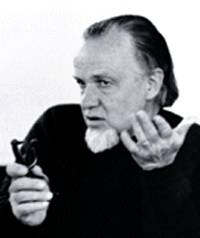



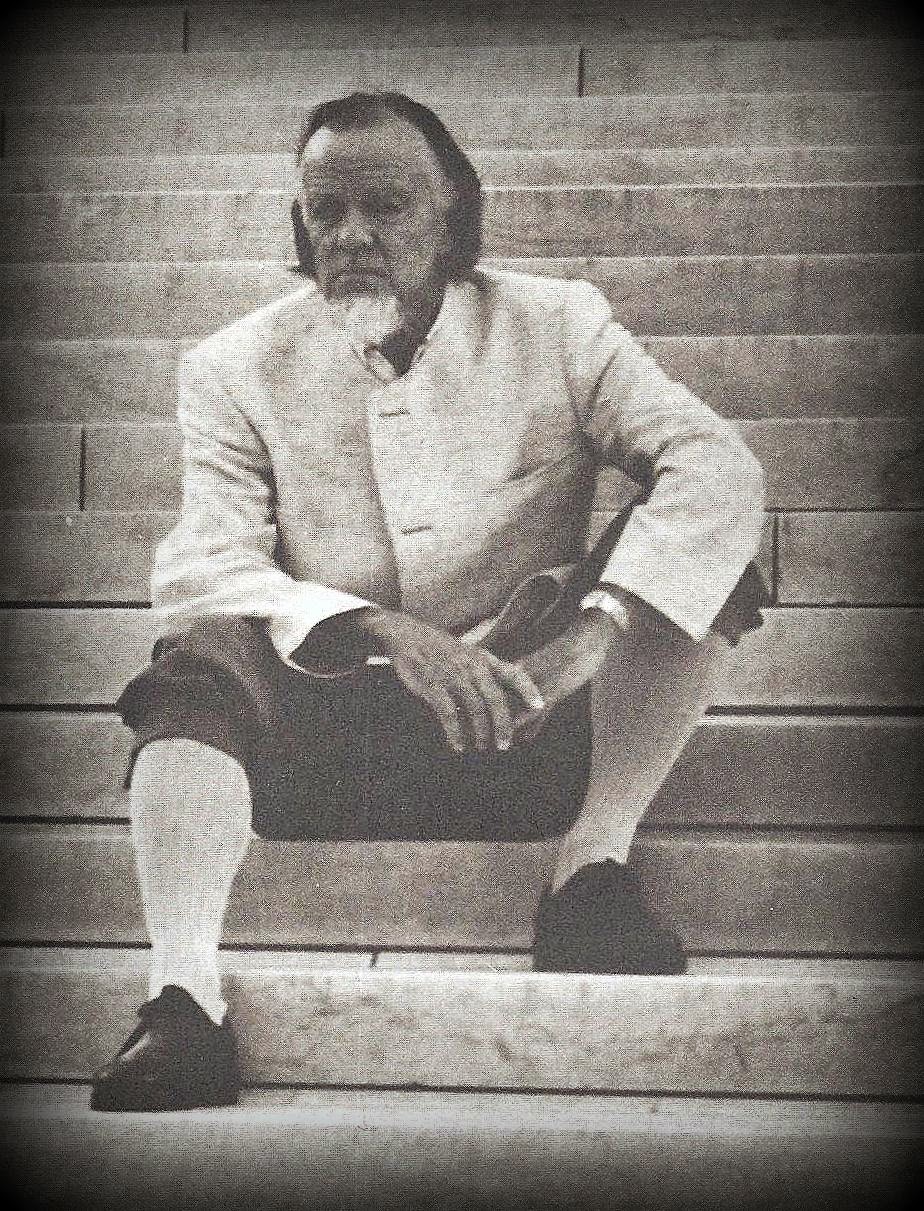





 The Daily Hatch