Monthly Archives: April 2014

“Schaeffer Sunday” Reviews by Douglas R. Groothuis of two books:Barry Hankins, Francis Schaeffer and the Shaping of Evangelical America and Colin Duriez, “Francis Schaeffer: An Authentic Life”

I really enjoyed these reviews.

Francis Schaeffer and the Shaping of Evangelical America and Francis Schaeffer: An Authentic Life

  • Barry Hankins, Colin Duriez
  • Jan 15, 2009
  • Series: Volume 12 – 2009
Book: Francis Schaeffer and the Shaping of Evangelical America

Barry Hankins, Francis Schaeffer and the Shaping of Evangelical America. Grand Rapids, MI: Eerdmans, 2009, paperback, 272 pages with index. Colin Duriez, Francis Schaeffer: An Authentic Life, Wheaton, IL: Crossway Books, 2008, hardback, 240 pages with index.

The historical significance of recently occurring events is rarely understood in the present or even for several years-or decades-later. (For that matter, historians are still debating the meaning and significance of the Renaissance, the Reformation, the Enlightenment, and so on). A biblical writer can capture the ultimate significance of an act and put it into both a cosmic and theological context of perennial value, given divine inspiration. But the uninspired historian is, of course, differently situated and imperiled by sins of omission, commission, and misinterpretation. Even the best hindsight of professional historians is less than 20/20, being somewhat tentative and open to revision.

Book: Francis Schaeffer: An Authentic Life

Francis A. Schaeffer, evangelist, apologist, pastor, author, and social critic, died at the age of 72 in 1984 after a long and heroic battle with cancer. In approximately the last twenty years of his life, Schaeffer attained notoriety as one who knew how to speak Christian truth to those experiencing the upheavals of the counterculture. Although his first book, The God Who is There (1968), was not published until he was in his late fifties, Schaeffer and his inestimable wife Edith (a writer herself), had pioneered a Christian community in the Swiss Alps in 1955 called L’Abri that became a hub for Christian hospitality, conversation, apologetics and evangelism in the modern world. His lecture tours around Europe and the United States, such as at Wheaton College, were also becoming widely known and respected. In 1960, Time Magazine called him a “missionary to intellectuals.” Schaeffer went on to write over twenty books on apologetics, theology, and ethics. Most of these were developed from lecture transcripts or were aided by considerable editorial assistance. Schaeffer’s great strength was discussion and lecturing, not crafting the academic manuscript. In fact, for all his status as a Christian intellectual, Schaeffer did not hold an earned doctorate and never held a full-time academic post, although he taught as an adjunct periodically at Covenant Seminary.

Shortly after his death, two collections of essays were published about Schaeffer’s work and life. Reflections on Francis Schaeffer, edited by Ronald Rugsegger (Zondervan, 1986) was the more academic and fairly critical of much of Schaeffer’s apologetics, history, and general intellectual judgments. (This volume contains the best assessment of Schaeffer’s apologetic method, written by Denver Seminary Professor, Gordon R. Lewis. For a recent, book-length assessment of Schaeffer’s apologetics, see Bruce Follis, Truth With Love [Crossway, 2006].) The other collection of essays, Francis A. Schaeffer: Portraits of the Man and His Work, edited by Lane T. Dennis (Crossway), which came out the same year, was a bit less academic and more commendatory. Yet both volumes shared the disadvantages of being published only two years after Schaeffer’s home going. But now, a quarter century after Schaeffer’s demise, two new biographies appear that attempt to interpret the significance of Francis Schaeffer and his ministry. Heretofore, the only biography of Schaeffer-outside of Edith Schaeffer’s massive tome The Tapestry (1981), which addressed both of their lives-was a well-intentioned but rather meager effort written by the man who was Schaeffer’s pastor in his final years: Francis Schaeffer: The Man and His Message (Tyndale, 1985by Louis Parkhurst.

The biographies here reviewed are both academically serious, well-written, and neither are puff pieces; however, Francis Schaeffer: An Authentic Life by Colin Duriez, is the more appreciative work of the two by far. Duriez is a freelance writer and biography and, importantly, was a student at the Schaeffer’s Swiss L’Abri Ministry. Duriez has a firm grasp of the considerable Schaeffer corpus, but there is so much more to Schaeffer than his books, which were, in some ways, an afterthought that came after many years of ministry in the United States and Europe. Duriez makes very good use of extensive interviews with members of the Schaeffer family and of his associates such as Os Guinness, and Schaeffer’s students. Duriez says he was “guided by over 180,000 words of oral history concerning Francis Schaeffer” (10). Edith Schaeffer, who is now in her mid-nineties, was, Duriez writes, “not well enough to give me more than a warm smile and a greeting” (13).

This deep resource of oral history helps fill out the biography of Schaeffer in existentially significant ways that cannot be found in Barry Hankins’s more academic and arid volume, Francis Schaeffer and the Shaping of American Evangelicalism.Hankins is a history professor at Baylor University who has previously written on American evangelicalism. Hankins gives a bit more exegesis of the Schaeffer books as well as more detail on the academic controversies over Schaeffer’s ideas, especially those of his latter years. Nevertheless, Duriez enters into some of the charges made against Schaeffer’s understanding of the history of philosophy and pulls in an interesting ally: C.S. Lewis. Schaeffer famously credited Aquinas as opening the door to autonomous human reasoning by his distinction of nature from grace. Nature is what can be known through unaided human reason and grace provides knowledge from a supernatural source, the Bible. Schaeffer argued (albeit very briefly) that Aquinas’s way of construing these two sources of knowledge paved the way for nature to “eat up grace”-that is, autonomous human reasoning would set itself up against biblical revelation and end us secularizing our Western worldview. Duriez notes that C.S. Lewis, an Oxford Don and scholar of much higher rank than Schaeffer, made much the same point in The Allegory of Love (172-73). Although neither Duriez nor Hankins mentions it, the controversial Catholic theologian, Hans Kűng made the same point about Aquinas in his book, The Existence of God in 1980.

Both books provide a rich account of the full gamut of Schaeffer’s life and teachings. Schaeffer was born into a humble, working class and nonintellectual family in Germantown, Pennsylvania. He surprised his parents by becoming a serious Christian and attending college and seminary. After pastoring in America, he ventured to Europe to examine the state of the churches after the devastation of World War II. He eventually settled in Switzerland where his home became a center for evangelism and hospitality. Out of this ministry eventually came Schaeffer’s books and in the final decade of his life, his unexpected and largely unwanted celebrity as a culture warrior of the New Christian Right in the late 1970s and early 1980s.

While Duriez and Hankins disagree about certain features of Schaeffer’s life and value as a thinker, there was a continuity to Schaeffer’s life. As James Sire put it in the introduction to the thirtieth anniversary edition of The God Who is There (1998), Schaeffer manifested three great passions: people, truth, and the Bible. Although in the early 1950’s he left the cultural isolationism and incessant in-fighting of his early Fundamentalist days, just before starting L’Abri, Schaeffer would not sacrifice what he took to be the essentials of biblical orthodoxy for popularity or for anything else. Nevertheless, he did not treat people as objects on which to protect truth. His early pastoral ministry as well as his work at L’Abri and even into his last stage as something of a Christian luminary were marked by a profound concern for human beings, who (as he never ceased emphasizing) were made “in the image and likeness of God.” In his later years, through his book and film series, “Whatever Happened to the Human Race?” (co-written with C. Everett Koop, who went on to become Surgeon General under President Ronald Reagan), he led the way for evangelicals to join and sustain the pro-life movement. Given Schaeffer’s theology of the person (divinely created, fallen, and in need of Christ’s redemption), he took their intellectual questions, their art, and their God-forsaking lives very seriously. Schaeffer was also a man of the Bible (and of the Reformation) until the end. He was not interested in academic apologetics per se, but wanted souls to know the God revealed in Holy Scripture. He consistently taught and preached from the Bible and wrote books commenting on Scripture (such as Genesis in Space and Time andJoshua and the Flow of Biblical History).

Schaeffer, of course, had his flaws. Hankins goes into considerable detail over his debates about Western and American history with noted academic historians such as Mark Noll and George Mardsen. These arguments concerned claims made principally in Schaeffer’s book, A Christian Manifesto (based largely in research done by attorney John W. Whitehead) which claimed that Christianity played a decisive role in the formation of the United States form of civil government. From Hankins’s research (based largely on letters between Schaeffer and the academic historians), Schaeffer made some tendentious claims-particularly about the influence of British political thinker Samuel Rutherford on the American founders-more for political purposes than in the interest of more rigorous scholarship.

Nevertheless, I side with Duriez over Hankins at one crucial point. Hankins claims that Schaeffer’s apologetic approach is largely dated: “At least for some, Schaeffer’s heavy emphasis on reasoning one’s way to the truth does not resonate as well today, in a postmodern era when people are less confident in the efficacy of human reason” (xiii). Hankins comes back to this theme several times and seems to be one of those “some.” But this claim is unconvincing. First, Schaeffer anticipated much of postmodern thinking-for example, critiquing Foucault in 1971-and realized that many in the sixties and seventies had already made “the escape from reason” (the title of his second book.) His apologetic was as much one for the importance of reason as it was as a reasonable apologetic. Moreover, Schaeffer was never an arid rationalist who unloaded his apologetic system on unsuspecting unbelievers (something which might be said for some of the followers of fellow Reformed philosophers Gordon Clark and Cornelius Van Til). Schaeffer’s writings always engaged humans as cultural and individual beings, not disembodied intellects; hence, his emphasis on painting, music, architecture, and literature as revealing the conditions of non-Christian individuals and cultures. Further, Schaeffer was renowned for his ability to make Christianity pertinent in one-on-one and small group conversations, which involved much give and take and creativity. Schaeffer was no mere logic chopper. Schaeffer believed in the necessity of reason for a coherent, cogent, and livable worldview, but he did not affirm the sufficiency of reason. We finite and fallible humans need God’s propositional revelation in Scripture to make sense of ourselves, our world, and our God.

While Schaeffer admitted that he was not an academic philosopher-and even wrote in a letter to Duriez that his thin book, He is There, He is Not Silent, would probably be his last philosophy book (174)-Schaeffer’s basic apologetic insights hold up well today, even if we must refine his method address ideas he did not tackle. Let me mention two basic ideas that I (as a professional philosopher, unlike Schaeffer) find profound and helpful.

First, Schaeffer taught that worldviews need to be compared on the basis of objective criteria. That is, one does not simply presuppose one’s worldview apart from rational testing. Every worldview-or basic perspective on life’s deepest questions-needs to pass three individually necessary and jointly sufficient tests. First, it must be internally consistent. That is, its defining beliefs must cohere with one another. Second, a worldview needs to fit the facts of reality; it must be “true to what is,” as Schaeffer put it. A worldview needs to match the external facts of history and science. (This shows that Schaeffer held to the correspondence view of truth, not the “coherency theory of truth,” as Hankins claims [91].) Third, a worldview needs to be livable to be credible. This means that it must pass the existential test of fitting the facts of the internal world. For example, any worldview that denies the objective reality of evil (such as secular relativism or Eastern monism) cannot be lived out consistently, since we intuitively know that rape, murder, and racism are wrong. These three apologetic criteria can be nuanced and made much more sophisticated, but they form the backbone of any solid apologetic method. These truths are far from outdated!

Second, Schaeffer repeatedly emphasized that the God of Christianity was an “infinite and personal” being, and that humans were not machines or little gods, but made in the image of this infinite-personal God. In other words, for Christianity, personality is the deepest and most profound ontological category of reality-not impersonal time, space, law, chance, matter or some impersonal sense of deity held by Eastern religions. Schaeffer’s apologetic capitalizes on this uniquely personal sense of reality held by Christianity. Persons, though fallen, have objective and eternal meaning on this scheme-as does community, since God himself is a Trinity: a relationship of divine persons coexisting in one Godhead from eternity.

I fear that the younger generation of evangelicals do not know enough about the remarkable life and achievements of Francis Schaefer; instead they are opting for the trendy but intellectually barren hype of much of the emergent church movement-which claims to be “authentic.” (“Authentic” often means little more than emotional, unconventional, and obsessively autobiographical.) Many older evangelicals may have forgotten many of the salient lessons from his life and teachings as well. Reading these two new biographies can help rectify this problem. But better yet, one can read or reread Schaeffer’s own books and watch his two film series (the ten-part, “How Should We Then Live?” and five-part, “Whatever Happened to the Human Race?” which are both available on DVD). Indeed, Schaeffer did live an “authentic” life-a life of piety, truth, and courage-worthy of our attention and of our thanksgiving to God.

Douglas R. Groothuis, Ph.D.
Professor of Philosophy
Denver Seminary
January 2009

“Sanctity of Life Saturday” Abortion debating with Ark Times Bloggers Part 5 “Should we abort instead of not being able to provide physical needs of child?” (includes the film DEATH BY SOMEONE’S CHOICE and editorial cartoon)

I have debated with Ark Times Bloggers many times in the past on many different subjects. Abortion is probably the most often debated subject and I have noticed that many pro-life individuals are now surfacing on the Arkansas Times Blog.  Here are some examples. Arhogfan501 asserted: This is the beginning of the end for recreational abortion in Arkansas. Songbird777 noted: Babies have a right to live and not be chopped up for someone else’s convenience. The person using the username “baker” commented: Planned Parenthood (PPA) does not nor cannot provide mammograms, indeed no affiliate has the necessary license. PPA is an abortion provider and at some 900 plus killings a day rather prolific.

Here is another debate I got into recently on the Arkansas Times Blog and I go by the username “Saline Republican”:

On 3-22-13 on the Arkansas Times Blog Verla Sweere wrote:

Saline–a real pro-life person respects the lives of those already with us. We want them to have food, shelter, medical care, education and a quality of life you would deny them. Remember your commandments–love thy neighbor as thyself, do not bear false witness, etc. How long since you have given even lip service to those?

I responded:

I would deny that government is the answer to all our problems. However, I do not want unborn babies to be eliminated because of financial problems in our country. If you want the best path to a growing economy then check out the book FREE TO CHOOSE by Milton Friedman.

Baylor University philosopher and bioethicist Baruch Brody has commented:

In an age where we doubt the justice of capital punishment even for very dangerous criminals, killing a fetus who has not done any harm, to avoid a future problem it may pose, seems totally unjust. There are indeed many social problems that could be erased simply by destroying those persons who constitute or cause them, but that is a solution repugnant to the values of society itself. In short, then, if the fetus is a human being, the appeal to its being unwanted justifies no abortions.

Baruch Brody, Abortion and the Sanctity of Human Life: A Philosophical View (Cambridge, MA: M.I.T. Press, 1975), 36-37.

____________

_________________

I truly believe that many of the problems we have today in the USA are due to the advancement of humanism in the last few decades in our society. Ronald Reagan appointed the evangelical Dr. C. Everett Koop to the position of Surgeon General in his administration. He partnered with Dr. Francis Schaeffer in making the video below. It is very valuable information for Christians to have.  Actually I have included a video below that includes comments from him on this subject.

In the film series “WHATEVER HAPPENED TO THE HUMAN RACE?” the arguments are presented  against abortion (Episode 1),  infanticide (Episode 2),   euthenasia (Episode 3), and then there is a discussion of the Christian versus Humanist worldview concerning the issue of “the basis for human dignity” in Episode 4 and then in the last episode a close look at the truth claims of the Bible.

___________

Francis Schaeffer Whatever Happened to the Human Race (Episode 1) ABORTION

Francis Schaeffer: What Ever Happened to the Human Race? (Full-Length Documentary)


Part 1 on abortion runs from 00:00 to 39:50, Part 2 on Infanticide runs from 39:50 to 1:21:30, Part 3 on Youth Euthanasia runs from 1:21:30 to 1:45:40, Part 4 on the basis of human dignity runs from 1:45:40 to 2:24:45 and Part 5 on the basis of truth runs from 2:24:45 to 3:00:04


Whatever Happened To The Human Race?

– Revisited


Whatever Happened to the Human Race by C. Everett Koop: Book Cover

                                 The British (revised edition), 1980,
Marshall, Morgan and Scott, London.
ISBN 0 551 00830 X

The current US edition, 1983, Crossway Books, Wheaton IL. ISBN 0891072918

This year is the twenty-fifth anniversary of the publication of Whatever Happened To The Human Race? It is a most remarkable book.  In a list of ‘the books that changed me’, this unquestionably ranks in my top five.  I have just re-read it, with unexpected profit.

The entire project
Whatever Happened To The Human Race?
was more than just a book written by a theologian and a doctor, namely, Francis Schaeffer and C Everett Koop.  It was an ambitious project that included the book, a series of five films, plus a study guide.  The book was first published in the US in 1979, with a British version the following year.  The project was launched in the UK in 1980, with a tour of major cities by Schaeffer and Koop.  Later that year, we in Aberystwyth, were among the first in the UK to show the films publicly – at the university, over three consecutive Friday evenings.

Cinematographically, they were not great films.  While they were technically a vast improvement on Schaeffer’s predecessor, How Should We Then Live?, gaffes and bloomers remained.  There were the rather twee shots of Schaeffer in a car junkyard, representing the ugliness of materialistic thinking, and there were the all too healthy-looking ‘slaves’ trudging up the steps of the Lincoln Memorial, depicting the atrocities of slavery.  Yet one haunting image did hit the spot – everyone remembers the hundreds of plastic dolls washed up on the shores of the Dead Sea, portraying the horrors of mass abortion.

As literature, the book was never destined to be a classic.  It was full of Schaeffer’s jerky style with Koop’s medical addenda all a little too obviously interleaved.  Indeed, the two men were not great presenters, either in print, or in public.  In fact, they were a genuinely odd couple.  Schaeffer was the non-establishment theologian, with a goatee beard, dressed in mountain gear, and founder of a study centre for hippies and others in Switzerland.  For this he was vilified and largely ignored by some, while others regarded him as the greatest Christian thinker of the twentieth century.  On the other hand, the dapper Koop, with his austere Dutch-style beard and neat bow tie, was straight from the American establishment, a paediatrician of international renown, who was later to become the Surgeon General of the United States under President Reagan.  What an unlikely pair!

The message of the project
So, you may ask, what was so impressive about Whatever Happened To The Human Race?  Why is it regarded as a landmark in evangelical endeavour?  The answer is quite simple – first, it identified a dreadful problem (rampant abortion, covert infanticide and threatening euthanasia), second, it explained the origin of that problem (the advance of secular humanism coupled with the decline of biblical Christianity) and third, it outlined the solution (Christians must believe that the Bible is true and live and act upon its teachings).  In other words, it was a total package that was both entirely believable for the brain, and fully satisfying for the heart.  And that was Schaeffer’s great gift.  He would take you back into history, often to Genesis, to show the development of an argument, and then he would take you forward to show the logical consequences of that argument, whether it was existentialism, or the resurrection, or genetic engineering.  Once he had systematically shown you the entirety of the problem, you felt much more obligated to respond.  So, forget the weird garb, the squeaky voice and the unpolished prose, it was his rigorously-argued and (usually) convincing content that was king.  Here was the man committed to true truth.  Like no other Christian leader in the twentieth century, Schaeffer had grasped the zeitgeist and he equipped ordinary Christians to engage with the big issues, as well as with unbelieving men and women.

The opening three chapters of Whatever Happened To The Human Race? deal with abortion, infanticide and euthanasia.  Twenty-five years ago, this exposé came as a bombshell to many evangelical Christians – we had no idea what was going on in our local hospitals and clinics.  The sheer logic of Schaeffer and Koop’s argument – that once a society has accepted abortion of the unborn (as we had in 1967), then it would soon be infanticide for the newborn, and finally euthanasia for the elderly –- was appalling.  Yet, twenty-five years on, who can gainsay their prophetic analysis?

The legacy of the project
Furthermore, Whatever Happened To The Human Race? had a credenda and an agenda.  Schaeffer and Koop would never be satisfied with us merely tut-tutting and sitting on our hands.  They wanted us up and doing. ‘Let those of us who share a high view of people use wisely these days when we have influence and the freedom to strike a great blow for the humanity, dignity, and sanctity of individuals’ (p. 90).  Their chapter 6 was entitled ‘Our Personal Response and Social Action’ and it galvanised evangelicals throughout the UK into action, like never before.  As a result many of us got involved with pro-life organisations.  I co-founded Evangelicals for LIFE, in order to encourage believers into the educational, political and caring work of LIFE, which was generally regarded suspiciously as an admirable, but largely Roman Catholic, organisation.  Soon evangelical Christians were becoming local LIFE group treasurers, speakers, carers, chairmen, and so on.  Throughout the 1980s we blossomed and LIFE’s approach and expertise became the paradigm for many newly-formed Christian pro-life groups.

This, above all, was the impact of Whatever Happened To The Human Race?  It got evangelicals informed and then responding in practical ways.  And that legacy is still alive today – look at the proliferation of pro-life publications, pregnancy crisis centres, political lobbying, and so on since 1979.  OK, it is still patchy, still insufficient, but without Whatever Happened To The Human Race?, it would be significantly less.

The importance of chapters 4 and 5
Twenty-five years on, re-reading Whatever Happened To The Human Race?  I was struck not by the rehearsal of the bioethical issues – they have dominated and changed the course of my life since 1979 – but what I found refreshingly gripping were chapters 4 and 5, ‘The Basis for Human Dignity’ and ‘Truth and History’.  I had forgotten them.  In these, modern philosophy, and secular humanism in particular, are given a ‘right old kicking’.  Schaeffer and Koop demonstrate just how irrational and bankrupt they are, and how they inevitably produce the ghastly dehumanisation that surrounds us today.  And twenty-five years on, we have to admit that their thesis was spot on – we do still think that man is nothing more than a machine, we do view ourselves as mere accidents of the universe.  One of their grand sweeping, but entirely accurate, assertions is, ‘Suddenly we find ourselves in a more consistent but uglier world – more consistent because people are taking their low view of man to its natural conclusion, and uglier because humanity is drastically dehumanised’ (p. 9).

After their devastating critique of secular humanism, comes the cavalry – the absolutes of historic, biblical Christianity.  What a puny, limping thing secular humanism is alongside the robustness of true truth. ‘Where all humanistic systems of thought are unable to give an adequate explanation of things, the Bible as God’s statement is adequate’ (p. 124), and (this is sweet!), ‘God gives the pages, and thus God gives the answers’ (p. 125).  Here is evangelism – engaging with modern men and women to show them the paucity of their worldview, and then the genius of Christianity.

The other rousing chapter, entitled ‘Truth and History’ asserts the historicity of the Bible, that is, how Christianity is rooted in history.  If you think that Schaeffer was always entangled with abstruse philosophy, then read this.  It starts with Abraham (the historicity of Adam and Eve has been established in the previous chapter) and ends with Thomas’ declaration, ‘My Lord and my God!’ In between is an exegesis of ‘… all truth finally rests upon the fact that the infinite-personal God exists …’ (p. 135).  Yes, it is heavy-duty apologetic, but also heart-warming exposition.

Whatever Happened To The Human Race?

was a great Christian book.  It still is.  And a revised US version is currently available, as a paperback, from Crossway Books [ISBN 0-89107-291-8].  No other Christian book, published before or after, has attempted, and succeeded, in developing such a fundamental biblical approach to bioethical issues.  My meagre contribution, Responding to the Culture of Death, draws heavily on the Schaeffer and Koop approach, and I gladly acknowledge my indebtedness.

In conclusion …
Whatever Happened To The Human Race?
was also a wake-up call to unaware and lethargic Christians.  Who would dare say, a generation on, that we do not still need its message?  Human life is still cheap, and becoming still cheaper – created in the image of God, destroyed at our convenience.

Let Schaeffer and Koop have the last words.  ‘We challenge you to be a person in this impersonal age … put the people in your life first … come to your senses … you and those around you are people, made in the image of the personal God who created all people in His image.’ (p. 89).  ‘The only thing that can stem this tide [of abortion, infanticide and euthanasia] is the certainty of the absolute uniqueness and value of people.  And the only thing which gives us this is the knowledge that people are made in the image of God.’ (p. 148).  ‘In the end we must realise that the tide of humanism, with its loss of humanness, is not merely a cultural ill, but a spiritual ill that Christ alone can cure’ (p. 157).

R
Related posts:

Francis Schaeffer’s prayer for us in USA

 Francis Schaeffer: “Whatever Happened to the Human Race” (Episode 1) ABORTION OF THE HUMAN RACE Published on Oct 6, 2012 by AdamMetropolis The 45 minute video above is from the film series created from Francis Schaeffer’s book “Whatever Happened to the Human Race?” with Dr. C. Everett Koop. This book  really helped develop my political views […]

Francis Schaeffer’s “How should we then live?” Video and outline of episode 10 “Final Choices” (Schaeffer Sundays)

E P I S O D E 1 0   Dr. Francis Schaeffer – Episode X – Final Choices 27 min FINAL CHOICES I. Authoritarianism the Only Humanistic Social Option One man or an elite giving authoritative arbitrary absolutes. A. Society is sole absolute in absence of other absolutes. B. But society has to be […]

Francis Schaeffer’s “How should we then live?” Video and outline of episode 9 “The Age of Personal Peace and Affluence” (Schaeffer Sundays)

E P I S O D E 9 Dr. Francis Schaeffer – Episode IX – The Age of Personal Peace and Affluence 27 min T h e Age of Personal Peace and Afflunce I. By the Early 1960s People Were Bombarded From Every Side by Modern Man’s Humanistic Thought II. Modern Form of Humanistic Thought Leads […]

Francis Schaeffer’s “How should we then live?” Video and outline of episode 8 “The Age of Fragmentation” (Schaeffer Sundays)

E P I S O D E 8 Dr. Francis Schaeffer – Episode VIII – The Age of Fragmentation 27 min I saw this film series in 1979 and it had a major impact on me. T h e Age of FRAGMENTATION I. Art As a Vehicle Of Modern Thought A. Impressionism (Monet, Renoir, Pissarro, Sisley, […]

Francis Schaeffer’s “How should we then live?” Video and outline of episode 7 “The Age of Non-Reason” (Schaeffer Sundays)

E P I S O D E 7 Dr. Francis Schaeffer – Episode VII – The Age of Non Reason I am thrilled to get this film series with you. I saw it first in 1979 and it had such a big impact on me. Today’s episode is where we see modern humanist man act […]

Francis Schaeffer’s “How should we then live?” Video and outline of episode 6 “The Scientific Age” (Schaeffer Sundays)

E P I S O D E 6 How Should We Then Live 6#1 Uploaded by NoMirrorHDDHrorriMoN on Oct 3, 2011 How Should We Then Live? Episode 6 of 12 ________ I am sharing with you a film series that I saw in 1979. In this film Francis Schaeffer asserted that was a shift in […]

Francis Schaeffer’s “How should we then live?” Video and outline of episode 5 “The Revolutionary Age” (Schaeffer Sundays)

E P I S O D E 5 How Should We Then Live? Episode 5: The Revolutionary Age I was impacted by this film series by Francis Schaeffer back in the 1970′s and I wanted to share it with you. Francis Schaeffer noted, “Reformation Did Not Bring Perfection. But gradually on basis of biblical teaching there […]

Francis Schaeffer’s “How should we then live?” Video and outline of episode 4 “The Reformation” (Schaeffer Sundays)

Dr. Francis Schaeffer – Episode IV – The Reformation 27 min I was impacted by this film series by Francis Schaeffer back in the 1970′s and I wanted to share it with you. Schaeffer makes three key points concerning the Reformation: “1. Erasmian Christian humanism rejected by Farel. 2. Bible gives needed answers not only as to […]

“Schaeffer Sundays” Francis Schaeffer’s “How should we then live?” Video and outline of episode 3 “The Renaissance”

Francis Schaeffer’s “How should we then live?” Video and outline of episode 3 “The Renaissance” Francis Schaeffer: “How Should We Then Live?” (Episode 3) THE RENAISSANCE I was impacted by this film series by Francis Schaeffer back in the 1970′s and I wanted to share it with you. Schaeffer really shows why we have so […]

Francis Schaeffer’s “How should we then live?” Video and outline of episode 2 “The Middle Ages” (Schaeffer Sundays)

  Francis Schaeffer: “How Should We Then Live?” (Episode 2) THE MIDDLE AGES I was impacted by this film series by Francis Schaeffer back in the 1970′s and I wanted to share it with you. Schaeffer points out that during this time period unfortunately we have the “Church’s deviation from early church’s teaching in regard […]

Francis Schaeffer’s “How should we then live?” Video and outline of episode 1 “The Roman Age” (Schaeffer Sundays)

Francis Schaeffer: “How Should We Then Live?” (Episode 1) THE ROMAN AGE   Today I am starting a series that really had a big impact on my life back in the 1970′s when I first saw it. There are ten parts and today is the first. Francis Schaeffer takes a look at Rome and why […]

Francis Schaeffer: “Whatever Happened to the Human Race” (Episode 5) TRUTH AND HISTORY

Francis Schaeffer: “Whatever Happened to the Human Race” (Episode 5) TRUTH AND HISTORY Published on Oct 7, 2012 by AdamMetropolis This crucial series is narrated by the late Dr. Francis Schaeffer and former Surgeon General Dr. C. Everett Koop. Today, choices are being made that undermine human rights at their most basic level. Practices once […]

Francis Schaeffer: “Whatever Happened to the Human Race” (Episode 4) THE BASIS FOR HUMAN DIGNITY

The opening song at the beginning of this episode is very insightful. Francis Schaeffer: “Whatever Happened to the Human Race” (Episode 4) THE BASIS FOR HUMAN DIGNITY Published on Oct 7, 2012 by AdamMetropolis This crucial series is narrated by the late Dr. Francis Schaeffer and former Surgeon General Dr. C. Everett Koop. Today, choices […]

Francis Schaeffer: “Whatever Happened to the Human Race” (Episode 3) DEATH BY SOMEONE’S CHOICE

Francis Schaeffer: “Whatever Happened to the Human Race” (Episode 3) DEATH BY SOMEONE’S CHOICE Published on Oct 6, 2012 by AdamMetropolis This crucial series is narrated by the late Dr. Francis Schaeffer and former Surgeon General Dr. C. Everett Koop. Today, choices are being made that undermine human rights at their most basic level. Practices […]

Francis Schaeffer: “Whatever Happened to the Human Race?” (Episode 2) SLAUGHTER OF THE INNOCENTS

Francis Schaeffer: “Whatever Happened to the Human Race?” (Episode 2) SLAUGHTER OF THE INNOCENTS Published on Oct 6, 2012 by AdamMetropolis This crucial series is narrated by the late Dr. Francis Schaeffer and former Surgeon General Dr. C. Everett Koop. Today, choices are being made that undermine human rights at their most basic level. Practices […]

Francis Schaeffer: “Whatever Happened to the Human Race” (Episode 1) ABORTION OF THE HUMAN RACE

It is not possible to know where the pro-life evangelicals are coming from unless you look at the work of the person who inspired them the most. That person was Francis Schaeffer.  I do care about economic issues but the pro-life issue is the most important to me. Several years ago Adrian Rogers (past president of […]

The following essay explores the role that Francis Schaeffer played in the rise of the pro-life movement. It examines the place of How Should We Then Live?, Whatever Happened to the Human Race?, and A Christian Manifesto in that process.

This essay below is worth the read. Schaeffer, Francis – “Francis Schaeffer and the Pro-Life Movement” [How Should We Then Live?, Whatever Happened to the Human Race?, A Christian Manifesto] Editor note: <p> </p> [The following essay explores the role that Francis Schaeffer played in the rise of the pro-life movement.  It examines the place of […]

Who was Francis Schaeffer? by Udo Middelmann

Great article on Schaeffer. Who was Dr. Francis A. Schaeffer? By Francis Schaeffer The unique contribution of Dr. Francis Schaeffer on a whole generation was the ability to communicate the truth of historic Biblical Christianity in a way that combined intellectual integrity with practical, loving care. This grew out of his extensive understanding of the Bible […]

FRANCIS SCHAEFFER ANALYZES ART AND CULTURE Part 15 Francis Schaeffer discusses quotes of Andy Warhol from “The Observer June 12, 1966” Part A (Feature on artist Robert Indiana plus many pictures of Warhol with famous friends and also interview with performance artist John Giorno)

Recently I got to see this piece of art by Andy Warhol of Dolly Parton at Crystal Bridges Museum in Bentonville, Arkansas:

Andy Warhol, Dolly Parton (1985)
Synthetic polymer paint and silkscreen ink on canvas
42 x 42 in. (106.7 x 106.7 cm)

___________ ______

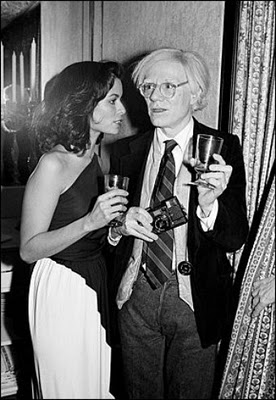
 Bianca Jagger with Andy Warhol below:

__________

_________

How Should We then Live Episode 7 small (Age of Nonreason)

#02 How Should We Then Live? (Promo Clip) Dr. Francis Schaeffer

10 Worldview and Truth

Two Minute Warning: How Then Should We Live?: Francis Schaeffer at 100

Francis Schaeffer “BASIS FOR HUMAN DIGNITY” Whatever…HTTHR

__________________________________________

Andy Warhol Sleep

Uploaded on Jan 25, 2011

This is the theatrical trailer for Andy Warhol’s classic film Sleep.

John Giorno discusses the making of SLEEP (Warhol)

Uploaded on Nov 21, 2008

John Giorno explains how Andy Warhol made SLEEP
Panel discussion at Chop Chop Gallery in Columbus OH with Taylor Mead, Holly Woodlawn, and Penny Arcade. 11/15/08

Francis Schaeffer has written extensively on art and culture spanning the last 2000 years and here are some posts I have done on this subject before : Francis Schaeffer’s “How should we then live?” Video and outline of episode 10 “Final Choices” episode 9 “The Age of Personal Peace and Affluence”episode 8 “The Age of Fragmentation”episode 7 “The Age of Non-Reason” episode 6 “The Scientific Age” episode 5 “The Revolutionary Age” ,  episode 4 “The Reformation” episode 3 “The Renaissance”episode 2 “The Middle Ages,”, and  episode 1 “The Roman Age,” . My favorite episodes are number 7 and 8 since they deal with modern art and culture primarily.(Joe Carter rightly noted, “Schaefferwho always claimed to be an evangelist and not a philosopher—was often criticized for the way his work oversimplified intellectual history and philosophy.” To those critics I say take a chill pill because Schaeffer was introducing millions into the fields of art and culture!!!! !!! More people need to read his works and blog about them because they show how people’s worldviews affect their lives!

J.I.PACKER WROTE OF SCHAEFFER, “His communicative style was not thaof a cautious academiwho labors foexhaustive coverage and dispassionate objectivity. It was rather that of an impassioned thinker who paints his vision of eternal truth in bold strokes and stark contrasts.Yet it is a fact that MANY YOUNG THINKERS AND ARTISTS…HAVE FOUND SCHAEFFER’S ANALYSES A LIFELINE TO SANITY WITHOUT WHICH THEY COULD NOT HAVE GONE ON LIVING.”

Francis Schaeffer’s works  are the basis for a large portion of my blog posts and they have stood the test of time. In fact, many people would say that many of the things he wrote in the 1960’s  were right on  in the sense he saw where our western society was heading and he knew that abortion, infanticide and youth enthansia were  moral boundaries we would be crossing  in the coming decades because of humanism and these are the discussions we are having now!)

There is evidence that points to the fact that the Bible is historically true as Schaeffer pointed out in episode 5 of WHATEVER HAPPENED TO THE HUMAN RACEThere is a basis then for faith in Christ alone for our eternal hope. This link shows how to do that.

Francis Schaeffer in Art and the Bible noted, “Many modern artists, it seems to me, have forgotten the value that art has in itself. Much modern art is far too intellectual to be great art. Many modern artists seem not to see the distinction between man and non-man, and it is a part of the lostness of modern man that they no longer see value in the work of art as a work of art.” 

Many modern artists are left in this point of desperation that Schaeffer points out and it reminds me of the despair that Solomon speaks of in Ecclesiastes.  Christian scholar Ravi Zacharias has noted, “The key to understanding the Book of Ecclesiastes is the term ‘under the sun.’ What that literally means is you lock God out of a closed system, and you are left with only this world of time plus chance plus matter.” THIS IS EXACT POINT SCHAEFFER SAYS SECULAR ARTISTS ARE PAINTING FROM TODAY BECAUSE THEY BELIEVED ARE A RESULT OF MINDLESS CHANCE.

Here is what Francis Schaeffer wrote about Andy Warhol’s art and interviews:

The pop artist man is Andy Warhol. The Observer June 12, 1966 does a big spread on Warhol. He deserves I must say a big spread. He is a very important man today in expressing this whole situation of the absurd. He is the man who paints all the Campbell Soup cans, but there is something very interesting about painting the Campbell Soup cans that I found out, and that is that he doesn’t paint them, but they have what they call the factory.

His assistants make them from a silk screen and they sell them for $8000.00 a piece.

He has been making films. His film “Sleep” consists solely of a man sleeping and lasts 6 hours. (Audience laughs.) Do you laugh or cry? I have a hunch  that it is a different kind of a sick joke. For 6 hours the camera grinds on him and he tosses in his sleep. Warhol himself says, “I haven’t thought about my films. They just keep me busy.”

I think now you are in the game of absurdity. The people who are really  in this understand that the reason they go through the motions of a game is because that is all there is. What you do is fill up time. You could do the opposite thing, it really doesn’t matter. (That is why Warhol does not direct in his films.) None of that matters.

______________________

Picture from the movie SLEEP:

_________

John Giorno

John GiornospaceJohn Giorno

Left: John Giorno being shot by William Burroughs on August 31, 1965
Right: John Giorno in 2007 while in London for the showing of Sleep with Erik Satie’s Vexations

John Giorno was the star of Sleep and an early boyfriend of Andy Warhol prior to the Factory – when Warhol was using an old fire station as his studio. Giorno continues to do performances internationally and to write poetry.

The following interview with John Giorno appeared in the Guardian newspaper (London) on Thursday 14 February 2002:

My 15 Minutes

Our interviews with Warhol’s friends and collaborators continue with John Giorno, 65, poet, Aids activist, friend and confidant of Warhol and subject of his film, Sleep. Interviews by Catherine Morrison.

The first time I met Andy was at his first solo New York Pop show in Eleanor Ward’s Stable gallery in the fall of 1962, but it was at a friend’s dinner party around that time that we really got to know each other. For the next two years we were very close; we saw each other every day, or every other day.

I was a kid in my early 20s, working as a stockbroker. I was living this life where I would see Andy every night, get drunk and go into work with a hangover every morning. The stock market opened at 10 and closed at three. By quarter to three I would be waiting at the door, dying to get home so I could have a nap before I met Andy. I slept all the time – when he called to ask what I was doing he would say, “Let me guess, sleeping?”

We used to go to Jonas Mekas’s Film-makers’ Cooperative in 1962 to watch these underground films. Andy saw them and said, “Why doesn’t somebody make a beautiful film?” So he did.

On Memorial Day weekend in 1963 we went away for a few days and I woke up in the night to find him staring at me – he took a lot of speed in those days. That’s where the idea for the movie came from – he was looking for a visual image and it just happened to be me. He said to me on the way home: “Would you like to be a movie star?” “Of course,” I said, “I want to be just like Marilyn Monroe.”

He didn’t really know what he was doing; it was his first movie. We made it with a 16mm Bolex in my apartment but had to reshoot it a month later. The film jumped every 20 seconds as Andy rewound it. The second shoot was more successful but he didn’t know what to do with it for almost a year.

The news that Warhol had made a movie triggered massive amounts of publicity. It was absurd – he was on the cover of Film Culture and Harper’s Bazaar before the movie was finished! In the end, 99% of the footage didn’t get used; he just looped together a few shots and it came out six hours long.

You either really loved it or you hated it; I thought it was brilliant and daring. But then I loved so much of Andy’s work. I remember walking into the first Factory in 63 and seeing the silkscreen silver Elvises for the first time. They were like these jewels, radiating life and joy, and they were just lying on a dirty floor in an old firehouse! It was so exhilarating.

He transformed my life. He wasn’t afraid of anything – if he had an idea, he acted on it. If it turned out lousy, so what? If it turned out well, then that was great.

I didn’t see him much after 1964 although in the last year of his life, I saw him a lot, about a dozen times in seven months. I’m so glad now that I did see him and talk to him before he died.

Andy Warhol said, “What I was actually trying to do in my early movies was show how people can meet other people and what they can do and what they can say to each other. That was the whole idea: two people getting acquainted. And then when you saw it and you saw the sheer simplicity of it, you learned what it was all about. Those movies showed you how some people act and react with other people. They were like actual sociological ‘For instance’s. They were like documentaries, and if you thought it could apply to you, it was an example, and if it didn’t apply to you, at least it was a documentary…” –

For Andy Warhol (1928-1987)

“The world outside
would be easier
to live in if we
were all machines.
It’s nothing in
the end anyway.
It doesn’t matter
what anyone does.
My work won’t
last anyway.
I was
using
cheap paint.”

________________

_____________
Andy Warhol with his friend Marco Bodenstein in the famous Club Nachtigal pictured below:

___________________________________________

This video below from Jon Anderson was very helpful to me concerning Andy Warhol’s art.

[ARTS 315] Art in an Age of Mass-Media: Andy Warhol – Jon Anderson

Published on Apr 5, 2012

Contemporary Art Trends [ARTS 315], Jon Anderson

Art in an Age of Mass-Media: Andy Warhol

September 23, 2011

__________________

_______

__________________

______________________

_______________________

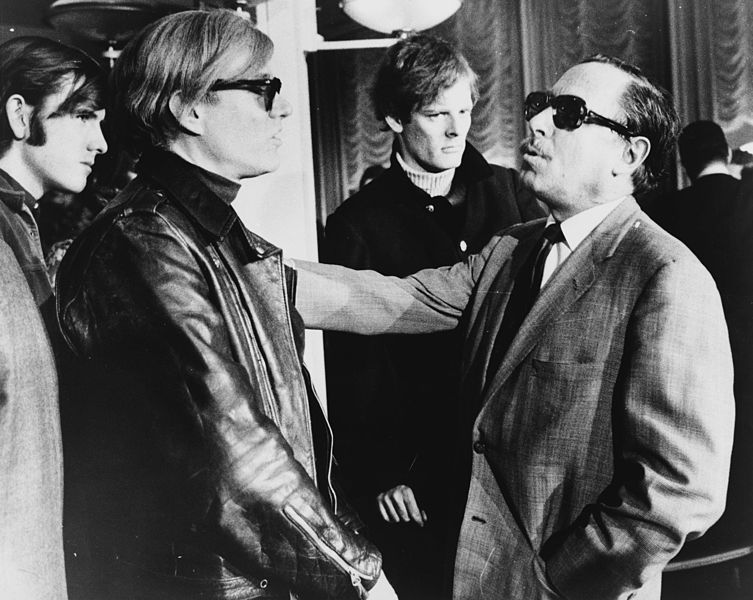
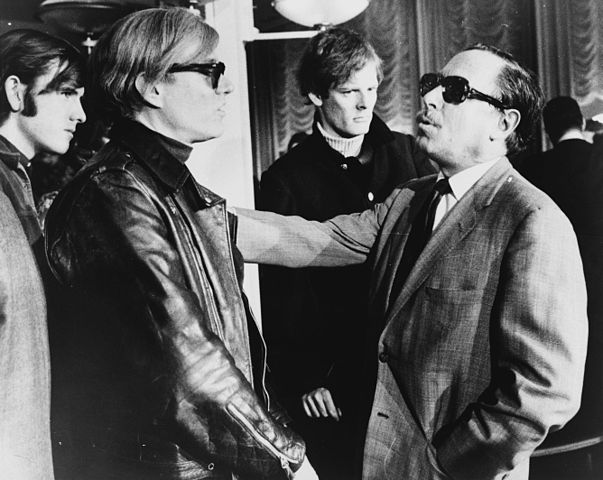
File:Andy Warhol and Tennessee Williams NYWTS.jpg

Original file ‎(2,670 × 2,126 pixels, file size: 756 KB, MIME type: image/jpeg)

This file is from Wikimedia Commons and may be used by other projects. The description on its file description page there is shown below.

Description
English: Andy Warhol (left) and Tennessee Williams (right) talking on the SS France, in the background: Paul Morrissey.
Date 1967
Source Library of Congress Prints and Photographs Division. New York World-Telegram and the Sun Newspaper Photograph Collection. LC-USZ62-121294
Author James Kavallines, New York World-Telegram and the Sun staff photographer

______________________

Warhol, Andy – by James Romaine

Transubstantiating the Culture: Andy Warhol’s Secret
 
More than one seemingly religious person’s secret sins have been exposed at their death; Warhol’s secrets were that he went to church and served at a soup kitchen.
 
by James Romaine
The works of our century are the mirrors of our predicament produced by some of the most sensitive minds of our time. In the light of our predicament we must look at the works of contemporary art, and conversely, in the light of contemporary art we must look at our predicament. Paul Tillich in “Each Period Has Its Peculiar Image of Man”
In his final self-portrait, Andy Warhol’s gaze is both perplexed and perplexing. Like the artist, everything about this work is suspended in a haze of mystery. Warhol probably had no expectation that this would be his final self-reflection, yet it’s hard to imagine him treating himself differently even if he had known.
Warhol treated everything the same. Cool detachment was as much a trademark for Warhol as Campbell’s was for soup. Warhol’s coolness has often been read as cynicism, and it did involve a degree of distance, but only out of a perceived need for self-protection. The seeming contradiction of Warhol’s Self-portrait, and indeed all of his work, is that he expresses himself without revealing anything about himself; he is at once alienated and self-alienating.
There is scarcely a person in America whose life has not been affected—whether or not they know it—by the way Warhol transformed our understanding of our culture. Certainly there is no serious artist working today who has not been influenced by Warhol’s conversion of the banal world of consumer culture into the sacred realm of art. We see ourselves and our world reflected in the mirror of Warhol’s art, but the image has still not come into full focus. By the time he painted this last Self-portrait, Warhol had become the most famous artist in the world; but more than a decade later his art remains enigmatic.
Warhol began his career in New York as an illustrator of women’s footwear, under his real name, Andrew Warhola. The darling of magazine editors, Warhol acquired the nickname “Candy Andy.” Perceptions of Warhol today have not changed much since then.
We may think of sex and drugs (two things Warhol mostly abstained from) or fame and fortune (two things Warhol abounded in) as Andy’s candies. Yet Warhol’s persona, with his fast parties and white wigs, differed greatly from the private identity he both concealed and revealed in his art. Sly as a fox, Warhol played dumb with comments meant to set us off track, such as, “If you want to know about Andy Warhol, just look at the surfaces of my paintings and films and me, and there I am. There’s nothing behind it.”
There is, in fact, a great deal concealed beneath the surface of Warhol’s art. The surfaces of his works appear to be mechanical — an appearance Warhol emphasized by calling his studio “the Factory” and claiming to make art that could be done by anyone. The smooth veneer of silk-screening not only created a mechanical appearance, but his practice of reproducing already-reproduced images published in magazines and newspapers allowed Warhol to increase the degrees of separation between himself and his subjects.
Nevertheless, Warhol continued to use imagery that had personal significance to him. Many of these images were spiritual ones, influenced by the Catholicism that permeates Warhol’s art. Despite reports that he went to church almost daily, some doubt the credibility of Warhol’s faith and even consider his work anti-Christian. Warhol’s life was, admittedly, filled with contradictions. He was always trying to protect his true intentions, especially regarding his Catholicism. Many of Warhol’s friends did not know of his religious life until after his death.
More than one seemingly religious person’s secret sins have been exposed at their death; Warhol’s secrets were that he went to church and served at a soup kitchen. In his eulogy for Warhol, John Richardson outed him from the confessional when he said:
I’d like to recall a side of his character that he hid from all but his closest friends; his spiritual side. Those of you who knew him in circumstances that were the antithesis of spiritual may be surprised that such a side existed. But exist it did, and it’s key to the artist’s psyche. Although Andy was perceived—with some justice—as a passive observer who never imposed his beliefs on other people, he could on occasion be an effective proselytizer. To my certain knowledge, he was responsible for at least one conversion. He took considerable pride in financing his nephew’s studies for the priesthood. And he regularly helped out at a shelter serving meals to the homeless and hungry. Trust Andy to have kept these activities in the dark. The knowledge of this secret piety inevitably changes our perception of an artist who fooled the world into believing that his only obsessions were money, fame, glamour, and that he could be cool to the point of callousness. Never take Andy at face value….
With family roots in Byzantine-Slavic Catholicism, Warhol kept a homemade altar with a crucifix and well-worn prayer book beside his bed. He frequently visited Saint Vincent Ferrer’s Church on Lexington Avenue. The pastor of Saint Vincent’s confirmed that Warhol visited the church almost daily. He would come in mid-afternoon, light a candle, and pray for fifteen minutes, sometimes making use of the intimacy of the private chapels. The pastor described Warhol as intensely shy and private, especially regarding his religion. Warhol’s brother has characterized him as “really religious, but he didn’t want people to know about that because [it was] private.” For someone so bent on self-protection, Warhol’s efforts to keep his religious life a secret may indicate just how important his faith was to him.
Do these religious revelations offer insight into Warhol’s art? They do; perhaps more than has yet been appreciated by either the art or Christian worlds. Warhol’s consumer imagery at first seems obsessed with the external world of contemporary culture to the exclusion of the internal life of faith. But there is also a persistent longing for something more, a hunger that is evident in the last Self-portrait and, most famously, in those cans of Campbell’s soup.
In order to see this religious dimension, we must regain our sense of the sacramental—the use of material things as vehicles for encountering the divine and enabling eternity to break into time and space. Warhol’s pop art, often criticized as mere regurgitation of advertising, actually displaces images from their original context in the commercial world, transporting them to the realm of art, collapsing the distance between the two, and creating new associations and meanings.
The Campbell’s soup can, one of Warhol’s most famous motifs, thus becomes another self-portrait of the artist. The can, like Warhol’s public persona, is cool, metallic, machine-made, impenetrable, a mirror of its surroundings. These qualities, superficial though they are, nevertheless seduce the eye.
But what completes this self-portrait are the can’s contents; they should be the most significant part, but actually have very little in common with the can’s exterior. Soup, a warm source of nourishment, is a sensitive element that will not survive long outside of a protective container. Hidden beneath supermarket imagery, Warhol’s faith is sealed for protection.
While carefully keeping himself secure inside, Warhol succeeded in making everyone believe that the soup can should be the focus of attention. Some have become enraptured by their own reflection on its metallic surface. Others have complained that Warhol and his art are hollow. Very few have attempted to open the can and find out what’s inside.
Warhol’s creative gift was an ability to bring subjects into spiritual equilibrium. He treated ultra-glamorous movie stars and anonymous police arrest photos with the same combination of contempt and envy. Warhol used consumer items more than just as mirrors of his time.
What seems to have attracted him to Coca-Cola bottles and Campbell’s soup cans, as in 200 Campbell’s Soup Cans, was a sense of comfort, belonging and equality.
Warhol admitted that one reason he was attracted to the imagery of Campbell’s soup was that he had eaten Campbell’s soup nearly every day as a boy. Soup, of course, is a nearly global icon of home, but Campbell’s is a distinctly American icon.
For Warhol, growing up in a poor immigrant family struggling to find its place in a new homeland, Campbell’s soup probably offered a reassuring sense of belonging.
Warhol loved mass consumer imagery because of its equilibrating powers. “Coke is Coke,” he once said, “and no matter how rich you are you can’t get a better one than the one the homeless woman on the corner is drinking.”
Living in New York City, Warhol undoubtedly experienced the way cities have of exaggerating the distance between wealth and poverty even while juxtaposing them. Perhaps reinforced by the piety and poverty of his childhood, Warhol may have looked forward to the equality of heaven, with the mechanical nature of his work forecasting an eternal destiny.
Warhol’s strategy of representing heaven by repeated images has been linked to Byzantine icons, which limit individual creativity in favor of a standardized form. Warhol’s work has a certain hypnotic rhythm, not unlike the rosary. This repetition also suggests that the image could extend infinitely, giving us a glimpse into eternity through everyday reality.
200 Campbell’s Soup Cans celebrates more than social egalitarianism. But in a critique of America’s emergent consumer religion, 200 Campbell’s Soup Cans also joins a long artistic tradition of vanitas images, in which lavish displays of wealth are offset by reminders of life’s fleeting nature and the inevitable final judgment.
Warhol’s references to religious themes increased throughout his career, culminating in his most overtly religious and plainly sacramental works, patterned after Leonardo da Vinci’s Last Supper. Warhol made more than one hundred works based on Leonardo’s image, but until recently these works received very little attention.
Many things may have drawn Warhol to the Last Supper, including the fact that Warhol’s own art often dealt with food as a symbol of heaven.
Warhol’s Catholicism asserted the miracle of transubstantiation, in which food—bread and wine—becomes a heavenly substance. Warhol may have accessed Leonardo’s imagery to set himself within a certain tradition of religious art.
Leonardo brought out the classical and realist artist in Warhol, even though the meaning of “classical” and “real” had radically changed in the five hundred years separating them. Leonardo’s breakthroughs in artistic perspective had radically brought the Christ figure into the viewer’s world; Warhol brought Leonardo down off the wall, and in so doing brought Christ and the sacrament of the Eucharist into his world.
Indeed, Warhol’s interest in Campbell’s soup and the Last Supper are linked. Remember, Warhol said that his attraction to Campbell’s soup was that he had eaten it every day as a child. Warhol’s brother recalled that a reproduction of the Last Supper hung on their family’s kitchen wall. As Warhol sat eating his soup, he ate under the watchful presence of Christ.
Another reason Warhol turned to the Last Supper was that it reminded him of his mother, Julia Warhola. Mrs. Warhola had a prayer card with an image of the Last Supper that she kept in her Bible. After her death, Warhol kept this card as a reminder of his mother’s faith. He was very close to his mother, who came to live with him in New York. Warhol’s brother noted that Andy and their mother had a small altar in their New York apartment and that “Andy wouldn’t leave unless [she] would come into the kitchen and kneel down with him and pray.”
Mrs. Warhola’s prayer card bears a remarkable resemblance to Warhol’s art, for it has reworked its subject significantly: the figure of Matthew is shifted, and Christ is given a golden halo — changes probably made to invigorate the viewer’s devotion. Is it too unlikely to suppose that Warhol’s art had the same intent?
Works like Last Supper (Dove) bring together brand name products from the supermarket and the sacramental imagery of the church, asserting that modern life and faith are neither separate nor contradictory. Each makes the other more real and meaningful. The dove, descending from above Christ like a halo, represents the Holy Spirit; the General Electric sign (with its own halo) is a symbol of the Son. It doesn’t take much imagination to connect GE with the light of the world, but there is an even subtler meaning to this sign: GE’s slogan, “We bring good things to life,” points to the resurrection and eternal life.
Warhol died of unexpected complications from routine surgery on February 22, 1987, making the Last Supper images a fitting, if unintentional, conclusion for Warhol’s art. They show Christ in a creative and transformative action. Artistic transubstantiation allowed Warhol to identify with Christ, to see Christ as an artist and to see art as a sanctifying activity.
Indeed, Warhol’s approach to art and Christianity exemplify what H. Richard Niebuhr, in Christ and Culture, famously called “Christ the Transformer of Culture.” Just as Christ transformed common bread and wine into the holy sacraments, Warhol transformed everyday imagery into art.
The popularity of Warhol’s work is a reflection of our own hunger for such transformation. Like all art, it raises questions: Are we hungry enough to accept anything offered to us? How are we to be discerning? Was Warhol discerning? If we are to “test each spirit,” should we filter out Warhol? Was Warhol so hungry for something divine that he too easily accepted substitutes for the one thing that would satisfy him?
If we consider the disreputable company Warhol kept, our answer to the last question might be yes. Maybe Campbell’s soup was no more than a commercial substitute for a spiritual hunger. But the spiritual sincerity and artistic complexities of his last works suggest that Andy Warhol’s faith and art cannot be so easily dismissed.
November 12, 2003
James Romaine is an art historian who lives in New York, and the author of “Objects of Grace: Conversations on Creativity and Faith.”This article originally appeared in Regeneration Quarterly. Copyright 2003, James Romaine.All rights reserved.

________________

_____________________
_____________________
________
____________________
We went to see Dr No at Forty -second Street. It’s a fantastic movie, so cool. We walked
outside and somebody threw a cherry bomb right in front of us, in this big crowd. And there was
blood. I saw blood on people and all over. I felt like I was bleeding all over. I saw in the paper
last week that there are more people throwing them —it’s just part of the scene—and hurting
people. My show in Paris is going to he called“Death in America.” I’ll show the electric-
chair pictures and the dogs in Birmingham and car wrecks and some suicide pictures.
Why did you start these“Death”pictures?
AW:I believe in it. Did you see the Enquirer this week? It had “The Wreck that Made Cops Cry”—
a head cut in half, the arms and hands just lying there. It’s sick, but I’m sure it happens all
the time. I’ve met a lot of cops recently. They take pictures of everything, only
it’s almost impossible to get pictures from them.Why did you start with the “Death” series?
AW:I guess it was the big plane crash picture, the front page of a newspaper: 129 DIE. I was
also painting the Marilyns. I realized that everything I was doing must have been Death. It was
Christmas or Labor Day —a holiday—and every time you turned on the radio they said
something like,“4 million are going to die.”
That started it. But when you see a gruesome picture
over and over again, it doesn’t really have any effect.

____________________________

_______________________

______________________________________________________________________

Today I started off by posting some comments that Andy Warhol made about his films and Schaeffer noted that there was no directing of these films because it doesn’t matter in the end anyway because it is all left to time and chance. One of those films is called EAT and it stars Robert Indiana eating for a hour and a cat gets on his shoulder at one point and he pets the cat. Robert is the artist that I am featuring today and at the end of this post I am taking him to task for his view that we can have hope in a materialistic world without God in the picture. 

Robert Indiana and Andy Warhol at the opening of Americans 1963

Published on Jan 25, 2013

Robert Indiana and Andy Warhol at the Opening of Americans 1963, Museum of Modern Art, New York

Kennedy was at the beginning of his notable career as a freelance photojournalist in New York in 1963 when he met the two rising stars of Pop art, the 34-year-old Robert Indiana and the 33-year-old Andy Warhol. This photograph was taken at the opening of the exhibition Americans 1963, which featured several works by Indiana and fourteen other contemporary artists, though none by Warhol. The exhibition was organized by the Museum of Modern Art, to which Indiana had sold a painting two years earlier. Shortly thereafter Indiana would go on to design a Christmas card for that museum, which marked the debut of what would become the painter’s iconic image, LOVE.

__________________________________________________________

Robert Indiana: A Map of Indiana

Uploaded on Sep 14, 2011

Robert Indiana, elusive Pop-Art legend, offers a private view into the events, people and places that have shaped his art. Filmed on location at Indiana’s island home, the film, narrated by Indiana in an exclusive interview, details the pictorial memoir he has assembled about his long life, from his origins in the state he made his namesake to his role in the creation of the Pop- Art movement in downtown New York through his involvement in the Museum of Modern Art, his eventual disillusionment with the New York art scene, and the great resurgence of interest in his work both in Europe and the United States, as he takes stock of his life and legacy.

________________________________________

Inside New York’s Art World: Robert Indiana, 1978

Uploaded on Dec 15, 2008

Interviewer: Barbaralee Diamonstein-Spielvogel Part of the Diamonstein-Spielvogel Video Archive in the Duke University Libraries: http://library.duke.edu/digitalcollec…
Diamonstein-Spielvogel interviews Indiana about his life and works

_____________________

New York City

Robert Indiana, who was born Robert Clark in 1928, first emerged on the wave of Pop Art that engulfed the art world in the early 1960s. Bold and visually dazzling, his work embraced the vocabulary of highway signs and roadside entertainments that were commonplace in post war America. Presciently, he used words to explore themes of American identity, racial injustice, and the illusion and disillusion of love. The appearance in 1966 of what became his signature image, ‘LOVE’, and its subsequent proliferation on unauthorized products, eclipsed the public’s understanding of the emotional poignancy and symbolic complexity of his art. This retrospective will reveal an artist whose work, far from being unabashedly optimistic and affirmative, addresses the most fundamental issues facing humanity—love, death, sin, and forgiveness—giving new meaning to our understanding of the ambiguities of the American Dream and the plight of the individual in a pluralistic society.

Robert Indiana

Whitney Museum of American Art

September 26, 2013 – January 5, 2014
945 Madison Avenue at 75th Street
New York, NY 10021
USA

Calendar

Robert Indiana

_______________________________________________________________

Robert Indiana Full Circle

Published on Sep 22, 2013

An 8-minute preview of American INSIGHT’s half-hour documentary-in-progress celebrates the artistic ingenuity of American Pop artist Robert Indiana, who considers Philadelphia his spiritual home. Creator of one of the world’s most famous statues, Indiana remains virtually anonymous to younger generations, yet highly prolific. Since 1969, he has lived and worked on an island 15 miles off the coast of Maine.

Inventing, but never patenting, the iconic LOVE statue, Indiana continues to use words and typographic forms to define his distinctive approach to both language and art. Exploring the boundaries of shape, line, color theory, and meaning within letters and signs, he challenges our traditional conventions of language and art. From large sculpture installations to hard-edged paintings, Indiana incorporates the lyrical nature of poetry while expanding the boundaries of our visual thinking.

American INSIGHT has captured hours of rare footage containing both intimate conversations with him and several public appearances during the past decade: the only such footage taken of this intensely private man during that time.

American INSIGHT

_____________________________

______________

Schierholt’s Conversations with Robert Indiana – an excerpt

Uploaded on Jun 29, 2011

An excerpt from the Dale Schierholt film – A Visit to the Star of Hope: Conversations with Robert Indiana

__________________________________________________________

Conversations with Robert Indiana, Trailer

Uploaded on Jan 14, 2011

Trailer from the film by Dale Schierholt, Conversations with Robert Indiana

_________________________

Andy Warhol – Eat (1963)

Uploaded on Jun 9, 2010

This is Andy Warhol’s movie, “Eat”
This movie was made in 1964. This is, the entire movie.

________________________

Eat (film)

From Wikipedia, the free encyclopedia
Jump to: navigationsearch
Eat
Directed by Andy Warhol
Starring Robert Indiana
Running time 45 minutes
Country United States
Language English

Eat (1963) is a 45-minute American film created by Andy Warhol.

Eat is filmed in black-and-white, has no soundtrack, and depicts fellow pop artist Robert Indiana engaged in the process of eating for the entire length of the film. The comestible being consumed is apparently a mushroom. Finally, notice is also taken of a brief appearance made by a cat.

See also

External links

Andy Warhol filmography

From Wikipedia, the free encyclopedia
Jump to: navigationsearch

The following are the films directed or produced by Andy Warhol. Fifty of the films have been preserved by the Museum of Modern Art.[1]

Year Film Cast Notes
1963 Sleep John Giorno Runtime of 320+ minutes
1963 Andy Warhol Films Jack Smith Filming Normal Love
1963 Sarah-Soap Sarah Dalton
1963 Denis Deegan Denis Deegan
1963 Kiss Rufus Collins, Johnny DoddFreddie HerkoJane HolzerNaomi Levine
1963 Rollerskate/Dance Movie Freddie Herko
1963 Jill and Freddy Dancing Freddie Herko
1963 Elvis at Ferus Irving Blum
1963 Taylor and Me Taylor Mead
1963 Tarzan and Jane Regained… Sort of Taylor Mead, Dennis Hopper, Naomi Levine,
1963 Duchamp Opening Irving Blum, Gerard Malanga
1963 Salome and Delilah Freddie Herko
1963 Haircut No. 1 Billy Name
1963 Haircut No. 2 Billy Name
1963 Haircut No. 3 Johnny Dodd, Billy Name
1963 Henry in Bathroom Henry Geldzahler
1963 Taylor and John John Giorno, Taylor Mead
1963 Bob Indiana, Etc. John Giorno
1963 Billy Klüver John Giorno
1963 John Washing John Giorno
1963 Naomi and John John Giorno
1964 Screen Tests
1964 Naomi and Rufus Kiss Naomi Levin, Rufus Collins
1964 Blow Job DeVeren Bookwalter, Willard Maas (offscreen) Shot at 24 frame/s, projected at 16 frame/s
1964 Jill Johnston Dancing Jill Johnston
1964 Shoulder Lucinda Childs
1964 Eat Robert Indiana
1964 Dinner At Daley’s
1964 Soap Opera Jane Holzer, Rufus Collins, Gerard Malanga
1964 Batman Dracula Gregory Battcock, Rufus Collins, Henry Geldzahler, Jane Holzer, Naomi Levine, Ivy Nicholson, Gerard Malanga, Taylor Mead, Mario Montez
1964 Three Walter Dainwood, Gerard Malanga, Ondine
1964 Jane and Darius Jane Holzer
1964 Couch Gregory CorsoAllen Ginsberg, Gerard Malanga, Naomi Levin, Henry Geldzahler, Taylor Mead
1964 Empire Runtime of 8 hours 5 minutes
1964 Henry Geldzahler Henry Geldzahler
1964 Taylor Mead’s Ass Taylor Mead
1964 Six Months
1964 Mario Banana Mario Montez
1964 Harlot Gerard Malanga, Mario Montez
1964 Mario Montez Dances Mario Montez
1964 Isabel Wrist Isabel Eberstadt
1964 Imu and Son Imu
1964 Allen Gerard Malanga, Taylor Mead
1964 Philip and Gerard Phillip Fagan, Gerard Malanga
1964 13 Most Beautiful Women assembled from Screen Tests
1964 13 Most Beautiful Boys assembled from Screen Tests
1964 50 Fantastics and 50 Personalities assembled from Screen Tests
1964 Pause
1964 Messy Lives
1964 Lips
1964 Apple
1964 The End of Dawn
1965 John and Ivy Ivy Nicholson, John Palmer
1965 Screen Test #1 Philip Fagan
1965 Screen Test #2 Mario Montez
1965 The Life of Juanita Castro Marie Menken, Mercedes Ospina, Ronald Tavel
1965 Drink Emile de Antonio
1965 Suicide
1965 Horse Gregory Battcock, Larry Letreille
1965 Vinyl Gerard Malanga, Ondine, Edie Sedgwick
1965 Bitch Gerard Malanga, Marie Menken, Edie Sedgwick
1965 Poor Little Rich Girl Edie Sedgwick
1965 Face Edie Sedgwick
1965 Restaurant Bibbe Hansen, Donald Lyons, Ondine, Edie Sedgwick
1965 Kitchen Donald Lyons, René Ricard, Edie Sedgwick, Roger Trudeau
1965 Afternoon Dorothy Dean, Donald Lyons, Ondine, Edie Sedgwick
1965 Beauty No. 1 Edie Sedgwick
1965 Beauty No. 2 Gerard Malanga, Gino Piserchio, Edie Sedgwick, Chuck Wein
1965 Space Edie Sedgwick
1965 Factory Diaries Paul America, Billy Name, Ondine, Edie Sedgwick
1965 Outer and Inner Space Edie Sedgwick
1965 Prison Bibbe Hansen, Marie Menken, Edie Sedgwick
1965 The Fugs and The Holy Modal Rounders The FugsThe Holy Modal Rounders
1965 Paul Swan Paul Swan
1965 My Hustler Paul America, Ed Hood
1965 My Hustler II Paul America, Pat Hartley, Gerard Malanga, Billy Name, Ingrid Superstar
1965 Camp Jane Holzer, Gerard Malanga, Mario Montez, Paul Swan
1965 More Milk, Yvette Mario Montez
1965 Lupe Billy Name, Edie Sedgwick
1965 The Closet Nico
1966 Ari and Mario Mario Montez, Nico
1966 3 Min. Mary Might
1966 Eating Too Fast Gregory Battcock
1966 The Velvet Underground and Nico: A Symphony of Sound The Velvet Underground, Nico
1966 The Velvet Underground A.K.A. Moe in Bondage Moe TuckerJohn CaleSterling MorrisonLou Reed
1966 Hedy Gerard Malanga, Mario Montez, Ingrid Superstar, Ronald TavelMary Woronov
1966 Rick Roderick Clayton Unreleased
1966 Withering Heights Charles Aberg, Ingrid Superstar Unreleased
1966 Paraphernalia Susan Bottomly
1966 Whips
1966 Salvador Dalí Salvador Dalí, Gerard Malanga
1966 The Beard Gerard Malanga, Mary Woronov
1966 Superboy Susan Bottomly, Ed Hood, Mary Woronov
1966 Patrick Patrick Fleming
1966 Chelsea Girls Brigid Berlin, Susan Bottomly, Eric Emerson, Gerard Malanga, Marie Menken, Nico, Ondine, Ingrid Superstar, Mary Woronov
1966 Bufferin Gerard Malanga
1966 Bufferin Commercial Jane Holzer, Gerard Malanga, Mario Montez
1966 Susan-Space Susan Bottomly
1966 The Velvet Underground Tarot Cards Susan Bottomly
1966 Nico/Antoine Susan Bottomly, Nico
1966 Marcel Duchamp
1966 Dentist: Nico Denis Deegan
1966 Ivy Denis Deegan
1966 Denis Denis Deegan
1966 Ivy and Denis I
1966 Ivy and Denis II
1966 Tiger Hop
1966 The Andy Warhol Story Edie Sedgwick, René Ricard
1966 Since Susan Bottomly, Gerard Malanga, Ondine, Mary Woronov
1966 The Bob Dylan Story Susan Bottomly, John Cale
1966 Mrs. Warhol Richard Rheem, Julia Warhola
1966 Kiss the Boot Gerard Malanga, Mary Woronov
1966 Nancy Fish and Rodney Nancy Fish
1966 Courtroom
1966 Jail
1966 Alien in Jail
1966 A Christmas Carol Ondine
1966 Four Stars aka **** runtime of 25 hours
1967 Imitation of Christ Tom Baker, Brigid Berlin, Pat CloseAndrea Feldman, Taylor Mead, Nico, Ondine
1967 Ed Hood Ed Hood
1967 Donyale Luna Donyale Luna
1967 I, a Man Tom Baker, Valerie Solanas, Ingrid Superstar, Ultra Violet, Viva
1967 The Loves of Ondine Ondine, Brigid Berlin, Viva
1967 Bike Boy Viva, Brigid Berlin, Ingrid Superstar
1967 Tub Girls Viva, Brigid Berlin, Taylor Mead
1967 The Nude Restaurant Taylor Mead, Allen Midgette, Ingrid Superstar, Viva, Louis Waldon
1967 Construction-Destruction-Construction Taylor Mead, Viva
1967 Sunset Nico
1967 Withering Sighs
1967 Vibrations
1968 Lonesome Cowboys Joe Dallessandro, Eric Emerson, Viva, Taylor Mead, Louis Waldon
1968 San Diego Surf Joe Dallessandro, Eric Emerson, Taylor Mead, Ingrid Superstar, Viva,
1968 Flesh Jackie CurtisPatti D’ArbanvilleCandy Darling, Joe Dallessandro, Geraldine Smith
1969 Blue Movie Viva, Louis Waldon
1969 Trash Joe Dallessandro, Andrea Feldman, Jane Forth, Geri Miller, Holly Woodlawn
1970 Women in Revolt Penny Arcade, Jackie Curtis, Candy Darling, Jane Forth, Geri Miller, Holly Woodlawn
1971 Water
1971 Factory Diaries
1972 Heat Joe Dallesandro, Pat Ast, Eric Emerson, Andrea Feldman, Sylvia MilesLester Persky
1973 L’Amour Jane Forth, Donna Jordan, Karl Lagerfeld
1973 Flesh for Frankenstein Joe Dallesandro
1974 Blood for Dracula Joe Dallesandro
1973 Vivian’s Girls Brigid Berlin, Candy Darling
Phoney Candy Darling, Maxime de la Falaise
1975 Nothing Special footage Brigid Berlin, Angelica HustonPaloma Picasso
1975 Fight Brigid Berlin
1977 Andy Warhol’s Bad Carroll BakerPerry KingSusan Tyrrell

References

External links

andy warhol – sleep (1963)

Andy Warhol: BBC Radio 4 Interview (March 17th 1981)

Uploaded on Apr 16, 2011

Andy Warhol talks to Edward Lucie Smith about portrait painting, his choice of subject, his work process, wanting to paint as many pictures as he can, his love of his Sony Walkman, his favourite subject, his dislike of feelings and emotions, his sense of time and ageing and his affection for everyone.

___________________

Andy Warhol interview 1966

Published on Feb 13, 2013

Extended interview with Andy Warhol (1966)

______________________________

Andy Warhol och hans Factory – Clip 01-12

Uploaded on Dec 26, 2010

Factory People, episode 1, clip 1 out of 4. The Swedish title is Andy Warhol och hans Factory, and it is in English with Swedish subtitles.

This was recorded from free DVB-T television using an Elgato EveTV Hybrid receiver. I used the rudimentary editor within the EyeTV software and exported the clips in H.264/MPEG-4 format, usually four snippets per episode.

if this violates any copyright law, then I am sorry. Just remove the clip, block it or ask me to remove the clip and I will promptly take it down. I am just a fan, not in the business of making any money or anything else from this.

_________________________

Robert Indiana “Hope & the New Year

Uploaded on Jan 13, 2010

Artist Robert Indiana “Hope & The New Year” Rosenbaum Contemporary

_________________

Robert Indiana’s new message in 2010 was the word “Hope,” but how can that be attained without bringing God back into the picture? What hope does man have if we are just a product of chance? The people who are promoting this idea in the framework of a materialist worldview are taking a leap into the area of nonreason.

Episode VII – The Age of Non Reason

____________________________________

Review by W.M.R.Simpson in 2005 of Escape from Reason  by Francis Schaeffer

Francis A. Schaeffer (1912-1984), philosopher, theologian
and the founder of L‟Abri Fellowship, believed he had the
answers to the dilemma of modern man. In Escape from
Reason, Schaeffer traces the development of his despair
of finding any meaning and purpose in life, culminating in
the irrational “leap of faith” promoted by religious and
secular existentialists in an effort to escape the intolerable
futility of an empty, deterministic universe.

When we began to see the intellect as autonomous, and „nature‟ set free
from „grace‟, Schaeffer argues, nature “ate up grace”, removing the
„upper story‟ (God the creator, heaven and heavenly things, the unseen
and its influence on earth, man‟s soul, unity) from the rational sphere.
Thinking independently of God‟s revelation, rationalistic man was unable
to find any „universals‟ (grace) which would give meaning and unity to
all the „particulars‟ (nature). Once the particulars were set free, it proved
impossible to hold them together. The results of man‟s failure came to a
head in what Schaeffer called “the line of despair”; a point in history in
which the philosophers abandoned their age-old hope of finding a
unified answer for knowledge and life. The relativism that followed has
shaped our thinking, our culture, and our theology….

Following Hegel, Kierkegaard (1813-55) is Schaeffer‟s symbol of “the
real modern man” who has finally abandoned the hope of a unified field
of knowledge. The original problem, which had been formulated in
terms of „nature‟ and „grace‟, and then „freedom‟ and „nature‟, has at last
(under Kierkegaard) degenerated into a dichotomy between „faith‟ and
„rationality‟, separated by a vast chasm that no amount of rational
thinking can bridge. Meaning and truth are now disconnected from
reason and knowledge; if we are to attain them, we have no alternative
but to make an irrational “leap of faith”.

The new philosophy – or anti-philosophy – wasn‟t kept bottled up in an
ivory tower. Hegellian relativism and Kierkegaardian irrationalism filtered
down to the masses in three different ways; it spread geographically
from Germany outward, penetrating Holland and Switzerland, then
reaching England, taking some time to arrive in America; it spread
through the classes, beginning with the intellectuals and then, through
the mass-media, infiltrating the workers ranks (but failing to penetrate
the middle-classes); it spread through the disciplines, beginning with
philosophy (Hegel), then art (the post-impressionists), then music
(Debussy), then general culture (early T.S. Eliot), and finally theology
(Karl Barth). The hope of finding a unified field of knowledge is gone.
Modern man now lives in despair – “the despair of no longer thinking
that what has always been the aspiration of men and women is at all
possible”.

But all this proves too much for man; “he cannot live merely as a
machine”, and this new way of thinking slices him into a cruel

dichotomy, where any meaning, values and hope can only be obtained
irrationally. “What makes modern man modern”, Schaeffer observes, “is
the existence of this dichotomy and not the multitude of things he
places, as a leap, in the upper story.” Since no one can live consistently
within this system, they must steal things from elsewhere, in order to
live their lives, often plucking them (out of context) from a Christian
worldview.

This escape from reason was objectified in the secular and religious
existentialism that followed. On the secular side, Jean-Paul-Sartre
(1905-80) talked about „authenticating‟ yourself by an act of the will.
What you actually do, however, is neither here nor there – so long as
you do something! Jaspers (1883-1969), on the other hand, pointed to a
„final experience‟ that somehow imparts a certainty that you are really
there and gives some hope of meaning. But being an irrational
experience, it cannot be shared, and is difficult to retain. Heidegger
(1889-1976) spoke of angst – a vague feeling of dread – as something
upon which to hang everything. And on the religious wing, Karl Barth
(on Schaeffer‟s interpretation) held that, whilst the Bible contains
mistakes (the so-called „higher criticism‟), there was actually no rational
interchange between the upper and lower spheres and we should
believe it anyway, expecting a „religious word‟ to be imparted
nevertheless.

___________

The irony of modern man, according to Schaeffer, is that this autonomous intellectual enterprise initiated through man’s self-confidence in his power to independently reason his way to the answers, has ended, not in the triumph of rationality, but in its actual abandonment. By clinging to his autonomy, man has lost his rationality. His reason has been engulfed by his rationalism. Man remains at the center of the universe, still clinging to a hope, but without any rational basis.

______

Schaeffer‟s solution is simple: Christianity has the answer to the very
thing modern man has despaired of ever finding: a unified answer for
the whole of life. True, it demands that we abandon our rationalistic
autonomy and return to the reformation view of the Holy Scriptures, but
in so doing we get back our rationality, our meaningfulness, and
ourselves. Authentic Christianity is no existential leap into an irrational
upper sphere; Schaeffer insists that the Bible speaks truth “both about
God Himself and about the area where the Bible touches history and the

cosmos.” Man can have his answers to life “on the basis of what is open
to verification and discussion”. And a unified answer to life is, Schaeffer
asserts, what man really wants. “He did not accept the line of despair
and the dichotomy because he wanted to. He accepted it because, on
the basis of the natural development of his rationalistic presuppositions,
he had to. He may talk bravely at times, but in the end it is despair.” In
truth, “Modern man longs for a different answer than the answer of his
damnation”. Christianity, with its reasonable and consistent framework
for understanding the world we live in, can put an end to this despair by
putting man right with God.

_____________________________

Related posts:

Francis Schaeffer’s “How should we then live?” Video and outline of episode 10 “Final Choices” (Schaeffer Sundays)

E P I S O D E 1 0   Dr. Francis Schaeffer – Episode X – Final Choices 27 min FINAL CHOICES I. Authoritarianism the Only Humanistic Social Option One man or an elite giving authoritative arbitrary absolutes. A. Society is sole absolute in absence of other absolutes. B. But society has to be […]

Francis Schaeffer’s “How should we then live?” Video and outline of episode 9 “The Age of Personal Peace and Affluence” (Schaeffer Sundays)

E P I S O D E 9 Dr. Francis Schaeffer – Episode IX – The Age of Personal Peace and Affluence 27 min T h e Age of Personal Peace and Afflunce I. By the Early 1960s People Were Bombarded From Every Side by Modern Man’s Humanistic Thought II. Modern Form of Humanistic Thought Leads […]

Francis Schaeffer’s “How should we then live?” Video and outline of episode 8 “The Age of Fragmentation” (Schaeffer Sundays)

E P I S O D E 8 Dr. Francis Schaeffer – Episode VIII – The Age of Fragmentation 27 min I saw this film series in 1979 and it had a major impact on me. T h e Age of FRAGMENTATION I. Art As a Vehicle Of Modern Thought A. Impressionism (Monet, Renoir, Pissarro, Sisley, […]

Francis Schaeffer’s “How should we then live?” Video and outline of episode 7 “The Age of Non-Reason” (Schaeffer Sundays)

E P I S O D E 7 Dr. Francis Schaeffer – Episode VII – The Age of Non Reason I am thrilled to get this film series with you. I saw it first in 1979 and it had such a big impact on me. Today’s episode is where we see modern humanist man act […]

Francis Schaeffer’s “How should we then live?” Video and outline of episode 6 “The Scientific Age” (Schaeffer Sundays)

E P I S O D E 6 How Should We Then Live 6#1 Uploaded by NoMirrorHDDHrorriMoN on Oct 3, 2011 How Should We Then Live? Episode 6 of 12 ________ I am sharing with you a film series that I saw in 1979. In this film Francis Schaeffer asserted that was a shift in […]

Francis Schaeffer’s “How should we then live?” Video and outline of episode 5 “The Revolutionary Age” (Schaeffer Sundays)

E P I S O D E 5 How Should We Then Live? Episode 5: The Revolutionary Age I was impacted by this film series by Francis Schaeffer back in the 1970′s and I wanted to share it with you. Francis Schaeffer noted, “Reformation Did Not Bring Perfection. But gradually on basis of biblical teaching there […]

Francis Schaeffer’s “How should we then live?” Video and outline of episode 4 “The Reformation” (Schaeffer Sundays)

Dr. Francis Schaeffer – Episode IV – The Reformation 27 min I was impacted by this film series by Francis Schaeffer back in the 1970′s and I wanted to share it with you. Schaeffer makes three key points concerning the Reformation: “1. Erasmian Christian humanism rejected by Farel. 2. Bible gives needed answers not only as to […]

“Schaeffer Sundays” Francis Schaeffer’s “How should we then live?” Video and outline of episode 3 “The Renaissance”

Francis Schaeffer’s “How should we then live?” Video and outline of episode 3 “The Renaissance” Francis Schaeffer: “How Should We Then Live?” (Episode 3) THE RENAISSANCE I was impacted by this film series by Francis Schaeffer back in the 1970′s and I wanted to share it with you. Schaeffer really shows why we have so […]

Francis Schaeffer’s “How should we then live?” Video and outline of episode 2 “The Middle Ages” (Schaeffer Sundays)

  Francis Schaeffer: “How Should We Then Live?” (Episode 2) THE MIDDLE AGES I was impacted by this film series by Francis Schaeffer back in the 1970′s and I wanted to share it with you. Schaeffer points out that during this time period unfortunately we have the “Church’s deviation from early church’s teaching in regard […]

Francis Schaeffer’s “How should we then live?” Video and outline of episode 1 “The Roman Age” (Schaeffer Sundays)

Francis Schaeffer: “How Should We Then Live?” (Episode 1) THE ROMAN AGE   Today I am starting a series that really had a big impact on my life back in the 1970′s when I first saw it. There are ten parts and today is the first. Francis Schaeffer takes a look at Rome and why […]

By Everette Hatcher III | Posted in Francis Schaeffer | Edit | Comments (0)

____________

FRIEDMAN FRIDAY “The Failure of Socialism” episode of Free to Choose in 1990 by Milton Friedman (Part 5)

Milton Friedman: Free To Choose – The Failure Of Socialism With Ronald Reagan (Full)

Published on Mar 19, 2012 by

Milton Friedman’s writings affected me greatly when I first discovered them and I wanted to share with you.

Ronald Reagan introduces this program, and traces a line from Adam Smith’s “The Wealth of Nations” to Milton Friedman’s work, describing Free to Choose as “a survival kit for you, for our nation and for freedom.” Dr. Friedman travels to Hungary and Czechoslovakia to learn how Eastern Europeans are rebuilding their collapsed economies. His conclusion: they must accept the verdict of history that governments create no wealth. Economic freedom is the only source of prosperity. That means free, private markets. Attempts to find a “third way” between socialism and free markets are doomed from the start. If the people of Eastern Europe are given the chance to make their own choices they will achieve a high level of prosperity. Friedman tells us individual stories about how small businesses struggle to survive against the remains of extensive government control. Friedman says, “Everybody knows what needs to be done. The property that is now in the hands of the state, needs to be gotten into the hands of private people who can use it in accordance with their own interests and values.” Eastern Europe has observed the history of free markets in the United States and wants to copy our success. After the documentary, Dr. Friedman talks further about government and the economy with Gary Becker of the University of Chicago and Samuel Bowles of the University of Massachusetts. In a wide-ranging discussion, they disagree about the results of economic controls in countries around the world, with Friedman defending his thesis that the best government role is the smallest one.
___________
Below is a portion of the transcript of the program and above you will find the complete video of the program:
 

DISCUSSION

Hello, I am Linda Chavez and welcome to Free to Choose. Joining Dr. Friedman for a discussion of the failure of socialism are Gary Becker from the University of Chicago and Samuel Bowles of the University of Massachusetts. Dr. Bowles, I think we can all agree that socialism has failed Eastern Europe. Dr. Friedman believes that the path out of that is the free market and I think he thinks there are lessons for the United States. What do you think?

Bowles: The homeless people are homeless because they are poor and they are out of work. They are not homeless because of rent control.

Friedman: I beg your pardon. All of them aren’t. Of course there are some like that, but the existence of rent control has certainly increased the number of homeless.

Becker: Many people are homeless because they are mentally ill. But the homeless is a tiny fraction. Housing policy in the United States should not be oriented around the homeless because that is a tiny part of the problem in any major city, and certainly outside of major cities. If you look at the bulk of housing in the United States, I see no evidence that it cannot be adequately provided by the private sector.

Bowles: Let’s talk about incentives because I know both of you like to talk about incentives a lot. I think incentives are terribly important. Milton says in the show, and I agree with him, that we have to choose between taking orders from the top down, or incentives at the bottom. Now Milton’s idea of how do you get the incentives down at the bottom is essentially a view of an economy in which individuals, through their ownership of property, can own the results of their hard work and their innovation. It is a great idea. It doesn’t exist anywhere and it can’t exist. When I read your stuff Milton and when I watch you on TV, I think, you know, Milton has this idea of, Charlie Brown and Linus are going to have a lemonade stand and Lucy is going to have another lemonade stand and that is your idea of capitalism. But that is a myth. That is not what capitalism is. We don’t have thousands and millions of little firms competing on a level playing field. We have giant industrial corporations that use their power to their own advantage and to the disadvantage of others. That is what you have to be able to deal with you if you want to be relevant to the modern world. That is what the countries that I talked about, Sweden, Korea, Norway, Japan, are very good at doing __ dealing with the problem of economic power so that the power of those institutions can be used by and large for public good. If you ignore them with this lemonade stand capitalism myth, you are simply giving those powerful spenders of wealth and affluence free rein.

Friedman: Gary, it is a strange thing that not a single one of the countries that you have described has a standard of living as high as that of the United States with respect to the bulk of its population.

Bowles: Yes and the United States got its standard of living through precisely the policies that you have opposed such as protecting our industrial base from . . . . . .

Becker: I would be very happy to go back to the 19th century U.S. policy. It was a tiny part. The government, sure they did some things, but as a tiny part of the economy and let’s go back to a resource that went through the government at that time what was it? Ten percent of the maximum. The largest employer of the government was the postal system. That is the main thing the government was doing. Some tariff policies probably hurt us and a few other activities. Let me come back to the other issue raised then. There are millions and millions of companies in the United States. It is true that in some sectors these are very large companies like in manufacturing. But what I think has happened, particularly in the modern world, is these large companies are now having to compete with large countries from elsewhere. It is not capitalism. It is the political sector that is limiting that competition, partly at the behest of these companies, but also at the behest of the employees of these companies to limit the competition from abroad, but most industries, it would be hard put for you to argue now that even the large companies aren’t facing significant competition in the United States markets, not only from domestic companies, but from large companies based abroad.

Bowles: Oh, I agree with that completely. But what I am concerned about is this. If you work at General Motors or IBM and you are a secretary or you are a production worker, what you are getting there is you are getting orders from the top down. You don’t own your work. You don’t own the results of your work. When you talk about incentives from the bottom, if you want to get incentives from the bottom, you have to get the people who work at the bottom to own the results of their work and to have a say in how their work is going to be used. You can do that if you . . . like employee ownership and employee control. That is what made Wierton Steel from almost bankruptcy to one of the most successful steel companies in the United States __ employee ownership and control. The same with Columbia Aluminum, one of the most efficient aluminum companies in the United States. It went from shutdown to being a very successful company through employee ownership and employee control over their production processes. That is what I call putting incentives at the bottom where they belong, but you never advocate that.

Becker: I am not against employee ownership, but you have to permit employee ownership to compete on a level playing field against other forms. We permitted that in the United States, up until 1975, when you had trivial employee ownership in the United States. That to me suggests that workers didn’t want it.

Chavez: Dr. Friedman, who owns companies now? Are these in the hands of a small number of people or is it stockholders?

Friedman: No, it is the stockholders who own it and a very large fraction of that is owned in pension plans which are for the benefit of the employees. But of course, Gary is right, what produced the spate of employee ownership was government subsidy through ESOP’s since 1975.

Friedman: I think that is disgraceful.

Becker: That is the only reason you have gotten the growth of employee ownership in the United States. We have 5,000 or 6,000 employee owned companies now in the United States, and you take away these subsidies and they think that would go down to 1,000 or so, and let them be there, that is fine. Let the market determine which form is most desired and which form is most efficient.

Chavez: Gentlemen, obviously we have not exhausted this subject, but we are out of time. Thank you for watching Free to Choose. Next week we will be discussing the failure of our schools. We send our kids to school hoping that they will receive something that will benefit them in the future for when they go out here and compete in the job market. Unfortunately, none of that is taking place out of Hyde Park.

Open letter to President Obama (Part 554) Scandals Keep Eroding Our Faith in Benevolent Government

Open letter to President Obama (Part 554)

(Emailed to White House on 6-10-13.)

President Obama c/o The White House 1600 Pennsylvania Avenue NW Washington, DC 20500

Dear Mr. President,

I know that you receive 20,000 letters a day and that you actually read 10 of them every day. I really do respect you for trying to get a pulse on what is going on out here.

The federal government debt is growing so much that it is endangering us because if things keep going like they are now we will not have any money left for the national defense because we are so far in debt as a nation. We have been spending so much on our welfare state through food stamps and other programs that I am worrying that many of our citizens are becoming more dependent on government and in many cases they are losing their incentive to work hard because of the welfare trap the government has put in place. Other nations in Europe have gone down this road and we see what mess this has gotten them in. People really are losing their faith in big government and they want more liberty back. It seems to me we have to get back to the founding  principles that made our country great.  We also need to realize that a big government will encourage waste and corruption. The recent scandals in our government have proved my point. In fact, the jokes you made at Ohio State about possibly auditing them are not so funny now that reality shows how the IRS was acting more like a monster out of control. Also raising taxes on the job creators is a very bad idea too. The Laffer Curve clearly demonstrates that when the tax rates are raised many individuals will move their investments to places where they will not get taxed as much.

______________________

You want to talk about irony then look at your speech a few days ago when you joked about a potential audit of Ohio St by the IRS then a few days later the IRS scandal breaks!!!!

The I.R.S. Abusing Americans Is Nothing New

Published on May 15, 2013

The I.R.S. targeting of tea party groups in the United States is par for the course. It’s not the first time the agency has been used for partisan political ends. Whether or not the targeting was undertaken as a directive from the White House, the agency’s broad latitude in determining what constitutes partisan political activity is very problematic. The solutions offered by campaign finance reformers would unfortunately only give the agency more power.

Featuring: David Keating, President of the Center for Competitive Politics / Michael W. MacLeod-Ball, Chief Legislative and Policy Counsel, ACLU / John Samples, Director of the Cato Institute’s Center for Representative Government / Gene Healy, Vice-President, Cato Institute

________________

MAY 16, 2013 9:07AM

Scandals Keep Eroding Our Faith in Benevolent Government

George Will, Michael Gerson, and our own Gene Healy are among the columnists who reminded us – in the wake of the IRS and AP snooping scandals – of President Obama’s stirring words just two days before the IRS story broke:

Unfortunately, you’ve grown up hearing voices that incessantly warn of government as nothing more than some separate, sinister entity. . . . They’ll warn that tyranny is always lurking just around the corner. You should reject these voices.

No road to serfdom here. Just us folks working together, to protect ourselves from sneaky reporters and organized taxpayers.

And now lots of people are noting that a series of scandals in government just might undermine people’s faith in government. John Dickerson of Slate writes:

The Obama administration is doing a far better job making the case for conservatism than Mitt Romney, Mitch McConnell, or John Boehner ever did. Showing is always better than telling, and when the government overreaches in so many ways it gives support to the conservative argument about the inherently rapacious nature of government….

Conservatives argue that the more government you have, the more opportunities you will have for it to grow out of control.

And Paul Begala, the Bill Clinton operative, notes:

This hurts the Obama Administration more than similar issues hurt the Bush administration because a central underpinning of the progressive philosophy is a belief in the efficacy of government. In the main almost all of the Obama agenda requires expanding folks’ faith in government, and these issues erode that faith.

“Faith in government” indeed. To paraphrase Oscar Wilde, putting your faith in government is, like a second marriage, a triumph of hope over experience.

But most particularly this week I’m reminded of Murray Rothbard’s comment in 1975 about what the era of Vietnam, Watergate, and stagflation had done to trust in government:

Twenty years ago, the historian Cecelia Kenyon, writing of the Anti-Federalist opponents of the adoption of the U.S. Constitution, chided them for being “men of little faith” – little faith, that is, in a strong central government. It is hard to think of anyone having such unexamined faith in government today.

Another 38 years later, it should be even more difficult to retain such faith.

_____________

Thank you so much for your time. I know how valuable it is. I also appreciate the fine family that you have and your commitment as a father and a husband.

Sincerely,

Everette Hatcher III, 13900 Cottontail Lane, Alexander, AR 72002, ph 501-920-5733, lowcostsqueegees@yahoo.com

Antony Flew incorrectly wrote that George Wald later abandoned atheism!!!


Making Sense of Faith and Science

Uploaded on May 16, 2008

Dr. H. Fritz Schaefer confronts the assertion that one cannot believe in God and be a credible scientist. He explains that the theistic world view of Bacon, Kepler, Pascal, Boyle, Newton, Faraday and Maxwell was instrumental in the rise of modern science itself. Presented as part of the Let There be Light series. Series: Let There Be Light [5/2003] [Humanities] [Show ID: 7338]

___________________

Antony Flew – World’s Most Famous Atheist Accepts Existence of God

Uploaded on Nov 28, 2008

Has Science Discovered God?

A half-century ago, in 1955, Professor Antony Flew set the agenda for modern atheism with his Theology and Falsification, a paper presented in a debate with C.S. Lewis. This work became the most widely reprinted philosophical publication of the last 50 years. Over the decades, he published more than 30 books attacking belief in God and debated a wide range of religious believers.

Then, in a 2004 Summit at New York University, Professor Flew announced that the discoveries of modern science have led him to the conclusion that the universe is indeed the creation of infinite Intelligence.

For More Info Visit:
http://ScienceFindsGod.com

__________________

Intelligent Design: Is It Viable? William Lane Craig vs. Francisco J. Ayala

Published on Nov 10, 2013

Date: November 5, 2009
Location: Indiana University

Christian/Intelligent Design proponent debater: William Lane Craig
Christian/Darwinist debater: Francisco J. Ayala

For William Lane Craig: http://www.reasonablefaith.org/
For Francisco Ayala: http://www.faculty.uci.edu/profile.cf…
To purchase this debate: http://apps.biola.edu/apologetics-sto…

__________________

Ninth


_____________

Antony Flew wrote in his book, THERE IS A GOD: How the World’s Most Notorious Atheist Changed His Mind, p. 124 and 131, “The latest work I have seen shows that the present physicists’ view of the age of the universe gives too little time for these theories of abiogenesis [life from nonlife] to get the job done…How can a universe of mindless matter produce beings with intrinsic ends, self-replication capabilities, and ‘coded chemistry’?…So how do we account for the origin of life? The Nobel Prize-winning physiologist George Wald once famously argued that ‘we choose to believe the impossible: that life arose spontaneously by chance.’ In later years, he concluded that a preexisting mind, which he posits as the matrix of physical reality, composed a physical universe that breeds life: ‘the stuff of which physical reality is constructed is mind-stuff. It is mind that has composed a physical universe that breeds life…’ The only satisfactory explanation for the origin of such ‘end-directed, self-replicating’ life as we see on earth is an infinitely intelligent Mind.” 

During the 1990′s I actually made it a practice to write famous atheists and scientists that were mentioned by Adrian Rogers and Francis Schaeffer and challenge them with the evidence for the Bible’s historicity and the claims of the gospel. Usually I would send them a cassette tape of Adrian Rogers’ messages “6 reasons I know the Bible is True,” “The Final Judgement,” “Who is Jesus?” and the message by Bill Elliff, “How to get a pure heart.”  I would also send them printed material from the works of Francis Schaeffer and a personal apologetic letter from me addressing some of the issues in their work. My second cassette tape that I sent to both Antony Flew and George Wald was Adrian Rogers’ sermon on evolution.  

_____________________________________

Photo of Pastor Adrian Rogers Memorial Tribute

Below is the video of Rogers’ sermon on Evolution.

Check out this short article by Adrian Rogers:

I think that Antony Flew may have pondered this quote from George Wald which was in Adrian Rogers’ sermon.

Dr. George Wald of Harvard:

“When it comes to the origin of life, we have only two possibilities as to how life arose. One is spontaneous generation arising to evolution; the other is a supernatural creative act of God. There is no third possibility…Spontaneous generation was scientifically disproved one hundred years ago by Louis Pasteur, Spellanzani, Reddy and others. That leads us scientifically to only one possible conclusion — that life arose as a supernatural creative act of God…I will not accept that philosophically because I do not want to believe in God. Therefore, I choose to believe in that which I know is scientifically impossible, spontaneous generation arising to evolution.” – Scientific American, August, 1954.

Adrian Rogers said the lack of an  answer for the  origin of life was a big reason Rogers rejected evolution.  Rogers noted, “Evolution offers no answers to the origin of life. It simply pushes the question farther back in time, back to some primordial event in space or an act of spontaneous generation in which life simply sprang from nothing.”

I actually had the chance to correspond with George Wald twice before his death. He wrote me two letters and in the first one he suggested that he was just using hyperbole when he made the assertion that is quoted by Dr. Rogers. He also suggested the religion of Buddhism although he said he was not a Buddhist himself, but he thought that would be closest to the truth which he thought was atheism. This does seem to contradict what Flew says of Wald’s views in the 1990’s. Flew contended concerning Wald:

In later years, he concluded that a preexisting mind, which he posits as the matrix of physical reality, composed a physical universe that breeds life: ‘the stuff of which physical reality is constructed is mind-stuff. It is mind that has composed a physical universe that breeds life…’ 

In my letters to both Wald and Flew in the 1990’s I demonstrated that  there is evidence that points to the fact that the Bible is historically true as Schaeffer pointed out in episode 5 of WHATEVER HAPPENED TO THE HUMAN RACEThere is a basis then for faith in Christ alone for our eternal hope. This link shows how to do that.

Fortunately some modern philosophers and scientists are starting to wake up and realize that materialistic chance evolution was not responsible for the origin of the universe but it was started by a Divine Mind. In fact, Antony Flew who was probably the most famous atheist of the 20th century took time to read several letters I sent him the 1990’s which included much material from Francis Schaeffer and he listened to several cassette tapes I sent him from Adrian Rogers and then in 2004 he reversed his view that this world came about through evolution and he left his atheism behind and  because a theist.  I still have several of the letters that Dr. Flew wrote back to me and I will be posting them later on my blog at some point. One of the letters I got back in 1994 said specifically that he enjoyed listening to whole cassette tape.

An Atheist No More 3 by Larry Jones

Here is my third offering this week in remembrance of my grandfather. Antony Flew, the famous former atheist, addresses the problem of the purpose and origin of life.
“Let us first look at the nature of life from a philosophical standpoint. Living matter possesses an inherent goal or end-centered organization that is nowhere present in the matter that preceded it.”
“The first challenge is to produce a materialistic explanation for “the very first emergence of living matter from non-living matter. In being alive, living matter possesses a teleological organization that is wholly absent from everything that preceded it.” The second challenge is to produce an equally materialist explanation for “the emergence, from the very earliest life-forms which were incapable of reproducing themselves, of life-forms with a capacity for reproducing themselves. Without the existence of such a capacity, it would not have been possible for different species to emerge through random mutation and natural selection. Accordingly, such mechanism cannot be invoked in any explanation of how life-forms with this capacity first ‘evolved’ from those that lacked it.” Conway concludes that these biological phenomena “provide us with reason for doubting that it is possible to account for existent life-forms in purely materialistic terms and without recourse to design.”
“Paul Davies observes that most theories of biogenesis have concentrated on the chemistry of life, but “life is more than just complex chemical reactions. The cell is also an information storing, processing and replicating system. We need to explain the origin of this information, and the way in which the information processing machinery came to exist.” He emphasizes the fact that a gene is nothing but a set of coded instructions with a precise recipe for manufacturing proteins. Most important, these genetic instructions are not the kind of information you find in thermodynamics and statistical mechanics; rather, they constitute semantic information. In other words, they have a specific meaning. These instructions can be effective only in a molecular environment capable of interpreting the meaning in the genetic code. The origin question rises to the top at this point. ‘The problem of how meaningful or semantic information can emerge spontaneously from a collection of mindless molecules subject to blind and purposeless forces presents a deep conceptual challenge.’”
“The Nobel Prize–winning physiologist George Wald once famously argued that ‘we choose to believe the impossible: that life arose”spontaneously by chance.’ In later years, he concluded that a preexisting mind, which he posits as the matrix of physical reality, composed a physical universe that breeds life:.. This, too, is my conclusion. The only satisfactory explanation for the origin of such “end-directed, self-replicating” life as we see on earth is an infinitely intelligent Mind.”, [Antony Flew with Roy Abraham Varghese, There is a God]
This book can be purchased at many book stores including Amazon.com, or as an e version at various sources including e-books. I own both. A hardback copy to keep, and an e copy for quoting.
Romans 1:20 For the invisible things of him from the creation of the world are clearly seen, being understood by the things that are made, even his eternal power and Godhead; so that they are without excuse:

Related posts:

Antony Flew rightly noted that Richard Dawkins’ “monkey theorem was a load of rubbish”

________   Antony Flew rightly noted that Richard Dawkins’  ”monkey theorem was a load of rubbish.” Sunday, 9 September 2012 Why Richard Dawkins’ typing monkey theorem is a load of nonsense The infinite monkey theorem states that a monkey hitting keys at random on a typewriter keyboard for an infinite amount of time will almost surely type a […]

Article from 2005 indicated Antony Flew abandoned atheism because of Law of Biogenesis!!!!

___________ Article from 2005 indicated Antony Flew abandoned atheism because of Law of Biogenesis!!!! Weighing the Evidence An Atheist Abandons Atheism By Chuck Colson|Published Date: January 10, 2005 Antony Flew, the 81-year-old British philosophy professor who taught at Oxford and other leading universities, became an atheist at age 15. Throughout his long career he argued […]

The Christian influence on society is real and that is one of the reasons Antony Flew left Atheism!!!

The Christian influence on society is real and that is one of the reasons Antony Flew left Atheism!!! Beggar to Beggar Saved by Increments By Chuck Colson|Published Date: January 11, 2005 A leading intellectual elaborates on why he abandoned atheism. But, surprisingly, he says his reasons were not entirely intellectual. British philosophy professor Dr. Antony […]

Antony Flew, George Wald and David Noebel on the Origin of Life

In the below comment section David Noebel stated the following: Since writing my article on the origin of life I have read two books that basically make the same point and I will quote briefly from them, but encourage anyone interested in the subject to read both books from cover to cover: (1) John C. […]

The Fine Tuning Argument for the Existence of God from Antony Flew!

___________ The Fine Tuning Argument for the Existence of God from Antony Flew! Imagine entering a hotel room on your next vacation. The CD player on the bedside table is softly playing a track from your favorite recording. The framed print over the bed is identical to the image that hangs over the fireplace at […]

By Everette Hatcher III | Posted in Current Events | Tagged  | Edit | Comments (0)

Mark Oppenheimer of Time Magazine claims Antony Flew was convinced by PSEUDOSCIENCE that God exists!!!

_____________ Mark Oppenheimer of Time Magazine claims Antony Flew was convinced by PSEUDOSCIENCE that God exists!!! Below you will read:  ”There Is a God” is perhaps the handiest primer ever written on the science (many would say pseudoscience) of religious belief. Regis Nicoll does a good job of refuting the claim that Flew was manipulated by […]

A review of “There is a God” by Antony Flew March 31, 2012

________ During the 1990′s I actually made it a practice to write famous atheists and scientists that were mentioned by Adrian Rogers and Francis Schaeffer and challenge them with the evidence for the Bible’s historicity and the claims of the gospel. Usually I would send them a cassette tape of Adrian Rogers’ messages “6 reasons I […]

Review of Antony Flew Book: THERE IS A GOD Article by R.C. Sproul May 2008

During the 1990′s I actually made it a practice to write famous atheists and scientists that were mentioned by Adrian Rogers and Francis Schaeffer and challenge them with the evidence for the Bible’s historicity and the claims of the gospel. Usually I would send them a cassette tape of Adrian Rogers’ messages “6 reasons I know […]

The Death of a (Former) Atheist — Antony Flew, 1923-2010 Antony Flew’s rejection of atheism is an encouragement, but his rejection of Christianity is a warning. Rejecting atheism is simply not enough, by Al Mohler

________________________________ Discussion (1 of 3): Antony Flew, N.T. Wright, and Gary Habermas Uploaded on Sep 22, 2010 A discussion with Antony Flew, N.T. Wright, and Gary Habermas. This was held at Westminster Chapel March, 2008 ______________________ During the 1990′s I actually made it a practice to write famous atheists and scientists that were mentioned by Adrian […]

By Everette Hatcher III | Posted in Francis Schaeffer | Tagged  | Edit | Comments (0)

Antony Flew’s journey from Atheism to Theism

During the 1990′s I actually made it a practice to write famous atheists and scientists that were mentioned by Adrian Rogers and Francis Schaeffer and challenge them with the evidence for the Bible’s historicity and the claims of the gospel. Usually I would send them a cassette tape of Adrian Rogers’ messages “6 reasons I […]

Here is an update on David Barton’s Unconfirmed Quote list

______________

Picture of Tim Barton below and heard him speak on July 15, 2021 at CHRISTIAN LAWMAKERS MEETING in Dallas!

1 Of 5 / The Bible’s Influence In America / American Heritage Series / David Barton

2 Of 5 / The Bible’s Influence In America / American Heritage Series / David Barton

3 Of 5 / The Bible’s Influence In America / American

Heritage Series / David Barton

4 Of 5 / The Bible’s Influence In America / American Heritage Series / David Barton

5 Of 5 / The Bible’s Influence In America / American Heritage Series / David Barton

__________________________________________

3 Of 3 / Faith Of The Founding Fathers / American Heritage Series / David Barton

__________________________

David Barton on Glenn Beck – Part 1 of 5

Uploaded by on Apr 9, 2010

Wallbuilders’ Founder and President David Barton joins Glenn Beck on the Fox News Channel for the full hour to discuss our Godly heritage and how faith was the foundational principle upon which America was built.

___________

David Barton on Glenn Beck – Part 2 of 5

Uploaded by on Apr 9, 2010

Wallbuilders’ Founder and President David Barton joins Glenn Beck on the Fox News Channel for the full hour to discuss our Godly heritage and how faith was the foundational principle upon which America was built.

___________________________

David Barton on Glenn Beck – Part 3 of 5

Uploaded by on Apr 9, 2010

Wallbuilders’ Founder and President David Barton joins Glenn Beck on the Fox News Channel for the full hour to discuss our Godly heritage and how faith was the foundational principle upon which America was built.

___________________________

David Barton on Glenn Beck – Part 4 of 5

Uploaded by on Apr 9, 2010

Wallbuilders’ Founder and President David Barton joins Glenn Beck on the Fox News Channel for the full hour to discuss our Godly heritage and how faith was the foundational principle upon which America was built.

______________________

David Barton on Glenn Beck – Part 5 of 5

Uploaded by on Apr 9, 2010

Wallbuilders’ Founder and President David Barton joins Glenn Beck on the Fox News Channel for the full hour to discuss our Godly heritage and how faith was the foundational principle upon which America was built.

Here is an update on David Barton’s Unconfirmed Quote list:

Email this Article
Share this Article
Unconfirmed Quotations
David Barton – 02/19/2013
                         

Unconfirmed Quotations

In his 1989 book Myth of Separation, WallBuilders’ founder David Barton argued that the Founding Fathers would be appalled by the government-enforced secularization of the public square that became widespread in the latter half of the twentieth-century. In the course of making his argument, he utilized a number of quotations from America’s Founders that he found in secondary sources on the subject. He carefully cited each quotation. However, he subsequently realized that some of the quotations he used for Myth of Separation came from sources other than original ones.

Scholars and popular historians routinely utilize secondary sources or take quotations from these sources, 1 but when David returned to this subject for his 1996 book Original Intent, he decided to only rely on quotations that could be found in original primary source material. In an effort to be thoroughly transparent, he placed the handful of secondary quotations from Myth of Separation on an “Unconfirmed Quotations” list which he posted on WallBuilders’ website. At that time, he challenged writers on all sides of the debate over religion in the Founding Era to stop relying on secondary sources and quotations from later eras and instead to utilize original sources.

Although many people, including several respected academics, have told David that they admire his honesty and transparency, others have attempted to use this practice against him. For instance, in a recent critique of David’s work, Professor Gregg Frazer of The Master’s College writes:

Having been confronted over the use of false quotes, Barton was forced to acknowledge their illegitimacy in some way on his website. There, he describes them as “unconfirmed” – as if there is some doubt about their legitimacy. In a computer age with search capabilities, we know that these quotes are false – the fact that they are listed as “unconfirmed” reflects a stubborn attempt to hold onto them and to suggest to followers that they might be true. That is made worse by the fact that under these “unconfirmed” quotes are paragraphs maintaining that the bogus quote is something that the person might have said. 2

What an interesting reward for trying to be honest and transparent.

As stated in the piece “Taking on the Critics,” David was not confronted by any individual or group about these quotes. To the contrary, he was the first to step forward and challenge all sides in the historical debate over religion in the Founding to “raise the bar” and use only quotations that could be verified by primary sources.

Calling these unconfirmed quotes “bogus” implies that they were simply made up by David. Yet each and every one of them can be found in secondary sources, which David cited in his earlier works; and many academics, especially on the secularist side, continue to rely on secondary sources for their authorities. But Frazer and others suggest that David and WallBuilders live in a fantasy world where they stubbornly engage in wishful thinking that these unconfirmed quotations are accurate. However, Frazer ignores the fact that WallBuilders has been able to confirm some quotations on our original list. The now Confirmed Quotations are listed below, followed by those that remain unconfirmed in original documents. Original sources for these latter quotes may yet be found. After all, James Madison’s detached memoranda, much beloved by secularists, did not surface until 1946. And original letters and documents from Founders are still being discovered today in dusty archives, private estates, and other uncatalogued sources. Additionally, existing collections are still being digitized and regularly added to the web, thus steadily increasing the field of searchable materials for these unconfirmed quotes. While WallBuilders has now located original sources for several of the quotes (see below), we continue to recommend that individuals refrain from using those that still remain on the Unconfirmed list until such time that an original primary source may be found; or if using these quotes, clearly identify that they come from a secondary and not a primary source.

Confirmed Quotations
#1: Benjamin Franklin

“Whosoever shall introduce into public affairs the principles of primitive Christianity will change the face of the world.”
Benjamin Franklin

This particular quote has been used in many works since the 1970s that seek to remind Americans of our religious heritage. 3 It originally appeared on WallBuilders’ “Unconfirmed” list, but we are now able to report that we have found an early primary source that attributes this message to Franklin.

In initial attempts to document this quote, David found it in George Bancroft’s 1866 History of the United States, which stated:

He [Franklin] remarked to those in Paris who learned of him the secret of statesmanship: “He who shall introduce into public affairs the principles of primitive Christianity will change the face of the world.” 4

This is no insignificant source, for Bancroft is considered “The Father of American History.” He is most famous for his thorough, systematic history of the nation published in ten volumes from 1854-1878. Contrary to the claims of Gregg Frazer and other critics, David did not simply invent this quote. It appeared in one of the greatest histories of the United States ever written! But adhering to his own standards, David stopped using this quote until it could be confirmed in an original source. However, such a source was recently discovered.

Before turning to the quotation, it may be useful to provide some context. In 1776 Franklin was sent by America as an ambassador to France, a position he held until 1785. He was beloved by the French, and he offered them many useful and friendly recommendations, including political advice for those who would listen. 5 Shortly after Franklin’s death in 1790, Jacques Mallet Du Pan, a French journalist and political leader, published his historical memoirs, in which he reported:

Franklin often told his disciples in Paris that whoever should introduce the principles of primitive Christianity into the political state would change the whole order of society. 6

While this 1793 work does not contain the word-for-word quotation regularly cited today, its similarity is obvious and it clearly communicates the main idea in the quotation. One reason for the difference may be that because the work was written in French, there are variations in how a particular translator renders that statement into English. 7

It may be objected that a second-hand account of what someone said is not as reliable as, say, a letter clearly penned by Franklin in which he writes the same quotation. We agree. And yet students of the American founding repeatedly utilize such sources. For instance, speeches made in the Federal Convention of 1787 are regularly quoted as if they were directly spoken by particular delegates, although in most (but not all) cases what is being quoted is James Madison’s notes of those speeches.

Those who wish to deny America’s Christian heritage will undoubtedly brush off Du Pan’s account of Franklin’s views. Yet those interested in an accurate account of religion in the American Founding cannot afford to be so dismissive of this important find.

Confirmed Quotations
#2: Thomas Jefferson

“I have always said and always will say that the studious perusal of the Sacred Volume will make us better citizens.”
Thomas Jefferson

This quote, also used in numerous modern works, 8 appears in an 1869 book edited by Samuel W. Bailey; 9 but because it did not appear in Jefferson’s works or writings, and because the occasion in which it might have been spoken by him could not be identified, it was left as unconfirmed. Its source, however, has now been found: the writings of the great Daniel Webster (1782-1852).

Webster was part of the second generation of American statesmen. Born at the end of the American Revolution, he grew up with the speeches of Presidents George Washington, John Adams, Thomas Jefferson, and James Madison. Following his own entry into politics, he became a leading national figure, serving almost a decade in the U. S. House, nearly two decades in the U. S. Senate, and being Secretary of State for three different Presidents.

Webster gained a reputation as an exceptional orator. He was considered the greatest attorney in his generation and personally argued and won numerous cases before the U. S. Supreme Court. 10 His strong commitment to the principles of law and the Constitution earned him the title “The Defender of the Constitution.”

In 1852, Webster described a conversation he had with Thomas Jefferson, reporting:

Many years ago I spent a Sabbath with Thomas Jefferson at his residence in Virginia. It was in the month of June, and the weather was delightful. While engaged in discussing the beauties of the Bible, the sound of the bell broke upon our ears, when, turning to the sage of Monticello, I remarked, “How sweetly – how very sweetly sounds that Sabbath bell!” The distinguished statesman for a moment seemed lost in thought, and then replied: “Yes, my dear Webster; yes, it melts the heart, it calms the passions, and makes us boys again.” . . . “[British statesman Edmund] Burke,” said he, “never uttered a more important truth than when he exclaimed that a ‘religious education was the cheap defense of nations’.” “Raikes [the founder of the Sunday School movement in England],” said Mr. Jefferson, “has done more for our country than the present generation will acknowledge. Perhaps when I am cold, he will obtain his reward. I hope so – earnestly hope so. I am considered by many, Mr. Webster, to have little religion; but now is not the time to correct errors of this sort. I have always said, and always will say, that the studious perusal of the Sacred Volume will make better citizens, better fathers, and better husbands.” 11

So, while the quote is not found in Thomas Jefferson’s personal writings, it was recorded by a respected eye-witness. Because this quote fits well with Jefferson’s numerous attempts to promote the study of the Bible (thoroughly documented in The Jefferson Lies), it seems reasonable to attribute it to him.

Confirmed Quotations
#3: John Quincy Adams

“The highest glory of the American Revolution was this: it connected, in one indissoluble bond, the principles of civil government with the principles of Christianity.”
John Quincy Adams

This quote has also had wide circulation in recent decades. 12 It appeared as early as 1860 in John Wingate Thornton’s The Pulpit of the American Revolution, which reprinted a number of sermons preached during the Revolution. In that work, Thornton stated:

Thus the church polity [form of government] of New England begat like principles in the state. The pew and the pulpit had been educated to self-government. They were accustomed “TO CONSIDER.” The highest glory of the American Revolution, said John Quincy Adams, was this: it connected, in one indissoluble bond, the principles of civil government with the principles of Christianity. 13

Initially, this quote was not found in any of Adams’ own writings; and it seemed unlikely that Thornton was reporting what Adams had personally told him, so we therefore placed it on the Unconfirmed list. We have now found the origin of this quote. It turns out that Thornton had simply, but accurately, summarized an opening section from one of Adams’ famous published orations: his 1837 Fourth of July address at Newburyport, Massachusetts.

Adams began that discourse by observing that Christmas and the Fourth of July were America’s two most-celebrated holidays, and that the two were connected. He queried of his audience that day:

Why is it that next to the birthday of the Savior of the World, your most joyous and most venerated festival returns on this day [July 4th]? . . . Is it not that in the chain of human events, the birthday of the nation is indissolubly linked with the birthday of the Savior? That it forms a leading event in the progress of the Gospel dispensation? Is it not that the Declaration of Independence first organized the social compact on the foundation of the Redeemer’s mission upon earth? That it laid the corner stone of human government upon the first precepts of Christianity, and gave to the world the first irrevocable pledge of the fulfillment of the prophecies, announced directly from Heaven at the birth of the Savior and predicted by the greatest of the Hebrew prophets six hundred years before? 14

Comparing Adams’ original 1837 quotation with Thornton’s 1860 summation of it, one immediately sees the origin of Thornton’s statement. He had accurately related the essence of Adams’ message; and while he never presented his statement as being an exact quotation from Adams, those who used Thornton’s work in subsequent generations assumed that it was. Consequently, this Unconfirmed Quotation originally attributed to Adams can now be replaced with his exact statement as delivered in his 1837 speech.

Confirmed Quotations
#4: Supreme Court

“Our laws and our institutions must necessarily be based upon and embody the teachings of the Redeemer of mankind. It is impossible that it should be otherwise. In this sense and to this extent, our civilizations and our institutions are emphatically Christian.”
Supreme Court

This quotation, too, appeared in numerous modern works 15 and was identified as being a quote from the “Supreme Court.” Those who used the quote assumed that it was from the U. S. Supreme Court, but when searching the Court’s opinions, it was not found, even though it was consistent with the tone and rhetoric of the U. S. Supreme Court’s “Christian nation” decision in Church of the Holy Trinity v. United States (1892). 16 Not finding the quote in that case, the next thought was that it perhaps appeared in Supreme Court Justice David Brewer’s book subsequently written on the same subject after he had penned the language in the Court’s unanimous decision in the Holy Trinity case. While he definitely used phrases similar to this quotation, 17 it did not appear in his work. But after more than a decade of searching, this quote was finally found; and it definitely was from a ruling by a “Supreme Court” – the 1883 Illinois Supreme Court! 18 This quote is now authenticated and can be cited, providing that it is attributed to the proper court.

Confirmed Quotations
#5: Samuel Adams

“A general dissolution of principles and manners will more surely overthrow the liberties of America than the whole force of the common enemy. While the people are virtuous they cannot be subdued; but when once they lose their virtue they will be ready to surrender their liberties to the first external or internal invader.”
Samuel Adams

This quote was found in multiple modern works about the Founding Fathers and the Founding Era. 19 But because it lacked primary source documentation, this statement was held as suspect. But eventually this exact quote was found in a letter from Samuel Adams to fellow patriot James Warren on February 12, 1779, 20 and thus it has been removed from the Unconfirmed list and placed it on the Confirmed list.

Unconfirmed Quotations
#1: George Washington

“It is impossible to rightly govern the world without God and the Bible.”
George Washington

This quotation, used in numerous modern works, 21 also appeared in a number of books in the 1800s and early 1900s. 22 It is not found in any modern, critical edition of Washington’s writings, but it appears as early as 1835, when James K. Paulding (a Secretary of the Navy) reports Washington as saying:

It is impossible to account for the creation of the universe without the agency of a Supreme Being. It is impossible to govern the universe without the aid of a Supreme Being. 23

The similarity between this and the unconfirmed quotation is obvious, and a subsequent paraphrase of these words could have generated the quote in question. It is unlikely that Paulding actually heard Washington say these words, but this early record should not be lightly dismissed. And the tone and rhetoric of this currently unconfirmed quotation is consistent with Washington’s numerous statements on religion. For an extensive selection of his religious sayings, see:

  • Maxims of Washington: Political, Social, Moral, and Religious, John F. Schroeder, editor (New York: D. Appleton and Company, 1855). This work has been reprinted multiple times since 1855, including by The Mount Vernon Ladies Association in 1942. However, due to unwise editorial changes made by the modern editor, John Riley, in the most recent edition, the current version is considered unreliable. We therefore highly recommend older versions.
  • William J. Johnson, George Washington The Christian (New York: The Abingdon Press, 1919; reprinted in 1976 by Mott Media, and in 1992 by Christian Liberty Press).
  • George Washington, The Writings of George Washington, Jared Sparks, editor (Boston: Hilliard, Gray and Co., 1837), Vol. 12, pp. 399-411, “The Religious Opinions and Habits of Washington.”

There are numerous indications of Washington’s lifelong conviction concerning the inseparability of God, and specifically Christianity, from both private and public life. Notice some of the many examples in which he expressed this belief:

To his brother-in-law:

I was favored with your epistle [letter] wrote on a certain 25th of July when you ought to have been at church, praying as becomes every good Christian man who has as much to answer for as you have. Strange it is that you will be so blind to truth that the enlightening sounds of the Gospel cannot reach your ear, nor no examples awaken you to a sense of goodness. Could you but behold with what religious zeal I hye [i.e., hie – that is, hasten] me to church on every Lord’s Day, it would do your heart good, and fill it, I hope, with equal fervency. 24

To his military troops:

While we are zealously performing the duties of good citizens and soldiers, we certainly ought not to be inattentive to the higher duties of religion. To the distinguished character of Patriot, it should be our highest glory to add the more distinguished character of Christian. 25

To a church:

I readily join with you, that “while just government protects all in their religious rights, true religion affords to government its surest support.” 26

To the nation:

Of all the dispositions and habits which lead to political prosperity, religion and morality are indispensable supports. In vain would that man claim the tribute of patriotism who should labor to subvert these great pillars of human happiness – these firmest props of the duties of man and citizens. The mere politician, equally with the pious man, ought to respect and to cherish them. A volume could not trace all their connections with private and public felicity. 27

There is certainly abundant evidence to support thesis of the quotation in question as generally consistent with Washington’s beliefs, although the exact wording of this quotation currently remains unconfirmed.

Unconfirmed Quotations
#2: Patrick Henry

“It cannot be emphasized too strongly or too often that this great nation was founded, not by religionists, but by Christians; not on religions, but on the gospel of Jesus Christ!”
Patrick Henry

This quote, which has been utilized in numerous works over recent decades; 28 seems to have first appeared in The Virginia magazine in 1956. 29 Few could dispute that this quotation is consistent with Henry’s life and character.

Henry’s dedication to the Christian faith, and even his use of what today would be considered evangelical rhetoric, is seen repeatedly throughout his life. For example, on one occasion when attacked by critics who attempted to weaken his standing by publicly diminishing his religiosity, he told his daughter:

Amongt other strange things said of me, I hear it is said by the deists that I am one of their number; and, indeed, that some good people think I am no Christian. This thought gives me much more pain than the appellation of Tory [i.e., being called a traitor]; because I think religion of infinitely higher importance than politics; and I find much cause to reproach myself that I have lived so long and have given no decided and public proofs of my being a Christian. But, indeed, my dear child, this is a character which I prize far above all this world has, or can boast. 30

Henry repeatedly demonstrated his firm commitment to Christianity. For example, not only did he distribute Soame Jennings’ 1776 book, View of the Internal Evidence of Christianity 31 but he also made clear that he “looked to the restraining and elevating principles of Christianity as the hope of his country’s institutions.” 32 And when Thomas Paine penned his Age of Reason attacking religion in general and Christianity and the Bible in particular, Henry wrote a refutation of what he described as “the puny efforts of Paine.” 33 But after reading Bishop Richard Watson’s Apology for the Bible written against Paine, Henry deemed that work sufficient and decided not to publish his own. 34

When Henry passed away in 1799, his personal legal documents and his will were opened and publicly read by his executors. Included with his will was an original copy of the 1765 Stamp Act Resolutions (early precursors to the American Revolution) passed by the Virginia Legislature, of which Henry had been a member. On the back of those resolutions Henry penned a handwritten message, knowing it would be read at his death. He recounted the early colonial resistance to British policy that eventually resulted in the American Revolution, and then concluded with this warning:

Whether this [the American War for Independence] will prove a blessing or a curse will depend upon the use our people make of the blessings which a gracious God hath bestowed on us. If they are wise, they will be great and happy. If they are of a contrary character, they will be miserable. Righteousness alone can exalt them as a nation [Proverbs 14:34]. Reader! – whoever thou art, remember this! – and in thy sphere practice virtue thyself and encourage it in others. P. Henry 35

And in his will, after having dispersed his earthy possessions to his family, he told them:

This is all the inheritance I can give my dear family. The religion of Christ can give them one which will make them rich indeed. 36

There are many similar quotes; so while the specific statement above is currently unconfirmed, it is certainly consistent with the tone and rhetoric of other of Henry’s declarations about Christianity.

Unconfirmed Quotations
#3: James Madison

“We have staked the whole future of American civilization, not upon the power of government, far from it. We have staked the future of all of our political institutions upon the capacity of each and all of us to govern ourselves . . . according to the Ten Commandments of God.”
James Madison

This quotation, like the others in this list, has been used in numerous modern works as well as works dating back to 1939. 37 These words have not been found in any of Madison’s writings. However, the key thought of the necessity of individual self-government according to a Biblical standard is reflective of Madison’s expressed beliefs.

For example, in Federalist #39, Madison speaks of “that honorable determination which animates every votary of freedom to rest all our political experiments on the capacity of mankind for self-government.” 38 He also spoke of Christianity as “the religion which we believe to be of Divine origin” 39 and as “the best and purest religion.” 40 It is consistent that he would favorably view God’s standards as the measure for the governance and guidance of society. In fact, he declared:

[T]he belief in a God All-Powerful, wise, and good is so essential to the moral order of the world and to the happiness of man that arguments which enforce it cannot be drawn from too many sources nor adapted with too much solicitude to the different characters and capacities to be impressed with it. 41

Despite other quotations consistent with the emphasis of the one in question above, this specific quotation remains unconfirmed, and it should not be used unless it can be verified in an original primary source document.

Summary

Christians, of all people, should be known for their honesty. In David’s early works on religion and the Founders, he used quotations that he had every reason to believe were accurate. When he began to have questions about the validity of a few of these quotations, he publically acknowledged that they may not be accurate. Since 1996 he has been able to confirm some of these quotations, and has ceased to use those that he has not been able to confirm.

As the historical debates continue over the relation of church and state and the faith of the Founding Fathers, all involved should pursue the highest standard of scholarship. Anyone writing on this subject is encouraged to document their sources, and to always take quotations from primary rather than secondary sources.


Endnotes

1. See, for instance, Mark A. Noll, Nathan O. Hatch, and George M. Marsden, The Search for Christian America (Westchester: Crossway Books, 1983), passim and especially p. 73 (citing various secondary source to support the profoundly erroneous assertion that “The God of the founding fathers was a benevolent deity, not far removed from the God of eighteenth-century Deists or nineteenth century Unitarians.”); John Fea, Was America Founded as a Christian Nation: A Historical Introduction (Louisville: Westminster John Knox Press, 2011),118-19, 258 (quoting John Calvin from Gregg Frazer’s 2004 doctoral dissertation rather than the readily available Institutes of the Christian Religion); and, worst of all, Isaac Kramnick and R. Laurence Moore, The Godless Constitution: The Case Against Religious Correctness (New York: W.W. Norton, 1996) (within which the authors do not feel compelled to cite any sources whatsoever!). (Return)

2. From a hostile written review of David Barton and WallBuilders written by Gregg Frazer at the request of Jay Richards. That written critique was subsequently passed on to David Barton on August 13, 2012, by the Rev. James Robison, to whom Jay Richards had distributed it. (Return)

3. See, for example, Peter Marshall and David Manuel, The Light and the Glory (NJ: Fleming H. Revell Co., 1977), p. 370; Stephen McDowell, America’s Providential History (Charlottesville, VA: Providence Foundation, 1989), p. 1;William Federer, America’s God and Country: Encyclopedia of Quotations (Coppell, TX: Fame Publishing, Inc., 1994), p. 246; Martin H. Manser, Westminster Collection of Christian Quotations (Westminster: John Knox Press, 2001), p. 151; Classics of American Political and Constitutional Thought, Scott J. Hammond, Kevin R. Hardwick, Howard L. Lubert, editors (Indianapolis: Hackett Publishing Company, 2007), Vol. II, p. 228. (Return)

4. George Bancroft, History of the United States, From the Discovery of the American Continent (Boston: Little, Brown and Company, 1866), Vol. IX, p. 492. (Return)

5. See, for example, Benjamin Franklin, Two Tracts: Information to Those Who Would Remove to America. And, Remarks Concerning the Savages of North America (London: 1784), pp. 3-24, “Information to Those Who Would Remove to America.” (Return)

6. M. Mallet Du Pan, Considerations on the Nature of the French Revolution, and on the Causes which Prolong its Duration Translated from the French (London: J. Owen, 1793), p. 31. (Return)

7. The original reads: “Francklin répéta plus d’une fois à ses éleves de Paris, que celui qui transporteroit dans l’état politique les principes du christianisme primitif, changeroit la face de la société.” Jacques Mallet du Pan, Considerations Sur La Nature De La Révolution De France (Londres: Chez Emm. Flon, 1793), 28. (Return)

8. See, for example, Stephen McDowell, America’s Providential History (Charlottesville, VA: Providence Foundation, 1989), p. 178; John Vernon McGee, Thru the Bible (Nashville, TN: Thomas Nelson, 1991; originally printed in 1975), no page number; Dag Heward-Mills, BASIC Theology (Florida: Xulon Press, 2011), p. 29. (Return)

9. Homage of Eminent Persons to The Book, Samuel W. Bailey, editor (New York: Rand, Avery, & Frye, 1869), p. 67. (Return)

10. See, for example, Joseph Banvard, Daniel Webster: His Life and Public Services (Chicago: The Werner Co, 1895), pp. 131-132. (Return)

11. Daniel Webster, The Writings and Speeches of Daniel Webster Hitherto Uncollected (Boston: Little, Brown, & Company, 1903), Vol. IV, pp. 656-657, to Professor Pease on June 15, 1852; originally appearing in The National Magazine: Devoted to Literature, Art, and Religion. July to December, 1858, James Floy, editor (New York: Carolton & Porter, 1858), Vol. XIII, August, 1858, pp. 178-179. (Return)

12. See, for example, Stephen McDowell, America’s Providential History (Charlottesville, VA: Providence Foundation, 1989), p. 146; William Federer, America’s God and Country: Encyclopedia of Quotations (Coppell, TX: Fame Publishing, Inc., 1994), p. 18; William Federer, Treasury of Presidential Quotes (St. Louis, MO: Amerisearch, 2004), p. 459; D. James Kennedy and Jerry Newcombe, How Would Jesus Vote? A Christian Perspective on the Issues (New York: Random House, 2010), p. 28. (Return)

13. John Wingate Thornton, The Pulpit of the American Revolution (Boston: Gould And Lincoln, 1860), p. xxix. (Return)

14. John Quincy Adams, An Oration Delivered Before the Inhabitants of the Town of Newburyport, at Their Request, on the Sixty-first Anniversary of the Declaration of Independence, July 4th, 1837 (Newburyport: Charles Whipple, 1837), pp. 5-6. (Return)

15. See, for example, Stephen McDowell, America’s Providential History (Charlottesville, VA: Providence Foundation, 1989), p. 178; William Federer, America’s God and Country: Encyclopedia of Quotations (Coppell, TX: Fame Publishing, Inc., 1994), p. 72; Joseph P. Hester, Ten Commandments: A Handbook of Religious, Legal and Social Issues (Jefferson, NC: McFarland & Company, 2002), p. 138l. (Return)

16. For example, “These, and many other matters which might be noticed, add a volume of unofficial declarations to the mass of organic utterances that this is a Christian nation.” Church of the Holy Trinity v. United States, 143 U. S. 457, 471 (1892). (Return)

17. Justice David J. Brewer, author of the 1892 Holy Trinity opinion, wrote a 1905 book, The United States: A Christian Nation. Brewer opened his work with these words: “This republic [the United States] is classified among the Christian nations of the world. It was so formally declared by the Supreme Court of the United States. . . . Nevertheless, we constantly speak of this republic as a Christian nation – in fact, as the leading Christian nation of the world.” David J. Brewer, The United States A Christian Nation (Philadelphia: John C. Winston Company, 1905), pp. 11-12. (Return)

18. Richmond v. Moore, 107 Ill. 429, 1883 WL 10319 (Ill.), 47 Am.Rep. 445 (Ill. 1883). (Return)

19. See, for example, Stephen McDowell, America’s Providential History (Charlottesville, VA: Providence Foundation, 1989), p. 179; Stephen McDowell and Mark Beliles, Liberating the Nations: Biblical Principles of Government, Education, Economics, & Politics (Charlottesville, VA: Providence Foundation, 1995), p. 14; William Federer, America’s God and Country: Encyclopedia of Quotations (Coppell, TX: Fame Publishing, Inc., 1994), p. 23; Peter Marshall and David B. Manuel, Jr., The Light and the Glory: 1492-1793 (Grand Rapids, MI: Fleming H. Revell, 1977; revised 2009), p. 11; Ira Stoll, Samuel Adams: A Life (New York: Simon and Schuster, 2008), p. 203. (Return)

20. Samuel Adams, The Writings of Samuel Adams, Harry Alonzo Cushing, editor (New York: G. P. Putnam’s Sons, 1905), Vol. IV, p. 124, to James Warren on February 12, 1779. (Return)

21. See, for example, William J. Federer, America’s God and Country: Encyclopedia of Quotations (Coppell, TX: Fame Publishing Inc., 1994), p. 660; Henry H. Halley, Halley’s Bible Handbook (Grand Rapids: Zondervan, 2008; originally printed 1927), p. 18, “Notable Sayings About the Bible”; Martin H. Manser, Westminster Collection of Christian Quotations (Westminster: John Knox Press, 2001) p. 152. (Return)

22. See, for example, Howard H. Russell, A Lawyer’s Examination of the Bible (New York: Fleming H. Revell, 1893), p. 40, The Bible in New York. A Quarterly Review of the New York Bible Society (New York: November 1910), Vol. III, No. 9, p. 8, “What Some Men Have Said About the Bible,” Samuel Strahl Lappin, The Training of the Church: A Series of Thirty-Five Lessons Designed to Aid Those Who Would Know More, Do More and Be More in the Services of Jesus Christ (Cincinnati: Standard Publishing Company, 1911), p. 26, The Bible Champion, Jay Benson Hamilton, editor (New York: Bible League of North America, 1914), Vol. XVII, No. 2, February 1914, p. 85, Thomas M. Iden, The Upper Room Bulleton: 1920-1921 (Ann Arbor, MI: Ann Arbor Press, 1921), Vol. VII, No. 3, October 23, 1920, p. 35,”United States Presidents and the Bible,” John Calvin Leonard, Herald and Presbyter (Cincinnati: 1921), Vol. XCII, No. 38, September 21, 1921, p. 3. (Return)

23. James K. Paulding, A Life of Washington (New York: Harper & Brothers, 1835), Vol. II, p. 209. (Return)

24. George Washington, The Writings of George Washington, John C. Fitzpatrick, editor (Washington, D. C.: U. S. Government Printing Office, 1940), Vol. 37, p. 484, to Burwell Bassett, August 28, 1762. (Return)

25. George Washington, The Writings of George Washington, John C. Fitzpatrick, editor (Washington, D. C.: U. S. Government Printing Office, 1934), Vol. 11, pp. 342-343, General Orders of May 2, 1778. (Return)

26. George Washington, The Writings of George Washington, John C. Fitzpatrick, editor (Washington, D. C.: U. S. Government Printing Office, 1939), Vol. 30, p. 432 n., from his address to the Synod of the Dutch Reformed Church in North America in October, 1789. (Return)

27. George Washington, Address of George Washington, President of the United States . . . Preparatory to His Declination (Baltimore: George and Henry S. Keatinge, 1796), pp. 22-23. (Return)

28. See, for example, Stephen McDowell, America’s Providential History (Charlottesville, VA: Providence Foundation, 1989), p. 184; William Federer, America’s God and Country: Encyclopedia of Quotations (Coppell, TX: Fame Publishing, Inc., 1994), p. 289; Joseph P. Hester, The Ten Commandments: A Handbook of Religious, Legal and Social Issues (NC: McFarland & Company, Inc., 2003), p. 137; Newt Gingrich, Vince Haley, A Nation Like No Other: Why American Exceptionalism Matters (Houston: Regency Publishing, 2011), p. 76. (Return)

29. See, for example, information at Snopes.com.(Return)

30. S. G. Arnold, The Life of Patrick Henry (Auburn: Miller, Orton & Mulligan, 1854), p. 250, to his daughter Betsy on August 20, 1796. (Return)

31. Patrick Henry, Life, Correspondence and Speeches, William Wirt Henry, editor (New York: Charles Scribner’s Sons, 1891), Vol. II, p. 490. (Return)

32. Patrick Henry, Life, Correspondence and Speeches, William Wirt Henry, editor (New York: Charles Scribner’s Sons, 1891), Vol. II, p. 621. (Return)

33. S. G. Arnold, The Life of Patrick Henry of Virginia (Auburn and Buffalo: Miller, Orton and Mulligan, 1854), p. 250, to his daughter Betsy on August 20, 1796. (Return)

34. George Morgan, The True Patrick Henry (Philadelphia: J. B. Lippincott Company, 1907), p. 366 n. See also, Bishop William Meade, Old Churches, Ministers, and Families of Virginia (Philadelphia: J. B. Lippincott Company, 1857), Vol. II, p. 12. (Return)

35. Patrick Henry, Patrick Henry: Life, Correspondence and Speeches, William Wirt Henry, editor (New York: Charles Scribner’s Sons, 1891), Vol. I, pp. 81-82, from a handwritten endorsement on the back of the paper containing the resolutions of the Virginia Assembly in 1765 concerning the Stamp Act. (Return)

36. From a copy of Henry’s Last Will and Testament, dated November 20, 1798, obtained from Patrick Henry Memorial Foundation, Red Hill, Brookneal, VA. (Return)

37. See, for example, Harold K. Lane, Liberty! Cry Liberty! (Boston: Lamb and Lamb Tractarian Society, 1939), pp. 32-33; Frederick Nyneyer, First Principles in Morality and Economics: Neighborly Love and Ricardo’s Law of Association (South Holland; Libertarian Press, 1958), p. 31; Rus Walton, Biblical Principles of Importance to Godly Christians (New Hampshire: Plymouth Rock Foundation, 1984), p. 361; Stephen McDowell and Mark Beliles, Principles for the Reformation of the Nations (Charlottesville: Providence Press, 1988), p. 102; Stephen McDowell and Mark Beliles, The Spirit of the Constitution (Charlottesville: Providence Press, n.d.); Stephen McDowell and Mark Beliles, America’s Providential History (Charlottesville: Providence Press, 1989), pp. 263-264; William Federer, America’s God and Country: Encyclopedia of Quotations (Coppell, TX: Fame Publishing, Inc., 1994), p. 411; Gary DeMar, God and Government: A Biblical and Historical Study (Atlanta: American Vision Press, 1982), Vol. 1, pp. 137-138. (Return)

38. Alexander Hamilton, John Jay, and James Madison, The Federalist, on the New Constitution Written in 1788 (Philadelphia: Benjamin Warner, 1818), pp. 203-204, James Madison, Number 39. (Return)

39. James Madison, A Memorial and Remonstrance, on the Religious Rights of Man; Written in 1784-5, At the Request of the Religious Society of Baptists in Virginia (Washington City: S. C Ustick, 1828), pp. 5-6. (Return)

40. Religion and Politics in the Early Republic: Jasper Adams and the Church-State Debate, Daniel L. Dreisbach, editor (Kentucky: University Press of Kentucky, 1996), p. 117, letter from James Madison, September, 1833. (Return)

41. James Madison, “The James Madison Papers,” Library of Congress, to Rev. Frederick Beasley on November 20, 1825.(Return)

Related posts:

Richard Dawkins, Alister McGrath, D. James Kennedy. Francis Schaeffer and Ravi Zacharias discuss the problem of evil!!!

______ 115. Filosofia: Richard Dawkins Vs Alister McGrath Published on Dec 21, 2012 Neste vídeo: Richard Dawkins Vs Alister McGrath Curta nossa página no facebook: https://www.facebook.com/multiversosp&#8230; ____________________ At the 40 minute mark Richard Dawkins and Alister McGrath discuss Deena Burnett’s assertion that her husband Tom was an instrument carrying out God’s will in stopping the plane […]

President Obama:“do not consider ourselves a Christian nation” (Part 4 of David Barton’s response)

America’s Founding Fathers Deist or Christian? – David Barton 4/6 David Barton provided an excellent response to President Obama’s assertion: “We do not consider ourselves a Christian nation.” Here it is: Is President Obama Correct: Is America No Longer a Christian Nation? Over the past several years, President Barack Obama has repeatedly claimed that America […]

President Obama:“do not consider ourselves a Christian nation” (Part 2 of David Barton’s response)

America’s Founding Fathers Deist or Christian? – David Barton 2/6 Is President Obama Correct: Is America No Longer a Christian Nation? Over the past several years, President Barack Obama has repeatedly claimed that America is not a Christian nation. He asserted that while a U. S. Senator, 1 repeated it as a presidential candidate, 2 and on a recent […]

Rude Rob Boston favored Notre Dame giving Obama honorary degree but what came of that?

Uploaded by audotorg on May 13, 2009 Rob Boston of AU debates and defeats Bill Donahue on Obama’s invitation to speak at Notre Dame University. _________________ Rude Rob Boston favored President Obama speaking at Notre Dame but it turned out that after President Obama got the honorary degree he went out and now is going […]

Did David Barton fabricate quotes and attribute them to the founding fathers?

On the Arkansas Times Blog on June 17, 2012 I noted: Google the phrase ” David Barton fabricated quotes” and you will get many websites that claim this is true and Rob Boston’s 1996 article “consumer alert” in the Church and State Magazine is what prompted this reaction throughout the country. As a journalist you […]

Rob Boston is not very courteous while being interviewed on CNN

Uploaded by audotorg on Aug 16, 2007 Rob Boston of Americans United debates the Family Research Council’s Sharmane Yost over teaching creationism in public school science courses on CNN’s “Anderson Cooper 360.” _______________ I saw this interview a few years ago and it reminded me of my run in with Rob Boston and how rude […]

David Barton: In their words, did the Founding Fathers put their faith in Christ? (Part 3)

America’s Founding Fathers Deist or Christian? – DavidBarton 3/6 There have been many articles written by evangelicals like me who fear that our founding fathers would not recognize our country today because secular humanism has rid our nation of spiritual roots. I am deeply troubled by the secular agenda of those who are at war […]

David Barton: Was John Adams really an enemy of Christians? (Part 7)

3 Of 5 / The Bible’s Influence In America / American Heritage Series / David Barton Evangelical leader Ken Ham rightly has noted, “Most of the founding fathers of this nation … built the worldview of this nation on the authority of the Word of God.” I strongly agree with this statement by Ham. Dr. […]

David Barton: Was John Adams really an enemy of Christians? (Part 5)

1 Of 5 / The Bible’s Influence In America / American Heritage Series / David Barton Evangelical leader Ken Ham rightly has noted, “Most of the founding fathers of this nation … built the worldview of this nation on the authority of the Word of God.” I strongly agree with this statement by Ham. Dr. […]

David Barton: Was John Adams really an enemy of Christians? (Part 4)

4 Of 5 / The Bible’s Influence In America / American Heritage Series / David Barton Evangelical leader Ken Ham rightly has noted, “Most of the founding fathers of this nation … built the worldview of this nation on the authority of the Word of God.” I strongly agree with this statement by Ham. Dr. […]

Open letter to President Obama (Part 553) Methinks Jay Leno Is a Closet Conservative/Libertarian

Open letter to President Obama (Part 553)

(Emailed to White House on 6-25-13.)

President Obama c/o The White House 1600 Pennsylvania Avenue NW Washington, DC 20500

Dear Mr. President,

I know that you receive 20,000 letters a day and that you actually read 10 of them every day. I really do respect you for trying to get a pulse on what is going on out here.

The federal government debt is growing so much that it is endangering us because if things keep going like they are now we will not have any money left for the national defense because we are so far in debt as a nation. We have been spending so much on our welfare state through food stamps and other programs that I am worrying that many of our citizens are becoming more dependent on government and in many cases they are losing their incentive to work hard because of the welfare trap the government has put in place. Other nations in Europe have gone down this road and we see what mess this has gotten them in. People really are losing their faith in big government and they want more liberty back. It seems to me we have to get back to the founding  principles that made our country great.  We also need to realize that a big government will encourage waste and corruptionThe recent scandals in our government have proved my point. In fact, the jokes you made at Ohio State about possibly auditing them are not so funny now that reality shows how the IRS was acting more like a monster out of control. Also raising taxes on the job creators is a very bad idea too. The Laffer Curve clearly demonstrates that when the tax rates are raised many individuals will move their investments to places where they will not get taxed as much.

______________________

Jay Leno has been going after you in his one-liners lately!!! My favorite line was, “This week marks the 40th anniversary of the Watergate hearings. For those of you too young to remember, back then the administration had an enemies list. They were spying on reporters, and they used the IRS to harass groups they didn’t like. Thank God those days are gone forever.”

I know you love to laugh you may enjoy these like I did.

I’ve been sharing one-liners from the late-night talk shows for a long time, mostly because I enjoy mocking politicians (and also because the folks at News-max are very good at compiling them).

So I think I have at least a vague sense of where they are coming from. Well, ever since Jay Leno announced that he’s retiring, it sure seems like his jokes have veered in an anti-Obama direction.

Enjoy his latest, as well as contributions from others.

Jay Leno

  • Time magazine found a picture of President Obama at his high school prom back in 1979. Let me tell you how long ago that was. Back then, Obama had to ask a girl for her phone number. He couldn’t illegally obtain it through the Justice Department.
  • It is not looking good for President Obama. Today, his teleprompter took the Fifth. In fact, the White House has changed its slogan from “Yes, we can” to “No, I can’t remember.”
  • The latest scandal in Washington, of course, is raising questions about the IRS. You know, I have a question. Why is it called the Internal Revenue Service? How is having your money confiscated a service?
  • A Democratic congressman said that he worries that the IRS scandal might have a chilling effect on the IRS and that they might be afraid to audit people. So finally some good is coming out of all of this.
  • White House officials continue to insist that President Obama knew nothing about the IRS scandal until we all heard about it in the news last week. They said because there was an investigation under way, it would have been inappropriate to tell him. And besides, Obama was too busy not knowing anything about Benghazi.
  • Anthony Weiner has formally announced he is running for mayor of New York City. He posted a video announcing it just after midnight — and traditionally, being online in the middle of the night has always worked so well for Mr. Weiner.
  • President Obama gave the commencement address at Morehouse College over the weekend. Great speech, very inspiring. He told the young graduates their future is bright — unless, of course, they want jobs.
  • The White House admitted President Obama’s chief of staff had advance warning that the IRS was targeting conservative groups. President Obama says the first time he heard about the IRS and AP scandals was from the media. See, that’s why President Obama holds press conferences. It’s not to explain what’s going on. It’s to find out what’s going on.
  • These White House scandals are not going away any time soon. I’ll tell you how bad it’s looking for President Obama: People in Kenya are now saying he’s 100 percent American.
  • This week will mark the 37th time House Republicans have tried to repeal Obamacare. If Republicans really wanted to do away with Obamacare they should just endorse it as a conservative non-profit and let the IRS take it down.
  • President Obama announced the appointment of a new acting commissioner of the IRS — the other guy was fired. See, they’re called “acting commissioner” because you have to act like the scandal doesn’t involve the White House.
  • A lot of critics are now comparing President Obama to President Nixon. The good news for Obama? At least he’s no longer being compared to President Carter.
  • This week marks the 40th anniversary of the Watergate hearings. For those of you too young to remember, back then the administration had an enemies list. They were spying on reporters, and they used the IRS to harass groups they didn’t like. Thank God those days are gone forever.
  • A lot of critics are comparing President Obama to President Richard Nixon, which is unfair. Nixon’s unemployment rate was only 5 percent.
  • Today the White House unveiled its latest high-tech weapon: the IRS audit.
  • I love what IRS commissioner Steve Miller said today about this whole targeting conservative groups thing. He said, “Mistakes were made, but they were in no way made with a political or partisan motivation.” Yeah, “Mistakes were made” — try saying THAT during your next IRS audit.

____________

Thank you so much for your time. I know how valuable it is. I also appreciate the fine family that you have and your commitment as a father and a husband.

Sincerely,

Everette Hatcher III, 13900 Cottontail Lane, Alexander, AR 72002, ph 501-920-5733, lowcostsqueegees@yahoo.com

Related posts:

IRS cartoons from Dan Mitchell’s blog

Get Ready to Be Reamed May 17, 2013 by Dan Mitchell With so many scandals percolating, there are lots of good cartoons being produced. But I think this Chip Bok gem deserves special praise. It manages to weave together both the costly Obamacare boondoggle with the reprehensible politicization of the IRS. So BOHICA, my friends. If […]

Dan Mitchell on Texas v. California (includes editorial cartoon)

We should lower federal taxes because jobs are going to states like Texas that have low taxes. What Can We Learn by Comparing the Employment Situation in Texas vs. California? April 3, 2013 by Dan Mitchell One of the great things about federalism, above and beyond the fact that it both constrains the power of governments […]

Sequester Cartoons from Dan Mitchell’s blog Part 2

I have put up lots of cartoons from Dan Mitchell’s blog before and they have got lots of hits before. Many of them have dealt with the economy, eternal unemployment benefits, socialism,  Greece,  welfare state or on gun control. What a bunch of wimps we have on Capitol Hill. They can’t even cut 2% out of this […]

Cartoons from Dan Mitchell’s blog that demonstrate what Obama is doing to our economy Part 3.2 (Two Social Security Cartoons)

I have put up lots of cartoons from Dan Mitchell’s blog before and they have got lots of hits before. Many of them have dealt with the economy, eternal unemployment benefits, socialism,  Greece,  welfare state or on gun control.   Two Social Security Cartoons April 27, 2012 by Dan Mitchell Since we recently learned Social Security is even […]

Cartoons from Dan Mitchell’s blog that demonstrate what Obama is doing to our economy Part 3.1 (Obama’s Valentine’s Day Card to USA)

  I have put up lots of cartoons from Dan Mitchell’s blog before and they have got lots of hits before. Many of them have dealt with the economy, eternal unemployment benefits, socialism,  Greece,  welfare state or on gun control. Valentine’s Day is a happy day but if you look at what President Obama has done for […]

Cartoons from Dan Mitchell’s blog that demonstrate what Obama is doing to our economy Part 1

  I have put up lots of cartoons from Dan Mitchell’s blog before and they have got lots of hits before. Many of them have dealt with the economy, eternal unemployment benefits, socialism,  Greece,  welfare state or on gun control. I think Max Brantley of the Arkansas Times Blog was right to point out on 2-6-13 that Hillary […]

Several scholars have pointed out that Lois Lerner waived her right to invoke the 5th!!!!

Several scholars have pointed out that Lois Lerner waived her right to invoke the 5th!!!! The Heritage Foundation, The Washington Post, and The Week, all have articles on this issue. Here is one below I found on Townhall.com: Issa: Lois Lerner Waived Her Right to Invoke the Fifth Amendment Kate Hicks | May 22, 2013 […]

New video from Heritage Foundation on Benghazi Scandal

New video from Heritage Foundation on Benghazi Scandal. White House Spins Obama’s Role in Benghazi: From Competence to Irrelevance (VIDEO) Helle Dale May 21, 2013 at 5:04 pm Benghazi: Demand the Truth Published on May 21, 2013 President Obama has dismissed questions about the Benghazi debacle as a political “side show.” Demand the truth. The American […]

The IRS has thuggish employees and the President was right to condemn their latest actions

The IRS has thuggish employees and the President  was right to condemn their latest actions. Let’s Thank President Obama for Reminding Americans that They Should Distrust the IRS May 14, 2013 by Dan Mitchell Last week, while writing about the latest IRS scandal, I noted that the IRS has a long record of abusive actions. It has thieving employees. […]

Moocher’s Hall of Fame is a hall of shame

  The Dangers of Government Dependency   Published on Jun 10, 2012 This video from the Center for Freedom and Prosperity Foundation contrasts the dependency mentality in the President’s “Life of Julia” campaign with the traditional American approach of self reliance and individual achievement. _____________________ Moocher’s Hall of Fame is a hall of shame. The Moocher […]

By Everette Hatcher III | Posted in Cato InstituteEconomist Dan Mitchellspending out of control | Edit | Comments (1)

_

Dear Senator Pryor, here are some spending cut suggestions (“Thirsty Thursday”, Open letter to Senator Pryor)

Senator Pryor pictured below:

Why do I keep writing and email Senator Pryor suggestions on how to cut our budget? I gave him hundreds of ideas about how to cut spending and as far as I can tell he has taken none of my suggestions. You can find some of my suggestions herehereherehere, hereherehereherehere, herehereherehereherehereherehereherehere,  here, and  here, and they all were emailed to him. In fact, I have written 13 posts pointing out reasons why I believe Senator Pryor’s re-election attempt will be unsuccessful. HERE I GO AGAIN WITH ANOTHER EMAIL I JUST SENT TO SENATOR PRYOR!!!

Dear Senator Pryor,

Why not pass the Balanced  Budget amendment? As you know that federal deficit is at all time high (1.6 trillion deficit with revenues of 2.2 trillion and spending at 3.8 trillion).

On my blog www.thedailyhatch.org . I took you at your word and sent you over 100 emails with specific spending cut ideas. (Actually there were over 160 emails with specific spending cut suggestions.) However, I did not see any of them in the recent debt deal that Congress adopted although you did respond to me several times. Now I am trying another approach. Every week from now on I will send you an email explaining different reasons why we need the Balanced Budget Amendment. It will appear on my blog on “Thirsty Thursday” because the government is always thirsty for more money to spend. Today I actually have included a great article below from the Heritage Foundation concerning an area of our federal budget that needs to be cut down to size. The funny thing about the Sequester and the 2.4% of cuts in future increases is that President Obama set these up and then he acted like the sky was falling in as the cartoons indicate in the newspapers.

IF YOU TRULY WANT TO CUT THE BUDGET AND BALANCE THE BUDGET THEN SUBMIT THESE POTENTIAL BUDGET CUTS PRESENTED BELOW!!

___________

_____________________________________

Milton Friedman On Charlie Rose (Part One)

The late Milton Friedman discusses economics and otherwise with Charlie Rose.

_________________________________________

Milton Friedman: Life and ideas – Part 01

Milton Friedman: Life and ideas

A brief biography of Milton Friedman

_____________________________________

Stossel – “Free to Choose” (Milton Friedman) 1/6

6-10-10. pt.1 of 6. Stossel discusses Milton Friedman’s 1980 book, “Free to Choose”, which was smuggled in and read widely in Eastern Europe during the Cold War by many countries under Soviet rule. Read and admired the world over by the likes of Margaret Thatcher and Ronald Reagan, this book served as the inspiration for many of the Soviet sattellite countries’ economies once they achieved freedom after the fall of the Soviet Union.

_________________________________________

I first saw Thomas Sowell on the show FREE TO CHOOSE on the debate team that Milton Friedman chose. I suggest checking out these episodes of Milton Friedman’s film series FREE TO CHOOSE: “The Failure of Socialism” and “What is wrong with our schools?”  and “Created Equal”  and  From Cradle to Grave, and – Power of the Market. Below he is the subject of a fine article that shows how our government is wasting so much money on the welfare trap. We should stop trapping people in welfare and let the free market offer them a chance to do better. Obviously what we are doing now is not working. The best way to destroy the welfare trap is to put in Milton Friedman’s negative income tax.  Of course, all welfare programs should be eliminated at the same time.

Thomas Sowell Explains How the Welfare State Hurts the Poor

July 3, 2013 by Dan Mitchell

Political cartoonists like Michael Ramirez and Chuck Asay are effective because they convey so much with images.

But we need more than clever cartoons if we’re going to educate the general population about how government harms the economy and undermines freedom.

He just turned 83, and let’s hope he has another 20 years of columns to write

And that’s why Thomas Sowell is so invaluable. He’s one of the nation’s top economic thinkers, but he also writes for mass audiences and his columns are masterful combinations of logic and persuasion.

His latest column about poverty is a good example. In this first excerpt, he succinctly explains that official poverty is not the same as destitution.

“Poverty” once had some concrete meaning — not enough food to eat or not enough clothing or shelter to protect you from the elements, for example. Today it means whatever the government bureaucrats, who set up the statistical criteria, choose to make it mean. And they have every incentive to define poverty in a way that includes enough people to justify welfare state spending. Most Americans with incomes below the official poverty level have air-conditioning, television, own a motor vehicle and, far from being hungry, are more likely than other Americans to be overweight. But an arbitrary definition of words and numbers gives them access to the taxpayers’ money.

He then makes a very important point about economic incentives.

Even when they have the potential to become productive members of society, the loss of welfare state benefits if they try to do so is an implicit “tax” on what they would earn that often exceeds the explicit tax on a millionaire. If increasing your income by $10,000 would cause you to lose $15,000 in government benefits, would you do it? In short, the political left’s welfare state makes poverty more comfortable, while penalizing attempts to rise out of poverty.

Since columnists are limited to about 800 words, Sowell doesn’t have leeway to give details, but his explanation of how the government traps people in poverty is the rhetorical version of this amazing chart.

He concludes with some powerful observation about who really benefits from the welfare state.

…the left’s agenda is a disservice to [the poor], as well as to society.  …The agenda of the left — promoting envy and a sense of grievance, while making loud demands for “rights” to what other people have produced — is a pattern that has been widespread in countries around the world. This agenda has seldom lifted the poor out of poverty. But it has lifted the left to positions of power and self-aggrandizement, while they promote policies with socially counterproductive results.

But his main message (similar to this video and illustrated by this chart) is that the welfare state hurts the poor even more than it hurts taxpayers.

P.S. As a big fan of Professor Sowell, I’ve cited his columns more than 20 times. My favorite examples of his writing can be viewed hereherehereherehere,hereherehere,hereherehereherehereherehereherehereherehere, and here. And you can see him in action here.

_______________

The Balanced Budget Amendment is the only thing I can think of that would force Washington to cut spending. We have only a handful of balanced budgets in the last 60 years, so obviously what we are doing is not working. We are passing along this debt to the next generation. YOUR APPROACH HAS BEEN TO REJECT THE BALANCED BUDGET “BECAUSE WE SHOULD CUT THE BUDGET OURSELF,” WELL THEN HERE IS YOUR CHANCE!!!! SUBMIT THESE CUTS!!!!

Thank you for this opportunity to share my ideas with you.

Sincerely,

Everette Hatcher, lowcostsqueegees@yahoo.com www.thedailyhatch.org, 13900 Cottontail Lane, Alexander, AR 72002, ph 501-920-5733

Related posts:Milton Friedman’s “Free to Choose” film transcripts and videos here on http://www.thedailyhatch.org

I have many posts on my blog that include both the transcript and videos of Milton Friedman’s film series “Free to Choose” and here are the episodes that I have posted.

_____________

Here are the posts and you can find the links in order below this.

The Power of the Market from 1990

The Failure of Socialism from 1990

The Anatomy of a Crisis from 1980

What is wrong with our schools?  from 1980

Created Equal from 1980

From Cradle to Grave from 1980

The Power of the Market 1980

Debate on Inflation from 1980

Milton Friedman is the short one!!!

Milton Friedman’s Free to Choose (1980), episode 3 – Anatomy of a Crisis. part 1

“The Power of the Market” episode of Free to Choose in 1990 by Milton Friedman (Part 5)

Milton Friedman The Power of the Market 5-5 How can we have personal freedom without economic freedom? That is why I don’t understand why socialists who value individual freedoms want to take away our economic freedoms.  I wanted to share this info below with you from Milton Friedman who has influenced me greatly over the […]

“The Power of the Market” episode of Free to Choose in 1990 by Milton Friedman (Part 4)

Milton Friedman The Power of the Market 4-5 How can we have personal freedom without economic freedom? That is why I don’t understand why socialists who value individual freedoms want to take away our economic freedoms.  I wanted to share this info below with you from Milton Friedman who has influenced me greatly over the […]

“The Power of the Market” episode of Free to Choose in 1990 by Milton Friedman (Part 3)

Milton Friedman The Power of the Market 3-5 How can we have personal freedom without economic freedom? That is why I don’t understand why socialists who value individual freedoms want to take away our economic freedoms.  I wanted to share this info below with you from Milton Friedman who has influenced me greatly over the […]

“The Power of the Market” episode of Free to Choose in 1990 by Milton Friedman (Part 2)

Milton Friedman The Power of the Market 2-5 How can we have personal freedom without economic freedom? That is why I don’t understand why socialists who value individual freedoms want to take away our economic freedoms.  I wanted to share this info below with you from Milton Friedman who has influenced me greatly over the […]

“The Power of the Market” episode of Free to Choose in 1990 by Milton Friedman (Part 1)

Milton Friedman The Power of the Market 1-5 How can we have personal freedom without economic freedom? That is why I don’t understand why socialists who value individual freedoms want to take away our economic freedoms.  I wanted to share this info below with you from Milton Friedman who has influenced me greatly over the […]

Milton Friedman’s Free to Choose (1980), episode 3 – Anatomy of a Crisis. part 1

“Friedman Friday” EPISODE “The Failure of Socialism” of Free to Choose in 1990 by Milton Friedman (Part 5)

Milton Friedman: Free To Choose – The Failure Of Socialism With Ronald Reagan (Full) Published on Mar 19, 2012 by NoNationalityNeeded Milton Friedman’s writings affected me greatly when I first discovered them and I wanted to share with you. Abstract: Ronald Reagan introduces this program, and traces a line from Adam Smith’s “The Wealth of […]

“Friedman Friday” EPISODE “The Failure of Socialism” of Free to Choose in 1990 by Milton Friedman (Part 4)

Milton Friedman: Free To Choose – The Failure Of Socialism With Ronald Reagan (Full) Published on Mar 19, 2012 by NoNationalityNeeded Milton Friedman’s writings affected me greatly when I first discovered them and I wanted to share with you. Abstract: Ronald Reagan introduces this program, and traces a line from Adam Smith’s “The Wealth of […]

“Friedman Friday” EPISODE “The Failure of Socialism” of Free to Choose in 1990 by Milton Friedman (Part 3)

Milton Friedman: Free To Choose – The Failure Of Socialism With Ronald Reagan (Full) Published on Mar 19, 2012 by NoNationalityNeeded Milton Friedman’s writings affected me greatly when I first discovered them and I wanted to share with you. Abstract: Ronald Reagan introduces this program, and traces a line from Adam Smith’s “The Wealth of […]

“Friedman Friday” EPISODE “The Failure of Socialism” of Free to Choose in 1990 by Milton Friedman (Part 2)

Milton Friedman: Free To Choose – The Failure Of Socialism With Ronald Reagan (Full) Published on Mar 19, 2012 by NoNationalityNeeded Milton Friedman’s writings affected me greatly when I first discovered them and I wanted to share with you. Abstract: Ronald Reagan introduces this program, and traces a line from Adam Smith’s “The Wealth of […]

“Friedman Friday,” EPISODE “The Failure of Socialism” of Free to Choose in 1990 by Milton Friedman (Part 1)

Milton Friedman: Free To Choose – The Failure Of Socialism With Ronald Reagan (Full) Published on Mar 19, 2012 by NoNationalityNeeded Milton Friedman’s writings affected me greatly when I first discovered them and I wanted to share with you. We must not head down the path of socialism like Greece has done. Abstract: Ronald Reagan […]

________________

“Friedman Friday” (“Free to Choose” episode 3 – Anatomy of a Crisis. part 7of 7)

TEMIN: We don’t think the big capital arose before the government did? VON HOFFMAN: Listen, what are we doing here? I mean __ defending big government is like defending death and taxes. When was the last time you met anybody that was in favor of big government? FRIEDMAN: Today, today I met Bob Lekachman, I […]

By Everette Hatcher III | Also posted in Current Events | Edit |

Antony Flew opened himself up to the possibility of accepting Christian teachings although never making a public profession of faith

Discussion (2 of 3): Antony Flew, N.T. Wright, and Gary Habermas

______________

Atheist Lawrence Krauss loses debate to wiser Christian

Published on Sep 13, 2013

http://www.reasonablefaith.org More of this here

The Bible and Science (Part 02)

The Kalam Cosmological Argument (Scientific Evidence) (Henry Schaefer, PhD)

Published on Jun 11, 2012

Scientist Dr. Henry “Fritz” Schaefer gives a lecture on the cosmological argument and shows how contemporary science backs it up.

______________

__________________

_________
Antony Flew opened himself up to the possibility of accepting Christian teachings. Flew never did make a public profession of faith, but he was considering the Christian faith. He also pointed out that Einstein was not an atheist. Finally Flew promised to “follow the evidence wherever it leads.”

SATURDAY, AUGUST 21, 2010

There Is A God – How the World’s Most Notorious Atheist Changed His Mind, Antony Flew

There Is A God – How the World’s Most Notorious Atheist Changed His Mind, Antony Flew with Roy Abraham Varghese

There are a few things I would like to point out or suggest prior to discussing this book. First, one should read (also available on DVD) The Warren-Flew Debate and Thomas B. Warren’s book Have Atheists Proven There is no God? prior to reading this book. Garland Elkins, close friend and coworker with brother Warren reported:

Brother Warren told me that during his debate with Mr. Flew he walked over to his table and saw that Mr. Flew had a copy of brother Warren’s book entitled, Have Atheists Proved There Is No God? Brother Warren said that the book was very worn around the edges indicating that Mr. Flew had used it much in his studying. Mr. Flew’s change is a devastating blow to atheism. He is to be congratulated and commended for his change. He now needs to learn the identity of the God of the Bible, and obey Him and become a Christian. — Garland Elkins, “A Renowned Atheist Renounces Atheism,” Yokefellow, Vol. 32, No. 1, January 2005, p. 2.

Second, one will not agree with everything written in Flew’s book, but it is very valuable as will be observed. Third, be aware that while Flew did change his mind about the existence of God, he remained unchanged about his rejection of an afterlife—also called a “mortalist”. Tragic as that is, this provides an important point—he did not make a “deathbed confession or conversion” as some of his atheist associates attempted to excuse or deflect his change with. Tragically, he ran out of time to either recognize or accept the truth on matters pertaining to the afterlife. Sadly, he remained a “mortalist” until April 8, 2010 when he passed away.

Interestingly, when Warren debated Flew, Flew had accepted a debate proposition that was unique among atheists—he affirmed (rather than just denied) that “I Know That God Does Not Exist.” This is far different than other debates with atheists who attempt to shift the burden of proof to the theist. Flew mentions the 1976 debate with Warren although briefly. Flew states Warren “wielded an impressive array of charts and slides.” Interestingly, according to Warren’s assistant Roy Deaver, Warren presented 75 charts during the debate, but he had prepared over 400 detailed charts for the debate. (David Lipe who helped create many of the charts has the total number at 500.)

There are several important matters Flew brings to light in this book that are worth reflecting on.

First, how many times has an atheist challenged theists to produce observable, empirical data or proof via the scientific method for the existence of God? Flew discusses this tactic which was called “logical positivism”. Flew points out that while he was an atheist, he had written a devastating refutation, “Theology and Falsification,” to the man credited with logical positivism, Alfred Ayer. In fact, Ayer himself renounced his work, Language, Truth and Logic, and stated: “Logical positivism died a long time ago. I don’t think much of Language, Truth and Logic is true. I think it is full of mistakes…I think it is full of mistakes which I spent the last fifty years correcting or trying to correct.” (Pages xiv-xv). Also, Albert Einstein’s statement on the demand for empirical data or positivism is intriguing:

I am not a positivist. Positivism states that what cannot be observed does not exist. This conception is scientifically indefensible, for it is impossible to make valid affirmations of what people ‘can’ or ‘cannot’ observe. One would have to say ‘only what we observe exists,’ which is obviously false.” Flew also counters the modern militant atheists of today who attempt to change the subject by pointing out the abuses of adherents of Christianity by stating “But the excesses and atrocities of organized religion have no bearing whatsoever on the existence of God, just as the threat of nuclear proliferation has no bearing on the question of whether E = mc2. (Page xxiv)

Second, Flew points out that some atheists attempt to claim that Einstein was an atheist. Flew records this important and powerful statement by Einstein to the contrary—

I’m not an atheist, and I don’t think I can call myself a pantheist. We are in the position of a little child entering a huge library filled with books in many languages. The child knows someone must have written those books. It does not know how. It does not understand the language in which they are written. The child dimly suspects a mysterious order in the arrangement of the books but doesn’t know what it is. That, it seems to me, is the attitude of even the most intelligent human being toward God. We see the universe marvelously arranged and obeying certain laws but only dimly understand these laws. Our limited minds grasp the mysterious force that moves constellations. (Page 99)

Also in the appendix is a critique of some of popular atheists of today by Roy Abraham Varghese who assisted Flew with the writing of this book.

Third, Flew was able to open his mind to omnipotence from the evidence gleamed in the field of science. He states:

Science qua science cannot furnish an argument for God’s existence. But the three items of evidence we have considered in this volume—the laws of nature, life with its teleological organization, and the existence of the universe—can only be explained in light of an Intelligence that explains both its own existence and that of the world. Such a discovery of the Divine does not come through experiments and equations, but through an understanding of the structures they unveil or map. (Page 155)

Or as others have so argued—where there is design, there must be a designer that is at least equal to or greater than the design. This admission by Flew is interesting since in his debate with Warren he attempted to skirt arguments from biology pressed by Warren since he was not a biologist.

Sadly, Flew ran out of time to completely “follow the evidence wherever it leads”, but he did provide a hint to where the evidence was leading him at the writing of his book. He places in the appendix of his book a defense by Anglican N. T. Wright of the revelation of God in the person of Jesus Christ. Flew states of Christianity—

As I have said more than once, no other religion enjoys anything like the combination of a charismatic figure like Jesus and a first-class intellectual like St. Paul. If you’re wanting omnipotence to set up a religion, it seems to me that this is the one to beat! (Page 157)

Hopefully this work will save some atheists or agnostic from wasting time to get their “thinking straight” (a title of another book on logic by Antony Flew—which, perhaps ironically, Thomas B. Warren recommended.) Flew stated he tried to do what Socrates advised–“follow the evidence to wherever it leads”. This work provides an excellent piece of evidence for parents to share with their children. The lesson is obvious—if Flew, a son of a Methodist minister, can go so far away from Christianity as to affirm in public discourse that there is no God, make an academic career as a philosophical atheist, but be turned to theism based on evidence, then the case for God is far stronger than many may have considered. Perhaps it will save some from the thought expressed in the hymn—“’Almost persuaded’ now to believe…’Almost’—but lost!’”

Posted by drkenneyat Saturday, August 21, 2010

Related posts:

Antony Flew rightly noted that Richard Dawkins’ “monkey theorem was a load of rubbish”

________   Antony Flew rightly noted that Richard Dawkins’  ”monkey theorem was a load of rubbish.” Sunday, 9 September 2012 Why Richard Dawkins’ typing monkey theorem is a load of nonsense The infinite monkey theorem states that a monkey hitting keys at random on a typewriter keyboard for an infinite amount of time will almost surely type a […]

Article from 2005 indicated Antony Flew abandoned atheism because of Law of Biogenesis!!!!

___________ Article from 2005 indicated Antony Flew abandoned atheism because of Law of Biogenesis!!!! Weighing the Evidence An Atheist Abandons Atheism By Chuck Colson|Published Date: January 10, 2005 Antony Flew, the 81-year-old British philosophy professor who taught at Oxford and other leading universities, became an atheist at age 15. Throughout his long career he argued […]

The Christian influence on society is real and that is one of the reasons Antony Flew left Atheism!!!

The Christian influence on society is real and that is one of the reasons Antony Flew left Atheism!!! Beggar to Beggar Saved by Increments By Chuck Colson|Published Date: January 11, 2005 A leading intellectual elaborates on why he abandoned atheism. But, surprisingly, he says his reasons were not entirely intellectual. British philosophy professor Dr. Antony […]

Antony Flew, George Wald and David Noebel on the Origin of Life

In the below comment section David Noebel stated the following: Since writing my article on the origin of life I have read two books that basically make the same point and I will quote briefly from them, but encourage anyone interested in the subject to read both books from cover to cover: (1) John C. […]

The Fine Tuning Argument for the Existence of God from Antony Flew!

___________ The Fine Tuning Argument for the Existence of God from Antony Flew! Imagine entering a hotel room on your next vacation. The CD player on the bedside table is softly playing a track from your favorite recording. The framed print over the bed is identical to the image that hangs over the fireplace at […]

By Everette Hatcher III | Posted in Current Events | Tagged  | Edit | Comments (0)

Mark Oppenheimer of Time Magazine claims Antony Flew was convinced by PSEUDOSCIENCE that God exists!!!

_____________ Mark Oppenheimer of Time Magazine claims Antony Flew was convinced by PSEUDOSCIENCE that God exists!!! Below you will read:  ”There Is a God” is perhaps the handiest primer ever written on the science (many would say pseudoscience) of religious belief. Regis Nicoll does a good job of refuting the claim that Flew was manipulated by […]

A review of “There is a God” by Antony Flew March 31, 2012

________ During the 1990′s I actually made it a practice to write famous atheists and scientists that were mentioned by Adrian Rogers and Francis Schaeffer and challenge them with the evidence for the Bible’s historicity and the claims of the gospel. Usually I would send them a cassette tape of Adrian Rogers’ messages “6 reasons I […]

Review of Antony Flew Book: THERE IS A GOD Article by R.C. Sproul May 2008

During the 1990′s I actually made it a practice to write famous atheists and scientists that were mentioned by Adrian Rogers and Francis Schaeffer and challenge them with the evidence for the Bible’s historicity and the claims of the gospel. Usually I would send them a cassette tape of Adrian Rogers’ messages “6 reasons I know […]

The Death of a (Former) Atheist — Antony Flew, 1923-2010 Antony Flew’s rejection of atheism is an encouragement, but his rejection of Christianity is a warning. Rejecting atheism is simply not enough, by Al Mohler

________________________________ Discussion (1 of 3): Antony Flew, N.T. Wright, and Gary Habermas Uploaded on Sep 22, 2010 A discussion with Antony Flew, N.T. Wright, and Gary Habermas. This was held at Westminster Chapel March, 2008 ______________________ During the 1990′s I actually made it a practice to write famous atheists and scientists that were mentioned by Adrian […]

By Everette Hatcher III | Posted in Francis Schaeffer | Tagged  | Edit | Comments (0)

Antony Flew’s journey from Atheism to Theism

During the 1990′s I actually made it a practice to write famous atheists and scientists that were mentioned by Adrian Rogers and Francis Schaeffer and challenge them with the evidence for the Bible’s historicity and the claims of the gospel. Usually I would send them a cassette tape of Adrian Rogers’ messages “6 reasons I […]