Liberals think we should raise taxes and spending even though raising taxes does not always result in increased revenues and increased spending on social programs has not solved our poverty. At least now the spending has stopped going up. The next step is to see them go down.
The answer is simple. People in Washington don’t like the Tea Party because this citizen uprising is making it difficult to engage in business-as-usual shenanigans.
I shared a couple of columns (here and here) back before the 2010 elections about the potential impact of the Tea Party, but it wasn’t until earlier this year that I put together some hard numbers showing that this small-government movement has made a difference.
Simply stated, Washington’s spending trajectory is still headed in the wrong direction, but we’re becoming Greece (or Portugal, Spain, Italy, etc) at a significantly slower pace.
That’s hardly libertarian Nirvana, to be sure, but let’s remember the golden rule, which is that fiscal policy is headed in the right direction so long as the private sector grows faster than the burden of government spending.
And that’s what’s been happening. Indeed, we’ve even experienced a couple of years with no growth in the size of the public sector! Here’s some of what Steve Moore wrote for today’s Wall Street Journal.
According to the Congressional Budget Office, annual outlays peaked at $3.598 trillion in fiscal 2011. After President Obama’s first two years in office, many in Washington expected that number to hit $4 trillion by 2014. Instead, spending fell to $3.537 trillion in fiscal 2012, and is on pace to fall below $3.45 trillion by the end of this fiscal year (Sept. 30). The $150 billion budget decline of 4% is the first time federal expenditures have fallen for two consecutive years since the end of the Korean War. This reversal from the spending binge in 2009 and 2010 began with the debt-ceiling agreement between Mr. Obama and House Speaker John Boehner in 2011.
This chart shows what’s happened to federal spending over the twenty years. We’ve gone from decent policy under Clinton to profligacy last decade and now a period of fiscal responsibility.
As you can imagine, President Obama is not happy about this development, particularly since sequestration was a huge political and policy defeat for the White House.
So it’s understandable he’s trying to seduce GOPers into a budget deal that would replace sequestration with tax hikes. Steve explains this would be very misguided.
As long as Republicans don’t foolishly undo this amazing progress by agreeing to Mr. Obama’s demands for a “balanced approach” to the 2014 budget in exchange for calling off the sequester, additional expenditure cuts will continue automatically.
But even if Republicans don’t fall into Obama’s tax-hike trap, we shouldn’t overstate this victory. After all, recent spending cuts are not overly impressive when you compare them to the spending orgy that took place during the Bush Administration and the early years of the Obama Administration.
Admittedly, this fiscal progress follows the gigantic budget blowout that began with the last year of George W. Bush’s presidency and the first two years of Mr. Obama’s. In fiscal 2009 alone, federal spending surged by $600 billion. That same year, outlays as a share of GDP reached a post-World War II high of 25.2%. But by the end of this fiscal year, outlays as a share of GDP could fall to as low as 21.5%. At least for now, the great Washington spending blitz of the Obama first term is over.
Some $80 billion of the outlay savings have come from one-time partial repayments back to the government for the hundreds of billions spent on the bailouts of banks and of Fannie Mae and Freddie Mac.
But let’s not pick too many nits. We’re making a bit of progress, which is bad news for all the interest groups feeding at the federal trough.
The sequester is squeezing the very programs liberals care most about—including the National Endowment for the Arts, green-energy subsidies, the Environmental Protection Agency and National Public Radio. Outside Washington, the sequester is forcing a fiscal retrenchment for such liberal special-interest groups as Planned Parenthood and the National Council of La Raza, which have grown dependent on government largess.
That being said, Steve notes that the short-term progress will quickly fade away if nothing is done to deal with entitlements.
…the fiscal story isn’t all rosy. The major entitlements remain on autopilot and are roaring toward insolvency. Thanks in large part to Mr. Obama’s aversion to practical fixes, the Congressional Budget Office calculates that through July of this year Social Security, Medicare and Medicaid spending are up $73 billion from just last year. This doesn’t include ObamaCare, which is scheduled to add $1 trillion of new costs over the next decade.
Let’s close on an upbeat point. As Steve explains in his conclusion, the left must be glum that Obama’s reelection wasn’t the trigger for a new expansion of the welfare state.
Liberals had hoped that re-electing Mr. Obama, the most pro-spending president since LBJ, would unleash another four years of Great Society government expansion. Instead, spending caps and the sequester are squashing these progressive dreams. Welcome to the new fiscal reality in Washington.
I’ll go even farther than Steve. It’s not just that Obama’s victory didn’t translate into bigger government. I think the 2012 election was a closing chapter in an unfortunate era of big-government Republicanism.
States should vote down federal spending on farm bill and return more control to states!!!! Some say here in Arkansas that we have to do whatever it takes to support Riceland Foods, but in other states they try to protect federal government handouts to their biggest companies. We need politicians to stop looking out for […]
House Republicans for a Balanced Budget Amendment Uploaded by HouseConference on Nov 17, 2011 This week, House Republican freshmen Members held a press conference to discuss the importance of passing a balanced budget amendment to the United States Constitution and how now is the time for a permanent solution to our nation’s spending-driven debt crisis. […]
Keynesian Economics Is Wrong: Bigger Gov’t Is Not Stimulus Uploaded by afq2007 on Dec 15, 2008 Based on a theory known as Keynesianism, politicians are resuscitating the notion that more government spending can stimulate an economy. This mini-documentary produced by the Center for Freedom and Prosperity Foundation examines both theory and evidence and finds that […]
Federal Spending Is Growing Faster Than Federal Revenue Everyone wants to know more about the budget and here is some key information with a chart from the Heritage Foundation and a video from the Cato Institute. Since 1965, spending has risen constantly. Federal revenues have dropped recently due to the economic recession, but spending has reached a record […]
Federal Spending per Household Is Skyrocketing Everyone wants to know more about the budget and here is some key information with a chart from the Heritage Foundation and a video from the Cato Institute. The federal government is spending more per household than ever before. Since 1965, spending per household has grown by nearly 162 percent, from $11,431 […]
Government Spending Doesn’t Create Jobs Uploaded by catoinstitutevideo on Sep 7, 2011 Share this on Facebook: http://on.fb.me/qnjkn9 Tweet it: http://tiny.cc/o9v9t In the debate of job creation and how best to pursue it as a policy goal, one point is forgotten: Government doesn’t create jobs. Government only diverts resources from one use to another, which doesn’t […]
Federal Spending Grew More Than Ten Times Faster Than Median Income Everyone wants to know more about the budget and here is some key information with a chart from the Heritage Foundation and a video from the Cato Institute. When federal spending grows faster than Americans’ paychecks, the burden on taxpayers becomes greater. Over the past few decades, […]
Federal Spending Is Outpacing Inflation Everyone wants to know more about the budget and here is some key information with a chart from the Heritage Foundation and a video from the Cato Institute. Prices of goods and services normally rise year to year, but federal spending has risen even faster. Although spending grew substantially after 9/11, less than […]
Everyone wants to blame the Tea Party for the downgrade, but a Tea party approach is needed to get on the right tract. The Debt Ceiling and the Balanced Budget Amendment Posted by David Boaz The Washington Post editorializes: A balanced-budget amendment would deprive policymakers of the flexibility they need to address national security […]
Federal Spending Is Outpacing Inflation Everyone wants to know more about the budget and here is some key information with a chart from the Heritage Foundation and a video from the Cato Institute. Prices of goods and services normally rise year to year, but federal spending has risen even faster. Although spending grew substantially after 9/11, less than […]
Everyone wants to blame the Tea Party for the downgrade, but a Tea party approach is needed to get on the right tract. The Debt Ceiling and the Balanced Budget Amendment Posted by David Boaz The Washington Post editorializes: A balanced-budget amendment would deprive policymakers of the flexibility they need to address national security […]
Federal Spending Is Outpacing Inflation Everyone wants to know more about the budget and here is some key information with a chart from the Heritage Foundation and a video from the Cato Institute. Prices of goods and services normally rise year to year, but federal spending has risen even faster. Although spending grew substantially after […]
People think that there are budget cuts. However, federal spending is still going up. Federal Spending Hits $4.1 Trillion Posted by Chris Edwards If you looked at the new CBO report on the budget, you may have noticed that federal spending this year will be $3.6 trillion. In fact, federal spending this year will top $4 trillion. But […]
Without Entitlement Reform, Federal Spending Could Consume One-Half of the Economy by 2056 Everyone wants to know more about the budget and here is some key information with a chart from the Heritage Foundation and a video from the Cato Institute. The major entitlements—Medicare, Medicaid, the Obamacare subsidy program, and Social Security— are on track to push spending […]
Max Brantley wrote on the Arkansas Times Blog this morning: Is there a better voice for moderation, compromise and legislative solutions than Gov. Mike Beebe? His legislative career contains few policy monuments, but a warehouse full of settlements of pitched legislative battles. So he’s a good spokesman against the current impasse created in Congress by […]
Thomas Sowell – Welfare “Saving the American Dream: The Heritage Plan to Fix the Debt, Cut Spending, and Restore Prosperity,” Heritage Foundation, May 10, 2011 by Stuart Butler, Ph.D. , Alison Acosta Fraser and William Beachis one of the finest papers I have ever read. Over the next few days I will post portions […]
On the last night of her life, Edie attended a fashion show in her home city of Santa Barbara and even managed to get herself on camera one last time when the documentary crew for “An American Family” (1973) showed up to film Lance Loud. Later that night, at a party, a palm reader grabbed her hand and was taken aback by her very short life line – to which Edie sweetly replied, “It’s okay – I know.”
Edie burned down her Sutton Place apartment in October of 1966 and moved into the Chelsea Hotel. She burned down at least one more room at that historic residence before management placed her in Room 105 above the lobby – and just down the hall from the same room Sid Vicious would one day allegedly kill his girlfriend, Nancy Spungen.
Was introduced to Andy Warhol by television producer Lester Persky in January of 1965 and appeared in Vinyl (1965), her first official Warhol film, in March of 1965.
Dated singer/songwriter Bob Dylan before he married Sara Dylan; his songs “Just Like A Woman” and “Like A Rolling Stone” came largely from their relationship. (Andy Warhol appears in the latter song, as “Napoleon in rags.”)
Spent her entire trust fund from the Sedgwick family fortune in just a few months, promoting Andy Warhol and entertaining his clients and hangers-on. This never seemed to register with Warhol, who continued to deride her as a “poor little rich girl” (also the title of one of his movies with her), and wondered out loud when she died if her husband of a few months would “get her money.” (Warhol was told curtly by a friend “Edie didn’t have any money. She spent it all on you.”)
Was the 7th out of eight children.
Her great-great-great grandfather was Judge Theodore Sedgwick. He’d been Speaker of the House of Representatives in the time of Alexander Hamilton and George Washington and had also been the Chief Justice of the Supreme Judicial Court of Massachusetts.
Her husband, Michael Post, woke up on the morning of November 16, 1971 to find Edie lying dead next to him in bed. The Coronor classified her death as an ‘accident/suicide’ and the cause of her death as ‘acute barbituate intoxication’.
Misha Sedgwick (no relation), portrayed her in a 2004 off-Broadway play.
In 1989, the British rock group, The Cult, consisting of Ian Astbury and Billy Duffy, released their “Sonic Temple” album. One of the songs paid tribute to Edie Sedgwick. The song is called “Edie (Ciao Baby)”.
Edie filmed the first part of Ciao Manhattan (1972) from April to August of 1967. Filming completely fell apart when she spontaneously took off to California to eventually hang out at the infamous “Castle” with Nico and sometimes guest Jim Morrison – among others. After a brief trip to Boston to film Lulu – a short film by Richard Leacock – she returned to Manhattan essentially homeless and, by early 1968, was repeatedly institutionalized in mental hospitals.
Grew up on an isolated ranch in Santa Barbara, California, where she and her siblings had their own private school. They made daily visits to the doctor’s office, where they were given Vitamin B injections.
At her funeral, her casket was covered with magnolias. Her wedding bouquet had also been made up of magnolias.
On the last night of her life, she attended a fashion show and party for designer Michael Novarese, where she was berated by a fellow guest about supposedly being a heroin addict. The guest was a woman named Veronica Janeway, who was asked to leave after causing the disturbance.
Did not have her ears pierced until the late ’60s when she stopped wearing her signature ‘shoulder-duster’ earrings.
Was a self-confessed kleptomaniac who would steal from department stores, gift shops, and occasionally from friends and family. Though later it would be mainly to support her drug habit, she would also steal small objects like silverware, pens, lighters, and figurines. According to Andy Warhol, she was also compulsive hoarder (another kleptomaniac trait) and stashed copious amounts of drugs and makeup in particular.
Edie- In Her Own Words
Uploaded on Dec 8, 2009
This is just a little video montage I made of my favorite gal Edie Sedgwick. Enjoy!
___________________________
Personal Quotes
I came to New York to see what I could see – that’s from a children’s book, isn’t it? – and to find the living part.
I lived a very isolated life. When you start at 20, you have a lot of nonsense to work out of your system.
It’s not that I’m rebelling. It’s that I’m just trying to find another way.
I made a mask out of my face because I didn’t realize I was quite beautiful. God blessed me so. I practically destroyed it. I had to wear heavy black eyelashes like bat wings, and dark lines under my eyes, and cut all my hair off, my long dark hair. Cut it off and strip it silver and blonde. All those little manoeuvres I did out of things that were happening in my life that upset me.
The very things I might have given in to, that demanded, that said, this is your life. I mean, this is your only way to survive, are the things I fought hardest to end. ‘Cause I believed in something else. And um, what makes that sane is that I can understand other people’s situations in their own terms, but “they” still can’t understand mine.
It was really sad – Bobby [Neuwirth]’s and my affair. The only true, passionate, and lasting love scene, and I practically ended up in the psychopathic ward. I had really learned about sex from him, making love, loving, giving. It just completely blew my mind – it drove me insane. I was like a sex slave to this man. I could make love for forty-eight hours, forty-eight hours, forty-eight hours, without getting tired. But the minute he left me alone, I felt so empty and lost that I would start popping pills.
I had no money. My parents closed down all credit. I couldn’t get any money, and they were trying to lock me up again because I’d taken some acid and told my psychiatrist about it. I just told him what the experience was like and he jumped, and at the same time he read about Andy Warhol’s “pornographic” movies in Time. I was in the studio a lot, so my psychiatrist got really upset and called my parents and was gonna have me put away, so I ran away to Europe with Andy and Chuck.
But fashion as a whole is a farce, completely. The people behind it are perverted, the styles are created by freaked out people, just natural weirdos. I know this because I worked with all those people while I was modelling.
I’ll have to put more earrings on. I bet that someone could analyze me and tell my condition by my earrings.
I moved out to Santa Barbara to straighten out, supposedly, and I started using drugs, which I found were plentiful in Isla Vista, around the college campus – UCSB. And then I started rollicking around with all kinds of kids a lot younger than me. Anywhere from 15 to their 20s, but I was kind of in my late 20s. And, uh…I had fun, but I really didn’t have anyone I particularly loved. And I still don’t, except for loving friends, but I mean I haven’t been in love with anyone in years and years. But I have a certain amount of faith that it’ll come.
[Describing the orgy scene in Ciao! Manhattan]: The whole place turned into a gigantic orgy, every kind of sex freak, from homosexuals to nymphomaniacs, especially the needle and mainlining scene, losing syringes down the pool drains and blocking up the water infiltration system with broken syringes. Oh, it was really some night…Drinking, guzzling tequila, vodka, and scotch, and bourbon, and shooting up every other half-second, and just going into an incredible sexual tailspin. Gobble gobble gobble gobble. Just couldn’t get enough of it. It was one of the wildest scenes I’ve ever been in or ever hope to be in, and I should be ashamed of myself. I’m not, but I should be.
I want a further step for me…that’s my process of development. I don’t want to cut it off. I understand where it’s been cut off for other people, and I understand the whole process in that order of things, but I see no way in that isn’t a trap, that will let me out again without damaging too much, you know?
I heard about this doctor who gave vitamin shots, and they were very stimulating and kept you going for quite a while. I was under treatment with vitamin therapy, just multivitamin shots. But I heard about this super deal that this other doctor had. A guy I was going out with at the time told me not to go to him, never to have his shots. So I immediately took them, thinking there must be something special about them…And there was. And I went, and that was the beginning of injecting drugs. I went to a doctor for it. I didn’t handle it myself until a year later. I turned into a total speed freak for a few months. That’s about as long as I could survive, and then I placed myself in the hospital.
You care enough, that you want your life to be fulfilled in a living way, not in a painting way, not in a writing way…you really do want it to be involving in living, corresponding with other living objects, moving, changing, that kind of thing.
[on Andy Warhol]: I’m a little nervous about saying anything about the artist, because it kind of sticks him right between the eyes, but he deserves it. He really fucked up a great many people’s, young people’s lives.
I have an accident about every two years, and one day it won’t be an accident.
When I started going around with Andy people thought I had a press agent. I didn’t. After a while I got sort of paranoid about all the publicity, and I holed up in my apartment and cut off the telephone for two months. I saw only two people. Then I felt ready to go out again. I want to do more acting. I like it, but it’s hard – the long hours, getting the lines straight, I didn’t have to do that with Andy.
[on why she rejected offers from Hollywood]: I need the support of my friends.
[Describing the aftermath of a drug-fueled sexual encounter]: Something very strange happened. I didn’t realize I was going to say it, and I said, out loud, “I wish I was dead.” And the reason I said it was the love and the beauty and the ecstasy of the whole experience was really an alien experience in a way, because I didn’t even know him. It was a one-night jag. He was married and had children, and I just felt really, like, lost. It just wasn’t worth living anymore because I was all alone again.
They say use it, channel it. Do it, like there will be a sign, be an artist, you’re so creative, do anything, you’ve got to do it, use it. Then, things like, and you’ve got to collect yourself, too. I mean, you know, make your hair more about yourself, self-respect. But I mean, ridiculous. You know why my doctor got so mad this time? He said, that scene, remember in the LSD bit, the only time I had it in that, sleeping with what’s-his-name and having that sex bit go on while, it was very strange-mannered, but I certainly wasn’t mortified. I mean, I humanly might be a little mortified knowing that a thousand other human beings would think it mortifying, but basically, me. So he thought that was a total lack of self-respect, which is wrong. Totally wrong.
I act this way because that’s the way I feel like acting. If people like it, fine. If they don’t, that’s their problem.
[Referring to a house fire]: It’s not going to interfere with the film. I heal miraculously. I’ve been in an auto accident and another fire. They thought I’d need plastic surgery, but I haven’t a scar…No, I don’t think I’m accident prone, but it’s strange.
[Describing a dream]: It’s like my having to walk down thousands and thousands of white marble stairs…and nothing but a very very blue sky, very blue, like…Yes, and I’d have to walk down them forever. I never thought about going up…I don’t know, don’t you think that must mean something? It never occurred to me to turn it around, I mean, why didn’t I think that way? This was after I had the car accident.
[on Bob Neuwirth]: He very much disapproved of drugs. The minute he’d leave me I felt so empty and so lost. If I wasn’t in the act of love-making, I’d be scheming about how to get drugs.
[on the 60’s flower children]: It’s sort of like a mockery in a way of reality because they think everything is smiles and sweetness and flowers when there is something bitter to taste. And to pretend there isn’t is foolish. I mean the ones that wonder around and know, at the same time, and yet wear flowers, and they deserve to wear flowers. And they’ve earned their smile…you can tell by people’s eyes.
{Addressing artist Salvador Dali]: What’s it like being a famous writer?
[on the Factory crowd]: The way those sons-of-bitches took advantage of me. Warhol is a sadistic faggot.
[Describing Manhattan State psychiatric hospital]: It was one of the most unpleasant experiences I’ve ever been through. Really terrifying. I lived in a big dormitory on a ward with about sixty to eighty women. We all did the mopping, cleaning, making beds, scrubbing toilets. And the people there were just so awful. Really pathetic. Some of them were mean. The staff completely ignored you except to administer medication. I thought it was never going to end.
You want to hear something I wrote about the horror of speed? Well, maybe you don’t, but the nearly incommunicable torments of speed, buzzerama, that acrylic high, horrorous, yodelling, repetitious echoes of an infinity so brutally harrowing that words cannot capture the devastation nor the tone of such a vicious nightmare. Yes, I’m even getting paranoid, which is a trip for me. I don’t really dig it, but there it is.
[Describing a fight with her lover, Bob Neuwirth]: I was just livid, out of hand. I got madder and madder as we drove along, and just as we drove by the Chelsea Hotel I did something. I’ve never done anything to hurt anyone, and yet I was so furious that I pressed the button and rolled down the window screen – the glass plate between the front and back seats – and I told the chauffeur that the man in the back was molesting me, he was a junkie! I was so horrified by what I said, so I flipped out by that, that I jumped out of the car into the path of oncoming traffic, certain that my head would be crushed. All that happened was that I got bruised, badly bruised, but no broken bones. I mean, I was conscious, not destroyed at all. But I’d done such a terrible thing! I couldn’t reconcile that. I had been about to explode. The hotel people came out, and they and Bobby carried me in. I had to pretend I was unconscious because I couldn’t comprehend the fact that I had tried to get him busted, to hurt him seriously. He was the only person I had ever gotten violent about. I take whatever violence comes into my system much more heavily on myself than on anyone else. But that was a pretty tight squeeze. I really craved making love to him.
[on falling pregnant after her first sexual experience]: I’d been two years locked up in hospitals. I was twenty when I got out from Bloomingdale and I met a young man from Harvard who was very attractive in a sort of Ivy league way. And we made love in my grandmother’s apartment and it was terrific, it was just fabulous. That was the first time I ever made love and I had no inhibitions or anything. It was just beautiful. I didn’t get my period and so I had to tell my doctor. The hospital pass was given to see if you could handle yourself outside, so I was terrified to tell him that I thought I was pregnant, but I finally did. I was pregnant…I could get an abortion without any hassle at all, just on the grounds of a psychiatric case. So that wasn’t too good a first experience with lovemaking. I mean, it kind of screwed up my head, for one thing. This fellow found out. I was upset…and he asked me, and I said “I’m pregnant. I’m not going to ask you for anything, so don’t get uptight, but it’s just kind of making me uncomfortable. I don’t know exactly what I’m going to do about it.” He split, and I didn’t see him again until the summer had passed and I went to Cambridge for my first free year.
I held out pretty long before I really had an affair, but I got lots of attention from my father physically. He was always trying to sleep with me…from the age of about seven on. Only I resisted that. And one of my brothers who claimed that sisters were there for the purpose of teaching…a sister and brother should teach each other the rules and the game of making love; and I wouldn’t fall for that either. I just felt, I had no reason to feel. Nobody told me that incest was a bad thing or anything, but I just didn’t feel turned on by them.
When I was in the hospital, I was very suicidal in a kind of blind way, I was starving to death and just ’cause I didn’t want to turn out like my family showed me, you know, that’s all I ever saw of people, was my own family. I wasn’t allowed to associate with anyone. Oh, God. So I didn’t want to live.
But I really, since I exist, at all, I believe that it’s possible for people…I’ve lived through impossible situations. So I believe in it. I just believe, and that’s the magic…That’s the whole thing, you talk about magic that there’s to believe in, and it is there. But most people don’t really believe in it. And I refuse, like, since I’m still alive and done the things I’ve done and seen things and understood things as far as I have, and I am alive, I mean physically intact. When I shouldn’t be, according to medical reports and so forth. I mean I should be, not here. That’s all there is to it. So the magic’s working and it’s a rare situation.
This is what growth is all about. Why do people stop developing, or, like they stop the way you can rate their, psychologically, their development? Where they stop, and just from being children to maybe stopping at a very adolescent age, and they stay there until they die. Physically die. I mean, they react adolescently. They don’t change. They don’t develop. They don’t – it’s that continual read, that process which is is the total threat for the ego.
If all I cared about was me, I could make a million. And that’s what they will never understand.
Bob Dylan, Like a Rolling Stones w Edie Sedgwich.m4v
AFP reported this morning: Whitney Houston ‘drowned in bath after taking cocaine’ By Michael Thurston | AFP – 9 hrs ago Grammy-winning pop legend Whitney Houston died from accidental drowning in her hotel bathtub after taking cocaine which could have triggered a heart attack, coroners said. Houston, who died at age 48 in the bathtub of […]
Uploaded by MrDAILYINFO on Feb 12, 2012 R.I.P WHITNEY HOUSTON; Last Performance at Kelly Price’s “For the Love of R&B” Pre-Grammy Party Thursday, Feb. 9, 2012. COURTESY OF JET ____________________________ It seems that alcohol and drugs are a bad combination. The report below from Yahoo News: Whitney Houston Died of Prescription Drug, Alcohol Combination, TMZ […]
Amy Winehouse wins a Grammy!!! Take a look. Amy Winehouse’s parents accept Grammy Late Amy Winehouse gets Grammy award for best pop performance by a duo for duet with Tony Bennett. Singer Tony Bennett and parents of the late Amy Winehouse Mitch and Janis Winehouse accept the award for Best Pop Duo/Group Performance for “Body […]
It was so sad to lose these people so soon. The Curse of 27 This page is in response to my most frequently asked questions – is there really a Curse of 27, how many musicians actually died at that age, and who are they. When legendary Blues man, Robert Johnson, was killed at the age […]
A curve ball in the Amy Winehouse case. Troubled Brit singer Amy Winehouse was found dead at her London home in July. / AP FILE PHOTO Written by JILL LAWLESS, | Associated Press FILED UNDER Entertainment LONDON — The coroner who oversaw the inquest into the death of singer Amy Winehouse has resigned after her […]
Jim Morrison’s picture above. He died way too young and many of our young people turn to drugs and suicide because of loneliness. It is sad that this is such a pressing problem. I think of songs that point this out: Adam’s Song, The Last Resort, etc. There are two usual approaches to this problem that […]
There is a truth that many people know. You can die from drinking too much alcohol at one time. I remember like yesterday when AC/DC lead singer Bon Scott died while on tour in England in 1980. According to Wikipedia: On 19 February 1980, Scott, 33 at the time, passed out after a night of […]
I welcome the input from those that read my blog. Recently I received some criticism from readers and Jordan is probably more of the most vocal. He wrote today, “I hardly see a ‘tragic’ death as you call it, a morally sound reason to throw in people’s faces what drugs do to people…You know as […]
Drugs and alcohol have always been a pitfall that many of the wealthy fall into. We see rock bands that become famous have lots of temptations thrown their way and many fall into these traps. Ron “Pigpen” McKernan and Barry McGuire fell into these traps. One joined the “27 Club” and the other left the […]
I really enjoyed the movie “Savannah Smiles” last night and afterwards I looked up what happened to Bridgette Andersen and where she is today. IMDB notes: Bridgette Andersen was born on July 11, 1975 to Frank Glass and Teresa Andersen in Inglewood, California and grew up in Malibu. She always considered it good luck to […]
Today I heard Tim Todd’s testimony about drugs. Related posts: Whitney Houston dead at 48, long history of drugs and alcohol February 11, 2012 – 8:31 pm Sad news about Whitney Houston’s death tonight. I have included some earlier posts about drugs and alcohol and rock stars. LOS ANGELES (AP) — Whitney Houston, who ruled as […]
I have written about the “27 Club” several times in the past and I have got a lot of hits in the last 30 days on these blog posts below that deal with Rock and Rollers and drugs. Keith Richards’ wife is a bible believing christian Pete de Freitas of Echo and the Bunnymen is a […]
Sad news about Whitney Houston’s death tonight. I have included some earlier posts about drugs and alcohol and rock stars. LOS ANGELES (AP) — Whitney Houston, who ruled as pop music’s queen until her majestic voice and regal image were ravaged by drug use, erratic behavior and a tumultuous marriage to singer Bobby Brown, has […]
Aaron Douglas played for Vols and Bama before dying because of drugs jh39 Aaron Douglas was a lineman for Alabama and I have already written about another Bama lineman by the name of Barrett Jones who was a teammate of Aaron’s. Here are the two links below: Barrett Jones of Alabama Crimson Tide (Part 1 […]
The recent events in Little Rock concerning KARK TV’s top weatherman Brett Cummins and his experience of drinking alcohol and snorting coke has left a lot of people asking questions. Since the evening ended in the tragic death of one of Brett’s friends, Dexter Williams, many questions have centered on the use of illegal drugs. […]
Brett Cummins has risen to be the top tv weatherman in the evening at KARK News 4. However, something is missing in his life. (I wish Brett would just take the time to read the story by Marvin A. McMickle | Senior Pastor, Antioch Baptist Church, Cleveland, Ohio at the end of this post). I […]
Adam’s song is filled with hope in the last paragraph of lyrics. So many young people stop short of committing suicide and they think more of the hope the future can offer. Take a look at the story below of someone who gave life another chance after he had actually shot himself in a failed […]
I have written about the “27 Club” several times in the past and I have got a lot of hits in the last 30 days on these blog posts below that deal with Rock and Rollers and drugs. Keith Richards’ wife is a bible believing christian Pete de Freitas of Echo and the Bunnymen is a […]
Sad news today from Heber Springs, Arkansas. Mindy McCready Dead Of An Apparent Suicide By Lyndsey Parker Posts By Lyndsey Parker | Our Country – 9 hours ago Mindy McCready, 1975-2013 [photo: Frederick Breedon IV]Troubled country singer Mindy McCready, age 37, has died of an apparent suicide, the result of a single self-inflicted gunshot, the Cleburne […]
Bob Welch chose suicide because he felt there was no other way like so many others today. (Details of his suicide below later in this post.) It is sad that this is such a pressing problem. I think of songs that point this out: Adam’s Song, The Last Resort, etc. There are two usual approaches to […]
Sad news about Whitney Houston’s death tonight. I have included some earlier posts about drugs and alcohol and rock stars. LOS ANGELES (AP) — Whitney Houston, who ruled as pop music’s queen until her majestic voice and regal image were ravaged by drug use, erratic behavior and a tumultuous marriage to singer Bobby Brown, has […]
CNN reported today: NEW YORK (CNNMoney) — Ilya Zhitomirskiy, one of four co-founders of social network Diaspora, died over the weekend in San Francisco at age 22. Zhitomirskiy committed suicide, a source close to the company told CNNMoney on Sunday. A San Francisco Police Department officer confirmed on Monday that a police report about […]
Aaron Douglas played for Vols and Bama before dying because of drugs jh39 Aaron Douglas was a lineman for Alabama and I have already written about another Bama lineman by the name of Barrett Jones who was a teammate of Aaron’s. Here are the two links below: Barrett Jones of Alabama Crimson Tide (Part 1 […]
I Still Haven’t Found What Im Looking For Live From Milan Marilyn Monroe THE LAST INTERVIEW Part 1 Wikipedia notes: Many questions remain unanswered regarding the circumstances and timeline of Monroe’s death after her body was found. 7-7:15p.m. Joe DiMaggio, after trying to get in touch with Monroe all day, speaks with Monroe about DiMaggio’s broken […]
Success does not bring satisfaction in life. How many times have we witnessed that play out. I am truly sorrow that Junior Seau chose to take his life. He was always happy go lucky on the outside. Arkansas Razorback Tony Bua played with Junior Seau at Miami and one time Michael Jordan walked in the […]
Rex Nelson impersonates Houston Nutt at LRTC 08 27 12
Published on Oct 2, 2012
Little Rock Touchdown Club has Rex Nelson do the stats for the games played that week. Rex does a lot of impersonations of different people but I like his Houston Nutt the best. Video by Popeye Video – Mrpopeyevideo
One of my favorite speakers was Bill Bates and he told this funny story of getting run over by Herschel Walker in 1980 at Neyland Stadium:
Georgia’s Herschel Walker runs over Tennessee’s Bill Bates
Uploaded on Jun 29, 2007
University of Georgia running back Herschel Walker announces his presence to the world on Sept. 6, 1980 as he absolutely demolishes and demoralizes All-SEC safety Bill Bates from Tennessee, and pretty much the rest of the Volunteer team. With UGA trailing 15-2 at halftime, Coach Vince Dooley inserted the true freshman Walker into the lineup for the first time and as they say, the rest is history! Dawgs upset the Vols in Knoxville, 16-15, and a Legend is born. Georgia went on to win the 1980 National Championship by beating Notre Dame in the Sugar Bowl. Walker won the Heisman Trophy his Junior year, 1982.
Herschel Walker announces his presence to the world, abusing Bill Bates in the process. The best part is, if they bumped into each other on the street today and Bates did the whole “Yeah, but who has more Super Bowl rings?” thing (for the record, it’s Bates 3, Walker 0), the modern-day MMA fighter Herschel Walker would literally kill Bill Bates.
LITTLE ROCK – The Little Rock Touchdown Club kicked off the 2013 season and announced the club’s line-up of renowned speakers and the state’s finest in football.
The Northwest Arkansas Touchdown Club also released its slate of speaker for 2013.
Bret Bielema – Aug. 28
Jeff Long – Sept. 4
Former Oklahoma St. coach Pat Jones – Sept. 18
Lou Holtz – Sept. 23
Fitz Hill – Oct. 2
CBS College Football Columnist – Bruce Feldman – Oct. 16
Mangino at a 2007 KU basketball game Eric Mangino is a very good speaker. Here is a portion of an article by Jim Harris: Jim Harris’ Notebook: Mangino Ready To Return; Big Week For Central Arkansas by Jim Harris 11/14/2011 at 3:37pm It’s easy for fans who don’t follow Kansas football closely to forget just […]
Uploaded by TheMemphisSlim on Sep 3, 2010 Johnny Majors from Huntland, TN tried out for the UT Football team weighing 150 pounds. His Father, Shirley Majors his HS Coach,encourage him and then 4 younger brothers all to be Vols. Johnny Majors was the runner-up in 1956 for the Heisman Trophy to Paul Horning, on a loosing Notre Dame […]
Yesterday at the Little Rock Touchdown Club meeting Rex Nelson during his SEC roundup mentioned the popular rumor that got started last week that Houston Nutt had been contacted by Memphis. Of course, at the time Larry Porter had not even been fired. I called someone I knew in Memphis and they told me that […]
I enjoyed the Little Rock Touchdown Club and have posted a lot about it all fall. I have links below to earlier posts. Yesterday Wally Hall and Steve Sullivan had some good insights. Below are some of the thoughts of Jim Harris that he shared at the lunch. BUILDING THE DEFENSE: How nice it would […]
Earlier I wrote about where I think Arkansas could win a national championship with just two more wins. Below is a portion of an article by Jim Harris of the website Arkansas 360: AND ON BOBBY: Schlabach, on Arkansas’ coach: “I said when he was hired that Bobby Petrino would make Arkansas a contender for […]
Below is a picture of Lane Kiffin with Johnny Majors. Today Johnny Majors spoke at the Little Rock Touchdown Club. Majors told several revealing stories about his time at Arkansas from 1964-1968 when he was an assistant coach under Frank Broyles. One of the funniest stories concerned fellow assistant coach Jim MacKenzie who knew how to […]
Former Tennessee Football Coach Johnny Majors is to speak at Little Rock Touchdown Club todayat the Embassy Suites hotel. Majors coached at Iowa State from 1968-1972, Pittsburgh from 1973-1976 and 1993-1996, where he led the Panthers to the 1976 national championship and at Tennessee from 1977-1992, where he won three SEC championships. 1976 Sugar Bowl National Championship […]
I got to ask Pat Summerall a question at the Little Rock Touchdown Club meeting back in October of 2010. Summerall had pointed out that Tom Landry was the defensive coordinator and Vince Lombardi was the offensive backfield coach when he played for the Giants. Summerall had shared how he had recovered from his […]
We have had some great speakers at the Little Rock Touchdown Club and Auburn’s Pat Dye has to be included in that list. Jim Harris: No Little Rock Touchdown Club Speaker Quite Like Former Auburn Coach Pat Dye by Jim Harris 10/3/2011 at 3:22pm The last time former Auburn head football coach Pat Dye addressed […]
Yesterday I got to hear Lloyd Carr speak to the Little Rock Touchdown Club. Below is how the Arkansas Democrat Gazette covered it. LITTLE ROCK — Lloyd Carr coached Tom Brady at the beginning of his 13-year tenure as Michigan’s head coach and Ryan Mallett at the end. Now, Brady and Mallett are New England […]
The Broyles Award Trophy, made out of solid bronze, depicts Broyles (kneeling) and longtime University of Arkansas assistant coach Wilson Matthews (standing), watching over a Razorback football game or practice. Matthews was the coach of Little Rock Central High School before joining Broyles on the Razorback’s staff. ______________ Today at the Little Rock […]
Gene Stallings used to interview the boys that dated his daughters. He asked his future son-in-laws if they played sports. He wanted to know if they had competed at something. Below is an article on what Stallings thinks about Texas A&M joining SEC. Stallings: SEC best fit for A&M By Troy Schulte Wednesday, September 7, […]
Reggie Herring is featured in this video above about the 1980 Florida St victory over Pitt. Mark May did a great job at the first Little Rock Touchdown Club meeting of the year. Jim Harris of Arkansas Sports 360 did a good article on it and I agree with what Wally Hall wrote on his […]
I got to hear Howard Schnellenberger speak on 9-4-12 at the Little Rock Touchdown Club. I enjoyed hearing his stories about Bear Bryant and what he learned from the Bear. Here is a story by Jim Harris that discusses these too things. Jim Harris: Spirit Of Arkansan Bear Bryant Runs Through Schnellenberger’s Veins <!– 23 […]
1972 USC Football Highlights vs. Notre Dame Uploaded by 63utuber on Jun 14, 2011 No description available. I got to hear Coach Robinson speak in Little Rock on August 27, 2012. Little Rock Touchdown Club Week 2: Hall Of Fame Coach John Robinson by Zack Veddern on Aug 28, 2012 9:07 AM CDT robinson […]
John L. Smith is to speak at the Little Rock Touchdown Club on Monday Sept 24, 2011. I am proud of him for showing up. Bill Vickery had some comments on the debacle on Saturday. Vickery said it totally removed the earlier nightmare he had since he was 7 years old when he witnessed his […]
Randy White spoke at the Little Rock Touchdown Club yesterday. He did a great job. I have always been a big Dallas Cowboy fan. Here is a story from Arkansas Sports 360: HOW ‘BOUT THEM COWBOYS: The Touchdown Club welcomed Randy White to town this Monday. The former Dallas Cowboy defensive tackle is one of […]
I have written a lot about the Dallas Cowboys in the past. One of my favorite stories is getting to ask Pat Summerall a question about Tom Landry and his answer was a classic one. I simply asked him if he had a chance to interact with any Christian Coaches like Tony Dungy or Tom […]
I got to see Matt Jones speak on 9-10-12 at the Little Rock Touchdown Club and I was proud of him for opening up concerning what brought his career to an end. Drugs can derail a great career. Take a look at what happened to Matt Jones: Taken in the first round by the Jacksonville […]
Gov. Beebe, Shane Broadway, Steve Sullivan, Jeff Hankins and all the notable ASU grads were in the audience today at the Little Rock Touchdown Club. This was the second time I got to see Gus Malzahn speak at the Little Rock Touchdown Club. Two years ago he was skyped in since tornadoes made it impossible […]
Arkansas is hoping for a top notch recruiter for the next coach. Will we get one? Jim Harris: Recruiting Expert Lemming Says Right Choice For Hogs Can Land Impact Players <!– 23 –> by Jim Harris 10/29/2012 at 3:45pm As much as recruiting seems to excite every college football fan base, including Arkansas’, one would […]
I really enjoyed hearing Mike Slive speak on Monday. The SEC is blessed to have Slive. Take a look below at all of his accomplishments. Home / Sports / LITTLE ROCK TOUCHDOWN CLUB Slive: Nonconference tie-ups tangle scheduling PHOTO BY KAREN E. SEGRAVE Under the leadership of SEC Commissioner Mike Slive, the conference has won 62 […]
Harvey Updyke Interview on The Paul Finebaum Show 4 21 11 Part 3 Bobby Petrino going to Tennessee later this year? I thought he would jump at the chance to do that. However, the Vols have looked pretty good this year and if they go into Miss St’s homefield this week and beat the #17 […]
On Oct 1, 2012 I got to hear Willie Roaf speak at the Little Rock Touchdown Club and he did a great job. One thing he said about Charles McRae and Antone Davis of Tennessee was hard to hear. I think he said that they were his friends and he thought they were very talented […]
Back during the 1990s, President Clinton cleverly began to refer to his spending initiatives as “investments.” He obviously hoped that voters could somehow be tricked into supporting bigger government by playing a bait-and-switch game with words.
But he did win reelection in 1996, and that may be why President Obama has adopted the same tactic, using some derivation of “invest” about ten times in his big speech last week.
If that sounds like overkill, the good news is that he didn’t use the term as much as he did in 2011. He was so repetitive that year that Chuck Asay produced this cartoon. Needless to say, it is equally funny when applied to this year’s speech.
I’ve stated before that Chuck Asay is a great cartoonist. If you want to see more of his work, click here, here and here.
Max Brantley is wrong about Tom Cotton’s accusation concerning the rise of welfare spending under President Obama. Actually welfare spending has been increasing for the last 12 years and Obama did nothing during his first four years to slow down the rate of increase of welfare spending. Rachel Sheffield of the Heritage Foundation has noted: […]
I have put up lots of cartoons from Dan Mitchell’s blog before and they have got lots of hits before. Many of them have dealt with the economy, eternal unemployment benefits, socialism, Greece, welfare state or on gun control. I think Max Brantley of the Arkansas Times Blog was right to point out on 2-6-13 that Hillary […]
I thought it was great when the Republican Congress and Bill Clinton put in welfare reform but now that has been done away with and no one has to work anymore it seems. In fact, over 40% of the USA is now on the government dole. What is going to happen when that figure gets over […]
Again we have another shooting and the gun control bloggers are out again calling for more laws. I have written about this subject below and on May 23, 2012, I even got a letter back from President Obama on the subject. Now some very interesting statistics below and a cartoon follows. (Since this just hit the […]
watch?v=llQUrko0Gqw] The federal government spends about 10% on roads and public goods but with the other money in the budget a lot of harm is done including excessive regulations on business. That makes Obama’s comment the other day look very silly. A Funny Look at Obama’s You-Didn’t-Build-That Comment July 28, 2012 by Dan Mitchell I made […]
I have written a lot about this in the past and sometimes you just have to sit back and laugh. Laughing at Obama’s Bumbling Class Warfare Agenda July 13, 2012 by Dan Mitchell We know that President Obama’s class-warfare agenda is bad economic policy. We know high tax rates undermine competitiveness. And we know tax increases […]
Dan Mitchell Discussing Dishonest Budget Numbers with John Stossel Uploaded by danmitchellcato on Feb 11, 2012 No description available. ______________ Dan Mitchell of the Cato Institute has shown before how excessive spending at the federal level has increased in recent years. A Humorous Look at Obama’s Screwy Budget Math May 31, 2012 by Dan Mitchell I’ve […]
Sometimes it is so crazy that you just have to laugh a little. The European Mess, Captured by a Cartoon June 22, 2012 by Dan Mitchell The self-inflicted economic crisis in Europe has generated some good humor, as you can see from these cartoons by Michael Ramirez and Chuck Asay. But for pure laughter, I don’t […]
Another great cartoon on President Obama’s efforts to create jobs!!! A Simple Lesson about Job Creation for Barack Obama December 7, 2011 by Dan Mitchell Even though leftist economists such as Paul Krugman and Larry Summers have admitted that unemployment insurance benefits are a recipe for more joblessness, the White House is arguing that Congress should […]
Dan Mitchell hits the nail on the head and sometimes it gets so sad that you just have to laugh at it like Conan does. In order to correct this mess we got to get people off of government support and get them in the private market place!!!! Chuck Asay’s New Cartoon Nicely Captures Mentality […]
Cato Institute scholar Dan Mitchell is right about Greece and the fate of socialism: Two Pictures that Perfectly Capture the Rise and Fall of the Welfare State July 15, 2011 by Dan Mitchell In my speeches, especially when talking about the fiscal crisis in Europe (or the future fiscal crisis in America), I often warn that […]
John Stossel report “Myth: Gun Control Reduces Crime Sheriff Tommy Robinson tried what he called “Robinson roulette” from 1980 to 1984 in Central Arkansas where he would put some of his men in some stores in the back room with guns and the number of robberies in stores sank. I got this from Dan Mitchell’s […]
I have put up lots of cartons and posters from Dan Mitchell’s blog before and they have got lots of hits before. Many of them have dealt with the economy, eternal unemployment benefits, socialism, Greece, welfare state or on gun control. Amusing Gun Control Picture – Circa 1999 April 3, 2010 by Dan Mitchell Dug this gem out […]
We got to cut spending and stop raising the debt ceiling!!! When Governments Cut Spending Uploaded on Sep 28, 2011 Do governments ever cut spending? According to Dr. Stephen Davies, there are historical examples of government spending cuts in Canada, New Zealand, Sweden, and America. In these cases, despite popular belief, the government spending […]
I have put up lots of cartons and posters from Dan Mitchell’s blog before and they have got lots of hits before. Many of them have dealt with the economy, eternal unemployment benefits, socialism, Greece, welfare state or on gun control. On 2-6-13 the Arkansas Times Blogger “Sound Policy” suggested, “All churches that wish to allow concealed […]
Gun Free Zones???? Stalin and gun control On 1-31-13 ”Arkie” on the Arkansas Times Blog the following: “Remember that the biggest gun control advocate was Hitler and every other tyrant that every lived.” Except that under Hitler, Germany liberalized its gun control laws. __________ After reading the link from Wikipedia that Arkie provided then I responded: […]
On 1-31-13 I posted on the Arkansas Times Blog the following: I like the poster of the lady holding the rifle and next to her are these words: I am compensating for being smaller and weaker than more violent criminals. __________ Then I gave a link to this poster below: On 1-31-13 also I posted […]
Around 20 times I have taken time to take my family down to the March for Life in January to take up for the rights of the smallest in our country. These unborn children need us to take up for them. I know that you do not hold my same views on this but I wanted to send this you today so you will know where we are coming from. Since you are a Christian like me then we have the common ground of the Bible to discuss this issue.
Dr. C. Everett Koop is a hero of mine. He is pictured below.
Watch the film below starting at the 19 minute mark and that will lead into a powerful question from Dr. C. Everett Koop. This film is WHATEVER HAPPENED TO THE HUMAN RACE? by Francis Schaeffer and Dr. C. Everett Koop.
There is a question that I have asked pro-abortionist over and over and I have never got a straight answer. It comes from the first episode of WHATEVER HAPPENED TO THE HUMAN RACE. Dr. C. Everett Koop put forth the question:
My question to the pro-abortionist who would not directly kill a newborn baby the minute it is born is this, “Would you have killed it a minute before that or a minute before that or a minute before that or a minute before that?” You can see what I am getting at. At what minute does an unborn baby cease to be worthless and become a person entitled to the right to life and legal protection?
“One thing pro choice people can’t answer and that is when is an unborn baby human?
Neither can anti-choice folks, Saline/Ev. You see, my religion teaches me that every one of a woman’s unfertilized eggs is human, so if you anti-choice folks have not brought into the world a newborn at least every 9 months or so, you have murdered one or more humans (unfertilized eggs neither conceived nor birthed). Do you accept my definition of when an unborn baby is human which is just as arbitrary as your definition?
Damn, Saline, you’re perfectly willing to see them shot down at their desks when they’re six years old.
Anyway, if you were really serious about reducing abortions by relying on the facts, you’d be for universal health care — unless you are arguing that our world-leading abortion rate is because our mothers are the most evil mothers in the world. Implementing single-payer health care would immediately save the lives of unborn children.
________________
My constant opponent, Elwood, (who I do respect for his honest liberal opinions), observed:
“Would you have killed it a minute before that or a minute before that or a minute before that or a minute before that?” You can see what I am getting at.<
Yes, that’s called logical extension. It will invariably lead to the egg and sperm.
How many lives have you destroyed in a kleenex?
Oh, give it a rest, Saline. Roe v Wade has been the law of the land since 1973. Your republicans have had countless opportunities to overturn the law in that time and yet they haven’t done so. Why? Well, first, it would dry up all the money they raise railing against it. But the real reason is that republicans use abortion services, too. Yes, it’s true! Sure can’t have some pregnant mistress or knocked up 15-year-old daughter damaging the reputation of some god-fearing christian republican, now can we?
And the simple truth is, a woman’s choice in this matter is none of your @#$%$#@ business.
_________________________________
As you can see all of these are non-answers. THEY ALL ARE AVOIDING THE DIRECT QUESTION. I wish people would look at this logically. If there is doubt when an unborn baby is alive then we should err on the side of caution.
Ronald Reagan rightly noted, “What, then, is the real issue? I have often said that when we talk about abortion, we are talking about two lives — the life of the mother and the life of the unborn child. Why else do we call a pregnant woman a mother?I have also said that anyone who doesn’t feel sure whether we are talking about a second human life should clearly give life the benefit of the doubt. If you don’t know whether a body is alive or dead, you would never bury it. I think this consideration itself should be enough for all of us to insist on protecting the unborn.”
We are truly a selfish society. Mother Teresa observed, “If we can accept that a mother can kill even her own child, how can we tell other people to not kill each other? Any country that accepts abortion is not teaching its people to love, but to use any violence to get what they want.”
Thank you so much for your time. I know how valuable it is. I also appreciate the fine family that you have and your commitment as a father and a husband.
Sincerely,
Everette Hatcher III, 13900 Cottontail Lane, Alexander, AR 72002, ph 501-920-5733, lowcostsqueegees@yahoo.com
ABORTION – THE SILENT SCREAM 1 / Extended, High-Resolution Version (with permission from APF). Republished with Permission from Roy Tidwell of American Portrait Films as long as the following credits are shown: VHS/DVDs Available American Portrait Films Call 1-800-736-4567 http://www.amport.com The Hand of God-Selected Quotes from Bernard N. Nathanson, M.D., Unjust laws exist. Shall we […]
Dr. Bernard N. Nathanson, a leading pro-life advocate and convert to Catholicism, died at the age of 84 on Monday a week ago in his New York home, after a long struggle with cancer. The Hand of God-Selected Quotes from Bernard N. Nathanson, M.D., Chapter 12 is titled To The Thanatoriums, an allusion the Walker […]
Francis Schaeffer: “Whatever Happened to the Human Race” (Episode 1) ABORTION OF THE HUMAN RACE Published on Oct 6, 2012 by AdamMetropolis The 45 minute video above is from the film series created from Francis Schaeffer’s book “Whatever Happened to the Human Race?” with Dr. C. Everett Koop. This book really helped develop my political views […]
E P I S O D E 1 0 Dr. Francis Schaeffer – Episode X – Final Choices 27 min FINAL CHOICES I. Authoritarianism the Only Humanistic Social Option One man or an elite giving authoritative arbitrary absolutes. A. Society is sole absolute in absence of other absolutes. B. But society has to be […]
E P I S O D E 9 Dr. Francis Schaeffer – Episode IX – The Age of Personal Peace and Affluence 27 min T h e Age of Personal Peace and Afflunce I. By the Early 1960s People Were Bombarded From Every Side by Modern Man’s Humanistic Thought II. Modern Form of Humanistic Thought Leads […]
E P I S O D E 8 Dr. Francis Schaeffer – Episode VIII – The Age of Fragmentation 27 min I saw this film series in 1979 and it had a major impact on me. T h e Age of FRAGMENTATION I. Art As a Vehicle Of Modern Thought A. Impressionism (Monet, Renoir, Pissarro, Sisley, […]
E P I S O D E 7 Dr. Francis Schaeffer – Episode VII – The Age of Non Reason I am thrilled to get this film series with you. I saw it first in 1979 and it had such a big impact on me. Today’s episode is where we see modern humanist man act […]
E P I S O D E 6 How Should We Then Live 6#1 Uploaded by NoMirrorHDDHrorriMoN on Oct 3, 2011 How Should We Then Live? Episode 6 of 12 ________ I am sharing with you a film series that I saw in 1979. In this film Francis Schaeffer asserted that was a shift in […]
E P I S O D E 5 How Should We Then Live? Episode 5: The Revolutionary Age I was impacted by this film series by Francis Schaeffer back in the 1970′s and I wanted to share it with you. Francis Schaeffer noted, “Reformation Did Not Bring Perfection. But gradually on basis of biblical teaching there […]
Dr. Francis Schaeffer – Episode IV – The Reformation 27 min I was impacted by this film series by Francis Schaeffer back in the 1970′s and I wanted to share it with you. Schaeffer makes three key points concerning the Reformation: “1. Erasmian Christian humanism rejected by Farel. 2. Bible gives needed answers not only as to […]
Francis Schaeffer’s “How should we then live?” Video and outline of episode 3 “The Renaissance” Francis Schaeffer: “How Should We Then Live?” (Episode 3) THE RENAISSANCE I was impacted by this film series by Francis Schaeffer back in the 1970′s and I wanted to share it with you. Schaeffer really shows why we have so […]
Francis Schaeffer: “How Should We Then Live?” (Episode 2) THE MIDDLE AGES I was impacted by this film series by Francis Schaeffer back in the 1970′s and I wanted to share it with you. Schaeffer points out that during this time period unfortunately we have the “Church’s deviation from early church’s teaching in regard […]
Francis Schaeffer: “How Should We Then Live?” (Episode 1) THE ROMAN AGE Today I am starting a series that really had a big impact on my life back in the 1970′s when I first saw it. There are ten parts and today is the first. Francis Schaeffer takes a look at Rome and why […]
Francis Schaeffer: “Whatever Happened to the Human Race” (Episode 5) TRUTH AND HISTORY Published on Oct 7, 2012 by AdamMetropolis This crucial series is narrated by the late Dr. Francis Schaeffer and former Surgeon General Dr. C. Everett Koop. Today, choices are being made that undermine human rights at their most basic level. Practices once […]
The opening song at the beginning of this episode is very insightful. Francis Schaeffer: “Whatever Happened to the Human Race” (Episode 4) THE BASIS FOR HUMAN DIGNITY Published on Oct 7, 2012 by AdamMetropolis This crucial series is narrated by the late Dr. Francis Schaeffer and former Surgeon General Dr. C. Everett Koop. Today, choices […]
Francis Schaeffer: “Whatever Happened to the Human Race” (Episode 3) DEATH BY SOMEONE’S CHOICE Published on Oct 6, 2012 by AdamMetropolis This crucial series is narrated by the late Dr. Francis Schaeffer and former Surgeon General Dr. C. Everett Koop. Today, choices are being made that undermine human rights at their most basic level. Practices […]
Francis Schaeffer: “Whatever Happened to the Human Race?” (Episode 2) SLAUGHTER OF THE INNOCENTS Published on Oct 6, 2012 by AdamMetropolis This crucial series is narrated by the late Dr. Francis Schaeffer and former Surgeon General Dr. C. Everett Koop. Today, choices are being made that undermine human rights at their most basic level. Practices […]
It is not possible to know where the pro-life evangelicals are coming from unless you look at the work of the person who inspired them the most. That person was Francis Schaeffer. I do care about economic issues but the pro-life issue is the most important to me. Several years ago Adrian Rogers (past president of […]
This essay below is worth the read. Schaeffer, Francis – “Francis Schaeffer and the Pro-Life Movement” [How Should We Then Live?, Whatever Happened to the Human Race?, A Christian Manifesto] Editor note: <p> </p> [The following essay explores the role that Francis Schaeffer played in the rise of the pro-life movement. It examines the place of […]
Great article on Schaeffer. Who was Dr. Francis A. Schaeffer? By Francis Schaeffer The unique contribution of Dr. Francis Schaeffer on a whole generation was the ability to communicate the truth of historic Biblical Christianity in a way that combined intellectual integrity with practical, loving care. This grew out of his extensive understanding of the Bible […]
Milton Friedman’s FREE TO CHOOSE “Who protects the consumer?” Transcript and Video (60 Minutes)
In 1980 I read the book FREE TO CHOOSE by Milton Friedman and it really enlightened me a tremendous amount. I suggest checking out these episodes and transcripts of Milton Friedman’s film series FREE TO CHOOSE: “The Failure of Socialism” and “What is wrong with our schools?” and “Created Equal” and From Cradle to Grave, and – Power of the Market. From the original Free To Choose series Milton asks: “Who Protects the Consumer?”. Many government agencies have been created for this purpose, yet they do so by restricting freedom and stifling beneficial innovation, and eventually become agents for the groups they have been created to regulate.
Allowing the free market to work is the best thing for consumers. Milton Friedman noted, “Over a quarter of a century ago, I bought, second hand, a desk calculator for which I paid $300. One of these little calculators today which I can buy for $10 or so, will do everything that did and more besides. What produced this tremendous improvement in technology? It was self-interest or if your prefer, greed. The greed of producers who wanted it to produce something that they can made a dollar on. The greed of consumers who wanted to buy things as cheaply as they could. Did government play a role in this? Very little. Only by keeping the road clear for human greed and self-interest to promote the welfare of the consumer.”
Volume 7 – Who Protects the Consumer?
Abstract:
Do consumers need protection? Increasingly the public answer to this question has been “yes.” Increasingly, too, the Federal government has been identified as the source of this protection. Milton Friedman disputes the views that (1) consumers are in dire need of governmental protection against the wiles of the business community and that (2) governmental actions tend to make consumers better off. He argues that consumers’ problems more frequently than not can be attributed to failures of government rather than to failures of free markets. The best protection for the consumer, in Dr. Friedman’s view, is the free market. Despite popular mythology, business interests do not have the power to make people purchase something they do not want. Consider, for example, the failure of the highly touted Edsel, a product that was heavily promoted by the best advertising brains at the Ford Motor Company and its advertising agencies.When people have alternatives, they will not accept products they do not want. In a competitive market system, business people’s recognition that consumers have alternatives provides a powerful stimulus to keep product quality high. Fear of losing business to competitors provides a strong protective shield for the consumer. Armed with the protection offered by the free market, the consumer, says Dr. Friedman, really needs very little protection by the government. Indeed, many government attempts to protect consumers have made them worse off than they were beforehttp://www.youtube.com/watch?v=KgVvUz6mUkY
Volume 7 – Who Protects the Consumer?
Transcript:
Friedman: The 1960’s Corvair, condemned by Ralph Nader as unsafe at any speed. Since Nader’s attack it is being increasingly accepted that we need government protection in the marketplace. Today there are agencies all over Washington where bureaucrats decide what’s good for us. Agencies to control the prices we pay, the quality of goods we can buy, the choice of products available. It’s already costing us more than $5 billion a year. Since the attack on the Corvair the government has been spending more and more money in the name of protecting the consumer. This is hardly what the 3rd president of the United States, Thomas Jefferson, whose monument this is, had in mind when he defined a wise and frugal government as, one, which restrains men from injuring each other and leaves them otherwise free to regulate their own pursuits of industry and improvement. Ever since the Corvair affair the U.S. government has been increasingly been muscling in between buyer and seller in the marketplaces of America. By Thomas Jefferson’s standards, what we have today is not a wise and frugal government but a spendthrift and snooping government.
The federal regulations that govern our lives are available in many place. One set is here, in the Library of Congress in Washington, D.C. In 1936, the Federal Government established the Federal Register to record all of the regulations, hearings and other materials connected with the agencies in Washington. This is volume 1, number 1. In 1936 it took three volumes like this to record all these matters. In 1937 it took four and then it grew and grew and grew. At first rather slowly and gradually, but even so, year by year it took a bigger and bigger pile to hold all the regulations and hearings for that year. Then around 1970 came a veritable explosion so that one pile is no longer enough to hold the regulations for that year. It takes two and then three piles. Until on one day in 1977, September 28, the Federal Register had no fewer than 1,754 pages and these aren’t exactly what you’d call small pages either.
Many of those regulations come from this building.
Worker: Consumer Protection Safety hotline _ can you hold please?
Friedman: The Consumer Product Safety Commission is one of the newest agencies set up on our behalf. One of its jobs is to give advice to consumers.
Workers: The clue that gave it away….. What has been done about the flammability of children’s garments?
Friedman: But its main function is to produce rules and regulations. Hundreds and hundreds of them. Designed to assure safety of products on the market. It’s hard to escape the invisible hand of the Consumer Product Safety Commission except for food and drugs, ammunition and automobiles that are covered by other agencies. It has power to regulate just about anything you can imagine. Already it costs $41 million a year to test and regulate all these products on our behalf and that’s just the beginning. The Commission employees highly trained technicians to carry out tests like this, checking the brakes on a bike. But the fact is that 80% of bike accidents are caused by human error. These tests may one day lead to safer brakes, but even that isn’t sure. The one thing that is sure is that the regulations that come out of here will make bikes more expensive and will reduce the variety available. Yes, they really are testing how matches strike. And the tests are very precise. The pressure must be exactly one pound, the match exactly at right angles.
No matter how many tests are done, children’s swings are never going to be totally safe. You cannot outlaw accidents. If you try, you end up with ludicrous results. It hardly seems possible but they really do use highly skilled people to devise regulations that will prevent toy guns from making to big of a bang.
The Commission, in effect, is deciding what they think is good for us. They are taking away our freedom to choose.
Consumers don’t have to be hemmed in by rules and regulations. They’re protected by the market itself. They want the best possible products at the lowest price. And the self-interest of the producer leaves him to provide those products in order to keep customers satisfied. After all, if they bring goods of low quality here, your not going to keep coming back to buy. If they bring goods that don’t serve your needs, you’re not going to buy them. And therefore, they search out all over the world, the products that might meet your needs and might appeal to you. And they stand in back of them because if they don’t they’re going to go out of business. You see the difference between the market and the political action, the governmental agencies. Here nobody forces you, your free, you do what you want to. There’s no policemen to take money out of your pocket or to make sure that you do what you’re told to. Over a quarter of a century ago, I bought, second hand, a desk calculator for which I paid $300. One of these little calculators today which I can buy for $10 or so, will do everything that did and more besides. What produced this tremendous improvement in technology? It was self-interest or if your prefer, greed. The greed of producers who wanted it to produce something that they can made a dollar on. The greed of consumers who wanted to buy things as cheaply as they could. Did government play a role in this? Very little. Only by keeping the road clear for human greed and self-interest to promote the welfare of the consumer.
__________________________________
Milton Friedman noted how the government usually messes up things when they start regulating: “When governments do intervene in business, innovation is stifled. Railroads have been regulated for nearly a century and they are one of our most backward industries.”
Part 2
When governments do intervene in business, innovation is stifled. Railroads have been regulated for nearly a century and they are one of our most backward industries. The railroad story shows what so often results from the good intentions of consumer protection groups. In the 1860’s railroad rates were lower in the United States than anywhere else in the world. Yet many customers thought they were too high. They complained bitterly about the profits of the railroads.
Now the railway men of the time had their problems too. Problems that arose out of the fierce competitiveness among them. Many railroads all trying to get their share of the market, all trying to make a name for themselves. If you want to see what their problems were as they saw them, come and have a look at this.
From inside this private railroad car it may not look as if the people who ran the railroads had any real problems. Some, like the owner of this private car, had done very well. This was the equivalent of the private jet of today’s business tycoons. But for each one who succeeded, many didn’t survive the cutthroat competition.
What we have here is a railroad map of the United States for the year 1882. It shows every railroad then in existence. The country was literally crisscrossed with railroads going to every remote hamlet and covering the nation from coast to coast. Between points far distant like for example New York and Chicago, there might be a half a dozen lines that would be running between those two points. Each of the half dozen trying to get business would cut rates and rates would get very low. The people who benefited most from this competition were the customers shipping goods on a long trip.
On the other hand, between some segments of that trip, say for example, Harrisburg and Pittsburgh, there might be only a single line that was running and that line would take full advantage of its monopoly position. It would charge all that the traffic would bear. The result was that the sum of the fares charged for the short haul was typically larger than the total sum charged for the long haul between the two distant points. Of course, none of the consumers complained about the low price for the long haul, but the consumer certainly did complain about the higher prices for the short hauls. And that was one of the major sources of agitation leading ultimately to the establishment of the Interstate Commerce Commission.
The cartoonists of the day delighted in pointing out that railroads had tremendous political instinct. As indeed they did. They used the consumer’s complaints to get the government to establish a commission that would protect the railroad’s interest. It took about a decade to get the commission into full operation. By that time, needless to say, the consumer advocates had moved on to their next crusade. But the railway men were still there. They had soon learned how to use the commission to their own advantage. They solved the long haul/short haul problem, by raising the long haul rates. The customers ended up paying more, some protection. The first commissioner was Thomas Cooley, a lawyer who had represented the railroads for many years. The railroads continued to dominate the Commission.
In the 1920’s and 30’s when trucks emerged as serious competitors for long distance hauling, the railroads induced the Commission to extend control over trucking. Truckers, in their turn, learned how to use the Commission to protect themselves from competition. This firm carries freight to and from the Dayton, Ohio International Airport. Its the only one serving some routes and its customers depend on it. But Dayton Airfreight has real problems. Its ICC license only permits it to carry freight from Dayton to Detroit. To serve other routes it’s had to buy rights from other ICC license holders including one who doesn’t own a single truck. It’s paid as much as $100,000 a year for the privilege.
Secretary: Our company is in the process of trying to get rights to go there now. Yes, we’ll do that and thank you for calling sir.
The owners of the firm have been trying for years to get their license extended to cover more routes.
Air freight company: Now I don’t have any argument with the people who already have ICC permits except for the fact that this is a big country and since the inception of the ICC in 1936, there has been very few entrants into the business. They do not allow new entrants to come in and compete with those who are already in.
Unnamed individual: Of course, Dayton Airfreight suffers but so do the customers who pay higher freight charges. Quite frankly, I don’t know why the ICC is sitting on its hands doing nothing. This is the third time to my knowledge that we’ve support the application of Dayton Airfreight to help us save money, help free enterprise, help the country save energy, help, help, help. It all comes down to consumers ultimately going to pay for all of this and they are the blame. The ICC has to be the blame.
Friedman: Dayton Airfreight now has many of its trucks lying idle. Trucks that could be providing a valuable service. Far from protecting consumers, the ICC has ended up making them worse off.
As far as I’m concerned, there is no free enterprise in interstate commerce. It no longer exists in this country. You have to pay the price and you have to pay the price very dearly and I don’t mean we have to pay the price, it means that the consumer is paying that price.
The price consumers pay when it comes to medicine could be their lives. In the 19th Century pharmacies contained an impressive array of pills and potions. Most were ineffective and some were deadly. There was an outcry about drugs that maimed or killed. The Food and Drug Administration in response to consumer pressure succeeded in banning a whole range of medicines. The tonics and lotions with their excessive claims disappeared from the market. In 1962 the Kefauver Amendment gave the FDA power to regulate all drugs for effectiveness as well as for safety. Today, every drug marketed in the United States must pass the FDA. It’s clear that this has protected us from some drugs with horrific side effects like thalidomide. And we all know of people who have benefited from modern drugs. What we don’t hear much about however, are the beneficial drugs that the FDA has prohibited.
Well, if you examine the therapeutic benefits of significant drugs that haven’t arrived in the U.S. but are available somewhere in the rest of the world, such as in Britain, you can come across numerous examples where the patient has suffered. For example, there are one or two drugs called beta blockers which now can prevent death after heart attack, we call it secondary prevention of coronary death after myocardial infarction, which if available here, could be saving about 10,000 lives a year in the United States. In the ten years after the 1962 amendments no drug was approved for hypertension. That’s for the control the blood pressure in the United States, where as several were approve in Britain. In the entire cardiovascular area, only one drug was approved in the five year period from 67 to 72. And this can be correlated with known organizational problems at FDA.
These carts are taking to an FDA official the documents required to get just one drug approved.
Worker: Well, hi there, must be the new one they called me about.
Friedman: It took six years work by the drug company to get this drug passed.
Worker: This one right here, all 119 volumes.
_____________________________________
Milton Friedman noted, “The men and women who have fostered this movement… believe that we as consumers are not able to protect ourselves… But as so often happens the results have been very different from the intentions. Not only have our pockets been picked of billions of dollars, but also we are left less well protected than we were before.”
Part 3
Friedman: The implications for the patients are that therapeutic decisions that used to be the preserve of the doctor and the patient are increasingly becoming made at a national level by committees of experts. And these committees and the agencies for whom they are acting, FDA, are highly skewed to avoid risks. So there is a tendency for us to have drugs that are safer but not to have those that are effective. Now, I’ve heard some remarkable statement from these advisory committees in considering drugs. One has seen the statement, there are not enough patients with the disease of this severity to warrant marketing this drug for general use. Now that’s fine if what you are trying to do is to minimize drug toxicity for the whole population. But if you happen to be one of these “not enough patients” and you have a disease that’s of high severity or a disease that’s very rare than that’s just tough luck on you.
For ten years Mrs. Esther Usdane suffered from severe asthma. The medication she received had serious side effects. Her condition was getting worse. But the drug her doctor preferred is prohibited by the FDA. So, twice a year Mrs. Usdane had to set out on a journey.
Mrs. Usdane: I had been very sick. I had been in and out of the hospital several times and they couldn’t seem to find a way to control the asthma and I had to change my lifestyle once I was out even for a short time, mainly because the cortisone derivatives were softening the bones and causing a puffiness of the face and other changes in my body. The doctors were pretty anxious to get me off the cortisone derivative.
Friedman: The drug her doctor wanted her to have had been available for use for five years in Canada. Once across the boarder of Niagara Falls, Mrs. Usdane could make use of the prescription that she obtained from a Canadian doctor. All she had to do was go to any pharmacy. There she could buy the drug that was totally prohibited in her own country. The drug worked immediately.
Mrs. Usdane: This one made such a difference in my life both because of the shortness of breath being resolved and also because now we don’t have to worry so much about the softening of the bones. Fortunately, once I got that medicine, very quickly, everything sort of reverted back to a much more the normal lifestyle and I’m very grateful that I was able to find relief.
Friedman: It was easy for Mrs. Usdane to get around the FDA regulations because she happens to live near the Canadian boarder. Not everyone is so lucky. It’s no accident that despite the best of intentions, the Food and Drug Administration operates so as to discourage the development and prevent the marketing of new and potentially useful drugs. Put yourself in the position of a bureaucrat who works over there. Suppose you approve a drug that turns out to be dangerous, a thalidomide. Your name is going to be on the front page of every newspaper. You will be in deep disgrace. On the other hand, what if you make the mistake of failing to approve a drug that could have saved thousands of lives. Who will know? The people whose lives might have been saved will not be around. Their relatives are unlikely to know that there was something that could have saved their lives. A few doctors, a few research workers, they will be disgruntled, they will know. You or I, if we were in the position of that bureaucrat, we’d behave exactly the same way. Our own interests would demand that we take any chance, whatsoever, almost, of refusing to approve a good drug in order to be sure that we never approve a bad one.
Drug companies can no longer afford to develop new drugs in the United States for patients with rare diseases. Increasing, they must rely on drugs with high volume sales. Four drug firms have already gone out of business and the number of new drugs introduced is going down.
Where will it all lead? We simply haven’t learned from experience. Remember Prohibition? In a burst of moral righteousness at the end of the first world war, when many young men were oversees, the non-drinkers imposed on all of us prohibition of alcohol. They did it for our own good. And there is no doubt that alcohol is a dangerous substance. Unquestionably, more lives are lost each year through alcohol and also the smoking of cigarettes than through all the dangerous substances the FDA controls. But where did it lead?
This place is today a legitimate business. It’s the oldest bar in Chicago. But during Prohibition days it was a speakeasy. Al Capone, Buggs Moran, and many of the other gangsters of the day sat around this very bar planning the exploits that made them so notorious; murder, extortion, highjacking, bootlegging. Who were the customers who came here? They were people who regarded themselves as respectable individuals, who would never had approved of the activities that Al Capone and Moran were engaged in. They wanted a drink but in order to have a drink they had to break the law. Prohibition didn’t stop drinking, but it did convert a lot of otherwise law obedient citizens into law breakers. Fortunately, we’re a very long way from that today with the Prohibition on cyclamate and DDT. But make no mistake about it, there is already something of a gray market in drugs that are prohibited by the FDA. Many a conscientious physicians fees himself in a dilemma caught between what he regards as the welfare of his patient and strict obedience to the law. If we continue down this path, there is no doubt where it will end. After all, if it is appropriate for the government to protect us from using dangerous guns and bicycles for logic calls for prohibiting still more dangerous activities such as hand gliding, motorcycling, skiing. If the government is to protect us from ingesting dangerous substances, the logic calls for prohibiting alcohol and tobacco. Even the people who administered the regulatory agencies are appalled at this prospect and withdrawal from it. As for the rest of us, we want no part of it. Let the government give us information but let us decide for ourselves what chances we want to take with our own lives.
As you can see all sorts of silly things happen when government starts to regulate our lives. Setting up agencies to tell us what we can buy, what we can’t buy, what we can do.
Remember, we started out this program with a Corvair and on the bill that was castigated by Ralph Nader as unsafe at any speed. The reaction to his crusade led to the establishment of a whole series of agencies designed to protect us from ourselves. Well, some ten years later, one of the agencies that was set up in response to that, now finally got around to testing the Corvair that started the whole thing off. What do you suppose they found? They spent a year and a half comparing the performance of the Corvair with the performance of other comparable vehicles and they concluded and I quote “The 1960_63 Corvair compared favorably with the other contemporary vehicles used in the test.”
__________________________
Milton Friedman correctly noted, “It’s time all of us stopped being fooled by those well-meaning bureaucrats who claim to protect us because they say we can’t protect ourselves.”
Pt 4
Nowadays, there are Corvair fan clubs throughout the country. Corvair’s have become collector items. Consumers have given their verdict on Ralph Nader and the government regulations. As Abraham Lincoln said, you can’t fool all of the people all of the time. It’s time all of us stopped being fooled by those well-meaning bureaucrats who claim to protect us because they say we can’t protect ourselves. The men and women who have fostered this movement have been sincere. They believe that we as consumers are not able to protect ourselves. That we need the help of a wise and effervescent government. But as so often happens the results have been very different from the intentions. Not only have our pockets been picked of billions of dollars, but also we are left less well protected than we were before.
DISCUSSION
Participants: Robert McKenzie, Moderator; Milton Friedman; Kathleen O’Reilly, Consumer Federation of America; Richard Landau, Professor of Medicine, University of Chicago; Joan Claybrook, National Highway Traffic Safety Administration; Robert Crandall, Brookings Institute
MCKENZIE: Now back at the University of Chicago the consumerists, themselves, get their chance to argue their case.
O’REILLY: I agree with Mr. Friedman with respect to those agencies which have had the major purpose of economically propping up a certain industry which is why consumer advocates like myself advocate the elimination of the ICC, the CAB, the Maritime Commission. But when you’re talking about consumer protection in the marketplace and when you’re talking about government watchdog in competition, consumers need and as every poll is showing, they’re demanding more and more protection. And to give just two examples of how information is simply not enough to protect the consumer, five years ago I could not have bought a child’s crib in this country that would have had the slats sufficiently close together that I did not have to worry about the child strangling. Not until the government and the Consumer Product Safety Commission stepped in did consumers then have the choice to buy that type of a crib, strangulation’s down 50 percent. And in 1975, if I had wanted to lease a Xerox machine, I could not have done it. And not until the Federal Trade Commission antitrust stepped in and forced competition into that marketplace did I have that choice and in one year the price went from 14,000 dollars to 5,000 dollars. Those are dollars back in our pocketbooks to say nothing of minimized emotional trauma.
MCKENZIE: Well, before we ask Milton Friedman to come back on that, lets establish the viewpoint of our other participants and experts. Dr. Richard Landau, what’s your reaction?
LANDAU: Well I think the cost is certainly outrageously large and the benefits are trivial if any. I think that perhaps Milton overstates it slightly to make his point, but basically I would have to agree with it in the area that I know best, which is the regulation of new drug development.
MCKENZIE: And Joan Claybrook.
CLAYBROOK: Well in the auto safety field we’ve saved about 55,000 lives and millions of injuries because of auto safety regulations since the mid_1960s. I might also comment that the cost of auto crashes each year, the American public is 48 billion dollars a year, fairly substantial when you compare it to other things, much less, again, the human trauma.
MCKENZIE: Bob Crandall.
CRANDALL: Well I think it’s impossible to disagree with Milton Friedman on the effects of economic rate regulation of the sort that the railroads and the trucking industry have been through. The intent of that legislation was, of course, to protect the railroad and to protect the trucks, and the same thing is true for maritime regulation. What sustains regulation is sort of a populist theory that somehow through government we will redistribute wealth from people who own business firms to consumers. In fact it doesn’t work that way. It doesn’t work that way in economic regulation and there’s very little evidence that it works that way in any kind of regulation. As to whether we get any value from health and safety regulation, I think much of it is too new to know.
MCKENZIE: Well now that’s the area I want to start with because remember that was the first part of his argument. The whole idea of consumer product safety action by the state. Now, is that so far working? Very close to your interest I know. What’s your reaction, Kathleen O’Reilly?
O’REILLY: Well in product safety in the state of that, the lawnmower industry had said for twenty years they could not design a safe lawnmower. Only when the Consumer Product Safety Commission forced them with the new standard suddenly their creative genius was overnight. They came up with net whips that were made out of plastic and they came up with very innovative forces. Which is why __ where that government presence actually triggered innovation that otherwise would have been left uncovered.
FRIEDMAN: It’s very easy to see the good results. The bad result it’s very much harder to see. You haven’t mentioned the products that aren’t there because the extra cost imposed by Consumer Product Safety Commission have prevented them from existing. You haven’t mentioned the case of the triss (phonetic) problem on the flammable garments. Here you had a clear case where the __ regulation of the CPSC essentially had the effect of requiring all manufacturers of children’s sleepwear to impregnate them with triss.
O’REILLY: Oh, but that’s not true at all.
FRIEDMAN: Three years __ five years later the regulation required that garments to be nonflammable and as it happened, triss was the most readily available chemical which could do it.
MCKENZIE: Kathleen O’Reilly.
O’REILLY: It’s absolutely not true.
FRIEDMAN: But let me finish the story first. Because the second half of the story is the important part of it. It turned out that triss was a carcinogen. And five years later or three years later, I’m not sure the exact time, the same agency had to prohibit the use of those sleepwear garments forcing them to be disposed of at great cost to everybody concerned.
O’REILLY: All right, lets look at the real interesting history here. In 1968, when Congress passed the Flammable Fabric Act, they did not tell the CPSC what chemicals would comply with that and what would not. And so initially when industry said, “we’re going to use triss,” the Consumer Product Safety Commission, from their initial tests, were disturbed by it and had announced informally to industry that they were not going to allow triss to be used. Industry balked and said, “we’re gonna to take you to court because the Act only says it has to be flame retardant.” You, the government, cannot tell us how to comply. And it was the industry that forced the hand of CPSC away. And they don’t even deny that now.
FRIEDMAN: I’m not trying to defend the industry. Go slowly. I am not pro-industry. I am pro-consumer. I’m like you. I’m not pro-industry. and, of course, industry will do a lot of bad things. The whole question at issue is what mechanism is more effective in protecting the interests of the consumers, the disbursed, widespread forces of the market. Take the case of the flammable fabrics, suppose you had not had the requirements.
MCKENZIE: But you believe it was right to test them, don’t you? For a government agency to test it?
FRIEDMAN: No, not at all.
MCKENZIE: No, no.
FRIEDMAN: There are private consumer testing agencies. There’s the Consumers Research. There’s Consumers Union. You speak about a widespread demand for more protection, those agencies have never __ those organizations __
CLAYBROOK: Oh, of course, they have all these publications on cars __
FRIEDMAN: Of course.
CLAYBROOK:__ but what they do is they test the brakes and steering. They never crash test them and the most important thing to know about a car when you buy it is if the car crashes are you going to be killed unnecessarily?
FRIEDMAN: The reason they __
CLAYBROOK: You can’t even get that information.
FRIEDMAN: But the reason they don’t test __
CLAYBROOK: It’s too expensive, that’s the reason why.
FRIEDMAN: Of course. Anyway it is too expensive for them because the number of consumers who are willing to buy their service and take it is very, very small.
CLAYBROOK: That is not why. The reason why is because it’s enormously expensive.
FRIEDMAN: Of course, but if they had a large enough number of customers, if there were enough customers, enough consumers who wanted the __
CLAYBROOK: Yes, but that’s a chicken and egg situation which is ridiculous.
FRIEDMAN: It’s not a chicken and egg situation. The whole situation __
CLAYBROOK: If you believe that technological information is important for consumer to have, which is that basis ad the thesis of your argument, surely that you would say that one of the things that society does as it groups together to provide basic services to the public; police, traffic services, all sorts of basic kinds of things, the mail service and the fire service and all the rest of it. Why is that they shouldn’t even do testing of technological subjects which the public has no way of knowing?
MCKENZIE: Before you reply, I want one or two others in on this, Bob Crandall.
CRANDALL: It seems to me that Professor Friedman could give a little bit on this ground. Certainly in the dissemination of information there’s a free rider problem. And one of the problems is that while you and I might value the results from a Consumer Union rather highly, we don’t have to pay for it. We can look over the shoulder of someone else, borrow the magazine from the library and so forth. I wouldn’t go so far as to say that the government should not at all be in the business of generating information though I am concerned about exactly the same forces, this evil industry that Miss O’Reilly talks about, having its influence on how this information is prepared. I don’t see how we guard ourselves against that.
FRIEDMAN: We don’t
CRANDALL: But it seems to me that there is a case to be made that the market does not supply enough information.
FRIEDMAN: It may not. But the market supplies a great deal and there is also a free rider problem in the negative sense on government provision of information because people who have no use for that information are required to pay for it.
_____________________________________
Milton Friedman rightly noted, “The most anti-consumer measures on our statute books are restrictions on foreign trade.”
Pt 5
MCKENZIE: Milton, I don’t quite understand your position on this. Are you saying, though, that there’s no place for government to test consumer product safety at all?
FRIEDMAN: I am saying, lets separate issues. I am saying there is no place for government to prohibit consumers from buying products, the effect of which will be to harm themselves. There is, of course, a place __
MCKENZIE: But how do they know that effect?
FRIEDMAN: Well, for a moment I’m trying to separate the issues. There is a place for government to protect third parties. If we go to your automobile case __
CLAYBROOK: Well, how about children? Children don’t __ aren’t choosers.
FRIEDMAN: No, no.
CLAYBROOK: They don’t make choices because they ride in the cars.
FRIEDMAN: The parents make their choices. But let’s go __
O’REILLY: But if the industry has it there’s no choice.
FRIEDMAN: We can only take one issue at a time. We’re a little difficult to take them all at once. Let’s take one at a time. I say there is no place for government to require me to do something to protect myself.
(Applause)
FRIEDMAN: Now if government has information __
MCKENZIE: Has of obtains?
FRIEDMAN: __ for a moment, suppose it has information, then it should make that public and available. The next question is: are there circumstances under which it’s appropriate for government to collect information? There may be some such circumstances. They have to be considered one at a time. Sometimes there is and sometimes there isn’t. But you see, I want to get back. Take your area Miss Claybrook, you are now involved on the airbag problem.
CLAYBROOK: That’s right.
FRIEDMAN: If I understand the situation, I don’t know anything about the technical aspects of it, but the airbag, in a car, is there to protect me as a driver. It doesn’t prevent me from having an accident, hurting somebody else because it’s only activated by an accident. All right then, why shouldn’t I make that decision? Who are you to tell me that I have to spend whatever it is, two hundred, three hundred, four hundred dollars on that airbag.
CLAYBROOK: Well we don’t tell you that. What we say is that when a car crashes into a brick wall at 30 miles an hour, the front seat occupants have to have automatic protection built into that car.
FRIEDMAN: Have to, why have to?
CLAYBROOK: And it’s a very __ it’s a very minimal __
FRIEDMAN: Why have to? I don’t care whether it’s an airbag or a seatbelt.
CLAYBROOK: The reason why __ well, there are two reasons why. One is that the sanctity of life is a fairly precious entity in this country.
FRIEDMAN: It’s more precious to me than it is to you. My life is more precious to me than to you.
MCKENZIE: Well, you know.
CLAYBROOK: Do you wear you seatbelt?
FRIEDMAN: Sometimes I do and sometimes I don’t.
CLAYBROOK: I see. Well then it couldn’t be too precious to you because if it were you’d wear it all the time.
FRIEDMAN: I beg you pardon.
CLAYBROOK: Yes.
FRIEDMAN: Other things are precious too.
CLAYBROOK: Yes. Okay, but wearing your seatbelt is a relatively simple thing to go into.
FRIEDMAN: But now my question is __ but I want an answer, a direct answer.
CLAYBROOK: But there is a very __ there’s a very basic reason why.
FRIEDMAN: Yes.
CLAYBROOK: And it’s because a person does not know when they buy a car what that car is gonna do when it performs in various and sundry different ways. That’s number one. Number two, there’s a basic minimum standard, it’s performance standard. It’s not a requirement that you have certain pieces of products in your cars, but it’s a basic performance standard built into your car that when you buy it no one’s going to have less than that. So that you don’t have people needlessly injured on the highway, the cost to society, the cost to the individuals, the trauma to their families and so on. You’re suggesting theoretically that it’s much better to let people go out and kill themselves even though they really don’t know that that’s what’s gonna happen to them when they have that crash.
FRIEDMAN: Excuse me. You’re evading the fundamental issue. If you have the information, give it to them. The question is not a question of giving them the information. The question is what is your right to force somebody to spend money to protect his own life, not anybody else, but only himself and the next question I’m gonna ask you: do you doubt for a moment that prohibiting alcohol would save far more lives on the highways than an airbag, seatbelts and everything else, and on what grounds are you opposed to prohibition on grounds of principle or only because you don’t think you can get it by the legislature?
CLAYBROOK: I’m opposed to prohibition because I don’t think it’s gonna work. That’s the reason I’m opposed to it.
FRIEDMAN: But suppose it would work? I want to get to the __ I want to get to the principle.
CLAYBROOK: Can I answer you __ sure.
FRIEDMAN: I want to __ suppose you could believe it would work. Suppose you could believe__
MCKENZIE: Prohibition?
FRIEDMAN: Prohibition could work. Would you be in favor of it?
CLAYBROOK: No. What I am in favor of is building products __ I am in favor of building products so that at least they service the public.
FRIEDMAN: I was fascinated by some of the initial comments. Everybody agrees that the old agencies are bad, but the new agencies that we haven’t had a chance ___
MCKENZIE: No. You’re trying to sweep them into your net. They didn’t agree to that. But anyway __ hole on to your point.
O’REILLY: When you talk about __ the basic principle is: give me the information. Let me choose for myself. If that’s the ultimate goal, why is it that in any hearings that you’ve every gone to and I beg anyone to find me an exception, whether it’s airbags or DES, saccharine, whatever, you never; you never have the victims of the injury who lost their arm because of a lawnmower, standing up and saying “thank God that you gave me the right to become incapacitated.” Never do you hear a victim thanking the government for backing off. Never do you hear the victim of an anti-competitive action thanking the Justice Department for not bring a suit.
MCKENZIE: Dr. Landau, I promised you could make an observation on that without going into great detail.
LANDAU: Now, when DES was used to preserve pregnancies in women 25 and 30 years ago, there was absolutely zero evidence that it would cause cancer in anybody, certainly not in the children of the women who were pregnant and for you to say that it is __
O’REILLY: Then you’re ignoring the 1941 studies that show just that.
LANDAU: There is no 1941 study. This happens to be my area of expertise, I’m an endocrinologist. There was nothing.
O’REILLY: Well, there are a lot __
MCKENZIE: Now let’s not go any further down that road.
CRANDALL: Let me ask you __ yeah, let me ask Miss O’Reilly a question. I don’t see __ if the problem in drugs is that there is a lack of competition, there are a number of drug companies in the United States __
O’REILLY: That’s one of them.
CRANDALL: __ and around the world; and a lack of innovation, how regulation, which is designed to keep products off the market, that is further restrict the supply of drugs is going to enhance either competition or innovation; as a matter of fact, everything that I have learned in economics would tell me that that is likely to reduce innovation and reduce competition. And one of the great benefits of drug regulation is that if I’m a pharmaceutical company with an old tried and true drug on the market, I really want the FDA to keep new drugs off the market. It will enhance the market value of that drug. I think that’s the lesson that you learn from government regulation, whether it’s National Highway Traffic Safety Administration regulation of fuel economy standards, be it drugs, be it pollution controls, their effect is anti-competitive, it’s not pro-competitve at all.
FRIEDMAN: It I go on with Bob’s point for just a moment. He and I, I’m sure, and all economists would agree that the most effective way to stimulate competition would be to have complete free trade and eliminate tariffs. The most anti-consumer measures on our statute books are restrictions on foreign trade.
MCKENZIE: Milton __
FRIEDMAN: Has the Consumer Federation of America testified against tariffs?
O’REILLY: We haven’t even been asked to.
(Laughter)
___________________________________________
Milton Friedman noted, “I would agree with his general position that there is a role for government in pollution. I would agree secondly that the present techniques of controlling pollution are terrible and they are terrible and they are what they are for precisely the reasons he specifies because they are an effective way in which you could use the excuse of pollution to serve some very different objectives.”
Pt 6
MCKENZIE: Now the Food and Drug Administration, and here, Doctor, I know you’re keenly interested in this __ what was your reaction to Milton’s analysis of where it’s fallen down?
LANDAU: Well, I think it’s even worse than Milton’s analysis or Dr. Wordell’s (phonics) analysis of it. If one could look at the past 25 or 30 years of new drug innovation, one could see that most of the drugs that you all would regard as miracle drugs were developed before the Kefauver Amendments.
MCKENZIE: That’s the 1962 amendments __
LANDAU: The 1962 amendments.
MCKENZIE: Which ruled what now again, just a rundown.
LANDAU: Well, the 1962 amendments as Milton said, added efficacy to the regulation of safety. Actually it’s what the regulators did with this law that went haywire. I don’t see how one can object to the law in itself. What the regulators did was go mad with respect to safety. When the only thing that was added to the law was the point of efficacy.
MCKENZIE: Yeah.
LANDAU: After all the two are intertwined inextricably fir a very hazardous disease like cancer you will tolerate a very dangerous drug and for a headache it’s got to be very, very safe. Now this we’ve know all the time, but the regulators have gone to the point of utilizing some hysteria over thalidomide and new legislation which I think was originally designed by Kefauver to get himself to be president by lowering the cost of drugs, to make regulations which are absolutely obstructive. Now instead of 75 percent of the new drugs used in this country being developed in this country, less than 25 percent of them are. They’re being developed elsewhere.
MCKENZIE: Yeah, now could we just clarify this point, though. Are you saying there should not be government intervention in the food and drug field of that kind, or is it simply the policy adopted by the FDA or imposed on it by the Kefauver Amendment is where it went wrong?
LANDAU: I believe that certain guidelines are necessary and it’s possible to construct guidelines based upon the Kefauver Amendment taking the responsibility for decision making away from the bureaucrats in the Food and Drug Administration. You say, how? I would say by giving it to panels of impartial experts to make this decision.
MCKENZIE: Now, Milton, do you take that? Do you buy that?
FRIEDMAN: Nope. I’m not gonna buy that.
O’REILLY: Can I comment?
MCKENZIE: Why not?
FRIEDMAN: Because I have never seen __ have you ever seen a cat that barked?
MCKENZIE: Not especially, no.
FRIEDMAN: Well, governmental agencies and governmental laws follow their own laws just as the physical laws say that cats don’t bark. These laws of social science say that when you start and set up a regulatory agency with power, those powers are going to be used.
MCKENZIE: I want to move on, though, to the third area that Milton chose, the Interstate Commerce Commission as an illustration. Now this is closer to you line, Robert. What is your reaction, first to his analysis and what do you think needs doing about it?
CRANDALL: Well, you’re not going to get much dispute from, I don’t think anybody’s sitting around here as to what the benefits of __ or costs of rate regulation in transportation are. The only group that you will find now supporting continued regulation would be the American Trucking Association and they can’t even make a very persuasive case or one that is consistent from one day to the next. There simply is no good reason for continuing this type of regulation. If might continue longer then, say, airline regulation did because the number of people whose wealth has been enhanced by this regulation, that is people who drive trucks, people who won licenses to operate, to haul only hardbound books between Peoria and Springfield, Illinois or something of that sort. Those people are very numerous. And it’s going to very hard to o something about it.
MCKENZIE: Does this prove anything about the nature of government intervention and regulation or is it simply an example of where the thing was done extremely badly and not in the interest of the public.
CRANDALL: It proves _ _ I think it proves a great deal about government regulation and it is no different. I don’t think in the area of health and safety regulations. Let me give you one piece of information about one area of very important health and safety regulation which I think eve Milton Friedman would be in favor of in some form and that is the regulation of pollution control or at least the establishment of property rights, so as to somehow reduce pollutant levels from what they would be if we allowed unlimited pollution. In the case of environmental policy, the strongest proponents in the Congress for environmental policy come from the northeastern part of the United States and the weakest proponents, those with the worst voting records in the Congress come from the Southwest and Alaska. You might ask yourself why is that. And one possible answer I guess is that well the air’s dirty in New York City, but I don’t think you find many people really worried about the quality of the air in New York City. What they’re worried about is their future employment and the value of their assets in New York City. What would happen in the absence of environmental policy in this country is that more business would move to the southwest and the western part of the United States. As a result, eastern Congressmen are very much in favor of a policy which prohibits through pollution control regulations, prohibits a gravitation.
MCKENZIE: Do you favor that too?
CRANDALL: I don’t prohibit the form it takes, but they use this as an excuse, just as they will use various excuses, let’s say, before the __ Miss Claybrook’s agency, for a very tight standards in order to promote the value of their product.
MCKENZIE: Well before we go back to ICC and I want to do that; Milton, what’s your reaction to his pollution point because I know he’s very keenly interested in it.
FRIEDMAN: Well he and I would __ I would agree with his general position that there is a role for government in pollution. I would agree secondly that the present techniques of controlling pollution are terrible and they are terrible and they are what they are for precisely the reasons he specifies because they are an effective way in which you could use the excuse of pollution to serve some very different objectives. That’s part of the way in which governments meow, if I may go back to my cat. We’ve discussed this at greater lengths in a book that we’ve written to go along with this program on Free to Choose. The program itself was too short for us to be able to get much in about pollution, indeed, we really had to skip it because it’s such a complicated and difficult subject. But there is a real role for government because that is a case in which you’re protecting third parties. And every one of the valid cases, in my opinion, for government entering in has to do with third parties. There’s a case for requiring brakes because that’s to protect the person you might hit. That’s wholly different. There’s no case for requiring an airbag in my opinion, but there is a case for requiring good brakes.
MCKENZIE: Do you accept that distinction, by the way?
O’REILLY: No because when you’re injured because of a failure to us a passive restraint, I am in a sense going to have to help pick up part of your medical bills, part of your insurance rates __
FRIEDMAN: Absolutely.
O’REILLY: __ because they’re spread across.
FRIEDMAN: Absolutely.
O’REILLY: And so only on Gilligan’s Island, when you have six or nine people not interacting such that all of society is affected, does your distinction have any validity?
FRIEDMAN: Go slowly.
CRANDALL: The same thing is true in alcohol. When you’re sick from alcoholism, who pays for it?
O’REILLY: On the alcohol, the studies have only shown excessive amounts of alcohol to be injurious.
CRANDALL: I’m not speaking of accidents. What about cirrhosis of the liver, my dear, it’s a very common disease.
O’REILLY: All of the reasons why we need a stronger __
LANDAU: Because it’s a long and expensive disease.
MCKENZIE: Could we pause on __ Milton’s made a very interesting distinction here, that you can damage yourself, you’ve been saying. Or it’s up to you if you want to run the risk of damaging yourself, but if __ but can you make the distinction.
FRIEDMAN: But let me go back to her question because she says, “no, we mustn’t do that because the fellow who hurts himself is going to go to a government subsidized hospital.”
O’REILLY: Not just government, no, no.
CRANDALL: Oh, but it’s more than that. It’s all the parties and liability as well, answer that issue with it. Because my __
FRIEDMAN: Go slowly. Let me separate the two issues because I really want to get to this because you’re answer is a very favorite one and there is an element of validity to it. Of course. Well, it’s only because we’ve made two mistakes.
O’REILLY: But you don’t have to be in a government hospital for it to be valid because when you’re in traction __
FRIEDMAN: Excuse me. Hold on for a moment. Hold on for a moment. The problem with your answer is that you’re saying one wrong justifies another. I believe that we ought to have much less government intervention into those areas as well. And I don’t __ am not willing to follow a policy which implies saying, you __ that every person goes around with a sign on his back saying, “Property of the U.S. Government do not mutilate, spindle or bend.”
_______________________________
The best point Milton Friedman made below about the Consumer Protection Agency is this:
“When government intervenes into these affairs that harms third parties. It picks my pocket. It reduces my freedom.”
Pt 7
O’REILLY: Do you favor the government intervention in those areas where, for example, the bar associations and the eyeglass industry were not allowing their members to advertise and then the Federal Trade Commission stepped in and now consumers have the ability to make those kinds of comparisons?
FRIEDMAN: You’re getting into another area, but the answer, a brief answer because we oughtn’t to discuss this here. I am against those governmental measures which have enabled the organizations to have the power to prevent advertising.
O’REILLY: But they were no government __
MCKENZIE: Now, now look, Bob Crandall said __ Bob Crandall said that in an area like the Interstate Commerce Commission there is nothing really to be said in defense at all. Does anybody dissent from that or have we knocked them down flat?
FRIEDMAN: That happens to be the one area on which, so far as I know, you cannot find any dissent anywhere, even __ one of the most effective presentations of what was wrong with ICC was done by one of Ralph Nader’s groups, maybe you were associated with that group. That’s the thing that really baffles me. Fundamentally, here are people, like Ralph Nader and his groups who look at ICC and what is their solution to the problem? More of the same, a different kind of regulation __
CLAYBROOK: No.
FRIEDMAN: __ the only problem is that the wrong people were in there regulating.
CLAYBROOK: No, no, no. That’s not true. No, that’s a complete misrepresentation.
MCKENZIE: You work with Nader now, that’s __
CLAYBROOK: Yes.
FRIEDMAN: That’s Dr. Landau’s solution for the medical problem. Let’s have the right people doing the regulating.
CLAYBROOK: No, no, no. That’s a complete misnomer about the difference between ICC and Health and Safety regulation. There are a number of differences. One is, one involves the economic and the benefits of profits to industry and the other involves the sanctity of life in __ among people.
FRIEDMAN: Excuse me.
MCKENZIE: Now let her finish this point, Milton.
FRIEDMAN: Okay.
MCKENZIE: Yes.
CLAYBROOK: The second one and it deals with your third party relationship is that __ what you’re talking about there is brakes because they’re gonna affect somebody else, but there are also other third-party effects. For example, if you don’t have a helmet used by someone and you hit them with your motorcycle, you’re gonna have huge damage payments to make because they didn’t properly take proper precautions on the public highways. And the question is: Should the public highways be used so that they’re gonna harm somebody else, potentially?
FRIEDMAN: There is nothing that two people do in a world. No man is an island to himself, everything has third-party issues; but you’ve got to have a sense of proportion and the important thing is that government intervention has third-party issues. When government intervenes into these affairs that harms third parties. It picks my pocket. It reduces my freedom. It restricts many activities around the world.
CLAYBROOK: That’s what you question is: what are the benefits? And if the benefits in the auto field, for example, are 55,000 deaths saved, it means __
FRIEDMAN: That’s a very dubious statistic because once again every study has looked at the benefits and not looked at the costs.
CLAYBROOK: Oh no, that’s not true at all. Absolutely not that they haven’t looked at the costs.
FRIEDMAN: I mean the costs in life. You haven’t looked at the fact, for example __
MCKENZIE: Let me clarify this, Milton. I don’t quite follow you.
FRIEDMAN: Sure.
MCKENZIE: Would you explain what you mean exactly?
FRIEDMAN: Of course.
MCKENZIE: Yeah.
FRIEDMAN: Look, take the automobile, by making automobiles more expensive it makes it more profitable to keep older automobiles on the road. The increased age of the automobile is an anti-safety factor by making automobiles safer so people are __ can drive them, people drive them faster or more recklessly then they otherwise would. There are more pedestrian deaths.
CLAYBROOK: That’s a totally unproven and indeed fully rebutted theory. And, in fact, all the savings in lives could __
MCKENZIE: By whom? You or __
CLAYBROOK: Well, no, there are numerous studies, including from__
MCKENZIE: Yeah, I see.
CLAYBROOK: __ Yale and Cooper from Yale and so on, but the key issue has been shown by the regulation that’s been in in the last ten years, you’ve had a huge saving in lives, a decrease in the __ the vehicle deaths that have occurred, the rate of vehicle deaths occurred and so on.
FRIEDMAN: Let me go back again for a moment.
CLAYBROOK: Yes.
FRIEDMAN: You see, the major effect on the saving of life has been from 55_mile_an_hour speed limits.
CLAYBROOK: Oh no, that’s not true.
FRIEDMAN: Which is not after all in there __
CLAYBROOK: Well that is also a regulation.
FRIEDMAN: __ as a safety regulation. That primarily is a fuel regulation.
CLAYBROOK: Yeah, that’s right. It’s a regulation.
MCKENZIE: Yeah.
CLAYBROOK: But your statement’s not accurate.
FRIEDMAN: All right.
CLAYBROOK: That the savings in life have not been primarily __ they’ve been, they’re important from 55. But there have been 55,000 deaths saved by vehicle crash safety regulations.
FRIEDMAN: Excuse me.
CLAYBROOK: Uh_huh.
FRIEDMAN: There have been 55,000 deaths that you have estimated to have been saved by it. Other estimates __
CLAYBROOK: Not me, the General Accounting Office.
FRIEDMAN: Excuse me. Other estimates as well, the estimate by Professor Sam Peltzman (phonetic) of this university, a very, very serious study estimated that there were no lives saved in you took into account all of the indirect effects. Now maybe his study isn’t exactly right.
CLAYBROOK: I don’t think it is.
FRIEDMAN: I’m not going to try to __ but maybe the other study isn’t exactly right either.
CLAYBROOK: Yes, okay, right.
(Laughter)
O’REILLY: But if you’re somewhere in between. If you look at __ consumers have done well if it’s even in between.
FRIEDMAN: No, no. I beg your pardon. If people voluntarily want to risk their lives. Are you saying again you really would not be in favor of prohibiting hand gliding.
CLAYBROOK: We asked the auto __ we asked the auto industry if __
FRIEDMAN: That’s far more dangerous. Did you prohibit the 500_mile speedway?
CLAYBROOK: I think the __ let me answer this. We asked the auto industry if they would remove all the safety standards that have been in effect since 1968 and what would be the savings to the public if they did that. And the answer, sir, that they came back with was, “We couldn’t remove those, they expect them now.” The laminated windshields that don’t crack their head open and the collapsible steering assemblies and the padded dashboards. That __ why the public __ that is now the societal norm. Regulation has changed the thinking of the public and the understanding of what’s possible and so the, you know , what you’re suggesting is that government regulation is willy-nilly and it produces things the public doesn’t want, but you don’t have any__
FRIEDMAN: Excuse me for a moment. You can’t take credit for everything that’s happened in this area. Four-wheel brakes were introduced before there were safety regulations. Many of these developments would have __
MCKENZIE: Well, we leave the matter now for this week and we hope you’ll join us again for the next episode in a week’s time.
Milton Friedman The Power of the Market 1-5 How can we have personal freedom without economic freedom? That is why I don’t understand why socialists who value individual freedoms want to take away our economic freedoms. I wanted to share this info below with you from Milton Friedman who has influenced me greatly over the […]
Milton Friedman: Free To Choose – The Failure Of Socialism With Ronald Reagan (Full) Published on Mar 19, 2012 by NoNationalityNeeded Milton Friedman’s writings affected me greatly when I first discovered them and I wanted to share with you. We must not head down the path of socialism like Greece has done. Abstract: Ronald Reagan […]
Worse still, America’s depression was to become worldwide because of what lies behind these doors. This is the vault of the Federal Reserve Bank of New York. Inside is the largest horde of gold in the world. Because the world was on a gold standard in 1929, these vaults, where the U.S. gold was stored, […]
George Eccles: Well, then we called all our employees together. And we told them to be at the bank at their place at 8:00 a.m. and just act as if nothing was happening, just have a smile on their face, if they could, and me too. And we have four savings windows and we […]
Milton Friedman’s Free to Choose (1980), episode 3 – Anatomy of a Crisis. part 1 FREE TO CHOOSE: Anatomy of Crisis Friedman Delancy Street in New York’s lower east side, hardly one of the city’s best known sites, yet what happened in this street nearly 50 years ago continues to effect all of us today. […]
Friedman Friday” Free to Choose by Milton Friedman: Episode “What is wrong with our schools?” (Part 3 of transcript and video) Here is the video clip and transcript of the film series FREE TO CHOOSE episode “What is wrong with our schools?” Part 3 of 6. Volume 6 – What’s Wrong with our Schools Transcript: If it […]
Here is the video clip and transcript of the film series FREE TO CHOOSE episode “What is wrong with our schools?” Part 2 of 6. Volume 6 – What’s Wrong with our Schools Transcript: Groups of concerned parents and teachers decided to do something about it. They used private funds to take over empty stores and they […]
Here is the video clip and transcript of the film series FREE TO CHOOSE episode “What is wrong with our schools?” Part 1 of 6. Volume 6 – What’s Wrong with our Schools Transcript: Friedman: These youngsters are beginning another day at one of America’s public schools, Hyde Park High School in Boston. What happens when […]
Friedman Friday” Free to Choose by Milton Friedman: Episode “Created Equal” (Part 3 of transcript and video) Liberals like President Obama want to shoot for an equality of outcome. That system does not work. In fact, our free society allows for the closest gap between the wealthy and the poor. Unlike other countries where free enterprise and other […]
Free to Choose by Milton Friedman: Episode “Created Equal” (Part 2 of transcript and video) Liberals like President Obama want to shoot for an equality of outcome. That system does not work. In fact, our free society allows for the closest gap between the wealthy and the poor. Unlike other countries where free enterprise and other freedoms are […]
Milton Friedman and Ronald Reagan Liberals like President Obama (and John Brummett) want to shoot for an equality of outcome. That system does not work. In fact, our free society allows for the closest gap between the wealthy and the poor. Unlike other countries where free enterprise and other freedoms are not present. This is a seven part series. […]
I am currently going through his film series “Free to Choose” which is one the most powerful film series I have ever seen. PART 3 OF 7 Worse still, America’s depression was to become worldwide because of what lies behind these doors. This is the vault of the Federal Reserve Bank of New York. Inside […]
I am currently going through his film series “Free to Choose” which is one the most powerful film series I have ever seen. For the past 7 years Maureen Ramsey has had to buy food and clothes for her family out of a government handout. For the whole of that time, her husband, Steve, hasn’t […]
Friedman Friday:(“Free to Choose” episode 4 – From Cradle to Grave, Part 1 of 7) Volume 4 – From Cradle to Grave Abstract: Since the Depression years of the 1930s, there has been almost continuous expansion of governmental efforts to provide for people’s welfare. First, there was a tremendous expansion of public works. The Social Security Act […]
_________________________ Pt3 Nowadays there’s a considerable amount of traffic at this border. People cross a little more freely than they use to. Many people from Hong Kong trade in China and the market has helped bring the two countries closer together, but the barriers between them are still very real. On this side […]
Aside from its harbor, the only other important resource of Hong Kong is people __ over 4_ million of them. Like America a century ago, Hong Kong in the past few decades has been a haven for people who sought the freedom to make the most of their own abilities. Many of them are […]
“FREE TO CHOOSE” 1: The Power of the Market (Milton Friedman) Free to Choose ^ | 1980 | Milton Friedman Posted on Monday, July 17, 2006 4:20:46 PM by Choose Ye This Day FREE TO CHOOSE: The Power of the Market Friedman: Once all of this was a swamp, covered with forest. The Canarce Indians […]
Milton Friedman: Free To Choose – The Failure Of Socialism With Ronald Reagan (Full) Published on Mar 19, 2012 by NoNationalityNeeded Milton Friedman’s writings affected me greatly when I first discovered them and I wanted to share with you. We must not head down the path of socialism like Greece has done. Abstract: Ronald Reagan […]
Chuck Asay has done it again. Back in March, he produced a great cartoon showing the beneficial impact of concealed-carry laws.
Now he has another cartoon, showing the issue from the perspective of criminals.
If we want to discourage crime, simple economic analysis tells us to increase the cost of being a criminal. And research shows that’s exactly what happens when innocent people can defend themselves.
Though this funny video shows that our left-wing friends are incapable of understanding this topic.
Gun Free Zones???? Stalin and gun control On 1-31-13 ”Arkie” on the Arkansas Times Blog the following: “Remember that the biggest gun control advocate was Hitler and every other tyrant that every lived.” Except that under Hitler, Germany liberalized its gun control laws. __________ After reading the link from Wikipedia that Arkie provided then I responded: […]
On 1-31-13 I posted on the Arkansas Times Blog the following: I like the poster of the lady holding the rifle and next to her are these words: I am compensating for being smaller and weaker than more violent criminals. __________ Then I gave a link to this poster below: On 1-31-13 also I posted […]
Will “CARRYING HANDGUN IS PROHIBITED” poster work? Dan Mitchell of the Cato Institute on gun control On 1-13-13 on the Arkansas Times Blog the person with the username “ArkDemocrat” stated, “I visited a church in another state that allows guns, and there was a sign similar to the “No Smoking” signs (i.e. smoking cigarette with […]
Poster for November 2008 benefit for Pressly family, held at Peabody Hotel in Little Rock. ______________ Max Brantley of the Ark Times Blog often attacks those on my side of the gun control debate and that makes me argue even harder for the 2nd amendment. Several months ago Lindsey Miller and Max Brantley were talking […]
I have posted some cartoons featured on Dan Mitchell’s blog before and they are very funny. An Amusing Look at Gun-Free Zones September 26, 2012 by Dan Mitchell I’ve shared a very clever Chuck Asay cartoon about gun-free zones, so let’s now enjoy four posters on the topic. Let’s begin with a good jab at one […]
The recent killing by a mad gunman in CT is not indicating a trend. School killings have gone down and probably peaked in 1929. Nick Gillespie reported in the below video, “Across the board, schools are less dangerous than they used be. Over the past 20 years, the rate of theft per 1,000 students dropped […]
Pretty shocking admissions from the liberal Jeffrey Goldberg on gun control. An Honest Liberal Writes about Gun Control December 16, 2012 by Dan Mitchell I wrote earlier this month about an honest liberal who acknowledged the problems created by government dependency. Well, it happened again. First, some background. Like every other decent person, I was horrified […]
Despite what Max Brantley of the Arkansas Times Blog (1-9-13) would have you believe gun control does not make since unless you suspend your reasoning ability. There are so many examples that show how silly gun control is. Mocking Gun Control Fanatics October 18, 2012 by Dan Mitchell Last month, I shared some very amusing images […]
It seems to me that most of the gun control arguments I have heard are not very logical. Deciphering How Statists Think about Gun Control September 9, 2012 by Dan Mitchell Even though I don’t own that many guns, I’m an unyielding supporter of the 2nd Amendment. Indeed, I use gun control as a quick and […]
John Stossel report “Myth: Gun Control Reduces Crime After this horrible shooting in the school the other day it seems the gun control debate has fired up again. Max Brantley of the Arkansas Times jumped on Charlie Collins concerning his position on concealed weapons but I think that would lower gun crimes and not raise […]
Part 1 of 2 Gianna Jessen, abortion survivor speaks at Queen’s Hall, Parliament House, Victoria. Australia – on the eve of the debate to decriminalize abortion in Victoria.
Gianna’s visit was sponsored by the Ad Hoc Interfaith Committee.
Gianna Jessen is an abortion survivor. She was intervewed on Fox’s Hannity and Colmes, where she shared her personal story and also commented on Obama’s voting record. As an Illinois state senator, four times he voted “no” on the Illinois Born-Alive Infant Defined Act, which would protect babies born alive after failed abortions.
There is a lively discussion at the end about whether or not Obama, by his vote, was in fact denying born babies (abortion survivors now outside the womb), the right to live. Pay attention especially to Alan Combs who tries to defend his pro-life liberal president.
Sean Hannity show with Gianna Jessen
Did you see how difficult it was for Alan Combs to defend his liberal president from the charge of infanticide. Logically there is no escape but he tried the best he could. President Obama was so intent on protecting Roe v Wade that he had to endorse a form of infanticide in order to protect Roe v Wade.
Liberals must acknowledge that hospitals are required to save lives. However, if a hospital is paid to perform an abortion and they botch the job then they must turn from trying to snuff out a life to trying to save it again. How ironic.
Part 2 of 2 Gianna Jessen, abortion survivor speaks at Queen’s Hall.
Many in the world today are taking a long look at the abortion industry because of the May 14, 2013 guilty verdict and life term penalty handed down by a jury (which included 9 out of 12 pro-choice jurors) to Dr. Kermit Gosnell. During this time of reflection I wanted to put forth some of the […]
Many in the world today are taking a long look at the abortion industry because of the May 14, 2013 guilty verdict and life term penalty handed down by a jury (which included 9 out of 12 pro-choice jurors) to Dr. Kermit Gosnell. During this time of reflection I wanted to put forth some of the […]
Many in the world today are taking a long look at the abortion industry because of the May 14, 2013 guilty verdict and life term penalty handed down by a jury (which included 9 out of 12 pro-choice jurors) to Dr. Kermit Gosnell. During this time of reflection I wanted to put forth some of the […]
Many in the world today are taking a long look at the abortion industry because of the May 14, 2013 guilty verdict and life term penalty handed down by a jury (which included 9 out of 12 pro-choice jurors) to Dr. Kermit Gosnell. During this time of reflection I wanted to put forth some of the […]
Many in the world today are taking a long look at the abortion industry because of the May 14, 2013 guilty verdict and life term penalty handed down by a jury (which included 9 out of 12 pro-choice jurors) to Dr. Kermit Gosnell. During this time of reflection I wanted to put forth some of the […]
Many in the world today are taking a long look at the abortion industry because of the May 14, 2013 guilty verdict and life term penalty handed down by a jury (which included 9 out of 12 pro-choice jurors) to Dr. Kermit Gosnell. During this time of reflection I wanted to put forth some of the […]
Many in the world today are taking a long look at the abortion industry because of the May 14, 2013 guilty verdict and life term penalty handed down by a jury (which included 9 out of 12 pro-choice jurors) to Dr. Kermit Gosnell. During this time of reflection I wanted to put forth some of the […]
Many in the world today are taking a long look at the abortion industry because of the May 14, 2013 guilty verdict and life term penalty handed down by a jury (which included 9 out of 12 pro-choice jurors) to Dr. Kermit Gosnell. During this time of reflection I wanted to put forth some of the […]
Many in the world today are taking a long look at the abortion industry because of the May 14, 2013 guilty verdict and life term penalty handed down by a jury (which included 9 out of 12 pro-choice jurors) to Dr. Kermit Gosnell. During this time of reflection I wanted to put forth some of the […]
Many in the world today are taking a long look at the abortion industry because of the May 14, 2013 guilty verdict and life term penalty handed down by a jury (which included 9 out of 12 pro-choice jurors) to Dr. Kermit Gosnell. During this time of reflection I wanted to put forth some of the […]
Many in the world today are taking a long look at the abortion industry because of the May 14, 2013 guilty verdict and life term penalty handed down by a jury (which included 9 out of 12 pro-choice jurors) to Dr. Kermit Gosnell. During this time of reflection I wanted to put forth some of the […]
Many in the world today are taking a long look at the abortion industry because of the May 14, 2013 guilty verdict and life term penalty handed down by a jury (which included 9 out of 12 pro-choice jurors) to Dr. Kermit Gosnell. During this time of reflection I wanted to put forth some of the […]
Many in the world today are taking a long look at the abortion industry because of the May 14, 2013 guilty verdict and life term penalty handed down by a jury (which included 9 out of 12 pro-choice jurors) to Dr. Kermit Gosnell. During this time of reflection I wanted to put forth some of the […]
Many in the world today are taking a long look at the abortion industry because of the May 14, 2013 guilty verdict and life term penalty handed down by a jury (which included 9 out of 12 pro-choice jurors) to Dr. Kermit Gosnell. During this time of reflection I wanted to put forth some of the […]
Many in the world today are taking a long look at the abortion industry because of the May 14, 2013 guilty verdict and life term penalty handed down by a jury (which included 9 out of 12 pro-choice jurors) to Dr. Kermit Gosnell. During this time of reflection I wanted to put forth some of the […]
Many in the world today are taking a long look at the abortion industry because of the May 14, 2013 guilty verdict and life term penalty handed down by a jury (which included 9 out of 12 pro-choice jurors) to Dr. Kermit Gosnell. During this time of reflection I wanted to put forth some of the […]
Francis Schaeffer: “Whatever Happened to the Human Race” (Episode 1) ABORTION OF THE HUMAN RACE Published on Oct 6, 2012 by AdamMetropolis ________________ What a great article below: Dr. Alveda King: Guilty Gosnell Verdict May Spark More Justice for Women and Babies Contact: Eugene Vigil, King for America, 470-244-3302 PHILADELPHIA, May 13, 2013 /Christian Newswire/ […]
Many in the world today are taking a long look at the abortion industry because of the May 14, 2013 guilty verdict and life term penalty handed down by a jury (which included 9 out of 12 pro-choice jurors) to Dr. Kermit Gosnell. During this time of reflection I wanted to put forth some of the […]
Francis Schaeffer: “Whatever Happened to the Human Race” (Episode 1) ABORTION OF THE HUMAN RACE Published on Oct 6, 2012 by AdamMetropolis ________________ May 14, 2013 Murdered Thousands, Convicted for Three: The Kermit Gosnell Verdict By Drew Belsky Read more: http://www.americanthinker.com/2013/05/murdered_thousands_convicted_for_three_the_kermit_gosnell_verdict.html#ixzz2TMstLk1c Follow us: @AmericanThinker on Twitter | AmericanThinker on FacebookPhiladelphia abortionist Kermit Gosnell was convicted […]
Many in the world today are taking a long look at the abortion industry because of the May 14, 2013 guilty verdict and life term penalty handed down by a jury (which included 9 out of 12 pro-choice jurors) to Dr. Kermit Gosnell. During this time of reflection I wanted to put forth some of the […]
Francis Schaeffer: “Whatever Happened to the Human Race” (Episode 1) ABORTION OF THE HUMAN RACE Published on Oct 6, 2012 by AdamMetropolis ________________ A Verdict Doesn’t End the Gosnell Story By: Chairman Reince Priebus (Diary) | May 13th, 2013 at 03:27 PM | 28 RESIZE: AAA The horrors that unfolded in the clinic of Dr. […]
Many in the world today are taking a long look at the abortion industry because of the May 14, 2013 guilty verdict and life term penalty handed down by a jury (which included 9 out of 12 pro-choice jurors) to Dr. Kermit Gosnell. During this time of reflection I wanted to put forth some of the […]
Francis Schaeffer: “Whatever Happened to the Human Race” (Episode 1) ABORTION OF THE HUMAN RACE Published on Oct 6, 2012 by AdamMetropolis ________________ All-American Horror Story: Top 10 Kermit Gosnell Trial Revelations by Kristan Hawkins | Washington, DC | LifeNews.com | 4/12/13 3:38 PM Since so many in the media have failed/refused to report on […]
Many in the world today are taking a long look at the abortion industry because of the May 14, 2013 guilty verdict and life term penalty handed down by a jury (which included 9 out of 12 pro-choice jurors) to Dr. Kermit Gosnell. During this time of reflection I wanted to put forth some of the […]
Francis Schaeffer: “Whatever Happened to the Human Race” (Episode 1) ABORTION OF THE HUMAN RACE Published on Oct 6, 2012 by AdamMetropolis _____________ Tony Perkins: Gosnell Trial – FOX News Published on May 13, 2013 Tony Perkins: Gosnell Trial – FOX News ________________ Hey Obama, Kermit Gosnell Is What a Real War on Women Looks Like […]
Many in the world today are taking a long look at the abortion industry because of the May 14, 2013 guilty verdict and life term penalty handed down by a jury (which included 9 out of 12 pro-choice jurors) to Dr. Kermit Gosnell. During this time of reflection I wanted to put forth some of the […]
Francis Schaeffer: “Whatever Happened to the Human Race” (Episode 1) ABORTION OF THE HUMAN RACE Published on Oct 6, 2012 by AdamMetropolis ___ _____________ Tony Perkins: Gosnell Trial – FOX News Published on May 13, 2013 Tony Perkins: Gosnell Trial – FOX News ________________ Family Research Council Praises Jury for Bringing Justice to Victims of Abortionist […]
Many in the world today are taking a long look at the abortion industry because of the May 14, 2013 guilty verdict and life term penalty handed down by a jury (which included 9 out of 12 pro-choice jurors) to Dr. Kermit Gosnell. During this time of reflection I wanted to put forth some of the […]
Many in the world today are taking a long look at the abortion industry because of the May 14, 2013 guilty verdict and life term penalty handed down by a jury (which included 9 out of 12 pro-choice jurors) to Dr. Kermit Gosnell. During this time of reflection I wanted to put forth some of the […]
Francis Schaeffer: “Whatever Happened to the Human Race” (Episode 1) ABORTION OF THE HUMAN RACE Published on Oct 6, 2012 by AdamMetropolis ________________ _____________ Tony Perkins: Gosnell Trial – FOX News Published on May 13, 2013 Tony Perkins: Gosnell Trial – FOX News ________________ Kermit Gosnell and the Logic of “Pro-Choice” by Matthew J. Franck within […]
Many in the world today are taking a long look at the abortion industry because of the May 14, 2013 guilty verdict and life term penalty handed down by a jury (which included 9 out of 12 pro-choice jurors) to Dr. Kermit Gosnell. During this time of reflection I wanted to put forth some of the […]
Many in the world today are taking a long look at the abortion industry because of the May 14, 2013 guilty verdict and life term penalty handed down by a jury (which included 9 out of 12 pro-choice jurors) to Dr. Kermit Gosnell. During this time of reflection I wanted to put forth some of the […]
Francis Schaeffer: “Whatever Happened to the Human Race” (Episode 1) ABORTION OF THE HUMAN RACE Published on Oct 6, 2012 by AdamMetropolis ________________ Fr. Pavone: Right to choose must yield to right to life STATEN ISLAND, NY — Father Frank Pavone, National Director of Priests for Life, had the following comment on the verdict in […]
Many in the world today are taking a long look at the abortion industry because of the May 14, 2013 guilty verdict and life term penalty handed down by a jury (which included 9 out of 12 pro-choice jurors) to Dr. Kermit Gosnell. During this time of reflection I wanted to put forth some of the […]
Francis Schaeffer: “Whatever Happened to the Human Race” (Episode 1) ABORTION OF THE HUMAN RACE Published on Oct 6, 2012 by AdamMetropolis ________________ The truth of abortion … the hope for Gosnell’s repentance A conviction in the murder trial of Philadelphia abortionist Kermit Gosnell has boosted the efforts of pro-lifers to demonstrate what abortion really […]
The Selfishness of Chris Evert Part 2 (Includes videos and Pictures) _________________________________ _____________________ _______________________ __________________________ Tennis – Wimbledon 1974 [ Official Film ] – 05/05 Published on May 1, 2012 John Newcombe, Ken Rosewall, Bjor Borg, Jimmy Connors, Cris Evert… ___________________ Jimmy Connors Reflects Published on May 13, 2013 Jimmy Connors visits “SportsCenter” to discuss his memoir, […]
I have spent alot of time talking about Woody Allen films on this blog and looking at his worldview. He has a hopeless, meaningless, nihilistic worldview that believes we are going to turn to dust and there is no afterlife. Even though he has this view he has taken the opportunity to look at the weaknesses of his own secular view. I salute him for doing that. That is why I have returned to his work over and over and presented my own Christian worldview as an alternative.
She’s come undone. The title of one of my favorite Wally Lamb novels about a woman over the edge kept running through my mind as I watched Woody Allen‘s new film “Blue Jasmine.”
There’s just no better way to put it. Jasmine, in such a paralyzing state of denial and played with such broken vulnerability by Cate Blanchett, is coming completely undone.
It is Allen’s bleakest drama ever.
Jasmine’s unraveling becomes the conduit for a stinging ironic jab at the Bernie Madoffs of the world and their particular brand of greed. Jasmine was married to one of them, and the question of how much she knew is significant.
Yet for all of “Blue Jasmine’s” darkness, the movie is among the filmmaker’s most emotionally affecting. Allen is surprisingly sensitive in exposing Jasmine, one of those affluent New York sophisticates so easy to dislike. Even the melodrama attached to her new struggles — a suddenly empty bank account, a mindless job, no closet space — realities that frame everyday life for most women, is subtly calibrated to allow us to feel for her. And occasionally laugh at the absurdity of it all.
Women and their neuroses have long been one of Allen’s strong suits. The writer-director’s juicy, complex roles have earned Oscars for a string of actresses: Diane Keaton in “Annie Hall,” Dianne Wiest in “Hannah and Her Sisters” and “Bullets Over Broadway,” Penélope Cruz for “Vicky Cristina Barcelona.” Even one of his lesser films, “Mighty Aphrodite,” made Mira Sorvino an Oscar winner.
“Blue Jasmine” could well do the same for Blanchett.
As many indelible roles as the Aussie actress has already had in her career — Queen Elizabeth I, twice; Galadriel in the “Lord of the Rings” trilogy and “The Hobbit”; the iconic Katharine Hepburn in “The Aviator,” which would win her an Oscar — the actress reaches new depths in portraying great weakness. For all that Jasmine has done, all the hurt for which she is responsible, we don’t want her to break.
The whys of Jasmine’s slow dissolve into delusion unfold over the course of the film, though there are clues from the start. The plane ride to her new life in San Francisco has her seatmate caught in the slipstream of Jasmine’s memories. It helps set up many of the film’s moral quandaries as well as the patter that is Jasmine’s default for navigating sticky social situations. The truth and the lies so seamlessly blend that even she loses track.
The memories always get to a mention of “Blue Moon.” The song was playing when she first met her handsome husband and the line “you saw me standing alone” gains poignancy as the film goes on. While the questions about her husband’s crimes and misdemeanors gain intensity.
A pitch-perfect Alec Baldwin portrays the charismatic Hal, a successful investment broker with many indiscretions. He is the architect of her rise and the reason for her fall.
The film moves between Jasmine’s various realities with a kind of natural ease, helped no doubt by the long tenure of the director’s crew: production designer Santo Loquasto, editor Alisa Lepselter, costume designer Suzy Benzinger, casting directors Juliet Taylor and Patricia DiCerto, plus a relative newcomer, cinematographer Javier Aguirresarobe, who shot “Vicky Cristina Barcelona.”
Jasmine’s idolized past feels both out of reach and untouchable. The elegant Manhattan apartment, the perfectly cushy beach house, the couple’s spot as one of the elite in New York’s high society. Even Hal’s overachieving son Danny (Alden Ehrenreich), whom Jasmine raised as her own, has all the right Ivy League touches.
There are only hints of her recent past — a lost job in a high-end NYC shoe store, a fallout with Danny, the therapy, the pills, the breakdown. The present is a corner of her sister Ginger’s (Sally Hawkins) cramped S.F. flat.
There are some unnecessary contrivances to explain the sisters’ differences in looks and what life has handed them. But at heart, the relationship is fraught for all the typical reasons.
As to the future, at first Jasmine can’t see one. That discontent brings some lighter moments. Her stint as a dentist’s receptionist and her elaborate plans to become an interior designer echo Allen’s distinctive comic voice.
That this is San Francisco is barely relevant. It feels a departure for a filmmaker for whom “place” is so often a defining factor. “Manhattan,”“Midnight in Paris” and his last “To Rome With Love,” to name a few.
There are larger and smaller forces at work. Though Jasmine’s plight is in part due to the Wall Street collapse, her failing marriage is also at fault. Like so many high-end moneymen, Hal played a risky game on the personal front as well. An FBI investigation put him behind bars for mishandling other people’s money. Jasmine levies the penalty for his other women.
Among Hal’s victims were Ginger and her ex, Augie (Andrew Dice Clay) — their small lottery winnings and their marriage quickly down the drain. Ginger’s new love is Chili (Bobby Cannavale), a mechanic with an easy smile and a quick temper. Jasmine’s distaste for the latest “loser” in her sister’s life soon does its work. But Allen makes clear which of his savages are the noble ones.
I don’t imagine the director has spent much time in the blue-collar world, but helped by excellent turns by Hawkins, Clay and Cannavale, he settles in nicely. A wonderfully testy exchange between the sisters over Jasmine’s first-class ticket to San Francisco is a classic.
A cocktail party seems to promise a new life for both sisters. Ginger meets Al (Louis C.K.), a sweet-talking salesman. Jasmine meets a dashing young diplomat, Dwight (Peter Sarsgaard). And for a while, the clouds clear.
Allen has given us a protagonist driven by many of the same demons he’s explored in other, earlier morality tales. In “Blue Jasmine,” the fable is a twisted version of trickle-down economics restaged, reconsidered. Jasmine’s excesses he may forgive, the end leaves room for debate. Wall Street’s he does not.
I love the movie “Midnight in Paris” by Woody Allen and I have done over 30 posts on the historical characters mentioned in the film. Take a look below:
I have spent alot of time talking about Woody Allen films on this blog and looking at his worldview. He has a hopeless, meaningless, nihilistic worldview that believes we are going to turn to dust and there is no afterlife. Even though he has this view he has taken the opportunity to look at the weaknesses of […]
I have spent alot of time talking about Woody Allen films on this blog and looking at his worldview. He has a hopeless, meaningless, nihilistic worldview that believes we are going to turn to dust and there is no afterlife. Even though he has this view he has taken the opportunity to look at the weaknesses of […]
Woody Allen video interview in France Related posts: “Woody Wednesdays” Woody Allen on God and Death June 6, 2012 – 6:00 am Good website on Woody Allen How can I believe in God when just last week I got my tongue caught in the roller of an electric typewriter? If Jesus Christ came back today and […]
I have spent alot of time talking about Woody Allen films on this blog and looking at his worldview. He has a hopeless, meaningless, nihilistic worldview that believes we are going to turn to dust and there is no afterlife. Even though he has this view he has taken the opportunity to look at the weaknesses of […]
A surprisingly civil discussion between evangelical Billy Graham and agnostic comedian Woody Allen. Skip to 2:00 in the video to hear Graham discuss premarital sex, to 4:30 to hear him respond to Allen’s question about the worst sin and to 7:55 for the comparison between accepting Christ and taking LSD. ___________________ The Christian Post > […]
Crimes and Misdemeanors: A Discussion: Part 1 If you like Woody Allen films as much as I do then join me every Wednesday for another look the man and his movies. Below are some of the posts from the past: “Woody Wednesday” How Allen’s film “Crimes and Misdemeanors makes the point that hell is necessary […]
I really enjoyed this documentary on Woody Allen from PBS. Woody Allen: A Documentary, Part 1 Published on Mar 26, 2012 by NewVideoDigital Beginning with Allen’s childhood and his first professional gigs as a teen – furnishing jokes for comics and publicists – WOODY ALLEN: A DOCUMENTARY chronicles the trajectory and longevity of Allen’s career: […]
Crimes and Misdemeanors: A Discussion: Part 3 Uploaded by camdiscussion on Sep 23, 2007 Part 3 of 3: ‘Is Woody Allen A Romantic Or A Realist?’ A discussion of Woody Allen’s 1989 movie, Crimes and Misdemeanors, perhaps his finest. By Anton Scamvougeras. http://camdiscussion.blogspot.com/antons@mail.ubc.ca ______________ One of my favorite Woody Allen movies and I reviewed […]
Crimes and Misdemeanors: A Discussion: Part 2 Uploaded by camdiscussion on Sep 23, 2007 Part 2 of 3: ‘What Does The Movie Tell Us About Ourselves?’ A discussion of Woody Allen’s 1989 movie, perhaps his finest. By Anton Scamvougeras. http://camdiscussion.blogspot.com/antons@mail.ubc.ca _________________- One of my favorite Woody Allen movies and I reviewed it earlier but […]
I have spent alot of time talking about Woody Allen films on this blog and looking at his worldview. He has a hopeless, meaningless, nihilistic worldview that believes we are going to turn to dust and there is no afterlife. Even though he has this view he has taken the opportunity to look at the weaknesses of […]
Crimes and Misdemeanors: A Discussion: Part 1 If you like Woody Allen films as much as I do then join me every Wednesday for another look the man and his movies. Below are some of the posts from the past: “Woody Wednesday” How Allen’s film “Crimes and Misdemeanors makes the point that hell is necessary […]
I have spent alot of time talking about Woody Allen films on this blog and looking at his worldview. He has a hopeless, meaningless, nihilistic worldview that believes we are going to turn to dust and there is no afterlife. Even though he has this view he has taken the opportunity to look at the weaknesses of […]
Crimes and Misdemeanors: A Discussion: Part 1 Uploaded by camdiscussion on Sep 23, 2007 Part 1 of 3: ‘What Does Judah Believe?’ A discussion of Woody Allen’s 1989 movie, perhaps his finest. By Anton Scamvougeras. http://camdiscussion.blogspot.com/antons@mail.ubc.ca _____________ One of my favorite films is this gem by Woody Allen “Crimes and Misdemeanors”: Film Review By […]
Crimes and Misdemeanors: A Discussion: Part 3 Uploaded by camdiscussion on Sep 23, 2007 Part 3 of 3: ‘Is Woody Allen A Romantic Or A Realist?’ A discussion of Woody Allen’s 1989 movie, Crimes and Misdemeanors, perhaps his finest. By Anton Scamvougeras. http://camdiscussion.blogspot.com/antons@mail.ubc.ca ______________ One of my favorite Woody Allen movies and I reviewed […]
Crimes and Misdemeanors: A Discussion: Part 2 Uploaded by camdiscussion on Sep 23, 2007 Part 2 of 3: ‘What Does The Movie Tell Us About Ourselves?’ A discussion of Woody Allen’s 1989 movie, perhaps his finest. By Anton Scamvougeras. http://camdiscussion.blogspot.com/antons@mail.ubc.ca _________________- One of my favorite Woody Allen movies and I reviewed it earlier but […]
Crimes and Misdemeanors: A Discussion: Part 1 Uploaded by camdiscussion on Sep 23, 2007 Part 1 of 3: ‘What Does Judah Believe?’ A discussion of Woody Allen’s 1989 movie, perhaps his finest. By Anton Scamvougeras. http://camdiscussion.blogspot.com/antons@mail.ubc.ca _____________ Today I am starting a discusssion of the movie “Crimes and Misdemeanors” by Woody Allen. This 1989 […]
Calvary Chapel Spring Valley | Sunday Evening | September 16, 2012 | Derek Neider
_____________________________
Debating with Ark Times Bloggers on “The Meaning of Life” Part 5
I have enjoyed going back and forth with the Arkansas Times Bloggers on many subjects over the years. Now I have discussed the subject of “The Meaning of Life” with them recently and I wanted to share some of this with you.
I have written on the Book of Ecclesiastes and the subject of the meaning of our lives on several occasions on this blog. In this series on Ecclesiastes I hope to show how secular humanist man can not hope to find a lasting meaning to his life in a closed system without bringing God back into the picture. This is the same exact case with Solomon in the Book of Ecclesiastes. Three thousand years ago, Solomon took a look at life “under the sun” in his book of Ecclesiastes. Christian scholar Ravi Zacharias has noted, “The key to understanding the Book of Ecclesiastes is the term ‘under the sun.’ What that literally means is you lock God out of a closed system, and you are left with only this world of time plus chance plus matter.”
Chris Martin of Coldplay revealed in his interview with Howard Stern that he was raised an evangelical Christian but he has left the church. I believe that many words that he puts in his songs today are generated from the deep seated Christian beliefs from his childhood that find their way out in his songs. The fact Coldplay’s songs deal so much with death and the search for meaning and purpose of life (similar to Solomon’s search in Ecclesiastes), and that our actions are being watched, and Chris describes different ways God tries to reveal himself to us, and many songs deal with trying to find a way to an afterlife and heaven, and he stills uses Christian terms like being “blessed” and “grateful.”
People are looking for a purpose for their lives even if they have millions in the bank and have the world at their finger tips.
Saline–I don’t know what the heck Chris Martin’s religious beliefs have to do with anything but you sure know how to copy and paste. Do you even know who Chris Martin is or anything about his music? Wow Saline—you are still just copying and pasting from the “Daily Hatch”. If I wanted someone’s view on what Chris Martin believes, it would not be yours. Why do you have to keep pasting it on this blog? Is it because no one reads it on yours? Why are you so obsessed with what he believes anyway? Do you have a man crush on him?
Unlike Saline, I don’t think that yearning is put there by some God Who wishes us to unite with Him and Who desires to punish those who can’t achieve it.
Nonetheless, it IS there, no matter how or why it got there. Perhaps, it’s just built into our DNA so that the striving will continue overall until the process of life can achieve no more…I’m an agnostic about religion. I, honestly, cannot understand how anybody can absolutely say that there IS or there IS NOT some supreme mover of all that is, much less go into elaborate detail about what He thinks of us and how He wants us to act.
I realize that I said that yearning is “built” into our DNA and I know what that implies. I definitely believe that evolution is a valid process and I believe that the process was initiated here on our planet when the first strand of basic DNA (or RNA) started the replication of life. I have no idea how it got here but I honestly do not believe that anything that complex just randomly assembled itself. My simple belief that, ultimately, that DNA was built and turned loose in our universe by some intelligence, that DNA is something like our conception of a computer program that runs by itself and has a a huge potential to evolve into higher and increasingly more complex forms. I think that an earthworm, a slime mold, a poison ivy vine, a human being all harbor a yearning for survival of the individual and the survival of the species first, then the yearning becomes more complex for knowledge and, maybe, spirituality in the “higher” forms of life which may, in turn, lead to yearnings incomprehensible to us.
This is in response to Olphart’s comments about mankind’s tendency to yearn for meaning and the fact that it may have been evolved into mankind and that all we are left with in this life is up to time and chance.
Solomon considered this same issue in Ecclesiastes 9:11-13:
I have seen something else under the sun:
The race is not to the swift
or the battle to the strong,
nor does food come to the wise
or wealth to the brilliant
or favor to the learned;
but time and chance happen to them all.
Moreover, no one knows when their hour will come:
As fish are caught in a cruel net,
or birds are taken in a snare,
so people are trapped by evil times
that fall unexpectedly upon them.
_____________________
Francis Crick was in agreement with your materialistic views and he concluded, “The Astonishing Hypothesis is that you—your joys and your sorrows, your memories and your ambitions, your sense of personal identity and free will, are in fact no more than the behavior of a vast assembly of nerve cells and their associated molecules” What if all this is true? What if the cosmos and the chemicals and the particles really are all that there is, and all that we are?
Francis Schaeffer noted, “If man has been kicked up out of that which is only impersonal by chance , then those things that make him man-hope of purpose and significance, love, motions of morality and rationality, beauty and verbal communication-are ultimately unfulfillable and thus meaningless.”
Evidently “NeverVoteRepublican” is sick of me talking about Chris Martin of Coldplay. Let me switch to talking about the second most important person in Coldplay and his name is Will Champion. Wikipedia notes:
William Champion was born in Southampton, Hampshire, England, on 31 July 1978 and was brought up in Highfield, Southampton, where his father, Timothy Champion, is a professor of archaeology. As a youth, his musical influences included Tom Waits, Nick Cave and traditional Irish folk music. He learned to play piano and violin when he was 8 and he learned to play the guitar when he was 12. He also had experience on the bass, and tin whistle. Before Will joined Coldplay, he performed in a band called Fat Hamster. He went to primary school at Portswood Primary School, his secondary school was Cantell Maths and Computing College and he went to college at Peter Symonds College. He went to church at Highfield church, Highfield, Southampton.
______________
Dr. Peter May’s sermon at the Highfield church Southampton is a classic and can be found on the internet. Here are a few of the points that he makes.
This phrase “under the sun” occurs some thirty times in the book, and is the key to understanding it. It means “our view of the world, leaving God out of the picture”.
The book describes life without God; it digs over the ground and stares into the abyss. “Vanity of vanities”, says the preacher, “all is vanity” (1:2).
In other words it is all pointless, it is all in vain; life is meaningless and absurd. If you understood the absurdity of Becket’s play Waiting for Godot, you will understand this book…
There are two other keys to understanding this book. Firstly, the writer is standing back from life and trying to get a detached perspective on it.
Yet when I surveyed all that my hands had done
and what I had toiled to achieve,
everything was meaningless, a chasing after the wind;
nothing was gained under the sun. (2:11)
So he records his thoughts and observations.
I devoted myself to study and to explore by wisdom all that is done under the sun. What a heavy burden God has placed on men. (1:13)
Secondly, there is a humorous irony here, where high expectations are seen in the light of pointless reality. There is also a Socratic irony, which works a bit like a dummy pass in Rugby football. Socrates would feign ignorance in his questions to wrong foot his opponent. Ecclesiastes uses the absurdity of life to point to its meaning. So he assumes a superficial naturalism, to wrong foot his readers in order to point to the deeper underlying truths of our existence.
Taking the wisdom of the world, he pushes it to its logical end-points, which is what Francis Schaeffer did in his book The God Who is There. Schaeffer wrote that if you push people far enough, you will eventually take the lid off, that is, open them up, perhaps in a cathartic moment, to consider higher realities, or life above the sun.
So Ecclesiastes writes:
Man’s fate is like that of the animals; the same fate awaits them both. As one dies, so dies the other. All have the same breath; man has no advantage over the animal. Everything is meaningless. All go to the same place; all come from the dust and to the dust all return. (3:19-20)
Life seems pointless for animals, who just stand around in a field; the trouble is it doesn’t bother them! It is the fact that we worry about these things and ask questions about meaning, which sets us apart from every other animal.
We shall focus on four themes in Ecclesiastes:
1. Human Yearning
2. Moral Values
3. Our Fallen Nature
4. Ultimate Accountability.
1. Human Yearning
Firstly, the preacher bears witness to a fundamental restlessness and yearning in the human spirit. Unlike the animals, he is never satisfied. There are yearnings for ambition, fame, wealth and pleasure; for wisdom, knowledge and meaning; for justice, and to know the future.
For instance, he writes:
I undertook great projects. I built houses and planted vineyards…
I bought slaves, owned herds, amassed silver and gold…
I acquired singers and a harem as well…
I denied myself nothing… and what does pleasure accomplish?
It was a chasing after the wind; nothing was gained under the sun. (2:4-11)
The eye never has enough seeing or the ear its fill of hearing. (1:8)
Whoever loves money never has money enough; whoever loves wealth is never satisfied with his income. (5:10) – does that have a modern ring to it?
All man’s efforts are for his mouth, yet his appetite is never satisfied. (6:7)
When I applied my mind to know wisdom…and saw all that God has done – no-one can comprehend what goes on under the sun. Despite all his efforts to search it out, man cannot discover its meaning. Even if a wise man claims he knows, he cannot really comprehend it. (8:16-17)
Not only are these yearnings unquenchable, but they are destructive:
For with much wisdom comes much sorrow;
The more knowledge, the more grief. (1:18)
… a major problem in our generation when we have every major tragedy beamed into our homes.
I have seen another evil under the sun, and it weighs heavily on men: God gives a man wealth, possessions and honour, so that he lacks nothing his heart desires, but God does not enable him to enjoy them… This is a grievous evil. (6:1-2)
So he resorts to irony with a black tinge:
A man may have a hundred children and live many years; yet no matter how long he lives, if he cannot enjoy his prosperity…I say that a still born child is better off than he. It comes without meaning, it departs in darkness, and in darkness its name is shrouded. Though it never saw the sun or knew anything, it has more rest than does that man – even if he lives a thousand years twice over but fails to enjoy his prosperity. (6:3-6)
I hated all the things I had toiled for under the sun, because I must leave them to the one who comes after me. And who knows whether he will be a wise man or a fool? Yet he will have control over all the work into which I have poured my effort and skill …So my heart began to despair over all my toilsome labour…for a man may do his work with wisdom, knowledge and skill. And then he must leave all he owns to someone who has not worked for it… What does man get for all his toil and anxious striving – pain and grief: even at night his mind does not rest. This too is meaningless. (2:18-23)
I have seen something else under the sun:
The race doesn’t go to the swift
Or the battle to the strong
Nor does food come to the wise
Or wealth to the brilliant
Or favour to the learned;
But time and chance happen to them all. (9:11)
And “death is the destiny of every man; and the living should take this to heart.” (7:2)
The preacher has another yearning, that is relevant today, a longing to be remembered! To leave a legacy.
There is no remembrance of men of old, and even those who are yet to come will not be remembered by those who follow. (1:11)
For the wise man, like the fool, will not be long remembered;
In days to come, both will be forgotten. (2:16)
There is one more yearning we must flag up; a pivotal saying of the book:
God has made everything beautiful in its time, and He has set eternity in the hearts of men; yet they cannot fathom what God has done from beginning to end. (3:11)
As you do not know the path of the wind, or how the body is formed in a mother’s womb, so you cannot understand the work of God, the Maker of all things. (11:5)
beauty … stirs up in us a yearning for transcendence
So beauty is a pointer to ultimate meaning. It points to the intention of the Creator. And stirs up in us a yearning for transcendence. This niggles away at man’s soul, a hunger for some integrating reality and ultimate fulfilment. We know that there is more to this life than meets the eye. Something is missing, something outside and beyond ourselves that would make sense of ourselves, a hunger even for God himself – which man on his own cannot work out. He knows in his heart of hearts there must be a permanence in contrast to our transience, a wisdom that makes sense of our foolishness, a moral purity that is implied by our wickedness. But man hasn’t the resources within himself to fathom it out.
So the first major theme is that man is a restless, striving creature – quite unlike the animals – full of yearnings that offer so much but ironically deliver so very little.
This is a major flaw in the atheist slogan for the London bendy buses: it reads “There is probably no God. Now stop worrying and enjoy your life.” For the person who stands back and reflects upon life, it just isn’t that easy! Your philosophy would need to be “eat, drink and be merry and try not to think about it”. The trouble is, when we do this, we wake up the following morning with an emptiness in the pit of our stomachs, yearning for something more fulfilling. For the pleasure-seeker, there is always a fly in the ointment, giving the perfume a bad smell. It is the smell of death for all those who treat the world as an end in itself.
2. Moral values
Secondly, the book is all about moral values, which become another aspect of eternity set into man’s soul.
The writer observes greed, hypocrisy, oppression, injustice, laziness, cursing and jealousy. He finds that “Patience is better than pride” (7:8), that envy is a driving force in human achievement (4:4), that “bribery corrupts the heart”, that “anger takes up residence in the lap of fools” (7:9), that there is righteousness as well as wickedness, and “no-one knows whether love or hate awaits him” beyond the grave (9:1).
I saw the tears of the oppressed,,, and declared that the dead are happier than the living… But better than both is he who has not yet been, who has not seen the evil that is done under the sun. (4:1-3)
We cannot live in this world without being bombarded by moral values and human choices. And we cannot live comfortably in this world in the face of evil. But where do these values come from? The moment you admit that some behaviours are good and others are evil, you must either conclude that these are ultimate realities which point beyond ourselves, or that they are merely convenient, mutually agreed ‘house rules’, invented by humanity itself.
once you agree that morality is created by our culture …, you have no grounds for saying that your values are better than anyone else’s.
So Richard Dawkins has now admitted that moral values, including rape, are arbitrary and not wrong in any absolute sense.[1] And of course, once you agree that morality is created by our culture and has no absolute basis, you have no grounds left for saying that your values are better than anyone else’s. There is no grounding for them to be better; they are just different.
Atheists speak of values evolving, as though there was some relentless moral progress that could be documented. Not only is there no objective standard to evaluate this but some of the most appalling cultures in history have existed within living memory, whether the Nazi holocaust of the Jews, or the brutal regimes and mass killings of Stalin, or Mao Tse Tung or Pol Pot. On what criteria can we distinguish between moral values other than personal preference? Unless moral values lie in the character of God himself, we cannot meaningfully speak about the objective nature of good or evil. So our consciences make it very difficult to stop worrying and enjoy life.
Ecclesiastes 1 Published on Sep 4, 2012 Calvary Chapel Spring Valley | Sunday Evening | September 2, 2012 | Pastor Derek Neider _____________________ I have written on the Book of Ecclesiastes and the subject of the meaning of our lives on several occasions on this blog. In this series on Ecclesiastes I hope to show how […]
Ecclesiastes 6-8 | Solomon Turns Over a New Leaf Published on Oct 2, 2012 Calvary Chapel Spring Valley | Sunday Evening | September 30, 2012 | Pastor Derek Neider _____________________ I have written on the Book of Ecclesiastes and the subject of the meaning of our lives on several occasions on this blog. In this series […]
Ecclesiastes 4-6 | Solomon’s Dissatisfaction Published on Sep 24, 2012 Calvary Chapel Spring Valley | Sunday Evening | September 23, 2012 | Pastor Derek Neider ___________________ Ecclesiastes 6-8 | Solomon Turns Over a New Leaf Published on Oct 2, 2012 Calvary Chapel Spring Valley | Sunday Evening | September 30, 2012 | Pastor Derek Neider _____________________ I […]
Ecclesiastes 1 Published on Sep 4, 2012 Calvary Chapel Spring Valley | Sunday Evening | September 2, 2012 | Pastor Derek Neider _____________________ Ecclesiastes 2-3 Published on Sep 19, 2012 Calvary Chapel Spring Valley | Sunday Evening | September 16, 2012 | Derek Neider _____________________________ I have written on the Book of Ecclesiastes and the subject of […]
Ecclesiastes 8-10 | Still Searching After All These Years Published on Oct 9, 2012 Calvary Chapel Spring Valley | Sunday Evening | October 7, 2012 | Pastor Derek Neider _______________________ Ecclesiastes 11-12 | Solomon Finds His Way Published on Oct 30, 2012 Calvary Chapel Spring Valley | Sunday Evening | October 28, 2012 | Pastor Derek Neider […]
Ecclesiastes 8-10 | Still Searching After All These Years Published on Oct 9, 2012 Calvary Chapel Spring Valley | Sunday Evening | October 7, 2012 | Pastor Derek Neider _______________________ Ecclesiastes 11-12 | Solomon Finds His Way Published on Oct 30, 2012 Calvary Chapel Spring Valley | Sunday Evening | October 28, 2012 | Pastor Derek Neider […]
Ecclesiastes 8-10 | Still Searching After All These Years Published on Oct 9, 2012 Calvary Chapel Spring Valley | Sunday Evening | October 7, 2012 | Pastor Derek Neider _______________________ Ecclesiastes 11-12 | Solomon Finds His Way Published on Oct 30, 2012 Calvary Chapel Spring Valley | Sunday Evening | October 28, 2012 | Pastor Derek Neider […]
Tampa Bay Rays apologize for Avril Lavigne TMZ reported: According to local reports, Avril’s mic didn’t work at the start of her show … and she responded to the cavalcade of boos by yelling obscenities at crowd. Rays rep Rick Vaughn tells TMZ, “The Rays demand profanity-free performances from all of our concert performers and […]
These are some of the most popular posts in the last 30 days about the spiritual quest of Chris Martin of Coldplay that can be found on http://www.thedailyhatch.org: Chris Martin of Coldplay unknowingly lives out his childhood Christian beliefs (Part 3 of notes from June 23, 2012 Dallas Coldplay Concert, Martin left Christianity because of […]

 I shared a couple of columns (here and here) back before the 2010 elections about the potential impact of the Tea Party, but it wasn’t until earlier this year that I put together some hard numbers showing that this small-government movement has made a difference.



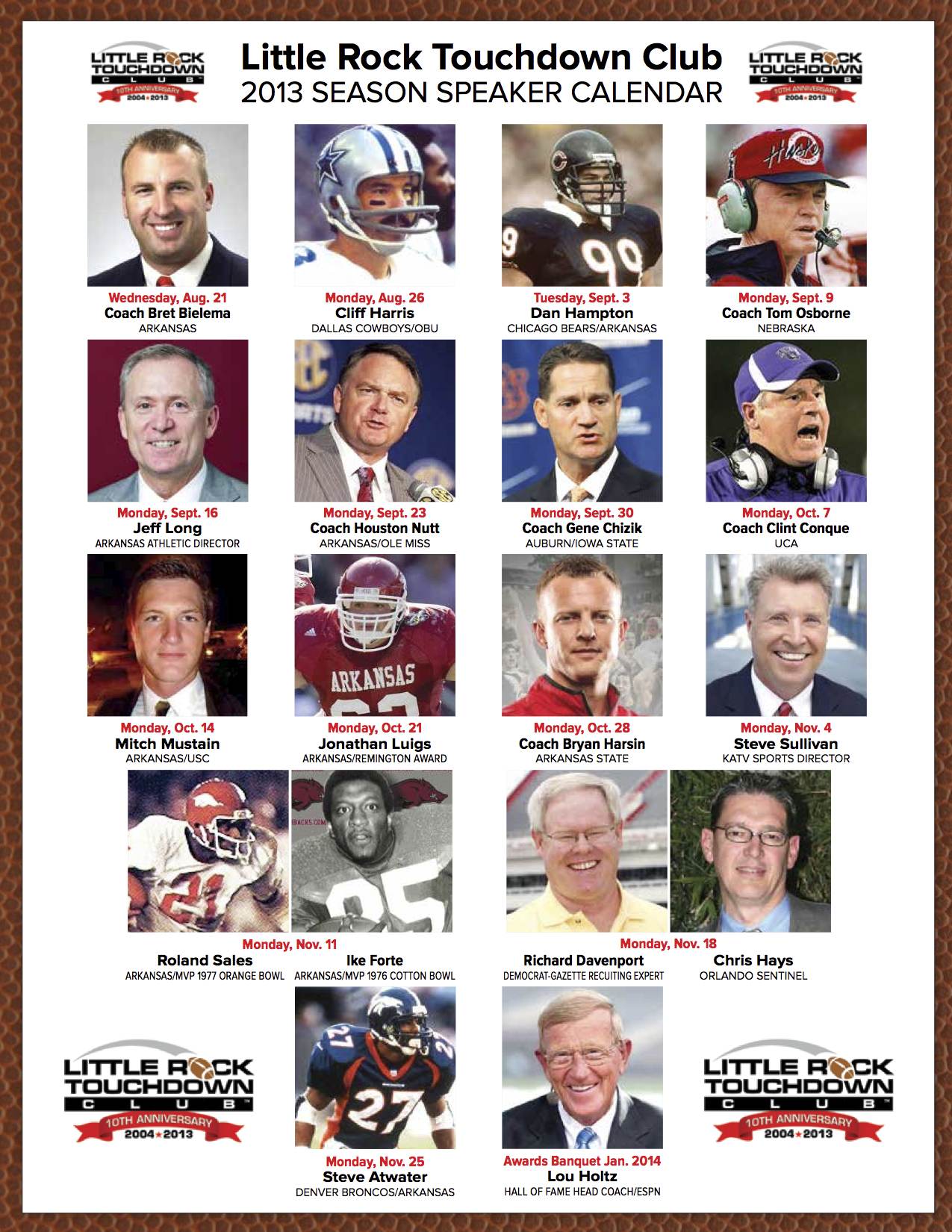

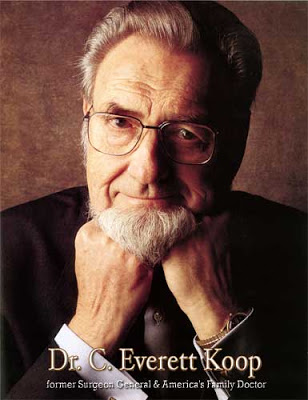


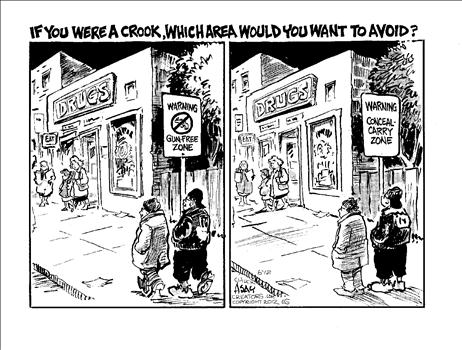


 The Daily Hatch