Tag Archives: Michael Martin (1932-).

RESPONDING TO HARRY KROTO’S BRILLIANT RENOWNED ACADEMICS!! Part 52 The views of Hegel and Bertrand Russell influenced Gareth Stedman Jones of Cambridge!!

On November 21, 2014 I received a letter from Nobel Laureate Harry Kroto and it said:

…Please click on this URL http://vimeo.com/26991975

and you will hear what far smarter people than I have to say on this matter. I agree with them.

Harry Kroto

_________________

Below you have picture of Dr. Harry Kroto:


Gareth Stedman Jones

From Wikipedia, the free encyclopedia

Gareth Stedman Jones (born 17 December 1942) is a British academic and historian.[1] He is Professor of the History of Ideas at Queen Mary, University of London.

Educated at St Paul’s School and Lincoln College, Oxford, where he read History, Stedman Jones went on to Nuffield College, Oxford to take a DPhil.

He moved to Cambridge in 1974, becoming a Fellow of King’s College, Cambridge and, in 1979, a lecturer in history. Since 1991, he has served as co-Director of the Centre for History and Economics at King’s and has held the post of professor of political science since 1997.[2] From 1964 to 1981 he served on the Editorial Board of the New Left Review. He was a joint founder of the History Workshop Journal in 1976. He has two sons and one stepdaughter.

Publications[edit]

  • Outcast London, Oxford, 1971 [reprinted with new preface, 1984; reprinted Harmondsworth, 1992; Open University edition, 2002].
  • Languages of Class: Studies in English Working Class History, 1832-1982, Cambridge, 1983.
  • Klassen, Politik, Sprache, edited by P. Schöttler, Munster, 1988.
  • Karl Marx and Friedrich Engels, The Communist Manifesto, Harmondsworth, 2002, introduction of 180pp.
  • An End to Poverty? London, Profile Books, July 2004.[3]

References[edit]

  1. Jump up^ Hunt, Tristram (28 July 2006). “Lessons for Beijing emerge from the Dickensian smog”. The Guardian. Retrieved 29 May 2011.
  2. Jump up^ “King’s History Fellows”. King’s College. Retrieved 29 May 2011.
  3. Jump up^ Howe, Stephen (6 August 2004). “A wealth of ideas about an age-old problem”. The Independent. Retrieved 29 May 2011.

In  the third video below in the 106th clip in this series are his words and  my response is below them. 

50 Renowned Academics Speaking About God (Part 1)

Another 50 Renowned Academics Speaking About God (Part 2)

A Further 50 Renowned Academics Speaking About God (Part 3)

Interview with Gareth Stedman Jones – part one

Published on May 17, 2014

Filmed by Alan Macfarlane on 23 April 2012. Professor Stedman Jones talks about his life and work as a historian.

Interview of Gareth Stedman Jones- part two

I grew up at Bellevue Baptist Church under the leadership of our pastor Adrian Rogers and I read many books by the Evangelical Philosopher Francis Schaeffer and have had the opportunity to contact many of the evolutionists or humanistic academics that they have mentioned in their works. Many of these scholars have taken the time to respond back to me in the last 20 years and some of the names  included are  Ernest Mayr (1904-2005), George Wald (1906-1997), Carl Sagan (1934-1996),  Robert Shapiro (1935-2011), Nicolaas Bloembergen (1920-),  Brian Charlesworth (1945-),  Francisco J. Ayala (1934-) Elliott Sober (1948-), Kevin Padian (1951-), Matt Cartmill (1943-) , Milton Fingerman (1928-), John J. Shea (1969-), , Michael A. Crawford (1938-), Paul Kurtz (1925-2012), Sol Gordon (1923-2008), Albert Ellis (1913-2007), Barbara Marie Tabler (1915-1996), Renate Vambery (1916-2005), Archie J. Bahm (1907-1996), Aron S “Gil” Martin ( 1910-1997), Matthew I. Spetter (1921-2012), H. J. Eysenck (1916-1997), Robert L. Erdmann (1929-2006), Mary Morain (1911-1999), Lloyd Morain (1917-2010),  Warren Allen Smith (1921-), Bette Chambers (1930-),  Gordon Stein (1941-1996) , Milton Friedman (1912-2006), John Hospers (1918-2011), Michael Martin (1932-), John R. Cole  (1942-),   Wolf Roder,  Susan Blackmore (1951-),  Christopher C. French (1956-)  Walter R. Rowe Thomas Gilovich (1954-), Paul QuinceyHarry Kroto (1939-), Marty E. Martin (1928-), Richard Rubenstein (1924-), James Terry McCollum (1936-), Edward O. WIlson (1929-), Lewis Wolpert (1929), Gerald Holton (1922-), Martin Rees (1942-), Alan Macfarlane (1941-),  Roald Hoffmann (1937-), Herbert Kroemer (1928-), Thomas H. Jukes (1906-1999), Glenn BranchGeoff Harcourt (1931-), and  Ray T. Cragun (1976-).

QUOTE FROM Gareth Stedman Jones:

I quite like the rituals of the Church of England, but I don’t believe in God and all that; my position was reinforced by reading Hegel, Anglicanism happens to be the religious culture of this island and I don’t feel any strong urge to disrupt it;

I chose to respond to this statement in the letter below:

October 8, 2015

Dr. Gareth Stedman Jones, Centre for History and Economics, Magdalene College,

Dear Dr. Stedman Jones,

In your wonderful interview with Alan Macfarlane at the 32:50:15 mark you talk about religion and you said that you recognize that there are people in the Church of England that say sensible things. I actually spent a whole summer in 1979 in England helping an Anglican Church in Manchester reach out to Muslims and Hindus and I got to know a lot of people in the Church of England. I even got to meet in my trip to London the famous John Stott who recently passed away a few years ago. Here is an excerpt from your interview:

I was confirmed at school; I remember thinking that it could be true so I didn’t have strong anti-religious feelings; on the other hand the school Chaplain who taught us divinity was not very bright, so we made jokes and regarded it as ridiculous but I don’t think we were fundamentally alienated from religion though we were from organized religion as it was practiced at school; over time I have been sort of agnostic; Bernard Williams once said to me that Anglican atheism was his belief; I quite like the rituals of the Church of England, but I don’t believe in God and all that; my position was reinforced by reading Hegel, Anglicanism happens to be the religious culture of this island and I don’t feel any strong urge to disrupt it; I think the Dawkins-Hitchens attack is a bit childish; my question is not “is there a god” but “what is God?” and Hegel has an interesting answer to that, that it’s just everything; if England had stayed as it was in the 1950s – at school I did read Bertrand Russell’s explanation of why he was not a Christian – I would have supported the Dawkins line; but now it seems to me to be attacking something that really isn’t that central; I find myself in the slightly ridiculous position of observing that the people who seems to say sensible things are in the Church of England, senior judges, and people in the House of Lords; I don’t with any comfort approve of any of these things particularly, but on the other hand it is one of the areas where a certain pluralism survives, and for that reason I feel that the alternatives might be worse.

My favorite philosopher was a man by the name of Francis Schaeffer and he lived from 1912 to 1984 and he talked a lot about Bertrand Russell and your favorite philosopher Hegel. Below is some of what he wrote about these two gentlemen as referred to in this article by Dr. William Lane Craig:

(Francis Schaeffer pictured below)

Francis Schaeffer

__________________________

Hegel, Georg Wilhelm Friedrich

The Absurdity of Life without God

Written by William Lane Craig. Posted in Articles – Bonus Content

As I remarked earlier, Francis Schaeffer (1912–1984) is the thinker most responsible for crafting a Christian apologetic based on the so-called modern predicament. According to Schaeffer, there can be traced in recent Western culture a “line of despair,” which penetrates philosophy, literature, and the arts in succession. He believes the root of the problem lies in Hegelian philosophy, specifically in its denial of absolute truths. Hegel developed the famous triad of thesis-antithesis-synthesis, in which contradictions are seen not as absolute opposites, but as partial truths, which are synthesized in the whole. Ultimately all is One, which is absolute and non-contradictory. In Schaeffer’s view, Hegel’s system undermined the notion of particular absolute truths (such as “That act is morally wrong” or “This painting is aesthetically ugly”) by synthesizing them into the whole. This denial of absolutes has gradually made its way through Western culture. In each case, it results in despair, because without absolutes man’s endeavors degenerate into absurdity. Schaeffer believes that the Theater of the Absurd, abstract modern art, and modern music such as compositions by John Cage are all indications of what happens below the line of despair. Only by reaffirming belief in the absolute God of Christianity can man and his culture avoid inevitable degeneracy, meaninglessness, and despair.

Schaeffer’s efforts against abortion may be seen as a logical extension of this apologetic. Once God is denied, human life becomes worthless, and we see the fruit of such a philosophy in the abortion and infanticide now taking place in Western society. Schaeffer warns that unless Western man returns to the Christian world and life view, nothing will stop the trend from degenerating into population control and human breeding. Only a theistic worldview can save the human race from itself…

The Practical Impossibility of Atheism

About the only solution the atheist can offer is that we face the absurdity of life and live bravely. Bertrand Russell, for example, wrote that we must build our lives upon “the firm foundation of unyielding despair.”16 Only by recognizing that the world really is a terrible place can we successfully come to terms with life. Camus said that we should honestly recognize life’s absurdity and then live in love for one another.

The fundamental problem with this solution, however, is that it is impossible to live consistently and happily within such a worldview. If one lives consistently, he will not be happy; if one lives happily, it is only because he is not consistent. Francis Schaeffer has explained this point well. Modern man, says Schaeffer, resides in a two-story universe. In the lower story is the finite world without God; here life is absurd, as we have seen. In the upper story are meaning, value, and purpose. Now modern man lives in the lower story because he believes there is no God. But he cannot live happily in such an absurd world; therefore, he continually makes leaps of faith into the upper story to affirm meaning, value, and purpose, even though he has no right to, since he does not believe in God. Modern man is totally inconsistent when he makes this leap, because these values cannot exist without God, and man in his lower story does not have God.

Let’s look again, then, at each of the three areas in which we saw that life is absurd without God, in order to show how modern man cannot live consistently and happily with his atheism.

MEANING OF LIFE

First, the area of meaning. We saw that without God, life has no meaning. Yet philosophers continue to live as though life does have meaning. For example, Sartre argued that one may create meaning for his life by freely choosing to follow a certain course of action. Sartre himself chose Marxism.

Now this is utterly inconsistent. It is inconsistent to say that life is objectively absurd and then to say that one may create meaning for his life. If life is really absurd, then man is trapped in the lower story. To try to create meaning in life represents a leap to the upper story. But Sartre has no basis for this leap. Without God, there can be no objective meaning in life. Sartre’s program is actually an exercise in self-delusion. For the universe does not really acquire meaning just because I happen to give it one. This is easy to see: for suppose I give the universe one meaning, and you give it another. Who is right? The answer, of course, is neither one. For the universe without God remains objectively meaningless, no matter how we regard it. Sartre is really saying, “Let’s pretend the universe has meaning.” And this is just fooling ourselves.

The point is this: if God does not exist, then life is objectively meaningless; but man cannot live consistently and happily knowing that life is meaningless; so in order to be happy he pretends that life has meaning. But this is, of course, entirely inconsistent—for without God, man and the universe are without any real significance.

VALUE OF LIFE

Turn now to the problem of value. Here is where the most blatant inconsistencies occur. First of all, atheistic humanists are totally inconsistent in affirming the traditional values of love and brotherhood. Camus has been rightly criticized for inconsistently holding both to the absurdity of life and to the ethics of human love and brotherhood. The two are logically incompatible. Bertrand Russell, too, was inconsistent. For though he was an atheist, he was an outspoken social critic, denouncing war and restrictions on sexual freedom. Russell admitted that he could not live as though ethical values were simply a matter of personal taste, and that he therefore found his own views “incredible.” “I do not know the solution,” he confessed.17 The point is that if there is no God, then objective right and wrong cannot exist. As Dostoyevsky said, “All things are permitted.”

But Dostoyevsky also showed in his novels that man cannot live this way. He cannot live as though it is perfectly all right for soldiers to slaughter innocent children. He cannot live as though it is all right for dictatorial regimes to follow a systematic program of physical torture of political prisoners. He cannot live as though it is all right for dictators like Pol Pot or Saddam Hussein to exterminate millions of their own countrymen. Everything in him cries out to say these acts are wrong—really wrong. But if there is no God, he cannot. So he makes a leap of faith and affirms values anyway. And when he does so, he reveals the inadequacy of a world without God…

And yet, if God does not exist, then in a sense, our world is Auschwitz: there is no right and wrong; all things are permitted. But no atheist, no agnostic, can live consistently with such a view of life. Nietzsche himself, who proclaimed the necessity of living “beyond good and evil,” broke with his mentor Richard Wagner precisely over the issue of the composer’s anti-Semitism and strident German nationalism. Similarly Sartre, writing in the aftermath of the Second World War, condemned anti-Semitism, declaring that a doctrine that leads to extermination is not merely an opinion or matter of personal taste, of equal value with its opposite.18 In his important essay “Existentialism Is a Humanism,” Sartre struggles vainly to elude the contradiction between his denial of divinely pre-established values and his urgent desire to affirm the value of human persons. Like Russell, he could not live with the implications of his own denial of ethical absolutes.

Neither can Richard Dawkins. For although he solemnly pronounces, “There is at bottom no design, no purpose, no evil, no good, nothing but pointless indifference…. We are machines for propagating DNA,”19 he is a patent moralist. He declares himself mortified that Enron executive Jeff Skilling regards Dawkins’s The Selfish Gene as his favorite book because of its perceived Social Darwinism.20 He characterizes “Darwinian mistakes” like pity for someone unable to pay us back or sexual attraction to an infertile member of the opposite sex as “blessed, precious mistakes” and calls compassion and generosity “noble emotions.”21 He denounces the doctrine of original sin as “morally obnoxious.”22 He vigorously condemns such actions as the harassment and abuse of homosexuals, religious indoctrination of children, the Incan practice of human sacrifice, and prizing cultural diversity in the case of the Amish over the interests of their children.23 He even goes so far as to offer his own amended Ten Commandments for guiding moral behavior, all the while marvelously oblivious to the contradiction with his ethical subjectivism.24

A second problem for the atheist is that if God does not exist and there is no immortality, then all the evil acts of men go unpunished and all the sacrifices of good men go unrewarded. But who can live with such a view? Richard Wurmbrand, who has been tortured for his faith in communist prisons, says,

The cruelty of atheism is hard to believe when man has no faith in the reward of good or the punishment of evil. There is no reason to be human. There is no restraint from the depths of evil which is in man. The communist torturers often said, “There is no God, no Hereafter, no punishment for evil. We can do what we wish.” I have heard one torturer even say, “I thank God, in whom I don’t believe, that I have lived to this hour when I can express all the evil in my heart.” He expressed it in unbelievable brutality and torture inflicted on prisoners.25

The English theologian Cardinal Newman once said that if he believed that all the evils and injustices of life throughout history were not to be made right by God in the afterlife, “Why I think I should go mad.” Rightly so.

And the same applies to acts of self-sacrifice. A number of years ago, a terrible mid-winter air disaster occurred when a plane leaving the Washington, D.C., airport smashed into a bridge spanning the Potomac River, plunging its passengers into the icy waters. As the rescue helicopters came, attention was focused on one man who again and again pushed the dangling rope ladder to other passengers rather than be pulled to safety himself. Six times he passed the ladder by. When they came again, he was gone. He had freely given his life that others might live. The whole nation turned its eyes to this man in respect and admiration for the selfless and good act he had performed. And yet, if the atheist is right, that man was not noble—he did the stupidest thing possible. He should have gone for the ladder first, pushed others away if necessary in order to survive. But to die for others he did not even know, to give up all the brief existence he would ever have—what for? For the atheist there can be no reason. And yet the atheist, like the rest of us, instinctively reacts with praise for this man’s selfless action. Indeed, one will probably never find an atheist who lives consistently with his system. For a universe without moral account-ability and devoid of value is unimaginably terrible.

PURPOSE OF LIFE

Finally, let’s look at the problem of purpose in life. Unable to live in an impersonal universe in which everything is the product of blind chance, atheists sometimes begin to ascribe personality and motives to the physical processes themselves. It is a bizarre way of speaking and represents a leap from the lower to the upper story. For example, the brilliant Russian physicists Zeldovich and Novikov, in contemplating the properties of the universe, ask, why did “Nature” choose to create this sort of universe instead of another? “Nature” has obviously become a sort of God-substitute, filling the role and function of God. Francis Crick halfway through his book The Origin of the Genetic Code begins to spell nature with a capital N and elsewhere speaks of natural selection as being “clever” and as “thinking” of what it will do. Sir Fred Hoyle, the English astronomer, attributes to the universe itself the qualities of God. For Carl Sagan the “Cosmos,” which he always spelled with a capital letter, obviously fills the role of a God-substitute. Though these men profess not to believe in God, they smuggle in a God-substitute through the back door because they cannot bear to live in a universe in which everything is the chance result of impersonal forces.

Moreover, the only way that most people who deny purpose in life live happily is either by making up some purpose—which amounts to self-delusion as we saw with Sartre—or by not carrying their view to its logical conclusions. Take the problem of death, for example. According to Ernst Bloch, the only way modern man lives in the face of death is by subconsciously borrowing the belief in immortality that his forefathers held to, even though he himself has no basis for this belief, since he does not believe in God. Bloch states that the belief that life ends in nothing is hardly, in his words, “sufficient to keep the head high and to work as if there were no end.” By borrowing the remnants of a belief in immortality, writes Bloch, “modern man does not feel the chasm that unceasingly surrounds him and that will certainly engulf him at last. Through these remnants, he saves his sense of self-identity. Through them the impression arises that man is not perishing, but only that one day the world has the whim no longer to appear to him.” Bloch concludes, “This quite shallow courage feasts on a borrowed credit card. It lives from earlier hopes and the support that they once had provided.”26 Modern man no longer has any right to that support, since he rejects God. But in order to live purposefully, he makes a leap of faith to affirm a reason for living.

Finding ourselves cast into a mindless universe with no apparent purpose or hope of deliverance from thermodynamic extinction, the temptation to invest one’s own petty plans and projects with objective significance and thereby to find some purpose to one’s life is almost irresistible. Thus, the outspoken atheist and Nobel Prize–winning physicist Steven Weinberg at the close of his much acclaimed popularization of contemporary cosmology The First Three Minutes, writes:

However all these problems may be solved, and whichever cosmological model proves correct, there is not much comfort in any of this. It is almost irresistible for humans to believe that we have some special relation to the universe, that human life is not just a more-or-less farcical outcome of a chain of accidents reaching back to the first three minutes, but that somehow we were built in from the beginning…. It is very hard to realize that this is all just a tiny part of an overwhelmingly hostile universe. It is even harder to realize that this present universe has evolved from an unspeakably unfamiliar early condition, and faces a future extinction of endless cold or intolerable heat. The more the universe seems comprehensible, the more it also seems pointless.
But if there is no solace in the fruits of our research, there is at least some consolation in the research itself. Men and women are not content to comfort themselves with tales of gods and giants, or to confine their thoughts to the daily affairs of life; they also build telescopes and satellites and accelerators and sit at their desks for endless hours working out the meaning of the data they gather. The effort to understand the universe is one of the very few things that lifts human life a little above the level of farce, and gives it some of the grace of tragedy.27

There is something strange about Weinberg’s moving description of the human predicament: tragedy is an evaluative term. Weinberg sees the pursuit of scientific research as raising human life above the level of farce to the level of tragedy. But on naturalism, what is the basis for such an evaluative differentiation? Weinberg evidently sees a life devoted to scientific pursuits as truly meaningful, and therefore it’s too bad that so noble a pursuit should be extinguished. But why on naturalism should the pursuit of science be any different from slouching about doing nothing? Since there is no objective purpose to human life, none of our pursuits has any objective significance, however important and dear they may seem to us subjectively…

While participating in a conference on Intelligent Design two years ago, I had the opportunity to have dinner with the agnostic philosopher of science Michael Ruse one evening at an Atlanta steakhouse. During the course of the meal, Michael asked me, “Bill, are you satisfied with where you are in your career as a philosopher?’’ I was rather surprised by the question and said, “Well, yes, basically, I guess I am—how about you?” He then related to me that when he was just starting out as a philosopher of science, he was faced with the choice of vigorously pursuing his career or just taking it rather easy. He said that he then thought of the anguished words of the character played by Marlin Brando at the close of the film On the Waterfront: “I coulda been a contender!” Michael told me that he decided he didn’t want to reach the end of his life and look back in regret and say, “I coulda been a contender!” I was struck by those words. As a Christian I am commanded by the Lord “to contend for the faith that was once for all delivered to the saints” (Jude 3 ESV). But what point is there for an atheist or agnostic to be a “contender”—a contender for what? Since there is no objective purpose in life, the only answer can be, to contend for one’s own made-up purposes—hence, the irresistible tendency to treat career advancement and fame as though they really were objectively important ends, when in fact they are nothing….

The Success of Biblical Christianity

But if atheism fails in this regard, what about biblical Christianity? According to the Christian worldview, God does exist, and man’s life does not end at the grave. In the resurrection body man may enjoy eternal life and fellowship with God. Biblical Christianity therefore provides the two conditions necessary for a meaningful, valuable, and purposeful life for man: God and immortality. Because of this, we can live consistently and happily. Thus, biblical Christianity succeeds precisely where atheism breaks down.

Now I want to make it clear that I have not yet shown biblical Christianity to be true. But what I have done is clearly spell out the alternatives. If God does not exist, then life is futile. If the God of the Bible does exist, then life is meaningful. Only the second of these two alternatives enables us to live happily and consistently. Therefore, it seems to me that even if the evidence for these two options were absolutely equal, a rational person ought to choose biblical Christianity. It seems to me positively irrational to prefer death, futility, and destruction to life, meaningfulness, and happiness. As Pascal said, we have nothing to lose and infinity to gain.

FOOTNOTES:
16. Bertrand Russell, “A Free Man’s Worship,” in Why I Am Not a Christian, ed. P. Edwards (New York: Simon & Schuster, 1957), 107.
17. Bertrand Russell, Letter to the Observer, October 6, 1957.
18. Jean-Paul Sartre, “Portrait of the Antisemite,” trans. M. Guiggenheim, in Existentialism, 330.
19. Richard Dawkins, Unweaving the Rainbow (London: Allen Lane, 1998), cited in Lewis Wolpert, Six Impossible Things before Breakfast (London: Faber and Faber, 2006), 215. Unfortunately, Wolpert’s reference is mistaken. The quotation seems to be a pastiche from Richard Dawkins, River Out of Eden: A Darwinian View of Life (New York: Basic, 1996), 133, and Richard Dawkins, “The Ultraviolet Garden,” Lecture 4 of 7 Royal Institution Christmas Lectures (1992), http://physicshead.blogspot.com/2007/01/ richard-dawkins-lecture-4-ultraviolet.html. Thanks to my assistant Joe Gorra for tracking down this reference.
20. Richard Dawkins, The God Delusion (New York: Houghton-Mifflin, 2006), 215.
21. Ibid., 221.
22. Ibid., 251.
23. Ibid., 23, 313–17, 326, 328, 330.
24. Ibid., 264.
25. Richard Wurmbrand, Tortured for Christ (London: Hodder & Stoughton, 1967), 34.
26. Ernst Bloch, Das Prinzip Hoffnung, 2nd ed., 2 vols. (Frankfurt am Main: Suhrkamp Ver-lag, 1959), 2:360–1.
27. Steven Weinberg, The First Three Minutes (London: Andre Deutsch, 1977), 154–55.
28. Loyal D. Rue, “The Saving Grace of Noble Lies,” address to the American Academy for the Advancement of Science, February 1991.
Excerpted from Reasonable Faith, copyright 1994, by William Lane Craig. Used by permission of Crossway Books, a division of GoodNews Publishers, Wheaton, Illinois. http://www.crosswaybooks

You want some evidence that indicates that the Bible is true? Here is a good place to start and that is taking a closer look at the archaeology of the Old Testament times. Is the Bible historically accurate? Here are some of the posts I have done in the past on the subject: 1. The Babylonian Chronicleof Nebuchadnezzars Siege of Jerusalem2. Hezekiah’s Siloam Tunnel Inscription. 3. Taylor Prism (Sennacherib Hexagonal Prism)4. Biblical Cities Attested Archaeologically. 5. The Discovery of the Hittites6.Shishak Smiting His Captives7. Moabite Stone8Black Obelisk of Shalmaneser III9A Verification of places in Gospel of John and Book of Acts., 9B Discovery of Ebla Tablets10. Cyrus Cylinder11. Puru “The lot of Yahali” 9th Century B.C.E.12. The Uzziah Tablet Inscription13. The Pilate Inscription14. Caiaphas Ossuary14 B Pontius Pilate Part 214c. Three greatest American Archaeologists moved to accept Bible’s accuracy through archaeology.

Francis Schaeffer has correctly argued:

The universe was created by an infinite personal God and He brought it into existence by spoken word and made man in His own image. When man tries to reduce [philosophically in a materialistic point of view] himself to less than this [less than being made in the image of God] he will always fail and he will always be willing to make these impossible leaps into the area of nonreason even though they don’t give an answer simply because that isn’t what he is. He himself testifies that this infinite personal God, the God of the Old and New Testament is there. 

Instead of making a leap into the area of nonreason the better choice would be to investigate the claims that the Bible is a historically accurate book and that God created the universe and reached out to humankind with the Bible. Below is a piece of that evidence given by Francis Schaeffer concerning the accuracy of the Bible.

TRUTH AND HISTORY (chapter 5 of WHATEVER HAPPENED TO THE HUMAN RACE?, under footnote #94)

We looked earlier at the city of Lachish. Let us return to the same period in Israel’s history when Lachich was besieged and captured by the Assyrian King Sennacherib. The king of Judah at the time was Hezekiah.

Perhaps you remember the story of how Jesus healed a blind man and told him to go and wash in the Pool of Siloam. It is the same place known by King Hezekiah, approximately 700 years earlier. One of the remarkable things about the flow of the Bible is that historical events separated by hundreds of years took place in the same geographic spots, and standing in these places today, we can feel that flow of history about us. The crucial archaeological discovery which relates the Pool of Siloam is the tunnel which lies behind it.

One day in 1880 a small Arab boy was playing with his friend and fell into the pool. When he clambered out, he found a small opening about two feet wide and five feet high. On examination, it turned out to be a tunnel reaching  back into the rock. But that was not all. On the side of the tunnel an inscribed stone (now kept in the museum in Istanbul) was discovered, which told how the tunnel had been built originally. The inscription in classical Hebrew reads as follows:

The boring through is completed. And this is the story of the boring: while yet they plied the pick, each toward his fellow, and while there were yet three cubits [4 14 feet] to be bored through, there was heard the voice of one calling to the other that there was a hole in the rock on the right hand and on the left hand. And on the day of the boring through the workers on the tunnel struck each to meet his fellow, pick upon pick. Then the water poured from the source to the Pool 1,200 cubits [about 600 yards] and a 100 cubits was the height of the rock above the heads of the workers in the tunnel. 

We know this as Hezekiah’s Tunnel. The Bible tells us how Hezekiah made provision for a better water supply to the city:Now the rest of the acts of Hezekiah and all his might, and how he made the pool and the conduit and brought water into the city, are they not written in the Book of the Chronicles of the Kings of Judah?(II Kings 20:20). We know here three things: the biblical account, the tunnel itself of which the Bible speaks, and the original stone with its inscription in classical Hebrew.

From the Assyrian side, there is additional confirmation of the incidents mentioned in the Bible. There is a clay prism in the British Museum called the Taylor Prism (British Museum, Ref. 91032). It is only fifteen inches high and was discovered in the Assyrian palace at Nineveh. This particular prism dates from about 691 B.C. and tells about Sennacherib’s exploits. A section from the prism reads, “As for Hezekiah,  the Jew, who did not submit to my yoke, forty-six of his strong walled cities, as well as small cities  in their neighborhood I have besieged and took…himself like a caged bird, I shut up in Jerusalem, his royal city. Earthworks I threw up against him,” Thus, there is a three-way confirmation concerning Hezekiah’s tunnel from the Hebrew side and this amazing confirmation from the Assyrian side.

Hezekiah’s Tunnel

Gihon Spring

The Gihon Spring

The only spring in Jerusalem, the Gihon is a siphonic, karstic spring, and its name means “gushing”; it surges and the sound can be easily heard. It is estimated that the Gihon could have supported a population of about 2,500. The cave is a natural one, but it has been widened. Solomon was anointed at the Gihon Spring while his brother, Adonijah, was attempting to take the throne through a surreptitious coronation at En Rogel (1 Kgs 1).

The Tunnel

A 1750-foot (530m) tunnel carved during the reign of Hezekiah to bring water from one side of the city to the other, Hezekiah’s Tunnel together with the 6th c. tunnel of Euphalios in Greece are considered the greatest works of water engineering technology in the pre-Classical period.  Had it followed a straight line, the length would have been 1070 ft (335m) or 40% shorter.

Hezekiah's Tunnel

Hezekiah's Tunnel

The Construction

2 Kings 20:20 “As for the other events of Hezekiah’s reign, all his achievements and how he made the pool and the tunnel by which he brought water into the city…”

2 Chr 32:30 “It was Hezekiah who blocked the upper outlet of the Gihon spring and channeled the water down to the west side of the City of David.”

The Meeting Point

Why is the tunnel S-shaped?

R. A. S. Macalister said the tunnel was a “pathetically helpless piece of engineering.”

Henry Sulley in 1929 first suggested that Hezekiah’s tunnel followed a natural crack in the rock.

Dan Gill argues that the two crews of diggers followed a natural karstic dissolution channel.

Hezekiah's Tunnel meeting point

Place of Siloam Inscription in Hezekiah's Tunnel

The Location of the Siloam Inscription

“[…when] (the tunnel) was driven through.  And this was the way in which it was cut through:  While […] (were) still […] axe(s), each man toward his fellow, and while there were still three cubits to be cut through, [there was heard] the voice of a man calling to his fellows, for there was an overlap in the rock on the right [and on the left].  And when the tunnel was driven through, the quarrymen hewed (the rock), each man toward his fellow, axe against axe; and the water flowed from the spring toward the reservoir for 1200 cubits, and the height of the rock above the head(s) of the quarrymen was 100 cubits.”

____

Thank you for your time. I know how busy you are and I want to thank you for taking the time to read this letter.

Sincerely,

Everette Hatcher,

P.O. Box 23416, Little Rock, AR 72221, United States, cell ph 501-920-5733, everettehatcher@gmail.com


Related posts:

FRANCIS SCHAEFFER ANALYZES ART AND CULTURE Part 53 THE BEATLES (Part E, Stg. Pepper’s and John Lennon’s search in 1967 for truth was through drugs, money, laughter, etc & similar to King Solomon’s, LOTS OF PICTURES OF JOHN AND CYNTHIA) (Feature on artist Yoko Ono)

The John Lennon and the Beatles really were on a long search for meaning and fulfillment in their lives  just like King Solomon did in the Book of Ecclesiastes. Solomon looked into learning (1:12-18, 2:12-17), laughter, ladies, luxuries, and liquor (2:1-2, 8, 10, 11), and labor (2:4-6, 18-20). He fount that without God in the picture all […]

FRANCIS SCHAEFFER ANALYZES ART AND CULTURE Part 52 THE BEATLES (Part D, There is evidence that the Beatles may have been exposed to Francis Schaeffer!!!) (Feature on artist Anna Margaret Rose Freeman )

______________   George Harrison Swears & Insults Paul and Yoko Lucy in the Sky with Diamonds- The Beatles The Beatles:   I have dedicated several posts to this series on the Beatles and I don’t know when this series will end because Francis Schaeffer spent a lot of time listening to the Beatles and talking […]

FRANCIS SCHAEFFER ANALYZES ART AND CULTURE Part 51 THE BEATLES (Part C, List of those on cover of Stg.Pepper’s ) (Feature on artist Raqib Shaw )

  The Beatles in a press conference after their Return from the USA Uploaded on Nov 29, 2010 The Beatles in a press conference after their Return from the USA. The Beatles:   I have dedicated several posts to this series on the Beatles and I don’t know when this series will end because Francis […]

FRANCIS SCHAEFFER ANALYZES ART AND CULTURE Part 50 THE BEATLES (Part B, The Psychedelic Music of the Beatles) (Feature on artist Peter Blake )

__________________   Beatles 1966 Last interview I have dedicated several posts to this series on the Beatles and I don’t know when this series will end because Francis Schaeffer spent a lot of time listening to the Beatles and talking and writing about them and their impact on the culture of the 1960’s. In this […]

FRANCIS SCHAEFFER ANALYZES ART AND CULTURE Part 49 THE BEATLES (Part A, The Meaning of Stg. Pepper’s Cover) (Feature on artist Mika Tajima)

_______________ The Beatles documentary || A Long and Winding Road || Episode 5 (This video discusses Stg. Pepper’s creation I have dedicated several posts to this series on the Beatles and I don’t know when this series will end because Francis Schaeffer spent a lot of time listening to the Beatles and talking and writing about […]

FRANCIS SCHAEFFER ANALYZES ART AND CULTURE PART 48 “BLOW UP” by Michelangelo Antonioni makes Philosophic Statement (Feature on artist Nancy Holt)

_______________ Francis Schaeffer pictured below: _____________________ I have included the 27 minute  episode THE AGE OF NONREASON by Francis Schaeffer. In that video Schaeffer noted,  ” Sergeant Pepper’s Lonely Hearts Club Band…for a time it became the rallying cry for young people throughout the world. It expressed the essence of their lives, thoughts and their feelings.” How Should […]

FRANCIS SCHAEFFER ANALYZES ART AND CULTURE Part 47 Woody Allen and Professor Levy and the death of “Optimistic Humanism” from the movie CRIMES AND MISDEMEANORS Plus Charles Darwin’s comments too!!! (Feature on artist Rodney Graham)

Crimes and Misdemeanors: A Discussion: Part 1 ___________________________________ Today I will answer the simple question: IS IT POSSIBLE TO BE AN OPTIMISTIC SECULAR HUMANIST THAT DOES NOT BELIEVE IN GOD OR AN AFTERLIFE? This question has been around for a long time and you can go back to the 19th century and read this same […]

FRANCIS SCHAEFFER ANALYZES ART AND CULTURE PART 46 Friedrich Nietzsche (Featured artist is Thomas Schütte)

____________________________________ Francis Schaeffer pictured below: __________ Francis Schaeffer has written extensively on art and culture spanning the last 2000years and here are some posts I have done on this subject before : Francis Schaeffer’s “How should we then live?” Video and outline of episode 10 “Final Choices” , episode 9 “The Age of Personal Peace and Affluence”, episode 8 […]

FRANCIS SCHAEFFER ANALYZES ART AND CULTURE Part 45 Woody Allen “Reason is Dead” (Feature on artists Allora & Calzadilla )

Love and Death [Woody Allen] – What if there is no God? [PL] ___________ _______________ How Should We then Live Episode 7 small (Age of Nonreason) #02 How Should We Then Live? (Promo Clip) Dr. Francis Schaeffer 10 Worldview and Truth Two Minute Warning: How Then Should We Live?: Francis Schaeffer at 100 Francis Schaeffer […]

FRANCIS SCHAEFFER ANALYZES ART AND CULTURE Part 44 The Book of Genesis (Featured artist is Trey McCarley )

___________________________________ Francis Schaeffer pictured below: ____________________________ Francis Schaeffer “BASIS FOR HUMAN DIGNITY” Whatever…HTTHR Dr. Francis schaeffer – The flow of Materialism(from Part 4 of Whatever happened to human race?) Dr. Francis Schaeffer – The Biblical flow of Truth & History (intro) Francis Schaeffer – The Biblical Flow of History & Truth (1) Dr. Francis Schaeffer […]

10 YEARS AGO ADRIAN ROGERS WENT TO GLORY BUT HIS SERMONS ARE STILL SHARING CHRIST LOVE TODAY!!!

On 11-15-05 Adrian Rogers passed over to glory and since it is the 10th anniversary of that day I wanted to celebrate his life in two ways. First, I wanted to pass on some of the material from Adrian Rogers’ sermons I have sent to prominent atheists over the last 20 years. Second, I wanted to publish a letter I have written today to another high profile figure that Dr. Rogers has mentioned several times in his sermons. By the way at this link you can see a sermon of Rogers on Evolution that I sent to over 250 ATHEIST SCIENTISTS FROM 1992 TO 2015! I have posted on Adrian Rogers’ messages on Evolution before but here is a complete message on it.

Adrian Rogers pictured below

________________

https://www.youtube.com/watch?v=LhlG_r1GDyM


In the 1970’s and 1980’s I was a member of Bellevue Baptist in Memphis where Adrian Rogers was pastor and was a student at ECS from the 5th grade to the 12th grade where I was introduced to the books and films of Francis Schaeffer. During this time I was amazed at how many prominent figures in the world found their way into the works of both Adrian Rogers and Francis Schaeffer and I wondered what it would be like if these individuals were exposed to the Bible and the gospel. Therefore, over 20 years ago I began sending the messages of Adrian Rogers and portions of the works of Francis Schaeffer to many of the secular figures that they mentioned in their works. Let me give you some examples and tell you about some lessons that I have learned.

_______________

I have learned several things about atheists in the last 20 years while I have been corresponding with them. First, they know in their hearts that God exists and they can’t live as if God doesn’t exist, but they will still search in some way in their life for a greater meaning. Second, many atheists will take time out of their busy lives to examine the evidence that I present to them. Third, there is hope that they will change their views.

Let’s go over again a few points I made at the first of this post.  My first point is backed up by  Romans 1:18-19 (Amplified Bible) ” For God’s wrath and indignation are revealed from heaven against all ungodliness and unrighteousness of men, who in their wickedness REPRESS and HINDER the truth and make it inoperative. For that which is KNOWN about God is EVIDENT to them and MADE PLAIN IN THEIR INNER CONSCIOUSNESS, because God  has SHOWN IT TO THEM,”(emphasis mine). I have discussed this many times on my blog and even have interacted with many atheists from CSICOP in the past. (I first heard this from my pastor Adrian Rogers back in the 1980’s.)

My second point is that many atheists will take the time to consider the evidence that I have presented to them and will respond. The late Adrian Rogers was my pastor at Bellevue Baptist when I grew up and I sent his sermon on evolution and another on the accuracy of the Bible to many atheists to listen to and many of them did. I also sent many of the arguments from Francis Schaeffer also.

______
Adrian Rogers and his wife Joyce pictured above with former President George Bush at Union University in Tennessee.
_____________________________
Many of these scholars have taken the time to respond back to me in the last 20 years and some of the names  included are  Ernest Mayr (1904-2005), George Wald (1906-1997), Carl Sagan (1934-1996),  Robert Shapiro (1935-2011), Nicolaas Bloembergen (1920-),  Brian Charlesworth (1945-),  Francisco J. Ayala (1934-) Elliott Sober (1948-), Kevin Padian (1951-), Matt Cartmill (1943-) , Milton Fingerman (1928-), John J. Shea (1969-), , Michael A. Crawford (1938-), (Paul Kurtz (1925-2012), Sol Gordon (1923-2008), Albert Ellis (1913-2007), Barbara Marie Tabler (1915-1996), Renate Vambery (1916-2005), Archie J. Bahm (1907-1996), Aron S “Gil” Martin ( 1910-1997), Matthew I. Spetter (1921-2012), H. J. Eysenck (1916-1997), Robert L. Erdmann (1929-2006), Mary Morain (1911-1999), Lloyd Morain (1917-2010),  Warren Allen Smith (1921-), Bette Chambers (1930-),  Gordon Stein (1941-1996) , Milton Friedman (1912-2006), John Hospers (1918-2011), and Michael Martin (1932-).
Third, there is hope that an atheist will reconsider his or her position after examining more evidence. Twenty years I had the opportunity to correspond with two individuals that were regarded as two of the most famous atheists of the 20th Century, Antony Flew and Carl Sagan.  I had read the books and seen the films of the Christian philosopher Francis Schaeffer and he had discussed the works of both of these men. I sent both of these gentlemen philosophical arguments from Schaeffer in these letters and in the first letter I sent a cassette tape of my pastor’s sermon IS THE BIBLE TRUE? You may have noticed in the news a few years that Antony Flew actually became a theist in 2004 and remained one until his death in 2010. Carl Sagan remained a skeptic until his dying day in 1996.Antony Flew wrote me back several times and in the  June 1, 1994 letter he  commented, “Thank you for sending me the IS THE BIBLE TRUE? tape to which I have just listened with great interest and, I trust, profit.” I later sent him Adrian Rogers’ sermon on evolution too. 

 The ironic thing is back in 2008 I visited the Bellevue Baptist Book Store and bought the book There Is A God – How the World’s Most Notorious Atheist Changed His Mind, by Antony Flew, and it is in this same store that I bought the message by Adrian Rogers in 1994 that I sent to Antony Flew. Although Antony Flew did not make a public profession of faith he did admit that the evidence for God’s existence was overwhelming to him in the last decade of his life. His experience has been used in a powerful way to tell  others about Christ. Let me point out that while on airplane when I was reading this book a gentleman asked me about the book. I was glad to tell him the whole story about Adrian Rogers’ two messages that I sent to Dr. Flew and I gave him CD’s of the messages which I carry with me always. Then at McDonald’s at the Airport, a worker at McDonald’s asked me about the book and I gave him the same two messages from Adrian Rogers too.

______________________

Antony Flew – World’s Most Famous Atheist Accepts Existence of God

Uploaded on Nov 28, 2008

Has Science Discovered God?

A half-century ago, in 1955, Professor Antony Flew set the agenda for modern atheism with his Theology and Falsification, a paper presented in a debate with C.S. Lewis. This work became the most widely reprinted philosophical publication of the last 50 years. Over the decades, he published more than 30 books attacking belief in God and debated a wide range of religious believers.

Then, in a 2004 Summit at New York University, Professor Flew announced that the discoveries of modern science have led him to the conclusion that the universe is indeed the creation of infinite Intelligence.

For More Info Visit:
http://ScienceFindsGod.com

__________________

Evolution: Fact of Fiction? By Adrian Rogers

https://www.youtube.com/watch?v=d6bKu82mzjk

___________

The high profile person that Dr. Rogers used to mention from time to time in his sermons is Hugh Hefner and yesterday I wrote him a letter which I will mail today.

In 1984 Adrian Rogers said in sermon, “Playboy’s Payday,” these words:

(The text for this sermon was the whole chapter of Proverbs 5)

I’m telling you the Word of God here today.  You’re going to blow it, and when you come to the end of it, you’re going to miss the best of life.  Do you know what Hugh Heffner said on another occasion? He was reminiscing. Here is this guy who has all of these girls around  him, all of this booze, all of these casinos and presumably can have any   sensual pleasure he wants. He said, You know, in the next ten years I would rather meet a girl and fall in love and have her fall in love with me than to make another one hundred million dollars.   But I fear the man doesn’t know what love is.  I feel that he’s missed it.  What he’s saying is, I’ve got it all, but I don’t have satisfaction!  There’s something that’s worth more than a hundred million dollars to me, and I don’t have it!

Marilyn Monroe, the sex goddess who took her own life, said, “I hate sex.”  Everybody says, “Oh, look at the pleasure that she’s having.”  In Sweden, Sweden’s a liberated country, they have open pornography, open prostitution, free love in Sweden.  It’s all accepted. That’s supposed to be the liberated country in the Western world.  The Swedes! Do you know what nation has the highest divorce rate of any nation?  Sweden. .  “God is not mocked.”  I’m telling you there is a disappointment in sin.  The cup of sin is sweet, but the dregs are bitter indeed.

They did an in-depth study at Stanford University. These are not a bunch of preachers, and their conclusion of the in-depth study was this:  that the more promiscuous people were before marriage, the less chance for happiness after marriage.   The try-it-before-you-marry-it idea may sound cute, but it’s not in the Word of God, dear friend.  This idea of living together to see if you’re compatible, the more promiscuous people were before marriage, the less chance of opportunity for satisfaction after marriage. Young people, many of them right now are on the beaches of Fort Lauderdale, many of them have gone down there attempting to make it with some girl, to make it with some boy, to jump in bed with somebody. They think that’s the way.   And our young people are being told that so much that they think there’s absolutely nothing wrong with it!

Dangers of Pornography Adrian Rogers

ADRIAN ROGERS PICTURED AT WHITE HOUSE AFTER BEING ELECTED PRESIDENT OF SOUTHERN BAPTIST CONVENTION

November 15, 2015

Dear Mr. Hefner,

I have chosen to write you on the 10th anniversary of the passing of one of the most influential people in my life. My hometown pastor at Bellevue Baptist in Memphis, Adrian Rogers, was my pastor from 1975 to 1983 when I was 14 to 21 years old and he influenced me in this crucial time of my life.

I attended his funeral and I was touched by speakers such as my youth choir director James Whitmire, my College Director Ken Whitten, our family friend Bob Sorrell and current Bellevue pastor Steve Gaines.

Two other notable people who spoke were  James Dobson, founder of Focus on the Family and by video the Evangelist Billy Graham. Graham noted, “We need for ministers of the Gospel to defend the Bible as the infallible Word of God…I believe in my heart that Adrian Rogers was such a man. I knew him personally. I had walked with him and prayed with him…I know God’s hand was upon Adrian Rogers as he proclaimed the Bread of Life from his church and through radio and television…I praise God for his ministry.”

Later in this letter I will return to this subject of the historical accuracy of the Bible. Adrian Rogers actually was remembered among other things for his contribution in this area in Southern Baptist life. In fact, one of my favorite sermons by him is called, HOW YOU CAN BE CERTAIN THE BIBLE IS THE WORD OF GOD and you can watch this message on You Tube.

Just two days ago it was Friday the 13th which is a pretty spooky day usually, and I wanted to talk to you about a subject that most people would consider very scary but it is the subject that Billy Graham has chosen for the last book he will ever write. I was privileged to hear Billy Graham speak both in Memphis in 1978 and in Little Rock in 1989.
On  Sunday November 8, 2015,  I was in Memphis at my parents’ home getting ready to go to church when I saw the “Keeping the Faith” segment on Fox News with Franklin Graham. Speaking of his father Billy Graham he noted:
He just turned 97 on Saturday and he is still with us and his mind is still sharp and he received about a dozen cakes and he took a bite out of everyone of them. He has no ailments than other his age. He doesn’t hear well or see well but his mind is clear and he can understand you and can communicate with him.
This book was 90% completed by his 95th birthday but he got sick right after that and we didn’t think he would live to Christmas that year and we put the book aside but then last year when he doing pretty good we got it back out so he could finished it when he was doing pretty good.
At 97 he is getting close to eternity (in the afterlife) he knows that and he wants people to know there is a heaven and a hell.
In “Where I Am: Heaven, Eternity and Our Life Beyond,” Billy Graham asserted, “As a Christian and a preacher of the Gospel, I am always grieved to have to interrupt a marvelous picture, such as eternal life in Heaven, to talk about another eternal place that Jesus calls Hell…It has no similarities to what is typically called home, nor is Hell a resting place, a holding place, or a graveyard. Hell is a burning inferno…I can say with certainty that if there is no literal fire in Hell, then God is using symbolic language to indicate something far worse…Just as there are no words to adequately describe the grand beauty of Heaven, we cannot begin to imagine just how horrible the place called Hell is.”
But there is hope if one repents and puts his or her faith in Christ alone for eternal life.
“We need to say either yes or no. But some of us say maybe. Some of us try to straddle the fence and live in both worlds, but Jesus will not compromise with us. The Gospel plan is all set. We must accept His Son if we are to enter into His eternal kingdom. If your answer is not yes, then the choice is made.”

Adrian Rogers once noted: 

When people think of Hell, they picture the devil as a comical character wearing a red suit with horns, a tail and a pitchfork, making people shovel coal. Satan loves that image because we laugh at it.

Satan promotes laughter about Hell because if people don’t understand the teaching of Hell, they’ll not prepare to go to Heaven, to give their hearts to Christ.

It makes no difference if all the scholars, preachers, scientists, statesmen, politicians and liberal theologians put together say there is no Hell, it wouldn’t change one letter of what the Word of God says.

Often the minister who preaches on Hell is accused of being unloving. With a sneer the world loves to call him a “hell-fire and damnation preacher.” The late, great Dr. Robert G. Lee said,

I know some people call the preacher who stands squarely upon the teaching of Christ and His apostles narrow, harsh, and cruel. As to being narrow, I have no desire to any broader than was Jesus. As to being cruel, is it cruel to tell a man the truth? Is a man to be called cruel who declares the whole counsel of God and points out to men their danger? Is it cruel to arouse sleeping people to the fact that the house is on fire? Is it cruel to jerk a blind man away from the rattlesnake in the coil? Is it cruel to declare to people the deadliness of disease and tell them which medicine to take? I had rather be called cruel for being kind, than to be called kind for being cruel.

The cruelest thing we could do would be to fail to warn people about Hell and what the Bible has to say about it. To ridicule a preacher who warns of Hell is like ridiculing a doctor who warns of cancer. Hell is not a pleasant subject, but it is a reality.

HUGH DON’T YOU WANT TO TAKE A CLOSER LOOK AT BECOMING A CHRISTIAN SO YOU CAN GO TO HEAVEN AND AVOID PUNISHMENT. IT IS NOT TOO LATE.

“But as it is written: ‘Eye has not seen, nor ear heard, nor have entered into the heart of man the things which God has prepared for those who love Him.'” (1 Corinthians 2:9)

In the article “Chicken Soup for the Soul: Billy Graham & Me (EXCERPT)” on March 19, 2013 I read these words by a political hero of yours,  :

When I was governor, Billy came to Little Rock for another crusade, and we traveled together to visit my pastor, W.O. Vaught, who was dying of cancer. I’ll never forget their conversation – about faith and fears, life and death. It was my first real glimpse of Billy the private man. He went to the home of my pastor and offered him comfort, saying that he too had lived a long life, and would see him again soon “just inside the Eastern Gate.” He lived his faith when no one was looking.

From the book MY LIFE by Bill Clinton.

With Dr. Billy Graham and my pastor, Dr. W.O. Vaught, fall 1989

In 1974 in an interview with R. Couri Hay YOU NOTED:

Beyond a certain point a person would be a fool to suggest that he really knows the answers and I don’t. In other words, I have no idea what we are doing here, but we are here and that wasn’t just man’s invention.  I mean there is something beyond all of this and whether it has a purpose or a point, grander plan. I don’t know. No one knows and those who pretend to know strike me as being rather pompous.

THREE POINTS YOU ARE MAKING.

  1. YOU DON’T HAVE ALL THE ANSWERS. 2. THERE IS SOMETHING BEYOND ALL OF THIS BUT YOU DON’T KNOW IF THERE IS A PURPOSE OR NOT. 3. THOSE WHO PRETEND TO KNOW ARE POMPOUS.

Number one, thank you for admitting that you don’t have all the answers.

Number two, the scientist Blaise Pascal in his book Pensées gave the reason for your second observation:

“What else does this craving, and this helplessness, proclaim but that there was once in man a true happiness, of which all that now remains is the empty print and trace? This he tries in vain to fill with everything around him, seeking in things that are not there the help he cannot find in those that are, though none can help, since this infinite abyss can be filled only with an infinite and immutable object; in other words by God himself.”

Ecclesiastes 3:11a Amplified Bible (AMP)

11 He has made everything beautiful and appropriate in its time. He has also planted eternity [a sense of divine purpose] in the human heart [a mysterious longing which nothing under the sun can satisfy, except God]

The answer to find meaning in life is found in putting your faith and trust in Jesus Christ.

Number three, those Christians like me who claim that God has spoken truth in the Bible do have evidence to back up that view and below is some of that evidence.

The Bible is true from cover to cover and can be trusted. Below is a piece of that evidence given by Francis Schaeffer and former Surgeon General C. Everett Koop concerning the accuracy of the Bible.

The following is an excerpt from TRUTH AND HISTORY (chapter 5 of WHATEVER HAPPENED TO THE HUMAN RACE?, under footnote #94):

So the story goes on. We have stopped at only a few incidents in the sweep back to the year 1000 B.C. What we hope has emerged from this is a sense of the historical reliability of the Bible’s text. When the Bible refers to historical incidents, it is speaking about the same sort of “history” that historians examine elsewhere in other cultures and periods. This borne out by the fact that some of the incidents, some of the individuals, and some of the places have been confirmed by archaeological discoveries in the past hundred years has swept away the possibility of a naive skepticism about the Bible’s history. And what is particularly striking is that the tide has built up concerning the time before the year 1000 B.C. Our knowledge about the years 2500 B.C. to 1000 B.C. has vastly increased through discoveries sometimes of whole libraries and even of hitherto unknown people and languages.

There was a time, for example, when the Hittite people, referred to in the early parts of the Bible, were treated as fictitious by critical scholars. Then came the discoveries after 1906 at Boghaz Koi (Boghaz-koy) which not only gave us the certainty of their existence but stacks of details from their own archives!

Here is an excerpt from the  article, “Archaeology and the Old Testament,” which is  on the website of Probe Ministries:

The Discovery of the Hittites

The Hittites played a prominent role in Old Testament history. They interacted with biblical figures as early as Abraham and as late as Solomon. They are mentioned in Genesis 15:20 as people who inhabited the land of Canaan. 1 Kings 10:29 records that they purchased chariots and horses from King Solomon. The most prominent Hittite is Uriah the husband of Bathsheba. The Hittites were a powerful force in the Middle East from 1750 B.C. until 1200 B.C. Prior to the late 19th century, nothing was known of the Hittites outside the Bible, and many critics alleged that they were an invention of the biblical authors.

In 1876 a dramatic discovery changed this perception. A British scholar named A. H. Sayce found inscriptions carved on rocks in Turkey. He suspected that they might be evidence of the Hittite nation. Ten years later, more clay tablets were found in Turkey at a place called Boghaz-koy. German cuneiform expert Hugo Winckler investigated the tablets and began his own expedition at the site in 1906.

Winckler’s excavations uncovered five temples, a fortified citadel and several massive sculptures. In one storeroom he found over ten thousand clay tablets. One of the documents proved to be a record of a treaty between Ramesses II and the Hittite king. Other tablets showed that Boghaz-koy was the capital of the Hittite kingdom. Its original name was Hattusha and the city covered an area of 300 acres. The Hittite nation had been discovered!

Less than a decade after Winckler’s find, Czech scholar Bedrich Hronzny proved the Hittite language is an early relative of the Indo-European languages of Greek, Latin, French, German, and English. The Hittite language now has a central place in the study of the history of the Indo-European languages.

The discovery also confirmed other biblical facts. Five temples were found containing many tablets with details of the rites and ceremonies that priests performed. These ceremonies described rites for purification from sin and purification of a new temple. The instructions proved to be very elaborate and lengthy. Critics once criticized the laws and instructions found in the books of Leviticus and Deuteronomy as too complicated for the time it was written (1400 B.C.). The Boghaz-koy texts along with others from Egyptian sites and a site along the Euphrates called Emar have proven that the ceremonies described in the Jewish Pentateuch are consistent with the ceremonies of the cultures of this time period.

The Hittite Empire made treaties with civilizations they conquered. Two dozen of these have been translated and provide a better understanding of treaties in the Old Testament. The discovery of the Hittite Empire at Boghaz-koy has significantly advanced our understanding of the patriarchal period. Dr. Fred Wright summarizes the importance of this find in regard to biblical historicity:

Now the Bible picture of this people fits in perfectly with what we know of the Hittite nation from the monuments. As an empire they never conquered the land of Canaan itself, although the Hittite local tribes did settle there at an early date. Nothing discovered by the excavators has in any way discredited the Biblical account. Scripture accuracy has once more been proved by the archaeologist.4

The discovery of the Hittites has proven to be one of the great archaeological finds of all time. It has helped to confirm the biblical narrative and had a great impact on Middle East archaeological study. Because of it, we have come to a greater understanding of the history of our language, as well as the religious, social, and political practices of the ancient Middle East.

Hefner family below:

I read about your mother Grace being a Bible-believing Christian. Al Mohler of Southern Baptist Seminary noted, “Hefner’s Methodist mother wanted him to be a missionary. In a very real sense, she got her wish in reverse. Hefner became a missionary all right, but a missionary that preached a rejection of the Christian sexual ethic.”

It is not too late for anyone to seek forgiveness. II Peter 3:9: The Lord is not slow in keeping his promise, as some understand slowness. Instead he is patient with you, not wanting anyone to perish, but everyone to come to repentance.

Growing up in church you probably memorized John 3:16,  “For God so loved the world, that he gave his only Son, that whoever believes in him should not perish but have eternal life.”

In this letter I have attempted to demonstrate to you that the Biblical Christianity that your parents brought you up in is based on revealed truth and the Bible is historically accurate. In a previous letter I quoted you portions of the great sermon PAYDAY SOMEDAY by Robert G. Lee and in today’s letter I quoted both Billy Graham and Adrian Rogers on hell. But I wanted to end with just a portion of that quote by Lee that Adrian Rogers used:

Is a man to be called cruel who declares the whole counsel of God and points out to men their danger? Is it cruel to arouse sleeping people to the fact that the house is on fire?

Thank you again for your time and I know how busy you are.

Everette Hatcher, everettehatcher@gmail.com, http://www.thedailyhatch.org, cell ph 501-920-5733, Box 23416, LittleRock, AR 72221

Adrian Rogers: How Do We Know the Bible Is True? (Audio)

_____________

Related posts:

My correspondence with George Wald and Antony Flew!!!

During the 1990′s I actually made it a practice to write famous atheists and scientists that were mentioned by Adrian Rogers and Francis Schaeffer and challenge them with the evidence for the Bible’s historicity and the claims of the gospel. Usually I would send them a cassette tape of Adrian Rogers’ messages “6 reasons I know […]

Antony Flew in his book THERE IS A GOD talks about his “notoriety” as an atheist! ( also 7 News : Web Extra: Ricky Gervais on God)

  7News : Web Extra: Ricky Gervais on God Published on Mar 23, 2014 He’s not shy about sharing his opinion with 5 million social media followers so Ricky Gervais was happy to clear a few things up for us too. __________________________________ Discussion (2 of 3): Antony Flew, N.T. Wright, and Gary Habermas ___________ The Bible and Science […]

Antony Flew tells what the book THERE IS A GOD is all about (Ricky Gervais talks about atheim on Piers Morgan Tonight)

Piers Morgan Tonight : CNN Official Interview: Ricky Gervais says atheism shouldn’t offend Uploaded on Jan 20, 2011 Ricky Gervais tells CNN’s Piers Morgan why he’s an atheist, and why his jokes about God shouldn’t offend believers. The Bible and Science (Part 01) __________________________________ Antony Flew tells what the book THERE IS A GOD: “How the world’s most […]

______

RESPONDING TO HARRY KROTO’S BRILLIANT RENOWNED ACADEMICS!! Part 51 ( Walter Sinnott-Armstrong of Duke contends that the existence of evil makes it unlikely that God exists! )

On November 21, 2014 I received a letter from Nobel Laureate Harry Kroto and it said:

…Please click on this URL http://vimeo.com/26991975

and you will hear what far smarter people than I have to say on this matter. I agree with them.

Harry Kroto

_________________

Fig 9. The Sussex team from left: (back) Ala’a Abdul Sada and Jon Hare (front) HK, Roger Taylor and David Walton and Dr. Harry Kroto is the 1996 Chemistry Nobel Prize Winner and he is seen the photo below on the left seated:

________________

Walter Sinnott-Armstrong

From Wikipedia, the free encyclopedia

Walter Sinnott-Armstrong (born 1955) is an American philosopher. He specializes in ethics, epistemology, and more recently in neuroethics, the philosophy of law, and the philosophy of cognitive science. He is the Chauncey Stillman Professor of Practical Ethics in the Department of Philosophy and the Kenan Institute for Ethics at Duke University.[1] He earned his Ph.D. from Yale University under the supervision of Robert Fogelin and Ruth Barcan Marcus, and taught for many years at Dartmouth College, before moving to Duke.[2]

His Moral Skepticisms (2006) defends the view that we do not have fully adequate responses to the moral skeptic. It also defends a coherentist moral epistemology, which he has defended for decades. His Morality Without God? (2009) endorses the moral philosophy of his former colleague Bernard Gert as an alternative to religious views of morality.[citation needed]

In 1999, he debated William Lane Craig in a debate ‘God? A Debate Between A Christian and An Atheist’. [3]

Walter Sinnott-Armstrong argues that God is not only not essential to morality, but moral behaviour should be independent of religion. A separate entity one could say. He strongly disagrees with several core ideas: that atheists are immoral people; that any society will become like lord of the flies if it becomes too secular; that without morality being laid out in front of us, like a commandment, we have no reason to be moral; that absolute moral standards require the existence of a God, he sees that people themselves are inherently good and not bad; and that without religion, we simply couldn’t know what is bad and what is good.

Publications[edit]

Some of his notable publications include:

  • Moral Dilemmas (Basil Blackwell, 1988)
  • God? A Debate between a Christian and an Atheist, by William Lane Craig and Walter Sinnott-Armstrong (New York: Oxford University Press, 2003)
  • Moral Skepticisms, Oxford University Press, 2006.
  • editor, Moral Psychology (Five Volumes), MIT Press, 2008.
  • Morality Without God?, Oxford University Press, 2009.

References[edit]

_____________________________

In  the second video below in the 66th clip in this series are his words and  my response is below them. 

50 Renowned Academics Speaking About God (Part 1)

Another 50 Renowned Academics Speaking About God (Part 2)

A Further 50 Renowned Academics Speaking About God (Part 3)

I grew up at Bellevue Baptist Church under the leadership of our pastor Adrian Rogers and I read many books by the Evangelical Philosopher Francis Schaeffer and have had the opportunity to contact many of the evolutionists or humanistic academics that they have mentioned in their works. Many of these scholars have taken the time to respond back to me in the last 20 years and some of the names  included are  Ernest Mayr (1904-2005), George Wald (1906-1997), Carl Sagan (1934-1996),  Robert Shapiro (1935-2011), Nicolaas Bloembergen (1920-),  Brian Charlesworth (1945-),  Francisco J. Ayala (1934-) Elliott Sober (1948-), Kevin Padian (1951-), Matt Cartmill (1943-) , Milton Fingerman (1928-), John J. Shea (1969-), , Michael A. Crawford (1938-), Paul Kurtz (1925-2012), Sol Gordon (1923-2008), Albert Ellis (1913-2007), Barbara Marie Tabler (1915-1996), Renate Vambery (1916-2005), Archie J. Bahm (1907-1996), Aron S “Gil” Martin ( 1910-1997), Matthew I. Spetter (1921-2012), H. J. Eysenck (1916-1997), Robert L. Erdmann (1929-2006), Mary Morain (1911-1999), Lloyd Morain (1917-2010),  Warren Allen Smith (1921-), Bette Chambers (1930-),  Gordon Stein (1941-1996) , Milton Friedman (1912-2006), John Hospers (1918-2011), Michael Martin (1932-), John R. Cole  (1942-),   Wolf Roder,  Susan Blackmore (1951-),  Christopher C. French (1956-)  Walter R. Rowe Thomas Gilovich (1954-), Paul QuinceyHarry Kroto (1939-), Marty E. Martin (1928-), Richard Rubenstein (1924-), James Terry McCollum (1936-), Edward O. WIlson (1929-), Lewis Wolpert (1929), Gerald Holton (1922-), Martin Rees (1942-), Alan Macfarlane (1941-),  Roald Hoffmann (1937-), Herbert Kroemer (1928-), Thomas H. Jukes (1906-1999), Glenn BranchGeoff Harcourt (1931-), and  Ray T. Cragun (1976-).

___________

QUOTE FROM WALTER SINNOTT-ARMSTRONG

So you got omnipotence and you realize to have omnipotence you got to have God is unchanging, but you forget by adding unchanging in order to keep omnipotence that is going to conflict with active in the world. Now you are losing omnipotence because now He can’t act in the world. The problem is to keep the whole thing in a coherent bundle and even if there is not a logical contradiction in there, I don’t see how that is going to happen.


__________

Below is a letter I sent to answer this statement.

April 6, 2015

Dr. Walter Sinnott-Armstrong, Department of Philosophy

Dear Dr. Sinnott-Armstrong,

I am looking forward to the Duke v. Wisconsin game tonight. I have always been a big fan of Coach K. The funny thing is that he will be visiting my kid’s small high school gym soon since 7 ft 3 in Freshman Connor Vanover is on our Arkansas Baptist High School basketball team. John Calipari has already seen him play this year!!!!

I saw your interview on CLOSER TO TRUTH and that prompted me to write you today. Let me start off by saying that this is not the first time that I have written you. Earlier I shared several letters of correspondence I had with Carl Sagan, and Antony Flew. Both men were strong believers in evolution as you are today. Instead of talking to you about their views today I wanted to discuss the views of you and Charles Darwin. Previously I wrote you concerning Carl Sagan’s passion for the SEARCH FOR EXTRATERRESTRIAL INTELLIGENCE (SETI) program.

I just finished reading the online addition of the book Darwin, Francis ed. 1892. Charles Darwin: his life told in an autobiographical chapter, and in a selected series of his published letters [abridged edition]. London: John Murray. There are several points that Charles Darwin makes in this book that were very wise, honest, logical, shocking and some that were not so wise. The Christian Philosopher Francis Schaeffer once said of Darwin’s writings, “Darwin in his autobiography and in his letters showed that all through his life he never really came to a quietness concerning the possibility that chance really explained the situation of the biological world. You will find there is much material on this [from Darwin] extended over many many years that constantly he was wrestling with this problem.”

Your QUOTE from the program CLOSER TO TRUTH: So you got omnipotence and you realize to have omnipotence you got to have God is unchanging, but you forget by adding unchanging in order to keep omnipotence that is going to conflict with active in the world. Now you are losing omnipotence because now He can’t act in the world. The problem is to keep the whole thing in a coherent bundle and even if there is not a logical contradiction in there, I don’t see how that is going to happen.

On February 15, 2015 at our church service at FELLOWSHIP BIBLE CHURCH in Little Rock, Arkansas, our teaching pastor Brandon Barnard told the story of my good friends Roger and Terrie Cheuvront  and the tragic death of their 19 year daughter Danaea on April 15, 2007 in a traffic accident. I was at the Funeral Home when the minister came in that very day, and I found the words of the pastor as a great comfort because we knew Danaea was in heaven. The sermon on 2-15-15 was about the time that Jesus wept at sight of his friend Lazarus’ tomb, and this 11th chapter of John had comforted Terrie Cheuvront because she knew that Jesus had felt the same pain that we have and he will eventually raise us too from the dead and her daughter Danaea is even now in heaven with Christ.

Rev Barnard actually read these words from Terri at our service: “God never intended us to experience sin and death, but sin brought about this consequence. I could be mad at death and all that it meant but the amazing thing was when I realized God’s plan then God took the anger and replaced it with His grace. It made me realize at a deeper level what God had truly done for me on the cross. He conquered sin and death for me. What amazing glorious hope he gives us. We live because He lives. Yes I am separated from my daughter now but there will be a glorious reunion.”

Let me make three points concerning the problem of evil and suffering. First, the problem of evil and suffering hit this world in a big way because of Adam and what happened in Genesis Chapter 3. Second, if there is no God then there is no way to distinguish good from evil and there will be no ultimate punishment for Hitler and Josef Mengele. (By the way Mengele never faced punishment and lived his long life out in peace.) Third. Christ came and suffered and will destroy all evil from this world eventually forever.

Point number two reminds me of Woody Allen’s 1989 movie, CRIMES AND MISDEMEANORS.  In this film, Allen attacks his own atheistic view of morality. Martin Landau plays a Jewish eye doctor named Judah Rosenthal raised by a religious father who always told him, “The eyes of God are always upon you.” However, Judah later concludes that God doesn’t exist. He has his mistress (played in the film by Anjelica Huston) murdered because she continually threatened to blow the whistle on his past questionable, probably illegal, business activities. She also attempted to break up Judah’s respectable marriage by going public with their two-year affair. Judah struggles with his conscience throughout the remainder of the movie and continues to be haunted by his father’s words: “The eyes of God are always upon you.” This is a very scary phrase to a young boy, Judah observes. He often wondered how penetrating God’s eyes are.

Later in the film, Judah reflects on the conversation his religious father had with Judah ‘s unbelieving Aunt May at the dinner table many years ago:

“Come on Sol, open your eyes. Six million Jews burned to death by the Nazis, and they got away with it because might makes right,” says aunt May

Sol replies, “May, how did they get away with it?”

Judah asks, “If a man kills, then what?”

Sol responds to his son, “Then in one way or another he will be punished.”

Aunt May comments, “I say if he can do it and get away with it and he chooses not to be bothered by the ethics, then he is home free.”

Judah ‘s final conclusion was that might did make right. He observed that one day, because of this conclusion, he woke up and the cloud of guilt was gone. He was, as his aunt said, “home free.”

Woody Allen has exposed a weakness in his own humanistic view that God is not necessary as a basis for good ethics. There must be an enforcement factor in order to convince Judah not to resort to murder. Otherwise, it is fully to Judah ‘s advantage to remove this troublesome woman from his life. CAN A MATERIALIST OR A HUMANIST THAT DOES NOT BELIEVE IN AN AFTERLIFE GIVE JUDAH ONE REASON WHY HE SHOULDN’T HAVE HIS MISTRESS KILLED?

The Bible tells us, “{God} has also set eternity in the hearts of men…” (Ecclesiastes 3:11 NIV). The secularist calls this an illusion, but the Bible tells us that the idea that we will survive the grave was planted in everyone’s heart by God Himself. Romans 1:19-21 tells us that God has instilled a conscience in everyone that points each of them to Him and tells them what is right and wrong (also Romans 2:14 -15).

It’s no wonder, then, that one of Allen’s fellow humanists would comment, “Certain moral truths — such as do not kill, do not steal, and do not lie — do have a special status of being not just ‘mere opinion’ but bulwarks of humanitarian action. I have no intention of saying, ‘I think Hitler was wrong.’ Hitler WAS wrong.” (Gloria Leitner, “A Perspective on Belief,” THE HUMANIST, May/June 1997, pp. 38-39)

Here Leitner is reasoning from her God-given conscience and not from humanist philosophy. It wasn’t long before she received criticism. Humanist Abigail Ann Martin responded, “Neither am I an advocate of Hitler; however, by whose criteria is he evil?” (THE HUMANIST, September/October 1997, p. 2)

Christians agree with Judah ‘s father that “The eyes of God are always upon us.” Proverbs 5:21 asserts, “For the ways of man are before the eyes of the Lord, and He ponders all his paths.” Revelation 20:12 states, “…And the dead were judged (sentenced) by what they had done (their whole way of feeling and acting, their aims and endeavors) in accordance with what was recorded in the books” (Amplified Version). The Bible is revealed truth from God. It is the basis for our morality. Judah inherited the Jewish ethical values of the Ten Commandments from his father, but, through years of life as a skeptic, his standards had been lowered. Finally, we discover that Judah ‘s secular version of morality does not resemble his father’s biblically-based morality.

Woody Allen’s CRIMES AND MISDEMEANORS forces unbelievers to grapple with the logical conclusions of a purely secular morality, and  the secularist has no basis for asserting that Judah is wrong.

Larry King actually mentioned on his show, LARRY KING LIVE, that Chuck Colson had discussed the movie CRIMES AND MISDEMEANORS with him. Colson asked King if life was just a Darwinian struggle where the ruthless come out on top. Colson continued, “When we do wrong, is that our only choice? Either live tormented by guilt, or else kill our conscience and live like beasts?” (BREAKPOINT COMMENTARY, “Finding Common Ground,” September 14, 1993)

AT THE BEGINNING OF THIS LETTER I MENTIONED THE THEOLOGICAL ISSUE OF PAIN, SUFFERING AND THE EXISTENCE OF EVIL IN THE WORLD. CHARLES DARWIN ALSO SPENT A LOT OF TIME TALKING ABOUT THIS ISSUE OF EVIL AND SUFFERING. When I read the book  Charles Darwin: his life told in an autobiographical chapter, and in a selected series of his published letters, I also read  a commentary on it by Francis Schaeffer and I wanted to both  quote some of Charles Darwin’s own words to you and then include the comments of Francis Schaeffer on those words. I have also enclosed a CD with two messages from Adrian Rogers and Bill Elliff concerning Darwinism.

Darwin, C. R. to Doedes, N. D.2 Apr 1873

“I am sure you will excuse my writing at length, when I tell you that I have long been much out of health, and am now staying away from my home for rest. It is impossible to answer your question briefly; and I am not sure that I could do so, even if I wrote at some length. But I may say that the impossibility of conceiving that this grand and wondrous universe, with our conscious selves, arose through chance, seems to me the chief argument for the existence of God; but whether this is an argument of real value, I have never been able to decide…....Nor can I overlook the difficulty from the immense amount of suffering through the world.”

Francis Schaeffer observed:

This of course is a valid problem. The only answer to the problem of evil is the biblical answer of the fall. Darwin has a problem because he never had a high view of revelation, so he doesn’t have the answer any more than the liberal theologian has the answer. If you don’t have a space-time fall then you don’t have an answer to suffering. If you have a very, very significant man at the beginning, Darwin did not have that, but if you had a very significant, wonderful man at the beginning and can change history then the fall is the possible answer that can be given to Darwin’s 2nd argument.

The passages which here follow are extracts, somewhat abbreviated, from a part of the Autobiography, written in 1876, in which my father gives the history of his religious views:—

But passing over the endless beautiful adaptations which we everywhere meet with, it may be asked how can the generally beneficent arrangement of the world be accounted for? Some writers indeed are so much impressed with the amount of suffering in the world, that they doubt, if we look to all sentient beings, whether there is more of misery or of happiness; whether the world as a whole is a good or a bad one. According to my judgment happiness decidedly prevails, though this would be very difficult to prove.”

Francis Schaeffer commented:

We come now to a funny situation where Darwin is arguing there is more happiness than sorry in the world. In this I think he is right. What he is saying if you could have a balance of 51% of happiness then it would open the door to thinking God is good, but I would never argue this way because it is not 51% of happiness versus 49% of unhappiness in the universe but how could a good God make unhappiness at all. The answer is in the [space time fall in Genesis].

Darwin continued:

“If the truth of this conclusion be granted, it harmonizes well with the effects which we might expect from natural selection. If all the individuals of any species were habitually to suffer to an extreme degree, they would neglect to propagate their kind; but we have no reason to believe that this has ever, or at least often occurred. Some other considerations, moreover, lead to the belief that all sentient begins have been formed so as to enjoy, as a general rule, happiness. Every one who believes, as I do, that all the corporeal and mental organs (excepting those which are neither advantageous nor disadvantageous to the possessor) of all beings have been developed through natural selection, or the survival of the fittest, together with use or habit, will admit that these organs have been formed so that their possessors may compete successfully with other beings, and thus increase in number.”

Francis Schaeffer noted:

What he is saying here is that from his own view he needs to hold that suffering is less than happiness otherwise what would drive the creatures on toward natural selection. The Christian of course does not have this problem. The Christian says everything is in agony because the whole has been thrown out of joint and there has been an reordering of the universe because of the fall. We don’t have to find such a balance as he was grappling with here.

From Darwin’s section on religion:

“The sum of such pleasures as these, which are habitual or frequently recurrent, give, as I can hardly doubt, to most sentient beings an excess of happiness over misery, although many occasionally suffer much. Such suffering is quite compatible with the belief in Natural Selection, which is not perfect in its action, but tends only to render each species as successful as possible in the battle for life with other species, in wonderfully complex and changing circumstances.  That there is much suffering in the world no one disputes. Some have attempted to explain this with reference to man by imagining that it serves for his moral improvement. But the number of men in the world is as nothing compared with that of all other sentient beings, and they often suffer greatly without any moral improvement. This very old argument from the existence of suffering against the existence of an intelligent First Cause seems to me a strong one; whereas, as just remarked, the presence of much suffering agrees well with the view that all organic beings have been developed through variation and natural selection.”

Francis Schaeffer :

He has to argue this otherwise what drove the creatures on. He has to have a 51% or 52% happiness. Then he says what does this do to God. We would answer if there is no space time fall it makes God if He exists the devil, on the other hand with a space time fall you have another answer.

WITHOUT THE VIEW THAT THE GARDEN OF EDEN EXISTED OR IN THE EXISTENCE OF HEAVEN THEN YOUR ANALYSIS IS THE ONLY ONE THAT IS PROBABLE. FURTHERMORE,  IF WE WERE NOT CREATED BY GOD THEN WE HAVE NO HOPE FOR OUR ETERNAL FUTURES.  I sent you a CD that starts off with the song DUST IN THE WIND by Kerry Livgren of the group KANSAS which was a hit song in 1978 when it rose to #6 on the charts because so many people connected with the message of the song. It included these words, “All we do, crumbles to the ground though we refuse to see, Dust in the Wind, All we are is dust in the wind, Don’t hang on, Nothing lasts forever but the Earth and Sky, It slips away, And all your money won’t another minute buy.”

Kerry Livgren himself said that he wrote the song because he saw where man was without a personal God in the picture. Solomon pointed out in the Book of Ecclesiastes that those who believe that God doesn’t exist must accept three things. FIRST, death is the end and SECOND, chance and time are the only guiding forces in this life.  FINALLY, power reigns in this life and the scales are never balanced. The Christian can  face death and also confront the world knowing that it is not determined by chance and time alone and finally there is a judge who will balance the scales.

Both Kerry Livgren and the bass player Dave Hope of Kansas became Christians eventually. Kerry Livgren first tried Eastern Religions and Dave Hope had to come out of a heavy drug addiction. I was shocked and elated to see their personal testimony on The 700 Club in 1981 and that same  interview can be seen on You Tube today. Livgren lives in Topeka, Kansas today where he teaches “Diggers,” a Sunday school class at Topeka Bible ChurchDAVE HOPE is the head of Worship, Evangelism and Outreach at Immanuel Anglican Church in Destin, Florida.

The answer to find meaning in life is found in putting your faith and trust in Jesus Christ. The Bible is true from cover to cover and can be trusted.

Thank you again for your time and I know how busy you are.

Everette Hatcher, everettehatcher@gmail.com, http://www.thedailyhatch.org, cell ph 501-920-5733, Box 23416, LittleRock, AR 72221, United States

Is the Bible historically accurate? Here are some of the posts I have done in the past on the subject: 1. The Babylonian Chronicleof Nebuchadnezzars Siege of Jerusalem2. Hezekiah’s Siloam Tunnel Inscription. 3. Taylor Prism (Sennacherib Hexagonal Prism)4. Biblical Cities Attested Archaeologically. 5. The Discovery of the Hittites6.Shishak Smiting His Captives7. Moabite Stone8Black Obelisk of Shalmaneser III9A Verification of places in Gospel of John and Book of Acts., 9B Discovery of Ebla Tablets10. Cyrus Cylinder11. Puru “The lot of Yahali” 9th Century B.C.E.12. The Uzziah Tablet Inscription13. The Pilate Inscription14. Caiaphas Ossuary14 B Pontius Pilate Part 214c. Three greatest American Archaeologists moved to accept Bible’s accuracy through archaeology.

You can hear DAVE HOPE and Kerry Livgren’s stories from this youtube link:

(part 1 ten minutes)

(part 2 ten minutes)

Kansas – Dust in the Wind (Official Video)

Uploaded on Nov 7, 2009

Pre-Order Miracles Out of Nowhere now at http://www.miraclesoutofnowhere.com

About the film:
In 1973, six guys in a local band from America’s heartland began a journey that surpassed even their own wildest expectations, by achieving worldwide superstardom… watch the story unfold as the incredible story of the band KANSAS is told for the first time in the DVD Miracles Out of Nowhere.

_____________________________

Adrian Rogers on Darwinism

WILLIAM LANE CRAIG VS WALTER SINNOTT-ARMSTRONG: EVIL, SUFFERING AND GOD’S EXISTENCE

This is one the top 4 best debates that William Lane Craig has done in my opinion. (The other two are Craig-Millican debate and the first and second Craig-Dacey debates) This one doesn’t seem to get a lot of play on the Internet: there’s no video, transcript or anything. But it is a great debate, and on a problem we are all concerned about: the problem of evil and suffering. One other thing – Sinnott-Armstrong is also a very courteous, respectful and intelligent scholar and he is very good at defending his side. This is a very cordial and engaging debate, and because it was held in front of a church audience, it was targeted to laymen and not academics.

The MP3 file is here.

There is also a book based on this debate, published by Oxford University Press. I was actually able to find a PDF of it online. I should also remind people that you can get the wonderful Craig-Hitchens debate DVD from Amazon.com if you are looking for a debate to watch, or show in your church.

The debaters:

The format:

  • WSA: 15 minutes
  • WLC: 15 minutes
  • Debaters discussion: 6 minutes
  • Moderated discussion: 10 minutes
  • Audience Q&A: 18 minutes
  • WSA: 5 minutes
  • WLC: 5 minutes

SUMMARY:

WSA opening speech:

Evil is incompatible with the concept of God (three features all-powerful, all-god, all-knowing)

God’s additional attributes: eternal, effective and personal (a person)

He will be debating against the Christian God in this debate, specifically

Contention: no being has all of the three features of the concept of God

His argument: is not a deductive argument, but an inductive/probabilistic argument

Examples of pointless, unjustified suffering: a sick child who dies, earthquakes, famines

The inductive argument from evil:

  1.  If there were an all-powerful and all-good God, then there would not be any evil in the world unless that evil is logically necessary for some adequately compensating good.
  2.  There is evil in the world.
  3.  Some of that evil is not logically necessary for some adequately compensating good.
  4. Therefore, there can’t be a God who is all-powerful and all-good.

Defining terms:

  • Evil: anything that all rational people avoid for themselves, unless they have some adequate reason to want that evil for themselves (e.g. – pain, disability, death)
  • Adequate reason: some evils do have an adequate reason, like going to the dentist – you avoid a worse evil by having a filling

God could prevent tooth decay with no pain

God can even change the laws of physics in order to make people not suffer

Responses by Christians:

  • Evil as a punishment for sin: but evil is not distributed in accordance with sin, like babies
  • Children who suffer will go straight to Heaven: but it would be better to go to Heaven and not suffer
  • Free will: this response doesn’t account for natural evil, like disease, earthquakes, lightning
  • Character formation theodicy: there are other ways for God to form character, by showing movies
  • Character formation theodicy: it’s not fair to let X suffer so that Y will know God
  • God allows evil to turn people towards him: God would be an egomaniac to do that
  • We are not in a position to know that any particular evil is pointless: if we don’t see a reason then there is no reason
  • Inductive evil is minor compared to the evidences for God: arguments for a Creator do not prove that God is good

WLC opening speech:

Summarizing Walter’s argument

  1. If God exists, gratuitous does not exist.
  2. Gratuitous evil exists.
  3. Therefore, God does not exist.

Gratuitous evil means evil that God has no morally sufficient reason to permit. WSA doesn’t think that all evil is incompatible with God’s existence, just gratuitous evil.

Everyone admits that there are instances of evil and suffering such that we cannot see the morally sufficient reason why God would allow it to occur.

The claim of the atheist is that if they cannot see that there is a moral justification for allowing some instance evil, then there is no moral justification for that instance of evil.

Here are three reasons why we should not expect to know the morally sufficient reasons why God permits apparently pointless evil.

  1. the ripple effect: the morally sufficient reason for allowing some instance of evil may only be seen in another place or another time
  2. Three Christian doctrines undermine the claim that specific evils really are gratuitous
  3. Walter’s own premise 1 allows us to argue for God’s existence, which means that evil is not gratuitous

Christian doctrines from 2.:

  • The purpose of life is not happiness, and it is not God’s job to make us happy – we are here to know God. Many evils are gratuitous if we are concerned about being happy, but they are not gratuitous for producing the knowledge of God. What WSA has to show is that God could reduce the amount of suffering in the world while still retaining the same amount of knowledge of God’s existence and character.
  • Man is in rebellion, and many of the evils we see are caused by humans misusing their free will to harm others and cause suffering
  • For those who accept Christ, suffering is redeemed by eternal life with God, which is a benefit that far outweighs any sufferings and evils we experience in our earthly lives

Arguing for God in 3.

  • If God exists, gratuitous does not exist.
  • God exists
  • Therefore, gratuitous does not exist.

Four reasons to think that God exists:

  • the kalam cosmological argument
  • the fine-tuning argument
  • the moral argument
  • the argument from evil

Related posts:

FRANCIS SCHAEFFER ANALYZES ART AND CULTURE Part 53 THE BEATLES (Part E, Stg. Pepper’s and John Lennon’s search in 1967 for truth was through drugs, money, laughter, etc & similar to King Solomon’s, LOTS OF PICTURES OF JOHN AND CYNTHIA) (Feature on artist Yoko Ono)

The John Lennon and the Beatles really were on a long search for meaning and fulfillment in their lives  just like King Solomon did in the Book of Ecclesiastes. Solomon looked into learning (1:12-18, 2:12-17), laughter, ladies, luxuries, and liquor (2:1-2, 8, 10, 11), and labor (2:4-6, 18-20). He fount that without God in the picture all […]

FRANCIS SCHAEFFER ANALYZES ART AND CULTURE Part 52 THE BEATLES (Part D, There is evidence that the Beatles may have been exposed to Francis Schaeffer!!!) (Feature on artist Anna Margaret Rose Freeman )

______________   George Harrison Swears & Insults Paul and Yoko Lucy in the Sky with Diamonds- The Beatles The Beatles:   I have dedicated several posts to this series on the Beatles and I don’t know when this series will end because Francis Schaeffer spent a lot of time listening to the Beatles and talking […]

FRANCIS SCHAEFFER ANALYZES ART AND CULTURE Part 51 THE BEATLES (Part C, List of those on cover of Stg.Pepper’s ) (Feature on artist Raqib Shaw )

  The Beatles in a press conference after their Return from the USA Uploaded on Nov 29, 2010 The Beatles in a press conference after their Return from the USA. The Beatles:   I have dedicated several posts to this series on the Beatles and I don’t know when this series will end because Francis […]

FRANCIS SCHAEFFER ANALYZES ART AND CULTURE Part 50 THE BEATLES (Part B, The Psychedelic Music of the Beatles) (Feature on artist Peter Blake )

__________________   Beatles 1966 Last interview I have dedicated several posts to this series on the Beatles and I don’t know when this series will end because Francis Schaeffer spent a lot of time listening to the Beatles and talking and writing about them and their impact on the culture of the 1960’s. In this […]

FRANCIS SCHAEFFER ANALYZES ART AND CULTURE Part 49 THE BEATLES (Part A, The Meaning of Stg. Pepper’s Cover) (Feature on artist Mika Tajima)

_______________ The Beatles documentary || A Long and Winding Road || Episode 5 (This video discusses Stg. Pepper’s creation I have dedicated several posts to this series on the Beatles and I don’t know when this series will end because Francis Schaeffer spent a lot of time listening to the Beatles and talking and writing about […]

FRANCIS SCHAEFFER ANALYZES ART AND CULTURE PART 48 “BLOW UP” by Michelangelo Antonioni makes Philosophic Statement (Feature on artist Nancy Holt)

_______________ Francis Schaeffer pictured below: _____________________ I have included the 27 minute  episode THE AGE OF NONREASON by Francis Schaeffer. In that video Schaeffer noted,  ” Sergeant Pepper’s Lonely Hearts Club Band…for a time it became the rallying cry for young people throughout the world. It expressed the essence of their lives, thoughts and their feelings.” How Should […]

FRANCIS SCHAEFFER ANALYZES ART AND CULTURE Part 47 Woody Allen and Professor Levy and the death of “Optimistic Humanism” from the movie CRIMES AND MISDEMEANORS Plus Charles Darwin’s comments too!!! (Feature on artist Rodney Graham)

Crimes and Misdemeanors: A Discussion: Part 1 ___________________________________ Today I will answer the simple question: IS IT POSSIBLE TO BE AN OPTIMISTIC SECULAR HUMANIST THAT DOES NOT BELIEVE IN GOD OR AN AFTERLIFE? This question has been around for a long time and you can go back to the 19th century and read this same […]

FRANCIS SCHAEFFER ANALYZES ART AND CULTURE PART 46 Friedrich Nietzsche (Featured artist is Thomas Schütte)

____________________________________ Francis Schaeffer pictured below: __________ Francis Schaeffer has written extensively on art and culture spanning the last 2000years and here are some posts I have done on this subject before : Francis Schaeffer’s “How should we then live?” Video and outline of episode 10 “Final Choices” , episode 9 “The Age of Personal Peace and Affluence”, episode 8 […]

FRANCIS SCHAEFFER ANALYZES ART AND CULTURE Part 45 Woody Allen “Reason is Dead” (Feature on artists Allora & Calzadilla )

Love and Death [Woody Allen] – What if there is no God? [PL] ___________ _______________ How Should We then Live Episode 7 small (Age of Nonreason) #02 How Should We Then Live? (Promo Clip) Dr. Francis Schaeffer 10 Worldview and Truth Two Minute Warning: How Then Should We Live?: Francis Schaeffer at 100 Francis Schaeffer […]

FRANCIS SCHAEFFER ANALYZES ART AND CULTURE Part 44 The Book of Genesis (Featured artist is Trey McCarley )

___________________________________ Francis Schaeffer pictured below: ____________________________ Francis Schaeffer “BASIS FOR HUMAN DIGNITY” Whatever…HTTHR Dr. Francis schaeffer – The flow of Materialism(from Part 4 of Whatever happened to human race?) Dr. Francis Schaeffer – The Biblical flow of Truth & History (intro) Francis Schaeffer – The Biblical Flow of History & Truth (1) Dr. Francis Schaeffer […]

RESPONDING TO HARRY KROTO’S BRILLIANT RENOWNED ACADEMICS!! Part 50 Elizabeth Loftus, UC Irvine, “…Out there in the world of religious beliefs…you can indoctrinate people with these beliefs even if they don’t make much sense”

On November 21, 2014 I received a letter from Nobel Laureate Harry Kroto and it said:

…Please click on this URL http://vimeo.com/26991975

and you will hear what far smarter people than I have to say on this matter. I agree with them.

Harry Kroto

_________________

Below you have picture of 1996 Chemistry Nobel Prize Winner Dr. Harry Kroto (on right and  Reg Colin on left):

______________________

Elizabeth Loftus

From Wikipedia, the free encyclopedia
Elizabeth F. Loftus
Elizabeth Loftus-TAM 9-July 2011.JPG

Elizabeth Loftus in 2011
Born October 16, 1944
Los Angeles[1]
Residence California
Citizenship United States
Nationality United States
Fields Psychology, CognitivePsychology, Psychology and Law
Institutions University of California, Irvine
University of Washington
New School University
National Judicial College,University of Nevada
Harvard University
Georgetown University Law Center
Alma mater Stanford University
University of California, Los Angeles
Doctoral advisor Patrick Suppes
Known for Studies of human memory and their application to forensic settings
Notable awards Grawemeyer Award (2005)
National Academy of Sciences(2004)
Royal Society of Edinburgh(2005)

Elizabeth F. Loftus (born Elizabeth Fishman, in 1944)[2][3][4] is an American cognitive psychologist and expert on human memory. She has conducted extensive research on the malleability of human memory. Loftus is best known for her ground-breaking work on the misinformation effect and eyewitness memory,[5] and the creation and nature of false memories,[6] including recovered memories of childhood sexual abuse.[7] As well as her prolific work inside the laboratory, Loftus has been heavily involved in applying her research to legal settings; she has consulted or provided expert witness testimony for hundreds of cases.[7][8] Loftus has been recognized throughout the world for her work, receiving numerous awards and honorary degrees. In 2002, Loftus was ranked 58th in the Review of General Psychology’s list of the 100 most influential psychological researchers of the 20th century, and was the highest ranked woman on the list.[9]

_____________________________

In  the third video below in the 117th clip in this series are her words and  my response is below them. 

50 Renowned Academics Speaking About God (Part 1)

Another 50 Renowned Academics Speaking About God (Part 2)

A Further 50 Renowned Academics Speaking About God (Part 3)

I grew up at Bellevue Baptist Church under the leadership of our pastor Adrian Rogers and I read many books by the Evangelical Philosopher Francis Schaeffer and have had the opportunity to contact many of the evolutionists or humanistic academics that they have mentioned in their works. Many of these scholars have taken the time to respond back to me in the last 20 years and some of the names  included are  Ernest Mayr (1904-2005), George Wald (1906-1997), Carl Sagan (1934-1996),  Robert Shapiro (1935-2011), Nicolaas Bloembergen (1920-),  Brian Charlesworth (1945-),  Francisco J. Ayala (1934-) Elliott Sober (1948-), Kevin Padian (1951-), Matt Cartmill (1943-) , Milton Fingerman (1928-), John J. Shea (1969-), , Michael A. Crawford (1938-), Paul Kurtz (1925-2012), Sol Gordon (1923-2008), Albert Ellis (1913-2007), Barbara Marie Tabler (1915-1996), Renate Vambery (1916-2005), Archie J. Bahm (1907-1996), Aron S “Gil” Martin ( 1910-1997), Matthew I. Spetter (1921-2012), H. J. Eysenck (1916-1997), Robert L. Erdmann (1929-2006), Mary Morain (1911-1999), Lloyd Morain (1917-2010),  Warren Allen Smith (1921-), Bette Chambers (1930-),  Gordon Stein (1941-1996) , Milton Friedman (1912-2006), John Hospers (1918-2011), Michael Martin (1932-), John R. Cole  (1942-),   Wolf Roder,  Susan Blackmore (1951-),  Christopher C. French (1956-)  Walter R. Rowe Thomas Gilovich (1954-), Paul QuinceyHarry Kroto (1939-), Marty E. Martin (1928-), Richard Rubenstein (1924-), James Terry McCollum (1936-), Edward O. WIlson (1929-), Lewis Wolpert (1929), Gerald Holton (1922-), Martin Rees (1942-), Alan Macfarlane (1941-),  Roald Hoffmann (1937-), Herbert Kroemer (1928-), Thomas H. Jukes (1906-1999), Glenn BranchGeoff Harcourt (1931-), and  Ray T. Cragun (1976-).

___________

Elizabeth Loftus QUOTE from the program CLOSER TO TRUTH:

In our research we have planted whole memories into the minds of people. We have made people believe that they did things that they didn’t do, complete memories, you choked on a small object, you were attacked by a vicious animal. Some whole very rich event happened to you when you were younger…So it seems if we can do that in a short period of time because we are bringing a seemly credible source to bear on the subject but out there in the world of religious beliefs where you are soaked in repetition of those beliefs. You are hearing from them and from lots of other people. People all around you are believing them, it is no wonder that you can indoctrinate people with these beliefs even if they don’t make much sense.

___________

Let me respond to some of the professor’s points. First, the reason that so many people believe in God is given to us in the first chapter of the book of Romans and I explain more below. Actually the Bible assumes that every knows that God exists but some people just choose to ignore God and rebel against God. Second, the Bible is rooted in history and as a result we can investigate the accuracy of the historical details given in the Bible. That is also discussed below. You can judge for yourself if these beliefs “don’t make much sense” by examining the accuracy of the truth claims dealing with real historical events first and if they don’t match the historical details then I would agree that they should be abandoned. 

Below is a letter I wrote to Dr. Loftus earlier.

January 16, 2015

Professor Elizabeth Loftus, UC Irvine,

Dear Dr. Loftus,

I saw recently your involvement in the film series RENOWNED ACADEMICS SPEAKING ABOUT GOD on You Tube and I am almost my finished with my response to your quote and it will be appearing soon on http://www.thedailyhatch.org.

Now on to the other topics I wanted to discuss with you today. I wanted to write you today for two reasons. First, is there a good chance that deep down in your conscience you have repressed the belief in your heart that God does exist and is there a possibility  this deep belief of yours  be shown through a lie-detector? (Back in the late 1990’s I had the opportunity to correspond with over a dozen members of CSICOP on just this very issue.)

Second, I wanted to point out some scientific evidence that caused Antony Flew to switch from an atheist (as you are now) to a theist. Twenty years I had the opportunity to correspond with two individuals that were regarded as two of the most famous atheists of the 20th Century, Antony Flew and Carl Sagan. (I have enclosed some of those letters between us.) I had read the books and seen the films of the Christian philosopher Francis Schaeffer and he had discussed the works of both of these men. I sent both of these gentlemen philosophical arguments from Schaeffer in these letters and in the first letter I sent a cassette tape of my pastor’s sermon IS THE BIBLE TRUE? (CD is enclosed also.) You may have noticed in the news a few years that Antony Flew actually became a theist in 2004 and remained one until his death in 2010. Carl Sagan remained a skeptic until his dying day in 1996.

You will notice in the enclosed letter from June 1, 1994 that Dr. Flew commented, “Thank you for sending me the IS THE BIBLE TRUE? tape to which I have just listened with great interest and, I trust, profit.” It would be a great honor for me if you would take time and drop me a note and let me know what your reaction is to this same message.

I have a good friend who is a street preacher who preaches on the Santa Monica Promenade in California and during the Q/A sessions he does have lots of atheists that enjoy their time at the mic. When this happens he  always quotes Romans 1:18-19 (Amplified Bible) ” For God’s wrath and indignation are revealed from heaven against all ungodliness and unrighteousness of men, who in their wickedness REPRESS and HINDER the truth and make it inoperative. For that which is KNOWN about God is EVIDENT to them and MADE PLAIN IN THEIR INNER CONSCIOUSNESS, because God  has SHOWN IT TO THEM,”(emphasis mine). Then he  tells the atheist that the atheist already knows that God exists but he has been suppressing that knowledge in unrighteousness. This usually infuriates the atheist.

My friend draws some large crowds at times and was thinking about setting up a lie detector test and see if atheists actually secretly believe in God. He discussed this project with me since he knew that I had done a lot of research on the idea about 20 years ago.

Nelson Price in THE EMMANUEL FACTOR (1987) tells the story about Brown Trucking Company in Georgia who used to give polygraph tests to their job applicants. However, in part of the test the operator asked, “Do you believe in God?” In every instance when a professing atheist answered “No,” the test showed the person to be lying. My pastor Adrian Rogers used to tell this same story to illustrate Romans 1:19 and it was his conclusion that “there is no such thing anywhere on earth as a true atheist. If a man says he doesn’t believe in God, then he is lying. God has put his moral consciousness into every man’s heart, and a man has to try to kick his conscience to death to say he doesn’t believe in God.”

It is true that polygraph tests for use in hiring were banned by Congress in 1988.  Mr and Mrs Claude Brown on Aug 25, 1994  wrote me a letter confirming that over 15,000 applicants previous to 1988 had taken the polygraph test and EVERYTIME SOMEONE SAID THEY DID NOT BELIEVE IN GOD, THE MACHINE SAID THEY WERE LYING.

It had been difficult to catch up to the Browns. I had heard about them from Dr. Rogers’ sermon but I did not have enough information to locate them. Dr. Rogers referred me to Dr. Nelson Price and Dr. Price’s office told me that Claude Brown lived in Atlanta. After writing letters to all 9 of the entries for Claude Brown in the Atlanta telephone book, I finally got in touch with the Browns.

Adrian Rogers also pointed out that the Bible does not recognize the theoretical atheist.  Psalms 14:1: The fool has said in his heart, “There is no God.”  Dr Rogers notes, “The fool is treating God like he would treat food he did not desire in a cafeteria line. ‘No broccoli for me!’ ” In other words, the fool just doesn’t want God in his life and is a practical atheist, but not a theoretical atheist. Charles Ryrie in the The Ryrie Study Bible came to the same conclusion on this verse.

Here are the conclusions of the experts I wrote in the secular world concerning the lie detector test and it’s ability to get at the truth:

Professor Frank Horvath of the School of Criminal Justice at Michigan State University has testified before Congress concerning the validity of the polygraph machine. He has stated on numerous occasions that “the evidence from those who have actually been affected by polygraph testing in the workplace is quite contrary to what has been expressed by critics. I give this evidence greater weight than I give to the most of the comments of critics” (letter to me dated October 6, 1994).

There was no better organization suited to investigate this claim concerning the lie detector test than the Committee for the Scientific Investigation of Claims of the Paranormal (CSICOP). This organization changed their name to the Committe for Skeptical Inquiry in 2006. This organization includes anyone who wants to help debunk the whole ever-expanding gamut of misleading, outlandish, and fraudulent claims made in the name of science. I AM WRITING YOU TODAY BECAUSE YOU ARE ASSOCIATED WITH CSICOP.

I read The Skeptical Review(publication of CSICOP) for several years during the 90’s and I would write letters to these scientists about taking this project on and putting it to the test.  Below are some of  their responses (15 to 20 years old now):

1st Observation: Religious culture of USA could have influenced polygraph test results.
ANTONY FLEW  (formerly of Reading University in England, now deceased, in a letter to me dated 8-11-96) noted, “For all the evidence so far available seems to be of people from a culture in which people are either directly brought up to believe in the existence of God or at least are strongly even if only unconsciously influenced by those who do. Even if everyone from such a culture revealed unconscious belief, it would not really begin to show that — as Descartes maintained— the idea of God is so to speak the Creator’s trademark, stamped on human souls by their Creator at their creation.”

2nd Observation: Polygraph Machines do not work. JOHN R. COLE, anthropologist, editor, National Center for Science Education, Dr. WOLF RODER, professor of Geography, University of Cincinnati, Dr. SUSAN BLACKMORE,Dept of Psychology, University of the West of England, Dr. CHRISTOPHER C. FRENCH, Psychology Dept, Goldsmith’s College, University of London, Dr.WALTER F. ROWE, The George Washington University, Dept of Forensic Sciences, Graduate School of Arts and Sciences.

3rd Observation: The sample size probably was not large enough to apply statistical inference. (These gentlemen made the following assertion before I received the letter back from Claude Brown that revealed that the sample size was over 15,000.) JOHN GEOHEGAN, Chairman of New Mexicans for Science and Reason, Dr. WOLF RODER, and Dr WALTER F. ROWE (in a letter dated July 12, 1994) stated, “The polygraph operator for Brown Trucking Company has probably examined only a few hundred or a few thousand job applicants. I would surmise that only a very small number of these were actually atheists. It seems a statistically insignificant (and distinctly nonrandom) sampling of the 5 billion human beings currently inhabiting the earth. Dr. Nelson Price also seems to be impugning the integrity of anyone who claims to be an atheist in a rather underhanded fashion.”

4th Observation: The question (Do you believe in God?)  was out of place and it surprised the applicants. THOMAS GILOVICH, psychologist, Cornell Univ., Dr. ZEN FAULKES, professor of Biology, University of Victoria (Canada), ROBERT CRAIG, Head of Indiana Skeptics Organization, Dr. WALTER ROWE, 
 
5th Observation: Proof that everyone believes in God’s existence does not prove that God does in fact exist. PAUL QUINCEY, Nathional Physical Laboratory,(England), Dr. CLAUDIO BENSKI, Schneider Electric, CFEPP, (France),
6th Observation: Both the courts and Congress recognize that lie-detectors don’t work and that is why they were banned in 1988.  (Governments and the military still use them.)
Dr WALTER ROWE, KATHLEEN M. DILLION, professor of Psychology, Western New England College.
7th Observation:This information concerning Claude Brown’s claim has been passed on to us via a tv preacher and eveybody knows that they are untrustworthy– look at their history. WOLF RODER.
______________
Solomon wisely noted in Ecclesiastes 3:11 “God has planted eternity in the heart of men…” (Living Bible). No wonder Bertrand Russell wrote in his autobiography, “It is odd, isn’t it? I feel passionately for this world and many things and people in it, and yet…what is it all? There must be something more important, one feels, though I don’t believe there is. I am haunted. Some ghosts, for some extra mundane regions, seem always trying to tell me something that I am to repeat to the world, but I cannot understand that message.”
Gene Emery, science writer for Providence Journal-Bulletin is a past winner of the CSICOP “Responsibility in Journalism Award” and he had the best suggestion of all when he suggested, “Actually, if you want to make a good case about whether Romans 1:19 is true, arrange to have a polygraph operator (preferably an atheist or agnostic) brought to the next CSICOP meeting. (I’m not a member of CSICOP, by the way, so I can’t give you an official invitation or anything.) If none of the folks at that meeting can convince the machine that they truly believe in God, maybe there is, in fact, an innate willingness to believe in God.”

DO YOU HAVE ANY REACTIONS TO ADD TO THESE 7 OBSERVATIONS THAT I GOT 15 YEARS AGO? Thank you again for your time and I know how busy you are.

Everette Hatcher, everettehatcher@gmail.com, http://www.thedailyhatch.org, cell ph 501-920-5733, Box 23416, LittleRock, AR 72221

Is the Bible historically accurate? Here are some of the posts I have done in the past on the subject: 1. The Babylonian Chronicleof Nebuchadnezzars Siege of Jerusalem2. Hezekiah’s Siloam Tunnel Inscription. 3. Taylor Prism (Sennacherib Hexagonal Prism)4. Biblical Cities Attested Archaeologically. 5. The Discovery of the Hittites6.Shishak Smiting His Captives7. Moabite Stone8Black Obelisk of Shalmaneser III9A Verification of places in Gospel of John and Book of Acts., 9B Discovery of Ebla Tablets10. Cyrus Cylinder11. Puru “The lot of Yahali” 9th Century B.C.E.12. The Uzziah Tablet Inscription13. The Pilate Inscription14. Caiaphas Ossuary14 B Pontius Pilate Part 214c. Three greatest American Archaeologists moved to accept Bible’s accuracy through archaeology.

The Bible and Archaeology – Is the Bible from God? (Kyle Butt 42 min)

Below is a piece of that evidence given by Francis Schaeffer concerning the accuracy of the Bible.

TRUTH AND HISTORY (chapter 5 of WHATEVER HAPPENED TO THE HUMAN RACE?, under footnote #96)

Now we should Now we should turn to one of the most spectacular of modern archaeological discoveries, Ebla. While digging on an extensive mound forty-four miles south of Aleppo in Syria in 1974/75, an Italian archaeological expedition came across another of the vast libraries to which we referred earlier. A small room within the palace suddenly yielded up a thousand tablets and fragments, while another not far away a further fourteen thousand. There lay row upon row, just where they had fallen from the burning wooden shelves when the palace was destroyed about 2250 B.C.

What secrets did these tablets reveal? Without wishing to seem unnecessarily repetitive, we can say immediately that Ebla represents yet another discovery from the ancient past which does not make it harder for us to believe the Bible, but quite the opposite. And remember, these tablets date from well before the time of Abraham. The implications of this discovery will not be exhausted by even the turn of this century. The translation and publication of such a vast number of tablets will take years and years. It is important to understand that the information we now have from Ebla does not bear directly upon the Bible. As far as has been discovered, there is no certain reference to individuals mentioned in the Bible, though many names are similar, for example, Ishmael, Israel, and so forth. Biblical place names like Megiddo, Hazor, Lachish are also referred to. What is clear, however, is that certain individuals outside the Bible who previously had been considered fictitious by the critical scholars, simply because of their antiquity, are now quite definitely historic characters.

For example, the Assyrian King Tudiya (approximately 2500 B.C.) had already been known from the Assyrian king list composed about 1000 B.C. His name appeared at the head of the list, but his reality was dismissed by many scholars as “free invention, or a corruption.”  In fact, he was very much a real king of Ebla. Thus, the genealogical tradition of the earlier parts of the Assyrian king list has been vindicated. It preserves faithfully, over a period of 1,500 years, the memory of real, early people who were Assyrian rulers. What we must learn from this is that when we find similar material in the Old Testament, such as the genealogical list in Genesis 7 or the patriarchal stories, we should be careful not to reject them out of hand, as the scholars have so often done. We must remember that these ancient cultures were just as capable of recording their histories as we are.

The most important aspect of the Ebla discoveries is undoubtedly their language. This has been found to be ancient West-Semitic language to which such languages as Hebrew, Canaanite, Ugaritic, Aramaic, and Moabite are related. Thus we have now, for the first time, the whole “tradition” of West-Semitic language stretching over 2,500 years–something which was previously true only of Egyptian and Akkadian, to which Babylonian and Assyrian belong.

Up until quite recently, therefore, this meant that scholars could argue that many words which appeared in the Hebrew Old Testament were what they called “late.” What they meant by this was that these words indicated a much later authorship than the time stated by the text itself. It would be as if one of us pretended to write a sixteenth-century  book using such modern words as AUTOMOBILE and COMPUTER. In the case of the Pentateuch, for example, this was one of the arguments which led some scholars to suggest that it was not Moses who wrote these books, as the Bible says, but anonymous scribes from approximately 1,000 years later. The discoveries at Ebla have shown that many of these words were not late, but very early. Here is yet another example of a claimed “scientific” approach that merely reflects the philosophical prejudices of the scholars involved.

 
Archaeology Confirms The Biblical Account

        Oftentimes people are not told about the archaeological discoveries that document the truths written in the Bible. We are told that science and the Bible disagree. But as is really the case: True science and the Bible do not contradict each other. We supply many short articles which show that archaeology confirms God’s Written Word, The Bible.

        The below articles are excerpted from various Archaeological trade journals and publications including Light on Archaeology magazine, and Associates for Biblical Research.

Archaeology: The study of human antiquities – usually as
discovered by excavation.  (Chambers English Dictionary)

Below we supply articles from the Associates for Biblical Research and Light on Archaeology to point the reader to the wealth of information that has literally been unearthed by the spades of patient, dedicated people which helps to confirm the historical accuracy of the Bible – God’s Word. Many sights exist in the lands mentioned in the Bible where artifacts of many kinds reveal the life and customs of the people who lived there many centuries earlier.

The Bible has been ridiculed and dismissed in recent times as inaccurate and unreliable. However, students of Biblical Archaeology have found that as the science of archaeology becomes more sophisticated, much more evidence is coming to light regularly that says just the opposite! Finds have been made that show us how historically accurate God’s Word really is.

For those of us who have been privileged to visit Israel – God’s Land, it is thrilling to look down and examine the shaft that Joab climbed up to take the city of Jebus (later Jerusalem) for King David.[2 Sam 5.7-9 : 1 Chron 11.5-7] It is exciting to wade through King Hezekiah’s tunnel, from the spring of Gihon to the pool of Siloam (Silwan). [2 Kings 20.20] It is fascinating to examine the actual scrolls found at Qumram by the Dead Sea and to walk around the Citadel of Jerusalem; the remains of Herod’s fortress palace where Christ was paraded, mocked and then condemned by Pilate.[ Luke 23.1-25] All of these places give us visible evidence of the accuracy of the Biblical record.

The following series of articles are only a small sample of the information available, but, hopefully, the object will be achieved to direct the reader to further studies of the deeper truths revealed in the Bible.

So with your Bible in hand, you are invited to examine the evidence to see whether the work of the archaeologist confirms or denies God’s Word.

NOTE:  We supply the below articles with the gracious permission of Bible Archeology.  They also provide a free magazine as well, the address for signing up for that is supplied at the end of this study. 

TEL MARDIKH: Have you heard of the Empire of Ebla? It is not surprising if you have not – for modern history text books make no references to this kingdom, which existed from approximately 2,300 B.C. to 1,700 B.C.

In fact, only students of ancient Middle East history are likely to have come across the name of Ebla, and even then, only in passing – not realizing the extent and power of this empire which stretched around the shores of the eastern Mediterranean for nearly 600 years. Now the re-writing of our history books will again be necessary to fill the gaps in our knowledge of the past; for there has been a remarkable archaeological discovery in Syria between Aleppo and Damascus, on the site of Tel Mardikh.

On this site of a 4,000 year old fortification, perhaps the most remarkable ‘find’ of the century has been uncovered – 18,000 fired clay and rock tablets relating to the economy, administration and international dealings of this once great empire of Ebla.

Popular history of the third millennium B.C. is taught with little regard for the Biblical account of the customs, manners, social behavior and level of education of the people of this period.

Now for the first time it appears that there exists a record contemporary with the Biblical account of the times, and so different is the picture it reveals from that of accepted historical suppositions, that the linguist in charge of the tablets, Dr Pettinato, has claimed that this discovery calls for a fundamental revision of third millennium B.C. culture and history.

The tablets were discovered in some out-buildings of a palace situated within the vast fortifications around the top of the tel. Many of the buildings, due to their solid roofs of some two feet in thickness, are intact and free of debris. Most of the walls are plastered a gray-green color, with murals in good condition. The two rooms in which the tablets were discovered had been shelved with wood but, due to time and the weight of the tablets, this shelving had collapsed with some breakages; but the tablets, many containing 3,000 lines of cuneiform writing, are in readable condition.

The tablets tell of an ’empire’ and names many areas under the control of Ebla, such as Sinai, Assyria, Lebanon, Cyprus, Carchemish, Lachish, Gaza, Hazor and others. Bible students will readily recognize that many of these names appear in the Old Testament record and it is interesting to note that of the three languages of the tablets, an hitherto unknown tongue, closely resembling Hebrew is prevalent and many common names recorded by the people of Ebla are easily recognizable to Bible readers.

  • AB-RA-MU – (ABRAM)
  • E-SA-UM – (ESAU)
  • IS-MA-EL – (ISHMAEL)
  • IS-RA-EL – (ISRAEL)
  • MI-KA-EL – (MICHAEL)
  • MI-KA-YAH – (MICAIAH)
  • YE-RU-SA-LU-UM – (JERUSALEM)

Further, many common Ebla words are the same as Hebrew, such as ‘and’ (WA), ‘perfect’ (TAMMIN), ‘fall’ (NAPAL) and ‘good’ (TOB).

But perhaps most interesting of all are the quite extensive descriptions of the Creation and of the Flood, so often derided by modern historians.

The tablets are being translated and published and their contents will be invaluable in enlarging our understanding of the world of 2,000 BC; for they reveal a sophisticated system of international and civil law, including treaties of trade between Ebla and her neighbors within the framework of political agreements. These have been likened to the present-day Treaty of Rome between the EC members.

In addition, long lists of zoological, geographic and mathematical material have been found and there are weather forecasts in some meteorological texts. Records were made of visiting Mesopotamian scribes and mathematicians.

Proverbs and literary works are also preserved, including a set of bilingual tablets for the purpose of teaching translation, besides thousands of matching words. There seems no doubt that the tablets of Tel Mardikh contain the worlds oldest vocabulary lists – a source of no little consternation to students of ancient languages; for it is widely held that Biblical Hebrew is an evolved language, used during the first millennium BC Isaiah, the Hebrew prophet however, had indicated that his language was ‘the language of Canaan’, [Isaiah 19v18] and the Tel Mardikh tablets now support the Biblical reference – Hebrew has now to be recognized as one of the world’s oldest languages (and perhaps the language spoken by Noah, Canaan being the grandson of Noah through Ham). [ Genesis 10v6]

Interesting for Bible students is the fact that the Bible records that Abram, together with his father Terah, left the city of Ur in southern Mesopotamia to go into Canaan. They traveled as far as Haran and dwelt there. [Genesis 11v31,32] Haran was some 300 miles north east from the site at Tell Mardikh and appears to be named after Haran, Abram’s brother. [ Genesis 11v27 ] On his journey to Canaan, Abram in all probability, passed through Tel Mardikh, the then centre of trade and commerce, and of course, the language of Abram would be that of Ebla and of Canaan.

The other two languages written in cuneiform and discovered at Tel Mardikh are Sumerian and Akkadian. It had previously been assumed that the earliest cuneiform languages, were these two languages, developed in east and south Mesopotamia and the possibility that Syrian and Canaanite communications existed in cuneiform had been ruled out (with the exception of Ugaritic texts). But the Tel Mardikh tablets now reveal Sumerian scripts pre-dating those found in eastern Mesopotamia – throwing accepted theories of language origins to the winds. The Akkadian scripts found at Tel Mardikh refer mainly to the later period of the history of Ebla. One of the deities worshipped at Mardikh was Marduk or the Merodak of the Bible. It appears to be basically the same name as Nimrod, the ‘mighty hunter before the Lord’ mentioned in Genesis 10v9 Nimrod, who founded the city of Babel, appears to have been deified and the cult continued long after Ebla had ceased. The main consonants of Nimrod are M R D, hence:

  • N i M R o D
  • M a R D ikh
  • M e R o D ak

Tel Mardikh was then the place of worship for Mardikh.

The finds of Tel Mardikh and the Empire of Ebla, so far have only revealed confirmation of the scriptural narrative.

Related posts:

FRANCIS SCHAEFFER ANALYZES ART AND CULTURE Part 53 THE BEATLES (Part E, Stg. Pepper’s and John Lennon’s search in 1967 for truth was through drugs, money, laughter, etc & similar to King Solomon’s, LOTS OF PICTURES OF JOHN AND CYNTHIA) (Feature on artist Yoko Ono)

The John Lennon and the Beatles really were on a long search for meaning and fulfillment in their lives  just like King Solomon did in the Book of Ecclesiastes. Solomon looked into learning (1:12-18, 2:12-17), laughter, ladies, luxuries, and liquor (2:1-2, 8, 10, 11), and labor (2:4-6, 18-20). He fount that without God in the picture all […]

FRANCIS SCHAEFFER ANALYZES ART AND CULTURE Part 52 THE BEATLES (Part D, There is evidence that the Beatles may have been exposed to Francis Schaeffer!!!) (Feature on artist Anna Margaret Rose Freeman )

______________   George Harrison Swears & Insults Paul and Yoko Lucy in the Sky with Diamonds- The Beatles The Beatles:   I have dedicated several posts to this series on the Beatles and I don’t know when this series will end because Francis Schaeffer spent a lot of time listening to the Beatles and talking […]

FRANCIS SCHAEFFER ANALYZES ART AND CULTURE Part 51 THE BEATLES (Part C, List of those on cover of Stg.Pepper’s ) (Feature on artist Raqib Shaw )

  The Beatles in a press conference after their Return from the USA Uploaded on Nov 29, 2010 The Beatles in a press conference after their Return from the USA. The Beatles:   I have dedicated several posts to this series on the Beatles and I don’t know when this series will end because Francis […]

FRANCIS SCHAEFFER ANALYZES ART AND CULTURE Part 50 THE BEATLES (Part B, The Psychedelic Music of the Beatles) (Feature on artist Peter Blake )

__________________   Beatles 1966 Last interview I have dedicated several posts to this series on the Beatles and I don’t know when this series will end because Francis Schaeffer spent a lot of time listening to the Beatles and talking and writing about them and their impact on the culture of the 1960’s. In this […]

FRANCIS SCHAEFFER ANALYZES ART AND CULTURE Part 49 THE BEATLES (Part A, The Meaning of Stg. Pepper’s Cover) (Feature on artist Mika Tajima)

_______________ The Beatles documentary || A Long and Winding Road || Episode 5 (This video discusses Stg. Pepper’s creation I have dedicated several posts to this series on the Beatles and I don’t know when this series will end because Francis Schaeffer spent a lot of time listening to the Beatles and talking and writing about […]

FRANCIS SCHAEFFER ANALYZES ART AND CULTURE PART 48 “BLOW UP” by Michelangelo Antonioni makes Philosophic Statement (Feature on artist Nancy Holt)

_______________ Francis Schaeffer pictured below: _____________________ I have included the 27 minute  episode THE AGE OF NONREASON by Francis Schaeffer. In that video Schaeffer noted,  ” Sergeant Pepper’s Lonely Hearts Club Band…for a time it became the rallying cry for young people throughout the world. It expressed the essence of their lives, thoughts and their feelings.” How Should […]

FRANCIS SCHAEFFER ANALYZES ART AND CULTURE Part 47 Woody Allen and Professor Levy and the death of “Optimistic Humanism” from the movie CRIMES AND MISDEMEANORS Plus Charles Darwin’s comments too!!! (Feature on artist Rodney Graham)

Crimes and Misdemeanors: A Discussion: Part 1 ___________________________________ Today I will answer the simple question: IS IT POSSIBLE TO BE AN OPTIMISTIC SECULAR HUMANIST THAT DOES NOT BELIEVE IN GOD OR AN AFTERLIFE? This question has been around for a long time and you can go back to the 19th century and read this same […]

FRANCIS SCHAEFFER ANALYZES ART AND CULTURE PART 46 Friedrich Nietzsche (Featured artist is Thomas Schütte)

____________________________________ Francis Schaeffer pictured below: __________ Francis Schaeffer has written extensively on art and culture spanning the last 2000years and here are some posts I have done on this subject before : Francis Schaeffer’s “How should we then live?” Video and outline of episode 10 “Final Choices” , episode 9 “The Age of Personal Peace and Affluence”, episode 8 […]

FRANCIS SCHAEFFER ANALYZES ART AND CULTURE Part 45 Woody Allen “Reason is Dead” (Feature on artists Allora & Calzadilla )

Love and Death [Woody Allen] – What if there is no God? [PL] ___________ _______________ How Should We then Live Episode 7 small (Age of Nonreason) #02 How Should We Then Live? (Promo Clip) Dr. Francis Schaeffer 10 Worldview and Truth Two Minute Warning: How Then Should We Live?: Francis Schaeffer at 100 Francis Schaeffer […]

FRANCIS SCHAEFFER ANALYZES ART AND CULTURE Part 44 The Book of Genesis (Featured artist is Trey McCarley )

___________________________________ Francis Schaeffer pictured below: ____________________________ Francis Schaeffer “BASIS FOR HUMAN DIGNITY” Whatever…HTTHR Dr. Francis schaeffer – The flow of Materialism(from Part 4 of Whatever happened to human race?) Dr. Francis Schaeffer – The Biblical flow of Truth & History (intro) Francis Schaeffer – The Biblical Flow of History & Truth (1) Dr. Francis Schaeffer […]

RESPONDING TO HARRY KROTO’S BRILLIANT RENOWNED ACADEMICS!! Part 48 Nobel Prize Winner and Global Warming Denier Ivar Giaever “I think religion is to blame for a lot of the ills in this world!”


On November 21, 2014 I received a letter from Nobel Laureate Harry Kroto and it said:

…Please click on this URL http://vimeo.com/26991975

and you will hear what far smarter people than I have to say on this matter. I agree with them.

Harry Kroto

_________________

Below you have picture of 1996 Chemistry Nobel Prize Winner Dr. Harry Kroto (on right and  Reg Colin on left):

_________________________________________

Ivar Giaever

From Wikipedia, the free encyclopedia
Ivar Giæver
Ivar Giaever.jpg
Born April 5, 1929 (age 85)
Bergen, Norway
Nationality Norway, USA (1964)
Fields Physics
Alma mater Norwegian Institute of Technology,
Rensselaer Polytechnic Institute
Known for Solid-state physics
Notable awards Oliver E. Buckley Condensed Matter Prize (1965)
Nobel Prize in Physics (1973)

Ivar Giaever (Norwegian: Giæver; born April 5, 1929) is a physicist who shared the Nobel Prize in Physics in 1973 with Leo Esaki and Brian Josephson “for their discoveries regarding tunnelling phenomena in solids“.[1] Giaever’s share of the prize was specifically for his “experimental discoveries regarding tunnelling phenomena in superconductors“.[2] Giaever is an institute professor emeritus at the Rensselaer Polytechnic Institute, a professor-at-large at the University of Oslo, and the president of Applied Biophysics.[3]

Early life and education

Giaever earned a degree in mechanical engineering from the Norwegian Institute of Technology in Trondheim in 1952. In 1954, he emigrated from Norway to Canada, where he was employed by the Canadian division of General Electric. He moved to the United States two years later, joining General Electric’s Corporate Research and Development Center in Schenectady, New York, in 1958. He has lived in Niskayuna, New York, since then, taking up US citizenship in 1964. While working for General Electric, Giaever earned a Ph.D. at the Rensselaer Polytechnic Institute in 1964.[4]

The Nobel Prize

The work that led to Giaever’s Nobel Prize was performed at General Electric in 1960. Following on Esaki’s discovery of electron tunnelling in semiconductors in 1958, Giaever showed that tunnelling also took place in superconductors, demonstrating tunnelling through a very thin layer of oxide surrounded on both sides by metal in a superconducting or normal state.[5] Giaever’s experiments demonstrated the existence of an energy gap in superconductors, one of the most important predictions of the BCS theory of superconductivity, which had been developed in 1957.[6] Giaever’s experimental demonstration of tunnelling in superconductors stimulated the theoretical physicist Brian Josephson to work on the phenomenon, leading to his prediction of the Josephson effect in 1962. Esaki and Giaever shared half of the 1973 Nobel Prize, and Josephson received the other half.[1]

Giaever’s research later in his career was mainly in the field of biophysics. In 1969, he researched Biophysics for a year as a fellow at Clare Hall, University of Cambridge, through a Guggenheim Fellowship, and he continued to work in this area after he returned to the US.[4]

He has co-signed a letter from over 70 Nobel laureate scientists to the Louisiana Legislature supporting the repeal of Louisiana’s creationism law, the Louisiana Science Education Act.[7]

Other prizes

In addition to the Nobel Prize, he has also been awarded the Oliver E. Buckley Prize by the American Physical Society in 1965, and the Zworykin Award by the National Academy of Engineering in 1974.[3] He is a member of the Norwegian Academy of Science and Letters.[8]

Views on global warming

According to The Wall Street Journal, Giaever has described man-made global warming as a “new religion,”[9] with references to a report released by the U.S. Senate Environment and Public Works Committee (minority), led by Jim Inhofe, in March 2009.[10] The report states that Giaever has said “I am a skeptic… Global warming has become a new religion.”[10][11]

In a featured story in Norway’s largest newspaper, Aftenposten, 26 June 2011, Giaever stated, “It is amazing how stable temperature has been over the last 150 years.”[12]

On 13 September 2011, though honored as a Fellow, Giaever resigned from the American Physical Society over its official position noting: “In the APS it is ok to discuss whether the mass of the proton changes over time and how a multi-universe behaves, but the evidence of global warming is incontrovertible?”[13]

As part of the 62nd Lindau Nobel Laureate Meeting, Giaever referred to agreement with the evidence of climate change as a “religion” and commented on the significance of the apparent rise in temperature when he stated “What does it mean that the temperature has gone up 0.8 degrees? Probably nothing.” Referring to the selection of evidence in his presentation, Giaever stated “I pick and choose when I give this talk just the way the previous speaker [Mario Molina] picked and chose when he gave his talk.” Giaever concluded his presentation with a pronouncement: “Is climate change pseudoscience? If I’m going to answer the question, the answer is: absolutely.”[14][15]

________________

_________

The PseudoScience of CO2 Based Climate

https://www.youtube.com/watch?v=qdTlXuTwvEQ

Published on May 11, 2013

The 1973 Nobel Prize co-winner in physics Dr. Ivar Giaever discusses and exposes the “pseudoscience” of global warming (now marketed as “climate change”), the fraud that carbon dioxide is a driver of climate, the laughable hype comparison of “little frogs versus big humans,” and on and on.

His Nobel Prize bio page is here :
http://www.nobelprize.org/nobel_prize…

For an excellent review of the POSITIVE effects of INCREASED atmospheric carbon dioxide please review three YouTube videos P2qVNK6zFgE and q3Oyl97foy8 and LPNiBVU2QIA.

Ivar GiaeverIvar Giaever

Ivar Giaever
Eminent Scholar, Nobel Laureate, Physics, 1973 Chair, Physics Executive Advisory Board Ph.D., theoretical physics, 1964, Rensselaer Polytechnic Institute

In  the first video below in the 28th clip in this series are his words and  my response is below them. 

50 Renowned Academics Speaking About God (Part 1)

Another 50 Renowned Academics Speaking About God (Part 2)

A Further 50 Renowned Academics Speaking About God (Part 3)

I grew up at Bellevue Baptist Church under the leadership of our pastor Adrian Rogers and I read many books by the Evangelical Philosopher Francis Schaeffer and have had the opportunity to contact many of the evolutionists or humanistic academics that they have mentioned in their works. Many of these scholars have taken the time to respond back to me in the last 20 years and some of the names  included are  Ernest Mayr (1904-2005), George Wald (1906-1997), Carl Sagan (1934-1996),  Robert Shapiro (1935-2011), Nicolaas Bloembergen (1920-),  Brian Charlesworth (1945-),  Francisco J. Ayala (1934-) Elliott Sober (1948-), Kevin Padian (1951-), Matt Cartmill (1943-) , Milton Fingerman (1928-), John J. Shea (1969-), , Michael A. Crawford (1938-), Paul Kurtz (1925-2012), Sol Gordon (1923-2008), Albert Ellis (1913-2007), Barbara Marie Tabler (1915-1996), Renate Vambery (1916-2005), Archie J. Bahm (1907-1996), Aron S “Gil” Martin ( 1910-1997), Matthew I. Spetter (1921-2012), H. J. Eysenck (1916-1997), Robert L. Erdmann (1929-2006), Mary Morain (1911-1999), Lloyd Morain (1917-2010),  Warren Allen Smith (1921-), Bette Chambers (1930-),  Gordon Stein (1941-1996) , Milton Friedman (1912-2006), John Hospers (1918-2011), Michael Martin (1932-), John R. Cole  (1942-),   Wolf Roder,  Susan Blackmore (1951-),  Christopher C. French (1956-)  Walter R. Rowe Thomas Gilovich (1954-), Paul QuinceyHarry Kroto (1939-), Marty E. Martin (1928-), Richard Rubenstein (1924-), James Terry McCollum (1936-), Edward O. WIlson (1929-), Lewis Wolpert (1929), Gerald Holton (1922-), Martin Rees (1942-), Alan Macfarlane (1941-),  Roald Hoffmann (1937-), Herbert Kroemer (1928-), Thomas H. Jukes (1906-1999), Glenn BranchGeoff Harcourt (1931-), and  Ray T. Cragun (1976-).

Quote from Ivar Giaever in the popular You Tube video “Renowned Acaemics Speaking About God:


Are you a religious person?
“Absolutely not.”
…Can you say more about that?
“Well, you could say all sorts things about that and offend people maybe but the fact is I’m not religious and I don’t like religion and I think religion is to blame for a lot of the ills in this world.”

My response to that assertion is below:

October 15, 2015

Professor Ivar Giaever, c/o Rensselaer Polytechnic Institute

Dear Dr. Giaever,

Recently I read the article, “Deniers” in their midst – All is not well in Nobel Prize Land, by  (dated ) and here is portion of it:

Dr. Ivar Giaever, a Nobel Prize-Winner for physics in 1973, declared his dissent on man-made global warming claims at a Nobel forum on July 1, 2015.

“I would say that basically global warming is a non-problem,” Dr. Giaever announced during his speech titled “Global Warming Revisited.

Image result for ivar giaever

Giaever, a former professor at the School of Engineering and School of Science Rensselaer Polytechnic Institute, received the 1973 physics Nobel for his work on quantum tunneling. Giaever delivered his remarks at the 65th Nobel Laureate Conference in Lindau, Germany, which drew 65 recipients of the prize. Giaever is also featured in thenew documentary “Climate Hustle”, set for release in Fall 2015.

Giaever was one of President Obama’s key scientific supporters in 2008 when he joinedover 70 Nobel Science Laureates in endorsing Obama in an October 29, 2008 open letter. Giaever signed his name to the letter which read in part: “The country urgently needs a visionary leader…We are convinced that Senator Barack Obama is such a leader, and we urge you to join us in supporting him.”

But seven years after signing the letter, Giaever now mocks President Obama for warning that “no challenge poses a greater threat to future generations than climate change”. Giaever called it a “ridiculous statement.”

“That is what he said. That is a ridiculous statement,” Giaever explained.

_________________

I am glad that you don’t bow to peer pressure!!!!

In the popular You Tube video “Renowned Academics Speaking About God” you made the following statement:

Are you a religious person?
“Absolutely not.”
…Can you say more about that?
“Well, you could say all sorts things about that and offend people maybe but the fact is I’m not religious and I don’t like religion and I think religion is to blame for a lot of the ills in this world.”

I would agree with you that many people have done evil things in the name of religion, and let me make a few points about that. My view is that of evangelical Christianity. The crusades were done by Catholics. However, the point could be made that atheists and those who hold their views have killed far more in the last 100 years than all the Catholics through all the centuries. Take a look at this article by Ravi Zacharias below. 

Atheists Charge: “What about the thousands who have been killed in the name of religion?”

by Ravi Zacharias (from his book “Can Man Live Without God”)

One of the great blind spots of a philosophy that attempts to disavow God is its unwillingness to look into the face of the monster it has begotten and own up to being its creator. It is here that living without God meets its first insurmountable obstacle, the inability to escape the infinite reach of a moral law. Across scores of campuses in our world I have seen outraged students or faculty members waiting with predatorial glee to pounce upon religion, eager to make the oft-repeated but ill-understood charge: What about the thousands who have been killed in the name of religion?

The emotion-laden question is not nearly as troublesome to answer if the questioner first explains all the killing that has resulted from those who have lived without God, such as Hitler, Stalin, Mussolini, Mao, et al. The antitheist is quick to excoriate all religious belief by generically laying the blame at the door of all who claim to be religious, without distinction. By the same measure, why is there not an equal enthusiasm to distribute blame for violence engendered by some of the irreligious?

But the rub goes even deeper than that. The attackers of religion have forgotten that these large-scale slaughters at the hands of antitheists were the logical outworking of their God-denying philosophy. Contrastingly, the violence spawned by those who killed in the name of Christ would never have been sanctioned by the Christ of the Scriptures. Those who killed in the name of God were clearly self-serving politicizers of religion, an amalgam Christ ever resisted in His life and teaching. Their means and their message were in contradiction to the gospel. Atheism, on the other hand provides the logical basis for an autonomous, domineering will, expelling morality. Darwin himself predicted this slippery slope of violence if evolutionary theory were translated into a philosophy of life. Nietzche talked of the enshrouding darkness that had fallen over mankind–he saw its ramifications. The Russian novelist Fyodor Dostoevski repeatedly wrote of the hell that is let loose when man comes adrift from his Creators moorings and himself becomes god–he understood the consequences. Now, asproof positive, we witness our culture as a whole in a mindless drift toward lawlessness–we live with the inexorable result of autonomies in collision.

In case you fear that I am carrying this too far, I present the following for your consideration. It is not always easy in life to pinpoint moments that dramatically change you for the future. Sometimes, however, in retrospect we are able to look back upon such a moment and say, “For me, that was it.” Let me introduce you to one such experience for me.

A few years ago when I was speaking in Poland I was taken to the Nazi death camps of Auschwitz and Birkenau. I shall never be the same. Many, many times in silence I have reflected upon my first visit there, where the words of Hitler envisioning a generation of young people without a conscience are aptly hung on a wall, grimly reminding the visitor of the hell unleashed when his goal was realized.

I freed Germany from the stupid and degrading fallacies of conscience and morality…. We will train young people before whom the world will tremble. I want young people capable of violence–imperious, relentless and cruel.

On display for all to behold are thousands of pounds of women’s hair, retrieved and marketed as a commodity by the Nazi exterminators, architects of the final solution that sent multitudes to the gas ovens. The incredible reminders–from rooms filled with pictures of abused and castrated children to the toiletries and clothing that are stacked to the ceiling–cast an overwhelming pall of somberness upon the visitor.

That this was conceived and nurtured in the mind of the most educated nation at that time in history and brought forth on the soil that had also given birth to the Enlightenment almost defies belief. But it was atheism’s legitimate offspring. Man was beginning to live without God.

________

As a scientist you don’t accept anything on “blind faith” and I don’t blame you at all. Let me further respond with the words of Francis Schaeffer from his book HE IS THERE AND HE IS NOT SILENT (the chapter is entitled, “Is Propositional Revelation Nonsense?”

Of course, if the infinite uncreated Personal communicated to the finite created personal, he would not exhaust himself in his communication; but two things are clear here:
 
1. Even communication between once created person and another is not exhaustive, but that does not mean that for that reason it is not true. 
 
2. If the uncreated Personal really cared for the created personal, it could not be thought unexpected for him to tell the created personal things of a propositional nature; otherwise as a finite being the created personal would have numerous things he could not know if he just began with himself as a limited, finite reference point. In such a case, there is no intrinsic reason why the uncreated Personal could communicate some vaguely true things, but could not communicate propositional truth concerning the world surrounding the created personal – for fun, let’s call that science. Or why he could not communicate propositional truth to the created personal concerning the sequence that followed the uncreated Personal making everything he made – let’s call that history. There is no reason we could think of why he could not tell these two types of propositional things truly. They would not be exhaustive; but could we think of any reason why they would not be true? The above is, of course, what the Bible claims for itself in regard to propositional revelation.
DOES THE BIBLE ERR IN THE AREA OF SCIENCE AND HISTORY? The Bible is true from cover to cover and can be trusted. Charles Darwin himself longed for evidence to come forward from the area of  Biblical Archaeology  but so much has  advanced  since Darwin wrote these words in the 19th century! Here are some of the posts I have done in the past on the subject and if you like you could just google these subjects: 1. The Babylonian Chronicleof Nebuchadnezzars Siege of Jerusalem, 2. Hezekiah’s Siloam Tunnel Inscription.13. The Pilate Inscription14. Caiaphas Ossuary14 B Pontius Pilate Part 214c. Three greatest American Archaeologists moved to accept Bible’s accuracy through archaeology.

Recently I had the opportunity to come across a very interesting article by Michael Polanyi,LIFE TRANSCENDING PHYSICS AND CHEMISTRY, in the magazine CHEMICAL AND ENGINEERING NEWS, August 21, 1967, and I also got hold of a 1968 talk by Francis Schaeffer based on this article. Polanyi’s son John actually won the 1986 Nobel Prize for Chemistry. This article by Michael Polanyi concerns Francis Crick and James Watson and their discovery of DNA in 1953. Polanyi noted:

Mechanisms, whether man-made or morphological, are boundary conditions harnessing the laws of in
animate nature, being themselves irreducible to those laws. The pattern of organic bases in DNA which functions as a genetic code is a boundary condition irreducible to physics and chemistry. Further controlling principles of life may be represented as a hierarchy of boundary conditions extending, in the case of man, to consciousness and responsibility.

I would like to send you a CD copy of this talk because I thought you may find it very interesting. It includes references to not only James D. Watson, and Francis Crick but also  Maurice Wilkins, Erwin Schrodinger, J.S. Haldane (his son was the famous J.B.S. Haldane), Peter Medawar, and Barry Commoner. I WONDER IF YOU EVER HAD THE OPPORTUNITY TO RUN ACROSS THESE MEN OR ANY OF THEIR FORMER STUDENTS?

Below is a portion of the transcript from the CD and Michael Polanyi’s words are in italics while Francis Schaeffer’s words are not:

During the past 15 years, I have worked on these questions, achieving gradually stages of the argument presented in this paper. These are:

  1. Machines are not formed by physical and chemical equilibration. 
  2. The functional terms needed for characterizing a machine cannot for defined in terms of physics and chemistry. 

Polanyi is talking about specific machines but I would include the great cause and effect machine of the external universe that functions on a cause and effect basis. So if this is true of the watch,  then you have to ask the same question about the total machine that Sartre points out that is there, and that is the cause and effect universe.Polanyi doesn’t touch on this and he doesn’t have an answer, and I know people who know him. Yet nevertheless he sees the situation exactly as it is. And I would point out what  Alfred North Whitehead (1861–1947) and J. Robert Oppenheimer (1904–1967) said and that it needed a Christian consensus to produce modern science because it was the Christian consensus that gave the concept that the world being created by a reasonable God and that it could be found out and discovered by reason. So the modern science when it began with Copernicus and Galileo and all these men conceived that the cause and effect system of the universe would be there on the basis that it was created by a reasonable God, and that is Einstein’s big dilemma and that is why he became a mystic at the end of life…What Polanyi says here can be extended to the watch, and the bridge and the automobile but also to the big cause and effect universe.You have to give some kind of answer to this too and I would say this to Michael Polanyi if Iever have a chance to talk to him.You need another explanation too Polanyi.

3. No physical chemical topography will tell us that we have a machine before us and what its functions are. 

In other words, if you only know the chemicals and the physics you don’t know if you have a machine. It may just be junk. So nobody in the world could tell if it was a machine from merely the “physical chemical-topography.” You have to look at the machineness of the machine to say it is a machine. You could take an automobile and smash it into a small piece of metal with a giant press and it would have the same properties of the automobile, but the automobile would have disappeared. The automobile-ness of the automobile is something else than the physical chemical-topography.

4. Such a topography can completely identify one particular specimen of a machine, but can tell us nothing about a class of machines. 

5. And if we are asked how the same solid system can be subject to control by two independent principles, the answer is: The boundary conditions of the system are free of control by physics and can be controlled therefore by nonphysical, purely technical, principles. 

In other words you have to explain the engineering by something other than merely physical principles and of course it is. You can’t explain the watchness of the watch merely by this. You can explain it on the basis of engineering principles in which the human mind conceives of a use for the machine and produces the machine. But notice where Polanyi is and that is in our argument of a need of personality in the universe though Polanyi doesn’t draw this final conclusion, though I thought that is the only explanation.

If you look at the watch a man has made it for the purpose of telling time. When you see the automobile a man has made it for the purpose of locomotion and the explanation of the difference is not in the chemical and physical properties but in the personality of a man to make these two different machines for two different purposes out of the same material. So what you are left here is the need of personality in the universe.

____

Thank you for your time. I know how busy you are and I want to thank you for taking the time to read this letter.

Sincerely,

Everette Hatcher,

P.O. Box 23416, Little Rock, AR 72221, United States, cell ph 501-920-5733, everettehatcher@gmail.com

The Bible and Archaeology – Is the Bible from God? (Kyle Butt 42 min)

Below is a piece of that evidence given by Francis Schaeffer concerning the accuracy of the Bible.

TRUTH AND HISTORY (chapter 5 of WHATEVER HAPPENED TO THE HUMAN RACE?, under footnote #96)

Now we should Now we should turn to one of the most spectacular of modern archaeological discoveries, Ebla. While digging on an extensive mound forty-four miles south of Aleppo in Syria in 1974/75, an Italian archaeological expedition came across another of the vast libraries to which we referred earlier. A small room within the palace suddenly yielded up a thousand tablets and fragments, while another not far away a further fourteen thousand. There lay row upon row, just where they had fallen from the burning wooden shelves when the palace was destroyed about 2250 B.C.

What secrets did these tablets reveal? Without wishing to seem unnecessarily repetitive, we can say immediately that Ebla represents yet another discovery from the ancient past which does not make it harder for us to believe the Bible, but quite the opposite. And remember, these tablets date from well before the time of Abraham. The implications of this discovery will not be exhausted by even the turn of this century. The translation and publication of such a vast number of tablets will take years and years. It is important to understand that the information we now have from Ebla does not bear directly upon the Bible. As far as has been discovered, there is no certain reference to individuals mentioned in the Bible, though many names are similar, for example, Ishmael, Israel, and so forth. Biblical place names like Megiddo, Hazor, Lachish are also referred to. What is clear, however, is that certain individuals outside the Bible who previously had been considered fictitious by the critical scholars, simply because of their antiquity, are now quite definitely historic characters.

For example, the Assyrian King Tudiya (approximately 2500 B.C.) had already been known from the Assyrian king list composed about 1000 B.C. His name appeared at the head of the list, but his reality was dismissed by many scholars as “free invention, or a corruption.”  In fact, he was very much a real king of Ebla. Thus, the genealogical tradition of the earlier parts of the Assyrian king list has been vindicated. It preserves faithfully, over a period of 1,500 years, the memory of real, early people who were Assyrian rulers. What we must learn from this is that when we find similar material in the Old Testament, such as the genealogical list in Genesis 7 or the patriarchal stories, we should be careful not to reject them out of hand, as the scholars have so often done. We must remember that these ancient cultures were just as capable of recording their histories as we are.

The most important aspect of the Ebla discoveries is undoubtedly their language. This has been found to be ancient West-Semitic language to which such languages as Hebrew, Canaanite, Ugaritic, Aramaic, and Moabite are related. Thus we have now, for the first time, the whole “tradition” of West-Semitic language stretching over 2,500 years–something which was previously true only of Egyptian and Akkadian, to which Babylonian and Assyrian belong.

Up until quite recently, therefore, this meant that scholars could argue that many words which appeared in the Hebrew Old Testament were what they called “late.” What they meant by this was that these words indicated a much later authorship than the time stated by the text itself. It would be as if one of us pretended to write a sixteenth-century  book using such modern words as AUTOMOBILE and COMPUTER. In the case of the Pentateuch, for example, this was one of the arguments which led some scholars to suggest that it was not Moses who wrote these books, as the Bible says, but anonymous scribes from approximately 1,000 years later. The discoveries at Ebla have shown that many of these words were not late, but very early. Here is yet another example of a claimed “scientific” approach that merely reflects the philosophical prejudices of the scholars involved.

 
Archaeology Confirms The Biblical Account

        Oftentimes people are not told about the archaeological discoveries that document the truths written in the Bible. We are told that science and the Bible disagree. But as is really the case: True science and the Bible do not contradict each other. We supply many short articles which show that archaeology confirms God’s Written Word, The Bible.

        The below articles are excerpted from various Archaeological trade journals and publications including Light on Archaeology magazine, and Associates for Biblical Research.

Archaeology: The study of human antiquities – usually as
discovered by excavation.  (Chambers English Dictionary)

Below we supply articles from the Associates for Biblical Research and Light on Archaeology to point the reader to the wealth of information that has literally been unearthed by the spades of patient, dedicated people which helps to confirm the historical accuracy of the Bible – God’s Word. Many sights exist in the lands mentioned in the Bible where artifacts of many kinds reveal the life and customs of the people who lived there many centuries earlier.

The Bible has been ridiculed and dismissed in recent times as inaccurate and unreliable. However, students of Biblical Archaeology have found that as the science of archaeology becomes more sophisticated, much more evidence is coming to light regularly that says just the opposite! Finds have been made that show us how historically accurate God’s Word really is.

For those of us who have been privileged to visit Israel – God’s Land, it is thrilling to look down and examine the shaft that Joab climbed up to take the city of Jebus (later Jerusalem) for King David.[2 Sam 5.7-9 : 1 Chron 11.5-7] It is exciting to wade through King Hezekiah’s tunnel, from the spring of Gihon to the pool of Siloam (Silwan). [2 Kings 20.20] It is fascinating to examine the actual scrolls found at Qumram by the Dead Sea and to walk around the Citadel of Jerusalem; the remains of Herod’s fortress palace where Christ was paraded, mocked and then condemned by Pilate.[ Luke 23.1-25] All of these places give us visible evidence of the accuracy of the Biblical record.

The following series of articles are only a small sample of the information available, but, hopefully, the object will be achieved to direct the reader to further studies of the deeper truths revealed in the Bible.

So with your Bible in hand, you are invited to examine the evidence to see whether the work of the archaeologist confirms or denies God’s Word.

NOTE:  We supply the below articles with the gracious permission of Bible Archeology.  They also provide a free magazine as well, the address for signing up for that is supplied at the end of this study. 

TEL MARDIKH: Have you heard of the Empire of Ebla? It is not surprising if you have not – for modern history text books make no references to this kingdom, which existed from approximately 2,300 B.C. to 1,700 B.C.

In fact, only students of ancient Middle East history are likely to have come across the name of Ebla, and even then, only in passing – not realizing the extent and power of this empire which stretched around the shores of the eastern Mediterranean for nearly 600 years. Now the re-writing of our history books will again be necessary to fill the gaps in our knowledge of the past; for there has been a remarkable archaeological discovery in Syria between Aleppo and Damascus, on the site of Tel Mardikh.

On this site of a 4,000 year old fortification, perhaps the most remarkable ‘find’ of the century has been uncovered – 18,000 fired clay and rock tablets relating to the economy, administration and international dealings of this once great empire of Ebla.

Popular history of the third millennium B.C. is taught with little regard for the Biblical account of the customs, manners, social behavior and level of education of the people of this period.

Now for the first time it appears that there exists a record contemporary with the Biblical account of the times, and so different is the picture it reveals from that of accepted historical suppositions, that the linguist in charge of the tablets, Dr Pettinato, has claimed that this discovery calls for a fundamental revision of third millennium B.C. culture and history.

The tablets were discovered in some out-buildings of a palace situated within the vast fortifications around the top of the tel. Many of the buildings, due to their solid roofs of some two feet in thickness, are intact and free of debris. Most of the walls are plastered a gray-green color, with murals in good condition. The two rooms in which the tablets were discovered had been shelved with wood but, due to time and the weight of the tablets, this shelving had collapsed with some breakages; but the tablets, many containing 3,000 lines of cuneiform writing, are in readable condition.

The tablets tell of an ’empire’ and names many areas under the control of Ebla, such as Sinai, Assyria, Lebanon, Cyprus, Carchemish, Lachish, Gaza, Hazor and others. Bible students will readily recognize that many of these names appear in the Old Testament record and it is interesting to note that of the three languages of the tablets, an hitherto unknown tongue, closely resembling Hebrew is prevalent and many common names recorded by the people of Ebla are easily recognizable to Bible readers.

  • AB-RA-MU – (ABRAM)
  • E-SA-UM – (ESAU)
  • IS-MA-EL – (ISHMAEL)
  • IS-RA-EL – (ISRAEL)
  • MI-KA-EL – (MICHAEL)
  • MI-KA-YAH – (MICAIAH)
  • YE-RU-SA-LU-UM – (JERUSALEM)

Further, many common Ebla words are the same as Hebrew, such as ‘and’ (WA), ‘perfect’ (TAMMIN), ‘fall’ (NAPAL) and ‘good’ (TOB).

But perhaps most interesting of all are the quite extensive descriptions of the Creation and of the Flood, so often derided by modern historians.

The tablets are being translated and published and their contents will be invaluable in enlarging our understanding of the world of 2,000 BC; for they reveal a sophisticated system of international and civil law, including treaties of trade between Ebla and her neighbors within the framework of political agreements. These have been likened to the present-day Treaty of Rome between the EC members.

In addition, long lists of zoological, geographic and mathematical material have been found and there are weather forecasts in some meteorological texts. Records were made of visiting Mesopotamian scribes and mathematicians.

Proverbs and literary works are also preserved, including a set of bilingual tablets for the purpose of teaching translation, besides thousands of matching words. There seems no doubt that the tablets of Tel Mardikh contain the worlds oldest vocabulary lists – a source of no little consternation to students of ancient languages; for it is widely held that Biblical Hebrew is an evolved language, used during the first millennium BC Isaiah, the Hebrew prophet however, had indicated that his language was ‘the language of Canaan’, [Isaiah 19v18] and the Tel Mardikh tablets now support the Biblical reference – Hebrew has now to be recognized as one of the world’s oldest languages (and perhaps the language spoken by Noah, Canaan being the grandson of Noah through Ham). [ Genesis 10v6]

Interesting for Bible students is the fact that the Bible records that Abram, together with his father Terah, left the city of Ur in southern Mesopotamia to go into Canaan. They traveled as far as Haran and dwelt there. [Genesis 11v31,32] Haran was some 300 miles north east from the site at Tell Mardikh and appears to be named after Haran, Abram’s brother. [ Genesis 11v27 ] On his journey to Canaan, Abram in all probability, passed through Tel Mardikh, the then centre of trade and commerce, and of course, the language of Abram would be that of Ebla and of Canaan.

The other two languages written in cuneiform and discovered at Tel Mardikh are Sumerian and Akkadian. It had previously been assumed that the earliest cuneiform languages, were these two languages, developed in east and south Mesopotamia and the possibility that Syrian and Canaanite communications existed in cuneiform had been ruled out (with the exception of Ugaritic texts). But the Tel Mardikh tablets now reveal Sumerian scripts pre-dating those found in eastern Mesopotamia – throwing accepted theories of language origins to the winds. The Akkadian scripts found at Tel Mardikh refer mainly to the later period of the history of Ebla. One of the deities worshipped at Mardikh was Marduk or the Merodak of the Bible. It appears to be basically the same name as Nimrod, the ‘mighty hunter before the Lord’ mentioned in Genesis 10v9 Nimrod, who founded the city of Babel, appears to have been deified and the cult continued long after Ebla had ceased. The main consonants of Nimrod are M R D, hence:

  • N i M R o D
  • M a R D ikh
  • M e R o D ak

Tel Mardikh was then the place of worship for Mardikh.

The finds of Tel Mardikh and the Empire of Ebla, so far have only revealed confirmation of the scriptural narrative.

Related posts:

FRANCIS SCHAEFFER ANALYZES ART AND CULTURE Part 53 THE BEATLES (Part E, Stg. Pepper’s and John Lennon’s search in 1967 for truth was through drugs, money, laughter, etc & similar to King Solomon’s, LOTS OF PICTURES OF JOHN AND CYNTHIA) (Feature on artist Yoko Ono)

The John Lennon and the Beatles really were on a long search for meaning and fulfillment in their lives  just like King Solomon did in the Book of Ecclesiastes. Solomon looked into learning (1:12-18, 2:12-17), laughter, ladies, luxuries, and liquor (2:1-2, 8, 10, 11), and labor (2:4-6, 18-20). He fount that without God in the picture all […]

FRANCIS SCHAEFFER ANALYZES ART AND CULTURE Part 52 THE BEATLES (Part D, There is evidence that the Beatles may have been exposed to Francis Schaeffer!!!) (Feature on artist Anna Margaret Rose Freeman )

______________   George Harrison Swears & Insults Paul and Yoko Lucy in the Sky with Diamonds- The Beatles The Beatles:   I have dedicated several posts to this series on the Beatles and I don’t know when this series will end because Francis Schaeffer spent a lot of time listening to the Beatles and talking […]

FRANCIS SCHAEFFER ANALYZES ART AND CULTURE Part 51 THE BEATLES (Part C, List of those on cover of Stg.Pepper’s ) (Feature on artist Raqib Shaw )

  The Beatles in a press conference after their Return from the USA Uploaded on Nov 29, 2010 The Beatles in a press conference after their Return from the USA. The Beatles:   I have dedicated several posts to this series on the Beatles and I don’t know when this series will end because Francis […]

FRANCIS SCHAEFFER ANALYZES ART AND CULTURE Part 50 THE BEATLES (Part B, The Psychedelic Music of the Beatles) (Feature on artist Peter Blake )

__________________   Beatles 1966 Last interview I have dedicated several posts to this series on the Beatles and I don’t know when this series will end because Francis Schaeffer spent a lot of time listening to the Beatles and talking and writing about them and their impact on the culture of the 1960’s. In this […]

FRANCIS SCHAEFFER ANALYZES ART AND CULTURE Part 49 THE BEATLES (Part A, The Meaning of Stg. Pepper’s Cover) (Feature on artist Mika Tajima)

_______________ The Beatles documentary || A Long and Winding Road || Episode 5 (This video discusses Stg. Pepper’s creation I have dedicated several posts to this series on the Beatles and I don’t know when this series will end because Francis Schaeffer spent a lot of time listening to the Beatles and talking and writing about […]

FRANCIS SCHAEFFER ANALYZES ART AND CULTURE PART 48 “BLOW UP” by Michelangelo Antonioni makes Philosophic Statement (Feature on artist Nancy Holt)

_______________ Francis Schaeffer pictured below: _____________________ I have included the 27 minute  episode THE AGE OF NONREASON by Francis Schaeffer. In that video Schaeffer noted,  ” Sergeant Pepper’s Lonely Hearts Club Band…for a time it became the rallying cry for young people throughout the world. It expressed the essence of their lives, thoughts and their feelings.” How Should […]

FRANCIS SCHAEFFER ANALYZES ART AND CULTURE Part 47 Woody Allen and Professor Levy and the death of “Optimistic Humanism” from the movie CRIMES AND MISDEMEANORS Plus Charles Darwin’s comments too!!! (Feature on artist Rodney Graham)

Crimes and Misdemeanors: A Discussion: Part 1 ___________________________________ Today I will answer the simple question: IS IT POSSIBLE TO BE AN OPTIMISTIC SECULAR HUMANIST THAT DOES NOT BELIEVE IN GOD OR AN AFTERLIFE? This question has been around for a long time and you can go back to the 19th century and read this same […]

FRANCIS SCHAEFFER ANALYZES ART AND CULTURE PART 46 Friedrich Nietzsche (Featured artist is Thomas Schütte)

____________________________________ Francis Schaeffer pictured below: __________ Francis Schaeffer has written extensively on art and culture spanning the last 2000years and here are some posts I have done on this subject before : Francis Schaeffer’s “How should we then live?” Video and outline of episode 10 “Final Choices” , episode 9 “The Age of Personal Peace and Affluence”, episode 8 […]

FRANCIS SCHAEFFER ANALYZES ART AND CULTURE Part 45 Woody Allen “Reason is Dead” (Feature on artists Allora & Calzadilla )

Love and Death [Woody Allen] – What if there is no God? [PL] ___________ _______________ How Should We then Live Episode 7 small (Age of Nonreason) #02 How Should We Then Live? (Promo Clip) Dr. Francis Schaeffer 10 Worldview and Truth Two Minute Warning: How Then Should We Live?: Francis Schaeffer at 100 Francis Schaeffer […]

FRANCIS SCHAEFFER ANALYZES ART AND CULTURE Part 44 The Book of Genesis (Featured artist is Trey McCarley )

___________________________________ Francis Schaeffer pictured below: ____________________________ Francis Schaeffer “BASIS FOR HUMAN DIGNITY” Whatever…HTTHR Dr. Francis schaeffer – The flow of Materialism(from Part 4 of Whatever happened to human race?) Dr. Francis Schaeffer – The Biblical flow of Truth & History (intro) Francis Schaeffer – The Biblical Flow of History & Truth (1) Dr. Francis Schaeffer […]

RESPONDING TO HARRY KROTO’S BRILLIANT RENOWNED ACADEMICS!! Part 47 ( Jonathan Haidt psychologist New York Univ, “Historical…claims of religions are mostly false”)


It’s Hard to Gross Out a Libertarian: Jonathan Haidt on Sex, Politics, and Disgust

Jonathan Haidt on Libertarian Psychology

https://www.youtube.com/watch?v=RvBTa3N32yo

Nothing is Good or Bad

Published on Apr 23, 2012

Jonathan Haidt speaks about happiness and how nothing is good or bad.

Searching for Meaning

_____________________________

On November 21, 2014 I received a letter from Nobel Laureate Harry Kroto and it said:

…Please click on this URL http://vimeo.com/26991975

and you will hear what far smarter people than I have to say on this matter. I agree with them.

Harry Kroto

_________________

Fig 9. The Sussex team from left: (back) Ala’a Abdul Sada and Jon Hare (front) HK, Roger Taylor and David Walton and Dr. Harry Kroto is the 1996 Chemistry Nobel Prize Winner and he is seen the photo below on the left seated:

________________

Jonathan Haidt

From Wikipedia, the free encyclopedia
Jonathan Haidt
Jonathan Haidt 2012 03.jpg
Born October 19, 1963 (age 51)
New York City
Residence New York City
Fields Social psychology, moral psychology, positive psychology,cultural psychology
Institutions University of Virginia (1995-2011),
New York University—Stern School of Business (current)
Alma mater Yale University (B.A.),
University of Pennsylvania(Ph.D.)
Thesis Moral Judgment, Affect, and Culture, or, Is it Wrong to Eat Your Dog? (1992)
Doctoral advisor Jonathan Baron, Alan Fiske

Jonathan David Haidt (pronounced “height”) is a social psychologist and Professor of Ethical Leadership at New York University’s Stern School of Business.[1] His academic specialization is the psychology of morality and the moral emotions. Haidt is the author of two books: The Happiness Hypothesis: Finding Modern Truth in Ancient Wisdom (2006) and The Righteous Mind: Why Good People are Divided by Politics and Religion (2012), which became a New York Times bestseller.[2] He was named one of the “top global thinkers” by Foreign Policy Magazine,[3] and one of the “top world thinkers” by Prospect magazine.[4] His three TED talks have been viewed more than 3 million times.[5]

_____________________________

In  the second video below in the 76th clip in this series are his words and  my response is below them. 

50 Renowned Academics Speaking About God (Part 1)

Another 50 Renowned Academics Speaking About God (Part 2)

A Further 50 Renowned Academics Speaking About God (Part 3)

I grew up at Bellevue Baptist Church under the leadership of our pastor Adrian Rogers and I read many books by the Evangelical Philosopher Francis Schaeffer and have had the opportunity to contact many of the evolutionists or humanistic academics that they have mentioned in their works. Many of these scholars have taken the time to respond back to me in the last 20 years and some of the names  included are  Ernest Mayr (1904-2005), George Wald (1906-1997), Carl Sagan (1934-1996),  Robert Shapiro (1935-2011), Nicolaas Bloembergen (1920-),  Brian Charlesworth (1945-),  Francisco J. Ayala (1934-) Elliott Sober (1948-), Kevin Padian (1951-), Matt Cartmill (1943-) , Milton Fingerman (1928-), John J. Shea (1969-), , Michael A. Crawford (1938-), Paul Kurtz (1925-2012), Sol Gordon (1923-2008), Albert Ellis (1913-2007), Barbara Marie Tabler (1915-1996), Renate Vambery (1916-2005), Archie J. Bahm (1907-1996), Aron S “Gil” Martin ( 1910-1997), Matthew I. Spetter (1921-2012), H. J. Eysenck (1916-1997), Robert L. Erdmann (1929-2006), Mary Morain (1911-1999), Lloyd Morain (1917-2010),  Warren Allen Smith (1921-), Bette Chambers (1930-),  Gordon Stein (1941-1996) , Milton Friedman (1912-2006), John Hospers (1918-2011), Michael Martin (1932-), John R. Cole  (1942-),   Wolf Roder,  Susan Blackmore (1951-),  Christopher C. French (1956-)  Walter R. Rowe Thomas Gilovich (1954-), Paul QuinceyHarry Kroto (1939-), Marty E. Martin (1928-), Richard Rubenstein (1924-), James Terry McCollum (1936-), Edward O. WIlson (1929-), Lewis Wolpert (1929), Gerald Holton (1922-), Martin Rees (1942-), Alan Macfarlane (1941-),  Roald Hoffmann (1937-), Herbert Kroemer (1928-), Thomas H. Jukes (1906-1999), Glenn BranchGeoff Harcourt (1931-), and  Ray T. Cragun (1976-).

___________

JONATHAN HAIDT  QUOTE

Here are a few statements that most all of us would agree with. A world with gods should be measurably different. Secondly, we can’t be certain no supernatural entities exist, but our world does not look like a world with gods. Thirdly, Historical, cosmological and casual claims of religions are mostly false. Fourthly, Religion is a natural phenomenon and should be studied with methods of science.

_____________

Let me make a few observations to start out. First, the first two points are basically opinion about the same point and there is no way to prove “our world does not look like a world with gods.” However, the third point is very key point we can find some agreement on at least in principle. I do agree that if the historical claims of the Bible are shown to be false then the God of the Bible is not worth considering, but is that the case? In the past on my blog I have considered several historical claims the Bible has made and it seems to me that there is a vast amount of archaeology that seems to support the historical claims of the Bible. Here are just a few examples:  1. The Babylonian Chronicleof Nebuchadnezzars Siege of Jerusalem2. Hezekiah’s Siloam Tunnel Inscription. 3. Taylor Prism (Sennacherib Hexagonal Prism)4. Biblical Cities Attested Archaeologically. 5. The Discovery of the Hittites6.Shishak Smiting His Captives7. Moabite Stone8Black Obelisk of Shalmaneser III9A Verification of places in Gospel of John and Book of Acts., 9B Discovery of Ebla Tablets10. Cyrus Cylinder11. Puru “The lot of Yahali” 9th Century B.C.E.12. The Uzziah Tablet Inscription13. The Pilate Inscription14. Caiaphas Ossuary14 B Pontius Pilate Part 214c. Three greatest American Archaeologists moved to accept Bible’s accuracy through archaeology.

The Bible and Archaeology – Is the Bible from God? (Kyle Butt 42 min)

Below is a letter to Dr. Haidt on this same subject:

April 10, 2015

Dr. Jonathan Haidt, New York University,

Dear Dr. Haidt,

I really like the fact that you are a Libertarian. Milton Friedman was a hero of mine and I had the privilege  of corresponding with him. Let me start off by saying that this is not the first time that I have written you. Earlier I shared several letters of correspondence I had with Carl Sagan, and Antony Flew. Both men were strong believers in evolution as you are today. Instead of talking to you about their views today I wanted to discuss the views of you and Charles Darwin.

TWO THINGS MADE ME THINK OF YOU RECENTLY. On April 5, 2015 at the Fellowship Bible Church Easter morning service in Little Rock, Arkansas our pastor Mark Henry described DOUBTING THOMAS and that description made me think of you.  Moreover, your skeptical view towards  Christianity reminds me of CHARLES DARWIN’S growing doubts throughout his life on these same theological issues such as skepticism in reaction to the claims of the Bible!!!

I’m an evangelical Christian and you are a secularist but I am sure we can both agree with the apostle Paul when he said in First Corinthians 15 that if Christ did not rise from the dead then Christians are to be most pited!!!! I attended Easter services this week and this issue came up and Mark Henry asserted that there is plenty of evidence that indicates that the Bible is historically accurate. Did you know that CHARLES DARWIN thought about this very subject quite a lot?

I just finished reading the online addition of the book Darwin, Francis ed. 1892. Charles Darwin: his life told in an autobiographical chapter, and in a selected series of his published letters [abridged edition]. London: John Murray. There are several points that Charles Darwin makes in this book that were very wise, honest, logical, shocking and some that were not so wise. The Christian Philosopher Francis Schaeffer once said of Darwin’s writings, “Darwin in his autobiography and in his letters showed that all through his life he never really came to a quietness concerning the possibility that chance really explained the situation of the biological world. You will find there is much material on this [from Darwin] extended over many manufacturers years that constantly he was wrestling with this problem.”

JONATHAN HAIDT  QUOTE FROM 2007 “BEYOND  BELIEF CONFERENCE”

Here are a few statements that most all of us would agree with. A world with gods should be measurably different. Secondly, we can’t be certain no supernatural entities exist, but our world does not look like a world with gods. Thirdly, Historical, cosmological and casual claims of religions are mostly false. Fourthly, Religion is a natural phenomenon and should be studied with methods of science.

You said, “A world with gods should be measurably different.” Why is that? In Romans 1 the Bible tells us that everyone in their heart knows that God exists. With that in mind then why do we find it difficult to believe that almost everyone is out there trying to reacch out to

Quotes like this indicate to me that you are a DOUBTING THOMAS type. When I read the book  Charles Darwin: his life told in an autobiographical chapter, and in a selected series of his published letters, I also read  a commentary on it by Francis Schaeffer and I wanted to both  quote some of Charles Darwin’s own words to you and then include the comments of Francis Schaeffer on those words. I have also enclosed a CD with two messages from Adrian Rogers and Bill Elliff concerning Darwinism.

The passages which here follow are extracts, somewhat abbreviated, from a part of the Autobiography, written in 1876, in which my father (Charles, this book was put together by Francis Darwin) gives the history of his religious views:—

CHARLES DARWIN’S WORDS:

But now the grandest scenes would not cause any such convictions  and feelings to rise in my mind. It may be truly said that I am like a man who has become colour-blind and the universal belief by men of the existence of redness makes my present loss of perception of not the least value as evidence. This argument would be a valid one if all men of all races had the same inward conviction of the existence of one God; but we know that this is very far from being the case. Therefore I cannot see that such inward convictions and feelings are of any weight as evidence of what really exists. The state of mind which grand scenes formerly excited in me, and which was intimately connected with a belief in God, did not essentially differ from that which is often called the sense of sublimity; and however difficult it may be to explain the genesis of this sense, it can hardly be advanced as an argument for the existence of God, any more than the powerful though vague and similar feelings excited by music.

Francis Schaeffer observed:

You notice that Darwin had already said he had lost his sense of music [appreciation]. However, he brings forth what I think is a false argument. I usually use it in the area of morality. I mention that materialistic anthropologists point out that different people have different moral [systems]  and this is perfectly true, but what the materialist anthropologist can never point out is why man has a sense of moral motion and that is the problem here. Therefore, it is perfectly true that men have different concepts of God and different concepts of moral motion, but Darwin himself is not satisfied in his own position and WHERE DO THEY [MORAL MOTIONS] COME FROM AT ALL? So you are wrestling with the same dilemma here in this reference as you do in the area of all things human. For these men it is not the distinction that raises the problem, but it is the overwhelming factor of the existence of the humanness of man, the mannishness of man. The simple fact is he saw that you are shut up to either God or chance, and he said basically “I don’t see how it could be chance” and at the same time he looks at a mountain or listens to a piece of music it is a testimony that really chance isn’t sufficient enough. So gradually with the sensitivity of his own inborn self conscience he kills it. He deliberately  kills the beauty so it doesn’t argue with his theory. Maybe I am being false to Darwin here. Who can say about Darwin’s subconscious thoughts? It seems to me though this is exactly the case. What you find is a man who can’t stand the argument of the external beauty and the mannishness of man so he just gives it up in this particular place.

_________________

Let make 2 points here. First, the Bible teaches that everyone knows in their heart that God exists because of the beauty of God’s creation and the conscience that God has planted in everyone’s heart (Romans 1).

Second, all humans have moral motions.

 Francis Schaffer in his book THE GOD WHO IS THERE addresses these same issues:

“[in Christianity] there is a sufficient basis for morals. Nobody has ever discovered a way of having real “morals” without a moral absolute. If there is no moral absolute, we are left with hedonism (doing what I like) or some form of the social contract theory (what is best for society as a a hole is right). However, neither of these alternative corresponds to the moral motions that men have. Talk to people long enough and deeply enough, and you will find that they consider some things are really right and something are really wrong. Without absolutes, morals as morals cease to exist, and humanistic mean starting from himself is unable to find the absolute he needs. But because the God of the Bible is there, real morals exist. Within this framework I can say one action is right and another wrong, without talking nonsense.” 117

Now back to my first point, concerning ROMANS CHAPTER ONE. It has been found that when atheists are asked with a polygraph machine if they believe in God and  they so “NO” the polygraph indicates they are lying. Claude Brown actually tested this with over 15,000 job applicants over a long period of time in his trucking line during the 1970’s and most of the 1980’s.   

Romans 1:18-19 (Amplified Bible) ” For God’s wrath and indignation are revealed from heaven against all ungodliness and unrighteousness of men, who in their wickedness REPRESS and HINDER the truth and make it inoperative. For that which is KNOWN about God is EVIDENT to them and MADE PLAIN IN THEIR INNER CONSCIOUSNESS, because God  has SHOWN IT TO THEM,”(emphasis mine). At the 37 minute mark on the CD that I sent you today Adrian Rogers noted, “”There is no such thing anywhere on earth as a true atheist. If a man says he doesn’t believe in God, then he is lying. God has put his moral consciousness into every man’s heart, and a man has to try to kick his conscience to death to say he doesn’t believe in God.”

ROMANS CHAPTER ONE IS RIGHT WHEN IT SAYS THAT GOD PUT THAT CONSCIENCE IN EVERYONE’S HEART THAT BEARS WITNESS THAT HE CREATED THEM FOR A PURPOSE AND THAT IS WHY THE VAST MAJORITY OF PEOPLE IN THE WORLD ARE ATTEMPTING TO SEEK OUT GOD!!!!

As a secularist you believe that it is sad indeed that millions of Christians are hoping for heaven but no heaven is waiting for them. Paul took a close look at this issue too:

I Corinthians 15 asserts:

12 But if it is preached that Christ has been raised from the dead, how can some of you say that there is no resurrection of the dead? 13 If there is no resurrection of the dead, then not even Christ has been raised. 14 And if Christ has not been raised, our preaching is useless and so is your faith. 15 More than that, we are then found to be false witnesses about God, for we have testified about God that he raised Christ from the dead. But he did not raise him if in fact the dead are not raised. 16 For if the dead are not raised, then Christ has not been raised either. 17 And if Christ has not been raised, your faith is futile; you are still in your sins. 18 Then those also who have fallen asleep in Christ are lost. 19 If only for this life we have hope in Christ, we are of all people most to be pitied.

I sent you a CD that starts off with the song DUST IN THE WIND by Kerry Livgren of the group KANSAS which was a hit song in 1978 when it rose to #6 on the charts because so many people connected with the message of the song. It included these words, “All we do, crumbles to the ground though we refuse to see, Dust in the Wind, All we are is dust in the wind, Don’t hang on, Nothing lasts forever but the Earth and Sky, It slips away, And all your money won’t another minute buy.”

Kerry Livgren himself said that he wrote the song because he saw where man was without a personal God in the picture. Solomon pointed out in the Book of Ecclesiastes that those who believe that God doesn’t exist must accept three things. FIRST, death is the end and SECOND, chance and time are the only guiding forces in this life.  FINALLY, power reigns in this life and the scales are never balanced. The Christian can  face death and also confront the world knowing that it is not determined by chance and time alone and finally there is a judge who will balance the scales.

Both Kerry Livgren and the bass player Dave Hope of Kansas became Christians eventually. Kerry Livgren first tried Eastern Religions and Dave Hope had to come out of a heavy drug addiction. I was shocked and elated to see their personal testimony on The 700 Club in 1981 and that same  interview can be seen on You Tube today. Livgren lives in Topeka, Kansas today where he teaches “Diggers,” a Sunday school class at Topeka Bible ChurchDAVE HOPE is the head of Worship, Evangelism and Outreach at Immanuel Anglican Church in Destin, Florida.

The answer to find meaning in life is found in putting your faith and trust in Jesus Christ. The Bible is true from cover to cover and can be trusted.

Thank you again for your time and I know how busy you are.

Everette Hatcher, everettehatcher@gmail.com, http://www.thedailyhatch.org, cell ph 501-920-5733, Box 23416, LittleRock, AR 72221, United States

You can hear DAVE HOPE and Kerry Livgren’s stories from this youtube link:

(part 1 ten minutes)

(part 2 ten minutes)

Kansas – Dust in the Wind (Official Video)

Uploaded on Nov 7, 2009

Pre-Order Miracles Out of Nowhere now at http://www.miraclesoutofnowhere.com

About the film:
In 1973, six guys in a local band from America’s heartland began a journey that surpassed even their own wildest expectations, by achieving worldwide superstardom… watch the story unfold as the incredible story of the band KANSAS is told for the first time in the DVD Miracles Out of Nowhere.

_____________________________

Adrian Rogers on Darwinism

Related posts:

FRANCIS SCHAEFFER ANALYZES ART AND CULTURE Part 53 THE BEATLES (Part E, Stg. Pepper’s and John Lennon’s search in 1967 for truth was through drugs, money, laughter, etc & similar to King Solomon’s, LOTS OF PICTURES OF JOHN AND CYNTHIA) (Feature on artist Yoko Ono)

The John Lennon and the Beatles really were on a long search for meaning and fulfillment in their lives  just like King Solomon did in the Book of Ecclesiastes. Solomon looked into learning (1:12-18, 2:12-17), laughter, ladies, luxuries, and liquor (2:1-2, 8, 10, 11), and labor (2:4-6, 18-20). He fount that without God in the picture all […]

FRANCIS SCHAEFFER ANALYZES ART AND CULTURE Part 52 THE BEATLES (Part D, There is evidence that the Beatles may have been exposed to Francis Schaeffer!!!) (Feature on artist Anna Margaret Rose Freeman )

______________   George Harrison Swears & Insults Paul and Yoko Lucy in the Sky with Diamonds- The Beatles The Beatles:   I have dedicated several posts to this series on the Beatles and I don’t know when this series will end because Francis Schaeffer spent a lot of time listening to the Beatles and talking […]

FRANCIS SCHAEFFER ANALYZES ART AND CULTURE Part 51 THE BEATLES (Part C, List of those on cover of Stg.Pepper’s ) (Feature on artist Raqib Shaw )

  The Beatles in a press conference after their Return from the USA Uploaded on Nov 29, 2010 The Beatles in a press conference after their Return from the USA. The Beatles:   I have dedicated several posts to this series on the Beatles and I don’t know when this series will end because Francis […]

FRANCIS SCHAEFFER ANALYZES ART AND CULTURE Part 50 THE BEATLES (Part B, The Psychedelic Music of the Beatles) (Feature on artist Peter Blake )

__________________   Beatles 1966 Last interview I have dedicated several posts to this series on the Beatles and I don’t know when this series will end because Francis Schaeffer spent a lot of time listening to the Beatles and talking and writing about them and their impact on the culture of the 1960’s. In this […]

FRANCIS SCHAEFFER ANALYZES ART AND CULTURE Part 49 THE BEATLES (Part A, The Meaning of Stg. Pepper’s Cover) (Feature on artist Mika Tajima)

_______________ The Beatles documentary || A Long and Winding Road || Episode 5 (This video discusses Stg. Pepper’s creation I have dedicated several posts to this series on the Beatles and I don’t know when this series will end because Francis Schaeffer spent a lot of time listening to the Beatles and talking and writing about […]

FRANCIS SCHAEFFER ANALYZES ART AND CULTURE PART 48 “BLOW UP” by Michelangelo Antonioni makes Philosophic Statement (Feature on artist Nancy Holt)

_______________ Francis Schaeffer pictured below: _____________________ I have included the 27 minute  episode THE AGE OF NONREASON by Francis Schaeffer. In that video Schaeffer noted,  ” Sergeant Pepper’s Lonely Hearts Club Band…for a time it became the rallying cry for young people throughout the world. It expressed the essence of their lives, thoughts and their feelings.” How Should […]

FRANCIS SCHAEFFER ANALYZES ART AND CULTURE Part 47 Woody Allen and Professor Levy and the death of “Optimistic Humanism” from the movie CRIMES AND MISDEMEANORS Plus Charles Darwin’s comments too!!! (Feature on artist Rodney Graham)

Crimes and Misdemeanors: A Discussion: Part 1 ___________________________________ Today I will answer the simple question: IS IT POSSIBLE TO BE AN OPTIMISTIC SECULAR HUMANIST THAT DOES NOT BELIEVE IN GOD OR AN AFTERLIFE? This question has been around for a long time and you can go back to the 19th century and read this same […]

FRANCIS SCHAEFFER ANALYZES ART AND CULTURE PART 46 Friedrich Nietzsche (Featured artist is Thomas Schütte)

____________________________________ Francis Schaeffer pictured below: __________ Francis Schaeffer has written extensively on art and culture spanning the last 2000years and here are some posts I have done on this subject before : Francis Schaeffer’s “How should we then live?” Video and outline of episode 10 “Final Choices” , episode 9 “The Age of Personal Peace and Affluence”, episode 8 […]

FRANCIS SCHAEFFER ANALYZES ART AND CULTURE Part 45 Woody Allen “Reason is Dead” (Feature on artists Allora & Calzadilla )

Love and Death [Woody Allen] – What if there is no God? [PL] ___________ _______________ How Should We then Live Episode 7 small (Age of Nonreason) #02 How Should We Then Live? (Promo Clip) Dr. Francis Schaeffer 10 Worldview and Truth Two Minute Warning: How Then Should We Live?: Francis Schaeffer at 100 Francis Schaeffer […]

FRANCIS SCHAEFFER ANALYZES ART AND CULTURE Part 44 The Book of Genesis (Featured artist is Trey McCarley )

___________________________________ Francis Schaeffer pictured below: ____________________________ Francis Schaeffer “BASIS FOR HUMAN DIGNITY” Whatever…HTTHR Dr. Francis schaeffer – The flow of Materialism(from Part 4 of Whatever happened to human race?) Dr. Francis Schaeffer – The Biblical flow of Truth & History (intro) Francis Schaeffer – The Biblical Flow of History & Truth (1) Dr. Francis Schaeffer […]

RESPONDING TO HARRY KROTO’S BRILLIANT RENOWNED ACADEMICS!! Part 45 J. L. Schellenberg, Professor of Philosophy, Mt. Saint Vincent Univ, “The Hiddenness argument”

On November 21, 2014 I received a letter from Nobel Laureate Harry Kroto and it said:

…Please click on this URL http://vimeo.com/26991975

and you will hear what far smarter people than I have to say on this matter. I agree with them.

Harry Kroto

_________________

Below you have picture of Dr. Harry Kroto:

______________

J. L. Schellenberg on the program CLOSER TO TRUTH pictured below:

J. L. Schellenberg

From Wikipedia, the free encyclopedia

J. L. Schellenberg (born 1959) is a Canadian philosopher best known for his work in philosophy of religion. He has a DPhil in Philosophy from the University of Oxford, and is Professor of Philosophy at Mount Saint Vincent University and Adjunct Professor in the Faculty of Graduate Studies at Dalhousie University.[1]

Schellenberg’s early development of an argument from divine hiddenness for atheism has been influential.[2] In a subsequent series of books he has arrived at a form of religion called ‘skeptical religion’ which he regards as being compatible with atheism.[3] In 2013 the Cambridge University Press journal Religious Studies published a special issue devoted to critical discussion of Schellenberg’s philosophy of religion.[4]

_____________________________

In  the third video below in the 127th clip in this series are his words and  my response is below them. 

50 Renowned Academics Speaking About God (Part 1)

Another 50 Renowned Academics Speaking About God (Part 2)

A Further 50 Renowned Academics Speaking About God (Part 3)

Quote from J. L. Schellenberg on the program CLOSER TO TRUTH:

 That is the starting point for the hiddenness argument It starts with the claim that if God exists then God is unsurprisingly loving or perfectly loving and we are talking about the personal idea of an ultimate Divine reality. So if God exists, God is perfectly loving, So if God is perfectly loving then if anyone that is capable of a relationship with God and is not resisting a relationship will be in the position to participate in a relationship with God. To be in the position you have to believe that God exists and so anyone who is capable and nonresistant will believe that God exists, but yet that is not the case. You have plenty of nonresistant non-belief. Therefore, there is no perfectly loving God. Therefore, there is no God.  

___

I think that God has imprinted on our souls a conviction that God exists and that is the reason so many people have tried to get a relationship with the creator and that is why we have found that every society acts with moral motions. I expanded on this in my letter to Dr. Schellenberg which is shown below:

February 23, 2015

J.L. Schellenberg, dept of Philosophy, Mount Saint Vincent University,

Dear Dr. J.L. Schellenberg,

As you can tell from reading this letter I am an evangelical Christian and I have made it a hobby of mine to correspond with scientists or academics like yourself over the last 25 years. Some of those who corresponded back with me have been  Ernest Mayr (1904-2005), George Wald (1906-1997), Carl Sagan (1934-1996),  Robert Shapiro (1935-2011), Nicolaas Bloembergen (1920-),  Brian Charlesworth (1945-),  Francisco J. Ayala (1934-) Elliott Sober (1948-), Kevin Padian (1951-), Matt Cartmill (1943-) , Milton Fingerman (1928-), John J. Shea (1969-), , Michael A. Crawford (1938-), Paul Kurtz (1925-2012), Sol Gordon (1923-2008), Albert Ellis (1913-2007), Barbara Marie Tabler (1915-1996), Renate Vambery (1916-2005), Archie J. Bahm (1907-1996), Aron S “Gil” Martin ( 1910-1997), Matthew I. Spetter (1921-2012), H. J. Eysenck (1916-1997), Robert L. Erdmann (1929-2006), Mary Morain (1911-1999), Lloyd Morain (1917-2010),  Warren Allen Smith (1921-), Bette Chambers (1930-),  Gordon Stein (1941-1996) , Milton Friedman (1912-2006), John Hospers (1918-2011), Michael Martin (1932-), John R. Cole  (1942-),   Wolf Roder,  Susan Blackmore (1951-),  Christopher C. French (1956-)  Walter R. Rowe Thomas Gilovich (1954-), Paul QuinceyHarry Kroto (1939-), Marty E. Martin (1928-), Richard Rubenstein (1924-), James Terry McCollum (1936-), Edward O. WIlson (1929-), Lewis Wolpert (1929), Gerald Holton (1922-), Martin Rees (1942-), Alan Macfarlane (1941-),  Roald Hoffmann (1937-), Herbert Kroemer (1928-), Thomas H. Jukes (1906-1999), Glenn BranchGeoff Harcourt (1931-) and  Ray T. Cragun (1976-). I would consider it an honor to add you to this very distinguished list. 

I just finished reading the online addition of the book Darwin, Francis ed. 1892. Charles Darwin: his life told in an autobiographical chapter, and in a selected series of his published letters [abridged edition]. London: John Murray. There are several points that Charles Darwin makes in this book that were very wise, honest, logical, shocking and some that were not so wise. The Christian Philosopher Francis Schaeffer once said of Darwin’s writings, “Darwin in his autobiography and in his letters showed that all through his life he never really came to a quietness concerning the possibility that chance really explained the situation of the biological world. You will find there is much material on this [from Darwin] extended over many many years that constantly he was wrestling with this problem.”

Recently I ran across the following quote from you:

 That is the starting point for the hiddenness argument It starts with the claim that if God exists then God is unsurprisingly loving or perfectly loving and we are talking about the personal idea of an ultimate Divine reality. So if God exists, God is perfectly loving, So if God is perfectly loving then if anyone that is capable of a relationship with God and is not resisting a relationship will be in the position to participate in a relationship with God. To be in the position you have to believe that God exists and so anyone who is capable and nonresistant will believe that God exists, but yet that is not the case. You have plenty of nonresistant non-belief. Therefore, there is no perfectly loving God. Therefore, there is no God.  

 ——–

Let make 2 points here. First, the Bible teaches that everyone knows in their heart that God exists because of the beauty of God’s creation and the conscience that God has planted in everyone’s heart (Romans 1).

Second, all humans have moral motions.

 Francis Schaffer in his book THE GOD WHO IS THERE addresses these same issues:

“[in Christianity] there is a sufficient basis for morals. Nobody has ever discovered a way of having real “morals” without a moral absolute. If there is no moral absolute, we are left with hedonism (doing what I like) or some form of the social contract theory (what is best for society as a a hole is right). However, neither of these alternative corresponds to the moral motions that men have. Talk to people long enough and deeply enough, and you will find that they consider some things are really right and something are really wrong. Without absolutes, morals as morals cease to exist, and humanistic mean starting from himself is unable to find the absolute he needs. But because the God of the Bible is there, real morals exist. Within this framework I can say one action is right and another wrong, without talking nonsense.” 117

Now back to my first point, concerning ROMANS CHAPTER ONE. It has been found that when atheists are asked with a polygraph machine if they believe in God and  they so “NO” the polygraph indicates they are lying. Claude Brown actually tested this with over 15,000 job applicants over a long period of time in his trucking line during the 1970’s and most of the 1980’s.   

Romans 1:18-19 (Amplified Bible) ” For God’s wrath and indignation are revealed from heaven against all ungodliness and unrighteousness of men, who in their wickedness REPRESS and HINDER the truth and make it inoperative. For that which is KNOWN about God is EVIDENT to them and MADE PLAIN IN THEIR INNER CONSCIOUSNESS, because God  has SHOWN IT TO THEM,”(emphasis mine).  At the 37 minute mark on the CD that I sent you today Adrian Rogers noted,”“There is no such thing anywhere on earth as a true atheist. If a man says he doesn’t believe in God, then he is lying. God has put his moral consciousness into every man’s heart, and a man has to try to kick his conscience to death to say he doesn’t believe in God.”

ROMANS CHAPTER ONE IS RIGHT WHEN IT SAYS THAT GOD PUT THAT CONSCIENCE IN EVERYONE’S HEART THAT BEARS WITNESS THAT HE CREATED THEM FOR A PURPOSE AND THAT IS WHY THE VAST MAJORITY OF PEOPLE IN THE WORLD ARE ATTEMPTING TO SEEK OUT GOD!!!!

Instead of addressing the issue of which morality is right today, I just what to ask you why you think materialist anthropologists are not able to explain why humans always have a sense of moral motions? No tribe of people have ever been found without moral motions!!!!!

When I read the book  Charles Darwin: his life told in an autobiographical chapter, and in a selected series of his published letters, I also read  a commentary on it by Francis Schaeffer and I wanted to both  quote some of Charles Darwin’s own words to you and then include the comments of Francis Schaeffer on those words. I have also enclosed a CD with two messages from Adrian Rogers and Bill Elliff concerning Darwinism. THESE COMMENTS BY SCHAEFFER ON THE MORAL MOTIONS PROMPTED ME TO WRITE YOU TODAY. 

The passages which here follow are extracts, somewhat abbreviated, from a part of the Autobiography, written in 1876, in which my father gives the history of his religious views:—

CHARLES DARWIN’S WORDS:

But now the grandest scenes would not cause any such convictions  and feelings to rise in my mind. It may be truly said that I am like a man who has become colour-blind and the universal belief by men of the existence of redness makes my present loss of perception of not the least value as evidence. This argument would be a valid one if all men of all races had the same inward conviction of the existence of one God; but we know that this is very far from being the case. Therefore I cannot see that such inward convictions and feelings are of any weight as evidence of what really exists. The state of mind which grand scenes formerly excited in me, and which was intimately connected with a belief in God, did not essentially differ from that which is often called the sense of sublimity; and however difficult it may be to explain the genesis of this sense, it can hardly be advanced as an argument for the existence of God, any more than the powerful though vague and similar feelings excited by music.

Francis Schaeffer observed:

You notice that Darwin had already said he had lost his sense of music [appreciation]. However, he brings forth what I think is a false argument. I usually use it in the area of morality. I mention that materialistic anthropologists point out that different people have different moral [systems]  and this is perfectly true, but what the materialist anthropologist can never point out is why man has a sense of moral motion and that is the problem here. Therefore, it is perfectly true that men have different concepts of God and different concepts of moral motion, but Darwin himself is not satisfied in his own position and WHERE DO THEY [MORAL MOTIONS] COME FROM AT ALL? So you are wrestling with the same dilemma here in this reference as you do in the area of all things human. For these men it is not the distinction that raises the problem, but it is the overwhelming factor of the existence of the humanness of man, the mannishness of man. The simple fact is he saw that you are shut up to either God or chance, and he said basically “I don’t see how it could be chance” and at the same time he looks at a mountain or listens to a piece of music it is a testimony that really chance isn’t sufficient enough. So gradually with the sensitivity of his own inborn self conscience he kills it. He deliberately  kills the beauty so it doesn’t argue with his theory. Maybe I am being false to Darwin here. Who can say about Darwin’s subconscious thoughts? It seems to me though this is exactly the case. What you find is a man who can’t stand the argument of the external beauty and the mannishness of man so he just gives it up in this particular place.

As a secularist you believe that it is sad indeed that millions of Christians are hoping for heaven but no heaven is waiting for them. Paul took a close look at this issue too:

I Corinthians 15 asserts:

12 But if it is preached that Christ has been raised from the dead, how can some of you say that there is no resurrection of the dead? 13 If there is no resurrection of the dead, then not even Christ has been raised. 14 And if Christ has not been raised, our preaching is useless and so is your faith. 15 More than that, we are then found to be false witnesses about God, for we have testified about God that he raised Christ from the dead. But he did not raise him if in fact the dead are not raised. 16 For if the dead are not raised, then Christ has not been raised either. 17 And if Christ has not been raised, your faith is futile; you are still in your sins. 18 Then those also who have fallen asleep in Christ are lost. 19 If only for this life we have hope in Christ, we are of all people most to be pitied.

I sent you a CD that starts off with the song DUST IN THE WIND by Kerry Livgren of the group KANSAS which was a hit song in 1978 when it rose to #6 on the charts because so many people connected with the message of the song. It included these words, “All we do, crumbles to the ground though we refuse to see, Dust in the Wind, All we are is dust in the wind, Don’t hang on, Nothing lasts forever but the Earth and Sky, It slips away, And all your money won’t another minute buy.”

Kerry Livgren himself said that he wrote the song because he saw where man was without a personal God in the picture. Solomon pointed out in the Book of Ecclesiastes that those who believe that God doesn’t exist must accept three things. FIRST, death is the end and SECOND, chance and time are the only guiding forces in this life.  FINALLY, power reigns in this life and the scales are never balanced. The Christian can  face death and also confront the world knowing that it is not determined by chance and time alone and finally there is a judge who will balance the scales.

Both Kerry Livgren and the bass player Dave Hope of Kansas became Christians eventually. Kerry Livgren first tried Eastern Religions and Dave Hope had to come out of a heavy drug addiction. I was shocked and elated to see their personal testimony on The 700 Club in 1981 and that same  interview can be seen on You Tube today. Livgren lives in Topeka, Kansas today where he teaches “Diggers,” a Sunday school class at Topeka Bible ChurchDAVE HOPE is the head of Worship, Evangelism and Outreach at Immanuel Anglican Church in Destin, Florida.

The answer to find meaning in life is found in putting your faith and trust in Jesus Christ. The Bible is true from cover to cover and can be trusted.

Thank you again for your time and I know how busy you are.

Everette Hatcher, everettehatcher@gmail.com, http://www.thedailyhatch.org, cell ph 501-920-5733, Box 23416, LittleRock, AR 72221, United States

Is the Bible historically accurate? Here are some of the posts I have done in the past on the subject: 1. The Babylonian Chronicleof Nebuchadnezzars Siege of Jerusalem2. Hezekiah’s Siloam Tunnel Inscription. 3. Taylor Prism (Sennacherib Hexagonal Prism)4. Biblical Cities Attested Archaeologically. 5. The Discovery of the Hittites6.Shishak Smiting His Captives7. Moabite Stone8Black Obelisk of Shalmaneser III9A Verification of places in Gospel of John and Book of Acts., 9B Discovery of Ebla Tablets10. Cyrus Cylinder11. Puru “The lot of Yahali” 9th Century B.C.E.12. The Uzziah Tablet Inscription13. The Pilate Inscription14. Caiaphas Ossuary14 B Pontius Pilate Part 214c. Three greatest American Archaeologists moved to accept Bible’s accuracy through archaeology.

You can hear DAVE HOPE and Kerry Livgren’s stories from this youtube link:

(part 1 ten minutes)

(part 2 ten minutes)

Kansas – Dust in the Wind (Official Video)

Uploaded on Nov 7, 2009

Pre-Order Miracles Out of Nowhere now at http://www.miraclesoutofnowhere.com

About the film:
In 1973, six guys in a local band from America’s heartland began a journey that surpassed even their own wildest expectations, by achieving worldwide superstardom… watch the story unfold as the incredible story of the band KANSAS is told for the first time in the DVD Miracles Out of Nowhere.

_____________________________

Adrian Rogers on Darwinism

_________________

The Bible and Archaeology – Is the Bible from God? (Kyle Butt 42 min)

Related posts:

FRANCIS SCHAEFFER ANALYZES ART AND CULTURE Part 53 THE BEATLES (Part E, Stg. Pepper’s and John Lennon’s search in 1967 for truth was through drugs, money, laughter, etc & similar to King Solomon’s, LOTS OF PICTURES OF JOHN AND CYNTHIA) (Feature on artist Yoko Ono)

The John Lennon and the Beatles really were on a long search for meaning and fulfillment in their lives  just like King Solomon did in the Book of Ecclesiastes. Solomon looked into learning (1:12-18, 2:12-17), laughter, ladies, luxuries, and liquor (2:1-2, 8, 10, 11), and labor (2:4-6, 18-20). He fount that without God in the picture all […]

FRANCIS SCHAEFFER ANALYZES ART AND CULTURE Part 52 THE BEATLES (Part D, There is evidence that the Beatles may have been exposed to Francis Schaeffer!!!) (Feature on artist Anna Margaret Rose Freeman )

______________   George Harrison Swears & Insults Paul and Yoko Lucy in the Sky with Diamonds- The Beatles The Beatles:   I have dedicated several posts to this series on the Beatles and I don’t know when this series will end because Francis Schaeffer spent a lot of time listening to the Beatles and talking […]

FRANCIS SCHAEFFER ANALYZES ART AND CULTURE Part 51 THE BEATLES (Part C, List of those on cover of Stg.Pepper’s ) (Feature on artist Raqib Shaw )

  The Beatles in a press conference after their Return from the USA Uploaded on Nov 29, 2010 The Beatles in a press conference after their Return from the USA. The Beatles:   I have dedicated several posts to this series on the Beatles and I don’t know when this series will end because Francis […]

FRANCIS SCHAEFFER ANALYZES ART AND CULTURE Part 50 THE BEATLES (Part B, The Psychedelic Music of the Beatles) (Feature on artist Peter Blake )

__________________   Beatles 1966 Last interview I have dedicated several posts to this series on the Beatles and I don’t know when this series will end because Francis Schaeffer spent a lot of time listening to the Beatles and talking and writing about them and their impact on the culture of the 1960’s. In this […]

FRANCIS SCHAEFFER ANALYZES ART AND CULTURE Part 49 THE BEATLES (Part A, The Meaning of Stg. Pepper’s Cover) (Feature on artist Mika Tajima)

_______________ The Beatles documentary || A Long and Winding Road || Episode 5 (This video discusses Stg. Pepper’s creation I have dedicated several posts to this series on the Beatles and I don’t know when this series will end because Francis Schaeffer spent a lot of time listening to the Beatles and talking and writing about […]

FRANCIS SCHAEFFER ANALYZES ART AND CULTURE PART 48 “BLOW UP” by Michelangelo Antonioni makes Philosophic Statement (Feature on artist Nancy Holt)

_______________ Francis Schaeffer pictured below: _____________________ I have included the 27 minute  episode THE AGE OF NONREASON by Francis Schaeffer. In that video Schaeffer noted,  ” Sergeant Pepper’s Lonely Hearts Club Band…for a time it became the rallying cry for young people throughout the world. It expressed the essence of their lives, thoughts and their feelings.” How Should […]

FRANCIS SCHAEFFER ANALYZES ART AND CULTURE Part 47 Woody Allen and Professor Levy and the death of “Optimistic Humanism” from the movie CRIMES AND MISDEMEANORS Plus Charles Darwin’s comments too!!! (Feature on artist Rodney Graham)

Crimes and Misdemeanors: A Discussion: Part 1 ___________________________________ Today I will answer the simple question: IS IT POSSIBLE TO BE AN OPTIMISTIC SECULAR HUMANIST THAT DOES NOT BELIEVE IN GOD OR AN AFTERLIFE? This question has been around for a long time and you can go back to the 19th century and read this same […]

FRANCIS SCHAEFFER ANALYZES ART AND CULTURE PART 46 Friedrich Nietzsche (Featured artist is Thomas Schütte)

____________________________________ Francis Schaeffer pictured below: __________ Francis Schaeffer has written extensively on art and culture spanning the last 2000years and here are some posts I have done on this subject before : Francis Schaeffer’s “How should we then live?” Video and outline of episode 10 “Final Choices” , episode 9 “The Age of Personal Peace and Affluence”, episode 8 […]

FRANCIS SCHAEFFER ANALYZES ART AND CULTURE Part 45 Woody Allen “Reason is Dead” (Feature on artists Allora & Calzadilla )

Love and Death [Woody Allen] – What if there is no God? [PL] ___________ _______________ How Should We then Live Episode 7 small (Age of Nonreason) #02 How Should We Then Live? (Promo Clip) Dr. Francis Schaeffer 10 Worldview and Truth Two Minute Warning: How Then Should We Live?: Francis Schaeffer at 100 Francis Schaeffer […]

FRANCIS SCHAEFFER ANALYZES ART AND CULTURE Part 44 The Book of Genesis (Featured artist is Trey McCarley )

___________________________________ Francis Schaeffer pictured below: ____________________________ Francis Schaeffer “BASIS FOR HUMAN DIGNITY” Whatever…HTTHR Dr. Francis schaeffer – The flow of Materialism(from Part 4 of Whatever happened to human race?) Dr. Francis Schaeffer – The Biblical flow of Truth & History (intro) Francis Schaeffer – The Biblical Flow of History & Truth (1) Dr. Francis Schaeffer […]

RESPONDING TO HARRY KROTO’S BRILLIANT RENOWNED ACADEMICS!! Part 44 Hermann Hauser, Science Entrepreneur, Cambridge Univ, “I recently read both Dawkins ‘The God Delusion’… on one hand I found the former quite liberating…on the other hand I felt he was overdoing it by suggesting one had to fight religion…”

On November 21, 2014 I received a letter from Nobel Laureate Harry Kroto and it said:

…Please click on this URL http://vimeo.com/26991975

and you will hear what far smarter people than I have to say on this matter. I agree with them.

Harry Kroto

_________________

Below you have picture of Dr. Harry Kroto:

3063098-4x3-700x525

______________

Dr Hermann Hauser CBE


Entrepreneur and Co-Founder, Amadeus Capital Partners

Dr Hermann Hauser CBE is a serial entrepreneur, in his successful history he has founded and co-founded over 20 technology companies in a wide range of technology industries; including Amadeus Capital Partners, Acorn Computers – where he led the development of the BBC Microcomputor, Active Book Company, Virata, Net Products, NetChannel and Cambridge Network Limited. He was also the Vice President of Research at Olivetti and during his tenure there, established a global network of research laboratories.

_____________________________

In  the third video below in the 130th clip in this series are his words and  my response is below them. 

50 Renowned Academics Speaking About God (Part 1)

Another 50 Renowned Academics Speaking About God (Part 2)

A Further 50 Renowned Academics Speaking About God (Part 3)

I grew up at Bellevue Baptist Church under the leadership of our pastor Adrian Rogers and I read many books by the Evangelical Philosopher Francis Schaeffer and have had the opportunity to contact many of the evolutionists or humanistic academics that they have mentioned in their works. Many of these scholars have taken the time to respond back to me in the last 20 years and some of the names  included are  Ernest Mayr (1904-2005), George Wald (1906-1997), Carl Sagan (1934-1996),  Robert Shapiro (1935-2011), Nicolaas Bloembergen (1920-),  Brian Charlesworth (1945-),  Francisco J. Ayala (1934-) Elliott Sober (1948-), Kevin Padian (1951-), Matt Cartmill (1943-) , Milton Fingerman (1928-), John J. Shea (1969-), , Michael A. Crawford (1938-), Paul Kurtz (1925-2012), Sol Gordon (1923-2008), Albert Ellis (1913-2007), Barbara Marie Tabler (1915-1996), Renate Vambery (1916-2005), Archie J. Bahm (1907-1996), Aron S “Gil” Martin ( 1910-1997), Matthew I. Spetter (1921-2012), H. J. Eysenck (1916-1997), Robert L. Erdmann (1929-2006), Mary Morain (1911-1999), Lloyd Morain (1917-2010),  Warren Allen Smith (1921-), Bette Chambers (1930-),  Gordon Stein (1941-1996) , Milton Friedman (1912-2006), John Hospers (1918-2011), Michael Martin (1932-), John R. Cole  (1942-),   Wolf Roder,  Susan Blackmore (1951-),  Christopher C. French (1956-)  Walter R. Rowe Thomas Gilovich (1954-), Paul QuinceyHarry Kroto (1939-), Marty E. Martin (1928-), Richard Rubenstein (1924-), James Terry McCollum (1936-), Edward O. WIlson (1929-), Lewis Wolpert (1929), Gerald Holton (1922-), Martin Rees (1942-), Alan Macfarlane (1941-),  Roald Hoffmann (1937-), Herbert Kroemer (1928-), Thomas H. Jukes (1906-1999), Glenn BranchGeoff Harcourt (1931-), and  Ray T. Cragun (1976-).

___________

Interview of Hermann Hauser – 

Uploaded on Aug 27, 2010

An interview of the scientist and entrepreneur – and one of the main figures in the ‘Cambridge Phenomenon’ – Hermann Hauser. Interviewed on 3rd September 2008 by Alan Macfarlane. For a higher quality, downloadable version, with a summary, please see http://www.alanmacfarlane.com

Interview of Hermann Hauser – part 2

Quote from Hermann Hauser (taken from interviewer Alan Macfarlane):

My parents were originally religious in the way that all Austrians were and it was part of our social fabric that we go to church on Sundays; later, as was the case in my school, the Gymnasium in Kufstein, there was a dramatic change in ordinary Austrians’ attitude to religion which also affected the way my parents lived their religious life; during the eight year period that I was at the Gymnasium there was a change from the dominant position of the Catholic church, where the most important person in the school was the priest, not the Head, but who was an irrelevance by the end of that period; people did not become anti-religious but it just disappeared from their live; we stopped going to church but no one really talked about this change; I recently read both Dawkins ‘The God Delusion’ and ‘The Dawkins Delusion?’ which was interesting because it reminded me of my own thoughts in regard to religion; on one hand I found the former quite liberating to say one is an atheist, which I suppose I am, on the other hand I felt he was overdoing it by suggesting one had to fight religion which I could not identify with; I suppose I became a little disillusioned with religion in Austria as it had become social habit rather than something that was thought through; I remember meeting Steve Furber, one of the brightest people who ever worked for me, one of the inventors of the ARM, now Professor at Manchester; he is religious, he is clearly a lot smarter than I am, so if somebody as smart as him believe then it must be valuable to him and I have to respect that…

______________

My first response is to recount my correspondence with the famous evolutionist Ernst Mayr (1904-2005) of Harvard. In his letter to me he basically said that there are many chemists and molecular biologists who find the story of gradual evolution of life totally convincing and that he is sticking with them. NOTICE IN THE STATEMENT BY HERMANN HAUSER THAT HE IS PERPLEXED AT HOW A BRILLIANT MAN LIKE STEVE FURBER CAN BELIEVE IN GOD!!!! Basically Dr. Mayr’s approach is  an appeal to authority in that he is suggesting that we just accept the brilliant scientists’ point of view because they are brilliant scientists and they are smarter than the rest of us.THERE IS A SIMPLE ANSWER THAT I COULD GIVE to both Dr. Mayr and Dr. Hauser which is  a quote from Adrian Rogers which clarifies the situation a great deal:

Did you know that all atheists are not atheists because of intellectual problems? They’re atheists because of moral problems. You say, “But I know some brilliant people who are atheists.” Well, that may be so, but I know some brilliant people who are not. You say, “I know some foolish people who believe in God.” Well, I know everyone who doesn’t believe in God is foolish.

In other words there are brilliant and stupid people on both sides of the fence and it is not an intellectual issue but a moral one. Let’s take a look at the history of science that was handled down to us from Western Europe and take a closer examination of those great men’s religious views and if their religious views were corrosive to their scientific pursuits? This is the accusation of many modern day evolutionists and I discussed this issue at length in my letter below to Dr. Hauser:

December 25, 2014

Dr. Hermann Hauser,

Dear Dr. Hauser,

I spent a whole summer in England in 1979 and it was a very interesting experience for several reasons. I was part of the organization OPERATION MOBILIZATION and we were an Christian Evangelical group that in that summer went to the homes of Muslims and Hindus and shared the gospel with them in the Manchester area. I also spent some time and London and got to attend All Souls Church, Langham Place, and hear the famous John Stott preach and I got to meet Michael Baughen who was the pastor (or Rector as you would say in England) at the time.  Three noteworthy events during that time and one was attending a MANCHESTER UNITED soccer game. Secondly, I met several people who had recently visited with Cat Stevens and they told me he had recently converted to Islam and changed with name to Yusuf Islam. Cat Stevens had performed the song “Morning Has Broken” a few years earlier and it was one of my favorite songs. Thirdly, I got depressed in August because the sun only came out about 4 or 5 times that whole summer in England.

SINCE YOU ARE INTO SOCCER (BRITISH FOOTBALL LIKE ALL BRITS ARE) THEN YOU MAY BE FAMILIAR WITH “EVERTON GOAL KEEPER TIM HOWARD?” He lives in Collierville, Tennessee in his off season time and my niece often sees him at the fitness club where they both belong. We are big fans of the sport. YOU NEED TO GET OUT AND SEE THAT MOVIE about Stephen Hawking called THE THEORY OF EVERYTHING because it was really good!!!

On November 21, 2014 I received a letter from Nobel Laureate Harry Kroto  who I have been corresponding with and it said:

…Please click on this URL http://vimeo.com/26991975

and you will hear what far smarter people than I have to say on this matter. I agree with them.

Harry Kroto

__________________________

There are 3 videos in this series and they have statements by 150 academics and scientists and I saw that you were featured in this film series. I have been responding to some of the statements concerning God and I plan on responding to what you have said on this issue too.

Now on to the other topics I wanted to discuss with you today. I wanted to write you today for two reasons. First, do you believe that evangelicals should have a place at the table when it comes to science even though we believe in a personal Creator?  Second, I wanted to point out some scientific evidence that caused Antony Flew to switch from an atheist (as you are now) to a theist. Twenty years I had the opportunity to correspond with two individuals that were regarded as two of the most famous atheists of the 20th Century, Antony Flew and Carl Sagan. (I have enclosed some of those letters between us.) I had read the books and seen the films of the Christian philosopher Francis Schaeffer and he had discussed the works of both of these men. I sent both of these gentlemen philosophical arguments from Schaeffer in these letters and in the first letter I sent a cassette tape of my pastor’s sermon IS THE BIBLE TRUE? (CD is enclosed also.) You may have noticed in the news a few years ago that Antony Flew actually became a theist in 2004 and remained one until his death in 2010. Carl Sagan remained a skeptic until his dying day in 1996.

You will notice in the enclosed letter from June 1, 1994 that Dr. Flew commented, “Thank you for sending me the IS THE BIBLE TRUE? tape to which I have just listened with great interest and, I trust, profit.” It would be a great honor for me if you would take time and drop me a note and let me know what your reaction is to this same message.

In 1994 and 1995 I had the opportunity to correspond with the famous evolutionist Dr. Ernst Mayr of Harvard. He stated in his letter of 10-3-94, “Owing to your ideological commitments, it is only natural that you cannot accept the cogency of the scientific evidence. However, to a person such as myself without such commitments, the story of the gradual evolution of life as reconstructed by chemists and molecular biologists is totally convincing.”

I responded by pointing out three points. First, Scientific Naturalism is atheistic by definition. Second, many great scientists of the past were Christians, and that did not disqualify their observations and discoveries. Third, the fact that evolution is true does not rule out God’s existence (Harvard’s own Owen Gingerich and many others such as Francis Collins hold to a Creator and evolution).

Let me just spend some time on my second point. Francis Schaeffer in his book “HOW SHOULD WE THEN LIVE?” stated that according to Alfred North Whitehead and J. Robert Oppenheimer, both renowned philosophers and scientists of our era (but not Christians themselves), modern science was born out of the Christian world view. Whitehead said that Christianity is the “mother of science” because of the insistence on the rationality of God. In the article, “Christianity and Technological Advance – The Astonishing Connection,” by T. V. Varughese, Ph.D, he observed:

Without question, “technology” has now become the new magic word in place of the word “science.” Since technology represents the practical applications of science, it is clearly consumer-oriented. Herein is bright economic promise to all who can provide technology.

In terms of technology, our present world can be divided into at least three groups: countries that are strong providers of technology, both original and improved; countries that are mass producers because of cheaper labor; and countries that are mostly consumers. Without a doubt, being in the position of “originating” superior technology should be a goal for any major country. The difficult question, however, is “how.”

An obvious place to start suggests itself. Why not begin with the countries that have established themselves as strong originators of technology and see if there is a common thread between them? The western nations, after the Renaissance and the Reformation of the 16th century, offer a ready example. Any book on the history of inventions, such as the Guinness Book of Answers, will reveal that the vast majority of scientific inventions have originated in Europe (including Britain) and the USA since the dawn of the 17th century. What led to the fast technological advances in the European countries and North America around that time?

The answer is that something happened which set the stage for science and technology to emerge with full force. Strange as it may seem, that event was the return to Biblical Christianity in these countries.

The Epistemological Foundation of Technology

According to Alfred North Whitehead and J. Robert Oppenheimer, both renowned philosophers and scientists of our era (but not Christians themselves), modern science was born out of the Christian world view. Whitehead said that Christianity is the “mother of science” because of the insistence on the rationality of God.[1] Entomologist Stanley Beck,though not a Christian himself, acknowledged the corner-stone premises of science which the Judeo-Christian world view offers: “The first of the unprovable premises on which science has been based is the belief that the world is real and the human mind is capable of knowing its real nature. The second and best-known postulate underlying the structure of scientific knowledge is that of cause and effect. The third basic scientific premise is that nature is unified.”[2] In other words, the epistemological foundation of technology has been the Judeo-Christian world view presented in the Bible…

Perhaps the most obvious affirmation that Biblical Christianity and science are friends and not foes comes from the fact that most of the early scientists after the Renaissance were also strong believers in the Bible as the authoritative source of knowledge concerning the origin of the universe and man’s place in it.[4] The book of Genesis, the opening book of the Bible, presents the distinctly Judeo-Christian world view of a personal Creator God behind the origin and sustenance of the universe (Genesis 1:1Colossians 1:17; etc.).

Among the early scientists of note who held the Biblical creationist world view are Blaise Pascal (1623-1662), Sir Isaac Newton (1642-1727), and Samuel Morse (1791-1872) – what motivated them was a confidence in the “rationality” behind the universe and the “goodness” of the material world. The creation account in Genesis presents an intelligent, purposeful Creator, who, after completing the creation work, declared it to be very good (Genesis 1:31). That assures us that the physical universe operates under reliable laws which may be discovered by the intelligent mind and used in practical applications. The confidence in the divinely pronounced goodness of the material world removed any reluctance concerning the development of material things for the betterment of life in this world. The spiritual world and the material world can work together in harmony.

 References –

  1. Francis A. Schaeffer: How Should We Then Live (Revell, 1976), p. 132.
  2. Henry M. Morris, Biblical Basis for Modern Science (Baker, 1991), p. 30.
  3. Schaeffer, p. 131.
  4. Henry M. Morris, Men of Science, Men of God (Master Books, CA, 1988), 107 pp.

_____________

Henry Morris pointed out:

Many of these great scientists of the past were before Darwin, but not all of them. However, all of them were acquainted with secular philosophies and some were in fact opponents of Darwinism (Agassiz, Pasteur, Lord Kelvin, Maxwell, Dawson, Virchow, Fabre, Fleming, etc). Many of them believed in the inspiration and authority of the Bible, as well as in the deity and saving work of Jesus Christ. They believed that God had supernaturally created all things, each with its own complex structure for its own unique purpose. They believed that, as scientists, they were “thinking God’s thoughts after Him,” learning to understand and control the laws and processes of nature for God’s glory and man’s good. They believed and practiced science in exactly the same way that modern creationist scientists do.

And somehow this attitude did not hinder them in their commitment to the “scientific method.” In fact one of them, Sir Francis Bacon, is credited with formulating and establishing the scientific method! They seem also to have been able to maintain a proper “scientific attitude,” for it was these men (Newton, Pasteur, Linnaeus, Faraday, Pascal, Lord Kelvin, Maxwell, Kepler, etc.) whose researches and analyses led to the very laws and concepts of science which brought about our modern scientific age…. 

To illustrate the caliber and significance of these great scientists of the past, Tables I and II have been prepared. These tabulations are not complete lists, of course, but at least are representative and they do point up the absurdity of modern assertions that no true scientist can be a creationist and Bible-believing Christian.

Table I lists the creationist “fathers” of many significant branches of modern science. Table II lists the creationist scientists responsible for various vital inventions, discoveries, and other contributions to mankind. These identifications are to some degree oversimplified, of course, for even in the early days of science every new development involved a number of other scientists, before and after. Nevertheless, in each instance, a strong case can be made for attributing the chief responsibility to the creationist scientist indicated. At the very least, his contribution was critically important and thus supports our contention that belief in creation and the Bible helps, rather than hinders, scientific discovery.

_______________

My relatives live 3 miles from Spring Hill, Tennessee. When the new General Motors plant opened there I got to go see it. What if I had said, “The assembly line created a beautiful Saturn automobile!” Hopefully, some would have corrected me by responding, “The assembly line did not create the automobile. It was first designed by the General Motors engineers in Detroit.” ASSUMING EVOLUTION IS TRUE, IT WOULD STILL ONLY BE THE MECHANISM. DOES EVOLUTION ACCOUNT FOR THE DESIGNER?

Thank you again for your time and I know how busy you are.

Everette Hatcher, everettehatcher@gmail.com, http://www.thedailyhatch.org, cell ph 501-920-5733, Box 23416, LittleRock, AR 72221

Is the Bible historically accurate? Here are some of the posts I have done in the past on the subject: 1. The Babylonian Chronicleof Nebuchadnezzars Siege of Jerusalem2. Hezekiah’s Siloam Tunnel Inscription. 3. Taylor Prism (Sennacherib Hexagonal Prism)4. Biblical Cities Attested Archaeologically. 5. The Discovery of the Hittites6.Shishak Smiting His Captives7. Moabite Stone8Black Obelisk of Shalmaneser III9A Verification of places in Gospel of John and Book of Acts., 9B Discovery of Ebla Tablets10. Cyrus Cylinder11. Puru “The lot of Yahali” 9th Century B.C.E.12. The Uzziah Tablet Inscription13. The Pilate Inscription14. Caiaphas Ossuary14 B Pontius Pilate Part 214c. Three greatest American Archaeologists moved to accept Bible’s accuracy through archaeology.

The Bible and Archaeology – Is the Bible from God? (Kyle Butt 42 min)

Related posts:

FRANCIS SCHAEFFER ANALYZES ART AND CULTURE Part 53 THE BEATLES (Part E, Stg. Pepper’s and John Lennon’s search in 1967 for truth was through drugs, money, laughter, etc & similar to King Solomon’s, LOTS OF PICTURES OF JOHN AND CYNTHIA) (Feature on artist Yoko Ono)

The John Lennon and the Beatles really were on a long search for meaning and fulfillment in their lives  just like King Solomon did in the Book of Ecclesiastes. Solomon looked into learning (1:12-18, 2:12-17), laughter, ladies, luxuries, and liquor (2:1-2, 8, 10, 11), and labor (2:4-6, 18-20). He fount that without God in the picture all […]

FRANCIS SCHAEFFER ANALYZES ART AND CULTURE Part 52 THE BEATLES (Part D, There is evidence that the Beatles may have been exposed to Francis Schaeffer!!!) (Feature on artist Anna Margaret Rose Freeman )

______________   George Harrison Swears & Insults Paul and Yoko Lucy in the Sky with Diamonds- The Beatles The Beatles:   I have dedicated several posts to this series on the Beatles and I don’t know when this series will end because Francis Schaeffer spent a lot of time listening to the Beatles and talking […]

FRANCIS SCHAEFFER ANALYZES ART AND CULTURE Part 51 THE BEATLES (Part C, List of those on cover of Stg.Pepper’s ) (Feature on artist Raqib Shaw )

  The Beatles in a press conference after their Return from the USA Uploaded on Nov 29, 2010 The Beatles in a press conference after their Return from the USA. The Beatles:   I have dedicated several posts to this series on the Beatles and I don’t know when this series will end because Francis […]

FRANCIS SCHAEFFER ANALYZES ART AND CULTURE Part 50 THE BEATLES (Part B, The Psychedelic Music of the Beatles) (Feature on artist Peter Blake )

__________________   Beatles 1966 Last interview I have dedicated several posts to this series on the Beatles and I don’t know when this series will end because Francis Schaeffer spent a lot of time listening to the Beatles and talking and writing about them and their impact on the culture of the 1960’s. In this […]

FRANCIS SCHAEFFER ANALYZES ART AND CULTURE Part 49 THE BEATLES (Part A, The Meaning of Stg. Pepper’s Cover) (Feature on artist Mika Tajima)

_______________ The Beatles documentary || A Long and Winding Road || Episode 5 (This video discusses Stg. Pepper’s creation I have dedicated several posts to this series on the Beatles and I don’t know when this series will end because Francis Schaeffer spent a lot of time listening to the Beatles and talking and writing about […]

FRANCIS SCHAEFFER ANALYZES ART AND CULTURE PART 48 “BLOW UP” by Michelangelo Antonioni makes Philosophic Statement (Feature on artist Nancy Holt)

_______________ Francis Schaeffer pictured below: _____________________ I have included the 27 minute  episode THE AGE OF NONREASON by Francis Schaeffer. In that video Schaeffer noted,  ” Sergeant Pepper’s Lonely Hearts Club Band…for a time it became the rallying cry for young people throughout the world. It expressed the essence of their lives, thoughts and their feelings.” How Should […]

FRANCIS SCHAEFFER ANALYZES ART AND CULTURE Part 47 Woody Allen and Professor Levy and the death of “Optimistic Humanism” from the movie CRIMES AND MISDEMEANORS Plus Charles Darwin’s comments too!!! (Feature on artist Rodney Graham)

Crimes and Misdemeanors: A Discussion: Part 1 ___________________________________ Today I will answer the simple question: IS IT POSSIBLE TO BE AN OPTIMISTIC SECULAR HUMANIST THAT DOES NOT BELIEVE IN GOD OR AN AFTERLIFE? This question has been around for a long time and you can go back to the 19th century and read this same […]

FRANCIS SCHAEFFER ANALYZES ART AND CULTURE PART 46 Friedrich Nietzsche (Featured artist is Thomas Schütte)

____________________________________ Francis Schaeffer pictured below: __________ Francis Schaeffer has written extensively on art and culture spanning the last 2000years and here are some posts I have done on this subject before : Francis Schaeffer’s “How should we then live?” Video and outline of episode 10 “Final Choices” , episode 9 “The Age of Personal Peace and Affluence”, episode 8 […]

FRANCIS SCHAEFFER ANALYZES ART AND CULTURE Part 45 Woody Allen “Reason is Dead” (Feature on artists Allora & Calzadilla )

Love and Death [Woody Allen] – What if there is no God? [PL] ___________ _______________ How Should We then Live Episode 7 small (Age of Nonreason) #02 How Should We Then Live? (Promo Clip) Dr. Francis Schaeffer 10 Worldview and Truth Two Minute Warning: How Then Should We Live?: Francis Schaeffer at 100 Francis Schaeffer […]

FRANCIS SCHAEFFER ANALYZES ART AND CULTURE Part 44 The Book of Genesis (Featured artist is Trey McCarley )

___________________________________ Francis Schaeffer pictured below: ____________________________ Francis Schaeffer “BASIS FOR HUMAN DIGNITY” Whatever…HTTHR Dr. Francis schaeffer – The flow of Materialism(from Part 4 of Whatever happened to human race?) Dr. Francis Schaeffer – The Biblical flow of Truth & History (intro) Francis Schaeffer – The Biblical Flow of History & Truth (1) Dr. Francis Schaeffer […]
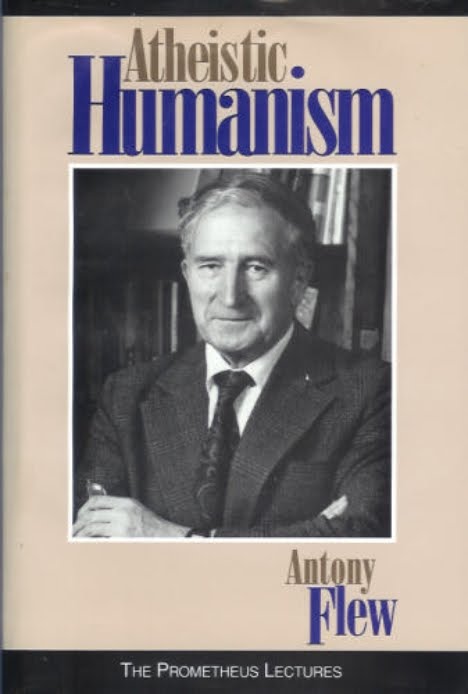
RESPONDING TO HARRY KROTO’S BRILLIANT RENOWNED ACADEMICS!! Part 43 Herman Philipse, professor of philosophy, Utrecht Univ, Netherlands “…scientific advances showed religious knowledge were not valid sources of religious knowledge at all”


On November 21, 2014 I received a letter from Nobel Laureate Harry Kroto and it said:

…Please click on this URL http://vimeo.com/26991975

and you will hear what far smarter people than I have to say on this matter. I agree with them.

Harry Kroto

_________________


Dr. Harry Kroto is the 1996 Chemistry Nobel Prize Winner and he is seen the photo below on the left:

___________

Herman Philipse

From Wikipedia, the free encyclopedia
Jump to: navigation, search
Herman Philipse
Herman Philipse-crop.jpg

At the Studium Generale of Utrecht University, 2012
Born (1951-05-13) 13 May 1951 (age 63)
The Hague, The Netherlands
Nationality Dutch
Alma mater Leiden University
Occupation Professor of philosophy
Years active 1986–present
Employer Utrecht University
Religion None (Atheist)
Website
http://www.phil.uu.nl/~philipse/

Herman Philipse (born 13 May 1951) is a professor of philosophy at Utrecht University in the Netherlands. From 1986 until 2003, he taught at Leiden University, where he obtained his doctorate in 1983.

_____________________________

In  the second video below in the 70th clip in this series are his words and  my response is below them. 

50 Renowned Academics Speaking About God (Part 1)

Another 50 Renowned Academics Speaking About God (Part 2)

A Further 50 Renowned Academics Speaking About God (Part 3)

Quote from Herman Philipse:

It was very clear there was a fierce battle between science and religion and that scientific advances showed that all so called sources of religious knowledge were not valid sources of religious knowledge at all.

March 12, 2015

Prof.Dr.Mr. H. Philipse,Utrecht, The Netherlands

Dear Dr. Philipse, 

As you can tell from reading this letter I am an evangelical Christian and I have made it a hobby of mine to correspond with scientists or academics like yourself over the last 25 years. Some of those who corresponded back with me have been  Ernest Mayr (1904-2005), George Wald (1906-1997), Carl Sagan (1934-1996),  Robert Shapiro (1935-2011), Nicolaas Bloembergen (1920-),  Brian Charlesworth (1945-),  Francisco J. Ayala (1934-) Elliott Sober (1948-), Kevin Padian (1951-), Matt Cartmill (1943-) , Milton Fingerman (1928-), John J. Shea (1969-), , Michael A. Crawford (1938-), Paul Kurtz (1925-2012), Sol Gordon (1923-2008), Albert Ellis (1913-2007), Barbara Marie Tabler (1915-1996), Renate Vambery (1916-2005), Archie J. Bahm (1907-1996), Aron S “Gil” Martin ( 1910-1997), Matthew I. Spetter (1921-2012), H. J. Eysenck (1916-1997), Robert L. Erdmann (1929-2006), Mary Morain (1911-1999), Lloyd Morain (1917-2010),  Warren Allen Smith (1921-), Bette Chambers (1930-),  Gordon Stein (1941-1996) , Milton Friedman (1912-2006), John Hospers (1918-2011), Michael Martin (1932-), John R. Cole  (1942-),   Wolf Roder,  Susan Blackmore (1951-),  Christopher C. French (1956-)  Walter R. Rowe Thomas Gilovich (1954-), Paul QuinceyHarry Kroto (1939-), Marty E. Martin (1928-), Richard Rubenstein (1924-), James Terry McCollum (1936-), Edward O. WIlson (1929-), Lewis Wolpert (1929), Gerald Holton (1922-), Martin Rees (1942-), Alan Macfarlane (1941-),  Roald Hoffmann (1937-), Herbert Kroemer (1928-), Thomas H. Jukes (1906-1999), Glenn BranchGeoff Harcourt (1931-) and  Ray T. Cragun (1976-). I would consider it an honor to add you to this very distinguished list. 

I just finished reading the online addition of the book Darwin, Francis ed. 1892. Charles Darwin: his life told in an autobiographical chapter, and in a selected series of his published letters [abridged edition]. London: John Murray. There are several points that Charles Darwin makes in this book that were very wise, honest, logical, shocking and some that were not so wise. The Christian Philosopher Francis Schaeffer once said of Darwin’s writings, “Darwin in his autobiography and in his letters showed that all through his life he never really came to a quietness concerning the possibility that chance really explained the situation of the biological world. You will find there is much material on this [from Darwin] extended over many many years that constantly he was wrestling with this problem.”

I recently ran across this quote from you:

It was very clear there was a fierce battle between science and religion and that scientific advances showed that all so called sources of religious knowledge were not valid sources of religious knowledge at all.

YOU MAY FIND IT INTERESTING THAT CHARLES DARWIN WAS ALSO INTERESTED IN THE HISTORICAL ASPECT OF THE BIBLE. When I read the book  Charles Darwin: his life told in an autobiographical chapter, and in a selected series of his published letters, I also read  a commentary on it by Francis Schaeffer and I wanted to both  quote some of Charles Darwin’s own words to you and then include the comments of Francis Schaeffer on those words. I have also enclosed a CD with two messages from Adrian Rogers and Bill Elliff concerning Darwinism.

In 1879 Charles Darwin was applied to by a German student, in a similar manner. The letter was answered by a member of my father’s family, who wrote:–

“Mr. Darwin begs me to say that he receives so many letters, that he cannot answer them all.He considers that the theory of Evolution is quite compatible with the belief in a God; but that you must remember that different persons have different definitions of what they mean by God.” 

Francis Schaeffer commented:

You find a great confusion in his writings although there is a general structure in them. Here he says the word “God” is alright but you find later what he doesn’t take is a personal God. Of course, what you open is the whole modern linguistics concerning the word “God.” is God a pantheistic God? What kind of God is God? Darwin says there is nothing incompatible with the word “God.”

This, however, did not satisfy the German youth, who again wrote to my father, and received from him the following reply:—

“I am much engaged, an old man, and out of health, and I cannot spare time to answer your questions fully,—nor indeed can they be answered. Science has nothing to do with Christ, except in so far as the habit of scientific research makes a man cautious in admitting evidence. For myself, I do not believe that there ever has been any revelation.As for a future life, every man must judge for himself between conflicting vague probabilities.”

Francis Schaeffer observed:

So he has come to the place as an old man that he doesn’t believe there has been any revelation. In his younger years he held a different position. He lost his position not on the basis of reason but simply that it disagreed with his theory and his presuppositions and he was forced to give it up.

The passages which here follow are extracts, somewhat abbreviated, from a part of the Autobiography, written in 1876, in which my father gives the history of his religious views:—“During these two years* (ft note *October 1836 to January 1839.) I was led to think much about religion. Whilst on board the Beagle I was quite orthodox, and I remember being heartily laughed at by several of the officers (though themselves orthodox) for quoting the Bible as an unanswerable authority on some point of morality.

Francis Schaeffer noted:

So you find that as a younger man he did accept the Bible. As an older man he has given up revelation but he is not satisfied with his own answers. He is caught in the tension that modern man is caught in. He is a prefiguration  of the modern man and he himself contributed to. Then Darwin goes on and tells us why he gave up the Bible.

Darwin went to write:

I suppose it was the novelty of the argument that amused them. But I had gradually come by this time, i.e. 1836 to 1836, to see that the Old Testament was no more to be trusted than the sacred books of the Hindoos. The question then continually rose before my mind and would not be banished,—is it credible that if God were now to make a revelation to the Hindoos, he would permit it to be connected with the belief in Vishnu, Siva, &c., as Christianity is connected with the Old Testament? This appeared to me utterly incredible.

Francis Schaeffer asserted:

Darwin is saying that he gave up the New Testament because it was connected to the Old Testament. He gave up the Old Testament because it conflicted with his own theory. Did he have a real answer himself and the answer is no. At the end of his life we see that he is dehumanized by his position and on the other side we see that he never comes to the place of intellectual satisfaction for himself that his answers were sufficient.

Darwin continued:

“But I was very unwilling to give up my belief; I feel sure of this, for I can well remember often and often inventing day-dreams of old letters between distinguished Romans, and manuscripts being discovered at Pompeii or elsewhere, which confirmed in the most striking manner all that was written in the Gospels.

Francis Schaeffer commented:

This is very sad. He lies on his bunk and the Beagle tosses and turns and he makes daydreams, and his dreams and hopes are that someone would find in Pompeii or some place like this, an old manuscript by a distinguished Roman that would put his stamp of authority on it, which would be able to show that Christ existed. This is undoubtedly what he is talking about. Darwin gave up this hope with great difficulty. I think he didn’t want to come to the position where his accepted presuppositions were driving him. He didn’t want to give it up, just as an older man he understood where it would lead and “man can do his duty.” Instinctively this of brains understood where this whole thing was going to eventually go…

SINCE CHARLES DARWIN’S DEATH WE NOW HAVE LOTS OF HISTORICAL RECORDS AND MUCH EVIDENCE FROM THE FIELD OF ARCHAEOLOGY THAT SHOW THE BIBLE IS HISTORICALLY ACCURATE.

**************TAKE TIME TO CONSIDER THIS EVIDENCE BELOW********************

I  have been amazed at the prophecies in the Bible that have been fulfilled in history, and also many of the historical details in the Bible have been confirmed by archaeology too. One of the most amazing is the prediction that the Jews would be brought back and settle in Jerusalem again. Another prophecy in Psalms 22 describes the Messiah dying on a cross  almost 1000 years before the Romans came up with this type of punishment.

Many times it has been alleged that the author of the Book of Daniel was from a later period but how did a later author know these 5 HISTORICAL FACTS? How did he know [1] that Belshazzar was ruling during the last few years of the Babylonian Empire when the name “Belshazzar” was lost to history until 1853 when it was uncovered in the monuments? [2] The author also knew that the Babylonians executed individuals by casting them into fire, and that the Persians threw the condemned to the lions. [3] He knew  the practice in the 6th Century was to mention first the Medes, then the Persians and not the other way around. [4] Plus he knew the laws made by Persian kings could not be revoked and [5] he knew that in the sixth century B.C., Susa was in the province of Elam (Dan. 8:2). Of course, the Book of Daniel (2:37-42) clearly predicted the rise of the 4 world empires in the correct order of Babylon, Medo-Persia, Greece, and Rome.

One of the top 10 posts on my blog on this next subject concerning Tyre.   John MacArthur went through every detail of the prophecy concerning Tyre and how history shows the Bible prophecy was correct.  Sagan said he had taken a look at Old Testament prophecy and it did not impress him because it was too vague.

HOW CAN ANYONE SAY THAT THIS FOLLOWING PROPHECY CONCERNING TYRE IS “TOO VAGUE?”

Below is an outline from a sermon from Dr. John MacArthur

Photo of John MacArthur

________________

John MacArthur on the amazing fulfilled prophecy on Tyre and how it was fulfilled by historical events.

LESSON

I. BIBLICAL PROPHECY CONCERNING TYRE (Ezekiel 26:1–28:19)

A. The Forecast

1. The specifics

a) That King Nebuchadnezzar of Babylon would destroy the mainland city of Tyre (26:7-8).

b) That many nations would rise up against Tyre. These nations would come like waves of the sea, one after another (26:3- 4).

c) That Tyre will be made like a flat rock (26:4, 14).

d) That fisherman will dry their nets there (26:5, 14).

e) That the rubble of the city would be cast into the sea (26:12).

f) That Tyre would never be rebuilt (26:14).

2. The setting

Tyre was a great city. It was one of the largest and most powerful cities of Phoenicia, which is modern day Lebanon.

It was well fortified. A great wall protected the city from land attacks while their world-renowned fleet protected them from attack by sea.

Tyre was a flourishing city during the time when Joshua led Israel into the Promised Land. King Hiram, who began his reign during the rule of David, offered David cedars from Tyre to build his palace. He also loaned David his artisans to craft parts of the great palace (1 Chron. 14:1). Hiram also helped Solomon build the Temple by floating cedars down the shoreline to be picked up and hauled to Jerusalem (2 Chron. 2:16). So Tyre was a great city, and both David and Solomon looked to it for aid.

B. The Fulfillment

1. The prophetic call

a) To Nebuchadnezzar

Not long after the prophecy given by Ezekiel, Nebuchadnezzar did exactly what had been predicted–he laid siege against the city in 585 B.C. For thirteen years Nebuchadnezzar cut off the flow of supplies into the city. In 537 B.C. he finally succeeded in breaking the gates down, but found the city almost empty.

During the thirteen-year siege, the people of Tyre moved all their possessions by ship to an island one-half mile offshore. So Nebuchadnezzar gained no plunder (Ezek. 29:17- 20). Although he destroyed the mainland city (Ezek. 26:8), the new city offshore continued to flourish for 250 years. The prophecy of Ezekiel 26:12–“they shall lay thy stones and thy timber and thy dust in the midst of the water”–remained unfulfilled.

b) To Alexander the Great

At age twenty-two, Alexander the Great came east conquering the known world with an army of between thirty and forty thousand men. Having defeated the Persians under Darius III, Alexander was on the march toward Egypt.

(1) The dilemma

Alexander arrived in the Phoenician territory and demanded that the cities open their gates to him. The citizens of Tyre refused, feeling they were secure on their island with their superior fleet.

(2) The decision

Realizing he did not have a fleet that could match Tyre’s, Alexander decided to build a causeway to the island using the ruins from the mainland city. It was about two hundred feet wide. The prophet said that the city would be thrown into the water, and that’s exactly what happened.

(3) The details

Arrian, a Greek historian, wrote about the overthrow of Tyre and how it was accomplished (The Campaigns of Alexander [New York: Penquin, 1958], pp. 132-43). The fortification of Tyre resembled Alcatraz. The city sat offshore like a rock with walls that came down to the edge of the water. Alexander set out to build the only means to approach the city–a land peninsula. Soldiers started pitching rubble into the water, leveling it off as they went so they could march on it. The water got deeper as they approached the island, and to make their task even more difficult, the people of Tyre bombarded them with missiles.

Werner Keller in The Bible as History tells us that to safeguard the operation, Alexander built mobile shields called “tortoises” (New York: Bantam, 1956], p. 361). Knowing that when they reached the city they would have to scale the walls, Alexander built “Hele-poleis,” which were mobile siege towers 160 foot high. The idea was to roll these structures across the causeway and push them up against the walls. A drawbridge on the front of the towers enabled the soldiers to march across the top of the walls and into the city.

Alexander’s men were under constant attack from people within the city and from the Tyrian navy. Realizing that he needed ships to defend his flanks, Alexander returned to the cities he had conquered and demanded their assistance. That fulfilled the prophecy that God “will cause many nations to come up against thee, as the sea causeth its waves to come up” (Ezek. 26:3).

(4) The destruction

Alexander’s plan succeeded. Eight thousand people were slain and thirty thousand were sold into slavery. It took Alexander seven months to conquer Tyre. The causeway he built can be seen to this day.

2. The prophetic result

How did Ezekiel know all those things would happen? The only explanation is he expressed the mind of God. Historian Philip Myers said, “Alexander the Great reduced it [Tyre] to ruins (332 B.C.). She recovered in a measure from this blow, but never regained the place she had previously held in the world. The larger part of the site … is now as bare as the top of a rock–a place where the fishermen that still frequent the spot spread their nets to dry” (General History for Colleges and High Schools [Boston: Ginn and Co., 1889], p. 55). That fulfills the prophecies of Ezekiel 26:4-5, 14. The island city was repopulated, later to be destroyed by the Moslems in A.D. 1281. However, God said the mainland city would never be rebuilt–and it never has. Jerusalem has been rebuilt many times but Tyre will never be rebuilt because a prophet in Babylon said twenty-five centuries ago, “Thou shalt be built no more” (Ezek. 26:14).

___________________

ANY HISTORIAN CAN HAVE ACCESS TO ALL OF THESE RECORDS. WHY NOT TAKE A FEW MOMENTS AND CHECK OUT THESE FACTS YOURSELF? As a secularist you believe that it is sad indeed that millions of Christians are hoping for heaven but no heaven is waiting for them. Paul took a close look at this issue too:

I Corinthians 15 asserts:

12 But if it is preached that Christ has been raised from the dead, how can some of you say that there is no resurrection of the dead? 13 If there is no resurrection of the dead, then not even Christ has been raised. 14 And if Christ has not been raised, our preaching is useless and so is your faith. 15 More than that, we are then found to be false witnesses about God, for we have testified about God that he raised Christ from the dead. But he did not raise him if in fact the dead are not raised. 16 For if the dead are not raised, then Christ has not been raised either. 17 And if Christ has not been raised, your faith is futile; you are still in your sins. 18 Then those also who have fallen asleep in Christ are lost. 19 If only for this life we have hope in Christ, we are of all people most to be pitied.

I sent you a CD that starts off with the song DUST IN THE WIND by Kerry Livgren of the group KANSAS which was a hit song in 1978 when it rose to #6 on the charts because so many people connected with the message of the song. It included these words, “All we do, crumbles to the ground though we refuse to see, Dust in the Wind, All we are is dust in the wind, Don’t hang on, Nothing lasts forever but the Earth and Sky, It slips away, And all your money won’t another minute buy.”

Kerry Livgren himself said that he wrote the song because he saw where man was without a personal God in the picture. Solomon pointed out in the Book of Ecclesiastes that those who believe that God doesn’t exist must accept three things. FIRST, death is the end and SECOND, chance and time are the only guiding forces in this life.  FINALLY, power reigns in this life and the scales are never balanced. The Christian can  face death and also confront the world knowing that it is not determined by chance and time alone and finally there is a judge who will balance the scales.

Both Kerry Livgren and the bass player Dave Hope of Kansas became Christians eventually. Kerry Livgren first tried Eastern Religions and Dave Hope had to come out of a heavy drug addiction. I was shocked and elated to see their personal testimony on The 700 Club in 1981 and that same  interview can be seen on You Tube today. Livgren lives in Topeka, Kansas today where he teaches “Diggers,” a Sunday school class at Topeka Bible ChurchDAVE HOPE is the head of Worship, Evangelism and Outreach at Immanuel Anglican Church in Destin, Florida.

The answer to find meaning in life is found in putting your faith and trust in Jesus Christ. The Bible is true from cover to cover and can be trusted.

Thank you again for your time and I know how busy you are.

Everette Hatcher, everettehatcher@gmail.com, http://www.thedailyhatch.org, cell ph 501-920-5733, Box 23416, LittleRock, AR 72221, United States

Is the Bible historically accurate? Here are some of the posts I have done in the past on the subject: 1. The Babylonian Chronicleof Nebuchadnezzars Siege of Jerusalem2. Hezekiah’s Siloam Tunnel Inscription. 3. Taylor Prism (Sennacherib Hexagonal Prism)4. Biblical Cities Attested Archaeologically. 5. The Discovery of the Hittites6.Shishak Smiting His Captives7. Moabite Stone8Black Obelisk of Shalmaneser III9A Verification of places in Gospel of John and Book of Acts., 9B Discovery of Ebla Tablets10. Cyrus Cylinder11. Puru “The lot of Yahali” 9th Century B.C.E.12. The Uzziah Tablet Inscription13. The Pilate Inscription14. Caiaphas Ossuary14 B Pontius Pilate Part 214c. Three greatest American Archaeologists moved to accept Bible’s accuracy through archaeology.

You can hear DAVE HOPE and Kerry Livgren’s stories from this youtube link:

(part 1 ten minutes)

(part 2 ten minutes)

Kansas – Dust in the Wind (Official Video)

Uploaded on Nov 7, 2009

Pre-Order Miracles Out of Nowhere now at http://www.miraclesoutofnowhere.com

About the film:
In 1973, six guys in a local band from America’s heartland began a journey that surpassed even their own wildest expectations, by achieving worldwide superstardom… watch the story unfold as the incredible story of the band KANSAS is told for the first time in the DVD Miracles Out of Nowhere.

_____________________________

Adrian Rogers on Darwinism


The Bible and Archaeology – Is the Bible from God? (Kyle Butt 42 min)

Related posts:

FRANCIS SCHAEFFER ANALYZES ART AND CULTURE Part 53 THE BEATLES (Part E, Stg. Pepper’s and John Lennon’s search in 1967 for truth was through drugs, money, laughter, etc & similar to King Solomon’s, LOTS OF PICTURES OF JOHN AND CYNTHIA) (Feature on artist Yoko Ono)

The John Lennon and the Beatles really were on a long search for meaning and fulfillment in their lives  just like King Solomon did in the Book of Ecclesiastes. Solomon looked into learning (1:12-18, 2:12-17), laughter, ladies, luxuries, and liquor (2:1-2, 8, 10, 11), and labor (2:4-6, 18-20). He fount that without God in the picture all […]

FRANCIS SCHAEFFER ANALYZES ART AND CULTURE Part 52 THE BEATLES (Part D, There is evidence that the Beatles may have been exposed to Francis Schaeffer!!!) (Feature on artist Anna Margaret Rose Freeman )

______________   George Harrison Swears & Insults Paul and Yoko Lucy in the Sky with Diamonds- The Beatles The Beatles:   I have dedicated several posts to this series on the Beatles and I don’t know when this series will end because Francis Schaeffer spent a lot of time listening to the Beatles and talking […]

FRANCIS SCHAEFFER ANALYZES ART AND CULTURE Part 51 THE BEATLES (Part C, List of those on cover of Stg.Pepper’s ) (Feature on artist Raqib Shaw )

  The Beatles in a press conference after their Return from the USA Uploaded on Nov 29, 2010 The Beatles in a press conference after their Return from the USA. The Beatles:   I have dedicated several posts to this series on the Beatles and I don’t know when this series will end because Francis […]

FRANCIS SCHAEFFER ANALYZES ART AND CULTURE Part 50 THE BEATLES (Part B, The Psychedelic Music of the Beatles) (Feature on artist Peter Blake )

__________________   Beatles 1966 Last interview I have dedicated several posts to this series on the Beatles and I don’t know when this series will end because Francis Schaeffer spent a lot of time listening to the Beatles and talking and writing about them and their impact on the culture of the 1960’s. In this […]

FRANCIS SCHAEFFER ANALYZES ART AND CULTURE Part 49 THE BEATLES (Part A, The Meaning of Stg. Pepper’s Cover) (Feature on artist Mika Tajima)

_______________ The Beatles documentary || A Long and Winding Road || Episode 5 (This video discusses Stg. Pepper’s creation I have dedicated several posts to this series on the Beatles and I don’t know when this series will end because Francis Schaeffer spent a lot of time listening to the Beatles and talking and writing about […]

FRANCIS SCHAEFFER ANALYZES ART AND CULTURE PART 48 “BLOW UP” by Michelangelo Antonioni makes Philosophic Statement (Feature on artist Nancy Holt)

_______________ Francis Schaeffer pictured below: _____________________ I have included the 27 minute  episode THE AGE OF NONREASON by Francis Schaeffer. In that video Schaeffer noted,  ” Sergeant Pepper’s Lonely Hearts Club Band…for a time it became the rallying cry for young people throughout the world. It expressed the essence of their lives, thoughts and their feelings.” How Should […]

FRANCIS SCHAEFFER ANALYZES ART AND CULTURE Part 47 Woody Allen and Professor Levy and the death of “Optimistic Humanism” from the movie CRIMES AND MISDEMEANORS Plus Charles Darwin’s comments too!!! (Feature on artist Rodney Graham)

Crimes and Misdemeanors: A Discussion: Part 1 ___________________________________ Today I will answer the simple question: IS IT POSSIBLE TO BE AN OPTIMISTIC SECULAR HUMANIST THAT DOES NOT BELIEVE IN GOD OR AN AFTERLIFE? This question has been around for a long time and you can go back to the 19th century and read this same […]

FRANCIS SCHAEFFER ANALYZES ART AND CULTURE PART 46 Friedrich Nietzsche (Featured artist is Thomas Schütte)

____________________________________ Francis Schaeffer pictured below: __________ Francis Schaeffer has written extensively on art and culture spanning the last 2000years and here are some posts I have done on this subject before : Francis Schaeffer’s “How should we then live?” Video and outline of episode 10 “Final Choices” , episode 9 “The Age of Personal Peace and Affluence”, episode 8 […]

FRANCIS SCHAEFFER ANALYZES ART AND CULTURE Part 45 Woody Allen “Reason is Dead” (Feature on artists Allora & Calzadilla )

Love and Death [Woody Allen] – What if there is no God? [PL] ___________ _______________ How Should We then Live Episode 7 small (Age of Nonreason) #02 How Should We Then Live? (Promo Clip) Dr. Francis Schaeffer 10 Worldview and Truth Two Minute Warning: How Then Should We Live?: Francis Schaeffer at 100 Francis Schaeffer […]

FRANCIS SCHAEFFER ANALYZES ART AND CULTURE Part 44 The Book of Genesis (Featured artist is Trey McCarley )

___________________________________ Francis Schaeffer pictured below: ____________________________ Francis Schaeffer “BASIS FOR HUMAN DIGNITY” Whatever…HTTHR Dr. Francis schaeffer – The flow of Materialism(from Part 4 of Whatever happened to human race?) Dr. Francis Schaeffer – The Biblical flow of Truth & History (intro) Francis Schaeffer – The Biblical Flow of History & Truth (1) Dr. Francis Schaeffer […]

RESPONDING TO HARRY KROTO’S BRILLIANT RENOWNED ACADEMICS!! Part 42 Peter Singer, Professor of Bioethics at Princeton University, THE PROBLEM OF EVIL


_______

On November 21, 2014 I received a letter from Nobel Laureate Harry Kroto and it said:

…Please click on this URL http://vimeo.com/26991975

and you will hear what far smarter people than I have to say on this matter. I agree with them.

Harry Kroto

_________________

Below you have picture of 1996 Chemistry Nobel Prize Winner Dr. Harry Kroto (on right and  Reg Colin on left):

______________________

Singer1.jpg

Wikipedia notes:

Peter Albert David Singer, AC (born 6 July 1946) is an Australian moral philosopher. He is currently the Ira W. DeCamp Professor of Bioethics at Princeton University, and a Laureate Professor at the Centre for Applied Philosophy and Public Ethics at the University of Melbourne. He specializes in applied ethics and approaches ethical issues from a secular, utilitarianperspective. He is known in particular for his book, Animal Liberation (1975), a canonical text in animal rights/liberation theory. For most of his career, he supported preference utilitarianism, but in his later years became a classical or hedonistic utilitarian, when co-authoring The Point of View of the Universe with Katarzyna de Lazari-Radek.

On two occasions, Singer served as chair of the philosophy department at Monash University, where he founded its Centre for Human Bioethics. In 1996 he stood unsuccessfully as a Greenscandidate for the Australian Senate. In 2004 he was recognised as the Australian Humanist of the Year by the Council of Australian Humanist Societies, and in June 2012 was named a Companion of the Order of Australia for his services to philosophy and bioethics.[2] He serves on the Advisory Board of Incentives for Global Health, the NGO formed to develop the Health Impact Fund proposal. He was voted one of Australia’s ten most influential public intellectuals in 2006.[3] Singer currently serves on the advisory board of Academics Stand Against Poverty(ASAP).

_____________________________

In  the first video below in the 46th clip in this series are his words and  my response is below them. 

50 Renowned Academics Speaking About God (Part 1)

Another 50 Renowned Academics Speaking About God (Part 2)

A Further 50 Renowned Academics Speaking About God (Part 3)

I grew up at Bellevue Baptist Church under the leadership of our pastor Adrian Rogers and I read many books by the Evangelical Philosopher Francis Schaeffer and have had the opportunity to contact many of the evolutionists or humanistic academics that they have mentioned in their works. Many of these scholars have taken the time to respond back to me in the last 20 years and some of the names  included are  Ernest Mayr (1904-2005), George Wald (1906-1997), Carl Sagan (1934-1996),  Robert Shapiro (1935-2011), Nicolaas Bloembergen (1920-),  Brian Charlesworth (1945-),  Francisco J. Ayala (1934-) Elliott Sober (1948-), Kevin Padian (1951-), Matt Cartmill (1943-) , Milton Fingerman (1928-), John J. Shea (1969-), , Michael A. Crawford (1938-), Paul Kurtz (1925-2012), Sol Gordon (1923-2008), Albert Ellis (1913-2007), Barbara Marie Tabler (1915-1996), Renate Vambery (1916-2005), Archie J. Bahm (1907-1996), Aron S “Gil” Martin ( 1910-1997), Matthew I. Spetter (1921-2012), H. J. Eysenck (1916-1997), Robert L. Erdmann (1929-2006), Mary Morain (1911-1999), Lloyd Morain (1917-2010),  Warren Allen Smith (1921-), Bette Chambers (1930-),  Gordon Stein (1941-1996) , Milton Friedman (1912-2006), John Hospers (1918-2011), Michael Martin (1932-), John R. Cole  (1942-),   Wolf Roder,  Susan Blackmore (1951-),  Christopher C. French (1956-)  Walter R. Rowe Thomas Gilovich (1954-), Paul QuinceyHarry Kroto (1939-), Marty E. Martin (1928-), Richard Rubenstein (1924-), James Terry McCollum (1936-), Edward O. WIlson (1929-), Lewis Wolpert (1929), Gerald Holton (1922-), Martin Rees (1942-), Alan Macfarlane (1941-),  Roald Hoffmann (1937-), Herbert Kroemer (1928-), Thomas H. Jukes (1906-1999), Glenn BranchGeoff Harcourt (1931-), and  Ray T. Cragun (1976-).

QUOTE Peter Singer thinks

it is  “monstrous” to believe that “God would create a world where, let’s say, a two-year-old child would die a slow and lingering death from hunger and thirst…” because of Adam and Eve’s sin committed thousands of years before. Even if one thinks that baby’s suffering is “deserved,” “what about the suffering on non-human animals?”

Josh Wilson – Before The Morning (Official Music Video)

One of my favorite songs  is called “Before the Morning” and it is by  the Christian singer Josh Wilson. The lyrics start out: “Why do you have to feel the things that hurt you? If there’s a God who loves you where is He now?” Over the years I have corresponded with several atheists and many times they confront me on this  very issue such as this letter did from Dr. Brian Charlesworth, Dept of Ecology and Evolution, University of Chicago in letter dated May 10, 1994:

Thank you for your various communications. I am afraid that I formed the view many years ago that there is no foundation for any belief in a benevolent creator of the world. For me, there is too much suffering in the world to be compatible with the existence of such a being. 

Let me make three points concerning the problem of evil and suffering. First, the problem of evil and suffering hit this world in a big way because of Adam and what happened in Genesis Chapter 3. Second, if there is no God then there is no way to distinguish good from evil and there will be no ultimate punishment for Hitler and Josef Mengele. Third. Christ came and suffered and will destroy all evil from this world eventually forever.

Recently I went to see the movie GOD’S NOT DEAD in a local theater and that prompted me to read the book of the same name by Rice Broocks. In the movie the problem of evil and suffering is discussed just like it is in the book  and would love to interact further with anyone who would like to see the film is a big hit in theaters this year. On page 5 on the book you will find these words:
Atheists claim that the universe isn’t what you would expect
if a supernatural God existed. All this death and suffering, they say,
are plain evidence that a loving, intelligent God could not be behind
it all. The truth is that God has created a world where free moral
agents are able to have real choices to do good or evil. If God had
created a world without that fundamental choice and option to do
evil, then we wouldn’t be having this discussion. God made a world
where choices are real and humanity is affected by the choices of
other humans. Drunk drivers kill innocent people. Some murder
and steal from their fellow men. Though God gave clear com-
mandments to humanity, we have for the most part ignored these
directives. The mess that results is not God’s fault. It’s ours.
We are called to follow God and love Him with all our hearts
and minds. This means we have to think and investigate. Truth
is another word for reality. When something is true it’s true
everywhere. The multiplication tables are just as true in China
as they are in America. Gravity works in Africa the way it does
in Asia. The fact that there are moral truths that are true every-
where points to a transcendent morality that we did not invent
and from which we cannot escape (C.S.Lewis, MERE CHRISTIANITY,[1952:
New York: Harper Collins, 2001], p. 35).
As Creator, God has placed not only natural laws in the earth
but also spiritual laws. For instance, lying is wrong everywhere.
So is stealing. Cruelty to children is wrong regardless of what
culture you’re in or country you’re from. When these laws are
broken, people are broken. Not only does violating these spiritual
laws separate us from God, but it causes pain in our lives and
in the lives of those around us. The big question becomes, what
can be done about our condition? When we break these spiritual
laws, whom can we call for help? How can we be reconciled to
God as well as break free from this cycle of pain and dysfunction?

Francis Schaeffer in his fine book about modern man ESCAPE FROM REASON  states,

“the True Christian position is that, in space and time and history, there was an unprogrammed man who made a choice, and actually rebelled against God…without Christianity’s answer that God made a significant man in a significant history with evil being the result of Satan’s and then man’s historic space-time revolt, there is no answer but to accept Baudelaire’s answer [‘If there is a God, He is the devil’] with tears. Once the historic Christian answer is put away, all we can do is to leap upstairs and say that against all reason God is good.”(pg. 81)

Someone I knew in 1985 grew up in Germany and was part of the Hitler Youth Program, Was he wrong in his beliefs? 

On what basis does the atheist have to say “Hitler was wrong!!!”

Early in his career Hitler was popular and many of the German people bought into his anti-semetic views. Does the atheist have an intellectual basis to condemn Hitler’s actions?

____________________________________

My friend who grew up in Germany  believed until his dying day that Hitler was right. I had a basis for knowing that Hitler was wrong and here it is below.
It is my view that according the Bible all men are created by God and are valuable.  However, the atheist has no basis for coming to this same conclusion. Francis Schaeffer put it this way:
We cannot deal with people like human beings, we cannot deal with them on the high level of true humanity, unless we really know their origin—who they are. God tells man who he is. God tells us that He created man in His image. So man is some- thing wonderful.
In 1972 Schaeffer wrote the book “He is There and He is Not Silent.” Here is the statement that sums up that book:

One of philosophy’s biggest problems is that anything exists at all and has the form that it does. Another is that man exists as a personal being and makes true choices and has moral responsibility. The Bible gives sufficient answers to these problems. In fact, the only sufficient answer is that the infinite-personal triune God is there and He is not silent. He has spoken to man in the Bible.

In the movie CRIMES AND MISDEMEANORS the basic question Woody Allen is presenting to his own agnostic humanistic worldview is: If you really believe there is no God there to punish you in an afterlife, then why not murder if you can get away with it?   The secular humanist worldview that modern man has adopted does not work in the real world that God has created. God “has planted eternity in the human heart…” (Ecclesiastes 3:11). This is a direct result of our God-given conscience. The apostle Paul said it best in Romans 1:19, “For that which is known about God is evident to them and made plain in their inner consciousness, because God  has shown it to them” (Amplified Version).

It’s no wonder, then, that one of Allen’s fellow humanists would comment, “Certain moral truths — such as do not kill, do not steal, and do not lie — do have a special status of being not just ‘mere opinion’ but bulwarks of humanitarian action. I have no intention of saying, ‘I think Hitler was wrong.’ Hitler WAS wrong.” (Gloria Leitner, “A Perspective on Belief,” The Humanist, May/June 1997, pp.38-39). Here Leitner is reasoning from her God-given conscience and not from humanist philosophy. It wasn’t long before she received criticism.

Humanist Abigail Ann Martin responded, “Neither am I an advocate of Hitler; however, by whose criteria is he evil?” (The Humanist, September/October 1997, p. 2.). Humanists don’t really have an intellectual basis for saying that Hitler was wrong, but their God-given conscience tells them that they are wrong on this issue.

Here is fine film by Francis Schaeffer and Dr. C. Everett Koop that makes the case for human dignity.

Francis Schaeffer “BASIS FOR HUMAN DIGNITY” Whatever…HTTHR

http://www.youtube.com/watch?v=F6FZgLZ5_CU

Also here is the link for  another fine article on this same issue by Chuck Colson.

Crimes? What Crimes?

The Grand ‘Sez Who’

Let us take a close look at how you are going to come up with morality as an atheist. When you think about it there is no way around the final conclusion that it is just your opinion against mine concerning morality. There is no final answers. However, if God does exist and he has imparted final answers to us then everything changes.

Take a look at a portion of this paper by Greg Koukl. In this article he points out that atheists don’t even have a basis for saying that Hitler was wrong:

What doesn’t make sense is to look at the existence of evil and question the existence of God. The reason is that atheism turns out being a self-defeating philosophic solution to this problem of evil. Think of what evil is for a minute when we make this kind of objection. Evil is a value judgment that must be measured against a morally perfect standard in order to be meaningful. In other words, something is evil in that it departs from a perfect standard of good. C.S. Lewis made the point, “My argument against God was that the universe seemed so cruel and unjust. But how had I got this idea of just and unjust? A man does not call something crooked unless he has some idea of a straight line.”] He also goes on to point out that a portrait is a good or a bad likeness depending on how it compares with the “perfect” original. So to talk about evil, which is a departure from good, actually presumes something that exists that is absolutely good. If there is no God there’s no perfect standard, no absolute right or wrong, and therefore no departure from that standard. So if there is no God, there can’t be any evil, only personal likes and dislikes–what I prefer morally and what I don’t prefer morally.

This is the big problem with moral relativism as a moral point of view when talking about the problem of evil. If morality is ultimately a matter of personal taste–that’s what most people hold nowadays–then it’s just your opinion what’s good or bad, but it might not be my opinion. Everybody has their own view of morality and if it’s just a matter of personal taste–like preferring steak over broccoli or Brussels sprouts–the objection against the existence of God based on evil actually vanishes because the objection depends on the fact that some things are intrinsically evil–that evil isn’t just a matter of my personal taste, my personal definition. But that evil has absolute existence and the problem for most people today is that there is no thing that is absolutely wrong. Premarital sex? If it’s right for you. Abortion? It’s an individual choice. Killing? It depends on the circumstances. Stealing? Not if it’s from a corporation.

The fact is that most people are drowning in a sea of moral relativism. If everything is allowed then nothing is disallowed. Then nothing is wrong. Then nothing is ultimately evil. What I’m saying is that if moral relativism is true, which it seems like most people seem to believe–even those that object against evil in the world, then the talk of objective evil as a philosophical problem is nonsense. To put it another way, if there is no God, then morals are all relative. And if moral relativism is true, then something like true moral evil can’t exist because evil becomes a relative thing.

An excellent illustration of this point comes from the movie The Quarrel . In this movie, a rabbi and a Jewish secularist meet again after the Second World War after they had been separated. They had gotten into a quarrel as young men, separated on bad terms, and then had their village and their family and everything destroyed through the Second World War, both thinking the other was dead. They meet serendipitously in Toronto, Canada in a park and renew their friendship and renew their old quarrel.divider

Rabbi Hersch says to the secularist Jew Chiam, “If a person does not have the Almighty to turn to, if there’s nothing in the universe that’s higher than human beings, then what’s morality? Well, it’s a matter of opinion. I like milk; you like meat. Hitler likes to kill people; I like to save them. Who’s to say which is better? Do you begin to see the horror of this? If there is no Master of the universe then who’s to say that Hitler did anything wrong? If there is no God then the people that murdered your wife and kids did nothing wrong.”

That is a very, very compelling point coming from the rabbi. In other words, to argue against the existence of God based on the existence of evil forces us into saying something like this: Evil exists, therefore there is no God. If there is no God then good and evil are relative and not absolute, so true evil doesn’t exist, contradicting the first point. Simply put, there cannot be a world in which it makes any sense to say that evil is real and at the same time say that God doesn’t exist. If there is no God then nothing is ultimately bad, deplorable, tragic or worthy of blame. The converse, by the way, is also true. This is the other hard part about this, it cuts both ways. Nothing is ultimately good, honorable, noble or worthy of praise. Everything is ultimately lost in a twilight zone of moral nothingness. To paraphrase the late Dr. Francis Schaeffer, the person who argues against the existence of God based on the existence of evil in the world has both feet firmly planted in mid-air.

_____________

Ricky Gervais in a You Tube clip from the show Piers Morgan Tonight on  1-20-2011 said that he embraced the golden rule because it made sense to him to be good to others so they would be good to you. However, how would that work if there is no ultimate lawmaker that also is our final judge? Rabbi Hersch’s argument to the secularist Jew Chiam seems to point out that without God in the picture it really does come to : “If a person does not have the Almighty to turn to, if there’s nothing in the universe that’s higher than human beings, then what’s morality? Well, it’s a matter of opinion. I like milk; you like meat. Hitler likes to kill people; I like to save them. Who’s to say which is better?”

Francis Schaeffer

Francis Schaeffer pictured above.

_______

Many crime victims feel forsaken by God. So do many divorced people, war prisoners, and starving refugees. But this young man’s cry of desperation carried added significance because of its historical allusion.
The words had appeared about a thousand years earlier in a song written by a king. The details of the song are remarkably similar to the suffering the young man endured. It said, “All who see me mock me; they hurl insults, shaking their heads …. They have pierced my hands and my feet…. They divide my garments among them and cast lots for my clothing.”{2}
Historians record precisely this behavior during the young man’s execution.{3} It was as if a divine drama were unfolding as the man slipped into death.
Researchers have uncovered more than 300 predictions or prophesies literally fulfilled in the life and death of this unique individual. Many of these statements written hundreds of years before his birth-were beyond his human control. One correctly foretold the place of his birth. {4} Another said he would be born of a virgin. {5} He would be preceded by a messenger who would prepare the way for his work, {6} He would enter the capital city as a king but riding on a donkeys back {7} He would be betrayed for thirty pieces of Silver, {8} pierced, {9} executed among thieves, {10} and yet, though wounded, {11} he would suffer no broken bones.{12}
Peter Stoner, a California mathematics professor, calculated the chance probability of just eight of these 300 prophecies coming true in one person. Using conservative estimates, Stoner concluded that the probability is 1 in 10 to the 17th power that those eight could be fulfilled by a fluke.
He says 1017silver dollars would cover the state of Texas two feet deep. Mark one coin with red fingernail polish. Stir the whole batch thoroughly. What chance would a blindfolded person have of picking the marked coin on the first try? One in 1017, the same chance that just eight of the 300 prophecies “just happened” to come true in this man, Jesus. {13}
In his dying cry from the cross Jesus reminded His hearers that His life and death precisely fulfilled God’s previously stated plan. According to the biblical perspective, at the moment of death Jesus experienced the equivalent of eternal separation from God in our place so that we might be forgiven and find new life.
He took the penalty due for all the crime, injustice, evil, sin, and shortcomings of the world-including yours and mine.
Though sinless Himself, He likely felt guilty and abandoned. Then-again in fulfillment of prophecy{14} and contrary to natural law-He came back to life. As somewhat of a skeptic I investigated the evidence for Christ’s resurrection and found it to be one of the best-attested facts in history. {15} To the seeker Jesus Christ offers true inner peace, forgiveness, purpose, and strength for contented living.

SO WHAT?

“OK, great,” you might say, “but what hope does this give the crime or divorce victim, the hungry and bleeding refugee, the citizen paralyzed by a world gone bad?” Will Jesus prevent every crime, reconcile every troubled marriage, restore every refugee, stop every war? No. God has given us free will. Suffering–even unjust suffering–is a necessary consequence of sin.
Sometimes God does intervene to change circumstances. (I’m glad my assailant became nervous and left.) Other times God gives those who believe in Him strength to endure and confidence that He will see them through. In the process, believers mature.
Most significantly we can hope in what He has told us about the future. Seeing how God has fulfilled prophecies in the past gives us confidence to believe those not yet fulfilled. Jesus promises eternal life to all who trust Him for it: “Whoever hears my word and believes him who sent me has eternal life and will not be condemned; he has crossed over from death to life.”{16}
He promised He would return to rescue people from this dying planet.{17}
He will judge all evil.{18}
Finally justice will prevail. Those who have chosen to place their faith in Him will know true joy: “He shall wipe away every tear from their eyes; and there shall no longer be any death; there shall no longer be any mourning, or crying, or pain.”{19}
Does God intend that we ignore temporal evil and mentally float off into unrealistic ethereal bliss? Nor at all. God is in the business of working through people to turn hearts to Him, resolve conflicts, make peace. After my assailant went to prison, I felt motivated to tell him that I forgave him because of Christ. He apologized, saying he, too, has now come to believe in Jesus.
But through every trial, every injustice you suffer, you can know that God is your friend and that one day He will set things right. You can know that He is still on the throne of the universe and that He cares for you. You can know this because His Son was born (Christmas is, of course, a celebration of His birth), lived, died, and came back to life in fulfillment of prophecy. Because of Jesus, if you personally receive His free gift of forgiveness, you can have hope!
Will you trust Him?
Notes
1. Matthew 27:46.
2. Psalm 22.
3. Matthew 27:35-44; John 20:25.
4. Micah 5:2; Matthew 2:1.
5. Isaiah 7:14; Matthew 1:18, 24-25; Luke 1:26-35.
6. Malachi 3:1; Isaiah 40:3; Matthew 3:1-2.
7. Zechariah 9:9; John 12:15; Matthew 21: 1-9.
8. Zechariah 11:12; Matthew 26:15.
9. Zechariah 12:10; John 19:34, 37.
10. Isaiah 53:12.
11. Matthew 27:38; Isaiah 53:5; Zechariah 13:6; Matthew 27:26.
12. Psalm 34:20; John 19:33, 36.
13. Peter Stoner, Science Speaks, pp. 99-112.
14. Psalm 6:10; Acts 2:31-32.
15. Josh McDowell, Evidence That Demands a Verdict, pp. 185-273.
16. John 5:24.
17. 1 Thessalonians 4:13-18.
18. Revelation 20:10-15.
19. Revelation 21:4 NAS.
©1994 Rusty Wright. Used by permission. All rights reserved.
Reprinted with permission from Pursuit magazine (© 1994, Vol. III, No. 3)

About the Author
Rusty Wright, former associate speaker and writer with Probe Ministries, is an international lecturer, award-winning author, and journalist who has spoken on six continents. He holds Bachelor of Science (psychology) and Master of Theology degrees from Duke and Oxford universities, respectively. http://www.rustywright.com/

Dan Guinn posted on his blog at http://www.francisschaefferstudies.org concerning the Nazis and evolution: As Schaeffer points out, “…these ideas helped produce an even more far-reaching yet logical conclusion: the Nazi movement in Germany. Heinrich Himmler (1900-1945), leader of the Gestapo, stated that the law of nature must take its course in the survival of the fittest. The result was the gas chambers. Hitler stated numerous times that Christianity and its notion of charity should be “replaced by the ethic of strength over weakness.” Surely many factors were involved in the rise of National Socialism in Germany. For example, the Christian consensus had largely been lost by the undermining from a rationalistic philosophy and a romantic pantheism on the secular side, and a liberal theology (which was an adoption of rationalism in theological terminology) in the universities and many of the churches. Thus biblical Christianity was no longer giving the consensus for German society. After World War I came political and economic chaos and a flood of moral permissiveness in Germany. Thus, many factors created the situation. But in that setting the theory of the survival of the fittest sanctioned what occurred. ” 

Francis Schaeffer notes that this idea ties into today when we are actually talking about making infanticide legal in some academic settings. Look at what these three humanist scholars have written:

  • Peter Singer, who recently was seated in an endowed chair at Princeton’s Center for Human Values, said, “Killing a disabled infant is not morally equivalent to killing a person. Very often it is not wrong at all.”
  • In May 1973, James D. Watson, the Nobel Prize laureate who discovered the double helix of DNA, granted an interview to Prism magazine, then a publication of the American Medical Association. Time later reported the interview to the general public, quoting Watson as having said, “If a child were not declared alive until three days after birth, then all parents could be allowed the choice only a few are given under the present system. The doctor could allow the child to die if the parents so choose and save a lot of misery and suffering. I believe this view is the only rational, compassionate attitude to have.”
  • In January 1978, Francis Crick, also a Nobel laureate, was quoted in the Pacific News Service as saying “… no newborn infant should be declared human until it has passed certain tests regarding its genetic endowment and that if it fails these tests it forfeits the right to live.”

God Is A Luxury I Can’t Afford – From Crimes And Misdemeanors

___________

Is the Bible historically accurate? Here are some of the posts I have done in the past on the subject: 1. The Babylonian Chronicleof Nebuchadnezzars Siege of Jerusalem2. Hezekiah’s Siloam Tunnel Inscription. 3. Taylor Prism (Sennacherib Hexagonal Prism)4. Biblical Cities Attested Archaeologically. 5. The Discovery of the Hittites6.Shishak Smiting His Captives7. Moabite Stone8Black Obelisk of Shalmaneser III9A Verification of places in Gospel of John and Book of Acts., 9B Discovery of Ebla Tablets10. Cyrus Cylinder11. Puru “The lot of Yahali” 9th Century B.C.E.12. The Uzziah Tablet Inscription13. The Pilate Inscription14. Caiaphas Ossuary14 B Pontius Pilate Part 214c. Three greatest American Archaeologists moved to accept Bible’s accuracy through archaeology.

The Bible and Archaeology – Is the Bible from God? (Kyle Butt 42 min)

Related posts:

FRANCIS SCHAEFFER ANALYZES ART AND CULTURE Part 53 THE BEATLES (Part E, Stg. Pepper’s and John Lennon’s search in 1967 for truth was through drugs, money, laughter, etc & similar to King Solomon’s, LOTS OF PICTURES OF JOHN AND CYNTHIA) (Feature on artist Yoko Ono)

The John Lennon and the Beatles really were on a long search for meaning and fulfillment in their lives  just like King Solomon did in the Book of Ecclesiastes. Solomon looked into learning (1:12-18, 2:12-17), laughter, ladies, luxuries, and liquor (2:1-2, 8, 10, 11), and labor (2:4-6, 18-20). He fount that without God in the picture all […]

FRANCIS SCHAEFFER ANALYZES ART AND CULTURE Part 52 THE BEATLES (Part D, There is evidence that the Beatles may have been exposed to Francis Schaeffer!!!) (Feature on artist Anna Margaret Rose Freeman )

______________   George Harrison Swears & Insults Paul and Yoko Lucy in the Sky with Diamonds- The Beatles The Beatles:   I have dedicated several posts to this series on the Beatles and I don’t know when this series will end because Francis Schaeffer spent a lot of time listening to the Beatles and talking […]

FRANCIS SCHAEFFER ANALYZES ART AND CULTURE Part 51 THE BEATLES (Part C, List of those on cover of Stg.Pepper’s ) (Feature on artist Raqib Shaw )

  The Beatles in a press conference after their Return from the USA Uploaded on Nov 29, 2010 The Beatles in a press conference after their Return from the USA. The Beatles:   I have dedicated several posts to this series on the Beatles and I don’t know when this series will end because Francis […]

FRANCIS SCHAEFFER ANALYZES ART AND CULTURE Part 50 THE BEATLES (Part B, The Psychedelic Music of the Beatles) (Feature on artist Peter Blake )

__________________   Beatles 1966 Last interview I have dedicated several posts to this series on the Beatles and I don’t know when this series will end because Francis Schaeffer spent a lot of time listening to the Beatles and talking and writing about them and their impact on the culture of the 1960’s. In this […]

FRANCIS SCHAEFFER ANALYZES ART AND CULTURE Part 49 THE BEATLES (Part A, The Meaning of Stg. Pepper’s Cover) (Feature on artist Mika Tajima)

_______________ The Beatles documentary || A Long and Winding Road || Episode 5 (This video discusses Stg. Pepper’s creation I have dedicated several posts to this series on the Beatles and I don’t know when this series will end because Francis Schaeffer spent a lot of time listening to the Beatles and talking and writing about […]

FRANCIS SCHAEFFER ANALYZES ART AND CULTURE PART 48 “BLOW UP” by Michelangelo Antonioni makes Philosophic Statement (Feature on artist Nancy Holt)

_______________ Francis Schaeffer pictured below: _____________________ I have included the 27 minute  episode THE AGE OF NONREASON by Francis Schaeffer. In that video Schaeffer noted,  ” Sergeant Pepper’s Lonely Hearts Club Band…for a time it became the rallying cry for young people throughout the world. It expressed the essence of their lives, thoughts and their feelings.” How Should […]

FRANCIS SCHAEFFER ANALYZES ART AND CULTURE Part 47 Woody Allen and Professor Levy and the death of “Optimistic Humanism” from the movie CRIMES AND MISDEMEANORS Plus Charles Darwin’s comments too!!! (Feature on artist Rodney Graham)

Crimes and Misdemeanors: A Discussion: Part 1 ___________________________________ Today I will answer the simple question: IS IT POSSIBLE TO BE AN OPTIMISTIC SECULAR HUMANIST THAT DOES NOT BELIEVE IN GOD OR AN AFTERLIFE? This question has been around for a long time and you can go back to the 19th century and read this same […]

FRANCIS SCHAEFFER ANALYZES ART AND CULTURE PART 46 Friedrich Nietzsche (Featured artist is Thomas Schütte)

____________________________________ Francis Schaeffer pictured below: __________ Francis Schaeffer has written extensively on art and culture spanning the last 2000years and here are some posts I have done on this subject before : Francis Schaeffer’s “How should we then live?” Video and outline of episode 10 “Final Choices” , episode 9 “The Age of Personal Peace and Affluence”, episode 8 […]

FRANCIS SCHAEFFER ANALYZES ART AND CULTURE Part 45 Woody Allen “Reason is Dead” (Feature on artists Allora & Calzadilla )

Love and Death [Woody Allen] – What if there is no God? [PL] ___________ _______________ How Should We then Live Episode 7 small (Age of Nonreason) #02 How Should We Then Live? (Promo Clip) Dr. Francis Schaeffer 10 Worldview and Truth Two Minute Warning: How Then Should We Live?: Francis Schaeffer at 100 Francis Schaeffer […]

FRANCIS SCHAEFFER ANALYZES ART AND CULTURE Part 44 The Book of Genesis (Featured artist is Trey McCarley )

___________________________________ Francis Schaeffer pictured below: ____________________________ Francis Schaeffer “BASIS FOR HUMAN DIGNITY” Whatever…HTTHR Dr. Francis schaeffer – The flow of Materialism(from Part 4 of Whatever happened to human race?) Dr. Francis Schaeffer – The Biblical flow of Truth & History (intro) Francis Schaeffer – The Biblical Flow of History & Truth (1) Dr. Francis Schaeffer […]