
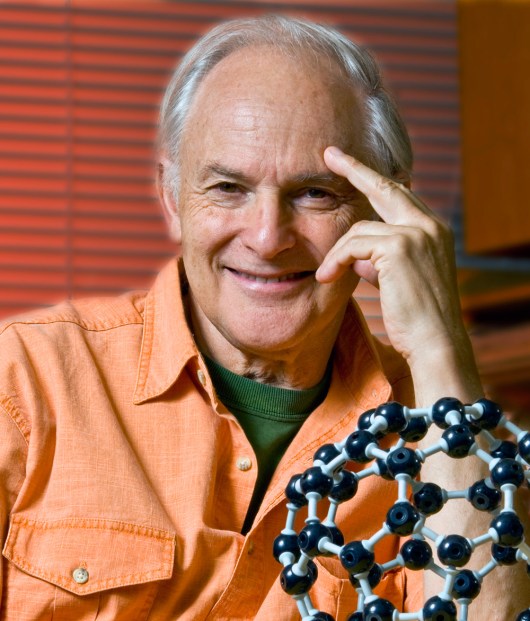
RESPONDING TO HARRY KROTO’S BRILLIANT RENOWNED ACADEMICS!! Part 149 II Sir Bertrand RussellBertrand Russell as a child. On November 21, 2014 I received a letter from Nobel Laureate Harry Kroto and it said:…Please click on this URL http://vimeo.com/26991975and you will hear what far smarter people than I have to say on this matter. I agree with them.Harry Kroto
 I have attempted to respond to all of Dr. Kroto’s friends arguments and I have posted my responses one per week for over a year now. Here are some of my earlier posts:Arif Ahmed, Sir David Attenborough, Mark Balaguer, Horace Barlow, Michael Bate, Patricia Churchland, Aaron Ciechanover, Noam Chomsky,Alan Dershowitz, Hubert Dreyfus, Bart Ehrman, Stephan Feuchtwang, David Friend, Riccardo Giacconi, Ivar Giaever , Roy Glauber, Rebecca Goldstein, David J. Gross, Brian Greene, Susan Greenfield, Stephen F Gudeman, Alan Guth, Jonathan Haidt, Theodor W. Hänsch, Brian Harrison, Hermann Hauser, Roald Hoffmann, Bruce Hood, Herbert Huppert, Gareth Stedman Jones, Steve Jones, Shelly Kagan, Michio Kaku, Stuart Kauffman, Lawrence Krauss, Harry Kroto, George Lakoff, Elizabeth Loftus, Alan Macfarlane, Peter Millican, Marvin Minsky, Leonard Mlodinow, Yujin Nagasawa, Alva Noe, Douglas Osheroff, Jonathan Parry, Saul Perlmutter, Herman Philipse, Carolyn Porco, Robert M. Price, Lisa Randall, Lord Martin Rees, Oliver Sacks, John Searle, Marcus du Sautoy, Simon Schaffer, J. L. Schellenberg, Lee Silver, Peter Singer, Walter Sinnott-Armstrong, Ronald de Sousa, Victor Stenger, Barry Supple, Leonard Susskind, Raymond Tallis, Neil deGrasse Tyson, .Alexander Vilenkin, Sir John Walker, Frank Wilczek, Steven Weinberg, and Lewis Wolpert,In the first video below in the 14th clip in this series are his words and I will be responding to them in the next few weeks since Sir Bertrand Russell is probably the most quoted skeptic of our time, unless it was someone like Carl Sagan or Antony Flew.
50 Renowned Academics Speaking About God (Part 1)
Another 50 Renowned Academics Speaking About God (Part 2)
A Further 50 Renowned Academics Speaking About God (Part 3)
__
Quote from Bertrand Russell:
Q: Why are you not a Christian?Russell: Because I see no evidence whatever for any of the Christian dogmas. I’ve examined all the stock arguments in favor of the existence of God, and none of them seem to me to be logically valid.Q: Do you think there’s a practical reason for having a religious belief, for many people?Russell: Well, there can’t be a practical reason for believing what isn’t true. That’s quite… at least, I rule it out as impossible. Either the thing is true, or it isn’t. If it is true, you should believe it, and if it isn’t, you shouldn’t. And if you can’t find out whether it’s true or whether it isn’t, you should suspend judgment. But you can’t… it seems to me a fundamental dishonesty and a fundamental treachery to intellectual integrity to hold a belief because you think it’s useful, and not because you think it’s true.__When I read this article below it reminded me of this scripture from Ecclesiastes and then this quote from Bertrand Russell.Solomon wisely noted in Ecclesiastes 3:11 “God has planted eternity in the heart of men…” (Living Bible). No wonder Bertrand Russell wrote in his autobiography, “It is odd, isn’t it? I feel passionately for this world and many things and people in it, and yet…what is it all? There must be something more important, one feels, though I don’t believe there is. I am haunted. Some ghosts, for some extra mundane regions, seem always trying to tell me something that I am to repeat to the world, but I cannot understand that message.” __
__
The Gospel Carries Us Back To Reality
“When God opens our eyes (2 Cor. 4:6) and grants us the knowledge of the truth (2 Tim. 2:25), through the Scriptures (1 Sam. 3:21), we know that we have met ultimate reality. – John Piper (A Peculiar Glory, 19)What is reality?That’s a question many would feel belongs in a classroom instead of the pew. It might be seen as redundant because everyone knows what reality is, right? It consists of what is right in front of us. It’s self-evident and doesn’t need abstraction or a lengthy explanation, or questions in order to be discovered. However, based on Scripture, we see this is not the case. According to 2 Corinthians 4:4, the world is “blinded” by Satan; people are kept from seeing the light of the gospel.If the gospel is about a historical Jesus, who was both God and man, and who died a death for sin that a real Adam brought into the world (Rom. 5:12), and people are not believing or receiving that message…well, think about it. It means they are not seeing themselves for who they are as sinners, and God for who He is for us as Savior and Lord. We by nature are out of touch with reality. We are missing a piece of the story of the world- the most important piece, the most important news ever.Now, let’s go back to this first question:The answer to the opening question is not as simple as you might think. Consider these words from the philosopher P.F. Strawson in his book Analysis and Metaphysics
So what is involved in the notion of sense perception yielding true judgements about an objective spatio-temporal world? Of course, in asking this question, it is not implied that sense-perception always yields true judgements. We can, and do, misperceive, make mistakes. But it is certainly a feature of our ordinary scheme of thought that sense perception is taken to yield judgements which are generally or usually true. Remember that in thinking of the world as objective, we are thinking of it as being the way it is independently of any particular judgement about it; the truth of the judgement, if it is true, consists in its conformity to the way things are in the world. (60, emphasis added)
What Strawson is getting at here is that although your senses can help you understand true things about the world you are observing- although you are at the same time in the world and having an experience of it- that does not guarantee that everything you perceive is true. Your senses, like your heart (Jer. 17:9), can deceive you. It is important at this point to mention that you are a fallen human being observing a fallen world. There is beauty in it still, just as you are made in God’s image while still being a sinner, but that beauty is tainted and your Image is distorted. You are not guaranteed that what you observe is what is there- whether that’s through intuition, sight, smelling, or any of your other senses. The mind and heart that processes those senses is imperfect, and the ship is guided by a small rudder that loves sin instead of God.Taking things a step further, Bertrand Russell in his book The Problems of Philosophy speaks of two types of knowledge: knowledge by acquaintance, and knowledge by description. By knowledge of acquaintance he means, “anything of which we are directly aware, without the intermediary of any process of interference or knowledge of truths. (46).” So, you can see light and the sun and know that you are seeing the sun giving out light to see what is around you. You do not need any description of how light works in order to see it with your eyes. There is no truth needing to be explained for you to see this light. But, as you are acquainted with this light, you can from there learn things about it. On the other hand, knowledge by description here refers to statements that involve more details to help us understand specific realities. His example is, “‘ a man’ is an ambiguous description, and ‘the man with the iron mask’ is a definite description. (52)”When it comes to who God is, we in one sense are acquainted with Him through nature, and in seeing His power and beauty displayed, but are not acquainted with Him as Savior and Lord until we are given His description in Christ. We can see the works of God displayed with our senses. But, when it comes to the truths of Scripture and the meaning of the gospel, we are not by ourselves capable of becoming acquainted with it, and seeing it for all that it is, without God first giving us the eyes to see and the ears to hear. Until we come to believe the gospel, we are only acquainted with God in a general sense; we only know Him as Creator, but we do not know Him truly until He is described to us in Christ. We are out of alignment with reality until this happens. Our thinking is out of sync with where everything is. The Fall affects everything, and we often try and shield ourselves from it.As Christians, we understand that we live in a created universe where everything in existence has a meaning and a purpose directed under the sovereignty of God (Prov. 16:1-4). We are able to understand that our suffering cannot be fully explained in this life (Job 38-40), but as Christians we also know that nothing can enter our lives that will destroy us, or keep us from the love of Christ and all of the good purposes intended for us (Rom: 8:28ff). We do not have a house on the sand, but a house on the rock (Matt. 7:24-27)- we have security in our Shepherd (John 10), an anchor for the soul (Heb. 6).In your thinking you can relate things back to God and Scripture- you know the “ultimate” reality, the ultimate truth, and are not left to wallow in despair to be taken by the wind of varying beliefs (Col. 2), or be deceived by plausible philosophies. But, consider this Christian: what does your neighbor have to stand on? What can they do with their guilt? How can they know what a right decision is? Where do they go when they desire knowledge? What roof is over their heads?Francis Schaeffer in his book The God Who Is There writes
The more logical a man who holds a non-Christian position is to his own presuppositions, the further he is from the real world; and the nearer he is to the real world, the more illogical he is to his presuppositions (The God Who Is There, 133-134).
We need to reach people with the truth by listening to them and discovering where their own presuppositions go; we should gently push them to seeing that what they believe does not align with the way the world is. We could demonstrate this by showing there is an explanation for their guilt, and the Bible says this is the conscience and God’s law at work in us (Rom. 2). We could point to the order and form of the universe to show that it is being held together by a Personal Creator, and Scripture mentions God sustaining everything by the word of His power (Col. 1; Heb. 1). The unbeliever lives in a Christian universe- the only universe that exists. This means they are on our playground, and we need only to describe the playground to them that they are observing each day.Further on, Schaeffer writes,
At the point of tension the person is not in a place of consistency in his system, and the roof is built as a protection against the blows of the real world, both internal and external…Taking the roof off involves showing man his need. His need is addressed in the Scriptures which show his lostness and the answer found in the person of Jesus Christ…but we must allow the person to undergo this experience so that he may realize his system has no answer to the crucial questions of life. He must come to know that his roof is a false protection from the storm of what is; and then we can talk to him about the storm of God’s judgment. (The God Who Is There, 140-141).
Perhaps I will write more another day. If you’d like a related post, feel free to check this out.Go out- listen well, struggle well, and describe to others the Savior you are now acquainted with.Austin Thompson__Could it be that when Bertrand Russell was spending time with his children, he was driven to make this statement below?“It is odd, isn’t it? I feel passionately for this world and many things and people in it, and yet…what is it all? There must be something more important, one feels, though I don’t believe there is. I am haunted. Some ghosts, for some extra mundane regions, seem always trying to tell me something that I am to repeat to the world, but I cannot understand that message.”Check out this related post.Related posts:
Top 10 Woody Allen Movies __________ John Piippo makes the case that Bertrand Russell would have loved Woody Allen because they both were atheists who don’t deny the ramifications of atheism!!! Monday, August 06, 2012 (More On) Woody Allen’s Atheism As I wrote in a previous post, I like Woody Allen. I have long admired his […]
______ Top 10 Woody Allen Movies PBS American Masters – Woody Allen A Documentary 01 PBS American Masters – Woody Allen A Documentary 02 __________ John Piippo makes the case that Bertrand Russell would have loved Woody Allen because they both were two atheists who don’t deny the ramifications of atheism!!! Monday, August 06, 2012 […]
THE MORAL ARGUMENT BERTRAND RUSSELL But aren’t you now saying in effect, I mean by God whatever is good or the sum total of what is good — the system of what is good, and, therefore, when a young man loves anything that is good he is loving God. Is that what you’re […]
Great debate Fr. Frederick C. Copleston vs Bertrand Russell – Part 1 Uploaded by riversonthemoon on Jul 15, 2009 BBC Radio Third Programme Recording January 28, 1948. BBC Recording number T7324W. This is an excerpt from the full broadcast from cassette tape A303/5 Open University Course, Problems of Philosophy Units 7-8. Older than 50 years, […]
Uploaded by riversonthemoon on Jul 15, 2009 BBC Radio Third Programme Recording January 28, 1948. BBC Recording number T7324W. This is an excerpt from the full broadcast from cassette tape A303/5 Open University Course, Problems of Philosophy Units 7-8. Older than 50 years, out of UK/BBC copyright. Pardon the hissy audio. It was recorded 51 […]
Fr. Frederick C. Copleston vs Bertrand Russell – Part 1 Uploaded by riversonthemoon on Jul 15, 2009 BBC Radio Third Programme Recording January 28, 1948. BBC Recording number T7324W. This is an excerpt from the full broadcast from cassette tape A303/5 Open University Course, Problems of Philosophy Units 7-8. Older than 50 years, out of […]
THE MORAL ARGUMENT BERTRAND RUSSELL But aren’t you now saying in effect, I mean by God whatever is good or the sum total of what is good — the system of what is good, and, therefore, when a young man loves anything that is good he is loving God. Is that what you’re […]
Fr. Frederick C. Copleston vs Bertrand Russell – Part 1 Uploaded by riversonthemoon on Jul 15, 2009 BBC Radio Third Programme Recording January 28, 1948. BBC Recording number T7324W. This is an excerpt from the full broadcast from cassette tape A303/5 Open University Course, Problems of Philosophy Units 7-8. Older than 50 years, out of […]
 On November 21, 2014 I received a letter from
  I have attempted to respond to all of Dr. Kroto’s friends arguments and I have posted my responses one per week for over a year now. Here are some of my earlier posts:
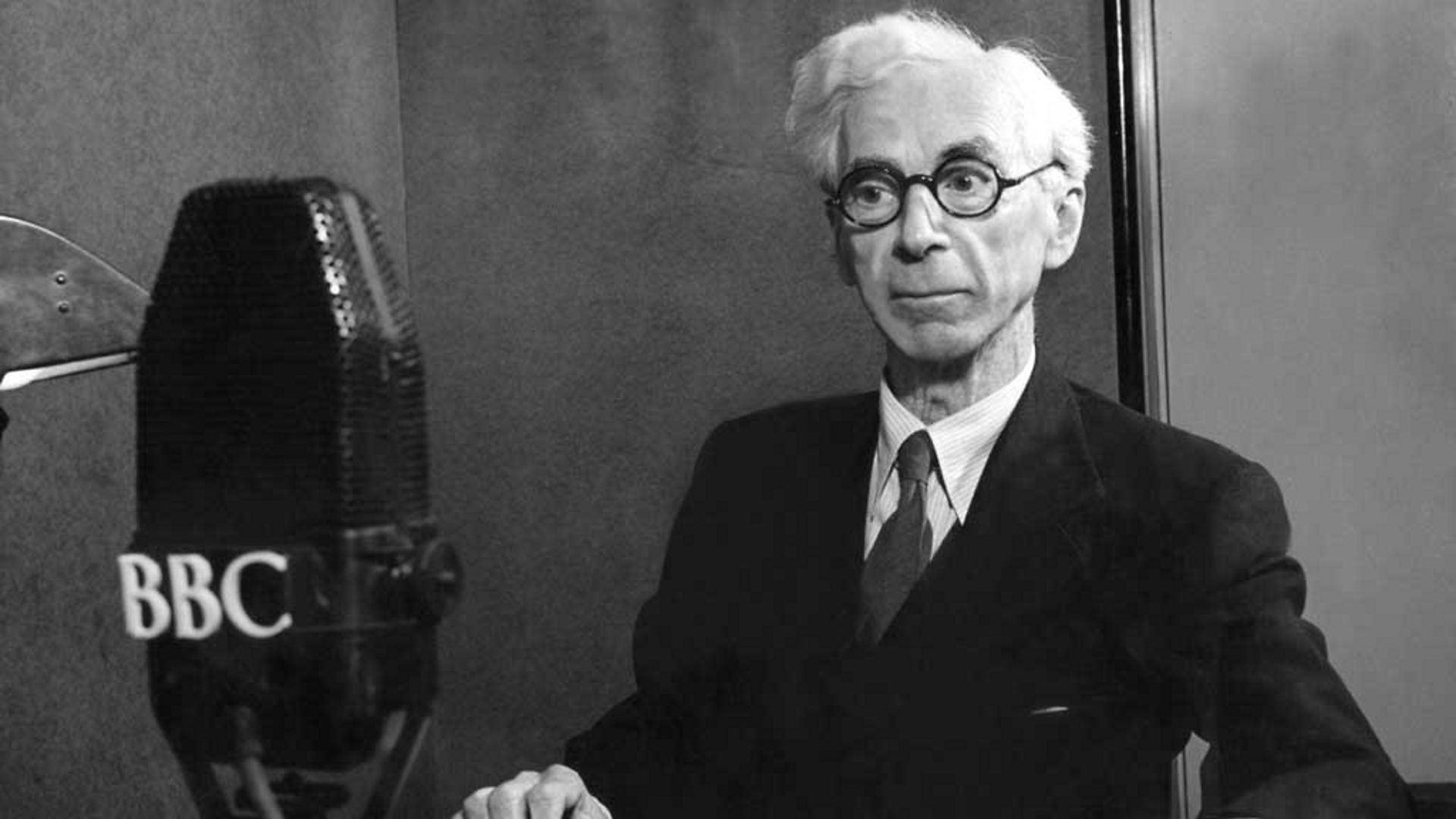
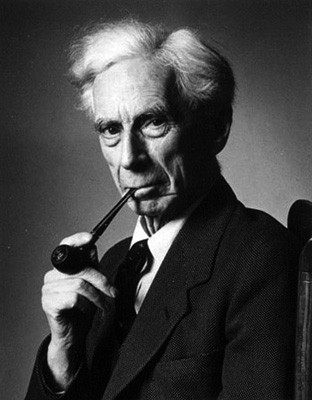
 Bertrand Arthur William Russell was born at Trelleck on 18th May, 1872. His parents were Viscount Amberley and Katherine, daughter of 2nd Baron Stanley of Alderley. At the age of three he was left an orphan. His father had wished him to be brought up as an agnostic; to avoid this he was made a ward of Court, and brought up by his grandmother. Instead of being sent to school he was taught by governesses and tutors, and thus acquired a perfect knowledge of French and German. In 1890 he went into residence at Trinity College, Cambridge, and after being a very high Wrangler and obtaining a First Class with distinction in philosophy he was elected a fellow of his college in 1895. But he had already left Cambridge in the summer of 1894 and for some months was attaché at the British embassy at Paris.In December 1894 he married Miss Alys Pearsall Smith. After spending some months in Berlin studying social democracy, they went to live near Haslemere, where he devoted his time to the study of philosophy. In 1900 he visited the Mathematical Congress at Paris. He was impressed with the ability of the Italian mathematician Peano and his pupils, and immediately studied Peano’s works. In 1903 he wrote his first important book, The Principles of Mathematics, and with his friend Dr. Alfred Whitehead proceeded to develop and extend the mathematical logic of Peano and Frege. From time to time he abandoned philosophy for politics. In 1910 he was appointed lecturer at Trinity College. After the first World War broke out, he took an active part in the No Conscription fellowship and was fined £ 100 as the author of a leaflet criticizing a sentence of two years on a conscientious objector. His college deprived him of his lectureship in 1916. He was offered a post at Harvard university, but was refused a passport. He intended to give a course of lectures (afterwards published in America as Political Ideals, 1918) but was prevented by the military authorities. In 1918 he was sentenced to six months’ imprisonment for a pacifistic article he had written in the Tribunal. His Introduction to Mathematical Philosophy (1919) was written in prison. His Analysis of Mind (1921) was the outcome of some lectures he gave in London, which were organized by a few friends who got up a subscription for the purpose.In 1920 Russell had paid a short visit to Russia to study the conditions of Bolshevism on the spot. In the autumn of the same year he went to China to lecture on philosophy at the Peking university. On his return in Sept. 1921, having been divorced by his first wife, he married Miss Dora Black. They lived for six years in Chelsea during the winter months and spent the summers near Lands End. In 1927 he and his wife started a school for young children, which they carried on until 1932. He succeeded to the earldom in 1931. He was divorced by his second wife in 1935 and the following year married Patricia Helen Spence. In 1938 he went to the United States and during the next years taught at many of the country’s leading universities. In 1940 he was involved in legal proceedings when his right to teach philosophy at the College of the City of New York was questioned because of his views on morality. When his appointment to the college faculty was cancelled, he accepted a five-year contract as a lecturer for the Barnes foundation, Merion, Pa., but the cancellation of this contract was announced in Jan. 1943 by Albert C. Barnes, director of the foundation.Russell was elected a fellow of the Royal Society in 1908, and re-elected a fellow of Trinity College in 1944. He was awarded the Sylvester medal of the Royal Society, 1934, the de Morgan medal of the London Mathematical Society in the same year, the Nobel Prize for Literature, 1950.In a paper “Logical Atomism” (Contemporary British Philosophy. Personal Statements, First series. Lond. 1924) Russell exposed his views on his philosophy, preceded by a few words on historical development.
 Cultural critic and popular atheistic philosopher, Alain de Botton, has a new angle on religion. Instead of denouncing religion as having no objective value (the modus operandi of “the new atheists”), de Botton scavenges for atheist blessings among the institutions, practices, and history of the (philosophically benighted) believers. No, there is no God. That, he thinks, is settled—although he gives no arguments to that effect. But why be so hostile to man’s religiosity—his sense of wonder, mystery, fellow-feeling, and the sacred? After all, a lot of religious things are pretty interesting and even inspiring (although there is no Spirit behind any of it). And even though the cognoscenti have outgrown any religious metaphysics (“God is dead,” as Nietzsche pontificated), there may be cultural and psychological gems mixed into the metaphysical manure of empty concepts such as God, angels, providence, prayer, prophets, miracles, saints, salvation, and final judgment.

 On November 21, 2014 I received a letter from
  I have attempted to respond to all of Dr. Kroto’s friends arguments and I have posted my responses one per week for over a year now. Here are some of my earlier posts:




 essence of this humanist statement is relationship; that a relationship solely between human beings is preferable over a relationship between God and humanity. Relationship at its core is first a valuing of the person; it is to consider the person worth the effort a relationship involves. Or, in the case of this humanistic statement, it is to consider humanity worthy of the effort and sacrifice required for such a communal relationship to exist.
 The dark tone of these atheistic pronouncements is undeniable. These men hold to a belief they acknowledge as futile. In the end all human endeavor, struggle, and advancement ends in meaningless extinction. It is utterly void of value that transcends this existence. Many people will say this end is in the too distant future to be relevant to them. But death is not far off for any of us and if this belief is true the death of a person may as well be the final end of all things. The majority of people are not remembered past one or two generations before their “person” vanishes from the human landscape altogether. All that is left is the impersonal and voiceless effects of their life that may linger for a few more generations or, at best, ripple down through the ages to end in the futility of universal extinction. This is why intuition causes many of us to ask, “With all human activity set against ultimate futility, what value is there in any human activity whether it is remembered or advancing humanity?” Unquestionably, these apostles of atheism recognize the utter futility in their belief, but they are willing to accept it. Are the rest of us willing to do so? If the atheists own testimonies are so bleak, should we accept that their testimonies are true on blind faith?
 The question is not, “Why do we make value judgments?” Simply put, no human being can escape making them. If naturalism is true, the question is why valuing anything is so deeply human. It is the very notion of a valueless universe that Dr. Dawkins’ mind simply will not accept. In the face of his utterly hopeless universe he manufactures purpose and meaning for his being. He manufactures value for himself. It takes very little attention to see that such value and purpose is truly subjective and meaningless. If naturalism is true, cognizant life is the cruelest joke ever played. It is this “oughtness” that is fundamentally woven into nature and existence — that human life ought to be valuable — that demands both an intellectual and emotionally satisfying answer. What would life be like if we, at our most fundamental levels, did not think life is valuable? Why do we fight for human rights? Why is it our tendency to elevate the value of animal life to be equal with humanity instead of devaluing humanity to be equal with animal life? If naturalism is true there is no rational judgment for thinking the cloud of atoms making up a person is more or less valuable then a cloud of atoms making up the rock the person may be sitting on.
 process on this planet that has lasted billions of years; that each human being exists as an inseparable unity of mind and body, and that therefore after death there can be no personal immortality or survival of consciousness” (Lamont, p. 1). The fathers of atheism understand the bankruptcy in these elegant and lofty sounding words. Jean-Paul Sartre expresses, “Atheism is a cruel, long-term business; I believe I have gone through it to the end” (quoted in Guinness, p. 134). However, my experience leads me to believe that the majority of people hold a more uninformed acceptance of such notions. One of my most telling experiences occurred when I attended an invitation-only lecture on the evolutionary rise of morals hosted by North Carolina State. The presenter was a world renowned researcher in his field of study. The room was full of Ph.D’s from the related fields. A question and answer period followed the presentation in which I asked why I should accept such a view when it is dependent on Supervenience. To the presenter’s credit, he knew what Supervenience is. But this world renowned leader in evolutionary theory anticipated something about his colleague’s knowledge, because he asked the room if they knew what Supervenience meant. To my astonishment the vast majority had never heard the term. Yet Supervenience is the leading explanation for human personality and mind in evolutionary thought. The best that evolutionary thought has delivered to date to explain humanity’s very personhood is a tenuously held and likely unprovable hypothesis that is apparently little known among evolutionary academics.

 So, it’s not just rational inconsistency per se that drives people into the “upper story” of irrational escape, it can also be a theoretically consistent world view, which is impossible to live out. Now, when I’m saying that it is impossible to live out, i.e. the world view is inviable, I don’t just mean that it’s really, really hard. When I’ve brought up this point at other times, some students have responded by asking whether on that criterion Christianity isn’t also inviable because, supposedly, it’s impossible for anyone to live a perfect Christian life. But that’s not the same thing. Theoretically, someone could do just that. It’s logically possible. But nobody can live their lives according to such principles as that nothing exists, there is no truth, the consequences of actions do not matter, etc.
 and a student (S) have reached a crucial point in a rather intense discussion.







 The Daily Hatch