
RESPONDING TO HARRY KROTO’S BRILLIANT RENOWNED ACADEMICS!! Part 149Z Sir Bertrand Russell_

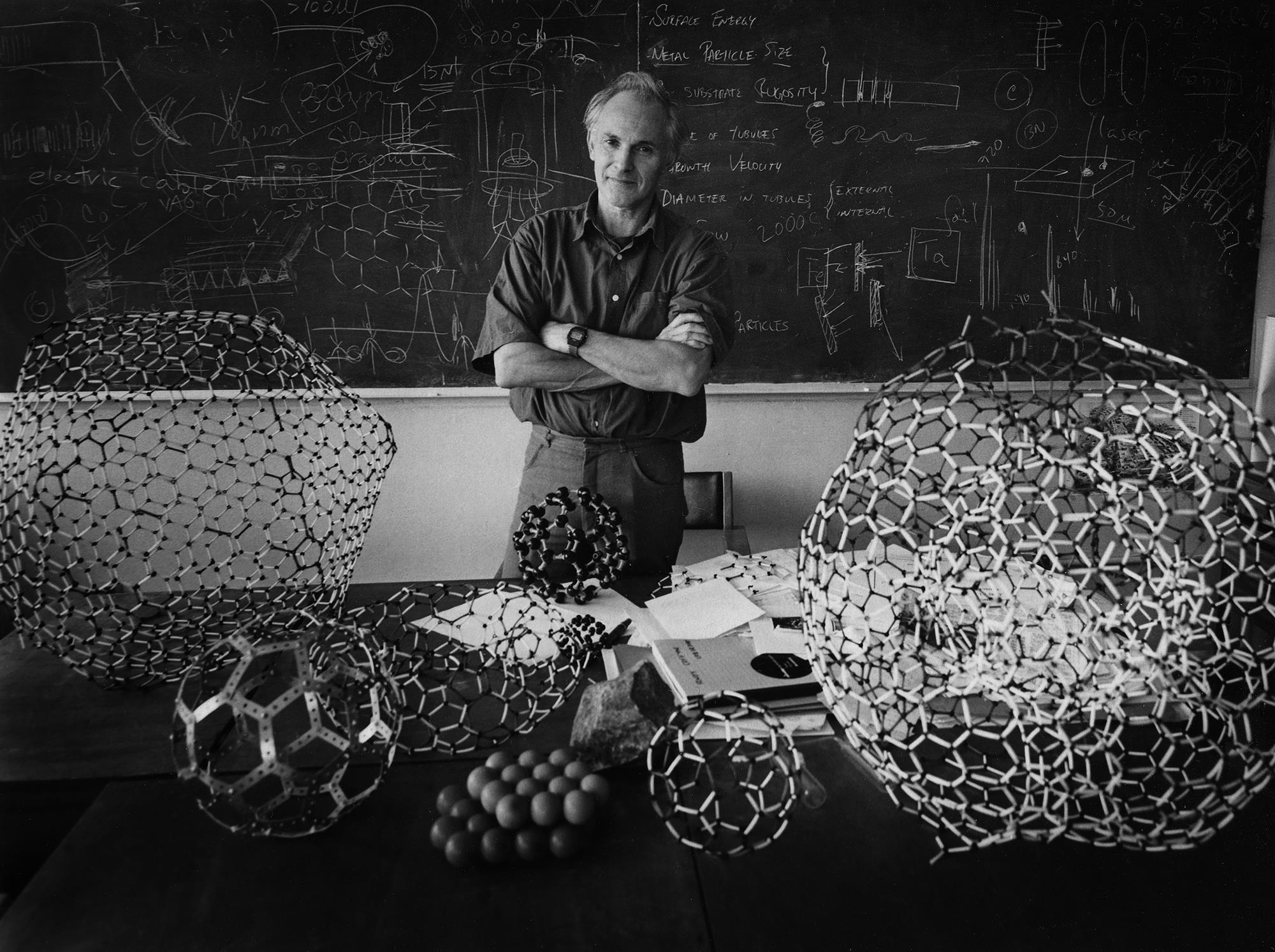
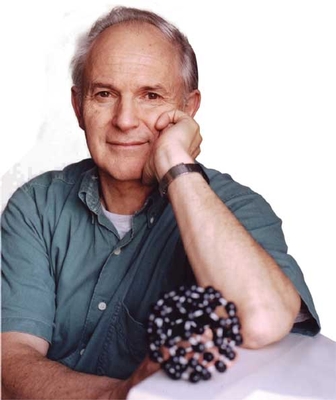
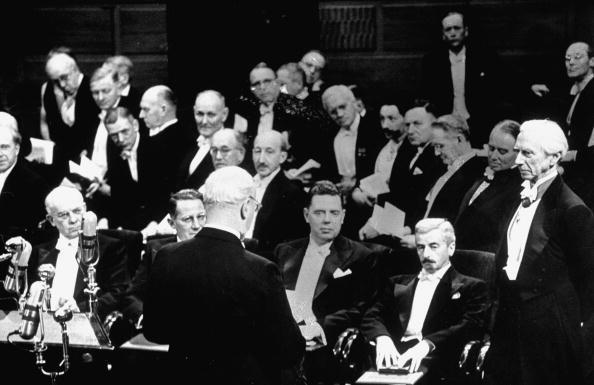
Harold W. Kroto (left) receives the Nobel Prize in chemistry from Swedish King Carl XVI Gustaf in Stockholm, in 1996.
Soren Andersson/AP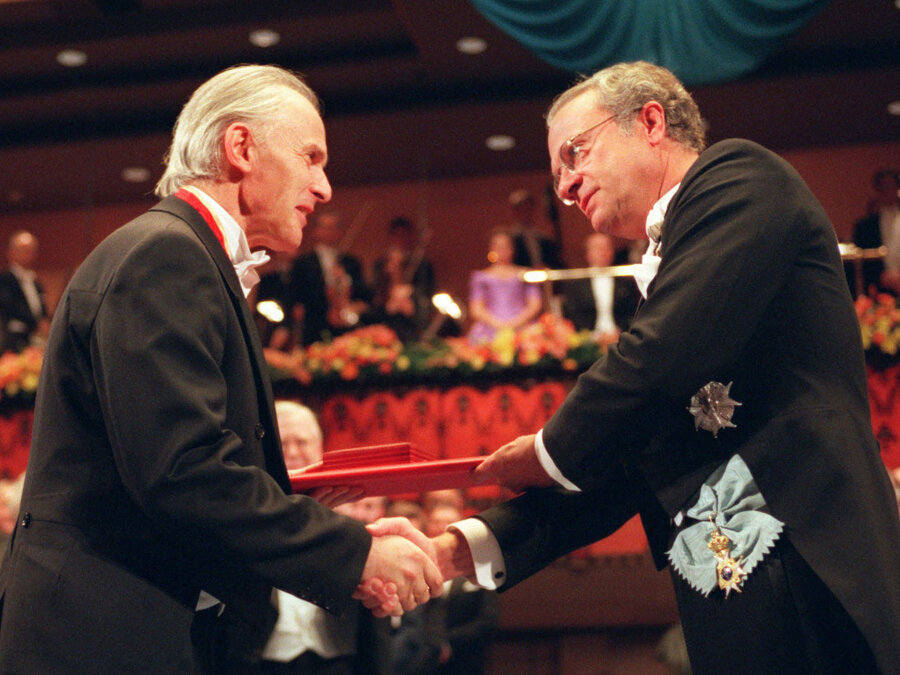 __
__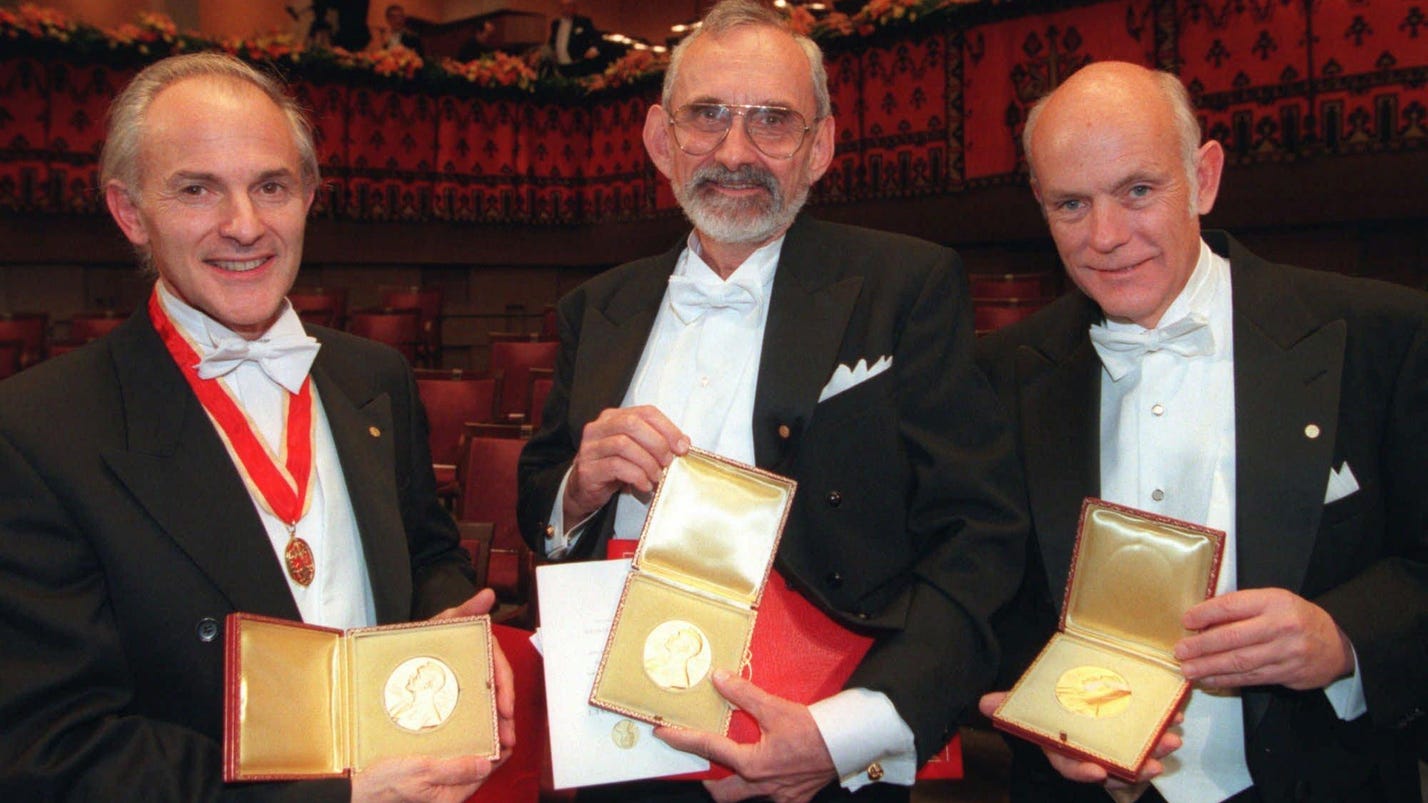 I have attempted to respond to all of Dr. Kroto’s friends arguments and I have posted my responses one per week for over a year now. Here are some of my earlier posts:Arif Ahmed, Sir David Attenborough, Mark Balaguer, Horace Barlow, Michael Bate, Patricia Churchland, Aaron Ciechanover, Noam Chomsky,Alan Dershowitz, Hubert Dreyfus, Bart Ehrman, Stephan Feuchtwang, David Friend, Riccardo Giacconi, Ivar Giaever , Roy Glauber, Rebecca Goldstein, David J. Gross, Brian Greene, Susan Greenfield, Stephen F Gudeman, Alan Guth, Jonathan Haidt, Theodor W. Hänsch, Brian Harrison, Hermann Hauser, Roald Hoffmann, Bruce Hood, Herbert Huppert, Gareth Stedman Jones, Steve Jones, Shelly Kagan, Michio Kaku, Stuart Kauffman, Lawrence Krauss, Harry Kroto, George Lakoff, Elizabeth Loftus, Alan Macfarlane, Peter Millican, Marvin Minsky, Leonard Mlodinow, Yujin Nagasawa, Alva Noe, Douglas Osheroff, Jonathan Parry, Saul Perlmutter, Herman Philipse, Carolyn Porco, Robert M. Price, Lisa Randall, Lord Martin Rees, Oliver Sacks, John Searle, Marcus du Sautoy, Simon Schaffer, J. L. Schellenberg, Lee Silver, Peter Singer, Walter Sinnott-Armstrong, Ronald de Sousa, Victor Stenger, Barry Supple, Leonard Susskind, Raymond Tallis, Neil deGrasse Tyson, .Alexander Vilenkin, Sir John Walker, Frank Wilczek, Steven Weinberg, and Lewis Wolpert,_In the first video below in the 14th clip in this series are his words and I will be responding to them in the next few weeks since Sir Bertrand Russell is probably the most quoted skeptic of our time, unless it was someone like Carl Sagan or Antony Flew.
50 Renowned Academics Speaking About God (Part 1)
Another 50 Renowned Academics Speaking About God (Part 2)
A Further 50 Renowned Academics Speaking About God (Part 3)
__
Quote from Bertrand Russell:
Q: Why are you not a Christian?Russell: Because I see no evidence whatever for any of the Christian dogmas. I’ve examined all the stock arguments in favor of the existence of God, and none of them seem to me to be logically valid.Q: Do you think there’s a practical reason for having a religious belief, for many people?Russell: Well, there can’t be a practical reason for believing what isn’t true. That’s quite… at least, I rule it out as impossible. Either the thing is true, or it isn’t. If it is true, you should believe it, and if it isn’t, you shouldn’t. And if you can’t find out whether it’s true or whether it isn’t, you should suspend judgment. But you can’t… it seems to me a fundamental dishonesty and a fundamental treachery to intellectual integrity to hold a belief because you think it’s useful, and not because you think it’s true._
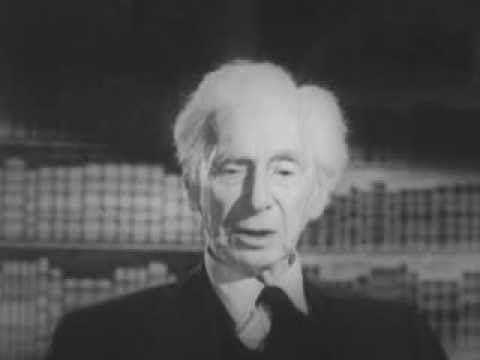
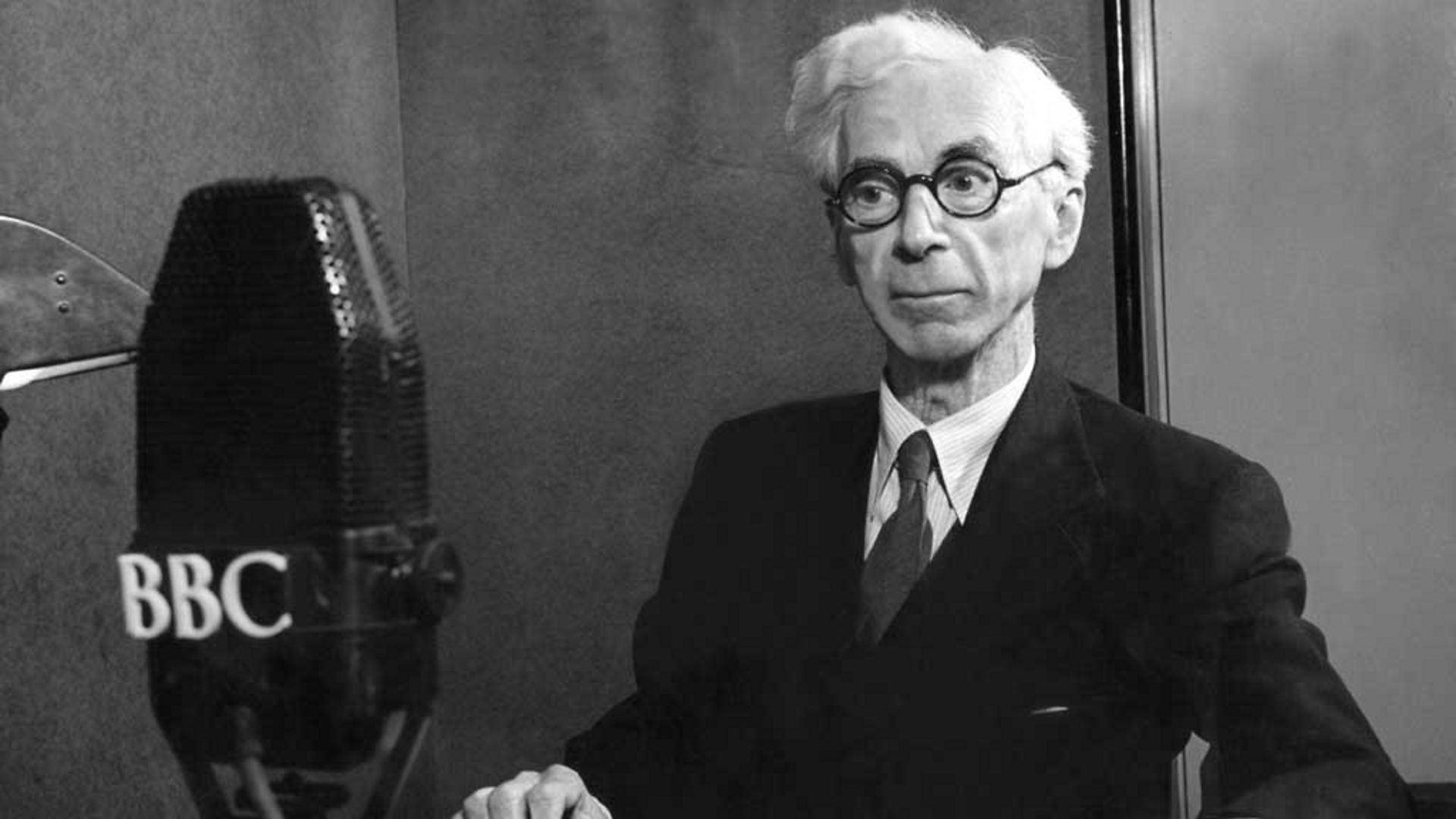
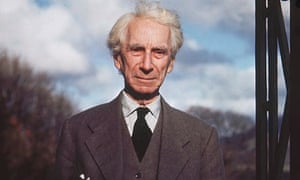
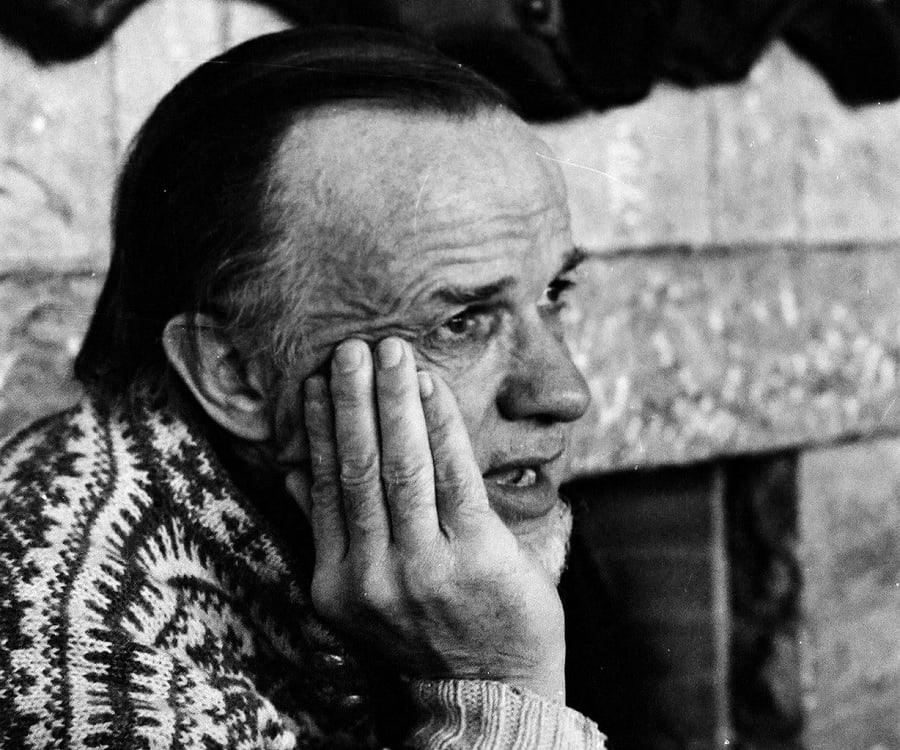
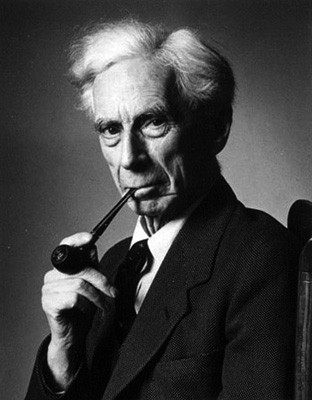
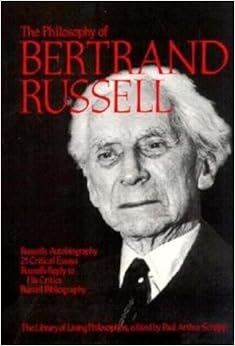
Bertrand Russell pictured above and Francis Schaeffer below: Francis Schaeffer noted concerning the IMPLICIT FAITH of Bertrand Russell:I was lecturing at the University of St. Andrews one night and someone put forth the question, “If Christianity is so clear and reasonable then why doesn’t Bertrand Russell then become a Christian? Is it because he hasn’t discovered theology?”It wasn’t a matter of studying theology that was involved but rather that he had too much faith. I was surrounded by humanists and you could hear the gasps. Bertrand Russell and faith; Isn’t this the man of reason? I pointed out that this is a man of high orthodoxy who will hold his IMPLICIT FAITH on the basis of his presuppositions no matter how many times he has to zig and zag because it doesn’t conform to the facts.You must understand what the term IMPLICIT FAITH means. In the old Roman Catholic Church when someone who became a Roman Catholic they had to promise implicit faith. That meant that you not only had to believe everything that Roman Catholic Church taught then but also everything it would teach in the future. It seems to me this is the kind of faith that these people have in the uniformity of natural causes in a closed system and they have accepted it no matter what it leads them into. I think that these men are men of a high level of IMPLICIT FAITH in their own set of presuppositions. Paul said (in Romans Chapter One) they won’t carry it to it’s logical conclusion even though they hold a great deal of the truth and they have revolted and they have set up a series of universals in themselves which they won’t transgress no matter if they conform to the facts or not.Here below is the Romans passage that Schaeffer is referring to and verse 19 refers to what Schaeffer calls “the mannishness of man” and verse 20 refers to Schaeffer’s other point which is “the universe and it’s form.”Romans 1:18-20 Amplified Bible :18 For God’s [holy] wrath and indignation are revealed from heaven against all ungodliness and unrighteousness of men, who in their wickedness repress and hinder the truth and make it inoperative. 19 For that which is known about God is evident to them and made plain in their inner consciousness, because God [Himself] has shown it to them. 20 For ever since the creation of the world His invisible nature and attributes, that is, His eternal power and divinity, have been made intelligible and clearly discernible in and through the things that have been made (His handiworks). So [men] are without excuse [altogether without any defense or justification].We can actually see the two points makes playing themselves out in Bertrand Russell’s own life.

[From a letter dated August 11, 1918 to Miss Rinder when Russell was 46]It is so with all who spend their lives in the quest of something elusive, and yet omnipresent, and at once subtle and infinite. One seeks it in music, and the sea, and sunsets; at times I have seemed very near it in crowds when I have been feeling strongly what they were feeling; one seeks it in love above all. But if one lets oneself imagine one has found it, some cruel irony is sure to come and show one that it is not really found.
The outcome is that one is a ghost, floating through the world without any real contact. Even when one feels nearest to other people, something in one seems obstinately to belong to God and to refuse to enter into any earthly communion—at least that is how I should express it if I thought there was a God. It is odd isn’t it? I care passionately for this world, and many things and people in it, and yet…what is it all? There must be something more important, one feels, though I don’t believe there is. I am haunted—some ghost, from some extra-mundane region, seems always trying to tell me something that I am to repeat to the world, but I cannot understand the message. There was evidence during Bertrand Russell’s own life that indicated that the Bible was true and could be trusted.Francis Schaeffer brings up the name of someone who lived at the same time Bertrand Russell and if Russell had chose to seriously study the evidence concerning the accuracy of the Bible then he could have seen how it could even change a skeptic’s mind like William Ramsay:
TRUTH AND HISTORY (chapter 5 of WHATEVER HAPPENED TO THE HUMAN RACE?, under footnotes #97 and #98)
A common assumption among liberal scholars is that because the Gospels are theologically motivated writings–which they are–they cannot also be historically accurate. In other words, because Luke, say (when he wrote the Book of Luke and the Book of Acts), was convinced of the deity of Christ, this influenced his work to the point where it ceased to be reliable as a historical account. The assumption that a writing cannot be both historical and theological is false.The experience of the famous classical archaeologist Sir William Ramsay illustrates this well. When he began his pioneer work of exploration in Asia Minor, he accepted the view then current among the Tubingen scholars of his day that the Book of Acts was written long after the events in Paul’s life and was therefore historically inaccurate. However, his travels and discoveries increasingly forced upon his mind a totally different picture, and he became convinced that Acts was minutely accurate in many details which could be checked.
Sir William Ramsay and Luke the Historian
Sir William Ramsay (1851-1939) was an archaeologist and biblical skeptic. He taught at the University of Edinburgh and believed that Bible writers made facts and stories up. The book of Acts, he declared, was full of errors, and to prove this contention, he traveled to Asia Minor to demonstrate Luke’s unreliability.He understood he could not prove or disprove miracle accounts, but if he could show Luke to be a sloppy historian on facts that could be verified
(geographical and historical), he felt he could discredit Luke’s unverifiable stories.Ramsay the skeptic returned to Great Britain a believer. Every one of Luke’s facts checked out. He found Luke to use specific and accurate terminology that reflected a careful chronicle of events. There were proconsuls in senatorial provinces, asiarchs in Ephesus, politarchs in Thessalonica. His conclusion was that Luke was a highly reliable historian, rendering the story of the early church in the book of Acts a remarkably clear one.The title politarch in Acts 17:6 is particularly striking because, until Ramsay’s investigation, the term was unknown in Greek literature outside Acts. Ramsay found five inscriptions with the term in the city.Ramsay wrote several important books reflecting his archaeological findings such as The Church in the Roman Empire, St. Paul the Traveler and Roman Citizen and The Cities of St. Paul.What Ramsay’s story demonstrates is the Bible will withstand any investigation from those willing to honestly look at the evidence.
The following two tabs change content below.

Stan Mitchell
Francis Schaeffer noted in his book HOW SHOULD WE THEN LIVE? (p. 182 in Vol 5 of Complete Works) in the chapter The Breakdown in Philosophy and Science:In his lecture at Acapulco, George Wald finished with only one final value. It was the same one with which English philosopher Bertrand Russell (1872-1970) was left. For Wald and Russell and for many other modern thinkers, the final value is the biological continuity of the human race. If this is the only final value, one is left wondering why this then has importance. Now having traveled from the pride of man in the High Renaissance and the Enlightenment down to the present despair, we can understand where modern people are. They have no place for a personal God. But equally they have no place for man as man, or for love, or for freedom, or for significance. This brings a crucial problem. Beginning only from man himself, people affirm that man is only a machine. But those who hold this position cannot live like machines! If they could, there would have been no tensions in their intellectual position or in their lives. But even people who believe they are machines cannot live like machines, and thus they must “leap upstairs” against their reason and try to find something which gives meaning to life, even though to do so they have to deny their reason. Francis Schaeffer in another place worded it like this:The universe was created by an infinite personal God and He brought it into existence by spoken word and made man in His own image. When man tries to reduce [philosophically in a materialistic point of view] himself to less than this [less than being made in the image of God] he will always fail and he will always be willing to make these impossible leaps into the area of nonreason even though they don’t give an answer simply because that isn’t what he is. He himself testifies that this infinite personal God, the God of the Old and New Testament is there. We all know deep down that God exists and even atheists have to grapple with that knowledge.Solomon wisely noted in Ecclesiastes 3:11 “God has planted eternity in the heart of men…” (Living Bible). No wonder Bertrand Russell wrote in his autobiography, “It is odd, isn’t it? I feel passionately for this world and many things and people in it, and yet…what is it all? There must be something more important, one feels, though I don’t believe there is. I am haunted. Some ghosts, for some extra mundane regions, seem always trying to tell me something that I am to repeat to the world, but I cannot understand that message.”Take a look at this 7th episode from Schaeffer’s series “HOW SHOULD WE THEN LIVE? The Age of Nonreason”:
How Should We Then Live – Episode Seven – 07 – Portuguese Subtitles
_Instead of making a leap into the area of nonreason the better choice would be to investigate the claims that the Bible is a historically accurate book and that God created the universe and reached out to humankind with the Bible.
The Bible and Archaeology – Is the Bible from God? (Kyle Butt 42 min)
You want some evidence that indicates that the Bible is true? Here is a good place to start and that is taking a closer look at the archaeology of the Old Testament times. Is the Bible historically accurate? Here are some of the posts I have done in the past on the subject: 1. The Babylonian Chronicle, of Nebuchadnezzars Siege of Jerusalem, 2. Hezekiah’s Siloam Tunnel Inscription. 3. Taylor Prism (Sennacherib Hexagonal Prism), 4. Biblical Cities Attested Archaeologically. 5. The Discovery of the Hittites, 6.Shishak Smiting His Captives, 7. Moabite Stone, 8. Black Obelisk of Shalmaneser III, 9A Verification of places in Gospel of John and Book of Acts., 9B Discovery of Ebla Tablets. 10. Cyrus Cylinder, 11. Puru “The lot of Yahali” 9th Century B.C.E., 12. The Uzziah Tablet Inscription, 13. The Pilate Inscription, 14. Caiaphas Ossuary, 14 B Pontius Pilate Part 2, 14c. Three greatest American Archaeologists moved to accept Bible’s accuracy through archaeology.,
____ Related posts:
Top 10 Woody Allen Movies __________ John Piippo makes the case that Bertrand Russell would have loved Woody Allen because they both were atheists who don’t deny the ramifications of atheism!!! Monday, August 06, 2012 (More On) Woody Allen’s Atheism As I wrote in a previous post, I like Woody Allen. I have long admired his […]
______ Top 10 Woody Allen Movies PBS American Masters – Woody Allen A Documentary 01 PBS American Masters – Woody Allen A Documentary 02 __________ John Piippo makes the case that Bertrand Russell would have loved Woody Allen because they both were two atheists who don’t deny the ramifications of atheism!!! Monday, August 06, 2012 […]
THE MORAL ARGUMENT BERTRAND RUSSELL But aren’t you now saying in effect, I mean by God whatever is good or the sum total of what is good — the system of what is good, and, therefore, when a young man loves anything that is good he is loving God. Is that what you’re […]
Great debate Fr. Frederick C. Copleston vs Bertrand Russell – Part 1 Uploaded by riversonthemoon on Jul 15, 2009 BBC Radio Third Programme Recording January 28, 1948. BBC Recording number T7324W. This is an excerpt from the full broadcast from cassette tape A303/5 Open University Course, Problems of Philosophy Units 7-8. Older than 50 years, […]
Uploaded by riversonthemoon on Jul 15, 2009 BBC Radio Third Programme Recording January 28, 1948. BBC Recording number T7324W. This is an excerpt from the full broadcast from cassette tape A303/5 Open University Course, Problems of Philosophy Units 7-8. Older than 50 years, out of UK/BBC copyright. Pardon the hissy audio. It was recorded 51 […]
Fr. Frederick C. Copleston vs Bertrand Russell – Part 1 Uploaded by riversonthemoon on Jul 15, 2009 BBC Radio Third Programme Recording January 28, 1948. BBC Recording number T7324W. This is an excerpt from the full broadcast from cassette tape A303/5 Open University Course, Problems of Philosophy Units 7-8. Older than 50 years, out of […]
THE MORAL ARGUMENT BERTRAND RUSSELL But aren’t you now saying in effect, I mean by God whatever is good or the sum total of what is good — the system of what is good, and, therefore, when a young man loves anything that is good he is loving God. Is that what you’re […]
Fr. Frederick C. Copleston vs Bertrand Russell – Part 1 Uploaded by riversonthemoon on Jul 15, 2009 BBC Radio Third Programme Recording January 28, 1948. BBC Recording number T7324W. This is an excerpt from the full broadcast from cassette tape A303/5 Open University Course, Problems of Philosophy Units 7-8. Older than 50 years, out of […]
 On November 21, 2014 I received a letter from
  I have attempted to respond to all of Dr. Kroto’s friends arguments and I have posted my responses one per week for over a year now. Here are some of my earlier posts:




 essence of this humanist statement is relationship; that a relationship solely between human beings is preferable over a relationship between God and humanity. Relationship at its core is first a valuing of the person; it is to consider the person worth the effort a relationship involves. Or, in the case of this humanistic statement, it is to consider humanity worthy of the effort and sacrifice required for such a communal relationship to exist.
 The dark tone of these atheistic pronouncements is undeniable. These men hold to a belief they acknowledge as futile. In the end all human endeavor, struggle, and advancement ends in meaningless extinction. It is utterly void of value that transcends this existence. Many people will say this end is in the too distant future to be relevant to them. But death is not far off for any of us and if this belief is true the death of a person may as well be the final end of all things. The majority of people are not remembered past one or two generations before their “person” vanishes from the human landscape altogether. All that is left is the impersonal and voiceless effects of their life that may linger for a few more generations or, at best, ripple down through the ages to end in the futility of universal extinction. This is why intuition causes many of us to ask, “With all human activity set against ultimate futility, what value is there in any human activity whether it is remembered or advancing humanity?” Unquestionably, these apostles of atheism recognize the utter futility in their belief, but they are willing to accept it. Are the rest of us willing to do so? If the atheists own testimonies are so bleak, should we accept that their testimonies are true on blind faith?
 The question is not, “Why do we make value judgments?” Simply put, no human being can escape making them. If naturalism is true, the question is why valuing anything is so deeply human. It is the very notion of a valueless universe that Dr. Dawkins’ mind simply will not accept. In the face of his utterly hopeless universe he manufactures purpose and meaning for his being. He manufactures value for himself. It takes very little attention to see that such value and purpose is truly subjective and meaningless. If naturalism is true, cognizant life is the cruelest joke ever played. It is this “oughtness” that is fundamentally woven into nature and existence — that human life ought to be valuable — that demands both an intellectual and emotionally satisfying answer. What would life be like if we, at our most fundamental levels, did not think life is valuable? Why do we fight for human rights? Why is it our tendency to elevate the value of animal life to be equal with humanity instead of devaluing humanity to be equal with animal life? If naturalism is true there is no rational judgment for thinking the cloud of atoms making up a person is more or less valuable then a cloud of atoms making up the rock the person may be sitting on.
 process on this planet that has lasted billions of years; that each human being exists as an inseparable unity of mind and body, and that therefore after death there can be no personal immortality or survival of consciousness” (Lamont, p. 1). The fathers of atheism understand the bankruptcy in these elegant and lofty sounding words. Jean-Paul Sartre expresses, “Atheism is a cruel, long-term business; I believe I have gone through it to the end” (quoted in Guinness, p. 134). However, my experience leads me to believe that the majority of people hold a more uninformed acceptance of such notions. One of my most telling experiences occurred when I attended an invitation-only lecture on the evolutionary rise of morals hosted by North Carolina State. The presenter was a world renowned researcher in his field of study. The room was full of Ph.D’s from the related fields. A question and answer period followed the presentation in which I asked why I should accept such a view when it is dependent on Supervenience. To the presenter’s credit, he knew what Supervenience is. But this world renowned leader in evolutionary theory anticipated something about his colleague’s knowledge, because he asked the room if they knew what Supervenience meant. To my astonishment the vast majority had never heard the term. Yet Supervenience is the leading explanation for human personality and mind in evolutionary thought. The best that evolutionary thought has delivered to date to explain humanity’s very personhood is a tenuously held and likely unprovable hypothesis that is apparently little known among evolutionary academics.

 So, it’s not just rational inconsistency per se that drives people into the “upper story” of irrational escape, it can also be a theoretically consistent world view, which is impossible to live out. Now, when I’m saying that it is impossible to live out, i.e. the world view is inviable, I don’t just mean that it’s really, really hard. When I’ve brought up this point at other times, some students have responded by asking whether on that criterion Christianity isn’t also inviable because, supposedly, it’s impossible for anyone to live a perfect Christian life. But that’s not the same thing. Theoretically, someone could do just that. It’s logically possible. But nobody can live their lives according to such principles as that nothing exists, there is no truth, the consequences of actions do not matter, etc.
 and a student (S) have reached a crucial point in a rather intense discussion.








 The Daily Hatch