“Friedman Friday” Milton Friedman remembered at 100 years from his birth (Part 4)

I ran across this very interesting article about Milton Friedman from 2002:

Friedman: Market offers poor better learningBy Tamara Henry, USA TODAY

By Doug Mills, AP
President Bush honors influential economist Milton Friedman for his 90th birthday earlier this month.
About an economist
Name:Milton FriedmanAge: 90Background: Winner of the 1976 Nobel Prize for economic science; senior research fellow, Hoover Institution at Stanford University since 1977; adviser to presidents Richard Nixon and Ronald Reagan; awarded the Presidential Medal of Freedom and the National Medal of Science in 1988.He’s in the news because an idea Friedman proposed in 1955 is the subject of a pending U.S. Supreme Court ruling. Friedman’s idea: to give low-income parents tax money, in the form of vouchers, so they have the option of sending their children to private or religious schools.Education: B.A. in 1932, Rutgers University; M.A. in 1933, University of Chicago; Ph.D. in 1946, Columbia University.

WASHINGTON — Milton Friedman is a Nobel Prize-winning economist who rubs elbows with the rich and powerful and was recently feted on his 90th birthday by President Bush. But few people know that Friedman is also a champion of poor families who want a better education for their kids.

Friedman is considered “the father of vouchers,” the controversial idea that low-income parents should get tax-supported vouchers to send their kids to private and religious schools.

“Look, what is this all about? Who is it that suffers most from our present school system?” he asks. “It’s the low-income, particularly the blacks. There’s no doubt they’re the great victims. Here’s a program that will help them tremendously.”

Friedman proposed the idea 47 years ago and says he never imagined that the debate would become so intense that the U.S. Supreme Court would have to offer a definitive ruling on the issue. A high court decision is expected soon on the constitutionality of a program in Cleveland, where the majority of the students getting $2,250 a year in vouchers use the funds to attend religious schools. Opponents say this violates the constitutionally mandated separation of church and state. But Friedman says most parents will have limited school choices as long as the government controls public education.

Private-school vouchers were “such a profoundly insightful idea that it stunned me with its clarity and how sensible it was, but yet how radical it was,” says William “Chip” Mellor, president of the Institute for Justice, a libertarian public-interest law firm that favors vouchers. He first read about the idea while in law school and says he’s known Friedman more than 15 years and considers him “a hero.”

Friedman’s slight, 5-foot frame belies his stature. He was a member of President Reagan’s Economic Policy Advisory board, and even now, when his pal Alan Greenspan and the U.S. Federal Reserve Board adjust interest rates, experts look for Friedman’s reaction. His memoirs, written with his wife, Rose, in 1998, recall how in Europe in 1950, he wrote the draft for his classic essay, “The Case for Flexible Exchange Rates,” as part of his contribution to the rehabilitation of Germany after World War II.

Five years later, education hit Friedman’s radar screen.

In 1955, he wrote a paper on the role the federal government should play in various areas: monetary matters, international trade and education. A professor at the University of Chicago at the time, Friedman published a separate article questioning why government wanted to run schools. He proposed vouchers as a way to separate government financing of education from government administration of schools.

Now, nearly a half-century later, he remains just as energetic about his idea — although no program has come close to what he first proposed.

Vouchers are not just an academic interest. Friedman and his wife, a constant companion for 63 years, created the Milton & Rose D. Friedman Foundation to fund research and support the voucher issue. “We set up the foundation because we were getting to an age in which we weren’t going to be able to do very much ourselves,” he says.

The spry nonagenarian lives in San Francisco and still works as a senior researcher at the conservative Hoover Institution, a position he has held since 1977.

Why would a wealthy economist focus so much effort on black kids from the inner city? Friedman bows his head and knits his fingers together. “What are we here for?” he asks. “We’re here to try to make the world a little better than we found it.”

He appears ill at ease with any compliment. Asked about the “father of vouchers” title, he flicks his hand and says, “Movements have lots of fathers.” He cites writings of Adam Smith and Thomas Paine in 1776 as hinting at the idea of competition and choice in education.

“Yes, it was a radical idea in its day,” Friedman says. But he frowns at today’s view of radicals as rabble-rousers who lead marches and protests. Friedman’s radicalism focuses mainly on voicing unorthodox views.

“I was not unaccustomed to having people disagree with me. To begin with, (the voucher idea) took up very rapidly. But every time people would gather strongly in favor of it, they would come up against the teachers’ unions and the educational bureaucracy, the government civil service.”

New Hampshire was the first state to express an interest in the 1970s, and five of its cities were willing to try an experiment drafted by a group at Dartmouth College, Friedman says. But he notes the teachers unions worked diligently to kill the plan before it got off the ground. A similar situation occurred in Connecticut. Milwaukee was the first city to try a voucher experiment in 1990, followed by Cleveland in 1995. Florida has the nation’s first statewide program, enacted in 1999.

Friedman says the key flaw with all the programs is that government continues to call the shots. Also, he says, voucher amounts are too low to interest entrepreneurs in opening new schools.

Friedman gives unfavorable reviews even to President Bush’s new, highly touted education law, allowing children in failing schools to receive vouchers. The problem: The bureaucracy is allowed to set the definition of a failing school.

Refundable tax credits, viewed by many as a back-door voucher, are not popular with Friedman, either. He sees them as a political game.

“Why fool around? I’d prefer to do it straightforwardly, as a voucher. We want competition. We want diversity, variety. But we want it free, not controlled or directed by any third party.”

However, Bob Chase, president of the National Education Association, the nation’s largest teachers’ union, says Friedman’s theories counter America’s concept of public education.

“When Americans first developed the concept of public education, it was conceived as a community effort — supported by taxpayers, governed by local citizens, and involving parents and others in nurturing children.

“Milton Friedman would turn this long-standing American success story on its head, creating a system that is essentially ‘every man for himself.’ ”

Chase says the “most significant obstacle” to vouchers is “parents who have clearly said, in polls and at the ballot box, that they would prefer to see improvements in existing schools.”

Friedman, who attended public schools in Rahway, N.J., remains undaunted in his mission and only chuckles when asked why his influence in economics doesn’t extend to education. “It’s hard to sell any idea. That’s not a bad thing. It’s a good thing that it’s hard to sell ideas. The government does enough harm as it is.”

True market-driven education will come, he says. “It will be by accident, absolutely. Somewhere everything will fit together. It will be a place where teachers unions aren’t very strong or have fallen out of favor, where both the governor and legislature are in sync.”

Will Friedman, who admits he’s a quintessential optimist, live to see the day? “I would hope so, but I don’t have that much optimism, no.”

Related posts:

“Friedman Friday” :“A Nobel Laureate on the American Economy” VTR: 5/31/77 Transcript and video clip (Part 4)

Milton Friedman on the American Economy (4 of 6)   Uploaded by donotswallow on Aug 9, 2009 THE OPEN MIND Host: Richard D. Heffner Guest: Milton Friedman Title: A Nobel Laureate on the American Economy VTR: 5/31/77 _____________________________________ Below is a transcipt from a portion of an interview that Milton Friedman gave on 5-31-77: Friedman: […]

Obama promotes food stamps but Milton Friedman had a better suggestion

Milton Friedman’s negative income tax explained by Friedman in 1968: We need to cut back on the Food Stamp program and not try to increase it. What really upsets me is that when the government gets involved in welfare there is a welfare trap created for those who become dependent on the program. Once they […]

“Friedman Friday” :“A Nobel Laureate on the American Economy” VTR: 5/31/77 Transcript and video clip (Part 3)

Milton Friedman on the American Economy (3 of 6) Uploaded by donotswallow on Aug 9, 2009 THE OPEN MIND Host: Richard D. Heffner Guest: Milton Friedman Title: A Nobel Laureate on the American Economy VTR: 5/31/77 _____________________________________ Below is a transcipt from a portion of an interview that Milton Friedman gave on 5-31-77: Friedman: Now […]

“The Power of the Market” episode of Free to Choose in 1990 by Milton Friedman (Part 5)

Milton Friedman The Power of the Market 5-5 How can we have personal freedom without economic freedom? That is why I don’t understand why socialists who value individual freedoms want to take away our economic freedoms.  I wanted to share this info below with you from Milton Friedman who has influenced me greatly over the […]

“The Power of the Market” episode of Free to Choose in 1990 by Milton Friedman (Part 4)

Milton Friedman The Power of the Market 4-5 How can we have personal freedom without economic freedom? That is why I don’t understand why socialists who value individual freedoms want to take away our economic freedoms.  I wanted to share this info below with you from Milton Friedman who has influenced me greatly over the […]

Obama’s solution to our healthcare problems: MORE FEDERAL OVERSIGHT!!!

A Taxing Distinction for ObamaCare Published on Jun 28, 2012 by catoinstitutevideo http://www.cato.org/publications/commentary/it-now-falls-congress http://www.cato.org/publications/commentary/taxing-decision http://www.cato-at-liberty.org/supreme-court-unlawfully-rewrites-obamacare-to… http://www.cato-at-liberty.org/congress-its-not-a-tax-scotus-yes-it-is/ The Cato Institute’s Roger Pilon, Ilya Shapiro, Michael F. Cannon, Michael D. Tanner and Trevor Burrus evaluate today’s ruling on ObamaCare at the Supreme Court. Video produced by Caleb O. Brown and Austin Bragg. ____________ When I think about […]

“Friedman Friday”:“A Nobel Laureate on the American Economy” VTR: 5/31/77 Transcript and video clip (Part 2)

Milton Friedman on the American Economy (2 of 6) Uploaded by donotswallow on Aug 9, 2009 THE OPEN MIND Host: Richard D. Heffner Guest: Milton Friedman Title: A Nobel Laureate on the American Economy VTR: 5/31/77 _____________________________________ Below is a transcipt from a portion of an interview that Milton Friedman gave on 5-31-77: Friedman: General […]

“The Power of the Market” episode of Free to Choose in 1990 by Milton Friedman (Part 3)

Milton Friedman The Power of the Market 3-5 How can we have personal freedom without economic freedom? That is why I don’t understand why socialists who value individual freedoms want to take away our economic freedoms.  I wanted to share this info below with you from Milton Friedman who has influenced me greatly over the […]

“The Power of the Market” episode of Free to Choose in 1990 by Milton Friedman (Part 2)

Milton Friedman The Power of the Market 2-5 How can we have personal freedom without economic freedom? That is why I don’t understand why socialists who value individual freedoms want to take away our economic freedoms.  I wanted to share this info below with you from Milton Friedman who has influenced me greatly over the […]

“Friedman Friday” :“A Nobel Laureate on the American Economy” VTR: 5/31/77 Transcript and video clip (Part 1)

Milton Friedman on the American Economy (1 of 6) Uploaded by donotswallow on Aug 9, 2009 THE OPEN MIND Host: Richard D. Heffner Guest: Milton Friedman Title: A Nobel Laureate on the American Economy VTR: 5/31/77 _____________________________________ Below is a transcipt from a portion of an interview that Milton Friedman gave on 5-31-77: THE OPEN […]

“The Power of the Market” episode of Free to Choose in 1990 by Milton Friedman (Part 1)

Milton Friedman The Power of the Market 1-5 How can we have personal freedom without economic freedom? That is why I don’t understand why socialists who value individual freedoms want to take away our economic freedoms.  I wanted to share this info below with you from Milton Friedman who has influenced me greatly over the […]

Milton Friedman’s best 10 quotes

Milton Friedman – Public Housing Uploaded by LibertyPen on May 6, 2011 Professor Friedman looks at the destination of another road paved with good intentions. _______________ 10 great quotes from Milton Friedman below: Nov 29, 2011 10 Of The Best Economics Quotes From Milton Friedman John Hawkins John Hawkins is a professional blogger who runs […]

Myth:Conservative Herbert Hoover responsible for Depression?

Myth:Conservative Herbert Hoover responsible for Depression When I grew up I always heard that the conservative Herbert Hoover was responsible for the depression. Is that true? The Hoover Myth Marches On Posted by David Boaz In the New York Times today,  columnist Joseph Nocera quotes a book published in 1940 on Herbert Hoover and the Great Depression: […]

“The Failure of Socialism” episode of Free to Choose in 1990 by Milton Friedman (Part 5)

Milton Friedman: Free To Choose – The Failure Of Socialism With Ronald Reagan (Full) Published on Mar 19, 2012 by NoNationalityNeeded Milton Friedman’s writings affected me greatly when I first discovered them and I wanted to share with you. Abstract: Ronald Reagan introduces this program, and traces a line from Adam Smith’s “The Wealth of […]

Case Study on Chelsea Clinton:Can equality of results be acheived best by punishing those who were born rich? “Friedman Friday”

Milton Friedman – Redistribution of Wealth Uploaded by LibertyPen on Feb 12, 2010 Milton Friedman clears up misconceptions about wealth redistribution, in general, and inheritance tax, in particular. http://www.LibertyPen.com _______________________________ Many times in the past our government has tried to even the playing field but the rich and poor will always be with us as […]

The last hope for sanity in Arkansas: Tea Party Republicans

A Red-Ink Train Wreck: The Real Fiscal Cost of Government-Run Healthcare

Uploaded on Nov 9, 2009

This CF&P Foundation video explains why healthcare proposals in Washington will result in bloated government and higher deficits. This mini-documentary exposes the pervasive inaccuracy of congressional forecasts and succinctly lists 12 reasons why Obamacare will be a budget buster. For more information: www.freedomandprosperity.org_

__________________

I read on the Arkansas Times Blog that the liberal Max Brantley said on 4-4-13, “Republicans who adopted the Tea Party battle cry against broader health coverage (actually a GOP-wide campaign strategy at every level in 2012) will be the final holdouts.” This makes me happy because of the evidence like the article I read below.

April 4, 2013 at 9:00 am

Newscom

Heritage’s Stuart Butler, director of the Center for Policy Innovation, wrote at the JAMA Forum yesterday on the Obama Administration’s push for states to participate in the expansion of Medicaid. Here’s an excerpt from Butler’s piece:

Even after the Supreme Court struck down a requirement of the Affordable Care Act (ACA) that required states to expand Medicaid coverage to low-income individuals,* states still seemed to have a juicy carrot to do so. That’s because 100% of the extra cost for states will be met by Uncle Sam for the first 3 years, starting in 2014. And although the federal share of costs for these newly covered individuals will gradually decrease thereafter to 90%, that is still a much bigger share than for “regular” Medicaid.

Not surprisingly, the Obama Administration is pressing states to see this as a deal that no sensible governor and state legislature can refuse and to think that doing so would harm the state and its clinicians and health care facilities. And even some Republican governors, such as Rick Scott of Florida, say there is no sense in leaving federal money on the table. Still, others are balking, such as Louisiana’s Bobby Jindal. Are they lacking common sense?

It turns out that the picture is not so simple.

Read the whole article at the JAMA Forum.

Related posts:

Michael Cannon of Cato Institute speaks to Arkansas Senators (Part 3 includes editorial cartoon)

Jacque Martin asks CATO Institute Michael Cannon about Obamacare Published on Mar 19, 2013 The CATO Institute’s Michael Cannon spoke at the Arkansas Conservative Caucus on Tuesday March 19th. Several conservatives were present. Cannon talked about how to defeat Obamacare in Arkansas & how the states can stop Obamacare on a national level. Jacque Martin […]

After visit to Arkansas Cato’s Michael Cannon puts out new article

  After a visit to Arkansas on March 19, 2013 the Cato Institute’s Michael Cannon published another article claiming that “To date, 34 states, accounting for roughly two-thirds of the U.S. population, have refused to create Exchanges. Under the statute, this shields employers in those states from a $2,000 per worker tax that will apply […]

Michael Cannon of Cato Institute speaks to Arkansas Senators (Part 2 includes editorial cartoon)

Representative Doug House asks CATO Institute Michael Cannon about Obamacare Published on Mar 19, 2013 The CATO Institute’s Michael Cannon spoke at the Arkansas Conservative Caucus on Tuesday March 19th. Several conservatives were present. Cannon talked about how to defeat Obamacare in Arkansas & how the states can stop Obamacare on a national level. Representative […]

Michael Cannon on Obamacare (editorial cartoons on Judge Roberts and Obamacare)

Representative Bollinger asks CATO Institute Michael Cannon about Obamacare Published on Mar 19, 2013 The CATO Institute’s Michael Cannon spoke at the Arkansas Conservative Caucus on Tuesday March 19th. Several conservatives were present. Cannon talked about how to defeat Obamacare in Arkansas & how the states can stop Obamacare on a national level. Representative Bollinger […]

Michael Cannon of Cato Institute speaks to Arkansas Senators (Part 1, includes editorial cartoon)

An ObamaCare Debate Challenge (Michael F. Cannon) CATO Institute Michael Cannon at the Arkansas Conservative Caucus Published on Mar 19, 2013 The CATO Institute’s Michael Cannon spoke at the Arkansas Conservative Caucus on Tuesday March 19th. Several conservatives were present. Cannon talked about how to defeat Obamacare in Arkansas & how the states can stop […]

Max Brantley of the Ark Times takes on Michael Cannon of the Cato Institute today concerning Obamacare

Max Brantley of the Ark Times takes on Michael Cannon of the Cato Institute today concerning Obamacare. I have posted many links to Cannon’s articles in the past on my blog and on the Arkansas Times liberal blog. The finest article written in my estimation was written on Nov 20, 2012 and here is a […]

Is Michael Cannon of the Cato Institute right about states blocking Obamacare, factchecker says he is wrong.

Cato’s Michael F. Cannon Discusses ObamaCare’s Individual Mandate Is Michael Cannon of the Cato Institute right about states blocking Obamacare, factchecker says he is wrong. I Have Been False* Posted by Michael F. Cannon *According to PolitiFact. In an unconscious parody of everything that’s wrong with the “fact-checker” movement in journalism, PolitiFact Georgia (a project of […]

An ObamaCare Debate Challenge by Michael F. Cannon (editorial cartoon)

Obamacare is a poorly written and because of that the majority of states may never have to put into practice.   February 28, 2013 2:13PM ObamaCare Debate Challenge: Lawrence Wasden Edition By Michael F. Cannon Share Tweet Like Google+1 Congress empowered states to block major provisions of ObamaCare, including its subsidies and employer mandate. All […]


Dear Senator Pryor, here are some spending cut suggestions (“Thirsty Thursday”, Open letter to Senator Pryor, cartoon included)

Senator Pryor pictured below:

 Why do I keep writing and email Senator Pryor suggestions on how to cut our budget? I gave him hundreds of ideas about how to cut spending and as far as I can tell he has taken none of my suggestions. You can find some of my suggestions here, here, here, here, here, here, here, here, here, here, here, here, here, here, here, here, here, here, here,  here, and  here, and they all were emailed to him. In fact, I have written 13 posts pointing out reasons why I believe Senator Pryor’s re-election attempt will be unsuccessful. HERE I GO AGAIN WITH ANOTHER EMAIL I JUST SENT TO SENATOR PRYOR!!!

Dear Senator Pryor,

Why not pass the Balanced  Budget amendment? As you know that federal deficit is at all time high (1.6 trillion deficit with revenues of 2.2 trillion and spending at 3.8 trillion).

On my blog www.thedailyhatch.org . I took you at your word and sent you over 100 emails with specific spending cut ideas. (Actually there were over 160 emails with specific spending cut suggestions.) However, I did not see any of them in the recent debt deal that Congress adopted although you did respond to me several times. Now I am trying another approach. Every week from now on I will send you an email explaining different reasons why we need the Balanced Budget Amendment. It will appear on my blog on “Thirsty Thursday” because the government is always thirsty for more money to spend. Today I actually have included a great article below from the Heritage Foundation concerning an area of our federal budget that needs to be cut down to size. The funny thing about the Sequester and the 2.4% of cuts in future increases is that President Obama set these up and then he acted like the sky was falling in as the cartoons indicate in the newspapers.

IF YOU TRULY WANT TO CUT THE BUDGET AND BALANCE THE BUDGET THEN SUBMIT THESE POTENTIAL BUDGET CUTS PRESENTED BELOW!!

David Muhlhausen

February 28, 2013 at 3:30 pm

Public Domain

The Progressive Congressional Caucus (PCP) recently released a video hyping the forthcoming sequestration “cuts.”

The video warns that sequestration will have the harmful effect of “cutting investments for working Americans,” “70,000 children will be kicked off Head Start,” “$35 million [will be] cut from support for firefighters,” and “830,000 fewer workers [will be] receiving job training.”

What the advocates of out-of-control spending don’t tell the public is that sequestration represents just a 2.4 percent reduction in the federal government’s $3.6 trillion budget for fiscal year (FY) 2013. Despite this reduction in spending, the federal government is still going to spend more than it did in total in FY 2012. Let’s dismantle PCP’s claims one at a time.

Head Start. The PCP wants Americans to think of spending on Head Start, a “Great Society” relic, as “investments.” Is Head Start a good investment? Overwhelming scientific evidence clearly proves that Head Start doesn’t work. The Head Start Impact Study—a scientifically rigorous evaluation—found that the nearly $8 billion a year program has little to no impact on cognitive, social-emotional, health, or parenting practices of participants. On a few measures, access to Head Start actually had harmful effects on children.

Firefighter Grants. Fire grants, administered by the Federal Emergency Management Agency, encompass a number of grant programs. The Assistance to Firefighters Grant (AFG) program subsidizes the routine activities of local fire departments and emergency management organizations. Fire Prevention and Safety (FP&S) grants fund projects to improve the safety of firefighters and the public from fire and related hazards. The Staffing for Adequate Fire and Emergency Response (SAFER) grants are intended to increase staffing levels by funding the salaries of career firefighters and paying for recruitment activities for volunteer fire departments.

The Heritage Foundation’s Center for Data Analysis evaluated the effectiveness of fire grants and compared fire departments that received grants to fire departments that did not receive grants. Fire grants appear to be ineffective at reducing fire casualties. AFG, FP&S, and SAFER grants failed to reduce firefighter deaths, firefighter injuries, civilian deaths, or civilian injuries. Without receiving fire grants, comparison fire departments and grant-funded fire departments were equally successful at preventing fire casualties.

Job Training. Federal job-training programs have a long history of failure. The U.S. Government Accountability Office has concluded that there is little evidence of effectiveness of federal job-training programs. Consider Job Corps, another “Great Society” relic, which offers job-training services to disadvantaged youths age 16–24 in 125 sites across the nation. The Department of Labor Office of Inspector General estimates each Job Corps participant who is successfully placed into any job costs taxpayers $76,574.

What does the taxpayer get for this “investment?” A scientifically rigorous impact evaluation of Job Corps found:

  • Compared to non-participants, Job Corps participants were less likely to earn a high school diploma (7.5 percent versus 5.3 percent);
  • Compared to non-participants, Job Corps participants were no more likely to attend or complete college;
  • Four years after participating in the evaluation, the average weekly earnings of Job Corps participants was just $22 more than the average weekly earnings of the control group; and
  • Employed Job Corps participants earned $0.22 more in hourly wages compared to employed control group members.

If the Job Corps actually improves the skills of its participants, then it should have substantially raised their hourly wages. However, a $0.22 increase in hourly wages suggests that Job Corps does little to boost the job skills of participants. One is certainly within reason to question whether the program is a waste of taxpayers’ dollars, as it costs $76,574 per participant placed in any job. Job Corps fails any reasonable cost-benefit analysis test.

Clearly, beyond the fact that these federal “investments” in Head Start, firefighter grants, and job training are not federal priorities at all, they are not producing a worthwhile return. Moreover, in some cases they are actually harmful. These programs are ineffective and a worthy place for sequester cuts to be applied.

_____________

From Dan Mitchell’s blog:

I’m especially fond of this Glenn Foden cartoon since I’m sick and tired of the absurd hyperbole from the interest groups in DC.

Makes me wish I could bop a few Chicken Little characters on the head.

Sequester Cartoon Foden 3

___________

The Balanced Budget Amendment is the only thing I can think of that would force Washington to cut spending. We have only a handful of balanced budgets in the last 60 years, so obviously what we are doing is not working. We are passing along this debt to the next generation. YOUR APPROACH HAS BEEN TO REJECT THE BALANCED BUDGET “BECAUSE WE SHOULD CUT THE BUDGET OURSELF,” WELL THEN HERE IS YOUR CHANCE!!!! SUBMIT THESE CUTS!!!!

Thank you for this opportunity to share my ideas with you.

Sincerely,

Everette Hatcher, lowcostsqueegees@yahoo.com www.thedailyhatch.org, 13900 Cottontail Lane, Alexander, AR 72002, ph 501-920-5733

Related posts:

Mark Pryor responds to me concerning Debt Ceiling email (Part 1)

The problem with the debt ceiling is very clear to me. We need to get serious about cutting federal spending. I am so upset about it that I have emailed over 100 emails to Senator Pryor concerning specific spending suggestions. I get emails from back from Senator Pryor like the one below. This means that […]

Senator Pryor asks for Spending Cut Suggestions! Here are a few!(Part 164)

Senator Pryor asks for Spending Cut Suggestions! Here are a few!(Part 164) Senator Mark Pryor wants our ideas on how to cut federal spending. Take a look at this video clip below: Senator Pryor has asked us to send our ideas to him at cutspending@pryor.senate.gov and I have done so in the past and will continue to […]

Senator Pryor asks for Spending Cut Suggestions! Here are a few!(Part 163)

Senator Pryor asks for Spending Cut Suggestions! Here are a few!(Part 163) Senator Mark Pryor wants our ideas on how to cut federal spending. Take a look at this video clip below: Senator Pryor has asked us to send our ideas to him at cutspending@pryor.senate.gov and I have done so in the past and will continue to […]

Senator Pryor asks for Spending Cut Suggestions! Here are a few!(Part 162)

Senator Pryor asks for Spending Cut Suggestions! Here are a few!(Part 162) Senator Mark Pryor wants our ideas on how to cut federal spending. Take a look at this video clip below: Senator Pryor has asked us to send our ideas to him at cutspending@pryor.senate.gov and I have done so in the past and will continue to […]

Capitol Tours with Senator Mark Pryor

Three very good video tours below from Senator Mark Pryor. Published on Jun 13, 2012 by SenatorPryor Episode 1: Arkansans in the Capitol Published on Jul 9, 2012 by SenatorPryor Episode 2: The Crypt and the Old Supreme Court Published on Aug 20, 2012 by SenatorPryor Episode 3: The Senate Chamber If you want to […]

Senator Pryor asks for Spending Cut Suggestions! Here are a few!(Part 161)

Senator Pryor asks for Spending Cut Suggestions! Here are a few!(Part 161) Senator Mark Pryor wants our ideas on how to cut federal spending. Take a look at this video clip below: Senator Pryor has asked us to send our ideas to him at cutspending@pryor.senate.gov and I have done so in the past and will continue to […]

Senator Mark Pryor responds to my email

Senator Mark Pryor wants our ideas on how to cut federal spending and I sent them to him but he didn’t take any of my suggestions. However, he did take time to get back to me today, but I am not too impressed with Senator Pryor’s response. I gave him hundreds of ideas about how […]

Senator Pryor asks for Spending Cut Suggestions! Here are a few!(Part 160)

Senator Pryor asks for Spending Cut Suggestions! Here are a few!(Part 160) Senator Mark Pryor wants our ideas on how to cut federal spending. Take a look at this video clip below: Senator Pryor has asked us to send our ideas to him at cutspending@pryor.senate.gov and I have done so in the past and will continue to […]

Senator Pryor asks for Spending Cut Suggestions! Here are a few!(Part 159)

Senator Pryor asks for Spending Cut Suggestions! Here are a few!(Part 159) Senator Mark Pryor wants our ideas on how to cut federal spending. Take a look at this video clip below: Senator Pryor has asked us to send our ideas to him at cutspending@pryor.senate.gov and I have done so in the past and will continue to […]

Senator Pryor asks for Spending Cut Suggestions! Here are a few!(Part 158)

Senator Mark Pryor wants our ideas on how to cut federal spending. Take a look at this video clip below: Senator Pryor has asked us to send our ideas to him at cutspending@pryor.senate.gov and I have done so in the past and will continue to do so in the future. On May 11, 2011,  I emailed to […]

Dear Senator Pryor, why not pass the Balanced Budget Amendment? (“Thirsty Thursday”, Open letter to Senator Pryor)

Office of the Majority Whip | Balanced Budget Amendment Video In 1995, Congress nearly passed a constitutional amendment mandating a balanced budget. The Balanced Budget Amendment would have forced the federal government to live within its means. This Balanced Budget Amendment failed by one vote. 16 years later, Congress has the chance to get it […]

Dear Senator Pryor, why not pass the Balanced Budget Amendment? (“Thirsty Thursday”, Open letter to Senator Pryor)

Sadly Senator Pryor has voted against the Balanced Budget Amendment over and over in his long time in the Senate. Senator Pryor: “There are a lot of people who think a balanced-budget amendment solves all the fiscal problems. I completely disagree.” (Peter Urban, Pryor Tilts Balanced Budget, Southwest Times Record, 11/17/11) Dear Senator Pryor, Why […]

Dear Senator Pryor, why not pass the Balanced Budget Amendment? (“Thirsty Thursday”, Open letter to Senator Pryor)

Mark Levin and Senator Hatch discuss the balanced budget amendment and it’s importance. Uploaded by loveconstitution on Jan 28, 2011 Mark Levin interviews Senator Hatch 1/27/2011 about the balanced budget amendment. Mark is very excited about the balanced budget amendment being proposed by Senator Orin Hatch and John Cornyn and he discusses the amendment with […]

Will Senator Pryor be re-elected in 2014? (Part 4)(Royal Wedding Part 5)

Dr. Jay Barth with Hendrix College comments on our latest poll results on Arkansas politics (clip from Talkbusiness) Talk Business reported today in the article “Poll Shows Beebe Strength, Pryor Shaky,” the following: A new Talk Business-Hendrix College Poll shows Gov. Mike Beebe (D) maintaining his high job approval rating, while Sen. Mark Pryor (D) […]

Will Senator Pryor be re-elected in 2014? Part 3 (The Conspirator Part 16)

U.S. Sen. Mark Pryor at the 2009 Democratic Party Jefferson Jackson Dinner, Arkansas’s largest annual political event. Mark Pryor is up for re-election to the Senate in 2014. It is my opinion that the only reason he did not have an opponent in 2008 was because the Republicans in Arkansas did not want to go […]

Will Senator Pryor be re-elected or not? (Part 3)

Michael Tanner, a senior fellow at the CATO institute, explains that the rate of return on social security will be much lower for todays youth. Steve Brawner wrote in his article “Tiptoeing toward the third rail,” (Arkansas News Bureau, Jan 9,): Social Security has long been considered the “third rail” for American politicians, meaning it’s […]

Will Senator Pryor be re-elected or not? Part 2

HALT:HaltingArkansasLiberalswithTruth.com   CBS — October 19, 2010 — New York Times’ Jeff Zeleny talks to Jan Crawford about the state of Democrats in the South… Are they a dying species? In the article “Southern Democrat much closer to extinction after GOP wave,” (Washington Times, Nov 4, 2010), Ben Evans notes: After this week’s elections, the […]

Will Senator Pryor be re-elected or not? Part 1

HALT:HaltingArkansasLiberalswithTruth.com Roland Martin appears on Rick’s List with Rick Sanchez and the Best Political Team on television (Candy Crowley, John King, Jeffery Toobin, Ed Rollins, Gloria Borger and Victoria Toensing) to discuss day two of the Elena Kagan Supreme Court confirmation hearings. During the analysis, Senator Graham and Elena Kagan had an interesting exchange over […]


Remembering Dr. C. Everett Koop with pictures and quotes Part 28 (includes editorial cartoon)

C. Everett Koop on being Surgeon General

Uploaded on Nov 3, 2008

Dr. Koop shares his journey to becoming Surgeon General in Part 1 of this interview at Wheaton College, IL. http://www.christianethics.org

___________________

Dr.Koop

On 2-25-13 we lost a great man when we lost Dr. C. Everett Koop. I have written over and over the last few years quoting Dr. C. Everett Koop and his good friend Francis Schaeffer. They both came together for the first time in 1973 when Dr. Koop operated on Schaeffer’s daughter and as a result they became close friends. That led to their involvement together in the book and film series “WHATEVER HAPPENED TO THE HUMAN RACE?” in 1979.

C. Everett Koop

By Carol Wallace

After a Hostile Washington Welcome, a Contentious Surgeon General Has Become the Country’s Most Visible and Aggressive Antismoking Crusader

During the summer after his junior year of college, 19-year-old Charles Everett Koop talked his way into a job at a Long Island hospital and was quickly befriended by the hospital’s chief of surgery. A serious-minded Dartmouth premed student, Koop studied the doctor’s technique the way hidden casino cameras study gamblers—he didn’t miss a move. So one day, as Koop stood by to watch him amputate a leg, the chief surgeon turned to him and said, “Koop, why don’t you do it?” Without hesitation, the youth stepped in. The operation was a success and the patient lived, even crediting Koop with saving his life. It is a story the onetime amateur carver, now Surgeon General of the United States, still relishes. And it demonstrates the fearlessness in the face of a challenge that has emerged as the man’s public trademark.

Koop is now well into his second four-year term as Surgeon General of the U.S. Public Health Service, which employs 39,000 people. In what is largely a symbolic job, he has shown himself to be the most spirited anti-smoking crusader since 1964, when Surgeon General Luther Terry issued his landmark report on the perils of the tobacco habit. “When I see the disability, the disease that smoking causes, I get very passionate,” says Koop, 69. “Besides, I’m enthusiastic about what I do. I couldn’t just sit here and sign papers.” Two years after the respected pediatric surgeon first took office in 1982, he put that passion to work, calling for a smoke-free society by the year 2000. He has supported legislation making even more fearsome those cigarette-package warnings bearing his imprimatur, and he has successfully pushed for similar labeling on all smokeless tobacco products as well. Normally a team player, Koop has even done verbal battle with Defense Secretary Caspar Weinberger, who refused to abolish the discount on cigarettes sold in military PXs, claiming it would be seen as an erosion of benefits. Countered a disappointed Koop: “How could the removal of cigarettes be viewed as a reduction of benefits, when the only benefit would be a lifetime of illness or early death?”

Naturally, none of this has set well with the tobacco industry. “I wish he’d make a crusade out of the issues that have a bigger societal impact, such as cocaine, heroin and other drugs,” says Michael J. Kerrigan, president of the Smokeless Tobacco Council. But Koop has never been too shy to court criticism. An evangelical Christian, he first attracted Ronald Reagan’s attention as an outspoken pro-life advocate. At his confirmation hearings in the fall of 1981, Koop’s highly quotable, often inflammatory remarks came back to haunt him early and often. He had called amniocentesis, a common test to detect a defective fetus, a “search and destroy mission,” and he had described legalized abortion as the first step in a grim societal slide toward infanticide and euthanasia. He had labeled as “anti-family” homosexuality, childless couples and single parenthood.

Though Koop vowed not to use the Surgeon General’s job as a pulpit, critics charged that he lacked sufficient experience in the public-health field, and some began referring to him as Dr. Kook, deeply wounding a proud man who had reigned as a near-deity during 33 years as the distinguished surgeon in chief at Philadelphia’s prestigious Children’s Hospital. What Koop naively had assumed would be a routine week-long confirmation hearing turned into a seven-month mudslinging battle. But Koop stubbornly refused to retreat. “If I were going to leave Washington, as ignominious a defeat as it was going to be, I was going to be nonconfirmed,” he says. “I was not going to leave because there were people trying to get me to leave.” Vindication of a sort came last fall, when he was reconfirmed by the Senate with nary a whimper.

Over the years, where there has been Koop there has often been controversy. “I am willing to speak my mind,” he says. “I am not somebody people feel lukewarm about.” A strong-willed man of deep moral convictions, he tends to sees things in the absolute—right or wrong, with little room for maneuvering. His formidable bulk (6’1″, 206 pounds) is complemented by an imperious veneer and a severe, neatly trimmed beard of the kind favored by his stern Dutch ancestors. (The beard was grown as a lark but retained out of vanity after Koop saw a photo of himself without it. “There were three chins,” he recalls. “I said, ‘No one is going to see those again.’ “) He has broad shoulders, a crushing handshake and the hard stare of a disapproving parent catching a child sneaking in after curfew. He is not one for small talk. “Having lunch with him was like having lunch with Moses,” remembers Donald Drake, medical writer for the Philadelphia Inquirer. “I’d kind of sit there and wait for the Commandments.”

In fact, Koop has always lived as if he were on a mission from God. One of his early tasks was to establish an outstanding department of pediatric surgery at Children’s Hospital. When he became surgeon in chief in 1948, he was only the sixth pediatric surgeon in the country; now there are about 430. “All through my training I had a terribly guilty feeling that children weren’t getting a fair shake,” says Koop. “They were being treated like their grandfathers, getting huge incisions for things that could be done with a tiny hole.” He faced immediate and widespread skepticism from general surgeons who were unhappy over the growing specialization of their field. Koop’s brashness was no help to his cause. “Some poor little kid would come into my office in a truss and I’d say to his doctor, ‘Why is he wearing that thing?’ The doctor would say, ‘I can’t operate on him until he’s 6.’ I’d say, ‘I’ll do it tomorrow.’ ”

At one point Koop operated on his 2-year-old son, Norman, for a hernia. “Anybody I knew would have made a four-inch incision and laced him up like a 39-cent football and told him to stay in the hospital for a week and then not to cough, sneeze or look cross-eyed for six more. I said, ‘This can’t happen to my child!’ ”

He challenged doubters then, as he does now, with results. Among his accomplishments at Children’s were the development of safer pediatric anesthesia procedures, a drastic lowering of the infant-surgery mortality rate, the establishment of the country’s first neonatal intensive-care unit, and numerous advances in pre-and post-operative care. It was inevitable, perhaps, that Koop should also become one of the right-to-life movement’s most eloquent supporters. He had, after all, devoted his life to healing handicapped infants. “I consider an unborn baby a human life,” says Koop, author of two books opposing abortion. “Somebody has to stand up for that life.”

Stand he did—repeatedly, and at considerable cost to his reputation. In 1976, after receiving the William E. Ladd gold medal from the American Academy of Pediatrics, he used his acceptance speech to chide his colleagues for their “involvement with infanticide” by condoning decisions to allow severely handicapped infants to starve to death. “I got a standing ovation,” he says, “but when I walked down the aisle there were some doctors who turned their backs on me and never felt the same toward me again.” Then, in 1979, he and the late theologian Francis Schaeffer undertook a 20-city audiovisual lecture tour, denouncing abortion and urging support instead for church-sponsored crisis centers and homes for unwed mothers. “If you take the average person who is pregnant and doesn’t want to be…if you find her an alternative to abortion, she’ll take it,” says Koop. “There’s an instinct about women that they don’t want to kill their babies, really.”

Some people describe Koop as self-centered and aloof, short on tolerance and long on evangelical bluster. Others say he is sensitive, compassionate and loyal. All agree he is a complex and driven man, who is happy only when he is pursuing accomplishment. Growing up an only child, a banker’s son in the Flatbush section of Brooklyn, he was a serious youngster and something of an oddball—an easy target for bullies when he traveled to advanced classes in another school district. “All the Jewish kids I went to school with would go home together, and I’d be alone and get beaten up every afternoon,” he remembers with a laugh. “I used to hide in a phone booth with a bunch of nickels, calling everybody I knew, hoping those guys outside would get tired of waiting for me.”

While his friends preoccupied themselves with the Dodgers and stickball, Koop was ever the precocious eccentric, cruising the secondhand bookshops, devouring volumes on surgical techniques. If he learned from his mother that someone in the neighborhood had just had a gall-bladder operation, he would invariably press her for details. “Someplace along the way I realized that surgeons were healers,” he says with the barely suppressed hauteur of his specialty. “They didn’t give you medicine and say, ‘Go home and let me know what it changes.’ They did it! And I’m a doer.”

After entering Dartmouth at 16, Koop met Elizabeth Flanagan, a gracious, mild-mannered Vassar student and daughter of a doctor. They married in 1938, and she has devoted herself to taking care of her husband. “I think to be used as a sounding board for a man like this is a great satisfaction,” she says. After graduating from Cornell Medical College, Koop interned at Pennsylvania Hospital in Philadelphia and moved to Children’s Hospital five years later. He was soon held in awe for his surgical wizardry. “In the operating room he was like a maestro conducting an orchestra,” remembers a colleague. Years later, in 1974, Koop made worldwide headlines when he separated Alta and Clara Rodriguez, Siamese twins from the Dominican Republic who had been born joined at the abdomen and pelvis. Though the operation was not his most difficult, it captured the public imagination and made him a hero in the girls’ country. Then, one night in 1976, he received a frantic phone call from the twins’ village priest. Alta had choked to death on a kidney bean. Remembers Betty: “He just sat on the side of the bed saying, ‘I don’t believe it.’ ” Koop delivered the eulogy at Alta’s funeral and says now: “You have to take those things in stride. It’s almost as if you’re fated not to be successful.”

It sometimes seemed incongruous that this bear of a man could have been so supremely gentle around his tiny patients. They sparred with him, cried to him, joked with him—and in the end idolized him. He revered them as well, especially his young cancer patients, and prided himself on treating a whole family, not just the patient. “I do not miss operating,” he says now. “I miss meeting a family and finding the point of their anxiety and solving their problems.” After the death of a young patient, Koop would follow up with a phone call, letter or sometimes a visit. The families, touched, would reciprocate. “There were times in my life when I got more Christmas cards from the parents of dead children than the parents of living ones,” says Koop.

His own faith was tested in 1968, when the Koops’ third son, David, 20, a Dartmouth junior, died in a climbing accident in New Hampshire’s White Mountains. “Until that time I felt very comfortable dealing with people whose child was dying,” says Koop, whose voice drops when he talks of his son. “When David died, I thought, ‘Why did this happen to me?’ And I thought to myself, ‘Well, you probably were too smug; now you know what it’s really like to lose a child. Now you’ll be more effective.’ ” It didn’t turn out that way. “The first time I had to sit down with a family I couldn’t even talk to them,” remembers Koop. “My throat was tight, I had tears coming out of my eyes. I just couldn’t do it.” It took months for him to recover most of his professional detachment, he says, “and I never walked into the situation with the same confidence because all the rawness would come back.” (The Koops have three other children: Allen, 42, an associate professor of history at Colby-Sawyer College in New London, N.H.; Norman, 40, a minister in Deer-field Street, N.J., and Elizabeth Thompson, 35, a homemaker on St. Simons Island, Ga. They also have seven grandchildren.)

In the late ’70s, as Koop edged closer toward Children’s Hospital’s mandatory retirement age, he began thinking about his future. The more he thought about it, the less he liked it. Then his second pro-life book (Whatever Happened to the Human Race?) caught the eye of Ronald Reagan’s talent scouts. The bureaucracy seemed an unlikely haven for someone as independent and impatient as Koop. And Surgeon General seemed an unlikely job for a man who eats nothing for lunch (“I’m too busy”) and enjoys a high cholesterol diet otherwise. But friends say the chance to affect the health of the entire country was an irresistible lure for a man with missionary zeal and a hefty ego to match. Says Koop: “What else was I going to do? Become honorary chairman of the Red Cross?”

In fact, he may be working harder now than ever before, if that’s possible. His day begins at 5 a.m., when he rises and prays for about 10 minutes in the suburban Washington home that goes with his job. (His yearly salary is $83,211.) He has two offices—one in Rockville, Md., and the other in downtown Washington—and is usually in one of them by 7:15. Arriving home 12 hours later, when his schedule permits, he sometimes continues his work in his study. Such diligence notwithstanding, Koop hasn’t won over all his detractors. Some say he has not shown strong leadership on issues other than smoking. (On the orders of Reagan Administration higher-ups, who wanted to handle the volatile question themselves, he had been all but silent on the matter of AIDS until this year, when the President ordered him to prepare a major report on the disease.) Others were critical of his involvement in the celebrated Baby Doe case, in which Koop took the flak for controversial federal regulations concerning the care of severely handicapped infants. Koop, as usual, is planning to have the last word. He is keeping a diary of his days on the banks of the Potomac and is hoping to turn it into a book. His Washington exit, like his stormy arrival, should be an occasion that will not go unnoticed.

________________

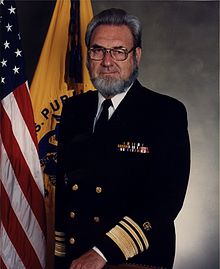
Dr. C. Everett Koop is pictured above.

Francis Schaeffer: “Whatever Happened to the Human Race” (Episode 1) ABORTION OF THE HUMAN RACE

Published on Oct 6, 2012 by

Is is a child and not a choice as this funny editorial cartoon illustrates:

The End Is Not the End


Dennis Brack / Newscom

C. Everett Koop
Dr. Koop

Related posts:

Remembering Dr. C. Everett Koop with pictures and quotes Part 12 (with editorial cartoon)

Dr. C. Everett Koop on Baby Doe, euthanasia, abortion Uploaded on Nov 3, 2008 Dr. Koop answers questions on Baby Doe, euthanasia and abortion during interview at Wheaton College, Wheaton, IL http://www.christianethics.org Dr. Koop   On 2-25-13 we lost a great man when we lost Dr. C. Everett Koop. I have written over and over […]

Remembering Dr. C. Everett Koop with pictures and quotes Part 11 (including editorial cartoon on abortion)

Dr. Koop Memorial Tribute Former Surgeon General C.Everett Koop © A Genuine G-Shot.wmv On 2-25-13 we lost a great man when we lost Dr. C. Everett Koop. I have written over and over the last few years quoting Dr. C. Everett Koop and his good friend Francis Schaeffer. They both came together for the first […]

Remembering Dr. C. Everett Koop with pictures and quotes Part 10 (includes editorial cartoon about abortion)

Newsmaker Interview with Surgeon General C. Everett Koop Published on Feb 25, 2013 The PBS NewsHour interviewed former Surgeon General, Dr. C. Everett Koop, on the anniversary of the first surgeon general’s report on smoking. Jim Lehrer interviewed Koop for a newsmaker conversation for the The MacNeil/Lehrer NewsHour from the surgeon general’s office in Washington […]

Remembering Dr. C. Everett Koop with pictures and quotes Part 9 (Picture of Joycelyn Elders with Koop)

Dr. C. Everett Koop on Baby Doe, euthanasia, abortion Uploaded on Nov 3, 2008 Dr. Koop answers questions on Baby Doe, euthanasia and abortion during interview at Wheaton College, Wheaton, IL http://www.christianethics.org Dr. Koop   Joycelyn Elders was the first black Surgeon General of the USA and I have a picture of her with Dr. C. […]

Remembering Dr. C. Everett Koop with pictures and quotes Part 8 (editorial picture about Surgeon General)

Memorial Tribute Former Surgeon General C.Everett Koop © A Genuine G-Shot.wmv Dr. Koop. C. Everett Koop Before Dr. C. Everett Koop arrived in 1981 as Surgeon General could anybody ever name who the Surgeon General was? Koop also caused lots of editorial cartoons to be drawn about him because of his positions he took on […]

Remembering Dr. C. Everett Koop with pictures and quotes Part 7 (Public Health poster)

Newsmaker Interview with Surgeon General C. Everett Koop Published on Feb 25, 2013 The PBS NewsHour interviewed former Surgeon General, Dr. C. Everett Koop, on the anniversary of the first surgeon general’s report on smoking. Jim Lehrer interviewed Koop for a newsmaker conversation for the The MacNeil/Lehrer NewsHour from the surgeon general’s office in Washington […]

Remembering Dr. C. Everett Koop with pictures and quotes Part 6 (includes funniest cartoon ever during Koop’s tenure)

Dr. C. Everett Koop on Baby Doe, euthanasia, abortion Uploaded on Nov 3, 2008 Dr. Koop answers questions on Baby Doe, euthanasia and abortion during interview at Wheaton College, Wheaton, IL http://www.christianethics.org Dr. Koop. C. Everett Koop On June 8, 1988 Ralph Dunagin of the LA Times came out with the funniest editorial cartoon I […]

Remembering Dr. C. Everett Koop with pictures and quotes Part 5 (Public Health poster developed under Koop)

Memorial Tribute Former Surgeon General C.Everett Koop © A Genuine G-Shot.wmv Dr. C. Everett Koop was active on getting the word out about how people could catch AIDS. Public Health officials during the second half of the 1980s became concerned about the spread of AIDS particularly among minorities, a disproportionate number of whom were intravenous […]

Remembering Dr. C. Everett Koop with pictures and quotes Part 4 (funny editorial cartoon too)

Dr. Koop Gary Brookings of the Richmond Times Dispatch did a very funny editorial cartoon about the time in 1988 when Dr. C. Everett Koop sent the unapproved mail  piece out to millions of homes about AIDS. There were many such cartoons at the time since everyone knew Dr. Koop got the mail piece out […]

Remembering Dr. C. Everett Koop with pictures and quotes Part 3 ( three more editorial cartoons too)

Dr. Koop with Hillary Clinton In 1980 I really was influenced at my highschool by a teacher of mine named Mark Brink. He introduced me to the film series “Whatever happened to the human race?” by Francis Schaeffer and Dr. C. Everett Koop. In this  film series that came out in 1979 they dealt with […]

Remembering Dr. C. Everett Koop with pictures and quotes Part 2 (Doonesbury cartoon by Gary Trudeau included)

Dr. Koop On 2-25-13 we lost a great man when we lost Dr. C. Everett Koop. I have written over and over the last few years quoting Dr. C. Everett Koop and his good friend Francis Schaeffer. They both came together for the first time in 1973 when Dr. Koop operated on Schaeffer’s daughter and […]

Remembering Dr. C. Everett Koop with pictures and quotes Part 1

Dr. C. Everett Koop is pictured above. Francis Schaeffer: “Whatever Happened to the Human Race” (Episode 1) ABORTION OF THE HUMAN RACE Published on Oct 6, 2012 by AdamMetropolis Dr. Koop On 2-25-13 we lost a great man when we lost Dr. C. Everett Koop. I have written over and over the last few years […]


Open letter to President Obama (Part 232 B) Dr. C. Everett Koop and Reagan pictured together

Dr. C. Everett Koop with Ronald Reagan. Dr. Koop was delayed in his confirmation by Ted Kennedy because of his film Whatever Happened to the Human Race? President Obama c/o The White House 1600 Pennsylvania Avenue NW Washington, DC 20500 Dear Mr. President, I know that you receive 20,000 letters a day and that you […]

“Sanctity of Life Saturday” Francis Schaeffer and Dr. C. Everett Koop asked Reagan to issue pro-life proclamation in 1983 (includes video ABORTION OF THE HUMAN RACE)

In the film series “WHATEVER HAPPENED TO THE HUMAN RACE?” the arguments are presented  against abortion (Episode 1),  infanticide (Episode 2),   euthenasia (Episode 3), and then there is a discussion of the Christian versus Humanist worldview concerning the issue of “the basis for human dignity” in Episode 4 and then in the last episode a close […]

Dr. C. Everett Koop on abortion’s 1973 Roe v. Wade impact on child abuse

Dr. C. Everett Koop with Ronald Reagan. Dr. Koop was delayed in his confirmation by Ted Kennedy because of his film Whatever Happened to the Human Race? Watch the film below starting at the 19 minute mark and that will lead into a powerful question from Dr. C. Everett Koop. This 1979 film is WHATEVER […]

Open letter to President Obama (Part 221 B) Dr. C. Everett Koop and Francis Schaeffer rightly called abortion “the watershed issue of our era”

 Dr. Koop was delayed in his confirmation by Ted Kennedy because of his film Whatever Happened to the Human Race? Francis Schaeffer February 21, 1982 (Part 1) Uploaded by DeBunker7 on Feb 21, 2008 READ THIS FIRST: In decline of all civilizations we first see a war against the freedom of ideas. Discussion is limited […]

Francis Schaeffer and C. Everette Koop on the Hippocratic oath (March for Life January 20, 2013)

Dr. C. Everett Koop was appointed to the Reagan administration but was held up in the Senate in his confirmation hearings by Ted Kennedy because of his work in pro-life causes. I was thinking about the March for Life that is coming up on Jan 20, 2013  and that is why I posted this today […]

Ronald Wilson Reagan pictured with Dr. C. Everett Koop

High resolution version (11,426,583 Bytes) Description: The photograph is signed by President Ronald Reagan with the inscription “To Chick Koop, With Best Wishes.” Chick, from chicken coop, was the nickname Koop gained will attending Dartmouth College in the mid-1930s. Koop maintained a cordial relationship with President Reagan, despite his disappointment over Reagan’s refusal to address […]

Francis Schaeffer and C. Everett Koop were prophetic (jh29)

Francis Schaeffer and C. Everett Koop were prophetic (jh29) What Ever Happened to the Human Race? I recently heard this Breakpoint Commentary by Chuck Colson and it just reminded me of how prophetic Francis Schaeffer and C. Everett Koop were in the late 1970′s with their book and film series “Whatever happened to the human […]

Should Michele Bachmann be punished for taking pro-life views from Schaeffer and Koop? (March for Life January 20, 2013)

  Dr. C. Everett Koop I was thinking about the March for Life that is coming up on Jan 20, 2013  and that is why I posted this today Secular leaps of faith 39 Comments Written by Janie B. Cheaney August 15, 2011, 2:17 PM I’m willing to cut Ryan Lizza some slack. His profile […]

“Schaeffer Sundays” Francis Schaeffer’s own words concerning humanism and its bad results

Francis Schaeffer: “Whatever Happened to the Human Race?” (Episode 2) SLAUGHTER OF THE INNOCENTS Published on Oct 6, 2012 by AdamMetropolis The 45 minute video above is from the film series created from Francis Schaeffer’s book “Whatever Happened to the Human Race?” with Dr. C. Everett Koop. This book  really helped develop my political views concerning […]

“Sanctity of Life Saturday”:Derek Melleby’s review of the book “Francis Schaeffer: An Authentic Life” (includes film THE BASIS FOR HUMAN DIGNITY)

  I truly believe that many of the problems we have today in the USA are due to the advancement of humanism in the last few decades in our society. Ronald Reagan appointed the evangelical Dr. C. Everett Koop to the position of Surgeon General in his administration. He partnered with Dr. Francis Schaeffer in making […]

Taking on Ark Times bloggers about abortion on the 40th anniversary date of Roe v. Wade (Part 5) “Slavery issue compared to rights of unborn child”

The best pro-life film I have ever seen below by Francis Schaeffer and Dr. C. Everett Koop “Whatever happened to the human race?” Over the years I have taken on the Ark Times liberal bloggers over and over and over concerning the issue of abortion. I asked over and over again for one liberal blogger […]

Taking on Ark Times bloggers about abortion on the 40th anniversary date of Roe v. Wade (Part 4) “How do pro-lifers react to the movie THE CIDER HOUSE RULES?”

Francis Schaeffer pictured above._________ The best pro-life film I have ever seen below by Francis Schaeffer and Dr. C. Everett Koop “Whatever happened to the human race?” Over the years I have taken on the Ark Times liberal bloggers over and over and over concerning the issue of abortion. I asked over and over again […]

Taking on Ark Times bloggers about abortion on the 40th anniversary date of Roe v. Wade (Part 3) “What should be the punishment for abortion doctors?”

The best pro-life film I have ever seen below by Francis Schaeffer and Dr. C. Everett Koop “Whatever happened to the human race?” On 1-24-13 I took on the child abuse argument put forth by Ark Times Blogger “Deathbyinches,” and the day before I pointed out that because the unborn baby has all the genetic code […]

Taking on Ark Times bloggers about abortion on the 40th anniversary date of Roe v. Wade (Part 2) “The pro-abortion child abuse argument destroyed here”

PHOTO BY STATON BREIDENTHAL from Pro-life march in Little Rock on 1-20-13. Tim Tebow on pro-life super bowl commercial. Over the years I have taken on the Ark Times liberal bloggers over and over and over concerning the issue of abortion. Here is another encounter below. On January 22, 2013 (on the 40th anniversary of the […]

Taking on Ark Times bloggers about abortion on the 40th anniversary date of Roe v. Wade (Part 6) For many pro-abortionists ” …the problem is not determining when actual human life begins, but when the value of that life begins to out weigh other considerations”

The best pro-life film I have ever seen below by Francis Schaeffer and Dr. C. Everett Koop “Whatever happened to the human race?” Francis Schaeffer pictured above._________ The 45 minute video above is from the film series created from Francis Schaeffer’s book “Whatever Happened to the Human Race?” with Dr. C. Everett Koop. This book  really […]

Taking on Ark Times bloggers about abortion on the 40th anniversary date of Roe v. Wade (Part 7) “Poverty not good reason for abortion, why not give up for adoption?”

Dr Richard Land discusses abortion and slavery – 10/14/2004 – part 3 The best pro-life film I have ever seen below by Francis Schaeffer and Dr. C. Everett Koop “Whatever happened to the human race?” Over the years I have taken on the Ark Times liberal bloggers over and over and over concerning the issue […]

Taking on Ark Times bloggers about abortion on the 40th anniversary date of Roe v. Wade (Part 1)

Dr Richard Land discusses abortion and slavery – 10/14/2004 – part 3 The best pro-life film I have ever seen below by Francis Schaeffer and Dr. C. Everett Koop “Whatever happened to the human race?” Over the years I have taken on the Ark Times liberal bloggers over and over and over concerning the issue […]

Paul Greenberg became pro-life because we are all “endowed with certain unalienable rights”

On January 20, 2013 I heard Paul Greenberg talk about the words of Thomas Jefferson that we are all “endowed with certain unalienable rights” and the most important one is the right to life. He mentioned this also in this speech below from 2011: Paul Greenberg Dinner Speech 2011 Fall 2011 Issue Some of you […]

How Pulitzer Prize-winning Paul Greenberg, one of the most respected and honored commentators in America, changed his mind about abortion and endorses now the pro-life view

It is not possible to know where the pro-life evangelicals are coming from unless you look at the work of the person who inspired them the most. That person was Francis Schaeffer.  I do care about economic issues but the pro-life issue is the most important to me. Several years ago Adrian Rogers (past president of […]


Open letter to President Obama (Part 287) (on vouchers)

(This letter was mailed before Oct 25, 2012.)

President Obama c/o The White House
1600 Pennsylvania Avenue NW
Washington, DC 20500

Dear Mr. President,

I know that you receive 20,000 letters a day and that you actually read 10 of them every day. I really do respect you for trying to get a pulse on what is going on out here.

Why don’t you support the voucher system for the poor people that live in the same town that your town daughters live in? Is that fair that they attend a top quality private school while at the same time you shut down the voucher system that was in place for poor kids in D.C.?

Introducing the ‘Obama Rule’

Posted by Neal McCluskey

In his latest weekly radio address, President Obama featured what will no doubt be a mainstay of his reelection campaign: the “Buffett Rule,” which says that rich people should pay at least the same tax rate as middle-class folks. It’s named after mega-investor Warren Buffett, who famously declared that he pays a lower tax rate than his secretary. President Obama and his supporters have run with that, and are employing it to convince the public that such is the norm for the despised “rich.”

Of course that’s not the norm: Buffett is the rare taxpayer who makes almost all his income through investments, and top earners have much higher tax rates than people earning $200,000 and below. So this is clearly not about fairness — it’s about politics.

Two, though, can play at this game. If the President can engage in class warfare he’s also a fair target of it. So why not implement something called the “Obama Rule,” which demands that lower-income people get at least the same educational options as the President? That only seems fair, right, like the Buffett Rule? Indeed, the President himself noted in his weekly address that “ we…have to pay for investments that will help our economy grow and keep our country safe [such as] education.” So why, then, does the President’s 2013 budget zero-out funding for the DC Opportunity Scholarship Program while his daughters go to Sidwell Friends? Shouldn’t other kids in Washington have access to the same excellent private schools as the President’s daughters?

Class envy is hardly the right reason to demand school choice — the right reasons are freedom, competition, innovation, and specialization – but of course all kids should have the same options as President Obama’s daughters! As the President concluded in his weekly address (though, obviously, he wasn’t talking about school choice): “That’s how we’ll make this country a little fairer, a little more just, and a whole lot stronger.” So let’s invoke the Obama Rule, and give lower-income families the same educational choices as the President! It’s simply the fair thing to do.

Here is the video clip and transcript of the film series FREE TO CHOOSE episode “What is wrong with our schools?” Part 1 of 6.

Volume 6 – What’s Wrong with our Schools
Transcript:
Friedman: These youngsters are beginning another day at one of America’s public schools, Hyde Park High School in Boston. What happens when they pass through those doors is a vivid illustration of some of the problems facing America’s schools.
They have to pass through metal detectors. They are faced by security guards looking for hidden weapons. They are watched over by armed police. Isn’t that awful. What a way for kids to have to go to school, through metal detectors and to be searched. What can they conceivably learn under such circumstances. Nobody is happy with this kind of education. The taxpayers surely aren’t. This isn’t cheap education. After all, those uniformed policemen, those metal detectors have to be paid for.
What about the broken windows, the torn school books, and the smashed school equipment. The teachers who teach here don’t like this kind of situation. The students don’t like to come here to go to school, and most of all, the parents __ they are the ones who get the worst deal __ they pay taxes like the rest of us and they are just as concerned about the kind of education that their kids get as the rest of us are. They know their kids are getting a bad education but they feel trapped. Many of them can see no alternative but to continue sending their kids to schools like this.
To go back to the beginning, it all started with the fine idea that every child should have a chance to learn his three R’s. Sometimes in June when it gets hot, the kids come out in the yard to do their lessons, all 15 of them, ages 5 to 13, along with their teacher. This is the last one-room schoolhouse still operating in the state of Vermont. That is the way it used to be. Parental control, parents choosing the teacher, parents monitoring the schooling, parents even getting together and chipping in to paint the schoolhouse as they did here just a few weeks ago. Parental concern is still here as much in the slums of the big cities as in Bucolic, Vermont. But control by parents over the schooling of their children is today the exception, not the rule.
Increasingly, schools have come under the control of centralized administration, professional educators deciding what shall be taught, who shall do the teaching, and even what children shall go to what school. The people who lose most from this system are the poor and the disadvantaged in the large cities. They are simply stuck. They have no alternative.
Of course, if you are well off you do have a choice. You can send your child to a private school or you can move to an area where the public schools are excellent, as the parents of many of these students have done. These students are graduating from Weston High School in one of Boston’s wealthier suburbs. Their parents pay taxes instead of tuition and they certainly get better value for their money than do the parents in Hyde Park. That is partly because they have kept a good deal of control over the local schools, and in the process, they have managed to retain many of the virtues of the one-room schoolhouse.
Students here, like Barbara King, get the equivalent of a private education. They have excellent recreational facilities. They have a teaching staff that is dedicated and responsive to parents and students. There is an atmosphere which encourages learning, yet the cost per pupil here is no higher than in many of our inner city schools. The difference is that at Weston, it all goes for education that the parents still retain a good deal of control.
Unfortunately, most parents have lost control over how their tax money in spent. Avabelle goes to Hyde Park High. Her parents too want her to have a good education, but many of the students here are not interested in schooling, and the teachers, however dedicated, soon lose heart in an atmosphere like this. Avabelle’s parents are certainly not getting value for their tax money.
Caroline Bell, Parent: I think it is a shame, really, that parents are being ripped off like we are. I am talking about parents like me that work every day, scuffle to try to make ends meet. We send our kids to school hoping that they will receive something that will benefit them in the future for when they go out here and compete in the job market. Unfortunately, none of that is taking place at Hyde Park.
Friedman: Children like Ava are being shortchanged by a system that was designed to help. But there are ways to help give parents more say over their children’s schooling.
This is a fundraising evening for a school supported by a voluntary organization, New York’s Inner City Scholarship Fund. The prints that have brought people here have been loaned by wealthy Japanese industrialist. Events like this have helped raise two million dollars to finance Catholic parochial schools in New York. The people here are part of a long American tradition. The results of their private voluntary activities have been remarkable.
This is one of the poorest neighborhoods in New York City: the Bronx. Yet this parochial school, supported by the fund, is a joy to visit. The youngsters here from poor families are at Saint John Christians because their parents have picked this school and their parents are paying some of the costs from their own pockets. The children are well behaved, eager to learn, the teachers are dedicated. The cost per pupil here is far less than in the public schools, yet on the average the children are two grades ahead. That is because teachers and parents are free to choose how the children shall be taught. Private money has replaced the tax money and so control has been taken away from the bureaucrats and put back where it belongs.
This doesn’t work just for younger children. In the 60’s, Harlem was devastated by riots. It was a hot bed of trouble. Many teenagers dropped out of school.
_______
You need to take 45 minutes and watch the remainder of this program by Milton Friedman on the voucher system.

Thank you so much for your time. I know how valuable it is. I also appreciate the fine family that you have and your commitment as a father and a husband.

Sincerely,

Everette Hatcher III, 13900 Cottontail Lane, Alexander, AR 72002, ph 501-920-5733, lowcostsqueegees@yahoo.com

Free to Choose by Milton Friedman: Episode “What is wrong with our schools?” (Part 1 of transcript and video)

Here is the video clip and transcript of the film series FREE TO CHOOSE episode “What is wrong with our schools?” Part 1 of 6.   Volume 6 – What’s Wrong with our Schools Transcript: Friedman: These youngsters are beginning another day at one of America’s public schools, Hyde Park High School in Boston. What happens when […]

Free to Choose by Milton Friedman: Episode “What is wrong with our schools?” (Part 4 of transcript and video)

Free to Choose by Milton Friedman: Episode “What is wrong with our schools?” (Part 4 of transcript and video) Here is the video clip and transcript of the film series FREE TO CHOOSE episode “What is wrong with our schools?” Part 4 of 6.   Volume 6 – What’s Wrong with our Schools Transcript: It seems to me […]

Free to Choose by Milton Friedman: Episode “What is wrong with our schools?” (Part 3 of transcript and video) Here is the video clip and transcript of the film series FREE TO CHOOSE episode “What is wrong with our schools?” Part 3 of 6.   Volume 6 – What’s Wrong with our Schools Transcript: If it doesn’t, they […]

Free to Choose by Milton Friedman: Episode “What is wrong with our schools?” (Part 2 of transcript and video)

Free to Choose by Milton Friedman: Episode “What is wrong with our schools?” (Part 2 of transcript and video) Here is the video clip and transcript of the film series FREE TO CHOOSE episode “What is wrong with our schools?” Part 2 of 6.   Volume 6 – What’s Wrong with our Schools Transcript: Groups of concerned parents […]

Free to Choose by Milton Friedman: Episode “What is wrong with our schools?” (Part 6 of transcript and video)

Here is the video clip and transcript of the film series FREE TO CHOOSE episode “What is wrong with our schools?” Part 6 of 6.   Volume 6 – What’s Wrong with our Schools Transcript: FRIEDMAN: But I personally think it’s a good thing. But I don’t see that any reason whatsoever why I shouldn’t have been required […]

Free to Choose by Milton Friedman: Episode “What is wrong with our schools?” (Part 5 of transcript and video)

Here is the video clip and transcript of the film series FREE TO CHOOSE episode “What is wrong with our schools?” Part 5 of 6.   Volume 6 – What’s Wrong with our Schools Transcript: Are your voucher schools  going to accept these tough children? COONS: You bet they are. (Several talking at once.) COONS: May I answer […]

Book of Daniel written in 6th century B.C.? (Part 2)

The Bible and Archaeology (2/5)

I have been amazed at the prophecies in the Bible that have been fulfilled in history, and also many of the historical details in the Bible have been confirmed by archaeology too. ( I have put a list below of several posts I have made in the past about this.) One of the most amazing is the prediction that the Jews would be brought back and settle in Jerusalem again. Another prophecy in Psalms 22 describes messiah dying on a cross  almost 1000 years before the Romans came up with this type of punishment.  One of the top 10 posts on this concerns the city of Tyre.  John MacArthur went through every detail of the prophecy concerning Tyre and how history shows the Bible prophecy was correct.
When was the Book of Daniel written? www.truthnet.org:

Introduction to The Book of Daniel

Daniel is one of the most important books of the Bible to understand.  Daniel connects the Old and New Testaments. Through Daniel, God revealed the exact date month and year of Messiah death (Christ) and events leading to His return.

Daniel demonstrates God’s complete control and comprehension over time and nations, by giving detailed prophecies about the succession of kingdoms and rulers.  Daniel foretells the eventual establishment of Messiah’s kingdom, which will overthrow the kingdoms of this world.

For the reason, Daniel is often the most attacked book in the Bible. Critics date Daniel’s authorship to the 2nd century B.C., otherwise critics would be forced to accept the super natural.

Daniel is also important for anybody who wants to understand Bible prophecy.  Without understanding Daniel, a thorough understanding of Revelation is impossible. Daniel is the foundation for the book of Revelation.  The book of Revelation, is the completion of the plan first revealed to Daniel in the Babylonian and Persian kingdoms over 2500 years ago.

Events surrounding the book of Daniel

A. The Kingdoms in conflict

            The book of Daniel takes place from B.C. 605 to 530, bridging both the Babylonian and Persian kingdom’s rule over Judea and Jerusalem.  Daniel follows a turbulent and period in Israel’s history.  Israel and Judah were buffer nations between the powerful nations of Egypt, Assyria and Babylon.

Babylon was a once former great kingdom dominated by the Assyrian Empire.  In 621 B.C., Nabopolassar became the king of Babylon he challenged Assyrian control.  In 612 B.C., with the aid of the Medes and Scythian hordes, Nabopolassar sacked the Assyrian capital of Nineveh.

Assyria, following the sacking went into a quick decline, the armies of Assyria abandoned the cities of Haran at the approaching Babylonians in 610 B.C. Egypt allied itself with Assyria against Babylon to retake the city.  Pharaoh Neco, (2 Kings 23:28-30) on his way was through Israel was intercepted by the armies of Judah led by Josiah (640-609 B.C.).  Josiah was killed in battle and Assyria become part of the Neo Babylonian Empire.

Jehoahaz, Josiah’s 2nd son, was installed in his father’s place, he ruled for 3 months till Pharaoh Neco returned from Haran, Jehoahaz was taken as a captive to Egypt and replaced with his brother Eliakim renamed Jehoiakim (608-598 B.C.) by Pharaoh Neco. Judah became a vassal of Egypt.

In 605 B.C., Egypt was trying to inherit the what remained of the Assyrian empire, resulting in the battle of Carchemish. Carchemish was Egypt’s last attempt for control of Middle East, Babylon defeated Egypt and Judah became a vassal of Babylon.  In 605 B.C. Nabopolassar also died, and his son Nebuchadnezzar commander of the Babylonian forces returned to Babylon. On his return to Babylon, Nebuchadnezzar besieged Jerusalem took hostages and looted treasures from the Temple. Hostages secured Jerusalem’s surrender, among them were included Daniel, Shadrach, Mishach and Abendgo descendents of the Royal family.

B. Josiah’s Revival

The reign of Josiah (640-609 B.C.) was another important event in the history of Judah.  Under Josiah rule, Israel experienced a spiritual revival.  Josiah was the great grandson of Hezekiah (715-699 B.C.). Hezekiah’s son Manasseh (697-642 B.C.) and Manasseh’s son Amon (642-640 B.C.), Josiah’s father, was a period of apostasy for Judah.  They turned away from the God of Israel. Josiah was different, he sought to do God’s will.

Josiah was eight years old when he became king, and at eighteen, the priest Hilkiah found The Book of the Law in the Temple. Josiah reinstituted the Covenant, celebrating a national Passover, and destroying idol worship (2 Kings 22-23). Jeremiah was a young contemporary of Josiah who was twenty-one, when God first spoke to him.  Jeremiah served with King Josiah until Josiah’s death in 609 B.C., Jeremiah wept for his friend and king who died at 39 years of age.

Another contemporary of Josiah and Jeremiah was Ezekiel, a thirty-year old priest, in 597 B.C. He along with Jeremiah, Daniel and his friends benefited from Josiah’s revival.  The revival prepared a select group of Jews for the coming exile and future destruction of Jerusalem.

The Daniel we see in Babylon and Persia is the product of the revival in the days of Josiah.

Daniel in relation to the other prophet

Daniel was a contemporary of Ezekiel and Jeremiah all three being in Jerusalem when Daniel and his friend were taken captive to Babylon.  In 605 B.C. Daniel, was a young man probably about 14 to 15 years of age.  In 605 B.C., (Jeremiah 1:1-2) Jeremiah was in his 22nd year of ministry called as youth probably near the age of 14, making him about 36 years of age.  Ezekiel was thirty in 597 B.C., making him 22-years old in 605 B.C.(Ezekiel 1:1-2).

Date and Authorship

A. Authorship

Daniel is as established as the author, throughout the contents of the book of Daniel.  Daniel is told in Daniel 12:4, “seal the book until the time of the end”, and in verse 9, we read, “Go your way, Daniel, for the words are closed”.

Jesus also attributes the book’s authorship to Daniel in the Olivet Discourse (Matthew 24:15, Mark 13:14).

In the third century, a pagan named Porphyry questioned the sixth century B.C. dating and authorship of  Daniel.  Jerome, translator of the Vulgate, replied to his charges in his Commentary on Daniel.

Porphyry was followed by critics in the 17th century, who claimed Daniel was written in the Maccabean period (166 B.C.) by Maccabean Jews, because of Daniel precise historical accuracy.

B. Date

The dating of the book of Daniel varies from 6th to 2nd century B.C. Liberal critics, who attribute the authorship to the Maccabeans in 166 B.C., give the book a late date.

The purpose of the late dating is denial of the super natural aspect of the book.

Conservative Christians and Jews, who accept the super natural aspect of scripture have no problem with dating the book from 605 to 536 B.C, during the time of Daniel.

These dates are arrived by specific references to events and reigns of kings in Judah, Babylon and Persia.  Nebuchadnezzar, Cyrus and Jehoiakim, historical kings of Babylon, Persia and Judah, can be dated and verified outside of the Bible, using the dates of these kings, a reliable dating for Daniel can be established.

Place in the scriptures

The Jewish Bible is divided into three sections, The Law, the Prophets and the Writings. In the Hebrew Bible, Daniel is included in the third section known as the writings or Kethubim (Writings) or Hagiographa.  In the Septuagint[1] and Vulgate, Daniel is placed with the major prophets, the Christian Old Testament follows the pattern of the Septuagint.  Josephus also includes Daniel in the second section of the Jewish cannon.

The reason Daniel is placed in the Kethubim, (writings), is not because Daniel is considered less inspired then the prophets, as some critics claim.  Daniel is in the third division because Daniel was not called a nabhi or prophet.  He was seen as a hozeh (seer) and a hakham (wise men). The 2nd section was reserved only for books written by those addressed as prophets.  The third division is not considered less inspired and includes  Psalms, Proverbs and Chronicles. David is a prophet and his writings inspired, but Psalm is placed in the third division in the same division as Daniel.

Purpose

Daniel is a book of encouragement for those want to assured of God’s control.  The book of Daniel is born out of tribulation and uncertainty.  Daniel is a young boy, taken as captive into a foreign land away from his family and city of birth. By trusting God, Daniel along with his obedient friends become rulers in kingdoms of Babylon and Persia.

The underlying message in Daniel is God is in control. The nations are subject to the will of God, not the will man, and God will preserve His people through trouble. By revealing specifics of His plans, God prepares and encourages His people for the future. Daniel confirms the identity of Jesus Christ as Messiah, by foretelling the exact month and year of Messiah’s death and the destruction of Jerusalem and the Temple following. The book of Daniel lays the groundwork for the return of Messiah, detailing events that will take place in the end of days, leading to the return of Messiah.

Daniel also uses the example of Daniel and his friends as example of how saints are to act in the face of trouble, knowing God is in control despite the difficulty.

Languages

Aramaic and Hebrew are the two languages used in Daniel.  Hebrew is used in Daniel 1:1 to Daniel 2:4a and Chapters 8 through 12, Aramaic is used from Daniel 2:4a to 7:28. The Aramaic langue was the common language or lingua franca, used in Assyrian, Babylonian and Persian communication.  Aramaic is found also in the Ezra 4:8-6:18, 7:12-26 and Jeremiah 10:11.

Why did Daniel compose a portion of his revelation in a foreign language?  Some have used this to argue a late date for the book of Daniel.  Aramaic in fact was the common language in the 6th century B.C., not the Maccabean period (166 B.C) where Greek became the common language.  Daniel message was not only to the Jewish people, but to the nations. Aramaic in Daniel’s day is equivalent to English in our day.  Daniel 2:4 to 7:28 would be accessible to any literate, Greek, Babylonian or Jew in Daniel’s day and later.

Divisions of Daniel

 There are several ways to divide the book of Daniel. The most popular is to divide Daniel into 2 halves, Chapters 1 to 6 and Chapters 7 to 12. The first half is historical, the second half is apocalyptic or predictive. Chapter 1, is viewed as an introduction.

Another division is to view the Aramaic section Daniel 2:4 to 7:28 as the message to the nations, with the Hebrew portions Chapters 1 and 8 through 12 as a message to the Jewish people.

Apocryphal additions

The Greek version of Daniel, from the Septuagint includes several additions not found in the Hebrew or Aramaic texts. They are; The Prayer of Azarias, The Song of the Three Holy Children, Susanna, and Bel and the Dragon.

The Prayer of Azarias and the Song of the Three Holy Children contain the prayer and praise of Daniel’s three companions while in the furnace in Daniel chapter 3.

Susanna is the story of a woman protected by Daniel, who obtains conviction of two judges guilty of trying to seduce her. The are executed according to the Laws of Moses.

Bel and the Dragon has three stories; Daniel destroys Bel’s image, kills the dragon and is fed by Habakkuk the prophet in the lion’s den for six days in Daniel 6.

These stories are rejected as not genuine parts of the book of Daniel but later additions.

Defending Daniel Against the Critics

            Not until the third century, was the book of Daniel questioned. A neo-Platonist, a student of Plotinus, Porphyry (A.D. 234-305) wrote a 15 volume work entitled Against the Christians, attacking the evidences of Christianity. The only surviving fragments of his writings are preserved in St. Jerome’s Commentary on Daniel.

Jerome (A.D. 347-420) in his introduction to his Commentary on Daniel said this,

Porphyry wrote his twelfth book against the prophecy of Daniel, (A) denying that it was composed by the person to whom it is ascribed in this title, but rather by some individual living in Judea at the time of Antiochus who was surnamed Epiphanes. He furthermore alleged that “Daniel” did not foretell the future so much as he related the past, and lastly, that whatever he spoke of up till the time of Antiochus contained authentic history, whereas anything he may have conjectured beyond that point was false, inasmuch as he would not have foreknown the future…… I wish to stress in my preface this fact, that none of the prophets has so clearly spoken concerning Christ as has this prophet Daniel.  For not only did he assert the he would come, a prediction common to the other prophets as well but also he set forth the very time at which he would come….. For so striking was  the reliability of what the prophet foretold, that he could not appear to unbelievers as a predictor of the future, but rather a narrator of things already past. [2]

Porphyry’s arguments against Daniel and were again raised in the seventeenth century with the rise of higher criticism[3]. Prior to this period, Jerome’s view of Daniel was the view of the church.   The arguments against Daniel have been listed by Thomas S. Kepler and they include,

1. About 200 B.C. the Prophets were added to the Law to compose the Jewish “Bible”. Yet Daniel is not among the Prophets, being added to the sacred writings about A.D. 90 When the Jewish Bible was completed.

2. The Book of Daniel is not mentioned in any Jewish literature until 140 B.C., When the Sibylline Oracles (3:397-400) refer to it.

3. Jesus Ben Sirach about 190 B.C. lists the great men of Jewish history (Ecclesiastics 44:1-50:24) But among these names Daniel is missing.

4. Words borrowed from the Babylonian, Persian and Greek languages appear in Daniel.

5. Jeremiah is mentioned as a prophet and his writings are referred to.

6. In Jeremiah’s time (Also the period Nebuchadnezzar) the Chaldeans are spoken of as a nation or people, but in th book of Daniel they are known as astrologers, magicians, diviners of truth.

7. The book of Daniel is written partly in Aramaic, a language popular among the Jews in the Second century B.C. but not at the time of Nebuchadnezzar.

8. The author has an excellent view of history after the time of Alexander the Great, especially during the Maccabean struggles; but his history shows many inaccuracies during the Babylonian and Persian periods.

9. The theology regarding he resurrection of the dead and ideas about angels show that the author lived at a later time than that of Nebuchadnezzar….

10. The pattern and purpose of the book of Daniel as an apocalypse, which reinterprets history from the time of Nebuchadnezzar until the time of Judas Maccabeus and Antiochus IV and written in 165 B.C. fits better into the scheme and purpose of Daniel than if the book were written in the period of Nebuchadnezzar, predicting history for the next 450 years.[4]

The objections to Daniel can be placed in six categories.

Six criticisms

1. Rejection of canonicity

 Daniel’s inclusion in the third section of Hebrew canon (Hagiographa, The Writings) and not among the prophets was not because Daniel was written after the canon was closed. Daniel was viewed as an official or wise man not as a prophet, he was prime minister in both Babylonian and Persian courts. He was not called a prophet in his book (Nabi) and did not preach to the people.  His words are placed alongside, Psalms, Chronicles, Ezra, Nehemiah and proverbs all considered inspired and part of the Hebrew canon.

Daniel is also mentioned in the book of Ezekiel three times (Ezekiel 14:14,20, 28:3). Daniel and Ezekiel were lived at the same time, in 605 B.C. when Daniel was taken captive, Ezekiel was 22-year old, destined for the Jewish priesthood.  When Ezekiel penned the name of Daniel in chapters 14 and 28, Daniel exploits or rising to the level of prime minister under Nebuchadnezzar would have been well known.

Jesus in the Olivet Discourse, Matthew 24:15 calls specifically brings attention to the book of Daniel referencing the Abomination of Desolation referred to in the book of Daniel.  Jesus calls Daniel a prophet and verifies the book as part of Holy scripture.

2. Rejection of detailed prophecy

Porphyry’s original objection is that prophecy is impossible, this stems from the rejection of theism and the rejection of the super natural.  This is the reason Daniel has come under such an intense attack by the critics. For those who view omniscience as part of God’s character, the foretelling of future of events is not out of the ordinary.

Even if the critic accepted the late date as valid, they still run into the problem of prophecy.   Daniel foretold the exact month and year of (Messiah) Christ’s death and the destruction of Jerusalem and the Temple in A.D. 70 by the Romans in Daniel 9:24-27. Over 200-years before the destruction of Jerusalem.

3. Rejection of miracles

If Daniel is rejected because of miracles such as the three boys in midst of the fire (Daniel 3), The hand writing on the wall (Chapter 5),Daniel in the lions’ den (chapter 6) and the appearance of angels, (Chapters 8,9,10,11,12), then all of scripture must be rejected. This is the point and presuppositions of the critics, to deny the existence and possibility of the super natural.

4. Textual problems

Critics of Daniel focus on the Aramaic and Hebrew divisions of Daniel, claiming the text was tampered with by late date redactors, who changed the contents.  Robert Dick Wilson an expert authority on Aramaic comments on the Aramaic in the book of Daniel,

We claim, however, that the composite Aramaic of Daniel agrees in almost every particular of orthography, etymoloty and syntax, with the Aramaic of the North Sem inscriptions of the 9th, 8th and 7th centuries BC and of the Eypt papyri of the 5th cent. BC, and that the vocabulary of Daniel has an admixture of Hebrew, Babylonian and Persian words similar to that of the papyri of the 5th century BC; whereas, it differs in composition form the Aramaic of the Nabateans, which is devoid of Persian, Hebrew and Babylonian words, and is full of Arabisms, and also from that of the Palmyrenes, which is full of Greek words, while having but one or two Persian words and no Hebrew or Babylonian.[5]

5. Problems of language

Greek and Persian words found in Daniel have been used as evidence for a late dating of the book of Daniel.  Critics claim these words were not a common part of Assyrian and Babylonian language and prove Daniel was written in the Maccabean period.

This argument is no longer valid in light of archeological discoveries. One hundred before Daniel, Greeks served as mercenaries in the Assyrian armies under the command of Esarhaddon (683 B.C.) as well as in the Babylonian army of Nebuchadnezzar.[6]

Persia was the successor of the Babylonians and Daniel rose to the rank of Prime minister.  Daniel would have been familiar with the language before and after this event.  Diplomatic and economic relations between Persian speaks and Babylonians would be expected, and the borrowing of words from one culture to another is very common.

6. Alleged historical inaccuracies


The historical accuracy of Daniel is another point of attack by the critics. They claim, because Daniel was written in 2nd century his grasp of Babylonian and Persian history is lacking.  Daniel has repeatedly proved the critics wrong.  Here are two examples of how the accuracy of Daniel is demonstrated in Archeology.

For example, Daniel chapter 5 has Belshazzar as the King of Babylon, this has often been disputed by the critics. The discovery of the Nabonidus Chronicle provided an precise explanation that a

The Babylonian Chronicle
This clay tablet is a Babylonian chronicle recording events from 605-594 BC. It was first translated in 1956 and is now in the British Museum. The cuneiform text on this clay tablet tells, among other things

3 main events:1 The Battle of Carchemish (famous battle for world supremacy where Nebuchadnezzar of Babylon defeated Pharaoh Necho of Egypt, 605 BC.),2 The Accession to the Throne of Nebuchadnezzar II, the Chaldean, 3. Capture of Jerusalem on the 16th of March, 598 BC.

greed with Daniel’s account of the situation in Babylon.

Secular history says Nabonidus was the King of Babylon, Daniel says Belshazzar was king. Critics pointed to this, saying Daniel is in error, this changed as a result of the discovery of the Nabonidus Chronicle.  Sir Henry Rawlinson discovered a cylinder with an inscription in the Euphrates River which cleared the confusion about the King of Babylon.

There were two kings of Babylon in Daniel’s day, a father and son. The father Nabonidus installed his son Belshazzar as co-regent, Nabonidus spent much of his time in Arabia.  When the Persians conquered the city in 539 B.C. Belshazzar was killed.  Nabonidus was later captured and sent to exile.  This explained the promise made to Daniel in Daniel 5:29, after Daniel explained the meaning of the writing on the wall, Behshazzar promised to make him third ruler.

29 Then Belshazzar gave the command, and they clothed Daniel with purple and put a chain of gold around his neck, and made a proclamation concerning him that he should be the third ruler in the kingdom.

Daniel 5:29

Asphenaz, is mentioned in the first chapter of Daniel as master of the Eunuchs. The critics claim no such person ever existed. Recent discoveries again proved the accuracy of the book of Daniel.  Asphenaz name has been found on monuments of ancient Babylon which are now in the Berlin Museum. The Babylonian monument had the following statement, “Ashpenaz, master of eunuchs in the time of Nebuchadnezzar”


[1] The Christian Old Testament has the same books number of books in the Jewish Bible or Tanach, the placement is based on the order in the Septuagint.

[2] Jerome’s Commentary on Daniel, quoted from Daniel Key to Prophetic Revelation, John F. Walvoord, Moody Press, 1971, Chicago.

[3] Historical-Criticism: literary criticism in the light of historical evidence or based on the context in which a work was written, including facts about the author’s life and the historical and social circumstances of the time.

[4] Daniel: Key to Bible Prophecy, John F. Walvoord, Moody Press, 1971, Chicago Pg. 18, quoting Thomas S. Kepler, Dreams of the Future, pp. 32-33

[5] Ibid, pg. 22 quoting from Robert Dick Wilson, “The Aramaic of Daniel”, in Biblical and Theological Studies, pg. 296

[6] ibid, pg 23

Related posts:

Robert Dick Wilson’s talk “Is the Higher Criticism Scholarly?” (part 3 of transcript) (Wilson looks at the Book of Daniel)

The Bible and Archaeology (4/5) For many more archaeological evidences in support of the Bible, see Archaeology and the Bible . (There are some great posts on this too at the bottom of this post.)   Robert Dick Wilson at the Grove City Bible Conference in 1909. IS THE HIGHER CRITICISM SCHOLARLY?Clearly attested facts showing that […]

Hanukkah celebrates Maccabean Revolt: Was the Book of Daniel written then or when the Bible claims?

Bible Prophecy vs. History (Daniel 11:1-19) _____________________________ Wikipedia notes: Hanukkah (Hebrew: חֲנֻכָּה‎, Tiberian: Ḥănukkāh, usually spelled חנוכה pronounced [χanuˈka] in Modern Hebrew, also romanized as Chanukah, Chanukkah, or Chanuka), also known as the Festival of Lights, is an eight-day Jewish holiday commemorating the rededication of the Holy Temple (the Second Temple) in Jerusalem at the time […]

Was Daniel an Eyewitness of 6th-Century B.C. Events? (part 2) (Plus Six Pieces of Archaeological Evidence that Support the 6th Century View and video of John MacArthur on Daniel 4)

The Bible and Archaeology (3/5) For many more archaeological evidences in support of the Bible, see Archaeology and the Bible . (There are some great posts on this too at the bottom of this post.) I believe the evidence points to Daniel writing the Book of Daniel in the 6th century B.C. Below is a sermon […]

Was Daniel an Eyewitness of 6th-Century B.C.Events? (part 1)

The Bible and Archaeology (2/5) There is evidence pointing to the accuracy of the Bible. Here is some below. For many more archaeological evidences in support of the Bible, see Archaeology and the Bible . (There are some great posts on this too at the bottom of this post.) Was Daniel an Eyewitness of 6th-Century B. […]

The Critics’ Admissions Concerning Daniel

The Bible and Archaeology (1/5) I have been amazed at the prophecies in the Bible that have been fulfilled in history. John MacArthur went through every detail of the prophecy concerning Tyre and how history shows the Bible prophecy was correct.   I love the Book of Daniel and I am starting a series today […]

Is the Bible historically accurate? Here are some of the posts I have done in the past on the subject:


1. 
The Babylonian Chronicle
of Nebuchadnezzars Siege of Jerusalem

This clay tablet is a Babylonian chronicle recording events from 605-594BC. It was first translated in 1956 and is now in the British Museum. The cuneiform text on this clay tablet tells, among other things, 3 main events: 1. The Battle of Carchemish (famous battle for world supremacy where Nebuchadnezzar of Babylon defeated Pharoah Necho of Egypt, 605 BC.), 2. The accession to the throne of Nebuchadnezzar II, the Chaldean, and 3. The capture of Jerusalem on the 16th of March, 598 BC.

2. Hezekiah’s Siloam Tunnel Inscription.

King Hezekiah of Judah ruled from 721 to 686 BC. Fearing a siege by the Assyrian king, Sennacherib, Hezekiah preserved Jerusalem’s water supply by cutting a tunnel through 1,750 feet of solid rock from the Gihon Spring to the Pool of Siloam inside the city walls (2 Kings 20; 2 Chron. 32). At the Siloam end of the tunnel, an inscription, presently in the archaeological museum at Istanbul, Turkey, celebrates this remarkable accomplishment.

3. Taylor Prism (Sennacherib Hexagonal Prism)

It contains the victories of Sennacherib himself, the Assyrian king who had besieged Jerusalem in 701 BC during the reign of king Hezekiah, it never mentions any defeats. On the prism Sennacherib boasts that he shut up “Hezekiah the Judahite” within Jerusalem his own royal city “like a caged bird.” This prism is among the three accounts discovered so far which have been left by the Assyrian king Sennacherib of his campaign against Israel and Judah.

4. Biblical Cities Attested Archaeologically.

In addition to Jericho, places such as Haran, Hazor, Dan, Megiddo, Shechem, Samaria, Shiloh, Gezer, Gibeah, Beth Shemesh, Beth Shean, Beersheba, Lachish, and many other urban sites have been excavated, quite apart from such larger and obvious locations as Jerusalem or Babylon. Such geographical markers are extremely significant in demonstrating that fact, not fantasy, is intended in the Old Testament historical narratives;

5. The Discovery of the Hittites

Most doubting scholars back then said that the Hittites were just a “mythical people that are only mentioned in the Bible.” Some skeptics pointed to the fact that the Bible pictures the Hittites as a very big nation that was worthy of being coalition partners with Egypt (II Kings 7:6), and these bible critics would assert that surely we would have found records of this great nation of Hittites.  The ironic thing is that when the Hittite nation was discovered, a vast amount of Hittite documents were found. Among those documents was the treaty between Ramesses II and the Hittite King.

6.Shishak Smiting His Captives

The Bible mentions that Shishak marched his troops into the land of Judah and plundered a host of cities including Jerusalem,  this has been confirmed by archaeologists. Shishak’s own record of his campaign is inscribed on the south wall of the Great Temple of Amon at Karnak in Egypt. In his campaign he presents 156 cities of Judea to his god Amon.

7. Moabite Stone

The Moabite Stone also known as the Mesha Stele is an interesting story. The Bible says in 2 Kings 3:5 that Mesha the king of Moab stopped paying tribute to Israel and rebelled and fought against Israel and later he recorded this event. This record from Mesha has been discovered.

8. Black Obelisk of Shalmaneser III

The tribute of Jehu, son of Omri, silver, gold, bowls of gold, chalices of gold, cups of gold, vases of gold, lead, a sceptre for the king, and spear-shafts, I have received.”

View from the dome of the Capitol!9A Verification of places in Gospel of John and Book of Acts.

Sir William Ramsay, famed archaeologist, began a study of Asia Minor with little regard for the book of Acts. He later wrote:

I found myself brought into contact with the Book of Acts as an authority for the topography, antiquities and society of Asia Minor. It was gradually borne upon me that in various details the narrative showed marvelous truth.

9B Discovery of Ebla Tablets. When I think of discoveries like the Ebla Tablets that verify  names like Adam, Eve, Ishmael, David and Saul were in common usage when the Bible said they were, it makes me think of what amazing confirmation that is of the historical accuracy of the Bible.

10. Cyrus Cylinder

There is a well preserved cylinder seal in the Yale University Library from Cyrus which contains his commands to resettle the captive nations.

11. Puru “The lot of Yahali” 9th Century B.C.E.

This cube is inscribed with the name and titles of Yahali and a prayer: “In his year assigned to him by lot (puru) may the harvest of the land of Assyria prosper and thrive, in front of the gods Assur and Adad may his lot (puru) fall.”  It provides a prototype (the only one ever recovered) for the lots (purim) cast by Haman to fix a date for the destruction of the Jews of the Persian Empire, ostensibly in the fifth century B.C.E. (Esther 3:7; cf. 9:26).

12. The Uzziah Tablet Inscription

The Bible mentions Uzziah or Azariah as the king of the southern kingdom of Judah in 2 Kings 15. The Uzziah Tablet Inscription is a stone tablet (35 cm high x 34 cm wide x 6 cm deep) with letters inscribed in ancient Hebrew text with an Aramaic style of writing, which dates to around 30-70 AD. The text reveals the burial site of Uzziah of Judah, who died in 747 BC.

13. The Pilate Inscription

The Pilate Inscription is the only known occurrence of the name Pontius Pilate in any ancient inscription. Visitors to the Caesarea theater today see a replica, the original is in the Israel Museum in Jerusalem. There have been a few bronze coins found that were struck form 29-32 AD by Pontius Pilate

14. Caiaphas Ossuary

This beautifully decorated ossuary found in the ruins of Jerusalem, contained the bones of Caiaphas, the first century AD. high priest during the time of Jesus.

14 B Pontius Pilate Part 2      

In June 1961 Italian archaeologists led by Dr. Frova were excavating an ancient Roman amphitheatre near Caesarea-on-the-Sea (Maritima) and uncovered this interesting limestone block. On the face is a monumental inscription which is part of a larger dedication to Tiberius Caesar which clearly says that it was from “Pontius Pilate, Prefect of Judea.”

14c. Three greatest American Archaeologists moved to accept Bible’s accuracy through archaeology.

Despite their liberal training, it was archaeological research that bolstered their confidence in the biblical text:Albright said of himself, “I must admit that I tried to be rational and empirical in my approach [but] we all have presuppositions of a philosophical order.” The same statement could be applied as easily to Gleuck and Wright, for all three were deeply imbued with the theological perceptions which infused their work.

Dan Mitchell on Texas v. California (includes editorial cartoon)

We should lower federal taxes because jobs are going to states like Texas that have low taxes. (We should lower state taxes too!!)

One of the great things about federalism, above and beyond the fact that it both constrains the power of governments and is faithful to the Constitution, is that is turns every state into an experiment.

We can learn what works best (though the President seems incapable of learning the right lesson).

We know, for instance, that people are leaving high-tax states and migrating to low-tax states.

We also know that low-tax states grow faster and create more jobs.

I particularly enjoy comparisons between Texas and California. Michael Barone, for instance, documented how the Lone Star State is kicking the you-know-what out of the Golden State in terms of overall economic performance.

I also shared a specific example of high-quality jobs moving from San Francisco to Houston. And I was also greatly amused by this story (and accompanying cartoons) about Texas “poaching” jobs from California.

In this discussion with Stuart Varney of Fox News, we discuss how Texas is leading the nation in job creation.

But there’s another part of this discussion that is very much worth highlighting.

As illustrated by the chart, we are enduring the worst overall job performance in any business cycle since the end of World War II.

I note in the interview that Obama inherited a bad economy and that Bush got us in the ditch in the first place with all his wasteful spending and misguided intervention.

But Obama also deserves criticism for doubling down on those failed policies.

His so-called stimulus was a flop. Dodd-Frank is a regulatory nightmare. Obamacare is looking worse and worse every day.

No wonder job creation is so anemic.

The real moral of the story, though, is that the poor are the biggest victims of Obama’s statism. They’re the ones who have been most likely to lose jobs. They’ve been the ones to suffer because of stagnant incomes.

Sort of brings to mind the old joke that leftists must really like poor people because they create more of them whenever they’re in charge.

P.S. Speaking of jokes, here’s an amusing comparison of Texas and California. If you want some California-specific humor, this Chuck Asay cartoon is great. And to maintain balance, here’s a Texas-specific joke on how to respond to an attacker.

P.P.S. To close on a serious point, California would be deteriorating even faster if it wasn’t for the fact that the state and local tax deduction basically means that the rest of the country is subsidizing the high tax rates in the not-so-Golden State. Another good argument for the flat tax.

P.P.P.S. At the bottom of this post, you’ll find a great Kevin Williamson column dismantling some sloppy anti-Texas analysis by Paul Krugman.

________________

Even though Chuck Asay is one of my favorite cartoonists (see here, here, here, here, and here), I was not a big fan of one of his recent two-frame cartoons.

But he has more than made up for that slight transgression with this new gem.

I’m biased, of course, since I’ve already written about California being the Greece of America, but there’s plenty of evidence to justify Asay’s cartoon.

Why does the Obama administration want to get people with bad credit loans? (includes editorial cartoon)

Why does the Obama administration want to get people with bad credit loans?

Let’s assume you didn’t understand how a garbage disposal worked and, for whatever reason, you decided to stick your arm in one and turn it on. You would do some serious injury to your hand.

The rest of us would wonder what motivated you to stick your arm down the drain in the first place, but we would feel sympathy because you didn’t realize bad things would happen.

But if you then told us that you were planning to do the same thing tomorrow, we would think you were crazy. Didn’t you learn anything, we would ask?

Seems like a preposterous scenario, but something very similar is now happening in Washington. The Obama Administration is proposing to once again put the economy at risk by subsidizing banks to give mortgages to people with poor credit.

“Let’s party like it’s 2006!”

Even though we’re still dealing with the economic and fiscal damage caused by the last episode of government housing subsidies!

Here are some of the unbelievable details from a report in the Washington Post.

The Obama administration is engaged in a broad push to make more home loans available to people with weaker credit…officials say they are working to get banks to lend to a wider range of borrowers by taking advantage of taxpayer-backed programs — including those offered by the Federal Housing Administration — that insure home loans against default. Housing officials are urging the Justice Department to provide assurances to banks, which have become increasingly cautious, that they will not face legal or financial recriminations if they make loans to riskier borrowers who meet government standards but later default.

Brings to mind the famous saying from George Santayana that, “Those who cannot remember the past are condemned to repeat it.”

But what’s especially amazing – and distressing – about this latest scheme is that “the past” was only a couple of years ago. Or, to recall my odd analogy, one of our hands is still mangled and bleeding and we’re thinking about putting our other hand in the disposal.

Some people understand this is a nutty idea.

…critics say encouraging banks to lend as broadly as the administration hopes will sow the seeds of another housing disaster and endanger taxpayer dollars. “If that were to come to pass, that would open the floodgates to highly excessive risk and would send us right back on the same path we were just trying to recover from,” said Ed Pinto, a resident fellow at the American Enterprise Institute.

What’s also discouraging is that the government already is deeply involved in the housing market – even though this is an area where there is no legitimate role for the federal intervention.

Deciding which borrowers get loans might seem like something that should be left up to the private market. But since the financial crisis in 2008, the government has shaped most of the housing market, insuring between 80 percent and 90 percent of all new loans, according to the industry publication Inside Mortgage Finance. It has done so primarily through the Federal Housing Administration, which is part of the executive branch, and taxpayer-backed mortgage giants Fannie Mae and Freddie Mac, run by an independent regulator.

So I guess the goal is to have taxpayers on the hook for 100 percent of loans.

“Don’t worry, it’s not our money”

Anybody want to guess whether this will end well?

By the way, this is bad policy even if we somehow avoid a new bubble and big taxpayer losses. Even in a”best case” scenario, the federal government will be distorting the allocation of capital by discouraging business investment and subsidizing residential real estate.

And as shown in this powerful chart, that will have adverse consequences for wages and living standards.

The part of the article that most nauseated me was a quote from the head bureaucrat at the Federal Housing Administration.

“My view is that there are lots of creditworthy borrowers that are below 720 or 700 — all the way down the credit-score spectrum,” Galante said. “It’s important you look at the totality of that borrower’s ability to pay.”

Gee, isn’t that nice that Ms. Galante thinks there are lots of borrowers with good “totality” measures? But here’s an interesting concept. Why doesn’t she put her money at risk instead of making me the involuntary guarantor on these dodgy loans?

I’ve already said on TV that we should dump Fannie Mae and Freddie Mac in the Potomac River. And I’ve  argued that the entire Department of Housing and Urban Development should be razed to the ground.

But perhaps this cartoon best shows the consequences of the Obama Administration’s new subsidy scheme.

P.S. We also should get rid of housing preference in the tax code. Our economy should cater to the underlying preferences of consumers, not the electoral interests of politicians.

____________

____________

Here is the transcript:

HARWOOD: A lot of people look at the housing mess and say, what happened. When you think about it, is it principally a problem of speculators, or do you think that government may have played a role by elevating the goal of homeownership too broadly beyond the capacity of large numbers of people to handle it?

Sen. OBAMA: Well, I think that there were a combination of forces. Obviously, we’ve had very low interest rates for a long time, and rising, as a consequence, rising housing prices for a long time, which made people feel that housing prices can only go up and only–and never go down. And then that made everybody, consumers, lenders, all feel a little bit too complacent. We had a fundamental failure, though, in government regulation, and I think that was a real problem. We had a government that was not paying attention to loans that were being made on assets that were shaky. You know, you had mortgage lenders engaging in practices that were not sound but because they could immediately sell off those loans and bundle them, and you know, nobody was minding the store. The government should have, at a certain point, stepped in and said, `We’ve got to tighten up these lending standards or we’re going to be building a house of cards.’ And that sort of transparency and accountability in the marketplace, that’s not anti-market, that’s pro-market. One of the things that’s always worked for us, it’s been one of our competitive advantages, is people can trust that if they invest in our markets, that they know what they’re getting. And in the housing market in this situation, that–our government didn’t do its job.

I have put up lots of cartoons from Dan Mitchell’s blog before and they have got lots of hits before. Many of them have dealt with the economy, eternal unemployment benefits, socialism,  Greece,  welfare state or on gun control.

This cartoon is not new, but it succinctly captures what happened with that part of the TARP bailout. The only thing missing is some way of showing the government officials and political insiders who received undeserved wealth while the Fannie-Freddie scam was operating.

_________

Related posts:

Cartoons from Dan Mitchell’s blog that demonstrate what Obama is doing to our economy Part 2

Max Brantley is wrong about Tom Cotton’s accusation concerning the rise of welfare spending under President Obama. Actually welfare spending has been increasing for the last 12 years and Obama did nothing during his first four years to slow down the rate of increase of welfare spending. Rachel Sheffield of the Heritage Foundation has noted: […]

Cartoons from Dan Mitchell’s blog that demonstrate what Obama is doing to our economy Part 1

  I have put up lots of cartoons from Dan Mitchell’s blog before and they have got lots of hits before. Many of them have dealt with the economy, eternal unemployment benefits, socialism,  Greece,  welfare state or on gun control. I think Max Brantley of the Arkansas Times Blog was right to point out on 2-6-13 that Hillary […]

Great cartoon from Dan Mitchell’s blog on government moochers

I thought it was great when the Republican Congress and Bill Clinton put in welfare reform but now that has been done away with and no one has to work anymore it seems. In fact, over 40% of the USA is now on the government dole. What is going to happen when that figure gets over […]

Gun Control cartoon hits the internet

Again we have another shooting and the gun control bloggers are out again calling for more laws. I have written about this subject below  and on May 23, 2012, I even got a letter back from President Obama on the subject. Now some very interesting statistics below and a cartoon follows. (Since this just hit the […]

“You-Didn’t-Build-That” comment pictured in cartoons!!!

watch?v=llQUrko0Gqw] The federal government spends about 10% on roads and public goods but with the other money in the budget a lot of harm is done including excessive regulations on business. That makes Obama’s comment the other day look very silly. A Funny Look at Obama’s You-Didn’t-Build-That Comment July 28, 2012 by Dan Mitchell I made […]

Cartoons about Obama’s class warfare

I have written a lot about this in the past and sometimes you just have to sit back and laugh. Laughing at Obama’s Bumbling Class Warfare Agenda July 13, 2012 by Dan Mitchell We know that President Obama’s class-warfare agenda is bad economic policy. We know high tax rates undermine competitiveness. And we know tax increases […]

Cartoons on Obama’s budget math

Dan Mitchell Discussing Dishonest Budget Numbers with John Stossel Uploaded by danmitchellcato on Feb 11, 2012 No description available. ______________ Dan Mitchell of the Cato Institute has shown before how excessive spending at the federal level has increased in recent years. A Humorous Look at Obama’s Screwy Budget Math May 31, 2012 by Dan Mitchell I’ve […]

Funny cartoon from Dan Mitchell’s blog on Greece

Sometimes it is so crazy that you just have to laugh a little. The European Mess, Captured by a Cartoon June 22, 2012 by Dan Mitchell The self-inflicted economic crisis in Europe has generated some good humor, as you can see from these cartoons by Michael Ramirez and Chuck Asay. But for pure laughter, I don’t […]

Obama on creating jobs!!!!(Funny Cartoon)

Another great cartoon on President Obama’s efforts to create jobs!!! A Simple Lesson about Job Creation for Barack Obama December 7, 2011 by Dan Mitchell Even though leftist economists such as Paul Krugman and Larry Summers have admitted that unemployment insurance benefits are a recipe for more joblessness, the White House is arguing that Congress should […]

Get people off of government support and get them in the private market place!!!!(great cartoon too)

Dan Mitchell hits the nail on the head and sometimes it gets so sad that you just have to laugh at it like Conan does. In order to correct this mess we got to get people off of government support and get them in the private market place!!!! Chuck Asay’s New Cartoon Nicely Captures Mentality […]

2 cartoons illustrate the fate of socialism from the Cato Institute

Cato Institute scholar Dan Mitchell is right about Greece and the fate of socialism: Two Pictures that Perfectly Capture the Rise and Fall of the Welfare State July 15, 2011 by Dan Mitchell In my speeches, especially when talking about the fiscal crisis in Europe (or the future fiscal crisis in America), I often warn that […]

Cartoon demonstrates that guns deter criminals

John Stossel report “Myth: Gun Control Reduces Crime Sheriff Tommy Robinson tried what he called “Robinson roulette” from 1980 to 1984 in Central Arkansas where he would put some of his men in some stores in the back room with guns and the number of robberies in stores sank. I got this from Dan Mitchell’s […]

Gun control posters from Dan Mitchell’s blog Part 2

I have put up lots of cartons and posters from Dan Mitchell’s blog before and they have got lots of hits before. Many of them have dealt with the economy, eternal unemployment benefits, socialism,  Greece,  welfare state or on gun control. Amusing Gun Control Picture – Circa 1999 April 3, 2010 by Dan Mitchell Dug this gem out […]

We got to cut spending and stop raising the debt ceiling!!!

  We got to cut spending and stop raising the debt ceiling!!! When Governments Cut Spending Uploaded on Sep 28, 2011 Do governments ever cut spending? According to Dr. Stephen Davies, there are historical examples of government spending cuts in Canada, New Zealand, Sweden, and America. In these cases, despite popular belief, the government spending […]

Gun control posters from Dan Mitchell’s blog Part 1

I have put up lots of cartons and posters from Dan Mitchell’s blog before and they have got lots of hits before. Many of them have dealt with the economy, eternal unemployment benefits, socialism,  Greece,  welfare state or on gun control. On 2-6-13 the Arkansas Times Blogger “Sound Policy” suggested,  “All churches that wish to allow concealed […]

Taking on Ark Times bloggers on the issue of “gun control” (Part 3) “Did Hitler advocate gun control?”

Gun Free Zones???? Stalin and gun control On 1-31-13 ”Arkie” on the Arkansas Times Blog the following: “Remember that the biggest gun control advocate was Hitler and every other tyrant that every lived.” Except that under Hitler, Germany liberalized its gun control laws. __________ After reading the link  from Wikipedia that Arkie provided then I responded: […]

Taking on Ark Times bloggers on the issue of “gun control” (Part 2) “Did Hitler advocate gun control?”

On 1-31-13 I posted on the Arkansas Times Blog the following: I like the poster of the lady holding the rifle and next to her are these words: I am compensating for being smaller and weaker than more violent criminals. __________ Then I gave a link to this poster below: On 1-31-13 also I posted […]

“Woody Wednesday” Trivia about Woody Allen Part 1

Woody Allen about meaning and truth of life on Earth

I have spent alot of time talking about Woody Allen films on this blog and looking at his worldview. He has a hopeless, meaningless, nihilistic worldview that believes we are going to turn to dust and there is no afterlife. Even though he has this view he has taken the opportunity to look at the weaknesses of his own secular view. I salute him for doing that. That is why I have returned to his work over and over and presented my own Christian worldview as an alternative.

My interest in Woody Allen is so great that I have a “Woody Wednesday” on my blog www.thedailyhatch.org every week. Also I have done over 30 posts on the historical characters mentioned in his film “Midnight in Paris.” (Salvador Dali, Ernest Hemingway,T.S.Elliot,  Cole Porter,Paul Gauguin,  Luis Bunuel, and Pablo Picasso were just a few of the characters.) Check out these trivia facts below.

Here is some trivia about Woody Allen:

Birth Name

Allan Stewart Konigsberg

Height

5′ 5″ (1.65 m)

Mini Biography

Woody Allen was born on December 1, 1935, as Allen Konigsberg, in Brooklyn, New York. At the age of 15, he started selling one-liners to gossip columns. After working a while as a stand up comedian, he was hired to write What’s New Pussycat (1965) in 1965. He directed his first film a year later, What’s Up, Tiger Lily? (1966) in 1966.

IMDb Mini Biography By: David McCollum

Mini Biography

Woody Allen was born December 1, 1935 in Brooklyn, New York. As a young boy he became intrigued with magic tricks and playing the clarinet, two hobbies that he continues today.

He broke into show business at age 15 when he started writing jokes for a local paper, receiving $200 a week. He later moved on to write jokes for talk shows but felt that his jokes were being wasted. His agents, Charles Joffe and Jack Rollins, convinced him to start doing stand-up and telling his own jokes. Reluctantly he agreed and, although he initially performed with such fear of the audience that he would cover his ears when they applauded his jokes, he eventually became very successful at stand-up.

After performing on stage for a few years, he was approached to write a script for Warren Beatty to star in: “What’s New Pussycat?” and would also have a moderate role as a character in the film. As production was ongoing for the film, Woody gave himself more and better lines and left Beatty with less compelling dialogue. Beatty inevitably quit the project and was replaced by Peter Sellers, who demanded all the best lines and screen time. It was from this experience that Woody realized that he could not work on a film without complete control over its production.

Woody’s theoretical directorial debut was in “What’s Up, Tiger Lily?”; a Japanese spy flick that he dubbed over with his own comedic dialogue about spies searching for the secret recipe for egg salad. His real directorial debut came the next year in the mockumentary “Take the Money and Run.” He has written, directed and, more often than not, starred in about a film a year ever since while simultaneously writing more than a dozen plays and several books of comedy.

While best known for his romantic comedies Annie Hall (1977) and Manhattan (1979), Woody has made many transitions in his films throughout the years, transitioning from his “early, funny ones” of “Bananas,” “Love and Death” and “Everything You Always Wanted To Know About Sex But Were Afraid To Ask;” to his more storied and romantic comedies of “Annie Hall,” “Manhattan” and “Hannah and Her Sisters;” to the Bergman-esque films of “Stardust Memories” and “Interiors;” and then on to the more recent, but varied works of “Crimes and Misdemeanors,” “Husbands and Wives,” “Mighty Aphrodite,” “Celebrity” and “Deconstructing Harry;” and finally to his film of the last decade, which vary from the light comedy of “Scoop,” to the self-destructive darkness of “Match Point” and, most recently, to the cinematically beautiful tale of “Vicky Cristina Barcelona.”

Although his stories and style have changed over the years, he is regarded as one of the best filmmakers of our time because of his views on art and his mastery of filmmaking.

IMDb Mini Biography By: Michael Castrignano

Spouse
Soon-Yi Previn (22 December 1997 – present) 2 children
Louise Lasser (2 February 1966 – January 1970) (divorced)
Harlene Susan Rosen (15 March 1956 – November 1962) (divorced)

Trade Mark

Frequently plays a neurotic New Yorker

Frequently casts himself, Diane Keaton, Mia Farrow

Frequently casts Judy Davis. and Scarlett Johansson,

A lot of his movies feature at least one character who is a writer. This is often Woody himself.

Nearly all of his films start and end with white-on-black credits, set in the Windsor typeface, set to jazz music, without any scrolling.

Films his dialog using long, medium-range shots instead of the typical intercut close-ups

His films are almost all set in New York City

His characters (that he plays himself) are often a semi-famous, semi-successful film/tv writer, director, or producer… or a novelist

His thick black glasses, the same type since the 1960s

From Stardust Memories (1980) through Melinda and Melinda (2004), frequently and almost exclusively employs Dick Hyman to contribute musical arrangements, incidental music, and piano accompaniment.

From Sleeper (1973) until Cassandra’s Dream (2008), almost never has his movies scored, preferring to use selections from his vast personal record collection.

Billing his actors alphabetically on opening credits

His films often include opening Narration or the protagonist talking directly to the audience

His female characters are often free spirited but naive and often come from small town backgrounds

References to famous writers and literary classics

References to classic Films, particularly the works of Ingmar Bergman

Brooklyn Accent

Stumbling and nervous delivery

Often bases films on his own life experiences

His unchanging nebbish persona

Short stature

Reddish hair

Trivia

His adopted daughter Bechet Dumaine, named after Sidney Bechet, was born in December 1998.

Ranked #43 in Empire (UK) magazine’s Top 100 Movie Stars of All Time list (October 1997).

Speaks French.

Refuses to watch any of his movies once released.

He and former lover Mia Farrow had three children: Moses Farrow (adopted son, aka Misha), Dylan O’Sullivan Farrow (adopted daughter, aka Mallone), and Satchel Farrow (biological son, b. 1988, aka Ronan).

Related posts:

I love the movie “Midnight in Paris” by Woody Allen and I have done over 30 posts on the historical characters mentioned in the film. Take a look below:

“Midnight in Paris” one of Woody Allen’s biggest movie hits in recent years, July 18, 2011 – 6:00 am

(Part 32, Jean-Paul Sartre)July 10, 2011 – 5:53 am

 (Part 29, Pablo Picasso) July 7, 2011 – 4:33 am

(Part 28,Van Gogh) July 6, 2011 – 4:03 am

(Part 27, Man Ray) July 5, 2011 – 4:49 am

(Part 26,James Joyce) July 4, 2011 – 5:55 am

(Part 25, T.S.Elliot) July 3, 2011 – 4:46 am

(Part 24, Djuna Barnes) July 2, 2011 – 7:28 am

(Part 23,Adriana, fictional mistress of Picasso) July 1, 2011 – 12:28 am

(Part 22, Silvia Beach and the Shakespeare and Company Bookstore) June 30, 2011 – 12:58 am

(Part 21,Versailles and the French Revolution) June 29, 2011 – 5:34 am

(Part 16, Josephine Baker) June 24, 2011 – 5:18 am

(Part 15, Luis Bunuel) June 23, 2011 – 5:37 am

“Woody Wednesday” A 2010 review of Woody Allen’s Annie Hall

I have spent alot of time talking about Woody Allen films on this blog and looking at his worldview. He has a hopeless, meaningless, nihilistic worldview that believes we are going to turn to dust and there is no afterlife. Even though he has this view he has taken the opportunity to look at the weaknesses of […]

“Woody Wednesday” In 2009 interview Woody Allen talks about the lack of meaning of life and the allure of younger women

I have spent alot of time talking about Woody Allen films on this blog and looking at his worldview. He has a hopeless, meaningless, nihilistic worldview that believes we are going to turn to dust and there is no afterlife. Even though he has this view he has taken the opportunity to look at the weaknesses of […]

Woody Allen video interview in France talk about making movies in Paris vs NY and other subjects like God, etc

Woody Allen video interview in France Related posts: “Woody Wednesdays” Woody Allen on God and Death June 6, 2012 – 6:00 am Good website on Woody Allen How can I believe in God when just last week I got my tongue caught in the roller of an electric typewriter? If Jesus Christ came back today and […]

“Woody Wednesday” Woody Allen on the Emptiness of Life by Toby Simmons

I have spent alot of time talking about Woody Allen films on this blog and looking at his worldview. He has a hopeless, meaningless, nihilistic worldview that believes we are going to turn to dust and there is no afterlife. Even though he has this view he has taken the opportunity to look at the weaknesses of […]

Woody Allen interviews Billy Graham (Woody Wednesday)

A surprisingly civil discussion between evangelical Billy Graham and agnostic comedian Woody Allen. Skip to 2:00 in the video to hear Graham discuss premarital sex, to 4:30 to hear him respond to Allen’s question about the worst sin and to 7:55 for the comparison between accepting Christ and taking LSD. ___________________ The Christian Post > […]

“Woody Allen Wednesdays” can be seen on the www.thedailyhatch.org

Crimes and Misdemeanors: A Discussion: Part 1 If you like Woody Allen films as much as I do then join me every Wednesday for another look the man and his movies. Below are some of the posts from the past: “Woody Wednesday” How Allen’s film “Crimes and Misdemeanors makes the point that hell is necessary […]

“Woody Wednesday” Great Documentary on Woody Allen

I really enjoyed this documentary on Woody Allen from PBS. Woody Allen: A Documentary, Part 1 Published on Mar 26, 2012 by NewVideoDigital Beginning with Allen’s childhood and his first professional gigs as a teen – furnishing jokes for comics and publicists – WOODY ALLEN: A DOCUMENTARY chronicles the trajectory and longevity of Allen’s career: […]

“Woody Wednesday” Discussion of Woody Allen’s 1989 movie “Crimes and Misdemeanors” (Part 6)

Crimes and Misdemeanors: A Discussion: Part 3 Uploaded by camdiscussion on Sep 23, 2007 Part 3 of 3: ‘Is Woody Allen A Romantic Or A Realist?’ A discussion of Woody Allen’s 1989 movie, Crimes and Misdemeanors, perhaps his finest. By Anton Scamvougeras. http://camdiscussion.blogspot.com/ antons@mail.ubc.ca ______________ One of my favorite Woody Allen movies and I reviewed […]

“Woody Wednesday” Discussion of Woody Allen’s 1989 movie “Crimes and Misdemeanors” (Part 5)

Crimes and Misdemeanors: A Discussion: Part 2 Uploaded by camdiscussion on Sep 23, 2007 Part 2 of 3: ‘What Does The Movie Tell Us About Ourselves?’ A discussion of Woody Allen’s 1989 movie, perhaps his finest. By Anton Scamvougeras. http://camdiscussion.blogspot.com/ antons@mail.ubc.ca _________________- One of my favorite Woody Allen movies and I reviewed it earlier but […]

In 2009 interview Woody Allen talks about the lack of meaning of life and the allure of younger women

I have spent alot of time talking about Woody Allen films on this blog and looking at his worldview. He has a hopeless, meaningless, nihilistic worldview that believes we are going to turn to dust and there is no afterlife. Even though he has this view he has taken the opportunity to look at the weaknesses of […]

“Woody Allen Wednesdays” can be seen on the www.thedailyhatch.org

Crimes and Misdemeanors: A Discussion: Part 1 If you like Woody Allen films as much as I do then join me every Wednesday for another look the man and his movies. Below are some of the posts from the past: “Woody Wednesday” How Allen’s film “Crimes and Misdemeanors makes the point that hell is necessary […]

Woody Allen on the Emptiness of Life by Toby Simmons

I have spent alot of time talking about Woody Allen films on this blog and looking at his worldview. He has a hopeless, meaningless, nihilistic worldview that believes we are going to turn to dust and there is no afterlife. Even though he has this view he has taken the opportunity to look at the weaknesses of […]

“Woody Wednesday” Discussion of Woody Allen’s 1989 movie “Crimes and Misdemeanors” (Part 4)

Crimes and Misdemeanors: A Discussion: Part 1 Uploaded by camdiscussion on Sep 23, 2007 Part 1 of 3: ‘What Does Judah Believe?’ A discussion of Woody Allen’s 1989 movie, perhaps his finest. By Anton Scamvougeras. http://camdiscussion.blogspot.com/ antons@mail.ubc.ca _____________ One of my favorite films is this gem by Woody Allen “Crimes and Misdemeanors”: Film Review By […]

“Woody Wednesday” Discussion of Woody Allen’s 1989 movie “Crimes and Misdemeanors” (Part 3)

Crimes and Misdemeanors: A Discussion: Part 3 Uploaded by camdiscussion on Sep 23, 2007 Part 3 of 3: ‘Is Woody Allen A Romantic Or A Realist?’ A discussion of Woody Allen’s 1989 movie, Crimes and Misdemeanors, perhaps his finest. By Anton Scamvougeras. http://camdiscussion.blogspot.com/ antons@mail.ubc.ca ______________ One of my favorite Woody Allen movies and I reviewed […]

“Woody Wednesday” Discussion of Woody Allen’s 1989 movie “Crimes and Misdemeanors” (Part 2)

Crimes and Misdemeanors: A Discussion: Part 2 Uploaded by camdiscussion on Sep 23, 2007 Part 2 of 3: ‘What Does The Movie Tell Us About Ourselves?’ A discussion of Woody Allen’s 1989 movie, perhaps his finest. By Anton Scamvougeras. http://camdiscussion.blogspot.com/ antons@mail.ubc.ca _________________- One of my favorite Woody Allen movies and I reviewed it earlier but […]

“Woody Wednesday” Discussion of Woody Allen’s 1989 movie “Crimes and Misdemeanors” (Part 1)

Crimes and Misdemeanors: A Discussion: Part 1 Uploaded by camdiscussion on Sep 23, 2007 Part 1 of 3: ‘What Does Judah Believe?’ A discussion of Woody Allen’s 1989 movie, perhaps his finest. By Anton Scamvougeras. http://camdiscussion.blogspot.com/ antons@mail.ubc.ca _____________ Today I am starting a discusssion of the movie “Crimes and Misdemeanors” by Woody Allen. This 1989 […]


Remembering Dr. C. Everett Koop with pictures and quotes Part 27 (includes editorial cartoon)

Dr. C. Everett Koop on Baby Doe, euthanasia, abortion

Uploaded on Nov 3, 2008

Dr. Koop answers questions on Baby Doe, euthanasia and abortion during interview at Wheaton College, Wheaton, IL http://www.christianethics.org

Dr. Koop with Al Gore in the White House pictured above.

On 2-25-13 we lost a great man when we lost Dr. C. Everett Koop. I have written over and over the last few years quoting Dr. C. Everett Koop and his good friend Francis Schaeffer. They both came together for the first time in 1973 when Dr. Koop operated on Schaeffer’s daughter and as a result they became close friends. That led to their involvement together in the book and film series “WHATEVER HAPPENED TO THE HUMAN RACE?” in 1979.

Here are some quotes from that great book and film series that Schaeffer and Koop took part in:

Quotes From The Book


The thinkables of the eighties and nineties will certainly include things which most people today find unthinkable and immoral, even unimaginable and too extreme to suggest. Yet — since they do not have some overriding principle that takes them beyond relativistic thinking — when these become thinkable and acceptable in the eighties and nineties, most people will not even remember that they were unthinkable in the seventies. They will slide into each new thinkable without a jolt.
(Francis A. Schaeffer and C. Everette Koop, Whatever Happened to the Human Race?, Ch. 1)


In our time, humanism has replaced Christianity as the consensus of the west. This has had many results, not the least of which is to change people’s view of themselves and their attitudes toward other human beings. Here is how the change came about. Having rejected God, humanistic scientists, philosophers and professors began to teach that only what can be mathematically measured is real and that all reality is like a machine. Man is only one part of the larger cosmic machine. Man is more complicated than the machines people make, but is still a machine, nevertheless.
(Francis A. Schaeffer and C. Everette Koop, Whatever Happened to the Human Race?, Ch. 1)


For a while, Western culture — from sheer inertia — continued to live by the old Christian ethics while increasingly embracing the mechanistic, time-plus-chance view of people. People came more and more to hold that the universe is intrinsically and originally impersonal — as a stone is impersonal. Thus, by chance, life began on the earth and then, through long, long periods of time, by chance, life became more complex, until man with his special brain came into existence. By “chance” is meant that there was no reason for these things to occur; they just happened that way. No matter how loftily it is phrased, this view drastically reduces our view of self-worth as well as our estimation of the worth of others, for we are viewing ourselves as mere accidents of the universe.
(Francis A. Schaeffer and C. Everette Koop, Whatever Happened to the Human Race?, Ch. 1)


The Bible teaches that man is made in the image of God and therefore is unique. Remove that teaching, as humanism has done on both sides of the Iron Curtain, and there is no adequate basis for treating people well.
(Francis A. Schaeffer and C. Everette Koop, Whatever Happened to the Human Race?, Ch. 1)


…because the Christian consensus has been put aside, we are faced today with a flood of personal cruelty. As we have noted, the Christian consensus gave great freedoms without leading to chaos — because society in general functioned within the values given in the Bible, especially the unique value of human life. Now that humanism has taken over, the former freedoms run riot, and individuals, acting on what they are taught, increasingly practice their cruelties without restraint. And why shouldn’t they? If the modern humanistic view of man is correct and man is only a product of chance in a universe that has no ultimate values, why should an individual refrain from being cruel to another person, if that person seems to be standing in his or her way?
(Francis A. Schaeffer and C. Everette Koop, Whatever Happened to the Human Race?, Ch. 1)


Modern humanism has an inherent need to manipulate and tinker with the natural processes, including human nature [through genetics], because humanism:

1. Rejects the doctrine of Creation.
2. Therefore rejects the idea that there is anything stable or “given” about human nature.
3. Sees human nature as part of a long, unfolding process of development in which everything is changing.
4. Casts around for some solution to the problem of despair that this determinist-evolutionist vision induces.
5. Can only find a solution in the activity of the human will, which — in opposition to its own system — it hopes can transcend the inexorable flow of nature and act upon nature.
6. Therefore encourages manipulation of nature, including tinkering with people, as the only way of escaping from nature’s bondage. But this manipulation cannot have any certain criteria to guide it because, with God abolished, the only remaining criterion is nature (which is precisely what humanist man wants to escape from) and nature is both noncruel and cruel.
(Francis A. Schaeffer and C. Everette Koop, Whatever Happened to the Human Race?, Ch. 1)


With nothing higher than human opinion upon which to base judgments and with ethics equaling no ethics, the justification for seeing crime and cruelty as disturbing is destroyed. The very word crime and even the word cruelty lose meaning. There is no final reason on which to forbid anything — “If nothing is forbidden, then anything is possible.”
(Francis A. Schaeffer and C. Everette Koop, Whatever Happened to the Human Race?, Ch. 1)


If man is not made in the image of God, nothing then stands in the way of inhumanity. There is no good reason why mankind should be perceived as special. Human life is cheapened. We can see this in many of the major issues being debated in our society today: abortion, infanticide, euthanasia, the increase of child abuse and violence of all kinds, pornography (and its particular kinds of violence as evidenced in sadomasochism), the routine torture of political prisoners in many parts of the world, the crime explosion, and the random violence which surrounds us.
(Francis A. Schaeffer and C. Everette Koop, Whatever Happened to the Human Race?, Ch. 1)

 
© 1999 Rational Pi, all rights reserved

In the film series “WHATEVER HAPPENED TO THE HUMAN RACE?” the arguments are presented  against abortion (Episode 1),  infanticide (Episode 2),   euthenasia (Episode 3), and then there is a discussion of the Christian versus Humanist worldview concerning the issue of “the basis for human dignity” in Episode 4 and then in the last episode a close look at the truth claims of the Bible. 

In this 1979 film series they dealt with the big social issues and predicted what social problems we have in the future because of humanism. For instance, they knew that the Jack Kevorkians of the world would be coming down the pike. They predicted that there was a slippery slope from abortion to infanticide to youth euthanasia brought on by the materialistic worldview.

Dr. C. Everett Koop is pictured above.

Francis Schaeffer: “Whatever Happened to the Human Race” (Episode 1) ABORTION OF THE HUMAN RACE

Published on Oct 6, 2012 by

It is a sad fact that so many unborn babies have been aborted in the last 40 years and this editorial cartoon touches on that fact:


Dr. Koop.

C. Everett Koop

Related posts:

Remembering Dr. C. Everett Koop with pictures and quotes Part 12 (with editorial cartoon)

Dr. C. Everett Koop on Baby Doe, euthanasia, abortion Uploaded on Nov 3, 2008 Dr. Koop answers questions on Baby Doe, euthanasia and abortion during interview at Wheaton College, Wheaton, IL http://www.christianethics.org Dr. Koop   On 2-25-13 we lost a great man when we lost Dr. C. Everett Koop. I have written over and over […]

Remembering Dr. C. Everett Koop with pictures and quotes Part 11 (including editorial cartoon on abortion)

Dr. Koop Memorial Tribute Former Surgeon General C.Everett Koop © A Genuine G-Shot.wmv On 2-25-13 we lost a great man when we lost Dr. C. Everett Koop. I have written over and over the last few years quoting Dr. C. Everett Koop and his good friend Francis Schaeffer. They both came together for the first […]

Remembering Dr. C. Everett Koop with pictures and quotes Part 10 (includes editorial cartoon about abortion)

Newsmaker Interview with Surgeon General C. Everett Koop Published on Feb 25, 2013 The PBS NewsHour interviewed former Surgeon General, Dr. C. Everett Koop, on the anniversary of the first surgeon general’s report on smoking. Jim Lehrer interviewed Koop for a newsmaker conversation for the The MacNeil/Lehrer NewsHour from the surgeon general’s office in Washington […]

Remembering Dr. C. Everett Koop with pictures and quotes Part 9 (Picture of Joycelyn Elders with Koop)

Dr. C. Everett Koop on Baby Doe, euthanasia, abortion Uploaded on Nov 3, 2008 Dr. Koop answers questions on Baby Doe, euthanasia and abortion during interview at Wheaton College, Wheaton, IL http://www.christianethics.org Dr. Koop   Joycelyn Elders was the first black Surgeon General of the USA and I have a picture of her with Dr. C. […]

Remembering Dr. C. Everett Koop with pictures and quotes Part 8 (editorial picture about Surgeon General)

Memorial Tribute Former Surgeon General C.Everett Koop © A Genuine G-Shot.wmv Dr. Koop. C. Everett Koop Before Dr. C. Everett Koop arrived in 1981 as Surgeon General could anybody ever name who the Surgeon General was? Koop also caused lots of editorial cartoons to be drawn about him because of his positions he took on […]

Remembering Dr. C. Everett Koop with pictures and quotes Part 7 (Public Health poster)

Newsmaker Interview with Surgeon General C. Everett Koop Published on Feb 25, 2013 The PBS NewsHour interviewed former Surgeon General, Dr. C. Everett Koop, on the anniversary of the first surgeon general’s report on smoking. Jim Lehrer interviewed Koop for a newsmaker conversation for the The MacNeil/Lehrer NewsHour from the surgeon general’s office in Washington […]

Remembering Dr. C. Everett Koop with pictures and quotes Part 6 (includes funniest cartoon ever during Koop’s tenure)

Dr. C. Everett Koop on Baby Doe, euthanasia, abortion Uploaded on Nov 3, 2008 Dr. Koop answers questions on Baby Doe, euthanasia and abortion during interview at Wheaton College, Wheaton, IL http://www.christianethics.org Dr. Koop. C. Everett Koop On June 8, 1988 Ralph Dunagin of the LA Times came out with the funniest editorial cartoon I […]

Remembering Dr. C. Everett Koop with pictures and quotes Part 5 (Public Health poster developed under Koop)

Memorial Tribute Former Surgeon General C.Everett Koop © A Genuine G-Shot.wmv Dr. C. Everett Koop was active on getting the word out about how people could catch AIDS. Public Health officials during the second half of the 1980s became concerned about the spread of AIDS particularly among minorities, a disproportionate number of whom were intravenous […]

Remembering Dr. C. Everett Koop with pictures and quotes Part 4 (funny editorial cartoon too)

Dr. Koop Gary Brookings of the Richmond Times Dispatch did a very funny editorial cartoon about the time in 1988 when Dr. C. Everett Koop sent the unapproved mail  piece out to millions of homes about AIDS. There were many such cartoons at the time since everyone knew Dr. Koop got the mail piece out […]

Remembering Dr. C. Everett Koop with pictures and quotes Part 3 ( three more editorial cartoons too)

Dr. Koop with Hillary Clinton In 1980 I really was influenced at my highschool by a teacher of mine named Mark Brink. He introduced me to the film series “Whatever happened to the human race?” by Francis Schaeffer and Dr. C. Everett Koop. In this  film series that came out in 1979 they dealt with […]

Remembering Dr. C. Everett Koop with pictures and quotes Part 2 (Doonesbury cartoon by Gary Trudeau included)

Dr. Koop On 2-25-13 we lost a great man when we lost Dr. C. Everett Koop. I have written over and over the last few years quoting Dr. C. Everett Koop and his good friend Francis Schaeffer. They both came together for the first time in 1973 when Dr. Koop operated on Schaeffer’s daughter and […]

Remembering Dr. C. Everett Koop with pictures and quotes Part 1

Dr. C. Everett Koop is pictured above. Francis Schaeffer: “Whatever Happened to the Human Race” (Episode 1) ABORTION OF THE HUMAN RACE Published on Oct 6, 2012 by AdamMetropolis Dr. Koop On 2-25-13 we lost a great man when we lost Dr. C. Everett Koop. I have written over and over the last few years […]


Open letter to President Obama (Part 232 B) Dr. C. Everett Koop and Reagan pictured together

Dr. C. Everett Koop with Ronald Reagan. Dr. Koop was delayed in his confirmation by Ted Kennedy because of his film Whatever Happened to the Human Race? President Obama c/o The White House 1600 Pennsylvania Avenue NW Washington, DC 20500 Dear Mr. President, I know that you receive 20,000 letters a day and that you […]

“Sanctity of Life Saturday” Francis Schaeffer and Dr. C. Everett Koop asked Reagan to issue pro-life proclamation in 1983 (includes video ABORTION OF THE HUMAN RACE)

In the film series “WHATEVER HAPPENED TO THE HUMAN RACE?” the arguments are presented  against abortion (Episode 1),  infanticide (Episode 2),   euthenasia (Episode 3), and then there is a discussion of the Christian versus Humanist worldview concerning the issue of “the basis for human dignity” in Episode 4 and then in the last episode a close […]

Dr. C. Everett Koop on abortion’s 1973 Roe v. Wade impact on child abuse

Dr. C. Everett Koop with Ronald Reagan. Dr. Koop was delayed in his confirmation by Ted Kennedy because of his film Whatever Happened to the Human Race? Watch the film below starting at the 19 minute mark and that will lead into a powerful question from Dr. C. Everett Koop. This 1979 film is WHATEVER […]

Open letter to President Obama (Part 221 B) Dr. C. Everett Koop and Francis Schaeffer rightly called abortion “the watershed issue of our era”

 Dr. Koop was delayed in his confirmation by Ted Kennedy because of his film Whatever Happened to the Human Race? Francis Schaeffer February 21, 1982 (Part 1) Uploaded by DeBunker7 on Feb 21, 2008 READ THIS FIRST: In decline of all civilizations we first see a war against the freedom of ideas. Discussion is limited […]

Francis Schaeffer and C. Everette Koop on the Hippocratic oath (March for Life January 20, 2013)

Dr. C. Everett Koop was appointed to the Reagan administration but was held up in the Senate in his confirmation hearings by Ted Kennedy because of his work in pro-life causes. I was thinking about the March for Life that is coming up on Jan 20, 2013  and that is why I posted this today […]

Ronald Wilson Reagan pictured with Dr. C. Everett Koop

High resolution version (11,426,583 Bytes) Description: The photograph is signed by President Ronald Reagan with the inscription “To Chick Koop, With Best Wishes.” Chick, from chicken coop, was the nickname Koop gained will attending Dartmouth College in the mid-1930s. Koop maintained a cordial relationship with President Reagan, despite his disappointment over Reagan’s refusal to address […]

Francis Schaeffer and C. Everett Koop were prophetic (jh29)

Francis Schaeffer and C. Everett Koop were prophetic (jh29) What Ever Happened to the Human Race? I recently heard this Breakpoint Commentary by Chuck Colson and it just reminded me of how prophetic Francis Schaeffer and C. Everett Koop were in the late 1970′s with their book and film series “Whatever happened to the human […]

Should Michele Bachmann be punished for taking pro-life views from Schaeffer and Koop? (March for Life January 20, 2013)

  Dr. C. Everett Koop I was thinking about the March for Life that is coming up on Jan 20, 2013  and that is why I posted this today Secular leaps of faith 39 Comments Written by Janie B. Cheaney August 15, 2011, 2:17 PM I’m willing to cut Ryan Lizza some slack. His profile […]

“Schaeffer Sundays” Francis Schaeffer’s own words concerning humanism and its bad results

Francis Schaeffer: “Whatever Happened to the Human Race?” (Episode 2) SLAUGHTER OF THE INNOCENTS Published on Oct 6, 2012 by AdamMetropolis The 45 minute video above is from the film series created from Francis Schaeffer’s book “Whatever Happened to the Human Race?” with Dr. C. Everett Koop. This book  really helped develop my political views concerning […]

“Sanctity of Life Saturday”:Derek Melleby’s review of the book “Francis Schaeffer: An Authentic Life” (includes film THE BASIS FOR HUMAN DIGNITY)

  I truly believe that many of the problems we have today in the USA are due to the advancement of humanism in the last few decades in our society. Ronald Reagan appointed the evangelical Dr. C. Everett Koop to the position of Surgeon General in his administration. He partnered with Dr. Francis Schaeffer in making […]

Taking on Ark Times bloggers about abortion on the 40th anniversary date of Roe v. Wade (Part 5) “Slavery issue compared to rights of unborn child”

The best pro-life film I have ever seen below by Francis Schaeffer and Dr. C. Everett Koop “Whatever happened to the human race?” Over the years I have taken on the Ark Times liberal bloggers over and over and over concerning the issue of abortion. I asked over and over again for one liberal blogger […]

Taking on Ark Times bloggers about abortion on the 40th anniversary date of Roe v. Wade (Part 4) “How do pro-lifers react to the movie THE CIDER HOUSE RULES?”

Francis Schaeffer pictured above._________ The best pro-life film I have ever seen below by Francis Schaeffer and Dr. C. Everett Koop “Whatever happened to the human race?” Over the years I have taken on the Ark Times liberal bloggers over and over and over concerning the issue of abortion. I asked over and over again […]

Taking on Ark Times bloggers about abortion on the 40th anniversary date of Roe v. Wade (Part 3) “What should be the punishment for abortion doctors?”

The best pro-life film I have ever seen below by Francis Schaeffer and Dr. C. Everett Koop “Whatever happened to the human race?” On 1-24-13 I took on the child abuse argument put forth by Ark Times Blogger “Deathbyinches,” and the day before I pointed out that because the unborn baby has all the genetic code […]

Taking on Ark Times bloggers about abortion on the 40th anniversary date of Roe v. Wade (Part 2) “The pro-abortion child abuse argument destroyed here”

PHOTO BY STATON BREIDENTHAL from Pro-life march in Little Rock on 1-20-13. Tim Tebow on pro-life super bowl commercial. Over the years I have taken on the Ark Times liberal bloggers over and over and over concerning the issue of abortion. Here is another encounter below. On January 22, 2013 (on the 40th anniversary of the […]

Taking on Ark Times bloggers about abortion on the 40th anniversary date of Roe v. Wade (Part 6) For many pro-abortionists ” …the problem is not determining when actual human life begins, but when the value of that life begins to out weigh other considerations”

The best pro-life film I have ever seen below by Francis Schaeffer and Dr. C. Everett Koop “Whatever happened to the human race?” Francis Schaeffer pictured above._________ The 45 minute video above is from the film series created from Francis Schaeffer’s book “Whatever Happened to the Human Race?” with Dr. C. Everett Koop. This book  really […]

Taking on Ark Times bloggers about abortion on the 40th anniversary date of Roe v. Wade (Part 7) “Poverty not good reason for abortion, why not give up for adoption?”

Dr Richard Land discusses abortion and slavery – 10/14/2004 – part 3 The best pro-life film I have ever seen below by Francis Schaeffer and Dr. C. Everett Koop “Whatever happened to the human race?” Over the years I have taken on the Ark Times liberal bloggers over and over and over concerning the issue […]

Taking on Ark Times bloggers about abortion on the 40th anniversary date of Roe v. Wade (Part 1)

Dr Richard Land discusses abortion and slavery – 10/14/2004 – part 3 The best pro-life film I have ever seen below by Francis Schaeffer and Dr. C. Everett Koop “Whatever happened to the human race?” Over the years I have taken on the Ark Times liberal bloggers over and over and over concerning the issue […]

Paul Greenberg became pro-life because we are all “endowed with certain unalienable rights”

On January 20, 2013 I heard Paul Greenberg talk about the words of Thomas Jefferson that we are all “endowed with certain unalienable rights” and the most important one is the right to life. He mentioned this also in this speech below from 2011: Paul Greenberg Dinner Speech 2011 Fall 2011 Issue Some of you […]

How Pulitzer Prize-winning Paul Greenberg, one of the most respected and honored commentators in America, changed his mind about abortion and endorses now the pro-life view

It is not possible to know where the pro-life evangelicals are coming from unless you look at the work of the person who inspired them the most. That person was Francis Schaeffer.  I do care about economic issues but the pro-life issue is the most important to me. Several years ago Adrian Rogers (past president of […]