Debating the Founding Fathers with Ark Times Bloggers Part 6 Our founding fathers did believe in rewards and punishments in the next life for what we do in this life!!!!!!

I have gone back and forth and back and forth with many liberals on the Arkansas Times Blog on many issues such as abortion, human rights, welfare, poverty, gun control  and issues dealing with popular culture , but the issue of the founding fathers’ views on religion got one of the biggest responses.

It is true that 29 of the signers of the Declaration of Independence had degrees with Bible Colleges or Seminaries and these men we know were God-fearing Protestants. This means they had a biblical view of man with an understanding of our sin nature and this led them to come up with a limited government with many checks and balances. They had a strong belief in the afterlife and in future punishments and rewards. They also encouraged Christianity and were not hostile to religion. However, they did not set up a Christian Theocracy but wanted freedom of religion.

People really are losing their faith in big government and they want more liberty back. It seems to me we have to get back to the founding  principles that made our country great.  We also need to realize that a big government will encourage waste and corruption. The recent scandals in our government have proved my point. In fact, the jokes President Obama made at Ohio State about possibly auditing them are not so funny now that reality shows how the IRS was acting more like a monster out of control.  Here is a clip discussing the founders and what their religious views were.

David Barton: Declaration and Constitution Are Based Entirely On The Bible

Here is some comments from our debate on the Arkansas Times Blog in July of 2013:

Outlier, you have your humorous moments, I have to give you that and I enjoyed the rap song and the irony of feeling sorry for the pimp who has the hard job of making his rent. It reminded me of the Will Ferrell pimp story he told about in the movie THE OTHER GUYS. Here is the clip:

https://www.youtube.com/watch?v=gzqLbAMhZo…

Morality from religion is necessary for a government such as the founders set up in the USA. Don’t take my word for it but look at some of these comments from George Washington.

In the advertisement from the Freedom from Religion Foundation you have a quote from George Washington but these quotes below were omitted:

“While just government protects all in their religious rights, true religion affords to government its surest support.”

(Source: George Washington, The Writings of George Washington, John C. Fitzpatrick, editor (Washington, D.C.: U.S. Government Printing Office, 1932), Vol. XXX, p. 432 n., from his address to the Synod of the Dutch Reformed Church in North America, October 9, 1789.)

“Of all the dispositions and habits which lead to political prosperity, religion and morality are indispensable supports. In vain would that man claim the tribute of patriotism who should labor to subvert these great pillars of human happiness, these firmest props of the duties of man and citizens. The mere politician, equally with the pious man, ought to respect and to cherish them. A volume could not trace all their connexions with private and public felicity. Let it simply be asked, Where is the security for property, for reputation, for life, if the sense of religious obligation desert the oaths, which are the instruments of investigation in Courts of Justice? And let us with caution indulge the supposition that morality can be maintained without religion. Whatever may be conceded to the influence of refined education on minds of peculiar structure, reason and experience both forbid us to expect that national morality can prevail in exclusion of religious principle. It is substantially true, that virtue or morality is a necessary spring of popular government. The rule, indeed, extends with more or less force to every species of free government. Who, that is a sincere friend to it, can look with indifference upon attempts to shake the foundation of the fabric?”

(Source: George Washington, Address of George Washington, President of the United States . . . Preparatory to His Declination (Baltimore: George and Henry S. Keatinge), pp. 22-23. In his Farewell Address to the United States in 1796.)

“[T]he [federal] government . . . can never be in danger of degenerating into a monarchy, and oligarchy, an aristocracy, or any other despotic or oppressive form so long as there shall remain any virtue in the body of the people.”

(Source: George Washington, The Writings of George Washington, John C. Fitzpatrick, editor (Washington: U. S. Government Printing Office, 1939), Vol. XXIX, p. 410. In a letter to Marquis De Lafayette, February 7, 1788.)

_____________________

OUTLIER, ON WHAT BASIS DO YOU SAY THAT MURDER IS WRONG? The founding fathers made it clear that our rights to life and liberty came to us from the lawgiver which was the God that revealed himself in the Bible. If you took the time to read George Washington’s Farewell Speech (which I quoted from above) then you will see that this is true.

Here is an outline of some of points he made in that speech, by the way when he said “religion” in this speech he was talking about Christianity.

Religion and Morality…
Are “indispensable supports” for “political prosperity.”
Are the “firmest props of the duties of Men and Country.”

The oaths in our courts would be useless without “the sense of religious obligation.”

“And let us with caution indulge the supposition, that morality can be maintained without religion.”

“Reason and experience both forbid us to expect, that national morality can prevail in exclusion of religious principle.”

“Promote, then, as an object of primary importance, institutions for the general diffusion of knowledge.”

THIS BRINGS ME TO WHAT “CITIZEN1” DISMISSED AS “RICHES IN THE NEXT LIFE.”

Our founding fathers did believe in rewards and punishments in the next life for what we do in this life!!!!!!
___________

Benjamin Rush, Signer of the Declaration of Independence,

“Remember that NATIONAL CRIMES REQUIRE NATIONAL PUNISHMENTS AND WITHOUT DECLARING WHAT PUNISHMENT AWAITS THIS EVIL, YOU MAY VENTURE TO ASSURE THEM THAT IT CANNOT PASS WITH IMPUNITY, UNLESS GOD SHALL CEASE TO BE JUST or merciful.”

(Source: Benjamin Rush, An Address to the Inhabitants of the British Settlements in America Upon Slave-Keeping (Boston: John Boyles, 1773), p. 30.)

______________________

James McHenry

Signer of the Constitution

“[P]ublic utility pleads most forcibly for the general distribution of the Holy Scriptures. The doctrine they preach, the obligations they impose, THE PUNISHMENT THEY THREATEN, THE REWARDS THEY PROMISE, the stamp and image of divinity they bear, which produces a conviction of their truths, can alone secure to society, order and peace, and to our courts of justice and constitutions of government, purity, stability and usefulness. In vain, without the Bible, we increase penal laws and draw entrenchments around our institutions. Bibles are strong entrenchments. Where they abound, men cannot pursue wicked courses, and at the same time enjoy quiet conscience.”

(Source: Bernard C. Steiner, One Hundred and Ten Years of Bible Society Work in Maryland, 1810-1920 (Maryland Bible Society, 1921), p. 14.)

Related posts:

Open letter to President Obama (Part 293) (Founding Fathers’ view on Christianity, Elbridge Gerry of MA)

President Obama c/o The White House 1600 Pennsylvania Avenue NW Washington, DC 20500 Dear Mr. President, I know that you receive 20,000 letters a day and that you actually read 10 of them every day. I really do respect you for trying to get a pulse on what is going on out here. There have […]

The Founding Fathers views concerning Jesus, Christianity and the Bible (Part 5, John Hancock)

There have been many articles written by evangelicals like me who fear that our founding fathers would not recognize our country today because secular humanism has rid our nation of spiritual roots. I am deeply troubled by the secular agenda of those who are at war with religion in our public life. Lillian Kwon quoted somebody […]

The Founding Fathers views concerning Jesus, Christianity and the Bible (Part 4, Elbridge Gerry)

There have been many articles written by evangelicals like me who fear that our founding fathers would not recognize our country today because secular humanism has rid our nation of spiritual roots. I am deeply troubled by the secular agenda of those who are at war with religion in our public life. Lillian Kwon quoted somebody […]

The Founding Fathers views concerning Jesus, Christianity and the Bible (Part 3, Samuel Adams)

There have been many articles written by evangelicals like me who fear that our founding fathers would not recognize our country today because secular humanism has rid our nation of spiritual roots. I am deeply troubled by the secular agenda of those who are at war with religion in our public life. Lillian Kwon quoted somebody […]

The Founding Fathers views concerning Jesus, Christianity and the Bible (Part 2, John Quincy Adams)

There have been many articles written by evangelicals like me who fear that our founding fathers would not recognize our country today because secular humanism has rid our nation of spiritual roots. I am deeply troubled by the secular agenda of those who are at war with religion in our public life. Lillian Kwon quoted somebody […]

The Founding Fathers views concerning Jesus, Christianity and the Bible (Part 1, John Adams)

There have been many articles written by evangelicals like me who fear that our founding fathers would not recognize our country today because secular humanism has rid our nation of spiritual roots. I am deeply troubled by the secular agenda of those who are at war with religion in our public life. Lillian Kwon quoted somebody […]

President Obama and the Founding Fathers

President Obama Speaks at The Ohio State University Commencement Ceremony Published on May 5, 2013 President Obama delivers the commencement address at The Ohio State University. May 5, 2013. You can learn a lot about what President Obama thinks the founding fathers were all about from his recent speech at Ohio State. May 7, 2013, […]

Francis Schaeffer’s own words concerning the founding fathers and their belief in inalienable rights

Dr. C. Everett Koop with Bill Graham. Francis Schaeffer: “Whatever Happened to the Human Race” (Episode 4) THE BASIS FOR HUMAN DIGNITY Published on Oct 7, 2012 by AdamMetropolis The 45 minute video above is from the film series created from Francis Schaeffer’s book “Whatever Happened to the Human Race?” with Dr. C. Everett Koop. This […]

David Barton: In their words, did the Founding Fathers put their faith in Christ? (Part 4)

America’s Founding Fathers Deist or Christian? – David Barton 4/6 There have been many articles written by evangelicals like me who fear that our founding fathers would not recognize our country today because secular humanism has rid our nation of spiritual roots. I am deeply troubled by the secular agenda of those who are at […]

Were the founding fathers christian?

3 Of 5 / The Bible’s Influence In America / American Heritage Series / David Barton There were 55 gentlemen who put together the constitution and their church affliation is of public record. Greg Koukl notes: Members of the Constitutional Convention, the most influential group of men shaping the political foundations of our nation, were […]

John Quincy Adams a founding father?

I do  not think that John Quincy Adams was a founding father in the same sense that his  father was. However, I do think he was involved in the  early days of our government working with many of the founding fathers. Michele Bachmann got into another history-related tussle on ABC’s “Good  Morning America” today, standing […]

“Sanctity of Life Saturday” Taking on Ark Times Bloggers on various issues Part E “Moral absolutes and abortion” Francis Schaeffer Quotes part 5(includes the film SLAUGHTER OF THE INNOCENTS) (editorial cartoon)

I have gone back and forth and back and forth with many liberals on the Arkansas Times Blog on many issues such as abortion, human rights, welfare, poverty, gun control  and issues dealing with popular culture. Here is another exchange I had with them a while back. My username at the Ark Times Blog is Saline […]

Article from Adrian Rogers, “Bring back the glory”

I truly believe that many of the problems we have today in the USA are due to the advancement of humanism in the last few decades in our society. Ronald Reagan appointed the evangelical Dr. C. Everett Koop to the position of Surgeon General in his administration. He partnered with Dr. Francis Schaeffer in making the […]

“Schaeffer Sundays” Francis Schaeffer’s own words concerning the possibility that minorities may be mistreated under 51% rule

Francis Schaeffer: “Whatever Happened to the Human Race” (Episode 4) THE BASIS FOR HUMAN DIGNITY Published on Oct 7, 2012 by AdamMetropolis ____________ The 45 minute video above is from the film series created from Francis Schaeffer’s book “Whatever Happened to the Human Race?” with Dr. C. Everett Koop. This book  really helped develop my political […]


Figuring out Lorde’s Christian Roots Part 10 (UPDATED)

Figuring out Lorde’s Christian Roots Part 10

UPDATED (David Bruce commented “She didn’t say she was a big Jesus believer. She said she was a big Yeezus believer. Which is a Kanye West album. Which incidentally is a blasphemous, hateful piece of garbage from what I’ve heard of it.” This sets me straight concerning what Lorde said in the video that I saw. She did not say that she was a “big Jesus believer.” )

ZMTV – Lorde Interview (Polly Speaks to Lorde Before The iHeartRadio NZ Launch)

Published on Sep 18, 2013

Polly Gillespie sits down with the gorgeous international star Lorde before her performance at the iHeartRadio NZ Launch

_______________________

It is hard to figure out this New Zealand newcomer and her Christian roots but I am going to attempt to in this series of posts. Here is an interview where she describes herself as a “big Jesus believer.”

This interview from the video above also gives a little more insight into Lorde.
Related posts:

Figuring out Lorde’s Christian Roots Part 4

Figuring out Lorde’s Christian Roots Part 4 It is hard to figure out this New Zealand newcomer and her Christian roots but I am going to attempt to in this series of posts. Lorde is hard to get a handle on. She curses like she does in this interview but she makes clear that she […]

Figuring out Lorde’s Christian Roots Part 3

Figuring out Lorde’s Christian Roots Part 3 It is hard to figure out this New Zealand newcomer and her Christian roots but I am going to attempt to in this series of posts. Check out this video interview: Lorde Full Interview – Splendour In The Grass 2013 – Channel [V] Published on Sep 9, 2013 […]

Figuring out Lorde’s Christian Roots Part 2

Figuring out Lorde’s Christian Roots Part 2 Lorde performing “Royals” Live on KCRW It is hard to figure out this New Zealand newcomer and her Christian roots but I am going to attempt to in this series of posts. Here an article that may shed more light on this: Friday, August 9, 2013 things to […]

Figuring out Lorde’s Christian Roots Part 1

Figuring out Lorde’s Christian Roots Part 1 It is hard to figure out this New Zealand newcomer and her Christian roots but I am going to attempt to in this series of posts. The Love Club EP and The Gospel – “Bravado” Posted on August 10, 2013 by cwoznicki Standard This year a new artist came […]

“Music Monday” Coldplay the documentary with pictures and videos (Part 1)

Coldplay Max Masters – Part 1 of 7 Uploaded on May 6, 2009 The ASTRA Award winning music documentary – Max Masters Coldplay – was voted MOST OUTSTANDING MUSIC PROGRAM for 2009. Sarah Linton Productions and The Post Box produced the Max Masters documentary to coincide with the album release of ‘Viva la Vida’. __________ […]

“Music Monday” The Killers

The Killers – Human The Killers – Read My Mind The Killers – All These Things That I’ve Done The Killers – Spaceman I have really enjoyed the music of The Killers band. The Killers From Wikipedia, the free encyclopedia Jump to: navigation, search Not to be confused with The Kills. For other uses, see […]

“Music Monday” Skillet is a Christian Heavy Metal Band from Memphis Part 3

Skillet – Awake and Alive Uploaded on Sep 27, 2010 I really have enjoyed reading about this band from Memphis. Skillet (band) From Wikipedia, the free encyclopedia Jump to: navigation, search Skillet Skillet performing at a promotional acoustic show in Denton, TX in 2006 Background information Origin Memphis, Tennessee, U.S. Genres Rock,[1] Christian rock/metal,[2][3] alternative […]

“Music Monday” Skillet is a Christian Heavy Metal Band from Memphis Part 2

Visit http://www.skillet.com for more information. Skillet – Hero (Video) Uploaded on Jun 28, 2010 © 2009 WMG no description available ____________ Great band from Memphis and I heard about them in the 1990′s but until today I had not looked into what they were doing. Here is an earlier post I did on them linked […]

“Music Monday” Skillet is a Christian Heavy Metal Band from Memphis Part 1

Skillet – Monster (Video) Uploaded on Oct 2, 2009 © 2009 WMG Monster (Video) A good friend of our family told us back in the 1990′s that her cousin was part of a new group called Skillet and we had no idea that the group would grow into such a big national hit. The song […]

MUSIC MONDAY:Keith Green Story, and the song that sums up his life (Part 10)

To me this song below sums up Keith Green’s life best. 2nd Chapter of Acts – Make My Life A Prayer to You Make my life a prayer to You I want to do what You want me to No empty words and no white lies No token prayers, no compromise I want to shine […]

MUSIC MONDAY:Keith Green Story (Part 9)

Keith Green – Easter Song (live) Uploaded by monum on May 25, 2008 Keith Green performing “Easter Song” live from The Daisy Club — LA (1982) ____________________________ Keith Green was a great song writer and performer.  Here is his story below: The Lord had taken Keith from concerts of 20 or less — to stadiums […]

By Everette Hatcher III | Posted in Current Events | Edit | Comments (0)

“Music Monday” Coldplay the documentary with pictures and videos (Part 1)

Coldplay Max Masters – Part 1 of 7 Uploaded on May 6, 2009 The ASTRA Award winning music documentary – Max Masters Coldplay – was voted MOST OUTSTANDING MUSIC PROGRAM for 2009. Sarah Linton Productions and The Post Box produced the Max Masters documentary to coincide with the album release of ‘Viva la Vida’. __________ […]

“Music Monday” The Killers

The Killers – Human The Killers – Read My Mind The Killers – All These Things That I’ve Done The Killers – Spaceman I have really enjoyed the music of The Killers band. The Killers From Wikipedia, the free encyclopedia Jump to: navigation, search Not to be confused with The Kills. For other uses, see […]

“Music Monday” Skillet is a Christian Heavy Metal Band from Memphis Part 3

Skillet – Awake and Alive Uploaded on Sep 27, 2010 I really have enjoyed reading about this band from Memphis. Skillet (band) From Wikipedia, the free encyclopedia Jump to: navigation, search Skillet Skillet performing at a promotional acoustic show in Denton, TX in 2006 Background information Origin Memphis, Tennessee, U.S. Genres Rock,[1] Christian rock/metal,[2][3] alternative […]

“Music Monday” Skillet is a Christian Heavy Metal Band from Memphis Part 2

Visit http://www.skillet.com for more information. Skillet – Hero (Video) Uploaded on Jun 28, 2010 © 2009 WMG no description available ____________ Great band from Memphis and I heard about them in the 1990′s but until today I had not looked into what they were doing. Here is an earlier post I did on them linked […]

“Music Monday” Skillet is a Christian Heavy Metal Band from Memphis Part 1

Skillet – Monster (Video) Uploaded on Oct 2, 2009 © 2009 WMG Monster (Video) A good friend of our family told us back in the 1990′s that her cousin was part of a new group called Skillet and we had no idea that the group would grow into such a big national hit. The song […]

MUSIC MONDAY:Keith Green Story, and the song that sums up his life (Part 10)

To me this song below sums up Keith Green’s life best. 2nd Chapter of Acts – Make My Life A Prayer to You Make my life a prayer to You I want to do what You want me to No empty words and no white lies No token prayers, no compromise I want to shine […]

MUSIC MONDAY:Keith Green Story (Part 9)

Keith Green – Easter Song (live) Uploaded by monum on May 25, 2008 Keith Green performing “Easter Song” live from The Daisy Club — LA (1982) ____________________________ Keith Green was a great song writer and performer.  Here is his story below: The Lord had taken Keith from concerts of 20 or less — to stadiums […]

By Everette Hatcher III | Posted in Current Events | Edit | Comments (0)

A great article by Mat Viola on the morality discussion in the Alfred Hitchock movie “Rope”

A great article by  Mat Viola on the morality discussion in the Alfred Hitchock movie “Rope”

_______________

Episode VII – The Age of Non Reason

_

Dr. Francis Schaeffer – Episode 8 – The Age of Fragmentation

NoMirrorHDDHrorriMoN

Francis Schaeffer- How Should We Then Live? -8- The Age of Fragmentation

Joseph Rozak·

https://www.youtube.com/watch?v=LEmwy_dI2j0

I love the works of Francis Schaeffer and I have been on the internet reading several blogs that talk about Schaeffer’s work and the work below was really helpful. Schaeffer’s film series “How should we then live?  Wikipedia notes, “According to Schaeffer, How Should We Then Live traces Western history from Ancient Rome until the time of writing (1976) along three lines: the philosophic, scientific, and religious.[3] He also makes extensive references to art and architecture as a means of showing how these movements reflected changing patterns of thought through time. Schaeffer’s central premise is: when we base society on the Bible, on the infinite-personal God who is there and has spoken,[4] this provides an absolute by which we can conduct our lives and by which we can judge society.  Here are some posts I have done on this series: Francis Schaeffer’s “How should we then live?” Video and outline of episode 10 “Final Choices” , episode 9 “The Age of Personal Peace and Affluence”, episode 8 “The Age of Fragmentation”, episode 7 “The Age of Non-Reason” , episode 6 “The Scientific Age” ,  episode 5 “The Revolutionary Age” , episode 4 “The Reformation”,  episode 3 “The Renaissance”, episode 2 “The Middle Ages,”, and  episode 1 “The Roman Age,” .

MORALITY WITH ROPE

“There are no moral phenomena at all, but only a moral interpretation of phenomena.” – Friedrich Nietzsche, Beyond Good and Evil

“The mere material world suggests to us no concepts of good or evil, because we can discern in it no system of grades of value.” – Alfred North Whitehead

“No known race is so little human as not to suppose a moral order so innately desirable as to have an inevitable existence. It is man’s most fundamental myth.” – Joseph Wood Krutch, The Modern Temper

“I just wanted to illustrate, in an entertaining way, that there is no God and that we’re alone in the universe, and there is nobody out there to punish you. That your morality is strictly up to you. If you’re willing to murder and you can get away with it and you can live with it, that’s fine.” – Woody Allen, on Crimes and Misdemeanors

rope1.jpg

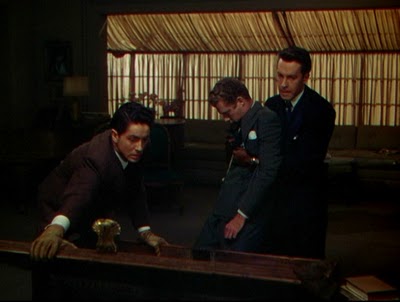
Alfred Hitchcock’s Rope stars Farley Granger and John Dall as thinly disguised versions of Leopold and Loeb, the brilliant students and self-described Übermensch who considered themselves exempt from the laws and morals of “ordinary” men, and put their philosophy into action by murdering a young boy for kicks. For them, killing a human being was just another experience, scarcely distinguishable, morally speaking, from any other action – like, say, squashing an ant. In Rope the names have changed to Phillip (Granger) and Brandon (John Dall), but the attitudes are the same. They murder a mutual acquaintance for the thrill of it, arguing that “the few are those men of such intellectual and cultural superiority that they’re above the traditional moral concepts. Good and evil, right and wrong, were invented for the ordinary, average man, the inferior man, because he needs them.”

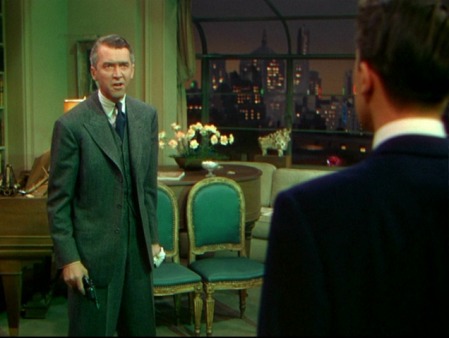
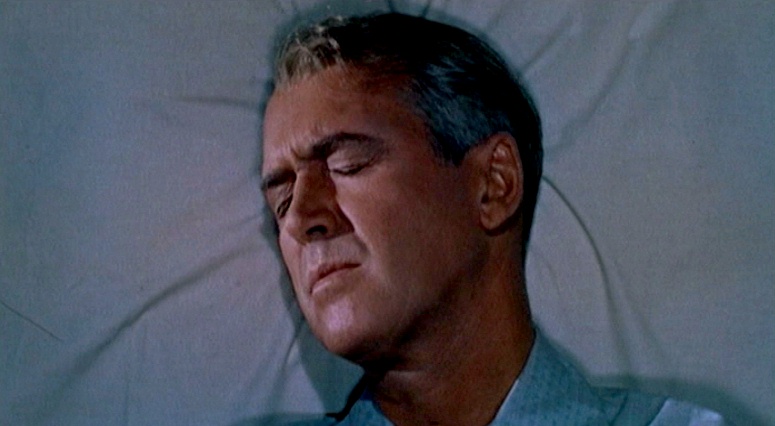
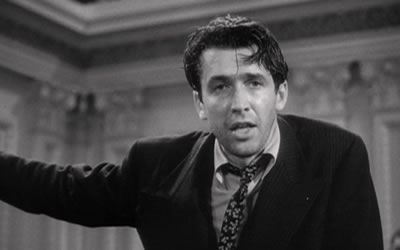
Not surprisingly, the film doesn’t endorse this view. In the end, Mr. Smith himself, James Stewart, shows up brimming with moral indignation to deliver an impassioned argument against the duo’s dastardly deed, saying, “…we’re each of us a separate human being with the right to live and work and think as individuals, but with an obligation to the society we live in. By what right did you dare decide that that boy in there was inferior and therefore could be killed? Did you think you were God, Brandon? Is that what you thought when you choked the life out of him? I don’t know what you thought or what you are but I know what you’ve done. You’ve murdered! You’ve strangled the life out of a fellow human being who could live and love as you never could…”

ropen1.jpg

The message is as obvious as is it predictable: murder is wrong! Few would argue with this statement. It seems to be a self-evident truth. But is it? I’m afraid the issue isn’t so black and white. Stewart’s character believes murder is wrong. John Dall’s character believes murder is right. Who’s correct? The problem is that we cannot logically decide between these competing moral claims unless there is an objective standard of morality to which we can repair for adjudication. Only such a standard would provide us the means to resolve disputes between people whose notions of right and wrong differ. The question is, though, does such a standard of morality actually exist?

First, a few definitions are in order:

Subjective:

  • 1) Based on or influenced by personal feelings, tastes, or opinions.
  • 2) Existing in the mind; belonging to the thinking subject rather than to the object of thought.
  • 3) Proceeding from or taking place in a person’s mind rather than the external world.

My favorite color is green. That is a subjective sentiment. That green is my favorite color need not imply that green is or should be everybody’s favorite color. It is not the “right” color, in any objective sense. Nature has not, after all, indicated a color preference.

Objective:

  • 1) Not influenced by personal feelings or opinions in considering and representing facts.
  • 2) Not dependent on the mind for existence; actual.
  • 3) Anything which actually exists, as distinguished from something thought or felt to exist.

2+2=4. That is an objective fact. Take two objects from here, two objects from there, put them together, and you have four objects. There’s no room for individual interpretation or preference. It is not right for some and wrong for others. There is only one valid answer. 2+2= 5 may be identified as an error, notwithstanding the ramblings of Dostoyevsky’s Underground Man, because math is not a subjective matter.

Morality

  • 1) Principles concerning the distinction between right and wrong or good and bad behavior.
  • 2) Of or concerned with the judgment of the goodness or badness of human action and character.

Murder is wrong. That is a moral claim. To which category do moral claims belong: subjective or objective? Is asserting that “murder is wrong” an objective fact like “2+2=4″, or is it a subjective sentiment like “my favorite color is green”? Is there an objective standard of morality to which we can refer to settle the matter? Or do questions of right and wrong, good and bad, fall into the subjective realm, amounting to nothing more than personal preference? I would argue that, whether we like it or not, moral claims belong squarely in the latter category.

The laws of math and logic are universally applicable. There’s no denying them. 2+2=4 is necessarily true. Furthermore, 2+2=4 was so even before the advent of humans. Let’s say a prehistoric squirrel gathers 2 nuts from under one tree, two nuts from under another tree, and then takes them all back to his nest. How many nuts does this squirrel have? He has 4, obviously. Is it any less true just because a human isn’t around to compute it? Did humans magically make 2+2=4 simply by thinking it? I don’t think so, and that’s because the laws of mathematics inhere in reality. Humans discovered mathematical laws; they didn’t invent them.

Morality doesn’t work that way. A moral claim like murder is wrong is not necessarily true. Right and wrong, good or bad, do not exist in nature. They are merely human constructs that help us get along, very much like the rules of courtesy. The universe, I’m afraid, is perfectly indifferent to morality. Whether one chooses to observe a moral rule like murder is wrong or stealing is bad is an entirely subjective matter, no more obligatory than, say, the rule instructing us not to split infinitives. Let’s say a bigger squirrel comes along and steals the smaller squirrel’s nuts. Has the bigger squirrel acted immorally? Was he “wrong” to steal the nuts? Obviously not, and that’s because the rules of morality do notinhere in reality. Humans didn’t discover moral rules; they invented them.

imagesca9x1eed.jpg

Allow me to return to Rope for a moment. I’ve never been a fan of the film. Its gimmicky one-set, long-take approach is hardly conducive to Hitchcock’s strengths as a director. Hitchcock himself acknowledged this, pretty much dismissing the film as a stunt: “When I look back, I realize that it was quite nonsensical because I was breaking with my own theories on the importance of cutting and montage for the visual narration of a story…no doubt about it, films must be cut”.

Also problematic are the stilted performances, particularly Granger’s awful turn as Phillip the Boobermensch. Just about everything he does or says is a howler. Perhaps my favorite bit is when he frantically calls out to “Brandon! Brandon!” when he sees the rope hanging out of the chest which contains the body. Brandon tells him to pull it out, and Phillip whines “I can’t”, as if he were totally incapable of functioning on his own. Later, when Stewart picks up the rope, Phillip hysterically whimpers, “He’s got it! He’s got it! He knows, he knows, he knows…” I mean, jeez, couldn’t Brandon find someone better than this guy with whom to carry out the “perfect crime”?

Thematically, the film offers a conventional, noncontroversial and comforting take on morality. During Stewart’s concluding diatribe on the immorality of murder, Brandon, himself now reduced to the level of Boobermensch, mutely stands around (as only characters in films based on plays are wont to do) allowing Stewart to prattle on without offering a counterargument, as if he’s been stunned speechless by the persuasive power of Stewart’s devastating argument. (For a vastly more insightful, unsettling, and intellectually challenging exploration of the “morality of murder” see Woody Allen’s masterful Crimes and Misdemeanors).

After watching Rope I happened to notice that the Self-Styled Siren, a popular classic movie bloggerette, had posted a tribute to the late Farley Granger, which consisted mostly of a defense of the “severely underrated Rope“. Her many followers quickly chimed in with their usual assent. All very boring, frankly. No one bothered to mention anything about the heady philosophical issues at the film’s core. I mean, what an opportunity to discuss Nietzsche, morality, murder, nihilism etc.! I felt the conversation could use some livening up, and so I posted the following:

“There’s nothing wrong, objectively speaking, with snuffing out a human life, notwithstanding all of Stewart’s histrionic protestations to the contrary.”

I had to chuckle at the Siren’s response:

“Mat, I would address your objections to Rope, but the last line of your first comment has, frankly, scared me to death.”

Apparently, for the Siren, a proposition qualifies as worthy of dispute only if it preserves her cozy feelings of security and well-being. (Not that there’s anything morally wrong with that, of course). This is a woman who could tell you everything you never wanted to know about old Hollywood stars – like, say, all the juicy details of the secret love affair between Jeanette Macdonald and Nelson Eddy – but when the discussion turns to a genuinely challenging subject, particularly one that frightens her, she’ll go all mum on you. (One suspects that a CAT scan of the Siren’s brain would reveal that the region controlling appreciation for classic Hollywood movies, technically known as the hippoclassic cinebellum, is grossly overdeveloped).

But I digress. Saying “there’s nothing wrong, objectively speaking, with snuffing out a human life” is, of course, not the same as saying, “there’s nothing wrong, subjectively speaking, with snuffing out a human life.” The operative phrase here is “objectively speaking”. I don’t personally condone murder. I don’t personally like murder. I’m happy to see this prejudice of mine codified as the law of the land. I cannot provide a reason, however, why murder is objectively wrong. But there’s no shortage of folks who try to provide such a reason. I’ll now examine some of the more common arguments, and explain why I find them wanting:

The Self-Evident Argument

People often respond to the suggestion that there’s nothing objectively wrong with murder with simple incredulity. For them, apparently, the proposition that murder is wrong is self-evidently true. They might respond by saying things like, “if you don’t know why murder is wrong I really don’t know what to say to you.”

Of course, this is in fact no argument at all. Here’s one thing they might say: “murder is objectively wrong because…” If one doesn’t need a reason to justify his belief that murder is morally wrong, then neither does a murderer need a reason to justify his belief that murder is morally right. After all, murderers have their own “self-evident truths.” We’re no closer to resolving the dispute with which we started. If one person says “murder is wrong” and another says “murder is right”, how do we logically decide between these competing moral claims in the absence of an objective standard to which we can refer to settle the matter? “Because I strongly feel that murder is wrong” does not, I’m afraid, constitute an objective standard.

The Golden Rule – Do unto others as you would have them do unto you.

Why should anyone necessarily adopt this rule? A sadistic murderer, for example, derives pleasure from inflicting pain on others. He values his own pleasure above everything else. He considers his own pleasure to be the greatest good, and if morality is purely subjective as I am arguing, then maximizing his pleasure, which would entail torturing his victim to death, is, for him, the right thing to do. Why then should he not adopt the rule that torturing people to death is good? Why should he care about the victim? What obligates him to care for her?

Most of us find the behavior of a sadistic murderer nauseating. That is true. But unless an objective source of human worth and moral obligation exists, we have no logical grounds to say that his sadistic behavior is morally wrong. In fact, in the absence of an objective standard of morality we have to forfeit altogether our cherished notions of morally right or wrong behavior. Good and bad, right and wrong, become vacant categories. Assertions like “murder is wrong” mean nothing more than “I don’t like murder.”

Survival of the species

All animal species possess characteristics which have historically contributed to the perpetuation of their species. Humans are no different. Some attempt to infer a moral imperative from this fact. The argument goes something like this: that which preserves life, such as empathy, is good, and that which destroys life, such as murder, is bad. There are several problems with this position:

First, it commits the fallacy of trying to derive an “ought” from an “is”. That certain behaviors tend to preserve life is a fact. That we ought to behave in ways that tend to preserve life is not. The first is a truth-statement, the second a value-statement, and never the twain shall meet. You simply cannot logically derive a value from a fact.

Second, it begs the question: why is life/survival good? Millions of species have already gone extinct. Why should anyone necessarily care if the human species goes the way of the dinosaur? Why is human life any more valuable than any other animal species?

Third, it commits the naturalistic fallacy. Allow me to quote G.E. Moore:

“The survival of the fittest does not mean, as one might suppose, the survival of what is fittest to fulfill a good purpose – best adapted to a good end: at the last, it means merely the survival of the fittest to survive: and the value of the scientific theory just consists in showing what are the causes which produce certain biological effects. Whether these effects are good or bad, it cannot pretend to judge.”

Just because something is “natural” doesn’t make it “good” (or “bad”, for that matter). Often that which preserves life also destroys life. Aggression, no less than empathy, is a characteristic which has facilitated human survival. Vanquishing entire tribes of people has generally been successful throughout human prehistory and recorded history. Just ask the descendants of the North American Indian – if you can find any. The point is that one has to be awfully selective when attempting to base his morality on what evolution has wrought. After all, the “better angels of our nature” evolved right alongside the “fallen” ones.

God

There’s no way around it: the implications of atheism lead inevitably to moral nihilism.  I do think that God, were he to exist, would qualify as an objective source of moral values (though even this is debatable), since, being omniscient, he would presumably know infallibly what is good and what is bad. But first his existence would need to be demonstrated. Good luck.

rope1.bmp

So let’s take this full circle back to Rope. Here’s the full text of Stewart’s concluding monologue:

“You’ve given my words a meaning I’ve never dreamed of. And you’ve tried to twist them into a cold, logical excuse for your ugly murder. Well, they never were that, Brandon. You can’t make them that. There must have been something deep inside of you from the very start that let you do this thing. But there’s always been something deep inside me that would never let me do it. Tonight you’ve made me ashamed of every concept I ever had of superior or inferior beings. And I thank you for that shame. Because now I know that we’re each of us a separate human being, Brandon, with the right to live and work and think as individuals, but with an obligation to the society we live in. By what right do you dare say that there’s a superior few to which you belong? By what right did you dare decide that that boy in there was inferior and therefore could be killed? Did you think you were God, Brandon? Is that what you thought when you choked the life out of him? Is that what you thought when you served food from his grave? Well, I don’t know what you thought or what you are but I know what you’ve done. You’ve murdered! You’ve strangled the life out of a fellow human being who could live and love as you never could…”

Stewart, playing Rupert Cadell, delivers this entire monologue uninterrupted. Brandon and Phillip, the two supposed Übermensch, just stand around like dimwits as Stewart rants. I thought it might be fun to imagine what Brandonmight have said and done, were he not such a Boobermensch, in response to Stewart’s diatribe. The following, then, is my re-write of this scene:

Rupert Cadell
You’ve given my words a meaning I’ve never dreamed of. And you’ve tried to twist them into a cold, logical excuse for your ugly murder.

Brandon
Hey, Mr. Smith, we’re not in Washington anymore. No filibustering here. If you think I’ll allow you to go off on a rant against me unchallenged you’re gravely mistaken. First of all, I don’t need an excuse to commit murder. I did it for the same reason I do anything: I wanted to. I felt like doing it and I did it. Secondly, it wasn’t ugly. Au contraire:  it was a thing of beauty. You haven’t lived until you’ve strangled the life out of someone, my friend. It’s a fucking rush. You oughta try it some time.

The bluntness with which Brandon discusses the murder flusters Rupert. Trying to regain his composure he faces Brandon with all the courage he can muster and, with righteous indignation, says:

jimmystewart1.jpg

Rupert
The name’s not Mr. Smith! It’s Rupert Cadell!

Brandon
I stand corrected. Is that it? Are you done? Is that all you have to say?

Rupert
No, that’s not all I have to say! I have much more to say! Much more! And by the time I’m finished saying it…

Brandon slaps Rupert on the cheek.

Brandon
Well, say it, man! Say it!

Rupert
There must have been something deep inside of you from the very start that let you do this thing. But there’s always been something deep inside of me that would never let me do it.

Brandon slaps Rupert on the other cheek for good measure.

Brandon
Ok, so we’ve established that we both have something deep inside of us. That’s a sure sign that what we’re discussing here is a purely subjective matter. The something deep inside of me says that murder is good. The something deep inside of you says that murder is bad. Without an objective standard of morality, this just means that I like murder, and you don’t. So what? I like chocolate. You don’t. What’s your point?

Rupert (whimpering)
Please stop slapping me. It hurts.

Brandon
Ok, sorry, I’ll stop slapping you.

Rupert (relieved)
Thank you.

Brandon delivers a punishing right hook to the side of Rupert’s head. Rupert crumples to the floor.

work_video_synkope_vertigo1.jpg

Brandon
Does that feel any better? I repeat: what’s your goddamn point?

Rupert struggles back to his feet.

Rupert
Ok, ok. We’re each of us a separate human being, Brandon, with the right to live and work and think as individuals, but with an obligation to the society we live in.

Brandon delivers a crushing haymaker straight to Rupert’s nose. Rupert cries out in agony, blood spraying like a geyser from his broken nose.

Brandon
Sorry, Roopy, but the impulse to stay alive is not a “right.” “Rights” don’t exist in nature. “Human rights” is a purely man-made concept which has no basis in reality. If you want to pretend you have a “right” to live go right ahead, but don’t expect me to. That boy in there had no more inherent right to live than anyone or anything else does. I didn’t violate his “right” to live because he didn’t have one.

Rupert (struggling to get up on one knee)
By what right do you dare…?

Before Rupert can finish the question, Brandon wallops him with a devastating uppercut to the chin, knocking Rupert flat on his back. Barely conscious now, Rupert moans in abject pain, his head spinning.

691.jpg

Brandon
Let me cut you off right there. I just got done saying that rights are purely fictitious. And then you start your next sentence with, “By what right…”? Have you not been listening? Quit sticking so slavishly to the crummy script, you fool. It doesn’t apply anymore. Are you incapable of improvising?

Brandon takes his pistol out of his pocket and kneels down to show it to Rupert.

Brandon
See this? The script says I’m supposed to hand it over to you like some fucking moron. But that ain’t gonna happen. See, that’s the difference between you and me, Roopy. You mindlessly obey whatever authority tells you. I don’t. The screenwriter wants you to be a mouthpiece for “society” and so you play along like some unthinking automaton emitting preprogrammed drivel. Well, this is my script now, and so you’d better come up with something a little more persuasive. You want the gun? Here, have it.

Brandon slams the butt of the gun down hard on Rupert’s skull, finally knocking him into merciful unconsciousness.

vertigo21.jpg

Brandon looks over at Phillip, who has been silently watching the whole time from his piano.

Brandon
Well, what have you got to say for yourself?

Phillip
You frighten me. You always have. From the very first day in prep school.

Brandon
Oh, Jesus. Can’t you say anything that isn’t in the script either?

Phillip
That’s a lie. There isn’t a word of truth in the whole story. I never strangled a chicken in my life. I never strangled a chicken and you know it!”

Brandon conks Phillip over the head with the gun, knocking him out as well, and drags him over next to Rupert. Brandon tosses a glass of water in Rupert’s face to wake him up, and then sits back in a reclining chair and lights up his pipe and waits for Rupert to regain consciousness. Rupert starts to stir, then sits up, rubbing his beleaguered head.

Phillip mumbles something. Rupert leans closer to get a better listen.

Brandon
What’s he saying now?

Rupert
I think he said, “He’s got it. He’s got it. He knows, he knows, he knows…”

Brandon
Yeah, that’s what I thought. He’s just mumbling some more gibberish from the script. Remember? That’s what he said when you took the rope out of your pocket.

Rupert
Oh yeah, that’s right.

Brandon
Guess who has the rope now?

Brandon produces the rope from his pocket and shows Rupert.

rope-pic-31.jpgits-a-wonderful-life-jimmy-vision1.png

Brandon (puffing on his pipe like a gentleman of leisure)
But let’s get back to our little discussion, shall we? I believe you were saying that we have an obligation to the society we live in or some such nonsense.

Rupert
That’s right, we do.

Brandon
Still sticking to the script, eh? I was hoping I had knocked some sense into you, but no, you’re still shackled to the illogical ideas of your creators, I see. Look, Roopy, nothing at all obligates me to care for society. I have a moral obligation tomyself and myself alone. What is good for me is the only good I recognize. Why should I care about society? Why should I be morally obligated to anybody or anything else but myself?

Rupert
Did you think you were God, Brandon? Is that what you thought when you choked the life out of him? Is that what you thought when you served food from his grave?

Brandon
Actually, I thought the burgers were a little dry myself. How was yours?

Rupert
Mine was nice and juicy. Very delici… Gosh darn it, you murdered that boy over there and you’re talking about hamburgers? What kind of monster are you? Answer the question: did you think you were God when you chocked the life out of that boy?

Brandon looks at the morally indignant Rupert with amusement and takes a long drag on his pipe.

Brandon
Getting a little demanding for a guy with his face bashed in, aren’t we, Roopy? To answer your question, no, I didn’t think I was God. I can’t very well think of myself as something I don’t believe in, now can I? I’ll leave the murdering in the name of God to your precious “society”.

Rupert
Well, I don’t know what you thought or what you are but I know what you’ve done. You’ve murdered! You’ve strangled the life out of a fellow human being who could live and love as you never could…”

Brandon
Look, Roopy, that boy over there was just a random collection of atoms with no more objective worth or value than any other piece of matter. You think his life had value. I don’t. I simply considered him unworthy of living and took the necessary steps to snuff him out of existence. You can bellow till you’re blue in the face that what I did was wrong, but you can’t objectively prove that it was.

Rupert
You’re insane, Brandon!

Brandon
Tut-tut, tut-tut. My, aren’t we rude for interrupting. You really oughta work on your manners, Roopy. Please, let me finish. You say I could never live and love as he could, and you’re right. I choose to live and love differently. I live to kill and I love to kill. His way of living and loving was not objectively any better than mine. And besides, now that that inanimate hunk of meat over there is objectively dead, I’m sure you’ll agree that he certainly cannot live and love as I can.

Rupert
You’re insane, Brandon! Insane and crazy and sick and twisted and cruel and demented and perverse and warped and abnormal and inhuman and loathsome and vicious and mean and perverted and nasty and brutal and pitiless and malicious and cruel…

Brandon
You already said cruel.

Rupert
…and unwholesome and ruthless and heartless and merciless and cold-blooded and hateful and despicable and disgusting and repugnant and detestable and abhorrent and noxious and sadistic and malevolent and evil and odious and contemptible and iniquitous…

Brandon
Oooh, iniquitous. Good one!

Rupert
… and repulsive and sickening and ghastly and nauseating and revolting and foul and abominable and wicked and monstrous and repellent and depraved…

Finally, Rupert starts hyperventilating from the strain of emitting so many consecutive insults.

367-21.jpg

Brandon chuckles and gets up from his recliner and walks over to Rupert. He takes a long drag on his pipe and blows the smoke directly in Rupert’s face.

Brandon
Ok, let’s see. By my count, that’s 47 insults you’ve hurled in my direction in lieu of an argument. Ad hominem attacks are very unbecoming of you, Roopy. Notwithstanding your invective, the question remains: how was it objectivelywrong to snuff out that boy’s life?

Phillip starts mumbling.

Phillip
I never strangled a chicken in my life…

Brandon tosses water in Phillip’s face.

Phillip fully regains consciousness and looks up at Brandon.

Phillip
I’ve been praying I’d wake up and find out we hadn’t done it yet. I’m scared to death, Brandon. I think we’re going to get caught.

Brandon
Go on, Phillip, utter one more line from that script. Go on, I dare you.

Phillip
Have you ever bothered for just one minute to understand how someone else might feel?

Brandon
I wonder how this feels.

dz2oca26m6xscal3a74zcap7al2ncaxd7y2vcajk1unlcad502q3ca9yzw49camrve11caklacxzcaua7e9qcabmlfa2carczop7cafbs80tca1lcwu6ca8nz9k9caiq0qrqcaishg46carjx885cayk74ew.jpg

Brandon puts the rope around Phillip’s neck and tugs hard. Phillip gasps for breath, his eyes bulging out of their sockets.

Rupert
Please, Brandon, stop!

Brandon releases his grip on the rope, allowing Phillip to catch his breath.

Brandon (to Phillip)
Not another word from that script. Got it?

Phillip
What the devil are you doing?

Brandon retightens the rope around Phillip’s neck. Then he hands the rope to Rupert and points his gun at him.

Brandon (to Rupert)
I’ll give you one chance to save yourself. Finish off this Boobermensch and I’ll let you live. What was it you said earlier this evening? That you’d like to have a “Strangulation Day”? Well, today is that day, Rupert.

Rupert
I was only joking, for Christ’s sake!

Brandon cocks the gun.

Brandon
Whose life do you value more, Rupert? Yours or his? Do it and you walk out of here alive. Don’t do it and you’ll end up in that chest with the other dead meat.

Rupert
No! I can’t! I won’t!

Brandon
He’s going to die whether you do it or not. If you don’t do it you’re going to die too. At least save yourself, Rupert.

Rupert
May God forgive me.

Brandon
Wait! Before you do it, let’s see if Phillip has any last words.

Phillip
I had a rotten evening.

Brandon
Yep, quoting from the script to the last. Unbelievable! Do it!

mrsmith661.jpg

Rupert yanks hard on the rope, choking the life out of Phillip the Boobermensch. Rupert lets the rope slip from his fingers and Phillip’s lifeless body slumps to the floor. Brandon drags the corpse over to the chest and tosses Phillip into it with the other body. He then walks back over to Rupert and puts his arm around him.

Brandon
Well, how was it? How did it feel?

Rupert
I take back everything I said, Brandon. That was incredible! You’re so right, you haven’t lived until you’ve choked the life out of someone. What a fucking rush that was!

Brandon pats Rupert on the shoulder and then walks over to the phone and dials.

Brandon
Hi Mrs. Cadell, this is Brandon Shaw speaking. I’m doing well, and you? So nice to talk to you. Listen, Rupert and I have been doing a lot of catching up, and it’s getting late and so I’ve invited him to stay for the night. I hope you don’t mind. Good! And since he’s still going to be here in the morning, I would be honored if you’d join us for breakfast. Great! Say, around 8:00? I look forward to seeing you, Mrs. Cadell.

Brandon hangs up.

Brandon
Charming lady, Roopy. I hope the eggs will be better than the burgers.

Rupert
What the devil are you up to?

mcauley-vertigo-splsh1.jpg

Brandon
Well, Roopy, yesterday was “Strangulation Day”, today is “Bullet in the Head Day”.

Brandon fires a bullet into Rupert’s head, and tosses him into the chest with the other two bodies.

Then Brandon breaks the fourth wall and addresses the audience directly.

Brandon
Ladies and gentlemen, if my actions this evening have repelled you, so be it. I can’t change the way you feel. But if you think that what I’ve done is morally wrong, I would simply remind you that that’s merely your opinion. In my opinion what I have done is right. It was fun, it was exciting, and it felt oh-so-good. Your opinion is no more valid than mine. It’s just different. Your values are no better than mine. They’re just different. After all, since no objective standard of morality exists, all you’re really saying is that you don’t like murder, and all I’m really saying is that I like murder. You may think that your moral outrage toward me amounts to something more than your own paltry knot of predilections. It does not. You may think that there is a higher standard to which I may be held. There is not. Morality, as you understand it, is a myth, a fantasy, a fairy-tale. Objectively speaking, murder is neither good nor bad, neither right nor wrong. It simply is. The universe is completely indifferent to morality. Nature is utterly amoral. Nothing is wrong. Nothing is right. Nothing is bad. Nothing is good. It is simply not possible to do something morally wrong. It is only possible to call something “wrong”. But no matter how passionately you shout, it doesn’t make it so. My actions this evening were no different, morally speaking, from that of a cat torturing a mouse. I am no more morally obligated to refrain from torture than is a cat. Moreover, humans have no more intrinsic value or worth than a mouse has. The value you assign to yourself and others is purely subjective and completely arbitrary. You may feel that you and others have value and worth, but do not forget for a moment that I feel that you and others don’t. Don’t delude yourself: your feelings are no more authoritative than mine. They’re just different. Whyshould I feel that you have value and worth? After all, you’re nothing more than a chance arrangement of particles with no more inherent value or worth than any other chance arrangement of particles. If this upsets you, it is because you have an innate, deep-rooted dread of nihilism, of the almost certain possibility that you are nothing more than a product of the blind whim of nature, that your most cherished concerns are mere brute stupidities deposited in you by the mindless, amoral process of evolution, that ultimately nothing has value, nothing has meaning and nothing matters, that all your effort is futile and absurd, and that just around the bend complete and utter annihilation and oblivion await you.

Good evening.

Posted on April 26th, 2011 by Mat Viola
Filed under: Miscellaneous

“Woody Wednesday” A review of Woody Allens movies from John Dart

I enjoyed this review from the 1970’s of Woody Allen movies from John Dart.

Woody Allen, Theologian

by John Dart

Formerly religion religion writer for the Los Angeles Times, John Dart is news editor of the Christian Century magazine. This article appeared in the Christian Century June 22-29, 1977, p. 585. Copyright by the Christian Century Foundation and used by permission. Current articles and subscription information can be found at www.christiancentury.org. This material was prepared for Religion Online by Ted & Winnie Brock.


Kant was right. The mind imposes order. It also tells you how much to tip.

I don’t want to achieve immortality through my work. I want to achieve it through not dying.

God is silent. Now if we can only get man to shut up.

Quickly now, who penned those mortal lines? Nineteenth century philosopher Søren Kierkegaard writing on a stale Danish to amuse his friends?. Maharishi Mahesh Yogi in an earlier career as itinerant ghostwriter for Aimee Semple McPherson? Billy Graham in his diary for April (entries presumably followed by, “Only foolin’, Lord, only foolin’ ”)?

None of the above. The thoughts are those of the troubled agnostic religiophilosopher Woody Allen — the same Brooklyn-born thinker who long ago changed his name from Allen S. Konigsberg to avoid being mistaken for just another German theologian. Allen devotees are familiar with the God talk and death obsession in two books of his collected works — Getting Even (Random House, 1971) and Without Feathers (Random House, 1975). In his movies, Woody frequently uses priests and ministers, rabbis and nuns as comic ploys. His Love and Death was practically a complete theological statement on the screen — despite distracting gags and funny lines.

I

His latest movie is Annie Hall, with Woody in his customary role as writer (in this case, with Marshall Brickman), director and actor [see the review by William Siska, p. 593 — Ed.]. It is not as saturated with obvious religious references as was Love and Death. (Among scenes struck from the final version was a devil-escorted elevator descent into hell.)

The preferred title until the last moment was Anhedonia, which means the inability to experience pleasure — a word not listed in your usual Funk & Wagnalls. The semiantobiographical comedy indicates Allen’s real concern with the awful inevitability of death. Woody, as comedian Alvy Singer, presents his new girlfriend, Annie Hall (Diane Keaton), with two books on death as his first gifts to her. “Death is an important issue,” he explains.

Any credit for “discovering” the metaphysical mettle of Woody Allen probably belongs to that Mad magazine of evangelical Protestantism, the Wittenburg Door, published in San Diego. The editors named him “theologian of the year” for 1974 and reprinted one of his articles, “The Scrolls.” (The Allen article suggested, among other things, that Abraham was persuaded into thinking God wanted his son sacrificed because the Lord’s orders came in a “resonant, well-modulated voice.”)

The magazine’s tongue-in-cheek honor was bestowed on Allen after a “survey” of seminary students showed him to be the overwhelming popular choice over runners-up Karl Barth, Jürgen Moltmann and Pat Boone. Eminent church scene observer Martin Marty commented that if young seminarians could be as interesting about life as Allen is about death, “maybe we’ll have a new generation of theological winners again.” Marty quoted such Allen aphorisms as “Death is one of the few things that can be done as easily lying down” and “I do not believe in an afterlife, although I am bringing a change of underwear.”

For the most part, Allen has avoided direct contact with the world of organized religion. But he did invite Billy Graham to appear on his television special in 1969. Allen came out a poor second in some polite verbal jousting — most likely a case of an amateur agnostic pitted against a professional religionist.

I would define my position somewhere between atheism and agnosticism. I vacillate between the two positions frequently.l

His creative ambivalence on religious subjects showed up a bit in the movie Sleeper but was woven throughout in the sixth film he directed, Love and Death (1975). Allen admitted that the movie is highly critical of God. “It implies He doesn’t exist, or, if He does, He really can’t be trusted,” Allen wrote in Esquire. “Since coming to this conclusion,” he added, “I have twice been struck by lightning and once forced to engage in a long conversation with a theatrical agent.”

I felt [Love and Death] ran the risk of people saying, “It’s funny, but a little heavy going.” I know I can make a picture that people will laugh at, and that’s the primary thing to do. To make a comedy that has a message but isn’t funny enough, that’s a big mistake. Better if it’s very funny and doesn’t say anything. The ideal thing is to be funny and also say something significant.2

II

Predictably, not everyone appreciates his ideas. Love and Death got a bad review in the National Courier, a tabloid Christian newspaper published in New Jersey. “Woody Allen’s comedy is an expected product of post-Christian society,” wrote Courier reviewer Bob Cleath. “Funny on the surface to many people, it minors the tragedy overtaking our culture. Those who set themselves against God might well remember: ‘He who sits in the heavens laughs. The Lord scoffs at them. Then he will speak to them in his anger and terrify them in his fury’ (Ps. 2:4-5).” The reviewer might have picked a hellfire verse more to the point: “Do not be deceived; God is not mocked, for whatever a man sows, that he will also reap” (Gal. 6:7).

Actually, while Allen does include standard religious solutions as his targets for comedy, he is far from regarding thoughtful religious inquiry as inane.

I don’t approve of any of the major religions because I feel organized religions are social, political and economic organizations in general. But religious beliefs and religious faith — that does interest me and I have full appreciation for the search for genuine religious faith that people go through.1

A character in Allen’s “Notes from the Overfed,” an essay in Getting Even, observes that some people teach that God is in all creation. The Allenian character draws a calorific conclusion from that teaching. “If God is everywhere, I had concluded, then He is in food,” he said. “Therefore, the more I ate the godlier I would become. Impelled by this new religious fervor, I glutted myself like a fanatic. In six months, I was the holiest of holies, with a heart entirely devoted to my prayers and a stomach that crossed the state line by itself.” To reduce would have been folly — “even a sin!”

As might be guessed, the Konigsberg kid was submerged in religious imagery in his Brooklyn childhood, which included eight years of Hebrew school. Woody once wrote that he was “raised in the Jewish tradition, taught never to marry a Gentile woman, shave on Saturday, and most especially, never to shave a Gentile woman on Saturday.”

I was raised fairly religiously. . and never took to it very much. It was more or less a forced religious background.1

While he was still a 17-year-old at Midwood High School, he began selling gags to newspaper columnists. He was soon writing for the Peter Lind Hayes radio show, then for the likes of television comedians Sid Caesar and Herb Shriner.

Allen lacks a college degree, and he freely admits that he was ejected from both New York University and New York City College. However, in a classic joke he claims that while a student he was attracted to such abstract philosophy courses as “Introduction to God,” “Death 101” and “Intermediate Truth.” His downfall came when he cheated on his metaphysics final. “I looked within the soul of the boy sitting next to me,” he explains.

III

Because he is a voracious reader who goes in for heavy reading about ultimate concerns, his humor can be appreciated especially by those familiar with the pretentiousness of some religious and philosophical literature. In a parody on Hassidic tales, Allen concludes one commentary by saying, “Why pork was proscribed by Hebraic law is still unclear, and some scholars believe that the Torah merely suggested not eating pork at certain restaurants.”

Allen finds another foil in numerology. “The Five Books of Moses subtracted from the Ten Commandments leaves five. Minus the brothers Jacob and Esau leaves three. It was reasoning like this that led Rabbi Yitzhok Ben Levi, the great Jewish mystic, to hit the double at Aqueduct 52 days running and still wind up on relief.”

Woody finds laughs in all of life; sex is another fertile field for jokes. But there is no escaping the conclusion that religious-philosophical concerns are the most important. For example, “God” and “Death” are two short plays in his Without Feathers.

I found over the years the things that interested me most were philosophical or religious issues as opposed to social issues or topical things. When I step back, I would agree that there is a preponderance of religious and philosophical themes because, I guess, they are genuine interests or obsessions.1

Just what those concerns are can be traced from an analysis of Allen’s humor. Woody poses basic religious or philosophical questions often ignored by the secularly oriented as “too deep” and skipped over by religionists engrossed in particular issues.

Some Allen gags just prey on the gap between ordinary affairs and immense issues. “Not only is there no God, but try getting a plumber on weekends,” he once wrote. And: “The universe is merely a fleeting idea in God’s mind — a pretty uncomfortable thought, particularly if you’ve just made a down payment on a house.”

The structure of the joke is a psychological reflection of the concern: The juxtaposition of the trivial and the mundane . . . against the background of cosmic, major concerns. We have to reconcile the paradox of it all. The joke mirrors that paradox.’

The absurdities of life stimulate both philosophers and comics. Is it any surprise then that they evoke such interesting commentary from a comic-philosopher? Absurdities — funny absurdities — abound in his play God. Near the final curtain a deus ex machina ending is attempted in order to extricate a difficult plot, but this “God” strangles on the machine that was to lower him onto the stage.

God is just really a burlesque in a light vein and a theatrical experience. It’s having some fun with what’s real, who the playwright is . . and how absurd existence is in general.1

Nevertheless, an exchange in that play reveals Allen’s thinking that just possibly there may be an answer obtainable somewhere, sometime.

ACTOR: If there’s no God, who created the universe?
WRITER: I’m not sure yet.
ACTOR: What do you mean, you’re not sure yet!?


For all his agnosticism bordering on atheism, in Love and Death also Allen tips off this feeling that answers may yet be forthcoming. Boris Grushenko (Woody) asks Sonya (Diane Keaton), “What if there is no God? What if we’re just a bunch of absurd people who are running around with no rhyme or reason?”

Sonya replies: “But if there is no God, then life has no meaning. Why go on living? Why not just commit suicide?”

Boris, somewhat flustered, says: “Well, let’s not get hysterical. I could be wrong. I’d hate to blow my brains out and then read in the papers they found something.” Later in the movie, Boris, deceased yet delivering an epilogue, observes: “If it turns out that there is a God, I don’t think he is evil. I think that the worst thing you can say about him is that he is an underachiever.”

Woody Allen, it would seem, also puts into joke form an often unarticulated question: if God really exists, why doesn’t he demonstrate his existence? “If only God would give me some clear sign! Like making a large deposit in my name at a Swiss bank.”

Boris Grushenko yearns throughout Love and Death for a signal from God that he is. If he would speak just once — If he would just cough!” Another time Boris tells Sonya: “If I could just see a miracle. Just one miracle. If I could see a burning bush or the seas part or my Uncle Sasha pick up a check.”

IV

A point Allen makes repeatedly, under the cover of comedy, is that people do not pay enough attention to the fact of their mortality. Death themes and jokes are more prevalent in his wit than are God jokes. His interest in the existence or nonexistence of God stems from his death obsession. Death is an “issue,” to use contemporary parlance, which should not be so passively accepted, he says.

It’s very important to realize that we’re up against an evil, insidious, hostile universe, a hostile force. It’ll make you ill and age you and kill you. And there’s somebody — or something — out there who for some irrational, unexplainable reason is killing us. I’m only interested in dealing with the top man. I’m not interested in dealing with the other stuff because that’s not important — although that is hard to say because there is hardly an iota of evidence of this.3

In Allen’s play Death, a central character is cajoled into joining a search party for a killer on the loose but never sees any organized method employed and is never sure of his role in the search. The irrational murderer is God.

No one knows what one’s part is; you don’t know what your function is — you keep thinking that some people more highly placed than you do know, and they don’t. . . . I think it’s the only important question and until more light is shed — if possible — all the other questions people are obsessed with can never be fully answered.1

It would be off the mark to characterize Allen’s death humor as a string of ‘sick jokes,” a genre prevalent in the 1960s. One of Woody’s most finely tuned and honed pieces of humor appeared last summer in the New Republic. It begins: “It has been four weeks, and it is still hard for me to believe Sandor Needleman is dead. I was present at the cremation, and at his son’s request, brought the marshmallows, but few of us could think of anything but our pain. Needleman was constantly obsessing over his funeral plans and once told me, ‘I much prefer cremation to burial in the earth, and both to a weekend with Mrs. Needleman.’ ”

 [Death is] absolutely stupefying in its terror, and it renders anyone’s accomplishments meaningless. As Camus wrote, it’s not only that he dies or that man dies, but that you struggle to do a work of art that will last and then realize that the universe itself is not going to exist after a period of time. Until those issues are resolved within each person — religiously or psychologically or existentially — the social and political issues will never be resolved, except in a slapdash way.4

V

When Woody looks for possible resolutions of the “issues” of existence, death and afterlife, he looks mostly to philosophy. But he does not leave philosophy untouched by parody. In an essay called “My Philosophy,” Woody tells of his introduction to the discipline.

“Scorning chronological order,” he writes, “I began with Kierkegaard and Sartre, then moved quickly to Spinoza, Hume, Kafka and Camus. I was not bored. . . . I remember my reaction to a typically luminous observation of Kierkegaard’s: ‘Such a relation which relates itself to its own self (that is to say, a self) must either have constituted itself or have been constituted by another.” The concept brought tears to my eyes. My word, I thought, to be that clever! . . . True, the passage was totally incomprehensible to me, but what of it as long as Kierkegaard was having fun?”

Philosophical thought of men like, say, Russell and Dewey or even Hegel may be dazzling but it’s sober and uncharismatic. Dostoevski, Camus, Kierkegaard, Berdyaev — the minds I like — I consider romantic. I guess I equate dread’ with romance.

My depression is why I’m drawn to philosophy, so acutely interested in Kafka, Dostoevski and [Ingmar] Bergman. I think I have all the symptoms and problems that those people are occupied with: An obsession with death, an obsession with God or the lack of God, the question of why we are here. Answers are what I want . . .3

Woody rejects standard religious solutions: “There’s no religious feeling that can make any thinking person happy.” Or more exactly, it’s not a matter of adopting a belief in something like reincarnation: “I certainly don’t believe in anything. [Reincarnation] is conceivable, but I don’t believe in it.”5 Nor is the answer possible through creating “immortal” works of art: “Art is the artist’s false Catholicism, the fake promise of an afterlife and just as fake as heaven and hell.”4

Psychoanalysis? In Annie Hall Woody tells his new girlfriend matter-of-factly that he’s been going to an analyst for 15 years. “I’m going to give him one more year and then I’m going to Lourdes,” he vows. Actually, that’s about how long Woody has been in analysis.

It has been of some genuine help to me. I’ve been of the belief that the more my personality becomes integrated the more my work would deepen and I could apply myself to topics of deeper interest to human beings. [Without that integration] you may be brilliant, but you become very shrill.1

In the normal things that trouble everybody  — meeting new people, crowds, shyness, human relationships — I haven’t made much progress at all.6

Life is divided between the horrible and miserable, says Woody’s hero in Annie Hall. But ex-wife Louise Lasser says the worst thing in the world could happen to Woody and he still could go into the next room and write. Says Woody: “I never get so depressed that it interferes with my work. I’m disciplined.”4

VI

The discipline extends to nondrinking, nonsmoking habits, and the pleasures to Dixieland clarinet playing, Bergman movies, New York Knicks basketball and incognito wandering in New York city, even drifting in and out of revival houses. Woody confesses that he doesn’t know what the meaning of life is, but he feels sure its purpose is not merely hedonistic: “We are not put here to have a good time and that’s what throws most of us, that sense that we all have an inalienable right to a good time.”5

In future films, Woody says, he wants to deal with faith and spiritual values as Ingmar Bergman does — maybe through a drama but also again through the (more difficult, he feels) serious-comical film. “The line between the kind of solemnity I want and comedy is very, very thin.”4

Literary analysts have noted the blurred line between comedy and tragedy. Annie Hall is obviously a comedy, but its melancholy comments and suggestions are subject to interpretation.

One technique introduced in his latest film seems to confirm his serious-comical tendency. The joke takes the place of a maxim, a Bible text, if you will, or moral of the story.” A theme-setting joke in the beginning is attributed to Groucho Marx: “I wouldn’t want to join any club that would have me as a member.” At the end is the familiar story in which someone complains to a psychiatrist about a man who thinks he is a chicken. ‘Why don’t you bring him in for treatment?” the psychiatrist asks. “I would, but we need the eggs.”


Notes

1. Devious Approach to Theology,’ by John Dart, Los Angeles Times October 4, 1975.

2.    Hiding Out With Woody Allen,’ by Edwin Miller, Seventeen, November 1975.

3.    On Being Funny, by Eric Lax (Charterhonse, 1975).

4. “Woody Allen Wipes the Smile Off His Face” by Frank Rich, Esquire, May 1977.

5. “A Conversation With the Real Woody Allen (Or Someone Just Like Him)” by Ken Kelley, Rolling Stone, July 1, 1976.

6. “If Life’s a Joke, Then the Punch Line Is Woody Allen,” by Jim Jerome, People, October 4, 1976.

I have spent alot of time talking about Woody Allen films on this blog and looking at his worldview. He has a hopeless, meaningless, nihilistic worldview that believes we are going to turn to dust and there is no afterlife. Even though he has this view he has taken the opportunity to look at the weaknesses of his own secular view. I salute him for doing that. That is why I have returned to his work over and over and presented my own Christian worldview as an alternative.

My interest in Woody Allen is so great that I have a “Woody Wednesday” on my blog www.thedailyhatch.org every week. Also I have done over 30 posts on the historical characters mentioned in his film “Midnight in Paris.” (Salvador Dali, Ernest Hemingway,T.S.Elliot,  Cole Porter,Paul Gauguin,  Luis Bunuel, and Pablo Picasso were just a few of the characters.)

Related posts:

I love the movie “Midnight in Paris” by Woody Allen and I have done over 30 posts on the historical characters mentioned in the film. Take a look below:

“Midnight in Paris” one of Woody Allen’s biggest movie hits in recent years, July 18, 2011 – 6:00 am

(Part 32, Jean-Paul Sartre)July 10, 2011 – 5:53 am

 (Part 29, Pablo Picasso) July 7, 2011 – 4:33 am

(Part 28,Van Gogh) July 6, 2011 – 4:03 am

(Part 27, Man Ray) July 5, 2011 – 4:49 am

(Part 26,James Joyce) July 4, 2011 – 5:55 am

(Part 25, T.S.Elliot) July 3, 2011 – 4:46 am

(Part 24, Djuna Barnes) July 2, 2011 – 7:28 am

(Part 23,Adriana, fictional mistress of Picasso) July 1, 2011 – 12:28 am

(Part 22, Silvia Beach and the Shakespeare and Company Bookstore) June 30, 2011 – 12:58 am

(Part 21,Versailles and the French Revolution) June 29, 2011 – 5:34 am

(Part 16, Josephine Baker) June 24, 2011 – 5:18 am

(Part 15, Luis Bunuel) June 23, 2011 – 5:37 am

(Part 1 William Faulkner) June 13, 2011 – 3:19 pm

I love Woody Allen’s latest movie “Midnight in Paris”, June 12, 2011 – 11:52 pm

Related posts:

“Woody Wednesday” Trivia about Woody Allen Part 1

Woody Allen about meaning and truth of life on Earth I have spent alot of time talking about Woody Allen films on this blog and looking at his worldview. He has a hopeless, meaningless, nihilistic worldview that believes we are going to turn to dust and there is no afterlife. Even though he has this view he […]

“Woody Wednesday” Woody Allen video interview in France talk about making movies in Paris vs NY and other subjects like God, etc

Woody Allen video interview in France Related posts: “Woody Wednesdays” Woody Allen on God and Death June 6, 2012 – 6:00 am Good website on Woody Allen How can I believe in God when just last week I got my tongue caught in the roller of an electric typewriter? If Jesus Christ came back today and […]

“Woody Wednesday” 2011 PBS Documentary on Woody Allen was very revealing

Woody Allen: A Documentary, Part 1 I have spent alot of time talking about Woody Allen films on this blog and looking at his worldview. He has a hopeless, meaningless, nihilistic worldview that believes we are going to turn to dust and there is no afterlife. Even though he has this view he has taken the opportunity […]

“Woody Wednesday” 2008 article on Woody Allen on the meaning of life

I have spent alot of time talking about Woody Allen films on this blog and looking at his worldview. He has a hopeless, meaningless, nihilistic worldview that believes we are going to turn to dust and there is no afterlife. Even though he has this view he has taken the opportunity to look at the weaknesses of […]

“Woody Wednesday” Another look at Woody Allen’s movie Crimes and Misdemeanors

I have spent alot of time talking about Woody Allen films on this blog and looking at his worldview. He has a hopeless, meaningless, nihilistic worldview that believes we are going to turn to dust and there is no afterlife. Even though he has this view he has taken the opportunity to look at the weaknesses of […]

“Woody Wednesday” A 2010 review of Woody Allen’s Annie Hall

I have spent alot of time talking about Woody Allen films on this blog and looking at his worldview. He has a hopeless, meaningless, nihilistic worldview that believes we are going to turn to dust and there is no afterlife. Even though he has this view he has taken the opportunity to look at the weaknesses of […]

“Woody Wednesday” In 2009 interview Woody Allen talks about the lack of meaning of life and the allure of younger women

Ecclesiastes 1 Published on Sep 4, 2012 Calvary Chapel Spring Valley | Sunday Evening | September 2, 2012 | Pastor Derek Neider _____________________ Ecclesiastes 2-3 Published on Sep 19, 2012 Calvary Chapel Spring Valley | Sunday Evening | September 16, 2012 | Derek Neider _____________________________ I have spent alot of time talking about Woody Allen films on […]

Woody Allen video interview in France talk about making movies in Paris vs NY and other subjects like God, etc

Woody Allen video interview in France Related posts: “Woody Wednesdays” Woody Allen on God and Death June 6, 2012 – 6:00 am Good website on Woody Allen How can I believe in God when just last week I got my tongue caught in the roller of an electric typewriter? If Jesus Christ came back today and […]

“Woody Wednesday” Woody Allen on the Emptiness of Life by Toby Simmons

I have spent alot of time talking about Woody Allen films on this blog and looking at his worldview. He has a hopeless, meaningless, nihilistic worldview that believes we are going to turn to dust and there is no afterlife. Even though he has this view he has taken the opportunity to look at the weaknesses of […]

Woody Allen interviews Billy Graham (Woody Wednesday)

A surprisingly civil discussion between evangelical Billy Graham and agnostic comedian Woody Allen. Skip to 2:00 in the video to hear Graham discuss premarital sex, to 4:30 to hear him respond to Allen’s question about the worst sin and to 7:55 for the comparison between accepting Christ and taking LSD. ___________________ The Christian Post > […]

By Everette Hatcher III | Posted in Current Events | Edit | Comments (0)

Taking on Ark Times Bloggers on the “Absurdity of Life without God!!” Part 15 (Robert Lewis of Men’s Fraternity suggested too many are focused on things that will pass away and not on making an eternal difference in others lives)

The Bible and Science (Part 03)

There Is A Difference Between Absolute and Objective Moral Values

Published on Dec 6, 2012

For more resources visit: http://www.reasonablefaith.org

The Bethinking National Apologetics Day Conference: “Countering the New Atheism” took place during the UK Reasonable Faith Tour in October 2011. Christian academics William Lane Craig, John Lennox, Peter J Williams and Gary Habermas lead 600 people in training on how to defend and proclaim the credibility of Christianity against the growing tide of secularism and New Atheist popular thought in western society.

In this session, William Lane Craig delivers his critique of Richard Dawkins’ objections to arguments for the existence of God, followed by questions and answers from the audience. In this clip, Dr Craig addresses a question about objective moral values and distinguishes them from absolute moral values.

Dr. Francis Schaeffer – The Biblical Flow of Truth & History (part 2)

Francis Schaeffer pictured below:

______________________________

_________________

Life without God in the picture is absurdity!!!. That was the view of King Solomon when he wrote the Book of Ecclesiastes 3000 years ago and it is the view of many of the modern philosophers today. Modern man has tried to come up with a lasting meaning for life without God in the picture (life under the sun), but it is not possible. Without the infinite-personal God of the Bible to reveal moral absolutes then man is left to embrace moral relativism. In a time plus chance universe man is reduced to a machine and can not find a place for values such as love. Both of Francis Schaeffer’s film series have tackled these subjects and he shows how this is reflected in the arts.

Here are some posts I have done on the series “HOW SHOULD WE THEN LIVE? : Francis Schaeffer’s “How should we then live?” Video and outline of episode 10 “Final Choices” , episode 9 “The Age of Personal Peace and Affluence”, episode 8 “The Age of Fragmentation”, episode 7 “The Age of Non-Reason” , episode 6 “The Scientific Age” ,  episode 5 “The Revolutionary Age” , episode 4 “The Reformation”,  episode 3 “The Renaissance”, episode 2 “The Middle Ages,”, and  episode 1 “The Roman Age,” .

In the film series “WHATEVER HAPPENED TO THE HUMAN RACE?” the arguments are presented  against abortion (Episode 1),  infanticide (Episode 2),   euthenasia (Episode 3), and then there is a discussion of the Christian versus Humanist worldview concerning the issue of “the basis for human dignity” in Episode 4 and then in the last episode a close look at the truth claims of the Bible.

I have discussed many subjects with my liberal friends over at the Ark Times Blog in the past and I have taken them on now on the subject of the absurdity of life without God in the picture. Most of my responses included quotes from William Lane Craig’s book THE ABSURDITY OF LIFE WITHOUT GOD.  Here is the result of one of those encounters from June of 2013:

DeathByInches asserted, “You are doomed to die Saline, get used to it.”

It is funny that you said that last night I was at church and heard Ecclesiastes 7:2 read,
“It is better to go to a house of mourning than to go to a house of feasting, for death is the destiny of everyone; the living should take this to heart.”

Robert Lewis the founder of “Men’s Fraternity” quoted this verse last night at Fellowship Bible Church in a meeting I attended. He noted that many people spend so much time on their careers that it is very interesting that usually the things mentioned at their funerals have very little to do with how much they accomplished in their careers but what impact they had on close friends and family members. Lewis suggested that many are out of balance today because they are focused on things that will pass away and not on making an eternal difference in others lives.

I THINK THAT ROBERT LEWIS IS RIGHT ABOUT THE IMPORTANCE OF MAKING AN ETERNAL IMPACT, BUT IF YOU, DEATHBYINCHES, ARE RIGHT ABOUT DEATH BEING THE ABSOLUTE END THEN WHO CARES HOW WE ACT IN THIS LIFE.

On this subject William Lane Craig noted:

If life ends at the grave, then it makes no difference whether one has lived as a Stalin or as a saint. Since one’s destiny is ultimately unrelated to one’s behavior, you may as well just live as you please. As Dostoyevsky put it: “If there is no immortality, then all things are permitted.” On this basis, a writer like Ayn Rand is absolutely correct to praise the virtues of selfishness. Live totally for self; no one holds you accountable! Indeed, it would be foolish to do anything else, for life is too short to jeopardize it by acting out of anything but pure self-interest. Sacrifice for another person would be stupid. Kai Nielsen, an atheist philosopher who attempts to defend the viability of ethics without God, in the end admits,

We have not been able to show that reason requires the moral point of view, or that all really rational persons, unhoodwinked by myth or ideology, need not be individual egoists or classical amoralists. Reason doesn’t decide here. The picture I have painted for you is not a pleasant one. Reflection on it depresses me…. Pure practical reason, even with a good knowledge of the facts, will not take you to morality.8

But the problem becomes even worse. For, regardless of immortality, if there is no God, then any basis for objective standards of right and wrong seems to have evaporated. All we are confronted with is, in Jean-Paul Sartre’s words, the bare, valueless fact of existence. Moral values are either just expressions of personal taste or the by-products of socio-biological evolution and conditioning. In the words of one humanist philosopher, “The moral principles that govern our behavior are rooted in habit and custom, feeling and fashion.”9 In a world without God, who is to say which actions are right and which are wrong? Who is to judge that the values of Adolf Hitler are inferior to those of a saint? The concept of morality loses all meaning in a universe without God. As one contemporary atheistic ethicist points out, “To say that something is wrong because … it is forbidden by God, is … perfectly understandable to anyone who believes in a law-giving God. But to say that something is wrong … even though no God exists to forbid it, is not understandable….” “The concept of moral obligation [is] unintelligible apart from the idea of God. The words remain but their meaning is gone.”10 In a world without a divine lawgiver, there can be no objective right and wrong, only our culturally and personally relative, subjective judgments. This means that it is impossible to condemn war, oppression, or crime as evil. Nor can one praise brotherhood, equality, and love as good. For in a universe without God, good and evil do not exist—there is only the bare valueless fact of existence, and there is no one to say that you are right and I am wrong.

Related posts:

Francis Schaeffer’s “How should we then live?” Video and outline of episode 10 “Final Choices” (Schaeffer Sundays)

E P I S O D E 1 0   Dr. Francis Schaeffer – Episode X – Final Choices 27 min FINAL CHOICES I. Authoritarianism the Only Humanistic Social Option One man or an elite giving authoritative arbitrary absolutes. A. Society is sole absolute in absence of other absolutes. B. But society has to be […]

Francis Schaeffer’s “How should we then live?” Video and outline of episode 9 “The Age of Personal Peace and Affluence” (Schaeffer Sundays)

E P I S O D E 9 Dr. Francis Schaeffer – Episode IX – The Age of Personal Peace and Affluence 27 min T h e Age of Personal Peace and Afflunce I. By the Early 1960s People Were Bombarded From Every Side by Modern Man’s Humanistic Thought II. Modern Form of Humanistic Thought Leads […]

Francis Schaeffer’s “How should we then live?” Video and outline of episode 8 “The Age of Fragmentation” (Schaeffer Sundays)

E P I S O D E 8 Dr. Francis Schaeffer – Episode VIII – The Age of Fragmentation 27 min I saw this film series in 1979 and it had a major impact on me. T h e Age of FRAGMENTATION I. Art As a Vehicle Of Modern Thought A. Impressionism (Monet, Renoir, Pissarro, Sisley, […]

Francis Schaeffer’s “How should we then live?” Video and outline of episode 7 “The Age of Non-Reason” (Schaeffer Sundays)

E P I S O D E 7 Dr. Francis Schaeffer – Episode VII – The Age of Non Reason I am thrilled to get this film series with you. I saw it first in 1979 and it had such a big impact on me. Today’s episode is where we see modern humanist man act […]

Francis Schaeffer’s “How should we then live?” Video and outline of episode 6 “The Scientific Age” (Schaeffer Sundays)

E P I S O D E 6 How Should We Then Live 6#1 Uploaded by NoMirrorHDDHrorriMoN on Oct 3, 2011 How Should We Then Live? Episode 6 of 12 ________ I am sharing with you a film series that I saw in 1979. In this film Francis Schaeffer asserted that was a shift in […]

Francis Schaeffer’s “How should we then live?” Video and outline of episode 5 “The Revolutionary Age” (Schaeffer Sundays)

E P I S O D E 5 How Should We Then Live? Episode 5: The Revolutionary Age I was impacted by this film series by Francis Schaeffer back in the 1970′s and I wanted to share it with you. Francis Schaeffer noted, “Reformation Did Not Bring Perfection. But gradually on basis of biblical teaching there […]

Francis Schaeffer’s “How should we then live?” Video and outline of episode 4 “The Reformation” (Schaeffer Sundays)

Dr. Francis Schaeffer – Episode IV – The Reformation 27 min I was impacted by this film series by Francis Schaeffer back in the 1970′s and I wanted to share it with you. Schaeffer makes three key points concerning the Reformation: “1. Erasmian Christian humanism rejected by Farel. 2. Bible gives needed answers not only as to […]

“Schaeffer Sundays” Francis Schaeffer’s “How should we then live?” Video and outline of episode 3 “The Renaissance”

Francis Schaeffer’s “How should we then live?” Video and outline of episode 3 “The Renaissance” Francis Schaeffer: “How Should We Then Live?” (Episode 3) THE RENAISSANCE I was impacted by this film series by Francis Schaeffer back in the 1970′s and I wanted to share it with you. Schaeffer really shows why we have so […]

Francis Schaeffer’s “How should we then live?” Video and outline of episode 2 “The Middle Ages” (Schaeffer Sundays)

  Francis Schaeffer: “How Should We Then Live?” (Episode 2) THE MIDDLE AGES I was impacted by this film series by Francis Schaeffer back in the 1970′s and I wanted to share it with you. Schaeffer points out that during this time period unfortunately we have the “Church’s deviation from early church’s teaching in regard […]

Francis Schaeffer’s “How should we then live?” Video and outline of episode 1 “The Roman Age” (Schaeffer Sundays)

Francis Schaeffer: “How Should We Then Live?” (Episode 1) THE ROMAN AGE   Today I am starting a series that really had a big impact on my life back in the 1970′s when I first saw it. There are ten parts and today is the first. Francis Schaeffer takes a look at Rome and why […]

Francis Schaeffer: “Whatever Happened to the Human Race” (Episode 5) TRUTH AND HISTORY

Francis Schaeffer: “Whatever Happened to the Human Race” (Episode 5) TRUTH AND HISTORY Published on Oct 7, 2012 by AdamMetropolis This crucial series is narrated by the late Dr. Francis Schaeffer and former Surgeon General Dr. C. Everett Koop. Today, choices are being made that undermine human rights at their most basic level. Practices once […]

Francis Schaeffer: “Whatever Happened to the Human Race” (Episode 4) THE BASIS FOR HUMAN DIGNITY

The opening song at the beginning of this episode is very insightful. Francis Schaeffer: “Whatever Happened to the Human Race” (Episode 4) THE BASIS FOR HUMAN DIGNITY Published on Oct 7, 2012 by AdamMetropolis This crucial series is narrated by the late Dr. Francis Schaeffer and former Surgeon General Dr. C. Everett Koop. Today, choices […]

Francis Schaeffer: “Whatever Happened to the Human Race” (Episode 3) DEATH BY SOMEONE’S CHOICE

Francis Schaeffer: “Whatever Happened to the Human Race” (Episode 3) DEATH BY SOMEONE’S CHOICE Published on Oct 6, 2012 by AdamMetropolis This crucial series is narrated by the late Dr. Francis Schaeffer and former Surgeon General Dr. C. Everett Koop. Today, choices are being made that undermine human rights at their most basic level. Practices […]

Francis Schaeffer: “Whatever Happened to the Human Race?” (Episode 2) SLAUGHTER OF THE INNOCENTS

Francis Schaeffer: “Whatever Happened to the Human Race?” (Episode 2) SLAUGHTER OF THE INNOCENTS Published on Oct 6, 2012 by AdamMetropolis This crucial series is narrated by the late Dr. Francis Schaeffer and former Surgeon General Dr. C. Everett Koop. Today, choices are being made that undermine human rights at their most basic level. Practices […]

Francis Schaeffer: “Whatever Happened to the Human Race” (Episode 1) ABORTION OF THE HUMAN RACE

It is not possible to know where the pro-life evangelicals are coming from unless you look at the work of the person who inspired them the most. That person was Francis Schaeffer.  I do care about economic issues but the pro-life issue is the most important to me. Several years ago Adrian Rogers (past president of […]

Ecclesiastes, Purpose, Meaning, and the Necessity of God by Suiwen Liang (Quotes Will Durant, Madalyn Murray O’Hair, Stephen Jay Gould,Richard Dawkins, Jean-Paul Sartre,Bertrand Russell, Leo Tolstoy, Loren Eiseley,Aldous Huxley, G.K. Chesterton, Ravi Zacharias, and C.S. Lewis.)

Ecclesiastes 2-3 Published on Sep 19, 2012 Calvary Chapel Spring Valley | Sunday Evening | September 16, 2012 | Derek Neider _____________________________ I have written on the Book of Ecclesiastes and the subject of the meaning of our lives on several occasions on this blog. In this series on Ecclesiastes I hope to show how secular […]

Robert Leroe on Ecclesiastes (Mentions Thomas Aquinas, Princess Diana, Mother Teresa, King Solomon, King Rehoboam, Eugene Peterson, Chuck Swindoll, and John Newton.)

Ecclesiastes 1 Published on Sep 4, 2012 Calvary Chapel Spring Valley | Sunday Evening | September 2, 2012 | Pastor Derek Neider _____________________ I have written on the Book of Ecclesiastes and the subject of the meaning of our lives on several occasions on this blog. In this series on Ecclesiastes I hope to show how […]

Super Bowl, Black Eyed Peas, and the Meaning of Life and Ecclesiastes

Ecclesiastes 8-10 | Still Searching After All These Years Published on Oct 9, 2012 Calvary Chapel Spring Valley | Sunday Evening | October 7, 2012 | Pastor Derek Neider _______________________ Ecclesiastes 11-12 | Solomon Finds His Way Published on Oct 30, 2012 Calvary Chapel Spring Valley | Sunday Evening | October 28, 2012 | Pastor Derek Neider […]

Atheist Nat Hentoff is a powerful pro-life voice

Nat Hentoff is an atheist, but he became a pro-life activist because of the scientific evidence that shows that the unborn child is a distinct and separate human being and even has a separate DNA. His perspective is a very intriguing one that I thought you would be interested in. I have shared before many   cases (Bernard Nathanson, Donald Trump, Paul Greenberg, Kathy Ireland)    when other high profile pro-choice leaders have changed their views and this is just another case like those. I have contacted the White House over and over concerning this issue and have even received responses. I am hopeful that people will stop and look even in a secular way (if they are not believers) at this abortion debate and see that the unborn child is deserving of our protection.That is why the writings of Nat Hentoff of the Cato Institute are so crucial.

In the film series “WHATEVER HAPPENED TO THE HUMAN RACE?” the arguments are presented  against abortion (Episode 1),  infanticide (Episode 2),   euthanasia (Episode 3), and then there is a discussion of the Christian versus Humanist worldview concerning the issue of “the basis for human dignity” in Episode 4 and then in the last episode a close look at the truth claims of the Bible.

Francis Schaeffer

__________________________

I truly believe that many of the problems we have today in the USA are due to the advancement of humanism in the last few decades in our society. Ronald Reagan appointed the evangelical Dr. C. Everett Koop to the position of Surgeon General in his administration. He partnered with Dr. Francis Schaeffer in making the video below. It is very valuable information for Christians to have.  Actually I have included a video below that includes comments from him on this subject.


Francis Schaeffer Whatever Happened to the Human Race (Episode 1) ABORTION

Francis Schaeffer: What Ever Happened to the Human Race? (Full-Length Documentary)

Part 1 on abortion runs from 00:00 to 39:50, Part 2 on Infanticide runs from 39:50 to 1:21:30, Part 3 on Youth Euthanasia runs from 1:21:30 to 1:45:40, Part 4 on the basis of human dignity runs from 1:45:40 to 2:24:45 and Part 5 on the basis of truth runs from 2:24:45 to 3:00:04

________________

Atheist Nat Hentoff is a powerful pro-life voice

Nat Hentoff Has Never Lost His Sense of Rage

Monday, June 18, 2012, 10:00 AM

Whenever criticism is voiced of the mainstream media these days, we are sure to be reminded of its accomplishments. “Don’t forget,” critics are told, “it was the much-maligned media that uncovered Watergate; the media which exposed evils like Abu Ghraib; and the media, in large measure, which forced the Church to acknowledge its own terrible sins.”

All true, and those reporters who worked for those ends deserve full credit and honors. May we produce more journalists like them. But it is only fair to point out–since many media admirers do not–that many reporters within that same media often fall prey to sensational and irresponsible reporting; make unfair and even reckless allegations against innocent people; allow partisanship to overwhelm their objectivity; and, most notoriously, try to rationalize and justify the culture of death.

Rare is the mainstream reporter or columnist who is willing to repudiate the pro-choice outlook for a pro-life stand. But there are exceptions. Among them is Nat Hentoff, whom Mark Judge recently paid tribute to for his remarkable conversion:

“A famous liberal who was a staple at the Village Voice and who had a column in the Washington Post, in the 1980’s Hentoff actually let himself be swayed by evidence about abortion.”

“It happened when Hentoff was reporting on the case of Baby Jane Doe, a Long Island infant born with spina bifida and hydrocephalus, which is excess fluid in the cranium. With surgery, spina bifida babies can grow up to be productive adults. Yet Baby Jane’s parents, on their doctor’s advice, had refused both surgery to close her spine and a shunt to drain the fluid from her brain. In resisting the federal government’s attempt to enforce treatment, the parents pleaded privacy.”

As Hentoff told the Washington Times in a 1989 profile, his ‘curiosity was not so much the case itself but the press coverage.’ Everyone on the media was echoing the same talking points about ‘women’s rights’ and ‘privacy.’

“Whenever I see that kind of story, where everybody agrees, I know there’s something wrong,’ Hentoff told the Times.”

Hentoff investigated the case, and the abortion industry in general, and “what he found shocked him,” writes Judge. “He came across the published reports of experiments in what doctors at Yale-New Haven Hospital called ‘early death as a management option’ for infants ‘considered to have little or no hope of achieving meaningful ‘humanhood.’ He talked with handicapped people who could have been killed by abortion.”

When Hentoff’s pro-choice friends heard about his new pro-life convictions (which, to them, were heresies), they were aghast, but he didn’t back down: “Here were liberals, decent people, fully convinced themselves that they were for individual rights and liberties but willing to send into eternity these infants because they were imperfect, inconvenient, costly. I saw the same attitude on the part of the same kinds of people toward abortion, and I thought it was pretty horrifying.”

For voicing such views, Hentoff has become a solitary man in many liberal circles–even though, as an ardent civil libertarian, he is hardly a political or social conservative. His courage and independence on the issue of life deserves note.

Hentoff’s transformation is recounted in The Debate Since Roe: Making the Case Against Abortion 1975-2010, a powerful collection of essays from the Human Life Review, which has received excellent reviews and which other reporters could learn a great deal from.

Related posts:

Al Mohler on Kermit Gosnell’s abortion practice

Francis Schaeffer: “Whatever Happened to the Human Race” (Episode 1) ABORTION OF THE HUMAN RACE Published on Oct 6, 2012 by AdamMetropolis ________________ Picture of Francis Schaeffer and his wife Edith from the 1930′s above. I was sad to read about Edith passing away on Easter weekend in 2013. I wanted to pass along this fine […]

Taking on Ark Times Bloggers on various issues Part U “Do men have a say in the abortion debate?” (includes the film SLAUGHTER OF THE INNOCENTS and editorial cartoon)

I have gone back and forth and back and forth with many liberals on the Arkansas Times Blog on many issues such as abortion, human rights, welfare, poverty, gun control  and issues dealing with popular culture. Here is another exchange I had with them a while back. My username at the Ark Times Blog is Saline […]

Taking on Ark Times Bloggers on various issues Part T “Abortion is a dirty business” (includes video “Truth and History” and editorial cartoon)

I have gone back and forth and back and forth with many liberals on the Arkansas Times Blog on many issues such as abortion, human rights, welfare, poverty, gun control  and issues dealing with popular culture. Here is another exchange I had with them a while back. My username at the Ark Times Blog is Saline […]

“Sanctity of Life Saturday” Abortion supporters lying in order to further their clause? Window to the Womb (includes video ABORTION OF THE HUMAN RACE)

It is truly sad to me that liberals will lie in order to attack good Christian people like state senator Jason Rapert of Conway, Arkansas because he headed a group of pro-life senators that got a pro-life bill through the Arkansas State Senate the last week of January in 2013. I have gone back and […]

Taking on Ark Times Bloggers on various issues Part D “If you can’t afford a child can you abort?”Francis Schaeffer Quotes part 4 includes the film ABORTION OF THE HUMAN RACE) (editorial cartoon)

I have gone back and forth and back and forth with many liberals on the Arkansas Times Blog on many issues such as abortion, human rights, welfare, poverty, gun control  and issues dealing with popular culture. Here is another exchange I had with them a while back. My username at the Ark Times Blog is Saline […]

Taking on Ark Times Bloggers on various issues Part C “Abortion” (Francis Schaeffer Quotes part 3 includes the film SLAUGHTER OF THE INNOCENTS) (editorial cartoon)

I have gone back and forth and back and forth with many liberals on the Arkansas Times Blog on many issues such as abortion, human rights, welfare, poverty, gun control  and issues dealing with popular culture. Here is another exchange I had with them a while back. My username at the Ark Times Blog is Saline […]

Taking on Ark Times Bloggers on various issues Part B “Gendercide” (Francis Schaeffer Quotes Part 2 includes the film ABORTION OF THE HUMAN RACE) (editorial cartoon)

I have gone back and forth and back and forth with many liberals on the Arkansas Times Blog on many issues such as abortion, human rights, welfare, poverty, gun control  and issues dealing with popular culture. Here is another exchange I had with them a while back. My username at the Ark Times Blog is Saline […]

SANCTITY OF LIFE SATURDAY “AngryOldWoman” blogger argues that she has no regrets about past abortion

Sometimes you can see evidences in someone’s life of how content they really are. I saw  something like that on 2-8-13 when I confronted a blogger that goes by the name “AngryOldWoman” on the Arkansas Times Blog. See below. Leadership Crisis in America Published on Jul 11, 2012 Picture of Adrian Rogers above from 1970′s […]

“Sanctity of Life Saturday” The Church Awakens: Whatever Happened to the Human Race? (includes the video ABORTION OF THE HUMAN RACE)

In the film series “WHATEVER HAPPENED TO THE HUMAN RACE?” the arguments are presented  against abortion (Episode 1),  infanticide (Episode 2),   euthenasia (Episode 3), and then there is a discussion of the Christian versus Humanist worldview concerning the issue of “the basis for human dignity” in Episode 4 and then in the last episode a close […]

Taking on Ark Times Bloggers on various issues Part H “Are humans special?” includes film ABORTION OF THE HUMAN RACE) Reagan: ” To diminish the value of one category of human life is to diminish us all”

I have gone back and forth and back and forth with many liberals on the Arkansas Times Blog on many issues such as abortion, human rights, welfare, poverty, gun control  and issues dealing with popular culture. Here is another exchange I had with them a while back. My username at the Ark Times Blog is Saline […]

Taking on Ark Times Bloggers on various issues Part G “How do moral nonabsolutists come up with what is right?” includes the film “ABORTION OF THE HUMAN RACE”)

I have gone back and forth and back and forth with many liberals on the Arkansas Times Blog on many issues such as abortion, human rights, welfare, poverty, gun control  and issues dealing with popular culture. Here is another exchange I had with them a while back. My username at the Ark Times Blog is Saline […]

Taking on Ark Times Bloggers on various issues Part E “Moral absolutes and abortion” Francis Schaeffer Quotes part 5(includes the film SLAUGHTER OF THE INNOCENTS) (editorial cartoon)

I have gone back and forth and back and forth with many liberals on the Arkansas Times Blog on many issues such as abortion, human rights, welfare, poverty, gun control  and issues dealing with popular culture. Here is another exchange I had with them a while back. My username at the Ark Times Blog is Saline […]

Francis Schaeffer’s “How should we then live?” Video and outline of episode 10 “Final Choices” (Schaeffer Sundays)

E P I S O D E 1 0   Dr. Francis Schaeffer – Episode X – Final Choices 27 min FINAL CHOICES I. Authoritarianism the Only Humanistic Social Option One man or an elite giving authoritative arbitrary absolutes. A. Society is sole absolute in absence of other absolutes. B. But society has to be […]

Francis Schaeffer’s “How should we then live?” Video and outline of episode 9 “The Age of Personal Peace and Affluence” (Schaeffer Sundays)

E P I S O D E 9 Dr. Francis Schaeffer – Episode IX – The Age of Personal Peace and Affluence 27 min T h e Age of Personal Peace and Afflunce I. By the Early 1960s People Were Bombarded From Every Side by Modern Man’s Humanistic Thought II. Modern Form of Humanistic Thought Leads […]

Francis Schaeffer’s “How should we then live?” Video and outline of episode 8 “The Age of Fragmentation” (Schaeffer Sundays)

E P I S O D E 8 Dr. Francis Schaeffer – Episode VIII – The Age of Fragmentation 27 min I saw this film series in 1979 and it had a major impact on me. T h e Age of FRAGMENTATION I. Art As a Vehicle Of Modern Thought A. Impressionism (Monet, Renoir, Pissarro, Sisley, […]

Francis Schaeffer’s “How should we then live?” Video and outline of episode 7 “The Age of Non-Reason” (Schaeffer Sundays)

E P I S O D E 7 Dr. Francis Schaeffer – Episode VII – The Age of Non Reason I am thrilled to get this film series with you. I saw it first in 1979 and it had such a big impact on me. Today’s episode is where we see modern humanist man act […]

Francis Schaeffer’s “How should we then live?” Video and outline of episode 6 “The Scientific Age” (Schaeffer Sundays)

E P I S O D E 6 How Should We Then Live 6#1 Uploaded by NoMirrorHDDHrorriMoN on Oct 3, 2011 How Should We Then Live? Episode 6 of 12 ________ I am sharing with you a film series that I saw in 1979. In this film Francis Schaeffer asserted that was a shift in […]

Francis Schaeffer’s “How should we then live?” Video and outline of episode 5 “The Revolutionary Age” (Schaeffer Sundays)

E P I S O D E 5 How Should We Then Live? Episode 5: The Revolutionary Age I was impacted by this film series by Francis Schaeffer back in the 1970′s and I wanted to share it with you. Francis Schaeffer noted, “Reformation Did Not Bring Perfection. But gradually on basis of biblical teaching there […]

Francis Schaeffer’s “How should we then live?” Video and outline of episode 4 “The Reformation” (Schaeffer Sundays)

Dr. Francis Schaeffer – Episode IV – The Reformation 27 min I was impacted by this film series by Francis Schaeffer back in the 1970′s and I wanted to share it with you. Schaeffer makes three key points concerning the Reformation: “1. Erasmian Christian humanism rejected by Farel. 2. Bible gives needed answers not only as to […]

“Schaeffer Sundays” Francis Schaeffer’s “How should we then live?” Video and outline of episode 3 “The Renaissance”

Francis Schaeffer’s “How should we then live?” Video and outline of episode 3 “The Renaissance” Francis Schaeffer: “How Should We Then Live?” (Episode 3) THE RENAISSANCE I was impacted by this film series by Francis Schaeffer back in the 1970′s and I wanted to share it with you. Schaeffer really shows why we have so […]

Francis Schaeffer’s “How should we then live?” Video and outline of episode 2 “The Middle Ages” (Schaeffer Sundays)

  Francis Schaeffer: “How Should We Then Live?” (Episode 2) THE MIDDLE AGES I was impacted by this film series by Francis Schaeffer back in the 1970′s and I wanted to share it with you. Schaeffer points out that during this time period unfortunately we have the “Church’s deviation from early church’s teaching in regard […]

Francis Schaeffer’s “How should we then live?” Video and outline of episode 1 “The Roman Age” (Schaeffer Sundays)

Francis Schaeffer: “How Should We Then Live?” (Episode 1) THE ROMAN AGE   Today I am starting a series that really had a big impact on my life back in the 1970′s when I first saw it. There are ten parts and today is the first. Francis Schaeffer takes a look at Rome and why […]

By Everette Hatcher III | Posted in Francis Schaeffer | Edit | Comments (0)

The Sequester actually did help control the growth of government and hopefully we can cut deeper this time around!!!

The Sequester actually did help control the growth of government and hopefully we can cut deeper this time around!!!

Government Shutdown Jokes…and the Sick Joke of Obama’s Shutdown Strategy

Even though it’s an uphill battle, I’m glad there are some lawmakers willing to fight Obamacare. They realize a hard battle today could help save America from genuine fiscal crisis in the future.

I don’t know how this government-shutdown battle (which is morphing into a debt-limit battle) will end, but I’m hopeful the taxpayers get some sort of victory.

The 2011 fight over the debt limit, after all, gave us sequestration, which has been Obama’s biggest defeat.

Heck, maybe in this year’s fight we can even keep the government shut down long enough that people realize that we can do without much of the Washington bureaucracy.

If nothing else, this fight has exposed the callow, juvenile, and spiteful mentality of the President and his team. These Washington hacks are trying to make the shutdown as painful as possible for innocent third parties.

Mollie Hemingway has a must-read article at The Federalist with lots of disgusting examples. Here are the ones that strike me as especially cruel, dangerous, and/or petty.

Last week the Obama Administration chose to barricade the World War II Memorial to keep aging veterans and other citizens out during the so-called government “shutdown.” It’s tremendously wasteful to spend taxpayer funds and personnel shutting down an open-air memorial that could be visited at any time of the day prior to the shutdown, whether staff were nearby or not. WWII Memorial BarackcadeBut more than that, it’s just cruel: World War II veterans are on a race against time to see their memorial. …the feds shuttered the Amber Alert web site, which posts pictures of missing kids. …Amber Alerts aren’t even federally run. They’re mostly run by the states themselves. It took more time and energy to shutter the site than to just let it keep running. Every other juvenile justice program kept running… The National Park Service placed cones along highway viewing areas outside Mount Rushmore this week, barring visitors from pulling over and taking pictures of the famed monument. This pettiness extended to attempts to shutdown privately-run rival visitor sites such as Mt. Vernon, George Washington’s home. …The list goes on and on and on. The feds put 77-year-old Joyce Spencer and 80-year-old husband Ralph out of the home they’ve owned since the 1970s because it sits on federal land.

This goes way beyond the ordinary Washington Monument Syndrome, which occurs when politicians try to make supposed budget cuts as painful as possible.

The Obama White House is adding steroids and meth to that Syndrome in ways that are so pathetic that you would think their strategy will backfire (just like the Massachusetts Governor went overboard when he said budget cuts would lead to zoo animals being euthanized).

And people wonder why I mock politicians!?!

Since the Obama Administration’s petty actions seem like a joke, let’s close by sharing some real jokes from the late-night talk shows.

Jay Leno

  • President Obama has officially canceled his trip to Asia. He said he didn’t want to be in Indonesia not doing anything to solve the crisis when he could be in Washington not doing anything to solve it.
  • Actually, it’s the perfect time for President Obama to go to Asia. I mean, what better time to leave Joe Biden in charge of the country than during a shutdown?
  • This government shutdown thing is getting old. The national parks are closed, museums are closed, and federal agencies are closed, but our borders are wide open. Don’t worry about that.
  • It is day three of the government shutdown. Right now 33 percent of the government is doing absolutely nothing, which is not bad considering that before the shutdown 80 percent weren’t doing anything.
  • This shutdown is hurting everyone. Today, Michelle Obama told fat kids: “You’re on your own. Eat a Happy Meal. I don’t care.”
  • According to a new report, experts in Pakistan say $25 million in cash is smuggled out of Pakistan every day, and less than 1 percent of Pakistanis pay any income tax at all. Here’s the amazing part: Somehow their government hasn’t shut down, but ours has.
  • How many are worried about a government shutdown? How many are more worried about it starting back up?
  • I’m glad the government has shut down. Think about it, for the first time in years it’s safe to talk on the phone and send emails without anybody listening in.
  • This whole government shutdown thing comes down to who will blink first. Well, we know it won’t be Nancy Pelosi. We know that for sure because she hasn’t blinked since the last shutdown.
  • If the government does shut down, nonessential White House employees will be sent home without pay — so more bad news for Joe Biden.
  • Since 1976 there have been 17 government shutdowns. The longest was during the four years that Jimmy Carter was president.

David Letterman

  • At first people thought the government shutdown would last maybe a day, at the most a week. Now people are concerned, and experts are saying the shutdown may last as long as a Kardashian marriage.
  • Almost a million non-essential government employees were let go. Well, isn’t that the problem, that there’s that many non-essential employees?
  • Even the NSA is out of business. And while they’re closed, while the government is shut down, they are asking citizens to please spy on each other.
  • Do you care that the U.S. government’s shutting down? I thought they were already shut down. I mean, honestly.

Jimmy Fallon

  • Republicans were hoping John McCain would help them get their way on the spending bill — because if there’s anyone who can beat Barack Obama, it’s the guy who lost to Barack Obama.
  • After Congress failed to reach an agreement on a new spending bill, the federal government officially shut down. So roads won’t get fixed, public employees won’t be able to help you, and getting a federal loan for a house will be very difficult — but there will also be a lot of differences.

Craig Ferguson

  • Most people think the IRS Is just out to audit people. But that is not true. In addition to the people who do the audits, the IRS has people dedicated to defending taxpayers who get audited. But guess which group just got furloughed?
  • The shutdown means the national zoo is closed. Who’ll feed the animals? Is anyone even there to lock them up at night? Pretty soon starving lions and tigers could charge out of the zoo. They’d devour the fattest, dumbest people on Capitol Hill. Actually that might be the answer to all of the problems.

Jimmy Kimmel

  • Nonessential government services have been put on hold. Flight safety inspectors furloughed. National monuments closed. The Grand Canyon is closed — they filled it with spackle.
  • Passport offices have been closed too. Interesting fact: Passport lines take exactly the same amount of time whether the passport office is open or not.

Having recently renewed my passport, the last Jimmy Kimmel joke hits a bit too close for comfort. But the best two jokes, in my humble opinion, are Letterman’s quip about non-essential employees being part of the problem and Leno’s line about how we should really worry about the government starting back up.

Gee, this is almost enough to make one conclude that we would be better off with a much smaller government!

P.S. Other examples of government shutdown humor can be enjoyed by clicking here, here, here, and here.

Related posts:

Some more true cartoons from Dan Mitchell’s blog on the President’s love of big government

Does Stimulus Spending Work? After the housing bubble burst, the Bush and Obama administrations turned to stimulus in an effort to “create jobs.” Does such spending lead to economic improvement? Prof. Antony Davies examines the data to see how increases in federal spending relate to economic growth from 1955 to the present. The evidence shows […]

Cartoons from Dan Mitchell’s blog that demonstrate what Obama is doing to our economy (Big government slows down economic growth)

I have put up lots of cartoon’s from Dan Mitchell’s blog before and they have got lots of hits before. Many of them have dealt with the economy, eternal unemployment benefits, socialism,  Greece,  welfare state or on gun control. Want to Know How to Define Regime Uncertainty? October 13, 2010 by Dan Mitchell My previous post looked at […]

It seems you get all the bad characteristics of big government in IRS workers

Ohio Liberty Coalition versus the I.R.S. (Tom Zawistowski) Published on May 20, 2013 The Ohio Liberty Coalition was among tea party groups that received special scrutiny from the I.R.S. Tom Zawistowski says his story is not unique. He argues the kinds of questions the I.R.S. asked his group amounts to little more than “opposition research.” Video […]

Big government will destroy the human spirit (Cartoon)

I have put up lots of cartoons from Dan Mitchell’s blog before and they have got lots of hits before. Many of them have dealt with the economy, eternal unemployment benefits, socialism,  Greece,  welfare state or on gun control. Big government will destroy the human spirit. Political Cartoon: Smothered by Big Government December 16, 2011 by Dan Mitchell […]

People’s faith in big government is dropping fast!!

People’s faith in big government is dropping fast!! UFOs, Faked Moon Landings, and Fiscal Policy May 18, 2013 by Dan Mitchell I was very pleased to report the other day that the people of France overwhelmingly favor spending cuts, even when they were asked a biased question that presupposed that Keynesian-style spending increases would “stimulate” the […]

Obama is out to outgive Romney in the big government game!!!

Real Time with Bill Maher March 16 2012 – Alexandra Pelosi Interviews Welfare Recipients in NYC Published on Mar 18, 2012 by vclubscenedotcom Real Time with Bill Maher March 16 2012 – Alexandra Pelosi Interviews Welfare Recipients _________________________ Alexandra Pelosi (Nancy’s daughter) did a great job of showing in this clip on Bill Maher’s show on […]

Obama’s big government solutions have not worked

Government Spending Doesn’t Create Jobs Uploaded by catoinstitutevideo on Sep 7, 2011 Share this on Facebook: http://on.fb.me/qnjkn9 Tweet it: http://tiny.cc/o9v9t In the debate of job creation and how best to pursue it as a policy goal, one point is forgotten: Government doesn’t create jobs. Government only diverts resources from one use to another, which doesn’t […]

4 reasons why big government does not work

4 reasons why big government does not work Liberals love big government you know. Four Reasons Why Big Government Is Bad Government Posted by Daniel J. Mitchell A new video from the Center for Freedom and Prosperity gives four reasons why big government is bad fiscal policy. I particularly like the explanation of how government spending […]

4 reasons why big government does not work

4 reasons why big government does not work Liberals love big government you know. Four Reasons Why Big Government Is Bad Government Posted by Daniel J. Mitchell A new video from the Center for Freedom and Prosperity gives four reasons why big government is bad fiscal policy. I particularly like the explanation of how government […]

Marco Rubio hates big government about as much as I do

Marco Rubio hates big government about as much as I do. Star Parker Marco Rubio’s Courageous Speech 9/5/2011 | Email Star Parker | Columnist’s Archive Florida’s young Republican Senator Marco Rubio gave an important speech at the Reagan Presidential Library in California that has set off the liberal talking head universe. He had the temerity to suggest that […]

If you really want to cut wasteful spending then why not shut down Dept of Housing and Urban Development, Dept of Education and SBA?

If you really want to cut wasteful spending then why not shut down Dept of Housing and Urban Development, Dept of Education and SBA? There are many other areas that should be cut but these should be shut down!!!
 
October 7, 2013 4:57PM

Close Washington to Dismantle the Welfare-Warfare State

The GOP is attempting to defund ObamaCare by holding the federal government hostage.  Congressional Republicans say:  Cut the spending or Uncle Sam will have to stay home.

Unfortunately, while the public doesn’t favor President Obama’s plan to nationalize American health care, people seem even less enthused about Republican tactics.  Better would be a threat to close down the government because the government should be shuttered.  The GOP should seek to eliminate entire programs and agencies.

Federal control of health care is a good place to start.  The U.S. medical system is a mess, but the government should not decide who gets how much health insurance in what form through whom.

Moreover, as I wrote in Forbes online:

Corporate welfare should be another target.  Republicans rightly worry about perverse incentives created by welfare for the poor since federal programs have wrecked families and communities while discouraging education and work.  However, even less justified are a variety of payments to dependent businesses.  Export subsidies, research grants, farm subsidies, housing aid, regulatory preferences, and more.

There’s no better reason to underwrite smaller enterprises, through the Small Business Administration.  Is there really a critical scarcity of liquor stores requiring taxpayers to pay for additional ones?

Some tasks, such as the Department of Housing and Urban Development, just aren’t Washington’s job.  Worrying about the construction of apartments and homes should be left to localities and states.

Another unnecessary bureaucracy is the Department of Education.  The national government shouldn’t be trying to run local schools.  And why should lower-income taxpayers subsidize middle-class kids who want to become lawyers?

Grant the federal government authority to create parks involving uniquely scenic or otherwise special lands.  There’s still no reason for the Interior Department to own and manage hundreds of millions of acres of forest and range land.

The Department of Defense possesses—at the sufferance of foreign governments—hundreds of properties abroad.  While maintaining cooperative relationships with foreign militaries as well as access to some of their bases is useful, the U.S. has no need for innumerable facilities and garrisons around the globe.  The U.S. should act as a back-up against the rare hegemonic threat that friendly states could not handle rather than the guardian against every mundane controversy and conflict that arises elsewhere.

Foreign facilities often are justified as logistical way stations for intervening in the Middle East or Central Asia.  However, Europe should provide the troops as well as the bases to deal with such hot spots as Egypt and Syria.  It would not be isolationism for America to more humbly and prudently engage the world.

Foreign aid should go the way of military intervention.  Even humanitarian assistance can have counterproductive impacts, while economic assistance has been a grand failure, doing more to subsidize debilitating collectivism than promote economic reform.

There’s much at the Justice Department that should be eliminated.  Federal criminal law has exploded.  In some cases Congress makes crimes out of actions that should be left to civil punishment—environmental disputes, for instance.  Federal lawyers also have become the vanguard of political correctness, enforcing a racial spoils system under the guise of promoting affirmative action.

Other federal sacred cows also deserve challenge.  The Drug Enforcement Agency arrests people because they prefer to get intoxicated with drugs rather than alcohol.  There are scores of welfare and job training programs of dubious effectiveness.  If Washington moved from the income to a consumption tax, the IRS would be smaller and much less intrusive.

While many people are criticizing Republicans for threatening to close the government over ObamaCare, there actually is good reason to go to the brink on shrinking the American Leviathan.  Washington meddles in Americans’ lives far more than the Founders ever imagined—and circumstances ever justified.  It’s time to reverse the process and really shut down government.

Related posts:

Some more true cartoons from Dan Mitchell’s blog on the President’s love of big government

Does Stimulus Spending Work? After the housing bubble burst, the Bush and Obama administrations turned to stimulus in an effort to “create jobs.” Does such spending lead to economic improvement? Prof. Antony Davies examines the data to see how increases in federal spending relate to economic growth from 1955 to the present. The evidence shows […]

Cartoons from Dan Mitchell’s blog that demonstrate what Obama is doing to our economy (Big government slows down economic growth)

I have put up lots of cartoon’s from Dan Mitchell’s blog before and they have got lots of hits before. Many of them have dealt with the economy, eternal unemployment benefits, socialism,  Greece,  welfare state or on gun control. Want to Know How to Define Regime Uncertainty? October 13, 2010 by Dan Mitchell My previous post looked at […]

It seems you get all the bad characteristics of big government in IRS workers

Ohio Liberty Coalition versus the I.R.S. (Tom Zawistowski) Published on May 20, 2013 The Ohio Liberty Coalition was among tea party groups that received special scrutiny from the I.R.S. Tom Zawistowski says his story is not unique. He argues the kinds of questions the I.R.S. asked his group amounts to little more than “opposition research.” Video […]

Big government will destroy the human spirit (Cartoon)

I have put up lots of cartoons from Dan Mitchell’s blog before and they have got lots of hits before. Many of them have dealt with the economy, eternal unemployment benefits, socialism,  Greece,  welfare state or on gun control. Big government will destroy the human spirit. Political Cartoon: Smothered by Big Government December 16, 2011 by Dan Mitchell […]

People’s faith in big government is dropping fast!!

People’s faith in big government is dropping fast!! UFOs, Faked Moon Landings, and Fiscal Policy May 18, 2013 by Dan Mitchell I was very pleased to report the other day that the people of France overwhelmingly favor spending cuts, even when they were asked a biased question that presupposed that Keynesian-style spending increases would “stimulate” the […]

Obama is out to outgive Romney in the big government game!!!

Real Time with Bill Maher March 16 2012 – Alexandra Pelosi Interviews Welfare Recipients in NYC Published on Mar 18, 2012 by vclubscenedotcom Real Time with Bill Maher March 16 2012 – Alexandra Pelosi Interviews Welfare Recipients _________________________ Alexandra Pelosi (Nancy’s daughter) did a great job of showing in this clip on Bill Maher’s show on […]

Obama’s big government solutions have not worked

Government Spending Doesn’t Create Jobs Uploaded by catoinstitutevideo on Sep 7, 2011 Share this on Facebook: http://on.fb.me/qnjkn9 Tweet it: http://tiny.cc/o9v9t In the debate of job creation and how best to pursue it as a policy goal, one point is forgotten: Government doesn’t create jobs. Government only diverts resources from one use to another, which doesn’t […]

4 reasons why big government does not work

4 reasons why big government does not work Liberals love big government you know. Four Reasons Why Big Government Is Bad Government Posted by Daniel J. Mitchell A new video from the Center for Freedom and Prosperity gives four reasons why big government is bad fiscal policy. I particularly like the explanation of how government spending […]

4 reasons why big government does not work

4 reasons why big government does not work Liberals love big government you know. Four Reasons Why Big Government Is Bad Government Posted by Daniel J. Mitchell A new video from the Center for Freedom and Prosperity gives four reasons why big government is bad fiscal policy. I particularly like the explanation of how government […]

Marco Rubio hates big government about as much as I do

Marco Rubio hates big government about as much as I do. Star Parker Marco Rubio’s Courageous Speech 9/5/2011 | Email Star Parker | Columnist’s Archive Florida’s young Republican Senator Marco Rubio gave an important speech at the Reagan Presidential Library in California that has set off the liberal talking head universe. He had the temerity to suggest that […]

Gene Chizik does a great job at Little Rock Touchdown Club Part 2

Gene Chizik does a great job at Little Rock Touchdown Club Part 2

Gene Chizik spoke at the Little Rock Touchdown Club on Sept 30, 2013 and he did a great job. He talked about his faith and how he was delivered from bitterness after he got fired at Auburn and he still makes his home in Auburn today. He talked about how to have a national championship team and he pointed out that a great quarterback is a must. He pointed out that Denver was 8-8 before they got Peyton Manning and now they are 17-4 in the last 21 games.

Here is an article that talks about Chizik’s faith:

AMAZING STORY

Gene Chizik: All In

By Shawn Brown
The 700 Club

CBN.com –Auburn University head coach Gene Chizik led his Tigers to a 14-0 record last season, winning 2011 BCS National Championship. His quarterback Cam Newton, won the Heisman Trophy bringing it back to Auburn for the first time since 1985.

Shawn: How sweet is it that you’re a BCS Champion? Has it sunk in yet?

Gene: You know, I don’t know that it has. I don’t know that, that it truly sinks in fully maybe till you are done, with your career and maybe look back on it.

Gene Chizik had been an assistant coach for over 13 years. He made two more stops as an assistant, one at Auburn University and another at the University of Texas, two college football powerhouses.

Then in 2008, coach Chizik was offered his first head coaching job at Iowa State University.  Many critics questioned why a coach with his credentials would accept to go to a school that didn’t have a winning football tradition.

Shawn: What was the expectation?

Gene: The expectation that I had for us going there was for us to build a championship football team.

But in two seasons, a frustrated Coach Chizik had only lead his team to a 5-19 record.

Shawn: How did your faith help you get through that?

Gene: Oh, it was, that was the only way that we got through that. Because again, you get selfish and you get a little bit spoiled with winning. And so when you don’t, uh, you know, in my perfect weakness, that’s when he shows his perfect strength.

The next season, Coach Chizik was offered the head coaching job at Auburn. In the 2009 season Coach Chizik led the Tigers to an 8-5 record. But next season, he heard of a junior quarterback at Binn College that could help “turn the tide” in the sec. His name was Cam Newton.

Gene: The first day we’re allowed to go out and recruit, I got straight to his home. We basically lay down what we think we can provide for Cameron, and we’re getting ready to leave, and before we get ready to leave he says, ‘you know what coach, before we all leave right here, how about if we get a prayer.’ And we all stood around in a circle and he said a prayer. He said, ‘I want to pray over this before you guys leave.’ And that struck me because in my twenty plus years of doing this recruiting stuff, that’s never happened.

The rest is history. Coach Gene Chizik and the Auburn Tigers became the 2010 National Champions. Chizik is in his 3rd season with Auburn and though Cam Newton is in the NFL now, it is still business as usual. He recently released a book entitled, All In, where he shares his story and hopes to inspire readers to overcome their own struggles, just like his 5-19 record.

Gene: Everybody has their own version of 5-19, everybody in their life. And that can be a loss of a job, it might be your 5-19. The loss of a loved one could be your 5-19. God is bigger than 5-19, so don’t ever doubt that, because you can get through it.

Related posts:

Dan Hampton at the Little Rock Touchdown Club Part 4 (Learning a lesson from Hampton’s mistakes)

Dan Hampton at the Little Rock Touchdown Club Part 4 Mike Singletary: Christ Means Everything – CBN.com Uploaded on Aug 25, 2010 Shawn Brown talks to the tough-as-nails coach of the San Francisco 49ers about how he wins in life and in football… The Christian Broadcasting Network CBN http://www.cbn.com __________________________ No one has more respect […]

Dan Hampton at the Little Rock Touchdown Club Part 3

Dan Hampton at the Little Rock Touchdown Club Part 3 Before Dan Hampton got to speak at the touchdown club this week, Rex Nelson got up and spoke and when he talked about Bobby Petrino taking his Western Kentucky team into Knoxville, he asked, “How many of you think Petrino will get a victory in […]

Dan Hampton at the Little Rock Touchdown Club Part 2

Dan Hampton at the Little Rock Touchdown Club Part 2 https://www.youtube.com/watch?v=nCPWDMKzVs4 Dan Hampton told about the  year with the Chicago Bears when they took on the Vikings and they sacked Archie Manning 11 times.  In October on 1984 the Bears beat the Vikings but in the process Dan Hampton got to play against one of […]

Dan Hampton at the Little Rock Touchdown Club Part 1

Dan Hampton at the Little Rock Touchdown Club Part 1  Dan Hampton I really enjoyed the Little Rock Touchdown Club today when Dan Hampton was our speaker. Hampton said that Jimmy Johnson was a great defensive coordinator for him to learn under when he played for Frank Broyles in 1975. Then when Lou Holtz came […]

My favorite past speakers of the Little Rock Touchdown Club and the 2013 lineup (Part 4)

Rex Nelson impersonates Houston Nutt at LRTC 08 27 12 Published on Oct 2, 2012 Little Rock Touchdown Club has Rex Nelson do the stats for the games played that week. Rex does a lot of impersonations of different people but I like his Houston Nutt the best. Video by Popeye Video – Mrpopeyevideo I have […]

My favorite past speakers of the Little Rock Touchdown Club and the 2013 lineup (Part 3) (Vince Dooley did a great job)

I have written about my past visits to the Little Rock Touchdown Club many times and I have been amazed at the quality of the speakers. Frank Broyles was one of my favorites but Phillip Fulmer, Paul Finebaum, Mike Slive, Willie Roaf, Randy White, Howard Schnellenberger, John Robinson, Mark May, Gene Stallings, Bobby Bowden, Lloyd […]

My favorite past speakers of the Little Rock Touchdown Club and the 2013 lineup (Part 2) (Frank Broyles was outstanding!!)

I have written about my past visits to the Little Rock Touchdown Club many times and I have been amazed at the quality of the speakers. (Yesterday I talked about Phillip Fulmer.)Frank Broyles was one of my favorites but Phillip Fulmer, Paul Finebaum, Mike Slive, Willie Roaf, Randy White, Howard Schnellenberger, John Robinson, Mark May, […]

My favorite past speakers of the Little Rock Touchdown Club and the 2013 lineup (Part 1)

Rex Nelson impersonates Houston Nutt at LRTC 08 27 12 Published on Oct 2, 2012 Little Rock Touchdown Club has Rex Nelson do the stats for the games played that week. Rex does a lot of impersonations of different people but I like his Houston Nutt the best. Video by Popeye Video – Mrpopeyevideo ______________ I […]

Gus Malzahn does a great job at Little Rock Touchdown Club (Part 2)

I really enjoyed hearing Gus Malzahn speak at the final Little Rock Touchdown meeting on Nov 19, 2012. He covered several subjects that he covered a few days earlier at a touchdown club in Huntsville. Here are some of his comments from that meeting: But reports that he could be the next coach at Auburn, […]

Open letter to President Obama (Part 424) John Stossel notes how good intentions lead to bad results when the government is involved

(Emailed to White House on 1-30-13.)

President Obama c/o The White House
1600 Pennsylvania Avenue NW
Washington, DC 20500

Dear Mr. President,

I know that you receive 20,000 letters a day and that you actually read 10 of them every day. I really do respect you for trying to get a pulse on what is going on out here.

John Stossel notes how good intentions lead to bad results when the government is involved. Why do we keep on giving the government more money when they waste so much? We should be putting more time in staying out of the small businessperson’s way!!!!

Since I’m an out-of-the-closet libertarian, it goes without saying that I’m not favorably disposed to government intervention. As far as I’m concerned, Washington’s an inherently corrupt town filled with people seeking unearned wealth.

But even if I didn’t have any underlying philosophical or moral principles, I think I would still favor small government.

Why? Because just about everything government does turns into a bloody cluster-you-know-what, so there’s also a utilitarian case for libertarianism.

I discuss the reverse Midas touch of government with John Stossel.

The theme of Stossel’s show, by the way, was looking at how good intentions lead to bad results. I actually think that’s too optimistic.

Most government intervention is driven by sordid insider scheming, not good intentions. The politicians merely pretend they have noble-sounding goals when peddling their manure to the public.

But regardless of the goals, the result is still the same.

I point out that if the burden of government spending grows faster than the private economy (sort of Obama’s Golden Rule rather than Mitchell’s Golden Rule), bad things inevitably will happen.

Other points from the interview:

I suppose a more interesting program would be to identify things that the government does intelligently and effectively.

Any suggestions?

P.S. According to Greek mythology, anything Midas touched turned into gold. But since the fable also says that this blessing turned into a curse, perhaps this post should have been titled the “The Midas Touch of Government” rather than “The Reverse Midas Touch of Government.” But since I’m already trying to restore the good name of Robin Hood, I’m going to leave it to others to decide how to characterize Midas.

__________

Thank you so much for your time. I know how valuable it is. I also appreciate the fine family that you have and your commitment as a father and a husband.

Sincerely,

Everette Hatcher III, 13900 Cottontail Lane, Alexander, AR 72002, ph 501-920-5733, lowcostsqueegees@yahoo.com