David Meece shares about his alcoholic abusive father
Uploaded on Aug 19, 2010
Recording Artist David Meece shares his testimony about his abusive father and how he walked down the road of forgiveness
“We were the reason” David Meece
Uploaded on Sep 16, 2009
The gospel to music is what this famous song is written and recorded by so many Christian artists is still today a blessing whenever it is heard. http://www.DavidMeece.com
DAVID MEECE Much of David Meece’s musical success can be credited to his widespread appeal. His fans still range from pre-teens to retirees, with musical tastes that vary from classical to pop. His ability to connect with a broad public is rooted in his childhood: Growing up in the small town of Humble, Texas, David distinguished himself as a child prodigy and began touring as a concert pianist at the age of ten. By fourteen, he performed the Mozart Piano Concerto in F Major with the Houston Chamber Orchestra. He won a nationwide talent show at the age of fifteen and toured England, Germany, France, Switzerland and Holland. When he was sixteen, he was the featured soloist with the Houston Symphony, performing the difficult Khachaturian Piano Concerto, 45 minutes in length under the direction of renowned conductor, Andre Previn.
David received a full scholarship to study at the famous Peabody Conservatory in Baltimore, Maryland. It was there that he fully surrendered his life to Christ. He found his goals changing from his intended career as a classical pianist as he began to pen songs of his relationship with the Lord and sing them.
Immediately upon graduating from the Peabody Conservatory, he became a worship/youth pastor. In 1976, he married his college sweetheart, Debbie Pearce, a viola major. That same year, he was discovered by the executives of Word Records and his first album, self-titled, “David” was released on the Myrrh label. He went on to record a dozen more of his own collections of original songs and contributed his gifted works of inspiration to many other projects. Over 30 of his compositions have reached the top of the charts, some titles sharing the #1 place simultaneously in more than one genre. Favorites such as his signature song, “We Are the Reason” have been recorded by well over 200 other artists and sung in several languages.
His songs caught on internationally and so did his travels as he became a favorite in Australia, Canada, throughout Asia, Europe and South Africa. He was called upon to guest in Billy Graham Crusades among other outreaches and television broadcasts. He has participated in festivals that introduced Contemporary Christian Music to the masses. Though memories of many are of his packed out stadium concerts with his band, he has truly enjoyed the opportunity to endear himself with just a piano to the smaller congregations tucked away here and there.
Life has not always been easy for the gifted artist. David grew up in a house dominated by an abusive, alcoholic father, crippling his self worth and confidence. In 1986, at the height of his career, his father passed away, bringing deep unresolved hurts to the surface. He was in the middle of a 70 City Tour entitled, “Seventy Times Seven,” when he received a phone call from his brother telling him of his father’s death. After the funeral, he resumed his tour. While standing up in front of thousands each night, singing about forgiveness, he found himself in desperate need of forgiving his own dad. Because of David’s courage to transparently share his powerful testimony of this process, countless individuals have been brought to a place of healing in their own lives!
David was inducted into the Christian Music Hall of Fame and received the 2009 Visionary Award for the Inspirational Male Soloist category. His life continues to impact millions worldwide and his passion for excellence in the field of Contemporary Christian Music will leave a powerful legacy for generations to come.
David Meece (born May 26, 1952) is a Contemporary Christianmusician who enjoyed success in the mid 80s throughout the early 2000s with more than 30 Top 10 hits (several reaching #1).
David worked with Canadian songwriter/producer and Juno Award winner Gino Vanelli for his albums Chronology and Candle In The Rain. Meece is perhaps best known for his songs “We Are The Reason” (which has been recorded by well over 200 other artists and sung in several languages according to Meece’s website),[2] “One Small Child”[3] and “Seventy-Times-Seven”.[4]
Meece was called upon to guest appear in Billy Graham Crusades, among other outreach groups and television broadcasts. He was inducted into the Christian Music Hall of Fame on June 14, 2008 [5] and received the 2009 Visionary Award for the Inspirational Male Soloist category.[6]In November 2012, Meece was given a Lifetime Achievement Award for his body of work by the Artists Music Guild.[1]
Possibly due to his conservatory training, David uses pieces of classical piano works as intros or settings for some of his songs. For example, in the song “This Time” from the album Learning to Trust, the opening section of the song (as well as the bridge and ending tag) is from Frédéric Chopin‘s “Revolutionary Etude” (Op. 10, No. 12) in C minor. The introductory melody for “You Can Go”, from the album 7, is taken from the Two-Part Invention No. 13 in A Minor (BWV 784) by Johann Sebastian Bach. (Because of the prevalent use of synthesizers, “You Can Go” is sometimes incorrectly connected to an advertisement in the early 1980s for Commodore 64 which used the Bach Invention played by a synthesizer.) Also, “Falling Down” from Count the Cost is based on a sonata by Mozart.
In 2012 Meece co-wrote the piece Hands of Hope with fellow performers, David L Cook and Bruce Carroll. The song was a current day remake of “We Are the World” which featured many famous voices from the music industry. The song was recorded by the Charlotte Civic Orchestra and featured the voices of: Babbie Mason, Christy Sutherland, David L Cook, Caroline Keller, Fantasia Barrino, Gayla Earlene, Joshua Cobb, Paul Zeaman and many of the former PTL Singers from the Jim and Tammy Faye Bakker show. The song went number one on the charts and remained there for two weeks.[3] The song was used as the theme song for Turning Point Centers for Domestic Violence.[4] On May 5, 2012 NATAS announced that the song Hands of Hope garnered Meece, Cook and Carroll the Emmy nomination for best Arrangement/Composer of a television theme song.[5]
The “austerity” crowd at places such as the International Monetary Fund, by contrast,argues that deficits are bad for growthand this leads them to support higher taxes.
Then you have institutions such as the Congressional Budget Office thatwant the worst of all worlds, supporting Keynesian spending in the short run while advocating higher taxes in the long run.
But since I don’t like higher spending or higher taxes, you can see why I want to pull my hair out.
With this in mind, I’m pleased that economists at the European Central Bank have released some new research on “Fiscal Composition and Long-Term Growth” which doesn’t reflexively assume that red ink is the key variable. Instead, they dispassionately look at how several fiscal policy variables impact economic performance.
Here is the general conclusion.
In this study we use a large panel of developed and developing countries for the period 1970-2008. …Specifically, we examine the following issues: the influence of which budgetary components have a stronger influence in affecting (positively or negatively) per capita GDP growth rates… Our evidence suggests that for the full sample…government expenditures appear with significant negative signs.
This makes sense. Whether financed by taxes or borrowing,excessive government expenditureshurt an economy by diverting resources from productive uses.
But not all government spending is created equal. Here are some of the specific findings.
In a nutshell, our results comprise notably: i) for the full sample revenues have no significant impact on growth whereas government expenditures have significant negative effects; ii) the same is true for the OECD sub-sample with the addition that total government revenues have a negative impact on growth; iii) taxes on income are less welcome for growth; iv) public wages, interest payments, subsidies and government consumption have a negative effect on output growth; v) expenditures on social security and welfare are less growth enhancing.
It’s noteworthy that government spending is negatively correlated with economic performance for both developing and advanced nations.
It’s also interesting that taxes on income are bad for growth everywhere, and overall revenue is bad for growth in advanced nations (both of these findings, incidentally, suggest that Obama’sclass-warfare tax agendais quite misguided).
The authors of the study also find that some forms of government spending are particularly harmful for growth. That also makes a lot of sense since I’ve explained inmy video on the Rahn Curvethat core public goods can be good for growth while other types of government spending undermine prosperity.
So what does all this mean? Simply stated, the fiscal problem in virtually all nationsis not red ink. It’s big government. Large deficits aren’t desirable, to be sure, but they’re best understood as side effects of too much spending.
Thank you so much for your time. I know how valuable it is. I also appreciate the fine family that you have and your commitment as a father and a husband.
Sincerely,
Everette Hatcher III, 13900 Cottontail Lane, Alexander, AR 72002, ph 501-920-5733,lowcostsqueegees@yahoo.com
Does Government Have a Revenue or Spending Problem? People say the government has a debt problem. Debt is caused by deficits, which is the difference between what the government collects in tax revenue and the amount of government spending. Every time the government runs a deficit, the government debt increases. So what’s to blame: too […]
What Are the Dangers of Too Much Debt? Published on Mar 20, 2012 Interest payments on U.S. government debt are three times spending in the Iraq and Afghanistan wars already, and that is with the lowest interest rate we have seen since the 1960s. A rise in interest rates would increase interest payments dramatically. What […]
Senator Pryor pictured below: Why do I keep writing and email Senator Pryor suggestions on how to cut our budget? I gave him hundreds of ideas about how to cut spending and as far as I can tell he has taken none of my suggestions. You can find some of my suggestions here, here, here, […]
We need to slash defense spending and make other wealthy allies pay for their own defense!!!! The Republicans need to wake up on this issue. APRIL 15, 2013 1:13PM Your Tax Dollars at Work: Subsidizing the Security of Wealthy Allies By CHRISTOPHER A. PREBLE SHARE It’s Tax Day, and for millions of Americans that means ponying […]
We got to get a hold on entitlement spending!!! Entitlement Spending Is America’s Biggest Fiscal Challenge, but Discretionary Spending Is Still Far too High April 13, 2013 by Dan Mitchell If America descends into Greek-style fiscal chaos, there’s no doubt that entitlement programs will be the main factor. Social Security, Medicare, Medicaid, and Disability are all […]
Senator Pryor pictured below: Why do I keep writing and email Senator Pryor suggestions on how to cut our budget? I gave him hundreds of ideas about how to cut spending and as far as I can tell he has taken none of my suggestions. You can find some of my suggestions here, here, here, […]
President Obama will not cut spending ever it appears. Early Details Show Obama Will Propose a Bait-and-Switch Budget Plan Containing Higher Taxes and More Spending April 5, 2013 by Dan Mitchell Are we about to see a new kinder-and-gentler Obama? Has the tax-and-spend President of the past four years been replaced by a fiscal moderate? That’s […]
Mark Levin “I feel that we can do great things.” Mark is excited by the proposed Balanced Budget Amendment. He states that this would be a great thing for America to pass. He believes the Balanced Budget Amendment will help bring the nation back to it’s Constitutional roots. Mark explains what the amendment is and how it will work. In his February 1983 classic essay, Nobel Prize-winning economist Milton Friedman gives his opinion on a balanced budget amendment that requires a super majority to raise taxes. Friedman states, “The purpose of the balanced-budget-and-tax-limitation amendment is to limit the government in order to free the people—this time from excessive taxation. Its passage would go a long way to remedy the defect that has developed in our budgetary process.” Part #1 3-25-2011
The best article I have ever read on the Balanced Budget Amendment was written by my favorite economist Milton Friedman. Here is the first portion below:
An argument that the balanced-budget amendment would be a rare merging of public and private interests.
Our elected representatives in Congress have been voting larger expenditures year after year—larger not only in dollars but as a fraction of the national income. Tax revenue has been rising as well, but nothing like so rapidly. As a result, deficits have grown and grown.
At the same time, the public has demonstrated increasing resistance to higher spending, higher taxes, and higher deficits. Every survey of public opinion shows a large majority that believes that government is spending too much money, and that the government budget should be balanced.
How is it that a government of the majority produces results that the majority opposes?
The paradox reflects a defect in our political structure. We are ruled by a majority—but it is a majority composed of a coalition of minorities representing special interests. A particular minority may lose more from programs benefiting other minorities than it gains from programs benefiting itself. It might be willing to give up its own programs as part of a package deal eliminating all programs—but, currently, there is no way it can express that preference.
Similarly, it is not in the interest of a legislator to vote against a particular appropriation bill if that vote would create strong enemies while a vote in its favor would alienate few supporters. That is why simply electing the right people is not a solution. Each of us will be favorably inclined toward a legislator who has voted for a bill that confers a large benefit on us, as we perceive it. Yet who among us will oppose a legislator because he has voted for a measure that, while requiring a large expenditure, will increase the taxes on each of us by a few cents or a few dollars? When we are among the few who benefit, it pays us to keep track of the vote. When we are among the many who bear the cost, it does not pay us even to read about it.
The result is a major defect in the legislative procedure whereby a budget is enacted: each measure is considered separately, and the final budget is the sum of the separate items, limited by no effective, overriding total. That defect will not be remedied by Congress itself—as the failure of one attempt after another at reforming the budget process has demonstrated. It simply is not in the self-interest of legislators to remedy it—at least not as they have perceived their self-interest.
Dissatisfaction with ever-increasing spending and taxes first took the form of pressure on legislators to discipline themselves. When it became clear that they could not or would not do so, the dissatisfaction took the form of a drive for constitutional amendments at both the state and the federal levels. The drive captured national attention when Proposition 13, reducing property taxes, was passed in California; it has held public attention since, scoring successes in state after state. The constitutional route remains the only one by which the general interest of the public can be expressed, by which package deals, as it were, can be realized.
Two national organizations have led this drive: the National Tax Limitation Committee (NTLC), founded in 1975 as a single-issue, nonpartisan organization to serve as a clearinghouse for information on attempts to limit taxes at a local, state, or federal level, and to assist such attempts; and the National Taxpayers Union (NTU), which led the drive to persuade state legislatures to pass resolutions calling for a constitutional convention to enact an amendment requiring the federal government to balance its budget. Thirty-one states have already passed resolutions calling for a convention. If three more pass similar resolutions, the Constitution requires Congress to call such a convention—a major reason Congress has been active in producing its own amendment.
The amendment that was passed by the Senate last August 4, by a vote of 69 to 31 (two more than the two thirds required for approval of a constitutional amendment), had its origin in 1973 in a California proposition that failed at the time but passed in 1979 in improved form (not Proposition 13). A drafting committee organized by the NTLC produced a draft amendment applicable to the federal government in late 1978. The NTU contributed its own version. The Senate Judiciary Committee approved a final version on May 19, 1981, after lengthy hearings and with the cooperation of all the major contributors to the earlier work. In my opinion, the committee’s final version was better than any earlier draft. That version was adopted by the Senate except for the addition of section 6, proposed by Senator William Armstrong, of Colorado, a Republican. Approval by the Senate, like the sponsorship of the amendment, was bipartisan: forty-seven Republicans, twenty-one Democrats, and one Independent voted for the amendment.
The House Democratic leadership tried to prevent a vote on the amendment in the House before last November’s elections. However, a discharge petition forced a vote on it on October 1, the last full day of the regular session. The amendment was approved by a majority (236 to 187), but not by the necessary two thirds. Again, the majority was bipartisan: 167 Republicans, 69 Democrats. In view of its near passage and the widespread public support for it, the amendment is sure to be reintroduced in the current session of Congress. Hence it remains a very live issue.
The amendment as adopted by the Senate would achieve two related objectives: first, it would increase the likelihood that the federal budget would be brought into balance, not by prohibiting an unbalanced budget but by making it more difficult to enact a budget calling for a deficit; second, it would check the growth of government spending—again, not by prohibiting such growth but by making it more difficult.
The amendment is very much in the spirit of the first ten amendments—the Bill of Rights. Their purpose was to limit the government in order to free the people. Similarly, the purpose of the balanced-budget-and-tax-limitation amendment is to limit the government in order to free the people—this time from excessive taxation. Its passage would go a long way to remedy the defect that has developed in our budgetary process. By the same token, it would make it more difficult for supporters of ever-bigger government to attain their goals.
It is no surprise, therefore, that a torrent of criticism has been loosed against the proposed amendment by people who believe that our problems arise not from excessive government but from our failure to give government enough power, enough control over us as individuals. It is no surprise that Tip O’Neill and his fellow advocates of big government tried to prevent a vote in the House on the amendment, and used all the pressure at their command to prevent its receiving a two-thirds majority.
It is no surprise, either, that when the amendment did come to a vote in the House, a substantial majority voted for it. After all, in repeated opinion polls, more than three quarters of the public have favored such an amendment. Their representatives do not find it easy to disregard that sentiment in an open vote—which is why Democratic leaders tried to prevent the amendment from coming to a vote. When their hand was forced, they quickly introduced a meaningless substitute that was overwhelmingly defeated (346 to 77) but gave some representatives an opportunity to cast a recorded vote for a token budget-balancing amendment while at the same time voting against the real thing.
Milton Friedman received the Nobel Prize in economics in 1976. He is the Paul Snowden Russell Distinguished Service Professor Emeritus of Economics at the University of Chicago and a senior research fellow at the Hoover Institution at Stanford University.
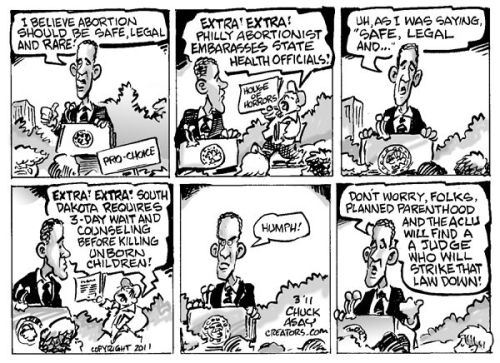
I have debated with Ark Times Bloggers many times in the past on many different subjects. Abortion is probably the most often debated subject and I have noticed that many pro-life individuals are now surfacing on the Arkansas Times Blog. Here are some examples. Arhogfan501 asserted: This is the beginning of the end for recreational abortion in Arkansas. Songbird777 noted: Babies have a right to live and not be chopped up for someone else’s convenience. The person using the username “baker” commented: Planned Parenthood (PPA) does not nor cannot provide mammograms, indeed no affiliate has the necessary license. PPA is an abortion provider and at some 900 plus killings a day rather prolific.
Here is another debate I got into recently on the Arkansas Times Blog and I go by the username “Saline Republican”:
“This is just the beginning. Our rights, our freedoms are being violated. Choices made for women by the stroke of a pen that should be made by each woman, her family, her Doctor and her God are not Democracy….”
How about the rights of the unborn women? Ruth Gluhareff Pianalto are you against gendercide? Gendercide is where the parents are told the sex of the child and if they don’t want that sex then they abort. (The vast majority of these abortions are done because parents want a boy!!!!!)
Rablib said, “Parents of born children are not required by law to give parts of their bodies, to the point of death, to keep their born children alive. Why should the parent of an unborn fetus be required to do so? That’s slavery of the worst kind.”
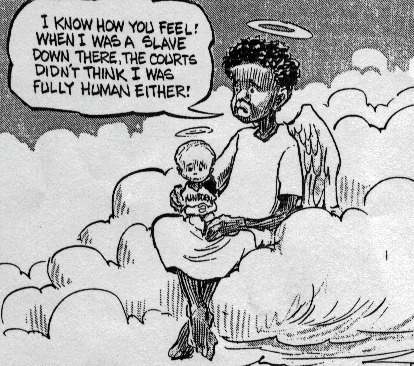
I responded:Who suggested that an expectant mother is expected to die because of her child? I am sure there is someone out there extreme enough to say that but why don’t you name that person before you make wild accusations!!!Since you brought up the issue of slavery then let me just say that just like the 1800’s in the USA and the 1930’s in Germany people tried to classify other humans as “nonhuman” and then they treated them like animals!! Now the Supreme Court has classified the unborn child as nonhuman.
John Russell in his article “The Devaluing of Life in America,” states the following:
Former Surgeon General C. Everett Koop and Christian apologist Francis A. Schaeffer issue a stern warning concerning the devaluing of life in America. They quote Psychiatrist Leo Alexander, who served with the office of Chief of Counsel for War Crimes in Nuremberg:
It started with the acceptance of the attitude basic in the euthanasia movement, that there is such a thing as life not worthy to be lived…. …. The first direct order for euthanasia was issued by Hitler on Sept. 1, 1939…. All state institutions were required to report on patients who had been ill for five years or more or who were unable to work, by filling out questionnaires giving name, race, marital status, nationality, next of kin, whether regularly visited and by whom, who bore the financial responsibility and so forth. The decision regarding which patients should be killed was made entirely on the basis of this brief information by expert consultants, most of whom were professors of psychiatry in the key universities. These consultants never saw the patients themselves.
The Nazis set up an organization specifically for the killing of children, which they called, “Realm’s Committee for Scientific Approach to Severe Illness Due to Heredity and Constitution.” Children were transported to the killing centers by “The Charitable Transport Company for the Sick.” “The Charitable Foundation for Institutional Care” collected the cost of killing the children from the relatives, who did not know that they were paying to kill their own kinfolk. The cause of death was falsified on the death certificates. [Francis A. Schaeffer and C. Everett Koop, M.D., Whatever Happened to the Human Race? (Old Tappan, NJ: Fleming H. Revell Company, 1979), pp. 103-107].
IT HASN’T BEEN TOO FAR BACK IN THE HISTORY OF THE UNITED STATES, THAT BLACK PEOPLE WERE SOLD LIKE CATTLE IN OUR SLAVE MARKETS. FOR ECONOMIC REASONS, WHITE SOCIETY HAD CLASSIFIED THEM AS “NONHUMAN.” THE U S SUPREME COURT UPHELD THIS LIE IN ITS FAMOUS DRED SCOTT DECISION.
______________
I truly believe that many of the problems we have today in the USA are due to the advancement of humanism in the last few decades in our society. Ronald Reagan appointed the evangelical Dr. C. Everett Koop to the position of Surgeon General in his administration. He partnered with Dr. Francis Schaeffer in making the video below. It is very valuable information for Christians to have. Actually I have included a video below that includes comments from him on this subject.
Yesterday we celebrated Ronald Reagan’s 102nd birthday. A little-known fact about President Reagan is that he is the only sitting president to have ever published a book—a book promoting the culture of life.
The 10th anniversary of the Supreme Court decision in Roe v. Wade is a good time for us to pause and reflect. Our nationwide policy of abortion-on-demand through all nine months of pregnancy was neither voted for by our people nor enacted by our legislators—not a single state had such unrestricted abortion before the Supreme Court decreed it to be national policy in 1973. But the consequences of this judicial decision are now obvious: since 1973, more than 15 million unborn children have had their lives snuffed out by legalized abortions. That is over ten times the number of Americans lost in all our nation’s wars.
As we mourned the 40th anniversary of Roe last month, the number of American lives that have been ended at the hand of an abortionist has sadly grown to 55 million.
Reagan saw Roe for what it was, a travesty of law:
Make no mistake, abortion-on-demand is not a right granted by the Constitution. No serious scholar, including one disposed to agree with the Court’s result, has argued that the framers of the Constitution intended to create such a right. Shortly after the Roe v. Wade decision, Professor John Hart Ely, now Dean of Stanford Law School, wrote that the opinion “is not constitutional law and gives almost no sense of an obligation to try to be.” Nowhere do the plain words of the Constitution even hint at a “right” so sweeping as to permit abortion up to the time the child is ready to be born. Yet that is what the Court ruled.
Reagan encouraged pro-lifers not to lose hope:
Despite the formidable obstacles before us, we must not lose heart. This is not the first time our country has been divided by a Supreme Court decision that denied the value of certain human lives. The Dred Scott decision of 1857 was not overturned in a day, or a year, or even a decade. At first, only a minority of Americans recognized and deplored the moral crisis brought about by denying the full humanity of our black brothers and sisters; but that minority persisted in their vision and finally prevailed. They did it by appealing to the hearts and minds of their countrymen, to the truth of human dignity under God. From their example, we know that respect for the sacred value of human life is too deeply engrained in the hearts of our people to remain forever suppressed. But the great majority of the American people have not yet made their voices heard, and we cannot expect them to—any more than the public voice arose against slavery—until the issue is clearly framed and presented.
So what is the issue, clearly framed and presented? Reagan explained:
I have often said that when we talk about abortion, we are talking about two lives—the life of the mother and the life of the unborn child. Why else do we call a pregnant woman a mother? I have also said that anyone who doesn’t feel sure whether we are talking about a second human life should clearly give life the benefit of the doubt. If you don’t know whether a body is alive or dead, you would never bury it. I think this consideration itself should be enough for all of us to insist on protecting the unborn.
…
The real question today is not when human life begins, but, What is the value of human life? The abortionist who reassembles the arms and legs of a tiny baby to make sure all its parts have been torn from its mother’s body can hardly doubt whether it is a human being. The real question for him and for all of us is whether that tiny human life has a God-given right to be protected by the law—the same right we have.
As we honor President Reagan’s legacy, let us continue to work to build a culture of life.
Francis Schaeffer: “Whatever Happened to the Human Race” (Episode 1) ABORTION OF THE HUMAN RACE Published on Oct 6, 2012 by AdamMetropolis The 45 minute video above is from the film series created from Francis Schaeffer’s book “Whatever Happened to the Human Race?” with Dr. C. Everett Koop. This book really helped develop my political views […]
E P I S O D E 1 0 Dr. Francis Schaeffer – Episode X – Final Choices 27 min FINAL CHOICES I. Authoritarianism the Only Humanistic Social Option One man or an elite giving authoritative arbitrary absolutes. A. Society is sole absolute in absence of other absolutes. B. But society has to be […]
E P I S O D E 9 Dr. Francis Schaeffer – Episode IX – The Age of Personal Peace and Affluence 27 min T h e Age of Personal Peace and Afflunce I. By the Early 1960s People Were Bombarded From Every Side by Modern Man’s Humanistic Thought II. Modern Form of Humanistic Thought Leads […]
E P I S O D E 8 Dr. Francis Schaeffer – Episode VIII – The Age of Fragmentation 27 min I saw this film series in 1979 and it had a major impact on me. T h e Age of FRAGMENTATION I. Art As a Vehicle Of Modern Thought A. Impressionism (Monet, Renoir, Pissarro, Sisley, […]
E P I S O D E 7 Dr. Francis Schaeffer – Episode VII – The Age of Non Reason I am thrilled to get this film series with you. I saw it first in 1979 and it had such a big impact on me. Today’s episode is where we see modern humanist man act […]
E P I S O D E 6 How Should We Then Live 6#1 Uploaded by NoMirrorHDDHrorriMoN on Oct 3, 2011 How Should We Then Live? Episode 6 of 12 ________ I am sharing with you a film series that I saw in 1979. In this film Francis Schaeffer asserted that was a shift in […]
E P I S O D E 5 How Should We Then Live? Episode 5: The Revolutionary Age I was impacted by this film series by Francis Schaeffer back in the 1970′s and I wanted to share it with you. Francis Schaeffer noted, “Reformation Did Not Bring Perfection. But gradually on basis of biblical teaching there […]
Dr. Francis Schaeffer – Episode IV – The Reformation 27 min I was impacted by this film series by Francis Schaeffer back in the 1970′s and I wanted to share it with you. Schaeffer makes three key points concerning the Reformation: “1. Erasmian Christian humanism rejected by Farel. 2. Bible gives needed answers not only as to […]
Francis Schaeffer’s “How should we then live?” Video and outline of episode 3 “The Renaissance” Francis Schaeffer: “How Should We Then Live?” (Episode 3) THE RENAISSANCE I was impacted by this film series by Francis Schaeffer back in the 1970′s and I wanted to share it with you. Schaeffer really shows why we have so […]
Francis Schaeffer: “How Should We Then Live?” (Episode 2) THE MIDDLE AGES I was impacted by this film series by Francis Schaeffer back in the 1970′s and I wanted to share it with you. Schaeffer points out that during this time period unfortunately we have the “Church’s deviation from early church’s teaching in regard […]
Francis Schaeffer: “How Should We Then Live?” (Episode 1) THE ROMAN AGE Today I am starting a series that really had a big impact on my life back in the 1970′s when I first saw it. There are ten parts and today is the first. Francis Schaeffer takes a look at Rome and why […]
Francis Schaeffer: “Whatever Happened to the Human Race” (Episode 5) TRUTH AND HISTORY Published on Oct 7, 2012 by AdamMetropolis This crucial series is narrated by the late Dr. Francis Schaeffer and former Surgeon General Dr. C. Everett Koop. Today, choices are being made that undermine human rights at their most basic level. Practices once […]
The opening song at the beginning of this episode is very insightful. Francis Schaeffer: “Whatever Happened to the Human Race” (Episode 4) THE BASIS FOR HUMAN DIGNITY Published on Oct 7, 2012 by AdamMetropolis This crucial series is narrated by the late Dr. Francis Schaeffer and former Surgeon General Dr. C. Everett Koop. Today, choices […]
Francis Schaeffer: “Whatever Happened to the Human Race” (Episode 3) DEATH BY SOMEONE’S CHOICE Published on Oct 6, 2012 by AdamMetropolis This crucial series is narrated by the late Dr. Francis Schaeffer and former Surgeon General Dr. C. Everett Koop. Today, choices are being made that undermine human rights at their most basic level. Practices […]
Francis Schaeffer: “Whatever Happened to the Human Race?” (Episode 2) SLAUGHTER OF THE INNOCENTS Published on Oct 6, 2012 by AdamMetropolis This crucial series is narrated by the late Dr. Francis Schaeffer and former Surgeon General Dr. C. Everett Koop. Today, choices are being made that undermine human rights at their most basic level. Practices […]
It is not possible to know where the pro-life evangelicals are coming from unless you look at the work of the person who inspired them the most. That person was Francis Schaeffer. I do care about economic issues but the pro-life issue is the most important to me. Several years ago Adrian Rogers (past president of […]
This essay below is worth the read. Schaeffer, Francis – “Francis Schaeffer and the Pro-Life Movement” [How Should We Then Live?, Whatever Happened to the Human Race?, A Christian Manifesto] Editor note: <p> </p> [The following essay explores the role that Francis Schaeffer played in the rise of the pro-life movement. It examines the place of […]
Great article on Schaeffer. Who was Dr. Francis A. Schaeffer? By Francis Schaeffer The unique contribution of Dr. Francis Schaeffer on a whole generation was the ability to communicate the truth of historic Biblical Christianity in a way that combined intellectual integrity with practical, loving care. This grew out of his extensive understanding of the Bible […]
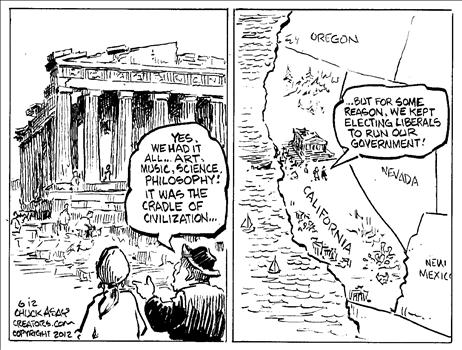
When I think of how much California is overspending it makes me think of how much President Obama is overspending and running up our national debt and ruining our economy and our future. More money should stay in private hands and not in the government officials’ control.
California is suffocating from a knee-jerk impulse for more red tape, regulation, and intervention in almost every area of life, from higher education to babysitting.
It’s hard to see how a state survives, in the long run, with such a burdensome government. While the cartoon is designed to be funny, it also make a valid point since the Golden State is copying the mistakes that are causing Greece to collapse.
Max Brantley is wrong about Tom Cotton’s accusation concerning the rise of welfare spending under President Obama. Actually welfare spending has been increasing for the last 12 years and Obama did nothing during his first four years to slow down the rate of increase of welfare spending. Rachel Sheffield of the Heritage Foundation has noted: […]
I have put up lots of cartoons from Dan Mitchell’s blog before and they have got lots of hits before. Many of them have dealt with the economy, eternal unemployment benefits, socialism, Greece, welfare state or on gun control. I think Max Brantley of the Arkansas Times Blog was right to point out on 2-6-13 that Hillary […]
I thought it was great when the Republican Congress and Bill Clinton put in welfare reform but now that has been done away with and no one has to work anymore it seems. In fact, over 40% of the USA is now on the government dole. What is going to happen when that figure gets over […]
Again we have another shooting and the gun control bloggers are out again calling for more laws. I have written about this subject below and on May 23, 2012, I even got a letter back from President Obama on the subject. Now some very interesting statistics below and a cartoon follows. (Since this just hit the […]
watch?v=llQUrko0Gqw] The federal government spends about 10% on roads and public goods but with the other money in the budget a lot of harm is done including excessive regulations on business. That makes Obama’s comment the other day look very silly. A Funny Look at Obama’s You-Didn’t-Build-That Comment July 28, 2012 by Dan Mitchell I made […]
I have written a lot about this in the past and sometimes you just have to sit back and laugh. Laughing at Obama’s Bumbling Class Warfare Agenda July 13, 2012 by Dan Mitchell We know that President Obama’s class-warfare agenda is bad economic policy. We know high tax rates undermine competitiveness. And we know tax increases […]
Dan Mitchell Discussing Dishonest Budget Numbers with John Stossel Uploaded by danmitchellcato on Feb 11, 2012 No description available. ______________ Dan Mitchell of the Cato Institute has shown before how excessive spending at the federal level has increased in recent years. A Humorous Look at Obama’s Screwy Budget Math May 31, 2012 by Dan Mitchell I’ve […]
Sometimes it is so crazy that you just have to laugh a little. The European Mess, Captured by a Cartoon June 22, 2012 by Dan Mitchell The self-inflicted economic crisis in Europe has generated some good humor, as you can see from these cartoons by Michael Ramirez and Chuck Asay. But for pure laughter, I don’t […]
Another great cartoon on President Obama’s efforts to create jobs!!! A Simple Lesson about Job Creation for Barack Obama December 7, 2011 by Dan Mitchell Even though leftist economists such as Paul Krugman and Larry Summers have admitted that unemployment insurance benefits are a recipe for more joblessness, the White House is arguing that Congress should […]
Dan Mitchell hits the nail on the head and sometimes it gets so sad that you just have to laugh at it like Conan does. In order to correct this mess we got to get people off of government support and get them in the private market place!!!! Chuck Asay’s New Cartoon Nicely Captures Mentality […]
Cato Institute scholar Dan Mitchell is right about Greece and the fate of socialism: Two Pictures that Perfectly Capture the Rise and Fall of the Welfare State July 15, 2011 by Dan Mitchell In my speeches, especially when talking about the fiscal crisis in Europe (or the future fiscal crisis in America), I often warn that […]
John Stossel report “Myth: Gun Control Reduces Crime Sheriff Tommy Robinson tried what he called “Robinson roulette” from 1980 to 1984 in Central Arkansas where he would put some of his men in some stores in the back room with guns and the number of robberies in stores sank. I got this from Dan Mitchell’s […]
I have put up lots of cartons and posters from Dan Mitchell’s blog before and they have got lots of hits before. Many of them have dealt with the economy, eternal unemployment benefits, socialism, Greece, welfare state or on gun control. Amusing Gun Control Picture – Circa 1999 April 3, 2010 by Dan Mitchell Dug this gem out […]
We got to cut spending and stop raising the debt ceiling!!! When Governments Cut Spending Uploaded on Sep 28, 2011 Do governments ever cut spending? According to Dr. Stephen Davies, there are historical examples of government spending cuts in Canada, New Zealand, Sweden, and America. In these cases, despite popular belief, the government spending […]
I have put up lots of cartons and posters from Dan Mitchell’s blog before and they have got lots of hits before. Many of them have dealt with the economy, eternal unemployment benefits, socialism, Greece, welfare state or on gun control. On 2-6-13 the Arkansas Times Blogger “Sound Policy” suggested, “All churches that wish to allow concealed […]
Gun Free Zones???? Stalin and gun control On 1-31-13 ”Arkie” on the Arkansas Times Blog the following: “Remember that the biggest gun control advocate was Hitler and every other tyrant that every lived.” Except that under Hitler, Germany liberalized its gun control laws. __________ After reading the link from Wikipedia that Arkie provided then I responded: […]
On 1-31-13 I posted on the Arkansas Times Blog the following: I like the poster of the lady holding the rifle and next to her are these words: I am compensating for being smaller and weaker than more violent criminals. __________ Then I gave a link to this poster below: On 1-31-13 also I posted […]
Francis Schaeffer Whatever Happened to the Human Race (Episode 1) ABORTION
Francis Schaeffer: What Ever Happened to the Human Race? (Full-Length Documentary)
Part 1 on abortion runs from 00:00 to 39:50, Part 2 on Infanticide runs from 39:50 to 1:21:30, Part 3 on Youth Euthanasia runs from 1:21:30 to 1:45:40, Part 4 on the basis of human dignity runs from 1:45:40 to 2:24:45 and Part 5 on the basis of truth runs from 2:24:45 to 3:00:04
Francis Schaeffer “BASIS FOR HUMAN DIGNITY” Whatever…HTTHR
________________
Picture of Francis Schaeffer and his wife Edith from the 1930′s above. I was sad to read about Edith passing away on Easter weekend in 2013. I wanted to pass along this fine article below.
Our Heavenly Father has taken dear Edith Schaeffer to himself. She passed away quietly in her sleep last night in Gryon, Switzerland where she has been living with her family. We cannot express how deep is our gratitude for her life and we thank the Lord that she is enjoying the Hope that she has so longed for.
Her son-in-law Ranald Macaulay writes as follows:
Dear Friends,
John Sandri called about an hour ago to say that Edith died peacefully in her sleep during the night. It is just three weeks since I was in Gryon with her. In the intervening days John has reported several times that she was much quieter. Doubtless this was mainly the result of her physical decline. But John had had the same sort of experience I had while with her – and which I mentioned in an earlier message – that Edith would become fully aware at times of what one was saying. Recently, for example, he read her her own account of Frank’s birth in Champery. Her eyes were open and alert and there could be no doubt about her reliving that incident vividly.
So I am deeply grateful that she died quietly in her sleep and at rest in herself.
What a lovely person Edith is – and how thankful we are that she has gone at last to her eternal rest. One wonders, too, with her life-long and quite proper excitement about the ‘great tapestry of God’ could she have chosen a more fitting day than Easter Saturday to round off her own amazing contribution to that sublime fabric!
Warm greetings –
Ranald
There will be a funeral in Gryon and then there will be a private burial here in Rochester, where she will be laid to rest alongside Dr. Schaeffer. Sometime later there will be a public memorial here in Rochester. We will keep you all informed.
“I am the Resurrection and the Life. He who believes in me will Live, even though he dies” John 11:25
Yours in Christ,
Jock & Alison McGregor
Rochester L’Abri
(Francis did a great job in his film series “How Should we then live?” in looking at how humanism has affected art and culture in the Western World in the last 2000 years. My favorite episodes include his study of the Renaissance, the Revolutionary age, the age of Nonreason, and the age of Fragmentation.)
E P I S O D E 1 0 Dr. Francis Schaeffer – Episode X – Final Choices 27 min FINAL CHOICES I. Authoritarianism the Only Humanistic Social Option One man or an elite giving authoritative arbitrary absolutes. A. Society is sole absolute in absence of other absolutes. B. But society has to be […]
E P I S O D E 9 Dr. Francis Schaeffer – Episode IX – The Age of Personal Peace and Affluence 27 min T h e Age of Personal Peace and Afflunce I. By the Early 1960s People Were Bombarded From Every Side by Modern Man’s Humanistic Thought II. Modern Form of Humanistic Thought Leads […]
E P I S O D E 8 Dr. Francis Schaeffer – Episode VIII – The Age of Fragmentation 27 min I saw this film series in 1979 and it had a major impact on me. T h e Age of FRAGMENTATION I. Art As a Vehicle Of Modern Thought A. Impressionism (Monet, Renoir, Pissarro, Sisley, […]
E P I S O D E 7 Dr. Francis Schaeffer – Episode VII – The Age of Non Reason I am thrilled to get this film series with you. I saw it first in 1979 and it had such a big impact on me. Today’s episode is where we see modern humanist man act […]
E P I S O D E 6 How Should We Then Live 6#1 Uploaded by NoMirrorHDDHrorriMoN on Oct 3, 2011 How Should We Then Live? Episode 6 of 12 ________ I am sharing with you a film series that I saw in 1979. In this film Francis Schaeffer asserted that was a shift in […]
E P I S O D E 5 How Should We Then Live? Episode 5: The Revolutionary Age I was impacted by this film series by Francis Schaeffer back in the 1970′s and I wanted to share it with you. Francis Schaeffer noted, “Reformation Did Not Bring Perfection. But gradually on basis of biblical teaching there […]
Dr. Francis Schaeffer – Episode IV – The Reformation 27 min I was impacted by this film series by Francis Schaeffer back in the 1970′s and I wanted to share it with you. Schaeffer makes three key points concerning the Reformation: “1. Erasmian Christian humanism rejected by Farel. 2. Bible gives needed answers not only as to […]
Francis Schaeffer’s “How should we then live?” Video and outline of episode 3 “The Renaissance” Francis Schaeffer: “How Should We Then Live?” (Episode 3) THE RENAISSANCE I was impacted by this film series by Francis Schaeffer back in the 1970′s and I wanted to share it with you. Schaeffer really shows why we have so […]
Francis Schaeffer: “How Should We Then Live?” (Episode 2) THE MIDDLE AGES I was impacted by this film series by Francis Schaeffer back in the 1970′s and I wanted to share it with you. Schaeffer points out that during this time period unfortunately we have the “Church’s deviation from early church’s teaching in regard […]
Francis Schaeffer: “How Should We Then Live?” (Episode 1) THE ROMAN AGE Today I am starting a series that really had a big impact on my life back in the 1970′s when I first saw it. There are ten parts and today is the first. Francis Schaeffer takes a look at Rome and why […]
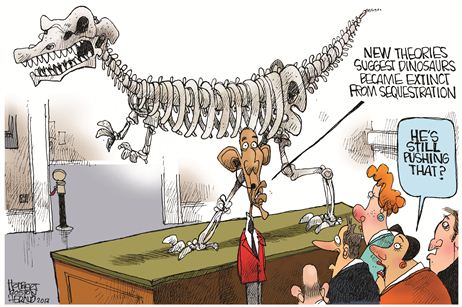
Let’s take a moment and enjoy how Obama made himself a laughingstock because of his anti-sequester hysteria.
In spite of his hyperbolic rhetoric, nothing bad has happened. Schools are still open, planes are still flying, and supermarkets aren’t poisoning us with tainted food.
I’ve already shared some very funny cartoons on this topic, which can be viewedhere,here,here,here, andhere.
Actually, thesequester was a double victory. Not only did we trim the growth of spending, we also avoided the tax hike that Obama wanted as a replacement.
No wonder he’s so unhappy!
This first cartoon, from Chip Bok, captures his sullen mood.
The second cartoon, by Jerry Holbert, has the same these, showing that the American people have learned to ignore Obama’s demagoguery.
Now the question is what comes next?
Iwrote yesterdaythat Obama is likely to offer a bait-and-switch budget designed to impose more taxes and more spending.
In any event, there is no possible compromise with theHouse-approved budget. Or, to be more specific, there’s no possible compromise that would be good for the nation, so we’re looking at stalemate for the near future.
But stalemate is a lot better than moving in the wrong direction.
Lower down in this post, we have a couple of additional cartoons that deserve a few chuckles, but I also want to share this interview to help make an important policy point about the need to reduce theburden of government spending.
___________
________________
Thank you so much for your time. I know how valuable it is. I also appreciate the fine family that you have and your commitment as a father and a husband.
Sincerely,
Everette Hatcher III, 13900 Cottontail Lane, Alexander, AR 72002, ph 501-920-5733, lowcostsqueegees@yahoo.com
Max Brantley is wrong about Tom Cotton’s accusation concerning the rise of welfare spending under President Obama. Actually welfare spending has been increasing for the last 12 years and Obama did nothing during his first four years to slow down the rate of increase of welfare spending. Rachel Sheffield of the Heritage Foundation has noted: […]
I have put up lots of cartoons from Dan Mitchell’s blog before and they have got lots of hits before. Many of them have dealt with the economy, eternal unemployment benefits, socialism, Greece, welfare state or on gun control. I think Max Brantley of the Arkansas Times Blog was right to point out on 2-6-13 that Hillary […]
I thought it was great when the Republican Congress and Bill Clinton put in welfare reform but now that has been done away with and no one has to work anymore it seems. In fact, over 40% of the USA is now on the government dole. What is going to happen when that figure gets over […]
Again we have another shooting and the gun control bloggers are out again calling for more laws. I have written about this subject below and on May 23, 2012, I even got a letter back from President Obama on the subject. Now some very interesting statistics below and a cartoon follows. (Since this just hit the […]
watch?v=llQUrko0Gqw] The federal government spends about 10% on roads and public goods but with the other money in the budget a lot of harm is done including excessive regulations on business. That makes Obama’s comment the other day look very silly. A Funny Look at Obama’s You-Didn’t-Build-That Comment July 28, 2012 by Dan Mitchell I made […]
I have written a lot about this in the past and sometimes you just have to sit back and laugh. Laughing at Obama’s Bumbling Class Warfare Agenda July 13, 2012 by Dan Mitchell We know that President Obama’s class-warfare agenda is bad economic policy. We know high tax rates undermine competitiveness. And we know tax increases […]
Dan Mitchell Discussing Dishonest Budget Numbers with John Stossel Uploaded by danmitchellcato on Feb 11, 2012 No description available. ______________ Dan Mitchell of the Cato Institute has shown before how excessive spending at the federal level has increased in recent years. A Humorous Look at Obama’s Screwy Budget Math May 31, 2012 by Dan Mitchell I’ve […]
Sometimes it is so crazy that you just have to laugh a little. The European Mess, Captured by a Cartoon June 22, 2012 by Dan Mitchell The self-inflicted economic crisis in Europe has generated some good humor, as you can see from these cartoons by Michael Ramirez and Chuck Asay. But for pure laughter, I don’t […]
Another great cartoon on President Obama’s efforts to create jobs!!! A Simple Lesson about Job Creation for Barack Obama December 7, 2011 by Dan Mitchell Even though leftist economists such as Paul Krugman and Larry Summers have admitted that unemployment insurance benefits are a recipe for more joblessness, the White House is arguing that Congress should […]
Dan Mitchell hits the nail on the head and sometimes it gets so sad that you just have to laugh at it like Conan does. In order to correct this mess we got to get people off of government support and get them in the private market place!!!! Chuck Asay’s New Cartoon Nicely Captures Mentality […]
Cato Institute scholar Dan Mitchell is right about Greece and the fate of socialism: Two Pictures that Perfectly Capture the Rise and Fall of the Welfare State July 15, 2011 by Dan Mitchell In my speeches, especially when talking about the fiscal crisis in Europe (or the future fiscal crisis in America), I often warn that […]
John Stossel report “Myth: Gun Control Reduces Crime Sheriff Tommy Robinson tried what he called “Robinson roulette” from 1980 to 1984 in Central Arkansas where he would put some of his men in some stores in the back room with guns and the number of robberies in stores sank. I got this from Dan Mitchell’s […]
I have put up lots of cartons and posters from Dan Mitchell’s blog before and they have got lots of hits before. Many of them have dealt with the economy, eternal unemployment benefits, socialism, Greece, welfare state or on gun control. Amusing Gun Control Picture – Circa 1999 April 3, 2010 by Dan Mitchell Dug this gem out […]
We got to cut spending and stop raising the debt ceiling!!! When Governments Cut Spending Uploaded on Sep 28, 2011 Do governments ever cut spending? According to Dr. Stephen Davies, there are historical examples of government spending cuts in Canada, New Zealand, Sweden, and America. In these cases, despite popular belief, the government spending […]
I have put up lots of cartons and posters from Dan Mitchell’s blog before and they have got lots of hits before. Many of them have dealt with the economy, eternal unemployment benefits, socialism, Greece, welfare state or on gun control. On 2-6-13 the Arkansas Times Blogger “Sound Policy” suggested, “All churches that wish to allow concealed […]
Gun Free Zones???? Stalin and gun control On 1-31-13 ”Arkie” on the Arkansas Times Blog the following: “Remember that the biggest gun control advocate was Hitler and every other tyrant that every lived.” Except that under Hitler, Germany liberalized its gun control laws. __________ After reading the link from Wikipedia that Arkie provided then I responded: […]
On 1-31-13 I posted on the Arkansas Times Blog the following: I like the poster of the lady holding the rifle and next to her are these words: I am compensating for being smaller and weaker than more violent criminals. __________ Then I gave a link to this poster below: On 1-31-13 also I posted […]
Why do I keep writing and email Senator Pryor suggestions on how to cut our budget? I gave him hundreds of ideas about how to cut spending and as far as I can tell he has taken none of my suggestions. You can find some of my suggestions here, here, here, here, here, here, here, here, here, here, here, here, here, here, here, here, here, here, here, here, and here, and they all were emailed to him. In fact, I have written 13 posts pointing out reasons why I believe Senator Pryor’s re-election attempt will be unsuccessful. HERE I GO AGAIN WITH ANOTHER EMAIL I JUST SENT TO SENATOR PRYOR!!!
Dear Senator Pryor,
Why not pass the Balanced Budget amendment? As you know that federal deficit is at all time high (1.6 trillion deficit with revenues of 2.2 trillion and spending at 3.8 trillion).
On my blog www.thedailyhatch.org . I took you at your word and sent you over 100 emails with specific spending cut ideas. (Actually there were over 160 emails with specific spending cut suggestions.) However, I did not see any of them in the recent debt deal that Congress adopted although you did respond to me several times. Now I am trying another approach. Every week from now on I will send you an email explaining different reasons why we need the Balanced Budget Amendment or I send you specific spending cut suggestions. It will appear on my blog on “Thirsty Thursday” because the government is always thirsty for more money to spend.
IF YOU TRULY WANT TO CUT THE BUDGET AND BALANCE THE BUDGET THEN SUBMIT THESE POTENTIAL BUDGET CUTS PRESENTED BELOW!!
_______________
What Can We Cut to Balance the Budget
Published on Oct 16, 2012
If the U.S. government cut all government services except Social Security, Medicare, Medicaid, and payments on the debt, federal spending would still outpace revenues. Prof. Antony Davies argues that there are not specific cuts that will enable government to balance the budget. He says, “Nothing less than a redesign will solve this problem.” That redesign should begin by determining what the proper role of government is.
Is a luxurious bus stop worth $1 million? Commuters boarding buses at the newly constructed stop in Arlington County, Virginia, don’t seem to think so, as CNN reported.
According to one rider, “This is cute, but cute ain’t warm. Cute ain’t dry.” While $1 million can buy the stainless steel and heated pavement and seating that adorn this “Super Stop,” in this case it didn’t even buy a bus stop that protects people from the elements while they wait.
A chorus of public disapproval erupted following the bus stop’s debut, leading Arlington County to announce Friday that it was suspending any work on the other 23 planned Super Stops while it reviews this one’s design and cost. Steven Del Giudice, Arlington’s Transit Bureau chief, told CNN, “We’ll look at ways that we might be able to save money on future stops” (emphasis added). How reassuring a statement for federal taxpayers, who funded $800,000 of the project cost through federal transportation grants.
States and localities across the country are still in economic doldrums, with unemployment levels high, budgets tight, and legitimate transportation needs left unmet. Like the federal government, states are searching for ways to pay for transportation projects that will give commuters increased mobility and enable their economies to thrive. Such wasteful use of resources on transit boondoggles explains in part why there isn’t enough money to go around.
As Heritage Foundation visiting fellow Wendell Cox writes, despite receiving billions of dollars in federal subsidies over three decades, mass transit projects—including light rail and trolley cars—have failed to give taxpayers much bang for their buck. Transit hasn’t reduced traffic congestion or demonstrably reduced automobile emissions, and it’s failed to give low-income citizens a practical transportation alternative they can use to access jobs.
Lawmakers would better serve taxpayers by introducing competition to transit and shifting the emphasis from expensive rail to cost-effective bus systems—rather than building bus stops that do not even shield people from rough weather.
Motorists and citizens alike understandably expect government at all levels to spend transportation funding on projects that actually reduce traffic congestion and improve mobility. Arlington’s Super Stop clearly fails this test.
The Balanced Budget Amendment is the only thing I can think of that would force Washington to cut spending. We have only a handful of balanced budgets in the last 60 years, so obviously what we are doing is not working. We are passing along this debt to the next generation. YOUR APPROACH HAS BEEN TO REJECT THE BALANCED BUDGET “BECAUSE WE SHOULD CUT THE BUDGET OURSELF,” WELL THEN HERE IS YOUR CHANCE!!!! SUBMIT THESE CUTS!!!!
Thank you for this opportunity to share my ideas with you.
The problem with the debt ceiling is very clear to me. We need to get serious about cutting federal spending. I am so upset about it that I have emailed over 100 emails to Senator Pryor concerning specific spending suggestions. I get emails from back from Senator Pryor like the one below. This means that […]
Senator Pryor asks for Spending Cut Suggestions! Here are a few!(Part 164) Senator Mark Pryor wants our ideas on how to cut federal spending. Take a look at this video clip below: Senator Pryor has asked us to send our ideas to him at cutspending@pryor.senate.gov and I have done so in the past and will continue to […]
Senator Pryor asks for Spending Cut Suggestions! Here are a few!(Part 163) Senator Mark Pryor wants our ideas on how to cut federal spending. Take a look at this video clip below: Senator Pryor has asked us to send our ideas to him at cutspending@pryor.senate.gov and I have done so in the past and will continue to […]
Senator Pryor asks for Spending Cut Suggestions! Here are a few!(Part 162) Senator Mark Pryor wants our ideas on how to cut federal spending. Take a look at this video clip below: Senator Pryor has asked us to send our ideas to him at cutspending@pryor.senate.gov and I have done so in the past and will continue to […]
Three very good video tours below from Senator Mark Pryor. Published on Jun 13, 2012 by SenatorPryor Episode 1: Arkansans in the Capitol Published on Jul 9, 2012 by SenatorPryor Episode 2: The Crypt and the Old Supreme Court Published on Aug 20, 2012 by SenatorPryor Episode 3: The Senate Chamber If you want to […]
Senator Pryor asks for Spending Cut Suggestions! Here are a few!(Part 161) Senator Mark Pryor wants our ideas on how to cut federal spending. Take a look at this video clip below: Senator Pryor has asked us to send our ideas to him at cutspending@pryor.senate.gov and I have done so in the past and will continue to […]
Senator Mark Pryor wants our ideas on how to cut federal spending and I sent them to him but he didn’t take any of my suggestions. However, he did take time to get back to me today, but I am not too impressed with Senator Pryor’s response. I gave him hundreds of ideas about how […]
Senator Pryor asks for Spending Cut Suggestions! Here are a few!(Part 160) Senator Mark Pryor wants our ideas on how to cut federal spending. Take a look at this video clip below: Senator Pryor has asked us to send our ideas to him at cutspending@pryor.senate.gov and I have done so in the past and will continue to […]
Senator Pryor asks for Spending Cut Suggestions! Here are a few!(Part 159) Senator Mark Pryor wants our ideas on how to cut federal spending. Take a look at this video clip below: Senator Pryor has asked us to send our ideas to him at cutspending@pryor.senate.gov and I have done so in the past and will continue to […]
Senator Mark Pryor wants our ideas on how to cut federal spending. Take a look at this video clip below: Senator Pryor has asked us to send our ideas to him at cutspending@pryor.senate.gov and I have done so in the past and will continue to do so in the future. On May 11, 2011, I emailed to […]
Office of the Majority Whip | Balanced Budget Amendment Video In 1995, Congress nearly passed a constitutional amendment mandating a balanced budget. The Balanced Budget Amendment would have forced the federal government to live within its means. This Balanced Budget Amendment failed by one vote. 16 years later, Congress has the chance to get it […]
Sadly Senator Pryor has voted against the Balanced Budget Amendment over and over in his long time in the Senate. Senator Pryor: “There are a lot of people who think a balanced-budget amendment solves all the fiscal problems. I completely disagree.” (Peter Urban, Pryor Tilts Balanced Budget, Southwest Times Record, 11/17/11) Dear Senator Pryor, Why […]
Mark Levin and Senator Hatch discuss the balanced budget amendment and it’s importance. Uploaded by loveconstitution on Jan 28, 2011 Mark Levin interviews Senator Hatch 1/27/2011 about the balanced budget amendment. Mark is very excited about the balanced budget amendment being proposed by Senator Orin Hatch and John Cornyn and he discusses the amendment with […]
Dr. Jay Barth with Hendrix College comments on our latest poll results on Arkansas politics (clip from Talkbusiness) Talk Business reported today in the article “Poll Shows Beebe Strength, Pryor Shaky,” the following: A new Talk Business-Hendrix College Poll shows Gov. Mike Beebe (D) maintaining his high job approval rating, while Sen. Mark Pryor (D) […]
U.S. Sen. Mark Pryor at the 2009 Democratic Party Jefferson Jackson Dinner, Arkansas’s largest annual political event. Mark Pryor is up for re-election to the Senate in 2014. It is my opinion that the only reason he did not have an opponent in 2008 was because the Republicans in Arkansas did not want to go […]
Michael Tanner, a senior fellow at the CATO institute, explains that the rate of return on social security will be much lower for todays youth. Steve Brawner wrote in his article “Tiptoeing toward the third rail,” (Arkansas News Bureau, Jan 9,): Social Security has long been considered the “third rail” for American politicians, meaning it’s […]
HALT:HaltingArkansasLiberalswithTruth.com CBS — October 19, 2010 — New York Times’ Jeff Zeleny talks to Jan Crawford about the state of Democrats in the South… Are they a dying species? In the article “Southern Democrat much closer to extinction after GOP wave,” (Washington Times, Nov 4, 2010), Ben Evans notes: After this week’s elections, the […]
HALT:HaltingArkansasLiberalswithTruth.com Roland Martin appears on Rick’s List with Rick Sanchez and the Best Political Team on television (Candy Crowley, John King, Jeffery Toobin, Ed Rollins, Gloria Borger and Victoria Toensing) to discuss day two of the Elena Kagan Supreme Court confirmation hearings. During the analysis, Senator Graham and Elena Kagan had an interesting exchange over […]
If America does not get welfare reform under control, it will bankrupt America. But the Heritage Foundation’s Robert Rector has a five-step plan to reform welfare while protecting our most vulnerable.
__________________________
__________________
Why are despicable people sometimes subsidized by taxpayers?
But there should be a special wing of the Moocher Hall of Fame for taxpayer-subsidized terrorists.
_______________________
Thank you so much for your time. I know how valuable it is. I also appreciate the fine family that you have and your commitment as a father and a husband.
Sincerely,
Everette Hatcher III, 13900 Cottontail Lane, Alexander, AR 72002, ph 501-920-5733, lowcostsqueegees@yahoo.com
I have posted stories on welfare before and here is another one. Another Horrifying and Depressing Look at the Human Cost of the Welfare State March 22, 2013 by Dan Mitchell When we think of Julia, the mythical moocher created by the Obama campaign, our first instinct is probably to grab our wallets and purses. After […]
Why are we spending more and more on welfare every year? What would the Founding Fathers have to say about this if they were still here today? We will look at that in a little bit. We need to cut Food Stamp program and not extend it. However, it seems that people tell the taxpayers back […]
The best way to destroy the welfare trap is to put in Milton Friedman’s negative income tax. A Picture of How Redistribution Programs Trap the Less Fortunate in Lives of Dependency I wrote last year about the way in which welfare programs lead to very high implicit marginal tax rates on low-income people. More specifically, they […]
December 19, 2012 The Honorable Steve Womack United States House of Representatives 1508 Longworth House Office Building Washington, D.C. 20515-0403 Dear Congressman Womack, This is the second time I have written to you about this. It is obvious to me that if President Obama gets his hands on more money then he will continue […]
We got to act fast and get off this path of socialism. Morning Bell: Welfare Spending Shattering All-Time Highs Robert Rector and Amy Payne October 18, 2012 at 9:03 am It’s been a pretty big year for welfare—and a new report shows welfare is bigger than ever. The Obama Administration turned a giant spotlight […]
We need to cut Food Stamp program and not extend it. However, it seems that people tell the taxpayers back home they are going to Washington and cut government spending but once they get up there they just fall in line with everyone else that keeps spending our money. I am glad that at least […]
Government Must Cut Spending Uploaded by HeritageFoundation on Dec 2, 2010 The government can cut roughly $343 billion from the federal budget and they can do so immediately. __________ Liberals argue that the poor need more welfare programs, but I have always argued that these programs enslave the poor to the government. Food Stamps Growth […]
Milton Friedman – The Negative Income Tax Published on May 11, 2012 by LibertyPen In this 1968 interview, Milton Friedman explained the negative income tax, a proposal that at minimum would save taxpayers the 72 percent of our current welfare budget spent on administration. http://www.LibertyPen.com Source: Firing Line with William F Buckley Jr. ________________ Milton […]
Dan Mitchell Commenting on Obama’s Failure to Propose a Fiscal Plan Published on Aug 16, 2012 by danmitchellcato No description available. ___________ After the Welfare State Posted by David Boaz Cato senior fellow Tom G. Palmer, who is lecturing about freedom in Slovenia and Tbilisi this week, asked me to post this announcement of his […]
Is President Obama gutting the welfare reform that Bill Clinton signed into law? Morning Bell: Obama Denies Gutting Welfare Reform Amy Payne August 8, 2012 at 9:15 am The Obama Administration came out swinging against its critics on welfare reform yesterday, with Press Secretary Jay Carney saying the charge that the Administration gutted the successful […]
I have debated with Ark Times Bloggers many times in the past on many different subjects. Abortion is probably the most often debated subject and I have noticed that many pro-life individuals are now surfacing on the Arkansas Times Blog. Here are some examples. Arhogfan501 asserted: This is the beginning of the end for recreational abortion in Arkansas. Songbird777 noted: Babies have a right to live and not be chopped up for someone else’s convenience. The person using the username “baker” commented: Planned Parenthood (PPA) does not nor cannot provide mammograms, indeed no affiliate has the necessary license. PPA is an abortion provider and at some 900 plus killings a day rather prolific.
Here is another debate I got into recently on the Arkansas Times Blog and I go by the username “Saline Republican”:
Saline–a real pro-life person respects the lives of those already with us. We want them to have food, shelter, medical care, education and a quality of life you would deny them. Remember your commandments–love thy neighbor as thyself, do not bear false witness, etc. How long since you have given even lip service to those?
I would deny that government is the answer to all our problems. However, I do not want unborn babies to be eliminated because of financial problems in our country. If you want the best path to a growing economy then check out the book FREE TO CHOOSE by Milton Friedman.
Baylor University philosopher and bioethicist Baruch Brody has commented:
In an age where we doubt the justice of capital punishment even for very dangerous criminals, killing a fetus who has not done any harm, to avoid a future problem it may pose, seems totally unjust. There are indeed many social problems that could be erased simply by destroying those persons who constitute or cause them, but that is a solution repugnant to the values of society itself. In short, then, if the fetus is a human being, the appeal to its being unwanted justifies no abortions.
Baruch Brody, Abortion and the Sanctity of Human Life: A Philosophical View (Cambridge, MA: M.I.T. Press, 1975), 36-37.
____________
_________________
I truly believe that many of the problems we have today in the USA are due to the advancement of humanism in the last few decades in our society. Ronald Reagan appointed the evangelical Dr. C. Everett Koop to the position of Surgeon General in his administration. He partnered with Dr. Francis Schaeffer in making the video below. It is very valuable information for Christians to have. Actually I have included a video below that includes comments from him on this subject.
Francis Schaeffer Whatever Happened to the Human Race (Episode 1) ABORTION
Francis Schaeffer: What Ever Happened to the Human Race? (Full-Length Documentary)
Part 1 on abortion runs from 00:00 to 39:50, Part 2 on Infanticide runs from 39:50 to 1:21:30, Part 3 on Youth Euthanasia runs from 1:21:30 to 1:45:40, Part 4 on the basis of human dignity runs from 1:45:40 to 2:24:45 and Part 5 on the basis of truth runs from 2:24:45 to 3:00:04
Francis Schaeffer “BASIS FOR HUMAN DIGNITY” Whatever…HTTHR
The British (revised edition), 1980,
Marshall, Morgan and Scott, London.
ISBN 0 551 00830 X
The current US edition, 1983, Crossway Books, Wheaton IL. ISBN 0891072918
This year is the twenty-fifth anniversary of the publication of Whatever Happened To The Human Race? It is a most remarkable book. In a list of ‘the books that changed me’, this unquestionably ranks in my top five. I have just re-read it, with unexpected profit.
The entire project
Whatever Happened To The Human Race? was more than just a book written by a theologian and a doctor, namely, Francis Schaeffer and C Everett Koop. It was an ambitious project that included the book, a series of five films, plus a study guide. The book was first published in the US in 1979, with a British version the following year. The project was launched in the UK in 1980, with a tour of major cities by Schaeffer and Koop. Later that year, we in Aberystwyth, were among the first in the UK to show the films publicly – at the university, over three consecutive Friday evenings.
Cinematographically, they were not great films. While they were technically a vast improvement on Schaeffer’s predecessor, How Should We Then Live?, gaffes and bloomers remained. There were the rather twee shots of Schaeffer in a car junkyard, representing the ugliness of materialistic thinking, and there were the all too healthy-looking ‘slaves’ trudging up the steps of the Lincoln Memorial, depicting the atrocities of slavery. Yet one haunting image did hit the spot – everyone remembers the hundreds of plastic dolls washed up on the shores of the Dead Sea, portraying the horrors of mass abortion.
As literature, the book was never destined to be a classic. It was full of Schaeffer’s jerky style with Koop’s medical addenda all a little too obviously interleaved. Indeed, the two men were not great presenters, either in print, or in public. In fact, they were a genuinely odd couple. Schaeffer was the non-establishment theologian, with a goatee beard, dressed in mountain gear, and founder of a study centre for hippies and others in Switzerland. For this he was vilified and largely ignored by some, while others regarded him as the greatest Christian thinker of the twentieth century. On the other hand, the dapper Koop, with his austere Dutch-style beard and neat bow tie, was straight from the American establishment, a paediatrician of international renown, who was later to become the Surgeon General of the United States under President Reagan. What an unlikely pair!
The message of the project
So, you may ask, what was so impressive about Whatever Happened To The Human Race? Why is it regarded as a landmark in evangelical endeavour? The answer is quite simple – first, it identified a dreadful problem (rampant abortion, covert infanticide and threatening euthanasia), second, it explained the origin of that problem (the advance of secular humanism coupled with the decline of biblical Christianity) and third, it outlined the solution (Christians must believe that the Bible is true and live and act upon its teachings). In other words, it was a total package that was both entirely believable for the brain, and fully satisfying for the heart. And that was Schaeffer’s great gift. He would take you back into history, often to Genesis, to show the development of an argument, and then he would take you forward to show the logical consequences of that argument, whether it was existentialism, or the resurrection, or genetic engineering. Once he had systematically shown you the entirety of the problem, you felt much more obligated to respond. So, forget the weird garb, the squeaky voice and the unpolished prose, it was his rigorously-argued and (usually) convincing content that was king. Here was the man committed to true truth. Like no other Christian leader in the twentieth century, Schaeffer had grasped the zeitgeist and he equipped ordinary Christians to engage with the big issues, as well as with unbelieving men and women.
The opening three chapters of Whatever Happened To The Human Race? deal with abortion, infanticide and euthanasia. Twenty-five years ago, this exposé came as a bombshell to many evangelical Christians – we had no idea what was going on in our local hospitals and clinics. The sheer logic of Schaeffer and Koop’s argument – that once a society has accepted abortion of the unborn (as we had in 1967), then it would soon be infanticide for the newborn, and finally euthanasia for the elderly –- was appalling. Yet, twenty-five years on, who can gainsay their prophetic analysis?
The legacy of the project
Furthermore, Whatever Happened To The Human Race? had a credenda and an agenda. Schaeffer and Koop would never be satisfied with us merely tut-tutting and sitting on our hands. They wanted us up and doing. ‘Let those of us who share a high view of people use wisely these days when we have influence and the freedom to strike a great blow for the humanity, dignity, and sanctity of individuals’ (p. 90). Their chapter 6 was entitled ‘Our Personal Response and Social Action’ and it galvanised evangelicals throughout the UK into action, like never before. As a result many of us got involved with pro-life organisations. I co-founded Evangelicals for LIFE, in order to encourage believers into the educational, political and caring work of LIFE, which was generally regarded suspiciously as an admirable, but largely Roman Catholic, organisation. Soon evangelical Christians were becoming local LIFE group treasurers, speakers, carers, chairmen, and so on. Throughout the 1980s we blossomed and LIFE’s approach and expertise became the paradigm for many newly-formed Christian pro-life groups.
This, above all, was the impact of Whatever Happened To The Human Race? It got evangelicals informed and then responding in practical ways. And that legacy is still alive today – look at the proliferation of pro-life publications, pregnancy crisis centres, political lobbying, and so on since 1979. OK, it is still patchy, still insufficient, but without Whatever Happened To The Human Race?, it would be significantly less.
The importance of chapters 4 and 5
Twenty-five years on, re-reading Whatever Happened To The Human Race? I was struck not by the rehearsal of the bioethical issues – they have dominated and changed the course of my life since 1979 – but what I found refreshingly gripping were chapters 4 and 5, ‘The Basis for Human Dignity’ and ‘Truth and History’. I had forgotten them. In these, modern philosophy, and secular humanism in particular, are given a ‘right old kicking’. Schaeffer and Koop demonstrate just how irrational and bankrupt they are, and how they inevitably produce the ghastly dehumanisation that surrounds us today. And twenty-five years on, we have to admit that their thesis was spot on – we do still think that man is nothing more than a machine, we do view ourselves as mere accidents of the universe. One of their grand sweeping, but entirely accurate, assertions is, ‘Suddenly we find ourselves in a more consistent but uglier world – more consistent because people are taking their low view of man to its natural conclusion, and uglier because humanity is drastically dehumanised’ (p. 9).
After their devastating critique of secular humanism, comes the cavalry – the absolutes of historic, biblical Christianity. What a puny, limping thing secular humanism is alongside the robustness of true truth. ‘Where all humanistic systems of thought are unable to give an adequate explanation of things, the Bible as God’s statement is adequate’ (p. 124), and (this is sweet!), ‘God gives the pages, and thus God gives the answers’ (p. 125). Here is evangelism – engaging with modern men and women to show them the paucity of their worldview, and then the genius of Christianity.
The other rousing chapter, entitled ‘Truth and History’ asserts the historicity of the Bible, that is, how Christianity is rooted in history. If you think that Schaeffer was always entangled with abstruse philosophy, then read this. It starts with Abraham (the historicity of Adam and Eve has been established in the previous chapter) and ends with Thomas’ declaration, ‘My Lord and my God!’ In between is an exegesis of ‘… all truth finally rests upon the fact that the infinite-personal God exists …’ (p. 135). Yes, it is heavy-duty apologetic, but also heart-warming exposition.
Whatever Happened To The Human Race?
was a great Christian book. It still is. And a revised US version is currently available, as a paperback, from Crossway Books [ISBN 0-89107-291-8]. No other Christian book, published before or after, has attempted, and succeeded, in developing such a fundamental biblical approach to bioethical issues. My meagre contribution, Responding to the Culture of Death, draws heavily on the Schaeffer and Koop approach, and I gladly acknowledge my indebtedness.
In conclusion …
Whatever Happened To The Human Race? was also a wake-up call to unaware and lethargic Christians. Who would dare say, a generation on, that we do not still need its message? Human life is still cheap, and becoming still cheaper – created in the image of God, destroyed at our convenience.
Let Schaeffer and Koop have the last words. ‘We challenge you to be a person in this impersonal age … put the people in your life first … come to your senses … you and those around you are people, made in the image of the personal God who created all people in His image.’ (p. 89). ‘The only thing that can stem this tide [of abortion, infanticide and euthanasia] is the certainty of the absolute uniqueness and value of people. And the only thing which gives us this is the knowledge that people are made in the image of God.’ (p. 148). ‘In the end we must realise that the tide of humanism, with its loss of humanness, is not merely a cultural ill, but a spiritual ill that Christ alone can cure’ (p. 157).
Francis Schaeffer: “Whatever Happened to the Human Race” (Episode 1) ABORTION OF THE HUMAN RACE Published on Oct 6, 2012 by AdamMetropolis The 45 minute video above is from the film series created from Francis Schaeffer’s book “Whatever Happened to the Human Race?” with Dr. C. Everett Koop. This book really helped develop my political views […]
E P I S O D E 1 0 Dr. Francis Schaeffer – Episode X – Final Choices 27 min FINAL CHOICES I. Authoritarianism the Only Humanistic Social Option One man or an elite giving authoritative arbitrary absolutes. A. Society is sole absolute in absence of other absolutes. B. But society has to be […]
E P I S O D E 9 Dr. Francis Schaeffer – Episode IX – The Age of Personal Peace and Affluence 27 min T h e Age of Personal Peace and Afflunce I. By the Early 1960s People Were Bombarded From Every Side by Modern Man’s Humanistic Thought II. Modern Form of Humanistic Thought Leads […]
E P I S O D E 8 Dr. Francis Schaeffer – Episode VIII – The Age of Fragmentation 27 min I saw this film series in 1979 and it had a major impact on me. T h e Age of FRAGMENTATION I. Art As a Vehicle Of Modern Thought A. Impressionism (Monet, Renoir, Pissarro, Sisley, […]
E P I S O D E 7 Dr. Francis Schaeffer – Episode VII – The Age of Non Reason I am thrilled to get this film series with you. I saw it first in 1979 and it had such a big impact on me. Today’s episode is where we see modern humanist man act […]
E P I S O D E 6 How Should We Then Live 6#1 Uploaded by NoMirrorHDDHrorriMoN on Oct 3, 2011 How Should We Then Live? Episode 6 of 12 ________ I am sharing with you a film series that I saw in 1979. In this film Francis Schaeffer asserted that was a shift in […]
E P I S O D E 5 How Should We Then Live? Episode 5: The Revolutionary Age I was impacted by this film series by Francis Schaeffer back in the 1970′s and I wanted to share it with you. Francis Schaeffer noted, “Reformation Did Not Bring Perfection. But gradually on basis of biblical teaching there […]
Dr. Francis Schaeffer – Episode IV – The Reformation 27 min I was impacted by this film series by Francis Schaeffer back in the 1970′s and I wanted to share it with you. Schaeffer makes three key points concerning the Reformation: “1. Erasmian Christian humanism rejected by Farel. 2. Bible gives needed answers not only as to […]
Francis Schaeffer’s “How should we then live?” Video and outline of episode 3 “The Renaissance” Francis Schaeffer: “How Should We Then Live?” (Episode 3) THE RENAISSANCE I was impacted by this film series by Francis Schaeffer back in the 1970′s and I wanted to share it with you. Schaeffer really shows why we have so […]
Francis Schaeffer: “How Should We Then Live?” (Episode 2) THE MIDDLE AGES I was impacted by this film series by Francis Schaeffer back in the 1970′s and I wanted to share it with you. Schaeffer points out that during this time period unfortunately we have the “Church’s deviation from early church’s teaching in regard […]
Francis Schaeffer: “How Should We Then Live?” (Episode 1) THE ROMAN AGE Today I am starting a series that really had a big impact on my life back in the 1970′s when I first saw it. There are ten parts and today is the first. Francis Schaeffer takes a look at Rome and why […]
Francis Schaeffer: “Whatever Happened to the Human Race” (Episode 5) TRUTH AND HISTORY Published on Oct 7, 2012 by AdamMetropolis This crucial series is narrated by the late Dr. Francis Schaeffer and former Surgeon General Dr. C. Everett Koop. Today, choices are being made that undermine human rights at their most basic level. Practices once […]
The opening song at the beginning of this episode is very insightful. Francis Schaeffer: “Whatever Happened to the Human Race” (Episode 4) THE BASIS FOR HUMAN DIGNITY Published on Oct 7, 2012 by AdamMetropolis This crucial series is narrated by the late Dr. Francis Schaeffer and former Surgeon General Dr. C. Everett Koop. Today, choices […]
Francis Schaeffer: “Whatever Happened to the Human Race” (Episode 3) DEATH BY SOMEONE’S CHOICE Published on Oct 6, 2012 by AdamMetropolis This crucial series is narrated by the late Dr. Francis Schaeffer and former Surgeon General Dr. C. Everett Koop. Today, choices are being made that undermine human rights at their most basic level. Practices […]
Francis Schaeffer: “Whatever Happened to the Human Race?” (Episode 2) SLAUGHTER OF THE INNOCENTS Published on Oct 6, 2012 by AdamMetropolis This crucial series is narrated by the late Dr. Francis Schaeffer and former Surgeon General Dr. C. Everett Koop. Today, choices are being made that undermine human rights at their most basic level. Practices […]
It is not possible to know where the pro-life evangelicals are coming from unless you look at the work of the person who inspired them the most. That person was Francis Schaeffer. I do care about economic issues but the pro-life issue is the most important to me. Several years ago Adrian Rogers (past president of […]
This essay below is worth the read. Schaeffer, Francis – “Francis Schaeffer and the Pro-Life Movement” [How Should We Then Live?, Whatever Happened to the Human Race?, A Christian Manifesto] Editor note: <p> </p> [The following essay explores the role that Francis Schaeffer played in the rise of the pro-life movement. It examines the place of […]
Great article on Schaeffer. Who was Dr. Francis A. Schaeffer? By Francis Schaeffer The unique contribution of Dr. Francis Schaeffer on a whole generation was the ability to communicate the truth of historic Biblical Christianity in a way that combined intellectual integrity with practical, loving care. This grew out of his extensive understanding of the Bible […]


 worship/youth pastor. In 1976, he married his college sweetheart, Debbie Pearce, a viola major. That same year, he was discovered by the executives of Word Records and his first album, self-titled, “David” was released on the Myrrh label. He went on to record a dozen more of his own collections of original songs and contributed his gifted works of inspiration to many other projects. Over 30 of his compositions have reached the top of the charts, some titles sharing the #1 place simultaneously in more than one genre. Favorites such as his signature song, “We Are the Reason” have been recorded by well over 200 other artists and sung in several languages.
 t in Billy Graham Crusades among other outreaches and television broadcasts. He has participated in festivals that introduced Contemporary Christian Music to the masses. Though memories of many are of his packed out stadium concerts with his band, he has truly enjoyed the opportunity to endear himself with just a piano to the smaller congregations tucked away here and there.
 Life has not always been easy for the gifted artist. David grew up in a house dominated by an abusive, alcoholic father, crippling his self worth and confidence. In 1986, at the height of his career, his father passed away, bringing deep unresolved hurts to the surface. He was in the middle of a 70 City Tour entitled, “Seventy Times Seven,” when he received a phone call from his brother telling him of his father’s death. After the funeral, he resumed his tour. While standing up in front of thousands each night, singing about forgiveness, he found himself in desperate need of forgiving his own dad. Because of David’s courage to transparently share his powerful testimony of this process, countless individuals have been brought to a place of healing in their own lives!