Is Social Security a good retirement plan? Economics professor Antony Davies shows that Americans stand to earn significantly less and assume more risk with Social Security than other investment options. According to Davies, taxpayers would be better off both in terms of financial security and return on investment by investing their money privately. Social security is extremely expensive, soon to be insolvent, and doesn’t even offer taxpayers the most bang for their buck. For those reasons, Prof. Davies argues that it is time for the government to phase out Social Security. Davies’ solution: the government should honor its obligations to current retirees while giving Americans the freedom to invest their money as they see fit.
__________-
The current Social Security system is a ponzi scheme.
A picture says a thousand words, and this Gary Varvel cartoon definitely exposes the government’s Ponzi system.
________________
Thank you so much for your time. I know how valuable it is. I also appreciate the fine family that you have and your commitment as a father and a husband.
Sincerely,
Everette Hatcher III, 13900 Cottontail Lane, Alexander, AR 72002, ph 501-920-5733, lowcostsqueegees@yahoo.com
This was originally posted just before the Jan 2013 March for Life.
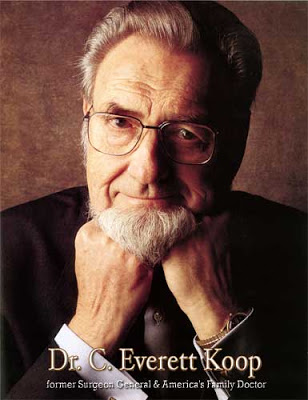
Dr. C. Everett Koop
Francis Schaeffer Whatever Happened to the Human Race (Episode 1) ABORTION
Francis Schaeffer: What Ever Happened to the Human Race? (Full-Length Documentary)
Part 1 on abortion runs from 00:00 to 39:50, Part 2 on Infanticide runs from 39:50 to 1:21:30, Part 3 on Youth Euthanasia runs from 1:21:30 to 1:45:40, Part 4 on the basis of human dignity runs from 1:45:40 to 2:24:45 and Part 5 on the basis of truth runs from 2:24:45 to 3:00:04
I’m willing to cut Ryan Lizza some slack. His profile of Michelle Bachmann in The New Yorker charts a four-day bus trip through Iowa with the presidential hopeful and Tea Party belle, but the broader context is the journey of a bewildered lib in the fields of evangelicalism. He gives at least the appearance of trying to be fair, so I’ll try to be fair. Presumably he’s a busy man; as a writer I’m often juggling three or four projects against multiple deadlines, and I understand how disorienting that can be. Also, he’s entering a world that he knows little about and (presumably) has little sympathy for. Still, he had a month to put this long (18-page) piece together, and he could have used that time to look up a few things.
His thesis: “Bachmann belongs to a generation of Christian conservatives whose views have been shaped by institutions, tracts, and leaders not commonly known to secular Americans, or even to most Christians.” He goes on to name names—Francis Schaeffer, Nancy Pearcey, and Steve Wilkins—and construct a group portrait meant to disturb the sleep of Mr. and Mrs. Mainstream American. While never explicitly linking Bachmann’s name with the word “theocracy,” he lets that shadow hover over her like a sinister cloud.
But Lizza betrays his lack of investigative vigor more than once, and sometimes laughably. For instance, writing about Bachmann’s summer at an Israeli kibbutz in 1974: “The trip gave her a connection to Israel, a state whose creation, many American evangelicals believe, is prophesied in the Bible. (St. Paul, in the Letter to the Romans, says that Jews will one day gather again in their homeland. . . .)” Paul, of course, was writing before the destruction of Jerusalem and the Diaspora, and the passage is concerned with spiritual Israel. It’s just a few chapters (9-11), three pages max, that wouldn’t have taken that long to read.
About Pearcey, whose Total Truth is a Bachmann favorite, his most damning indictment is that the book “teaches readers how to implement Schaeffer’s idea that a Biblical world view should suffuse every aspect of one’s life.” Well, yes. That’s what a worldview does. Lizza also quotes Pearcey’s judgment that “the overall systems of thought constructed by nonbelievers will be false—for if the system is not built on Biblical truth, then it will be built on some other ultimate principle.” Again, yes. While he makes no explicit comment, he’s apparently troubled by the idea of Christians determining that some systems of thought are false. As if every human being in the world doesn’t do that.
Schaeffer comes in for the heaviest scrutiny—five long paragraphs—but also the shoddiest research. The main point Lizza wants to make, later emphasized in a National Public Radio interview with Terry Gross, is this: “In 1981, three years before he died, Schaeffer published ‘A Christian Manifesto,’ a guide for Christian activism, in which he argues for the violent overthrow of the government if Roe v. Wade isn’t reversed.” Really? I didn’t recall any such recommendation in the Manifesto. Where did Lizza get such an idea?
He doesn’t say, but it most likely comes from Frank Schaeffer. In 2008, on the Hufflington Post, Frank quoted a passage from his father’s work:
“There does come a time when force, even physical force, is appropriate. . . . A true Christian in Hitler’s Germany and in the occupied countries should have defied the false and counterfeit state. This brings us to a current issue that is crucial for the future of the church in the United States, the issue of abortion. . . . It is time we consciously realize that when any office commands what is contrary to God’s law it abrogates it’s [sic] authority. And our loyalty to the God who gave this law then requires that we make the appropriate response in that situation. . . .”
But a comparison with the original Manifesto reveals that Frank cut and pasted sentences, omitting the qualifiers, and leaving the distinct impression that his father advocated violent resistance in certain circumstances. His problems with his father make a sad story too long to recount here. But that’s no excuse for Lizza to neglect Francis Schaeffer’s own words, or conflate Schaeffer’s idea of Dominionism with R.J. Rushdoony’s Christian Reconstructionism, or to give secular author Sara Diamond the last word as to what these men are really saying—that “Christians, and Christians alone, are biblically mandated to occupy all secular institutions until Christ returns.”
All this is calculated to make mainstream readers run screaming for the exits at the thought of Michele Bachmann as president. Ryan Lizza’s alarm at the prospect is no doubt sincere: He really believes this stuff. He probably thinks he’s doing investigative reporting, but a closer look betrays his own leaps of faith.
PHOTO BY STATON BREIDENTHAL Marchers arrive at the state Capitol on Sunday after beginning the Arkansas March for Life in downtown Little Rock As in the past, the pr0-life March in Little Rock had at least twenty times the people in attendance that the pr0-abortion march did the previous day. In fact, last year Channel […]
34th Annual March For Life Sunday, January 22, 2012 2:00 PM Capitol and Louisiana Downtown Little Rock Will your face appear in pictures at the next March for Life? We certainly hope that you will consider joining us each January for this important pro-life event. Hundreds of people from across the state make the annual […]
HALT:HaltingArkansasLiberalswithTruth.com President Obama on abortion Adrian Rogers (former President of Southern Baptist Convention): “I am not as afraid of the Communist, the Russians, the Chinese, as much as I am afraid of God. If God be for us, who can be against us? If God be against us, then who can be for us? It […]
The All-American Rejects Music Interview Tyson Ritter Full Band only on The Artist Spotlight The All-American Rejects – The Last Song The All-American Rejects – It Ends Tonight I got to go hear the All-American Rejects in Little Rock on 12-13-12. Here are some of my reactions. Tyson Ritter admitted that he lost his way […]
Ron Paul’s Pro-life view Ron Paul’s Pro-Life Speech in Ames, Iowa Uploaded by RonPaul2008dotcom on Aug 13, 2011 Free email updates: http://www.RonPaul.com/welcome.php Please like, share, subscribe & comment! http://www.RonPaul.com 08/13/2011– Ron Paul is America’s leading voice for limited, constitutional government, low taxes, free markets, sound money, and a pro-America foreign policy. ___________________________________ Related posts: Crowd […]
I have been involved with the March for Life for almost 30 years here in Little Rock. My four kids and I have walked in it on a regular basis in Little Rock and I have posted about it before on my blog http://www.thedailyhatch.org . When I first marched in it Ronald Reagan was the […]
My sons Wilson (on left) and Hunter (on right) went to California and visited Yosemite National Park with our friend Sherwood Haisty Jr. March 21-27. Here they are standing in front of the tallest waterfall in North America. The only surviving founding member of NARAL, Dr. Bernard Nathanson gives his testimony of NARAL’s foundation of […]
President and Nancy Reagan talking to Mother Teresa in the Oval Office. 6/20/85. Superbowl commercial with Tim Tebow and Mom. Jason Tolbert wrote a great article this week about a pro-life meeting. He mentons William Harrison who I have written about before on this blog. I used to write letters to the editor a whole […]
What Ever Happened to the Human Race? Jason Tolbert told a story about pro-life marchers and their tactic of prayer: OWNER TURNS SPRINKLERS ON PRO-LIFE PRAYER VIGIL In July, I wrote about a new movement springing up in Arkansas that seeks to combat abortion not with violent protest, but with peaceful prayer demonstrations. It is called “40 […]
Rep. Tim Griffin and Lt. Gov. Mark Darr at the Arkansas March for Life in Little Rock from Tolbert Report. Go to Fox 16 website and you will read this story below and watch a video clip on both marches. What you will not read is the fact that only 150 people showed up for […]
HALT:HaltingArkansasLiberalswithTruth.com (My family and I are heading out to march today. The weather in Little Rock is overcast and pleasant. Come out and join us.) Bill O’Reilly Interviews Jehmu Greene About Pro-Life Super Bowl Ad about Tim Tebow I got these quotes from someone off the internet that lives in England. The funny thing is […]
HALT:HaltingArkansasLiberalswithTruth.com Development of the Unborn Baby. Prolife Video There are people all around you who have been affected by humanism. Abortion is one of the results of humanism. Nevertheless, we can befriend those who are considering abortion and speak into their lives with love and truth. There may be those who say hateful things to […]
HALT:HaltingArkansasLiberalswithTruth.com Science Matters #2: Former supermodel Kathy Ireland tells Mike Huckabee about how she became pro-life after reading what the science books have to say. My good friend Dr. Kevin R. Henke is a scientist and also an atheistic evolutionist. I had a lot of discussions with Kevin over religious views. I remember going over […]
HALT:HaltingArkansasLiberalswithTruth.com “Jane Roe” or Roe v Wade is now a prolife Christian. She’s recently done a commercial about it. Around 1993 my wife Jill and I peacefully walked the streets of Little Rock with Rev Flip Benham who was working with Operation Rescue at the time. We held pro-life signs up and heard some moving […]
Francis Schaeffer Whatever Happened to the Human Race (Episode 1) ABORTION
Francis Schaeffer: What Ever Happened to the Human Race? (Full-Length Documentary)
Part 1 on abortion runs from 00:00 to 39:50, Part 2 on Infanticide runs from 39:50 to 1:21:30, Part 3 on Youth Euthanasia runs from 1:21:30 to 1:45:40, Part 4 on the basis of human dignity runs from 1:45:40 to 2:24:45 and Part 5 on the basis of truth runs from 2:24:45 to 3:00:04
________________
Picture of Francis Schaeffer and his wife Edith from the 1930′s above. I was sad to read about Edith passing away on Easter weekend in 2013. I wanted to pass along this fine article below.
Obituary | The widow of Francis Schaeffer and co-founder of L’Abri Fellowship is remembered for her humanity, humility, and hospitality
Photo by Sylvester Jacobs/Schaeffer Institute at Covenant Seminary
Edith and Francis Schaeffer
Edith Schaeffer, co-founder of L’Abri Fellowship, author of 17 books, and widow of pastor/author Francis Schaeffer, died today at age 98.
She was born Nov. 3, 1914, to missionary parents in Wenzhou, China, and met her husband-to-be at the First Presbyterian Church in Germantown, Pa., on June 26, 1932, where a Unitarian was explaining his reasons for denying the Bible’s teachings about God and about Christ’s deity. Even as Edith planned to stand up and argue her position, Francis stood up and began arguing his. Then Edith stood and spoke.
She wore a wreath of white flowers in her hair on July 6, 1935, leaving school a year early to marry the lean, clean-shaven, and determined “Fran.” Her hospitality complemented Francis’ anguish for the lost. The Schaeffers—then with three daughters, Priscilla, Deborah, and Susan—moved to Switzerland as missionaries in 1948. There the Schaeffers had a son, Frank.
Among Edith Schaeffer’s greatest contributions to the world: her humanity, artistic nature, humility, and hospitality. Sometimes Sunday lunch boasted as many as 36 guests, but she always made more food than she expected to need. She made rolls by hand, forming them individually, sometimes into the shapes of snails, topping them with different kinds of seeds, and turning the leftover dough into cinnamon rolls. She would sometimes stop in the process of roll making to take a phone call, then pray for the caller. “You keep making the rolls,” she’d say to her assistant Mary Jane Grooms. “I’ll pray.”
As introductions commenced at the 36-person Sunday lunch, Edith’s assistant Mike Sugimoto was astonished by her personal interest in every person in the room. He also expressed awe over Edith’s ability to connect with the cultural traditions of the people of Italy and France, her devoted praying (oral and written), and the notes she wrote all over her Bible.
Since L’Abri was never flush with money, its meals contained little meat, but Edith kept an extensive vegetable garden, and guests dined on what Grooms remembered as “wonderful, healthy food.” For Edith, Grooms said, hospitality meant a real love for strangers, and having time for them when she didn’t have time for them: “‘Sit at our dinner table, have a meal with us, sleep in our beds, under our roof.’ It’s a very costly thing to do with your life and family.”
Grooms described Edith as a homemaking artist with more energy than most human beings: Her credo and biggest lesson to the world was to do the Lord’s work in the Lord’s way in the Lord’s strength, not your own. Edith sometimes lectured on “The Art of Living and the Courage to Be Creative,” laughing a grainy laugh while exhorting her audience to do small artistic kindnesses: draw a banana beside “banana” on the grocery list, read aloud and try a Yiddish accent, or mimic the Queen of England. Or, even, think ahead to start the coffee.
Edith Schaeffer’s books include L’Abri, Christianity Is Jewish, and What Is a Family?
(Francis did a great job in his film series “How Should we then live?” in looking at how humanism has affected art and culture in the Western World in the last 2000 years. My favorite episodes include his study of the Renaissance, the Revolutionary age, the age of Nonreason, and the age of Fragmentation.)
E P I S O D E 1 0 Dr. Francis Schaeffer – Episode X – Final Choices 27 min FINAL CHOICES I. Authoritarianism the Only Humanistic Social Option One man or an elite giving authoritative arbitrary absolutes. A. Society is sole absolute in absence of other absolutes. B. But society has to be […]
E P I S O D E 9 Dr. Francis Schaeffer – Episode IX – The Age of Personal Peace and Affluence 27 min T h e Age of Personal Peace and Afflunce I. By the Early 1960s People Were Bombarded From Every Side by Modern Man’s Humanistic Thought II. Modern Form of Humanistic Thought Leads […]
E P I S O D E 8 Dr. Francis Schaeffer – Episode VIII – The Age of Fragmentation 27 min I saw this film series in 1979 and it had a major impact on me. T h e Age of FRAGMENTATION I. Art As a Vehicle Of Modern Thought A. Impressionism (Monet, Renoir, Pissarro, Sisley, […]
E P I S O D E 7 Dr. Francis Schaeffer – Episode VII – The Age of Non Reason I am thrilled to get this film series with you. I saw it first in 1979 and it had such a big impact on me. Today’s episode is where we see modern humanist man act […]
E P I S O D E 6 How Should We Then Live 6#1 Uploaded by NoMirrorHDDHrorriMoN on Oct 3, 2011 How Should We Then Live? Episode 6 of 12 ________ I am sharing with you a film series that I saw in 1979. In this film Francis Schaeffer asserted that was a shift in […]
E P I S O D E 5 How Should We Then Live? Episode 5: The Revolutionary Age I was impacted by this film series by Francis Schaeffer back in the 1970′s and I wanted to share it with you. Francis Schaeffer noted, “Reformation Did Not Bring Perfection. But gradually on basis of biblical teaching there […]
Dr. Francis Schaeffer – Episode IV – The Reformation 27 min I was impacted by this film series by Francis Schaeffer back in the 1970′s and I wanted to share it with you. Schaeffer makes three key points concerning the Reformation: “1. Erasmian Christian humanism rejected by Farel. 2. Bible gives needed answers not only as to […]
Francis Schaeffer’s “How should we then live?” Video and outline of episode 3 “The Renaissance” Francis Schaeffer: “How Should We Then Live?” (Episode 3) THE RENAISSANCE I was impacted by this film series by Francis Schaeffer back in the 1970′s and I wanted to share it with you. Schaeffer really shows why we have so […]
Francis Schaeffer: “How Should We Then Live?” (Episode 2) THE MIDDLE AGES I was impacted by this film series by Francis Schaeffer back in the 1970′s and I wanted to share it with you. Schaeffer points out that during this time period unfortunately we have the “Church’s deviation from early church’s teaching in regard […]
Francis Schaeffer: “How Should We Then Live?” (Episode 1) THE ROMAN AGE Today I am starting a series that really had a big impact on my life back in the 1970′s when I first saw it. There are ten parts and today is the first. Francis Schaeffer takes a look at Rome and why […]
Should Congress approve the budget compromise?(Includes
Romina Boccia of the Heritage Foundation)
Published on Dec 11, 2013
Avoiding provisions that sharply divide the two parties, budget negotiators reached a deal to fund the government for two years. Kwame Holman reports on reaction to the deal. Judy Woodruff talks to Steven Rattner of Willett Advisors, Douglas Holtz-Eakin of the American Action Forum and Romina Boccia of the Heritage Foundation.
Next week, the Senate will consider the Ryan-Murray budget deal — a spending plan that disappoints conservatives and believers in a limited government that manages its finances.
Earlier during the negotiations between House Budget Chairman Paul Ryan (R-WI) and Senate Budget Chairwoman Patty Murray (D-WA), my colleagues and I at Heritage warned that sacrificing short-term budget constraint for savings that would occur in the long-term future is a dubious proposition.
Budget historians know that previous agreements of more spending today and budget cuts tomorrow have resulted in more spending today and more spending tomorrow as well. Blowing through the sequester caps today doesn’t make us confident that future Congresses will abide by these caps in the next decade.
While the agreement does take some positive steps — having federal workers fund more of their own retirement plans instead of relying on taxpayer funding — the deal will put additional pressure on Medicare providers. To finance Obamacare, President Obama took hundreds of billions from Medicare providers and Medicare Advantage plans, and the sequester also reduced payment to Medicare providers. Policymakers go to future Medicare spending, because they know CBO will score these as big savings on paper, no questions asked.
There are better ways to reduce Medicare’s burden on the government and most of these provider cuts are simply price controls. The results are budget agreements that result in billions of paper savings, but much higher deficits in reality as politicians blow through these caps when Medicare doctors, hospitals, and, of course, beneficiaries are threatened. We believe that there can be a good trade using the sequester for entitlement reform, but this deal is not it.
Finally, conservatives should favor user fees in place of broader tax increases because fees are more closely tied to the government service delivered and thus more efficient and fair than income taxes. However, the higher fees in this case are simply a placeholder for tax increases since the fees are used as cover for higher spending. This defeats the purpose of fees, which should not serve as a vehicle for higher government spending.
House, Senate Budget chairs reach deal to preempt another gov t shutdown Paul Ryan has been fighting for sequestration for years(1 yr ago) _____________________________ THE NEW BUDGET DEAL OF DEC 2013 IS: Promises of fictitious spending now instead of real spending caps!!! 3 Things You Need to Know About the Congressional Budget Deal Romina Boccia […]
House, Senate Budget chairs reach deal to preempt another gov t shutdown Paul Ryan has been fighting for sequestration for years(1 yr ago) _____________________________ We got to cut spending increases like the Sequester was doing in order to control government spending!!! The budget deal is a huge Republican cave-in Republicans in Congress have put in […]
____ I POURED MY HEART OUT IN AN EMAIL TO SENATOR BOOZMAN THE OTHER DAY AND THEN SENT THAT EMAIL TO 30 SENATORS AND REPRESENTATIVES ALL OVER THE USA!!! HERE I GO AGAIN. This is very much the same case as raising the debt ceiling in my view. It seems that the Republicans keep allowing […]
______ If you really want to cut the growth of government spending then keep the sequester in place!!! December 9, 2013 11:01AM Budget Deal: A Dangerous Precedent By Chris Edwards Share Republican and Democratic negotiators are expected to agree to a budget deal this week setting spending levels for 2014. The Washington Post says that […]
________________________ Senator John Boozman, 320 Hart Senate Office Building Washington, DC 20510 Phone: (202) 224-4843 Fax: (202) 228-1371 Dear Senator Boozman, I want to thank you for taking the time out of your busy day to respond to my earlier letter to you on this same subject. I have always TRIED TO CONTACT THE REPRESENTATIVES AND SENATORS ABOUT THEIR RESPONSIBILITY […]
The Sequester actually did help control the growth of government and hopefully we can cut deeper this time around!!! Government Shutdown Jokes…and the Sick Joke of Obama’s Shutdown Strategy October 8, 2013 by Dan Mitchell Even though it’s an uphill battle, I’m glad there are some lawmakers willing to fight Obamacare. They realize a hard battle […]
What Can Washington Politicians Learn From America’s Moms? Published on Apr 2, 2013 We asked folks what Washington politicians can learn from America’s moms ___________________ We need deeper cuts than the Sequester!!! Below are some very funny cartoons from Dan Mitchell’s blog on the Sequester. Sequestration “Meat Cleaver” Is Really a Scalpel Danny Huizinga July 26, […]
When Governments Cut Spending Uploaded on Sep 28, 2011 Do governments ever cut spending? According to Dr. Stephen Davies, there are historical examples of government spending cuts in Canada, New Zealand, Sweden, and America. In these cases, despite popular belief, the government spending cuts did not cause economic stagnation. In fact, the spending cuts often […]
If you blame the Sequester for blaming job growth then you don’t have a good grasp on economics. The Overlooked Jobs Tragedy April 9, 2013 by Dan Mitchell When the monthly job numbers are released, most people focus on the unemployment rate. On many occasions, I’ve cited that number, usually to point out that the unemployment […]
I have put up lots of cartoons from Dan Mitchell’s blog before and they have got lots of hits before. Many of them have dealt with the economy, eternal unemployment benefits, socialism, Greece, welfare state or on gun control. Sequester was not so bad after all. Since the Sequester Has Been in Place for More than One […]
I have put up lots of cartoons from Dan Mitchell’s blog before and they have got lots of hits before. Many of them have dealt with the economy, eternal unemployment benefits, socialism, Greece, welfare state or on gun control. As Humorously Explained by Henry Payne, the World Amazingly Didn’t End When Uncle Sam Got Put on a […]
Ronald Reagan was a firm believer in the Balanced Budget Amendment and Milton Friedman was a key advisor to Reagan. Friedman’s 1980 film series taught the lesson of restraining growth of the federal budget.
Vital changes needed to keep road to further reforms open
There is a problem brewing in the House of Representatives of which most conservatives in and outside Congress are largely unaware. It has to do with H.J. Res. 1 – the balanced budget amendment – soon to be voted on per the debt-ceiling “deal” struck by Congress and the president. While H.J. Res. 1 is a solid first effort – and we have urged support for it as a symbolic vote – it is possibly fatally flawed and should be revised.
After years of indifference to constitutional fiscal discipline, Congress is once again stirring. In 1982, then-President Ronald Reagan, convened a federal amendment drafting committee led by Milton Friedman, Jim Buchanan, Bill Niskanen, Walter Williams and many others, and fashioned Senate Joint Resolution 58, a tax limitation-balanced budget amendment, which garnered 67 votes in the Senate under the able leadership of Sen. Orrin G. Hatch, Utah Republican. After a successful discharge petition forced a House vote, the amendment failed to achieve the two-thirds vote necessary in a Tip O’Neill-Jim Wright-controlled House. In 1996, Newt Gingrich and company came within one vote of passing a fiscal amendment in the House.
Currently, H.J. Res. 1 is designed as a classic balanced budget amendment in which outlays can be as great as, but no more than, receipts for that year. However, it requires an estimate of receipts, which is notoriously faulty, and it does not necessarily produce surpluses with which to pay down our massive debt. Furthermore, it contains a second limit on outlays – “not more than 18 percent of the economic output of the United States” – without defining such output or resolving the inevitable conflict between the outlay calculations in the two provisions.
This could be fixed by restructuring the amendment as a spending or outlay limit based on prior year receipts or outlays (known numbers), adjusted only for inflation and population changes. This will produce surpluses in most years with which to pay down debts and will reduce government spending as a share of gross domestic product over time, right-sizing government and increasing the rate of economic growth for the benefit of all citizens, especially those least able to compete.
Section 4 of H.J. Res. 1 might best be described as a supreme example of the law of unintended consequences. This section imposes on the president a constitutional responsibility to present a balanced budget. Surely, the drafters were saying to themselves “We’ll fix that guy in the White House. Now he will have to fess up and either propose specific tax increases or specific spending cuts. He won’t be able to duck reality any longer.” The only problem is that this section is at odds with our Constitution in that it gives the president a constitutional power over fiscal matters never intended by the Founders.
For much of our history, the president did not propose a budget. In the Budget and Accounting Act of 1921, which established the Bureau of the Budget, now the Office of Management and Budget and the General Accounting Office, the president was statutorily authorized to propose a budget. Presidents have always shaped the budget and spending using their negotiating opportunities and veto pen. Wearing their chief administrator hat, earlier presidents sought to save money from the amounts appropriated by Congress, getting things done for less, impounding funds they did not think essential to spend. Congress‘ ceiling on an appropriation was not also the spending floor for the president, as it is now.
Section 4 appears to give the president co-equal power with Congress not only to present a budget but to shape it, in conflict with congressional budget authority. At a minimum, it is likely to create a conflict over the amount of allowed annual spending. The president surely will be guided by his own Office of Management and Budget, whose budget and receipts calculations will undoubtedly differ from the Congressional Budget Office’s numbers that will direct Congress. We should not start the budget process each year with this kind of conflict.
It would be better to restore the historic role of the president to impound and otherwise reduce expenditures by repealing and revising appropriate portions of the Congressional Budget and Impoundment Control Act of 1974 so a fiscally conservative president is a revitalized partner in cutting the size of government.
Section 5 requires a supermajority vote for “a bill to increase revenues.” Whether one agrees or disagrees with making tax increases more difficult, this language is troublesome because it requires some government bureaucrat or bureaucracy to make a calculation or estimate of the effect of tax law changes on revenues. Proponents of a bill to increase cash flow to the government will argue that their tax law changes are “revenue neutral” and will likely persuade the Joint Committee on Taxation or Congressional Budget Office to back them up. Once again, estimators would be in control.
If we ever expect to convert our income-based tax system to a consumption tax, better not to require a two-thirds vote as liberals will use such a supermajority voting rule to stymie tax system reform.
There are other issues, as well, with debt limit and national emergency supermajority votes and definitions. While this balanced budget amendment – H.J. Res. 1 – has deserved a “yes” vote as a demonstration of commitment to constitutional fiscal discipline, it can and must be revised before the showdown vote in the House this fall.
Lewis K. Uhler is president of the National Tax Limitation Committee.
President Obama c/o The White House 1600 Pennsylvania Avenue NW Washington, DC 20500
Dear Mr. President,
I know that you receive 20,000 letters a day and that you actually read 10 of them every day. I really do respect you for trying to get a pulse on what is going on out here. I have a pro-life point of view because I am a Christian and I base my views on an interpretation of the Bible. Francis Schaeffer’s teachings probably influenced me more in this area than any other person. In 1979 he teamed up with Dr. C. Everett Koop and put together the film series WHATEVER HAPPENED TO THE HUMAN RACE? and here is the first episode with covers the issue of abortion. Since you are also a Christian Mr. President I thought would take a great interest in what they had to say.
Francis Schaeffer Whatever Happened to the Human Race (Episode 1) ABORTION
Francis Schaeffer: What Ever Happened to the Human Race? (Full-Length Documentary)
Part 1 on abortion runs from 00:00 to 39:50, Part 2 on Infanticide runs from 39:50 to 1:21:30, Part 3 on Youth Euthanasia runs from 1:21:30 to 1:45:40, Part 4 on the basis of human dignity runs from 1:45:40 to 2:24:45 and Part 5 on the basis of truth runs from 2:24:45 to 3:00:04
Below you will see more about my pro-life views and I think you will see where Schaeffer is coming from in his arguments.
____________________
____________________
Episode 8: The Age Of Fragmentation
Published on Jul 24, 2012
Dr. Schaeffer’s sweeping epic on the rise and decline of Western thought and Culture
I remember hearing Francis A. Schaeffer (1912-1984) in person, several weeks before his death, at a large gathering on the campus of a Christian University. Schaeffer was of particular importance to me. At the time, in April 1984, I was attending a graduate seminar on Schaeffer so it was perfect timing. Just a few years before, I had first felt the force of Schaeffer’s thought through reading his books, and now I was having the opportunity to hear him in person as he was on a speaking tour promoting his latest book,The Great Evangelical Disaster.I have vivid memories of that night. I watched as he was helped to the platform and then remained seated even while he spoke. By this time cancer had so weakened him physically that standing was out of the question. In fact, at that time I was told that his diet consisted mainly of milkshakes.
After Schaeffer delivered his lecture, the audience was invited to ask questions. I remember one young man who began his question by reviewing some of what Schaeffer had just noted (and as many young men tend to do, he tried to impress the crowd with his knowledge, struggling to put his mini-speech into the form of a question). And alas, after the young man launched a rather dramatic presentation of his insights, he concluded by picturing the Church in the tenth round, bloody and beaten and on its knees. Then, at last, he asked his question. He wondered if there was any hope the Church couldwingiven his analysis of the situation.
Dr. Schaeffer leaned forward and brought the microphone to his lips. A hush came over the audience as it awaited the response. Then Schaeffer said, “If we do it to win, we have lost already. We do not do it to win, but because our risen Lord has commanded us.” What an answer! I have told this story so many times I embarrass myself, but the power of that response moves me each time I think of it. In fact, I often have been encouraged as well as challenged by those words. And for this, I am forever grateful for that night I heard Dr. Schaeffer. That was 26 years ago, not so long when you think about it, but it has been long enough for the name of Francis Schaeffer to fade from the evangelical memory. My hope is that Francis Schaeffer’s life and ministry will not fade from memory, but will instead remain present to our minds as a model of faithful witness. Perhaps this blogpost will be the catalyst for some of our readers to read Schaeffer’s works and benefit from them.
A Brief Biography of Francis Schaeffer
Schaeffer spent most of his adult life in Europe with his wife Edith and their four children (three girls and one boy). Francis and Edith went to Switzerland shortly after World War II. I once asked his daughter, Deborah, why her dad chose Switzerland. She explained that many people in those days in Europe thought there would be another war and her dad wanted the family to be safe in the event such a concern materialized. For this reason, they chose a remote village in the Swiss Alps where they founded L’Abri Fellowship (only after they were told to leave one little community because Schaeffer was having a religious influence on their predominantly Roman Catholic populace). The story of the L’Abri (the word means Shelter) ministry can be found in Edith Schaeffer’s wonderful book,The Tapestry.
Over the years, hundreds and perhaps thousands of people journeyed to L’Abri (for stays that ranged from days to months) where some found Christ as Savior and others were strengthened in their faith. This was especially true in the 60s and 70s; those of us who lived through those times remember the political and social upheaval as students on both sides of the Atlantic went full throttle into a rebellious mode. Many evangelicals merely condemned the senseless destruction-of course, in one sense it needed to be condemned-while ignoring the questions raised by the rebels. Schaeffer, on the other hand, listened carefully to their questions and helped them to see how historic Christianity answered those questions coherently and consistently. Many of us remember those days and not without some residual anxiety. Many evangelicals responded by entrenching, but Schaeffer chose to engage the young people and the intellectuals (many were existentialist) on their own terms. He showed them that their explanation of the world was inconsistent with and insufficient for the world in which they lived., and that Christianity answered those questions consistently and sufficiently.
Consequently, Schaeffer eventually earned the reputation of having a mission to the European intellectual. In 1960,Timemagazine suggested that the mission of Schaeffer was to target the European intellectual. The truth is that the Schaeffers had been sent to war-torn Europe in 1948 by the Presbyterian mission board to work among children, many who had been orphaned by the war. That often comes as a surprise to those not well acquainted with Schaeffer, because by the time he was well-known, it was not for children’s work, but work among young people and intellectuals. Furthermore, Schaeffer became known as an apologist (Some evangelicals loved him but others were suspicious of him, mainly because of the way he dressed!). He defended the faith in a way that challenged traditional categories. For this reason, he is difficult to label. Although some commentators claim that he was a presuppositionalist, Schaeffer tells us that he had no one method apologetically.
A Basic Overview of Schaeffer’s Apologetic
In order to understand Schaeffer’s approach to evangelism and apologetics, one must give attention to the three works that reveal the foundation of his understanding of man, reality, and the Bible. These three books serve as the foundation for all his other books, forming a trilogy:The God Who Is There, Escape from Reason, andHe Is There and He Is Not Silent. According to Schaeffer all his other books fit into these as “spokes of the wheel into the hub.” In 1982, Schaeffer himself edited his works, which were published in a five-volume set, including the trilogy in the order in which they were written. This order reveals the development of his thinking apologetically and is essential to understanding Schaeffer and his apologetic method.
In these three books, one learns how Schaeffer’s view of man shaped his apologetic approach (which for him was part and parcel of his evangelism). According to Schaeffer, historic Christianity is creation-centered. Furthermore, central to creation is the truth that God created man in his image. The first apologetic implication of this truth is that man has intrinsic worth which means he is to be treated with respect and love. This truth shaped Schaeffer’s life and ministry as he was motivated and directed by love and compassion for man as a person. Apologetics, he urged, must be “shaped on the basis of love for the person as a person.”
While Schaeffer did not minimize the historic fall recorded in Genesis, he argued that the fall “did not lead to machineness, but to fallen-manness.” There was a greatness to man even though man could also be very cruel. Schaeffer spoke of man being noble, not because of man’s achievements, but because of who he was as a creation of God-man was not a “zero,” to use Schaeffer’s words. Only Christianity, Schaeffer said, could explain both the greatness and the cruelty of man. This truth moved Schaeffer to take all men seriously and to answer the honest questions of fallen man. Furthermore, he argued that the Christian must take care to understand the person by looking carefully at cultural artifacts (especially the arts) to understand the underlying worldviews and presuppositions revealed in them.
According to Schaeffer, the second apologetic implication of creation was the intelligibility of creation. The categories of the mind of man correspond to the structure of the world as God had created both. The result, Schaeffer argued, was that common ground existed between the Christian and the non-Christian. This is not something man put upon the universe; it is simply the way it is. Man lives in a morally structured, rational universe and no matter how he might try to live against the way the universe is, Schaeffer was sure it would push back at him and create tension for his non-Christian presuppositions.
The Christian’s apologetic task, according to Schaeffer, is to show man where the point of tension existed between his presuppositions and the way the world really is. Schaffer’s approach was to push man towards the logic of his position in the area of his own real interests. Schaeffer believed that man builds a sort of philosophical shelter to protect himself from the blows of the real world. The Christian must lovingly remove the shelter and allow man to feel the blows from the real world, both internally and externally.
Of course this was not a game for Schaeffer and he urged the Christian always to give the answer as understood in light of historic Christianity and to do so in a loving and compassionate tone. He was convinced that when speaking to the non-Christian the first truth to present was that of the truth of the real world and the reality of man himself. For Schaeffer, the real point of contact with the modern (and post modern mind) was reality. Regardless what presuppositions a man claims as grounds for his worldview, Schaeffer showed how they can be tested for truthfulness when pressed against the reality in which every person must live.
Schaeffer’s life, ministry, and writings are instructive for evangelicals today. One more than one level, he remains an important apologetic resource for Christians in the 21stcentury. For this reason, the L. Russ Bush Center at Southeastern Baptist Theological Seminary houses the Francis A. Schaeffer Archives. The Schaeffer Archives includes a voluminous collection of unpublished papers, source materials, correspondence, and recorded discussions of Schaeffer, thanks to the generosity of the Francis A. Schaeffer Foundation.
Thank you so much for your time. I know how valuable it is. I also appreciate the fine family that you have and your commitment as a father and a husband.
Sincerely,
Everette Hatcher III, 13900 Cottontail Lane, Alexander, AR 72002, ph 501-920-5733, lowcostsqueegees@yahoo.com
I have gone back and forth and back and forth with many liberals on the Arkansas Times Blog on many issues such as abortion, human rights, welfare, poverty, gun control and issues dealing with popular culture. Here is another exchange I had with them a while back. My username at the Ark Times Blog is Saline […]
It is not possible to know where the pro-life evangelicals are coming from unless you look at the work of the person who inspired them the most. That person was Francis Schaeffer. I do care about economic issues but the pro-life issue is the most important to me. Several years ago Adrian Rogers (past president of […]
I got this off a Christian blog spot. This person makes some good points and quotes my favorite Christian philosopher Francis Schaeffer too. Prostitution, Chaos, and Christian Art The newest theatrical release of Victor Hugo’s 1862 novel “Les Miserables” was released on Christmas, but many Christians are refusing to see the movie. The reason simple — […]
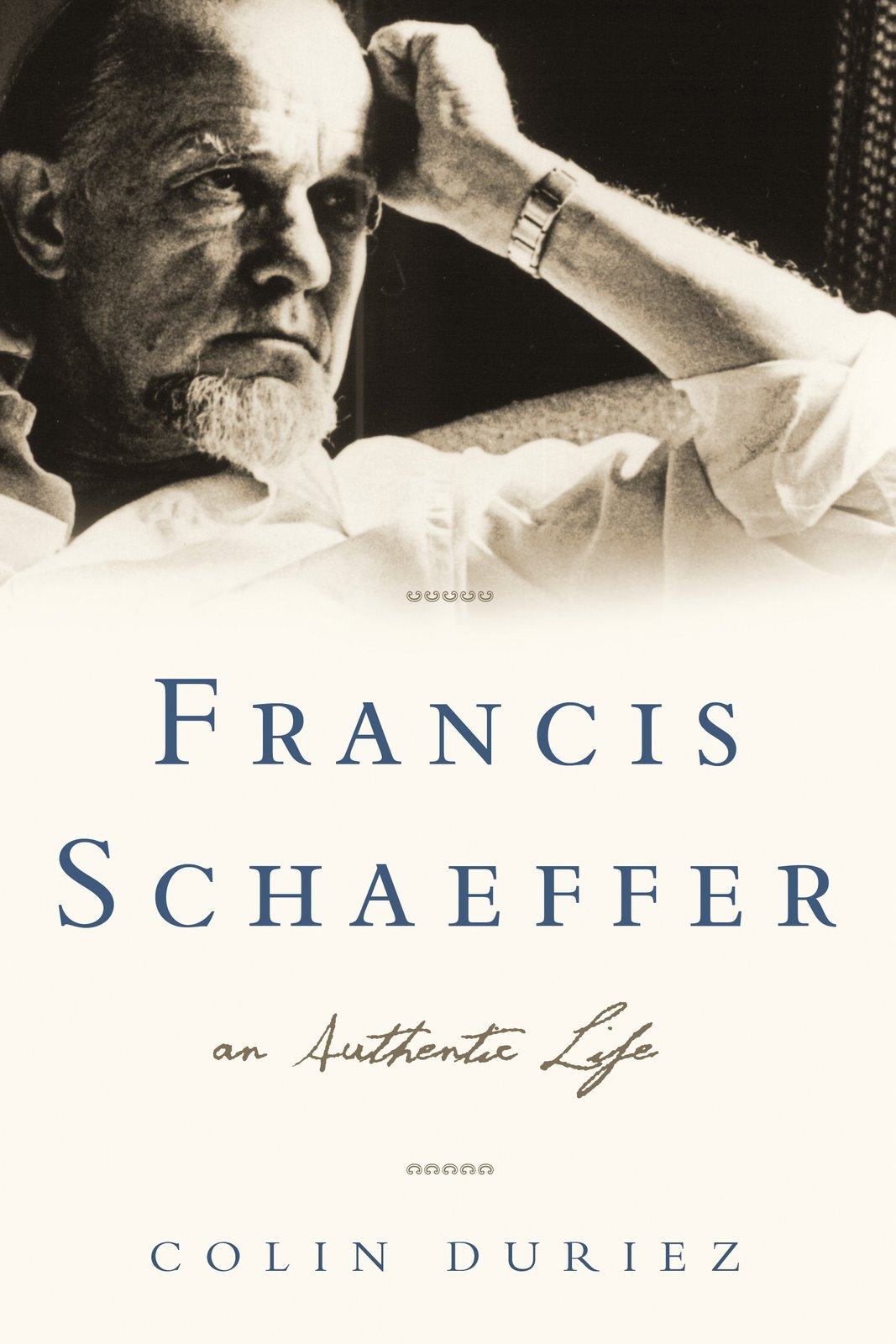
Francis Schaeffer was truly a great man and I enjoyed reading his books. A theologian #2: Rev. Francis Schaeffer Duriez, Colin. Francis Schaeffer: An Authentic Life. Wheaton, IL: Crossway Books, 2008. Pp. 240. Francis Schaeffer is one of the great evangelical theologians of our modern day. I was already familiar with some of his books and his […]
Francis Schaeffer: “Whatever Happened to the Human Race?” (Episode 2) SLAUGHTER OF THE INNOCENTS Published on Oct 6, 2012 by AdamMetropolis ___________ The 45 minute video above is from the film series created from Francis Schaeffer’s book “Whatever Happened to the Human Race?” with Dr. C. Everett Koop. This book really helped develop my political views […]
The Francis and Edith Schaeffer Story Pt.1 – Today’s Christian Videos The Francis and Edith Schaeffer Story – Part 3 of 3 Francis Schaeffer: “Whatever Happened to the Human Race” (Episode 1) ABORTION OF THE HUMAN RACE Published on Oct 6, 2012 by AdamMetropolis ________________ Picture of Francis Schaeffer and his wife Edith from the […]
THE MARK OF A CHRISTIAN – CLASS 1 – Introduction Published on Mar 7, 2012 This is the introductory class on “The Mark Of A Christian” by Francis Schaeffer. The class was originally taught at Redeemer Presbyterian Church in Overland Park, KS by Dan Guinn from FrancisSchaefferStudies.org as part of the adult Sunday School hour […]
Francis Schaeffer: “Whatever Happened to the Human Race?” (Episode 2) SLAUGHTER OF THE INNOCENTS Published on Oct 6, 2012 by AdamMetropolis The 45 minute video above is from the film series created from Francis Schaeffer’s book “Whatever Happened to the Human Race?” with Dr. C. Everett Koop. This book really helped develop my political views concerning […]
Francis Schaeffer: “Whatever Happened to the Human Race” (Episode 1) ABORTION OF THE HUMAN RACE Published on Oct 6, 2012 by AdamMetropolis The 45 minute video above is from the film series created from Francis Schaeffer’s book “Whatever Happened to the Human Race?” with Dr. C. Everett Koop. This book really helped develop my political views […]
I have gone back and forth and back and forth with many liberals on the Arkansas Times Blog on many issues such as abortion, human rights, welfare, poverty, gun control and issues dealing with popular culture. Here is another exchange I had with them a while back. My username at the Ark Times Blog is Saline […]
Francis Schaeffer: “Whatever Happened to the Human Race” (Episode 5) TRUTH AND HISTORY Published on Oct 7, 2012 by AdamMetropolis The 45 minute video above is from the film series created from Francis Schaeffer’s book “Whatever Happened to the Human Race?” with Dr. C. Everett Koop. This book really helped develop my political views concerning abortion, […]
I have debated with Ark Times Bloggers many times in the past on many different subjects. Abortion is probably the most often debated subject and I have noticed that many pro-life individuals are now surfacing on the Arkansas Times Blog. Here are some examples. Arhogfan501 asserted: This is the beginning of the end for recreational abortion in Arkansas. Songbird777 noted: Babies have a right to live and not be chopped up for someone else’s convenience. The person using the username “baker” commented: Planned Parenthood (PPA) does not nor cannot provide mammograms, indeed no affiliate has the necessary license. PPA is an abortion provider and at some 900 plus killings a day rather prolific.
Here is another debate I got into recently on the Arkansas Times Blog and I go by the username “Saline Republican”:
I know of the case histories of some of those, and Tiller did have a niche market. He and one other doctor took on the challenge, but it was a lucrative challenge, and not all those late term abortions were so medically needed. A million a year is pretty good whampum for plunging a knife in the skull of an infant.
Like most, I was aghast at the murder. You change laws, not kill doctors. I was no fan of abortion, but I stood at the doors of some of the clinics in Glendale, Kali to keep the entrances clear. Sometimes I had to get rough to ensure the women entering the building was not hurt.
I may not have believed in abortion, but I believed enough in the choice of the individual to fight for it, to defend it.
But I refuse to be lied to by zealots that say it isn’t murder, that there isn’t something wrong about it, and that Tiller made millions and THAT was the guiding principle.
Steven E you need to listen to your own words and then weigh them. This is what you said:
“I lean towards giving the woman the choice, even up to birth, just do not lie to me when you say a fetus is not a baby, or a living person. There is that time, if a woman doesn’t get on the stick and take her MorningAfter pill when she is killing a baby. I don’t believe in taking the choice away from her, I just don’t want to perpetuate a lie, either. Admit that things like parital birth abortions are abominations, and the doctors that do it, do it for money, not some high calling.”
_________
Most liberals argue that the unborn baby is not a human deserving the protection of our laws. It seems that you are saying that even if the unborn baby “a living person” at some point during the 9 months leading up to birth but you “don’t believe in taking the choice away from her” concerning abortion and then you flip back and say “that things like partial birth abortions are abominations.”
Let me try and get you to clarify this a little bit so I don’t go away misunderstanding you.
Are advocating abortion rights over human rights? Prochoice advocate Elizabeth Williams came out and said that on 1-23-13 in her article on Salon. Maybe you agree with her? DO YOU AGREE WITH HER? I AM GOING TO DO SOMETHING THAT I HAVE DONE BEFORE AND THAT IS I AM GOING TO PUT A LONG PASSAGE FROM A PRO-CHOICE ADVOCATE:
The “life” conversation is often too thorny to even broach. Yet I know that throughout my own pregnancies, I never wavered for a moment in the belief that I was carrying a human life inside of me. I believe that’s what a fetus is: a human life. And that doesn’t make me one iota less solidly pro-choice….
Here’s the complicated reality in which we live: All life is not equal. That’s a difficult thing for liberals like me to talk about, lest we wind up looking like death-panel-loving, kill-your-grandma-and-your-precious-baby storm troopers. Yet a fetus can be a human life without having the same rights as the woman in whose body it resides. She’s the boss. Her life and what is right for her circumstances and her health should automatically trump the rights of the non-autonomous entity inside of her. Always.
When we on the pro-choice side get cagey around the life question, it makes us illogically contradictory. I have friends who have referred to their abortions in terms of “scraping out a bunch of cells” and then a few years later were exultant over the pregnancies that they unhesitatingly described in terms of “the baby” and “this kid.” I know women who have been relieved at their abortions and grieved over their miscarriages. Why can’t we agree that how they felt about their pregnancies was vastly different, but that it’s pretty silly to pretend that what was growing inside of them wasn’t the same? Fetuses aren’t selective like that. They don’t qualify as human life only if they’re intended to be born.
When we try to act like a pregnancy doesn’t involve human life, we wind up drawing stupid semantic lines in the sand: first trimester abortion vs. second trimester vs. late term, dancing around the issue trying to decide if there’s a single magic moment when a fetus becomes a person. Are you human only when you’re born? Only when you’re viable outside of the womb? Are you less of a human life when you look like a tadpole than when you can suck on your thumb?
I truly believe that many of the problems we have today in the USA are due to the advancement of humanism in the last few decades in our society. Ronald Reagan appointed the evangelical Dr. C. Everett Koop to the position of Surgeon General in his administration. He partnered with Dr. Francis Schaeffer in making the video below. It is very valuable information for Christians to have. Actually I have included a video below that includes comments from him on this subject.
Francis Schaeffer: What Ever Happened to the Human Race? (Full-Length Documentary)
Part 1 on abortion runs from 00:00 to 39:50, Part 2 on Infanticide runs from 39:50 to 1:21:30, Part 3 on Youth Euthanasia runs from 1:21:30 to 1:45:40, Part 4 on the basis of human dignity runs from 1:45:40 to 2:24:45 and Part 5 on the basis of truth runs from 2:24:45 to 3:00:04
Francis Schaeffer “BASIS FOR HUMAN DIGNITY” Whatever…HTTHR
For the past 40 years, pro-life advocates from all over the country annually march in solidarity to raise awareness for the most vulnerable in society—the unborn. Without fail, the 40th anniversary March for Life brought large crowds to the National Mall today in the hope of securing the right to life for all.
Heritage’s president-elect, Jim DeMint, understands the importance of the right to life and has always been a strong advocate for the pro-life movement.
“Over the past four decades we have seen countless victories upholding respect for human life and dignity,” he says in Heritage’s new video. “Courageous pro-life policymakers and compassionate ministries such as pregnancy care centers together made great strides to protect unborn life. They moved the hearts and minds of an entire generation.”
The rally brought thousands of people—especially many from the millennial generation. From grade schools to universities all over the country, hundreds of students took a stand on this human rights threat. Kristan Hawkins, the executive director of Students for Life in America, was handing out signs to all the youth that stated, “I AM THE PRO-LIFE GENERATION.” Students and young people held those signs proudly as they faced the bitter cold.
What does this mean for the future? As Heritage’s Sarah Torre wrote, “Today, roughly half of Americans now identify themselves as ‘pro-life,’ including many of the millennial generation who will make up the crowds at today’s march. More than 100 pro-life laws have been passed in states across the country since 2010, including parental notification, informed consent, and abortion clinic regulation legislation.”
These strides and the dedication of rising generations point to a hopeful future for America’s most vulnerable.
Francis Schaeffer: “Whatever Happened to the Human Race” (Episode 1) ABORTION OF THE HUMAN RACE Published on Oct 6, 2012 by AdamMetropolis The 45 minute video above is from the film series created from Francis Schaeffer’s book “Whatever Happened to the Human Race?” with Dr. C. Everett Koop. This book really helped develop my political views […]
E P I S O D E 1 0 Dr. Francis Schaeffer – Episode X – Final Choices 27 min FINAL CHOICES I. Authoritarianism the Only Humanistic Social Option One man or an elite giving authoritative arbitrary absolutes. A. Society is sole absolute in absence of other absolutes. B. But society has to be […]
E P I S O D E 9 Dr. Francis Schaeffer – Episode IX – The Age of Personal Peace and Affluence 27 min T h e Age of Personal Peace and Afflunce I. By the Early 1960s People Were Bombarded From Every Side by Modern Man’s Humanistic Thought II. Modern Form of Humanistic Thought Leads […]
E P I S O D E 8 Dr. Francis Schaeffer – Episode VIII – The Age of Fragmentation 27 min I saw this film series in 1979 and it had a major impact on me. T h e Age of FRAGMENTATION I. Art As a Vehicle Of Modern Thought A. Impressionism (Monet, Renoir, Pissarro, Sisley, […]
E P I S O D E 7 Dr. Francis Schaeffer – Episode VII – The Age of Non Reason I am thrilled to get this film series with you. I saw it first in 1979 and it had such a big impact on me. Today’s episode is where we see modern humanist man act […]
E P I S O D E 6 How Should We Then Live 6#1 Uploaded by NoMirrorHDDHrorriMoN on Oct 3, 2011 How Should We Then Live? Episode 6 of 12 ________ I am sharing with you a film series that I saw in 1979. In this film Francis Schaeffer asserted that was a shift in […]
E P I S O D E 5 How Should We Then Live? Episode 5: The Revolutionary Age I was impacted by this film series by Francis Schaeffer back in the 1970′s and I wanted to share it with you. Francis Schaeffer noted, “Reformation Did Not Bring Perfection. But gradually on basis of biblical teaching there […]
Dr. Francis Schaeffer – Episode IV – The Reformation 27 min I was impacted by this film series by Francis Schaeffer back in the 1970′s and I wanted to share it with you. Schaeffer makes three key points concerning the Reformation: “1. Erasmian Christian humanism rejected by Farel. 2. Bible gives needed answers not only as to […]
Francis Schaeffer’s “How should we then live?” Video and outline of episode 3 “The Renaissance” Francis Schaeffer: “How Should We Then Live?” (Episode 3) THE RENAISSANCE I was impacted by this film series by Francis Schaeffer back in the 1970′s and I wanted to share it with you. Schaeffer really shows why we have so […]
Francis Schaeffer: “How Should We Then Live?” (Episode 2) THE MIDDLE AGES I was impacted by this film series by Francis Schaeffer back in the 1970′s and I wanted to share it with you. Schaeffer points out that during this time period unfortunately we have the “Church’s deviation from early church’s teaching in regard […]
Francis Schaeffer: “How Should We Then Live?” (Episode 1) THE ROMAN AGE Today I am starting a series that really had a big impact on my life back in the 1970′s when I first saw it. There are ten parts and today is the first. Francis Schaeffer takes a look at Rome and why […]
Francis Schaeffer: “Whatever Happened to the Human Race” (Episode 5) TRUTH AND HISTORY Published on Oct 7, 2012 by AdamMetropolis This crucial series is narrated by the late Dr. Francis Schaeffer and former Surgeon General Dr. C. Everett Koop. Today, choices are being made that undermine human rights at their most basic level. Practices once […]
The opening song at the beginning of this episode is very insightful. Francis Schaeffer: “Whatever Happened to the Human Race” (Episode 4) THE BASIS FOR HUMAN DIGNITY Published on Oct 7, 2012 by AdamMetropolis This crucial series is narrated by the late Dr. Francis Schaeffer and former Surgeon General Dr. C. Everett Koop. Today, choices […]
Francis Schaeffer: “Whatever Happened to the Human Race” (Episode 3) DEATH BY SOMEONE’S CHOICE Published on Oct 6, 2012 by AdamMetropolis This crucial series is narrated by the late Dr. Francis Schaeffer and former Surgeon General Dr. C. Everett Koop. Today, choices are being made that undermine human rights at their most basic level. Practices […]
Francis Schaeffer: “Whatever Happened to the Human Race?” (Episode 2) SLAUGHTER OF THE INNOCENTS Published on Oct 6, 2012 by AdamMetropolis This crucial series is narrated by the late Dr. Francis Schaeffer and former Surgeon General Dr. C. Everett Koop. Today, choices are being made that undermine human rights at their most basic level. Practices […]
It is not possible to know where the pro-life evangelicals are coming from unless you look at the work of the person who inspired them the most. That person was Francis Schaeffer. I do care about economic issues but the pro-life issue is the most important to me. Several years ago Adrian Rogers (past president of […]
This essay below is worth the read. Schaeffer, Francis – “Francis Schaeffer and the Pro-Life Movement” [How Should We Then Live?, Whatever Happened to the Human Race?, A Christian Manifesto] Editor note: <p> </p> [The following essay explores the role that Francis Schaeffer played in the rise of the pro-life movement. It examines the place of […]
Great article on Schaeffer. Who was Dr. Francis A. Schaeffer? By Francis Schaeffer The unique contribution of Dr. Francis Schaeffer on a whole generation was the ability to communicate the truth of historic Biblical Christianity in a way that combined intellectual integrity with practical, loving care. This grew out of his extensive understanding of the Bible […]
Two years ago this week, I published an op-ed called “President Obama’s Top 10 Constitutional Violations.” Although it didn’t go into depth about any particular issue, it struck a chord (note to aspiring pundits: readers and media bookers like lists, particularly at year’s end).
There’s so much material to choose from for an updated piece on which I’m long overdue, but in the meantime the House Judiciary Committee had an important hearing last week on the president’s constitutional duty “to take care that the laws be faithfully executed.” My colleagues Michael Cannon and Nicholas Quinn Rosenkranz testified, as did GW law professor Jonathan Turley (who voted for Obama in 2008 and is not known to be libertarian or conservative), and their devastating testimony is a collective tour de force regarding this administration’s incredible and unconstitutional power grab. (My friend and frequent sparring partner Simon Lazarus of the Constitutional Accountability Center also testified, on the other side, offering a valiant if ultimately insufficient defense.)
Given the state of current affairs, the hearing focused on Obamacare, whose problematic rollout should have come as no surprise to those who follow this blog. Quite apart from the healthcare.gov fiasco – incompetent, sure, but it’s not unconstitutional to have a bad website – you simply cannot require expansive health “insurance” for all without regard to preexisting conditions and expect insurers not to cancel nonconforming policies or increase premiums. (Forget never running a business or caring about the Constitution; has nobody in the White House ever taken an economics class?)
After watching snippets of the hearing and reading thewrittentestimony, I thought maybe I should start my “top 10 constitutional violations” update with the Affordable Care Act alone. But it seems that I’m not the only one thinking along these lines. Hot off the presses, at 10am today, the office of Senator Ted Cruz (R-TX) released its second report on “The Obama Administration’s Attempts to Expand Federal Power” – the first was on the Supreme Court’s unanimous rejection of the Justice Department’s more outlandish positions, a trend I’ve written about as well – titled “The Administration’s Lawless Acts on Obamacare and Continued Court Challenges to Obamacare.”
Here are the seven items the new Cruz report highlights:
Category One: Implementation Contrary to Statutory Text
Unilateral grant of a one-year delay on all Obamacare health insurance requirements.
Unilateral delay of the employer mandate.
Unilateral delay of out-pocket caps.
Allowing congressional staff to continue on government-subsidized health care.
Category Two : Pending Court Challenges
Violates the Origination Clause because it’s a revenue-raising bill that originated in the Senate.
Contraception/abortifacient mandate violates religious liberties.
Expansion of employer mandate’s penalty through IRS regulation.
Add to those the individual mandate (which the Supreme Court struck down before Chief Justice Roberts rewrote and upheld the provision as a tax), the coerced expansion of Medicaid (which the Court made voluntary), and the Independent Payment Advisory Board (litigation ongoing), and you’ve got an even ten. And that’s without straining to find the constitutional defects buried in thousands of pages of legislation and hundreds of thousands of pages of regulations.
Forget PPACA, ACA, and Obamacare; what people really ought to call the healthcare law is the “Constitutional Scholar Full Employment Act.”
____________ 10 Ways to cut spending in Washington suggested by the Cato Institute!!! A MESSAGE FROM THE CATO INSTITUTEON SPENDING: NO SACRED COWS We face another budget crisis and possible government shutdown as early as January, unless Congress can come together on a bipartisan basis to cut spending. The Affordable Care Act is far from […]
The Dysfunction in Washington is Republicans and Democrats that are unwilling to cut spending in order to vote for more programs (Democrats want more food stamps etc but Republicans vote for their pet programs and wars too like No Child Left Behind Act, the Iraq war, the prescription drug entitlement, and the TARP bailout). If […]
Washington better wake up and cut spending or the USA will end up bankrupt like Detroit!!! Atlas Shrugs in Detroit July 25, 2013 by Dan Mitchell About two weeks ago, while making an important point about the Laffer Curve, here’s what I wrote about the fiscal disaster in Detroit. Detroit’s problems are the completely predictable result […]
When Governments Cut Spending Uploaded on Sep 28, 2011 Do governments ever cut spending? According to Dr. Stephen Davies, there are historical examples of government spending cuts in Canada, New Zealand, Sweden, and America. In these cases, despite popular belief, the government spending cuts did not cause economic stagnation. In fact, the spending cuts often […]
We got to cut spending and this farm bill is the perfect place to start!!! May 29, 2013 12:33PM Farm Bill Would Increase Spending 47% By Chris Edwards Share House and Senate farm subsidy supporters are pushing to enact the first big farm bill since 2008. Democratic and Republican supporters say that this year’s legislation […]
President Obama will not cut spending ever it appears. Early Details Show Obama Will Propose a Bait-and-Switch Budget Plan Containing Higher Taxes and More Spending April 5, 2013 by Dan Mitchell Are we about to see a new kinder-and-gentler Obama? Has the tax-and-spend President of the past four years been replaced by a fiscal moderate? That’s […]
We got to cut spending and stop raising the debt ceiling!!! When Governments Cut Spending Uploaded on Sep 28, 2011 Do governments ever cut spending? According to Dr. Stephen Davies, there are historical examples of government spending cuts in Canada, New Zealand, Sweden, and America. In these cases, despite popular belief, the government spending […]
Maybe Romney will focus on cutting spending now that Ryan is on board. Is the American Electorate that Dumb? Posted by Roger Pilon Today POLITICO Arena asks: Can Ryan boost Romney’s poll numbers? My response: Ryan is the shot in the arm that Romney needed. If last night’s “60 Minutes” interview of the two is […]
Why can’t we learn the lesson from Europe that we must start to cut spending and balance our budget or we will end up like Greece? Europe’s Crisis Is Because of Too Much Government, Not the Euro Currency July 19, 2012 by Dan Mitchell The mess in Europe has been rather frustrating, largely because almost everybody […]
A funny carton. Finally, Some Government Workers Who Want to Cut Spending April 23, 2012 by Dan Mitchell In recent years, taxpayers have been victimized by huge expansions in the burden of government spending. Among the highlights (lowlights would be a much better word): A corrupt bailout of politically connected Wall Street insiders. A bloated healthcare […]
House, Senate Budget chairs reach deal to preempt another gov t shutdown
Paul Ryan has been fighting for sequestration for years(1 yr ago)
_____________________________
BUDGET DEAL OF DEC 2013: Representative Mick Mulvaney (R-SC):”Now we’ve raised the debt ceiling over a trillion dollars this calendar year without a single penny of spending reduction”
The Murray-Ryan budget surfaced Tuesday night, and led the conversation between House conservatives this morning at The Foundry’s Conversations With Conservatives. Missed the event? We’ve compiled an exclusive list of some of their comments below.
On the Murray-Ryan Budget Deal:
Representative Mick Mulvaney (R-SC):
Now we’ve raised the debt ceiling over a trillion dollars this calendar year without a single penny of spending reduction.
Representative Jim Jordan (R-OH):
Eleven months ago our conference made a decision, the entire conference made a decision. … It was real simple, we will not get rid of the sequester unless and until we get the kind of big savings and management programs, the real changes that will preserve and save those programs, and put our nation on a path to balance within the next 10 years.
It is not going to put it on that path to balance that everyone in this country knows we need to do if we’re going to get our country out of this fiscal mess.
Representative Tim Huelskamp (R-KS):
It is more spending, more revenue coming to Washington.
Representative Raúl Labrador (R-ID):
I think it’s a terrible plan, I think it undoes everything that we set out in the Williamsburg Accord, I think it actually violates everything we set out in the Williamsburg Accord. It also makes a lot of promises to the American people that are false.
We are making promises of future spending decreases again, for actual spending increases today.
On User Fees:
Representative Tom McClintock (R-CA):
I happen to believe once government spends a dollar they have decided to tax that dollar. The only question is when and by what means. So I agree that this is a $63 billion increase in spending over the next two years, and therefore $63 billion in new taxes that have to come from someone…
Representative Raúl Labrador (R-ID):
We aren’t using it for deficit reduction, we’re just using it for increasing spending.
On Signing Up for Insurance Under Obamacare:
Representative Tim Huelskamp (R-KS):
It’s confusing. It’s meant to be that way. … [In Kansas] one insurance company refused to tell me on the phone whether they cover abortion. Refused. Said, ‘Call somebody else, we don’t know.’
________________________ Senator John Boozman, 320 Hart Senate Office Building Washington, DC 20510 Phone: (202) 224-4843 Fax: (202) 228-1371 Dear Senator Boozman, I want to thank you for taking the time out of your busy day to respond to my earlier letter to you on this same subject. I have always TRIED TO CONTACT THE REPRESENTATIVES AND SENATORS ABOUT THEIR RESPONSIBILITY […]
Senator John Boozman, 320 Hart Senate Office Building Washington, DC 20510 Phone: (202) 224-4843 Fax: (202) 228-1371 Dear Senator Boozman, I want to thank you for taking the time out of your busy day to respond to my earlier letter to you on this same subject. It is obvious to me that if President Obama […]
It is obvious to me that if President Obama gets his hands on more money then he will continue to spend away our children’s future. He has already taken the national debt from 11 trillion to 16 trillion in just 4 years. Over, and over, and over, and over, and over and over I have written […]
___ Corker Says President’s 2012 Budget Proposal Shows “Lack of Urgency” on Spending Uploaded by senatorcorker on Feb 14, 2011 In remarks on the Senate floor today, U.S. Senator Bob Corker, R-Tenn., expressed disappointment in President Obama’s 2012 budget proposal, saying it displayed a “lack of urgency” to get federal spending under control. Corker has introduced the […]
From a lecture given by Dr. Milton Friedman in Erie, Pennsylvania (1978). Steve Brawner in his article “Safer roads and balanced budgets,” Arkansas News Bureau, April 13, 2011, noted: The disagreement is over the solutions — on what spending to cut; what taxes to raise (basically none ever, according to Boozman); whether or not to […]
In this episode “How to Stay Free” Friedman makes the statement “What we need is widespread public recognition that the central government should be limited to its basic functions: defending the nation against foreign enemies, preserving order at home, and mediating our disputes. We must come to recognize that voluntary cooperation through the market and in other ways is a far better way to solve our problems than turning them over to the government.”
The Great Depression of the 1930s changed the public philosophy regarding the appropriate role of government in American life. Before the Depression, government was not assumed to have special responsibilities for individual or business welfare. The severity of the economic tragedy of the 1930s resulted in a dramatic change in public attitudes. Many believed the Depression represented a “failure of capitalism.” Because of this alleged failure, government has ever since been expanding its power and the scope of its control. Government growth has resulted in waste, inefficiency, and a loss of personal freedom. Intended to serve the interests of the people, many governmental programs have been revealed to serve primarily the interests of the bureaucrats. Many government programs serve at cross purposes. For example, different agencies attempt, on the one hand, to discourage use of tobacco as potentially dangerous to good health and, on the other hand, to encourage production of tobacco through subsidies to tobacco farmers. The list of government inconsistencies and inefficiencies goes on and on. Dr. Friedman, however, says that there is reason for optimism. Today, he notes, the public is better informed about these matters and is increasingly willing to take a stand against further unnecessary expansion of government services. He suggests the most fruitful approach is to remove discretionary budget power from the government. Friedman favors passage of a Constitutional amendment limiting the government’s budget and forcing government to work within that budget. But this is only the first step. As Dr. Friedman points out, “What we need is widespread public recognition that the central government should be limited to its basic functions: defending the nation against foreign enemies, preserving order at home, and mediating our disputes. We must come to recognize that voluntary cooperation through the market and in other ways is a far better way to solve our problems than turning them over to the government.”
_____________________________________________
Milton Friedman makes the point: “If power were really concentrated in monolithic in a few hands, it would be hopeless to reform the system. But because it’s fragmented, because it’s split up, we can see how much waste there is, we can see how inefficient it is, how the left hand seldom knows what the right hand is doing.” IN OTHER WORDS A DICTATOR IS NOT RUNNING THE GOVERNMENT WE HAVE A CHANCE TO CHANGE WHAT IS GOING ON!!!
Volume 10 – How to Stay Free
Transcript:
Friedman: Every day hundreds of people flock to the capital in Washington, D.C. attracted only by power. That power has accumulated here over the past 50 years at the seat of government of the most powerful nation on Earth.
Worker: How do you do? Glad to meet you. How are you? How’s it going? What are you talking about? Guns?
Warren Richardson: Hello, this is Warren Richardson. Oh Mary, yes, what’s on your mind?
Friedman: Warren Richardson makes his living by knowing who has power and influence to trade.
Warren Richardson: I’ll be waiting for you.
Friedman: He’s a lobbyist.
Warren Richardson: Thanks a lot. Bye.
Unidentified Member of the House: The official administration position on this bill, however, is that its consideration would be premature in view of the President’s….
Friedman: He trades with people like these. Members of the House Committee on Agriculture. They make some of the laws and regulations that among other things, control the food we eat. They are elected officials who have the power to spend billions of dollars of our tax money.
Mr. Baldus: It’s all of page two. It takes all of page three.
Friedman: Naturally, lots of people would like to get their hands on that money.
Mr. Baldus: That’s the kind of stuff that ought never go into the statute books. And I think anybody who’s practicing justice court knows it.
Unidentified Member of the House: Bill, the way you get common sense administration is by having common sense administrators. And it seems like there’s more common sense administration in agriculture.
Michael Masterson (Congressional Aide): Access is all important and how you gain access. It used to be there were only a few hundred lobbyists in this town, now we record up to 15,000 lobbyists plus ancillary personnel, secretaries, receptionists and typists and the researchers that go with that. They are calling upon all the law firms imaginable. So there is a tremendous support base out there for the lobbying effort.
Friedman: You don’t have to walk these corridors for very long before you begin to realize that the concentration of power in the hands of a few people, however well intentioned, is a real threat to the freedom of the individual. Of course, Warren Richardson doesn’t see it that way. Over the years he’s successfully lobbied for special interest groups in energy, environment, wages and prices. Today he’s arguing the case for another special interest. The National Action Committee on Labor Law Reform, hoping to swing influence his way.
Warren Richardson: When the bill goes overboard in terms…much, much too far.
Friedman:There’s hardly a time when the corridors of Congressional Office buildings are not peppered with people waiting for their chance to see and influence the elected man at the center of power.
Unidentified Member of the House: Within that legislation for funds for communities of 50,000 and under, the goals of the existing law and certain statutory paperwork requirements are often very unrealistic for smaller communities.
Friedman: The deals made here effect all of us and sometimes in ways we don’t like. But don’t blame the people making the deals. They’re just pursuing their own self-interest which may be as narrow as making a buck or as broad as trying to reform the world. We, the citizens, are to blame because we’ve handed over much of our lives of personal decision making to government. And we now find that was government does severely limits our freedom.
The leather and wood paneled official offices of a Congressman in Washington, D.C. It’s the mecca of those who try for behind the scenes influence. Weaving his way between special interest groups can be tough for a politician. To stay in office he needs votes. To get votes he often has to make deals.
Unidentified Politician: The chances of our party regaining the White House. Republicans. If the President sends the policies to the public …..
Friedman: It’s frequently a frustrating business.
Michael Masterson: When you have people who are coming in not for purposes of debate and dialogue and discussion on something, but merely they demand their special interest or their single issue concern. That’s where it becomes extremely difficult because there might be an equal number on the opposite side of the coin.
Friedman: Every time I come to Washington I’m impressed all over again with how much power is concentrated in this city. But we must understand the character of that power. It is not monolithic power in a few hands like the way it is in countries like the Soviet Union or Red China. It is fragmented into lots of little bits and pieces and with every special group around the country trying to get its hand on whatever bits and pieces it can. The result is that there’s hardly an issue in which you won’t find government on both sides. For example, in one of these massive buildings spread, scattering all through this town filled to the bursting with government employees, so of them are sitting around trying to figure out how to spend our money to discourage us from smoking cigarettes. In another of the massive building, maybe far away from the first, some other employees, equally dedicated, equally hardworking, are sitting around figuring out how to spend our money to subsidize farmers to grow more tobacco. In one building they’re figuring out how to hold down prices, in another building they’ve got schemes for raising prices. The prices the farmers receive or import prices or keeping out cheap foreign goods. We set up an enormous Department of Energy with 20,000 employees to encourage us to save energy. We set up an enormous Department of Environmental Protection to figure out ways to get cleaner air involving our using more energy.
Now, many of these effects cancel out but that doesn’t mean that these programs don’t do a great deal of harm and that there aren’t some very bad things about it. One thing you can be sure of, the costs don’t cancel out, they add together. Each of these programs spends money taken from our pockets that we could be using to buy goods and services to meet our separate needs. All of these programs use very able, very skilled people who could be doing productive things. They, all of them, grind out rules, regulations, red tape, forms to fill-in. I doubt that there’s a person in this country who doesn’t violate one or another of those rules or regulations or laws everyday. Not because he wants to or intends to, but simply because it’s impossible for anybody to know what they all are. Those are the bad things. But there’s something good about this fragmentation of power too. And that is, that it enables us to do something about it.
If power were really concentrated in monolithic in a few hands, it would be hopeless to reform the system. But because it’s fragmented, because it’s split up, we can see how much waste there is, we can see how inefficient it is, how the left hand seldom knows what the right hand is doing.
It wasn’t always like this. The armies of bureaucrats administering our lives making our decisions spending our money, all supposedly for our good. Our nation was founded with something fundamentally different in mind.
Milton Friedman The Power of the Market 1-5 How can we have personal freedom without economic freedom? That is why I don’t understand why socialists who value individual freedoms want to take away our economic freedoms. I wanted to share this info below with you from Milton Friedman who has influenced me greatly over the […]
Milton Friedman: Free To Choose – The Failure Of Socialism With Ronald Reagan (Full) Published on Mar 19, 2012 by NoNationalityNeeded Milton Friedman’s writings affected me greatly when I first discovered them and I wanted to share with you. We must not head down the path of socialism like Greece has done. Abstract: Ronald Reagan […]
Worse still, America’s depression was to become worldwide because of what lies behind these doors. This is the vault of the Federal Reserve Bank of New York. Inside is the largest horde of gold in the world. Because the world was on a gold standard in 1929, these vaults, where the U.S. gold was stored, […]
George Eccles: Well, then we called all our employees together. And we told them to be at the bank at their place at 8:00 a.m. and just act as if nothing was happening, just have a smile on their face, if they could, and me too. And we have four savings windows and we […]
Milton Friedman’s Free to Choose (1980), episode 3 – Anatomy of a Crisis. part 1 FREE TO CHOOSE: Anatomy of Crisis Friedman Delancy Street in New York’s lower east side, hardly one of the city’s best known sites, yet what happened in this street nearly 50 years ago continues to effect all of us today. […]
Friedman Friday” Free to Choose by Milton Friedman: Episode “What is wrong with our schools?” (Part 3 of transcript and video) Here is the video clip and transcript of the film series FREE TO CHOOSE episode “What is wrong with our schools?” Part 3 of 6. Volume 6 – What’s Wrong with our Schools Transcript: If it […]
Here is the video clip and transcript of the film series FREE TO CHOOSE episode “What is wrong with our schools?” Part 2 of 6. Volume 6 – What’s Wrong with our Schools Transcript: Groups of concerned parents and teachers decided to do something about it. They used private funds to take over empty stores and they […]
Here is the video clip and transcript of the film series FREE TO CHOOSE episode “What is wrong with our schools?” Part 1 of 6. Volume 6 – What’s Wrong with our Schools Transcript: Friedman: These youngsters are beginning another day at one of America’s public schools, Hyde Park High School in Boston. What happens when […]
Friedman Friday” Free to Choose by Milton Friedman: Episode “Created Equal” (Part 3 of transcript and video) Liberals like President Obama want to shoot for an equality of outcome. That system does not work. In fact, our free society allows for the closest gap between the wealthy and the poor. Unlike other countries where free enterprise and other […]
Free to Choose by Milton Friedman: Episode “Created Equal” (Part 2 of transcript and video) Liberals like President Obama want to shoot for an equality of outcome. That system does not work. In fact, our free society allows for the closest gap between the wealthy and the poor. Unlike other countries where free enterprise and other freedoms are […]
Milton Friedman and Ronald Reagan Liberals like President Obama (and John Brummett) want to shoot for an equality of outcome. That system does not work. In fact, our free society allows for the closest gap between the wealthy and the poor. Unlike other countries where free enterprise and other freedoms are not present. This is a seven part series. […]
I am currently going through his film series “Free to Choose” which is one the most powerful film series I have ever seen. PART 3 OF 7 Worse still, America’s depression was to become worldwide because of what lies behind these doors. This is the vault of the Federal Reserve Bank of New York. Inside […]
I am currently going through his film series “Free to Choose” which is one the most powerful film series I have ever seen. For the past 7 years Maureen Ramsey has had to buy food and clothes for her family out of a government handout. For the whole of that time, her husband, Steve, hasn’t […]
Friedman Friday:(“Free to Choose” episode 4 – From Cradle to Grave, Part 1 of 7) Volume 4 – From Cradle to Grave Abstract: Since the Depression years of the 1930s, there has been almost continuous expansion of governmental efforts to provide for people’s welfare. First, there was a tremendous expansion of public works. The Social Security Act […]
_________________________ Pt3 Nowadays there’s a considerable amount of traffic at this border. People cross a little more freely than they use to. Many people from Hong Kong trade in China and the market has helped bring the two countries closer together, but the barriers between them are still very real. On this side […]
Aside from its harbor, the only other important resource of Hong Kong is people __ over 4_ million of them. Like America a century ago, Hong Kong in the past few decades has been a haven for people who sought the freedom to make the most of their own abilities. Many of them are […]
“FREE TO CHOOSE” 1: The Power of the Market (Milton Friedman) Free to Choose ^ | 1980 | Milton Friedman Posted on Monday, July 17, 2006 4:20:46 PM by Choose Ye This Day FREE TO CHOOSE: The Power of the Market Friedman: Once all of this was a swamp, covered with forest. The Canarce Indians […]
Milton Friedman: Free To Choose – The Failure Of Socialism With Ronald Reagan (Full) Published on Mar 19, 2012 by NoNationalityNeeded Milton Friedman’s writings affected me greatly when I first discovered them and I wanted to share with you. We must not head down the path of socialism like Greece has done. Abstract: Ronald Reagan […]