Should Congress approve the budget compromise?(Includes
Romina Boccia of the Heritage Foundation)
Published on Dec 11, 2013
Avoiding provisions that sharply divide the two parties, budget negotiators reached a deal to fund the government for two years. Kwame Holman reports on reaction to the deal. Judy Woodruff talks to Steven Rattner of Willett Advisors, Douglas Holtz-Eakin of the American Action Forum and Romina Boccia of the Heritage Foundation.
Dec 2013 Budget Deal: Chris Edwards, “How could a deal composed of spending and revenue increases possibly be the right direction when the government is already far too large?”
In the Wall Street Journal, Peggy Noonan calls the Ryan-Murray budget deal a “step in the right direction,” which echoes a claim by Rep. Paul Ryan. She says the deal “goes in the right general direction, not the wrong one.”
But how could a deal composed of spending and revenue increases possibly be the right direction when the government is already far too large? Noonan points to savings from “a little entitlement reform” that will “compound in the outyears.” She seems to be referring to planned health care provider cuts in 2022 and 2023, but those tiny trims are purely smoke and mirrors.
Noonan says “the deal breaks the caps for discretionary spending but fortunately leaves most of the sequester intact.” But that is not true for 2014, which is the only year that matters in a discretionary spending deal since appropriations is an annual process. Indeed, this deal proves that Congress can’t be trusted on caps or other sorts of promises for future discretionary spending restraint.
Before this deal, 2014 discretionary spending was to be sequestered $20 billion and capped at $967 billion. I had thought that GOP leaders would perhaps agree to put aside the $20 billion cut in exchange for some actual entitlement reforms. But the deal hikes 2014 spending to $1.012 trillion, or $45 billion above the current law amount. That’s not “moderate progress” as Noonan says, but a total GOP cave-in.
Noonan calls the deal a “confidence-building measure” that could “encourage both parties toward bigger agreements, such as tax reform.” In fact, approval of this tax-and-spending deal will blow the trust of fiscal conservatives that GOP leaders could negotiate any reasonable deal with Democrats on bigger issues such as tax reform. Rather than build confidence, this deal will undermine the confidence of conservative voters that Republican leaders are on their side. Sadly, this deal shows that today’s GOP leaders would probably be taken to the cleaners by the Democrats on a major tax or entitlement reform deal.
Other observations on this bad deal are here and here.
House, Senate Budget chairs reach deal to preempt another gov t shutdown Paul Ryan has been fighting for sequestration for years(1 yr ago) _____________________________ THE NEW BUDGET DEAL OF DEC 2013 IS: Promises of fictitious spending now instead of real spending caps!!! 3 Things You Need to Know About the Congressional Budget Deal Romina Boccia […]
House, Senate Budget chairs reach deal to preempt another gov t shutdown Paul Ryan has been fighting for sequestration for years(1 yr ago) _____________________________ We got to cut spending increases like the Sequester was doing in order to control government spending!!! The budget deal is a huge Republican cave-in Republicans in Congress have put in […]
____ I POURED MY HEART OUT IN AN EMAIL TO SENATOR BOOZMAN THE OTHER DAY AND THEN SENT THAT EMAIL TO 30 SENATORS AND REPRESENTATIVES ALL OVER THE USA!!! HERE I GO AGAIN. This is very much the same case as raising the debt ceiling in my view. It seems that the Republicans keep allowing […]
______ If you really want to cut the growth of government spending then keep the sequester in place!!! December 9, 2013 11:01AM Budget Deal: A Dangerous Precedent By Chris Edwards Share Republican and Democratic negotiators are expected to agree to a budget deal this week setting spending levels for 2014. The Washington Post says that […]
________________________ Senator John Boozman, 320 Hart Senate Office Building Washington, DC 20510 Phone: (202) 224-4843 Fax: (202) 228-1371 Dear Senator Boozman, I want to thank you for taking the time out of your busy day to respond to my earlier letter to you on this same subject. I have always TRIED TO CONTACT THE REPRESENTATIVES AND SENATORS ABOUT THEIR RESPONSIBILITY […]
The Sequester actually did help control the growth of government and hopefully we can cut deeper this time around!!! Government Shutdown Jokes…and the Sick Joke of Obama’s Shutdown Strategy October 8, 2013 by Dan Mitchell Even though it’s an uphill battle, I’m glad there are some lawmakers willing to fight Obamacare. They realize a hard battle […]
What Can Washington Politicians Learn From America’s Moms? Published on Apr 2, 2013 We asked folks what Washington politicians can learn from America’s moms ___________________ We need deeper cuts than the Sequester!!! Below are some very funny cartoons from Dan Mitchell’s blog on the Sequester. Sequestration “Meat Cleaver” Is Really a Scalpel Danny Huizinga July 26, […]
When Governments Cut Spending Uploaded on Sep 28, 2011 Do governments ever cut spending? According to Dr. Stephen Davies, there are historical examples of government spending cuts in Canada, New Zealand, Sweden, and America. In these cases, despite popular belief, the government spending cuts did not cause economic stagnation. In fact, the spending cuts often […]
If you blame the Sequester for blaming job growth then you don’t have a good grasp on economics. The Overlooked Jobs Tragedy April 9, 2013 by Dan Mitchell When the monthly job numbers are released, most people focus on the unemployment rate. On many occasions, I’ve cited that number, usually to point out that the unemployment […]
I have put up lots of cartoons from Dan Mitchell’s blog before and they have got lots of hits before. Many of them have dealt with the economy, eternal unemployment benefits, socialism, Greece, welfare state or on gun control. Sequester was not so bad after all. Since the Sequester Has Been in Place for More than One […]
I have put up lots of cartoons from Dan Mitchell’s blog before and they have got lots of hits before. Many of them have dealt with the economy, eternal unemployment benefits, socialism, Greece, welfare state or on gun control. As Humorously Explained by Henry Payne, the World Amazingly Didn’t End When Uncle Sam Got Put on a […]
If we don’t have entitlement reform soon then we will see the programs go bankrupt in the next couple of decades. Here is a first step that we can take below. Watch this great video below:
Social Security vs. Private Retirement
Is Social Security a good retirement plan? Economics professor Antony Davies shows that Americans stand to earn significantly less and assume more risk with Social Security than other investment options. According to Davies, taxpayers would be better off both in terms of financial security and return on investment by investing their money privately. Social security is extremely expensive, soon to be insolvent, and doesn’t even offer taxpayers the most bang for their buck. For those reasons, Prof. Davies argues that it is time for the government to phase out Social Security. Davies’ solution: the government should honor its obligations to current retirees while giving Americans the freedom to invest their money as they see fit.
Abstract: Between 1988 and 2011, the amount of the U.S. population that receives assistance from the federal government grew by 62 percent. That means that more than 41 percent of the U.S. population is enrolled in at least one federal assistance program. To make matters worse, per capita expenditures on recipients are rising as well. In 2010, over 70 percent of all federal spending went to dependence-creating programs. That growth is unsustainable, as baby boomers are now retiring every day and their entitlements cost more each year. The publicly held federal debt will exceed 100 percent of GDP in 2024. Such a high level of debt always hurts an economy—and the people who live in it. The time for Congress to reform dependence-creating government programs is now.
The number of people receiving benefits from the federal government in the United States has grown from under 94 million people in 2000 to more than 128 million people in 2011. That means that 41.3 percent of the U.S. population is now on a federal government program. The 128 million is an estimate based on the recently released March 2011 U.S. Census Bureau Current Population Survey (CPS), which, due to the survey methodology, most likely undercounts the actual number.
Heritage Foundation calculations using the March 2011 CPS found the number of people who receive assistance from at least one federal program to be 128.8 million. Using the Census Bureau number for the U.S. population in July 2011, which was 311,591,917, at least 41.34 percent are federal government program beneficiaries.[1] While very few Americans would deny that the federal government should play a role in aiding those in need, this number doubtless qualifies as far too large, indicating that taxpayer dollars are going to those not in need as well.
Many of those who receive benefits from the federal government could live well without them, so they do not count as truly dependent on the federal government.[2] Warren Buffett is the beneficiary of a federal program—Social Security—but, since he does not rely on that income for his livelihood, he should not be considered dependent on government programs. Others depend on the programs for nearly all of their income, housing, health care, food, and other needs and so fall under the classification of truly dependent on the government. Still others are somewhere in between, depending on government financing for, say, college, but little else. Consequently, it is important to note that stating that 128.8 million people receive benefits from a government program does not mean that all of them are dependent on the government.
The Numbers
In the CPS, the Census Bureau surveys thousands of U.S. citizens and non-citizens living in the U.S. in randomly drawn monthly phone surveys. Together, the roughly 60,000 households surveyed are a representative cross section of the U.S. population. While the CPS is conducted each month, the March survey has the most detailed questions. Only the March CPS survey format contains a sufficient level of detail to count federal government program participants.
The responses to the March 2011 CPS have now been released, and these individual responses were sorted for this report. All of the data were examined for responses by individuals who answered affirmatively that they were receiving benefits at the time of the survey. Based on their responses, Heritage created a new dataset from those who responded that they receive financial or in-kind benefits from at least one government program. By counting the individuals in that dataset, and using a weight assigned by the Census Bureau to each individual, the weighted number of people who depend on government programs was found.
The new dataset of people on government programs can then be further sorted to find out how many people say they are on a particular program. Here are some of the resulting numbers:
128,818,142 people are enrolled in at least one government program.
48,580,105 people are on Medicaid.
35,770,301 people receive their retirement income from Social Security.
43,834,566 people are on Medicare.
39,030,579 people are living in a household where at least one person accepts food stamps.
6,984,783 people are living in subsidized rental housing.
2,047,149 people are receiving a higher-education subsidy.
It is important to note that the above categories overlap; for example an individual may receive both subsidized rental housing and food stamps. The total number—128,818,142 people on at least one government program does not double count individuals, however.
The 128,818,142 figure for people enrolled in at least one program is surely an undercount: The CPS responses are well known to undercount those receiving Medicaid, Medicare, Social Security, State Children’s Health Insurance, higher-education support, and Temporary Assistance for Needy Families.[3]
The undercount in higher-education subsidies may be the most important, because recipients of education subsidies are generally younger and not likely to be enrolled in other programs. Sorting the March 2011 CPS data shows that, of the two million people in the survey who responded that they receive higher-education subsidies, fewer than one half of 1 percent relied on Social Security retirement income; only 1.5 percent were also on Medicare; and only 16 percent received food stamps. The 2 million people who stated they receive higher-education subsidies are assuredly much fewer than the actual number, since the number of people receiving Pell Grants alone in 2011 was 9.7 million.[4] It is not known why the undercount in education subsidies is so large, but it is likely related to the weights the CPS uses to represent college students. Therefore, even counting only Pell Grant recipients would add millions to the lowball estimate of 128.8 million total people who receive assistance from a government program.
Housing subsidies are also most likely undercounted. According to the March 2011 CPS, only 6,984,783 individuals live in subsidized rental housing. Other government data puts the number at 4,952,191 households in 2010, not individuals.[5] Again, the weights used in the survey may contribute to the shortfall.
Growth in Number of People on Government Programs Over Time
The rate of growth in the number of people who are enrolled in a federal program far outpaces general population growth. (See chart.) In fact, an analysis of the March2011 CPS responses going back to 1988 reveals that the number in March 2011 (128,818,142) is 62 percent higher than it was in March 1988 (79,592,924). Meanwhile, the U.S. population has grown only 27 percent since that year. In other words, the number of people who are enrolled in at least one federal program has grown more than two times faster than has the U.S. population. That growth is unsustainable as baby boomers are now retiring every day, and their entitlements cost more each year. The publicly held federal debt will exceed 100 percent of gross domestic product (GDP) by 2024.[6] Such a high level of debt always slows an economy.[7] One need look no further than the current situations in Greece, Italy, or Spain to see what high levels of national debt do to a country’s economic health. The European Union now faces a recession because of the debt its members owe. Shrinking economies are bad for everyone who lives in them, but they especially hurt the young, who have much higher rates of unemployment than older workers.[8] Shrinking economies make it even harder for young workers to find jobs. Their very futures are the ones in peril because of that debt.
While the number of people on a federal program has grown too fast, the average amount spent per capita has greatly outpaced even that level. (See chart.) The Heritage Foundation’s Index of Dependence on Government has been released annually since 2002. It tracks the amount of money that is spent on federal-assistance programs.[9] The data is in constant 2005 dollars, meaning that the amount spent increases or decreases due to government policies, not inflation. Between 1988 and 2011, spending on dependence-creating federal government programs has increased 180 percent.[10] versus “only” a 62 percent increase in the number of people who are enrolled in federal government programs, and a 27 percent increase in the population. Not only are more people enrolled in government programs than ever before, but more U.S. taxpayer dollars are being spent on each recipient every year.
What the Numbers Mean
What these alarming numbers mean is that a large proportion of the people in the United States have two kinds of income: (1) money that they or their family have earned, and (2) money transferred to them from U.S. taxpayers through the vehicle of a federal government program. Those consuming the second kind count for over 128.8 million individuals—41.3 percent of the population. According to Wall Street Journal research, when counting the number of people who live in a household where at least one person is on a government program, the dangerous tipping point of half of all Americans is nearly reached.[11] at 49.1 percent.
If one person in a household receives federal assistance, it is often the case that all members of that household do. This is certainly the case for food stamps: If a family shares meals and one of the relatives accepts food stamps, all members of that household are using those food stamps for part of their food.[12] If one person in a household receives a rent subsidy, everyone who lives in the home is a recipient.
The Clock is Ticking
The time to reform dependence-creating government programs is now. In 2010, over 70 percent of all federal spending went to dependence-creating programs.[13] It went to subsidize the living expenses of over 128.8 million individuals in the U.S. in 2011, which was more than 41 percent of the U.S. population. When the percentage of those living in a household where at least one person is subsidized is calculated, the number tops 49 percent. The problem is too much government subsidizing, and too much transfer of wealth from taxpayers to those who pay fewer and fewer taxes. After all, government does not create wealth by spreading it around.
Congress would do well to remember that there are no free subsidies and benefits. The government today is borrowing from future taxpayers to pay the current government program enrollees. The game will soon be up as debt approaches 100 percent of GDP. The United States should not owe 100 percent of all the goods and services produced in a year to its debtors. It is time for across-the-board entitlement reform so that the red inkdoes not drown America’s babies as they grow older and seek out their vision of the American dream. It is time for elected officials to restore America’s future for kids today who deserve to live in the great land of opportunity that America has been for the generations that came before them—instead of being bound to pay off a mountain of debt that they had no part in creating and that they should not have to face.[14]
—Patrick D. Tyrrell is Research Coordinator in the Center for Data Analysis, and William W. Beach is Director of the Center for Data Analysis, and Lazof Family Fellow in Economics, at The Heritage Foundation.
___________________
Thank you so much for your time. I know how valuable it is. I also appreciate the fine family that you have and your commitment as a father and a husband.
Sincerely,
Everette Hatcher III, 13900 Cottontail Lane, Alexander, AR 72002, ph 501-920-5733, lowcostsqueegees@yahoo.com
In 1980 I read the book FREE TO CHOOSE by Milton Friedman and it really enlightened me a tremendous amount. I suggest checking out these episodes and transcripts of Milton Friedman’s film series FREE TO CHOOSE: “The Failure of Socialism” and “What is wrong with our schools?” and “Created Equal” and From Cradle to Grave, and – Power of the Market.“If we could just stop the printing presses, we would stop inflation,” Milton Friedman says in “How to Cure Inflation” from the Free To Choose series. Now as then, there is only one cause of inflation, and that is when governments print too much money. Milton explains why it is that politicians like inflation, and why wage and price controls are not solutions to the problem.
In this episode Friedman talks about taxation without representation: Getting knocked up to higher tax brackets because of inflation!!!!
While many people have a fairly good grasp of what inflation is, few really understand its fundamental cause. There are many popular scapegoats: labor unions, big business, spendthrift consumers, greed, and international forces. Dr. Friedman explains that the actual cause is a government that has exclusive control of the money supply. Friedman says that the solution to inflation is well known among those who have the power to stop it: simply slow down the rate at which new money is printed. But government is one of the primary beneficiaries of inflation. By inflating the currency, tax revenues rise as families are pushed into higher income tax brackets. Thus, inflation transfers wealth and resources from the private to the public sector. In short, inflation is attractive to government because it is a way of increasing taxes without having to pass new legislation to raise tax rates. Inflation is in fact taxation without representation. Wage and price controls are not the cure for inflation because they treat only the symptom (rising prices) and not the disease (monetary expansion). History records that such controls do not work; instead, they have perverse effects on both prices and economic growth and undermine the fundamental productivity of the economy. There is only one cure for inflation: slow the printing presses. But the cure produces the painful side effects of a temporary increase in unemployment and reduced economic growth. It takes considerable political courage to undergo the cure. Friedman cites the example of Japan, which successfully underwent the cure in the mid-seventies but took five years to squeeze inflation out of the system. Inflation is a social disease that has the potential for destroying a free society if it is unchecked. Prolonged inflation undermines belief in the basic equity of the free market system because it tends to destroy the link between effort and reward. And it tears the social fabric because it divides society into winners and losers and sets group against group.http://www.youtube.com/watch?v=b1dTWDNKH3c
Volume 9 – How to Cure Inflation
Transcript:
Friedman: The Sierra Nevada’s in California 10,000 feet above sea level, in the winter temperatures drop to 40 below zero, in the summer the place bakes in the thin mountain air. In this unlikely spot the town of Body sprang up. In its day Body was filled with prostitutes, drunkards and gamblers part of a colorful history of the American West.
A century ago, this was a town of 10,000 people. What brought them here? Gold. If this were real gold, people would be scrambling for it. The series of gold strikes throughout the West brought people from all over the world, all kinds of people. They came here for one purpose and one purpose only, to strike it rich, quick. But in the process, they built towns, cities, in places where nobody would otherwise have dreamed of building a city. Gold built these cities and when the gold was exhausted, the cities collapsed and became ghost towns. Many of the people who came here ended up the way they began, broke and unhappy. But a few struck it rich. For them, gold was real wealth. But was it for the world as a whole. People couldn’t eat the gold, they couldn’t wear the gold, they couldn’t live in houses made of gold. Because there was more gold, they had to pay a little more gold to buy goods and services. The prices of things in terms of gold went up.
At tremendous cost, at sacrifice of lives, people dug gold out of the bowels of the earth. What happened to that gold? Eventually, at long last, it was transported to distant places only to be buried again under the ground. This time in the vaults of banks throughout the world. There is hardly anything that hasn’t been used for money; rock salt in Ethiopia, brass rings in West Africa, Calgary shells in Uganda, even a toy cannon. Anything can be used as money. Crocodile money in Malaysia, absurd isn’t it?
That beleaguered minority of the population that still smokes may recognize this stuff as the raw material from which their cigarettes are made. But in the early days of the colonies, long before the U.S. was established, this was money. It was the common money of Virginia, Maryland and the Carolinas. It was used for all sorts of things. The legislature voted that it could be used legally to pay taxes. It was used to buy food, clothing and housing. Indeed, one of the most interesting sites was to see the husky young fellows at that time, lug 100 pounds of it down to the docks to pay the costs of the passage of the beauteous young ladies who had come over from England to be their brides.
Now you know how money is. There’s a tendency for it to grow, for more and more of it to be produced and that’s what happened with this tobacco. As more tobacco was produced, there was more money. And as always when there’s more money, prices went up. Inflation. Indeed, at the very end of the process, prices were 40 times as high in terms of tobacco as they had been at the beginning of the process. And as always when inflation occurs, people complained. And as always, the legislature tried to do something. And as always, to very little avail. They prohibited certain classes of people from growing tobacco. They tried to reduce the total amount of tobacco grown, they required people to destroy part of their tobacco. But it did no good. Finally, many people took it into their own hands and they went around destroying other people’s tobacco fields. That was too much. Then they passed a law making it a capital offense, punishable by death, to destroy somebody else’s tobacco. Grecian’s Law, one of the oldest laws in economics, was well illustrated. That law says that cheap money drives out dear money and so it was with tobacco. Anybody who had a debt to pay, of course, tried to pay it in the worst quality of tobacco he had. He saved the good tobacco to sell overseas for hard money. The result was that bad money drove out good money.
Finally, almost a century after they had started using tobacco as money, they established warehouses in which tobacco was deposited in barrels, certified by an inspector according to his views as to it’s quality and quantity. And they issued warehouse certificates which people gave from one to another to pay for the bills that they accumulated.
These pieces of green printed paper are today’s counterparts of those tobacco certificates. Except that they bear no relation to any commodity. In this program I want to take you to Britain to see how inflation weakens the social fabric of society. Then to Tokyo, where the Japanese have the courage to cure inflation. To Berlin, where there is a lesson to be learned from the West Germans and how so called cures are often worse than the disease. And to Washington where our government keeps these machines working overtime. And I am going to show you how inflation can be cured.
The fact is that most people enjoy the early stages of the inflationary process. Britain, in the swinging 60’s, there was plenty of money around, business was brisk, jobs were plentiful and prices had not yet taken off. Everybody seemed happy at first. But by the early 70’s, as the good times rolled along, prices started to rise more and more rapidly. Soon, some of these people are going to lose their jobs. The party was coming to an end.
The story is much the same in the U.S. Only the process started a little later. We’ve had one inflationary party after another. Yet we still can’t seem to avoid them. How come?
Before every election our representatives would like to make us think we are getting a tax break. When they are able to do it, while at the same time actually raising our taxes because of a bit of magic they have in their kit bag. That magic is inflation. They reduced the tax rates but the taxes we have to pay go up because we are automatically shoved into higher brackets by the effective inflation. A neat trick. Taxation without representation.
Milton Friedman The Power of the Market 1-5 How can we have personal freedom without economic freedom? That is why I don’t understand why socialists who value individual freedoms want to take away our economic freedoms. I wanted to share this info below with you from Milton Friedman who has influenced me greatly over the […]
Milton Friedman: Free To Choose – The Failure Of Socialism With Ronald Reagan (Full) Published on Mar 19, 2012 by NoNationalityNeeded Milton Friedman’s writings affected me greatly when I first discovered them and I wanted to share with you. We must not head down the path of socialism like Greece has done. Abstract: Ronald Reagan […]
Worse still, America’s depression was to become worldwide because of what lies behind these doors. This is the vault of the Federal Reserve Bank of New York. Inside is the largest horde of gold in the world. Because the world was on a gold standard in 1929, these vaults, where the U.S. gold was stored, […]
George Eccles: Well, then we called all our employees together. And we told them to be at the bank at their place at 8:00 a.m. and just act as if nothing was happening, just have a smile on their face, if they could, and me too. And we have four savings windows and we […]
Milton Friedman’s Free to Choose (1980), episode 3 – Anatomy of a Crisis. part 1 FREE TO CHOOSE: Anatomy of Crisis Friedman Delancy Street in New York’s lower east side, hardly one of the city’s best known sites, yet what happened in this street nearly 50 years ago continues to effect all of us today. […]
Friedman Friday” Free to Choose by Milton Friedman: Episode “What is wrong with our schools?” (Part 3 of transcript and video) Here is the video clip and transcript of the film series FREE TO CHOOSE episode “What is wrong with our schools?” Part 3 of 6. Volume 6 – What’s Wrong with our Schools Transcript: If it […]
Here is the video clip and transcript of the film series FREE TO CHOOSE episode “What is wrong with our schools?” Part 2 of 6. Volume 6 – What’s Wrong with our Schools Transcript: Groups of concerned parents and teachers decided to do something about it. They used private funds to take over empty stores and they […]
Here is the video clip and transcript of the film series FREE TO CHOOSE episode “What is wrong with our schools?” Part 1 of 6. Volume 6 – What’s Wrong with our Schools Transcript: Friedman: These youngsters are beginning another day at one of America’s public schools, Hyde Park High School in Boston. What happens when […]
Friedman Friday” Free to Choose by Milton Friedman: Episode “Created Equal” (Part 3 of transcript and video) Liberals like President Obama want to shoot for an equality of outcome. That system does not work. In fact, our free society allows for the closest gap between the wealthy and the poor. Unlike other countries where free enterprise and other […]
Free to Choose by Milton Friedman: Episode “Created Equal” (Part 2 of transcript and video) Liberals like President Obama want to shoot for an equality of outcome. That system does not work. In fact, our free society allows for the closest gap between the wealthy and the poor. Unlike other countries where free enterprise and other freedoms are […]
Milton Friedman and Ronald Reagan Liberals like President Obama (and John Brummett) want to shoot for an equality of outcome. That system does not work. In fact, our free society allows for the closest gap between the wealthy and the poor. Unlike other countries where free enterprise and other freedoms are not present. This is a seven part series. […]
I am currently going through his film series “Free to Choose” which is one the most powerful film series I have ever seen. PART 3 OF 7 Worse still, America’s depression was to become worldwide because of what lies behind these doors. This is the vault of the Federal Reserve Bank of New York. Inside […]
I am currently going through his film series “Free to Choose” which is one the most powerful film series I have ever seen. For the past 7 years Maureen Ramsey has had to buy food and clothes for her family out of a government handout. For the whole of that time, her husband, Steve, hasn’t […]
Friedman Friday:(“Free to Choose” episode 4 – From Cradle to Grave, Part 1 of 7) Volume 4 – From Cradle to Grave Abstract: Since the Depression years of the 1930s, there has been almost continuous expansion of governmental efforts to provide for people’s welfare. First, there was a tremendous expansion of public works. The Social Security Act […]
_________________________ Pt3 Nowadays there’s a considerable amount of traffic at this border. People cross a little more freely than they use to. Many people from Hong Kong trade in China and the market has helped bring the two countries closer together, but the barriers between them are still very real. On this side […]
Aside from its harbor, the only other important resource of Hong Kong is people __ over 4_ million of them. Like America a century ago, Hong Kong in the past few decades has been a haven for people who sought the freedom to make the most of their own abilities. Many of them are […]
“FREE TO CHOOSE” 1: The Power of the Market (Milton Friedman) Free to Choose ^ | 1980 | Milton Friedman Posted on Monday, July 17, 2006 4:20:46 PM by Choose Ye This Day FREE TO CHOOSE: The Power of the Market Friedman: Once all of this was a swamp, covered with forest. The Canarce Indians […]
Milton Friedman: Free To Choose – The Failure Of Socialism With Ronald Reagan (Full) Published on Mar 19, 2012 by NoNationalityNeeded Milton Friedman’s writings affected me greatly when I first discovered them and I wanted to share with you. We must not head down the path of socialism like Greece has done. Abstract: Ronald Reagan […]
Why do I keep writing and email Senator Pryor suggestions on how to cut our budget? I gave him hundreds of ideas about how to cut spending and as far as I can tell he has taken none of my suggestions. You can find some of my suggestions here, here, here, here, here, here, here, here, here, here, here, here, here, here, here, here, here, here, here, here, and here, and they all were emailed to him. In fact, I have written 13 posts pointing out reasons why I believe Senator Pryor’s re-election attempt will be unsuccessful. HERE I GO AGAIN WITH ANOTHER EMAIL I JUST SENT TO SENATOR PRYOR!!!
Dear Senator Pryor,
Why not pass the Balanced Budget amendment? As you know that federal deficit is at all time high (1.6 trillion deficit with revenues of 2.2 trillion and spending at 3.8 trillion).
On my blog www.thedailyhatch.org . I took you at your word and sent you over 100 emails with specific spending cut ideas. (Actually there were over 160 emails with specific spending cut suggestions.) However, I did not see any of them in the recent debt deal that Congress adopted although you did respond to me several times. Now I am trying another approach. Every week from now on I will send you an email explaining different reasons why we need the Balanced Budget Amendment. It will appear on my blog on “Thirsty Thursday” because the government is always thirsty for more money to spend. Today I actually have included a great article below from the Heritage Foundation concerning an area of our federal budget that needs to be cut down to size. The funny thing about the Sequester and the 2.4% of cuts in future increases is that President Obama set these up and then he acted like the sky was falling in as the cartoons indicate in the newspapers.
IF YOU TRULY WANT TO CUT THE BUDGET AND BALANCE THE BUDGET THEN SUBMIT THESE POTENTIAL BUDGET CUTS PRESENTED BELOW!!
___________
States should vote down federal spending on farm bill and return more control to states!!!!
Some say here in Arkansas that we have to do whatever it takes to support Riceland Foods, but in other states they try to protect federal government handouts to their biggest companies. We need politicians to stop looking out for just their states selfishness wants and vote for what is good for the country. It is in the best interest of all 50 states that we cut back on excessive federal spending and return more dollars to the local states for them to spend. Ronald Reagan rightly pointed out that the founding fathers favored more local control and a more limited federal government for good reason.
Congress is considering the renewal of massive agriculture subsidies that proponents characterize as a crucial “safety net” for struggling family farms. In fact, most of the taxpayer support is actually pocketed by the well-to-do, including former President Jimmy Carter, the current Secretary of the U.S. Department of Agriculture (USDA), and the families of members currently serving on the House and Senate Agriculture Committees.
Subsidies flowing to the likes of Carter, USDA Secretary Tom Vilsack, and other relatively wealthy farm owners demonstrate just how incoherent the subsidy regime has become. New legislation in both the House and the Senate would eliminate some long-standing “direct” payments, but both bills would also establish new, potentially more costly revenue and price “protections.”
Despite record-high farm income and record-low debt, farm-state politicians and agriculture lobbyists insist that taxpayers continue to forfeit their earnings to highly successful agricultural enterprises such as Carter’s Farms, Inc., of Plains, Georgia. According to government data compiled by the Environmental Working Group (EWG), the farm owned by former President Carter and his family collected $272,288 in subsidy payments from 1995 through 2012.
During that same period, Vilsack received $82,874 in USDA benefits for his 592-acre farm in Davis County, Iowa. And USDA Under Secretary Michael T. Scuse owns 20.8 percent of a farm in New Castle County, Delaware, upon which taxpayers have lavished $1,051,107 from 1995 through 2012.
There are no farms in Manhattan, but residents there have collected subsidies totaling nearly $9 million in the past seven years. Recipients also include Mark F. Rockefeller ($356,018) and David Rockefeller ($591,057). Yes, the Rockefeller family (Standard Oil, Chase Manhattan Bank, etc.).
Over on the West Coast, in Beverly Hills 90210, the estate of comedian Jack Benny has collected $18,120 for a farm in Madera County, California, while $142,933 was paid to Mary Ann Mobley (Miss America of 1959) for a farm in Madison County, Mississippi.
These examples are not exceptions but the norm. The USDA’s Economic Research Service reports that two-thirds of the farms with income exceeding $1 million annually received government payments averaging $54,745 in 2011. Meanwhile, just 27 percent of farms with income of less than $100,000 received payments—averaging just $4,420 in 2011.
The top recipient of subsidies in the EWG data base is Riceland Foods, Inc., self-described as “the world’s largest miller and marketer of rice.” It collected $554,343,039 between 1995 and 2012. According to news reports, Riceland reported sales of $1.16 billion during 2011–2012, the fifth consecutive year of billion-plus revenues for the company.
The subsidies collected by large enterprises make it more difficult for small farms to stay in business. The flow of free dollars to big farms increases demand for farmland, which, in turn, raises the price of property. Smaller players and newcomers are priced out or left to compete in niche markets.
Members of Congress and their families routinely collect subsidies as well. For example, Lynda L. Lucas, the wife of House Agriculture Committee chairman Frank Lucas (R–OK), collected $40,613 in payments for their farm in Roger Mills County, Oklahoma. (Lucas has served on the Agriculture Committee since he was first elected in 1994. He became chairman in 2011. Lynda Lucas has received four payments between 1999 and 2003, a fifth in 2007, a sixth in 2011, and a seventh in 2012.)
Likewise, the Iowa family farm of Senator Charles Grassley (R–IA) has collected $955,192 in taxpayer subsidies from 1995 through 2012. (Grassley served on the Agriculture Committee since 1992. The Grassley farm has received payments each year from 1995 to 2012, according to the EWG.)
The payments have proved irresistible even to environmental groups that openly criticize the impact of subsidies on land use. For example, the Nature Conservancy accumulated a whopping $4,795,786 from 1995 through 2012 despite its own findings that such payments promote the conversion of natural habitat to cropland—threatening wildlife in the process. The National Audubon Society collected $932,801 from 1995 through 2012, according to the EWG.
Serious reform is obviously needed, and the time for an overhaul is ripe. The USDA forecasts that net farm income will reach $128.2 billion this year, the highest level in four decades. At the same time, farmers’ debt levels have dropped to historic lows. This means agriculture is well insulated against the risks associated with commodity production, including adverse weather and economic fluctuations.
There are a host of nongovernmental methods with which farmers can manage risk, including futures contracts and hedging, crop diversification, credit reserves, and private insurance. Given the enormous burdens already shouldered by taxpayers, there is no justification for robbing millions of middle-class Peters to subsidize Jimmy, Tom, David, and all the other hugely successful owners of farmland.
_______________
The Balanced Budget Amendment is the only thing I can think of that would force Washington to cut spending. We have only a handful of balanced budgets in the last 60 years, so obviously what we are doing is not working. We are passing along this debt to the next generation. YOUR APPROACH HAS BEEN TO REJECT THE BALANCED BUDGET “BECAUSE WE SHOULD CUT THE BUDGET OURSELF,” WELL THEN HERE IS YOUR CHANCE!!!! SUBMIT THESE CUTS!!!!
Thank you for this opportunity to share my ideas with you.
Congress needs to remove subsidies from the farm bill, not expand them Farm Bill Wastes More Taxpayer Money on Green Subsidies Nicolas Loris May 13, 2013 at 11:27 am Design Pics / Dave Reede/Dave Reede/Newscom Slapping the word rural in front of a bunch of green subsidies does not mean they’re not subsidies. But that’s […]
If the increase in food stamps was just because of the recession then why did the spending go from $19.8 billion in 2000 to $37.9 billion in 2007? The Facts about Food Stamps Everyone Should Hear Rachel Sheffield and T. Elliot Gaiser May 27, 2013 at 12:00 pm (7) Newscom A recent US News & […]
The sad fact is that Food stamp spending has doubled under the Obama Administration. A Bumper Crop of Food Stamps Amy Payne May 21, 2013 at 7:01 am Tweet this Where do food stamps come from? They come from taxpayers—certainly not from family farms. Yet the “farm” bill, a recurring subsidy-fest in Congress, is actually […]
Agriculture: Downsizing The Federal Government Uploaded on Dec 19, 2008 Agriculture is easily the most distorted sector, with high tariffs and, in developed countries at least, large amounts of government subsidies through price supports and direct payments. On the other hand, developing countries, who have a comparative advantage in these products, cannot afford to subsidize […]
I am glad that my state of Arkansas is not the leader in food stamps!!! Mirror, Mirror, on the Wall, Which State Has the Highest Food Stamp Usage of All? March 19, 2013 by Dan Mitchell The food stamp program seems to be a breeding ground of waste, fraud, and abuse. Some of the horror stories […]
Government Must Cut Spending Uploaded by HeritageFoundation on Dec 2, 2010 The government can cut roughly $343 billion from the federal budget and they can do so immediately. __________ President Obama c/o The White House 1600 Pennsylvania Avenue NW Washington, DC 20500 Dear Mr. President, I know that you receive 20,000 letters a day […]
_________________ President Ronald Reagan wisely said: “The federal government has taken too much tax money from the people, too much authority from the states, and too much liberty with the Constitution.” You would think that the Republicans who talk so much of cutting spending would try to get a plan that cuts spending 3 […]
I recently wrote an open letter to Congressman Rick Crawford and I put it on his facebook page. I personally do not have a facebook page so I used my son Wilson’s facebook page and here is what Congressman Crawford said: Wilson- I agree with you that we have a spending problem and not […]
The problem with the debt ceiling is very clear to me. We need to get serious about cutting federal spending. I am so upset about it that I have emailed over 100 emails to Senator Pryor concerning specific spending suggestions. I get emails from back from Senator Pryor like the one below. This means that […]
Senator Pryor asks for Spending Cut Suggestions! Here are a few!(Part 164) Senator Mark Pryor wants our ideas on how to cut federal spending. Take a look at this video clip below: Senator Pryor has asked us to send our ideas to him at cutspending@pryor.senate.gov and I have done so in the past and will continue to […]
Senator Pryor asks for Spending Cut Suggestions! Here are a few!(Part 163) Senator Mark Pryor wants our ideas on how to cut federal spending. Take a look at this video clip below: Senator Pryor has asked us to send our ideas to him at cutspending@pryor.senate.gov and I have done so in the past and will continue to […]
Senator Pryor asks for Spending Cut Suggestions! Here are a few!(Part 162) Senator Mark Pryor wants our ideas on how to cut federal spending. Take a look at this video clip below: Senator Pryor has asked us to send our ideas to him at cutspending@pryor.senate.gov and I have done so in the past and will continue to […]
Three very good video tours below from Senator Mark Pryor. Published on Jun 13, 2012 by SenatorPryor Episode 1: Arkansans in the Capitol Published on Jul 9, 2012 by SenatorPryor Episode 2: The Crypt and the Old Supreme Court Published on Aug 20, 2012 by SenatorPryor Episode 3: The Senate Chamber If you want to […]
Senator Pryor asks for Spending Cut Suggestions! Here are a few!(Part 161) Senator Mark Pryor wants our ideas on how to cut federal spending. Take a look at this video clip below: Senator Pryor has asked us to send our ideas to him at cutspending@pryor.senate.gov and I have done so in the past and will continue to […]
Senator Mark Pryor wants our ideas on how to cut federal spending and I sent them to him but he didn’t take any of my suggestions. However, he did take time to get back to me today, but I am not too impressed with Senator Pryor’s response. I gave him hundreds of ideas about how […]
Senator Pryor asks for Spending Cut Suggestions! Here are a few!(Part 160) Senator Mark Pryor wants our ideas on how to cut federal spending. Take a look at this video clip below: Senator Pryor has asked us to send our ideas to him at cutspending@pryor.senate.gov and I have done so in the past and will continue to […]
Senator Pryor asks for Spending Cut Suggestions! Here are a few!(Part 159) Senator Mark Pryor wants our ideas on how to cut federal spending. Take a look at this video clip below: Senator Pryor has asked us to send our ideas to him at cutspending@pryor.senate.gov and I have done so in the past and will continue to […]
Senator Mark Pryor wants our ideas on how to cut federal spending. Take a look at this video clip below: Senator Pryor has asked us to send our ideas to him at cutspending@pryor.senate.gov and I have done so in the past and will continue to do so in the future. On May 11, 2011, I emailed to […]
Office of the Majority Whip | Balanced Budget Amendment Video In 1995, Congress nearly passed a constitutional amendment mandating a balanced budget. The Balanced Budget Amendment would have forced the federal government to live within its means. This Balanced Budget Amendment failed by one vote. 16 years later, Congress has the chance to get it […]
Sadly Senator Pryor has voted against the Balanced Budget Amendment over and over in his long time in the Senate. Senator Pryor: “There are a lot of people who think a balanced-budget amendment solves all the fiscal problems. I completely disagree.” (Peter Urban, Pryor Tilts Balanced Budget, Southwest Times Record, 11/17/11) Dear Senator Pryor, Why […]
Mark Levin and Senator Hatch discuss the balanced budget amendment and it’s importance. Uploaded by loveconstitution on Jan 28, 2011 Mark Levin interviews Senator Hatch 1/27/2011 about the balanced budget amendment. Mark is very excited about the balanced budget amendment being proposed by Senator Orin Hatch and John Cornyn and he discusses the amendment with […]
Dr. Jay Barth with Hendrix College comments on our latest poll results on Arkansas politics (clip from Talkbusiness) Talk Business reported today in the article “Poll Shows Beebe Strength, Pryor Shaky,” the following: A new Talk Business-Hendrix College Poll shows Gov. Mike Beebe (D) maintaining his high job approval rating, while Sen. Mark Pryor (D) […]
U.S. Sen. Mark Pryor at the 2009 Democratic Party Jefferson Jackson Dinner, Arkansas’s largest annual political event. Mark Pryor is up for re-election to the Senate in 2014. It is my opinion that the only reason he did not have an opponent in 2008 was because the Republicans in Arkansas did not want to go […]
Michael Tanner, a senior fellow at the CATO institute, explains that the rate of return on social security will be much lower for todays youth. Steve Brawner wrote in his article “Tiptoeing toward the third rail,” (Arkansas News Bureau, Jan 9,): Social Security has long been considered the “third rail” for American politicians, meaning it’s […]
HALT:HaltingArkansasLiberalswithTruth.com CBS — October 19, 2010 — New York Times’ Jeff Zeleny talks to Jan Crawford about the state of Democrats in the South… Are they a dying species? In the article “Southern Democrat much closer to extinction after GOP wave,” (Washington Times, Nov 4, 2010), Ben Evans notes: After this week’s elections, the […]
HALT:HaltingArkansasLiberalswithTruth.com Roland Martin appears on Rick’s List with Rick Sanchez and the Best Political Team on television (Candy Crowley, John King, Jeffery Toobin, Ed Rollins, Gloria Borger and Victoria Toensing) to discuss day two of the Elena Kagan Supreme Court confirmation hearings. During the analysis, Senator Graham and Elena Kagan had an interesting exchange over […]
프란시스 쉐퍼 – 그러면 우리는 어떻게 살 것인가 introduction (Episode 1)
02 How Should We Then Live? (Promo Clip) Dr. Francis Schaeffer
The clip above is from episode 9 THE AGE OF PERSONAL PEACE AND AFFLUENCE
10 Worldview and Truth
In above clip Schaeffer quotes Paul’s speech in Greece from Romans 1 (from Episode FINAL CHOICES)
Two Minute Warning: How Then Should We Live?: Francis Schaeffer at 100
A Christian Manifesto Francis Schaeffer
Today I am posting my second post in this series that includes over 50 modern artists that have made a splash. Last time it was Tracey Emin of England and today it is Peter Howson of Scotland. Howson has overcome alcoholism in order to continue his painting. Many times in the past great painters and writers have had their careers halted by the bottle in the past. William Faulkner, Ernest Heminingway, Scott Fitzgerald and James Joyce are all in the Woody Allen movie “Midnight in Paris” and they all were alcoholics. However, there is deliverance from alcoholism through the power of Christ.
How Should We Then Live – Episode 8 – The Age of Fragmentation
Published on Aug 6, 2015
Francis Shaeffer
Francis Schaeffer in the episode, “The Age of Fragmentation,” Episode 8 of HOW SHOULD WE THEN LIVE? noted:
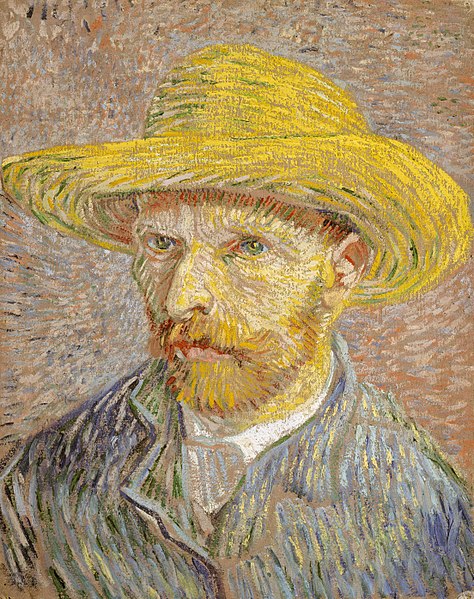
Monet, Renoir, Camille Pissarro, Sisley, Degas were following nature as it has been called in their painting they were impressionists.They painted only what their eyes brought them. But was there reality behind the light waves reaching their eyes? After 1885 Monet carried this to its conclusion and reality tended to become a dream. With impressionism the door was open for art to become the vehicle for modern thought. As reality became a dream, impressionism began to fall apart. These men Cezanne, Van Gogh, Gauguin, Seurat, all great post Impressionists felt the problem, felt the loss of meaning. They set out to solve the problem, to find the way back to reality, to the absolute behind the individual things, behind the particulars, ultimately they failed.
I am not saying that these painters were always consciously painting their philosophy of life, but rather in their work as a whole their worldview was often reflected. Cezanne reduced nature to what he considered its basic geometric forms. In this he was searching for an universal which would tie all kinds of individual things in nature together, but this gave a broken fragmented appearance to his pictures.
In his bathers there is much freshness, much vitality. An absolute wonder in the balance of the picture as a whole, but he portrayed not only nature but also man himself in fragmented form. I want to stress that I am not minimizing these men as men. To read van Gogh’s letters is to weep for the pain of this sensitive man. Nor do I minimize their talent as painters. Their work often has great beauty indeed. But their art did become the vehicle of modern man’s view of fractured truth and light. As philosophy had moved from unity to fragmentation so did painting. In 1912Kaczynski wrote an article saying that in so far as the old harmony, that is an unity of knowledge have been lost, that only two possibilities remained: extreme abstraction or extreme naturalism, both he said were equal.
With this painting modern art was born. Picasso painted it in 1907 and called it Les Demoiselles d’Avignon. It unites Cezzanne’s fragmentation with Gauguin’s concept of the noble savage using the form of the African mask which was popular with Parisian art circle of that time. In great art technique is united with worldview and the technique of fragmentation works well with the worldview of modern man. A view of a fragmented world and a fragmented man and a complete break with the art of the Renaissance which was founded on man’s humanist hopes.
Here man is made to be less than man. Humanity is lost. Speaking of a part of Picasso’s private collection of his own works David Douglas Duncan says “Of course, not one of these pictures was actually a portrait, but his prophecy of a ruined world.”
But Picasso himself could not live with this loss of the human. When he was in love with Olga and later Jacqueline he did not consistently paint them in a fragmented way.At crucial points of their relationship he painted them as they really were with all his genius, with all their humanity. When he was painting his own young children he did not use fragmented techniques and presentation. Picasso had many mistresses, but these were the two women he married. It is interesting that Jacqueline kept one of these paintings in her private sitting room. Duncan says of this lovely picture, “Hanging precariously on an old nail driven high on one of La Californie’s (Picasso and Jacqueline’s home) second floor sitting room walls, a portrait of Jacqueline Picasso reigns supreme. The room is her domain…Painted in oil with charcoal, the picture has been at her side since shortly after she and the maestro met…She loves it and wants in nearby.”
I want you to understand that I am not saying that gentleness and humanness is not present in modern art, but as the techniques of modern art advanced, humanity was increasingly fragmented–as we shall see, for example, with Marcel Duchamp….The opposite of fragmentation would be unity, and the old philosophic thinkers thought they could bring forth this unity from the humanist base and then they gave this up.
The modern thinking has accepted fragmentation as a defeat really, a defeat that human mentality beginning from itself can’t bring forth an unity of thought and of life. By unity what we mean is that which would include all of thought and all of life. It can achieved if indeed God has spoken and has not been silent, and in giving us the facts that man could not find for himself, there is an unity inside of which all that marvelous diversity then man can study, has an unified place whether it is knowledge, or in values, and in life.
_______________
Their son Paulo (Paul) was born in 1921 (and died in 1975), influencing Picasso’s imagery to turn to mother and child themes. Paul’s three children are Pablito (1949-1973), Marina (born in 1951), and Bernard (1959). Some of the Picassos in this Saper Galleries exhibition are from Marina and Bernard’s personal Picasso collection.
Portrait of Paul Picasso as a Child. 1923. Oil on canvas.
Collection of Paul Picasso, Paris, France.
In 1917 ballerina Olga Khokhlova (1891-1955) met Picasso while the artist was designing the ballet “Parade” in Rome, to be performed by the Ballet Russe. They married in the Russian Orthodox church in Paris in 1918 and lived a life of conflict. She was of high society and enjoyed formal events while Picasso was more bohemian in his interests and pursuits. Their son Paulo (Paul) was born in 1921 (and died in 1975), influencing Picasso’s imagery to turn to mother and child themes. Paul’s three children are Pablito (1949-1973), Marina (born in 1951), and Bernard (1959). Some of the Picassos in this Saper Galleries exhibition are from Marina and Bernard’s personal Picasso collection.
__________________________
Photo taken in 1944 after a reading of Picasso’s play El deseo pillado por la cola: Standing from left to right: Jacques Lacan, Cécile Éluard, Pierre Reverdy, Louise Leiris, Pablo Picasso, Zanie de Campan, Valentine Hugo, Simone de Beauvoir, Brassaï. Sitting, from left to right: Jean-Paul Sartre, Albert Camus, Michel Leiris, Jean Aubier. Photo by Brassaï. –
In Confidence: Peter Howson – Artist who turned to God after struggling with autism and alcoholism
Uploaded on Aug 12, 2010
Lorna Grady meets Peter Howson, whose struggles with alcoholism and autism have led him to God in search of an inner peace. He has been described as one of the darkest and most controversial of Scottish painters and was an official war artist for the Bosnian Civil War.
_____________________________________
Peter Howson and Frank Mcfadden
Uploaded on May 11, 2008
a view of leading scottish painters, Peter Howson and Frank Mcfadden at The lloyd jerome gallery, music by departure lounge
_____________________________
Contemporary Christian Art – The Rt Revd Lord Harries of Pentregarth
Published on Apr 10, 2012
Contrary to much opinion, the current scene of faith-related art is very much alive. There are new commissions for churches and cathedrals, a number of artists pursue their work on the basis of a deeply convinced faith, and other artists often resonate with traditional Christian themes, albeit in a highly untraditional way. The challenge for the artist, stated in the introduction to the course of lectures above, is still very much there: how to retain artistic integrity whilst doing justice to received themes.
This lecture is part of Lord Harries’ series on ‘Christian Faith and Modern Art’. The last century has seen changes in artistic style that have been both rapid and radical. This has presented a particular problem to artists who have wished to express Christian themes.
Gresham College has been giving free public lectures since 1597. This tradition continues today with all of our five or so public lectures a week being made available for free download from our website. http://www.gresham.ac.uk
_________________________
Artist destroys his own painting – The Madness of Peter Howson – BBC Four
The image is disturbing. Framed in close proximity in a lateral viewpoint, one is immediately struck by its vividness of colour and staccato brushwork reminiscent of Max Beckmann. As the eye focuses, the subject matter becomes increasingly apparent. It is a man hung upon a tree limb, his arms tied behind his back and his lifeless body hanging downward. A single rope has been used to tie him to the limb, traversing his chest, catching his right leg and suspending it painfully upward, while the rope continues around and holds his left arm onto a branch.
The result is a grotesque contortion of the body. The victim’s head hangs down, leading the viewer’s eye towards his torso, where it becomes apparent that his trousers have been pulled down and he has been castrated and dismembered. Above the up-raised left hand a crow is beginning to feast, and at the right and left of the victim two children gawk at the spectacle. Greens of surrounding vegetation, whites of houses in the background, and pale blues of the children’s clothes and of the sky dominate the colour scheme.
Peter Howson’s very public career as an artist began in the early 1980’s as one of the ‘New Glasgow Boys,’ a group of artists committed to bold figurative painting and strong narrative content. His work is generally labeled as social realism and throughout the eighties and early nineties Howson produced canvases filled with the human detritus of the Glasgow underclass: homeless transients, pub crawlers, footballers and fanatics, pugilists and prostitutes. The images he produced and the stories he told were always hard but rarely hopeless. Even as Howson’s own life took a downward spiral of addiction and abuse, a strange light accompanies almost all of his paintings.
A major turn-around occurred for him in the commission he received to serve as a war artist covering the Bosnian war that was then raging. In the course of two trips into the war zone between 1993 and 1994 Howson made a record of the atrocities that characterized the conflict. Many of the paintings, sketches and pastels that Howson produced are exhibited in the British Imperial War Museum. Several caused scandal and were purchased by private collectors. The experience both shattered and re-made Howson and contributed to his re-commitment to Christian faith in 2000.
Plum Grove is one of the major paintings that emerged from Howson’s time in Bosnia. It reflects several important influences on his art. Mention has been made of Beckmann, one of the German Expressionists of the early twentieth century, whose disturbing images of post-war Germany and virtuosic use of colour and intensified brushwork haunted Howson’s imagination. But another influence that profoundly shapes Howson’s entire career, more explicit now in his recent work, is that of Christ and his sufferings. Look carefully again at the painting. What image begins to emerge for you? Of what does it begin to remind you? What does it mean to insinuate this kind of image in the midst of a series on a contemporary circumstance?
Part of the spiritual power of Howson’s art is his ability to implicate Christ’s presence in the midst of human disorientation and dissolution. He once said that he found God amid ‘decadence and decay’ or, in this case, the atrocious. Can we? Or have we become so accustomed to associating the divine with the pretty and the consoling that we miss the Man of Sorrows, whose appearance was ‘marred beyond human semblance’ and from whom ‘men hide their faces’ where he manifests himself today?
Peter Howson (b. 1958) was born in London, England, but has lived in Glasgow, Scotland, for most of his life. His most recent work includes several series of the Stations of the Cross as well as a portrait of St. John Ogilvie for St Andrews Cathedral, Glasgow.
James McCullough acquired a PhD from St Andrews University in Scotland, having done his work at the Institute for Theology, Imagination and the Arts. Currently he is an adjunct faculty at Lindenwood University in St Charles, Missouri and on staff with InterVarsity Christian Fellowship (USA) at Washington University.
ArtWay Visual Meditation July 22, 2012
______________
Peter Howson, 1958
The Tempest
Howson was born in London but moved to Scotland at the age of 4. He began as an infantry soldier in the Scottish Fusileers but left to study at Glasgow College of Art. He has concentrated on tough, working class figures and those on the edge of society. As well as being in major galleries his work has been collected by celebrities. In 1993 he was an official war artist in Bosnia. After a long battle against abuse and addiction, as well as being diagnosed with Asperger’s Syndrome, he converted to Christianity in 2000, his faith now being reflected in some of his paintings. They reflect both violence as in JesusFalls for a Second Time,and compassion, as we see in Jesus meets Mary,two of his painting in a series of Stations of the Cross. Judas, 2002shows him entering into the mind of the great betrayer. Ecce Homo has something disturbing about it and Legion, referring to the man in the Gospels who had the devils expelled from him, something of his own mental fragility and torment.
Peter Howson was born in London of Scottish parents and moved with his family to Prestwick, Ayrshire, when was aged four. He spent a short time as an infantry soldier in the Royal Highland Fusiliers but left to study at the Glasgow School of Art, from 1975 to 1977, and from 1979 to 1981. Here he worked alongside contemporaries such as Adrian Wiszniewski, Steven Campbell and Ken Currie, who also worked in figurative art.
Career
His work has encompassed a number of themes. His early works are typified by very masculine working class men, most famously in The Heroic Dosser (1987). Later he was commissioned by the Imperial War Museum of London, to be the official war artist for the Bosnian Civil War in 1993. Here he produced some of his most shocking and controversial work detailing the atrocities which were taking place at the time, like Plum Grove (1994). One painting in particular Croatian and Muslim, detailing a rape created controversy partly because of its explicit subject matter but also because Howson had painted it from the accounts of its victims. He was also the official war painter at the Kosovo War for the London Times.[2]
Much of his work cast stereotypes on the lower social groups; he portrayed brawls including drunken, even physically deformed men and women.
His work has appeared in other media, with his widest exposure arguably for a British postage stamp he did in 1998 to celebrate engineering achievements for the millennium. In addition his work has been used on album covers by Live (Throwing Copper), The Beautiful South (Quench) and Jackie Leven (Fairytales for Hardmen).
His work is exhibited in many major collections and is in the private collection of celebrities such as David Bowie, Mick Jagger and Madonna who inspired a number of paintings in 202.
Howson was appointed Officer of the Order of the British Empire (OBE) in the 2009 Birthday Honours.[4] In November 2010, BBC Scotland aired a documentary named “The Madness of Peter Howson” which followed the final stages of the completion of a grand commission for show in the renovated St Andrew’s Cathedral and also dealt with Howson’s struggle against bouts of insanity.[5]
E P I S O D E 1 0 Dr. Francis Schaeffer – Episode X – Final Choices 27 min FINAL CHOICES I. Authoritarianism the Only Humanistic Social Option One man or an elite giving authoritative arbitrary absolutes. A. Society is sole absolute in absence of other absolutes. B. But society has to be […]
E P I S O D E 9 Dr. Francis Schaeffer – Episode IX – The Age of Personal Peace and Affluence 27 min T h e Age of Personal Peace and Afflunce I. By the Early 1960s People Were Bombarded From Every Side by Modern Man’s Humanistic Thought II. Modern Form of Humanistic Thought Leads […]
E P I S O D E 8 Dr. Francis Schaeffer – Episode VIII – The Age of Fragmentation 27 min I saw this film series in 1979 and it had a major impact on me. T h e Age of FRAGMENTATION I. Art As a Vehicle Of Modern Thought A. Impressionism (Monet, Renoir, Pissarro, Sisley, […]
E P I S O D E 7 Dr. Francis Schaeffer – Episode VII – The Age of Non Reason I am thrilled to get this film series with you. I saw it first in 1979 and it had such a big impact on me. Today’s episode is where we see modern humanist man act […]
E P I S O D E 6 How Should We Then Live 6#1 Uploaded by NoMirrorHDDHrorriMoN on Oct 3, 2011 How Should We Then Live? Episode 6 of 12 ________ I am sharing with you a film series that I saw in 1979. In this film Francis Schaeffer asserted that was a shift in […]
E P I S O D E 5 How Should We Then Live? Episode 5: The Revolutionary Age I was impacted by this film series by Francis Schaeffer back in the 1970′s and I wanted to share it with you. Francis Schaeffer noted, “Reformation Did Not Bring Perfection. But gradually on basis of biblical teaching there […]
Dr. Francis Schaeffer – Episode IV – The Reformation 27 min I was impacted by this film series by Francis Schaeffer back in the 1970′s and I wanted to share it with you. Schaeffer makes three key points concerning the Reformation: “1. Erasmian Christian humanism rejected by Farel. 2. Bible gives needed answers not only as to […]
Francis Schaeffer’s “How should we then live?” Video and outline of episode 3 “The Renaissance” Francis Schaeffer: “How Should We Then Live?” (Episode 3) THE RENAISSANCE I was impacted by this film series by Francis Schaeffer back in the 1970′s and I wanted to share it with you. Schaeffer really shows why we have so […]
Francis Schaeffer: “How Should We Then Live?” (Episode 2) THE MIDDLE AGES I was impacted by this film series by Francis Schaeffer back in the 1970′s and I wanted to share it with you. Schaeffer points out that during this time period unfortunately we have the “Church’s deviation from early church’s teaching in regard […]
Francis Schaeffer: “How Should We Then Live?” (Episode 1) THE ROMAN AGE Today I am starting a series that really had a big impact on my life back in the 1970′s when I first saw it. There are ten parts and today is the first. Francis Schaeffer takes a look at Rome and why […]
Francis Schaeffer: “Whatever Happened to the Human Race” (Episode 5) TRUTH AND HISTORY Published on Oct 7, 2012 by AdamMetropolis This crucial series is narrated by the late Dr. Francis Schaeffer and former Surgeon General Dr. C. Everett Koop. Today, choices are being made that undermine human rights at their most basic level. Practices once […]
The opening song at the beginning of this episode is very insightful. Francis Schaeffer: “Whatever Happened to the Human Race” (Episode 4) THE BASIS FOR HUMAN DIGNITY Published on Oct 7, 2012 by AdamMetropolis This crucial series is narrated by the late Dr. Francis Schaeffer and former Surgeon General Dr. C. Everett Koop. Today, choices […]
Francis Schaeffer: “Whatever Happened to the Human Race” (Episode 3) DEATH BY SOMEONE’S CHOICE Published on Oct 6, 2012 by AdamMetropolis This crucial series is narrated by the late Dr. Francis Schaeffer and former Surgeon General Dr. C. Everett Koop. Today, choices are being made that undermine human rights at their most basic level. Practices […]
Francis Schaeffer: “Whatever Happened to the Human Race?” (Episode 2) SLAUGHTER OF THE INNOCENTS Published on Oct 6, 2012 by AdamMetropolis This crucial series is narrated by the late Dr. Francis Schaeffer and former Surgeon General Dr. C. Everett Koop. Today, choices are being made that undermine human rights at their most basic level. Practices […]
It is not possible to know where the pro-life evangelicals are coming from unless you look at the work of the person who inspired them the most. That person was Francis Schaeffer. I do care about economic issues but the pro-life issue is the most important to me. Several years ago Adrian Rogers (past president of […]
In his weekly opinion piece, Andy Rooney shares his views on public art. I have really enjoyed this series on the characters referenced in the film “Midnight in Paris.” I can’t express how much I have learned during this series on the characters referenced in Woody Allen’s latest movie “Midnight in Paris.” Today I am looking […]
Pablo Picasso, ‘The acrobat,’ January 18, 1930 Picasso Dreamed About Limbs by DAVE SEGAL The Acrobat (1930) is a simple, surreal cartoon, almost comical in its minimalism. It’s practically a one-line drawing that was seemingly slapdashed off in a few minutes, offering a barely feasible depiction of the body’s pliability. With utmost economy (a black […]
(UPDATE: A reader that used the username “therealchirpy” notes, “Although any affair with Picasso may be fictional, isn’t the ‘Adriana’ referred to in Allen’s ‘Midnight in Paris’ based on Hemingway’s mistress Adriana Ivancich.” I have found some evidence for that. I read a review that draws that same conclusion although some have said that Hemingway […]
Woody Allen’s film “Crimes and Misdemeanors” makes the top 100 list!!! I have written about this movie over and over and over and I have even discussed this movie on the Arkansas Times Blog. Here is a list of the top 100 most Spiritually Significant films and Woody Allen’s movie “Crimes and Misdemeanors” made the […]
A fine review of a good Woody Allen movie. Another Woman An unfairly overlooked semi-classic that improves on Allen’s Bergmanesque dramas, thanks to a formidable cast that includes Gena Rowlands. 2011-09-12 Woody Allen Trevor Gilks 1988 Another Woman, like September, looks like an inessential Woody Allen film. It is yet another unpopular, moderately reviewed movie […]
I enjoyed this review from the 1970′s of Woody Allen movies from John Dart. Woody Allen, Theologian by John Dart Formerly religion religion writer for the Los Angeles Times, John Dart is news editor of the Christian Century magazine. This article appeared in the Christian Century June 22-29, 1977, p. 585. Copyright by the Christian […]
A review of the movie “Whatever Works” by an Evangelical. Woody Allen’s nihilist liberalism goes activist Echoing a remark by Malcolm Muggeridge, Mark Richardson at Oz Conservative writes that liberalism is the last surviving extreme ideology, and he gives several example of what he means by this extremism. I added to the thread my own […]
A very interesting review. Eileen A. Joy Southern Illinois University Edwardsville Dept. of English Language and Literature ejoy@siue.edu College of Arts & Sciences Spring Colloquium “Thinking About the University” 9 – 11 April, 2007 Session 2 (Friday, Apr. 11): Staring Back in the Mirror: Professors Consider Their Depiction in Literature and Film “You Must Change […]
I have spent alot of time talking about Woody Allen films on this blog and looking at his worldview. He has a hopeless, meaningless, nihilistic worldview that believes we are going to turn to dust and there is no afterlife. Even though he has this view he has taken the opportunity to look at the weaknesses of his own secular view. I salute him for doing that. That is why I have returned to his work over and over and presented my own Christian worldview as an alternative.
Woody Allen loves his little liars, his self-regarding theater people and swaddled urbanites who, even when pushed up against reality, put on a good show. “Don’t speak!” insists glamorous Dianne Wiest in Bullets Over Broadway, railing against John Cusack’s love talk but also against any upstaging of her special glow. And in Allen’s immortal The Purple Rose of Cairo, the dreamlife of the movies withstands fourth-wall breakage and even a crushed heart; that last shot of Mia Farrow is of someone content to be lost in oblivion.
But has Allen, the most painfully self-aware of American directors, ever allowed his fantasizers to fall on the rocks as ruinously as Cate Blanchett does in Blue Jasmine? I don’t think so. (He may not have been capable of doing it until now, with more films behind him than on the horizon.) Blanchett’s Jasmine enters the movie arrestingly: a fidgety, elbowy presence on a cross-country flight, chatting the ear off a seatmate about sex and the better things in life. The voice is a conspiratorial purr, desperately in need of a confidant; you wait for the trapped stranger’s eye roll, but, almost alarmingly, it becomes clear that this isn’t a comedy.
Jasmine, we learn in a toggling flashback structure that also feels fresh to Allen’s style, is fleeing the scorched earth of a broken marriage to a Bernie Madoff–like fraud, Hal (Alec Baldwin), a swindler of fortunes. Even as she steps disdainfully through the earthy San Francisco apartment of her half-welcoming sister, Ginger (Sally Hawkins), another of Hal’s victims, there’s an unwillingness to shed former airs. A vodka bottle on the shelf will help; Allen turns the shot of Jasmine at the liquor station self-medicating into a repeated gag as she settles in for some much-needed “rebuilding.”
Can this gala planner and bruncher, a professional recipient of jewelry, commit to computer classes? How it hurts to watch Jasmine try. A job in the office of a dentist (Michael Stuhlbarg, tops in a tricky part) also goes poorly. Allen’s sharp script, perhaps the most economically minded of his career, situates an array of naysayers around Jasmine: not just Ginger’s ex-husband (a surprisingly deep Andrew Dice Clay), who lost a windfall in the pyramid scheme, but the sister’s new boyfriend, Chili (Bobby Cannavale), a doting mechanic who’s instantly put off by the interloper’s brittle Manhattitude.
It’s real Streetcar Named Desire territory as the fights pile up, and if you think that doesn’t sound entertaining, know that it is, in a hypnotically catastrophic way. Blanchett’s eyes begin to burn with panic (she’s never been this agonizing, channeling the ragged edge of Gena Rowlands) as she lashes out at all the “losers,” and Allen’s material pushes everyone to make terrible choices. The essence of Blue Jasmine feels timely, even years into America’s limp rebound from recession: How do we start over, when guilt can’t be fully processed and sacrifice is demeaned? Boldly, this isn’t a drama that eases into forgiveness or comeuppance; instead, everyone is taken down a peg. Why so cynical, Woodman? We remember Crimes and Misdemeanors(which this film most resembles in tone); now here’s a savage prosecution of the 1 percent. It’s not the movie anyone could have expected—which is stunning in itself. But maybe the time for sweet self-delusions is through.
I love the movie “Midnight in Paris” by Woody Allen and I have done over 30 posts on the historical characters mentioned in the film. Take a look below:
I have spent alot of time talking about Woody Allen films on this blog and looking at his worldview. He has a hopeless, meaningless, nihilistic worldview that believes we are going to turn to dust and there is no afterlife. Even though he has this view he has taken the opportunity to look at the weaknesses of […]
I have spent alot of time talking about Woody Allen films on this blog and looking at his worldview. He has a hopeless, meaningless, nihilistic worldview that believes we are going to turn to dust and there is no afterlife. Even though he has this view he has taken the opportunity to look at the weaknesses of […]
Woody Allen video interview in France Related posts: “Woody Wednesdays” Woody Allen on God and Death June 6, 2012 – 6:00 am Good website on Woody Allen How can I believe in God when just last week I got my tongue caught in the roller of an electric typewriter? If Jesus Christ came back today and […]
I have spent alot of time talking about Woody Allen films on this blog and looking at his worldview. He has a hopeless, meaningless, nihilistic worldview that believes we are going to turn to dust and there is no afterlife. Even though he has this view he has taken the opportunity to look at the weaknesses of […]
A surprisingly civil discussion between evangelical Billy Graham and agnostic comedian Woody Allen. Skip to 2:00 in the video to hear Graham discuss premarital sex, to 4:30 to hear him respond to Allen’s question about the worst sin and to 7:55 for the comparison between accepting Christ and taking LSD. ___________________ The Christian Post > […]
Crimes and Misdemeanors: A Discussion: Part 1 If you like Woody Allen films as much as I do then join me every Wednesday for another look the man and his movies. Below are some of the posts from the past: “Woody Wednesday” How Allen’s film “Crimes and Misdemeanors makes the point that hell is necessary […]
I really enjoyed this documentary on Woody Allen from PBS. Woody Allen: A Documentary, Part 1 Published on Mar 26, 2012 by NewVideoDigital Beginning with Allen’s childhood and his first professional gigs as a teen – furnishing jokes for comics and publicists – WOODY ALLEN: A DOCUMENTARY chronicles the trajectory and longevity of Allen’s career: […]
Crimes and Misdemeanors: A Discussion: Part 3 Uploaded by camdiscussion on Sep 23, 2007 Part 3 of 3: ‘Is Woody Allen A Romantic Or A Realist?’ A discussion of Woody Allen’s 1989 movie, Crimes and Misdemeanors, perhaps his finest. By Anton Scamvougeras. http://camdiscussion.blogspot.com/antons@mail.ubc.ca ______________ One of my favorite Woody Allen movies and I reviewed […]
Crimes and Misdemeanors: A Discussion: Part 2 Uploaded by camdiscussion on Sep 23, 2007 Part 2 of 3: ‘What Does The Movie Tell Us About Ourselves?’ A discussion of Woody Allen’s 1989 movie, perhaps his finest. By Anton Scamvougeras. http://camdiscussion.blogspot.com/antons@mail.ubc.ca _________________- One of my favorite Woody Allen movies and I reviewed it earlier but […]
I have spent alot of time talking about Woody Allen films on this blog and looking at his worldview. He has a hopeless, meaningless, nihilistic worldview that believes we are going to turn to dust and there is no afterlife. Even though he has this view he has taken the opportunity to look at the weaknesses of […]
Crimes and Misdemeanors: A Discussion: Part 1 If you like Woody Allen films as much as I do then join me every Wednesday for another look the man and his movies. Below are some of the posts from the past: “Woody Wednesday” How Allen’s film “Crimes and Misdemeanors makes the point that hell is necessary […]
I have spent alot of time talking about Woody Allen films on this blog and looking at his worldview. He has a hopeless, meaningless, nihilistic worldview that believes we are going to turn to dust and there is no afterlife. Even though he has this view he has taken the opportunity to look at the weaknesses of […]
Crimes and Misdemeanors: A Discussion: Part 1 Uploaded by camdiscussion on Sep 23, 2007 Part 1 of 3: ‘What Does Judah Believe?’ A discussion of Woody Allen’s 1989 movie, perhaps his finest. By Anton Scamvougeras. http://camdiscussion.blogspot.com/antons@mail.ubc.ca _____________ One of my favorite films is this gem by Woody Allen “Crimes and Misdemeanors”: Film Review By […]
Crimes and Misdemeanors: A Discussion: Part 3 Uploaded by camdiscussion on Sep 23, 2007 Part 3 of 3: ‘Is Woody Allen A Romantic Or A Realist?’ A discussion of Woody Allen’s 1989 movie, Crimes and Misdemeanors, perhaps his finest. By Anton Scamvougeras. http://camdiscussion.blogspot.com/antons@mail.ubc.ca ______________ One of my favorite Woody Allen movies and I reviewed […]
Crimes and Misdemeanors: A Discussion: Part 2 Uploaded by camdiscussion on Sep 23, 2007 Part 2 of 3: ‘What Does The Movie Tell Us About Ourselves?’ A discussion of Woody Allen’s 1989 movie, perhaps his finest. By Anton Scamvougeras. http://camdiscussion.blogspot.com/antons@mail.ubc.ca _________________- One of my favorite Woody Allen movies and I reviewed it earlier but […]
Crimes and Misdemeanors: A Discussion: Part 1 Uploaded by camdiscussion on Sep 23, 2007 Part 1 of 3: ‘What Does Judah Believe?’ A discussion of Woody Allen’s 1989 movie, perhaps his finest. By Anton Scamvougeras. http://camdiscussion.blogspot.com/antons@mail.ubc.ca _____________ Today I am starting a discusssion of the movie “Crimes and Misdemeanors” by Woody Allen. This 1989 […]
In this episode “How to Stay Free” Friedman makes the statement “What we need is widespread public recognition that the central government should be limited to its basic functions: defending the nation against foreign enemies, preserving order at home, and mediating our disputes. We must come to recognize that voluntary cooperation through the market and in other ways is a far better way to solve our problems than turning them over to the government.”
Milton Friedman says this in the following episode:
I believe that there is a strong enough component of freedom in our society that we will be able to preserve it, that we’re going to turn this trend back, that we are going to cut government down to size, we’re going to lay the ground work for a resurgence for a, a flowering, of that diversity which has been the real product of our free society.
___________________________________________
Pt 7
Lawrence E. Spivak: Milton, how bad is the state of freedom in this country today?
Friedman: It’s a mixed bag. In some areas we have more freedom than we’ve ever had before. In some other areas our freedom has been drastically reduced. Our freedom to spend our own money as we want has been cut sharply. Our freedom to go into whatever occupation we want has been reduced sharply. Our freedom to have various businesses has been reduced sharply. And these restrictions in our economic freedoms have carried over to restrictions on the freedom with which we speak and we talk, the activities we carry on, our attitudes toward governmental officials and all the rest. In those areas, our freedoms have been very seriously restricted.
Lawrence E. Spivak: What about your yourself? You as an individual and we really have to do with, deal with millions of hundreds, two hundred million, two hundred twenty million individuals. What about you? What freedom do you think you’ve lost?
Friedman: Well, I have been a very fortunate individual. I always have…
Lawrence E. Spivak: That sounds like a cop out.
Friedman: No, it’s not a cop out because I’m going to add to it. I’ve always said about the only people who have effective freedom of speech these days in the United States are tenured professors at private universities who are on the verge of retirement or have retired. And that’s been my situation in these recent years. Consider the freedom of, for example, a professor of medicine at any one of our great institutions. He’s almost certainly having his research financed by the Federal Government. Don’t you suppose he’d think two or three times before he gave a lecture on the evils of socialized medicine? Or consider one of my colleagues at the University who happens to be getting grants of money from the National Science Foundation. Do you think he really feels free to speak out on the issue of whether government ought to be financing such research. Of course, you ought not to have freedom without costs. But the costs ought to be reasonable. They ought not to be disproportionate, there’s no businessmen in this country today who can speak out. Why is it, why is it that the businessmen today are so mealy-mouthed in what they say? There are very few of them who are willing to come out and say openly what they believe. Why?
Lawrence E. Spivak: About what?
Friedman: About anything. Take for example the recent attempts by President Carter to impose voluntary wage and price controls. There’s hardly a businessman in this country who doesn’t think it’s terrible. There are only about two or three businessmen who have had the courage to stand up and say something about that. But again, as I say, go to my academic colleagues. Many of them feel as I do that government is devoting altogether too much money. That there’s been altogether too much subsidization of state universities and colleges all along the line. Yet very few of them are willing to speak out.
Lawrence E. Spivak: What about the generation that doesn’t know what freedom is as you knew it, and therefore, doesn’t mind so much what has happened. Just takes for granted what he’s living under now.
Friedman: I think that’s a very real problem. I think we’re living on our inheritance. We have inherited a philosophy and a set of attitudes and they tend to be eroded. People get accustomed to what they know. There’s an enormous tear in the status quote and most people, most of the time, accept the circumstances that are around them. There’s a natural human drive for freedom which always expresses itself. But, its stronger or weaker and I think a great danger in continuing along the path that we’ve been going on is that we will lose still more of our inheritance, still more of our basic values of our basic beliefs in freedom and that we will have still less protest as more and more freedoms are taken away. The real value of freedom is that it provides diversity and diversity is in turn the real protection of freedom. People who like to live in small cities, can live in small cities. People who like the impersonality of the metropolis can live in a metropolis. We have loyalties to our churches, we have loyalties to our universities, to our schools, to our clubs, to our cities, to our states. It’s this diversity. That fact that there isn’t a monolithic conformity imposed on us, that is, the source of protection for our freedom and also the fruit of freedom. It’s because freedom protects diversity, allows, you will remember the phrase when Mao said he was going to allow a 100 flowers to bloom. But of course he didn’t. As soon as people spoke out and 100 flowers bloomed, he cut them off. But it’s the blooming of many flowers, the fact that you have all of these different expressions of people’s individuality and produces the great achievements of civilization and that provides the great hope a protection of our freedom.
Lawrence E. Spivak: Why are you saying that there are pockets of freedom still existing in the countries?
Friedman: As I said before, the picture’s a mixed bag. In certain respects we have more freedom than we’ve ever had, but in other respects we’ve had very much less freedom. Of course there are great pockets of freedom, this is predominantly still a free country. We must not confuse the trend with the situation. We have been moving away from freedom. Our freedom is in jeopardy but by no means has been completely destroyed. I believe that there is a strong enough component of freedom in our society that we will be able to preserve it, that we’re going to turn this trend back, that we are going to cut government down to size, we’re going to lay the ground work for a resurgence for a, a flowering, of that diversity which has been the real product of our free society.
Milton Friedman The Power of the Market 1-5 How can we have personal freedom without economic freedom? That is why I don’t understand why socialists who value individual freedoms want to take away our economic freedoms. I wanted to share this info below with you from Milton Friedman who has influenced me greatly over the […]
Milton Friedman: Free To Choose – The Failure Of Socialism With Ronald Reagan (Full) Published on Mar 19, 2012 by NoNationalityNeeded Milton Friedman’s writings affected me greatly when I first discovered them and I wanted to share with you. We must not head down the path of socialism like Greece has done. Abstract: Ronald Reagan […]
Worse still, America’s depression was to become worldwide because of what lies behind these doors. This is the vault of the Federal Reserve Bank of New York. Inside is the largest horde of gold in the world. Because the world was on a gold standard in 1929, these vaults, where the U.S. gold was stored, […]
George Eccles: Well, then we called all our employees together. And we told them to be at the bank at their place at 8:00 a.m. and just act as if nothing was happening, just have a smile on their face, if they could, and me too. And we have four savings windows and we […]
Milton Friedman’s Free to Choose (1980), episode 3 – Anatomy of a Crisis. part 1 FREE TO CHOOSE: Anatomy of Crisis Friedman Delancy Street in New York’s lower east side, hardly one of the city’s best known sites, yet what happened in this street nearly 50 years ago continues to effect all of us today. […]
Friedman Friday” Free to Choose by Milton Friedman: Episode “What is wrong with our schools?” (Part 3 of transcript and video) Here is the video clip and transcript of the film series FREE TO CHOOSE episode “What is wrong with our schools?” Part 3 of 6. Volume 6 – What’s Wrong with our Schools Transcript: If it […]
Here is the video clip and transcript of the film series FREE TO CHOOSE episode “What is wrong with our schools?” Part 2 of 6. Volume 6 – What’s Wrong with our Schools Transcript: Groups of concerned parents and teachers decided to do something about it. They used private funds to take over empty stores and they […]
Here is the video clip and transcript of the film series FREE TO CHOOSE episode “What is wrong with our schools?” Part 1 of 6. Volume 6 – What’s Wrong with our Schools Transcript: Friedman: These youngsters are beginning another day at one of America’s public schools, Hyde Park High School in Boston. What happens when […]
Friedman Friday” Free to Choose by Milton Friedman: Episode “Created Equal” (Part 3 of transcript and video) Liberals like President Obama want to shoot for an equality of outcome. That system does not work. In fact, our free society allows for the closest gap between the wealthy and the poor. Unlike other countries where free enterprise and other […]
Free to Choose by Milton Friedman: Episode “Created Equal” (Part 2 of transcript and video) Liberals like President Obama want to shoot for an equality of outcome. That system does not work. In fact, our free society allows for the closest gap between the wealthy and the poor. Unlike other countries where free enterprise and other freedoms are […]
Milton Friedman and Ronald Reagan Liberals like President Obama (and John Brummett) want to shoot for an equality of outcome. That system does not work. In fact, our free society allows for the closest gap between the wealthy and the poor. Unlike other countries where free enterprise and other freedoms are not present. This is a seven part series. […]
I am currently going through his film series “Free to Choose” which is one the most powerful film series I have ever seen. PART 3 OF 7 Worse still, America’s depression was to become worldwide because of what lies behind these doors. This is the vault of the Federal Reserve Bank of New York. Inside […]
I am currently going through his film series “Free to Choose” which is one the most powerful film series I have ever seen. For the past 7 years Maureen Ramsey has had to buy food and clothes for her family out of a government handout. For the whole of that time, her husband, Steve, hasn’t […]
Friedman Friday:(“Free to Choose” episode 4 – From Cradle to Grave, Part 1 of 7) Volume 4 – From Cradle to Grave Abstract: Since the Depression years of the 1930s, there has been almost continuous expansion of governmental efforts to provide for people’s welfare. First, there was a tremendous expansion of public works. The Social Security Act […]
_________________________ Pt3 Nowadays there’s a considerable amount of traffic at this border. People cross a little more freely than they use to. Many people from Hong Kong trade in China and the market has helped bring the two countries closer together, but the barriers between them are still very real. On this side […]
Aside from its harbor, the only other important resource of Hong Kong is people __ over 4_ million of them. Like America a century ago, Hong Kong in the past few decades has been a haven for people who sought the freedom to make the most of their own abilities. Many of them are […]
“FREE TO CHOOSE” 1: The Power of the Market (Milton Friedman) Free to Choose ^ | 1980 | Milton Friedman Posted on Monday, July 17, 2006 4:20:46 PM by Choose Ye This Day FREE TO CHOOSE: The Power of the Market Friedman: Once all of this was a swamp, covered with forest. The Canarce Indians […]
Milton Friedman: Free To Choose – The Failure Of Socialism With Ronald Reagan (Full) Published on Mar 19, 2012 by NoNationalityNeeded Milton Friedman’s writings affected me greatly when I first discovered them and I wanted to share with you. We must not head down the path of socialism like Greece has done. Abstract: Ronald Reagan […]
President Obama c/o The White House 1600 Pennsylvania Avenue NW Washington, DC 20500
Dear Mr. President,
I know that you receive 20,000 letters a day and that you actually read 10 of them every day. I really do respect you for trying to get a pulse on what is going on out here. I know that you don’t agree with my pro-life views but I wanted to challenge you as a fellow Christian to re-examine your pro-choice view.
___________________
I have debated with Ark Times Bloggers many times in the past on many different subjects. Abortion is probably the most often debated subject and I have noticed that many pro-life individuals are now surfacing on the Arkansas Times Blog. Here are some examples. Arhogfan501 asserted: This is the beginning of the end for recreational abortion in Arkansas. Songbird777 noted: Babies have a right to live and not be chopped up for someone else’s convenience. The person using the username “baker” commented: Planned Parenthood (PPA) does not nor cannot provide mammograms, indeed no affiliate has the necessary license. PPA is an abortion provider and at some 900 plus killings a day rather prolific.
Here is another debate I got into recently on the Arkansas Times Blog:
The outlier said “abortion is not a slippery slope to infanticide” however Justice Harry Blaackmun in his Roe v Wade related the two issues.
Abortion was present even in ancient times. Under Roman rule “[n]ot only [was] … abortion permitted; [but also] infanticide. The shriveled remains of exposed babies could be found in every countryside of the [Roman] Empire…” Supreme Court Justice Harry Blackmun referred to this culture in Roe v. Wade: “Greek and Roman law afforded little protection to the unborn … Ancient religion did not bar abortion.”
I truly believe that many of the problems we have today in the USA are due to the advancement of humanism in the last few decades in our society. Ronald Reagan appointed the evangelical Dr. C. Everett Koop to the position of Surgeon General in his administration. He partnered with Dr. Francis Schaeffer in making the video below. It is very valuable information for Christians to have. Actually I have included a video below that includes comments from him on this subject.
Once government begins to define life and humanity, there is no end to the possibilities for subjective and selective determination as to who will be allowed to live.
At one time, blacks were not recognized as human beings. This was the rationale behind the slave trade that brought black Africans to the United States. They were transported in slave ships that held them confined in the same manner that livestock is confined when shipped to the slaughter houses. In Nazi Germany, only the Aryan race was considered human, and we know the consequences of that thinking. The treatment of Jews and other non-Aryans was similar to that of animals. And the Nazi genetic experiments remain a source for horror stories even today.
Will a society which has assumed the right to kill infants in the womb – because they are unwanted, imperfect, or merely inconvenient – have difficulty in assuming the right to kill other human beings, especially older adults who are judged unwanted, deemed imperfect physically or mentally, or considered a possible social nuisance?
The next candidates for arbitrary reclassification as non-persons are the elderly. This will become increasingly so as the proportion of the old and weak in relation to the young and strong becomes abnormally large, due to the growing antifamily sentiment, the abortion rate, and medicine’s contribution to the lengthening of the normal life span. The imbalance will cause many of the young to perceive the old as a cramping nuisance in the hedonistic lifestyle they claim as their right. As the demand for affluence continues and the economic crunch gets greater, the amount of compassion that the legislature and the courts will have for the old does not seem likely to be significant considering the precedent of the non-protection given to the unborn and newborn. [Francis Schaeffer, Whatever Happened to the Human Race?]
Euthanasia
Joseph Fletcher, the popularizer of “situational ethics,” in his 1973 discussion of death with dignity gives this argument for euthanasia:
It is ridiculous to give ethical approval to the positive ending of sub-human life in utero as we do in therapeutic abortions for reasons of mercy and compassion but refuse to approve of positively ending a sub-human life in extremis. If we are morally obliged to put an end to a pregnancy when an amniocentesis reveals a terrible defective fetus, we are equally obliged to put an end to a patient’s hopeless misery when a brain scan reveals that a patient with cancer has advanced brain metastases. [Joseph Fletcher, “Ethics and Euthanasia,” American Journal of Nursing, 1973.]
One is reminded of the slave holders who devoutly espoused the theory that slavery was really for the good of the black man and that in the end he would be thankful for the opportunity to share in the white man’s culture, even from the distance of the garden shed. The Nazis also argued that their victims were being sacrificed for the high end of the general good of society. Many well-meaning people are attracted to what might seem to be the beneficial aspects of some sort of euthanasia program, because they think they can be free of the guilt of responsibility.
The “right-to-die” movement is not calling for a right to die, they’re mostly talking about a right to kill. The advocates of euthanasia are asking the government and courts to step aside and allow people who are feeble and elderly to be snuffed out.
Consider the people who were “assisted” in ending their lives by Dr. Jack Kevorkian. He wasn’t killing terminally ill patients – they had Alzheimer’s and were in a lot of pain, but they were alive and walking around. Dr. Kevorkian portrays another basic belief of humanist ideology – the extermination of the old, useless, and the infirm. Kervorkian believes that he has the right to help people out of their pain if they want to die. He claims to render “a medical service,” and his lawyer is clear that “he’s not going to stop … doing the right thing.” Already the suicide doctor has had an impact on our society’s views regarding suicide and euthanasia.
Language is an important tool in convincing others of your position. Euthanasia advocates have been skillful in masking their true intent with slogans like “death with dignity” and “a right to die.” These phrases easily capture people’s attention. Everyone believes in a death with dignity.
Though I’m sure the medical community is well intentioned, it is still a fact that their idea of mercy is increasingly to dehumanize their patients, to disguise the helpless person so that not even their family recognizes them. In time, the family’s love turns to pity, which turns to horror until, to our warped hearts, murder becomes mercy.
But these slogans take on new meaning when they are interpreted by our courts. The right to die may sound wonderful – until we realize that legally it means that you can kill yourself or someone can kill you, even if you don’t want to die. Language is powerful. But when it is interpreted by the courts it becomes much more than mere slogans. It becomes the law of the land, and often that interpretation is not at all what we expected.
Daily, senior citizens and accident victims are starved to death because their families have been convinced that even food and water are extraordinary means to preserve their life.
Over one-fifth of Medicare expenses are for persons in their last year of life. Thus in fiscal year 1978, $4.9 billion dollars was spent for such persons and if just one-quarter of those expenditures were avoided through adoption of living wills, the savings under Medicare alone would amount to $1.2 billion. [ WASHINGTON POST, June 22, 1977]
The drug company, Hoescht AG, has been granted the first patent for a euthanasia drug developed by Michigan State University. The drug is intended for use on animals but the patent is worded to include humans. (Source: UPI)
Critics of the U.S. Supreme Court’ Roe v. Wade decision have long claimed that legalized abortion would lead to legalized euthanasia. Supporters of Roe have often scoffed at the idea, insisting that decisions to eliminate a human fetus in no way devalue the lives of born persons. Yet recent court cases in Michigan and Washington have reversed the debate: Euthanasia supporters are openly citing Roe as precedent for a constitutional right to “rational” suicide. In the case of People v. Kevorkian, a trial judge has relied partly on Roe and the later abortion case, Planned Parenthood v. Casey, to find a consitutional right to assisted suicide. Jack Kevorkian’s attorney, Geoffrey Fieger argues that such a right is even better grounded than a right to abortion, because no unwilling ‘third party’ is involved.
Citing Planned Parenthood vs. Casey, on May 3, 1994, Washington U.S. District Court Judge Barbara Rothstein struck down the Washington state law that banned physician assisted suicide. Judge Rothstein stated that the terminally ill “have the same right to hasten death that they have to choose an abortion…” “Like the abortion decision, the decision of a terminally ill person to end his life involves the most intimate and personal choices a person may make in a lifetime,” the judge wrote in her decision.
Francis Schaeffer Whatever Happened to the Human Race (Episode 1) ABORTION
Francis Schaeffer: What Ever Happened to the Human Race? (Full-Length Documentary)
Part 1 on abortion runs from 00:00 to 39:50, Part 2 on Infanticide runs from 39:50 to 1:21:30, Part 3 on Youth Euthanasia runs from 1:21:30 to 1:45:40, Part 4 on the basis of human dignity runs from 1:45:40 to 2:24:45 and Part 5 on the basis of truth runs from 2:24:45 to 3:00:04
Dr. C. Everett Koop pictured above.
__________
President Obama before appointing a Supreme Court Justice said that he wanted the judge to be empathic. Pro-life people wanted to know if that judge would care about the smallest in our society? Here is an editorial cartoon that deals with that issue.
______________________
Thank you so much for your time. I know how valuable it is. I also appreciate the fine family that you have and your commitment as a father and a husband. I also respect you for putting your faith in Christ for your eternal life. I am pleading to you on the basis of the Bible to please review your religious views concerning abortion. It was the Bible that caused the abolition movement of the 1800’s and it also was the basis for Martin Luther King’s movement for civil rights and it also is the basis for recognizing the unborn children.
Sincerely,
Everette Hatcher III, 13900 Cottontail Lane, Alexander, AR 72002, ph 501-920-5733, lowcostsqueegees@yahoo.com
Francis Schaeffer: “Whatever Happened to the Human Race” (Episode 1) ABORTION OF THE HUMAN RACE Published on Oct 6, 2012 by AdamMetropolis The 45 minute video above is from the film series created from Francis Schaeffer’s book “Whatever Happened to the Human Race?” with Dr. C. Everett Koop. This book really helped develop my political views […]
E P I S O D E 1 0 Dr. Francis Schaeffer – Episode X – Final Choices 27 min FINAL CHOICES I. Authoritarianism the Only Humanistic Social Option One man or an elite giving authoritative arbitrary absolutes. A. Society is sole absolute in absence of other absolutes. B. But society has to be […]
E P I S O D E 9 Dr. Francis Schaeffer – Episode IX – The Age of Personal Peace and Affluence 27 min T h e Age of Personal Peace and Afflunce I. By the Early 1960s People Were Bombarded From Every Side by Modern Man’s Humanistic Thought II. Modern Form of Humanistic Thought Leads […]
E P I S O D E 8 Dr. Francis Schaeffer – Episode VIII – The Age of Fragmentation 27 min I saw this film series in 1979 and it had a major impact on me. T h e Age of FRAGMENTATION I. Art As a Vehicle Of Modern Thought A. Impressionism (Monet, Renoir, Pissarro, Sisley, […]
E P I S O D E 7 Dr. Francis Schaeffer – Episode VII – The Age of Non Reason I am thrilled to get this film series with you. I saw it first in 1979 and it had such a big impact on me. Today’s episode is where we see modern humanist man act […]
E P I S O D E 6 How Should We Then Live 6#1 Uploaded by NoMirrorHDDHrorriMoN on Oct 3, 2011 How Should We Then Live? Episode 6 of 12 ________ I am sharing with you a film series that I saw in 1979. In this film Francis Schaeffer asserted that was a shift in […]
E P I S O D E 5 How Should We Then Live? Episode 5: The Revolutionary Age I was impacted by this film series by Francis Schaeffer back in the 1970′s and I wanted to share it with you. Francis Schaeffer noted, “Reformation Did Not Bring Perfection. But gradually on basis of biblical teaching there […]
Dr. Francis Schaeffer – Episode IV – The Reformation 27 min I was impacted by this film series by Francis Schaeffer back in the 1970′s and I wanted to share it with you. Schaeffer makes three key points concerning the Reformation: “1. Erasmian Christian humanism rejected by Farel. 2. Bible gives needed answers not only as to […]
Francis Schaeffer’s “How should we then live?” Video and outline of episode 3 “The Renaissance” Francis Schaeffer: “How Should We Then Live?” (Episode 3) THE RENAISSANCE I was impacted by this film series by Francis Schaeffer back in the 1970′s and I wanted to share it with you. Schaeffer really shows why we have so […]
Francis Schaeffer: “How Should We Then Live?” (Episode 2) THE MIDDLE AGES I was impacted by this film series by Francis Schaeffer back in the 1970′s and I wanted to share it with you. Schaeffer points out that during this time period unfortunately we have the “Church’s deviation from early church’s teaching in regard […]
Francis Schaeffer: “How Should We Then Live?” (Episode 1) THE ROMAN AGE Today I am starting a series that really had a big impact on my life back in the 1970′s when I first saw it. There are ten parts and today is the first. Francis Schaeffer takes a look at Rome and why […]
Francis Schaeffer: “Whatever Happened to the Human Race” (Episode 5) TRUTH AND HISTORY Published on Oct 7, 2012 by AdamMetropolis This crucial series is narrated by the late Dr. Francis Schaeffer and former Surgeon General Dr. C. Everett Koop. Today, choices are being made that undermine human rights at their most basic level. Practices once […]
The opening song at the beginning of this episode is very insightful. Francis Schaeffer: “Whatever Happened to the Human Race” (Episode 4) THE BASIS FOR HUMAN DIGNITY Published on Oct 7, 2012 by AdamMetropolis This crucial series is narrated by the late Dr. Francis Schaeffer and former Surgeon General Dr. C. Everett Koop. Today, choices […]
Francis Schaeffer: “Whatever Happened to the Human Race” (Episode 3) DEATH BY SOMEONE’S CHOICE Published on Oct 6, 2012 by AdamMetropolis This crucial series is narrated by the late Dr. Francis Schaeffer and former Surgeon General Dr. C. Everett Koop. Today, choices are being made that undermine human rights at their most basic level. Practices […]
Francis Schaeffer: “Whatever Happened to the Human Race?” (Episode 2) SLAUGHTER OF THE INNOCENTS Published on Oct 6, 2012 by AdamMetropolis This crucial series is narrated by the late Dr. Francis Schaeffer and former Surgeon General Dr. C. Everett Koop. Today, choices are being made that undermine human rights at their most basic level. Practices […]
It is not possible to know where the pro-life evangelicals are coming from unless you look at the work of the person who inspired them the most. That person was Francis Schaeffer. I do care about economic issues but the pro-life issue is the most important to me. Several years ago Adrian Rogers (past president of […]
This essay below is worth the read. Schaeffer, Francis – “Francis Schaeffer and the Pro-Life Movement” [How Should We Then Live?, Whatever Happened to the Human Race?, A Christian Manifesto] Editor note: <p> </p> [The following essay explores the role that Francis Schaeffer played in the rise of the pro-life movement. It examines the place of […]
Great article on Schaeffer. Who was Dr. Francis A. Schaeffer? By Francis Schaeffer The unique contribution of Dr. Francis Schaeffer on a whole generation was the ability to communicate the truth of historic Biblical Christianity in a way that combined intellectual integrity with practical, loving care. This grew out of his extensive understanding of the Bible […]
I truly believe that many of the problems we have today in the USA are due to the advancement of humanism in the last few decades in our society. Ronald Reagan appointed the evangelical Dr. C. Everett Koop to the position of Surgeon General in his administration. He partnered with Dr. Francis Schaeffer in making the video below. It is very valuable information for Christians to have. Actually I have included a video below that includes comments from him on this subject.
Francis Schaeffer Whatever Happened to the Human Race (Episode 1) ABORTION
Francis Schaeffer: What Ever Happened to the Human Race? (Full-Length Documentary)
Part 1 on abortion runs from 00:00 to 39:50, Part 2 on Infanticide runs from 39:50 to 1:21:30, Part 3 on Youth Euthanasia runs from 1:21:30 to 1:45:40, Part 4 on the basis of human dignity runs from 1:45:40 to 2:24:45 and Part 5 on the basis of truth runs from 2:24:45 to 3:00:04
The Pro-abortionists on this blog have said over and over again that if we outlaw abortion then ladies will turn the coat hanger and we should offer safer abortions. YET IT IS THESE SAME PRO-ABORTION FORCES THAT ARGUE THAT REGULATIONS OF ABORTION CLINICS ARE INFRINGING ON THE RIGHTS OF LADIES TO HAVE ABORTIONS. THE NATURAL RESULT OF THAT IS DR. KERMIT GOSNELL BUT THESE SAME PRO-ABORTION FORCES DENOUNCE HIM. WHAT IRONY!!!!
Having our cake and eating too?
The main issue is the life of the unborn babies because they do seem to lose their lives more often than the mothers during the abortion procedure. Probably 55 million babies lost in comparison to just hundreds of mothers in the last 40 years. I wonder if one of those babies would have grown up and cured AIDS or CANCER? I guess we will never no until we get to heaven.
Forty years after Roe, we look back on what was hailed as a woman’s fundamental “right,” and we are saddened to see the negative impact it has had on our society, knowing that nearly 55,000,000 Americans are no longer with us after losing their lives to abortion. This championed “freedom of choice” has not only left millions upon millions dead, but it has also left countless women wounded from the abuses of the abortion industry. As a nation, we mourn the deaths of not only the unborn children, but also women like Tonya Reeves who died last July after complications from an abortion procedure at a Chicago Planned Parenthood.
Olphart wrote, “Saline, somehow it surprises you that pro-choice people could denounce Dr. Gosnell. That’s what we call critical thinking. One thing in common, i.e. being pro-choice, does not mean that our minds are closed to other aspects of his behavior. The fact that he was criticized by pro-choice people is not ironic at all.”
The problem with the pro-abortion crowd is they have tried to focus on the reproductive rights of women and they have even defended partial birth abortion (which is infanticide). Therefore, when a doctor like Gosnell who is committed to women’s reproductive rights commits infanticide outright without any twinge of conscience the media tried their best to avoid his trial until the last minute when it was unavoidable. This is because the media loves to talk about abortion clinics as under siege from religious nuts but the Gosnell case did not fit their usual storyline.
Earlier I also pointed to a story by a Methodist minister that showed how the United Methodist Church is involved in ongoing debates on infanticide. Here is the link again.
THAT IS WHY I THOUGHT IT WAS IRONIC FOR THE CRITICISM TO COME FROM THE SAME GROUPS THAT DEFEND PARTIAL BIRTH ABORTION (WHICH IS INFANTICIDE) AND ARE CRITICAL OF REGULATIONS ON ABORTION CLINICS!!!!
Many in the world today are taking a long look at the abortion industry because of the May 14, 2013 guilty verdict and life term penalty handed down by a jury (which included 9 out of 12 pro-choice jurors) to Dr. Kermit Gosnell. During this time of reflection I wanted to put forth some of the […]
Many in the world today are taking a long look at the abortion industry because of the May 14, 2013 guilty verdict and life term penalty handed down by a jury (which included 9 out of 12 pro-choice jurors) to Dr. Kermit Gosnell. During this time of reflection I wanted to put forth some of the […]
Many in the world today are taking a long look at the abortion industry because of the May 14, 2013 guilty verdict and life term penalty handed down by a jury (which included 9 out of 12 pro-choice jurors) to Dr. Kermit Gosnell. During this time of reflection I wanted to put forth some of the […]
Many in the world today are taking a long look at the abortion industry because of the May 14, 2013 guilty verdict and life term penalty handed down by a jury (which included 9 out of 12 pro-choice jurors) to Dr. Kermit Gosnell. During this time of reflection I wanted to put forth some of the […]
Many in the world today are taking a long look at the abortion industry because of the May 14, 2013 guilty verdict and life term penalty handed down by a jury (which included 9 out of 12 pro-choice jurors) to Dr. Kermit Gosnell. During this time of reflection I wanted to put forth some of the […]
Many in the world today are taking a long look at the abortion industry because of the May 14, 2013 guilty verdict and life term penalty handed down by a jury (which included 9 out of 12 pro-choice jurors) to Dr. Kermit Gosnell. During this time of reflection I wanted to put forth some of the […]
Many in the world today are taking a long look at the abortion industry because of the May 14, 2013 guilty verdict and life term penalty handed down by a jury (which included 9 out of 12 pro-choice jurors) to Dr. Kermit Gosnell. During this time of reflection I wanted to put forth some of the […]
Many in the world today are taking a long look at the abortion industry because of the May 14, 2013 guilty verdict and life term penalty handed down by a jury (which included 9 out of 12 pro-choice jurors) to Dr. Kermit Gosnell. During this time of reflection I wanted to put forth some of the […]
Many in the world today are taking a long look at the abortion industry because of the May 14, 2013 guilty verdict and life term penalty handed down by a jury (which included 9 out of 12 pro-choice jurors) to Dr. Kermit Gosnell. During this time of reflection I wanted to put forth some of the […]
Many in the world today are taking a long look at the abortion industry because of the May 14, 2013 guilty verdict and life term penalty handed down by a jury (which included 9 out of 12 pro-choice jurors) to Dr. Kermit Gosnell. During this time of reflection I wanted to put forth some of the […]
Many in the world today are taking a long look at the abortion industry because of the May 14, 2013 guilty verdict and life term penalty handed down by a jury (which included 9 out of 12 pro-choice jurors) to Dr. Kermit Gosnell. During this time of reflection I wanted to put forth some of the […]
Many in the world today are taking a long look at the abortion industry because of the May 14, 2013 guilty verdict and life term penalty handed down by a jury (which included 9 out of 12 pro-choice jurors) to Dr. Kermit Gosnell. During this time of reflection I wanted to put forth some of the […]
Many in the world today are taking a long look at the abortion industry because of the May 14, 2013 guilty verdict and life term penalty handed down by a jury (which included 9 out of 12 pro-choice jurors) to Dr. Kermit Gosnell. During this time of reflection I wanted to put forth some of the […]
Many in the world today are taking a long look at the abortion industry because of the May 14, 2013 guilty verdict and life term penalty handed down by a jury (which included 9 out of 12 pro-choice jurors) to Dr. Kermit Gosnell. During this time of reflection I wanted to put forth some of the […]
Many in the world today are taking a long look at the abortion industry because of the May 14, 2013 guilty verdict and life term penalty handed down by a jury (which included 9 out of 12 pro-choice jurors) to Dr. Kermit Gosnell. During this time of reflection I wanted to put forth some of the […]
Many in the world today are taking a long look at the abortion industry because of the May 14, 2013 guilty verdict and life term penalty handed down by a jury (which included 9 out of 12 pro-choice jurors) to Dr. Kermit Gosnell. During this time of reflection I wanted to put forth some of the […]
Francis Schaeffer: “Whatever Happened to the Human Race” (Episode 1) ABORTION OF THE HUMAN RACE Published on Oct 6, 2012 by AdamMetropolis ________________ What a great article below: Dr. Alveda King: Guilty Gosnell Verdict May Spark More Justice for Women and Babies Contact: Eugene Vigil, King for America, 470-244-3302 PHILADELPHIA, May 13, 2013 /Christian Newswire/ […]
Many in the world today are taking a long look at the abortion industry because of the May 14, 2013 guilty verdict and life term penalty handed down by a jury (which included 9 out of 12 pro-choice jurors) to Dr. Kermit Gosnell. During this time of reflection I wanted to put forth some of the […]
Francis Schaeffer: “Whatever Happened to the Human Race” (Episode 1) ABORTION OF THE HUMAN RACE Published on Oct 6, 2012 by AdamMetropolis ________________ May 14, 2013 Murdered Thousands, Convicted for Three: The Kermit Gosnell Verdict By Drew Belsky Read more: http://www.americanthinker.com/2013/05/murdered_thousands_convicted_for_three_the_kermit_gosnell_verdict.html#ixzz2TMstLk1c Follow us: @AmericanThinker on Twitter | AmericanThinker on FacebookPhiladelphia abortionist Kermit Gosnell was convicted […]
Many in the world today are taking a long look at the abortion industry because of the May 14, 2013 guilty verdict and life term penalty handed down by a jury (which included 9 out of 12 pro-choice jurors) to Dr. Kermit Gosnell. During this time of reflection I wanted to put forth some of the […]
Francis Schaeffer: “Whatever Happened to the Human Race” (Episode 1) ABORTION OF THE HUMAN RACE Published on Oct 6, 2012 by AdamMetropolis ________________ A Verdict Doesn’t End the Gosnell Story By: Chairman Reince Priebus (Diary) | May 13th, 2013 at 03:27 PM | 28 RESIZE: AAA The horrors that unfolded in the clinic of Dr. […]
Many in the world today are taking a long look at the abortion industry because of the May 14, 2013 guilty verdict and life term penalty handed down by a jury (which included 9 out of 12 pro-choice jurors) to Dr. Kermit Gosnell. During this time of reflection I wanted to put forth some of the […]
Francis Schaeffer: “Whatever Happened to the Human Race” (Episode 1) ABORTION OF THE HUMAN RACE Published on Oct 6, 2012 by AdamMetropolis ________________ All-American Horror Story: Top 10 Kermit Gosnell Trial Revelations by Kristan Hawkins | Washington, DC | LifeNews.com | 4/12/13 3:38 PM Since so many in the media have failed/refused to report on […]
Many in the world today are taking a long look at the abortion industry because of the May 14, 2013 guilty verdict and life term penalty handed down by a jury (which included 9 out of 12 pro-choice jurors) to Dr. Kermit Gosnell. During this time of reflection I wanted to put forth some of the […]
Francis Schaeffer: “Whatever Happened to the Human Race” (Episode 1) ABORTION OF THE HUMAN RACE Published on Oct 6, 2012 by AdamMetropolis _____________ Tony Perkins: Gosnell Trial – FOX News Published on May 13, 2013 Tony Perkins: Gosnell Trial – FOX News ________________ Hey Obama, Kermit Gosnell Is What a Real War on Women Looks Like […]
Many in the world today are taking a long look at the abortion industry because of the May 14, 2013 guilty verdict and life term penalty handed down by a jury (which included 9 out of 12 pro-choice jurors) to Dr. Kermit Gosnell. During this time of reflection I wanted to put forth some of the […]
Francis Schaeffer: “Whatever Happened to the Human Race” (Episode 1) ABORTION OF THE HUMAN RACE Published on Oct 6, 2012 by AdamMetropolis ___ _____________ Tony Perkins: Gosnell Trial – FOX News Published on May 13, 2013 Tony Perkins: Gosnell Trial – FOX News ________________ Family Research Council Praises Jury for Bringing Justice to Victims of Abortionist […]
Many in the world today are taking a long look at the abortion industry because of the May 14, 2013 guilty verdict and life term penalty handed down by a jury (which included 9 out of 12 pro-choice jurors) to Dr. Kermit Gosnell. During this time of reflection I wanted to put forth some of the […]
Many in the world today are taking a long look at the abortion industry because of the May 14, 2013 guilty verdict and life term penalty handed down by a jury (which included 9 out of 12 pro-choice jurors) to Dr. Kermit Gosnell. During this time of reflection I wanted to put forth some of the […]
Francis Schaeffer: “Whatever Happened to the Human Race” (Episode 1) ABORTION OF THE HUMAN RACE Published on Oct 6, 2012 by AdamMetropolis ________________ _____________ Tony Perkins: Gosnell Trial – FOX News Published on May 13, 2013 Tony Perkins: Gosnell Trial – FOX News ________________ Kermit Gosnell and the Logic of “Pro-Choice” by Matthew J. Franck within […]
Many in the world today are taking a long look at the abortion industry because of the May 14, 2013 guilty verdict and life term penalty handed down by a jury (which included 9 out of 12 pro-choice jurors) to Dr. Kermit Gosnell. During this time of reflection I wanted to put forth some of the […]
Many in the world today are taking a long look at the abortion industry because of the May 14, 2013 guilty verdict and life term penalty handed down by a jury (which included 9 out of 12 pro-choice jurors) to Dr. Kermit Gosnell. During this time of reflection I wanted to put forth some of the […]
Francis Schaeffer: “Whatever Happened to the Human Race” (Episode 1) ABORTION OF THE HUMAN RACE Published on Oct 6, 2012 by AdamMetropolis ________________ Fr. Pavone: Right to choose must yield to right to life STATEN ISLAND, NY — Father Frank Pavone, National Director of Priests for Life, had the following comment on the verdict in […]
Many in the world today are taking a long look at the abortion industry because of the May 14, 2013 guilty verdict and life term penalty handed down by a jury (which included 9 out of 12 pro-choice jurors) to Dr. Kermit Gosnell. During this time of reflection I wanted to put forth some of the […]
Francis Schaeffer: “Whatever Happened to the Human Race” (Episode 1) ABORTION OF THE HUMAN RACE Published on Oct 6, 2012 by AdamMetropolis ________________ The truth of abortion … the hope for Gosnell’s repentance A conviction in the murder trial of Philadelphia abortionist Kermit Gosnell has boosted the efforts of pro-lifers to demonstrate what abortion really […]
The Selfishness of Chris Evert Part 2 (Includes videos and Pictures) _________________________________ _____________________ _______________________ __________________________ Tennis – Wimbledon 1974 [ Official Film ] – 05/05 Published on May 1, 2012 John Newcombe, Ken Rosewall, Bjor Borg, Jimmy Connors, Cris Evert… ___________________ Jimmy Connors Reflects Published on May 13, 2013 Jimmy Connors visits “SportsCenter” to discuss his memoir, […]
Let’s put Congress on a budget!!!! I have done everything in my power to get the federal Senators and Representatives to cut spending.
TRY BORROWING AT A BANK WITH A FINANCIAL CONDITION LIKE THE USA HAS:
The problem in Washington is not lack of revenue but our lack of spending restraint. This video below makes that point. WASHINGTON IS A SPENDING ADDICT!!!
It is obvious to me that if President Obama gets his hands on more money then he will continue to spend away our children’s future. He has already taken the national debt from 11 trillion to 17 trillion in just 5 years. Over, and over, and over, and over, and over and over I have written Speaker Boehner and every Republican that represents Arkansans in Arkansas before.
What if you had no spending limits this holiday season?
You could take that dream ski vacation you’ve always wanted…and buy all new ski gear for your family to take on the trip…wait, why are you renting a cabin? Go ahead and buy that cabin! And don’t forget the private jet that will take you there…
This is basically how Washington spends your money.
While you’ve been planning your expenses carefully, Congress hasn’t had a proper budget in years. It just keeps tacking on spending.
That’s why the 2.5 percent budget cut Congress agreed to a couple of years ago was so important. The credit cards are beyond maxed—we’re more than $17 trillion in debt.
When you hear Members of Congress complaining that they can’t find anywhere to cut—that even existing spending cuts should be undone so they can spend more—remember these little goodies:
These are only the beginning. In fact, Heritage experts have helpfully identified outdated or unnecessary government programs that could be eliminated so Congress could save $42 billion of your money.
So let’s not hear that there’s nowhere to cut. It’s time for budgeting—and staying within that budget.
Read the Morning Bell and more en español every day at Heritage Libertad.
____________ 10 Ways to cut spending in Washington suggested by the Cato Institute!!! A MESSAGE FROM THE CATO INSTITUTEON SPENDING: NO SACRED COWS We face another budget crisis and possible government shutdown as early as January, unless Congress can come together on a bipartisan basis to cut spending. The Affordable Care Act is far from […]
The Dysfunction in Washington is Republicans and Democrats that are unwilling to cut spending in order to vote for more programs (Democrats want more food stamps etc but Republicans vote for their pet programs and wars too like No Child Left Behind Act, the Iraq war, the prescription drug entitlement, and the TARP bailout). If […]
Washington better wake up and cut spending or the USA will end up bankrupt like Detroit!!! Atlas Shrugs in Detroit July 25, 2013 by Dan Mitchell About two weeks ago, while making an important point about the Laffer Curve, here’s what I wrote about the fiscal disaster in Detroit. Detroit’s problems are the completely predictable result […]
When Governments Cut Spending Uploaded on Sep 28, 2011 Do governments ever cut spending? According to Dr. Stephen Davies, there are historical examples of government spending cuts in Canada, New Zealand, Sweden, and America. In these cases, despite popular belief, the government spending cuts did not cause economic stagnation. In fact, the spending cuts often […]
We got to cut spending and this farm bill is the perfect place to start!!! May 29, 2013 12:33PM Farm Bill Would Increase Spending 47% By Chris Edwards Share House and Senate farm subsidy supporters are pushing to enact the first big farm bill since 2008. Democratic and Republican supporters say that this year’s legislation […]
President Obama will not cut spending ever it appears. Early Details Show Obama Will Propose a Bait-and-Switch Budget Plan Containing Higher Taxes and More Spending April 5, 2013 by Dan Mitchell Are we about to see a new kinder-and-gentler Obama? Has the tax-and-spend President of the past four years been replaced by a fiscal moderate? That’s […]
We got to cut spending and stop raising the debt ceiling!!! When Governments Cut Spending Uploaded on Sep 28, 2011 Do governments ever cut spending? According to Dr. Stephen Davies, there are historical examples of government spending cuts in Canada, New Zealand, Sweden, and America. In these cases, despite popular belief, the government spending […]
Maybe Romney will focus on cutting spending now that Ryan is on board. Is the American Electorate that Dumb? Posted by Roger Pilon Today POLITICO Arena asks: Can Ryan boost Romney’s poll numbers? My response: Ryan is the shot in the arm that Romney needed. If last night’s “60 Minutes” interview of the two is […]
Why can’t we learn the lesson from Europe that we must start to cut spending and balance our budget or we will end up like Greece? Europe’s Crisis Is Because of Too Much Government, Not the Euro Currency July 19, 2012 by Dan Mitchell The mess in Europe has been rather frustrating, largely because almost everybody […]
A funny carton. Finally, Some Government Workers Who Want to Cut Spending April 23, 2012 by Dan Mitchell In recent years, taxpayers have been victimized by huge expansions in the burden of government spending. Among the highlights (lowlights would be a much better word): A corrupt bailout of politically connected Wall Street insiders. A bloated healthcare […]