and you will hear what far smarter people than I have to say on this matter. I agree with them.
Harry Kroto
I have attempted to respond to all of Dr. Kroto’s friends arguments and I have posted my responses one per week for over a year now. Here are some of my earlier posts:
In the first video below in the 14th clip in this series are his words and I will be responding to them in the next few weeks since Sir Bertrand Russell is probably the most quoted skeptic of our time, unless it was someone like Carl Sagan or Antony Flew.
50 Renowned Academics Speaking About God (Part 1)
Another 50 Renowned Academics Speaking About God (Part 2)
A Further 50 Renowned Academics Speaking About God (Part 3)
__
Quote from Bertrand Russell:
Q: Why are you not a Christian?
Russell: Because I see no evidence whatever for any of the Christian dogmas. I’ve examined all the stock arguments in favor of the existence of God, and none of them seem to me to be logically valid.
Q: Do you think there’s a practical reason for having a religious belief, for many people?
Russell: Well, there can’t be a practical reason for believing what isn’t true. That’s quite… at least, I rule it out as impossible. Either the thing is true, or it isn’t. If it is true, you should believe it, and if it isn’t, you shouldn’t. And if you can’t find out whether it’s true or whether it isn’t, you should suspend judgment. But you can’t… it seems to me a fundamental dishonesty and a fundamental treachery to intellectual integrity to hold a belief because you think it’s useful, and not because you think it’s true.
__
For many people the above is a magnanimous and noble sounding string of words — the notion of a communion of humanity bounded only by our shared humanity, unburdened by the notion of God. For them it brings hope and freedom. However, implicit in this statement is the notion that humanity is valuable in and of itself — that humanity is valuable for no other reason than being human. The essence of this humanist statement is relationship; that a relationship solely between human beings is preferable over a relationship between God and humanity. Relationship at its core is first a valuing of the person; it is to consider the person worth the effort a relationship involves. Or, in the case of this humanistic statement, it is to consider humanity worthy of the effort and sacrifice required for such a communal relationship to exist.
Humanists argue for a communal relationship between humans alone as better than a communal relationship with God. This idea starts with the facts that they value one over the other and that human life is worthy of the effort involved. But if atheistic beliefs such as humanism are true, why should any human being value their own life, let alone that of a fellow human being? Without God can atheistic beliefs claim and sustain notions such as value, let alone that humanity is valuable? While the answer to many Christians will seem intuitive, we should be able to articulate arguments in order to respond to these questions and beliefs. Human experience argues that human beings value themselves and cannot separate themselves from value. If so, it can be argued that these atheistic beliefs are inadequate foundations for such a deep-seated need on two fronts. One, it can be shown that they are philosophically motivated statements of faith. Two, it is arguable that without God, humanity simply has no legitimate claim to value.
Philosopher Bertrand Russell wrote in 1902, “That Man is the product of causes which had no pre-vision of the end they were achieving; that his origin, his growth, his hopes and fears, his loves and his beliefs, are but the outcome of accidental collocations of atoms; that no fire, no heroism, no intensity of thought and feeling, can preserve an individual life beyond the grave; that all the labors of the ages, all the devotion, all the inspiration, all the noonday brightness of human genius, are destined to extinction in the vast death of the solar system, and that the whole temple of Man’s achievement must inevitably be buried beneath the debris of a universe in ruins — all these things, if not quite beyond dispute, are yet so nearly certain that no philosophy which rejects them can hope to stand.” Then, stunningly, Russell concludes, “Only within the scaffolding of these truths, only on the firm foundation of unyielding despair, can the soul’s habitation henceforth be safely built” (Russell, p. 3). In 1971, Biochemist Jacques Monod wrote, “Man must at last wake out of his millenary dream and discover his total solitude, his fundamental isolation. He must realize that, like a gypsy, he lives on the boundary of an alien world; a world that is deaf to his music, and is indifferent to his hopes as it is to his sufferings or his crimes” (quoted in Colson, p. 225).
The dark tone of these atheistic pronouncements is undeniable. These men hold to a belief they acknowledge as futile. In the end all human endeavor, struggle, and advancement ends in meaningless extinction. It is utterly void of value that transcends this existence. Many people will say this end is in the too distant future to be relevant to them. But death is not far off for any of us and if this belief is true the death of a person may as well be the final end of all things. The majority of people are not remembered past one or two generations before their “person” vanishes from the human landscape altogether. All that is left is the impersonal and voiceless effects of their life that may linger for a few more generations or, at best, ripple down through the ages to end in the futility of universal extinction. This is why intuition causes many of us to ask, “With all human activity set against ultimate futility, what value is there in any human activity whether it is remembered or advancing humanity?” Unquestionably, these apostles of atheism recognize the utter futility in their belief, but they are willing to accept it. Are the rest of us willing to do so? If the atheists own testimonies are so bleak, should we accept that their testimonies are true on blind faith?
The first premise of the argument is that atheism is a philosophically motivated statement of faith. To be sure these folks seethe at the very mention of such suggestions. They emphatically deny their belief is, in any way, a faith. But notice, importantly the quotes lack scientific fact. Such quotes are often said by respected scientists and thus, almost unperceived by the audience, the nod of scientific authority is attached to these statements. In his autobiography on his journey from atheism to Christianity, C. S. Lewis writes, “You will understand that my rationalism (naturalism/atheism) was inevitably based on what I believed to be the findings of the sciences and those findings, not being a scientist, I had to take on trust — in fact, on authority” (Lewis, Surprised, p. 97). Lewis is saying that someone whom he considered an authority on the subject told him science has all but proven naturalism, thus by implication disproven supernaturalism, religion, and spirituality. Thus as a reasoning person he had to accept their testimony on the subject as authoritative. C. S. Lewis went on to discover that these authorities were masquerading philosophy for science and such claims are simply unjustified posturing. The persuasive power of their argument can be great on an unsuspecting public when well-credentialled, respected atheists unjustly usurp science to overstate their case. Arguably the most damaging fact against those who push the view that science has all but disproven the supernatural is the fact that many scientists, including a lengthy list of Nobel Prize recipients, adopt beliefs of faith over naturalism.
Understanding that atheism is a faith is important. If atheism were true that could not be debated, the question of humanity having value without God (the second premise of this argument) would be moot. On the other hand, if atheism is a faith competing with other faiths, the question of God and value is an extremely relevant question. The few quotes given adequately lay a foundation that the fathers of atheism understand the implications of their philosophy. They understand and embrace with a kind of dark foreboding mentality, the fact that humanity has no ultimate value if naturalism is true. Given this foundation, the question becomes, “Does humanity have any claim to value at all if we do not have ultimate value?”
Naturally one would expect such pessimism to lead to a nihilistic view of life — that life has no meaning or purpose. But Dr. Richard Dawkins, an evolutionary biologist and leading atheist seems to think this should not be the case. He writes, “The universe we observe has precisely the properties we should expect if there is, at bottom, no design, no purpose, no evil and no good, nothing but blind, pitiless indifference” (Dawkins, p. 133). Such a view is apparently no reason to see life as valueless and pointless for Dr. Dawkins. Skeptic magazine hosted an interview with Dr. Dawkins. The interviewer referenced the above quote and likened it to Shakespeare’s “a tale told by an idiot, filled with sound and fury, signifying nothing.” Dawkins’ responded, “Yes, at a sort of cosmic level, it is. But what I want to guard against is people therefore getting nihilistic in their personal lives. I do not see any reason for that at all. You can have a very happy and fulfilled personal life even if you think that the universe at large is a tale told by an idiot” (Miele, p. 5). Although I’ve since validated these quotes, I am indebted to Jill Carattini for her article “First A Story” where I first saw them together.
If atheistic humanism is true, a few questions arise concerning Dr. Dawkins conclusions. Dawkins makes the assumption that to have a “very happy and fulfilled personal life” is better then nihilism. But what warrants such an assumption in such a bleak view of the universe? Dr. Dawkins’ assumption is derived from value judgments about human life — that life “ought” to be valuable and is thus worthy to be happy and fulfilled. But a purposeless universe simply has no regard for such “oughts” and values. Dawkins acknowledges this fact only a few sentences before when he writes the universe has “at bottom, no design, no purpose, no evil and no good, nothing but blind, pitiless indifference.” There is no free lunch. If the universe is an accident, has no purpose and is indifferent to all things, it follows that the universe is indifferent to distinctions of value, i.e. it is valueless. In a valueless universe what grounds are there for value statements like “life is valuable” and “life is not valuable” or “good is better than evil?” In Dawkins and company’s view of the universe we simply have no grounds to appeal to a fundamental principle that anything, let alone human life, “ought” to be valuable. Notice this is not asking, “Why do we value?” It asks a very different question, “Why should we value?” This is the crux of the problem with atheistic philosophies. Dawkins believes there is no reason to give into nihilism in the face of a pitiless, indifferent universe. But in his valueless universe why determine one state of mind as “better than” another state of mind? Why do we know which one is really better than the other? If we say it is because we feel one way or the other, truth becomes predominantly a function of emotion and is extraordinarily subjective. No matter how adamantly the atheist denies it, for such questions to be answered with any legitimacy and authority the universe must fundamentally possess value and purpose, something an accident simply cannot bestow. If the universe is nothing more than a mere accident, then we, being part of it, are also nothing more than mere accidents. No matter how grand the accident, there simply is no rational judgment for or against assuming nihilism is better or worse then being happy and fulfilled. To say it is a grand and miraculous accident is ludicrous. What is cognizant life apart from value, meaning, and purpose?
The question is not, “Why do we make value judgments?” Simply put, no human being can escape making them. If naturalism is true, the question is why valuing anything is so deeply human. It is the very notion of a valueless universe that Dr. Dawkins’ mind simply will not accept. In the face of his utterly hopeless universe he manufactures purpose and meaning for his being. He manufactures value for himself. It takes very little attention to see that such value and purpose is truly subjective and meaningless. If naturalism is true, cognizant life is the cruelest joke ever played. It is this “oughtness” that is fundamentally woven into nature and existence — that human life ought to be valuable — that demands both an intellectual and emotionally satisfying answer. What would life be like if we, at our most fundamental levels, did not think life is valuable? Why do we fight for human rights? Why is it our tendency to elevate the value of animal life to be equal with humanity instead of devaluing humanity to be equal with animal life? If naturalism is true there is no rational judgment for thinking the cloud of atoms making up a person is more or less valuable then a cloud of atoms making up the rock the person may be sitting on.
The opening sentence of this essay is the title of an article that states 12 tenets of Humanism. The first two tenets are, “First, that Nature or the universe makes up the totality of existence and is completely self-operating according to natural law, with no need for a God or gods to keep it functioning. This cosmos, unbounded in space and infinite in time, consists fundamentally of a constantly changing system of matter and energy, and is neutral in regard to man’s well-being and values. Second, Humanism holds that the race of man is the present culmination of a time-defying evolutionary process on this planet that has lasted billions of years; that each human being exists as an inseparable unity of mind and body, and that therefore after death there can be no personal immortality or survival of consciousness” (Lamont, p. 1). The fathers of atheism understand the bankruptcy in these elegant and lofty sounding words. Jean-Paul Sartre expresses, “Atheism is a cruel, long-term business; I believe I have gone through it to the end” (quoted in Guinness, p. 134). However, my experience leads me to believe that the majority of people hold a more uninformed acceptance of such notions. One of my most telling experiences occurred when I attended an invitation-only lecture on the evolutionary rise of morals hosted by North Carolina State. The presenter was a world renowned researcher in his field of study. The room was full of Ph.D’s from the related fields. A question and answer period followed the presentation in which I asked why I should accept such a view when it is dependent on Supervenience. To the presenter’s credit, he knew what Supervenience is. But this world renowned leader in evolutionary theory anticipated something about his colleague’s knowledge, because he asked the room if they knew what Supervenience meant. To my astonishment the vast majority had never heard the term. Yet Supervenience is the leading explanation for human personality and mind in evolutionary thought. The best that evolutionary thought has delivered to date to explain humanity’s very personhood is a tenuously held and likely unprovable hypothesis that is apparently little known among evolutionary academics.
After completing a survey of western society and thought, the twentieth-century theologian and philosopher Francis Schaeffer wrote, “Man beginning with his proud, proud humanism, tried to make himself autonomous, but rather than becoming great, he had found himself ending up as only a collection of molecules — and nothing more.” He then goes on to say, “Beginning only from man himself, people affirm that man is only a machine” (Schaeffer, p. 164). This truth was profoundly personal for C. S. Lewis. He wrote of his struggles and emotions caused by the death of his wife, Helen Joy, from cancer, “If H. ‘is not’ (now that she is dead), then she never was. I mistook a cloud of atoms for a person. There aren’t, and never were, any people” (Lewis, A Grief, p. 28). I close with a quote from my own book, “This is the dichotomy in our existence. We rail against God to be our own, rejecting His claim to us. In so doing, we also give up His higher purpose and reason for humanity, leaving us free to claim ourselves, yet we cannot live coherently with the hopelessness of that rejection. In short it states, ‘I am my own,’ and then relentlessly asks, ‘But what am I?’ ” (Billington, p. 25).
Works Cited.
Billington, John. An Account of Hope: Christian Faith in an Age of Relative Truth and Religious Pluralism. Mustang: Tate, 2007.
Colson, Charles, and Nancy Pearcey. How Now Shall We Live? Wheaton: Tyndale, 1999.
Dawkins, Richard. River Out of Eden: A Darwinian View of Life. New York: Basic Books, 1995.
Guinness, Os. Unspeakable: Facing Up to Evil in an Age of Genocide and Terror. New York: HarperCollins, 2005.
Lamont, Corliss. The Humanist. 1971. “Humanism Promotes Communing with Humanity, Not God”.
Lewis, C. S. A Grief Observed. New York: HarperCollins, 1996.
Lewis, C. S. “Surprised by Joy”. The Beloved Works of C.S. Lewis: Surprised by Joy/ Reflections on the Psalms/ The Four Loves/ The Business of Heaven, The Inspirational Christian Library.
Miele, Frank. “Darwin’s Dangerous Disciple.” Skeptic 1995: 4-5. Academic Search Premier. EBSCO. Eva H. Perry Regional Lib. Apex NC. 19 Mar.
Randall, John. The Making of the Modern Mind: Fiftieth Anniversary Edition. New York: Columbia University Press, 1976.
Russell, Bertrand. “A Free Man’s Worship” Philosophical Society.com. Tim Ruggiero, 24 Mar. 2009.
Schaeffer, Francis. The Three Essential Books in One Volume Trilogy: The God Who Is There, Escape from Reason, He Is There and He Is Not Silent. Wheaton: Crossway Books, 1990.
Schmidt, Mark Ray. Constructing a Life Philosophy (Opposing Viewpoints Series). San Diego: Greenhaven Press, 2002. Opposing Viewpoints Resource Center. Gale. Central Carolina Community College Lib. 6 Apr. 2009.
Today we look at the 3rd letter in the Kroto correspondence and his admiration of Bertrand Russell. (Below The Nobel chemistry laureates Harold Kroto, Robert Curl and Richard Smalley) It is with sadness that I write this post having learned of the death of Sir Harold Kroto on April 30, 2016 at the age of […]
On November 21, 2014 I received a letter from Nobel Laureate Harry Kroto and it said: …Please click on this URL http://vimeo.com/26991975 and you will hear what far smarter people than I have to say on this matter. I agree with them. Harry Kroto _________________ Below you have picture of Dr. Harry Kroto: Gareth Stedman […]
Top 10 Woody Allen Movies __________ John Piippo makes the case that Bertrand Russell would have loved Woody Allen because they both were atheists who don’t deny the ramifications of atheism!!! Monday, August 06, 2012 (More On) Woody Allen’s Atheism As I wrote in a previous post, I like Woody Allen. I have long admired his […]
______ Top 10 Woody Allen Movies PBS American Masters – Woody Allen A Documentary 01 PBS American Masters – Woody Allen A Documentary 02 __________ John Piippo makes the case that Bertrand Russell would have loved Woody Allen because they both were two atheists who don’t deny the ramifications of atheism!!! Monday, August 06, 2012 […]
THE MORAL ARGUMENT BERTRAND RUSSELL But aren’t you now saying in effect, I mean by God whatever is good or the sum total of what is good — the system of what is good, and, therefore, when a young man loves anything that is good he is loving God. Is that what you’re […]
Great debate Fr. Frederick C. Copleston vs Bertrand Russell – Part 1 Uploaded by riversonthemoon on Jul 15, 2009 BBC Radio Third Programme Recording January 28, 1948. BBC Recording number T7324W. This is an excerpt from the full broadcast from cassette tape A303/5 Open University Course, Problems of Philosophy Units 7-8. Older than 50 years, […]
Uploaded by riversonthemoon on Jul 15, 2009 BBC Radio Third Programme Recording January 28, 1948. BBC Recording number T7324W. This is an excerpt from the full broadcast from cassette tape A303/5 Open University Course, Problems of Philosophy Units 7-8. Older than 50 years, out of UK/BBC copyright. Pardon the hissy audio. It was recorded 51 […]
Fr. Frederick C. Copleston vs Bertrand Russell – Part 1 Uploaded by riversonthemoon on Jul 15, 2009 BBC Radio Third Programme Recording January 28, 1948. BBC Recording number T7324W. This is an excerpt from the full broadcast from cassette tape A303/5 Open University Course, Problems of Philosophy Units 7-8. Older than 50 years, out of […]
THE MORAL ARGUMENT BERTRAND RUSSELL But aren’t you now saying in effect, I mean by God whatever is good or the sum total of what is good — the system of what is good, and, therefore, when a young man loves anything that is good he is loving God. Is that what you’re […]
Fr. Frederick C. Copleston vs Bertrand Russell – Part 1 Uploaded by riversonthemoon on Jul 15, 2009 BBC Radio Third Programme Recording January 28, 1948. BBC Recording number T7324W. This is an excerpt from the full broadcast from cassette tape A303/5 Open University Course, Problems of Philosophy Units 7-8. Older than 50 years, out of […]
Following Fradiani’s Idol win, his label offered a non-target PledgeMusic campaign for pre-orders and merchandise sales.[1] During the six weeks before the start of the American Idols LIVE! tour, Fradiani played a number of radio-sponsored concerts, and worked on new songs with writers including Paul Doucette. In September, following the end of the tour, work on the new album intensified.[2] On May 5, 2016, Fradiani revealed the album’s release date and title Hurricane, named after a track co-written with Jason Mraz and with Fradiani’s Beach Avenue guitarist, Nick Abraham.[3]Starting in late May 2016, Fradiani released snippets of the recorded versions of various songs from the album, sometimes accompanied by “behind the songs” videos.
The album’s lead single “Get You Home” was released on March 11, 2016.[4] A video was shot on March 29 in Chicago,[5] at Virgin Hotels Chicago, with model Michelle Hicks as the female lead.[6] It was directed by Erik White and used real hotel guests as extras.[7] Released on May 19, 2016, the video shows Fradiani having a “cat and mouse game” encounter, starting at the hotel’s bar with a beautiful woman who appears to have no scruples, leading to a steamy night at the hotel and a surprise resolution.[8]
A second single, “All On You,” was released on August 5, 2016. On December 15, Billboard provided the exclusive premiere of a stark, black-and-white performance video for the song, shot at New Haven’s historic Lyric Hall by Ryan Zipp.[9] A video for the album’s third single, “Love Is Blind,” was released on January 23, 2017, and features Fradiani surprising a real-life bride and groom for their first dance as a married couple.[10]
The album debuted at 121 on the Billboard 200 with sales of 5,000 copies, making it lowest debut from an American Idol winner’s first album.[11] It also ranked as #1 on Billboard’s Heatseekers chart.[12]
David Archuleta – Crush Crush (David Archuleta song) From Wikipedia, the free encyclopedia “Crush” Single by David Archuleta from the album David Archuleta Released August 12, 2008 (See release history) Format CD single, digital download Recorded 2008 Genre Pop Length 3:33 Label Jive Writer(s) Jess Cates, David Hodges, Emanuel Kiriakou Producer Emanuel Kiriakou David Archuleta singles chronology “Crush“ (2008) “A Little Too Not Over You“ […]
Uploaded on May 11, 2011 “What About Now” is the seventh single from American rock band Daughtry’s eponymous debut album. The song is a ballad, that was written by Ben Moody, David Hodges (both former members of Evanescence), and Josh Hartzler, who is married to Amy Lee (the lead singer of Evanescence) It is one of […]
Evanescence – Bring Me To Life From David Hodges website: David Hodges is a Grammy award-winning writer/producer/artist hailing from Little Rock, AR. As the former writer and keyboardist of the band Evanescence, he and his band mates took home Best New Artist as well as the Best Hard Rock Performance trophy for their hit “Bring […]
Carrie Underwood | There’s A Place For Us | Music Video Uploaded on Dec 27, 2010 Music Video of Carrie Underwood – There’s A Place For Us – The Chronicles Of Narnia – Voyage Of The Dawn Treader Soundtrack This video is created using various trailers from the film The Chronicles Of Narnia – Voyage Of The […]
Evanescence – My Immortal From David Hodges website: David Hodges is a Grammy award-winning writer/producer/artist hailing from Little Rock, AR. As the former writer and keyboardist of the band Evanescence, he and his band mates took home Best New Artist as well as the Best Hard Rock Performance trophy for their hit “Bring Me To […]
Christina Perri- The Lonely (official music video) Distance (Christina Perri song) From Wikipedia, the free encyclopedia “Distance” Single by Christina Perri featuring Jason Mraz from the album lovestrong. Released March 20, 2012 Format Digital download Recorded 2011 Genre Pop Length 3:55 Label Atlantic Writer(s) Christina Perri, David Hodges Christina Perri singles chronology “A Thousand Years“ (2011) “Distance“ (2012) Jason Mraz singles chronology “I […]
Evanescence – Going Under From David Hodges website: David Hodges is a Grammy award-winning writer/producer/artist hailing from Little Rock, AR. As the former writer and keyboardist of the band Evanescence, he and his band mates took home Best New Artist as well as the Best Hard Rock Performance trophy for their hit “Bring Me To […]
Kelly Clarkson – Because Of You From David Hodges website: David Hodges is a Grammy award-winning writer/producer/artist hailing from Little Rock, AR. As the former writer and keyboardist of the band Evanescence, he and his band mates took home Best New Artist as well as the Best Hard Rock Performance trophy for their hit “Bring […]
On June 28, 2013 Underwood was back on top with a song that Little Rock native David Hodges who graduated at Arkansas Baptist High School help write. Carrie Underwood “Sees” No. 1 Again onTop 20 By Sarah Wyland | Leave a Comment Carrie Underwood photo courtesy of Sony Music Nashville. Carrie Underwood current single title is prophetic. She makes […]
Christina Perri ‘Safe Haven’ Interview- New Album Coming! Published on Feb 6, 2013 http://bit.ly/ClevverMusic – Subscribe to ClevverMusic! We caught up with “Jar of Hearts” singer Christina Perri at the Safe Haven movie premiere where her song “Arms” is featured on the soundtrack. We chatted with her on the red carpet about the song, and […]
David Hodges is a graduate of Arkansas Baptist High School in Little Rock and he co-wrote the song “A Thousand Years,”with Christina Perri. It was featured in the movie “Breaking Dawn Part 2.” David is one of the three founding members of Evanescence and he has written for Kelly Clarkson, Celine Dion, Reba McEntire, Carrie Underwood, […]
The “American Idol” contestant-turned-actress is getting positive reviews for her role in “Smash.” The singer plays an actress who is competing for the part of Marilyn Monroe in a Broadway show. The Hollywood Reporter calls it “‘Glee’ for grownups” and Entertainment Weekly calls McPhee “mediocre” but “very likable.” Great song: Uploaded by KatharineMcPheeVEVO on Nov […]
Little Rock native and Arkansas Baptist High School graduate David Hodges co-wrote a song for the blockbuster movie “Breaking Dawn” that comes out this Friday. Interview: Breaking Dawn’s Christina Perri Twi’s Hard, Dreams Big By Leah Collins, Dose.ca Nov 1, 2011 More Images » OMG. Christina Perri went from a […]
I always enjoyed watching Anthony Bourdain on his show which was from all over the world every week!!! I was saddened by his suicide.
Most critics loved Woody Allen’s movie MIDNIGHT IN PARIS and felt like it was a return to greatness in film making. However, Bourdain stated:
“I loathed Midnight in Paris,” he tells the Times’ Rachel Lee Harris. “It’s everything bad about Woody Allen. It panders to a tiny, tiny minority. It is characters that don’t exist in real life, speaking dialogue like no one has ever spoken except in a Woody Allen film. It looked good and I guess the little History, Literature and Art 101 was impressive to somebody. If the word ‘elitist’ didn’t exist before, now it would. I hated everything about it.”
Maybe he also hated the nihilism that was taught in MIDNIGHT IN PARIS too.
Anthony Bourdain just like Woody Allen embraced atheism, but unlike Woody Allen did not want to embrace nihilism. However, in MIDNIGHT IN PARIS the idea of nihilism is clearly taught. Could it have been that Bourdain finally embraced the nihilistic aspect of atheism?
(Disclaimer: I am friends with atheists who live very good lives and have embraced life. I am not accusing all atheists of embracing nihilism, but just that some like Woody Allen have nihilistic tendencies. Could it be that Bourdain died after moving towards a similar nihilistic view of Allen’s or was it because of combined causes such as alcoholism etc?)
Adriana and Gil Pender in MIDNIGHT IN PARIS
In the movie Gertrude Stein says to Gil, “Now, about your book,it’s very unusual, indeed.I mean, in a way, it’s almost like science fiction….The artist’s job is not to succumb to DESPAIR,but to find an antidote for the emptiness of existence.You have a clear and lively voice. Don’t be such a defeatist.”
Also in the film we find this exchange:
ADRIANA: I can never decide whether Paris is more beautiful by day or by night.
GIL PENDER: No, you can’t. You couldn’t pick one. I mean,I can give you a checkmate argument for each side.You know, I sometimes think,”How’s anyone gonna come up with a book, or a painting, or a symphony or a sculpture that can compete with a great city?”You can’t, ’cause, like,you look around, every…every street, every boulevard is its own special art form.And when you think that in the cold,violent, meaningless universe,that Paris exists, these lights…I mean, come on, there’s nothing happening on Jupiter or Neptune,but from way out in space you can see these lights, the cafe’s, people drinking, and singing…I mean, for all we know, Paris is the hottest spot in the universe.
Annie Hall – The Opening Scene [HD]
Manhattan
Francis Schaeffer two months before he died said if he was talking to a gentleman he was sitting next to on an airplane about Christ he wouldn’t start off quoting Bible verses. Schaeffer asserted:
I would go back rather to their dilemma if they hold the modern worldview of the final reality only being energy, etc., I would start with that. I would begin as I stress in the book THE GOD WHO IS THERE about their own [humanist] prophets who really show where their view goes. For instance, Jacques Monod, Nobel Prize winner from France, in his book NECESSITY AND CHANCE said there is no way to tell the OUGHT from the IS. In other words, you live in a totally silent universe.
The men like Monod and Sartre or whoever the man might know that is his [humanist] prophet and they point out quite properly and conclusively what life is like, not just that there is no meaningfulness in life but everyone according to modern man is just living out some kind of game plan. It may be knocking 1/10th of a second off a downhill ski run or making one more million dollars. But all you are doing is making a game plan within the mix of a meaningless situation. WOODY ALLEN exploits this very strongly in his films. He really lives it. I feel for that man, and he has expressed it so thoroughly in ANNIE HALL and MANHATTAN and so on.
Francis Schaeffer is correct about Woody Allen and that Allen has embraced nihilism. I hope that many will read below at the bottom of this post about the men Dave Hope and Kerry Livgren of the rock group KANSAS who also came to the end of themselves but they turned away from nihilism and found meaning to their lives.
Celebrity chef, writer and ‘Parts Unknown’ host found unresponsive in hotel room
Celebrity chef and ‘Parts Unknown’ host Anthony Bourdain has died at age 61 of an apparent suicide.ZUMA
Anthony Bourdain, the chef, writer, and Emmy-winning television personality, died Friday morning of an apparent suicide at the age of 61. His death was confirmed to CNN, which reported that the Parts Unknown host was in Strasbourg, France, filming an episode of the series when chef Eric Ripert, a longtime friend of Bourdain’s, found him unresponsive in his hotel room.
_
_
A suicide attempt appears in MIDNIGHT IN PARIS when Zelda Fitzgerald goes to the Seine River with the intention of jumping and Gil Pender stops her. It seems the nihilist worldview of Woody Allen keeps him putting suicides into his films.
Remember Professor Levy from the movie CRIMES AND MISDEMEANOR? After addressing the question IS IT POSSIBLE TO BE AN OPTIMISTIC SECULAR HUMANIST THAT DOES NOT BELIEVE IN GOD OR AN AFTERLIFE? Levy jumps out a window!!!
After Levy committed suicide, Cliff reviewed a clip from the documentary footage in which Levy states: “But we must always remember that when we are born we need a great deal of love to persuade us to stay in life. Once we get that love, it usually lasts us. But the universe is a pretty cold place. It’s we who invest it with our feelings. And under certain conditions, we feel that the thing isn’t worth it anymore.”
Hearing the news of Levy’s death, Halley says, “No matter how elaborate a philosophical system you work out, in the end it’s got to be incomplete.”
So some humanists act as if they have a great advantage over Christians. They act as if the advance of science and technology and a better understanding of history (through such concepts as the evolutionary theory) have all made the idea of God and Creation quite ridiculous.
This superior attitude, however, is strange because one of the most striking developments in the last half-century is the growth of a profound pessimism among both the well-educated and less-educated people. The thinkers in our society have been admitting for a long time that they have no final answers at all.
Take Woody Allen, for example. Most people know his as a comedian, but he has thought through where mankind stands after the “religious answers” have been abandoned. In an article in Esquire (May 1977), he says that man is left with:
… alienation, loneliness [and] emptiness verging on madness…. The fundamental thing behind all motivation and all activity is the constant struggle against annihilation and against death. It’s absolutely stupefying in its terror, and it renders anyone’s accomplishments meaningless. As Camus wrote, it’s not only that he (the individual) dies, or that man (as a whole) dies, but that you struggle to do a work of art that will last and then you realize that the universe itself is not going to exist after a period of time. Until those issues are resolved within each person – religiously or psychologically or existentially – the social and political issues will never be resolved, except in a slapdash way.
Allen sums up his view in his film Annie Hall with these words: “Life is divided into the horrible and the miserable.”
However, our intention here is neither to go into the history of irrationalism, nor to examine the proponents of existentialism in our own century, but rather to concentrate on its main thesis. It is this that confronts us on all sides today, and it is impossible to understand modern man without understanding this concept.
Because we shall be using several terms a great deal now, we would ask the reader to attend carefully. When we speak of irrationalism or existentialism or the existential methodology, we are pointing to a quite simple idea. It may have been expressed in a variety of complicated ways by philosophers, but it is not a difficult concept.
Imagine that you are at the movies watching a suspense film. As the story unfolds, the tension increases until finally the hero is trapped in some impossible situation and everyone is groaning inwardly, wondering how he is going to get out of the mess. The suspense is heightened by the knowledge (of the audience, not the hero) that help is on the way in the form of the good guys. The only question is: will the good guys arrive in time?
Now imagine for a moment that the audience is slipped the information that there are no good guys, that the situation of the hero is not just desperate, but completely hopeless. Obviously, the first thing that would happen is that the suspense would be gone. You and the entire audience would simply be waiting for the axe to fall.
If the hero faced the end with courage, this would be morally edifying, but the situation itself would be tragic. If, however, the hero acted as if help were around the corner and kept buoying himself up with this thought (“Someone is on the way!” – “Help is at hand!”), all you could feel for him would be pity. It would be a means to keep hope alive within a hopeless situation. The hero’s hope would change nothing on the outside; it would be unable to manufacture, out of nothing, good guys coming to the rescue. All it would achieve would the hero’s own mental state of hopefulness rather than hopelessness.
The hopefulness itself would rest on a lie or an illusion and thus, viewed objectively, would be finally absurd. And if the hero really knew what the situation was, but consciously used the falsehood to buoy up his feelings and go whistling along, we would either say, “Poor guy!” or “He’s a fool.” It is this kind of conscious deceit that someone like Woody Allen has looked full in the face and will have none of.
Now this is what the existential methodology is about. If the universe we are living in is what the materialistic humanists say it is, then with our reason (when we stop to think about it) we could find absolutely no way to have meaning or morality or hope or beauty. This would plunge us into despair. We would have to take seriously the challenge of Albert Camus (1913-1960) in the first sentence of The Myth of Sisyphus: “There is but one truly serious philosophical problem, and that is suicide.”92 Why stay alive in an absurd universe? Ah! But that is not where we stop. We say to ourselves – “There is hope!” (even though there is no help). “We shall overcome!” (even though nothing is more certain than that we shall be destroyed, both individually at death and cosmically with the end of all conscious life). This is what confronts us on all sides today: the modern irrational-ism.
(Scott and Zelda pictured below)
Dr. Francis Schaeffer – The Biblical flow of Truth & History (intro)
Francis Schaeffer – The Biblical Flow of History & Truth (1)
Dr. Francis Schaeffer – The Biblical Flow of Truth & History (part 2)
Ernest Hemingway and both his good friend Scott Fitzgerald and Scott’s wife Zelda tried to blot it all out with alcohol and later in the film MIDNIGHT IN PARIS we see Zelda trying to commit suicide. She actually was in different stages of mental distress the last 15 years of her life which ended at age 48 when a fire killed 9 people at Highland Hospital in Asheville, North Carolina (according to Wikipedia). Unfortunately her husband F. Scott Fitzgerald died 8 years earlier in 1940 from alcoholism. Ernest Hemingway ended his life on July 2, 1961 by shooting himself with his favorite shotgun.
(An older Zelda in 1942 seen below)
__
(Francis Scott Key Fitzgerald with friend Ernest Hemingway, left)
midnight in paris – Fitzgeralds and Hemingway
______________
ZELDA FITZGERALD: You look lost!-
GIL PENDER: Oh, yeah!- You’re an American?-
ZELDA FITZGERALD: If you count Alabama as America, which I do.I miss the bathtub gin. What do you do?-
GIL PENDER: Me? I’m a writer.-
ZELDA FITZGERALD: Who do you write?-
GIL PENDER: Oh, right now I’m working on a novel.- Oh, yes?
ZELDA FITZGERALD: I’m Zelda, by the way. Oh, Scott! Scott!- Yes, what it is, sweetheart?- Here’s a writer, from, um… where?-
GIL PENDER: California.–
SCOTT FITZGERALD: Scott Fitzgerald, and who are you, old sport?
GIL PENDER: Gil…the… You havethe same names as…As what? Scott Fitzgerald and…Scott and Zelda Fitzgerald.
SCOTT FITZGERALD:The Fitzgeralds. Isn’t she beautiful?
GIL PENDER: Yes. Yes! Yeah, that’s… that’sa coincidence…like….uh…
ZELDA FITZGERALD: You have a glazed look in your eye. Stunned.Stupefied. Anesthetized. Lobotomized
GIL PENDER: I…I…keep looking at the man playing piano, and I believe it or not, recognize hisface from some old sheet music.
ZELDA FITZGERALD: I know I can be one of the great writers of musical lyrics- not that I can write melodies, and I try,and then I hear the songs he writes, and then I realize: I’ll never write a great lyric,- and MY TALENT REALLY LIES IN DRINKING.-
SCOTT FITZGERALD: Sure does.
Later in MIDNIGHT IN PARIS we find Zelda attempting to jump in the Seine river and end her life.
GIL PENDER:God, is that who I think it is?
ADRIANA: What is she doing here,staring into the water?Oh my God! Zelda, what are you doing?!- Please?
ZELDA: I don’t want to live!-
ADRIANA: Stop!- What is it?-
ZELDA: Scott and that beautiful countess.They were– It was so obvious they were whispering about me,and the more they drank, the more he fell in love with her!
GIL PENDER: He…Scott loves only you.- I can tell you that with absolute certainty.-
ZELDA: No.- He’s tired of me!-
GIL PENDER: You’re wrong. You’re wrong. I know.-
ZELDA: How?-
GIL PENDER: Trust me. I know.- Sometimes you get a feel for people, and I get…-
ZELDA: My skin hurts!-
ADRIANA: What do you mean?-
ZELDA: I don’t wanna…I hate the way I look!
ADRIANA:Don’t do that!-
GIL PENDER: Here. Take this.-
ZELDA:What is this?
GIL PENDER: It’s a Valium. It’llmake you feel better.-
ADRIANA:You carry medicine?-
GIL PENDER: No, not normally.It’s just since I’vebeen engaged to Inez,I’ve been having panic attacks, but I’msure they’ll subside after the wedding.
ADRIANA: I’ve never heard of Valium. What is this?
GIL PENDER:It’s the…pill of the future.
__
I have posted this article below earlier but I wanted to include a portion of it today.
People interested in truth often look to philosophy for answers. However, atheist philosophies offer more questions than answers, and this has serious consequences. Statistics show that atheists end up more prone to suicide than people who have a spiritual foundation.[1] One woman, Sharon Rocha, ended up committing suicide after reading an article at the Raving Atheists blog. In her suicide note, Rocha stated “I have been stripped of my delusions… The universe is a cold, uncaring place in which life is short, meaningless and full of suffering.”[2] If you are an atheist thinking of suicide or just seriously interested in the meaning of life, I recommend reading Solomon’s book Ecclesiastes. The book outlines the deceptions of a false perception of reality and the delight of knowing the God who created the universe for a good purpose.
The name Ecclesiastes is translated from Latin into The Preacher. So what exactly is the connection between philosophy and a preacher preaching the gospel? Well, as I’ve written various articles on Christianity, I’ve found that few atheists are interested in reading them. However, when I’ve pointedly challenged the philosophical roots of atheism, I’ve found some atheists eager to step up and defend their beliefs through dialogue and debate. Philosophical questions and challenges are at the core of the book of Ecclesiastes and there is an undertone of evangelism. There’s a saying “You can attract more bees with honey than with vinegar.” But, as we’ll see in Ecclesiastes, you can attract even more bees by prodding the beehive. But you’d better be prepared for what you’re getting into.
Ecclesiastes 12.11 states: “The words of the wise are like goads, their collected sayings like firmly embedded nails–given by one Shepherd.” (NIV)
Goads are pointed prods that are used to help direct cattle and sheep. Words of truth prick the conscience and help to guide people towards moral and ethical reason. The firmly embedded nails signify the fixed principles of logic and the reality of absolute truth. Words of logic help to pin down people who have developed a false paradigm and a false view of reality. Logic helps people to see that their beliefs are not in harmony with reality.
Dr. Francis schaeffer – The flow of Materialism(from Part 4 of Whatever happened to human race?)
Meaninglessness and Materialism
There is a wealth of insight in the book of Ecclesiastes, but you can break down the main philosophical aspects into three main points:
1. The Emptiness of Worldly Pre-occupations – Eccl. 2:1-11
2. The Brevity of Life – Eccl. 12:1-8
3. The Only Logical Purpose in Life – Eccl. 12:13-14[9]
Solomon begins Ecclesiastes 1.2-3 announcing “‘Meaningless! Meaningless!’ says the Teacher. ‘Utterly meaningless! Everything is meaningless.’ What do people gain from all their labors at which they toil under the sun?” How discouraging can you get? The key to understanding the book of Ecclesiastes is to understand that he makes many false statements based upon a materialist perspective, in viewing everything “under the sun” as meaningless. Solomon addresses common materialist idols in society and shows why these are meaningless and empty pursuits. Solomon tries learning, laughter an liquor in an attempt to find satisfaction, but he’s left empty.
Solomon was the perfect candidate to dispel the illusion that wealth and physical pleasure can bring the kind of deep fulfillment we’re searching for in life. As the wealthiest man in history he had everything available at his fingertips. Whatever he desired, he could have. But time after time he was struck by the emptiness of all these material allurements.
Common folks don’t have the money to be able to fulfill whatever whim we may have. In society we are led to believe that if we just had a bigger house, a better job, a more pleasant husband or wife, or whatever it may be, then we would be happy. For us common folks, happiness may seem as though it’s always just around the corner. If only… then I’d be happy. But Solomon became the ultimate object lesson in this regard because he was able to try anything and everything he wanted and he finding out first-hand that materialism represents a sad and vacuous existence compared to theism.
King Solomon of Israel wrote the book of Ecclesiastes after he had backslidden to a certain degree. He had known what was right, but disobeyed God in his life and took on many wives, horse stables and wealth, though these things were forbidden for a king of Israel. Deuteronomy 17:16-17 outlines:
“Only he shall not multiply horses to himself, nor cause the people to return to Egypt, to the end that he may multiply horses; because Yahweh has said to you, You shall henceforth return no more that way. Neither shall he multiply wives to himself, that his heart not turn away: neither shall he greatly multiply to himself silver and gold.”
It seems Solomon allowed his great wisdom get to his head, so to speak, and to fill him with pride. His heart gradually became dulled to God’s presence and purpose. But, nevertheless, God disciplined him and allowed him to see his folly. Though he had made mistakes, Solomon offers that truth is still truth and a person should continue to teach the truth as God guides:
“And moreover, because the preacher was wise, he still taught the people knowledge; yea, he gave good heed, and sought out, and set in order many proverbs.”[10]
Though he learned lessons the hard way, Solomon gave “good heed” to present the truths that he learned and to help teach people his wisdom. It seems he may have been the first “life coach.” In the United States the “pursuit of happiness” is considered a fundamental right from the Declaration of Independence. But this pursuit, in and of itself, can become destructive when relativism rules. A 2011 study shows the 10 countries with the highest suicide rates tend to be countries where atheism has predominated. Most on the list are countries of the former Soviet Union where atheism was enforced by the state for over 70 years.[11] Other statistics bear out the fact that atheists are more prone to suicide than theists. The American Journal of Psychiatry published an article December 2004, Religious Affiliation and Suicide Attempt, with some basic conclusions:
“CONCLUSIONS: Religious affiliation is associated with less suicidal behavior in depressed inpatients. After other factors were controlled, it was found that greater moral objections to suicide and lower aggression level in religiously affiliated subjects may function as protective factors against suicide attempts. Further study about the influence of religious affiliation on aggressive behavior and how moral objections can reduce the probability of acting on suicidal thoughts may offer new therapeutic strategies in suicide prevention.”[12]
Two key aspects were cited in the AJP article: less aggressive behavior and a moral objection to suicide. The decrease of aggression in spiritual people may have to do with the knowledge that there is in-fact deep meaning in life. Sometimes intellectuals are prone to suicide. Solomon confirmed that materialist knowledge without spiritual truth brings grief: “For with much wisdom comes much sorrow; the more knowledge, the more grief.”[13]
(Alan Sandage below)
Like Solomon, people who have large IQs can tend to have inflated egos. In 2010, in an exclusive interview with the Guardian, Stephen Hawking declared that heaven is a “fairy tale” for fearful people.[14] He is correct in one sense that Christians are fearful in that we fear God with a sense of awe and wonder at his majestic wisdom and power. In contrast to Hawking, the Jewish physicist Alan Sandage was an atheist most of his life but simply could not dispel all the evidence he had seen in the cosmos pointing to God’s necessary existence. He became a Christian at age 60, explaining, “I could not live a life full of cynicism. I chose to believe, and a peace of mind came over me.”[15] One of the reasons Sandage believed was the complexity of the universe: “The world is too complicated in all its parts and interconnections to be due to chance alone.”[16]
(Stephen Hawking below in black and white and then a picture from recent movie about Hawking)
It doesn’t take a great mind to understand what Solomon and Sandage knew, it only takes an open mind. Three decades ago, Stephen Hawking declared humanity was on the verge of discovering the “theory of everything”with a 50 per cent chance of knowing it by 2000. But by 2010 Hawking had given up hope.[17] If only Hawking had read the book of Ecclesiastes, he could have saved a lot of wasted time: “He has also set eternity in the hearts of men; yet they cannot fathom what God has done from beginning to end.”[18] Hawking is a good example showing that intelligence and wisdom are two very distinct things.
(King Solomon author of Ecclesiastes below
The “one shepherd” mentioned in Ecclesiastes 12.9 seems to portray Jesus. In John 10.11, Jesus is quoted as saying “I am the good shepherd. The good shepherd lays down his life for the sheep.” NIV Jesus is also referred to as the “word made flesh.” In this sense Jesus is the source of all truth and spiritual satisfaction, as implied by Psalm 81:16. “I would satisfy you with wild honey from the rock”, Jesus being the rock of our salvation.The Logical Conclusions One of the conclusions of Ecclesiastes is that we can live a live of true joy when God is the foundation of our lives:“It is good and fitting for one to eat and drink, and to enjoy the good of all his labor in which he toils under the sun all the days of his life which God gives him; for it is his heritage. As for every man to whom God has given riches and wealth, and given him power to eat of it, to receive his heritage and rejoice in his labor—this is the gift of God. For he will not dwell unduly on the days of his life, because God keeps him busy with the joy of his heart.”[19]Another conclusion is that there is ultimate justice in the world and this knowledge has ramifications for a healthy personal life and for a healthy society:
“Now all has been heard; here is the conclusion of the matter: Fear God and keep his commandments, for this is the duty of all mankind. For God will bring every deed into judgment, including every hidden thing, whether it is good or evil.”[20]
We will be less prone to bitterness when we realize God will address all injustice in the future. And we understand why corruption is rampant today in society because many people do not believe there is any kind of accountability to our Creator. People assume that they can do anything they can get away with. Hopefully more people will recognize that atheism neither works as a personal philosophy nor as a good basis for society.
Even Communist China sees that theism is pragmatically more effective and beneficial than an atheistic model of society: “The officially atheist Chinese government is surprisingly open to Christianity, at least partially, because it sees a link between the faith and economic success, said a sought after scholar who has relations with governments in Asia.”[21] Dr. William Jeynes, senior fellow of The Witherspoon Institute in Princeton, N.J., outlined this fact. But the truth is a dangerous thing and has a way of shaking up deceptive paradigms: “Jeynes concluded by saying that the key message he wants to convey is that China is both open to Christianity and nervous about the religion because of the potential problems it could bring to the communist government.”[22]
If we are left with only time and chance and the view of the UNIFORMITY OF NATURAL CAUSES in a closed system then our only choice is NIHILISM. TWO OTHER ALSO HELD THIS SAME view of uniformity of natural causes in a closed system in 1978 when their hit song DUST IN THE WIND rose to the top 10 in the music charts.
_______________________________________
IF WE ARE LEFT WITH JUST THE MACHINE THEN WHAT IS THE FINAL CONCLUSION IF THERE WAS NO PERSONAL GOD THAT CREATED US? Examine the song DUST IN THE WIND by Kerry Livgren of the group KANSAS which was a hit song in 1978 when it rose to #6 on the charts because so many people connected with the message of the song. It included these words, “All we do, crumbles to the ground though we refuse to see, Dust in the Wind, All we are is dust in the wind, Don’t hang on, Nothing lasts forever but the Earth and Sky, It slips away, And all your money won’t another minute buy.”
Kerry Livgren himself said that he wrote the song because he saw where man was without a personal God in the picture. Solomon pointed out in the Book of Ecclesiastes that those who believe that God doesn’t exist must accept three things. FIRST, death is the end and SECOND, chance and time are the only guiding forces in this life. FINALLY, power reigns in this life and the scales are never balanced. The Christian can face death and also confront the world knowing that it is not determined by chance and time alone and finally there is a judge who will balance the scales.
Both Kerry Livgren and the bass player Dave Hope of Kansas became Christians eventually. Kerry Livgren first tried Eastern Religions and Dave Hope had to come out of a heavy drug addiction. I was shocked and elated to see their personal testimony on The 700 Club in 1981 and that same interview can be seen on You Tube today. Livgren lives in Topeka, Kansas today where he teaches “Diggers,” a Sunday school class at Topeka Bible Church. DAVE HOPE is the head of Worship, Evangelism and Outreach at Immanuel Anglican Church in Destin, Florida.
(Kerry Livgren in front and Dave Hope in background)
About the film:
In 1973, six guys in a local band from America’s heartland began a journey that surpassed even their own wildest expectations, by achieving worldwide superstardom… watch the story unfold as the incredible story of the band KANSAS is told for the first time in the DVD Miracles Out of Nowhere.
_____________________________
Let me close by talking to you about the ROMAN ROAD TO CHRIST.
Rom. 3:10, “As it is written, ‘There is none righteous, not even one . . . “
Rom. 3:23, “For all have sinned and fall short of the glory of God.”
Rom. 5:12, “Therefore, just as through one man sin entered into the world, and death through sin, and so death spread to all men, because all sinned.”
Rom. 6:23, “For the wages of sin is death, but the free gift of God is eternal life in Christ Jesus our Lord.”
Rom. 5:8, “But God demonstrates His own love toward us, in that while we were yet sinners, Christ died for us.”
Rom. 10:9-10, “if you confess with your mouth Jesus as Lord, and believe in your heart that God raised Him from the dead, you shall be saved; for with the heart man believes, resulting in righteousness, and with the mouth he confesses, resulting in salvation.”
Rom. 10:13, “For whoever will call upon the name of the Lord will be saved.”
Woody Allen believes that we live in a cold, violent and meaningless universe and it seems that his main character (Gil Pender, played by Owen Wilson) in the movie MIDNIGHT IN PARIS shares that view. Pender’s meeting with the Surrealists is by far the best scene in the movie because they are ones who can […]
In the last post I pointed out how King Solomon in Ecclesiastes painted a dismal situation for modern man in life UNDER THE SUN and that Bertrand Russell, and T.S. Eliot and other modern writers had agreed with Solomon’s view. However, T.S. Eliot had found a solution to this problem and put his faith in […]
In MIDNIGHT IN PARIS Gil Pender ponders the advice he gets from his literary heroes from the 1920’s. King Solomon in Ecclesiastes painted a dismal situation for modern man in life UNDER THE SUN and many modern artists, poets, and philosophers have agreed. In the 1920’s T.S.Eliot and his house guest Bertrand Russell were two of […]
Ernest Hemingway and Scott Fitzgerald left the prohibitionist America for wet Paris in the 1920’s and they both drank a lot. WINE, WOMEN AND SONG was their motto and I am afraid ultimately wine got the best of Fitzgerald and shortened his career. Woody Allen pictures this culture in the first few clips in the […]
In the film MIDNIGHT IN PARIS Woody Allen the best scene of the movie is when Gil Pender encounters the SURREALISTS!!! This series deals with the Book of Ecclesiastes and Woody Allen films. The first post dealt with MAGIC IN THE MOONLIGHT and it dealt with the fact that in the Book of Ecclesiastes Solomon does contend […]
In the film MIDNIGHT IN PARIS Woody Allen is really looking at one main question through the pursuits of his main character GIL PENDER. That question is WAS THERE EVER A GOLDEN AGE AND DID THE MOST TALENTED UNIVERSAL MEN OF THAT TIME FIND TRUE SATISFACTION DURING IT? This is the second post I have […]
I am starting a series of posts called ECCLESIASTES AND WOODY ALLEN’S FILMS: SOLOMON “WOULD GOT ALONG WELL WITH WOODY!” The quote from the title is actually taken from the film MAGIC IN THE MOONLIGHT where Stanley derides the belief that life has meaning, saying it’s instead “nasty, brutish, and short. Is that Hobbes? I would have […]
Bright Lights, Brilliant Minds A Tale of Three Cities Episode:2 Paris 1928 BBC Documentary 2014
Published on Aug 28, 2014
Bright Lights, Brilliant Minds A Tale of Three Cities Episode:2 Paris 1928 BBC Documentary 2014
Dr James Fox tells the story of Paris in 1928. It was a city that attracted people dreaming of a better world after World War I. This was the year when the surrealists Magritte, Dali and Bunuel brought their bizarre new vision to the people, and when emigre writers and musicians such as Ernest Hemingway and George Gershwin came looking for inspiration.
Paris in 1928 was where black musicians and dancers like Josephine Baker found adulation, where Cole Porter took time off from partying to write Let’s Do it, and where radical architect Le Corbusier planned a modernist utopia that involved pulling down much of Paris itself.
Gil, who once lived in Paris briefly, longs for the era of great writing that was the 1920s, when the city was populated by great artists intermingling and collaborating and drinking, like Hemingway, Picasso, Fitzgerald, Dali, and so on. One night after having suffered through another one of Inez’s pseudo-intellectual friend Paul’s (a squirmingly awkward and hilarious turn by Michael Sheen) speeches about art, instead of going dancing with the group, Gil decides to walk back to the hotel and wander the streets at night, gathering some fresh and air and inspiration. He gets lost during this sojourn, and picked up, half drunk, by a couple in an old Peugeot. The people are Zelda and F. Scott Fitzgerald, and soon Gil is hobnobbing with everyone from Ernest Hemingway and Pablo Picasso to Salvador Dali and Luis Bunuel, and having his novel read and critiqued by Gertrude Stein.
Gil Pender (Owen Wilson) is a successful screenwriter who wants more from life. While on holiday in Paris with his fiancée Inez (Rachel McAdams) and her stuffy, conservative parents, Gil’s finds himself at a creative impasse, working on his novel about nostalgia. Goaded by Inez to stick to money-making movies, Gil separates himself from the group one night – lost and drunk – and at the stroke of twelve, finds himself back in 1920′s Paris. There, he runs into all the greats including Cole Porter, F. Scott Fitzgerald, Ernest Hemingway, Gertrude Stein and Alice B. Toklas. When he meets Picasso’s girlfriend Adriana (Marion Cotillard), Gil’s got to choose between the past and present.
I grew up with several heroes and one of them was Francis Schaeffer and he wrote about you in his book WHATEVER HAPPENED TO THE HUMAN RACE? (co-authored with C. Everett Koop). Here is what he said:
The greatest dilemma for those who hold this world-view, however, is that it is impossible to live consistently within it. We saw how this was true of David Hume. Likewise the playwright Samuel Beckett can “say” that words do not communicate anything – and that everything, including language, is absurd – yet he must use words to write his plays, even plays about meaninglessness. If the words that Beckett uses did not convey meaning to his hearers, he could not say that everything, including words, is meaningless. The list of contradictions can be extended endlessly. The truth is that everyone who rejects the biblical world-view must live in a state of tension between ideas about reality and reality itself.
Thus, if a person believes that everything is only matter or energy and carries this through consistently, meaning dies, morality dies, love dies, hope dies. Yet! The individual does love, does hope, does act on the basis of right and wrong. This is what we mean when we say that everyone is caught, regardless of his world-view, simply by the way things are. No one can make his own universe to live in. The reason for this, as we have said all along, is that the individual is confronted with two aspects or reality that do not basically change: the universe and its form and the mannishness of man. Humanists argue that everything is finally only matter or energy and end up with no answers to the big questions. They arrive at only meaninglessness, relative morality, relative knowledge. But humanists actually live as if there is meaning and real morality.They act, for example, as if cruelty is not the same as noncruelty, or justice the same as injustice. Also, humanists do have knowledge, knowledge of a world in which causality is real and science is possible.
Exactly the same dilemma exists with the other main alternative to Christianity: the philosophies of the East. Despite their many differences, all of these philosophies flow out of the view that ultimately everything is impersonal. The universe we are experiencing, the Eastern philosophers say, is simply an extension of God, but – and here we need to be careful – they do not mean that God is personal. “God” means the “impersonal everything,” which has no final distinctions. So, within this view, the solution is to say we must get rid of those aspirations that are personal, those things that make us seem to be independent entities, entirely independent selves. Such an idea is maya, that is, “illusion.”
In the Eastern thinking, the only reality is one beyond all distinctions and therefore impersonal: no “male” or “female,” no “you” or “me,” no “good” or “evil.” It is important to note that Eastern thinkers come to exactly the same place as those who begin by saying that everything is matter or energy. At first the two positions sound very different, but they result in the same final position.
And so we ask again: Can a person espousing this Eastern world-view live consistently with it? In his 1974 book Zen and the Art of Motorcycle Maintenance, Robert M. Pirsig relates an interesting anecdote. The author, who calls himself Phaedrus in the story, studied philosophy at Benares University for about ten years. He tells how his time there came to an end.
One day in the classroom the professor of philosophy was blithely expounding on the illusory nature of the world for what seemed the fiftieth time and Phaedrus raised his hand and asked coldly if it was believed that the atomic bombs that had dropped on Hiroshima and Nagasaki were illusory. The professor smiled and said yes. That was the end of the exchange.
…Within the traditions of Indian philosophy that answer may have been correct, but for Phaedrus and for anyone else who reads newspapers regularly and is concerned with such things as mass destruction of human beings that answer was hopelessly inadequate. He left the classroom, left India and gave up.88
There are, then, only two main alternative world-views to Christianity, both of which begin with the impersonal. The West has a materialistic view and is nonreligious. The East has an immaterialistic view and is religious. But both are impersonal systems. This is the important point; by comparison, their differences pale into insignificance. The result is that, in both the West and the East, men and women are seen as abnormal aliens to the way things really are. In Eastern terms they are spoken of as maya or illusion; in Western terms, as absurd machines.
ROBERT, I have no idea what your spiritual beliefs are or even if you believe there is an afterlife or not. However, would you agree that if the Bible is correct in regards to history then Jesus did rise from the grave? Let’s take a closer look at evidence concerning the accuracy of the Bible.
I know that you highly respected Surgeon General C. Everett Koop and he co-authored with Francis Schaeffer the book WHATEVER HAPPENED TO THE HUMAN RACE? Below is a piece of evidence from that book.
TRUTH AND HISTORY (chapter 5 of WHATEVER HAPPENED TO THE HUMAN RACE?)
In the previous chapter we saw that the Bible gives us the explanation for the existence of the universe and its form and for the mannishness of man. Or, to reverse this, we came to see that the universe and its form and the mannishness of man are a testimony to the truth of the Bible. In this chapter we will consider a third testimony: the Bible’s openness to verification by historical study.
Christianity involves history. To say only that is already to have said something remarkable, because it separates the Judeo-Christian world-view from almost all other religious thought. It is rooted in history.
The Bible tells us how God communicated with man in history. For example, God revealed Himself to Abraham at a point in time and at a particular geographical place. He did likewise with Moses, David, Isaiah, Daniel and so on. The implications of this are extremely important to us. Because the truth God communicated in the Bible is so tied up with the flow of human events, it is possible by historical study to confirm some of the historical details.
It is remarkable that this possibility exists. Compare the information we have from other continents of that period. We know comparatively little about what happened in Africa or South America or China or Russia or even Europe. We see beautiful remains of temples and burial places, cult figures, utensils, and so forth, but there is not much actual “history” that can be reconstructed, at least not much when compared to that which is possible in the Middle East.
When we look at the material which has been discovered from the Nile to the Euphrates that derives from the 2500-year span before Christ, we are in a completely different situation from that in regard to South America or Asia. The kings of Egypt and Assyria built thousands of monuments commemorating their victories and recounting their different exploits. Whole libraries have been discovered from places like Nuzu and Mari and most recently at Elba, which give hundreds of thousands of texts relating to the historical details of their time. It is within this geographical area that the Bible is set. So it is possible to find material which bears upon what the Bible tells us.
The Bible purports to give us information on history. Is the history accurate? The more we understand about the Middle East between 2500 B.C. and A.D. 100, the more confident we can be that the information in the Bible is reliable, even when it speaks about the simple things of time and place.
The site of the biblical city called Lachish is about thirty miles southwest of Jerusalem. This city is referred to on a number of occasions in the Old Testament. Imagine a busy city with high walls surrounding it, and a gate in front that is the only entrance to the city. We know so much about Lachish from archaeological studies that a reconstruction of the whole city has been made in detail. This can be seen at the British Museum in the Lachish Room in the Assyrian section.
There is also a picture made by artists in the eighth century before Christ, the Lachish Relief, which was discovered in the city of Nineveh in the ancient Assyria. In this picture we can see the Jewish inhabitants of Lachish surrendering to Sennacherib, the king of Assyria. The details in the picture and the Assyrian writing on it give the Assyrian side of what the Bible tells us in Second Kings:
2 Kings 18:13-16
New American Standard Bible (NASB)
13 Now in the fourteenth year of King Hezekiah, Sennacherib king of Assyria came up against all the fortified cities of Judah and seized them. 14 Then Hezekiah king of Judah sent to the king of Assyria at Lachish, saying, “I have done wrong. Withdraw from me; whatever you impose on me I will bear.” So the king of Assyria required of Hezekiah king of Judah three hundred talents of silver and thirty talents of gold. 15 Hezekiah gave him all the silver which was found in the house of the Lord, and in the treasuries of the king’s house. 16 At that time Hezekiah cut off the gold from the doors of the temple of the Lord, and from the doorposts which Hezekiah king of Judah had overlaid, and gave it to the king of Assyria.
________
We should notice two things about this. First, this is a real-life situation–a real siege of a real city with real people on both sides of the war–and it happened at a particular date in history, near the turn of the eighth century B.C. Second, the two accounts of this incident in 701 B.C. (the account from the Bible and the Assyrian account from Nineveh) do not contradict, but rather confirm each other. The history of Lachish itself is not so important for us, but some of its smaller historical details.
Pirsig was born on September 6, 1928 in Minneapolis, Minnesota,[2] the son of Harriet Marie Sjobeck and Maynard Pirsig. He was of German and Swedish descent.[3] His father was a University of Minnesota Law School (UMLS) graduate, and started teaching at the school in 1934. The elder Pirsig served as the law school dean from 1948 to 1955, and retired from teaching at UMLS in 1970.[4] He resumed his career as a professor at the William Mitchell College of Law, where he remained until his final retirement in 1993.[4]
Because he was a precocious child with an IQ of 170 at age nine, Pirsig skipped several grades and was enrolled at the Blake School in Minneapolis.[3][5] At 14, in May 1943, Pirsig was awarded a high school diploma from the University of Minnesota’s laboratory school, University High School (now Marshall-University High School) where he edited the school yearbook, the Bisbilla. He then entered the University of Minnesota to study biochemistry that autumn. In Zen and the Art of Motorcycle Maintenance, he described the central character, thought to represent himself,[6] as being far from a typical student; he was interested in science as a goal in itself, rather than as a way to establish a career.
While doing laboratory work in biochemistry, Pirsig became greatly troubled by the existence of more than one workable hypothesis to explain a given phenomenon, and that the number of hypotheses appeared unlimited. He could not find any way to reduce the number of hypotheses—he became perplexed by the role and source of hypothesis generation within scientific practice. The question distracted him to the extent that he lost interest in his studies and failed to maintain good grades. Finally, he was expelled from the university.[7]
At 18, Pirsig enlisted in the United States Army in 1946 and was stationed in South Korea until 1948. Upon his discharge from the Army, he returned to the United States and lived in Seattle, Washington, for less than a year, at which point he decided to finish the education he had abandoned. Pirsig earned a bachelor’s degree in 1950 from the University of Minnesota.[8] He then attended Banaras Hindu University in India, to study Eastern philosophy and culture. At the University of Chicago, he performed graduate-level work in philosophy and journalism but he did not obtain a degree there. In 1958 he earned a master’s degree in journalism from the University of Minnesota.[7][9]
Pirsig’s published writing consists most notably of two books. The better known, Zen and the Art of Motorcycle Maintenance, develops around Pirsig’s exploration into the nature of “Quality”. Ostensibly a first-person narrative based on a motorcycle trip he and his young son Chris took from Minneapolis to San Francisco, it is an exploration of the underlying metaphysics of Western culture. He also gives the reader a short summary of the history of philosophy, including his interpretation of the philosophy of Socrates as part of an ongoing dispute between “cosmologists”, admitting the existence of a Universal Truth, and the Sophists, opposed by Socrates and his student Plato. Pirsig finds in “Quality” a special significance and common ground between Western and Eastern world views.[1][11]
Pirsig’s publisher’s recommendation to his board ended, “This book is brilliant beyond belief, it is probably a work of genius, and will, I’ll wager, attain classic stature.”[12] In his book review, George Steiner compared Pirsig’s writing to Dostoevsky, Broch, Proust, and Bergson, stating that “the assertion itself is valid … the analogies with Moby-Dick are patent”.[13]
On December 15, 2012, Montana State University bestowed upon Pirsig an honorary doctorate in the field of philosophy during the university’s fall commencement. Pirsig was also honored with a commencement speech by MSU Regent Professor Michael Sexson.[16][17] Pirsig was an instructor in writing at what was then Montana State College from 1958–1960.[18] In Zen and the Art of Motorcycle Maintenance, Pirsig writes about his time at MSC as a less than pleasurable experience due to the teaching of philosophy at the agricultural college. Pirsig said that this limited his ability to teach writing effectively, as well as to develop his own philosophies and literature. Due to frailty of health, Pirsig did not travel to Bozeman in December 2012 from his residence in Maine to accept the accolade.[19][10]
Robert Pirsig married Nancy Ann James on May 10, 1954. They had two sons — Chris, born in 1956, and Theodore (Ted), born in 1958.[10]
Pirsig suffered a nervous breakdown and spent time in and out of psychiatric hospitals between 1961 and 1963. He was diagnosed with paranoid schizophrenia and clinical depression as a result of an evaluation conducted by psychoanalysts, and was treated with electroconvulsive therapy on numerous occasions, a treatment he discusses in his book, Zen and the Art of Motorcycle Maintenance. Nancy sought a divorce during this time;[20][21] they formally separated in 1976 and divorced in 1978.[10][21]
On December 28, 1978, Pirsig married Wendy Kimball in Tremont, Maine.[21]
In 1979, Chris Pirsig, who figured prominently in Zen and the Art of Motorcycle Maintenance, was fatally stabbed in a mugging outside the San Francisco Zen Center, at the age of 22.[22] Pirsig discusses this incident in an afterword to subsequent editions of Zen and the Art of Motorcycle Maintenance, writing that he and his second wife Wendy Kimball decided not to abort the child she conceived in 1980 because he believed that this unborn child — later their daughter Nell — was a continuation of the life pattern that Chris had occupied.[23]
Pirsig died aged 88, at his home in South Berwick, Maine, on April 24, 2017, after a period of failing health.[1]
Jump up^“Robert M(aynard) Pirsig.” Contemporary Popular Writers. Ed. Dave Mote. Detroit: St. James Press, 1997. Gale Biography in Context. Web. September 1, 2012.
Pieter Cornelis “Piet” Mondriaan, after 1906 Mondrian (/ˈmɔːndriˌɑːn, ˈmɒn-/;[1] Dutch: [ˈpit ˈmɔndrijaːn], later [ˈmɔndrijɑn]; 7 March 1872 – 1 February 1944), was a Dutch painter and theoretician who is regarded as one of the greatest artists of the 20th century.[2][3]He is known for being one of the pioneers of 20th century abstract art, as he changed his artistic direction from figurative painting to an increasingly abstract style, until he reached a point where his artistic vocabulary was reduced to simple geometric elements.[4]
Mondrian’s art was highly utopian and was concerned with a search for universal values and aesthetics. He proclaimed in 1914: Art is higher than reality and has no direct relation to reality. To approach the spiritual in art, one will make as little use as possible of reality, because reality is opposed to the spiritual. We find ourselves in the presence of an abstract art. Art should be above reality, otherwise it would have no value for man.[5] His art, however, always remained rooted in nature.
He was a contributor to the De Stijl art movement and group, which he co-founded with Theo van Doesburg. He evolved a non-representational form which he termed Neoplasticism. This was the new ‘pure plastic art’ which he believed was necessary in order to create ‘universal beauty’. To express this, Mondrian eventually decided to limit his formal vocabulary to the three primary colors (red, blue and yellow), the three primary values (black, white and gray) and the two primary directions (horizontal and vertical).[6] Mondrian’s arrival in Paris from the Netherlands in 1911 marked the beginning of a period of profound change. He encountered experiments in Cubism and with the intent of integrating himself within the Parisian avant-garde removed an ‘a’ from the Dutch spelling of his name (Mondriaan).[7][8]
Mondrian’s work had an enormous influence on 20th century art, influencing not only the course of abstract painting and numerous major styles and art movements (e.g. Color Field painting, Abstract Expressionism and Minimalism), but also fields outside the domain of painting, such as design, architecture and fashion.[9] Design historian Stephen Bayley said: ‘Mondrian has come to mean Modernism. His name and his work sum up the High Modernist ideal. I don’t like the word ‘iconic’, so let’s say that he’s become totemic – a totem for everything Modernism set out to be.[10]
In this house, now the Villa Mondriaan, in Winterswijk, Piet Mondrian lived from 1880 to 1892
Mondrian was born in Amersfoort in the Netherlands, the second of his parents’ children.[11] He was descended from Christian Dirkzoon Monderyan who lived in The Hague as early as 1670.[7] The family moved to Winterswijk when his father, Pieter Cornelius Mondriaan, was appointed head teacher at a local primary school.[12] Mondrian was introduced to art from an early age. His father was a qualified drawing teacher, and, with his uncle, Fritz Mondriaan (a pupil of Willem Maris of the Hague School of artists), the younger Piet often painted and drew along the river Gein.[13]
After a strict Protestant upbringing, in 1892, Mondrian entered the Academy for Fine Art in Amsterdam.[14] He was already qualified as a teacher.[12] He began his career as a teacher in primary education, but he also practiced painting. Most of his work from this period is naturalistic or Impressionistic, consisting largely of landscapes. These pastoral images of his native country depict windmills, fields, and rivers, initially in the Dutch Impressionist manner of the Hague School and then in a variety of styles and techniques that attest to his search for a personal style. These paintings are representational, and they illustrate the influence that various artistic movements had on Mondrian, including pointillism and the vivid colors of Fauvism.
Willow Grove: Impression of Light and Shadow, c. 1905, oil on canvas, 35 × 45 cm, Dallas Museum of Art
Spring Sun (Lentezon): Castle Ruin: Brederode, c. late 1909 – early 1910, oil on masonite, 62 × 72 cm, Dallas Museum of Art
On display in the Gemeentemuseum Den Haag] are a number of paintings from this period, including such Post-Impressionist works as The Red Mill and Trees in Moonrise. Another painting, Evening (Avond) (1908), depicting a tree in a field at dusk, even augurs future developments by using a palette consisting almost entirely of red, yellow, and blue. Although Avond is only limitedly abstract, it is the earliest Mondrian painting to emphasize primary colors.
Piet Mondrian, View from the Dunes with Beach and Piers, Domburg, 1909, oil and pencil on cardboard, Museum of Modern Art, New York
Mondrian’s earliest paintings showing a degree of abstraction are a series of canvases from 1905 to 1908 that depict dim scenes of indistinct trees and houses reflected in still water. Although the result leads the viewer to begin focusing on the forms over the content, these paintings are still firmly rooted in nature, and it is only the knowledge of Mondrian’s later achievements that leads one to search in these works for the roots of his future abstraction.
Mondrian’s art was intimately related to his spiritual and philosophical studies. In 1908, he became interested in the theosophical movement launched by Helena Petrovna Blavatsky in the late 19th century, and in 1909 he joined the Dutch branch of the Theosophical Society. The work of Blavatsky and a parallel spiritual movement, Rudolf Steiner‘s Anthroposophy, significantly affected the further development of his aesthetic.[15] Blavatsky believed that it was possible to attain a more profound knowledge of nature than that provided by empirical means, and much of Mondrian’s work for the rest of his life was inspired by his search for that spiritual knowledge. In 1918, he wrote “I got everything from the Secret Doctrine”, referring to a book written by Blavatsky. In 1921, in a letter to Steiner, Mondrian argued that his neoplasticism was “the art of the foreseeable future for all true Anthroposophists and Theosophists”. He remained a committed Theosophist in subsequent years, although he also believed that his own artistic current, neoplasticism, would eventually become part of a larger, ecumenical spirituality.[16]
Mondrian and his later work were deeply influenced by the 1911 Moderne Kunstkring exhibition of Cubism in Amsterdam. His search for simplification is shown in two versions of Still Life with Ginger Pot (Stilleven met Gemberpot). The 1911 version [17] is Cubist; in the 1912 version[18] the objects are reduced to a round shape with triangles and rectangles.
Gray Tree, 1911, an early experimentation with Cubism[19]
In 1911, Mondrian moved to Paris and changed his name, dropping an ‘a’ from Mondriaan, to emphasize his departure from the Netherlands, and his integration within the Parisian avant-garde.[8][20] While in Paris, the influence of the Cubist style of Picasso and Georges Braque appeared almost immediately in Mondrian’s work. Paintings such as The Sea (1912) and his various studies of trees from that year still contain a measure of representation, but, increasingly, they are dominated by geometric shapes and interlocking planes. While Mondrian was eager to absorb the Cubist influence into his work, it seems clear that he saw Cubism as a “port of call” on his artistic journey, rather than as a destination.
Unlike the Cubists, Mondrian still attempted to reconcile his painting with his spiritual pursuits, and in 1913 he began to fuse his art and his theosophical studies into a theory that signaled his final break from representational painting. While Mondrian was visiting the Netherlands in 1914, World War I began, forcing him to remain in there for the duration of the conflict. During this period, he stayed at the Laren artists’ colony, where he met Bart van der Leck and Theo van Doesburg, who were both undergoing their own personal journeys toward abstraction. Van der Leck’s use of only primary colors in his art greatly influenced Mondrian. After a meeting with Van der Leck in 1916, Mondrian wrote, “My technique which was more or less Cubist, and therefore more or less pictorial, came under the influence of his precise method.”[21] With Van Doesburg, Mondrian founded De Stijl (The Style), a journal of the De Stijl Group, in which he first published essays defining his theory, which he called neoplasticism.
Mondrian published “De Nieuwe Beelding in de schilderkunst” (“The New Plastic in Painting”)[22] in twelve installments during 1917 and 1918. This was his first major attempt to express his artistic theory in writing. Mondrian’s best and most-often quoted expression of this theory, however, comes from a letter he wrote to H. P. Bremmer in 1914:
I construct lines and color combinations on a flat surface, in order to express general beauty with the utmost awareness. Nature (or, that which I see) inspires me, puts me, as with any painter, in an emotional state so that an urge comes about to make something, but I want to come as close as possible to the truth and abstract everything from that, until I reach the foundation (still just an external foundation!) of things…
I believe it is possible that, through horizontal and vertical lines constructed with awareness, but not with calculation, led by high intuition, and brought to harmony and rhythm, these basic forms of beauty, supplemented if necessary by other direct lines or curves, can become a work of art, as strong as it is true.[23]
Piet Mondrian and Pétro (Nelly) van Doesburg in Mondrian’s Paris studio, 1923
Tableau I, 1921
When World War I ended in 1918, Mondrian returned to France where he would remain until 1938. Immersed in the crucible of artistic innovation that was post-war Paris, he flourished in an atmosphere of intellectual freedom that enabled him to embrace an art of pure abstraction for the rest of his life. Mondrian began producing grid-based paintings in late 1919, and in 1920, the style for which he came to be renowned began to appear.
In the early paintings of this style the lines delineating the rectangular forms are relatively thin, and they are gray, not black. The lines also tend to fade as they approach the edge of the painting, rather than stopping abruptly. The forms themselves, smaller and more numerous than in later paintings, are filled with primary colors, black, or gray, and nearly all of them are colored; only a few are left white.
Composition II in Red, Blue, and Yellow, 1930
During late 1920 and 1921, Mondrian’s paintings arrive at what is to casual observers their definitive and mature form. Thick black lines now separate the forms, which are larger and fewer in number, and more of the forms are left white. This was not the culmination of his artistic evolution, however. Although the refinements became subtler, Mondrian’s work continued to evolve during his years in Paris.
In the 1921 paintings, many, though not all, of the black lines stop short at a seemingly arbitrary distance from the edge of the canvas although the divisions between the rectangular forms remain intact. Here, too, the rectangular forms remain mostly colored. As the years passed and Mondrian’s work evolved further, he began extending all of the lines to the edges of the canvas, and he began to use fewer and fewer colored forms, favoring white instead.
These tendencies are particularly obvious in the “lozenge” works that Mondrian began producing with regularity in the mid-1920s. The “lozenge” paintings are square canvases tilted 45 degrees, so that they have a diamond shape. Typical of these is Schilderij No. 1: Lozenge With Two Lines and Blue (1926). One of the most minimal of Mondrian’s canvases, this painting consists only of two black, perpendicular lines and a small blue triangular form. The lines extend all the way to the edges of the canvas, almost giving the impression that the painting is a fragment of a larger work.
Although one’s view of the painting is hampered by the glass protecting it, and by the toll that age and handling have obviously taken on the canvas, a close examination of this painting begins to reveal something of the artist’s method. The painting is not composed of perfectly flat planes of color, as one might expect. Subtle brush strokes are evident throughout. The artist appears to have used different techniques for the various elements.[citation needed] The black lines are the flattest elements, with the least amount of depth. The colored forms have the most obvious brush strokes, all running in one direction. Most interesting, however, are the white forms, which clearly have been painted in layers, using brush strokes running in different directions. This generates a greater sense of depth in the white forms so that they appear to overwhelm the lines and the colors, which indeed they were doing, as Mondrian’s paintings of this period came to be increasingly dominated by white space.
Schilderij No. 1 may be the most extreme extent of Mondrian’s minimalism. As the years progressed, lines began to take precedence over forms in his painting. In the 1930s, he began to use thinner lines and double lines more frequently, punctuated with a few small colored forms, if any at all. Double lines particularly excited Mondrian, for he believed they offered his paintings a new dynamism which he was eager to explore.
In 1934–35 three of Mondrian’s paintings were exhibited as part of the “Abstract and Concrete” exhibitions in the UK at Oxford, London, and Liverpool.[24]
In September 1938, Mondrian left Paris in the face of advancing fascism and moved to London.[26] After the Netherlands was invaded and Paris fell in 1940, he left London for Manhattan, where he would remain until his death. Some of Mondrian’s later works are difficult to place in terms of his artistic development because there were quite a few canvases that he began in Paris or London and only completed months or years later in Manhattan. The finished works from this later period are visually busy, with more lines than any of his work since the 1920s, placed in an overlapping arrangement that is almost cartographical in appearance. He spent many long hours painting on his own until his hands blistered, and he sometimes cried or made himself sick.
Mondrian produced Lozenge Composition With Four Yellow Lines (1933), a simple painting that innovated thick, colored lines instead of black ones. After that one painting, this practice remained dormant in Mondrian’s work until he arrived in Manhattan, at which time he began to embrace it with abandon. In some examples of this new direction, such as Composition (1938) / Place de la Concorde (1943), he appears to have taken unfinished black-line paintings from Paris and completed them in New York by adding short perpendicular lines of different colors, running between the longer black lines, or from a black line to the edge of the canvas. The newly colored areas are thick, almost bridging the gap between lines and forms, and it is startling to see color in a Mondrian painting that is unbounded by black. Other works mix long lines of red amidst the familiar black lines, creating a new sense of depth by the addition of a colored layer on top of the black one. His painting Composition No. 10, 1939–1942, characterized by primary colors, white ground and black grid lines clearly defined Mondrian’s radical but classical approach to the rectangle.
On 23 September 1940 Mondrian left Europe for New York aboard the Cunard White Star Lines ship RMS Samaria, departing from Liverpool.[27] The new canvases that Mondrian began in Manhattan are even more startling, and indicate the beginning of a new idiom that was cut short by the artist’s death. New York City (1942) is a complex lattice of red, blue, and yellow lines, occasionally interlacing to create a greater sense of depth than his previous works. An unfinished 1941 version of this work uses strips of painted paper tape, which the artist could rearrange at will to experiment with different designs.
Victory Boogie Woogie (1942–44)
His painting Broadway Boogie-Woogie (1942–43) at The Museum of Modern Art in Manhattan was highly influential in the school of abstract geometric painting. The piece is made up of a number of shimmering squares of bright color that leap from the canvas, then appear to shimmer, drawing the viewer into those neon lights. In this painting and the unfinished Victory Boogie Woogie (1942–44), Mondrian replaced former solid lines with lines created from small adjoining rectangles of color, created in part by using small pieces of paper tape in various colors. Larger unbounded rectangles of color punctuate the design, some with smaller concentric rectangles inside them. While Mondrian’s works of the 1920s and 1930s tend to have an almost scientific austerity about them, these are bright, lively paintings, reflecting the upbeat music that inspired them and the city in which they were made.
In these final works, the forms have indeed usurped the role of the lines, opening another new door for Mondrian’s development as an abstractionist. The Boogie-Woogie paintings were clearly more of a revolutionary change than an evolutionary one, representing the most profound development in Mondrian’s work since his abandonment of representational art in 1913.
In 2008 the Dutch television program Andere Tijden found the only known movie footage with Mondrian.[28] The discovery of the film footage was announced at the end of a two-year research program on the Victory Boogie Woogie. The research found that the painting was in very good condition and that Mondrian painted the composition in one session. It also was found that the composition was changed radically by Mondrian shortly before his death by using small pieces of colored tape.
When the 47-year-old Piet Mondrian left the Netherlands for unfettered Paris for the second and last time in 1919, he set about at once to make his studio a nurturing environment for paintings he had in mind that would increasingly express the principles of neoplasticism about which he had been writing for two years. To hide the studio’s structural flaws quickly and inexpensively, he tacked up large rectangular placards, each in a single color or neutral hue. Smaller colored paper squares and rectangles, composed together, accented the walls. Then came an intense period of painting. Again he addressed the walls, repositioning the colored cutouts, adding to their number, altering the dynamics of color and space, producing new tensions and equilibrium. Before long, he had established a creative schedule in which a period of painting took turns with a period of experimentally regrouping the smaller papers on the walls, a process that directly fed the next period of painting. It was a pattern he followed for the rest of his life, through wartime moves from Paris to London’s Hampstead in 1938 and 1940, across the Atlantic to Manhattan.
At the age of 71 in the fall of 1943, Mondrian moved into his second and final Manhattan studio at 15 East 59th Street, and set about to recreate the environment he had learned over the years was most congenial to his modest way of life and most stimulating to his art. He painted the high walls the same off-white he used on his easel and on the seats, tables and storage cases he designed and fashioned meticulously from discarded orange and apple-crates. He glossed the top of a white metal stool in the same brilliant primary red he applied to the cardboard sheath he made for the radio-phonograph that spilled forth his beloved jazz from well-traveled records. Visitors to this last studio seldom saw more than one or two new canvases, but found, often to their astonishment, that eight large compositions of colored bits of paper he had tacked and re-tacked to the walls in ever-changing relationships constituted together an environment that, paradoxically and simultaneously, was both kinetic and serene, stimulating and restful. It was the best space, Mondrian said, that he had inhabited. He was there for only a few months, as he died in February 1944.
After his death, Mondrian’s friend and sponsor in Manhattan, artist Harry Holtzman, and another painter friend, Fritz Glarner, carefully documented the studio on film and in still photographs before opening it to the public for a six-week exhibition. Before dismantling the studio, Holtzman (who was also Mondrian’s heir) traced the wall compositions precisely, prepared exact portable facsimiles of the space each had occupied, and affixed to each the original surviving cut-out components. These portable Mondrian compositions have become known as “The Wall Works”. Since Mondrian’s death, they have been exhibited twice at Manhattan’s Museum of Modern Art (1983 and 1995–96),[29] once in SoHo at the Carpenter + Hochman Gallery (1984), once each at the Galerie Tokoro in Tokyo, Japan (1993), the XXII Biennial of Sao Paulo (1994), the University of Michigan (1995), and – the first time shown in Europe – at the Akademie der Künste (Academy of The Arts), in Berlin (22 February – 22 April 2007).
The Mondrian / Holtzman Trust functions as Mondrian’s official estate, and “aims to promote awareness of Mondrian’s artwork and to ensure the integrity of his work”.[32]
Mondrian dresses by Yves Saint Laurent shown with a Mondrian painting in 1966.
The National Museum of Serbia was the first museum to include one of Mondrian’s paintings in its permanent exhibition.[33]
Along with Klee and Kandinsky, Mondrian was one of the main inspirations to the early pointillist musical aesthetic of serialist composer Pierre Boulez,[34] although his interest in Mondrian was restricted to the works of 1914–15.[35] By May 1949 Boulez said he was “suspicious of Mondrian,” and by December 1951 expressed a dislike for his paintings (regarding them as “the most denuded of mystery that have ever been in the world”), and a strong preference for Klee.[36]
In the 1930s, the French fashion designer Lola Prusac, who worked at that time for Hermès in Paris, designed a range of luggage and bags inspired by the latest works of Mondrian: inlays of red, blue, and yellow leather squares.[37]
In 2001–2003 British artist Keith Milow made a series of paintings based on the so-called Transatlantic Paintings (1935–1940) by Mondrian.[38]
Fashion designer Yves Saint Laurent‘s Fall 1965 Mondrian collection featured shift dresses in blocks of primary color with black bordering, inspired by Mondrian.[39] The collection proved so popular that it inspired a range of imitations that encompassed garments from coats to boots.
The La Vie Claire cycling team’s bicycles and clothing designs were inspired by Mondrian’s work throughout the 1980s. The French ski and bicycle equipment manufacturer Look, which also sponsored the team, used a Mondrian-inspired logo for a while. The style was revived in 2008 for a limited edition frame.[40]
1980s R&B group Force MDs created a music video for their hit “Love is a House”, superimposing themselves performing inside of digitally drawn squares inspired by Composition II.[41]
An episode of the BBC TV drama Hustle entitled “Picture Perfect” is about the team attempting to create and sell a Mondrian forgery. To do so, they must steal a real Mondrian (Composition with Red, Yellow, Blue, and Black, 1921) from an art gallery.
The Mondrian is a 20-story high-rise in the Cityplace neighborhood of Oak Lawn, Dallas, Texas (US). Construction started on the structure in 2003 and the building was completed in 2005.
In 2008, Nike released a pair of Dunk Low SB shoes inspired by Mondrian’s iconic neo-plastic paintings.[44]
The front cover to Australian rock band Silverchair‘s fifth and final album Young Modern (2007) is a tribute to Piet Mondrian’s Composition II in Red, Blue, and Yellow.
The mathematics book An introduction to sparse stochastic processes[45] by M.Unser and P.Tafti uses a representation of a stochastic process called the Mondrian process for its cover, which is named because of its resemblance with Piet Mondrian artworks.
The Hague City Council honored Mondrian by adorning walls of City Hall with reproductions of his works and describing it as “the largest Mondrian painting in the world.”[46] The event celebrated the 100th year of De Stijl movement which Mondrian helped to found.[47]
The Jersey Surf Drum & Bugle Corps performed a show based on Piet Mondrian in their 2018 production titled [mondo mondrian] [48]
From 6 June to 5 October 2014, the Tate Liverpool displayed the largest UK collection of Mondrian’s works, in commemoration of the 70th anniversary of his death. Mondrian and his Studios included a life-size reconstruction of his Paris studio. Charles Darwent, in The Guardian, wrote: “With its black floor and white walls hung with moveable panels of red, yellow and blue, the studio at Rue du Départ was not just a place for making Mondrians. It was a Mondrian – and a generator of Mondrians.”[8] He has been described as “the world’s greatest abstract geometrist”.[49]
If you have never read it, you really should take the time to read Francis Schaeffer’s The God Who is There. He discusses the “line of despair” — the inability of modern human thought to both understand the particular and the general; to create a system of thought which incorporates all — including our “manishness” that stuff of us which makes us human and real. There is no way to construct a comprehensive and rational world view which does not rightly incorporate what God has done in Jesus Christ. If that sounds strange, then you should consider Schaeffer’s work.
In the book, he works through philosophy, art, theology and demonstrate how the despair crossed the 20th century. Here is a bit about Mondrian:
Mondrian painted his pictures and hung them on the wall. They were frameless so that they would not look like holes in the wall. As the pictures conflicted with the room, he had to make a new room. So Mondrian had furniture made for him, particularly by Rietveld, a member of the De Stijl group, and Van der Leck. There was an exhibition in the Stedelijk Museum in Amsterdam in July–September 1951, called “De Stijl,” where this could be seen. As you looked, you were led to admire the balance between room and furniture, in just the same way as there is such a good balance in his individual pictures. But if a man came into that room, there would be no place for him. It is a room for abstract balance, but not for man. This is the conclusion modern man has reached, below the line of despair. He has tried to build a system out from himself, but this system has come to the place where there is not room in the universe for man.
Piet Mondrian Art Documentary. Episode 14 Artists of the 20th Century
Broadway Boogie-Woogie (1942-43)
Francis Schaeffer noted:
Hans Arp (1887-1966), an Alsatian sculptor, wrote a poem which appeared in the final issue of the magazine De Stijl (The Style) which was published by the De Stijlgroup of artists led by Piet Mondrian and Theo van Doesburg. Mondrian (1872-1944) was the best-known artist of this school. He was not of the Dada school which accepted and portrayed absurdity. Rather, Mondrian was hoping to paint the absolute. Hand Arp, however, was a Dadaist artist connected with De Stijl. His power “Für Theo Van Doesburg,” translated from German reads:
the head downward
the legs upward
he tumbles into the bottomless
from whence he came
he has no more honour in his body
he bites no more bite of any short meal
he answers no greeting
and is not proud when being adored
the head downward
the legs upward
he tumbles into the bottomless
from whence he came
like a dish covered with hair
like a four-legged sucking chair
like a deaf echotrunk
half full half empty
the head downward
the legs upward
he tumbles into the bottomless
from whence he came
Dada carried to its logical conclusion the notion of all having come about by chance; the result was the final absurdity of everything, including humanity.
The man who perhaps most clearly and consciously showed this understanding of the resulting absurdity fo all things was Marcel Duchamp (1887-1969). He carried the concept of fragmentation further in Nude Descending a Staircase(1912), one version of which is now in the Philadelphia Museum of Art–a painting in which the human disappeared completely. The chance and fragmented concept of what is led to the devaluation and absurdity of all things. All one was left with was a fragmented view of a life which is absurd in all its parts. Duchamp realized that the absurdity of all things includes the absurdity of art itself. His “ready-mades” were any object near at hand, which he simply signed. It could be a bicycle wheel or a urinal. Thus art itself was declared absurd.
Francis Schaeffer in his book HOW SHOULD WE THEN LIVE? noted on pages 200-203:
Jackson Pollock (1912-1956) is perhaps the clearest example in the United States of painting deliberately in order to make the statements that all is chance. He placed canvases horizontally on the floor and dripped paint on them from suspended cans swinging over them. Thus, his paintings were a product of chance. But wait a minute! Is there not an order in the lines of paint on his canvases? Yes, because it was not really chance shaping his canvases! The universe is not a random universe; it has order. Therefore, as the dripping paint from the swinging cans moved over the canvases, the lines of paint were following the order of the universe itself. The universe is not what these painters said it is.
John Cage provides perhaps the clearest example of what is involved in the shift of music. Cage believed the universe is a universe of chance. He tried carrying this out with great consistency. For example, at times he flipped coins to decide what the music should be. At other times he erected a machine that led an orchestra by chance motions so that the orchestra would not know what was coming next. Thus there was no order. Or again, he placed two conductors leading the same orchestra, separated from each other by a partition, so that what resulted was utter confusion. There is a close tie-in again to painting; in 1947 Cage made a composition he called MUSIC FOR MARCEL DUCHAMP. But the sound produced by his music was composed only of silence (interrupted only by random environmental sounds), but as soon as he used his chance methods sheer noise was the outcome.
But Cage also showed that one cannot live on such a base, that the chance concept of the universe does not fit the universe as it is. Cage is an expert in mycology, the science of mushrooms. And he himself said, “I became aware that if I approached mushrooms in the spirit of my chance operation, I would die shortly.” Mushroom picking must be carefully discriminative. His theory of the universe does not fit the universe that exists.
All of this music by chance, which results in noise, makes a strange contrast to the airplanes sitting in our airports or slicing through our skies. An airplane is carefully formed; it is orderly (and many would also think it beautiful). This is in sharp contrast to the intellectualized art which states that the universe is chance. Why is the airplane carefully formed and orderly, and what Cage produced utter noise? Simply because an airplane must fit the orderly flow lines of the universe if it is to fly!
Pieter Cornelis “Piet” Mondrian had a dream of becoming a Realist painter, but instead was responsible for evolving the Neoplasticism movement. His paintings were often sparse and asymmetrical, using only three primary colors.
Piet Mondrian had a difficult childhood. His father was a Protestant who devoted his time to church activities, mostly at the expense of his family life, and his mother was very sickly. As a result, he grew up bitter and cynical. He became fascinated with art after his father taught him how to draw. In 1892, Mondrian enrolled in the Rijksakademie van beeldende kunsten (Royal Academy of Visual Arts) in Amsterdam. He returned home when he fell ill due to pneumonia. While recovering, he painted rural watercolor landscapes. Due to his childhood struggles, he had difficulty maintaining relationships in adult life. He married Greet Heybroek in 1914 and broke up just three years later, never marrying again after that. Mondrian fell ill from an acute pneumonia attack and died in 1944. He left everything to a young artist named Harry Holtzman, disinheriting his siblings. His memorial service was held at the Universal Chapel on Lexington Avenue in New York City and was attended by roughly two hundred people, including many famous artists. He was interred in the Cypress Hills Cemetery in Brooklyn, New York.
CAREER
In 1904, Piet Mondrian painted Brabant Farmyard, which reflected his aim to be a Realist painter. The naturalistic characteristics in this painting showed his association with The Hague School. He painted farmyards, depicting landscapes that were sparse and placed close to the viewer. His 1922 paintingComposition embraced Neoplasticism and followed the movement’s principles. In this artwork, he placed the elements in asymmetric order to achieve an unbalanced equilibrium and used only three primary colors. In 1942, his last completed painting, Broadway Boogie Woogie, paid homage to New York City. Critics say it did not reflect the qualities expected of Neoplasticism, which is thought to have been due to his failing health and the shortage of art supplies caused by the war.
FUN FACTS
Mondrian’s father was a school principal.
He lived in the United States the last four years of his life
Pieter Cornelis “Piet” Mondriaan, after 1906 Mondrian (/ˈmɔːndriˌɑːn, ˈmɒn-/;[1] Dutch: [ˈpit ˈmɔndrijaːn], later [ˈmɔndrijɑn]; 7 March 1872 – 1 February 1944), was a Dutch painter and theoretician who is regarded as one of the greatest artists of the 20th century.[2][3] He is known for being one of the pioneers of 20th century abstract art, as he changed his artistic direction from figurative painting to an increasingly abstract style, until he reached a point where his artistic vocabulary was reduced to simple geometric elements.[4]
Mondrian’s art was highly utopian and was concerned with a search for universal values and aesthetics. He proclaimed in 1914: Art is higher than reality and has no direct relation to reality. To approach the spiritual in art, one will make as little use as possible of reality, because reality is opposed to the spiritual. We find ourselves in the presence of an abstract art. Art should be above reality, otherwise it would have no value for man.[5] His art, however, always remained rooted in nature.
He was a contributor to the De Stijl art movement and group, which he co-founded with Theo van Doesburg. He evolved a non-representational form which he termed Neoplasticism. This was the new ‘pure plastic art’ which he believed was necessary in order to create ‘universal beauty’. To express this, Mondrian eventually decided to limit his formal vocabulary to the three primary colors (red, blue and yellow), the three primary values (black, white and gray) and the two primary directions (horizontal and vertical).[6] Mondrian’s arrival in Paris from the Netherlands in 1911 marked the beginning of a period of profound change. He encountered experiments in Cubism and with the intent of integrating himself within the Parisian avant-garde removed an ‘a’ from the Dutch spelling of his name (Mondriaan).[7][8]
Mondrian’s work had an enormous influence on 20th century art, influencing not only the course of abstract painting and numerous major styles and art movements (e.g. Color Field painting, Abstract Expressionism and Minimalism), but also fields outside the domain of painting, such as design, architecture and fashion.[9]Design historian Stephen Bayley said: ‘Mondrian has come to mean Modernism. His name and his work sum up the High Modernist ideal. I don’t like the word ‘iconic’, so let’s say that he’s become totemic – a totem for everything Modernism set out to be.[10]
In this house, now the Villa Mondriaan, in Winterswijk, Piet Mondrian lived from 1880 to 1892
Mondrian was born in Amersfoort in the Netherlands, the second of his parents’ children.[11] He was descended from Christian Dirkzoon Monderyan who lived in The Hague as early as 1670.[7] The family moved to Winterswijk when his father, Pieter Cornelius Mondriaan, was appointed head teacher at a local primary school.[12]Mondrian was introduced to art from an early age. His father was a qualified drawing teacher, and, with his uncle, Fritz Mondriaan (a pupil of Willem Maris of the Hague School of artists), the younger Piet often painted and drew along the river Gein.[13]
After a strict Protestant upbringing, in 1892, Mondrian entered the Academy for Fine Art in Amsterdam.[14] He was already qualified as a teacher.[12] He began his career as a teacher in primary education, but he also practiced painting. Most of his work from this period is naturalistic or Impressionistic, consisting largely of landscapes. These pastoral images of his native country depict windmills, fields, and rivers, initially in the Dutch Impressionist manner of the Hague School and then in a variety of styles and techniques that attest to his search for a personal style. These paintings are representational, and they illustrate the influence that various artistic movements had on Mondrian, including pointillism and the vivid colors of Fauvism.
Willow Grove: Impression of Light and Shadow, c. 1905, oil on canvas, 35 × 45 cm, Dallas Museum of Art
Spring Sun (Lentezon): Castle Ruin: Brederode, c. late 1909 – early 1910, oil on masonite, 62 × 72 cm, Dallas Museum of Art
On display in the Gemeentemuseum Den Haag] are a number of paintings from this period, including such Post-Impressionist works as The Red Mill and Trees in Moonrise. Another painting, Evening (Avond) (1908), depicting a tree in a field at dusk, even augurs future developments by using a palette consisting almost entirely of red, yellow, and blue. Although Avond is only limitedly abstract, it is the earliest Mondrian painting to emphasize primary colors.
Piet Mondrian, View from the Dunes with Beach and Piers, Domburg, 1909, oil and pencil on cardboard, Museum of Modern Art, New York
Mondrian’s earliest paintings showing a degree of abstraction are a series of canvases from 1905 to 1908 that depict dim scenes of indistinct trees and houses reflected in still water. Although the result leads the viewer to begin focusing on the forms over the content, these paintings are still firmly rooted in nature, and it is only the knowledge of Mondrian’s later achievements that leads one to search in these works for the roots of his future abstraction.
Mondrian’s art was intimately related to his spiritual and philosophical studies. In 1908, he became interested in the theosophical movement launched by Helena Petrovna Blavatsky in the late 19th century, and in 1909 he joined the Dutch branch of the Theosophical Society. The work of Blavatsky and a parallel spiritual movement, Rudolf Steiner‘s Anthroposophy, significantly affected the further development of his aesthetic.[15] Blavatsky believed that it was possible to attain a more profound knowledge of nature than that provided by empirical means, and much of Mondrian’s work for the rest of his life was inspired by his search for that spiritual knowledge. In 1918, he wrote “I got everything from the Secret Doctrine”, referring to a book written by Blavatsky. In 1921, in a letter to Steiner, Mondrian argued that his neoplasticism was “the art of the foreseeable future for all true Anthroposophists and Theosophists”. He remained a committed Theosophist in subsequent years, although he also believed that his own artistic current, neoplasticism, would eventually become part of a larger, ecumenical spirituality.[16]
Mondrian and his later work were deeply influenced by the 1911 Moderne Kunstkring exhibition of Cubism in Amsterdam. His search for simplification is shown in two versions of Still Life with Ginger Pot (Stilleven met Gemberpot). The 1911 version [17] is Cubist; in the 1912 version[18] the objects are reduced to a round shape with triangles and rectangles.
Gray Tree, 1911, an early experimentation with Cubism[19]
In 1911, Mondrian moved to Paris and changed his name, dropping an ‘a’ from Mondriaan, to emphasize his departure from the Netherlands, and his integration within the Parisian avant-garde.[8][20] While in Paris, the influence of the Cubist style of Picasso and Georges Braque appeared almost immediately in Mondrian’s work. Paintings such as The Sea (1912) and his various studies of trees from that year still contain a measure of representation, but, increasingly, they are dominated by geometric shapes and interlocking planes. While Mondrian was eager to absorb the Cubist influence into his work, it seems clear that he saw Cubism as a “port of call” on his artistic journey, rather than as a destination.
Unlike the Cubists, Mondrian still attempted to reconcile his painting with his spiritual pursuits, and in 1913 he began to fuse his art and his theosophical studies into a theory that signaled his final break from representational painting. While Mondrian was visiting the Netherlands in 1914, World War I began, forcing him to remain in there for the duration of the conflict. During this period, he stayed at the Laren artists’ colony, where he met Bart van der Leck and Theo van Doesburg, who were both undergoing their own personal journeys toward abstraction. Van der Leck’s use of only primary colors in his art greatly influenced Mondrian. After a meeting with Van der Leck in 1916, Mondrian wrote, “My technique which was more or less Cubist, and therefore more or less pictorial, came under the influence of his precise method.”[21]With Van Doesburg, Mondrian founded De Stijl (The Style), a journal of the De Stijl Group, in which he first published essays defining his theory, which he called neoplasticism.
Mondrian published “De Nieuwe Beelding in de schilderkunst” (“The New Plastic in Painting”)[22] in twelve installments during 1917 and 1918. This was his first major attempt to express his artistic theory in writing. Mondrian’s best and most-often quoted expression of this theory, however, comes from a letter he wrote to H. P. Bremmerin 1914:
I construct lines and color combinations on a flat surface, in order to express general beauty with the utmost awareness. Nature (or, that which I see) inspires me, puts me, as with any painter, in an emotional state so that an urge comes about to make something, but I want to come as close as possible to the truth and abstract everything from that, until I reach the foundation (still just an external foundation!) of things…
I believe it is possible that, through horizontal and vertical lines constructed with awareness, but not with calculation, led by high intuition, and brought to harmony and rhythm, these basic forms of beauty, supplemented if necessary by other direct lines or curves, can become a work of art, as strong as it is true.[23]
Piet Mondrian and Pétro (Nelly) van Doesburg in Mondrian’s Paris studio, 1923
Tableau I, 1921
When World War I ended in 1918, Mondrian returned to France where he would remain until 1938. Immersed in the crucible of artistic innovation that was post-war Paris, he flourished in an atmosphere of intellectual freedom that enabled him to embrace an art of pure abstraction for the rest of his life. Mondrian began producing grid-based paintings in late 1919, and in 1920, the style for which he came to be renowned began to appear.
In the early paintings of this style the lines delineating the rectangular forms are relatively thin, and they are gray, not black. The lines also tend to fade as they approach the edge of the painting, rather than stopping abruptly. The forms themselves, smaller and more numerous than in later paintings, are filled with primary colors, black, or gray, and nearly all of them are colored; only a few are left white.
Composition II in Red, Blue, and Yellow, 1930
During late 1920 and 1921, Mondrian’s paintings arrive at what is to casual observers their definitive and mature form. Thick black lines now separate the forms, which are larger and fewer in number, and more of the forms are left white. This was not the culmination of his artistic evolution, however. Although the refinements became subtler, Mondrian’s work continued to evolve during his years in Paris.
In the 1921 paintings, many, though not all, of the black lines stop short at a seemingly arbitrary distance from the edge of the canvas although the divisions between the rectangular forms remain intact. Here, too, the rectangular forms remain mostly colored. As the years passed and Mondrian’s work evolved further, he began extending all of the lines to the edges of the canvas, and he began to use fewer and fewer colored forms, favoring white instead.
These tendencies are particularly obvious in the “lozenge” works that Mondrian began producing with regularity in the mid-1920s. The “lozenge” paintings are square canvases tilted 45 degrees, so that they have a diamond shape. Typical of these is Schilderij No. 1: Lozenge With Two Lines and Blue (1926). One of the most minimal of Mondrian’s canvases, this painting consists only of two black, perpendicular lines and a small blue triangular form. The lines extend all the way to the edges of the canvas, almost giving the impression that the painting is a fragment of a larger work.
Although one’s view of the painting is hampered by the glass protecting it, and by the toll that age and handling have obviously taken on the canvas, a close examination of this painting begins to reveal something of the artist’s method. The painting is not composed of perfectly flat planes of color, as one might expect. Subtle brush strokes are evident throughout. The artist appears to have used different techniques for the various elements.[citation needed] The black lines are the flattest elements, with the least amount of depth. The colored forms have the most obvious brush strokes, all running in one direction. Most interesting, however, are the white forms, which clearly have been painted in layers, using brush strokes running in different directions. This generates a greater sense of depth in the white forms so that they appear to overwhelm the lines and the colors, which indeed they were doing, as Mondrian’s paintings of this period came to be increasingly dominated by white space.
Schilderij No. 1 may be the most extreme extent of Mondrian’s minimalism. As the years progressed, lines began to take precedence over forms in his painting. In the 1930s, he began to use thinner lines and double lines more frequently, punctuated with a few small colored forms, if any at all. Double lines particularly excited Mondrian, for he believed they offered his paintings a new dynamism which he was eager to explore.
In 1934–35 three of Mondrian’s paintings were exhibited as part of the “Abstract and Concrete” exhibitions in the UK at Oxford, London, and Liverpool.[24]
In September 1938, Mondrian left Paris in the face of advancing fascism and moved to London.[26] After the Netherlands was invaded and Paris fell in 1940, he left London for Manhattan, where he would remain until his death. Some of Mondrian’s later works are difficult to place in terms of his artistic development because there were quite a few canvases that he began in Paris or London and only completed months or years later in Manhattan. The finished works from this later period are visually busy, with more lines than any of his work since the 1920s, placed in an overlapping arrangement that is almost cartographical in appearance. He spent many long hours painting on his own until his hands blistered, and he sometimes cried or made himself sick.
Mondrian produced Lozenge Composition With Four Yellow Lines (1933), a simple painting that innovated thick, colored lines instead of black ones. After that one painting, this practice remained dormant in Mondrian’s work until he arrived in Manhattan, at which time he began to embrace it with abandon. In some examples of this new direction, such as Composition (1938) / Place de la Concorde (1943), he appears to have taken unfinished black-line paintings from Paris and completed them in New York by adding short perpendicular lines of different colors, running between the longer black lines, or from a black line to the edge of the canvas. The newly colored areas are thick, almost bridging the gap between lines and forms, and it is startling to see color in a Mondrian painting that is unbounded by black. Other works mix long lines of red amidst the familiar black lines, creating a new sense of depth by the addition of a colored layer on top of the black one. His painting Composition No. 10, 1939–1942, characterized by primary colors, white ground and black grid lines clearly defined Mondrian’s radical but classical approach to the rectangle.
On 23 September 1940 Mondrian left Europe for New York aboard the Cunard White Star Lines ship RMS Samaria, departing from Liverpool.[27] The new canvases that Mondrian began in Manhattan are even more startling, and indicate the beginning of a new idiom that was cut short by the artist’s death. New York City (1942) is a complex lattice of red, blue, and yellow lines, occasionally interlacing to create a greater sense of depth than his previous works. An unfinished 1941 version of this work uses strips of painted paper tape, which the artist could rearrange at will to experiment with different designs.
Victory Boogie Woogie (1942–44)
His painting Broadway Boogie-Woogie (1942–43) at The Museum of Modern Art in Manhattan was highly influential in the school of abstract geometric painting. The piece is made up of a number of shimmering squares of bright color that leap from the canvas, then appear to shimmer, drawing the viewer into those neon lights. In this painting and the unfinished Victory Boogie Woogie (1942–44), Mondrian replaced former solid lines with lines created from small adjoining rectangles of color, created in part by using small pieces of paper tape in various colors. Larger unbounded rectangles of color punctuate the design, some with smaller concentric rectangles inside them. While Mondrian’s works of the 1920s and 1930s tend to have an almost scientific austerity about them, these are bright, lively paintings, reflecting the upbeat music that inspired them and the city in which they were made.
In these final works, the forms have indeed usurped the role of the lines, opening another new door for Mondrian’s development as an abstractionist. The Boogie-Woogiepaintings were clearly more of a revolutionary change than an evolutionary one, representing the most profound development in Mondrian’s work since his abandonment of representational art in 1913.
In 2008 the Dutch television program Andere Tijden found the only known movie footage with Mondrian.[28] The discovery of the film footage was announced at the end of a two-year research program on the Victory Boogie Woogie. The research found that the painting was in very good condition and that Mondrian painted the composition in one session. It also was found that the composition was changed radically by Mondrian shortly before his death by using small pieces of colored tape.
When the 47-year-old Piet Mondrian left the Netherlands for unfettered Paris for the second and last time in 1919, he set about at once to make his studio a nurturing environment for paintings he had in mind that would increasingly express the principles of neoplasticism about which he had been writing for two years. To hide the studio’s structural flaws quickly and inexpensively, he tacked up large rectangular placards, each in a single color or neutral hue. Smaller colored paper squares and rectangles, composed together, accented the walls. Then came an intense period of painting. Again he addressed the walls, repositioning the colored cutouts, adding to their number, altering the dynamics of color and space, producing new tensions and equilibrium. Before long, he had established a creative schedule in which a period of painting took turns with a period of experimentally regrouping the smaller papers on the walls, a process that directly fed the next period of painting. It was a pattern he followed for the rest of his life, through wartime moves from Paris to London’s Hampstead in 1938 and 1940, across the Atlantic to Manhattan.
At the age of 71 in the fall of 1943, Mondrian moved into his second and final Manhattan studio at 15 East 59th Street, and set about to recreate the environment he had learned over the years was most congenial to his modest way of life and most stimulating to his art. He painted the high walls the same off-white he used on his easel and on the seats, tables and storage cases he designed and fashioned meticulously from discarded orange and apple-crates. He glossed the top of a white metal stool in the same brilliant primary red he applied to the cardboard sheath he made for the radio-phonograph that spilled forth his beloved jazz from well-traveled records. Visitors to this last studio seldom saw more than one or two new canvases, but found, often to their astonishment, that eight large compositions of colored bits of paper he had tacked and re-tacked to the walls in ever-changing relationships constituted together an environment that, paradoxically and simultaneously, was both kinetic and serene, stimulating and restful. It was the best space, Mondrian said, that he had inhabited. He was there for only a few months, as he died in February 1944.
After his death, Mondrian’s friend and sponsor in Manhattan, artist Harry Holtzman, and another painter friend, Fritz Glarner, carefully documented the studio on film and in still photographs before opening it to the public for a six-week exhibition. Before dismantling the studio, Holtzman (who was also Mondrian’s heir) traced the wall compositions precisely, prepared exact portable facsimiles of the space each had occupied, and affixed to each the original surviving cut-out components. These portable Mondrian compositions have become known as “The Wall Works”. Since Mondrian’s death, they have been exhibited twice at Manhattan’s Museum of Modern Art (1983 and 1995–96),[29] once in SoHo at the Carpenter + Hochman Gallery (1984), once each at the Galerie Tokoro in Tokyo, Japan (1993), the XXII Biennial of Sao Paulo (1994), the University of Michigan (1995), and – the first time shown in Europe – at the Akademie der Künste (Academy of The Arts), in Berlin (22 February – 22 April 2007).
The Mondrian / Holtzman Trust functions as Mondrian’s official estate, and “aims to promote awareness of Mondrian’s artwork and to ensure the integrity of his work”.[32]
Mondrian dresses by Yves Saint Laurent shown with a Mondrian painting in 1966.
The National Museum of Serbia was the first museum to include one of Mondrian’s paintings in its permanent exhibition.[33]
Along with Klee and Kandinsky, Mondrian was one of the main inspirations to the early pointillist musical aesthetic of serialist composer Pierre Boulez,[34] although his interest in Mondrian was restricted to the works of 1914–15.[35] By May 1949 Boulez said he was “suspicious of Mondrian,” and by December 1951 expressed a dislike for his paintings (regarding them as “the most denuded of mystery that have ever been in the world”), and a strong preference for Klee.[36]
In the 1930s, the French fashion designer Lola Prusac, who worked at that time for Hermès in Paris, designed a range of luggage and bags inspired by the latest works of Mondrian: inlays of red, blue, and yellow leather squares.[37]
In 2001–2003 British artist Keith Milow made a series of paintings based on the so-called Transatlantic Paintings (1935–1940) by Mondrian.[38]
Fashion designer Yves Saint Laurent‘s Fall 1965 Mondrian collection featured shift dresses in blocks of primary color with black bordering, inspired by Mondrian.[39]The collection proved so popular that it inspired a range of imitations that encompassed garments from coats to boots.
The La Vie Claire cycling team’s bicycles and clothing designs were inspired by Mondrian’s work throughout the 1980s. The French ski and bicycle equipment manufacturer Look, which also sponsored the team, used a Mondrian-inspired logo for a while. The style was revived in 2008 for a limited edition frame.[40]
1980s R&B group Force MDs created a music video for their hit “Love is a House”, superimposing themselves performing inside of digitally drawn squares inspired by Composition II.[41]
An episode of the BBC TV drama Hustle entitled “Picture Perfect” is about the team attempting to create and sell a Mondrian forgery. To do so, they must steal a real Mondrian (Composition with Red, Yellow, Blue, and Black, 1921) from an art gallery.
The Mondrian is a 20-story high-rise in the Cityplace neighborhood of Oak Lawn, Dallas, Texas (US). Construction started on the structure in 2003 and the building was completed in 2005.
In 2008, Nike released a pair of Dunk Low SB shoes inspired by Mondrian’s iconic neo-plastic paintings.[44]
The front cover to Australian rock band Silverchair‘s fifth and final album Young Modern (2007) is a tribute to Piet Mondrian’s Composition II in Red, Blue, and Yellow.
The mathematics book An introduction to sparse stochastic processes[45] by M.Unser and P.Tafti uses a representation of a stochastic process called the Mondrian process for its cover, which is named because of its resemblance with Piet Mondrian artworks.
The Hague City Council honored Mondrian by adorning walls of City Hall with reproductions of his works and describing it as “the largest Mondrian painting in the world.”[46] The event celebrated the 100th year of De Stijl movement which Mondrian helped to found.[47]
From 6 June to 5 October 2014, the Tate Liverpool displayed the largest UK collection of Mondrian’s works, in commemoration of the 70th anniversary of his death. Mondrian and his Studios included a life-size reconstruction of his Paris studio. Charles Darwent, in The Guardian, wrote: “With its black floor and white walls hung with moveable panels of red, yellow and blue, the studio at Rue du Départ was not just a place for making Mondrians. It was a Mondrian – and a generator of Mondrians.”[8] He has been described as “the world’s greatest abstract geometrist”.[48]
Jump up^Robert Hughes, The Shock of the New – Episode 4 – Trouble in Utopia – 21 September 1980 – BBC.
Jump up^Blotkamp, Carel (1994) Mondrian: The Art of Destruction. London. Reaction Books Ltd. pp: 9
Jump up^Gardner, H., Kleiner, F. S., & Mamiya, C. J. (2006). Gardner’s art through the ages: the Western perspective. Belmont, CA, Thomson Wadsworth: 780
Jump up^Seuphor, Michel (1956) Piet Mondrian: Life and Work. New York: Abrams: 117
Jump up^“Piet Mondrian”, Tate gallery, published in Ronald Alley, Catalogue of the Tate Gallery’s Collection of Modern Art other than Works by British Artists, Tate Gallery and Sotheby Parke-Bernet, London 1981, pp.532–3. Retrieved 18 December 2007.
Jump up^Sellon, Emily B.; Weber, Renee (1992). “Theosophy and the Theosophical Society”. In Faivre, Antoine; Needleman, Jacob. Modern Esoteric Spirituality. World Spirituality. 21. Crossroad. p. 327. ISBN0824514440.
Jump up^Introvigne, Massimo (2014). “From Mondrian to Charmion von Wiegand: Neoplasticism, Theosophy and Buddhism”. In Noble, Judith; Shepherd, Dominic; Ansell, Robert. Black Mirror 0: Territory. Fulgur Esoterica. pp. 49–61.
Boulez, Pierre, and Cage, John (1995). The Boulez-Cage Correspondence, new edition, edited by Jean-Jacques Nattiez; translated from the French by Robert Samuels. Cambridge and New York: Cambridge University Press. ISBN0-521-48558-4.
Cooper, Harry A. (1997). “Dialectics of Painting: Mondrian’s Diamond Series, 1918–1944”. PhD diss. Cambridge: Harvard University.
Mondrian, Piet (1986). The New Art – The New Life: The Collected Writings of Piet Mondrian, edited by Harry Holtzman and Martin S. James. Documents of 20th-Century Art. Boston: G. K. Hall and Co. ISBN0-8057-9957-5. Reprinted 1987, London: Thames and Hudson. ISBN0-500-60011-2. Reprinted 1993, New York: Da Capo Press. ISBN0-306-80508-1.
Strauss, Walter A. (1989). “Stacey Peter F. Boulez and the Modern Concept. Lincoln: University of Nebraska Press, 1987″. SubStance 18, no. 2, issue 59:131–34.
Welsh, Robert P., Joop J. Joosten, and Henk Scheepmaker (1998). Piet Mondrian: Catalogue Raisonné, translated by Jacques Bosser. Blaricum: V+K Publishing/Inmerc.
Larousse and Co., Inc. (1976). Mondrian, Piet. In Dictionary of Painters (p. 285). New York: Larousse and Co., Inc.
Busignani, Alberto (1968). Mondrian: The Life and Work of the Artist, Illustrated by 80 Colour Plates, translated from the Italian by Caroline Beamish. A Dolphin Art Book. London: Thames and Hudson.
Gooding, Mel (2001). Abstract Art. Movements in Modern Art. London: Tate Publishing; Cambridge and New York: Cambridge University Press. ISBN1-85437-302-1 (Tate); ISBN0-521-80928-2 (Cambridge, cloth); ISBN0-521-00631-7 (Cambridge, pbk).
A list of the Best Painters of all-time in Western Painting, the 101 most important painters of the history of western painting, from 13th century to 21st century
by G. Fernández – theartwolf.com
Although this list stems from a deep study of the painters, their contribution to Western painting, and their influence on later artists; we are aware that objectivity does not exist in Art, so we understand that most readers will not agree 100% with this list. In any case, theartwolf.com assures that this list is only intended as a tribute to painting and the painters who have made it an unforgettable Art
1. PABLO PICASSO (1881-1973) – Picasso is to Art History a giant earthquake with eternal aftermaths. With the possible exception of Michelangelo (who focused his greatest efforts in sculpture and architecture), no other artist had such ambitions at the time of placing his oeuvre in the history of art. Picasso created the avant-garde. Picasso destroyed the avant-garde. He looked back at the masters and surpassed them all. He faced the whole history of art and single-handedly redefined the tortuous relationship between work and spectator
2. GIOTTO DI BONDONE (c.1267-1337) – It has been said that Giotto was the first real painter, like Adam was the first man. We agree with the first part. Giotto continued the Byzantine style of Cimabue and other predecessors, but he earned the right to be included in gold letters in the history of painting when he added a quality unknown to date: emotion
3. LEONARDO DA VINCI (1452-1519) – For better or for worse, Leonardo will be forever known as the author of the most famous painting of all time, the “Gioconda” or “Mona Lisa”. But he is more, much more. His humanist, almost scientific gaze, entered the art of the quattrocento and revoluted it with his sfumetto that nobody was ever able to imitate
4. PAUL CÉZANNE (1839-1906) – “Cezanne is the father of us all.” This famous quote has been attributed to both Picasso and Matisse, and certainly it does not matter who actually said it, because in either case would be appropriate. While he exhibited with the Impressionist painters, Cézanne left behind the whole group and developed a style of painting never seen so far, which opened the door for the arrival of Cubism and the rest of the vanguards of the twentieth century
5. REMBRANDT VAN RIJN (1606-1669) – The fascinating use of the light and shadows in Rembrandt’s works seem to reflect his own life, moving from fame to oblivion. Rembrandt is the great master of Dutch painting, and, along with Velázquez, the main figure of 17th century European Painting. He is, in addition, the great master of the self-portrait of all time, an artist who had never show mercy at the time of depicting himself
6. DIEGO VELÁZQUEZ (1599-1660) – Along with Rembrandt, one of the summits of Baroque painting. But unlike the Dutch artist, the Sevillan painter spent most of his life in the comfortable but rigid courtesan society. Nevertheless, Velázquez was an innovator, a “painter of atmospheres” two centuries before Turner and the Impressionists, which it is shown in his colossal ‘royal paintings’ (“Meninas”, “The Forge of Vulcan”), but also in his small and memorable sketches of the Villa Medici.
7. WASSILY KANDINSKY (1866-1944) – Although the title of “father of abstraction” has been assigned to several artists, from Picasso to Turner, few painters could claim it with as much justice as Kandinsky. Many artists have succeeded in painting emotion, but very few have changed the way we understand art. Wassily Kandinsky is one of them.
8. CLAUDE MONET (1840-1926) – The importance of Monet in the history of art is sometimes “underrated”, as Art lovers tend to see only the overwhelming beauty that emanates from his canvases, ignoring the complex technique and composition of the work (a “defect” somehow caused by Monet himself, when he declared that “I do not understand why everyone discusses my art and pretends to understand, as if it were necessary to understand, when it is simply necessary to love”). However, Monet’s experiments, including studies on the changes in an object caused by daylight at different times of the day; and the almost abstract quality of his “water lilies”, are clearly a prologue to the art of the twentieth century.
9. CARAVAGGIO (1571-1610) – The tough and violent Caravaggio is considered the father of Baroque painting, with his spectacular use of lights and shadows. Caravaggio’s chiaroscuro became so famous that many painters started to copy his paintings, creating the ‘Caravaggisti’ style.
10. JOSEPH MALLORD WILLIAM TURNER (1775-1851) – Turner is the best landscape painter of Western painting. Whereas he had been at his beginnings an academic painter, Turner was slowly but unstoppably evolving towards a free, atmospheric style, sometimes even outlining the abstraction, which was misunderstood and rejected by the same critics who had admired him for decades
11. JAN VAN EYCK (1390-1441) – Van Eyck is the colossal pillar on which rests the whole Flemish paintings from later centuries, the genius of accuracy, thoroughness and perspective, well above any other artist of his time, either Flemish or Italian.
12. ALBRECHT DÜRER (1471-1528) – The real Leonardo da Vinci of Northern European Rennaisance was Albrecht Dürer, a restless and innovative genious, master of drawing and color. He is one of the first artists to represent nature without artifice, either in his painted landscapes or in his drawings of plants and animals
13. JACKSON POLLOCK (1912-1956) – The major figure of American Abstract Expressionism, Pollock created his best works, his famous drips, between 1947 and 1950. After those fascinating years, comparable to Picasso’s blue period or van Gogh’s final months in Auvers, he abandoned the drip, and his latest works are often bold, unexciting works.
14. MICHELANGELO BUONARROTI (1475-1564) – Some readers will be quite surprised to see the man who is, along with Picasso, the greatest artistic genius of all time, out of the “top ten” of this list, but the fact is that even Michelangelo defined himself as “sculptor”, and even his painted masterpiece (the frescoes in the Sistine Chapel) are often defined as ‘painted sculptures’. Nevertheless, that unforgettable masterpiece is enough to guarantee him a place of honor in the history of painting
15. PAUL GAUGUIN (1848-1903) – One of the most fascinating figures in the history of painting, his works moved from Impressionism (soon abandoned) to a colorful and vigorous symbolism, as can be seen in his ‘Polynesian paintings’. Matisse and Fauvism could not be understood without the works of Paul Gauguin
16. FRANCISCO DE GOYA (1746-1828) – Goya is an enigma. In the whole History of Art few figures are as complex as the artist born in Fuendetodos, Spain. Enterprising and indefinable, a painter with no rival in all his life, Goya was the painter of the Court and the painter of the people. He was a religious painter and a mystical painter. He was the author of the beauty and eroticism of the ‘Maja desnuda’ and the creator of the explicit horror of ‘The Third of May, 1808’. He was an oil painter, a fresco painter, a sketcher and an engraver. And he never stopped his metamorphosis
17. VINCENT VAN GOGH (1853-1890) – Few names in the history of painting are now as famous as Van Gogh, despite the complete neglect he suffered in life. His works, strong and personal, are one of the greatest influences in the twentieth century painting, especially in German Expressionism
18. ÉDOUARD MANET (1832-1883) – Manet was the origin of Impressionism, a revolutionary in a time of great artistic revolutions. His (at the time) quite polemical “Olympia” or “Déjeuner sur l’Herbe” opened the way for the great figures of Impressionism
19. MARK ROTHKO (1903-1970) – The influence of Rothko in the history of painting is yet to be quantified, because the truth is that almost 40 years after his death the influence of Rothko’s large, dazzling and emotional masses of color continues to increase in many painters of the 21st century
20. HENRI MATISSE (1869-1954) – Art critics tend to regard Matisse as the greatest exponent of twentieth century painting, only surpassed by Picasso. This is an exaggeration, although the almost pure use of color in some of his works strongly influenced many of the following avant-gardes
21. RAPHAEL (1483-1520) – Equally loved and hated in different eras, no one can doubt that Raphael is one of the greatest geniuses of the Renaissance, with an excellent technique in terms of drawing and color
22. JEAN-MICHEL BASQUIAT (1960-1988) – Basquiat is undoubtedly the most important and famous member of the “graffiti movement” that appeared in the New York scene in the early’80s, an artistic movement whose enormous influence on later painting is still to be measured
23. EDVARD MUNCH (1863-1944) – Modernist in his context, Munch could be also considered the first expressionist painter in history. Works like “The Scream” are vital to understanding the twentieth century painting.
24. TITIAN (c.1476-1576) – After the premature death of Giorgione, Titian became the leading figure of Venetian painting of his time. His use of color and his taste for mythological themes defined the main features of 16th century Venetian Art. His influence on later artists -Rubens, Velázquez…- is extremely important
25. PIET MONDRIAN (1872 -1944) – Along with Kandinsky and Malevich, Mondrian is the leading figure of early abstract painting. After emigrating to New York, Mondrian filled his abstract paintings with a fascinating emotional quality, as we can se in his series of “boogie-woogies” created in the mid-40s
26. PIERO DELLA FRANCESCA (1416-1492) – Despite being one of the most important figures of the quattrocento, the Art of Piero della Francesca has been described as “cold”, “hieratic” or even “impersonal”. But with the apparition of Berenson and the great historians of his era, like Michel Hérubel -who defended the “metaphysical dimension” of the paintings by Piero-, his precise and detailed Art finally occupied the place that it deserves in the Art history
27. PETER PAUL RUBENS (1577-1640) – Rubens was one of the most prolific painters of all time, thanks in part to the collaboration of his study. Very famous in life, he traveled around Europe to meet orders from very wealthy and important clients. His female nudes are still amazing in our days
28. ANDY WARHOL (1928-1987) – Brilliant and controversial, Warhol is the leading figure of pop-art and one of the icons of contemporary art. His silkscreen series depicting icons of the mass-media (as a reinterpretation of Monet’s series of Water lilies or the Rouen Cathedral) are one of the milestones of contemporary Art, with a huge influence in the Art of our days
29. JOAN MIRÓ (1893-1983) – Like most geniuses, Miro is an unclassificable artist. His interest in the world of the unconscious, those hidden in the depths of the mind, link him with Surrealism, but with a personal style, sometimes closer to Fauvism and Expressionism. His most important works are those from the series of “Constellations”, created in the early 40s
30. TOMMASO MASACCIO (1401-1428) – Masaccio was one of the first old masters to use the laws of scientific perspective in his works . One of the greatest innovative painters of the Early Renaissance
31. MARC CHAGALL (1887-1985) – Artist of dreams and fantasies, Chagall was for all his life an immigrant fascinated by the lights and colors of the places he visited. Few names from the School of Paris of the early twentieth century have contributed so much -and with such variety of ideas- to change modern Art as this man “impressed by the light,” as he defined himself
31. GUSTAVE COURBET (1819-1877) – Leading figure of realism, and a clear precedent for the impressionists, Courbet was one of the greatest revolutionaries, both as an artist and as a social-activist, of the history of painting. Like Rembrandt and other predecessors, Courbet did not seek to create beauty, but believed that beauty is achieved when and artist represents the purest reality without artifice
33. NICOLAS POUSSIN (1594-1665) – The greatest among the great French Baroque painters, Poussin had a vital influence on French painting for many centuries. His use of color is unique among all the painters of his era
34. WILLEM DE KOONING (1904-1997) – After Pollock, the leading figure of abstract expressionism, though one of his greatest contributions was not to feel limited by the abstraction, often resorting to a heartbreaking figurative painting (his series of “Women” are the best example) with a major influence on later artists such as Francis Bacon or Lucian Freud
35. PAUL KLEE (1879-1940) – In a period of artistic revolutions and innovations, few artists were as crucial as Paul Klee. His studies of color, widely taught at the Bauhaus, are unique among all the artists of his time
36. FRANCIS BACON (1909-1992) – Maximum exponent, along with Lucian Freud, of the so-called “School of London”, Bacon’s style was totally against all canons of painting, not only in those terms related to beauty, but also against the dominance of the Abstract Expressionism of his time
37. GUSTAV KLIMT (1862-1918) – Half way between modernism and symbolism appears the figure of Gustav Klimt, who was also devoted to the industrial arts. His nearly abstract landscapes also make him a forerunner of geometric abstraction
38. EUGÈNE DELACROIX (1798-1863) – Eugène Delacroix is the French romanticism painter “par excellence” and one of the most important names in the European painting of the first half of the 19th century. His famous “Liberty leading the People”also demonstrates the capacity of Painting to become the symbol of an era.
39. PAOLO UCCELLO (1397-1475) – “Solitary, eccentric, melancholic and poor”. Giorgio Vasari described with these four words one of the most audacious geniuses of the early Florentine Renaissance, Paolo Uccello.
40. WILLIAM BLAKE (1757-1827) – Revolutionary and mystic, painter and poet, Blake is one of the most fascinating artists of any era. His watercolors, prints and temperas are filled with a wild imagination (almost crazyness), unique among the artists of his era
41. KAZIMIR MALEVICH (1878-1935) – Creator of Suprematism, Malevich will forever be one of the most controversial figures of the history of art among the general public, divided between those who consider him an essential renewal and those who consider that his works based on polygons of pure colors do not deserve to be considered Art
42. ANDREA MANTEGNA (1431-1506) – One of the greatest exponents of the Quattrocento, interested in the human figure, which he often represented under extreme perspectives (“The Dead Christ”)
43. JAN VERMEER (1632-1675) – Vermeer was the leading figure of the Delft School, and for sure one of the greatest landscape painters of all time. Works such as “View of the Delft” are considered almost “impressionist” due to the liveliness of his brushwork. He was also a skilled portraitist
44. EL GRECO (1541-1614) – One of the most original and fascinating artists of his era, with a very personal technique that was admired, three centuries later, by the impressionist painters
45. CASPAR DAVID FRIEDRICH (1774-1840) – Leading figure of German Romantic painting, Friedrich is still identified as the painter of landscapes of loneliness and distress, with human figures facing the terrible magnificence of nature.
46. WINSLOW HOMER (1836-1910) – The main figure of American painting of his era, Homer was a breath of fresh air for the American artistic scene, which was “stuck” in academic painting and the more romantic Hudson River School. Homer’s loose and lively brushstroke is almost impressionistic .
47. MARCEL DUCHAMP (1887-1968) – One of the major figures of Dadaism and a prototype of “total artist”, Duchamp is one of the most important and controversial figures of his era. His contribution to painting is just a small part of his huge contribution to the art world.
48. GIORGIONE (1478-1510) – Like so many other painters who died at young age, Giorgione (1477-1510) makes us wonder what place would his exquisite painting occupy in the history of Art if he had enjoyed a long existence, just like his direct artistic heir – Titian.
49. FRIDA KAHLO (1907-1954) – In recent years, Frida’s increasing fame seems to have obscured her importance in Latin American art. On September 17th, 1925, Kahlo was almost killed in a terrible bus accident. She did not died, but the violent crash had terrible sequels, breaking her spinal column, pelvis, and right leg.. After this accident, Kahlo’s self-portraits can be considered as quiet but terrible moans
50. HANS HOLBEIN THE YOUNGER (1497-1543) – After Dürer, Holbein is the greatest of the German painters of his time. The fascinating portrait of “The Ambassadors” is still considered one of the most enigmatic paintings of art history
51. EDGAR DEGAS (1834-1917) – Though Degas was not a “pure” impressionist painter, his works shared the ideals of that artistic movement. Degas paintings of young dancers or ballerinas are icons of late 19th century painting
52. FRA ANGELICO (1387-1455) – One of the great colorists from the early Renaissance. Initially trained as an illuminator, he is the author of masterpieces such as “The Annunciation” in the Prado Museum.
53. GEORGES SEURAT (1859-1891) – Georges Seurat is one of the most important post-impressionist painters, and he is considered the creator of the “pointillism”, a style of painting in which small distinct points of primary colors create the impression of a wide selection of secondary and intermediate colors.
54. JEAN-ANTOINE WATTEAU (1684-1721) – Watteau is today considered one of the pioneers of rococo. Unfortunately, he died at the height of his powers, as it is evidenced in the great portrait of “Gilles” painted in the year of his death
55. SALVADOR DALÍ (1904-1989) – “I am Surrealism!” shouted Dalí when he was expelled from the surrealist movement by André Breton. Although the quote sounds presumptuous (which was not unusual in Dalí), the fact is that Dalí’s paintings are now the most famous images of all the surrealist movement.
56. MAX ERNST (1891-1976) – Halfway between Surrealism and Dadaism appears Max Ernst, important in both movements. Ernst was a brave artistic explorer thanks in part to the support of his wife and patron, Peggy Guggenheim
57. TINTORETTO (1518-1594) – Tintoretto is the most flamboyant of all Venetian masters (not the best, such honour can only be reclaimed by Titian or Giorgione) and his remarkable oeuvre not only closed the Venetian splendour till the apparition of Canaletto and his contemporaries, but also makes him the last of the Cinquecento masters.
58. JASPER JOHNS (born 1930) – The last living legend of the early Pop Art, although he has never considered himself a “pop artist”. His most famous works are the series of “Flags” and “Targets“.
59. SANDRO BOTTICELLI (1445-1510) – “If Botticelli were alive now he would be working for Vogue”, said actor Peter Ustinov. As well as Raphael, Botticelli had been equally loved or hated in different eras, but his use of color is one of the most fascinating among all old masters.
60. DAVID HOCKNEY (born 1937) – David Hockney is one of the living myths of the Pop Art. Born in Great Britain, he moved to California, where he immediately felt identified with the light, the culture and the urban landscape of the ‘Golden State’
61. UMBERTO BOCCIONI (1882-1916) – The maximum figure of Italian Futurism, fascinated by the world of the machine, and the movement as a symbol of contemporary times.
62. JOACHIM PATINIR (1480-1524) – Much less technically gifted than other Flemish painters like Memling or van der Weyden, his contribution to the history of art is vital for the incorporation of landscape as a major element in the painting.
63. DUCCIO DA BUONINSEGNA (c.1255/60 – 1318/19) – While in Florence Giotto di Bondone was changing the history of painting, Duccio of Buoninsegna provided a breath of fresh air to the important Sienese School.
64. ROGER VAN DER WEYDEN (1399-1464) – After Van Eyck, the leading exponent of Flemish painting in the fifteenth century; a master of perspective and composition.
65. JOHN CONSTABLE (1776-1837) – John Constable (1776-1837) is, along with Turner, the great figure of English romanticism. But unlike his contemporary, he never left England, and he devoted all his time to represent the life and landscapes of his beloved England.
66. JACQUES-LOUIS DAVID (1748-1825) – David is the summit of neoclassicism, a grandiloquent artist whose compositions seem to reflect his own hectic and revolutionary life.
67. ARSHILLE GORKY (1905-1948) – Armenian-born American painter, Gorky was a surrealist painter and also one of the leaders of abstract expressionism. He was called “the Ingres of the unconscious”.
68. HIERONYMUS BOSCH (1450-1516) – An extremely religious man, all works by Bosch are basically moralizing, didactic. The artist sees in the society of his time the triumph of sin, the depravation, and all the things that have caused the fall of the human being from its angelical character; and he wants to warn his contemporaries about the terrible consequences of his impure acts.
69. PIETER BRUEGEL THE ELDER (1528-1569) – Many scholars and art critics claim to have found important similarities between the works by Hyeronimus Bosch and those by Brueghel, but the truth is that the differences between both of them are abysmal. Whereas Bosch’s fantasies are born of a deep deception and preoccupation for the human being, with a clearly moralizing message; works by Bruegel are full of irony, and even filled with a love for the rural life, which seems to anticipate the Dutch landscape paintings from the next century.
70. SIMONE MARTINI (1284-1344) – One of the great painters of the Trecento, he was a step further and helped to expand its progress, which culminated in the “International Style”.
71. Frederic Edwin Church (1826-1900) – Church represents the culmination of the Hudson River School: he had Cole’s love for the landscape, Asher Brown Durand’s romantic lyricism, and Albert Bierstadt’s grandiloquence, but he was braver and technically more gifted than anyone of them. Church is without any doubt one of the greatest landscape painters of all time, perhaps only surpassed by Turner and some impressionists and postimpressionists like Monet or Cézanne.
72. EDWARD HOPPER (1882-1967) – Hopper is widely known as the painter of urban loneliness. His most famous work, the fabulous “Nighthawks” (1942) has become the symbol of the solitude of the contemporary metropolis, and it is one of the icons of the 20th century Art.
73. LUCIO FONTANA (1899-1968) – Father of the “White Manifesto”, in which he stated that “Matter, colour and sound in motion are the phenomena whose simultaneous development makes up the new art”. His “Concepts Spatiales” are already icons of the art of the second half of the twentieth century.
74. FRANZ MARC (1880-1916) – After Kandinsky, the great figure of the Expressionist group “The Blue Rider” and one of the most important expressionist painters ever. He died at the height of his artistic powers, when his use of color was even anticipating the later abstraction.
75. PIERRE-AUGUSTE RENOIR (1841-1919) – One of the key figures of Impressionism, he soon left the movement to pursue a more personal, academic painting.
76. JAMES MCNEILL WHISTLER (1834-1903) – Along with Winslow Homer, the great figure of American painting of his time. Whistler was an excellent portraitist, which is shown in the fabulous portrait of his mother, considered one of the great masterpieces of American painting of all time.
77. THEODORE GÉRICAULT (1791-1824) – Key figure in romanticism, revolutionary in his life and works despite his bourgeois origins. In his masterpiece, “The raft of the Medusa”, Gericault creates a painting that we can define as “politically incorrect”, as it depicts the miseries of a large group of castaways abandoned after the shipwreck of a French naval frigate.
78. WILLIAM HOGARTH (1697-1764) – A list of the great portrait painters of all time should never miss the name of William Hogarth, whose studies and sketches could even qualify as “pre-impressionist”.
79. CAMILLE COROT (1796-1875) – One of the great figures of French realism in the 19th century and certainly one of the major influences for the impressionist painters like Monet or Renoir, thanks to his love for “plen-air” painting, emphasizing the use of light.
80. GEORGES BRAQUE (1882-1963) – Along with Picasso and Juan Gris, the main figure of Cubism, the most important of the avant-gardes of the 20th century Art.
81. HANS MEMLING (1435-1494) – Perhaps the most complete and “well-balanced” of all fifteenth century Flemish painters, although he was not as innovative as Van Eyck or van der Weyden.
82. GERHARD RICHTER (born 1932) – One of the most important artists of recent decades, Richter is known either for his fierce and colorful abstractions or his serene landscapes and scenes with candles.
83. AMEDEO MODIGLIANI (1884-1920) – One of the most original portraitists of the history of painting, considered as a “cursed” painter because of his wild life and early death.
84. GEORGES DE LA TOUR (1593-1652) – The influence of Caravaggio is evident in De la Tour, whose use of light and shadows is unique among the painters of the Baroque era.
85. GENTILESCHI, ARTEMISIA (1597-1654) – One of the most gifted artists of the early baroque era, she was the first female painter to become a member of the Accademia di Arte del Disegno in Florence.
86. JEAN FRANÇOIS MILLET (1814-1875) – One of the main figures of the Barbizon School, author of one of the most emotive paintings of the 19th century: The “Angelus“.
87. FRANCISCO DE ZURBARÁN (1598-1664) – The closest to Caravaggio of all Spanish Baroque painters, his latest works show a mastery of chiaroscuro without parallel among any other painter of his time.
88. CIMABUE (c.1240-1302) – Although in some of his works Cimabue already represented a visible evolution of the rigid Byzantine art, his greatest contribution to painting was to discover a young talented artist named Giotto (see number 2), who changed forever the Western painting.
89. JAMES ENSOR (1860-1949) – Violent painter whose strong, almost “unfinished” works make him a precursor of Expressionism
90. RENÉ MAGRITTE (1898-1967) – One of the leading figures of surrealism, his apparently simple works are the result of a complex reflection about reality and the world of dreams
91. EL LISSITZKY (1890-1941) – One of the main exponents of Russian avant-garde painting. Influenced by Malevich, he also excelled in graphic design.
92. EGON SCHIELE (1890-1918) – Another “died too young” artist, his strong and ruthless portraits influenced the works of later artists, like Lucian freud or Francis Bacon.
93. DANTE GABRIEL ROSSETTI (1828-1882) – Perhaps the key figure in the pre-Raphaelite movement, Rossetti left the poetry to focus on classic painting with a style that influenced the symbolism.
94. FRANS HALS (c.1580-1666) – One of the most important portraitists ever, his lively brushwork influenced early impressionism.
95. CLAUDE LORRAIN (1600-1682) – His works were a vital influence on many landscape painters for many centuries, both in Europe (Corot, Courbet) and in America (Hudson River School).
96. ROY LICHTENSTEIN (1923-1977) – Along with Andy Warhol, the most famous figure of the American Pop-Art. His works are often related to the style of the comics, though Lichtenstein rejected that idea.
97. GEORGIA O’KEEFE (1887-1986) – A leading figure in the 20th century American Art, O’Keefe single-handedly redefined the Western American painting.
98. GUSTAVE MOREAU (1826-1898) – One of the key figures of symbolism, introverted and mysterious in life, but very free and colorful in his works.
99. GIORGIO DE CHIRICO (1888-1978) – Considered the father of metaphysical painting and a major influence on the Surrealist movement.
100. FERNAND LÉGER (1881-1955) – At first a cubist, Leger was increasingly attracted to the world of machinery and movement, creating works such as “The Discs” (1918).
101. JEAN-AUGUSTE-DOMINIQUE INGRES (1780-1867) – Ingres was the most prominent disciple of the most famous neoclassicist painter, Jacques Louis David, so he should not be considered an innovator. He was, however, a master of classic portrait.
and you will hear what far smarter people than I have to say on this matter. I agree with them.
Harry Kroto
I have attempted to respond to all of Dr. Kroto’s friends arguments and I have posted my responses one per week for over a year now. Here are some of my earlier posts:
In the first video below in the 14th clip in this series are his words and I will be responding to them in the next few weeks since Sir Bertrand Russell is probably the most quoted skeptic of our time, unless it was someone like Carl Sagan or Antony Flew.
50 Renowned Academics Speaking About God (Part 1)
Another 50 Renowned Academics Speaking About God (Part 2)
A Further 50 Renowned Academics Speaking About God (Part 3)
__
Quote from Bertrand Russell:
Q: Why are you not a Christian?
Russell: Because I see no evidence whatever for any of the Christian dogmas. I’ve examined all the stock arguments in favor of the existence of God, and none of them seem to me to be logically valid.
Q: Do you think there’s a practical reason for having a religious belief, for many people?
Russell: Well, there can’t be a practical reason for believing what isn’t true. That’s quite… at least, I rule it out as impossible. Either the thing is true, or it isn’t. If it is true, you should believe it, and if it isn’t, you shouldn’t. And if you can’t find out whether it’s true or whether it isn’t, you should suspend judgment. But you can’t… it seems to me a fundamental dishonesty and a fundamental treachery to intellectual integrity to hold a belief because you think it’s useful, and not because you think it’s true.
This little essay and dialogue started out as an answer to a simple question, but it kind of grew more than I had intended at first. I guess in the end it pretty much ran away from me.
With regard to Francis Schaeffer and the need for purpose in the universe: I remember when I was majoring in zoology as an undergraduate, I had it drilled it into my head that teleological questions were illegitimate in science, particularly in biology. Theoretically the professors abided by that point of view in their work. Bertrand Russell’s essay “A Free Man’s Worship” is a rather bleak celebration of the purposelessness of a materialist atheism. Presumably it’s possible on a purely theoretical level to maintain that the universe has no purpose and, without committing the fallacy of division, that, consequently, parts of the universe that look as though they have a purpose do so only from a subjective, ephemeral point of view. So, if at first glance it appears that Schaeffer overstates his argument by bringing in the need for a purposive universe prior to positing God, that critique seems to be true. However, we can make a good case that he’s still right on target.
In order to understand Francis Schaeffer, we have to realize that >viability< was just as important a criterion for him as >logical consistency.< Or, let me put it this way, for Schaeffer, true consistency always included viability as well, viz. that asserting one world view conceptually while living according to another world view counts against the one that’s being asserted theoretically. Schaeffer’s approach was often to respond with practical reminders rather than abstract arguments.
Here are some examples:
–When a student said, “We’re not communicating,” Schaeffer did not say, “That’s a self-refuting statement,” but he barked at him, “Pour me some tea,” and the student complied. They had communicated.
–When a young man insisted that nothing was real, Schaeffer eventually got him to see the unacceptability of his assertion by saying something like, “Just keep that notion in mind when you take your beloved into your arms tonight.” The young man swore at him; he had gotten the point.
–Even allowing for more of a tongue-in-cheek interpretation of John Cage than Schaeffer did, he was still right that with his music, Cage was expressing a world view of randomness that he certainly ignored with his hobby of mushroom hunting.
So, it’s not just rational inconsistency per se that drives people into the “upper story” of irrational escape, it can also be a theoretically consistent world view, which is impossible to live out. Now, when I’m saying that it is impossible to live out, i.e. the world view is inviable, I don’t just mean that it’s really, really hard. When I’ve brought up this point at other times, some students have responded by asking whether on that criterion Christianity isn’t also inviable because, supposedly, it’s impossible for anyone to live a perfect Christian life. But that’s not the same thing. Theoretically, someone could do just that. It’s logically possible. But nobody can live their lives according to such principles as that nothing exists, there is no truth, the consequences of actions do not matter, etc.
So, then, though not as clear-cut as, say, a pure materialism, an ateleological universe is also impossible to maintain. Now, keep in mind that I don’t have to know everything about a subject in order to have knowledge about something on that subject. If you ask the question, “Okay, so then, what’s the purpose of the universe?” we’re running way ahead of the investigation. It would be much better here to say that the universe exhibits “puposiveness” or “teleology,” than to say that “it has a purpose” because the fomer expressions speak to the parts as well as the whole, while the latter requires more of a framework than might be accessible at that point.
Now, I’m tempted to go the Thomist route and provide a metaphysical justification for my assertions, but let’s try the Schaefferian route and imagine a dialog that might be in his spirit. I couldn’t claim that this is how Schaeffer would respond, and I’m not attributing this imaginary dialog to him, but I hope I’m catching the essence of the first part of his methodology, which he has labeled as “blowing the roof off.” I’ll put myself into the role of the Christian and take all the blame for deficiencies. So, Win and a student (S) have reached a crucial point in a rather intense discussion.
W: “So, you’re saying that there is no order behind our lives. Then tell me: Why are you here and not somewhere else?”
S: “There’s no reason. It just happened to come about by chance.”
W: “Ah, so you just materialized here a moment ago.”
S: “No, you know I didn’t. I walked here. You saw me come in.”
W: “That’s right. I did. But your walking in here was just the result of chance?”
S: “Yes. The molecules of my body and brain simply arranged themselves into an alignment that led to my walking here.”
W: “Oh, good. That’s interesting. So, if the molecules align themselves in one way, you come here; if they align themselves in another way, you’d be going somewhere else.”
S: “That’s right. That’s it. That’s all there is to it. There is no further answer to a “why” or a greater purpose, but it just all comes down to random molecular configurations.”
W: “I see. But I notice something interesting in your assertion. If you have molecular arrangement A, action 1 will result; arrangement B results in action 2, and so forth. Doesn’t that mean that there is a system here that functions on the basis of some regular principles?”
S: “Well, just because it worked out that way this time, doesn’t mean that it would work out the same way next time.”
W: “Do you mean that at some other point in time, arrangement A could result in action 2, and arrangement B could result in action 1?”
S: “Exactly.”
W: “Hmm, that would certainly be something that we aren’t in a position to verify at this point. Nevertheless, you are committing yourself to the idea that our actions are the result of certain molecular arrangements in our bodies.”
S: “Yes, and that’s all they are.”
W: “And would that be true just for you, or for everybody?”
S: “I can’t say. I don’t know what other people are experiencing.”
W: “Now wait! Experience has nothing to do with this. You don’t have any perception of your own molecules’ arrangements or their causal efficacy either.”
S: “No, I just know that things happen that way.”
W: “Okay, I won’t push you on that point. But when you say that ‘things happen that way,’ aren’t you establishing a general rule?”
S: “Sure, I’m establishing the general rule that there aren’t any general rules.”
W: “Indeed. I must have misheard you then when you seemed to have made the general point that our actions are always the result of random configurations of molecules.”
S: “That’s not a rule. That’s just an observation.”
W: “But how did you observe it? And on what basis can you state it as a truth that one should accept?”
S: “I’m not saying it’s a basic truth. It just happens to be true.”
W: “To be honest I’m getting a little confused, but I think I get what you’re trying to say. But now I’d like to ask you to really think carefully about this: Isn’t it the case that, as you think about what exactly you experienced a little while ago, that you decided to come and see me, and then you put your body into action in order to accomplish that purpose?”
S: “That’s only what I experienced; that’s not what actually happened.”
W: “Well, we could talk about how one would go about deciding what ‘actually happened,’ but it seems to me that you’re leaving a pretty large gap between your philosophy and what you actually experience in your life.”
S: “Maybe; most peple are more naive about what they think is true in their lives than what really is the case.”
W: “No doubt, we often deceive ourselves on various items. But if I understand what you’re saying, we’re not just looking at a minor inconsistency in self-perception; we’re dealing with an entire understanding of the world. As we live in it, we perceive regularity and chaos, cause and effect, intent and outcome, purpose and chance, true and false, right and wrong, even beautiful and ugly, and we learn to distinguish between them. If we did not, we’d be just as likely as not drinking poison, walking into an oncoming train, dying of hypothermia, or putting ourselves into one or more of innumerable potential jeopardies. There are some categories according to which we intentionally live our lives; our implementation of them cannot be accounted for by molecules in our bodies taking on random configurations apart from some form of causal uniformity.”
S: “Maybe, but, if so, those distinctions arose when human beings recognized that certain configurations, which arose out of pure chaos, were more favorable than others, and people adapted themselves to them.”
W: “If so, than the entire process cries out ‘Purpose!’ If people adapted themselves to regularities, which supposedly had their only basis in chance–and I’m not sure how that could be–, then we see them manifesting a clear intent of achieving a purpose in their lives. Furthermore, at a minimum, we have a universe that is constructed in such a way that purposive actions have meaning in it, and we can count on this feature of the universe in all of our actions every day.”
S: “Sure, okay. Yeah, I get it. I now see what you’re saying. That’s where spirituality comes into play. Since the universe is ultimately spiritual and we’re one with the universe, everything will ultimately result in cosmic bliss.”
W: (with a big sigh) “I think we should talk about this some more at some other time.”
Today we look at the 3rd letter in the Kroto correspondence and his admiration of Bertrand Russell. (Below The Nobel chemistry laureates Harold Kroto, Robert Curl and Richard Smalley) It is with sadness that I write this post having learned of the death of Sir Harold Kroto on April 30, 2016 at the age of […]
On November 21, 2014 I received a letter from Nobel Laureate Harry Kroto and it said: …Please click on this URL http://vimeo.com/26991975 and you will hear what far smarter people than I have to say on this matter. I agree with them. Harry Kroto _________________ Below you have picture of Dr. Harry Kroto: Gareth Stedman […]
Top 10 Woody Allen Movies __________ John Piippo makes the case that Bertrand Russell would have loved Woody Allen because they both were atheists who don’t deny the ramifications of atheism!!! Monday, August 06, 2012 (More On) Woody Allen’s Atheism As I wrote in a previous post, I like Woody Allen. I have long admired his […]
______ Top 10 Woody Allen Movies PBS American Masters – Woody Allen A Documentary 01 PBS American Masters – Woody Allen A Documentary 02 __________ John Piippo makes the case that Bertrand Russell would have loved Woody Allen because they both were two atheists who don’t deny the ramifications of atheism!!! Monday, August 06, 2012 […]
THE MORAL ARGUMENT BERTRAND RUSSELL But aren’t you now saying in effect, I mean by God whatever is good or the sum total of what is good — the system of what is good, and, therefore, when a young man loves anything that is good he is loving God. Is that what you’re […]
Great debate Fr. Frederick C. Copleston vs Bertrand Russell – Part 1 Uploaded by riversonthemoon on Jul 15, 2009 BBC Radio Third Programme Recording January 28, 1948. BBC Recording number T7324W. This is an excerpt from the full broadcast from cassette tape A303/5 Open University Course, Problems of Philosophy Units 7-8. Older than 50 years, […]
Uploaded by riversonthemoon on Jul 15, 2009 BBC Radio Third Programme Recording January 28, 1948. BBC Recording number T7324W. This is an excerpt from the full broadcast from cassette tape A303/5 Open University Course, Problems of Philosophy Units 7-8. Older than 50 years, out of UK/BBC copyright. Pardon the hissy audio. It was recorded 51 […]
Fr. Frederick C. Copleston vs Bertrand Russell – Part 1 Uploaded by riversonthemoon on Jul 15, 2009 BBC Radio Third Programme Recording January 28, 1948. BBC Recording number T7324W. This is an excerpt from the full broadcast from cassette tape A303/5 Open University Course, Problems of Philosophy Units 7-8. Older than 50 years, out of […]
THE MORAL ARGUMENT BERTRAND RUSSELL But aren’t you now saying in effect, I mean by God whatever is good or the sum total of what is good — the system of what is good, and, therefore, when a young man loves anything that is good he is loving God. Is that what you’re […]
Fr. Frederick C. Copleston vs Bertrand Russell – Part 1 Uploaded by riversonthemoon on Jul 15, 2009 BBC Radio Third Programme Recording January 28, 1948. BBC Recording number T7324W. This is an excerpt from the full broadcast from cassette tape A303/5 Open University Course, Problems of Philosophy Units 7-8. Older than 50 years, out of […]
Moonlight, it’s gotta be close to midnight
Where did it go
All the time, all the friends left waiting
Never made it ‘cause we kept making out
In the driveway, who would’ve thought in the driveway
That we would get lost
In that dashboard radio static
Makin’ our own kind of magic
Oooo, oh, I said, thirty more minutes, thirty minutes ago
Oooo, oh, but we’re still right here and you already know that
I should leave, put the car in drive babe
But your kiss keeps tellin’ me to stay
Yeah, your lips keep gettin’ in the way
You know we should’ve called it a night, babe
But goodbye’s something I can’t say
Yeah, your lips keep gettin’ in the way (gettin’ in the way)
Windows, we already fogged up the windows
We’re writing our names on the glass
As the clock keeps ticking
Sun’ll be up any minute
Oooo, oh, I said, thirty more minutes, thirty minutes ago
Oooo, oh, but we’re still right here and you already know that
I should leave, put the car in drive babe
But your kiss keeps tellin’ me to stay
Yeah, your lips keep gettin’ in the way
You know we should’ve called it a night, babe
But goodbye’s something I can’t say
Yeah, your lips keep gettin’ in the way (gettin’ in the way)
‘Cause goodbye’s something I, something I can’t say
Yeah, your lips keep, keep
Gettin’ in the way
I should leave, put the car in drive babe
But your kiss keeps tellin’ me to stay
Yeah, your lips keep gettin’ in the way
You know we should’ve called it a night, babe
But goodbye’s something I can’t say
Yeah, your lips keep gettin’ in the way (gettin’ in the way)
David Archuleta – Crush Crush (David Archuleta song) From Wikipedia, the free encyclopedia “Crush” Single by David Archuleta from the album David Archuleta Released August 12, 2008 (See release history) Format CD single, digital download Recorded 2008 Genre Pop Length 3:33 Label Jive Writer(s) Jess Cates, David Hodges, Emanuel Kiriakou Producer Emanuel Kiriakou David Archuleta singles chronology “Crush“ (2008) “A Little Too Not Over You“ […]
Uploaded on May 11, 2011 “What About Now” is the seventh single from American rock band Daughtry’s eponymous debut album. The song is a ballad, that was written by Ben Moody, David Hodges (both former members of Evanescence), and Josh Hartzler, who is married to Amy Lee (the lead singer of Evanescence) It is one of […]
Evanescence – Bring Me To Life From David Hodges website: David Hodges is a Grammy award-winning writer/producer/artist hailing from Little Rock, AR. As the former writer and keyboardist of the band Evanescence, he and his band mates took home Best New Artist as well as the Best Hard Rock Performance trophy for their hit “Bring […]
Carrie Underwood | There’s A Place For Us | Music Video Uploaded on Dec 27, 2010 Music Video of Carrie Underwood – There’s A Place For Us – The Chronicles Of Narnia – Voyage Of The Dawn Treader Soundtrack This video is created using various trailers from the film The Chronicles Of Narnia – Voyage Of The […]
Evanescence – My Immortal From David Hodges website: David Hodges is a Grammy award-winning writer/producer/artist hailing from Little Rock, AR. As the former writer and keyboardist of the band Evanescence, he and his band mates took home Best New Artist as well as the Best Hard Rock Performance trophy for their hit “Bring Me To […]
Christina Perri- The Lonely (official music video) Distance (Christina Perri song) From Wikipedia, the free encyclopedia “Distance” Single by Christina Perri featuring Jason Mraz from the album lovestrong. Released March 20, 2012 Format Digital download Recorded 2011 Genre Pop Length 3:55 Label Atlantic Writer(s) Christina Perri, David Hodges Christina Perri singles chronology “A Thousand Years“ (2011) “Distance“ (2012) Jason Mraz singles chronology “I […]
Evanescence – Going Under From David Hodges website: David Hodges is a Grammy award-winning writer/producer/artist hailing from Little Rock, AR. As the former writer and keyboardist of the band Evanescence, he and his band mates took home Best New Artist as well as the Best Hard Rock Performance trophy for their hit “Bring Me To […]
Kelly Clarkson – Because Of You From David Hodges website: David Hodges is a Grammy award-winning writer/producer/artist hailing from Little Rock, AR. As the former writer and keyboardist of the band Evanescence, he and his band mates took home Best New Artist as well as the Best Hard Rock Performance trophy for their hit “Bring […]
On June 28, 2013 Underwood was back on top with a song that Little Rock native David Hodges who graduated at Arkansas Baptist High School help write. Carrie Underwood “Sees” No. 1 Again onTop 20 By Sarah Wyland | Leave a Comment Carrie Underwood photo courtesy of Sony Music Nashville. Carrie Underwood current single title is prophetic. She makes […]
Christina Perri ‘Safe Haven’ Interview- New Album Coming! Published on Feb 6, 2013 http://bit.ly/ClevverMusic – Subscribe to ClevverMusic! We caught up with “Jar of Hearts” singer Christina Perri at the Safe Haven movie premiere where her song “Arms” is featured on the soundtrack. We chatted with her on the red carpet about the song, and […]
David Hodges is a graduate of Arkansas Baptist High School in Little Rock and he co-wrote the song “A Thousand Years,”with Christina Perri. It was featured in the movie “Breaking Dawn Part 2.” David is one of the three founding members of Evanescence and he has written for Kelly Clarkson, Celine Dion, Reba McEntire, Carrie Underwood, […]
The “American Idol” contestant-turned-actress is getting positive reviews for her role in “Smash.” The singer plays an actress who is competing for the part of Marilyn Monroe in a Broadway show. The Hollywood Reporter calls it “‘Glee’ for grownups” and Entertainment Weekly calls McPhee “mediocre” but “very likable.” Great song: Uploaded by KatharineMcPheeVEVO on Nov […]
Little Rock native and Arkansas Baptist High School graduate David Hodges co-wrote a song for the blockbuster movie “Breaking Dawn” that comes out this Friday. Interview: Breaking Dawn’s Christina Perri Twi’s Hard, Dreams Big By Leah Collins, Dose.ca Nov 1, 2011 More Images » OMG. Christina Perri went from a […]
“[Leonardo da Vinci] understood that man beginning from himself would never be able to come to meaning on the basis of mathematics. And he knew that having only individual things, particulars, one could never come to universals or meaning and thus one only ends with mechanics…Everything, including man, is the machine.”
“What is despair? It arises from the abandonment of the hope of a unified answer for knowledge and life…Modern man has given up his hope of unity and lives in despair – the despair of no longer thinking that what has always been the aspiration of men is at all possible.”
____________
__________________
Tony Bartolucci in his summary of Francis Schaeffer’s HOW SHOULD WE THEN LIVE? notes:
Da Vinci was the epitome of the Renaissance man (he was a genius in so many different fields of
study). But, “He understood that man beginning from himself would never be able to come to
meaning on the basis of mathematics. And he knew that having only individual things, particulars,
one never could come to universals or meaning and thus one only ends with mechanics. . .
.everything, including man, is a machine.” [page 113] In the end Da Vinci was an old man in
despondency, pessimism was the natural conclusion of humanism.
______________
Here are Schaeffer’s exact words from HOW SHOULD WE THEN LIVE? about Leonardo Da Vinci:
We now come to another giant great of the Renaissance Leonardo Da Vinci. He was the first modern mathematician. He was a chemist, a physicist, musician, architect, anatomist, botanist, mechanical engineer, and artist. He did studies of the human anatomy some could be still used in today’s textbooks. He was the embodiment of the true renaissance man. He could do almost everything and do it well. He designed war machines of savage atrocity. He designed the ball baring. Leonardo really understood the problem of modern man. In his genius he anticipated where humanism would end. He understood that humanist man beginning with only individual things that is the particulars had no unity by which to give them meaning.He understood that beginning humanistically with mathematics one is left with individual things, and having only individual things one could never come to universals or to meaning instead one is left with mechanics and in this he saw ahead to our own day where even man is viewed as a machine. Then Leonardo thought that perhaps the painter the sensative man could come to meaning so he tried and tried to portray the soul. This is not a soul in the Christian sense rather he was trying to capture visually the universals from the particulars he observed. He failed.
We are back to Raphael’s School of Athens. Thomas Aquinas’ (1225-1274) teaching led to man’s trying to be independent autonomous and this led to Renaissance humanism. Leonardo in all his brilliance felt the problem and struggled to find universals. Leonardo and all of humanism had been so sure that man beginning only from himself could solve every problem. It’s cry was “I can do what I will. Just give me until tomorrow.” But in his old age Leonardo saw the coming defeat of humanism. As a man thinketh so is he.And humanism had already begun to show its natural conclusion was pessimism. When Francis the First, King of France took Leonardo to France we find Leonardo in despondency.
Anybody that doesn’t feel the beauty of the Renaissance as he walks through Florence I feel is a poor man. I love to go to Florence and walk through the museums and just walk through the streets, but on the other hand one who only sees the beauty and the glory of the Renaissance in which man was increasingly making himself autonomous, if you don’t feel the weakness of this you also don’t understand the Renaissance. Humanism in-veritably ends in despair. If you begin with that which is finite no matter how far you project it you can never come to an absolute.
In light of the humanist dilemma there is only one real solution to turn to the Bible as truth, not just as an abstract religious thing, but as truth. It doesn’t change. It speaks to the culture of that particular day. It is never old fashion. It speaks to the most current topics, and yet it is always rooted in the same thing: THE EXISTENCE OF THIS INFINITE PERSONAL GOD AND THAT HE HAS SPOKEN, AND THEN OF COURSE, MAN’S PERSONAL NEED IN THE DEATH OF CHRIST FOR HIM.
_______
Trailer: Season 1 of “Art in the Twenty-First Century” (2001) | Art21
Laurie Anderson was born in Chicago in 1947. One of eight children, she studied the violin and played in the Chicago Youth Symphony. She graduated in 1969 from Barnard College in New York, and went on to study at Columbia University, working toward a graduate degree in sculpture. The art scene of the early 1970s fostered an experimental attitude among many young artists in downtown New York that attracted Anderson, and some of her earliest performances as a young artist took place on the street or in informal art spaces. In the most memorable of these, she stood on a block of ice, playing her violin while wearing her ice skates. When the ice melted, the performance ended.
Since that time, Anderson has gone on to create large-scale theatrical works which combine a variety of media—music, video, storytelling, projected imagery, sculpture—in which she is an electrifying performer. As a visual artist, her work has been shown at the Guggenheim Museum, SoHo; as well as extensively in Europe, including the Centre Georges Pompidou in Paris. She has also released seven albums for Warner Brothers, including Big Science, featuring the song “O Superman,” which rose to number 2 on the British pop charts. In 1999, she staged Songs and Stories From Moby Dick, an interpretation of Herman Melville’s 1851 novel. She lives and works in New York City.
and you will hear what far smarter people than I have to say on this matter. I agree with them.
Harry Kroto
I have attempted to respond to all of Dr. Kroto’s friends arguments and I have posted my responses one per week for over a year now. Here are some of my earlier posts:
In the first video below in the 14th clip in this series are his words and I will be responding to them in the next few weeks since Sir Bertrand Russell is probably the most quoted skeptic of our time, unless it was someone like Carl Sagan or Antony Flew.
50 Renowned Academics Speaking About God (Part 1)
Another 50 Renowned Academics Speaking About God (Part 2)
A Further 50 Renowned Academics Speaking About God (Part 3)
__
Quote from Bertrand Russell:
Q: Why are you not a Christian?
Russell: Because I see no evidence whatever for any of the Christian dogmas. I’ve examined all the stock arguments in favor of the existence of God, and none of them seem to me to be logically valid.
Q: Do you think there’s a practical reason for having a religious belief, for many people?
Russell: Well, there can’t be a practical reason for believing what isn’t true. That’s quite… at least, I rule it out as impossible. Either the thing is true, or it isn’t. If it is true, you should believe it, and if it isn’t, you shouldn’t. And if you can’t find out whether it’s true or whether it isn’t, you should suspend judgment. But you can’t… it seems to me a fundamental dishonesty and a fundamental treachery to intellectual integrity to hold a belief because you think it’s useful, and not because you think it’s true.
In 1957 Bertrand Russell published his essay Why I Am Not a Christian which is still cited to this day as a popular anti-Christian apologetic. Briefly here is why I, unlike Russell, am unwaveringly Christian.
I could make a plea to my supernatural experiences, which have certainly contributed to my stance. Yet for me rational reasons came first and continue to be the backbone behind my worldview.
1. Logic and math
Only monotheism makes sense of what logic and math is. Pleading evolutionary origins of logic reduces the use of logic to nonsensical. If logic and math are merely the result of naturalistic processes, then how can they be trusted to lead us to truth at all? Even truth itself becomes absurd. As Pilate said famously ‘What is truth?’
However I see that math is objective, it comes from outside of ourselves, and that is internally consistent. Gödel saw the same thing and noted that because numbers are uncountable (infinite) and well-ordered there must be an intelligence behind them that is not human.
Logic is intrinsically true, not because it works in practice (saying that is circular reasoning—logic works because it works) yet because it must have come from the author of truth outside of time and space. Merely assuming universal, invariant, immaterial laws is no explanation and they demand an explanation.
Instead of the God of the Gaps, God is inferred as the properties of God match these universal laws. Infinite, eternal, height of intelligence, constant, non-contradictory.
Logic and math contain His fingerprints all over them.
2. Morality as a system
The major arguments against God are often moral, yet I find morality existing in itself as a great argument for God. There must be some higher standard for humans to attain to—a Moral Law. A Moral Law transcends humanity, this universal law requires a universal lawgiver.
If right and wrong are what we decide for ourselves as humans, then morality is reduced to mere whims and wishful thinking. Justice and injustice cannot exist in such a system, as what is unjust to one person (like robbing you) might not be unjust to someone else (as the robber I might legitimately feel I deserve your money). So who really is right without a higher moral standard than our own opinions?
When people say that God is immoral, what are they judging Him by? What standard? God cannot be immoral though if you factor in eternity. If there is an eternity wrongs will be righted and have a purpose. Proving the injustices in this world matter immensely to God. God being just can be seen not by what we observe in this world, but what happens in eternity.
The moral system in Christianity is undoubtedly the highest system of all. Being unique as it makes us accountable for our thoughts and intentions as well as what we do.
3. The inadequacy of other worldviews
Logic matters. Now that I’ve got that axiom to rest on, I can evaluate all other world systems as being logically consistent or inconsistent. Given that every touted inconsistency about the Bible has been answered by scholars as being due to cultural and linguistic misunderstandings, I can see that Christianity is logically coherent. But what about the other worldviews?
James Sire’s The Universe Next Door has long been the text for examining worldviews up against the Christian system. This book has shown the other views to be woefully inadequate. While it doesn’t assess the cults, there are numerous other materials out there defeating cultic writings.
Naturalism must necessarily lead to nihilism unless you become an existentialist or postmodernist and both those views take an illogical ‘upper story leap’ to use the words of Francis Schaeffer. No one can live consistently upbeat when noticing the lack of purpose and certain death they face. New Age is eclectic, it borrows from a vast range of ideas, which means that you can get no unified, coherent system.
Reason cannot be separated from God
Those three points are pretty solid reasons to believe. The coup de grace to Christianity has not been issued, and I can’t see that it ever will be based on the points above. If you must use logic to defeat God, you must make an ontological account for logic. If you can’t account for it your worldview falls apart.
If you have a worldview that says logic does not exist, then absolutely everything human falls apart—math, science, health, technology and all other human endeavours. The Christian God of love, justice and rationality allows us to keep our reason.
I prefer to be reasonable, hence I believe in God.
Bridget Brenton has been researching apologetics, philosophy and the paranormal for years. You can check her apologetic effort out at 101arguments.com
Today we look at the 3rd letter in the Kroto correspondence and his admiration of Bertrand Russell. (Below The Nobel chemistry laureates Harold Kroto, Robert Curl and Richard Smalley) It is with sadness that I write this post having learned of the death of Sir Harold Kroto on April 30, 2016 at the age of […]
On November 21, 2014 I received a letter from Nobel Laureate Harry Kroto and it said: …Please click on this URL http://vimeo.com/26991975 and you will hear what far smarter people than I have to say on this matter. I agree with them. Harry Kroto _________________ Below you have picture of Dr. Harry Kroto: Gareth Stedman […]
Top 10 Woody Allen Movies __________ John Piippo makes the case that Bertrand Russell would have loved Woody Allen because they both were atheists who don’t deny the ramifications of atheism!!! Monday, August 06, 2012 (More On) Woody Allen’s Atheism As I wrote in a previous post, I like Woody Allen. I have long admired his […]
______ Top 10 Woody Allen Movies PBS American Masters – Woody Allen A Documentary 01 PBS American Masters – Woody Allen A Documentary 02 __________ John Piippo makes the case that Bertrand Russell would have loved Woody Allen because they both were two atheists who don’t deny the ramifications of atheism!!! Monday, August 06, 2012 […]
THE MORAL ARGUMENT BERTRAND RUSSELL But aren’t you now saying in effect, I mean by God whatever is good or the sum total of what is good — the system of what is good, and, therefore, when a young man loves anything that is good he is loving God. Is that what you’re […]
Great debate Fr. Frederick C. Copleston vs Bertrand Russell – Part 1 Uploaded by riversonthemoon on Jul 15, 2009 BBC Radio Third Programme Recording January 28, 1948. BBC Recording number T7324W. This is an excerpt from the full broadcast from cassette tape A303/5 Open University Course, Problems of Philosophy Units 7-8. Older than 50 years, […]
Uploaded by riversonthemoon on Jul 15, 2009 BBC Radio Third Programme Recording January 28, 1948. BBC Recording number T7324W. This is an excerpt from the full broadcast from cassette tape A303/5 Open University Course, Problems of Philosophy Units 7-8. Older than 50 years, out of UK/BBC copyright. Pardon the hissy audio. It was recorded 51 […]
Fr. Frederick C. Copleston vs Bertrand Russell – Part 1 Uploaded by riversonthemoon on Jul 15, 2009 BBC Radio Third Programme Recording January 28, 1948. BBC Recording number T7324W. This is an excerpt from the full broadcast from cassette tape A303/5 Open University Course, Problems of Philosophy Units 7-8. Older than 50 years, out of […]
THE MORAL ARGUMENT BERTRAND RUSSELL But aren’t you now saying in effect, I mean by God whatever is good or the sum total of what is good — the system of what is good, and, therefore, when a young man loves anything that is good he is loving God. Is that what you’re […]
Fr. Frederick C. Copleston vs Bertrand Russell – Part 1 Uploaded by riversonthemoon on Jul 15, 2009 BBC Radio Third Programme Recording January 28, 1948. BBC Recording number T7324W. This is an excerpt from the full broadcast from cassette tape A303/5 Open University Course, Problems of Philosophy Units 7-8. Older than 50 years, out of […]
Love that once hung on the wall
Used to mean something, but now it means nothing
The echoes are gone in the hall
But I still remember, the pain of December
Oh, there isn’t one thing left you could say
I’m sorry it’s too late
I’m breaking free from these memories
Gotta let it go, just let it go
I’ve said goodbye
Set it all on fire
Gotta let it go, just let it go
You came back to find I was gone
And that place is empty, like the hole that was left in me
Like we were nothing at all
It’s not that you meant to me
Thought we were meant to be
Oh, there isn’t one thing left you could say
I’m sorry it’s too late
I’m breaking free from these memories
Gotta let it go, just let it go
I’ve said goodbye
Set it all on fire
Gotta let it go, just let it go
“Let Me Go” is a song recorded by Canadian recording artist Avril Lavigne and Canadian rock band Nickelback lead vocalist Chad Kroeger for Lavigne’s self-titled fifth studio album. It was written by Lavigne, Kroeger and David Hodges. The song was released on 15 October 2013, by Epic Records, as the third single of Avril Lavigne. It is Lavigne’s first single to feature a guest performer.
Critics gave the piano-driven power ballad mixed reviews, with some calling it “a monster duet”, and others criticizing Kroeger’s vocals and his involvement in the track.
A music video was released on 15 October 2013, and it shows Lavigne roaming the halls of an abandoned mansion, with Kroeger’s appearance being channeled through an elderly yardman, only to be seen as his true self through mirrored and tablet-assisted images. The song debuted at number 37 on the US Billboard Adult Pop Songs chart and at number 78 on Billboard Hot 100. It has also debuted and peaked at number 12 on the Canadian Hot 100, after charting in three airplay formats and debuting at number 7 on the Canadian Digital Songs chart. The music video has reached over 100 million views on Vevo as of October 2016.
“Let Me Go” was released as the third single from Lavigne’s self-titled fifth studio album on 15 October 2013,[1][2] after the release of the first two singles, “Here’s to Never Growing Up” and “Rock N Roll“. Lavigne described it as a piano ballad and one of her favorite songs from Avril Lavigne. “Let Me Go” features vocals from Lavigne’s husband, Nickelback frontman Chad Kroeger,[1] whom she married in July 2013.[3] The song was first written in March 2013 and was originally going to be about letting go of someone, but after Lavigne’s and Kroeger’s relationship started growing, they rewrote the last chorus to reflect it.[4]
The song premiered on 8 October 2013, 8:30 AM (PST) at KBIG 1043 MYfm[5] and has been released on the iTunes Store a week later on 15 October 2013.[2][6]
“We started off [in March 2012] just getting to know each other, and then we really bonded through music,” Lavigne said. “We became really good friends and then things blossomed. The effect was very natural.”
“Let Me Go” was written by Avril Lavigne, Chad Kroeger and David Hodges, with production being handled by Kroeger, who also provided guest vocals, and Hodges. It is a “piano-tinged” pop rockballad.[8] Carl Williott of Idolator highlighting “the most obnoxious aspects of Avril’s snotty pop and Chad’s rock-by-numbers mookery can breathe a sigh of relief.”[9] Its instrumentation features a piano, a string section, an acoustic drum kit, and electric guitars and bass. The song starts with Lavigne beginning in a relationship that’s clearly past its prime, “I’m breaking free from these memories/ Gotta let it go, just let it go/ I’ve said goodbye, set it all on fire,”. Chad’s verse, “You came back to find I was gone / And that place is empty, like the hole that was left in me”,[10] brings a turn to the lyric’s meanings. Now, the act of letting go of memories carries the promise of another beginning.[11]
Lavigne’s husband Chad Kroeger (pictured), is the co-writer, producer, and is featured on the track.
The song was written on the first day Lavigne started working with Nickelback frontman Chad Kroeger on songwriting for her fifth album. They sat with writer and producer David Hodges (ex-Evanescence) and penned “Let Me Go”. Ironically, the song started out as a breakup song. “It was about letting go of someone and having them let go of you,” Lavigne told Yahoo Music. After the song was finished, Kroeger and Lavigne did the very opposite of letting go: They continued to work together, and soon they discovered their chemistry was more than musical.[7] After becoming a couple, the two continued to write and record together in the studio, with Kroeger co-writing 10 of 13 songs. But when the couple looked back at the first song they did together, “Let Me Go,” they decided the lyrical theme was no longer appropriate. “After we were together we were both like, ‘Okay, we’re engaged and our duet together is a breakup song.'” Lavigne said. “It was kind of fucked up. So we changed it. We rewrote the last chorus to put a twist on it so we end up together. Therefore the message of the song is more the journey of love through one’s life. Obviously I’ve been in other relationships. So it’s like going from one stage in one love into finding the right one. It’s kind of sweet.”[7]
The song has received mixed reviews. Critics overall praised the lyrics and Lavigne’s performance, but criticized Kroger’s vocals and his seemingly “unnecessary” appearance. Cornelius Vernon-Boase of Soundscape Magazine wrote the song “is a slower song and has a rock ballad feel with a powerful chorus,” praising Chad’s vocals, writing that “they add nicely to the song with his huskiness that gives it the raw powerful feeling.” Vernon-Boase gave the song a positive review, considering it one of the album’s stand out tracks.[12] Nick Catucci of Entertainment Weekly called the song, “a monster duet”, “which might be deeply weird because it is newlyweds singing what seems to be a breakup ballad, or might be completely unremarkable because it sounds like a Nickleback song.”[13] John Walker of MTV Buzzworthy wrote the song, “offers all the emotional guidance you may need in a fragile post-breakup state.”[11] Joseph Apodoca of On the Record Carpet wrote that the song “is reminiscent of many of Lavigne’s biggest power ballad hits, including ‘Losing Grip,’ ‘Nobody’s Home‘ and ‘Keep Holding On‘.”[10] Elliot Robinson of So So Gay wrote that in “Let Me Go”, is where Kroeger’s musical stylings are most noticeably felt,” calling “infectious yet truculent pop-rock and earnest balladeering.”[14]
While reviewing the album, Jason Lipshut of Billboard Magazine analyzed that the song “is thoroughly dramatic after four carefree tracks on the album, and while the voice don’t blend perfectly, the duet is strong enough to avoid sounding forced or cobbled together.”[15] However, Dan Reilly, also from Billboard named the song to be one of the “20 best love songs by real-life couples.”[16] Nathan Jolly of The Music Network praised Lavigne’s vocals, writing that, “she delivers a vocal performance that reminds us that she can belt with the best of them,” while saying that Kroeger, “as usual, is so awash in effects that he sounds like an underwater Vedder-bot.” Jolly continued to say that the song was a “big, brooding, Evanescence-esque power ballad will be impossible for radio programmers to ignore.”[17]Sputnikmusic‘s staff called the song “a ‘mandatory’ collaboration”, writing that the song looks like a Nickelback song, that “could have gone a whole lot worse, but is still an overlong, overdramatic song that never needed to be created in the first place.”[18] Feminist website Jezebel, called it “as torturous as you could possibly imagine.”[19] Jamie Parmenter of Renowned for Sound was critical of the duet, because “it sounds entirely like a Chad Kroeger song, and not a very good one.”[20]
On 21 October 2013, Billboard revealed that the song had debuted at number 37 on the Adult Pop Songs chart.[21] It eventually peaked at number 20 on the chart.[22]It also debuted on the Billboard Hot 100 chart at number 78,[23] beating “Rock N Roll“‘s peak position of number 91. “Let Me Go” performed better on the Canadian Hot 100 chart, becoming her best-performing single since the lead single from her fourth album Goodbye Lullaby, “What the Hell” (2011) and Lavigne’s highest chart debut at number 12, which is where it peaked. It stayed in this position on the chart for three non-consecutive weeks.[23] “Let Me Go” also debuted and peaked at number 7 on the Hot Canadian Digital Songs chart.[24] It was eventually certified gold in the country in December 2013.[25]
Elsewhere, “Let Me Go” charted very moderately. In Austria, the song debuted at number 63, on 1 November 2013, before re-enter three non-consecutive times, with the last time peaking at number 32, on 31 January 2014.[26] The song became her highest charting-single since “What the Hell” (2011) and the best charting-single from the album.[26] In the United Kingdom, “Let Me Go” managed to peak at number 66, but it was never released as single there.[27] In France, “Let Me Go” became Lavigne’s lowest-charting single of her career.[28] Worldwide, “Let Me Go” has sold over 500.000 copies
The music video for “Let Me Go” was directed by Christopher Sims and premiered on Lavigne’s official channel on YouTube on 15 October 2013. It starts off showing an old man (played by Herman Sinitzyn)[29] sweeping leaves outside a mansion, before the music kicks in. The clip shows Lavigne representing a ghost of a pianist, alone in the (presumably now empty) mansion without lighting and with covered furniture, attempting to get in touch with the man she loved. This man is revealed to be the old man from the beginning, who is played by Kroeger in flashbacks to his younger self.[10] The two appear together during the song’s final chorus.[10]
Jump up^“ČNS IFPI” (in Czech). Hitparáda – Radio Top 100 Oficiální. IFPI Czech Republic. Note: insert {{{year}}}{{{week}}} into search. Retrieved 5 August 2014.
Jump up^“ČNS IFPI” (in Czech). Hitparáda – Digital Top 100 Oficiální. IFPI Czech Republic. Note: insert 201430 into search. Retrieved 5 August 2014.
David Archuleta – Crush Crush (David Archuleta song) From Wikipedia, the free encyclopedia “Crush” Single by David Archuleta from the album David Archuleta Released August 12, 2008 (See release history) Format CD single, digital download Recorded 2008 Genre Pop Length 3:33 Label Jive Writer(s) Jess Cates, David Hodges, Emanuel Kiriakou Producer Emanuel Kiriakou David Archuleta singles chronology “Crush“ (2008) “A Little Too Not Over You“ […]
Uploaded on May 11, 2011 “What About Now” is the seventh single from American rock band Daughtry’s eponymous debut album. The song is a ballad, that was written by Ben Moody, David Hodges (both former members of Evanescence), and Josh Hartzler, who is married to Amy Lee (the lead singer of Evanescence) It is one of […]
Evanescence – Bring Me To Life From David Hodges website: David Hodges is a Grammy award-winning writer/producer/artist hailing from Little Rock, AR. As the former writer and keyboardist of the band Evanescence, he and his band mates took home Best New Artist as well as the Best Hard Rock Performance trophy for their hit “Bring […]
Carrie Underwood | There’s A Place For Us | Music Video Uploaded on Dec 27, 2010 Music Video of Carrie Underwood – There’s A Place For Us – The Chronicles Of Narnia – Voyage Of The Dawn Treader Soundtrack This video is created using various trailers from the film The Chronicles Of Narnia – Voyage Of The […]
Evanescence – My Immortal From David Hodges website: David Hodges is a Grammy award-winning writer/producer/artist hailing from Little Rock, AR. As the former writer and keyboardist of the band Evanescence, he and his band mates took home Best New Artist as well as the Best Hard Rock Performance trophy for their hit “Bring Me To […]
Christina Perri- The Lonely (official music video) Distance (Christina Perri song) From Wikipedia, the free encyclopedia “Distance” Single by Christina Perri featuring Jason Mraz from the album lovestrong. Released March 20, 2012 Format Digital download Recorded 2011 Genre Pop Length 3:55 Label Atlantic Writer(s) Christina Perri, David Hodges Christina Perri singles chronology “A Thousand Years“ (2011) “Distance“ (2012) Jason Mraz singles chronology “I […]
Evanescence – Going Under From David Hodges website: David Hodges is a Grammy award-winning writer/producer/artist hailing from Little Rock, AR. As the former writer and keyboardist of the band Evanescence, he and his band mates took home Best New Artist as well as the Best Hard Rock Performance trophy for their hit “Bring Me To […]
Kelly Clarkson – Because Of You From David Hodges website: David Hodges is a Grammy award-winning writer/producer/artist hailing from Little Rock, AR. As the former writer and keyboardist of the band Evanescence, he and his band mates took home Best New Artist as well as the Best Hard Rock Performance trophy for their hit “Bring […]
On June 28, 2013 Underwood was back on top with a song that Little Rock native David Hodges who graduated at Arkansas Baptist High School help write. Carrie Underwood “Sees” No. 1 Again onTop 20 By Sarah Wyland | Leave a Comment Carrie Underwood photo courtesy of Sony Music Nashville. Carrie Underwood current single title is prophetic. She makes […]
Christina Perri ‘Safe Haven’ Interview- New Album Coming! Published on Feb 6, 2013 http://bit.ly/ClevverMusic – Subscribe to ClevverMusic! We caught up with “Jar of Hearts” singer Christina Perri at the Safe Haven movie premiere where her song “Arms” is featured on the soundtrack. We chatted with her on the red carpet about the song, and […]
David Hodges is a graduate of Arkansas Baptist High School in Little Rock and he co-wrote the song “A Thousand Years,”with Christina Perri. It was featured in the movie “Breaking Dawn Part 2.” David is one of the three founding members of Evanescence and he has written for Kelly Clarkson, Celine Dion, Reba McEntire, Carrie Underwood, […]
The “American Idol” contestant-turned-actress is getting positive reviews for her role in “Smash.” The singer plays an actress who is competing for the part of Marilyn Monroe in a Broadway show. The Hollywood Reporter calls it “‘Glee’ for grownups” and Entertainment Weekly calls McPhee “mediocre” but “very likable.” Great song: Uploaded by KatharineMcPheeVEVO on Nov […]
Little Rock native and Arkansas Baptist High School graduate David Hodges co-wrote a song for the blockbuster movie “Breaking Dawn” that comes out this Friday. Interview: Breaking Dawn’s Christina Perri Twi’s Hard, Dreams Big By Leah Collins, Dose.ca Nov 1, 2011 More Images » OMG. Christina Perri went from a […]
J.I.PACKER WROTE OF SCHAEFFER, “His communicative style was not that of acautious academic who labors for exhaustive coverage and dispassionate objectivity. It was rather that of an impassioned thinker who paints his vision of eternal truth in bold strokes and stark contrasts.Yet it is a fact that MANY YOUNG THINKERS AND ARTISTS…HAVE FOUND SCHAEFFER’S ANALYSES A LIFELINE TO SANITY WITHOUT WHICH THEY COULD NOT HAVE GONE ON LIVING.”
Francis Schaeffer in Art and the Bible noted, “Many modern artists, it seems to me, have forgotten the value that art has in itself. Much modern art is far too intellectual to be great art. Many modern artists seem not to see the distinction between man and non-man, and it is a part of the lostness of modern man that they no longer see value in the work of art as a work of art.”
Many modern artists are left in this point of desperation that Schaeffer points out and it reminds me of the despair that Solomon speaks of in Ecclesiastes. Christian scholar Ravi Zacharias has noted, “The key to understanding the Book of Ecclesiastes is the term ‘under the sun.’ What that literally means is you lock God out of a closed system, and you are left with only this world of time plus chanceplus matter.” THIS IS EXACT POINT SCHAEFFER SAYS SECULAR ARTISTSARE PAINTING FROM TODAY BECAUSE THEY BELIEVED ARE A RESULTOF MINDLESS CHANCE.
Schaeffer noted:
How Do We Know We Know?
During the early stages of modern philosophy (as distinguished from medieval philosophy) – that is, around the seventeenth century in Europe – the question that was troubling philosophers was this: how do we know that we know?
The early modern scientists had made advances in the physical sciences by rejecting previous human authority. For example, they rejected much of what had been inherited from the science of the Middle Ages. At that time, investigation had been governed and restrained by the concepts of Aristotle. In the field of astronomy, this had meant that the Ptolemaic system held sway. Suddenly, observations were made which cast doubt on that entire system of understanding the heavenly bodies. The result was, of course, the Copernican revolution: the discovery that the sun does not move around the earth but, rather, the earth around the sun. Thus, a general attitude was developed toward the ideas which had prevailed till then. The scientists said, “We must not accept the ideas passed down to us or derived from various previous authorities. We must start from scratch and simply observe the world and see how it works. Otherwise, we may be hampered from seeing what is there.” The early modern scientists did not, however, reject the knowledge that God gave in the Bible as they rejected previous human authority and opinion. For example. in Novum Organum (1620) Francis Bacon wrote: “To conclude, therefore, let no man out of weak conceit of sobriety, or an ill applied moderation, think or maintain that a man can search too far of be too well studied in the book of God’s word, or in the book of God’s works.”81 “The book of God’s word” is the Bible. “The book of God’s works” is the world which God has made.
Modern scientists in general lived, thought, and worked in the framework of rejecting human authority, while respecting what was taught in the Bible in regard to the cosmos – right up to the time of Michael Faraday and James Clerk Maxwell in the second half of the nineteenth century.
The philosophers (and later the materialistic scientists) went further. Their error was to confuse the escape from past human authority (which was indeed confining) with putting man at the center and rejecting God’s authority as well. They wanted to reject all outside authority. They wanted to establish everything only on human observation. That was how the question of epistemology (how we know we know) became so important in modern philosophy. It has remained so right up to our own day.
_______________________________________
The philosopher who first raised these questions was Rene Descartes (1596-1650). Descartes wrote in Meditations on First Philosophy:
How often it happened to me that in the night I dreamt that I found myself on this particular place … whilst in reality I was lying on my bed! At this moment it does seem that it is with eyes awake that I am looking at this paper …. But in thinking over this I remind myself that on many occasions I have in sleep been deceived by similar illusions, and in dwelling carefully on this reflection I see so manifestly that there are no certain indications by which we may clearly distinguish wakefulness from sleep that I am lost in astonishment. And my astonishment is such that it is almost capable of persuading me that I now dream.82
Here is the modern epistemological problem expressed three centuries ago! All knowledge comes through the senses, but how can we rely on our own senses? Sometimes, as in dreaming, we seem to be experiencing things very really, yet the reality is only in our heads.
______________________________
We are reminded of the 1966 film by Michelangelo Antonioni called Blow-Up, in which one of the central issues was this same question. A photographer had taken a picture of a murdered man in a park in London and then became uncertain whether this was, in fact, part of reality or an experience of fantasy similar to a drug trip. Within the humanist world-view there is no final way of telling. And Antonioni ends his film by making the point graphically. Tennis players play the game without a ball. The invisible “ball” goes back and forth and the spectators watch its “path” from side to side until finally the “ball” (which does not exist) goes out over the surrounding wire and “falls” at the photographer’s feet. He pauses for a moment, uncertain about what he should do. (Is observation simply a matter of the majority? Does the reality of things come from the general agreement in society and nothing more?) Then the photographer stoops down, picks up the “ball,” and throws it back onto the court. Here, depicted brilliantly, is the problem of any system which builds its epistemology on man alone. This film was a philosophic statement of the period in which we are living.
A little philosophy inclineth man’s mind to atheism, but depth in philosophy bringeth men’s minds about to religion. (Francis Bacon)
Francis Bacon Biography & Summary of his Main Ideas in Philosophy, Science & Religion
Francis Bacon (1561 – 1626 CE)
Francis Bacon, 1st Viscount St Albans, KC (22 January 1561 – 9 April 1626) was an English philosopher, statesman, spy, freemason and essayist. He was knighted in 1603, created Baron Verulam in 1618, and created Viscount St Albans in 1621; both peerage titles becoming extinct upon his death.
He began his professional life as a lawyer, but he has become best known as a philosophical advocate and defender of the scientific revolution. His works establish and popularize an inductive methodology for scientific inquiry, often called the Baconian method. Induction implies drawing knowledge from the natural world through experimentation, observation, and testing of hypotheses. In the context of his time, such methods were connected with the occult trends of hermeticism and alchemy.
Francis Bacon’s works include his Essays, as well as the Colours of Good and Evil and the Meditationes Sacrae, all published in 1597. His famous aphorism, “knowledge is power”, is found in the Meditations. In the fragment De Interpretatione Naturae Prooemium (written probably about 1603) Bacon analyses his own mental character and establishes his goals, which were threefold: discovery of truth, service to his country, and service to the church. Francis Bacon also wrote In felicem memoriam Elizabethae, a eulogy for the queen written in 1609; and various philosophical works which constitute the fragmentary and incomplete Instauratio magna, the most important part of which is the Novum Organum (published 1620).
Francis Bacon did not propose an actual philosophy, but rather a method of developing philosophy; he wrote that, whilst philosophy at the time used the deductive syllogism to interpret nature, the philosopher should instead proceed through inductive reasoning from fact to axiom to law. Before beginning this induction, the inquirer is to free his mind from certain false notions or tendencies which distort the truth. These are called “Idols” (idola), and are of four kinds: “Idols of the Tribe” (idola tribus), which are common to the race; “Idols of the Den” (idola specus), which are peculiar to the individual; “Idols of the Marketplace” (idola fori), coming from the misuse of language; and “Idols of the Theater” (idola theatri), which result from an abuse of authority. The end of induction is the discovery of forms, the ways in which natural phenomena occur, the causes from which they proceed.
Bacon’s somewhat fragmentary ethical system, derived through use of his methods, is explicated in the seventh and eighth books of his De augmentis scientiarum (1623). He distinguishes between duty to the community, an ethical matter, and duty to God, a purely religious matter. Any moral action is the action of the human will, which is governed by reason and spurred on by the passions; habit is what aids men in directing their will toward the good. No universal rules can be made, as both situations and men’s characters differ.
Bacon distinctly separates religion and philosophy, though the two can coexist. Where philosophy is based on reason, faith is based on revelation, and therefore irrational – in De augmentis he writes that “[t]he more discordant, therefore, and incredible, the divine mystery is, the more honor is shown to God in believing it, and the nobler is the victory of faith.”
A wise man will make more opportunities than he finds.
Anger makes dull men witty, but it keeps them poor.
As the births of living creatures are at first ill-shapen, so are all innovations, which are the births of time.
Beauty itself is but the sensible image of the Infinite.
Choose the life that is most useful, and habit will make it the most agreeable.
Fashion is only the attempt to realize art in living forms and social intercourse.
Fortitude is the marshal of thought, the armor of the will, and the fort of reason.
Friends are thieves of time.
Friendship increases in visiting friends, but in visiting them seldom.
He that hath knowledge spareth his words.
Histories make men wise; poets, witty; the mathematics, subtle; natural philosophy, deep; moral, grave; logic and rhetoric, able to contend.
If a man be gracious and courteous to strangers, it shows he is a citizen of the world.
If a man will begin with certainties, he shall end in doubts, but if he will content to begin with doubts, he shall end in certainties.
Imagination was given to man to compensate him for what he is not; a sense of humor to console him for what he is.
In order for the light to shine so brightly, the darkness must be present.
Knowledge is power.
Little do men perceive what solitude is, and how far it extendeth. For a crowd is not company, and faces are but a gallery of pictures, and talk but a tinkling cymbal, where there is no love.
Nature, to be commanded, must be obeyed.
Nothing is pleasant that is not spiced with variety.
Read not to contradict and confute, nor to believe and take for granted … but to weigh and consider.
Science is but an image of the truth.
The correlative to loving our neighbours as ourselves is hating ourselves as we hate our neighbours.
Travel, in the younger sort, is a part of education; in the elder, a part of experience.
Write down the thoughts of the moment. Those that come unsought for are commonly the most valuable.
Young people are fitter to invent than to judge; fitter for execution than for counsel; and more fit for new projects than for settled business.
A bachelor’s life is a fine breakfast, a flat lunch, and a miserable dinner. (Francis Bacon)
Francis Schaeffer “BASIS FOR HUMAN DIGNITY” Whatever…HTTHR
Dr. Francis schaeffer – The flow of Materialism(from Part 4 of Whatever happened to human race?)
Dr. Francis Schaeffer – The Biblical flow of Truth & History (intro)
Francis Schaeffer – The Biblical Flow of History & Truth (1)
Dr. Francis Schaeffer – The Biblical Flow of Truth & History (part 2)
_
Here is a fine article below that mentions Francis Bacon at this link:
I first began teaching freshman chemistry at Berkeley in the spring of 1983. Typically we lectured in halls that held about 550. On the first day of class you could fit in 680, which we had that particular morning. It was a full auditorium. Those of you who have had freshman chemistry at a large university will know that many have mixed feelings about that course.
“Many scientists do believe in both science and God, the God of revelation, in a perfectly consistent way.” — Richard Feynman, Nobel laureate in physics
I had never addressed a group of 680 people before and was a bit concerned about it. But I had a fantastic demonstration prepared for them. At Berkeley in the physical science lecture hall, the stage is in three parts. It rotated around, so you could go to your part of the stage and work for several hours before your lecture, getting everything ready. My assistant, Lonny Martin who did all the chemistry demonstrations at Berkley, was in the process of setting up 10 moles of a large number of quantities — 10 moles of benzene, iron, mercury, ethyl alcohol, water, etc. At just the right time, at the grand crescendo of this lecture, I was going to press the button and Lonny would come turning around and show them the ten moles of various items. The student would have great insight as they realized that all these had in common was about the same number of molecules of each one.
It was going to be wonderful. We got to that point in the lecture and I said, “Lonny, come around and show us the moles.” I pressed the button to rotate the stage but nothing happened. I didn’t realize that he was overriding my button press because he wasn’t ready with the moles. This was very embarrassing. I went out in front of the 680 students and was really at a complete loss of what to say, so I made some unprepared remarks. I said, “While we’re waiting for the moles, let me tell you what happened to me in church yesterday morning.”
I was desperate. There was great silence among those 680 students. They had come with all manner of anticipations about freshman chemistry, but stories about church were not among them!
I continued, “Let me tell you what my Sunday School teacher said yesterday.” That raised their interest even more. “I was hoping the group at church would give me some support, moral, spiritual, or whatever for dealing with this large class, but I received none. In fact, the Sunday School teacher asked the class, in honor of me:
What was the difference between a dead dog lying in the middle of the street and a dead chemistry professor lying in the middle of the street
The class was excited about this and I hadn’t even gotten to the punch line. They roared with laughter. The very concept of a dead chemistry professor lying in the middle of the street was hilarious to them. I’m sure some of them began to think, “If this guy were to become a dead chemistry professor very close to the final exam, we probably wouldn’t have to take the final exam. They’d probably give us all passing grades and this would be wonderful.”
I told them my Sunday school teacher had said that the difference between the dead dog lying in the middle of the road and the dead chemistry professor lying in the middle of the road is that there are skid marks in front of the dead dog.
The class thought this was wonderful! Just as they settled down, I pressed the button and around came Lonny with the moles. It was a wonderful beginning to my career as a freshman chemistry lecturer.
About 50 students came down at the end of class. About half had the usual questions like “Which dot do I punch out of this registration card?” There is always some of that. But about half of these students all had something like the same question. Basically they wanted to know “What were you doing in church yesterday?” One in particular said, “The person I most have admired in my life was my high school chemistry teacher last year. He told me with great certainty that it was impossible to be a practicing chemist and have any religious view whatever. What do you think about that?”
We didn’t have a long discussion at that time, but the students asked me if I would speak further on this topic. That became the origin of this lecture.
I gave this talk in Berkeley and in the San Francisco area many times. When I moved to the University of Georgia several years ago, the interest increased. And some faculty members complained to the administration. It was an interesting chapter in my life. The Atlanta Journal and Constitution, the largest newspaper in the southeastern United States, came out with an editorial supporting my right to give this talk, saying, “Fanatics are demanding rigorous control over the dissemination of ideas.”
A Perspective on the Relation of Science and Christianity
Let’s put this question of the relationship between science and Christianity with as broadest, most reasonable perspective we can. The relation between science and other intellectual pursuits has not always been easy. Therefore, many feel there has been a terrible warfare between science and Christianity. But I feel this is not the whole story.
For example, the recent literature text by Susan Gallagher and Roger Lundeen says,
Because in recent history, literature has often found itself in opposition to science, to understand modern views about literature the dominance of science in our culture. For several centuries, scientists have set the standards of truth for Western culture. And their undeniable usefulness in helping us organize, analyze, and manipulate facts has given them an unprecedented importance in modern society.
Not everybody has liked that. For example, John Keats, the great romantic poet, did not like Isaac Newton’s view of reality. He said it threatened to destroy all the beauty in the universe. He feared that a world in which myths and poetic visions had vanished would become a barren and uninviting place. In his poem Lamia, he talks about this destructive power. In this poem, he calls “science” “philosophy”, so I will try to replace the word “philosophy” with “science” because that is what he means.
Do not all charms fly
At the mere touch of cold science?
There was an awful rainbow once in heaven
We knew her woof and texture.
She is given in the dull catalog of common things.
Science will clip an angels wings,
Conquer all mysteries by rule and line,
Empty the haunted air and gnome’s mind,
Unweave a rainbow.
My point is there has been some sparring between science and virtually every other intellectual endeavor. So it should not be entirely surprising if there weren’t a bit of that between science and Christianity.
Has Science Disproved God?
Nevertheless, the position is commonly stated that “science has disproved God.” C. S. Lewis says, in his autobiography Surprised by Joy, that he believed that statement. He talks about the atheism of his early youth and credits it to science. He says,
You will understand that my atheism was inevitably based on what I believed to be the findings of the sciences and those findings, not being a scientist, I had to take on trust, in fact, on authority.
What he’s saying is that somebody told him that science had disproved God and he believe it, even though he didn’t know anything about science.
A more balanced view is this by one of my scientific heroes, Erwin Schrodinger. He was the founder of wave mechanics and the originator of what is the most important equation in science, Schrodinger’s equation. He says,
I’m very astonished that the scientific picture of the real world is very deficient. It gives a lot of factual information, puts all our experience in a magnificently consistent order, but it is ghastly silent about all and sundry that is really near to our heart, that really matters to us. It cannot tell us a word about red and blue, bitter and sweet, physical pain and physical delight, knows nothing of beautiful and ugly, good or bad, God and eternity. Science sometimes pretends to answer questions in these domains, but the answers are very often so silly that we are not inclined to take them seriously.
People do tell good stories. Scientists do tell some interesting stories about religion. This one is from Chemistry in Britain, which is kind of like the Time Magazine of the chemical profession in England. Talking about the release of a new book on science policy, they explore an interesting idea.
If God applied to the government for a research grant for the development of a heaven and earth, he would be turned down on the following grounds:
His project is too ambitious.
He has no previous track record.
His only publication is only a book and not a paper in a refereed journal.
He refuses to collaborate with his biggest competitor.
His proposal for a heaven and earth is all up in the air.
The Alternatives to Belief in the Sovereign God of the Universe
I want to give examples of two atheists.
Lev Landau
The first is Lev Landau, the most brilliant Soviet physicist of this century. He was the author of many famous books with his coworker Lifchets. I actually used some of these books as a student at M.I.T. This is a story about Landau from his good friend and biographer Kolotnikov. This appeared in Physics Today.This is a story from the end of Landau’s life. Kolotnikov says
The last time I saw Landau was in 1968 after he had an operation. His health had greatly deteriorated. Lifchets and I were summoned to the hospital. We were informed that there was practically no chance he could be saved. When I entered his ward, Landau was lying on his side with his face turned to the wall. He heard my steps, turned his head, and said, “Kollat, please save me.” Those were the last words I heard from Landau. He died that night.
Chandrasekar
Chandrasekar was a famous astrophysicist. He won the Nobel prize in physics in 1983. He was a faculty member at the University of Chicago for many years. At the back of his biography is an interview. Chandrasekar says,
In fact, I consider myself an atheist. But I have a feeling of disappointment because the hope for contentment and a peaceful outlook on life as the result of pursuing a goal has remained largely unfulfilled.
His biographer is astonished. He says:
What? I don’t understand. You mean, single–minded pursuit of science, understanding parts of nature and comprehending nature with such enormous success still leaves you with a feeling of discontentment?
Shandresekar continues in a serious way, saying:
I don’t really have a sense of fulfillment. All I have done seems to not be very much.
The biographer seeks to lighten up the discussion a little saying that everybody has the same sort of feelings. But Shandresekar will not let him do this, saying:
Well that may be, but the fact that other people experience it doesn’t change the fact that one is experiencing it. It doesn’t become less personal on that account.
And Chandrasekar’s final statement:
What is true in my own personal case is that I simply don’t have that sense of harmony which I’d hoped for when I was young. I’ve persevered in science for over fifty years. The time I’ve devoted to other things is miniscule.
Is it Possible to be a Scientist and a Christian?
So the question I want to explore is the one that I was asked by that young man after my freshman chemistry class at Berkeley, “Is it possible to be a scientist and a Christian.” The student and his high school chemistry teacher obviously thought it was not possible.
C. P. Snow
Let me begin from pretty neutral ground by quoting two people with no particular theistic inclination. The first one is C. P. Snow. C. P. Snow used to be very famous as the author of a book called The Two Cultures. C. P. Snow was a physical chemist at Oxford University. He discovered about halfway through his career that he also was a gifted writer and he began writing novels. They are about university life in England. One in particular is called Masters, which I would recommend. C. P. Snow became quite wealthy doing this and then he was able to sit in an in–between position, between the world of the sciences and the world of literature.
He wrote this book, which in it’s time was very famous, about the two cultures—the sciences and the humanities. He said statistically slightly more scientists are in religious terms, unbelievers, compared with the rest of the intellectual world, although there are plenty that are religious and that seems to be increasingly so among the young. So is it possible to be a scientist and a Christian? C. P. Snow, who was certainly not a Christian, said yes.
Richard Feynman
Richard Feynman, Nobel prize in physics in 1965, was a very unusual person. He said some 9 years before receiving the Nobel prize, “Many scientists do believe in both science and God, the God of revelation, in a perfectly consistent way.” So is it possible to be a scientist and a Christian? Yes according to Richard Feynman.
A good summary statement in this regard is by Allen Lichtman, who has written a very well–received book called Origins. He’s an M.I.T. professor who has published this book with Harvard University Press. He says,
References to God continued in the scientific literature until the middle to late 1800’s. It seems likely that the lack of religious references after this time seem more from a change in social and professional conventions among scientists rather than from any change in underlying thought. Indeed, contrary to popular myth, scientists appear to have the same range of attitudes about religious matters as does the general public.
Now one could regard that statement as strictly anecdotal. Americans love statistics. Here’s the result of a poll of the professional society Sigma Zi. Three thousand three hundred responded, so this is certainly beyond statistical uncertainty. The headline says, “Scientists are anchored in the U. S. mainstream.” It says that half participate in religious activities regularly. Looking at the poll is that 43% of Ph.D. scientists are in church on a typical Sunday. In the American public, 44% are in church on a typical Sunday. So it’s clear that whatever it is that causes people to have religious inclinations is unrelated to having an advanced degree in science.
Michael Polyani
Let go a little deeper with a statement from Michael Polyani, professor of chemistry and then philosophy at the University of Manchester. His son, John Polyani, won the Nobel prize in 1986. I think that it’s probably true that when John Polyani’s scientific accomplishments, which have been magnificent, have been mostly forgotten, his father’s work will continue.
Michael Polyani was a great physical chemist at the University of Manchester. About halfway through his career, he switched over to philosophy. He was equally distinguished there. His books are not easy to read. His most influential book is called Personal Knowledge. He was of Jewish physical descent. He was born in Hungary. About the same time he switched from chemistry to philosophy, he joined the Roman Catholic church. He said,
I shall reexamine the suppositions underlying our belief in science and propose to show that they are more extensive than is usually thought. They will appear to coextend with the entire spiritual foundations of man and to go to the very root of his social existence. Hence I will urge our belief in science should be regarded as a token of much wider convictions.
If you read the rest of the book, you will probably make the same conclusion that I make. I’ve concluded that Polyani is pointing out that the observer is always there in the laboratory. He always makes conclusions. He is never neutral. Every scientist brings presuppositions to his or her work. A scientist, for example, never questions the basic soundness of the scientific method. This faith of the scientist arose historically from the Christian belief that God the father created a perfectly orderly universe.
Now I want to give you some evidence of that.
Science Developed in a Christian Environment
I’d like to begin with an outrageous statement that always causes reaction. This is a statement from a British scientist, Robert Clark. It will make you think. He says,
However we may interpret the fact scientific development has only occurred in a Christian culture. The ancients had brains as good as ours. In all civilizations, Babylonia, Egypt, Greece, India, Rome, Persia, China and so on, science developed to a certain point and then stopped. It is easy to argue speculatively that science might have been able to develop in the absence of Christianity, but in fact, it never did. And no wonder. For the non–Christian world felt there was something ethically wrong about science. In Greece, this conviction was enshrined in the legend of Prometheus, the fire–bearer and prototype scientist who stole fire from heaven thus incurring the wrath of the Gods.”
I’d prefer if he had said “sustained scientific development.” I think he’s gone a little too far here, but this will certainly give people something to think about.
Francis Bacon
Let’s explore the idea involved in the statements that Clark and Polyani made, that is, that science grew up in a Christian environment. I was taught that Francis Bacon discovered the scientific method. The higher critics now claim he stole it from somebody else and just popularized it. We’ll leave that to the science historians to settle.
One of Francis Bacon’s statements is called the two–books statement. It’s very famous. He said:
Let no one think or maintain that a person can search too far or be too well studied in either the book of God’s word or the book of God’s works.
He’s talking about the Bible as the book of God’s words and nature as the book of God’s works. He is encouraging learning as much as possible about both. So right at the beginning of the scientific method, we have this statement.
Johannes Kepler
Johannes Kepler posited the idea of elliptical orbits for planets. He’s considered the discoverer of the laws of planetary motion. He was a devout Lutheran Christian. When he was asked the question “Why do you do science?”, he answered that he desired in his scientific research to obtain a sample test of the delight of the Divine Creator in his work and to partake of his joy. This has been said in many ways by other people, to think God’s thoughts after him, to know the mind of man. Kepler might be considered a Deist based on this first statement alone. But he later said:
I believe only and alone in the service of Jesus Christ. In him is all refuge and solace.
Blaise Pascal
Blaise Pascal was a magnificent scientist. He is the father of the mathematical theory of probability and combinatorial analysis. He provided the essential link between the mechanics of fluids and the mechanics of rigid bodies. He is the only physical scientist to make profound contributions to Christian thinking. Many of these thoughts are found in the little book, The Pensees, which I had to read as a sophomore at M.I.T. (They were trying to civilize us geeks at M.I.T., but a few years later decided that it wasn’t working, so we didn’t have to take any more humanities courses.)
Pascal’s theology is centered on the person of Jesus Christ as Savior and based on personal experience. He stated:
God makes people conscious of their inward wretchedness, which the Bible calls “sin” and his infinite mercy. He unites himself to their inmost soul, fills it with humility and joy, with confidence and love, renders them incapable of any other end than Himself. Jesus Christ is the end of all and the center to which all tends.
Pascal also said:
At the center of every human being is a God–shaped vacuum which can only be filled by Jesus Christ.
Robert Boyle
Robert Boyle was perhaps the first chemist. He developed the idea of atoms. Many of my freshman chemistry students know Boyle’s law. Every once in a while I’ll meet one of my former chemistry students. I ask them “What do you remember from the course?” Occasionally they will say: pv = nrt. Then I know I was successful. This is the ideal gas law of which Boyle’s law is a part.
Boyle was a busy man. He wrote many books. One is The Wisdom of God Manifested in the Works of Creation. He personally endowed an annual lectureship promoted to the defense of Christianity against indifferentism and atheism. He was a good friend of Richard Baxter, one of the great Puritan theologians. He was governor of the Corporation for the Spread of the Gospel of Jesus Christ in New England.
Isaac Newton
Although I disagree, a recent poll on who the most important person of history was gave that honor to Sir Isaac Newton. Newton was a mathematician, physicist, co–discoverer with Liebnitz of calculus, the founder of classical physics. He was the first of the three great theoretical physicists. He wrote about a lot of other things. He tried to do chemistry, but was a little bit before his time. He wrote more books on theology than on science. He wrote one about the return of Jesus Christ entitled Observations on the prophecy of Daniel and the Revelation of Saint John. He said:
This most beautiful system of the sun, planets and comets could only proceed from the counsel and dominion of an intelligent and powerful Being.
One might assume from this statement that Newton was a Deist (system of natural religion that affirms God’s existence but denies revelation). However, quotes like this shows this is not true:
There are more sure marks of authenticity in the Bible than in any profane history.
One concludes that Newton was a Biblical literalist. It was not enough that an article of faith could be deduced from Scripture, he said:
It must be expressed in the very form of sound words in which it was delivered by the apostles. For men are apt to run into partings about deductions. All the old heresies lie in deductions. The true faith was in the Biblical texts.
George Trevellian, a secular historian, summarized the contributions of these individuals as follows:
Boyle, Newton and the early members of the Royal Society were religious men who repudiated the skeptical doctrines of Thomas Hobbs. But they familiarized the minds of their countrymen with the idea of law in the universe and with scientific methods of inquiry to discover truth. It was believed that these methods would never lead to any conclusions inconsistent with Biblical history and miraculous religion. Newton lived and died in that faith.
Michael Faraday
My very favorite — and probably the greatest experimental scientist of all — is Michael Farraday. The two hundredth birthday of Michael Faraday’s birth was recently celebrated at the Royal Institution (multi–disciplinary research laboratory in London). There was an interesting article published by my friend Sir John Thomas, who said if Michael Faraday had been living in the era of the Nobel prize, he would have been worthy of at least eight Nobel prizes. Faraday discovered benzene and electromagnetic radiation, invented the generator and was the main architect of classical field theory.
Let me contrast the end of his life with the end of Lev Landau’s life. Faraday was close to death. A friend and well–wisher came by and said, “Sir Michael, what speculations have you now?” This friend was trying to introduce some levity into the situation. Faraday’s career had consisted of making speculations about science and then dash into the laboratory to either prove or disprove them. It was a reasonable thing to say.
Faraday took it very seriously. He replied:
Speculations, man, I have none. I have certainties. I thank God that I don’t rest my dying head upon speculations for “I know whom I have believed and am persuaded that he is able to keep that which I’ve committed unto him against that day.”
John Clerk Maxwell
The second of the three great theoretical physicist of all time would certainly have been James Clerk Maxwell. Someone has documented Maxwell’s career this way:
Maxwell possessed all the gifts necessary for revolutionary advances in theoretical physics—a profound grasp of physical reality, great mathematical ability, total absence of preconceived notions, a creative imagination of the highest order. He possessed also the gift to recognize the right task for this genius—the mathematical interpretation of Faraday’s concept of electromagnetic field. Maxwell’s successful completion of this task resulting in the mathematical [field] equations bearing his name, constituted one of the great achievements of the human intellect.
I disagree with one statement made above. If Maxwell indeed had a total absence of preconceived notions, he would have accomplished a total absence of science. So this is obviously written by somebody who is not a scientist (a squishyhead). However, this statement is basically good.
Maxwell said:
Think what God has determined to do to all those who submit themselves to his righteousness and are willing to receive his gift [of eternal life in Jesus Christ]. They are to be conformed to the image of his Son and when that is fulfilled and God sees they are conformed to the image of Christ, there can be no more condemnation.
Maxwell and Charles Darwin were contemporaries. Many wonder what he thought of Darwin’s theories. In fact, once he was to go to a meeting on the Italian Riviera in February to discuss new developments in science and the Bible. If you’ve ever spent time in Cambridge, England, you know it is very gloomy in the wintertime. If I had been a faculty there, I would have taken an opportunity to go to the Italian Riviera at this time of the year.
Maxwell turned down the invitation. He explained:
The rate of change of scientific hypotheses is naturally much more rapid than that of Biblical interpretation. So if an interpretation is founded on such a hypothesis it may help to keep the hypothesis above ground long after it ought to be buried and forgotten.
This is true. An example of this is the steady–state theory, which was popularized by Fred Hoyle and many others. It is one of the two competing theories of the origin of the universe. The steady–state hypothesis basically says that what you see is what was always there. It became less tenable in 1965 with the observation of the microwave background radiation by Arnold Pansias and Robert Wilson. There are not very many people left who believe in the steady–state hypothesis. It is interesting to go back to about 1960 and find commentaries on the book of Genesis and see how they explain how the steady–state hypothesis can be reconciled with the first chapter of Genesis. Any reasonable person can see that Genesis is talking about a beginning from nothing (ex nihilo), so it takes interesting explanations to reconcile a beginning with the steady–state hypothesis.
The steady–state hypothesis is going to be, within about 20 years, gone and forgotten. These commentaries will probably still be available in libraries and no one will be able to understand them….
David Cole & Francis Collins
Since my area of expertise is right between chemistry and physics, I cannot speak as well for the field of biological sciences. However, my longtime colleague, Berkeley biochemist David Cole and cystic fibrosis pioneer, Francis Collins — director of the Human Genome Project, the largest scientific project ever undertaken — are both well–known as outspoken Christians.
Why Are There So Few Atheists Among Physicists?
Many scientists are considering the facts before them. They say things like:
The present arrangement of matter indicates a very special choice of initial conditions. — Paul Davies
In fact, if one considers the possible constants and laws that could have emerged, the odds against a universe that produced life like ours are immense. — Stephen Hawking
A common sense interpretation of the facts suggests that a superintellect has monkeyed with physics, as well as with chemistry and biology, and that there are no blind forces worth speaking about in nature. — Fred Hoyle
As the Apostle Paul said in his epistle to the Romans:
Since the creation of the world, God’s invisible qualities—His eternal power and divine nature—have been clearly seen, being understood from what has been made.
Why the Perception of Ongoing Battle?
The last question I want to ask, then, is this, Why do so many people still think that there is an ongoing battle between science and Christianity? I don’t deny that there is an ongoing discussion. But I think the facts are that, what you think about God doesn’t depend on whether you have a Ph.D. in the sciences.
Why would some people like to think that this supposed battle rages on? At least in part, I honestly feel it is a misrepresentation. Let me give you just one example. Andrew Dickson White was the first president of Cornell University, the first university in the United States formed on strictly secular principles. (All others had been founded on a Christian basis.) He wrote a very famous book, The History of the Warfare of Science With Theology, in 1896. An excerpt:
[John] Calvin took the lead in his commentary on Genesis, by condemning all who asserted that the earth is not the center of the universe. He clinched the matter by the usual reference to the first verse of the 93rd Psalm and asked, “Who will venture to place the authority of Copernicus above that of the Holy Spirit?”
(This is not making John Calvin look very good!) What’s the real story behind this? Alistair McGrath, Brampton Lecturer at Oxford University and perhaps the greatest living scholar on Calvin, has recently written an authoritative biography of Calvin, in which he goes into question with great detail:
This assertion of Calvin is slavishly repeated by virtually every science writer on the theme of religion and science, such as Bertrand Russell in his History of Western Philosophy. Yet it may be stated categorically that Calvin wrote no such words in his Genesis commentary and expressed no such sentiments in any of his known writings. The assertion that he did is to be found characteristically unsubstantiated in the writings of the nineteenth century….
It would be fair to ask what Calvin really thought of Copernicus’ heliocentric theory of the solar system, and the answer is that we don’t know. He probably didn’t even know about him—Copernicus was not exactly a household name in France or Switzerland in 1520. But in his preface of his translation of the New Testament into French, Calvin wrote:
The whole point of Scripture is to bring us to a knowledge of Jesus Christ and, having come to know Him with all that this implies, we should come to a halt and not expect to learn more.
Conclusion
I hope that I have given you a flavor of the history of science. Those of you who have taken a freshman chemistry or physics course will surely find many of these people familiar. In fact, the reason I have prepared this talk is that these represent the very people I have taught in such courses.
There is a tremendous tradition of distinguished scientists who were and are Christians. I hope that my work is considered sufficiently outstanding to fall into the distinguished among that category. I also hope I have given you enough evidence that you will never again believe that it is impossible to be a scientist and a Christian.
Dr. Francis Schaeffer – Episode VII – The Age of Non Reason
For an exemplary artistic life in modern Britain, it’s worth visiting Colin Self’s exhibition, One Thousand Sketches, at James Hyman Gallery in London. It is full of the joy of the outsider, the fun of rebellion – both political and artistic.
In the early 60s Self was part of the pop generation of British artists who competed with Americans in their appetite for modern life: but British pop art often had a political edge, and like the movement’s visionary founder, Richard Hamilton, Self criticised the establishment. In works such as Leopardskin Nuclear Bunker No 2 (1963), now in the Tate collection, he used savvy sarcasm to confront the masters of war. Pop art was never just about soup cans and celebrities. The bomb was one of the icons of modern life that transfixed it – and at a time when folk song was usually seen as the style of protest, Self showed how a pop iconography could be turned against the cold war.
He continues to be a dissident. His drawings at James Hyman Gallery mix Disney-like cartoons, erotic longings, intimate portraiture, notes for mad projects and Marxist revolutionary dreams. What is lovely about this exhibition, though, is the sense of fun. Here is someone who enjoys his job. Humour never seems to desert him, even when he’s angry. All the sketches come from unexpected directions, all flowing into each other like pages in a visual diary. Boundless creativity, steady introspection and honesty shine through to make this a testimony to decades of artistic and political subversion.
Artists of Self’s generation had a different attitude to drawing and artistic tradition than the superficially comparable pop generation of 90s Britain. Self, like Hamilton, possesses positively Old Masterish skills. But married to a fascination with modern images, his passion for drawing makes a rich and comic art for our time.
Colin Self
Still Life with Art Deco Goldfish Bowl, Curtain and Shells
24 Nov — 18 Dec 2015 at Mayor Gallery in London, United Kingdom
Colin Self, Craigie’s dog “Waynie” (Craigie Aitchison), 15/10/15, Mixed media collage and pencil, 18 x 21 cm
Colin Self (b.1941 Norfolk, England) is a significant figure in British art history. Self studied at Norwich School of Art before attending the Slade School of Art in London during the early 1960s, where he met fellow artists David Hockney and Peter Blake. Born during World War II, his earlier work demonstrated a sensibility to political issues and nuclear paranoia, making him the only British Pop artist to refer explicitly to the Cold War. He also produced works featuring apparently harmless motifs from contemporary life and consumer society, which at times conveys an unexpected atmosphere of violence and sexual threat. His intention was to produce a detailed record of his society, which, in the event of its destruction, would convey its essential qualities to anyone coming across his work in the future. Deeply suspicious of the commercial art world, in 1965 Self returned permanently to Norwich where his subject matter and his repertoire of techniques continued to expand, taking in atmospheric Norfolk landscapes, still-lifes and studies of human behaviour.
The 103 ‘Glances’ exhibited in this show “are more or less an art equivalent to passing a glance at someone in the street or acknowledging or nodding at them without time to have a full conversation. They’re not sketches but complete records in themselves, maybe some parallel to the way we think, having some 60,000 thoughts a day. Sometimes the items have been lost by somebody or dropped as litter; A bit like historical archaeology where scraps from the past are clues and have significance but they are of our times. Who knows if they owe a little something to Kurt Schwitters, when I see his collages I am left wondering who dropped the tram tickets on the street for him to pick up like clues for a detective…” Colin Self.
Alongside the ‘Glances’ series The Mayor Gallery has selected 14 artworks including the classic Colin Self imagery of Cinemas, Hotdogs, Ploughman, and more recent lenticular Hearts collages.
Colin Self is currently participating in The World Goes Pop at the Tate Modern and in International Pop a touring exhibition at the Walker Art Centre, Dallas Museum of Art and Philadelphia Museum of Art.
Colin Self
From Wikipedia, the free encyclopedia
This biographical article relies too much on references to primary sources. Please improve this article by adding secondary or tertiary sources. Contentious material about living persons that is unsourced or poorly sourced must be removed immediately, especially if potentially libelous or harmful.(March 2008)
As a student at the Slade School of Fine Art from 1961 to 1963 Colin Self received encouragement for his drawings and collages from the artists David Hockney and Peter Blake. Visits to the USA and Canada in 1962 and 1965 heightened his consciousness of Cold War politics and events such as the Cuban Missile Crisis and the CND marches led him to create highly-innovative prints such as Nuclear Bomber No.1 (1963), one of the earliest multiple plate etchings, and paintings such as ‘Waiting Women and Two Nuclear Bombers’ (1962–63).[1] He also explored the relationship between violence and sexual threat in drawings of glamorous models and his iconic ‘Leopard-skin Nuclear Bomber’ sculptures.
Following his trip to the United States in 1965 he produced a series of drawings based on American nuclear fall-out shelters, Art Deco cinema interiors and of hot dogs, which he described as being ‘as important a 20th century development as (say) a rocket.’ His highly personal and distinctive style of drawing led the artist Richard Hamilton to call him ‘the best draughtsman in England since William Blake.’ During the 1960s Self showed with the Robert Fraser Gallery, London. As printmaker, Self has been a great innovator and was a central figure in the 1960s boom in printmaking. Drawing images from a variety of commercial sources, he created the Power and Beauty series of screenprints (1968) at Editions Alecto while his etching suite Prelude to the 1000 Temporary Objects of Our Time (1970–71) sought to provide a unique record of society in the event of its possible destruction[2]
Suspicious of the commercial art world Self worked in isolation during the 1970s, seeking a sense of solace through the production of atmospheric watercolours and charcoals of the landscapes of his native county Norfolk, and Scotland. From 1972 to 1974 Self worked in collaboration with the German potter Mathies Schwarze at the Töpferei Schwarze Pottery near Cologne, Germany. A trip to the former Soviet Union in 1985-6 provided further stimulus to his explorations of Cold War culture. His collages from the 1980s to the present day combine his interest in Surrealist juxtaposition and the subconscious, with an inventive visual imagination. Some of these works such as ‘Burning Man Jumping from Building’ (1983) and ‘New York Disaster’ (1998) appear remarkably prescient in the light of events such as the attack on the World Trade Center in 2001, while others create lighter, often humorous narratives from found material in everyday life – an extension of the language of Pop art. In 1997 the Tate Gallery held a show of all its holdings of his work. Since 2000 Self has worked on his ‘Odyssey/Iliad’ suite of etchings, in which the artist has returned to his 1960s technique of multiple-plate etching to re-tell the classical story by Homer using contemporary found-imagery and themes.
A retrospective of his work entitled ‘Colin Self: Art in the Nuclear Age’ was held at Pallant House Gallery in 2008, curated by art historian Simon Martin.[3]
E P I S O D E 1 0 Dr. Francis Schaeffer – Episode X – Final Choices 27 min FINAL CHOICES I. Authoritarianism the Only Humanistic Social Option One man or an elite giving authoritative arbitrary absolutes. A. Society is sole absolute in absence of other absolutes. B. But society has to be […]
E P I S O D E 9 Dr. Francis Schaeffer – Episode IX – The Age of Personal Peace and Affluence 27 min T h e Age of Personal Peace and Afflunce I. By the Early 1960s People Were Bombarded From Every Side by Modern Man’s Humanistic Thought II. Modern Form of Humanistic Thought Leads […]
E P I S O D E 8 Dr. Francis Schaeffer – Episode VIII – The Age of Fragmentation 27 min I saw this film series in 1979 and it had a major impact on me. T h e Age of FRAGMENTATION I. Art As a Vehicle Of Modern Thought A. Impressionism (Monet, Renoir, Pissarro, Sisley, […]
E P I S O D E 7 Dr. Francis Schaeffer – Episode VII – The Age of Non Reason I am thrilled to get this film series with you. I saw it first in 1979 and it had such a big impact on me. Today’s episode is where we see modern humanist man act […]
E P I S O D E 6 How Should We Then Live 6#1 Uploaded by NoMirrorHDDHrorriMoN on Oct 3, 2011 How Should We Then Live? Episode 6 of 12 ________ I am sharing with you a film series that I saw in 1979. In this film Francis Schaeffer asserted that was a shift in […]
E P I S O D E 5 How Should We Then Live? Episode 5: The Revolutionary Age I was impacted by this film series by Francis Schaeffer back in the 1970′s and I wanted to share it with you. Francis Schaeffer noted, “Reformation Did Not Bring Perfection. But gradually on basis of biblical teaching there […]
Dr. Francis Schaeffer – Episode IV – The Reformation 27 min I was impacted by this film series by Francis Schaeffer back in the 1970′s and I wanted to share it with you. Schaeffer makes three key points concerning the Reformation: “1. Erasmian Christian humanism rejected by Farel. 2. Bible gives needed answers not only as to […]
Francis Schaeffer’s “How should we then live?” Video and outline of episode 3 “The Renaissance” Francis Schaeffer: “How Should We Then Live?” (Episode 3) THE RENAISSANCE I was impacted by this film series by Francis Schaeffer back in the 1970′s and I wanted to share it with you. Schaeffer really shows why we have so […]
Francis Schaeffer: “How Should We Then Live?” (Episode 2) THE MIDDLE AGES I was impacted by this film series by Francis Schaeffer back in the 1970′s and I wanted to share it with you. Schaeffer points out that during this time period unfortunately we have the “Church’s deviation from early church’s teaching in regard […]
Francis Schaeffer: “How Should We Then Live?” (Episode 1) THE ROMAN AGE Today I am starting a series that really had a big impact on my life back in the 1970′s when I first saw it. There are ten parts and today is the first. Francis Schaeffer takes a look at Rome and why […]


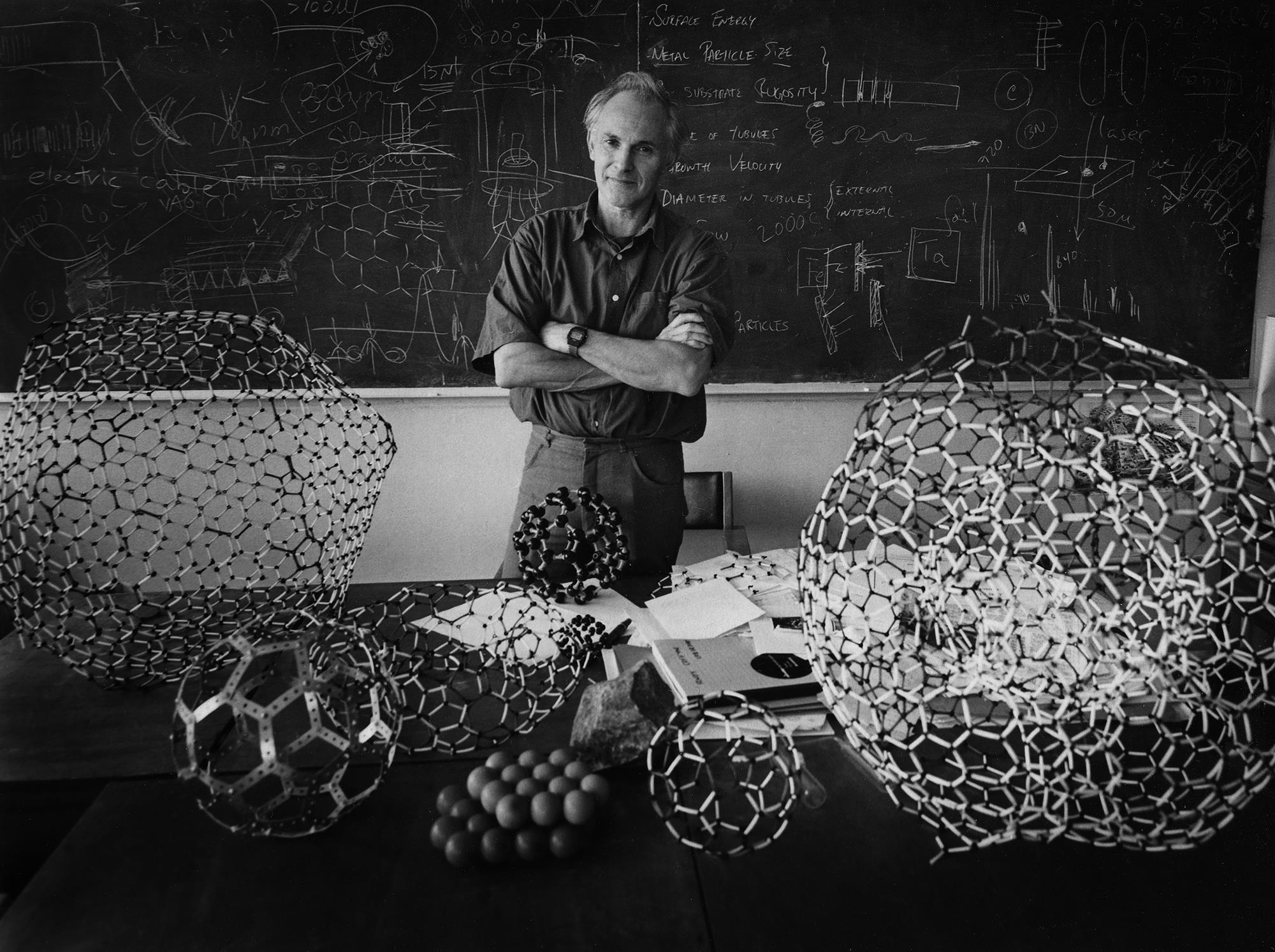


 essence of this humanist statement is relationship; that a relationship solely between human beings is preferable over a relationship between God and humanity. Relationship at its core is first a valuing of the person; it is to consider the person worth the effort a relationship involves. Or, in the case of this humanistic statement, it is to consider humanity worthy of the effort and sacrifice required for such a communal relationship to exist.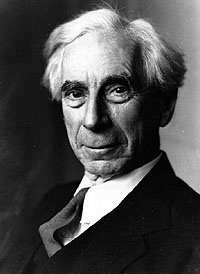
 The dark tone of these atheistic pronouncements is undeniable. These men hold to a belief they acknowledge as futile. In the end all human endeavor, struggle, and advancement ends in meaningless extinction. It is utterly void of value that transcends this existence. Many people will say this end is in the too distant future to be relevant to them. But death is not far off for any of us and if this belief is true the death of a person may as well be the final end of all things. The majority of people are not remembered past one or two generations before their “person” vanishes from the human landscape altogether. All that is left is the impersonal and voiceless effects of their life that may linger for a few more generations or, at best, ripple down through the ages to end in the futility of universal extinction. This is why intuition causes many of us to ask, “With all human activity set against ultimate futility, what value is there in any human activity whether it is remembered or advancing humanity?” Unquestionably, these apostles of atheism recognize the utter futility in their belief, but they are willing to accept it. Are the rest of us willing to do so? If the atheists own testimonies are so bleak, should we accept that their testimonies are true on blind faith?
 The question is not, “Why do we make value judgments?” Simply put, no human being can escape making them. If naturalism is true, the question is why valuing anything is so deeply human. It is the very notion of a valueless universe that Dr. Dawkins’ mind simply will not accept. In the face of his utterly hopeless universe he manufactures purpose and meaning for his being. He manufactures value for himself. It takes very little attention to see that such value and purpose is truly subjective and meaningless. If naturalism is true, cognizant life is the cruelest joke ever played. It is this “oughtness” that is fundamentally woven into nature and existence — that human life ought to be valuable — that demands both an intellectual and emotionally satisfying answer. What would life be like if we, at our most fundamental levels, did not think life is valuable? Why do we fight for human rights? Why is it our tendency to elevate the value of animal life to be equal with humanity instead of devaluing humanity to be equal with animal life? If naturalism is true there is no rational judgment for thinking the cloud of atoms making up a person is more or less valuable then a cloud of atoms making up the rock the person may be sitting on.
 process on this planet that has lasted billions of years; that each human being exists as an inseparable unity of mind and body, and that therefore after death there can be no personal immortality or survival of consciousness” (Lamont, p. 1). The fathers of atheism understand the bankruptcy in these elegant and lofty sounding words. Jean-Paul Sartre expresses, “Atheism is a cruel, long-term business; I believe I have gone through it to the end” (quoted in Guinness, p. 134). However, my experience leads me to believe that the majority of people hold a more uninformed acceptance of such notions. One of my most telling experiences occurred when I attended an invitation-only lecture on the evolutionary rise of morals hosted by North Carolina State. The presenter was a world renowned researcher in his field of study. The room was full of Ph.D’s from the related fields. A question and answer period followed the presentation in which I asked why I should accept such a view when it is dependent on Supervenience. To the presenter’s credit, he knew what Supervenience is. But this world renowned leader in evolutionary theory anticipated something about his colleague’s knowledge, because he asked the room if they knew what Supervenience meant. To my astonishment the vast majority had never heard the term. Yet Supervenience is the leading explanation for human personality and mind in evolutionary thought. The best that evolutionary thought has delivered to date to explain humanity’s very personhood is a tenuously held and likely unprovable hypothesis that is apparently little known among evolutionary academics.


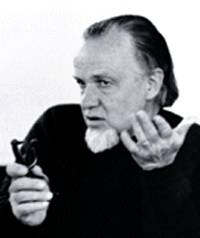

 Celebrity chef and ‘Parts Unknown’ host Anthony Bourdain has died at age 61 of an apparent suicide.


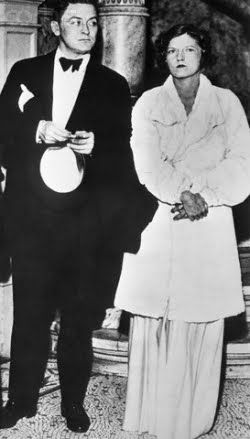


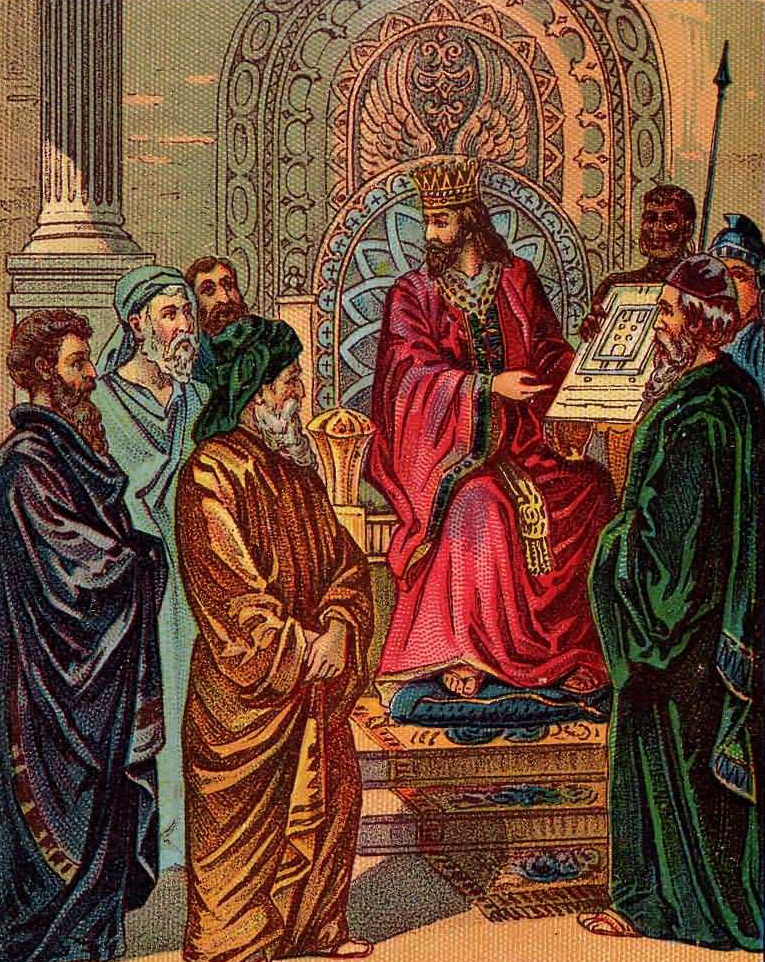



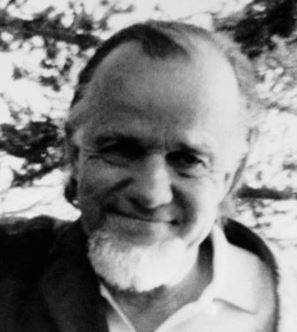


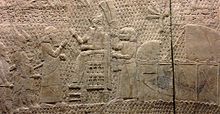

.jpg)


,_oil_on_canvas,_70_x_99_cm,_Gemeentemuseum_Den_Haag.jpg)


,_oil_on_canvas,_79.7_x_109.1_cm,_Gemeentemuseum_Den_Haag,_Netherlands.jpg)


.jpg)


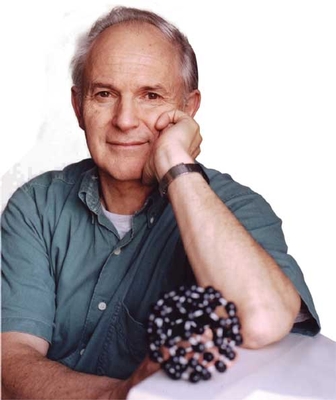
 So, it’s not just rational inconsistency per se that drives people into the “upper story” of irrational escape, it can also be a theoretically consistent world view, which is impossible to live out. Now, when I’m saying that it is impossible to live out, i.e. the world view is inviable, I don’t just mean that it’s really, really hard. When I’ve brought up this point at other times, some students have responded by asking whether on that criterion Christianity isn’t also inviable because, supposedly, it’s impossible for anyone to live a perfect Christian life. But that’s not the same thing. Theoretically, someone could do just that. It’s logically possible. But nobody can live their lives according to such principles as that nothing exists, there is no truth, the consequences of actions do not matter, etc.
 and a student (S) have reached a crucial point in a rather intense discussion.


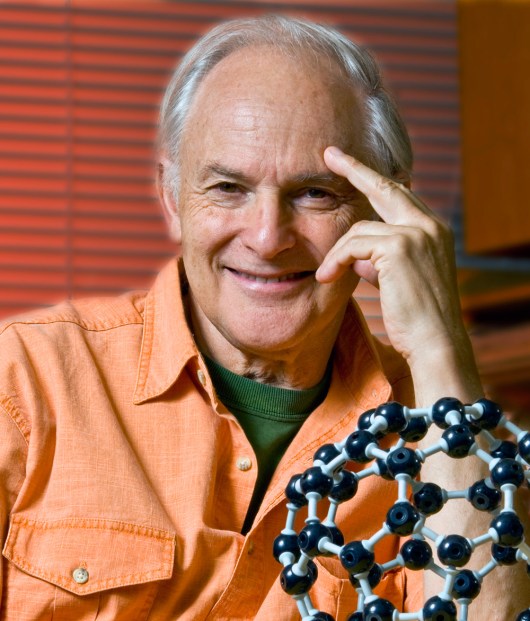


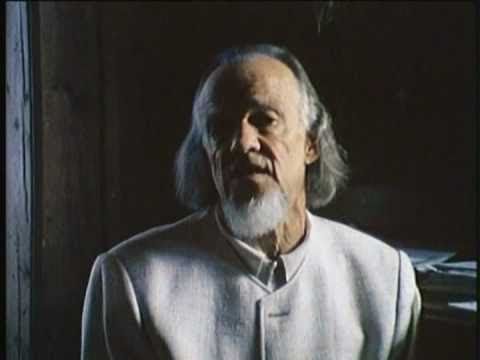
 Francis Bacon, 1st Viscount St Albans, KC (22 January 1561 – 9 April 1626) was an English philosopher, statesman, spy, freemason and essayist. He was knighted in 1603, created Baron Verulam in 1618, and created Viscount St Albans in 1621; both peerage titles becoming extinct upon his death.
 A wise man will make more opportunities than he finds.
 He that hath knowledge spareth his words.


