Without the infinite-personal God of the Bible to reveal moral absolutes then man is left to embrace moral relativism. In a time plus chance universe man is reduced to a machine and can not find a place for values such as love. Both of Francis Schaeffer’s film series have tackled these subjects and he shows how this is reflected in the arts.
The debate on youtube of atheists and theists concerning the meaning of life included Richard Dawkins and William Lane Craig. Dawkins says that trying to find a lasting meaning to life is “silly.” Without God in the picture I would have to agree with him there. That was the view of King Solomon when he wrote the Book of Ecclesiastes 3000 years ago and it is the view of many of the modern philosophers today. Modern man has tried to come up with a lasting meaning for life without God in the picture (life under the sun), but it is not possible. Without the infinite-personal God of the Bible to reveal moral absolutes then man is left to embrace moral relativism. In a time plus chance universe man is reduced to a machine and can not find a place for values such as love. Both of Francis Schaeffer’s film series have tackled these subjects and he shows how this is reflected in the arts.
Saline–your reality depends on believing in something we cannot see, hear or smell, thus faith. Or delusion. Many of us want something more. When Senator Pryor says he’s unsure that our world is older than 6000 years, that means he has not studied the issue. Small wonder that we don’t trust him.
Verla if you accept Darwinism then why not Social Darwinism?
Verla, this is where we are without the infinite personal God to provide written revealed truth to us in the Bible.
— A.J. Ayer in “Language, Truth and Logic” wrote this:
“We can now see why it is impossible to find a criterion for determining the validity of ethical judgments. It is not because they have an absolute validity which is mysteriously independent of ordinary sense experience, but because they have no objective validity whatsoever. If a sentence makes no statement at all, there is obviously no sense in asking whether what it says is true or false.” __________________
Jean-Paul Sartre in “Existentialism Is Humanism” wrote this:
“The existentialist, on the contrary, thinks it is very distressing that God does not exist, because all possibility of finding values in a heaven of ideas disappears along with Him; there can no longer be an objective Good, since there is no infinite and perfect consciousness to think it. Nowhere is it written that the Good exists, that we must be honest, that we must not lie; because the fact is we are on a plane where there are only men. Dostoevsky said, ‘If God didn’t exist, everything would be possible.’” —
_______________
Steven E, I also believe in freedom like you do and don’t think that giving the government more money to waste is the solution but Hitler did believe in the survival of the fittest and he thought his race was going to be the last one standing. I still have not had heard any answers telling on what moral basis what he did was wrong. In an universe without a lasting meaning or the presence of an infinite personal God how can anyone said what he did was wrong in an impersonal world of time and chance?
In the film “Crimes and Misdemeanors” speaking to Judah, Rabbi Ben states the two key moral positions of the movie: “It’s a fundamental difference in the way we view the world. You see it as harsh and empty of values and pitiless. And I couldn’t go on living if I didn’t feel it with all my heart a moral structure, with real meaning, and forgiveness, and a higher power, otherwise there’s no basis to live.”
There is no middle ground. Either you embrace the chance universe or you realize that God put us here for a reason!!!!!!
Saline uses Sartre like he uses the bible—picking and choosing, leaving out the parts that are inconvenient. Here are some more quotes from the lecture he cited.
“And when we say that man takes responsibility for himself, we say more than that – he is in his choices responsible for all men. All our acts of creating ourselves create at the same time an image of man such as we believe he must be. Thus, our personal responsibility is vast, because it engages all humanity.”
What Sartre is saying is very simple here. He believed that people should take responsibility for their own moral choices but that is not the case if the world is just a mindless time plus chance universe.
The perfect example is the agnostic Woody Allen and the lead character in the movie “Crimes and Misdemeanors.” Judah is caught in a hard position because his mistress is about to turn him in for his past illegal business dealings and tell his wife about their 2 year affair. Instead of going to jail he has his underworld brother have the mistress killed. Here is how Judah put it:
JUDAH ROSENTHAL
And after the awful deed is done, he finds that he’s plagued by deep-rooted guilt. Little sparks of his religious background, which he’d rejected, are suddenly stirred up. He hears his father’s voice. He imagines that God is watching his every move. Suddenly, it’s not an empty universe at all, but a just and moral one, and he’s violated it. Now, he’s panic-stricken. He’s on the verge of a mental collapse, an inch away from confessing the whole thing to the police. And then one morning, he awakens. The sun is shining, his family is around him and mysteriously, the crisis has lifted. He takes his family on a vacation to Europe and as the months pass, he finds he’s not punished. In fact, he prospers. The killing gets attributed to another person — a drifter who has a number of other murders to his credit, so I mean, what the hell? One more doesn’t even matter. Now he’s scott-free. His life is completely back to normal. Back to his protected world of wealth and privilege.
WITH NO AFTERLIFE THERE IS NO DENYING THAT MIGHT MAKES RIGHT!!!!!
Solomon discovered that life under the sun without God in the picture is a life where chance and time have determined the past, and they will determine the future. (Ecclesiastes 9:11-13 “I have seen something else under the sun: The race is not to the swift or the battle to the strong, nor does food come to the wise or wealth to the brilliant or favor to the learned; but time and chance happen to them all. Moreover, no one knows when their hour will come: As fish are caught in a cruel net, or birds are taken in a snare, so people are trapped by evil times that fall unexpectedly upon them.”)
Solomon also discovered that if God is not in the picture that power reigns in this life, and the scales are not balanced.(Eccl 4:1; “Again I looked and saw all the oppression that was taking place under the sun: I saw the tears of the oppressed— and they have no comforter; po wer was on the side of their oppressors— and they have no comforter.” 7:15 “In this meaningless life of mine I have seen both of these: the righteous perishing in their righteousness, and the wicked living long in their wickedness. ).
I have spent alot of time talking about Woody Allen films on this blog and looking at his worldview. He has a hopeless, meaningless, nihilistic worldview that believes we are going to turn to dust and there is no afterlife. Even though he has this view he has taken the opportunity to look at the weaknesses of […]
Ecclesiastes 1 Published on Sep 4, 2012 Calvary Chapel Spring Valley | Sunday Evening | September 2, 2012 | Pastor Derek Neider _____________________ Ecclesiastes 2-3 Published on Sep 19, 2012 Calvary Chapel Spring Valley | Sunday Evening | September 16, 2012 | Derek Neider _____________________________ I have spent alot of time talking about Woody Allen films on […]
I have spent alot of time talking about Woody Allen films on this blog and looking at his worldview. He has a hopeless, meaningless, nihilistic worldview that believes we are going to turn to dust and there is no afterlife. Even though he has this view he has taken the opportunity to look at the weaknesses of […]
Crimes and Misdemeanors: A Discussion: Part 3 Uploaded by camdiscussion on Sep 23, 2007 Part 3 of 3: ‘Is Woody Allen A Romantic Or A Realist?’ A discussion of Woody Allen’s 1989 movie, Crimes and Misdemeanors, perhaps his finest. By Anton Scamvougeras. http://camdiscussion.blogspot.com/antons@mail.ubc.ca ______________ One of my favorite Woody Allen movies and I reviewed […]
Crimes and Misdemeanors: A Discussion: Part 2 Uploaded by camdiscussion on Sep 23, 2007 Part 2 of 3: ‘What Does The Movie Tell Us About Ourselves?’ A discussion of Woody Allen’s 1989 movie, perhaps his finest. By Anton Scamvougeras. http://camdiscussion.blogspot.com/antons@mail.ubc.ca _________________- One of my favorite Woody Allen movies and I reviewed it earlier but […]
Crimes and Misdemeanors: A Discussion: Part 1 Uploaded by camdiscussion on Sep 23, 2007 Part 1 of 3: ‘What Does Judah Believe?’ A discussion of Woody Allen’s 1989 movie, perhaps his finest. By Anton Scamvougeras. http://camdiscussion.blogspot.com/antons@mail.ubc.ca _____________ One of my favorite films is this gem by Woody Allen “Crimes and Misdemeanors”: Film Review By […]
Crimes and Misdemeanors: A Discussion: Part 3 Uploaded by camdiscussion on Sep 23, 2007 Part 3 of 3: ‘Is Woody Allen A Romantic Or A Realist?’ A discussion of Woody Allen’s 1989 movie, Crimes and Misdemeanors, perhaps his finest. By Anton Scamvougeras. http://camdiscussion.blogspot.com/antons@mail.ubc.ca ______________ One of my favorite Woody Allen movies and I reviewed […]
Ecclesiastes 8-10 | Still Searching After All These Years Published on Oct 9, 2012 Calvary Chapel Spring Valley | Sunday Evening | October 7, 2012 | Pastor Derek Neider _______________________ Ecclesiastes 11-12 | Solomon Finds His Way Published on Oct 30, 2012 Calvary Chapel Spring Valley | Sunday Evening | October 28, 2012 | Pastor Derek Neider […]
Ecclesiastes 2-3 Published on Sep 19, 2012 Calvary Chapel Spring Valley | Sunday Evening | September 16, 2012 | Derek Neider _____________________________ I have written on the Book of Ecclesiastes and the subject of the meaning of our lives on several occasions on this blog. In this series on Ecclesiastes I hope to show how secular […]
Ecclesiastes 1 Published on Sep 4, 2012 Calvary Chapel Spring Valley | Sunday Evening | September 2, 2012 | Pastor Derek Neider _____________________ I have written on the Book of Ecclesiastes and the subject of the meaning of our lives on several occasions on this blog. In this series on Ecclesiastes I hope to show how […]
GIL PENDER:I’m actually a huge Mark Twain fan.I think you can even make the case that all modern American literature comes from Huckleberry Finn.-
The Book of Ecclesiastes pictures life UNDER THE SUN without God in the picture. The Christian Scholar Ravi Zacharias noted, “The key to understanding the Book of Ecclesiastes is the term UNDER THE SUN — What that literally means is you lock God out of a closed system and you are left with only this world of Time plus Chance plus matter.”
Ecclesiastes 4:1
Then I looked again at all the acts of oppression which were being done under the sun. And behold I saw the tears of the oppressed and that they had no one to comfort them; and on the side of their oppressors was power, but they had no one to comfort them.
(Francis Schaeffer pictured below)
Francis Schaeffer noted concerning this verse, “Between birth and death power rules. Solomon looked over his kingdom and also around the world and proclaimed that right does not rule but power rules.”
No better example of oppression can be given than that of slavery, but even though many Christians were involved as slave owners the abolition movement in the United States would not have been successful if it wasn’t for people like Mark Twain’s next door neighbor Harriet Beecher Stowe (the author of UNCLE TOM’S CABIN).
Who is Harriet Beecher Stowe?
Harriet Tubman & the Underground Railroad {Part 1}
Harriet Tubman & the Underground Railroad {Part 2}
Nursemaid with child Courtesy California Historical Society
It was summer time, and twilight. We were sitting on the porch of the farm-house, on the summit of the hill, and “Aunt Rachel” was sitting respectfully below our level, on the steps, – for she was our servant, and colored. She was of mighty frame and stature; she was sixty years old, but her eye was undimmed and her strength unabated. She was a cheerful, hearty soul, and it was no more trouble for her to laugh than it is for a bird to sing. She was under fire, now, as usual when the day was done. That is to say, she was being chaffed without mercy, and was enjoying it. She would let off peal after peal of laughter, and then sit with her face in her hands and shake with throes of enjoyment which she could no longer get breath enough to express. At such a moment as this a thought occurred to me, and I said:
“Aunt Rachel, how is it that you’ve lived sixty years and never had any trouble?”
She stopped quaking. She paused, and there was a moment of silence. She turned her face over her shoulder toward me, and said, without even a smile in her voice: –
“Misto C –, is you in ‘arnest?”
It surprised me a good deal; and it sobered my manner and my speech, too. I said: –
“Why, I thought – that is, I meant – why, you can’t have had any trouble. I’ve never heard you sigh, and never seen your eye when there wasn’t a laugh in it.”
She faced fairly around, now, and was full of earnestness.
“Has I had any trouble? Misto C –, I’s gwyne to tell you, den I leave it to you. I was bawn down ‘mongst de slaves; I knows all ‘bout slavery, ‘cause I been one of ‘em my own se’f. Well, sah, my ole man – dat’s my husban’ – he was lovin’ an’ kind to me, jist as kind as you is to yo’ own wife. An’ we had chil’en – seven chil’en – an’ we loved dem chil’en jist de same as you loves you’ chil’en. Dey was black, but de Lord can’t make no chil’en so black but what dey mother loves ’em an’ wouldn’t give ‘em up, no, not for anything dat’s in dis whole world.
“Well, sah, I was raised in ole Fo’ginny, but my mother she was raised in Maryland; an’ my souls! She was turrible when she’d git started! My lan’! But she’d make de fur fly! When she’d git into dem tantrums, she always had one word dat she said. She’d straighten herse’f up an’ put her fists in her hips an’ say, ‘I want you to understan’ dat I wasn’t bawn in de mash to be fool’ by trash! I’s one o’ de ole Blue Hen’s Chickens, I is!’ ‘Ca’se, you see, dat’s what folks dat’s bawn in Maryland calls deyselves, an’ dey’s proud of it. Well, dat was her word. I don’t ever forgit it, beca’se she said it so much, an’ beca’se she said it one day when my little Henry tore his wris’ awful, an’ most busted his head, right up at de top of his forehead, an’ de niggers didn’t fly aroun’ fas’ enough to ’tend to him. An’ when dey talk’ back at her, she up an’ she says, ‘Look-a-heah!’ she says, ‘I want you niggers to understan’ dat I wasn’t bawn in de mash to be fool’ by trash! I’s one o’ de ole Blue Hen’s Chickens, I is!’ an’ den she clar’ dat kitchen an’ bandage’ up de chile herse’f. So I says dat word, too, when I’s riled.
“Well, bymeby my ole mistis say she’s broke, an’ she got to sell all de niggers on de place. An’ when I heah dat dey gwyne to sell us all off at oction in Richmon’, oh de good gracious! I know what dat mean!”
Aunt Rachel had gradually risen, while she warmed to her subject, and now she towered above us, black against the stars.
“Dey put chains on us an’ put us on a stan’ as high as dis po’ch, – twenty foot high, – an’ all de people stood aroun’, crowds an’ crowds. An’ dey’d come up dah an’ look at us all roun’, an’ squeeze our arm, an’ make us git up an’ walk, an’ den say, ‘Dis one too ole,’ or ‘Dis one lame,’ or ‘Dis one don’t ‘mount to much.’ An’ dey sole my ole man, an’ took him away, an’ dey begin to sell my chil’en an’ take dem away, an’ I begin to cry; an’ de man say, ‘Shet up yo’ dam blubberin’,’ an’ hit me on de mouf wid his han’. An’ when de las’ one was gone but my little Henry, I grab’ him clost up to my breas’ so, an’ I ris up an’ says, ‘You shan’t take him away,’ I says; ‘I’ll kill de man dat tetch him!’ I says. But my little Henry whisper an’ say, ‘I gwyne to run away, an’ den I work an’ buy yo’ freedom.’ Oh, bless de chile, he always so good! But dey got him – dey got him, de men did; but I took and tear de clo’es mos’ off of ’em, an’ beat ’em over de head wid my chain; an’ dey give it to me, too, but I didn’t mine dat.
Smith’s plantation, Beaufort, SC. Courtesy Library of Congress
“Well, dah was my ole man gone, an’ all my chil’en, all my seven chil’en – an’ six of ‘em I hadn’t set eyes on ag’in to dis day, an’ dat’s twenty-two year ago las’ Easter. De man dat bought me b’long’ in Newbern, an’ he took me dah. Well, bymeby de years roll on an’ de waw come. My marster he was a Confedrit colonel, an’ I was his family’s cook. So when de Unions took dat town, dey all run away an’ lef’ me all by myse’f wid de other niggers in dat mons’us big house. So de big Union officers move in dah, an’ dey ask me would I cook for dem. ‘Lord bless you,’ says I, ‘dat’s what I’s for.’
“Dey wa’n’t no small-fry officers, mine you, dey was de biggest dey is; an’ de way dey made dem sojers mosey roun’! De Gen’l he tole me to boss dat kitchen; an’ he say, ‘If anybody come meddlin’ wid you, you jist make ’em walk chalk; don’t you be afeard,’ he say; ‘you’s ‘mong frens, now.’
“Well, I thinks to myse’f, if my little Henry ever got a chance to run away, he’d make to de Norf, o’ course. So one day I comes in dah whah de big officers was, in de parlor, an’ I drops a kurtchy, so, an’ I up an’ tole ‘em ‘bout my Henry, dey a-listenin’ to my troubles jist de same as if I was white folks; an’ I says, ‘What I come for is beca’se if he got away and got up Norf whah you gemmen comes from, you might ‘a’ seen him, maybe, an’ could tell me so as I could fine him ag’in; he was very little, an’ he had a sk-yar on his lef’ wris’, an’ at de top of his forehead.’ Den dey look mournful, an’ de Gen’l say, ‘How long sence you los’ him?’ an’ I say, ‘Thirteen year.’ Den de Gen’l say, ‘He wouldn’t be little no mo’, now – he’s a man!’
“I never thought o’ dat befo’! He was only dat little feller to me, yit. I never thought ‘bout him growin’ up an’ bein’ big. But I see it den. None o’ de gemmen had run across him, so dey couldn’t do nothin’ for me. But all dat time, do’ I didn’t know it, my Henry was run off to de Norf, years an’ years, an’ he was a barber, too, an’ worked for hisse’f. An’ bymeby, when de waw come, he ups an’ he says, ‘I’s done barberin’,’ he says; ’I‘s gwyne to fine my ole mammy, less’n she’s dead.’ So he sole out an’ went to whah dey was recruitin’, an’ hired hisse’f out to de colonel for his servant; en’ den he went all froo de battles everywhah, huntin’ for his ole mammy; yes indeedy, he’d hire to fust one officer an’ den another, tell he’d ransacked de whole Souf; but you see I didn’t know nufffin ‘bout dis. How was I gwyne to know it?
Mary Ann Cord Courtesy The Mark Twain House, Hartford
“Well, one night we had a big sojer ball; de sojers dah at Newbern was always havin’ balls an’ carryin’ on. Dey had ‘em in my kitchen, heaps o’ times, ‘ca’se it was so big. Mine you, I was down on sich doin’s; beca’se my place was wid de officers, an’ it rasp’ me to have dem common sojers cavortin’ roun’ my kitchen like dat. But I alway’ stood aroun’ an’ kep’ things straight, I did; an’ sometimes dey’d git my dander up, an’ den I’d make ‘em clar dat kitchen, mine I tell you!
“Well, one night – it was a Friday night – dey comes a whole plattoon f’m a nigger ridgment dat was on guard at de house, – de house was head-quarters, you know, – an’ den I was jist a-bilin’! Mad? I was jist a-boomin’! I swelled aroun’, an’ swelled aroun’; I jist was a-itchin’ for ‘em to do somefin for to start me. An’ dey was a-waltzin’ an a-dancin’! my! but dey was havin’ a time! an’ I jist a-swellin’ an’ a-swellin’ up! Pooty soon, ‘long comes sich a spruce young nigger a-sailin’ down de room wid a yeller wench roun’ de wais’; an’ roun’ an’ roun’ an’ roun’ dey went, enough to make a body drunk to look at ‘em; an’ when dey got abreas’ o’ me, dey went to kin’ o’ balancin’ aroun’, fust on one leg an’ den on t’other, an’ smilin’ at my big red turban, an’ makin’ fun, an’ I ups an’ says, ‘Git along wid you! – rubbage!’ De young man’s face kin’ o’ changed, all of a sudden, for ’bout a second, but den he went to smilin’ ag’in, same as he was befo’. Well, ‘bout dis time, in comes some niggers dat played music an’ b’long’ to de ban’, an’ dey never could git along widout puttin’ on airs. An’ de very fust air dey put on dat night, I lit into ‘em! Dey laughed, an’ dat made me wuss. De res’ o’ de niggers got to laughin’, an’ den my soul alive but I was hot! My eye was jist ablazin’! I jist straightened myself up, so, – jist as I is now, plum to de ceilin’, mos’, – an’ I digs my fists into my hips, an’ I says, ‘Look-a-heah!’ I says, ‘I want you niggers to understan’ dat I wa’n’t bawn in de mash to be fool’ by trash! I’s one o’ de ole Blue Hen’s Chickens, I is!’ an’ den I see dat young man stan’ astarin’ an’ stiff, lookin’ kin’ o’ up at de ceilin’ like he fo’got somefin, an’ couldn’t ’member it no mo’. Well, I jist march’ on dem niggers, – so, lookin’ like a gen’l, – an’ dey jist cave’ away befo’ me an’ out at de do’. An’ as dis young man was a-goin’ out, I heah him say to another nigger, ‘Jim,’ he says, ‘you go ‘long an’ tell de cap’n I be on han’ ‘bout eight o’clock in de mawnin’; dey’s somefin on my mine,’ he says; ’I don’t sleep no mo’ dis night. You go ‘long,’ he says, ‘an’ leave me by my own se’f.’
“Dis was ‘bout one o’clock in de mawnin’. Well, ‘bout seven, I was up an’ on han’, gittin’ de officers’ breakfast. I was a-stoopin’ down by de stove, – jist so, same as if yo’ foot was de stove, – an’ I’d opened de stove do’ wid my right han’, – so, pushin’ it back, jist as I pushes yo’ foot, – an’ I’d jist got de pan o’ hot biscuits in my han’ an’ was ‘bout to raise up, when I see a black face come aroun’ under mine, an’ de eyes a-lookin’ up into mine, jist as I’s a-lookin’ up clost under yo’ face now; an’ I jist stopped right dah, an’ never budged! jist gazed, an’ gazed, so; an’ de pan begin to tremble, an’ all of a sudden I knowed! De pan drop’ on de flo’ an’ I grab his lef’ han’ an’ shove back his sleeve, – jist so, as I’s doin’ to you, – an’ den I goes for his forehead an’ push de hair back, so, an’ ‘Boy!’ I says, ‘if you an’t my Henry, what is you doin’ wid dis welt on yo’ wris’ an’ dat sk-yar on yo’ forehead? De Lord God ob heaven be praise’, I got my own ag’in!’
“Oh, no, Misto C –, I hadn’t had no trouble. An’ no joy!”
The full transcript of “A True Story…” is available from The University of Virginia.
I have always felt strongly about racial equality myself. I remember my grandparents from Mississippi wondering what I was up to in the 1960’s when as a elementary kid I invited a black friend of mine to come over and spend the day with me playing at my home. Later in high school I convinced a black friend of mine from my church youth group to switch to our private Christian school in Memphis and later he became the first black graduate.
(Ben Parkinson pictured below)
When Mark Twain was courting his future wife Olivia Langdon she insisted that he read sermons by Henry Ward Beecher.
Mr. Beecher is a remarkably handsome man when he is in the full tide of sermonizing, and his face is lit up with animation, but he is as homely as a singed cat when he isn’t doing anything.
– letter to the San Francisco Alta California, March 30, 1867What a pity that so insignificant a matter as the chastity or unchastity of an Elizabeth Tilton could clip the locks of this Samson and make him as other men, in the estimation of a nation of Lilliputians creeping and climbing about his shoe-soles.
– letter to Joseph Twichell, 14 March 1887. Reprinted in The Most Famous Man in America
The film God’s Not Deadwas such a surprise hit that the producers were excited about the prospect of a sequel. The result, God’s Not Dead 2, is, as Gov. Mike Huckabee termed it, “like ‘The Godfather 2.’ It’s one of those rare cases where the sequel is better than the first, and I thought the first movie was excellent.” The movie also serves as a wake-up call for Christian and secular viewers alike. As Gov. Huckabee put it, “The secular audience is asked, ‘Is this where you want your country to go?’ I think it is a very powerful, timely movie.” Christian viewers hopefully will be emboldened to take action and stand up for their beliefs should the situation arise.
The film boasts a large cast of notable performers that viewers likely will recognize from their other projects, such as Melissa Joan Hart, Jesse Metcalfe, Pat Boone, Ernie Hudson, Hayley Orrantia, Robin Givens, Sadie Robertson and Maria Canals Barrera, to name a few. Some fan favorites from the first movie returned for the sequel, including The Newsboys. Gov. Huckabee has a cameo appearance in the movie, which he was thrilled to do when the producers approached him. He was a fan of the first movie and also liked that it was being filmed in Little Rock. “I thought it was a terrific screenplay.”
Gov. Huckabee explained that the ripped-from-the-newspapers story means “You don’t have to suspend belief to enjoy the movie; this is something that could be happening right now. It’s a very honest portrayal of what it is like to follow Christ. You may lose and suffer. Quite frankly, I don’t think a lot of Christians are willing to do that. Many tend to wave the white flag of surrender.”
Rev. Dr. Martin Luther King, Jr. and Jesus Christ
In the film, a history teacher (Melissa Joan Hart) is accused of violating a student’s rights by answering that student’s question in class wherein she compared Gandhi and Rev. Dr. Martin Luther King, Jr.’s teachings to that of Jesus. She stands accused of “preaching the gospel” in class, which results in legal proceedings when she refuses to apologize since she does not feel she has committed any wrongdoing. If any viewer thinks this scenario is overly dramatic or far-fetched, pay attention to the closing credits. Although the specifics of the case in the film were fictionalized, the credits run a shockingly long list of actual court cases which inspired the screenplay. Yet, Dr. King was a Christian minister, so does it not stand to reason that his teachings would reflect that of Jesus? The film asks why would it be okay to quote Gandhi or Dr. King, but not Jesus?
“I think that’s one of the most powerful elements of the film,” Huckabee explained. “People like to focus on Dr. King’s civil rights work, but he would correct those people and be the first one to say he was, first and foremost, a preacher of the gospel. I spent hours in seminary studying Dr. King. Look at his letters from the Birmingham jail. Look at his speeches. They are basically all sermons that start off quoting scripture. He took the gospel as Jesus taught it and applied it to human rights. Yet people think they can separate his civil rights work from his Christianity. It’s not possible.”
Below are just a few words from MLK’s famous letter:
While confined here in the Birmingham city jail, I came across your recent statement calling my present activities “unwise and untimely.”
…I am in Birmingham because injustice is here. Just as the prophets of the eighth century B.C. left their villages and carried their “thus saith the Lord” far beyond the boundaries of their home towns, and just as the Apostle Paul left his village of Tarsus and carried the gospel of Jesus Christ to the far corners of the Greco-Roman world, so am I compelled to carry the gospel of freedom beyond my own home town. Like Paul, I must constantly respond to the Macedonian call for aid….
Of course, there is nothing new about this kind of civil disobedience. It was evidenced sublimely in the refusal of Shadrach, Meshach and Abednego to obey the laws of Nebuchadnezzar, on the ground that a higher moral law was at stake. It was practiced superbly by the early Christians, who were willing to face hungry lions and the excruciating pain of chopping blocks rather than submit to certain unjust laws of the Roman Empire. To a degree, academic freedom is a reality today because Socrates practiced civil disobedience. In our own nation, the Boston Tea Party represented a massive act of civil disobedience….
(Below is painting of Shadrach, Meshach and Abednego and King Nebuchadnezzar)
But though I was initially disappointed at being categorized as an extremist, as I continued to think about the matter I gradually gained a measure of satisfaction from the label. Was not Jesus an extremist for love: “Love your enemies, bless them that curse you, do good to them that hate you, and pray for them which despitefully use you, and persecute you.” Was not Amos an extremist for justice: “Let justice roll down like waters and righteousness like an ever-flowing stream.” Was not Paul an extremist for the Christian gospel: “I bear in my body the marks of the Lord Jesus.” Was not Martin Luther an extremist: “Here I stand; I cannot do otherwise, so help me God.” And John Bunyan: “I will stay in jail to the end of my days before I make a butchery of my conscience.” And Abraham Lincoln: “This nation cannot survive half slave and half free.” And Thomas Jefferson: “We hold these truths to be self-evident, that all men are created equal …” So the question is not whether we will be extremists, but what kind of extremists we will be. Will we be extremists for hate or for love? Will we be extremists for the preservation of injustice or for the extension of justice? In that dramatic scene on Calvary’s hill three men were crucified. We must never forget that all three were crucified for the same crime—the crime of extremism. Two were extremists for immorality, and thus fell below their environment. The other, Jesus Christ, was an extremist for love, truth and goodness, and thereby rose above his environment. Perhaps the South, the nation and the world are in dire need of creative extremists….
I hope this letter finds you strong in the faith. I also hope that circumstances will soon make it possible for me to meet each of you, not as an integrationist or a civil rights leader but as a fellow clergyman and a Christian brother. Let us all hope that the dark clouds of racial prejudice will soon pass away and the deep fog of misunderstanding will be lifted from our fear-drenched communities, and in some not too distant tomorrow the radiant stars of love and brotherhood will shine over our great nation with all their scintillating beauty.
Yours for the cause of Peace and Brotherhood,
Martin Luther King, Jr.
ZELDA FITZGERALD: I know what you’re thinking.This is boring. I agree!I’m ready to move on.Let’s do Bricktop’s!- Bricktop’s?-
SCOTT FITZGERALD: I’m bored! He’s bored! We’re all bored.We. Are. All. Bored.Let’s do Bricktop’s.Why don’t you tell Cole and Linda to come with, and…um…uh…Gil? You coming?
[Cole Porter’s”You’ve Got That Thing”]
You got that thing- You got that thing The thing that makes birds forget to sing Yes, you’ve got that thing, that certain thing You’ve got that charm,that subtle charm that makes young farmers desert the farm
This is one of the finest establishments in Paris. They do a diamond whiskey sour.Bon soir, tous le monde! (Good evening, everyone!) Un peu tir de bourbon, s’il vous plaît .(A small shot of bourbon, please.)
SCOTT FITZGERALD: Greetings and salutations.You’ll forgive me. I’ve been mixing grain and grape.Now, this a writer. uh…Gil. Yes?- Gil…
GIL PENDER: Gil Pender.- Gil Pender.
In 1925 in the United States and across the world racism was widespread but in Paris there were a great deal of racial freedom and that is exactly what we see in Woody Allen’s film MIDNIGHT IN PARIS which takes us back to 1925 in Paris at the club called BRICKTOP.
Ada ‘Bricktop’ Smith -St Louis Blues (1970)
Published on Oct 23, 2014
Ada Smith, better known as Bricktop was an American dancer, singer, vaudevillian, and self-described saloon-keeper who owned the nightclub Chez Bricktop in Paris from 1924 to 1961, as well as clubs in Mexico City and Rome. St. Louis Blues,Song written by William Cristopher Handy in the 1917.Recorded in Italian studio TV
Ada Beatrice Queen Victoria Louise Virginia Smith, better known as Bricktop, (August 14, 1894 – February 1, 1984) was an American dancer, jazzsinger, vaudevillian, and self-described saloon-keeper who owned the nightclub Chez Bricktop in Paris from 1924 to 1961, as well as clubs in Mexico City and Rome. She has been called “…one of the most legendary and enduring figures of twentieth-century American cultural history.”[citation needed]
BRICKTOP AND DOROTHY DONEGAN
Published on Jun 18, 2013
Bricktop describes how Cole Porter brought his song Miss Otis Regrets to her in Paris.
Smith was born in Alderson, West Virginia, the youngest of four children by an Irish father and a black mother. When her father died, her family relocated to Chicago. It was there that saloon life caught her fancy, and where she acquired her nickname, “Bricktop,” for the flaming red hair and freckles inherited from her father. She began performing when she was very young, and by 16, she was touring with TOBA (Theatre Owners’ Booking Association) and on the Pantages vaudeville circuit. Aged 20, her performance tours brought her to New York City. While at Barron’s Exclusive Club, a nightspot in Harlem, she put in a good word for a band called Elmer Snowden’s Washingtonians, and the club booked them. One of its members was Duke Ellington.[1]
Her first meeting with Cole Porter is related in her obituary in the Huntington (West Virginia) Herald-Dispatch:
Porter once walked into the cabaret and ordered a bottle of wine. “Little girl, can you do the Charleston?” he asked. Yes, she said. And when she demonstrated the new dance, he exclaimed, “What legs! What legs!”
John Steinbeck was once thrown out of her club for “ungentlemanly behavior.” He regained her affection by sending a taxi full of roses.
By 1924, she was in Paris. Cole Porter hosted many parties, “lovely parties” as Bricktop called them, where he hired her as an entertainer, often to teach his guests the latest dance craze such as the Charleston and the Black Bottom. In Paris, Bricktop began operating the clubs where she performed, including The Music Box and Le Grand Duc. She called her next club “Chez Bricktop,” and in 1929 she relocated it to 66 rue Pigalle. Her headliner was a young Mabel Mercer, who was to become a legend in cabaret.
She married singer Peter DuConge in 1929.[2] Though they separated after a few years, they never divorced, Bricktop later saying that “as a Catholic I do not recognize divorce”.[3] According to Jean-Claude Baker, one of Josephine Baker’s children, as recorded in his book about his mother’s life, titled Josephine: The Hungry Heart, Baker and Bricktop were involved in a lesbian affair for a time, early in their careers.[4]
Bricktop broadcast a radio program in Paris from 1938–39, for the French government. During WWII, she closed “Chez Bricktop” and moved to Mexico City where she opened a new nightclub in 1944. In 1949, she returned to Europe and started a club in Rome. Bricktop closed her club and retired in 1961 at the age of 67, saying “I’m tired, honey. Tired of staying up all night.” Afterwards, she moved back to the United States.
Bricktop continued to perform as a cabaret entertainer well into her eighties, including some engagements at the age of 84 in London, where she proved herself to be as professional and feisty as she had ever been and included Cole Porter’s “Love for Sale” in her repertoire.
Bricktop made a brief cameo appearance, as herself, in Woody Allen‘s 1983 mockumentary film Zelig, in which she “reminisced” about a visit by Leonard Zelig to her club, and an unsuccessful attempt by Cole Porter to find a rhyme for “You’re the tops, you’re Leonard Zelig.” She appeared in the 1974 Jack Jordan’s film Honeybaby, Honeybaby, in which she played herself, operating a “Bricktop’s” in Beirut, Lebanon. In 1972, Bricktop made her only recording, “So Long Baby,” with Cy Coleman. Nevertheless, she also recorded a few Cole Porter songs in New-York City at the end of the seventies with pianist Dorothy Donegan. The session was directed by Otis Blackwell, produced by Jack Jordan on behalf of the Sweet Box Company. The songs recorded are: Love For Sale, Miss Otis Regrets, Happiness Is A Thing Called Joe, A Good Man Is Hard To Find, Am I Blue and He’s Funny That Way. This recording was never released as of today. She preferred not to be called a singer or dancer, but rather a performer.[citation needed](See external link below to YouTube “Bricktop tells about Cole Porter and her singing”)
She wrote her autobiography, Bricktop by Bricktop, with the help of James Haskins, the prolific author who wrote biographies of Thurgood Marshall and Rosa Parks. It was published in 1983 by Welcome Rain Publishers (ISBN 0-689-11349-8).
Bricktop died in her sleep in her apartment in Manhattan in 1984, aged 89. She remained active into her old age and according to James Haskins, had talked to friends on the phone hours before her death.[5][6] She is interred in the Zinnia Plot (Range 32, Grave 74) at Woodlawn Cemetery (Bronx).
This series deals with the Book of Ecclesiastes and Woody Allen films. The first post dealt with MAGIC IN THE MOONLIGHT and it dealt with the fact that in the Book of Ecclesiastes Solomon does contend like Hobbes and Stanley that life is “nasty, brutish and short” and as a result has no meaning UNDER THE SUN.
The movie MIDNIGHT IN PARISoffers many of the same themes we see in Ecclesiastes. The second postlooked at the question: WAS THERE EVER A GOLDEN AGE AND DID THE MOST TALENTED UNIVERSAL MEN OF THAT TIME FIND TRUE SATISFACTION DURING IT?
In the third post in this series we discover in Ecclesiastes that man UNDER THE SUN finds himself caught in the never ending cycle of birth and death. The SURREALISTS make a leap into the area of nonreason in order to get out of this cycle and that is why the scene in MIDNIGHT IN PARIS with Salvador Dali, Man Ray, and Luis Bunuel works so well!!!! These surrealists look to the area of their dreams to find a meaning for their lives and their break with reality is only because they know that they can’t find a rational meaning in life without God in the picture.
The fourth post looks at the solution of WINE, WOMEN AND SONG and the fifthandsixth posts look at the solution T.S.Eliot found in the Christian Faith and how he left his fragmented message of pessimism behind. In theseventh post the SURREALISTS say that time and chance is all we have but how can that explain love or art and the hunger for God? The eighth post looks at the subject of DEATH both in Ecclesiastes and MIDNIGHT IN PARIS. In the ninth post we look at the nihilistic worldview of Woody Allen and why he keeps putting suicides into his films.
In the tenth post I show how Woody Allen pokes fun at the brilliant thinkers of this world and how King Solomon did the same thing 3000 years ago. In theeleventh postI point out how many of Woody Allen’s liberal political views come a lack of understanding of the sinful nature of man and where it originated. In thetwelfth post I look at the mannishness of man and vacuum in his heart that can only be satisfied by a relationship with God.
In the thirteenth postwe look at the life of Ernest Hemingway as pictured in MIDNIGHT AND PARIS and relate it to the change of outlook he had on life as the years passed. In the fourteenth post we look at Hemingway’s idea of Paris being a movable feast. The fifteenth andsixteenth posts both compare Hemingway’s statement, “Happiness in intelligent people is the rarest thing I know…” with Ecclesiastes 2:18 “For in much wisdom is much vexation, and he who increases knowledge increases sorrow.” The seventeenth post looks at these words Woody Allen put into Hemingway’s mouth, “We fear death because we feel that we haven’t loved well enough or loved at all.”
In MIDNIGHT IN PARIS Hemingway and Gil Pender talk about their literary idol Mark Twain and the eighteenth post is summed up nicely by Kris Hemphill‘swords, “Both Twain and [King Solomon in the Book of Ecclesiastes] voice questions our souls long to have answered: Where does one find enduring meaning, life purpose, and sustainable joy, and why do so few seem to find it? The nineteenth postlooks at the tension felt both in the life of Gil Pender (written by Woody Allen) in the movie MIDNIGHT IN PARIS and in Mark Twain’s life and that is when an atheist says he wants to scoff at the idea THAT WE WERE PUT HERE FOR A PURPOSE but he must stay face the reality of Ecclesiastes 3:11 that says “God has planted eternity in the heart of men…” and THAT CHANGES EVERYTHING! Therefore, the secular view that there is no such thing as love or purpose looks implausible. The twentieth post examines how Mark Twain discovered just like King Solomon in the Book of Ecclesiastes that there is no explanation for the suffering and injustice that occurs in life UNDER THE SUN. Solomon actually brought God back into the picture in the last chapter and he looked ABOVE THE SUN for the books to be balanced and for the tears to be wiped away.
The twenty-first post looks at the words of King Solomon, Woody Allen and Mark Twain that without God in the picture our lives UNDER THE SUN will accomplish nothing that lasts. The twenty-second postlooks at King Solomon’s experiment 3000 years that proved that luxuries can’t bring satisfaction to one’s life but we have seen this proven over and over through the ages. Mark Twain lampooned the rich in his book “The Gilded Age” and he discussed get rich quick fever, but Sam Clemens loved money and the comfort and luxuries it could buy. Likewise Scott Fitzgerald was very successful in the 1920’s after his publication of THE GREAT GATSBY and lived a lavish lifestyle until his death in 1940 as a result of alcoholism.
In the twenty-third postwe look at Mark Twain’s statement that people should either commit suicide or stay drunk if they are “demonstrably wise” and want to “keep their reasoning faculties.” We actually see this play out in the film MIDNIGHT IN PARIS with the character Zelda Fitzgerald. In the twenty-fourth, twenty-fifth and twenty-sixth posts I look at Mark Twain and the issue of racism. In MIDNIGHT IN PARIS we see the difference between the attitudes concerning race in 1925 Paris and the rest of the world.
Mark Twain said people should either commit suicide or stay drunk if they are “demonstrably wise” and want to “keep their reasoning faculties.” We actually see this play out in the film MIDNIGHT IN PARIS with the character Zelda Fitzgerald.
HEMINGWAY:You like Mark Twain?
SCOTT FITZGERALD: I’m going to find Zelda.I don’t like the thoughtof her with that Spaniard.
GIL PENDER:May I?
HEMINGWAY:Yeah,
GIL PENDER:I’m actually a huge Mark Twain fan.I think you can even make the case that all modern American literature comes from Huckleberry Finn.-
This picture above of Mark Twain was reportedly taken in 1898 and that same year he wrote in his notebook, “Of the demonstrably wise there are but two: those who commit suicide, & those who keep their reasoning faculties atrophied with drink.” Now observe that in the film MIDNIGHT IN PARIS Zelda Fitzgerald also explores staying drunk and then later in the film attempts suicide.
ZELDA FITZGERALD: I know I can be one of the great writers of musical lyrics- not that I can write melodies, and I try,and then I hear the songs he writes, and then I realize: I’ll never write a great lyric,- and MY TALENT REALLY LIES IN DRINKING.-
SCOTT FITZGERALD: Sure does.
Later in MIDNIGHT IN PARIS we find Zelda attempting to jump in the Seine river and end her life.
GIL PENDER:God, is that who I think it is?
ADRIANA: What is she doing here,staring into the water?Oh my God! Zelda, what are you doing?!- Please?
ZELDA: I don’t want to live!-
ADRIANA: Stop!- What is it?-
ZELDA: Scott and that beautiful countess.They were– It was so obvious they were whispering about me,and the more they drank, the more he fell in love with her!
GIL PENDER: He…Scott loves only you.- I can tell you that with absolute certainty.-
ZELDA: No.- He’s tired of me!-
GIL PENDER: You’re wrong. You’re wrong. I know.-
ZELDA: How?-
GIL PENDER: Trust me. I know.- Sometimes you get a feel for people, and I get…-
ZELDA: My skin hurts!-
ADRIANA: What do you mean?-
ZELDA: I don’t wanna…I hate the way I look!
ADRIANA:Don’t do that!-
GIL PENDER: Here. Take this.-
ZELDA:What is this?
GIL PENDER: It’s a Valium. It’llmake you feel better.-
ADRIANA:You carry medicine?-
GIL PENDER: No, not normally.It’s just since I’ve been engaged to Inez,I’ve been having panic attacks, but I’msure they’ll subside after the wedding.
ADRIANA: I’ve never heard of Valium. What is this?
GIL PENDER:It’s the…pill of the future.
__
Mark Twain on Suicide
In the Ken Burns film on Mark Twain at 35 min mark of part 1 are these words:
For two months my sole occupation was avoiding acquaintances; for during that time I did not earn a penny, or buy an article of any kind, or pay my board. I became a very adept at “slinking.” I slunk from back street to back street, I slunk away from approaching faces that looked familiar, I slunk to my meals, ate them humbly and with a mute apology for every mouthful I robbed my generous landlady of, and at midnight, after wanderings that were but slinkings away from cheerfulness and light, I slunk to my bed. I felt meaner, and lowlier and more despicable than the worms. During all this time I had but one piece of money—a silver ten cent piece—and I held to it and would not spend it on any account, lest the consciousness coming strong upon me that I was entirely penniless, might suggest suicide. I had pawned every thing but the clothes I had on; so I clung to my dime desperately, till it was smooth with handling. (Roughing It, chapter 59)
Nothing seemed to work out for him. One day he put a revolver to his head and almost pulled the trigger. Many times I have been sorry I did not succeed he later said, but I was never ashamed of having tried.
You see, the lightning refuses to strike me — that is where the defect is. We have to do our own striking, as Barney Bernato did. But nobody ever gets the courage till he goes crazy.
– Letter to Henry Rogers, 16 June 1897 Suicide is the only sane thing the young or old ever do in this life.
– quoted in Mark Twain: God’ s Fool, Hamlin HillUnfortunately none of us can see far ahead; prophecy is not for us. Hence the paucity of suicides.
– “Which Was the Dream?”
But we are all insane, anyway…The suicides seem to be the only sane people.
– Mark Twain’s Notebook, #40, (Jan. 1897-July 1900)
Of the demonstrably wise there are but two: those who commit suicide, & those who keep their reasoning faculties atrophied with drink.
– Notebook, 1898
I do see that there is an argument against suicide: the grief of the worshipers left behind, the awful famine in their hearts, these are too costly terms for the release.
– Letter to William Dean Howells, 13 July 1889
Olivia, Sam and Clara
I would not be a party to that last and meanest unkindness, treachery to a would-be suicide. My sympathies have been with the suicides for many, many years. I am always glad when the suicide succeeds in his undertaking. I always feel a genuine pain in my heart, a genuine grief, a genuine pity, when some scoundrel stays the suicide’s hand and compels him to continue his life.
– Autobiography of Mark Twain, Vol. 2 (2013), p. 45-46. Dictated 11 April 1906.
Mark Twain Adventures of Tom Sawyer and Huckleberry Finn Biography Documentary Film
Mark Twain Documentary (1963)
Biography of Mark Twain (1835 1910)
Woody Allen on Life and Death (A Scene From Hannah And Her Sisters)
Mickey: One day about a month ago, I really hit bottom. Ya know I just felt that in a Godless universe I didn’t wanna go on living. Now I happen to own this rifle, which I loaded believe it or not, and pressed it to my forehead. And I remember thinking, I’m gonna kill myself. Then I thought, what if I’m wrong, what if there is a God. I mean, after all nobody really knows that. Then I thought no, ya know maybe is not good enough, I want certainty or nothing. And I remember very clearly, the clock was ticking, and I was sitting there frozen with the gun to my head, debating whether to shoot.
[gun fires]
Mickey: All of a sudden the gun went off. I had been so tense my finger squeezed the trigger inadvertantly. But I was perspiring so much the gun had slid off my forehead and missed me. Suddenly neighbors were pounding on the door, and I dunno the whole scene was just pandemonium. I ran to the door, I didn’t know what to say. I was embarrassed and confused and my mind was racing a mile a minute. And I just knew one thing I had to get out of that house, I had to just get out in the fresh air and clear my head. I remember very clearly I walked the streets, I walked and I walked I didn’t know what was going through my mind, it all seemed so violent and unreal to me. I wandered for a long time on the upper west side, it must have been hours. My feet hurt, my head was pounding, and I had to sit down I went into a movie house. I didn’t know what was playing or anything I just needed a moment to gather my thoughts and be logical and put the world back into rational perspective. And I went upstairs to the balcony, and I sat down, and the movie was a film that I’d seen many times in my life since I was a kid, and I always loved it. I’m watching these people up on the screen and I started getting hooked on the film. I started to feel, how can you even think of killing yourself, I mean isn’t it so stupid. Look at all the people up there on the screen, they’re real funny, and what if the worst is true. What if there is no God and you only go around once and that’s it. Well, ya know, don’t you wanna be part of the experience? You know, what the hell it’s not all a drag. And I’m thinking to myself, Jeez, I should stop ruining my life searching for answers I’m never gonna get, and just enjoy it while it lasts. And after who knows, I mean maybe there is something, nobody really knows. I know maybe is a very slim reed to hang your whole life on, but that’s the best we have. And then I started to sit back, and I actually began to enjoy myself.
Francis Schaeffer “BASIS FOR HUMAN DIGNITY” Whatever…HTTHR
How Should We then Live Episode 7 small (Age of Nonreason)
The Atheist can only come to the conclusion of despair according to Ecclesiastes,but humans always try to go to the area of non-reason for meaning in their lives instead of turning to God!
In the following post Dustin Shramek notes:
Francis Schaeffer illustrates this problem well. He says that we live in a two story universe. On the first story the world is finite without God. This is what Sartre, Russell, and Nietzsche describe. Life here is absurd, with no meaning or purpose. On the second story life has meaning, value, and purpose. This is the story with God. Modern man resides on the first floor because he believes there is no God. But as we have shown, he cannot live there happily, so he makes a leap of faith to the second story where there is meaning and purpose. The problem is that this leap is unjustified because of his disbelief in God. Man cannot live consistently and happily knowing life is meaningless.
The title of this paper may catch some off guard. You or someone you know might be an atheist and you feel as though you have no despair when contemplating your death. I don’t doubt that there are many atheist that, in fact, have no despair over death. But, for the atheist to live without despair, they must do so inconsistently. In my paper, I will show why it is logically inconsistent for an atheist to live and face death with happiness.
To do this I want to present two major arguments. The first is from the theist point of view that life is meaningless without God and thus death is hopeless. This is derived from two of the world’s top philosophers, William Lane Craig and Ravi Zacharias (both are theists). It should be noted that this argument will be supplemented with the thoughts of several respected atheistic philosophers so one does not think they are being biased.
(Thomas Nagel above)
The second part of the paper will show why death is a necessary evil within the atheistic world view. To demonstrate this I will be drawing from the works of a major contemporary, atheist philosopher, Thomas Nagel. Both arguments are convincing by themselves, but I hope to show that with the two of them together, it is even more compelling to believe that the atheist must face death with despair. I don’t doubt that many atheist have been able to boldly face death without fear, but I do believe that they were being inconsistent in their world view.
Albert Camus said that death is philosophy’s only problem. That is quite the statement. Not only is death a problem, but a it is a large one. Why is death such a problem for someone like Camus? He was an atheist and I will attempt to show that death is a problem for all atheists.
Atheism cannot offer any comfort in the face of death. You see, everything we do includes some kind of hope. However, what kind of hope can the atheist give in the face of death? One may say that death is the final freeing of all desires and thus is good. Or that one can have hope in death if they are suffering. These really are just false hopes that I hopefully will clearly show.
After the death of his friend, Arthur Hallam, Alfred, Lord Tennyson composed his poem, “In Memorium”. This poem show the struggle he had as he wrestled with grief and the question of what ultimate power manages the fate of man. It shows the struggle he had between his realization of the consequences of his choice between atheism and God. I will quote a lengthy excerpt to feel the full impact.
Thine are these orbs of light and shade
Thou madest Life in man and brute;
Thou madest death; and Lo, thy foot
Is on the skull which thou hast made.
Are God and Nature then at strife
That Nature lends such evil dreams?
So careful of the type she seems
So careless of the single life,…
“So careful of the type?” but no.
From scarped cliff and quarried stone
She cries a thousand types are gone;
I care for nothing, all shall go.
“Thou makest thine appeal to me
I bring to life, I bring to death;
The spirit does but mean the breath:
I know no more.” And he, shall he,
Man her last work who seem’d so fair
Such splendid purpose in his eyes,
Who rolI’d the psalm to wintry skies,
Who built him fanes of fruitless prayers,
Who trusted God was love indeed
And love creation’s final law–
Tho’ Nature, red in tooth and claw
With ravine, shrieked against his creed-
Who loved, who suffer’d countless ills
Who battled for the True, the Just,
Be blown about the desert dust,
Or seal’d within the iron hills?
No more? A monster then, a dream.
A discord. Dragons of the prime
That tear each other in their slime,
Were mellow music match’d with him.
O life as futile, then, as frail!
O for thy voice to soothe and bless
What hope of answer, or redress?
Behind the veil, behind the veil.[1]
Atheism has parented this offspring, and it is her legitimate child–with no mind to look back to for his origin, no law to turn to for guidance, no meaning to cling to for life, and no hope for the future. This is the shattered visage of atheism. It has the stare of death, looking into the barren desert of emptiness and hopelessness. Thus, the Nietzschean dogma, which dawned with the lantern being smashed to the ground, now ends in the darkness of the grave.[2]
Is this true? Is there no hope in atheism? Is there no meaning in a world without God? William Lane Craig offers a resounding yes.
Craig argues that if God doesn’t exist, then man and the universe are doomed to die. There is no hope of immortality. Our lives are but an infinitesimally small point that appears and then vanishes forever.
Jean-Paul Sartre affirmed that death is not-threatening provided we view it in the third person. It isn’t until we face the first person, “I am going to die,my death,” that death becomes threatening. Most, though, never assume first person attitudes during their life. So the question arises, “Why is my death so threatening?”
This is because within an atheistic world view there can be no meaning or purpose. I’m sure that many will be quick to disagree with me because they are an atheist or know an atheist who does ascribe meaning and purpose to their lives. But is this consistent within the atheistic world view? I don’t think so.
If everything is doomed to go out of existence, can there be any ultimate significance? If we are inevitably faced with nonexistence can our lives have any ultimate significance?
Influencing others or influencing history doesn’t give your life ultimate significance. It only gives it relative significance. Your life is important relative to certain events, but there is no ultimate significance to those events if all will die. Ultimately, your life makes no difference.
Even the universe is doomed to die (due to the Second Law of Thermodynamics). So what ultimate difference would it make if the universe never came to exist at all if it is doomed to become dead?
Mankind is thus no more significant than a swarm of mosquitos or a barnyard of pigs, for their end is all the same. The same blind cosmic process that coughed them up in the first place will eventually swallow them all again.[3]
If one’s destiny is the grave, what ultimate purpose is their for life? The same is true of the universe. If it is doomed to become a forever expanding pile of useless debris, what purpose is there for the universe? To what end is the world or man in existence? There can be no hope, no purpose.
What is true of mankind is true of individuals as well. So there can be no purpose in any individual’s life. My life wouldn’t be qualitatively different than the life of a dog. This thought is expressed by the writer of Ecclesiastes, “The fate of the sons of men and the fate of beasts is the same. As one dies so dies the other; indeed, they all have the same breath and there is no advantage for man over beast, for all is vanity. All go to the same place. All come from the dust and all return to the dust” (Ecc 3:19-20).
(King Solomon wrote Ecclesiastes at the end of his life)
The universe and man are cosmic accidents. There is no reason for our existence. Man is a cosmic orphan.
Without God the universe is the result of a cosmic accident, a chance explosion. There is no reason for which it exist. As for man, he is a freak of nature–a blind product of matter plus time plus chance. Man is just a lump of slime that evolved into rationality. There is no more purpose in life for the human race than for a species of insect; for both are the result of the blind interaction of chance and necessity.[4]
If we are only cosmic accidents, how can there be any meaning in our lives? If this is true, which it is in an atheistic world view, our lives are for nothing. It would not matter in the slightest bit if I ever existed. This is why the atheist, if honest and consistent, must face death with despair. Their life is for nothing. Once they are gone, they are gone forever.
Friedrich Nietzsche admitted that with the end of Christianity comes nihilism, which is the “denial of the existence of any basis for knowledge or truth; the general rejection of customary beliefs in morality, religion, etc.; the belief that there is no meaning or purpose in existence.” In “The Will to Power”, Nietzsche says this,
What I relate is the history of the next two centuries. I describe what is coming, what can no longer come differently: the advent of nihilism.. ..Our whole European culture is moving for some time now, with a tortured tension that is growing form decade to decade, as toward a catastrophe: restlessly, violently, headlong, like a river that wants to reach the end, that no longer reflects, that is afraid to reflect.[5]
Bertrand Russell, a famous atheistic philosopher, even admits that life is purposeless. I quote him at length,
That Man is the product of causes which had no prevision of the end they were achieving; that his origin, his growth, his hopes and fears, his loves and his beliefs, are but the outcome of accidental collocations of atoms; that no fire, no heroism, no intensity of thought and feeling, can preserve an individual life beyond the grave; that all the labours of the ages, all the devotion, all the inspiration, all the noonday brightness of human genius, are destined to extinction in the vast death of the solar system, and that the whole temple of Man’s achievement must inevitably be buried beneath the debris of a universe in ruins–all these things, if not quite beyound dispute, are yet so nearly certain, that no philosophy which rejects them can hope to stand. Only within the scaffolding of these truths, only on the firm foundation of unyielding despair, can the soul’s habitation henceforth be safely built.[6]
“Only on the firm foundation of unyielding despair,”? What can be placed on such a foundation?
Even Jean-Paul Sartre affirms the absurdity of life when he says, “Being is without reason, without cause, and without necessity. The very definition of being release its original contingency to us.”[7]
Three of the most important atheistic philosophers, Nietzsche, Russell, and Sartre, all admitted that apart from God life is meaningless and absurd. So how do people live happily with this world view? They live inconsistently. For if one lives consistently, he is unable to live happily.
Francis Schaeffer illustrates this problem well. He says that we live in a two story universe. On the first story the world is finite without God. This is what Sartre, Russell, and Nietzsche describe. Life here is absurd, with no meaning or purpose. On the second story life has meaning, value, and purpose. This is the story with God. Modern man resides on the first floor because he believes there is no God. But as we have shown, he cannot live there happily, so he makes a leap of faith to the second story where there is meaning and purpose. The problem is that this leap is unjustified because of his disbelief in God. Man cannot live consistently and happily knowing life is meaningless.
Of course, atheists don’t want to live in this kind of a predicament so they attempt to ascribe meaning to life and value to death. Walter Kaufmann does this in his book, Existentialism. Religion. and Death. The last chapter is entitled, “Death Without Dread”. He quotes several poems from a span of 150 years by poets from many different countries. He shows that death is commonly viewed without fear and he hypothesizes that death is only feared as a result of the impact of Christianity on culture. One of the poems quoted is by Matthias Claudius (1740-1815), it is entitled “Death and the Maiden,” and was eventually set to music by Franz Schubert.
(Matthias Claudius pictured below)
Death and the Maiden
The maiden:
Oh, go away, please go,
Wild monster, made of bone!
I am still young; Oh, no!
Oh, please leave me alone!
Death:
Give me your hand, my fair and lovely child!
A friend I am and bring no harm.
Be of good cheer, I am not wild,
You shalt sleep gently in my arm.[8]
He goes on to quote Nietzsche from Twilight of the Idols, “To die proudly when it is no longer possible to live proudly. Death freely chosen, death at the right time, brightly and cheerfully accomplished amid children and witnesses.”[9]
Nietzsche saw death as the ultimate liberation. He even emphasises the desire he has to freely choose when he dies. Kaufmann affirms this when he says, “We should also give up the unseemly Christian teachings about suicide and accept it as a dignified and decent way of ending our lives.”[10]
When Sartre, who agreed with Nietzsche, was asked why he didn’t commit suicide, he replied by saying that he didn’t want to use his freedom to take away his freedom. This is an absurd solution though, because they say that freedom is the problem with its aimlessness, pain, and despair.
Kaufmann argues that if we live life richly and not expect to live long lives then when we die we can combat the hopelessness of death because we won’t feel cheated or won’t feel as though we need more time. The problem lies in the fact thay kaufmann makes the jump to the second story. He wants to ascribe meaning to a richly lived life, which I’ve shown can’t be done in a God-less universe. When he says that one won’t feel as though they’ve been deprived of time when they die is wishful thinking. One of his contemporaries, Thomas Nagel (an atheist) shows the falsity in this thinking.
Nagel begins his discussion of death with this statement, “If death is the unequivocal and permanent end of our existence, the question arises whether it is a bad thing to die.”[11]
He argues that if life is all we have, then its loss is the greatest loss we can encounter. Nagel’s goal is to see whether death is in itself an evil, how great of an evil it is, and what kind of evil it is.
If death is an evil, it is because of the loss of life and not the state of being dead, or nonexistant. Some say that dying is the the real evil. But Nagel points out that he wouldn’t really object to dying if it wasn’t followed by death. He says,
If we are to make sense of the view that to die is bad, it must be on the ground that life is a good and death is the corresponding deprivation or loss, bad not because of any positive features but because of the desirability of what it removes.[12]
There are three objections that many have raised about the proposition that death is an evil. 1) One may doubt that there are any evils which solely consist in the deprivation or absence of possible good, particularly when one doesn’t mind the deprivation (because they don’t exist). What you don’t know, can’t hurt you. 2) How is the supposed misfortune assigned to the subject? So long as one exists, he isn’t dead, and once he dies he no longer exist. So there can be no time when death, if it is a misfortune, can be ascribed to the subject. 3) Finally, the asymmetry of our attitudes towards our posthumous and prenatel nonexistence. Why can we view the eternity after our death as bad, but not the eternity before our birth?
He illustrates the errors of the first two objections with a simple illustration that is analogous to death. Imagine an intelligent man being reduced to the mental condition of a content infant. Even though he is content, we pity him. Yet, he doesn’t realize this tragedy, for he is a content infant. Does the phrase, “What we don’t know doesn’t hurt us,” apply to him? If so why do we pity him? Second, it isn’t the content infant who is unfortunate, rather, it is the intelligent adult who has been reduced to this condition.
We shouldn’t and don’t focus on the content infant, instead we consider the person he was and the person he could be now. So his reduction to this state and the premature ending of his adult development is a catastrophe. Just as death is a catastrophe.
What about the problem of our asymmetrical attitudes towards our posthumous and prenatel nonexisetence?
Lucretius was the one who first pointed this out. He recognized that no one finds it disturbing to contemplate the eternity before their birth, which really is the same as the eternity after their death. Thus, it is irrational to fear death.
Nagel disagrees, he argues that the time after death is the time in which nonexistence deprives a person. “Any death entails the loss of some life.”[14] So the eternity after death isn’t the same as the eternity before birth, because one is deprived of life. Some may argue then, that one is deprived of life before birth as well because they could have been born earlier. But Nagel shows the fallacy of this thinking by pointing out that if one is born any earlier (except a few weeks premature), they would not be the same person. So it doesn’t entail the loss of any life. Lucretius, and any one who agrees with him, is wrong in thinking that it is irrational to fear death on the basis that we aren’t bothered by our prenatel eternity.
Life makes known to us the goods of which death deprives us. Death, no matter when it happens deprives us of some continuation of life. While it is tragic for a 17 year old to die, it is just as tragic for a 90 year old to die because both are deprived of life and the good that comes with it.
Viewed in this way, death, no matter how inevitable, is an abrupt cancellation of indefinitely extensive possible goods. Normality seems to have nothing to do with it, for the fact that we will all inevitably die in a few score years cannot by itself imply that it would not be good to live longer. Suppose that we were all inevitably going to die in agony — physical agony lasting six months. Would inevitability make that prospect any less unpleasant? And why should it be different for a deprivation?[14]
Not many atheists are as consistent asThomas Nagalwhen they speak on death. Kaufmann says he can face death without hopelessness because he lives richly and that gives meaning to his life. But what kind of meaning is it? If Kaufmann never existed, what ultimate difference would it make? None. If the atheists faces this honestly, how can he view death with anything but despair?
As shown in these two extended arguments, death apart from God cannot be faced with anything but fear and despair if one is to live consistently within their atheistic world view. The only way an atheist can face death without despair is by ascribing ultimate meaning to their life, which is a jump to the second story and is completely inconsistent with atheism.
Certainly it doesn’t follow, then, that theism is true simply because the atheist must face death with despair. If the atheist is right we must follow the instructions of Bertrand Russell and build our lives on the “firm foundation of unyielding despair.” We must look for the truth and then logically structure our lives accordingly. Obtaining hope from religion for the sake of hope, when that religion is not true, is simply obtaining false hope. False hope is no hope at all.
That is why it is crucial to examine our world views to see if they are logically consistent and correspond to reality. It does one no good to put faith and hope into a god who doesn’t exist. However, if a god does exist, we must put our faith and hope into the right one.
We’ve seen that within the atheistic world view there can be no meaning or purpose and this leads to hopelessness. The atheist must choose whether he wants to live consistently or happily. For as long as he is an atheist, he can’t do both.
Notes1. Alfred, Lord Tennyson, In Memorium, (The Macmillan Company: New York, NY, 1906), pp.83-85, 55: 4-5; 56: 1-7.
2. Ravi Zacharias, A Shattered Visage: The Real Face of Atheism. (Baker Books: Grand Rapids, Ml, 1990), p. 105.
3. William Lane Craig, Reasonable Faith: Christian Truth and Apologetics, (Crossway Books: Wheaton, IL, 1984), p. 59.
4. Craig, p.63.
5. Friedrich Nietzsche, “The Will to Power,” trans. W. kaufmann, in <i?existentialism from=”” dostoyevsky=”” to=”” sartre<=”” i=””>, (The World Publishing Company: Cleveland, OH, 1956), pp. 109-110.
6. Bertrand Russell, Mysticism and Logic. (W.W. Norton and Company, Inc.: New York, NY, 1929), pp. 47-49.
7. Jean-Paul Sartre, Being and Nothingness, (Philosophical Library: New York, NY, 1956), p.537.
8. Matthias Claudius, Death and the Maiden. Quoted in Walter kaufmann, Existentialism, Religion and Death (New American Library: New York, NY, 1976), p.228.
9. Friedrich Nietzsche, Twilight of the Idols. Quoted in Walter Kaufmann, Existentialism, Religion, and Death. (New American Library: New York, NY, 1976), p.237.
10. Walter kaufmann, Existentialism, Religion, and Death. (New American Library: New York, NY, 1976), p. 248.
11. Thomas Nagel, Mortal Questions. (Cambridge University Press: Cambridge, 1979), p.1.
12. Nagel, p.4.
13. Nagel, p.7.
14. Nagel, p.10.
Conversations at Noon – A Conversation with “Mark Twain”
King Solomon in Ecclesiastes painted a dismal situation for modern man in life UNDER THE SUN and many modern artists, poets, and philosophers have agreed. Kerry Livgren of the rock group KANSAS wrote the hit song DUST IN THE WIND in 1978 and put his faith in Christ.
(Kerry Livgren)
In 2006 in the publication CROSSWALK Livgren noted:
Dust In the Wind” was certainly the most well-known song, and the message was out of Ecclesiastes. I never ceased to be amazed at how the message resonates with people, from the time it came out through now. The message is true and we have to deal with it, plus the melody is memorable and very powerful. It disturbs me that there’s only part of the [Christian] story told in that song. It’s about someone yearning for some solution, but if you look at the entire body of my work, there’s a solution to the dilemma.
This series deals with the Book of Ecclesiastes and Woody Allen films. The first post dealt with MAGIC IN THE MOONLIGHT and it dealt with the fact that in the Book of Ecclesiastes Solomon does contend like Hobbes and Stanley that life is “nasty, brutish and short” and as a result has no meaning UNDER THE SUN.
The movie MIDNIGHT IN PARISoffers many of the same themes we see in Ecclesiastes. The second postlooked at the question: WAS THERE EVER AGOLDEN AGE AND DID THE MOST TALENTED UNIVERSAL MEN OF THAT TIME FIND TRUE SATISFACTION DURING IT?
In the third post in this series we discover in Ecclesiastes that man UNDER THE SUN finds himself caught in the never ending cycle of birth and death. The SURREALISTS make a leap into the area of nonreason in order to get out of this cycle and that is why the scene in MIDNIGHT IN PARIS with Salvador Dali, Man Ray, and Luis Bunuel works so well!!!! These surrealists look to the area of their dreams to find a meaning for their lives and their break with reality is only because they know that they can’t find a rational meaning in life without God in the picture.
The fourth post looks at the solution of WINE, WOMEN AND SONG and the fifthandsixth posts look at the solution T.S.Eliot found in the Christian Faith and how he left his fragmented message of pessimism behind. In theseventh post the SURREALISTS say that time and chance is all we have but how can that explain love or art and the hunger for God? The eighth post looks at the subject of DEATH both in Ecclesiastes and MIDNIGHT IN PARIS. In the ninth post we look at the nihilistic worldview of Woody Allen and why he keeps putting suicides into his films.
In the tenth post I show how Woody Allen pokes fun at the brilliant thinkers of this world and how King Solomon did the same thing 3000 years ago. In theeleventh postI point out how many of Woody Allen’s liberal political views come a lack of understanding of the sinful nature of man and where it originated. In thetwelfth post I look at the mannishness of man and vacuum in his heart that can only be satisfied by a relationship with God.
In the thirteenth postwe look at the life of Ernest Hemingway as pictured in MIDNIGHT AND PARIS and relate it to the change of outlook he had on life as the years passed. In the fourteenth post we look at Hemingway’s idea of Paris being a movable feast. The fifteenth andsixteenth posts both compare Hemingway’s statement, “Happiness in intelligent people is the rarest thing I know…” with Ecclesiastes 2:18 “For in much wisdom is much vexation, and he who increases knowledge increases sorrow.” The seventeenth post looks at these words Woody Allen put into Hemingway’s mouth, “We fear death because we feel that we haven’t loved well enough or loved at all.”
In MIDNIGHT IN PARIS Hemingway and Gil Pender talk about their literary idol Mark Twain and the eighteenth post is summed up nicely by Kris Hemphill‘swords, “Both Twain and [King Solomon in the Book of Ecclesiastes] voice questions our souls long to have answered: Where does one find enduring meaning, life purpose, and sustainable joy, and why do so few seem to find it? The nineteenth postlooks at the tension felt both in the life of Gil Pender (written by Woody Allen) in the movie MIDNIGHT IN PARIS and in Mark Twain’s life and that is when an atheist says he wants to scoff at the idea THAT WE WERE PUT HERE FOR A PURPOSE but he must stay face the reality of Ecclesiastes 3:11 that says “God has planted eternity in the heart of men…” and THAT CHANGES EVERYTHING! Therefore, the secular view that there is no such thing as love or purpose looks implausible. The twentieth post examines how Mark Twain discovered just like King Solomon in the Book of Ecclesiastes that there is no explanation for the suffering and injustice that occurs in life UNDER THE SUN. Solomon actually brought God back into the picture in the last chapter and he looked ABOVE THE SUN for the books to be balanced and for the tears to be wiped away.
The twenty-first post looks at the words of King Solomon, Woody Allen and Mark Twain that without God in the picture our lives UNDER THE SUN will accomplish nothing that lasts. The twenty-second postlooks at King Solomon’s experiment 3000 years that proved that luxuries can’t bring satisfaction to one’s life but we have seen this proven over and over through the ages. Mark Twain lampooned the rich in his book “The Gilded Age” and he discussed get rich quick fever, but Sam Clemens loved money and the comfort and luxuries it could buy. Likewise Scott Fitzgerald was very successful in the 1920’s after his publication of THE GREAT GATSBY and lived a lavish lifestyle until his death in 1940 as a result of alcoholism. In the twenty-third postwe look at Mark Twain’s statement that people should either commit suicide or stay drunk if they are “demonstrably wise” and want to “keep their reasoning faculties.” We actually see this play out in the film MIDNIGHT IN PARIS with the character Zelda Fitzgerald.
How Should We then Live Episode 7 small (Age of Nonreason)
#02 How Should We Then Live? (Promo Clip) Dr. Francis Schaeffer
The clip above is from episode 9 THE AGE OF PERSONAL PEACE AND AFFLUENCE
10 Worldview and Truth
In above clip Schaeffer quotes Paul’s speech in Greece from Romans 1 (from Episode FINAL CHOICES)
Two Minute Warning: How Then Should We Live?: Francis Schaeffer at 100
I love the movie “Midnight in Paris” by Woody Allen and I have done over 30 posts on the historical characters mentioned in the film. Take a look below:
King Solomon’s experiment 3000 years proved that luxuries can’t bring satisfaction to one’s life but we have seen this proven over and over through the ages. Mark Twain lampooned the rich in his book “The Gilded Age” and he discussed the age of corrupt politics and get rich quick fever, but Sam Clemens loved money and the comfort and luxuries it could buy. Likewise Scott Fitzgerald was very successful in the 1920’s after his publication of THE GREAT GATSBY and lived a lavish lifestyle in Paris, the French Riviera, and later Hollywood until his death in 1940 as a result of alcoholism and his wife Zelda died in a mental institution later in the 1940’s.
Tom Hiddleston as Scott Fitzgerald in Midnight in Paris
GIL PENDER:I’m actually a huge Mark Twain fan.I think you can even make the case that all modern American literature comes from Huckleberry Finn.-
Samuel Clemens at home with his family, Hartford, CT.
Mark Twain house in Hartford on Pinterest | Mark Twain, Connecticut and House
Mark Twain at age 50 had it all. In the documentary by Ken Burns about Mark Twain the narrator notes, “Twenty years earlier he had contemplated suicide but when he turned 50 years old he had a lovely wife, and three children and was the best known writer in America.”
Mark Twain wrote at this time, “I am out of the woods. It seems like everything I touch turns to gold. I’m frightened at the proportions of my prosperity.”
However, even though Twain had reached such financial success he hungered for more. Below is a portion of a review of the Ken Burns film on Twain.
Ron Powers, a writer who was raised in Clemens’ hometown of Hannibal, Missouri, is Burns’ most often quoted source. He is the author of Tom and Huck Don’t Live Here Anymore: Childhood and Murder in the Heart of America, as well as a biography of Twain. He makes reference to the enigma of Samuel Clemens and Mark Twain. He makes an interesting comment on the origin of the name, “Mark Twain.” Mississippi Riverboat pilots required constant soundings of the depth of the water in order to navigate. One fathom, or six feet, was “half twain,” and a depth of two fathoms was regarded as safe water, known as “mark twain.” Powers notes that “mark twain” is the point at which the safe and the dangerous meet. According to Powers, this is where Mark Twain’s writing is situated: on the “edge of safety and danger.”
Powers later argues for a split between the personalities of Samuel Clemens and Mark Twain. He calls Twain an “untamable rogue, a barely restrainable id that Sam could let out of the bottle … but sometimes he came out when Sam least expected it.” At best this is a bit overstated. At worst it becomes one in a series of psychologically-oriented schemas which serve to cast doubt on the validity of Twain’s later, more critical writings. This emerges in the second installment of the series.
Of course there is an enormous contradiction in Mark Twain’s life and career. The literary and financial success Twain enjoyed allowed him to live the life of the socially elite. He married into wealth and even though his wife was in many ways enlightened, she was conventional in other ways and religious. At the same time it can’t be denied that Olivia— “Livy”—did everything she could to create the conditions in which Twain could write his masterpiece,Huckleberry Finn.
When Huckleberry Finn was released it was a huge success. Twain’s popularity grew even more. Of his situation, he later said, “I am out of the woods. It seems like everything I touch turns to gold. I’m frightened at the proportions of my prosperity.” This leads into the portentous introduction to the second part of the series, as the narrator ominously declaims that Clemens could not have imagined “in his wildest nightmares” the extent of the personal tragedies he would face.
Maudlin view of Clemens’ personal life
Huckleberry Finn is at the center of Mark Twain’s creative life. Its place in the American literary pantheon was, and still is, beyond dispute. Its publication was the high point both of Clemens’ literary career and his personal life. His family’s wealth and health seemed assured. He was never happier. Burns’ documentary makes the point that this period marked a watershed for Mark Twain. First, he seemed to become infected with the same “get-rich-quick fever” that he lampooned in The Gilded Age. He invested recklessly and injudiciously in schemes that became an ever-increasing drain on his family’s savings. He had to seek bankruptcy protection in 1894.
__________________
In the Book of Ecclesiastes Solomon was searching for meaning in life in what I call the 6 big L words He looked into learning (1:16-18), laughter, ladies, luxuries, and liquor (2:1-3, 8, 10, 11), and labor (2:4-6, 18-20). King Solomon found luxury to be “vanity and a striving after the wind.”
Ecclesiastes 2:4-11 English Standard Version (ESV)
4 I made great works. I built houses and planted vineyards for myself.5 I made myself gardens and parks, and planted in them all kinds of fruit trees.6 I made myself pools from which to water the forest of growing trees.7 I bought male and female slaves, and had slaves who were born in my house. I had also great possessions of herds and flocks, more than any who had been before me in Jerusalem.8I also gathered for myself silver and gold and the treasure of kings and provinces. I got singers, both men and women, and many concubines,[a]the delight of the sons of man.
9 So I became great and surpassed all who were before me in Jerusalem. Also my wisdom remained with me.10 And whatever my eyes desired I did not keep from them. I kept my heart from no pleasure, for my heart found pleasure in all my toil, and this was my reward for all my toil.11 Then I considered all that my hands had done and the toil I had expended in doing it, and behold, all was vanity and a striving after wind, and there was nothing to be gained under the sun.
Biography of Mark Twain (1835 1910)
Francis Schaeffer noted that Solomon in the Book of Ecclesiastes took a look at the meaning of life on the basis of human life standing alone between birth and death “under the sun.” This phrase UNDER THE SUN appears over and over in Ecclesiastes. The Christian Scholar Ravi Zacharias noted, “The key to understanding the Book of Ecclesiastes is the term UNDER THE SUN — What that literally means is you lock God out of a closed system and you are left with only this world of Time plus Chance plus matter.”
Solomon’s experiment was a search for meaning to life “under the sun.” Then in last few words in the Book of Ecclesiastes he looks above the sun and brings God back into the picture: “The conclusion, when all has been heard, is: Fear God and keep His commandments, because this applies to every person. For God will bring every act to judgment, everything which is hidden, whether it is good or evil.”
IMAX: Mark Twain’s America
Mark Twain at his “Stormfield” home in Redding.
Mark Twain Adventures of Tom Sawyer and Huckleberry Finn Biography Documentary Film
In MIDNIGHT IN PARIS Hemingway and Gil Pender talk about their literary idol Mark Twain and the eighteenth post is summed up nicely by Kris Hemphill‘swords, “Both Twain and [King Solomon in the Book of Ecclesiastes] voice questions our souls long to have answered: Where does one find enduring meaning, life purpose, and sustainable joy, and why do so few seem to find it?
This series deals with the Book of Ecclesiastes and Woody Allen films. The first post dealt with MAGIC IN THE MOONLIGHT and it dealt with the fact that in the Book of Ecclesiastes Solomon does contend like Hobbes and Stanley that life is “nasty, brutish and short” and as a result has no meaning UNDER THE SUN.
The movie MIDNIGHT IN PARISoffers many of the same themes we see in Ecclesiastes. The second postlooked at the question: WAS THERE EVER AGOLDEN AGE AND DID THE MOST TALENTED UNIVERSAL MEN OF THAT TIME FIND TRUE SATISFACTION DURING IT?
In the third post in this series we discover in Ecclesiastes that man UNDER THE SUN finds himself caught in the never ending cycle of birth and death. The SURREALISTS make a leap into the area of nonreason in order to get out of this cycle and that is why the scene in MIDNIGHT IN PARIS with Salvador Dali, Man Ray, and Luis Bunuel works so well!!!! These surrealists look to the area of their dreams to find a meaning for their lives and their break with reality is only because they know that they can’t find a rational meaning in life without God in the picture.
The fourth post looks at the solution of WINE, WOMEN AND SONG and the fifthandsixth posts look at the solution T.S.Eliot found in the Christian Faith and how he left his fragmented message of pessimism behind. In theseventh post the SURREALISTS say that time and chance is all we have but how can that explain love or art and the hunger for God? The eighth post looks at the subject of DEATH both in Ecclesiastes and MIDNIGHT IN PARIS. In the ninth post we look at the nihilistic worldview of Woody Allen and why he keeps putting suicides into his films.
In the tenth post I show how Woody Allen pokes fun at the brilliant thinkers of this world and how King Solomon did the same thing 3000 years ago. In theeleventh postI point out how many of Woody Allen’s liberal political views come a lack of understanding of the sinful nature of man and where it originated. In thetwelfth post I look at the mannishness of man and vacuum in his heart that can only be satisfied by a relationship with God.
In the thirteenth postwe look at the life of Ernest Hemingway as pictured in MIDNIGHT AND PARIS and relate it to the change of outlook he had on life as the years passed. In the fourteenth post we look at Hemingway’s idea of Paris being a movable feast. The fifteenth andsixteenth posts both compare Hemingway’s statement, “Happiness in intelligent people is the rarest thing I know…” with Ecclesiastes 2:18 “For in much wisdom is much vexation, and he who increases knowledge increases sorrow.” The seventeenth post looks at these words Woody Allen put into Hemingway’s mouth, “We fear death because we feel that we haven’t loved well enough or loved at all.”
In MIDNIGHT IN PARIS Hemingway and Gil Pender talk about their literary idol Mark Twain and the eighteenth post is summed up nicely by Kris Hemphill‘swords, “Both Twain and [King Solomon in the Book of Ecclesiastes] voice questions our souls long to have answered: Where does one find enduring meaning, life purpose, and sustainable joy, and why do so few seem to find it? The nineteenth postlooks at the tension felt both in the life of Gil Pender (written by Woody Allen) in the movie MIDNIGHT IN PARIS and in Mark Twain’s life and that is when an atheist says he wants to scoff at the idea THAT WE WERE PUT HERE FOR A PURPOSE but he must stay face the reality of Ecclesiastes 3:11 that says “God has planted eternity in the heart of men…” and THAT CHANGES EVERYTHING! Therefore, the secular view that there is no such thing as love or purpose looks implausible. The twentieth post examines how Mark Twain discovered just like King Solomon in the Book of Ecclesiastes that there is no explanation for the suffering and injustice that occurs in life UNDER THE SUN. Solomon actually brought God back into the picture in the last chapter and he looked ABOVE THE SUN for the books to be balanced and for the tears to be wiped away.
The twenty-first post looks at the words of King Solomon, Woody Allen and Mark Twain that without God in the picture our lives UNDER THE SUN will accomplish nothing that lasts. The twenty-second postlooks at King Solomon’s experiment 3000 years that proved that luxuries can’t bring satisfaction to one’s life but we have seen this proven over and over through the ages. Mark Twain lampooned the rich in his book “The Gilded Age” and he discussed get rich quick fever, but Sam Clemens loved money and the comfort and luxuries it could buy. Likewise Scott Fitzgerald was very successful in the 1920’s after his publication of THE GREAT GATSBY and lived a lavish lifestyle until his death in 1940 as a result of alcoholism.
Conversations at Noon – A Conversation with “Mark Twain”
I love the movie “Midnight in Paris” by Woody Allen and I have done over 30 posts on the historical characters mentioned in the film. Take a look below:
It is amazing to me that our country is so young. I was born in 1961 and at that time Mark Twain’s daughter Clara was still living. Of course, Mark Twain had come in and left with Halley’s Comet (November 30, 1835 – April 21, 1910). It is truly baffling to me how such a brilliant man as Mark Twain could leave this world so bitter and depressed but the Book of Ecclesiastes explained why!
In the picture below: Corey Stoll in MIDNIGHT IN PARIS alongside the real Papa Hemingway
(Ernest Hemingway in Paris circa 1928)
Actors Corey Stoll, Rachel McAdams, director Woody Allen, actors Kathy Bates and Michael Sheen attend The Cinema Society & Thierry Mugler screening of MIDNIGHT IN PARIS
HEMINGWAY:You like Mark Twain?
GIL PENDER:I’m actually a huge Mark Twain fan.I think you can even make the case that all modern American literature comes from Huckleberry Finn.-
Hemingway wrote, “All modern American literature comes from one book by Mark Twain called Huckleberry Finn. If you read it you must stop where the {Negro} Jim is stolen from the boys. That is the real end. The rest is just cheating. But it’s the best book we’ve had. All American writing comes from that. There was nothing before. There has been nothing as good since.”
Just like Ernest Hemingway, Mark Twain looked at the world from an UNDER THE SUN perspective. Christian scholar Ravi Zacharias has noted, “The key to understanding the Book of Ecclesiastes is the term ‘UNDER THE SUN.’ What that literally means is you lock God out of a closed system, and you are left with only this world of time plus chance plus matter.”
Let me show you some inescapable conclusions if you choose to live without God in the picture. Solomon came to these same conclusions when he looked at life “under the sun.”
Death is the great equalizer (Eccl 3:20, “All go to the same place; all come from dust, and to dust all return.”)
Chance and time have determined the past, and they will determine the future. (Ecclesiastes 9:11-13)
Power reigns in this life, and the scales are not balanced(Eccl 4:1)
Nothing in life gives true satisfaction without God including knowledge (1:16-18), ladies and liquor (2:1-3, 8, 10, 11), and great building projects (2:4-6, 18-20).
Mark Twain said of his daughter Susy:
The summer seasons of Susy’s childhood were spent at Quarry Farm, on the hills east of Elmira, New York; the other seasons of the year at the home in Hartford. Like other children, she was blithe and happy, fond of play; unlike the average of children, she was at times much given to retiring within herself, and TRYING TO SEARCH OUT THE HIDDEN MEANINGS OF THE DEEP THINGS THAT MAKE THE PUZZLE AND PATHOS OF HUMAN EXISTENCE, AND IN THE AGES HAVE BAFFLED THE INQUIRER AND MOCKED HIM.
In his autobiography Twain wrote, “Mamma, what is it all for?” asked Susy, preliminary stating the above details in her own halting language, after long brooding over them alone in the privacy of the nursery.”
“The two most important days in your life are the day you are born . . . and the day you find out why. — Mark Twain”
Olivia Susan Clemens died of spinal meningitis. She was only 24 years old. Just as he held himself guilty for his younger brother’s death, just as he had blamed himself for the loss of his 19-month old son Langdon in 1872, Clemens now blamed himself for Susy’s death. The strain of his bankruptcy and the world lecture tour that tore his family apart were his own doings, and he was sure that together they had killed his beloved daughter. Meanwhile Livy was on a boat halfway across the Atlantic still unaware of Susy’s death. It was August 19, 1896 when he poured his heart out into a stream of letters to his wife.
Dearest Livy,
Oh my heartbroken darling. No not heartbroken yet for you still do not know. But what tidings are in store for you. What a bitter world, what a shameful world it is. I love you my darling. I wish you could have been spared this unutterable sorrow.
Samuel
Dearest Livy,
I have spent the day alone thinking bitter thoughts, sometimes only sad ones, reproaching myself for laying the foundation of all our troubles. Reproaching myself for a million things whereby I have brought misfortune and sorrow to this family. It rains all day. No, it drizzles. It is somber and dark. I would not have it otherwise. I could not welcome the sun today. Be comforted my darling. We shall have our release in time. Be comforted remembering how much hardship, grief, pain she is spared and that her heart can never be broken now for the loss of a child. I seem to see her in her coffin. I do not know in which room, in the library I hope for there she, Jean, Clara and I mostly played when they were children together and happy.
She died in our own house not in another’s. She died where every little thing was familiar and beloved. She died where she had spent all her life ’til my crimes have made her a pauper and an exile. How good it is that she got home again.
Give my love to Clara and Jean. We have that much of our fortune left.
Samuel
(Picture of Mark Twain’s brother from 1958)
1871–1872 Moves with his family to Hartford, Connecticut. Daughter Olivia Susan Clemens (Susy) born March 19, 1872. Son Langdon dies June 2, 1872.
From what I can tell, Mark Twain was not a Christian, nor did he claim to be when he began courting Olivia Langdon. Back in Twain’s day, a man typically had to get permission from a woman’s parents before marrying her. Mark Twain had a problem, however. Olivia Langdon came from a professing Christian family that would not allow their daughter to marry an unbeliever. To overcome this obstacle, Twain took on the guise of a spiritual seeker who needed the support and prayers of Olivia’s family in order to clean up his life.
Twain, influenced by Olivia’s prodding, presumably converted. Twain wrote to his mother after his engagement to Olivia: “My prophecy was correct…[Livy] said she never could or would love me — but she set herself the task of making a Christian of me. I said she would succeed, but that in the meantime she would unwittingly dig a matrimonial pit and end by tumbling in — and lo! the prophecy is fulfilled.”
Olivia’s family was convinced Twain was a Christian and permitted the marriage. But was Twain’s conversion an illusion? One scholar insists that Twain “was a man in love, wooing a woman he hoped to marry. His ‘religious’ feelings at that time, expressed in love letters to Olivia, disappeared as soon as the nuptials were over” (www.yorku.ca/twainweb/filelist/skeptic.html).
After their wedding, Twain ridiculed Olivia’s beliefs and devotion. Soon Olivia’s optimism began to wane, and her fervent faith cooled. Eventually she forsook her religion altogether, and a deep sorrow deluged Olivia’s life. Mark Twain loved her and never meant to hurt her, but he had broken her spirit. He said, “Livy, if it comforts you to lean on your faith, do so.”
She replied sadly, “I cannot. I do not have any faith left.”
Twain often wished he could restore Olivia’s faith, hope, and optimism, but it was too late.
Susan K. Harris, “The Courtship of Olivia Langdon and Mark Twain,” Cambridge Studies in American Literature and Culture (Cambridge University Press, 1996), pp. xiii; submitted by Aaron Goerner
For 17 years Mark Twain lived in this house in Hartford, CT with his wife and children.
Over the last couple of nights, Mary and I watched a documentary on Mark Twain, directed by Ken Burns (who also brought us documentaries calledBaseball, The Civil War, and Jazz). Mark Twain has been one of my favorite authors for a while – ever since I was a teenager and read The Adventures of Tom Sawyer and Huckleberry Finn. When I lived in Prague in 2002, I was looking around my school’s English library one fall day and found a biography of him (Mr. Clemens and Mark Twain by Justin Kaplan) and all of his essays in one volume. I read both of them that year.
What fascinates me about Mark Twain is not just that he was a fantastic writer, but he led an intriguing and eventful life. He was born in a small town in Missouri, as everyone knows, and variously worked as a printer’s assistant, a riverboat captain, a prospector, and a journalist (among other things) before he began to earn money from his books. His was also a tragic life: even though he was a brilliant writer and made a comfortable living from his books, he was obsessed with investment schemes that would make him still richer. These invariably failed, and made it necessary for him to write and lecture constantly to get out of debt.
His religious views also stand out. Whenever he was struck by tragedy (like when his younger brother died, or his son or his wife), he would blame himself, and then blame God. By the time he was nearing the end of his life, he was incredibly bitter, and wrote such caustic things that his wife insisted that he not publish them until after he died.
What makes him so tragic from my point of view is that he had such a strong sense of injustice, and of right and wrong, and he was constantly aware of the failure of societies largely made up of Christians to do the right thing. But instead of condemning, for example, slavery from a Christian point of view (as many abolitionists did), he was painfully aware that slavery was also defended by Christians and chalked it up to hypocrisy. He sniffed out hypocrisy wherever it could be found – in the antebellum South, in Gilded Age New England, in the boardrooms of corporations and in the halls of political power. All too often that hypocrisy was perpetrated by people who called themselves Christians. Instead of dividing Christian ideals from Christian practice, he made sweeping judgments about God and his fellow men and women, and ended life as a bitter, angry man.
But I don’t think that Twain ever came to an honest assessment of himself. People close to him recognized that he had a constant need to be the center of attention, and that this need could make him tiresome to be around. He went to his daughter’s wedding dressed in doctor’s robes given to him by Oxford University. He paraded up and down Manhattan streets in white suits, timing his jaunts so they would take place on Sunday just after church let out so everyone could see him. By the end of his life, I think, Twain had become so self-centered and so self-righteous that not even God measured up to his standards. He sat in judgment over everyone and everything. Little surprise, then, that Twain fully expected things to go his way at all times, and became very upset when this was not the case.
I do hope, though, that he was able to make his peace with God before he died.
(Below Mark Twain and his family aboard the SS Warrimoo sailing to Australia in 1895)
(Newly weds Adrian and Joyce Rogers in the early 1950’s pictured below)
Joyce and I, some years ago, had a little baby boy that died. One of those unexplained crib deaths. And our hearts ached, we went through sorrow and pain but the Lord Jesus was there, so near and so real. Joyce and I learned to depend on Him so much and grew so much in that experience. Heartache and pain indeed it was. We had never known such deep sorrow. But the Lord was so real to us. And that was in J. W., Fort Pierce where you and I know so much about, where we’ve been so much. And I was back in the hospital in the Fort Pierce Hospital a few days after we had buried our little son Phillip. And I had been visiting a man who was not a Christian. And I had been witnessing to him, trying to lead him to Jesus Christ. And he somehow had learned that our son had died. And when he saw me walk in that room, he said, “What are you doing here?” I said well, I came to see you, to visit you. He said, “What? Are you still serving God after what he did to you?” Now, you think about that. Are you still after what He did to you? I said, “Oh my friend, I want you to listen to me, and I want you to get it down big and plain and straight that the author of all suffering and sorrow and pain and death is Satan, not God. God is good. God is good. And the suffering we have in this world is because we live in a world that has been cursed with sin, and if you think that I’m going to line up against God in favor of the devil, and line up with the one who has ultimately wounded me, your so wrong.”
On February 15, 2015 at our church service at FELLOWSHIP BIBLE CHURCH in Little Rock, Arkansas, our teaching pastor Brandon Barnard told the story of my good friends Roger and Terrie Cheuvront and the tragic death of their 19 year daughter Danaea on April 15, 2007 in a traffic accident. I was at the Funeral Home when the minister came in that very day, and I found the words of the pastor as a great comfort because we knew Danaea was in heaven. The sermon on 2-15-15 was about the time that Jesus wept at sight of his friend Lazarus’ tomb, and this 11th chapter of John had comforted Terrie Cheuvront because she knew that Jesus had felt the same pain that we have and he will eventually raise us too from the dead and her daughter Danaea is even now in heaven with Christ.
Rev Barnard actually read these words from Terri at our service: “God never intended us to experience sin and death, but sin brought about this consequence. I could be mad at death and all that it meant but the amazing thing was when I realized God’s plan then God took the anger and replaced it with His grace. It made me realize at a deeper level what God had truly done for me on the cross. He conquered sin and death for me. What amazing glorious hope he gives us. We live because He lives. Yes I am separated from my daughter now but there will be a glorious reunion.”
Let me make three points concerning the problem of evil and suffering.First, the problem of evil and suffering hit this world in a big way because of Adam and what happened in Genesis Chapter 3. Second, if there is no God then there is no way to distinguish good from evil and there will be no ultimate punishment for Hitler and Josef Mengele. (By the way Mengele never faced punishment and lived his long life out in peace.) Third. Christ came and suffered and will destroy all evil from this world eventually forever.
“I am sure you will excuse my writing at length, when I tell you that I have long been much out of health, and am now staying away from my home for rest. It is impossible to answer your question briefly; and I am not sure that I could do so, even if I wrote at some length. But I may say that the impossibility of conceiving that this grand and wondrous universe, with our conscious selves, arose through chance, seems to me the chief argument for the existence of God; but whether this is an argument of real value, I have never been able to decide…....Nor can I overlook the difficulty from the immense amount of suffering through the world.”
Francis Schaeffer observed:
This of course is a valid problem. The only answer to the problem of evil is the biblical answer of the fall. Darwin has a problem because he never had a high view of revelation, so he doesn’t have the answer any more than the liberal theologian has the answer. If you don’t have a space-time fall then you don’t have an answer to suffering. If you have a very, very significant man at the beginning, Darwin did not have that, but if you had a very significant, wonderful man at the beginning and can change history then the fall is the possible answer that can be given to Darwin’s 2nd argument.
WITHOUT THE VIEW THAT THE GARDEN OF EDEN EXISTED OR IN THE EXISTENCE OF HEAVEN THEN there is no hope UNDER THE SUN. FURTHERMORE, IF WE WERE NOT CREATED BY GOD THEN WE HAVE NO HOPE FOR OUR ETERNAL FUTURES. Remember the song DUST IN THE WIND? It was written by Kerry Livgren of the group KANSAS which was a hit song in 1978 when it rose to #6 on the charts because so many people connected with the message of the song. It included these words, “All we do, crumbles to the ground though we refuse to see, Dust in the Wind, All we are is dust in the wind, Don’t hang on, Nothing lasts forever but the Earth and Sky, It slips away, And all your money won’t another minute buy.”
Kerry Livgren himself said that he wrote the song because he saw where man was without a personal God in the picture. Happily both Kerry Livgren and the bass player Dave Hope of Kansas became Christians eventually. Kerry Livgren first tried Eastern Religions and Dave Hope had to come out of a heavy drug addiction. I was shocked and elated to see their personal testimony on The 700 Club in 1981 and that same interview can be seen on You Tube today. Livgren lives in Topeka, Kansas today where he teaches “Diggers,” a Sunday school class at Topeka Bible Church. DAVE HOPE is the head of Worship, Evangelism and Outreach at Immanuel Anglican Church in Destin, Florida.
About the film:
In 1973, six guys in a local band from America’s heartland began a journey that surpassed even their own wildest expectations, by achieving worldwide superstardom… watch the story unfold as the incredible story of the band KANSAS is told for the first time in the DVD Miracles Out of Nowhere.
_____________________________
Adrian Rogers on Darwinism
Chapters from my Autobiography by Mark TWAIN (FULL Audiobook)
This series deals with the Book of Ecclesiastes and Woody Allen films. The first post dealt with MAGIC IN THE MOONLIGHT and it dealt with the fact that in the Book of Ecclesiastes Solomon does contend like Hobbes and Stanley that life is “nasty, brutish and short” and as a result has no meaning UNDER THE SUN.
The movie MIDNIGHT IN PARISoffers many of the same themes we see in Ecclesiastes. The second postlooked at the question: WAS THERE EVER AGOLDEN AGE AND DID THE MOST TALENTED UNIVERSAL MEN OF THAT TIME FIND TRUE SATISFACTION DURING IT?
In the third post in this series we discover in Ecclesiastes that man UNDER THE SUN finds himself caught in the never ending cycle of birth and death. The SURREALISTS make a leap into the area of nonreason in order to get out of this cycle and that is why the scene in MIDNIGHT IN PARIS with Salvador Dali, Man Ray, and Luis Bunuel works so well!!!! These surrealists look to the area of their dreams to find a meaning for their lives and their break with reality is only because they know that they can’t find a rational meaning in life without God in the picture.
The fourth post looks at the solution of WINE, WOMEN AND SONG and the fifthandsixth posts look at the solution T.S.Eliot found in the Christian Faith and how he left his fragmented message of pessimism behind. In theseventh post the SURREALISTS say that time and chance is all we have but how can that explain love or art and the hunger for God? The eighth post looks at the subject of DEATH both in Ecclesiastes and MIDNIGHT IN PARIS. In the ninth post we look at the nihilistic worldview of Woody Allen and why he keeps putting suicides into his films.
In the tenth post I show how Woody Allen pokes fun at the brilliant thinkers of this world and how King Solomon did the same thing 3000 years ago. In theeleventh postI point out how many of Woody Allen’s liberal political views come a lack of understanding of the sinful nature of man and where it originated. In thetwelfth post I look at the mannishness of man and vacuum in his heart that can only be satisfied by a relationship with God.
In the thirteenth postwe look at the life of Ernest Hemingway as pictured in MIDNIGHT AND PARIS and relate it to the change of outlook he had on life as the years passed. In the fourteenth post we look at Hemingway’s idea of Paris being a movable feast. The fifteenth andsixteenth posts both compare Hemingway’s statement, “Happiness in intelligent people is the rarest thing I know…” with Ecclesiastes 2:18 “For in much wisdom is much vexation, and he who increases knowledge increases sorrow.” The seventeenth post looks at these words Woody Allen put into Hemingway’s mouth, “We fear death because we feel that we haven’t loved well enough or loved at all.”
In MIDNIGHT IN PARIS Hemingway and Gil Pender talk about their literary idol Mark Twain and the eighteenth post is summed up nicely by Kris Hemphill‘s words, “Both Twain and [King Solomon in the Book of Ecclesiastes] voice questions our souls long to have answered: Where does one find enduring meaning, life purpose, and sustainable joy, and why do so few seem to find it? The nineteenth postlooks at the tension felt both in the life of Gil Pender (written by Woody Allen) in the movie MIDNIGHT IN PARIS and in Mark Twain’s life and that is when an atheist says he wants to scoff at the idea THAT WE WERE PUT HERE FOR A PURPOSE but he must stay face the reality of Ecclesiastes 3:11 that says “God has planted eternity in the heart of men…” and THAT CHANGES EVERYTHING! Therefore, the secular view that there is no such thing as love or purpose looks implausible. The twentieth post examines how Mark Twain discovered just like King Solomon in the Book of Ecclesiastes that there is no explanation for the suffering and injustice that occurs in life UNDER THE SUN. Solomon actually brought God back into the picture in the last chapter and he looked ABOVE THE SUN for the books to be balanced and for the tears to be wiped away.
Gil Pender is saying what Woody Allen wrote into the script and he demonstrates his UNDER THE SUN point of view when he noted, “And when you think that in the cold,violent, meaningless universe…” Woody Allen is correct that without God in the picture then there is no way the books will ever be balanced and he even demonstrates that best in his 1989 film CRIMES AND MISDEMEANORS.
Atheists scoff at the idea that we were put here for a purpose but Ecclesiastes 3:11 says “God has planted eternity in the heart of men…” and that changes everything. Mark Twain himself felt this tension too.
Mark Twain with family in Bermuda
Adriana and Gil Pender in MIDNIGHT IN PARIS
The Hemingway Children at Walloon Lake, 1916
(L-R) Ursula, Madelaine, Marcelline, Ernest, Leicester, and Carol
Ernest Hemingway standing tallest in this picture above
HEMINGWAY:You like Mark Twain?
GIL PENDER:I’m actually a huge Mark Twain fan.I think you can even make the case that all modern American literature comes from Huckleberry Finn.-
In the movie Gertrude Stein says to Gil, “Now, about your book,it’s very unusual, indeed.I mean, in a way, it’s almost like science fiction….The artist’s job is not to succumb to DESPAIR,but to find an antidote for the emptiness of existence.You have a clear and lively voice. Don’t be such a defeatist.”
Also in the film we find this exchange:
ADRIANA: I can never decide whether Paris is more beautiful by day or by night.
GIL PENDER: No, you can’t. You couldn’t pick one. I mean,I can give you a checkmate argument for each side.You know, I sometimes think,”How’s anyone gonna come up with a book, or a painting, or a symphony or a sculpture that can compete with a great city?”You can’t, ’cause, like,you look around, every…every street, every boulevard is its own special art form.And when you think that in the cold,violent, meaningless universe,that Paris exists, these lights…I mean, come on, there’s nothing happening on Jupiter or Neptune,but from way out in space you can see these lights, the cafe’s, people drinking, and singing…I mean, for all we know, Paris is the hottest spot in the universe.
(You got to remember that the character Gil Pender that Owen Wilson was playing was speaking the words that Woody Allen wrote!!!)
Pauline and Ernest on their wedding day. Hemingway
Hemingway-Pfeiffer Museum in Piggott, Arkansas
God created us so we can’t deny that we are created for a purpose and when a person falls truly in love with another person then they have a hard time maintaining this we are only just a product of evolution and our lives have no lasting significance.
Solomon wisely noted in Ecclesiastes 3:11 “God has planted eternity in the heart of men…” (Living Bible). No wonder Bertrand Russell wrote in his autobiography, “It is odd, isn’t it? I feel passionately for this worldand many things and people in it, and yet…what is it all? There must be something more important, one feels, though I don’t believe there is. I am haunted. Some ghosts, for some extra mundane regions, seem always trying to tell me something that I am to repeat to the world, but I cannot understand that message.”
Mark Twain admitted:
It is the strangest thing, that the world is not full of books that scoff at the pitiful world, and the useless universe and the vile and contemptible race–books that laugh at the whole paltry scheme and deride it…Why don’t I write such a book? Because I have a family. There is no other reason.
– Notebook #29, 10 November 1895
The Clemens family from left to right: Clara, Livy, Jean, Sam, and Susy. Photo courtesy of the The Mark Twain House
Francis Schaeffer noted in his book HE IS THERE AND HE IS NOT SILENT:
So just as all men love even if they say love does not exist, and all men have moral motions even though they say moral motions do not exit, so all men act as though they there is a correlation between the external and the internal world, even if they have no basis for that correlation…Let me draw the parallel again. Modern men say there is no love, there is only sex, but they fall in love. Men say there are no moral motions, everything is behavioristic, but they all have moral motions. Even in the more profound area of epistemology, no matter what a man says he believes, actually–every moment of his life–he is acting as though Christianity were true, and it is only the Christian system that tells him why he can, must, and does act the way he does (Chapter 4, HE IS THERE AND HE IS NOT SILENT ).
In his book CHRISTIAN APOLOGETICS Norman L. Geisler commented on the above Schaeffer quote by observing:
So, if a view is true, it should be livable [as Schaeffer pointed out].
Our concept of worldview comes from the German word WELTANSHAUUNG, which means a WORLD and LIFE view. So a comprehensive worldview in this sense should be something that not only accords with good reasons and fits the facts, but it should be one that fulfills our spiritual need as well. In short, it should SATISFY both the head and the heart. Of course, one should not bypass the head on the way to the heart. Hence, we have an extended discussion of the rational and factual basis for one’s acceptance of a worldview. But once we do this, then we should not stop at the head and never reach the heart. As Pascal said,“What else does this craving, and this helplessness, proclaim but that there was once in man a true happiness, of which all that now remains is the empty print and trace? This he tries in vain to fill with everything around him, seeking in things that are not there the help he cannot find in those that are, though none can help, since this infinite abyss can be filled only with an infinite and immutable object; in other words by God himself.” (Emphasis mine in this paragraph) (Taken from Chapter 10)
Gregory Hemingway with his father in above picture.
I was so impress by the article below written by Brian Douglas that I wanted to share a portion of it again today although I earlier sharedthe whole article.
For Christians, perhaps the most interesting thing about Hemingway’s writings is how they so vividly portray his worldview, which can be summed up in two words: truth and tragedy. Everything he wrote reflects those two ideas in some way.
Hemingway described all writing — fiction or nonfiction, it makes no difference — as a struggle to describe people, places, experiences, and ideas as truly as they could possibly be expressed.
“Sometimes when I was starting a new story and I could not get it going… I would stand and look out over the roofs of Paris and think, ‘Do not worry. You have always written before and you will write now. All you have to do is write one true sentence. Write the truest sentence that you know.’ So finally I would write one true sentence, and then go on from there. It was easy then because there was always one true sentence that I knew or had seen or heard someone say.” (“A Moveable Feast,” p. 12).
One of Hemingway’s editors, Maxwell Perkins, said of him, “If the function of a writer is to reveal reality, no one ever so completely performed it.” Unfortunately, Hemingway’s insistence on telling the truth does not provide his reader with many happy endings. As Hemingway saw it, life is ultimately always tragic.
In his short story “Big Two-Hearted River,” Hemingway refers to swamp fishing as a “tragic adventure.” Sadly, the phrase also aptly describes the majority of Hemingway’s life. He certainly understood his profession to be tragic:
“Dostoevsky was made by being sent to Siberia. Writers are forged in injustice as a sword is forged” (“Green Hills of Africa,” p. 71).
“Madame, all stories, if continued far enough, end in death, and he is no true-story teller who would keep that from you” (“Death in the Afternoon,” p. 122).
Hemingway seemed bent on extending his tragic adventures into his personal life as well. He was married four times, with numerous other women along the way. According to one story, his last wife, Mary, threatened to kill one of Ernest’s lady friends if she caught them together. His relationships with his three sons were typically strained, past the point of reconciliation in at least one case.
Thus death and loss were ways of life for Hemingway, and he lived out his tragic adventure to the end. After several years of depression and mental deterioration caused by his lifestyle and genetics, Ernest Hemingway shot himself in the head with his favorite shotgun in his Ketchum, Idaho, home on the morning of July 2, 1961.
The ideas of truth and tragedy encapsulate Hemingway’s life, writings, and worldview — or perhaps truth as tragedy is a better way of putting it, for Hemingway saw tragedy as the message that he was truthfully telling. And concerning the tragedy of this life, Hemingway was right. This world is utterly and completely fallen; that fallenness spares no one and extends itself to every area of our lives.
The saddest thing about Hemingway — the shortfall of his worldview — is that he understood the truth of tragedy so deeply but failed to understand the redemption that comes in Jesus. Without the hope that comes from that redemption, it is no surprise that he sought relief in such things as DRINK, DALLIANCE, SPORT, and SUICIDE but FOUND NO LASTING SATISFACTION in them. The real surprise is that he was so driven to communicate the truth of tragedy to others, diligently writing starting at dawn each day. By his writing he became an apostle of a grim gospel.
Sadder still is the fact that Hemingway’s worldview is shared by so many in our world. Even those who talk themselves into optimism or distract themselves by one means or another are only temporarily avoiding the reality that a world without Jesus is just as Hemingway describes it:
“What did he fear? It was not fear or dread. It was a nothing that he knew too well. It was all a nothing and a man was nothing too. … [H]e knew it all was nada y pues nada y nada y pues nada. Our nada who art in nada, nada be thy name thy kingdom nada thy will be nada in nada as it is in nada. Give us this nada our daily nada and nada us our nada as we nada our nadas and nada us not into nada but deliver us from nada; pues nada. Hail nothing full of nothing, nothing is with thee. …
“Now, without thinking further, he would go home to his room. He would lie in the bed and finally, with daylight, he would go to sleep. After all, he said to himself, it is probably only insomnia. Many must have it.” (“A Clean, Well-Lighted Place,” written by Hemingway in 1926 at age 27. “The Complete Short Stories of Ernest Hemingway: The Finca Vigia Edition,” p. 288.)
Hemingway is not the only writer who can teach us to write better while revealing something of how our neighbor understands life. He is particularly skilled at doing those two things, but other authors have useful perspectives as well, however true or good they might be. We must be alert to the worldviews they express in each case, be able to examine and interact with them, and by whatever means improve our ability to speak the gospel in response. Judging by our culture’s continuing interest in Ernest Hemingway, his worldview is still influential. This fact presents us with an opportunity to proclaim the truth that Jesus will redeem our tragic world.
Brian Douglas grew up in the Miami, Fla., area and now lives in Boise, Idaho. His interest in Ernest Hemingway began when he read “The Old Man and the Sea” while an undergraduate at Stetson University. He has since studied at Knox Theological Seminary (M.Div. & M.A.) and the University of Sussex. He serves as a ruling elder at All Saints Presbyterian Church (PCA) and teaches at The Ambrose School and Boise State University.
This series deals with the Book of Ecclesiastes and Woody Allen films. The first post dealt with MAGIC IN THE MOONLIGHT and it dealt with the fact that in the Book of Ecclesiastes Solomon does contend like Hobbes and Stanley that life is “nasty, brutish and short” and as a result has no meaning UNDER THE SUN.
The movie MIDNIGHT IN PARISoffers many of the same themes we see in Ecclesiastes. The second postlooked at the question: WAS THERE EVER AGOLDEN AGE AND DID THE MOST TALENTED UNIVERSAL MEN OF THAT TIME FIND TRUE SATISFACTION DURING IT?
In the third post in this series we discover in Ecclesiastes that man UNDER THE SUN finds himself caught in the never ending cycle of birth and death. The SURREALISTS make a leap into the area of nonreason in order to get out of this cycle and that is why the scene in MIDNIGHT IN PARIS with Salvador Dali, Man Ray, and Luis Bunuel works so well!!!! These surrealists look to the area of their dreams to find a meaning for their lives and their break with reality is only because they know that they can’t find a rational meaning in life without God in the picture.
The fourth post looks at the solution of WINE, WOMEN AND SONG and the fifthandsixth posts look at the solution T.S.Eliot found in the Christian Faith and how he left his fragmented message of pessimism behind. In theseventh post the SURREALISTS say that time and chance is all we have but how can that explain love or art and the hunger for God? The eighth post looks at the subject of DEATH both in Ecclesiastes and MIDNIGHT IN PARIS. In the ninth post we look at the nihilistic worldview of Woody Allen and why he keeps putting suicides into his films.
In the tenth post I show how Woody Allen pokes fun at the brilliant thinkers of this world and how King Solomon did the same thing 3000 years ago. In theeleventh postI point out how many of Woody Allen’s liberal political views come a lack of understanding of the sinful nature of man and where it originated. In thetwelfth post I look at the mannishness of man and vacuum in his heart that can only be satisfied by a relationship with God.
In the thirteenth postwe look at the life of Ernest Hemingway as pictured in MIDNIGHT AND PARIS and relate it to the change of outlook he had on life as the years passed. In the fourteenth post we look at Hemingway’s idea of Paris being a movable feast. The fifteenth andsixteenth posts both compare Hemingway’s statement, “Happiness in intelligent people is the rarest thing I know…” with Ecclesiastes 2:18 “For in much wisdom is much vexation, and he who increases knowledge increases sorrow.” The seventeenth post looks at these words Woody Allen put into Hemingway’s mouth, “We fear death because we feel that we haven’t loved well enough or loved at all.”
In MIDNIGHT IN PARIS Hemingway and Gil Pender talk about their literary idol Mark Twain and the eighteenth post is summed up nicely by Kris Hemphill‘s words, “Both Twain and [King Solomon in the Book of Ecclesiastes] voice questions our souls long to have answered: Where does one find enduring meaning, life purpose, and sustainable joy, and why do so few seem to find it? The nineteenth postlooks at the tension felt both in the life of Gil Pender (written by Woody Allen) in the movie MIDNIGHT IN PARIS and in Mark Twain’s life and that is when an atheist says he wants to scoff at the idea THAT WE WERE PUT HERE FOR A PURPOSE but he must stay face the reality of Ecclesiastes 3:11 that says “God has planted eternity in the heart of men…” and THAT CHANGES EVERYTHING! Therefore, the secular view that there is no such thing as love or purpose looks implausible.
__
Frederic Henri Schopin (1804-1880) The Judgement Of Solomon
Oil on canvas
1842
341.6 x 280.4 cm
(134.49″ x 110.39″)
Private collection
“We fear death because we feel that we haven’t loved well enough or loved at all.” These are words put in Hemingway’s mouth by Woody Allen in MIDNIGHT IN PARIS, but what did Hemingway believe about death?
“All men fear death. It’s a natural fear that consumes us all. We fear death because we feel that we haven’t loved well enough or loved at all, which ultimately are one and the same. However, when you make love with a truly great woman, one that deserves the utmost respect in this world and one that makes you feel truly powerful, that fear of death completely disappears. Because when you are sharing your body and heart with a great woman the world fades away. You two are the only ones in the entire universe. You conquer what most lesser men have never conquered before, you have conquered a great woman’s heart, the most vulnerable thing she can offer to another. Death no longer lingers in the mind. Fear no longer clouds your heart. Only passion for living, and for loving, become your sole reality. This is no easy task for it takes insurmountable courage. But remember this, for that moment when you are making love with a woman of true greatness you will feel immortal.
I believe that love that is true and real creates a respite from death. All cowardice comes from not loving or not loving well, which is the same thing. And when the man who is brave and true looks death squarely in the face like some rhino hunters I know or Belmonte, who is truly brave, it is because they love with sufficient passion to push death out of their minds. Until it returns, as it does to all men. And then you must make really good love again. Think about it.”
― Woody Allen
This series deals with the Book of Ecclesiastes and Woody Allen films. The first post dealt with MAGIC IN THE MOONLIGHT and it dealt with the fact that in the Book of Ecclesiastes Solomon does contend like Hobbes and Stanley that life is “nasty, brutish and short” and as a result has no meaning UNDER THE SUN.
The movie MIDNIGHT IN PARISoffers many of the same themes we see in Ecclesiastes. The second postlooked at the question: WAS THERE EVER AGOLDEN AGE AND DID THE MOST TALENTED UNIVERSAL MEN OF THAT TIME FIND TRUE SATISFACTION DURING IT?
In the third post in this series we discover in Ecclesiastes that man UNDER THE SUN finds himself caught in the never ending cycle of birth and death. The SURREALISTS make a leap into the area of nonreason in order to get out of this cycle and that is why the scene in MIDNIGHT IN PARIS with Salvador Dali, Man Ray, and Luis Bunuel works so well!!!! These surrealists look to the area of their dreams to find a meaning for their lives and their break with reality is only because they know that they can’t find a rational meaning in life without God in the picture.
The fourth post looks at the solution of WINE, WOMEN AND SONG and thefifthandsixth posts look at the solution T.S.Eliot found in the Christian Faith and how he left his fragmented message of pessimism behind. In theseventh post the SURREALISTS say that time and chance is all we have but how can that explain love or art and the hunger for God? The eighth post looks at the subject of DEATH both in Ecclesiastes and MIDNIGHT IN PARIS. In the ninth post we look at the nihilistic worldview of Woody Allen and why he keeps putting suicides into his films.
In the tenth post I show how Woody Allen pokes fun at the brilliant thinkers of this world and how King Solomon did the same thing 3000 years ago. In theeleventh postI point out how many of Woody Allen’s liberal political views come a lack of understanding of the sinful nature of man and where it originated. In thetwelfth post I look at the mannishness of man and vacuum in his heart that can only be satisfied by a relationship with God.
In the thirteenth postwe look at the life of Ernest Hemingway as pictured in MIDNIGHT AND PARIS and relate it to the change of outlook he had on life as the years passed. In the fourteenth post we look at Hemingway’s idea of Paris being a movable feast. The fifteenth andsixteenth posts both compare Hemingway’s statement, “Happiness in intelligent people is the rarest thing I know…” with Ecclesiastes 2:18 “For in much wisdom is much vexation, and he who increases knowledge increases sorrow.” The seventeenth post looks at these words Woody Allen put into Hemingway’s mouth, “We fear death because we feel that we haven’t loved well enough or loved at all.”
____
Ernest Hemingway with Friends on Safari in Tanganyika, Africa
I’ve always contemplated about what it means to love a woman – the meaning still eludes me, but there’s no harm in understanding love and how it relates to our fear of death. I’ll start by interpreting some things I’ve researched about and draw on some experiences.
We can all agree that most people fear dying alone, or fear being someone who never loved outright. That being said, we try to make lasting impressions before our time is done, thus resulting in our fear of death.
In Woody Allen’s film “Midnight In Paris”, Ernest Hemingway offers Owen Wilson’s character – Gil Pender – some inspiring words of wisdom about the fear of death. Whether Woody Allen took this from an actual quote by Hemingway or simply adapted it for the film, I’m not entirely sure. However, I did find an expanded quote, and I’d like to share it because it rings true on many situations; situations people cannot easily explain to their significant others. Even more so, it touches on many things men should strive for when loving their women.
Guys, have a seat.
“All men fear death. It’s a natural fear that consumes us all. We fear death because we feel that we haven’t loved well enough or loved at all, which ultimately are one and the same. However, when you make love with a truly great woman, one that deserves the utmost respect in this world and one that makes you feel truly powerful, that fear of death completely disappears. Because when you are sharing your body and heart with a great woman, the world fades away. You two are the only ones in the entire universe. You conquer what most lesser men have never conquered before; you have conquered a great woman’s heart, the most vulnerable thing she can offer to another. Death no longer lingers in the mind. Fear no longer clouds your heart. Only passion for living, and for loving, become your sole reality. This is no easy task for it takes insurmountable courage. But remember this, for that moment when you are making love with a woman of true greatness you will feel immortal. I believe that love that is true and real creates a respite from death. All cowardice comes from not loving or not loving well, which is the same thing. And when the man who is brave and true looks death squarely in the face like some rhino hunters I know or Belmonte, who is truly brave, it is because they love with sufficient passion to push death out of their minds. Until it returns, as it does to all men. And then you must make really good love again. Think about it.”
– Ernest Hemingway in “Midnight In Paris” , a film by Woody Allen, Goodreads.
When Hemingway mentions at least “for that moment”, he’s talking about that moment a woman bestows all that she is to you. It begs the question that how can you, as a man, not do the same? How can you not give all that you are and reassure your woman of her decision? How can you half-a** it and simply roll over after it’s done if you feel elevated; stronger than you have ever been? We are experts at taking advantage of a woman’s vulnerability and reducing it to a few seconds of perceived euphoria.
A woman can make you feel that there is absolutely nothing you can’t do. You conjure up the courage to face your demons and the demons of others. Why then do you no longer fear death? Because conquering “the most vulnerable thing she can offer to another” is sometimes surreal. You’ve taken something immaterial with you to your grave – the “warmth and love of a great woman’s heart”transcend any material or immaterial achievement. You rise above all the “lesser men” who look for shortcuts to women’s hearts.
It then has become customary for men to believe that the more women they’ve been with the better. Women know we revel in the chase. They believe that the chase is our prize, and this comes from men who want nothing but to get another tick on their mental list. I’d rather be on the lookout for the one that stands out; the one that makes us both better people, even if it only lasts a relationship. No matter who she’s been with before, make it matter when she’s with you.
Yes, there are lesser men conquering many women’s hearts, but maybe not the right ones. Yes, they will be with women almost every other night, but your one woman is worth a hundred of theirs. They’ll have several women on call, but you’ll be with the one that makes you breakfast the next morning (after making great love of course). It’s not about how many you love, but about how you love.
The quote’s ending shouldn’t be taken literally though. When Hemingway says “And then you must make really good love again”, he means to make great love to your woman – or go find love if you haven’t already. I don’t think Hemingway meant that you should have one night stands left, right and center. Finding a truly great woman is circumstantial and you are sometimes lucky. You don’t plan for it and you certainly don’t see it coming. And as with all great things, they take time.
In the end, I related to the quote profoundly because I think I did have that feeling. I did feel that I had nothing to fear. I felt that as long as I loved with passion and a true heart, I didn’t have to worry about anything else. Only a woman can give that to you. If you can relate to this existential feeling, it’s your duty as a man to send your woman to heaven and back on every occasion. If you don’t, there are plenty of men willing to “step” in.
Am I naive to think this way? Maybe, but that feeling made me look at things differently. A woman should not simply be a gateway that allows you to lose the fear of death, but rather a woman should be the sole reason death becomes unimportant. Whether she’s someone you just met, you’re married to or you’re well into a relationship with, if you get this feeling, be the best man you can be.
_________
Francis Schaeffer’s sermon on Ecclesiastes included these words below:
Ecclesiastes is the only pessimistic book in the Bible and that is because of the place where Solomon limits himself. He limits himself to the question of human life, life under the sun between birth and death and the answers this would give.
Ecclesiastes 1:4
English Standard Version (ESV)
4 A generation goes, and a generation comes, but the earth remains forever.
___________________
Ecclesiastes 4:16
English Standard Version (ESV)
16 There was no end of all the people, all of whom he led. Yet those who come later will not rejoice in him. Surely this also is vanity and a striving after wind.
__________________________
In verses 1:4 and 4:16 Solomon places man in the cycle. He doesn’t place man outside of the cycle. Man doesn’t escape the cycle. Man is only cycle. Birth and death and youth and old age. With this in mind Solomon makes this statement.
Ecclesiastes 6:12
12 For who knows what is good for a man during his lifetime, during the few years of his futile life? He will spend them like a shadow. For who can tell a man what will be after him under the sun?
____________________
There is no doubt in my mind that Solomon had the same experience in his life that I had as a younger man. I remember standing by the sea and the moon arose and it was copper and beauty. Then the moon did not look like a flat dish but a globe or a sphere since it was close to the horizon. One could feel the global shape of the earth too. Then it occurred to me that I could contemplate the interplay of the spheres and I was exalted because I thought I can look upon them with all their power, might, and size, but they could contempt nothing and I felt as man as God. Then came upon me a horror of great darkness because it suddenly occurred to me that although I could contemplate them and they could contemplate nothing yet they would continue to turn in ongoing cycles when I saw no more forever and I was crushed.
THIS IS SOLOMON’S FEELING TOO. The universal man, Solomon, beyond our intelligence with an empire at his disposal with the opportunity of observation so he could recite these words here in Ecclesiastes 6:12, “For who knows what is good for a man during his lifetime, during the few years of his futile life? He will spend them like a shadow. For who can tell a man what will be after him under the sun?”
___
___________
Ernest Hemingway and Fidel Castro chat in Havana on May 15, 1960, just over a year before Hemingway’s death. The two men sometimes went fishing together. AP________
Ernest Hemingway was arguably the greatest American writer of all time although some would say William Faulkner or Mark Twain. He was very brilliant. Notice in MIDNIGHT IN PARIS the awe Gil Pender has for Hemingway.
Hemingway & Fitzgerald Clip – Midnight in Paris
HEMINGWAY:Hemingway.
GIL PENDER:Hemingway?
HEMINGWAY:You liked my book?
GIL PENDER:Liked? I loved! All your work.
HEMINGWAY:Yes, it was a good book,because it was an honest book,and that’s what war does to men.And there’s nothing fine and noble about dying in the mud,unless you die gracefully,and then it’s not only noble, but brave.
ZELDA FITZGERALD:Did you read my story? What’d you think?
HEMINGWAY:There was some fine writing in it, but it was unfulfilled.-
___________
Later in the film Gil Pender asked Hemingway to read and criticize his own manuscript and give him some pointers:
GIL PENDER:I’m not gonna be competitive with you.
HEMINGWAY:You’re too self-effacing.It’s not manly.If you’re a writer, declare yourself the best writer!But you’re not, as long as I’m around. Unless you want to put the gloves on and settle it?
___
The next morning he tells his girlfriend of his night before with Hemingway and Fitzgerald.
___________
INEZ: Good thing you didn’t go last night. You would’ve hated the music, and the crowd,but I had fun.What’re you thinking about?You seem like you’re in a daze.
GIL PENDER: If I was to tell you that I spent last night with Ernest Hemingway and Scott Fitzgerald,- what would you say?-
INEZ: Is that what you were dreaming about?Your literary idols?
GIL PENDER: Yeah, but if I wasn’t dreaming…What does that mean?If I was with Hemingway, and Fitzgerald,and Cole Porter.
INEZ:I’d be thinking brain tumor.
GIL PENDER: And when I tell you,Zelda Fitzgerald is exactly as we’ve come to know her through everything we’ve read in books and articles.You know, charming,but all over the map.You know, she does not like Hemingway one bit.and Scott knows Hemingway is right about her, but you can see how conflicted he is because he loves her!
INEZ: Come on! Get up! We should quit the idle chatter,because we’re gonna be late.
GIL PENDER: You know, I’m not gonna…I think I’m gonna stay here and do some work on my novel,’cause there’s a little polishing I wanna do.
INEZ: No. You can do that later. Mom said we can use her decorator’s discount. Get up!
Midnight in Paris OST – 03 – Recado
___
Parlez-moi d’amour – Midnight in Paris Soundtrack
Woody Allen talks ‘Midnight in Paris’
AT THE 27 MIN MARK Woody Allen says:
I have never gotten to the point where I can give an optimistic view of anything. I have these ideas for stories that I hope are entertaining and I am always criticized for being pessimistic or nihilistic. To me this is just a realistic appraisal of life. There are these little Oasis’s these little distractions you get. Last night I was caught up in the Bulls and Heat basketball game on television and for the time being I was thinking about who was going to win. I wasn’t thinking about my mortality or the fact that I am finite and aging. That was not on my mind. Labron James was on my mind and the game. That is the best you can do is get a little detraction. What I have learned over the years is that there is no other solution to it. There is no satisfying answer. There is no optimistic answer I can give anybody.
The outcome of that basketball game is no less meaningful or no more meaningful than human life if you take the long view of it. You could look at the earth and say who cares about those creatures running around there and just brush it. Ernest Hemingway in one of his stories ( A FAREWELL TO ARMS) is looking at a burning log with ants running on it. This is the kind of thinking that has over powered me over the years and slips into my stories.
I have always been an odd mixture, completely accidentally, I was a nightclub comic joke writer whose two biggest influences were Groucho Marx, who I have always adored and he still makes me laugh and Igmar Bergman. I have always had a morbid streak in my work and I when I do something that works , it works to my advantage because it gives some substance and depth to the story, but I when I fail the thing could be too grim or too moralizing or not interesting enough. Then someone will say we only like you when you are funny.
This post is adapted from a sermon delivered by Pastor Dave Gustavsen at Jacksonville Chapel on June 7, 2015. A previous sermon by Pastor Gustavsen was published by us this February, and can be found here.
Ecclesiastes is part of the Hebrew wisdom literature. It is traditionally ascribed to King Solomon of Israel, who lived and ruled in the 9th century BC. Yet the questions with which the writer wrestled are still relevant, 3,000 years later. It’s the same stuff that college students, songwriters, philosophers, and lay people still wrestle with today.
There’s a word that’s repeated all through the book—some translations use the word “meaningless”; some translations use the word “vanity”; but the most literal translation of the Hebrew word is “vapor”—like your breath on a winter day. Which means at least two things: First of all, everything in life is very temporary. Like your breath—you see it, and then it’s gone. And then also, it means that just like you can’t grasp your breath, there is a universal tendency to try to grasp and understand life, and yet every time we try to do that, it seems to elude us. So listen for that concept today.
Solomon was passionate to find meaning and happiness in life, and in today’s passage he talks about one way that he tried to do that. So let’s look at this passage. Actually it’s two passages—Ecclesiastes 1:12-18 and chapter 2:12-17. Here’s what Solomon wrote…
12 I, the Teacher, was king over Israel in Jerusalem. 13 I applied my mind to study and to explore by wisdom all that is done under the heavens. What a heavy burden God has laid on mankind! 14 I have seen all the things that are done under the sun; all of them are meaningless, a chasing after the wind.
15 What is crooked cannot be straightened; what is lacking cannot be counted.
16 I said to myself, “Look, I have increased in wisdom more than anyone who has ruled over Jerusalem before me; I have experienced much of wisdom and knowledge.” 17 Then I applied myself to the understanding of wisdom, and also of madness and folly, but I learned that this, too, is a chasing after the wind.
18 For with much wisdom comes much sorrow; the more knowledge, the more grief.
And then in chapter two, he picks up this same theme:
12 Then I turned my thoughts to consider wisdom, and also madness and folly. What more can the king’s successor do than what has already been done? 13 I saw that wisdom is better than folly, just as light is better than darkness. 14 The wise have eyes in their heads, while the fool walks in the darkness; but I came to realize that the same fate overtakes them both.
15 Then I said to myself,
“The fate of the fool will overtake me also. What then do I gain by being wise?” I said to myself, “This too is meaningless.” 16 For the wise, like the fool, will not be long remembered; the days have already come when both have been forgotten. Like the fool, the wise too must die!
17 So I hated life, because the work that is done under the sun was grievous to me. All of it is meaningless, a chasing after the wind.
The two main ideas I want to address are Pursuing Wisdom and Redefining Wisdom.
First: Pursuing Wisdom. In all of the Bible, the person who’s most famous for his wisdom is Solomon. This is his claim to fame! The most famous example of that is in 1 Kings chapter 3. Two young women who lived in the same house and who both had an infant son came to Solomon for help. One of the women claimed that the other woman accidentally smothered her own son while they were sleeping and then switched the two babies to make it look like the living child was hers. The other woman said, “No—the living baby is mine—I did not swap the babies.” And they brought their case before Solomon.
So he called for a sword. And he said, “There’s only one fair solution: we’ll cut the baby in half, and each of you gets half.” And the boy’s true mother said, “No! Give the baby to her, just don’t kill him!” And the other woman said, “No—it shouldn’t belong to either of us. Go ahead and split it.” And Solomon said, “This is the real mother. Because the true mother would never let her child be hurt.” And the case was solved. That’s pretty good, right?
Solomon was a street-smart, savvy person. He was also well-educated because he grew up in the home of a king. The point is that he was highly qualified—probably as qualified as anyone has been—to understand life from an intellectual perspective.
And under this first point of Pursuing Wisdom, he talks about three things. First, Its Scope. In verse 13, Solomon specifically defines the realm, or the scope of his search—look what he says: “I applied my mind to study and to explore by wisdom all that is done under the heavens.” And then in verse 14 he says “I have seen all the things that are done under the sun.” Solomon uses that phrase “under the sun” over and over in this book—and here’s what he’s saying, “I limited my search to what I could see with my eyes and perceive with my senses. So I’m talking about things that are empirically provable.”
And maybe you’re thinking, “Wait a minute—are you telling me King Solomon of Israel didn’t have God as part of his worldview?” And I think the answer is, in Ecclesiastes, he’s talking about a time in his life when he was either doubting deeply (which can happen to anyone); or possibly, he was so confident in his intellectual ability that he tried to make life work without any assistance from God.
And because of that, Solomon is a great example of where our culture is rapidly moving. Did you see the Pew Research report that came out a couple of weeks ago? There is a growing group of Americans who say, “I don’t identify with any faith; I reject the concept of faith.” And many of those same people say that the only source of really reliable knowledge is science. Peter Atkins, who was a chemistry professor at Oxford, represents this view well—he said, “There is no reason to believe that science cannot deal with every aspect of existence.”
So even though Solomon lived well before the age of modern science, this is basically the approach he took. He says, “I’m not going to rely on some outside, supernatural source. I’m going to leverage my mind and my education and the power of human reasoning to find happiness and meaning in life.”
But when he threw himself into that, he found out that approach has its limits. And he expresses that in two ways. The first way is in chapter one verse 15. He says: “What is crooked cannot be straightened…” Which is a very poetic way to say: Life is confusing—it’s crooked; messed up; twisted …and there are questions in this life that even a brilliant person like me can’t get straight. And then he says “what is lacking cannot be counted.” In other words, “This thing I was searching for—meaning in life—was still lacking. And you can’t count or add up or build anything when you’re starting with nothing.
He also expresses the limits of this search in chapter two, verse 16: “For the wise, like the fool, will not be long remembered; the days have already come when both have been forgotten. Like the fool, the wise too must die!” This is depressing, isn’t it? He says, “Look—consider a guy who gets an elite education and devotes himself to lifelong learning and then consider another guy who watches reality television all day, and both of them will wind up the same in the end: dead.” Right? No matter how wise you are, you’re going to die. They’re going to put you in a box or burn you up, and after a few generations no one will even know you existed. Unless they’re doing some genealogical family tree project for school, and my great, great, great grandchildren are going to ask their parents, “Who was this Dave Gustavsen?” And their parents will say, “I have no idea. Just do your homework.”
The most brilliant thinking will not unravel life’s biggest questions, and it won’t help us avoid death.
And therefore, when that’s the realm we function in, here’s how that affects us personally—let’s talk about its End Result. We’re looking at these two passages today, and the last verse in each passage is really a summary of each passage. So look at the last verse in chapter one—verse 18: “For with much wisdom comes much sorrow; the more knowledge, the more grief.” What a poignant thing to say! In some ways, the more we learn about the world, the more sadness we will have. So if this is true, that means the most brilliant, educated people might be some of the least happy people. It’s like they know too much. Ernest Hemingway once said, “Happiness in intelligent people is the rarest thing I know.”
And then at the end of the second passage—look at Ecclesiastes 2:17,“So I hated life, because the work that is done under the sun was grievous to me. All of it is meaningless, a chasing after the wind.” Like a vapor that you just can’t grab. And I hated life.
There was a really interesting opinion piece written in the Harvard student newspaper a couple of years ago, in February 2013. And the author, who was an economics major, was trying to figure out why Harvard students have higher-than-average rates of depression and suicide. And his theory was: it’s because they’re so smart. And he quotes something that Woody Allen said: “It’s very hard to keep your spirits up. You’ve got to keep selling yourself a bill of goods, and some people are better at lying to themselves than others. If you face reality too much, it kills you.” And then this Harvard student writes: “My hunch is that being intelligent makes it harder to sell yourself a bill of goods.” Do you see what he’s saying? Less intelligent people can kind of deceive themselves and convince themselves that life has some meaning. But really smart people know better. They look at the universe, and they know in their gut that it has no meaning. And that realization is terrifying and so empty that it can lead to depression, and sometimes to suicide. With much wisdom comes much sorrow; the more knowledge, the more grief.
We have a little terrier/cockapoo mix named Maggie. And Maggie is a great dog, but just really not smart. A couple of years ago, we put in a little doggie door, right next to the sliding glass door that leads to our backyard. So Maggie can go in and out without us having to open a door for her—it’s great. The problem is, about once a day, Maggie stands in front of the sliding glass door and waits to be let out or let in. And her doggie door is right next to it; but she forgets. She’s like Dory—remember on Finding Nemo? Every day she forgets everything she ever knew. And every time we have to say, “Maggie—use your door!” And she tilts her head, like, “What?” And then finally she goes over, like, “Hey—there’s a little dog-size door right here!” So you see my point, right? She’s low on the IQ scale. But…she’s so happy. I mean, she’s always wagging her tail and licking people and chasing squirrels. She loves life!
And there is a part of me—and I think there was a part of Solomon—that thought this: I’d rather be dumb and happy—like my dog—rather than being smart and miserable. Because that way, I just wouldn’t know any better, and I could live out my life in blissful ignorance. So when all my Ivy League friends are worrying about global warming and world peace and the emptiness of life, I would just say, “Whatever, dude. It’s happy hour!”
So maybe that’s the answer: wisdom is overrated; stop thinking so much; and you’ll be happy!
But as tempting as that is, I don’t like that answer. Because in my heart, I know wisdom is not a bad thing. I know knowledge is a good thing. And we Christians need to be very careful here. Because sometimes Christians have a reputation—and sometimes we deserve it—for being anti-intellectual. When we say, “I don’t care what science has discovered; I’m going to stick with the Bible.” That’s a dangerous and foolish attitude. Because if we’re really interested in pursuing truth, we should be grateful for biology and chemistry and physics and all the other beautiful tools for understanding our world. And if we believe Scripture is true, we should have no fear of exploring truth through science and other scholarly pursuits. Our friend, Jennifer Wiseman, is such a great example of this spirit—because she is a brilliant astronomer with an advanced education and all of her learning hasn’t weakened her faith; it’s strengthened it.
If you read Ecclesiastes carefully, Solomon is not saying that knowledge and learning are bad; he’s saying they’re incomplete. So maybe if my wisdom and knowledge are leading me to depression, there’s something I’m missing. So let’s talk about Redefining Wisdom.
Remember the way Solomon defined his search? He limited it to things you can experience and prove with your natural perception, with human reason, under the sun. But something huge happened in history: God chose to enter into our closed system, in the flesh of Jesus Christ. And in the teaching of Jesus, and in the pages of the Bible, we are invited into this larger reality.
Specifically, the New Testament defines wisdom much differently than Solomon did in Ecclesiastes. And the classic place that’s explained is in 1 Corinthians, chapter one, starting in verse 20. Listen to this:
20 Where is the wise person? Where is the scholar? Where is the philosopher of this age? Has not God made foolish the wisdom of the world? 21 For since in the wisdom of God the world through its wisdom did not know him, God was pleased through the foolishness of what was preached to save those who believe. 22 Jews demand signs and Greeks look for wisdom, 23 but we preach Christ crucified: a stumbling block to Jews and foolishness to Gentiles, 24 but to those whom God has called, both Jews and Greeks, Christ the power of God and the wisdom of God.
See, according to the Christian faith, the essence of wisdom is not how much you know; it’s Whom you know. The essence of wisdom is not a philosophical system; it’s a Person. So Paul, who wrote this, says, “We preach Christ crucified.” That’s the center of our message. That’s the core of wisdom. Jesus, giving up his life on the cross. When you see that—when you make that personal and make that the center of your life, you’ll become truly wise.”
Why? What does “Christ crucified” have to do with being wise? That’s a whole sermon series in itself. But let me just give you a few quick thoughts.
When I realize that Jesus came to do that for me, I realize there’s a God who loves me, and so my life must have value and meaning. It’s not just an empty vapor.
When I realize that my problem was so serious that someone needed to die for me, it makes me profoundly humble and aware of my own capacity for darkness.
When I realize that God was satisfied with the death of Jesus in my place, and based on that he forgave me of all the ways I’ve offended him, it makes me quick to forgive people who offend me.
When I realize that Jesus didn’t stay dead, but rose again on the third day, it gives me hope for the future—because even though I will physically die, just like Solomon reminded me, I know that’s not the end.
Do you see how “Christ crucified” has the power to change the way we think about life? And Paul says that message is so simple that it’s offensive to people. It’s sounds foolish and dumb. Some people will say, “That’s it? That’s all you’ve got?” But it’s the essence of real wisdom.
Now I’m going to be completely honest: what I just said, I can’t prove. I can’t scientifically or logically prove that Jesus is the missing piece that we need in our lives. I can show you evidence for the life of Jesus. I can give you historical support for the reliability of the New Testament documents. I can talk about the unlikely growth and survival of the early church within the Roman Empire in the first couple of centuries A.D. I can point to the ways I’ve seen Jesus affect the lives of people I know in extremely positive ways. But I can’t prove it.
Ultimately, there’s a step of faith required. Not a blind leap. But a step of faith.
Some of you have read Yann Martel’s book, Life of Pi. About a boy who survives a shipwreck and winds up on a little life boat with a tiger and some other animals. And in the book, the main character, Pi, says there are really two ways you can look at life. You can view it as a closed system—with no supernatural involvement—everything’s limited to what we can prove and verify. Or you can choose to embrace what he calls “the better story.” You can recognize that life just doesn’t make sense without a larger perspective, where God is behind it and involved in it. That’s the better story. And even though he doesn’t land on a purely Christian view of reality, he makes a valid point: the nature of life is that all of us have to choose which story of reality we’ll embrace.
Now, does that mean that if we embrace Jesus Christ all the mysteries of life will be solved? All our questions will be answered? No. But they look different. I like the way C.S. Lewis said it: “I believe in Christianity as I believe that the sun has risen: not only because I see it, but because by it I see everything else.” When Christ is at the center, life just looks different. You don’t have all the answers, but you have value and self-knowledge and forgiveness and hope, to name just a few things. And best of all, you have a relationship with the living God.
So, please hear the warning of Solomon, even if you have an elite education and an intimidating level of intelligence: apart from God it will not make you happy or satisfied. In fact, it might lead to misery. So if you’re feeling some of that emptiness, maybe it’s God calling you to consider the better story of Jesus Christ, crucified for you.
__
Dave Gustavsen is the Senior Pastor at Jacksonville Chapel in Lincoln Park, NJ. He is committed to grace-oriented, gospel-centered ministry that resonates with skeptical, educated people in the New York City area. He blogs atdavegustavsen.com, tweets at @pastordavegus, and is excited about the recent launch of Acts 17, an organization that offers the hope of Christ in the public square by promoting intelligent conversations about key cultural issues. – See more at: http://biologos.org/blogs/archive/ecclesiastes-education-and-the-pursuit-of-meaning#sthash.LW9MN2ea.dpuf
When I think about Gil Pender, Woody Allen’s lead character in MIDNIGHT IN PARIS, it reminds me of all the atheists that try their best to come to grips with the fact that without God in the picture more knowledge does bring more worries. Jeffrey Fisher’s article below is a perfect example. Here is a portion of his article below:
“For in much wisdom is much grief: and he that increaseth knowledge increaseth sorrow.” -Ecclesiastes 1:18
tl;dr – Don’t worry, be happy. Eat, drink, and be merry, for tomorrow we’ll die. Or, whatever flavor you choose. Whatever variation of that theme suits you best…
For as long as I can remember, I’ve wanted to ‘know.’ I’ve wanted to know how things work, where things come from, how they get there, why we’re here, what it all means… and it has lead me to become a non-believer; an atheist. Not because I have anything against religions necessarily, and definitely not because I ‘set out to prove religions wrong’ or any other such thing. I simply wanted to know the truth, and the stories religions told me didn’t make sense. They didn’t provide meaningful answers.
But in finding the truth, I have also found an answer that I have a hard time dealing with. The truth is, there is no meaning. There is no purpose. We’re all just here because certain chemicals under certain circumstances react to each other in ways that ultimately leads to once inanimate objects thinking about how they’re thinking. Of course, a higher power could have pushed that original domino but then who created that higher power that pushed that first domino? There are no answers there, and I don’t think it really matters either way.
Ernest Hemingway said, “Happiness in intelligent people is the rarest thing I know.” I’m not claiming to be ‘intelligent’ by any means (there are some smart people out there!), but I do believe that my understanding of the universe is correct in the sense that life has no ultimate meaning; thereby knowing this fact elicits a level of inherit hopelessness and/or depression. I’ve been through much inner turmoil for many years now as I’ve tried to find ways of coping with that knowledge. I’ve been forced, as many others have before me, to find my own meaning and purpose in this meaningless existence – which I have. My meaning basically boils down to being a good friend and neighbor, husband and father; to love as much as I can and to be as happy as possible in this limited time I have here on this tiny ball of dust in the vastness of eternity. Easier said than done…
I’ve only recently began to really devote substantial time and energy into the idea of ‘being happy.’ It sounds counter-intuitive right? I mean, why would you have to work to be happy? Why not just be happy? Well, for me I can’t, so I have to work at it. I’ve begun to really try and let things go, to not worry so much about what I’m not accomplishing, to accept the fact that I do only have a limited time here and that fretting about what standards I’m not living up to shouldn’t count. We should only compare ourselves to ourselves, not others, and improve ourselves today from what we were yesterday. And don’t forget about the Joneses, be happy for the Joneses! They are finding their way through this thing just like you and me. We are not to judge…
In doing this, I’ve been able to let a lot of little things go that would normally get to me on a regular basis. You know when you’re an adult when you can be right without the other person being wrong. I’m still working on that, but I’m getting better. Walking away from certain situations can be very foreign and uncomfortable when you first try but after a while, a deeper fulfillment can emerge from such confrontations that you could never get from engaging in a winnerless battle….
__
Let me just take a few moments and challenge the atheists to come to grips to several facts.
2. Francis Schaeffer in his book “HOW SHOULD WE THEN LIVE?” stated that according to Alfred North Whitehead and J. Robert Oppenheimer, both renowned philosophers and scientists of our era (but not Christians themselves), modern science was born out of the Christian world view.
4. The song DUST IN THE WIND released by KANSAS in 1978 correctly notes humanist man’s nihilistic outlook on life and 3 years later Kerry Livgren and Dave Hope from KANSAS admitted the message of the song was from ECCLESIASTES and they both put their faith in Christ.
Livgren wrote:
“All we do, crumbles to the ground though we refuse to see, Dust in the Wind, All we are is dust in the wind, Don’t hang on, Nothing lasts forever but the Earth and Sky, It slips away, And all your money won’t another minute buy.”
Ernest Hemingway (center) posed with his family in this file photo from 1918 at his boyhood home at 339 N. Oak Park Place Ave in Oak Park, Illinois. The Hemingway family with Ernest are (from left to right) his father, Dr. Clarence; his mother, Mrs. Grace, Ernest; Madeliane; Ursula; Marcelline and Leicester and Carol in front.PHOTO: REUTERS
Nobel Prize-winning author Ernest Hemingway was born exactly 116 years ago on Tuesday. The author known for his terse, matter-of-fact prose was born July 21, 1899 in Oak Park, Illinois.
Hemingway — who served as a volunteer ambulance driver for Italy on the front lines of World War I — began his career as a journalist and eventually ventured into fiction, often addressing war in his writing. Hemingway also often wrote detailed descriptions of hunting, bull-fighting, fishing and eating/drinking.
He wrote the classic novels “The Sun Also Rises,” “A Farewell to Arms” and “For Whom the Bell Tolls,” and later wrote the popular short story, “The Old Man and the Sea.” Along with his successful novels, Hemingway also wrote a number of short stories that were well-received, such as “Hills Like White Elephants,” “A Clean Well-Lighted Place,” and a series about a character named Nick Adams.
Hemingway, also known for his hard-drinking and bullish nature, was an adventurer who traveled about the world. He suffered in his later years from a number of injuries and mental health struggles. Hemingway took his own life in Ketchum, Idaho on July 2, 1961.
His writing has remained popular, punctuated by simple sentences and a direct style often referenced and imitated. His story structure, in which he often added to the story through the omission of key details, has been praised, as well. Below are pictures of the writer and quotes from Hemingway on the anniversary of his birthday. The quotes, which were either spoken or written, were compiled from Brainy Quote and Goodreads.
Ernest Hemingway posed with fish that he caught in Wallon Lake in Michigan, 1916.PHOTO: REUTERS
1. “Courage is grace under pressure.”
2. “There is nothing to writing. All you do is sit down at a typewriter and bleed.”
3. “There is no friend as loyal as a book.”
4. “Always do sober what you said you’d do drunk. That will teach you to keep your mouth shut.”
5. “All you have to do is write one true sentence. Write the truest sentence that you know.”
6. “Every day is a new day. It is better to be lucky. But I would rather be exact. Then when luck comes you are ready.”
7. “Courage is grace under pressure.”
8. “If people bring so much courage to this world the world has to kill them to break them, so of course it kills them. The world breaks every one and afterward many are strong at the broken places. But those that will not break it kills. It kills the very good and the very gentle and the very brave impartially. If you are none of these you can be sure it will kill you too but there will be no special hurry.”
9. “If a writer knows enough about what he is writing about, he may omit things that he knows. The dignity of movement of an iceberg is due to only one ninth of it being above water.”
10. “Never confuse movement with action.”
11. “Every man’s life ends the same way. It is only the details of how he lived and how he died that distinguish one man from another.”
12. “There’s no one thing that’s true. It’s all true.”
13. “Happiness in intelligent people is the rarest thing I know.”
14. “But man is not made for defeat. A man can be destroyed but not defeated.”
Hemingway en 1928 devant la librairie Shakespeare and Company,
_____________
Ernest Hemingway compared Paris to a moveable feast because no matter what time it is, Paris is always the magnificent city of lights.
___
_____
This series deals with the Book of Ecclesiastes and Woody Allen films. The first post dealt with MAGIC IN THE MOONLIGHT and it dealt with the fact that in the Book of Ecclesiastes Solomon does contend like Hobbes and Stanley that life is “nasty, brutish and short” and as a result has no meaning UNDER THE SUN.
The movie MIDNIGHT IN PARISoffers many of the same themes we see in Ecclesiastes. The second postlooked at the question: WAS THERE EVER A GOLDEN AGE AND DID THE MOST TALENTED UNIVERSAL MEN OF THAT TIME FIND TRUE SATISFACTION DURING IT?
In the third post in this series we discover in Ecclesiastes that man UNDER THE SUN finds himself caught in the never ending cycle of birth and death. The SURREALISTS make a leap into the area of nonreason in order to get out of this cycle and that is why the scene in MIDNIGHT IN PARIS with Salvador Dali, Man Ray, and Luis Bunuel works so well!!!! These surrealists look to the area of their dreams to find a meaning for their lives and their break with reality is only because they know that they can’t find a rational meaning in life without God in the picture.
The fourth post looks at the solution of WINE, WOMEN AND SONG and thefifth andsixth posts look at the solution T.S.Eliot found in the Christian Faith and how he left his fragmented message of pessimism behind. In theseventh post the SURREALISTS say that time and chance is all we have but how can that explain love or art and the hunger for God? The eighth post looks at the subject of DEATH both in Ecclesiastes and MIDNIGHT IN PARIS. In the ninth post we look at the nihilistic worldview of Woody Allen and why he keeps putting suicides into his films.
In the tenth post I show how Woody Allen pokes fun at the brilliant thinkers of this world and how King Solomon did the same thing 3000 years ago. In theeleventh postI point out how many of Woody Allen’s liberal political views come a lack of understanding of the sinful nature of man and where it originated. In thetwelfth post I look at the mannishness of man and vacuum in his heart that can only be satisfied by a relationship with God.
In the thirteenth postwe look at the life of Ernest Hemingway as pictured in MIDNIGHT AND PARIS and relate it to the change of outlook he had on life as the years passed. In the fourteenth post we look at Hemingway’s idea of Paris being a movable feast. The fifteenth andsixteenth posts both compare Hemingway’s statement, “Happiness in intelligent people is the rarest thing I know…” with Ecclesiastes 2:18 “For in much wisdom is much vexation, and he who increases knowledge increases sorrow.”
In MIDNIGHT IN PARIS Ernest Hemingway is presented as one the most brilliant writers of all time and I can’t disagree with that assessment either in reality. Notice this first encounter with Gil Pender.
HEMINGWAY:Hemingway.
GIL PENDER:Hemingway?
HEMINGWAY:You liked my book?
GIL PENDER:Liked? I loved! All your work.
HEMINGWAY:Yes, it was a good book,because it was an honest book,and that’s what war does to men.And there’s nothing fine and noble about dying in the mud,unless you die gracefully,and then it’s not only noble, but brave.
___
Where does all this brilliance lead Hemingway at the end of his life? He later ended his life in suicide and before he did so he evidently thought a lot about what Solomon said 3000 years ago in the Book of Ecclesiastes. “For in much wisdom is much vexation, and he who increases knowledge increases sorrow” (Eccl. 2:18).
“Happiness in intelligent people is the rarest thing I know” (Ernest Hemingway).
“For in much wisdom is much vexation, and he who increases knowledge increases sorrow” (Eccl. 2:18).
“We can assume that the wisdom he speaks of is the best thinking that man can do on his own. It is splendid, as far as it goes; nothing else can compare with it (2:13); yet it has no answer to our misgivings about life. It only sharpens them by its clarity” (D. Kidner).
“We are accordingly urged by our own evil things to consider the good things of God; and, indeed, we cannot aspire to Him in earnest until we have begun to be displeased with ourselves. For what man is not disposed to rest in himself? Who, in fact, does not thus rest, so long as he is unknown to himself; that is, so long as he is contented with his own endowments, and unconscious or unmindful of his misery? Every person, therefore, on coming to the knowledge of himself, is not only urged to seek God, but is also led as by the hand to Qind him.” (J. Calvin, Institutes, 1.1).
THOUGHTS:
1. The Vanity of Pleasure a. Solomon tries to find joy in anything, and fails b. Comedy, alcohol, art, nature, money, music, work, and sex all come up wanting c. Solomon turns to wisdom instead of pleasure
2. The Burden of Wisdom a. Solomon hated life – in other words, he knew without eternal view it was meaningless b. Wise person must reQlect on this
3. The Curse of Toil a. Without eternal view, toil is meaningless b. work is not cursed, but the ground is – toiling is hard c. Faith in God is the alternative to our plans
____________
Justin Hyde rightly noted that without faith in God the world looks like a very bleak place and life UNDER THE SUN “without an eternal view” is meaningless. Furthermore, all of our toil is meaningless. Moreover, “we cannot aspire to [God] in earnest until we have begun to be displeased with ourselves.”
Let me conclude with the words that Justin wrote at the beginning of his study guide:
“Happiness in intelligent people is the rarest thing I know” (Ernest Hemingway).
“For in much wisdom is much vexation, and he who increases knowledge increases sorrow” (Eccl. 2:18).
“We can assume that the wisdom he speaks of is the best thinking that man can do on his own.
Midnight in Paris OST – 08 – You Do Something to Me
Pictured below Gil with Ernest Hemingway and Gertrude Stein
Ernest Hemingway, author and the original, literary self-created image of a macho man, killed himself July 2, 1961. Yet after fifty years it’s still unclear why Hemingway — dressed in a favorite robe for his final exit — fulfilled a kind of predestined end for himself.
For months his wife, Mary, publicly claimed he accidentally shot himself cleaning guns at six in the morning. Others knew better: He offered a much more likely warning to those who partied with him: “I spend a hell of a lot of time killing animals and fish,” he told Ava Gardner, “so I won’t kill myself.”
When the written word finally failed him, he was devastated. He could not compose a single sentence for a presentation volume for Kennedy’s inauguration in January, 1961. His fear of failure contributed a creeping sense of illness — the edges of dementia have been suggested over the years since his death — but specific causes have been a mystery.
A new, full examination of Hemingway’s ultimate decision appeared in the Independent,UK, based on psychological research indicating Hemingway’s bipolar mood disorder, depression, chronic alcoholism, repetitive traumatic brain injuries, the onset of psychosis. The twentieth century’s most celebrated literary tough guy had a death wish, instilled at an early age from a doting mother and a bullying father.
Here’s an excerpt from the lengthy article by correspondent John Walsh, in which he identifies Papa Ernest’s restlessness and macho personality as “a galloping parody of masculinity”:
… Some answers were offered in 2006 by a long article in the American Psychiatry magazine, called “Ernest Hemingway: A Psychological Autopsy of a Suicide”. It was by Christopher D. Martin, whose official title is Instructor and Staff Psychiatrist at the Menninger Department of Psychiatry and Behavioural Sciences at Baylor College of Medicine in Houston Texas. …
He had no trouble in diagnosing the author as suffering from “bipolar disorder, alcohol dependence, traumatic brain injury, and probably borderline and narcissistic personality traits”. He notes that many in the Hemingway family –- his father and mother, their siblings, his own son and his grand-daughter Margaux -– were prone to manic-depression (Margaux’s was the fifth, or possibly sixth, suicide in four generations) and suggests that it was Ernest’s manic episodes that drove him to his astonishing feats of creativity. But he locates the writer’s trauma in two childhood experiences.
It seems that it was his mother Grace’s habit to dress him, as a child, in long white frocks and fashion his hair like a little girl’s. It was a 19th-century custom to dress infants alike, but she took it to extremes. She referred to him, in his cute lacy dress, as “Dutch dolly”. She said she was his Sweetie, or, as he pronounced it, “Fweetee”. Once, when Ernest was two, Grace called him a doll once too often. He replied, “I not a Dutch dolly … Bang, I shoot Fweetee”.
But she also praised him for being good at hunting in the woods and fishing in the stream in boys’ clothes. It was too confusing for a sensitive kid. He always hated her, and her controlling ways. He always referred to her as “that bitch”. He’d spend the rest of his life in a galloping parody of masculinity. Dutch dolly indeed. He’d show the bitch there was no confusion in his head.
“I shoot Fweetee.” The trouble was, he also wanted to shoot his father. Clarence Hemingway was a barrel-chested, six-foot bully, a disciplinarian who beat his son with a razor strop. Ernest didn’t retaliate directly. He bottled it up and subsumed it into a ritual, in which he’d hide in a shed in the family backyard with a loaded shotgun and take aim at his father’s head.
Martin speculates that, when Clarence shot himself, Hemingway, aged 29, felt terrible guilt that he’d fantasised about killing him. Unable to handle this, he took to blaming his mother for his father’s death. “I hate her guts and she hates mine,” he wrote in 1949. “She forced my father to suicide.”
After Clarence’s death, Hemingway told a friend, “My life was more or less shot out from under me, and I was drinking much too much entirely through my own fault”. …
(Photo by George Karger, Time Life/Getty)
“The pure products of America go crazy”: William Carlos Williams’ pronouncement — though not specifically aimed at Hemingway — is a good analysis of the psychodrama of Hemingway’s life, and the highwire act he performed in the glare of the camera lights. It’s a supreme irony that at the end, as the river of creativity dried up, Hemingway couldn’t handle the ultimate silence that echoed in his thoughts.
As with some other writers who try to silence that deafening roar with drugs, alcohol, and obsession, the sound Hemingway was trying to erase with the sound of a shotgun blast was the ultimate tolling of a single bell. At the end, it was the only sound Hemingway could really hear.
The Lost Generation A&E Biography. I DO NOT OWN THIS MATERIAL.
The quote from the title is actually taken from the film MAGIC IN THE MOONLIGHT where Stanley derides the belief that life has meaning, saying it’s instead “nasty, brutish, and short. Is that Hobbes? I would have got along well with Hobbes.” (Review of MAGIC IN THE MOONLIGHT by FREDERICA MATHEWES-GREEN.) This also seems to be a big part of the theme of Ecclesiastes which was written by Solomon.
I have spent alot of time talking about Woody Allen films on this blog and looking at his worldview. He has a hopeless, meaningless, nihilistic worldview that believes we are going to turn to dust and there is no afterlife. Even though he has this view he has taken the opportunity to look at the weaknesses of his own secular view. I salute him for doing that. That is why I have returned to his work over and over and presented my own Christian worldview as an alternative.
During the last 30 days here are the posts that have got the most hits on my blog on this subject on the historical characters mentioned in the movie “Midnight in Paris”:
Gil (Owen Wilson) and his fiancée Inez (Rachel McAdams) kissing on the bridge – Claude Monet’s Water Garden, Giverny, Eure, France. It’s located across the road from Monet’s house at 84 Rue Claude Monet.
Gil’s hotel – Hotel Le Bristol, 112 Rue du Faubourg Saint-Honoré, Paris, France.
Gil argues with Inez’s friend Paul (Michael Sheen) – The Palace of Versailles, Place d’Armes, Versailles, France.
Inez and her mother picking out a wedding ring – Chopard, 1 Place Vendôme, Paris, France.
Inez and her mother walking toward the Place Vendôme past the Hôtel de Vendôme – 1 Place Vendôme, Paris, France.
Paul argues with the tour guide (Carla Bruni) about Rodin’s wife – Rodin Museum, 79 Rue de Varenne, Paris, France
Wine tasting on the rooftop – Hotel Le Meurice, 228 Rue de Rivoli, Paris, France.
Gil gets lost – Rue Mouffetard at Rue Édouard Quenu, Paris, France.
The church steps – Saint-Étienne-du-Mont Church, Place de L’Abbé Basset, Paris, France. These steps are around the corner from the main entrance on the Rue Sainte-Geneviève that faces the Panthéon.
Gil sees a 1920s Peugeot at midnight – Rue de la Montagne Sainte-Geneviève at Place de L’Abbé Basset, Paris, France.
The party where Gil meets the Fitzgeralds – 53 Quai de Bourbon, Paris, France
The Bricktop club – 17 Rue Malebranche, Paris, France. The real Bricktop club was located at 66 Rue Pigalle in Montmartre but the street looks very different these days.
Gil meets Ernest Hemingway – Polidor, 41 Rue Monsieur le Prince, Paris, France. The Polidor is one of the most popular restaurants on the Left Bank. Its interior has basically unchanged since the late 19th century, and the style of cooking is mostly from that era. It was frequented by many famous artistic and literary figures such as James Joyce, Ernest Hemingway, Antonin Artaud, Jack Kerouac, and Henry Miller.
The Laundromat that Gil later finds in Polidor’s place – 16 Rue des Patriarches, Paris, France
The antique shop – 112 Boulevard de Courcelles, Paris, France.
Gil doesn’t want to get in the car and says he wants to walk in the rain –Boulevard de Courcelles at Rue Pierre le Grand, Paris, France. The church in the background is the Alexander Nevsky Cathedral at 12 Rue Daru.
Gertrude Stein’s (Kathy Bates) house – 15 Rue Malebranche, Paris, France. This is not the actual Gertrude Stein’s house at 27 rue de Fleurus.
The flea market – Le Marché Paul Bert, 96-110 Rue des Rosiers, Saint-Ouen, France.
The museum where Gil argues with Paul about paintings – Musée de l’Orangerie, Jardin des Tuileries, Paris, France. It’s located in the west corner of the Jardin des Tuileries next to the Place de la Concorde.
Gil walking with Adriana (Marion Cotillard) – 17 Place Dauphine, Paris, France.
Gil walking with Adriana in Montmartre – Rue du Chevalier-de-La-Barre, Paris, France. They’re walking east toward the Rue Lamarck, with the Sacré Coeur seen in the background.
Gil and Adriana walking along the street lined with prostitutes – Rue Duperré at Place Pigalle, Paris, France
Gil and Adriana see Zelda Fitzgerald (Allison Pill) contemplating suicide – Pont Neuf, Quai des Orfèvres, Paris, France.
The private detective agency – 18 Rue du Louvre, Paris, France. Apparently, this is a real detective agency.
Gil walking along the Seine – Quai des Orfèvres, Paris, France. The camera is looking toward the Quai des Grands Augustins and he’s walking west toward the Pont Neuf.
Booksellers on the banks of the Seine – Quai de Montebello, Paris, France.
Gil asks the tour guide (Carla Bruni) to translate a passage from Adriana’s memoirs – Square Jean-XXIII, Paris, France. It’s located behind the Notre Dame cathedral.
Gil walking with Adriana – the south side of Place Dauphine, Paris, France.
Gil and Adriana sitting at a restaurant – Restaurant Paul, 15 Place Dauphine, Paris, France
A mysterious coach takes them to the Belle Epoque – Maxim’s, 3 Rue Royale, Paris, France
Gil sitting in a street café – Café L’île de France, 59 Quai de la Tournelle, Paris, France.
The bookstore – Shakespeare and Company, 37 Rue de la Bûcherie, Paris, France
Gil meets with Gabrielle (Léa Seydoux) – Pont Alexandre III, Paris, France. They’re walking on the west side of the bridge and the camera is looking north toward the Grand Palais.
See also…
This series deals with the Book of Ecclesiastes and Woody Allen films. The first post dealt with MAGIC IN THE MOONLIGHT and it dealt with the fact that in the Book of Ecclesiastes Solomon does contend like Hobbes and Stanley that life is “nasty, brutish and short” and as a result has no meaning UNDER THE SUN.
The movie MIDNIGHT IN PARISoffers many of the same themes we see in Ecclesiastes. The second postlooked at the question: WAS THERE EVER A GOLDEN AGE AND DID THE MOST TALENTED UNIVERSAL MEN OF THAT TIME FIND TRUE SATISFACTION DURING IT?
In the third post in this series we discover in Ecclesiastes that man UNDER THE SUN finds himself caught in the never ending cycle of birth and death. The SURREALISTS make a leap into the area of nonreason in order to get out of this cycle and that is why the scene in MIDNIGHT IN PARIS with Salvador Dali, Man Ray, and Luis Bunuel works so well!!!! These surrealists look to the area of their dreams to find a meaning for their lives and their break with reality is only because they know that they can’t find a rational meaning in life without God in the picture.
The fourth post looks at the solution of WINE, WOMEN AND SONG and thefifth andsixth posts look at the solution T.S.Eliot found in the Christian Faith and how he left his fragmented message of pessimism behind. In theseventh post the SURREALISTS say that time and chance is all we have but how can that explain love or art and the hunger for God? The eighth post looks at the subject of DEATH both in Ecclesiastes and MIDNIGHT IN PARIS. In the ninth post we look at the nihilistic worldview of Woody Allen and why he keeps putting suicides into his films.
In the tenth post I show how Woody Allen pokes fun at the brilliant thinkers of this world and how King Solomon did the same thing 3000 years ago. In theeleventh postI point out how many of Woody Allen’s liberal political views come a lack of understanding of the sinful nature of man and where it originated. In thetwelfth post I look at the mannishness of man and vacuum in his heart that can only be satisfied by a relationship with God.
In the thirteenth post we look at the life of Ernest Hemingway as pictured in MIDNIGHT AND PARIS and relate it to the change of outlook he had on life as the years passed. In the fourteenth post we look at Hemingway’s idea of Paris being a movable feast. The fifteenth and sixteenth posts both compare Hemingway’s statement, “Happiness in intelligent people is the rarest thing I know…” with Ecclesiastes 2:18 “For in much wisdom is much vexation, and he who increases knowledge increases sorrow.”
PAPA HEMINGWAY CAN FIND THE CHAMPAGNE OF PARIS SUFFICIENT FOR A TIME, BUT ONCE HE LEFT HIS YOUTH HE NEVER FOUND IT SUFFICIENT AGAIN. HE HAD A LIFETIME SPENT LOOKING BACK TO PARIS AND THAT CHAMPAGNEAND NEVER FINDING IT ENOUGH.
Midnight in Paris OST – 10 – The Charleston
In MIDNIGHT IN PARIS Gil becomes good friends with a few of these people, including Ernest Hemingway (Corey Stoll), an interesting representation of the man pictured below.
Midnight in Paris OST – 11 – Ain’t She Sweet
________
ERNEST HEMINGWAY:She’ll drive you crazy, this woman.-
SCOTT FITZGERALD:She’s exciting,and she has talent.
ERNEST HEMINGWAY:This month it’s writing. Last month it was something else.You’re a writer. You need time to write.Not all this fooling around.She’s wasting you…
__
It is true that Zelda Fitzgerald and her husband hosted drunken parties often and Hemingway attended many of them. Later in MIDNIGHT IN PARIS while drunk Hemingway says to Adriana, “Ma petite Adriana!(There she is, my little Adriana!) Isn’t this little Parisian dream a movable feast?”
Drinking was a large part of Hemingway’s life. Solomon in the Book of Ecclesiastes also takes a long look at liquor and tries to see if it will bring any satisfaction UNDER THE SUN.
In fact, Solomon filled his home with the best wine (Eccl 2:3).
Concerning the Book of Ecclesiastes Francis Schaeffer noted:
Solomon was searching for a meaning in the midst of the details of life.His struggle was to find the meaning of life. Not just plans in life. Anybody can find plans in life. A child can fill up his time with plans of building tomorrow’s sand castle when today’s has been washed away. There is a difference between finding plans in life and purpose in life. Humanism since the Renaissance and onward has never found it and it has never found it. Modern man has not found it and it has always got worse and darker in a very real way.
Ecclesiastes is the only pessimistic book in the Bible and that is because of the place where Solomon limits himself. He limits himself to the question of human life, life UNDER THE SUN between birth and death and the answers this would give.
In Ecclesiastes 1:8 he drives this home when he states, “All things are wearisome; Man is not able to tell it. THE EYE IS NOT SATISFIED WITH SEEING. NOR IS THE EAR FILLED WITH HEARING.” Solomon is stating here the fact that there is no final satisfaction because you don’t get to the end of the thing.
What do you do and the answer is to get drunk and this was not thought of in the RUBAIYAT OF OMAR KAHAYYAM:
Ecclesiastes 2:1-3
I said to myself, “Come now, I will test you with pleasure. So enjoy yourself.” And behold, it too was futility.2 I said of laughter, “It is madness,” and of pleasure, “What does it accomplish?”3 I explored with my mind how to stimulate my body with wine while my mind was guiding me wisely, and how to take hold of folly, until I could see what good there is for the sons of men to do under heaventhe few years of their lives.
You know, my Friends, with what a brave Carouse I made a Second Marriage in my house; Divorced old barren Reason from my Bed, And took the Daughter of the Vine to Spouse.
from the Rubaiyat of Omar Khayyam (Translation by Edward Fitzgerald)
A perfectly good philosophy coming out of Islam, but Solomon is not the first man that thought of it nor the last. In light of what has been presented by Solomon is the solution just to get intoxicated and black the think out? So many people have taken to alcohol and the dope which so often follows in our day. This approach is incomplete, temporary and immature. PAPA HEMINGWAY CAN FIND THE CHAMPAGNE OF PARIS SUFFICIENT FOR A TIME, BUT ONCE HE LEFT HIS YOUTH HE NEVER FOUND IT SUFFICIENT AGAIN. HE HAD A LIFETIME SPENT LOOKING BACK TO PARIS AND THAT CHAMPAGNEAND NEVER FINDING IT ENOUGH. It is no solution and Solomon says so too.
Midnight in Paris OST – 05 – Let’s Do It (Let’s Fall In Love)
Woody Allen talks ‘Midnight in Paris’
AT THE 27 MIN MARK Woody Allen says:
I have never gotten to the point where I can give an optimistic view of anything. I have these ideas for stories that I hope are entertaining and I am always criticized for being pessimistic or nihilistic. To me this is just a realistic appraisal of life. There are these little Oasis’s these little distractions you get. Last night I was caught up in the Bulls and Heat basketball game on television and for the time being I was thinking about who was going to win. I wasn’t thinking about my mortality or the fact that I am finite and aging. That was not on my mind. Labron James was on my mind and the game. That is the best you can do is get a little detraction. What I have learned over the years is that there is no other solution to it. There is no satisfying answer. There is no optimistic answer I can give anybody.
The outcome of that basketball game is no less meaningful or no more meaningful than human life if you take the long view of it. You could look at the earth and say who cares about those creatures running around there and just brush it. Ernest Hemingway in one of his stories ( A FAREWELL TO ARMS) is looking at a burning log with ants running on it. This is the kind of thinking that has over powered me over the years and slips into my stories.
I have always been an odd mixture, completely accidentally, I was a nightclub comic joke writer whose two biggest influences were Groucho Marx, who I have always adored and he still makes me laugh and Igmar Bergman. I have always had a morbid streak in my work and I when I do something that works , it works to my advantage because it gives some substance and depth to the story, but I when I fail the thing could be too grim or too moralizing or not interesting enough. Then someone will say we only like you when you are funny.
Midnight in Paris OST – 06 – You’ve Got That Thing
__
FILE – In this May 12, 1959, American novelist Ernest Hemingway, left, speaks with actors Alec Guinness, center, and Noel Coward in Sloppy Joe’s Bar during the making of Sir Carol Reed’s film version of “Our Man in Havana,” based on Graham Greene’s best seller, in Havana, Cuba. Sloppy Joe’s will be reopened in February 2013 by the state-owned tourism company Habaguanex, part of an ambitious revitalization project by the Havana City Historian’s Office, which since the 1990’s has transformed block after block of crumbling ruins into rehabilitated buildings along vibrant cobblestone streets, giving residents and tourists from all over the chance to belly up to the same bar that served thirsty celebrities like Rock Hudson, Babe Ruth and Ernest Hemingway. (AP Photo, File)
If it weren’t for the fact that Ernest Hemingway has been a cultural icon since the 1920s, one could say that he has had something of a resurgence in popularity during the past couple of years. From Woody Allen’s caricature in “Midnight in Paris” to the more developed portrayal in HBO’s “Hemingway & Gellhorn,” he remains a pop-culture icon. Ernest Hemingway is, of course, one of the more famous authors in American history. But he was more than a writer — he was a character of his own creation. He portrayed himself and his world in the most vivid ways. Both his writing and his life remain powerful in our culture’s imagination.
Born in Oak Park, Ill., in 1899, Hemingway began his writing career in 1917 as a reporter for the The Kansas City Star and continued as a European correspondent for the Toronto Star. Within a decade, he had earned an international reputation as a writer. His journalistic pieces were well-known, and he even wrote some poetry on occasion, but it was for literature that Hemingway became famous.
Hemingway’s specialties were short stories and stark, punchy novels. His first successful collection of short stories was “In Our Time” (1925), and his first novel, “The Sun Also Rises” (1926), was widely regarded as a literary masterpiece immediately after publication. From that time until his suicide in Idaho in 1961, Hemingway wrote 10 novels and dozens of short stories, toured the globe, reported on wars, met world leaders, won the Pulitzer for “The Old Man and the Sea” (1952), and was awarded the Nobel Prize for Literature (1954). All his major works remain in print — in fact, annual sales of his works have increased steadily since his death and now top 1 million books per year.
In terms of style, Hemingway is considered to be one of the more influential English-language writers of all time. The official biography used by his publisher, Scribner & Sons, describes him as having done “more to change the style of English prose than any other writer in the twentieth century … [He] wrote in short, declarative sentences and was known for his tough, terse prose.” Hemingway described his own writing using the metaphor of an iceberg: The words on the page are only part of the story. The rest, “the underwater part of the iceberg,” is always just beneath the surface, giving life and depth to what is written. Numerous other authors, including Jack Kerouac, J.D. Salinger, and Hunter S. Thompson, have credited Hemingway as an influence.
For Christians, perhaps the most interesting thing about Hemingway’s writings is how they so vividly portray his worldview, which can be summed up in two words: truth and tragedy. Everything he wrote reflects those two ideas in some way.
Writing as an Exercise in Truth
Hemingway described all writing — fiction or nonfiction, it makes no difference — as a struggle to describe people, places, experiences, and ideas as truly as they could possibly be expressed.
“Good writing is true writing. If a man is making a story up it will be true in proportion to the amount of knowledge of life that he has and how conscientious he is; so that when he makes something up it is as it would truly be” (“By-Line: Ernest Hemingway,” p. 215).
“Sometimes when I was starting a new story and I could not get it going, I would sit in front of the fire and squeeze the peel of the little oranges into the edge of the flame and watch the sputter of blue that they made. I would stand and look out over the roofs of Paris and think, ‘Do not worry. You have always written before and you will write now. All you have to do is write one true sentence. Write the truest sentence that you know.’ So finally I would write one true sentence, and then go on from there. It was easy then because there was always one true sentence that I knew or had seen or heard someone say. If I started to write elaborately, or like someone introducing or presenting something, I found that I could cut that scrollwork or ornament out and throw it away and start with the first true simple declarative sentence I had written” (“A Moveable Feast,” p. 12).
“All good books are alike in that they are truer than if they had really happened and after you are finished reading one you will feel that all that happened to you and afterwards it all belongs to you; the good and the bad, the ecstasy, the remorse and sorrow, the people and the places and how the weather was” (“By-Line: Ernest Hemingway,” p. 184).
“The hardest thing in the world to do is to write straight honest prose on human beings. First you have to know the subject; then you have to know how to write. Both take a lifetime to learn” (“By-Line: Ernest Hemingway,” p. 183).
Hemingway demanded this kind of truthfulness not just in writing, but in all of life. His combination of an unusual perceptiveness and exceptional writing skill enables his readers to see the world as he saw it. Many of his written works — which range in subject matter from war in Europe to bullfighting in Spain, skiing in Switzerland, the people of Paris and Key West, hunting in Africa, and fishing in Michigan and the Gulf Stream — consequently resonate as genuine and honest. They may not always be honorable or lovely, but they ring true because Hemingway is able to capture in words the world as he saw it.
Hemingway’s most memorable characters are often based on real people; they reveal how he perceived the people he met. Some are deep and dynamic, like Frederic Henry in “A Farewell to Arms” or Nick Adams, the hero of numerous short stories. Others are shallow caricatures meant to mock the people they represent, like the Bimini brawler in “Islands in the Stream” (1970) or the laughing lady in “To Have and Have Not” (1937). His descriptions of children can be particularly moving, as in the short story “A Day’s Wait.”
One of Hemingway’s editors, Maxwell Perkins, said of him, “If the function of a writer is to reveal reality, no one ever so completely performed it.” Unfortunately, Hemingway’s insistence on telling the truth does not provide his reader with many happy endings. As Hemingway saw it, life is ultimately always tragic.
Life as an Exercise in Tragedy
In his short story “Big Two-Hearted River,” Hemingway refers to swamp fishing as a “tragic adventure.” Sadly, the phrase also aptly describes the majority of Hemingway’s life. He certainly understood his profession to be tragic:
“Dostoevsky was made by being sent to Siberia. Writers are forged in injustice as a sword is forged” (“Green Hills of Africa,” p. 71).
“Madame, all stories, if continued far enough, end in death, and he is no true-story teller who would keep that from you” (“Death in the Afternoon,” p. 122).
Hemingway’s tragic adventure was not confined to his writing. His favorite pastimes also inevitably ended in tragedy: In hunting and fishing, either the animal dies or the hunter or fisherman experiences the tragedy of failure and loss. In bullfighting, either the bull is killed or the torero is gored.
Hemingway seemed bent on extending his tragic adventures into his personal life as well. He was married four times, with numerous other women along the way. According to one story, his last wife, Mary, threatened to kill one of Ernest’s lady friends if she caught them together. His relationships with his three sons were typically strained, past the point of reconciliation in at least one case.
Thus death and loss were ways of life for Hemingway, and he lived out his tragic adventure to the end. After several years of depression and mental deterioration caused by his lifestyle and genetics, Ernest Hemingway shot himself in the head with his favorite shotgun in his Ketchum, Idaho, home on the morning of July 2, 1961.
What does Ernest Hemingway have to do with the gospel?
The ideas of truth and tragedy encapsulate Hemingway’s life, writings, and worldview — or perhaps truth as tragedy is a better way of putting it, for Hemingway saw tragedy as the message that he was truthfully telling. And concerning the tragedy of this life, Hemingway was right. This world is utterly and completely fallen; that fallenness spares no one and extends itself to every area of our lives.
The saddest thing about Hemingway — the shortfall of his worldview — is that he understood the truth of tragedy so deeply but failed to understand the redemption that comes in Jesus. Without the hope that comes from that redemption, it is no surprise that he sought relief in such things as drink, dalliance, sport, and suicide but found no lasting satisfaction in them. The real surprise is that he was so driven to communicate the truth of tragedy to others, diligently writing starting at dawn each day. By his writing he became an apostle of a grim gospel.
Sadder still is the fact that Hemingway’s worldview is shared by so many in our world. Even those who talk themselves into optimism or distract themselves by one means or another are only temporarily avoiding the reality that a world without Jesus is just as Hemingway describes it:
“What did he fear? It was not fear or dread. It was a nothing that he knew too well. It was all a nothing and a man was nothing too. … [H]e knew it all was nada y pues nada y nada y pues nada. Our nada who art in nada, nada be thy name thy kingdom nada thy will be nada in nada as it is in nada. Give us this nada our daily nada and nada us our nada as we nada our nadas and nada us not into nada but deliver us from nada; pues nada. Hail nothing full of nothing, nothing is with thee. …
“Now, without thinking further, he would go home to his room. He would lie in the bed and finally, with daylight, he would go to sleep. After all, he said to himself, it is probably only insomnia. Many must have it.” (“A Clean, Well-Lighted Place,” written by Hemingway in 1926 at age 27. “The Complete Short Stories of Ernest Hemingway: The Finca Vigia Edition,” p. 288.)
The first reason Christians should know about Ernest Hemingway is because they regularly meet people who share his worldview, whose hearts and lives reflect the hopelessness that he wrote about. Hemingway’s writing gives us a better understanding of exactly how such people see the world. Christians will find some of his work to be offensive, but it should not surprise anyone when the lost act lost. We need to temper our offense and respond with compassion and love, for our world can learn only from us that “everyone who believes in him will not be put to shame” and that “everyone who calls on the name of the Lord will be saved.” Every time we are confronted with a worldview like Hemingway’s, it is an opportunity to respond with the world-transforming power of the true gospel.
A second reason why Christians should read Ernest Hemingway is to learn how to write better. Above all other people, Christians know the power of words. Every Christian has experienced the power of God’s Word to change lives, and that same Word commands every Christian to be ready to articulate his faith. Learning to speak and write as well as possible is part of taking that command seriously. Few authors in history have been such a keen observer of people, such a vivid and moving reporter of life, and such a master of words as Hemingway, and he had much to say about developing the skill and style of writing. Who better to learn from than such a man? No one would say that we should ignore such unbelievers as Monet when learning about art or Jefferson when learning about politics. Why would we not learn how to write better from Hemingway?
That said, Hemingway is sometimes a challenging read. His major novels in particular use complicated structures and literary devices that have sustained decades of analysis. A reader new to Hemingway might be better off starting with his short stories, which are more accessible and perhaps best showcase his skill as a writer. For example, the short story “A Clean, Well-Lighted Place,” which is among the finest pieces Hemingway ever wrote, is four pages long, while “The Short Happy Life of Francis Macomber” presents his anthropology in just 24 pages. Both stories can be found in “The Complete Short Stories of Ernest Hemingway: The Finca Vigia Edition” (1987), which is a thorough, but not quite complete collection as it has some notable missing pieces. The collection “Hemingway on Writing” (1999) is also helpful for those who want to focus on his philosophy of writing.
Hemingway is not the only writer who can teach us to write better while revealing something of how our neighbor understands life. He is particularly skilled at doing those two things, but other authors have useful perspectives as well, however true or good they might be. We must be alert to the worldviews they express in each case, be able to examine and interact with them, and by whatever means improve our ability to speak the gospel in response. Judging by our culture’s continuing interest in Ernest Hemingway, his worldview is still influential. This fact presents us with an opportunity to proclaim the truth that Jesus will redeem our tragic world.
Brian Douglas grew up in the Miami, Fla., area and now lives in Boise, Idaho. His interest in Ernest Hemingway began when he read “The Old Man and the Sea” while an undergraduate at Stetson University. He has since studied at Knox Theological Seminary (M.Div. & M.A.) and the University of Sussex. He serves as a ruling elder at All Saints Presbyterian Church (PCA) and teaches at The Ambrose School and Boise State University.
Paul Hendrickson: Hemingway’s Life & Writing
Gary Cooper, Ernest Hemingway, Tillie Arnold and Dr. George Saviers at a party in Sun Valley 1948
Ernest Hemingway, Wrestling With Life (documentary)
Spencer Tracy and Ernest Hemingway with Friends at La Florida (“Floridita”), Havana, Cuba
An Interview with Ernest Hemingway’s Son, Patrick Hemingway (Part I)
Ernest Hemingway with Lady Duff Twysden, Hadley, and friends, during the July 1925 trip to Spain that inspired The Sun Also Rises
This series deals with the Book of Ecclesiastes and Woody Allen films. The first post dealt with MAGIC IN THE MOONLIGHT and it dealt with the fact that in the Book of Ecclesiastes Solomon does contend like Hobbes and Stanley that life is “nasty, brutish and short” and as a result has no meaning UNDER THE SUN.
The movie MIDNIGHT IN PARISoffers many of the same themes we see in Ecclesiastes. The second postlooked at the question: WAS THERE EVER A GOLDEN AGE AND DID THE MOST TALENTED UNIVERSAL MEN OF THAT TIME FIND TRUE SATISFACTION DURING IT?
In the third post in this series we discover in Ecclesiastes that man UNDER THE SUN finds himself caught in the never ending cycle of birth and death. The SURREALISTS make a leap into the area of nonreason in order to get out of this cycle and that is why the scene in MIDNIGHT IN PARIS with Salvador Dali, Man Ray, and Luis Bunuel works so well!!!! These surrealists look to the area of their dreams to find a meaning for their lives and their break with reality is only because they know that they can’t find a rational meaning in life without God in the picture.
The fourth post looks at the solution of WINE, WOMEN AND SONG and thefifth andsixth posts look at the solution T.S.Eliot found in the Christian Faith and how he left his fragmented message of pessimism behind. In theseventh post the SURREALISTS say that time and chance is all we have but how can that explain love or art and the hunger for God? The eighth post looks at the subject of DEATH both in Ecclesiastes and MIDNIGHT IN PARIS. In the ninth post we look at the nihilistic worldview of Woody Allen and why he keeps putting suicides into his films.
In the tenth post I show how Woody Allen pokes fun at the brilliant thinkers of this world and how King Solomon did the same thing 3000 years ago. In theeleventh postI point out how many of Woody Allen’s liberal political views come a lack of understanding of the sinful nature of man and where it originated. In thetwelfth post I look at the mannishness of man and vacuum in his heart that can only be satisfied by a relationship with God.
In the thirteenth post we look at the life of Ernest Hemingway as pictured in MIDNIGHT AND PARIS and relate it to the change of outlook he had on life as the years passed. In the fourteenth post we look at Hemingway’s idea of Paris being a movable feast.
“The whiskey warmed his tongue and the back of his throat, but it did not change his ideas any, and suddenly, looking at himself in the mirror behind the bar, he knew that drinking was never going to do any good to him now. Whatever he had now he had, and it was from now on, and if he drank himself unconscious when he woke up it would be there.” —To Have and Have Not, 1937
#09 – CARELESS
“I was a little drunk. Not drunk in any positive sense but just enough to be careless.” —The Sun Also Rises, 1926
#08 – MECHANICAL RELIEF
“Don’t you drink? I notice you speak slightingly of the bottle. I have drunk since I was fifteen and few things have given me more pleasure. When you work hard all day with your head and know you must work again the next day what else can change your ideas and make them run on a different plane like whisky? When you are cold and wet what else can warm you? Before an attack who can say anything that gives you the momentary well-being that rum does? . . . The only time it isn’t good for you is when you write or when you fight. You have to do that cold. But it always helps my shooting. Modern life, too, is often a mechanical oppression and liquor is the only mechanical relief.” —Postscript to letter to critic, poet and translator Ivan Kashkin, August 19, 1935); published in Ernest Hemingway: Selected Letters 1917-1961, 1981, edited by Carlos Baker
#07 – ALL WE DO
“I wanted to try this new drink. That’s all we do, isn’t it—look at things and try new drinks?” —”Hills Like White Elephants,” Men Without Women, 1927
#06 – HEAVEN
“I wonder what your idea of heaven would be — A beautiful vacuum filled with wealthy monogamists. All powerful and members of the best families all drinking themselves to death. And hell would probably an ugly vacuum full of poor polygamists unable to obtain booze or with chronic stomach disorders that they called secret sorrows.” —Letter to F. Scott Fitzgerald, July 1, 1925; published in Ernest Hemingway: Selected Letters 1917-1961, 1981, edited by Carlos Baker
#05 – GREATEST PERFECTION
“Wine is one of the most civilized things in the world and one of the most natural things of the world that has been brought to the greatest perfection, and it offers a greater range for enjoyment and appreciation than, possibly, any other purely sensory thing.” —Death in the Afternoon, 1932
#04 – GOOD COMPANY
“I drank a bottle of wine for company. It was Chateau Margaux. It was pleasant to be drinking slowly and to be tasting the wine and to be drinking alone. A bottle of wine was good company.” —The Sun Also Rises, 1926
#03 – FOOLS
“An intelligent man is sometimes forced to be drunk to spend time with his fools.” —For Whom the Bell Tolls, 1940
#02 – AS NATURAL AS EATING
“In Europe we thought of wine as something as healthy and normal as food and also a great giver of happiness and well being and delight. Drinking wine was not a snobbism nor a sign of sophistication nor a cult; it was as natural as eating and to me as necessary.” —A Moveable Feast, 1964
#01 – OLD WHORE
“Death is like an old whore in a bar—I’ll buy her a drink but I won’t go upstairs with her.” —To Have and Have Not, 1937

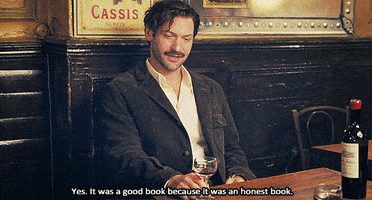


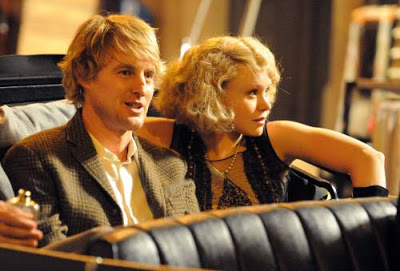


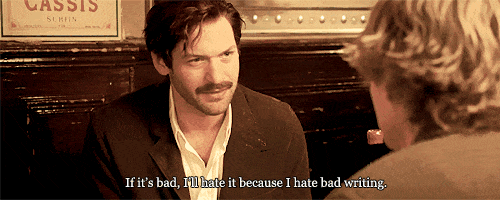
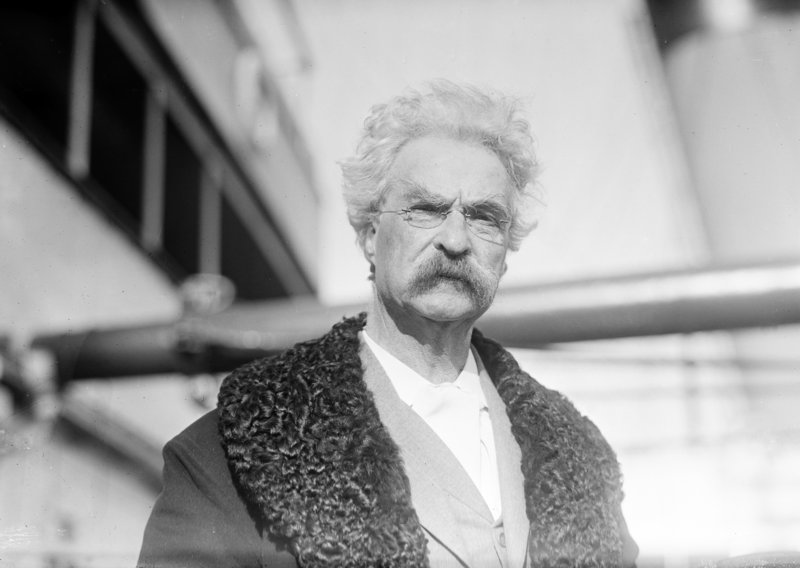


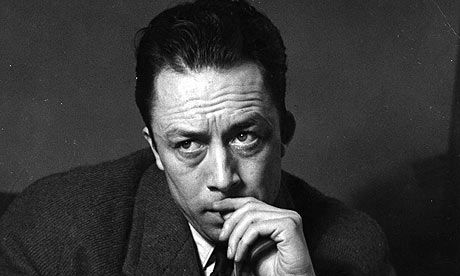
.jpg)
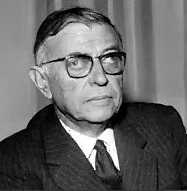


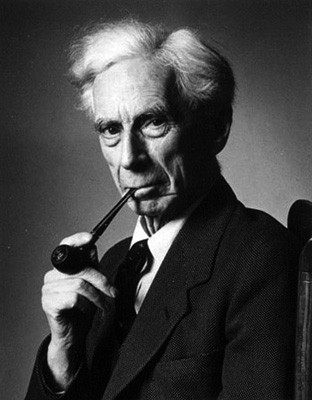





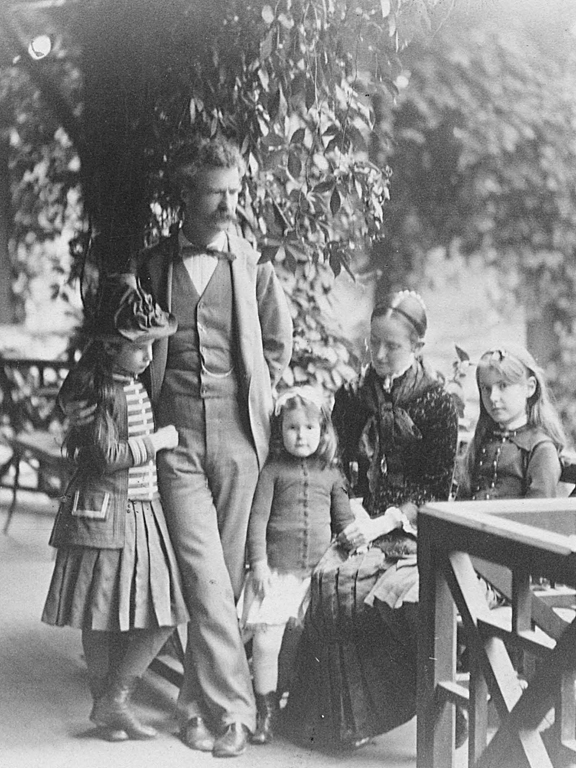


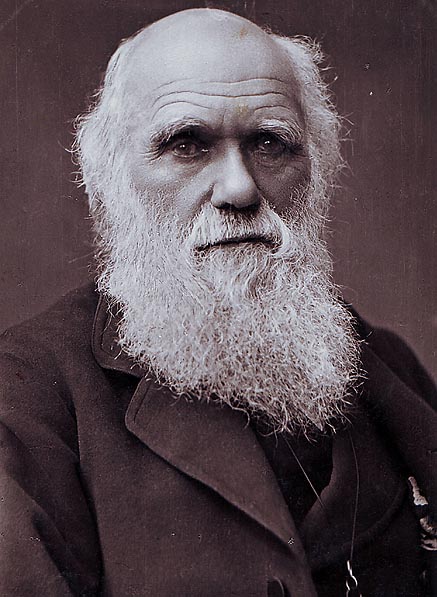


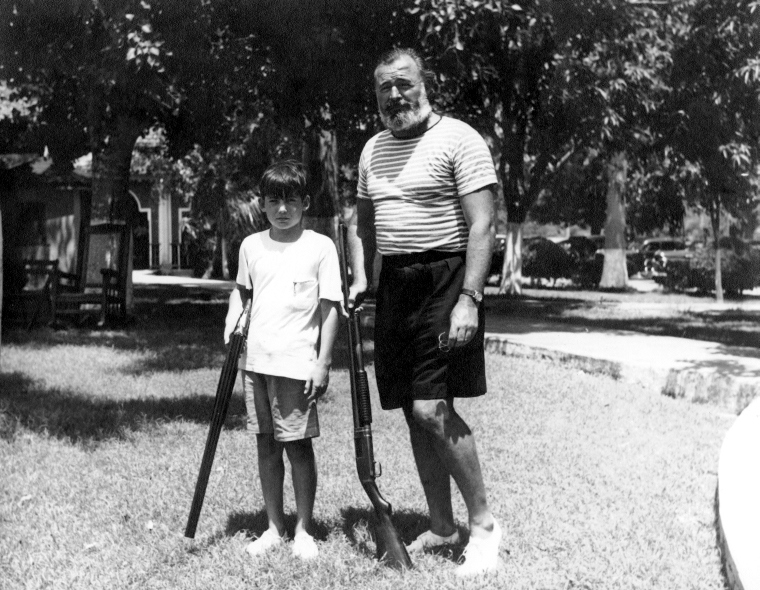

 Robert Capa [Ernest Hemingway and his son Gregory, Sun Valley, Idaho], October 1941. © Robert Capa/International Center of Photography/Magnum Photos.


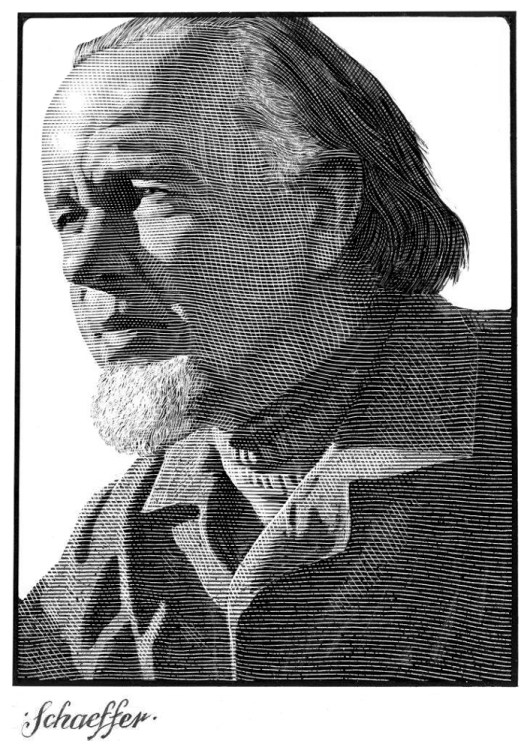


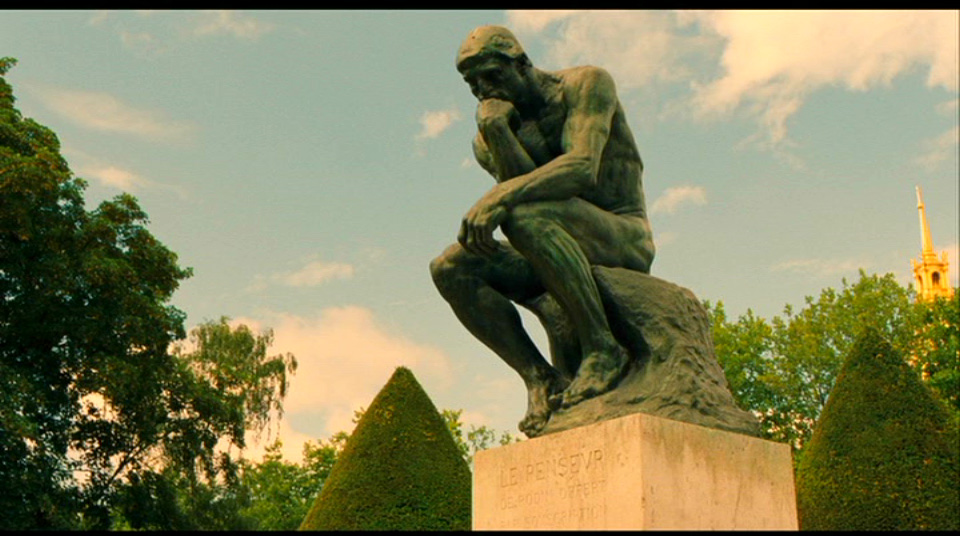


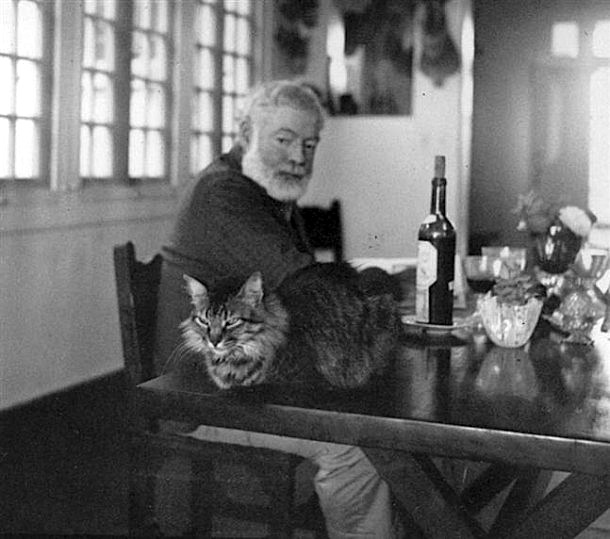
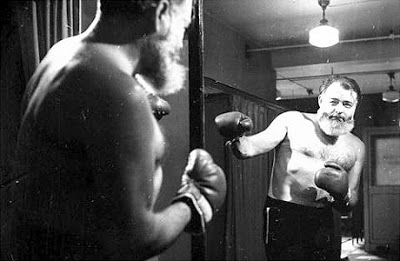







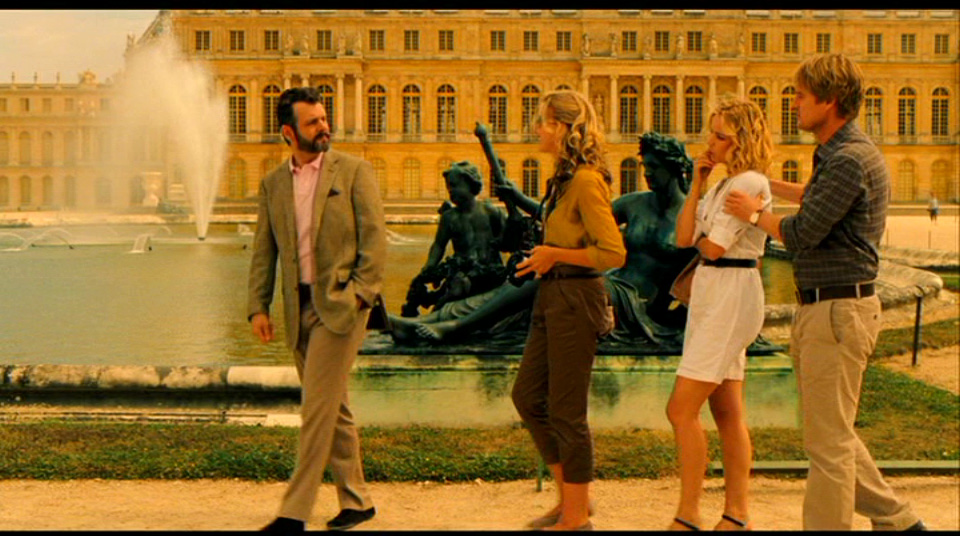




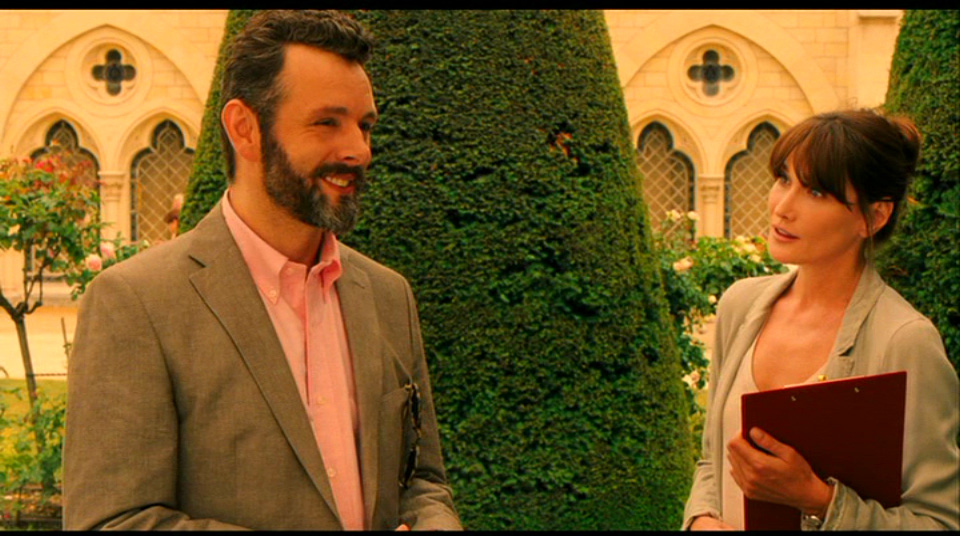
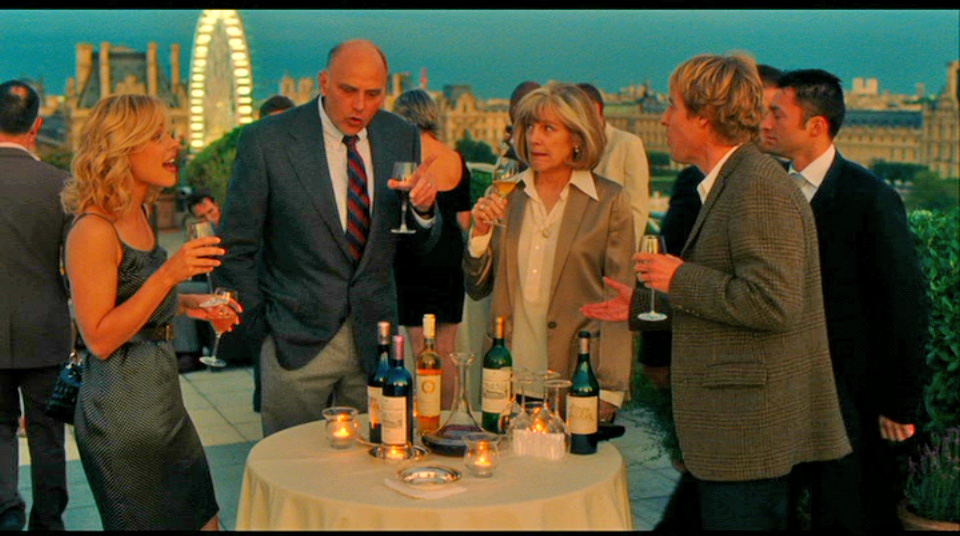
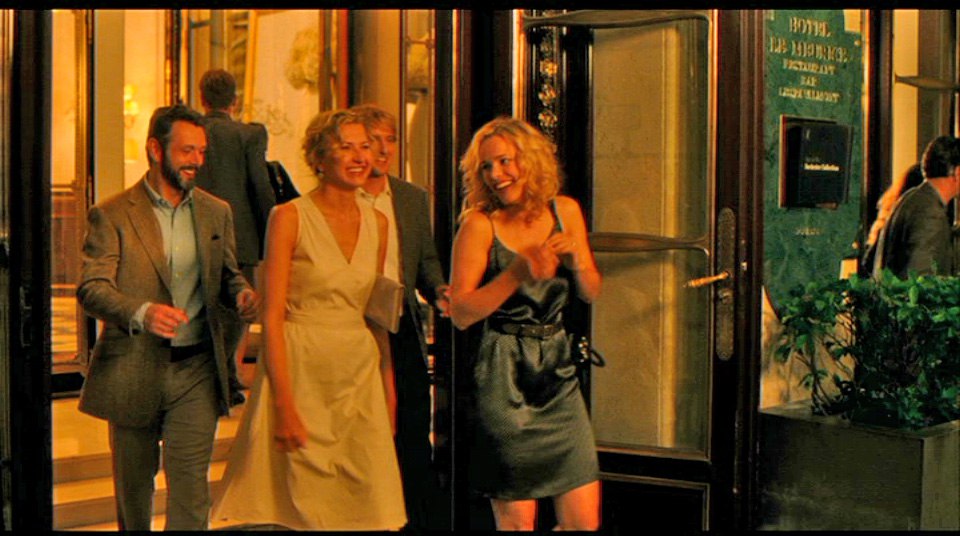



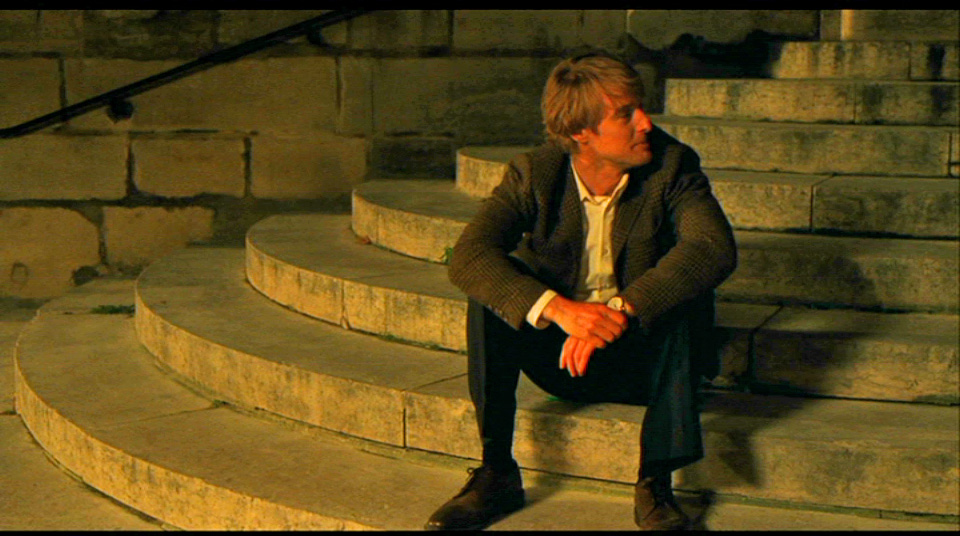

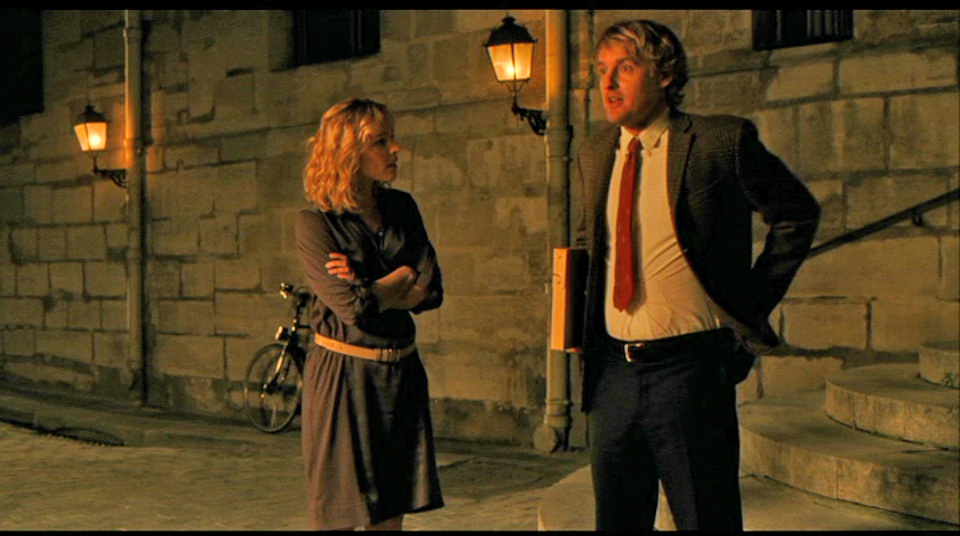

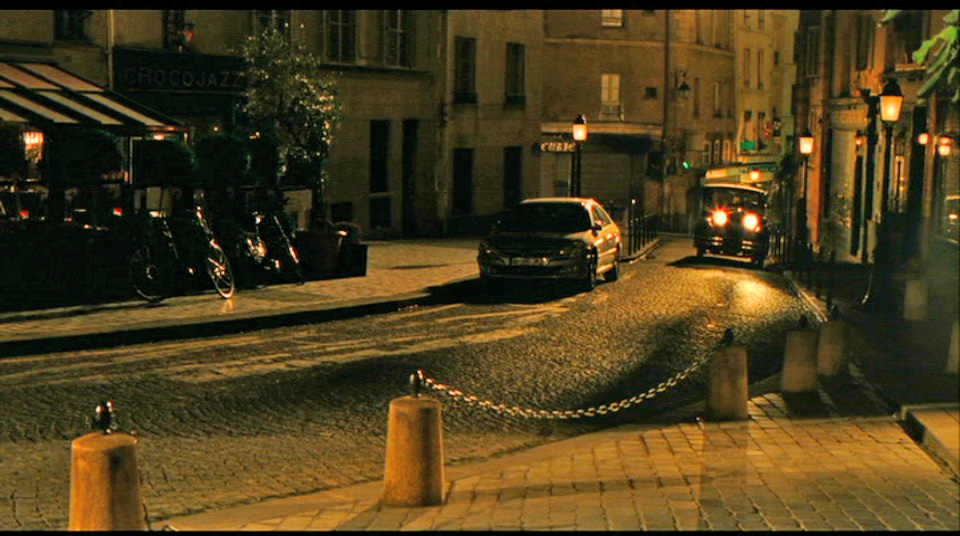

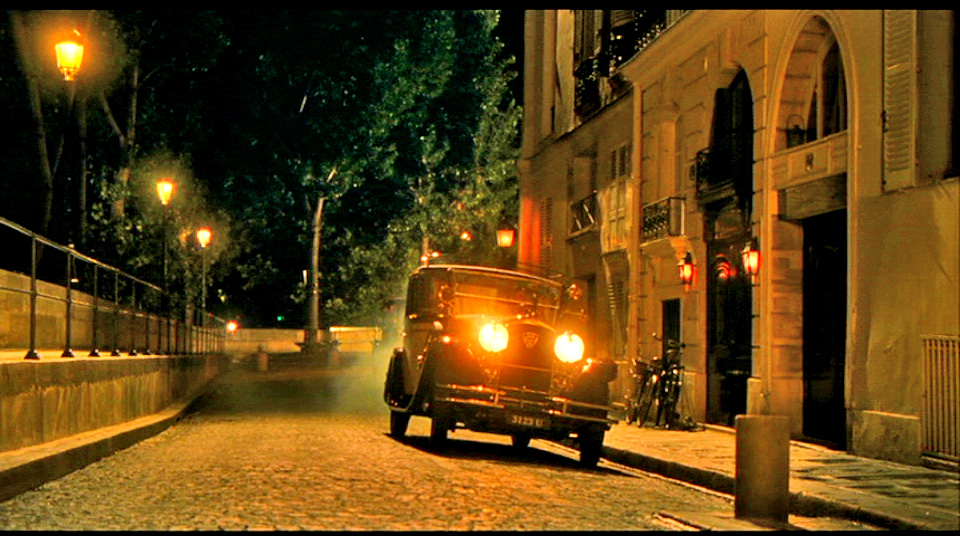

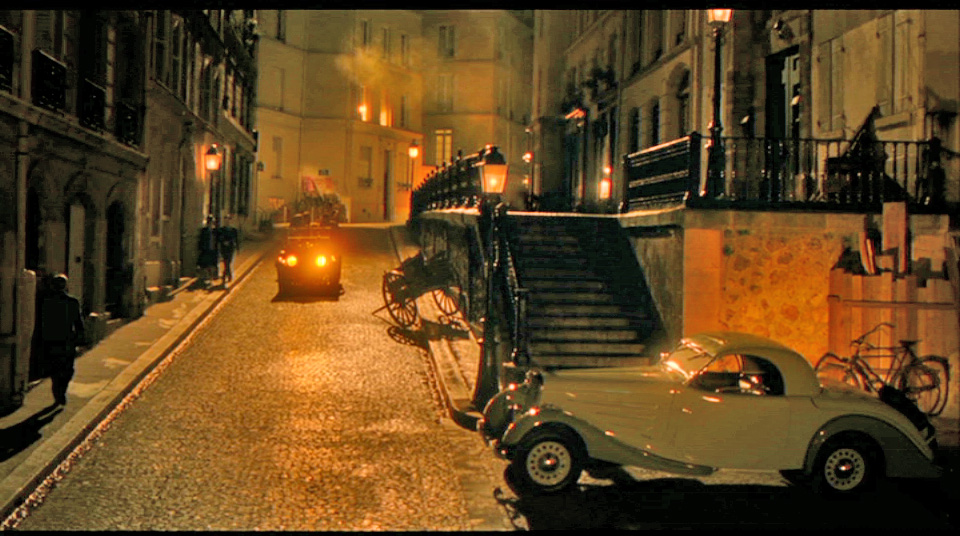

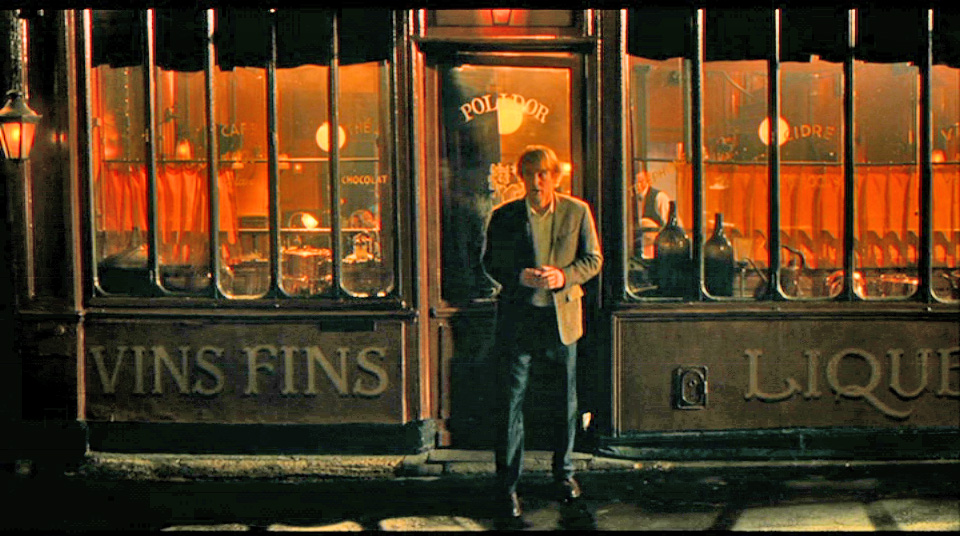

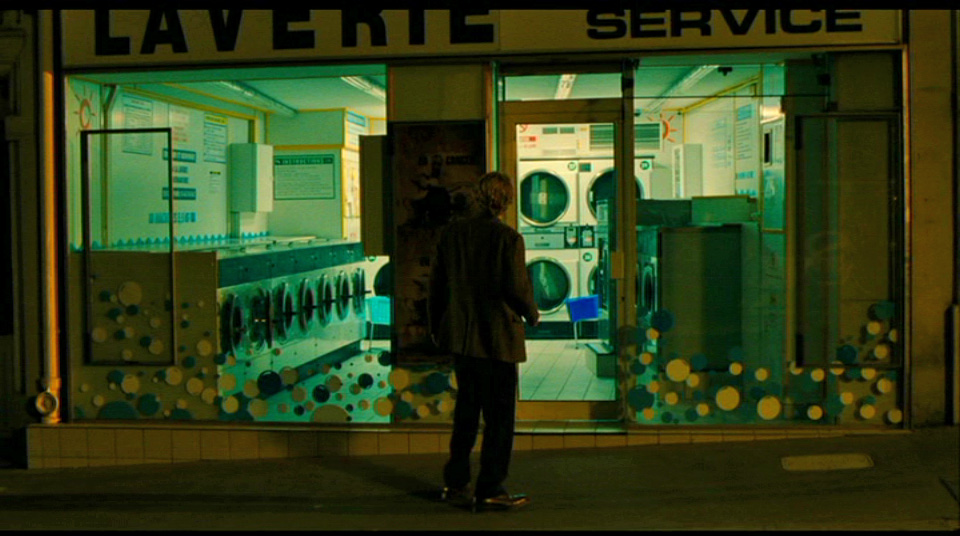

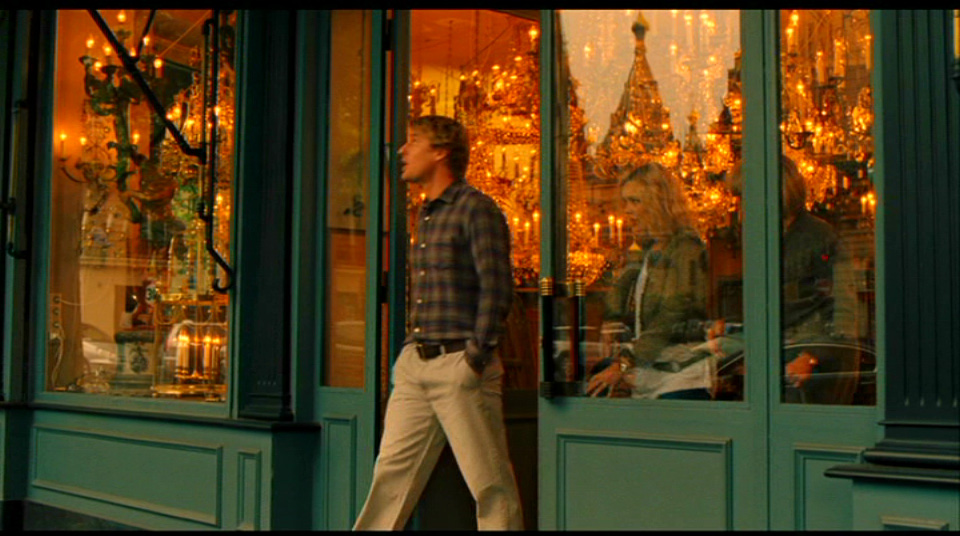

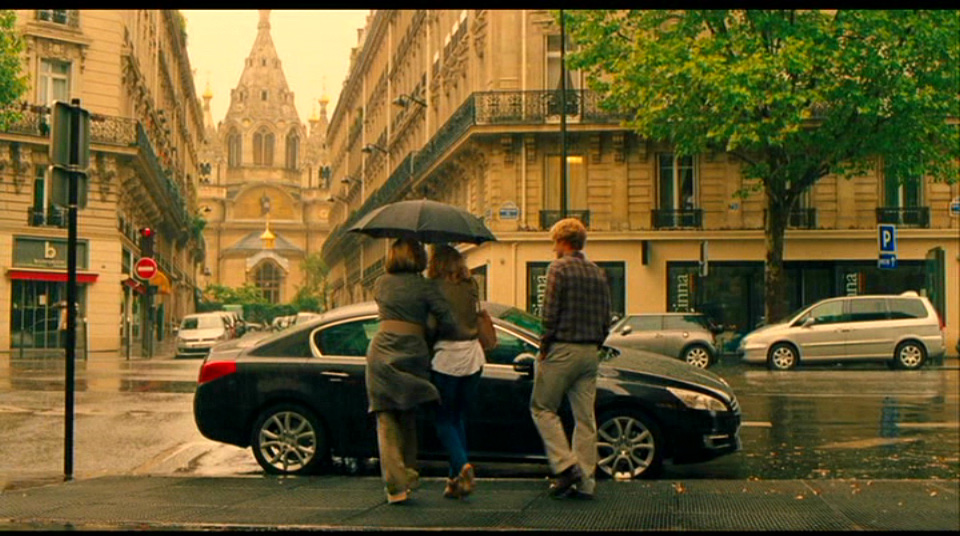

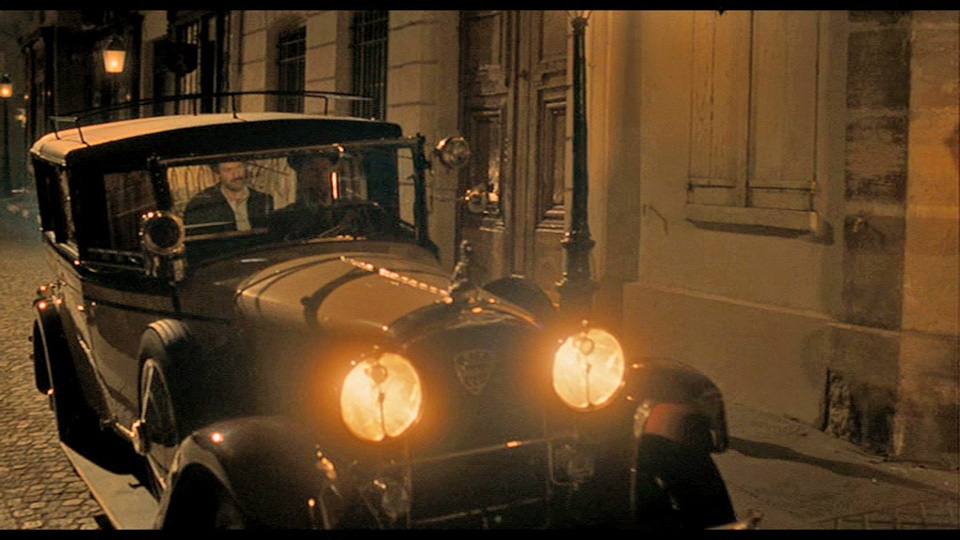
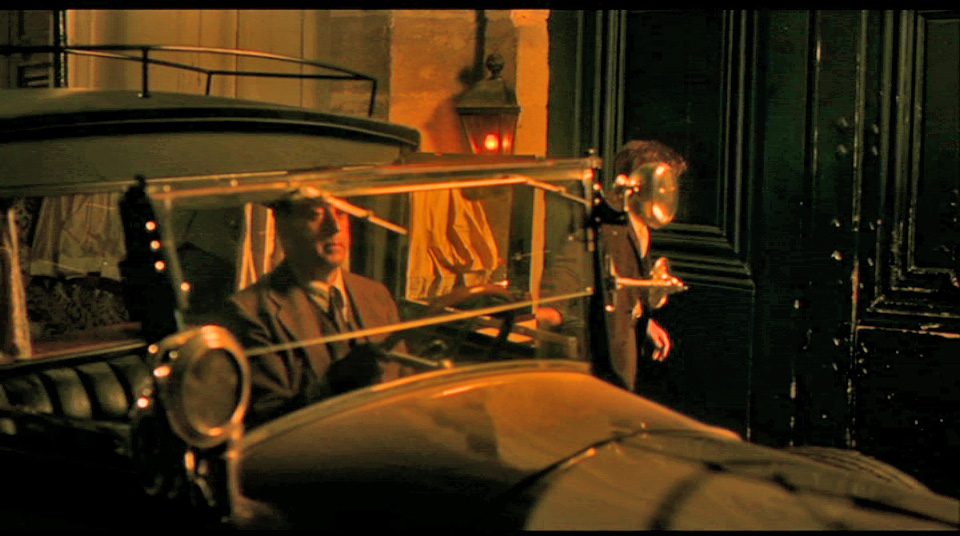



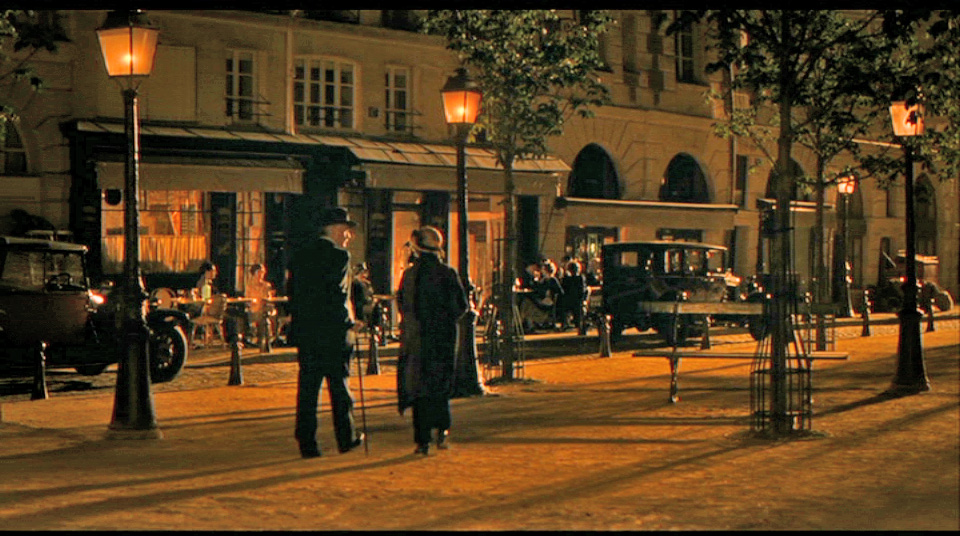
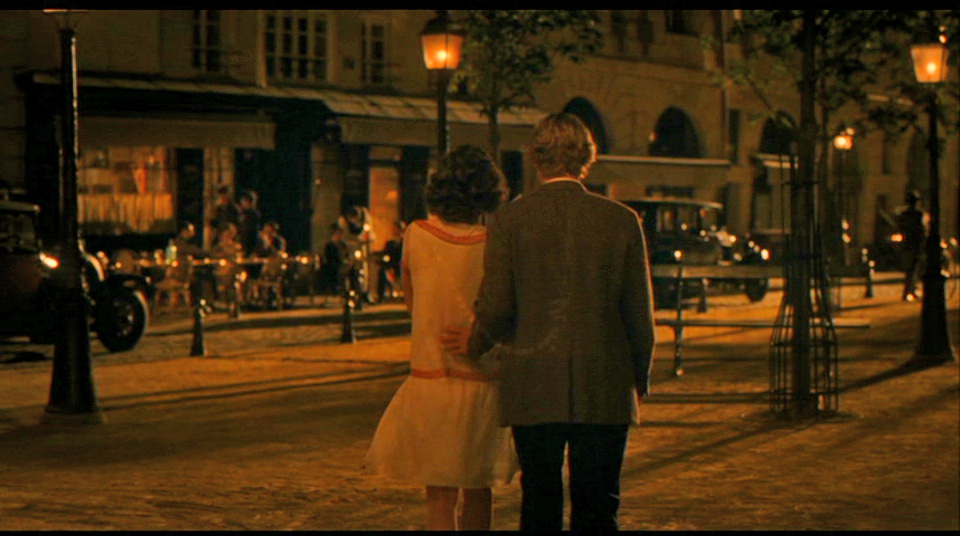



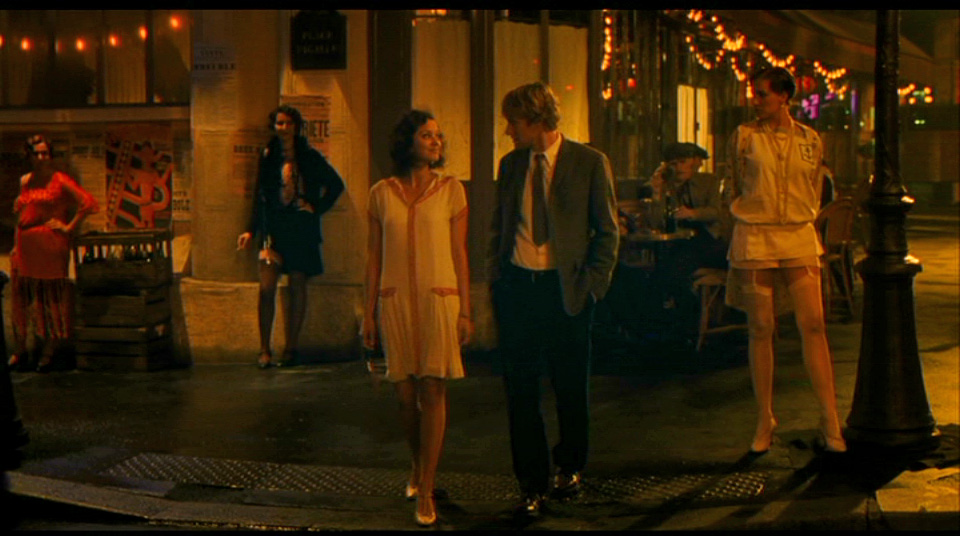

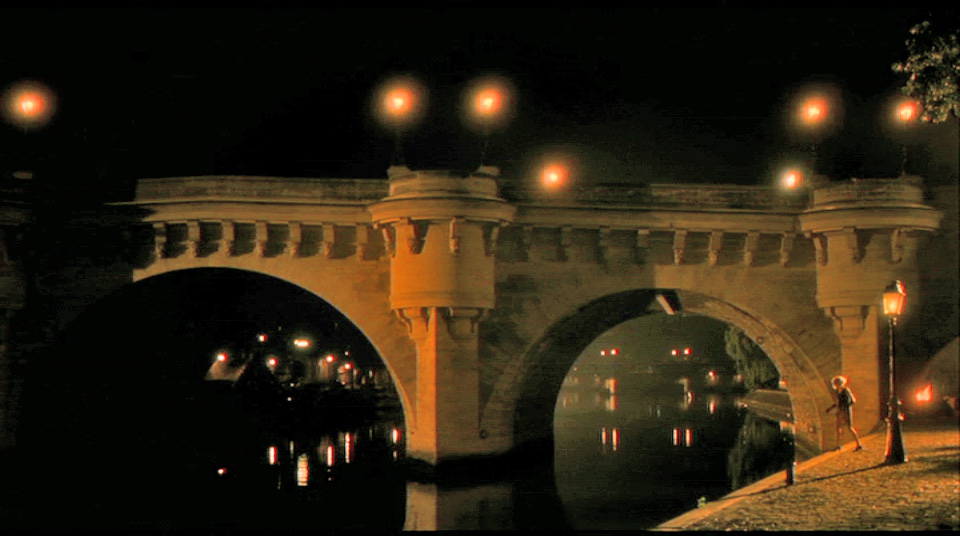



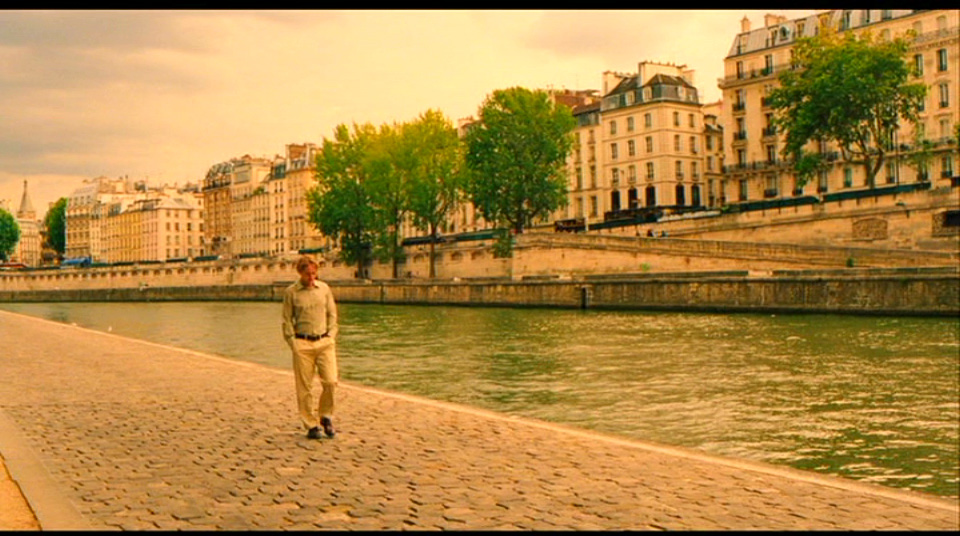





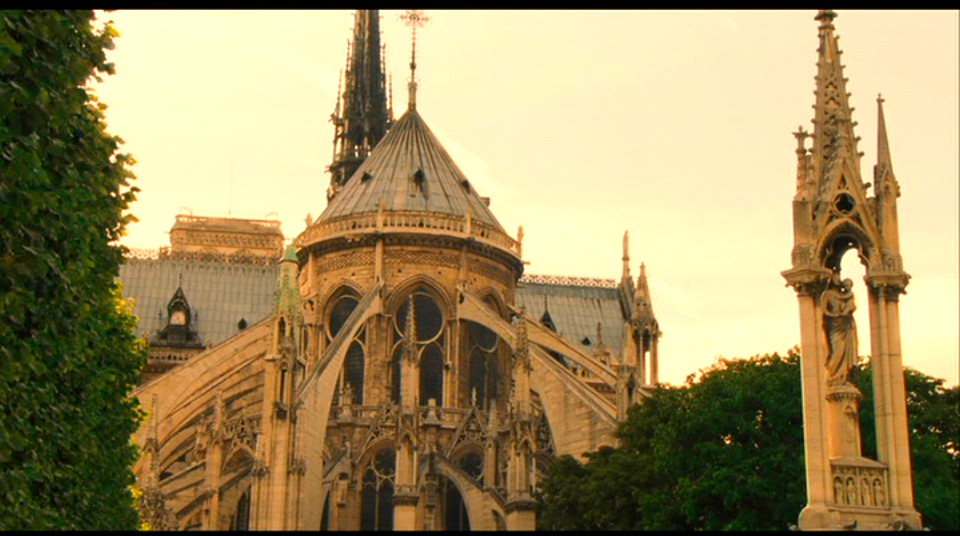
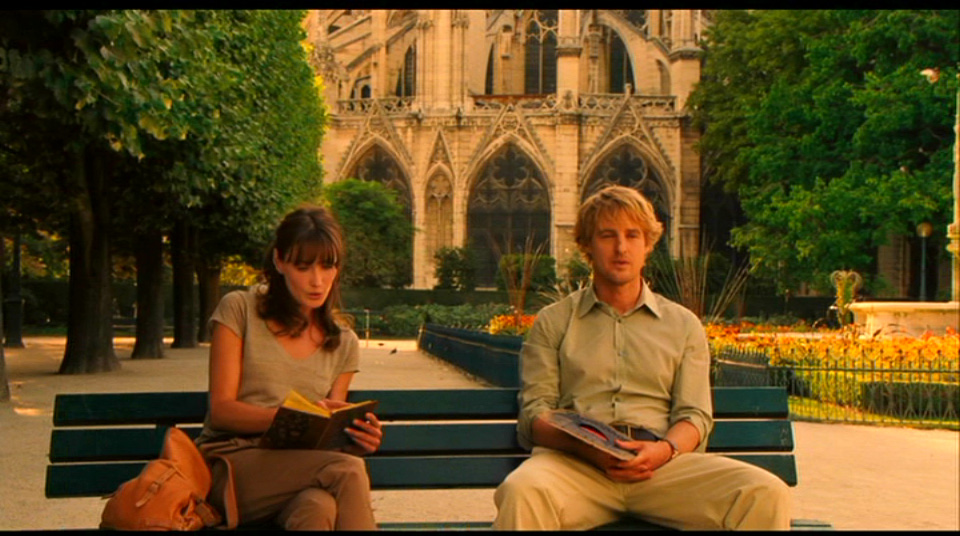

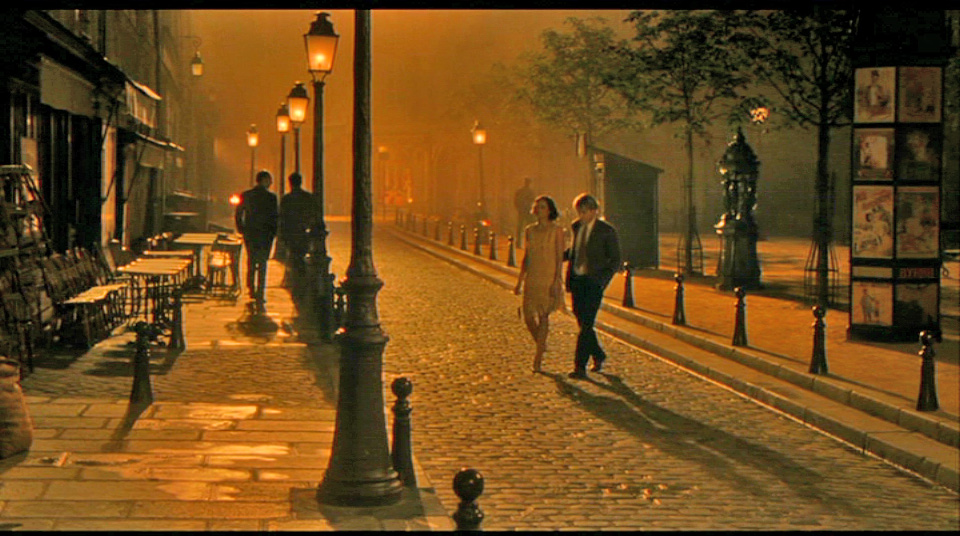
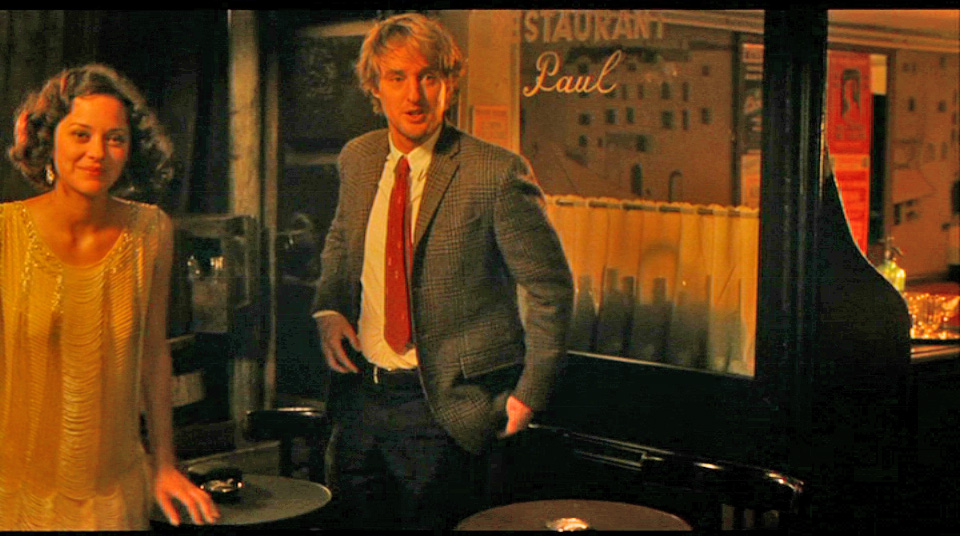

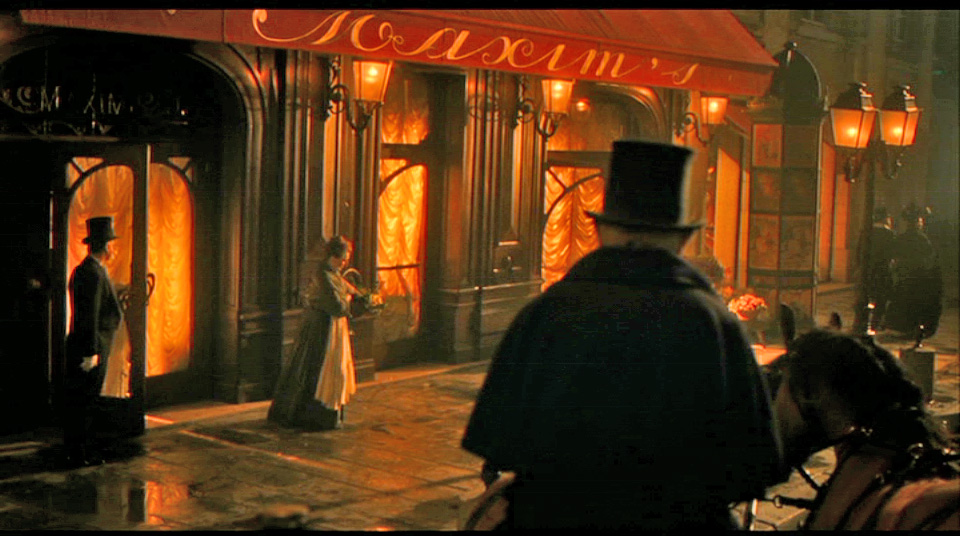







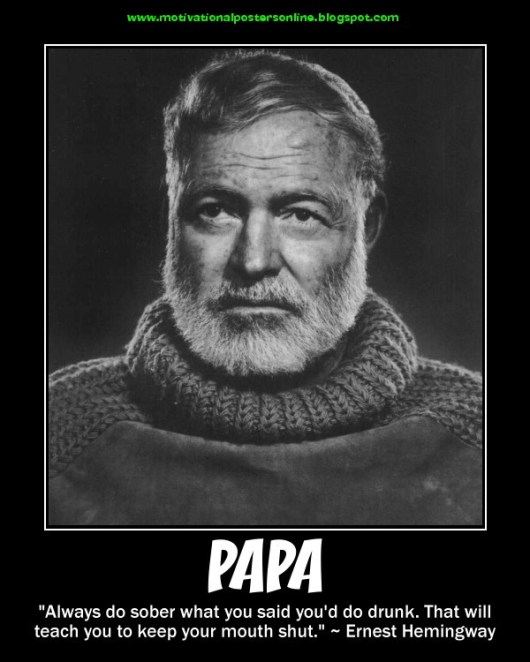


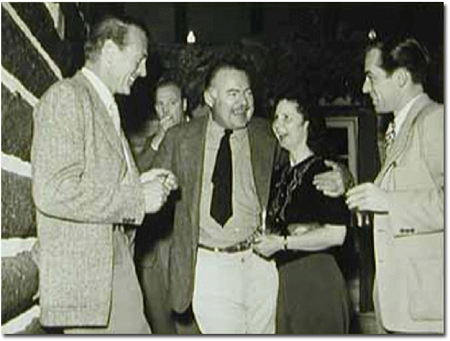


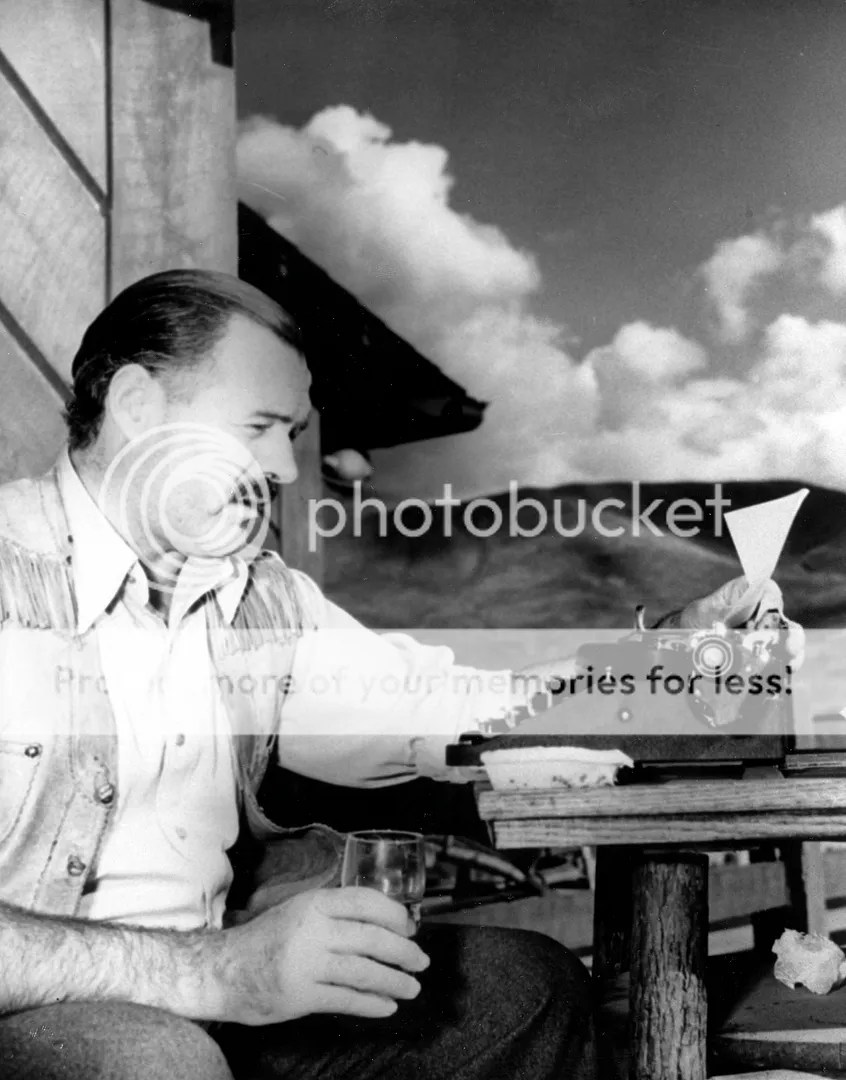


 The Daily Hatch