Rand Paul questions if US borrowing puts country on path to become Venezuela
Paul’s comments came just a day after the Senate passed President Biden’s $1.9 trillion COVID-19 relief bill
Sen. Rand Paul, one of the most outspoken Republicans about government spending, took to Twitter Sunday to ask if Congress’ borrowing is putting the U.S. economy on the same path as Venezuela’s.
“New 1,000,000 bolivar note in Venezuela worth 53 cents,” Paul tweeted, while linking to a Bloomberg report on hyperinflation in Caracas. “Will US be the next Venezuela with Congress borrowing over $6 trillion in one year?”
Paul’s comments came just a day after the Senate passed President Biden’s $1.9 trillion COVID-19 relief bill in a 50-49 vote. Sen. Mitt Romney, R-Utah, also expressed dismay over some of what he identified as wasteful spending in the bill, including providing billions in financial assistance to states that do not need it.
“We’re going to be asking the American people to allow us to borrow money from China and others, pass that on to our kids and grandkids so that we can send money to states like California and mine that don’t need the money,” Romney said. “That doesn’t make any sense at all.”
Venezuela’s economy has deteriorated due to, oil prices, the coronavirus and years of hyperinflation, according to Reuters. Its central bank issued a new banknote worth 1 million bolivars that will be worth 52 cents. The report said that many Venezuelans use U.S. currency to complete transactions.
—
March 31, 2021
President Biden c/o The White House
1600 Pennsylvania Avenue NW
Washington, DC 20500
Dear Mr. President,
Please explain to me if you ever do plan to balance the budget while you are President? I have written these things below about you and I really do think that you don’t want to cut spending in order to balance the budget. It seems you ever are daring the Congress to stop you from spending more.
“The credit of the United States ‘is not a bargaining chip,’ Obama said on 1-14-13. However, President Obama keeps getting our country’s credit rating downgraded as he raises the debt ceiling higher and higher!!!!
Washington Could Learn a Lot from a Drug Addict
Just spend more, don’t know how to cut!!! Really!!! That is not living in the real world is it?
Making more dependent on government is not the way to go!!
Why is our government in over 16 trillion dollars in debt? There are many reasons for this but the biggest reason is people say “Let’s spend someone else’s money to solve our problems.” Liberals like Max Brantley have talked this way for years. Brantley will say that conservatives are being harsh when they don’t want the government out encouraging people to be dependent on the government. The Obama adminstration has even promoted a plan for young people to follow like Julia the Moocher.
Imagine standing a baby carrot up next to the 25-story Stephens building in Little Rock. That gives you a picture of the impact on the national debt that federal spending in Arkansas on Medicaid expansion would have, while here at home expansion would give coverage to more than 200,000 of our neediest citizens, create jobs, and save money for the state.
Here’s the thing: while more than a billion dollars a year in federal spending would represent a big-time stimulus for Arkansas, it’s not even a drop in the bucket when it comes to the national debt.
Currently, the national debt is around $16.4 trillion. In fiscal year 2015, the federal government would spend somewhere in the neighborhood of $1.2 billion to fund Medicaid expansion in Arkansas if we say yes. That’s about 1/13,700th of the debt.
It’s hard to get a handle on numbers that big, so to put that in perspective, let’s get back to the baby carrot. Imagine that the height of the Stephens building (365 feet) is the $16 trillion national debt. That $1.2 billion would be the length of a ladybug. Of course, we’re not just talking about one year if we expand. Between now and 2021, the federal government projects to contribute around $10 billion. The federal debt is projected to be around $25 trillion by then, so we’re talking about 1/2,500th of the debt. Compared to the Stephens building? That’s a baby carrot.
______________
Here is how it will all end if everyone feels they should be allowed to have their “baby carrot.”
How sad it is that liberals just don’t get this reality.
While living in Europe in the 1760s, Franklin observed: “in different countries … the more public provisions were made for the poor, the less they provided for themselves, and of course became poorer. And, on the contrary, the less was done for them, the more they did for themselves, and became richer.”
Alexander Fraser Tytler, Lord Woodhouselee(15 October 1747 – 5 January 1813) was a Scottish lawyer, writer, and professor. Tytler was also a historian, and he noted, “A democracy cannot exist as a permanent form of government. It can only exist until the majority discovers it can vote itself largess out of the public treasury. After that, the majority always votes for the candidate promising the most benefits with the result the democracy collapses because of the loose fiscal policy ensuing, always to be followed by a dictatorship, then a monarchy.”
[Jefferson affirms that the main purpose of society is to enable human beings to keep the fruits of their labor.— TGW]
To take from one, because it is thought that his own industry and that of his fathers has acquired too much, in order to spare to others, who, or whose fathers have not exercised equal industry and skill, is to violate arbitrarily the first principle of association, “the guarantee to every one of a free exercise of his industry, and the fruits acquired by it.” If the overgrown wealth of an individual be deemed dangerous to the State, the best corrective is the law of equal inheritance to all in equal degree; and the better, as this enforces a law of nature, while extra taxation violates it.
[From Writings of Thomas Jefferson, ed. Albert E. Bergh (Washington: Thomas Jefferson Memorial Association, 1904), 14:466.]
_______
Jefferson pointed out that to take from the rich and give to the poor through government is just wrong. Franklin knew the poor would have a better path upward without government welfare coming their way. Milton Friedman’s negative income tax is the best method for doing that and by taking away all welfare programs and letting them go to the churches for charity.
_____________
_________
Thank you so much for your time. I know how valuable it is. I also appreciate the fine family that you have and your commitment as a father and a husband.
Sincerely,
Everette Hatcher III, 13900 Cottontail Lane, Alexander, AR 72002, ph 501-920-5733
We got to act fast and get off this path of socialism. Morning Bell: Welfare Spending Shattering All-Time Highs Robert Rector and Amy Payne October 18, 2012 at 9:03 am It’s been a pretty big year for welfare—and a new report shows welfare is bigger than ever. The Obama Administration turned a giant spotlight […]
We need to cut Food Stamp program and not extend it. However, it seems that people tell the taxpayers back home they are going to Washington and cut government spending but once they get up there they just fall in line with everyone else that keeps spending our money. I am glad that at least […]
Government Must Cut Spending Uploaded by HeritageFoundation on Dec 2, 2010 The government can cut roughly $343 billion from the federal budget and they can do so immediately. __________ Liberals argue that the poor need more welfare programs, but I have always argued that these programs enslave the poor to the government. Food Stamps Growth […]
Milton Friedman – The Negative Income Tax Published on May 11, 2012 by LibertyPen In this 1968 interview, Milton Friedman explained the negative income tax, a proposal that at minimum would save taxpayers the 72 percent of our current welfare budget spent on administration. http://www.LibertyPen.com Source: Firing Line with William F Buckley Jr. ________________ Milton […]
Dan Mitchell Commenting on Obama’s Failure to Propose a Fiscal Plan Published on Aug 16, 2012 by danmitchellcato No description available. ___________ After the Welfare State Posted by David Boaz Cato senior fellow Tom G. Palmer, who is lecturing about freedom in Slovenia and Tbilisi this week, asked me to post this announcement of his […]
Is President Obama gutting the welfare reform that Bill Clinton signed into law? Morning Bell: Obama Denies Gutting Welfare Reform Amy Payne August 8, 2012 at 9:15 am The Obama Administration came out swinging against its critics on welfare reform yesterday, with Press Secretary Jay Carney saying the charge that the Administration gutted the successful […]
Thomas Sowell – Welfare Welfare reform was working so good. Why did we have to abandon it? Look at this article from 2003. The Continuing Good News About Welfare Reform By Robert Rector and Patrick Fagan, Ph.D. February 6, 2003 Six years ago, President Bill Clinton signed legislation overhauling part of the nation’s welfare system. […]
Uploaded by ForaTv on May 29, 2009 Complete video at: http://fora.tv/2009/05/18/James_Bartholomew_The_Welfare_State_Were_In Author James Bartholomew argues that welfare benefits actually increase government handouts by ‘ruining’ ambition. He compares welfare to a humane mousetrap. —– Welfare reform was working so good. Why did we have to abandon it? Look at this article from 2003. In the controversial […]
Thomas Sowell If the welfare reform law was successful then why change it? Wasn’t Bill Clinton the president that signed into law? Obama Guts Welfare Reform Robert Rector and Kiki Bradley July 12, 2012 at 4:10 pm Today, the Obama Department of Health and Human Services (HHS) released an official policy directive rewriting the welfare […]
I have been writing President Obama letters and have not received a personal response yet. (He reads 10 letters a day personally and responds to each of them.) However, I did receive a form letter in the form of an email on July 10, 2012. I don’t know which letter of mine generated this response so I have […]
Ep. 4 – From Cradle to Grave [6/7]. Milton Friedman’s Free to Choose (1980)
March 7, 2021
President Biden c/o The White House
1600 Pennsylvania Avenue NW
Washington, DC 20500
Dear Mr. President,
Thank you for taking time to have your office try and get a pulse on what is going on out here in the country. I wanted to let you know what I think about the minimum wage increase you have proposed for the whole country and I wanted to quote Milton Friedman who you are familiar with and you made it clear in July that you didn’t care for his views!Let me challenge you to take a closer look at what he had to say!
In 1966, Milton Friedman wrote an op-ed for Newsweekentitled “Minimum Wage Rates.” In it, he argued “that the minimum-wage law is the most anti-Negro law on our statute books.” He was, of course, referring to the then-present era, after the far more explicitly racist laws from the slavery and segregation eras of United States history had already been done away with. But his observation about the racist effects of minimum wage laws can be traced back to the nineteenth century, and they continue to have a disproportionately deleterious effect on African-Americans into the present day.
The earliest of such laws were regulations passed in regards to the railroad industry. At the end of the nineteenth century, as Dr. Walter Williams points out, “On some railroads — most notably in the South — blacks were 85–90 percent of the firemen, 27 percent of the brakemen, and 12 percent of the switchmen.”1
The Brotherhood of Locomotive Firemen, unable to block railroad companies from hiring the non-unionized black workers, called for regulations preventing the employment of blacks. In 1909, a compromise was offered: a minimum wage, which was to be imposed equally on all races.
To the pro-minimum wage advocate, this may superficially seem like an anti-racist policy. During this time, with racism still rampant throughout the United States, blacks were only able to enjoy such high levels of employment by accepting lower wages than their white counterparts. These wage-gaps at the time genuinely were the product of racist sentiment.
But this new wage rule, of course, did not eliminate the racism of nineteenth-century employers. Instead, it displaced their racism at the expense of black workers. One white union member at the time celebrated the new rule for removing “the incentive for employing the Negro.”2 This early minimum wage rule was explicitly put in place to prevent African-Americans from finding employment, and it was successful in this goal.
In the 1930s, racial views had hardly improved, if at all. Despite this, the unemployment rate among blacks was actually marginally lower than that of whites.3 Like the railroad workers, this was due to their willingness to accept lower wages than whites. But as infuriating as the employer racism at the time might be, the 1930s wage laws should incite even more anger.
In 1931, Congress passed the Davis-Bacon Act, requiring uniform wages for any workers employed in federally funded public works projects. In 1933, the National Industrial Recovery Act was signed into law, mandating industry-specific wages throughout the economy. In 1938, the Fair Labor Standards Act — the only one of the three to remain permanently on the books — took effect, initially imposing a federal minimum wage for any worker engaged in interstate commerce.
All of these laws served to price African-Americans out of the job market. Rather than forcing employers to pay non-racist wages, it simply forced blacks to shift from suffering race-motivated wages to suffering race-motivated unemployment.
The industries that were not governed by minimum wage laws demonstrate the market’s propensity to raise the relative income of discriminated people. In the 1920s, for example, popular black performers were starring in Broadway plays alongside whites. In the 1940s, Jackie Robinson broke the color barrier in Major League Baseball, despite the racism in professional sports. Meanwhile, blacks in civilian and government jobs were being pushed out of their industries by wage floors.
By the 1960s, many African-Americans were employed as farmers — at least partly due to this being one of the few remaining fields of work that was not yet subject to wage regulations. This changed in 1967, when the government extended the minimum wage laws to American farmers as part of the “War on Poverty.” Black farmers who were accustomed to making a modest $3.50 per day were now legally required to be paid $1.00 per hour — a tremendous increase in wages.
The effect of this law was immediate and undeniable. An estimated 25,000 farm workers were put out of work in the Mississippi Delta region alone.4 Black farmers were not oblivious to the cause-and-effect at play. “That dollar an hour ain’t worth nothing,” said the wife of one day-laborer. “It would have been better if it had been 50 cents a day if you work every day.”5 Fifty cents per day, of course, was a lower wage than what her husband would have been earning prior to the law. Her point was clear: the federal minimum wage destroyed their ability to earn a living.
Instead of raising the wages of the predominantly-black farmers, the new law sped-up the move toward mechanization and ushered in the use of chemical weed killers instead of the previously more economical human weed pullers. Meanwhile, black migration out of these farmlands occurred by the thousands; the New York Timesin 1968 called it the “Negro Exodus.”
Whatever your feelings on the status of racism in America today, it is difficult to argue that the United States is actually more racist than it was during the Jim Crow era. In that time span, the country has gone from making African-Americans drink from different water fountains to electing the first black president. Yet, despite this distinct improvement, the unemployment rate of black teens is roughly double that of whites. In 1948, by contrast, the unemployment rate among teenagers was the same between the races.6 Despite the widespread racism remaining in the country following the emancipation of slaves, the rise of a black middle-class started to emerge quickly and continued for decades. But thanks to meddlesome laws passed by presumably well-intentioned bureaucrats, the government has only served to stifle this upward trajectory.
1.Walter E. Williams, South Africa’s War Against Capitalism (New York: Praeger, 1989), p. 74.
2.Sterling D. Spero and Abram Harris, The Black Worker (New York: Kennikat Press, 1931), p. 291.
3.Thomas Sowell, Basic Economics: A Common Sense Guide to the Economy, 3rd ed. (New York: Basic Books, 2007), p. 250.
4.James C. Cobb, “Somebody Done Nailed Us on the Cross: Federal Farm and Welfare Policy and the Civil Rights Movement in the Mississippi Delta,” The Journal of American History (December 1990): 912–36.
Chris Calton is a 2018 Mises Institute Research Fellow and an economic historian. He is writer and host of the Historical Controversies podcast.
_____________
Thank you so much for your time. I know how valuable it is. I also appreciate the fine family that you have and your commitment as a father and a husband.
Sincerely,
Everette Hatcher III, 13900 Cottontail Lane, Alexander, AR 72002, ph 501-920-5733
Our federal debt now amounts to more than $81,000 for every single person in the country. (Photo: Pavlo Conchar/SOPA Images/LightRocket/Getty Images)
Did you know America is going bankrupt? Most people don’t. Maybe the saddest part about our country’s state of affairs is that all our vitriol and dysfunction has come at a time when we aren’t even addressing our biggest problems.
It would be one thing if America collectively decided we have to be honest about where we are as a country and we were in the middle of a charged debate about how to fix it. Instead, we are fighting about trivial things while pretty much everyone in the country, on all sides of the political spectrum, has decided our real problems are so bad we may as well ignore them.
Have you ever had a friend who’s had some horrible, embarrassing event in their life? The last thing you want to do is mention it. That’s America and our debt problem. It’s so bad that we don’t talk about it anymore.
It was a full 10 years ago that we were so focused on our debt that then-President Barack Obama was forced to set up a national commission to deal with it.
Want to keep up with the 24/7 news cycle? Want to know the most important stories of the day for conservatives? Need news you can trust? Subscribe to The Daily Signal’s email newsletter. Learn more >>
The bipartisan commission led by former Bill Clinton chief of staff Erskine Bowles and former Republican Sen. Alan Simpson came up with a series of recommendations, including tax hikes and reforms to our entitlement programs. They were attacked by both the right and left, and none of the solutions were enacted into law, but at least we were trying.
When the Bowles-Simpson commission was formed, America was about $13 trillion in debt. Today, we owe more than double that, more than $26 trillion.
Those numbers are so big nobody understands them. To put it in perspective, our entire economic output in 2020 was $21 trillion. If America could magically not spend a dime—nobody bought anything, including food or other staples—and we put it all toward paying off our federal debt for an entire year, we still wouldn’t pay it off.
In more personal terms, our federal debt now amounts to more than $81,000 for every single person in the country, or over $227,000 for the average household in America.
If the problem is twice as bad as it was 10 years ago, why don’t we even discuss it anymore? It’s as if we are so close to the iceberg that it’s too late to avoid it. Let’s just keep the band playing and enjoy things while we can. It’s all going to be our kids’ problem.
This is, of course, a fundamentally anti-American sentiment. The goal of leaving things better for your kids is as American as apple pie. We are certainly not doing that anymore.
Our national desire to wish our problems away is so severe that we have even come up with an intellectual framework for it. Modern Monetary Theory, or MMT, is the belief that deficits and debt don’t really matter for a sovereign country that can print its own currency. Need more money? You just keep printing more. It’s like magic. The bill never comes due.
MMT proponents ignore or explain away the downside to the constant printing of money and issuance of debt, including our creditors losing faith and no longer buying our bonds, hyperinflation, and the consequences for the dollar as an exchange traded currency. Despite these huge flaws, it’s amazing the extent to which MMT has caught on as a convenient political excuse to continue ignoring our imminent debt disaster.
What will happen in a debt crisis; why are we ignoring this obvious and impending catastrophe; and what should we do about it?
At some point, as we continue to borrow money, the interest we pay on our debt will be so high we will not be able to afford the rest of our budget. The solution will be to borrow more.
As the borrowing binge grows, those buying our bonds will grow worried and demand a higher return. This, in turn, will create a vicious debt cycle, which has already happened in many countries around the world. The result is catastrophic reductions in spending and increases in taxes to try to satisfy creditors to keep the money flowing.
The only reason we haven’t seen it yet in America is we are such an economically powerful country that our creditors have not yet lost faith in our ability to pay it off. If that day comes—and unless we make changes, it eventually will—the crisis is going to hurt all Americans.
We are ignoring our looming debt crisis because it’s not a winner politically. Both parties contributed to the problem.
The Bush, Obama, Trump, and Biden administrations will all be to blame. Republicans, traditionally the party of fiscal responsibility, have lost all credibility on the issue. After shutting down the government over spending under Obama, they spent happily at record levels under President Donald Trump.
It’s attractive for politicians to keep taxes low and spending high. Each of our last four presidential administrations has benefited from this dynamic.
Wall Street and global business, which dominates Washington policymaking, have also benefited greatly. These corporate actors care about their next financial quarter a lot more than our country’s state of affairs 10 or more years down the road.
This period will be looked upon by historians as the saddest time in our history: a once great country behaving so selfishly and with such short-term interests that they sold their children’s futures away with barely any debate.
The biggest cop-out in Washington is the presidential commission. It rarely accomplishes anything. Yet our situation is so bad that another bipartisan commission may be our best bet.
The commission should include both corporatists and populists. As much of a cop-out as this is, we are not prepared to begin debating real solutions (which will involve some pain). Shining a light back on the problem may be all we can accomplish today. We should start.
—
March 31, 2021
President Biden c/o The White House
1600 Pennsylvania Avenue NW
Washington, DC 20500
Dear Mr. President,
Please explain to me if you ever do plan to balance the budget while you are President? I have written these things below about you and I really do think that you don’t want to cut spending in order to balance the budget. It seems you ever are daring the Congress to stop you from spending more.
“The credit of the United States ‘is not a bargaining chip,’ Obama said on 1-14-13. However, President Obama keeps getting our country’s credit rating downgraded as he raises the debt ceiling higher and higher!!!!
Washington Could Learn a Lot from a Drug Addict
Just spend more, don’t know how to cut!!! Really!!! That is not living in the real world is it?
Making more dependent on government is not the way to go!!
Why is our government in over 16 trillion dollars in debt? There are many reasons for this but the biggest reason is people say “Let’s spend someone else’s money to solve our problems.” Liberals like Max Brantley have talked this way for years. Brantley will say that conservatives are being harsh when they don’t want the government out encouraging people to be dependent on the government. The Obama adminstration has even promoted a plan for young people to follow like Julia the Moocher.
Imagine standing a baby carrot up next to the 25-story Stephens building in Little Rock. That gives you a picture of the impact on the national debt that federal spending in Arkansas on Medicaid expansion would have, while here at home expansion would give coverage to more than 200,000 of our neediest citizens, create jobs, and save money for the state.
Here’s the thing: while more than a billion dollars a year in federal spending would represent a big-time stimulus for Arkansas, it’s not even a drop in the bucket when it comes to the national debt.
Currently, the national debt is around $16.4 trillion. In fiscal year 2015, the federal government would spend somewhere in the neighborhood of $1.2 billion to fund Medicaid expansion in Arkansas if we say yes. That’s about 1/13,700th of the debt.
It’s hard to get a handle on numbers that big, so to put that in perspective, let’s get back to the baby carrot. Imagine that the height of the Stephens building (365 feet) is the $16 trillion national debt. That $1.2 billion would be the length of a ladybug. Of course, we’re not just talking about one year if we expand. Between now and 2021, the federal government projects to contribute around $10 billion. The federal debt is projected to be around $25 trillion by then, so we’re talking about 1/2,500th of the debt. Compared to the Stephens building? That’s a baby carrot.
______________
Here is how it will all end if everyone feels they should be allowed to have their “baby carrot.”
How sad it is that liberals just don’t get this reality.
While living in Europe in the 1760s, Franklin observed: “in different countries … the more public provisions were made for the poor, the less they provided for themselves, and of course became poorer. And, on the contrary, the less was done for them, the more they did for themselves, and became richer.”
Alexander Fraser Tytler, Lord Woodhouselee(15 October 1747 – 5 January 1813) was a Scottish lawyer, writer, and professor. Tytler was also a historian, and he noted, “A democracy cannot exist as a permanent form of government. It can only exist until the majority discovers it can vote itself largess out of the public treasury. After that, the majority always votes for the candidate promising the most benefits with the result the democracy collapses because of the loose fiscal policy ensuing, always to be followed by a dictatorship, then a monarchy.”
[Jefferson affirms that the main purpose of society is to enable human beings to keep the fruits of their labor.— TGW]
To take from one, because it is thought that his own industry and that of his fathers has acquired too much, in order to spare to others, who, or whose fathers have not exercised equal industry and skill, is to violate arbitrarily the first principle of association, “the guarantee to every one of a free exercise of his industry, and the fruits acquired by it.” If the overgrown wealth of an individual be deemed dangerous to the State, the best corrective is the law of equal inheritance to all in equal degree; and the better, as this enforces a law of nature, while extra taxation violates it.
[From Writings of Thomas Jefferson, ed. Albert E. Bergh (Washington: Thomas Jefferson Memorial Association, 1904), 14:466.]
_______
Jefferson pointed out that to take from the rich and give to the poor through government is just wrong. Franklin knew the poor would have a better path upward without government welfare coming their way. Milton Friedman’s negative income tax is the best method for doing that and by taking away all welfare programs and letting them go to the churches for charity.
_____________
_________
Thank you so much for your time. I know how valuable it is. I also appreciate the fine family that you have and your commitment as a father and a husband.
Sincerely,
Everette Hatcher III, 13900 Cottontail Lane, Alexander, AR 72002, ph 501-920-5733
We got to act fast and get off this path of socialism. Morning Bell: Welfare Spending Shattering All-Time Highs Robert Rector and Amy Payne October 18, 2012 at 9:03 am It’s been a pretty big year for welfare—and a new report shows welfare is bigger than ever. The Obama Administration turned a giant spotlight […]
We need to cut Food Stamp program and not extend it. However, it seems that people tell the taxpayers back home they are going to Washington and cut government spending but once they get up there they just fall in line with everyone else that keeps spending our money. I am glad that at least […]
Government Must Cut Spending Uploaded by HeritageFoundation on Dec 2, 2010 The government can cut roughly $343 billion from the federal budget and they can do so immediately. __________ Liberals argue that the poor need more welfare programs, but I have always argued that these programs enslave the poor to the government. Food Stamps Growth […]
Milton Friedman – The Negative Income Tax Published on May 11, 2012 by LibertyPen In this 1968 interview, Milton Friedman explained the negative income tax, a proposal that at minimum would save taxpayers the 72 percent of our current welfare budget spent on administration. http://www.LibertyPen.com Source: Firing Line with William F Buckley Jr. ________________ Milton […]
Dan Mitchell Commenting on Obama’s Failure to Propose a Fiscal Plan Published on Aug 16, 2012 by danmitchellcato No description available. ___________ After the Welfare State Posted by David Boaz Cato senior fellow Tom G. Palmer, who is lecturing about freedom in Slovenia and Tbilisi this week, asked me to post this announcement of his […]
Is President Obama gutting the welfare reform that Bill Clinton signed into law? Morning Bell: Obama Denies Gutting Welfare Reform Amy Payne August 8, 2012 at 9:15 am The Obama Administration came out swinging against its critics on welfare reform yesterday, with Press Secretary Jay Carney saying the charge that the Administration gutted the successful […]
Thomas Sowell – Welfare Welfare reform was working so good. Why did we have to abandon it? Look at this article from 2003. The Continuing Good News About Welfare Reform By Robert Rector and Patrick Fagan, Ph.D. February 6, 2003 Six years ago, President Bill Clinton signed legislation overhauling part of the nation’s welfare system. […]
Uploaded by ForaTv on May 29, 2009 Complete video at: http://fora.tv/2009/05/18/James_Bartholomew_The_Welfare_State_Were_In Author James Bartholomew argues that welfare benefits actually increase government handouts by ‘ruining’ ambition. He compares welfare to a humane mousetrap. —– Welfare reform was working so good. Why did we have to abandon it? Look at this article from 2003. In the controversial […]
Thomas Sowell If the welfare reform law was successful then why change it? Wasn’t Bill Clinton the president that signed into law? Obama Guts Welfare Reform Robert Rector and Kiki Bradley July 12, 2012 at 4:10 pm Today, the Obama Department of Health and Human Services (HHS) released an official policy directive rewriting the welfare […]
I have been writing President Obama letters and have not received a personal response yet. (He reads 10 letters a day personally and responds to each of them.) However, I did receive a form letter in the form of an email on July 10, 2012. I don’t know which letter of mine generated this response so I have […]
Ep. 4 – From Cradle to Grave [6/7]. Milton Friedman’s Free to Choose (1980)
March 5, 2021
President Biden c/o The White House
1600 Pennsylvania Avenue NW
Washington, DC 20500
Dear Mr. President,
Thank you for taking time to have your office try and get a pulse on what is going on out here in the country. I wanted to let you know what I think about the minimum wage increase you have proposed for the whole country and I wanted to quote Milton Friedman who you are familiar with and you made it clear in July that you didn’t care for his views!Let me challenge you to take a closer look at what he had to say!
A minimum wage is a legal minimum for workers. It means workers are guaranteed a certain hourly wage – helping to reduce relative poverty. However, a minimum wage could have potential disadvantages – in particular, there is the risk of creating unemployment as firms cannot afford to employ workers.
“It has always been a mystery to me to understand why a youngster is better off unemployed at $1.60 an hour than employed at $1.25.” – Milton Friedman (1966) “Minimum Wage Rates” Newsweek
1. Unemployment. If labour markets are competitive, a minimum wage could cause unemployment because firms will demand less labour, and higher wages may encourage more workers to supply their labour.
Diagram of Minimum Wage
In the above diagram, the NMW (Wtu) has caused a fall in employment of Q1-Q2.
The level of real wage unemployment at NMW is Q3-Q2
Firms in labour-intensive industries will be most affected. For example, hairdressers and cleaning companies will see a proportionately more significant increase in their wage bill.
Milton Friedman, a free market economist was critical of minimum wages. In 1966, he wrote a critique of the minimum wage
“Congress has just acted to increase unemployment. It did so by raising the legal minimum-wage rate from $1.25 to $1.60 an hour, effective in 1968, and extending its coverage. The result will be and must be to add to the ranks of the unemployed.”
2. Firms may become uncompetitive. In some cases, a higher minimum wage could push up costs causing a firm to go out of business because they may not be able to afford wage costs. This might be a particular problem if the firm is competing in a global market and higher wage costs make them uncompetitive compared to low-wage cost countries. For example, a higher minimum wage may encourage firms to manufacture clothes in China or Taiwan where labour is cheaper than the UK.
3. Cost-push inflation. A minimum wage can cause cost-push inflation. This is because firms face an increase in costs which are likely to be passed on to consumers. This is even more likely if wage differentials are maintained.
4. Black market. A minimum wage may increase the number of people working on the black market so firms can avoid paying the legal minimum.
5. Poorest don’t benefit. A limitation of the minimum wage is that it doesn’t increase the incomes of the lowest income groups. This is because the poorest have to rely on benefits and are therefore not affected by minimum wages.
6. Limited impact on relative poverty. Many who benefit from the minimum wage are second income earners, and therefore the household is unlikely to be below the poverty line. A household with a single income earner just above the minimum wage is likely to be relatively poorer. But they will not benefit from the minimum wage.
The effect of a min wage on unemployment is uncertain, the structure of the labour market is very important. E.g. if the labour market is a monopsony, a minimum wage may not cause unemployment.
Empirical evidence from the US and the UK suggests that a moderate increase in the minimum wage doesn’t cause a fall in employment. Therefore the key question is how high the minimum wage can rise before causing unemployment.
The impact of the minimum wage on wage differential is important. For example, skilled workers just above the minimum wage may feel they deserve more. Therefore, an increase in the minimum wage may lead to wage increases for all pay grades. However, increasing the minimum wage tends to have limited impacts on wage differentials.
There may be a good case for a regional minimum wage because actual wages tend to be lower in the north than the south. In London, very few workers benefit from the minimum wage, and in this region, the minimum wage could increase.
Thank you so much for your time. I know how valuable it is. I also appreciate the fine family that you have and your commitment as a father and a husband.
Sincerely,
Everette Hatcher III, 13900 Cottontail Lane, Alexander, AR 72002, ph 501-920-5733
Ep. 4 – From Cradle to Grave [6/7]. Milton Friedman’s Free to Choose (1980)
March 3, 2021
President Biden c/o The White House
1600 Pennsylvania Avenue NW
Washington, DC 20500
Dear Mr. President,
Thank you for taking time to have your office try and get a pulse on what is going on out here in the country. I wanted to let you know what I think about the minimum wage increase you have proposed for the whole country and I wanted to quote Milton Friedman who you are familiar with and you made it clear in July that you didn’t care for his views!Let me challenge you to take a closer look at what he had to say!
“Minimum wage laws are about as clear a case as one can find of a measure the effects of which are precisely the opposite of those intended by the men of good will who support it. Many proponents of minimum wage laws quite properly deplore extremely low rates; they regard them as a sign of poverty; and they hope, by outlawing wage rates below some specified level, to reduce poverty. In fact, insofar as minimum wage laws have any effect at all, their effect is clearly to increase poverty. The state can legislate a minimum wage rate. It can hardly require employers to hire at that minimum all who were formerly employed at wages below the minimum. It is clearly not in the interest of employers to do so. The effect of the minimum wage is therefore to make unemployment higher than it otherwise would be.”
Milton Friedman, Capitalism and Freedom [1962]
_____________
Thank you so much for your time. I know how valuable it is. I also appreciate the fine family that you have and your commitment as a father and a husband.
Sincerely,
Everette Hatcher III, 13900 Cottontail Lane, Alexander, AR 72002, ph 501-920-5733
Ep. 4 – From Cradle to Grave [6/7]. Milton Friedman’s Free to Choose (1980)
March 1, 2021
President Biden c/o The White House
1600 Pennsylvania Avenue NW
Washington, DC 20500
Dear Mr. President,
Thank you for taking time to have your office try and get a pulse on what is going on out here in the country. I wanted to let you know what I think about the minimum wage increase you have proposed for the whole country and I wanted to quote Milton Friedman who you are familiar with and you made it clear in July that you didn’t care for his views!Let me challenge you to take a closer look at what he had to say!
Progressives have gone crazy over the minimum wage.
President Obama got the ball rolling when he called for hiking the federal minimum wage from $7.25 to $10.10 per
Dreamstime
hour. Now, bothDemocratic presidential candidates are trying to one-up him, with Bernie Sanders demanding a $15 federal wage and Hillary Clinton $12. Meanwhile, California and New York have already passed laws mandating the Bernie rate, and scores of cities across the country are clamoring to follow suit.
And all the while, minimum wage advocates are making increasingly fanciful claims on behalf of their beloved laws.
The left’s minimum wage obsession dovetails with a shifting academic consensus that until the 1990s considered such hikes a recipe for killing jobs, especially for low-skilled workers. For a long time, the generally accepted rule of thumb was that, all else remaining equal, every 10 percent increase in the minimum wage would decrease low-skilled employment by 1 to 2 percent, since the more employers had to pay these employees, the fewer jobs they could afford to provide.
This consensus began to fray with a 1992 study by economists David Card and Alan Kreuger, who found that New Jersey’s minimum wage hike—from $4.25 to $5.05—did not lead to expected job losses in the state’s fast food restaurants. This finding has been hotly contested, but even if it were true, it doesn’t mean there are no other downsides to minimum wage laws. For example, sometimes employers don’t respond to minimum wage hikes by laying off workers, but instead by raising prices for consumers. (Minimum wage opponents haven’t helped their case by hitching it almost exclusively to job losses while ignoring the other, equally pernicious, adjustment responses by businesses.)
There is only one scenario, according to Naval Postgraduate School economist David Henderson, under which a modest legally mandated minimum wage might do more good than harm: when employers enjoy monopsony power (a monopoly on the buying side) in the labor market, either because there are very few of them or because workers can’t leave for some reason. Employers then have a relatively free hand to hold wages down. A mandated minimum wage under those circumstances merely diverts the firm’s “excess profits” to the worker, something that would have happened automatically in a more competitive market. But it doesn’t diminish a company’s productivity or its incentive for additional hiring—thereby actually boosting job growth. But genuine monopsony isn’t common and would require a very finely calibrated and skillfully crafted minimum wage, which is not how blanket policies work in the real world.
America’s federal minimum wage of $7.25 per hour works out to about 42 percent of its $17.40 hourly median wage. Even the most gung-ho academics only advocate raising it to 50 percent of the median — which means a little over $8.70. This in itself is a crude benchmark that lumps together high-wage service occupations with low-wage construction and other non-service ones whose market realities are completely different. Be that as it may, it is inconceivable that a $15 minimum wage—equal to 86 percent of America’s median wage, and the highest in the Western world—wouldn’t kill jobs, especially in small towns and cities where wages tend to be lower. Witness the chronic double-digit unemployment rate that a far less insane minimum wage has generated in France, Spain, Belgium, and other European countries.
And yet, minimum wage enthusiasts are abandoning all caution and making increasingly extravagant claims. Here are four of their sillier arguments:
False: Minimum wage hikes will lead to productivity-boosting automation
The standard rap against minimum wage laws is that by raising the cost of hiring workers, they prompt companies to invest in labor-saving technologies, throwing people out of work. But Matthew Yglesias claims that this would by no means be a “bad thing.” Why? Because productivity is the engine of economic progress. And if machines are more productive than people, then policies that prod employers to replace people with machines would mean more wealth without toil for everyone. This is the reverse of the Luddite fallacy that seeks to boost jobs by eschewing labor-saving technologies. Nobel laureate Milton Friedman once heard a Third World bureaucrat, suffering from this fallacy, defend his decision to have poor workers dig a massive canal with shovels rather than earth movers because that meant more jobs. Friedman asked: Why don’t you replace their shovels with spoons?
Increasing productivity is not simply a matter of increasing output, but doing so in the most cost-effective way. You do not encourage that with policies that force investments in capital equipment when labor is plentiful. Indeed, this raises the overall opportunity cost, rendering an economy less efficient. If Friedman were alive, he may well have asked Yglesias why, by his logic, he doesn’t just advocate a ban on all manual labor.
False: Minimum wage hikes helps firms make more money
This claim strains credulity. How would a $15 mandate that almost doubles a company’s labor costs actually boost profits? The argument that former Labor Secretary Robert Reich offers is that higher wages means happier employees and lower turnover, something that saves a company money. If so, the million-dollar question is why aren’t greedy companies doing this already? Are they too stupid or sadistic or both to pass up on a win-win deal for both themselves and their workers?
False: Minimum wage hikes will stimulate the economy
Michael Reich, an economist at the University of California, Berkeley, claims not only that a $15 minimum wage wouldn’t produce job losses in the short run, but would actually stimulate the economy, resulting in job gains in the long run. “They’d (employees) have more money to spend, the overall level of demand for goods and services would be higher, and so would the level of employment,” he claims.
But shifting wealth around doesn’t generate real economic growth. Boosting productivity does. Indeed, ordering employers to give artificial raises means that they would have less money to spend or invest, cancelling out any extra spending by workers.
False: Minimum wage hikes will diminish the strain on welfare programs
Advocates of the minimum wage claim that without a suitably high minimum, low-income workers are forced to rely on food stamps and health care programs to make ends meet. In essence, they argue, welfare programs end up subsidizing McDonald’s low-wage workforce, which is hardly fair to taxpayers. Forcing companies to pay something resembling “living” wages would diminish low-wage workers’ dependence on government programs.
This assumes that boosting the minimum wage would hand more workers a raise than it would throw people out of work, of course — which is hardly a reasonable assumption, as pointed out earlier. Indeed, notesUniversity of California, Irvine’s David Neumark, the probability that a family will escape poverty due to higher wages will be offset by the probability that another will enter poverty because it has been priced out of the labor market.
The core fallacy in this line of reasoning is that employers can set wages based on employee needs rather than market forces. Hence, they can simply be forced to hand over more money to their workers. That, however, is not how things work, especially in a globalized world where forcing employers to cough up wages higher than the market can bear would undermine their competitiveness—not something that helps anyone in the long run.
Thank you so much for your time. I know how valuable it is. I also appreciate the fine family that you have and your commitment as a father and a husband.
Sincerely,
Everette Hatcher III, 13900 Cottontail Lane, Alexander, AR 72002, ph 501-920-5733
Ep. 4 – From Cradle to Grave [6/7]. Milton Friedman’s Free to Choose (1980)
February 27, 2021
President Biden c/o The White House
1600 Pennsylvania Avenue NW
Washington, DC 20500
Dear Mr. President,
Thank you for taking time to have your office try and get a pulse on what is going on out here in the country. I wanted to let you know what I think about the minimum wage increase you have proposed for the whole country and I wanted to quote Milton Friedman who you are familiar with and you made it clear in July that you didn’t care for his views!Let me challenge you to take a closer look at what he had to say!
Joe Shalmoni Photography (C)2014 All Rights Reserved
Rapper/actor Ice Cube is on the brink of understanding the left-wing con.
He appears on the verge of understanding the fake product that the Democrats and the media have been peddling: that America remains guilty of “systemic racism.”
In a video Cube posted on social media, he wondered what Blacks are getting in return for their virtually unquestioned loyalty to the Democratic Party. In explaining why he recently met with Democrats and Republicans, Cube tweeted: “Every side is the Darkside for us here in America. They’re all the same until something changes for us. They all lie and they all cheat but we can’t afford not to negotiate with whoever is in power or our condition in this country will never change. Our justice is bipartisan.”
I sent him a series of tweets to assist him in his journey of political discovery:
Dear Ice Cube,
Urge Blacks to follow your lead and that of your parents! You were raised by two parents and were voluntarily bused to a better school rather than attending the nearby inferior public school. Like your parents, you raised your own kids in a nuclear intact family.
Democrats’ policies hurt Blacks. Welfare causes fatherlessness. Unskilled illegals compete with unskilled Blacks for jobs. Democrats oppose school choice. For votes, Democrats play the race card to keep Blacks angry.
IT’S A … SCAM!
The No. 1 problem in the Black community is that 70% of Black kids are born without the father married to their mom. Barack Obama said kids growing up without a father are five times more likely to live in poverty, nine times more likely to drop out of school and 20 times more likely to send up in prison.
Blame government welfare.
“There’s no more important ingredient for success, nothing that would be more important for us reducing violence than strong, stable families – which means we should do more to promote marriage and encourage fatherhood.” -Barack Obama, Feb. 15, 2013.
“I know for a fact that had I had a father, I’d have some discipline … more confidence. Your mother cannot calm you down the way a man can … can’t reassure you the way a man can … You need a man to teach you how to be a man.” – Tupac Shakur.
“Don’t blame the system (for Black incarceration). It starts at the home. It starts at home. … It starts with how you raise your children. If a young man doesn’t have a father figure, he’ll go find a father figure.” – Denzel Washington, November 2017.
Of the 1,000 people killed by cops each year, less than 4% are white cop/unarmed Black. Half of all homicide victims are Black, almost all killed by Blacks. It isn’t poverty or “systemic racism.”
During the Great Depression, Black unemployment was 50%, with a lower murder rate.
Speaking of “systemic racism,” Democrats want to INCREASE the minimum wage to $15. Economist Milton Friedman called the minimum wage law “the most anti-Negro” law on the statute books.
“There is nothing more painful to me at this stage in my life than to walk down the street and hear footsteps and start thinking about a robbery. Then (I) look around and see someone white and feel relieved.” – The Rev. Jesse Jackson, 1993.
Of the approximately 1,000 people killed by police each year, most resisted with a weapon or resisted violently.
Half are white. Less than 4% of the 1,000 involve a white cop and an unarmed Black. More unarmed whites are killed by cops each year than unarmed Blacks.?
“White police officers were less likely than Black or Hispanic officers to shoot unarmed Black suspects. … ‘An Empirical Analysis’ … by (a Black) Harvard economics professor … (found) zero evidence of racial bias in police shootings. … Note also that police officers face an 18.5 times greater chance of being killed by a Black male than an unarmed Black male has of being killed by a police officer.” – Heather Mac Donald, Manhattan Institute, July 12, 2016.
In 2018, the FBI reported 748 interracial homicides between Blacks and whites.
Homicides committed by Blacks (13% of population) against whites: 514. Homicides committed by non-Hispanic whites (60% of population) against Blacks: 234.
In 2018, there were more than 600,000 interracial violent victimizations (excluding homicide) between Blacks and whites, with 90% committed by Blacks against whites, and 10% by whites against Blacks.
In 2018, Blacks, at 13% of the population, committed 24% of “hate crimes.”
Whites, at 60% of the population, committed 54% of hate crimes.
A 1997 Time/CNN poll asked Black teens if racism was a big, small or no problem in their own lives, and 89% said small or no problem. More Black teens than white teens called “failure to take advantage of available opportunities” a bigger problem than racism.
Ice Cube is starting to get it.
Hopefully all this information helps him. Racism has never been a less important factor in success. For votes, Democratic politicians say otherwise to keep Blacks angry. Mr. Cube, bring others to the light.
Larry Elder is a bestselling author and nationally syndicated radio talk show host. Follow him on Twitter @LarryElder.
_____________
Thank you so much for your time. I know how valuable it is. I also appreciate the fine family that you have and your commitment as a father and a husband.
Sincerely,
Everette Hatcher III, 13900 Cottontail Lane, Alexander, AR 72002, ph 501-920-5733
The shift toward free markets, which began in the mid-1970s, was especially beneficial for the less fortunate (see here, here, and here).
But it’s quite common for critics to assert that Chile is a bad example because many of the reforms were enacted by General Augusto Pinochet, a dictator who seized power in 1973. And some of those critics also attack Milton Friedman for urging Pinochet to liberalize the economy and reduce the burden of government.
Are these critics right?
To answer that question, I very much recommend the following cartoon strip by Peter Bagge. Published by Reason, it accurately depicts the efforts of reformers to get good reforms from a bad government.
It starts in 1973, with a group of Chilean economists, known as the “Chicago Boys,” who wanted free markets.
In 1975, they invited Milton Friedman to help make the case for economic reform.
This 1982 strip shows some of the controversies that materialized.
But by the time we got to the 21st century, everything Friedman said turned out to be true.
First, I’ll be able to share it with people who want to delegitimize Chile’s transition to a market-oriented democracy (ranked #14 according to the most-recent edition of Economic Freedom of the World). Simply stated, it was bad that Chile had a dictatorship, but it was good that the dictatorship allowed pro-market reforms (particularly when compared to the alternative of a dictatorship with no reforms). And it was great that Chile became a democracy (a process presumably aided by mass prosperity).
Second, we should encourage engagement with distasteful governments. I certainly don’t endorse China’s government or Russia’s government, but I’ve advised government officials from both nations. Heck, I would even give advice to Cuba’s government or North Korea’s government (not that I’m expecting to be asked). My goal is to promote more liberty and it would make me very happy if I could have just a tiny fraction of Friedman’s influence in pursuing that goal.
P.S. Here’s Milton Friedman discussing his role in Chile.
P.P.S. While I disagree, it’s easy to understand why some people try to delegitimize Chile’s reforms by linking them to Pinochet. What baffles me are the folks who try to argue that the reforms were a failure. See, for instance, Prof. Dani Rodrik and the New York Times.
José Niño is a graduate student based in Santiago, Chile. A citizen of the world, he has lived in Venezuela, Colombia, and the United States. He is currently an international research analyst with the Acton Circle of Chile. Follow@JoseAlNino.
EspañolThe power of ideas to help shape political movements has been grossly underestimated over the years. In truth, some of the largest political transformations in human history have come from ideas that were developed in the secluded confines of an intellectual’s home or in obscure academic institutes. Regardless of the origins, ideas can snowball into powerful vehicles of social change.+
As Friedrich Hayek noted in one of his most powerful works, Intellectuals and Socialism,the triumph of socialist ideas can largely be attributed to the ideas first put forward by various intellectuals. They began with relatively well-off intellectuals and then made their way to “second-hand dealers” — journalists, scientists, doctors, teachers, ministers, lecturers, radio commentators, fiction writers, cartoonists, and artists — who then spread those ideas to the masses.+
Intellectuals like Milton Friedman took it upon themselves to reverse this trend and create an environment that was more favorable to free markets. Steadfast in his beliefs in the power of ideas, Friedman knew that big changes usually start out in small venues.+
It was in Chile where Friedman’s vision was first implemented on a large scale. The results were nothing short of spectacular, as Chile was able to escape a veritable economic collapse and experience an unprecedented boom.+
Chile’s economic success was no mere coincidence; it was the product of ideas that Milton Friedman put forward in the 1950s. To understand how such a radical change was brought about, one must first look at the origins of the Chicago Boys, the group of Chilean economists that played a pivotal role in the transformation of Chile’s economy during the 1970s and 1980s.+
The Chicago Boys
Under the tutelage of the United States Agency for International Development (USAID), the University of Chicago signed a modest agreement with the Pontifical Catholic University of Chile in the 1950s to provide a group of Chilean students training in economics.+
In exchange, the University of Chicago would send four faculty members to help the Catholic University build up their economics department. Of these four faculty members, Arnold Harberger would serve as the Chicago Boys’ principal mentor.+
What at first looked liked just another exchange program between universities would play a substantial role in Chile’s economic rise.+
A Country Mired By Statism
At the start of this program, Chile’s economy was in the doldrums. Another victim of Raúl Prebisch’s Import Substitution Industrialization (ISI) policy, Chile had a very loose central banking policy, featured 15 different exchange rates, heavy tariffs, and a number of import and export controls. Subsequent governments maintained the same neo-mercantilist structure up until the 1970s.+
During this era of economic malaise, the Chicago Boys constructed El Ladrillo(The Brick), a text primarily shaped by economist Sergio de Castro which advocated for economic liberalization in all sectors of the Chilean economy. Sadly, this text was largely ignored at that time.+
It wasn’t until the presidency of Salvador Allende that the Chicago Boys’ talents would be desperately needed.+
On the Road to Cuba 2.0
Though democratically elected by a narrow margin in 1970, Salvador Allende was determined to turn Chile into the next Cuba by undermining all of its democratic institutions. Through price controls, arbitrary expropriations, and lax monetary policy, Allende put the Chilean economy on the verge of collapse. By 1973, inflation reached 606 percent and per capita GDP dropped 7.14 percent.+
Under the command of General Augusto Pinochet, the military deposed Allende’s government. Despite this tumultuous change, the military ruler did not have a clear economic vision for Chile.+
Enter Milton Friedman
Milton Friedman’s visit to Chile in March 1975 proved to be quite fateful. Friedman was on a week-long lecture tour for various think thanks. Eventually, Friedman sat down with the general himself for 45 minutes. Right off the bat, Friedman recognized that Pinochet had very little knowledge of economics. After their meeting, Friedman sent Pinochet a letter with a list of policy recommendations.+
Friedman was blunt is his diagnosis of Chile’s economy: for the country to recover, it had to truly embrace free-market measures.+
Ideas Put in Action
Cooler heads prevailed and Pinochet let the Chicago School disciples occupy various posts in the military government. In April 1975, El Plan de Recuperación Económica (The Economic Recovery Plan) was implemented. Soon Chile curbed its inflation, opened up its markets, privatized state-owned industries, and cut government spending. By the 1990s, Chile was experiencing the largest economic boom in its history.+
A principled libertarian, Friedman criticized Pinochet’s repressive political measures. Friedman understood that economic and political freedoms are not mutually exclusive. The principles laid in Friedman’s book Capitalism and Freedom inspired José Piñera, a notable Chilean reformer, to become a part of Chile’s classical liberal revolution.+
Like Friedman, Piñera understood the link between economic and political freedom. This motivated him to help ratify the Chilean Constitution of 1980. The most classically liberal constitution in Latin America’s history, it established the transition towards free elections and Chile’s return to democracy.+
Additionally, Piñera was the architect of Chile’s private social security system that empowered millions of workers and has fostered the growth of an ownership society. This model has been exported to dozens of countries abroad and has served as a market-based alternative to government-run pension systems.+
The “Chilean Miracle” represented the first major triumph against communism during the Cold War. Chile’s classical-liberal revolution subsequently inspired the Thatcher Revolution of 1979 and the Reagan Revolution of 1980. These ideas had resounding effects all over the globe and marked the beginning of the end for Soviet-style models of economic organization.+
There is still much work to do, as the illegitimate children of Marxist and Keynesian thought still run loose these days throughout Latin America. But one thing is absolutely certain: an idea whose time has come is unstoppable.+
RIP Milton Friedman
Milton Friedman is the short one!!!
Milton Friedman’s Free to Choose (1980), episode 3 – Anatomy of a Crisis. part 1
Milton Friedman The Power of the Market 5-5 How can we have personal freedom without economic freedom? That is why I don’t understand why socialists who value individual freedoms want to take away our economic freedoms. I wanted to share this info below with you from Milton Friedman who has influenced me greatly over the […]
Ep. 4 – From Cradle to Grave [6/7]. Milton Friedman’s Free to Choose (1980)
February 23, 2021
President Biden c/o The White House
1600 Pennsylvania Avenue NW
Washington, DC 20500
Dear Mr. President,
Thank you for taking time to have your office try and get a pulse on what is going on out here in the country. I wanted to let you know what I think about the minimum wage increase you have proposed for the whole country and I wanted to quote Milton Friedman who you are familiar with and you made it clear in July that you didn’t care for his views!Let me challenge you to take a closer look at what he had to say!
All too often, the policy debates of today are simply refights of the battles of yesteryear. As a result, old arguments often retain a striking relevance.
In February 1973, economist Milton Friedman gave an interview to Playboy magazine. It was a wide ranging interview, covering topics from monetary policy to political philosophy. Friedman was an economist with a rare gift for translating technical arguments into clear prose (as you will find in his books Capitalism and Freedom and Free to Choose). His remarks on the minimum wage, as given in that interview, are startlingly contemporary.
PLAYBOY: How can you be sure that the minimum-wage law is the cause? FRIEDMAN: In 1956, I think, the minimum was raised from seventy-five cents to a dollar—a very substantial rise. In the early Fifties, the unemployment rate among male teenagers was about the same for blacks as for whites. Both were about eight percent when the over-all unemployment rate was about four percent. In the late Fifties, after the minimum-wage rate was raised from seventy-five cents to a dollar, the unemployment rate of black teenagers shot up from eight percent to something like 20 to 25 percent. For white teenagers, it shot up to something like 13 percent. From that day to this, the rates for both black and white teenagers have been higher than before 1956. When they start to decline, a new rise in the minimum-wage rate comes along and pushes them up again. The black teenage rate has been very much higher than the white teenage rate, for reasons that are highly regrettable and that we ought to be doing something about: Blacks get less schooling and are less skilled than whites. Therefore, the minimum-wage rate hits them particularly hard. I’ve often said the minimum-wage rate is the most anti-Negro law on the books.
PLAYBOY: Couldn’t those who are hurt by minimum-wage legislation be trained for more skilled jobs at better wages? FRIEDMAN: The minimum wage destroys the best kind of training programs we’ve ever had: on-the-job training. The main way people have risen in the labor force is by getting unskilled jobs and learning things. Not merely technical skills: They learn such things as being at a job on time, spending eight hours a day at a job rather than standing around on street corners, having a certain element of responsibility, letting their employer know when they’re not going to come in. All of those traits are very important. In an attempt to repair the damage that the minimum wage has done to traditional on-the-job training, you now have a whole collection of programs designed to take up the slack. The great proliferation of governmental programs in which employers are subsidized to provide on-the-job training gives employers an incentive to hire people and then fire them in order to get other people for whom they can get more subsidies.
John Phelan is an economist at the Center of the American Experiment.
_____________
Thank you so much for your time. I know how valuable it is. I also appreciate the fine family that you have and your commitment as a father and a husband.
Sincerely,
Everette Hatcher III, 13900 Cottontail Lane, Alexander, AR 72002, ph 501-920-5733
National Affairs Campaign Address on Religious Liberty (Abridged)
delivered 22 August 1980, Dallas, Texas
______________
RonaldReagan
National Affairs Campaign Address on Religious Liberty (Abridged)
delivered 22 August 1980, Dallas, Texas
[AUTHENTICITY CERTIFIED: Text version below transcribed directly from audio]
Our two good governors who are here; Dr. Criswell, Reverend Chairman, and ladies and gentlemen here on the platform; and you, ladies and gentlemen:
You know, a few days ago, I addressed a group in Chicago and received their endorsement for my candidacy. Now, I know this is a non-partisan gathering, and so I know that you can’t endorse me, but I only brought that up because I want you to know that I endorse you and what you’re doing.
Since the start of my presidential campaign, I and many others have felt a new vitality in American politics — a fresh sense of purpose, a deeper feeling of commitment is giving new energy and new direction to our public life. You are the reason. Religious America is awakening perhaps just in time for our country’s sake. I’ve seen the impact of your dedication. I know the sincerity of your intent, and I’m deeply honored to be with you here tonight. You know, I’m told that throughout history, man has adopted about four billion laws. It’s always seemed to me, however, that in all that time and with all those laws, we haven’t improved by one iota on the Ten Commandments.
Today, you and I are meeting at a time when traditional Judeo-Christian values based on the moral teaching of religion are undergoing what is perhaps their most serious challenge in our nation’s history. Nowhere is the challenge to traditional values more pronounced or more dangerous than in the area of public policy debate. So it’s fitting that the topic of our meeting should be national affairs, for it is precisely in the affairs of our nation where the challenge to those values is the greatest.
In recent years, we’ve seen a new and cynical attack on the part of those who would seek to remove from our public policy debate the voice of traditional morality. This tactic seeks not only to discredit traditional moral teachings, but also to exclude them from public debate by intimidation and name-calling, as we were so eloquently told a short time ago.1 We have all heard a charge that whenever those with traditional religious values seek to contribute to public policy, they’re attempting to impose their views on others. We’re told that any public policy approach incorporating traditional values is out of bounds.
This is a matter that transcends partisan politics. It demands the attention of every American regardless of party. If we have come to a time in the United States when the attempt to see traditional moral values reflected in public policy leaves one open to irresponsible charges, then the structure of our free society is under attack and the foundation of our freedom is threatened.
Under the pretense of separation of Church and State, religious beliefs cannot be advocated in many of our public institutions — but atheism can. You know, I’ve often had a fantasy: I’ve thought of serving an atheist a delicious gourmet dinner and then asking he or she whether they believed there was a cook.
When I hear the First Amendment used as a reason to keep traditional moral values away from policy making, I’m shocked. The First Amendment was written not to protect the people and their laws from religious values, but to protect those values from government tyranny. This is what Madison meantwhen he drafted the Constitution and that precious First Amendment. This is what the state legislatures meant when they ratified it. And this is what a long line of Supreme Court decisions have meant. But over the last two or three decades, the federal government seems to have forgotten both that old time religion and that old time Constitution.
[At at this juncture, video editing truncates a substantial amount of content; see Research Note #1 below for additional speech content as prepared for delivery.]
In our own country, we can get our house back in order. The drugs that ravage the young, the street crimes that terrorize the elderly, these are not necessary parts of life. Despite some — Despite some intolerable court decisions, we do not have to forever tolerate the pornography that defaces our neighborhoods, or — or the permissiveness that permeates our schools. We can break the yolk of poverty by unleashing America’s economic power for growth and expansion, not by making anyone the perpetual ward of the State. We can cherish our aged, helping families to care for one another rather than driving their members into impersonal dependence upon government programs and government institutions.
When I made the decision to seek the presidency, I quoted one of those early colonists who landed on the Massachusetts shore, telling the little band with him that the eyes of all mankind were on them and that they could be as a shining “city upon a hill.” Well the eyes of all mankind are still upon us, pleading with us to keep our rendezvous with destiny, to give hope to all who yearn for freedom and cherish human dignity. We have God’s promise that if we turn to him and ask his help, we shall have it. With his help, we can still become that shining city upon a hill.
I’ve always believed that every b[l]essing brings with it a responsibility, a responsibility to use that blessing wisely, to share it generously, and to preserve it for those who come after us. If we believe God has blessed America with liberty, then we have not just a right to vote, but a duty to vote. We — We have not just the freedom to work in campaigns and run for office and comment on public affairs, we have a responsibility as you’ve already been told — again, so eloquently tonight — to do so. That is the only way to preserve our blessings – extend them to others and hand them on to our children.
If you do not speak your mind and cast your ballots, then who will speak and work for the ideals we cherish? Who will vote to protect the American family and respect its interest in the formulation of public policy? Who, if not you and millions more like you, will vote to defend the defenseless and the weak, the very young, the poor, and the very old? When you stand up for your values, when you assert your civil rights to vote and to participate fully in government, you’re defending our true heritage of religious liberty. You’re standing in the tradition of Roger Williams, Isaac Backus, and all the other dissenters who established for us the rights of religious conscience.
Much has changed since the Constitution guaranteed all Americans their religious liberty, but some things must never change. The perils our country faces today and will face in the 1980s seem unprecedented in their scope and consequences; but our response to them can be the response of men and women in any era who seek divine guidance in the policies of their government and the promulgation of their laws. When the Israelites were about to enter the Promised Land, they were told that their government and laws must be models to other nations, showing to the world the wisdom and mercy of their God. To us, as to the ancient People of The Promise, there is given an opportunity: a chance to make our laws and government not only a model to mankind, but a testament to the wisdom and mercy of God. Let it be said of us — Let it be said of us, surely this great nation is a wise and understanding people.
May I close on a personal note? I was asked once in a press interview what book I would choose if I were shipwrecked on an island and could have only one book for the rest of my life. I replied that I knew of only one book that could be read and re-read and continue to be a challenge: The Bible, The Old and New Testaments. I can only add to that, my friends, that I continue to look to the Scriptures today for fulfillment and for guidance. And indeed, it is an incontrovertible fact that all the complex and horrendous questions confronting us at home and worldwide have their answer in that single Book.
I — But I just take just one more moment of your time. And maybe here I’m telling a little story that you perhaps have already seen. I don’t know how it is being circulated. I only know that it came into my hands by way of a friend. It was a card, a single paragraph on that card, author unknown.
But the author was telling the story of a dream the author had had, a dream of walking on the beach beside the Lord, while all the scenes of his lifetime flashed in the heavens above, leaving the two pairs of footprints in the sand. And then as the final scene of his life was on the sky, he turned around and looked back at the path on the beach. And he saw that every once in a while, there was only one set of footprints. And he said that every time the one set of footprints came at the time when the scene in the sky was of — of a terribly troublesome and despairing time in his life.
And he said,
Lord, you said that if I would follow you you would walk beside me; that I would always have your help. Why is it that in the times I needed you most, you left me and I see only one set of footprints?
And the Lord said,
My precious child, I would never leave you in your time of trouble. When you see only one set of footprints, it was then that I carried you.
Thank you very much. Thank you.
1 James Robison delivered an address at this gathering immediately prior to Mr. Reagan. Video of that address may be found here.
Research Note 2: Special thanks to Joseph Slife for suggesting this speech and for timely assistance in locating source materials for the transcript above.
Page Updated: 2/2/20
Whatever Happened To The Human Race? | Episode 2 | Slaughter of the Inno…
Whatever Happened To The Human Race? | Episode 1 | Abortion of the Human…
Francis and Edith Schaeffer pictured below:
_____________
Milton and Rose Friedman pictured with Ronald Reagan:
My heroes in 1980 were the economist Milton Friedman, the doctor C. Everett Koop, the politician Ronald Reagan, the Christian philosopher Francis Schaeffer, the evangelist Billy Graham, and my pastor Adrian Rogers. I have been amazed at how many of these men knew each other.
I only had once chance to correspond with Milton Friedman and he quickly answered my letter. It was a question concerning my favorite christian philosopher Francis Schaeffer. I had read inthe 1981 printing of The Tapestry: the Life and Times of Francis and Edith Schaeffer on page 644 that Edith mentioned “that the KUP SHOW (ran byIrv Kupcinet ) in Chicago, a talk show Francis was on twice, once with the economist Milton Friedman, whith whom he still has a good correspondence.” I asked in a letter in the late 1990’s if Friedman remembered the content of any of that correspondence and he said he did not. Although I had an immense appreciation for Milton Friedman’s economic views sadly he took his agnostic views with him till his death in 2004.
JUDY GARLAND IRV KUPCINET Kup’s Show 1967
Published on Dec 3, 2013
1969 edit of Judy Garland’s 1967 appearance on Chicago based “Kup’s Show.”
_________________________________
The closest connection I have had to Francis Schaeffer personally was that my mother once met his good friend Audrey W. Johnson (1907-84) who was the founder of BIBLE STUDY FELLOWSHIP. My mother worked for Maryann Frazier who was the longtime Bible Study Fellowship teacher in Memphis.
Miss Johnson showed Mrs Frazier a picture of her hugging Francis and Edith Schaeffer and since she was taller than both of them she called them “my two small friends.”
__________
Dr. C. Everett Koop was picked by Ronald Reagan to be Surgeon General (pictured below)
___________
__________________
After being elected President of the Southern Baptist Convention in 1979, Adrian Rogers met with Presidents Jimmy Carter and Ronald Reagan.
____
________________
This was the average sanctuary crowd when I was growing up at Bellevue Baptist in Memphis. Now take what you see and multiply it by three, because they had three morning services. This photo was taken sometime in the early 1980’s
___________________
On 3-16-15 I found the first linkbetween my spiritual heroes: Adrian Rogers and Francis Schaeffer!!!!! In this article below I read these words:
“If Schaeffer had still been alive, we would have had him come,” Richard Land said. He noted that Schaeffer was “close” to Adrian Rogers and “admired” by Bailey Smith, two conservative SBC presidents. Edith Schaeffer and Patterson’s wife Dorothy were close friends and travelled together in the early 1980s speaking on the importance of the home.
My family joined Bellevue Baptist in 1975 and every summer our pastor Adrian Rogers would come back from the annual Southern Baptist Convention meeting in June and he would share on the following Wednesday night about some of the troubling things that were happening in the Southern Baptist Seminaries because of the leftward swing in the theology. I knew that this was a big issue with him and I knew that Francis Schaeffer had fought the same battle in his seminary days 40 years earlier. HOWEVER, I DID NOT KNOW THAT THEY KNEW IT EACH OTHER AT THIS TIME IN THE 1970’S!!!!!!!
The same time in the 1970’s and 1980’s that I was a member of Bellevue Baptist in Memphis where Adrian Rogers was pastor, I also was a student at Evangelical Christian School from the 5th grade to the 12th grade where I was introduced to the books and films of Francis Schaeffer. At ECS my favorite teacher was Mark Brink who actually played both film series to us (WHATEVER HAPPENED TO THE HUMAN RACE? and HOW SHOULD WE THEN LIVE?) during our senior year and believe it or not after I graduated I would come back and join some of his future classes when the film was playing again because I couldn’t get enough of Schaeffer’s film series!!!!
During this time I was amazed at how many prominent figures in the world found their way into the works of both Adrian Rogers and Francis Schaeffer and I wondered what it would be like if these individuals were exposed to the Bible and the gospel. Therefore, over 20 years ago I began sending the messages of Adrian Rogers and portions of the works of Francis Schaeffer to many of the secular figures that they mentioned in their works. Let me give you some examples and tell you about some lessons that I have learned.
I have learned several things about atheists in the last 20 years while I have been corresponding with them. FIRST, they know in their hearts that God exists and they can’t live as if God doesn’t exist, but they will still search in some way in their life for a greater meaning. SECOND, many atheists will take time out of their busy lives to examine the evidence that I present to them. THIRD, there is hope that they will change their views.
Let’s go over again a few points I made at the first of this post. My FIRST point is backed up by Romans 1:18-19 (Amplified Bible) ” For God’s wrath and indignation are revealed from heaven against all ungodliness and unrighteousness of men, who in their wickedness REPRESS and HINDER the truth and make it inoperative. For that which is KNOWN about God is EVIDENT to them and MADE PLAIN IN THEIR INNER CONSCIOUSNESS, because God has SHOWN IT TO THEM,”(emphasis mine). I have discussed this many times on my blog and even have interacted with many atheists from CSICOP in the past. (I first heard this from my pastor Adrian Rogers back in the 1980’s.)
My SECOND point is that many atheists will take the time to consider the evidence that I have presented to them and will respond. The late Adrian Rogers was my pastor at Bellevue Baptist when I grew up and I sent his sermon on evolution and another on the accuracy of the Bible to many atheists to listen to and many of them did. I also sent many of the arguments from Francis Schaeffer also.
Many of these scholars have taken the time to respond back to me in the last 20 years and some of the names included are Ernest Mayr (1904-2005), George Wald (1906-1997), Carl Sagan (1934-1996), Robert Shapiro (1935-2011), Nicolaas Bloembergen (1920-), Brian Charlesworth (1945-), Francisco J. Ayala (1934-) Elliott Sober (1948-), Kevin Padian (1951-), Matt Cartmill (1943-) , Milton Fingerman (1928-), John J. Shea (1969-), , Michael A. Crawford (1938-), (Paul Kurtz (1925-2012), Sol Gordon (1923-2008), Albert Ellis (1913-2007), Barbara Marie Tabler (1915-1996), Renate Vambery (1916-2005), Archie J. Bahm (1907-1996), Aron S “Gil” Martin ( 1910-1997), Matthew I. Spetter (1921-2012), H. J. Eysenck (1916-1997), Robert L. Erdmann (1929-2006), Mary Morain (1911-1999), Lloyd Morain (1917-2010), Warren Allen Smith (1921-), Bette Chambers (1930-), Gordon Stein (1941-1996) , Milton Friedman (1912-2006), John Hospers (1918-2011), and Michael Martin (1932-).
THIRD, there is hope that an atheist will reconsider his or her position after examining more evidence. Twenty years I had the opportunity to correspond with two individuals that were regarded as two of the most famous atheists of the 20th Century, Antony Flew and Carl Sagan. I had read the books and seen the films of the Christian philosopher Francis Schaeffer and he had discussed the works of both of these men. I sent both of these gentlemen philosophical arguments from Schaeffer in these letters and in the first letter I sent a cassette tape of my pastor’s sermon IS THE BIBLE TRUE? You may have noticed in the news a few years that Antony Flew actually became a theist in 2004 and remained one until his death in 2010. Carl Sagan remained a skeptic until his dying day in 1996.Antony Flew wrote me back several times and in the June 1, 1994 letter he commented, “Thank you for sending me the IS THE BIBLE TRUE? tape to which I have just listened with great interest and, I trust, profit.” I later sent him Adrian Rogers’ sermon on evolution too. The ironic thing is back in 2008 I visited the Bellevue Baptist Book Store and bought the book There Is A God – How the World’s Most Notorious Atheist Changed His Mind, by Antony Flew, and it is in this same store that I bought the message by Adrian Rogers in 1994 that I sent to Antony Flew. Although Antony Flew did not make a public profession of faith he did admit that the evidence for God’s existence was overwhelming to him in the last decade of his life. His experience has been used in a powerful way to tell others about Christ. Let me point out that while on airplane when I was reading this book a gentleman asked me about the book. I was glad to tell him the whole story about Adrian Rogers’ two messages that I sent to Dr. Flew and I gave him CD’s of the messages which I carry with me always. Then at McDonald’s at the Airport, a worker at McDonald’s asked me about the book and I gave him the same two messages from Adrian Rogers too.
Francis Schaeffer’s words would be quoted in many of these letters that I would send to famous skeptics and I would always include audio messages from Adrian Rogers. Perhaps Schaeffer’s most effective argument was concerning Romans 1 and how a person could say that he didn’t believe that the world had a purpose or meaning but he could not live that way in the world that God created and with the conscience that every person is born with.
Google “Adrian Rogers Francis Schaeffer” and the first 8 things that come up will be my blog posts concerning effort to reach these atheists. These two great men proved that the scriptures Hebrews 4:12 and Isaiah 55:11 are true, “For the word of God is alive and active. Sharper than any double-edged sword, it penetrates even to dividing soul and spirit, joints and marrow; it judges the thoughts and attitudes of the heart.” and “so is my word that goes out from my mouth: It will not return to me empty, but will accomplish what I desire and achieve the purpose for which I sent it.”
I noticed from audio tapes in the 1960’s that Francis Schaeffer was a close friends with former Southern Baptist Seminary Professor Clark Pinnock from New Orleans. My friend Sherwood Haisty actually got to hear Clark Pinnock speak in 1999 although Dr. Pinnock did take a liberal shift later in his life.
NASHVILLE (BP) — The late Francis Schaeffer was known to pick up the phone during the early years of the Southern Baptist Convention’s conservative resurgence. Paige Patterson knew to expect a call from Schaeffer around Christmas with the question, “You’re not growing weary in well-doing are you?”
Francis Schaeffer & the SBC
Patterson, a leader in the movement to return the SBC to a high view of Scripture, would reply, “No, Dr. Schaeffer. I’m under fire, but I’m doing fine. And I’m trusting the Lord and proceeding on.”
To some it may seem strange that an international Presbyterian apologist and analyst of pop culture would take such interest in a Baptist controversy over biblical inerrancy.
But to Schaeffer it made perfect sense.
He believed churches were acquiescing to the world, abandoning their belief that the Bible is without error in everything it said. A watered-down theology left the SBC with decreased power to battle cultural evils. To Schaeffer the convention was the last major American denomination with hope for reversing this “great evangelical disaster,” as he put it.
Thirty years after Schaeffer’s death, Baptist leaders still remember how he took time from his speaking, writing and filmmaking schedule to quietly encourage Patterson; Paul Pressler, a judge from Texas with whom Patterson worked closely during the conservative resurgence; Adrian Rogers, a Memphis pastor who served three terms SBC president; and others.
By the early 1990s, conservatives had elected an unbroken string of convention presidents and moved in position to shift the balance of power on all convention boards and committees from the theologically moderate establishment. But at the time of Schaeffer’s annual calls, the outcome of the controversy was still in doubt.
“I strongly suspect that he was afraid I would not hold strong,” Patterson, now president of Southwestern Baptist Theological Seminary in Texas, told Baptist Press. “He had seen so many people fold up under pressure that he assumed we probably would too. So he would call and ask for a report.”
A worldwide ministry
Schaeffer was born in 1912 in Germantown, Pa., and was saved at age 18 through a combination of personal Bible reading and attending a tent revival meeting. Within months of his conversion he felt called to vocational ministry and eventually enrolled at Westminster Theological Seminary in Philadelphia, where he studied New Testament under J. Gresham Machen and apologetics under Cornelius Val Til.
Schaeffer withdrew from Westminster before he graduated to attend the more fundamentalist-leaning Faith Theological Seminary in Wilmington, Del. In keeping with early 20th-century fundamentalism, Schaeffer emphasized separation from the world and personal holiness. Among the practices he opposed were theater attendance and dancing. Schaeffer retained his fundamentalist commitments through 10 years of pastoring in the U.S. and then service as a Presbyterian missionary in Europe.
In the early 1950s, however, a crisis of faith led Schaeffer and his wife Edith to begin engaging culture with the Gospel rather than shunning it. They founded a retreat center in Switzerland called L’Abri — French for “the shelter” — where he studied culture from a Christian perspective and engaged young people with the claims of Christ.
L’Abri grew and was featured in TIME magazine in 1960. Soon Schaeffer emerged as a popular author and speaker, explaining how western civilization had departed from a Judeo-Christian worldview and setting forth Christianity as the only solution to societal ills.
Schaeffer “wakened the cultural consciousness of the evangelical community,” Bruce Little, director of the Francis Schaeffer Collection at Southeastern Baptist Theological Seminary, told BP. The Schaeffer Collection includes all of the apologist’s personal papers and has been digitized by the North Carolina seminary.
“He thought that man’s dilemma was that man was fighting against the evil of the day, but he wasn’t winning,” Little, who also serves as senior professor of philosophy at Southeastern, said. “Schaeffer thought the answer to this is found in the Scriptures.”
From a Christian worldview perspective, Schaeffer wrote and spoke about such topics as the environment, abortion, art, literature, music, intellectual history and denominational decline. In the 1970s and 1980s, audiences packed auditoriums across America to hear him speak. He died of cancer in 1984.
Southern Baptist connections
Schaeffer’s interest in engaging culture made him particularly appealing to Southern Baptist conservatives. He helped provide them with a “battle plan” to fight cultural evils and what they perceived as theological drift in their denomination, Richard Land, president of Southern Evangelical Seminary, told BP.
“The one thing I heard growing up in Southern Baptist churches that was just plain wrong went something like this,” Land, former president of the Ethics & Religious Liberty Commission, said. “We’re Southern Baptist. That means we don’t get involved in anything controversial. We just preach the Gospel.”
As a corrective to that notion, Schaeffer “made it very clear to us that the Bible is true seven days a week, 24 hours a day and its truth is to be applied to every area of life,” Land said.
Along with theologian Carl F.H. Henry, Schaeffer was the key intellectual influence on leaders of the conservative resurgence, Land said. When conservatives started to be elected as the executives of Baptist institutions, Henry spoke at Land’s inauguration at the Christian Life Commission (the ERLC’s precursor), R. Albert Mohler Jr.’s at Southern Baptist Theological Seminary in Kentucky and Timothy George’s at Beeson Divinity School in Alabama.
“If Schaeffer had still been alive, we would have had him come,” Land said. He noted that Schaeffer was “close” to Rogers and “admired” by Bailey Smith, two conservative SBC presidents. Edith Schaeffer and Patterson’s wife Dorothy were close friends and travelled together in the early 1980s speaking on the importance of the home.
Clark Pinnock, a former New Orleans Baptist Theological Seminary professor who mentored conservative resurgence leaders before taking a leftward theological turn in his own thinking, served on Schaeffer’s staff at L’Abri.
Another Southern Baptist to feel Schaeffer’s personal influence was James Parker, professor of worldview and culture at Southern Seminary. After reading works by Schaeffer and spending two months at L’Abri during his doctoral studies at Basel University in Switzerland, Parker decided he wanted to open a center for evangelism and discipleship like Schaeffer’s.
In 1992 Parker founded the Trinity Institute, a nonprofit study and retreat center near Waco, Texas, where he tutors individuals in the Christian faith and hosts conferences exploring the integration of Christianity to all areas of life.
Schaeffer was “a paradigm for the engagement of the mind for the faith, and so that was quite inspirational and encouraging to me,” Parker told BP.
Pro-life issues
The pro-life cause was one area in which Schaeffer strongly influenced evangelicals, including Southern Baptists. With his book and accompanying film series “Whatever Happened to the Human Race?” — coauthored with C. Everett Koop, who went on to become U.S. surgeon general — Schaeffer helped convince Southern Baptists that they had to protest abortion.
In a 1979 interview with BP editor Art Toalston, then-religion editor of the Jackson Daily News in Mississippi, Schaeffer said the Supreme Court’s 1973 Roe v. Wade ruling legalizing abortion was “completely arbitrary medically” in its assumption that “a human being is a person at one moment and not another.”
He added that the ruling “doesn’t conform to past rulings at all. It invalidated the abortion laws of almost every state in the union. In all these states, the people as a whole felt that abortion was wrong. But the Supreme Court says it’s right.
“Not having a Christian absolute that says the Supreme Court’s ruling is wrong because it breaks the ethic God has revealed, people took what the law says to be right,” Schaeffer said.
Prominent Southern Baptist conservatives, including W.A. Criswell of First Baptist Church in Dallas and Carl Henry, were not always pro-life, Land explained, but shifted their views as they saw the massive loss of life caused by abortion — a tragedy that Schaeffer highlighted.
Whatever Happened to the Human Race? was and is “devastating” to the abortion movement, Land said. “How anybody can read that book and not be motivated to take part in pro-life marches is beyond me.”
Finishing well
Little of Southeastern Seminary understands firsthand why Schaeffer was so influential. He remembers listening to him speak at Liberty University in April 1984, the month before he died. By that time Schaeffer was so weak that he was living on milkshakes and sometimes had to be carried to speaking engagements on a stretcher.
During a question-and-answer session, one student “stood to his feet and said, ‘Dr. Schaeffer, it seems to me that the church is in the 10th round. It’s bloody. It’s beaten. It’s on its knees. Is there any hope we can win?'” Little recounted.
“I can see Schaeffer now,” Little continued. “He leaned forward, brought the mic to his mouth and said, ‘Son, if you do it to win, you’ve lost already.'” Whether they win or lose, Christians fight the culture wars, Schaeffer said, “because our risen Lord has commanded us.”
___________ What a blessing to be a member of Bellevue Baptist from 1975 to 1983 and participate in many of those years in the Bellevue Baptist Singing Christmas Tree. Jim Whitmire always did a great job of planning and directing and Adrian Rogers always did a super job with the short concise presentation of the […]
_______________________________ Adrian Rogers pictured below: __________________ I sent William Provine a letter several months ago with a CD of the following message by Adrian Rogers and in the letter were several arguments from Schaeffer. Adrian Rogers – How you can be certain the Bible is the word of God Today I am sending out another […]
__________ Adrian Rogers – How you can be certain the Bible is the word of God In the 1970’s and 1980’s I was a member of Bellevue Baptist in Memphis where Adrian Rogers was pastor and was a student at ECS from the 5th grade to the 12th grade where I was introduced to […]
In today’s news you will read about Kirk Cameron taking on the atheist Stephen Hawking over some recent assertions he made concerning the existence of heaven. Back in December of 1995 I had the opportunity to correspond with Carl Sagan about a year before his untimely death. Sarah Anne Hughes in her article,”Kirk Cameron criticizes […]



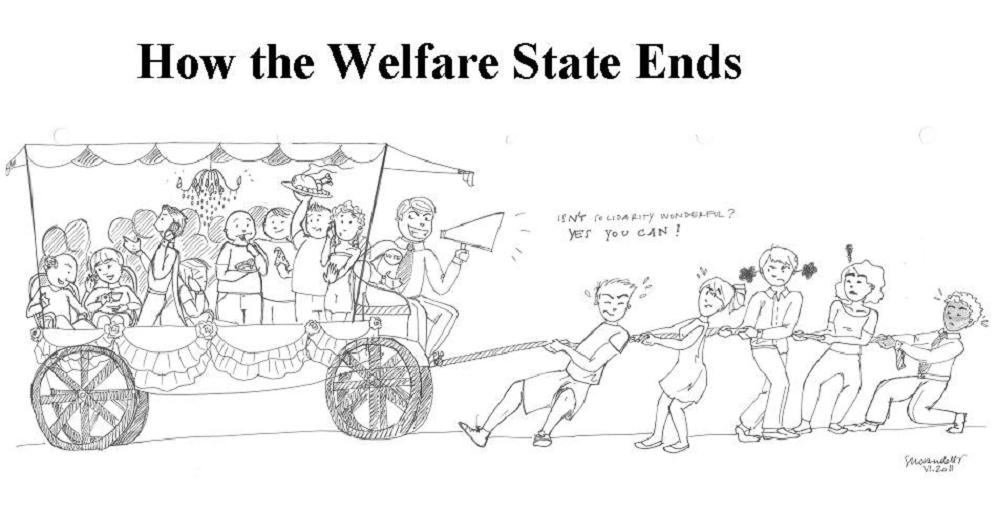




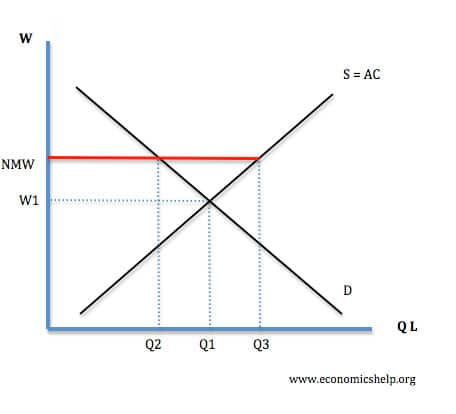
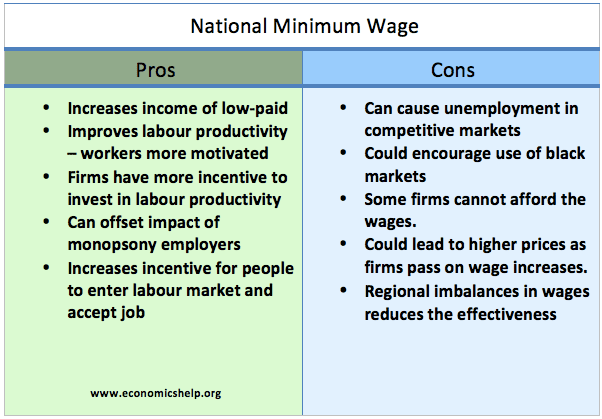


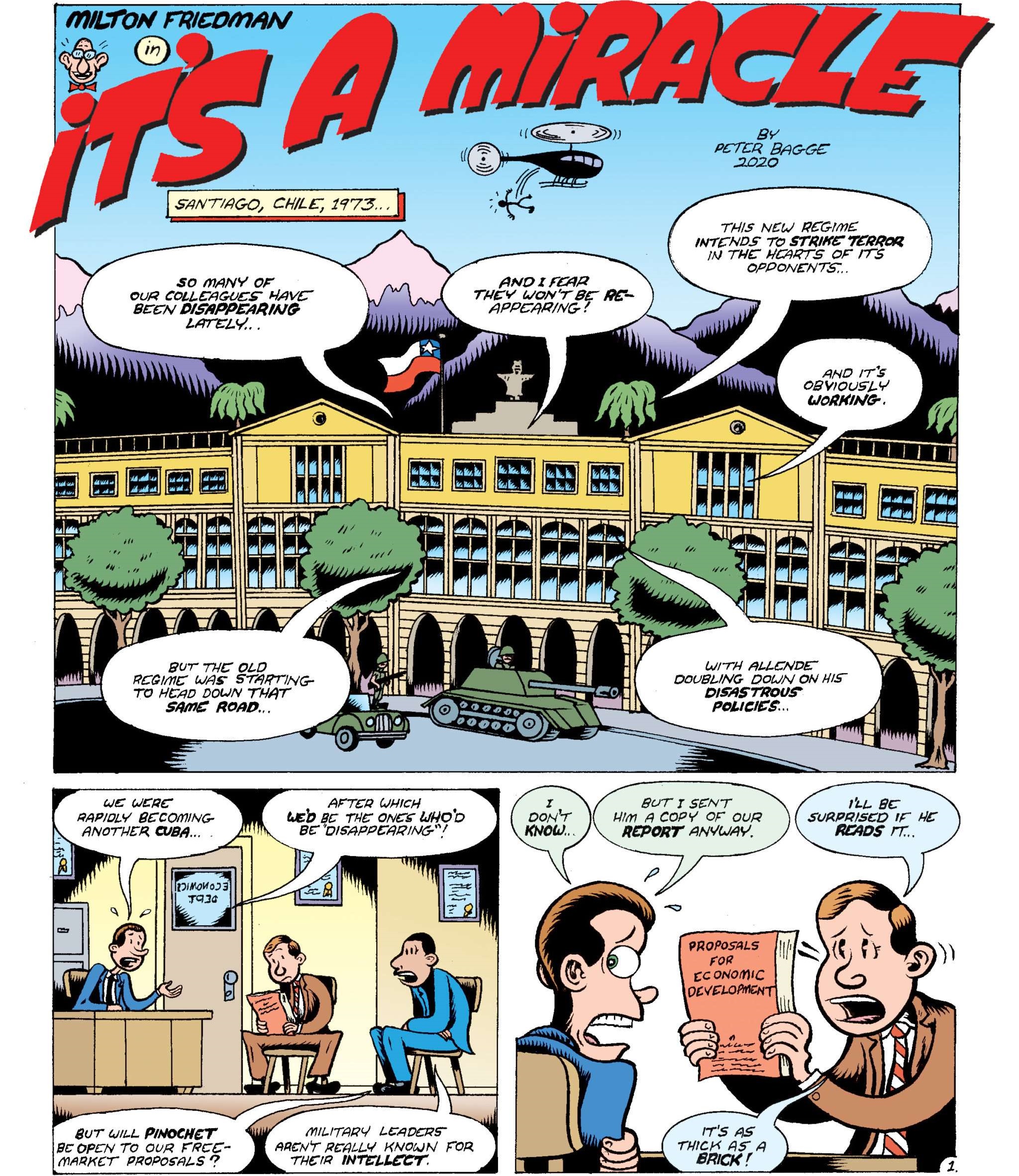
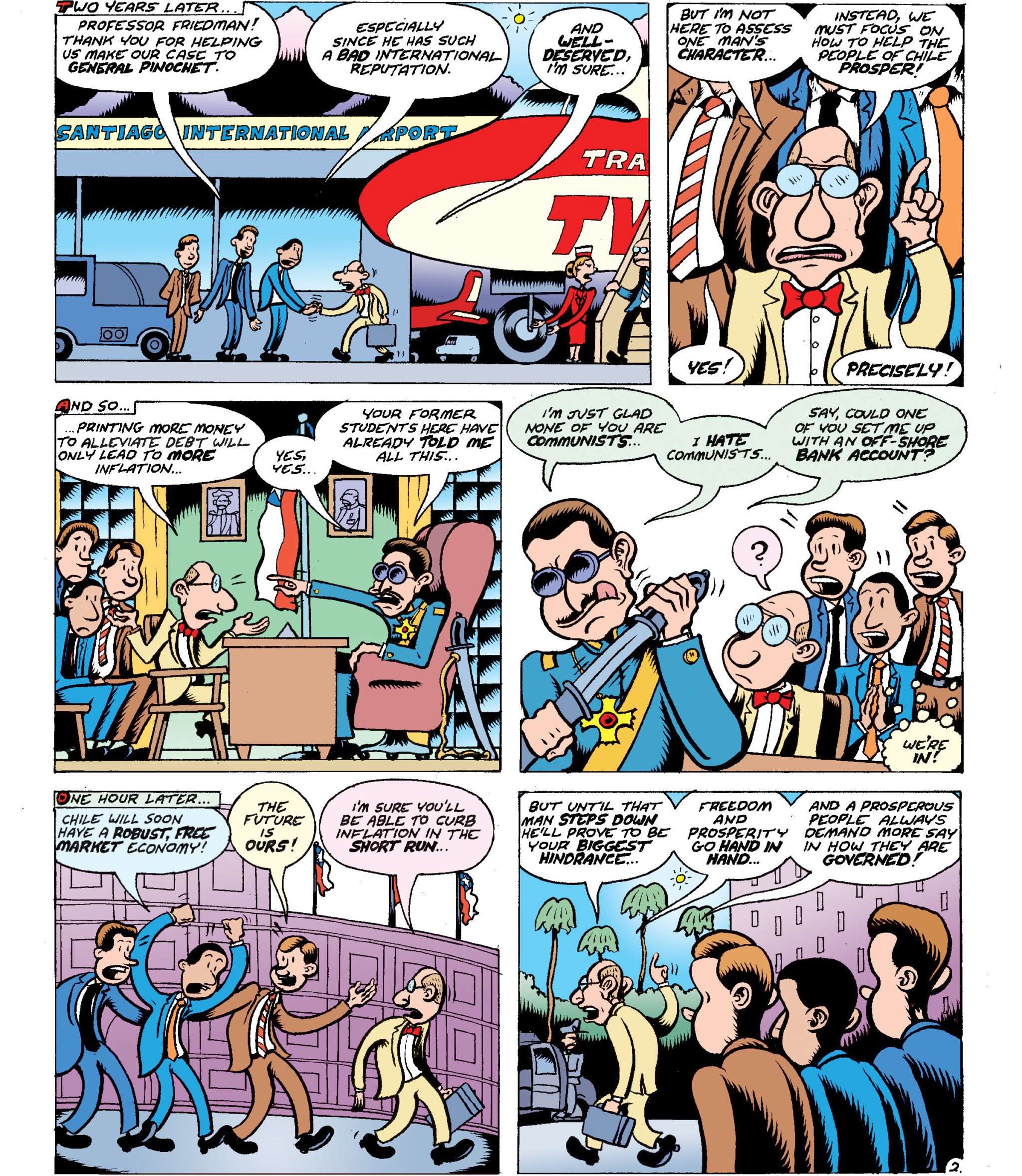
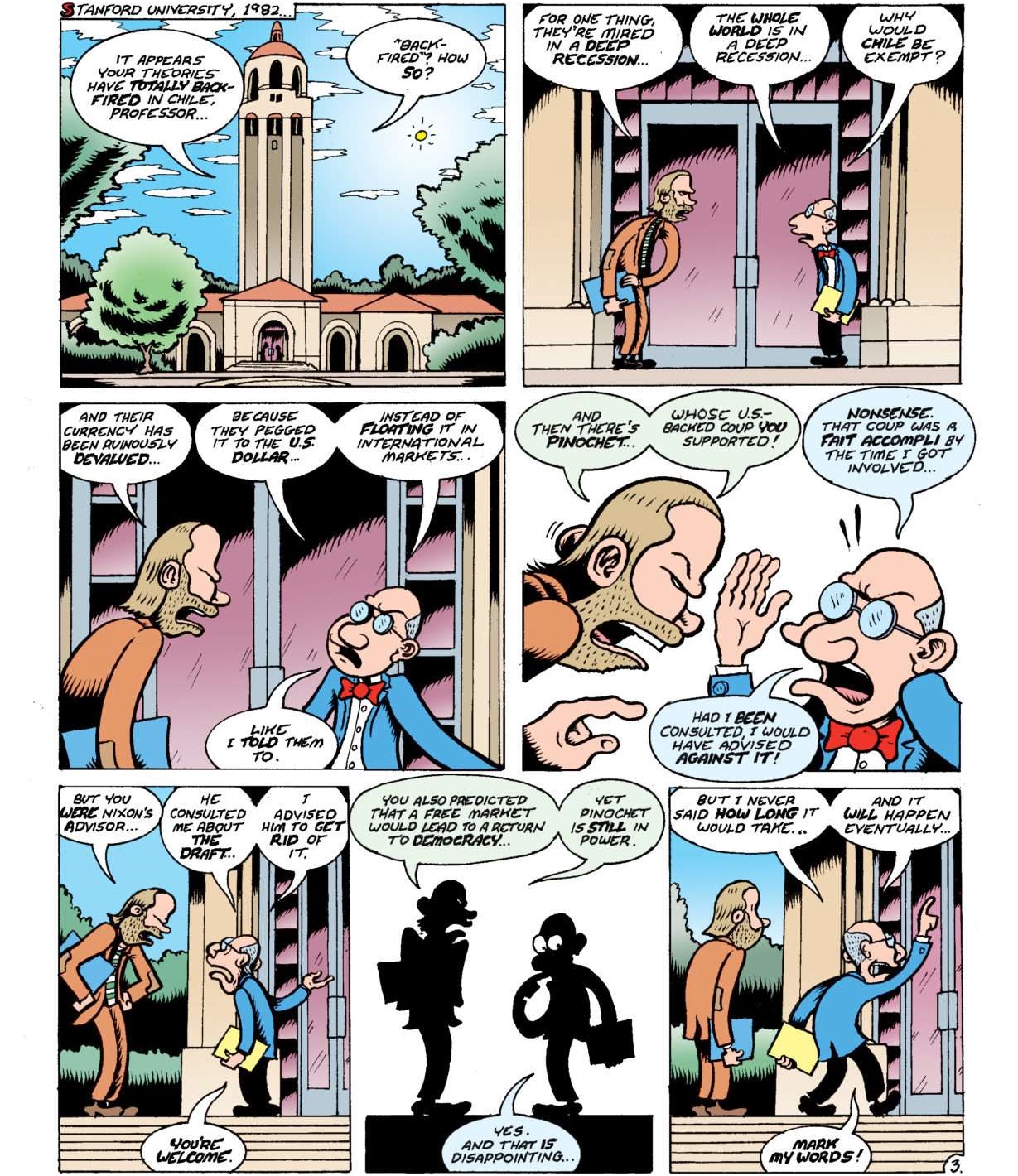
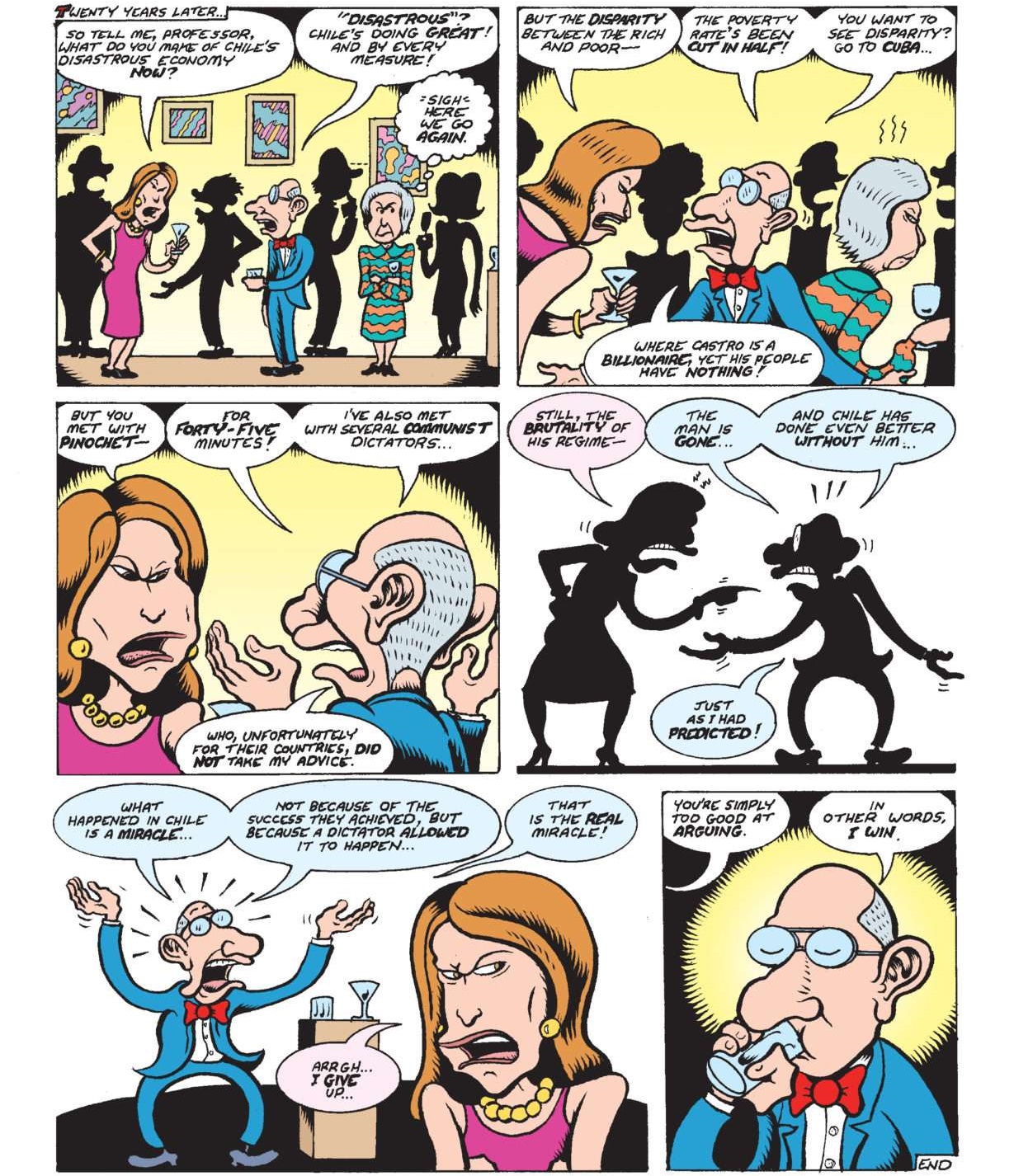


 The Daily Hatch