Category Archives: Francis Schaeffer

Taking on Ark Times Bloggers on the “Absurdity of Life without God!!” Part 24 (Repenting and putting our faith in God is only way to find a lasting meaning to our lives)

The Bible and Science (Part 04)

Eastwooding Richard Dawkins’ Moral Argument Objections

Published on Oct 20, 2012

For more information and resources visit: http://www.reasonablefaith.org

On September 29th, 2012, William Lane Craig participated in the Contending with Christianity’s Critics Conference held at Watermark Community Church in Dallas, TX. In this short clip, Dr. Craig uses the technique of Eastwooding to deal with Richard Dawkins’ attempted refutations of the moral argument for God’s existence.

To view the entire video: http://youtu.be/_XZb8m7p8ng

The statements ascribed to Richard Dawkins in this presentation are statements actually made by Prof. Dawkins. The following is a list of the sources of such statements:

Dawkins, Richard. “Afterword.” In Lawrence Krauss, A Universe from Nothing. New York: Free Press, 2012.

_____. “Comment.” http://old.richarddawkins.net/comment….

_____. The God Delusion. New York: Houghton-Mifflin, 2006.

_____. River out of Eden: a Darwinian View of Life. New York: Basic Books, 1996.

_____. “The Ultraviolet Garden,” Lecture 4 of 7 Royal Institution Christmas Lectures (1992), http://physicshead.blogspot.com/2007/….

_____. “Why I Refuse to Debate William Lane Craig.” The Guardian 20 October 2011 http://old.richarddawkins.net/comment…

Citations of these statements with references may be found in:

“Richard Dawkins on Arguments for God.” In God Is Great, God Is Good, pp. 13-31. Ed. Wm. L Craig and Chad Meister. Downers Grove, Ill.: Inter-Varsity, 2009.

Citations in lecture format may be found at:

http://youtu.be/9HLmow850iE

We welcome your comments in the Reasonable Faith forums:
http://www.reasonablefaith.org/forums/

Be sure to also visit Reasonable Faith’s other channel: http://www.youtube.com/drcraigvideos

Follow Reasonable Faith On Twitter: http://twitter.com/rfupdates

Add Reasonable Faith On Facebook: http://www.facebook.com/reasonablefaith

Francis Schaeffer and  Gospel of Christ in the pages of the Bible

(The Bible is the key in understanding the universe in its form)

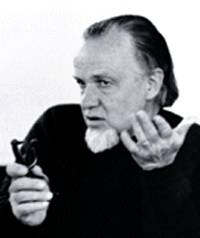
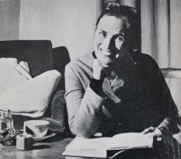
Francis and Edith Schaeffer pictured below:

_________________

Life without God in the picture is absurdity!!!. That was the view of King Solomon when he wrote the Book of Ecclesiastes 3000 years ago and it is the view of many of the modern philosophers todayModern man has tried to come up with a lasting meaning for life without God in the picture (life under the sun), but it is not possible. Without the infinite-personal God of the Bible to reveal moral absolutes then man is left to embrace moral relativism. In a time plus chance universe man is reduced to a machine and can not find a place for values such as love. Both of Francis Schaeffer’s film series have tackled these subjects and he shows how this is reflected in the arts.

Here are some posts I have done on the series “HOW SHOULD WE THEN LIVE? : Francis Schaeffer’s “How should we then live?” Video and outline of episode 10 “Final Choices” episode 9 “The Age of Personal Peace and Affluence”episode 8 “The Age of Fragmentation”episode 7 “The Age of Non-Reason” episode 6 “The Scientific Age”  episode 5 “The Revolutionary Age” episode 4 “The Reformation” episode 3 “The Renaissance”episode 2 “The Middle Ages,”, and  episode 1 “The Roman Age,” .

In the film series “WHATEVER HAPPENED TO THE HUMAN RACE?” the arguments are presented  against abortion (Episode 1),  infanticide (Episode 2),   euthenasia (Episode 3), and then there is a discussion of the Christian versus Humanist worldview concerning the issue of “the basis for human dignity” in Episode 4 and then in the last episode a close look at the truth claims of the Bible.

I have discussed many subjects with my liberal friends over at the Ark Times Blog in the past and I have taken them on now on the subject of the absurdity of life without God in the picture. Most of my responses included quotes from William Lane Craig’s book THE ABSURDITY OF LIFE WITHOUT GOD.  Here is the result of one of those encounters from June of 2013:

I wrote:

Doigotta, I know you were referring to something else entirely when you wrote, “I repent.” However, that is the key to finding a lasting meaning to life. Without God there is no meaning in life.

William Lane Craig notes:

First, the area of meaning. We saw that without God, life has no meaning. Yet philosophers continue to live as though life does have meaning. For example, Sartre argued that one may create meaning for his life by freely choosing to follow a certain course of action. Sartre himself chose Marxism.

Now this is utterly inconsistent. It is inconsistent to say that life is objectively absurd and then to say that one may create meaning for his life. If life is really absurd, then man is trapped in the lower story. To try to create meaning in life represents a leap to the upper story. But Sartre has no basis for this leap. Without God, there can be no objective meaning in life. Sartre’s program is actually an exercise in self-delusion. For the universe does not really acquire meaning just because I happen to give it one. This is easy to see: for suppose I give the universe one meaning, and you give it another. Who is right? The answer, of course, is neither one. For the universe without God remains objectively meaningless, no matter how we regard it. Sartre is really saying, “Let’s pretend the universe has meaning.” And this is just fooling ourselves.

The point is this: if God does not exist, then life is objectively meaningless; but man cannot live consistently and happily knowing that life is meaningless; so in order to be happy he pretends that life has meaning. But this is, of course, entirely inconsistent—for without God, man and the universe are without any real significance.

Related posts:

Francis Schaeffer’s “How should we then live?” Video and outline of episode 10 “Final Choices” (Schaeffer Sundays)

E P I S O D E 1 0   Dr. Francis Schaeffer – Episode X – Final Choices 27 min FINAL CHOICES I. Authoritarianism the Only Humanistic Social Option One man or an elite giving authoritative arbitrary absolutes. A. Society is sole absolute in absence of other absolutes. B. But society has to be […]

Francis Schaeffer’s “How should we then live?” Video and outline of episode 9 “The Age of Personal Peace and Affluence” (Schaeffer Sundays)

E P I S O D E 9 Dr. Francis Schaeffer – Episode IX – The Age of Personal Peace and Affluence 27 min T h e Age of Personal Peace and Afflunce I. By the Early 1960s People Were Bombarded From Every Side by Modern Man’s Humanistic Thought II. Modern Form of Humanistic Thought Leads […]

Francis Schaeffer’s “How should we then live?” Video and outline of episode 8 “The Age of Fragmentation” (Schaeffer Sundays)

E P I S O D E 8 Dr. Francis Schaeffer – Episode VIII – The Age of Fragmentation 27 min I saw this film series in 1979 and it had a major impact on me. T h e Age of FRAGMENTATION I. Art As a Vehicle Of Modern Thought A. Impressionism (Monet, Renoir, Pissarro, Sisley, […]

Francis Schaeffer’s “How should we then live?” Video and outline of episode 7 “The Age of Non-Reason” (Schaeffer Sundays)

E P I S O D E 7 Dr. Francis Schaeffer – Episode VII – The Age of Non Reason I am thrilled to get this film series with you. I saw it first in 1979 and it had such a big impact on me. Today’s episode is where we see modern humanist man act […]

Francis Schaeffer’s “How should we then live?” Video and outline of episode 6 “The Scientific Age” (Schaeffer Sundays)

E P I S O D E 6 How Should We Then Live 6#1 Uploaded by NoMirrorHDDHrorriMoN on Oct 3, 2011 How Should We Then Live? Episode 6 of 12 ________ I am sharing with you a film series that I saw in 1979. In this film Francis Schaeffer asserted that was a shift in […]

Francis Schaeffer’s “How should we then live?” Video and outline of episode 5 “The Revolutionary Age” (Schaeffer Sundays)

E P I S O D E 5 How Should We Then Live? Episode 5: The Revolutionary Age I was impacted by this film series by Francis Schaeffer back in the 1970′s and I wanted to share it with you. Francis Schaeffer noted, “Reformation Did Not Bring Perfection. But gradually on basis of biblical teaching there […]

Francis Schaeffer’s “How should we then live?” Video and outline of episode 4 “The Reformation” (Schaeffer Sundays)

Dr. Francis Schaeffer – Episode IV – The Reformation 27 min I was impacted by this film series by Francis Schaeffer back in the 1970′s and I wanted to share it with you. Schaeffer makes three key points concerning the Reformation: “1. Erasmian Christian humanism rejected by Farel. 2. Bible gives needed answers not only as to […]

“Schaeffer Sundays” Francis Schaeffer’s “How should we then live?” Video and outline of episode 3 “The Renaissance”

Francis Schaeffer’s “How should we then live?” Video and outline of episode 3 “The Renaissance” Francis Schaeffer: “How Should We Then Live?” (Episode 3) THE RENAISSANCE I was impacted by this film series by Francis Schaeffer back in the 1970′s and I wanted to share it with you. Schaeffer really shows why we have so […]

Francis Schaeffer’s “How should we then live?” Video and outline of episode 2 “The Middle Ages” (Schaeffer Sundays)

  Francis Schaeffer: “How Should We Then Live?” (Episode 2) THE MIDDLE AGES I was impacted by this film series by Francis Schaeffer back in the 1970′s and I wanted to share it with you. Schaeffer points out that during this time period unfortunately we have the “Church’s deviation from early church’s teaching in regard […]

Francis Schaeffer’s “How should we then live?” Video and outline of episode 1 “The Roman Age” (Schaeffer Sundays)

Francis Schaeffer: “How Should We Then Live?” (Episode 1) THE ROMAN AGE   Today I am starting a series that really had a big impact on my life back in the 1970′s when I first saw it. There are ten parts and today is the first. Francis Schaeffer takes a look at Rome and why […]

Francis Schaeffer: “Whatever Happened to the Human Race” (Episode 5) TRUTH AND HISTORY

Francis Schaeffer: “Whatever Happened to the Human Race” (Episode 5) TRUTH AND HISTORY Published on Oct 7, 2012 by AdamMetropolis This crucial series is narrated by the late Dr. Francis Schaeffer and former Surgeon General Dr. C. Everett Koop. Today, choices are being made that undermine human rights at their most basic level. Practices once […]

Francis Schaeffer: “Whatever Happened to the Human Race” (Episode 4) THE BASIS FOR HUMAN DIGNITY

The opening song at the beginning of this episode is very insightful. Francis Schaeffer: “Whatever Happened to the Human Race” (Episode 4) THE BASIS FOR HUMAN DIGNITY Published on Oct 7, 2012 by AdamMetropolis This crucial series is narrated by the late Dr. Francis Schaeffer and former Surgeon General Dr. C. Everett Koop. Today, choices […]

Francis Schaeffer: “Whatever Happened to the Human Race” (Episode 3) DEATH BY SOMEONE’S CHOICE

Francis Schaeffer: “Whatever Happened to the Human Race” (Episode 3) DEATH BY SOMEONE’S CHOICE Published on Oct 6, 2012 by AdamMetropolis This crucial series is narrated by the late Dr. Francis Schaeffer and former Surgeon General Dr. C. Everett Koop. Today, choices are being made that undermine human rights at their most basic level. Practices […]

Francis Schaeffer: “Whatever Happened to the Human Race?” (Episode 2) SLAUGHTER OF THE INNOCENTS

Francis Schaeffer: “Whatever Happened to the Human Race?” (Episode 2) SLAUGHTER OF THE INNOCENTS Published on Oct 6, 2012 by AdamMetropolis This crucial series is narrated by the late Dr. Francis Schaeffer and former Surgeon General Dr. C. Everett Koop. Today, choices are being made that undermine human rights at their most basic level. Practices […]

Francis Schaeffer: “Whatever Happened to the Human Race” (Episode 1) ABORTION OF THE HUMAN RACE

It is not possible to know where the pro-life evangelicals are coming from unless you look at the work of the person who inspired them the most. That person was Francis Schaeffer.  I do care about economic issues but the pro-life issue is the most important to me. Several years ago Adrian Rogers (past president of […]

Ecclesiastes, Purpose, Meaning, and the Necessity of God by Suiwen Liang (Quotes Will Durant, Madalyn Murray O’Hair, Stephen Jay Gould,Richard Dawkins, Jean-Paul Sartre,Bertrand Russell, Leo Tolstoy, Loren Eiseley,Aldous Huxley, G.K. Chesterton, Ravi Zacharias, and C.S. Lewis.)

Ecclesiastes 2-3 Published on Sep 19, 2012 Calvary Chapel Spring Valley | Sunday Evening | September 16, 2012 | Derek Neider _____________________________ I have written on the Book of Ecclesiastes and the subject of the meaning of our lives on several occasions on this blog. In this series on Ecclesiastes I hope to show how secular […]

Robert Leroe on Ecclesiastes (Mentions Thomas Aquinas, Princess Diana, Mother Teresa, King Solomon, King Rehoboam, Eugene Peterson, Chuck Swindoll, and John Newton.)

Ecclesiastes 1 Published on Sep 4, 2012 Calvary Chapel Spring Valley | Sunday Evening | September 2, 2012 | Pastor Derek Neider _____________________ I have written on the Book of Ecclesiastes and the subject of the meaning of our lives on several occasions on this blog. In this series on Ecclesiastes I hope to show how […]

Super Bowl, Black Eyed Peas, and the Meaning of Life and Ecclesiastes

Ecclesiastes 8-10 | Still Searching After All These Years Published on Oct 9, 2012 Calvary Chapel Spring Valley | Sunday Evening | October 7, 2012 | Pastor Derek Neider _______________________ Ecclesiastes 11-12 | Solomon Finds His Way Published on Oct 30, 2012 Calvary Chapel Spring Valley | Sunday Evening | October 28, 2012 | Pastor Derek Neider […]

Brian LePort on Ecclesiastes

Ecclesiastes 6-8 | Solomon Turns Over a New Leaf Published on Oct 2, 2012 Calvary Chapel Spring Valley | Sunday Evening | September 30, 2012 | Pastor Derek Neider _____________________ I have written on the Book of Ecclesiastes and the subject of the meaning of our lives on several occasions on this blog. In this series […]

J.W. Wartick on Ecclesiastes

Ecclesiastes 4-6 | Solomon’s Dissatisfaction Published on Sep 24, 2012 Calvary Chapel Spring Valley | Sunday Evening | September 23, 2012 | Pastor Derek Neider ___________________ I have written on the Book of Ecclesiastes and the subject of the meaning of our lives on several occasions on this blog. In this series on Ecclesiastes I hope […]

Overview of the Book of Ecclesiastes

Overview of the Book of Ecclesiastes Overview of the Book of EcclesiastesAuthor: Solomon or an unknown sage in the royal courtPurpose: To demonstrate that life viewed merely from a realistic human perspective must result in pessimism, and to offer hope through humble obedience and faithfulness to God until the final judgment.Date: 930-586 B.C. Ecclesiastes 2-3 Published on Sep 19, […]

Doy Moyer on the Book of Ecclesiastes and Apologetics

Ecclesiastes 1 Published on Sep 4, 2012 Calvary Chapel Spring Valley | Sunday Evening | September 2, 2012 | Pastor Derek Neider _____________________ I have written on the Book of Ecclesiastes and the subject of the meaning of our lives on several occasions on this blog. In this series on Ecclesiastes I hope to show how […]

Solomon was the author of Ecclesiastes

Ecclesiastes 8-10 | Still Searching After All These Years Published on Oct 9, 2012 Calvary Chapel Spring Valley | Sunday Evening | October 7, 2012 | Pastor Derek Neider _______________________ Ecclesiastes 11-12 | Solomon Finds His Way Published on Oct 30, 2012 Calvary Chapel Spring Valley | Sunday Evening | October 28, 2012 | Pastor Derek Neider […]

By Everette Hatcher III | Posted in Current Events | Edit | Comments (0)
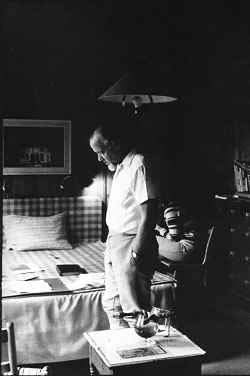
FRANCIS SCHAEFFER ANALYZES ART AND CULTURE Part 1 HOW SHOULD WE THEN LIVE? “The Roman Age” (Feature on artist Tracey Emin)

__________________

Francis Schaeffer pictured below:

_______________-

I want to make two points today. First, Greg Koukl has rightly noted that the nudity of a ten year old girl in the art of Robert Mapplethorpe is not defensible, and it demonstrates where our culture is  morally. It the same place morally where  Rome was 2000 years ago as Francis Schaeffer has demonstrated in his excellent film HOW SHOULD WE THEN LIVE? (Schaeffer cites some of the art work from Pompeii.) Second, I am going to comment on some of the art of Tracey Emin who has reminded me how the moral standards put forth in art in the last 2000 years have fallen so far. I give Tracey credit for at least putting God in the discussion. One of her biggest shows was entitled “I need art like I need God,” (Solo Exhibition,  Moo Gallery, Helsinki, London Gallery, London, Istanbul Biennial, Pera Palace Hotel, Turkey in 1997).

Here is what Tracey Emin had to say in her interview with Matthew Collings in his 1999 film series THIS IS MODERN ART (Episode 2):

A lot of my art ideas come out of an anxiety of feeling, lonely, morose, nostalgic, sad…I would give up the art instantly now to remove those feelings from myself. (Matt Collings then comments, “You don’t look very tormented.”) I am really…tormented, I am really upset. I am really brokenhearted…angst ridden.

______

Tracey went for a long time before she hit it big financially but now  she  still has  a longing in her heart to find peace.  Solomon had all the resources in the world and he found himself searching for meaning in life and trying to come up with answers concerning the afterlife. (Tracey says she also fears getting old).  However, it seems every door he tried to open was locked. Solomon found no lasting satisfaction in riches (Ecclesiastes 2:8-11), pleasure (2:1), education (2:3) and his work (2:4). None of those were able to “fill the God-sized vacuum in his heart” (quote from famous mathematician and philosopher Blaise Pascal). Kerry Livgren and Dave Hope of the rock band Kansas found that satisfaction by putting their faith in Christ. Earlier they had written and performed the hit song “Dust in the Wind” which describes the vain attempt to find meaning in life apart from God.

Kansas – Dust In The Wind

Kerry Livgren/Dave Hope: 700 Club Interview (Kansas) Part 1

Kerry Livgren/Dave Hope: 700 Club Interview (Kansas) Part2

_________________________________________________________________________________________

Art Nation Interview – Tracy Emin Part 2

___________

On Collaboration Ep4 “Tracey Emin x Harland Miller” by Johnnie Shand Kydd

Tracey Emin talking to BBC Culture about her life.

Tracey Emin’s BIOGRAPHY

Tracey EminBorn in 1963, London
Lives and works in London

Hermann Vaske’s interview with Tracey Emin

Uploaded on Nov 12, 2007

In 1999 I was invited to Tracey’s place. My friends Tina and Stefan from the Maxwell Restaurant in Berlin made the contact. Tracey ate Lychees, and I rolled the cameras.

_______________________________

Tracey Emin EXHIBITED AT THE SAATCHI GALLERY

My Bed
Tracey Emin
My Bed1998Mattress, linens, pillows, objects79 x 211 x 234 cm
A consummate storyteller, Tracey Emin engages the viewer with her candid exploration of universal emotions. Well-known for her confessional art, Tracey Emin reveals intimate details from her life to engage the viewer with her expressions of universal emotions. Her ability to integrate her work and personal life enables Emin to establish an intimacy with the viewer.Tracey shows us her own bed, in all its embarrassing glory. Empty booze bottles, fag butts, stained sheets, worn panties: the bloody aftermath of a nervous breakdown. By presenting her bed as art, Tracey Emin shares her most personal space, revealing she’s as insecure and imperfect as the rest of the world.

Tracey Emin on the loose

Published on Jul 10, 2013

Not everyone understands, likes or respects Tracey Emin’s work. But in this short montage of interview clips from BBC Culture, produced on her 50th birthday, you can really see the passion that she has for her work and the focus in which she has pursued it at all costs.

I love her she smiles and is so confident when she talks of the sacrifices she has made for her work, but views it as a wonderful gift that she has something that she is so passionate about. Wouldn’t it be great if everyone could be so connected to and grateful for their work?

_______________________________________________________________________________________________________________

Francis Schaeffer has written extensively on art and culture spanning the last 2000 years and here are some posts I have done on this subject before : Francis Schaeffer’s “How should we then live?” Video and outline of episode 10 “Final Choices” episode 9 “The Age of Personal Peace and Affluence”episode 8 “The Age of Fragmentation”episode 7 “The Age of Non-Reason” episode 6 “The Scientific Age” , episode 5 “The Revolutionary Age” episode 4 “The Reformation” episode 3 “The Renaissance”episode 2 “The Middle Ages,”, and  episode 1 “The Roman Age,” . My favorite episodes are number 7 and 8 since they deal with modern art and culture primarily.(Joe Carter rightly noted,Schaefferwho always claimed to be an evangelist and not a philosopher—was often criticized for the way his work oversimplified intellectual history and philosophy.” To those critics I say take a chill pill because Schaeffer was introducing millions into the fields of art and culture!!!! !!! More people need to read his works and blog about them because they show how people’s worldviews affect their lives!

J.I.PACKER WROTE OF SCHAEFFER, “His communicative style was not that of a cautious academic who labors for exhaustive coverage and dispassionate objectivity. It was rather that of an impassioned thinker who paints his vision of eternal truth in bold strokes and stark contrasts.Yet it is a fact that MANY YOUNG THINKERS AND ARTISTS…HAVE FOUND SCHAEFFER’S ANALYSES A LIFELINE TO SANITY WITHOUT WHICH THEY COULD NOT HAVE GONE ON LIVING.”

Francis Schaeffer’s works  are the basis for a large portion of my blog posts and they have stood the test of time. In fact, many people would say that many of the things he wrote in the 1960’s  were right on  in the sense he saw where our western society was heading and he knew that abortion, infanticide and youth enthansia were  moral boundaries we would be crossing  in the coming decades because of humanism and these are the discussions we are having now!)

There is evidence that points to the fact that the Bible is historically true as Schaeffer pointed out in episode 5 of WHATEVER HAPPENED TO THE HUMAN RACE? There is a basis then for faith in Christ alone for our eternal hope. This link shows how to do that.

Francis Schaeffer in Art and the Bible noted, “Many modern artists, it seems to me, have forgotten the value that art has in itself. Much modern art is far too intellectual to be great art. Many modern artists seem not to see the distinction between man and non-man, and it is a part of the lostness of modern man that they no longer see value in the work of art as a work of art.” 

Many modern artists are left in this point of desperation that Schaeffer points out and it reminds me of the despair that Solomon speaks of in Ecclesiastes.  Christian scholar Ravi Zacharias has noted, “The key to understanding the Book of Ecclesiastes is the term ‘under the sun.’ What that literally means is you lock God out of a closed system, and you are left with only this world of time plus chance plus matter.” THIS IS EXACT POINT SCHAEFFER SAYS SECULAR ARTISTS ARE PAINTING FROM TODAY BECAUSE THEY BELIEVED ARE A RESULT OF MINDLESS CHANCE.

___________

Francis Schaeffer pictured below:

___________

Francis and Edith Schaeffer

____________

Francis Schaeffer pictured below

_________________

episode 8 “The Age of Fragmentation,” ,

episode 5 “The Revolutionary Age,” Calvin: 1509-1564
Samuel Rutherford: 1600-1661 Rutherford’s Lex Rex: 1644, John Locke: 1631-1704, John Wesley: 1703-1791, Voltaire: 1694-1778,Letters on the English Nation: 1733 George Whitefield: 1714-1770 John Witherspoon: 1723-1794 John Newton: 1725-1807,John Howard: 1726-1790 Jefferson: 1743-1826,Robespierre: 1758-1794 Wilberforce: 1759-1833,Clarkson: 1760-1846,Napoleon: 1769-1821,Elizabeth Fry: 1780-1845,Declaration of Rights of Man: 1789,National Constituent Assembly: 1789-1791,Second French Revolution and Revolutionary Calendar: 1792 The Reign of Terror: 1792-1794,Lord Shaftesbury: 1801-1855,English slave trade ended: 1807,Slavery ended in Great Britain and Empire: 1833
Karl Marx: 1818-1883,Lenin: 1870-1924,Trotsky: 1879-1940,Stalin: 1879-1953,February and October Russian Revolutions: 1917,Berlin Wall: 1961,Czechoslovakian repression: 1968

____________________

Francis Schaeffer with his son Franky pictured below. Francis and Edith (who passed away in 2013) opened L’ Abri in 1955 in Switzerland.

Francis Schaeffer’s “How should we then live?” Video and outline of episode 1 “The Roman Age”

Francis Shaeffer – The early church (part1)

Francis Shaeffer – The early church (part 2)

Francis Shaeffer – The early church (part 3)

Francis Shaeffer – The early church (part 4)

Francis Shaeffer – The early church (part 5)

10 Worldview and Truth

Published on Jun 11, 2013

An excerpt from Francis Schaeffer…his recommendation to the people of the future.

How Should We then Live Episode 7 small (Age of Nonreason)

#02 How Should We Then Live? (Promo Clip) Dr. Francis Schaeffer

Francis Schaeffer takes a look at Rome and why it fell. It fell because of inward problems. We have many of these same problems today in the USA.

The late Francis Schaeffer wrote of the significance of one’s world view, which, in the final analysis, represents one’s doctrinal perspective about God and life:

As the Empire ground down, the decadent Romans were given to a thirst for violence and a gratification of the senses. This is especially evident in their rampant sexuality. For example, in’ Pompeii, a century or so after the Republic had become a thing of the past, the phallus cult was strong. Statues and paintings of exaggerated sexuality adorned the houses of the more affluent. Not all the art in Pompeii was like this, but the sexual representations were unabashedly blatant.

Perhaps no one has presented more vividly to our generation the inner weakness of imperial Rome than has Fellini (1920-) in his film Satyricon. He reminds us that the classical world is not to be romanticized, but that it was both cruel and decadent as it came to the logical conclusion of its world view.


E P I S O D E 1

ROMAN AGE

I. Introduction

A. Problem: dilemma of social breakdown and violence leading to authoritarianism which limits freedom.

B. We are, however, not helpless. Why?

C. Answer approached through consideration of the past.

D. Any starting point in history would be good; we start with Rome because it is direct ancestor of modern West.

II. Rome: The Empire Triumphant

A. Size and military strength of Empire.

B. Imperial sway evoked by Aventicum (Avenches), Switzerland.

III. Rome: Cultural Analysis

A. Greece and Rome: cultural influences and parallels.

1. Society as the absolute, to give meaning to life.

2. Finite gods as ground of accepted values.

B. Problems arising from Roman culture.

1. No infinite reference point as base for values and society.

2. Collapse of civic ideals therefore inevitable.

C. Results of collapse of ideals.

1. Dictatorship of Julius Caesar a response to civil disorder.

2. Firmly established authoritarian rule of Augustus.

D. Characteristics of regime introduced by Augustus.

1. Claim to give peace and the fruits of civilization.

2. Care to maintain facade of republican constitution.

3. People ready to accept absolute power in return for peace and prosperity.

4. Religious sanction for emperor-dictators: the emperor as God.

E. Christian persecution

1. Religious toleration in the Empire.

2. Christians persecuted because they would worship only the infinite-personal God and not Caesar also. They had an absolute whereby to judge the Roman state and its actions.

F. Viability of presuppositions facing social and political tension.

1. Christians had infinite reference point in God and His revelation in the Old Testament, the revelation through Christ, and the growing New Testament.

2. Christians could confront Roman culture and be untouched by its inner weakness, including its relativism and syncretism.

3. Roman hump-backed bridge, like Roman culture, could only stand if not subjected to overwhelming pressures.

IV. Rome: Eventual Decline and Fall

A. Growth of taste for cruelty.

B. Decadence seen in rampant sexuality and lust for violence.

C. General apathy, as seen in decline in artistic creativity.

D. Economic decline, more expensive government, and tighter centralization.

E. Successful barbarian invasions because of internal rot.

V. Conclusion

There is no foundation strong enough for society or the individual life within the realm of finiteness and beginning from Man alone as autonomous.

Questions

1. Dr. Schaeffer claims that, through looking at history, we can see how presuppositions determine events. Does his discussion bear this out and, if so, how?

2. How can a survey of Roman history in one-half hour be either useful or responsible? Discuss.

3. “History does not repeat itself.” —The parallels between the history of Rome and the twentieth century West are many and obvious.” How may these statements be reconciled?

Key Events and Persons

Julius Caesar: 100-44 B.C.

Augustus Caesar (Octavian): 63 B.C.-A.D. 14

Declared Pontifex Maximus: 12 B.C.

Diocletian: (Emperor) A.D. 284-305

Further Study

Here, as in succeeding suggestions for further study, it will be assumed that if you want to devote a great deal of time to a topic you can consult a library or a good bookstore. Suggestions given below are made on the basis of relevance to the text, readability, and availability.

Not all the books will necessarily agree at all—or in all details—with Dr. Schaeffer’s presentation. But as in the general conduct of life, so in matters of the mind, one must learn to discriminate. If you avoid reading things with which you disagree, you will be naive about what most of the world thinks. On the other hand, if you read everything—but without a critical mind—you will end up accepting by default all that the world (and especially your own moment of history) thinks.

J.P.V.D. Balsdon, Life and Leisure in Ancient Rome (1969).

E.M. Blaiklock, The Christian in Pagean Society (1956).

Samuel Dill, Roman Society in the Last Century of the Western Empire (1962).

E.M.B. Green, Evangelism in the Early Church (1970).

Plutarch, Lives of the Noble Greeks and Romans: A Selection (1972).

Virgil, The Aeneid (1965).

Film: Fellini, Satyricon (1969).

The Death of Truth

 Greg Koukl

  • Photo of: Greg Koukl Greg Koukl is the founder and President of Stand to Reason (www.str.org). He has written a number of books, including ‘Tactics’ and ‘Relativism’, and hosts a radio talk show. View all resources by Greg Koukl

Allan Bloom, author of the landmark critique of American education The Closing of the American Mind, starts his analysis this way: ‘There is one thing a professor can be absolutely certain of: almost every student entering the university believes, or says he believes, that truth is relative. If this belief is put to the test, one can count on the students’ reaction: they will be uncomprehending. That anyone should regard the proposition as not self-evident astonishes them, as though he were calling into question 2 + 2 = 4.’ [1]

What Professor Bloom observes is not a trend but a revolution. Like most revolutions, it did not start with a rifle shot or a cannon but with an idea that was whispered in many different environments and diverse situations. This revolution started in academia and eventually engulfed the common person. Its growth has been so subtle and thorough that it is now a core belief-not just of the college elite, but also of the rank and file, white collar and blue collar alike.

What Is Truth?

Since the sixties we have been in the throes of this quiet but desperate revolution of thought – the death of truth. We don’t mean ‘truth’ in the sense of something being my personal opinion. Rather we refer to the death of what the late Dr. Francis Schaeffer called ‘true truth,’ the extinction of the idea that any particular thing can be known for sure.

Today we’ve lost the confidence that statements of fact can ever be anything more than just opinions; we no longer know that anything is certain beyond our subjective preferences. The word truth now means ‘true for me’ and nothing more. We have entered an era of dogmatic scepticism.

Ideas that are whispered are seldom analyzed well, for they simply don’t draw enough attention. By means of repetition and passive acceptance over time, they take on the force of common wisdom, a ‘truth’ that everyone knows but no one has stopped to examine, a kind of intellectual urban legend.

Once ideas like these take root, they are difficult to dislodge. Attempts to do so result in Bloom’s ‘uncomprehending’ stares. [2] The ideas become so much a part of our emerging intellectual constitution that we are increasingly incapable of critical self-reflection. Even if we did, we have little conviction that such analysis would do any good anyway. As Kelly Monroe remarked in her book Finding God at Harvard, ‘Students feel safer as doubters than as believers, and as perpetual seekers rather than eventual finders.’ [3]

When truth dies, all of its subspecies, such as ethics, perish with it. If truth can’t be known, then the concept of moral truth becomes incoherent. Ethics become relative, right and wrong matters of individual opinion. This may seem a moral liberty, but it ultimately rings hollow. ‘The freedom of our day,’ lamented a graduate in a Harvard commencement address, ‘is the freedom to devote ourselves to any values we please, on the mere condition that we do not believe them to be true.’ [4]

The death of truth in our society has created a moral decay in which ‘every debate ends with the barroom question “says who?” ‘ [5] When we abandon the idea that one set of laws applies to every human being, all that remains is subjective, personal opinion.

Pleasure as Ethics

When morality is reduced to personal tastes, people exchange the moral question, What is good? for the pleasure question, What feels good? They assert their desires and then attempt to rationalize their choices with moral language. In this case, the tail wags the dog. Instead of morality constraining pleasures (‘I want to do that, but I really shouldn’t’), the pleasures define morality (‘I want to do that, and I’m going to find a way to rationalize it’). This effort at ethical decision making is really nothing more than thinly veiled self-interest-pleasure as ethics.

When self-interest rules, it has a profound impact on behaviour, especially affecting how we treat other human beings. The notions of human respect and dignity depend on the existence of moral truth. Without it, there is no obligation of self-sacrifice on behalf of others. Instead, we can discard people when they become trouble-some or expensive, or simply when they cramp our lifestyles.

What follows is a true story about a newborn child we’ll call Baby Garcia. This event took place in a major hospital in the Los Angeles area. I pass on the exact details as Jennifer, the nurse involved, related them to me:

One night a nurse on my shift came up to me and said, ‘Jennifer, you need to see the Garcia baby’ There was something suspicious about the way she said it, though. I see babies born every hour, I thought.
She led me to a utility room the nurses used for their breaks. Women were smoking and drinking coffee, their feet up on the stainless steel counter. There, lying on the metal, was the naked body of a newborn baby.
‘What is this baby doing here on this counter?’ I asked timidly. ‘That’s a preemie born at nineteen weeks,’ she said. ‘We don’t do anything to save them unless they’re twenty weeks.’
I noticed that his chest was fluttering rapidly. I picked him up for a closer look. ‘This baby is still alive!’ I exclaimed. I thought they hadn’t noticed.
Then I learned the horrible truth. The nurses knew, and it didn’t matter. They had presented the baby to its mother as a dead, premature child. Then they took him away and tossed him on the cold, steel counter in the lunch room until he died. His skin was blotchy white, and his mouth was gaping open as he tried to breathe.
I did the one thing I could think of. I held him in his last moments so he’d at least have some warmth and love when he died.
Just then one of the nurses-a large, harsh woman-burst into the room. ‘Jennifer, what are you doing with that baby?’ she yelled. ‘He’s still alive…’
‘He’s still alive because you’re holding him,’ she said. Grabbing him by the back with one hand, she snatched him from me, opened one of the stainless steel cabinets, and pulled out a specimen container with formaldehyde in it. She tossed the baby in and snapped the lid on. It was over in an instant.
To them, this child wasn’t human. In seven more days he would have qualified, but at nineteen weeks he was just trash. [6]

If there is no truth, nothing has transcendent value, including human beings. The death of morality reduces people to the status of mere creatures. When persons are viewed as things, they begin to be treated as things.

Anything Goes

The death of morality also produces an ‘anything goes’ mentality. Sexual norms not only become more liberal, they expand without boundaries because no boundaries exist. Ann Landers recorded the following letter from one of her ‘morally liberated’ readers:

Dear Ann:
I am a man in my early 60s, divorced and retired. My sister is in her late 50s and widowed. We go to bed together twice a week. This has been going on since her husband died 8 years ago. Actually, when we were teenagers, we fooled around a lot, but never had intercourse. This is not a love match, but it is sex, and good sex at that.
We both enjoy these escapades, and they always produce a good night’s sleep. No one knows about this, and no one is getting hurt, or do you think we are fooling ourselves?
-No NAME, NO CITY, PLEASE

Dear No Name:
Sick, sick, sick. If I had your address I would send you a ‘get well’ card. [7]

Even more sobering is how America responded when art went on trial in a Cincinnati courthouse. At issue was an exhibit in the Contemporary Art Center of the work of Robert Mapplethorpe, a talented photographer who had distinguished himself with, among other things, still-life photography of flowers. The photographs on display included the following: a picture of a ten-year-old girl sitting in a chair with her knees up and genitals exposed; a photograph of a man who was naked except for cowboy boots, bent over with a bull-whip in his anus; and a shot of one man expelling a stream of urine into the mouth of another.

The museum was charged with exhibiting pornography. During the trial, a curator of another museum who testified on behalf of the Mapplethorpe exhibit was asked if the urination picture was art. ‘Yes,’ she said.

‘Is it fine art?’
‘Yes.’
‘Why?’
‘Because of the composition and the lighting.’

Each photograph was acquitted of the charge of pornography and judged as fine art, after which social commentator and radio talkshow host Dennis Prager observed, ‘Ladies and gentlemen, if some of the leading artists in a civilization see a man urinating in another man’s mouth and see composition and lighting and do not see their civilization being pissed upon, we are in trouble.’ [8]

Ours is a generation that has institutionalized moral relativism. We’ve cut our eye-teeth on the philosophy that life’s most sublime goal is to be happy and that virtually any means justifies this self-serving end. No longer will we allow a hint of moral censure on sexual practices that were regarded as perverse only a generation before. We consider bullwhips in the butt and urination in the face fine art, abortion a constitutional right, infanticide a reasonable alternative to caring for a child with a troublesome birth defect, lesbian and homosexual families normal, and drug use a national pastime.’It is possible,’ Prager observes, ‘that some societies have declined as rapidly as has America since the 1960s, but I am not aware of any.’ [12]

Traitors in Our Midst

This is not a ‘morality’ we simply tolerate; we champion it. We take pride in our tolerance, yet tolerate no one who doesn’t share our moral open-mindedness. ‘Who are you to pass judgment?’ we ask. ‘Where do you get off condemning a nurse for what she does with a foetus that was dying anyway? Or for criticizing the sexual preferences of siblings? Or for challenging another’s view of art?’

This stinking stew of ethical nothingness is the sad legacy of the sixties. Yet when our own moral philosophy turns us into victims when our personal liberty is interrupted by random acts of anarchy – suddenly something like moral consciousness tries to lift its head.

Take the Los Angeles riots of 1992, for example. As the buildings burned we watched with horror. Shops were plundered not by hooded looters but by families made up of mom, dad, and the kids – moral mutants on the shopping spree of their lives, giggling and laughing with impunity while stuffing their spoils into shopping carts and oversized trash bags.

We shouldn’t have been surprised. During the L.A. riots these families did exactly what they had been taught. Nobody wanted to ‘impose’ their morality on anyone else, so they learned that values are relative and that morality is a matter of personal preference. Make your own rules, define your own reality, seek your own truth. In the spring of ’92, thousands of people did just what we told them to do, and civilization burned.

If we reject truth, why should we be surprised at the moral turbulence that follows? As C. S. Lewis said, ‘We laugh at honor and are shocked to find traitors in our midst. We castrate and bid the geldings be fruitful.’ [13]

This is the chaotic and confusing world of moral relativism, a world made more confusing because moral relativism isn’t even moral. It doesn’t qualify as a genuine moral view, as we will learn in the next chapter

Notes

1. Allan Bloom, The Closing of the American Mind (New York: Simon and Schuster, 1987), 25.
2. When Chuck Colson gave an address at Harvard titled ‘Why It’s Impossible to Teach Ethics at Harvard Business School,’ this was precisely the response he received. As mentioned in a radio interview with James Dobson, Focus On the Family. The tape aired by Focus on the Family is Chuck Colson, ‘The Problem of Ethics: Why Good People Do Bad Things,’ an address to the Harvard Business School; copyright 1991, Prison Fellowship, PO. Box 17500, Washington, D.C. 20041.
3. Kelly Monroe, ed., Finding God at Harvard (Grand Rapids: Zondervan, 1996), 15. 4. Ibid., 17.
5. Recorded in The Presbyterian Layman, July-August 1996, 8.
6. As told to Gregory Koukl by Jennifer Personius, November 1988.
7. Los Angeles Times, 22 August 1992, E4.
8. Dennis Prager, ‘Multiculturalism and the War Against Western Values’ (audiotape), 7 October 1991, available through Ultimate Issues, 800-225-8584.
9. Stephanie Saul, New York Newsday, 20 July 1995, A17.
10. Ingrid Newkirk, national director of People for the Ethical Treatment of Animals (PETA), quoted in ‘To Market, To Market,’ L.A. Times Magazine, 22 March 1992.
11. New York Times, 26 March 1992 and 29 March 1992; Time, 6 April 1992; referenced in World News Digest, 13 April 1992.
12. Dennis Prager, ‘Just Another Two Days in the Decline of America,’ The Prager Perspective, 1 January 1997, 1.
13. C. S. Lewis, The Abolition of Man (New York: Collier Macmillan, 1955), 35.

This is a sample chapter from the book Relativism: Feet Firmly Planted in Mid-Air by Greg Koukl and Francis J. Beckwith available in the UK from STL through Wesley Owen bookshops.

Related posts:

Francis Schaeffer’s “How should we then live?” Video and outline of episode 10 “Final Choices” (Schaeffer Sundays)

E P I S O D E 1 0   Dr. Francis Schaeffer – Episode X – Final Choices 27 min FINAL CHOICES I. Authoritarianism the Only Humanistic Social Option One man or an elite giving authoritative arbitrary absolutes. A. Society is sole absolute in absence of other absolutes. B. But society has to be […]

Francis Schaeffer’s “How should we then live?” Video and outline of episode 9 “The Age of Personal Peace and Affluence” (Schaeffer Sundays)

E P I S O D E 9 Dr. Francis Schaeffer – Episode IX – The Age of Personal Peace and Affluence 27 min T h e Age of Personal Peace and Afflunce I. By the Early 1960s People Were Bombarded From Every Side by Modern Man’s Humanistic Thought II. Modern Form of Humanistic Thought Leads […]

Francis Schaeffer’s “How should we then live?” Video and outline of episode 8 “The Age of Fragmentation” (Schaeffer Sundays)

E P I S O D E 8 Dr. Francis Schaeffer – Episode VIII – The Age of Fragmentation 27 min I saw this film series in 1979 and it had a major impact on me. T h e Age of FRAGMENTATION I. Art As a Vehicle Of Modern Thought A. Impressionism (Monet, Renoir, Pissarro, Sisley, […]

Francis Schaeffer’s “How should we then live?” Video and outline of episode 7 “The Age of Non-Reason” (Schaeffer Sundays)

E P I S O D E 7 Dr. Francis Schaeffer – Episode VII – The Age of Non Reason I am thrilled to get this film series with you. I saw it first in 1979 and it had such a big impact on me. Today’s episode is where we see modern humanist man act […]

Francis Schaeffer’s “How should we then live?” Video and outline of episode 6 “The Scientific Age” (Schaeffer Sundays)

E P I S O D E 6 How Should We Then Live 6#1 Uploaded by NoMirrorHDDHrorriMoN on Oct 3, 2011 How Should We Then Live? Episode 6 of 12 ________ I am sharing with you a film series that I saw in 1979. In this film Francis Schaeffer asserted that was a shift in […]

Francis Schaeffer’s “How should we then live?” Video and outline of episode 5 “The Revolutionary Age” (Schaeffer Sundays)

E P I S O D E 5 How Should We Then Live? Episode 5: The Revolutionary Age I was impacted by this film series by Francis Schaeffer back in the 1970′s and I wanted to share it with you. Francis Schaeffer noted, “Reformation Did Not Bring Perfection. But gradually on basis of biblical teaching there […]

Francis Schaeffer’s “How should we then live?” Video and outline of episode 4 “The Reformation” (Schaeffer Sundays)

Dr. Francis Schaeffer – Episode IV – The Reformation 27 min I was impacted by this film series by Francis Schaeffer back in the 1970′s and I wanted to share it with you. Schaeffer makes three key points concerning the Reformation: “1. Erasmian Christian humanism rejected by Farel. 2. Bible gives needed answers not only as to […]

“Schaeffer Sundays” Francis Schaeffer’s “How should we then live?” Video and outline of episode 3 “The Renaissance”

Francis Schaeffer’s “How should we then live?” Video and outline of episode 3 “The Renaissance” Francis Schaeffer: “How Should We Then Live?” (Episode 3) THE RENAISSANCE I was impacted by this film series by Francis Schaeffer back in the 1970′s and I wanted to share it with you. Schaeffer really shows why we have so […]

Francis Schaeffer’s “How should we then live?” Video and outline of episode 2 “The Middle Ages” (Schaeffer Sundays)

  Francis Schaeffer: “How Should We Then Live?” (Episode 2) THE MIDDLE AGES I was impacted by this film series by Francis Schaeffer back in the 1970′s and I wanted to share it with you. Schaeffer points out that during this time period unfortunately we have the “Church’s deviation from early church’s teaching in regard […]

Francis Schaeffer’s “How should we then live?” Video and outline of episode 1 “The Roman Age” (Schaeffer Sundays)

Francis Schaeffer: “How Should We Then Live?” (Episode 1) THE ROMAN AGE   Today I am starting a series that really had a big impact on my life back in the 1970′s when I first saw it. There are ten parts and today is the first. Francis Schaeffer takes a look at Rome and why […]

By Everette Hatcher III | Posted in Francis Schaeffer | Edit | Comments (0)

____________

Truth Tuesday:Francis Schaeffer by Colin Duriez

Francis Schaeffer by Colin Duriez

How Should We Then Live? Episode 5: The Revolutionary Age

_______________

Episode VII – The Age of Non Reason


Dr. Schaeffer’s sweeping epic on the rise and decline of Western thought and Culture

_______________________

I love the works of Francis Schaeffer and I have been on the internet reading several blogs that talk about Schaeffer’s work and the work below by Colin Duriez  was really helpful. Schaeffer’s film series “How should we then live?  Wikipedia notes, “According to Schaeffer, How Should We Then Live traces Western history from Ancient Rome until the time of writing (1976) along three lines: the philosophic, scientific, and religious.[3] He also makes extensive references to art and architecture as a means of showing how these movements reflected changing patterns of thought through time. Schaeffer’s central premise is: when we base society on the Bible, on the infinite-personal God who is there and has spoken,[4] this provides an absolute by which we can conduct our lives and by which we can judge society.  Here are some posts I have done on this series: Francis Schaeffer’s “How should we then live?” Video and outline of episode 10 “Final Choices” episode 9 “The Age of Personal Peace and Affluence”episode 8 “The Age of Fragmentation”episode 7 “The Age of Non-Reason” episode 6 “The Scientific Age”  episode 5 “The Revolutionary Age” episode 4 “The Reformation” episode 3 “The Renaissance”episode 2 “The Middle Ages,”, and  episode 1 “The Roman Age,” .

In the film series “WHATEVER HAPPENED TO THE HUMAN RACE?” the arguments are presented  against abortion (Episode 1),  infanticide (Episode 2),   euthanasia (Episode 3), and then there is a discussion of the Christian versus Humanist worldview concerning the issue of “the basis for human dignity” in Episode 4 and then in the last episode a close look at the truth claims of the Bible.

Francis Schaeffer

Colin Duriez, Author

As my book reveals, Francis Schaeffer in the twilight of his life was as convinced of the truth-claims of Christianity and the efficacy of what he called the finished work of Christ as he was after his struggles in the early 1950s and even immediately after his conversion in 1930. Indeed, his conviction continued to deepen into his closing years, allowing him no respite from his grief over the lost condition of human beings and still expanding his empathy for those whom he encountered. In his final film series, Whatever Happened to the Human Race? He included a powerful episode about the historical underpinnings of Christian conviction.

What is the essence of Francis Schaeffer? Is it his system of theology, his books, his political campaigning, the existence of L’Abri? Ironically, though he attacked first the “old” modernism, then the “new” modernism of existentialism, neo-orthodoxy, and even, in anticipation, postmodernism, he demonstrates what might be called an existential Christianity—living in the moment; embracing the reality of existence; seeing the underpinning certainty of Christian faith in the historical death and resurrection of Jesus Christ; and reckoning on the specific intervention of the Holy Spirit in conversion at a point in time in a person’s life, after which he or she passes from death to life. Schaeffer might be dismissed as a scholar or even original thinker (though it can be argued he was both, but particularly the latter), but his realistic, existential Christianity is remarkable and perhaps unique for someone of his biblical orthodoxy in his generation and is the secret, perhaps, of his impact on many people of diverse backgrounds and nationalities.

A full list of acknowledgments appears toward the end of this book, but I must here especially express my thanks to Christopher and Paulette Catherwood, for their brilliant and enthusiastic help with the interviewing for this book; to Ted Griffin, for his wise and thorough editing; to others who added to this book in a very special way, including Lane Dennis, John and Prisca Sandri, Ranald and Susan Macaulay, and Udo and Deborah Middelmann. Though not well enough to give me more than a warm smile and greeting, Edith Schaeffer’s published records of the family and L’Abri history, and unpublished Family Letters must have a special mention. While Christopher, Paulette, and I interviewed, we received kindness and hospitality of a Dutch, Swiss, English, Irish, and American variety. I particularly remember the kindness of Marleen and Albert Hengelaar and the inspiring memories of the late Anky Rookmaaker as she reached back in her mind to the war years; the events she recounted seemed as yesterday. It is a privilege even to share a little in others’ lives.

Francis Schaeffer Copyright © 2008 by Colin Duriez Published by Crossway Books, a publishing ministry of Good News Publishers 1300 Crescent Street Wheaton, Illinois 60187

All rights reserved. No part of this publication may be reproduced, stored in a retrieval system or transmitted in any form by any means, electronic, mechanical, photocopy, recording or otherwise, without the prior permission of the publisher, except as provided for by USA copyright law.

Related posts:

Francis Schaeffer’s wife Edith passes away on Easter weekend 2013 Part 7 (includes pro-life editorial cartoon)

The Francis and Edith Schaeffer Story Pt.1 – Today’s Christian Videos The Francis and Edith Schaeffer Story – Part 3 of 3 Francis Schaeffer: “Whatever Happened to the Human Race” (Episode 1) ABORTION OF THE HUMAN RACE Published on Oct 6, 2012 by AdamMetropolis ________________ Picture of Francis Schaeffer and his wife Edith from the […]

The Mark of the Christian by Francis Schaeffer Part 1

  THE MARK OF A CHRISTIAN – CLASS 1 – Introduction Published on Mar 7, 2012 This is the introductory class on “The Mark Of A Christian” by Francis Schaeffer. The class was originally taught at Redeemer Presbyterian Church in Overland Park, KS by Dan Guinn from FrancisSchaefferStudies.org as part of the adult Sunday School hour […]

Francis Schaeffer’s wife Edith passes away on Easter weekend 2013 Part 6 (includes pro-life editorial cartoon and tribute from son-in-law Ranald Macaulay)

The Francis and Edith Schaeffer Story Pt.1 – Today’s Christian Videos The Francis and Edith Schaeffer Story – Part 3 of 3 Francis Schaeffer: “Whatever Happened to the Human Race” (Episode 1) ABORTION OF THE HUMAN RACE Published on Oct 6, 2012 by AdamMetropolis ________________ Picture of Francis Schaeffer and his wife Edith from the […]

Francis Schaeffer’s wife Edith passes away on Easter weekend 2013 Part 5 (includes pro-life editorial cartoon)

The Francis and Edith Schaeffer Story Pt.1 – Today’s Christian Videos The Francis and Edith Schaeffer Story – Part 3 of 3 Francis Schaeffer: “Whatever Happened to the Human Race” (Episode 1) ABORTION OF THE HUMAN RACE Published on Oct 6, 2012 by AdamMetropolis ________________ Picture of Francis Schaeffer and his wife Edith from the […]

Francis Schaeffer’s wife Edith passes away on Easter weekend 2013 Part 4 (includes pro-life editorial cartoon)

The Francis and Edith Schaeffer Story Pt.1 – Today’s Christian Videos The Francis and Edith Schaeffer Story – Part 3 of 3 Francis Schaeffer: “Whatever Happened to the Human Race” (Episode 1) ABORTION OF THE HUMAN RACE Published on Oct 6, 2012 by AdamMetropolis ________________ Picture of Francis Schaeffer and his wife Edith from the […]

Francis Schaeffer’s wife Edith passes away on Easter weekend 2013 Part 3 (includes pro-life editorial cartoon)

The Francis and Edith Schaeffer Story Pt.1 – Today’s Christian Videos The Francis and Edith Schaeffer Story – Part 3 of 3 Francis Schaeffer: “Whatever Happened to the Human Race” (Episode 1) ABORTION OF THE HUMAN RACE Published on Oct 6, 2012 by AdamMetropolis ________________ Picture of Francis Schaeffer and his wife Edith from the […]

“Schaeffer Sundays” Francis Schaeffer’s own words concerning humanist dominated public schools in USA even though country was founded on a Christian base

Francis Schaeffer: “Whatever Happened to the Human Race?” (Episode 2) SLAUGHTER OF THE INNOCENTS Published on Oct 6, 2012 by AdamMetropolis The 45 minute video above is from the film series created from Francis Schaeffer’s book “Whatever Happened to the Human Race?” with Dr. C. Everett Koop. This book  really helped develop my political views concerning […]

“Schaeffer Sundays” Francis Schaeffer’s own words concerning where the Bible-believing Christians been the last few decades

Francis Schaeffer: “Whatever Happened to the Human Race” (Episode 1) ABORTION OF THE HUMAN RACE Published on Oct 6, 2012 by AdamMetropolis The 45 minute video above is from the film series created from Francis Schaeffer’s book “Whatever Happened to the Human Race?” with Dr. C. Everett Koop. This book  really helped develop my political views […]

Taking on Ark Times Bloggers on various issues Part E “Moral absolutes and abortion” Francis Schaeffer Quotes part 5(includes the film SLAUGHTER OF THE INNOCENTS) (editorial cartoon)

I have gone back and forth and back and forth with many liberals on the Arkansas Times Blog on many issues such as abortion, human rights, welfare, poverty, gun control  and issues dealing with popular culture. Here is another exchange I had with them a while back. My username at the Ark Times Blog is Saline […]

“Schaeffer Sundays” Francis Schaeffer’s own words concerning religious liberals and humanists

Francis Schaeffer: “Whatever Happened to the Human Race” (Episode 5) TRUTH AND HISTORY Published on Oct 7, 2012 by AdamMetropolis The 45 minute video above is from the film series created from Francis Schaeffer’s book “Whatever Happened to the Human Race?” with Dr. C. Everett Koop. This book  really helped develop my political views concerning abortion, […]

Abortion debating with Ark Times Bloggers Part 9 “Remembering Francis Schaeffer: On The Occasion of His 100th Birthday of Jan 30, 2012 by Don Sweeting” (includes video THE BASIS FOR HUMAN DIGNITY and editorial cartoon)

I have debated with Ark Times Bloggers many times in the past on many different subjects. Abortion is probably the most often debated subject and I have noticed that many pro-life individuals are now surfacing on the Arkansas Times Blog.  Here are some examples. Arhogfan501 asserted: This is the beginning of the end for recreational abortion in Arkansas. Songbird777 noted: Babies have a right to live and not be chopped up for someone else’s convenience. The person using the username “baker” commented: Planned Parenthood (PPA) does not nor cannot provide mammograms, indeed no affiliate has the necessary license. PPA is an abortion provider and at some 900 plus killings a day rather prolific.

Here is another debate I got into recently on the Arkansas Times Blog and I go by the username “Saline Republican”:

The person using the username “mountaingirl” asserted:

The day was summed up for me by one sentence, spoken by the beautiful and eloquent Joyce Elliott. “This battle is not about abortion, it is about choice.”

I replied:

Life news reported:

Expert: Kermit Gosnell’s Ineptitude Led to Woman’s Abortion Death
by Steven Ertelt | Philadelphia, PA | LifeNews.com | 3/21/13 3:58 PM

PrintEmail
State  347 Share
Abortion practitioner Kermit Gosnell was so inept as to the proper use of anesthesia during an abortion procedure that his shoddy clinic standards led to one woman dying from a legal abortion.

That’s the conclusion of a Pittsburgh anesthesiologist, who told a jury today during is trial for eight counts of murder that the amount of anesthesia given to one woman during her abortion was enough to kill her.

Gosnell has been charged with eight counts of murder and several of his staff at the abortion center, including his wife and sister-in-law, have been charged as well in the case with assisting in botched abortions, practicing medicine without a license or covering up the actions of those who did. The counts include grisly infanticidesthat involved Gosnell snipping the spines with scissors of babies who had purposefully been prematurely born so they could be killed moments later.

Gosnell has also been charged with third-degree murder in the death of 41-year-old Karnamaya Mongar(right)  and the national controversy that has erupted over Gosnell’s abortion business. The details are now coming up in court.

“The dose given to her exceeded the norm,” said Andrew Herlich, of the University of Pittsburgh Medical Center Mercy. “It would make her stop breathing.”

Herlich said that given Mongar’s size – 5-foot-1 and 110 pounds – the doses of a cocktail of Demerol, promethazine and diazepam would have put the petite woman “into a coma.”

In addition to Herlich’s opinion about Mongar’s death, Assistant District Attorney Edward Cameron also questioned the anesthesiologist about Gosnell’s practice of having his staff – none of whom had any medical training – to administer anesthesia and perform other medical tasks.

Herlich said no doctor performing procedures on a patient who is sedated and anesthetized should do so without an anesthesiologist present monitoring the patient’s vital signs and prepared to begin lifesaving techniques in an emergency.

Examining Gosnell’s “crash kit,” the container of medications and equipment needed for emergency resuscitation, that was seized by authorities in 2010, Herlich noted that crucial medicines such as epinephrine had expired in 2007.

A political refugee from the country of Bhutan, Mongar went to Gosnell on Nov. 19, 2009 for the abortion and, prior to it, was given numerous doses of pain and sedation drugs by an individual who was not a licensed medical practitioner.

Massive amounts of drugs found in the victim’s system led authorities to suspect Gosnell was illegally prescribing pain-killers. He temporarily lost his medical license in both Pennsylvania and neighboring Delaware. Pennsylvania officials suspect Mongar died from the botched abortion in part because she had been treated by unlicensed personnel.

The State Board of Medicine says Gosnell had the unlicensed staff member give vaginal exams and administer the drugs Demerol, Promethazine and Diazepam. He was eventually fined $1,000 for the violations.

She experienced severe cramping and asked for additional pain medication. The unlicensed assistant contacted Gosnell, who instructed her to administer more doses. Near the end of the procedure, Mongar began losing color and had no pulse.

The family has previously spoken out about her death.

“We want justice, this doctor has to be out of that clinic or he should not be treating anybody,” Damber Ghalley told CNN Monday. “And the things that happen to my sister, I don’t want to happen to anybody in the future.”

He told CNN “the clinic was so dirty, filthy with blood stains and a dirty floor, everywhere dirty, I cannot describe how dirty it was.”

“It’s unforgettable, my sister will never come back and it’s sad,” Ghalley said. “All the happiness is gone, they miss their mother every day and night,” Ghalley said, referring to Mongar’s four children.”

Karamaya’s daughter Yashoda Gurung is also speaking out and said the abortion turned bad when the overdose of anesthesia kicked in.

“We were waiting but it was a long time and my mom was not outside,” she told NBC Philadelphia, saying she began to panic when an ambulance pulled up to the abortion facility.

Gurung said an abortion center worked told her nothing was wrong: “She said, ‘your mom is good, don’t worry about that.’”

She said Gosnell’s staff moved the family to another room away from Mongar and would not give them updates on her condition. She finally saw her mother as emergency workers took her to the Hospital of the University of Pennsylvania where, hours later, Mongar was pronounced dead.

“I want justice,” says Gurung.

____________________

____________

In the film series “WHATEVER HAPPENED TO THE HUMAN RACE?” the arguments are presented  against abortion (Episode 1),  infanticide (Episode 2),   euthenasia (Episode 3), and then there is a discussion of the Christian versus Humanist worldview concerning the issue of “the basis for human dignity” in Episode 4 and then in the last episode a close look at the truth claims of the Bible.

I truly believe that many of the problems we have today in the USA are due to the advancement of humanism in the last few decades in our society. Ronald Reagan appointed the evangelical Dr. C. Everett Koop to the position of Surgeon General in his administration. He partnered with Dr. Francis Schaeffer in making the video below. It is very valuable information for Christians to have.  Actually I have included a video below that includes comments from him on this subject.


Francis Schaeffer: What Ever Happened to the Human Race? (Full-Length Documentary)


Part 1 on abortion runs from 00:00 to 39:50, Part 2 on Infanticide runs from 39:50 to 1:21:30, Part 3 on Youth Euthanasia runs from 1:21:30 to 1:45:40, Part 4 on the basis of human dignity runs from 1:45:40 to 2:24:45 and Part 5 on the basis of truth runs from 2:24:45 to 3:00:04

Francis Schaeffer “BASIS FOR HUMAN DIGNITY” Whatever…HTTHR

File:Francis Schaeffer.jpg

Francis Schaeffer.
Francis Schaeffer was prophetic just like this article below says he was and his influence on the pro-life movement was unbelievable too.

Remembering Francis Schaeffer: On The Occasion of His 100th Birthday

Written by Don Sweeting | Monday, January 30, 2012

Francis Schaeffer—100? Who can believe it?! Schaeffer (1912-1984) was born 100 years ago on January 30th. On this special occasion, it’s worth taking a few minutes to remember his important legacy. Many of us were greatly blessed by his life.

Schaeffer was a Presbyterian pastor, then missionary, then apologist, prolific author, evangelist, film maker and activist . He was one of six evangelical leaders (along with Billy Graham, John Stott, J.I. Packer, Carl F. H. Henry, and Martyn Lloyd-Jones) who profoundly shaped the evangelical movement in the second half of the 20th century.

His life
Francis Schaeffer was born in Germantown, Pennsylvania. As a student he attended Westminster Theological Seminary where he studied under Cornelius Van Til and J. Gresham Machen. He then went to Faith Theological Seminary. Schaeffer had pastorates in Grove City and Chester, Pennsylvania, and also in St. Louis, Missouri.

In 1948, he and his wife Edith moved to Switzerland as missionaries. There they later established the community called L’Abri (French for “the shelter”). During the 1960s and 1970s, L’Abri became a study center that attracted thousands of students and professionals from all over the world promoting the relevance of Christian truth. A constant stream of books flowed from both Francis and Edith including: The God Who Is There, Escape From Reason, He is There He is Not Silent, Art and the Bible, The Mark of the Christian, Pollution and the Death of Man, How Should We Then Live: The Rise and Decline of Western Thought and Culture, Whatever Happened to the Human Race, Death in the City, L’Abri, What is a Family, The Tapestry, A Christian Manifesto, etc..

His influence
I first encountered Francis Schaeffer’s books as a high school student. Here’s what impressed me.

First, Schaeffer understood the times. He began talking about “great, titanic shifts” taking in place in the second half of the 20th century when few others were even aware of it. From his European vantage point he saw the suffocating effects of post war Western materialism. He also realized that the Christian base of Western society was being quickly eroded, and that this would have immense consequences. He tried to describe how the modern world came to distance itself from the God of the Bible, and how, in this rejection, our society began to lose contact with reason, reality and even our own humanness.

Schaeffer saw that a new secular, post Christian materialistic humanism would take our culture in a very different direction—abortion on demand was only an early manifestation. Modernity, he said, had thrown away Christian theology and in so doing we have thrown away the possibility of what our forebearers had as the basis for morality and law.

Second, Francis Schaeffer believed in truth and made truth understandable to average lay people. He introduced us to many different philosophers and world views and helped us catch the broad currents of Western philosophy.

But Schaeffer also knew the power of truth. He understood that a new subjective view of truth was emerging. He insisted that God created us in his image and has spoken to us—hence we have a groundwork for knowing truth. As the idea of truth was being relativized, Schaeffer talked about “true truth” and truth spelled with a capital “T.”

Yet Schaeffer wasn’t content to simply argue for truth, he went further saying that Biblical Christianity provides a unified answer for the whole of life. And that truth is ultimately found in Jesus Christ. Discovering Christ and his truth leads us back to freedom and dignity.

Third, I learned about the lordship of Christ from Schaeffer. Raised in a pietistic Christian tradition, I grew up living in two worlds. There was the very important spiritual and religious world. And then there was everything else. That “everything else” did not seem all that important to me…..until “Schaeffer came into my life.”

Schaeffer understood the sweeping implications of the lordship of Christ. He had a reformed, and ultimately Biblical vision of the wholeness of life. Schaeffer once said that if he had a common unifying theme it was “the Lordship of Christ in the totality of life.” If Christ is indeed Lord, he is lord of spiritual matters, but just as much, he is lord across the whole spectrum of life—including the areas of culture, law and government.

This opened up a whole new world for many of us. We saw that culture matters. Literature, ideas, art, music, painting and film all of a sudden became interesting to us. This unconventional theologian with his gotee and knickers helped us make connections. For me, he expanded my view of Christ, but also sparked a kind of Christian liberal arts revolution in my mind. Many of us now wanted to “think Christianly” about, not just Christian things, but about everything.

Fourth, Francis Schaeffer was prophetic. In understanding the immense forces shifting western culture, he issued prophetic books and films affirming the dignity of human beings based on Biblical values. He was actually articulating the vision of a Christian humanism, though I don’t recall him ever using that phrase. Consequently, Francis Schaeffer became one of the first evangelical Protestants to speak out on the abortion issue. When Southern Baptists and some northern evangelicals were silent, or even going along with the liberalizing tendencies, Schaeffer thundered that abortion and euthanasia were not just Roman Catholic issues (even though Catholics were speaking out about these issues first) but they were life issues that should concern all Christians. In his book and film series What Ever Happened to the Human Race, Schaeffer called on evangelicals to join the pro-life movement.

Schaeffer was also one of the first to see the rise of a new statism that was beginning to challenge religious freedom. At the end of his life he believed that statism was actually one of the greatest problems facing America.

Consequently, Schaeffer called evangelicals to move away from their preoccupation with personal peace and affluence. He called them to a new social activism that did not neglect the gospel, or confuse the kingdom of God with a social agenda, but that refused to be content with a privatized Christianity. He called evangelicals to a co-belligerency with other groups (such as Roman Catholics) but in a way that did not promote deep alliances or compromise Biblical convictions.

Fifth, with all his outspokenness and advocacy, Schaeffer insisted that it was not just truth that mattered but also love. The mark of the Christian, he said, must be love. He understood that Biblical orthodoxy without compassion is very ugly. I suspect he said this because he saw a lot of ugly Christianity while growing up.

Where are you Francis Schaeffer?
Reflecting on Schaeffer’s influence in my own life, I can’t help but think that the American church still needs his voice, especially in the election year of 2012. The same huge historical currents are still at work. Many Christians are passive about our society and stuck in what Chuck Colson calls a “spiral of silence.” And in our polarized society, many Christians have lost that important balance that Schaeffer prized—the balance of truth and love.

Fact is, it has been 28 years since Schaeffer’s death, and we still need him.
Some have inaccurately cast Schaeffer as a a dominionist, theonomist or Christian reconstructionist. He was not.

Of course, Francis Schaeffer had his flaws. His son says he was sometimes impatient, angry and depressed. I reply—who hasn’t been, especially in his line of work! Also, in Schaeffer’s concern to highlight sweeping historical trends, he sometimes got details wrong. But then, that happens to most of us who write and try to grasp the big picture.

Schaeffer was the first to admit that he needed the righteousness of another—which is why he never gave up on his Biblical and reformed convictions.

As we reflect on his life and remember what he was, we dare not forget what has happened since Francis Schaeffer’s departure. Because today, along with all who die in Christ, he is glorified. What he saw through a glass dimly, he now more clearly understands. In the presence of his savior, he knows present glory and unimaginable joy. What is more—the world he longed for is on its way.

For more information on Francis Schaeffer, read the Crossway biography written by Colin Duriez–Francis Schaeffer: An Authentic Life

Dr. Don Sweeting is the president of the Orlando Campus of Reformed Theological Seminary and professor of church history. He is an ordained minister of the word in the Evangelical Presbyterian Church (EPC). This article is taken from his blog,What Is The Chief End of Man, and is used with permission.

President Obama is doing everything he can to help expand abortion rights as this editorial cartoon shows:

Related posts:

Francis Schaeffer’s prayer for us in USA

 Francis Schaeffer: “Whatever Happened to the Human Race” (Episode 1) ABORTION OF THE HUMAN RACE Published on Oct 6, 2012 by AdamMetropolis The 45 minute video above is from the film series created from Francis Schaeffer’s book “Whatever Happened to the Human Race?” with Dr. C. Everett Koop. This book  really helped develop my political views […]

Francis Schaeffer’s “How should we then live?” Video and outline of episode 10 “Final Choices” (Schaeffer Sundays)

E P I S O D E 1 0   Dr. Francis Schaeffer – Episode X – Final Choices 27 min FINAL CHOICES I. Authoritarianism the Only Humanistic Social Option One man or an elite giving authoritative arbitrary absolutes. A. Society is sole absolute in absence of other absolutes. B. But society has to be […]

Francis Schaeffer’s “How should we then live?” Video and outline of episode 9 “The Age of Personal Peace and Affluence” (Schaeffer Sundays)

E P I S O D E 9 Dr. Francis Schaeffer – Episode IX – The Age of Personal Peace and Affluence 27 min T h e Age of Personal Peace and Afflunce I. By the Early 1960s People Were Bombarded From Every Side by Modern Man’s Humanistic Thought II. Modern Form of Humanistic Thought Leads […]

Francis Schaeffer’s “How should we then live?” Video and outline of episode 8 “The Age of Fragmentation” (Schaeffer Sundays)

E P I S O D E 8 Dr. Francis Schaeffer – Episode VIII – The Age of Fragmentation 27 min I saw this film series in 1979 and it had a major impact on me. T h e Age of FRAGMENTATION I. Art As a Vehicle Of Modern Thought A. Impressionism (Monet, Renoir, Pissarro, Sisley, […]

Francis Schaeffer’s “How should we then live?” Video and outline of episode 7 “The Age of Non-Reason” (Schaeffer Sundays)

E P I S O D E 7 Dr. Francis Schaeffer – Episode VII – The Age of Non Reason I am thrilled to get this film series with you. I saw it first in 1979 and it had such a big impact on me. Today’s episode is where we see modern humanist man act […]

Francis Schaeffer’s “How should we then live?” Video and outline of episode 6 “The Scientific Age” (Schaeffer Sundays)

E P I S O D E 6 How Should We Then Live 6#1 Uploaded by NoMirrorHDDHrorriMoN on Oct 3, 2011 How Should We Then Live? Episode 6 of 12 ________ I am sharing with you a film series that I saw in 1979. In this film Francis Schaeffer asserted that was a shift in […]

Francis Schaeffer’s “How should we then live?” Video and outline of episode 5 “The Revolutionary Age” (Schaeffer Sundays)

E P I S O D E 5 How Should We Then Live? Episode 5: The Revolutionary Age I was impacted by this film series by Francis Schaeffer back in the 1970′s and I wanted to share it with you. Francis Schaeffer noted, “Reformation Did Not Bring Perfection. But gradually on basis of biblical teaching there […]

Francis Schaeffer’s “How should we then live?” Video and outline of episode 4 “The Reformation” (Schaeffer Sundays)

Dr. Francis Schaeffer – Episode IV – The Reformation 27 min I was impacted by this film series by Francis Schaeffer back in the 1970′s and I wanted to share it with you. Schaeffer makes three key points concerning the Reformation: “1. Erasmian Christian humanism rejected by Farel. 2. Bible gives needed answers not only as to […]

“Schaeffer Sundays” Francis Schaeffer’s “How should we then live?” Video and outline of episode 3 “The Renaissance”

Francis Schaeffer’s “How should we then live?” Video and outline of episode 3 “The Renaissance” Francis Schaeffer: “How Should We Then Live?” (Episode 3) THE RENAISSANCE I was impacted by this film series by Francis Schaeffer back in the 1970′s and I wanted to share it with you. Schaeffer really shows why we have so […]

Francis Schaeffer’s “How should we then live?” Video and outline of episode 2 “The Middle Ages” (Schaeffer Sundays)

  Francis Schaeffer: “How Should We Then Live?” (Episode 2) THE MIDDLE AGES I was impacted by this film series by Francis Schaeffer back in the 1970′s and I wanted to share it with you. Schaeffer points out that during this time period unfortunately we have the “Church’s deviation from early church’s teaching in regard […]

Francis Schaeffer’s “How should we then live?” Video and outline of episode 1 “The Roman Age” (Schaeffer Sundays)

Francis Schaeffer: “How Should We Then Live?” (Episode 1) THE ROMAN AGE   Today I am starting a series that really had a big impact on my life back in the 1970′s when I first saw it. There are ten parts and today is the first. Francis Schaeffer takes a look at Rome and why […]

Francis Schaeffer: “Whatever Happened to the Human Race” (Episode 5) TRUTH AND HISTORY

Francis Schaeffer: “Whatever Happened to the Human Race” (Episode 5) TRUTH AND HISTORY Published on Oct 7, 2012 by AdamMetropolis This crucial series is narrated by the late Dr. Francis Schaeffer and former Surgeon General Dr. C. Everett Koop. Today, choices are being made that undermine human rights at their most basic level. Practices once […]

Francis Schaeffer: “Whatever Happened to the Human Race” (Episode 4) THE BASIS FOR HUMAN DIGNITY

The opening song at the beginning of this episode is very insightful. Francis Schaeffer: “Whatever Happened to the Human Race” (Episode 4) THE BASIS FOR HUMAN DIGNITY Published on Oct 7, 2012 by AdamMetropolis This crucial series is narrated by the late Dr. Francis Schaeffer and former Surgeon General Dr. C. Everett Koop. Today, choices […]

Francis Schaeffer: “Whatever Happened to the Human Race” (Episode 3) DEATH BY SOMEONE’S CHOICE

Francis Schaeffer: “Whatever Happened to the Human Race” (Episode 3) DEATH BY SOMEONE’S CHOICE Published on Oct 6, 2012 by AdamMetropolis This crucial series is narrated by the late Dr. Francis Schaeffer and former Surgeon General Dr. C. Everett Koop. Today, choices are being made that undermine human rights at their most basic level. Practices […]

Francis Schaeffer: “Whatever Happened to the Human Race?” (Episode 2) SLAUGHTER OF THE INNOCENTS

Francis Schaeffer: “Whatever Happened to the Human Race?” (Episode 2) SLAUGHTER OF THE INNOCENTS Published on Oct 6, 2012 by AdamMetropolis This crucial series is narrated by the late Dr. Francis Schaeffer and former Surgeon General Dr. C. Everett Koop. Today, choices are being made that undermine human rights at their most basic level. Practices […]

Francis Schaeffer: “Whatever Happened to the Human Race” (Episode 1) ABORTION OF THE HUMAN RACE

It is not possible to know where the pro-life evangelicals are coming from unless you look at the work of the person who inspired them the most. That person was Francis Schaeffer.  I do care about economic issues but the pro-life issue is the most important to me. Several years ago Adrian Rogers (past president of […]

The following essay explores the role that Francis Schaeffer played in the rise of the pro-life movement. It examines the place of How Should We Then Live?, Whatever Happened to the Human Race?, and A Christian Manifesto in that process.

This essay below is worth the read. Schaeffer, Francis – “Francis Schaeffer and the Pro-Life Movement” [How Should We Then Live?, Whatever Happened to the Human Race?, A Christian Manifesto] Editor note: <p> </p> [The following essay explores the role that Francis Schaeffer played in the rise of the pro-life movement.  It examines the place of […]

Who was Francis Schaeffer? by Udo Middelmann

Great article on Schaeffer. Who was Dr. Francis A. Schaeffer? By Francis Schaeffer The unique contribution of Dr. Francis Schaeffer on a whole generation was the ability to communicate the truth of historic Biblical Christianity in a way that combined intellectual integrity with practical, loving care. This grew out of his extensive understanding of the Bible […]

.

“Schaeffer Sunday” The film “Whatever Happened to the Human Race?” and the pro-life movement!!! (March for Life in Little Rock Jan 2014)

This was originally posted before the January 2013 March for Life.

Francis Schaeffer Whatever Happened to the Human Race (Episode 1) ABORTION

Francis Schaeffer: What Ever Happened to the Human Race? (Full-Length Documentary)


Part 1 on abortion runs from 00:00 to 39:50, Part 2 on Infanticide runs from 39:50 to 1:21:30, Part 3 on Youth Euthanasia runs from 1:21:30 to 1:45:40, Part 4 on the basis of human dignity runs from 1:45:40 to 2:24:45 and Part 5 on the basis of truth runs from 2:24:45 to 3:00:04

I was thinking about the March for Life that is coming up on Jan 20, 2013 in Little Rock and that is why I posted this today. This film really did fire up the pro-life movement worldwide.

Whatever Happened to the Human Race?

By Francis A. Schaeffer and C. Everett Koop, M.D.

(Fleming H. Revell Company, 1979)

Reviewed by Jean Garton

Editor’s note. 1998 is the 25th anniversary of the dreadful Roe v. Wade decision. In each issue NRL News is presenting either a revealing portrait of the abortion mentality written by a pro- abortionist, or a thoughtful critique of the abortion mindset composed by a pro-life champion.

Almost 20 years have passed since I sat in the balcony of the Academy of Music in Philadelphia and viewed the film series Whatever Happened to the Human Race? It was the premiere showing of a stunning visual experience that eventually toured 20 major cities.

The text and narration of the five-episode seminar were by Francis Schaeffer, an internationally acclaimed theologian, philosopher, and author, and C. Everett Koop, then surgeon-in- chief at Philadelphia’s Childrens Hospital. They combined their individual expertise and experience to expose the subtle but rapid loss of human rights in America.

They elaborated on those concerns in a textbook of the same name in which they explored in documented detail the growing acceptance of the once-unthinkable practices of abortion, infanticide, and euthanasia.

The film series attracted nationwide attention during its three-month tour in 1979, and the book quickly became a teaching tool for professionals and lay people alike. As a result, there was a dramatic change in the abortion landscape. The powerful message of both the screen and printed versions of Whatever Happened to the Human Race? educated and energized an up-till-then largely uninvolved constituency – – the Evangelicals.

Within weeks of the unveiling of the filmed series and its companion book, Dr. Schaeffer noted their impact in a personal letter dated March 29, 1980. “The Protestants, and especially the evangelicals,” he wrote, “have been so sluggish on this issue of human life, and Whatever Happened to the Human Race? is causing real waves, among church people and governmental people too.”

Those “real waves” continued to ripple out across America, and what had been seen largely as “a Catholic issue” soon became an ” Evangelical issue” as well.

So stunning were the book and its predictions of disaster that had it not been for the sterling reputations of both Koop and Schaeffer as professionals in their own fields, they would have been dismissed as alarmists and scaremongers.

The intervening 20 years, however, proved their warnings to have been prophetic. Yet even they could hardly have anticipated the rapidity with which America would embrace destructive policies and barbaric procedures.

Although the filmed version of Whatever Happened to the Human Race? is seldom shown these days, the book continues to be a dependable resource for those seeking the historical basis for human dignity, value, and rights.

The authors viewed the struggle for the sanctity of life as two- fold, and they divided their 265-page book into two distinct but related parts. The first section provided information, facts, and case studies related to abortion, infanticide, and euthanasia.

Koop and Schaeffer repeatedly made clear that their goal was not simply to educate but to challenge and encourage their readers to respond with decisive and sacrificial action. To that end, their arguments were logical as well as moral.

The second part of the book focused on differing philosophical positions which deny or give uniqueness and dignity to human life. The authors rooted their views in historic Christianity and, fundamentally, Whatever Happened to the Human Race? is a defense of the Judeo-Christian ethic as the foundation of Western civilization. It is a polemic based on the principle that human beings derive their value from having been created in the image of God.

The challenge of the book was directed primarily at Protestants (Evangelicals in particular), but at Christians in general, many of whom the authors believed had neglected to recognize the ” unbreakable link between the existence of the infinite personal God and the uniqueness of human life.” The continued silence and lack of involvement of this group were serving to fuel the decline of human significance.

As the authors led readers to explore the basis for the dignity of human life, they contrasted the views of the East and the West. They walked the reader through the Old and New Testaments, the Enlightenment, mysticism, and, with a detour into archeology, through the Dead Sea Scrolls. All this was for the purpose of examining the historical basis for man’s dignity so that Americans would see the present time as a crucial turning point.

Several powerful visuals from the film were reproduced in the book. One is the scene of a thousand dolls scattered at the shoreline of the Dead Sea in Israel. It is the site where Sodom once stood and was designed to serve as a symbol of moral degradation. It was a reminder to American society of the depravity that has led to the legal destruction of millions of our children and the destruction that awaits the culture as a result.

The assembly-line scene in a toy factory features a procession of dolls in which those missing a limb or having an imperfection are snatched by an impersonal hand and tossed into the garbage. The picture graphically portrays the casual and cruel disregard for the lives of those judged to be less than perfect.

However, it is the cage sequence that is perhaps the most gripping photo in the book, for it portrays real people and real events. In one cage are slaves in chains; in another are German Jews wearing the Star of David. Peering out of other cages are elderly men and women, a crippled child, and a newborn baby.

Each cage is a visual reminder that classifying people as non- persons has its historical precedence. Our generation, through Roe v. Wade, also has declared a segment of the human family outside the protection of the law. Some view legal abortion as a sign of liberation. It is actually an imitation of injustices of the past.

Almost two decades ago Whatever Happened to the Human Race? provided a glimpse into the abyss of horrors that would result from abandoning the fundamental right to life. Today we have the legalization of the barbaric partial-birth abortion. Today children can be “manufactured” from a mother who was an aborted baby and a father who was a cadaver. Today, the Kevorkian machine continues to rumble along the highway of death, picking up support for the national acceptance of “assisted suicide.” Today we are confronted with surveys in which fifty percent of the respondents agree that “abortion is murder” but thirty-nine percent of them say that abortion should be legal anyway. Today is yesterday’s nightmare come true.

Whatever Happened to the Human Race? is a classic whose fundamental arguments need to be revisited on a regular basis. Its clarity of thought is complemented by its analysis of the future of Western culture and its chilling prophecy of what awaits us as the destruction of human life is increasingly sanctioned by the medical profession and the courts, by science and legislators, by parents and silent citizens.

The authors had set out to convince people that at some point we, as a nation, will be held accountable for our disregard of human value because history does not forgive or forget. The question, “Whatever happened to the human race?” serves to reveal the human propensity for exaggerated pride and supreme self- confidence that leads us to shake our fists in the face of God and think we can get away with it. The book Whatever Happened to the Human Race? says we can’t.

Related posts:

Prolife March in Little Rock has 20 to 1 ratio more than abortion march of previous day

PHOTO BY STATON BREIDENTHAL Marchers arrive at the state Capitol on Sunday after beginning the Arkansas March for Life in downtown Little Rock As in the past, the pr0-life March in Little Rock had at least twenty times the people in attendance that the pr0-abortion march did the previous day. In fact, last year Channel […]

March for Life in Little Rock 2pm Jan 22, 2012

34th Annual March For Life Sunday, January 22, 2012 2:00 PM Capitol and Louisiana Downtown Little Rock Will your face appear in pictures at the next March for Life? We certainly hope that you will consider joining us each January for this important pro-life event. Hundreds of people from across the state make the annual […]

33rd ANNUAL MARCH FOR LIFE:Little Rock Sun 2pm begins at Capital and Louisiana Streets

HALT:HaltingArkansasLiberalswithTruth.com President Obama on abortion Adrian Rogers (former President of Southern Baptist Convention): “I am not as afraid of the Communist, the Russians, the Chinese, as much as I am afraid of God.  If God be for us, who can be against us?  If God be against us, then who can be for us?  It […]

All-American Rejects Part 2 (“Finding Satisfaction in Life”)

The All-American Rejects Music Interview Tyson Ritter Full Band only on The Artist Spotlight The All-American Rejects – The Last Song The All-American Rejects – It Ends Tonight I got to go hear the All-American Rejects in Little Rock on 12-13-12. Here are some of my reactions. Tyson Ritter admitted that he lost his way […]

Ron Paul’s Pro-life view

Ron Paul’s Pro-life view Ron Paul’s Pro-Life Speech in Ames, Iowa Uploaded by RonPaul2008dotcom on Aug 13, 2011 Free email updates: http://www.RonPaul.com/welcome.php Please like, share, subscribe & comment! http://www.RonPaul.com 08/13/2011– Ron Paul is America’s leading voice for limited, constitutional government, low taxes, free markets, sound money, and a pro-America foreign policy. ___________________________________ Related posts: Crowd […]

Nellie Gray founder of March for life dies

I have been involved with the March for Life for almost 30 years here in Little Rock. My four kids and I  have walked in it on a regular basis in Little Rock and I have posted about it before on my blog http://www.thedailyhatch.org . When I first marched in it Ronald Reagan was the […]

Abortionist Bernard Nathanson turned pro-life activist (part 8)

My sons Wilson (on left) and Hunter (on right) went to California and visited Yosemite National Park with our friend Sherwood Haisty Jr. March 21-27. Here they are standing in front of the tallest waterfall in North America. The only surviving founding member of NARAL, Dr. Bernard Nathanson gives his testimony of NARAL’s foundation of […]

Pro-life meeting at 1st Baptist Little Rock shows prayer works

President and Nancy Reagan talking to Mother Teresa in the Oval Office. 6/20/85. Superbowl commercial with Tim Tebow and Mom. Jason Tolbert wrote a great article this week about a pro-life meeting. He mentons William Harrison who I have written about before on this blog. I used to write letters to the editor a whole […]

Pro-life marchers turn to prayer

What Ever Happened to the Human Race? Jason Tolbert told a  story about pro-life marchers and their tactic of prayer: OWNER TURNS SPRINKLERS ON PRO-LIFE PRAYER VIGIL In July, I wrote about a new movement springing up in Arkansas that seeks to combat abortion not with violent protest, but with peaceful prayer demonstrations.  It is called “40 […]

Fox 16:Biased reporting on Marches

Rep. Tim Griffin and Lt. Gov. Mark Darr at the Arkansas March for Life in Little Rock from Tolbert Report. Go to Fox 16 website and you will read this story below and watch a video clip on both marches. What you will not read is the fact that only 150 people showed up for […]

Famous Prolife quotes

HALT:HaltingArkansasLiberalswithTruth.com (My family and I are heading out to march today. The weather in Little Rock is overcast and pleasant. Come out and join us.) Bill O’Reilly Interviews Jehmu Greene About Pro-Life Super Bowl Ad about Tim Tebow I got these quotes from someone off the internet that lives in England. The funny thing is […]

Speaking on pro-life issues with those around you with love and truth.

HALT:HaltingArkansasLiberalswithTruth.com Development of the Unborn Baby.  Prolife Video There are people all around you who have been affected by humanism. Abortion is one of the results of humanism. Nevertheless, we can befriend those who are considering abortion and speak into their lives with love and truth. There may be those who say hateful things to […]

Hatcher’s atheistic evolutionist friend:”Unborn baby has complete genetic code at conception. I am pro-life.”

HALT:HaltingArkansasLiberalswithTruth.com Science Matters #2: Former supermodel Kathy Ireland tells Mike Huckabee about how she became pro-life after reading what the science books have to say. My good friend Dr. Kevin R. Henke is a scientist and also an atheistic evolutionist. I had a lot of discussions with Kevin over religious views. I remember going over […]

Marching for life in 1993 with Flip Benham

HALT:HaltingArkansasLiberalswithTruth.com “Jane Roe” or Roe v Wade is now a prolife Christian. She’s recently done a commercial about it. Around 1993 my wife Jill and I peacefully walked the streets of Little Rock with  Rev Flip Benham who was working with Operation Rescue at the time. We held pro-life signs up and heard some moving […]

“Sanctity of Life Saturday” Francis Schaeffer’s wife Edith passes away on Easter weekend 2013 Part 7 (includes pro-life editorial cartoon)

Francis Schaeffer Whatever Happened to the Human Race (Episode 1) ABORTION

Francis Schaeffer: What Ever Happened to the Human Race? (Full-Length Documentary)


Part 1 on abortion runs from 00:00 to 39:50, Part 2 on Infanticide runs from 39:50 to 1:21:30, Part 3 on Youth Euthanasia runs from 1:21:30 to 1:45:40, Part 4 on the basis of human dignity runs from 1:45:40 to 2:24:45 and Part 5 on the basis of truth runs from 2:24:45 to 3:00:04


________________

Picture of Francis Schaeffer and his wife Edith from the 1930′s above. I was sad to read about Edith passing away on Easter weekend in 2013. I wanted to pass along this fine article below.

Saturday, March 30, 2013

FINALLY ENTRANCE TOGETHER INTO ETERNITY – Edith Schaeffer (1914 – 2013)

Edith Schaeffer
Photo by Mustapha Ashrad

“How I hope we may have many years of service together, and finally entrance together into eternity.” ~ Francis Schaeffer to his wife Edith, 1935.

As we reflect on the passing of Edith Schaeffer, who went to be with the Lord in the early hours of March 30th, 2013, it is worthwhile to note the events of her life to get a sense of who she was. It is a most distinct providence that guided such a couple as her and Francis together. Both whom were avid defenders of the faith, who were passionate about people and teaching the truth. Yet, as we reflect, consider the story, but also consider Edith’s passion. She was passionate for Christ, for ministry, for children, and especially her dear husband “Fran” whom she loved and served with side-by-side with for so many years.

1914 – “Edith Rachel Merritt Seville was born in Wenchow, China on November 3. [1]” She was the fourth child of missionaries, George Hugh Seville and Jessie Maude Merritt Seville. [2] They served in what was formerly known as the China Inland Mission, founded by Hudson Taylor. Edith had a wonderful family Christian heritage and was well educated and highly artistic and loved the arts greatly. She and her family had tried to learn Chinese culture and even adopted some Chinese dress. Edith was known as Mei Fuh during their time in China. Edith notes in her children’s book by the same title that because of the time difference, her birth was recorded officially a day earlier in the United States as November the 2nd. [3]

Fran & Edith’s Wedding
July 6, 1936

Francis and Edith would be married on July 6th. They were married at Wayne Avenue United Presbyterian Church, by Edith’s father George Seville. Fran was twenty-three and Edith was twenty. Fran and Edith saw their relationship as rooted in ministry. He remarked to Edith in a letter, this wonderful thought: “How I hope we may have many years of service together, and finally entrance together into eternity.” [8] 

This trip would result in them being called by the missions board to be missionaries to Europe, with the specific calling to, “strengthen that which remains.” They would have a particular emphasis on spreading their work of Children For Christ there.

1948 – The Schaeffers move to Lausanne, Switzerland with their three daughters to be missionaries to Europe. Their primary work involved their Children for Christ ministry, and helping with the formation of the International Council of Christian Churches. Their first home would be the Chalet Bijou. Eventually their prayers would be answered to stay in Champery and they would move to Chalet des Frenes. [12]

1955 – In the following year, on February 14 the Schaeffer received notice from the Swiss government on that they must leave Switzerland permanently within six weeks for their “religious influence” in the Catholic canton. Each Swiss canton are member states within the federal state of Switzerland. The word canton is a French word that more literally means “corner” or “district.” The Schaeffers were at this time living in the Roman Catholic bishopric of Valais.

The Schaeffers, by April 1st would move out of this canton and into another. Their new home would be Chalet Les Melezes in Huemoz, Switzerland. God brought about a series of miraculous circumstances which would open the way for a new beginning in ministry. The circumstances that surrounded this event are numerous and amazing all recounted in Edith’s book entitled L’Abri. Edith’s strong faith and conviction in the matter proved to open the door to the new location, as at just the right time God would provide both the location as well as the provision through a gift in the mail to start L’Abri.

Edith’s March 7-9th family letter makes the official announcement of the work of L’Abri. “L’Abri is what we feel the Lord would have us add to the work He had given us here in Switzerland. L’Abri means “shelter” in French, and our thought is to have a spiritual shelter for any who have spiritual need. [15]”

In her May 30th family letter, written just after they had completed their move into Chalet les Melezes, Edith remarks, “And so literally L’Abri began in Chalet les Melezes immediately upon our arrival–with a German musician, a Swiss peasant, and an English ex-Wren and ex-nurse for our first guest.

The Schaeffers officially resigned from the Independent Board of Presbyterian Foreign Missions on June 4, marking the final commitment to L’Abri Fellowship.
1955 – Following the resignation, in her June 17th letter, Edith explains in a bit more detail how L’Abri will operate. “And so we face a busy summer as L’Abri Fellowship begins, and such a thing as a vacation must be put off again. But the Lord is sending those who need a time in L’Abri, and he can just as easily provide an opening for a vacation when He knows it is necessary.
There are a few things you should know about L’Abri Fellowship. The material needs of the work, and ourselves, will be met as the Lord sends in gifts in answer to prayer. We believe that if He sends the people to us who need to be here for study and asking questions and prayer, He will also send in the means to feed them.” Edith goes on to explain the garden and matters with the appliances, the states, “Each need will be prayed about and we will wait for guidance to proceed according to His specific answers in sending the means.
Finally, and most important–L’Abri Fellowship may seem very small–but we know there are many who are having a daily part in the work here through your faithful prayers. The ones who are working here through prayer we wish to speak of as the Praying Family of L’Abri. You yourself know whether you are one whom the Lord has joined to us in this way or not. May L’Abri truly be a shelter in a weary land for those who will find Christ their shelter here. [16]”
Edith clarifies in her work L’Abri that L’Abri Fellowship became official in July when her father, Dr. George H. Seville, former missionary to China with the China Inland Mission took on the work of creating a home office in the states for them. He had just retired from his teaching position at a theological school and wanted to work as their “home secretary” as his contribution to the work of L’Abri. While he assumed legal roles and the handling and sending of gifts, Edith’s mother duplicated and mailed the family letters to their family. These letters, with family members in mind would become “Dear Family” and would grow as God brought people to follow the work of their ministry. [17]
1959 – In November of 1959 a journalist from Time magazine, showed up at L’Abri, who had been tipped off by a journalist parent who had a daughter in school with Deborah Schaeffer. The following day a photographer would also drop in to shoot the photographs.
1960 – The Time magazine article was published entitled “Mission to Intellectuals” in the January 11th publication.[18]
1964 –  It was about this time that Betty Carlson is convinced that the Lord is leading her to give a month’s wages to send Edith away to write the story of L’Abri. [19] Edith in fact does write her book on L’Abri. It however sits as a completed manuscript under the Schaeffer’s bed for the next five years! During which time Betty remained confident that it would be published at the right time. [20] Probably one of the first converts from the reading of the book, and in this instance, in it’s pre-published state, was Larry Snyder, future leader of the Rochester branch, who ran the branch with his wife Nancy. Larry and Nancy have now since retired. Larry came to L’Abri searching for answers when he met a person in a youth hostel in Europe who that told him, that he seemed confused and that L’Abri was a place he could go to get his questions answered.[21] Many others in Larry’s situation would find their way to L’Abri under similar circumstances. Larry was quite intent on finding answers and immediately inquired about them. As Edith describes it, as soon as he had heard the person say L’Abri, he felt driven to go there, and began working in order to do so. Finally, he arrived late one night on his motorcycle and wanted to know all that he could so that he could start studying the next day. Edith apparently saw how intent he was and let him read her manuscript. He read it that night and started study at the Farel house the next day. Although Larry noticed something happening, he could not quite grasp it yet, and he was not an immediate convert. Larry would have further discussion with Dr. Schaeffer, in which he told him flatly that he did not want to discuss his God or his religion. Yet much to his surprise, Francis did not see that as the end of the conversation, but rather encouraged him to stay and keep asking his questions. Edith notes, “As time went on, Larry became an understanding Christian and the problems he had in philosophic areas and areas of doctrine cleared up. He not only studied hard, he was an outstanding help…” During his time as a L’Abri worker he would become convinced that he was being led into further Christian ministry. He would leave in the following summer for Covenant Seminary.
1968 – Fran’s first books, Escape From Reason and The God Who Is There are published.
1969 – Edith publishes her first book, L’Abri.
Fancis and Edith saw L’Abri as a witness of living by faith and prayer before the watching world. Their work was always seen as being in tandem. Here Edith sets out to chronicle the early history of L’Abri. Edith here writes a very personal and “real” work that recounts the history of L’Abri thus far. It is a testimony of the hand of God at work in their lives “before a watching world” as thousands of visitors journey to their house from all over the world.
As we mentioned before, L’Abri had actually been written five years earlier. Betty Carlson gave Edith a gift which allowed her to get away for a time and write the work. The manuscript would sit under the Schaeffer’s bed, until Francis published his first books. The timing of the printing would allow the book to become very popular along with Francis’ books.
1969-2000 – Edith would go on to publish 20 books, and her works would be popular in their own right, with a unique and endearing writing style. Perhaps her most notable works are L’Abri, The Tapestry, Hidden Art, and Affliction.  These last two books won her the Gold Medallion Award from the Evangelical Christian Publishers Association (in 1979 and 1982 respectively).

1984 – Fran and Edith had relocated to Rochester, MN for Fran to receive treatment. From there she continued a busy speaking schedule and wrote further books.

2000 – Edith moved to Switzerland to live with her daughter Debbie and husband Udo Middleman.

2013 – Edith passes into eternity to be with Fran and her Lord Jesus.

[1] Lane T. Dennis. The Letters of Francis Schaeffer.
Westchester, IL, Crossway Books,1985. 25.

[2] Ibid., 29.

[3] Edith Schaeffer, Mei Fuh, Memories from China,
Houghton Mifflin Company, Boston 1998.  1-2.
[4] Colin Duriez. Francis Schaeffer: An Authentic Life.
Wheaton, IL, Crossway Books, 2008. 29,30.
[5] Ibid., 30.
[6] Ibid., 32.
[7] Ibid., 33.
[8] Lane T. Dennis. The Letters of Francis Schaeffer.
Westchester, IL, Crossway Books,1985. 25.
[9] Ibid.
[10] Colin Duriez. Francis Schaeffer: An Authentic Life.
Wheaton, IL, Crossway Books, 2008. 45.
[11] Lane T. Dennis. The Letters of Francis Schaeffer.
Westchester, IL, Crossway Books,1985. 25.
[12]  Schaeffer, Edith. The Tapestry: The Life and Times of
Francis and Edith Schaeffer, Waco, Tx, Word Books. 308.
[13] Schaeffer, Edith. With Love Edith.
Harper & Row, San Francisco, CA. 1989. 5.
[14] Ibid. 402.
[15] Ibid. 308.
[16] Ibid. 332.
[17] Schaeffer, Edith. L’Abri. Tyndale House, USA. 1969. 135.
[18] “Mission to Intelectuals,” Time, January, 11, 1960.
[19] Carlson, Betty. The Unhurried Chase that Ended at L’Abri. Good News Publishers. Westchester, IL. 1984. Forward by Edith Schaeffer.
[20] Ibid. 12.
[21] Schaeffer, Edith. Dear Family. Harper & Row, San Francisco, CA. 1989. 98-98.

We take up for the prisoners that are tortured but what about unborn babies?

(Francis did a great job in his film series “How Should we then live?” in looking at how humanism has affected art and culture in the Western World in the last 2000 years. My favorite episodes include his study of the Renaissance, the Revolutionary age, the age of Nonreason, and the age of Fragmentation.)

Related posts:

Francis Schaeffer’s “How should we then live?” Video and outline of episode 10 “Final Choices” (Schaeffer Sundays)

E P I S O D E 1 0   Dr. Francis Schaeffer – Episode X – Final Choices 27 min FINAL CHOICES I. Authoritarianism the Only Humanistic Social Option One man or an elite giving authoritative arbitrary absolutes. A. Society is sole absolute in absence of other absolutes. B. But society has to be […]

Francis Schaeffer’s “How should we then live?” Video and outline of episode 9 “The Age of Personal Peace and Affluence” (Schaeffer Sundays)

E P I S O D E 9 Dr. Francis Schaeffer – Episode IX – The Age of Personal Peace and Affluence 27 min T h e Age of Personal Peace and Afflunce I. By the Early 1960s People Were Bombarded From Every Side by Modern Man’s Humanistic Thought II. Modern Form of Humanistic Thought Leads […]

Francis Schaeffer’s “How should we then live?” Video and outline of episode 8 “The Age of Fragmentation” (Schaeffer Sundays)

E P I S O D E 8 Dr. Francis Schaeffer – Episode VIII – The Age of Fragmentation 27 min I saw this film series in 1979 and it had a major impact on me. T h e Age of FRAGMENTATION I. Art As a Vehicle Of Modern Thought A. Impressionism (Monet, Renoir, Pissarro, Sisley, […]

Francis Schaeffer’s “How should we then live?” Video and outline of episode 7 “The Age of Non-Reason” (Schaeffer Sundays)

E P I S O D E 7 Dr. Francis Schaeffer – Episode VII – The Age of Non Reason I am thrilled to get this film series with you. I saw it first in 1979 and it had such a big impact on me. Today’s episode is where we see modern humanist man act […]

Francis Schaeffer’s “How should we then live?” Video and outline of episode 6 “The Scientific Age” (Schaeffer Sundays)

E P I S O D E 6 How Should We Then Live 6#1 Uploaded by NoMirrorHDDHrorriMoN on Oct 3, 2011 How Should We Then Live? Episode 6 of 12 ________ I am sharing with you a film series that I saw in 1979. In this film Francis Schaeffer asserted that was a shift in […]

Francis Schaeffer’s “How should we then live?” Video and outline of episode 5 “The Revolutionary Age” (Schaeffer Sundays)

E P I S O D E 5 How Should We Then Live? Episode 5: The Revolutionary Age I was impacted by this film series by Francis Schaeffer back in the 1970′s and I wanted to share it with you. Francis Schaeffer noted, “Reformation Did Not Bring Perfection. But gradually on basis of biblical teaching there […]

Francis Schaeffer’s “How should we then live?” Video and outline of episode 4 “The Reformation” (Schaeffer Sundays)

Dr. Francis Schaeffer – Episode IV – The Reformation 27 min I was impacted by this film series by Francis Schaeffer back in the 1970′s and I wanted to share it with you. Schaeffer makes three key points concerning the Reformation: “1. Erasmian Christian humanism rejected by Farel. 2. Bible gives needed answers not only as to […]

“Schaeffer Sundays” Francis Schaeffer’s “How should we then live?” Video and outline of episode 3 “The Renaissance”

Francis Schaeffer’s “How should we then live?” Video and outline of episode 3 “The Renaissance” Francis Schaeffer: “How Should We Then Live?” (Episode 3) THE RENAISSANCE I was impacted by this film series by Francis Schaeffer back in the 1970′s and I wanted to share it with you. Schaeffer really shows why we have so […]

Francis Schaeffer’s “How should we then live?” Video and outline of episode 2 “The Middle Ages” (Schaeffer Sundays)

  Francis Schaeffer: “How Should We Then Live?” (Episode 2) THE MIDDLE AGES I was impacted by this film series by Francis Schaeffer back in the 1970′s and I wanted to share it with you. Schaeffer points out that during this time period unfortunately we have the “Church’s deviation from early church’s teaching in regard […]

Francis Schaeffer’s “How should we then live?” Video and outline of episode 1 “The Roman Age” (Schaeffer Sundays)

Francis Schaeffer: “How Should We Then Live?” (Episode 1) THE ROMAN AGE   Today I am starting a series that really had a big impact on my life back in the 1970′s when I first saw it. There are ten parts and today is the first. Francis Schaeffer takes a look at Rome and why […]

Letter to Senator John Boozman about Sequester Negotiations (PLEASE KEEP SEQUESTER!!!!)

________________________

Senator John Boozman, 320 Hart Senate Office Building Washington, DC 20510 Phone: (202) 224-4843 Fax: (202) 228-1371
Dear Senator Boozman,

I want to thank you for taking the time out of your busy day to respond to my earlier letter to you on this same subject. I have always TRIED TO CONTACT THE REPRESENTATIVES AND SENATORS ABOUT THEIR RESPONSIBILITY TO BALANCE OUR BUDGET AND CUT SPENDING WHENEVER POSSIBLE.

It is obvious to me that if President Obama gets his hands on more money then he will continue to spend away our children’s future. He has already taken the national debt from 11 trillion to 17 trillion in just 5 years. Over, and over, and over, and over, and over and over I have written Speaker Boehner and  every Republican that represents Arkansans in Arkansas before. I am happy to report that both in 2009 and since then GriffinWomackCrawford, have been contacted by me  and you  Senator Boozman were the first one to respond, concerning these issues involved with cutting spending. I am hoping they will stand up against this reckless spending that our federal government has done and will continue to do if given the chance. NOW THE DEMOCRATS AND REPUBLICANS ARE ATTEMPTING TO ELIMINATE THE SEQUESTER EVEN THOUGH IT HAS BEEN SUCCESSFUL AT SLOWING DOWN THE GROWTH IN FEDERAL SPENDING RECENTLY.

Take a close look at what Dan Mitchell of the Cato Institute had to say about the Sequester Negotiations going on currently between the Democrats and Republicans.

__________________

There’s a saying in the sports world about how last-minute comebacks are examples of “snatching victory from the jaws of defeat.”

I don’t like that phrase because it reminds me of the painful way my belovedGeorgia Bulldogs were defeated a couple of weeks ago by Auburn.

But I also don’t like the saying because it describes what Obama and other advocates of big government must be thinking now that Republicans apparently are about to do the opposite and “snatch defeat from the jaws of victory.”

More specifically, the GOP appears willing to give away the sequester’s real and meaningful spending restraint and replace that fiscal discipline with a package of gimmicks and new revenues.

I warned last month that something bad might happen to the sequester, but even a pessimist like me didn’t envision such a big defeat for fiscal responsibility.

You may be thinking to yourself that even the “stupid party” couldn’t be foolish enough to save Obama from his biggest defeat, but check out these excerpts from Wall Street Journal report.

Sen. Patty Murray (D., Wash.) and Rep. Paul Ryan (R., Wis.), chief negotiators for their parties, are closing in on a deal… At issue are efforts to craft a compromise that would ease across-the-board spending cuts due to take effect in January, known as the sequester, and replace them with a mix of increased fees and cuts in mandatory spending programs.

But the supposed cuts wouldn’t include any genuine entitlement reform. And there would be back-door tax hikes.

Officials familiar with the talks say negotiators are stitching together a package of offsets to the planned sequester cuts that would include none of the major cuts in Medicare or other entitlement programs that Mr. Ryan has wanted… Instead, it would include more targeted and arcane measures, such as increased fees for airport-security and federal guarantees of private pensions.

But the package may get even worse before the ink is dry.

Democrats on Thursday stepped up their demands in advance of the closing days of negotiations between Ms. Murray and Mr. Ryan. House Democratic Leader Nancy Pelosi (D., Calif.) brought a fresh demand to the table by saying she wouldn’t support any budget deal unless in included or was accompanied by an agreement to renew expanded unemployment benefits that expire before the end of the year—which would be a major threat to any deal.

Gee, wouldn’t that be wonderful. Not only may GOPers surrender the sequester and acquiesce to some tax hikes, but they might also condemn unemployed people to further joblessness and despair.

That’s even worse than the part of the plan that would increase taxes on airline travel to further subsidize the Keystone Cops of the TSA.

But look at the bright side…at least for DC insiders. If the sequester is gutted, that will be a big victory for lobbyists. That means they’ll get larger bonuses, which means their kids will have even more presents under the Christmas tree.

As for the rest of the nation? Well, you can’t make an omelet without scrambling a few eggs.

P.S. I suppose we should consider ourselves lucky that this looming agreement isn’t as bad as some past budget deals, such as the read-my-lips fiasco of 1990.

________

This is very much the same case as raising the debt ceiling in my view. It seems that the Republicans keep allowing the Democrats to raise that too. Why don’t the Republicans  just vote no on the next increase to the debt ceiling limit and ALSO REFUSE TO DROP THE SEQUESTER REQUIREMENTS!!!!!!!. I have praised over and over and over the 66 House Republicans that voted no on the debt ceiling increase . If they did not raise the debt ceiling then we would have a balanced budget instantly and at least if we kept the sequester in place it would slow down the growth in federal spending.  I agree that the Tea Party has made a difference and I have personally posted 49 posts on my blog on different Tea Party heroes of mine.

I have written and emailed Senator Mark Pryor over, and over again with spending cut suggestions but he has ignored all of these good ideas in favor of keeping the printing presses going as we plunge our future generations further in debt. I am convinced if he does not change his liberal voting record that he will no longer be our senator in 2014.

I have written hundreds of letters and emails to President Obama and I must say that I have been impressed that he has had the White House staff answer so many of my letters. The White House answered concerning Social Security (two times), Green Technologieswelfaresmall businessesObamacare (twice),  federal overspendingexpanding unemployment benefits to 99 weeks,  gun controlnational debtabortionjumpstarting the economy, and various other  issues.   However, his policies have not changed, and by the way the White House after answering over 50 of my letters before November of 2012 has not answered one since.   President Obama is committed to cutting nothing from the budget that I can tell.

TRY BORROWING AT A BANK WITH A FINANCIAL CONDITION LIKE THE USA HAS:

The problem in Washington is not lack of revenue but our lack of spending restraint. This video below makes that point. WASHINGTON IS A SPENDING ADDICT!!!

Thank you for your time.

Sincerely,

Everette Hatcher, 13900 Cottontail Lane, Alexander, AR 72002, cell ph 501-920-5733, lowcostsqueegees@yahoo.comwww.thedailyhatch.org

PS: I named my son Wilson Daniel Hatcher after my favorite president Ronald Wilson Reagan. I got to see Reagan when he spoke in Little Rock in November of 1984 and he waved at my wife Jill and I at a corner where we stood alone when his car drove by. I wish we had more statesmen in Congress like him today and the 66 Brave Republicans who have stood up to Obama’s big government power grab! I have only a few heroes that I look up to and Adrian Rogers, Billy Graham, Francis Schaeffer, Dr. C. Everett Koop, Milton Friedman and George Washington are a few of them that come to mind. We need more men like them today but only Billy Graham is still alive out of that group.

https://i0.wp.com/www.reagan.utexas.edu/archives/photographs/large/C508-22A.jpgPresident Reagan and Nancy Reagan greeting Billy Graham at the National Prayer Breakfast held at the Washington Hilton Hotel. 2/5/81.

Related posts:

Sixty Six who resisted “Sugar-coated Satan Sandwich” Debt Deal (Part 49)

Sixty Six who resisted “Sugar-coated Satan Sandwich” Debt Deal (Part 49) This post today is a part of a series I am doing on the 66 Republican Tea Party favorites that resisted eating the “Sugar-coated Satan Sandwich” Debt Deal. Actually that name did not originate from a representative who agrees with the Tea Party, but […]

Sixty Six who resisted “Sugar-coated Satan Sandwich” Debt Deal (Part 48)

Sixty Six who resisted “Sugar-coated Satan Sandwich” Debt Deal (Part 48) This post today is a part of a series I am doing on the 66 Republican Tea Party favorites that resisted eating the “Sugar-coated Satan Sandwich” Debt Deal. Actually that name did not originate from a representative who agrees with the Tea Party, but […]

Sixty Six who resisted “Sugar-coated Satan Sandwich” Debt Deal (Part 47)

Sixty Six who resisted “Sugar-coated Satan Sandwich” Debt Deal (Part 47) This post today is a part of a series I am doing on the 66 Republican Tea Party favorites that resisted eating the “Sugar-coated Satan Sandwich” Debt Deal. Actually that name did not originate from a representative who agrees with the Tea Party, but […]

Sixty Six who resisted “Sugar-coated Satan Sandwich” Debt Deal (Part 46)

  Sixty Six who resisted “Sugar-coated Satan Sandwich” Debt Deal (Part 46) This post today is a part of a series I am doing on the 66 Republican Tea Party favorites that resisted eating the “Sugar-coated Satan Sandwich” Debt Deal. Actually that name did not originate from a representative who agrees with the Tea Party, […]

Sixty Six who resisted “Sugar-coated Satan Sandwich” Debt Deal (Part 45)

Sixty Six who resisted “Sugar-coated Satan Sandwich” Debt Deal (Part 45) This post today is a part of a series I am doing on the 66 Republican Tea Party favorites that resisted eating the “Sugar-coated Satan Sandwich” Debt Deal. Actually that name did not originate from a representative who agrees with the Tea Party, but […]

Sixty Six who resisted “Sugar-coated Satan Sandwich” Debt Deal (Part 44)

Sixty Six who resisted “Sugar-coated Satan Sandwich” Debt Deal (Part 44) This post today is a part of a series I am doing on the 66 Republican Tea Party favorites that resisted eating the “Sugar-coated Satan Sandwich” Debt Deal. Actually that name did not originate from a representative who agrees with the Tea Party, but […]

Sixty Six who resisted “Sugar-coated Satan Sandwich” Debt Deal (Part 43)

Sixty Six who resisted “Sugar-coated Satan Sandwich” Debt Deal (Part 43) This post today is a part of a series I am doing on the 66 Republican Tea Party favorites that resisted eating the “Sugar-coated Satan Sandwich” Debt Deal. Actually that name did not originate from a representative who agrees with the Tea Party, but […]

Sixty Six who resisted “Sugar-coated Satan Sandwich” Debt Deal (Part 42)

Sixty Six who resisted “Sugar-coated Satan Sandwich” Debt Deal (Part 42) This post today is a part of a series I am doing on the 66 Republican Tea Party favorites that resisted eating the “Sugar-coated Satan Sandwich” Debt Deal. Actually that name did not originate from a representative who agrees with the Tea Party, but […]

Sixty Six who resisted “Sugar-coated Satan Sandwich” Debt Deal (Part 41)

Sixty Six who resisted “Sugar-coated Satan Sandwich” Debt Deal (Part 41) This post today is a part of a series I am doing on the 66 Republican Tea Party favorites that resisted eating the “Sugar-coated Satan Sandwich” Debt Deal. Actually that name did not originate from a representative who agrees with the Tea Party, but […]

Sixty Six who resisted “Sugar-coated Satan Sandwich” Debt Deal (Part 40)

Sixty Six who resisted “Sugar-coated Satan Sandwich” Debt Deal (Part 40) This post today is a part of a series I am doing on the 66 Republican Tea Party favorites that resisted eating the “Sugar-coated Satan Sandwich” Debt Deal. Actually that name did not originate from a representative who agrees with the Tea Party, but […]

Sixty Six who resisted “Sugar-coated Satan Sandwich” Debt Deal (Part 39)

Sixty Six who resisted “Sugar-coated Satan Sandwich” Debt Deal (Part 39) This post today is a part of a series I am doing on the 66 Republican Tea Party favorites that resisted eating the “Sugar-coated Satan Sandwich” Debt Deal. Actually that name did not originate from a representative who agrees with the Tea Party, but […]

Sixty Six who resisted “Sugar-coated Satan Sandwich” Debt Deal (Part 38)

Sixty Six who resisted “Sugar-coated Satan Sandwich” Debt Deal (Part 38) This post today is a part of a series I am doing on the 66 Republican Tea Party favorites that resisted eating the “Sugar-coated Satan Sandwich” Debt Deal. Actually that name did not originate from a representative who agrees with the Tea Party, but […]

Sixty Six who resisted “Sugar-coated Satan Sandwich” Debt Deal (Part 37)

Sixty Six who resisted “Sugar-coated Satan Sandwich” Debt Deal (Part 37) This post today is a part of a series I am doing on the 66 Republican Tea Party favorites that resisted eating the “Sugar-coated Satan Sandwich” Debt Deal. Actually that name did not originate from a representative who agrees with the Tea Party, but […]

Sixty Six who resisted “Sugar-coated Satan Sandwich” Debt Deal (Part 36)

Sixty Six who resisted “Sugar-coated Satan Sandwich” Debt Deal (Part 36) This post today is a part of a series I am doing on the 66 Republican Tea Party favorites that resisted eating the “Sugar-coated Satan Sandwich” Debt Deal. Actually that name did not originate from a representative who agrees with the Tea Party, but […]

Sixty Six who resisted “Sugar-coated Satan Sandwich” Debt Deal (Part 35)

Sixty Six who resisted “Sugar-coated Satan Sandwich” Debt Deal (Part 35) This post today is a part of a series I am doing on the 66 Republican Tea Party favorites that resisted eating the “Sugar-coated Satan Sandwich” Debt Deal. Actually that name did not originate from a representative who agrees with the Tea Party, but […]

Sixty Six who resisted “Sugar-coated Satan Sandwich” Debt Deal (Part 34)

Sixty Six who resisted “Sugar-coated Satan Sandwich” Debt Deal (Part 34) This post today is a part of a series I am doing on the 66 Republican Tea Party favorites that resisted eating the “Sugar-coated Satan Sandwich” Debt Deal. Actually that name did not originate from a representative who agrees with the Tea Party, but […]

Sixty Six who resisted “Sugar-coated Satan Sandwich” Debt Deal (Part 33)

Sixty Six who resisted “Sugar-coated Satan Sandwich” Debt Deal (Part 33) This post today is a part of a series I am doing on the 66 Republican Tea Party favorites that resisted eating the “Sugar-coated Satan Sandwich” Debt Deal. Actually that name did not originate from a representative who agrees with the Tea Party, but […]

Sixty Six who resisted “Sugar-coated Satan Sandwich” Debt Deal (Part 32)

Sixty Six who resisted “Sugar-coated Satan Sandwich” Debt Deal (Part 32) This post today is a part of a series I am doing on the 66 Republican Tea Party favorites that resisted eating the “Sugar-coated Satan Sandwich” Debt Deal. Actually that name did not originate from a representative who agrees with the Tea Party, but […]

Sixty Six who resisted “Sugar-coated Satan Sandwich” Debt Deal (Part 31)

Congressmen Tim Huelskamp on the debt ceiling Sixty Six who resisted “Sugar-coated Satan Sandwich” Debt Deal (Part 31) This post today is a part of a series I am doing on the 66 Republican Tea Party favorites that resisted eating the “Sugar-coated Satan Sandwich” Debt Deal. Actually that name did not originate from a representative […]

Sixty Six who resisted “Sugar-coated Satan Sandwich” Debt Deal (Part 30)

Sixty Six who resisted “Sugar-coated Satan Sandwich” Debt Deal (Part 30) This post today is a part of a series I am doing on the 66 Republican Tea Party favorites that resisted eating the “Sugar-coated Satan Sandwich” Debt Deal. Actually that name did not originate from a representative who agrees with the Tea Party, but […]

The Sixty Six who resisted “Sugar-coated Satan Sandwich” Debt Deal (Part 29)

 Sixty Six who resisted “Sugar-coated Satan Sandwich” Debt Deal (Part 29) This post today is a part of a series I am doing on the 66 Republican Tea Party favorites that resisted eating the “Sugar-coated Satan Sandwich” Debt Deal. Actually that name did not originate from a representative who agrees with the Tea Party, but […]

The Sixty Six who resisted “Sugar-coated Satan Sandwich” Debt Deal (Part 28)

The Sixty Six who resisted “Sugar-coated Satan Sandwich” Debt Deal (Part 28) This post today is a part of a series I am doing on the 66 Republican Tea Party favorites that resisted eating the “Sugar-coated Satan Sandwich” Debt Deal. Actually that name did not originate from a representative who agrees with the Tea Party, […]

The Sixty Six who resisted “Sugar-coated Satan Sandwich” Debt Deal (Part 27)

The Sixty Six who resisted “Sugar-coated Satan Sandwich” Debt Deal (Part 27) This post today is a part of a series I am doing on the 66 Republican Tea Party favorites that resisted eating the “Sugar-coated Satan Sandwich” Debt Deal. Actually that name did not originate from a representative who agrees with the Tea Party, […]

The Sixty Six who resisted “Sugar-coated Satan Sandwich” Debt Deal (Part 26)

The Sixty Six who resisted “Sugar-coated Satan Sandwich” Debt Deal (Part 26) This post today is a part of a series I am doing on the 66 Republican Tea Party favorites that resisted eating the “Sugar-coated Satan Sandwich” Debt Deal. Actually that name did not originate from a representative who agrees with the Tea Party, […]

The Sixty Six who resisted “Sugar-coated Satan Sandwich” Debt Deal (Part 25)

Uploaded by RepJoeWalsh on Jun 14, 2011 Our country’s debt continues to grow — it’s eating away at the American Dream. We need to make real cuts now. We need Cut, Cap, and Balance. The Sixty Six who resisted “Sugar-coated Satan Sandwich” Debt Deal (Part 25) This post today is a part of a series […]

The Sixty Six who resisted “Sugar-coated Satan Sandwich” Debt Deal (Part 23)

The Sixty Six who resisted “Sugar-coated Satan Sandwich” Debt Deal (Part 23) This post today is a part of a series I am doing on the 66 Republican Tea Party favorites that resisted eating the “Sugar-coated Satan Sandwich” Debt Deal. Actually that name did not originate from a representative who agrees with the Tea Party, […]

The Sixty Six who resisted “Sugar-coated Satan Sandwich” Debt Deal (Part 22)

The Sixty Six who resisted “Sugar-coated Satan Sandwich” Debt Deal (Part 22) This post today is a part of a series I am doing on the 66 Republican Tea Party favorites that resisted eating the “Sugar-coated Satan Sandwich” Debt Deal. Actually that name did not originate from a representative who agrees with the Tea Party, […]

The Sixty Six who resisted “Sugar-coated Satan Sandwich” Debt Deal (Part 21)

The Sixty Six who resisted “Sugar-coated Satan Sandwich” Debt Deal (Part 21) This post today is a part of a series I am doing on the 66 Republican Tea Party favorites that resisted eating the “Sugar-coated Satan Sandwich” Debt Deal. Actually that name did not originate from a representative who agrees with the Tea Party, […]

The Sixty Six who resisted “Sugar-coated Satan Sandwich” Debt Deal (Part 20)

The Sixty Six who resisted “Sugar-coated Satan Sandwich” Debt Deal (Part 20) This post today is a part of a series I am doing on the 66 Republican Tea Party favorites that resisted eating the “Sugar-coated Satan Sandwich” Debt Deal. Actually that name did not originate from a representative who agrees with the Tea Party, […]

The Sixty Six who resisted “Sugar-coated Satan Sandwich” Debt Deal (Part 19)

The Sixty Six who resisted “Sugar-coated Satan Sandwich” Debt Deal (Part 19) This post today is a part of a series I am doing on the 66 Republican Tea Party favorites that resisted eating the “Sugar-coated Satan Sandwich” Debt Deal. Actually that name did not originate from a representative who agrees with the Tea Party, […]

The Sixty Six who resisted “Sugar-coated Satan Sandwich” Debt Deal (Part 18)

The Sixty Six who resisted “Sugar-coated Satan Sandwich” Debt Deal (Part 18) This post today is a part of a series I am doing on the 66 Republican Tea Party favorites that resisted eating the “Sugar-coated Satan Sandwich” Debt Deal. Actually that name did not originate from a representative who agrees with the Tea Party, […]

The Sixty Six who resisted “Sugar-coated Satan Sandwich” Debt Deal (Part 17)

The Sixty Six who resisted “Sugar-coated Satan Sandwich” Debt Deal (Part 17) This post today is a part of a series I am doing on the 66 Republican Tea Party favorites that resisted eating the “Sugar-coated Satan Sandwich” Debt Deal. Actually that name did not originate from a representative who agrees with the Tea Party, […]

The Sixty Six who resisted “Sugar-coated Satan Sandwich” Debt Deal (Part 16)

The Sixty Six who resisted “Sugar-coated Satan Sandwich” Debt Deal (Part 16) This post today is a part of a series I am doing on the 66 Republican Tea Party favorites that resisted eating the “Sugar-coated Satan Sandwich” Debt Deal. Actually that name did not originate from a representative who agrees with the Tea Party, […]

The Sixty Six who resisted “Sugar-coated Satan Sandwich” Debt Deal (Part 15)

Sen Obama in 2006 Against Raising Debt Ceiling The Sixty Six who resisted “Sugar-coated Satan Sandwich” Debt Deal (Part 15) This post today is a part of a series I am doing on the 66 Republican Tea Party favorites that resisted eating the “Sugar-coated Satan Sandwich” Debt Deal. Actually that name did not originate from […]

“The Sixty Six who resisted “Sugar-coated Satan Sandwich” Debt Deal (Part 14),”

This post today is a part of a series I am doing on the 66 Republican Tea Party favorites that resisted eating the “Sugar-coated Satan Sandwich” Debt Deal. Actually that name did not originate from a representative who agrees with the Tea Party, but from a liberal. Rep. Emanuel Clever (D-Mo.) called the newly agreed-upon […]

The Sixty Six who resisted “Sugar-coated Satan Sandwich” Debt Deal (Part 13) (Dick Powell, Famous Arkansan)

  This post today is a part of a series I am doing on the 66 Republican Tea Party favorites that resisted eating the “Sugar-coated Satan Sandwich” Debt Deal. Actually that name did not originate from a representative who agrees with the Tea Party, but from a liberal. Rep. Emanuel Clever (D-Mo.) called the newly […]

The Sixty Six who resisted “Sugar-coated Satan Sandwich” Debt Deal (Part 12)

This post today is a part of a series I am doing on the 66 Republican Tea Party favorites that resisted eating the “Sugar-coated Satan Sandwich” Debt Deal. Actually that name did not originate from a representative who agrees with the Tea Party, but from a liberal. Rep. Emanuel Clever (D-Mo.) called the newly agreed-upon […]

The Sixty Six who resisted “Sugar-coated Satan Sandwich” Debt Deal (Part 10)

The Sixty Six who resisted “Sugar-coated Satan Sandwich” Debt Deal (Part 10)   This post today is a part of a series I am doing on the 66 Republican Tea Party favorites that resisted eating the “Sugar-coated Satan Sandwich” Debt Deal. Actually that name did not originate from a representative who agrees with the Tea […]

The Sixty Six who resisted “Sugar-coated Satan Sandwich” Debt Deal (Part 9)

The Sixty Six who resisted “Sugar-coated Satan Sandwich” Debt Deal (Part 9) This post today is a part of a series I am doing on the 66 Republican Tea Party favorites that resisted eating the “Sugar-coated Satan Sandwich” Debt Deal. Actually that name did not originate from a representative who agrees with the Tea Party, […]

The Sixty Six who resisted “Sugar-coated Satan Sandwich” Debt Deal (Part 8)

The Sixty Six who resisted “Sugar-coated Satan Sandwich” Debt Deal (Part 8) This post today is a part of a series I am doing on the 66 Republican Tea Party favorites that resisted eating the “Sugar-coated Satan Sandwich” Debt Deal. Actually that name did not originate from a representative who agrees with the Tea Party, […]

The Sixty Six who resisted “Sugar-coated Satan Sandwich” Debt Deal (Part 7)

Duncan Hunter at San Diego Eagle Forum.MP4 The Sixty Six who resisted “Sugar-coated Satan Sandwich” Debt Deal (Part 7) This post today is a part of a series I am doing on the 66 Republican Tea Party favorites that resisted eating the “Sugar-coated Satan Sandwich” Debt Deal. Actually that name did not originate from a […]

The Sixty Six who resisted “Sugar-coated Satan Sandwich” Debt Deal (Part 6)

Rep Himes and Rep Schweikert Discuss the Debt and Budget Deal The Sixty Six who resisted “Sugar-coated Satan Sandwich” Debt Deal (Part 6) This post today is a part of a series I am doing on the 66 Republican Tea Party favorites that resisted eating the “Sugar-coated Satan Sandwich” Debt Deal. Actually that name did […]

The Sixty Six who resisted “Sugar-coated Satan Sandwich” Debt Deal (Part 5)

Rep. Quayle on Fox News with Neil Cavuto The Sixty Six who resisted “Sugar-coated Satan Sandwich” Debt Deal (Part 5) This post today is a part of a series I am doing on the 66 Republican Tea Party favorites that resisted eating the “Sugar-coated Satan Sandwich” Debt Deal. Actually that name did not originate from […]

________________-

Abortion debating with Ark Times Bloggers Part 8 “Dr. John Russell:Treatment of preborn compared to slaves’ treatment” (includes the film THE BASIS FOR HUMAN DIGNITY and editorial cartoon)

I have debated with Ark Times Bloggers many times in the past on many different subjects. Abortion is probably the most often debated subject and I have noticed that many pro-life individuals are now surfacing on the Arkansas Times Blog.  Here are some examples. Arhogfan501 asserted: This is the beginning of the end for recreational abortion in Arkansas. Songbird777 noted: Babies have a right to live and not be chopped up for someone else’s convenience. The person using the username “baker” commented: Planned Parenthood (PPA) does not nor cannot provide mammograms, indeed no affiliate has the necessary license. PPA is an abortion provider and at some 900 plus killings a day rather prolific.

Here is another debate I got into recently on the Arkansas Times Blog and I go by the username “Saline Republican”:

The person using the username “Bluesyoucanuse” asserted:

First protest I’ve been involved in in probably 30 years. Glad to say I was there. Glad to see the huge range of ages. Loved the family with the t-shirts — Mom by Choice, Dad by Choice, Born by Choice. Personal favorite sign — “If you don’t want an abortion, don’t have one.”

I responded:

Bluesyoucanuse says “Born by Choice.”

This follows the statements “Dad by choice and Mom by choice.”

I can only wish that unborn babies could be born if they chose to be. Unfortunately their parents choose selfishly to end their hopes of being born way too often.

Bluesyoucanuse was born not by her choice. It was not possible, but I am glad her parents made the prolife choice!!!!!!!!!

_________

Bluesyoucanuse says, “If you don’t want an abortion, don’t have one.”

Deanna Gandler responded to this question with this reasoned response:

What if Abraham Lincoln had told the North – ‘Don’t like Slavery? Don’t own slaves.’?”

Slavery was the defining issue of the day during that time period, and there were many citizens in America who truly believed that an African American was not a person, but a belonging, a piece of property to be disposed of as their owners saw fit. The Supreme Court of the United States had even ruled in the Dred Scott case that they were property and not citizens. The Supreme Court chose to uphold slavery, and claimed Constitutional authority in their decision.

Much like the Dred Scott ruling was overturned by the refusal of brave men and women in our country to merely turn a blind eye to the injustice going on all around them- the unconstitutional Roe v Wade can be overturned one day as well. But we must not give up on this fight. We must follow the example of Lincoln, and continue to fight for the rights of our fellow man.

“Four score and seven years ago our fathers brought forth on this continent, a new nation, conceived in Liberty, and dedicated to the proposition that all men are created equal.”
Abraham Lincoln, in The Gettysburg Address

______

I truly believe that many of the problems we have today in the USA are due to the advancement of humanism in the last few decades in our society. Ronald Reagan appointed the evangelical Dr. C. Everett Koop to the position of Surgeon General in his administration. He partnered with Dr. Francis Schaeffer in making the video below. It is very valuable information for Christians to have.  Actually I have included a video below that includes comments from him on this subject.

In the film series “WHATEVER HAPPENED TO THE HUMAN RACE?” the arguments are presented  against abortion (Episode 1),  infanticide (Episode 2),   euthenasia (Episode 3), and then there is a discussion of the Christian versus Humanist worldview concerning the issue of “the basis for human dignity” in Episode 4 and then in the last episode a close look at the truth claims of the Bible.

Many liberals actually truly do argue for abortion rights over human rights. Prochoice advocate Elizabeth Williams came out and said that on 1-23-13 in her article on Salon. We hear reasons for abortion such as poverty,and  child abuse,  but why not consider adoption? Instead, the political left will stop at nothing to push the pro-abortion agenda. Why not stop and take an honest look at when life begins for the unborn child and when she begins to feel pain?

Francis Schaeffer: What Ever Happened to the Human Race? (Full-Length Documentary)


Part 1 on abortion runs from 00:00 to 39:50, Part 2 on Infanticide runs from 39:50 to 1:21:30, Part 3 on Youth Euthanasia runs from 1:21:30 to 1:45:40, Part 4 on the basis of human dignity runs from 1:45:40 to 2:24:45 and Part 5 on the basis of truth runs from 2:24:45 to 3:00:04

Francis Schaeffer “BASIS FOR HUMAN DIGNITY” Whatever…HTTHR


Dr. John Russell:

The Devaluing of Life in America

Former Surgeon General C. Everett Koop and Christian apologist Francis A. Schaeffer issue a stern warning concerning the devaluing of life in America. They quote Psychiatrist Leo Alexander, who served with the office of Chief of Counsel for War Crimes in Nuremberg:

It started with the acceptance of the attitude basic in the euthanasia movement, that there is such a thing as life not worthy to be lived….   …. The first direct order for euthanasia was issued by Hitler on Sept. 1, 1939…. All state institutions were required to report on patients who had been ill for five years or more or who were unable to work, by filling out questionnaires giving name, race, marital status, nationality, next of kin, whether regularly visited and by whom, who bore the financial responsibility and so forth. The decision regarding which patients should be killed was made entirely on the basis of this brief information by expert consultants, most of whom were professors of psychiatry in the key universities. These consultants never saw the patients themselves.

The Nazis set up an organization specifically for the killing of children, which they called, “Realm’s Committee for Scientific Approach to Severe Illness Due to Heredity and Constitution.” Children were transported to the killing centers by “The Charitable Transport Company for the Sick.” “The Charitable Foundation for Institutional Care” collected the cost of killing the children from the relatives, who did not know that they were paying to kill their own kinfolk. The cause of death was falsified on the death certificates. [Francis A. Schaeffer and C. Everett Koop, M.D., Whatever Happened to the Human Race? (Old Tappan, NJ: Fleming H. Revell Company, 1979), pp. 103-107].

It hasn’t been too far back in the history of the United States, that black people were sold like cattle in our slave markets. For economic reasons, white society had classified them as “nonhuman.” The U S Supreme Court upheld this lie in its infamous Dred Scott Decision.

Jesse L. Jackson, in 1977, tied the prior treatment of blacks with our present treatment of the preborn:

You could not protest the existence or treatment of slaves on the plantation because that was private and therefore outside your right to be concerned…. The Constitution called us three-fifths human and the whites further dehumanized us by calling us `niggers.’ It was part of the dehumanizing process…. These advocates taking life prior to birth do not call it killing or murder, they call it abortion. They further never talk about aborting a baby because that would imply something human…. Fetus sounds less than human and therefore can be justified…. What happens to the mind of a person, and the moral fabric of a nation, that accepts the aborting of the life of a baby without a pang of conscience? What kind of a person and what kind of a society will we have twenty years hence if life can be taken so casually? It is that question, the question of our attitude, our value system, and our mind set with regard to the nature and the worth of life itself that is the central question confronting mankind. Failure to answer that question affirmatively may leave us with a hell right here on earth. [Francis A. Schaeffer and C. Everett Koop, M.D., Whatever Happened to the Human Race? (Old Tappan, NJ: Fleming H. Revell Company, 1979), p. 209.]

Twenty-five years after Rev. Jackson’s prediction, we have seen 45,000,000 preborn children killed for convenience and money. There is no telling how many newborns have been sedated and deliberately left to die of starvation.

For a former “insider” expose of the brutal and woman-exploiting abortion industry, read Carol Everett’s book, Blood Money (Sisters, OR: Multnomah Press Books, 1992). Her book tore at my heart. It spoke of how degenerate a part of the medical community had become. Carol Everett later found Christ and now ministers hope and healing.

The infamous pathologist Jack Kevorkian has grabbed headlines by murdering sick people. But, secretly in the hospitals, how many old and sick people have been “put to sleep” by other physicians simply by administering an overdose of medication, or by withholding needed medication?

I was touched, influenced and inspired by the ideas of Bill Bennett. See William J. Bennett, The De-Valuing of America—The Fight for Our Culture and Our Children (New York: Simon and Schuster, 1992).

___

It is a sad fact that so many unborn babies have been aborted in the last 40 years and this editorial cartoon touches on that fact:

_____

_____________

Related posts:

Francis Schaeffer’s prayer for us in USA

 Francis Schaeffer: “Whatever Happened to the Human Race” (Episode 1) ABORTION OF THE HUMAN RACE Published on Oct 6, 2012 by AdamMetropolis The 45 minute video above is from the film series created from Francis Schaeffer’s book “Whatever Happened to the Human Race?” with Dr. C. Everett Koop. This book  really helped develop my political views […]

Francis Schaeffer’s “How should we then live?” Video and outline of episode 10 “Final Choices” (Schaeffer Sundays)

E P I S O D E 1 0   Dr. Francis Schaeffer – Episode X – Final Choices 27 min FINAL CHOICES I. Authoritarianism the Only Humanistic Social Option One man or an elite giving authoritative arbitrary absolutes. A. Society is sole absolute in absence of other absolutes. B. But society has to be […]

Francis Schaeffer’s “How should we then live?” Video and outline of episode 9 “The Age of Personal Peace and Affluence” (Schaeffer Sundays)

E P I S O D E 9 Dr. Francis Schaeffer – Episode IX – The Age of Personal Peace and Affluence 27 min T h e Age of Personal Peace and Afflunce I. By the Early 1960s People Were Bombarded From Every Side by Modern Man’s Humanistic Thought II. Modern Form of Humanistic Thought Leads […]

Francis Schaeffer’s “How should we then live?” Video and outline of episode 8 “The Age of Fragmentation” (Schaeffer Sundays)

E P I S O D E 8 Dr. Francis Schaeffer – Episode VIII – The Age of Fragmentation 27 min I saw this film series in 1979 and it had a major impact on me. T h e Age of FRAGMENTATION I. Art As a Vehicle Of Modern Thought A. Impressionism (Monet, Renoir, Pissarro, Sisley, […]

Francis Schaeffer’s “How should we then live?” Video and outline of episode 7 “The Age of Non-Reason” (Schaeffer Sundays)

E P I S O D E 7 Dr. Francis Schaeffer – Episode VII – The Age of Non Reason I am thrilled to get this film series with you. I saw it first in 1979 and it had such a big impact on me. Today’s episode is where we see modern humanist man act […]

Francis Schaeffer’s “How should we then live?” Video and outline of episode 6 “The Scientific Age” (Schaeffer Sundays)

E P I S O D E 6 How Should We Then Live 6#1 Uploaded by NoMirrorHDDHrorriMoN on Oct 3, 2011 How Should We Then Live? Episode 6 of 12 ________ I am sharing with you a film series that I saw in 1979. In this film Francis Schaeffer asserted that was a shift in […]

Francis Schaeffer’s “How should we then live?” Video and outline of episode 5 “The Revolutionary Age” (Schaeffer Sundays)

E P I S O D E 5 How Should We Then Live? Episode 5: The Revolutionary Age I was impacted by this film series by Francis Schaeffer back in the 1970′s and I wanted to share it with you. Francis Schaeffer noted, “Reformation Did Not Bring Perfection. But gradually on basis of biblical teaching there […]

Francis Schaeffer’s “How should we then live?” Video and outline of episode 4 “The Reformation” (Schaeffer Sundays)

Dr. Francis Schaeffer – Episode IV – The Reformation 27 min I was impacted by this film series by Francis Schaeffer back in the 1970′s and I wanted to share it with you. Schaeffer makes three key points concerning the Reformation: “1. Erasmian Christian humanism rejected by Farel. 2. Bible gives needed answers not only as to […]

“Schaeffer Sundays” Francis Schaeffer’s “How should we then live?” Video and outline of episode 3 “The Renaissance”

Francis Schaeffer’s “How should we then live?” Video and outline of episode 3 “The Renaissance” Francis Schaeffer: “How Should We Then Live?” (Episode 3) THE RENAISSANCE I was impacted by this film series by Francis Schaeffer back in the 1970′s and I wanted to share it with you. Schaeffer really shows why we have so […]

Francis Schaeffer’s “How should we then live?” Video and outline of episode 2 “The Middle Ages” (Schaeffer Sundays)

  Francis Schaeffer: “How Should We Then Live?” (Episode 2) THE MIDDLE AGES I was impacted by this film series by Francis Schaeffer back in the 1970′s and I wanted to share it with you. Schaeffer points out that during this time period unfortunately we have the “Church’s deviation from early church’s teaching in regard […]

Francis Schaeffer’s “How should we then live?” Video and outline of episode 1 “The Roman Age” (Schaeffer Sundays)

Francis Schaeffer: “How Should We Then Live?” (Episode 1) THE ROMAN AGE   Today I am starting a series that really had a big impact on my life back in the 1970′s when I first saw it. There are ten parts and today is the first. Francis Schaeffer takes a look at Rome and why […]

Francis Schaeffer: “Whatever Happened to the Human Race” (Episode 5) TRUTH AND HISTORY

Francis Schaeffer: “Whatever Happened to the Human Race” (Episode 5) TRUTH AND HISTORY Published on Oct 7, 2012 by AdamMetropolis This crucial series is narrated by the late Dr. Francis Schaeffer and former Surgeon General Dr. C. Everett Koop. Today, choices are being made that undermine human rights at their most basic level. Practices once […]

Francis Schaeffer: “Whatever Happened to the Human Race” (Episode 4) THE BASIS FOR HUMAN DIGNITY

The opening song at the beginning of this episode is very insightful. Francis Schaeffer: “Whatever Happened to the Human Race” (Episode 4) THE BASIS FOR HUMAN DIGNITY Published on Oct 7, 2012 by AdamMetropolis This crucial series is narrated by the late Dr. Francis Schaeffer and former Surgeon General Dr. C. Everett Koop. Today, choices […]

Francis Schaeffer: “Whatever Happened to the Human Race” (Episode 3) DEATH BY SOMEONE’S CHOICE

Francis Schaeffer: “Whatever Happened to the Human Race” (Episode 3) DEATH BY SOMEONE’S CHOICE Published on Oct 6, 2012 by AdamMetropolis This crucial series is narrated by the late Dr. Francis Schaeffer and former Surgeon General Dr. C. Everett Koop. Today, choices are being made that undermine human rights at their most basic level. Practices […]

Francis Schaeffer: “Whatever Happened to the Human Race?” (Episode 2) SLAUGHTER OF THE INNOCENTS

Francis Schaeffer: “Whatever Happened to the Human Race?” (Episode 2) SLAUGHTER OF THE INNOCENTS Published on Oct 6, 2012 by AdamMetropolis This crucial series is narrated by the late Dr. Francis Schaeffer and former Surgeon General Dr. C. Everett Koop. Today, choices are being made that undermine human rights at their most basic level. Practices […]

Francis Schaeffer: “Whatever Happened to the Human Race” (Episode 1) ABORTION OF THE HUMAN RACE

It is not possible to know where the pro-life evangelicals are coming from unless you look at the work of the person who inspired them the most. That person was Francis Schaeffer.  I do care about economic issues but the pro-life issue is the most important to me. Several years ago Adrian Rogers (past president of […]

The following essay explores the role that Francis Schaeffer played in the rise of the pro-life movement. It examines the place of How Should We Then Live?, Whatever Happened to the Human Race?, and A Christian Manifesto in that process.

This essay below is worth the read. Schaeffer, Francis – “Francis Schaeffer and the Pro-Life Movement” [How Should We Then Live?, Whatever Happened to the Human Race?, A Christian Manifesto] Editor note: <p> </p> [The following essay explores the role that Francis Schaeffer played in the rise of the pro-life movement.  It examines the place of […]

Who was Francis Schaeffer? by Udo Middelmann

Great article on Schaeffer. Who was Dr. Francis A. Schaeffer? By Francis Schaeffer The unique contribution of Dr. Francis Schaeffer on a whole generation was the ability to communicate the truth of historic Biblical Christianity in a way that combined intellectual integrity with practical, loving care. This grew out of his extensive understanding of the Bible […]

.

Open letter to President Obama (Part 467) (Saving Schaeffer by Jackson Watts)

Open letter to President Obama (Part 467)

(Emailed to White House on 5-3-13.)

President Obama c/o The White House 1600 Pennsylvania Avenue NW Washington, DC 20500

Dear Mr. President,

I know that you receive 20,000 letters a day and that you actually read 10 of them every day. I really do respect you for trying to get a pulse on what is going on out here. I have a pro-life point of view because I am a Christian and I base my views on an interpretation of the Bible. Francis Schaeffer’s teachings probably influenced me more in this area than any other person. In 1979 he teamed up with Dr. C. Everett Koop and put together the film series WHATEVER HAPPENED TO THE HUMAN RACE? and here is the first episode with covers the issue of abortion. Since you are also a Christian Mr. President I thought would take a great interest in what they had to say.

Francis Schaeffer Whatever Happened to the Human Race (Episode 1) ABORTION

Francis Schaeffer: What Ever Happened to the Human Race? (Full-Length Documentary)


Part 1 on abortion runs from 00:00 to 39:50, Part 2 on Infanticide runs from 39:50 to 1:21:30, Part 3 on Youth Euthanasia runs from 1:21:30 to 1:45:40, Part 4 on the basis of human dignity runs from 1:45:40 to 2:24:45 and Part 5 on the basis of truth runs from 2:24:45 to 3:00:04

Below you will see more about my pro-life views.

____________________

Episode 8: The Age Of Fragmentation

Published on Jul 24, 2012

Dr. Schaeffer’s sweeping epic on the rise and decline of Western thought and Culture

_______________________

I love the works of Francis Schaeffer and I have been on the internet reading several blogs that talk about Schaeffer’s work and the work below by Jackson Watts was really helpful. Schaeffer’s film series “How should we then live?  Wikipedia notes, “According to Schaeffer, How Should We Then Live traces Western history from Ancient Rome until the time of writing (1976) along three lines: the philosophic, scientific, and religious.[3] He also makes extensive references to art and architecture as a means of showing how these movements reflected changing patterns of thought through time. Schaeffer’s central premise is: when we base society on the Bible, on the infinite-personal God who is there and has spoken,[4] this provides an absolute by which we can conduct our lives and by which we can judge society.  Here are some posts I have done on this series: Francis Schaeffer’s “How should we then live?” Video and outline of episode 10 “Final Choices” episode 9 “The Age of Personal Peace and Affluence”episode 8 “The Age of Fragmentation”episode 7 “The Age of Non-Reason” episode 6 “The Scientific Age”  episode 5 “The Revolutionary Age” episode 4 “The Reformation” episode 3 “The Renaissance”episode 2 “The Middle Ages,”, and  episode 1 “The Roman Age,” .

In the film series “WHATEVER HAPPENED TO THE HUMAN RACE?” the arguments are presented  against abortion (Episode 1),  infanticide (Episode 2),   euthanasia (Episode 3), and then there is a discussion of the Christian versus Humanist worldview concerning the issue of “the basis for human dignity” in Episode 4 and then in the last episode a close look at the truth claims of the Bible.

Saving Schaeffer

Nov 26, 2012 by 

On a shelf in the library archives of Southeastern Baptist Theological Seminary is a box. Inside is an aging, well-worn Bible. Finding a Bible in a library is nothing special—but this one is. It, along with thousands of letters, cassette tapes, and videos comprise the Francis Schaeffer literary estate.

While many Christians aren’t familiar with his books, many have heard his name. Some have even seen pictures of this unique man donning knickers and a scraggly goatee, who has been dead nearly 30 years [1]. Unfortunately, a number of writers in recent years have criticized him. Some of these critiques relate to his early life in American fundamentalism. Others concern his association with Religious Right politics. Still others criticize his brand of Reformed theology, claiming that it was undermined by his apologetic tactics.

Though debate concerning Schaeffer’s legacy will continue, his influential ministry was marked by an emphasis on the Christian worldview and Reformation thought. Because of this, a summary of Schaeffer’s contributions is a fitting way to conclude this emphasis month. My hope is also that this essay will have some collateral impact on the portraits of Schaeffer that often obscure his important contributions to evangelical faith.

Community

The Schaeffers’ most significant contribution didn’t occur pastoring in America. Though he began and ended his life on American soil, their most fruitful ministry occurred in the Swiss Alps. There Francis and Edith ministered to countless seekers, skeptics, and young Christians at their retreat center known as L’Abri (French for “shelter”). Many who visited were either converted or prompted to significant achievement, including Os Guinness (prolific author), William Edgar (Westminster Seminary), Jerram Barrs (Covenant Seminary), Nancy Pearcey (Houston Baptist University), and countless others.

It was within the context of L’Abri that many experienced love, authentic community, and engagement with serious ideas. Despite the commitment to Christian thought and persuasion, “there was more going on at L’Abri than merely an intellectual defense of the Christian faith” [2]. The Schaeffers’ work began there in 1955 and continued until they were detained in the states for ministry and Francis’ battle with cancer. Today, L’Abri has spawned study centers in over half a dozen other foreign countries.

Influence

In God and the Philosophers, Thomas Morris presents a collection of essays by professional philosophers in which they describe their religious and intellectual journeys. Interestingly, Schaeffer was an early influence on four of the contributors. Jerry Walls explains, “Reading Schaeffer transformed my understanding of Christianity. He helped me to think of my faith in a much more comprehensive fashion than I had done before” [3].

Besides the Schaeffers’ ministry in Switzerland, Francis occasionally lectured on American university campuses—Christian and secular. While not all would be equally congenial to Schaeffer’s generalist approach, he would gain the admiration of Chuck Colson (1931-2012) and others through public lectures and private correspondence.

There were others with whom Schaeffer partnered who God used to assist Schaeffer in his ministry. Several stand out. For instance, during Schaeffer’s travels, he met Hans Rookmaaker who eventually became a significant art critic. Rookmaaker contributed to the aesthetic analysis Schaeffer offered in both Art & the Bible (1973) and How Should We Then Live? (1976).

Another important collaborator was C. Everett Koop, the eventual Surgeon General during the Reagan administration. Koop administered care to two of Schaeffer’s children and eventually helped him produce Whatever Happened to the Human Race? This book/film brought attention to the crisis surrounding abortion, infanticide, and euthanasia in a way that few had until this point. Schaeffer’s influence in the political realm eventually extended to both President Gerald Ford and Senator Jack Kemp.

Like all significant figures, some of Schaeffer’s relationships were strained due to disagreement. His early break from the Orthodox Presbyterian Church was reflective of the separatism common to fundamentalism. Although the Schaeffers served as missionaries and worked with several organizations, they believed separation was sometimes spiritually warranted.

Some of Francis Schaeffer’s most contentious disputes occurred nearer to the end of his life. His A Christian Manifesto (1981) was indicative of a deeply held conviction about America’s Christian heritage and how that should inform public policy. This led to a lengthy exchange between himself and historians Mark Noll and George Marsden. Francis would also have a brief, sharp correspondence with Karl Barth as he saw a new form of liberalism gaining traction in American thought.

Apologetics

Schaeffer’s apologetics was peculiar such that it has prompted much evaluation. His approach combined a nuanced use of logic and attention to the existential crisis of man. His apologetics was “pre-evangelistic” in that it always had conversion as the ultimate aim. Though Schaeffer was taught by Cornelius Van Til, his approach was more eclectic. While he drew from his former teacher’s emphasis on presuppositions, he practiced what Gordon Lewis calls “verificationism.” Christian truth claims are tested against the metaphysical, epistemological, and moral necessities that Schaeffer felt many would acknowledge.

The lasting legacy of his approach is two-fold. First, his concept of “taking the roof off” is valuable. In this, Schaeffer would attempt to show how the conceptual framework within which many attempted to live was inadequate. This approach forced unbelievers to see how their faulty worldviews led to consequences they weren’t prepared to accept.

Schaeffer’s second apologetic emphasis was sharing the truth with love [4]. While it would be easy to reduce this to winsomeness, it is tied closely with the prior contribution. Schaeffer used everything from popular music, the regnant drug culture, or other aspects of society to show the futility of false worldviews. Yet this was always coupled with a loving demeanor—much like the one Schaeffer taught in The Mark of a Christian (1970) and The Church Before the Watching World (1971).

Today

That Schaeffer needs “saving” rests on the assumption that his work is of little-to-no value today. The proverbial page needs to be turned. Jeff Jordan of the University of Delaware notes that while he profited from reading nearly every Schaeffer book during college, he concedes that “it seems to me today that Schaeffer’s work, in the end, is too general and of limited value.” Yet Jordan follows this by saying, “Nonetheless, he had a powerful effect on many people of my generation, opening our eyes to the rich interplay possible between Christian faith and the great ideas of philosophy” [5].

Many acknowledge that Schaeffer’s most important contribution was inspiring a generation to realize that Christianity speaks to all of life. However, he accomplished this because of his ability to evaluate the trajectory of ideas. He understood their consequences and antecedents. Furthermore, he knew how to equip Christians to make sense of them. Consider the following:

– Schaeffer never wrote a treatise on postmodernity, but he certainly anticipated it as he spoke of despair, synthesis, and the contradictions of life and theology not founded on Christian premises.

– He warned of a coming generation that would be characterized by relativism of the likes of which the church had never seen.

– In works such as Death in the City (1969) and Pollution and the Death of Man (1970) he offered insight into the coming ecological crisis, the complexity of modern, industrial life, and how Christianity addressed it. In other words, Schaeffer was talking about creation care before evangelicals were having conferences on the subject [6].

 In No Final Conflict (1975) he anticipated the coming conflict over the Scriptures that would endure beyond his time. Additionally, his Genesis in Space and Time (1972)would address the corollary issue of the historicity of the Genesis account—an issue still sparking great controversy.

– Schaeffer introduced many idiosyncratic phrases such as “true truth,” the “line of despair,” the “final apologetic,” as well as the difference between “upper-story” and “lower-story” truths.

Though Schaeffer was a generalist who erred in his analysis (particularly of Aquinas and Kierkegaard), no other evangelical has offered such an overarching Christian assessment of Western thought and culture.

Tomorrow

Holding Francis Schaeffer’s Bible was surreal. It reminded me of a simpler portrait of Schaeffer—one of a thoughtful evangelist whose books gave young Christians permission to think about how Christianity touched all of life. It is “true truth,” as he would say. In his award-winning book, Barry Hankins says,

Many Christian scholars today criticize Schaeffer, not only because of [his] reliance on modern rationalism, but even more because of his interpretation of the course of western intellectual history, what he called ‘the flow’, was problematic in its details. Some Christian scholars who critique Schaeffer’s arguments, however, might not be scholars at all if not for his influence [7].

Twenty-first century Christians should likewise consider the influences that have forged the legacy they have inherited. For those wanting an instructive example for ministry in contemporary culture, Schaeffer’s legacy offers much. Alongside the contributions of Luther, Kuyper, and Lewis, Schaeffer’s work remains a valuable component for cultivating a Christian worldview in the spirit of the Reformation.

_______________________________________

[1] (b. 30 January 1912; d. 15 May 1984)

[2] Barry Hankins, Francis Schaeffer and the Shaping of Evangelical America (Grand Rapids, Eerdmans, 2008), 72.

[3] Jerry L. Walls, “On Keeping the Faith,” in God and the Philosophers: the Reconciliation of Faith and Reason, ed. Thomas V. Morris (New York: Oxford University Press, 1994), 107.

[4] Bryan Follis’ work found in the bibliography below is the best book-length summary of Schaeffer’s apologetic. However, there are many other articles and individual book-chapters that speak to this.

[5] Jeff Jordan, “Not in Kansas Anymore,” in God and the Philosophers, 132.

[6] Ironically, the annual meeting of the Evangelical Theological Society was held on November 14-15 in Milwaukee, WI. The theme: Caring for Creation.

[7] Hankins, xiv-xv.

_______________________________________

Selected Biographical Works:

Scott Burson & Jerry Walls, C. S. Lewis & Francis Schaeffer: Lessons for a New Century from the Most Influential Apologists of Our Time (IVP Books, 1998).

Lane T. Dennis, editor. Letters of Francis Schaeffer: Spiritual Reality in the Personal Christian Life (Crossway, 1986).

Colin Duriez, Francis Schaeffer: An Authentic Life (Crossway, 2008).

Bryan Follis, Truth with Love: The Apologetics of Francis Schaeffer (Crossway, 2006)

Bruce A. Little, ed. Francis Schaffer: A Mind and Heart for God (P&R, 2010)

Thomas V. Morris, Francis Schaeffer’s Apologetics: A Critique (Baker Books, 1987)

David Outlaw, “An Overview of Francis Schaeffer’s Worldview.” Integrity: A Journal of Christian Thought (FWB Commission for Theology Integrity, 2006).

Louis Gifford Parkhurst, Francis Schaeffer: The Man and His Message (Kingsway, 1986).

Ronald W. Ruegsegger, editor. Reflections on Francis Schaeffer (Zondervan, 1986)

_______________________________________

Selected Works of Schaeffer:

The God Who is There (1968)

Escape from Reason (1968)

He is There and He is Not Silent (1972)

The Mark of a Christian (1970)

True Spirituality (1971)

How Should We Then Live? (1976)

The Great Evangelical Disaster (1984)

Francis Schaeffer

__________________________

______________________

Thank you so much for your time. I know how valuable it is. I also appreciate the fine family that you have and your commitment as a father and a husband.

Sincerely,

Everette Hatcher III, 13900 Cottontail Lane, Alexander, AR 72002, ph 501-920-5733, lowcostsqueegees@yahoo.com

Related posts:

Taking on Ark Times Bloggers on various issues Part A “The Pro-life Issue” (Francis Schaeffer Quotes Part 1 includes the film SLAUGHTER OF THE INNOCENTS) (editorial cartoon)

I have gone back and forth and back and forth with many liberals on the Arkansas Times Blog on many issues such as abortion, human rights, welfare, poverty, gun control  and issues dealing with popular culture. Here is another exchange I had with them a while back. My username at the Ark Times Blog is Saline […]

“Schaeffer Sunday” Francis Schaeffer: “Whatever Happened to the Human Race” (Episode 1) ABORTION OF THE HUMAN RACE

It is not possible to know where the pro-life evangelicals are coming from unless you look at the work of the person who inspired them the most. That person was Francis Schaeffer.  I do care about economic issues but the pro-life issue is the most important to me. Several years ago Adrian Rogers (past president of […]

The movie “Les Miserables” and Francis Schaeffer

I got this off a Christian blog spot. This person makes some good points and quotes my favorite Christian philosopher Francis Schaeffer too. Prostitution, Chaos, and Christian Art The newest theatrical release of Victor Hugo’s 1862 novel “Les Miserables” was released on Christmas, but many Christians are refusing to see the movie. The reason simple — […]

“Schaeffer Sunday” Francis Schaeffer is one of the great evangelical theologians of our modern day

Francis Schaeffer was truly a great man and I enjoyed reading his books. A theologian #2: Rev. Francis Schaeffer Duriez, Colin. Francis Schaeffer: An Authentic Life. Wheaton, IL: Crossway Books, 2008. Pp. 240. Francis Schaeffer is one of the great evangelical theologians of our modern day. I was already familiar with some of his books and his […]

“Schaeffer Sundays” Francis Schaeffer’s own words concerning infanticide and youth enthansia

Francis Schaeffer: “Whatever Happened to the Human Race?” (Episode 2) SLAUGHTER OF THE INNOCENTS Published on Oct 6, 2012 by AdamMetropolis ___________ The 45 minute video above is from the film series created from Francis Schaeffer’s book “Whatever Happened to the Human Race?” with Dr. C. Everett Koop. This book  really helped develop my political views […]

Francis Schaeffer’s wife Edith passes away on Easter weekend 2013 Part 7 (includes pro-life editorial cartoon)

The Francis and Edith Schaeffer Story Pt.1 – Today’s Christian Videos The Francis and Edith Schaeffer Story – Part 3 of 3 Francis Schaeffer: “Whatever Happened to the Human Race” (Episode 1) ABORTION OF THE HUMAN RACE Published on Oct 6, 2012 by AdamMetropolis ________________ Picture of Francis Schaeffer and his wife Edith from the […]

The Mark of the Christian by Francis Schaeffer Part 1

  THE MARK OF A CHRISTIAN – CLASS 1 – Introduction Published on Mar 7, 2012 This is the introductory class on “The Mark Of A Christian” by Francis Schaeffer. The class was originally taught at Redeemer Presbyterian Church in Overland Park, KS by Dan Guinn from FrancisSchaefferStudies.org as part of the adult Sunday School hour […]

“Schaeffer Sundays” Francis Schaeffer’s own words concerning humanist dominated public schools in USA even though country was founded on a Christian base

Francis Schaeffer: “Whatever Happened to the Human Race?” (Episode 2) SLAUGHTER OF THE INNOCENTS Published on Oct 6, 2012 by AdamMetropolis The 45 minute video above is from the film series created from Francis Schaeffer’s book “Whatever Happened to the Human Race?” with Dr. C. Everett Koop. This book  really helped develop my political views concerning […]

“Schaeffer Sundays” Francis Schaeffer’s own words concerning where the Bible-believing Christians been the last few decades

Francis Schaeffer: “Whatever Happened to the Human Race” (Episode 1) ABORTION OF THE HUMAN RACE Published on Oct 6, 2012 by AdamMetropolis The 45 minute video above is from the film series created from Francis Schaeffer’s book “Whatever Happened to the Human Race?” with Dr. C. Everett Koop. This book  really helped develop my political views […]

Taking on Ark Times Bloggers on various issues Part E “Moral absolutes and abortion” Francis Schaeffer Quotes part 5(includes the film SLAUGHTER OF THE INNOCENTS) (editorial cartoon)

I have gone back and forth and back and forth with many liberals on the Arkansas Times Blog on many issues such as abortion, human rights, welfare, poverty, gun control  and issues dealing with popular culture. Here is another exchange I had with them a while back. My username at the Ark Times Blog is Saline […]

“Schaeffer Sundays” Francis Schaeffer’s own words concerning religious liberals and humanists

Francis Schaeffer: “Whatever Happened to the Human Race” (Episode 5) TRUTH AND HISTORY Published on Oct 7, 2012 by AdamMetropolis The 45 minute video above is from the film series created from Francis Schaeffer’s book “Whatever Happened to the Human Race?” with Dr. C. Everett Koop. This book  really helped develop my political views concerning abortion, […]

By Everette Hatcher III | Posted in Francis Schaeffer | Edit | Comments (0)

Taking on Ark Times Bloggers on the “Absurdity of Life without God!!” Part 23 (The atheist without a moral lawgiver can not base his or her moral views on anything but moral relativism)

The Bible and Science (Part 03)

There Is A Difference Between Absolute and Objective Moral Values

Published on Dec 6, 2012

For more resources visit: http://www.reasonablefaith.org

The Bethinking National Apologetics Day Conference: “Countering the New Atheism” took place during the UK Reasonable Faith Tour in October 2011. Christian academics William Lane Craig, John Lennox, Peter J Williams and Gary Habermas lead 600 people in training on how to defend and proclaim the credibility of Christianity against the growing tide of secularism and New Atheist popular thought in western society.

In this session, William Lane Craig delivers his critique of Richard Dawkins’ objections to arguments for the existence of God, followed by questions and answers from the audience. In this clip, Dr Craig addresses a question about objective moral values and distinguishes them from absolute moral values.

Dr. Francis Schaeffer – The Biblical Flow of Truth & History (part 2)

Francis Schaeffer pictured below:

______________________________

_________________

Life without God in the picture is absurdity!!!. That was the view of King Solomon when he wrote the Book of Ecclesiastes 3000 years ago and it is the view of many of the modern philosophers todayModern man has tried to come up with a lasting meaning for life without God in the picture (life under the sun), but it is not possible. Without the infinite-personal God of the Bible to reveal moral absolutes then man is left to embrace moral relativism. In a time plus chance universe man is reduced to a machine and can not find a place for values such as love. Both of Francis Schaeffer’s film series have tackled these subjects and he shows how this is reflected in the arts.

Here are some posts I have done on the series “HOW SHOULD WE THEN LIVE? : Francis Schaeffer’s “How should we then live?” Video and outline of episode 10 “Final Choices” episode 9 “The Age of Personal Peace and Affluence”episode 8 “The Age of Fragmentation”episode 7 “The Age of Non-Reason” episode 6 “The Scientific Age”  episode 5 “The Revolutionary Age” episode 4 “The Reformation” episode 3 “The Renaissance”episode 2 “The Middle Ages,”, and  episode 1 “The Roman Age,” .

In the film series “WHATEVER HAPPENED TO THE HUMAN RACE?” the arguments are presented  against abortion (Episode 1),  infanticide (Episode 2),   euthenasia (Episode 3), and then there is a discussion of the Christian versus Humanist worldview concerning the issue of “the basis for human dignity” in Episode 4 and then in the last episode a close look at the truth claims of the Bible.

I have discussed many subjects with my liberal friends over at the Ark Times Blog in the past and I have taken them on now on the subject of the absurdity of life without God in the picture. Most of my responses included quotes from William Lane Craig’s book THE ABSURDITY OF LIFE WITHOUT GOD.  Here is the result of one of those encounters from June of 2013:

I wrote:

Vanessa, thank you for your thoughts. You wrote, “The afterlife: there’s good and there’s evil. Most people fall on one side or the other. The part of you that’s left when your earthly body turns to dust, or begins to turn to dust, becomes one with good or one with evil. The force. The force has nothing to do with the bible, which is still a decent history book and an outline for living a good life if you don’t get too literal with it.”
___________

Your view of the afterlife is a very popular view that is spreading to more parts of the world than ever before, but is it right? I have defended the truthfulness of the Bible and have given evidence to show that it is the revealed word of God. On what basis do you make your claims? WHAT IS EVIL AND WHAT IS GOOD ACCORDING TO YOU AND ON WHAT BASIS CAN YOU MAKE THOSE CLAIMS?

Evidently you do not believe in the infinite-personal God of the Bible. It sounds like to me that you are similar in your religious views to Steve Jobs. His views were based on evolution and he did not believe in a personal God. I have written about his views many times in the past.

https://thedailyhatch.org/2011/10/31/steve-…

The sad fact is that without a moral lawgiver then you can not base your moral views on anything but moral relativism. An atheistic religion just doesn’t cut it.

William Lane Craig noted:

The dilemma of modern man is thus truly terrible. The atheistic worldview is insufficient to maintain a happy and consistent life. Man cannot live consistently and happily as though life were ultimately without meaning, value, or purpose. If we try to live consistently within the framework of the atheistic worldview, we shall find ourselves profoundly unhappy. If instead we manage to live happily, it is only by giving the lie to our worldview.

Confronted with this dilemma, modern man flounders pathetically for some means of escape. In a remarkable address to the American Academy for the Advancement of Science in 1991, Dr. L. D. Rue, confronted with the predicament of modern man, boldly advocated that we deceive ourselves by means of some “Noble Lie” into thinking that we and the universe still have value.28 Claiming that “the lesson of the past two centuries is that intellectual and moral relativism is profoundly the case,” Dr. Rue muses that the consequence of such a realization is that one’s quest for personal wholeness (or self-fulfillment) and the quest for social coherence become independent from one another. This is because on the view of relativism the search for self-fulfillment becomes radically privatized: each person chooses his own set of values and meaning. “There is no final, objective reading on the world or the self. There is no universal vocabulary for integrating cosmology and morality.” If we are to avoid “the madhouse option,” where self-fulfillment is pursued regardless of social coherence, and “the totalitarian option,” where social coherence is imposed at the expense of personal wholeness, then we have no choice but to embrace some Noble Lie that will inspire us to live beyond selfish interests and so achieve social coherence. A Noble Lie “is one that deceives us, tricks us, compels us beyond self-interest, beyond ego, beyond family, nation, [and] race.” It is a lie, because it tells us that the universe is infused with value (which is a great fiction), because it makes a claim to universal truth (when there is none), and because it tells me not to live for self-interest (which is evidently false). “But without such lies, we cannot live.”

This is the dreadful verdict pronounced over modern man. In order to survive, he must live in self-deception. But even the Noble Lie option is in the end unworkable. For if what I have said thus far is correct, belief in a Noble Lie would not only be necessary to achieve social coherence and personal wholeness for the masses, but it would also be necessary to achieve one’s own personal wholeness. For one cannot live happily and consistently on an atheistic worldview. In order to be happy, one must believe in objective meaning, value, and purpose. But how can one believe in those Noble Lies while at the same time believing in atheism and relativism? The more convinced you are of the necessity of a Noble Lie, the less you are able to believe in it. Like a placebo, a Noble Lie works only on those who believe it is the truth. Once we have seen through the fiction, then the Lie has lost its power over us. Thus, ironically, the Noble Lie cannot solve the human predicament for anyone who has come to see that predicament.

The Noble Lie option therefore leads at best to a society in which an elitist group of illuminati deceive the masses for their own good by perpetuating the Noble Lie. But then why should those of us who are enlightened follow the masses in their deception? Why should we sacrifice self-interest for a fiction? If the great lesson of the past two centuries is moral and intellectual relativism, then why (if we could) pretend that we do not know this truth and live a lie instead? If one answers, “for the sake of social coherence,” one may legitimately ask why I should sacrifice my self-interest for the sake of social coherence. The only answer the relativist can give is that social coherence is in my self-interest—but the problem with this answer is that self-interest and the interest of the herd do not always coincide. Besides, if (out of self-interest) I do care about social coherence, the totalitarian option is always open to me: forget the Noble Lie and maintain social coherence (as well as my self-fulfillment) at the expense of the personal wholeness of the masses. Generations of Soviet leaders who extolled proletarian virtues while they rode in limousines and dined on caviar in their country dachas found this alternative quite workable. Rue would undoubtedly regard such an option as repugnant. But therein lies the rub. Rue’s dilemma is that he obviously values deeply both social coherence and personal wholeness for their own sakes; in other words, they are objective values, which according to his philosophy do not exist. He has already leapt to the upper story. The Noble Lie option thus affirms what it denies and so refutes itself.

Related posts:

Francis Schaeffer’s “How should we then live?” Video and outline of episode 10 “Final Choices” (Schaeffer Sundays)

E P I S O D E 1 0   Dr. Francis Schaeffer – Episode X – Final Choices 27 min FINAL CHOICES I. Authoritarianism the Only Humanistic Social Option One man or an elite giving authoritative arbitrary absolutes. A. Society is sole absolute in absence of other absolutes. B. But society has to be […]

Francis Schaeffer’s “How should we then live?” Video and outline of episode 9 “The Age of Personal Peace and Affluence” (Schaeffer Sundays)

E P I S O D E 9 Dr. Francis Schaeffer – Episode IX – The Age of Personal Peace and Affluence 27 min T h e Age of Personal Peace and Afflunce I. By the Early 1960s People Were Bombarded From Every Side by Modern Man’s Humanistic Thought II. Modern Form of Humanistic Thought Leads […]

Francis Schaeffer’s “How should we then live?” Video and outline of episode 8 “The Age of Fragmentation” (Schaeffer Sundays)

E P I S O D E 8 Dr. Francis Schaeffer – Episode VIII – The Age of Fragmentation 27 min I saw this film series in 1979 and it had a major impact on me. T h e Age of FRAGMENTATION I. Art As a Vehicle Of Modern Thought A. Impressionism (Monet, Renoir, Pissarro, Sisley, […]

Francis Schaeffer’s “How should we then live?” Video and outline of episode 7 “The Age of Non-Reason” (Schaeffer Sundays)

E P I S O D E 7 Dr. Francis Schaeffer – Episode VII – The Age of Non Reason I am thrilled to get this film series with you. I saw it first in 1979 and it had such a big impact on me. Today’s episode is where we see modern humanist man act […]

Francis Schaeffer’s “How should we then live?” Video and outline of episode 6 “The Scientific Age” (Schaeffer Sundays)

E P I S O D E 6 How Should We Then Live 6#1 Uploaded by NoMirrorHDDHrorriMoN on Oct 3, 2011 How Should We Then Live? Episode 6 of 12 ________ I am sharing with you a film series that I saw in 1979. In this film Francis Schaeffer asserted that was a shift in […]

Francis Schaeffer’s “How should we then live?” Video and outline of episode 5 “The Revolutionary Age” (Schaeffer Sundays)

E P I S O D E 5 How Should We Then Live? Episode 5: The Revolutionary Age I was impacted by this film series by Francis Schaeffer back in the 1970′s and I wanted to share it with you. Francis Schaeffer noted, “Reformation Did Not Bring Perfection. But gradually on basis of biblical teaching there […]

Francis Schaeffer’s “How should we then live?” Video and outline of episode 4 “The Reformation” (Schaeffer Sundays)

Dr. Francis Schaeffer – Episode IV – The Reformation 27 min I was impacted by this film series by Francis Schaeffer back in the 1970′s and I wanted to share it with you. Schaeffer makes three key points concerning the Reformation: “1. Erasmian Christian humanism rejected by Farel. 2. Bible gives needed answers not only as to […]

“Schaeffer Sundays” Francis Schaeffer’s “How should we then live?” Video and outline of episode 3 “The Renaissance”

Francis Schaeffer’s “How should we then live?” Video and outline of episode 3 “The Renaissance” Francis Schaeffer: “How Should We Then Live?” (Episode 3) THE RENAISSANCE I was impacted by this film series by Francis Schaeffer back in the 1970′s and I wanted to share it with you. Schaeffer really shows why we have so […]

Francis Schaeffer’s “How should we then live?” Video and outline of episode 2 “The Middle Ages” (Schaeffer Sundays)

  Francis Schaeffer: “How Should We Then Live?” (Episode 2) THE MIDDLE AGES I was impacted by this film series by Francis Schaeffer back in the 1970′s and I wanted to share it with you. Schaeffer points out that during this time period unfortunately we have the “Church’s deviation from early church’s teaching in regard […]

Francis Schaeffer’s “How should we then live?” Video and outline of episode 1 “The Roman Age” (Schaeffer Sundays)

Francis Schaeffer: “How Should We Then Live?” (Episode 1) THE ROMAN AGE   Today I am starting a series that really had a big impact on my life back in the 1970′s when I first saw it. There are ten parts and today is the first. Francis Schaeffer takes a look at Rome and why […]

Francis Schaeffer: “Whatever Happened to the Human Race” (Episode 5) TRUTH AND HISTORY

Francis Schaeffer: “Whatever Happened to the Human Race” (Episode 5) TRUTH AND HISTORY Published on Oct 7, 2012 by AdamMetropolis This crucial series is narrated by the late Dr. Francis Schaeffer and former Surgeon General Dr. C. Everett Koop. Today, choices are being made that undermine human rights at their most basic level. Practices once […]

Francis Schaeffer: “Whatever Happened to the Human Race” (Episode 4) THE BASIS FOR HUMAN DIGNITY

The opening song at the beginning of this episode is very insightful. Francis Schaeffer: “Whatever Happened to the Human Race” (Episode 4) THE BASIS FOR HUMAN DIGNITY Published on Oct 7, 2012 by AdamMetropolis This crucial series is narrated by the late Dr. Francis Schaeffer and former Surgeon General Dr. C. Everett Koop. Today, choices […]

Francis Schaeffer: “Whatever Happened to the Human Race” (Episode 3) DEATH BY SOMEONE’S CHOICE

Francis Schaeffer: “Whatever Happened to the Human Race” (Episode 3) DEATH BY SOMEONE’S CHOICE Published on Oct 6, 2012 by AdamMetropolis This crucial series is narrated by the late Dr. Francis Schaeffer and former Surgeon General Dr. C. Everett Koop. Today, choices are being made that undermine human rights at their most basic level. Practices […]

Francis Schaeffer: “Whatever Happened to the Human Race?” (Episode 2) SLAUGHTER OF THE INNOCENTS

Francis Schaeffer: “Whatever Happened to the Human Race?” (Episode 2) SLAUGHTER OF THE INNOCENTS Published on Oct 6, 2012 by AdamMetropolis This crucial series is narrated by the late Dr. Francis Schaeffer and former Surgeon General Dr. C. Everett Koop. Today, choices are being made that undermine human rights at their most basic level. Practices […]

Francis Schaeffer: “Whatever Happened to the Human Race” (Episode 1) ABORTION OF THE HUMAN RACE

It is not possible to know where the pro-life evangelicals are coming from unless you look at the work of the person who inspired them the most. That person was Francis Schaeffer.  I do care about economic issues but the pro-life issue is the most important to me. Several years ago Adrian Rogers (past president of […]

Ecclesiastes, Purpose, Meaning, and the Necessity of God by Suiwen Liang (Quotes Will Durant, Madalyn Murray O’Hair, Stephen Jay Gould,Richard Dawkins, Jean-Paul Sartre,Bertrand Russell, Leo Tolstoy, Loren Eiseley,Aldous Huxley, G.K. Chesterton, Ravi Zacharias, and C.S. Lewis.)

Ecclesiastes 2-3 Published on Sep 19, 2012 Calvary Chapel Spring Valley | Sunday Evening | September 16, 2012 | Derek Neider _____________________________ I have written on the Book of Ecclesiastes and the subject of the meaning of our lives on several occasions on this blog. In this series on Ecclesiastes I hope to show how secular […]

Robert Leroe on Ecclesiastes (Mentions Thomas Aquinas, Princess Diana, Mother Teresa, King Solomon, King Rehoboam, Eugene Peterson, Chuck Swindoll, and John Newton.)

Ecclesiastes 1 Published on Sep 4, 2012 Calvary Chapel Spring Valley | Sunday Evening | September 2, 2012 | Pastor Derek Neider _____________________ I have written on the Book of Ecclesiastes and the subject of the meaning of our lives on several occasions on this blog. In this series on Ecclesiastes I hope to show how […]

Super Bowl, Black Eyed Peas, and the Meaning of Life and Ecclesiastes

Ecclesiastes 8-10 | Still Searching After All These Years Published on Oct 9, 2012 Calvary Chapel Spring Valley | Sunday Evening | October 7, 2012 | Pastor Derek Neider _______________________ Ecclesiastes 11-12 | Solomon Finds His Way Published on Oct 30, 2012 Calvary Chapel Spring Valley | Sunday Evening | October 28, 2012 | Pastor Derek Neider […]